JP2012155376A - Mobile communication device and control determination method - Google Patents
Mobile communication device and control determination method Download PDFInfo
- Publication number
- JP2012155376A JP2012155376A JP2011011526A JP2011011526A JP2012155376A JP 2012155376 A JP2012155376 A JP 2012155376A JP 2011011526 A JP2011011526 A JP 2011011526A JP 2011011526 A JP2011011526 A JP 2011011526A JP 2012155376 A JP2012155376 A JP 2012155376A
- Authority
- JP
- Japan
- Prior art keywords
- moving body
- information
- vehicle
- current position
- pedestrian
- Prior art date
- Legal status (The legal status is an assumption and is not a legal conclusion. Google has not performed a legal analysis and makes no representation as to the accuracy of the status listed.)
- Pending
Links
- 238000010295 mobile communication Methods 0.000 title claims abstract description 49
- 238000000034 method Methods 0.000 title claims description 53
- 238000004891 communication Methods 0.000 claims abstract description 60
- 230000008859 change Effects 0.000 claims description 2
- 238000001514 detection method Methods 0.000 abstract description 31
- 206010039203 Road traffic accident Diseases 0.000 abstract description 5
- 238000005286 illumination Methods 0.000 abstract description 2
- 230000008016 vaporization Effects 0.000 abstract 1
- 238000009834 vaporization Methods 0.000 abstract 1
- 230000008569 process Effects 0.000 description 32
- 230000008020 evaporation Effects 0.000 description 23
- 238000001704 evaporation Methods 0.000 description 23
- 238000012545 processing Methods 0.000 description 9
- 230000000694 effects Effects 0.000 description 4
- 238000013459 approach Methods 0.000 description 3
- PWHULOQIROXLJO-UHFFFAOYSA-N Manganese Chemical compound [Mn] PWHULOQIROXLJO-UHFFFAOYSA-N 0.000 description 2
- 230000001133 acceleration Effects 0.000 description 2
- 230000005540 biological transmission Effects 0.000 description 2
- 238000010586 diagram Methods 0.000 description 2
- 229910052748 manganese Inorganic materials 0.000 description 2
- 239000011572 manganese Substances 0.000 description 2
- HBBGRARXTFLTSG-UHFFFAOYSA-N Lithium ion Chemical compound [Li+] HBBGRARXTFLTSG-UHFFFAOYSA-N 0.000 description 1
- 230000008034 disappearance Effects 0.000 description 1
- 238000005516 engineering process Methods 0.000 description 1
- 239000000446 fuel Substances 0.000 description 1
- 229910001416 lithium ion Inorganic materials 0.000 description 1
- 230000007246 mechanism Effects 0.000 description 1
- 229910052987 metal hydride Inorganic materials 0.000 description 1
- 230000004048 modification Effects 0.000 description 1
- 238000012986 modification Methods 0.000 description 1
- 230000006855 networking Effects 0.000 description 1
- 229910052759 nickel Inorganic materials 0.000 description 1
- PXHVJJICTQNCMI-UHFFFAOYSA-N nickel Substances [Ni] PXHVJJICTQNCMI-UHFFFAOYSA-N 0.000 description 1
- -1 nickel metal hydride Chemical class 0.000 description 1
Images



Landscapes
- Traffic Control Systems (AREA)
Abstract
Description
本発明は、移動体通信装置及び制御判定方法に関するものであり、移動体(自車)と該移動体に対向する他の移動体の間にいる歩行者等がヘッドライト(前照灯)によって見えなくなる(見えにくくなる)ことによる交通事故を未然に防ぐ移動体通信装置及び制御判定方法に関する。 The present invention relates to a mobile communication device and a control determination method, and a pedestrian or the like between a mobile body (own vehicle) and another mobile body facing the mobile body uses a headlight (headlight). The present invention relates to a mobile communication device and a control determination method that prevent a traffic accident caused by being invisible (becomes difficult to see).
情報通信技術を用いて人と道路と車両とを情報でネットワークすることにより、交通事故や渋滞などといった道路交通問題の解決を目的とした高度道路通信システム(Intelligent Transport Systems、以下「ITS」という。)が研究、開発されている。ITSの中でも特に安全運転支援システムを扱う分野における自動車向け無線通信の形態は路車間通信と車車(歩車)間通信とに大別できる。路車間通信は路側機と車両が情報を通信するのに対し、車車(歩車)間通信は車両同士が直接情報の通信を行う。 Intelligent transportation systems (Intelligent Transport Systems, hereinafter referred to as “ITS”) for the purpose of solving road traffic problems such as traffic accidents and traffic jams by networking people, roads and vehicles with information using information communication technology. ) Has been researched and developed. The form of wireless communication for automobiles in the field dealing with the safe driving support system in ITS can be broadly divided into road-to-vehicle communication and vehicle-to-vehicle (walking) communication. In road-to-vehicle communication, roadside units and vehicles communicate information, whereas in vehicle-to-vehicle (walking) communication, vehicles directly communicate information.
路車間通信により路側機から車両に発信される情報には交差点情報や信号機情報が含まれる。交差点情報としては交差点を識別するための識別情報、信号機情報としては信号機を識別するための識別情報、信号機の現在の信号表示情報(信号機の表示色を示す情報)、次の信号表示情報及び該信号表示に変更されるまでの時間等の情報が含まれる。 Information transmitted from the roadside machine to the vehicle by road-to-vehicle communication includes intersection information and traffic signal information. As intersection information, identification information for identifying an intersection, as traffic signal information, identification information for identifying a traffic signal, current signal display information (information indicating the display color of the traffic signal), next signal display information, Information such as the time until the signal display is changed is included.
車車間通信により車両から車両に発信される情報には車両の現在位置、移動速度、進行方向などを示す車両情報が含まれ、歩車間通信により歩行者から車両に発信される情報には歩行者の現在位置、移動速度、進行方向などを示す歩行者情報が含まれる。 Information transmitted from the vehicle to the vehicle by inter-vehicle communication includes vehicle information indicating the current position, moving speed, traveling direction, etc. of the vehicle, and information transmitted from the pedestrian to the vehicle by inter-vehicle communication includes Pedestrian information indicating the current position, moving speed, traveling direction, and the like is included.
ところで従来から、車両が夜間に道路を走行しているときに、自車のヘッドライトと対向車のヘッドライトとが交差する道路中央付近において自車と対向車との間を横断する歩行者や自転車等の姿が見えにくくなる、或いは完全に見えなくなる蒸発現象によって多数の事故が発生している。 By the way, when the vehicle is traveling on the road at night, a pedestrian crossing between the own vehicle and the oncoming vehicle near the center of the road where the headlight of the own vehicle and the headlight of the oncoming vehicle intersect. Numerous accidents have occurred due to the evaporation phenomenon that makes it difficult to see bicycles or the like, or disappears completely.
このような事故を未然に防止するために特許文献1に開示されている横断歩道照明装置は、夜間に横断歩道を横断しようとする歩行者の存在を検知センサで検知し、その検知信号に基づいて所定時間照明灯を点灯させて横断歩道面を照射している。これにより、横断歩道を横断しようとする歩行者が存在しているときのみ横断歩道面を照射するので、車両の運転者は歩行者の存在を認識することができ、蒸発現象によって発生する事故を未然に防止することができることとしている。
In order to prevent such an accident, the pedestrian crossing illumination device disclosed in
しかしながら、上記先行技術文献に開示されている横断歩道照射装置は横断歩道面を照射するものであり、歩行者が横断歩道を横断しない(横断歩道以外の場所を横断する)場合や、上記横断歩道照射装置が設置されていない横断歩道を横断する場合には、車両の運転者が歩行者の存在を認識することができず、事故を未然に防止することはできない。 However, the pedestrian crossing irradiation device disclosed in the above prior art document irradiates the pedestrian crossing surface, and when the pedestrian does not cross the pedestrian crossing (crosses a place other than the pedestrian crossing), or the above pedestrian crossing When crossing a pedestrian crossing where no irradiation device is installed, the driver of the vehicle cannot recognize the presence of a pedestrian and cannot prevent an accident.
本発明は、上述した問題点に鑑み、移動体(自車)と該移動体に対向する他の移動体(他の車両)の間にいる歩行者等がヘッドライト(前照灯)によって見えなくなる(見えにくくなる)ことによる交通事故を未然に防ぐ移動体通信装置及び制御判定方法を提供することを目的とする。 In the present invention, in view of the above-described problems, a pedestrian or the like between a moving body (own vehicle) and another moving body (other vehicle) facing the moving body can be seen by a headlight (headlight). It is an object of the present invention to provide a mobile communication apparatus and a control determination method that prevent a traffic accident caused by disappearance (becomes difficult to see).
上記目的を達成するために本発明の移動体通信装置は、移動体に備えられ、前記移動体の現在位置を検出する現在位置検出部と、他の移動体の現在位置を示す情報を含む車両情報、及び歩行者等の現在位置を示す情報を含む歩行者等情報を受信する通信部と、前記歩行者等の存在を認識させるための所定の制御を行なうか否かを判定する制御部と、を備える移動体通信装置であって、前記制御部は、少なくとも前記他の移動体の前照灯の点灯状態、前記移動体の現在位置、前記他の移動体の現在位置、及び前記歩行者等の現在位置に基づいて前記歩行者等の存在を認識させるための所定の制御を行なうか否かを判定することを特徴としている。 In order to achieve the above object, a mobile communication device according to the present invention is provided in a mobile body, and includes a current position detection unit that detects a current position of the mobile body, and a vehicle that includes information indicating the current position of another mobile body. A communication unit that receives information and information indicating a pedestrian or the like including information indicating the current position of the pedestrian, and a control unit that determines whether or not to perform predetermined control for recognizing the presence of the pedestrian or the like The control unit includes at least a lighting state of a headlamp of the other moving body, a current position of the moving body, a current position of the other moving body, and the pedestrian. It is characterized in that it is determined whether or not to perform predetermined control for recognizing the presence of the pedestrian or the like based on the current position.
また上記構成の移動体通信装置において、前記制御部は、さらに、前記移動体の前照灯の点灯状態にも基づいて前記歩行者等の存在を認識させるための所定の制御を行なうか否かを判定することが望ましい。
また上記構成の移動体通信装置において、前記制御部は、前記他の移動体の前照灯、又は、前記移動体の前照灯及び前記他の移動体の前照灯が点灯しているときにおいて、前記移動体と前記他の移動体とが対向し、且つ、前記歩行者等の現在位置が前記移動体の現在位置と前記他の移動体の現在位置とから算出される所定の範囲内であるときは前記所定の制御を行うと判定することが望ましい。
Moreover, in the mobile communication device having the above-described configuration, the control unit further determines whether or not to perform predetermined control for recognizing the presence of the pedestrian or the like based on the lighting state of the headlamp of the mobile body. It is desirable to determine.
Moreover, in the mobile communication device having the above configuration, the control unit is configured to turn on the headlamps of the other mobile units, or the headlamps of the mobile units and the headlamps of the other mobile units. The moving body and the other moving body face each other, and the current position of the pedestrian or the like is within a predetermined range calculated from the current position of the moving body and the current position of the other moving body When it is, it is desirable to determine that the predetermined control is performed.
また上記構成の移動体通信装置において、前記制御部は、夜間情報を取得し、前記夜間情報に基づいて前記移動体及び/又は前記他の移動体の前照灯が点灯しているか否かを判定することが望ましい。
また上記構成の移動体通信装置において、前記制御部は、現在の時刻を示す情報と、前記移動体の車内の照度を示す情報と、前記移動体の前照灯の点灯状態を示す情報と、前記他の移動体の前照灯の点灯状態を示す情報のうち、少なくとも一つの情報を夜間情報として取得し、前記制御部は、前記夜間情報に基づいて前記移動体及び/又は前記他の移動体の前照灯が点灯しているか否かを判定することが望ましい。
In the mobile communication device having the above-described configuration, the control unit obtains night information, and determines whether the headlamps of the mobile body and / or the other mobile body are lit based on the night information. It is desirable to judge.
In the mobile communication device having the above configuration, the control unit includes information indicating the current time, information indicating illuminance in the vehicle of the mobile, information indicating a lighting state of the headlamp of the mobile, Of the information indicating the lighting state of the headlamps of the other moving body, at least one information is acquired as night information, and the control unit is configured to acquire the moving body and / or the other movement based on the night information. It is desirable to determine whether the body headlamp is on.
また上記構成の移動体通信装置において、前記所定の範囲とは、前記移動体及び前記他の移動体とが属する道路において、前記移動体の現在位置から前記移動体の進行方向に向かう領域と前記他の移動体の現在位置から該他の移動体の進行方向に向かう領域との重複部分であることが望ましい。 Further, in the mobile communication device having the above-described configuration, the predetermined range refers to a region from the current position of the mobile body toward the traveling direction of the mobile body on the road to which the mobile body and the other mobile body belong It is desirable that it is an overlapping part with the area | region which goes to the advancing direction of this other mobile body from the present position of another mobile body.
また上記構成の移動体通信装置において、前記制御部は、前記移動体と前記他の移動体との車間距離が所定距離以上であるときは、前記所定の制御を行わないと判定することが望ましい。 In the mobile communication device having the above-described configuration, it is preferable that the control unit determines that the predetermined control is not performed when an inter-vehicle distance between the mobile body and the other mobile body is equal to or greater than a predetermined distance. .
また上記構成の移動体通信装置において、前記制御部は、前記移動体の移動速度が所定速度以下であるときは、前記所定の制御を行わないと判定することが望ましい。 In the mobile communication device having the above configuration, it is preferable that the control unit determines that the predetermined control is not performed when the moving speed of the mobile body is equal to or lower than a predetermined speed.
また上記構成の移動体通信装置において、前記制御部は、前記所定の範囲内に、前記移動体と進行方向が同一である第3の移動体が存在するときは、前記所定の制御を行わないと判定することが望ましい。 In the mobile communication device having the above-described configuration, the control unit does not perform the predetermined control when a third mobile body having the same traveling direction as the mobile body exists within the predetermined range. It is desirable to judge.
また上記構成の移動体通信装置において、前記通信部は、交差点情報及び信号機情報を受信し、前記制御部は、前記移動体の前方の信号機の信号表示が進行不可信号表示であるときは、前記所定の制御を行わないと判定することが望ましい。 Further, in the mobile communication device having the above-described configuration, the communication unit receives intersection information and traffic signal information, and the control unit is configured to display the signal indicating that the traffic signal in front of the mobile unit is a non-progressible signal display. It is desirable to determine that predetermined control is not performed.
また上記構成の移動体通信装置において、前記通信部は、交差点情報及び信号機情報を受信し、前記制御部は、前記移動体の前方の信号機の信号表示が進行不可信号表示であって、且つ、前記歩行者等の現在位置が前記移動体の前方の信号機が設置された交差点における横断歩道上であるときは、前記所定の制御を行わないと判定することが望ましい。 Further, in the mobile communication device having the above-described configuration, the communication unit receives intersection information and traffic signal information, and the control unit displays the signal display of the traffic signal in front of the mobile body as a non-progressible signal display, and When the current position of the pedestrian or the like is on a pedestrian crossing at an intersection where a traffic light in front of the moving body is installed, it is desirable to determine that the predetermined control is not performed.
また上記構成の移動体通信装置において、前記移動体通信装置は報知部を備え、前記所定の制御は、前記報知部を介して歩行者等の存在を認識させる報知を行うことであることが望ましい。 In the mobile communication device having the above-described configuration, the mobile communication device preferably includes a notification unit, and the predetermined control is to perform notification for recognizing the presence of a pedestrian or the like via the notification unit. .
また上記構成の移動体通信装置において、前記所定の制御は、前記移動体の前照灯を自動的に車幅灯に変更することであることが望ましい。 In the mobile communication device having the above-described configuration, it is desirable that the predetermined control is to automatically change the headlamp of the mobile body to a vehicle width lamp.
上記目的を達成するために本発明の移動体通信装置の制御判定方法は、前記移動体の現在位置を検出するステップと、他の移動体の現在位置を示す情報を含む車両情報を受信するステップと、歩行者等の現在位置を示す情報を含む歩行者等情報を受信するステップと、少なくとも前記他の移動体の前照灯の点灯状態、前記移動体の現在位置、前記他の移動体の現在位置、及び前記歩行者等の現在位置に基づいて前記歩行者等の存在を認識させるための所定の制御を行なうか否かを判定するステップと、を有することを特徴とする。 In order to achieve the above object, a control method for a mobile communication device according to the present invention includes a step of detecting a current position of the mobile body and a step of receiving vehicle information including information indicating the current position of another mobile body. Receiving information such as pedestrian information including the current position of the pedestrian, etc., at least the lighting state of the headlamp of the other moving body, the current position of the moving body, and the other moving body Determining whether to perform predetermined control for recognizing the presence of the pedestrian or the like based on the current position and the current position of the pedestrian or the like.
本発明によると、夜間情報と自車の車両情報と他の車両の車両情報と歩行者等情報に基づいてヘッドライトの灯火(蒸発現象など)による事故を未然に防ぐことができる。 According to the present invention, it is possible to prevent an accident caused by lighting of a headlight (evaporation phenomenon or the like) based on nighttime information, vehicle information on the own vehicle, vehicle information on other vehicles, and information on pedestrians.
以下に本発明の実施形態について図面を参照して説明する。但し、以下に示す実施形態は、本発明の技術的思想を具体化するために本発明の移動体通信装置の一例であるナビゲーション装置を示すものであって、本発明をこのナビゲーション装置に特定することを意図するものではなく、特許請求の範囲に含まれるその他の実施形態の装置にも等しく適応し得るものである。例えば、ナビゲーション機能を有しない装置や携帯電話等の移動通信端末(特に移動体(車両)に歩行者が乗車している場合において、該歩行者が保持する(備える)携帯電話等の移動通信端末)であってもよい。なお、以下の説明では、ナビゲーション装置が自動車に取付けられた場合を例示するが、バイク等がナビゲーション装置を備えていてもよい。 Embodiments of the present invention will be described below with reference to the drawings. However, the embodiment described below shows a navigation device which is an example of the mobile communication device of the present invention in order to embody the technical idea of the present invention, and the present invention is specified to this navigation device. And is equally applicable to other embodiments of the device falling within the scope of the claims. For example, a mobile communication terminal such as a mobile phone such as a device having no navigation function or a mobile communication terminal such as a mobile phone (especially when a pedestrian is on a moving body (vehicle), the mobile phone holds (provides) ). In the following description, a case where the navigation device is attached to an automobile is illustrated, but a motorcycle or the like may include the navigation device.
また、以下の説明では、移動体(自車)と該移動体に対向する他の移動体(他の車両)の間にいる歩行者等がヘッドライト(前照灯)によって見えなくなる(見えにくくなる)場合として、移動体のヘッドライト(前照灯)及び他の移動体のヘッドライトの点灯により歩行者等が見えなくなる(見えにくくなる)蒸発現象を例示して説明を行なう。 Further, in the following description, a pedestrian or the like between a moving body (own vehicle) and another moving body (other vehicle) facing the moving body becomes invisible (difficult to see) by a headlight (headlight). As an example, an explanation will be given of an evaporation phenomenon in which a pedestrian or the like becomes invisible (becomes difficult to see) due to lighting of a headlight (headlight) of a moving body and a headlight of another moving body.
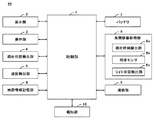
図1は本発明のナビゲーション装置の構成を示すブロック図である。ナビゲーション装置20は制御部1と、表示部2と、操作部3と、現在位置検出部4と、速度検出部5と、地図情報記憶部6と、バッテリ7と、夜間情報取得部8と、通信部9と、報知部10とを備えている。
FIG. 1 is a block diagram showing the configuration of the navigation apparatus of the present invention. The
制御部1はナビゲーション装置20全体を総括的に制御する制御手段である。制御部1はCPUとROMとRAM(いずれも不図示)とを含んでいる。ROMには制御部1が実行するプログラム、プログラムの実行に必要なパラメータやデータが記憶されている。CPUはROMに記憶されている各種プログラムを実行する。RAMは各種処理の過程で得られるデータや各種処理の結果得られるデータを一時的に格納する。これらCPU、RAM、ROM等は、バスを介して接続されている。なお、CPU、ROM及びRAMはこれらの一部または全部を1チップに集積化しても構わない。
The
表示部2は地図画面(目的地への経路、ナビゲーション装置20が搭載された車両(以下、「ナビゲーション装置20が搭載された車両」を「自車」ということもある。)の現在位置を示すマークなどを含む地図画像を表示する画面)やメニュー画面を表示するための表示手段である。
The
操作部3はユーザが目的地を入力したり、メニューを操作したりするための入力操作手段である。なお、操作部3としては、ナビゲーション装置本体に各種のキーやボタンを設けてもよいし、表示部2にタッチパネル機能を付加してもよい。また、操作部3としてナビゲーション装置20本体を遠隔操作するためのリモートコントローラを操作部3として用いても構わない。
The
現在位置検出部4は自車の現在位置を検出するものであり、GPS受信機、自立航法手段、位置計算用CPU等を含んで構成される。自立航法手段は操角センサ、加速度センサ、距離センサや方位センサなどからなり、自車の走行距離と進行方向とをそれぞれ検出し、これらの値に基づいて現在位置を求める。また、GPS受信機は複数のGPS衛星から送られてくる電波をGPSアンテナで受信して3次元測位処理又は2次元測位処理を行って自車の絶対位置及び進行方向を計算する。ここで進行方向は現時点の自車位置と直前の自車位置とに基づいて計算される。なお、進行方向の検出方法は特に限定されず、例えばタイヤの回転方向から検出することとしてもよいし、方位センサを用いて検出してもよい。また、現在位置検出部4とは別に進行方向検出部を設けて自車の進行方向を検出するものとしてもよい。
The current
速度検出部5は自車の移動速度を検出する。移動速度は車速センサや加速度センサの出力から算出してもよいし、GPS履歴間の走行距離とGPS受信時刻の差から算出してもよい。なお、自車の移動速度は現在位置検出部4が検出することとしてもよい。現在位置検出部4が自車の現在位置に加えて移動速度を検出することができる場合には速度検出部5を別途設けない構成とすることができる。その場合、現在位置検出部4に速度検出部5が含まれる構成となる。
The
地図情報記憶部6は目的地への経路探索や誘導を行う際に参照される地図情報や、当該地図情報上の特定の地点がユーザの自宅の位置や会社の位置等であることなどが記憶されている。地図情報には、ネットワークデータ(ノードデータ、リンクデータ)が含まれる。地図情報記憶部6としてはNANDフラッシュやSDメモリカードなどを好適に用いることができる。地図情報記憶部6はナビゲーション装置20に内蔵しても構わないし、ナビゲーション装置20に着脱可能な構成としても構わない。なお、地図情報には、地図画像が含まれていてもよいし、地図情報に含まれるネットワークデータ(ノードデータ、リンクデータ)に基づき地図画像を表示部2に描画してもよい。また、地図情報は予め地図情報記憶部6に記憶される以外にも、後述する通信部9が路側機などから地図情報を受信し、受信された地図情報が地図情報記憶部6に記憶されてもよい。
The map
ここで、地図情報はネットワークデータを含み、ネットワークデータは、道路をその屈曲点、分岐点等の結節点をノードとするノードデータと、それぞれのノード間を結ぶ経路をリンクとしたリンクデータから構成される。ノードデータは、ノード番号、ノードの位置座標(緯度・経度)、道路種別、交差点情報や交差点名称などを示す情報等のノード属性、さらに接続リンク本数、接続リンク番号のデータを含んで構成される。 Here, the map information includes network data, and the network data is composed of node data whose nodes are nodes such as roads at their inflection points and branch points, and link data whose links are links between the nodes. Is done. The node data includes node attributes such as node number, node position coordinates (latitude / longitude), road type, information indicating intersection information, intersection name, and the like, and the number of connection links and connection link number data. .
また、リンクデータは、リンクの始点及び終点となるノード番号、道路種別(一般道路、高速道路)、距離及び/又は所要時間等を含むリンクコスト、道路の幅を示す情報、国道○号線のような道路名称、進行方向のデータを含んで構成される。リンクデータは上記に加えて、リンク属性として橋、トンネル、踏切、料金所等のデータが付与される。 The link data includes the node numbers that are the start and end points of the link, the road type (general road, expressway), the link cost including distance and / or required time, information indicating the width of the road, and the national road ○ Road name and travel direction data. In addition to the above, link data includes data such as bridges, tunnels, railroad crossings, and tollgates as link attributes.
本発明においては、ネットワークデータに、道路のノードデータ・リンクデータが含まれる。自車が現在走行している道路を特定する際には、制御部1が現在位置検出部4によって検出される自車の現在位置(進行方向や移動速度も加えてもよい)と地図情報とに基づき、マップマッチング処理を行うことで特定することができる。
In the present invention, the network data includes road node data and link data. When the road on which the vehicle is currently traveling is specified, the
なお、マップマッチング処理については、制御部1が行なってもよいが、現在位置検出部4が行なってもよい。すなわち、GPS受信機及び/又は自律航法手段を用いて検出した現在位置と地図情報とに基づき、マップマッチング処理を行い、マップマッチング処理を行なった現在位置を現在位置として制御部1へ出力してもよい。或いは、制御部1のマップマッチング処理までを含めて現在位置検出部4としてもよい。
The map matching process may be performed by the
バッテリ7はナビゲーション装置20の携帯使用時における電源供給手段であり、リチウムイオン電池やニッケル水素電池などの二次電池を好適に用いることが可能である。もちろん、バッテリ7として、アルカリマンガン乾電池やマンガン乾電池などの一次電池を用いても構わないし、燃料電池を用いても構わない。
The
夜間情報取得部8は、制御部1が、現在が夜間であるか否かを判定するために必要な夜間であることを示す情報(夜間情報)を取得する。夜間情報取得部8は、現在の時刻を検出する現在時刻検出部8a、自車の車内の照度を検出する照度センサ8b、自車の前照灯(ヘッドライト)の点灯状態を検出するライト状態検出部8cのうち少なくとも一つを有し、これらによって検出される情報を夜間情報として取得する。また夜間情報取得部8は後述するように通信部9が他の通信装置から受信する情報を夜間情報として取得する。そして、制御部1は、夜間情報取得部8が取得した夜間情報を取得する。
The night
なお、ナビゲーション装置20において夜間情報取得部8を制御部1とは別に設けているが夜間判定部8が制御部1に含まれる構成としてもよいし、制御部1が夜間情報を取得することとしてもよい。
Although the night
通信部9はナビゲーション装置20と通信可能な他の通信装置(以下、「他の通信装置」という。)に情報を送信する送信部(図示せず)と他の通信装置から送信される情報を受信する受信部(図示せず)とを有する。通信方法は無線通信や赤外線通信などの非接触通信とすることが好ましい。他の通信装置としては他の車両(他の移動体)に搭載されたナビゲーション装置等の車載通信装置(他の車両に歩行者が乗車している場合において、該歩行者が保持する携帯電話等の移動通信端末でもよい)、路側機、歩行者等(歩行者や自転車の運転手など道路を横断する可能性がある者)が所持する携帯電話等の移動通信端末などを挙げることができる。 The communication unit 9 transmits information to other communication devices that can communicate with the navigation device 20 (hereinafter referred to as “other communication devices”) and information transmitted from the other communication devices. A receiving unit (not shown) for receiving. The communication method is preferably non-contact communication such as wireless communication or infrared communication. Other communication devices include in-vehicle communication devices such as navigation devices mounted on other vehicles (other mobile objects) (such as mobile phones held by pedestrians when pedestrians are on other vehicles) Mobile communication terminals such as mobile phones possessed by roadside devices, pedestrians (persons who may cross the road, such as pedestrians and bicycle drivers), and the like.
通信部9が他の車両に搭載されたナビゲーション装置等の車載通信装置から受信する情報には他の車両の車両情報が含まれ、歩行者等が所持する移動体通信端末から受信する情報には歩行者等情報が含まれる。本発明は他の車両の前照灯の点灯(蒸発現象)による事故を未然に防止することを目的としているため、上述の通り、歩行者等には歩行者のほか、自転車の運転者など道路を横断する可能性がある者が含まれる。 The information received from the in-vehicle communication device such as the navigation device mounted on the other vehicle by the communication unit 9 includes the vehicle information of the other vehicle, and the information received from the mobile communication terminal possessed by the pedestrian or the like Information such as pedestrians is included. Since the present invention aims to prevent accidents caused by lighting (evaporation phenomenon) of headlamps of other vehicles, as described above, pedestrians are roads such as bicycle drivers in addition to pedestrians. Includes those who may cross the road.
なお、車両情報及び/又は歩行者等情報には、移動種別(例えば、車両や歩行者(乗車中であれば移動種別は車両))を示す情報が含まれており、この移動種別に基づき、通信部9を介して取得した情報が、車両情報又は歩行者等情報であるか否かを判定できる。或いは、後述する前照灯の点灯状態を示す情報の有無で判定してもよい。 The vehicle information and / or pedestrian information includes information indicating a movement type (for example, a vehicle or a pedestrian (the movement type is a vehicle if the user is on board)). It can be determined whether the information acquired via the communication unit 9 is vehicle information or information such as a pedestrian. Or you may determine by the presence or absence of the information which shows the lighting state of the headlamp mentioned later.
ここで通信部9が受信する他の車両の車両情報及び歩行者等情報について説明を行う。他の車両の車両情報には、ナビゲーション装置等の車載通信装置が搭載された他の車両(以下、「ナビゲーション装置等の車載通信装置が搭載された他の車両」を「他の車両」ということもある。)の現在位置、進行方向、移動速度及び前照灯(ヘッドライト)の点灯状態を示す情報などが含まれる。歩行者等情報には、移動体通信端末を所持する歩行者等(以下、「移動体通信端末を所持する歩行者等」を「歩行者等」ということもある。)の現在位置、進行方向、移動速度を示す情報が含まれる。 Here, vehicle information and other information such as pedestrians of other vehicles received by the communication unit 9 will be described. In the vehicle information of other vehicles, other vehicles equipped with an in-vehicle communication device such as a navigation device (hereinafter, “other vehicles equipped with an in-vehicle communication device such as a navigation device” are referred to as “other vehicles”. Information on the current position, traveling direction, moving speed, and lighting state of the headlight (headlight). The pedestrian information includes the current position and traveling direction of a pedestrian who has a mobile communication terminal (hereinafter, “pedestrian who has a mobile communication terminal” may be referred to as “pedestrian etc.”). , Information indicating the moving speed is included.
なお、他の車両の現在位置及び歩行者等の現在位置は、マップマッチング処理後の現在位置であってもよいし、マップマッチング処理前の現在位置(GPS受信機等により測位された現在位置)であってもよい。マップマッチング処理前の現在位置であれば、制御部1(現在位置検出部4)がマップマッチング処理を行なってもよい。 The current position of other vehicles and the current position of a pedestrian or the like may be the current position after the map matching process, or the current position before the map matching process (current position measured by a GPS receiver or the like). It may be. If it is the current position before the map matching process, the control unit 1 (current position detection unit 4) may perform the map matching process.
次に、通信部9が受信する交差点情報及び信号機情報について説明を行なう。なお、以下の説明では、交差点毎に路側機が設置され、路側機から、当該路側機が設置された交差点の情報(交差点情報)及び当該路側機が設置された交差点に設置されている信号機の情報(信号機情報)を含む情報が送信されるものとする。 Next, intersection information and traffic signal information received by the communication unit 9 will be described. In the following description, a roadside device is installed at each intersection. From the roadside device, the information on the intersection where the roadside device is installed (intersection information) and the traffic signal installed at the intersection where the roadside device is installed. Information including information (signal information) is transmitted.
通信部9が路側機から受信する情報には交差点情報、信号機情報が含まれる。なお、通信部9は、単一の交差点情報や信号機情報を受信するのではなく、複数の交差点毎の交差点情報及び信号機情報を受信してもよい。この場合、複数の交差点毎の交差点情報及び信号機情報は、1つの路側機から送信されてもよい。 Information received from the roadside unit by the communication unit 9 includes intersection information and traffic signal information. The communication unit 9 may receive intersection information and traffic signal information for each of a plurality of intersections instead of receiving single intersection information and traffic signal information. In this case, intersection information and traffic signal information for each of a plurality of intersections may be transmitted from one roadside device.
交差点情報には、例えば、交差点の位置座標(緯度・経度)、路側機(交差点)を識別する情報や交差点への進入方向に対応付けられた信号機の識別番号(信号機番号)、停止線の位置座標(交差点への進入方向に対応付けられた停止線の位置(緯度・経度))などが含まれる。 In the intersection information, for example, the position coordinates (latitude / longitude) of the intersection, information for identifying the roadside machine (intersection), the identification number of the traffic signal (signal number) associated with the approach direction to the intersection, and the position of the stop line Coordinates (stop line position (latitude / longitude) associated with the approach direction to the intersection) and the like are included.
信号機情報には、信号機を識別するための識別情報(信号機番号)、信号機の現在の信号表示情報(信号機の表示色を示す情報)、次の信号表示情報及び該信号表示に変更されるまでの時間等の情報が含まれ、これらの情報は夫々対応付けられている。そのため、自車の現在位置・進行方向及び交差点情報に基づいて、自車の交通を規制する信号機の信号機番号を特定し、特定した信号機番号に対応付けられた現在の信号表示情報を参照することで、自車の交通を規制する信号機の現在の信号表示がわかる。ここで、信号機情報には、信号機毎に信号機の現在の信号表示情報などの情報が含まれる。すなわち、信号機情報は、路側機が設置された交差点に設置されている信号機の情報であるから、路側機が設置された交差点が四叉路であれば、4つの信号機が設置されている。そのため、信号機情報には、4つの信号機毎に、信号機を識別するための識別情報(信号機番号)、信号機の現在の信号表示情報(信号機の現在の表示色を示す情報)、次の信号表示情報及び該信号表示に変更されるまでの時間等の情報が含まれている。なお、信号機情報には、信号表示のサイクルの情報が含まれていても良い。信号表示のサイクルの情報とは、例えば、進行許可信号表示(青色)が○○秒、停止信号表示(黄色)が○○秒、進行不可信号表示(赤色)が○○秒という信号表示のサイクル、或いは、○時○分から○時△分まで進行許可信号表示(青色)、○時△分から○時□分まで停止信号表示(黄色)、○時□分から○時不可まで進行停止信号表示(赤色)のような信号表示のサイクルである。 In the traffic signal information, identification information (signal number) for identifying the traffic signal, current signal display information of the traffic signal (information indicating the display color of the traffic signal), the next signal display information, and until the signal display is changed. Information such as time is included, and these pieces of information are associated with each other. Therefore, based on the current position / traveling direction of the own vehicle and intersection information, the traffic signal number of the traffic signal that regulates the traffic of the own vehicle is identified, and the current signal display information associated with the identified traffic signal number is referred to Now you can see the current signal display of the traffic light that regulates the traffic of your vehicle. Here, the traffic signal information includes information such as the current signal display information of the traffic signal for each traffic signal. That is, since the traffic signal information is information on traffic signals installed at the intersection where the roadside device is installed, if the intersection where the roadside device is installed is a four-way, four traffic signals are installed. Therefore, the traffic signal information includes identification information (signal number) for identifying the traffic signal for each of the four traffic signals, current signal display information of the traffic signal (information indicating the current display color of the traffic signal), and next signal display information. And information such as the time until the signal display is changed. The traffic signal information may include signal display cycle information. The signal display cycle information is, for example, a signal display cycle in which the progress permission signal display (blue) is XX seconds, the stop signal display (yellow) is XX seconds, and the progress impossible signal display (red) is XX seconds. Or, the progress permission signal display (blue) from ○ hour ○ minute to ○ hour △ minute, the stop signal display from yellow hour △ minute to ○ hour □ minute (yellow), the progress stop signal display from red hour □ minute to ○ hour impossible (red) ) Is a signal display cycle.
なお、上記において通信部9は、路側機から交差点情報及び信号機情報を受信し、車載通信装置から他の車両の車両情報を受信し、移動体通信端末から歩行者等情報を受信しているが、例えば歩行者等情報は携帯電話等の移動体通信端末以外にも他の車両(移動体)に搭載されたナビゲーション装置等の車載通信装置や、路側機などから受信してもよい。また、他の車両の車両情報、交差点情報及び信号機情報についても同様である。 In the above, the communication unit 9 receives intersection information and traffic signal information from the roadside device, receives vehicle information of other vehicles from the in-vehicle communication device, and receives information such as pedestrians from the mobile communication terminal. For example, information such as a pedestrian may be received from an in-vehicle communication device such as a navigation device mounted on another vehicle (moving body), a roadside device, or the like in addition to a mobile communication terminal such as a mobile phone. The same applies to vehicle information, intersection information, and traffic signal information of other vehicles.
通信部9が路側機から歩行者等情報を受信する場合について特記すると、路側機を介して携帯電話等の移動体通信端末から送信される歩行者等情報を通信部9が受信する(路側機が移動体通信端末から受信した歩行者等情報を送信し、路側器から送信された歩行者等情報を通信部9が受信する)こととしてもよいし、路側機が自ら検出した歩行者等情報を通信部9が受信することとしてもよい。路側機が自ら検出した歩行者等情報には、予め区切られた範囲(例えば横断歩道の始点/終点ノード2つと横断道路幅が形成する領域)にどの移動種別(歩行者、二輪車)がどれだけ(何人、何台)存在するかを示す情報が含まれている。 When the communication unit 9 receives information such as pedestrians from the roadside device, the communication unit 9 receives pedestrian information transmitted from the mobile communication terminal such as a mobile phone via the roadside device (roadside device). May transmit information such as pedestrians received from the mobile communication terminal, and the communication unit 9 may receive information such as pedestrians transmitted from the roadside device, or information such as pedestrians detected by the roadside device itself. May be received by the communication unit 9. In the pedestrian information detected by the roadside device itself, how much movement type (pedestrian, two-wheeled vehicle) is in a pre-delimited range (for example, the area formed by two start / end nodes of the pedestrian crossing and the width of the crossing road) Information indicating how many (many, how many) exist.
報知部10は各種情報を報知する。報知方法は内容を理解することができる方法であれば特に制限されないが、例えばスピーカ(不図示)を介して所定の音声を出力することにより行われる。また、表示部2に所定の文字や画像等を表示することによって行ってもよく、或いは音声と表示を同時に行うこととしてもよい。説明の簡略化のために報知部10と表示部2を別の構成として設けているが、報知方法が表示部2への所定の文字や画像等の表示を含む場合には報知部10が表示部2を含む構成として設けてもよい。
The alerting | reporting
[第1実施形態]
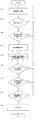
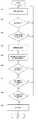
本発明のナビゲーション装置20の第1実施形態について図2を用いて説明する。図2は本発明のナビゲーション装置20の制御部1が実行する処理の流れを示す第1のフローチャートである。
[First embodiment]
A first embodiment of the
ステップS01において制御部1は、夜間情報取得部8によって取得される夜間情報を取得する。夜間情報取得部8は、上述の通り、夜間情報取得部8が有する各検出部が検出する情報や、通信部9が他の通信装置から受信する情報を夜間情報として取得する。
In step S01, the
そして、ステップS02において制御部1は現在が夜間であるか否かを判定する。現在が夜間であるか否かの判定は夜間情報取得部8によって取得される夜間情報に基づいて判定する。
In step S02, the
制御部1が、現在時刻検出部8aによって検出される現在時刻を示す情報に基づいて現在が夜間であるか否かを判定するときは、現在の時刻が夜間(予め定められた時間の範囲であって例えば19時〜5時)に属する時刻か否かで判定し、照度センサ8bによって検出される照度を示す情報に基づいて現在が夜間であるか否かを判定するときは、自車の車内の照度が所定の照度以下であるか否かで判定し、ライト状態検出部8cによって検出される前照灯(ヘッドライト)の点灯状態を示す情報に基づいて現在が夜間であるか否かを判定するときは、自車の前照灯(ヘッドライト)が点灯しているか否かによって判定する。なお、ライト状態検出部8cは、図示しないライト機構又は運転者が操作するライトスイッチと接続されて、自車の前照灯が点灯状態であるか消灯状態であるかを検出する。
When the
制御部1が、通信部9を介して取得される他の通信装置から取得した情報に基づいて現在が夜間であるか否かを判定するときは、他の車両の車両情報に含まれる他の車両の前照灯(ヘッドライト)の点灯状態を示す情報や、他の通信装置(例えば路側機)から取得することができる現在時刻を示す情報に基づいて上述のように現在が夜間であるか否かを判定する。例えば、他の車両の前照灯が点灯していれば夜間あると判定する。
When the
現在が夜間であるとき(ステップS02Y)はステップS03に進み、現在が夜間でないとき(ステップS02のN)はステップS01に戻る。 When the current time is night (step S02Y), the process proceeds to step S03, and when the current time is not night (N in step S02), the process returns to step S01.
なお、ステップS02において単一の情報に基づいて現在が夜間であるか否かを判定してもよいが、例えば現在時刻を示す情報のみに基づいて判定をすると、通常は夜間に該当する時間ではないが天候(曇りや雨)により各車両が前照灯を点灯させている場合やトンネルを走行中の場合には、蒸発現象が発生する現実の危険があるにも関わらず所定の制御が行われない可能性がある。 In step S02, it may be determined whether or not the current time is night based on a single piece of information. However, for example, if the determination is made based only on information indicating the current time, the time usually corresponds to night. However, if each vehicle has its headlights turned on due to the weather (cloudy or rainy) or is traveling in a tunnel, prescribed control is performed despite the actual danger of evaporation. There is a possibility not to be broken.
そこで、夜間情報として複数の情報を取得している場合には情報毎に現在が夜間であるか否かを判定し、少なくとも一つの情報について、現在が夜間であると判定された場合にはステップS03に進むことが望ましい。これにより、蒸発現象が発生する現実の危険があるにも関わらず夜間ではないと判定されることを防止することができる。 Therefore, if a plurality of information is acquired as night information, it is determined whether or not the current time is night for each information, and if at least one information is determined that the current time is night, a step is performed. It is desirable to proceed to S03. Thereby, it can be prevented that it is determined that it is not nighttime in spite of the actual danger that the evaporation phenomenon occurs.
ステップS03において制御部1は自車及び他の車両の前照灯が点灯しているか否かを判定する。自車及び他の車両の前照灯が点灯しているか否かは、現在が夜間であるか否かの判定(ステップS02)と同様に夜間情報取得部8によって取得される夜間情報に基づいて判定する。
In step S03, the
夜間情報に自車の前照灯の点灯状態を示す情報及び他の車両の前照灯の点灯状態を示す情報が含まれている場合には各情報に基づいて自車と他の車両の前照灯がそれぞれ点灯しているか否かを判定すればよいが、これらの情報以外の情報に基づいて自車及び他の車両の前照灯が点灯しているか否かを判定してもよい。 When the night information includes information indicating the lighting state of the headlight of the own vehicle and information indicating the lighting state of the headlight of the other vehicle, the front of the own vehicle and the other vehicle based on each information. It may be determined whether or not each of the headlamps is lit, but based on information other than these pieces of information, it may be determined whether or not the headlamps of the host vehicle and other vehicles are lit.
すなわち、ステップS02において例えば現在時刻を示す情報に基づいて現在が夜間であると判定された場合に、自車及び他の車両のいずれの前照灯も点灯していると判定することとしてもよい。何故なら、現在が夜間であれば一般的に、自車及び他の車両の前照灯が点灯していると考えられるからである。 That is, for example, when it is determined in step S02 that the current time is night based on information indicating the current time, it may be determined that both the headlamps of the own vehicle and other vehicles are lit. . This is because it is generally considered that the headlamps of the own vehicle and other vehicles are lit if the present is night.
自車及び他の車両の前照灯が点灯しているとき(ステップS03Y)はステップS04に進み、自車及び他の車両の前照灯が点灯していないとき(ステップS03のN)はステップS01に戻る。 When the headlamps of the host vehicle and other vehicles are lit (step S03Y), the process proceeds to step S04, and when the headlamps of the host vehicle and other vehicles are not lit (N in step S03), step S04 is performed. Return to S01.
なお、本実施形態及び以下の実施形態においてはステップS02とステップS03を別のステップとして説明しているが、上述の通り、現在が夜間であると判定したときに、自車及び他の車両の前照灯が点灯していると判定する場合には(現在が夜間であれば自動的に、自車及び他の車両の前照灯が点灯しているとみなす場合には)同一のステップで判定することとしてもよい。 In this embodiment and the following embodiments, step S02 and step S03 are described as separate steps. As described above, when it is determined that the current time is night, the vehicle and other vehicles If it is determined that the headlamp is lit (automatically if it is nighttime, if the headlamps of the vehicle and other vehicles are lit) It may be determined.
ステップS04において制御部1は自車の車両情報を取得する。自車の車両情報とは、現在位置検出部4によって検出される自車の現在位置と、現在位置検出部4(ナビゲーション装置20が進行方向検出部を備えるときは進行方向検出部でもよい)により検出される自車の進行方向、速度検出部5により検出される自車の移動速度などを含む情報である。
In step S04, the
そしてステップS05において制御部1は通信部9を介して他の車両の車両情報及び歩行者等情報を取得する。本実施形態においては、自車の周辺に他の車両と歩行者等が存在しており、制御部1が他の車両の車両情報と歩行者等情報とを共に取得したものとしてステップS06に進むが、一方又は双方を取得していない場合(自車の周辺に他の車両又は/及び歩行者等が存在しない場合)には蒸発現象が発生しないためステップS06に進まないこととしてもよい。
In step S <b> 05, the
なお、本実施形態において制御部1は、ステップS01において夜間情報を取得し、ステップS04において自車の車両情報を取得し、ステップS05において他の車両の車両情報及び歩行者等情報を取得しているが、制御部1がこれらの情報を取得する順番はフローチャートに示した順序でなくてもよく、例えば最初に同時に取得するものであってもよいし、最初に他の車両の車両情報及び歩行者等情報を取得するものであってもよい。
また、制御部1が夜間情報、自車の車両情報、及び、他の車両の車両情報及び歩行者等情報を取得するタイミングは当該タイミングとは限られない。定期的或いは不定期(例えば、他の通信装置の送信タイミングに基づいて)に取得されてもよく、定期的或いは不定期に複数回情報を取得する場合には、取得された情報のうち最も新しい情報を使用することとしてもよい。
In this embodiment, the
Moreover, the timing which the
ステップS06において制御部1は自車の車両情報と他の車両の車両情報と地図情報とに基づいて自車と他の車両とが対向するか(対向関係にあるか)否かを判定する。ここで「対向する(対向関係にある)」とは、自車と他の車両とが同一の道路(国道○号線など)を走行し、且つ、他の車両が自車の前方に位置しており(他の車両の現在位置が自車の現在位置よりも自車の進行方向前方であり)、且つ、自車の進行方向と他の車両の進行方向とが逆方向である(他の車両が自車の進行方向の逆方向を進行方向としている又は他の車両が走行している車線に対応付けられた進行方向と自車が走行している車線に対応付けられた進行方向とが逆方向である)ことをいう。
In step S06, the
自車と他の車両が対向すると判定した場合には(ステップS06のY)ステップS07に進み、自車と他の車両が対向しないと判定した場合には(ステップS06のN)ステップS01に戻る。 If it is determined that the host vehicle and the other vehicle face each other (Y in step S06), the process proceeds to step S07. If it is determined that the host vehicle does not face the other vehicle (N in step S06), the process returns to step S01. .
なお、以下において他の車両とは特記なき限りいずれも自車と対向する(対向関係にある)他の車両を示すものとする。 In the following description, the term “other vehicle” refers to any other vehicle that is opposed to (in a facing relationship with) the own vehicle unless otherwise specified.
ステップS07において制御部1は、歩行者等が所定の範囲内に存在するか(歩行者等の現在位置が所定の範囲内であるか)否かを判定する。所定の範囲とは蒸発現象が発生する可能性がある領域であり、自車及び他の車両が属する道路において、自車の現在位置から自車の進行方向に向かう領域と他の車両の現在位置から他の車両の進行方向に向かう領域との重複部分である。以下、所定の範囲を、自車の現在位置と他の車両の現在位置とから算出する方法を例にして図を参照しながら説明する。
In step S07, the
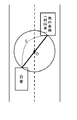
所定の範囲を算出する第1の方法について図3を参照して説明する。図3において所定の範囲は、自車と他の車両とを結ぶ直線の中点Oを中心とし、自車と他の車両との車間距離Sを直径とする円の内部の灰色領域である。蒸発現象は自車と他の車両の前照灯(ヘッドライト)が交差する道路の中央付近において発生するものであり、当該領域を所定の範囲として以降のステップに進むことにより事故を未然に防止することができる。 A first method for calculating the predetermined range will be described with reference to FIG. In FIG. 3, the predetermined range is a gray region inside a circle centered on a midpoint O of a straight line connecting the host vehicle and the other vehicle and having a diameter of an inter-vehicle distance S between the host vehicle and the other vehicle. The evaporation phenomenon occurs near the center of the road where the headlights of the vehicle and other vehicles intersect, and it is possible to prevent accidents by proceeding to the subsequent steps with the area as a predetermined range. can do.
次に所定の範囲を算出する第2の方法について図4を参照して説明する。図4において所定の範囲は、自車の現在位置から道路の幅方向に平行に延びる直線L1と、他の車両の現在位置から道路幅方向に平行に延びる直線L2と、道路(道路幅)と、が形成する灰色領域である。当該領域を所定の範囲とすることにより、歩行者等が近い将来道路中央付近に移動することによって蒸発現象が発生する可能性がある場合にも以降のステップに進み、事故の発生することを防止することができる。 Next, a second method for calculating the predetermined range will be described with reference to FIG. In FIG. 4, a predetermined range includes a straight line L1 extending in parallel to the road width direction from the current position of the host vehicle, a straight line L2 extending in parallel to the road width direction from the current position of another vehicle, and a road (road width). , Is a gray region formed. By setting the area as the predetermined range, even if pedestrians etc. may move near the center of the road in the near future, evaporation may occur, preventing accidents from occurring. can do.
なお、本実施形態においては自車の現在位置と他の車両の現在位置とを共に車両の先端部として算出しているが、車両の中心部や車両の後端部を現在位置としてもよい。また、本実施形態においては自車の現在位置と他の車両の現在位置とから所定の範囲を算出しているが、これに限られず、例えば自車及び他の車両が属する道路上であって、自車の前照灯(ヘッドライト)が照らす領域と他の車両の前照灯(ヘッドライト)が照らす領域の和集合領域又は積集合領域を所定の範囲としてもよい。 In the present embodiment, the current position of the host vehicle and the current position of another vehicle are both calculated as the front end of the vehicle, but the center of the vehicle and the rear end of the vehicle may be used as the current position. In the present embodiment, the predetermined range is calculated from the current position of the own vehicle and the current position of the other vehicle. However, the present invention is not limited to this. For example, on the road to which the own vehicle and the other vehicle belong. The union area or the intersection area of the area illuminated by the headlight (headlight) of the own vehicle and the area illuminated by the headlamp (headlight) of another vehicle may be set as the predetermined range.
歩行者等が所定の範囲内に存在する場合には(ステップS07のY)ステップS08に進み、歩行者等が所定の範囲内に存在しない場合には(ステップS07のN)ステップS01に戻る。 If a pedestrian or the like is present within the predetermined range (Y in step S07), the process proceeds to step S08. If a pedestrian or the like is not present within the predetermined range (N in step S07), the process returns to step S01.
ステップS08において制御部1は蒸発現象による事故を未然に防ぐための所定の制御を行う。制御内容は蒸発現象による事故を未然に防ぐことに資するものであれば特に制限されないが、運転者に歩行者等の存在を認識させるために「道路上に歩行者等がいます」という内容を表示部2に表示し、及び/又は音声案内により報知することが例示される。
In step S08, the
また、道路上の歩行者等を視認しやすくするために自車の前照灯(ヘッドライト)を自動的に車幅灯(スモール)にすることとしてもよい。なお、前照灯を自動的に車幅灯に変更する方法は従来から知られている方法を使用すればよく、例えば特開2003−123186号公報に記載されている配光制御システムにおいては自車が停車中であり、且つ、ウィンカが点灯していなければ前照灯を車幅灯に変更(減光)することが開示されている。 Moreover, in order to make it easy to visually recognize a pedestrian or the like on the road, the headlamp of the own vehicle may be automatically changed to a vehicle width lamp (small). As a method for automatically changing the headlamp to the vehicle width lamp, a conventionally known method may be used. For example, in the light distribution control system described in Japanese Patent Application Laid-Open No. 2003-123186, an automatic method is used. It is disclosed that the headlamp is changed to a vehicle width lamp (dimmed) if the vehicle is stopped and the blinker is not lit.
本実施形態によれば、夜間情報と自車の車両情報と他の車両の車両情報と歩行者等情報に基づいてヘッドライトの灯火(蒸発現象)による事故を未然に防ぐことができる。
[第2実施形態]
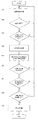
本発明のナビゲーション装置20の第2実施形態について図5を用いて説明する。図5は本発明のナビゲーション装置20の制御部1が実行する処理の流れを示す第2のフローチャートである。なお、本実施形態のステップS11〜ステップS17は、第1実施形態のステップS01〜ステップS07と同一であり、本実施形態のステップS19は、第1実施形態のステップS08と同一であるため説明を省略する。
According to the present embodiment, it is possible to prevent an accident caused by the lighting (evaporation phenomenon) of the headlight based on the night information, the vehicle information of the own vehicle, the vehicle information of other vehicles, and the pedestrian information.
[Second Embodiment]
A second embodiment of the
ステップS18において制御部1は自車の移動速度が所定速度以下か否かを判定する。自車の移動速度が所定速度以下でないときは(ステップS18のN)ステップS19に進み、自車の移動速度が所定速度以下であるときは(ステップS18のY)ステップS11に戻る。
In step S18, the
すなわち、歩行者等が所定の範囲内にいるときに自車の移動速度が所定速度(たとえば10km/h)以下であるときは、自車の運転者が歩行者等を視認し、減速しているものと考えられることから所定の制御を行わない。 That is, when the moving speed of the own vehicle is less than or equal to a predetermined speed (for example, 10 km / h) when the pedestrian is within a predetermined range, the driver of the own vehicle visually recognizes the pedestrian and decelerates. Therefore, the predetermined control is not performed.
本実施形態によれば、第1実施形態と同様の効果を奏する。加えて、自車の運転者が歩行者等の存在を認識しているときに所定の制御が行われない。
[第3実施形態]
本発明のナビゲーション装置20の第3実施形態について図6を用いて説明する。図6は本発明のナビゲーション装置20の制御部1が実行する処理の流れを示す第3のフローチャートである。なお、本実施形態のステップS21〜ステップS27は、第1実施形態のステップS01〜ステップS07と同一であり、本実施形態のステップS29は、第1実施形態のステップS08と同一であるため説明を省略する。
According to the present embodiment, the same effects as those of the first embodiment can be obtained. In addition, predetermined control is not performed when the driver of the own vehicle recognizes the presence of a pedestrian or the like.
[Third embodiment]
A third embodiment of the
ステップS28において制御部1は自車と他の車両との車間距離が所定距離以上であるか否かを判定する。車間距離が所定距離以上でないときは(ステップS28のN)ステップS29に進み、車間距離が所定距離以上であるときは(ステップS28のY)ステップS21に戻る。
In step S28, the
すなわち、自車と他の車両との車間距離が所定距離(例えば1km)以上であるときには蒸発現象が発生しないと考えられることから所定の制御を行わない。 That is, the predetermined control is not performed because it is considered that the evaporation phenomenon does not occur when the inter-vehicle distance between the own vehicle and another vehicle is a predetermined distance (for example, 1 km) or more.
本実施形態によれば、第1実施形態と同様の効果を奏する。加えて、蒸発現象が発生しない状況で所定の制御が行われない。
[第4実施形態]
本発明のナビゲーション装置20の第4実施形態について図7を用いて説明する。図7は本発明のナビゲーション装置20の制御部1が実行する処理の流れを示す第4のフローチャートである。なお、本実施形態のステップS31〜ステップS37は、第1実施形態のステップS01〜ステップS07と同一であり、本実施形態のステップS39は、第1実施形態のステップS08と同一であるため説明を省略する。
According to the present embodiment, the same effects as those of the first embodiment can be obtained. In addition, the predetermined control is not performed in a situation where the evaporation phenomenon does not occur.
[Fourth embodiment]
A fourth embodiment of the
ステップS38において制御部1は自車と進行方向が同一である第3の車両が所定の範囲内に存在するか否かを判定する。ステップS38における所定の範囲は、ステップS37(第1実施形態のステップS07)において算出された所定の範囲と同一とする(例えば共に上記第1の方法により所定の範囲を算出する)こととしてもよいし、ステップS37(第1実施形態のステップS07)において算出された所定の範囲と異なる(例えばステップS37における所定の範囲を上記第1の方法で算出し、ステップS38における所定の範囲を上記第2の方法で算出する)こととしてもよい。
自車と進行方向が同一である第3の車両が所定の範囲内に存在しないときは(ステップS38のN)ステップS39に進み、自車と進行方向が同一である第3の車両が所定の範囲内に存在するときは(ステップS38のY)ステップS31に戻る。
In step S38, the
When the third vehicle having the same traveling direction as the own vehicle does not exist within the predetermined range (N in step S38), the process proceeds to step S39, and the third vehicle having the same traveling direction as the own vehicle is If it exists within the range (Y in step S38), the process returns to step S31.
すなわち、自車と進行方向が同一である第3の車両が所定の範囲内に存在するときには、当該第3の車両と他の車両との間に歩行者等が存在すると考えられることから所定の制御を行わない。 That is, when a third vehicle whose traveling direction is the same as that of the own vehicle is within a predetermined range, a pedestrian or the like is considered to exist between the third vehicle and another vehicle. Do not control.
なお、自車と進行方向が同一である第3の車両が所定の範囲内に存在し、且つ、歩行者等が所定の範囲内に存在していても、歩行者等が自車と第3の車両の間に存在するときにはステップS39に進むこととしてもよい。何故なら、歩行者等が第3の車両の後方において道路を横断している場合には蒸発現象が発生することにより自車と歩行者等が衝突する可能性があるからである。 Even if a third vehicle having the same traveling direction as that of the own vehicle is present within a predetermined range and a pedestrian or the like is present within the predetermined range, the pedestrian or the like If the vehicle exists between the two vehicles, the process may proceed to step S39. This is because when the pedestrian or the like crosses the road behind the third vehicle, the own vehicle and the pedestrian or the like may collide due to an evaporation phenomenon.
本実施形態によれば、第1実施形態と同様の効果を奏する。加えて、蒸発現象が発生し、或いは発生する可能性がある状況であっても、所定の制御を行う必要がない状況において所定の制御が行われない。
[第5実施形態]
本発明のナビゲーション装置20の第5実施形態について図8を用いて説明する。図8は本発明のナビゲーション装置20の制御部1が実行する処理の流れを示す第5のフローチャートである。なお、本実施形態のステップS41〜ステップS47は、第1実施形態のステップS01〜ステップS07と同一であり、本実施形態のステップS50は、第1実施形態のステップS08と同一であるため説明を省略する。
According to the present embodiment, the same effects as those of the first embodiment can be obtained. In addition, even in a situation where an evaporation phenomenon occurs or may occur, the predetermined control is not performed in a situation where it is not necessary to perform the predetermined control.
[Fifth Embodiment]
A fifth embodiment of the
ステップS48において制御部1は通信部9を介して交差点情報及び信号機情報を取得する。制御部1が交差点情報及び信号機情報を取得するタイミングは夜間情報等を取得するときと同様に当該タイミングとは限られない。定期的或いは不定期(例えば、他の通信装置の送信タイミングに基づいて)に取得されてもよく、定期的或いは不定期に複数回情報を取得する場合には、取得された情報のうち最も新しい情報を使用することとしてもよい。
In step S <b> 48, the
ステップS49において制御部1は自車の前方の信号機の信号表示が進行不可信号表示(赤信号)であるか否かを判定する。まず制御部1は、自車の前方の信号機の信号表示が進行不可信号表示であるか否かを判定するために、自車の前方の信号機を特定し、特定された信号機の信号機情報から、信号機情報に含まれる信号機の現在の信号表示(表示色)を示す情報を取得して当該信号表示が進行不可信号表示(赤信号)であるか否かを判定する。
In step S49, the
自車の前方の信号機は、自車の現在位置と自車の進行方向と地図情報と交差点情報と信号機情報とに基づいて特定される。すなわち自車の現在位置と自車の進行方向と地図情報とから自車の前方の交差点(自車が次に到着する交差点)を特定し、当該交差点に設置され、且つ当該交差点への進入方向に対応付けられた信号機を自車の前方の信号機(自車の交通を規制する信号機)として特定する。 The traffic signal ahead of the host vehicle is specified based on the current position of the host vehicle, the traveling direction of the host vehicle, map information, intersection information, and traffic signal information. That is, an intersection ahead of the vehicle (the intersection where the vehicle arrives next) is identified from the current position of the vehicle, the traveling direction of the vehicle, and map information, and the approach direction to the intersection is installed at the intersection. Is identified as a traffic signal in front of the host vehicle (a traffic signal that regulates traffic of the host vehicle).
自車の前方の信号機の信号表示が進行不可信号表示でなければ(ステップS49のN)ステップS50に進み、自車の前方の信号機の信号表示が進行不可信号表示であれば(ステップS49のY)ステップS41に戻る。 If the signal display of the traffic light in front of the host vehicle is not the progress impossible signal display (N in Step S49), the process proceeds to Step S50, and if the signal display of the traffic signal in front of the host vehicle is the progress impossible signal display (Y in Step S49). ) Return to step S41.
すなわち、自車の前方の信号機の信号表示が進行不可信号表示(赤信号)であるときは、歩行者等側の信号機の信号表示は進行許可信号表示(青信号)であり、自車の運転者が赤信号を認識した時点で減速し、停止すると考えられるため所定の制御を行わない。 That is, when the signal display of the traffic light in front of the host vehicle is a progress impossible signal display (red signal), the signal display of the traffic signal on the pedestrian side is a progress permission signal display (blue signal), and the driver of the host vehicle When it recognizes the red signal, it decelerates and stops, so it does not perform the predetermined control.
本実施形態によれば、第1実施形態と同様の効果を奏する。加えて、蒸発現象が発生し、或いは発生する可能性がある状況であっても、所定の制御を行う必要がない状況において所定の制御が行われない。
<変形例>
第5実施形態において制御部1は自車の前方の信号機の信号表示が進行不可信号表示(赤信号)であるときに所定の制御を行わないこととしたが、自車の前方の信号機の信号表示が進行不可信号表示(赤信号)であって、且つ、歩行者等の現在位置が自車の前方の信号機が設置された交差点(自車の前方の交差点)における横断歩道上であるときに所定の制御を行わないこととしてもよい。
According to the present embodiment, the same effects as those of the first embodiment can be obtained. In addition, even in a situation where an evaporation phenomenon occurs or may occur, the predetermined control is not performed in a situation where it is not necessary to perform the predetermined control.
<Modification>
In the fifth embodiment, the
すなわち、自車の前方の信号機の信号表示が進行不可信号表示(赤信号)であっても歩行者等が横断歩道を横断しているとは限らず、横断歩道を横断していなければ蒸発現象が発生し、これにより事故が発生する可能性がある。そこで、自車の前方の信号機の信号表示が進行不可信号表示(赤信号)であっても歩行者等が横断歩道等を横断していない(歩行者等の現在位置が横断歩道上ではない)ときには所定の制御を行うこととする。なお、横断歩道の位置を示す情報は交差点情報に含まれており、歩行者等の現在位置が横断歩道の領域内であるか否かに基づいて歩行者等が横断歩道上に存在しているか否かを判定することができる。 That is, pedestrians do not necessarily cross the pedestrian crossing even if the signal display of the traffic light in front of the vehicle is an unreachable signal display (red light), and if the pedestrian does not cross the pedestrian crossing, the evaporation phenomenon This can cause an accident. Therefore, even if the signal display of the traffic light in front of the vehicle is a non-progressible signal display (red light), pedestrians etc. have not crossed the pedestrian crossing etc. (the current position of the pedestrian etc. is not on the pedestrian crossing) Sometimes predetermined control is performed. Information indicating the position of the pedestrian crossing is included in the intersection information, and whether pedestrians are present on the pedestrian crossing based on whether or not the current position of the pedestrian is within the area of the pedestrian crossing It can be determined whether or not.
また、上記の実施形態においては、歩行者等が所定の範囲(ステップS07参照)内に存在するか否かを判定し、存在する場合に、蒸発現象による事故を未然に防ぐための所定の制御を行なったが、歩行者等が所定の範囲内に存在する場合であっても、歩行者等が歩道や歩道橋を移動している場合であれば、所定の制御を行なわないことが好ましい。 Further, in the above embodiment, it is determined whether or not a pedestrian or the like is present within a predetermined range (see step S07), and if there is, predetermined control for preventing an accident due to an evaporation phenomenon in advance. However, even if a pedestrian or the like is within a predetermined range, it is preferable not to perform the predetermined control if the pedestrian or the like is moving on a sidewalk or a pedestrian bridge.
例えば、受信した歩行者等情報に含まれる歩行者等の現在位置(進行方向なども加えてもよい)に基づいてマップマッチング処理を行なった結果(或いは、歩行者等情報に含まれるマップマッチング処理結果に基づいて)、歩行者等が歩道や歩道橋に存在していると判定した場合は、歩行者等が所定の範囲内に存在する場合であっても所定の制御を行なわないことが好ましい。 For example, the result of map matching processing based on the current position of a pedestrian or the like included in the received information such as pedestrians (or the direction of travel may be added) (or the map matching processing included in the information such as pedestrians) When it is determined that a pedestrian or the like is present on a sidewalk or a pedestrian bridge), it is preferable that the predetermined control is not performed even if the pedestrian or the like is present within a predetermined range.
また、その他にも、自車の進行方向と歩行者等の進行方向とに基づいて、自車の進行方向に対して歩行者等の進行方向が平行(自車と同様の進行方向又は対向する進行方向)である場合には、歩行者等が所定の範囲内に存在する場合であっても所定の制御を行なわないようにしてもよい。 In addition, based on the traveling direction of the own vehicle and the traveling direction of the pedestrian or the like, the traveling direction of the pedestrian or the like is parallel to the traveling direction of the own vehicle (the same traveling direction as or opposite to the own vehicle). (Traveling direction), the predetermined control may not be performed even when a pedestrian or the like is present within a predetermined range.
すなわち、車の進行方向に対して歩行者等の進行方向が垂直(自車と進行方向に対して歩行者等の進行方向が交差)である場合に、歩行者等が自車の前を横断する可能性が高いため、このような場合にのみ所定の制御を行なうこととしてもよい。 In other words, when the traveling direction of a pedestrian or the like is perpendicular to the traveling direction of the vehicle (the traveling direction of the pedestrian or the like intersects with the traveling direction of the host vehicle), the pedestrian or the like crosses the front of the traveling vehicle. Therefore, the predetermined control may be performed only in such a case.
また、歩行者等として、歩行者のほか、自転車の運転者など道路を横断する可能性がある者として説明を行なったが、歩行者のように移動しない障害物(落下物)なども歩行者等に含まれてもよい。 In addition, as pedestrians, we explained that there is a possibility of crossing the road, such as bicycle drivers, but pedestrians also have obstacles (falling objects) that do not move like pedestrians. Etc. may be included.
この場合、路側器や他の車両に設けられた各種センサなどにより検出された障害物の位置が路側器や他の車両に搭載されたナビゲーション装置等の車載通信装置から送信されることで、通信部9を介して歩行者等(障害物)の現在位置(歩行者等情報)を取得することができる。 In this case, the position of the obstacle detected by various sensors provided on the roadside unit or other vehicle is transmitted from an in-vehicle communication device such as a navigation device mounted on the roadside unit or other vehicle, thereby enabling communication. The current position (information such as a pedestrian) of a pedestrian or the like (obstacle) can be acquired via the unit 9.
そして、上記の実施形態と同様に、該歩行者等(障害物)が所定の範囲内に存在する場合に、蒸発現象による事故を未然に防ぐための所定の制御を行なう。 Similarly to the above embodiment, when the pedestrian or the like (obstacle) is within a predetermined range, predetermined control for preventing an accident due to the evaporation phenomenon is performed.
さらに、上記の実施形態においては、移動体(自車)と他の移動体(他の車両)の間にいる歩行者等が移動体のライトと他の移動体のライトによって見えなくなる(見えにくくなる)蒸発現象について説明を行なったが、自車の前照灯の点灯状態に関わらず、他の車両の前照灯が点灯している場合であれば、他の車両の前照灯により自車と他の車両の間に存在する歩行者等が見えにくくなることも想定される。 Furthermore, in the above embodiment, a pedestrian or the like between the moving body (own vehicle) and another moving body (other vehicle) is not visible (difficult to see) by the light of the moving body and the light of the other moving body. The evaporation phenomenon has been explained. If the headlights of other vehicles are lit regardless of the lighting state of the headlights of the own vehicle, the headlights of other vehicles It is also assumed that a pedestrian or the like existing between the car and another vehicle becomes difficult to see.
そのため、自車の前照灯の点灯状態に関わらず、他の車両の前照灯が点灯していると判定した場合に、上記の所定の範囲内に歩行者等が存在する場合には、歩行者等の存在を認識させるための所定の制御を行なうことが好ましい。 Therefore, when it is determined that the headlights of other vehicles are lit regardless of the lighting state of the headlights of the own vehicle, if there are pedestrians or the like within the predetermined range, It is preferable to perform predetermined control for recognizing the presence of a pedestrian or the like.
なお、他の車両の前照灯が点灯しているか否かは、上述したとおり、通信部9を介して取得した他の車両の前照灯の点灯状態を示す情報に基づいて判定することが可能である。 In addition, as described above, whether or not the headlamps of other vehicles are lit can be determined based on information indicating the lighting state of the headlamps of other vehicles acquired through the communication unit 9. Is possible.
また、その他にも、現在の時刻が夜間(予め定められた時間の範囲であって例えば19時〜5時)に属する時刻である、自車の車内の照度が所定の照度以下である、又は、自車の前照灯(ヘッドライト)が点灯しているなどの場合にも他の車両の前照灯が点灯していると判定することも可能である。 In addition, the current time is a time belonging to nighttime (a predetermined time range, for example, 19:00 to 5 o'clock), and the illuminance in the vehicle is equal to or lower than a predetermined illuminance, or It is also possible to determine that the headlamps of other vehicles are lit even when the headlamps of the own vehicle are lit.
本発明は、夜間において移動体(自車)と他の移動体(他の車両)の間にいる歩行者等がヘッドライトによって見えなくなる(見えにくくなる)ことによる交通事故を未然に防ぐ移動体通信装置及び制御判定方法に利用することができる。 The present invention is a moving body that prevents a traffic accident caused by a pedestrian or the like between a moving body (own vehicle) and another moving body (other vehicle) being invisible (becomes difficult to see) by a headlight at night. It can utilize for a communication apparatus and a control determination method.
1・・・制御部、2・・・表示部、3・・・操作部、4・・・現在位置検出部、5・・・速度検出部、6・・・地図情報記憶部、7・・・バッテリ、8・・・夜間情報取得部、9・・・通信部、10・・・報知部、20・・・ナビゲーション装置
DESCRIPTION OF
Claims (14)
前記移動体の現在位置を検出する現在位置検出部と、
他の移動体の現在位置を示す情報を含む車両情報、及び歩行者等の現在位置を示す情報を含む歩行者等情報を受信する通信部と、
前記歩行者等の存在を認識させるための所定の制御を行なうか否かを判定する制御部と、
を備える移動体通信装置であって、
前記制御部は、少なくとも前記他の移動体の前照灯の点灯状態、前記移動体の現在位置、前記他の移動体の現在位置、及び前記歩行者等の現在位置に基づいて前記歩行者等の存在を認識させるための所定の制御を行なうか否かを判定することを特徴とする移動体通信装置。 Provided in the moving body,
A current position detecting unit for detecting a current position of the moving body;
A communication unit that receives vehicle information including information indicating the current position of other mobile objects, and pedestrian information including information indicating the current position of a pedestrian, and the like;
A control unit for determining whether or not to perform predetermined control for recognizing the presence of the pedestrian or the like;
A mobile communication device comprising:
The control unit is configured such that the pedestrian or the like is based on at least a lighting state of a headlamp of the other moving body, a current position of the moving body, a current position of the other moving body, and a current position of the pedestrian or the like. Determining whether or not to perform predetermined control for recognizing the presence of a mobile communication device.
前記移動体と前記他の移動体とが対向し、且つ、前記歩行者等の現在位置が前記移動体の現在位置と前記他の移動体の現在位置とから算出される所定の範囲内であるときは前記所定の制御を行うと判定することを特徴とする請求項1又は2に記載の移動体通信装置。 The control unit, when the headlamp of the other moving body, or when the headlamp of the moving body and the headlamp of the other moving body are turned on,
The moving body and the other moving body face each other, and the current position of the pedestrian or the like is within a predetermined range calculated from the current position of the moving body and the current position of the other moving body. The mobile communication device according to claim 1, wherein it is determined that the predetermined control is performed.
前記制御部は、前記夜間情報に基づいて前記移動体及び/又は前記他の移動体の前照灯が点灯しているか否かを判定することを特徴とする請求項4に記載の移動体通信装置。 The control unit includes information indicating a current time, information indicating illuminance in the vehicle of the moving body, information indicating a lighting state of a headlight of the moving body, and headlights of the other moving bodies. Among the information indicating the lighting state, at least one information is acquired as night information,
5. The mobile communication according to claim 4, wherein the control unit determines whether or not a headlamp of the mobile body and / or the other mobile body is lit based on the nighttime information. apparatus.
前記制御部は、前記移動体の前方の信号機の信号表示が進行不可信号表示であるときは、前記所定の制御を行わないと判定することを特徴とする請求項1〜請求項9のいずれか1項に記載の移動体通信装置。 The communication unit receives intersection information and traffic signal information,
The said control part determines with not performing the said predetermined control, when the signal display of the traffic signal ahead of the said mobile body is a progress impossible signal display. 2. A mobile communication device according to item 1.
前記制御部は、前記移動体の前方の信号機の信号表示が進行不可信号表示であって、且つ、前記歩行者等の現在位置が前記移動体の前方の信号機が設置された交差点における横断歩道上であるときは、前記所定の制御を行わないと判定することを特徴とする請求項1〜請求項9のいずれか1項に記載の移動体通信装置。 The communication unit receives intersection information and traffic signal information,
The control unit has a signal indicating that the traffic light in front of the moving body is a non-progressible signal display, and the current position of the pedestrian or the like is on a crosswalk at an intersection where the traffic light in front of the moving body is installed. When it is, it determines with not performing the said predetermined control, The mobile communication apparatus of any one of Claims 1-9 characterized by the above-mentioned.
前記所定の制御は、前記報知部を介して歩行者等の存在を認識させる報知を行うことであることを特徴とする請求項1〜請求項11のいずれか1項に記載の移動体通信装置。 The mobile communication device includes a notification unit,
The mobile communication device according to any one of claims 1 to 11, wherein the predetermined control is to perform notification for recognizing the presence of a pedestrian or the like via the notification unit. .
前記移動体の現在位置を検出するステップと、
他の移動体の現在位置を示す情報を含む車両情報を受信するステップと、
歩行者等の現在位置を示す情報を含む歩行者等情報を受信するステップと、
少なくとも前記他の移動体の前照灯の点灯状態、前記移動体の現在位置、前記他の移動体の現在位置、及び前記歩行者等の現在位置に基づいて前記歩行者等の存在を認識させるための所定の制御を行なうか否かを判定するステップと、
を有することを特徴とする制御判定方法。 A control determination method for a mobile communication device provided in a mobile body,
Detecting a current position of the moving body;
Receiving vehicle information including information indicating a current position of another moving body;
Receiving pedestrian information including information indicating the current position of the pedestrian, etc .;
The presence of the pedestrian or the like is recognized based on at least the lighting state of the headlamp of the other moving body, the current position of the moving body, the current position of the other moving body, and the current position of the pedestrian or the like. Determining whether or not to perform predetermined control for
A control determination method characterized by comprising:
Priority Applications (1)
| Application Number | Priority Date | Filing Date | Title |
|---|---|---|---|
| JP2011011526A JP2012155376A (en) | 2011-01-24 | 2011-01-24 | Mobile communication device and control determination method |
Applications Claiming Priority (1)
| Application Number | Priority Date | Filing Date | Title |
|---|---|---|---|
| JP2011011526A JP2012155376A (en) | 2011-01-24 | 2011-01-24 | Mobile communication device and control determination method |
Publications (1)
| Publication Number | Publication Date |
|---|---|
| JP2012155376A true JP2012155376A (en) | 2012-08-16 |
Family
ID=46837080
Family Applications (1)
| Application Number | Title | Priority Date | Filing Date |
|---|---|---|---|
| JP2011011526A Pending JP2012155376A (en) | 2011-01-24 | 2011-01-24 | Mobile communication device and control determination method |
Country Status (1)
| Country | Link |
|---|---|
| JP (1) | JP2012155376A (en) |
Cited By (4)
| Publication number | Priority date | Publication date | Assignee | Title |
|---|---|---|---|---|
| JP2014063242A (en) * | 2012-09-20 | 2014-04-10 | Sanyo Electric Co Ltd | Mobile information communication device |
| JP2017200228A (en) * | 2017-07-03 | 2017-11-02 | 京セラ株式会社 | Electronic apparatus, control method, and control program |
| WO2022196296A1 (en) * | 2021-03-15 | 2022-09-22 | スタンレー電気株式会社 | Vehicle lamp control device, vehicle lamp control method and vehicle lamp system |
| JP2022154611A (en) * | 2021-03-30 | 2022-10-13 | 本田技研工業株式会社 | Drive assistance device, drive assistance method, and program |
Citations (5)
| Publication number | Priority date | Publication date | Assignee | Title |
|---|---|---|---|---|
| JP2006185410A (en) * | 2004-12-02 | 2006-07-13 | Nissan Motor Co Ltd | Night moving object notification device and night moving object notification method |
| JP2007030739A (en) * | 2005-07-28 | 2007-02-08 | Fujitsu Ten Ltd | On-vehicle lighting fixture control unit and on-vehicle lighting fixture control method |
| JP2008123443A (en) * | 2006-11-15 | 2008-05-29 | Aisin Aw Co Ltd | Driving assistance device |
| JP2009154618A (en) * | 2007-12-25 | 2009-07-16 | Toyota Motor Corp | Vehicle periphery monitoring device |
| JP2011011569A (en) * | 2009-06-30 | 2011-01-20 | Koito Mfg Co Ltd | Vehicle light emission system |
-
2011
- 2011-01-24 JP JP2011011526A patent/JP2012155376A/en active Pending
Patent Citations (5)
| Publication number | Priority date | Publication date | Assignee | Title |
|---|---|---|---|---|
| JP2006185410A (en) * | 2004-12-02 | 2006-07-13 | Nissan Motor Co Ltd | Night moving object notification device and night moving object notification method |
| JP2007030739A (en) * | 2005-07-28 | 2007-02-08 | Fujitsu Ten Ltd | On-vehicle lighting fixture control unit and on-vehicle lighting fixture control method |
| JP2008123443A (en) * | 2006-11-15 | 2008-05-29 | Aisin Aw Co Ltd | Driving assistance device |
| JP2009154618A (en) * | 2007-12-25 | 2009-07-16 | Toyota Motor Corp | Vehicle periphery monitoring device |
| JP2011011569A (en) * | 2009-06-30 | 2011-01-20 | Koito Mfg Co Ltd | Vehicle light emission system |
Cited By (6)
| Publication number | Priority date | Publication date | Assignee | Title |
|---|---|---|---|---|
| JP2014063242A (en) * | 2012-09-20 | 2014-04-10 | Sanyo Electric Co Ltd | Mobile information communication device |
| JP2017200228A (en) * | 2017-07-03 | 2017-11-02 | 京セラ株式会社 | Electronic apparatus, control method, and control program |
| WO2022196296A1 (en) * | 2021-03-15 | 2022-09-22 | スタンレー電気株式会社 | Vehicle lamp control device, vehicle lamp control method and vehicle lamp system |
| JP2022154611A (en) * | 2021-03-30 | 2022-10-13 | 本田技研工業株式会社 | Drive assistance device, drive assistance method, and program |
| JP7288923B2 (en) | 2021-03-30 | 2023-06-08 | 本田技研工業株式会社 | Driving support device, driving support method, and program |
| US12179744B2 (en) | 2021-03-30 | 2024-12-31 | Honda Motor Co., Ltd. | Driving support device, driving support method, and storage medium |
Similar Documents
| Publication | Publication Date | Title |
|---|---|---|
| CN102341835B (en) | Drive assistance device | |
| US20140368330A1 (en) | Mobile body communication device and travel assistance method | |
| JP7409257B2 (en) | Traffic light recognition device, traffic light recognition method, vehicle control device | |
| US20150029039A1 (en) | Driving support device | |
| US20150304817A1 (en) | Mobile communication device and communication control method | |
| US20210039671A1 (en) | Path providing device and path providing method thereof | |
| US20260042445A1 (en) | Device for providing route and method for providing route therefor | |
| CN109964263A (en) | Pedestrian-to-pedestrian communication system, vehicle-mounted terminal device, pedestrian terminal device, and safe driving assistance method | |
| CN106530823A (en) | Driving support device | |
| JP6826366B2 (en) | Pedestrian terminal device, inter-vehicle communication system and pedestrian information transmission method | |
| JP5634796B2 (en) | Mobile communication device | |
| US20210039674A1 (en) | Path providing device and path providing method thereof | |
| JP2020166487A (en) | Vehicle driving support device | |
| US12325422B2 (en) | Vehicle drive assist apparatus | |
| CN105989722A (en) | Traffic light signal change prompting device | |
| JP2012155376A (en) | Mobile communication device and control determination method | |
| JP2011095929A (en) | Driving assist apparatus for vehicle | |
| JP2013050803A (en) | Mobile communication device and method of supporting rear-end collision prevention | |
| JP5745295B2 (en) | Mobile communication apparatus and mobile information transmission control method | |
| JP6001852B2 (en) | Mobile communication device | |
| JP4992643B2 (en) | Contact accident prevention device | |
| JP4961311B2 (en) | Driving support device and driving support method | |
| JP2012088983A (en) | Moving object communication device | |
| JP5619504B2 (en) | Mobile communication device | |
| JP2014063239A (en) | Moving body information communication device |
Legal Events
| Date | Code | Title | Description |
|---|---|---|---|
| A621 | Written request for application examination |
Free format text: JAPANESE INTERMEDIATE CODE: A621 Effective date: 20131225 |
|
| RD01 | Notification of change of attorney |
Free format text: JAPANESE INTERMEDIATE CODE: A7421 Effective date: 20140128 |
|
| A131 | Notification of reasons for refusal |
Free format text: JAPANESE INTERMEDIATE CODE: A131 Effective date: 20140930 |
|
| A977 | Report on retrieval |
Free format text: JAPANESE INTERMEDIATE CODE: A971007 Effective date: 20140930 |
|
| A02 | Decision of refusal |
Free format text: JAPANESE INTERMEDIATE CODE: A02 Effective date: 20150310 |