JP2012183733A - Mold release film - Google Patents
Mold release film Download PDFInfo
- Publication number
- JP2012183733A JP2012183733A JP2011048621A JP2011048621A JP2012183733A JP 2012183733 A JP2012183733 A JP 2012183733A JP 2011048621 A JP2011048621 A JP 2011048621A JP 2011048621 A JP2011048621 A JP 2011048621A JP 2012183733 A JP2012183733 A JP 2012183733A
- Authority
- JP
- Japan
- Prior art keywords
- coating
- film
- release
- layer
- coating layer
- Prior art date
- Legal status (The legal status is an assumption and is not a legal conclusion. Google has not performed a legal analysis and makes no representation as to the accuracy of the status listed.)
- Pending
Links
Landscapes
- Laminated Bodies (AREA)
Abstract
【課題】 オリゴマー析出量が極めて少なく、例えば、LCD用偏光板、位相差板等の液晶構成部材製造用、PDP構成部材製造用、有機EL構成部材製造用等、各種ディスプレイ構成部材製造用のほか、各種光学用途等に好適な離型フィルムを提供する。
【解決手段】 少なくとも一軸方向に延伸されたポリエステルフィルムの片面に、アルミニウム元素、チタン元素、またはジルコニウム元素を含む有機化合物の少なくとも2種と有機珪素化合物とを含有する塗布層を有し、当該塗布層上に離型層を有し、反対側のフィルム面に塗布層を有することを特徴とする離型フィルム。
【選択図】 なしPROBLEM TO BE SOLVED: To produce various display components such as a polarizing plate for LCD, a liquid crystal component such as a retardation plate, a PDP component, an organic EL component, etc. A release film suitable for various optical applications and the like is provided.
A coating layer containing at least two organic compounds containing an aluminum element, a titanium element, or a zirconium element and an organosilicon compound is provided on one side of a polyester film stretched at least in a uniaxial direction. A release film having a release layer on the layer and a coating layer on the opposite film surface.
[Selection figure] None
Description
本発明は、オリゴマー析出量が極力少ない離型フィルムに関するものであり、例えば、液晶ディスプレイ(以下、LCDと略記する)に用いられる偏光板、位相差板等のLCD構成部材製造用、プラズマディスプレイパネル(以下、PDPと略記する)構成部材製造用、有機エレクトロルミネッセンス(以下、有機ELと略記する)構成部材製造用等、各種ディスプレイ構成部材製造用のほか、各種光学用途等に好適な離型フィルムに関するものである。 The present invention relates to a release film having as little oligomer precipitation as possible, for example, for producing LCD components such as polarizing plates and retardation plates used in liquid crystal displays (hereinafter abbreviated as LCD), plasma display panels. A mold release film suitable for various display uses, such as for manufacturing various display components, such as for manufacturing components (hereinafter abbreviated as PDP), for manufacturing organic electroluminescence (hereinafter abbreviated as organic EL) components. It is about.
従来、ポリエステルフィルムを基材とする離型フィルムが、LCD用偏光板、位相差板製造用、PDP構成部材製造用、有機EL構成部材製造用等、各種ディスプレイ構成部材製造用等、各種光学用途等に使用されている。離型フィルム使用上の問題点として、高温下、離型層表面に析出するオリゴマーが製造工程内において各種不具合を生じることが挙げられる。 Conventionally, release films based on polyester films have been used in various optical applications such as LCD polarizing plates, retardation plates, PDP components, organic EL components, and various display components. Etc. are used. A problem in using the release film is that oligomers deposited on the surface of the release layer at high temperatures cause various problems in the production process.
近年、IT(Information Technology)分野の躍進に伴い、LCD、PDP、有機EL等の表示部材製造時に使用される離型フィルムの品質向上と共にオリゴマーの析出に伴う各種不具合が顕在化する状況にある。 In recent years, with the advancement of the IT (Information Technology) field, various problems associated with precipitation of oligomers have become apparent along with the improvement of the quality of release films used when manufacturing display members such as LCD, PDP, and organic EL.
上述の各種用途に対応するために、離型性に優れるだけでなく、フィルム表面の異物を極力少なくすることが望まれる。すなわち、特に光を透過して見る、いわゆる視認性を重視する用途でもあるため、通常のフィルム用途では全く問題とならないフィルム表面の異物ですら重大な問題となるからである。 In order to cope with the various uses described above, it is desired not only to have excellent mold releasability, but also to minimize foreign matter on the film surface. In other words, since it is also an application that places importance on so-called visibility, especially through light transmission, even a foreign matter on the film surface that is not a problem at all in a normal film application becomes a serious problem.
例えば、LCD用偏光板の製造工程を一例に挙げると、当該製造工程は、粘着剤層を介して離型フィルムと偏光板が貼り合わされてロール状に巻き取られる工程を含んでいるが、オリゴマーは粘着剤塗布後の乾燥工程を経て析出するものと考えられる。離型層表面に析出するオリゴマーは、貼り合わせている相手方粘着剤層表面へ転着し、オリゴマーの付着した粘着剤層付きの偏光板をガラス基板と貼り合わせてLCDを製造した場合、得られるLCDの輝度が低下する等の不具合を生じる場合がある。 For example, when the manufacturing process of a polarizing plate for LCD is given as an example, the manufacturing process includes a process in which a release film and a polarizing plate are bonded together via an adhesive layer and wound into a roll. Is considered to precipitate through a drying process after application of the adhesive. The oligomer deposited on the surface of the release layer is obtained when the LCD is manufactured by transferring the polarizing plate with the pressure-sensitive adhesive layer to which the oligomer is adhered to the glass substrate, by transferring to the surface of the opposite pressure-sensitive adhesive layer. In some cases, the brightness of the LCD is reduced.
近年、LCDの視認性向上を目的として表示画面の輝度をより高くする傾向があり、上記不具合が深刻な問題となってきている。 In recent years, there is a tendency to increase the brightness of the display screen for the purpose of improving the visibility of the LCD, and the above-mentioned problems have become serious problems.
一方、生産性向上に伴う製造コストの低減を図ることを目的として、製造工程の高速化に伴い、特に乾燥工程における乾燥温度をより高く設定する傾向があり、上述のオリゴマーがより析出しやすい状況になっている。 On the other hand, with the aim of reducing the manufacturing cost accompanying productivity improvement, there is a tendency to set the drying temperature higher in the drying process, especially with the speeding up of the manufacturing process, and the above-mentioned oligomer is more likely to precipitate. It has become.
LCD用偏光板の表示能力、色相、コントラスト、異物混入などの光学的評価を伴う検査工程においては、目視あるいは拡大鏡使用による欠陥品の流出防止対策が講じられているが、結晶化したオリゴマーが付着した離型フィルムを使用した場合、異物混入により不良品と判定され、製品歩留まりが低下する等の不具合を生じるという問題を抱えている。 In the inspection process that involves optical evaluation such as display capability, hue, contrast, and foreign matter contamination of LCD polarizing plates, measures to prevent the outflow of defective products by visual or magnifying glass are taken. When the attached release film is used, it is judged as a defective product due to foreign matter mixing, and has a problem that a defect such as a decrease in product yield occurs.
本発明は上記実情に鑑みなされたものであって、その解決課題は、オリゴマー析出量が極めて少なく、例えば、LCD用偏光板、位相差板等の液晶構成部材製造用、PDP構成部材製造用、有機EL構成部材製造用等、各種ディスプレイ構成部材製造用のほか、各種光学用途等に好適な離型フィルムを提供するものである。 The present invention has been made in view of the above circumstances, and the problem to be solved is that the amount of oligomer precipitation is extremely small, for example, for producing liquid crystal components such as polarizing plates for LCDs and retardation plates, for producing PDP components, The present invention provides a release film suitable for various optical uses and the like as well as for producing various display constituent members such as for producing an organic EL constituent member.
本発明者らは、上記実状に鑑み、鋭意検討した結果、特定の構成からなる離型フィルムによれば、上記課題を容易に解決できることを知見し、本発明を完成させるに至った。 As a result of intensive studies in view of the above circumstances, the present inventors have found that the above problem can be easily solved by a release film having a specific configuration, and have completed the present invention.
すなわち、本発明の要旨は、少なくとも一軸方向に延伸されたポリエステルフィルムの片面に、アルミニウム元素、チタン元素、またはジルコニウム元素を含む有機化合物の少なくとも2種と有機珪素化合物とを含有する塗布層を有し、当該塗布層上に離型層を有し、反対側のフィルム面に塗布層を有することを特徴とする離型フィルムに存する。 That is, the gist of the present invention is that a coating layer containing at least two organic compounds containing an aluminum element, a titanium element, or a zirconium element and an organic silicon compound is provided on one side of a polyester film stretched at least in a uniaxial direction. And it exists in the release film characterized by having a release layer on the said application layer, and having an application layer in the film surface of the other side.
本発明の離型フィルムによれば、オリゴマー析出量が極力少ない離型フィルムを提供することが可能であり、特にオリゴマー由来の異物の存在を極端に嫌う用途に好適であり、その工業的価値は高い。 According to the release film of the present invention, it is possible to provide a release film with as little oligomer precipitation as possible, and it is particularly suitable for applications that extremely dislike the presence of oligomer-derived foreign matter, and its industrial value is high.
本発明における離型フィルムを構成するポリエステルフィルムは単層構成であっても積層構成であってもよく、例えば、2層、3層構成以外にも本発明の要旨を超えない限り、4層またはそれ以上の多層であってもよく、特に限定されるものではない。 The polyester film constituting the release film in the present invention may have a single-layer structure or a laminated structure. For example, the polyester film may have a four-layer or a three-layer structure as long as the gist of the present invention is not exceeded other than the two-layer or three-layer structure. It may be a multilayer having more than that, and is not particularly limited.
本発明においてポリエステルフィルムに使用するポリエステルは、ホモポリエステルであっても共重合ポリエステルであってもよい。ホモポリエステルからなる場合、芳香族ジカルボン酸と脂肪族グリコールとを重縮合させて得られるものが好ましい。芳香族ジカルボン酸としては、テレフタル酸、2,6−ナフタレンジカルボン酸などが挙げられ、脂肪族グリコールとしては、エチレングリコール、ジエチレングリコール、1,4−シクロヘキサンジメタノール等が挙げられる。代表的なポリエステルとしては、ポリエチレンテレフタレート(PET)等が例示される。一方、共重合ポリエステルのジカルボン酸成分としては、イソフタル酸、フタル酸、テレフタル酸、2,6−ナフタレンジカルボン酸、アジピン酸、セバシン酸、オキシカルボン酸(例えば、P−オキシ安息香酸など)等の一種または二種以上が挙げられ、グリコール成分として、エチレングリコール、ジエチレングリコール、プロピレングリコール、ブタンジオール、1,4−シクロヘキサンジメタノール、ネオペンチルグリコール等の一種または二種以上が挙げられる。何れにしても本発明でいうポリエステルとは、通常60モル%以上、好ましくは80モル%以上がエチレンテレフタレート単位であるポリエチレンテレフタレート等であるポリエステルを指す。 The polyester used for the polyester film in the present invention may be a homopolyester or a copolyester. In the case of a homopolyester, those obtained by polycondensation of an aromatic dicarboxylic acid and an aliphatic glycol are preferred. Examples of the aromatic dicarboxylic acid include terephthalic acid and 2,6-naphthalenedicarboxylic acid, and examples of the aliphatic glycol include ethylene glycol, diethylene glycol, and 1,4-cyclohexanedimethanol. Representative polyester includes polyethylene terephthalate (PET) and the like. On the other hand, examples of the dicarboxylic acid component of the copolyester include isophthalic acid, phthalic acid, terephthalic acid, 2,6-naphthalenedicarboxylic acid, adipic acid, sebacic acid, and oxycarboxylic acid (eg, P-oxybenzoic acid). 1 type or 2 types or more are mentioned, As a glycol component, 1 type or 2 types or more, such as ethylene glycol, diethylene glycol, propylene glycol, butanediol, 1, 4- cyclohexane dimethanol, neopentyl glycol, is mentioned. In any case, the polyester referred to in the present invention refers to a polyester that is usually 60 mol% or more, preferably 80 mol% or more of polyethylene terephthalate or the like which is an ethylene terephthalate unit.
本発明において、ポリエステル層中には、易滑性付与を主たる目的として粒子を配合することが好ましい。配合する粒子の種類は、易滑性付与可能な粒子であれば特に限定されるものではなく、具体例としては、例えば、シリカ、炭酸カルシウム、炭酸マグネシウム、炭酸バリウム、硫酸カルシウム、リン酸カルシウム、リン酸マグネシウム、カオリン、酸化アルミニウム、酸化チタン等の粒子が挙げられる。また、特公昭59−5216号公報、特開昭59−217755号公報等に記載されている耐熱性有機粒子を用いてもよい。この他の耐熱性有機粒子の例として、熱硬化性尿素樹脂、熱硬化性フェノール樹脂、熱硬化性エポキシ樹脂、ベンゾグアナミン樹脂等が挙げられる。さらに、ポリエステル製造工程中、触媒等の金属化合物の一部を沈殿、微分散させた析出粒子を用いることもできる
一方、使用する粒子の形状に関しても特に限定されるわけではなく、球状、塊状、棒状、扁平状等のいずれを用いてもよい。また、その硬度、比重、色等についても特に制限はない。これら一連の粒子は、必要に応じて2種類以上を併用してもよい。
In the present invention, it is preferable to blend particles in the polyester layer mainly for the purpose of imparting slipperiness. The kind of the particle to be blended is not particularly limited as long as it is a particle capable of imparting slipperiness. Specific examples thereof include silica, calcium carbonate, magnesium carbonate, barium carbonate, calcium sulfate, calcium phosphate, and phosphoric acid. Examples of the particles include magnesium, kaolin, aluminum oxide, and titanium oxide. Further, the heat-resistant organic particles described in JP-B-59-5216, JP-A-59-217755 and the like may be used. Examples of other heat-resistant organic particles include thermosetting urea resins, thermosetting phenol resins, thermosetting epoxy resins, benzoguanamine resins, and the like. Furthermore, during the polyester production process, it is possible to use precipitated particles in which a part of a metal compound such as a catalyst is precipitated and finely dispersed. On the other hand, the shape of the particles to be used is not particularly limited. Either a rod shape or a flat shape may be used. Moreover, there is no restriction | limiting in particular also about the hardness, specific gravity, a color, etc. These series of particles may be used in combination of two or more as required.
また、用いる粒子の平均粒径は、通常0.01〜3μm、好ましくは0.01〜1μmの範囲である。平均粒径が0.01μm未満の場合には、粒子が凝集しやすく、分散性が不十分な場合があり、一方、3μmを超える場合には、フィルムの表面粗度が粗くなりすぎて、後工程において離型層を塗設させる場合等に不具合が生じる場合がある。 Moreover, the average particle diameter of the particle | grains to be used is 0.01-3 micrometers normally, Preferably it is the range of 0.01-1 micrometer. When the average particle diameter is less than 0.01 μm, the particles are likely to aggregate and dispersibility may be insufficient. On the other hand, when the average particle diameter exceeds 3 μm, the surface roughness of the film becomes too rough and There may be a problem when a release layer is applied in the process.
さらに、ポリエステル層中の粒子含有量は、通常0.001〜5重量%、好ましくは0.005〜3重量%の範囲である。粒子含有量が0.001重量%未満の場合には、フィルムの易滑性が不十分な場合があり、一方、5重量%を超えて添加する場合にはフィルムの透明性が不十分な場合がある。 Furthermore, the particle content in the polyester layer is usually in the range of 0.001 to 5% by weight, preferably 0.005 to 3% by weight. When the particle content is less than 0.001% by weight, the slipperiness of the film may be insufficient. On the other hand, when the content exceeds 5% by weight, the transparency of the film is insufficient. There is.
ポリエステル層中に粒子を添加する方法としては、特に限定されるものではなく、従来公知の方法を採用しうる。例えば、各層を構成するポリエステルを製造する任意の段階において添加することができるが、好ましくはエステル化の段階、もしくはエステル交換反応終了後、重縮合反応を進めてもよい。 The method for adding particles to the polyester layer is not particularly limited, and a conventionally known method can be adopted. For example, it can be added at any stage of producing the polyester constituting each layer, but preferably a polycondensation reaction may be carried out after the esterification stage or after the transesterification reaction.
また、ベント付き混練押出機を用い、エチレングリコールまたは水などに分散させた粒子のスラリーとポリエステル原料とをブレンドする方法、または、混練押出機を用い、乾燥させた粒子とポリエステル原料とをブレンドする方法などによって行われる。 Also, a method of blending a slurry of particles dispersed in ethylene glycol or water with a vented kneading extruder and a polyester raw material, or a blending of dried particles and a polyester raw material using a kneading extruder. It is done by methods.
なお、本発明におけるポリエステルフィルム中には上述の粒子以外に必要に応じて従来公知の酸化防止剤、帯電防止剤、熱安定剤、潤滑剤、染料、顔料等を添加することができる。 In addition to the above-mentioned particles, conventionally known antioxidants, antistatic agents, thermal stabilizers, lubricants, dyes, pigments, and the like can be added to the polyester film in the present invention as necessary.
本発明の離型フィルムを構成するポリエステルフィルムの厚みは、フィルムとして製膜可能な範囲であれば特に限定されるものではないが、通常5〜250μm、好ましくは5〜188μmの範囲である。 Although the thickness of the polyester film which comprises the release film of this invention will not be specifically limited if it is a range which can be formed into a film, Usually, 5-250 micrometers, Preferably it is the range of 5-188 micrometers.
次に本発明におけるポリエステルフィルムの製造例について具体的に説明するが、以下の製造例に何ら限定されるものではない。 Next, although the manufacture example of the polyester film in this invention is demonstrated concretely, it is not limited to the following manufacture examples at all.
まず、先に述べたポリエステル原料を使用し、ダイから押し出された溶融シートを冷却ロールで冷却固化して未延伸シートを得る方法が好ましい。この場合、シートの平面性を向上させるためシートと回転冷却ドラムとの密着性を高める必要があり、静電印加密着法および/または液体塗布密着法が好ましく採用される。次に得られた未延伸シートは二軸方向に延伸される。その場合、まず、前記の未延伸シートを一方向にロールまたはテンター方式の延伸機により延伸する。延伸温度は、通常70〜120℃、好ましくは80〜110℃であり、延伸倍率は通常2.5〜7倍、好ましくは3.0〜6倍である。次いで、一段目の延伸方向と直交する延伸温度は通常70〜170℃であり、延伸倍率は通常3.0〜7倍、好ましくは3.5〜6倍である。そして、引き続き180〜270℃の温度で緊張下または30%以内の弛緩下で熱処理を行い、二軸配向フィルムを得る。上記の延伸においては、一方向の延伸を2段階以上で行う方法を採用することもできる。その場合、最終的に二方向の延伸倍率がそれぞれ上記範囲となるように行うことが好ましい。 First, a method of using the polyester raw material described above and cooling and solidifying a molten sheet extruded from a die with a cooling roll to obtain an unstretched sheet is preferable. In this case, in order to improve the flatness of the sheet, it is necessary to improve the adhesion between the sheet and the rotary cooling drum, and an electrostatic application adhesion method and / or a liquid application adhesion method are preferably employed. Next, the obtained unstretched sheet is stretched in the biaxial direction. In that case, first, the unstretched sheet is stretched in one direction by a roll or a tenter type stretching machine. The stretching temperature is usually 70 to 120 ° C., preferably 80 to 110 ° C., and the stretching ratio is usually 2.5 to 7 times, preferably 3.0 to 6 times. Subsequently, the extending | stretching temperature orthogonal to the 1st step | paragraph extending | stretching direction is 70-170 degreeC normally, and a draw ratio is 3.0-7 times normally, Preferably it is 3.5-6 times. Subsequently, heat treatment is performed at a temperature of 180 to 270 ° C. under tension or under relaxation within 30% to obtain a biaxially oriented film. In the above-described stretching, a method in which stretching in one direction is performed in two or more stages can be employed. In that case, it is preferable to carry out so that the draw ratios in the two directions finally fall within the above ranges.
また、本発明におけるポリエステルフィルム製造に関しては同時二軸延伸法を採用することもできる。同時二軸延伸法は前記の未延伸シートを通常70〜120℃、好ましくは80〜110℃で温度コントロールされた状態で機械方向および幅方向に同時に延伸し配向させる方法で、延伸倍率としては、面積倍率で4〜50倍、好ましくは7〜35倍、さらに好ましくは10〜25倍である。そして、引き続き、170〜250℃の温度で緊張下または30%以内の弛緩下で熱処理を行い、延伸配向フィルムを得る。上述の延伸方式を採用する同時二軸延伸装置に関しては、スクリュー方式、パンタグラフ方式、リニアー駆動方式等の延伸方式を採用することができる。 The simultaneous biaxial stretching method can also be adopted for the production of the polyester film in the present invention. The simultaneous biaxial stretching method is a method in which the unstretched sheet is usually stretched and oriented simultaneously in the machine direction and the width direction in a state of temperature control at 70 to 120 ° C., preferably 80 to 110 ° C. The area magnification is 4 to 50 times, preferably 7 to 35 times, and more preferably 10 to 25 times. Subsequently, heat treatment is performed at a temperature of 170 to 250 ° C. under tension or under relaxation within 30% to obtain a stretched oriented film. Regarding the simultaneous biaxial stretching apparatus that employs the above-described stretching method, a stretching method such as a screw method, a pantograph method, or a linear drive method can be employed.
さらに上述のポリエステルフィルムの延伸工程中にフィルム表面を処理する、いわゆる塗布延伸法(インラインコーティング)を施すことができる。塗布延伸法によりポリエステルフィルム上に塗布層が設けられる場合には、延伸と同時に塗布が可能になると共に塗布層の厚みを延伸倍率に応じて薄くすることができ、ポリエステルフィルムとして好適なフィルムを製造できる。 Furthermore, a so-called coating stretching method (in-line coating) in which the film surface is treated during the above-described polyester film stretching step can be applied. When a coating layer is provided on a polyester film by a coating stretching method, coating can be performed simultaneously with stretching and the thickness of the coating layer can be reduced according to the stretching ratio, producing a film suitable as a polyester film. it can.
本発明の離型フィルムを構成する一方の塗布層中には、外部からの熱的ダメージにより、オリゴマー析出量が増加することを低減するため、4級アンモニウム塩基含有化合物を含有することが好ましい。 One coating layer constituting the release film of the present invention preferably contains a quaternary ammonium base-containing compound in order to reduce the increase in the amount of oligomer precipitation due to external thermal damage.
本発明において使用することのできる4級アンモニウム塩基を有する化合物に関しては、分子中の主鎖や側鎖に、4級アンモニウム塩基を含む構成要素を有するものが好ましい。具体例としては、ピロリジウム環、アルキルアミンの4級化物、さらにこれらをアクリル酸やメタクリル酸と共重合したもの、N−アルキルアミノアクリルアミドの4級化物、ビニルベンジルトリメチルアンモニウム塩、2−ヒドロキシ3−メタクリルオキシプロピルトリメチルアンモニウム塩等が挙げられる。さらに、これらを組み合わせたり、他のバインダーポリマーと共重合させたりしても構わない。また、これら4級アンモニウム塩の対イオンとなるアニオンとしては例えば、ハロゲン、アルキルサルフェート、アルキルスルホネート、硝酸等のイオンが挙げられる。中でも、ハロゲン以外の対イオンが、特に耐熱性が良好となる点でこのましい。 Regarding the compound having a quaternary ammonium base that can be used in the present invention, those having a constituent element containing a quaternary ammonium base in the main chain or side chain in the molecule are preferable. Specific examples include pyrrolidinium ring, quaternized alkylamine, copolymerized with acrylic acid or methacrylic acid, quaternized N-alkylaminoacrylamide, vinylbenzyltrimethylammonium salt, 2-hydroxy-3- And methacryloxypropyltrimethylammonium salt. Furthermore, these may be combined or copolymerized with other binder polymers. In addition, examples of anions that serve as counter ions of these quaternary ammonium salts include ions such as halogen, alkyl sulfate, alkyl sulfonate, and nitric acid. Among these, counterions other than halogen are preferable in that heat resistance is particularly good.
本発明においては、4級アンモニウム塩基を有する化合物は高分子化合物であることが望ましい。分子量が低すぎる場合は、塗布層中から容易に除去されて経時的に性能が低下、あるいは塗布層のブロッキング等の不具合を生じる場合がある。また、分子量が低いと耐熱安定性に劣る場合がある。かかる観点より、4級アンモニウム塩基を有する化合物の数平均分子量は通常、1000以上、好ましくは2000以上、さらに好ましくは5000以上であることがよい。一方、数平均分子量が高すぎる場合は、塗布液の粘度が高くなりすぎる等の不具合を生じる場合がある。かかる観点より、数平均分子量の上限は500000以下を目安にするのが好ましい。また、これらの化合物は単独で用いても良いし、2種類以上組み合わせて用いてもよい。 In the present invention, the compound having a quaternary ammonium base is preferably a polymer compound. If the molecular weight is too low, it may be easily removed from the coating layer and the performance may deteriorate over time, or problems such as blocking of the coating layer may occur. Moreover, when the molecular weight is low, the heat resistance stability may be inferior. From this viewpoint, the number average molecular weight of the compound having a quaternary ammonium base is usually 1000 or more, preferably 2000 or more, and more preferably 5000 or more. On the other hand, when the number average molecular weight is too high, problems such as the viscosity of the coating solution becoming too high may occur. From this viewpoint, it is preferable that the upper limit of the number average molecular weight is 500,000 or less. Moreover, these compounds may be used independently and may be used in combination of 2 or more types.
塗布層中における4級アンモニウム塩基含有ポリマーの配合量は20〜70重量%の範囲であるのが好ましく、さらに好ましくは40〜70重量%の範囲である。当該範囲を外れる場合、所望するオリゴマー封止効果を得るのが困難になる場合がある。 The amount of the quaternary ammonium base-containing polymer in the coating layer is preferably in the range of 20 to 70% by weight, more preferably in the range of 40 to 70% by weight. When it is out of the range, it may be difficult to obtain a desired oligomer sealing effect.
本発明における離型フィルムにおいて、さらに高度な塗布性を確保することにより、塗布層形成時における延伸追従性を良好とすることを目的として、塗布層を構成するポリエチレングリコール含有ポリマー(B)を含有することが好ましい。具体的には、ポリエチレングリコールモノアクリレート、ポリプロピレングリコールモノアクリレート、ポリエチレングリコールジアクリレート(ポリエチレグリコール単位の重合度は4〜14の範囲が好ましい。)、ポリプロピレングリコールジアクリレート、ポリテトラメチレングリコールジアクリレート、ポリ(エチレングリコール−テトラメチレングリコール)ジアクリレート、ポリ(プロピレングリコール−テトラメチレングリコール)ジアクリレート、ポリエチレングリコール−ポリプロピレングリコール−ポリエチレングリコールジアクリレート、ポリプロピレングリコール−ポリブチレングリコールモノメタクリレート、メトキシポリエチレングリコールモノメタクリレート、メトキシポリエチレングリコールモノアクリレート、オクトキシポリエチレングリコール−ポリプロピレングリコールモノメタクリレート、オクトキシポリエチレングリコール−ポリプロピレングリコールモノアクリレート、ラウロキシポリエチレングリコールモノメタクリレート、ラウロキシポリエチレングリコールモノアクリレート、ステアロキシポリエチレングリコールモノメタクリレート、ステアロキシポリエチレングリコールモノアクリレート、アリロキシポリエチレングリコールモノメタクリレート、アリロキシポリエチレングリコールモノアクリレート等を出発原料とする重合体が例示される。 In the release film of the present invention, containing a polyethylene glycol-containing polymer (B) constituting the coating layer for the purpose of improving the stretch followability at the time of forming the coating layer by securing a higher level of coating properties. It is preferable to do. Specifically, polyethylene glycol monoacrylate, polypropylene glycol monoacrylate, polyethylene glycol diacrylate (the polymerization degree of polyethylene glycol units is preferably in the range of 4 to 14), polypropylene glycol diacrylate, polytetramethylene glycol diacrylate, poly (Ethylene glycol-tetramethylene glycol) diacrylate, poly (propylene glycol-tetramethylene glycol) diacrylate, polyethylene glycol-polypropylene glycol-polyethylene glycol diacrylate, polypropylene glycol-polybutylene glycol monomethacrylate, methoxypolyethylene glycol monomethacrylate, methoxy Polyethylene glycol monoacrylate , Octoxy polyethylene glycol-polypropylene glycol monomethacrylate, octoxy polyethylene glycol-polypropylene glycol monoacrylate, lauroxy polyethylene glycol monomethacrylate, lauroxy polyethylene glycol monoacrylate, stearoxy polyethylene glycol monomethacrylate, stearoxy polyethylene glycol monoacrylate, Examples include polymers starting from allyloxy polyethylene glycol monomethacrylate, allyloxy polyethylene glycol monoacrylate, and the like.
本発明におけるポリエチレングリコール含有ポリマー(B)の数平均分子量は、通常1000以上、好ましくは2000以上、さらに好ましくは5000以上であることがよい。一方、数平均分子量が高すぎる場合は、塗布液の粘度が高くなりすぎる等の不具合を生じる場合がある。かかる観点より、数平均分子量の上限は500000以下を目安にするのが好ましい。また、これらの化合物は単独で用いても良いし、2種類以上組み合わせて用いてもよい。 The number average molecular weight of the polyethylene glycol-containing polymer (B) in the present invention is usually 1000 or more, preferably 2000 or more, and more preferably 5000 or more. On the other hand, when the number average molecular weight is too high, problems such as the viscosity of the coating solution becoming too high may occur. From this viewpoint, it is preferable that the upper limit of the number average molecular weight is 500,000 or less. Moreover, these compounds may be used independently and may be used in combination of 2 or more types.
本発明における離型フィルムを構成する塗布層(1)において、さらに延伸追従性を良好とするために、ポリエチレングリコール含有アルキルアクリレートポリマーを使用するのがよい。アルキル鎖の鎖長については従来から、ポリマーとして重合可能な範囲であれば、特に限定されるわけではない。本発明における塗布層を構成するポリエチレングリコール含有ポリマー(B)の含有量については延伸追従性を良好とするために5〜40重量%の範囲が好ましい。当該範囲を外れる場合、塗布層形成時における延伸追従性が不十分になる等の不具合を生じる場合がある。
本発明における塗布層(1)に関して、4級アンモニウム塩基含有ポリマー(A)およびポリエチレングリコール含有ポリマー(B)は混合物であってもよいし、あらかじめ、共重合されていてもよく、本発明の主旨を損なわない範囲であれば、特に限定されるわけではない。また、共重合化させる場合には従来から公知の製造方法を用いることができる。
In the coating layer (1) constituting the release film in the present invention, it is preferable to use a polyethylene glycol-containing alkyl acrylate polymer in order to further improve stretchability. The chain length of the alkyl chain is not particularly limited as long as it is in a range that can be polymerized as a polymer. About content of the polyethyleneglycol containing polymer (B) which comprises the coating layer in this invention, the range of 5 to 40 weight% is preferable in order to make stretch followability favorable. When it is out of the range, problems such as insufficient stretch followability when forming the coating layer may occur.
Regarding the coating layer (1) in the present invention, the quaternary ammonium base-containing polymer (A) and the polyethylene glycol-containing polymer (B) may be a mixture or may be copolymerized in advance. If it is the range which does not impair, it will not specifically limit. Moreover, when making it copolymerize, a conventionally well-known manufacturing method can be used.
本発明における塗布層(1)中には塗布層(1)のさらなる耐久性向上を目的として、架橋剤(C)を併用することが好ましい。架橋剤の具体例として、メチロール化またはアルキロール化した尿素、メラミン、グアナミン、アクリルアミド、ポリアミド化合物、エポキシ化合物、アジリジン化合物、ブロックポリイソシアネート、チタンカップリング剤、ジルコ−アルミネートカップリング剤、ポリカルボジイミド等が挙げられる。 In the coating layer (1) in the present invention, it is preferable to use a crosslinking agent (C) in combination for the purpose of further improving the durability of the coating layer (1). Specific examples of the crosslinking agent include methylolated or alkylolized urea, melamine, guanamine, acrylamide, polyamide compound, epoxy compound, aziridine compound, block polyisocyanate, titanium coupling agent, zirco-aluminate coupling agent, polycarbodiimide. Etc.
架橋剤(C)の中でも、特に本発明の用途上、塗布性、耐久密着性が良好となる点で、メラミン架橋剤が好ましい。メラミン架橋剤としては、特に限定されるものではないが、メラミン、メラミンとホルムアルデヒドを縮合して得られるメチロール化メラミン誘導体、メチロール化メラミンに低級アルコールを反応させて部分的あるいは完全エーテル化した化合物、およびこれらの混合物などを用いることができる。 Among the cross-linking agents (C), a melamine cross-linking agent is preferable in that the coating property and the durable adhesion are particularly good for the use of the present invention. The melamine crosslinking agent is not particularly limited, but melamine, a methylolated melamine derivative obtained by condensing melamine and formaldehyde, a compound partially or completely etherified by reacting methylolated melamine with a lower alcohol, And a mixture thereof can be used.
また、メラミン架橋剤は、単量体、あるいは2量体以上の多量体からなる縮合物のいずれであってもよく、あるいはこれらの混合物を用いてもよい。上記エーテル化に用いる低級アルコールとしては、メチルアルコール、エチルアルコール、イソプロピルアルコール、n−ブタノール、イソブタノールなどを好ましく使用することができる。官能基としては、イミノ基、メチロール基、あるいはメトキシメチル基やブトキシメチル基等のアルコキシメチル基を1分子中に有するもので、イミノ基型メチル化メラミン、メチロール基型メラミン、メチロール基型メチル化メラミン、完全アルキル型メチル化メラミンなどを用いることができる。その中でもメチロール化メラミンが最も好ましい。さらに、メラミン架橋剤の熱硬化促進を目的として、例えば、p−トルエンスルホン酸などの酸性触媒を併用することもできる。 The melamine crosslinking agent may be either a monomer or a condensate composed of a dimer or higher multimer, or a mixture thereof. As the lower alcohol used for the etherification, methyl alcohol, ethyl alcohol, isopropyl alcohol, n-butanol, isobutanol and the like can be preferably used. The functional group has an imino group, a methylol group, or an alkoxymethyl group such as a methoxymethyl group or a butoxymethyl group in one molecule, and an imino group type methylated melamine, a methylol group type melamine, or a methylol group type methylated group. Melamine, fully alkyl methylated melamine and the like can be used. Of these, methylolated melamine is most preferred. Furthermore, for the purpose of promoting thermal curing of the melamine crosslinking agent, for example, an acidic catalyst such as p-toluenesulfonic acid can be used in combination.
本発明における離型フィルムを構成する塗布層(1)中に含有されるメラミン架橋剤の配合量は、通常1〜50重量%、好ましくは5〜30重量%の範囲である。当該範囲を外れる場合、塗布層の耐久密着性が不十分な場合がある。 The compounding quantity of the melamine crosslinking agent contained in the coating layer (1) which comprises the release film in this invention is 1-50 weight% normally, Preferably it is the range of 5-30 weight%. When it is out of the range, the durability adhesion of the coating layer may be insufficient.
さらに塗布層(1)の固着性、滑り性改良を目的として、粒子(D)を含有するのが好ましい。具体例としてはシリカ、アルミナ、カオリン、炭酸カルシウム、酸化チタン、バリウム塩等が挙げられる。 Furthermore, it is preferable to contain particles (D) for the purpose of improving the adhesion and slipperiness of the coating layer (1). Specific examples include silica, alumina, kaolin, calcium carbonate, titanium oxide, barium salt and the like.
塗布層(1)中における粒子の配合量は、通常0.5〜10重量%、好ましくは1〜5重量%である。かかる配合量が0.5重量%未満では、耐ブロッキング性が不十分となる場合があり、一方、10重量%を超えると、フィルムの透明性が低下する場合がある。 The compounding quantity of the particle | grains in a coating layer (1) is 0.5 to 10 weight% normally, Preferably it is 1 to 5 weight%. When the blending amount is less than 0.5% by weight, the blocking resistance may be insufficient. On the other hand, when it exceeds 10% by weight, the transparency of the film may be lowered.
また、本発明の主旨を損なわない範囲において、塗布層(1)中には必要に応じて消泡剤、塗布性改良剤、増粘剤、有機系潤滑剤、有機系高分子粒子、酸化防止剤、紫外線吸収剤発泡剤、染料等が含有されてもよい。 Moreover, within the range which does not impair the main point of this invention, in a coating layer (1), an antifoamer, a coating | coated improvement agent, a thickener, an organic type lubricant, an organic type polymer particle, antioxidant as needed An agent, an ultraviolet absorbent foaming agent, a dye, and the like may be contained.
塗布延伸法(インラインコーティング)の場合、上述の一連の化合物を水溶液または水分散体として、固型分濃度を0.1重量%〜50重量%程度を目安に調整した塗布液をポリエステルフィルム上に塗布する要領にて積層ポリエステルフィルムを製造するのが好ましい。 In the case of the coating stretching method (in-line coating), a coating solution in which the above-mentioned series of compounds is used as an aqueous solution or water dispersion and the solid content concentration is adjusted to about 0.1 wt% to 50 wt% as a guide is applied onto the polyester film. It is preferable to produce a laminated polyester film in the manner of application.
また、本発明の要旨を越えない範囲において、水への分散性改良、造膜性改良等を目的として、塗布液中には少量の有機溶剤を含有していてもよい。有機溶剤としては、n−ブチルアルコール、n−プロピルアルコール、イソプロピルアルコール、エチルアルコール、メチルアルコール等の脂肪族または脂環族アルコール類、プロピレングリコール、エチレングリコール、ジエチレングリコール等のグリコール類、n−ブチルセロソルブ、エチルセロソルブ、メチルセロソルブ、プロピレングリコールモノメチルエーテル等のグリコール誘導体、ジオキサン、テトラヒドロフラン等のエーテル類、酢酸エチル、酢酸アミル等のエステル類、メチルエチルケトン、アセトン等のケトン類、N−メチルピロリドン等のアミド類が挙げられる。有機溶剤は一種類のみでもよく、適宜、二種類以上を使用してもよい。 In addition, a small amount of an organic solvent may be contained in the coating solution for the purpose of improving the dispersibility in water, improving the film forming property, and the like within a range not exceeding the gist of the present invention. Examples of the organic solvent include aliphatic or alicyclic alcohols such as n-butyl alcohol, n-propyl alcohol, isopropyl alcohol, ethyl alcohol, and methyl alcohol, glycols such as propylene glycol, ethylene glycol, and diethylene glycol, n-butyl cellosolve, Examples include glycol derivatives such as ethyl cellosolve, methyl cellosolve, propylene glycol monomethyl ether, ethers such as dioxane and tetrahydrofuran, esters such as ethyl acetate and amyl acetate, ketones such as methyl ethyl ketone and acetone, and amides such as N-methylpyrrolidone. Can be mentioned. Only one type of organic solvent may be used, or two or more types may be used as appropriate.
本発明におけるポリエステルフィルム上に設けられる塗布層(1)の塗布量(乾燥後)は通常0.005〜1g/m2、好ましくは0.005〜0.5g/m2、さらに好ましくは0.005〜0.1g/m2の範囲である。塗布量が0.005g/m2未満の場合には、塗布厚みの均一性が不十分な場合があり、熱処理後、塗布層表面から析出するオリゴマー量が多くなる場合がある。一方、1g/m2を超えて塗布する場合には、滑り性低下等の不具合を生じる場合がある。 The coating amount of the coating layer provided on the polyester film (1) in the present invention (after drying) is generally 0.005~1g / m 2, preferably from 0.005 to 0.5 / m 2, more preferably 0. The range is 005 to 0.1 g / m 2 . When the coating amount is less than 0.005 g / m 2 , the uniformity of coating thickness may be insufficient, and the amount of oligomer deposited from the coating layer surface after heat treatment may increase. On the other hand, when the coating is applied in excess of 1 g / m 2 , problems such as a decrease in slipperiness may occur.
本発明における離型フィルムにおいて、塗布外観の向上、オリゴマー析出防止性の向上等を目的として、本発明の主旨を損なわない範囲において、ポリエステル樹脂、アクリル樹脂、ポリウレタン樹脂、ポリビニルアルコール等のバインダーポリマーを併用することも可能である。 In the release film of the present invention, for the purpose of improving the coating appearance, improving the oligomer precipitation preventing property, etc., a binder polymer such as a polyester resin, an acrylic resin, a polyurethane resin, or polyvinyl alcohol is used as long as the gist of the present invention is not impaired. It can also be used in combination.
本発明において、塗布層(1)を設ける方法はリバースグラビアコート、ダイレクトグラビアコート、ロールコート、ダイコート、バーコート、カーテンコート、スプレーコート等、従来公知の塗工方式を用いることができる。塗工方式に関しては「コーティング方式」槇書店 原崎勇次著 1979年発行に記載例がある。 In the present invention, the coating layer (1) may be provided by a conventionally known coating method such as reverse gravure coating, direct gravure coating, roll coating, die coating, bar coating, curtain coating, spray coating and the like. Regarding the coating method, there is a description example in “Coating method” published by Yasuharu Harasaki in 1979.
本発明における離型フィルムを構成するポリエステルフィルムにはあらかじめ、コロナ処理、プラズマ処理等の表面処理を施してもよい。 The polyester film constituting the release film in the present invention may be subjected to surface treatment such as corona treatment or plasma treatment in advance.
本発明における離型フィルムに関して、例えば、タッチパネル用等、長時間、高温雰囲気下に晒された後であっても、高度な透明性が要求される場合がある。かかる観点より、タッチパネル用部材として対応するためには、熱処理(180℃、1時間)前後におけるフィルムヘーズ変化率(ΔH)が0.5%以下であるのが好ましく、さらに好ましくは0.3%以下、もっとも好ましくは0.1%以下がよい。ΔHが0.5%を超える場合にはフィルムヘーズ上昇に伴い視認性が低下し、例えば、タッチパネル用等、高度な視認性が必要とされる用途に不適当となる場合がある。 With regard to the release film in the present invention, for example, for a touch panel, a high degree of transparency may be required even after being exposed to a high temperature atmosphere for a long time. From this viewpoint, in order to correspond as a member for a touch panel, the film haze change rate (ΔH) before and after heat treatment (180 ° C., 1 hour) is preferably 0.5% or less, more preferably 0.3%. Hereinafter, 0.1% or less is most preferable. When ΔH exceeds 0.5%, the visibility decreases as the film haze increases, and may be inappropriate for applications that require high visibility, such as for touch panels.
本発明の離型フィルムを熱処理(180℃、1時間)した前後における塗布層(1)表面からジメチルホルムアミドにより抽出されるオリゴマー(環状三量体)量(OL)は、通常1.0mg/m2以下であり、好ましくは0.8mg/m2以下である。OLが1.0mg/m2を超える場合、後加工において、例えば、180℃、1時間等、高温雰囲気下で長時間の加熱処理に伴い、オリゴマー析出量が多くなり、フィルムの透明性が低下する場合がある。 The amount (OL) of oligomer (cyclic trimer) extracted from the surface of the coating layer (1) before and after heat treatment (180 ° C., 1 hour) of the release film of the present invention is usually 1.0 mg / m. 2 or less, preferably 0.8 mg / m 2 or less. When OL exceeds 1.0 mg / m 2 , in post-processing, for example, 180 ° C., 1 hour, etc., in a high temperature atmosphere, the oligomer precipitation amount increases with long-term heat treatment, and the transparency of the film decreases. There is a case.
次に本発明の離型フィルムを構成する塗布層(2)の形成について説明する。塗布層(2)に関しては上述の塗布延伸法(インラインコーティング)を用いてもよく、一旦製造したフィルム上に系外で塗布する、いわゆるオフラインコーティングを採用してもよく、何れの手法を採用してもよい。 Next, formation of the coating layer (2) which comprises the release film of this invention is demonstrated. As for the coating layer (2), the above-described coating stretching method (in-line coating) may be used, or a so-called off-line coating that is applied outside the system on a once produced film may be employed. May be.
本発明は、アルミニウム元素、チタン元素、またはジルコニウム元素を含む有機化合物の少なくとも2種を塗布層(2)中に含有することを必須の要件とするものである。 In the present invention, it is an essential requirement that the coating layer (2) contains at least two kinds of organic compounds containing an aluminum element, a titanium element, or a zirconium element.
アルミニウム元素を有する有機化合物の具体例としては、アルミニウムトリス(アセチルアセトネ−ト)、アルミニウムモノアセチルアセトネートビス(エチルアセトアセテート)、アルミニウム−ジ−n−ブトキシド−モノエチルアセトアセテート、アルミニウム−ジ−イソ−プロポキシド−モノメチルアセトアセテート等が例示される。 Specific examples of the organic compound having an aluminum element include aluminum tris (acetylacetonate), aluminum monoacetylacetonate bis (ethylacetoacetate), aluminum di-n-butoxide monoethylacetoacetate, aluminum di -Iso-propoxide monomethyl acetoacetate and the like are exemplified.
チタン元素を有する有機化合物の具体例としては、例えば、テトラノルマルブチルチタネート、テトライソプロピルチタネート、ブチルチタネートダイマー、テトラ(2−エチルヘキシル)チタネート、テトラメチルチタネート等のチタンオルソエステル類;チタンアセチルアセトナート、チタンテトラアセチルアセトナート、ポリチタンアセチルアセトナート、チタンオクチレングリコレート、チタンラクテート、チタントリエタノールアミネート、チタンエチルアセトアセテート等のチタンキレート類等が挙げられる。 Specific examples of the organic compound having a titanium element include, for example, titanium orthoesters such as tetranormal butyl titanate, tetraisopropyl titanate, butyl titanate dimer, tetra (2-ethylhexyl) titanate, tetramethyl titanate; titanium acetylacetonate, Examples thereof include titanium chelates such as titanium tetraacetylacetonate, polytitanium acetylacetonate, titanium octylene glycolate, titanium lactate, titanium triethanolamate, and titanium ethylacetoacetate.
ジルコニウム元素を有する有機化合物の具体例としては、例えば、ジルコニウムアセテート、ジルコニウムノルマルプロピレート、ジルコニウムノルマルブチレート、ジルコニウムテトラアセチルアセトナート、ジルコニウムモノアセチルアセトナート、ジルコニウムビスアセチルアセトナート等が挙げられる。 Specific examples of the organic compound having a zirconium element include zirconium acetate, zirconium normal propyrate, zirconium normal butyrate, zirconium tetraacetylacetonate, zirconium monoacetylacetonate, zirconium bisacetylacetonate and the like.
その中でも、特にオリゴマー析出防止性能が良好となる点でアルミニウム、ジルコニウムから選ばれる金属元素を含む有機化合物に関して、好ましくはキレート構造を有する有機化合物が好ましい。なお、「架橋剤ハンドブック」(山下晋三、金子東助 編者(株)大成社 平成2年版)にも具体的に記載されている。 Among them, an organic compound having a chelate structure is preferable with respect to an organic compound containing a metal element selected from aluminum and zirconium, particularly in that the ability to prevent oligomer precipitation is good. It is also described in detail in the “Crosslinking agent handbook” (Yamashita Shinzo, Kaneko East Assistant Editor, Taiseisha, 1990 edition).
本発明の離型フィルムを構成する塗布層(2)はオリゴマー析出防止性を良好とすると共に、経時での離型層とポリエステルフィルムとの塗膜密着性を良好とするために、有機珪素化合物を併用する。具体的には、下記一般式(1)で表される有機珪素化合物を併用することが好ましい。
Si(X)d(Y)e(R1)f …(1)
The coating layer (2) constituting the release film of the present invention has an organic silicon compound in order to improve the oligomer precipitation preventing property and the coating film adhesion between the release layer and the polyester film over time. Use together. Specifically, it is preferable to use an organosilicon compound represented by the following general formula (1) in combination.
Si (X) d (Y) e (R 1 ) f (1)
上記式中、Xはエポキシ基、メルカプト基、(メタ)アクリロイル基、アルケニル基、ハロアルキル基およびアミノ基から選ばれる少なくとも1種を有する有機基、R1は一価炭化水素基であり、かつ炭素数1〜10のものであり、Yは加水分解性基であり、dは1または2の整数、eは2または3の整数、fは0または1の整数であり、d+e+f=4である。 In the above formula, X is an organic group having at least one selected from an epoxy group, a mercapto group, a (meth) acryloyl group, an alkenyl group, a haloalkyl group and an amino group, R 1 is a monovalent hydrocarbon group, and carbon Y is a hydrolyzable group, d is an integer of 1 or 2, e is an integer of 2 or 3, f is an integer of 0 or 1, and d + e + f = 4.
前記一般式(1)で表される有機珪素化合物は、加水分解・縮合反応によりシロキサン結合を形成しうる加水分解性基Yを2個有するもの(D単位源)あるいは3個有するもの(T単位源)を使用することができる。 The organosilicon compound represented by the general formula (1) has two hydrolyzable groups Y (D unit source) or three (T unit) capable of forming a siloxane bond by hydrolysis / condensation reaction. Source) can be used.
一般式(1)において、一価炭化水素基R1は、炭素数が1〜10のもので、特にメチル基、エチル基、プロピル基が好ましい。 In the general formula (1), the monovalent hydrocarbon group R 1 has 1 to 10 carbon atoms, and a methyl group, an ethyl group, or a propyl group is particularly preferable.
一般式(1)において、加水分解性基Yとしては、従来公知のものが使用可能で、以下のものを例示できる。メトキシ基、エトキシ基、ブトキシ基、イソプロペノキシ基、アセトキシ基、ブタノキシム基およびアミノ基等。これらの加水分解性基は、単独あるいは複数種を使用してもよい。メトキシ基あるいはエトキシ基を適用すると、コーティング材に良好な保存安定性を付与でき、また適当な加水分解性があるため、特に好ましい。 In the general formula (1), as the hydrolyzable group Y, conventionally known ones can be used, and the following can be exemplified. Methoxy group, ethoxy group, butoxy group, isopropenoxy group, acetoxy group, butanoxime group, amino group and the like. These hydrolyzable groups may be used alone or in combination. The application of a methoxy group or an ethoxy group is particularly preferable because it can impart good storage stability to the coating material and has suitable hydrolyzability.
本発明において、塗布層(2)中に含有する有機珪素化合物としては、従来公知のものを使用することができ、具体的にはビニルトリメトキシシラン、γ−グリシドキシプロピルトリメトキシシラン、γ−グリシドキシプロピルメチルジエトキシシラン、β−(3, 4−エポキシシクロヘキシル)エチルトリメトキシシラン、γ−メルカプトプロピルトリメトキシシラン、γ−メタアクリロキシプロピルトリメトキシシラン、γ−アクリロキシプロピルトリメトキシシラン、γ−アミノプロピルトリエトキシシラン、5−ヘキセニルトリメトキシシラン、p−スチリルトリメトキシシラン、トリフルオロプロピルトリメトキシシラン、γ−グリシドキシプロピルトリエトキシシラン、γ−グリシドキシプロピルメチルジイソプロペノキシシラン、2-(3,4-エポキシシクロヘキシル)エチルトリメトキシシラン等を例示することができる。 In the present invention, as the organosilicon compound contained in the coating layer (2), conventionally known compounds can be used. Specifically, vinyltrimethoxysilane, γ-glycidoxypropyltrimethoxysilane, γ -Glycidoxypropylmethyldiethoxysilane, β- (3,4-epoxycyclohexyl) ethyltrimethoxysilane, γ-mercaptopropyltrimethoxysilane, γ-methacryloxypropyltrimethoxysilane, γ-acryloxypropyltrimethoxy Silane, γ-aminopropyltriethoxysilane, 5-hexenyltrimethoxysilane, p-styryltrimethoxysilane, trifluoropropyltrimethoxysilane, γ-glycidoxypropyltriethoxysilane, γ-glycidoxypropylmethyldiisopro Penoxysilane, 2- It can be exemplified 3,4-epoxycyclohexyl) ethyltrimethoxysilane and the like.
本発明において、離型フィルムを構成する塗布層(2)には加水分解・縮合反応促進を目的として、触媒を併用してもよい。具体例としては、酢酸、酪酸、マレイン酸、クエン酸などの有機酸類、塩酸、硝酸、リン酸、硫酸などの無機酸類、トリエチルアミンなどの塩基性化合物類、テトラブチルチタネート、ジブチル錫ジラウレート、ジブチル錫ジアセテート、ジブチル錫ジオクテート、ジブチル錫ジオレート、ジフェニル錫ジアセテート、ジブチル錫オキサイド、ジブチル錫ジメトキサイド、ジブチルビス(トリエトキシシロキシ)錫、ジブチル錫ベンジルマレート等などの有機金属塩類、KF、NH4 Fなどのフッ素元素含有化合物などを挙げることができる。上記触媒は単独で使用しても良くあるいは2種類以上を併用してもよい。その中でも、特に塗膜耐久性が良好となる点で有機金属塩類が好ましく、さらに好ましくは触媒活性が長時間持続可能な点で錫触媒を用いるのが好ましい。 In the present invention, the coating layer (2) constituting the release film may be used in combination with a catalyst for the purpose of promoting hydrolysis / condensation reaction. Specific examples include organic acids such as acetic acid, butyric acid, maleic acid and citric acid, inorganic acids such as hydrochloric acid, nitric acid, phosphoric acid and sulfuric acid, basic compounds such as triethylamine, tetrabutyl titanate, dibutyltin dilaurate and dibutyltin. Organometallic salts such as diacetate, dibutyltin dioctate, dibutyltin diolate, diphenyltin diacetate, dibutyltin oxide, dibutyltin dimethoxide, dibutylbis (triethoxysiloxy) tin, dibutyltin benzylmalate, etc., KF, NH 4 F, etc. And fluorine element-containing compounds. The said catalyst may be used individually or may use 2 or more types together. Among these, organometallic salts are particularly preferable from the viewpoint of good coating film durability, and more preferably a tin catalyst is used from the viewpoint of long-lasting catalytic activity.
さらに塗布層(2)の固着性、滑り性改良を目的として、無機系粒子を含有してもよく、具体例としてはシリカ、アルミナ、カオリン、炭酸カルシウム、酸化チタン、バリウム塩等が挙げられる。 Furthermore, for the purpose of improving the adhesion and slipperiness of the coating layer (2), inorganic particles may be contained, and specific examples include silica, alumina, kaolin, calcium carbonate, titanium oxide, barium salt and the like.
また、必要に応じて消泡剤、塗布性改良剤、増粘剤、有機系潤滑剤、有機系高分子粒子、酸化防止剤、紫外線吸収剤発泡剤、染料等が含有されてもよい。 Moreover, an antifoamer, a coating property improving agent, a thickener, an organic lubricant, organic polymer particles, an antioxidant, a UV absorber foaming agent, a dye, and the like may be contained as necessary.
本発明の要旨を越えない範囲において、分散性改良、造膜性改良等を目的として、使用する有機溶剤は一種類のみでもよく、適宜、二種類以上を使用してもよい。 In the range not exceeding the gist of the present invention, only one type of organic solvent may be used for the purpose of improving dispersibility, improving film forming property, etc., and two or more types may be used as appropriate.
本発明における離型フィルムを構成するポリエステルフィルム上に設けられる塗布層(2)の塗布量(乾燥後)は、通常0.005〜1g/m2、好ましくは0.005〜0.5g/m2の範囲である。塗布量(乾燥後)が0.005g/m2未満の場合には、塗布厚みの均一性が不十分な場合があり、熱処理後、塗布層(2)表面から析出するオリゴマー量が多くなる場合がある。一方、1g/m2を超えて塗布する場合には、滑り性低下等の不具合を生じる場合がある。 The coating amount (after drying) of the coating layer (2) provided on the polyester film constituting the release film in the present invention is usually 0.005 to 1 g / m 2 , preferably 0.005 to 0.5 g / m. 2 range. When the coating amount (after drying) is less than 0.005 g / m 2 , the uniformity of coating thickness may be insufficient, and the amount of oligomer deposited from the surface of the coating layer (2) increases after heat treatment. There is. On the other hand, when the coating is applied in excess of 1 g / m 2 , problems such as a decrease in slipperiness may occur.
本発明において、塗布層(2)を設ける方法はリバースグラビアコート、ダイレクトグラビアコート、ロールコート、ダイコート、バーコート、カーテンコート等、従来公知の塗工方式を用いることができる。塗工方式に関しては「コーティング方式」槇書店 原崎勇次著1979年発行に記載例がある。 In the present invention, the coating layer (2) can be provided by a conventionally known coating method such as reverse gravure coating, direct gravure coating, roll coating, die coating, bar coating, curtain coating or the like. As for the coating method, there is a description example in “Coating method” published by Yoji Harasaki in 1979.
本発明において、ポリエステルフィルム上に塗布層(2)を形成する際の硬化条件に関しては、特に限定されるわけではなく、例えば、オフラインコーティングにより塗布層(2)を設ける場合、通常、60〜200℃で3〜40秒間、好ましくは80〜180℃で3〜40秒間を目安として熱処理を行うのが良い。また、必要に応じて熱処理と紫外線照射等の活性エネルギー線照射とを併用してもよい。 In the present invention, the curing conditions for forming the coating layer (2) on the polyester film are not particularly limited. For example, when the coating layer (2) is provided by off-line coating, it is usually 60 to 200. The heat treatment is preferably performed at a temperature of 3 to 40 seconds, preferably 80 to 180 ° C. for 3 to 40 seconds. Moreover, you may use together heat processing and active energy ray irradiation, such as ultraviolet irradiation, as needed.
次に本発明における離型層の形成について説明する。 Next, formation of the release layer in the present invention will be described.
本発明における離型フィルムを構成する離型層とは、離型性を有する層のことを指し、具体的にはアクリル系粘着テープと離型層との剥離力(F)が5〜500mN/cmであるのが、本発明の用途上、好ましい。 The release layer constituting the release film in the present invention refers to a layer having releasability. Specifically, the peel force (F) between the acrylic adhesive tape and the release layer is 5 to 500 mN / It is preferable for use of the present invention to be cm.
本発明における離型フィルムを構成する離型層は上述の塗布延伸法(インラインコーティング)等のフィルム製造工程内において、ポリエステルフィルム上に設けられてもよく、一旦製造したフィルム上に系外で塗布する、いわゆるオフラインコーティングを採用しても良く、何れの手法を採用してもよい。塗布延伸法(インラインコーティング)については以下に限定するものではないが、例えば、逐次二軸延伸においては特に1段目の延伸が終了して、2段目の延伸前にコーティング処理を施すことができる。塗布延伸法によりポリエステルフィルム上に離型層が設けられる場合には、延伸と同時に塗布が可能になると共に離型層の厚みを延伸倍率に応じて薄くすることができ、ポリエステルフィルムとして好適なフィルムを製造できる。 The release layer constituting the release film in the present invention may be provided on the polyester film in the film production process such as the above-described coating stretching method (inline coating), and is applied outside the system on the once produced film. So-called off-line coating may be employed, and any method may be employed. The coating stretching method (in-line coating) is not limited to the following, but for example, in sequential biaxial stretching, the first stage of stretching may be completed and the coating treatment may be performed before the second stage of stretching. it can. When a release layer is provided on a polyester film by a coating and stretching method, the film can be applied simultaneously with stretching, and the thickness of the release layer can be reduced according to the stretching ratio. Can be manufactured.
また、本発明における離型フィルムを構成する離型層は離型性を良好とするために硬化型シリコーン樹脂を含有するのが好ましい。硬化型シリコーン樹脂を主成分とするタイプでもよいし、ウレタン樹脂、エポキシ樹脂、アルキッド樹脂等の有機樹脂とのグラフト重合等による変性シリコーンタイプ等を使用してもよい。 Moreover, it is preferable that the release layer which comprises the release film in this invention contains a curable silicone resin in order to make mold release property favorable. A type having a curable silicone resin as a main component may be used, or a modified silicone type by graft polymerization with an organic resin such as a urethane resin, an epoxy resin, or an alkyd resin may be used.
硬化型シリコーン樹脂の種類としては付加型・縮合型・紫外線硬化型・電子線硬化型・無溶剤型等、何れの硬化反応タイプでも用いることができる。具体例を挙げると、信越化学工業(株)製KS−774、KS−775、KS−778、KS−779H、KS−847H、KS−856、X−62−2422、X−62−2461、X−62−1387、KNS−3051、X−62−1496、KNS320A、KNS316、X−62−1574A/B、X−62−7052、X−62−7028A/B、X−62−7619、X−62−7213、ダウ・コーニング・アジア(株)製DKQ3−202、DKQ3−203、DKQ3−204、DKQ3−205、DKQ3−210、GE東芝シリコーン(株)製YSR−3022、TPR−6700、TPR−6720、TPR−6721、TPR6500、TPR6501、UV9300、UV9425、XS56−A2775、XS56−A2982、UV9430、TPR6600、TPR6604、TPR6605、東レ・ダウコーニング(株)製SRX357、SRX211、SD7220、LTC750A、LTC760A、SP7259、BY24−468C、SP7248S、BY24−452等が例示される。さらに離型層の剥離性等を調整するために剥離コントロール剤を併用してもよい。 As the type of the curable silicone resin, any of the curing reaction types such as an addition type, a condensation type, an ultraviolet curable type, an electron beam curable type, and a solventless type can be used. Specific examples include KS-774, KS-775, KS-778, KS-779H, KS-847H, KS-856, X-62-2422, X-62-2461, X manufactured by Shin-Etsu Chemical Co., Ltd. -62-1387, KNS-3051, X-62-1496, KNS320A, KNS316, X-62-1574A / B, X-62-7052, X-62-7028A / B, X-62-7619, X-62 -7213, DKQ3-202, DKQ3-203, DKQ3-204, DKQ3-205, DKQ3-210 manufactured by Dow Corning Asia Co., Ltd. YSR-3022, TPR-6700, TPR-6720 manufactured by GE Toshiba Silicone Co., Ltd. , TPR-6721, TPR6500, TPR6501, UV9300, UV9425, XS56-A2775 XS56-A2982, UV9430, TPR6600, TPR6604, TPR6605, manufactured by Dow Corning Toray Co., Ltd. SRX357, SRX211, SD7220, LTC750A, LTC760A, SP7259, BY24-468C, SP7248S, etc. BY24-452 are exemplified. Further, a release control agent may be used in combination to adjust the release property of the release layer.
本発明において、ポリエステルフィルムに離型層を設ける方法として、リバースグラビアコート、ダイレクトグラビアコート、ロールコート、ダイコート、バーコート、カーテンコート等、従来公知の塗工方式を用いることができる。塗工方式に関しては「コーティング方式」槇書店 原崎勇次著 1979年発行に記載例がある。 In the present invention, conventionally known coating methods such as reverse gravure coating, direct gravure coating, roll coating, die coating, bar coating, curtain coating and the like can be used as a method for providing a release layer on the polyester film. Regarding the coating method, there is a description example in “Coating method” published by Yasuharu Harasaki in 1979.
本発明において、ポリエステルフィルム上に離型層を形成する際の硬化条件に関しては特に限定されるわけではなく、オフラインコーティングにより離型層を設ける場合、通常、120〜200℃で3〜40秒間、好ましくは100〜180℃で3〜40秒間を目安として熱処理を行うのが良い。また、必要に応じて熱処理と紫外線照射等の活性エネルギー線照射とを併用してもよい。なお、活性エネルギー線照射による硬化のためのエネルギー源としては、公知の装置,エネルギー源を用いることができる。 In the present invention, the curing conditions for forming the release layer on the polyester film are not particularly limited, and when providing the release layer by off-line coating, usually at 120 to 200 ° C. for 3 to 40 seconds, The heat treatment is preferably performed at 100 to 180 ° C. for 3 to 40 seconds as a guide. Moreover, you may use together heat processing and active energy ray irradiation, such as ultraviolet irradiation, as needed. In addition, as an energy source for hardening by active energy ray irradiation, a well-known apparatus and an energy source can be used.
離型層の塗工量は塗工性の面から、通常0.005〜1g/m2、好ましくは0.005〜0.5g/m2、さらに好ましくは0.01〜0.2g/m2範囲である。塗工量が0.005g/m2未満の場合、塗工性の面より安定性に欠け、均一な塗膜を得るのが困難になる場合がある。一方、1g/m2を超えて厚塗りにする場合には離型層自体の塗膜密着性、硬化性等が低下する場合がある。 The coating amount of the release layer is usually from 0.005 to 1 g / m 2 , preferably from 0.005 to 0.5 g / m 2 , more preferably from 0.01 to 0.2 g / m from the viewpoint of coatability. There are two ranges. If the coating amount is less than 0.005 g / m 2 , the coating property may be less stable and it may be difficult to obtain a uniform coating film. On the other hand, when the coating is thicker than 1 g / m 2 , the coating layer adhesion and curability of the release layer itself may be lowered.
本発明における離型フィルムに関して、離型層が設けられていない面には本発明の主旨を損なわない範囲において、接着層、帯電防止層、オリゴマー析出防止層等の塗布層を設けてもよい。 Regarding the release film in the present invention, a coating layer such as an adhesive layer, an antistatic layer and an oligomer precipitation preventing layer may be provided on the surface where the release layer is not provided, as long as the gist of the present invention is not impaired.
また、離型フィルムを構成するポリエステルフィルムにはあらかじめ、コロナ処理、プラズマ処理等の表面処理を施してもよい。 Further, the polyester film constituting the release film may be subjected to surface treatment such as corona treatment or plasma treatment in advance.
本発明において塗布層(2)上に離型層を設ける場合、塗布層(2)を設けた後にフィルムを一旦巻き取り、あらためて離型層を設けてもよく、また、塗布層(2)を設けた後、連続して、離型層を塗布層(2)上に設けてもよく、何れの方法を採用してもよい。 In the present invention, when a release layer is provided on the coating layer (2), the film may be temporarily wound after the coating layer (2) is provided, and the release layer may be provided again. After providing, a release layer may be continuously provided on the coating layer (2), and any method may be adopted.
本発明の離型フィルムを熱処理(180℃、10分間)した後、離型層表面からジメチルホルムアミドにより抽出されるオリゴマー量(OL)は、2.0mg/m2以下であることが好ましく、さらに好ましくは1.0mg/m2以下、特に好ましくは0.5mg/m2以下である。OLが2.0mg/m2を超える場合、例えば、液晶構成部材製造時、粘着剤層保護用途に使用した場合、粘着剤の透明性低下、粘着剤層の粘着力低下、あるいは光学的評価を伴う検査工程において支障を来たす等の不具合を生じることがある。 After the release film of the present invention is heat-treated (180 ° C., 10 minutes), the amount of oligomer (OL) extracted from the release layer surface with dimethylformamide is preferably 2.0 mg / m 2 or less. Preferably it is 1.0 mg / m 2 or less, particularly preferably 0.5 mg / m 2 or less. When the OL exceeds 2.0 mg / m 2 , for example, when the liquid crystal component is manufactured, the adhesive layer is used for protecting the adhesive layer, the transparency of the adhesive is lowered, the adhesive strength of the adhesive layer is reduced, or optical evaluation is performed. There may be problems such as causing trouble in the accompanying inspection process.
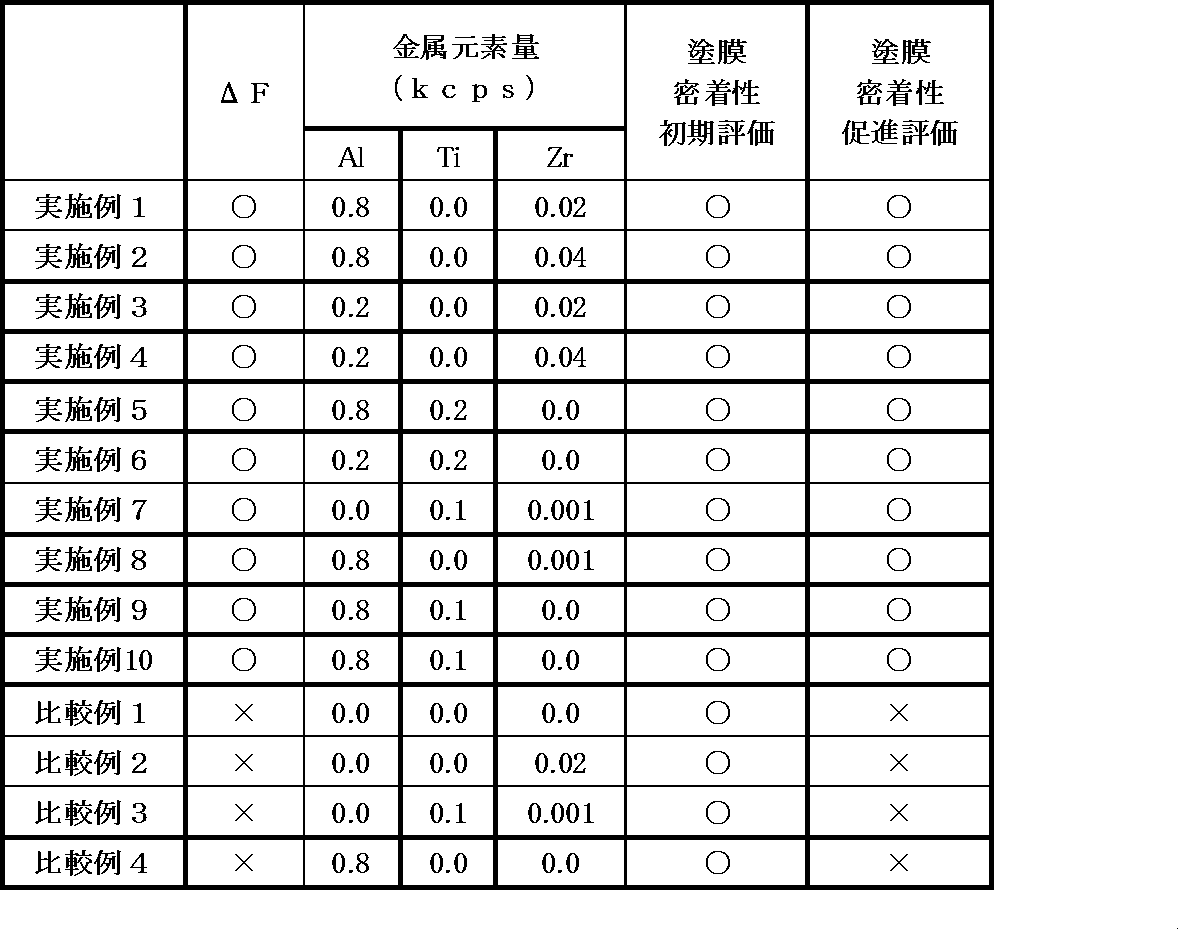
本発明における離型フィルムにおいては、OLが上記範囲を満足するために塗布層(2)中に含有される金属元素量として、0.2kcps以上、好ましくは0.6kcps以上であることが好ましい。当該金属元素量が0.2kcps未満の場合、所望する密着性が得られない場合がある。また、本発明者らは、塗布層(2)中に、アルミニウム、チタン、ジルコニウムから選ばれる、少なくとも2種以上の金属元素を含む金属化合物を用いることで、金属元素量の合計量として見た場合には、従来よりもさらに少ない含有量で、より長期間、経時における離型層に対する良好な密着性を維持することを知見した。 In the release film of the present invention, the amount of metal element contained in the coating layer (2) is preferably 0.2 kcps or more, and more preferably 0.6 kcps or more in order for OL to satisfy the above range. When the amount of the metal element is less than 0.2 kcps, desired adhesion may not be obtained. Moreover, the present inventors saw the total amount of metal elements by using a metal compound containing at least two or more metal elements selected from aluminum, titanium, and zirconium in the coating layer (2). In some cases, it has been found that good adhesion to the release layer over time is maintained for a longer period of time with a lower content than in the past.
本発明において「オリゴマー」とは、フィルムを熱処理した後、結晶化してフィルム表面に析出する低分子量物のうちの環状三量体と定義する。 In the present invention, “oligomer” is defined as a cyclic trimer of low molecular weight substances that crystallize and precipitate on the surface of the film after heat treatment.
以下、本発明を実施例によりさらに詳細に説明するが、本発明はその要旨を越えない限り、以下の実施例に限定されるものではない。また、本発明で用いた測定法は次のとおりである。 EXAMPLES Hereinafter, although an Example demonstrates this invention further in detail, this invention is not limited to a following example, unless the summary is exceeded. The measuring method used in the present invention is as follows.
(1)ポリエステルの固有粘度の測定
ポリエステルに非相溶な他のポリマー成分および顔料を除去したポリエステル1gを精秤し、フェノール/テトラクロロエタン=50/50(重量比)の混合溶媒100mlを加えて溶解させ、30℃で測定した。
(1) Measurement of intrinsic viscosity of polyester 1 g of polyester from which other polymer components and pigments incompatible with polyester have been removed are precisely weighed, and 100 ml of a mixed solvent of phenol / tetrachloroethane = 50/50 (weight ratio) is added. It was dissolved and measured at 30 ° C.
(2)平均粒径(d50:μm)の測定
遠心沈降式粒度分布測定装置(株式会社島津製作所社製SA−CP3型)を使用して測定した等価球形分布における積算(重量基準)50%の値を平均粒径とした。
(2) Measurement of average particle diameter (d 50 : μm) Integration (weight basis) 50% in equivalent spherical distribution measured using centrifugal sedimentation type particle size distribution measuring device (SA-CP3 type manufactured by Shimadzu Corporation) Was the average particle size.
(3)湿熱処理後における離型フィルムの剥離力上昇率(ΔF)測定
あらかじめ試料フィルムを80℃、90%RHの雰囲気に1週間保持した。次に試料フィルムの離型層表面に両面粘着テープ(日東電工製「No.502」)の片面を貼り付けた後、50mm×300mmのサイズにカットし、室温にて1時間放置後の剥離力を測定する。剥離力は引張試験機((株)インテスコ製「インテスコモデル2001型」)を使用し、引張速度300mm/分の条件下、180°剥離を行った。(F1)
さらに溶剤処理を行わない以外は同様にして剥離力(F2)を測定した。
得られた各剥離力値を用いて、溶剤処理前後における剥離力の変化率(ΔF)を求めた後、下記判定基準により、判定を行った。
ΔF(%)=(溶剤処理後の剥離力―溶剤処理前の剥離力)/溶剤処理前の剥離力×100
(3) Measurement of release force increase rate (ΔF) of release film after wet heat treatment The sample film was previously held in an atmosphere of 80 ° C. and 90% RH for 1 week. Next, after attaching one side of a double-sided adhesive tape (“No. 502” manufactured by Nitto Denko) to the surface of the release layer of the sample film, it was cut into a size of 50 mm × 300 mm and left for 1 hour at room temperature. Measure. For the peeling force, a tensile tester (“Intesco model 2001 type” manufactured by Intesco Co., Ltd.) was used, and 180 ° peeling was performed under a tensile speed of 300 mm / min. (F1)
Further, the peeling force (F2) was measured in the same manner except that the solvent treatment was not performed.
Using the obtained peeling force values, the rate of change (ΔF) in the peeling force before and after the solvent treatment was determined, and the determination was made according to the following criteria.
ΔF (%) = (peeling force after solvent treatment−peeling force before solvent treatment) / peeling force before solvent treatment × 100
《判定基準》
○:ΔFが20%未満(実用可能なレベル)
△:ΔFが20%以上、50%未満(実用困難な場合があるレベル〉
×:ΔFが50%以上(実用困難なレベル)
<Criteria>
○: ΔF is less than 20% (practical level)
Δ: ΔF is 20% or more and less than 50% (a level at which practical use may be difficult)>
X: ΔF is 50% or more (practical level)
(4)離型フィルムの離型層表面から抽出されるオリゴマー量(OL)の測定
あらかじめ、未熱処理の離型フィルムを空気中、180℃で1時間加熱する。その後、熱処理をした該フィルムを上部が開いている縦横10cm、高さ3cmの箱の内面にできるだけ密着させて箱形の形状とする。塗布層を設けている場合は塗布層面が内側となるようにする。次いで、上記の方法で作成した箱の中にDMF(ジメチルホルムアミド)4mlを入れて3分間放置した後、DMFを回収する。回収したDMFを液体クロマトグラフィー(島津製作所製:LC−7A)に供給して、DMF中のオリゴマー量を求め、この値を、DMFを接触させたフィルム面積で割って、フィルム表面オリゴマー量(mg/m2)とする。
(4) Measurement of oligomer amount (OL) extracted from release layer surface of release film An unheat-treated release film is heated in air at 180 ° C. for 1 hour in advance. After that, the heat-treated film is brought into close contact with the inner surface of a box having a top and width of 10 cm and a height of 3 cm, and the box shape is obtained. When the coating layer is provided, the coating layer surface is set to the inside. Next, 4 ml of DMF (dimethylformamide) is placed in the box prepared by the above method and left for 3 minutes, and then DMF is recovered. The recovered DMF was supplied to liquid chromatography (manufactured by Shimadzu Corporation: LC-7A) to determine the amount of oligomer in DMF, and this value was divided by the film area in contact with DMF to obtain the amount of film surface oligomer (mg / M 2 ).
DMF中のオリゴマー量は、標準試料ピーク面積と測定試料ピーク面積のピーク面積比より求めた(絶対検量線法)。標準試料の作成は、あらかじめ分取したオリゴマー(環状三量体)を正確に秤量し、正確に秤量したDMFに溶解し作成した。標準試料の濃度は、0.001〜0.01mg/mlの範囲が好ましい。 The amount of oligomer in DMF was determined from the peak area ratio between the standard sample peak area and the measured sample peak area (absolute calibration curve method). The standard sample was prepared by accurately weighing the oligomer (cyclic trimer) collected in advance and dissolving it in DMF accurately measured. The concentration of the standard sample is preferably in the range of 0.001 to 0.01 mg / ml.
なお、液体クロマトグラフの条件は下記のとおりとした。
移動相A:アセトニトリル
移動相B:2%酢酸水溶液
カラム:三菱化学(株)製『MCI GEL ODS 1HU』
カラム温度:40℃
流速:1ml/分
検出波長:254nm
The conditions for the liquid chromatograph were as follows.
Mobile phase A: Acetonitrile Mobile phase B: 2% acetic acid aqueous solution Column: “MCI GEL ODS 1HU” manufactured by Mitsubishi Chemical Corporation
Column temperature: 40 ° C
Flow rate: 1 ml / min Detection wavelength: 254 nm
(5)離型フィルムの離型面側からの金属元素量測定
あらかじめ、試料サンプルの離型層が設けられた面より蛍光X線測定装置((株)島津製作所(製)型式「XRF−1500」)を用いてFP(Fundamental Parameter Method)法により、下記表1の測定条件下、金属元素量を測定した。
(5) Measurement of amount of metal element from release surface side of release film Fluorescent X-ray measurement apparatus (Shimadzu Corp. model “XRF-1500” from the surface provided with the release layer of the sample sample in advance. The amount of metal elements was measured by the FP (Fundamental Parameter Method) method under the measurement conditions shown in Table 1 below.
(6)離型フィルムの塗膜密着性初期評価(実用特性代用評価)
塗工直後の試料フィルムの離型面を触手により5回擦り、離型層の脱落程度を下記判定基準により判定を行った。
《判定基準》
○:塗膜の脱落が見られない(実用可能なレベル)
△:塗膜が白くなるが脱落はしていない(実用可能なレベル〉
×:塗膜の脱落が確認された(実用困難なレベル)
(6) Initial evaluation of coating film adhesion of release film (practical property substitution evaluation)
The release surface of the sample film immediately after coating was rubbed 5 times with a tentacle, and the degree of release of the release layer was determined according to the following criteria.
<Criteria>
○: No dropout of the coating film (practical level)
Δ: The coating film turns white but does not fall off (practical level)
×: Detachment of the coating film was confirmed (practically difficult level)
(7)離型フィルムの塗膜密着性促進評価(実用特性代用評価)
試料フィルムを恒温恒湿槽中、80℃、90%RH雰囲気下、3週間放置した後に試料フィルムを取り出した。その後、試料フィルムの離型面をMEK(メチルエチルケトン)を染み込ませた脱脂綿で100回擦った後、触手により5回擦り、離型層の脱落程度を下記判定基準により判定を行った。
《判定基準》
○:塗膜の脱落が見られない(実用可能なレベル)
△:塗膜が白くなるが脱落はしていない(実用可能なレベル〉
×:塗膜の脱落が確認された(実用困難なレベル)
(7) Coating film adhesion promotion evaluation of release film (practical property substitution evaluation)
The sample film was left in a constant temperature and humidity chamber at 80 ° C. and 90% RH for 3 weeks, and then the sample film was taken out. Thereafter, the release surface of the sample film was rubbed 100 times with absorbent cotton soaked with MEK (methyl ethyl ketone) and then rubbed 5 times with a tentacle, and the degree of removal of the release layer was determined according to the following criteria.
<Criteria>
○: No dropout of the coating film (practical level)
Δ: The coating film turns white but does not fall off (practical level)
×: Detachment of the coating film was confirmed (practically difficult level)
(8)フィルムヘーズ(H0)の測定
試料フィルムをJIS−K−7136に準じ、村上色彩研究所製「HM−150」により、フィルムヘーズを測定した。
(8) Measurement of film haze (H0) The film haze of the sample film was measured according to “HM-150” manufactured by Murakami Color Research Laboratory in accordance with JIS-K-7136.
(9)加熱処理後のフィルムヘーズ(H1)の測定
試料フィルムにおいて、下記塗布剤組成からなる塗布剤を塗布層が設けられた面とは反対側の面に塗布する。その後、得られたフィルムを所定の熱処理条件(180℃、1時間)で処理した後、(8)項と同様にして、フィルムヘーズを測定した。
《塗布剤組成》
コルコート社製 コルコートP
使用バー:♯3バー
乾燥条件:100℃ 1分間
(9) Measurement of film haze (H1) after heat treatment In the sample film, a coating agent having the following coating agent composition is applied to the surface opposite to the surface provided with the coating layer. Thereafter, the obtained film was treated under predetermined heat treatment conditions (180 ° C., 1 hour), and then the film haze was measured in the same manner as in item (8).
<< Coating composition >>
Colcoat P
Bar used: # 3 bar Drying conditions: 100 ° C for 1 minute
(10)離型フィルムの視認性評価(実用特性代用評価)
(9)項において、試料フィルムを180℃×1時間熱処理した後の、フィルムヘーズ
(H1)を下記判定基準により、判定を行った。
《判定基準》
◎:フィルムヘーズが1.0%以下(特に視認性良好。実用可能なレベル)
○:フィルムヘーズが1.1%以上1.4%以下(視認性良好。実用可能なレベル)
△:フィルムヘーズが1.5%以上1.9%以下(実用困難な場合があるレベル〉
×:フィルムヘーズが2.0%以上(視認性不良。実用困難なレベル)
(10) Visibility evaluation of release film (practical property substitution evaluation)
In the item (9), the film haze (H1) after the sample film was heat-treated at 180 ° C. for 1 hour was determined according to the following criteria.
<Criteria>
A: Film haze is 1.0% or less (particularly good visibility, practical level)
○: Film haze is 1.1% or more and 1.4% or less (good visibility, practical level)
Δ: Film haze of 1.5% or more and 1.9% or less (a level at which practical use may be difficult)
X: Film haze is 2.0% or more (poor visibility, practically difficult level)
実施例および比較例において使用したポリエステルは、以下のようにして準備したものである。
〈ポリエステルの製造〉
製造例1(ポリエチレンテレフタレートA1)
ジメチルテレフタレート100部、エチレングリコール60部および酢酸マグネシウム・4水塩0.09部を反応器にとり、加熱昇温すると共にメタノールを留去し、エステル交換反応を行い、反応開始から4時間を要して230℃に昇温し、実質的にエステル交換反応を終了した。次いで、エチレングリコールスラリーエチルアシッドフォスフェート0.04部、三酸化アンチモン0.03部、平均粒径1.5μmのシリカ粒子を0.01部添加した後、100分で温度を280℃、圧力を15mmHgに達せしめ、以後も徐々に圧力を減じ、最終的に0.3mmHgとした。4時間後、系内を常圧に戻し、固有粘度0.61のポリエチレンテレフタレートA1を得た。
The polyester used in the examples and comparative examples was prepared as follows.
<Manufacture of polyester>
Production Example 1 (Polyethylene terephthalate A1)
100 parts of dimethyl terephthalate, 60 parts of ethylene glycol and 0.09 part of magnesium acetate tetrahydrate are placed in a reactor, the temperature is raised by heating, methanol is distilled off, transesterification is performed, and 4 hours are required from the start of the reaction. The temperature was raised to 230 ° C. to substantially complete the transesterification reaction. Next, 0.04 part of ethylene glycol slurry ethyl acid phosphate, 0.03 part of antimony trioxide and 0.01 part of silica particles having an average particle diameter of 1.5 μm were added, and then the temperature was 280 ° C. and the pressure was increased in 100 minutes. The pressure reached 15 mmHg, and the pressure was gradually reduced thereafter to finally reach 0.3 mmHg. After 4 hours, the system was returned to atmospheric pressure to obtain polyethylene terephthalate A1 having an intrinsic viscosity of 0.61.
実施例1:
製造例1で製造したポリエチレンテレフタレートA1を180℃で4時間、不活性ガス雰囲気中で乾燥し、溶融押出機により290℃で溶融し、口金から押出し静電印加密着法を用いて表面温度を40℃に設定した冷却ロール上で冷却固化して未延伸シートを得た。得られた未延伸シートにまず、95℃で延伸倍率をMD方向に3.6倍延伸し、テンターに導き、下記塗布剤組成から構成される塗布液1を塗布量(乾燥後)が0.05g/m2になるようにリバースグラビアコート方式により塗布した後、TD方向に4.3倍の逐次二軸延伸を行った。その後、230℃にて3秒間熱固定し、塗布層(1)を有する、厚さ38μmのPETフィルムを得た。次に下記塗布液2を塗布量(乾燥後)が0.05g/m2になるようにリバースグラビアコート方式により塗布層(1)の反対側のフィルム面に塗布した後、120℃、30秒間熱処理した。
Example 1:
The polyethylene terephthalate A1 produced in Production Example 1 was dried at 180 ° C. for 4 hours in an inert gas atmosphere, melted at 290 ° C. by a melt extruder, extruded from a die, and the surface temperature was adjusted to 40 using an electrostatic application adhesion method. The sheet was cooled and solidified on a cooling roll set to ° C. to obtain an unstretched sheet. First, the obtained unstretched sheet was stretched 3.6 times in the MD direction at 95 ° C., led to a tenter, and the coating amount 1 composed of the following coating agent composition was applied at a coating amount (after drying) of 0. After applying by a reverse gravure coating method so as to be 05 g / m 2 , sequential biaxial stretching was performed 4.3 times in the TD direction. Thereafter, the film was heat-set at 230 ° C. for 3 seconds to obtain a PET film having a thickness of 38 μm and having a coating layer (1). Next, the following coating solution 2 was applied to the film surface opposite to the coating layer (1) by a reverse gravure coating method so that the coating amount (after drying) was 0.05 g / m 2 , and then 120 ° C. for 30 seconds. Heat treated.
(塗布層(1)の化合物例)
・4級アンモニウム塩基含有ポリマー(A1):
2−ヒドロキシ3−メタクリルオキシプロピルトリメチルアンモニウム塩ポリマー
対イオン:メチルスルホネート 数平均分子量:30000
・ポリエチレングリコール含有アクリレートポリマー(B1):
ポリエチレングリコール含有モノアクリレートポリマー 数平均分子量:20000
・ポリエチレングリコール含有アクリレートポリマー(B2):
オクトキシポリエチレングリコール−ポリプロピレングリコールモノアクリレートポリマー 数平均分子量:32000
・架橋剤(C):メラミン架橋剤(DIC社製:ベッカミン「MAS」)
・粒子(D):アルミナ表面変性コロイダルシリカ(平均粒径:50nm)
・バインダー(E):ポリビニルアルコール(けん化度88モル%、重合度500)
(Example of compound of coating layer (1))
-Quaternary ammonium base-containing polymer (A1):
2-hydroxy-3-methacryloxypropyltrimethylammonium salt polymer Counter ion: methyl sulfonate Number average molecular weight: 30000
-Polyethylene glycol-containing acrylate polymer (B1):
Polyethylene glycol-containing monoacrylate polymer Number average molecular weight: 20000
-Polyethylene glycol-containing acrylate polymer (B2):
Octoxy polyethylene glycol-polypropylene glycol monoacrylate polymer Number average molecular weight: 32000
・ Crosslinking agent (C): Melamine crosslinking agent (DIC Corporation: Becamine “MAS”)
Particle (D): Alumina surface modified colloidal silica (average particle size: 50 nm)
Binder (E): polyvinyl alcohol (saponification degree 88 mol%, polymerization degree 500)
塗布層(2)を構成する化合物例は以下のとおりである。
(化合物例)
・アルミニウム元素を有する有機化合物:(F1)
アルミニウムトリス(アセチルアセトネ−ト)
・チタン元素を有する有機化合物:(F2)
チタンテトラアセチルアセトネート
・ジルコニウム元素を有する有機化合物:(F3)
ジルコニウムテトラアセチルアセトネート
・有機珪素化合物:(G1)
2-(3,4-エポキシシクロヘキシル)エチルトリメトキシシラン
《塗布剤組成》
アルミニウム元素を有する有機化合物(F1):32重量%
有機珪素化合物(F3):5重量%
触媒(G1):63重量%
上記塗布剤をトルエン/MEK混合溶媒(混合比率は1:4)にて希釈し、4重量%とした。
Examples of compounds constituting the coating layer (2) are as follows.
(Example compounds)
・ Organic compound having aluminum element: (F1)
Aluminum tris (acetylacetonate)
・ Organic compound containing titanium element: (F2)
Organic compound containing titanium tetraacetylacetonate / zirconium element: (F3)
Zirconium tetraacetylacetonate / organosilicon compound: (G1)
2- (3,4-epoxycyclohexyl) ethyltrimethoxysilane << coating agent composition >>
Organic compound having aluminum element (F1): 32% by weight
Organosilicon compound (F3): 5% by weight
Catalyst (G1): 63% by weight
The coating agent was diluted with a toluene / MEK mixed solvent (mixing ratio was 1: 4) to obtain 4% by weight.
その後、塗布層(2)上に下記離型剤組成からなる離型剤を塗布量(乾燥後)が0.1g/m2になるようにリバースグラビアコート方式により塗設し、150℃、30秒間熱処理した後に離型フィルムを得た。
《離型剤組成》
硬化型シリコーン樹脂(KS−847H:信越化学製):99重量%
硬化剤(PL−50T:信越化学製):1重量%
上記離型剤をMEK/トルエン混合溶媒(混合比率は1:1)で希釈し、濃度2重量%の塗布液を作成した。
Thereafter, a release agent having the following release agent composition was applied on the coating layer (2) by a reverse gravure coating method so that the coating amount (after drying) was 0.1 g / m 2 , and 150 ° C., 30 A release film was obtained after heat treatment for 2 seconds.
<Releasing agent composition>
Curable silicone resin (KS-847H: manufactured by Shin-Etsu Chemical): 99% by weight
Curing agent (PL-50T: manufactured by Shin-Etsu Chemical): 1% by weight
The release agent was diluted with a MEK / toluene mixed solvent (mixing ratio was 1: 1) to prepare a coating solution having a concentration of 2% by weight.
実施例2〜10および比較例1〜4:
実施例1において、塗布剤組成を下記表2および3に示す塗布剤組成に変更する以外は実施例1と同様にして製造し、離型フィルムを得た。
Examples 2 to 10 and Comparative Examples 1 to 4:
A release film was obtained in the same manner as in Example 1 except that the coating agent composition was changed to the coating agent compositions shown in Tables 2 and 3 below in Example 1.
上記実施例および比較例で得られた各離型フィルムの特性を下記表3および4に示す。 The characteristics of the release films obtained in the above examples and comparative examples are shown in Tables 3 and 4 below.
本発明の離型フィルムは、例えば、LCD、PDP、有機EL等、表示部材製造用等の光学用途のほか、フィルム表面にオリゴマー起因の異物が存在することを極端に嫌う用途に好適に利用することができる。 The release film of the present invention is suitably used for, for example, LCDs, PDPs, organic ELs, and other optical applications for manufacturing display members, and applications that extremely dislike the presence of oligomer-derived foreign matter on the film surface. be able to.
Claims (1)
Priority Applications (1)
| Application Number | Priority Date | Filing Date | Title |
|---|---|---|---|
| JP2011048621A JP2012183733A (en) | 2011-03-07 | 2011-03-07 | Mold release film |
Applications Claiming Priority (1)
| Application Number | Priority Date | Filing Date | Title |
|---|---|---|---|
| JP2011048621A JP2012183733A (en) | 2011-03-07 | 2011-03-07 | Mold release film |
Publications (1)
| Publication Number | Publication Date |
|---|---|
| JP2012183733A true JP2012183733A (en) | 2012-09-27 |
Family
ID=47014250
Family Applications (1)
| Application Number | Title | Priority Date | Filing Date |
|---|---|---|---|
| JP2011048621A Pending JP2012183733A (en) | 2011-03-07 | 2011-03-07 | Mold release film |
Country Status (1)
| Country | Link |
|---|---|
| JP (1) | JP2012183733A (en) |
Cited By (2)
| Publication number | Priority date | Publication date | Assignee | Title |
|---|---|---|---|---|
| JP2014131834A (en) * | 2013-01-04 | 2014-07-17 | Mitsubishi Plastics Inc | Release film |
| JP2015091646A (en) * | 2013-09-30 | 2015-05-14 | 三菱樹脂株式会社 | Mold release film, and substrate-less double-sided adhesive sheet |
Citations (6)
| Publication number | Priority date | Publication date | Assignee | Title |
|---|---|---|---|---|
| JP2007160578A (en) * | 2005-12-11 | 2007-06-28 | Mitsubishi Polyester Film Copp | Laminated polyester film |
| JP2008260178A (en) * | 2007-04-11 | 2008-10-30 | Mitsubishi Plastics Ind Ltd | Release film |
| JP2009196178A (en) * | 2008-02-20 | 2009-09-03 | Mitsubishi Plastics Inc | Mold release film |
| JP2009300658A (en) * | 2008-06-12 | 2009-12-24 | Toyobo Co Ltd | Easily adhesive polyester film for optical use and laminated polyester film for optical use |
| JP2010214826A (en) * | 2009-03-18 | 2010-09-30 | Mitsubishi Plastics Inc | Polyester release film |
| JP2012179899A (en) * | 2011-02-10 | 2012-09-20 | Mitsubishi Plastics Inc | Mold releasing film |
-
2011
- 2011-03-07 JP JP2011048621A patent/JP2012183733A/en active Pending
Patent Citations (6)
| Publication number | Priority date | Publication date | Assignee | Title |
|---|---|---|---|---|
| JP2007160578A (en) * | 2005-12-11 | 2007-06-28 | Mitsubishi Polyester Film Copp | Laminated polyester film |
| JP2008260178A (en) * | 2007-04-11 | 2008-10-30 | Mitsubishi Plastics Ind Ltd | Release film |
| JP2009196178A (en) * | 2008-02-20 | 2009-09-03 | Mitsubishi Plastics Inc | Mold release film |
| JP2009300658A (en) * | 2008-06-12 | 2009-12-24 | Toyobo Co Ltd | Easily adhesive polyester film for optical use and laminated polyester film for optical use |
| JP2010214826A (en) * | 2009-03-18 | 2010-09-30 | Mitsubishi Plastics Inc | Polyester release film |
| JP2012179899A (en) * | 2011-02-10 | 2012-09-20 | Mitsubishi Plastics Inc | Mold releasing film |
Cited By (2)
| Publication number | Priority date | Publication date | Assignee | Title |
|---|---|---|---|---|
| JP2014131834A (en) * | 2013-01-04 | 2014-07-17 | Mitsubishi Plastics Inc | Release film |
| JP2015091646A (en) * | 2013-09-30 | 2015-05-14 | 三菱樹脂株式会社 | Mold release film, and substrate-less double-sided adhesive sheet |
Similar Documents
| Publication | Publication Date | Title |
|---|---|---|
| JP4993484B2 (en) | Release film | |
| JP5253730B2 (en) | Release film | |
| JP2012207166A (en) | Substrate-less double-sided pressure-sensitive adhesive sheet | |
| JP2009196178A (en) | Mold release film | |
| JP2010214826A (en) | Polyester release film | |
| JP2013010880A (en) | Release film | |
| JP5388798B2 (en) | Low oligomer polyester film | |
| JP2012179899A (en) | Mold releasing film | |
| JP5026843B2 (en) | Release film | |
| JP4916131B2 (en) | Release film | |
| JP5398494B2 (en) | Polyester film | |
| JP2012183735A (en) | Mold release film | |
| JP2009196176A (en) | Mold release film | |
| JP2012183734A (en) | Mold release film | |
| JP6531349B2 (en) | Release film | |
| JP4805799B2 (en) | Release film | |
| JP2013052552A (en) | Mold release film | |
| JP5797416B2 (en) | Release film | |
| JP4805800B2 (en) | Release film | |
| JP2011189589A (en) | Mold release film for substrate-less double-sided pressure-sensitive adhesive sheet | |
| WO2006129533A1 (en) | Mold release film | |
| JP2012214014A (en) | Release film | |
| JP2011245739A (en) | Mold release film for double-sided adhesive sheet without substrate | |
| JP4916132B2 (en) | Release film | |
| JP2015016677A (en) | Release polyester film |
Legal Events
| Date | Code | Title | Description |
|---|---|---|---|
| A621 | Written request for application examination |
Free format text: JAPANESE INTERMEDIATE CODE: A621 Effective date: 20131213 |
|
| A977 | Report on retrieval |
Free format text: JAPANESE INTERMEDIATE CODE: A971007 Effective date: 20140826 |
|
| A131 | Notification of reasons for refusal |
Free format text: JAPANESE INTERMEDIATE CODE: A131 Effective date: 20140902 |
|
| A02 | Decision of refusal |
Free format text: JAPANESE INTERMEDIATE CODE: A02 Effective date: 20150113 |