JP2012193164A - Purification method of 2-cyanoacrylate - Google Patents
Purification method of 2-cyanoacrylate Download PDFInfo
- Publication number
- JP2012193164A JP2012193164A JP2012019375A JP2012019375A JP2012193164A JP 2012193164 A JP2012193164 A JP 2012193164A JP 2012019375 A JP2012019375 A JP 2012019375A JP 2012019375 A JP2012019375 A JP 2012019375A JP 2012193164 A JP2012193164 A JP 2012193164A
- Authority
- JP
- Japan
- Prior art keywords
- cyanoacrylate
- color number
- adhesive composition
- hazen color
- crude
- Prior art date
- Legal status (The legal status is an assumption and is not a legal conclusion. Google has not performed a legal analysis and makes no representation as to the accuracy of the status listed.)
- Granted
Links
Classifications
-
- C—CHEMISTRY; METALLURGY
- C07—ORGANIC CHEMISTRY
- C07C—ACYCLIC OR CARBOCYCLIC COMPOUNDS
- C07C253/00—Preparation of carboxylic acid nitriles
- C07C253/32—Separation; Purification; Stabilisation; Use of additives
- C07C253/34—Separation; Purification
-
- C—CHEMISTRY; METALLURGY
- C09—DYES; PAINTS; POLISHES; NATURAL RESINS; ADHESIVES; COMPOSITIONS NOT OTHERWISE PROVIDED FOR; APPLICATIONS OF MATERIALS NOT OTHERWISE PROVIDED FOR
- C09J—ADHESIVES; NON-MECHANICAL ASPECTS OF ADHESIVE PROCESSES IN GENERAL; ADHESIVE PROCESSES NOT PROVIDED FOR ELSEWHERE; USE OF MATERIALS AS ADHESIVES
- C09J4/00—Adhesives based on organic non-macromolecular compounds having at least one polymerisable carbon-to-carbon unsaturated bond ; adhesives, based on monomers of macromolecular compounds of groups C09J183/00 - C09J183/16
Landscapes
- Chemical & Material Sciences (AREA)
- Organic Chemistry (AREA)
- Organic Low-Molecular-Weight Compounds And Preparation Thereof (AREA)
- Adhesives Or Adhesive Processes (AREA)
Abstract
【課題】既に着色している2−シアノアクリレートに特定の芳香族多価ヒドロキシ化合物を添加し、0℃〜40℃で0.5日以上経過後に減圧蒸留することにより、着色が改善され、その後の着色進行も改善された2−シアノアクリレートの精製方法を提供すること。
【解決手段】 粗2−シアノアクリレートに式(1)で示される化合物およびレゾルシンからなる群から選ばれた少なくとも1種の芳香族多価ヒドロキシ化合物を添加、0℃〜40℃で0.5日以上経過後減圧蒸留にて、低沸分を5〜40重量%、高沸分を10〜30重量%カットし、ハーゼン色数40以下の精2−シアノアクリレートを得ることにより目的が達成できる。
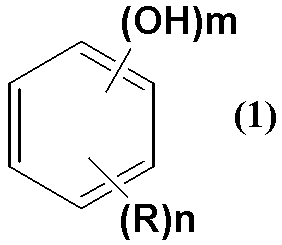
(式中、Rは、それぞれ独立して、水素原子、カルボキシル基、アルコキシカルボニル基またはアルコキシアルキルオキシカルボニル基を表わす。mは3〜5の整数、nは1〜3の整数であり、m+n=6である。)
【選択図】なし[PROBLEMS] To improve coloration by adding a specific aromatic polyvalent hydroxy compound to 2-cyanoacrylate that has already been colored and performing distillation under reduced pressure at 0 ° C. to 40 ° C. after 0.5 days or more. The present invention provides a method for purifying 2-cyanoacrylate with improved coloring progress.
SOLUTION: At least one aromatic polyhydroxy compound selected from the group consisting of a compound represented by formula (1) and resorcin is added to crude 2-cyanoacrylate, and 0.5 days at 0 ° C. to 40 ° C. are added. After the above, the objective can be achieved by vacuum distillation to cut 5-40% by weight of low-boiling components and 10-30% by weight of high-boiling components to obtain purified 2-cyanoacrylate having a Hazen color number of 40 or less.
(In the formula, each R independently represents a hydrogen atom, a carboxyl group, an alkoxycarbonyl group or an alkoxyalkyloxycarbonyl group. M is an integer of 3 to 5, n is an integer of 1 to 3, and m + n = 6)
[Selection figure] None
Description
本発明は、2−シアノアクリレートの精製方法に関するものである。 The present invention relates to a method for purifying 2-cyanoacrylate.
2−シアノアクリレート系接着剤は、主成分である2−シアノアクリレートのもつ特異なアニオン重合性により、被着体表面に付着するわずかな水分等のような微弱なアニオン等によって重合を開始し、各種材料を短時間で強固に接着することができるものである。このため、いわゆる瞬間接着剤として工業用、医療用、家庭用等の分野において広く用いられている。 The 2-cyanoacrylate-based adhesive starts polymerization with weak anions such as slight moisture adhering to the adherend surface due to the unique anionic polymerization property of 2-cyanoacrylate as the main component, Various materials can be firmly bonded in a short time. For this reason, it is widely used as a so-called instantaneous adhesive in fields such as industrial use, medical use, and home use.
また、2−シアノアクリレート系接着剤が一般的に透明であることから、透明な板やシートを接着する為に用いられたり、光学用部品の接着剤として用いられたり、あるいは染料や顔料を接着剤に溶解させ、その染料や顔料の色を活かした接着を行うといった分野にも好適に使用されている。このような接着剤に透明性が求められる分野において、接着剤主成分のハーゼン色数が50以上の場合、接着剤として好適に使用できないということが報告されている。(特許文献1) In addition, since 2-cyanoacrylate adhesive is generally transparent, it is used for bonding transparent plates and sheets, used as an adhesive for optical components, or bonded with dyes and pigments. It is also suitably used in the field where it is dissolved in an agent and adhesion is performed utilizing the color of the dye or pigment. In the field where transparency is required for such an adhesive, it has been reported that when the Hazen color number of the adhesive main component is 50 or more, it cannot be suitably used as an adhesive. (Patent Document 1)
一方、2−シアノアクリレート自体は無色透明の液体であるが、製造原料や製造時に発生する微量の不純物により、黄〜赤色の着色を帯びたり、熱・光・湿気の影響により、経時的に着色するという欠点があった。着色が一定以上大きくなった場合、前述のような接着剤に透明性を求める分野においては勿論のこと、一般的な用途においても、本来無色の液体が着色を帯びることによる、着色に関するクレームがあることから、その商品価値を著しく損ってしまう。 On the other hand, although 2-cyanoacrylate itself is a colorless and transparent liquid, it may be colored yellow to red due to a manufacturing raw material or a small amount of impurities generated during manufacturing, or colored over time due to the influence of heat, light, and humidity. There was a drawback of doing. When the coloring becomes larger than a certain level, there is a complaint about coloring due to the coloring of an essentially colorless liquid in general applications as well as in the field of requiring transparency of the adhesive as described above. For this reason, the commercial value is significantly impaired.
2−シアノアクリレートの着色の原因については不純物の存在が、着色の原因や促進に関与していると考えられる事から、不純物発生に関与すると考えられる酸性ガスの少ない2−シアノアクリレートを製造する方法(特許文献2)あるいは、一般的に考えられる保管条件として光を遮断し、低温低湿下で保存することで着色を防止する方法が提示されているが、既に着色した2−シアノアクリレートの着色を低減させるような具体的な精製方法を提示するような文献や方法は知られていなかった。 Regarding the cause of coloring of 2-cyanoacrylate, since the presence of impurities is considered to be involved in the cause and promotion of coloring, a method for producing 2-cyanoacrylate with little acid gas, which is considered to be involved in the generation of impurities (Patent Document 2) Or, as a generally considered storage condition, a method of blocking light and preventing coloration by storing under low temperature and low humidity has been proposed. No literature or method has been known that presents a specific purification method that can be reduced.
しかし、これらの方法は、着色を防止する方法で有り、脱色効果の記載やそれを示唆するような記載もない。又、着色防止効果も限定的で満足いくものではないため、すでに着色している2−シアノアクリレートを脱色し、更にその後の着色進行が抑制(色相安定性が改善)される2−シアノアクリレートの精製方法が望まれていた。本発明の目的は、すでに着色している2−シアノアクリレートを脱色し、更にその後の着色進行が抑制(色相安定性が改善)される2−シアノアクリレートの精製方法を提供することにある。 However, these methods are methods for preventing coloring, and there is no description of a decoloring effect or description that suggests it. In addition, since the anti-coloring effect is limited and not satisfactory, the 2-cyanoacrylate that is already colored is decolorized, and further progression of coloring is suppressed (improves hue stability). A purification method was desired. An object of the present invention is to provide a method for purifying 2-cyanoacrylate in which 2-cyanoacrylate that has already been colored is decolorized and further the progression of subsequent coloring is suppressed (hue stability is improved).
本発明者らは鋭意検討の結果、ある特定の芳香族多価ヒドロキシ化合物が2−シアノアクリレート中の着色物質および、着色物質に変化する物質である着色の原因物質に何らかの作用を及ぼして着色物質およびその原因物質を無害化し、その後に減圧蒸留により、その無害化された物質を除去する事で、ハーゼン色数50以上の2−シアノアクリレートからハーゼン色数40以下の着色の少ない2−シアノアクリレートが得られ、更にはその後の着色進行も大幅に低減されることを見出し、本発明を完成させた。すなわち、本発明に係る2−シアノアクリレートの精製方法とは、ハーゼン色数50以上の2−シアノアクリレートにある特定の芳香族多価ヒドロキシ化合物を添加し、0℃〜40℃で0.5日以上経過させた後、減圧蒸留することにより、ハーゼン色数40以下まで着色が改善され、その後の着色進行も改善された、2−シアノアクリレートの精製方法である。 As a result of intensive studies, the present inventors have found that a specific aromatic polyvalent hydroxy compound has some effect on a coloring substance in 2-cyanoacrylate and a coloring causative substance that is a substance that changes to a coloring substance. In addition, by detoxifying the causative substance and then removing the detoxified substance by distillation under reduced pressure, 2-cyanoacrylate having less coloring and having Hazen color number of 40 or less from 2-cyanoacrylate having Hazen color number of 50 or more Further, the present inventors have found that the progress of subsequent coloring is greatly reduced, and the present invention has been completed. That is, the method for purifying 2-cyanoacrylate according to the present invention includes adding a specific aromatic polyhydroxy compound in 2-cyanoacrylate having a Hazen color number of 50 or more, and 0.5 days at 0 ° C. to 40 ° C. This is a method for purifying 2-cyanoacrylate in which coloring is improved to Hazen color number of 40 or less and distillation progress thereafter is improved by distillation under reduced pressure after the above-described process.
本発明によれば、接着剤に透明性が求められている分野において好適に使用できないとの報告のある、ハーゼン色数50以上の2−シアノアクリレートにある特定の芳香族多価ヒドロキシ化合物を添加し、0℃〜40℃で0.5日以上経過させた後に減圧蒸留することにより、蒸留直後の着色が改善され、その後の着色進行も改善された2−シアノアクリレートを提供することが可能となる。 According to the present invention, a specific aromatic polyvalent hydroxy compound in 2-cyanoacrylate having a Hazen color number of 50 or more, which is reported to be unable to be suitably used in the field where transparency is required for the adhesive, is added In addition, by distilling under reduced pressure after 0.5 days or more at 0 ° C. to 40 ° C., it is possible to provide 2-cyanoacrylate in which coloring immediately after distillation is improved and subsequent coloring progress is also improved. Become.
本発明における2−シアノアクリレートは、式(2)で示される2−シアノアクリレートが好適に用いられる。 As 2-cyanoacrylate in the present invention, 2-cyanoacrylate represented by the formula (2) is preferably used.
本発明における2−シアノアクリレ−トの具体例としては、例えば、2−シアノアクリル酸のメチル、エチル、n−プロピル、イソプロピル、n−ブチル、イソブチル、sec−ブチル、オクチル、ネオペンチル、シクロヘキシル、エチルヘキシル、ドデシル、アリル、メトキシエチル、エトキシエチル、メトキシプロピル、ベンジル、フェニル、クロロエチル、テトラヒドロフルフリル等のエステル類が挙げられる。また、これらの2−シアノアクリレートは1種又は2種以上を混合して使用することができる。 Specific examples of 2-cyanoacrylate in the present invention include, for example, methyl, ethyl, n-propyl, isopropyl, n-butyl, isobutyl, sec-butyl, octyl, neopentyl, cyclohexyl, ethylhexyl of 2-cyanoacrylic acid, Examples include esters such as dodecyl, allyl, methoxyethyl, ethoxyethyl, methoxypropyl, benzyl, phenyl, chloroethyl, and tetrahydrofurfuryl. Moreover, these 2-cyanoacrylates can be used 1 type or in mixture of 2 or more types.
本発明が適用される粗2−シアノアクリレートとは、ハーゼン色数50以上の2−シアノアクリレートである。2−シアノアクリレートの代表的な製造方法として、まず、酢酸シアノエステルおよびホルムアルデヒドを塩基性触媒の存在下に有機溶媒中で縮合させ、得られた縮合体を重合抑制剤および解重合触媒の存在下に酸性ガス気流中、高温減圧条件で解重合し、2−シアノアクリレートを得る方法がある。この2−シアノアクリレートを再留することで、通常ハーゼン色数20〜30の無色透明な2−シアノアクリレートが得られる。但し、2−シアノアクリレートは、非常に不安定な物質である為に、原料中に含まれる微量の不純物の存在や、製造中に酸性ガスが過剰に使用された場合は、ハーゼン色数は高くなる傾向にある。また、一定以上の温度に長時間暴露されたり、短時間でも高温に暴露された場合に、ハーゼン色数は高くなる傾向にある。このような粗2−シアノアクリレートは、通常の再留では、ハーゼン色数が50未満にはならない。あるいは、初期にハーゼン色数が50未満であっても経時変化により、ハーゼン色数が50を大きく超える着色を示す場合がある。 The crude 2-cyanoacrylate to which the present invention is applied is 2-cyanoacrylate having a Hazen color number of 50 or more. As a typical method for producing 2-cyanoacrylate, first, acetic acid cyanoester and formaldehyde are condensed in an organic solvent in the presence of a basic catalyst, and the resulting condensate is then added in the presence of a polymerization inhibitor and a depolymerization catalyst. In addition, there is a method in which 2-cyanoacrylate is obtained by depolymerization in an acidic gas stream under high temperature and reduced pressure conditions. By re-distilling the 2-cyanoacrylate, a colorless and transparent 2-cyanoacrylate having a Hazen color number of 20 to 30 is usually obtained. However, since 2-cyanoacrylate is a very unstable substance, the Hazen color number is high when the presence of a small amount of impurities contained in the raw material or when an excessive amount of acidic gas is used during production. Tend to be. In addition, the Hazen color number tends to increase when exposed to a temperature above a certain level for a long time or when exposed to a high temperature even for a short time. Such crude 2-cyanoacrylate does not have a Hazen color number of less than 50 by normal re-running. Alternatively, even if the Hazen color number is initially less than 50, coloring with the Hazen color number greatly exceeding 50 may be exhibited due to a change with time.
このような着色した粗2−シアノアクリレートに式(1) Such a colored crude 2-cyanoacrylate has formula (1)
減圧蒸留前に式(1)で示される芳香族多価ヒドロキシ化合物およびレゾルシンからなる群から選ばれる少なくとも1種の芳香族多価ヒドロキシ化合物を添加した後、通常0℃〜40℃、好ましくは、10℃〜30℃で0.5日以上経過するまで減圧蒸留を実施しない。この間、密閉された容器で攪拌または無攪拌状態で保管を行う。この時の温度が温度が0℃より低すぎると脱色効果等が十分でない場合があり、40℃より高いと副反応により、2−シアノアクリレートの品質を低下させる場合がある。また、この期間は通常0.5日(12時間)〜30日であり、好ましくは、1日〜14日である。0.5日より短いと脱色効果等が十分に発揮できず、30日を越えた場合、生産効率が低下することから経済的側面からは好ましくない。 After adding at least one aromatic polyvalent hydroxy compound selected from the group consisting of the aromatic polyvalent hydroxy compound represented by formula (1) and resorcin before distillation under reduced pressure, usually 0 ° C. to 40 ° C., preferably Distillation under reduced pressure is not performed until 0.5 day or more has passed at 10 ° C to 30 ° C. During this time, the container is stored in a hermetically sealed container with or without stirring. If the temperature at this time is lower than 0 ° C., the decoloring effect and the like may not be sufficient, and if it is higher than 40 ° C., the quality of 2-cyanoacrylate may be deteriorated due to side reactions. Moreover, this period is 0.5 day (12 hours)-30 days normally, Preferably, it is 1 day-14 days. If it is shorter than 0.5 days, the decoloring effect or the like cannot be sufficiently exerted, and if it exceeds 30 days, the production efficiency is lowered, which is not preferable from the economical aspect.
前記期間経過後の蒸留条件としては、特に限定されるものではないが、通常0.1〜2kPaの減圧下で行う。例えば、0.6kPaの減圧下で蒸留した場合、蒸留温度としては30℃付近から低沸分の留出が始まり、60〜80℃の間で得られる主留分が本願の精2−シアノアクリレートの成分に該当する。本願で言う低沸分とは、蒸留を開始し、留出が開始してから所定の重量比に達した後に主留分に切り替わるまでの留分を示す。特に本願発明において2−シアノアクリレートの沸点と同一のものが留分として得られたとしても、本願記載の重量比に達するまでは低沸分として扱う。高沸分についても同様に本願発明において2−シアノアクリレートの沸点と同一のものが留分として得られたとしても、釜残を含む後留が本願記載の重量比に達する量を高沸分として扱う。なお、本願で言う所の低沸分、高沸分のカット率は、芳香族多価ヒドロキシ化合物や各種安定剤等を添加する前の、粗2−シアノアクリレートに対する重量%の値を表す。低沸分カット率としては、粗2−シアノアクリレートの着色度の大きさによって異なるが、通常、粗2−シアノアクリレートに対して5〜40重量%、好ましくは10〜30重量%である。5重量%より少ないと着色低減効果は小さく、40重量%以上のカットでは経済的に優位でない。釜残を含む高沸分カット率としては、10〜30重量%であり、好ましくは10〜20重量%である。10重量%より少ないと着色低減効果は小さく、30重量%以上のカットでは経済的に優位でない。又、従来、2−シアノアクリレートの蒸留時に用いられているハイドロキノンや五酸化リンを必要に応じて用いる事が可能である。又、蒸留で得られた精製2−シアノアクリレートには、従来、添加して用いられている安定剤(例えば、二酸化イオウ、メタンスルホン酸、p−トルエンスルホン酸、三弗化ホウ素ジエチルエーテル、ホウフッ化水素酸 、トリアルキルボレート等のアニオン重合禁止剤や、ハイドロキノン、ハイドロキノンモノメチルエーテル等のラジカル重合禁止剤等)、可塑剤(フタル酸ジメチル、フタル酸ジエチル、フタル酸ジブチル、フタル酸2−エチルヘキシル、フタル酸ジイソデシル等)、着色剤、香料、溶剤、硬化促進剤、強度向上剤、脂肪族多価カルボン酸等、目的に応じ、2−シアノアクリレートモノマーの安定性を阻害しない範囲で適宜、添加配合して使用することができる。 Although it does not specifically limit as distillation conditions after the said period progress, Usually, it carries out under reduced pressure of 0.1-2 kPa. For example, when distillation is performed under a reduced pressure of 0.6 kPa, the distillation starts at a low boiling point from around 30 ° C., and the main fraction obtained between 60 ° C. and 80 ° C. is the purified 2-cyanoacrylate of the present application. It corresponds to the ingredient of. The low boiling point said in this application shows the fraction until it switches to a main fraction after starting distillation and reaching a predetermined weight ratio after the start of distillation. In particular, even if the same boiling point of 2-cyanoacrylate is obtained as a fraction in the present invention, it is treated as a low boiling point until the weight ratio described in the present application is reached. Similarly, in the present invention, even if the high boiling point is the same as the boiling point of 2-cyanoacrylate in the present invention, the amount that the post-run including the residue of the kettle reaches the weight ratio described in the present application is defined as the high boiling point. deal with. In addition, the cut rate of the low boiling point and the high boiling point in the present application represents a value by weight% with respect to the crude 2-cyanoacrylate before adding an aromatic polyvalent hydroxy compound, various stabilizers, and the like. The low boiling point cut rate varies depending on the degree of coloring of the crude 2-cyanoacrylate, but is usually 5 to 40% by weight, preferably 10 to 30% by weight, based on the crude 2-cyanoacrylate. If it is less than 5% by weight, the color reduction effect is small, and if it is a cut of 40% by weight or more, it is not economically advantageous. The high boiling point cut rate including the residue is 10 to 30% by weight, preferably 10 to 20% by weight. If it is less than 10% by weight, the color reduction effect is small, and if it is a cut of 30% by weight or more, it is not economically advantageous. Moreover, it is possible to use hydroquinone and phosphorus pentoxide conventionally used at the time of distillation of 2-cyanoacrylate as needed. In addition, purified 2-cyanoacrylate obtained by distillation is added to stabilizers conventionally added and used (for example, sulfur dioxide, methanesulfonic acid, p-toluenesulfonic acid, boron trifluoride diethyl ether, borofluoride). Anionic polymerization inhibitors such as hydrofluoric acid and trialkylborate, radical polymerization inhibitors such as hydroquinone and hydroquinone monomethyl ether), plasticizers (dimethyl phthalate, diethyl phthalate, dibutyl phthalate, 2-ethylhexyl phthalate, Diisodecyl phthalate, etc.), colorant, fragrance, solvent, curing accelerator, strength improver, aliphatic polyvalent carboxylic acid, etc. Can be used.
(着色度(色相)および色相安定性の測定)
本発明における2−シアノアクリレートの着色度(色相)を示す、ハーゼン色数はJIS K0071−1に準拠した方法により測定した。
また、接着剤組成物の色相安定性については、それぞれの接着剤組成物について70℃1週間保管後の色相を同様の方法により測定した。この測定結果は、保管容器や保管条件により一概には断定できないが、大よそ、室温で約1年保管した場合の色相変化に相当する。
(Measurement of coloring degree (hue) and hue stability)
The Hazen color number indicating the coloring degree (hue) of 2-cyanoacrylate in the present invention was measured by a method based on JIS K0071-1.
Moreover, about the hue stability of adhesive composition, the hue after 70 degreeC 1 week storage about each adhesive composition was measured by the same method. Although this measurement result cannot be determined unconditionally depending on the storage container and storage conditions, it roughly corresponds to a change in hue when stored at room temperature for about one year.
(純度)
以下の実施例において2−シアノアクリレートの純度は下記条件のガスクロマトグラフィー分析により定量した。なお、本実施例及び比較例に記載している純度は以下の分析条件によって得られた2−シアノアクリレートの面積百分率である。
ガスクロマトグラフィーでの分析条件
使用機器 :島津14A
カラム :シリコンXE−60
カラム温度:190℃
検出器 :FID
キャリヤー:N2(40ml/min)
(purity)
In the following examples, the purity of 2-cyanoacrylate was quantified by gas chromatography analysis under the following conditions. In addition, the purity described in a present Example and a comparative example is an area percentage of 2-cyanoacrylate obtained on the following analysis conditions.
Equipment for analysis conditions in gas chromatography: Shimadzu 14A
Column: Silicon XE-60
Column temperature: 190 ° C
Detector: FID
Carrier: N 2 (40 ml / min)
以下、実施例により本発明をさらに詳しく述べる。
粗2−シアノアクリレートの調製1では、解重合中に装置トラブルや操作トラブルが生じた場合、必要以上に長時間高熱で暴露され、着色の原因となる事があり、その再現実験により、ハーゼン色数50以上の粗2−シアノアクリレートを得た。粗2−シアノアクリレートの調製2及び3では、試薬で販売されている通常の純度99%のエチル−2−シアノアクリレートを窓際で日光暴露することにより、強制的に着色を進行させ、ハーゼン色数50以上の粗2−シアノアクリレートを得た。その後、一部の粗2−シアノアクリレートを更に高温に曝すことにより、着色度を更に高めたものを得た。
Hereinafter, the present invention will be described in more detail with reference to examples.
In preparation 1 of crude 2-cyanoacrylate, when troubles of equipment or operation occur during depolymerization, they may be exposed to high heat for a longer time than necessary and cause coloring. A crude 2-cyanoacrylate of several 50 or more was obtained. In preparations 2 and 3 of crude 2-cyanoacrylate, the usual 99% purity ethyl-2-cyanoacrylate sold as a reagent was exposed to sunlight at the window to force the coloration, and the Hazen color number More than 50 crude 2-cyanoacrylates were obtained. Thereafter, a part of the crude 2-cyanoacrylate was further exposed to a high temperature to obtain a product having a further increased degree of coloring.
(調製例1)
(粗2−シアノアクリレートの調製1)
攪拌機、温度計、水分離器、滴下ロートを備えた三ツ口フラスコにパラホルムアルデヒド360g、トルエン1200g、ピペリジン1.2gを仕込み、80〜90℃の温度に保ち、攪拌しながらシアノ酢酸エチルエステル1356gを60分かけて滴下した。滴下終了後、生成水を共沸分離しながら還流させ、理論量の水が留出するまで約6時間反応させ、ポリマーのトルエン溶液を得た。この溶液を常圧脱溶媒後、五酸化リン40g、ハイドロキノン12gを加えて、充分混合した。減圧脱溶媒した後、続いて0.6kPaの減圧下で150〜200℃に加熱して解重合を行い、通常2時間で解重合を終えるところを熱暴露を大きくする為に5時間かけ、1400gの粗2−シアノアクリレートを得た。このもののハーゼン色数を測定したところ150であった。
(Preparation Example 1)
(Preparation of crude 2-cyanoacrylate 1)
A three-necked flask equipped with a stirrer, thermometer, water separator, and dropping funnel was charged with 360 g of paraformaldehyde, 1200 g of toluene, and 1.2 g of piperidine, maintained at a temperature of 80 to 90 ° C., and 1356 g of cyanoacetic acid ethyl ester was added while stirring. It was added dropwise over a period of minutes. After completion of the dropwise addition, the produced water was refluxed with azeotropic separation, and reacted for about 6 hours until the theoretical amount of water was distilled off to obtain a toluene solution of the polymer. After desolvating the solution at normal pressure, 40 g of phosphorus pentoxide and 12 g of hydroquinone were added and mixed well. After desolvation under reduced pressure, depolymerization is performed by heating to 150-200 ° C. under a reduced pressure of 0.6 kPa, and the place where depolymerization is usually completed in 2 hours takes 5 hours to increase heat exposure, and 1400 g Of crude 2-cyanoacrylate was obtained. The Hazen color number of this product was measured and found to be 150.
(調製例2)
(粗2−シアノアクリレートの調製2)
試薬のエチル−2−シアノアクリレート(純度99%、ハーゼン色数30)2500gを透明のプラスチック容器に入れ、窓際に1ヶ月静置したところハーゼン色数は80となった。このもののうち、2000gをポリエチレン容器に入れ、70℃で1週間静置したもののハーゼン色数を測定したところ150であった。
(Preparation Example 2)
(Preparation 2 of crude 2-cyanoacrylate)
When 2500 g of the reagent ethyl-2-cyanoacrylate (purity 99%, Hazen color number 30) was placed in a transparent plastic container and allowed to stand at the window for 1 month, the Hazen color number was 80. Of these, 2000 g was put in a polyethylene container and allowed to stand at 70 ° C. for 1 week, and the Hazen color number was measured to be 150.
(調製例3)
調整例2において窓際に1ヶ月静置し、ハーゼン色数が80となったエチルー2-シアノアクリレートの残500gをそのまま以下比較例、実施例に使用した。
(Preparation Example 3)
In Adjustment Example 2, the remaining 500 g of ethyl-2-cyanoacrylate, which was allowed to stand at the window for 1 month and had a Hazen color number of 80, was used in the following Comparative Examples and Examples as it was.
(調製例4)
調整例2において窓際に1ヶ月静置し、ハーゼン色数が80となった後、2000gをポリエチレン容器に入れ、70℃で1週間静置し、ハーゼン色数が150となったもののうち、500gを更に70℃で1週間静置したものについてハーゼン色数を測定したところ250であった。
(Preparation Example 4)
In Adjustment Example 2, after standing at the window for 1 month and having a Hazen color number of 80, 2000 g was placed in a polyethylene container and allowed to stand at 70 ° C. for 1 week to have a Hazen color number of 150 g. When the Hazen color number was measured for a sample which was further allowed to stand at 70 ° C. for 1 week, it was 250.
以下比較例並びに実施例においては、それぞれ記載の減圧度に併せ、所定の初留分、主留分となるよう監視しながら適宜蒸留温度及び蒸留時間を調整した。また、低沸分及び高沸分の割合は初期に仕込んだ粗エチルー2−シアノアクリレートに対する重量%である。 In the following Comparative Examples and Examples, the distillation temperature and the distillation time were adjusted as appropriate while monitoring the predetermined first fraction and main fraction in accordance with the degree of vacuum described. Moreover, the ratio of the low boiling point and the high boiling point is% by weight with respect to the initially charged crude ethyl-2-cyanoacrylate.
(比較例1)
調整例1によって得られた粗エチル−2−シアノアクリレート100gに対して重合禁止剤として、ハイドロキノン0.5g及び五酸化リン0.1gをそれぞれ添加し、1kPaの減圧下、低沸分を3g(低沸分3%)留去させた後、主留分として82gの精製エチル−2−シアノアクリレート(純度99%)を得た。高沸分である後留と釜残は、15.5g(高沸分15%)であった。この精製エチル−2−シアノアクリレート80gに対し、0.0008gのホウフッ化水素酸と0.08gのハイドロキノンを添加した接着剤組成物を調製した。この接着剤組成物についてハーゼン色数を測定したところ60であった。この接着剤組成物をポリエチレン容器に入れ、70℃1週間後のハーゼン色数を測定したところ120であった。
(Comparative Example 1)
Hydroquinone (0.5 g) and phosphorus pentoxide (0.1 g) were added as polymerization inhibitors to 100 g of the crude ethyl-2-cyanoacrylate obtained in Preparation Example 1, respectively, and a low boiling point content of 3 g ( After distilling off (low boiling point 3%), 82 g of purified ethyl-2-cyanoacrylate (purity 99%) was obtained as a main fraction. The high-boiling fraction and the residue were 15.5 g (15% high boiling point). An adhesive composition in which 0.0008 g of borohydrofluoric acid and 0.08 g of hydroquinone were added to 80 g of this purified ethyl-2-cyanoacrylate was prepared. The Hazen color number of this adhesive composition was measured and found to be 60. This adhesive composition was put in a polyethylene container, and the Hazen color number after 1 week at 70 ° C. was measured to be 120.
(比較例2)
調整例1によって得られた粗エチル−2−シアノアクリレート100gに対して重合禁止剤として、ハイドロキノン0.5g及び五酸化リン0.1gをそれぞれ添加し、1kPaの減圧下、低沸分を30g(低沸分30%)留去させた後、主留分として40gの精製エチル−2−シアノアクリレート(純度99%)を得た。高沸分である後留と釜残は、30g(高沸分30%)であった。この精製エチル−2−シアノアクリレート40gに対し、0.0004gのホウフッ化水素酸と0.04gのハイドロキノンを添加した接着剤組成物を調製した。この接着剤組成物についてハーゼン色数を測定したところ60であった。この接着剤組成物をポリエチレン容器に入れ、70℃1週間後のハーゼン色数を測定したところ100であった。
(Comparative Example 2)
Hydroquinone (0.5 g) and phosphorus pentoxide (0.1 g) were added as polymerization inhibitors to 100 g of the crude ethyl-2-cyanoacrylate obtained in Preparation Example 1, respectively, and a low boiling point of 30 g ( After distilling off a low boiling point of 30%, 40 g of purified ethyl-2-cyanoacrylate (purity 99%) was obtained as the main fraction. The high-boiling fraction and the residue were 30 g (high-boiling 30%). An adhesive composition was prepared by adding 0.0004 g of borohydrofluoric acid and 0.04 g of hydroquinone to 40 g of this purified ethyl-2-cyanoacrylate. The Hazen color number of this adhesive composition was measured and found to be 60. This adhesive composition was put in a polyethylene container, and the Hazen color number after 1 week at 70 ° C. was measured to be 100.
(比較例3)
調製例2によって得られた粗エチル−2−シアノアクリレート100gに対して、レゾルシンを0.1g添加し、混合後、40℃で2日静置した。その後、エチル−2−シアノアクリレート40gに対し、0.0004gのホウフッ化水素酸と0.04gのハイドロキノンを添加した接着剤組成物を調製した。減圧蒸留せずにこの接着剤についてハーゼン色数を測定したところ70であった。この接着剤組成物をポリエチレン容器に入れ、70℃1週間後のハーゼン色数を測定したところ120であった。
(Comparative Example 3)
To 100 g of the crude ethyl-2-cyanoacrylate obtained in Preparation Example 2, 0.1 g of resorcin was added, mixed, and allowed to stand at 40 ° C. for 2 days. Thereafter, an adhesive composition was prepared by adding 0.0004 g of borohydrofluoric acid and 0.04 g of hydroquinone to 40 g of ethyl-2-cyanoacrylate. The Hazen color number of this adhesive measured without distillation under reduced pressure was 70. This adhesive composition was put in a polyethylene container, and the Hazen color number after 1 week at 70 ° C. was measured to be 120.
(比較例4)
調製例2によって得られた粗エチル−2−シアノアクリレート100gに対して、2,6−ジ−tert−ブチルフェノールを0.1g添加し、混合後、40℃で2日静置した。その後、粗エチル−2−シアノアクリレート100gに対して重合禁止剤として、ハイドロキノン0.5g及び五酸化リン0.1gをそれぞれ添加し、0.3kPaの減圧下、初留分を3g(低沸分3%)留去させた後、主留分として82gの精製エチル−2−シアノアクリレート(純度99%)を得た。高沸分である後留と釜残は、15.3g(高沸分15%)であった。この精製エチル−2−シアノアクリレート75gに対し、0.00075gのホウフッ化水素酸と0.075gのハイドロキノンを添加した接着剤組成物を調製した。この接着剤組成物についてハーゼン色数を測定したところ80であった。この接着剤組成物をポリエチレン容器に入れ、70℃1週間後のハーゼン色数を測定したところ120であった。
(Comparative Example 4)
0.1 g of 2,6-di-tert-butylphenol was added to 100 g of the crude ethyl-2-cyanoacrylate obtained in Preparation Example 2, and the mixture was allowed to stand at 40 ° C. for 2 days. Thereafter, 0.5 g of hydroquinone and 0.1 g of phosphorus pentoxide were added to 100 g of crude ethyl-2-cyanoacrylate as polymerization inhibitors, respectively, and 3 g (low boiling point) of the initial fraction was obtained under a reduced pressure of 0.3 kPa. 3%), and 82 g of purified ethyl-2-cyanoacrylate (purity 99%) was obtained as the main fraction. The high-boiling fraction and the residue were 15.3 g (15% high boiling point). An adhesive composition in which 0.0075 g of borohydrofluoric acid and 0.075 g of hydroquinone were added to 75 g of this purified ethyl-2-cyanoacrylate was prepared. The Hazen color number of this adhesive composition measured was 80. This adhesive composition was put in a polyethylene container, and the Hazen color number after 1 week at 70 ° C. was measured to be 120.
(比較例5)
調製例2によって得られた粗エチル−2−シアノアクリレート100gに対して、レゾルシンを1g添加し、混合後、20℃で5日静置した。その後、粗エチル−2−シアノアクリレート100gに対して重合禁止剤として、ハイドロキノン0.5g及び五酸化リン0.1gをそれぞれ添加し、0.3kPaの減圧下、初留分を3.2g(低沸分3%)留去させた後、主留分として82.5gの精製エチル−2−シアノアクリレート(純度99%)を得た。高沸分である後留と釜残は、15.1g(高沸分15%)であった。この精製エチル−2−シアノアクリレートのうち82gに対し、0.00082gのホウフッ化水素酸と0.082gのハイドロキノンを添加した接着剤組成物を調製した。この接着剤組成物についてハーゼン色数を測定したところ70であった。この接着剤組成物をポリエチレン容器に入れ、70℃1週間後のハーゼン色数を測定したところ110であった。
(Comparative Example 5)
1 g of resorcin was added to 100 g of the crude ethyl-2-cyanoacrylate obtained in Preparation Example 2, and after mixing, the mixture was allowed to stand at 20 ° C. for 5 days. Thereafter, 0.5 g of hydroquinone and 0.1 g of phosphorus pentoxide were added as polymerization inhibitors to 100 g of crude ethyl-2-cyanoacrylate, respectively, and the initial fraction was reduced to 3.2 g (low) under a reduced pressure of 0.3 kPa. After distilling off (boiling 3%), 82.5 g of purified ethyl-2-cyanoacrylate (purity 99%) was obtained as the main fraction. The high-boiling fraction and residue were 15.1 g (high-boiling 15%). An adhesive composition was prepared by adding 0.0082 g of borohydrofluoric acid and 0.082 g of hydroquinone to 82 g of this purified ethyl-2-cyanoacrylate. The Hazen color number of this adhesive composition was measured and found to be 70. This adhesive composition was put in a polyethylene container, and the Hazen color number after 1 week at 70 ° C. was measured to be 110.
(比較例6)
調製例2によって得られた粗エチル−2−シアノアクリレート100gに対して、ピロガロールを1g添加し、混合後、40℃で5日静置した。その後、粗エチル−2−シアノアクリレート100gに対して重合禁止剤として、ハイドロキノン0.5g及び五酸化リン0.1gをそれぞれ添加し、0.3kPaの減圧下、初留分を3.1g(低沸分3%)留去させた後、主留分として82.6gの精製エチル−2−シアノアクリレート(純度99%)を得た。高沸分である後留と釜残は、15.3g(高沸分15%)であった。この精製エチル−2−シアノアクリレートのうち82gに対し、0.00082gのホウフッ化水素酸と0.082gのハイドロキノンを添加した接着剤組成物を調製した。この接着剤組成物についてハーゼン色数を測定したところ60であった。この接着剤組成物をポリエチレン容器に入れ、70℃1週間後のハーゼン色数を測定したところ110であった。
(Comparative Example 6)
1 g of pyrogallol was added to 100 g of the crude ethyl-2-cyanoacrylate obtained in Preparation Example 2, and the mixture was allowed to stand at 40 ° C. for 5 days after mixing. Thereafter, 0.5 g of hydroquinone and 0.1 g of phosphorus pentoxide were added as polymerization inhibitors to 100 g of crude ethyl-2-cyanoacrylate, respectively, and the initial fraction was reduced to 3.1 g (low) under a reduced pressure of 0.3 kPa. After distilling off (boiling 3%), 82.6 g of purified ethyl-2-cyanoacrylate (purity 99%) was obtained as the main fraction. The high-boiling fraction and the residue were 15.3 g (15% high boiling point). An adhesive composition was prepared by adding 0.0082 g of borohydrofluoric acid and 0.082 g of hydroquinone to 82 g of this purified ethyl-2-cyanoacrylate. The Hazen color number of this adhesive composition was measured and found to be 60. This adhesive composition was put in a polyethylene container, and the Hazen color number after 1 week at 70 ° C. was measured to be 110.
(比較例7)
調製例2によって得られた粗エチル−2−シアノアクリレート100gに対して、ガーリック酸メトキシエチルエステルを0.5g添加し、混合後、40℃で1日静置した。その後、粗エチル−2−シアノアクリレート100gに対して重合禁止剤として、ハイドロキノン0.5g及び五酸化リン0.1gをそれぞれ添加し、0.3kPaの減圧下、初留分を4.2g(低沸分4%)留去させた後、主留分として76.2gの精製エチル−2−シアノアクリレート(純度99%)を得た。高沸分である後留と釜残は、19.9g(高沸分20%)であった。この精製エチル−2−シアノアクリレートのうち75gに対し、0.00075gのホウフッ化水素酸と0.075gのハイドロキノンを添加した接着剤組成物を調製した。この接着剤組成物についてハーゼン色数を測定したところ60であった。この接着剤組成物をポリエチレン容器に入れ、70℃1週間後のハーゼン色数を測定したところ90であった。
(Comparative Example 7)
To 100 g of the crude ethyl-2-cyanoacrylate obtained in Preparation Example 2, 0.5 g of garlic acid methoxyethyl ester was added, mixed, and allowed to stand at 40 ° C. for 1 day. Thereafter, 0.5 g of hydroquinone and 0.1 g of phosphorus pentoxide were added as polymerization inhibitors to 100 g of crude ethyl-2-cyanoacrylate, respectively, and the initial fraction was 4.2 g (low) under a reduced pressure of 0.3 kPa. (4% boiling point), after distilling off, 76.2 g of purified ethyl-2-cyanoacrylate (purity 99%) was obtained as the main fraction. The high-boiling fraction and the residue in the kettle were 19.9 g (high-boiling 20%). An adhesive composition in which 0.0075 g of borofluoric acid and 0.075 g of hydroquinone were added to 75 g of this purified ethyl-2-cyanoacrylate was prepared. The Hazen color number of this adhesive composition was measured and found to be 60. This adhesive composition was put in a polyethylene container, and the Hazen color number after 1 week at 70 ° C. was measured to be 90.
(比較例8)
調整例3によって得られた粗エチル−2−シアノアクリレート100gに対して重合禁止剤として、ハイドロキノン0.5g及び五酸化リン0.1gをそれぞれ添加し、1kPaの減圧下、低沸分を29.9g(低沸分30%)留去させた後、主留分として40.2gの精製エチル−2−シアノアクリレート(純度99%)を得た。高沸分である後留と釜残は、30.1g(高沸分30%)であった。この精製エチル−2−シアノアクリレートのうち40gに対し、0.0004gのホウフッ化水素酸と0.04gのハイドロキノンを添加した接着剤組成物を調製した。この接着剤組成物についてハーゼン色数を測定したところ60であった。この接着剤組成物をポリエチレン容器に入れ、70℃1週間後のハーゼン色数を測定したところ100であった。
(Comparative Example 8)
Hydroquinone (0.5 g) and phosphorus pentoxide (0.1 g) were added as polymerization inhibitors to 100 g of the crude ethyl-2-cyanoacrylate obtained in Preparation Example 3, respectively, and the low boiling point was reduced to 29. After distilling off 9 g (low boiling point 30%), 40.2 g of purified ethyl-2-cyanoacrylate (purity 99%) was obtained as the main fraction. The high-boiling fraction and residue were 30.1 g (high-boiling 30%). An adhesive composition was prepared by adding 0.0004 g of borofluoric acid and 0.04 g of hydroquinone to 40 g of this purified ethyl-2-cyanoacrylate. The Hazen color number of this adhesive composition was measured and found to be 60. This adhesive composition was put in a polyethylene container, and the Hazen color number after 1 week at 70 ° C. was measured to be 100.
(比較例9)
調製例3によって得られた粗エチル−2−シアノアクリレート100gに対して、ガーリック酸を1.0g添加し、混合後、20℃で5日静置した。その後、粗エチル−2−シアノアクリレート100gに対して重合禁止剤として、ハイドロキノン0.5g及び五酸化リン0.1gをそれぞれ添加し、0.3kPaの減圧下、初留分を3.1g(低沸分3%)留去させた後、主留分として77.2gの精製エチル−2−シアノアクリレート(純度99%)を得た。高沸分である後留と釜残は、20.7g(高沸分21%)であった。この精製エチル−2−シアノアクリレートのうち75gに対し、0.00075gのホウフッ化水素酸と0.075gのハイドロキノンを添加した接着剤組成物を調製した。この接着剤組成物についてハーゼン色数を測定したところ60であった。この接着剤組成物をポリエチレン容器に入れ、70℃1週間後のハーゼン色数を測定したところ90であった。
(Comparative Example 9)
1.0 g of garlic acid was added to 100 g of the crude ethyl-2-cyanoacrylate obtained in Preparation Example 3, and after mixing, the mixture was allowed to stand at 20 ° C. for 5 days. Thereafter, 0.5 g of hydroquinone and 0.1 g of phosphorus pentoxide were added as polymerization inhibitors to 100 g of crude ethyl-2-cyanoacrylate, respectively, and the initial fraction was reduced to 3.1 g (low) under a reduced pressure of 0.3 kPa. After distilling off (boiling 3%), 77.2 g of purified ethyl-2-cyanoacrylate (purity 99%) was obtained as the main fraction. The high-boiling fraction and the residue were 20.7 g (high-boiling 21%). An adhesive composition in which 0.0075 g of borofluoric acid and 0.075 g of hydroquinone were added to 75 g of this purified ethyl-2-cyanoacrylate was prepared. The Hazen color number of this adhesive composition was measured and found to be 60. This adhesive composition was put in a polyethylene container, and the Hazen color number after 1 week at 70 ° C. was measured to be 90.
(比較例10)
調製例3によって得られた粗エチル−2−シアノアクリレート100gに対して、カテコールを1.0g添加し、混合後、30℃で5日静置した。その後、粗エチル−2−シアノアクリレート100gに対して重合禁止剤として、ハイドロキノン0.5g及び五酸化リン0.1gをそれぞれ添加し、0.3kPaの減圧下、初留分を29.9g(低沸分30%)留去させた後、主留分として50.5gの精製エチル−2−シアノアクリレート(純度99%)を得た。高沸分である後留と釜残は、20.7g(高沸分21%)であった。この精製エチル−2−シアノアクリレートのうち50gに対し、0.0005gのホウフッ化水素酸と0.05gのハイドロキノンを添加した接着剤組成物を調製した。この接着剤組成物についてハーゼン色数を測定したところ60であった。この接着剤組成物をポリエチレン容器に入れ、70℃1週間後のハーゼン色数を測定したところ100であった。
(Comparative Example 10)
1.0 g of catechol was added to 100 g of the crude ethyl-2-cyanoacrylate obtained in Preparation Example 3, and after mixing, the mixture was allowed to stand at 30 ° C. for 5 days. Thereafter, 0.5 g of hydroquinone and 0.1 g of phosphorus pentoxide were added as polymerization inhibitors to 100 g of crude ethyl-2-cyanoacrylate, respectively, and the initial fraction was reduced to 29.9 g under a reduced pressure of 0.3 kPa. (Boiled 30%) After distillation, 50.5 g of purified ethyl-2-cyanoacrylate (purity 99%) was obtained as the main fraction. The high-boiling fraction and the residue were 20.7 g (high-boiling 21%). An adhesive composition was prepared by adding 0.0005 g of borohydrofluoric acid and 0.05 g of hydroquinone to 50 g of this purified ethyl-2-cyanoacrylate. The Hazen color number of this adhesive composition was measured and found to be 60. This adhesive composition was put in a polyethylene container, and the Hazen color number after 1 week at 70 ° C. was measured to be 100.
調整例1によって得られた粗エチル−2−シアノアクリレート100gに対して、ガーリック酸メトキシエチルエステルを0.1g添加し、混合後、40℃で2日静置した。その後、粗エチル−2−シアノアクリレート100gに対して重合禁止剤として、ハイドロキノン0.5g及び五酸化リン0.1gをそれぞれ添加し、0.3kPaの減圧下、初留分を10g(低沸分10%)留去させた後、主留分として70gの精製エチル−2−シアノアクリレート(純度99%)を得た。高沸分である後留と釜残は、20.5g(高沸分20%)であった。この精製エチル−2−シアノアクリレート70gに対し、0.00070gのホウフッ化水素酸と0.070gのハイドロキノンを添加した接着剤組成物を調製した。この接着剤組成物についてハーゼン色数を測定したところ30であった。この接着剤組成物をポリエチレン容器に入れ、70℃1週間後のハーゼン色数を測定したところ50であった。 To 100 g of the crude ethyl-2-cyanoacrylate obtained in Preparation Example 1, 0.1 g of garlic acid methoxyethyl ester was added, mixed, and allowed to stand at 40 ° C. for 2 days. Thereafter, 0.5 g of hydroquinone and 0.1 g of phosphorus pentoxide were added as polymerization inhibitors to 100 g of crude ethyl-2-cyanoacrylate, and 10 g (low boiling point content) of the first fraction was obtained under a reduced pressure of 0.3 kPa. 10%) After distillation, 70 g of purified ethyl-2-cyanoacrylate (purity 99%) was obtained as the main fraction. The high-boiling fraction and the residue were 20.5 g (high-boiling 20%). An adhesive composition was prepared by adding 0.00070 g of borohydrofluoric acid and 0.070 g of hydroquinone to 70 g of this purified ethyl-2-cyanoacrylate. The Hazen color number of this adhesive composition was measured and found to be 30. This adhesive composition was put in a polyethylene container, and the Hazen color number after 1 week at 70 ° C. was measured to be 50.
芳香族多価ヒドロキシ化合物である、ガーリック酸メトキシエチルエステルの添加量を2重量%、静置日数を1日とした以外は、実施例1と同じ粗エチル−2−シアノアクリレートを用い、静置条件、蒸留条件を同様にし、得られた精製エチル−2−シアノアクリレートに対して同じ接着剤組成物になるように調製した。この接着剤組成物についてハーゼン色数を測定したところ30であった。この接着剤組成物をポリエチレン容器に入れ、70℃1週間後のハーゼン色数を測定したところ50であった。 The same crude ethyl-2-cyanoacrylate as in Example 1 was used, except that the addition amount of methoxyethyl garlic acid ester, which is an aromatic polyvalent hydroxy compound, was 2% by weight and the standing period was 1 day. The conditions were the same, and the distillation conditions were the same, and the resulting purified ethyl-2-cyanoacrylate was prepared to have the same adhesive composition. The Hazen color number of this adhesive composition was measured and found to be 30. This adhesive composition was put in a polyethylene container, and the Hazen color number after 1 week at 70 ° C. was measured to be 50.
芳香族多価ヒドロキシ化合物である、ガーリック酸メトキシエチルエステルの添加量を0.5重量%、静置温度を20℃、静置日数を10日とした以外は、実施例1と同じ粗エチル−2−シアノアクリレートを用い、静置条件、蒸留条件を同様にし、得られた精製エチル−2−シアノアクリレートに対して同じ接着剤組成物になるように調製した。この接着剤組成物についてハーゼン色数を測定したところ20であった。この接着剤組成物をポリエチレン容器に入れ、70℃1週間後のハーゼン色数を測定したところ40であった。 The same crude ethyl as in Example 1 except that the addition amount of methoxyethyl ester of garlic acid, which is an aromatic polyvalent hydroxy compound, was 0.5 wt%, the standing temperature was 20 ° C., and the standing days were 10 days. Using 2-cyanoacrylate, the standing conditions and the distillation conditions were the same, and the resulting purified ethyl-2-cyanoacrylate was prepared to have the same adhesive composition. The Hazen color number of this adhesive composition was measured and found to be 20. This adhesive composition was put in a polyethylene container, and the Hazen color number after 1 week at 70 ° C. was measured to be 40.
調整例1によって得られた粗エチル−2−シアノアクリレート100gに対して、ガーリック酸を0.1g添加し、混合後、20℃で10日静置した。その後、粗エチル−2−シアノアクリレート100gに対して重合禁止剤として、ハイドロキノン0.5g及び五酸化リン0.1gをそれぞれ添加し、0.3kPaの減圧下、初留分を5g(低沸分5%)留去させた後、主留分として85gの精製エチル−2−シアノアクリレート(純度99%)を得た。高沸分である後留と釜残は、10.2g(高沸分10%)であった。この精製エチル−2−シアノアクリレート75gに対し、0.00075gのホウフッ化水素酸と0.075gのハイドロキノンを添加した接着剤組成物を調製した。この接着剤組成物についてハーゼン色数を測定したところ30であった。この接着剤組成物をポリエチレン容器に入れ、70℃1週間後のハーゼン色数を測定したところ50であった。 0.1 g of garlic acid was added to 100 g of the crude ethyl-2-cyanoacrylate obtained in Preparation Example 1, and the mixture was allowed to stand at 20 ° C. for 10 days after mixing. Thereafter, 0.5 g of hydroquinone and 0.1 g of phosphorus pentoxide were added as polymerization inhibitors to 100 g of crude ethyl-2-cyanoacrylate, respectively, and the initial fraction was reduced to 5 g (low boiling point) under a reduced pressure of 0.3 kPa. 5%) After distillation, 85 g of purified ethyl-2-cyanoacrylate (purity 99%) was obtained as the main fraction. The high-boiling fraction and residue were 10.2 g (high-boiling 10%). An adhesive composition in which 0.0075 g of borohydrofluoric acid and 0.075 g of hydroquinone were added to 75 g of this purified ethyl-2-cyanoacrylate was prepared. The Hazen color number of this adhesive composition was measured and found to be 30. This adhesive composition was put in a polyethylene container, and the Hazen color number after 1 week at 70 ° C. was measured to be 50.
蒸留条件として初留分を40g(低沸分40%)、主留分を30g、高沸分を30.5g(高沸分30%)とした以外は、実施例4と同じように行った。得られた精製エチル−2−シアノアクリレートに対して同じ接着剤組成物になるように調製した。この接着剤組成物についてハーゼン色数を測定したところ10であった。この接着剤組成物をポリエチレン容器に入れ、70℃1週間後のハーゼン色数を測定したところ30であった。 The distillation was performed in the same manner as in Example 4 except that the initial fraction was 40 g (low boiling point 40%), the main fraction was 30 g, and the high boiling point was 30.5 g (high boiling point 30%). . It prepared so that it might become the same adhesive composition with respect to the obtained refined ethyl-2-cyanoacrylate. The Hazen color number of this adhesive composition was measured and found to be 10. This adhesive composition was put in a polyethylene container, and the Hazen color number after 1 week at 70 ° C. was measured to be 30.
調整例2によって得られた粗エチル−2−シアノアクリレート100gに対して、ピロガロールを1g添加し、混合後、10℃で15日静置した。その後、粗エチル−2−シアノアクリレート100gに対して重合禁止剤として、ハイドロキノン0.5g及び五酸化リン0.1gをそれぞれ添加し、0.3kPaの減圧下、初留分を20g(低沸分20%)留去させた後、主留分として60gの精製エチル−2−シアノアクリレート(純度99%)を得た。高沸分である後留と釜残は、20.3g(高沸分20%)であった。この精製エチル−2−シアノアクリレート60gに対し、0.0006gのホウフッ化水素酸と0.06gのハイドロキノンを添加した接着剤組成物を調製した。この接着剤組成物についてハーゼン色数を測定したところ30であった。この接着剤組成物をポリエチレン容器に入れ、70℃1週間後のハーゼン色数を測定したところ40であった。 1 g of pyrogallol was added to 100 g of the crude ethyl-2-cyanoacrylate obtained in Preparation Example 2, and the mixture was allowed to stand at 10 ° C. for 15 days after mixing. Thereafter, 0.5 g of hydroquinone and 0.1 g of phosphorus pentoxide were added as polymerization inhibitors to 100 g of crude ethyl-2-cyanoacrylate, respectively, and the initial fraction was 20 g (low-boiling fraction) under a reduced pressure of 0.3 kPa. 20%), after distillation, 60 g of purified ethyl-2-cyanoacrylate (purity 99%) was obtained as the main fraction. The high-boiling fraction and the residue were 20.3 g (high-boiling 20%). An adhesive composition was prepared by adding 0.0006 g of borohydrofluoric acid and 0.06 g of hydroquinone to 60 g of this purified ethyl-2-cyanoacrylate. The Hazen color number of this adhesive composition was measured and found to be 30. This adhesive composition was put in a polyethylene container, and the Hazen color number after 1 week at 70 ° C. was measured to be 40.
調整例2によって得られた粗エチル−2−シアノアクリレート100gに対して、ピロガロールを1g添加し、混合後、30℃で15日静置した。その後、粗エチル−2−シアノアクリレート100gに対して重合禁止剤として、ハイドロキノン0.5g及び五酸化リン0.1gをそれぞれ添加し、0.3kPaの減圧下、初留分を20g(低沸分20%)留去させた後、主留分として65gの精製エチル−2−シアノアクリレート(純度99%)を得た。高沸分である後留と釜残は、15.3g(高沸分15%)であった。この精製エチル−2−シアノアクリレート65gに対し、0.00065gのホウフッ化水素酸と0.065gのハイドロキノンを添加した接着剤組成物を調製した。この接着剤組成物についてハーゼン色数を測定したところ30であった。この接着剤組成物をポリエチレン容器に入れ、70℃1週間後のハーゼン色数を測定したところ50であった。 1 g of pyrogallol was added to 100 g of the crude ethyl-2-cyanoacrylate obtained in Preparation Example 2, and the mixture was allowed to stand at 30 ° C. for 15 days after mixing. Thereafter, 0.5 g of hydroquinone and 0.1 g of phosphorus pentoxide were added as polymerization inhibitors to 100 g of crude ethyl-2-cyanoacrylate, respectively, and the initial fraction was 20 g (low-boiling fraction) under a reduced pressure of 0.3 kPa. 20%), and 65 g of purified ethyl-2-cyanoacrylate (purity 99%) was obtained as the main fraction. The high-boiling fraction and the residue were 15.3 g (15% high boiling point). An adhesive composition in which 0.0065 g of borohydrofluoric acid and 0.065 g of hydroquinone were added to 65 g of this purified ethyl-2-cyanoacrylate was prepared. The Hazen color number of this adhesive composition was measured and found to be 30. This adhesive composition was put in a polyethylene container, and the Hazen color number after 1 week at 70 ° C. was measured to be 50.
調製例2によって得られた粗エチル−2−シアノアクリレート100gに対して、レゾルシンを5g添加し、混合後、20℃で30日静置した。その後、粗エチル−2−シアノアクリレート100gに対して重合禁止剤として、ハイドロキノン0.5g及び五酸化リン0.1gをそれぞれ添加し、0.3kPaの減圧下、初留分を15g(低沸分15%)留去させた後、主留分として65gの精製エチル−2−シアノアクリレート(純度99%)を得た。高沸分である後留と釜残は、20.5g(高沸分20%)であった。この精製エチル−2−シアノアクリレート20gに対し、0.0002gのホウフッ化水素酸と0.02gのハイドロキノンを添加した接着剤組成物を調製した。この接着剤組成物についてハーゼン色数を測定したところ30であった。この接着剤組成物をポリエチレン容器に入れ、70℃1週間後のハーゼン色数を測定したところ80であった。 5 g of resorcin was added to 100 g of the crude ethyl-2-cyanoacrylate obtained in Preparation Example 2, and after mixing, the mixture was allowed to stand at 20 ° C. for 30 days. Thereafter, 0.5 g of hydroquinone and 0.1 g of phosphorus pentoxide were added as polymerization inhibitors to 100 g of crude ethyl-2-cyanoacrylate, respectively, and 15 g (low boiling point) of the initial fraction was obtained under a reduced pressure of 0.3 kPa. 15%), and 65 g of purified ethyl-2-cyanoacrylate (purity 99%) was obtained as the main fraction. The high-boiling fraction and the residue were 20.5 g (high-boiling 20%). An adhesive composition was prepared by adding 0.0002 g of borohydrofluoric acid and 0.02 g of hydroquinone to 20 g of this purified ethyl-2-cyanoacrylate. The Hazen color number of this adhesive composition was measured and found to be 30. This adhesive composition was put in a polyethylene container, and the Hazen color number after 1 week at 70 ° C. was measured to be 80.
調製例1によって得られた粗エチル−2−シアノアクリレート100gに対して、ガーリック酸を1g添加し、混合後、20℃で1日静置した。その後、粗エチル−2−シアノアクリレート100gに対して重合禁止剤として、ハイドロキノン0.5g及び五酸化リン0.1gをそれぞれ添加し、0.3kPaの減圧下、初留分を6.9g(低沸分7%)留去させた後、主留分として73.1gの精製エチル−2−シアノアクリレート(純度99%)を得た。高沸分である後留と釜残は、20.3g(高沸分20%)であった。この精製エチル−2−シアノアクリレートのうち70gに対し、0.0007gのホウフッ化水素酸と0.07gのハイドロキノンを添加した接着剤組成物を調製した。この接着剤組成物についてハーゼン色数を測定したところ20であった。この接着剤組成物をポリエチレン容器に入れ、70℃1週間後のハーゼン色数を測定したところ50であった。 1 g of garlic acid was added to 100 g of the crude ethyl-2-cyanoacrylate obtained in Preparation Example 1, mixed, and then allowed to stand at 20 ° C. for 1 day. Thereafter, 0.5 g of hydroquinone and 0.1 g of phosphorus pentoxide were added to 100 g of crude ethyl-2-cyanoacrylate as polymerization inhibitors, respectively, and the initial fraction was reduced to 6.9 g (low) under a reduced pressure of 0.3 kPa. (7% boiling) 73.1 g of purified ethyl-2-cyanoacrylate (purity 99%) was obtained as the main fraction. The high-boiling fraction and the residue were 20.3 g (high-boiling 20%). An adhesive composition was prepared by adding 0.0067 g of borofluoric acid and 0.07 g of hydroquinone to 70 g of this purified ethyl-2-cyanoacrylate. The Hazen color number of this adhesive composition was measured and found to be 20. This adhesive composition was put in a polyethylene container, and the Hazen color number after 1 week at 70 ° C. was measured to be 50.
調製例2によって得られた粗エチル−2−シアノアクリレート100gに対して、ピロガロールを3g添加し、混合後、20℃で2日静置した。その後、粗エチル−2−シアノアクリレート100gに対して重合禁止剤として、ハイドロキノン0.5g及び五酸化リン0.1gをそれぞれ添加し、0.3kPaの減圧下、初留分を7.3g(低沸分7%)留去させた後、主留分として75.2gの精製エチル−2−シアノアクリレート(純度99%)を得た。高沸分である後留と釜残は、20.9g(高沸分21%)であった。この精製エチル−2−シアノアクリレートのうち70gに対し、0.0007gのホウフッ化水素酸と0.07gのハイドロキノンを添加した接着剤組成物を調製した。この接着剤組成物についてハーゼン色数を測定したところ30であった。この接着剤組成物をポリエチレン容器に入れ、70℃1週間後のハーゼン色数を測定したところ60であった。 3 g of pyrogallol was added to 100 g of the crude ethyl-2-cyanoacrylate obtained in Preparation Example 2, and the mixture was allowed to stand at 20 ° C. for 2 days after mixing. Thereafter, 0.5 g of hydroquinone and 0.1 g of phosphorus pentoxide were added as polymerization inhibitors to 100 g of crude ethyl-2-cyanoacrylate, respectively, and the initial fraction was reduced to 7.3 g (low) under a reduced pressure of 0.3 kPa. (7% boiling) 72.5 g of purified ethyl-2-cyanoacrylate (purity 99%) was obtained as the main fraction. The high-boiling fraction and residue were 20.9 g (high-boiling 21%). An adhesive composition was prepared by adding 0.0067 g of borofluoric acid and 0.07 g of hydroquinone to 70 g of this purified ethyl-2-cyanoacrylate. The Hazen color number of this adhesive composition was measured and found to be 30. This adhesive composition was put in a polyethylene container, and the Hazen color number after 1 week at 70 ° C. was measured to be 60.
調製例2によって得られた粗エチル−2−シアノアクリレート100gに対して、ピロガロールを2g添加し、混合後、30℃で5日静置した。その後、粗エチル−2−シアノアクリレート100gに対して重合禁止剤として、ハイドロキノン0.5g及び五酸化リン0.1gをそれぞれ添加し、0.3kPaの減圧下、初留分を30.2g(低沸分30%)留去させた後、主留分として40.8gの精製エチル−2−シアノアクリレート(純度99%)を得た。高沸分である後留と釜残は、31.3g(高沸分31%)であった。この精製エチル−2−シアノアクリレートのうち40gに対し、0.0004gのホウフッ化水素酸と0.04gのハイドロキノンを添加した接着剤組成物を調製した。この接着剤組成物についてハーゼン色数を測定したところ10であった。この接着剤組成物をポリエチレン容器に入れ、70℃1週間後のハーゼン色数を測定したところ40であった。 2 g of pyrogallol was added to 100 g of the crude ethyl-2-cyanoacrylate obtained in Preparation Example 2, and the mixture was allowed to stand at 30 ° C. for 5 days after mixing. Thereafter, 0.5 g of hydroquinone and 0.1 g of phosphorus pentoxide were added as polymerization inhibitors to 100 g of crude ethyl-2-cyanoacrylate, respectively, and the initial fraction was reduced to 30.2 g (low) under a reduced pressure of 0.3 kPa. (Boiled 30%) After distillation, 40.8 g of purified ethyl-2-cyanoacrylate (purity 99%) was obtained as the main fraction. The high-boiling fraction and residue were 31.3 g (high-boiling 31%). An adhesive composition was prepared by adding 0.0004 g of borofluoric acid and 0.04 g of hydroquinone to 40 g of this purified ethyl-2-cyanoacrylate. The Hazen color number of this adhesive composition was measured and found to be 10. This adhesive composition was put in a polyethylene container, and the Hazen color number after 1 week at 70 ° C. was measured to be 40.
調製例2によって得られた粗エチル−2−シアノアクリレート100gに対して、レゾルシンを1g添加し、混合後、30℃で2日静置した。その後、粗エチル−2−シアノアクリレート100gに対して重合禁止剤として、ハイドロキノン0.5g及び五酸化リン0.1gをそれぞれ添加し、0.3kPaの減圧下、初留分を30.3g(低沸分30%)留去させた後、主留分として50.3gの精製エチル−2−シアノアクリレート(純度99%)を得た。高沸分である後留と釜残は、20.4g(高沸分20%)であった。この精製エチル−2−シアノアクリレートのうち40gに対し、0.0004gのホウフッ化水素酸と0.04gのハイドロキノンを添加した接着剤組成物を調製した。この接着剤組成物についてハーゼン色数を測定したところ10であった。この接着剤組成物をポリエチレン容器に入れ、70℃1週間後のハーゼン色数を測定したところ50であった。 1 g of resorcin was added to 100 g of the crude ethyl-2-cyanoacrylate obtained in Preparation Example 2, and after mixing, the mixture was allowed to stand at 30 ° C. for 2 days. Thereafter, 0.5 g of hydroquinone and 0.1 g of phosphorus pentoxide were added as polymerization inhibitors to 100 g of crude ethyl-2-cyanoacrylate, respectively, and the initial fraction was reduced to 30.3 g (low) under a reduced pressure of 0.3 kPa. After boiling off (boiling 30%), 50.3 g of purified ethyl-2-cyanoacrylate (purity 99%) was obtained as the main fraction. The high-boiling fraction and residue were 20.4 g (high-boiling 20%). An adhesive composition was prepared by adding 0.0004 g of borofluoric acid and 0.04 g of hydroquinone to 40 g of this purified ethyl-2-cyanoacrylate. The Hazen color number of this adhesive composition was measured and found to be 10. This adhesive composition was put in a polyethylene container, and the Hazen color number after 1 week at 70 ° C. was measured to be 50.
調製例3によって得られた粗エチル−2−シアノアクリレート100gに対して、レゾルシンを0.5g添加し、混合後、20℃で1日静置した。その後、粗エチル−2−シアノアクリレート100gに対して重合禁止剤として、ハイドロキノン0.5g及び五酸化リン0.1gをそれぞれ添加し、0.3kPaの減圧下、初留分を20.2g(低沸分20%)留去させた後、主留分として60.5gの精製エチル−2−シアノアクリレート(純度99%)を得た。高沸分である後留と釜残は、19.9g(高沸分20%)であった。この精製エチル−2−シアノアクリレートのうち50gに対し、0.0005gのホウフッ化水素酸と0.05gのハイドロキノンを添加した接着剤組成物を調製した。この接着剤組成物についてハーゼン色数を測定したところ10であった。この接着剤組成物をポリエチレン容器に入れ、70℃1週間後のハーゼン色数を測定したところ50であった。 To 100 g of the crude ethyl-2-cyanoacrylate obtained in Preparation Example 3, 0.5 g of resorcin was added, mixed, and allowed to stand at 20 ° C. for 1 day. Thereafter, 0.5 g of hydroquinone and 0.1 g of phosphorus pentoxide were added as polymerization inhibitors to 100 g of crude ethyl-2-cyanoacrylate, respectively, and the initial fraction was reduced to 20.2 g (low) under a reduced pressure of 0.3 kPa. (Distilled 20%) After distillation, 60.5 g of purified ethyl-2-cyanoacrylate (purity 99%) was obtained as the main fraction. The high-boiling fraction and the residue in the kettle were 19.9 g (high-boiling 20%). An adhesive composition was prepared by adding 0.0005 g of borohydrofluoric acid and 0.05 g of hydroquinone to 50 g of this purified ethyl-2-cyanoacrylate. The Hazen color number of this adhesive composition was measured and found to be 10. This adhesive composition was put in a polyethylene container, and the Hazen color number after 1 week at 70 ° C. was measured to be 50.
調製例4によって得られた粗エチル−2−シアノアクリレート100gに対して、ガーリック酸を1g添加し、混合後、30℃で5日静置した。その後、粗エチル−2−シアノアクリレート100gに対して重合禁止剤として、ハイドロキノン0.5g及び五酸化リン0.1gをそれぞれ添加し、0.3kPaの減圧下、初留分を10.2g(低沸分10%)留去させた後、主留分として60.5gの精製エチル−2−シアノアクリレート(純度99%)を得た。高沸分である後留と釜残は、30.3g(高沸分30%)であった。この精製エチル−2−シアノアクリレートのうち50gに対し、0.0005gのホウフッ化水素酸と0.05gのハイドロキノンを添加した接着剤組成物を調製した。この接着剤組成物についてハーゼン色数を測定したところ30であった。この接着剤組成物をポリエチレン容器に入れ、70℃1週間後のハーゼン色数を測定したところ60であった。 1 g of garlic acid was added to 100 g of the crude ethyl-2-cyanoacrylate obtained in Preparation Example 4, and after mixing, the mixture was allowed to stand at 30 ° C. for 5 days. Thereafter, 0.5 g of hydroquinone and 0.1 g of phosphorus pentoxide were added as polymerization inhibitors to 100 g of crude ethyl-2-cyanoacrylate, respectively, and the initial fraction was 10.2 g (low) under a reduced pressure of 0.3 kPa. After boiling off (boiling 10%), 60.5 g of purified ethyl-2-cyanoacrylate (purity 99%) was obtained as the main fraction. The high-boiling fraction and residue were 30.3 g (high-boiling 30%). An adhesive composition was prepared by adding 0.0005 g of borohydrofluoric acid and 0.05 g of hydroquinone to 50 g of this purified ethyl-2-cyanoacrylate. The Hazen color number of this adhesive composition was measured and found to be 30. This adhesive composition was put in a polyethylene container, and the Hazen color number after 1 week at 70 ° C. was measured to be 60.
調製例4によって得られた粗エチル−2−シアノアクリレート100gに対して、ピロガロールを3g添加し、混合後、30℃で5日静置した。その後、粗エチル−2−シアノアクリレート100gに対して重合禁止剤として、ハイドロキノン0.5g及び五酸化リン0.1gをそれぞれ添加し、0.3kPaの減圧下、初留分を30.3g(低沸分30%)留去させた後、主留分として51.6gの精製エチル−2−シアノアクリレート(純度99%)を得た。高沸分である後留と釜残は、21.0g(高沸分21%)であった。この精製エチル−2−シアノアクリレートのうち50gに対し、0.0005gのホウフッ化水素酸と0.05gのハイドロキノンを添加した接着剤組成物を調製した。この接着剤組成物についてハーゼン色数を測定したところ10であった。この接着剤組成物をポリエチレン容器に入れ、70℃1週間後のハーゼン色数を測定したところ50であった。
3 g of pyrogallol was added to 100 g of the crude ethyl-2-cyanoacrylate obtained in Preparation Example 4, and the mixture was allowed to stand at 30 ° C. for 5 days after mixing. Thereafter, 0.5 g of hydroquinone and 0.1 g of phosphorus pentoxide were added as polymerization inhibitors to 100 g of crude ethyl-2-cyanoacrylate, respectively, and the initial fraction was reduced to 30.3 g (low) under a reduced pressure of 0.3 kPa. (Distillation of 30%) After distillation, 51.6 g of purified ethyl-2-cyanoacrylate (purity 99%) was obtained as the main fraction. The high-boiling fraction and residue were 21.0 g (21% high boiling point). An adhesive composition was prepared by adding 0.0005 g of borohydrofluoric acid and 0.05 g of hydroquinone to 50 g of this purified ethyl-2-cyanoacrylate. The Hazen color number of this adhesive composition was measured and found to be 10. This adhesive composition was put in a polyethylene container, and the Hazen color number after 1 week at 70 ° C. was measured to be 50.
Claims (3)
(式中、Rは、それぞれ独立して、水素原子、カルボキシル基、アルコキシカルボニル基またはアルコキシアルキルオキシカルボニル基を表わす。mは3〜5の整数、nは1〜3の整数であり、m+n=6である。) In purifying crude 2-cyanoacrylate having a Hazen color number of 50 or more, at least one aromatic polyhydroxy compound selected from the group consisting of the compound represented by formula (1) and resorcin is added to crude 2-cyanoacrylate. After adding 0.5 days or more at 0 ° C. to 40 ° C., low-boiling components are cut by 5 to 40% by weight and high-boiling components by 10 to 30% by weight with respect to the crude 2-cyanoacrylate. A method for purifying 2-cyanoacrylate, which comprises obtaining 2-cyanoacrylate having a Hazen color number of 40 or less.
(In the formula, each R independently represents a hydrogen atom, a carboxyl group, an alkoxycarbonyl group or an alkoxyalkyloxycarbonyl group. M is an integer of 3 to 5, n is an integer of 1 to 3, and m + n = 6)
Priority Applications (4)
| Application Number | Priority Date | Filing Date | Title |
|---|---|---|---|
| JP2012019375A JP5000018B1 (en) | 2011-03-03 | 2012-02-01 | Method for purifying 2-cyanoacrylate |
| US14/001,372 US8975433B2 (en) | 2011-03-03 | 2012-02-24 | 2-cyanoacrylate-purifying method |
| PCT/JP2012/054642 WO2012117977A1 (en) | 2011-03-03 | 2012-02-24 | 2-cyanoacrylate-purifying method |
| TW101106242A TWI491585B (en) | 2011-03-03 | 2012-02-24 | Method for purifying 2-cyanoacrylate |
Applications Claiming Priority (3)
| Application Number | Priority Date | Filing Date | Title |
|---|---|---|---|
| JP2011046605 | 2011-03-03 | ||
| JP2011046605 | 2011-03-03 | ||
| JP2012019375A JP5000018B1 (en) | 2011-03-03 | 2012-02-01 | Method for purifying 2-cyanoacrylate |
Publications (2)
| Publication Number | Publication Date |
|---|---|
| JP5000018B1 JP5000018B1 (en) | 2012-08-15 |
| JP2012193164A true JP2012193164A (en) | 2012-10-11 |
Family
ID=46757914
Family Applications (1)
| Application Number | Title | Priority Date | Filing Date |
|---|---|---|---|
| JP2012019375A Active JP5000018B1 (en) | 2011-03-03 | 2012-02-01 | Method for purifying 2-cyanoacrylate |
Country Status (4)
| Country | Link |
|---|---|
| US (1) | US8975433B2 (en) |
| JP (1) | JP5000018B1 (en) |
| TW (1) | TWI491585B (en) |
| WO (1) | WO2012117977A1 (en) |
Family Cites Families (9)
| Publication number | Priority date | Publication date | Assignee | Title |
|---|---|---|---|---|
| JP2875867B2 (en) * | 1990-09-13 | 1999-03-31 | 田岡化学工業株式会社 | Method for producing α-cyanoacrylates |
| US7709676B2 (en) * | 2003-05-30 | 2010-05-04 | Toagosei Co., Ltd. | Method for producing purified 2-cyanoacrylate |
| JP2007126632A (en) * | 2005-10-06 | 2007-05-24 | Taoka Chem Co Ltd | 2-cyanoacrylate-based adhesive composition |
| RU2010104647A (en) | 2007-07-12 | 2011-08-20 | Эвоник Рем Гмбх (De) | TWO-OR MULTI-COMPONENT SYSTEM WITH A REGULATED VIABILITY CURRENCY BY THE OXIDATIVE-REDUCING SYSTEM OF INITIATORS, AND ALSO ITS APPLICATION |
| DE102007032836A1 (en) * | 2007-07-12 | 2009-01-15 | Evonik Röhm Gmbh | Emulsion polymer containing activators, processes for its preparation and its use in two- or multi-component systems |
| US20100210784A1 (en) | 2007-07-12 | 2010-08-19 | Evonik Röhm Gmbh | Emulsion polymer comprising activators, process for preparation thereof and use thereof in two-component or multicomponent systems |
| JP2010235821A (en) | 2009-03-31 | 2010-10-21 | Sanyo Chem Ind Ltd | Epoxy resin and epoxy resin composition |
| JP4605671B1 (en) * | 2009-12-25 | 2011-01-05 | 田岡化学工業株式会社 | Ethyl-2-cyanoacrylate adhesive composition |
| KR101206848B1 (en) * | 2010-11-02 | 2012-12-03 | (주)인튜이티브메디코프 | Cyanoacrylate-based tissue adhesive composition |
-
2012
- 2012-02-01 JP JP2012019375A patent/JP5000018B1/en active Active
- 2012-02-24 TW TW101106242A patent/TWI491585B/en not_active IP Right Cessation
- 2012-02-24 WO PCT/JP2012/054642 patent/WO2012117977A1/en not_active Ceased
- 2012-02-24 US US14/001,372 patent/US8975433B2/en not_active Expired - Fee Related
Also Published As
| Publication number | Publication date |
|---|---|
| WO2012117977A1 (en) | 2012-09-07 |
| TW201240952A (en) | 2012-10-16 |
| US8975433B2 (en) | 2015-03-10 |
| JP5000018B1 (en) | 2012-08-15 |
| US20130331598A1 (en) | 2013-12-12 |
| TWI491585B (en) | 2015-07-11 |
Similar Documents
| Publication | Publication Date | Title |
|---|---|---|
| US8884051B2 (en) | Synthesis of methylene malonates using rapid recovery in the presence of a heat transfer agent | |
| TWI478900B (en) | Process for purifying ethyl-2-cyanoacrylate adhesive composition and ethyl-2-cyanoacrylate adhesive composition | |
| TWI731927B (en) | Process for producing monomers from isomer mixtures | |
| JPS5853676B2 (en) | adhesive composition | |
| EP0459617A1 (en) | Novel silicon containing alpha-cyanoacrylates | |
| CN102408833A (en) | Preparation method of colorless rosin pentaerythritol ester | |
| JP7269170B2 (en) | Polymerization inhibitor, method for producing (meth)acrylic acid ester using polymerization inhibitor, and rectified product | |
| JPWO2020085335A1 (en) | Method for Producing 2-Cyanoacrylate Compound and Method for Producing Photocurable Adhesive Composition | |
| JP5000018B1 (en) | Method for purifying 2-cyanoacrylate | |
| KR101336774B1 (en) | Dimethyl 2-methylenemalonate process | |
| US20170210763A1 (en) | Process for preparing a composition containing 2-ethylhexyl silicate | |
| US3577394A (en) | 2-chloroethyl 2-cyanoacrylate and compositions thereof | |
| JP5046152B2 (en) | Manufacturing method for environmentally friendly adhesives | |
| JP2017197521A (en) | Process for preparing composition containing 2-propylheptyl silicate | |
| JP2007126632A (en) | 2-cyanoacrylate-based adhesive composition | |
| JP2011137131A (en) | Ethyl-2-cyanoacrylate adhesive composition | |
| JP2025518781A (en) | Bio-based Cyanoacrylate Compounds | |
| JPWO2011077906A1 (en) | Method for purifying ethyl-2-cyanoacrylate adhesive composition and ethyl-2-cyanoacrylate adhesive composition | |
| JP6350102B2 (en) | Method for producing (meth) acrylic acid ester | |
| US8431716B2 (en) | Preparation of alkylimidazolidone (meth)acrylates in water | |
| GB2443411A (en) | Re-polymerisation stabiliser | |
| JP2018020993A (en) | Method for producing dioxolane (meth) acrylic acid ester, dioxolane (meth) acrylic acid ester, and composition thereof |
Legal Events
| Date | Code | Title | Description |
|---|---|---|---|
| TRDD | Decision of grant or rejection written | ||
| A01 | Written decision to grant a patent or to grant a registration (utility model) |
Free format text: JAPANESE INTERMEDIATE CODE: A01 Effective date: 20120515 |
|
| A01 | Written decision to grant a patent or to grant a registration (utility model) |
Free format text: JAPANESE INTERMEDIATE CODE: A01 |
|
| A61 | First payment of annual fees (during grant procedure) |
Free format text: JAPANESE INTERMEDIATE CODE: A61 Effective date: 20120515 |
|
| R150 | Certificate of patent or registration of utility model |
Ref document number: 5000018 Country of ref document: JP Free format text: JAPANESE INTERMEDIATE CODE: R150 Free format text: JAPANESE INTERMEDIATE CODE: R150 |
|
| FPAY | Renewal fee payment (event date is renewal date of database) |
Free format text: PAYMENT UNTIL: 20150525 Year of fee payment: 3 |
|
| R250 | Receipt of annual fees |
Free format text: JAPANESE INTERMEDIATE CODE: R250 |
|
| R250 | Receipt of annual fees |
Free format text: JAPANESE INTERMEDIATE CODE: R250 |
|
| R250 | Receipt of annual fees |
Free format text: JAPANESE INTERMEDIATE CODE: R250 |
|
| R250 | Receipt of annual fees |
Free format text: JAPANESE INTERMEDIATE CODE: R250 |
|
| R250 | Receipt of annual fees |
Free format text: JAPANESE INTERMEDIATE CODE: R250 |
|
| R250 | Receipt of annual fees |
Free format text: JAPANESE INTERMEDIATE CODE: R250 |
|
| R250 | Receipt of annual fees |
Free format text: JAPANESE INTERMEDIATE CODE: R250 |
|
| R250 | Receipt of annual fees |
Free format text: JAPANESE INTERMEDIATE CODE: R250 |
|
| R250 | Receipt of annual fees |
Free format text: JAPANESE INTERMEDIATE CODE: R250 |
|
| R250 | Receipt of annual fees |
Free format text: JAPANESE INTERMEDIATE CODE: R250 |
|
| R250 | Receipt of annual fees |
Free format text: JAPANESE INTERMEDIATE CODE: R250 |
|
| R250 | Receipt of annual fees |
Free format text: JAPANESE INTERMEDIATE CODE: R250 |