JP2012196590A - Filtration membrane, cleaning means of filtration membrane, and selection method of pretreat means - Google Patents
Filtration membrane, cleaning means of filtration membrane, and selection method of pretreat means Download PDFInfo
- Publication number
- JP2012196590A JP2012196590A JP2011060579A JP2011060579A JP2012196590A JP 2012196590 A JP2012196590 A JP 2012196590A JP 2011060579 A JP2011060579 A JP 2011060579A JP 2011060579 A JP2011060579 A JP 2011060579A JP 2012196590 A JP2012196590 A JP 2012196590A
- Authority
- JP
- Japan
- Prior art keywords
- membrane
- filtration membrane
- liquid
- filtration
- treated
- Prior art date
- Legal status (The legal status is an assumption and is not a legal conclusion. Google has not performed a legal analysis and makes no representation as to the accuracy of the status listed.)
- Pending
Links
Images




Landscapes
- Separation Using Semi-Permeable Membranes (AREA)
Abstract
【課題】無機物および有機物のうち、少なくとも一方の成分を含有する被処理液を膜ろ過法で処理するに当たり、少量のサンプルを用い、短時間で、簡便に、かつ精度良く各被処理液に好適なろ過膜を選択する方法、ろ過膜の洗浄手段の選択方法、及びろ過膜の前処理手段の選択方法を提供すること。
【解決手段】被処理液を処理する液体処理プロセスに適用するろ過膜の選択方法であって、複数のろ過膜それぞれについて、被処理液中に含有される無機物および有機物のうち、少なくとも1種以上の成分の吸着量を測定し、成分の吸着量が最少となるようなろ過膜を、液体処理プロセスのろ過膜として選択することを特徴とするろ過膜の選択方法。
【選択図】なし[PROBLEMS] To process a liquid to be treated containing at least one of an inorganic substance and an organic substance by a membrane filtration method, using a small amount of sample, and suitable for each liquid to be treated in a short time, easily and accurately. A method for selecting a suitable filtration membrane, a method for selecting a washing means for the filtration membrane, and a method for selecting a pretreatment means for the filtration membrane.
A method of selecting a filtration membrane to be applied to a liquid treatment process for treating a treatment liquid, wherein each of a plurality of filtration membranes includes at least one or more of inorganic substances and organic substances contained in the treatment liquid. A method for selecting a filtration membrane, comprising measuring the adsorption amount of each component and selecting a filtration membrane that minimizes the adsorption amount of the component as a filtration membrane in a liquid treatment process.
[Selection figure] None
Description
本発明は、河川水、湖沼水、地下水、下排水、下水二次処理水、海水等を原水とする水処理分野、および、タンパク質等の有価物の分離、精製、濃縮等の分野に、膜ろ過法を適用するに当たり、被処理水に適したろ過膜の選択方法、該ろ過膜の洗浄方法の選択方法、及び前処理方法の選択方法に関する。 The present invention relates to a water treatment field using raw water such as river water, lake water, ground water, sewage drainage, sewage secondary treatment water, seawater, and the field of separation, purification, concentration, etc. of valuable materials such as proteins. In applying the filtration method, the present invention relates to a method for selecting a filtration membrane suitable for water to be treated, a method for selecting a cleaning method for the filtration membrane, and a method for selecting a pretreatment method.
限外ろ過膜や精密ろ過膜などを用いた膜ろ過法は、膜の孔径以上の成分を確実に分離できること、および相転移を伴わず省エネルギーな分離手段であるなどの特徴を有する。このため、膜ろ過法は、河川水、湖沼水、地下水、下排水、下水二次処理水、海水等を原水とする水処理分野や、タンパク質などの有価物の分離、精製、濃縮を目的とした医薬、発酵、食品分野など、幅広い分野において適用されている。 A membrane filtration method using an ultrafiltration membrane, a microfiltration membrane, or the like has features such that it can reliably separate components that are larger than the pore size of the membrane and is an energy-saving separation means that does not involve phase transition. For this reason, the membrane filtration method is intended for water treatment fields that use river water, lake water, groundwater, sewage, secondary sewage treatment water, seawater, etc. as raw water, and separation, purification, and concentration of valuable materials such as proteins. Applied in a wide range of fields such as pharmaceutical, fermentation and food.
膜ろ過法を用いて、各種被処理液をろ過する場合、該被処理液に含まれる無機物および/または有機物の一部は、膜細孔内もしくは膜表面に吸着、閉塞または堆積し、いわゆる濃度分極層やケーク層を形成する。その結果、いわゆるファウリング現象が生じ、ろ過性能は、純水をろ過した場合の透過流束に比べて、数分の1から数十分の1まで低下する。この様なファウリング現象によりろ過性能が低下すると、より多くの膜面積が必要となり、膜ろ過設備が大きくなるため、設備のイニシャルコストの増大を引き起こすことになる。また、膜ファウリングを低減するため、定期的に逆流洗浄やエアバブリング等の物理洗浄を行うため、エネルギーコストが増大する。さらに、この様な物理洗浄でも除去できないファウリング物質はアルカリ、酸、酸化剤等の薬品洗浄を行う必要があるため、薬品コストの増大やろ過膜の寿命を短くするため、大きな問題となっている。 When various liquids to be treated are filtered using a membrane filtration method, a part of inorganic substances and / or organic substances contained in the liquid to be treated is adsorbed, clogged or deposited in the membrane pores or on the membrane surface, so-called concentration. A polarization layer and a cake layer are formed. As a result, a so-called fouling phenomenon occurs, and the filtration performance is reduced from a fraction to a few tenths compared to the permeation flux when pure water is filtered. When the filtration performance is reduced by such a fouling phenomenon, a larger membrane area is required, and the membrane filtration equipment becomes larger, which causes an increase in the initial cost of the equipment. Further, in order to reduce membrane fouling, physical cleaning such as back-flow cleaning and air bubbling is periodically performed, which increases energy costs. Furthermore, since fouling substances that cannot be removed even by such physical cleaning need to be cleaned with chemicals such as alkalis, acids, and oxidizing agents, this increases the cost of chemicals and shortens the life of the filtration membrane, which is a major problem. Yes.
この様に、膜ファウリングは、種々の分野に膜ろ過システムを適用する場合の経済的な障害となっている。あるいは、このような経済的な問題以外にも、タンパク質を分離・精製する際には、タンパク質によるファウリングにより、目的タンパク質の分離度が低下するなどの問題も発生し、膜ろ過法の適用を制限している。 Thus, membrane fouling has become an economic obstacle when applying membrane filtration systems to various fields. In addition to such economic problems, when separating and purifying proteins, problems such as a decrease in the degree of separation of the target protein occur due to protein fouling. Restricted.
この様な膜のファウリング現象には、被処理液に含まれる無機物および/または有機物のなかで膜ファウリングを引き起こす成分の大きさと、使用するろ過膜の細孔の大きさで決まる物理的な因子の他に、吸着のし易さなどのファウリングを引き起こす成分とろ過膜との物理化学的な相互作用も重要な因子となる。従って、膜ファウリングを低減するためには、各被処理液に含まれる無機物および/または有機物とろ過膜との物理化学的な相互作用に注目し、適切なろ過膜を選択する必要がある。さらに、被処理液に含まれる無機物および/または有機物の中でファウリングを引き起こす成分を効果的にろ過膜から除去する膜の洗浄手段や、これらの成分をろ過膜に供給する前に効果的に除去できる前処理手段を選定することも膜ファウリングを抑制するためには重要になる。 The membrane fouling phenomenon is a physical property determined by the size of the component that causes membrane fouling in the inorganic substance and / or organic substance contained in the liquid to be treated and the pore size of the filtration membrane used. In addition to the factors, the physicochemical interaction between the filter membrane and components that cause fouling such as ease of adsorption is also an important factor. Therefore, in order to reduce membrane fouling, it is necessary to pay attention to the physicochemical interaction between the inorganic substance and / or organic substance contained in each liquid to be treated and the filtration membrane, and to select an appropriate filtration membrane. Furthermore, a membrane cleaning means for effectively removing from the filter membrane components that cause fouling in the inorganic and / or organic substances contained in the liquid to be treated, and effective before supplying these components to the filter membrane. Selecting pretreatment means that can be removed is also important for suppressing membrane fouling.
従来、ある被処理液をろ過膜を用いて処理する際、被処理液に適したろ過膜、ろ過膜の洗浄手段および前処理手段を選定し、効率的な膜ろ過を行う方法として、ラボスケールあるいはパイロットスケールの実験装置にて、実際に被処理液をろ過することが行われてきた。特許文献1には、ラボスケールのろ過装置にて、被処理液をろ過し、被処理液中のろ過膜を透過しない成分によるろ過抵抗および、物理洗浄による剥離性を測定することにより、被処理液を処理するに適したろ過膜の選定方法が提案されている。また、特許文献2には、被処理液中に含まれるある成分とろ過膜との相互作用を、被処理液中に含まれる成分に特徴的な官能基で修飾されたコロイドプローブとろ過膜との相互作用を原子間力顕微鏡にて測定し、被処理液を処理するのに適したろ過膜を選定する方法が提案されている。
Conventionally, when treating a liquid to be treated with a filtration membrane, a filtration membrane suitable for the liquid to be treated, a filtration membrane cleaning means and a pretreatment means are selected, and lab scale is used as an effective membrane filtration method. Alternatively, the liquid to be treated has been actually filtered with a pilot scale experimental apparatus. In Patent Document 1, the liquid to be treated is filtered with a lab-scale filtration device, and the filtration resistance due to a component that does not permeate the filtration membrane in the liquid to be treated and the peelability by physical cleaning are measured. A method of selecting a filtration membrane suitable for processing a liquid has been proposed.
しかしながら、従来行われてきたパイロットスケールの実験装置を用いて実際に被処理液をろ過し、ろ過膜、ろ過膜の洗浄手段、および、前処理手段を選定する方法は、選定の確実性は高まるものの、試験装置の準備に多額の費用を要すること、多量の被処理液を必要とすること、及び、例えば水処理分野の場合、半年間から1年間の長期の試験を行う必要があり、膜ろ過法を導入する際の障害となっていた。 However, the method of selecting the filtration membrane, the filtration membrane cleaning means, and the pretreatment means by actually filtering the liquid to be treated using a pilot scale experimental apparatus that has been conventionally performed increases the certainty of selection. However, the preparation of the test apparatus requires a large amount of money, requires a large amount of liquid to be treated, and, for example, in the case of the water treatment field, it is necessary to perform a long-term test for six months to one year, It was an obstacle when introducing the filtration method.
また、特許文献1に開示されたラボスケールで、被処理液を実際にろ過する方法も、パイロットスケールでの試験に比べれば、試験費用と試験時間は縮減できるものの、試験時間そのものは長時間を必要とし、さらに、設備導入後に行われる実際のろ過運転に比べて、はるかに短時間のろ過であるため、ろ過性の評価精度が低下する問題があった。 In addition, the method of actually filtering the liquid to be treated with the lab scale disclosed in Patent Document 1 can reduce the test cost and test time compared to the pilot scale test, but the test time itself is long. In addition, there is a problem that the filterability evaluation accuracy is lowered because the filtration is much shorter than the actual filtration operation performed after the introduction of the equipment.
さらに、特許文献2に開示された、被処理液中の特定の成分を特徴づける官能基を修飾したコロイドプローブとろ過膜との相互作用を測定する方法は、少数の例を除き、通常は被処理液中の成分そのものを用いることができず、成分を特徴づける官能基とろ過膜との相互作用を測定するため、予測精度が低下したり、あるいは、多成分系での測定が困難であったり、さらに、測定に特殊な技術が必要となるため、汎用性のある測定方法とはならない等の問題があった。
Furthermore, the method of measuring the interaction between a colloidal probe modified with a functional group that characterizes a specific component in a liquid to be treated and a filtration membrane disclosed in
本発明が解決しようとする課題は、無機物および有機物の少なくとも一方の成分を含有する被処理液を膜ろ過法で処理するに当たり、少量のサンプルを用い、短時間で、簡便に、かつ精度良く各被処理液に好適なろ過膜を選択する方法、ろ過膜の洗浄手段の選択方法、及びろ過膜の前処理手段の選択方法を提供することである。 The problem to be solved by the present invention is to use a small amount of sample for treating a liquid to be treated containing at least one of an inorganic substance and an organic substance by a membrane filtration method. It is intended to provide a method for selecting a filtration membrane suitable for a liquid to be treated, a method for selecting a filtration membrane cleaning means, and a method for selecting a filtration membrane pretreatment means.
本発明者らは、上記課題を解決するために鋭意検討を重ねた結果、被処理液中に含有される無機物および有機物の少なくとも一方の成分のろ過膜への吸着量が被処理液を膜ろ過した際のろ過性能と強く相関することを見出し、本発明を完成した。 As a result of intensive studies to solve the above-mentioned problems, the present inventors have determined that the amount of adsorption of the inorganic substance and organic substance contained in the liquid to be treated to the filtration film is reduced by membrane filtration of the liquid to be treated. As a result, the present invention was completed.
すなわち、本発明は、以下のとおりである。
(1)被処理液を処理する液体処理プロセスに用いられるろ過膜の選択方法であって、複数のろ過膜それぞれについて、被処理液中に含有される無機物および有機物のうち、少なくとも1種以上の成分の吸着量を測定し、その成分の吸着量が最少となるようなろ過膜を前記液体処理プロセスのろ過膜として選択することを特徴とするろ過膜の選択方法。
(2)被処理液を処理する液体処理プロセスに用いられるろ過膜の洗浄手段の選択方法であって、被処理液中に含有される無機物および有機物のうち、少なくとも1種以上の成分のろ過膜への吸着量を測定し、吸着量が最大値を示す成分をろ過膜から除去可能な洗浄手段を、液体処理プロセスにおけるろ過膜の洗浄手段として選択することを特徴とするろ過膜の洗浄手段の選択方法。
(3)被処理液を処理する液体処理プロセスに用いられるろ過膜の前処理手段の選択方法であって、被処理液中に含有される無機物および有機物のうち、少なくとも1種以上の成分のろ過膜への吸着量を測定し、吸着量が最大値を示す成分を被処理液から除去可能な前処理手段を、液体処理プロセスにおけるろ過膜の前処理手段として選択することを特徴とするろ過膜の前処理手段の選択方法。
(4)複数のろ過膜それぞれについて、被処理液中に含有される無機物および有機物のうち、少なくとも2種以上の成分の吸着量を測定することを特徴とする(1)のろ過膜の選択方法。
(5)上記の成分のろ過膜への吸着量の測定を、水晶発振子マイクロバランス法を用いて行うことを特徴とする(1)のろ過膜の選択方法。
(6)上記の成分のろ過膜への吸着量の測定を、水晶発振子マイクロバランス法を用いて行うことを特徴とする(2)のろ過膜の洗浄手段の選択方法。
(7)上記の成分のろ過膜への吸着量の測定を、水晶発振子マイクロバランス法を用いて行うことを特徴とする(3)のろ過膜の前処理手段の選択方法。
That is, the present invention is as follows.
(1) A method for selecting a filtration membrane used in a liquid treatment process for treating a liquid to be treated, wherein each of the plurality of filtration membranes includes at least one or more of inorganic substances and organic substances contained in the liquid to be treated. A method for selecting a filtration membrane, comprising measuring an adsorption amount of a component and selecting a filtration membrane that minimizes the adsorption amount of the component as a filtration membrane of the liquid treatment process.
(2) A method for selecting a filtration membrane cleaning means used in a liquid treatment process for treating a liquid to be treated, which is a filtration membrane of at least one component among inorganic substances and organic substances contained in the liquid to be treated. Of a filter membrane cleaning means characterized by measuring the amount adsorbed on the filter membrane and selecting a cleaning means capable of removing the component having the maximum adsorption amount from the filter membrane as a filter membrane cleaning means in a liquid treatment process. Selection method.
(3) A method for selecting a pretreatment means for a filtration membrane used in a liquid treatment process for treating a liquid to be treated, and filtering at least one or more components among inorganic substances and organic substances contained in the liquid to be treated A filtration membrane characterized in that the amount of adsorption to the membrane is measured, and the pretreatment means capable of removing the component having the maximum adsorption amount from the liquid to be treated is selected as the pretreatment means for the filtration membrane in the liquid treatment process. To select the pre-processing means.
(4) The method for selecting a filtration membrane according to (1), wherein, for each of a plurality of filtration membranes, an adsorption amount of at least two kinds of components among inorganic substances and organic substances contained in the liquid to be treated is measured. .
(5) The method for selecting a filtration membrane according to (1), wherein the amount of adsorption of the above components to the filtration membrane is measured using a crystal oscillator microbalance method.
(6) The method for selecting a filter membrane cleaning means according to (2), wherein the amount of adsorption of the above components to the filter membrane is measured using a quartz crystal microbalance method.
(7) The method for selecting the pretreatment means for the filtration membrane according to (3), wherein the amount of adsorption of the above components to the filtration membrane is measured using a quartz crystal microbalance method.
本発明に係るろ過膜の選択方法によれば、無機物および有機物のうち、少なくも一方の成分を含有する被処理液をろ過膜で処理するにあたり、少量のサンプルで、短時間に、簡便に、かつ精度良く被処理液を処理するのに適したろ過膜を選択することができる。
また、本発明に係るろ過膜の洗浄手段の選択方法によれば、少量のサンプルで、短時間に、簡便に、かつ精度良く被処理液を処理するろ過膜に適した洗浄手段を選択することができる。
また、本発明に係るろ過膜の前処理手段の選択方法によれば、少量のサンプルで、短時間に、簡便に、かつ精度良く被処理液を処理するろ過膜に適した前処理手段を選択することができる。
According to the method for selecting a filtration membrane according to the present invention, in treating a liquid to be treated containing at least one component of inorganic and organic substances with a filtration membrane, a small amount of sample can be easily obtained in a short time, In addition, it is possible to select a filtration membrane suitable for processing the liquid to be processed with high accuracy.
In addition, according to the method for selecting a filtration membrane cleaning means according to the present invention, it is possible to select a cleaning means suitable for a filtration membrane for processing a liquid to be processed easily and accurately in a short time with a small amount of sample. Can do.
Further, according to the method for selecting the pretreatment means for the filtration membrane according to the present invention, the pretreatment means suitable for the filtration membrane for treating the liquid to be treated with a small amount of sample in a short time, simply and accurately is selected. can do.
以下、本発明を実施するための形態(以下、本実施の形態という。)について詳細に説明する。なお、本発明は、以下の実施の形態に限定されるものではなく、その要旨の範囲内で種々変形して用いることができる。 Hereinafter, a mode for carrying out the present invention (hereinafter referred to as the present embodiment) will be described in detail. In addition, this invention is not limited to the following embodiment, It can change and use variously within the range of the summary.
本実施の形態の液体処理プロセスは、ろ過膜を用いて、無機物および/または有機物(無機物および有機物の少なくとも一方の成分)を含有する被処理液(以下、単に「被処理液」と記載する場合がある。)を、ろ過膜を用いて、ろ過処理する工程を含む処理プロセスである。 In the liquid treatment process of the present embodiment, a liquid to be treated (hereinafter, simply referred to as “liquid to be treated”) containing an inorganic substance and / or an organic substance (at least one component of an inorganic substance and an organic substance) using a filtration membrane Is a treatment process including a step of filtration treatment using a filtration membrane.
本実施の形態の液体処理プロセスの処理対象である、無機物および/または有機物を含有する被処理液は、膜ろ過法が適用できる液体であれば特に限定されず、例えば、河川水、地下水、湖沼水、ダム水、海水、下水、下水二次処理水、各種工場排水、プール水、浴槽水、発酵液、培養液などが挙げられる。 The liquid to be treated, which is a treatment target of the liquid treatment process of the present embodiment and contains an inorganic substance and / or an organic substance, is not particularly limited as long as it is a liquid to which a membrane filtration method can be applied. For example, river water, ground water, lakes and marshes Water, dam water, seawater, sewage, sewage secondary treated water, various factory effluents, pool water, bathtub water, fermentation broth, culture broth and the like.
被処理液は、その用途に応じて、種々の大きさ、形状、濃度の無機物および/または有機物を含有する。河川水等においては、有機物としては、例えば、低分子量や高分子量のフミン質、多糖類、タンパク質およびこれらのコロイド状物質が挙げられ、無機物としては、例えば、イオン状の鉄、マンガン、カルシウム、マグネシウム、アルミニウム、シリカやこれらのコロイド状物質、またはカオリン、ベントナイトなどの微粒子などが挙げられる。 The liquid to be treated contains inorganic substances and / or organic substances having various sizes, shapes and concentrations depending on the application. In river water and the like, organic substances include, for example, low and high molecular weight humic substances, polysaccharides, proteins, and colloidal substances thereof, and inorganic substances include, for example, ionic iron, manganese, calcium, Examples thereof include magnesium, aluminum, silica, colloidal materials thereof, and fine particles such as kaolin and bentonite.
生物処理と膜分離を組み合わせた膜分離活性汚泥法において処理される被処理液においては、生物処理に供される原水中に含まれる各種無機物および/または有機物に加え、有機物として、例えば、活性汚泥を形成する各種微生物およびこれらの死骸や代謝物などが挙げられる。 In the liquid to be treated, which is treated in the membrane separation activated sludge method that combines biological treatment and membrane separation, in addition to various inorganic and / or organic substances contained in the raw water subjected to biological treatment, as an organic substance, for example, activated sludge And various microorganisms that form, and carcasses and metabolites thereof.
本実施の液体処理プロセスにろ過膜を適用する際は、中空糸膜の場合、通常、数百本から数千本の中空糸膜を束ね、エポキシ樹脂やウレタン樹脂により両端部をケースなどに接着した膜モジュールとして使用される。膜モジュールの型式としては、特に限定されず、例えば、中空糸多孔膜の束全体をケースで覆ったケーシングタイプ、および中空糸多孔膜の束の両端部など一部をケース等に収めたケーシングレスタイプの膜モジュールなどが挙げられる。膜モジュールの型としては、特に限定されず、例えば、円筒型や矩形型などが挙げられる。また、平膜状のろ過膜の場合は、樹脂製あるいは、金属性の支持体に平膜を固定した形状の膜モジュールとして使用される。これらの膜モジュールは、1つずつろ過装置に取り付けても良いし、あるいは、複数の膜モジュールを1つのラックに固定したものをサブユニットとし、このサブユニットを複数個並べて使用することも可能である。 When applying a filtration membrane to the liquid treatment process of the present embodiment, in the case of a hollow fiber membrane, usually hundreds to thousands of hollow fiber membranes are bundled, and both ends are bonded to a case or the like with epoxy resin or urethane resin Used as a membrane module. The type of the membrane module is not particularly limited. For example, a casing type in which the entire bundle of hollow fiber porous membranes is covered with a case, and a casing-less in which both ends of the bundle of hollow fiber porous membranes are accommodated in a case or the like. Type membrane module. The type of the membrane module is not particularly limited, and examples thereof include a cylindrical type and a rectangular type. In the case of a flat membrane-like filtration membrane, it is used as a membrane module having a shape made of a resin or a flat membrane fixed to a metallic support. These membrane modules may be attached to the filtration device one by one, or a plurality of membrane modules fixed to one rack can be used as subunits, and a plurality of these subunits can be used side by side. is there.
本実施の形態の液体処理プロセスにおいて、ろ過膜により被処理液をろ過する方法は、特に限定されず、例えば、中空糸状ろ過膜の場合、ろ過膜の外表面側から内表面側へろ過する外圧ろ過方式、逆に、内表面側から外表面側にろ過を行う内圧ろ過方式を採用することができる。さらに、外圧ろ過方式の場合、膜の外表面側からポンプ等により被処理液を加圧する加圧ろ過方式、内表面側から被処理液を吸引する吸引ろ過方式などの方法が挙げられる。ろ過する際、中空糸多孔膜に供給する被処理液の全量をろ過する全量ろ過方式と供給する被処理液の一部をろ過し、残りの被処理液を循環させるクロスフローろ過方式のいずれの方式も用いることができる。 In the liquid treatment process of the present embodiment, the method for filtering the liquid to be treated by the filtration membrane is not particularly limited. For example, in the case of a hollow fiber filtration membrane, the external pressure for filtration from the outer surface side to the inner surface side of the filtration membrane On the contrary, an internal pressure filtration system that performs filtration from the inner surface side to the outer surface side can be employed. Furthermore, in the case of the external pressure filtration method, a pressure filtration method in which the liquid to be treated is pressurized from the outer surface side of the membrane with a pump or the like, and a suction filtration method in which the liquid to be treated is sucked from the inner surface side can be used. When filtering, either the total filtration method for filtering the total amount of the liquid to be treated supplied to the hollow fiber porous membrane or the cross-flow filtration method for filtering a part of the liquid to be treated and circulating the remaining liquid to be treated A scheme can also be used.
本実施の形態の液体処理プロセスにおいて、上記ろ過膜を用いて、上記被処理液をろ過すると、被処理液中の無機物および/あるいは有機物の1つ以上の成分がろ過膜の細孔内および/または表面に堆積する、いわゆる膜ファウリングが発生する。このような膜ファウリングが発生すると、一定のろ過流量を得る定流量ろ過方式の場合は、ろ過圧力が次第に上昇し、あるいは、一定の圧力でろ過を行う定圧ろ過方式の場合は、得られるろ過水量が次第に減少する。 In the liquid treatment process of the present embodiment, when the treatment liquid is filtered using the filtration membrane, one or more components of the inorganic substance and / or organic substance in the treatment liquid are contained in the pores of the filtration membrane and / or Alternatively, so-called film fouling is deposited on the surface. When such membrane fouling occurs, in the case of the constant flow filtration method that obtains a constant filtration flow rate, the filtration pressure gradually increases, or in the case of the constant pressure filtration method that performs filtration at a constant pressure, the obtained filtration The amount of water gradually decreases.
従って、これらの膜ファウリングを発生させる被処理液中の成分が吸着し難いろ過膜を選択したり、また、膜ファウリングを発生させる被処理液中の成分をろ過膜から効率的に除去できるろ過膜の洗浄手段を選択したり、また、膜ファウリングを発生させる被処理液中の成分を被処理液から効率的に除去できるろ過膜の前処理手段を選択したりできれば、高いろ過性能を達成することができる。 Therefore, it is possible to select a filtration membrane that hardly adsorbs the components in the liquid to be treated that generate membrane fouling, and to efficiently remove the components in the liquid to be treated that generate membrane fouling from the filtration membrane. High filtration performance can be achieved by selecting a filtration membrane cleaning means or by selecting a filtration membrane pretreatment means that can efficiently remove components in the treatment liquid that cause membrane fouling from the treatment liquid. Can be achieved.
以下、被処理液を処理する液体処理プロセスに用いられるろ過膜の選択方法について示し、さらに、液体処理プロセスに用いられるろ過膜の洗浄手段の選択方法について示し、さらに、液体処理プロセスに用いられるろ過膜の前処理手段の選択方法について示す。
まず、最初に、液体処理プロセスに用いられるろ過膜として選択候補となるろ過膜について説明する。
[ろ過膜]
Hereinafter, it shows about the selection method of the filtration membrane used for the liquid processing process which processes a to-be-processed liquid, Furthermore, it shows about the selection method of the washing | cleaning means of the filtration membrane used for a liquid processing process, and also the filtration used for a liquid processing process A method for selecting the membrane pretreatment means will be described.
First, a filtration membrane that is a candidate for selection as a filtration membrane used in a liquid treatment process will be described.
[Filtration membrane]
本実施の形態に係るろ過膜は、逆浸透膜、ナノろ過、限外ろ過膜、精密ろ過膜を指す。中でも、高い透水性能を達成できるため、細孔径が比較的大きな限外ろ過膜や精密ろ過膜が好適である。 The filtration membrane according to the present embodiment refers to a reverse osmosis membrane, nanofiltration, ultrafiltration membrane, and microfiltration membrane. Among them, an ultrafiltration membrane or a microfiltration membrane having a relatively large pore diameter is preferable because high water permeability can be achieved.
本実施の形態のろ過膜の細孔径は、好ましくは1nm〜10μm、より好ましくは2nm〜1μmである。細孔径が1nm以上であれば、膜のろ過抵抗が低く、十分な透水性能が得られ、また、10μm以下であれば、分離性能にも優れた膜が得られる。本実施の形態において、細孔径は、粒子径が既知の指標物質をろ過し、阻止率が90%以上である指標物質の大きさを細孔径とすることにより測定することができる。具体的には、指標物質として、単分散ポリスチレン粒子を用いることにより、20〜30nm以上の細孔径を有する膜の測定を行うことができ、また、指標物質として、合成高分子やタンパク質を用いることにより、20〜30nm以下の細孔径を有する膜の測定を行うことができる。 The pore diameter of the filtration membrane of the present embodiment is preferably 1 nm to 10 μm, more preferably 2 nm to 1 μm. If the pore diameter is 1 nm or more, the filtration resistance of the membrane is low and sufficient water permeability is obtained, and if it is 10 μm or less, a membrane having excellent separation performance is obtained. In the present embodiment, the pore diameter can be measured by filtering an indicator substance having a known particle diameter and setting the size of the indicator substance having a rejection rate of 90% or more as the pore diameter. Specifically, by using monodisperse polystyrene particles as an indicator substance, a film having a pore diameter of 20 to 30 nm or more can be measured, and a synthetic polymer or protein is used as an indicator substance. Thus, a membrane having a pore diameter of 20 to 30 nm or less can be measured.
本実施の形態のろ過膜の形状は、通常、その分野で使用されている形状のろ過膜であれば、特に限定されず、平膜、中空糸、チューブラー、モノリスなどを例示することができる。中でも、単位体積あたりの膜面積を大きくとることができ、ろ過装置をコンパクトにできるため、中空糸膜が好適である。中空糸膜の内径は50μm〜2mmであることが好ましい。内径が50μm以上であれば、被処理液やろ過水が中空部を流れる時に発生する圧力損失を低く抑えることが可能であり、また、2mm以下であれば、単位体積当たりの膜充填密度を高くすることができ、コンパクト化が可能である。 The shape of the filtration membrane of the present embodiment is not particularly limited as long as it is a filtration membrane having a shape usually used in the field, and examples thereof include a flat membrane, a hollow fiber, a tubular, and a monolith. . Among these, a hollow fiber membrane is preferable because the membrane area per unit volume can be increased and the filtration device can be made compact. The inner diameter of the hollow fiber membrane is preferably 50 μm to 2 mm. If the inner diameter is 50 μm or more, it is possible to suppress the pressure loss generated when the liquid to be treated and filtered water flow through the hollow portion, and if it is 2 mm or less, the membrane packing density per unit volume is increased. Can be made compact.
中空糸多孔膜の膜厚は50μm〜1mmであることが好ましい。膜厚が50μm以上であれば、ろ過膜の外から、あるいは内からかかる圧力に耐える十分な圧縮あるいは破裂強度を得ることができ、また、1mm以下であれば、単位体積当たりの膜充填密度を高くすることができ、コンパクト化が可能である。本実施の形態の中空糸多孔膜は、内径が50μm〜2mmであり、かつ膜厚が50μm〜1mmであることが好ましく、内径が100μm〜1mmであり、膜厚は100μm〜500μmであることがより好ましい。本実施の形態において、中空糸多孔膜の内径および膜厚は、以下の実施例に記載の方法により測定することができる。 The film thickness of the hollow fiber porous membrane is preferably 50 μm to 1 mm. If the film thickness is 50 μm or more, sufficient compression or burst strength can be obtained from the outside or inside of the filtration membrane, and if it is 1 mm or less, the membrane packing density per unit volume can be increased. It can be made high and can be made compact. The hollow fiber porous membrane of the present embodiment preferably has an inner diameter of 50 μm to 2 mm and a film thickness of 50 μm to 1 mm, an inner diameter of 100 μm to 1 mm, and a film thickness of 100 μm to 500 μm. More preferred. In this Embodiment, the internal diameter and film thickness of a hollow fiber porous membrane can be measured by the method as described in a following example.
本実施の形態において、ろ過膜の膜厚の断面の構造は特に限定されず、膜の両表面に緻密なスキン層を有する構造、膜の片方の端面から他方の端面に細孔径が徐々に変化する傾斜構造、細孔径が異なる少なくとも2つ以上の層からなる複合構造、ろ過膜の断面がどこも均一な細孔径を有する均一構造などを例示することができる。どの構造のろ過膜を選択するかは、ろ過膜を適用する各用途の特性を考慮し、決定すれば良い。 In this embodiment, the structure of the cross section of the film thickness of the filtration membrane is not particularly limited, the structure having dense skin layers on both surfaces of the membrane, and the pore diameter gradually changes from one end surface to the other end surface of the membrane An inclined structure, a composite structure composed of at least two layers having different pore diameters, a uniform structure in which the cross-section of the filtration membrane has a uniform pore diameter everywhere, and the like can be exemplified. The structure of the filtration membrane to be selected may be determined in consideration of the characteristics of each application to which the filtration membrane is applied.
本実施の形態において、ろ過膜の空隙率は、20%〜90%であることが好ましい。空隙率が20%以上であれば、優れた透水性能を有し、また、90%以下であれば、実用的な強度特性を有する膜を得ることが可能である。本実施の形態において、空隙率は、中空部を除いた細孔内に水を含浸した中空糸多孔膜の湿潤状態の質量と絶乾状態の質量との差分を、中空部を除く膜体積で除することで測定することができる。 In the present embodiment, the porosity of the filtration membrane is preferably 20% to 90%. When the porosity is 20% or more, it has excellent water permeability, and when it is 90% or less, a film having practical strength characteristics can be obtained. In this embodiment, the porosity is the difference between the wet mass and the absolutely dry mass of the hollow fiber porous membrane in which water is impregnated in the pores excluding the hollow portion, and the membrane volume excluding the hollow portion. It can be measured by dividing.
本実施の形態において、ろ過膜の素材は、高分子膜、無機膜のいずれの膜でもよいが、製膜の自由度が高く、かつ安価に製膜できることから高分子膜が好ましい。高分子ろ過膜は、二重環式の紡糸口金より高分子を吐出し、ついで、相分離法、延伸開孔法、およびトラックエッチング法などにより多孔膜とすることにより製造することができる。 In the present embodiment, the material of the filtration membrane may be either a polymer membrane or an inorganic membrane, but a polymer membrane is preferred because it has a high degree of freedom in film formation and can be formed at low cost. The polymer filtration membrane can be produced by discharging a polymer from a bicyclic spinneret and then forming a porous membrane by a phase separation method, a stretch opening method, a track etching method, or the like.
例えば、相分離法としては、高分子を溶解できる溶媒に、高分子を溶かし、その後、二重環式の紡糸口金より中空剤として水や溶媒と共に吐出し、非溶剤と接触させ、相分離を誘起する非溶剤誘起相分離法や、高分子を常温では溶解しないが高温で溶解する潜在溶媒に溶解し、二重環式紡糸口金より中空剤として空気や溶媒と共に吐出し、空気や水と接触させることにより冷却し、相分離を誘起する熱誘起相分離法などが挙げられる。 For example, as a phase separation method, a polymer is dissolved in a solvent capable of dissolving the polymer, and then discharged with a water or a solvent as a hollow agent from a bicyclic spinneret and brought into contact with a non-solvent to perform phase separation. Induced non-solvent-induced phase separation or dissolved in a latent solvent that does not dissolve polymers at room temperature but dissolves at high temperature, and is discharged together with air and solvent as a hollow agent from a bicyclic spinneret, and comes into contact with air and water Examples of the method include a thermally induced phase separation method in which cooling is performed to induce phase separation.
延伸開孔法、およびトラックエッチング法としては、高分子を高温で融解し、高分子液を、二重環式の紡糸口金より中空剤として吐出し、その後、延伸、またはエッチングすることにより開孔させる方法などが挙げられる。 In the stretch opening method and the track etching method, the polymer is melted at a high temperature, the polymer solution is discharged as a hollow agent from a double ring spinneret, and then stretched or etched to open the hole. The method of making it, etc. are mentioned.
高分子膜の素材としては、特に限定されないが、例えば、ポリスルホン、ポリエーテルスルホン、ポリアクリロニトリル、セルロース、酢酸セルロース、ポリフッ化ビニリデン、ポリエチレン、ポリプロピレン、ポリテトラフルオロエチレン、ポリカーボネート、ポリエステル、ポリスチレン、およびポリメチルメタクリレートなどが挙げられ、これらを単独で使用することもできるし、2種類以上を混合して使用することもできる。 The material of the polymer membrane is not particularly limited, and examples thereof include polysulfone, polyethersulfone, polyacrylonitrile, cellulose, cellulose acetate, polyvinylidene fluoride, polyethylene, polypropylene, polytetrafluoroethylene, polycarbonate, polyester, polystyrene, and polysulfone. Examples thereof include methyl methacrylate, and these can be used alone or in combination of two or more.
本実施の形態に係るろ過膜の選択方法では、上述の態様に含まれる複数種のろ過膜を準備し、さらに、液体処理プロセスで処理される被処理液のサンプルを準備する。次に、サンプル中に含有される無機物および有機物のうち、少なくとも1種以上の成分の吸着量を測定し、成分の吸着量が最少となるようなろ過膜を、液体処理プロセスのろ過膜として選択する。 In the method for selecting a filtration membrane according to the present embodiment, a plurality of types of filtration membranes included in the above-described embodiment are prepared, and a sample of a liquid to be processed to be processed in a liquid processing process is prepared. Next, the amount of adsorption of at least one of the inorganic and organic substances contained in the sample is measured, and a filtration membrane that minimizes the amount of component adsorption is selected as the filtration membrane for the liquid treatment process. To do.
次に、液体処理プロセスに用いられるろ過膜の洗浄手段について説明する。ここで、ろ過膜の洗浄手段の選択候補となる洗浄方法について説明する。
[ろ過膜の洗浄方法]
Next, a cleaning means for the filtration membrane used in the liquid processing process will be described. Here, a cleaning method that is a candidate for selecting a cleaning means for the filtration membrane will be described.
[Filter membrane cleaning method]
ろ過膜の洗浄手段としては、これまでろ過していた表面とは別の表面からろ過水の一部を供給する逆流洗浄手段、ろ過膜のろ過側の表面を気体を含む液体を曝す空気洗浄手段などの物理的洗浄手段、およびアルカリ、酸、酸化剤等の化学薬品を用いてろ過膜を洗浄する化学的洗浄手段を採用することができる。 As a cleaning means for the filtration membrane, a back-flow cleaning means for supplying a part of filtered water from a surface different from the surface that has been filtered so far, and an air cleaning means for exposing the filtration side surface of the filtration membrane to a liquid containing gas It is possible to employ a physical cleaning means such as, and a chemical cleaning means for cleaning the filtration membrane using chemicals such as alkali, acid, and oxidizing agent.
本実施の形態において、逆流洗浄する方法は、特に限定されず、例えば、膜ろ過水等の清澄な液をポンプ、ヘッド差等により膜のろ過面とは別の表面からろ過面へ加圧ろ過し、得られた洗浄排水をろ過システムの系外へ排出する方法が挙げられる。 In the present embodiment, the method for backwashing is not particularly limited, and for example, a clear liquid such as membrane filtrate is pressure filtered from a surface different from the membrane filtration surface to a filtration surface by a pump, head difference, etc. And the method of discharging | emitting the obtained washing | cleaning waste water out of the system of a filtration system is mentioned.
逆流洗浄に使用する液体は、ろ過膜を汚染することがない液体であれば、特に限定されないが、通常、膜ろ過水を用い、また、必要に応じて次亜塩素酸ナトリウムなどのファウリングを防止する効果がある化学薬品を添加することも可能である。逆流洗浄の頻度、圧力、水量は、使用する用途により適宜選択することができる。 The liquid used for the backwashing is not particularly limited as long as it does not contaminate the filtration membrane. Usually, membrane filtration water is used, and if necessary, fouling such as sodium hypochlorite is used. It is also possible to add chemicals that have the effect of preventing. The frequency, pressure, and amount of water for backwashing can be appropriately selected depending on the intended use.
本実施の空気洗浄の方法は、通常用いられる方法であれば特に限定されないが、例えば、膜モジュールがケーシングタイプであれば、膜モジュールの被処理液が接触する一次側に、直接または膜モジュールに至る配管のいずれかの位置から空気を導入する方法が挙げられる。ケーシングレスタイプの膜モジュールの場合、膜モジュールを浸漬槽に浸漬し、膜モジュールの下部あるいは、浸漬槽底部に設置した配管から空気を供給する方法により、空気洗浄を行うことができる。 The air cleaning method of the present embodiment is not particularly limited as long as it is a commonly used method. For example, if the membrane module is a casing type, the membrane module is directly or directly on the primary side with which the liquid to be treated contacts. There is a method of introducing air from any position of the pipe to reach. In the case of a casingless type membrane module, air washing can be performed by dipping the membrane module in a dipping tank and supplying air from a pipe installed at the bottom of the membrane module or at the bottom of the dipping tank.
空気洗浄の頻度、圧力、空気量は、使用する用途により適宜選択することができる。さらに、空気以外にオゾンガスなどのファウリングを防止する効果があるガスを用いることも可能である。 The frequency, pressure, and amount of air cleaning can be appropriately selected depending on the intended use. In addition to air, it is also possible to use a gas that has an effect of preventing fouling such as ozone gas.
本実施の形態の化学洗浄方法において使用できる化学薬品は、硫酸、硝酸、塩酸などの無機酸、クエン酸、シュウ酸などの有機酸、苛性ソーダなどのアルカリ、次亜塩素酸ソーダ、塩素、過酸化水素、オゾン等の酸化剤、カチオン系、ノニオン系および両性界面活性剤等を用いることができる。 Chemicals that can be used in the chemical cleaning method of the present embodiment are inorganic acids such as sulfuric acid, nitric acid, and hydrochloric acid, organic acids such as citric acid and oxalic acid, alkalis such as caustic soda, sodium hypochlorite, chlorine, and peroxides. Oxidizing agents such as hydrogen and ozone, cationic, nonionic and amphoteric surfactants can be used.
これらの化学薬品は、被処理液に直接混合してから膜ろ過することもできるし、あるいは、被処理液を一定期間ろ過後、ろ過水等の清澄水と混合してろ過膜を洗浄することもできる。 These chemicals can be mixed directly with the liquid to be treated and filtered through a membrane, or after filtering the liquid to be processed for a certain period of time, mixed with clarified water such as filtered water to wash the filtration membrane. You can also.
ろ過水等の清澄液と混合して使用する場合、ろ過膜の被処理液と接触する一次側に循環して洗浄する方法、ろ過膜の一次側からろ過水側(二次側)へろ過して洗浄する方法、循環とろ過を組み合わせて洗浄する方法、さらに、二次側から一次側へ逆流洗浄して洗浄する方法が挙げられる。 When mixed with a clarified liquid such as filtered water, it is circulated to the primary side that comes into contact with the liquid to be treated of the filtration membrane and washed, filtered from the primary side of the membrane to the filtrate side (secondary side). And a method of washing by combining circulation and filtration, and a method of washing by backwashing from the secondary side to the primary side.
また、被処理液中に含まれる無機物および/または有機物の複数の成分が膜ファウリングに影響する場合、これらを除去するために、アルカリ洗浄と酸洗浄の組み合わせ、アルカリ洗浄と酸化剤洗浄の組み合わせ、酸と酸化剤洗浄の組み合わせ、アルカリ・酸・酸化剤の組み合わせなど、適宜、化学薬品洗浄は組み合わせや順序を変えて行うことができる。さらに、上記化学洗浄は、上記物理洗浄と組み合わせて使用することも可能である。 In addition, when multiple components of inorganic and / or organic substances contained in the liquid to be treated affect film fouling, a combination of alkali cleaning and acid cleaning, or a combination of alkali cleaning and oxidant cleaning is used to remove these. The chemical cleaning can be performed by changing the combination and order as appropriate, such as a combination of acid and oxidant cleaning, a combination of alkali, acid and oxidant. Furthermore, the chemical cleaning can be used in combination with the physical cleaning.
化学洗浄に使用する化学薬品の濃度と量、化学洗浄の頻度、時間などは、対象とする被処理液により、適宜決めれば良い。 What is necessary is just to determine suitably the density | concentration and quantity of the chemical used for chemical cleaning, the frequency of chemical cleaning, time, etc. with the to-be-processed liquid made into object.
本実施形態に係るろ過膜の洗浄手段の選択方法では、被処理液(サンプル)中に含有される無機物および有機物のうち、少なくとも1種以上の成分のろ過膜への吸着量を測定する。このろ過膜とは、例えば、上述のろ過膜の選択方法によって選択されたろ過膜である。 In the method for selecting a cleaning means for a filtration membrane according to the present embodiment, the amount of adsorption of at least one component of the inorganic material and organic material contained in the liquid to be treated (sample) to the filtration membrane is measured. This filtration membrane is a filtration membrane selected by the selection method of the above-mentioned filtration membrane, for example.
所定の成分のろ過膜への吸着量を測定する際に、測定成分が2種類以上である場合には、吸着量が最大値を示す成分を、膜ファウリングを発生させる可能性の最も高い成分であると仮定し、この成分をろ過膜から除去可能な手段を洗浄手段として選択する。また、測定成分が1種類である場合には、その1種類の成分が「吸着量が最大値を示す成分」になり、この成分を除去可能な手段を洗浄手段として選択する。なお、本実施の形態では、上述した洗浄手段の各態様のうち、ろ過膜への吸着量が最大値を示す成分を最も効率よく除去する手段を洗浄手段として選択することが望ましいが、この成分を除去可能であれば、経済性や環境への影響等も加味して適宜に選択することも可能である。 When measuring the amount of adsorption of a given component on a filtration membrane, if there are two or more measured components, the component with the maximum amount of adsorption is the component most likely to cause membrane fouling. As a cleaning means, a means capable of removing this component from the filtration membrane is selected. Further, when there is only one type of measurement component, that one type of component becomes “a component whose adsorption amount shows the maximum value”, and a means capable of removing this component is selected as the cleaning means. In the present embodiment, it is desirable to select, as the cleaning means, the means for efficiently removing the component having the maximum adsorption amount to the filtration membrane among the above-described aspects of the cleaning means. Can be selected as appropriate in consideration of economic efficiency and environmental impact.
次に、液体処理プロセスに用いられるろ過膜の前処理手段の選択候補となる前処理方法について説明する。
[ろ過膜の前処理方法]
Next, a pretreatment method that is a candidate for selection of pretreatment means for the filtration membrane used in the liquid treatment process will be described.
[Pretreatment method of filtration membrane]
本実施の形態の液体処理プロセスにおいて、上記ろ過膜を用いて、上記被処理液をろ過すると、被処理液中の無機物および/または有機物の1つ以上の成分がろ過膜の細孔内および/あるいは表面に堆積する、いわゆる膜ファウリングが発生し、ろ過膜の処理性能を低下させる。従って、ろ過膜の処理性能を低下させる被処理液中の成分をろ過膜に供給する前に予め除去できる前処理方法を選択できれば、ろ過膜は、高い処理性能を発現することができる。 In the liquid treatment process of the present embodiment, when the treatment liquid is filtered using the filtration membrane, one or more components of the inorganic substance and / or the organic substance in the treatment liquid are contained in the pores of the filtration membrane and / or Or what is called membrane fouling which accumulates on the surface occurs, and the processing performance of the filtration membrane is lowered. Therefore, if a pretreatment method capable of removing in advance the components in the liquid to be treated that lower the treatment performance of the filtration membrane can be selected in advance, the filtration membrane can exhibit high treatment performance.
本実施の形態におけるろ過膜の前処理方法としては、凝集沈殿処理、加圧浮上処理、生物処理、マンガン除去手段、遠心分離、ストレーナー、紫外線照射、酸化剤等の薬剤の添加などの前処理を挙げることができる。 As the pretreatment method of the filtration membrane in the present embodiment, pretreatment such as coagulation sedimentation treatment, pressurized flotation treatment, biological treatment, manganese removal means, centrifugation, strainer, ultraviolet irradiation, addition of chemicals such as an oxidizing agent, etc. Can be mentioned.
本実施形態に係るろ過膜の前処理手段の選択方法では、被処理液(サンプル)中に含有される無機物および有機物のうち、少なくとも1種以上の成分のろ過膜への吸着量を測定する。このろ過膜とは、例えば、上述のろ過膜の選択方法によって選択されたろ過膜である。 In the selection method of the pretreatment means for the filtration membrane according to the present embodiment, the amount of adsorption of at least one component of the inorganic material and the organic material contained in the liquid to be treated (sample) to the filtration membrane is measured. This filtration membrane is a filtration membrane selected by the selection method of the above-mentioned filtration membrane, for example.
所定の成分のろ過膜への吸着量を測定する際に、測定成分が2種類以上である場合には、吸着量が最大値を示す成分を、膜ファウリングを発生させる可能性の最も高い成分であると仮定し、この成分を被処理液から除去可能な手段を前処理手段として選択する。また、測定成分が1種類である場合には、その1種類の成分が「吸着量が最大値を示す成分」になり、この成分を除去可能な手段を前処理手段として選択する。なお、本実施の形態では、上述した前処理手段の各態様のうち、ろ過膜への吸着量が最大値を示す成分を最も効率よく除去する手段を前処理手段として選択することが望ましいが、この成分を除去可能であれば、経済性や環境への影響等も加味して適宜に選択することも可能である。
[吸着量の測定方法]
When measuring the amount of adsorption of a given component on a filtration membrane, if there are two or more measured components, the component with the maximum amount of adsorption is the component most likely to cause membrane fouling. As a pretreatment means, a means capable of removing this component from the liquid to be treated is selected. Further, when there is only one type of measurement component, that one type of component becomes a “component whose adsorption amount shows the maximum value”, and a means capable of removing this component is selected as the preprocessing means. In this embodiment, it is desirable to select, as the pretreatment means, the means for efficiently removing the component having the maximum adsorption amount to the filtration membrane among the above-described aspects of the pretreatment means. As long as this component can be removed, it can be selected appropriately in consideration of economics and environmental impacts.
[Measurement method of adsorption amount]
本実施の形態のろ過膜、ろ過膜の洗浄手段、および前処理手段を選択するために、被処理液中に含有される無機物および/または有機物のろ過膜への吸着量は、水晶発振子マイクロバランス法(以下、QCM法と略す)を用いて測定することが可能である。 In order to select the filtration membrane, the filtration membrane cleaning means, and the pretreatment means of the present embodiment, the amount of adsorption of the inorganic substance and / or organic substance contained in the liquid to be treated to the filtration membrane is the crystal oscillator micro Measurement can be performed using a balance method (hereinafter abbreviated as QCM method).
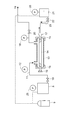
本実施の形態において使用されるQCM法にて吸着量を測定するための装置(QCM測定装置)の一例について図1を参照して説明する。図1は、吸着量を測定する装置の概略を示す図である。QCM測定装置8では、原水タンク1に満たされた無機物および/または有機物を含有する原液(被処理液)は、ペリスターポンプ2により、配管3を経てモジュールユニット4に供給され、配管5より排出される。QCM測定装置8では、この装置8によれば、流通系にて吸着試験が行えるため、膜ろ過の状態に近い、精度の高いろ過予測が可能となる。モジュールユニット4には、ろ過膜と同じ樹脂でスピンコーティングされた水晶振動子センサーが設置されており、コントロールユニットより電圧が印加されており、無機物および/または有機物成分が吸着されると、センサーの振動数f[Hz]が変動する。この変動の様子は、コントロールユニットを経てパソコンで電子データとして収集する。吸着試験の結果の一例を図2に示す。
An example of an apparatus (QCM measuring apparatus) for measuring the amount of adsorption by the QCM method used in the present embodiment will be described with reference to FIG. FIG. 1 is a diagram showing an outline of an apparatus for measuring an adsorption amount. In the
吸着試験の結果を取得する際には、まず、バッファー溶液を通液し、センサーを安定化させる。次に、無機物および/または有機物を含有するサンプル液(この例では、タンパク質を含有する溶液)を通液する。この通液により、タンパク質がセンサーに吸着するにつれて、センサーの振動数f[Hz]は変化する。この振動数の変化Δfは、理論式を用いて吸着したタンパク質の質量へ変換することが可能である。計算の詳細に関しては、実施例にて説明する。 When obtaining the results of the adsorption test, first, a buffer solution is passed through to stabilize the sensor. Next, a sample solution containing an inorganic substance and / or an organic substance (in this example, a solution containing a protein) is passed through. As the protein is adsorbed to the sensor by this liquid flow, the vibration frequency f [Hz] of the sensor changes. This frequency change Δf can be converted to the mass of the adsorbed protein using a theoretical formula. Details of the calculation will be described in Examples.
以下、本実施の形態を実施例および比較例によってさらに具体的に説明するが、本実施の形態は、これらの実施例のみに限定されるものではない。なお、本実施の形態に用いられる測定方法は以下のとおりである。以下の測定は全て25℃で行った。 Hereinafter, the present embodiment will be described more specifically with reference to examples and comparative examples. However, the present embodiment is not limited only to these examples. In addition, the measuring method used for this Embodiment is as follows. The following measurements were all performed at 25 ° C.
(1)内径および膜厚(μm)の測定
中空糸多孔膜を膜長手方向に垂直な向きにカミソリ等で薄く切り、顕微鏡を用いて断面の内径と膜厚を測定した。
(1) Measurement of inner diameter and film thickness (μm) The hollow fiber porous membrane was sliced thinly with a razor or the like in a direction perpendicular to the longitudinal direction of the film, and the inner diameter and film thickness of the cross section were measured using a microscope.
(2)純水透過流束(L/m2/hr/bar)の測定
図3に中空糸多孔膜のろ過性能を評価するために使用した装置の概略図を示した。約10cm長の純水で湿潤させた中空糸多孔膜14を内径3mmのチューブ13にセットし、両端部をシリコンキャップ15で密栓した。次に、一方のシリコンキャップ15から端部を封止した注射針16を刺し中空糸多孔膜14の中空部にセットした。また、他方のシリコンキャップ15から端部が開口した注射針17を刺し、中空糸多孔膜14の中空部にセットした。その後、原液タンク8に充填された純水は窒素ボンベ9による窒素圧により、バルブ10、配管11を経て中空糸多孔膜14がセットされたチューブ13へ送られ、一部の水はバルブ20を経て出口19から系外へ排出された。また、チューブ13へ送られた水の一部は中空糸多孔膜14でろ過された。注射針17から出てくるろ過された純水の透過水量を測定し、以下の式により純水透過流束を求めた。この時、チューブ13内の中空糸多孔膜14を除いた断面部分を流れる水の線速は0.04m/sであり、圧力計12および圧力計18の圧力の平均値は0.05MPaであった。
(2) Measurement of pure water permeation flux (L / m 2 / hr / bar) FIG. 3 shows a schematic diagram of an apparatus used for evaluating the filtration performance of the hollow fiber porous membrane. A hollow fiber

上記式1において、膜有効長とは、注射針が挿入されている部分を除いた、中空糸多孔膜の正味の膜長を指し、πは、円周率を指す。 In the above formula 1, the membrane effective length refers to the net membrane length of the hollow fiber porous membrane excluding the portion where the injection needle is inserted, and π refers to the circumference.
(3)透過流束保持率J/J0の測定
リン酸二水素ナトリウムとリン酸水素二ナトリウムをpH7となるように混合し(PBSバッファー)、0.1mol/Lのバッファー液を得た。このバッファー液にウシ血清アルブミン(BSA)を50mg/Lとなる様に混合し、BSA水溶液を得た。次に、図3に示した装置にて、原液タンク8に50mg/LのBSA水溶液を充填した以外は、上記(2)の純水透過流束と同様の操作を実施し、20分間ろ過を行い、バルブ10を閉じた。次に、バルブ22を開け、純水タンク21から純水を配管23と注射針17を繋いで、中空糸多孔膜14の中空部に供給し、内表面側から外表面側へ透過した逆流洗浄排水をバルブ20の出口19から系外へ排出した。逆流洗浄後、再び、50mg/LのBSA水溶液のろ過を行った。このろ過と逆流洗浄の繰り返しを3回行った。得られた膜ろ過水の透過流束Jと上記(2)で得られた純水透過流束J0を用いて、以下の式2より、透過流束保持率J/J0を算出した。
(3) mixing (PBS buffer) Measurement of sodium dihydrogen phosphate and disodium hydrogen phosphate flux retention J / J 0 so as to have a pH 7, to give a buffer solution of 0.1 mol / L. Bovine serum albumin (BSA) was mixed with this buffer solution to a concentration of 50 mg / L to obtain an aqueous BSA solution. Next, in the apparatus shown in FIG. 3, the same operation as the pure water permeation flux of the above (2) was carried out except that the
(4)阻止率の測定
上記(3)において、50mg/LのBSA水溶液をろ過する際、供給液中のBSA濃度C0とろ過液中のBSA濃度Cから、下記の数式に基づき、BSAの阻止率を計算した。なお、BSAの濃度は、供給液およびろ過液の波長270nmの吸光度を測定し、決定した。
(4) Measurement of rejection rate In the above (3), when filtering a 50 mg / L BSA aqueous solution, from the BSA concentration C 0 in the supply liquid and the BSA concentration C in the filtrate, The rejection rate was calculated. The concentration of BSA was determined by measuring the absorbance of the supply liquid and the filtrate at a wavelength of 270 nm.
(5)分画分子量の測定
重量平均分子量17,500〜450,000のデキストランと内部標準物質としてエチレングリコールを各1000mg/Lの濃度で脱イオン水に溶解し、サンプル液とした。このサンプル液を中空糸多孔膜14の内表面から外表面へ、膜間差圧0.05MPa、線速0.65〜0.84m/sでろ過を行った。供給液およびろ過液中のデキストラン濃度を、HPLC測定(検出はRI)により求め、式3を用いてデキストランの阻止率を算出した。
[実施例1]
(5) Measurement of fractional molecular weight Dextran having a weight average molecular weight of 17,500 to 450,000 and ethylene glycol as an internal standard substance were dissolved in deionized water at a concentration of 1000 mg / L to prepare a sample solution. This sample solution was filtered from the inner surface to the outer surface of the hollow fiber
[Example 1]
(多孔膜の作成)
エチレン−ビニルアルコール共重合樹脂(EVOH;日本合成化学社製;ソアノールET3803(商品名))16質量%とジメチルスルホキシド(DMSO)84質量%を25℃で17時間攪拌し、その後、1時間静置し、均一な高分子ポリマー溶液を得た。次に、このポリマー溶液を二重環式紡糸口金を用い、内部凝固液として25℃の水を用いて、吐出線速度0.06m/s、温度25℃で吐出し、空走距離50mmで、25℃の水を満たした凝固浴にて固化し、0.09m/sの速度で巻き取った。巻き取った中空糸ポリマーは、水に浸漬し、溶媒であるDMSOを除去し、中空糸多孔膜を得た。ポリエーテルスルホン樹脂(PES;BASF社製;ウルトラゾンE6020P(商品名))、ポリフッ化ビニリデン樹脂(PVDF;Solvay Advanced Polymers社製;ソレフ6020(商品名))についても、表1に示した製膜条件に基づき、中空糸膜を得た。
(Creation of porous film)
Ethylene-vinyl alcohol copolymer resin (EVOH; manufactured by Nippon Synthetic Chemical Co., Ltd .; Soarnol ET3803 (trade name)) 16% by mass and dimethyl sulfoxide (DMSO) 84% by mass were stirred at 25 ° C. for 17 hours, and then allowed to stand for 1 hour. As a result, a uniform polymer solution was obtained. Next, this polymer solution was discharged at a discharge linear velocity of 0.06 m / s at a temperature of 25 ° C. using a double ring spinneret and water at 25 ° C. as an internal coagulation liquid, It solidified in a coagulation bath filled with 25 ° C. water and wound up at a speed of 0.09 m / s. The wound hollow fiber polymer was immersed in water to remove DMSO as a solvent to obtain a hollow fiber porous membrane. Polyethersulfone resin (PES; manufactured by BASF; Ultrason E6020P (trade name)) and polyvinylidene fluoride resin (PVDF; manufactured by Solvay Advanced Polymers; Solef 6020 (trade name)) are also shown in Table 1. Based on the conditions, a hollow fiber membrane was obtained.
表2に実施例および比較例で使用した中空糸多孔膜の特性を示す。 Table 2 shows the characteristics of the hollow fiber porous membrane used in Examples and Comparative Examples.
純水透過流束70〜100L/m2/h/bar、デキストラン阻止率78〜98%であり、どの膜も同レベルの物性を示した。また、50mg/LのBSA水溶液をろ過した際に得た透過流束保持率J/J0を図4に示す。60分間ろ過後の透過流束保持率は、EVOH膜が0.65、PES膜が0.6、PVDF膜が0.4であった。また、ろ過中のEVOH、PES、PVDF膜によるBSAの阻止率を図5に示す。阻止率は、PVDF膜が一番高く、次いで、PES膜、EVOH膜の順で低下した。この結果と図4の透過流束保持率の結果から、PVDF膜は、BSAをより多く阻止したため、透過流束保持率が低下したと考えられる。他方、EVOH膜は、BSAの阻止率が低かったため、透過流束保持率が高かったと考えられる。 The pure water permeation flux was 70 to 100 L / m 2 / h / bar, the dextran rejection was 78 to 98%, and all the membranes showed the same level of physical properties. Also shows the permeation flux retention J / J 0 obtained upon filtering the BSA solution of 50 mg / L in FIG. The permeation flux retention after filtration for 60 minutes was 0.65 for the EVOH membrane, 0.6 for the PES membrane, and 0.4 for the PVDF membrane. Moreover, the blocking rate of BSA by EVOH, PES, and PVDF membrane during filtration is shown in FIG. The rejection rate was highest in the PVDF film, and then decreased in the order of the PES film and the EVOH film. From this result and the result of the permeation flux retention ratio of FIG. 4, it is considered that the permeation flux retention ratio was lowered because the PVDF membrane blocked more BSA. On the other hand, it is considered that the EVOH film had a high permeation flux retention because the BSA rejection was low.
(QCM測定)
EVOH樹脂をジメチルスルホキシドに、PES樹脂とPVDF樹脂をN,N−ジメチルホルムアミドにそれぞれ0.5質量%溶解させて、樹脂の均一溶液を得た。その後、UVクリーナーを10分間照射して洗浄した水晶振動子センサー(表面を金でコーティング)に、樹脂の均一溶液を2000rpmで60秒間スピンコーティングし、80℃で30分間加熱し、溶媒を蒸発させ、樹脂をコーティングしたセンサーを得た。このセンサーを図1に示したQCM測定装置に設置し、吸着量の測定を行った。前記樹脂をコーティングした水晶振動子センサーを備えたモジュールユニットにペリスターポンプを用いて流量40μL/分でPBSバッファーを10分間以上供給し、センサーを安定させた。その後、濃度5〜1000mg/LのBSA水溶液を30分間供給し、BSAをセンサーに吸着させた。センサーに吸着したBSAの質量Γは、センサーの振動数の変化Δfとセンサーに固有の定数Cを用いて、下記のSauerbreyの式から算出した。
(QCM measurement)
EVOH resin was dissolved in dimethyl sulfoxide, and PES resin and PVDF resin were dissolved in N, N-dimethylformamide in an amount of 0.5% by mass to obtain a uniform resin solution. Then, a quartz resin sensor (surface coated with gold) that was cleaned by irradiation with UV cleaner for 10 minutes was spin-coated with a uniform resin solution at 2000 rpm for 60 seconds and heated at 80 ° C. for 30 minutes to evaporate the solvent. A sensor coated with resin was obtained. This sensor was installed in the QCM measuring apparatus shown in FIG. 1, and the amount of adsorption was measured. Using a peristaltic pump, a PBS buffer was supplied at a flow rate of 40 μL / min to a module unit equipped with the resin-coated crystal resonator sensor for 10 minutes or more to stabilize the sensor. Thereafter, an aqueous BSA solution having a concentration of 5 to 1000 mg / L was supplied for 30 minutes, and BSA was adsorbed on the sensor. The mass Γ of BSA adsorbed on the sensor was calculated from the following Sauerbrey equation using a change Δf in sensor frequency and a constant C specific to the sensor.
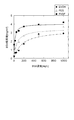
BSAの濃度とBSA吸着量の関係を図6に示す。全ての濃度において、BSAの吸着量は、EVOH樹脂が最も少なく、次いで、PES樹脂、PVDF樹脂の順に多くなった。この結果は、図5に示したBSAの阻止率の結果と一致しており、QCM測定が膜のろ過性能を予測する有効な手段であることが示された。 The relationship between the BSA concentration and the BSA adsorption amount is shown in FIG. At all concentrations, the amount of BSA adsorbed was lowest for EVOH resin, and then increased in the order of PES resin and PVDF resin. This result is consistent with the BSA rejection rate results shown in FIG. 5, indicating that QCM measurement is an effective means of predicting membrane filtration performance.
本実施例における吸着量の測定対象はBSAである。そして、本実施例に係るろ過膜の選択方法では、上記の結果に基づき、EVOH樹脂からなる中空糸多孔膜、PES樹脂からなる中空糸多孔膜、及びPVDF樹脂からなる中空糸多孔膜のうち、BSA吸着量が最小となるEVOH樹脂からなる中空糸多孔膜を本実施例に係る液体処理プロセスに用いられるろ過膜として選択した。
[比較例]
The measurement target of the adsorption amount in this embodiment is BSA. And in the method for selecting a filtration membrane according to the present embodiment, based on the above results, among hollow fiber porous membranes made of EVOH resin, hollow fiber porous membranes made of PES resin, and hollow fiber porous membranes made of PVDF resin, A hollow fiber porous membrane made of EVOH resin that minimizes the amount of BSA adsorption was selected as a filtration membrane used in the liquid treatment process according to this example.
[Comparative example]
EVOH樹脂、PES樹脂、PVDF樹脂をホットプレスにて、250℃、0.2MPaで3分間加熱し、非多孔の各種フィルムを得た。また、窒化シリコンカンチレバーに、表面をBSA修飾したシリカ粒子を取り付け、コロイドプローブを得た。次に、pH6.8のバッファー溶液中で、コロイドプローブと前記各種フィルムとの付着力を原子間力顕微鏡(AFM)を用いて実施した。なお、AFM測定は、各種フィルムの20×20μmの範囲内で10回以上測定し、この操作を異なる3箇所で実施した。得られた付着力の結果を表3に示す。各種フィルム間の付着力の差異は小さかった。 EVOH resin, PES resin, and PVDF resin were heated with a hot press at 250 ° C. and 0.2 MPa for 3 minutes to obtain various non-porous films. Further, silica particles whose surface was modified with BSA were attached to a silicon nitride cantilever to obtain a colloidal probe. Next, adhesion force between the colloidal probe and the various films was carried out in a buffer solution at pH 6.8 using an atomic force microscope (AFM). In addition, the AFM measurement was performed 10 times or more within the range of 20 × 20 μm of various films, and this operation was performed at three different places. The obtained adhesion results are shown in Table 3. The difference in adhesion between the various films was small.
本発明によれば、河川水、湖沼水、地下水、下排水、下水二次処理水、海水等を原水とする水処理分野、および、タンパク質等の有価物の分離、精製、濃縮等の分野に膜ろ過法を適用するに当たり、高い精度でかつ簡便に各被処理水に適した膜、膜の洗浄手段、及び前処理手段を選択することができる。 According to the present invention, river water, lake water, ground water, sewage drainage, secondary sewage treatment water, water treatment using raw water such as seawater, and fields such as separation, purification, and concentration of valuable materials such as proteins. In applying the membrane filtration method, it is possible to easily select a membrane, a membrane cleaning means, and a pretreatment means suitable for each water to be treated with high accuracy.
1 原液タンク
2 ペリスターポンプ
3 配管
4 モジュールユニット
5 排出配管
6 コントロールユニット
7 パソコン
8 原液タンク
9 窒素ボンベ
10 バルブ
11 配管
12 圧力計
13 チューブ
14 中空糸多孔膜
15 シリコンキャップ
16 端部を封止した注射針
17 端部が開口した注射針
18 圧力計
19 出口
20 バルブ
21 純水タンク
22 バルブ
23 配管
24 圧力計
25 圧力計
DESCRIPTION OF SYMBOLS 1
Claims (7)
複数のろ過膜それぞれについて、前記被処理液中に含有される無機物および有機物のうち、少なくとも1種以上の成分の吸着量を測定し、前記成分の吸着量が最少となるような前記ろ過膜を、前記液体処理プロセスのろ過膜として選択することを特徴とするろ過膜の選択方法。 A method for selecting a filtration membrane used in a liquid treatment process for treating a liquid to be treated,
For each of a plurality of filtration membranes, the amount of adsorption of at least one of the inorganic substances and organic substances contained in the liquid to be treated is measured, and the filtration membrane is such that the amount of adsorption of the components is minimized. And selecting a filtration membrane for the liquid treatment process.
被処理液中に含有される無機物および有機物のうち、少なくとも1種以上の成分の前記ろ過膜への吸着量を測定し、前記吸着量が最大値を示す前記成分を前記ろ過膜から除去可能な洗浄手段を、前記液体処理プロセスにおけるろ過膜の洗浄手段として選択することを特徴とするろ過膜の洗浄手段の選択方法。 A method for selecting a cleaning means for a filtration membrane used in a liquid treatment process for treating a liquid to be treated,
Of the inorganic substances and organic substances contained in the liquid to be treated, the amount of adsorption of at least one component to the filtration membrane can be measured, and the component having the maximum adsorption amount can be removed from the filtration membrane. A method for selecting a cleaning means for a filtration membrane, wherein the cleaning means is selected as a cleaning means for the filtration membrane in the liquid treatment process.
被処理液中に含有される無機物および有機物のうち、少なくとも1種以上の成分の前記ろ過膜への吸着量を測定し、前記吸着量が最大値を示す前記成分を前記被処理液から除去可能な前処理手段を、前記液体処理プロセスにおけるろ過膜の前処理手段として選択することを特徴とするろ過膜の前処理手段の選択方法。 A method for selecting a pretreatment means for a filtration membrane used in a liquid treatment process for treating a liquid to be treated,
Of the inorganic and organic substances contained in the liquid to be treated, the amount of adsorption of at least one component to the filtration membrane can be measured, and the component having the maximum adsorption amount can be removed from the liquid to be treated A pretreatment means for filtering membrane is selected as a pretreatment means for filtration membrane in the liquid treatment process.
Priority Applications (1)
| Application Number | Priority Date | Filing Date | Title |
|---|---|---|---|
| JP2011060579A JP2012196590A (en) | 2011-03-18 | 2011-03-18 | Filtration membrane, cleaning means of filtration membrane, and selection method of pretreat means |
Applications Claiming Priority (1)
| Application Number | Priority Date | Filing Date | Title |
|---|---|---|---|
| JP2011060579A JP2012196590A (en) | 2011-03-18 | 2011-03-18 | Filtration membrane, cleaning means of filtration membrane, and selection method of pretreat means |
Publications (1)
| Publication Number | Publication Date |
|---|---|
| JP2012196590A true JP2012196590A (en) | 2012-10-18 |
Family
ID=47179365
Family Applications (1)
| Application Number | Title | Priority Date | Filing Date |
|---|---|---|---|
| JP2011060579A Pending JP2012196590A (en) | 2011-03-18 | 2011-03-18 | Filtration membrane, cleaning means of filtration membrane, and selection method of pretreat means |
Country Status (1)
| Country | Link |
|---|---|
| JP (1) | JP2012196590A (en) |
Cited By (9)
| Publication number | Priority date | Publication date | Assignee | Title |
|---|---|---|---|---|
| CN103979723A (en) * | 2013-02-07 | 2014-08-13 | 上海凯鑫分离技术有限公司 | Sterilized water production equipment for preparing fermentation liquor |
| JP2015134322A (en) * | 2014-01-17 | 2015-07-27 | 株式会社日立製作所 | water treatment system |
| CN106007088A (en) * | 2016-07-07 | 2016-10-12 | 曹蕊 | Method for treating sewage containing impurities |
| JP2021041369A (en) * | 2019-09-13 | 2021-03-18 | 株式会社放電精密加工研究所 | Recycling method of aqueous nitric acid solution, electrolytic processing method using the same, recycling solution of aqueous nitric acid solution, and recycling system |
| CN112557634A (en) * | 2021-01-05 | 2021-03-26 | 中国石油化工股份有限公司 | Method for evaluating diesel oil performance and application |
| JP2021091626A (en) * | 2019-12-09 | 2021-06-17 | 株式会社ダイセル | Manufacturing method of polyphenols |
| CN116712866A (en) * | 2023-05-06 | 2023-09-08 | 中国环境科学研究院 | A method to determine the operation plan for optimizing reverse osmosis pretreatment effect |
| US12152972B2 (en) | 2021-03-30 | 2024-11-26 | Lg Energy Solution, Ltd. | Filter determining system for evaluation of dissolution quality of binder solution for secondary battery electrode and determining method thereof |
| US12360029B2 (en) | 2021-03-30 | 2025-07-15 | Lg Energy Solution, Ltd. | System and method for evaluating dissolution quality of binder solution for secondary battery electrode, and method of manufacturing electrode slurry for secondary battery |
Citations (5)
| Publication number | Priority date | Publication date | Assignee | Title |
|---|---|---|---|---|
| JPH01254204A (en) * | 1988-04-01 | 1989-10-11 | Asahi Chem Ind Co Ltd | Method for removing virus |
| WO2002087735A1 (en) * | 2001-04-18 | 2002-11-07 | Asahi Medical Co., Ltd. | Asymmetric porous films and process for producing the same |
| JP2009061416A (en) * | 2007-09-07 | 2009-03-26 | Asahi Kasei Chemicals Corp | Filtration membrane, filtration membrane cleaning method and pretreatment means selection method |
| JP2010234353A (en) * | 2009-03-10 | 2010-10-21 | Hitachi Ltd | Water treatment method and water treatment member |
| JP2011002397A (en) * | 2009-06-22 | 2011-01-06 | Hitachi Ltd | Sensor for water quality evaluation, water quality evaluation method of supply water using the same, and operation control method of water treatment plant |
-
2011
- 2011-03-18 JP JP2011060579A patent/JP2012196590A/en active Pending
Patent Citations (5)
| Publication number | Priority date | Publication date | Assignee | Title |
|---|---|---|---|---|
| JPH01254204A (en) * | 1988-04-01 | 1989-10-11 | Asahi Chem Ind Co Ltd | Method for removing virus |
| WO2002087735A1 (en) * | 2001-04-18 | 2002-11-07 | Asahi Medical Co., Ltd. | Asymmetric porous films and process for producing the same |
| JP2009061416A (en) * | 2007-09-07 | 2009-03-26 | Asahi Kasei Chemicals Corp | Filtration membrane, filtration membrane cleaning method and pretreatment means selection method |
| JP2010234353A (en) * | 2009-03-10 | 2010-10-21 | Hitachi Ltd | Water treatment method and water treatment member |
| JP2011002397A (en) * | 2009-06-22 | 2011-01-06 | Hitachi Ltd | Sensor for water quality evaluation, water quality evaluation method of supply water using the same, and operation control method of water treatment plant |
Cited By (12)
| Publication number | Priority date | Publication date | Assignee | Title |
|---|---|---|---|---|
| CN103979723A (en) * | 2013-02-07 | 2014-08-13 | 上海凯鑫分离技术有限公司 | Sterilized water production equipment for preparing fermentation liquor |
| JP2015134322A (en) * | 2014-01-17 | 2015-07-27 | 株式会社日立製作所 | water treatment system |
| CN106007088A (en) * | 2016-07-07 | 2016-10-12 | 曹蕊 | Method for treating sewage containing impurities |
| JP2021041369A (en) * | 2019-09-13 | 2021-03-18 | 株式会社放電精密加工研究所 | Recycling method of aqueous nitric acid solution, electrolytic processing method using the same, recycling solution of aqueous nitric acid solution, and recycling system |
| JP7269850B2 (en) | 2019-09-13 | 2023-05-09 | 株式会社放電精密加工研究所 | Recycling method of nitric acid aqueous solution, electrolytic processing method using the same, recycling liquid of nitric acid aqueous solution, and recycling system |
| JP2021091626A (en) * | 2019-12-09 | 2021-06-17 | 株式会社ダイセル | Manufacturing method of polyphenols |
| JP7412154B2 (en) | 2019-12-09 | 2024-01-12 | 株式会社ダイセル | Method for producing polyphenols |
| CN112557634A (en) * | 2021-01-05 | 2021-03-26 | 中国石油化工股份有限公司 | Method for evaluating diesel oil performance and application |
| US12152972B2 (en) | 2021-03-30 | 2024-11-26 | Lg Energy Solution, Ltd. | Filter determining system for evaluation of dissolution quality of binder solution for secondary battery electrode and determining method thereof |
| US12360029B2 (en) | 2021-03-30 | 2025-07-15 | Lg Energy Solution, Ltd. | System and method for evaluating dissolution quality of binder solution for secondary battery electrode, and method of manufacturing electrode slurry for secondary battery |
| CN116712866A (en) * | 2023-05-06 | 2023-09-08 | 中国环境科学研究院 | A method to determine the operation plan for optimizing reverse osmosis pretreatment effect |
| CN116712866B (en) * | 2023-05-06 | 2025-09-02 | 中国环境科学研究院 | A method for determining an operation plan to optimize reverse osmosis pretreatment effects |
Similar Documents
| Publication | Publication Date | Title |
|---|---|---|
| JP2012196590A (en) | Filtration membrane, cleaning means of filtration membrane, and selection method of pretreat means | |
| Ladewig et al. | Fundamentals of membrane bioreactors | |
| Tyszler et al. | Reduced fouling tendencies of ultrafiltration membranes in wastewater treatment by plasma modification | |
| WO2002064240A1 (en) | Separating film, separating film element, separating film module, sewage and waste water treatment device, and separating film manufacturing method | |
| US8794451B2 (en) | Hollow-fiber ultrafiltration membrane with excellent fouling resistance | |
| JP4951860B2 (en) | Method for producing permselective membrane module and permselective membrane module | |
| JP5343655B2 (en) | Operation method of membrane module | |
| JP5630961B2 (en) | Hollow fiber porous membrane and water treatment method | |
| WO2013111826A1 (en) | Desalination method and desalination device | |
| JPH11309351A (en) | Cleaning method for hollow fiber membrane module | |
| JP2011115705A (en) | Method for determining filtration condition of hollow fiber membrane module | |
| Mousa | Investigation of UF membranes fouling by humic acid | |
| KR101881922B1 (en) | Method and apparatus for producing ceramics nano filtration membrane, operation method of computer apparatus for controlling filtration coating process | |
| JP2017056371A (en) | Operation method of filtration apparatus | |
| JP2021526970A (en) | Filtration system and how to filter water | |
| JP6052866B2 (en) | Water treatment method | |
| JP2007296500A (en) | Membrane separation device and membrane filtration method | |
| JP2008246424A (en) | Hollow fiber membrane module cleaning method and hollow fiber membrane filtration device | |
| JP2013212497A (en) | Water treating method | |
| EP3056258A1 (en) | Chemical cleaning method for ro/nf membrane system consisting of two arrays | |
| JP2018008192A (en) | Foulant quantification method | |
| Beicha et al. | Dynamic ultrafiltration model based on concentration polarization-cake layer interplay | |
| JP7127940B2 (en) | Separation Membrane Element Defect Detection Method and Separation Membrane Element Defect Detection Apparatus | |
| JPWO2018003944A1 (en) | Composite semipermeable membrane and method of manufacturing composite semipermeable membrane | |
| JP4517615B2 (en) | Evaluation method and apparatus for reverse osmosis membrane feed water and operation management method for water treatment apparatus |
Legal Events
| Date | Code | Title | Description |
|---|---|---|---|
| A621 | Written request for application examination |
Free format text: JAPANESE INTERMEDIATE CODE: A621 Effective date: 20131017 |
|
| A521 | Written amendment |
Free format text: JAPANESE INTERMEDIATE CODE: A821 Effective date: 20131017 |
|
| A977 | Report on retrieval |
Free format text: JAPANESE INTERMEDIATE CODE: A971007 Effective date: 20140627 |
|
| A131 | Notification of reasons for refusal |
Free format text: JAPANESE INTERMEDIATE CODE: A131 Effective date: 20140715 |
|
| A02 | Decision of refusal |
Free format text: JAPANESE INTERMEDIATE CODE: A02 Effective date: 20150203 |