JP2012196672A - Process enabling complete combustion and oxidation of mineral fraction of waste treated in direct incineration-vitrification apparatus - Google Patents
Process enabling complete combustion and oxidation of mineral fraction of waste treated in direct incineration-vitrification apparatus Download PDFInfo
- Publication number
- JP2012196672A JP2012196672A JP2012112288A JP2012112288A JP2012196672A JP 2012196672 A JP2012196672 A JP 2012196672A JP 2012112288 A JP2012112288 A JP 2012112288A JP 2012112288 A JP2012112288 A JP 2012112288A JP 2012196672 A JP2012196672 A JP 2012196672A
- Authority
- JP
- Japan
- Prior art keywords
- waste
- glass
- protective layer
- oxidation
- temporary protective
- Prior art date
- Legal status (The legal status is an assumption and is not a legal conclusion. Google has not performed a legal analysis and makes no representation as to the accuracy of the status listed.)
- Withdrawn
Links
- 239000002699 waste material Substances 0.000 title abstract description 84
- 238000000034 method Methods 0.000 title abstract description 42
- 238000002485 combustion reaction Methods 0.000 title abstract description 26
- 238000007254 oxidation reaction Methods 0.000 title abstract description 23
- 230000003647 oxidation Effects 0.000 title abstract description 22
- 229910052500 inorganic mineral Inorganic materials 0.000 title abstract description 16
- 239000011707 mineral Substances 0.000 title abstract description 16
- 238000004017 vitrification Methods 0.000 title abstract description 15
- 230000008569 process Effects 0.000 title description 7
- 239000011521 glass Substances 0.000 abstract description 78
- 239000011159 matrix material Substances 0.000 abstract description 22
- 239000006060 molten glass Substances 0.000 abstract description 13
- 239000007788 liquid Substances 0.000 abstract description 12
- 230000001590 oxidative effect Effects 0.000 abstract description 12
- 239000012634 fragment Substances 0.000 abstract description 9
- 239000010849 combustible waste Substances 0.000 abstract description 5
- 238000010438 heat treatment Methods 0.000 abstract description 5
- 235000011837 pasties Nutrition 0.000 abstract description 3
- 239000011241 protective layer Substances 0.000 description 51
- 239000010410 layer Substances 0.000 description 38
- 230000001681 protective effect Effects 0.000 description 22
- 239000000203 mixture Substances 0.000 description 15
- 239000000126 substance Substances 0.000 description 14
- 239000007800 oxidant agent Substances 0.000 description 13
- 239000000047 product Substances 0.000 description 12
- 229910052751 metal Inorganic materials 0.000 description 10
- 239000002184 metal Substances 0.000 description 10
- VYPSYNLAJGMNEJ-UHFFFAOYSA-N Silicium dioxide Chemical compound O=[Si]=O VYPSYNLAJGMNEJ-UHFFFAOYSA-N 0.000 description 9
- QVGXLLKOCUKJST-UHFFFAOYSA-N atomic oxygen Chemical compound [O] QVGXLLKOCUKJST-UHFFFAOYSA-N 0.000 description 9
- 229910052760 oxygen Inorganic materials 0.000 description 9
- 239000001301 oxygen Substances 0.000 description 9
- 239000011324 bead Substances 0.000 description 8
- 239000000463 material Substances 0.000 description 8
- 238000002844 melting Methods 0.000 description 8
- 230000008018 melting Effects 0.000 description 8
- 230000000694 effects Effects 0.000 description 7
- 239000007789 gas Substances 0.000 description 7
- 230000014759 maintenance of location Effects 0.000 description 6
- 239000007787 solid Substances 0.000 description 6
- 230000008901 benefit Effects 0.000 description 5
- 238000010348 incorporation Methods 0.000 description 5
- 241000894007 species Species 0.000 description 5
- UQSXHKLRYXJYBZ-UHFFFAOYSA-N Iron oxide Chemical compound [Fe]=O UQSXHKLRYXJYBZ-UHFFFAOYSA-N 0.000 description 4
- TZCXTZWJZNENPQ-UHFFFAOYSA-L barium sulfate Chemical compound [Ba+2].[O-]S([O-])(=O)=O TZCXTZWJZNENPQ-UHFFFAOYSA-L 0.000 description 4
- 239000006227 byproduct Substances 0.000 description 4
- 238000000354 decomposition reaction Methods 0.000 description 4
- 239000002245 particle Substances 0.000 description 4
- 239000000377 silicon dioxide Substances 0.000 description 4
- 239000002344 surface layer Substances 0.000 description 4
- UCKMPCXJQFINFW-UHFFFAOYSA-N Sulphide Chemical compound [S-2] UCKMPCXJQFINFW-UHFFFAOYSA-N 0.000 description 3
- 230000009471 action Effects 0.000 description 3
- 239000000654 additive Substances 0.000 description 3
- 230000000996 additive effect Effects 0.000 description 3
- 230000015572 biosynthetic process Effects 0.000 description 3
- 238000002156 mixing Methods 0.000 description 3
- 239000010815 organic waste Substances 0.000 description 3
- 239000013618 particulate matter Substances 0.000 description 3
- 230000002285 radioactive effect Effects 0.000 description 3
- 238000006722 reduction reaction Methods 0.000 description 3
- 238000007711 solidification Methods 0.000 description 3
- 230000008023 solidification Effects 0.000 description 3
- 238000004056 waste incineration Methods 0.000 description 3
- QPLDLSVMHZLSFG-UHFFFAOYSA-N Copper oxide Chemical compound [Cu]=O QPLDLSVMHZLSFG-UHFFFAOYSA-N 0.000 description 2
- 239000005751 Copper oxide Substances 0.000 description 2
- QAOWNCQODCNURD-UHFFFAOYSA-N Sulfuric acid Chemical compound OS(O)(=O)=O QAOWNCQODCNURD-UHFFFAOYSA-N 0.000 description 2
- 239000005388 borosilicate glass Substances 0.000 description 2
- 230000005587 bubbling Effects 0.000 description 2
- 239000003638 chemical reducing agent Substances 0.000 description 2
- 238000001816 cooling Methods 0.000 description 2
- 229910000431 copper oxide Inorganic materials 0.000 description 2
- 238000009826 distribution Methods 0.000 description 2
- 238000002474 experimental method Methods 0.000 description 2
- 239000000835 fiber Substances 0.000 description 2
- 239000000945 filler Substances 0.000 description 2
- 239000002241 glass-ceramic Substances 0.000 description 2
- 230000006698 induction Effects 0.000 description 2
- 230000003993 interaction Effects 0.000 description 2
- 238000004519 manufacturing process Methods 0.000 description 2
- 238000010297 mechanical methods and process Methods 0.000 description 2
- 239000010811 mineral waste Substances 0.000 description 2
- 229910000480 nickel oxide Inorganic materials 0.000 description 2
- GNRSAWUEBMWBQH-UHFFFAOYSA-N oxonickel Chemical compound [Ni]=O GNRSAWUEBMWBQH-UHFFFAOYSA-N 0.000 description 2
- 239000000843 powder Substances 0.000 description 2
- 238000012545 processing Methods 0.000 description 2
- 230000009467 reduction Effects 0.000 description 2
- 239000011734 sodium Substances 0.000 description 2
- VWDWKYIASSYTQR-UHFFFAOYSA-N sodium nitrate Chemical compound [Na+].[O-][N+]([O-])=O VWDWKYIASSYTQR-UHFFFAOYSA-N 0.000 description 2
- 238000003860 storage Methods 0.000 description 2
- 238000012360 testing method Methods 0.000 description 2
- BVKZGUZCCUSVTD-UHFFFAOYSA-L Carbonate Chemical compound [O-]C([O-])=O BVKZGUZCCUSVTD-UHFFFAOYSA-L 0.000 description 1
- MBMLMWLHJBBADN-UHFFFAOYSA-N Ferrous sulfide Chemical compound [Fe]=S MBMLMWLHJBBADN-UHFFFAOYSA-N 0.000 description 1
- 229910002651 NO3 Inorganic materials 0.000 description 1
- NHNBFGGVMKEFGY-UHFFFAOYSA-N Nitrate Chemical compound [O-][N+]([O-])=O NHNBFGGVMKEFGY-UHFFFAOYSA-N 0.000 description 1
- GRYLNZFGIOXLOG-UHFFFAOYSA-N Nitric acid Chemical compound O[N+]([O-])=O GRYLNZFGIOXLOG-UHFFFAOYSA-N 0.000 description 1
- 241000220317 Rosa Species 0.000 description 1
- 229910004298 SiO 2 Inorganic materials 0.000 description 1
- QAOWNCQODCNURD-UHFFFAOYSA-L Sulfate Chemical compound [O-]S([O-])(=O)=O QAOWNCQODCNURD-UHFFFAOYSA-L 0.000 description 1
- NINIDFKCEFEMDL-UHFFFAOYSA-N Sulfur Chemical compound [S] NINIDFKCEFEMDL-UHFFFAOYSA-N 0.000 description 1
- 238000009825 accumulation Methods 0.000 description 1
- PNEYBMLMFCGWSK-UHFFFAOYSA-N aluminium oxide Inorganic materials [O-2].[O-2].[O-2].[Al+3].[Al+3] PNEYBMLMFCGWSK-UHFFFAOYSA-N 0.000 description 1
- 229910052729 chemical element Inorganic materials 0.000 description 1
- 238000006243 chemical reaction Methods 0.000 description 1
- 239000003795 chemical substances by application Substances 0.000 description 1
- 238000004140 cleaning Methods 0.000 description 1
- 239000000571 coke Substances 0.000 description 1
- 230000000295 complement effect Effects 0.000 description 1
- 230000007797 corrosion Effects 0.000 description 1
- 238000005260 corrosion Methods 0.000 description 1
- 230000006378 damage Effects 0.000 description 1
- 230000001627 detrimental effect Effects 0.000 description 1
- 238000010586 diagram Methods 0.000 description 1
- JKWMSGQKBLHBQQ-UHFFFAOYSA-N diboron trioxide Chemical compound O=BOB=O JKWMSGQKBLHBQQ-UHFFFAOYSA-N 0.000 description 1
- 239000003814 drug Substances 0.000 description 1
- 229940079593 drug Drugs 0.000 description 1
- 239000000428 dust Substances 0.000 description 1
- 230000007717 exclusion Effects 0.000 description 1
- 239000000499 gel Substances 0.000 description 1
- 239000002920 hazardous waste Substances 0.000 description 1
- 229910001385 heavy metal Inorganic materials 0.000 description 1
- 230000003100 immobilizing effect Effects 0.000 description 1
- 239000002440 industrial waste Substances 0.000 description 1
- 238000011835 investigation Methods 0.000 description 1
- 239000003456 ion exchange resin Substances 0.000 description 1
- 229920003303 ion-exchange polymer Polymers 0.000 description 1
- XEEYBQQBJWHFJM-UHFFFAOYSA-N iron Substances [Fe] XEEYBQQBJWHFJM-UHFFFAOYSA-N 0.000 description 1
- 229910052742 iron Inorganic materials 0.000 description 1
- 150000002739 metals Chemical class 0.000 description 1
- 239000011812 mixed powder Substances 0.000 description 1
- 239000010812 mixed waste Substances 0.000 description 1
- 229910017604 nitric acid Inorganic materials 0.000 description 1
- 230000036961 partial effect Effects 0.000 description 1
- 230000035515 penetration Effects 0.000 description 1
- 239000002244 precipitate Substances 0.000 description 1
- 238000000746 purification Methods 0.000 description 1
- 239000002901 radioactive waste Substances 0.000 description 1
- 238000004064 recycling Methods 0.000 description 1
- 230000002829 reductive effect Effects 0.000 description 1
- 238000011160 research Methods 0.000 description 1
- 238000012827 research and development Methods 0.000 description 1
- 230000000717 retained effect Effects 0.000 description 1
- 150000003839 salts Chemical class 0.000 description 1
- 238000004062 sedimentation Methods 0.000 description 1
- 229910052708 sodium Inorganic materials 0.000 description 1
- 235000010344 sodium nitrate Nutrition 0.000 description 1
- 239000004317 sodium nitrate Substances 0.000 description 1
- KKCBUQHMOMHUOY-UHFFFAOYSA-N sodium oxide Chemical compound [O-2].[Na+].[Na+] KKCBUQHMOMHUOY-UHFFFAOYSA-N 0.000 description 1
- 229910001948 sodium oxide Inorganic materials 0.000 description 1
- 230000006641 stabilisation Effects 0.000 description 1
- 238000011105 stabilization Methods 0.000 description 1
- WWNBZGLDODTKEM-UHFFFAOYSA-N sulfanylidenenickel Chemical compound [Ni]=S WWNBZGLDODTKEM-UHFFFAOYSA-N 0.000 description 1
- 150000004763 sulfides Chemical class 0.000 description 1
- 229910052717 sulfur Inorganic materials 0.000 description 1
- 239000011593 sulfur Substances 0.000 description 1
- 231100000701 toxic element Toxicity 0.000 description 1
- 230000001988 toxicity Effects 0.000 description 1
- 231100000419 toxicity Toxicity 0.000 description 1
Images
Classifications
-
- C—CHEMISTRY; METALLURGY
- C03—GLASS; MINERAL OR SLAG WOOL
- C03B—MANUFACTURE, SHAPING, OR SUPPLEMENTARY PROCESSES
- C03B5/00—Melting in furnaces; Furnaces so far as specially adapted for glass manufacture
- C03B5/005—Melting in furnaces; Furnaces so far as specially adapted for glass manufacture of glass-forming waste materials
-
- C—CHEMISTRY; METALLURGY
- C03—GLASS; MINERAL OR SLAG WOOL
- C03B—MANUFACTURE, SHAPING, OR SUPPLEMENTARY PROCESSES
- C03B3/00—Charging the melting furnaces
- C03B3/02—Charging the melting furnaces combined with preheating, premelting or pretreating the glass-making ingredients, pellets or cullet
-
- C—CHEMISTRY; METALLURGY
- C03—GLASS; MINERAL OR SLAG WOOL
- C03B—MANUFACTURE, SHAPING, OR SUPPLEMENTARY PROCESSES
- C03B5/00—Melting in furnaces; Furnaces so far as specially adapted for glass manufacture
-
- Y—GENERAL TAGGING OF NEW TECHNOLOGICAL DEVELOPMENTS; GENERAL TAGGING OF CROSS-SECTIONAL TECHNOLOGIES SPANNING OVER SEVERAL SECTIONS OF THE IPC; TECHNICAL SUBJECTS COVERED BY FORMER USPC CROSS-REFERENCE ART COLLECTIONS [XRACs] AND DIGESTS
- Y02—TECHNOLOGIES OR APPLICATIONS FOR MITIGATION OR ADAPTATION AGAINST CLIMATE CHANGE
- Y02P—CLIMATE CHANGE MITIGATION TECHNOLOGIES IN THE PRODUCTION OR PROCESSING OF GOODS
- Y02P40/00—Technologies relating to the processing of minerals
- Y02P40/50—Glass production, e.g. reusing waste heat during processing or shaping
- Y02P40/57—Improving the yield, e-g- reduction of reject rates
Landscapes
- Chemical & Material Sciences (AREA)
- Engineering & Computer Science (AREA)
- Materials Engineering (AREA)
- Organic Chemistry (AREA)
- Processing Of Solid Wastes (AREA)
- Incineration Of Waste (AREA)
- Gasification And Melting Of Waste (AREA)
Abstract
【課題】装置中に含まれる可燃性廃棄物の鉱物断片の完全燃焼及び酸化を可能にして直接燃焼ガラス固化により廃棄物を処理する方法を提供する。
【解決手段】装置2に廃棄物3を導入し、装置内の溶融ガラス槽1の表面に配置するステップ、ガラス槽1表面上の廃棄物3を燃焼及び酸化処理するステップ、燃焼生成物をガラス中に導入する間に、ガラス槽、燃焼生成物及び任意でガラス槽1に添加されるガラス固化補助剤5を、ペースト状液体が得られるまで加熱するステップ、及び前記液体を装置から除去し、冷却して封じ込めマトリックスを得る。
【選択図】図1Disclosed is a method for treating waste by direct combustion vitrification, which allows complete combustion and oxidation of mineral fragments of combustible waste contained in the apparatus.
A step of introducing a waste 3 into an apparatus 2 and disposing the waste 3 on a surface of a molten glass tank 1 in the apparatus; a step of burning and oxidizing the waste 3 on the surface of the glass tank 1; Heating the glass vessel, the combustion products and optionally the vitrification aid 5 added to the glass vessel 1 while being introduced into the paste until a pasty liquid is obtained, and removing the liquid from the device; Cool to obtain a containment matrix.
[Selection] Figure 1
Description
本発明は、直接焼却ガラス固化装置で処理される廃棄物の鉱物断片の完全燃焼及び酸化を達成するための方法に関する。 The present invention relates to a method for achieving complete combustion and oxidation of waste mineral fragments treated in a direct incineration vitrification apparatus.
ここ数年、ガラス質又はガラスセラミック質のマトリックス(いわゆる封じ込めマトリックス)中の可燃性廃棄物又は混合廃棄物(有機物及び無機物)の有害な破片を固定化する問題について、多数の調査及び開発の研究が行われている。このような廃棄物の毒性は、化学的なもの(重金属)であるか又は放射性のものである。
このような調査の利益は、処理する廃棄物の安定化、試験済みで且つ耐久性を有する封じ込めマトリックスの達成、廃棄物の初期容量の低減など多岐に亘るため、世界中の多数のチームがこの種の調査作業に取り組んでいる。
Numerous research and development studies on the problem of immobilizing harmful debris of flammable or mixed waste (organic and inorganic) in glassy or glass-ceramic matrices (so-called containment matrices) in recent years Has been done. The toxicity of such waste is either chemical (heavy metal) or radioactive.
The benefits of such investigations range from stabilization of the waste to be processed, achievement of a tested and durable containment matrix, reduction of the initial volume of waste, and many teams around the world We are working on species research.
公知の従来技術により提案された1つの解決法は、廃棄物の焼却及び廃棄物の鉱物断片のガラス固化の両方を単一装置内で達成することが可能な工業的方法である。適用される種々の技術は、融解によりガラス槽又は溶融マトリックスを形成すること、及びその表面へ処理する廃棄物を添加することを含む。従って、装置内部の雰囲気によって廃棄物の有機物断片が分解又は燃焼し、揮発性部分を除く鉱物断片がある程度均一に溶融マトリックス中に取り込まれる。
これらの結果は、実験室レベル又は産業レベルで複数の技術的経路が探索されてきたことにより得られたものである。
One solution proposed by the known prior art is an industrial method which can achieve both incineration of waste and vitrification of mineral fragments of waste in a single device. Various techniques applied include forming a glass bath or molten matrix by melting and adding waste to be treated to the surface. Therefore, the organic fragment of the waste is decomposed or burned by the atmosphere inside the apparatus, and the mineral fragment excluding the volatile part is taken in the molten matrix to a certain degree uniformly.
These results are obtained by searching for a plurality of technical routes at the laboratory level or the industrial level.
頻繁に使用される種々の廃棄物焼却ガラス固化法は、固定されているか又は軸を中心として回転可能な耐火物又は冷却金属構造とすることが可能なるつぼ溶融装置と、電極を浸漬して用いるか、サセプタ中へ誘導するか又は導電性の封じ込めマトリックス中へ直接誘導するか、或いはプラズマを用いることにより得られるガラス質又はガラスセラミックの廃棄物封じ込めマトリックスを加熱及び溶融する手段とを備えるシステムを用いる。複数の加熱モードを組み合わせることにより、封じ込めマトリックスの温度均一性及び焼却効率の増大を図ることができる。これらの構成の各々は明らかに固有の長所及び短所を有するが、全てが焼却ガラス固化法の効率、信頼性及び単純さに焦点を当てたものである。 A variety of frequently used waste incineration vitrification methods are used by immersing the electrodes and a crucible melting device that can be a refractory or cooled metal structure that is fixed or rotatable about an axis. A means for heating and melting a glassy or glass-ceramic waste containment matrix obtained by using a plasma or by direct induction into a susceptor or direct introduction into a conductive containment matrix. Use. By combining a plurality of heating modes, the temperature uniformity of the containment matrix and the incineration efficiency can be increased. Each of these configurations clearly has its own advantages and disadvantages, but all focus on the efficiency, reliability and simplicity of the incineration vitrification process.
廃棄物焼却ガラス固化法の目的は、元の廃棄物中に含まれる毒性元素の、ガラス型マトリックス中への高性能且つ耐久性を有する封じ込めを確実に行うことである。しかしながら、マトリックス中への廃棄物封じ込め特性、即ち最終的に得られる封じ込めマトリックスの品質及び均一性は、ガラス槽表面上の雰囲気及び処理条件の種類(温度、材料の蓄積、混合など)に大きく依存する。従って、大量の混合されていない複数の金属相、場合によっては異なる種類の層を含む、非常に不均一な封じ込めマトリックスは、廃棄物貯蔵、特に有害廃棄物貯蔵の点で有害である。
焼却の間に生じる化学現象又は処理する廃棄物と溶融マトリックスとの相互作用によりそのような不均一性が発生し得る。
The purpose of the waste incineration vitrification method is to ensure that the toxic elements contained in the original waste have high performance and durability containment in the glass-type matrix. However, the waste containment properties in the matrix, ie the quality and uniformity of the final containment matrix, depends largely on the atmosphere on the glass bath surface and the type of processing conditions (temperature, material accumulation, mixing, etc.) To do. Thus, a very heterogeneous containment matrix containing a large number of unmixed metal phases and possibly different types of layers is detrimental in terms of waste storage, especially hazardous waste storage.
Such inhomogeneities can occur due to chemical phenomena that occur during incineration or the interaction between the waste to be treated and the molten matrix.
例えば、鉱物に富む廃棄物を焼却する場合、この廃棄物は酸化に時間を要し、且つ密度の違いにより槽の表面から底部に亘って拡散し、回復不能となる金属種又は硫化物種を急速に形成する。これは例えばガラス槽の底部に蓄積する硫化ニッケル又は硫化鉄であり、廃棄物が放射性である場合、放射性元素を有している可能性がある。
更に単純には、化学的還元現象だけでも、この時点での滞留時間が短すぎて期待された酸化が生じない場合、槽表面においてこれら種の金属状態への還元が起こる。
For example, when incinerating mineral-rich waste, this waste takes time to oxidize, and diffuses from the surface of the tank to the bottom due to the difference in density, rapidly irrecoverable metal species or sulfide species. To form. This is, for example, nickel sulfide or iron sulfide that accumulates at the bottom of the glass tank, and if the waste is radioactive, it may have radioactive elements.
More simply, if the chemical reduction phenomenon alone is too short for the residence time at this point to produce the expected oxidation, reduction to these types of metals occurs at the tank surface.
使用される種々の従来技術による方法全てがこれらの化学的現象及び相互作用現象に対処する際に同じ能力を有しているわけではない。ガラス槽の表面上に還元雰囲気を発生させる方法は、そのような不均一相の大部分を生成するものである。また、酸素プラズマを用いる方法はこれらの現象を有意に低減するが、それらを完全に防止することはできない。ガラス質マトリックス中のこれらの相の完全酸化に焦点を当てた研究は、これらの現象の定量的排除を達成することができるまでには今までのところ至っていない。
従って、後述する焼却ガラス固化方法の目的は、ガラス槽表面上での廃棄物及びその分解副生成物の十分な酸化を可能にし、るつぼ溶融装置の底部において沈降相を生成することなく鉱物をガラス中に取り込むことを可能にすることにより、上記の欠点を克服することである。
Not all of the various prior art methods used have the same ability in dealing with these chemical and interaction phenomena. The method of generating a reducing atmosphere on the surface of the glass bath produces most of such a heterogeneous phase. Moreover, although the method using oxygen plasma significantly reduces these phenomena, it cannot completely prevent them. Studies that focus on the complete oxidation of these phases in the glassy matrix have so far not reached the point where quantitative exclusion of these phenomena can be achieved.
Therefore, the purpose of the incineration glass solidification method described below is to allow sufficient oxidation of waste and its decomposition by-products on the surface of the glass tank, and allow minerals to be glazed without producing a precipitated phase at the bottom of the crucible melting apparatus. It is to overcome the above-mentioned drawbacks by making it possible to incorporate in.
発明の詳細な説明
この目的は、直接焼却ガラス固化により廃棄物を処理する装置中に含まれる可燃性廃棄物の鉱物断片の完全燃焼及び酸化を可能にする方法により達成される。本方法は、
−廃棄物を装置に添加することにより、装置中に含まれる溶融ガラス槽の表面上に廃棄物を配置するステップ、
−ガラス槽表面上で廃棄物を焼却及び酸化するステップ、
−ガラス中に燃焼生成物を取り込む間に、ガラス槽、燃焼生成物及び任意でガラス槽に添加されるガラス固化添加剤を、ペースト状液体が得られるまで加熱するステップ、及び
−前記液体を装置から除去し、冷却して、封じ込めマトリックスと呼ばれるものを得るステップ
を含む。本方法は、廃棄物を導入するステップと、ガラス槽表面上の廃棄物を燃焼及び酸化処理するステップとにおいてそれぞれ部分的に、装置中に導入された気体から生じる酸化蒸気の下で所定の長さの時間に亘って廃棄物を保持する保持手段により、及び/又は前記2つのステップの間に酸化剤を廃棄物に添加することにより、ガラス槽表面における廃棄物の完全燃焼及び酸化を実行することを特徴とする。
酸化剤の添加は、1以上の種類の提案された保持システムと相補的に、又は保持システムの代わりに実施することができる。
DETAILED DESCRIPTION OF THE INVENTION This object is achieved by a method that allows complete combustion and oxidation of mineral fragments of combustible waste contained in an apparatus for treating waste by direct incineration vitrification. This method
Placing the waste on the surface of the molten glass bath contained in the device by adding the waste to the device;
-Incinerating and oxidizing the waste on the surface of the glass bath;
Heating the glass vessel, the combustion product and optionally the vitrification additive added to the glass vessel while taking the combustion product into the glass until a pasty liquid is obtained; and And cooling to obtain what is called a containment matrix. The method comprises a predetermined length of time under oxidizing vapor resulting from the gas introduced into the apparatus, respectively, in the step of introducing waste and in the step of burning and oxidizing the waste on the glass bath surface. Complete combustion and oxidation of the waste on the surface of the glass tank by holding means for holding the waste for a long time and / or by adding an oxidant to the waste during the two steps It is characterized by that.
The addition of the oxidant can be performed complementary to or in place of one or more types of proposed retention systems.
酸素含有気体以外に用いられる酸化剤は、ガラス槽内の処理の過程で廃棄物又は燃焼生成物に添加される液体又は固体とすることができる。従って、廃棄物の保持に用いられる支持体により、前記廃棄物の燃焼及びこの廃棄物の燃焼副生成物の酸化ステップが完了する前に、廃棄物のガラス槽への浸透を遅らせることが可能となる。廃棄物はガラス槽表面上に送られる気体中の酸素の存在下で燃焼し、廃棄物燃焼副生成物の酸化反応を完了させるか又は促進するために、任意で液体又は固体の酸化剤を添加する。この方法により、ガラス質マトリックス中への取り込みに先立ち、可燃性材料の完全燃焼及び鉱物類の十分な酸化が可能となり、それにより、この工程の間の不完全な酸化に起因して還元相が含まれることにより品質が変性した封じ込めマトリックスが得られることが防止される。
有利には、可燃性廃棄物と有機性廃棄物及び鉱物廃棄物とを混合する。
The oxidizing agent used in addition to the oxygen-containing gas can be a liquid or a solid that is added to the waste or combustion products in the course of processing in the glass tank. Therefore, the support used to hold the waste can delay the penetration of the waste into the glass tank before the completion of the combustion of the waste and the oxidation step of the combustion by-products of the waste. Become. Waste is combusted in the presence of oxygen in the gas sent over the glass bath surface, optionally with liquid or solid oxidant added to complete or accelerate the oxidation reaction of the waste combustion by-product To do. This method allows complete combustion of the combustible material and sufficient oxidation of the minerals prior to incorporation into the vitreous matrix, thereby reducing the reduced phase due to incomplete oxidation during this process. It is prevented that a containment matrix having a modified quality is obtained by inclusion.
Advantageously, combustible waste is mixed with organic waste and mineral waste.
有利には、廃棄物保持手段は、添加ステップの間に廃棄物を保持することを可能にする剛性の支持体を備える。
有利には、廃棄物保持手段は、ガラス槽表面上に存在して焼却酸化ステップの間にガラス槽の表面上に廃棄物を維持することを可能にする、一時的保護層と呼ばれる表面層を備え、この保護層の表面張力係数は溶融ガラス槽よりも高い。
Advantageously, the waste holding means comprises a rigid support that makes it possible to hold the waste during the addition step.
Advantageously, the waste holding means has a surface layer, called a temporary protective layer, present on the surface of the glass vessel that allows the waste to be maintained on the surface of the glass vessel during the incineration oxidation step. And the protective layer has a higher surface tension coefficient than the molten glass bath.
ガラス槽の一時的保護層は、所定の時間に亘ってガラス槽の表面の上方に燃焼生成物を保持することを可能にする層である。従って、一時的表面保護層は、処理する生成物を確実に保持し、ガラス槽表面上で副生成物が十分な時間に亘って確実に酸化することを可能にする物理化学的特性を有する。
有利には、一時的保護層は、
−ガラス槽の表面温度を低下させるステップ、及び
−ガラス槽の表面に材料を添加するステップ
の内の少なくとも1つにより得られる。
The temporary protection layer of the glass tank is a layer that makes it possible to hold the combustion products above the surface of the glass tank for a predetermined time. Thus, the temporary surface protection layer has physicochemical properties that ensure that the product to be treated is retained and that the by-products are reliably oxidized on the glass bath surface for a sufficient amount of time.
Advantageously, the temporary protective layer is
-Reducing the surface temperature of the glass bath; and-adding at least one of the steps of adding material to the surface of the glass bath.
特定の一実施形態によれば、一時的保護層は、少なくとも1つの別の表面層、いわゆる一時的保護上層を追加することにより完成し、前記少なくとも1つの一時的保護上層は、
−その上に重ねられる廃棄物の重量の影響下で、一時的保護層との間に界面力を発生させることにより、前記廃棄物から得られる粒子のガラス槽中への不浸透を向上させる作用、
−一時的保護上層の成分を混合することにより、又は一時的保護上層を強化する化学結合により、一時的保護層表面全体への機械的応力の分散を向上させる作用、及び
−廃棄物による化学的攻撃から一時的保護層を保護する作用
の内の少なくとも1つを有する。
特定の場合、少なくとも一時的保護層、或いは一又は複数の一時的保護上層を、取り込みステップの前に化学的作用により除去する。この化学的作用は、周囲、即ち他の上層の元素、又はこのために特に添加した元素の化学的作用とすることができる。
According to one particular embodiment, the temporary protective layer is completed by adding at least one further surface layer, a so-called temporary protective upper layer, said at least one temporary protective upper layer being
-The effect of improving the impermeability of particles obtained from the waste into the glass tank by generating an interfacial force with the temporary protective layer under the influence of the weight of the waste stacked thereon. ,
-The effect of improving the distribution of mechanical stress over the surface of the temporary protective layer by mixing the components of the temporary protective upper layer or by chemical bonds that strengthen the temporary protective upper layer; It has at least one of the effects of protecting the temporary protection layer from attacks.
In certain cases, at least the temporary protective layer, or one or more temporary protective upper layers, is removed by chemical action prior to the incorporation step. This chemistry can be the chemistry of the surrounding, ie other upper layer elements, or elements specifically added for this purpose.
また別の特定の場合には、少なくとも一時的保護層、或いは一又は複数の一時的保護上層を、取り込みステップの前に、ガラス槽の温度の上昇、ガラス槽表面のバブリング、機械的方法及びガラス槽の熱流体圧運動を用いる方法の中から選択される手段により除去する。
有利には、一時的保護層、或いは一又は複数の一時的保護上層は、ガラス槽の組成と適合性を有する化学組成を有する。従って、これら保護層の成分が最終的にガラス槽中に取り込まれる。
In another particular case, at least a temporary protective layer, or one or more temporary protective upper layers, prior to the incorporation step, the temperature of the glass vessel is increased, the bubbling of the glass vessel surface, the mechanical method and the glass. It is removed by means selected from methods using the thermohydrodynamic movement of the vessel.
Advantageously, the temporary protective layer, or one or more temporary protective upper layers, has a chemical composition that is compatible with the composition of the glass bath. Therefore, the components of these protective layers are finally taken into the glass tank.
第1の特定の実施形態によれば、一時的保護層、及び一又は複数の一時的保護上層は、粉末、フリット、フレーク及び繊維の中から選択される粒子状物質を、ガラス槽表面上に分散させることにより得られる。
第2の特定の実施形態によれば、一時的保護層、及び一又は複数の一時的保護上層は、ゲル状の物質を、ガラス槽表面上又は前もって配置した層の表面上に分散させることにより得られる。ゲルは、粒子状物質より容易に拡散して保護すべき表面全体を容易に覆うことができるという利点を有する。
第3の特定の実施形態によれば、一時的保護層、及び一又は複数の一時的保護上層をプレハブ生産し、ガラス槽の表面又は前もって配置した層の表面上に直接配置する。
According to a first particular embodiment, the temporary protective layer and the one or more temporary protective upper layers apply particulate matter selected from powders, frits, flakes and fibers onto the glass bath surface. It is obtained by dispersing.
According to a second particular embodiment, the temporary protective layer and the one or more temporary protective upper layers are obtained by dispersing the gel-like substance on the surface of the glass bath or on the layer of the pre-arranged layer. can get. Gels have the advantage that they can more easily diffuse and cover the entire surface to be protected than particulate matter.
According to a third specific embodiment, a temporary protective layer and one or more temporary protective upper layers are prefabricated and placed directly on the surface of the glass bath or the surface of the previously placed layer.
このような可燃性廃棄物中の鉱物断片の完全酸化方法の利点の1つは、実行が容易であること、並びに、廃棄物を処理工程に加える際に廃棄物の保持に用いる支持体の種類を様々に変更可能であることにより、保護層の物理化学的性質、使用される酸化剤の化学的性質、及び保護層の分解モードに生じるあらゆる問題に容易に適用できることである。この方法は大抵の場合、ガラス固化を行うことが望ましい可燃性放射性廃棄物の処理に使用できる。例えば、焼却の間にガラス槽と反応する可能性か又は硫化物を生成する可能性を有する硫黄分に富む物質の処理、イオン交換樹脂類、有機物マトリックスで被覆された塩類、スラッジ類などの処理を挙げることができる。
これを拡張して、特殊な工業廃棄物に応用することも考慮可能である。
One advantage of such a method for complete oxidation of mineral fragments in flammable waste is that it is easy to implement and the type of support used to hold the waste as it is added to the treatment process. Can be easily applied to any problems arising in the physicochemical properties of the protective layer, the chemistry of the oxidizing agent used, and the decomposition mode of the protective layer. This method can be used in most cases for the treatment of combustible radioactive waste where vitrification is desired. For example, treatment of sulfur-rich materials that may react with glass vessels during incineration or generate sulfides, treatment of ion exchange resins, salts coated with organic matrix, sludges, etc. Can be mentioned.
It is possible to consider expanding this and applying it to special industrial waste.
更に本発明は、以下の特定の態様に関する。
1. 直接焼却ガラス固化による廃棄物(3)の処理を行う装置(2)中に含まれる可燃性廃棄物の鉱物断片の完全燃焼及び酸化を可能にする方法であって、
−装置に廃棄物を添加することにより、装置中に含まれる溶融ガラス槽(1)の表面上に廃棄物を配置するステップ、
−ガラス槽の表面上で廃棄物を焼却及び酸化するステップ、
−ガラス中に燃焼生成物を取り込む間に、ガラス槽、燃焼生成物、及びガラス槽に添加されるガラス固化添加剤を、ペースト状液体が得られるまで加熱するステップ、及び
−前記液体を装置から除去し、冷却して、いわゆる封じ込めマトリックスを最終的に得るステップ
を含み、部分的には廃棄物添加ステップの間に、部分的にはガラス槽表面上での廃棄物の焼却及び酸化ステップの間に、装置に添加される気体から誘導される酸化蒸気の下で所定の時間に亘って廃棄物を保持することを可能にする保持手段により及び/又は前記二つのステップの間に廃棄物に酸化剤を添加することにより、廃棄物の完全燃焼及び酸化を行うことを特徴とする方法。
2. 可燃性廃棄物が有機性廃棄物と鉱物廃棄物との混合物であることを特徴とする、上記態様1に記載の方法。
3. 廃棄物保持手段が、添加ステップの間に廃棄物を保持することを可能にする剛性の支持体を備えることを特徴とする、請求項1に記載の方法。
4. 廃棄物保持手段が、ガラス槽の表面に存在し、焼却及び酸化ステップの間にガラス槽の表面上に廃棄物を維持することを可能にする一時的保護層(4)と呼ばれる表面層を含み、前記層が溶融ガラス槽より高い表面張力係数を有することを特徴とする、上記態様1に記載の方法。
5. 一時的保護層(4)が、
−ガラス槽(1)の表面温度を低下させるステップ、及び
−ガラス槽の表面に材料を添加するステップ
の少なくとも一方により得られることを特徴とする、上記態様4に記載の方法。
6. 一時的保護層(4)が、一時的保護上層と呼ばれる少なくとも1つの別の表面層を追加することにより完成し、前記少なくとも1つの一時的保護上層が、
−その上に重ねられる廃棄物の重量の影響下で、一時的保護層との間に界面力を発生させることにより、前記廃棄物から得られる粒子のガラス槽中への不浸透を向上させる作用、
−一時的保護上層の成分を混合することにより、又は一時的保護上層を強化する化学結合により、一時的保護層表面全体への機械的応力の分散を向上させる作用、及び
−廃棄物による化学的攻撃から一時的保護層を保護する作用
の内の少なくとも1つを有することを特徴とする、上記態様4に記載の方法。
7. 少なくとも一時的保護層或いは一又は複数の一時的保護上層を、取り込みステップの前に化学的作用により除去することを特徴とする、上記態様4又は6に記載の方法。
8. 少なくとも一時的保護層あるいは一又は複数の一時的保護上層を、取り込みステップの前に、ガラス槽(1)の温度の上昇、ガラス槽(1)表面のバブリング、機械的方法及びガラス槽の熱液圧運動を用いる方法の中から選択される手段により除去することを特徴とする、上記態様4又は6に記載の方法。
9. 一時的保護層、及び一又は複数の一時的保護上層が、ガラス槽(1)の組成と適合性の化学組成を有することを特徴とする、上記態様4ないし8のいずれか1項に記載の方法。
10. 一時的保護層、及び一又は複数の一時的保護上層が、粉末、フリット、フレーク及び繊維の中から選択される粒子状物質をガラス槽の表面に分散させることにより得られることを特徴とする、上記態様4ないし9のいずれか1項に記載の方法。
11. 一時的保護層、及び一又は複数の一時的保護上層が、ゲル状の物質を、ガラス槽の表面又は前もって配置した層の表面に分散させることにより得られることを特徴とする、上記態様4ないし9のいずれか1項に記載の方法。
12. 一時的保護層、及び一又は複数の一時的保護上層をプレハブ生産し、ガラス槽(1)の表面に又は前もって配置した層の表面に直接配置することを特徴とする、上記態様4ないし9のいずれか1項に記載の保護方法。
The present invention further relates to the following specific embodiments.
1. A method that allows complete combustion and oxidation of mineral fragments of combustible waste contained in an apparatus (2) for treating waste (3) by direct incineration glass solidification, comprising:
Placing the waste on the surface of the molten glass bath (1) contained in the device by adding waste to the device;
Incineration and oxidation of waste on the surface of the glass bath;
Heating the glass vessel, the combustion product, and the vitrification additive added to the glass vessel while taking the combustion product into the glass until a pasty liquid is obtained; and Removing and cooling to finally obtain a so-called containment matrix, partly during the waste addition step, partly during the incineration and oxidation step of the waste on the glass bath surface And / or by means of a holding means which makes it possible to hold the waste for a predetermined period of time under oxidizing vapor derived from the gas added to the device and / or during the two steps A method comprising completely burning and oxidizing waste by adding an agent.
2. The method according to aspect 1, wherein the combustible waste is a mixture of organic waste and mineral waste.
3. 2. A method according to claim 1, characterized in that the waste holding means comprises a rigid support allowing to hold the waste during the addition step.
4). A waste holding means is present on the surface of the glass vessel and includes a surface layer called a temporary protective layer (4) that allows the waste to be maintained on the surface of the glass vessel during the incineration and oxidation steps. The method according to aspect 1, wherein the layer has a higher surface tension coefficient than the molten glass bath.
5. Temporary protective layer (4)
The method according to
6). A temporary protective layer (4) is completed by adding at least one other surface layer called a temporary protective upper layer, said at least one temporary protective upper layer being
-The effect of improving the impermeability of particles obtained from the waste into the glass tank by generating an interfacial force with the temporary protective layer under the influence of the weight of the waste stacked thereon. ,
-The effect of improving the distribution of mechanical stress over the surface of the temporary protective layer by mixing the components of the temporary protective upper layer or by chemical bonds that strengthen the temporary protective upper layer; 5. A method according to
7). 7. A method according to
8). At least a temporary protective layer or one or more temporary protective upper layers, prior to the incorporation step, the temperature rise of the glass vessel (1), the bubbling of the surface of the glass vessel (1), the mechanical method and the hot liquid of the glass vessel The method according to the
9. The temporary protective layer and the one or more temporary protective upper layers have a chemical composition compatible with the composition of the glass bath (1), according to any one of the
10. The temporary protective layer and the one or more temporary protective upper layers are obtained by dispersing particulate matter selected from powder, frit, flakes and fibers on the surface of the glass bath, 10. The method according to any one of the
11.
12 A temporary protective layer and one or more temporary protective upper layers are prefabricated and arranged directly on the surface of the glass bath (1) or on the surface of the previously arranged layer, The protection method according to any one of the above.
添付図面と共に例示的且つ非限定的に提供される以下の記述により、本発明を詳細に説明し、その他の利点及び特徴を明らかにする。
発明の詳細な説明
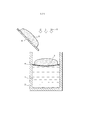
図に示するつぼ溶融装置2は溶融ガラス槽1を含み、ガラス槽の表面上には保護層4を形成することができる。供給システム6を用いて廃棄物をガラス槽の表面上に注ぐ。この供給システム6は、廃棄物3を保持する支持体又はシステムとしても作用することができ、これによりるつぼ溶融装置2中への廃棄物取り込みステップの間に廃棄物3の燃焼を部分的に実行することが可能となる。参照番号5は、廃棄物3の酸化及び燃焼に作用するためにるつぼに添加される気体、固体又は液体を示す。これらは、廃棄物3に適用される酸素プラズマ(反応性充填剤とも呼ばれる)及び/又は気体状酸素、及び/又は固体又は液体の酸化剤、及び/又はガラス固化添加剤(ガラスフリット、シリカ、炭酸塩、種々の酸化物等)の流れとすることができる。
The following description, given by way of illustration and not limitation with reference to the accompanying drawings, describes the invention in detail and reveals other advantages and features.
DETAILED DESCRIPTION OF THE INVENTION A
目標を達成するため、即ち例えば金属又は硫化物の還元種がガラス槽に混入することを防止し、続いて沈降現象を防止するため、ガラス槽の上方で廃棄物を燃焼させる場合、含まれる鉱物類が完全に酸化されるまで確実に燃焼を行わなければならない。装置中への廃棄物の取り込み又は供給ステップの間に機械的部品によって行われる廃棄物の支持、又は保護層4による燃焼生成物の保持により、特に可燃性物質の完全燃焼及び鉱物物質の十分な酸化が確実に行われ、それらを封じ込めマトリックス中に取り込むことができる。これら2つの保持モードにより、ガラス槽表面の上方で廃棄物を酸素含有気体、或いは固体又は液体酸化剤(硝酸塩、硫酸塩、硝酸、硫酸等)と反応させることが可能になる。気体、液体又は固体の酸化剤は、順次に又は同時に反応性充填剤に添加することができる。これらの選択は、対象の廃棄物、方法に関する制約、酸化剤がもたらす化学元素と最終的に得られるガラス組成との適合性等に応じて行われる。
上述のように、保護層4の主要な機能はガラス槽1の表面の表面張力を増大することである。この機能を確保するために、一時的保護層は、その生成温度において、ガラス槽より高い表面張力係数(約100dPaの粘度に相当)を有する。この層は、接触する粒子との間に界面力を生じることにより、望ましくない物質がガラス槽に侵入することを防ぐ。
Minerals included when burning waste above the glass tank to achieve the goal, for example to prevent metal or sulfide reducing species from entering the glass tank and subsequently prevent sedimentation Combustion must be ensured until the product is completely oxidized. The support of the waste performed by the mechanical parts during the waste uptake or supply step into the device, or the retention of the combustion products by the
As described above, the main function of the
また、装置中への廃棄物の取り込みステップの間に剛性の支持体6により、又はガラス槽表面上の保護層により確実に行われる、ガラス槽表面の上方での保護層4の保持は、当然ながら一時的なものである。廃棄物の支持は、廃棄物の焼却及び酸化期間の間に行われる。保護層は最終的には分解されて、製造されるガラス質マトリックスの最終組成に入る。保護層の分解は、自然に行うことができる。即ち、層は腐食により除去される。それは、焼却ガラス固化の実行に用いられる方法(例えば、特にプラズマトーチを用いてガラス槽の温度を上昇させる)の効果、又はこれら保護層の望ましい寿命に相当する滞留時間の後に保護層を溶解する薬剤を保護槽に添加することにより行われる。焼却期間の終了時に添加される元素が最終的に得られるガラスの組成中に入り込む場合は、それら元素による化学的攻撃が特に重要となる。従って、一又は複数の保護層の化学組成は、好適には、前記マトリックスの組成と適合性を有しなければならない。よって、保護層及び保護上層の組成に関し、ガラス質マトリックスの組成に入り込む元素を選択することが好ましい。これら添加される元素はまた、それらが添加されるときの化学的形態(酸化剤、還元剤等)に従って、及び保護層又は保護上層の分解に先立って、廃棄物3から誘導される生成物との反応に関与する。
Also, the retention of the
本発明の方法の実施例
ホウケイ酸塩型の溶融ガラスは、主に41.5%のSiO2(シリカ)、18.5%のB2O3(無水ホウ酸)、10%のAl2O3(アルミナ)、20%のNa2O(酸化ナトリウム)、5%のFe2O3から成るものを用いる。この溶融ガラスは1200℃において約40dPaの粘度を有する。実験に用いた溶融ガラスの重量は300gであり、表面積は7.3×10⁻³m2であった。この溶融ガラスで形成されたガラス槽の表面に堆積させた廃棄物3は、コークス(焼却可能廃棄物の有機物断片を模したもの)、硫酸バリウム、酸化ニッケル、酸化鉄及び酸化銅を含む25gの混合粉末であった。それに、直径5mmの硫化物ビーズを2つ加えた。
1200℃で且つ保護層4の不在下において空気中で1時間処理した後に、金属の外観を有する多数のビーズがるつぼの底部に生じた。これは、発生を回避すべき現象が発生したことを明示するものであった。
Example of the Process of the Invention Borosilicate type molten glass is mainly composed of 41.5% SiO 2 (silica), 18.5% B 2 O 3 (boric anhydride), 10% Al 2 O. 3 (alumina), 20% Na 2 O (sodium oxide), 5% Fe 2 O 3 are used. This molten glass has a viscosity of about 40 dPa at 1200 ° C. The weight of the molten glass used in the experiment was 300 g, and the surface area was 7.3 × 10 −3 m 2 . The
After treatment in air for 1 hour at 1200 ° C. and in the absence of
この試験を、今度はガラス槽1上に厚さ約2mmのシリカに富む保護層を配置して再現した。保護層は溶融ガラスと共に毛管現象により上昇し、一部溶解した微細なシリカ粒子を含む粘性の混合物を形成した。空気中において1200℃で1時間処理した後、ガラス槽表面にはビーズが生じなかったことが判明した。廃棄物3の大部分が焼却されて多数の金属ビーズが形成され、これらのビーズは一時的保護層4によりガラス槽の表面上に留まった。これらのビーズの存在は、酸素供給量が廃棄物の完全酸化に不十分であったという事実を説明することができる。
上記の場合、廃棄物及び燃焼生成物をガラス槽表面上に保持するために上層を保護層4に追加する必要がないことに注意されたい。
この保護層は、Na2B4O7の添加により同じ温度条件下で除去される。保護層の破壊用のこれらの化学種は、最終的に得られるガラスの組成に入るように選択されたことに注意されたい。
This test was reproduced by placing a silica-rich protective layer about 2 mm thick on the glass vessel 1 this time. The protective layer rose together with the molten glass by capillary action to form a viscous mixture containing finely dissolved fine silica particles. After treatment in air at 1200 ° C. for 1 hour, it was found that no beads were formed on the surface of the glass tank. Most of the
Note that in the above case, it is not necessary to add an upper layer to the
This protective layer is removed under the same temperature conditions by the addition of Na 2 B 4 O 7 . Note that these species for the destruction of the protective layer were chosen to fall into the final glass composition.
同様の実験を工業的規模で再現した。溶融ガラス30kgを冷却した金属るつぼ中への直接誘導により加熱した。るつぼの上に、一対の金属トーチ間で伝達される酸素プラズマアークを発生する装置を設置し、前述と同じ種類の廃棄物3kgを保護層上で処理した。焼却ガラス固化工程の完了時に、前述の試験と同じ結論が得られた。即ち、工程の間に形成された多数の金属ビーズは、シリカに富む粒子からなる厚さ数ミリメートルの層の生成により、ガラス槽の表面に留まった。
多数の金属ビーズの存在は、鉱物類の部分酸化の兆候である。これは、雰囲気の酸化が不十分であるという事実によるものである。
Similar experiments were reproduced on an industrial scale. 30 kg of molten glass was heated by direct induction into a cooled metal crucible. A device for generating an oxygen plasma arc transmitted between a pair of metal torches was installed on the crucible, and 3 kg of the same kind of waste as described above was treated on the protective layer. At the completion of the incineration glass solidification process, the same conclusions as in the previous test were obtained. That is, the large number of metal beads formed during the process remained on the surface of the glass bath due to the formation of a few millimeters thick layer of silica rich particles.
The presence of numerous metal beads is an indication of the partial oxidation of minerals. This is due to the fact that the atmosphere is not sufficiently oxidized.
別の実施例においては、硫酸バリウム、酸化鉄、酸化ニッケル、及び酸化銅を含む鉱物類を120g含む、300gの有機性廃棄物の完全燃焼が、廃棄物を7分未満の時間に亘ってプラズマトーチ下に保持した後で得られた。
その後、耐火性るつぼ溶融装置中で燃焼生成物のサンプル22.45gを、ホウケイ酸塩ガラス200gの上に配置し、次いでホウケイ酸塩ガラス60g及び硝酸ナトリウム107gで覆った。この混合物を1200℃の炉の中に配置した。鉱物類はガラス中に完全に取り込まれ、注目すべきことに、るつぼ底部にはビーズが全く沈殿しなかった。プラズマトーチの酸素下において滞留時間を延長し、酸化剤を添加することにより、還元種からなる沈殿物の生成が防止された。液体又は気体の酸化剤が不在であること、プラズマトーチ下での滞留時間が短すぎること、及びガラス槽の上方での廃棄物の保持が不十分であることにより、同様の結果を得ることが不可能となる。
In another embodiment, complete combustion of 300 g of organic waste, including 120 g of minerals including barium sulfate, iron oxide, nickel oxide, and copper oxide, causes the waste to be plasma for less than 7 minutes. Obtained after holding under torch.
Thereafter, a sample of 22.45 g of the combustion product was placed on 200 g of borosilicate glass and then covered with 60 g of borosilicate glass and 107 g of sodium nitrate in a refractory crucible melting apparatus. This mixture was placed in a 1200 ° C. oven. The minerals were completely incorporated into the glass and notably no beads were precipitated at the bottom of the crucible. By extending the residence time under oxygen in the plasma torch and adding an oxidizing agent, the formation of precipitates consisting of reducing species was prevented. Similar results may be obtained due to the absence of liquid or gaseous oxidants, the residence time under the plasma torch being too short, and insufficient retention of waste above the glass bath. It becomes impossible.
1以上の保護層を溶融ガラス槽上に生成することを含む本発明の方法の一実施例において、焼却ガラス固化炉は複数の区域を持つように設計することが好ましい。特に、るつぼ溶融装置の一部を廃棄物の実際の焼却(廃棄物の添加及び保持手段、保護層の生成、及び酸化剤の添加を含む)に使用し、別の部分をガラスの精製(同時に洗浄集じんガスのリサイクル)に使用する。 In one embodiment of the method of the present invention comprising producing one or more protective layers on a molten glass bath, the incineration vitrification furnace is preferably designed to have multiple zones. In particular, one part of the crucible melting device is used for the actual incineration of waste (including waste addition and retention means, protective layer formation, and oxidant addition) and another part for glass purification (at the same time Used for recycling of cleaning dust collection gas).
Claims (1)
Applications Claiming Priority (2)
| Application Number | Priority Date | Filing Date | Title |
|---|---|---|---|
| FR0451035A FR2870758B1 (en) | 2004-05-26 | 2004-05-26 | METHOD FOR COMBUSTION AND COMPLETE OXIDATION OF THE MINERAL FRACTION OF A TREATED WASTE IN A DIRECT COMBUSTION-VITRIFICATION APPARATUS |
| FR0451035 | 2004-05-26 |
Related Parent Applications (1)
| Application Number | Title | Priority Date | Filing Date |
|---|---|---|---|
| JP2007514040A Division JP5090157B2 (en) | 2004-05-26 | 2005-05-25 | A method that allows complete combustion and oxidation of mineral fragments of waste processed in direct incineration vitrification equipment |
Publications (1)
| Publication Number | Publication Date |
|---|---|
| JP2012196672A true JP2012196672A (en) | 2012-10-18 |
Family
ID=34946564
Family Applications (2)
| Application Number | Title | Priority Date | Filing Date |
|---|---|---|---|
| JP2007514040A Expired - Fee Related JP5090157B2 (en) | 2004-05-26 | 2005-05-25 | A method that allows complete combustion and oxidation of mineral fragments of waste processed in direct incineration vitrification equipment |
| JP2012112288A Withdrawn JP2012196672A (en) | 2004-05-26 | 2012-05-16 | Process enabling complete combustion and oxidation of mineral fraction of waste treated in direct incineration-vitrification apparatus |
Family Applications Before (1)
| Application Number | Title | Priority Date | Filing Date |
|---|---|---|---|
| JP2007514040A Expired - Fee Related JP5090157B2 (en) | 2004-05-26 | 2005-05-25 | A method that allows complete combustion and oxidation of mineral fragments of waste processed in direct incineration vitrification equipment |
Country Status (10)
| Country | Link |
|---|---|
| US (1) | US8003845B2 (en) |
| EP (1) | EP1751069B1 (en) |
| JP (2) | JP5090157B2 (en) |
| KR (1) | KR101243642B1 (en) |
| CN (1) | CN1997604B (en) |
| AT (1) | ATE528263T1 (en) |
| ES (1) | ES2374295T3 (en) |
| FR (1) | FR2870758B1 (en) |
| RU (1) | RU2401810C2 (en) |
| WO (1) | WO2005118492A1 (en) |
Families Citing this family (5)
| Publication number | Priority date | Publication date | Assignee | Title |
|---|---|---|---|---|
| FR2870758B1 (en) * | 2004-05-26 | 2006-08-04 | Commissariat Energie Atomique | METHOD FOR COMBUSTION AND COMPLETE OXIDATION OF THE MINERAL FRACTION OF A TREATED WASTE IN A DIRECT COMBUSTION-VITRIFICATION APPARATUS |
| US10210340B2 (en) | 2007-07-05 | 2019-02-19 | Blackberry Limited | File sharing with a hostile system |
| FR2934183B1 (en) * | 2008-07-28 | 2011-02-11 | Commissariat Energie Atomique | PROCESS FOR CONTAINING WASTE BY VITRIFICATION IN METAL POTS. |
| US9368241B2 (en) | 2012-06-29 | 2016-06-14 | Ge-Hitachi Nuclear Energy Americas Llc | System and method for processing and storing post-accident coolant |
| FR3008222B1 (en) * | 2013-07-08 | 2015-07-31 | Commissariat Energie Atomique | PROCESS FOR TREATING AN ABSORBENT NEEDLE CONTAINING CONTAMINATED BORON CARBIDE AND SODIUM |
Family Cites Families (7)
| Publication number | Priority date | Publication date | Assignee | Title |
|---|---|---|---|---|
| DE58906363D1 (en) * | 1988-09-10 | 1994-01-20 | Sorg Gmbh & Co Kg | Process for the transfer of solid, largely water-free waste materials in glass form and device for carrying out the process. |
| DE58909059D1 (en) * | 1988-12-13 | 1995-04-06 | Sorg Gmbh & Co Kg | Process for operating a glass melting furnace. |
| US5186112A (en) * | 1989-02-23 | 1993-02-16 | Isover Saint-Gobain | Method and apparatus for melting materials containing inorganic material fibers by the supply of oxygen rich gas |
| US5100453A (en) * | 1991-03-07 | 1992-03-31 | Glasstech, Inc. | Method for recycling scrap mineral fibers |
| FR2746037B1 (en) * | 1996-03-13 | 1998-05-15 | PROCESS FOR THE VITRIFICATION TREATMENT OF ASBESTOSED WASTE, PARTICULARLY FROM THE BUILDING, AND INSTALLATION FOR CARRYING OUT SAID METHOD | |
| CA2352108C (en) * | 1998-12-01 | 2008-08-12 | Societe Generale Pour Les Techniques Nouvelles Sgn | Method and device for incineration and vitrification of waste, in particular radioactive waste |
| FR2870758B1 (en) * | 2004-05-26 | 2006-08-04 | Commissariat Energie Atomique | METHOD FOR COMBUSTION AND COMPLETE OXIDATION OF THE MINERAL FRACTION OF A TREATED WASTE IN A DIRECT COMBUSTION-VITRIFICATION APPARATUS |
-
2004
- 2004-05-26 FR FR0451035A patent/FR2870758B1/en not_active Expired - Fee Related
-
2005
- 2005-05-25 WO PCT/FR2005/050365 patent/WO2005118492A1/en not_active Ceased
- 2005-05-25 US US11/597,537 patent/US8003845B2/en not_active Expired - Fee Related
- 2005-05-25 ES ES05766648T patent/ES2374295T3/en not_active Expired - Lifetime
- 2005-05-25 CN CN200580016804XA patent/CN1997604B/en not_active Expired - Fee Related
- 2005-05-25 KR KR1020067024504A patent/KR101243642B1/en not_active Expired - Fee Related
- 2005-05-25 JP JP2007514040A patent/JP5090157B2/en not_active Expired - Fee Related
- 2005-05-25 EP EP05766648A patent/EP1751069B1/en not_active Expired - Lifetime
- 2005-05-25 RU RU2006146059/03A patent/RU2401810C2/en active
- 2005-05-25 AT AT05766648T patent/ATE528263T1/en not_active IP Right Cessation
-
2012
- 2012-05-16 JP JP2012112288A patent/JP2012196672A/en not_active Withdrawn
Also Published As
| Publication number | Publication date |
|---|---|
| RU2006146059A (en) | 2008-07-10 |
| JP2008500162A (en) | 2008-01-10 |
| ATE528263T1 (en) | 2011-10-15 |
| CN1997604A (en) | 2007-07-11 |
| US20080264311A1 (en) | 2008-10-30 |
| EP1751069A1 (en) | 2007-02-14 |
| ES2374295T3 (en) | 2012-02-15 |
| CN1997604B (en) | 2013-11-13 |
| EP1751069B1 (en) | 2011-10-12 |
| KR20070026519A (en) | 2007-03-08 |
| JP5090157B2 (en) | 2012-12-05 |
| KR101243642B1 (en) | 2013-03-14 |
| US8003845B2 (en) | 2011-08-23 |
| FR2870758B1 (en) | 2006-08-04 |
| FR2870758A1 (en) | 2005-12-02 |
| RU2401810C2 (en) | 2010-10-20 |
| WO2005118492A1 (en) | 2005-12-15 |
Similar Documents
| Publication | Publication Date | Title |
|---|---|---|
| RU2409526C2 (en) | Method of producing redox glass frit | |
| RU2096685C1 (en) | Method of treatment of wastes and reworking of wastes into atmospheric gases | |
| US7730745B2 (en) | Vitrification furnace with dual heating means | |
| JP5753782B2 (en) | Waste containment process by vitrification in metal cans | |
| Sobolev et al. | Vitrification processes for low, intermediate radioactive and mixed wastes | |
| JP2012196672A (en) | Process enabling complete combustion and oxidation of mineral fraction of waste treated in direct incineration-vitrification apparatus | |
| US4988376A (en) | Glassification of lead and silica solid waste | |
| Trifunović | Vitrification as a method of soil remediation | |
| Pokorný et al. | Transient melt formation and its effect on conversion phenomena during nuclear waste vitrification–HT‐ESEM analysis | |
| CN114031267B (en) | Furnace starting method of glass electric melting furnace and application thereof | |
| Long et al. | Effective disposal of hazardous waste from non-ferrous waste recycling through thermal treatment | |
| Yan | Effect of As and MgO addition on arsenic vitrification in copper smelting slag | |
| US6329563B1 (en) | Vitrification of ion exchange resins | |
| Waste | SEPA Handbook | |
| Nanba et al. | Chemical recycling of municipal waste slag by using phase separation | |
| Song et al. | Effects of a slag former on the absorption of cerium and uranium oxide within a slag during a melting of stainless steel contaminated with uranium | |
| RU2183872C2 (en) | Method for high-temperature recovery of spent radioactive catalysts in shaft furnace | |
| Mazer et al. | Prospects for vitrification of mixed wastes at ANL-E | |
| Sobolev et al. | A history of vitrification process development at SIA Radon including cold crucible melters | |
| JP2005034711A (en) | Method for melting semi-volatile metal contaminants | |
| CN113421685A (en) | Radioactive resin curing treatment method and system | |
| Han et al. | The Thermal Stability and Structure of Arsenic-Containing Solidified Glass at High Temperature | |
| Bickford | Selection of melter systems for the DOE/Industrial Center for Waste Vitrification Research | |
| CN112573785A (en) | Method for improving efficiency of treating petrochemical excess sludge by thermal plasma | |
| ITTO960945A1 (en) | PROCEDURE FOR THE PRODUCTION OF GLASS FROM A BILL OF SOLID MATERIAL RESULTING FROM THE COMBUSTION OF SOLID WASTE |
Legal Events
| Date | Code | Title | Description |
|---|---|---|---|
| A761 | Written withdrawal of application |
Free format text: JAPANESE INTERMEDIATE CODE: A761 Effective date: 20121012 |
|
| A521 | Request for written amendment filed |
Free format text: JAPANESE INTERMEDIATE CODE: A821 Effective date: 20121012 |