JP2012504143A - 3- (6- (1- (2,2-difluorobenzo [d] [1,3] dioxol-5-yl) cyclopropanecarboxamido) -3-methylpyridin-2-yl) benzoic acid dosage unit - Google Patents
3- (6- (1- (2,2-difluorobenzo [d] [1,3] dioxol-5-yl) cyclopropanecarboxamido) -3-methylpyridin-2-yl) benzoic acid dosage unit Download PDFInfo
- Publication number
- JP2012504143A JP2012504143A JP2011529338A JP2011529338A JP2012504143A JP 2012504143 A JP2012504143 A JP 2012504143A JP 2011529338 A JP2011529338 A JP 2011529338A JP 2011529338 A JP2011529338 A JP 2011529338A JP 2012504143 A JP2012504143 A JP 2012504143A
- Authority
- JP
- Japan
- Prior art keywords
- dosage unit
- unit according
- methylpyridin
- dioxol
- difluorobenzo
- Prior art date
- Legal status (The legal status is an assumption and is not a legal conclusion. Google has not performed a legal analysis and makes no representation as to the accuracy of the status listed.)
- Withdrawn
Links
Images






Classifications
-
- C—CHEMISTRY; METALLURGY
- C07—ORGANIC CHEMISTRY
- C07D—HETEROCYCLIC COMPOUNDS
- C07D405/00—Heterocyclic compounds containing both one or more hetero rings having oxygen atoms as the only ring hetero atoms, and one or more rings having nitrogen as the only ring hetero atom
- C07D405/02—Heterocyclic compounds containing both one or more hetero rings having oxygen atoms as the only ring hetero atoms, and one or more rings having nitrogen as the only ring hetero atom containing two hetero rings
- C07D405/12—Heterocyclic compounds containing both one or more hetero rings having oxygen atoms as the only ring hetero atoms, and one or more rings having nitrogen as the only ring hetero atom containing two hetero rings linked by a chain containing hetero atoms as chain links
-
- A—HUMAN NECESSITIES
- A61—MEDICAL OR VETERINARY SCIENCE; HYGIENE
- A61K—PREPARATIONS FOR MEDICAL, DENTAL OR TOILETRY PURPOSES
- A61K31/00—Medicinal preparations containing organic active ingredients
- A61K31/33—Heterocyclic compounds
- A61K31/335—Heterocyclic compounds having oxygen as the only ring hetero atom, e.g. fungichromin
- A61K31/357—Heterocyclic compounds having oxygen as the only ring hetero atom, e.g. fungichromin having two or more oxygen atoms in the same ring, e.g. crown ethers, guanadrel
- A61K31/36—Compounds containing methylenedioxyphenyl groups, e.g. sesamin
-
- A—HUMAN NECESSITIES
- A61—MEDICAL OR VETERINARY SCIENCE; HYGIENE
- A61K—PREPARATIONS FOR MEDICAL, DENTAL OR TOILETRY PURPOSES
- A61K31/00—Medicinal preparations containing organic active ingredients
- A61K31/33—Heterocyclic compounds
- A61K31/395—Heterocyclic compounds having nitrogen as a ring hetero atom, e.g. guanethidine or rifamycins
- A61K31/435—Heterocyclic compounds having nitrogen as a ring hetero atom, e.g. guanethidine or rifamycins having six-membered rings with one nitrogen as the only ring hetero atom
- A61K31/44—Non condensed pyridines; Hydrogenated derivatives thereof
- A61K31/4418—Non condensed pyridines; Hydrogenated derivatives thereof having a carbocyclic group directly attached to the heterocyclic ring, e.g. cyproheptadine
-
- A—HUMAN NECESSITIES
- A61—MEDICAL OR VETERINARY SCIENCE; HYGIENE
- A61K—PREPARATIONS FOR MEDICAL, DENTAL OR TOILETRY PURPOSES
- A61K31/00—Medicinal preparations containing organic active ingredients
- A61K31/33—Heterocyclic compounds
- A61K31/395—Heterocyclic compounds having nitrogen as a ring hetero atom, e.g. guanethidine or rifamycins
- A61K31/435—Heterocyclic compounds having nitrogen as a ring hetero atom, e.g. guanethidine or rifamycins having six-membered rings with one nitrogen as the only ring hetero atom
- A61K31/44—Non condensed pyridines; Hydrogenated derivatives thereof
- A61K31/4427—Non condensed pyridines; Hydrogenated derivatives thereof containing further heterocyclic ring systems
- A61K31/443—Non condensed pyridines; Hydrogenated derivatives thereof containing further heterocyclic ring systems containing a five-membered ring with oxygen as a ring hetero atom
-
- A—HUMAN NECESSITIES
- A61—MEDICAL OR VETERINARY SCIENCE; HYGIENE
- A61K—PREPARATIONS FOR MEDICAL, DENTAL OR TOILETRY PURPOSES
- A61K31/00—Medicinal preparations containing organic active ingredients
- A61K31/33—Heterocyclic compounds
- A61K31/395—Heterocyclic compounds having nitrogen as a ring hetero atom, e.g. guanethidine or rifamycins
- A61K31/435—Heterocyclic compounds having nitrogen as a ring hetero atom, e.g. guanethidine or rifamycins having six-membered rings with one nitrogen as the only ring hetero atom
- A61K31/47—Quinolines; Isoquinolines
-
- A—HUMAN NECESSITIES
- A61—MEDICAL OR VETERINARY SCIENCE; HYGIENE
- A61K—PREPARATIONS FOR MEDICAL, DENTAL OR TOILETRY PURPOSES
- A61K45/00—Medicinal preparations containing active ingredients not provided for in groups A61K31/00 - A61K41/00
- A61K45/06—Mixtures of active ingredients without chemical characterisation, e.g. antiphlogistics and cardiaca
-
- A—HUMAN NECESSITIES
- A61—MEDICAL OR VETERINARY SCIENCE; HYGIENE
- A61K—PREPARATIONS FOR MEDICAL, DENTAL OR TOILETRY PURPOSES
- A61K9/00—Medicinal preparations characterised by special physical form
- A61K9/20—Pills, tablets, discs, rods
- A61K9/2004—Excipients; Inactive ingredients
- A61K9/2013—Organic compounds, e.g. phospholipids, fats
- A61K9/2018—Sugars, or sugar alcohols, e.g. lactose, mannitol; Derivatives thereof, e.g. polysorbates
-
- A—HUMAN NECESSITIES
- A61—MEDICAL OR VETERINARY SCIENCE; HYGIENE
- A61K—PREPARATIONS FOR MEDICAL, DENTAL OR TOILETRY PURPOSES
- A61K9/00—Medicinal preparations characterised by special physical form
- A61K9/20—Pills, tablets, discs, rods
- A61K9/2004—Excipients; Inactive ingredients
- A61K9/2022—Organic macromolecular compounds
- A61K9/205—Polysaccharides, e.g. alginate, gums; Cyclodextrin
- A61K9/2054—Cellulose; Cellulose derivatives, e.g. hydroxypropyl methylcellulose
-
- A—HUMAN NECESSITIES
- A61—MEDICAL OR VETERINARY SCIENCE; HYGIENE
- A61K—PREPARATIONS FOR MEDICAL, DENTAL OR TOILETRY PURPOSES
- A61K9/00—Medicinal preparations characterised by special physical form
- A61K9/20—Pills, tablets, discs, rods
- A61K9/2004—Excipients; Inactive ingredients
- A61K9/2022—Organic macromolecular compounds
- A61K9/205—Polysaccharides, e.g. alginate, gums; Cyclodextrin
- A61K9/2059—Starch, including chemically or physically modified derivatives; Amylose; Amylopectin; Dextrin
-
- A—HUMAN NECESSITIES
- A61—MEDICAL OR VETERINARY SCIENCE; HYGIENE
- A61K—PREPARATIONS FOR MEDICAL, DENTAL OR TOILETRY PURPOSES
- A61K9/00—Medicinal preparations characterised by special physical form
- A61K9/48—Preparations in capsules, e.g. of gelatin, of chocolate
-
- A—HUMAN NECESSITIES
- A61—MEDICAL OR VETERINARY SCIENCE; HYGIENE
- A61K—PREPARATIONS FOR MEDICAL, DENTAL OR TOILETRY PURPOSES
- A61K9/00—Medicinal preparations characterised by special physical form
- A61K9/48—Preparations in capsules, e.g. of gelatin, of chocolate
- A61K9/4841—Filling excipients; Inactive ingredients
- A61K9/4858—Organic compounds
-
- A—HUMAN NECESSITIES
- A61—MEDICAL OR VETERINARY SCIENCE; HYGIENE
- A61K—PREPARATIONS FOR MEDICAL, DENTAL OR TOILETRY PURPOSES
- A61K9/00—Medicinal preparations characterised by special physical form
- A61K9/48—Preparations in capsules, e.g. of gelatin, of chocolate
- A61K9/4841—Filling excipients; Inactive ingredients
- A61K9/4866—Organic macromolecular compounds
-
- A—HUMAN NECESSITIES
- A61—MEDICAL OR VETERINARY SCIENCE; HYGIENE
- A61P—SPECIFIC THERAPEUTIC ACTIVITY OF CHEMICAL COMPOUNDS OR MEDICINAL PREPARATIONS
- A61P1/00—Drugs for disorders of the alimentary tract or the digestive system
-
- A—HUMAN NECESSITIES
- A61—MEDICAL OR VETERINARY SCIENCE; HYGIENE
- A61P—SPECIFIC THERAPEUTIC ACTIVITY OF CHEMICAL COMPOUNDS OR MEDICINAL PREPARATIONS
- A61P3/00—Drugs for disorders of the metabolism
-
- A—HUMAN NECESSITIES
- A61—MEDICAL OR VETERINARY SCIENCE; HYGIENE
- A61P—SPECIFIC THERAPEUTIC ACTIVITY OF CHEMICAL COMPOUNDS OR MEDICINAL PREPARATIONS
- A61P43/00—Drugs for specific purposes, not provided for in groups A61P1/00-A61P41/00
Landscapes
- Health & Medical Sciences (AREA)
- Chemical & Material Sciences (AREA)
- Life Sciences & Earth Sciences (AREA)
- General Health & Medical Sciences (AREA)
- Veterinary Medicine (AREA)
- Public Health (AREA)
- Medicinal Chemistry (AREA)
- Animal Behavior & Ethology (AREA)
- Pharmacology & Pharmacy (AREA)
- Epidemiology (AREA)
- Organic Chemistry (AREA)
- Bioinformatics & Cheminformatics (AREA)
- Nuclear Medicine, Radiotherapy & Molecular Imaging (AREA)
- Engineering & Computer Science (AREA)
- General Chemical & Material Sciences (AREA)
- Chemical Kinetics & Catalysis (AREA)
- Molecular Biology (AREA)
- Biophysics (AREA)
- Obesity (AREA)
- Hematology (AREA)
- Diabetes (AREA)
- Pharmaceuticals Containing Other Organic And Inorganic Compounds (AREA)
- Medicinal Preparation (AREA)
- Plural Heterocyclic Compounds (AREA)
- Medicines That Contain Protein Lipid Enzymes And Other Medicines (AREA)
Abstract
本発明は、形態Iの3−(6−(1−(2,2−ジフルオロベンゾ[d][1,3]ジオキソール−5−イル)シクロプロパンカルボキサミド)−3−メチルピリジン−2−イル)安息香酸の処方物、その医薬パックまたはキットと、それらを用いた処置方法に関する。この化合物は、薬学的に許容される塩として存在し得、また、形態Iと呼ばれ、本明細書中に記載され、特性決定される遊離の形態でも存在し得る。用量単位にはさらに、増量剤、崩壊剤、界面活性剤、流動促進剤、または粘性剤、および/または潤滑剤が含まれる場合がある。The present invention relates to Form I of 3- (6- (1- (2,2-difluorobenzo [d] [1,3] dioxol-5-yl) cyclopropanecarboxamido) -3-methylpyridin-2-yl) The present invention relates to a benzoic acid formulation, a pharmaceutical pack or kit thereof, and a treatment method using them. The compound can exist as a pharmaceutically acceptable salt, and can also exist in the free form, referred to as Form I, described and characterized herein. Dosage units may further include bulking agents, disintegrants, surfactants, glidants, or viscosity agents, and / or lubricants.
Description
本発明は、有効量の3−(6−(1−(2,2−ジフルオロベンゾ[d][1,3]ジオキソール−5−イル)シクロプロパンカルボキサミド)−3−メチルピリジン−2−イル)安息香酸(化合物1)を含有する用量単位に関する。化合物1は、薬学的に許容される塩として存在し得、また、形態Iと呼ばれ、本明細書中に記載され、特性決定される遊離の形態でも存在し得る。用量単位にはさらに、増量剤、崩壊剤、界面活性剤、流動促進剤、または粘性剤、および/または潤滑剤が含まれる場合がある。本発明はさらに、CFTR媒介疾患(例えば、嚢胞性線維症)を処置する方法、および効果的な処置スケジュールに関する。
The present invention provides an effective amount of 3- (6- (1- (2,2-difluorobenzo [d] [1,3] dioxol-5-yl) cyclopropanecarboxamido) -3-methylpyridin-2-yl) It relates to a dosage unit containing benzoic acid (compound 1).
CFTRは、吸収性および分泌性上皮細胞を含む、様々なタイプの細胞の中で発現されるcAMP/ATP媒介性陰イオンチャネルであり、これが、膜を通過する陰イオンの流速、ならびに他のイオンチャネルおよびタンパク質の活性を調節する。上皮細胞では、CFTRの正常な機能が、呼吸器および消化組織を含む体全体への電解質輸送の維持に非常に重要である。CFTRは、それぞれが6個の膜貫通へリックスと1つのヌクレオチド結合ドメインを含む、膜貫通ドメインの縦列反復からなるタンパク質をコードするおよそ1480個のアミノ酸により構成される。2つの膜貫通ドメインは、チャネル活性と細胞の輸送を調節する複数のリン酸化部位を持つ大きな極性調節性(R)ドメインにより結合されている。 CFTR is a cAMP / ATP-mediated anion channel expressed in various types of cells, including absorptive and secretory epithelial cells, which is responsible for the flow rate of anions across the membrane, as well as other ions Modulates channel and protein activity. In epithelial cells, the normal function of CFTR is very important in maintaining electrolyte transport throughout the body, including respiratory and digestive tissues. CFTR is composed of approximately 1480 amino acids that encode proteins consisting of tandem repeats of transmembrane domains, each containing 6 transmembrane helices and one nucleotide binding domain. The two transmembrane domains are joined by a large polar regulatory (R) domain with multiple phosphorylation sites that regulate channel activity and cellular trafficking.
CFTRをコードする遺伝子は同定され、配列決定されている(非特許文献1;非特許文献2を参照のこと)(非特許文献3)。この遺伝子の欠損がCFTRにおいて突然変異を誘発し、最も一般的なヒトにとっての致命的遺伝疾患である嚢胞性線維症(「CF」)を引き起こす。嚢胞性線維症には、米国では幼児2500人に約1人が罹患する。米国の一般的な集団内では、明らかな病的影響が見られない形で、1000万人までの人々が1コピーの欠損遺伝子を持っている。対照的に、CF関連遺伝子を2コピー持つ個体は衰弱し、慢性肺疾患を含む致命的なCFの影響に見舞われる。
The gene encoding CFTR has been identified and sequenced (see Non-Patent
嚢胞性線維症の患者では、呼吸器上皮内で内因的に発現されるCFTRの突然変異により、イオンおよび体液の輸送において不均衡を引き起こす頂端側(apical)の陰イオン分泌の減少が導かれる。生じるこの陰イオン輸送の減少は、肺における粘液蓄積の増大およびそれに付随する微生物感染の一因となり、これは最終的にCF患者の死を招くことになる。呼吸器疾患に加えて、CF患者は、消化器の問題および膵臓機能不全を患うことが典型的であり、処置しないまま放置した場合、死亡することになる。さらに、嚢胞性線維症の男性の大多数は生殖能力が無く、嚢胞性線維症の女性は生殖能力が低下している。2コピーのCF関連遺伝子の深刻な影響とは対照的に、1コピーのCF関連遺伝子を持つ個体は、コレラおよび下痢による脱水症に対して高い耐性を示し、このことは、この集団における比較的高頻度のCF遺伝子を説明していると考えられる。 In patients with cystic fibrosis, mutations in CFTR endogenously expressed in the respiratory epithelium lead to a decrease in apical anion secretion that causes an imbalance in ion and fluid transport. The resulting decrease in anion transport contributes to increased mucus accumulation in the lung and the accompanying microbial infection, which ultimately leads to the death of CF patients. In addition to respiratory disease, CF patients typically suffer from gastrointestinal problems and pancreatic dysfunction and will die if left untreated. In addition, the majority of men with cystic fibrosis have no fertility, and women with cystic fibrosis have reduced fertility. In contrast to the serious effects of two copies of CF-related genes, individuals with one copy of CF-related genes are highly resistant to cholera and diarrhea dehydration, which is relatively high in this population. It is thought that it explains the high frequency CF gene.
CF染色体のCFTR遺伝子の配列分析により、病因となる様々な突然変異が明らかにされている(非特許文献4;非特許文献5;および非特許文献6;特許文献7)。現在までのところ、CF遺伝子について1000を超える病因となる突然変異が同定されている(http://www.genet.sickkids.on.ca/cftr/)。最も優勢な突然変異は、CFTRアミノ酸配列の508位のフェニルアラニンの欠失であり、これは、一般的にはΔF508−CFTRと呼ばれている。この突然変異は、嚢胞性線維症の症例のおよそ70%に存在しており、これは重篤な疾患と関連がある。
Various mutations causing pathogenesis have been clarified by sequence analysis of the CFTR gene of the CF chromosome (
ΔF508−CFTRにおける残基508の欠失は、形成されつつあるタンパク質の正確な折りたたみを妨げる。この結果、突然変異タンパク質がERを出て、原形質膜へ輸送されることが不可能となる。結果として、膜に存在するチャネルの数は、野生型CFTRを発現する細胞中で観察される数よりはるかに少なくなる。損なわれた輸送機構に加えて、この突然変異はチャネルの開閉にも欠陥をもたらす。まとめて考えると、膜におけるチャネル数の減少と開閉の欠陥により、上皮を通過する陰イオンの輸送は減少し、イオンおよび体液輸送の欠陥を招くことになる。(非特許文献8)。しかしながら、複数の研究により、野生型CFTRより少ないが、膜におけるこの少ない数のΔF508−CFTRが機能的であることが示されている(非特許文献9;Denningら、前出;非特許文献10)。ΔF508−CFTRに加えて、輸送、合成、および/またはチャネル開閉の欠陥を生じるCFTRにおける他の病因となる突然変異は、アップレギュレーションまたはダウンレギュレーションされて、陰イオンの分泌を変化させ、疾患の進行および/または重症度を変え得る。
The deletion of residue 508 in ΔF508-CFTR prevents the correct folding of the protein being formed. As a result, the mutein cannot exit the ER and be transported to the plasma membrane. As a result, the number of channels present in the membrane is much less than that observed in cells expressing wild type CFTR. In addition to impaired transport mechanisms, this mutation also results in defects in channel opening and closing. Collectively, due to the reduced number of channels in the membrane and the opening and closing defects, anion transport through the epithelium is reduced, leading to defects in ion and fluid transport. (Non-patent document 8). However, studies have shown that this small number of ΔF508-CFTR in the membrane, although less than wild type CFTR, is functional (Non-Patent
CFTRは陰イオンに加えて様々な分子を輸送するが、この役割(陰イオンの輸送)が、上皮を通過してイオンおよび水を輸送する重要な機構における1つの要素を表すことは明らかである。他の要素としては、上皮Na+チャネル、ENaC、Na+/2Cl−/K+共輸送体、Na+−K+−ATPaseポンプ、および側底膜K+チャネルが挙げられ、これらは細胞への塩化物の取込に関与している。 Although CFTR transports a variety of molecules in addition to anions, it is clear that this role (anion transport) represents one element in an important mechanism of transporting ions and water across the epithelium. . Other elements include epithelial Na + channel, ENaC, Na + / 2Cl − / K + symporter, Na + −K + -ATPase pump, and basolateral K + channel, which are associated with cells Involved in chloride uptake.
これらの要素が一緒に作用して、細胞内でのそれらの選択的発現および局在性により上皮を通過する方向性をもつ輸送を達成する。塩化物の吸収は、頂端側膜上に存在するENaCとCFTRの協調活性および細胞の側底膜側表面で発現されるNa+−K+−ATPaseポンプおよびCl−チャネルにより行われる。管腔側からの塩化物の二次的な能動輸送は細胞内塩化物の蓄積を導き、これが次いで、Cl−チャネルを介して受動的に細胞から離れることにより、ベクトル輸送が生じ得る。側底膜側表面上にNa+/2Cl−/K+共輸送体、Na+−K+−ATPaseポンプおよび側底膜K+チャネルが、そして管腔側上にCFTRが配置されることにより、管腔側でのCFTRを介した塩化物の分泌が調和させられる。水はそれ自体能動輸送されないと思われるので、上皮を通過するその流れは、ナトリウムおよび塩化物の大きな流れにより生じた小さな経上皮浸透圧勾配に左右される。 These elements work together to achieve directional transport across the epithelium due to their selective expression and localization within the cell. Chloride absorption is performed by the coordinated activity of ENaC and CFTR present on the apical membrane and the Na + -K + -ATPase pump and Cl-channel expressed on the basolateral surface of the cell. Secondary active transport of chloride from the luminal side leads to accumulation of intracellular chloride, which can then passively leave the cell via the Cl - channel, resulting in vector transport. By placing the Na + / 2Cl − / K + symporter, Na + −K + -ATPase pump and basolateral membrane K + channel on the basolateral surface and CFTR on the luminal side, Chloride secretion via CFTR on the luminal side is coordinated. Since water does not appear to be actively transported by itself, its flow through the epithelium depends on a small transepithelial osmotic gradient caused by a large flow of sodium and chloride.
上記で述べたように、ΔF508−CFTRにおける残基508の欠失は形成されつつあるタンパク質の正確な折りたたみを妨げ、その結果、この突然変異タンパク質がERを出て、原形質膜へ輸送されることを不可能にすると考えられる。結果として、原形質膜に存在する成熟タンパク質の量は不十分となり、上皮組織内での塩化物の輸送は著しく減少する。事実、ER機構によるABC輸送体のERプロセッシングの欠陥というこの細胞の現象は、CF疾患だけでなく、広範囲の他の孤立性疾患(isolated disease)および遺伝性疾患の根本要因であることが示されている。ER機構が機能不全に陥る可能性がある2つの過程は、分解に至るタンパク質のER排出のためのカップリングが失われること、またはこれらの欠損/誤って折り畳まれたタンパク質のER蓄積のいずれかによるものである[非特許文献11;非特許文献12;非特許文献13;非特許文献14;非特許文献15]。
As noted above, deletion of residue 508 in ΔF508-CFTR prevents the correct folding of the protein being formed, so that the mutant protein exits the ER and is transported to the plasma membrane. It seems to make it impossible. As a result, the amount of mature protein present in the plasma membrane is inadequate and chloride transport within epithelial tissue is significantly reduced. In fact, this cellular phenomenon of defective ER processing of ABC transporters by the ER mechanism has been shown to be the root cause of a wide range of other isolated and inherited diseases as well as CF diseases. ing. Two processes by which the ER mechanism can become dysfunctional are either loss of coupling for protein ER excretion leading to degradation, or ER accumulation of these defective / misfolded proteins [Non-patent
塩形態の化合物1は、特許文献1(上記刊行物はその全体が引用により本明細書中に組み入れている)に、CFTR活性の調節因子として開示されており、したがって、嚢胞性線維症のようなCFTR媒介疾患の処置に有用である。しかし、有効量の化合物1を含有する安定な固体の用量単位が求められている。
The salt form of
(発明の要旨)
本発明は、以下の構造を有する3−(6−(1−(2,2−ジフルオロベンゾ[d][1,3]ジオキソール−5−イル)シクロプロパンカルボキサミド)−3−メチルピリジン−2−イル)安息香酸の用量単位に関する:
(Summary of the Invention)
The present invention provides 3- (6- (1- (2,2-difluorobenzo [d] [1,3] dioxol-5-yl) cyclopropanecarboxamide) -3-methylpyridin-2- having the structure: IL) Regarding dosage units of benzoic acid:
1つの態様においては、本発明は、25〜400mgの化合物1を含有する用量単位に関する。さらなる実施形態においては、化合物1の量は100〜300mgである。さらなる実施形態においては、化合物1の量は200mgである。
In one aspect, the invention relates to a dosage unit containing 25-400 mg of
別の実施形態においては、本発明は、化合物1が、CuKα線照射を使用して得られた粉末X線回折における15.2〜15.6度、16.1〜16.5度、および14.3〜14.7度での1つまたは複数のピークを特徴とする形態1である、上記実施形態のいずれかの用量単位に関する。
In another embodiment, the invention provides that
別の実施形態においては、形態1の化合物1は、約15.4、16.3、および14.5度での1つまたは複数のピークを特徴とする。
In another embodiment,
別の実施形態においては、形態1の化合物1はさらに、14.6〜15.0度での1つのピークを特徴とする。別の実施形態においては、形態1の化合物1はさらに、14.8度での1つのピークを特徴とする。別の実施形態においては、形態1の化合物1はさらに、17.6〜18.0度での1つのピークを特徴とする。別の実施形態においては、形態1の化合物1はさらに、17.8度での1つのピークを特徴とする。別の実施形態においては、形態1の化合物1はさらに、16.4〜16.8度での1つのピークを特徴とする。別の実施形態においては、形態1の化合物1はさらに、16.6度での1つのピークを特徴とする。別の実施形態においては、形態1の化合物1はさらに、7.6〜8.0度での1つのピークを特徴とする。別の実施形態においては、形態1の化合物1はさらに、7.8度での1つのピークを特徴とする。別の実施形態においては、形態1の化合物1はさらに、25.8〜26.2度での1つのピークを特徴とする。別の実施形態においては、形態1の化合物1はさらに、26.0度での1つのピークを特徴とする。別の実施形態においては、形態1の化合物1はさらに、21.4〜21.8度での1つのピークを特徴とする。別の実施形態においては、形態1の化合物1はさらに、21.6度での1つのピークを特徴とする。別の実施形態においては、形態1の化合物1はさらに、23.1〜23.5度での1つのピークを特徴とする。別の実施形態においては、形態1の化合物1はさらに、23.3度での1つのピークを特徴とする。
In another embodiment,
別の実施形態においては、形態1の化合物1は、単斜晶系、P21/n空間群、および以下の格子定数を有する:
a=4.9626(7)Å α=90°
b=12.2994(18)Å β=93.938(9)°
c=33.075(4)Å γ=90°。
In another embodiment,
a = 4.9626 (7) Å α = 90 °
b = 12.2994 (18) Åβ = 93.938 (9) °
c = 33.075 (4) Åγ = 90 °.
別の実施形態においては、形態1の化合物1は、図1の回折パターンと実質的に類似する回折パターンを特徴とする。
In another embodiment,
別の実施形態においては、形態1の化合物1は、図2の回折パターンと実質的に類似する回折パターンを特徴とする。
In another embodiment,
別の実施形態においては、本発明は、用量単位が経口用量単位である、上記実施形態のいずれかの用量単位に関する。別の実施形態においては、用量単位は、固体の経口用量単位である。別の実施形態においては、用量単位は、錠剤またはカプセル剤の形態である。別の実施形態においては、用量単位はカプセル剤の形態である。別の実施形態においては、用量単位には2個以上のカプセル剤が含まれる。別の実施形態においては、用量単位には、それぞれが50mgの化合物1である4個のカプセル剤が含まれる。別の実施形態においては、用量単位には、それぞれが25mgの化合物1である1個〜4個のカプセル剤が含まれる。
In another embodiment, the invention relates to the dose unit of any of the above embodiments, wherein the dose unit is an oral dose unit. In another embodiment, the dosage unit is a solid oral dosage unit. In another embodiment, the dosage unit is in the form of a tablet or capsule. In another embodiment, the dosage unit is in the form of a capsule. In another embodiment, the dosage unit contains more than one capsule. In another embodiment, the dosage unit comprises 4 capsules, each of 50 mg of
別の実施形態においては、本発明は、増量剤をさらに含有する、上記実施形態のいずれかの用量単位に関する。別の実施形態においては、増量剤は、ラクトース、微結晶セルロース、無水リン酸水素カルシウム、リン酸水素カルシウム二水和物、リン酸三カルシウム、セルロース粉末、炭酸マグネシウム、硫酸カルシウム、澱粉、タルク、スクロース、デキストロース、マンニトール、ヒドロキシプロピルメチルセルロース、ヒドロキシプロピルセルロース、カルボキシメチルセルロース、フルクトース、キシリトール、ソルビトール、およびそれらの組み合わせからなる群より選択される。別の実施形態においては、増量剤は、ラクトースおよび微結晶セルロースである。別の実施形態においては、増量剤の量は、40〜80重量%である。別の実施形態においては、増量剤の量は、50〜70重量%である。別の実施形態においては、増量剤の量は60重量%である。 In another embodiment, the invention relates to the dosage unit of any of the above embodiments, further comprising a bulking agent. In another embodiment, the bulking agent is lactose, microcrystalline cellulose, anhydrous calcium hydrogen phosphate, calcium hydrogen phosphate dihydrate, tricalcium phosphate, cellulose powder, magnesium carbonate, calcium sulfate, starch, talc, It is selected from the group consisting of sucrose, dextrose, mannitol, hydroxypropylmethylcellulose, hydroxypropylcellulose, carboxymethylcellulose, fructose, xylitol, sorbitol, and combinations thereof. In another embodiment, the bulking agents are lactose and microcrystalline cellulose. In another embodiment, the amount of bulking agent is 40-80% by weight. In another embodiment, the amount of bulking agent is 50-70% by weight. In another embodiment, the amount of extender is 60% by weight.
別の実施形態においては、本発明は、さらに崩壊剤を含有する、上記実施形態のいずれかに関する。別の実施形態においては、崩壊剤は、カルボキシメチルスターチナトリウム、アルギン酸、カルボキシメチルセルロースカルシウム、カルボキシメチルセルロースナトリウム、セルロース粉末、クロスカルメロースナトリウム、クロスポビドン、キチン、重炭酸塩、ゲランガム、およびそれらの組み合わせからなる群より選択される。別の実施形態においては、崩壊剤は、カルボキシメチルスターチナトリウムである。別の実施形態においては、崩壊剤の量は、1〜20重量%である。別の実施形態においては、崩壊剤の量は、5〜15重量%である。別の実施形態においては、崩壊剤の量は10重量%である。 In another embodiment, the invention relates to any of the above embodiments, further comprising a disintegrant. In another embodiment, the disintegrant is from sodium carboxymethyl starch, alginic acid, carboxymethylcellulose calcium, sodium carboxymethylcellulose, cellulose powder, croscarmellose sodium, crospovidone, chitin, bicarbonate, gellan gum, and combinations thereof Selected from the group consisting of In another embodiment, the disintegrant is sodium carboxymethyl starch. In another embodiment, the amount of disintegrant is 1-20% by weight. In another embodiment, the amount of disintegrant is 5-15% by weight. In another embodiment, the amount of disintegrant is 10% by weight.
別の実施形態においては、本発明は、さらに界面活性剤を含有する、上記実施形態のいずれかに関する。別の実施形態においては、界面活性剤は、陰イオン性界面活性剤、陽イオン性界面活性剤、または非イオン性界面活性剤である。別の実施形態においては、界面活性剤は、ラウリル硫酸、ラウレス(laureth)硫酸、アルキルベンゼンスルホン酸、ブタン酸、ヘキサン酸、オクタン酸、デカン酸、ラウリン酸、ミリスチン酸、パルミチン酸、ステアリン酸、アラキジン酸、ベヘン酸、ミリストレイン酸、パルミトレイン酸、オレイン酸、リノール酸、α−リノレン酸、アラキドン酸、エイコサペンタエン酸、エルカ酸、およびドコサヘキサエン酸の塩からなる群より選択される、陰イオン性界面活性剤である。別の実施形態においては、界面活性剤は、ラウリル硫酸ナトリウムである。別の実施形態においては、界面活性剤は、臭化セチルトリメチルアンモニウム、塩化セチルピリジニウム、ポリエトキシル化タローアミン、塩化ベンザルコニウム、および塩化ベンゼトニウムからなる群より選択される、陽イオン性界面活性剤である。別の実施形態においては、界面活性剤は、ポリソルベート20、ポリソルベート40、ポリソルベート60、ポリソルベート65、ポリソルベート80、アルキルポリ(エチレンオキサイド)、ポロキサミン、アルキルポリグルコシド、オクチルグルコシド、デシルマルトシド、脂肪族アルコール、セチルアルコール、オレイルアルコール、コカミドMEA、コカミドDEA、およびコカミドTEAからなる群より選択される非イオン性界面活性剤である。別の実施形態においては、界面活性剤の量は、0.5〜15重量%である。別の実施形態においては、界面活性剤の量は、1〜10重量%である。別の実施形態においては、界面活性剤の量は、5重量%である。
In another embodiment, the invention relates to any of the above embodiments, further comprising a surfactant. In another embodiment, the surfactant is an anionic surfactant, a cationic surfactant, or a nonionic surfactant. In another embodiment, the surfactant is lauryl sulfate, laureth sulfate, alkylbenzene sulfonic acid, butanoic acid, hexanoic acid, octanoic acid, decanoic acid, lauric acid, myristic acid, palmitic acid, stearic acid, arachidine. An anionic interface selected from the group consisting of acids, behenic acid, myristoleic acid, palmitoleic acid, oleic acid, linoleic acid, α-linolenic acid, arachidonic acid, eicosapentaenoic acid, erucic acid, and docosahexaenoic acid It is an activator. In another embodiment, the surfactant is sodium lauryl sulfate. In another embodiment, the surfactant is a cationic surfactant selected from the group consisting of cetyltrimethylammonium bromide, cetylpyridinium chloride, polyethoxylated tallowamine, benzalkonium chloride, and benzethonium chloride. is there. In another embodiment, the surfactant is
別の実施形態においては、本発明は、さらに流動促進剤または粘性剤を含有する、上記実施形態のいずれかに関する。別の実施形態においては、流動促進剤または粘性剤は、コロイド状二酸化ケイ素、ケイ酸アルミニウムマグネシウム、キサンタンゴム、ヒドロキシプロピルセルロース、ヒドロキシプロピルメチルセルロース、メチルセルロース、カラギーナン、カルボキシメチルセルロース、ポリビニルピロリドン、アルギン酸ナトリウム、ポビドン、アカシア、グアーガム、トラガカント、ケイ酸アルミニウムマグネシウム、カルボマー、およびそれらの組み合わせからなる群より選択される。別の実施形態においては、流動促進剤はコロイド状二酸化ケイ素である。別の実施形態においては、流動促進剤または粘性剤の量は、0.05〜2重量%である。別の実施形態においては、流動促進剤または粘性剤の量は、0.1〜1重量%である。別の実施形態においては、流動促進剤または粘性剤の量は0.5重量%である。 In another embodiment, the invention relates to any of the above embodiments, further comprising a glidant or viscosity agent. In another embodiment, the glidant or viscosity agent is colloidal silicon dioxide, magnesium aluminum silicate, xanthan gum, hydroxypropylcellulose, hydroxypropylmethylcellulose, methylcellulose, carrageenan, carboxymethylcellulose, polyvinylpyrrolidone, sodium alginate, povidone. , Acacia, guar gum, tragacanth, magnesium aluminum silicate, carbomer, and combinations thereof. In another embodiment, the glidant is colloidal silicon dioxide. In another embodiment, the amount of glidant or viscosity agent is 0.05-2% by weight. In another embodiment, the amount of glidant or viscosity agent is from 0.1 to 1% by weight. In another embodiment, the amount of glidant or viscosity agent is 0.5% by weight.
別の実施形態においては、本発明は、さらに滑沢剤を含有する、上記実施形態のいずれかに関する。別の実施形態においては、滑沢剤は、ステアリン酸マグネシウム、ステアリン酸カルシウム、三ケイ酸マグネシウム、ステアリルフマル酸ナトリウム、ステアリン酸、ステアリン酸亜鉛、およびそれらの組み合わせからなる群より選択される。別の実施形態においては、滑沢剤はステアリン酸マグネシウムである。別の実施形態においては、滑沢剤の量は、0.05〜2重量%である。別の実施形態においては、滑沢剤の量は、0.1〜1重量%である。別の実施形態においては、滑沢剤の量は、0.5重量%である。 In another embodiment, the invention relates to any of the above embodiments, further comprising a lubricant. In another embodiment, the lubricant is selected from the group consisting of magnesium stearate, calcium stearate, magnesium trisilicate, sodium stearyl fumarate, stearic acid, zinc stearate, and combinations thereof. In another embodiment, the lubricant is magnesium stearate. In another embodiment, the amount of lubricant is 0.05-2% by weight. In another embodiment, the amount of lubricant is 0.1-1% by weight. In another embodiment, the amount of lubricant is 0.5% by weight.
別の実施形態においては、本発明は、用量単位が、50mgの化合物1、40重量%のラクトース、20重量%の微結晶セルロース、10重量%のカルボキシメチルスターチナトリウム、5重量%のラウリル硫酸ナトリウム、0.5重量%のコロイド状二酸化ケイ素、および0.5重量%のステアリン酸マグネシウムを含有するカプセル剤を含む、上記実施形態のいずれかに関する。
In another embodiment, the invention provides that the dosage unit is 50 mg of
別の実施形態においては、本発明は、用量単位が、0.1ミクロン〜10ミクロンの粒径を有している3−(6−(1−(2,2−ジフルオロベンゾ[d][1,3]ジオキソール−5−イル)シクロプロパンカルボキサミド)−3−メチルピリジン−2−イル)安息香酸を含む、上記実施形態のいずれかに関する。別の実施形態においては、3−(6−(1−(2,2−ジフルオロベンゾ[d][1,3]ジオキソール−5−イル)シクロプロパンカルボキサミド)−3−メチルピリジン−2−イル)安息香酸の粒径は、1.0ミクロン〜5ミクロンである。別の実施形態においては、3−(6−(1−(2,2−ジフルオロベンゾ[d][1,3]ジオキソール−5−イル)シクロプロパンカルボキサミド)−3−メチルピリジン−2−イル)安息香酸は、2.0ミクロンの粒径D50を有する。 In another embodiment, the invention provides 3- (6- (1- (2,2-difluorobenzo [d] [1] wherein the dosage unit has a particle size of 0.1 to 10 microns. , 3] dioxol-5-yl) cyclopropanecarboxamido) -3-methylpyridin-2-yl) benzoic acid. In another embodiment, 3- (6- (1- (2,2-difluorobenzo [d] [1,3] dioxol-5-yl) cyclopropanecarboxamido) -3-methylpyridin-2-yl) The particle size of benzoic acid is 1.0 to 5 microns. In another embodiment, 3- (6- (1- (2,2-difluorobenzo [d] [1,3] dioxol-5-yl) cyclopropanecarboxamido) -3-methylpyridin-2-yl) Benzoic acid has a particle size D50 of 2.0 microns.
別の態様においては、本発明は、有効量の上記実施形態のいずれかの用量単位を嚢胞性線維症の処置を必要とする被験体に投与する工程を含む、被験体の嚢胞性線維症を処置する方法に関する。別の実施形態においては、この方法は、追加の治療薬を投与する工程を含む。別の実施形態においては、追加の治療薬は、粘液溶解薬、気管支拡張薬、抗生物質、抗感染症薬、抗炎症剤、本発明の化合物以外のCFTR調節因子、および成分栄養剤からなる群より選択される。別の実施形態においては、用量単位は、2週間に1回被験体に投与される。別の実施形態においては、用量単位は、1週間に1回被験体に投与される。別の実施形態においては、用量単位は、3日間に1回被験体に投与される。別の実施形態においては、用量単位は、1日1回被験体に投与される。 In another aspect, the invention provides a method for administering cystic fibrosis in a subject comprising administering an effective amount of a dosage unit of any of the above embodiments to a subject in need of treatment for cystic fibrosis. Relates to a method of treatment. In another embodiment, the method includes administering an additional therapeutic agent. In another embodiment, the additional therapeutic agent is a group consisting of mucolytic agents, bronchodilators, antibiotics, anti-infective agents, anti-inflammatory agents, CFTR modulators other than the compounds of the present invention, and ingredient nutrients. More selected. In another embodiment, the dosage unit is administered to the subject once every two weeks. In another embodiment, the dosage unit is administered to the subject once a week. In another embodiment, the dosage unit is administered to a subject once every 3 days. In another embodiment, the dosage unit is administered to the subject once a day.
別の態様においては、本発明は、上記実施形態のいずれかの用量単位と、その使用についての説明書を含有する、医薬パック(pharmaceutical pack)またはキットに関する。 In another aspect, the invention relates to a pharmaceutical pack or kit comprising a dosage unit of any of the above embodiments and instructions for its use.
本明細書中に記載されるプロセスは、本発明の組成物を調製するために使用することができる。これらのプロセスにおいて使用される成分の量と特徴は、本明細書中に記載されるとおりであろう。 The processes described herein can be used to prepare the compositions of the present invention. The amounts and characteristics of the components used in these processes will be as described herein.
(発明の詳細な説明)
(定義)
本明細書中で使用される場合は、他に指定のない限りは以下の定義を適用するものとする。
(Detailed description of the invention)
(Definition)
As used herein, the following definitions shall apply unless otherwise indicated.
用語「CFTR」は、本明細書中で使用される場合は、嚢胞性線維性経膜コンダクタンス調節因子、または調節活性があるその突然変異体(ΔF508 CFTRおよびG551D CFTRを含むがこれらに限定されない)を意味する(例えば、CFTRの突然変異体については、http://www.genet.sickkids.on.ca/cftr/を参照のこと)。 The term “CFTR”, as used herein, is a cystic fibrous transmembrane conductance modulator, or a mutant thereof that has regulatory activity, including but not limited to ΔF508 CFTR and G551D CFTR. (For example, see http://www.genet.sickkids.on.ca/cftr/ for mutants of CFTR).
「CFTR媒介疾患」は、本明細書中で使用される場合は、以下から選択される疾患である:嚢胞性線維症,遺伝性気腫、遺伝性ヘモクロマトーシス、凝血−線維素溶解欠損症(Coagulation−Fibrinolysis deficiencies)(例えば、プロテインC欠乏症、1型遺伝性血管浮腫)、脂質処理欠損症(lipid processing deficiencies)(例えば、家族性高コレステロール血症、1型カイロミクロン症、無βリポタンパク質血症)、リソソーム蓄積病(例えば、I細胞病/偽性ハーラー)、ムコ多糖沈着症、Sandhof/Tay−Sachs、クリグラー−ナジャII型、多発性内分泌腺症/高インスリン血症、真性糖尿病、ラロン型小人症、ミエロペルオキシダーゼ欠損症(Myleoperoxidase deficiency)、原発性上皮小体機能低下症、黒色腫、グリカノーシスCDG1型(glycanosis CDG type 1)、遺伝性気腫、先天性甲状腺機能亢進症、骨形成不全症、遺伝性低フィブリノゲン血症、ACT欠損症、尿崩症(DI)、下垂体性DI、腎性DI、シャルコー・マリー・トゥース症候群、ペリツェウス・メルツバッハー病、神経変性疾患(例えば、アルツハイマー病、パーキンソン病、筋萎縮性側索硬化症、進行性核上性麻痺、ピック病、いくつかのポリグルタミン神経障害(例えば、ハンチントン、脊髄小脳失調症I型、脊髄および延髄性筋萎縮症(Spinal and bulbar muscular atrophy)、歯状核赤核淡蒼球ルイ体萎縮症(Dentatorubal pallidoluysian)、および筋緊張性ジストロフィー)、ならびに海綿状脳症(例えば、遺伝性クロイツフェルト・ヤコブ病)、ファブリー病、およびシュトロイスラー・シャインカー症候群、COPD、眼球乾燥症候群、およびシェーグレン症候群。 A “CFTR-mediated disease”, as used herein, is a disease selected from: cystic fibrosis, hereditary emphysema, hereditary hemochromatosis, coagulation-fibrinolysis deficiency (Coagulation-Fibrinolysis definitions) (eg, protein C deficiency, type 1 hereditary angioedema), lipid processing deficiencies (eg, familial hypercholesterolemia, type 1 chylomicronism, β-free lipoprotein) Blood), lysosomal storage diseases (eg, I-cell disease / pseudo-Harler), mucopolysaccharidosis, Sandhof / Tay-Sachs, Krigler-Naja type II, multiple endocrine disease / hyperinsulinemia, diabetes mellitus, Laron dwarfism, myeloperoxidase deficiency Myelopathy, primary hypoparathyroidism, melanoma, glycanosis CDG1 type, hereditary emphysema, congenital hyperthyroidism, osteogenesis imperfecta, hereditary hypofibrinogen Blood pressure, ACT deficiency, diabetes insipidus (DI), pituitary DI, renal DI, Charcot-Marie-Tooth syndrome, Pelizaeus-Merzbacher disease, neurodegenerative diseases (eg, Alzheimer's disease, Parkinson's disease, muscle atrophy) Lateral sclerosis, progressive supranuclear palsy, Pick's disease, some polyglutamine neuropathies (eg Huntington, spinocerebellar ataxia type I, spinal and bulbar muscular atrophy, teeth Red nucleus nuclei Ryukyu atrophy (Dentatorubal pallidoluysian), and myotonic dystrophy), as well as spongiform encephalopathy (for example, hereditary Creutzfeldt-Jakob disease), Fabry disease, and Sträussler-Scheinker syndrome, COPD, dry eye syndrome, and Sjogren's syndrome.
本明細書中で使用される場合は、「結晶」は、構造単位が一定の幾何学的パターンまたは格子に配置され、その結果、結晶性固体が厳格な長距離秩序(rigid long range order)を有する化合物または組成物をいう。結晶構造を構成する構造単位は、原子、分子、またはイオンであり得る。結晶性固体は、明確な融点を示す。 As used herein, “crystals” are arranged in a geometric pattern or lattice in which the structural units are constant, so that the crystalline solid exhibits a rigid long range order. The compound or composition which has. The structural unit constituting the crystal structure can be an atom, molecule, or ion. Crystalline solids exhibit a distinct melting point.
用語「D50」は、本明細書中で使用される場合は、半分をその直径より大きく、そして半分をその直径よりも小さい粒径分布に分ける、ミクロンでの大きさをいう。 The term “D50”, as used herein, refers to a size in microns that divides the particle size distribution into half larger than its diameter and half smaller than its diameter.
表現「用量単位」は、本明細書中で使用される場合は、処置される患者に適している、薬剤の物理的に独立した単位をいう。 The expression “dosage unit” as used herein refers to a physically independent unit of drug suitable for the patient to be treated.
本発明によれば、化合物1の「有効量」は、上記疾患のいずれかを処置するか、またはそれらの重篤度を下げるために有効なその量である。
According to the present invention, an “effective amount” of
用語「調節する」は、本明細書中で使用される場合は、例えば、活性を、測定可能な量だけ増大させるまたは低下させることを意味する。 The term “modulate”, as used herein, means, for example, increasing or decreasing activity by a measurable amount.
用語「患者」または「被験体」は、本明細書中で使用される場合は、動物、好ましくは哺乳動物、そして最も好ましくはヒトを意味する。 The term “patient” or “subject” as used herein means an animal, preferably a mammal, and most preferably a human.
本明細書中で使用される場合は、用語「薬学的に許容される塩」は、信頼できる医学的判断の範囲内で、過度の毒性、炎症性刺激、アレルギー応答などを伴わない、ヒトおよび下等動物の組織との接触に使用するのに適しており、合理的な利益/危険度比(benefit/risk ratio)に見合う塩をいう。「薬学的に許容される塩」は、レシピエントに投与すると、本発明の化合物またはその阻害活性代謝物もしくは残留物を直接的または間接的のいずれかで提供できる、本発明の化合物の全ての非毒性の塩またはエステルの塩を意味する。 As used herein, the term “pharmaceutically acceptable salt” is within the scope of reliable medical judgment, without excessive toxicity, inflammatory irritation, allergic response, etc. A salt that is suitable for use in contact with lower animal tissues and that meets a reasonable benefit / risk ratio. “Pharmaceutically acceptable salt” refers to any of the compounds of the invention that, when administered to a recipient, can provide the compound of the invention or its inhibitory active metabolite or residue, either directly or indirectly. Non-toxic salt or ester salt.
(化合物1の調製方法)
1つの実施形態においては、化合物1の塩の形態は、スキーム1〜3にしたがって、酸塩化物部分をアミン部分とカップリングさせることによって調製することができる。形態Iの化合物1は、1つの実施形態においては、適切な溶媒中に化合物1の塩の形態(例えば、HCl塩)を分散または溶解させることにより調製される。別の実施形態においては、化合物1および形態Iは、化合物1の安息香酸塩前駆体と適切な酸(例えば、ギ酸)から直接形成させることができる。
(Method for preparing compound 1)
In one embodiment, the salt form of
スキーム1.酸塩化物部分の合成
化合物1の塩の形態からの形態Iの化合物1の形成のための有効な時間は、約1〜24時間の間の任意の時間であり得る。一般的には、高い収率(約98%)を得るためには24時間より長い時間は必要ないが、特定の溶媒についてはさらに長い時間が必要であり得る。必要な時間の長さは、一般的には温度に反比例することもまた理解されている。すなわち、温度が高ければ高いほど、形態Iの化合物1を形成させるための酸の解離を行うために必要な時間は短くなる。溶媒が水である場合は、分散液を室温でおよそ24時間撹拌することにより、形態Iの化合物1がおよそ98%の収率で得られる。化合物1の塩の形態の溶液が処理の目的のために所望される場合は、高温および有機溶媒が使用され得る。この溶液を高温で有効な時間の間撹拌した後、冷却して再結晶化させると、形態Iの化合物1の実質的に純粋な形態が得られる。1つの実施形態においては、実質的に純粋は、約90%を上回る純度をいう。別の実施形態においては、実質的に純粋は、約95%を上回る純度をいう。別の実施形態においては、実質的に純粋は、約98%を上回る純度をいう。別の実施形態においては、実質的に純粋は、約99%を上回る純度をいう。選択される温度は、使用される溶媒に部分的に依存し、これは決定を行う当業者の能力の十分に範囲内にある。1つの実施形態においては、温度は、室温から約80℃の間である。別の実施形態においては、温度は、室温から約40℃の間である。別の実施形態においては、温度は、約40℃から約60℃の間である。別の実施形態においては、温度は、約60℃から約80℃の間である。
An effective time for the formation of
別の実施形態においては、形態Iの化合物1は、安息香酸塩前駆体(例えば、t−ブチル安息香酸塩前駆体)と酸(例えば、ギ酸)から直接形成させることができる。安息香酸塩前駆体とギ酸の高温での反応、その後のこの混合物の水への移動と、高温への再加熱により、形態Iの化合物1が酸塩中間体を単離することなく直接形成される。
In another embodiment,
いくつかの実施形態においては、形態Iの化合物1は、有機溶媒からの再結晶化によりさらに精製され得る。有機溶媒の例としては、トルエン、クメン、アニソール、1−ブタノール、酢酸イソプロピル、酢酸ブチル、酢酸イソブチル、メチルt−ブチルエーテル、メチルイソブチルケトン、または1−プロパノール/水(様々な割合のもの)が挙げられるが、これらに限定されない。上記に記載されたような温度が使用され得る。例えば、1つの実施形態においては、形態Iの化合物1は、これが完全に溶解するまで、約75℃で1−ブタノール中に溶解させられる。この溶液を、約0.2℃/分の速度で約10℃に冷却することにより、形態Iの化合物1の結晶が得られ、これは、濾過により単離することができる。
In some embodiments,
形態Iの化合物1には、化合物1の塩の形態よりも安定であるという利点がある。
Form I compound 1 has the advantage of being more stable than the salt form of
(処方物および投与)
したがって、本発明の別の態様においては、薬学的に許容される組成物が提供される。ここでは、これらの組成物には、本明細書中に記載される化合物のいずれかが含まれ、状況に応じて、薬学的に許容される担体、アジュバント、またはビヒクルが含まれる。特定の実施形態においては、これらの組成物には、状況に応じてさらに1種類以上の追加の治療薬が含まれる。
(Formulation and administration)
Accordingly, in another aspect of the invention, a pharmaceutically acceptable composition is provided. Here, these compositions include any of the compounds described herein and, depending on the situation, a pharmaceutically acceptable carrier, adjuvant, or vehicle. In certain embodiments, these compositions further include one or more additional therapeutic agents, depending on the situation.
本発明の化合物のうちの特定のものは処置のための遊離の形態で存在することができ、また、適切である場合には、その薬学的に許容される誘導体またはプロドラッグとして存在することができることも理解されるであろう。本発明にしたがうと、薬学的に許容される誘導体またはプロドラッグには、薬学的に許容される塩、エステル、そのようなエステルの塩、あるいは必要な患者に投与されると本明細書中の別の場所に記載される化合物またはその代謝物もしくは残留物を直接的または間接的に提供できる任意の他の付加物または誘導体が含まれるが、これらに限定されない。 Certain of the compounds of the present invention may exist in free form for treatment and, where appropriate, may exist as a pharmaceutically acceptable derivative or prodrug thereof. It will also be understood that it can be done. In accordance with the present invention, pharmaceutically acceptable derivatives or prodrugs include pharmaceutically acceptable salts, esters, salts of such esters, or as herein described when administered to a patient in need. It includes, but is not limited to, any other adduct or derivative that can provide a compound described elsewhere or its metabolite or residue directly or indirectly.
薬学的に許容される塩は当該分野で周知である。例えば、S.M.Bergeらにより、薬学的に許容される塩がJ.Pharmaceutical Sciences,1977,66,1−19(引用により本明細書中に組み入れられる)に詳細に記載されている。本発明の化合物の薬学的に許容される塩としては、適切な無機および有機の酸および塩基由来のものが挙げられる。薬学的に許容される非毒性の酸付加塩の例は、無機酸(例えば、塩酸、臭化水素酸、リン酸、硫酸、および過塩素酸)と、または有機酸(例えば、酢酸、シュウ酸、マレイン酸、酒石酸、クエン酸、コハク酸、もしくはマロン酸)とともに形成されたアミノ基の塩、あるいは、当技術分野で使用される他の方法(例えば、イオン交換)を使用することにより形成された塩である。他の薬学的に許容される塩としては、アジピン酸塩、アルギン酸塩、アスコルビン酸塩、アスパラギン酸塩、ベンゼンスルホン酸塩、安息香酸塩、重硫酸塩、ホウ酸塩、酪酸塩、ショウノウ酸塩、カンファースルホン酸塩、クエン酸塩、シクロペンタンプロピオン酸塩、二グルコン酸塩、ラウリル硫酸塩、エタンスルホン酸塩、ギ酸塩、フマル酸塩、グルコヘプタン酸塩、グリセロリン酸塩、グルコン酸塩、ヘミ硫酸塩、ヘプタン酸塩、ヘキサン酸塩、ヨウ化水素酸塩、2−ヒドロキシ−エタンスルホン酸塩、ラクトビオン酸塩、乳酸塩、ラウリン酸塩、ラウリル硫酸塩、リンゴ酸塩、マレイン酸塩、マロン酸塩、メタンスルホン酸塩、2−ナフタレンスルホン酸塩、ニコチン酸塩、硝酸塩、オレイン酸塩、シュウ酸塩、パルミチン酸塩、パモ酸塩、ペクチン酸塩、過硫酸塩、3−フェニルプロピオン酸塩、リン酸塩、ピクリン酸塩、ピバル酸塩、プロピオン酸塩、ステアリン酸塩、コハク酸塩、硫酸塩、酒石酸塩、チオシアン酸塩、p−トルエンスルホン酸塩、ウンデカン酸塩、吉草酸塩などが挙げられる。適切な塩基由来の塩としては、アルカリ金属、アルカリ土類金属、アンモニウム、およびN+(C1−4アルキル)4塩が挙げられる。本発明はまた、本明細書中に開示される化合物の任意の塩基性窒素含有基の四級化を想定している。水溶性もしくは油溶性または水分散性もしくは油分散性の生成物を、そのような四級化により得ることができる。代表的なアルカリ金属塩またはアルカリ土類金属塩としては、ナトリウム、リチウム、カリウム、カルシウム、マグネシウムなどが挙げられる。さらなる薬学的に許容される塩としては、適切である場合は、非毒性アンモニウム、四級アンモニウム、ならびに、ハロゲン化物、水酸化物、カルボン酸塩、硫酸塩、リン酸塩、硝酸塩、低級アルキルスルホン酸塩およびアリールスルホン酸塩のような、対イオンを用いて形成されるアミンカチオンが挙げられる。 Pharmaceutically acceptable salts are well known in the art. For example, S.M. M.M. Berge et al., Pharmaceutically acceptable salts are described in J. Am. Described in detail in Pharmaceutical Sciences, 1977, 66, 1-19, incorporated herein by reference. Pharmaceutically acceptable salts of the compounds of this invention include those derived from suitable inorganic and organic acids and bases. Examples of pharmaceutically acceptable non-toxic acid addition salts include inorganic acids (eg, hydrochloric acid, hydrobromic acid, phosphoric acid, sulfuric acid, and perchloric acid) or organic acids (eg, acetic acid, oxalic acid) Formed by using salts of amino groups formed with maleic acid, tartaric acid, citric acid, succinic acid, or malonic acid), or other methods used in the art (eg, ion exchange). Salt. Other pharmaceutically acceptable salts include adipate, alginate, ascorbate, aspartate, benzenesulfonate, benzoate, bisulfate, borate, butyrate, camphorate , Camphorsulfonate, citrate, cyclopentanepropionate, digluconate, lauryl sulfate, ethanesulfonate, formate, fumarate, glucoheptanoate, glycerophosphate, gluconate, Hemisulfate, heptanoate, hexanoate, hydroiodide, 2-hydroxy-ethanesulfonate, lactobionate, lactate, laurate, lauryl sulfate, malate, maleate, Malonate, methanesulfonate, 2-naphthalenesulfonate, nicotinate, nitrate, oleate, oxalate, palmitate, Acid, pectate, persulfate, 3-phenylpropionate, phosphate, picrate, pivalate, propionate, stearate, succinate, sulfate, tartrate, thiocyanic acid Salts, p-toluenesulfonate, undecanoate, valerate and the like. Suitable base-derived salts include alkali metal, alkaline earth metal, ammonium, and N + (C 1-4 alkyl) 4 salts. The present invention also contemplates quaternization of any basic nitrogen-containing groups of the compounds disclosed herein. Water-soluble or oil-soluble or water-dispersible or oil-dispersible products can be obtained by such quaternization. Representative alkali metal salts or alkaline earth metal salts include sodium, lithium, potassium, calcium, magnesium and the like. Further pharmaceutically acceptable salts include non-toxic ammonium, quaternary ammonium, and halides, hydroxides, carboxylates, sulfates, phosphates, nitrates, lower alkyl sulfones, where appropriate. And amine cations formed using counterions, such as acid salts and aryl sulfonates.
上記のように、本発明の薬学的に許容される組成物にはさらに、薬学的に許容される担体、アジュバント、またはビヒクルが含まれる。これには、本明細書中で使用される場合は、所望される特定の投薬形態に適している限りは、任意の、およびあらゆる溶媒、希釈剤、または他の液体ビヒクル、分散補助剤もしくは懸濁補助剤、表面活性剤、等張化剤、増粘剤もしくは乳化剤、保存剤、固体結合剤、滑沢剤などが含まれる。Remington’s Pharmaceutical Sciences,第16版,E.W.Martin(Mack Publishing Co.,Easton,Pa.,1980)には、薬学的に許容される組成物の処方に使用される様々な担体と、その調製のための公知の技術が開示されている。任意の従来の担体媒体が本発明の化合物と不適合である(例えば、何らかの望ましくない生物学的作用を生じるか、または、そうでなければ薬学的に許容される組成物の任意の他の成分(単数または複数)と有害な様式で相互作用することによる)場合を除き、その使用は本発明の範囲内に含まれるとする。薬学的に許容される担体とすることができる物質のいくつかの例としては、以下が挙げられるが、これらに限定されない:イオン交換体、アルミナ、ステアリン酸アルミニウム、レシチン、血清タンパク質(例えば、ヒト血清アルブミン)、緩衝物質(例えば、リン酸塩)、グリシン、ソルビン酸、またはソルビン酸カリウム、飽和植物性脂肪酸の部分グリセリド混合物、水、塩類または電解質、例えば、硫酸プロタミン、リン酸水素二ナトリウム、リン酸水素カリウム、塩化ナトリウム、亜鉛塩、コロイド状シリカ、三ケイ酸マグネシウム、ポリビニルピロリドン、ポリアクリレート、蝋、ポリエチレン−ポリオキシプロピレン−ブロックポリマー、羊毛脂、糖類(例えば、ラクトース、グルコース、およびスクロース)、澱粉類(例えば、コーンスターチおよびジャガイモ澱粉)、セルロースおよびその誘導体(例えば、カルボキシメチルセルロースナトリウム、エチルセルロース、および酢酸セルロース)、粉末状トラガカント、麦芽、ゼラチン、タルク、賦形剤(例えば、ココアバターおよび坐薬ワックス)、油類(例えば、ピーナッツ油、綿実油、ベニバナ油、ゴマ油、オリーブ油、コーン油、および大豆油)、グリコール類(例えば、プロピレングリコールまたはポリエチレングリコール)、エステル類(例えば、エチルオレエートおよびエチルラウレート)、寒天、緩衝剤(例えば、水酸化マグネシウムおよび水酸化アルミニウム)、アルギン酸、発熱物質を含まない水、等張性生理食塩水、リンゲル液、エチルアルコール、およびリン酸緩衝液。さらに他の適合し得る非毒性滑沢剤(例えば、ラウリル硫酸ナトリウムおよびステアリン酸マグネシウム)、ならびに着色剤、放出剤、コーティング剤、甘味料、調味料および香料、保存剤および酸化防止剤も、調剤者の判断にしたがって、組成物中に存在させることができる。 As noted above, the pharmaceutically acceptable compositions of the present invention further include a pharmaceutically acceptable carrier, adjuvant, or vehicle. This, as used herein, is optional and any solvent, diluent or other liquid vehicle, dispersion aid or suspension, as long as it is appropriate for the particular dosage form desired. Turbidity aids, surfactants, tonicity agents, thickeners or emulsifiers, preservatives, solid binders, lubricants and the like are included. Remington's Pharmaceutical Sciences, 16th edition, E.I. W. Martin (Mack Publishing Co., Easton, Pa., 1980) discloses various carriers used in formulating pharmaceutically acceptable compositions and known techniques for their preparation. Any conventional carrier medium is incompatible with the compounds of the present invention (e.g., produces any undesirable biological effect or otherwise any other component of the pharmaceutically acceptable composition). Except in the case of (by interacting with the singular (s) in a deleterious manner) its use is intended to be included within the scope of the present invention. Some examples of substances that can be pharmaceutically acceptable carriers include, but are not limited to: ion exchangers, alumina, aluminum stearate, lecithin, serum proteins (eg, human Serum albumin), buffer substances (eg phosphates), glycine, sorbic acid or potassium sorbate, partial glyceride mixtures of saturated vegetable fatty acids, water, salts or electrolytes, eg protamine sulfate, disodium hydrogen phosphate, Potassium hydrogen phosphate, sodium chloride, zinc salt, colloidal silica, magnesium trisilicate, polyvinyl pyrrolidone, polyacrylate, wax, polyethylene-polyoxypropylene-block polymer, wool fat, saccharides (eg lactose, glucose, and sucrose) ), Starches (eg Corn starch and potato starch), cellulose and its derivatives (eg sodium carboxymethylcellulose, ethylcellulose and cellulose acetate), powdered tragacanth, malt, gelatin, talc, excipients (eg cocoa butter and suppository waxes), oils ( For example, peanut oil, cottonseed oil, safflower oil, sesame oil, olive oil, corn oil, and soybean oil), glycols (eg, propylene glycol or polyethylene glycol), esters (eg, ethyl oleate and ethyl laurate), agar, Buffers (eg, magnesium hydroxide and aluminum hydroxide), alginic acid, pyrogen-free water, isotonic saline, Ringer's solution, ethyl alcohol, and phosphate buffer. Other compatible non-toxic lubricants such as sodium lauryl sulfate and magnesium stearate, as well as colorants, release agents, coating agents, sweeteners, seasonings and flavors, preservatives and antioxidants are also formulated Can be present in the composition according to the judgment of the person.
1つの実施形態においては、本発明の用量単位には、塩の形態または形態I、あるいはそれらの両方の化合物1と、以下の薬学的に許容される賦形剤の少なくとも1つが含まれる。
In one embodiment, the dosage unit of the present invention comprises a salt form or Form I, or both
(1.増量剤)
薬学的増量剤は希釈剤としても知られており、これは一般的には不活性であり、用量単位の大部分を占める。1つの実施形態においては、増量剤は以下の群より選択され得る:ラクトース、微結晶セルロース、無水リン酸水素カルシウム、リン酸水素カルシウム二水和物、リン酸三カルシウム、セルロース粉末、炭酸マグネシウム、硫酸カルシウム、澱粉、タルク、スクロース、デキストロース、マンニトール、ヒドロキシプロピルメチルセルロース、ヒドロキシプロピルセルロース、カルボキシメチルセルロース、フルクトース、キシリトール、ソルビトール、およびそれらの組み合わせ。別の実施形態においては、増量剤は、ラクトースおよび微結晶セルロースである。図13に見ることができるように、全ての増量剤が同じように作用するわけではない。化合物1については、微結晶セルロース(MCC)は、リン酸水素カルシウム(Dical)よりもすぐれた溶解プロフィールを生じる。
(1. Bulking agent)
Pharmaceutical bulking agents are also known as diluents, which are generally inert and occupy most of the dosage unit. In one embodiment, the bulking agent may be selected from the following group: lactose, microcrystalline cellulose, anhydrous calcium hydrogen phosphate, calcium hydrogen phosphate dihydrate, tricalcium phosphate, cellulose powder, magnesium carbonate, Calcium sulfate, starch, talc, sucrose, dextrose, mannitol, hydroxypropylmethylcellulose, hydroxypropylcellulose, carboxymethylcellulose, fructose, xylitol, sorbitol, and combinations thereof. In another embodiment, the bulking agents are lactose and microcrystalline cellulose. As can be seen in FIG. 13, not all extenders work in the same way. For
本発明の用量単位には、一般的には、40〜80重量%の増量剤が含まれる。別の実施形態においては、本発明の用量単位には、50〜70重量%の増量剤が含まれる。別の実施形態においては、本発明の用量単位には、60重量%の増量剤が含まれる。 The dosage unit of the present invention generally contains 40-80% by weight of a bulking agent. In another embodiment, the dosage unit of the present invention comprises 50-70% by weight bulking agent. In another embodiment, the dosage unit of the present invention comprises 60% by weight bulking agent.
(2.崩壊剤)
崩壊剤は、一般的には、消化器系での用量単位の分散を助ける。1つの実施形態においては、崩壊剤は以下の群より選択され得る:カルボキシメチルスターチナトリウム、アルギン酸、カルボキシメチルセルロースカルシウム、カルボキシメチルセルロースナトリウム、セルロース粉末、クロスカルメロースナトリウム、クロスポビドン、キチン、重炭酸塩、ゲランガム、およびそれらの組み合わせ。別の実施形態においては、崩壊剤はカルボキシメチルスターチナトリウムである。図12においては、カルボキシメチルスターチナトリウム(SSG)の量は、溶出速度に明らかに影響を及ぼし、10%のSSGは5%のSSGよりもすぐれた結果を生じる。
(2. Disintegrant)
Disintegrants generally help disperse the dosage unit in the digestive system. In one embodiment, the disintegrant may be selected from the following group: sodium carboxymethyl starch, alginic acid, calcium carboxymethylcellulose, sodium carboxymethylcellulose, cellulose powder, croscarmellose sodium, crospovidone, chitin, bicarbonate, Gellan gum, and combinations thereof. In another embodiment, the disintegrant is sodium carboxymethyl starch. In FIG. 12, the amount of sodium carboxymethyl starch (SSG) clearly affects the elution rate, with 10% SSG yielding better results than 5% SSG.
本発明の用量単位には、一般的には、1〜20重量%の崩壊剤が含まれる。別の実施形態においては、本発明の用量単位には、5〜15重量%の崩壊剤が含まれる。別の実施形態においては、本発明の用量単位には、10重量%の崩壊剤が含まれる。 The dosage unit of the present invention generally contains 1-20% by weight of a disintegrant. In another embodiment, the dosage unit of the present invention comprises 5-15% by weight of a disintegrant. In another embodiment, the dosage unit of the present invention contains 10% by weight of a disintegrant.
(3.界面活性剤)
界面活性剤は、水と有機化合物(例えば、化合物1)との間の表面張力を、水−化合物1界面で吸収することにより低下させる。界面活性剤は、多くの場合は、4つの主要なグループに分類される;陰イオン性、陽イオン性、非イオン性、および双性イオン性(二重電荷)。1つの実施形態においては、界面活性剤は、陰イオン性、陽イオン性、または非イオン性界面活性剤である。
(3. Surfactant)
The surfactant reduces the surface tension between water and the organic compound (eg, compound 1) by absorbing it at the water-
陰イオン性界面活性剤は、ラウリル硫酸、ラウレス硫酸、アルキルベンゼンスルホン酸、ブタン酸、ヘキサン酸、オクタン酸、デカン酸、ラウリン酸、ミリスチン酸、パルミチン酸、ステアリン酸、アラキジン酸、ベヘン酸、ミリストレイン酸、パルミトレイン酸、オレイン酸、リノール酸、α−リノレン酸、アラキドン酸、エイコサペンタエン酸、エルカ酸、またはドコサヘキサエン酸の塩から選択され得る。1つの実施形態においては、本発明の用量単位にはラウリル硫酸ナトリウムが含まれる。 Anionic surfactants are lauryl sulfate, laureth sulfate, alkylbenzene sulfonic acid, butanoic acid, hexanoic acid, octanoic acid, decanoic acid, lauric acid, myristic acid, palmitic acid, stearic acid, arachidic acid, behenic acid, myristolein. It may be selected from salts of acids, palmitoleic acid, oleic acid, linoleic acid, α-linolenic acid, arachidonic acid, eicosapentaenoic acid, erucic acid, or docosahexaenoic acid. In one embodiment, the dosage unit of the present invention includes sodium lauryl sulfate.
陽イオン性界面活性剤は、臭化セチルトリメチルアンモニウム、塩化セチルピリジニウム、ポリエトキシル化タローアミン(polethoxylated tallow amine)、塩化ベンザルコニウム、および塩化ベンゼトニウムから選択され得る。 The cationic surfactant can be selected from cetyltrimethylammonium bromide, cetylpyridinium chloride, polyethoxylated tallow amine, benzalkonium chloride, and benzethonium chloride.
非イオン性界面活性剤は、ポリソルベート、アルキルポリ(エチレンオキサイド)、ポロキサミン、アルキルポリグルコシド、オクチルグルコシド、デシルマルトシド、脂肪族アルコール、セチルアルコール、オレイルアルコール、コカミドMEA、コカミドDEA、およびコカミドTEAから選択され得る。 Nonionic surfactants are from polysorbate, alkylpoly (ethylene oxide), poloxamine, alkylpolyglucoside, octylglucoside, decylmaltoside, aliphatic alcohol, cetyl alcohol, oleyl alcohol, cocamide MEA, cocamide DEA, and cocamide TEA Can be selected.
1つの実施形態においては、本発明の用量単位には、0.5〜15重量%の界面活性剤が含まれる。別の実施形態においては、本発明の用量単位には、1〜10重量%の界面活性剤が含まれる。別の実施形態においては、本発明の用量単位には、5重量%の界面活性剤が含まれる。 In one embodiment, the dosage unit of the present invention comprises 0.5-15% by weight of a surfactant. In another embodiment, the dosage unit of the present invention comprises 1-10% surfactant by weight. In another embodiment, the dosage unit of the present invention contains 5% by weight of a surfactant.
(4.流動促進剤または粘性剤)
1つの実施形態においては、流動促進剤または粘性剤は、薬学的に許容される流動促進剤または粘性剤(例えば、コロイド状二酸化ケイ素、ケイ酸アルミニウムマグネシウム、キサンタンゴム、ヒドロキシプロピルセルロース、ヒドロキシプロピルメチルセルロース、メチルセルロース、カラギーナン、カルボキシメチルセルロース、ポリビニルピロリドン、アルギン酸ナトリウム、ポビドン、アカシア、グアーガム、トラガカント、ケイ酸アルミニウムマグネシウム、カルボマー、およびそれらの組み合わせ)から選択される。別の実施形態においては、流動促進剤はコロイド状二酸化ケイ素である。
(4. Glidants or viscous agents)
In one embodiment, the glidant or viscosity agent is a pharmaceutically acceptable glidant or viscosity agent (eg, colloidal silicon dioxide, magnesium aluminum silicate, xanthan gum, hydroxypropylcellulose, hydroxypropylmethylcellulose). , Methylcellulose, carrageenan, carboxymethylcellulose, polyvinylpyrrolidone, sodium alginate, povidone, acacia, guar gum, tragacanth, magnesium aluminum silicate, carbomer, and combinations thereof. In another embodiment, the glidant is colloidal silicon dioxide.
1つの実施形態においては、本発明の用量単位には、0.05〜2重量%の流動促進剤または粘性剤が含まれる。別の実施形態においては、本発明の用量単位には、0.1〜1重量%の流動促進剤または粘性剤が含まれる。別の実施形態においては、本発明の用量単位には、0.5重量%の流動促進剤または粘性剤が含まれる。 In one embodiment, the dosage unit of the present invention comprises 0.05-2% by weight glidant or viscosity agent. In another embodiment, the dosage unit of the present invention comprises 0.1 to 1 wt% glidant or viscosity agent. In another embodiment, the dosage unit of the present invention comprises 0.5 wt% glidant or viscosity agent.
(5.滑沢剤)
1つの実施形態においては、滑沢剤は、薬学的に許容される滑沢剤(例えば、ステアリン酸マグネシウム、ステアリン酸カルシウム、三ケイ酸マグネシウム、ステアリルフマル酸ナトリウム、ステアリン酸、ステアリン酸亜鉛、およびそれらの組み合わせ)から選択される。別の実施形態においては、滑沢剤はステアリン酸マグネシウムである。
(5. Lubricant)
In one embodiment, the lubricant is a pharmaceutically acceptable lubricant (eg, magnesium stearate, calcium stearate, magnesium trisilicate, sodium stearyl fumarate, stearic acid, zinc stearate, and the like). Combination). In another embodiment, the lubricant is magnesium stearate.
1つの実施形態においては、本発明の用量単位には、0.05〜2重量%の滑沢剤が含まれる。別の実施形態においては、本発明の用量単位には、0.1〜1重量%の滑沢剤が含まれる。別の実施形態においては、本発明の用量単位には、0.5重量%の滑沢剤が含まれる。 In one embodiment, the dosage unit of the present invention comprises 0.05-2% by weight lubricant. In another embodiment, the dosage unit of the present invention comprises 0.1 to 1 wt% lubricant. In another embodiment, the dosage unit of the present invention contains 0.5% by weight of a lubricant.
別の実施形態においては、本発明には、3−(6−(1−(2,2−ジフルオロベンゾ[d][1,3]ジオキソール−5−イル)シクロプロパンカルボキサミド)−3−メチルピリジン−2−イル)安息香酸を適切な従来のミル装置の中で、0.1ミクロンから50ミクロンの間の有意な粒径の画分を有する粒子を生じさせるために適している気圧を使用して、ジェットミルする(jet milling)ことが含まれる。別の実施形態においては、粒径は、0.1ミクロンから20ミクロンの間である。別の実施形態においては、粒径は、0.1ミクロンから10ミクロンの間である。別の実施形態においては、粒径は、1.0ミクロンから5ミクロンの間である。なお別の実施形態においては、3−(6−(1−(2,2−ジフルオロベンゾ[d][1,3]ジオキソール−5−イル)シクロプロパンカルボキサミド)−3−メチルピリジン−2−イル)安息香酸は、2.0ミクロンの粒径D50を有する。 In another embodiment, the present invention provides 3- (6- (1- (2,2-difluorobenzo [d] [1,3] dioxol-5-yl) cyclopropanecarboxamide) -3-methylpyridine. -2-yl) benzoic acid is used in a suitable conventional mill equipment using a pressure suitable to produce particles having a fraction of a significant particle size between 0.1 microns and 50 microns. Jet milling. In another embodiment, the particle size is between 0.1 microns and 20 microns. In another embodiment, the particle size is between 0.1 microns and 10 microns. In another embodiment, the particle size is between 1.0 and 5 microns. In yet another embodiment, 3- (6- (1- (2,2-difluorobenzo [d] [1,3] dioxol-5-yl) cyclopropanecarboxamide) -3-methylpyridin-2-yl ) Benzoic acid has a particle size D50 of 2.0 microns.
(化合物および薬学的に許容される組成物の使用)
なお別の態様においては、本発明は、CFTRが関係している症状、疾患、または障害を処置する方法を提供する。特定の実施形態においては、本発明は、CFTR活性の欠損が関係している症状、疾患、または障害を処置する方法を提供する。この方法には、有効量の本明細書中に記載される化合物1を含有する用量単位を、それが必要な被験体(好ましくは、哺乳動物)に投与する工程が含まれる。
(Use of compounds and pharmaceutically acceptable compositions)
In yet another aspect, the present invention provides a method of treating a symptom, disease or disorder associated with CFTR. In certain embodiments, the present invention provides a method of treating a symptom, disease or disorder associated with a deficiency in CFTR activity. The method includes the step of administering a dosage unit containing an effective amount of
特定の実施形態においては、本発明は、哺乳動物のCFTR媒介疾患を処置する方法を提供する。この方法には、上記哺乳動物に、有効量の本明細書中に記載される化合物1を含有する用量単位を投与する工程が含まれる。
In certain embodiments, the present invention provides a method for treating a CFTR-mediated disease in a mammal. The method includes administering to the mammal a dosage unit containing an effective amount of
別の実施形態にしたがうと、本発明は、ヒトの嚢胞性線維症を処置する方法を提供する。この方法には、上記ヒトに、有効量の本明細書中に記載される化合物1を含有する用量単位を投与する工程が含まれる。
According to another embodiment, the present invention provides a method of treating human cystic fibrosis. The method includes administering to the human being a dosage unit containing an effective amount of
特定の実施形態においては、本明細書中に記載される化合物1の用量単位は、呼吸器および非呼吸器上皮の頂端側膜において残留CFTR活性を示している患者において嚢胞性線維症を処置するか、またはその重篤度を下げるために有用である。上皮表面での残留CFTR活性の存在は、当該分野で公知の方法(例えば、標準的な電気生理学的、生化学的、または組織化学的技術)を使用して容易に検出することができる。そのような方法は、インビボもしくはエクスビボでの電気生理学的技術、汗もしくは唾液のCl−濃度の測定、またはエクスビボでの生化学的もしくは組織化学的技術を使用して細胞表面密度をモニタリングすることによりCFTR活性を同定する。そのような方法を使用して、残留CFTR活性を、異なる様々な突然変異についてヘテロ接合性またはホモ接合性である患者(最も一般的な突然変異であるΔF508についてホモ接合性またはヘテロ接合性である患者を含む)において容易に検出することができる。
In certain embodiments, the
1つの実施形態においては、本明細書中に記載される化合物1の用量単位は、残留CFTR活性を示している特定の遺伝子型(例えば、クラスIII突然変異群(調節または開閉が損なわれている)、クラスIV突然変異群(伝導性が変化している)、またはクラスV突然変異群(合成が低下している))の患者において嚢胞性線維症を処置するか、またはその重篤度を下げるために有用である(Lee R.Choo−Kang,Pamela L.,Zeitlin,Type I,II,III,IV,and V cystic fibrosis Tansmembrane Conductance Regulator Defects and Opportunities of Therapy;Current Opinion in Pulmonary Medicine 6:521−529,2000)。残留CFTR活性を示す他の患者の遺伝子型には、これらのクラスのうちの1つについてホモ接合性であるか、あるいは、クラスI突然変異群、クラスII突然変異群、または分類されない突然変異群を含む任意の他のクラスの突然変異群とヘテロ接合性である患者が含まれる。
In one embodiment, the dose unit of
1つの実施形態においては、本明細書中に記載される化合物1の用量単位は、特定の臨床的表現形(例えば、典型的には上皮の頂端側膜における残留CFTR活性の量と相関関係がある中程度〜軽度の臨床表現形)の患者において嚢胞性線維症を処置するか、またはその重篤度を下げるために有用である。そのような表現形には、膵臓機能不全を示している患者または特発性膵炎および先天性両側精管欠損症、または軽度の肺疾患と診断された患者が含まれる。
In one embodiment, a dose unit of
必要とされる正確な量は、被験体の種、年齢、および全身状態、感染症の重篤度、特定の薬剤、その投与方法などに応じて、被験体一人ひとりについて異なるであろう。本発明の化合物は、好ましくは、投与し易く、投与量の均一性が保たれる用量単位に処方される。しかし、本発明の化合物および組成物の1日の総投与量は、信頼できる医学的判断の範囲内で、担当医によって決定されることが理解されるであろう。任意の特定の患者または生物に特異的な有効投与量レベルは、処置される障害およびその障害の重篤度;使用される特定の化合物の活性;使用される特定の組成物;患者の年齢、体重、全般的な健康状態、性別、および食事;投与時間、投与経路、および使用される特定の化合物の排泄速度;処置の持続時間;使用される特定の化合物と併用または同時使用される薬剤、ならびに、医学の分野で周知の同様の因子を含む様々な因子により変わるであろう。 The exact amount required will vary for each subject depending on the species, age, and general condition of the subject, the severity of the infection, the particular drug, its method of administration, and the like. The compounds of the invention are preferably formulated in dosage units that are easy to administer and that maintain uniformity of dosage. It will be understood, however, that the total daily dosage of the compounds and compositions of the present invention will be decided by the attending physician within the scope of sound medical judgment. Effective dosage levels specific to any particular patient or organism are the disorder to be treated and the severity of the disorder; the activity of the particular compound used; the particular composition used; the age of the patient, Body weight, general health, sex, and diet; administration time, route of administration, and excretion rate of the particular compound used; duration of treatment; drugs used in combination with or concurrently with the particular compound used; As well as a variety of factors including similar factors well known in the medical field.
特定の実施形態においては、本発明の化合物は、所望される治療効果を得るために、1日あたり被験体の体重あたり約0.01mg/kg〜約50mg/kg、好ましくは、約1mg/kg〜約25mg/kgの投与量レベルで、1日に1回以上で経口投与され得る。 In certain embodiments, the compounds of the present invention are about 0.01 mg / kg to about 50 mg / kg, preferably about 1 mg / kg of body weight per subject per day to achieve the desired therapeutic effect. It can be administered orally once or more daily at a dosage level of ˜25 mg / kg.
化合物1の用量単位は、併用療法において使用することができる、すなわち、化合物1の用量単位を、1つ以上の他の所望される治療薬または医療手法と同時に、その前に、あるいはそれに続いて投与することができることも理解されるであろう。併用レジメンにおいて使用される治療(治療薬または手法)の特定の組み合わせは、所望される治療薬および/または手法との適合性、ならびに達成されるように所望される治療効果が考慮されるであろう。使用される治療により同じ障害について所望される効果が達成され得る(例えば、本発明の化合物が、同じ障害を処置するために使用される別の薬剤と同時に投与され得る)か、または、これらが異なる効果(例えば、あらゆる副作用の制御)を達成し得ることも理解されるであろう。本明細書中で使用される場合は、特定の疾患もしくは症状を処置または予防するために通常投与される追加の治療薬は、「処置される疾患または症状に適している」として知られているものである。
1つの実施形態においては、さらに別の薬剤は、粘液溶解薬、気管支拡張薬、抗生物質、抗感染症薬、抗炎症剤、本発明の化合物以外のCFTR調節因子、または成分栄養剤から選択される。 In one embodiment, the additional agent is selected from mucolytic agents, bronchodilators, antibiotics, anti-infective agents, anti-inflammatory agents, CFTR modulators other than the compounds of the present invention, or ingredient nutrients. The
別の実施形態においては、さらに別の薬剤は、ゲンタマイシン、クルクミン、シクロホスファミド、4−フェニルブチラート、ミグルスタット、フェロジピン、ニモジピン、フィロキシンB(Philoxin B)、ゲニステイン(geniestein)、アピゲニン(Apigenin)、cAMP/cGMP調節因子(例えば、ロリプラム、シルデナフィル、ミルリノン、タダラフィル、アムリノン、イソプロテレノール、アルブテロール、およびアルメテロール)、デオキシスペルグアリン、HSP 90阻害剤、HSP 70阻害剤、プロテオソーム阻害剤(例えば、エポキソミシン、ラクタシスチンなどから選択される化合物である。 In another embodiment, yet another agent is gentamicin, curcumin, cyclophosphamide, 4-phenylbutyrate, miglustat, felodipine, nimodipine, philoxin B, genistein, apigenin (Apigenin) ), CAMP / cGMP modulators (eg, rolipram, sildenafil, milrinone, tadalafil, amrinone, isoproterenol, albuterol, and almeterol), deoxyspergualin, HSP 90 inhibitors, HSP 70 inhibitors, proteosome inhibitors (eg, , Epoxomicin, lactacystin and the like.
別の実施形態においては、さらに別の薬剤は、WO2004028480、WO2004110352、WO2005094374、WO2005120497、またはWO2006101740に開示されている化合物である。 In another embodiment, the further agent is a compound disclosed in WO2004028480, WO2004110352, WO2005094374, WO2005120497, or WO2006101740.
別の実施形態においては、さらに別の薬剤は、CFTR調節活性を示すベンゾ(c)キノリジニウム誘導体、またはCFTR調節活性を示すベンゾピラン誘導体である。 In another embodiment, the further agent is a benzo (c) quinolizinium derivative that exhibits CFTR modulating activity, or a benzopyran derivative that exhibits CFTR modulating activity.
別の実施形態においては、さらに別の薬剤は、US7202262、US6992096、US20060148864、US20060148863、US20060035943、US20050164973、WO2006110483、WO2006044456、WO2006044682、WO2006044505、WO2006044503、WO2006044502、またはWO2004091502に開示されている化合物である。 In another embodiment, yet another agent is disclosed in US7202262, US6992096, US20060148864, US20060148863, US20060035943, US20050164773, WO2006010483, WO2006044456, WO2006044452, WO2604444505, WO2006044503, or WO2006045042.
別の実施形態においては、さらに別の薬剤は、WO2004080972、WO2004111014、WO2005035514、WO2005049018、WO2006002421、WO2006099256、WO2006127588、またはWO2007044560に開示されている化合物である。 In another embodiment, the further agent is a compound disclosed in WO2004080972, WO2004111014, WO2005035514, WO2005049018, WO2006002421, WO2006099256, WO2006127588, or WO2007044560.
別の実施形態においては、さらに別の薬剤は、2005年6月24日に出願された米国特許出願公開番号2006/0074075として公開された、その全体が引用により本明細書中に組み入れられる米国特許出願番号11/165,818の中で開示されている化合物から選択される。別の実施形態においては、さらに別の薬剤は、N−(5−ヒドロキシ−2,4−ジtert−ブチル−フェニル)−4−オキソ−1H−キノリン−3−カルボキサミドである。これらの組み合わせは、嚢胞性線維症を含む本明細書中に記載される疾患を処置するために有用である。これらの組み合わせはまた、本明細書中に記載されるキットにおいても有用である。
In another embodiment, yet another agent is a US patent published as US Patent Application Publication No. 2006/0074075 filed June 24, 2005, which is incorporated herein by reference in its entirety. Selected from the compounds disclosed in
本発明の組成物中に存在する追加の治療薬の量は、唯一の有効成分としてその治療薬を含有する組成物において通常投与されるであろう量以下であろう。本明細書中で開示される組成物中の追加の治療薬の量が、唯一の治療有効成分としてその薬剤を含有する組成物中に通常存在する量の約50%〜100%の範囲であることが好ましいであろう。 The amount of additional therapeutic agent present in the composition of the invention will be below the amount that would normally be administered in a composition containing that therapeutic agent as the only active ingredient. The amount of additional therapeutic agent in the compositions disclosed herein ranges from about 50% to 100% of the amount normally present in a composition containing that agent as the sole therapeutic active ingredient. It would be preferable.
(方法および材料)
(示差走査熱量測定(DSC))
化合物1の示差走査熱量測定(DSC)データを、DSC Q100 V9.6 Build 290(TA Instruments,New Castle,DE)を使用して集めた。温度はインジウムで較正し、熱容量はサファイアで較正した。3〜6mgの試料を秤量してアルミニウムパンに入れ、ピンホールが1つあるリッドを使用して両端をかしめた(crimped)。試料を25℃から350℃まで、1.0℃/分の加熱速度で、そして50ml/分の窒素ガスパージを用いて走査した。データをThermal Advantage Q SeriesTMバージョン2.2.0.248ソフトウェアにより集め、Universal Analysisソフトウェアバージョン4.1D(TA Instruments,New Castle,DE)により分析した。記録された数は単分析(single analyses)を表す。
(Method and material)
(Differential scanning calorimetry (DSC))
Differential scanning calorimetry (DSC) data for
(熱重量分析(TGA))
熱重量分析(TGA)は、TGA測定に使用したTGA Q500 V6.3 Build 189(TA Instruments,New Castle,DE)を用いて行った。温度はニッケルでキュリー点まで平衡化させた。10〜20mgの試料を25℃から350℃まで、10℃/分の加熱速度で走査した。10ml/分の窒素ガスバランスパージおよび90ml/分の試料パージを使用した。データをThermal Advantage Q SeriesTMソフトウェアバージョン2.2.0.248により集め、Universal Analysisソフトウェアバージョン4.1D(TA Instruments,New Castle,DE)により分析した。記録された数は単分析を表す。
(Thermogravimetric analysis (TGA))
Thermogravimetric analysis (TGA) was performed using TGA Q500 V6.3 Build 189 (TA Instruments, New Castle, DE) used for TGA measurements. The temperature was equilibrated to the Curie point with nickel. A 10-20 mg sample was scanned from 25 ° C. to 350 ° C. at a heating rate of 10 ° C./min. A nitrogen gas balance purge of 10 ml / min and a sample purge of 90 ml / min were used. Data was collected by Thermal Advantage Q Series software version 2.2.0.248 and analyzed by Universal Analysis software version 4.1D (TA Instruments, New Castle, DE). The recorded number represents a single analysis.
(XRPD(X線粉末回折))
化合物1のX線回折(XRD)データを、HI−STAR 2次元検出装置と平型グラファイト製モノクロメーターを備えたBruker D8 DISCOVER粉末X線回折装置で収集した。Kα線源(Kα radiation)を備えたCuシール管を40kV、35mAで使用した。試料を25℃のゼロバックグラウンドのシリコンウェハー上に置いた。各試料について2つのデータフレームを、各々2種類の2θ角:8°および26°で、120秒で集めた。これらのデータをGADDSソフトウェアにより統合し、DIFFRACTplusEVAソフトウェアでマージした(merged)。記録されたピーク位置についての不確実さは±0.2度である。
(XRPD (X-ray powder diffraction))
X-ray diffraction (XRD) data of
(ジェットミルについての記載)
微粉化していない化合物1は、塊を分解する(de−lump)ためにこれを篩にかけ、その後、ジェットミルホッパー(jet mill hopper)にこれを投入した。篩は全て使い捨てとし、使用する前に拭き、化合物1を入れた。微粉化していない化合物1を、制御された供給速度で高圧窒素ガスを使用してジェットミルホッパーに添加した。ガスの圧力は、40〜45/45〜70(Venturi/Mill)PSIの範囲とし、供給速度は、0.5〜1.6Kg/時間の範囲とした。化合物1を、粒子同士および粒子と壁との衝突によりミルの中で微粉化し、処理した化合物1を微粉化した生成物の容器の中に流し込んだ。当業者は、上記条件に一部基づいて、ピンミル(pin milling)によってもまた好ましい粒径を持つ化合物1が得ることができると考えられる。
(Description of jet mill)
Vitride(登録商標)(ナトリウムビス(2−メトキシエトキシ)アルミニウムヒドリド[すなわち、NaAlH2(OCH2CH2OCH3)2]、トルエン中の65wgt%の溶液)は、Aldrich Chemicalsから購入した。 Vitride® (sodium bis (2-methoxyethoxy) aluminum hydride [ie NaAlH 2 (OCH 2 CH 2 OCH 3 ) 2 ], 65 wgt% solution in toluene) was purchased from Aldrich Chemicals.
2,2−ジフルオロ−1,3−ベンゾジオキソール−5−カルボン酸は、Saltigo(Lanxess Corporationの系列会社)から購入した。 2,2-Difluoro-1,3-benzodioxole-5-carboxylic acid was purchased from Saltigo (an affiliate of Lanxess Corporation).
本出願の全てにおいて、化合物の名称がその化合物の構造を正確に記載できていない場合は、その構造が名称よりも優先され、支配するものとする。 In all of the present applications, if the name of a compound fails to accurately describe the structure of the compound, the structure shall prevail over and dominate the name.
(3−(6−(1−(2,2−ジフルオロベンゾ[d][1,3]ジオキソール−5−イル)シクロプロパンカルボキサミド)−3−メチルピリジン−2−イル)安息香酸・HClの合成)
(酸塩化物部分)
(2,2−ジフルオロ−1,3−ベンゾジオキソール−5−イル)−メタノールの合成
Synthesis of (3- (6- (1- (2,2-difluorobenzo [d] [1,3] dioxol-5-yl) cyclopropanecarboxamido) -3-methylpyridin-2-yl) benzoic acid / HCl )
(Acid chloride part)
Synthesis of (2,2-difluoro-1,3-benzodioxol-5-yl) -methanol
5−クロロメチル−2,2−ジフルオロ−1,3−ベンゾジオキソールの合成 Synthesis of 5-chloromethyl-2,2-difluoro-1,3-benzodioxole
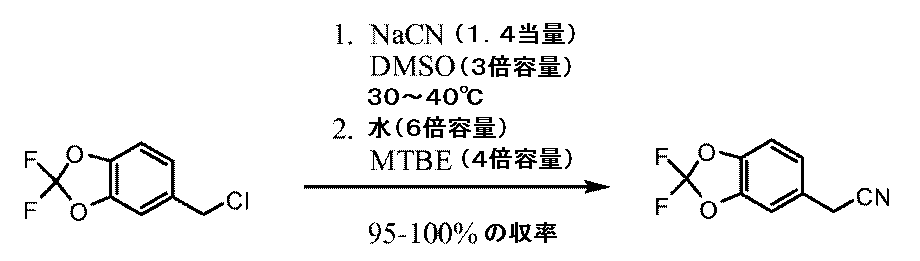
(2,2−ジフルオロ−1,3−ベンゾジオキソール−5−イル)−アセトニトリルの合成 Synthesis of (2,2-difluoro-1,3-benzodioxol-5-yl) -acetonitrile
(2,2−ジフルオロ−1,3−ベンゾジオキソール−5−イル)−シクロプロパンカルボニトリルの合成。 Synthesis of (2,2-difluoro-1,3-benzodioxol-5-yl) -cyclopropanecarbonitrile.
1−(2,2−ジフルオロ−1,3−ベンゾジオキソール−5−イル)−シクロプロパンカルボン酸の合成 Synthesis of 1- (2,2-difluoro-1,3-benzodioxol-5-yl) -cyclopropanecarboxylic acid
1−(2,2−ジフルオロ−1,3−ベンゾジオキソール−5−イル)−シクロプロパンカルボニルクロリドの合成 Synthesis of 1- (2,2-difluoro-1,3-benzodioxol-5-yl) -cyclopropanecarbonyl chloride
(アミン部分)
tert−ブチル−3−(3−メチルピリジン−2−イル)ベンゾエートの合成
(Amine part)
Synthesis of tert-butyl-3- (3-methylpyridin-2-yl) benzoate
2−(3−(tert−ブトキシカルボニル)フェニル)−3−メチルピリジン−1−オキサイドの合成 Synthesis of 2- (3- (tert-butoxycarbonyl) phenyl) -3-methylpyridine-1-oxide
tert−ブチル−3−(6−アミノ−3−メチルピリジン−2−イル)ベンゾエートの合成 Synthesis of tert-butyl-3- (6-amino-3-methylpyridin-2-yl) benzoate
3−(6−(1−(2,2−ジフルオロベンゾ[d][1,3]ジオキソール−5−イル)シクロプロパンカルボキサミド)−3−メチルピリジン−2−イル)−t−ブチルベンゾエートの合成 Synthesis of 3- (6- (1- (2,2-difluorobenzo [d] [1,3] dioxol-5-yl) cyclopropanecarboxamido) -3-methylpyridin-2-yl) -t-butylbenzoate
3−(6−(1−(2,2−ジフルオロベンゾ[d][1,3]ジオキソール−5−イル)シクロプロパンカルボキサミド)−3−メチルピリジン−2−イル)安息香酸・HCL塩の合成 Synthesis of 3- (6- (1- (2,2-difluorobenzo [d] [1,3] dioxol-5-yl) cyclopropanecarboxamido) -3-methylpyridin-2-yl) benzoic acid / HCL salt
3−(6−(1−(2,2−ジフルオロベンゾ[d][1,3]ジオキソール−5−イル)シクロプロパンカルボキサミド)−3−メチルピリジン−2−イル)安息香酸(形態Iの化合物1)の合成. 3- (6- (1- (2,2-difluorobenzo [d] [1,3] dioxol-5-yl) cyclopropanecarboxamido) -3-methylpyridin-2-yl) benzoic acid (compound of form I Synthesis of 1).
水および塩基を使用する3−(6−(1−(2,2−ジフルオロベンゾ[d][1,3]ジオキソール−5−イル)シクロプロパンカルボキサミド)−3−メチルピリジン−2−イル)安息香酸(形態Iの化合物1)の合成
3- (6- (1- (2,2-difluorobenzo [d] [1,3] dioxol-5-yl) cyclopropanecarboxamido) -3-methylpyridin-2-yl) benzoate using water and base Synthesis of acid (
ベンゾエートからの直接の3−(6−(1−(2,2−ジフルオロベンゾ[d][1,3]ジオキソール−5−イル)シクロプロパンカルボキサミド)−3−メチルピリジン−2−イル)安息香酸(形態Iの化合物1)の合成 Direct 3- (6- (1- (2,2-difluorobenzo [d] [1,3] dioxol-5-yl) cyclopropanecarboxamido) -3-methylpyridin-2-yl) benzoic acid from benzoate Synthesis of (Form I Compound 1)
形態Iの化合物1の単結晶構造から計算したX線回折パターンを図1に示す。表1は図1について計算したピークを列挙する。
The X-ray diffraction pattern calculated from the single crystal structure of
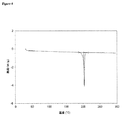
形態Iの化合物1のDSCトレースを図4に示す。形態Iの化合物1の融解は約204℃で起こる。
A DSC trace of
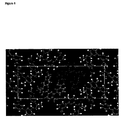
単結晶X線分析に基づく形態Iの化合物1の立体配座の絵を図5〜8に示す。図6〜8は、二量体のカルボン酸基の水素結合と、結晶の中に存在するそれによって生じる積み重なりを示す。この結晶構造は、分子の高密度でのパッキングを明らかにする。形態Iの化合物1は、以下の格子定数を持つ単斜のP21/nである:a=4.9626(7)Å、b=12.299(2)Å、c=33.075(4)Å、β=93.938(9)°、V=2014.0Å3、Z=4。構造データから計算した形態Iの化合物1の密度は、100Kで1.492g/cm3である。
Conformational pictures of
化合物1の1HNMRスペクトルを図9〜11に示す(図9および10は、50mg/mLの、0.5メチルセルロース−ポリソルベート80懸濁液中の形態Iの化合物1を示し、図11は、HCl塩としての化合物1を示す)。
1 H NMR spectra of
以下の表3は、化合物1についてのさらなる分析データを示す。
Table 3 below shows further analytical data for
(化合物のΔF508−CFTR矯正特性(Correction Property)を検出および測定するためのアッセイ)
(化合物のΔF508−CFTR調節特性をアッセイするための膜電位の光学的測定方法)
上記光学的膜電位アッセイでは、GonzalezおよびTsienによって記載された電圧感受性のFRETセンサー(Gonzalez,J.E.and R.Y.Tsien(1995)「Voltage sensing by fluorescence resonance energy transfer in single cells」Biophys J 69(4):1272−80、およびGonzalez,J.E.and R.Y.Tsien(1997)「Improved indicators of cell membrane potential that use fluorescence resonance energy transfer」Chem Biol 4(4):269−77を参照のこと)を、電圧/イオンプローブリーダー(VIPR)のような、蛍光変化を測定するための計測器(Gonzalez,J.E.,K.Oades,ら、(1999)「Cell−based assays and instrumentation for screening ion−channel targets」Drug Discov Today 4(9):431−439を参照のこと)と組み合わせて利用した。
(Assay for detecting and measuring the ΔF508-CFTR Correction Property of a compound)
(Optical measurement method of membrane potential for assaying ΔF508-CFTR modulating properties of compounds)
In the optical membrane potential assay described above, the voltage-sensitive FRET sensor described by Gonzalez and Tsien (Gonzalez, JE and RY Tsien (1995) “Voltage sensing by fluoresceence energy transfer biosynthetic sele- nals”. 69 (4): 1272-80, and Gonzalez, JE and RY Tsien (1997) "Improved indicators of cell membrane potential that use fluorescence transduction 4 (77)". See also voltage / Instruments for measuring fluorescence changes, such as on-probe readers (VIPR) (Gonzalez, JE, K. Odes, et al. (1999) "Cell-based assays and instrumentation for screening-channel targets"" Drug Discovery Today 4 (9): see 431-439).
これらの電圧感受性アッセイは、膜可溶性の電圧感受性色素であるDiSBAC2(3)と蛍光性リン脂質であるCC2−DMPEとの間での蛍光共鳴エネルギー転移(FRET)における変化に基づく。CC2−DMPEは、原形質膜の外側のリーフレットに結合され、そしてFRET供与体として働く。膜電位(Vm)の変化は、負に荷電したDiSBAC2(3)の原形質膜を横切っての再分布を生じさせ、それにしたがってCC2−DMPEからのエネルギー転移の量が変化する。蛍光放射の変化は、VIPR(商標)IIを使用してモニタリングした。VIPR(商標)IIは、96ウェルマイクロタイタープレートまたは384ウェルマイクロタイタープレートの中で細胞をベースとするスクリーニングを行うために設計された、一体型の液体ハンドラー(handler)および蛍光検出器である。 These voltage sensitivity assays are based on changes in fluorescence resonance energy transfer (FRET) between DiSBAC 2 (3), a membrane soluble voltage sensitive dye, and CC2-DMPE, a fluorescent phospholipid. CC2-DMPE is bound to the outer leaflet of the plasma membrane and serves as a FRET donor. Changes in membrane potential (V m ) cause redistribution across the plasma membrane of negatively charged DiSBAC 2 (3), and the amount of energy transfer from CC2-DMPE changes accordingly. Changes in fluorescence emission were monitored using VIPR ™ II. VIPR ™ II is an integrated liquid handler and fluorescence detector designed to perform cell-based screening in 96-well or 384-well microtiter plates.
(1.矯正化合物の同定)
ΔF508−CFTRに関連する輸送の欠陥を矯正する低分子を同定するために、1回添加HTSアッセイ(single addition HTS assay)形式を開発した。細胞を、試験化合物の存在下または非存在下(ネガティブコントロール)で、37℃にて16時間、無血清培地中でインキュベーションした。ポジティブコントロールとして、384ウェルプレートにプレーティングした細胞を、27℃で16時間インキュベーションして「温度−矯正」ΔF508−CFTRとした。続いて、上記細胞を、Krebs Ringers溶液で3回リンスし、そして電圧感受性色素を充填した。ΔF508−CFTRを活性化させるために、10μMのフォルスコリンと、CFTR増強因子であるゲニステイン(20μM)を、Cl−非含有培地とともに各ウェルに添加した。Cl−非含有培地の添加は、ΔF508−CFTRの活性化に応答してCl−流出を促進し、そして生じた膜の脱分極を、FRETをベースとする電圧感知色素(voltage−sensor dye)を使用して光学的にモニタリングした。
(1. Identification of corrective compounds)
To identify small molecules that correct the transport defects associated with ΔF508-CFTR, a single addition HTS assay format was developed. Cells were incubated in serum-free medium at 37 ° C. for 16 hours in the presence or absence of test compound (negative control). As a positive control, cells plated in 384 well plates were incubated at 27 ° C. for 16 hours to give “temperature-correction” ΔF508-CFTR. Subsequently, the cells were rinsed 3 times with Krebs Ringers solution and loaded with voltage sensitive dye. The [Delta] F508-CFTR in order to activate, and forskolin 10 [mu] M, genistein (20 [mu] M) is a CFTR potentiator, Cl - was added along with free medium to each well. Cl - addition of a non-containing medium, to Cl in response to activation of [Delta] F508-CFTR - promotes efflux, and the resulting depolarization of the membrane, voltage sensing dyes based on FRET a (voltage-sensor dye) Used for optical monitoring.
(2.増強因子化合物の同定)
ΔF508−CFTRの増強因子を同定するために、2回添加HTSアッセイ形式を開発した。最初の添加の間に、試験化合物を含むCl−非含有培地または試験化合物を含まないCl−非含有培地を、各ウェルに添加した。22秒後、2〜10μMのフォルスコリンを含むCl−非含有培地の2回目の添加を行って、ΔF508−CFTRを活性化させた。ΔF508−CFTRの活性化に応答してCl−流出を促進した、2回の添加後の細胞外Cl−濃度は、28mMであり、そして生じた膜の脱分極を、FRETをベースとする電圧感知色素を使用して光学的にモニタリングした。
(2. Identification of potentiator compounds)
In order to identify the enhancer of ΔF508-CFTR, a two-addition HTS assay format was developed. During the first addition, Cl containing the test compound - Cl containing no free medium or test compound - non-free medium was added to each well. After 22 seconds,
(3.溶液)
バス溶液番号1:(mM) NaCl 160、KCl 4.5、CaCl2 2、MgCl2 1、HEPES 10、NaOHによってpH7.4。
塩化物非含有バス溶液:バス溶液番号1中の塩化物塩をグルコン酸塩に置き換えた。
CC2−DMPE:DMSO中の10mMのストック溶液として調製し、−20℃で保存した。
DiSBAC2(3):DMSO中の10mMのストックとして調製し、−20℃で保存した。
(3. Solution)
Bath solution number 1: (mM) NaCl 160, KCl 4.5,
Chloride-free bath solution: Chloride salt in
CC2-DMPE: Prepared as a 10 mM stock solution in DMSO and stored at −20 ° C.
DiSBAC 2 (3): Prepared as a 10 mM stock in DMSO and stored at −20 ° C.
(4.細胞培養)
ΔF508−CFTRを安定して発現するNIH3T3マウス線維芽細胞を、膜電位の光学的測定に使用した。この細胞を、175cm2の培養フラスコ中の、2mMのグルタミン、10%のウシ胎仔血清、1×NEAA、β−ME、1×ペニシリン/ストレプトマイシン、および25mMのHEPESを補充したDulbecco’s改変Eagle’s培地中で、5%のCO2および90%の湿度で、37℃で維持した。全ての光学的アッセイについて、これらの細胞を、384ウェルのマトリゲルをコーティングしたプレートの中に30,000個/ウェルで播種し、増強因子アッセイのためには、37℃で2時間培養し、その後、27℃で24時間培養した。矯正アッセイについては、上記細胞を、27℃または37℃で、化合物とともに、および化合物を含めずに、16〜24時間培養した。
(4. Cell culture)
NIH3T3 mouse fibroblasts stably expressing ΔF508-CFTR were used for optical measurement of membrane potential. The cells were transferred to Dulbecco's modified Eagle's supplemented with 2 mM glutamine, 10% fetal bovine serum, 1 × NEAA, β-ME, 1 × penicillin / streptomycin, and 25 mM HEPES in a 175 cm 2 culture flask. s maintained at 37 ° C. in 5% CO 2 and 90% humidity in medium. For all optical assays, these cells were seeded at 30,000 cells / well in a 384-well Matrigel-coated plate, and cultured for 2 hours at 37 ° C. for the enhancement factor assay. And cultured at 27 ° C. for 24 hours. For correction assays, the cells were cultured at 27 ° C. or 37 ° C. with and without compound for 16-24 hours.
(化合物のΔF508−CFTR調節特性をアッセイするための電気生理学的アッセイ
(1.ウッシングチャンバーアッセイ(using chamber assay))
ウッシングチャンバー(using chamber)実験を、光学的アッセイにおいて同定したΔF508−CFTR調節因子をさらに特性決定するために、ΔF508−CFTRを発現する分極した上皮細胞について行った。Costar Snapwell細胞培養挿入物上で増殖させたFRTΔF508−CFTR上皮細胞を、ウッシングチャンバー(Physiologic Instruments,Inc.,San Diego,CA)にマウントし、この単層を、ボルテージクランプシステム(Department of Bioengineering,University of Iowa,IA、および、Physiologic Instruments,Inc.,San Diego,CA)を使用して連続的に短絡化させた。経上皮抵抗(transepithelial resistance)を、2mVのパルスを印加することによって測定した。これらの条件下で、このFRT上皮は、4KΩ/cm2以上の抵抗を示した。この溶液を27℃で維持し、そして空気で泡立てた。電極オフセット電位と流体抵抗を、細胞を含まない挿入物を使用して補正した。これらの条件下では、電流は、その頂端膜の中で発現されたΔF508−CFTRを通過するCl−の流れを反映する。ISCは、MP100A−CEインターフェースおよびAcqKnowledgeソフトウェア(ν3.2.6;BIOPAC Systems,Santa Barbara,CA)を使用してデジタル的に取得した。
Electrophysiological assay for assaying ΔF508-CFTR modulating properties of compounds (1. USING CHAMBER ASSAY)
Using chamber experiments were performed on polarized epithelial cells expressing ΔF508-CFTR to further characterize the ΔF508-CFTR modulator identified in the optical assay. FRT ΔF508-CFTR epithelial cells grown on Costar Snapwell cell culture inserts were mounted in a Wushing chamber (Physiological Instruments, Inc., San Diego, Calif.), And this monolayer was then subjected to a voltage clamp system (Department of Bioenging). , University of Iowa, IA, and Physiological Instruments, Inc., San Diego, Calif.). Transepithelial resistance was measured by applying a 2 mV pulse. Under these conditions, the FRT epithelium exhibited a resistance of 4 KΩ / cm 2 or higher. This solution was maintained at 27 ° C. and bubbled with air. Electrode offset potential and fluid resistance were corrected using cell-free inserts. Under these conditions, the current reflects the flow of Cl − through ΔF508-CFTR expressed in its apical membrane. I SC is, MP100A-CE interface and AcqKnowledge software (ν3.2.6; BIOPAC Systems, Santa Barbara , CA) was digitally acquired using.
(2.矯正化合物の同定)
典型的なプロトコルでは、側底膜から頂端膜にかけてのCl−濃度勾配を利用した。この勾配を設定するために、通常のリンガー液を側底膜上で使用し、一方、頂端膜のNaClを等モルのグルコン酸ナトリウム(NaOHでpH7.4に滴定した)によって置き換えて、この上皮を横切る大きなCl−濃度勾配を得た。全ての実験を、インタクトな単層を用いて行った。ΔF508−CFTRを完全に活性化させるために、フォルスコリン(10μM)と、PDE阻害剤であるIBMX(100μM)を加え、続いて、CFTR増強因子であるゲニステイン(50μM)を添加した。
(2. Identification of corrective compounds)
A typical protocol utilized a Cl − concentration gradient from the basolateral membrane to the apical membrane. To set this gradient, normal Ringer's solution was used on the basolateral membrane, while the apical membrane NaCl was replaced by an equimolar amount of sodium gluconate (titrated to pH 7.4 with NaOH). A large Cl − concentration gradient across was obtained. All experiments were performed using intact monolayers. To fully activate ΔF508-CFTR, forskolin (10 μM) and PDE inhibitor IBMX (100 μM) were added, followed by the CFTR potentiator genistein (50 μM).
他のタイプの細胞において観察されるように、ΔF508−CFTRを安定して発現するFRT細胞の低温でのインキュベーションは、その原形質膜中のCFTRの機能上の密度を増加させる。矯正化合物の活性を決定するために、上記細胞を、10μMのこの試験化合物とともに37℃で24時間インキュベーションし、続いて記録前に3回洗浄した。化合物で処理した細胞におけるcAMP媒介性ISCおよびゲニステイン媒介性ISCを、27℃のコントロールおよび37℃のコントロールに対して標準化し、そして活性の割合(%)として表わした。細胞の矯正化合物との前インキュベーションにより、37℃のコントロールと比較して、cAMP媒介性ISCおよびゲニステイン媒介性ISCが有意に上昇した。 As observed in other types of cells, incubation of FRT cells stably expressing ΔF508-CFTR at low temperature increases the functional density of CFTR in its plasma membrane. In order to determine the activity of the correcting compound, the cells were incubated with 10 μM of this test compound for 24 hours at 37 ° C. and subsequently washed three times before recording. The cAMP-mediated I SC and genistein-mediated I SC in cells treated with compound, normalized to 27 ° C. Control and 37 ° C. controls and expressed as percentage of the activity (%). The previous incubation with correction compounds of cells, as compared to 37 ° C. control, cAMP-mediated I SC and genistein-mediated I SC rises significantly.
(3.増強因子化合物の同定)
典型的なプロトコルでは、側底膜から頂端膜にかけてのCl−濃度勾配を利用した。この勾配を設定するために、通常のリンガー液を側底膜上で使用し、ナイスタチン(360μg/ml)で透過性にし、一方、頂端膜のNaClを、等モルのグルコン酸ナトリウム(NaOHでpH7.4に滴定した)によって置き換えて、この上皮を横切る大きなCl−濃度勾配を得た。全ての実験は、ナイスタチンによる透過化の30分後に行った。フォルスコリン(10μM)および全ての試験化合物を、この細胞培養挿入物の両側に添加した。推定のΔF508−CFTR増強因子の有効性を、公知の増強因子であるゲニステインの有効性と比較した。
(3. Identification of potentiator compounds)
A typical protocol utilized a Cl − concentration gradient from the basolateral membrane to the apical membrane. To set this gradient, normal Ringer's solution was used on the basolateral membrane and permeable with nystatin (360 μg / ml), while the apical membrane NaCl was equimolar with sodium gluconate (
(4.溶液)
側底膜用溶液(mM):NaCl(135)、CaCl2(1.2)、MgCl2(1.2)、K2HPO4(2.4)、KHPO4(0.6)、N−2−ヒドロキシエチルピペラジン−N’−2−エタンスルホン酸(HEPES)(10)、およびデキストロース(10)。この溶液を、NaOHでpH7.4になるように滴定した。
頂端膜用溶液(mM):NaClをグルコン酸Na(135)に置き換えた、側底膜用溶液と同じもの。
(4. Solution)
Basolateral solution (mM): NaCl (135) , CaCl 2 (1.2), MgCl 2 (1.2),
Top membrane solution (mM): Same as the basolateral membrane solution, with NaCl replaced with Na gluconate (135).
(5.細胞培養)
ΔF508−CFTRを発現するFisherラット上皮(FRT)細胞(FRTΔF508−CFTR)を、本発明者らの光学的アッセイにより同定した推定のΔF508−CFTR調節因子についてのウッシングチャンバー実験に使用した。これらの細胞を、Costar Snapwell細胞培養用挿入物上で培養し、5%のウシ胎仔血清、100U/mlのペニシリン、および100μg/mlのストレプトマイシンを補充したCoon’s改変Ham’s F−12培地中で、37℃、そして5%のCO2で、5日間培養した。化合物の増強因子活性を特性決定するための使用の前に、これらの細胞を、ΔF508−CFTRを矯正するためには、27℃にて16〜48時間インキュベーションした。矯正化合物の活性を決定するためには、この細胞を、27℃または37℃で、化合物とともに、および化合物を含めずに、24時間インキュベーションした。
(5. Cell culture)
Fisher rat epithelial (FRT) cells (FRT ΔF508-CFTR ) expressing ΔF508-CFTR were used in a Wushing chamber experiment for the putative ΔF508-CFTR modulator identified by our optical assay. These cells are cultured on Costar Snapwell cell culture inserts and Coon's modified Ham's F-12 medium supplemented with 5% fetal calf serum, 100 U / ml penicillin, and 100 μg / ml streptomycin. Incubated for 5 days at 37 ° C. and 5% CO 2 . Prior to use to characterize the potentiator activity of the compounds, these cells were incubated for 16-48 hours at 27 ° C. to correct ΔF508-CFTR. To determine the activity of the correcting compound, the cells were incubated for 24 hours at 27 ° C. or 37 ° C. with and without compound.
(6.ホールセル記録)
ΔF508−CFTRを安定して発現する温度で矯正されたNIH3T3細胞およびΔF508−CFTRを安定して発現する試験化合物で矯正されたNIH3T3細胞の巨視的なΔF508−CFTR電流(IΔF508)を、穿孔パッチ、ホールセル記録を使用してモニタリングした。簡単に説明すると、IΔF508のボルテージクランプ記録を、Axopatch 200Bパッチクランプ増幅器(Axon Instruments Inc.,Foster City,CA)を使用して室温で行った。全ての記録を、10kHzのサンプリング周波数で、そして1kHzのローパスフィルターで取得した。ピペットは、細胞内溶液で満たした場合には、5〜6MΩの抵抗を有していた。これらの記録条件下では、室温でCl−について計算した逆転電位(ECl)は、−28mVであった。全ての記録は、20GΩより大きいシール抵抗および15MΩより小さい直列抵抗を有していた。パルスの発生、データの取得、および分析は、Clampex 8(Axon Instruments Inc.)とつないだDigidata 1320 A/Dインターフェースを搭載したPCを使用して行った。このバスには、250μl未満の生理食塩水を含め、そしてこれを、重力による灌流システムを使用して、2ml/分の速度で連続的に灌流させた。
(6. Whole cell recording)
The macroscopic ΔF508-CFTR current (I ΔF508 ) of NIH3T3 cells corrected at a temperature that stably expresses ΔF508-CFTR and NIH3T3 cells corrected with a test compound that stably expresses ΔF508-CFTR was obtained as a perforated patch. Monitored using whole cell recording. Briefly, voltage clamp recording of I ΔF508 was performed at room temperature using an Axopatch 200B patch clamp amplifier (Axon Instruments Inc., Foster City, Calif.). All recordings were taken at a sampling frequency of 10 kHz and with a 1 kHz low pass filter. The pipette had a resistance of 5-6 MΩ when filled with intracellular solution. Under these recording conditions, the reversal potential (E Cl ) calculated for Cl − at room temperature was −28 mV. All records had a seal resistance greater than 20 GΩ and a series resistance less than 15 MΩ. Pulse generation, data acquisition, and analysis were performed using a PC equipped with a Digidata 1320 A / D interface connected to Clampex 8 (Axon Instruments Inc.). This bath contained less than 250 μl saline and was continuously perfused at a rate of 2 ml / min using a gravity perfusion system.
(7.矯正化合物の同定)
原形質膜中の機能的ΔF508−CFTRの密度を上昇させるための矯正化合物の活性を決定するために、本発明者らは、上記の穿孔パッチ記録技術を使用して、この矯正化合物で24時間処理した後の電流密度を測定した。ΔF508−CFTRを完全に活性化させるために、10μMのフォルスコリン、および20μMのゲニステインを上記細胞に添加した。本発明者らの記録条件下においては、27℃で24時間インキュベーションした後の電流密度は、37℃で24時間インキュベーションした後に観察された電流密度より高かった。これらの結果は、原形質膜中のΔF508−CFTRの密度に対する低温でのインキュベーションの公知の効果と一致する。CFTR電流密度に対する矯正化合物の効果を決定するために、上記細胞を、10μMのこの試験化合物とともに、37℃で24時間インキュベーションし、この電流密度を、27℃のコントロールおよび37℃のコントロールと比較した(%活性)。記録前に、これらの細胞を、細胞外記録培地で3回洗浄して、残存している試験化合物を全て除去した。10μMの矯正化合物とのプレインキュベーションは、37℃のコントロールと比較して、cAMP依存性の電流およびゲニステイン依存性の電流を、有意に上昇させた。
(7. Identification of corrective compounds)
To determine the activity of the corrective compound to increase the density of functional ΔF508-CFTR in the plasma membrane, we used the perforated patch recording technique described above for 24 hours with this corrective compound. The current density after the treatment was measured. In order to fully activate ΔF508-CFTR, 10 μM forskolin and 20 μM genistein were added to the cells. Under our recording conditions, the current density after 24 hours incubation at 27 ° C. was higher than that observed after 24 hours incubation at 37 ° C. These results are consistent with the known effect of low temperature incubation on the density of ΔF508-CFTR in the plasma membrane. To determine the effect of the correcting compound on the CFTR current density, the cells were incubated with 10 μM of the test compound for 24 hours at 37 ° C., and the current density was compared to the 27 ° C. control and the 37 ° C. control. (% Activity). Prior to recording, these cells were washed three times with extracellular recording medium to remove any remaining test compound. Preincubation with 10 μM corrective compound significantly increased cAMP-dependent and genistein-dependent currents compared to the 37 ° C. control.
(8.増強因子化合物の同定)
ΔF508−CFTRを安定して発現するNIH3T3細胞における巨視的なΔF508−CFTRによるCl−電流(IΔF508)を上昇させるΔF508−CFTR増強因子の能力もまた、穿孔パッチ記録技術を使用して調査した。上記光学的アッセイにより同定した増強因子は、その光学的アッセイにおいて観察されたものと同様の効力および有効性で、IΔF508の用量依存的上昇を引き起こした。試験した全ての細胞において、増強因子の添加前および添加の際の逆転電位は、およそ−30mVであり、これは、計算したECl(−28mV)である。
(8. Identification of potentiator compounds)
The ability of the ΔF508-CFTR enhancer to increase Cl - current (I ΔF508 ) by macroscopic ΔF508-CFTR in NIH3T3 cells stably expressing ΔF508-CFTR was also investigated using perforated patch recording techniques. The enhancement factor identified by the optical assay caused a dose-dependent increase in I ΔF508 with potency and efficacy similar to that observed in the optical assay. In all cells tested, the reversal potential before and upon addition of the enhancement factor is approximately −30 mV, which is the calculated E Cl (−28 mV).
(9.溶液)
細胞内溶液(mM):アスパラギン酸Cs(90)、CsCl(50)、MgCl2(1)、HEPES(10)、および240μg/mlのアンホテリシン−B(CsOHでpHを7.35に調整した)。
細胞外溶液(mM):N−メチル−D−グルカミン(NMDG)−Cl(150)、MgCl2(2)、CaCl2(2)、HEPES(10)(HClでpHを7.35に調整した)。
(9. Solution)
Intracellular solution (mM): aspartate Cs (90), CsCl (50), MgCl 2 (1), HEPES (10), and 240 μg / ml amphotericin-B (pH adjusted to 7.35 with CsOH) .
Extracellular solution (mM): N-methyl-D-glucamine (NMDG) -Cl (150), MgCl 2 (2), CaCl 2 (2), HEPES (10) (pH adjusted to 7.35 with HCl. ).
(10.細胞培養)
ΔF508−CFTRを安定して発現するNIH3T3マウス線維芽細胞をホールセル記録に使用する。これらの細胞を、175cm2の培養フラスコ中の、2mMのグルタミン、10%のウシ胎仔血清、1×NEAA、β−ME、1×ペニシリン/ストレプトマイシン、および25mMのHEPESを補充したDulbecco’s改変Eagle’s培地中で、5%のCO2および90%の湿度で、37℃で維持した。ホールセル記録については、2,500〜5,000個の細胞を、ポリ−L−リジンをコーティングしたガラスカバースリップ上に播種し、増強因子の活性を試験するための使用の前に、27℃で24〜48時間培養し、そして矯正化合物の活性を測定するために、37℃で、矯正化合物とともに、または矯正化合物を含めずにインキュベーションした。
(10. Cell culture)
NIH3T3 mouse fibroblasts stably expressing ΔF508-CFTR are used for whole cell recording. These cells were transferred to Dulbecco's modified Eagle supplemented with 2 mM glutamine, 10% fetal calf serum, 1 × NEAA, β-ME, 1 × penicillin / streptomycin, and 25 mM HEPES in a 175 cm 2 culture flask. 's medium was maintained at 37 ° C. with 5% CO 2 and 90% humidity. For whole cell recording, 2,500-5,000 cells are seeded onto glass cover slips coated with poly-L-lysine and 27 ° C. before use to test the activity of the potentiator. And incubated at 37 ° C. with or without the corrective compound to determine the activity of the corrective compound.
(11.単一チャネル(single−channel)記録)
NIH3T3細胞中で安定して発現された温度矯正ΔF508−CFTRの単一チャネル活性および増強因子化合物の活性を、切除したインサイドアウト膜パッチ(inside−out membrane patch)を使用して観察した。簡単に説明すると、単一チャネル活動のボルテージクランプ記録を、Axopatch 200Bパッチクランプ増幅器(Axon Instruments Inc.)を用いて室温で行った。全ての記録を、10kHzのサンプリング周波数で、そして400Hzのローパスフィルターで取得した。パッチピペットは、Corning Kovar Sealing番号7052ガラス(World Precision Instruments,Inc.,Sarasota,FL)により作製されたものであり、そしてこのピペットは、細胞外溶液で満たした場合には、5〜8MΩの抵抗を有していた。このΔF508−CFTRを、切除後に、1mMのMg−ATP、および75nMのcAMP依存性プロテインキナーゼ、触媒サブユニット(PKA;Promega Corp.Madison,WI)を添加することによって活性化させた。チャネル活性が安定化した後、このパッチを、重力によるマイクロ灌流システムを使用して灌流させた。この流入をこのパッチに隣接させて配置し、それにより、1〜2秒以内に溶液を完全に交換した。速い灌流の間のΔF508−CFTR活性を維持するために、非特異的ホスファターゼ阻害剤F−(10mMのNaF)をバス溶液に添加した。これらの記録条件下では、チャネル活性は、パッチ記録の間を通じて(60分まで)一定に維持された。その細胞内溶液から細胞外溶液に移動する正電荷(陰イオンは反対の方向に移動する)によって発生した電流を正電流として示す。ピペット電位(Vp)は80mVに維持した。
(11. Single-channel recording)
Single channel activity of the temperature-corrected ΔF508-CFTR stably expressed in NIH3T3 cells and the activity of the enhancer compound were observed using a resected inside-out membrane patch. Briefly, voltage clamp recording of single channel activity was performed at room temperature using an Axopatch 200B patch clamp amplifier (Axon Instruments Inc.). All recordings were taken with a sampling frequency of 10 kHz and with a 400 Hz low pass filter. The patch pipette was made with Corning Kovar Sealing No. 7052 glass (World Precision Instruments, Inc., Sarasota, FL), and the pipette had a resistance of 5-8 MΩ when filled with extracellular solution. Had. The ΔF508-CFTR was activated after excision by adding 1 mM Mg-ATP and 75 nM cAMP-dependent protein kinase, catalytic subunit (PKA; Promega Corp. Madison, WI). After channel activity stabilized, the patch was perfused using a gravity microperfusion system. The inflow was placed adjacent to the patch, so that the solution was completely changed within 1-2 seconds. In order to maintain ΔF508-CFTR activity during fast perfusion, the non-specific phosphatase inhibitor F − (10 mM NaF) was added to the bath solution. Under these recording conditions, channel activity remained constant throughout patch recording (up to 60 minutes). The current generated by the positive charge (anion moves in the opposite direction) moving from the intracellular solution to the extracellular solution is shown as a positive current. Pipette potential (V p ) was maintained at 80 mV.
チャネル活性を、2以下の活性チャネルを含む膜パッチから分析した。同時に開口する最大数から、実験過程の間の活性チャネルの数を決定した。単一チャネルの電流振幅を決定するために、120秒間のΔF508−CFTR活動から記録したデータを、100Hzにて「オフライン」でフィルターし、次いでBio−Patch Analysisソフトウェア(Bio−Logic Comp.France)を使用して多重ガウス関数(multigaussian function)に適合した全点振幅ヒストグラムを構築するために使用した。微小電流の合計および開口確率(PO)を、120秒間のチャネル活動から決定した。このPOを、Bio−Patchソフトウェアを使用して、またはPO=I/i(N)の関係から決定した(ここでは、I=平均電流、i=単一チャネル電流振幅、そしてN=パッチ中の活性チャネルの数)。 Channel activity was analyzed from membrane patches containing 2 or fewer active channels. From the maximum number opening simultaneously, the number of active channels during the course of the experiment was determined. To determine the current amplitude of a single channel, data recorded from 120 seconds of ΔF508-CFTR activity was filtered “offline” at 100 Hz, then Bio-Patch Analysis software (Bio-Logic Comp. France) Used to construct a full-point amplitude histogram that fits a multi-Gaussian function. The sum of the minute currents and the opening probability (P O ) were determined from the channel activity for 120 seconds. The P O, was determined using the Bio-Patch software or P O = determined from the relationship I / i (N) (where, I = mean current, i = single-channel current amplitude, and N = patches, Number of active channels in).
(12.溶液)
細胞外溶液(mM):NMDG(150)、アスパラギン酸(150)、CaCl2(5)、MgCl2(2)、およびHEPES(10)(Tris塩基でpHを7.35に調整した)。
細胞内溶液(mM):NMDG−Cl(150)、MgCl2(2)、EGTA(5)、TES(10)、およびTris塩基(14)(HClでpHを7.35に調整した)。
(12. Solution)
Extracellular solution (mM): NMDG (150), aspartic acid (150), CaCl 2 (5), MgCl 2 (2), and HEPES (10) (pH adjusted to 7.35 with Tris base).
Intracellular solution (mM): NMDG-Cl ( 150), MgCl 2 (2), EGTA (5), ( pH was adjusted with HCl to 7.35) TES (10), and Tris base (14).
(13.細胞培養)
ΔF508−CFTRを安定して発現するNIH3T3マウス線維芽細胞を、切除した膜パッチクランプ記録に使用した。これらの細胞を、175cm2の培養フラスコ中の、2mMのグルタミン、10%のウシ胎仔血清、1×NEAA、β−ME、1×ペニシリン/ストレプトマイシン、および25mMのHEPESを補充したDulbecco’s改変Eagle’s培地中で、5%のCO2および90%の湿度で、37℃で維持した。単一チャネル記録のために、2,500〜5,000個の細胞を、ポリ−L−リジンをコーティングしたガラスカバースリップ上に播種し、そして使用前に27℃で24〜48時間培養した。
(13. Cell culture)
NIH3T3 mouse fibroblasts stably expressing ΔF508-CFTR were used for excised membrane patch clamp recordings. These cells were transferred to Dulbecco's modified Eagle supplemented with 2 mM glutamine, 10% fetal calf serum, 1 × NEAA, β-ME, 1 × penicillin / streptomycin, and 25 mM HEPES in a 175 cm 2 culture flask. 's medium was maintained at 37 ° C. with 5% CO 2 and 90% humidity. For single channel recording, 2,500 to 5,000 cells were seeded onto glass coverslips coated with poly-L-lysine and cultured at 27 ° C. for 24-48 hours prior to use.
上記手順を使用して試験して、化合物1の活性、すなわち、EC50を測定した。これを表4に示す。
Tested using the above procedure, the activity of
化合物1を含有するカプセル剤を、表5に列挙する成分および量で調製した。
(機器)
・30メッシュのハンドスクリーン(hand screen)
・4クォートシェル(quart shell)を持つV型ブレンダー(V−blender)
・ブレンドのサンプリングのための機器
・In−Capカプセル充填機
・Capsugelサイズ1白色不透明ゼラチンConi−Snapカプセル(Capsugel size 1 white opaque gelatin Coni−Snap capsules)
・製造工程内試験機器(In process testing equipment)(平衡および重量を選別する機器)
・75ccのHDPEボトルおよび蓋
(スクリーニング/秤量)
化合物1は、バッチ秤量前にスクリーニングする。およそ5%の余剰材料(excess material)を秤量し、この材料の塊をバラバラにする(delump)ために、これらの材料を30メッシュのハンドスクリーン(had screen)を通過させる。材料をスクリーニングした後、混合のために必要な量にしたがって再度秤量する。
(machine)
・ 30 mesh hand screen
・ V-blender with 4 quart shell
-Equipment for sampling of blends-In-Cap capsule filling machine-
・ In-process testing equipment (equipment for sorting equilibrium and weight)
75cc HDPE bottle and lid (screening / weighing)
バッチ秤量前のスクリーニングは、他のいずれの原材料についても必要はないが、全ての材料を、ブレンドの前に30メッシュのハンドスクリーンに通過させなければならない。 Screening before batch weighing is not necessary for any other raw material, but all materials must be passed through a 30 mesh hand screen prior to blending.
(ブレンド)
ブレンド(潤滑化前(Pre−Lubrication)1):
4クォートV型ブレンダーシェルには、以下の順序で充填する:
1)全量の1/2のラクトース(Fast−Flo 316)
2)ジェットミルした(Jet Milled)化合物1
3)コロイド状二酸化ケイ素
4)ラウリル硫酸ナトリウム
これらの材料を、設定した速度で5分間ブレンドする。
(blend)
Blend (Pre-Lubrication 1):
The 4-quart V-type blender shell is filled in the following order:
1) 1/2 of the total amount of lactose (Fast-Flo 316)
2) Jet Milled
3) Colloidal silicon dioxide 4) Sodium lauryl sulfate These materials are blended for 5 minutes at the set speed.
ブレンド(潤滑化前2):
以下の賦形剤を、この順序でV型ブレンダーに添加する:
1)全量の1/2のラクトース(Fast−Flo 316)
2)カルボキシメチルスターチナトリウム(Explotab)
3)微結晶セルロース(Avicel PH−101)
これらの材料を、設定した速度で20分間混合する。
Blend (2 before lubrication):
The following excipients are added to the V blender in this order:
1) 1/2 of the total amount of lactose (Fast-Flo 316)
2) Sodium carboxymethyl starch (Explotab)
3) Microcrystalline cellulose (Avicel PH-101)
These materials are mixed for 20 minutes at the set speed.
ブレンド(潤滑化後):
潤滑化前のブレンドが完了した後、ステアリン酸マグネシウムを30メッシュのハンドスクリーンを使用して塊をバラバラにし、V型ブレンダーに添加し、他の原材料とともに設定した速度で5分間混合する。
Blend (after lubrication):
After the pre-lubricating blend is complete, the magnesium stearate is broken up using a 30 mesh hand screen, added to the V-blender and mixed with the other ingredients for 5 minutes at the set speed.
(カプセル剤の充填)
最終的な混合が完了したら、ブレンドをIn−Capカプセル充填機に移す。使用するゼラチンカプセルは、Capsugelサイズ1白色不透明Coni−Snapカプセルである。
(Filling capsule)
When final mixing is complete, the blend is transferred to an In-Cap capsule filling machine. The gelatin capsule used is a
これらのカプセルは、カプセル殻の重量を決定する前に1〜3時間、カプセル化の一式(encapsulation suite)の中で平衡化させなければならない。カプセル殻の重量は、10個のカプセル殻のうちの3個のサンプルの平均値をとることによって決定する。サンプルは、バルク容器の異なる領域から採る。目的の充填量は210mgであり、したがって、製造工程中の目的の重量は、210mg+平均のカプセルの重量である。許容される重量の範囲は、±5%である(カプセル殻の重量を76mgと仮定すると272〜300mg。実際の殻の重量はカプセル化前に決定する)。 These capsules must be equilibrated in the encapsulation suite for 1-3 hours before determining the capsule shell weight. The weight of the capsule shell is determined by taking the average value of 3 samples out of 10 capsule shells. Samples are taken from different areas of the bulk container. The target fill is 210 mg, so the target weight during the manufacturing process is 210 mg + average capsule weight. The acceptable weight range is ± 5% (272-300 mg assuming a capsule shell weight of 76 mg. The actual shell weight is determined before encapsulation).
目的の重量に達したら、カプセルを回収し、平均重量を決定する(プラセボについては10個のカプセル、有効成分を含むバッチについては5個のカプセル)。少なくとも5個のカプセルについての個々の重量もまた、カプセルごとのばらつきを評価するために決定するべきである。重量を、10個(プラセボ)または5個(有効成分)のカプセルの平均重量を決定することによって、15分ごとにチェックする。5個のカプセルについての個々の重量もまた記録するべきである。平均重量が範囲内にない場合には、上記重量の設定手順を繰り返し行う。 When the desired weight is reached, the capsules are collected and the average weight is determined (10 capsules for placebo, 5 capsules for the batch containing the active ingredient). Individual weights for at least 5 capsules should also be determined to assess variability from capsule to capsule. The weight is checked every 15 minutes by determining the average weight of 10 (placebo) or 5 (active ingredient) capsules. The individual weights for the 5 capsules should also be recorded. If the average weight is not within the range, the above weight setting procedure is repeated.
使用に適したカプセル剤を、目的の±5%の重量の範囲を使用して重量選別する。 Capsules suitable for use are weight screened using the desired ± 5% weight range.
Claims (77)
a=4.9626(7)Å α=90°
b=12.2994(18)Å β=93.938(9)°
c=33.075(4)Å γ=90°。 3- (6- (1- (2,2-difluorobenzo [d] [1,3] dioxol-5-yl) cyclopropanecarboxamido) -3-methylpyridin-2-yl) benzoic acid is monoclinic. 20. Dosage unit according to any one of claims 4 to 19, having a system, a P2 1 / n space group, and the following lattice constant:
a = 4.9626 (7) Å α = 90 °
b = 12.2994 (18) Åβ = 93.938 (9) °
c = 33.075 (4) Åγ = 90 °.
Applications Claiming Priority (5)
| Application Number | Priority Date | Filing Date | Title |
|---|---|---|---|
| US10078708P | 2008-09-29 | 2008-09-29 | |
| US61/100,787 | 2008-09-29 | ||
| US16362909P | 2009-03-26 | 2009-03-26 | |
| US61/163,629 | 2009-03-26 | ||
| PCT/US2009/058677 WO2010037066A2 (en) | 2008-09-29 | 2009-09-29 | Dosage units of 3-(6-(1-(2,2-difluorobenzo [d] [1,3] dioxol-5-yl) cyclopropanecarboxamido)-3-methylpyridin-2-yl)benzoic acid |
Publications (1)
| Publication Number | Publication Date |
|---|---|
| JP2012504143A true JP2012504143A (en) | 2012-02-16 |
Family
ID=41804313
Family Applications (1)
| Application Number | Title | Priority Date | Filing Date |
|---|---|---|---|
| JP2011529338A Withdrawn JP2012504143A (en) | 2008-09-29 | 2009-09-29 | 3- (6- (1- (2,2-difluorobenzo [d] [1,3] dioxol-5-yl) cyclopropanecarboxamido) -3-methylpyridin-2-yl) benzoic acid dosage unit |
Country Status (14)
| Country | Link |
|---|---|
| US (3) | US8716338B2 (en) |
| EP (1) | EP2349223A2 (en) |
| JP (1) | JP2012504143A (en) |
| KR (1) | KR20110063578A (en) |
| CN (1) | CN102164587A (en) |
| AR (1) | AR073709A1 (en) |
| AU (1) | AU2009296271A1 (en) |
| BR (1) | BRPI0919550A2 (en) |
| CA (1) | CA2736545A1 (en) |
| CL (1) | CL2011000642A1 (en) |
| IL (1) | IL212025A0 (en) |
| MX (1) | MX2011003249A (en) |
| RU (1) | RU2011117177A (en) |
| WO (1) | WO2010037066A2 (en) |
Cited By (1)
| Publication number | Priority date | Publication date | Assignee | Title |
|---|---|---|---|---|
| JP2018522918A (en) * | 2015-08-11 | 2018-08-16 | クリスタル ファーマテック カンパニー、リミテッドCrystal Pharmatech Co., Ltd. | A novel crystalline form of 3- (6- (1- (2,2-difluorobenzo [d] [1,3] dioxol-5-yl) cyclopropanecarboxamido) -3-methylpyridin-2-yl) benzoic acid and The manufacturing method |
Families Citing this family (100)
| Publication number | Priority date | Publication date | Assignee | Title |
|---|---|---|---|---|
| RU2006111093A (en) | 2003-09-06 | 2007-10-27 | Вертекс Фармасьютикалз Инкорпорейтед (Us) | MODULATORS OF ATR-BINDING CASSETTE TRANSPORTERS |
| CN101675928A (en) * | 2003-11-14 | 2010-03-24 | 沃泰克斯药物股份有限公司 | Thiazoles and oxazoles useful as modulators of ATP-binding cassette transporters |
| US7977322B2 (en) | 2004-08-20 | 2011-07-12 | Vertex Pharmaceuticals Incorporated | Modulators of ATP-binding cassette transporters |
| RS56037B1 (en) | 2004-06-24 | 2017-09-29 | Vertex Pharma | ATP-BINDING CASSETTE TRANSPORT MODULATORS |
| US7999113B2 (en) | 2005-08-11 | 2011-08-16 | Vertex Pharmaceuticals Incorporated | Modulators of cystic fibrosis transmembrane conductance regulator |
| CN102775396B (en) | 2005-11-08 | 2014-10-08 | 沃泰克斯药物股份有限公司 | Modulators of ATP-binding cassette transporters |
| US7671221B2 (en) * | 2005-12-28 | 2010-03-02 | Vertex Pharmaceuticals Incorporated | Modulators of ATP-Binding Cassette transporters |
| CA2856037C (en) | 2005-12-28 | 2017-03-07 | Vertex Pharmaceuticals Incorporated | Modulators of atp-binding cassette transporters |
| EP3219705B1 (en) | 2005-12-28 | 2020-03-11 | Vertex Pharmaceuticals Incorporated | Pharmaceutical compositions of the amorphous form of n-[2,4-bis(1,1-dimethylethyl)-5-hydroxyphenyl]-1,4-dihydro-4-oxoquinoline-3-carboxamide |
| US7645789B2 (en) | 2006-04-07 | 2010-01-12 | Vertex Pharmaceuticals Incorporated | Indole derivatives as CFTR modulators |
| US10022352B2 (en) | 2006-04-07 | 2018-07-17 | Vertex Pharmaceuticals Incorporated | Modulators of ATP-binding cassette transporters |
| EP2674428B1 (en) | 2006-04-07 | 2016-04-06 | Vertex Pharmaceuticals Incorporated | Modulators of ATP-binding cassette transporters |
| USRE50453E1 (en) | 2006-04-07 | 2025-06-10 | Vertex Pharmaceuticals Incorporated | Indole derivatives as CFTR modulators |
| US8563573B2 (en) | 2007-11-02 | 2013-10-22 | Vertex Pharmaceuticals Incorporated | Azaindole derivatives as CFTR modulators |
| CN104447716A (en) | 2007-05-09 | 2015-03-25 | 沃泰克斯药物股份有限公司 | Modulators of CFTR |
| AU2008256937A1 (en) * | 2007-05-25 | 2008-12-04 | Vertex Pharmaceuticals Incorporated | Ion channel modulators and methods of use |
| JP5389030B2 (en) | 2007-08-24 | 2014-01-15 | バーテックス ファーマシューティカルズ インコーポレイテッド | Isothiazolopyridinone useful for the treatment of (especially) cystic fibrosis |
| SI2578571T1 (en) | 2007-11-16 | 2016-01-29 | Vertex Pharmaceuticals Incorporated | Isoquinoline modulators of ATP-binding cassette transporters |
| US20100036130A1 (en) | 2007-12-07 | 2010-02-11 | Vertex Pharmaceuticals Incorporated | Processes for producing cycloalkylcarboxamido-pyridine benzoic acids |
| MX365732B (en) * | 2007-12-07 | 2019-06-12 | Vertex Pharma | PROCESSES TO PRODUCE CYCLOALKYLCARBOXAMIDE-PYRIDIN BENZOIC ACIDS. |
| EP3683218B1 (en) | 2007-12-07 | 2024-09-18 | Vertex Pharmaceuticals Incorporated | Solid forms of 3-(6-(1-(2,2-difluorobenzo[d][1,3]dioxol-5-yl) cyclopropanecarboxamido)-3-methylpyridin-2-yl) benzoic acid |
| CN101998854A (en) * | 2007-12-07 | 2011-03-30 | 沃泰克斯药物股份有限公司 | 3-(6-(1-(2,2-Difluorobenzo[d][1,3]dioxol-5-yl)cyclopropanecarboxamido)-3-methylpyridine- 2-yl) Benzoic acid preparation |
| NZ720282A (en) | 2008-02-28 | 2017-12-22 | Vertex Pharma | Heteroaryl derivatives as cftr modulators |
| NZ616097A (en) | 2008-03-31 | 2015-04-24 | Vertex Pharma | Pyridyl derivatives as cftr modulators |
| AU2009262670B2 (en) | 2008-06-26 | 2013-06-20 | Zevra Denmark A/S | Use of Hsp70 as a regulator of enzymatic activity |
| US12458635B2 (en) | 2008-08-13 | 2025-11-04 | Vertex Pharmaceuticals Incorporated | Pharmaceutical composition and administrations thereof |
| US20100074949A1 (en) | 2008-08-13 | 2010-03-25 | William Rowe | Pharmaceutical composition and administration thereof |
| AR073709A1 (en) | 2008-09-29 | 2010-11-24 | Vertex Pharma | ACID DOSE UNITS 3- (6- (1- (2,2-DIFLUOROBENZENE (D) (1,3) DIOXOL-5-IL) CYCLOPROPANCARBOXAMIDE) -3-METHYLPIRIDIN-2-IL) BENZOIC |
| EP2349263B1 (en) * | 2008-10-23 | 2014-04-23 | Vertex Pharmaceuticals Inc. | Modulators of cystic fibrosis transmembrane conductance regulator |
| PL2408750T3 (en) | 2009-03-20 | 2016-02-29 | Vertex Pharma | Process for making modulators of cystic fibrosis transmembrane conductance regulator |
| US8802868B2 (en) | 2010-03-25 | 2014-08-12 | Vertex Pharmaceuticals Incorporated | Solid forms of (R)-1(2,2-difluorobenzo[D][1,3]dioxo1-5-yl)-N-(1-(2,3-dihydroxypropyl-6-fluoro-2-(1-hydroxy-2-methylpropan2-yl)-1H-Indol-5-yl)-Cyclopropanecarboxamide |
| MX2012011655A (en) * | 2010-04-07 | 2012-11-23 | Vertex Pharma | Solid forms of 3-(6-(1-(2,2-difluorobenzo[d][1,3]dioxol-5-yl) cyclopropanecarboxamido)-3-methylpyridin-2-yl)benzoic acid. |
| JP2013523833A (en) * | 2010-04-07 | 2013-06-17 | バーテックス ファーマシューティカルズ インコーポレイテッド | 3- (6- (1- (2,2-difluorobenzo [D] [1,3] dioxol-5-yl) cyclopropanecarboxamido) -3-methylpyridin-2-yl) benzoic acid pharmaceutical composition and Its administration |
| AU2015221470B2 (en) * | 2010-04-07 | 2016-06-09 | Vertex Pharmaceuticals Incorporated | Solid forms of 3-(6-(1-(2,2-difluorobenzo[d][1,3]dioxol-5-yl) cyclopropanecarboxamido)-3-methylpyridin-2-yl)benzoic acid |
| MX353408B (en) | 2010-04-22 | 2018-01-11 | Vertex Pharma | Process of producing cycloalkylcarboxamido-indole compounds. |
| EP2560649A1 (en) | 2010-04-22 | 2013-02-27 | Vertex Pharmaceuticals Incorporated | Pharmaceutical compositions and administrations thereof |
| EP2560651A1 (en) | 2010-04-22 | 2013-02-27 | Vertex Pharmaceuticals Incorporated | Pharmaceutical compositions and administrations thereof |
| CA2796602A1 (en) | 2010-04-22 | 2011-10-27 | Vertex Pharmaceuticals Incorporated | Pharmaceutical compositions and administrations thereof |
| US8563593B2 (en) | 2010-06-08 | 2013-10-22 | Vertex Pharmaceuticals Incorporated | Formulations of (R)-1-(2,2-difluorobenzo[D] [1,3] dioxol-5-yl)-N-(1-(2,3-dihydroxypropyl)-6-fluoro-2-(1-hydroxy-2-methylpropan-2-yl)-1H-indol-5-yl)cyclopropanecarboxamide |
| WO2012027247A2 (en) * | 2010-08-23 | 2012-03-01 | Vertex Pharmaceuticals Incorporated | Pharmaceutical composition of (r)-1-(2,2-difluorobenzo[d][1,3]dioxol-5-yl)-n-(1-(2,3-dihydroxy propyl)-6-fluoro-2-(1-hydroxy-2-methylpropan-2-yl)-1h-indol-5-yl) cyclopropanecarboxamide and administration therof |
| CA2817773A1 (en) | 2010-11-30 | 2012-06-07 | Orphazyme Aps | Methods for increasing intracellular activity of hsp70 |
| TWI636051B (en) * | 2011-04-07 | 2018-09-21 | 維泰克斯製藥公司 | Pharmaceutical compositions of 3-(6-(1-(2,2-difluorobenzo[d][1,3]dioxol-5-yl)cyclopropanecarboxamido)-3-methylpyridin-2-yl)benzoic acid and administration thereof |
| WO2013070961A1 (en) | 2011-11-08 | 2013-05-16 | Vertex Pharmaceuticals Incorporated | Modulators of atp-binding cassette transporters |
| NZ727015A (en) * | 2012-01-25 | 2017-12-22 | Vertex Pharma | Formulations of 3-(6-(1-(2,2-difluorobenzo[d][1,3]dioxol-5-yl) cyclopropanecarboxamido)-3-methylpyridin-2-yl)benzoic acid |
| JP2015511583A (en) | 2012-02-27 | 2015-04-20 | バーテックス ファーマシューティカルズ インコーポレイテッドVertex Pharmaceuticals Incorporated | Pharmaceutical composition and its administration |
| US8674108B2 (en) | 2012-04-20 | 2014-03-18 | Vertex Pharmaceuticals Incorporated | Solid forms of N-[2,4-bis(1,1-dimethylethy)-5-hydroxyphenyl]-1,4-dihydro-4-oxoquinoline-3-carboxamide |
| AR092857A1 (en) | 2012-07-16 | 2015-05-06 | Vertex Pharma | PHARMACEUTICAL COMPOSITIONS OF (R) -1- (2,2-DIFLUOROBENZO [D] [1,3] DIOXOL-5-IL) -N- (1- (2,3-DIHYDROXIPROPIL) -6-FLUORO-2- ( 1-HYDROXI-2-METHYLPROPAN-2-IL) -1H-INDOL-5-IL) CYCLOPROPANCARBOXAMIDE AND ADMINISTRATION OF THE SAME |
| EP2914248B2 (en) * | 2012-11-02 | 2023-10-18 | Vertex Pharmaceuticals Incorporated | Pharmaceutical compositions for the treatment of cftr mediated diseases |
| MX365950B (en) | 2013-03-13 | 2019-06-19 | Flatley Discovery Lab Llc | Pyridazinone compounds and methods for the treatment of cystic fibrosis. |
| AU2014349010C1 (en) | 2013-11-12 | 2020-08-06 | Vertex Pharmaceuticals Incorporated | Process of preparing pharmaceutical compositions for the treatment of CFTR mediated diseases |
| RU2744460C2 (en) | 2014-04-15 | 2021-03-09 | Вертекс Фармасьютикалз Инкорпорейтед | Pharmaceutical compositions for treating diseases mediated by cystic fibrosis transmembrane conductance regulator |
| GB201415381D0 (en) | 2014-08-29 | 2014-10-15 | Algipharma As | Inhalable powder formulations of alginate oligomers |
| AU2015317447B2 (en) | 2014-09-15 | 2021-02-25 | Zevra Denmark A/S | Arimoclomol formulation |
| CN107250113B (en) | 2014-10-07 | 2019-03-29 | 弗特克斯药品有限公司 | Co-crystals of modulators of cystic fibrosis transmembrane conductance regulator proteins |
| RU2691136C2 (en) | 2014-11-18 | 2019-06-11 | Вертекс Фармасьютикалз Инкорпорейтед | High-performance test high-performance liquid chromatography method |
| GB201504878D0 (en) | 2015-03-23 | 2015-05-06 | Algipharma As | Use of alginate oligomers and CFTR modulators in the treatment of conditions associated with CFTR dysfuntion |
| CN105153105B (en) * | 2015-08-15 | 2018-01-19 | 浙江永宁药业股份有限公司 | The synthetic method and its intermediate of 1 (base of 2,2 difluoro benzo [d] [1,3] dioxole 5) cyclopropane-carboxylic acid |
| CN105130949B (en) * | 2015-09-02 | 2019-01-29 | 阜新奥瑞凯新材料有限公司 | The preparation method of 1- (2,2- difluoro benzo [D] [1,3] dioxole -5- base) cyclopropanecarbonitrile |
| GB201517639D0 (en) | 2015-10-06 | 2015-11-18 | Algipharma As | Use of alginate oligomers to treat or prevent microbial overgrowth in the intestinal tract |
| US10898476B2 (en) | 2016-04-13 | 2021-01-26 | Orphazyme A/S | Heat shock proteins and cholesterol homeostasis |
| HUP1600271A2 (en) | 2016-04-25 | 2017-10-30 | Druggability Tech Ip Holdco Ltd | Pharmaceutical composition comprising complex formulations of ivacaftor and lumacaftor and their salts and derivatives, process for their preparation thereof and pharmaceutical compositions containing them |
| US10376501B2 (en) | 2016-04-25 | 2019-08-13 | Druggability Technologies Ip Holdco Limited | Complexes of lumacaftor and its salts and derivatives, process for the preparation thereof and pharmaceutical compositions containing them |
| US10206915B2 (en) | 2016-04-25 | 2019-02-19 | Druggability Technologies Ip Holdco Limited | Complexes of Ivacaftor and its salts and derivatives, process for the preparation thereof and pharmaceutical compositions containing them |
| HUP1600269A2 (en) | 2016-04-25 | 2017-10-30 | Druggability Tech Ip Holdco Ltd | Complexes of lumacaftor and its salts and derivatives, process for the preparation thereof and pharmaceutical compositions containing them |
| US10383865B2 (en) | 2016-04-25 | 2019-08-20 | Druggability Technologies Ip Holdco Limited | Pharmaceutical combination composition comprising complex formulations of Ivacaftor and Lumacaftor and their salts and derivatives, process for their preparation thereof and pharmaceutical compositions containing them |
| DK3782624T3 (en) | 2016-04-29 | 2025-12-15 | Zevra Denmark As | Arimoclomol for the treatment of glucocerebrosidase-associated disorders |
| MD3551622T2 (en) | 2016-12-09 | 2021-03-31 | Vertex Pharma | Modulator of cystic fibrosis transmembrane conductance regulator, pharmaceutical compositions, methods of treatment, and process for making the modulator |
| US11253509B2 (en) | 2017-06-08 | 2022-02-22 | Vertex Pharmaceuticals Incorporated | Methods of treatment for cystic fibrosis |
| MA49631A (en) | 2017-07-17 | 2020-05-27 | Vertex Pharma | CYSTIC FIBROSIS TREATMENT METHODS |
| JP7214743B2 (en) | 2018-02-15 | 2023-01-30 | バーテックス ファーマシューティカルズ インコーポレイテッド | Macrocycles as modulators of cystic fibrosis transmembrane conductance regulators, pharmaceutical compositions thereof, their use in the treatment of cystic fibrosis, and methods for their preparation |
| WO2019195739A1 (en) | 2018-04-05 | 2019-10-10 | Alexander Russell Abela | Modulators of cystic fibrosis transmembrane conductance regulator |
| EP3774825A1 (en) | 2018-04-13 | 2021-02-17 | Vertex Pharmaceuticals Incorporated | Modulators of cystic fibrosis transmembrane conductance regulator, pharmaceutical compositions, methods of treatment, and process for making the modulator |
| EA202191361A1 (en) | 2018-11-14 | 2021-08-11 | Вертекс Фармасьютикалз Инкорпорейтед | METHODS FOR TREATMENT OF MUCOVISCIDOSIS |
| UY38630A (en) | 2019-04-03 | 2020-10-30 | Vertex Pharma | MODULATING AGENTS OF THE TRANSMEMBRANE CONDUCTANCE REGULATOR OF CYSTIC FIBROSIS |
| US20220313698A1 (en) | 2019-08-14 | 2022-10-06 | Vertex Pharmaceuticals Incorporated | Modulators of cystic fibrosis transmembrane conductance regulator |
| WO2021030552A1 (en) | 2019-08-14 | 2021-02-18 | Vertex Pharmaceuticals Incorporated | Crystalline forms of cftr modulators |
| TWI867024B (en) | 2019-08-14 | 2024-12-21 | 美商維泰克斯製藥公司 | Modulators of cystic fibrosis transmembrane conductance regulator |
| WO2022194399A1 (en) | 2020-07-13 | 2022-09-22 | Idorsia Pharmaceuticals Ltd | Macrocycles as cftr modulators |
| CR20230120A (en) | 2020-08-07 | 2023-09-01 | Vertex Pharma | Modulators of cystic fibrosis transmembrane conductance regulator |
| AU2021356651A1 (en) | 2020-10-07 | 2023-05-18 | Vertex Pharmaceuticals Incorporated | Modulators of cystic fibrosis transmembrane conductance regulator |
| EP4225446A1 (en) | 2020-10-07 | 2023-08-16 | Vertex Pharmaceuticals Incorporated | Modulators of cystic fibrosis transmembrane conductance regulator |
| WO2022076626A1 (en) | 2020-10-07 | 2022-04-14 | Vertex Pharmaceuticals Incorporated | Modulators of cystic fibrosis transmembrane conductance regulator |
| US20230373974A1 (en) | 2020-10-07 | 2023-11-23 | Vertex Pharmaceuticals Incorporated | Modulators of cystic fibrosis transmembrane conductance regulator |
| EP4225761A1 (en) | 2020-10-07 | 2023-08-16 | Vertex Pharmaceuticals Incorporated | Modulators of cystic fibrosis transmembrane conductance regulator |
| KR20230104618A (en) | 2020-10-07 | 2023-07-10 | 버텍스 파마슈티칼스 인코포레이티드 | Modulators of Cystic Fibrosis Transmembrane Conductance Modulators |
| EP4225737A1 (en) | 2020-10-07 | 2023-08-16 | Vertex Pharmaceuticals Incorporated | Modulators of cystic fibrosis transmembrane conductance regulator |
| EP4225762A1 (en) | 2020-10-07 | 2023-08-16 | Vertex Pharmaceuticals Incorporated | Modulators of cystic fibrosis transmembrane conductance regulator |
| WO2022076622A2 (en) | 2020-10-07 | 2022-04-14 | Vertex Pharmaceuticals Incorporated | Modulators of cystic fibrosis transmembrane conductance regulator |
| US20230373935A1 (en) | 2020-10-07 | 2023-11-23 | Vertex Pharmaceuticals Incorporated | Modulators of cystic fibrosis transmembrane conductance regulator |
| US12324802B2 (en) | 2020-11-18 | 2025-06-10 | Vertex Pharmaceuticals Incorporated | Modulators of cystic fibrosis transmembrane conductance regulator |
| KR20230128462A (en) | 2020-11-19 | 2023-09-05 | 제브라 덴마크 에이/에스 | Process for preparing arimoclomol citrate and intermediates thereof |
| JP2025506382A (en) | 2022-02-03 | 2025-03-11 | バーテックス ファーマシューティカルズ インコーポレイテッド | How to Treat Cystic Fibrosis |
| JP2025505643A (en) | 2022-02-08 | 2025-02-28 | バーテックス ファーマシューティカルズ インコーポレイテッド | Regulators of the cystic fibrosis transmembrane conductance regulator |
| CA3258118A1 (en) | 2022-04-06 | 2023-10-12 | Vertex Pharmaceuticals Incorporated | Modulators of cystic fibrosis transmembrane conductance regulator |
| WO2023224931A1 (en) | 2022-05-16 | 2023-11-23 | Vertex Pharmaceuticals Incorporated | Methods of treatment for cystic fibrosis |
| WO2024056798A1 (en) | 2022-09-15 | 2024-03-21 | Idorsia Pharmaceuticals Ltd | Macrocyclic cftr modulators |
| CN119998297A (en) | 2022-09-15 | 2025-05-13 | 爱杜西亚药品有限公司 | Crystalline form of (3S,7S,10R,13R)-13-benzyl-20-fluoro-7-isobutyl-N-(2-(3-methoxy-1,2,4-oxadiazol-5-yl)ethyl)-6,9-dimethyl-1,5,8,11-tetraoxo-10-(2,2,2-trifluoroethyl)-1,2,3,4,5,6,7,8,9,10,11,12,13,14-tetradecahydro-[1]oxa[4,7,10,14]tetraazacycloheptadecano[16,17-f]quinoline-3-carboxamide |
| CA3267788A1 (en) | 2022-09-15 | 2024-03-21 | Idorsia Pharmaceuticals Ltd | Combination of macrocyclic cftr modulators with cftr correctors and / or cftr potentiators |
| WO2025076235A1 (en) | 2023-10-04 | 2025-04-10 | Vertex Pharmaceuticals Incorporated | Modulators of cystic fibrosis transmembrane conductance regulator |
| WO2025186214A1 (en) | 2024-03-05 | 2025-09-12 | Idorsia Pharmaceuticals Ltd | Macrocyclic cftr modulators |
Family Cites Families (78)
| Publication number | Priority date | Publication date | Assignee | Title |
|---|---|---|---|---|
| UA74539C2 (en) * | 1999-12-08 | 2006-01-16 | Pharmacia Corp | Crystalline polymorphous forms of celecoxib (variants), a method for the preparation thereof (variants), a pharmaceutical composition (variants) |
| US20050113423A1 (en) | 2003-03-12 | 2005-05-26 | Vangoor Frederick F. | Modulators of ATP-binding cassette transporters |
| DE602004022819D1 (en) * | 2003-06-06 | 2009-10-08 | Vertex Pharma | TRANSPORTER OF ATP-BINDING CASSETTE |
| RU2006111093A (en) | 2003-09-06 | 2007-10-27 | Вертекс Фармасьютикалз Инкорпорейтед (Us) | MODULATORS OF ATR-BINDING CASSETTE TRANSPORTERS |
| EP1680411A2 (en) * | 2003-10-08 | 2006-07-19 | Vertex Pharmaceuticals Incorporated | Modulators of atp-binding cassette transporters containing cycloalkyl or pyranyl groups |
| CN101675928A (en) * | 2003-11-14 | 2010-03-24 | 沃泰克斯药物股份有限公司 | Thiazoles and oxazoles useful as modulators of ATP-binding cassette transporters |
| BRPI0507278A (en) * | 2004-01-30 | 2007-06-26 | Vertex Pharma | modulators of atp-binding cassette transporters |
| US7977322B2 (en) * | 2004-08-20 | 2011-07-12 | Vertex Pharmaceuticals Incorporated | Modulators of ATP-binding cassette transporters |
| RS56037B1 (en) * | 2004-06-24 | 2017-09-29 | Vertex Pharma | ATP-BINDING CASSETTE TRANSPORT MODULATORS |
| US8354427B2 (en) | 2004-06-24 | 2013-01-15 | Vertex Pharmaceutical Incorporated | Modulators of ATP-binding cassette transporters |
| US20140343098A1 (en) | 2004-06-24 | 2014-11-20 | Vertex Pharmaceuticals Incorporated | Modulators of atp-binding cassette transporters |
| JP5385605B2 (en) * | 2005-03-11 | 2014-01-08 | バーテックス ファーマシューティカルズ インコーポレイテッド | ATP-binding cassette transporter modulator |
| JP5426878B2 (en) * | 2005-05-24 | 2014-02-26 | バーテックス ファーマシューティカルズ インコーポレイテッド | ATP-binding cassette transporter modulator |
| US7999113B2 (en) | 2005-08-11 | 2011-08-16 | Vertex Pharmaceuticals Incorporated | Modulators of cystic fibrosis transmembrane conductance regulator |
| KR20080064971A (en) | 2005-10-06 | 2008-07-10 | 버텍스 파마슈티칼스 인코포레이티드 | Modulators of AT-Linked Cassette Carriers |
| US20120232059A1 (en) | 2005-11-08 | 2012-09-13 | Vertex Pharmaceuticals Incorporated | Modulators of ATP-Binding Cassette Transporters |
| CN102775396B (en) | 2005-11-08 | 2014-10-08 | 沃泰克斯药物股份有限公司 | Modulators of ATP-binding cassette transporters |
| EP1979367A2 (en) * | 2005-12-24 | 2008-10-15 | Vertex Pharmaceuticals Incorporated | Quinolin-4-one derivatives as modulators of abc transporters |
| US8117116B2 (en) | 2005-12-27 | 2012-02-14 | American Express Travel Related Services Company, Inc. | Using a transaction card account to make recurring loan payments |
| AU2006331565A1 (en) * | 2005-12-27 | 2007-07-05 | Vertex Pharmaceuticals Incorporated | Compounds useful in CFTR assays and methods therewith |
| EP3219705B1 (en) | 2005-12-28 | 2020-03-11 | Vertex Pharmaceuticals Incorporated | Pharmaceutical compositions of the amorphous form of n-[2,4-bis(1,1-dimethylethyl)-5-hydroxyphenyl]-1,4-dihydro-4-oxoquinoline-3-carboxamide |
| CA2856037C (en) | 2005-12-28 | 2017-03-07 | Vertex Pharmaceuticals Incorporated | Modulators of atp-binding cassette transporters |
| US7671221B2 (en) * | 2005-12-28 | 2010-03-02 | Vertex Pharmaceuticals Incorporated | Modulators of ATP-Binding Cassette transporters |
| US7645789B2 (en) * | 2006-04-07 | 2010-01-12 | Vertex Pharmaceuticals Incorporated | Indole derivatives as CFTR modulators |
| EP2674428B1 (en) | 2006-04-07 | 2016-04-06 | Vertex Pharmaceuticals Incorporated | Modulators of ATP-binding cassette transporters |
| CN101478964B (en) * | 2006-05-12 | 2012-02-29 | 沃泰克斯药物股份有限公司 | Compositions of N- [2, 4-bis (1, 1-dimethylethyl) -5-hydroxyphenyl ] -1, 4-dihydro-4-oxoquinoline-3-carboxamide |
| US8563573B2 (en) | 2007-11-02 | 2013-10-22 | Vertex Pharmaceuticals Incorporated | Azaindole derivatives as CFTR modulators |
| US7754739B2 (en) * | 2007-05-09 | 2010-07-13 | Vertex Pharmaceuticals Incorporated | Modulators of CFTR |
| JP5686596B2 (en) * | 2007-05-25 | 2015-03-18 | バーテックス ファーマシューティカルズ インコーポレイテッドVertex Pharmaceuticals Incorporated | Regulators of cystic fibrosis transmembrane conductance regulator |
| US20110177999A1 (en) * | 2007-08-09 | 2011-07-21 | Vertex Pharmaceuticals Incorporated | Therapeutic Combinations Useful in Treating CFTR Related Diseases |
| JP5389030B2 (en) * | 2007-08-24 | 2014-01-15 | バーテックス ファーマシューティカルズ インコーポレイテッド | Isothiazolopyridinone useful for the treatment of (especially) cystic fibrosis |
| NZ620027A (en) * | 2007-09-14 | 2015-05-29 | Vertex Pharma | Solid forms of n-[2,4-bis(1,1-dimethylethyl)-5-hydroxyphenyl]-1,4-dihydro-4-oxoquinoline-3-carboxamide |
| EP2201010B1 (en) | 2007-09-14 | 2013-11-06 | Vertex Pharmaceuticals Incorporated | Modulators of cystic fibrosis transmembrane conductance regulator |
| SI2578571T1 (en) | 2007-11-16 | 2016-01-29 | Vertex Pharmaceuticals Incorporated | Isoquinoline modulators of ATP-binding cassette transporters |
| EP3683218B1 (en) | 2007-12-07 | 2024-09-18 | Vertex Pharmaceuticals Incorporated | Solid forms of 3-(6-(1-(2,2-difluorobenzo[d][1,3]dioxol-5-yl) cyclopropanecarboxamido)-3-methylpyridin-2-yl) benzoic acid |
| MX365732B (en) | 2007-12-07 | 2019-06-12 | Vertex Pharma | PROCESSES TO PRODUCE CYCLOALKYLCARBOXAMIDE-PYRIDIN BENZOIC ACIDS. |
| US20100036130A1 (en) * | 2007-12-07 | 2010-02-11 | Vertex Pharmaceuticals Incorporated | Processes for producing cycloalkylcarboxamido-pyridine benzoic acids |
| CN101998854A (en) * | 2007-12-07 | 2011-03-30 | 沃泰克斯药物股份有限公司 | 3-(6-(1-(2,2-Difluorobenzo[d][1,3]dioxol-5-yl)cyclopropanecarboxamido)-3-methylpyridine- 2-yl) Benzoic acid preparation |
| JP5637859B2 (en) * | 2007-12-13 | 2014-12-10 | バーテックス ファーマシューティカルズ インコーポレイテッドVertex Pharmaceuticals Incorporated | Modulator of cystic fibrosis membrane conductance regulator |
| NZ720282A (en) * | 2008-02-28 | 2017-12-22 | Vertex Pharma | Heteroaryl derivatives as cftr modulators |
| NZ616097A (en) | 2008-03-31 | 2015-04-24 | Vertex Pharma | Pyridyl derivatives as cftr modulators |
| US20100256184A1 (en) * | 2008-08-13 | 2010-10-07 | Vertex Pharmaceuticals Incorporated | Pharmaceutical composition and administrations thereof |
| MX2011001782A (en) * | 2008-08-13 | 2012-02-08 | Vertex Pharma | Pharmaceutical composition and administrations thereof. |
| US20100074949A1 (en) * | 2008-08-13 | 2010-03-25 | William Rowe | Pharmaceutical composition and administration thereof |
| AR073709A1 (en) | 2008-09-29 | 2010-11-24 | Vertex Pharma | ACID DOSE UNITS 3- (6- (1- (2,2-DIFLUOROBENZENE (D) (1,3) DIOXOL-5-IL) CYCLOPROPANCARBOXAMIDE) -3-METHYLPIRIDIN-2-IL) BENZOIC |
| WO2010048564A1 (en) * | 2008-10-23 | 2010-04-29 | Vertex Pharmaceuticals Incorporated | Modulators of cystic fibrosis transmembrane conductance regulator |
| CN102224141B (en) | 2008-10-23 | 2014-10-08 | 沃泰克斯药物股份有限公司 | Solid forms of n-(4-(7-azabicyclo[2.2.1]heptan-7-yl)-2-(trifluoromethyl)phenyl)-4-oxo-5-(trifluoromethyl)-1,4-dihydroquinoline-3-carboxamide |
| EP2349263B1 (en) * | 2008-10-23 | 2014-04-23 | Vertex Pharmaceuticals Inc. | Modulators of cystic fibrosis transmembrane conductance regulator |
| US20110257223A1 (en) | 2008-10-23 | 2011-10-20 | Vertex Pharmaceuticals Incorporated | Modulators of Cystic Fibrosis Transmembrane Conductance Regulator |
| EP2382197B1 (en) | 2008-12-30 | 2016-10-05 | Vertex Pharmaceuticals Incorporated | Modulators of cystic fibrosis transmembrane conductance regulator |
| PL2408750T3 (en) | 2009-03-20 | 2016-02-29 | Vertex Pharma | Process for making modulators of cystic fibrosis transmembrane conductance regulator |
| HRP20181261T1 (en) * | 2009-03-20 | 2018-12-14 | Vertex Pharmaceuticals Incorporated | TRANSMEMBRANE CONDUCTIVITY MODULATORS OF CYST FIBROSIS |
| BR112012006031A2 (en) * | 2009-09-17 | 2019-09-24 | Vertex Pharma | process for preparing azabicyclic compounds. |
| MX2012004792A (en) * | 2009-10-22 | 2013-02-01 | Vertex Pharma | Compositions for treatment of cystic fibrosis and other chronic diseases. |
| CN102666546B (en) * | 2009-10-23 | 2015-09-09 | 沃泰克斯药物股份有限公司 | N-(4-(7-azabicyclo[2.2.1]hept-7-yl)-2-(trifluoromethyl)phenyl)-4-oxo-5-(trifluoromethyl)-1 , The solid form of 4-dihydroquinoline-3-carboxamide |
| US8344147B2 (en) * | 2009-10-23 | 2013-01-01 | Vertex Pharmaceutical Incorporated | Process for preparing modulators of cystic fibrosis transmembrane conductance regulator |
| EP3037415A1 (en) | 2010-03-19 | 2016-06-29 | Vertex Pharmaceuticals Inc. | Solid form of n-[2,4-bis(1,1-dimethylethyl)-5-hydroxyphenyl]-1,4-dihydro-4-oxoquinoline-3-carboxamide |
| US8802868B2 (en) * | 2010-03-25 | 2014-08-12 | Vertex Pharmaceuticals Incorporated | Solid forms of (R)-1(2,2-difluorobenzo[D][1,3]dioxo1-5-yl)-N-(1-(2,3-dihydroxypropyl-6-fluoro-2-(1-hydroxy-2-methylpropan2-yl)-1H-Indol-5-yl)-Cyclopropanecarboxamide |
| SI2826776T1 (en) | 2010-03-25 | 2021-02-26 | Vertex Pharmaceuticals Incorporated | Solid dispersion of amorphous form of (r)-1(2,2-difluorobenzo(d)(1,3)dioxol-5-yl)-n-(1-(2,3-dihydroxypropyl)-6-fluoro-2-(1-hydroxy-2-methylpropan-2-yl)-1h-indol-5-yl)-cyclopropanecarboxamide |
| MX2012011655A (en) | 2010-04-07 | 2012-11-23 | Vertex Pharma | Solid forms of 3-(6-(1-(2,2-difluorobenzo[d][1,3]dioxol-5-yl) cyclopropanecarboxamido)-3-methylpyridin-2-yl)benzoic acid. |
| JP2013523833A (en) * | 2010-04-07 | 2013-06-17 | バーテックス ファーマシューティカルズ インコーポレイテッド | 3- (6- (1- (2,2-difluorobenzo [D] [1,3] dioxol-5-yl) cyclopropanecarboxamido) -3-methylpyridin-2-yl) benzoic acid pharmaceutical composition and Its administration |
| EP2560651A1 (en) | 2010-04-22 | 2013-02-27 | Vertex Pharmaceuticals Incorporated | Pharmaceutical compositions and administrations thereof |
| CA2796602A1 (en) * | 2010-04-22 | 2011-10-27 | Vertex Pharmaceuticals Incorporated | Pharmaceutical compositions and administrations thereof |
| EP2560649A1 (en) * | 2010-04-22 | 2013-02-27 | Vertex Pharmaceuticals Incorporated | Pharmaceutical compositions and administrations thereof |
| MX353408B (en) | 2010-04-22 | 2018-01-11 | Vertex Pharma | Process of producing cycloalkylcarboxamido-indole compounds. |
| AR081920A1 (en) | 2010-05-20 | 2012-10-31 | Vertex Pharma | PRODUCTION PROCESSES OF TRANSMEMBRANE CHEMICAL FIBROSIS DRIVER REGULATOR MODULATORS |
| AU2011255237A1 (en) | 2010-05-20 | 2012-11-29 | Vertex Pharmaceuticals Incorporated | Pharmaceutical compositions and administrations thereof |
| US8563593B2 (en) | 2010-06-08 | 2013-10-22 | Vertex Pharmaceuticals Incorporated | Formulations of (R)-1-(2,2-difluorobenzo[D] [1,3] dioxol-5-yl)-N-(1-(2,3-dihydroxypropyl)-6-fluoro-2-(1-hydroxy-2-methylpropan-2-yl)-1H-indol-5-yl)cyclopropanecarboxamide |
| WO2012027247A2 (en) * | 2010-08-23 | 2012-03-01 | Vertex Pharmaceuticals Incorporated | Pharmaceutical composition of (r)-1-(2,2-difluorobenzo[d][1,3]dioxol-5-yl)-n-(1-(2,3-dihydroxy propyl)-6-fluoro-2-(1-hydroxy-2-methylpropan-2-yl)-1h-indol-5-yl) cyclopropanecarboxamide and administration therof |
| CA2809263A1 (en) * | 2010-08-27 | 2012-03-01 | Eleni Dokou | Pharmaceutical composition and administrations thereof |
| US8802700B2 (en) * | 2010-12-10 | 2014-08-12 | Vertex Pharmaceuticals Incorporated | Modulators of ATP-Binding Cassette transporters |
| EP2773349A1 (en) | 2011-11-02 | 2014-09-10 | Vertex Pharmaceuticals Incorporated | Use of (n- [2, 4 -bis (1, 1 -dimethylethyl) - 5 - hydroxyphenyl]- 1, 4 - dihydro - 4 - oxoquinoline - 3 - carboxamide) for treating cftr mediated diseases |
| WO2013070961A1 (en) * | 2011-11-08 | 2013-05-16 | Vertex Pharmaceuticals Incorporated | Modulators of atp-binding cassette transporters |
| NZ727015A (en) | 2012-01-25 | 2017-12-22 | Vertex Pharma | Formulations of 3-(6-(1-(2,2-difluorobenzo[d][1,3]dioxol-5-yl) cyclopropanecarboxamido)-3-methylpyridin-2-yl)benzoic acid |
| JP2015511583A (en) | 2012-02-27 | 2015-04-20 | バーテックス ファーマシューティカルズ インコーポレイテッドVertex Pharmaceuticals Incorporated | Pharmaceutical composition and its administration |
| US8674108B2 (en) | 2012-04-20 | 2014-03-18 | Vertex Pharmaceuticals Incorporated | Solid forms of N-[2,4-bis(1,1-dimethylethy)-5-hydroxyphenyl]-1,4-dihydro-4-oxoquinoline-3-carboxamide |
| AU2013270681A1 (en) | 2012-06-08 | 2014-12-18 | Vertex Pharmaceuticals Incorporated | Pharmaceutical compositions for the treatment of CFTR -mediated disorders |
| AR092857A1 (en) | 2012-07-16 | 2015-05-06 | Vertex Pharma | PHARMACEUTICAL COMPOSITIONS OF (R) -1- (2,2-DIFLUOROBENZO [D] [1,3] DIOXOL-5-IL) -N- (1- (2,3-DIHYDROXIPROPIL) -6-FLUORO-2- ( 1-HYDROXI-2-METHYLPROPAN-2-IL) -1H-INDOL-5-IL) CYCLOPROPANCARBOXAMIDE AND ADMINISTRATION OF THE SAME |
-
2009
- 2009-09-29 AR ARP090103755A patent/AR073709A1/en unknown
- 2009-09-29 RU RU2011117177/15A patent/RU2011117177A/en unknown
- 2009-09-29 US US12/568,717 patent/US8716338B2/en active Active
- 2009-09-29 MX MX2011003249A patent/MX2011003249A/en not_active Application Discontinuation
- 2009-09-29 KR KR1020117009724A patent/KR20110063578A/en not_active Withdrawn
- 2009-09-29 EP EP09793084A patent/EP2349223A2/en not_active Withdrawn
- 2009-09-29 BR BRPI0919550A patent/BRPI0919550A2/en not_active Application Discontinuation
- 2009-09-29 WO PCT/US2009/058677 patent/WO2010037066A2/en not_active Ceased
- 2009-09-29 AU AU2009296271A patent/AU2009296271A1/en not_active Abandoned
- 2009-09-29 JP JP2011529338A patent/JP2012504143A/en not_active Withdrawn
- 2009-09-29 CA CA2736545A patent/CA2736545A1/en not_active Abandoned
- 2009-09-29 CN CN2009801378378A patent/CN102164587A/en active Pending
-
2011
- 2011-03-25 CL CL2011000642A patent/CL2011000642A1/en unknown
- 2011-03-29 IL IL212025A patent/IL212025A0/en unknown
-
2014
- 2014-03-19 US US14/219,154 patent/US9192606B2/en active Active
-
2015
- 2015-10-22 US US14/920,041 patent/US20160039800A1/en not_active Abandoned
Cited By (1)
| Publication number | Priority date | Publication date | Assignee | Title |
|---|---|---|---|---|
| JP2018522918A (en) * | 2015-08-11 | 2018-08-16 | クリスタル ファーマテック カンパニー、リミテッドCrystal Pharmatech Co., Ltd. | A novel crystalline form of 3- (6- (1- (2,2-difluorobenzo [d] [1,3] dioxol-5-yl) cyclopropanecarboxamido) -3-methylpyridin-2-yl) benzoic acid and The manufacturing method |
Also Published As
| Publication number | Publication date |
|---|---|
| WO2010037066A2 (en) | 2010-04-01 |
| WO2010037066A3 (en) | 2010-05-14 |
| RU2011117177A (en) | 2012-11-10 |
| IL212025A0 (en) | 2011-06-30 |
| US9192606B2 (en) | 2015-11-24 |
| CA2736545A1 (en) | 2010-04-01 |
| CL2011000642A1 (en) | 2011-11-25 |
| US20100087490A1 (en) | 2010-04-08 |
| CN102164587A (en) | 2011-08-24 |
| AU2009296271A1 (en) | 2010-04-01 |
| US8716338B2 (en) | 2014-05-06 |
| EP2349223A2 (en) | 2011-08-03 |
| US20140206720A1 (en) | 2014-07-24 |
| US20160039800A1 (en) | 2016-02-11 |
| MX2011003249A (en) | 2011-05-19 |
| KR20110063578A (en) | 2011-06-10 |
| BRPI0919550A2 (en) | 2019-09-10 |
| AR073709A1 (en) | 2010-11-24 |
Similar Documents
| Publication | Publication Date | Title |
|---|---|---|
| US12065432B2 (en) | Solid forms of 3-(6-(1-(2,2-difluorobenzo[d][1,3]dioxol-5-yl)cyclopropanecarboxamido)-3-methylpyridin-2-yl) benzoic acid | |
| JP2012504143A (en) | 3- (6- (1- (2,2-difluorobenzo [d] [1,3] dioxol-5-yl) cyclopropanecarboxamido) -3-methylpyridin-2-yl) benzoic acid dosage unit | |
| HK1155970A (en) | Dosage units of 3-(6-(1-(2,2-difluorobenzo [d][1,3] dioxol-5-yl) cyclopropanecarboxamido)-3-methylpyridin-2-yl)benzoic acid | |
| HK1146819B (en) | Solid forms of 3-(6-(1-(2,2-difluorobenzo[d][1,3] dioxol-5-yl) cyclopropanecarboxamido)-3-methylpyridin-2-yl) benzoic acid | |
| HK1236523B (en) | Solid forms of 3-(6-(1-(2,2-difluorobenzo[d][1,3]dioxol-5-yl) cyclopropanecarboxamido)-3-methylpyridin-2-yl) benzoic acid | |
| HK1236523A (en) | Solid forms of 3-(6-(1-(2,2-difluorobenzo[d][1,3]dioxol-5-yl)cyclopropanecarboxamido)-3-methylpyridin-2-yl) benzoic acid | |
| TW201034668A (en) | Dosage units of 3-(6-(1-(2,2-difluorobenzo[d][1,3]dioxol-5-yl) cyclopropanecarboxamido)-3-methylpyridin-2-yl)ben zoic acid |
Legal Events
| Date | Code | Title | Description |
|---|---|---|---|
| A300 | Application deemed to be withdrawn because no request for examination was validly filed |
Free format text: JAPANESE INTERMEDIATE CODE: A300 Effective date: 20121204 |