JP2017100408A - 接合体の製造方法 - Google Patents
接合体の製造方法 Download PDFInfo
- Publication number
- JP2017100408A JP2017100408A JP2015237105A JP2015237105A JP2017100408A JP 2017100408 A JP2017100408 A JP 2017100408A JP 2015237105 A JP2015237105 A JP 2015237105A JP 2015237105 A JP2015237105 A JP 2015237105A JP 2017100408 A JP2017100408 A JP 2017100408A
- Authority
- JP
- Japan
- Prior art keywords
- joined
- bonded
- parts
- composite materials
- composite material
- Prior art date
- Legal status (The legal status is an assumption and is not a legal conclusion. Google has not performed a legal analysis and makes no representation as to the accuracy of the status listed.)
- Pending
Links
Images


Classifications
-
- B—PERFORMING OPERATIONS; TRANSPORTING
- B29—WORKING OF PLASTICS; WORKING OF SUBSTANCES IN A PLASTIC STATE IN GENERAL
- B29C—SHAPING OR JOINING OF PLASTICS; SHAPING OF MATERIAL IN A PLASTIC STATE, NOT OTHERWISE PROVIDED FOR; AFTER-TREATMENT OF THE SHAPED PRODUCTS, e.g. REPAIRING
- B29C65/00—Joining or sealing of preformed parts, e.g. welding of plastics materials; Apparatus therefor
- B29C65/02—Joining or sealing of preformed parts, e.g. welding of plastics materials; Apparatus therefor by heating, with or without pressure
- B29C65/06—Joining or sealing of preformed parts, e.g. welding of plastics materials; Apparatus therefor by heating, with or without pressure using friction, e.g. spin welding
- B29C65/0609—Joining or sealing of preformed parts, e.g. welding of plastics materials; Apparatus therefor by heating, with or without pressure using friction, e.g. spin welding characterised by the movement of the parts to be joined
- B29C65/0618—Linear
-
- B—PERFORMING OPERATIONS; TRANSPORTING
- B29—WORKING OF PLASTICS; WORKING OF SUBSTANCES IN A PLASTIC STATE IN GENERAL
- B29C—SHAPING OR JOINING OF PLASTICS; SHAPING OF MATERIAL IN A PLASTIC STATE, NOT OTHERWISE PROVIDED FOR; AFTER-TREATMENT OF THE SHAPED PRODUCTS, e.g. REPAIRING
- B29C66/00—General aspects of processes or apparatus for joining preformed parts
- B29C66/01—General aspects dealing with the joint area or with the area to be joined
- B29C66/05—Particular design of joint configurations
- B29C66/10—Particular design of joint configurations particular design of the joint cross-sections
- B29C66/13—Single flanged joints; Fin-type joints; Single hem joints; Edge joints; Interpenetrating fingered joints; Other specific particular designs of joint cross-sections not provided for in groups B29C66/11 - B29C66/12
- B29C66/131—Single flanged joints, i.e. one of the parts to be joined being rigid and flanged in the joint area
- B29C66/1312—Single flange to flange joints, the parts to be joined being rigid
-
- B—PERFORMING OPERATIONS; TRANSPORTING
- B29—WORKING OF PLASTICS; WORKING OF SUBSTANCES IN A PLASTIC STATE IN GENERAL
- B29C—SHAPING OR JOINING OF PLASTICS; SHAPING OF MATERIAL IN A PLASTIC STATE, NOT OTHERWISE PROVIDED FOR; AFTER-TREATMENT OF THE SHAPED PRODUCTS, e.g. REPAIRING
- B29C66/00—General aspects of processes or apparatus for joining preformed parts
- B29C66/01—General aspects dealing with the joint area or with the area to be joined
- B29C66/05—Particular design of joint configurations
- B29C66/302—Particular design of joint configurations the area to be joined comprising melt initiators
- B29C66/3022—Particular design of joint configurations the area to be joined comprising melt initiators said melt initiators being integral with at least one of the parts to be joined
- B29C66/30223—Particular design of joint configurations the area to be joined comprising melt initiators said melt initiators being integral with at least one of the parts to be joined said melt initiators being rib-like
-
- B—PERFORMING OPERATIONS; TRANSPORTING
- B29—WORKING OF PLASTICS; WORKING OF SUBSTANCES IN A PLASTIC STATE IN GENERAL
- B29C—SHAPING OR JOINING OF PLASTICS; SHAPING OF MATERIAL IN A PLASTIC STATE, NOT OTHERWISE PROVIDED FOR; AFTER-TREATMENT OF THE SHAPED PRODUCTS, e.g. REPAIRING
- B29C66/00—General aspects of processes or apparatus for joining preformed parts
- B29C66/01—General aspects dealing with the joint area or with the area to be joined
- B29C66/32—Measures for keeping the burr form under control; Avoiding burr formation; Shaping the burr
- B29C66/322—Providing cavities in the joined article to collect the burr
-
- B—PERFORMING OPERATIONS; TRANSPORTING
- B29—WORKING OF PLASTICS; WORKING OF SUBSTANCES IN A PLASTIC STATE IN GENERAL
- B29C—SHAPING OR JOINING OF PLASTICS; SHAPING OF MATERIAL IN A PLASTIC STATE, NOT OTHERWISE PROVIDED FOR; AFTER-TREATMENT OF THE SHAPED PRODUCTS, e.g. REPAIRING
- B29C66/00—General aspects of processes or apparatus for joining preformed parts
- B29C66/01—General aspects dealing with the joint area or with the area to be joined
- B29C66/341—Measures for intermixing the material of the joint interlayer
-
- B—PERFORMING OPERATIONS; TRANSPORTING
- B29—WORKING OF PLASTICS; WORKING OF SUBSTANCES IN A PLASTIC STATE IN GENERAL
- B29C—SHAPING OR JOINING OF PLASTICS; SHAPING OF MATERIAL IN A PLASTIC STATE, NOT OTHERWISE PROVIDED FOR; AFTER-TREATMENT OF THE SHAPED PRODUCTS, e.g. REPAIRING
- B29C66/00—General aspects of processes or apparatus for joining preformed parts
- B29C66/50—General aspects of joining tubular articles; General aspects of joining long products, i.e. bars or profiled elements; General aspects of joining single elements to tubular articles, hollow articles or bars; General aspects of joining several hollow-preforms to form hollow or tubular articles
- B29C66/51—Joining tubular articles, profiled elements or bars; Joining single elements to tubular articles, hollow articles or bars; Joining several hollow-preforms to form hollow or tubular articles
- B29C66/54—Joining several hollow-preforms, e.g. half-shells, to form hollow articles, e.g. for making balls, containers; Joining several hollow-preforms, e.g. half-cylinders, to form tubular articles
- B29C66/547—Joining several hollow-preforms, e.g. half-cylinders, to form tubular articles, e.g. endless tubes
-
- B—PERFORMING OPERATIONS; TRANSPORTING
- B29—WORKING OF PLASTICS; WORKING OF SUBSTANCES IN A PLASTIC STATE IN GENERAL
- B29C—SHAPING OR JOINING OF PLASTICS; SHAPING OF MATERIAL IN A PLASTIC STATE, NOT OTHERWISE PROVIDED FOR; AFTER-TREATMENT OF THE SHAPED PRODUCTS, e.g. REPAIRING
- B29C66/00—General aspects of processes or apparatus for joining preformed parts
- B29C66/70—General aspects of processes or apparatus for joining preformed parts characterised by the composition, physical properties or the structure of the material of the parts to be joined; Joining with non-plastics material
- B29C66/72—General aspects of processes or apparatus for joining preformed parts characterised by the composition, physical properties or the structure of the material of the parts to be joined; Joining with non-plastics material characterised by the structure of the material of the parts to be joined
- B29C66/721—Fibre-reinforced materials
-
- B—PERFORMING OPERATIONS; TRANSPORTING
- B29—WORKING OF PLASTICS; WORKING OF SUBSTANCES IN A PLASTIC STATE IN GENERAL
- B29C—SHAPING OR JOINING OF PLASTICS; SHAPING OF MATERIAL IN A PLASTIC STATE, NOT OTHERWISE PROVIDED FOR; AFTER-TREATMENT OF THE SHAPED PRODUCTS, e.g. REPAIRING
- B29C66/00—General aspects of processes or apparatus for joining preformed parts
- B29C66/70—General aspects of processes or apparatus for joining preformed parts characterised by the composition, physical properties or the structure of the material of the parts to be joined; Joining with non-plastics material
- B29C66/73—General aspects of processes or apparatus for joining preformed parts characterised by the composition, physical properties or the structure of the material of the parts to be joined; Joining with non-plastics material characterised by the intensive physical properties of the material of the parts to be joined, by the optical properties of the material of the parts to be joined, by the extensive physical properties of the parts to be joined, by the state of the material of the parts to be joined or by the material of the parts to be joined being a thermoplastic or a thermoset
- B29C66/739—General aspects of processes or apparatus for joining preformed parts characterised by the composition, physical properties or the structure of the material of the parts to be joined; Joining with non-plastics material characterised by the intensive physical properties of the material of the parts to be joined, by the optical properties of the material of the parts to be joined, by the extensive physical properties of the parts to be joined, by the state of the material of the parts to be joined or by the material of the parts to be joined being a thermoplastic or a thermoset characterised by the material of the parts to be joined being a thermoplastic or a thermoset
- B29C66/7392—General aspects of processes or apparatus for joining preformed parts characterised by the composition, physical properties or the structure of the material of the parts to be joined; Joining with non-plastics material characterised by the intensive physical properties of the material of the parts to be joined, by the optical properties of the material of the parts to be joined, by the extensive physical properties of the parts to be joined, by the state of the material of the parts to be joined or by the material of the parts to be joined being a thermoplastic or a thermoset characterised by the material of the parts to be joined being a thermoplastic or a thermoset characterised by the material of at least one of the parts being a thermoplastic
- B29C66/73921—General aspects of processes or apparatus for joining preformed parts characterised by the composition, physical properties or the structure of the material of the parts to be joined; Joining with non-plastics material characterised by the intensive physical properties of the material of the parts to be joined, by the optical properties of the material of the parts to be joined, by the extensive physical properties of the parts to be joined, by the state of the material of the parts to be joined or by the material of the parts to be joined being a thermoplastic or a thermoset characterised by the material of the parts to be joined being a thermoplastic or a thermoset characterised by the material of at least one of the parts being a thermoplastic characterised by the materials of both parts being thermoplastics
-
- B—PERFORMING OPERATIONS; TRANSPORTING
- B29—WORKING OF PLASTICS; WORKING OF SUBSTANCES IN A PLASTIC STATE IN GENERAL
- B29C—SHAPING OR JOINING OF PLASTICS; SHAPING OF MATERIAL IN A PLASTIC STATE, NOT OTHERWISE PROVIDED FOR; AFTER-TREATMENT OF THE SHAPED PRODUCTS, e.g. REPAIRING
- B29C66/00—General aspects of processes or apparatus for joining preformed parts
- B29C66/80—General aspects of machine operations or constructions and parts thereof
-
- B—PERFORMING OPERATIONS; TRANSPORTING
- B29—WORKING OF PLASTICS; WORKING OF SUBSTANCES IN A PLASTIC STATE IN GENERAL
- B29C—SHAPING OR JOINING OF PLASTICS; SHAPING OF MATERIAL IN A PLASTIC STATE, NOT OTHERWISE PROVIDED FOR; AFTER-TREATMENT OF THE SHAPED PRODUCTS, e.g. REPAIRING
- B29C65/00—Joining or sealing of preformed parts, e.g. welding of plastics materials; Apparatus therefor
- B29C65/76—Making non-permanent or releasable joints
-
- B—PERFORMING OPERATIONS; TRANSPORTING
- B29—WORKING OF PLASTICS; WORKING OF SUBSTANCES IN A PLASTIC STATE IN GENERAL
- B29C—SHAPING OR JOINING OF PLASTICS; SHAPING OF MATERIAL IN A PLASTIC STATE, NOT OTHERWISE PROVIDED FOR; AFTER-TREATMENT OF THE SHAPED PRODUCTS, e.g. REPAIRING
- B29C66/00—General aspects of processes or apparatus for joining preformed parts
- B29C66/70—General aspects of processes or apparatus for joining preformed parts characterised by the composition, physical properties or the structure of the material of the parts to be joined; Joining with non-plastics material
- B29C66/71—General aspects of processes or apparatus for joining preformed parts characterised by the composition, physical properties or the structure of the material of the parts to be joined; Joining with non-plastics material characterised by the composition of the plastics material of the parts to be joined
-
- B—PERFORMING OPERATIONS; TRANSPORTING
- B29—WORKING OF PLASTICS; WORKING OF SUBSTANCES IN A PLASTIC STATE IN GENERAL
- B29C—SHAPING OR JOINING OF PLASTICS; SHAPING OF MATERIAL IN A PLASTIC STATE, NOT OTHERWISE PROVIDED FOR; AFTER-TREATMENT OF THE SHAPED PRODUCTS, e.g. REPAIRING
- B29C66/00—General aspects of processes or apparatus for joining preformed parts
- B29C66/70—General aspects of processes or apparatus for joining preformed parts characterised by the composition, physical properties or the structure of the material of the parts to be joined; Joining with non-plastics material
- B29C66/72—General aspects of processes or apparatus for joining preformed parts characterised by the composition, physical properties or the structure of the material of the parts to be joined; Joining with non-plastics material characterised by the structure of the material of the parts to be joined
- B29C66/721—Fibre-reinforced materials
- B29C66/7212—Fibre-reinforced materials characterised by the composition of the fibres
Landscapes
- Engineering & Computer Science (AREA)
- Mechanical Engineering (AREA)
- Lining Or Joining Of Plastics Or The Like (AREA)
Abstract
【課題】2つの複合材10,20の被接合部分12,22同士が接合された接合部分2の全体的な強度を保持しつつ、部分的にその接合強度を高め、接合体1の破壊モードをコントロールすることができる接合体1の製造方法を提供する。【解決手段】被接合部分12の被接合面12aに凹凸が形成されるように、被接合部分12を加圧する加圧方向の肉厚を変化させた複合材10を準備し、2つの複合材10,20の被接合部分12,22同士を重ね合わせて被接合面12a,22a同士を接触させ、被接合部分12,22同士を加圧しながら、被接合部分12,22同士を摺動することにより、被接合部分12,22同士の熱可塑性樹脂を軟化させ、重ね合わせた状態の一方の被接合部分12が、他方の被接合部分22に沈み込むように、被接合部分12,22同士を溶着する。【選択図】図1
Description
本発明は、熱可塑性樹脂に強化繊維が含有した繊維強化樹脂材料からなる2つの複合材を対向して接触させた状態で、これらを接合する接合体の製造方法に関する。
従来から、熱可塑性樹脂に強化繊維が含有した繊維強化樹脂材料からなる複合材は、同形状の金属材料からなる部材よりも軽量であり、かつ、同形状の高分子樹脂のみからなる部材よりも、高い強度を得ることができるので、幅広く用いられている。
例えば、特許文献1には、上述した繊維強化樹脂材料からなる複合材を接合する技術が開示されている。具体的には、2つの複合材が接合される被接合部分の被接合面は、平面状であり、2つの複合材の被接合部分を重ね合わせて被接合面同士を接触させる。次に、被接合部分同士を加圧しながら、被接合部分同士を摺動するまたは接合部分同士に超音波振動を付与する。これにより、被接合部分同士の熱可塑性樹脂を軟化させ、被接合部分同士を溶着させる。
しかしながら、特許文献1に示す技術の如く、2つの複合材の被接合部分の被接合面は、いずれも平面状であるため、溶着時に被接合部分同士が加圧されていても、一方の被接合部分が他方の被接合部分にほとんど沈み込まない。したがって、溶着時に、被接合部分同士の強化繊維が絡み合い難く、接合部分(溶着部)の強度は、均一ではあるが充分ではない。この結果、得らえた接合体は、接合部分のどの箇所から壊れやすいか予測し難く、接合体の破壊モードをコントロールし難い。
本発明は、このような点を鑑みて、その目的とするところは、2つの複合材の被接合部分同士の接合部分の全体的な強度を保持しつつ、部分的にその接合強度を高め、接合体の破壊モードをコントロールすることができる接合体の製造方法を提供することにある。
前記課題を鑑みて、本発明に係る接合体の製造方法は、熱可塑性樹脂に強化繊維が含有した繊維強化樹脂材料からなる2つの複合材同士が接合される被接合部分を重ね合わせ、該被接合部分同士を加圧しながら、前記2つの複合材を接合する接合体の製造方法であって、前記2つの複合材のうち少なくとも一方の複合材の前記被接合部分の被接合面に凹凸が形成されるように、前記被接合部分を加圧する加圧方向の肉厚を変化させた複合材を準備する工程と、前記2つの複合材の前記被接合部分同士を重ね合わせて前記被接合面同士を接触させ、前記被接合部分同士を加圧しながら、前記被接合部分同士を摺動するまたは前記被接合部分同士に超音波振動を付与することにより、前記被接合部分同士の前記熱可塑性樹脂を軟化させ、前記重ね合わせた状態の一方の被接合部分が、他方の被接合部分に沈み込むように、前記被接合部分同士を溶着することを特徴とする。
本発明によれば、少なくとも一方の複合材の被接合部分(一方の被接合部分)のうち、加圧方向の肉厚を厚くした部分(厚肉部)は、溶着時に、他方の複合材の被接合部分(他方の被接合部分)に対して深く沈み込む。これにより、この部分では、被接合部分同士の強化繊維が絡み合い、この部分の強度を高めることができる。
一方の複合材の被接合部分(一方の被接合部分)のうち、厚肉部より加圧方向の肉厚を薄くした部分は、溶着時に、他方の複合材の被接合部分(他方の被接合部分)に対して深く沈まない。これにより、この部分では、被接合部分同士の強化繊維が絡み合い難く、この部分の強度は高くならない。
このような結果、1つの接合体において、2つの複合材の被接合部分同士の接合部分の全体的な強度を保持しつつ、部分的にその接合強度を高め、強度の変化を持たせることができ、破壊モードをコントロールすることができる。
以下に本発明の実施形態を、図1〜5を参照しながら説明する。
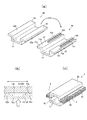
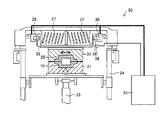
図1は、本発明の実施形態に係る接合体1の製造方法を説明するための図であり、図1(a)は、接合される2つの複合材10,20の模式的斜視図であり、図1(b)は、図1(a)に示す複合材10,20の被接合部分12,22を重ね合わせた状態でのこれらの接合を説明するための模式的断面図であり、図1(c)は、接合体1の模式的斜視図である。図2は、図1(b)の工程で使用する振動溶着機30の模式的概念図である。
図1は、本発明の実施形態に係る接合体1の製造方法を説明するための図であり、図1(a)は、接合される2つの複合材10,20の模式的斜視図であり、図1(b)は、図1(a)に示す複合材10,20の被接合部分12,22を重ね合わせた状態でのこれらの接合を説明するための模式的断面図であり、図1(c)は、接合体1の模式的斜視図である。図2は、図1(b)の工程で使用する振動溶着機30の模式的概念図である。
本実施形態では、図1(c)に示す接合体1を製造する。接合体1は、2つの複合材10,20を接合した中空部3を有した接合体である。接合体1は、熱可塑性樹脂に強化繊維が含有した繊維強化樹脂材料からなり、接合体1には、2つの複合材10,20を接合した接合部分2が、フランジ部として形成されている。
以下に、接合体1の製造方法を説明する。まず、図1(a)に示すように、2つの複合材10,20を準備する。各複合材10,20は、熱可塑性樹脂に強化繊維を含有した強化繊維樹脂材料(FRP)からなる。
複合材10,20に含まれる熱可塑性樹脂としては、ポリプロピレン(PP)、ポリアミド(PA)、ポリスチレン(PS)などを挙げることができ、後述する接合(溶着)時に、軟化することができるものであれば、特にその材料は限定されるものではない。
強化繊維としては、炭素繊維、ガラス繊維等を挙げることができ、後述する複合材10,20同士の接合が阻害されなければ、その繊維長さおよび配置状態は、限定されるものではない。
各複合材10(20)には、凹部11(21)が形成されており、凹部11(21)の両側には、これらを接合するための一対の鍔状の被接合部分12,12(22,22)が形成されている。複合材10,20は、射出成形により成形すること、または板状の繊維強化樹脂材料を熱圧成形することにより得ることができる。
さらに、複合材10は、被接合部分12の被接合面12aに凹凸が形成されるように、被接合部分12,22を溶着時に加圧する加圧方向の肉厚を変化させている。具体的には、被接合部分12の被接合面12aには、長手方向に沿って、段付き凹溝12bが形成されている。具体的には、被接合部分12のうち、段付き凹溝12bが形成された部分が薄肉部12cとして形成されており、それ以外の部分が薄肉部12cよりも肉厚の厚い厚肉部12dとして形成されている。
次に、図1(c)および図2に示すように、2つの複合材10,20の間に中空部3が形成されるように、2つの複合材10,20の凹部11,21同士が向き合った状態で2つの複合材10,20を接触させる。具体的には、図1(b)に示すように、各被接合部分12,22同士を重ね合わせて、被接合面12a,22a同士を接触させる。
この接触状態で、複合材10を下冶具31にセットし、図2に示す加圧シリンダ33をガイドシャフト34に沿って可動し、下冶具31と共に複合材10,20を上昇させることにより、複合材20を上冶具32にセットする。
次に、下冶具31を介して、加圧シリンダ33で、下冶具31から上冶具32に向かって、2つの複合材10,20の被接合部分12,22同士を加圧する。次に、電源35から電磁コイル36に電流を周期的に通電することで、ドライバーボックス39を介して、スプリング37を振動させ、上冶具32を水平方向に振動させる。上冶具32の振動は、ピックアップセンサ38の検出信号によりフィードバック制御される。
これにより、図1(b),図2に示すように、複合材10,20の被接合部分12,22同士を摺動させることができる。この摺動により、被接合部分12,22同士が接触している部分で発熱させ、被接合部分12,22同士を溶着させる。
具体的には、図1(a)に示す複合材10の被接合部分12のうち、段付き凹溝12bが形成された薄肉部12c以外の部分(すなわち厚肉部12d)の被接合面12aと、これに接触する複合材20の被接合部分22の被接合面22aとが接触した状態で摺動する。これにより、これらの被接合面12a,22a同士が発熱し、この発熱で、これらに含まれる熱可塑性樹脂が軟化する。
被接合部分12,22同士は下方から押圧されているので、軟化した熱可塑性樹脂の一部が、段付き凹溝12bに流動するとともに、重ね合わせた状態の複合材10の被接合部分12が、複合材20の被接合部分22に沈み込む。
最終的には、複合材10の被接合部分12の段付き凹溝12bの表面と、複合材20の被接合部分22に溶着し、重ね合わせた状態の複合材10の被接合部分12が、複合材20の被接合部分22に対して、所定の量沈み込んだ時点で、溶着(摺動)を終了する。これにより、複合材10の被接合部分12の厚肉部12dおよび薄肉部12cの双方が、複合材20の被接合部分22に溶着される。
その後、加圧シリンダ33をガイドシャフト34に沿って可動し、下冶具31を下降させ、振動溶着機30から接合体1を取り外し、図1(c)に示す接合体1を得ることができる。
本実施形態によれば、複合材10の被接合部分12のうち、加圧方向の肉厚を厚くした厚肉部12dは、溶着時に、複合材20の被接合部分22に対して深く沈み込む。これにより、この部分2aでは、被接合部分12,22同士の強化繊維が絡み合い、この部分2aの強度を高めることができる。
一方、複合材10の被接合部分12のうち、加圧方向の肉厚を薄くした薄肉部12cは、溶着時に、複合材20の被接合部分22に対して深く沈まない。これにより、この部分2bでは、被接合部分12,22同士の強化繊維が絡み合い難く、この部分2bの強度は高くならない。
このようにして、1つの接合体1において、2つの複合材10,20の被接合部分12,22同士が接合された接合部分2の全体的な強度を保持しつつ、接合部分2の接合強度を部分的に高めることができる。この結果、接合部分2の強度に変化を持たせることができ、接合体1の破壊モードをコントロールすることができる。
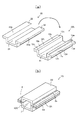
図3〜図5は、図1に示す接合体1の製造方法の第1〜第3の変形例を示した模式図であり、図3〜図5の(a)は、接合される2つの複合材10A〜10C,20の模式的斜視図であり、図3〜図5の(b)は、接合体1A〜1Cの模式的斜視図である。
図3(a)に示す第1変形例の如く、複合材10Aの被接合部分12Aの被接合面12aに、凹部11の縁部に沿って凸条12eが形成されてもよい。これにより、被接合部分12のうち、凸条12eが形成された部分が、厚肉部12dとして形成され、それ以外の部分が厚肉部12dよりも肉厚の薄い薄肉部12cとして形成される。
このような複合材10Aを用いて、接合体1Aを製造すると、厚肉部12dは、溶着時に、複合材20の被接合部分22に対して深く沈み込み、図3(b)に示すように、接合部分2Aのうち沈み込んだ部分2aでは、被接合部分12,22同士の強化繊維が絡み合い、この部分2aの強度を高めることができる。これにより、中空部3の近傍の接合部分2Aの強度を部分的に高めることができる。一方、それ以外の部分2bは、被接合部分12A,22同士の強化繊維が絡み合い難く、この部分2bの強度は高くならない。
図4(a)に示す第2変形例の如く、複合材10Bの被接合部分12Bの被接合面12aの一方側に、凸部12fを形成してもよく、図5(a)に示す変形例の如く、複合材10Cの被接合部分12Cの被接合面12aの長手方向に沿った中央に、凸部12gを形成してもよい。これにより、被接合部分12B(12C)のうち、凸部12f(12g)が形成された部分が、厚肉部12dとして形成され、それ以外の部分が厚肉部12dよりも肉厚の薄い薄肉部12cとして形成される。
このような複合材10B(10C)を用いて、接合体1B(1C)を製造すると、同様に、厚肉部12dは、溶着時に、複合材20の被接合部分22に対して深く沈み込み、図4(b),図5(b)に示すように、接合部分2B(2C)うち、深く沈み込んだ部分2aの強度を高めることができる。一方、それ以外の部分2bは、被接合部分12B(12C),22同士の強化繊維が絡み合い難く、この部分2bの強度は高くならない。
このようにして、いずれの変形例においても、接合体1A〜1Cの接合部分2A〜2Cのうち所望の部分の強度を高め、接合部分2A〜2Cの強度に変化を持たせることができ、接合体1A〜1Cの破壊モードをコントロールすることができる。
以上、本発明の実施の形態を詳述してきたが、具体的な構成はこの実施形態に限定されるものではなく、本発明の要旨を逸脱しない範囲における設計変更があっても、それらは本発明に含まれるものである。
本実施形態では、複合材の被接合部分同士を振動溶着機を用いて摺動することにより、接触面同士を発熱させてこれらを溶着した。この他にも、複合材の被接合部分同士を加圧した状態で、一方側の被接合部分に超音波ホーンを配置し、被接合部分同士に超音波振動を付与することにより、被接合部分同士を発熱させ、被接合部分同士を溶着してもよい。
1,1A〜1C:接合体、2,2A〜2C:接合部分、10,10A〜10C,20:複合材、11,21:凹部、12,22:被接合部分、12a,22a:被接合面。
Claims (1)
- 熱可塑性樹脂に強化繊維が含有した繊維強化樹脂材料からなる2つの複合材同士が接合される被接合部分を重ね合わせ、該被接合部分同士を加圧しながら、前記2つの複合材を接合する接合体の製造方法であって、
前記2つの複合材のうち少なくとも一方の複合材の前記被接合部分の被接合面に凹凸が形成されるように、前記被接合部分を加圧する加圧方向の肉厚を変化させた複合材を準備する工程と、
前記2つの複合材の前記被接合部分同士を重ね合わせて前記被接合面同士を接触させ、前記被接合部分同士を加圧しながら、前記被接合部分同士を摺動するまたは前記被接合部分同士に超音波振動を付与することにより、前記被接合部分同士の前記熱可塑性樹脂を軟化させ、前記重ね合わせた状態の一方の被接合部分が、他方の被接合部分に沈み込むように、前記被接合部分同士を溶着することを特徴とする接合体の製造方法。
Priority Applications (1)
| Application Number | Priority Date | Filing Date | Title |
|---|---|---|---|
| JP2015237105A JP2017100408A (ja) | 2015-12-04 | 2015-12-04 | 接合体の製造方法 |
Applications Claiming Priority (1)
| Application Number | Priority Date | Filing Date | Title |
|---|---|---|---|
| JP2015237105A JP2017100408A (ja) | 2015-12-04 | 2015-12-04 | 接合体の製造方法 |
Publications (1)
| Publication Number | Publication Date |
|---|---|
| JP2017100408A true JP2017100408A (ja) | 2017-06-08 |
Family
ID=59015354
Family Applications (1)
| Application Number | Title | Priority Date | Filing Date |
|---|---|---|---|
| JP2015237105A Pending JP2017100408A (ja) | 2015-12-04 | 2015-12-04 | 接合体の製造方法 |
Country Status (1)
| Country | Link |
|---|---|
| JP (1) | JP2017100408A (ja) |
Cited By (2)
| Publication number | Priority date | Publication date | Assignee | Title |
|---|---|---|---|---|
| EP4209334A1 (en) * | 2021-12-17 | 2023-07-12 | Rohr, Inc. | Vibration welding systems and methods |
| US12629896B2 (en) | 2023-06-23 | 2026-05-19 | Rohr, Inc. | Vibration welding systems and methods |
-
2015
- 2015-12-04 JP JP2015237105A patent/JP2017100408A/ja active Pending
Cited By (4)
| Publication number | Priority date | Publication date | Assignee | Title |
|---|---|---|---|---|
| EP4209334A1 (en) * | 2021-12-17 | 2023-07-12 | Rohr, Inc. | Vibration welding systems and methods |
| US11731369B2 (en) | 2021-12-17 | 2023-08-22 | Rohr, Inc. | Vibration welding systems and methods |
| EP4491381A3 (en) * | 2021-12-17 | 2025-03-26 | Rohr, Inc. | Vibration welding systems and methods |
| US12629896B2 (en) | 2023-06-23 | 2026-05-19 | Rohr, Inc. | Vibration welding systems and methods |
Similar Documents
| Publication | Publication Date | Title |
|---|---|---|
| KR101967827B1 (ko) | 수지체 및 수지체의 제조 방법 | |
| JP6814197B2 (ja) | 超音波振動エネルギおよび装置を用いてデバイスを対象物に接合する方法およびこの方法に適した設備 | |
| US10252472B2 (en) | Method for joining fiber-reinforced plastic material | |
| US9770863B2 (en) | Systems and methods to reduce air pocket formation during welding | |
| CN105415666B (zh) | 振动焊接的装置、方法、模具以及振动焊接模制件 | |
| WO2003082548A1 (en) | Ultrasonic joining of thermoplastic parts | |
| JP2016175397A (ja) | 樹脂接合体、樹脂接合体の製造方法及び車両用構造体 | |
| JP2017100394A (ja) | 接合体の製造方法 | |
| CN105984120B (zh) | 树脂接合体、树脂接合体的制造方法及车辆用构造体 | |
| KR102300339B1 (ko) | 금속판재와 탄소 섬유 강화 플라스틱 복합판재의 접합방법 | |
| KR20180078041A (ko) | 이종소재 접합방법 | |
| JP2010143156A (ja) | 超音波溶着法 | |
| JP2016060096A (ja) | 熱可塑性樹脂材料を含んで構成された部品の製造方法及び熱可塑性樹脂材料を含んで構成された部品の製造装置。 | |
| KR102299732B1 (ko) | 알루미늄 판재와 탄소 섬유 강화 플라스틱 복합판재의 접합방법 | |
| JP7050462B2 (ja) | 被接合部材の接合方法 | |
| JP6428577B2 (ja) | 接合体の製造方法 | |
| WO2019172025A1 (ja) | 接合構造及び接合方法 | |
| KR102299731B1 (ko) | 금속판재와 탄소 섬유 강화 플라스틱 복합판재의 접합방법 | |
| JP2001232687A (ja) | レーザーによる熱可塑性樹脂部材の2次成形加工方法 | |
| JP2016043583A (ja) | 繊維強化樹脂接合体の製造方法 | |
| KR102300340B1 (ko) | 금속판재와 탄소 섬유 강화 플라스틱 복합판재의 접합방법 | |
| KR102300341B1 (ko) | 알루미늄 판재와 탄소 섬유 강화 플라스틱 복합판재의 접합방법 | |
| CN113954371A (zh) | 超声波热熔焊接方法以及超声波热熔焊接组件 | |
| JP2010083068A (ja) | 溶着構造、溶着体、及びクリープ破壊寿命向上方法 | |
| JPH11268135A (ja) | 超音波接合方法 |