JP2017117700A - Method for producing positive electrode active material for nonaqueous electrolyte secondary battery - Google Patents
Method for producing positive electrode active material for nonaqueous electrolyte secondary battery Download PDFInfo
- Publication number
- JP2017117700A JP2017117700A JP2015253287A JP2015253287A JP2017117700A JP 2017117700 A JP2017117700 A JP 2017117700A JP 2015253287 A JP2015253287 A JP 2015253287A JP 2015253287 A JP2015253287 A JP 2015253287A JP 2017117700 A JP2017117700 A JP 2017117700A
- Authority
- JP
- Japan
- Prior art keywords
- lithium
- positive electrode
- active material
- electrode active
- nickel composite
- Prior art date
- Legal status (The legal status is an assumption and is not a legal conclusion. Google has not performed a legal analysis and makes no representation as to the accuracy of the status listed.)
- Pending
Links
Images


Classifications
-
- Y—GENERAL TAGGING OF NEW TECHNOLOGICAL DEVELOPMENTS; GENERAL TAGGING OF CROSS-SECTIONAL TECHNOLOGIES SPANNING OVER SEVERAL SECTIONS OF THE IPC; TECHNICAL SUBJECTS COVERED BY FORMER USPC CROSS-REFERENCE ART COLLECTIONS [XRACs] AND DIGESTS
- Y02—TECHNOLOGIES OR APPLICATIONS FOR MITIGATION OR ADAPTATION AGAINST CLIMATE CHANGE
- Y02E—REDUCTION OF GREENHOUSE GAS [GHG] EMISSIONS, RELATED TO ENERGY GENERATION, TRANSMISSION OR DISTRIBUTION
- Y02E60/00—Enabling technologies; Technologies with a potential or indirect contribution to GHG emissions mitigation
- Y02E60/10—Energy storage using batteries
Landscapes
- Inorganic Compounds Of Heavy Metals (AREA)
- Battery Electrode And Active Subsutance (AREA)
Abstract
【課題】正極材に用いられた場合に高容量かつ高出力を両立させることができる非水系電解質二次電池用正極活物質を容易に製造できる正極活物質の製造方法を提供することを目的とする。【解決手段】中和晶析によって得られた湿潤状態のニッケル複合水酸化物とタングステン化合物を混合した後、100〜750℃で熱処理してタングステン混合物を得て、前記タングステン混合物と、さらにリチウム化合物とを混合し、酸化性雰囲気中において700〜900℃の温度範囲で焼成して、一次粒子および一次粒子が凝集して構成された二次粒子からなるリチウムニッケル複合酸化物を得る。【選択図】なしPROBLEM TO BE SOLVED: To provide a method for producing a positive electrode active material capable of easily producing a positive electrode active material for a non-aqueous electrolyte secondary battery capable of achieving both high capacity and high output when used as a positive electrode material. To do. SOLUTION: A nickel composite hydroxide in a wet state obtained by neutralization crystallization and a tungsten compound are mixed and then heat-treated at 100 to 750° C. to obtain a tungsten mixture, and the tungsten mixture and further a lithium compound. Are mixed and fired in an oxidizing atmosphere in a temperature range of 700 to 900° C. to obtain a lithium nickel composite oxide composed of primary particles and secondary particles formed by aggregating the primary particles. [Selection diagram] None
Description
本発明は、非水系電解質二次電池用正極活物質の製造方法に関するものである。 The present invention relates to a method for producing a positive electrode active material for a non-aqueous electrolyte secondary battery.
近年、携帯電話、ノートパソコン等の小型電子機器の急速な拡大と共に、充放電可能な電源として、非水系電解質二次電池の需要が急激に伸びている。この非水系電解質二次電池の正極活物質としては、コバルト酸リチウム(LiCoO2)で代表されるリチウムコバルト複合酸化物と共に、ニッケル酸リチウム(LiNiO2)で代表されるリチウムニッケル複合酸化物、マンガン酸リチウム(LiMnO2)で代表されるリチウムマンガン複合酸化物等が広く用いられている。 In recent years, with the rapid expansion of small electronic devices such as mobile phones and laptop computers, the demand for non-aqueous electrolyte secondary batteries as a chargeable / dischargeable power source has increased rapidly. As the positive electrode active material of this non-aqueous electrolyte secondary battery, lithium nickel composite oxide represented by lithium nickelate (LiNiO 2 ), lithium nickel composite oxide represented by lithium cobaltate (LiCoO 2 ), manganese Lithium manganese composite oxides typified by lithium acid lithium (LiMnO 2 ) are widely used.
ところで、コバルト酸リチウムは、埋蔵量が少ないため高価であり、かつ供給不安定で価格の変動も大きいコバルトを主成分として含有しているという問題点があった。このため、比較的安価なニッケルまたはマンガンを主成分として含有するリチウムニッケル複合酸化物またはリチウムマンガン複合酸化物がコストの観点から注目されている。 By the way, lithium cobaltate has a problem in that it contains cobalt as a main component because it has a small reserve and is expensive, is unstable in supply, and has a large price fluctuation. For this reason, lithium nickel composite oxide or lithium manganese composite oxide containing relatively inexpensive nickel or manganese as a main component has attracted attention from the viewpoint of cost.
しかしながら、マンガン酸リチウムは、熱安定性ではコバルト酸リチウムに比べて優れているものの、充放電容量が他の材料に比べ非常に小さく、かつ寿命を示す充放電サイクル特性も非常に短いことから、電池としての実用上の課題が多い。一方、ニッケル酸リチウムは、コバルト酸リチウムよりも大きな充放電容量を示すことから、安価で高エネルギー密度の電池を製造することができる正極活物質として期待されている。 However, although lithium manganate is superior to lithium cobaltate in terms of thermal stability, the charge / discharge capacity is very small compared to other materials, and the charge / discharge cycle characteristics indicating lifetime are also very short. There are many practical problems as a battery. On the other hand, lithium nickelate has a higher charge / discharge capacity than lithium cobaltate, and thus is expected as a positive electrode active material capable of producing a low-cost and high-energy density battery.
このニッケル酸リチウムは、通常、リチウム化合物と水酸化ニッケルまたはオキシ水酸化ニッケルなどのニッケル化合物とを混合、焼成して製造されており、その形状は、一次粒子が単分散した粉末または一次粒子の集合体である空隙を持った二次粒子の粉末となるが、いずれも充電状態での熱安定性がコバルト酸リチウムに劣るという欠点があった。
すなわち、純粋なニッケル酸リチウムでは、熱安定性や充放電サイクル特性等に問題があり、実用電池として使用することができなかった。これは、充電状態における結晶構造の安定性がコバルト酸リチウムに比べて低いためである。
This lithium nickelate is usually produced by mixing and firing a lithium compound and a nickel compound such as nickel hydroxide or nickel oxyhydroxide, and the shape thereof is a powder or primary particle of monodispersed primary particles. Although it becomes the powder of the secondary particle with the space | gap which is an aggregate | assembly, all had the fault that the thermal stability in a charge condition was inferior to lithium cobaltate.
That is, pure lithium nickelate has problems in thermal stability, charge / discharge cycle characteristics, etc., and could not be used as a practical battery. This is because the stability of the crystal structure in the charged state is lower than that of lithium cobalt oxide.
このため、充電過程においてリチウムが抜けた状態における結晶構造の安定化を図り、正極活物質として熱安定性および充放電サイクル特性が良好なリチウムニッケル複合酸化物を得るために、リチウムニッケル複合酸化物におけるニッケルの一部を他の物質と置換することが一般的に行われている。
例えば、特許文献1には、正極活物質として、LiaMbNicCodOe(MはAl、Mn、Sn、In、Fe、V、Cu、Mg、Ti、Zn、Moから成る群から選択される少なくとも一種の金属であり、且つ0<a<1.3、0.02≦b≦0.5、0.02≦d/c+d≦0.9、1.8<e<2.2の範囲であって、更にb+c+d=1である)を用いた非水系電池が提案されている。
Therefore, in order to stabilize the crystal structure in the state where lithium is removed during the charging process, and to obtain a lithium nickel composite oxide having good thermal stability and charge / discharge cycle characteristics as a positive electrode active material, a lithium nickel composite oxide It is common practice to replace part of the nickel with other substances.
For example, Patent Document 1 discloses that Li a Mb Ni c Co d O e (M is a group consisting of Al, Mn, Sn, In, Fe, V, Cu, Mg, Ti, Zn, and Mo as a positive electrode active material. And at least one metal selected from the group consisting of 0 <a <1.3, 0.02 ≦ b ≦ 0.5, 0.02 ≦ d / c + d ≦ 0.9, 1.8 <e <2. In the range of 2 and b + c + d = 1) has been proposed.
また、リチウムニッケル複合酸化物の熱的安定性を改善させる方法として、焼成後のニッケル酸リチウムを水洗する技術が開発されている。
例えば、特許文献2には、ニッケル水酸化物またはニッケルオキシ水酸化物を、大気雰囲気下、600〜1100℃の温度で煤焼してニッケル酸化物を調製し、リチウム化合物を混合した後、酸素雰囲気下、最高温度が650〜850℃の範囲で焼成して、得られた焼成粉末を水中でA≦B/40(式中、Aは、分単位として表示した水洗時間、Bは、g/Lの単位で表示した焼成粉末のスラリー濃度を表す。)を満足する時間以内で水洗した後、濾過、乾燥する非水系電解質二次電池用の正極活物質の製造方法が提案されている。
Further, as a method for improving the thermal stability of the lithium nickel composite oxide, a technique of washing the lithium nickelate after firing with water has been developed.
For example, in
しかしながら、リチウムニッケル複合酸化物におけるニッケルの一部を他の物質と置換する場合、多量の元素置換(言い換えればニッケル比率を低くした状態)を行った場合、熱安定性は高くなるものの、電池容量の低下が生じる。一方、電池容量の低下を防ぐために、少量の元素置換(言い換えればニッケル比率を高くした状態)を行った場合には、熱安定性が十分に改善されない。しかも、ニッケル比率が高くなれば、焼成時にカチオンミキシングを生じやすく合成が困難であるという問題点もある。
また、焼成後のニッケル酸リチウムを水洗すれば、非水系電解質二次電池に採用した場合に、高容量で熱安定性や高温環境下での保存特性に優れた正極活物質が得られるとされているが、高容量化や高出力化の要求に十分に対応したものは得られていない。
However, when a part of nickel in the lithium-nickel composite oxide is replaced with another substance, when a large amount of element substitution (in other words, a state in which the nickel ratio is lowered) is performed, the thermal stability increases, but the battery capacity Decrease. On the other hand, when a small amount of element substitution (in other words, a state in which the nickel ratio is increased) is performed in order to prevent a decrease in battery capacity, the thermal stability is not sufficiently improved. Moreover, if the nickel ratio is high, there is also a problem that cation mixing is likely to occur during firing and synthesis is difficult.
Also, if the lithium nickelate after calcination is washed with water, a positive electrode active material with high capacity and excellent thermal stability and storage characteristics in a high temperature environment can be obtained when it is used in a non-aqueous electrolyte secondary battery. However, a product that sufficiently meets the demand for higher capacity and higher output has not been obtained.
一方、出力特性を改善するため、リチウムニッケル複合酸化物にタングステン化合物を添加する方法が検討されている。
例えば、特許文献3には、一般式LizNi1-x-yCoxMyO2(ただし、0.10≦x≦0.35、0≦y≦0.35、0.97≦z≦1.20、Mは、Mn、V、Mg、Mo、Nb、TiおよびAlから選ばれる少なくとも1種の元素)で表される一次粒子および一次粒子が凝集して構成された二次粒子からなるリチウム金属複合酸化物粉末の一次粒子表面が、WおよびLiを含む化合物を有する非水系電解質二次電池用正極活物質が提案されている。
しかしながら、上記正極活物質は、出力特性は改善されているものの、工程が増加するという問題点がある。また、ニッケル比率が低く、更なる高容量化が望まれる。また、ニッケル比率を高めた際には熱的安定性の検討も必要となる。
On the other hand, in order to improve output characteristics, a method of adding a tungsten compound to a lithium nickel composite oxide has been studied.
For example,
However, although the positive electrode active material has improved output characteristics, there is a problem that the number of processes increases. Moreover, since the nickel ratio is low, further increase in capacity is desired. In addition, when the nickel ratio is increased, it is necessary to study thermal stability.
したがって、ニッケルの一部を他の物質と置換したリチウムニッケル複合酸化物は種々開発されているものの、現状では、非水系電解質二次電池に採用した場合に、高容量化や高出力化の要求に十分に対応でき、かつ、その製造も容易なリチウムニッケル複合酸化物からなる正極活物質が得られていない。 Therefore, although various lithium-nickel composite oxides in which a part of nickel is replaced with other substances have been developed, currently, when used in non-aqueous electrolyte secondary batteries, there is a demand for higher capacity and higher output. However, a positive electrode active material made of a lithium nickel composite oxide that is sufficiently compatible with the above and is easy to manufacture has not been obtained.
本発明は、上記問題点に鑑み、正極材に用いられた場合に高容量かつ高出力を両立させることができる非水系電解質二次電池用正極活物質を容易に製造できる正極活物質の製造方法を提供することを目的とする。 In view of the above problems, the present invention provides a method for producing a positive electrode active material that can easily produce a positive electrode active material for a non-aqueous electrolyte secondary battery that can achieve both high capacity and high output when used as a positive electrode material. The purpose is to provide.
本発明者らは、上記課題を解決するため、非水系電解質二次電池用正極活物質として用いられているリチウム金属複合酸化物の粉体特性、および電池の正極抵抗に対する影響について鋭意研究したところ、ニッケル比率を高めたリチウムニッケル複合酸化物における結晶構造を制御するとともに、リチウムニッケル複合酸化物を構成する一次粒子表面に、WおよびLiを含む化合物を形成させることで、高容量かつ高出力を両立させることが可能であるとの知見を得た。
さらに、その製造方法として、湿潤状態のニッケル複合水酸化物にタングステン化合物を添加して熱処理した後、さらにリチウム化合物を加えて焼成することで、高容量かつ高出力を両立させることができる非水系電解質を得ることができることを見出し、本発明を完成させるに至った。
In order to solve the above problems, the present inventors have conducted intensive research on the powder properties of lithium metal composite oxides used as the positive electrode active material for non-aqueous electrolyte secondary batteries and the effect on the positive electrode resistance of the battery. In addition to controlling the crystal structure of the lithium nickel composite oxide with an increased nickel ratio and forming a compound containing W and Li on the primary particle surface constituting the lithium nickel composite oxide, high capacity and high output can be obtained. The knowledge that it was possible to make it compatible was obtained.
Furthermore, as its manufacturing method, after adding a tungsten compound to a wet nickel composite hydroxide and heat-treating it, further adding a lithium compound and firing, a non-aqueous system capable of achieving both high capacity and high output The inventors have found that an electrolyte can be obtained, and have completed the present invention.
すなわち、本発明の非水系電解質二次電池用正極活物質の製造方法は、リチウムニッケル複合酸化物からなる非水系電解質二次電池用正極活物質の製造方法であって、
下記(A)〜(D)の工程を、(A)〜(D)の工程順に含むことを特徴とする。
(A)ニッケルおよびコバルトを含有し、かつ添加元素MとしてMg、Al、Ca、Ti、V、Cr、Mn、Nb、ZrおよびMoから選ばれる少なくとも1種の元素を含む金属化合物の水溶液と、アンモニウムイオン供給体を含む水溶液とを含む反応溶液をアルカリ性に保持して中和晶析した後、固液分離して湿潤状態のニッケル複合水酸化物を得る晶析工程。
(B)晶析工程で得られた湿潤状態のニッケル複合水酸化物とタングステン化合物を混合した後、100〜750℃で熱処理してタングステン混合物を得る熱処理工程。
(C)前記タングステン混合物と、さらにリチウム化合物とを混合し、リチウム混合物を得る混合工程。
(D)前記リチウム混合物を、酸化性雰囲気中において700〜900℃の温度範囲で焼成して、一次粒子および一次粒子が凝集して構成された二次粒子からなるリチウムニッケル複合酸化物を得る焼成工程。
That is, the method for producing a positive electrode active material for a non-aqueous electrolyte secondary battery of the present invention is a method for producing a positive electrode active material for a non-aqueous electrolyte secondary battery comprising a lithium nickel composite oxide,
The following steps (A) to (D) are included in the order of steps (A) to (D).
(A) an aqueous solution of a metal compound containing nickel and cobalt and containing at least one element selected from Mg, Al, Ca, Ti, V, Cr, Mn, Nb, Zr and Mo as the additive element M; A crystallization step in which a reaction solution containing an aqueous solution containing an ammonium ion supplier is neutralized and crystallized while being kept alkaline, and then solid-liquid separation is performed to obtain a wet nickel composite hydroxide.
(B) A heat treatment step in which a wet nickel composite hydroxide obtained in the crystallization step and a tungsten compound are mixed and then heat treated at 100 to 750 ° C. to obtain a tungsten mixture.
(C) A mixing step in which the tungsten mixture is further mixed with a lithium compound to obtain a lithium mixture.
(D) Firing the lithium mixture in an oxidizing atmosphere at a temperature range of 700 to 900 ° C. to obtain a lithium nickel composite oxide composed of primary particles and secondary particles formed by aggregation of the primary particles. Process.
前記焼成工程で得られたリチウムニッケル複合酸化物の焼成粉末を、水1Lに対して700g〜2000gとなるように水と混合してスラリーを形成し、前記焼成粉末を水洗処理する水洗工程を、さらに備えることが好ましい。 The water washing step of mixing the calcined powder of the lithium nickel composite oxide obtained in the calcining step with water so as to be 700 g to 2000 g with respect to 1 L of water to form a slurry, and washing the calcined powder with water, It is preferable to further provide.
前記ニッケル複合水酸化物と混合するタングステン化合物に含まれるタングステン量が、ニッケル複合水酸化物に含まれるNi、CoおよびMの原子数の合計に対して、0.1〜3.0原子%とすることが好ましい。 The amount of tungsten contained in the tungsten compound mixed with the nickel composite hydroxide is 0.1 to 3.0 atomic% with respect to the total number of Ni, Co and M atoms contained in the nickel composite hydroxide. It is preferable to do.
前記湿潤状態のニッケル複合水酸化物は、25℃基準のpH値で8以上であることが好ましい。 The wet nickel composite hydroxide preferably has a pH value on a 25 ° C. basis of 8 or more.
前記ニッケル複合水酸化物の硫酸根含有量が、0.1〜0.4質量%であることが好ましい。 The sulfate content of the nickel composite hydroxide is preferably 0.1 to 0.4% by mass.
前記タングステン化合物が、酸化タングステン、タングステン酸、パラタングステン酸アンモニウム、タングステン酸ナトリウムからなる群から選ばれる少なくとも1種であることが好ましく、前記リチウム化合物が、リチウムの水酸化物、オキシ水酸化物、酸化物、炭酸塩、硝酸塩及びハロゲン化物からなる群から選ばれる少なくとも1種であることが好ましい。 It is preferable that the tungsten compound is at least one selected from the group consisting of tungsten oxide, tungstic acid, ammonium paratungstate, and sodium tungstate, and the lithium compound is lithium hydroxide, oxyhydroxide, It is preferably at least one selected from the group consisting of oxides, carbonates, nitrates and halides.
前記混合工程において、混合物中のリチウムを除く全金属元素の合計量に対する前記リチウム化合物中のリチウム量がモル比で0.98〜1.25となるように前記ニッケル複合水酸化物と前記リチウム化合物との混合比を調整することが好ましい。 In the mixing step, the nickel composite hydroxide and the lithium compound so that the amount of lithium in the lithium compound with respect to the total amount of all metal elements excluding lithium in the mixture is 0.98 to 1.25 in molar ratio. It is preferable to adjust the mixing ratio.
前記水洗工程において、水洗処理時のスラリーの温度を10〜40℃に調整することが好ましい。 In the water washing step, it is preferable to adjust the temperature of the slurry during the water washing treatment to 10 to 40 ° C.
前記リチウムニッケル複合酸化物は、一般式:LiaNi1-x―yCoxMyO2(式中、Mは、Mg、Al、Ca、Ti、V、Cr、Mn、Nb、ZrおよびMoから選ばれる少なくとも1種の元素である。aは、0.95≦a≦1.11、xは0<x≦0.15、yは0<y≦0.07、x+yは≦0.16を満たす数値である。)で表され、一次粒子および一次粒子が凝集して構成された二次粒子からなるものであることが好ましい。 The lithium nickel composite oxide is represented by the general formula: Li a Ni 1-x - in y Co x M y O 2 (wherein, M represents, Mg, Al, Ca, Ti , V, Cr, Mn, Nb, Zr and It is at least one element selected from Mo. a is 0.95 ≦ a ≦ 1.11, x is 0 <x ≦ 0.15, y is 0 <y ≦ 0.07, and x + y is ≦ 0. The primary particles and the secondary particles are preferably composed of secondary particles formed by agglomeration.
本発明によれば、非水系電解質二次電池の正極材に使用した場合に高容量かつ高出力を両立させることができ、安全性にも優れた非水系電解質二次電池用の正極活物質が得られる。
さらに、その製造方法は、容易で工業的規模での生産に適したものであり、その工業的価値は極めて大きい。
According to the present invention, there is provided a positive electrode active material for a non-aqueous electrolyte secondary battery that can achieve both high capacity and high output when used as a positive electrode material for a non-aqueous electrolyte secondary battery, and is excellent in safety. can get.
Furthermore, the manufacturing method is easy and suitable for production on an industrial scale, and its industrial value is extremely large.
(1)正極活物質の製造方法
以下、本発明の非水系電解質二次電池用正極活物質(以下、単に「正極活物質」ということがある。)の製造方法を工程ごとに詳細に説明する。
本発明の正極活物質の製造方法は、リチウムニッケル複合酸化物からなる正極活物質の製造方法であって、下記(A)〜(D)の工程を含むことを特徴とする。
(A)湿潤状態のニッケル複合水酸化物を得る晶析工程。
(B)タングステン混合物を得る熱処理工程。
(C)リチウム混合物を得る混合工程。
(D)リチウムニッケル複合酸化物を得る焼成工程。
(1) Method for Producing Positive Electrode Active Material A method for producing a positive electrode active material for a non-aqueous electrolyte secondary battery of the present invention (hereinafter sometimes simply referred to as “positive electrode active material”) will be described in detail for each step. .
The method for producing a positive electrode active material of the present invention is a method for producing a positive electrode active material comprising a lithium nickel composite oxide, and includes the following steps (A) to (D).
(A) A crystallization step for obtaining a wet nickel composite hydroxide.
(B) A heat treatment step for obtaining a tungsten mixture.
(C) A mixing step for obtaining a lithium mixture.
(D) A firing step for obtaining a lithium nickel composite oxide.
(A)晶析工程
晶析工程は、ニッケルおよびコバルトを含有し、かつ添加元素MとしてMg、Al、Ca、Ti、V、Cr、Mn、Nb、ZrおよびMoから選ばれる少なくとも1種の元素を含む金属化合物の水溶液と、アンモニウムイオン供給体を含む水溶液とを含む反応溶液をアルカリ性に保持して中和晶析した後、固液分離して湿潤状態のニッケル複合水酸化物を得る工程である。
(A) Crystallization step The crystallization step includes nickel and cobalt, and the additive element M is at least one element selected from Mg, Al, Ca, Ti, V, Cr, Mn, Nb, Zr and Mo. In the step of obtaining a wet nickel composite hydroxide by solid-liquid separation after neutralizing and crystallizing a reaction solution containing an aqueous solution of a metal compound containing an aqueous solution and an aqueous solution containing an ammonium ion supplier is there.
晶析法では、種々の条件でニッケル複合水酸化物が得られ、その晶析条件はとくに限定されないが、以下の条件で得られたものが好ましい。
具体的には、40〜60℃に加温した反応槽中に、ニッケルおよびコバルトを含有し、かつ添加元素MとしてMg、Al、Ca、Ti、V、Cr、Mn、Nb、ZrおよびMoから選ばれる少なくとも1種の元素を含む金属化合物の水溶液と、アンモニウムイオン供給体を含む水溶液と、を滴下して、アルカリ性に保持して中和晶析する。
In the crystallization method, nickel composite hydroxide is obtained under various conditions, and the crystallization conditions are not particularly limited, but those obtained under the following conditions are preferred.
Specifically, nickel and cobalt are contained in a reaction vessel heated to 40 to 60 ° C., and the additive element M is Mg, Al, Ca, Ti, V, Cr, Mn, Nb, Zr, and Mo. An aqueous solution of a metal compound containing at least one selected element and an aqueous solution containing an ammonium ion supplier are dropped, and neutralized and crystallized while being kept alkaline.
反応溶液はアルカリ性、好ましくは液温25℃基準のpH値で10〜14に保持できるように、アルカリ金属水酸化物の水溶液を必要に応じて滴下してニッケル複合水酸化物を得ることが好ましい。
なお、添加元素Mは、ニッケルおよびコバルトとともに共沈殿させてもよいが、晶析によって水酸化物を得た後、添加元素Mを含む金属化合物で被覆するか、あるいは、その金属化合物を含む水溶液を含浸することによってニッケル複合水酸化物を得ることもできる。
The reaction solution is alkaline, preferably, an aqueous solution of an alkali metal hydroxide is dropped as necessary to obtain a nickel composite hydroxide so that the reaction temperature can be maintained at 10 to 14 at a pH value based on a liquid temperature of 25 ° C. .
The additive element M may be co-precipitated with nickel and cobalt, but after obtaining a hydroxide by crystallization, it is coated with a metal compound containing the additive element M, or an aqueous solution containing the metal compound. Nickel composite hydroxide can also be obtained by impregnating with.
上記晶析法により得られたニッケル複合水酸化物は、高嵩密度の粉末となる。
さらに、このような高嵩密度の複合水酸化物は、比表面積が小さいリチウムニッケル複合酸化物粒子を得やすくなるため、非水系電解質二次電池用正極活物質として用いられるリチウムニッケル複合酸化物の原料として好適なニッケル複合水酸化物となる。
The nickel composite hydroxide obtained by the crystallization method becomes a high bulk density powder.
Furthermore, since such a high bulk density composite hydroxide makes it easy to obtain lithium nickel composite oxide particles having a small specific surface area, the lithium nickel composite oxide used as a positive electrode active material for non-aqueous electrolyte secondary batteries can be obtained. The nickel composite hydroxide is suitable as a raw material.
反応溶液の温度が60℃を超えるか、またはpHが14を超えた状態でニッケル水酸化物を晶析すると、液中で核生成の優先度が高まり結晶成長が進まずに微細な粉末しか得られないことがある。一方、温度が40℃未満、またはpHが10未満の状態でニッケル複合水酸化物を晶析すれば、液中で核の発生が少なく、粒子の結晶成長が優先的となり、得られるニッケル複合水酸化物に、粗大粒子が混入することがある。また、反応液中の金属イオンの残存量が多くなり、組成ずれを生じることがある。
このような粗大粒子の混入や組成ずれを生じたニッケル複合水酸化物を原料として用いると、得られた正極活物質の電池特性が低下する。
したがって、焼成工程においてニッケル化合物として用いられるニッケル複合水酸化物を晶析法によって得る場合には、反応溶液が40〜60℃に維持され、かつ、反応溶液を液温25℃基準のpH値で10〜14に維持された状態で晶析することが好ましい。
When nickel hydroxide is crystallized in a state where the temperature of the reaction solution exceeds 60 ° C. or the pH exceeds 14, the priority of nucleation is increased in the solution, and only a fine powder is obtained without crystal growth. It may not be possible. On the other hand, if the nickel composite hydroxide is crystallized at a temperature of less than 40 ° C. or a pH of less than 10, there is little generation of nuclei in the liquid, and crystal growth of the particles becomes preferential, and the resulting nickel composite water Coarse particles may be mixed into the oxide. In addition, the residual amount of metal ions in the reaction solution may increase, resulting in a composition shift.
When the nickel composite hydroxide in which such coarse particles are mixed and compositional deviation is used as a raw material, the battery characteristics of the obtained positive electrode active material are deteriorated.
Therefore, when the nickel composite hydroxide used as the nickel compound in the firing step is obtained by crystallization, the reaction solution is maintained at 40 to 60 ° C., and the reaction solution is maintained at a pH value based on the liquid temperature of 25 ° C. It is preferable to crystallize in the state maintained at 10-14.
ニッケル複合水酸化物は、ニッケルオキシ複合水酸化物として用いることが可能である。ニッケルオキシ水酸化物を得る方法はとくに限定されないが、ニッケル複合水酸化物を、次亜塩素酸ソーダ、過酸化水素水等の酸化剤により酸化して調製されたものが好ましい。この方法により得られたニッケルオキシ複合水酸化物は高嵩密度の粉末となる。
このような高嵩密度のニッケルオキシ複合水酸化物は、比表面積が小さいリチウムニッケル複合酸化物粒子を得やすくなるため、非水系電解質二次電池用正極活物質として用いられるリチウムニッケル複合酸化物の原料として好適なニッケルオキシ複合水酸化物となる。
The nickel composite hydroxide can be used as a nickel oxy composite hydroxide. A method for obtaining nickel oxyhydroxide is not particularly limited, but a nickel oxyhydroxide prepared by oxidizing a nickel composite hydroxide with an oxidizing agent such as sodium hypochlorite or hydrogen peroxide is preferable. The nickel oxy composite hydroxide obtained by this method becomes a high bulk density powder.
Such a high bulk density nickel oxy composite hydroxide makes it easy to obtain lithium nickel composite oxide particles having a small specific surface area. Therefore, a lithium nickel composite oxide used as a positive electrode active material for a non-aqueous electrolyte secondary battery is used. It becomes a nickel oxy composite hydroxide suitable as a raw material.
ニッケル化合物として用いられるニッケル複合水酸化物は、硫酸根(SO4)の含有量が0.1〜0.4質量%であることが好ましく、0.1〜0.3質量%であることがより好ましい。これにより、後工程の焼成において、リチウムニッケル複合酸化物の結晶性の制御が容易になる。 The nickel composite hydroxide used as the nickel compound preferably has a sulfate radical (SO 4 ) content of 0.1 to 0.4 mass%, preferably 0.1 to 0.3 mass%. More preferred. This facilitates the control of the crystallinity of the lithium nickel composite oxide in the subsequent firing.
すなわち、硫酸根の含有量を0.1〜0.4質量%とすることで、例えばc軸の長さを容易に制御することができる。また、焼成時における一次粒子の成長による二次粒子の収縮を適度なものとすることができるので、空隙率も容易に制御できる。
しかしながら、硫酸根の含有量が0.1質量%未満になると、結晶化の進行が速くなり過ぎ、結晶性が十分に制御できないことがある。また、一次粒子が成長して二次粒子の収縮が大きくなり、比表面積や空隙率が小さくなり過ぎることがある。一方、硫酸根の含有量が0.4質量%を超えると、一次粒子の成長が抑制されるため、比表面積や空隙率が大きくなり過ぎることがある。
That is, by setting the sulfate radical content to 0.1 to 0.4 mass%, for example, the length of the c-axis can be easily controlled. Moreover, since the shrinkage | contraction of the secondary particle by the growth of the primary particle at the time of baking can be made moderate, the porosity can also be controlled easily.
However, when the sulfate group content is less than 0.1% by mass, the progress of crystallization becomes too fast, and the crystallinity may not be sufficiently controlled. In addition, primary particles grow and secondary particles shrink, and the specific surface area and porosity may become too small. On the other hand, when the content of sulfate radicals exceeds 0.4 mass%, the growth of primary particles is suppressed, so that the specific surface area and the porosity may become too large.
また、ニッケル複合水酸化物から得られたニッケルオキシ複合水酸化物及び、熱処理工程で得られるニッケル複合酸化物は、ニッケル複合水酸化物に含有される硫酸根とほぼ同量の硫酸根を含有する。
したがって、ニッケル複合水酸化物の硫酸根(SO4)の含有量を0.1〜0.4質量%とすることで、ニッケル複合水酸化物から得られるニッケルオキシ複合水酸化物、あるいはニッケル複合酸化物を原料として活物質を得た場合も同様の効果が得られる。
Moreover, the nickel oxy composite hydroxide obtained from the nickel composite hydroxide and the nickel composite oxide obtained in the heat treatment step contain approximately the same amount of sulfate radical as the sulfate radical contained in the nickel composite hydroxide. To do.
Therefore, by setting the content of sulfate radical (SO 4 ) in the nickel composite hydroxide to 0.1 to 0.4% by mass, the nickel oxy composite hydroxide obtained from the nickel composite hydroxide or the nickel composite The same effect can be obtained when an active material is obtained using an oxide as a raw material.
上記ニッケル複合水酸化物は、晶析法得られたものであるが、その際に原料として硫酸ニッケルなどの硫酸塩を用い、晶析後に十分洗浄することで硫酸根を0.1〜0.4質量%含有量したニッケル複合水酸化物が得ることが好ましい。 The nickel composite hydroxide was obtained by a crystallization method. In this case, a sulfate such as nickel sulfate was used as a raw material, and the sulfate radical was 0.1 to 0.00 by washing thoroughly after crystallization. It is preferable to obtain a nickel composite hydroxide having a content of 4% by mass.
さらに、洗浄は、液温25°基準でpHを11〜13に調整したアルカリ水溶液を用いて行うことが好ましい。アルカリ水溶液のpHが11未満になると、硫酸根の含有量を0.1〜0.4質量%まで低減できないことがある。アルカリ水溶液のpHが13を超えても硫酸根を低減する効果が向上しないばかりか、アルカリ水溶液中の陽イオンが不純物として残留する虞がある。 Further, the washing is preferably performed using an alkaline aqueous solution whose pH is adjusted to 11 to 13 based on a liquid temperature of 25 °. If the pH of the alkaline aqueous solution is less than 11, the sulfate radical content may not be reduced to 0.1 to 0.4 mass%. Even if the pH of the aqueous alkali solution exceeds 13, the effect of reducing sulfate radicals is not improved, and cations in the aqueous alkaline solution may remain as impurities.
アルカリ水溶液としては、水酸化ナトリウムなどのアルカリ金属水酸化物、炭酸ナトリウムなどの炭酸塩の水溶液が好ましく用いられる。アルカリ水溶液での洗浄後は、水洗することが好ましい。 As the alkaline aqueous solution, an alkali metal hydroxide such as sodium hydroxide or an aqueous carbonate solution such as sodium carbonate is preferably used. After washing with an alkaline aqueous solution, washing with water is preferable.
(B)熱処理工程
熱処理工程は、晶析工程で得られた湿潤状態のニッケル複合水酸化物とタングステン化合物を混合した後、100〜750℃で熱処理してタングステン混合物を得る工程である。
(B) Heat treatment step The heat treatment step is a step in which the wet nickel composite hydroxide obtained in the crystallization step and a tungsten compound are mixed and then heat treated at 100 to 750 ° C to obtain a tungsten mixture.
ニッケル複合水酸化物は、アルカリ性に保持して中和晶析して得たものであり、湿潤状態のニッケル複合水酸化物はアルカリ性を示す。このため、タングステン化物は容易に溶解し、ニッケル複合水酸化物粒子の内部、すなわちニッケル複合水酸化物粒子の内部の空隙および一次粒子の粒界にまで溶解したタングステン化合物が分散する。さらに、常温では溶解が不十分なタングステン化物であっても、熱処理の昇温中に溶解させて分散させることができる。 The nickel composite hydroxide is obtained by neutralization and crystallization while maintaining alkalinity, and the wet nickel composite hydroxide exhibits alkalinity. For this reason, the tungstate is easily dissolved, and the dissolved tungsten compound is dispersed to the inside of the nickel composite hydroxide particles, that is, the voids inside the nickel composite hydroxide particles and the grain boundaries of the primary particles. Furthermore, even a tungstate that is not sufficiently dissolved at room temperature can be dissolved and dispersed during the temperature increase of the heat treatment.
タングステン化物は、ニッケル複合水酸化物と混合して熱処理する際にアルカリ性の水に溶解する化合物であればよいが、酸化タングステン、タングステン酸、パラタングステン酸アンモニウム、タングステン酸ナトリウムからなる群から選ばれる少なくとも1種であることが好ましい。不純物が残留しないことから、酸化タングステン、タングステン酸、パラタングステン酸アンモニウムがより好ましい。 The tungstate may be any compound that dissolves in alkaline water when mixed with nickel composite hydroxide and heat-treated, but is selected from the group consisting of tungsten oxide, tungstic acid, ammonium paratungstate, and sodium tungstate. It is preferable that there is at least one. Since no impurities remain, tungsten oxide, tungstic acid, and ammonium paratungstate are more preferable.
酸化タングステン、タングステン酸は、アルカリ性の水に易溶性であることから、湿潤状態のニッケル複合水酸化物は、25℃基準のpH値で8以上であることが好ましい。pH値が8以上の湿潤状態とすることで、加熱中の温度上昇と、さらに水分の蒸発によるpH値の上昇により、さらにタングステン化物を容易に溶解させることができる。タングステン化物は熱処理での昇温中に溶解するが、タングステン化物を溶解させてさらに均一に分散させるため、溶解が可能な温度、例えば60〜80℃で、水分の上昇を抑制しながら保持することが好ましい。 Since tungsten oxide and tungstic acid are readily soluble in alkaline water, the wet nickel composite hydroxide preferably has a pH value of 8 or more on a 25 ° C. basis. By setting the pH value to a wet state of 8 or more, the tungstate can be more easily dissolved by the temperature increase during heating and the increase of the pH value due to evaporation of moisture. Tungsten dissolves during the temperature rise in the heat treatment, but in order to dissolve and further uniformly disperse the tungsten, hold it at a temperature at which it can be dissolved, for example, 60 to 80 ° C. while suppressing an increase in moisture. Is preferred.
熱処理工程によって、タングステン化合物をニッケル複合水酸化物粒子中に分散させた後、乾燥させるが、さらに温度を上昇させて、ニッケル複合水酸化物をニッケル複合酸化物にすることができる。酸化物への転換することによって、得られるリチウムニッケル複合酸化物の組成を安定させ、焼成時の組成を均一化することができる。 In the heat treatment step, the tungsten compound is dispersed in the nickel composite hydroxide particles and then dried, but the temperature can be further increased to convert the nickel composite hydroxide into a nickel composite oxide. By converting to an oxide, the composition of the obtained lithium nickel composite oxide can be stabilized, and the composition during firing can be made uniform.
熱処理工程では、500〜750℃以上で加熱して酸化焙焼することにより、ニッケル複合水酸化物等の酸化物への転換を十分なものとして、リチウムニッケル複合酸化物の組成をより安定させることができる。
酸化焙焼後のニッケル複合酸化物中にニッケル複合水酸化物等が残留していると、焼成時に水蒸気が発生して、リチウム化合物とニッケル複合酸化物の反応が阻害され、結晶性が低下するという問題が生じることがあるため、酸化物への転換を十分にすることが好ましい。
In the heat treatment step, the composition of the lithium nickel composite oxide is further stabilized by heating at 500 to 750 ° C. or higher and oxidizing and roasting so that the conversion to an oxide such as nickel composite hydroxide is sufficient. Can do.
If nickel composite hydroxide or the like remains in the nickel composite oxide after oxidative roasting, water vapor is generated during firing, the reaction between the lithium compound and the nickel composite oxide is inhibited, and the crystallinity is lowered. Therefore, it is preferable to sufficiently convert to an oxide.
熱処理温度が100℃未満では、乾燥に長時間が必要となり生産性が低下するとともに、残留した水分により、得られるリチウムニッケル複合酸化物の組成が安定しない。一方、熱処理温度が750℃を超えると、得られるニッケル複合酸化物の結晶性が高くなり、後工程の焼成におけるリチウム化合物とニッケル複合酸化物の反応性が低下するため、最終的に得られるリチウムニッケル複合酸化物の結晶性が低下する。また、リチウムニッケル複合酸化物の空隙率が低下する。
また、ニッケル複合酸化物が急激に粒成長を起こし、粗大なニッケル複合酸化物粒子が形成されてしまい、リチウム化合物を混合して焼成して得られるリチウムニッケル複合酸化物の平均粒径が大きくなり過ぎる可能性がある。
When the heat treatment temperature is less than 100 ° C., a long time is required for drying, the productivity is lowered, and the composition of the obtained lithium nickel composite oxide is not stable due to residual moisture. On the other hand, if the heat treatment temperature exceeds 750 ° C., the crystallinity of the obtained nickel composite oxide becomes high, and the reactivity of the lithium compound and nickel composite oxide in the subsequent firing is reduced. The crystallinity of the nickel composite oxide decreases. Moreover, the porosity of lithium nickel complex oxide falls.
In addition, the nickel composite oxide undergoes rapid grain growth and coarse nickel composite oxide particles are formed, and the average particle diameter of the lithium nickel composite oxide obtained by mixing and firing the lithium compound increases. It may be too much.
したがって、ニッケル複合水酸化物またはニッケルオキシ複合水酸化物を、酸化性雰囲気中において熱処理してニッケル複合酸化物を得る場合には、好ましくは、500〜750℃、より好ましくは550〜700℃の温度で熱処理することが好ましい。 Therefore, when nickel composite hydroxide or nickel oxy composite hydroxide is heat-treated in an oxidizing atmosphere to obtain nickel composite oxide, preferably 500 to 750 ° C, more preferably 550 to 700 ° C. Heat treatment is preferably performed at a temperature.
また、熱処理温度での保持時間は、1〜10時間とすることが好ましく、2〜6時間とすることがより好ましい。1時間未満では酸化物への転換が不完全となることがあり、10時間を越えるとニッケル複合酸化物の結晶性が高くなり過ぎることがある。
酸化焙焼の雰囲気は、酸化性雰囲気であればよいが、取扱い性やコストを考慮すると、大気雰囲気とすることが好ましい。
Further, the holding time at the heat treatment temperature is preferably 1 to 10 hours, and more preferably 2 to 6 hours. If it is less than 1 hour, the conversion to the oxide may be incomplete, and if it exceeds 10 hours, the crystallinity of the nickel composite oxide may become too high.
The oxidizing roasting atmosphere may be an oxidizing atmosphere, but it is preferably an air atmosphere in consideration of handling properties and cost.
タングステン化合物との混合では、添加するタングステン量は、上記にて得られたニッケル複合水酸化物に含まれるNi、CoおよびMの原子数の合計に対して、0.1〜3.0原子%とすることが好ましい。これにより、正極活物質の高い充放電容量と出力特性を両立することができる。
タングステン量が0.1原子%未満では、出力特性の改善効果が十分に得られない場合があり、タングステン量が3.0原子%を超えると、形成される上記化合物が多くなり過ぎてリチウムニッケル複合酸化物粒子と電解液のリチウム伝導が阻害され、充放電容量が低下することがある。
In mixing with the tungsten compound, the amount of tungsten to be added is 0.1 to 3.0 atomic% with respect to the total number of Ni, Co and M atoms contained in the nickel composite hydroxide obtained above. It is preferable that Thereby, the high charge / discharge capacity and output characteristics of the positive electrode active material can be compatible.
If the amount of tungsten is less than 0.1 atomic%, the effect of improving the output characteristics may not be sufficiently obtained. If the amount of tungsten exceeds 3.0 atomic%, the amount of the above-mentioned compound formed becomes too large, and lithium nickel Lithium conduction between the composite oxide particles and the electrolytic solution may be inhibited, and the charge / discharge capacity may be reduced.
(C)混合工程
混合工程は、前記タングステン混合物と、さらにリチウム化合物とを混合し、リチウム混合物を得る工程である。
(C) Mixing step The mixing step is a step of mixing the tungsten mixture and a lithium compound to obtain a lithium mixture.
混合されるリチウム化合物は、とくに限定されないが、リチウムの水酸化物、オキシ水酸化物、酸化物、炭酸塩、硝酸塩およびハロゲン化物からなる群から選ばれる少なくとも1種を使用することが好ましい。
このようなリチウム化合物を使用した場合には、焼成後に不純物が残留しないという利点が得られる。ニッケル化合物との反応性が良好なリチウムの水酸化物を用いることが、より好ましい。不純物を抑制する観点から、リチウムの水酸化物、オキシ水酸化物、酸化物、炭酸塩からなる群から選ばれる少なくとも1種を使用することがより好ましい。
The lithium compound to be mixed is not particularly limited, but it is preferable to use at least one selected from the group consisting of lithium hydroxide, oxyhydroxide, oxide, carbonate, nitrate and halide.
When such a lithium compound is used, there is an advantage that no impurities remain after firing. It is more preferable to use a lithium hydroxide having good reactivity with the nickel compound. From the viewpoint of suppressing impurities, it is more preferable to use at least one selected from the group consisting of lithium hydroxide, oxyhydroxide, oxide, and carbonate.
ニッケル化合物とリチウム化合物の混合比は、とくに限定されないが、焼成後のリチウムニッケル複合酸化物におけるリチウムとリチウム以外の金属元素の組成は、ニッケル化合物とリチウム化合物とを混合して得られた混合物中の組成がほぼ維持される。 The mixing ratio of the nickel compound and the lithium compound is not particularly limited, but the composition of the metal element other than lithium and lithium in the lithium nickel composite oxide after firing is in the mixture obtained by mixing the nickel compound and the lithium compound. Is substantially maintained.
したがって、ニッケル化合物中のニッケルとその他の金属元素の合計量に対して、リチウム化合物中のリチウム量がモル比で0.98〜1.25になるように調整することが好ましい。 Therefore, it is preferable to adjust so that the amount of lithium in the lithium compound is 0.98 to 1.25 in terms of molar ratio with respect to the total amount of nickel and other metal elements in the nickel compound.
前記モル比が0.98未満では、得られる焼成粉末の結晶性が非常に悪くなることがある。また、得られる焼成粉末中のリチウム含有量が0.98未満となることがある。
一方、モル比が1.25を超えると、焼成が進みやすくなって過焼成となりやすく、得られる焼成粉末のリチウム含有量も1.25を超える可能性がある。
When the molar ratio is less than 0.98, the crystallinity of the obtained fired powder may be very poor. Further, the lithium content in the obtained fired powder may be less than 0.98.
On the other hand, when the molar ratio exceeds 1.25, firing is likely to proceed and over-firing tends to occur, and the lithium content of the obtained fired powder may also exceed 1.25.
ニッケル化合物とリチウム化合物を混合する装置や方法は、両者を均一に混合することができるものであればよく、特に限定されない。例えば、Vブレンダー等の乾式混合機又は混合造粒装置等を使用することができる。 The apparatus and method for mixing the nickel compound and the lithium compound are not particularly limited as long as both can be uniformly mixed. For example, a dry blender such as a V blender or a mixing granulator can be used.
(D)焼成工程
リチウム混合物は、酸化性雰囲気中において700〜900℃の温度範囲、好ましくは730〜760℃の温度範囲で焼成される。
(D) Firing step The lithium mixture is fired in an oxidizing atmosphere in a temperature range of 700 to 900 ° C, preferably in a temperature range of 730 to 760 ° C.
500℃を超えるような温度で焼成すれば、リチウムニッケル複合酸化物が生成されるものの、700℃未満ではその結晶が未発達で構造的に不安定となる。このようなリチウムニッケル複合酸化物を正極活物質として使用すると、充放電による相転移などにより容易に正極活物質の結晶構造が破壊されてしまう。また、一次粒子の成長も不十分となり、比表面積や空隙率が大きくなり過ぎることがある。 If it is baked at a temperature exceeding 500 ° C., a lithium nickel composite oxide is produced, but if it is less than 700 ° C., its crystal is undeveloped and structurally unstable. When such a lithium nickel composite oxide is used as a positive electrode active material, the crystal structure of the positive electrode active material is easily destroyed due to a phase transition due to charge and discharge. In addition, primary particle growth is insufficient, and the specific surface area and porosity may be too large.
一方、900℃を超えるような温度で焼成すれば、ニッケル含有量が多くなるとカチオンミキシングが生じやすくなる傾向にあり、リチウムニッケル複合酸化物の結晶内の層状構造が崩れ、リチウムイオンの挿入、脱離が困難となる可能性がある。したがって、ニッケル含有量によって焼成温度を適正に制御することが好ましい。 On the other hand, if firing at a temperature exceeding 900 ° C., cation mixing tends to occur as the nickel content increases, and the layered structure in the crystal of the lithium-nickel composite oxide collapses, and lithium ions are inserted and removed. Separation may be difficult. Therefore, it is preferable to appropriately control the firing temperature depending on the nickel content.
リチウム化合物中の結晶水などを取り除くことができ、さらに、リチウムニッケル複合酸化物の結晶成長が進む温度領域で均一に反応させるため、400〜600℃の温度で1〜5時間、続いて700〜780℃の温度で3時間以上の2段階で焼成することが特に好ましい。 Water of crystallization in the lithium compound can be removed, and further, in order to cause a uniform reaction in the temperature range in which the crystal growth of the lithium nickel composite oxide proceeds, the temperature is set to 400 to 600 ° C. for 1 to 5 hours, followed by 700 to It is particularly preferable to perform the baking at a temperature of 780 ° C. in two stages of 3 hours or more.
焼成中において、熱処理工程において分散させたタングステン化合物とリチウム化合物が反応し、リチウムニッケル複合酸化物の一次粒子表面に、タングステンとリチウムを含む化合物が形成される。また、タングステンとリチウムが反応することにより、焼成後の一次粒子表面に存在する不純物としてのリチウムの化合物(以下、「余剰リチウム」ということがある。)の生成を抑制することができる。特に、リチウムニッケル複合酸化物の二次粒子内部の一次粒子の表面まで前記化合物が形成されるため、高い充放電容量と出力特性を両立することができる。 During firing, the tungsten compound dispersed in the heat treatment step reacts with the lithium compound, and a compound containing tungsten and lithium is formed on the primary particle surface of the lithium nickel composite oxide. In addition, the reaction between tungsten and lithium can suppress the generation of a lithium compound (hereinafter sometimes referred to as “excess lithium”) as an impurity present on the surface of the primary particles after firing. In particular, since the compound is formed up to the surface of the primary particles inside the secondary particles of the lithium nickel composite oxide, both high charge / discharge capacity and output characteristics can be achieved.
この焼成は、酸化性雰囲気であればリチウムニッケル複合酸化物の合成が可能であるが、18〜100容量%の酸素と不活性ガスの混合ガス雰囲気とすることが好ましく、酸素濃度90容量%以上の混合ガス雰囲気とすることがより好ましい。
酸素濃度18容量%以上、すなわち、大気雰囲気より酸素含有量が多い雰囲気で焼成すれば、リチウム化合物とニッケル化合物との反応性を上げることができる。
反応性をさらに上げて、結晶性に優れたリチウムニッケル複合酸化物を得るために、酸素濃度90容量%以上の混合ガス雰囲気とすることがより好ましく、酸素雰囲気(酸素濃度100%)とすることがさらに好ましい。
This firing can synthesize lithium-nickel composite oxides in an oxidizing atmosphere, but is preferably a mixed gas atmosphere of 18 to 100% by volume of oxygen and an inert gas, with an oxygen concentration of 90% by volume or more. The mixed gas atmosphere is more preferable.
If the baking is performed in an atmosphere having an oxygen concentration of 18% by volume or more, that is, an oxygen content higher than that in the air atmosphere, the reactivity between the lithium compound and the nickel compound can be increased.
In order to further increase the reactivity and obtain a lithium nickel composite oxide having excellent crystallinity, it is more preferable to use a mixed gas atmosphere having an oxygen concentration of 90% by volume or more, and an oxygen atmosphere (oxygen concentration 100%). Is more preferable.
リチウム混合物を焼成する装置や方法は特に限定されない。例えば、酸素雰囲気、除湿及び除炭酸処理を施した乾燥空気雰囲気等の酸素濃度18容量%以上のガス雰囲気に調整可能な電気炉、キルン、管状炉、プッシャー炉等の焼成炉を使用することができる。 There are no particular limitations on the apparatus and method for firing the lithium mixture. For example, it is possible to use a firing furnace such as an electric furnace, a kiln, a tubular furnace, a pusher furnace that can be adjusted to a gas atmosphere having an oxygen concentration of 18% by volume or more, such as an oxygen atmosphere, a dehumidified carbon dioxide-treated dry air atmosphere, or the like. it can.
以上のようにして、一般式:LiaNi1-x―yCoxMyO2(式中、Mは、Mg、Al、Ca、Ti、V、Cr、Mn、Nb、ZrおよびMoから選ばれる少なくとも1種の元素である。aは、0.98≦a≦1.11、xは0<x≦0.15、yは0<y≦0.07、x+yは≦0.16を満たす数値である。)で表され、一次粒子および一次粒子が凝集して構成された二次粒子からなるリチウムニッケル複合酸化物を得ることができる。 As described above, the general formula: Li a Ni 1-x - y Co x M y O 2 ( where, M is, Mg, Al, Ca, Ti , V, Cr, Mn, Nb, from Zr and Mo A is 0.98 ≦ a ≦ 1.11, x is 0 <x ≦ 0.15, y is 0 <y ≦ 0.07, and x + y is ≦ 0.16. And a lithium nickel composite oxide composed of secondary particles composed of aggregated primary particles and primary particles.
この焼成物から得られる正極活物質を電池の正極に用いた場合には、熱安定性等を維持でき、さらに、リチウムイオンの脱挿入が容易になることにより、高容量化や高出力化を実現することができる。 When the positive electrode active material obtained from this fired product is used for the positive electrode of a battery, thermal stability and the like can be maintained, and further, lithium ion can be easily inserted and removed, thereby increasing capacity and output. Can be realized.
ここで、焼成粉末のリチウム含有量を示すaが0.98未満になると、焼成粉末の結晶性が低下するとともに、水洗工程した場合、リチウムニッケル複合酸化物におけるリチウムとリチウム以外の金属とのモル比が0.95未満となり、充放電サイクル時の電池容量の大きな低下を引き起こす要因となることがある。
一方、aが1.25を超えると、焼成粉末の表面に余剰リチウムが多量に存在し、電池の充電時にガスが多量に発生されるばかりでなく、高pHを示す粉末であるため電極作製時に使用する有機溶剤などの材料と反応してスラリーがゲル化して不具合を起こす要因ともなる。また、これを水洗で除去するのが難しくなる。
Here, when a indicating the lithium content of the calcined powder is less than 0.98, the crystallinity of the calcined powder is lowered, and in the case of a water washing step, the mole of lithium and a metal other than lithium in the lithium nickel composite oxide The ratio becomes less than 0.95, which may cause a large decrease in battery capacity during the charge / discharge cycle.
On the other hand, if a exceeds 1.25, a large amount of excess lithium is present on the surface of the baked powder, and not only a large amount of gas is generated during charging of the battery, but also a powder exhibiting a high pH. It reacts with materials such as the organic solvent to be used, causing the slurry to gel and causing problems. Moreover, it becomes difficult to remove this by washing with water.
(E)水洗工程
水洗工程は、焼成工程で得られたリチウムニッケル複合酸化物の焼成粉末を水洗処理する工程であり、焼成工程の後に備えることができる。
具体的には、水1Lに対して焼成粉末が700g〜2000gとなるようにスラリーを形成して、水洗処理した後、濾過、乾燥してリチウムニッケル複合酸化物粉末(水洗粉末)を得る。
(E) Water-washing process A water-washing process is a process of carrying out the water-washing process of the baking powder of the lithium nickel composite oxide obtained by the baking process, and can be equipped after a baking process.
Specifically, a slurry is formed so that the calcined powder becomes 700 g to 2000 g with respect to 1 L of water, washed with water, filtered and dried to obtain a lithium nickel composite oxide powder (washed powder).
水洗工程では、水洗処理中の水洗温度が、好ましくは10〜40℃、より好ましくは10〜30℃となるように調整される。
このように温度を調整することで、リチウムニッケル複合酸化物の焼成粉末の表面に存在する不純物が除去されるとともに、表面に存在する炭酸リチウムや水酸化リチウムなどの残渣リチウム量を粉末全体に対して0.10質量%以下とすることができる。
これにより、得られる正極活物質を電池の正極に用いた場合には、高温保持時のガス発生を抑制することができ、高容量および高出力と高い安全性も両立させることができる。
In the washing step, the washing temperature during the washing treatment is preferably adjusted to 10 to 40 ° C, more preferably 10 to 30 ° C.
By adjusting the temperature in this way, impurities present on the surface of the sintered powder of the lithium nickel composite oxide are removed, and the amount of residual lithium such as lithium carbonate and lithium hydroxide present on the surface is reduced with respect to the entire powder. And 0.10% by mass or less.
Thereby, when the obtained positive electrode active material is used for the positive electrode of a battery, gas generation at the time of high temperature maintenance can be suppressed, and high capacity | capacitance, high output, and high safety can be made compatible.
これに対して、水洗温度が10℃未満の場合、焼成粉末を十分に洗浄できず、焼成粉末の表面に付着している不純物が除去されずに多く残留することがある。このように不純物が焼成粉末の表面に残留すると、得られる正極活物質の表面の抵抗が上がるため、電池の正極に用いた場合、正極の抵抗値が上昇する。しかも、正極活物質の比表面積が小さくなり過ぎ、電解液との反応性が低下し、電池の正極に用いた場合に、高容量化や高出力化が達成困難となる。
さらに、複合酸化物の表面に存在する余剰リチウムの量が0.10質量%を超え、電池として使用される際の高温保存時のガス発生が起き易い状態となる。
On the other hand, when the washing temperature is less than 10 ° C., the fired powder cannot be sufficiently washed, and many impurities adhering to the surface of the fired powder may remain without being removed. When the impurities remain on the surface of the fired powder in this way, the resistance of the surface of the obtained positive electrode active material increases, so that when used for the positive electrode of the battery, the resistance value of the positive electrode increases. In addition, the specific surface area of the positive electrode active material becomes too small, the reactivity with the electrolytic solution decreases, and when used for the positive electrode of a battery, it is difficult to achieve high capacity and high output.
Furthermore, the amount of surplus lithium present on the surface of the composite oxide exceeds 0.10% by mass, and gas is easily generated during high-temperature storage when used as a battery.
一方、水洗温度が40℃を超えると、焼成粉末からのリチウムの溶出量が多くなり、表面層にLiが抜けた酸化ニッケル(NiO)やLiとHが置換されたオキシ水酸化ニッケル(NiOOH)が生成されるおそれがある。酸化ニッケル(NiO)やオキシ水酸化ニッケル(NiOOH)は、いずれも電気抵抗が高いことから複合酸化物粒子表面の抵抗が上昇するとともに、リチウムニッケル複合酸化物のLiが減少して容量が低下する。 On the other hand, when the washing temperature exceeds 40 ° C., the amount of lithium eluted from the calcined powder increases, and nickel oxide (NiO) from which Li is removed from the surface layer or nickel oxyhydroxide (NiOOH) in which Li and H are substituted is obtained. May be generated. Since nickel oxide (NiO) and nickel oxyhydroxide (NiOOH) both have high electrical resistance, the resistance of the surface of the composite oxide particles increases, and the Li of the lithium nickel composite oxide decreases and the capacity decreases. .
上記水洗では、水と焼成粉末とを混合してスラリーを形成し、このスラリーを撹拌することによって焼成粉末を洗浄する。その際に、スラリー中に含まれる水1Lに対する焼成粉末の量(g)を、700〜2000g、好ましくは700〜1500gとなるように調整する。 In the water washing, water and the fired powder are mixed to form a slurry, and the fired powder is washed by stirring the slurry. In that case, the quantity (g) of the baked powder with respect to 1L of water contained in a slurry is adjusted so that it may become 700-2000g, Preferably 700-1500g.
すなわち、スラリー濃度が濃くなるほどスラリー中の焼成粉末の量が多くなるが、2000g/Lを超えると、スラリーの粘度が高くなるため攪拌が困難となる。しかも、スラリーの液体中のアルカリ濃度が高くなるので、平衡の関係から、焼成粉末に付着している付着物の溶解速度が遅くなり、また、粉末からの付着物の剥離が起きても再付着することがあり、不純物を除去することが難しくなる。
一方、スラリー濃度が700g/L未満では、希薄過ぎるため、個々の粒子表面からスラリー中に溶出するリチウムの量が多くなる。特に、ニッケル比率が高くなるほど、リチウムの溶出量が多く、表面のリチウム量は少なくなる。このため、リチウムニッケル複合酸化物の結晶格子中からのリチウムの脱離も起きるようになり、結晶が崩れやすくなる。
したがって、得られた正極活物質を電池の正極に用いた場合、電池容量が低下する。
That is, as the slurry concentration increases, the amount of the fired powder in the slurry increases. However, if the slurry concentration exceeds 2000 g / L, the viscosity of the slurry increases and stirring becomes difficult. In addition, since the alkali concentration in the slurry liquid is high, the dissolution rate of the deposits adhering to the fired powder is slow due to the equilibrium relationship, and even if the deposits are peeled off from the powder, they are reattached. It becomes difficult to remove impurities.
On the other hand, if the slurry concentration is less than 700 g / L, it is too dilute, so that the amount of lithium eluted into the slurry from the individual particle surface increases. In particular, the higher the nickel ratio, the more lithium is eluted and the lower the amount of lithium on the surface. For this reason, desorption of lithium from the crystal lattice of the lithium nickel composite oxide also occurs, and the crystal is easily broken.
Therefore, when the obtained positive electrode active material is used for the positive electrode of the battery, the battery capacity decreases.
焼成粉末を水洗する時間は特に限定されないが、5〜60分間程度とすることが好ましい。水洗時間が短いと、粉末表面の不純物が十分に除去されず、残留することがある。
一方、水洗時間を長くしても洗浄効果の改善はなく、生産性が低下する。
The time for washing the fired powder with water is not particularly limited, but is preferably about 5 to 60 minutes. If the washing time is short, impurities on the powder surface may not be sufficiently removed and may remain.
On the other hand, even if the washing time is increased, the cleaning effect is not improved and the productivity is lowered.
スラリーを形成するために使用する水は、特に限定されないが、正極活物質への不純物の付着による電池性能の低下を防ぐ上では、電気伝導率測定で10μS/cm未満の水が好ましく、1μS/cm以下の水がより好ましい。 The water used for forming the slurry is not particularly limited. However, in order to prevent deterioration of battery performance due to adhesion of impurities to the positive electrode active material, water of less than 10 μS / cm is preferable in electrical conductivity measurement, and 1 μS / cm More preferred is water of cm or less.
水洗処理後の乾燥は、下記のように乾燥せることが好ましい。
水洗後のリチウムニッケル複合酸化物焼成粉末を乾燥する温度や方法は特に限定されないが、 乾燥温度は、80〜500℃が好ましく、120〜250℃がより好ましい。
80℃以上とすることにより、水洗後の焼成粉末を短時間で乾燥し、複合酸化物粒子の表面と内部との間でリチウム濃度の勾配が起こることを抑制して、電池特性をより向上させることができる。
一方、水洗後の焼成粉末の表面付近では、化学量論比にきわめて近いかもしくは若干リチウムが脱離して充電状態に近い状態になっていることが予想される。このため、500℃を超える温度では、充電状態に近い粉末の結晶構造が崩れる契機になり、電気特性の低下を招く恐れがある。
The drying after the water washing treatment is preferably performed as follows.
The temperature and method for drying the lithium nickel composite oxide fired powder after washing with water are not particularly limited, but the drying temperature is preferably 80 to 500 ° C, more preferably 120 to 250 ° C.
By setting the temperature to 80 ° C. or higher, the fired powder after washing with water is dried in a short time, and a lithium concentration gradient is prevented from occurring between the surface and the inside of the composite oxide particles, thereby improving battery characteristics. be able to.
On the other hand, in the vicinity of the surface of the fired powder after washing with water, it is expected that it is very close to the stoichiometric ratio or is in a state close to a charged state with some lithium being desorbed. For this reason, when the temperature exceeds 500 ° C., the crystal structure of the powder close to the charged state is lost, and there is a risk of deteriorating electrical characteristics.
したがって、水洗後のリチウムニッケル複合酸化物焼成粉末の物性および特性上の懸念を低減するためには、80〜500℃が好ましく、さらに生産性および熱エネルギーコストも考慮すると120〜250℃がより好ましい。 Therefore, in order to reduce the concern about the physical properties and properties of the lithium nickel composite oxide fired powder after washing with water, 80 to 500 ° C. is preferable, and 120 to 250 ° C. is more preferable in consideration of productivity and thermal energy cost. .
なお、リチウムニッケル複合酸化物焼成粉末の乾燥方法は、ろ過後の粉末を、炭素および硫黄を含む化合物成分を含有しないガス雰囲気下または真空雰囲気下に制御できる乾燥機を用いて所定の温度で行なうことが好ましい。 In addition, the drying method of the lithium nickel composite oxide fired powder is performed at a predetermined temperature using a dryer that can control the powder after filtration in a gas atmosphere or a vacuum atmosphere not containing a compound component containing carbon and sulfur. It is preferable.
(2)非水系電解質二次電池用正極活物質
本発明によって得られる非水系電解質二次電池用正極活物質(以下、単に「正極活物質」という。)は、例えば、リチウムニッケル複合酸化物の一次粒子及び前記一次粒子が凝集して構成された二次粒子からなる正極活物質であって、その一次粒子の表面にタングステン(W)およびリチウム(Li)を含む化合物(以下、「LW化合物」ということがある。)を有するものである。リチウムニッケル複合酸化物は、一般式:LibNi1-x―yCoxMyO2(式中、Mは、Mg、Al、Ca、Ti、V、Cr、Mn、Nb、ZrおよびMoから選ばれる少なくとも1種の元素である。aは、0.95≦b≦1.11、xは0<x≦0.15、yは0<y≦0.07、x+yは≦0.16を満たす数値である。)で表されることが好ましい。
ここで、リチウムニッケル複合酸化物は、一次粒子の表面にLiW化合物を形成させる母材であり、以下に記載する複合酸化物粒子は、表面にLiW化合物を有する一次粒子と、その一次粒子が凝集して構成された二次粒子を合わせたものを意味する。
(2) Positive electrode active material for non-aqueous electrolyte secondary battery The positive electrode active material for non-aqueous electrolyte secondary battery obtained by the present invention (hereinafter simply referred to as “positive electrode active material”) is, for example, a lithium nickel composite oxide. A positive electrode active material comprising primary particles and secondary particles formed by aggregation of the primary particles, and a compound containing tungsten (W) and lithium (Li) on the surface of the primary particles (hereinafter referred to as “LW compound”) It may be said that). Lithium nickel composite oxide is represented by the general formula: Li b Ni 1-x - y Co x M y O 2 ( where, M is, Mg, Al, Ca, Ti , V, Cr, Mn, Nb, Zr and Mo A is 0.95 ≦ b ≦ 1.11, x is 0 <x ≦ 0.15, y is 0 <y ≦ 0.07, and x + y is ≦ 0.16. It is preferably a numerical value satisfying
Here, the lithium nickel composite oxide is a base material for forming a LiW compound on the surface of the primary particles, and the composite oxide particles described below include primary particles having a LiW compound on the surface, and the primary particles aggregate. It means a combination of secondary particles constructed as described above.
[組成]
本発明の正極活物質は、六方晶系の層状化合物であるリチウムニッケル複合酸化物からなり、上記一般式(1)において、ニッケル(Ni)の含有量を示す(1−x−y)が、0.84以上、1未満であることが好ましい。
本発明の正極活物質において、ニッケル含有量が多いほど、正極活物質として使用した場合に高容量化が可能となるが、ニッケルの含有量が多くなり過ぎると、熱安定性が十分得られなくなり、焼成時にカチオンミキシングが発生しやすくなる傾向にある。一方、ニッケルの含有量が少なくなると、容量が低下し、正極の充填性を高めても電池容積当たりの容量が十分に得られないなどの問題も生じる。
[composition]
The positive electrode active material of the present invention is composed of a lithium nickel composite oxide that is a hexagonal layered compound, and in the above general formula (1), (1-xy) indicating the content of nickel (Ni) is It is preferably 0.84 or more and less than 1.
In the positive electrode active material of the present invention, the higher the nickel content, the higher the capacity when used as the positive electrode active material. However, if the nickel content is too high, sufficient thermal stability cannot be obtained. , Cation mixing tends to occur during firing. On the other hand, when the nickel content is reduced, the capacity is lowered, and there is a problem that the capacity per battery volume cannot be sufficiently obtained even when the filling property of the positive electrode is increased.
したがって、本発明の正極活物質におけるリチウムニッケル複合酸化物のニッケル含有量は、0.84以上0.98以下とすることがより好ましく、0.845以上0.950以下がさらに好ましく、0.85以上0.95以下が特に好ましい。 Therefore, the nickel content of the lithium nickel composite oxide in the positive electrode active material of the present invention is more preferably 0.84 or more and 0.98 or less, further preferably 0.845 or more and 0.950 or less, and 0.85. Above 0.95 is particularly preferable.
コバルト(Co)の含有量を示すxは、好ましくは0<x≦0.15であり、より好ましくは0.02≦x≦0.15、さらに好ましくは0.03≦x≦0.13である。
コバルト含有量が上記範囲であることにより、優れたサイクル特性、熱安定性が得られる。このコバルト含有量が増えることによって正極活物質のサイクル特性を改善することができるが、正極活物質の高容量化のためには、コバルト含有量を0.15以下とすることが好ましい。
X indicating the content of cobalt (Co) is preferably 0 <x ≦ 0.15, more preferably 0.02 ≦ x ≦ 0.15, and further preferably 0.03 ≦ x ≦ 0.13. is there.
When the cobalt content is within the above range, excellent cycle characteristics and thermal stability can be obtained. Although the cycle characteristics of the positive electrode active material can be improved by increasing the cobalt content, the cobalt content is preferably 0.15 or less in order to increase the capacity of the positive electrode active material.
また、Mg、Al、Ca、Ti、V、Cr、Mn、Nb、ZrおよびMoから選ばれる少なくとも1種の元素Mの含有量を示すyは、好ましくは0<y≦0.07であり、より好ましくは、0.01≦y≦0.05である。Mの含有量が上記範囲であることにより、優れたサイクル特性、熱安定性が得られる。
yが0.07を超えると、正極活物質の高容量化が困難となることがある。添加元素が添加されない場合、電池特性の改善する効果を得ることができないので、電池特性の改善効果を十分に得るためには、yを0.01以上とすることが好ましい。
Further, y indicating the content of at least one element M selected from Mg, Al, Ca, Ti, V, Cr, Mn, Nb, Zr and Mo is preferably 0 <y ≦ 0.07, More preferably, 0.01 ≦ y ≦ 0.05. When the content of M is in the above range, excellent cycle characteristics and thermal stability can be obtained.
If y exceeds 0.07, it may be difficult to increase the capacity of the positive electrode active material. When no additive element is added, the effect of improving battery characteristics cannot be obtained. Therefore, in order to sufficiently obtain the effect of improving battery characteristics, y is preferably set to 0.01 or more.
リチウム(Li)の含有量を示すbは、0.95≦b≦1.11であることが好ましい。
bが0.95未満になると、層状化合物におけるリチウム層にNiなどの金属元素が混入してLiの挿抜性が低下するため、電池容量が低下するとともに出力特性が悪化する。一方、bが1.03を超えると層状化合物におけるメタル層にLiが混入するため、電池容量が低下する。
したがって、本発明における正極活物質中のリチウムニッケル複合酸化物のリチウム含有量は、電池容量および出力特性を良好なものとするためには、0.95≦b≦1.03であり、0.95≦b≦1.01がより好ましい。
B indicating the content of lithium (Li) is preferably 0.95 ≦ b ≦ 1.11.
When b is less than 0.95, a metal element such as Ni is mixed in the lithium layer in the layered compound and Li insertion / removability is reduced, so that the battery capacity is reduced and the output characteristics are deteriorated. On the other hand, when b exceeds 1.03, Li is mixed in the metal layer in the layered compound, and thus the battery capacity is lowered.
Therefore, the lithium content of the lithium nickel composite oxide in the positive electrode active material in the present invention is 0.95 ≦ b ≦ 1.03 in order to improve battery capacity and output characteristics, and More preferably, 95 ≦ b ≦ 1.01.
[c軸の長さ]
ここで、本発明で得られる正極活物質では、リチウムニッケル複合酸化物の好ましい態様においてはニッケルの含有量は、0.84以上、好ましくは0.98以下であり、非常に高いニッケルの含有量を有している。
ニッケルは、その含有量が高くなると、熱安定性の低下等の問題が生じるため、通常、ニッケルの含有量は0.84よりも低く、一般的には0.80〜0.83程度になるように調整される。
[Length of c-axis]
Here, in the positive electrode active material obtained in the present invention, in a preferred embodiment of the lithium nickel composite oxide, the nickel content is 0.84 or more, preferably 0.98 or less, and the nickel content is very high. have.
When the content of nickel increases, problems such as a decrease in thermal stability occur. Therefore, the content of nickel is generally lower than 0.84, and generally about 0.80 to 0.83. To be adjusted.
しかし、本発明の正極活物質では、リチウムニッケル複合酸化物の結晶を、X線回折のリートベルト解析を行うことによって得られるc軸の長さを適切に制御することによって、高いニッケルの含有量を可能としている。
すなわち、本発明の正極活物質では、その結晶のX線回折のリートベルト解析を行うことによって得られるc軸の長さ(以下、単にc軸の長さという)を、14.183オングストローム以上、好ましくは14.185オングストローム以上とすることによって、高いニッケルの含有量を可能としている。
However, in the positive electrode active material of the present invention, by appropriately controlling the length of the c-axis obtained by performing the Rietveld analysis of the X-ray diffraction of the crystal of the lithium nickel composite oxide, the high nickel content Is possible.
That is, in the positive electrode active material of the present invention, the c-axis length (hereinafter simply referred to as the c-axis length) obtained by performing the Rietveld analysis of the X-ray diffraction of the crystal is 14.183 angstroms or more. Preferably, the nickel content is high by making it 14.185 angstroms or more.
また、本発明の正極活物質のような六方晶系のリチウムニッケル複合酸化物の場合、c軸長さは、結晶からのリチウム(Li)の挿抜性に影響を与える。
一般的には、c軸長さが長くなることによりリチウム層の層間距離が増加するため、結晶からのLiの挿抜性が向上し、そのようなリチウムニッケル複合酸化物を正極活物質として使用すると、高容量、かつ高出力の正極活物質となる。
一方、c軸長さが短くなると、結晶からのLiの挿抜性が低下するため、正極活物質として使用した場合、リチウムニッケル複合酸化物は容量が低下し、出力も低くなる。また、カチオンミキシングによる結晶性の低下が生じるので、サイクル特性や熱安定性も劣化する。
例えば、c軸の長さが、14.183オングストローム未満の場合には、結晶からのLiの挿抜性が低下するので、電池容量や出力特性の低下が生じる。
In the case of a hexagonal lithium-nickel composite oxide such as the positive electrode active material of the present invention, the c-axis length affects the insertion / extraction of lithium (Li) from the crystal.
In general, since the interlayer distance of the lithium layer increases as the c-axis length increases, the insertion / extraction of Li from the crystal is improved, and when such a lithium nickel composite oxide is used as a positive electrode active material. It becomes a positive electrode active material with high capacity and high output.
On the other hand, when the c-axis length is shortened, the ability to insert and extract Li from the crystal is lowered. Therefore, when used as a positive electrode active material, the capacity of the lithium nickel composite oxide is lowered and the output is also lowered. Further, since the crystallinity is lowered due to cation mixing, the cycle characteristics and thermal stability are also deteriorated.
For example, when the length of the c-axis is less than 14.183 angstroms, the ability to insert and remove Li from the crystal is lowered, resulting in a decrease in battery capacity and output characteristics.
本発明の正極活物質は、c軸の長さが、14.183オングストローム以上となっているので、結晶からのLiの挿抜性に優れており、高容量、かつ高出力の正極活物質となる。
すなわち、本発明の正極活物質においては、c軸の長さを14.183オングストローム以上とすることで、ニッケル含有量の増加に伴う高容量化とともに、c軸の長さを長くすることによる高容量化および高出力化を実現している。
Since the positive electrode active material of the present invention has a c-axis length of 14.183 angstroms or more, it is excellent in the ability to insert and extract Li from the crystal, and becomes a positive electrode active material with high capacity and high output. .
That is, in the positive electrode active material of the present invention, by increasing the c-axis length to 14.183 angstroms or more, the capacity increases as the nickel content increases, and the c-axis length increases by increasing the c-axis length. Achieves higher capacity and higher output.
このc軸の長さの上限は特に限定されないが、その上限は14.205オングストローム程度であり、本発明の正極活物質では、c軸の長さが14.183オングストローム以上、14.205オングストローム以下であることが好ましい。
c軸の長さが14.185オングストローム以上、14.200オングストローム以下とすれば、より高い結晶性により高容量化と熱安定性が向上する点でより好ましい。
The upper limit of the c-axis length is not particularly limited, but the upper limit is about 14.205 angstroms. In the positive electrode active material of the present invention, the c-axis length is 14.183 angstroms or more and 14.205 angstroms or less. It is preferable that
If the length of the c-axis is 14.185 angstroms or more and 14.200 angstroms or less, it is more preferable in terms of higher capacity and improved thermal stability due to higher crystallinity.
[WおよびLiを含む化合物]
一般的に、正極活物質の表面が異種化合物により不均一に被覆されてしまうと、被覆されていない部分のリチウムイオン伝導性が低くなるため、結果的にリチウムニッケル複合酸化物の持つ高容量という長所が消されてしまう。
対して、本発明ではリチウムニッケル複合酸化物の一次粒子の表面にタングステン(W)およびリチウム(Li)を含む化合物を均一に形成させているが、このLW化合物は、リチウムイオン伝導性が高く、リチウムイオンの移動を促す効果がある。このため、一次粒子の表面に、その化合物を形成させることで、電解液との界面でLiの伝導パスを形成することから、活物質の反応抵抗を低減して出力特性を向上させるものである。
[Compound containing W and Li]
Generally, if the surface of the positive electrode active material is unevenly coated with a different compound, the lithium ion conductivity of the uncoated portion is lowered, resulting in the high capacity of the lithium nickel composite oxide. The advantages are erased.
In contrast, in the present invention, a compound containing tungsten (W) and lithium (Li) is uniformly formed on the surface of the primary particles of the lithium nickel composite oxide, but this LW compound has high lithium ion conductivity, It has the effect of promoting the movement of lithium ions. Therefore, by forming the compound on the surface of the primary particles, a Li conduction path is formed at the interface with the electrolytic solution, thereby reducing the reaction resistance of the active material and improving the output characteristics. .
ここで、複合酸化物粒子の表面を層状物で被覆した場合には、その被覆厚みに関わらず、比表面積の低下が起こるため、たとえ被覆物が高いリチウムイオン伝導性を持っていたとしても、電解液との接触面積が小さくなってしまい、それによって充放電容量の低下、反応抵抗の上昇を招きやすい。 Here, when the surface of the composite oxide particles is coated with a layered material, the specific surface area decreases regardless of the coating thickness, so even if the coating has high lithium ion conductivity, The contact area with the electrolytic solution is reduced, which tends to cause a decrease in charge / discharge capacity and an increase in reaction resistance.
しかし、本発明によるLW化合物を形成させることで、電解液との接触面積を十分なものとして、リチウムイオン伝導を効果的に向上できるため、充放電容量の低下を抑制するとともに反応抵抗を低減させることができる。
このようなLW化合物は、その厚みが1〜100nmであることが好ましい。
その厚さが1nm未満では、微細な粒子が十分なリチウムイオン伝導性を有しない場合がある。また、厚さが100nmを超えると、LW化合物による被覆の形成が不均一になり、反応抵抗の低減効果が十分に得られない場合があるためである。
However, by forming the LW compound according to the present invention, it is possible to effectively improve lithium ion conduction with a sufficient contact area with the electrolytic solution, thereby suppressing reduction in charge / discharge capacity and reducing reaction resistance. be able to.
Such an LW compound preferably has a thickness of 1 to 100 nm.
If the thickness is less than 1 nm, fine particles may not have sufficient lithium ion conductivity. Further, if the thickness exceeds 100 nm, the formation of the coating with the LW compound becomes non-uniform, and the effect of reducing the reaction resistance may not be sufficiently obtained.
さらに、電解液との接触は、一次粒子表面で起こるため、一次粒子表面にLW化合物が形成されていることが重要である。
ここで、本発明における一次粒子表面とは、二次粒子の外面で露出している一次粒子表面と二次粒子外部と通じて電解液が浸透可能な二次粒子の表面近傍および内部の空隙に露出している一次粒子表面を含むものである。さらに、一次粒子間の粒界であっても一次粒子の結合が不完全で電解液が浸透可能な状態となっていれば含まれるものである。
Furthermore, since the contact with the electrolytic solution occurs on the surface of the primary particles, it is important that the LW compound is formed on the surface of the primary particles.
Here, the primary particle surface in the present invention refers to the primary particle surface exposed on the outer surface of the secondary particle and the void in the vicinity of the inner surface of the secondary particle through which the electrolyte solution can penetrate through the outer surface of the secondary particle. It includes exposed primary particle surfaces. Furthermore, even a grain boundary between primary particles is included as long as the primary particles are not completely bonded and the electrolyte solution can penetrate.
したがって、一次粒子表面全体にLW化合物を形成させることで、リチウムイオンの移動をさらに促し、複合酸化物粒子の反応抵抗をより一層低減させることが可能となる。
また、このLW化合物は完全に一次粒子の全表面において形成されている必要はなく、点在している状態でもよく、点在している状態においても、複合酸化物粒子の外面および内部の空隙に露出している一次粒子表面に化合物が形成されていれば、反応抵抗の低減効果が得られる。
Therefore, by forming the LW compound on the entire primary particle surface, it becomes possible to further promote the movement of lithium ions and further reduce the reaction resistance of the composite oxide particles.
In addition, the LW compound does not need to be completely formed on the entire surface of the primary particles, and may be in a scattered state. Even in the scattered state, the outer surface and internal voids of the composite oxide particle If a compound is formed on the surface of the primary particles exposed to, reaction resistance can be reduced.
このような一次粒子の表面の性状は、例えば、電界放射型走査電子顕微鏡で観察することにより判断でき、本発明の非水系電解質二次電池用正極活物質については、リチウムニッケル複合酸化物からなる一次粒子の表面にWおよびLiを含む化合物が形成されていることを確認している。 The surface properties of such primary particles can be determined by observing with a field emission scanning electron microscope, for example. The positive electrode active material for a non-aqueous electrolyte secondary battery of the present invention is made of a lithium nickel composite oxide. It has been confirmed that a compound containing W and Li is formed on the surface of the primary particles.
一方、リチウムニッケル複合酸化物粒子間で不均一にLW化合物が形成された場合は、粒子間でのリチウムイオンの移動が不均一となるため、特定の複合酸化物粒子に負荷がかかり、サイクル特性の悪化や反応抵抗の上昇を招きやすい。したがって、リチウムニッケル複合酸化粒子間においても均一に化合物が形成されていることが好ましい。 On the other hand, when the LW compound is formed non-uniformly between the lithium nickel composite oxide particles, the movement of lithium ions between the particles becomes non-uniform, so that a load is applied to the specific composite oxide particles, and the cycle characteristics It is easy to cause deterioration of reaction resistance and increase of reaction resistance. Therefore, it is preferable that the compound is uniformly formed between the lithium nickel composite oxide particles.
本発明における、この化合物は、WおよびLiを含むものであればよいが、WおよびLiがタングステン酸リチウムの形態となっていることが好ましく、Li2WO4、Li4WO5、Li6WO6、Li2W4O13、Li2W2O7、Li6W2O9、Li2W2O7、Li2W5O16、Li9W19O55、Li3W10O30、Li18W5O15またはこれらの水和物から選択される少なくとも1種の形態であることが好ましい。このタングステン酸リチウムが形成されることで、リチウムイオン伝導性がさらに高まり、反応抵抗の低減効果がより大きなものとなる。 This compound in the present invention may be any compound containing W and Li, but W and Li are preferably in the form of lithium tungstate, and Li 2 WO 4 , Li 4 WO 5 , Li 6 WO 6 , Li 2 W 4 O 13 , Li 2 W 2 O 7 , Li 6 W 2 O 9 , Li 2 W 2 O 7 , Li 2 W 5 O 16 , Li 9 W 19 O 55 , Li 3 W 10 O 30 , Li 18 W 5 O 15, or at least one form selected from these hydrates is preferred. By forming this lithium tungstate, the lithium ion conductivity is further increased, and the effect of reducing the reaction resistance is further increased.
このLW化合物に含まれるタングステン量は、複合酸化物粒子に含まれるNi、CoおよびMの原子数の合計に対して、0.1〜3.0原子%とすることが好ましい。これにより、高い充放電容量と出力特性を両立することができる。 The amount of tungsten contained in the LW compound is preferably 0.1 to 3.0 atomic% with respect to the total number of Ni, Co and M atoms contained in the composite oxide particles. Thereby, it is possible to achieve both high charge / discharge capacity and output characteristics.
タングステン量が0.1原子%未満では、出力特性の改善効果が十分に得られない場合があり、タングステン量が3.0原子%を超えると、形成されるLW化合物が多くなり過ぎてリチウムニッケル複合酸化物粒子と電解液のリチウム伝導が阻害され、充放電容量が低下することがある。 If the amount of tungsten is less than 0.1 atomic%, the effect of improving the output characteristics may not be sufficiently obtained. If the amount of tungsten exceeds 3.0 atomic%, too much LW compound is formed and lithium nickel is formed. Lithium conduction between the composite oxide particles and the electrolytic solution may be inhibited, and the charge / discharge capacity may be reduced.
また、LW化合物に含まれるリチウム量は、特に限定されるものではなく、LW化合物にリチウムが含まれればリチウムイオン伝導度の向上効果が得られるが、タングステン酸リチウムを形成させるのに十分な量とすることが好ましい。 In addition, the amount of lithium contained in the LW compound is not particularly limited, and if lithium is contained in the LW compound, an effect of improving lithium ion conductivity can be obtained, but an amount sufficient to form lithium tungstate. It is preferable that
タングステン量を0.1〜3.0原子%とした場合、複合酸化物粒子は、一般式:LibNi1―x―yCoxMyWZO2+α(式中、Mは、Mg、Al、Ca、Ti、V、Cr、Mn、Nb、ZrおよびMoから選ばれる少なくとも1種の元素である。bは0.95<b≦1.10、xは0<x≦0.15、yは0<y≦0.07、x+yは≦0.16、zは0.001≦z≦0.03、αは0≦α≦0.2を満たす数値である。)で表わされることが好ましい。
When the amount of tungsten and 0.1 to 3.0 atomic%, the composite oxide particles, the general formula: Li b Ni 1 - x - y Co x
リチウム(Li)の含有量を示すbは、0.95≦b≦1.10である。bが1.10を超えると、リチウムは一次粒子表面に形成される化合物に消費されるが、リチウムニッケル複合酸化物中のリチウム含有量が多くなり過ぎ、層状化合物におけるメタル層にLiが混入することがある。一方、bが0.95以下になると、リチウムが化合物に消費される結果、層状化合物におけるリチウム層にNiなどの金属元素が混入し易くなってしまうことがある。そのため、電池容量および出力特性を向上させるためには、0.95<b≦1.08がより好ましい。 B which shows content of lithium (Li) is 0.95 <= b <= 1.10. When b exceeds 1.10, lithium is consumed by the compound formed on the surface of the primary particles, but the lithium content in the lithium nickel composite oxide is excessive, and Li is mixed into the metal layer in the layered compound. Sometimes. On the other hand, when b is 0.95 or less, lithium is consumed by the compound, and as a result, a metal element such as Ni may be easily mixed into the lithium layer in the layered compound. Therefore, in order to improve battery capacity and output characteristics, 0.95 <b ≦ 1.08 is more preferable.
[平均粒径]
本発明の正極活物質は、これまでに示したリチウムニッケル複合酸化物粒子からなり、その複合酸化物粒子の平均粒径は8〜20μmであることが好ましい。
[Average particle size]
The positive electrode active material of the present invention comprises the lithium nickel composite oxide particles shown so far, and the composite oxide particles preferably have an average particle size of 8 to 20 μm.
平均粒径が8μm未満になると、電池の正極活物質として用いた際の正極における充填性が低下して、体積当たりの電池容量が低下することがある。一方、平均粒径が20μmを超えると、正極活物質と電池の電解液との接触面積が減少して、電池容量や出力特性の低下が生じることがある。
したがって、本発明の正極活物質は、電池容量や出力特性を維持しつつ正極における充填性を高くするため、前記複合酸化物粒子の平均粒径を8〜20μmとすることが好ましく、8〜17μmとすることがより好ましい。
When the average particle size is less than 8 μm, the filling property of the positive electrode when used as the positive electrode active material of the battery is lowered, and the battery capacity per volume may be lowered. On the other hand, when the average particle size exceeds 20 μm, the contact area between the positive electrode active material and the battery electrolyte may decrease, resulting in a decrease in battery capacity and output characteristics.
Therefore, the positive electrode active material of the present invention preferably has an average particle size of the composite oxide particles of 8 to 20 μm, and 8 to 17 μm in order to increase the filling property in the positive electrode while maintaining the battery capacity and output characteristics. More preferably.
本発明の正極活物質は、一次粒子、および一次粒子が凝集して構成された二次粒子からなっている。このような粒子構造を採ることにより、上記電解液との接触は、一次粒子が凝集して構成された二次粒子の外面のみでなく、二次粒子の表面近傍および内部の空隙、さらには不完全な粒界でも生じることとなる。
このような電解液との接触を成すために、本発明に係る複合酸化物粒子の平均粒径を8〜20μmとする。この平均粒径の範囲においては、電解液との接触と充填性を両立させることが可能である。
The positive electrode active material of the present invention is composed of primary particles and secondary particles formed by aggregating primary particles. By adopting such a particle structure, the contact with the electrolytic solution is not limited to the outer surface of the secondary particles formed by agglomeration of the primary particles, but also the vicinity of the surface of the secondary particles and the internal voids, and further It will occur even at perfect grain boundaries.
In order to make contact with such an electrolytic solution, the average particle diameter of the composite oxide particles according to the present invention is 8 to 20 μm. In the range of this average particle diameter, it is possible to achieve both contact with the electrolyte and filling properties.
また、正極活物質のBET法測定による比表面積は、0.4〜1.2m2/gの範囲であることが好ましく、0.4〜1.0m2/gであることがより好ましい。
このような比表面積を有することにより、電解液との接触が適正な範囲となり、電池容量や出力特性をより高いものとすることができる。しかし、比表面積が0.4m2/g未満になると、電解液との接触が少なくなり過ぎることがあり、1.2m2/gを超えると、電解液との接触が多くなり過ぎて、熱安定性が低下することがある。
In addition, the specific surface area by BET method measurement of the positive electrode active material is preferably in the range of 0.4~1.2m 2 / g, more preferably 0.4~1.0m 2 / g.
By having such a specific surface area, the contact with the electrolytic solution is in an appropriate range, and the battery capacity and output characteristics can be further improved. However, when the specific surface area is less than 0.4 m 2 / g, the contact with the electrolytic solution may be too small, and when the specific surface area exceeds 1.2 m 2 / g, the contact with the electrolytic solution becomes too much, Stability may be reduced.
さらに、上記二次粒子の断面観察において計測される空隙率は、0.5〜4%であることが好ましく、0.7〜3.5%であることがより好ましい。
これにより、二次粒子内部まで電解液を十分に浸透せることができ、電池容量や出力特性をさらに高いものとすることができる。一方、空隙率が4%を超えると、結晶性が不十分となり、反応抵抗が高くなることがある。
Furthermore, the porosity measured in the cross-sectional observation of the secondary particles is preferably 0.5 to 4%, and more preferably 0.7 to 3.5%.
As a result, the electrolyte can be sufficiently penetrated into the secondary particles, and the battery capacity and output characteristics can be further enhanced. On the other hand, if the porosity exceeds 4%, the crystallinity becomes insufficient and the reaction resistance may increase.
ここで、空隙率は、前記二次粒子の任意断面を、走査型電子顕微鏡を用いて観察し、画像解析することによって測定できる。
例えば、複数の二次粒子を樹脂などに埋め込み、クロスセクションポリッシャ加工などにより粒子の断面観察が可能な状態とした後、画像解析ソフト:WinRoof 6.1.1等により、任意の20個以上の二次粒子に対して、二次粒子中の空隙部を黒とし、二次粒子輪郭内の緻密部を白として全粒子の合計面積を測定し、[黒部分/(黒部分+白部分)]の面積比を計算することで空隙率を求めることができる。
Here, the porosity can be measured by observing an arbitrary cross section of the secondary particles using a scanning electron microscope and analyzing the image.
For example, after embedding a plurality of secondary particles in a resin or the like and making it possible to observe the cross section of the particles by cross-section polisher processing or the like, image analysis software: WinRoof 6.1.1 etc. For the secondary particles, the total area of all the particles was measured with the voids in the secondary particles as black and the dense part in the secondary particle outline as white, and [black part / (black part + white part)] The porosity can be obtained by calculating the area ratio.
(3)非水系電解質二次電池
本発明の非水系電解質二次電池は、これまでに示したリチウムニッケル複合酸化物からなる正極活物質、とくに、上記製造方法により得られたリチウムニッケル複合酸化物を正極活物質として用いて正極を作製し、この正極を使用して作製されたもので、高容量、高出力で安全性の高いものである。
(3) Non-aqueous electrolyte secondary battery The non-aqueous electrolyte secondary battery of the present invention is a positive electrode active material composed of the lithium-nickel composite oxide shown above, in particular, the lithium-nickel composite oxide obtained by the above production method. As a positive electrode active material, a positive electrode was produced, and produced using this positive electrode, which has high capacity, high output and high safety.
以下、本発明の非水系電解質二次電池の構造を説明する。
本発明の非水系電解質二次電池(以下、単に二次電池という)は、正極の材料に本発明の非水系電解質二次電池用正極活物質(以下、単に正極活物質という)を用いた以外は、一般的な非水系電解質二次電池と実質同等の構造を有している。
Hereinafter, the structure of the non-aqueous electrolyte secondary battery of the present invention will be described.
The non-aqueous electrolyte secondary battery of the present invention (hereinafter simply referred to as a secondary battery) uses the positive electrode active material for non-aqueous electrolyte secondary batteries of the present invention (hereinafter simply referred to as a positive electrode active material) as the positive electrode material. Has a structure substantially equivalent to a general non-aqueous electrolyte secondary battery.
具体的には、本発明の二次電池は、ケースと、このケース内に収容された正極、負極、非水系電解液およびセパレータを備えた構造を有している。
より具体的にいえば、セパレータを介して正極と負極とを積層させて電極体とし、得られた電極体に非水系電解液を含浸させ、正極の正極集電体と外部に通ずる正極端子との間および、負極の負極集電体と外部に通ずる負極端子との間を、それぞれ集電用リードなどを用いて接続し、ケースに密閉することによって、本発明の二次電池は形成されている。
Specifically, the secondary battery of the present invention has a structure including a case, and a positive electrode, a negative electrode, a non-aqueous electrolyte, and a separator accommodated in the case.
More specifically, a positive electrode and a negative electrode are laminated via a separator to form an electrode body, and the obtained electrode body is impregnated with a non-aqueous electrolyte, and a positive electrode current collector of the positive electrode and a positive electrode terminal connected to the outside are provided. And the negative electrode current collector of the negative electrode and the negative electrode terminal communicating with the outside using a current collecting lead or the like, and sealed in a case, the secondary battery of the present invention is formed. Yes.
なお、本発明の二次電池の構造は、上記例に限定されないのはいうまでもなく、また、その外形も筒形や積層形など、種々の形状を採用することができる。 In addition, it cannot be overemphasized that the structure of the secondary battery of this invention is not limited to the said example, Moreover, the external shape can employ | adopt various shapes, such as a cylinder shape and a laminated form.
(正極)
まず、本発明の二次電池の特徴である正極について説明する。
正極は、シート状の部材であり、本発明の正極活物質を含有する正極合剤を、例えば、アルミニウム箔製の集電体の表面に塗布乾燥して形成することができるが、正極の作製方法はとくに限定されない。例えば、正極活物質粒子と結着剤とを含む正極合剤を、帯状の正極芯材(正極集電体)に担持させることによって正極を作製することも可能である。
(Positive electrode)
First, the positive electrode that is a feature of the secondary battery of the present invention will be described.
The positive electrode is a sheet-like member, and the positive electrode mixture containing the positive electrode active material of the present invention can be formed by, for example, coating and drying on the surface of a current collector made of aluminum foil. The method is not particularly limited. For example, it is possible to produce a positive electrode by supporting a positive electrode mixture containing positive electrode active material particles and a binder on a belt-like positive electrode core material (positive electrode current collector).
なお、正極は、使用する電池にあわせて適宜処理される。例えば、目的とする電池に応じて適当な大きさに形成する裁断処理や、電極密度を高めるためにロールプレスなどによる加圧圧縮処理等が行われる。 In addition, a positive electrode is suitably processed according to the battery to be used. For example, a cutting process for forming an appropriate size according to a target battery, a pressure compression process using a roll press or the like to increase the electrode density, and the like are performed.
(正極合剤)
正極合剤は、粉末状になっている本発明の正極活物質と、導電材および結着剤とを混合して形成された正極剤に、溶剤を添加して混練して形成することができる。
以下、正極活物質以外の正極合剤を構成する材料について説明する。
(Positive electrode mixture)
The positive electrode mixture can be formed by adding a solvent to the positive electrode agent formed by mixing the positive electrode active material of the present invention in a powder form, a conductive material and a binder, and kneading them. .
Hereinafter, materials constituting the positive electrode mixture other than the positive electrode active material will be described.
[結着剤]
正極合剤の結着剤としては、熱可塑性樹脂又は熱硬化性樹脂のいずれを用いてもよいが、熱可塑性樹脂が好ましい。
[Binder]
As the binder of the positive electrode mixture, either a thermoplastic resin or a thermosetting resin may be used, but a thermoplastic resin is preferable.
使用する熱可塑性樹脂としては、例えば、ポリエチレン、ポリプロピレン、ポリテトラフルオロエチレン(PTFE)、ポリフッ化ビニリデン(PVDF)、スチレンブタジエンゴム、テトラフルオロエチレン−ヘキサフルオロプロピレン共重合体(FEP)、テトラフルオロエチレン−パーフルオロアルキルビニルエーテル共重合体(PFA)、フッ化ビニリデン−ヘキサフルオロプロピレン共重合体、フッ化ビニリデン−クロロトリフルオロエチレン共重合体、エチレン−テトラフルオロエチレン共重合体(ETFE)、ポリクロロトリフルオロエチレン(PCTFE)、フッ化ビニリデン−ペンタフルオロプロピレン共重合体、プロピレン−テトラフルオロエチレン共重合体、エチレン−クロロトリフルオロエチレン共重合体(ECTFE)、フッ化ビニリデン−ヘキサフルオロプロピレン−テトラフルオロエチレン共重合体、フッ化ビニリデン−パーフルオロメチルビニルエーテル−テトラフルオロエチレン共重合体、エチレン−アクリル酸共重合体、エチレン−メタクリル酸共重合体、エチレン−アクリル酸メチル共重合体、エチレン−メタクリル酸メチル共重合体等が挙げられる。
上記樹脂は、単独で用いてもよく、二種以上を組み合わせて用いてもよい。また、これらは、Na+イオンなどによる架橋体であってもよい。
Examples of the thermoplastic resin used include polyethylene, polypropylene, polytetrafluoroethylene (PTFE), polyvinylidene fluoride (PVDF), styrene butadiene rubber, tetrafluoroethylene-hexafluoropropylene copolymer (FEP), and tetrafluoroethylene. -Perfluoroalkyl vinyl ether copolymer (PFA), vinylidene fluoride-hexafluoropropylene copolymer, vinylidene fluoride-chlorotrifluoroethylene copolymer, ethylene-tetrafluoroethylene copolymer (ETFE), polychlorotri Fluoroethylene (PCTFE), vinylidene fluoride-pentafluoropropylene copolymer, propylene-tetrafluoroethylene copolymer, ethylene-chlorotrifluoroethylene copolymer (ECT E), vinylidene fluoride-hexafluoropropylene-tetrafluoroethylene copolymer, vinylidene fluoride-perfluoromethyl vinyl ether-tetrafluoroethylene copolymer, ethylene-acrylic acid copolymer, ethylene-methacrylic acid copolymer, Examples include ethylene-methyl acrylate copolymer and ethylene-methyl methacrylate copolymer.
The said resin may be used independently and may be used in combination of 2 or more type. These may be cross-linked products of Na + ions and the like.
[導電材]
正極合剤の導電材としては、電池内で化学的に安定な電子伝導性材料であればよく、とくに限定されない。例えば、天然黒鉛(鱗片状黒鉛等)、人造黒鉛などの黒鉛類、アセチレンブラック、ケッチェンブラック、チャンネルブラック、ファーネスブラック、ランプブラック、サーマルブラック等のカーボンブラック類、炭素繊維、金属繊維等の導電性繊維類、アルミニウム等の金属粉末類、酸化亜鉛、チタン酸カリウム等の導電性ウィスカー類、酸化チタン等の導電性金属酸化物、ポリフェニレン誘導体等の有機導電性材料、フッ化カーボン等を用いることができる。これらは単独で用いてもよく、二種以上を組み合わせて用いてもよい。
[Conductive material]
The conductive material of the positive electrode mixture is not particularly limited as long as it is an electron conductive material that is chemically stable in the battery. For example, graphite such as natural graphite (flaky graphite, etc.), artificial graphite, carbon blacks such as acetylene black, ketjen black, channel black, furnace black, lamp black, thermal black, and conductive such as carbon fiber, metal fiber, etc. Use conductive fibers, metal powders such as aluminum, conductive whiskers such as zinc oxide and potassium titanate, conductive metal oxides such as titanium oxide, organic conductive materials such as polyphenylene derivatives, carbon fluoride, etc. Can do. These may be used alone or in combination of two or more.
なお、正極合剤に導電材を添加する量は、とくに限定されないが、正極合剤に含まれる正極活物質粒子に対して、0.5〜50質量%が好ましく、0.5〜30質量%がより好ましく、0.5〜15質量%がさらに好ましい。 The amount of the conductive material added to the positive electrode mixture is not particularly limited, but is preferably 0.5 to 50% by mass, and 0.5 to 30% by mass with respect to the positive electrode active material particles contained in the positive electrode mixture. Is more preferable, and 0.5-15 mass% is further more preferable.
[溶剤]
溶剤は、結着剤を溶解して、正極活物質や導電材等を結着剤中に分散させるものである。この溶剤はとくに限定されないが、例えば、N−メチル−2−ピロリドンなどの有機溶剤を使用することができる。
[solvent]
The solvent dissolves the binder and disperses the positive electrode active material, the conductive material, and the like in the binder. The solvent is not particularly limited, and for example, an organic solvent such as N-methyl-2-pyrrolidone can be used.
[正極芯材]
正極芯材(正極集電体)としては、電池内で化学的に安定な電子伝導体であればよく、とくに限定されない。例えば、アルミニウム、ステンレス鋼、ニッケル、チタン、炭素、導電性樹脂等からなる箔又はシートを用いることができ、この中でアルミニウム箔、アルミニウム合金箔等がより好ましい。
[Positive electrode core material]
The positive electrode core material (positive electrode current collector) is not particularly limited as long as it is an electron conductor that is chemically stable in the battery. For example, a foil or sheet made of aluminum, stainless steel, nickel, titanium, carbon, conductive resin, or the like can be used, and among these, aluminum foil, aluminum alloy foil, and the like are more preferable.
ここで、箔又はシートの表面には、カーボン又はチタンの層を付与したり、酸化物層を形成したりすることもできる。また、箔またはシートの表面に凹凸を付与することもでき、ネット、パンチングシート、ラス体、多孔質体、発泡体、繊維群成形体等を用いることもできる。
正極芯材の厚みも、とくに限定されないが、例えば、1〜500μmが好ましい。
Here, a carbon or titanium layer or an oxide layer can be formed on the surface of the foil or sheet. Further, irregularities can be imparted to the surface of the foil or sheet, and nets, punching sheets, lath bodies, porous bodies, foams, fiber group molded bodies, and the like can also be used.
The thickness of the positive electrode core material is not particularly limited, but is preferably 1 to 500 μm, for example.
[正極以外の構成要素]
次に、本発明の非水系電解質二次電池の構成要素のうち、正極以外の構成要素について説明する。
なお、本発明の非水系電解質二次電池は、上記正極活物質を用いる点に特徴を有するものであり、その他の構成要素は、その用途および要求される性能に応じて適宜選択することができ、後述するものに限定されない。
[Components other than positive electrode]
Next, components other than the positive electrode among the components of the nonaqueous electrolyte secondary battery of the present invention will be described.
The nonaqueous electrolyte secondary battery of the present invention is characterized in that the positive electrode active material is used, and other components can be appropriately selected according to the use and required performance. It is not limited to what will be described later.
負極としては、リチウムを充放電することができるであればよく、特に限定されない。
例えば、負極活物質と結着剤を含み、任意成分として導電材や増粘剤を含む負極合剤を負極芯材に担持させたものを使用することができる。このような負極は、正極と同様の方法で作製することができる。
The negative electrode is not particularly limited as long as it can charge and discharge lithium.
For example, a material in which a negative electrode mixture containing a negative electrode active material and a binder and containing a conductive material and a thickener as optional components is supported on a negative electrode core material can be used. Such a negative electrode can be produced in the same manner as the positive electrode.
負極活物質としては、リチウムを電気化学的に充放電し得る材料であればよい。例えば、黒鉛類、難黒鉛化性炭素材料、リチウム合金等を用いることができる。
このリチウム合金はとくに限定されないが、ケイ素、スズ、アルミニウム、亜鉛およびマグネシウムよりなる群から選ばれる少なくとも1種の元素を含む合金が好ましい。
また、負極活物質の平均粒径はとくに限定されず、例えば、1〜30μmが好ましい。
The negative electrode active material may be any material that can electrochemically charge and discharge lithium. For example, graphites, non-graphitizable carbon materials, lithium alloys and the like can be used.
The lithium alloy is not particularly limited, but an alloy containing at least one element selected from the group consisting of silicon, tin, aluminum, zinc and magnesium is preferable.
Moreover, the average particle diameter of a negative electrode active material is not specifically limited, For example, 1-30 micrometers is preferable.
[結着剤]
負極合剤の結着剤としては、熱可塑性樹脂または熱硬化性樹脂のいずれを用いてもよいが、熱可塑性樹脂が好ましい。
[Binder]
As the binder of the negative electrode mixture, either a thermoplastic resin or a thermosetting resin may be used, but a thermoplastic resin is preferable.
その熱可塑性樹脂には、とくに限定されないが、例えば、ポリエチレン、ポリプロピレン、ポリテトラフルオロエチレン(PTFE)、ポリフッ化ビニリデン(PVDF)、スチレンブタジエンゴム、テトラフルオロエチレン−ヘキサフルオロプロピレン共重合体(FEP)、テトラフルオロエチレン−パーフルオロアルキルビニルエーテル共重合体(PFA)、フッ化ビニリデン−ヘキサフルオロプロピレン共重合体、フッ化ビニリデン−クロロトリフルオロエチレン共重合体、エチレン−テトラフルオロエチレン共重合体(ETFE)、ポリクロロトリフルオロエチレン(PCTFE)、フッ化ビニリデン−ペンタフルオロプロピレン共重合体、プロピレン−テトラフルオロエチレン共重合体、エチレン−クロロトリフルオロエチレン共重合体(ECTFE)、フッ化ビニリデン−ヘキサフルオロプロピレン−テトラフルオロエチレン共重合体、フッ化ビニリデン−パーフルオロメチルビニルエーテル−テトラフルオロエチレン共重合体、エチレン−アクリル酸共重合体、エチレン−メタクリル酸共重合体、エチレン−アクリル酸メチル共重合体、エチレン−メタクリル酸メチル共重合体等が挙げられる。
これらは単独で使用してもよいし、二種以上を組み合わせて使用してもよい。また、これらは、Na+イオンなどによる架橋体であってもよい。
The thermoplastic resin is not particularly limited. For example, polyethylene, polypropylene, polytetrafluoroethylene (PTFE), polyvinylidene fluoride (PVDF), styrene butadiene rubber, tetrafluoroethylene-hexafluoropropylene copolymer (FEP). , Tetrafluoroethylene-perfluoroalkyl vinyl ether copolymer (PFA), vinylidene fluoride-hexafluoropropylene copolymer, vinylidene fluoride-chlorotrifluoroethylene copolymer, ethylene-tetrafluoroethylene copolymer (ETFE) , Polychlorotrifluoroethylene (PCTFE), vinylidene fluoride-pentafluoropropylene copolymer, propylene-tetrafluoroethylene copolymer, ethylene-chlorotrifluoroethylene copolymer Polymer (ECTFE), vinylidene fluoride-hexafluoropropylene-tetrafluoroethylene copolymer, vinylidene fluoride-perfluoromethyl vinyl ether-tetrafluoroethylene copolymer, ethylene-acrylic acid copolymer, ethylene-methacrylic acid copolymer Examples thereof include a copolymer, an ethylene-methyl acrylate copolymer, and an ethylene-methyl methacrylate copolymer.
These may be used alone or in combination of two or more. Moreover, these may be a crosslinked body by Na + ions or the like.
[導電材]
負極合剤の導電材としては、電池内で化学的に安定な電子伝導性材料であればよく、とくに限定されない。例えば、天然黒鉛(鱗片状黒鉛等)、人造黒鉛等の黒鉛類、アセチレンブラック、ケッチェンブラック、チャンネルブラック、ファーネスブラック、ランプブラック、サーマルブラック等のカーボンブラック類、炭素繊維、金属繊維等の導電性繊維類、銅、ニッケル等の金属粉末類、ポリフェニレン誘導体等の有機導電性材料等を使用することができる。これらは単独で使用してもよいし、二種以上を組み合わせて使用してもよい。
この導電材の添加量は、とくに限定されないが、負極合剤に含まれる負極活物質粒子に対して、1〜30質量%が好ましく、1〜10質量%がより好ましい。
[Conductive material]
The conductive material of the negative electrode mixture is not particularly limited as long as it is an electron conductive material that is chemically stable in the battery. For example, graphite such as natural graphite (flaky graphite, etc.), graphite such as artificial graphite, carbon blacks such as acetylene black, ketjen black, channel black, furnace black, lamp black, thermal black, and conductive such as carbon fiber, metal fiber, etc. For example, conductive fibers, metal powders such as copper and nickel, organic conductive materials such as polyphenylene derivatives, and the like can be used. These may be used alone or in combination of two or more.
Although the addition amount of this electrically conductive material is not specifically limited, 1-30 mass% is preferable with respect to the negative electrode active material particle contained in a negative mix, and 1-10 mass% is more preferable.
[負極芯材]
負極芯材(負極集電体)としては、電池内で化学的に安定な電子伝導体であればよく、とくに限定されない。例えば、ステンレス鋼、ニッケル、銅、チタン、炭素、導電性樹脂等からなる箔またはシートを用いることができ、銅および銅合金が好ましい。
[Negative electrode core]
The negative electrode core material (negative electrode current collector) is not particularly limited as long as it is an electron conductor that is chemically stable in the battery. For example, a foil or sheet made of stainless steel, nickel, copper, titanium, carbon, conductive resin or the like can be used, and copper and a copper alloy are preferable.
この箔またはシートの表面には、カーボン、チタン、ニッケル等の層を付与したり、酸化物層を形成したりすることもできる。また、箔またはシートの表面に凹凸を付与することもでき、ネット、パンチングシート、ラス体、多孔質体、発泡体、繊維群成形体等を使用することもできる。
負極芯材の厚みも、とくに限定されないが、例えば、1〜500μmが好ましい。
On the surface of the foil or sheet, a layer of carbon, titanium, nickel or the like can be provided, or an oxide layer can be formed. Further, irregularities can be imparted to the surface of the foil or sheet, and nets, punching sheets, lath bodies, porous bodies, foams, fiber group molded bodies, and the like can also be used.
The thickness of the negative electrode core material is not particularly limited, but is preferably 1 to 500 μm, for example.
[非水系電解液]
非水系電解液としては、リチウム塩を溶解した非水溶媒が好ましい。
使用する非水溶媒は、とくに限定されないが、エチレンカーボネ−ト(EC)、プロピレンカーボネ−ト(PC)、ブチレンカーボネート(BC)、ビニレンカーボネート(VC)などの環状カーボネート類、ジメチルカーボネート(DMC)、ジエチルカーボネート(DEC)、エチルメチルカーボネート(EMC)、ジプロピルカーボネート(DPC)などの鎖状カーボネート類、ギ酸メチル、酢酸メチル、プロピオン酸メチル、プロピオン酸エチルなどの脂肪族カルボン酸エステル類、γ−ブチロラクトン、γ−バレロラクトン等のラクトン類、1,2−ジメトキシエタン(DME)、1,2−ジエトキシエタン(DEE)、エトキシメトキシエタン(EME)等の鎖状エーテル類、テトラヒドロフラン、2−メチルテトラヒドロフラン等の環状エーテル類、ジメチルスルホキシド、1,3−ジオキソラン、ホルムアミド、アセトアミド、ジメチルホルムアミド、ジオキソラン、アセトニトリル、プロピルニトリル、ニトロメタン、エチルモノグライム、リン酸トリエステル、トリメトキシメタン、ジオキソラン誘導体、スルホラン、メチルスルホラン、1,3−ジメチル−2−イミダゾリジノン、3−メチル−2−オキサゾリジノン、プロピレンカーボネート誘導体、テトラヒドロフラン誘導体、エチルエーテル、1,3−プロパンサルトン、アニソール、ジメチルスルホキシド、N−メチル−2−ピロリドン等を挙げることができる。これらは単独で使用してもよいし、二種以上を組み合わせて使用してもよい。
とくに、環状カーボネートと鎖状カーボネートとの混合溶媒、または環状カーボネートと鎖状カーボネートと脂肪族カルボン酸エステルとの混合溶媒を使用することが好ましい。
[Non-aqueous electrolyte]
As the non-aqueous electrolyte, a non-aqueous solvent in which a lithium salt is dissolved is preferable.
The non-aqueous solvent used is not particularly limited, but cyclic carbonates such as ethylene carbonate (EC), propylene carbonate (PC), butylene carbonate (BC), vinylene carbonate (VC), dimethyl carbonate ( DMC), chain carbonates such as diethyl carbonate (DEC), ethyl methyl carbonate (EMC), dipropyl carbonate (DPC), and aliphatic carboxylic acid esters such as methyl formate, methyl acetate, methyl propionate, and ethyl propionate Lactones such as γ-butyrolactone and γ-valerolactone, chain ethers such as 1,2-dimethoxyethane (DME), 1,2-diethoxyethane (DEE), ethoxymethoxyethane (EME), tetrahydrofuran, 2-methyltetrahydrofuran Cyclic ethers such as dimethylsulfoxide, 1,3-dioxolane, formamide, acetamide, dimethylformamide, dioxolane, acetonitrile, propylnitrile, nitromethane, ethyl monoglyme, phosphoric acid triester, trimethoxymethane, dioxolane derivatives, sulfolane, methyl Sulfolane, 1,3-dimethyl-2-imidazolidinone, 3-methyl-2-oxazolidinone, propylene carbonate derivative, tetrahydrofuran derivative, ethyl ether, 1,3-propane sultone, anisole, dimethyl sulfoxide, N-methyl-2 -Pyrrolidone etc. can be mentioned. These may be used alone or in combination of two or more.
In particular, it is preferable to use a mixed solvent of a cyclic carbonate and a chain carbonate, or a mixed solvent of a cyclic carbonate, a chain carbonate, and an aliphatic carboxylic acid ester.
[リチウム塩]
非水系電解液に溶解するリチウム塩としては、例えば、LiClO4、LiBF4、LiPF6、LiAlCl4、LiSbF6、LiSCN、LiCl、LiCF3SO3、LiCF3CO2、Li(CF3SO2)2、LiAsF6、LiN(CF3SO2)2、LiB10Cl10、低級脂肪族カルボン酸リチウム、LiCl、LiBr、LiI、クロロボランリチウム、四フェニルホウ酸リチウム、リチウムイミド塩等を挙げることができる。これらは単独で使用してもよいし、二種以上を組み合わせて使用してもよい。なお、少なくともLiPF6を用いることが好ましい。
また、非水溶媒中のリチウム塩濃度はとくに限定されないが、0.2〜2mol/Lが好ましく、0.5〜1.5mol/Lがより好ましい。
[Lithium salt]
Examples of the lithium salt dissolved in the non-aqueous electrolyte include LiClO 4 , LiBF 4 , LiPF 6 , LiAlCl 4 , LiSbF 6 , LiSCN, LiCl, LiCF 3 SO 3 , LiCF 3 CO 2 , and Li (CF 3 SO 2 ). 2 , LiAsF 6 , LiN (CF 3 SO 2 ) 2 , LiB 10 Cl 10 , lower aliphatic lithium carboxylate, LiCl, LiBr, LiI, lithium chloroborane, lithium tetraphenylborate, lithium imide salt, etc. . These may be used alone or in combination of two or more. It is preferable to use at least LiPF 6 .
The lithium salt concentration in the non-aqueous solvent is not particularly limited, but is preferably 0.2 to 2 mol / L, more preferably 0.5 to 1.5 mol / L.
[他の添加剤]
非水系電解液には、電池の充放電特性を改良する目的で、リチウム塩以外にも種々の添加剤を添加してもよい。
その添加剤はとくに限定されないが、例えば、トリエチルフォスファイト、トリエタノールアミン、環状エーテル、エチレンジアミン、n−グライム、ピリジン、ヘキサリン酸トリアミド、ニトロベンゼン誘導体、クラウンエーテル類、第四級アンモニウム塩、エチレングリコールジアルキルエーテル等を挙げることができる。
[Other additives]
In order to improve the charge / discharge characteristics of the battery, various additives other than the lithium salt may be added to the non-aqueous electrolyte.
Although the additive is not particularly limited, for example, triethyl phosphite, triethanolamine, cyclic ether, ethylenediamine, n-glyme, pyridine, hexaphosphoric acid triamide, nitrobenzene derivatives, crown ethers, quaternary ammonium salts, ethylene glycol dialkyl An ether etc. can be mentioned.
[セパレータ]
また、正極と負極との間には、微細なセパレータを介在させる。
このセパレータはとくに限定されないが、大きなイオン透過度と所定の機械的強度を持ち、かつ絶縁性である微多孔性薄膜が好ましい。とくに、微多孔性薄膜は、一定温度以上で孔を閉塞し、抵抗を上昇させる機能を持つものが好ましい。
[Separator]
Further, a fine separator is interposed between the positive electrode and the negative electrode.
The separator is not particularly limited, but a microporous thin film having a large ion permeability, a predetermined mechanical strength, and insulating properties is preferable. In particular, the microporous thin film preferably has a function of closing the pores at a certain temperature or higher and increasing the resistance.
微多孔性薄膜の材質もとくに限定されないが、例えば、耐有機溶剤性に優れ、疎水性を有するポリプロピレン、ポリエチレン等のポリオレフィンを使用することができる。また、ガラス繊維等から作製されたシート、不織布、織布等も使用することができる。
セパレータが微多孔性薄膜の場合、セパレータに形成されている孔の孔径はとくに限定されないが、例えば、0.01〜1μmが好ましい。セパレータの空孔率もとくに限定されないが、一般的には30〜80%が好ましい。また、セパレータの厚みもとくに限定されないが、一般的には10〜300μmが好ましい。
The material of the microporous thin film is not particularly limited. For example, polyolefin such as polypropylene and polyethylene having excellent organic solvent resistance and hydrophobicity can be used. Moreover, the sheet | seat produced from glass fiber etc., a nonwoven fabric, a woven fabric etc. can also be used.
When the separator is a microporous thin film, the hole diameter of the holes formed in the separator is not particularly limited, but is preferably 0.01 to 1 μm, for example. The porosity of the separator is not particularly limited, but generally 30 to 80% is preferable. The thickness of the separator is not particularly limited, but generally 10 to 300 μm is preferable.
さらに、セパレータは、正極および負極と別体のものを使用してもよいが、非水系電解液およびこれを保持するポリマー材料からなるポリマー電解質を正極または負極と一体化させてセパレータとして使用することもできる。
このポリマー材料としては、非水系電解液を保持することができるものであれば良く、とくに限定されないが、フッ化ビニリデンとヘキサフルオロプロピレンとの共重合体が好ましい。
Furthermore, the separator may be used separately from the positive electrode and the negative electrode, but a polymer electrolyte made of a non-aqueous electrolyte and a polymer material that holds the non-aqueous electrolyte is integrated with the positive electrode or the negative electrode and used as a separator. You can also.
The polymer material is not particularly limited as long as it can hold a non-aqueous electrolyte solution, and a copolymer of vinylidene fluoride and hexafluoropropylene is preferable.
以下に、本発明の実施例および比較例によって本発明をさらに詳細に説明するが、本発明は、これらの実施例によってなんら限定されるものではない。
なお、実施例及び比較例において、リチウムニッケル複合酸化物の金属の分析方法及びc軸の長さは、以下の方法を用いた。
(1)金属の分析:ICP発光分析法で行った。
(2)c軸の長さ測定:XRD回析装置(パナリティカル社製:X‘Pert PRO)
[電池性能評価用二次電池の作製方法]
本発明のリチウムニッケル複合酸化物を正極活物質として採用した非水系電解質二次電池の電池性能の評価には、図1に示す2032型コイン型電池(以下、コイン型電池1という)を使用した。
Hereinafter, the present invention will be described in more detail with reference to Examples and Comparative Examples of the present invention, but the present invention is not limited to these Examples.
In Examples and Comparative Examples, the following methods were used for the metal analysis method and the c-axis length of the lithium nickel composite oxide.
(1) Metal analysis: ICP emission analysis was performed.
(2) c-axis length measurement: XRD diffractometer (manufactured by Panalical: X'Pert PRO)
[Method for producing secondary battery for battery performance evaluation]
For the evaluation of the battery performance of the nonaqueous electrolyte secondary battery employing the lithium nickel composite oxide of the present invention as the positive electrode active material, a 2032 type coin type battery (hereinafter referred to as coin type battery 1) shown in FIG. 1 was used. .
図1に示すように、コイン型電池1は、ケース2と、このケース2内に収容された電極3とから構成されている。
ケース2は、中空かつ一端が開口された正極缶2aと、この正極缶2aの開口部に配置される負極缶2bとを有しており、負極缶2bを正極缶2aの開口部に配置すると、負極缶2bと正極缶2aとの間に電極3を収容する空間が形成されるように構成されている。
As shown in FIG. 1, the coin-type battery 1 is composed of a
The
電極3は、正極(評価用電極)3a、セパレータ3cおよび負極(リチウム金属負極)3bとからなり、この順で並ぶように積層されており、正極3aが正極缶2aの内面に接触し、負極3bが負極缶2bの内面に接触するようにケース2に収容されている。
なお、ケース2はガスケット2cを備えており、このガスケット2cによって、正極缶2aと負極缶2bとの間が非接触の状態を維持するように相対的な移動が固定されている。また、ガスケット2cは、正極缶2aと負極缶2bとの隙間を密封してケース2内と外部との間を気密液密に遮断する機能も有している。
The
The
上記のコイン型電池1は、下記の製造方法により作製した。
まず、正極活物質粉末90重量部にアセチレンブラック5重量部及びポリ沸化ビニリデン5重量部を混合し、n−メチルピロリドンを加えてペースト化した。
この作製したペーストを、厚み20μmのアルミニウム箔に塗布した。なお、ペーストは、乾燥後の正極活物質の重量が0.05g/cm2となるように塗布した。
その後、ペーストが塗布されたアルミニウム箔について120℃で真空乾燥を行い、その後、直径1cmの円板状に打ち抜いて正極3aとした。
Said coin type battery 1 was produced with the following manufacturing method.
First, 90 parts by weight of the positive electrode active material powder was mixed with 5 parts by weight of acetylene black and 5 parts by weight of polyvinylidene fluoride, and n-methylpyrrolidone was added to make a paste.
This prepared paste was applied to an aluminum foil having a thickness of 20 μm. The paste was applied so that the weight of the positive electrode active material after drying was 0.05 g / cm 2 .
Thereafter, the aluminum foil coated with the paste was vacuum-dried at 120 ° C., and then punched out into a disk shape having a diameter of 1 cm to form a
この正極3aと、負極3bと、セパレータ3cおよび電解液とを用いて、上記コイン型電池1を、露点が−80℃に管理したAr雰囲気下にあるグローブボックス内で作製した。
なお、負極3bには、直径15mmの円板状に打ち抜かれたリチウム金属を用いた。
セパレータ3cには、膜厚20μmのポリエチレン多孔膜を用いた。
電解液には1MのLiClO4を支持塩とするエチレンカーボネート(EC)とジエチルカーボネート(DEC)の等量混合溶液(宇部興産社製)を用いた。
Using the
For the
For the
As an electrolytic solution, an equivalent mixed solution (manufactured by Ube Industries) of ethylene carbonate (EC) and diethyl carbonate (DEC) using 1M LiClO 4 as a supporting salt was used.
作製したコイン型電池を用いて、電池特性を評価した。
電池特性は、初期放電容量および正極反応抵抗を測定した。
初期放電容量は、以下の方法で測定した。
まず、コイン型電池1を作製してから24時間程度放置する。
開回路電圧OCV(Open Circuit Voltage)が安定した後、正極に対する電流密度を0.1mA/cm2とし、カットオフ電圧4.3Vまで充電し、1時間の休止後、カットオフ電圧3.0Vまで放電させる。そして、カットオフ電圧3.0Vまで放電させたときの容量を初期放電容量とした。
Battery characteristics were evaluated using the produced coin-type battery.
As battery characteristics, initial discharge capacity and positive electrode reaction resistance were measured.
The initial discharge capacity was measured by the following method.
First, after producing the coin-type battery 1, it is left for about 24 hours.
After the open circuit voltage OCV (Open Circuit Voltage) is stabilized, the current density with respect to the positive electrode is set to 0.1 mA / cm 2 , charged to a cut-off voltage of 4.3 V, and after a pause of 1 hour, to a cut-off voltage of 3.0 V Discharge. And the capacity | capacitance when discharged to the cut-off voltage 3.0V was made into the initial stage discharge capacity.
次に、正極反応抵抗は、以下の方法で算出した。
まず、各実施例のコイン型電池を、充電電位4.1Vで充電して、周波数応答アナライザおよびポテンショガルバノスタット(ソーラトロン社製、1255B)を使用して交流インピーダンス法により電気抵抗を測定する。測定した機構と周波数の関係をグラフにすると、図2に示すナイキストプロットが得られる。
このナイキストプロットは、溶液抵抗、負極抵抗とその容量、および、正極抵抗とその容量を示す特性曲線の和として表しているため、このナイキストプロットに基づく等価回路を用いてフィッティング計算を行い、正極反応抵抗の値を算出した。
Next, the positive electrode reaction resistance was calculated by the following method.
First, the coin-type battery of each example is charged at a charging potential of 4.1 V, and the electrical resistance is measured by an AC impedance method using a frequency response analyzer and a potentiogalvanostat (manufactured by Solartron, 1255B). If the relationship between the measured mechanism and frequency is graphed, the Nyquist plot shown in FIG. 2 is obtained.
Since this Nyquist plot is represented as the sum of the characteristic curves indicating the solution resistance, negative electrode resistance and its capacity, and positive resistance and its capacity, fitting calculation is performed using an equivalent circuit based on this Nyquist plot, and the positive reaction The resistance value was calculated.
(実施例1)
まず、反応槽内の温度を49.5℃に設定し、20質量%水酸化ナトリウム溶液により反応槽内の反応溶液を液温25℃基準でpH13.0に保持しながら、反応溶液に硫酸ニッケルと硫酸コバルトの混合水溶液、アルミン酸ナトリウム水溶液、25質量%アンモニア水を添加し、オーバーフローにより回収した。さらに液温25℃基準のpHが12.5の45g/L水酸化ナトリウム水溶液で洗浄した後、水洗し、乾燥させてニッケル複合水酸化物を得た(中和晶析法)。
Example 1
First, the temperature in the reaction vessel was set to 49.5 ° C., and the reaction solution in the reaction vessel was maintained at pH 13.0 based on a liquid temperature of 25 ° C. with a 20 mass% sodium hydroxide solution. A mixed aqueous solution of sodium sulfate and cobalt sulfate, an aqueous sodium aluminate solution, and 25% by mass ammonia water were added and recovered by overflow. Furthermore, after washing with a 45 g / L aqueous sodium hydroxide solution having a pH of 12.5 based on a liquid temperature of 25 ° C., it was washed with water and dried to obtain a nickel composite hydroxide (neutralization crystallization method).
このニッケル複合水酸化物をICP法により分析したところ、Ni:Co:Alのモル比が94:3:3のニッケル複合水酸化物であることを確認した。このニッケル複合水酸化物にタングステン酸ソーダ粉末を添加・混合し、120℃の大気乾燥機で24時間熱処理し、乾燥させた。
得られたニッケル複合水酸化物の組成をICP法により分析したところ、タングステン含有量はNi、CoおよびAlの原子数の合計に対して0.35原子%の組成であることを確認した。
このニッケル複合水酸化物のレーザー回折散乱法測定による体積基準の平均粒径MVは13μmであった。
また、ICP発光分析法により硫黄を定量分析し、硫黄は全て酸化して硫酸根(SO4)になるものとして係数を乗じることによって求めたところ、硫酸根含有量は0.28質量%であった。ニッケル複合水酸化物の硫酸根含有量を表1に示す。
When this nickel composite hydroxide was analyzed by the ICP method, it was confirmed that the nickel composite hydroxide had a molar ratio of Ni: Co: Al of 94: 3: 3. To this nickel composite hydroxide, sodium tungstate powder was added and mixed, and heat-treated for 24 hours in an air dryer at 120 ° C. and dried.
When the composition of the obtained nickel composite hydroxide was analyzed by the ICP method, it was confirmed that the tungsten content was a composition of 0.35 atomic% with respect to the total number of Ni, Co and Al atoms.
The volume-based average particle diameter MV of this nickel composite hydroxide measured by laser diffraction scattering method was 13 μm.
In addition, when sulfur was quantitatively analyzed by ICP emission spectrometry, and the sulfur was oxidized to give sulfate radicals (SO 4 ) and multiplied by a coefficient, the sulfate radical content was 0.28% by mass. It was. Table 1 shows the sulfate group content of the nickel composite hydroxide.
次に、このニッケル複合水酸化物を、大気雰囲気下で、600℃の温度で酸化焙焼してニッケル複合酸化物とした後、モル比でNi:Co:Al:Li=0.94:0.03:0.03:1.025となるように、ニッケル複合酸化物と水酸化リチウム−水和物を秤量し混合して、リチウム混合物を得た。 Next, this nickel composite hydroxide is oxidized and roasted at a temperature of 600 ° C. in an air atmosphere to form a nickel composite oxide, and then Ni: Co: Al: Li = 0.94: 0 in molar ratio. 0.03: 0.03: 1.025 The nickel composite oxide and lithium hydroxide-hydrate were weighed and mixed to obtain a lithium mixture.
得られたリチウム混合物は、電気炉を用いて酸素雰囲気下において、500℃の温度で3時間仮焼した後、745℃で3時間保持し、昇温開始から保持終了までを20時間として焼成した。その後、室温まで炉内で冷却し、解砕処理を行い、焼成粉末を得た。
得られた母材をICP法による分析を行ったところ、Ni:Co:Al:Liのモル比が0.94:0.03:0.03:1.024であることを確認した。
The obtained lithium mixture was calcined for 3 hours at a temperature of 500 ° C. in an oxygen atmosphere using an electric furnace, then held at 745 ° C. for 3 hours, and baked for 20 hours from the start of temperature rise to the end of holding. . Then, it cooled in the furnace to room temperature, the crushing process was performed, and the baked powder was obtained.
When the obtained base material was analyzed by the ICP method, it was confirmed that the molar ratio of Ni: Co: Al: Li was 0.94: 0.03: 0.03: 1.024.
次に、得られた母材に20℃の純水を加えて、水1Lに対して母材が750g含まれるスラリーとし、このスラリーを20分間攪拌後、フィルタープレスで固液分離し、さらに乾燥し、正極活物質を得た。
また、得られた正極活物質のBET法による比表面積は、0.93m2/gであった。
Next, pure water at 20 ° C. is added to the obtained base material to obtain a slurry containing 750 g of the base material with respect to 1 L of water, and this slurry is stirred for 20 minutes, followed by solid-liquid separation with a filter press and further drying. As a result, a positive electrode active material was obtained.
Moreover, the specific surface area by BET method of the obtained positive electrode active material was 0.93 m 2 / g.
この正極活物質を、樹脂に埋め込み、クロスセクションポリッシャ加工を行ったものについて、倍率を5000倍としたSEMによる断面観察を行ったところ、一次粒子および一次粒子が凝集して構成された二次粒子からなり、一次粒子表面に島状あるいは層状のタングステン酸リチウムが形成されていることがX線回折分析の結果から確認された。さらに、この観察から求めた、二次粒子の空隙率は2.1%であった。 When this positive electrode active material was embedded in a resin and subjected to cross section polisher, cross-sectional observation by SEM with a magnification of 5000 times was performed. As a result, primary particles and secondary particles formed by aggregation of primary particles were obtained. It was confirmed from the results of X-ray diffraction analysis that island-shaped or layered lithium tungstate was formed on the primary particle surface. Furthermore, the porosity of the secondary particles determined from this observation was 2.1%.
[電池評価]
得られた正極活物質の電池特性を評価した。なお、正極抵抗は実施例1を1.00とした相対値を評価値とした。
[Battery evaluation]
The battery characteristics of the obtained positive electrode active material were evaluated. In addition, the positive value resistance made the relative value which set Example 1 1.00 the evaluation value.
以下、実施例2〜7および比較例1〜4については、上記実施例1と変更した物質、条件のみを示す。また、実施例1〜7および比較例1〜4の放電容量および正極抵抗の評価値を表1に示す。 Hereinafter, about Examples 2-7 and Comparative Examples 1-4, only the substance and conditions which changed with the said Example 1 are shown. Table 1 shows the evaluation values of the discharge capacities and positive electrode resistances of Examples 1 to 7 and Comparative Examples 1 to 4.
(実施例2)
添加するタングステン酸ソーダ量を2倍とした以外は、実施例1と同様にして正極活物質を得るとともに評価を行った。その結果を表1に示す。
(Example 2)
A positive electrode active material was obtained and evaluated in the same manner as in Example 1 except that the amount of sodium tungstate added was doubled. The results are shown in Table 1.
(実施例3)
ニッケル複合水酸化物として、Ni:Co:Alのモル比が91:6:3となるように晶析したこと以外は、実施例1と同様にして正極活物質を得るとともに評価を行った。その結果を表1に示す。
(Example 3)
A positive electrode active material was obtained and evaluated in the same manner as in Example 1 except that the nickel composite hydroxide was crystallized so that the molar ratio of Ni: Co: Al was 91: 6: 3. The results are shown in Table 1.
(実施例4)
ニッケル複合水酸化物として、Ni:Co:Alのモル比が88:9:3となるように晶析したこと、および焼成温度を745℃から760℃に変更したこと以外は、実施例1と同様にして正極活物質を得るとともに評価を行った。その結果を表1に示す。
Example 4
Example 1 except that the nickel composite hydroxide was crystallized so that the molar ratio of Ni: Co: Al was 88: 9: 3 and that the firing temperature was changed from 745 ° C. to 760 ° C. Similarly, a positive electrode active material was obtained and evaluated. The results are shown in Table 1.
(実施例5)
ニッケル複合水酸化物として、Ni:Co:Alのモル比が91:6:3となるように晶析したこと、オーバーフローにより回収した後の洗浄に用いた水酸化ナトリウム水溶液を、液温25℃基準のpHが11.0の10g/L炭酸ナトリウム水溶液に変更したこと以外は、実施例1と同様にして正極活物質を得るとともに評価を行った。その結果を表1に示す。
(Example 5)
The nickel composite hydroxide was crystallized so that the molar ratio of Ni: Co: Al was 91: 6: 3, and the aqueous solution of sodium hydroxide used for washing after recovery by overflow was a liquid temperature of 25 ° C. A positive electrode active material was obtained and evaluated in the same manner as in Example 1 except that the pH was changed to a 10 g / L sodium carbonate aqueous solution having a reference pH of 11.0. The results are shown in Table 1.
(実施例6)
ニッケル複合水酸化物として、Ni:Co:Alのモル比が88:9:3となるように晶析したこと、オーバーフローにより回収した後の洗浄に用いた水酸化ナトリウム水溶液を、液温25℃基準のpHが13.5の65g/L水酸化ナトリウム水溶液に変更したこと以外は、実施例1と同様にして正極活物質を得るとともに評価を行った。その結果を表1に示す。
(Example 6)
The nickel hydroxide was crystallized so that the molar ratio of Ni: Co: Al was 88: 9: 3, and the aqueous sodium hydroxide solution used for washing after recovery by overflow was a liquid temperature of 25 ° C. A positive electrode active material was obtained and evaluated in the same manner as in Example 1 except that the pH was changed to 65 g / L sodium hydroxide aqueous solution having a reference pH of 13.5. The results are shown in Table 1.
(実施例7)
オーバーフローにより回収した後の洗浄に用いた水酸化ナトリウム水溶液を、液温25℃基準のpHが10.5の10g/L水酸化ナトリウム水溶液に変更したこと以外は、実施例1と同様にして正極活物質を得るとともに評価を行った。その結果を表1に示す。
(Example 7)
A positive electrode in the same manner as in Example 1 except that the aqueous sodium hydroxide solution used for washing after recovery by overflow was changed to a 10 g / L aqueous sodium hydroxide solution having a pH of 10.5 based on a liquid temperature of 25 ° C. An active material was obtained and evaluated. The results are shown in Table 1.
(比較例1)
ニッケル複合水酸化物として、Ni:Co:Alのモル比が82:15:3となるように晶析したこと、および酸化焙焼温度を600℃から760℃に変更したこと以外は、実施例1と同様にして正極活物質を得るとともに評価を行った。その結果を表1に示す。
(Comparative Example 1)
Except that the nickel composite hydroxide was crystallized so that the molar ratio of Ni: Co: Al was 82: 15: 3, and the oxidation roasting temperature was changed from 600 ° C. to 760 ° C. In the same manner as in Example 1, a positive electrode active material was obtained and evaluated. The results are shown in Table 1.
(比較例2)
ニッケル複合水酸化物として、Ni:Co:Alのモル比が91:6:3となるように晶析したこと、およびタングステン化合物を添加しなかったこと以外は、実施例1と同様にして正極活物質を得るとともに評価を行った。その結果を表1に示す。
(Comparative Example 2)
As the nickel composite hydroxide, a positive electrode was formed in the same manner as in Example 1 except that the Ni: Co: Al molar ratio was crystallized to be 91: 6: 3 and no tungsten compound was added. An active material was obtained and evaluated. The results are shown in Table 1.
(比較例3)
タングステン化合物を添加しなかったこと以外は、実施例1と同様にして正極活物質を得るとともに評価を行った。その結果を表1に示す。
(Comparative Example 3)
A positive electrode active material was obtained and evaluated in the same manner as in Example 1 except that no tungsten compound was added. The results are shown in Table 1.
(比較例4)
ニッケル複合水酸化物として、Ni:Co:Alのモル比が88:9:3となるように晶析したこと、酸化焙焼温度を600℃から790℃に変更した以外は、実施例1と同様にして正極活物質を得るとともに評価を行った。その結果を表1に示す。
(Comparative Example 4)
Example 1 except that the nickel composite hydroxide was crystallized so that the molar ratio of Ni: Co: Al was 88: 9: 3, and the oxidation roasting temperature was changed from 600 ° C. to 790 ° C. Similarly, a positive electrode active material was obtained and evaluated. The results are shown in Table 1.
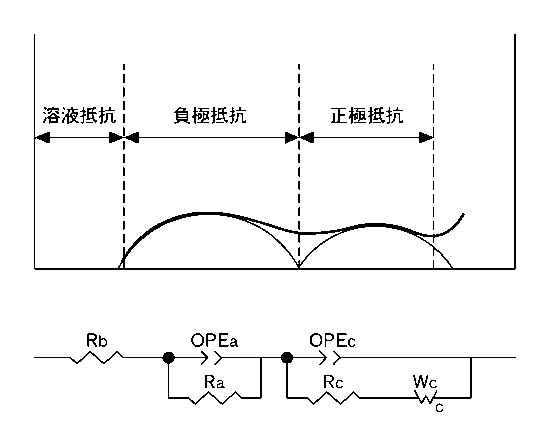
表1から明らかなように、実施例1〜7の正極活物質は、本発明に従って製造されたため、比較例1〜4に比べて放電容量が高く、正極抵抗も低いものとなっており、高容量かつ高出力な非水系電解質二次電池用正極活物質となっている。
As is clear from Table 1, since the positive electrode active materials of Examples 1 to 7 were manufactured according to the present invention, the discharge capacity was higher than that of Comparative Examples 1 to 4, and the positive electrode resistance was low. It is a positive electrode active material for non-aqueous electrolyte secondary batteries with high capacity and high output.
本発明の非水系電解質二次電池は、高容量で安全性の高い非水系電解質二次電池が得られるので、とくに小型携帯電子機器(ノート型パーソナルコンピュータや携帯電話端末など)で利用される充放電可能な二次電池として好適である。 Since the non-aqueous electrolyte secondary battery of the present invention provides a high-capacity and highly safe non-aqueous electrolyte secondary battery, it is particularly suitable for small portable electronic devices (such as notebook personal computers and mobile phone terminals). It is suitable as a rechargeable secondary battery.
1 コイン型電池
2 ケース
2a 正極缶
2b 負極缶
2c ガスケット
3 電極
3a 正極
3b 負極
3c セパレータ
DESCRIPTION OF SYMBOLS 1
Claims (10)
下記(A)〜(D)の工程を、(A)〜(D)の工程順に含むことを特徴とする非水系電解質二次電池用正極活物質の製造方法。
(A)ニッケルおよびコバルトを含有し、かつ添加元素MとしてMg、Al、Ca、Ti、V、Cr、Mn、Nb、ZrおよびMoから選ばれる少なくとも1種の元素を含む金属化合物の水溶液と、アンモニウムイオン供給体を含む水溶液とを含む反応溶液をアルカリ性に保持して中和晶析した後、固液分離して湿潤状態のニッケル複合水酸化物を得る晶析工程。
(B)晶析工程で得られた湿潤状態のニッケル複合水酸化物とタングステン化合物を混合した後、100〜750℃で熱処理してタングステン混合物を得る熱処理工程。
(C)前記タングステン混合物と、さらにリチウム化合物とを混合し、リチウム混合物を得る混合工程。
(D)前記リチウム混合物を、酸化性雰囲気中において700〜900℃の温度範囲で焼成して、一次粒子および一次粒子が凝集して構成された二次粒子からなるリチウムニッケル複合酸化物を得る焼成工程。 A method for producing a positive electrode active material for a non-aqueous electrolyte secondary battery comprising a lithium nickel composite oxide,
The manufacturing method of the positive electrode active material for non-aqueous electrolyte secondary batteries characterized by including the process of following (A)-(D) in order of the process of (A)-(D).
(A) an aqueous solution of a metal compound containing nickel and cobalt and containing at least one element selected from Mg, Al, Ca, Ti, V, Cr, Mn, Nb, Zr and Mo as the additive element M; A crystallization step in which a reaction solution containing an aqueous solution containing an ammonium ion supplier is neutralized and crystallized while being kept alkaline, and then solid-liquid separation is performed to obtain a wet nickel composite hydroxide.
(B) A heat treatment step in which a wet nickel composite hydroxide obtained in the crystallization step and a tungsten compound are mixed and then heat treated at 100 to 750 ° C. to obtain a tungsten mixture.
(C) A mixing step in which the tungsten mixture is further mixed with a lithium compound to obtain a lithium mixture.
(D) Firing the lithium mixture in an oxidizing atmosphere at a temperature range of 700 to 900 ° C. to obtain a lithium nickel composite oxide composed of primary particles and secondary particles formed by aggregation of the primary particles. Process.
Priority Applications (1)
| Application Number | Priority Date | Filing Date | Title |
|---|---|---|---|
| JP2015253287A JP2017117700A (en) | 2015-12-25 | 2015-12-25 | Method for producing positive electrode active material for nonaqueous electrolyte secondary battery |
Applications Claiming Priority (1)
| Application Number | Priority Date | Filing Date | Title |
|---|---|---|---|
| JP2015253287A JP2017117700A (en) | 2015-12-25 | 2015-12-25 | Method for producing positive electrode active material for nonaqueous electrolyte secondary battery |
Publications (1)
| Publication Number | Publication Date |
|---|---|
| JP2017117700A true JP2017117700A (en) | 2017-06-29 |
Family
ID=59234899
Family Applications (1)
| Application Number | Title | Priority Date | Filing Date |
|---|---|---|---|
| JP2015253287A Pending JP2017117700A (en) | 2015-12-25 | 2015-12-25 | Method for producing positive electrode active material for nonaqueous electrolyte secondary battery |
Country Status (1)
| Country | Link |
|---|---|
| JP (1) | JP2017117700A (en) |
Cited By (12)
| Publication number | Priority date | Publication date | Assignee | Title |
|---|---|---|---|---|
| WO2018105481A1 (en) * | 2016-12-07 | 2018-06-14 | 住友化学株式会社 | Method for producing positive electrode active material for lithium secondary batteries |
| JP2019116411A (en) * | 2017-12-27 | 2019-07-18 | 住友金属鉱山株式会社 | Manufacturing method of nickel-containing hydroxide |
| JP2019131417A (en) * | 2018-01-29 | 2019-08-08 | 住友金属鉱山株式会社 | Nickel composite hydroxide, method for producing the same, and method for producing positive electrode active material |
| JP2020047534A (en) * | 2018-09-20 | 2020-03-26 | 住友金属鉱山株式会社 | Nickel complex compound particle, manufacturing method thereof, and manufacturing method of cathode active material for lithium ion secondary battery |
| CN111386620A (en) * | 2017-11-28 | 2020-07-07 | 住友金属矿山株式会社 | Positive electrode active material precursor for non-aqueous electrolyte secondary battery |
| WO2020171089A1 (en) * | 2019-02-21 | 2020-08-27 | 住友金属鉱山株式会社 | Method for producing positive electrode active material for lithium ion secondary batteries, positive electrode active material for lithium ion secondary batteries, and lithium ion secondary battery |
| WO2020171093A1 (en) * | 2019-02-21 | 2020-08-27 | 住友金属鉱山株式会社 | Method for producing positive electrode active material for lithium ion secondary batteries |
| CN114466825A (en) * | 2019-09-27 | 2022-05-10 | 松下知识产权经营株式会社 | Method for producing lithium-nickel composite oxide |
| CN115136386A (en) * | 2020-06-04 | 2022-09-30 | 株式会社Lg新能源 | Method for recycling active material using anode scrap |
| JP7158852B2 (en) | 2017-12-27 | 2022-10-24 | 住友金属鉱山株式会社 | Method for producing nickel-containing hydroxide |
| JP2025101633A (en) * | 2023-12-25 | 2025-07-07 | トヨタ自動車株式会社 | Positive electrode active material, method for producing positive electrode active material, and lithium ion secondary battery |
| US12548765B2 (en) | 2017-07-24 | 2026-02-10 | Samsung Sdi Co., Ltd. | Positive active material for rechargeable lithium battery and rechargeable lithium battery including same |
Citations (2)
| Publication number | Priority date | Publication date | Assignee | Title |
|---|---|---|---|---|
| WO2012164763A1 (en) * | 2011-06-01 | 2012-12-06 | 住友金属鉱山株式会社 | Transition metal composite hydroxide capable of serving as precursor of positive electrode active material for nonaqueous electrolyte secondary batteries, method for producing same, positive electrode active material for nonaqueous electrolyte secondary batteries, method for producing positive electrode active material for nonaqueous electrolyte secondary batteries, and nonaqueous electrolyte secondary battery using positive electrode active material |
| WO2015008582A1 (en) * | 2013-07-17 | 2015-01-22 | 住友金属鉱山株式会社 | Positive-electrode active material for non-aqueous electrolyte secondary battery, method for producing said positive-electrode active material for non-aqueous electrolyte secondary battery, and non-aqueous electrolyte secondary battery using said positive-electrode active material for non-aqueous electrolyte secondary battery |
-
2015
- 2015-12-25 JP JP2015253287A patent/JP2017117700A/en active Pending
Patent Citations (2)
| Publication number | Priority date | Publication date | Assignee | Title |
|---|---|---|---|---|
| WO2012164763A1 (en) * | 2011-06-01 | 2012-12-06 | 住友金属鉱山株式会社 | Transition metal composite hydroxide capable of serving as precursor of positive electrode active material for nonaqueous electrolyte secondary batteries, method for producing same, positive electrode active material for nonaqueous electrolyte secondary batteries, method for producing positive electrode active material for nonaqueous electrolyte secondary batteries, and nonaqueous electrolyte secondary battery using positive electrode active material |
| WO2015008582A1 (en) * | 2013-07-17 | 2015-01-22 | 住友金属鉱山株式会社 | Positive-electrode active material for non-aqueous electrolyte secondary battery, method for producing said positive-electrode active material for non-aqueous electrolyte secondary battery, and non-aqueous electrolyte secondary battery using said positive-electrode active material for non-aqueous electrolyte secondary battery |
Cited By (23)
| Publication number | Priority date | Publication date | Assignee | Title |
|---|---|---|---|---|
| WO2018105481A1 (en) * | 2016-12-07 | 2018-06-14 | 住友化学株式会社 | Method for producing positive electrode active material for lithium secondary batteries |
| US12548765B2 (en) | 2017-07-24 | 2026-02-10 | Samsung Sdi Co., Ltd. | Positive active material for rechargeable lithium battery and rechargeable lithium battery including same |
| CN111386620A (en) * | 2017-11-28 | 2020-07-07 | 住友金属矿山株式会社 | Positive electrode active material precursor for non-aqueous electrolyte secondary battery |
| CN111386620B (en) * | 2017-11-28 | 2023-12-22 | 住友金属矿山株式会社 | Cathode active material precursor for non-aqueous electrolyte secondary batteries |
| JP2019116411A (en) * | 2017-12-27 | 2019-07-18 | 住友金属鉱山株式会社 | Manufacturing method of nickel-containing hydroxide |
| JP7158852B2 (en) | 2017-12-27 | 2022-10-24 | 住友金属鉱山株式会社 | Method for producing nickel-containing hydroxide |
| JP7069749B2 (en) | 2018-01-29 | 2022-05-18 | 住友金属鉱山株式会社 | Nickel composite hydroxide and its manufacturing method, and manufacturing method of positive electrode active material |
| JP2019131417A (en) * | 2018-01-29 | 2019-08-08 | 住友金属鉱山株式会社 | Nickel composite hydroxide, method for producing the same, and method for producing positive electrode active material |
| JP2020047534A (en) * | 2018-09-20 | 2020-03-26 | 住友金属鉱山株式会社 | Nickel complex compound particle, manufacturing method thereof, and manufacturing method of cathode active material for lithium ion secondary battery |
| JP7210957B2 (en) | 2018-09-20 | 2023-01-24 | 住友金属鉱山株式会社 | Nickel composite compound particles, method for producing same, and method for producing positive electrode active material for lithium ion secondary battery |
| WO2020171089A1 (en) * | 2019-02-21 | 2020-08-27 | 住友金属鉱山株式会社 | Method for producing positive electrode active material for lithium ion secondary batteries, positive electrode active material for lithium ion secondary batteries, and lithium ion secondary battery |
| JPWO2020171093A1 (en) * | 2019-02-21 | 2021-12-16 | 住友金属鉱山株式会社 | Manufacturing method of positive electrode active material for lithium ion secondary battery |
| JPWO2020171089A1 (en) * | 2019-02-21 | 2021-12-16 | 住友金属鉱山株式会社 | Method for manufacturing positive electrode active material for lithium ion secondary battery, positive electrode active material for lithium ion secondary battery, lithium ion secondary battery |
| JP7457689B2 (en) | 2019-02-21 | 2024-03-28 | 住友金属鉱山株式会社 | Method for producing positive electrode active material for lithium ion secondary battery |
| JP7457688B2 (en) | 2019-02-21 | 2024-03-28 | 住友金属鉱山株式会社 | Method for producing positive electrode active material for lithium ion secondary batteries |
| US12113196B2 (en) | 2019-02-21 | 2024-10-08 | Sumitomo Metal Mining Co., Ltd. | Method of manufacturing positive electrode active material for lithium ion secondary battery, positive electrode active material for lithium ion secondary battery, and lithium ion secondary battery |
| US12170368B2 (en) | 2019-02-21 | 2024-12-17 | Sumitomo Metal Mining Co., Ltd. | Method of manufacturing positive electrode active material for lithium ion secondary battery |
| WO2020171093A1 (en) * | 2019-02-21 | 2020-08-27 | 住友金属鉱山株式会社 | Method for producing positive electrode active material for lithium ion secondary batteries |
| CN114466825A (en) * | 2019-09-27 | 2022-05-10 | 松下知识产权经营株式会社 | Method for producing lithium-nickel composite oxide |
| CN115136386A (en) * | 2020-06-04 | 2022-09-30 | 株式会社Lg新能源 | Method for recycling active material using anode scrap |
| US12494522B2 (en) | 2020-06-04 | 2025-12-09 | Lg Energy Solution, Ltd. | Method for reusing active material using positive electrode scrap |
| JP2025101633A (en) * | 2023-12-25 | 2025-07-07 | トヨタ自動車株式会社 | Positive electrode active material, method for producing positive electrode active material, and lithium ion secondary battery |
| JP7772050B2 (en) | 2023-12-25 | 2025-11-18 | トヨタ自動車株式会社 | Positive electrode active material, method for producing positive electrode active material, and lithium ion secondary battery |
Similar Documents
| Publication | Publication Date | Title |
|---|---|---|
| JP5999208B2 (en) | Positive electrode active material for non-aqueous electrolyte secondary battery, method for producing the same, and non-aqueous electrolyte secondary battery using the positive electrode active material | |
| JP5843046B2 (en) | Positive electrode active material for non-aqueous electrolyte secondary battery, method for producing such positive electrode active material for non-aqueous electrolyte secondary battery, and non-aqueous electrolyte secondary battery using such positive electrode active material for non-aqueous electrolyte secondary battery | |
| KR102713713B1 (en) | Positive electrode active material for non-aqueous electrolyte secondary battery, and non-aqueous electrolyte secondary battery using the positive electrode active material | |
| JP5607189B2 (en) | Nickel composite hydroxide particles and manufacturing method thereof, positive electrode active material for non-aqueous electrolyte secondary battery, manufacturing method thereof, and non-aqueous electrolyte secondary battery | |
| JP5894388B2 (en) | Cathode active material for non-aqueous electrolyte secondary battery, method for producing the same, and non-aqueous electrolyte secondary battery using the same | |
| KR102420738B1 (en) | Positive electrode active material for non-aqueous electrolyte secondary battery, manufacturing method thereof, and non-aqueous electrolyte secondary battery using this positive electrode active material | |
| JP6569544B2 (en) | Positive electrode active material for non-aqueous electrolyte secondary battery, method for producing the same, and non-aqueous electrolyte secondary battery using the positive electrode active material | |
| JP2017117700A (en) | Method for producing positive electrode active material for nonaqueous electrolyte secondary battery | |
| WO2011089958A1 (en) | Positive electrode active material for nonaqueous electrolyte secondary battery, method for producing same, and nonaqueous electrolyte secondary battery using same | |
| JP7225684B2 (en) | Lithium-nickel-containing composite oxide and method for producing the same, and positive electrode active material for lithium-ion secondary battery using the lithium-nickel-containing composite oxide as a base material and method for producing the same | |
| JP7630559B2 (en) | Lithium nickel-containing composite oxide, and positive electrode active material for lithium ion secondary battery using the lithium nickel-containing composite oxide as a base material and method for producing the same | |
| KR102420737B1 (en) | Positive electrode active material for non-aqueous electrolyte secondary battery, manufacturing method thereof, and non-aqueous electrolyte secondary battery using this positive electrode active material | |
| WO2019004148A1 (en) | Positive electrode active material for nonaqueous electrolyte secondary batteries, method for producing same, and nonaqueous electrolyte secondary battery | |
| JP2020087822A (en) | Lithium nickel-containing composite oxide and manufacturing method thereof, and positive electrode active material for lithium ion secondary battery, which is arranged by use of the lithium nickel-containing composite oxide as base material, and manufacturing method thereof | |
| JP2020087824A (en) | Lithium-nickel-containing composite oxide, positive electrode active material for lithium-ion secondary battery using the lithium-nickel-containing composite oxide as a base material, and method for producing the same |
Legal Events
| Date | Code | Title | Description |
|---|---|---|---|
| A621 | Written request for application examination |
Free format text: JAPANESE INTERMEDIATE CODE: A621 Effective date: 20180830 |
|
| A977 | Report on retrieval |
Free format text: JAPANESE INTERMEDIATE CODE: A971007 Effective date: 20190716 |
|
| A131 | Notification of reasons for refusal |
Free format text: JAPANESE INTERMEDIATE CODE: A131 Effective date: 20190809 |
|
| A02 | Decision of refusal |
Free format text: JAPANESE INTERMEDIATE CODE: A02 Effective date: 20200226 |