JP2017521005A - Method and device for determining a remote radio unit - Google Patents
Method and device for determining a remote radio unit Download PDFInfo
- Publication number
- JP2017521005A JP2017521005A JP2016575947A JP2016575947A JP2017521005A JP 2017521005 A JP2017521005 A JP 2017521005A JP 2016575947 A JP2016575947 A JP 2016575947A JP 2016575947 A JP2016575947 A JP 2016575947A JP 2017521005 A JP2017521005 A JP 2017521005A
- Authority
- JP
- Japan
- Prior art keywords
- terminal
- rru
- bbu
- threshold
- value
- Prior art date
- Legal status (The legal status is an assumption and is not a legal conclusion. Google has not performed a legal analysis and makes no representation as to the accuracy of the status listed.)
- Granted
Links
Images


Classifications
-
- H—ELECTRICITY
- H04—ELECTRIC COMMUNICATION TECHNIQUE
- H04L—TRANSMISSION OF DIGITAL INFORMATION, e.g. TELEGRAPHIC COMMUNICATION
- H04L5/00—Arrangements affording multiple use of the transmission path
- H04L5/003—Arrangements for allocating sub-channels of the transmission path
- H04L5/0032—Distributed allocation, i.e. involving a plurality of allocating devices, each making partial allocation
- H04L5/0035—Resource allocation in a cooperative multipoint environment
-
- H—ELECTRICITY
- H04—ELECTRIC COMMUNICATION TECHNIQUE
- H04W—WIRELESS COMMUNICATION NETWORKS
- H04W72/00—Local resource management
- H04W72/50—Allocation or scheduling criteria for wireless resources
- H04W72/54—Allocation or scheduling criteria for wireless resources based on quality criteria
-
- H—ELECTRICITY
- H04—ELECTRIC COMMUNICATION TECHNIQUE
- H04W—WIRELESS COMMUNICATION NETWORKS
- H04W72/00—Local resource management
- H04W72/50—Allocation or scheduling criteria for wireless resources
- H04W72/54—Allocation or scheduling criteria for wireless resources based on quality criteria
- H04W72/542—Allocation or scheduling criteria for wireless resources based on quality criteria using measured or perceived quality
-
- H—ELECTRICITY
- H04—ELECTRIC COMMUNICATION TECHNIQUE
- H04B—TRANSMISSION
- H04B17/00—Monitoring; Testing
- H04B17/30—Monitoring; Testing of propagation channels
- H04B17/309—Measuring or estimating channel quality parameters
- H04B17/345—Interference values
-
- H—ELECTRICITY
- H04—ELECTRIC COMMUNICATION TECHNIQUE
- H04L—TRANSMISSION OF DIGITAL INFORMATION, e.g. TELEGRAPHIC COMMUNICATION
- H04L5/00—Arrangements affording multiple use of the transmission path
- H04L5/003—Arrangements for allocating sub-channels of the transmission path
- H04L5/0048—Allocation of pilot signals, i.e. of signals known to the receiver
- H04L5/005—Allocation of pilot signals, i.e. of signals known to the receiver of common pilots, i.e. pilots destined for multiple users or terminals
-
- H—ELECTRICITY
- H04—ELECTRIC COMMUNICATION TECHNIQUE
- H04W—WIRELESS COMMUNICATION NETWORKS
- H04W72/00—Local resource management
- H04W72/12—Wireless traffic scheduling
-
- H—ELECTRICITY
- H04—ELECTRIC COMMUNICATION TECHNIQUE
- H04W—WIRELESS COMMUNICATION NETWORKS
- H04W72/00—Local resource management
- H04W72/50—Allocation or scheduling criteria for wireless resources
- H04W72/51—Allocation or scheduling criteria for wireless resources based on terminal or device properties
-
- H—ELECTRICITY
- H04—ELECTRIC COMMUNICATION TECHNIQUE
- H04W—WIRELESS COMMUNICATION NETWORKS
- H04W88/00—Devices specially adapted for wireless communication networks, e.g. terminals, base stations or access point devices
- H04W88/08—Access point devices
- H04W88/085—Access point devices with remote components
-
- H—ELECTRICITY
- H04—ELECTRIC COMMUNICATION TECHNIQUE
- H04L—TRANSMISSION OF DIGITAL INFORMATION, e.g. TELEGRAPHIC COMMUNICATION
- H04L5/00—Arrangements affording multiple use of the transmission path
- H04L5/0001—Arrangements for dividing the transmission path
- H04L5/0014—Three-dimensional division
- H04L5/0023—Time-frequency-space
-
- H—ELECTRICITY
- H04—ELECTRIC COMMUNICATION TECHNIQUE
- H04L—TRANSMISSION OF DIGITAL INFORMATION, e.g. TELEGRAPHIC COMMUNICATION
- H04L5/00—Arrangements affording multiple use of the transmission path
- H04L5/003—Arrangements for allocating sub-channels of the transmission path
- H04L5/0058—Allocation criteria
- H04L5/006—Quality of the received signal, e.g. BER, SNR, water filling
-
- H—ELECTRICITY
- H04—ELECTRIC COMMUNICATION TECHNIQUE
- H04L—TRANSMISSION OF DIGITAL INFORMATION, e.g. TELEGRAPHIC COMMUNICATION
- H04L5/00—Arrangements affording multiple use of the transmission path
- H04L5/003—Arrangements for allocating sub-channels of the transmission path
- H04L5/0058—Allocation criteria
- H04L5/0069—Allocation based on distance or geographical location
Landscapes
- Engineering & Computer Science (AREA)
- Signal Processing (AREA)
- Computer Networks & Wireless Communication (AREA)
- Quality & Reliability (AREA)
- Physics & Mathematics (AREA)
- Electromagnetism (AREA)
- Mobile Radio Communication Systems (AREA)
Abstract
本発明の実施形態は、リモート無線ユニットRRUを決定するための方法およびデバイスに関する。方法は、ベースバンドユニットBBUが端末の干渉強度情報を取得し、干渉強度情報が端末のダウンリンクモードを含むことを含む。方法は、復調がダウンリンクモードにおいて専用参照信号DRSを使用して行われている場合には、BBUは、第2のRRUを使用してリソースのスケジューリングを端末に対して行う、ここで、第2のRRUは、端末にサービングしている複数の第1のRRUからBBUによって選択される、または、復調がダウンリンクモードにおいてDRSを使用せずに行われている場合には、BBUは、第3のRRUを使用してリソースのスケジューリングを端末に対して行う、ここで、第3のRRUは、端末のアップリンク信号強度値、端末のダウンリンク品質値、または端末のアップリンク品質値のうちのいずれか1つに従ってBBUによって決定されることをさらに含む。Embodiments of the invention relate to a method and device for determining a remote radio unit RRU. The method includes that the baseband unit BBU obtains interference strength information of the terminal, and the interference strength information includes a downlink mode of the terminal. When the demodulation is performed using the dedicated reference signal DRS in the downlink mode, the BBU performs resource scheduling for the terminal using the second RRU, where The RRU of 2 is selected by the BBU from a plurality of first RRUs serving the terminal, or if the demodulation is performed without using DRS in the downlink mode, the BBU The RRU of 3 is used to schedule resources to the terminal, where the third RRU is the terminal uplink signal strength value, the terminal downlink quality value, or the terminal uplink quality value. Further including being determined by the BBU according to any one of the above.
Description
本出願は、その全体が参照により本明細書に組み込まれている、2014年6月30日に中国特許庁に出願され「METHOD AND DEVICE FOR DETERMINING REMOTE RADIO UNIT」と題する、中国特許出願第201410306364.2号に対する優先権を主張する。 This application is filed with the Chinese Patent Office on June 30, 2014, and is incorporated herein by reference in its entirety. Claim priority.
本発明は、通信分野に関し、詳細には、リモート無線ユニットRRUを決定するための方法およびデバイスに関する。 The present invention relates to the field of communications, and in particular, to a method and device for determining a remote radio unit RRU.
現在、単一周波数ネットワーキング動作方式がロング・ターム・エボリューション(Long Term Evaluation、略して、LTE)システムにおいて広く使用されているため、セル間の干渉が極めて深刻となっている。特に、基地局密度の高いネットワークにおいては、干渉がとりわけはっきり見てとれる。 Currently, since single frequency networking operation is widely used in Long Term Evolution (LTE) systems, inter-cell interference is extremely serious. In particular, interference is particularly evident in networks with a high base station density.
マルチリモート無線ユニット(Remote Radio Unit、略して、RRU)セル技術が高密度な基地局配置における干渉を低減するとともに合成ゲインを取得するために使用され得る。マルチRRUセル技術は、特に、複数のRRUを1つのセルに合成してすべての端末に対してジョイント伝送を行う技術である。 Multi-Remote Radio Unit (RRU for short) cell technology can be used to reduce interference and obtain composite gain in dense base station deployments. In particular, the multi-RRU cell technology is a technology for combining a plurality of RRUs into one cell and performing joint transmission to all terminals.
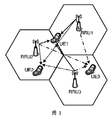
従来技術では、基地局は、マルチRRUセル技術を使用してリソースのスケジューリングを端末に対して行う。具体的な処理を図1に示す。基地局は、複数の独立したRRU(RRU1、RRU2、およびRRU3など)を1つの論理セルに合成し、セルにおいては、複数の独立したRRUの物理セル識別子(Physical Cell ID)は同一となる。基地局は、同一の時間-周波数リソースに対してセル内の複数のRRUをスケジューリングして端末に対して同一のデータを同時に送信する、その結果、始めは互いに干渉していた複数のセル内の信号が重ねあわされることによって強化されたマルチパス信号に変更される、このことが、セルエッジの電力対干渉および雑音電力比(Signal-to-Interference plus Noise Ratio、略して、SINR)を改善し、隣接セルの数量を低減し、セル間の同一チャネル干渉を明らかに低減している。このようにして、ユーザのセルエッジのサービスエクスペリエンスを改善している。 In the prior art, the base station performs resource scheduling for the terminal using the multi-RRU cell technology. Specific processing is shown in FIG. The base station combines a plurality of independent RRUs (such as RRU1, RRU2, and RRU3) into one logical cell, and the physical cell identifiers (Physical Cell IDs) of the plurality of independent RRUs are the same in the cell. The base station schedules multiple RRUs in the cell for the same time-frequency resource and simultaneously transmits the same data to the terminal, and as a result, in the multiple cells that initially interfered with each other. This is changed to an enhanced multipath signal by superimposing the signals, which improves the cell edge power-to-interference plus noise ratio (SINR for short) The number of neighboring cells is reduced, and co-channel interference between cells is clearly reduced. In this way, the user cell edge service experience is improved.
しかしながら、従来技術において使用されるマルチRRUジョイント伝送方式の問題、すなわち、前記技術においては、基地局がリソースのスケジューリングをすべての端末に対して行う場合にマルチRRUジョイント伝送方式が使用されるという問題にさらされている。しかしながら、リソースはすべてのRRU間で再利用されないため、複数のユーザのサービス量が十分にある場合にはシステムのスループットロスが深刻になる。 However, the problem of the multi-RRU joint transmission system used in the prior art, that is, the problem that the base station uses the multi-RRU joint transmission system when the base station performs resource scheduling for all terminals. Have been exposed to. However, since resources are not reused between all RRUs, system throughput loss becomes serious when there is a sufficient amount of service for multiple users.
本発明の実施形態は、複数のユーザのサービス量が十分にある場合にはシステムのスループットロスが深刻になるという、従来技術において使用されるマルチRRUジョイント伝送方式に起因する、問題を解決するために、リモート無線ユニットRRUを決定するための方法およびデバイスを開示している。 Embodiments of the present invention solve the problem caused by the multi-RRU joint transmission method used in the prior art that the system throughput loss becomes serious when the service amount of a plurality of users is sufficient. Discloses a method and a device for determining a remote radio unit RRU.
第1の態様に従って、本発明の実施形態は、リモート無線ユニットRRUを決定するための方法を提供しており、方法は、
ベースバンドユニットBBUによって、端末の干渉強度情報を取得するステップであって、干渉強度情報は端末のダウンリンクモードを含む、ステップを含み、
方法は、
復調がダウンリンクモードにおいて専用参照信号DRSを使用して行われている場合には、BBUによって、第2のRRUを使用してリソースのスケジューリングを端末に対して行うステップであって、第2のRRUは、端末にサービングしている複数の第1のRRUからBBUによって選択される、ステップ、または、復調がダウンリンクモードにおいてDRSを使用せずに行われている場合には、BBUによって、第3のRRUを使用してリソースのスケジューリングを端末に対して行うステップであって、第3のRRUは、端末のアップリンク信号強度値、端末のダウンリンク品質値、または端末のアップリンク品質値のうちのいずれか1つに従ってBBUによって決定される、ステップをさらに含む。
According to a first aspect, embodiments of the present invention provide a method for determining a remote radio unit RRU, the method comprising:
Obtaining interference intensity information of the terminal by the baseband unit BBU, the interference intensity information including a downlink mode of the terminal,
The method is
When demodulation is performed using the dedicated reference signal DRS in the downlink mode, the BBU performs resource scheduling for the terminal using the second RRU. The RRU is selected by the BBU from a plurality of first RRUs serving the terminal, or if the demodulation is performed without using DRS in the downlink mode, the RRU Performing resource scheduling for the terminal using the RRU of 3, wherein the third RRU includes the uplink signal strength value of the terminal, the downlink quality value of the terminal, or the uplink quality value of the terminal; And further comprising a step determined by the BBU according to any one of them.
第1の可能な実施様態においては、複数の第1のRRUは第2のRRUと他のRRUとを含み、第2のRRUの信号強度値は他のRRUの信号強度値より大きい。 In a first possible embodiment, the plurality of first RRUs includes a second RRU and other RRUs, and the signal strength value of the second RRU is greater than the signal strength values of the other RRUs.
第2の可能な実施様態においては、アップリンク信号強度値が第1の閾値未満である、または、ダウンリンク品質値が第2の閾値未満である、または、アップリンク品質値が第3の閾値未満である場合には、第3のRRUは、BBUによって制御されるすべてのRRUを含む。 In a second possible embodiment, the uplink signal strength value is less than the first threshold, or the downlink quality value is less than the second threshold, or the uplink quality value is the third threshold. If so, the third RRU includes all RRUs controlled by the BBU.
第3の可能な実施様態においては、アップリンク信号強度値が第1の閾値以上である、または、ダウンリンク品質値が第2の閾値以上である、または、アップリンク品質値が第3の閾値以上である場合には、第3のRRUは、端末にサービングしている複数の第1のRRUを含む。 In a third possible embodiment, the uplink signal strength value is greater than or equal to the first threshold, or the downlink quality value is greater than or equal to the second threshold, or the uplink quality value is the third threshold. In the above case, the third RRU includes a plurality of first RRUs serving the terminal.
第1の態様の第2または第3の可能な実施様態に準拠している、第4の可能な実施様態においては、方法は、
BBUによって、アップリンク信号強度値が第1の閾値未満であるかどうかを決定するステップ、または、
BBUによって、ダウンリンク品質値が第2の閾値未満であるかどうかを決定するステップ、または、
BBUによって、アップリンク品質値が第3の閾値未満であるかどうかを決定するステップをさらに含む。
In a fourth possible embodiment, in accordance with the second or third possible embodiment of the first aspect, the method comprises:
Determining by the BBU whether the uplink signal strength value is less than a first threshold, or
Determining, by the BBU, whether the downlink quality value is less than a second threshold, or
The method further includes determining whether the uplink quality value is less than a third threshold value by the BBU.
第1の態様または第1の態様の第1、第2、第3、もしくは第4の可能な実施様態のいずれか1つに準拠している、第5の可能な実施様態においては、方法は、
BBUによって、端末のロケーション情報を取得して、端末のロケーション情報および干渉強度情報に従って、端末にサービングしている複数の第1のRRUを決定するステップをさらに含む。
In a fifth possible embodiment, according to any one of the first, first, second, third, or fourth possible embodiments of the first aspect or the first aspect, the method comprises ,
The method further includes obtaining location information of the terminal by the BBU and determining a plurality of first RRUs serving the terminal according to the location information and interference intensity information of the terminal.
第2の態様に従って、本発明の実施形態は、第1のユニットと第2のユニットとを備える、リモート無線ユニットを決定するためのデバイスを提供しており、
第1のユニットは、端末の干渉強度情報を取得するように構成され、干渉強度情報は、端末のダウンリンクモードを含み、
第2のユニットは、復調がダウンリンクモードにおいて専用参照信号DRSを使用して行われている場合には、第2のRRUを使用してリソースのスケジューリングを端末に対して行うように構成され、第2のRRUは、端末にサービングしている複数の第1のRRUから選択される、または、
第2のユニットは、復調がダウンリンクモードにおいてDRSを使用せずに行われている場合には、第3のRRUを使用してリソースのスケジューリングを端末に対して行うように構成され、第3のRRUは、端末のアップリンク信号強度値、端末のダウンリンク品質値、または端末のアップリンク品質値のうちのいずれか1つに従って決定される。
According to a second aspect, an embodiment of the invention provides a device for determining a remote radio unit comprising a first unit and a second unit,
The first unit is configured to obtain terminal interference strength information, the interference strength information including a terminal downlink mode;
The second unit is configured to perform resource scheduling for the terminal using the second RRU when demodulation is performed using the dedicated reference signal DRS in the downlink mode, The second RRU is selected from a plurality of first RRUs serving the terminal, or
The second unit is configured to perform resource scheduling for the terminal using the third RRU when demodulation is performed without using DRS in the downlink mode. Is determined according to any one of the uplink signal strength value of the terminal, the downlink quality value of the terminal, or the uplink quality value of the terminal.
第1の可能な実施様態においては、複数の第1のRRUは第2のRRUと他のRRUとを含み、第2のRRUの信号強度値は他のRRUの信号強度値より大きい。 In a first possible embodiment, the plurality of first RRUs includes a second RRU and other RRUs, and the signal strength value of the second RRU is greater than the signal strength values of the other RRUs.
第2の態様の第1の可能な実施様態に準拠している、第2の可能な実施様態においては、第2のユニットは、複数の第1のRRUのうちのそれぞれの第1のRRUの信号強度値を決定し、第1のRRUの信号強度値内の最大値を決定し、最大値に相当する第1のRRUを第2のRRUとして決定するようにさらに構成される。 According to a second possible embodiment, which is compliant with the first possible embodiment of the second aspect, the second unit has a first RRU of each of the plurality of first RRUs. It is further configured to determine the signal strength value, determine a maximum value within the signal strength value of the first RRU, and determine the first RRU corresponding to the maximum value as the second RRU.
第3の可能な実施様態においては、アップリンク信号強度値が第1の閾値未満である、または、ダウンリンク品質値が第2の閾値未満である、または、アップリンク品質値が第3の閾値未満である場合には、第3のRRUは、デバイスによって制御されるすべてのRRUを含む。 In a third possible embodiment, the uplink signal strength value is less than the first threshold, or the downlink quality value is less than the second threshold, or the uplink quality value is the third threshold. If so, the third RRU includes all RRUs controlled by the device.
第2の態様の第3の可能な実施様態に準拠している、第4の可能な実施様態においては、アップリンク信号強度値が第1の閾値以上である、または、ダウンリンク品質値が第2の閾値以上である、または、アップリンク品質値が第3の閾値以上である場合には、第3のRRUは、端末にサービングしている複数の第1のRRUを含む。 In a fourth possible embodiment, which conforms to the third possible embodiment of the second aspect, the uplink signal strength value is greater than or equal to the first threshold or the downlink quality value is the first If the threshold value is equal to or greater than 2, or the uplink quality value is equal to or greater than the third threshold value, the third RRU includes a plurality of first RRUs serving the terminal.
第2の態様の第3または第4の可能な実施様態に準拠している、第5の可能な実施様態においては、第2のユニットは、
アップリンク信号強度値が第1の閾値未満であるかどうかを決定する、または、
ダウンリンク品質値が第2の閾値未満であるかどうかを決定する、または、
アップリンク品質値が第3の閾値未満であるかどうかを決定するようにさらに構成される。
In a fifth possible embodiment, which conforms to the third or fourth possible embodiment of the second aspect, the second unit comprises:
Determine whether the uplink signal strength value is less than a first threshold, or
Determine if the downlink quality value is less than the second threshold, or
Further configured to determine whether the uplink quality value is less than a third threshold.
第2の態様または第2の態様の第1、第2、第3、第4、もしくは第5の可能な実施様態のいずれか1つに準拠している、第6の可能な実施様態においては、第1のユニットは、端末のロケーション情報を取得するようにさらに構成され、
第2のユニットは、端末のロケーション情報および干渉強度情報に従って、端末にサービングしている複数の第1のRRUを決定するようにさらに構成される。
In a sixth possible embodiment, in accordance with any one of the first, second, third, fourth or fifth possible embodiments of the second aspect or the second aspect, The first unit is further configured to obtain terminal location information;
The second unit is further configured to determine a plurality of first RRUs serving the terminal according to the terminal location information and interference strength information.
第2の態様または第2の態様の第1、第2、第3、第4、第5、もしくは第6の可能な実施様態のいずれか1つに準拠している、第7の可能な実施様態においては、デバイスは、ベースバンドユニットBBUまたは基地局である。 A seventh possible implementation according to any one of the first, second, third, fourth, fifth or sixth possible embodiments of the second aspect or the second aspect In an aspect, the device is a baseband unit BBU or a base station.
したがって、本発明の実施形態において提供したリモート無線ユニットRRUを決定するための方法およびデバイスを適用することによって、BBUは端末の干渉強度情報を取得している。復調が、専用参照信号DRSを使用して、干渉強度情報に含まれる端末のダウンリンクモードにおいて行われている場合には、BBUは、第2のRRUを使用してリソースのスケジューリングを端末に対して行う、ここで、第2のRRUは、端末にサービングしている複数の第1のRRUからBBUによって選択される、または、復調がダウンリンクモードにおいてDRSを使用せずに行われている場合には、BBUは、第3のRRUを使用してリソースのスケジューリングを端末に対して行う、ここで、第3のRRUは、端末のアップリンク信号強度値、ダウンリンク品質値、またはアップリンク品質値のうちのいずれか1つに従ってBBUによって決定される。複数のユーザのサービス量が十分にある場合にはシステムのスループットロスが深刻になるという、従来技術において使用されるマルチRRUジョイント伝送方式に起因する、問題が解決される。本発明の実施形態においては、各端末のダウンリンクモードに従った決定を行った後に、BBUが端末に対するサービングRRUを決定しているため、より高いユーザパフォーマンス信頼性およびシステム効率を得られ得るし、リソース利用およびシステムスループットも改善される。 Therefore, by applying the method and device for determining the remote radio unit RRU provided in the embodiment of the present invention, the BBU obtains the interference intensity information of the terminal. When demodulation is performed in the downlink mode of the terminal included in the interference strength information using the dedicated reference signal DRS, the BBU uses the second RRU to perform resource scheduling for the terminal. Where the second RRU is selected by the BBU from a plurality of first RRUs serving the terminal, or the demodulation is performed without using DRS in the downlink mode. The BBU uses the third RRU to perform resource scheduling for the terminal, where the third RRU is the terminal's uplink signal strength value, downlink quality value, or uplink quality. Determined by the BBU according to any one of the values. The problem caused by the multi-RRU joint transmission method used in the prior art that the system throughput loss becomes serious when the service amounts of a plurality of users are sufficient is solved. In the embodiment of the present invention, since the BBU determines the serving RRU for the terminal after making a determination according to the downlink mode of each terminal, higher user performance reliability and system efficiency can be obtained. Resource utilization and system throughput are also improved.
本発明の実施形態の目的、技術的解決手法、および利点をより明確にするために、本発明の実施形態における添付の図面を参照して本発明の実施形態における技術的解決手法を以下に明確に説明する。説明した実施形態が本発明の実施形態のすべてではなく一部であることは明らかであろう。創造的努力なしに本発明の実施形態に基づいて当業者によって取得される他の実施形態のすべてが本発明の保護範囲に含まれるものとする。 In order to clarify the objects, technical solutions, and advantages of the embodiments of the present invention, the technical solutions in the embodiments of the present invention will be clarified below with reference to the accompanying drawings in the embodiments of the present invention. Explained. It will be apparent that the described embodiments are a part rather than all of the embodiments of the present invention. All other embodiments obtained by a person of ordinary skill in the art based on the embodiments of the present invention without creative efforts shall fall within the protection scope of the present invention.
本発明の実施形態をよりよく理解するために、以下では、本発明の実施形態に対する限定ではない具体的な実施形態を使用して、添付の図面を参照してさらなる説明を提供している。 In order that the embodiments of the present invention may be better understood, the following description is provided with reference to the accompanying drawings, using specific embodiments that are not limiting to the embodiments of the present invention.
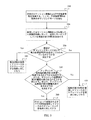
実施形態1
以下では、本発明の実施形態1において提供したリモート無線ユニットRRUを決定するための方法を、例として図2を使用して詳細に、説明している。図2は、本発明の実施形態1による、リモート無線ユニットRRUを決定するための方法のフローチャートである。実際のネットワーク処理においては、基地局は、BBUとBBUに接続されている複数のRRUとを備える。本発明の本実施形態においては、方法は、基地局内のBBUまたは基地局によって実行される。以下では、BBUがそのような方法を実行している例を使用して説明を提供している。図2に示したように、本実施形態は、以下のステップを特に含む。
Embodiment 1
In the following, the method for determining the remote radio unit RRU provided in Embodiment 1 of the present invention will be described in detail using FIG. 2 as an example. FIG. 2 is a flowchart of a method for determining a remote radio unit RRU according to Embodiment 1 of the present invention. In actual network processing, a base station includes a BBU and a plurality of RRUs connected to the BBU. In this embodiment of the invention, the method is performed by a BBU in a base station or a base station. In the following, an explanation is provided using an example where the BBU is performing such a method. As shown in FIG. 2, the present embodiment specifically includes the following steps.
ステップ210: ベースバンドユニットBBUが端末の干渉強度情報を取得する、ここで、干渉強度情報は端末のダウンリンクモードを含む。 Step 210: The baseband unit BBU obtains interference strength information of the terminal, where the interference strength information includes the downlink mode of the terminal.
特に、BBUは、端末の干渉強度情報を取得する。特に、干渉強度情報は、端末によって測定することによって取得され、その後、BBUに送信される、または、特に、干渉強度情報は、BBUによって測定することによって取得される。 In particular, the BBU acquires interference intensity information of the terminal. In particular, the interference strength information is obtained by measuring by the terminal and then transmitted to the BBU, or in particular, the interference strength information is obtained by measuring by the BBU.
端末のダウンリンクモードは、伝送モード(Transmission Mode、略して、TM)TM7、TM8、TM9、TM10などである。 The downlink mode of the terminal is a transmission mode (TM for short) TM7, TM8, TM9, TM10, or the like.
ステップ220: 復調がダウンリンクモードにおいて専用参照信号DRSを使用して行われているかどうかに従って第2のRRUまたは第3のRRUを決定して、第2のRRUまたは第3のRRUを使用してリソースのスケジューリングを端末に対して行う。例えば、復調がダウンリンクモードにおいて専用参照信号DRSを使用して行われている場合には、BBUは、第2のRRUを使用してリソースのスケジューリングを端末に対して行う、ここで、第2のRRUは、端末にサービングしている複数の第1のRRUからBBUによって選択される、または、復調がダウンリンクモードにおいてDRSを使用せずに行われている場合には、BBUは、第3のRRUを使用してリソースのスケジューリングを端末に対して行う、ここで、第3のRRUは、端末のアップリンク信号強度値、端末のダウンリンク品質値、または端末のアップリンク品質値のうちのいずれか1つに従ってBBUによって決定される。 Step 220: Determine second RRU or third RRU according to whether demodulation is performed using dedicated reference signal DRS in downlink mode, and use second RRU or third RRU Schedule resources to terminals. For example, if demodulation is performed using the dedicated reference signal DRS in the downlink mode, the BBU performs resource scheduling for the terminal using the second RRU, where the second The RBU is selected by the BBU from a plurality of first RRUs serving the terminal, or if the demodulation is performed without using DRS in the downlink mode, the BBU The RRU is used to schedule resources to the terminal, where the third RRU is one of the terminal uplink signal strength value, the terminal downlink quality value, or the terminal uplink quality value. Determined by the BBU according to any one.
特に、BBUがダウンリンクモードを取得した後に、BBUは、復調がダウンリンクモードにおいて専用参照信号(Dedicated Reference Signal、略して、DRS)を使用して行われているかどうかを決定する。復調がダウンリンクモードにおいてDRSを使用して行われている場合には、BBUは、第2のRRUを使用してリソースのスケジューリングを端末に対して行う、ここで、第2のRRUは、端末にサービングしている複数の第1のRRUからBBUによって選択される。あるいは、復調がダウンリンクモードにおいてDRSを使用せずに行われている場合には、BBUは、第3のRRUを使用してリソースのスケジューリングを端末に対して行う、ここで、第3のRRUは、端末のアップリンク信号強度値、端末のダウンリンク品質値、または端末のアップリンク品質値のうちのいずれか1つに従ってBBUによって決定される。 In particular, after the BBU acquires the downlink mode, the BBU determines whether demodulation is performed using a dedicated reference signal (DRS for short) in the downlink mode. If demodulation is performed using DRS in downlink mode, the BBU uses the second RRU to schedule resources to the terminal, where the second RRU Selected by the BBU from a plurality of first RRU serving. Alternatively, if demodulation is performed without using DRS in the downlink mode, the BBU performs resource scheduling for the terminal using the third RRU, where the third RRU Is determined by the BBU according to any one of the uplink signal strength value of the terminal, the downlink quality value of the terminal, or the uplink quality value of the terminal.
アップリンク信号強度値、ダウンリンク品質値、およびアップリンク品質値は、干渉強度情報において搬送されてもよい。 Uplink signal strength values, downlink quality values, and uplink quality values may be conveyed in the interference strength information.
限定ではなく一例として、アップリンク信号強度値は、アップリンク復調参照信号(Demodulation Reference Signal、略して、DMRS)、参照信号受信電力(Reference Signal Received Power、略して、RSRP)、アップリンクサウンディング参照信号(Sounding Reference Signal、略して、SRS) RSRPなどを含む。ダウンリンク品質値は、フルバンドチャネル品質インジケータ(Channel Quality Indicator、略して、CQI)を最初に報告されたフルジョイントもしくはフルバンドCQIのフィルタリング値またはサブバンドCQIを最初に報告されたフルジョイントもしくはサブバンドCQIのフィルタリング値、ユーザによって調整されたCQIおよび調整後のCQIのフィルタリング値、ユーザによって調整されたスペクトル効率などを含む。アップリンク品質値は、アップリンクDMRS SINRとアップリンクSRS SINRとを含む。 By way of example and not limitation, the uplink signal strength values are: Demodulation Reference Signal (abbreviated as DMRS), Reference Signal Received Power (abbreviated as RSRP), Uplink Sounding Reference Signal (Sounding Reference Signal, SRS for short) RSRP and the like are included. The downlink quality value is the full-joint or full-band CQI filtering value that first reported the full-band channel quality indicator (CQI for short) or the sub-joint CQI that was reported first. This includes band CQI filtering values, user adjusted CQIs and adjusted CQI filtering values, user adjusted spectral efficiencies, and the like. The uplink quality value includes an uplink DMRS SINR and an uplink SRS SINR.
必要に応じて、本発明の本実施形態においては、複数の第1のRRUは第2のRRUと他のRRUとを含み、第2のRRUの信号強度値は他のRRUの信号強度値より大きい。すなわち、復調がダウンリンクモードにおいてDRSを使用して行われている場合には、BBUは、端末にサービングしている第2のRRUとして、複数の第1のRRUの信号強度値に従って複数の第1のRRUから、(そのRRUの信号強度値が最適である)1つのRRUを選択する。 As necessary, in the present embodiment of the present invention, the plurality of first RRUs include a second RRU and another RRU, and the signal strength value of the second RRU is greater than the signal strength value of the other RRU. large. That is, when demodulation is performed using DRS in the downlink mode, the BBU serves as the second RRU serving the terminal according to the signal strength values of the plurality of first RRUs. From one RRU, select one RRU (the signal strength value of that RRU is optimal).
必要に応じて、復調がダウンリンクモードにおいてDRSを使用せずに行われている場合には、BBUは、アップリンク信号強度値が第1の閾値未満であるかどうかを決定する、または、BBUは、ダウンリンク品質値が第2の閾値未満であるかどうかを決定する、または、BBUは、アップリンク品質値が第3の閾値未満であるかどうかを決定する。 If necessary, if the demodulation is performed without using DRS in the downlink mode, the BBU determines whether the uplink signal strength value is less than the first threshold, or the BBU Determines whether the downlink quality value is less than the second threshold, or the BBU determines whether the uplink quality value is less than the third threshold.
特に第1の閾値はプリセットされた強度閾値であり、特に第2の閾値はプリセットされた第1の品質閾値であり、特に第3の閾値はプリセットされた第2の品質閾値である。 In particular, the first threshold is a preset intensity threshold, in particular the second threshold is a preset first quality threshold, and in particular the third threshold is a preset second quality threshold.
必要に応じて、アップリンク信号強度値が強度閾値未満である、または、ダウンリンク品質値が第1の品質閾値未満である、または、アップリンク品質値が第2の品質閾値未満である場合には、第3のRRUは、BBUによって制御されるすべてのRRUを含む、すなわち、BBUは、BBUによって制御されるすべてのRRUを決定し、BBUは、すべてのRRUを使用してリソースのスケジューリングを端末に対して行う。 Optionally, if the uplink signal strength value is less than the strength threshold, the downlink quality value is less than the first quality threshold, or the uplink quality value is less than the second quality threshold The third RRU contains all the RRUs controlled by the BBU, that is, the BBU determines all the RRUs controlled by the BBU, and the BBU uses all the RRUs to schedule resources To the terminal.
必要に応じて、アップリンク信号強度値が強度閾値以上である、または、ダウンリンク品質値が第1の品質閾値以上である、または、アップリンク品質値が第2の品質閾値以上である場合には、第3のRRUは、端末にサービングしている複数の第1のRRUを含む、すなわち、BBUは、複数の第1のRRUを使用してリソースのスケジューリングを端末に対して行う。 If required, if the uplink signal strength value is greater than or equal to the strength threshold, the downlink quality value is greater than or equal to the first quality threshold, or the uplink quality value is greater than or equal to the second quality threshold. The third RRU includes a plurality of first RRUs serving the terminal, that is, the BBU performs resource scheduling for the terminal using the plurality of first RRUs.
必要に応じて、本発明の本実施形態におけるステップ210においては、BBUは、端末のロケーション情報をさらに取得し、BBUは、取得したロケーション情報および取得した干渉強度情報に従って、端末にサービングしている複数の第1のRRUを決定する。
As necessary, in
本発明の本実施形態においては、端末にサービングしている複数の第1のRRUは、データおよび信号を端末に送信するまたは端末によって送信されたデータおよび信号を受信するRRUを特に指していることは理解できよう。 In the present embodiment of the present invention, the plurality of first RRUs serving the terminal particularly refer to RRUs that transmit data and signals to the terminal or receive data and signals transmitted by the terminal. Can understand.
必要に応じて、本発明の本実施形態においては、復調がダウンリンクモードにおいてDRSを使用せずに行われている場合には、BBUは、第3のRRUを使用してリソースのスケジューリングを端末に対して行い、加えて、BBUは、複数の第1のRRUを使用してリソースのスケジューリングを端末に対してさらに行い得る。前述の実施形態においては、端末の干渉強度情報を取得した後に、BBUは、端末のダウンリンクモードをまず決定していることに留意されたい。復調がダウンリンクモードにおいてDRSを使用して行われている場合には、BBUは、端末にサービングしている複数の第1のRRUから選択された1つの第2のRRUを使用してリソースのスケジューリングを端末に対して行う、または、復調がダウンリンクモードにおいてDRSを使用せずに行われている場合には、BBUは、端末にサービングしている複数の第1のRRUを使用してリソースのスケジューリングを端末に対して行う。 As necessary, in this embodiment of the present invention, when demodulation is performed without using DRS in the downlink mode, the BBU uses the third RRU to schedule resources. In addition, the BBU may further perform resource scheduling for the terminal using a plurality of first RRUs. It should be noted that in the above-described embodiment, after obtaining the interference strength information of the terminal, the BBU first determines the downlink mode of the terminal. When demodulation is performed using DRS in the downlink mode, the BBU uses one second RRU selected from a plurality of first RRUs serving the terminal to If scheduling is performed on the terminal or demodulation is performed without using DRS in the downlink mode, the BBU uses the first RRUs serving the terminal to Scheduling to the terminal.
あるいは、復調がダウンリンクモードにおいてDRSを使用せずに行われており、アップリンク信号強度値、ダウンリンク品質値、またはアップリンク品質値のうちのいずれか1つが対応する閾値未満である場合には、BBUは、制御されたRRUのすべてを使用してリソースのスケジューリングを端末に対して行う。 Or, if demodulation is performed without using DRS in the downlink mode, and any one of the uplink signal strength value, the downlink quality value, or the uplink quality value is less than the corresponding threshold The BBU performs resource scheduling for the terminal using all of the controlled RRUs.
あるいは、復調がダウンリンクモードにおいてDRSを使用せずに行われており、アップリンク信号強度値、ダウンリンク品質値、またはアップリンク品質値のうちのいずれか1つが対応する閾値以上である場合には、BBUは、端末にサービングしている複数の第1のRRUを使用してリソースのスケジューリングを端末に対して行う。 Or, when demodulation is performed without using DRS in the downlink mode, and any one of the uplink signal strength value, the downlink quality value, or the uplink quality value is equal to or higher than a corresponding threshold value. The BBU uses the plurality of first RRUs serving the terminal to perform resource scheduling for the terminal.
実際の適用においては、端末の干渉強度情報を取得した後に、BBUは、干渉強度情報に含まれている、端末のアップリンク信号強度値、ダウンリンク品質値、またはアップリンク品質値のうちのいずれか1つをまず決定する。アップリンク信号強度値、ダウンリンク品質値、またはアップリンク品質値のうちのいずれか1つが対応する閾値未満である場合には、BBUは、制御されたRRUのすべてを使用してリソースのスケジューリングを端末に対して行う、または、アップリンク信号強度値、ダウンリンク品質値、またはアップリンク品質値のうちのいずれか1つが対応する閾値以上である場合には、BBUは、端末にサービングしている複数の第1のRRUを使用してリソースのスケジューリングを端末に対して行う。 In actual application, after acquiring the interference strength information of the terminal, the BBU can select one of the uplink signal strength value, the downlink quality value, or the uplink quality value of the terminal included in the interference strength information. First decide which one. If any one of the uplink signal strength value, the downlink quality value, or the uplink quality value is below the corresponding threshold, the BBU uses all of the controlled RRUs to schedule resources. The BBU is serving the terminal if it is performed on the terminal or any one of the uplink signal strength value, the downlink quality value, or the uplink quality value is equal to or higher than a corresponding threshold value. Resource scheduling is performed for a terminal using a plurality of first RRUs.
あるいは、アップリンク信号強度値、ダウンリンク品質値、またはアップリンク品質値のうちのいずれか1つが対応する閾値以上であり、復調がダウンリンクモードにおいてDRSを使用して行われている場合には、BBUは、端末にサービングしている複数の第1のRRUから選択された1つの第2のRRUを使用してリソースのスケジューリングを端末に対して行う。 Or if any one of the uplink signal strength value, downlink quality value, or uplink quality value is greater than or equal to the corresponding threshold and demodulation is performed using DRS in downlink mode The BBU performs resource scheduling for the terminal using one second RRU selected from the plurality of first RRUs serving the terminal.
あるいは、アップリンク信号強度値、ダウンリンク品質値、またはアップリンク品質値のうちのいずれか1つが対応する閾値以上であり、復調がダウンリンクモードにおいてDRSを使用せずに行われている場合には、BBUは、端末にサービングしている複数の第1のRRUを使用してリソースのスケジューリングを端末に対して行う。 Alternatively, if any one of the uplink signal strength value, the downlink quality value, or the uplink quality value is equal to or higher than the corresponding threshold value, and demodulation is performed without using DRS in the downlink mode. The BBU uses the plurality of first RRUs serving the terminal to perform resource scheduling for the terminal.
本発明の本実施形態においては、例を使用してRRUを決定するための方法を説明しているが、実際の適用においてはそれらに限定されるわけではないことは理解できよう。 In this embodiment of the present invention, a method for determining RRUs is described using an example, but it will be understood that the present invention is not limited thereto.
したがって、本発明の本実施形態において提供したリモート無線ユニットRRUを決定するための方法を適用することによって、BBUは端末の干渉強度情報を取得している。復調が、専用参照信号DRSを使用して、干渉強度情報に含まれる端末のダウンリンクモードにおいて行われている場合には、BBUは、第2のRRUを使用してリソースのスケジューリングを端末に対して行う、ここで、第2のRRUは、端末にサービングしている複数の第1のRRUからBBUによって選択される、または、復調がダウンリンクモードにおいてDRSを使用せずに行われている場合には、BBUは、第3のRRUを使用してリソースのスケジューリングを端末に対して行う、ここで、第3のRRUは、端末のアップリンク信号強度値、ダウンリンク品質値、またはアップリンク品質値のうちのいずれか1つに従ってBBUによって決定される。複数のユーザのサービス量が十分にある場合にはシステムのスループットロスが深刻になるという、従来技術において使用されるマルチRRUジョイント伝送方式に起因する、問題が解決される。本発明の本実施形態においては、各端末のダウンリンクモードに従った決定を行った後に、BBUが端末に対するサービングRRUを決定しているため、より高いユーザパフォーマンス信頼性およびシステム効率を得られ得るし、リソース利用およびシステムスループットも改善される。 Therefore, by applying the method for determining the remote radio unit RRU provided in this embodiment of the present invention, the BBU acquires the interference intensity information of the terminal. When demodulation is performed in the downlink mode of the terminal included in the interference strength information using the dedicated reference signal DRS, the BBU uses the second RRU to perform resource scheduling for the terminal. Where the second RRU is selected by the BBU from a plurality of first RRUs serving the terminal, or the demodulation is performed without using DRS in the downlink mode. The BBU uses the third RRU to perform resource scheduling for the terminal, where the third RRU is the terminal's uplink signal strength value, downlink quality value, or uplink quality. Determined by the BBU according to any one of the values. The problem caused by the multi-RRU joint transmission method used in the prior art that the system throughput loss becomes serious when the service amounts of a plurality of users are sufficient is solved. In the present embodiment of the present invention, since the BBU determines the serving RRU for the terminal after making a determination according to the downlink mode of each terminal, higher user performance reliability and system efficiency can be obtained. Resource utilization and system throughput are also improved.
本発明の実施形態をよりよく理解するために、以下では、本発明の実施形態に対する限定ではない具体的な実施形態を使用して、添付の図面を参照してさらなる説明を提供している。 In order that the embodiments of the present invention may be better understood, the following description is provided with reference to the accompanying drawings, using specific embodiments that are not limiting to the embodiments of the present invention.
実施形態2
本発明の実施形態をよりよく理解するために、以下では、本発明の実施形態に対する限定ではない具体的な実施形態を使用して、添付の図面を参照してさらなる説明を提供している。
Embodiment 2.
In order that the embodiments of the present invention may be better understood, the following description is provided with reference to the accompanying drawings, using specific embodiments that are not limiting to the embodiments of the present invention.
以下では、本発明の実施形態2において提供したリモート無線ユニットRRUを決定するための方法を、例として図3を使用して詳細に、説明している。図3は、本発明の実施形態2による、リモート無線ユニットRRUを決定するための方法のフローチャートである。実際のネットワーク処理においては、基地局は、BBUとBBUに接続されている複数のRRUとを備える。本発明の本実施形態においては、方法は、基地局内のBBUまたは基地局によって実行される。以下では、BBUがそのような方法を実行している例を使用して説明を提供している。図3に示したように、本実施形態は、以下のステップを特に含む。 In the following, the method for determining the remote radio unit RRU provided in Embodiment 2 of the present invention will be described in detail using FIG. 3 as an example. FIG. 3 is a flowchart of a method for determining a remote radio unit RRU according to Embodiment 2 of the present invention. In actual network processing, a base station includes a BBU and a plurality of RRUs connected to the BBU. In this embodiment of the invention, the method is performed by a BBU in a base station or a base station. In the following, an explanation is provided using an example where the BBU is performing such a method. As shown in FIG. 3, the present embodiment specifically includes the following steps.
ステップ310: ベースバンドユニットBBUが端末のロケーション情報および干渉強度情報を取得する、ここで、干渉強度情報は端末のダウンリンクモードを含む。 Step 310: The baseband unit BBU obtains location information and interference strength information of the terminal, where the interference strength information includes the downlink mode of the terminal.
特に、BBUは、ロケーション情報および端末の干渉強度情報を取得する。特に、ロケーション情報および干渉強度情報は、端末によって測定することによって取得され、その後、BBUに送信される、または、特に、ロケーション情報および干渉強度情報は、BBUによって測定されることによって取得される。 In particular, the BBU obtains location information and terminal interference intensity information. In particular, location information and interference strength information are obtained by measuring by the terminal and then transmitted to the BBU, or in particular, location information and interference strength information are obtained by being measured by the BBU.
端末のダウンリンクモードは、TM7、TM8、TM9、TM10などである。 The terminal downlink modes are TM7, TM8, TM9, TM10, and the like.
ステップ320: BBUが、取得したロケーション情報および取得した干渉強度情報に従って、端末にサービングしている複数の第1のRRUを決定する。 Step 320: The BBU determines a plurality of first RRUs serving the terminal according to the acquired location information and the acquired interference intensity information.
特に、BBUは、取得したロケーション情報および取得した干渉強度情報に従って、端末にサービングしている少なくとも1つの第1のリモート無線ユニットを決定する。 In particular, the BBU determines at least one first remote radio unit serving the terminal according to the acquired location information and the acquired interference intensity information.
本発明の本実施形態においては、端末にサービングしている複数の第1のRRUは、データおよび信号を端末に送信するまたは端末によって送信されたデータおよび信号を受信するRRUを特に指していることは理解できよう。 In the present embodiment of the present invention, the plurality of first RRUs serving the terminal particularly refer to RRUs that transmit data and signals to the terminal or receive data and signals transmitted by the terminal. Can understand.
ステップ330: BBUが、復調がダウンリンクモードにおいて専用参照信号DRSを使用して行われているかどうかを決定する。 Step 330: The BBU determines whether demodulation is performed using the dedicated reference signal DRS in the downlink mode.
特に、復調がダウンリンクモードにおいてDRSを使用して行われている場合には、ステップ340を行い、復調がダウンリンクモードにおいてDRSを使用せずに行われている場合には、ステップ350を行う。
In particular, if demodulation is performed using DRS in the downlink mode, perform
ステップ340: BBUが第2のRRUを使用してリソースのスケジューリングを端末に対して行う、ここで、第2のRRUは端末にサービングしている複数の第1のRRUからBBUによって選択される。 Step 340: The BBU performs resource scheduling for the terminal using the second RRU, where the second RRU is selected by the BBU from a plurality of first RRUs serving the terminal.
特に、BBUがダウンリンクモードを取得した後に、BBUは、復調がダウンリンクモードにおいてDRSを使用して行われているかどうかを決定する。復調がダウンリンクモードにおいてDRSを使用して行われている場合には、BBUは、第2のRRUを使用してリソースのスケジューリングを端末に対して行う、ここで、第2のRRUは、端末にサービングしている複数の第1のRRUからBBUによって選択される。 In particular, after the BBU acquires the downlink mode, the BBU determines whether demodulation is performed using DRS in the downlink mode. If demodulation is performed using DRS in downlink mode, the BBU uses the second RRU to schedule resources to the terminal, where the second RRU Selected by the BBU from a plurality of first RRU serving.
さらに、本発明の本実施形態においては、複数の第1のRRUは第2のRRUと他のRRUとを含み、第2のRRUの信号強度値は他のRRUの信号強度値より大きい。すなわち、復調がダウンリンクモードにおいてDRSを使用して行われている場合には、BBUは、端末にサービングしている第2のRRUとして、複数の第1のRRUの信号強度値に従って複数の第1のRRUから、(そのRRUの信号強度値が最適である)1つのRRUを選択する。 Further, in the present embodiment of the present invention, the plurality of first RRUs include a second RRU and another RRU, and the signal strength value of the second RRU is greater than the signal strength value of the other RRU. That is, when demodulation is performed using DRS in the downlink mode, the BBU serves as the second RRU serving the terminal according to the signal strength values of the plurality of first RRUs. From one RRU, select one RRU (the signal strength value of that RRU is optimal).
ステップ350: BBUがアップリンク信号強度値が第1の閾値未満であるかどうかを決定する、または、BBUがダウンリンク品質値が第2の閾値未満であるかどうかを決定する、または、BBUがアップリンク品質値が第3の閾値未満であるかどうかを決定する。 Step 350: The BBU determines whether the uplink signal strength value is less than the first threshold, or the BBU determines whether the downlink quality value is less than the second threshold, or the BBU Determine whether the uplink quality value is below a third threshold.
特に、アップリンク信号強度値が第1の閾値未満である、または、ダウンリンク品質値が第2の閾値未満である、または、アップリンク品質値が第3の閾値未満である場合には、ステップ360を行い、アップリンク信号強度値が第1の閾値以上である、または、ダウンリンク品質値が第2の閾値以上である、または、アップリンク品質値が第3の閾値以上である場合には、ステップ370を行う。
In particular, if the uplink signal strength value is less than the first threshold, the downlink quality value is less than the second threshold, or the uplink quality value is less than the third threshold, the
本発明の本実施形態においては、アップリンク信号強度値、ダウンリンク品質値、およびアップリンク品質値は、干渉強度情報において搬送されてもよい。 In this embodiment of the invention, the uplink signal strength value, the downlink quality value, and the uplink quality value may be carried in the interference strength information.
限定ではなく一例として、アップリンク信号強度値は、アップリンクDMRS RSRP、アップリンクSRS RSRPなどを含む。ダウンリンク品質値は、フルバンドCQIを最初に報告されたフルジョイントもしくはフルバンドCQIのフィルタリング値またはサブバンドCQIを最初に報告されたフルジョイントもしくはサブバンドCQIのフィルタリング値、ユーザによって調整されたCQIおよび調整後のCQIのフィルタリング値、ユーザによって調整されたスペクトル効率などを含む。アップリンク品質値は、アップリンクDMRS SINRとアップリンクSRS SINRとを含む。 By way of example and not limitation, uplink signal strength values include uplink DMRS RSRP, uplink SRS RSRP, and the like. Downlink quality values are the full-joint or full-band CQI filtering value that was first reported full-band CQI or the full-joint or sub-band CQI filtering value that was first reported subband CQI, and the user-adjusted CQI And the adjusted CQI filtering value, spectral efficiency adjusted by the user, etc. The uplink quality value includes an uplink DMRS SINR and an uplink SRS SINR.
特に第1の閾値はプリセットされた強度閾値であり、特に第2の閾値はプリセットされた第1の品質閾値であり、特に第3の閾値はプリセットされた第2の品質閾値である。 In particular, the first threshold is a preset intensity threshold, in particular the second threshold is a preset first quality threshold, and in particular the third threshold is a preset second quality threshold.
ステップ360: BBUが、BBUによって制御されるすべてのRRUを使用してリソースのスケジューリングを端末に対して行う。 Step 360: The BBU performs resource scheduling for the terminal using all RRUs controlled by the BBU.
特に、アップリンク信号強度値が強度閾値未満である、または、ダウンリンク品質値が第1の品質閾値未満である、または、アップリンク品質値が第2の品質閾値未満である場合には、BBUは、BBUによって制御されるすべてのRRUを決定し、すべてのRRUを使用してリソースのスケジューリングを端末に対して行う。 In particular, if the uplink signal strength value is less than the strength threshold, the downlink quality value is less than the first quality threshold, or the uplink quality value is less than the second quality threshold, the BBU Determines all RRUs controlled by the BBU and performs resource scheduling for the terminal using all RRUs.
ステップ370: BBUが、複数の第1のRRUを使用してリソースのスケジューリングを端末に対して行う。 Step 370: The BBU performs resource scheduling for the terminal using a plurality of first RRUs.
特に、アップリンク信号強度値が強度閾値以上である、または、ダウンリンク品質値が第1の品質閾値以上である、または、アップリンク品質値が第2の品質閾値以上である場合には、BBUは、ステップ320において決定された複数の第1のRRUを使用してリソースのスケジューリングを端末に対して行う。
In particular, if the uplink signal strength value is greater than or equal to the strength threshold, the downlink quality value is greater than or equal to the first quality threshold, or the uplink quality value is greater than or equal to the second quality threshold, Uses the plurality of first RRUs determined in
本発明の本実施形態においては、BBUがステップ330を行う際に、復調がダウンリンクモードにおいてDRSを使用せずに行われている場合には、BBUは、ステップ350およびステップ360を行わなくてもよい、または、BBUは、復調がダウンリンクモードにおいてDRSを使用せずに行われている場合には、ステップ370を直接行ってもよい、すなわち、復調がダウンリンクモードにおいてDRSを使用せずに行われている場合には、BBUは、複数の第1のRRUを使用してリソースのスケジューリングを端末に対して行うことに留意されたい。
In this embodiment of the present invention, when the BBU performs
前述の実施形態のステップにおいては、端末の干渉強度情報を取得した後に、BBUは、端末のダウンリンクモードをまず決定していることに留意されたい。復調がダウンリンクモードにおいてDRSを使用して行われている場合には、BBUは、端末にサービングしている複数の第1のRRUから選択された1つの第2のRRUを使用してリソースのスケジューリングを端末に対して行う、または、復調がダウンリンクモードにおいてDRSを使用せずに行われている場合には、BBUは、端末にサービングしている複数の第1のRRUを使用してリソースのスケジューリングを端末に対して行う。 Note that in the steps of the previous embodiment, after obtaining the interference intensity information of the terminal, the BBU first determines the downlink mode of the terminal. When demodulation is performed using DRS in the downlink mode, the BBU uses one second RRU selected from a plurality of first RRUs serving the terminal to If scheduling is performed on the terminal or demodulation is performed without using DRS in the downlink mode, the BBU uses the first RRUs serving the terminal to Scheduling to the terminal.
あるいは、復調がダウンリンクモードにおいてDRSを使用せずに行われており、アップリンク信号強度値、ダウンリンク品質値、またはアップリンク品質値のうちのいずれか1つが対応する閾値未満である場合には、BBUは、BBUによって制御されるすべてのRRUを使用してリソースのスケジューリングを端末に対して行う。 Or, if demodulation is performed without using DRS in the downlink mode, and any one of the uplink signal strength value, the downlink quality value, or the uplink quality value is less than the corresponding threshold The BBU performs resource scheduling for the terminal using all the RRUs controlled by the BBU.
あるいは、復調がダウンリンクモードにおいてDRSを使用せずに行われており、アップリンク信号強度値、ダウンリンク品質値、またはアップリンク品質値のうちのいずれか1つが対応する閾値以上である場合には、BBUは、端末にサービングしている複数の第1のRRUを使用してリソースのスケジューリングを端末に対して行う。 Or, when demodulation is performed without using DRS in the downlink mode, and any one of the uplink signal strength value, the downlink quality value, or the uplink quality value is equal to or higher than a corresponding threshold value. The BBU uses the plurality of first RRUs serving the terminal to perform resource scheduling for the terminal.
実際の適用においては、端末の干渉強度情報を取得した後に、BBUは、ステップ350をまず行い、その後、ステップ330を行ってもよい。すなわち、BBUは、干渉強度情報に含まれている、端末のアップリンク信号強度値、ダウンリンク品質値、またはアップリンク品質値のうちのいずれか1つを決定する。アップリンク信号強度値、ダウンリンク品質値、またはアップリンク品質値のうちのいずれか1つが対応する閾値未満である場合には、BBUは、BBUによって制御されるすべてのRRUを使用してリソースのスケジューリングを端末に対して行う、または、アップリンク信号強度値、ダウンリンク品質値、またはアップリンク品質値のうちのいずれか1つが対応する閾値以上である場合には、BBUは、端末にサービングしている複数の第1のRRUを使用してリソースのスケジューリングを端末に対して行う。
In actual application, after acquiring the interference intensity information of the terminal, the BBU may perform step 350 first, and then perform
あるいは、アップリンク信号強度値、ダウンリンク品質値、またはアップリンク品質値のうちのいずれか1つが対応する閾値以上であり、復調がダウンリンクモードにおいてDRSを使用して行われている場合には、BBUは、端末にサービングしている複数の第1のRRUから選択された1つの第2のRRUを使用してリソースのスケジューリングを端末に対して行う。 Or if any one of the uplink signal strength value, downlink quality value, or uplink quality value is greater than or equal to the corresponding threshold and demodulation is performed using DRS in downlink mode The BBU performs resource scheduling for the terminal using one second RRU selected from the plurality of first RRUs serving the terminal.
あるいは、アップリンク信号強度値、ダウンリンク品質値、またはアップリンク品質値のうちのいずれか1つが対応する閾値以上であり、復調がダウンリンクモードにおいてDRSを使用せずに行われている場合には、BBUは、端末にサービングしている複数の第1のRRUを使用してリソースのスケジューリングを端末に対して行う。 Alternatively, if any one of the uplink signal strength value, the downlink quality value, or the uplink quality value is equal to or higher than the corresponding threshold value, and demodulation is performed without using DRS in the downlink mode. The BBU uses the plurality of first RRUs serving the terminal to perform resource scheduling for the terminal.
本発明の本実施形態においては、例を使用してRRUを決定するための方法を説明しているが、実際の適用においてはそれらに限定されるわけではないことは理解できよう。 In this embodiment of the present invention, a method for determining RRUs is described using an example, but it will be understood that the present invention is not limited thereto.
実施形態3
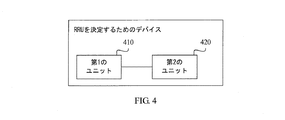
上記に対応する形で、本発明の実施形態3は、リモート無線ユニットRRUを決定するためのデバイスをさらに提供している。デバイスの実施形態の構造を図4に示しており、デバイスは、本発明の前述の実施形態1におけるリモート無線ユニットRRUを決定するための方法を実施するように構成される。デバイスは、第1のユニット410と第2のユニット420といったユニットを含み、
第1のユニット410は、端末の干渉強度情報を取得するように構成され、干渉強度情報は、端末のダウンリンクモードを含み、
第2のユニット420は、復調がダウンリンクモードにおいて専用参照信号DRSを使用して行われている場合には、第2のRRUを使用してリソースのスケジューリングを端末に対して行うように構成され、第2のRRUは、端末にサービングしている複数の第1のRRUから選択される、または、
第2のユニット420は、復調がダウンリンクモードにおいてDRSを使用せずに行われている場合には、第3のRRUを使用してリソースのスケジューリングを端末に対して行うように構成され、第3のRRUは、端末のアップリンク信号強度値、端末のダウンリンク品質値、または端末のアップリンク品質値のうちのいずれか1つに従って決定される。
Embodiment 3.
Corresponding to the above, Embodiment 3 of the present invention further provides a device for determining the remote radio unit RRU. The structure of an embodiment of the device is shown in FIG. 4, and the device is configured to implement the method for determining a remote radio unit RRU in the aforementioned embodiment 1 of the present invention. The device includes units such as a
The
The
The
必要に応じて、複数の第1のRRUは第2のRRUと他のRRUとを含み、第2のRRUの信号強度値は他のRRUの信号強度値より大きい。 As necessary, the plurality of first RRUs include a second RRU and other RRUs, and the signal strength value of the second RRU is greater than the signal strength values of the other RRUs.
必要に応じて、第2のユニット420は、複数の第1のRRUのうちのそれぞれの第1のRRUの信号強度値を決定し、第1のRRUの信号強度値内の最大値を決定し、最大値に相当する第1のRRUを第2のRRUとして決定するようにさらに構成される。
If necessary, the
必要に応じて、アップリンク信号強度値が第1の閾値未満である、または、ダウンリンク品質値が第2の閾値未満である、または、アップリンク品質値が第3の閾値未満である場合には、第3のRRUは、デバイスによって制御されるすべてのRRUを含む。 If necessary, if the uplink signal strength value is less than the first threshold, the downlink quality value is less than the second threshold, or the uplink quality value is less than the third threshold The third RRU includes all RRUs controlled by the device.
必要に応じて、アップリンク信号強度値が第1の閾値以上である、または、ダウンリンク品質値が第2の閾値以上である、または、アップリンク品質値が第3の閾値以上である場合には、第3のRRUは、端末にサービングしている複数の第1のRRUを含む。 If necessary, the uplink signal strength value is greater than or equal to the first threshold, the downlink quality value is greater than or equal to the second threshold, or the uplink quality value is greater than or equal to the third threshold. The third RRU includes a plurality of first RRUs serving the terminal.
必要に応じて、第2のユニット420は、
アップリンク信号強度値が第1の閾値未満であるかどうかを決定する、または、
ダウンリンク品質値が第2の閾値未満であるかどうかを決定する、または、
アップリンク品質値が第3の閾値未満であるかどうかを決定するようにさらに構成される。
If necessary, the
Determine whether the uplink signal strength value is less than a first threshold, or
Determine if the downlink quality value is less than the second threshold, or
Further configured to determine whether the uplink quality value is less than a third threshold.
必要に応じて、第1のユニットは、端末のロケーション情報を取得するようにさらに構成され、
第2のユニット420は、端末のロケーション情報および干渉強度情報に従って、端末にサービングしている複数の第1のRRUを決定するようにさらに構成される。
Optionally, the first unit is further configured to obtain terminal location information,
The
必要に応じて、デバイスは、ベースバンドユニットBBUまたは基地局である。 As needed, the device is a baseband unit BBU or a base station.
したがって、本発明の本実施形態において提供したリモート無線ユニットRRUを決定するためのデバイスを適用することによって、デバイスは端末の干渉強度情報を取得している。復調が、専用参照信号DRSを使用して、干渉強度情報に含まれる端末のダウンリンクモードにおいて行われている場合には、デバイスは、第2のRRUを使用してリソースのスケジューリングを端末に対して行う、ここで、第2のRRUは、端末にサービングしている複数の第1のRRUからデバイスによって選択される、または、復調がダウンリンクモードにおいてDRSを使用せずに行われている場合には、デバイスは、第3のRRUを使用してリソースのスケジューリングを端末に対して行う、ここで、第3のRRUは、端末のアップリンク信号強度値、ダウンリンク品質値、またはアップリンク品質値のうちのいずれか1つに従ってデバイスによって決定される。複数のユーザのサービス量が十分にある場合にはシステムのスループットロスが深刻になるという、従来技術において使用されるマルチRRUジョイント伝送方式に起因する、問題が解決される。本発明の本実施形態においては、各端末のダウンリンクモードに従った決定を行った後に、デバイスが端末に対するサービングRRUを決定しているため、より高いユーザパフォーマンス信頼性およびシステム効率を得られ得るし、リソース利用およびシステムスループットも改善される。 Therefore, by applying the device for determining the remote radio unit RRU provided in this embodiment of the present invention, the device acquires the interference intensity information of the terminal. When demodulation is performed in the downlink mode of the terminal included in the interference strength information using the dedicated reference signal DRS, the device uses the second RRU to perform resource scheduling for the terminal. Where the second RRU is selected by the device from a plurality of first RRUs serving the terminal, or if demodulation is performed without using DRS in downlink mode The device uses the third RRU to perform resource scheduling for the terminal, where the third RRU is the terminal uplink signal strength value, downlink quality value, or uplink quality. Determined by the device according to any one of the values. The problem caused by the multi-RRU joint transmission method used in the prior art that the system throughput loss becomes serious when the service amounts of a plurality of users are sufficient is solved. In this embodiment of the present invention, since the device determines the serving RRU for the terminal after making a determination according to the downlink mode of each terminal, higher user performance reliability and system efficiency can be obtained. Resource utilization and system throughput are also improved.
実施形態4
加えて、本発明の実施形態2において提供したリモート無線ユニットRRUを決定するためのデバイスは、以下の方式で実施されてもよく、本発明の前述の実施形態1および前述の実施形態2におけるリモート無線ユニットRRUを決定するための方法を実施するように構成される。図5に示したように、リモート無線ユニットRRUを決定するためのデバイスは、ネットワークインターフェース510と、プロセッサ520と、メモリ530とを備える。システムバス540は、ネットワークインターフェース510、プロセッサ520、およびメモリ530を接続するように構成される。
Embodiment 4.
In addition, the device for determining the remote radio unit RRU provided in Embodiment 2 of the present invention may be implemented in the following manner, and the remote in the aforementioned Embodiment 1 and the aforementioned Embodiment 2 of the present invention It is configured to implement a method for determining a radio unit RRU. As shown in FIG. 5, the device for determining the remote radio unit RRU includes a
ネットワークインターフェース510は、端末およびRRUと双方向通信を行うように構成される。
The
メモリ530は、ハードディスクドライブおよびフラッシュメモリなどの恒久的なメモリであってもよく、メモリ530は、アプリケーションプログラムを記憶するように構成される、ここで、アプリケーションプログラムは、プロセッサ520がメモリにアクセスして、
端末の干渉強度情報を取得するステップであって、干渉強度情報は端末のダウンリンクモードを含む、ステップと、
復調がダウンリンクモードにおいて専用参照信号DRSを使用して行われている場合には、第2のRRUを使用してリソースのスケジューリングを端末に対して行うステップであって、第2のRRUは、端末にサービングしている複数の第1のRRUから選択される、ステップ、または、復調がダウンリンクモードにおいてDRSを使用せずに行われている場合には、第3のRRUを使用してリソースのスケジューリングを端末に対して行うステップであって、第3のRRUは、端末のアップリンク信号強度値、端末のダウンリンク品質値、または端末のアップリンク品質値のうちのいずれか1つに従って決定される、ステップとを含む処理を実行することができるようにするために使用され得る命令を含む。
The
Obtaining interference strength information of the terminal, the interference strength information including a downlink mode of the terminal; and
If the demodulation is performed using the dedicated reference signal DRS in the downlink mode, the second RRU is used to perform resource scheduling for the terminal, and the second RRU includes: A resource selected using a third RRU, selected from multiple first RRUs serving the terminal, or where demodulation is performed without using DRS in downlink mode The third RRU is determined according to one of the uplink signal strength value of the terminal, the downlink quality value of the terminal, or the uplink quality value of the terminal. Including instructions that can be used to enable the process to be executed.
さらに、複数の第1のRRUは第2のRRUと他のRRUとを含み、第2のRRUの信号強度値は他のRRUの信号強度値より大きい。 Further, the plurality of first RRUs include a second RRU and another RRU, and the signal strength value of the second RRU is greater than the signal strength value of the other RRU.
さらに、メモリ530に記憶されているアプリケーションプログラムは、プロセッサ520が、
複数の第1のRRUのうちのそれぞれの第1のRRUの信号強度値を決定し、第1のRRUの信号強度値内の最大値を決定し、最大値に相当する第1のRRUを第2のRRUとして決定するステップを含む処理を実行することができるようにするために使用され得る命令をさらに含む。
Furthermore, the application program stored in the
The signal strength value of each first RRU of the plurality of first RRUs is determined, the maximum value among the signal strength values of the first RRU is determined, and the first RRU corresponding to the maximum value is determined as the first RRU. It further includes instructions that can be used to allow processing to be performed that includes determining as two RRUs.
さらに、アップリンク信号強度値が第1の閾値未満である、または、ダウンリンク品質値が第2の閾値未満である、または、アップリンク品質値が第3の閾値未満である場合には、第3のRRUは、デバイスによって制御されるすべてのRRUを含む。 Further, if the uplink signal strength value is less than the first threshold, the downlink quality value is less than the second threshold, or the uplink quality value is less than the third threshold, 3 RRUs include all RRUs controlled by the device.
さらに、アップリンク信号強度値が第1の閾値以上である、または、ダウンリンク品質値が第2の閾値以上である、または、アップリンク品質値が第3の閾値以上である場合には、第3のRRUは、端末にサービングしている複数の第1のRRUを含む。 Further, if the uplink signal strength value is greater than or equal to the first threshold, the downlink quality value is greater than or equal to the second threshold, or the uplink quality value is greater than or equal to the third threshold, The RRU of 3 includes a plurality of first RRUs serving the terminal.
さらに、メモリ530に記憶されているアプリケーションプログラムは、プロセッサ520が、
アップリンク信号強度値が第1の閾値未満であるかどうかを決定するステップ、または、
ダウンリンク品質値が第2の閾値未満であるかどうかを決定するステップ、または、
アップリンク品質値が第3の閾値未満であるかどうかを決定するステップを含む処理を実行することができるようにするために使用され得る命令をさらに含む。
Furthermore, the application program stored in the
Determining whether the uplink signal strength value is less than a first threshold, or
Determining whether the downlink quality value is less than a second threshold, or
And further comprising instructions that may be used to enable performing a process including determining whether the uplink quality value is less than a third threshold.
さらに、メモリ530に記憶されているアプリケーションプログラムは、プロセッサ520が、
端末のロケーション情報を取得して、端末のロケーション情報および干渉強度情報に従って、端末にサービングしている複数の第1のRRUを決定するステップを含む処理を実行することができるようにするために使用され得る命令をさらに含む。
Furthermore, the application program stored in the
Used to obtain terminal location information and to be able to perform processing including determining multiple first RRUs serving the terminal according to the terminal location information and interference strength information Further includes instructions that may be performed.
さらに、デバイスは、ベースバンドユニットBBUまたは基地局である。 Furthermore, the device is a baseband unit BBU or a base station.
したがって、本発明の本実施形態において提供したリモート無線ユニットRRUを決定するためのデバイスを適用することによって、デバイスは端末の干渉強度情報を取得している。復調が、専用参照信号DRSを使用して、干渉強度情報に含まれる端末のダウンリンクモードにおいて行われている場合には、デバイスは、第2のRRUを使用してリソースのスケジューリングを端末に対して行う、ここで、第2のRRUは、端末にサービングしている複数の第1のRRUからデバイスによって選択される、または、復調がダウンリンクモードにおいてDRSを使用せずに行われている場合には、デバイスは、第3のRRUを使用してリソースのスケジューリングを端末に対して行う、ここで、第3のRRUは、端末のアップリンク信号強度値、ダウンリンク品質値、またはアップリンク品質値のうちのいずれか1つに従ってデバイスによって決定される。複数のユーザのサービス量が十分にある場合にはシステムのスループットロスが深刻になるという、従来技術において使用されるマルチRRUジョイント伝送方式に起因する、問題が解決される。本発明の本実施形態においては、各端末のダウンリンクモードに従った決定を行った後に、デバイスが端末に対するサービングRRUを決定しているため、より高いユーザパフォーマンス信頼性およびシステム効率を得られ得るし、リソース利用およびシステムスループットも改善される。 Therefore, by applying the device for determining the remote radio unit RRU provided in this embodiment of the present invention, the device acquires the interference intensity information of the terminal. When demodulation is performed in the downlink mode of the terminal included in the interference strength information using the dedicated reference signal DRS, the device uses the second RRU to perform resource scheduling for the terminal. Where the second RRU is selected by the device from a plurality of first RRUs serving the terminal, or if demodulation is performed without using DRS in downlink mode The device uses the third RRU to perform resource scheduling for the terminal, where the third RRU is the terminal uplink signal strength value, downlink quality value, or uplink quality. Determined by the device according to any one of the values. The problem caused by the multi-RRU joint transmission method used in the prior art that the system throughput loss becomes serious when the service amounts of a plurality of users are sufficient is solved. In this embodiment of the present invention, since the device determines the serving RRU for the terminal after making a determination according to the downlink mode of each terminal, higher user performance reliability and system efficiency can be obtained. Resource utilization and system throughput are also improved.
本明細書において開示した実施形態において説明した例を組み合わせて、ユニットおよびアルゴリズムのステップを電子ハードウェア、コンピュータソフトウェア、またはその組合せによって実装してもよいことに、当業者はさらに気づかれよう。ハードウェアとソフトウェアとの間の互換性を明確に説明するために、上記では、一般的に機能に従って各例の構成およびステップを説明してきた。機能がハードウェアによってまたはソフトウェアによって行われるかは、技術的解決手法の具体的な適用および設計制約条件に依存する。当業者は、具体的な適用の各々に対して説明した機能を実施するために異なる方法を使用してもよいが、その実施形態が本発明の範囲を逸脱するものとして考えるべきではない。 One skilled in the art will further be aware that the examples described in the embodiments disclosed herein may be combined to implement the unit and algorithm steps by electronic hardware, computer software, or a combination thereof. In order to clearly describe the compatibility between hardware and software, the above has generally described the configuration and steps of each example according to function. Whether the function is performed by hardware or software depends on the specific application of the technical solution and the design constraints. Those skilled in the art may use different methods to perform the functions described for each specific application, but the embodiments should not be considered as departing from the scope of the present invention.
本明細書において開示した実施形態において説明した方法またはアルゴリズムのステップは、ハードウェア、プロセッサによって実行されるソフトウェアモジュール、またはその組合せによって実施され得る。ソフトウェアモジュールは、ランダムアクセスメモリ(RAM)、メモリ、リードオンリーメモリ(ROM)、電気的プログラマブルROM、電気的消去可能プログラマブルROM、レジスタ、ハードディスク、リムーバブルディスク、CD-ROM、または従来技術において既知となっている任意の他の形式の記憶媒体に存在し得る。 The method or algorithm steps described in the embodiments disclosed herein may be implemented by hardware, software modules executed by a processor, or a combination thereof. Software modules are known in random access memory (RAM), memory, read only memory (ROM), electrically programmable ROM, electrically erasable programmable ROM, registers, hard disk, removable disk, CD-ROM, or prior art May reside in any other type of storage medium.
前述の特定の実施様態において、本発明の目的、技術的解決手法、および利益を詳細にさらに説明している。前述の説明は、本発明の特定の実施様態にすぎず、本発明の保護範囲を限定することを意図していないことを理解されたい。本発明の精神および原理を逸脱することなくなされた任意の修正、均等物との置換、または改良は、本発明の保護範囲に含まれるものとする。 In the specific embodiments described above, the objects, technical solutions, and benefits of the present invention are further described in detail. It should be understood that the foregoing description is only specific embodiments of the present invention, and is not intended to limit the protection scope of the present invention. Any modification, equivalent replacement, or improvement made without departing from the spirit and principle of the present invention shall fall within the protection scope of the present invention.
410 第1のユニット
420 第2のユニット
510 ネットワークインターフェース
520 プロセッサ
530 メモリ
540 システムバス
410 1st unit
420 Second unit
510 network interface
520 processor
530 memory
540 system bus
本発明は、通信分野に関し、詳細には、リモート無線ユニット(RRU)を決定するための方法およびデバイスに関する。 The present invention relates to the field of communications, and in particular, to a method and device for determining a remote radio unit ( RRU ) .
現在、単一周波数ネットワーキング動作方式がロング・ターム・エボリューション(Long Term Evolution、略して、LTE)システムにおいて広く使用されているため、セル間の干渉が極めて深刻となっている。特に、基地局密度の高いネットワークにおいては、干渉がとりわけはっきり見てとれる。 Currently, single-frequency networking operation is widely used in Long Term Evolution (LTE) systems, so inter-cell interference is extremely serious. In particular, interference is particularly evident in networks with a high base station density.
第1の態様に従って、本発明の実施形態は、リモート無線ユニット(RRU)を決定するための方法を提供しており、方法は、
ベースバンドユニット(BBU)によって、端末の干渉強度情報を取得するステップであって、干渉強度情報は端末のダウンリンクモードを含む、ステップを含み、
方法は、
復調がダウンリンクモードにおいて専用参照信号(DRS)を使用して行われている場合には、BBUによって、第2のRRUを使用してリソースのスケジューリングを端末に対して行うステップであって、第2のRRUは、端末にサービングしている複数の第1のRRUからBBUによって選択される、ステップ、または、復調がダウンリンクモードにおいてDRSを使用せずに行われている場合には、BBUによって、第3のRRUを使用してリソースのスケジューリングを端末に対して行うステップであって、第3のRRUは、端末のアップリンク信号強度値、端末のダウンリンク品質値、または端末のアップリンク品質値のうちのいずれか1つに従ってBBUによって決定される、ステップをさらに含む。
According to a first aspect, embodiments of the present invention provide a method for determining a remote radio unit ( RRU ) , the method comprising:
Obtaining interference strength information of the terminal by a baseband unit ( BBU ) , the interference strength information including a downlink mode of the terminal,
The method is
When demodulation is performed using a dedicated reference signal ( DRS ) in the downlink mode, the BBU performs resource scheduling for the terminal using the second RRU, The RRU of 2 is selected by the BBU from the multiple first RRUs serving the terminal, or by the BBU if demodulation is performed without using DRS in the downlink mode , Performing resource scheduling for the terminal using a third RRU, wherein the third RRU includes a terminal uplink signal strength value, a terminal downlink quality value, or a terminal uplink quality. The method further includes a step determined by the BBU according to any one of the values.
第2の態様に従って、本発明の実施形態は、第1のユニットと第2のユニットとを備える、リモート無線ユニットを決定するためのデバイスを提供しており、
第1のユニットは、端末の干渉強度情報を取得するように構成され、干渉強度情報は、端末のダウンリンクモードを含み、
第2のユニットは、復調がダウンリンクモードにおいて専用参照信号(DRS)を使用して行われている場合には、第2のRRUを使用してリソースのスケジューリングを端末に対して行うように構成され、第2のRRUは、端末にサービングしている複数の第1のRRUから選択される、または、
第2のユニットは、復調がダウンリンクモードにおいてDRSを使用せずに行われている場合には、第3のRRUを使用してリソースのスケジューリングを端末に対して行うように構成され、第3のRRUは、端末のアップリンク信号強度値、端末のダウンリンク品質値、または端末のアップリンク品質値のうちのいずれか1つに従って決定される。
According to a second aspect, an embodiment of the invention provides a device for determining a remote radio unit comprising a first unit and a second unit,
The first unit is configured to obtain terminal interference strength information, the interference strength information including a terminal downlink mode;
The second unit is configured to perform resource scheduling for the terminal using the second RRU when demodulation is performed using a dedicated reference signal ( DRS ) in the downlink mode. And the second RRU is selected from a plurality of first RRUs serving the terminal, or
The second unit is configured to perform resource scheduling for the terminal using the third RRU when demodulation is performed without using DRS in the downlink mode. Is determined according to any one of the uplink signal strength value of the terminal, the downlink quality value of the terminal, or the uplink quality value of the terminal.
したがって、本発明の実施形態において提供したリモート無線ユニット(RRU)を決定するための方法およびデバイスを適用することによって、BBUは端末の干渉強度情報を取得している。復調が、専用参照信号(DRS)を使用して、干渉強度情報に含まれる端末のダウンリンクモードにおいて行われている場合には、BBUは、第2のRRUを使用してリソースのスケジューリングを端末に対して行う、ここで、第2のRRUは、端末にサービングしている複数の第1のRRUからBBUによって選択される、または、復調がダウンリンクモードにおいてDRSを使用せずに行われている場合には、BBUは、第3のRRUを使用してリソースのスケジューリングを端末に対して行う、ここで、第3のRRUは、端末のアップリンク信号強度値、ダウンリンク品質値、またはアップリンク品質値のうちのいずれか1つに従ってBBUによって決定される。複数のユーザのサービス量が十分にある場合にはシステムのスループットロスが深刻になるという、従来技術において使用されるマルチRRUジョイント伝送方式に起因する、問題が解決される。本発明の実施形態においては、各端末のダウンリンクモードに従った決定を行った後に、BBUが端末に対するサービングRRUを決定しているため、より高いユーザパフォーマンス信頼性およびシステム効率を得られ得るし、リソース利用およびシステムスループットも改善される。 Therefore, by applying the method and device for determining the remote radio unit ( RRU ) provided in the embodiment of the present invention, the BBU obtains the interference intensity information of the terminal. If demodulation is performed in the downlink mode of the terminal included in the interference strength information using a dedicated reference signal ( DRS ) , the BBU uses the second RRU to schedule resources. Where the second RRU is selected by the BBU from a plurality of first RRUs serving the terminal, or the demodulation is performed without using DRS in the downlink mode. The BBU uses the third RRU to perform resource scheduling for the terminal, where the third RRU is the uplink signal strength value, the downlink quality value, or the uplink of the terminal. Determined by the BBU according to any one of the link quality values. The problem caused by the multi-RRU joint transmission method used in the prior art that the system throughput loss becomes serious when the service amounts of a plurality of users are sufficient is solved. In the embodiment of the present invention, since the BBU determines the serving RRU for the terminal after making a determination according to the downlink mode of each terminal, higher user performance reliability and system efficiency can be obtained. Resource utilization and system throughput are also improved.
実施形態1
以下では、本発明の実施形態1において提供したリモート無線ユニット(RRU)を決定するための方法を、例として図2を使用して詳細に、説明している。図2は、本発明の実施形態1による、リモート無線ユニット(RRU)を決定するための方法のフローチャートである。実際のネットワーク処理においては、基地局は、BBUとBBUに接続されている複数のRRUとを備える。本発明の本実施形態においては、方法は、基地局内のBBUまたは基地局によって実行される。以下では、BBUがそのような方法を実行している例を使用して説明を提供している。図2に示したように、本実施形態は、以下のステップを特に含む。
Embodiment 1
In the following, the method for determining the remote radio unit ( RRU ) provided in Embodiment 1 of the present invention will be described in detail using FIG. 2 as an example. FIG. 2 is a flowchart of a method for determining a remote radio unit ( RRU ) according to Embodiment 1 of the present invention. In actual network processing, a base station includes a BBU and a plurality of RRUs connected to the BBU. In this embodiment of the invention, the method is performed by a BBU in a base station or a base station. In the following, an explanation is provided using an example where the BBU is performing such a method. As shown in FIG. 2, the present embodiment specifically includes the following steps.
ステップ210: ベースバンドユニット(BBU)が端末の干渉強度情報を取得する、ここで、干渉強度情報は端末のダウンリンクモードを含む。 Step 210: The baseband unit ( BBU ) acquires the interference strength information of the terminal, where the interference strength information includes the downlink mode of the terminal.
ステップ220: 復調がダウンリンクモードにおいて専用参照信号(DRS)を使用して行われているかどうかに従って第2のRRUまたは第3のRRUを決定して、第2のRRUまたは第3のRRUを使用してリソースのスケジューリングを端末に対して行う。例えば、復調がダウンリンクモードにおいて専用参照信号(DRS)を使用して行われている場合には、BBUは、第2のRRUを使用してリソースのスケジューリングを端末に対して行う、ここで、第2のRRUは、端末にサービングしている複数の第1のRRUからBBUによって選択される、または、復調がダウンリンクモードにおいてDRSを使用せずに行われている場合には、BBUは、第3のRRUを使用してリソースのスケジューリングを端末に対して行う、ここで、第3のRRUは、端末のアップリンク信号強度値、端末のダウンリンク品質値、または端末のアップリンク品質値のうちのいずれか1つに従ってBBUによって決定される。 Step 220: Use second RRU or third RRU by determining second RRU or third RRU according to whether demodulation is performed using dedicated reference signal ( DRS ) in downlink mode Then, resource scheduling is performed on the terminal. For example, if demodulation is performed using a dedicated reference signal ( DRS ) in downlink mode, the BBU uses the second RRU to schedule resources to the terminal, where The second RRU is selected by the BBU from a plurality of first RRUs serving the terminal, or if the demodulation is performed without using DRS in the downlink mode, The third RRU is used to schedule resources for the terminal, where the third RRU is used for the terminal uplink signal strength value, the terminal downlink quality value, or the terminal uplink quality value. Determined by the BBU according to any one of them.
したがって、本発明の本実施形態において提供したリモート無線ユニット(RRU)を決定するための方法を適用することによって、BBUは端末の干渉強度情報を取得している。復調が、専用参照信号(DRS)を使用して、干渉強度情報に含まれる端末のダウンリンクモードにおいて行われている場合には、BBUは、第2のRRUを使用してリソースのスケジューリングを端末に対して行う、ここで、第2のRRUは、端末にサービングしている複数の第1のRRUからBBUによって選択される、または、復調がダウンリンクモードにおいてDRSを使用せずに行われている場合には、BBUは、第3のRRUを使用してリソースのスケジューリングを端末に対して行う、ここで、第3のRRUは、端末のアップリンク信号強度値、ダウンリンク品質値、またはアップリンク品質値のうちのいずれか1つに従ってBBUによって決定される。複数のユーザのサービス量が十分にある場合にはシステムのスループットロスが深刻になるという、従来技術において使用されるマルチRRUジョイント伝送方式に起因する、問題が解決される。本発明の本実施形態においては、各端末のダウンリンクモードに従った決定を行った後に、BBUが端末に対するサービングRRUを決定しているため、より高いユーザパフォーマンス信頼性およびシステム効率を得られ得るし、リソース利用およびシステムスループットも改善される。 Therefore, by applying the method for determining the remote radio unit ( RRU ) provided in this embodiment of the present invention, the BBU acquires the interference intensity information of the terminal. If demodulation is performed in the downlink mode of the terminal included in the interference strength information using a dedicated reference signal ( DRS ) , the BBU uses the second RRU to schedule resources. Where the second RRU is selected by the BBU from a plurality of first RRUs serving the terminal, or the demodulation is performed without using DRS in the downlink mode. The BBU uses the third RRU to perform resource scheduling for the terminal, where the third RRU is the uplink signal strength value, the downlink quality value, or the uplink of the terminal. Determined by the BBU according to any one of the link quality values. The problem caused by the multi-RRU joint transmission method used in the prior art that the system throughput loss becomes serious when the service amounts of a plurality of users are sufficient is solved. In the present embodiment of the present invention, since the BBU determines the serving RRU for the terminal after making a determination according to the downlink mode of each terminal, higher user performance reliability and system efficiency can be obtained. Resource utilization and system throughput are also improved.
以下では、本発明の実施形態2において提供したリモート無線ユニット(RRU)を決定するための方法を、例として図3を使用して詳細に、説明している。図3は、本発明の実施形態2による、リモート無線ユニット(RRU)を決定するための方法のフローチャートである。実際のネットワーク処理においては、基地局は、BBUとBBUに接続されている複数のRRUとを備える。本発明の本実施形態においては、方法は、基地局内のBBUまたは基地局によって実行される。以下では、BBUがそのような方法を実行している例を使用して説明を提供している。図3に示したように、本実施形態は、以下のステップを特に含む。 Hereinafter, the method for determining the remote radio unit ( RRU ) provided in Embodiment 2 of the present invention will be described in detail using FIG. 3 as an example. FIG. 3 is a flowchart of a method for determining a remote radio unit ( RRU ) according to Embodiment 2 of the present invention. In actual network processing, a base station includes a BBU and a plurality of RRUs connected to the BBU. In this embodiment of the invention, the method is performed by a BBU in a base station or a base station. In the following, an explanation is provided using an example where the BBU is performing such a method. As shown in FIG. 3, the present embodiment specifically includes the following steps.
ステップ310: ベースバンドユニット(BBU)が端末のロケーション情報および干渉強度情報を取得する、ここで、干渉強度情報は端末のダウンリンクモードを含む。 Step 310: The baseband unit ( BBU ) obtains location information and interference strength information of the terminal, where the interference strength information includes a downlink mode of the terminal.
ステップ330: BBUが、復調がダウンリンクモードにおいて専用参照信号(DRS)を使用して行われているかどうかを決定する。 Step 330: The BBU determines whether demodulation is performed using a dedicated reference signal ( DRS ) in the downlink mode.
実施形態3
上記に対応する形で、本発明の実施形態3は、リモート無線ユニット(RRU)を決定するためのデバイスをさらに提供している。デバイスの実施形態の構造を図4に示しており、デバイスは、本発明の前述の実施形態1におけるリモート無線ユニット(RRU)を決定するための方法を実施するように構成される。デバイスは、第1のユニット410と第2のユニット420といったユニットを含み、
第1のユニット410は、端末の干渉強度情報を取得するように構成され、干渉強度情報は、端末のダウンリンクモードを含み、
第2のユニット420は、復調がダウンリンクモードにおいて専用参照信号(DRS)を使用して行われている場合には、第2のRRUを使用してリソースのスケジューリングを端末に対して行うように構成され、第2のRRUは、端末にサービングしている複数の第1のRRUから選択される、または、
第2のユニット420は、復調がダウンリンクモードにおいてDRSを使用せずに行われている場合には、第3のRRUを使用してリソースのスケジューリングを端末に対して行うように構成され、第3のRRUは、端末のアップリンク信号強度値、端末のダウンリンク品質値、または端末のアップリンク品質値のうちのいずれか1つに従って決定される。
Embodiment 3.
In a manner corresponding to the above, Embodiment 3 of the present invention further provides a device for determining a remote radio unit ( RRU ) . The structure of an embodiment of the device is shown in FIG. 4, and the device is configured to implement the method for determining a remote radio unit ( RRU ) in the aforementioned embodiment 1 of the present invention. The device includes units such as a
The
The
The
必要に応じて、デバイスは、ベースバンドユニット(BBU)または基地局である。 As required, the device is a baseband unit ( BBU ) or a base station.
したがって、本発明の本実施形態において提供したリモート無線ユニット(RRU)を決定するためのデバイスを適用することによって、デバイスは端末の干渉強度情報を取得している。復調が、専用参照信号(DRS)を使用して、干渉強度情報に含まれる端末のダウンリンクモードにおいて行われている場合には、デバイスは、第2のRRUを使用してリソースのスケジューリングを端末に対して行う、ここで、第2のRRUは、端末にサービングしている複数の第1のRRUからデバイスによって選択される、または、復調がダウンリンクモードにおいてDRSを使用せずに行われている場合には、デバイスは、第3のRRUを使用してリソースのスケジューリングを端末に対して行う、ここで、第3のRRUは、端末のアップリンク信号強度値、ダウンリンク品質値、またはアップリンク品質値のうちのいずれか1つに従ってデバイスによって決定される。複数のユーザのサービス量が十分にある場合にはシステムのスループットロスが深刻になるという、従来技術において使用されるマルチRRUジョイント伝送方式に起因する、問題が解決される。本発明の本実施形態においては、各端末のダウンリンクモードに従った決定を行った後に、デバイスが端末に対するサービングRRUを決定しているため、より高いユーザパフォーマンス信頼性およびシステム効率を得られ得るし、リソース利用およびシステムスループットも改善される。 Therefore, by applying the device for determining the remote radio unit ( RRU ) provided in this embodiment of the present invention, the device acquires the interference intensity information of the terminal. If demodulation is performed in the downlink mode of the terminal included in the interference strength information using a dedicated reference signal ( DRS ) , the device uses the second RRU to schedule the resource Where the second RRU is selected by the device from a plurality of first RRUs serving the terminal, or the demodulation is performed without using DRS in the downlink mode. If so, the device uses the third RRU to schedule resources to the terminal, where the third RRU is the terminal uplink signal strength value, downlink quality value, or uplink. Determined by the device according to any one of the link quality values. The problem caused by the multi-RRU joint transmission method used in the prior art that the system throughput loss becomes serious when the service amounts of a plurality of users are sufficient is solved. In this embodiment of the present invention, since the device determines the serving RRU for the terminal after making a determination according to the downlink mode of each terminal, higher user performance reliability and system efficiency can be obtained. Resource utilization and system throughput are also improved.
実施形態4
加えて、本発明の実施形態3において提供したリモート無線ユニット(RRU)を決定するためのデバイスは、以下の方式で実施されてもよく、本発明の前述の実施形態1および前述の実施形態2におけるリモート無線ユニット(RRU)を決定するための方法を実施するように構成される。図5に示したように、リモート無線ユニット(RRU)を決定するためのデバイスは、ネットワークインターフェース510と、プロセッサ520と、メモリ530とを備える。システムバス540は、ネットワークインターフェース510、プロセッサ520、およびメモリ530を接続するように構成される。
Embodiment 4.
In addition, the device for determining the remote radio unit ( RRU ) provided in Embodiment 3 of the present invention may be implemented in the following manner, and the foregoing Embodiment 1 and Embodiment 2 of the present invention. Configured to implement a method for determining a remote radio unit ( RRU ) at As shown in FIG. 5, the device for determining a remote radio unit ( RRU ) comprises a
メモリ530は、ハードディスクドライブおよびフラッシュメモリなどの恒久的なメモリであってもよく、メモリ530は、アプリケーションプログラムを記憶するように構成される、ここで、アプリケーションプログラムは、プロセッサ520がメモリにアクセスして、
端末の干渉強度情報を取得するステップであって、干渉強度情報は端末のダウンリンクモードを含む、ステップと、
復調がダウンリンクモードにおいて専用参照信号(DRS)を使用して行われている場合には、第2のRRUを使用してリソースのスケジューリングを端末に対して行うステップであって、第2のRRUは、端末にサービングしている複数の第1のRRUから選択される、ステップ、または、復調がダウンリンクモードにおいてDRSを使用せずに行われている場合には、第3のRRUを使用してリソースのスケジューリングを端末に対して行うステップであって、第3のRRUは、端末のアップリンク信号強度値、端末のダウンリンク品質値、または端末のアップリンク品質値のうちのいずれか1つに従って決定される、ステップとを含む処理を実行することができるようにするために使用され得る命令を含む。
The
Obtaining interference strength information of the terminal, the interference strength information including a downlink mode of the terminal; and
If the demodulation is performed using a dedicated reference signal ( DRS ) in the downlink mode, the second RRU is used to perform resource scheduling for the terminal, and the second RRU Is selected from multiple first RRUs serving the terminal, or uses a third RRU if demodulation is performed without using DRS in downlink mode. Resource scheduling for the terminal, wherein the third RRU is one of the uplink signal strength value of the terminal, the downlink quality value of the terminal, or the uplink quality value of the terminal. Including instructions that can be used to allow the process to be executed.
さらに、デバイスは、ベースバンドユニット(BBU)または基地局である。 Further, the device is a baseband unit ( BBU ) or a base station.
したがって、本発明の本実施形態において提供したリモート無線ユニット(RRU)を決定するためのデバイスを適用することによって、デバイスは端末の干渉強度情報を取得している。復調が、専用参照信号(DRS)を使用して、干渉強度情報に含まれる端末のダウンリンクモードにおいて行われている場合には、デバイスは、第2のRRUを使用してリソースのスケジューリングを端末に対して行う、ここで、第2のRRUは、端末にサービングしている複数の第1のRRUからデバイスによって選択される、または、復調がダウンリンクモードにおいてDRSを使用せずに行われている場合には、デバイスは、第3のRRUを使用してリソースのスケジューリングを端末に対して行う、ここで、第3のRRUは、端末のアップリンク信号強度値、ダウンリンク品質値、またはアップリンク品質値のうちのいずれか1つに従ってデバイスによって決定される。複数のユーザのサービス量が十分にある場合にはシステムのスループットロスが深刻になるという、従来技術において使用されるマルチRRUジョイント伝送方式に起因する、問題が解決される。本発明の本実施形態においては、各端末のダウンリンクモードに従った決定を行った後に、デバイスが端末に対するサービングRRUを決定しているため、より高いユーザパフォーマンス信頼性およびシステム効率を得られ得るし、リソース利用およびシステムスループットも改善される。 Therefore, by applying the device for determining the remote radio unit ( RRU ) provided in this embodiment of the present invention, the device acquires the interference intensity information of the terminal. If demodulation is performed in the downlink mode of the terminal included in the interference strength information using a dedicated reference signal ( DRS ) , the device uses the second RRU to schedule the resource Where the second RRU is selected by the device from a plurality of first RRUs serving the terminal, or the demodulation is performed without using DRS in the downlink mode. If so, the device uses the third RRU to schedule resources to the terminal, where the third RRU is the terminal uplink signal strength value, downlink quality value, or uplink. Determined by the device according to any one of the link quality values. The problem caused by the multi-RRU joint transmission method used in the prior art that the system throughput loss becomes serious when the service amounts of a plurality of users are sufficient is solved. In this embodiment of the present invention, since the device determines the serving RRU for the terminal after making a determination according to the downlink mode of each terminal, higher user performance reliability and system efficiency can be obtained. Resource utilization and system throughput are also improved.
Claims (14)
ベースバンドユニットBBUによって、端末の干渉強度情報を取得するステップであって、前記干渉強度情報は前記端末のダウンリンクモードを含む、ステップを含み、
前記方法は、
復調が前記ダウンリンクモードにおいて専用参照信号DRSを使用して行われている場合には、前記BBUによって、第2のRRUを使用してリソースのスケジューリングを前記端末に対して行うステップであって、前記第2のRRUは、前記端末にサービングしている複数の第1のRRUから前記BBUによって選択される、ステップ、または、復調が前記ダウンリンクモードにおいて前記DRSを使用せずに行われている場合には、前記BBUによって、第3のRRUを使用してリソースのスケジューリングを前記端末に対して行うステップであって、前記第3のRRUは、前記端末のアップリンク信号強度値、前記端末のダウンリンク品質値、または前記端末のアップリンク品質値のうちのいずれか1つに従って前記BBUによって決定される、ステップをさらに含む、方法。 A method for determining a remote radio unit RRU, said method comprising:
Obtaining interference intensity information of a terminal by a baseband unit BBU, wherein the interference intensity information includes a downlink mode of the terminal,
The method
When demodulation is performed using a dedicated reference signal DRS in the downlink mode, the BBU performs resource scheduling for the terminal using a second RRU, The second RRU is selected by the BBU from a plurality of first RRUs serving the terminal, or the demodulation is performed without using the DRS in the downlink mode. In this case, the BBU performs resource scheduling for the terminal using a third RRU, and the third RRU includes the uplink signal strength value of the terminal, the terminal's The method further comprising the step of being determined by the BBU according to any one of a downlink quality value or an uplink quality value of the terminal.
前記BBUによって、前記アップリンク信号強度値が前記第1の閾値未満であるかどうかを決定するステップ、または、
前記BBUによって、前記ダウンリンク品質値が前記第2の閾値未満であるかどうかを決定するステップ、または、
前記BBUによって、前記アップリンク品質値が前記第3の閾値未満であるかどうかを決定するステップをさらに含む、請求項3または4に記載の方法。 The method
Determining, by the BBU, whether the uplink signal strength value is less than the first threshold, or
Determining, by the BBU, whether the downlink quality value is less than the second threshold, or
5. The method according to claim 3 or 4, further comprising the step of determining whether the uplink quality value is less than the third threshold by the BBU.
前記BBUによって、前記端末のロケーション情報を取得して、前記端末の前記ロケーション情報および前記干渉強度情報に従って、前記端末にサービングしている前記複数の第1のRRUを決定するステップをさらに含む、請求項1から5のいずれか一項に記載の方法。 The method
Further comprising: acquiring location information of the terminal by the BBU and determining the plurality of first RRUs serving the terminal according to the location information and the interference strength information of the terminal. Item 6. The method according to any one of Items 1 to 5.
前記第1のユニットは、端末の干渉強度情報を取得するように構成され、前記干渉強度情報は、前記端末のダウンリンクモードを含み、
前記第2のユニットは、復調が前記ダウンリンクモードにおいて専用参照信号DRSを使用して行われている場合には、第2のRRUを使用してリソースのスケジューリングを前記端末に対して行うように構成され、前記第2のRRUは、前記端末にサービングしている複数の第1のRRUから選択される、または、
前記第2のユニットは、復調が前記ダウンリンクモードにおいて前記DRSを使用せずに行われている場合には、第3のRRUを使用してリソースのスケジューリングを前記端末に対して行うように構成され、前記第3のRRUは、前記端末のアップリンク信号強度値、前記端末のダウンリンク品質値、または前記端末のアップリンク品質値のうちのいずれか1つに従って決定される、デバイス。 A device for determining a remote radio unit RRU comprising a first unit and a second unit,
The first unit is configured to obtain terminal interference strength information, the interference strength information including a downlink mode of the terminal;
The second unit performs resource scheduling for the terminal using a second RRU when demodulation is performed using a dedicated reference signal DRS in the downlink mode. Configured, the second RRU is selected from a plurality of first RRUs serving the terminal, or
The second unit is configured to perform resource scheduling for the terminal using a third RRU when demodulation is performed without using the DRS in the downlink mode. And the third RRU is determined according to any one of an uplink signal strength value of the terminal, a downlink quality value of the terminal, or an uplink quality value of the terminal.
前記アップリンク信号強度値が前記第1の閾値未満であるかどうかを決定する、または、
前記ダウンリンク品質値が前記第2の閾値未満であるかどうかを決定する、または、
前記アップリンク品質値が前記第3の閾値未満であるかどうかを決定するようにさらに構成される、請求項10または11に記載のデバイス。 The second unit is
Determining whether the uplink signal strength value is less than the first threshold, or
Determining whether the downlink quality value is less than the second threshold, or
12. The device of claim 10 or 11, further configured to determine whether the uplink quality value is less than the third threshold.
前記第2のユニットは、前記端末の前記ロケーション情報および前記干渉強度情報に従って、前記端末にサービングしている前記複数の第1のRRUを決定するようにさらに構成される、請求項7から12のいずれか一項に記載のデバイス。 The first unit is further configured to obtain location information of the terminal;
The second unit of claim 7 to 12, wherein the second unit is further configured to determine the plurality of first RRUs serving the terminal according to the location information and the interference strength information of the terminal. The device according to any one of the above.
Applications Claiming Priority (3)
| Application Number | Priority Date | Filing Date | Title |
|---|---|---|---|
| CN201410306364.2A CN104066196B (en) | 2014-06-30 | 2014-06-30 | Determine the method and apparatus for drawing and selecting radio frequency unit RRU |
| CN201410306364.2 | 2014-06-30 | ||
| PCT/CN2015/078749 WO2016000491A1 (en) | 2014-06-30 | 2015-05-12 | Method and device for determining remote radio unit (rru) |
Publications (2)
| Publication Number | Publication Date |
|---|---|
| JP2017521005A true JP2017521005A (en) | 2017-07-27 |
| JP6719393B2 JP6719393B2 (en) | 2020-07-08 |
Family
ID=51553668
Family Applications (1)
| Application Number | Title | Priority Date | Filing Date |
|---|---|---|---|
| JP2016575947A Active JP6719393B2 (en) | 2014-06-30 | 2015-05-12 | Method and device for determining a remote radio unit |
Country Status (6)
| Country | Link |
|---|---|
| US (1) | US10165586B2 (en) |
| EP (1) | EP3148279B1 (en) |
| JP (1) | JP6719393B2 (en) |
| KR (1) | KR101907326B1 (en) |
| CN (1) | CN104066196B (en) |
| WO (1) | WO2016000491A1 (en) |
Families Citing this family (12)
| Publication number | Priority date | Publication date | Assignee | Title |
|---|---|---|---|---|
| CN104066196B (en) * | 2014-06-30 | 2018-07-13 | 华为技术有限公司 | Determine the method and apparatus for drawing and selecting radio frequency unit RRU |
| CN105636219B (en) | 2014-10-29 | 2019-04-05 | 华为技术有限公司 | Resource scheduling method and device |
| CN106341871A (en) * | 2015-07-07 | 2017-01-18 | 中兴通讯股份有限公司 | Method and device for determining radio remote unit |
| CN108200665B (en) * | 2018-01-31 | 2021-05-25 | 电子科技大学 | A resource scheduling optimization method for remote radio head and baseband processing unit |
| CN110719238B (en) * | 2018-07-13 | 2021-07-09 | 华为技术有限公司 | Data transmission control method, device and access network equipment |
| CN109348511B (en) * | 2018-11-30 | 2021-11-19 | 中国联合网络通信集团有限公司 | Method and device for allocating baseband resources |
| CN112714467B (en) | 2019-10-24 | 2023-03-24 | 上海华为技术有限公司 | Communication processing method and communication device applied to distributed cellular system |
| CN111010723B (en) * | 2019-12-17 | 2020-09-25 | 四川天邑康和通信股份有限公司 | RRU data merging method, system and processing device for base station |
| CN113709762B (en) * | 2020-05-20 | 2023-12-26 | 大唐移动通信设备有限公司 | Signal processing method, device, network and storage medium for cell merging scene |
| CN116193610A (en) * | 2021-11-26 | 2023-05-30 | 中兴通讯股份有限公司 | Method and device for reducing inter-cell interference |
| CN117336661A (en) * | 2022-06-24 | 2024-01-02 | 华为技术有限公司 | A method for determining remote radio frequency devices and distributed AP |
| CN118828972B (en) * | 2023-10-20 | 2025-10-03 | 中国移动通信集团设计院有限公司 | A coordination method, device and equipment for atmospheric waveguide interference |
Citations (5)
| Publication number | Priority date | Publication date | Assignee | Title |
|---|---|---|---|---|
| WO2011016560A1 (en) * | 2009-08-07 | 2011-02-10 | 日本電気株式会社 | Wireless communication system, wireless communication method, radio station, control station, and program |
| JP2012182792A (en) * | 2011-03-02 | 2012-09-20 | Hitachi Ltd | Mobile communication system and remote wireless unit clustering method therefor |
| WO2013183943A1 (en) * | 2012-06-05 | 2013-12-12 | 엘지전자 주식회사 | Method and apparatus for receiving control information in wireless communication system |
| JP2014512745A (en) * | 2011-03-29 | 2014-05-22 | エルジー エレクトロニクス インコーポレイティド | Method for determining resource specific transmission mode in wireless communication system and apparatus therefor |
| WO2014086027A1 (en) * | 2012-12-06 | 2014-06-12 | 华为技术有限公司 | Downlink-direction remote radio unit selection decision method and device |
Family Cites Families (10)
| Publication number | Priority date | Publication date | Assignee | Title |
|---|---|---|---|---|
| CN101394658B (en) * | 2007-09-21 | 2013-12-18 | 中兴通讯股份有限公司 | Apparatus realizing distributed wireless cell and communication method |
| KR101619446B1 (en) * | 2008-12-02 | 2016-05-10 | 엘지전자 주식회사 | Reference signal transmission method for downlink multiple input multiple output system |
| CN101854643B (en) * | 2009-03-31 | 2012-07-04 | 中国移动通信集团广西有限公司 | Wireless resource multiplexing method and equipment and system thereof |
| CN101877687B (en) * | 2009-04-28 | 2013-01-16 | 鼎桥通信技术有限公司 | Method for transmitting downlink signal |
| EP3451730B1 (en) * | 2011-04-01 | 2024-03-27 | Mitsubishi Electric Corporation | User equipment performing radio communication and base station used in a communication system |
| CN104025656B (en) * | 2011-12-07 | 2018-08-17 | 爱立信(中国)通信有限公司 | Method and central base station for the interference management in cellular network |
| CN103516637B (en) * | 2012-06-19 | 2017-03-29 | 普天信息技术研究院有限公司 | Downlink communication method and device in high speed rail system |
| CN103220684B (en) * | 2013-04-02 | 2015-08-19 | 京信通信系统(广州)有限公司 | A kind of method of mobile communication, equipment and system covered based on common cell signal |
| EP3531775A1 (en) * | 2013-09-24 | 2019-08-28 | Andrew Wireless Systems GmbH | Distributed processing in a centralized radio access network |
| CN104066196B (en) * | 2014-06-30 | 2018-07-13 | 华为技术有限公司 | Determine the method and apparatus for drawing and selecting radio frequency unit RRU |
-
2014
- 2014-06-30 CN CN201410306364.2A patent/CN104066196B/en active Active
-
2015
- 2015-05-12 WO PCT/CN2015/078749 patent/WO2016000491A1/en not_active Ceased
- 2015-05-12 KR KR1020177001102A patent/KR101907326B1/en active Active
- 2015-05-12 EP EP15815482.3A patent/EP3148279B1/en active Active
- 2015-05-12 JP JP2016575947A patent/JP6719393B2/en active Active
-
2016
- 2016-12-27 US US15/391,024 patent/US10165586B2/en active Active
Patent Citations (5)
| Publication number | Priority date | Publication date | Assignee | Title |
|---|---|---|---|---|
| WO2011016560A1 (en) * | 2009-08-07 | 2011-02-10 | 日本電気株式会社 | Wireless communication system, wireless communication method, radio station, control station, and program |
| JP2012182792A (en) * | 2011-03-02 | 2012-09-20 | Hitachi Ltd | Mobile communication system and remote wireless unit clustering method therefor |
| JP2014512745A (en) * | 2011-03-29 | 2014-05-22 | エルジー エレクトロニクス インコーポレイティド | Method for determining resource specific transmission mode in wireless communication system and apparatus therefor |
| WO2013183943A1 (en) * | 2012-06-05 | 2013-12-12 | 엘지전자 주식회사 | Method and apparatus for receiving control information in wireless communication system |
| WO2014086027A1 (en) * | 2012-12-06 | 2014-06-12 | 华为技术有限公司 | Downlink-direction remote radio unit selection decision method and device |
Also Published As
| Publication number | Publication date |
|---|---|
| CN104066196A (en) | 2014-09-24 |
| EP3148279A1 (en) | 2017-03-29 |
| KR20170018050A (en) | 2017-02-15 |
| US10165586B2 (en) | 2018-12-25 |
| KR101907326B1 (en) | 2018-10-11 |
| JP6719393B2 (en) | 2020-07-08 |
| EP3148279B1 (en) | 2018-11-07 |
| EP3148279A4 (en) | 2017-05-31 |
| CN104066196B (en) | 2018-07-13 |
| US20170111920A1 (en) | 2017-04-20 |
| WO2016000491A1 (en) | 2016-01-07 |
Similar Documents
| Publication | Publication Date | Title |
|---|---|---|
| JP6719393B2 (en) | Method and device for determining a remote radio unit | |
| CN110944348B (en) | A wireless communication method, apparatus and computer-readable storage medium thereof | |
| CN112188622B (en) | A collaborative transmission method and communication device | |
| US10666400B2 (en) | Enhancing monitoring of multiple physical downlink control channels in beam based system | |
| EP2910060B1 (en) | Selection of access points for coordinated multipoint uplink reception | |
| CN109314955B (en) | A reference signal transmission method and related equipment and systems | |
| AU2017207499A1 (en) | Inter-cell fractional frequency reuse scheduler | |
| JP2016042722A (en) | Interference control method and device | |
| KR20110057464A (en) | Method and apparatus for performing cooperative communication in a wireless communication system | |
| US10454639B2 (en) | D2D communication method and D2D communication apparatus | |
| CN106793047B (en) | Uplink power control method and base station | |
| CN112752259B (en) | Terminal type determining method, network equipment and terminal | |
| CN110855416A (en) | Device-to-device communication method, user equipment, network node, and storage medium | |
| US20190254043A1 (en) | Apparatuses, methods and computer programs for implementing fairness and complexity-constrained a non-orthogonal multiple access (noma) scheme | |
| US20170187428A1 (en) | CoMP JT COMMUNICATION METHOD AND BASE STATION | |
| KR102277257B1 (en) | Apparatus and method of performing communication in a system supporting full-duplex communication and Half-duplex communication | |
| CN103209472B (en) | A kind of method and system for carrying out cooperative scheduling inter-cell uplink interference coordination | |
| EP3211952B1 (en) | Joint interference rejection method and device, and method and device for realizing uplink comp | |
| CN105765891B (en) | Method and base station for data transmission | |
| CN104168595A (en) | Multipoint cooperative transmission method, device and system | |
| CN104429123B (en) | A method and device for notifying downlink power allocation parameters | |
| CN105050193B (en) | A kind of signal transmission, demodulation method and device and system | |
| KR101729594B1 (en) | Method for determining coordinated transmission set and base station | |
| CN105515724A (en) | Network auxiliary terminal blind detection method, blind detection device, blind detection system, and related device | |
| US20150280879A1 (en) | Pilot signal sending method and network side device |
Legal Events
| Date | Code | Title | Description |
|---|---|---|---|
| A521 | Request for written amendment filed |
Free format text: JAPANESE INTERMEDIATE CODE: A523 Effective date: 20161228 |
|
| A621 | Written request for application examination |
Free format text: JAPANESE INTERMEDIATE CODE: A621 Effective date: 20161228 |
|
| A977 | Report on retrieval |
Free format text: JAPANESE INTERMEDIATE CODE: A971007 Effective date: 20180129 |
|
| A131 | Notification of reasons for refusal |
Free format text: JAPANESE INTERMEDIATE CODE: A131 Effective date: 20180206 |
|
| A521 | Request for written amendment filed |
Free format text: JAPANESE INTERMEDIATE CODE: A523 Effective date: 20180501 |
|
| A02 | Decision of refusal |
Free format text: JAPANESE INTERMEDIATE CODE: A02 Effective date: 20181106 |
|
| A521 | Request for written amendment filed |
Free format text: JAPANESE INTERMEDIATE CODE: A523 Effective date: 20190306 |
|
| A911 | Transfer to examiner for re-examination before appeal (zenchi) |
Free format text: JAPANESE INTERMEDIATE CODE: A911 Effective date: 20190319 |
|
| A912 | Re-examination (zenchi) completed and case transferred to appeal board |
Free format text: JAPANESE INTERMEDIATE CODE: A912 Effective date: 20190531 |
|
| A521 | Request for written amendment filed |
Free format text: JAPANESE INTERMEDIATE CODE: A523 Effective date: 20200304 |
|
| A61 | First payment of annual fees (during grant procedure) |
Free format text: JAPANESE INTERMEDIATE CODE: A61 Effective date: 20200616 |
|
| R150 | Certificate of patent or registration of utility model |
Ref document number: 6719393 Country of ref document: JP Free format text: JAPANESE INTERMEDIATE CODE: R150 |
|
| R250 | Receipt of annual fees |
Free format text: JAPANESE INTERMEDIATE CODE: R250 |
|
| R250 | Receipt of annual fees |
Free format text: JAPANESE INTERMEDIATE CODE: R250 |
|
| R250 | Receipt of annual fees |
Free format text: JAPANESE INTERMEDIATE CODE: R250 |
|
| R250 | Receipt of annual fees |
Free format text: JAPANESE INTERMEDIATE CODE: R250 |