JP2020002296A - Block copolymer hydride and method for producing block copolymer hydride - Google Patents
Block copolymer hydride and method for producing block copolymer hydride Download PDFInfo
- Publication number
- JP2020002296A JP2020002296A JP2018124585A JP2018124585A JP2020002296A JP 2020002296 A JP2020002296 A JP 2020002296A JP 2018124585 A JP2018124585 A JP 2018124585A JP 2018124585 A JP2018124585 A JP 2018124585A JP 2020002296 A JP2020002296 A JP 2020002296A
- Authority
- JP
- Japan
- Prior art keywords
- peak
- block copolymer
- molecular weight
- hydride
- sensitivity
- Prior art date
- Legal status (The legal status is an assumption and is not a legal conclusion. Google has not performed a legal analysis and makes no representation as to the accuracy of the status listed.)
- Granted
Links
Images

Landscapes
- Graft Or Block Polymers (AREA)
Abstract
【課題】耐熱性が高いと共に環状オレフィン開環重合体水素化物(COP)からなる成形体に対する密着性が高い成形体を成形可能であるブロック共重合体水素化物を提供する。【解決手段】芳香族ビニル化合物に由来する芳香族ビニル単量体単位を主成分とする少なくとも2つの重合体ブロック[A]と、鎖状共役ジエン化合物に由来する鎖状共役ジエン単量体単位を主成分とする少なくとも1つの重合体ブロック[B]とからなるブロック共重合体[C]を水素化したブロック共重合体水素化物[D]であって、ゲルパーミエーションクロマトグラフィー(GPC)で測定した溶出曲線が、少なくとも2つのブロック共重合体水素化物由来ピーク(溶出順にA,B)を有し、ピークBの検出感度(mV)に対するピークAの検出感度の比が、1.5以上9.0以下であり、ピークBの溶出時間に基づく標準ポリスチレン換算分子量が5000以上である、ブロック共重合体水素化物。【選択図】図1PROBLEM TO BE SOLVED: To provide a block copolymer hydride capable of forming a molded product having high heat resistance and high adhesion to a molded product made of a cyclic olefin ring-opening polymer hydride (COP). SOLUTION: At least two polymer blocks [A] containing an aromatic vinyl monomer unit derived from an aromatic vinyl compound as a main component, and a chain conjugated diene monomer unit derived from a chain conjugated diene compound. A block copolymer hydride [D] obtained by hydrogenating a block copolymer [C] composed of at least one polymer block [B] containing at least one polymer block [B], which is obtained by gel permeation chromatography (GPC). The measured elution curve has at least two block copolymer hydride-derived peaks (A, B in the order of elution), and the ratio of the detection sensitivity of peak A to the detection sensitivity (mV) of peak B is 1.5 or more. A block copolymer hydride having a molecular weight of 9.0 or less and a standard polystyrene-equivalent molecular weight of 5000 or more based on the elution time of peak B. [Selection diagram] Fig. 1
Description
本発明は、ブロック共重合体水素化物およびブロック共重合体水素化物の製造方法に関するものである。 The present invention relates to a hydride of a block copolymer and a method for producing a hydride of a block copolymer.
従来より、芳香族ビニル単量体単位と共役ジエン単量体単位とからなる共重合体の水素化物は、例えば、(i)保持力、タック、粘着力の性能のバランスに優れ、かつ低溶融粘度の粘接着剤用組成物のベースポリマー(例えば、特許文献1)や、(ii)流動性、圧縮永久ひずみ性、柔軟性に優れる熱可塑性エラストマー組成物(例えば、特許文献2)、など、様々な目的乃至用途に用いられている。 Conventionally, a hydride of a copolymer comprising an aromatic vinyl monomer unit and a conjugated diene monomer unit has, for example, (i) an excellent balance of performance of holding power, tackiness and adhesive strength, and low meltability. A base polymer of a viscosity adhesive composition (for example, Patent Document 1), (ii) a thermoplastic elastomer composition having excellent fluidity, compression set and flexibility (for example, Patent Document 2), and the like. Are used for various purposes and applications.
しかしながら、上記従来の共重合体の水素化物は、成形体の耐熱性を向上させるという点において改善の余地があった。さらに、上記従来の共重合体の水素化物を用いた成形体は、環状オレフィン開環重合体水素化物(COP)からなる成形体に対する密着性を向上させるという点においても改善の余地があった。 However, the conventional hydride of the copolymer has room for improvement in that the heat resistance of the molded body is improved. Further, the molded article using the hydride of the above-mentioned conventional copolymer has room for improvement in improving the adhesion to a molded article made of a hydrogenated cyclic olefin ring-opened polymer (COP).
そこで、本発明は、上述した改善点を有利に解決する手段を提供することを目的とする。 Therefore, an object of the present invention is to provide means for advantageously solving the above-mentioned improvements.
本発明者は、上記課題を解決することを目的として鋭意検討を行った。そして、本発明者は、芳香族ビニル化合物に由来する芳香族ビニル単量体単位を主成分とする少なくとも2つの重合体ブロック[A]と、鎖状共役ジエン化合物に由来する鎖状共役ジエン(直鎖状共役ジエン、分岐鎖状共役ジエン)単量体単位を主成分とする少なくとも1つの重合体ブロック[B]とからなるブロック共重合体[C]を水素化したブロック共重合体水素化物[D]であって、前記ブロック共重合体水素化物[D]を含有する試料のゲルパーミエーションクロマトグラフィー(GPC)で測定した溶出曲線が、最も溶出時間の早いピークトップを示す所定のブロック共重合体水素化物由来ピーク(第1ピーク)と、2番目に溶出時間の早いピークトップを示す所定のブロック共重合体水素化物由来ピーク(第2ピーク)とを有するブロック共重合体水素化物を用いることで、耐熱性が高いと共に環状オレフィン開環重合体水素化物(COP)からなる成形体に対する密着性が高い成形体を成形可能であることを見出し、本発明を完成するに至った。 The present inventor has conducted intensive studies with the aim of solving the above-mentioned problems. The present inventor has found that at least two polymer blocks [A] having an aromatic vinyl monomer unit derived from an aromatic vinyl compound as a main component and a chain conjugated diene derived from a chain conjugated diene compound ( Block copolymer hydride obtained by hydrogenating a block copolymer [C] composed of at least one polymer block [B] having a linear conjugated diene and a branched conjugated diene) monomer unit as a main component [D], the elution curve of the sample containing the block copolymer hydride [D] measured by gel permeation chromatography (GPC) is a predetermined block copolymer showing the peak top with the earliest elution time. There is a peak derived from the polymer hydride (first peak) and a peak derived from the predetermined block copolymer hydride (second peak) showing the second highest peak in the elution time. It has been found that by using a block copolymer hydride, it is possible to mold a molded article having high heat resistance and high adhesion to a molded article made of a cyclic olefin ring-opened polymer hydride (COP). Was completed.
即ち、この発明は、上記課題を有利に解決することを目的とするものであり、本発明のブロック共重合体水素化物は、芳香族ビニル化合物に由来する芳香族ビニル単量体単位を主成分とする少なくとも2つの重合体ブロック[A]と、鎖状共役ジエン化合物に由来する鎖状共役ジエン単量体単位を主成分とする少なくとも1つの重合体ブロック[B]とからなるブロック共重合体[C]を水素化したブロック共重合体水素化物[D]であって、前記ブロック共重合体水素化物[D]を含有する試料のゲルパーミエーションクロマトグラフィー(GPC)で測定した溶出曲線が、少なくとも2つのブロック共重合体水素化物由来ピークを有し、前記少なくとも2つのブロック共重合体水素化物由来ピークのうち、最も溶出時間の早いピークトップを示すブロック共重合体水素化物由来ピークを第1ピークとし、2番目に溶出時間の早いピークトップを示すブロック共重合体水素化物由来ピークを第2ピークとしたときに、前記第2ピークのピークトップが示す示差屈折計(RI)の検出感度(第2ピークトップ感度)(mV)に対する前記第1ピークのピークトップが示す示差屈折計(RI)の検出感度(第1ピークトップ感度)(mV)の比(前記第1ピークトップ感度(mV)/前記第2ピークトップ感度(mV))が、1.5以上9.0以下であり、前記第2ピークの溶出時間に基づく標準ポリスチレン換算分子量(第2ピーク分子量)が5000以上である、ことを特徴とする。このように、ブロック共重合体水素化物[D]を含有する試料のゲルパーミエーションクロマトグラフィー(GPC)で測定した溶出曲線が、第1ピークと第2ピークとを有し、第1ピークトップ感度(mV)/第2ピークトップ感度(mV)が所定範囲内であり、第2ピークの溶出時間に基づく標準ポリスチレン換算分子量が所定値以上であるブロック共重合体水素化物を用いることで、耐熱性が高いと共に環状オレフィン開環重合体水素化物(COP)からなる成形体に対する密着性が高い成形体を成形可能である。
なお、本発明において、「芳香族ビニル単量体単位」は、「芳香族ビニル単量体(芳香族ビニル化合物)に由来する構造単位」を意味し、「鎖状共役ジエン単量体単位」は、「鎖状共役ジエン単量体(鎖状共役ジエン化合物)に由来する構造単位」を意味し、「芳香族ビニル単量体単位を主成分とする」は、「芳香族ビニル単量体単位を50質量%超含有する」ことを意味し、「鎖状共役ジエン単量体単位を主成分とする」は、「鎖状共役ジエン単量体単位を50質量%超含有する」ことを意味する。
また、本発明において、「示差屈折計(RI)の検出感度(mV)」は、GPC溶出曲線の各ピークにおけるピークトップ感度を意味し、例えば、後述する図1では、「ピークトップ感度(mV)」に相当する。
That is, an object of the present invention is to advantageously solve the above problems, and the hydride of the block copolymer of the present invention contains an aromatic vinyl monomer unit derived from an aromatic vinyl compound as a main component. A block copolymer consisting of at least two polymer blocks [A] and at least one polymer block [B] mainly containing a chain conjugated diene monomer unit derived from a chain conjugated diene compound The elution curve measured by gel permeation chromatography (GPC) of a block copolymer hydride [D] obtained by hydrogenating [C], the sample containing the block copolymer hydride [D], It has at least two peaks derived from a block copolymer hydride, and among the peaks derived from the at least two block copolymer hydrides, the peak peak having the earliest elution time. When the peak derived from the block copolymer hydride indicating the first peak is defined as the first peak, and the peak derived from the block copolymer hydride indicating the second highest peak in the elution time is defined as the second peak, the peak of the second peak is determined. The detection sensitivity (first peak top sensitivity) of the differential refractometer (RI) indicated by the peak top of the first peak with respect to the detection sensitivity (second peak top sensitivity) of the differential refractometer (RI) indicated by the top (mV) (mV) ) (The first peak top sensitivity (mV) / the second peak top sensitivity (mV)) is 1.5 or more and 9.0 or less, and the standard polystyrene equivalent molecular weight based on the elution time of the second peak. (Second peak molecular weight) is 5,000 or more. As described above, the elution curve of the sample containing the block copolymer hydride [D] measured by gel permeation chromatography (GPC) has the first peak and the second peak, and the first peak top sensitivity (MV) / Second peak top sensitivity (mV) is within a predetermined range, and heat resistance is obtained by using a block copolymer hydride having a standard polystyrene equivalent molecular weight based on the elution time of the second peak which is equal to or more than a predetermined value. And a molded product having high adhesion to a molded product made of a cyclic olefin ring-opened polymer hydride (COP).
In the present invention, “aromatic vinyl monomer unit” means “structural unit derived from aromatic vinyl monomer (aromatic vinyl compound)”, and “chain conjugated diene monomer unit”. Means "a structural unit derived from a chain conjugated diene monomer (chain conjugated diene compound)", and "having an aromatic vinyl monomer unit as a main component" means "an aromatic vinyl monomer". "Contains more than 50% by mass of a unit" means "contains a chain conjugated diene monomer unit as a main component" means "contains a chain conjugated diene monomer unit of more than 50% by mass". means.
In the present invention, the “detection sensitivity (mV) of the differential refractometer (RI)” means the peak top sensitivity at each peak of the GPC elution curve. For example, in FIG. 1 described below, “peak top sensitivity (mV)” ) ".
ここで、本発明のブロック共重合体水素化物において、前記第2ピークの溶出時間に基づく標準ポリスチレン換算分子量(第2ピーク分子量)に対する前記第1ピークの溶出時間に基づく標準ポリスチレン換算分子量(第1ピーク分子量)の比(前記第1ピーク分子量/前記第2ピーク分子量)が1.5以上30.0以下である、ことが好ましい。
第1ピーク分子量/第2ピーク分子量が所定範囲内であるブロック共重合体水素化物を用いれば、耐熱性が高いと共に環状オレフィン開環重合体水素化物(COP)からなる成形体に対する密着性がより高い成形体を成形可能である。
Here, in the hydride of the block copolymer of the present invention, the standard polystyrene-equivalent molecular weight based on the elution time of the first peak (the first polystyrene-equivalent molecular weight (second peak molecular weight) based on the elution time of the second peak) It is preferable that the ratio (the peak molecular weight) (the first peak molecular weight / the second peak molecular weight) is 1.5 or more and 30.0 or less.
When a hydride of a block copolymer having a first peak molecular weight / second peak molecular weight within a predetermined range is used, heat resistance is high and adhesion to a molded article made of a cyclic olefin ring-opened polymer hydride (COP) is improved. High moldings can be molded.
そして、本発明のブロック共重合体水素化物において、前記ブロック共重合体[C]中の全芳香族ビニル単量体単位が前記ブロック共重合体[C]全体に占める質量分率をwAとし、前記ブロック共重合体[C]中の全鎖状共役ジエン単量体単位が前記ブロック共重合体[C]全体に占める質量分率をwBとしたときの、wAとwBとの比(wA:wB)が70:30〜90:10であるブロック共重合体[C]の、主鎖および側鎖の炭素−炭素不飽和結合を水素化してなる、ことが好ましい。
wA:wBが70:30〜90:10であるブロック共重合体の、主鎖および側鎖の炭素−炭素不飽和結合を水素化してなれば、ブロック共重合体水素化物の低温下での耐衝撃性および剛性が低下するのを抑制することができるからである。
In the hydride of the block copolymer of the present invention, the mass fraction of the whole aromatic vinyl monomer unit in the block copolymer [C] with respect to the entire block copolymer [C] is defined as wA, The ratio (wA: wA: wA: wA) of the whole block conjugated diene monomer unit in the block copolymer [C] with respect to the total mass of the block copolymer [C] as wB. It is preferable that the block copolymer [C] in which wB) is 70:30 to 90:10 is obtained by hydrogenating carbon-carbon unsaturated bonds in the main chain and side chains.
If the carbon-carbon unsaturated bonds of the main chain and the side chain of the block copolymer having wA: wB of 70:30 to 90:10 are hydrogenated, the resistance of the hydride of the block copolymer at low temperature is reduced. This is because it is possible to suppress a decrease in impact and rigidity.
そして、本発明のブロック共重合体水素化物において、ブロック共重合体[C]の炭素−炭素不飽和結合を水素化率95%以上で水素化してなる、ことが好ましい。
ブロック共重合体[C]の炭素−炭素不飽和結合を水素化率95%以上で水素化してなれば、ブロック共重合体水素化物の低温下での耐衝撃性および剛性が低下するのをより抑制することができるからである。
また、本発明において、「水素化率」とは、各ブロック共重合体に含まれる不飽和結合のうち水素化された不飽和結合の割合を示し、本明細書の実施例に記載の1H−NMRを用いた手法で求めることができる。
In the hydride of the block copolymer of the present invention, it is preferable that the carbon-carbon unsaturated bond of the block copolymer [C] is hydrogenated at a hydrogenation rate of 95% or more.
If the carbon-carbon unsaturated bond of the block copolymer [C] is hydrogenated at a hydrogenation rate of 95% or more, the impact resistance and rigidity of the hydride of the block copolymer at low temperatures are reduced. This is because it can be suppressed.
In the present invention, the term “hydrogenation ratio” refers to the ratio of hydrogenated unsaturated bonds among the unsaturated bonds contained in each block copolymer, and refers to 1 H described in Examples of the present specification. -It can be determined by a technique using NMR.
そして、本発明のブロック共重合体水素化物において、前記ブロック共重合体[C]がトリブロック共重合体またはペンタブロック共重合体である、ことが好ましい。
トリブロック共重合体またはペンタブロック共重合体の水素化物であるブロック共重合体水素化物を用いれば、得られる成形体の耐熱性、および、得られる成形体のCOP成形体に対する密着性を維持したまま、低温化での耐衝撃性、剛性を低下させることない樹脂を得ることができるからである。
In the hydrogenated block copolymer of the present invention, it is preferable that the block copolymer [C] is a triblock copolymer or a pentablock copolymer.
By using a block copolymer hydride that is a hydride of a triblock copolymer or a pentablock copolymer, the heat resistance of the obtained molded article and the adhesion of the obtained molded article to the COP molded article were maintained. This is because a resin that does not reduce impact resistance and rigidity at low temperatures can be obtained as it is.
また、この発明は、上記課題を有利に解決することを目的とするものであり、本発明のブロック共重合体水素化物の製造方法は、ピークトップ分子量(Mp)が異なる少なくとも2種類のブロック共重合体水素化物を製造するブロック共重合体水素化物の製造方法であって、有機リチウム化合物を含む開始剤を用いて、芳香族ビニル単量体と鎖状共役ジエン単量体とを共重合させる共重合工程と、前記共重合工程により得られたブロック共重合体を水素化する水素化工程と、を含み、前記共重合工程において、前記開始剤または停止剤を複数回に分けて添加する、ことを特徴とする。
このように、共重合工程において、開始剤または停止剤を複数回に分けて添加することで、ピークトップ分子量(Mp)が異なる少なくとも2種類のブロック共重合体水素化物を効率的に製造することができる。
Another object of the present invention is to advantageously solve the above-mentioned problems. The method for producing a hydride of a block copolymer according to the present invention provides at least two types of block copolymers having different peak top molecular weights (Mp). A method for producing a block copolymer hydride for producing a polymer hydride, comprising copolymerizing an aromatic vinyl monomer and a chain conjugated diene monomer using an initiator containing an organolithium compound. A copolymerization step and a hydrogenation step of hydrogenating the block copolymer obtained in the copolymerization step, including, in the copolymerization step, adding the initiator or the terminator in a plurality of times, It is characterized by the following.
As described above, in the copolymerization step, by adding the initiator or the terminator in plural times, it is possible to efficiently produce at least two types of hydrides of block copolymers having different peak top molecular weights (Mp). Can be.
また、この発明は、上記課題を有利に解決することを目的とするものであり、本発明のブロック共重合体水素化物の製造方法は、ピークトップ分子量(Mp)が異なる少なくとも2種類のブロック共重合体水素化物を製造するブロック共重合体水素化物の製造方法であって、有機リチウム化合物を含む開始剤を用いて、芳香族ビニル単量体と鎖状共役ジエン単量体とを共重合させる共重合工程と、前記共重合工程により得られたブロック共重合体を水素化する水素化工程と、を含み、前記共重合工程において、前記共重合の際に停止剤を添加することを含むことを特徴とする。
このように、共重合工程において、共重合の際に停止剤を添加することで、ピークトップ分子量(Mp)が異なる少なくとも2種類のブロック共重合体水素化物を効率的に製造することができる。
Another object of the present invention is to advantageously solve the above-mentioned problems. The method for producing a hydride of a block copolymer according to the present invention provides at least two types of block copolymers having different peak top molecular weights (Mp). A method for producing a block copolymer hydride for producing a polymer hydride, comprising copolymerizing an aromatic vinyl monomer and a chain conjugated diene monomer using an initiator containing an organolithium compound. Including a copolymerization step and a hydrogenation step of hydrogenating the block copolymer obtained in the copolymerization step, wherein the copolymerization step includes adding a terminator during the copolymerization. It is characterized by.
As described above, in the copolymerization step, by adding a terminator at the time of copolymerization, at least two types of block copolymer hydrides having different peak top molecular weights (Mp) can be efficiently produced.
本発明によれば、耐熱性が高いと共に環状オレフィン開環重合体水素化物(COP)からなる成形体に対する密着性が高い成形体を成形可能であるブロック共重合体水素化物および該ブロック共重合体水素化物を製造する方法を提供することができる。 Advantageous Effects of Invention According to the present invention, a block copolymer hydride and a block copolymer capable of forming a molded article having high heat resistance and high adhesion to a molded article made of a hydrogenated cyclic olefin ring-opened polymer (COP) A method for producing a hydride can be provided.
以下、本発明の実施形態について詳細に説明する。
ここで、本発明のブロック共重合体水素化物は、ブロック共重合体水素化物含有組成物の調製に用いられる。また、本発明のブロック共重合体水素化物は、例えば、本発明のブロック共重合体水素化物の製造方法により得られる。
Hereinafter, embodiments of the present invention will be described in detail.
Here, the hydride of a block copolymer of the present invention is used for preparing a composition containing a hydride of a block copolymer. The hydride of a block copolymer of the present invention can be obtained, for example, by the method for producing a hydride of a block copolymer of the present invention.
(ブロック共重合体水素化物)
本発明のブロック共重合体水素化物は、芳香族ビニル化合物に由来する芳香族ビニル単量体単位を主成分とする少なくとも2つの重合体ブロック[A]と、鎖状共役ジエン化合物に由来する鎖状共役ジエン単量体単位を主成分とする少なくとも1つの重合体ブロック[B]とからなるブロック共重合体[C]を水素化したブロック共重合体水素化物[D]であって、前記ブロック共重合体水素化物[D]を含有する試料のゲルパーミエーションクロマトグラフィー(GPC)で測定した溶出曲線が、少なくとも2つのブロック共重合体水素化物由来ピークを有し、前記少なくとも2つのブロック共重合体水素化物由来ピークのうち、最も溶出時間の早いピークトップを示すブロック共重合体水素化物由来ピークを第1ピークとし、2番目に溶出時間の早いピークトップを示すブロック共重合体水素化物由来ピークを第2ピークとしたときに、前記第2ピークのピークトップが示す示差屈折計(RI)の検出感度(第2ピークトップ感度)(mV)に対する前記第1ピークのピークトップが示す示差屈折計(RI)の検出感度(第1ピークトップ感度)(mV)の比(前記第1ピークトップ感度(mV)/前記第2ピークトップ感度(mV))が所定範囲内であり、前記第2ピークの溶出時間に基づく標準ポリスチレン換算分子量(第2ピーク分子量)が所定値以上である、ことを特徴とする。
そして、本発明のブロック共重合体水素化物は、ブロック共重合体水素化物を含有する試料のゲルパーミエーションクロマトグラフィー(GPC)で測定した溶出曲線が、最も溶出時間の早いピークトップを示す所定のブロック共重合体水素化物由来ピーク(第1ピーク)と、2番目に溶出時間の早いピークトップを示す所定のブロック共重合体水素化物由来ピーク(第2ピーク)とを有するため、耐熱性が高いと共に環状オレフィン開環重合体水素化物(COP)からなる成形体に対する密着性が高い成形体を成形可能である。
(Block copolymer hydride)
The hydride of the block copolymer of the present invention comprises at least two polymer blocks [A] mainly composed of an aromatic vinyl monomer unit derived from an aromatic vinyl compound and a chain derived from a linear conjugated diene compound. A block copolymer hydride [D] obtained by hydrogenating a block copolymer [C] comprising at least one polymer block [B] having a conjugated diene monomer unit as a main component; An elution curve of the sample containing the copolymer hydride [D] measured by gel permeation chromatography (GPC) has at least two peaks derived from the block copolymer hydride, and the at least two block copolymers have the same peak. Among the peaks derived from the combined hydride, the peak derived from the hydride of the block copolymer, which indicates the peak at the earliest elution time, is defined as the first peak and the second peak is determined. When the peak derived from the hydride of the block copolymer showing the earlier peak top is set as the second peak, the detection sensitivity of the differential refractometer (RI) indicated by the peak top of the second peak (second peak top sensitivity) ( mV) to the ratio of the detection sensitivity (first peak top sensitivity) (mV) of the differential refractometer (RI) indicated by the peak top of the first peak (the first peak top sensitivity (mV) / the second peak top sensitivity) (MV)) is within a predetermined range, and the standard polystyrene equivalent molecular weight (second peak molecular weight) based on the elution time of the second peak is not less than a predetermined value.
In the hydride of the block copolymer of the present invention, the elution curve measured by gel permeation chromatography (GPC) of a sample containing the hydride of the block copolymer has a predetermined peak top showing the earliest elution time. Since it has a peak derived from the block copolymer hydride (first peak) and a predetermined peak derived from the block copolymer hydride (second peak) showing the second highest peak in elution time, heat resistance is high. In addition, a molded article having high adhesion to a molded article made of a hydrogenated cyclic olefin ring-opened polymer (COP) can be molded.
<ブロック共重合体>
ブロック共重合体は、本発明のブロック共重合体水素化物の前駆体である。
ブロック共重合体は、芳香族ビニル単量体単位を主成分とする重合体ブロック[A]と、鎖状共役ジエン単量体単位を主成分とする重合体ブロック[B]とを含有するブロック共重合体であり、テーパードブロック共重合体をも含む概念である。
なお、テーパードブロック共重合体は、ブロック共重合体部分のみならずランダム共重合部分を含むブロック共重合体、または、ブロック共重合体部分の組成比が連続的に変化するブロック共重合体を意味する。なお、テーパードブロック共重合体は、ブロック共重合体Aとブロック共重合体Bとの結合部分にA,B組成のランダム共重合部分を含むブロック共重合体であってもよく、ブロック共重合体Aとブロック共重合体Bとの結合部分にA,B組成が連続的に組成変化するブロック共重合体であってもよい。
以下、ブロック共重合体の組成および構造について詳述するが、この記載に限定されるものではない。
<Block copolymer>
The block copolymer is a precursor of the hydride of the block copolymer of the present invention.
The block copolymer is a block containing a polymer block [A] mainly containing an aromatic vinyl monomer unit and a polymer block [B] mainly containing a chain conjugated diene monomer unit. This is a concept including a tapered block copolymer.
In addition, the tapered block copolymer means a block copolymer including not only the block copolymer portion but also a random copolymer portion, or a block copolymer in which the composition ratio of the block copolymer portion continuously changes. I do. In addition, the tapered block copolymer may be a block copolymer including a random copolymer having a composition of A and B at a bonding portion between the block copolymer A and the block copolymer B. A block copolymer in which the composition of A and B continuously changes at the bonding portion between A and the block copolymer B may be used.
Hereinafter, the composition and structure of the block copolymer will be described in detail, but the present invention is not limited to this description.
ここで、ブロック共重合体の重量平均分子量(Mw)は、15000以上であることが好ましく、20000以上であることがより好ましく、25000以上であることが更に好ましく、150000以下であることが好ましく、120000以下であることがより好ましく、100000以下であることが更に好ましい。ブロック共重合体の重合平均分子量が15000以上で、150000以下であれば、押出成形にてフィルム成形をすることができる。
また、ブロック共重合体の分子量分布(Mw/Mn)は、30以下であることが好ましく、15以下であることが好ましく、10以下であることが更に好ましい。分子量分布が30以下であれば、樹脂強度を改善することができる。
なお、本発明において、重合体の「重量平均分子量」および「分子量分布」は、本明細書の実施例に記載の方法を用いて測定することができる。
Here, the weight average molecular weight (Mw) of the block copolymer is preferably 15,000 or more, more preferably 20,000 or more, still more preferably 25,000 or more, and preferably 150,000 or less, It is more preferably 120,000 or less, further preferably 100,000 or less. When the polymerization average molecular weight of the block copolymer is 15,000 or more and 150,000 or less, a film can be formed by extrusion molding.
Further, the molecular weight distribution (Mw / Mn) of the block copolymer is preferably 30 or less, more preferably 15 or less, and further preferably 10 or less. When the molecular weight distribution is 30 or less, the resin strength can be improved.
In the present invention, the “weight average molecular weight” and the “molecular weight distribution” of the polymer can be measured using the methods described in the examples of the present specification.
<<芳香族ビニル単量体単位>>
芳香族ビニル単量体単位を形成しうる芳香族ビニル単量体としては、スチレンおよびその誘導体が挙げられ、具体的には、スチレン、α−メチルスチレン、2−メチルスチレン、3−メチルスチレン、4−メチルスチレン、2,4−ジイソプロピルスチレン、2,4−ジメチルスチレン、4−t−ブチルスチレン、5−t−ブチル−2−メチルスチレン、4−モノクロロスチレン、ジクロロスチレン、4−モノフルオロスチレン、および4−フェニルスチレンなどが挙げられる。これらの中でも、吸湿性を低減すべく、極性基を含有しないもの、具体的には、スチレン、α−メチルスチレン、2−メチルスチレン、3−メチルスチレン、4−メチルスチレン、2,4−ジイソプロピルスチレン、2,4−ジメチルスチレン、4−t−ブチルスチレン、5−t−ブチル−2−メチルスチレン、および4−フェニルスチレンが好ましく、工業的な入手の容易さからスチレンが特に好ましい。これらは、1種類を単独で用いてもよく、2種類以上を任意の比率で組み合わせて用いてもよい。
<< Aromatic vinyl monomer unit >>
Examples of the aromatic vinyl monomer capable of forming the aromatic vinyl monomer unit include styrene and derivatives thereof, and specifically, styrene, α-methylstyrene, 2-methylstyrene, 3-methylstyrene, 4-methylstyrene, 2,4-diisopropylstyrene, 2,4-dimethylstyrene, 4-t-butylstyrene, 5-t-butyl-2-methylstyrene, 4-monochlorostyrene, dichlorostyrene, 4-monofluorostyrene And 4-phenylstyrene. Among them, those which do not contain a polar group in order to reduce the hygroscopicity, specifically, styrene, α-methylstyrene, 2-methylstyrene, 3-methylstyrene, 4-methylstyrene, 2,4-diisopropyl Styrene, 2,4-dimethylstyrene, 4-t-butylstyrene, 5-t-butyl-2-methylstyrene, and 4-phenylstyrene are preferred, and styrene is particularly preferred because of industrial availability. One of these may be used alone, or two or more may be used in combination at an arbitrary ratio.
<<鎖状共役ジエン単量体単位>>
鎖状共役ジエン単量体単位を形成しうる鎖状共役ジエン単量体としては、特に限定されないが、吸湿性を低減すべく、極性基を含有しないものが好ましく、具体的には、1,3−ブタジエン、イソプレン(2−メチル−1,3−ブタジエン)、2,3−ジメチル−1,3−ブタジエン、1,3−ペンタジエンなどが好ましく挙げられる。これらの中でも、工業的な入手の容易さから1,3−ブタジエン、イソプレンが特に好ましい。これらは、1種類を単独で用いてもよく、2種類以上を任意の比率で組み合わせて用いてもよい。
<< Chain conjugated diene monomer unit >>
The chain conjugated diene monomer capable of forming a chain conjugated diene monomer unit is not particularly limited, but preferably contains no polar group, in order to reduce the hygroscopicity. Preferred examples include 3-butadiene, isoprene (2-methyl-1,3-butadiene), 2,3-dimethyl-1,3-butadiene, and 1,3-pentadiene. Among these, 1,3-butadiene and isoprene are particularly preferred from the viewpoint of industrial availability. One of these may be used alone, or two or more may be used in combination at an arbitrary ratio.
<<重合体ブロック[A]>>
重合体ブロック[A]中の芳香族ビニル単量体単位の含有割合は、重合体ブロック[A]中の全繰り返し単位を100質量%とした場合に、好ましくは80質量%以上、より好ましくは90質量%以上、更に好ましくは95質量%以上、特に好ましくは100質量%である。重合体ブロック[A]中の芳香族ビニル単量体単位の含有割合が80質量%以上であれば、ブロック共重合体水素化物中の重合体ブロック[A]由来のミクロ相分離ドメインを維持することができ、引張強度および芳香族単量体ブロックの耐熱性を維持することができる。
<< polymer block [A] >>
The content ratio of the aromatic vinyl monomer unit in the polymer block [A] is preferably 80% by mass or more, more preferably 80% by mass, when all the repeating units in the polymer block [A] are 100% by mass. It is 90% by mass or more, more preferably 95% by mass or more, particularly preferably 100% by mass. When the content ratio of the aromatic vinyl monomer unit in the polymer block [A] is 80% by mass or more, the microphase separation domain derived from the polymer block [A] in the hydride of the block copolymer is maintained. It is possible to maintain the tensile strength and the heat resistance of the aromatic monomer block.
なお、重合体ブロック[A]は、芳香族ビニル単量体単位以外の単量体単位を含んでいてもよく、そのようなその他の単量体単位は、鎖状共役ジエン単量体単位であってもよい。また、その他の単量体単位を形成しうる単量体としては、吸湿性を低減すべく、極性基を含有しないものが好ましく、例えば、エチレン、プロピレン、1−ブテン、1−ペンテン、1−ヘキセン、1−ヘプテン、1−オクテン、1−ノネン、1−デセン、1−ドデセン、1−エイコセン、4−メチル−1−ペンテン、4,6−ジメチル−1−ヘプテンなどの鎖状オレフィン;ビニルシクロヘキサンなどの環状オレフィンが挙げられる。
なお、ブロック共重合体が重合体ブロック[A]を複数有する場合は、複数の重合体ブロック[A]の単量体組成は同一あってもよく、異なっていてもよい。
The polymer block [A] may contain a monomer unit other than the aromatic vinyl monomer unit, and such other monomer unit is a chain conjugated diene monomer unit. There may be. Further, as a monomer capable of forming another monomer unit, a monomer containing no polar group is preferable in order to reduce hygroscopicity. For example, ethylene, propylene, 1-butene, 1-pentene, Chain olefins such as hexene, 1-heptene, 1-octene, 1-nonene, 1-decene, 1-dodecene, 1-eicosene, 4-methyl-1-pentene, and 4,6-dimethyl-1-heptene; vinyl And cyclic olefins such as cyclohexane.
When the block copolymer has a plurality of polymer blocks [A], the monomer composition of the plurality of polymer blocks [A] may be the same or different.
<<重合体ブロック[B]>>
重合体ブロック[B]中の鎖状共役ジエン単量体単位の含有割合は、重合体ブロック[B]中の全繰り返し単位を100質量%とした場合に、好ましくは60質量%以上、より好ましくは80質量%以上、更に好ましくは90質量%以上、特に好ましくは100質量%である。重合体ブロック[B]中の鎖状共役ジエン単量体単位の含有割合が60質量%以上であれば、ブロック共重合体中の重合体ブロック[B]由来のガラス転移温度(Tg)を得ることができ、低温衝撃強度を維持することができる。
<< polymer block [B] >>
The content ratio of the chain conjugated diene monomer unit in the polymer block [B] is preferably 60% by mass or more, more preferably 60% by mass, when all the repeating units in the polymer block [B] are 100% by mass. Is 80% by mass or more, more preferably 90% by mass or more, and particularly preferably 100% by mass. When the content of the chain conjugated diene monomer unit in the polymer block [B] is 60% by mass or more, a glass transition temperature (Tg) derived from the polymer block [B] in the block copolymer is obtained. And the low-temperature impact strength can be maintained.
なお、重合体ブロック[B]は、鎖状共役ジエン単量体単位以外の単量体単位を含んでいてもよく、そのようなその他の単量体単位は、芳香族ビニル単量体単位であってもよいし、その他の単量体単位は「重合体ブロック[A]」の項で上述した鎖状オレフィン、環状オレフィンから形成されてもよい。
なお、ブロック共重合体が重合体ブロック[B]を複数有する場合は、複数の重合体ブロック[B]の単量体組成は同一あってもよく、異なっていてもよい。
The polymer block [B] may contain a monomer unit other than the chain conjugated diene monomer unit, and such another monomer unit is an aromatic vinyl monomer unit. The monomer unit may be present, or the other monomer unit may be formed from the chain olefin or the cyclic olefin described in the section “Polymer block [A]”.
When the block copolymer has a plurality of polymer blocks [B], the monomer composition of the plurality of polymer blocks [B] may be the same or different.
ブロック共重合体は、少なくとも2つの重合体ブロック[A]と、少なくとも1つの重合体ブロック[B]とを含有する高分子である。
ここで、ブロック共重合体中の重合体ブロック[A]の数は、物性制御の観点から、通常5つ以下、好ましくは4つ以下、より好ましくは3つ以下であり、更に好ましくは2つである。
また、ブロック共重合体中の重合体ブロック[B]の数は、物性制御の観点から、通常4つ以下、好ましくは3つ以下、より好ましくは2つ以下、また、更に好ましくは1つである。
The block copolymer is a polymer containing at least two polymer blocks [A] and at least one polymer block [B].
Here, the number of the polymer blocks [A] in the block copolymer is usually 5 or less, preferably 4 or less, more preferably 3 or less, and further preferably 2 from the viewpoint of controlling physical properties. It is.
In addition, the number of polymer blocks [B] in the block copolymer is usually 4 or less, preferably 3 or less, more preferably 2 or less, and still more preferably 1 from the viewpoint of controlling physical properties. is there.
−wA:wB−
ブロック共重合体[C]中の全芳香族ビニル単量体単位がブロック共重合体全体に占める質量分率をwAとし、ブロック共重合体中の全鎖状共役ジエン単量体単位がブロック共重合体全体に占める質量分率をwBとしたときに、wAとwBとの比(wA:wB)は、好ましくは70:30〜90:10、より好ましくは、72:28〜88:12、更に好ましくは、80:20〜85:15である。
wAが多過ぎる場合は、得られる成形体の環状オレフィン開環重合体水素化物(COP)からなる成形体に対する密着性が低下するおそれがある。一方、wAが少な過ぎる場合は、得られる成形体の耐熱性が低下するおそれがある。
なお、「wAとwBとの比(wA:wB)」については、ブロック共重合体を製造する過程において、ブロック共重合体の重合に用いた芳香族ビニル単量体、鎖状共役ジエン単量体およびその他のビニル系化合物の部数と、ガスクロマトグラフィー(GC)を使用して測定されたブロック共重合体の各ブロックの重合終了段階での用いたモノマーの重合体への重合転化率により、各単量体単位の質量分率を算出することができる。
-WA: wB-
The mass fraction of the wholly aromatic vinyl monomer units in the block copolymer [C] with respect to the entire block copolymer is represented by wA, and the total chain conjugated diene monomer units in the block copolymer are represented by wA. When the mass fraction in the whole polymer is wB, the ratio of wA to wB (wA: wB) is preferably 70:30 to 90:10, more preferably 72:28 to 88:12, More preferably, it is 80:20 to 85:15.
If wA is too large, the adhesion of the obtained molded article to a molded article made of a hydrogenated cyclic olefin ring-opened polymer (COP) may be reduced. On the other hand, when wA is too small, the heat resistance of the obtained molded article may be reduced.
The “ratio between wA and wB (wA: wB)” refers to the aromatic vinyl monomer and chain conjugated diene monomer used in the polymerization of the block copolymer in the process of producing the block copolymer. Of the monomer and other vinyl compounds, and the polymerization conversion of the monomers used in the polymerization termination stage of each block of the block copolymer measured by gas chromatography (GC) into a polymer, The mass fraction of each monomer unit can be calculated.
−ブロック構造−
ブロック共重合体のブロックの形態は、鎖状型ブロックでもラジアル型ブロックでもよいが、鎖状型ブロックであるものが、機械的強度に優れ好ましい。また、ブロック共重合体は、機械強度向上の観点から、重合体ブロック[B]の両端に重合体ブロック[A]が結合した構造(すなわち、A−B−Aの順に並んだ構造)を少なくとも1箇所有することが好ましい。
そしてブロック共重合体の特に好ましい形態としては、物性制御および機械強度向上の観点から、重合体ブロック[B]の両端に重合体ブロック[A]が結合してなるトリブロック共重合体(A−B−A)、および、重合体ブロック[A]の両端に重合体ブロック[B]が結合し、更に、該2つの重合体ブロック[B]の他端にそれぞれ重合体ブロック[A]が結合してなるペンタブロック共重合体(A−B−A−B−A)が挙げられ、トリブロック共重合体(A−B−A)が最も好ましい。
-Block structure-
The form of the block of the block copolymer may be a chain-type block or a radial-type block, but a chain-type block is preferable because of its excellent mechanical strength. From the viewpoint of improving mechanical strength, the block copolymer has at least a structure in which a polymer block [A] is bonded to both ends of a polymer block [B] (that is, a structure arranged in the order of ABA). It is preferable to have one.
As a particularly preferred form of the block copolymer, from the viewpoint of controlling physical properties and improving mechanical strength, a triblock copolymer (A-A) having a polymer block [A] bonded to both ends of a polymer block [B] is preferable. BA), and a polymer block [B] is bonded to both ends of the polymer block [A], and a polymer block [A] is bonded to the other end of each of the two polymer blocks [B]. (ABABA), and a triblock copolymer (ABA) is most preferred.
ブロック共重合体[C]は、対称性の異なる複数のトリブロック共重合体を含むことが好ましい。
本願において、トリブロック共重合体[Aa]−[B]−[Ab]の対称性とは、ブロック[Aa]の質量Aaとブロック[Ab]の質量Ab(但しAa≧Ab)の比Aa/Abに関する特性であり、Aa/Abが小さく1に近いトリブロック共重合体を、対称性が高いトリブロック共重合体といい、Aa/Abが大きいトリブロック共重合体を、対称性が低いトリブロック共重合体という。
The block copolymer [C] preferably includes a plurality of triblock copolymers having different symmetries.
In the present application, the symmetry of the triblock copolymer [Aa]-[B]-[Ab] refers to the ratio Aa / of the mass Aa of the block [Aa] and the mass Ab of the block [Ab] (where Aa ≧ Ab). The triblock copolymer having a small Aa / Ab and being close to 1 is a property related to Ab. A triblock copolymer having a high symmetry is referred to as a triblock copolymer having a high Aa / Ab. It is called a block copolymer.
好ましい例として、ブロック共重合体[C]が、対称性が低いトリブロック共重合体[CX]及び対称性が高いトリブロック共重合体[CY]を含む例を、以下に説明する。
この例において、トリブロック共重合体[CX]は、重合体ブロック[A]としてのブロック[AaX]及び[AbX]、並びに重合体ブロック[B]としてのブロック[BX]を含むトリブロック共重合体[AaX]−[BX]−[AbX]である。トリブロック共重合体[CY]は、重合体ブロック[A]としてのブロック[AaY]及び[AbY]、並びに重合体ブロック[B]としてのブロック[BY]を含むトリブロック共重合体[AaY]−[BY]−[AbY]である。
As a preferred example, an example in which the block copolymer [C] includes a triblock copolymer [CX] having low symmetry and a triblock copolymer [CY] having high symmetry will be described below.
In this example, the triblock copolymer [CX] is a triblock copolymer containing blocks [AaX] and [AbX] as the polymer block [A] and block [BX] as the polymer block [B]. It is a combination [AaX]-[BX]-[AbX]. The triblock copolymer [CY] is a triblock copolymer [AaY] including the blocks [AaY] and [AbY] as the polymer block [A] and the block [BY] as the polymer block [B]. -[BY]-[AbY].
トリブロック共重合体[CX]におけるブロック[AaX]及び[AbX]の質量比AaX/AbXは、好ましくは3以上、より好ましくは4以上、特に好ましくは5以上であり、好ましくは11以下、より好ましくは10以下、特に好ましくは9以下である。トリブロック共重合体[CY]におけるブロック[AaY]及び[AbY]の質量比AaY/AbYは、1以上であり、好ましくは3未満、より好ましくは2以下であり、特に好ましくは1.5以下である。このような、異なる対称性を有するトリブロック共重合体[CX]及び[CY]を含むことにより、耐熱性及び強靭性を兼ね備える等の非対称トリブロック共重合体の利点を享受しながら、環状オレフィン開環重合体水素化物(COP)からなる成形体に対する密着性が高い成形体とすることができる。 The mass ratio AaX / AbX of the blocks [AaX] and [AbX] in the triblock copolymer [CX] is preferably 3 or more, more preferably 4 or more, particularly preferably 5 or more, and preferably 11 or less. It is preferably 10 or less, particularly preferably 9 or less. The mass ratio AaY / AbY of the blocks [AaY] and [AbY] in the triblock copolymer [CY] is 1 or more, preferably less than 3, more preferably 2 or less, and particularly preferably 1.5 or less. It is. By containing such triblock copolymers [CX] and [CY] having different symmetries, cyclic olefins can be obtained while enjoying the advantages of asymmetric triblock copolymers having both heat resistance and toughness. A molded article having high adhesion to a molded article made of a ring-opened polymer hydride (COP) can be obtained.
さらに物性向上の観点から、ブロック共重合体[C]の第1ピークが示す重合体の主成分は対称性が高いトリブロック共重合体であり、第2ピークが示す重合体の主成分は対称性が低いトリブロック共重合体であることが好ましい。 Further, from the viewpoint of improving the physical properties, the main component of the polymer indicated by the first peak of the block copolymer [C] is a triblock copolymer having high symmetry, and the main component of the polymer indicated by the second peak is symmetric. It is preferable that the triblock copolymer has low properties.
<ブロック共重合体の水素化>
上述したブロック共重合体中の不飽和結合(例えば、主鎖および側鎖の炭素−炭素不飽和結合、並びに、芳香環の炭素−炭素不飽和結合などを含む)を水素化することで、ブロック共重合体水素化物を得ることができる。
<Hydrogenation of block copolymer>
By hydrogenating unsaturated bonds (for example, including a carbon-carbon unsaturated bond of a main chain and a side chain, and a carbon-carbon unsaturated bond of an aromatic ring) in the above-described block copolymer, the block is formed. A copolymer hydride can be obtained.
−分子量−
ここで、ブロック共重合体水素化物の重量平均分子量(Mw)は、10000以上であることが好ましく、15000以上であることがより好ましく、20000以上であることが更に好ましく、150000以下であることが好ましく、120000以下であることがより好ましく、100000以下であることが更に好ましい。ブロック共重合体水素化物の重合平均分子量が10000以上で150000以下であれば、押出成形にてフィルム成形をすることができる。
また、ブロック共重合体水素化物の分子量分布(Mw/Mn)は、30以下であることが好ましく、15以下であることが好ましく、10以下であることが更に好ましい。分子量分布が30以下であれば、樹脂強度を改善することができる。
-Molecular weight-
Here, the weight average molecular weight (Mw) of the hydrogenated block copolymer is preferably 10,000 or more, more preferably 15,000 or more, further preferably 20,000 or more, and more preferably 150,000 or less. Preferably, it is 120,000 or less, more preferably, 100,000 or less. When the polymerization average molecular weight of the block copolymer hydride is 10,000 or more and 150,000 or less, a film can be formed by extrusion.
Further, the molecular weight distribution (Mw / Mn) of the hydride of the block copolymer is preferably 30 or less, more preferably 15 or less, and further preferably 10 or less. When the molecular weight distribution is 30 or less, the resin strength can be improved.
−水素化率−
そして、水素化による得られるブロック共重合体水素化物の水素化率は、95モル%以上であることが好ましく、97モル%以上であることが好ましく、99モル%以上であることがより好ましい。水素化率が95モル%以上であれば、耐候性を改良することができる。
-Hydrogenation rate-
The hydrogenation rate of the hydrogenated block copolymer obtained by hydrogenation is preferably 95 mol% or more, more preferably 97 mol% or more, and even more preferably 99 mol% or more. When the hydrogenation rate is at least 95 mol%, the weather resistance can be improved.
ブロック共重合体水素化物の、鎖状共役ジエン化合物に由来する炭素−炭素不飽和結合の水素化率、並びに、芳香族ビニル化合物に由来する炭素−炭素不飽和結合の水素化率は、例えば、ブロック共重合体およびブロック共重合体水素化物の1H−NMRを測定することにより、求めることができる。 The hydrogenation rate of the carbon-carbon unsaturated bond derived from the chain conjugated diene compound of the block copolymer hydride, and the hydrogenation rate of the carbon-carbon unsaturated bond derived from the aromatic vinyl compound are, for example, It can be determined by measuring 1 H-NMR of the block copolymer and the hydride of the block copolymer.
ブロック共重合体中の不飽和結合の水素化方法や反応形態等は特に限定されず、公知の方法に従って行えばよい。
ブロック共重合体の鎖状共役ジエン化合物に由来する主鎖および側鎖の炭素−炭素不飽和結合を選択的に水素化する方法としては、例えば、特開2015−78090号公報等に記載された公知の水素化方法が挙げられる。
また、ブロック共重合体の鎖状共役ジエン化合物に由来する主鎖および側鎖の炭素−炭素不飽和結合、並びに、芳香族ビニル化合物に由来する芳香環の炭素−炭素不飽和結合を水素化する方法としては、例えば、国際公開第2011/096389号、国際公開第2012/043708号等に記載された方法が挙げられる。
The method for hydrogenating the unsaturated bond in the block copolymer, the reaction form, and the like are not particularly limited, and may be performed according to a known method.
Examples of the method for selectively hydrogenating carbon-carbon unsaturated bonds in the main chain and side chains derived from the chain conjugated diene compound of the block copolymer are described in, for example, JP-A-2015-78090. Known hydrogenation methods can be used.
Further, the main chain and side chain carbon-carbon unsaturated bonds derived from the chain conjugated diene compound of the block copolymer, and the carbon-carbon unsaturated bonds of the aromatic ring derived from the aromatic vinyl compound are hydrogenated. Examples of the method include the methods described in WO 2011/096389, WO 2012/043708, and the like.
水素化反応終了後においては、水素化触媒、或いは、水素化触媒および重合触媒を反応溶液から除去した後、得られた溶液から溶剤を除去してブロック共重合体水素化物を回収することができる。 After completion of the hydrogenation reaction, after removing the hydrogenation catalyst or the hydrogenation catalyst and the polymerization catalyst from the reaction solution, the solvent can be removed from the resulting solution to recover the block copolymer hydride. .
−ブロック共重合体水素化物−
ブロック共重合体水素化物は、ブロック共重合体の鎖状共役ジエン化合物に由来する主鎖および側鎖の炭素−炭素不飽和結合のみを選択的に水素化した高分子であってもよいし、ブロック共重合体の芳香族ビニル化合物に由来する芳香環の炭素−炭素不飽和結合のみを選択的に水素化した高分子であってもよいし、ブロック共重合体の鎖状共役ジエン化合物に由来する主鎖および側鎖の炭素−炭素不飽和結合並びに芳香族ビニル化合物に由来する芳香環の炭素−炭素不飽和結合を水素化した高分子であってもよいし、これらの混合物であってもよい。
-Hydride of block copolymer-
The block copolymer hydride may be a polymer obtained by selectively hydrogenating only the carbon-carbon unsaturated bonds of the main chain and side chains derived from the chain conjugated diene compound of the block copolymer, The polymer may be a polymer in which only the carbon-carbon unsaturated bond of the aromatic ring derived from the aromatic vinyl compound of the block copolymer is selectively hydrogenated, or may be derived from the chain conjugated diene compound of the block copolymer. May be a polymer obtained by hydrogenating a carbon-carbon unsaturated bond of a main chain and a side chain and a carbon-carbon unsaturated bond of an aromatic ring derived from an aromatic vinyl compound, or a mixture thereof. Good.
ブロック共重合体の鎖状共役ジエン化合物に由来する主鎖および側鎖の炭素−炭素不飽和結合のみを選択的に水素化する場合、主鎖および側鎖の炭素−炭素不飽和結合の水素化率は、通常95%以上、好ましくは97%以上、より好ましくは99%以上であり、芳香族ビニル化合物に由来する芳香環の炭素−炭素不飽和結合の水素化率は、通常10%以下、好ましくは5%以下、より好ましくは3%以下である。
なおここで、「主鎖および側鎖の炭素−炭素不飽和結合を水素化すること」は、「ブロック共重合体における鎖状共役ジエン化合物に由来の二重結合を水素化すること」を意味し、「芳香環の炭素−炭素不飽和結合を水素化すること」は、「ブロック共重合体における芳香環に由来の二重結合を水素化すること」を意味する。
When only the carbon-carbon unsaturated bonds of the main chain and side chains derived from the chain conjugated diene compound of the block copolymer are selectively hydrogenated, hydrogenation of the carbon-carbon unsaturated bonds of the main chain and side chains is performed. Rate is usually 95% or more, preferably 97% or more, more preferably 99% or more. The hydrogenation rate of the carbon-carbon unsaturated bond of the aromatic ring derived from the aromatic vinyl compound is usually 10% or less, It is preferably at most 5%, more preferably at most 3%.
Here, "hydrogenating the carbon-carbon unsaturated bond of the main chain and side chain" means "hydrogenating the double bond derived from the chain conjugated diene compound in the block copolymer". However, "hydrogenating a carbon-carbon unsaturated bond of an aromatic ring" means "hydrogenating a double bond derived from an aromatic ring in a block copolymer".
ブロック共重合体の鎖状共役ジエン化合物に由来する主鎖および側鎖の炭素−炭素不飽和結合、並びに、芳香族ビニル化合物に由来する芳香環の炭素−炭素不飽和結合を水素化する場合、水素化率は、全炭素−炭素不飽和結合の95%以上、好ましくは97%以上、より好ましくは99%以上である。 When hydrogenating a carbon-carbon unsaturated bond of a main chain and a side chain derived from a chain conjugated diene compound of a block copolymer, and a carbon-carbon unsaturated bond of an aromatic ring derived from an aromatic vinyl compound, The hydrogenation rate is at least 95%, preferably at least 97%, more preferably at least 99% of the total carbon-carbon unsaturated bonds.
<ゲルパーミエーションクロマトグラフィー(GPC)で測定した溶出曲線>
ブロック共重合体水素化物を含有する試料のゲルパーミエーションクロマトグラフィー(GPC)で測定した溶出曲線におけるブロック共重合体水素化物由来ピークの数は、少なくとも2つである限り、特に制限はないが、4つ以下であることが好ましく、3つ以下であることがより好ましく、2つであることが特に好ましい。
ここで、溶出曲線は、ブロック共重合体水素化物由来ピークを検出可能なものであればよく、ブロック共重合体水素化物のみをGPC測定することにより得られた溶出曲線だけでなく、ブロック共重合体水素化物を含む組成物より得られた溶出曲線(例えば、老化防止剤とブロック共重合体水素化物とを含む組成物)であってもよい。
なお、本明細書において、「ピーク」とは「ベースラインに対して突出した部分」を意味し、「ピークトップ」とは「示差屈折計(RI)の検出感度(mV)が一番高い頂点」を意味する。
ここで、少なくとも2つのブロック共重合体水素化物由来ピークのうち、最も溶出時間の早いピークトップを示すブロック共重合体水素化物由来ピークを第1ピークとし、2番目に溶出時間の早いピークトップを示すブロック共重合体水素化物由来ピークを第2ピークとする。例えば、図1では、Aが第1ピークであり、Bが第2ピークであり、溶出時間約16分で検出されるCがブロック共重合体水素化物を製造するときに使われた溶媒(例えば、シクロヘキサン)に由来するピークであり、16.5分以降のマイナス側に検出される2つのピークはGPC測定で用いた溶媒としてのテトラヒドロフラン(THF)に由来するピークである。Dは老化防止剤に由来するピークである。
また、図1において、EはGPCで測定された標準ポリスチレンの分子量のプロット(キャリブレーションカーブ)であり、図1に示すように、このキャリブレーションカーブとGPCで測定されたブロック共重合体水素化物の溶出時間から、「第1ピークの感度が最も高い溶出時間に基づく標準ポリスチレン換算分子量(第1ピーク分子量)」および「第2ピークの感度が最も高い溶出時間に基づく標準ポリスチレン換算分子量(第2ピーク分子量)」を算出する。
なお、図1の溶出曲線では、Dの老化防止剤由来のピークは、本発明のブロック共重合体水素化物によるものではない。
<Elution curve measured by gel permeation chromatography (GPC)>
The number of peaks derived from the block copolymer hydride in the elution curve measured by gel permeation chromatography (GPC) of the sample containing the block copolymer hydride is not particularly limited as long as it is at least two. It is preferably four or less, more preferably three or less, and particularly preferably two.
Here, the elution curve may be any curve capable of detecting the peak derived from the hydride of the block copolymer. Not only the elution curve obtained by measuring the block copolymer hydride alone by GPC but also the block copolymer It may be an elution curve obtained from a composition containing a combined hydride (for example, a composition containing an antioxidant and a block copolymer hydride).
In the present specification, “peak” means “a portion protruding from the baseline”, and “peak top” means “a peak having the highest detection sensitivity (mV) of a differential refractometer (RI). Means.
Here, among the at least two block copolymer hydride-derived peaks, the block copolymer hydride-derived peak indicating the peak top with the earliest elution time is set as the first peak, and the second peak with the second elution time is set as the peak. The peak derived from the hydride of the block copolymer shown is defined as a second peak. For example, in FIG. 1, A is the first peak, B is the second peak, and C, which is detected at an elution time of about 16 minutes, is the solvent used when producing the block copolymer hydride (eg, , Cyclohexane) and two peaks detected on the minus side after 16.5 minutes are peaks derived from tetrahydrofuran (THF) as a solvent used in the GPC measurement. D is a peak derived from an antioxidant.
In FIG. 1, E is a plot (calibration curve) of the molecular weight of standard polystyrene measured by GPC. As shown in FIG. 1, this calibration curve and the block copolymer hydride measured by GPC From the elution time of “the standard polystyrene-equivalent molecular weight based on the elution time at which the first peak has the highest sensitivity (first peak molecular weight)” and “the standard polystyrene-equivalent molecular weight based on the elution time at which the second peak has the highest sensitivity (second Peak molecular weight) ".
In addition, in the elution curve of FIG. 1, the peak derived from the antioxidant of D is not due to the hydride of the block copolymer of the present invention.
<<第1ピーク>>
第1ピークの溶出時間に基づく標準ポリスチレン換算分子量(第1ピーク分子量)は、特に制限はないが、15000以上であることが好ましく、20000以上であることがより好ましく、25000以上であることが更に好ましく、150000以下であることが好ましく、120000以下であることがより好ましく、100000以下であることが更に好ましい。第1ピークの溶出時間に基づく標準ポリスチレン換算分子量(第1ピーク分子量)が、15000以上であれば、樹脂の衝撃強度を確保することができ、150000以下であれば、フィルムを押し出し成型することができる。
<< 1st peak >>
The standard polystyrene-equivalent molecular weight (first peak molecular weight) based on the elution time of the first peak is not particularly limited, but is preferably 15,000 or more, more preferably 20,000 or more, and further preferably 25,000 or more. Preferably, it is 150,000 or less, more preferably 120,000 or less, even more preferably 100,000 or less. If the standard polystyrene equivalent molecular weight (first peak molecular weight) based on the elution time of the first peak is 15,000 or more, the impact strength of the resin can be secured, and if it is 150,000 or less, the film can be extruded. it can.
<<第2ピーク>>
第2ピークの溶出時間に基づく標準ポリスチレン換算分子量(第2ピーク分子量)は、5000以上である限り、特に制限はないが、10000以上であることが好ましく、15000以上であることがより好ましく、20000以上であることが更に好ましく、80000以下であることが好ましく、70000以下であることがより好ましく、60000以下であることが更に好ましい。第2ピークの溶出時間に基づく標準ポリスチレン換算分子量(第2ピーク分子量)が、5000以上であると樹脂強度を改良することができ、80000以下であれば、耐熱性を改良することができる。
<<<< second peak >>
The standard polystyrene-equivalent molecular weight (second peak molecular weight) based on the elution time of the second peak is not particularly limited as long as it is 5,000 or more, but is preferably 10,000 or more, more preferably 15,000 or more, and 20,000. More preferably, it is not more than 80,000, more preferably not more than 70,000, and even more preferably not more than 60,000. If the molecular weight in terms of standard polystyrene (second peak molecular weight) based on the elution time of the second peak is 5000 or more, the resin strength can be improved, and if it is 80000 or less, the heat resistance can be improved.
第2ピークのピークトップが示す示差屈折計(RI)の検出感度(第2ピークトップ感度)(mV)に対する第1ピークのピークトップが示す示差屈折計(RI)の検出感度(第1ピークトップ感度)(mV)の比(第1ピークトップ感度(mV)/第2ピークトップ感度(mV))は、1.5以上9.0以下である限り、特に制限はないが、2.0以上であることが好ましく、2.5以上であることがより好ましく、3.0以上であることが更に好ましく、8.0以下であることが好ましく、6.0以下であることがより好ましい。第2ピークトップ感度(mV)に対する第1ピークトップ感度(mV)の比が、1.5以上であれば、得られる成形体の耐熱性をより改良することができ、9.0以下であれば、得られる成形体の環状オレフィン開環重合体水素化物(COP)からなる成形体に対する密着性をより改良することができる。 The detection sensitivity of the differential refractometer (RI) indicated by the peak top of the first peak relative to the detection sensitivity (second peak top sensitivity) (mV) of the differential refractometer (RI) indicated by the peak top of the second peak (first peak top) The sensitivity (mV) ratio (first peak top sensitivity (mV) / second peak top sensitivity (mV)) is not particularly limited as long as it is 1.5 or more and 9.0 or less, but is 2.0 or more. Is preferably 2.5 or more, more preferably 3.0 or more, further preferably 8.0 or less, and still more preferably 6.0 or less. When the ratio of the first peak top sensitivity (mV) to the second peak top sensitivity (mV) is 1.5 or more, the heat resistance of the obtained molded article can be further improved, and if it is 9.0 or less. If this is the case, it is possible to further improve the adhesion of the obtained molded article to a molded article made of a hydrogenated cyclic olefin ring-opening polymer (COP).
第2ピークの溶出時間に基づく標準ポリスチレン換算分子量(第2ピーク分子量)に対する第1ピークの溶出時間に基づく標準ポリスチレン換算分子量(第1ピーク分子量)の比(第1ピーク分子量/第2ピーク分子量)は、特に制限はないが、1.5以上であることが好ましく、2.0以上であることがより好ましく、4.0以上であることが更に好ましく、30.0以下であることが好ましく、20.0以下であることがより好ましく、10.0以下であることが更に好ましい。第2ピーク分子量に対する第1ピーク分子量の比が、1.5以上であり、かつ、30.0以下であれば、フィルム成膜強度および環状オレフィン開環重合体水素化物(COP)からなる成形体に対する接着性向上を両立することができる。 Ratio of standard polystyrene equivalent molecular weight (first peak molecular weight) based on first peak elution time to standard polystyrene equivalent molecular weight (second peak molecular weight) based on second peak elution time (first peak molecular weight / second peak molecular weight) Is not particularly limited, but is preferably 1.5 or more, more preferably 2.0 or more, still more preferably 4.0 or more, and preferably 30.0 or less, It is more preferably 20.0 or less, further preferably 10.0 or less. If the ratio of the first peak molecular weight to the second peak molecular weight is not less than 1.5 and not more than 30.0, a molded product comprising a film-forming strength and a cyclic olefin ring-opened polymer hydride (COP) To improve the adhesiveness to the surface.
なお、水素化反応(水添反応)に供するブロック共重合体の重量平均分子量(Mw)および分子量分布(Mw/Mn)と、水素化温度(水添温度)と、水素化反応時間(水添反応時間)と、水素化反応(水添反応)における水素供給停止時間とを適宜調整することにより、ゲルパーミエーションクロマトグラフィー(GPC)で測定した溶出曲線において所定の第1ピークと所定の第2ピークとを有するブロック共重合体水素化物が得られる。 The weight average molecular weight (Mw) and molecular weight distribution (Mw / Mn) of the block copolymer to be subjected to the hydrogenation reaction (hydrogenation reaction), the hydrogenation temperature (hydrogenation temperature), and the hydrogenation reaction time (hydrogenation time) The reaction time) and the hydrogen supply stop time in the hydrogenation reaction (hydrogenation reaction) are appropriately adjusted so that a predetermined first peak and a predetermined second peak in the elution curve measured by gel permeation chromatography (GPC). A block copolymer hydride having a peak is obtained.
以下、「水素化反応(水添反応)に供するブロック共重合体を含有する試料のゲルパーミエーションクロマトグラフィー(GPC)で測定した溶出曲線における第1ピークおよび第2ピーク」について説明するが、上述の図1を用いて説明した「ブロック共重合体水素化物を含有する試料のゲルパーミエーションクロマトグラフィー(GPC)で測定した溶出曲線における第1ピークおよび第2ピーク」と同様である。 Hereinafter, "the first peak and the second peak in the elution curve measured by gel permeation chromatography (GPC) of the sample containing the block copolymer to be subjected to the hydrogenation reaction (hydrogenation reaction)" will be described. This is the same as the “first peak and second peak in the elution curve of the sample containing the block copolymer hydride measured by gel permeation chromatography (GPC)” described with reference to FIG.
第1ピークの溶出時間に基づく標準ポリスチレン換算分子量(第1ピーク分子量)は、特に制限はないが、10000以上であることが好ましく、15000以上であることがより好ましく、20000以上であることが更に好ましく、150000以下であることが好ましく、120000以下であることがより好ましく、100000以下であることが更に好ましい。第1ピークの溶出時間に基づく標準ポリスチレン換算分子量(第1ピーク分子量)が、10000以上であれば、樹脂の衝撃強度を確保することができ、150000以下であれば、フィルムを押し出し成型することができる。 The standard polystyrene-equivalent molecular weight (first peak molecular weight) based on the elution time of the first peak is not particularly limited, but is preferably 10,000 or more, more preferably 15,000 or more, and further preferably 20,000 or more. It is preferably 150,000 or less, more preferably 120,000 or less, and even more preferably 100,000 or less. When the standard polystyrene-equivalent molecular weight (first peak molecular weight) based on the elution time of the first peak is 10,000 or more, the impact strength of the resin can be ensured, and when it is 150,000 or less, the film can be extruded and molded. it can.
第2ピークの溶出時間に基づく標準ポリスチレン換算分子量(第2ピーク分子量)は、特に制限はないが、5000以上であることが好ましく、10000以上であることがより好ましく、15000以上であることが更に好ましく、80000以下であることが好ましく、70000以下であることがより好ましく、60000以下であることが更に好ましい。第2ピークの溶出時間に基づく標準ポリスチレン換算分子量(第2ピーク分子量)が、5000以上であり、かつ、80000以下であれば、耐熱性を改良することができる。 The standard polystyrene-equivalent molecular weight (second peak molecular weight) based on the elution time of the second peak is not particularly limited, but is preferably 5,000 or more, more preferably 10,000 or more, and further preferably 15,000 or more. It is preferably at most 80,000, more preferably at most 70,000, even more preferably at most 60,000. If the standard polystyrene-based molecular weight (second peak molecular weight) based on the elution time of the second peak is 5000 or more and 80000 or less, heat resistance can be improved.
(ブロック共重合体水素化物の製造方法)
本発明のブロック共重合体水素化物の製造方法は、ブロック共重合体水素化物を製造する製造方法であり、共重合工程と、水素化工程とを含み、必要に応じて、シラン変性工程等のその他の工程を含む。
(Method for producing hydride of block copolymer)
The method for producing a block copolymer hydride of the present invention is a production method for producing a block copolymer hydride, comprising a copolymerization step and a hydrogenation step, and if necessary, such as a silane modification step. Other steps are included.
<共重合工程>
共重合工程は、有機リチウム化合物を含む開始剤を用いて、芳香族ビニル単量体と鎖状共役ジエン単量体とを共重合させる工程である。
共重合の方法は、有機リチウム化合物を含む開始剤を用いた共重合であり、且つ、開始剤を複数回に分けて添加する、または、共重合の際に停止剤を添加する限り、特に限定されず、芳香族ビニル単量体と鎖状共役ジエン単量体を含む単量体組成物を、既知の方法で重合することにより、ブロック共重合体[C]を調製することができる。
<Copolymerization step>
The copolymerization step is a step of copolymerizing an aromatic vinyl monomer and a chain conjugated diene monomer using an initiator containing an organic lithium compound.
The method of copolymerization is a copolymerization using an initiator containing an organolithium compound, and is particularly limited as long as the initiator is added in a plurality of times or a terminator is added during the copolymerization. Instead, the block copolymer [C] can be prepared by polymerizing a monomer composition containing an aromatic vinyl monomer and a chain conjugated diene monomer by a known method.
−有機リチウム化合物−
有機リチウム化合物は、通常、アニオン重合に用いられるものであり、特に制限はなく、例えば、n−ブチルリチウム、sec−ブチルリチウム、tert−ブチルリチウム、n−プロピルリチウム、iso−プロピルリチウム、ベンジルリチウム等のモノ有機リチウム化合物;1,4−ジリチオブタン、1,5−ジリチオペンタン、1,6−ジリチオヘキサン、1,10−ジリチオデカン、1,1−ジリチオジフェニレン、ジリチオポリブタジエン、ジリチオポリイソプレン、1,4−ジリチオベンゼン、1,2−ジリチオ−1,2−ジフェニルエタン、1,4−ジリチオ−2−エチルシクロヘキサン、1,3,5−トリリチオベンゼン、1,3,5−トリリチオ−2,4,6−トリエチルベンゼン等の多官能性有機リチウム化合物;などが挙げられる。これらの中でも、n−ブチルリチウム、sec−ブチルリチウム等のモノ有機リチウム化合物が好ましい。これらは、1種類を単独で用いてもよく、2種類以上を任意の比率で組み合わせて用いてもよい。
-Organic lithium compound-
The organic lithium compound is generally used for anionic polymerization, and is not particularly limited. For example, n-butyllithium, sec-butyllithium, tert-butyllithium, n-propyllithium, iso-propyllithium, benzyllithium Monoorganic lithium compounds such as 1,4-dilithiobutane, 1,5-dilithiopentane, 1,6-dilithiohexane, 1,10-dilithiodecane, 1,1-dilithiodiphenylene, dilithiopolybutadiene, and dilithiopolyisoprene , 1,4-dilithiobenzene, 1,2-dilithio-1,2-diphenylethane, 1,4-dilithio-2-ethylcyclohexane, 1,3,5-trilithiobenzene, 1,3,5-trilithio Polyfunctional organolithium compounds such as -2,4,6-triethylbenzene; etc. And the like. Among these, monoorganic lithium compounds such as n-butyllithium and sec-butyllithium are preferred. One of these may be used alone, or two or more may be used in combination at an arbitrary ratio.
−開始剤または停止剤を複数回に分けて添加−
「開始剤または停止剤を複数回に分けて添加」とは、2回以上に分けて開始剤または停止剤を添加することを意味する。反応制御性の観点から、開始剤または停止剤は2回以上に分けて添加することが好ましく、物性向上の観点から、分子鎖の短い左右対称なブロック共重合体と、分子鎖の長い非対称なブロック共重合体とが生成するように、芳香族ビニル単量体単位を主成分とする重合体ブロック[A]の重合途中で開始剤または停止剤を添加することが好ましい。例えば、トリブロック共重合体[Aa]−[B]−[Ab]の場合、[Aa]の重合途中で開始剤を添加し、対称性が低いブロック共重合体[AaX]−[BX]−[AbX]および対称性が高いブロック共重合体[AaY]−[BY]−[AbY]が生成するようなタイミングで、開始剤を添加することが好ましい。さらに、反応制御性の観点から、2回目の開始剤または停止剤の添加の前後で、芳香族ビニル単量体を分けて添加することが好ましく、開始剤の添加前の芳香族ビニル単量体の仕込み量と、開始剤の添加後の芳香族ビニル単量体の仕込み量とが同量になるように、開始剤の添加前後の芳香族ビニル単量体の仕込み量を調節することが好ましい。ペンタブロックの場合も同様に、分子鎖の短い左右対称なブロック共重合体と、分子鎖の長い非対称なブロック共重合体とが生成するように、開始剤を添加することが好ましい。
-Initiator or terminator is added in multiple portions-
“Adding an initiator or a terminator in a plurality of times” means adding an initiator or a terminator in two or more times. From the viewpoint of reaction controllability, the initiator or the terminator is preferably added in two or more portions. From the viewpoint of improving the physical properties, a symmetric block copolymer having a short molecular chain and an asymmetric block copolymer having a long molecular chain It is preferable to add an initiator or a terminator during the polymerization of the polymer block [A] having an aromatic vinyl monomer unit as a main component so as to form a block copolymer. For example, in the case of the triblock copolymer [Aa]-[B]-[Ab], an initiator is added during the polymerization of [Aa], and the block copolymer [AaX]-[BX]-having low symmetry is added. It is preferable to add an initiator at a timing such that [AbX] and a highly symmetric block copolymer [AaY]-[BY]-[AbY] are generated. Furthermore, from the viewpoint of reaction controllability, it is preferable to separately add the aromatic vinyl monomer before and after the second addition of the initiator or the terminator, and the aromatic vinyl monomer before the addition of the initiator is added. It is preferable to adjust the charged amount of the aromatic vinyl monomer before and after the addition of the initiator so that the charged amount of the aromatic vinyl monomer after the addition of the initiator is the same as the charged amount of the aromatic vinyl monomer after the addition of the initiator. . Similarly, in the case of a pentablock, it is preferable to add an initiator so that a symmetric block copolymer having a short molecular chain and an asymmetric block copolymer having a long molecular chain are generated.
−共重合の際に停止剤を添加−
「共重合の際に停止剤を添加」とは、共重合の途中に完全に反応が停止しない量の停止剤を添加することを意味する。物性向上の観点から、分子鎖の短い左右対称なブロック共重合体と、分子鎖の長い非対称なブロック共重合体とが生成するように、芳香族ビニル単量体単位を主成分とする重合体ブロック[A]の重合途中で停止剤を添加することが好ましい。例えば、トリブロック共重合体[Aa]−[B]−[Ab]の場合、[Ab]の重合途中で停止剤を添加し、対称性が低いブロック共重合体[AaX]−[BX]−[AbX]および対称性が高いブロック共重合体[AaY]−[BY]−[AbY]が生成するようなタイミングで、反応が完全に停止しない量の停止剤を添加することが好ましい。さらに、反応制御性の観点から、完全に反応が停止しない量の停止剤の添加の前後で、芳香族ビニル単量体を分けて添加することが好ましく、停止剤の添加前の芳香族ビニル単量体の仕込み量と、停止剤の添加後の芳香族ビニル単量体の仕込み量とが同量となるように、停止剤の添加前後の芳香族ビニル単量体の仕込み量を調節することが好ましい。ペンタブロックの場合も同様に、分子鎖の短い左右対称なブロック共重合体と、分子鎖の長い非対称なブロック共重合体とが生成するように、反応が完全に停止しない量の停止剤を添加することが好ましい。
-Add a terminator during copolymerization-
“Adding a terminating agent during copolymerization” means adding an amount of a terminating agent that does not completely stop the reaction during the copolymerization. From the viewpoint of improving the physical properties, a polymer having an aromatic vinyl monomer unit as a main component such that a symmetric block copolymer having a short molecular chain and an asymmetric block copolymer having a long molecular chain are produced. It is preferable to add a terminator during the polymerization of the block [A]. For example, in the case of the triblock copolymer [Aa]-[B]-[Ab], a terminator is added during the polymerization of [Ab], and the block copolymer [AaX]-[BX]-having low symmetry is added. It is preferable to add an amount of a terminating agent that does not completely stop the reaction at a timing such that [AbX] and a highly symmetric block copolymer [AaY]-[BY]-[AbY] are generated. Further, from the viewpoint of controllability of the reaction, it is preferable to separately add the aromatic vinyl monomer before and after the addition of the amount of the terminating agent that does not completely stop the reaction. The charge amount of the aromatic vinyl monomer before and after the addition of the terminator is adjusted so that the charge amount of the monomer and the charge amount of the aromatic vinyl monomer after the addition of the terminator are the same. Is preferred. Similarly, in the case of the pentablock, an amount of a terminator that does not completely stop the reaction is added so that a symmetric block copolymer having a short molecular chain and an asymmetric block copolymer having a long molecular chain are generated. Is preferred.
−−停止剤−−
停止剤としては、特に制限はなく、例えば、メタノール、エタノール、イソプロパノール、プロパノール、水、塩酸、クエン酸、などが挙げれられる。これらは、1種類を単独で用いてもよく、2種類以上を任意の比率で組み合わせて用いてもよい。これらの中でも、メタノールが好ましい。
--- Terminator--
The terminator is not particularly limited, and includes, for example, methanol, ethanol, isopropanol, propanol, water, hydrochloric acid, citric acid, and the like. One of these may be used alone, or two or more may be used in combination at an arbitrary ratio. Of these, methanol is preferred.
<水素化工程>
水素化工程は、共重合工程により得られたブロック共重合体を水素化する工程である。
ブロック共重合体中の不飽和結合を水素化する方法(水素化方法)としては、特に限定されず、既知の方法を採用することができるが、水素化率を高くしつつ、重合体鎖切断反応を抑制しうる水素化方法が好ましい。このような水素化方法としては、例えば、国際公開第2011/096389号、国際公開第2012/043708号などに記載された方法を挙げることができる。
<Hydrogenation process>
The hydrogenation step is a step of hydrogenating the block copolymer obtained in the copolymerization step.
The method for hydrogenating unsaturated bonds in the block copolymer (hydrogenation method) is not particularly limited, and a known method can be employed. A hydrogenation method capable of suppressing the reaction is preferred. As such a hydrogenation method, for example, the methods described in WO 2011/096389, WO 2012/043708 and the like can be mentioned.
上述した本発明のブロック共重合体水素化物を少なくとも含み、必要に応じて、リン系酸化防止剤、フェノール系老化防止剤、その他の成分等の添加物をさらに含むブロック共重合体水素化物含有組成物を用いてフィルム等の成形体が形成される。 A block copolymer hydride-containing composition containing at least the above-described block copolymer hydride of the present invention and, if necessary, further containing additives such as a phosphorus antioxidant, a phenolic antioxidant, and other components. A molded article such as a film is formed using the object.
−リン系酸化防止剤−
リン系酸化防止剤は、特に制限はなく、例えば、トリフェニルホスファイト、ジフェニルイソデシリホスファイト、フェニルジイソデシルホスファイト、トリス(ノニルフェニル)ホスファイト、トリス(ジノニルフェノル)ホスファイト、トリス(2,4−ジ−t−ブチルフェニル)ホスファイト、10−(3,5−ジ−t−ブチル−4−ヒドロキシベンジル)−9、10−ジヒドロ−9−オキサ−10ホスファフェナントレン−10−オキサイド等のモノホスファイト系化合物、4,4’−ブチリデン−ビス(3−メチル−6−tブチルフェニル−ジ−トリデシルホスファイト)4,4’−イソプロピリデン−ビス(フェニル−ジ−アルキル(C12〜C15)ホスファイト)等のジホスファイト系化合物;6−〔3−(3−t−ブチル−4−ヒドロキシ−5−メチルフェニル)プロポキシ〕−2,4,8,10−テトラキス−t−ブチルジベンゾ〔d,f〕〔1.3.2〕ジオキサフォスフェピン、6−〔3−(3,5−ジ−t−ブチル−4−ヒドロキシフェニル)プロポキシ〕−2,4,8,10−テトラキス−t−ブチルジベンゾ〔d,f〕〔1.3.2〕ジオキサフォスフェピン等が挙げられる。これらは、1種類を単独で用いてもよく、2種類以上を任意の比率で組み合わせて用いてもよい。
-Phosphorus antioxidant-
The phosphorus-based antioxidant is not particularly limited. -Di-t-butylphenyl) phosphite, 10- (3,5-di-t-butyl-4-hydroxybenzyl) -9,10-dihydro-9-oxa-10phosphaphenanthrene-10-oxide and the like. Monophosphite compound, 4,4'-butylidene-bis (3-methyl-6-tbutylphenyl-di-tridecyl phosphite) 4,4'-isopropylidene-bis (phenyl-di-alkyl (C12- C15) phosphite) and other diphosphite compounds; 6- [3- (3-t-butyl- -Hydroxy-5-methylphenyl) propoxy] -2,4,8,10-tetrakis-t-butyldibenzo [d, f] [1.3.2] dioxaphosphepin, 6- [3- (3 , 5-di-t-butyl-4-hydroxyphenyl) propoxy] -2,4,8,10-tetrakis-t-butyldibenzo [d, f] [1.3.2] dioxaphosphepin and the like. No. One of these may be used alone, or two or more may be used in combination at an arbitrary ratio.
−フェノール系老化防止剤−
フェノール系老化防止剤は、特に制限はなく、例えば、ペンタエリスリチル−テトラキス[3−(3,5−ジ−t−ブチル−4−ヒドロキシフェニル)プロピオネート]、2,2−チオ−ジエチレンビス[3−(3,5−ジ−t−ブチル−4−ヒドロキシフェニル)プロピオネート]、オクタデシル−3−(3,5−ジ−t−ブチル−4−ヒドロキシフェニル)プロピオネート、3,9−ビス{2−[3−(3−t−ブチル−4−ヒドロキシ−5−メチルフェニル)プロオニルオキシ]−1,1−ジメチルエチル}−2,4,8,10−テトラオキサスピロ[5,5]ウンデカン、1,3,5−トリメチル−2,4,6−トリス(3,5−ジ−t−ブチル−4−ヒドロキシベンジル)ベンゼン等が挙げられる。これらは、1種類を単独で用いてもよく、2種類以上を任意の比率で組み合わせて用いてもよい。
-Phenolic anti-aging agent-
The phenolic antioxidant is not particularly limited, and for example, pentaerythrityl-tetrakis [3- (3,5-di-t-butyl-4-hydroxyphenyl) propionate], 2,2-thio-diethylenebis [ 3- (3,5-di-t-butyl-4-hydroxyphenyl) propionate], octadecyl-3- (3,5-di-t-butyl-4-hydroxyphenyl) propionate, 3,9-bis {2 -[3- (3-t-butyl-4-hydroxy-5-methylphenyl) proonyloxy] -1,1-dimethylethyl {-2,4,8,10-tetraoxaspiro [5,5] undecane, 1 , 3,5-trimethyl-2,4,6-tris (3,5-di-t-butyl-4-hydroxybenzyl) benzene and the like. One of these may be used alone, or two or more may be used in combination at an arbitrary ratio.
−その他の成分−
その他の成分は、特に制限はなく、用途により例えば、紫外線吸収剤、光安定剤、ブロック共重合体水素化物以外の重合体、ペレットのブロッキング防止剤、赤外線、遮蔽、吸収剤、金属石鹸、着色剤、酸無水物などが挙げられる。これらは、1種類を単独で用いてもよく、2種類以上を任意の比率で組み合わせて用いてもよい。
-Other components-
Other components are not particularly limited and may be, for example, an ultraviolet absorber, a light stabilizer, a polymer other than a hydride of a block copolymer, an antiblocking agent for pellets, an infrared ray, a shielding agent, an absorbent, a metal soap, and a coloring agent. Agents, acid anhydrides and the like. One of these may be used alone, or two or more may be used in combination at an arbitrary ratio.
ブロック共重合体水素化物含有組成物における、ブロック共重合体水素化物100質量部に対するリン系酸化防止剤およびフェノール系老化防止剤の合計含有量は、特に制限はなく、0.001以上であることが好ましく、0.003質量部以上であることがより好ましく、0.005質量部以上であることが特に好ましく、1.0質量部以下であることが好ましく、0.8質量部以下であることがより好ましく、0.5質量部以下であることが特に好ましい。ブロック共重合体水素化物100質量部に対するリン系酸化防止剤およびフェノール系老化防止剤の合計含有量が、0.001質量部以上であれば、酸化を防止することができ、1.0質量部以下であれば、樹脂表面へのブーリードを抑制することができる。 In the block copolymer hydride-containing composition, the total content of the phosphorus-based antioxidant and the phenolic antioxidant with respect to 100 parts by mass of the block copolymer hydride is not particularly limited, and is 0.001 or more. Is preferably, more preferably 0.003 parts by mass or more, particularly preferably 0.005 parts by mass or more, preferably 1.0 part by mass or less, and more preferably 0.8 part by mass or less. Is more preferable, and particularly preferably 0.5 part by mass or less. If the total content of the phosphorus-based antioxidant and the phenolic antioxidant with respect to 100 parts by mass of the block copolymer hydride is 0.001 part by mass or more, oxidation can be prevented, and 1.0 part by mass can be prevented. If it is less than or equal to, it is possible to suppress bleeding to the resin surface.
本願記載のブロック共重合体水素化物は、光学フィルムおよび合わせガラス、光学部品等に用いることが可能である。 The hydride of the block copolymer described in the present application can be used for optical films, laminated glasses, optical parts, and the like.
以下、本発明について実施例に基づき具体的に説明するが、本発明はこれら実施例に限定されるものではない。なお、以下の説明において、量を表す「%」および「部」は、特に断らない限り、質量基準である。
また、複数種類の単量体を共重合して製造される重合体において、ある単量体を重合して形成される構造単位の前記重合体における割合(wA:wB)は、別に断らない限り、通常は、その重合体の重合に用いる全単量体に占める当該ある単量体の比率(仕込み比)と一致する。
実施例および比較例において、ブロック共重合体の重量平均分子量および分子量分布並びにGPC溶出曲線分析、ブロック共重合体水素化物の水素化率、ブロック共重合体水素化物の重量平均分子量およびGPC溶出曲線分析(第1ピークの溶出時間に基づく標準ポリスチレン換算分子量(第1ピーク分子量)、第2ピークの溶出時間に基づく標準ポリスチレン換算分子量(第2ピーク分子量)、第1ピークのピークトップが示す示差屈折計(RI)の検出感度(第1ピークトップ感度)(mV)、第2ピークのピークトップが示す示差屈折計(RI)の検出感度(第2ピークトップ感度)(mV))、得られたペレットを用いて作製したフィルムの密着性評価、得られたペレットを用いて作製したフィルムの耐熱性評価は、下記の方法で評価した。
Hereinafter, the present invention will be specifically described based on examples, but the present invention is not limited to these examples. In the following description, “%” and “parts” representing amounts are based on mass unless otherwise specified.
In addition, in a polymer produced by copolymerizing a plurality of types of monomers, the ratio (wA: wB) of the structural unit formed by polymerizing a certain monomer in the polymer is, unless otherwise specified. Normally, the ratio is the same as the ratio (charge ratio) of the monomer to the total monomers used for the polymerization of the polymer.
In Examples and Comparative Examples, weight average molecular weight and molecular weight distribution of block copolymer and GPC elution curve analysis, hydrogenation rate of block copolymer hydride, weight average molecular weight of block copolymer hydride and GPC elution curve analysis (Standard polystyrene equivalent molecular weight based on elution time of first peak (first peak molecular weight), standard polystyrene equivalent molecular weight based on elution time of second peak (second peak molecular weight), differential refractometer indicated by peak top of first peak (RI) detection sensitivity (first peak top sensitivity) (mV), differential refractometer (RI) detection sensitivity (second peak top sensitivity) (mV) indicated by the peak top of the second peak, and the obtained pellet The following methods were used to evaluate the adhesion of the film prepared using the method and the heat resistance of the film prepared using the obtained pellet. It was.
<ブロック共重合体の重量平均分子量および分子量分布並びにGPC溶出曲線分析>
テトラヒドロフランを溶離液とするゲルパーミエーションクロマトグラフィ(GPC)による標準ポリスチレン換算値として、40℃において、0.6cc/分の速度で測定した。測定装置としては、東ソー社製HLC8320GPCを用い、カラムはTSKgel SuperH G5000HLX、G4000HLX,G2000HLX3本を直列につなぎ、ポリマー量4mg/1ccの濃度に調整し測定した。
<Weight average molecular weight and molecular weight distribution of block copolymer and GPC elution curve analysis>
It was measured at a rate of 0.6 cc / min at 40 ° C. as a standard polystyrene conversion value by gel permeation chromatography (GPC) using tetrahydrofuran as an eluent. As a measuring device, HLC8320GPC manufactured by Tosoh Corporation was used, and TSKgel SuperH G5000HLX, G4000HLX, and G2000HLX columns were connected in series, and the concentration was adjusted to a polymer amount of 4 mg / 1 cc for measurement.
<ブロック共重合体水素化物の水素化率>
ブロック共重合体水素化物の水素化率(モル%)は、1H−NMR測定(測定溶媒:CDCl3)を実施し、ブロック共重合体中に存在した全不飽和結合のうち消失した不飽和結合の割合を算出することで導出した。
<Hydrogenation rate of block copolymer hydride>
The hydrogenation rate (mol%) of the hydride of the block copolymer was measured by 1 H-NMR measurement (measurement solvent: CDCl 3 ), and the unsaturation which disappeared among all the unsaturated bonds present in the block copolymer was obtained. It was derived by calculating the ratio of binding.
<ブロック共重合体水素化物の重量平均分子量およびGPC溶出曲線分析>
テトラヒドロフランを溶離液とするゲルパーミエーションクロマトグラフィ(GPC)による標準ポリスチレン換算値として、40℃において、0.6cc/分の速度で測定した。測定装置としては、東ソー社製HLC8320GPCを用い、カラムはTSKgel SuperH G5000HLX、G4000HLX,G2000HLX3本を直列につなぎ、ポリマー量4mg/1ccの濃度に調整し測定した。
<Weight average molecular weight of block copolymer hydride and GPC elution curve analysis>
It was measured at a rate of 0.6 cc / min at 40 ° C. as a standard polystyrene conversion value by gel permeation chromatography (GPC) using tetrahydrofuran as an eluent. As a measuring device, HLC8320GPC manufactured by Tosoh Corporation was used, and TSKgel SuperH G5000HLX, G4000HLX, and G2000HLX columns were connected in series, and the concentration was adjusted to a polymer amount of 4 mg / 1 cc for measurement.
<密着性評価>
得られたペレットを20cm×20cmの形状のフィルムとし、環状オレフィン開環重合体水素化物(COP)を含む樹脂からなる試験用フィルム(ガラス転移温度120℃、厚み100μm、日本ゼオン社製、延伸処理を施していないもの)との相関密着性を評価した。これら2種のフィルムを重ねて、加圧せずに190℃ホットプレートで30秒加熱した後、手で2種のフィルムを剥離し、その強度を下記評価基準の4段階で官能評価した。なお、ペレットは下記の方法により得た。
<<評価基準>>
◎:剥がれない
○:剥がせるが強い抵抗がある
△:剥がせるが弱い抵抗がある
×:抵抗なく簡単に剥がれる
<<ペレットの作製(濾過、濃縮、ペレット化)>>
水素化反応終了後、珪藻土(「ラヂオライト(登録商標)♯500」)を濾過床として、加圧濾過器(石川島播磨重工社製;「フンダフィルター」)を使用し、圧力0.25MPaで加圧濾過して、無色透明の水素化反応溶液を得た。
この水素化反応溶液に、重合体水素化物100部当たり、酸化防止剤として、ペンタエリスリトール−テトラキス[3−(3,5−ジ−t−ブチル−4−ヒドロキシフェニル)プロピオネート](チバ・スペシャルティ・ケミカルズ社製、製品名「イルガノックス(登録商標)1010」)0.5部を加えた後、フィルター(キュノーフィルター社製;「ゼータプラス(登録商標)30H」、孔径0.5μm〜1μm)、及び金属ファイバー製フィルター(ニチダイ社製、孔径0.4μm)を用いて異物を濾別除去した。
次いで、上記で得られた濾液を、円筒型濃縮乾燥機(日立製作所製)に入れ、温度270℃、圧力1kPa以下の条件で、溶媒であるシクロヘキサン及びその他の揮発成分を除去し、濃縮機に直結したダイから溶融状態でストランド状に押出し、水冷後、ペレタイザー(長田製作所製;「OSP−2」)でカッティングしてペレットを得た。
<Adhesion evaluation>
The obtained pellets are formed into a film having a shape of 20 cm × 20 cm, and a test film made of a resin containing a cyclic olefin ring-opening polymer hydride (COP) (glass transition temperature: 120 ° C., thickness: 100 μm, manufactured by Zeon Corporation, stretching treatment) (Not subjected to the above) was evaluated. These two types of films were stacked and heated on a hot plate at 190 ° C. for 30 seconds without applying pressure. Then, the two types of films were peeled off by hand, and the strength was sensory evaluated according to the following four evaluation criteria. The pellets were obtained by the following method.
<< Evaluation criteria >>
◎: not peeled off ○: peelable but strong resistance △: peelable but weak resistance ×: easily peeled off without resistance << Preparation of pellets (filtration, concentration, pelletization) >>
After the completion of the hydrogenation reaction, a pressure filter (manufactured by Ishikawajima-Harima Heavy Industries, Ltd .; "Funda Filter") was used as a filtration bed with diatomaceous earth ("Radiolite (registered trademark) $ 500") at a pressure of 0.25 MPa. The mixture was filtered under pressure to obtain a clear and colorless hydrogenation reaction solution.
To this hydrogenation reaction solution, as an antioxidant, pentaerythritol-tetrakis [3- (3,5-di-t-butyl-4-hydroxyphenyl) propionate] (Ciba Specialty Chemicals) was used as an antioxidant per 100 parts of the polymer hydride. After adding 0.5 parts of a product name (Irganox (registered trademark) 1010, manufactured by Chemicals), a filter (manufactured by Cuno Filter Co .; "Zetaplus (registered trademark) 30H", pore size: 0.5 μm to 1 μm) , And a metal fiber filter (manufactured by Nichidai Co., pore size 0.4 μm) to remove foreign matter by filtration.
Next, the filtrate obtained above is put into a cylindrical concentrating drier (manufactured by Hitachi, Ltd.), and at a temperature of 270 ° C. under a pressure of 1 kPa or less, cyclohexane as a solvent and other volatile components are removed. It was extruded into a strand in a molten state from a directly connected die, cooled with water, and then cut with a pelletizer (manufactured by Nagata Seisakusho; OSP-2) to obtain pellets.
<耐熱性評価>
得られたペレットを5mm×20mmの形状のフィルムとし、TMA(熱機械的分析)測定により各樹脂の耐熱性を評価した。TMA/SS7100(エスアイアイ・ナノテクノロジー株式会社製)を用いて、試料の長手方向に50mNの張力を加えた状態で、温度を変化させ、線膨張が3%変化した時の温度(℃)を、3%寸法変化温度として耐熱性の指標として、下記評価基準に基づいて耐熱性評価を行った。なお、ペレットは密着性評価と同様の方法により得た。
<<評価基準>>
◎:130℃以上
○:115℃以上130℃未満
△:100℃以上115℃未満
×:100℃未満
<Heat resistance evaluation>
The obtained pellets were formed into a film having a shape of 5 mm × 20 mm, and the heat resistance of each resin was evaluated by TMA (thermomechanical analysis). Using TMA / SS7100 (manufactured by SII Nanotechnology Co., Ltd.), the temperature was changed while applying a tension of 50 mN in the longitudinal direction of the sample, and the temperature (° C.) at which the linear expansion changed by 3% was calculated. The heat resistance was evaluated based on the following evaluation criteria as a heat resistance index as a 3% dimensional change temperature. The pellets were obtained in the same manner as in the evaluation of adhesion.
<< Evaluation criteria >>
◎: 130 ° C. or more ○: 115 ° C. or more but less than 130 ° C .: 100 ° C. or more and less than 115 ° C. ×: less than 100 ° C.
(製造例1)
十分に窒素置換された攪拌装置を備えた反応器に脱水シクロヘキサン395部、脱水スチレン13.0部、n−ブチルエーテル0.58部を入れ、60℃で撹拌しながら、n−ブチルリチウム(15%n−ヘキサン溶液)0.62部を加えて重合を開始し、60分間重合反応させた。次に、脱水イソプレン30.0部を加え、そのまま40分間撹拌を続けた。その後、60℃で撹拌しながら、脱水スチレン13.0部を10分間かけて一定速度で添加した。更に10分間反応させた後、メタノール0.015部添加した。ここに更に、60℃で撹拌しながら、脱水スチレン93.1部を加え、60分間反応させた。この時点での重合添加率はほぼ100%であった。ここでメタノール0.2部を添加し反応を停止した。
得られたブロック共重合体のGPC溶出曲線において、第1ピークの溶出時間に基づく標準ポリスチレン換算分子量(第1ピーク分子量)が81600であり、第2ピークの溶出時間に基づく標準ポリスチレン換算分子量(第2ピーク分子量)が30450であり、分子量分布(Mw/Mn)が1.61であり、重量平均分子量(Mw)は65400であった。第1ピーク分子量/第2ピーク分子量が2.68であり、第1ピークのピークトップが示す示差屈折計(RI)の検出感度(第1ピークトップ感度)(mV)が186mVであり、第2ピークのピークトップが示す示差屈折計(RI)の検出感度(第2ピークトップ感度)(mV)が49mVであり、第1ピークトップ感度(mV)/第2ピークトップ感度(mV)が3.83であり、S−I−S(スチレンブロック−イソプレンブロック−スチレンブロック)のトリブロック共重合体であった。また、トリブロック共重合体のwA:wBは、80:20であった。
(Production Example 1)
In a reactor equipped with a stirring device sufficiently purged with nitrogen, 395 parts of dehydrated cyclohexane, 13.0 parts of dehydrated styrene, and 0.58 part of n-butyl ether were added, and while stirring at 60 ° C, n-butyl lithium (15% (n-hexane solution) 0.62 parts was added to start polymerization, and a polymerization reaction was performed for 60 minutes. Next, 30.0 parts of dehydrated isoprene was added, and stirring was continued for 40 minutes. Thereafter, while stirring at 60 ° C., 13.0 parts of dehydrated styrene was added at a constant rate over 10 minutes. After further reacting for 10 minutes, 0.015 parts of methanol was added. 93.1 parts of dehydrated styrene was further added thereto while stirring at 60 ° C., and the mixture was reacted for 60 minutes. At this time, the polymerization addition rate was almost 100%. Here, 0.2 part of methanol was added to stop the reaction.
In the GPC elution curve of the obtained block copolymer, the standard polystyrene-equivalent molecular weight (first peak molecular weight) based on the elution time of the first peak was 81600, and the standard polystyrene-equivalent molecular weight (first polystyrene equivalent) based on the elution time of the second peak was 81600. 2 peak molecular weight) was 30,450, the molecular weight distribution (Mw / Mn) was 1.61, and the weight average molecular weight (Mw) was 65,400. The first peak molecular weight / the second peak molecular weight is 2.68, the detection sensitivity (first peak top sensitivity) of the differential refractometer (RI) indicated by the peak top of the first peak (mV) is 186 mV, and the second peak molecular weight is 186 mV. The detection sensitivity (second peak top sensitivity) (mV) of the differential refractometer (RI) indicated by the peak top is 49 mV, and the first peak top sensitivity (mV) / second peak top sensitivity (mV) is 3. 83, which was a triblock copolymer of SIS (styrene block-isoprene block-styrene block). Further, wA: wB of the triblock copolymer was 80:20.
(製造例2)
十分に窒素置換された攪拌装置を備えた反応器に脱水シクロヘキサン395部、脱水スチレン94.0部、n−ブチルエーテル0.47部を入れ、60℃で撹拌しながら、n−ブチルリチウム(15%n−ヘキサン溶液)0.45部を加えて重合を開始し、60分間重合反応させた。そこへ、60℃で撹拌しながら、n−ブチルリチウム(15%n−ヘキサン溶液)0.17部を添加した後、脱水スチレン13.0部を10分間かけて一定速度で添加し、更に10分間反応させた。次に、脱水イソプレン30.0部を加え、そのまま40分間撹拌を続けた。その後、60℃で撹拌しながら、脱水スチレン13.0部を加え、20分間反応させた。この時点での重合添加率はほぼ100%であった。ここでメタノール0.2部を添加し反応を停止した。
得られたブロック共重合体のGPC溶出曲線において、第1ピークの溶出時間に基づく標準ポリスチレン換算分子量(第1ピーク分子量)が101200であり、第2ピークの溶出時間に基づく標準ポリスチレン換算分子量(第2ピーク分子量)が37800であり、分子量分布(Mw/Mn)が1.63であり、重量平均分子量(Mw)は85000であった。第1ピーク分子量/第2ピーク分子量が2.68であり、第1ピークのピークトップが示す示差屈折計(RI)の検出感度(第1ピークトップ感度)(mV)が175mVであり、第2ピークのピークトップが示す示差屈折計(RI)の検出感度(第2ピークトップ感度)(mV)が41mVであり、第1ピークトップ感度(mV)/第2ピークトップ感度(mV)が4.27であり、S−I−S(スチレンブロック−イソプレンブロック−スチレンブロック)のトリブロック共重合体であった。また、トリブロック共重合体のwA:wBは、80:20であった。
(Production Example 2)
395 parts of dehydrated cyclohexane, 94.0 parts of dehydrated styrene, and 0.47 part of n-butyl ether were charged into a reactor equipped with a stirring device sufficiently purged with nitrogen, and n-butyllithium (15% (n-hexane solution) 0.45 part was added to start polymerization, and a polymerization reaction was carried out for 60 minutes. While stirring at 60 ° C., 0.17 parts of n-butyllithium (15% n-hexane solution) was added thereto, and 13.0 parts of dehydrated styrene was added at a constant rate over 10 minutes. Allowed to react for minutes. Next, 30.0 parts of dehydrated isoprene was added, and stirring was continued for 40 minutes. Thereafter, 13.0 parts of dehydrated styrene was added while stirring at 60 ° C., and the mixture was reacted for 20 minutes. At this time, the polymerization addition rate was almost 100%. Here, 0.2 part of methanol was added to stop the reaction.
In the GPC elution curve of the obtained block copolymer, the standard polystyrene-equivalent molecular weight (first peak molecular weight) based on the elution time of the first peak is 101200, and the standard polystyrene-equivalent molecular weight (first polystyrene equivalent) based on the elution time of the second peak. 2 peak molecular weight) was 37,800, the molecular weight distribution (Mw / Mn) was 1.63, and the weight average molecular weight (Mw) was 85,000. The first peak molecular weight / the second peak molecular weight is 2.68, and the detection sensitivity (first peak top sensitivity) (mV) of the differential refractometer (RI) indicated by the peak top of the first peak is 175 mV; The detection sensitivity (second peak top sensitivity) (mV) of the differential refractometer (RI) indicated by the peak top is 41 mV, and the first peak top sensitivity (mV) / second peak top sensitivity (mV) is 4. 27, which was a triblock copolymer of SIS (styrene block-isoprene block-styrene block). Further, wA: wB of the triblock copolymer was 80:20.
(製造例3)
十分に窒素置換された攪拌装置を備えた反応器に脱水シクロヘキサン333部、脱水スチレン98.4部、n−ブチルエーテル0.40部を入れ、60℃で撹拌しながら、n−ブチルリチウム(15%n−ヘキサン溶液)0.54部を加えて重合を開始し、60分間重合反応させた。次に、脱水イソプレン15.0部を加え、そのまま40分間撹拌を続けた。その後、60℃で撹拌しながら、脱水スチレン12.6部を加え、30分間反応させた。この時点での重合添加率はほぼ100%であった。ここでメタノール0.2部を添加し反応を停止し、別の容器に重合溶液を回収した。
同様にして、十分に窒素置換された攪拌装置を備えた反応器に脱水シクロヘキサン60部、脱水スチレン6.0部、n−ブチルエーテル0.15部を入れ、60℃で撹拌しながら、n−ブチルリチウム(15%n−ヘキサン溶液)0.20部を加えて重合を開始し、60分間重合反応させた。次に、脱水イソプレン12.0部を加え、そのまま40分間撹拌を続けた。その後、60℃で撹拌しながら、脱水スチレン6.0部を加え、60分間反応させた。この時点での重合添加率はほぼ100%であった。ここでメタノール0.2部を添加し反応を停止した。得られた重合溶液を、事前に回収した重合溶液と混合し、15分間振とう撹拌した。
得られたブロック共重合体のGPC溶出曲線において、第1ピークの溶出時間に基づく標準ポリスチレン換算分子量(第1ピーク分子量)が102500であり、第2ピークの溶出時間に基づく標準ポリスチレン換算分子量(第2ピーク分子量)が49000であり、分子量分布(Mw/Mn)が1.48であり、重量平均分子量(Mw)は88000であった。第1ピーク分子量/第2ピーク分子量が2.09であり、第1ピークのピークトップが示す示差屈折計(RI)の検出感度(第1ピークトップ感度)(mV)が187mVであり、第2ピークのピークトップが示す示差屈折計(RI)の検出感度(第2ピークトップ感度)(mV)が38mVであり、第1ピークトップ感度(mV)/第2ピークトップ感度(mV)が4.87であり、S−I−S(スチレンブロック−イソプレンブロック−スチレンブロック)のトリブロック共重合体であった。また、トリブロック共重合体のwA:wBは、82:18であった。
(Production Example 3)
333 parts of dehydrated cyclohexane, 98.4 parts of dehydrated styrene, and 0.40 part of n-butyl ether were placed in a reactor equipped with a stirring device sufficiently purged with nitrogen, and n-butyllithium (15% (n-hexane solution) 0.54 parts was added to initiate polymerization, and a polymerization reaction was performed for 60 minutes. Next, 15.0 parts of dehydrated isoprene was added, and stirring was continued for 40 minutes. Thereafter, while stirring at 60 ° C., 12.6 parts of dehydrated styrene was added and reacted for 30 minutes. At this time, the polymerization addition rate was almost 100%. Here, 0.2 part of methanol was added to stop the reaction, and the polymerization solution was recovered in another container.
Similarly, 60 parts of dehydrated cyclohexane, 6.0 parts of dehydrated styrene, and 0.15 part of n-butyl ether were placed in a reactor equipped with a stirring device sufficiently purged with nitrogen, and stirred at 60 ° C. while n-butyl was added. Polymerization was started by adding 0.20 parts of lithium (15% n-hexane solution), and a polymerization reaction was performed for 60 minutes. Next, 12.0 parts of dehydrated isoprene was added, and stirring was continued for 40 minutes. Thereafter, while stirring at 60 ° C., 6.0 parts of dehydrated styrene was added and reacted for 60 minutes. At this time, the polymerization addition rate was almost 100%. Here, 0.2 part of methanol was added to stop the reaction. The obtained polymerization solution was mixed with the polymerization solution recovered in advance, and the mixture was shaken and stirred for 15 minutes.
In the GPC elution curve of the obtained block copolymer, the standard polystyrene-equivalent molecular weight (first peak molecular weight) based on the elution time of the first peak is 102500, and the standard polystyrene-equivalent molecular weight (first polystyrene equivalent) based on the elution time of the second peak is 102500. 2 peak molecular weight) was 49000, the molecular weight distribution (Mw / Mn) was 1.48, and the weight average molecular weight (Mw) was 88,000. The first peak molecular weight / the second peak molecular weight is 2.09, and the detection sensitivity (first peak top sensitivity) (mV) of the differential refractometer (RI) indicated by the peak top of the first peak is 187 mV, and the second peak molecular weight is 187 mV. The detection sensitivity (second peak top sensitivity) (mV) of the differential refractometer (RI) indicated by the peak top is 38 mV, and the first peak top sensitivity (mV) / second peak top sensitivity (mV) is 4. 87, which was a triblock copolymer of S-I-S (styrene block-isoprene block-styrene block). Further, wA: wB of the triblock copolymer was 82:18.
(製造例4)
十分に窒素置換された攪拌装置を備えた反応器に脱水シクロヘキサン395部、脱水スチレン13.9部、n−ブチルエーテル0.58部を入れ、60℃で撹拌しながら、n−ブチルリチウム(15%n−ヘキサン溶液)0.77部を加えて重合を開始し、30分間重合反応させた。次に、脱水イソプレン30.0部を加え、そのまま40分間撹拌を続けた。その後、60℃で撹拌しながら、脱水スチレン13.9部を10分間かけて一定速度で添加した。更に10分間反応させた後、メタノール0.020部添加した。ここに更に、60℃で撹拌しながら、脱水スチレン92.1部を加え、60分間反応させた。この時点での重合添加率はほぼ100%であった。ここでメタノール0.2部を添加し反応を停止した。
得られたブロック共重合体のGPC溶出曲線において、第1ピークの溶出時間に基づく標準ポリスチレン換算分子量(第1ピーク分子量)が81000であり、第2ピークの溶出時間に基づく標準ポリスチレン換算分子量(第2ピーク分子量)が31000であり、分子量分布(Mw/Mn)が1.89であり、重量平均分子量(Mw)は62900であった。第1ピーク分子量/第2ピーク分子量が2.61であり、第1ピークのピークトップが示す示差屈折計(RI)の検出感度(第1ピークトップ感度)(mV)が156mVであり、第2ピークのピークトップが示す示差屈折計(RI)の検出感度(第2ピークトップ感度)(mV)が61mVであり、第1ピークトップ感度(mV)/第2ピークトップ感度(mV)が2.54であり、S−I−S(スチレンブロック−イソプレンブロック−スチレンブロック)のトリブロック共重合体であった。また、トリブロック共重合体のwA:wBは、80:20であった。
(Production Example 4)
In a reactor equipped with a stirring device sufficiently purged with nitrogen, 395 parts of dehydrated cyclohexane, 13.9 parts of dehydrated styrene, and 0.58 part of n-butyl ether were added, and while stirring at 60 ° C, n-butyl lithium (15% (n-hexane solution) 0.77 parts was added to start polymerization, and a polymerization reaction was performed for 30 minutes. Next, 30.0 parts of dehydrated isoprene was added, and stirring was continued for 40 minutes. Thereafter, 13.9 parts of dehydrated styrene was added at a constant rate over 10 minutes while stirring at 60 ° C. After further reacting for 10 minutes, 0.020 parts of methanol was added. 92.1 parts of dehydrated styrene was further added thereto while stirring at 60 ° C., and the mixture was reacted for 60 minutes. At this time, the polymerization addition rate was almost 100%. Here, 0.2 part of methanol was added to stop the reaction.
In the GPC elution curve of the obtained block copolymer, the standard polystyrene-equivalent molecular weight (first peak molecular weight) based on the elution time of the first peak is 81,000, and the standard polystyrene-equivalent molecular weight (first polystyrene equivalent) based on the elution time of the second peak is 81,000. 2 peak molecular weight) was 31,000, the molecular weight distribution (Mw / Mn) was 1.89, and the weight average molecular weight (Mw) was 62900. The first peak molecular weight / the second peak molecular weight is 2.61, the detection sensitivity (first peak top sensitivity) (mV) of the differential refractometer (RI) indicated by the peak top of the first peak is 156 mV, and the second peak molecular weight is 156 mV. The detection sensitivity (second peak top sensitivity) (mV) of the differential refractometer (RI) indicated by the peak top is 61 mV, and the first peak top sensitivity (mV) / second peak top sensitivity (mV) is 2. It was a triblock copolymer of SIS (styrene block-isoprene block-styrene block). Further, wA: wB of the triblock copolymer was 80:20.
(製造例5)
十分に窒素置換された攪拌装置を備えた反応器に脱水シクロヘキサン395部、脱水スチレン5.9部、n−ブチルエーテル0.39部を入れ、60℃で撹拌しながら、n−ブチルリチウム(15%n−ヘキサン溶液)0.78部を加えて重合を開始し、20分間重合反応させた。次に、脱水イソプレン45.0部を加え、そのまま40分間撹拌を続けた。その後、60℃で撹拌しながら、脱水スチレン5.9部を10分間かけて一定速度で添加した。更に10分間反応させた後、メタノール0.015部添加した。ここに更に、60℃で撹拌しながら、脱水スチレン93.3部を加え、60分間反応させた。この時点での重合添加率はほぼ100%であった。ここでメタノール0.2部を添加し反応を停止した。
得られたブロック共重合体のGPC溶出曲線において、第1ピークの溶出時間に基づく標準ポリスチレン換算分子量(第1ピーク分子量)が80500であり、第2ピークの溶出時間に基づく標準ポリスチレン換算分子量(第2ピーク分子量)が30400であり、分子量分布(Mw/Mn)が1.66であり、重量平均分子量(Mw)は66500であった。第1ピーク分子量/第2ピーク分子量が2.64であり、第1ピークのピークトップが示す示差屈折計(RI)の検出感度(第1ピークトップ感度)(mV)が175mVであり、第2ピークのピークトップが示す示差屈折計(RI)の検出感度(第2ピークトップ感度)(mV)が46mVであり、第1ピークトップ感度(mV)/第2ピークトップ感度(mV)が3.83であり、S−I−S(スチレンブロック−イソプレンブロック−スチレンブロック)のトリブロック共重合体であった。また、トリブロック共重合体のwA:wBは、70:30であった。
(Production Example 5)
395 parts of dehydrated cyclohexane, 5.9 parts of dehydrated styrene, and 0.39 part of n-butyl ether were charged into a reactor equipped with a stirring device sufficiently purged with nitrogen, and stirred at 60 ° C. while n-butyl lithium (15% (n-hexane solution) 0.78 parts was added to initiate polymerization, and a polymerization reaction was performed for 20 minutes. Next, 45.0 parts of dehydrated isoprene was added, and stirring was continued for 40 minutes. Thereafter, while stirring at 60 ° C., 5.9 parts of dehydrated styrene was added at a constant rate over 10 minutes. After further reacting for 10 minutes, 0.015 parts of methanol was added. 93.3 parts of dehydrated styrene was further added thereto while stirring at 60 ° C., and the mixture was reacted for 60 minutes. At this time, the polymerization addition rate was almost 100%. Here, 0.2 part of methanol was added to stop the reaction.
In the GPC elution curve of the obtained block copolymer, the standard polystyrene-equivalent molecular weight (first peak molecular weight) based on the elution time of the first peak is 80,500, and the standard polystyrene-equivalent molecular weight (first polystyrene equivalent) based on the second peak elution time. 2 peak molecular weight) was 30,400, the molecular weight distribution (Mw / Mn) was 1.66, and the weight average molecular weight (Mw) was 66,500. The first peak molecular weight / the second peak molecular weight is 2.64, and the detection sensitivity (first peak top sensitivity) (mV) of the differential refractometer (RI) indicated by the peak top of the first peak is 175 mV; The detection sensitivity (second peak top sensitivity) (mV) of the differential refractometer (RI) indicated by the peak top is 46 mV, and the first peak top sensitivity (mV) / second peak top sensitivity (mV) is 3. 83, which was a triblock copolymer of SIS (styrene block-isoprene block-styrene block). Further, wA: wB of the triblock copolymer was 70:30.
(製造例6)
十分に窒素置換された攪拌装置を備えた反応器に脱水シクロヘキサン395部、脱水スチレン1.4部、n−ブチルエーテル0.83部を入れ、60℃で撹拌しながら、n−ブチルリチウム(15%n−ヘキサン溶液)1.09部を加えて重合を開始し、10分間重合反応させた。次に、脱水イソプレン30.0部を加え、そのまま40分間撹拌を続けた。その後、60℃で撹拌しながら、脱水スチレン1.4部を10分間かけて一定速度で添加した。更に10分間反応させた後、メタノール0.021部添加した。ここに更に、60℃で撹拌しながら、脱水スチレン117.1部を加え、60分間反応させた。この時点での重合添加率はほぼ100%であった。ここでメタノール0.2部を添加し反応を停止した。
得られたブロック共重合体のGPC溶出曲線において、第1ピークの溶出時間に基づく標準ポリスチレン換算分子量(第1ピーク分子量)が57500であり、第2ピークの溶出時間に基づく標準ポリスチレン換算分子量(第2ピーク分子量)が12600であり、分子量分布(Mw/Mn)が2.09であり、重量平均分子量(Mw)は47800であった。第1ピーク分子量/第2ピーク分子量が4.56であり、第1ピークのピークトップが示す示差屈折計(RI)の検出感度(第1ピークトップ感度)(mV)が170mVであり、第2ピークのピークトップが示す示差屈折計(RI)の検出感度(第2ピークトップ感度)(mV)が46mVであり、第1ピークトップ感度(mV)/第2ピークトップ感度(mV)が3.73であり、S−I−S(スチレンブロック−イソプレンブロック−スチレンブロック)のトリブロック共重合体であった。また、トリブロック共重合体のwA:wBは、80:20であった。
(Production Example 6)
In a reactor equipped with a stirring device sufficiently purged with nitrogen, 395 parts of dehydrated cyclohexane, 1.4 parts of dehydrated styrene and 0.83 part of n-butyl ether were added, and while stirring at 60 ° C., n-butyl lithium (15% (n-hexane solution) (1.09 parts) was added to initiate polymerization, and a polymerization reaction was performed for 10 minutes. Next, 30.0 parts of dehydrated isoprene was added, and stirring was continued for 40 minutes. Thereafter, 1.4 parts of dehydrated styrene was added at a constant rate over 10 minutes while stirring at 60 ° C. After further reacting for 10 minutes, 0.021 parts of methanol was added. While stirring at 60 ° C., 117.1 parts of dehydrated styrene was further added and reacted for 60 minutes. At this time, the polymerization addition rate was almost 100%. Here, 0.2 part of methanol was added to stop the reaction.
In the GPC elution curve of the obtained block copolymer, the standard polystyrene-equivalent molecular weight (first peak molecular weight) based on the elution time of the first peak is 57500, and the standard polystyrene-equivalent molecular weight (first polystyrene equivalent) based on the elution time of the second peak is 57500. 2 peak molecular weight) was 12,600, the molecular weight distribution (Mw / Mn) was 2.09, and the weight average molecular weight (Mw) was 47,800. The first peak molecular weight / the second peak molecular weight is 4.56, and the detection sensitivity (first peak top sensitivity) (mV) of the differential refractometer (RI) indicated by the peak top of the first peak is 170 mV, and the second peak molecular weight is 170 mV. The detection sensitivity (second peak top sensitivity) (mV) of the differential refractometer (RI) indicated by the peak top is 46 mV, and the first peak top sensitivity (mV) / second peak top sensitivity (mV) is 3. 73, which was a triblock copolymer of SIS (styrene block-isoprene block-styrene block). Further, wA: wB of the triblock copolymer was 80:20.
(製造例7)
十分に窒素置換された攪拌装置を備えた反応器に脱水シクロヘキサン395部、脱水スチレン13.2部、n−ブチルエーテル0.61部を入れ、60℃で撹拌しながら、n−ブチルリチウム(15%n−ヘキサン溶液)0.80部を加えて重合を開始し、30分間重合反応させた。次に、脱水イソプレン30.0部を加え、そのまま40分間撹拌を続けた。その後、60℃で撹拌しながら、脱水スチレン13.2部を10分間かけて一定速度で添加した。更に10分間反応させた後、メタノール0.010部添加した。ここに更に、60℃で撹拌しながら、脱水スチレン93.6部を加え、60分間反応させた。この時点での重合添加率はほぼ100%であった。ここでメタノール0.2部を添加し反応を停止した。
得られたブロック共重合体のGPC溶出曲線において、第1ピークの溶出時間に基づく標準ポリスチレン換算分子量(第1ピーク分子量)が78200であり、第2ピークの溶出時間に基づく標準ポリスチレン換算分子量(第2ピーク分子量)が29400であり、分子量分布(Mw/Mn)が1.46であり、重量平均分子量(Mw)は69900であった。第1ピーク分子量/第2ピーク分子量が2.66であり、第1ピークのピークトップが示す示差屈折計(RI)の検出感度(第1ピークトップ感度)(mV)が203mVであり、第2ピークのピークトップが示す示差屈折計(RI)の検出感度(第2ピークトップ感度)(mV)が31mVであり、第1ピークトップ感度(mV)/第2ピークトップ感度(mV)が6.48であり、S−I−S(スチレンブロック−イソプレンブロック−スチレンブロック)のトリブロック共重合体であった。また、トリブロック共重合体のwA:wBは、80:20であった。
(Production Example 7)
395 parts of dehydrated cyclohexane, 13.2 parts of dehydrated styrene, and 0.61 part of n-butyl ether were charged into a reactor equipped with a stirring device sufficiently purged with nitrogen, and n-butyllithium (15% (n-hexane solution) 0.80 parts was added to initiate polymerization, and a polymerization reaction was performed for 30 minutes. Next, 30.0 parts of dehydrated isoprene was added, and stirring was continued for 40 minutes. Thereafter, while stirring at 60 ° C., 13.2 parts of dehydrated styrene was added at a constant rate over 10 minutes. After further reacting for 10 minutes, 0.010 parts of methanol was added. 93.6 parts of dehydrated styrene was further added thereto while stirring at 60 ° C., and the mixture was reacted for 60 minutes. At this time, the polymerization addition rate was almost 100%. Here, 0.2 part of methanol was added to stop the reaction.
In the GPC elution curve of the obtained block copolymer, the standard polystyrene-equivalent molecular weight (first peak molecular weight) based on the elution time of the first peak was 78200, and the standard polystyrene-equivalent molecular weight (first polystyrene equivalent) based on the elution time of the second peak was 78200. 2 peak molecular weight) was 29,400, the molecular weight distribution (Mw / Mn) was 1.46, and the weight average molecular weight (Mw) was 69,900. The first peak molecular weight / the second peak molecular weight is 2.66, the detection sensitivity (first peak top sensitivity) (mV) of the differential refractometer (RI) indicated by the peak top of the first peak is 203 mV, and the second peak molecular weight is 203 mV. The detection sensitivity (second peak top sensitivity) (mV) of the differential refractometer (RI) indicated by the peak top is 31 mV, and the first peak top sensitivity (mV) / second peak top sensitivity (mV) is 6. 48, which was a triblock copolymer of SIS (styrene block-isoprene block-styrene block). Further, wA: wB of the triblock copolymer was 80:20.
(製造例8)
十分に窒素置換された攪拌装置を備えた反応器に脱水シクロヘキサン395部、脱水スチレン12.3部、n−ブチルエーテル1.09部を入れ、60℃で撹拌しながら、n−ブチルリチウム(15%n−ヘキサン溶液)0.72部を加えて重合を開始し、60分間重合反応させた。次に、脱水イソプレン15.0部を加え、そのまま40分間撹拌を続けた。その後、60℃で撹拌しながら、脱水スチレン12.3部を10分間かけて一定速度で添加した。更に10分間反応させた後、メタノール0.022部添加した。ここに更に、60℃で撹拌しながら、脱水スチレン110.4部を加え、60分間反応させた。この時点での重合添加率はほぼ100%であった。ここでメタノール0.2部を添加し反応を停止した。
得られたブロック共重合体のGPC溶出曲線において、第1ピークの溶出時間に基づく標準ポリスチレン換算分子量(第1ピーク分子量)が87400であり、第2ピークの溶出時間に基づく標準ポリスチレン換算分子量(第2ピーク分子量)が23100であり、分子量分布(Mw/Mn)が2.46であり、重量平均分子量(Mw)は62100であった。第1ピーク分子量/第2ピーク分子量が3.78であり、第1ピークのピークトップが示す示差屈折計(RI)の検出感度(第1ピークトップ感度)(mV)が148mVであり、第2ピークのピークトップが示す示差屈折計(RI)の検出感度(第2ピークトップ感度)(mV)が76mVであり、第1ピークトップ感度(mV)/第2ピークトップ感度(mV)が1.95であり、S−I−S(スチレンブロック−イソプレンブロック−スチレンブロック)のトリブロック共重合体であった。また、トリブロック共重合体のwA:wBは、90:10であった。
(Production Example 8)
395 parts of dehydrated cyclohexane, 12.3 parts of dehydrated styrene, and 1.09 parts of n-butyl ether were placed in a reactor equipped with a stirring device sufficiently purged with nitrogen, and n-butyllithium (15% (n-hexane solution) 0.72 parts was added to start polymerization, and a polymerization reaction was performed for 60 minutes. Next, 15.0 parts of dehydrated isoprene was added, and stirring was continued for 40 minutes. Thereafter, 12.3 parts of dehydrated styrene was added at a constant rate over 10 minutes while stirring at 60 ° C. After further reacting for 10 minutes, 0.022 parts of methanol was added. While stirring at 60 ° C., 110.4 parts of dehydrated styrene was further added and reacted for 60 minutes. At this time, the polymerization addition rate was almost 100%. Here, 0.2 part of methanol was added to stop the reaction.
In the GPC elution curve of the obtained block copolymer, the standard polystyrene-equivalent molecular weight (first peak molecular weight) based on the elution time of the first peak was 87400, and the standard polystyrene-equivalent molecular weight (first polystyrene equivalent) based on the elution time of the second peak was 87400. 2 peak molecular weight) was 23100, the molecular weight distribution (Mw / Mn) was 2.46, and the weight average molecular weight (Mw) was 62100. The ratio of (first peak molecular weight) / (second peak molecular weight) is 3.78, and the detection sensitivity (first peak top sensitivity) (mV) of the differential refractometer (RI) indicated by the peak top of the first peak is 148 mV. The detection sensitivity (second peak top sensitivity) (mV) of the differential refractometer (RI) indicated by the peak top is 76 mV, and the first peak top sensitivity (mV) / second peak top sensitivity (mV) is 1. It was 95 and was a triblock copolymer of SIS (styrene block-isoprene block-styrene block). Further, wA: wB of the triblock copolymer was 90:10.
(製造例9)
十分に窒素置換された攪拌装置を備えた反応器に脱水シクロヘキサン395部、脱水スチレン17.3部、n−ブチルエーテル0.73部を入れ、60℃で撹拌しながら、n−ブチルリチウム(15%n−ヘキサン溶液)1.20部を加えて重合を開始し、60分間重合反応させた。次に、脱水イソプレン37.5部を加え、そのまま40分間撹拌を続けた。その後、60℃で撹拌しながら、脱水スチレン17.3部を10分間かけて一定速度で添加した。更に10分間反応させた後、メタノール0.009部添加した。ここに更に、60℃で撹拌しながら、脱水スチレン77.9部を加え、60分間反応させた。この時点での重合添加率はほぼ100%であった。ここでメタノール0.2部を添加し反応を停止した。
得られたブロック共重合体のGPC溶出曲線において、第1ピークの溶出時間に基づく標準ポリスチレン換算分子量(第1ピーク分子量)が59800であり、第2ピークの溶出時間に基づく標準ポリスチレン換算分子量(第2ピーク分子量)が26200であり、分子量分布(Mw/Mn)が1.30であり、重量平均分子量(Mw)は54700であった。第1ピーク分子量/第2ピーク分子量が2.28であり、第1ピークのピークトップが示す示差屈折計(RI)の検出感度(第1ピークトップ感度)(mV)が168mVであり、第2ピークのピークトップが示す示差屈折計(RI)の検出感度(第2ピークトップ感度)(mV)が17mVであり、第1ピークトップ感度(mV)/第2ピークトップ感度(mV)が9.78であり、S−I−S(スチレンブロック−イソプレンブロック−スチレンブロック)のトリブロック共重合体であった。また、トリブロック共重合体のwA:wBは、75:25であった。
(Production Example 9)
In a reactor equipped with a stirring device sufficiently purged with nitrogen, 395 parts of dehydrated cyclohexane, 17.3 parts of dehydrated styrene and 0.73 part of n-butyl ether were added, and while stirring at 60 ° C, n-butyllithium (15% (n-hexane solution) 1.20 parts was added to initiate polymerization, and a polymerization reaction was performed for 60 minutes. Next, 37.5 parts of dehydrated isoprene was added, and stirring was continued for 40 minutes. Thereafter, 17.3 parts of dehydrated styrene was added at a constant rate over 10 minutes while stirring at 60 ° C. After further reacting for 10 minutes, 0.009 parts of methanol was added. While stirring at 60 ° C., 77.9 parts of dehydrated styrene was further added and reacted for 60 minutes. At this time, the polymerization addition rate was almost 100%. Here, 0.2 part of methanol was added to stop the reaction.
In the GPC elution curve of the obtained block copolymer, the standard polystyrene-equivalent molecular weight (first peak molecular weight) based on the elution time of the first peak is 59800, and the standard polystyrene-equivalent molecular weight (first polystyrene equivalent) based on the elution time of the second peak is 59800. (2 peak molecular weight) was 26200, molecular weight distribution (Mw / Mn) was 1.30, and weight average molecular weight (Mw) was 54700. The ratio of (first peak molecular weight / second peak molecular weight) is 2.28, and the detection sensitivity (first peak top sensitivity) (mV) of the differential refractometer (RI) indicated by the peak top of the first peak is 168 mV. The detection sensitivity (second peak top sensitivity) (mV) of the differential refractometer (RI) indicated by the peak top is 17 mV, and the first peak top sensitivity (mV) / second peak top sensitivity (mV) is 9. 78, which was a triblock copolymer of SIS (styrene block-isoprene block-styrene block). Further, wA: wB of the triblock copolymer was 75:25.
(製造例10)
十分に窒素置換された攪拌装置を備えた反応器に脱水シクロヘキサン395部、脱水スチレン4.3部、n−ブチルエーテル0.43部を入れ、60℃で撹拌しながら、n−ブチルリチウム(15%n−ヘキサン溶液)0.57部を加えて重合を開始し、10分間重合反応させた後、メタノール0.014部を添加した。次に、60℃で撹拌しながら、脱水スチレン55.7部を60分間かけて一定速度で添加した。更に10分間反応させた後、脱水イソプレン30.0部を加え、そのまま40分間撹拌を続けた。その後、60℃で撹拌しながら、脱水スチレン60部を加え、60分間反応させた。この時点での重合添加率はほぼ100%であった。ここでメタノール0.2部を添加し反応を停止した。
得られたブロック共重合体のGPC溶出曲線において、第1ピークの溶出時間に基づく標準ポリスチレン換算分子量(第1ピーク分子量)が110400であり、第2ピークの溶出時間に基づく標準ポリスチレン換算分子量(第2ピーク分子量)が3100であり、分子量分布(Mw/Mn)が10.68であり、重量平均分子量(Mw)は78900であった。第1ピーク分子量/第2ピーク分子量が35.61であり、第1ピークのピークトップが示す示差屈折計(RI)の検出感度(第1ピークトップ感度)(mV)が170mVであり、第2ピークのピークトップが示す示差屈折計(RI)の検出感度(第2ピークトップ感度)(mV)が60mVであり、第1ピークトップ感度(mV)/第2ピークトップ感度(mV)が2.85であり、S−I−S(スチレンブロック−イソプレンブロック−スチレンブロック)のトリブロック共重合体であった。また、トリブロック共重合体のwA:wBは、80:20であった。
(Production Example 10)
395 parts of dehydrated cyclohexane, 4.3 parts of dehydrated styrene, and 0.43 part of n-butyl ether were charged into a reactor equipped with a stirring device sufficiently purged with nitrogen, and n-butyllithium (15% (n-hexane solution) 0.57 parts was added to initiate polymerization, and after a polymerization reaction for 10 minutes, 0.014 parts of methanol was added. Next, while stirring at 60 ° C., 55.7 parts of dehydrated styrene was added at a constant rate over 60 minutes. After further reacting for 10 minutes, 30.0 parts of dehydrated isoprene was added, and stirring was continued for 40 minutes. Thereafter, while stirring at 60 ° C., 60 parts of dehydrated styrene was added and reacted for 60 minutes. At this time, the polymerization addition rate was almost 100%. Here, 0.2 part of methanol was added to stop the reaction.
In the GPC elution curve of the obtained block copolymer, the standard polystyrene-equivalent molecular weight (first peak molecular weight) based on the elution time of the first peak was 110400, and the standard polystyrene-equivalent molecular weight (first polystyrene equivalent) based on the elution time of the second peak was 110400. 2 peak molecular weight) was 3,100, the molecular weight distribution (Mw / Mn) was 10.68, and the weight average molecular weight (Mw) was 78,900. The first peak molecular weight / the second peak molecular weight is 35.61, the detection sensitivity (first peak top sensitivity) (mV) of the differential refractometer (RI) indicated by the peak top of the first peak is 170 mV, and the second peak molecular weight is 170 mV. The detection sensitivity (second peak top sensitivity) (mV) of the differential refractometer (RI) indicated by the peak top of the peak is 60 mV, and the first peak top sensitivity (mV) / second peak top sensitivity (mV) is 2. It was 85 and it was a triblock copolymer of SIS (styrene block-isoprene block-styrene block). Further, wA: wB of the triblock copolymer was 80:20.
(製造例11)
十分に窒素置換された攪拌装置を備えた反応器に脱水シクロヘキサン395部、脱水スチレン37.5部、n−ブチルエーテル0.65部を入れ、60℃で撹拌しながら、n−ブチルリチウム(15%n−ヘキサン溶液)0.87部を加えて重合を開始し、60分間重合反応させた。次に、脱水イソプレン75部を加え、そのまま40分間撹拌を続けた。その後、60℃で撹拌しながら、脱水スチレン37.5部を加え、60分間反応させた。この時点での重合添加率はほぼ100%であった。ここでメタノール0.2部を添加し反応を停止した。
得られたブロック共重合体のGPC溶出曲線において、第2ピークは存在しなかった。第1ピークの溶出時間に基づく標準ポリスチレン換算分子量(第1ピーク分子量)が72000であり、分子量分布(Mw/Mn)が1.21であった。重量平均分子量(Mw)は69000であった。第1ピークのピークトップが示す示差屈折計(RI)の検出感度(第1ピークトップ感度)(mV)が232mVであり、S−I−S(スチレンブロック−イソプレンブロック−スチレンブロック)のトリブロック共重合体であった。また、トリブロック共重合体のwA:wBは、50:50であった。
(Production Example 11)
395 parts of dehydrated cyclohexane, 37.5 parts of dehydrated styrene, and 0.65 part of n-butyl ether were charged into a reactor equipped with a stirring device sufficiently purged with nitrogen, and n-butyllithium (15% The polymerization was started by adding 0.87 parts of an (n-hexane solution), and the polymerization reaction was carried out for 60 minutes. Next, 75 parts of dehydrated isoprene was added, and stirring was continued for 40 minutes. Thereafter, 37.5 parts of dehydrated styrene was added while stirring at 60 ° C., and the mixture was reacted for 60 minutes. At this time, the polymerization addition rate was almost 100%. Here, 0.2 part of methanol was added to stop the reaction.
In the GPC elution curve of the obtained block copolymer, the second peak did not exist. The standard polystyrene equivalent molecular weight (first peak molecular weight) based on the elution time of the first peak was 72,000, and the molecular weight distribution (Mw / Mn) was 1.21. The weight average molecular weight (Mw) was 69000. The detection sensitivity (first peak top sensitivity) (mV) of the differential refractometer (RI) indicated by the peak top of the first peak is 232 mV, and the triblock of SIS (styrene block-isoprene block-styrene block) is used. It was a copolymer. Further, wA: wB of the triblock copolymer was 50:50.
(製造例12)
十分に窒素置換された攪拌装置を備えた反応器に脱水シクロヘキサン395部、脱水スチレン18.1部、n−ブチルエーテル0.54部を入れ、60℃で撹拌しながら、n−ブチルリチウム(15%n−ヘキサン溶液)0.72部を加えて重合を開始し、30分間重合反応させた。次に、脱水イソプレン15.0部を加え、そのまま40分間撹拌を続けた。その後、60℃で撹拌しながら、脱水スチレン18.1部を20分間かけて一定速度で添加した。更に10分間反応させた後、メタノール0.004部添加した。ここに更に、60℃で撹拌しながら、脱水スチレン98.9部を加え、60分間反応させた。この時点での重合添加率はほぼ100%であった。ここでメタノール0.2部を添加し反応を停止した。
得られたブロック共重合体のGPC溶出曲線において、第1ピークの溶出時間に基づく標準ポリスチレン換算分子量(第1ピーク分子量)が86200であり、第2ピークの溶出時間に基づく標準ポリスチレン換算分子量(第2ピーク分子量)が29400であり、分子量分布(Mw/Mn)が1.30であり、重量平均分子量(Mw)は79400であった。第1ピーク分子量/第2ピーク分子量が2.93であり、第1ピークのピークトップが示す示差屈折計(RI)の検出感度(第1ピークトップ感度)(mV)が226mVであり、第2ピークのピークトップが示す示差屈折計(RI)の検出感度(第2ピークトップ感度)(mV)が15mVであり、第1ピークトップ感度(mV)/第2ピークトップ感度(mV)が15.38であり、S−I−S(スチレンブロック−イソプレンブロック−スチレンブロック)のトリブロック共重合体であった。また、トリブロック共重合体のwA:wBは、90:10であった。
(Production Example 12)
395 parts of dehydrated cyclohexane, 18.1 parts of dehydrated styrene, and 0.54 part of n-butyl ether were placed in a reactor equipped with a stirring device sufficiently purged with nitrogen, and n-butyllithium (15% (n-hexane solution) 0.72 parts was added to initiate polymerization, and a polymerization reaction was performed for 30 minutes. Next, 15.0 parts of dehydrated isoprene was added, and stirring was continued for 40 minutes. Thereafter, 18.1 parts of dehydrated styrene was added at a constant rate over 20 minutes while stirring at 60 ° C. After further reacting for 10 minutes, 0.004 parts of methanol was added. While stirring at 60 ° C., 98.9 parts of dehydrated styrene was further added and reacted for 60 minutes. At this time, the polymerization addition rate was almost 100%. Here, 0.2 part of methanol was added to stop the reaction.
In the GPC elution curve of the obtained block copolymer, the standard polystyrene-equivalent molecular weight (first peak molecular weight) based on the elution time of the first peak is 86200, and the standard polystyrene-equivalent molecular weight (first polystyrene equivalent) based on the elution time of the second peak is 86200. 2 peak molecular weight) was 29,400, the molecular weight distribution (Mw / Mn) was 1.30, and the weight average molecular weight (Mw) was 79,400. The first peak molecular weight / the second peak molecular weight is 2.93, the detection sensitivity (first peak top sensitivity) (mV) of the differential refractometer (RI) indicated by the peak top of the first peak is 226 mV, and the second peak molecular weight is 226 mV. The detection sensitivity (second peak top sensitivity) (mV) of the differential refractometer (RI) indicated by the peak top of the peak is 15 mV, and the first peak top sensitivity (mV) / the second peak top sensitivity (mV) is 15. 38, which was a triblock copolymer of SIS (styrene block-isoprene block-styrene block). Further, wA: wB of the triblock copolymer was 90:10.
(製造例13)
十分に窒素置換された攪拌装置を備えた反応器に脱水シクロヘキサン395部、脱水スチレン22.5部、n−ブチルエーテル0.57部を入れ、60℃で撹拌しながら、n−ブチルリチウム(15%n−ヘキサン溶液)0.75部を加えて重合を開始し、30分間重合反応させた。次に、脱水イソプレン30部を加え、そのまま40分間撹拌を続けた。その後、60℃で撹拌しながら、脱水スチレン97.5部を加え、60分間反応させた。この時点での重合添加率はほぼ100%であった。ここでメタノール0.2部を添加し反応を停止した。
得られたブロック共重合体のGPC溶出曲線において、第2ピークは存在しなかった。第1ピークの溶出時間に基づく標準ポリスチレン換算分子量(第1ピーク分子量)が82800であり、分子量分布(Mw/Mn)が1.20であり、重量平均分子量(Mw)は79000であった。第1ピークのピークトップが示す示差屈折計(RI)の検出感度(第1ピークトップ感度)(mV)が244mVであり、S−I−S(スチレンブロック−イソプレンブロック−スチレンブロック)のトリブロック共重合体であった。また、トリブロック共重合体のwA:wBは、80:20であった。
(Production Example 13)
395 parts of dehydrated cyclohexane, 22.5 parts of dehydrated styrene, and 0.57 part of n-butyl ether were charged into a reactor equipped with a stirring device sufficiently purged with nitrogen, and n-butyllithium (15% (N-hexane solution) 0.75 parts was added to start polymerization, and a polymerization reaction was performed for 30 minutes. Next, 30 parts of dehydrated isoprene was added, and stirring was continued for 40 minutes. Thereafter, 97.5 parts of dehydrated styrene was added while stirring at 60 ° C., and the mixture was reacted for 60 minutes. At this time, the polymerization addition rate was almost 100%. Here, 0.2 part of methanol was added to stop the reaction.
In the GPC elution curve of the obtained block copolymer, the second peak did not exist. The standard polystyrene-equivalent molecular weight (first peak molecular weight) based on the elution time of the first peak was 82800, the molecular weight distribution (Mw / Mn) was 1.20, and the weight average molecular weight (Mw) was 79000. The detection sensitivity (first peak top sensitivity) (mV) of the differential refractometer (RI) indicated by the peak top of the first peak is 244 mV, and the triblock of SIS (styrene block-isoprene block-styrene block) is used. It was a copolymer. Further, wA: wB of the triblock copolymer was 80:20.
(実施例1)
上記製造例1に記載の重合体溶液を攪拌装置を備えた耐圧反応容器に移送し、水素化触媒としてのシリカーアルミナ担持型ニッケル触媒(製品名:T−8400RL、クラリアント触媒(株)社製、ニッケル含有量33%)1.5部、および、脱水シクロヘキサン100部を添加して混合した。常温状態にて反応内部を水素ガスにて置換しゲージ圧力で2MPa加圧した状態で170℃まで昇温した。耐圧反応容器の内部温度が170℃となったところで、水素圧を4.5MPaまで加圧し12時間水素化反応を行った(水素化率:99.9%)。水素化反応後のブロック共重合体水素化物のGPC溶出曲線において、第1ピークの溶出時間に基づく標準ポリスチレン換算分子量(第1ピーク分子量)が71000であり、第2ピークの溶出時間に基づく標準ポリスチレン換算分子量(第2ピーク分子量)が29000であり、分子量分布(Mw/Mn)が1.99であり、重量平均分子量(Mw)は53100であった。第1ピーク分子量/第2ピーク分子量が2.45であり、第1ピークのピークトップが示す示差屈折計(RI)の検出感度(第1ピークトップ感度)(mV)が196であり、第2ピークのピークトップが示す示差屈折計(RI)の検出感度(第2ピークトップ感度)(mV)が58であり、第1ピークトップ感度(mV)/第2ピークトップ感度(mV)が3.35であった。
さらに、得られたブロック共重合体水素化物について、耐熱性評価および密着性評価を行った。結果を表1に示す。
(Example 1)
The polymer solution described in Production Example 1 was transferred to a pressure-resistant reaction vessel equipped with a stirrer, and a silica-alumina-supported nickel catalyst (product name: T-8400RL, manufactured by Clariant Catalyst Co., Ltd.) as a hydrogenation catalyst was used. , Nickel content 33%) and 1.5 parts of dehydrated cyclohexane. At normal temperature, the inside of the reaction was replaced with hydrogen gas, and the temperature was raised to 170 ° C. under a pressure of 2 MPa with a gauge pressure. When the internal temperature of the pressure-resistant reaction vessel reached 170 ° C., the hydrogen pressure was increased to 4.5 MPa, and a hydrogenation reaction was performed for 12 hours (hydrogenation rate: 99.9%). In the GPC elution curve of the hydride of the block copolymer after the hydrogenation reaction, the standard polystyrene-equivalent molecular weight (first peak molecular weight) based on the elution time of the first peak is 71,000, and the standard polystyrene based on the elution time of the second peak is 71,000. The reduced molecular weight (second peak molecular weight) was 29000, the molecular weight distribution (Mw / Mn) was 1.99, and the weight average molecular weight (Mw) was 53100. The first peak molecular weight / the second peak molecular weight is 2.45, the detection sensitivity (first peak top sensitivity) (mV) of the differential refractometer (RI) indicated by the peak top of the first peak is 196, and the second peak molecular weight is 196. The detection sensitivity (second peak top sensitivity) (mV) of the differential refractometer (RI) indicated by the peak top of the peak is 58, and the first peak top sensitivity (mV) / second peak top sensitivity (mV) is 3. 35.
Further, the obtained hydride of the block copolymer was evaluated for heat resistance and adhesion. Table 1 shows the results.
(実施例2)
上記製造例2に記載の重合体溶液を攪拌装置を備えた耐圧反応容器に移送し、実施例1と同様にして水素化反応を行った(水素化率:99.8%)。水素化反応後のブロック共重合体水素化物のGPC溶出曲線において、第1ピークの溶出時間に基づく標準ポリスチレン換算分子量(第1ピーク分子量)が88000であり、第2ピークの溶出時間に基づく標準ポリスチレン換算分子量(第2ピーク分子量)が36000であり、分子量分布(Mw/Mn)が2.21であり、重量平均分子量(Mw)は62200であった。第1ピーク分子量/第2ピーク分子量が2.44であり、第1ピークのピークトップが示す示差屈折計(RI)の検出感度(第1ピークトップ感度)(mV)が183であり、第2ピークのピークトップが示す示差屈折計(RI)の検出感度(第2ピークトップ感度)(mV)が49であり、第1ピークトップ感度(mV)/第2ピークトップ感度(mV)が3.76であった。
さらに、得られたブロック共重合体水素化物について、耐熱性評価および密着性評価を行った。結果を表1に示す。
(Example 2)
The polymer solution described in Production Example 2 was transferred to a pressure-resistant reaction vessel equipped with a stirrer, and a hydrogenation reaction was performed in the same manner as in Example 1 (hydrogenation rate: 99.8%). In the GPC elution curve of the hydride of the block copolymer after the hydrogenation reaction, the standard polystyrene-based molecular weight (first peak molecular weight) based on the elution time of the first peak is 88,000, and the standard polystyrene based on the elution time of the second peak is 88,000. The reduced molecular weight (second peak molecular weight) was 36,000, the molecular weight distribution (Mw / Mn) was 2.21, and the weight average molecular weight (Mw) was 62200. The first peak molecular weight / the second peak molecular weight is 2.44, the detection sensitivity (first peak top sensitivity) (mV) of the differential refractometer (RI) indicated by the peak top of the first peak is 183, and the second peak molecular weight is 183. The detection sensitivity (second peak top sensitivity) (mV) of the differential refractometer (RI) indicated by the peak top of the peak is 49, and the first peak top sensitivity (mV) / second peak top sensitivity (mV) is 3. 76.
Further, the obtained hydride of the block copolymer was evaluated for heat resistance and adhesion. Table 1 shows the results.
(実施例3)
上記製造例3に記載の重合体溶液を攪拌装置を備えた耐圧反応容器に移送し、実施例1と同様にして、水素化反応を行った(水素化率:99.8%)。水素化反応後のブロック共重合体水素化物のGPC溶出曲線において、第1ピークの溶出時間に基づく標準ポリスチレン換算分子量(第1ピーク分子量)が88000であり、第2ピークの溶出時間に基づく標準ポリスチレン換算分子量(第2ピーク分子量)が47000であり、分子量分布(Mw/Mn)が1.79であり、重量平均分子量(Mw)は68200であった。第1ピーク分子量/第2ピーク分子量が1.87であり、第1ピークのピークトップが示す示差屈折計(RI)の検出感度(第1ピークトップ感度)(mV)が196であり、第2ピークのピークトップが示す示差屈折計(RI)の検出感度(第2ピークトップ感度)(mV)が46であり、第1ピークトップ感度(mV)/第2ピークトップ感度(mV)が4.26であった。
さらに、得られたブロック共重合体水素化物について、耐熱性評価および密着性評価を行った。結果を表1に示す。
(Example 3)
The polymer solution described in Production Example 3 was transferred to a pressure-resistant reaction vessel equipped with a stirrer, and a hydrogenation reaction was performed in the same manner as in Example 1 (hydrogenation rate: 99.8%). In the GPC elution curve of the hydride of the block copolymer after the hydrogenation reaction, the standard polystyrene-based molecular weight (first peak molecular weight) based on the elution time of the first peak is 88,000, and the standard polystyrene based on the elution time of the second peak is 88,000. The reduced molecular weight (second peak molecular weight) was 47000, the molecular weight distribution (Mw / Mn) was 1.79, and the weight average molecular weight (Mw) was 68200. The first peak molecular weight / the second peak molecular weight is 1.87, the detection sensitivity (first peak top sensitivity) (mV) of the differential refractometer (RI) indicated by the peak top of the first peak is 196, and the second peak molecular weight is 196. The detection sensitivity (second peak top sensitivity) (mV) of the differential refractometer (RI) indicated by the peak top of the peak is 46, and the first peak top sensitivity (mV) / second peak top sensitivity (mV) is 4. 26.
Further, the obtained hydride of the block copolymer was evaluated for heat resistance and adhesion. Table 1 shows the results.
(実施例4)
上記製造例4に記載の重合体溶液を攪拌装置を備えた耐圧反応容器に移送し、実施例1と同様にして、水素化反応を行った(水素化率:99.9%)。水素化反応後のブロック共重合体水素化物のGPC溶出曲線において、第1ピークの溶出時間に基づく標準ポリスチレン換算分子量(第1ピーク分子量)が71000であり、第2ピークの溶出時間に基づく標準ポリスチレン換算分子量(第2ピーク分子量)が30000であり、分子量分布(Mw/Mn)が2.26であり、重量平均分子量(Mw)は50300であった。第1ピーク分子量/第2ピーク分子量が2.37であり、第1ピークのピークトップが示す示差屈折計(RI)の検出感度(第1ピークトップ感度)(mV)が164であり、第2ピークのピークトップが示す示差屈折計(RI)の検出感度(第2ピークトップ感度)(mV)が74であり、第1ピークトップ感度(mV)/第2ピークトップ感度(mV)が2.23であった。
さらに、得られたブロック共重合体水素化物について、耐熱性評価および密着性評価を行った。結果を表1に示す。
(Example 4)
The polymer solution described in Production Example 4 was transferred to a pressure-resistant reaction vessel equipped with a stirrer, and a hydrogenation reaction was performed in the same manner as in Example 1 (hydrogenation rate: 99.9%). In the GPC elution curve of the hydride of the block copolymer after the hydrogenation reaction, the standard polystyrene-equivalent molecular weight (first peak molecular weight) based on the elution time of the first peak is 71,000, and the standard polystyrene based on the elution time of the second peak. The reduced molecular weight (second peak molecular weight) was 30,000, the molecular weight distribution (Mw / Mn) was 2.26, and the weight average molecular weight (Mw) was 50,300. The first peak molecular weight / the second peak molecular weight is 2.37, the differential refractometer (RI) detection sensitivity (first peak top sensitivity) (mV) indicated by the peak top of the first peak is 164, and the second peak molecular weight is 164. The detection sensitivity (second peak top sensitivity) (mV) of the differential refractometer (RI) indicated by the peak top of the peak is 74, and the first peak top sensitivity (mV) / second peak top sensitivity (mV) is 2. 23.
Further, the obtained hydride of the block copolymer was evaluated for heat resistance and adhesion. Table 1 shows the results.
(実施例5)
上記製造例5に記載の重合体溶液を攪拌装置を備えた耐圧反応容器に移送し、実施例1と同様にして、水素化反応を行った(水素化率:99.9%)。水素化反応後のブロック共重合体水素化物のGPC溶出曲線において、第1ピークの溶出時間に基づく標準ポリスチレン換算分子量(第1ピーク分子量)が70000であり、第2ピークの溶出時間に基づく標準ポリスチレン換算分子量(第2ピーク分子量)が29000であり、分子量分布(Mw/Mn)が1.92であり、重量平均分子量(Mw)は52100であった。第1ピーク分子量/第2ピーク分子量が2.41であり、第1ピークのピークトップが示す示差屈折計(RI)の検出感度(第1ピークトップ感度)(mV)が183であり、第2ピークのピークトップが示す示差屈折計(RI)の検出感度(第2ピークトップ感度)(mV)が55であり、第1ピークトップ感度(mV)/第2ピークトップ感度(mV)が3.35であった。
さらに、得られたブロック共重合体水素化物について、耐熱性評価および密着性評価を行った。結果を表1に示す。
(Example 5)
The polymer solution described in Production Example 5 was transferred to a pressure-resistant reaction vessel equipped with a stirrer, and a hydrogenation reaction was performed in the same manner as in Example 1 (hydrogenation rate: 99.9%). In the GPC elution curve of the hydride of the block copolymer after the hydrogenation reaction, the standard polystyrene-equivalent molecular weight (first peak molecular weight) based on the elution time of the first peak is 70,000, and the standard polystyrene based on the elution time of the second peak. The reduced molecular weight (second peak molecular weight) was 29000, the molecular weight distribution (Mw / Mn) was 1.92, and the weight average molecular weight (Mw) was 52100. The first peak molecular weight / the second peak molecular weight is 2.41, the detection sensitivity (first peak top sensitivity) (mV) of the differential refractometer (RI) indicated by the peak top of the first peak is 183, and the second peak molecular weight is 183. The detection sensitivity (second peak top sensitivity) (mV) of the differential refractometer (RI) indicated by the peak top is 55, and the first peak top sensitivity (mV) / second peak top sensitivity (mV) is 3. 35.
Further, the obtained hydride of the block copolymer was evaluated for heat resistance and adhesion. Table 1 shows the results.
(実施例6)
上記製造例6に記載の重合体溶液を攪拌装置を備えた耐圧反応容器に移送し、実施例1と同様にして、水素化反応を行った(水素化率:99.9%)。水素化反応後のブロック共重合体水素化物のGPC溶出曲線において、第1ピークの溶出時間に基づく標準ポリスチレン換算分子量(第1ピーク分子量)が66000であり、第2ピークの溶出時間に基づく標準ポリスチレン換算分子量(第2ピーク分子量)が12000であり、分子量分布(Mw/Mn)が2.83であり、重量平均分子量(Mw)は47100であった。第1ピーク分子量/第2ピーク分子量が5.50であり、第1ピークのピークトップが示す示差屈折計(RI)の検出感度(第1ピークトップ感度)(mV)が178であり、第2ピークのピークトップが示す示差屈折計(RI)の検出感度(第2ピークトップ感度)(mV)が55であり、第1ピークトップ感度(mV)/第2ピークトップ感度(mV)が3.27であった。
さらに、得られたブロック共重合体水素化物について、耐熱性評価および密着性評価を行った。結果を表1に示す。
(Example 6)
The polymer solution described in Production Example 6 was transferred to a pressure-resistant reaction vessel equipped with a stirrer, and a hydrogenation reaction was performed in the same manner as in Example 1 (hydrogenation rate: 99.9%). In the GPC elution curve of the hydrogenated block copolymer after the hydrogenation reaction, the standard polystyrene-equivalent molecular weight (first peak molecular weight) based on the elution time of the first peak is 66000, and the standard polystyrene based on the elution time of the second peak is The reduced molecular weight (second peak molecular weight) was 12,000, the molecular weight distribution (Mw / Mn) was 2.83, and the weight average molecular weight (Mw) was 47100. The first peak molecular weight / the second peak molecular weight is 5.50, the detection sensitivity (first peak top sensitivity) (mV) of the differential refractometer (RI) indicated by the peak top of the first peak is 178, and the second peak molecular weight is 178. The detection sensitivity (second peak top sensitivity) (mV) of the differential refractometer (RI) indicated by the peak top is 55, and the first peak top sensitivity (mV) / second peak top sensitivity (mV) is 3. 27.
Further, the obtained hydride of the block copolymer was evaluated for heat resistance and adhesion. Table 1 shows the results.
(実施例7)
上記製造例7に記載の重合体溶液を攪拌装置を備えた耐圧反応容器に移送し、実施例1と同様にして、水素化反応を行った(水素化率:99.9%)。水素化反応後のブロック共重合体水素化物のGPC溶出曲線において、第1ピークの溶出時間に基づく標準ポリスチレン換算分子量(第1ピーク分子量)が68000であり、第2ピークの溶出時間に基づく標準ポリスチレン換算分子量(第2ピーク分子量)が28000であり、分子量分布(Mw/Mn)が1.73であり、重量平均分子量(Mw)は53400であった。第1ピーク分子量/第2ピーク分子量が2.43であり、第1ピークのピークトップが示す示差屈折計(RI)の検出感度(第1ピークトップ感度)(mV)が213であり、第2ピークのピークトップが示す示差屈折計(RI)の検出感度(第2ピークトップ感度)(mV)が38であり、第1ピークトップ感度(mV)/第2ピークトップ感度(mV)が5.67であった。
さらに、得られたブロック共重合体水素化物について、耐熱性評価および密着性評価を行った。結果を表1に示す。
(Example 7)
The polymer solution described in Production Example 7 was transferred to a pressure-resistant reaction vessel equipped with a stirrer, and a hydrogenation reaction was performed in the same manner as in Example 1 (hydrogenation rate: 99.9%). In the GPC elution curve of the hydride of the block copolymer after the hydrogenation reaction, the standard polystyrene-equivalent molecular weight (first peak molecular weight) based on the elution time of the first peak is 68000, and the standard polystyrene based on the elution time of the second peak is The reduced molecular weight (second peak molecular weight) was 28,000, the molecular weight distribution (Mw / Mn) was 1.73, and the weight average molecular weight (Mw) was 53400. The first peak molecular weight / the second peak molecular weight is 2.43, the detection sensitivity (first peak top sensitivity) (mV) of the differential refractometer (RI) indicated by the peak top of the first peak is 213, and the second peak molecular weight is 213. The detection sensitivity (second peak top sensitivity) (mV) of the differential refractometer (RI) indicated by the peak top of the peak is 38, and the first peak top sensitivity (mV) / second peak top sensitivity (mV) is 5. 67.
Further, the obtained hydride of the block copolymer was evaluated for heat resistance and adhesion. Table 1 shows the results.
(実施例8)
上記製造例8に記載の重合体溶液を攪拌装置を備えた耐圧反応容器に移送し、実施例1と同様にして、水素化反応を行った(水素化率:99.7%)。水素化反応後のブロック共重合体水素化物のGPC溶出曲線において、第1ピークの溶出時間に基づく標準ポリスチレン換算分子量(第1ピーク分子量)が76000であり、第2ピークの溶出時間に基づく標準ポリスチレン換算分子量(第2ピーク分子量)が22000であり、分子量分布(Mw/Mn)が2.92であり、重量平均分子量(Mw)は48600であった。第1ピーク分子量/第2ピーク分子量が3.45であり、第1ピークのピークトップが示す示差屈折計(RI)の検出感度(第1ピークトップ感度)(mV)が156であり、第2ピークのピークトップが示す示差屈折計(RI)の検出感度(第2ピークトップ感度)(mV)が91であり、第1ピークトップ感度(mV)/第2ピークトップ感度(mV)が1.70であった。
さらに、得られたブロック共重合体水素化物について、耐熱性評価および密着性評価を行った。結果を表1に示す。
(Example 8)
The polymer solution described in Production Example 8 was transferred to a pressure-resistant reaction vessel equipped with a stirrer, and a hydrogenation reaction was performed in the same manner as in Example 1 (hydrogenation rate: 99.7%). In the GPC elution curve of the hydride of the block copolymer after the hydrogenation reaction, the standard polystyrene-based molecular weight (first peak molecular weight) based on the elution time of the first peak is 76,000, and the standard polystyrene based on the elution time of the second peak is The reduced molecular weight (second peak molecular weight) was 22,000, the molecular weight distribution (Mw / Mn) was 2.92, and the weight average molecular weight (Mw) was 48,600. The first peak molecular weight / the second peak molecular weight is 3.45, the detection sensitivity (first peak top sensitivity) (mV) of the differential refractometer (RI) indicated by the peak top of the first peak is 156, and the second peak molecular weight is 156. The detection sensitivity (second peak top sensitivity) (mV) of the differential refractometer (RI) indicated by the peak top is 91, and the first peak top sensitivity (mV) / the second peak top sensitivity (mV) is 1. 70.
Further, the obtained hydride of the block copolymer was evaluated for heat resistance and adhesion. Table 1 shows the results.
(実施例9)
上記製造例9に記載の重合体溶液を攪拌装置を備えた耐圧反応容器に移送し、実施例1と同様にして、水素化反応を行った(水素化率:99.7%)。水素化反応後のブロック共重合体水素化物のGPC溶出曲線において、第1ピークの溶出時間に基づく標準ポリスチレン換算分子量(第1ピーク分子量)が52000であり、第2ピークの溶出時間に基づく標準ポリスチレン換算分子量(第2ピーク分子量)が25000であり、分子量分布(Mw/Mn)が1.57であり、重量平均分子量(Mw)は43000であった。第1ピーク分子量/第2ピーク分子量が2.08であり、第1ピークのピークトップが示す示差屈折計(RI)の検出感度(第1ピークトップ感度)(mV)が177であり、第2ピークのピークトップが示す示差屈折計(RI)の検出感度(第2ピークトップ感度)(mV)が21であり、第1ピークトップ感度(mV)/第2ピークトップ感度(mV)が8.56であった。
さらに、得られたブロック共重合体水素化物について、耐熱性評価および密着性評価を行った。結果を表1に示す。
(Example 9)
The polymer solution described in Production Example 9 was transferred to a pressure-resistant reaction vessel equipped with a stirrer, and a hydrogenation reaction was performed in the same manner as in Example 1 (hydrogenation rate: 99.7%). In the GPC elution curve of the hydride of the block copolymer after the hydrogenation reaction, the standard polystyrene-equivalent molecular weight (first peak molecular weight) based on the elution time of the first peak is 52000, and the standard polystyrene based on the elution time of the second peak. The reduced molecular weight (second peak molecular weight) was 25,000, the molecular weight distribution (Mw / Mn) was 1.57, and the weight average molecular weight (Mw) was 43,000. The first peak molecular weight / the second peak molecular weight is 2.08, the detection sensitivity (first peak top sensitivity) (mV) of the differential refractometer (RI) indicated by the peak top of the first peak is 177, and the second peak molecular weight is 177. The detection sensitivity (second peak top sensitivity) (mV) of the differential refractometer (RI) indicated by the peak top of the peak is 21 and the first peak top sensitivity (mV) / the second peak top sensitivity (mV) is 8. 56.
Further, the obtained hydride of the block copolymer was evaluated for heat resistance and adhesion. Table 1 shows the results.
(比較例1)
上記製造例10に記載の重合体溶液を攪拌装置を備えた耐圧反応容器に移送し、実施例1と同様にして、水素化反応を行った(水素化率:99.9%)。水素化反応後のブロック共重合体水素化物のGPC溶出曲線において、第1ピークの溶出時間に基づく標準ポリスチレン換算分子量(第1ピーク分子量)が96000であり、第2ピークの溶出時間に基づく標準ポリスチレン換算分子量(第2ピーク分子量)が3000であり、分子量分布(Mw/Mn)が13.33であり、重量平均分子量(Mw)は58500であった。第1ピーク分子量/第2ピーク分子量が32.00であり、第1ピークのピークトップが示す示差屈折計(RI)の検出感度(第1ピークトップ感度)(mV)が179であり、第2ピークのピークトップが示す示差屈折計(RI)の検出感度(第2ピークトップ感度)(mV)が72であり、第1ピークトップ感度(mV)/第2ピークトップ感度(mV)が2.50であった。
さらに、得られたブロック共重合体水素化物について、耐熱性評価および密着性評価を行った。結果を表2に示す。
(Comparative Example 1)
The polymer solution described in Production Example 10 was transferred to a pressure-resistant reaction vessel equipped with a stirrer, and a hydrogenation reaction was performed in the same manner as in Example 1 (hydrogenation rate: 99.9%). In the GPC elution curve of the hydride of the block copolymer after the hydrogenation reaction, the standard polystyrene-equivalent molecular weight (first peak molecular weight) based on the elution time of the first peak is 96,000, and the standard polystyrene based on the elution time of the second peak. The reduced molecular weight (second peak molecular weight) was 3,000, the molecular weight distribution (Mw / Mn) was 13.33, and the weight average molecular weight (Mw) was 58500. The first peak molecular weight / the second peak molecular weight is 32.00, the detection sensitivity (first peak top sensitivity) (mV) of the differential refractometer (RI) indicated by the peak top of the first peak is 179, and the second peak molecular weight is 179. The detection sensitivity (second peak top sensitivity) (mV) of the differential refractometer (RI) indicated by the peak top is 72, and the first peak top sensitivity (mV) / second peak top sensitivity (mV) is 2. It was 50.
Further, the obtained hydride of the block copolymer was evaluated for heat resistance and adhesion. Table 2 shows the results.
(比較例2)
上記製造例11に記載の重合体溶液を攪拌装置を備えた耐圧反応容器に移送し、実施例1と同様にして、水素化反応を行った(水素化率:100.0%)。水素化反応後のブロック共重合体水素化物のGPC溶出曲線において、ピークのピークトップが示す示差屈折計(RI)の検出感度(ピークトップ感度)(mV)が243であるピークが1つだけ見られた。ここで、ピーク溶出時間に基づく標準ポリスチレン換算分子量が68000であり、水素化反応後のブロック共重合体水素化物の分子量分布(Mw/Mn)が1.39であり、重量平均分子量(Mw)は61000であった。
さらに、得られたブロック共重合体水素化物について、耐熱性評価および密着性評価を行った。結果を表2に示す。
(Comparative Example 2)
The polymer solution described in Production Example 11 was transferred to a pressure-resistant reaction vessel equipped with a stirrer, and a hydrogenation reaction was performed in the same manner as in Example 1 (hydrogenation rate: 100.0%). In the GPC elution curve of the hydride of the block copolymer after the hydrogenation reaction, only one peak at which the detection sensitivity (peak top sensitivity) (mV) of the differential refractometer (RI) indicated by the peak top is 243 is found. Was done. Here, the standard polystyrene equivalent molecular weight based on the peak elution time is 68000, the molecular weight distribution (Mw / Mn) of the hydrogenated block copolymer after hydrogenation reaction is 1.39, and the weight average molecular weight (Mw) is 61,000.
Further, the obtained hydride of the block copolymer was evaluated for heat resistance and adhesion. Table 2 shows the results.
(比較例3)
上記製造例12に記載の重合体溶液を攪拌装置を備えた耐圧反応容器に移送し、実施例1と同様にして、水素化反応を行った(水素化率:99.9%)。水素化反応後のブロック共重合体水素化物のGPC溶出曲線において、第1ピークの溶出時間に基づく標準ポリスチレン換算分子量(第1ピーク分子量)が75000であり、第2ピークの溶出時間に基づく標準ポリスチレン換算分子量(第2ピーク分子量)が28000であり、分子量分布(Mw/Mn)が1.55であり、重量平均分子量(Mw)は62200であった。第1ピーク分子量/第2ピーク分子量が2.68であり、第1ピークのピークトップが示す示差屈折計(RI)の検出感度(第1ピークトップ感度)(mV)が237であり、第2ピークのピークトップが示す示差屈折計(RI)の検出感度(第2ピークトップ感度)(mV)が18であり、第1ピークトップ感度(mV)/第2ピークトップ感度(mV)が13.46であった。
さらに、得られたブロック共重合体水素化物について、耐熱性評価および密着性評価を行った。結果を表2に示す。
(Comparative Example 3)
The polymer solution described in Production Example 12 was transferred to a pressure-resistant reaction vessel equipped with a stirrer, and a hydrogenation reaction was performed in the same manner as in Example 1 (hydrogenation rate: 99.9%). In the GPC elution curve of the hydride of the block copolymer after the hydrogenation reaction, the standard polystyrene-equivalent molecular weight (first peak molecular weight) based on the elution time of the first peak is 75,000, and the standard polystyrene based on the elution time of the second peak. The reduced molecular weight (second peak molecular weight) was 28,000, the molecular weight distribution (Mw / Mn) was 1.55, and the weight average molecular weight (Mw) was 62200. The first peak molecular weight / the second peak molecular weight is 2.68, and the detection sensitivity (first peak top sensitivity) (mV) of the differential refractometer (RI) indicated by the peak top of the first peak is 237, and the second peak molecular weight is 237. The detection sensitivity (second peak top sensitivity) (mV) of the differential refractometer (RI) indicated by the peak top of the peak is 18, and the first peak top sensitivity (mV) / the second peak top sensitivity (mV) is 13. 46.
Further, the obtained hydride of the block copolymer was evaluated for heat resistance and adhesion. Table 2 shows the results.
(比較例4)
上記製造例13に記載の重合体溶液を攪拌装置を備えた耐圧反応容器に移送し、実施例1と同様にして、水素化反応を行った(水素化率:99.6%)。水素化反応後のブロック共重合体水素化物のGPC溶出曲線において、ピークのピークトップが示す示差屈折計(RI)の検出感度(ピークトップ感度)(mV)が256であるピークが1つだけ見られた。ここで、ピークの溶出時間に基づく標準ポリスチレン換算分子量が72000であり、水素化反応後のブロック共重合体水素化物の分子量分布(Mw/Mn)が1.43であり、重量平均分子量(Mw)は64000であった。
さらに、得られたブロック共重合体水素化物について、耐熱性評価および密着性評価を行った。結果を表2に示す。
(Comparative Example 4)
The polymer solution described in Production Example 13 was transferred to a pressure-resistant reaction vessel equipped with a stirrer, and a hydrogenation reaction was performed in the same manner as in Example 1 (hydrogenation rate: 99.6%). In the GPC elution curve of the hydride of the block copolymer after the hydrogenation reaction, only one peak at which the detection sensitivity (peak top sensitivity) (mV) of the differential refractometer (RI) indicated by the peak top is 256 is 256. Was done. Here, the standard polystyrene equivalent molecular weight based on the peak elution time is 72000, the molecular weight distribution (Mw / Mn) of the block copolymer hydride after the hydrogenation reaction is 1.43, and the weight average molecular weight (Mw) Was 64000.
Further, the obtained hydride of the block copolymer was evaluated for heat resistance and adhesion. Table 2 shows the results.
なお、以下に示す表1中、
「第1ピーク分子量」は第1ピークの溶出時間に基づく標準ポリスチレン換算分子量を示し、
「第2ピーク分子量」は第2ピークの溶出時間に基づく標準ポリスチレン換算分子量を示し、
「第1ピークトップ感度(mV)」は第1ピークのピークトップが示す示差屈折計(RI)の検出感度(mV)を示し、
「第2ピークトップ感度(mV)」は第2ピークのピークトップが示す示差屈折計(RI)の検出感度(mV)を示す。
In Table 1 shown below,
The “first peak molecular weight” indicates a standard polystyrene equivalent molecular weight based on the elution time of the first peak,
"Second peak molecular weight" indicates a standard polystyrene equivalent molecular weight based on the elution time of the second peak,
The “first peak top sensitivity (mV)” indicates the detection sensitivity (mV) of the differential refractometer (RI) indicated by the peak top of the first peak,
“Second peak top sensitivity (mV)” indicates the detection sensitivity (mV) of the differential refractometer (RI) indicated by the peak top of the second peak.
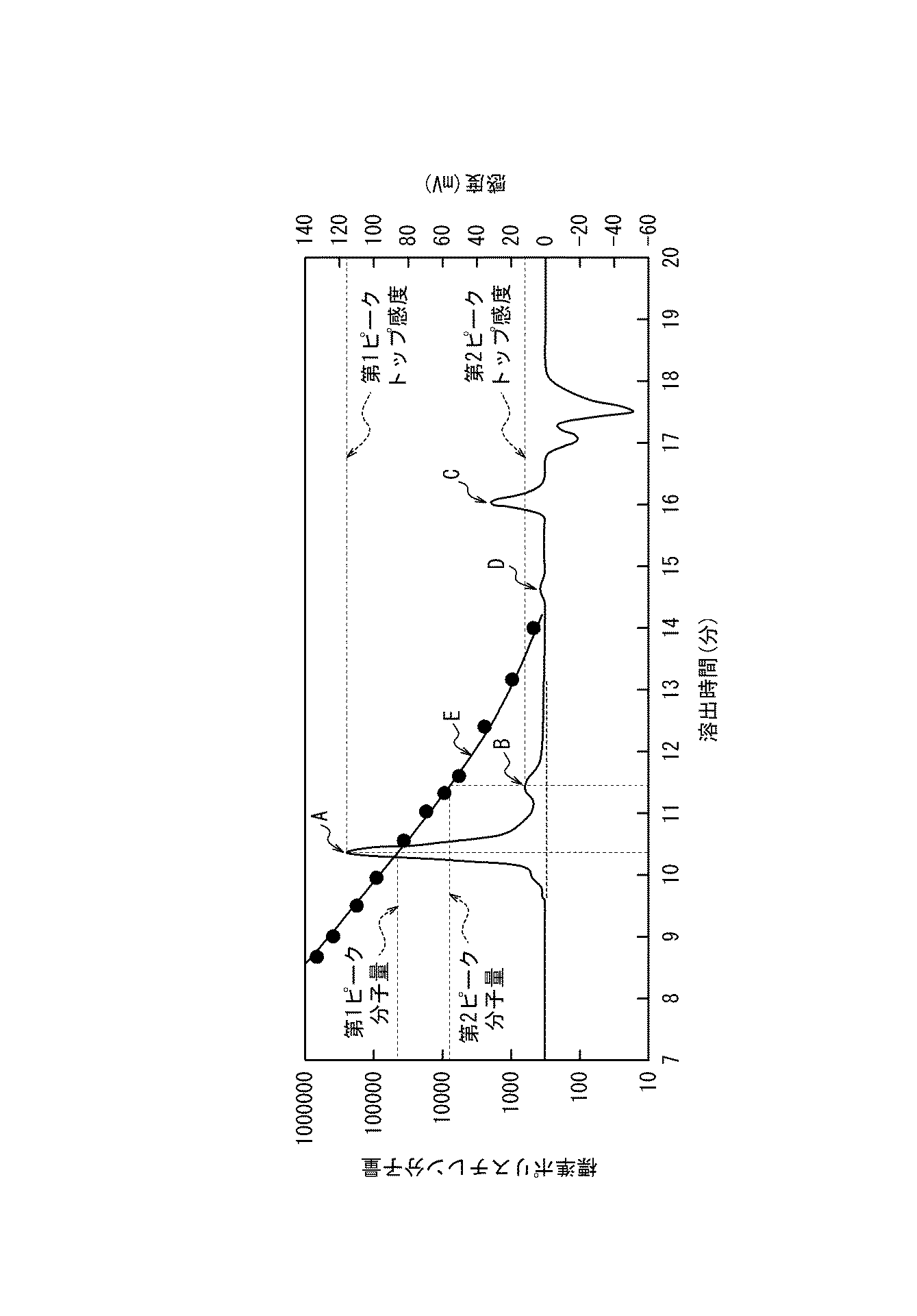
表1より、実施例1〜9は、最も溶出時間の早いピークトップを示すブロック共重合体水素化物由来ピーク(第1ピーク)と、2番目に溶出時間の早いピークトップを示すブロック共重合体水素化物由来ピーク(第2ピーク)とを有し、第1ピークトップ感度/第2ピークトップ感度が1.5以上9.0以下であり、第2ピーク分子量が5000以上であるブロック共重合体水素化物を用いているので、上記を満たさない比較例1〜4と比較して、耐熱性が高いと共に環状オレフィン開環重合体水素化物(COP)からなる成形体に対する密着性が高い成形体を成形可能であることが分かる。 From Table 1, in Examples 1 to 9, the block copolymer hydride-derived peak (first peak) showing the peak top having the earliest elution time and the block copolymer showing the peak top having the second earliest elution time are shown. A block copolymer having a hydride-derived peak (second peak), a first peak top sensitivity / second peak top sensitivity of 1.5 or more and 9.0 or less, and a second peak molecular weight of 5000 or more. Since a hydride is used, a molded product having higher heat resistance and higher adhesion to a molded product made of a cyclic olefin ring-opened polymer hydride (COP) as compared with Comparative Examples 1 to 4, which do not satisfy the above. It can be seen that molding is possible.
本発明によれば、耐熱性が高いと共に環状オレフィン開環重合体水素化物(COP)からなる成形体に対する密着性が高い成形体を成形可能であるブロック共重合体水素化物および該ブロック共重合体水素化物を製造する方法を提供することができる。 Advantageous Effects of Invention According to the present invention, a block copolymer hydride and a block copolymer capable of forming a molded article having high heat resistance and high adhesion to a molded article made of a hydrogenated cyclic olefin ring-opened polymer (COP) A method for producing a hydride can be provided.
Claims (7)
前記ブロック共重合体水素化物[D]を含有する試料のゲルパーミエーションクロマトグラフィー(GPC)で測定した溶出曲線が、少なくとも2つのブロック共重合体水素化物由来ピークを有し、
前記少なくとも2つのブロック共重合体水素化物由来ピークのうち、最も溶出時間の早いピークトップを示すブロック共重合体水素化物由来ピークを第1ピークとし、2番目に溶出時間の早いピークトップを示すブロック共重合体水素化物由来ピークを第2ピークとしたときに、前記第2ピークのピークトップが示す示差屈折計(RI)の検出感度(第2ピークトップ感度)(mV)に対する前記第1ピークのピークトップが示す示差屈折計(RI)の検出感度(第1ピークトップ感度)(mV)の比(前記第1ピークトップ感度(mV)/前記第2ピークトップ感度(mV))が、1.5以上9.0以下であり、
前記第2ピークの溶出時間に基づく標準ポリスチレン換算分子量(第2ピーク分子量)が5000以上である、ブロック共重合体水素化物。 At least two polymer blocks [A] having an aromatic vinyl monomer unit derived from an aromatic vinyl compound as a main component, and a chain conjugated diene monomer unit derived from a chain conjugated diene compound as a main component; A block copolymer hydride [D] obtained by hydrogenating a block copolymer [C] consisting of at least one polymer block [B],
The elution curve of the sample containing the block copolymer hydride [D] measured by gel permeation chromatography (GPC) has at least two peaks derived from the block copolymer hydride,
Of the at least two block copolymer hydride-derived peaks, the block copolymer hydride-derived peak exhibiting the earliest elution time peak is taken as the first peak, and the second peak showing the second elution time earliest peak top. When the peak derived from the copolymer hydride is defined as a second peak, the peak of the first peak is different from the detection sensitivity (second peak top sensitivity) (mV) of the differential refractometer (RI) indicated by the peak top of the second peak. The ratio of the detection sensitivity (first peak top sensitivity) (mV) of the differential refractometer (RI) indicated by the peak top (the first peak top sensitivity (mV) / the second peak top sensitivity (mV)) is 1. 5 or more and 9.0 or less,
A block copolymer hydride having a standard polystyrene equivalent molecular weight (second peak molecular weight) based on the elution time of the second peak of 5,000 or more.
有機リチウム化合物を含む開始剤を用いて、芳香族ビニル単量体と鎖状共役ジエン単量体とを共重合させる共重合工程と、
前記共重合工程により得られたブロック共重合体を水素化する水素化工程と、を含み、
前記共重合工程において、前記開始剤または停止剤を複数回に分けて添加する、ブロック共重合体水素化物の製造方法。 A method for producing a block copolymer hydride which produces at least two types of block copolymer hydrides having different peak top molecular weights (Mp),
Using an initiator containing an organolithium compound, a copolymerization step of copolymerizing an aromatic vinyl monomer and a chain conjugated diene monomer,
Hydrogenation step of hydrogenating the block copolymer obtained by the copolymerization step,
In the copolymerization step, a method for producing a hydride of a block copolymer, wherein the initiator or the terminator is added in a plurality of times.
有機リチウム化合物を含む開始剤を用いて、芳香族ビニル単量体と鎖状共役ジエン単量体とを共重合させる共重合工程と、
前記共重合工程により得られたブロック共重合体を水素化する水素化工程と、を含み、
前記共重合工程において、前記共重合の際に停止剤を添加することを含む、ブロック共重合体水素化物の製造方法。
A method for producing a block copolymer hydride which produces at least two types of block copolymer hydrides having different peak top molecular weights (Mp),
Using an initiator containing an organolithium compound, a copolymerization step of copolymerizing an aromatic vinyl monomer and a chain conjugated diene monomer,
Hydrogenation step of hydrogenating the block copolymer obtained by the copolymerization step,
A method for producing a hydride of a block copolymer, which comprises adding a terminating agent during the copolymerization in the copolymerization step.
Priority Applications (1)
| Application Number | Priority Date | Filing Date | Title |
|---|---|---|---|
| JP2018124585A JP7205087B2 (en) | 2018-06-29 | 2018-06-29 | block copolymer hydride |
Applications Claiming Priority (1)
| Application Number | Priority Date | Filing Date | Title |
|---|---|---|---|
| JP2018124585A JP7205087B2 (en) | 2018-06-29 | 2018-06-29 | block copolymer hydride |
Publications (2)
| Publication Number | Publication Date |
|---|---|
| JP2020002296A true JP2020002296A (en) | 2020-01-09 |
| JP7205087B2 JP7205087B2 (en) | 2023-01-17 |
Family
ID=69098795
Family Applications (1)
| Application Number | Title | Priority Date | Filing Date |
|---|---|---|---|
| JP2018124585A Active JP7205087B2 (en) | 2018-06-29 | 2018-06-29 | block copolymer hydride |
Country Status (1)
| Country | Link |
|---|---|
| JP (1) | JP7205087B2 (en) |
Cited By (2)
| Publication number | Priority date | Publication date | Assignee | Title |
|---|---|---|---|---|
| WO2021065623A1 (en) * | 2019-09-30 | 2021-04-08 | 日本ゼオン株式会社 | Hydrogenated block copolymer composition, method for producing same, and film |
| JPWO2022085492A1 (en) * | 2020-10-19 | 2022-04-28 |
Citations (4)
| Publication number | Priority date | Publication date | Assignee | Title |
|---|---|---|---|---|
| WO2003091303A1 (en) * | 2002-04-25 | 2003-11-06 | Asahi Kasei Chemicals Corporation | Block copolymer and composition thereof |
| JP2005060564A (en) * | 2003-08-14 | 2005-03-10 | Asahi Kasei Chemicals Corp | Block copolymer and heat shrinkable film thereof |
| JP2005126546A (en) * | 2003-10-23 | 2005-05-19 | Asahi Kasei Chemicals Corp | Hydrogenated block copolymer or film |
| JP2011063689A (en) * | 2009-09-16 | 2011-03-31 | Asahi Kasei Chemicals Corp | Styrene-based resin composition, molding, method for producing styrene-based resin composition, and master batch |
-
2018
- 2018-06-29 JP JP2018124585A patent/JP7205087B2/en active Active
Patent Citations (4)
| Publication number | Priority date | Publication date | Assignee | Title |
|---|---|---|---|---|
| WO2003091303A1 (en) * | 2002-04-25 | 2003-11-06 | Asahi Kasei Chemicals Corporation | Block copolymer and composition thereof |
| JP2005060564A (en) * | 2003-08-14 | 2005-03-10 | Asahi Kasei Chemicals Corp | Block copolymer and heat shrinkable film thereof |
| JP2005126546A (en) * | 2003-10-23 | 2005-05-19 | Asahi Kasei Chemicals Corp | Hydrogenated block copolymer or film |
| JP2011063689A (en) * | 2009-09-16 | 2011-03-31 | Asahi Kasei Chemicals Corp | Styrene-based resin composition, molding, method for producing styrene-based resin composition, and master batch |
Cited By (7)
| Publication number | Priority date | Publication date | Assignee | Title |
|---|---|---|---|---|
| WO2021065623A1 (en) * | 2019-09-30 | 2021-04-08 | 日本ゼオン株式会社 | Hydrogenated block copolymer composition, method for producing same, and film |
| CN114430761A (en) * | 2019-09-30 | 2022-05-03 | 日本瑞翁株式会社 | Hydrogenated block copolymer composition, method for producing same, and film |
| US12371525B2 (en) | 2019-09-30 | 2025-07-29 | Zeon Corporation | Hydrogenated block copolymer composition, method for producing same, and film |
| JPWO2022085492A1 (en) * | 2020-10-19 | 2022-04-28 | ||
| WO2022085492A1 (en) * | 2020-10-19 | 2022-04-28 | 日本ゼオン株式会社 | Resin composition, stretchable film, sheet and tube |
| CN116323691A (en) * | 2020-10-19 | 2023-06-23 | 日本瑞翁株式会社 | Resin composition, stretchable film, sheet and tube |
| JP7771971B2 (en) | 2020-10-19 | 2025-11-18 | 日本ゼオン株式会社 | Resin composition, stretchable film, sheet and tube |
Also Published As
| Publication number | Publication date |
|---|---|
| JP7205087B2 (en) | 2023-01-17 |
Similar Documents
| Publication | Publication Date | Title |
|---|---|---|
| JP6690635B2 (en) | Optical film | |
| US10633465B2 (en) | Block copolymers having semi-crystalline blocks and compositions and articles made therefrom | |
| KR102406582B1 (en) | Polarizer protective film, polarizer and display device | |
| JPWO2003018656A1 (en) | Block copolymer, method for producing the same, and molded article | |
| JP7205087B2 (en) | block copolymer hydride | |
| US11130848B2 (en) | Laminated optical film and touch panel | |
| JP6083597B2 (en) | Reactive cycloolefin polymer and process for producing the same | |
| KR102685094B1 (en) | Optical films and polarizers | |
| JP7697368B2 (en) | Hydrogenated block copolymer composition, production method thereof and film | |
| CN107663245B (en) | Block copolymer hydride | |
| JP6201693B2 (en) | Cyclic olefin resin-adhesive for copper bonding and laminate | |
| CN111465878B (en) | Polarizing plate protective film, polarizing plate, and display device | |
| JP2017065086A (en) | Multilayer film | |
| TW202504939A (en) | Fully hydrogenated branched styrenic block copolymer | |
| JP7279392B2 (en) | laminate | |
| JP2014038806A (en) | Transmission cable | |
| JP2008169290A (en) | Polymer with excellent heat resistance | |
| TW201005025A (en) | B-pinene polymer composition and molded object obtained by using the same | |
| JP2003118035A (en) | Method for producing composite | |
| TW201910369A (en) | Optical film | |
| JP2003012745A (en) | Molded body and method for producing the same | |
| JP2018051956A (en) | Transparent film producing method | |
| WO2016111305A1 (en) | Polypropylene resin composition, and polypropylene resin molded article |
Legal Events
| Date | Code | Title | Description |
|---|---|---|---|
| A621 | Written request for application examination |
Free format text: JAPANESE INTERMEDIATE CODE: A621 Effective date: 20210513 |
|
| A977 | Report on retrieval |
Free format text: JAPANESE INTERMEDIATE CODE: A971007 Effective date: 20220525 |
|
| A131 | Notification of reasons for refusal |
Free format text: JAPANESE INTERMEDIATE CODE: A131 Effective date: 20220607 |
|
| A521 | Request for written amendment filed |
Free format text: JAPANESE INTERMEDIATE CODE: A523 Effective date: 20220803 |
|
| TRDD | Decision of grant or rejection written | ||
| A01 | Written decision to grant a patent or to grant a registration (utility model) |
Free format text: JAPANESE INTERMEDIATE CODE: A01 Effective date: 20221129 |
|
| A61 | First payment of annual fees (during grant procedure) |
Free format text: JAPANESE INTERMEDIATE CODE: A61 Effective date: 20221212 |
|
| R150 | Certificate of patent or registration of utility model |
Ref document number: 7205087 Country of ref document: JP Free format text: JAPANESE INTERMEDIATE CODE: R150 |
|
| R250 | Receipt of annual fees |
Free format text: JAPANESE INTERMEDIATE CODE: R250 |