JP2020002764A - Advance control method of road finisher - Google Patents
Advance control method of road finisher Download PDFInfo
- Publication number
- JP2020002764A JP2020002764A JP2019091120A JP2019091120A JP2020002764A JP 2020002764 A JP2020002764 A JP 2020002764A JP 2019091120 A JP2019091120 A JP 2019091120A JP 2019091120 A JP2019091120 A JP 2019091120A JP 2020002764 A JP2020002764 A JP 2020002764A
- Authority
- JP
- Japan
- Prior art keywords
- screed
- energy demand
- predetermined
- refrigerant
- finisher
- Prior art date
- Legal status (The legal status is an assumption and is not a legal conclusion. Google has not performed a legal analysis and makes no representation as to the accuracy of the status listed.)
- Granted
Links
Images

Classifications
-
- B—PERFORMING OPERATIONS; TRANSPORTING
- B60—VEHICLES IN GENERAL
- B60K—ARRANGEMENT OR MOUNTING OF PROPULSION UNITS OR OF TRANSMISSIONS IN VEHICLES; ARRANGEMENT OR MOUNTING OF PLURAL DIVERSE PRIME-MOVERS IN VEHICLES; AUXILIARY DRIVES FOR VEHICLES; INSTRUMENTATION OR DASHBOARDS FOR VEHICLES; ARRANGEMENTS IN CONNECTION WITH COOLING, AIR INTAKE, GAS EXHAUST OR FUEL SUPPLY OF PROPULSION UNITS IN VEHICLES
- B60K11/00—Arrangement in connection with cooling of propulsion units
- B60K11/02—Arrangement in connection with cooling of propulsion units with liquid cooling
-
- E—FIXED CONSTRUCTIONS
- E01—CONSTRUCTION OF ROADS, RAILWAYS, OR BRIDGES
- E01C—CONSTRUCTION OF, OR SURFACES FOR, ROADS, SPORTS GROUNDS, OR THE LIKE; MACHINES OR AUXILIARY TOOLS FOR CONSTRUCTION OR REPAIR
- E01C19/00—Machines, tools or auxiliary devices for preparing or distributing paving materials, for working the placed materials, or for forming, consolidating, or finishing the paving
- E01C19/22—Machines, tools or auxiliary devices for preparing or distributing paving materials, for working the placed materials, or for forming, consolidating, or finishing the paving for consolidating or finishing laid-down unset materials
- E01C19/42—Machines for imparting a smooth finish to freshly-laid paving courses other than by rolling, tamping or vibrating
-
- E—FIXED CONSTRUCTIONS
- E01—CONSTRUCTION OF ROADS, RAILWAYS, OR BRIDGES
- E01C—CONSTRUCTION OF, OR SURFACES FOR, ROADS, SPORTS GROUNDS, OR THE LIKE; MACHINES OR AUXILIARY TOOLS FOR CONSTRUCTION OR REPAIR
- E01C19/00—Machines, tools or auxiliary devices for preparing or distributing paving materials, for working the placed materials, or for forming, consolidating, or finishing the paving
- E01C19/48—Machines, tools or auxiliary devices for preparing or distributing paving materials, for working the placed materials, or for forming, consolidating, or finishing the paving for laying-down the materials and consolidating them, or finishing the surface, e.g. slip forms therefor, forming kerbs or gutters in a continuous operation in situ
-
- E—FIXED CONSTRUCTIONS
- E01—CONSTRUCTION OF ROADS, RAILWAYS, OR BRIDGES
- E01C—CONSTRUCTION OF, OR SURFACES FOR, ROADS, SPORTS GROUNDS, OR THE LIKE; MACHINES OR AUXILIARY TOOLS FOR CONSTRUCTION OR REPAIR
- E01C19/00—Machines, tools or auxiliary devices for preparing or distributing paving materials, for working the placed materials, or for forming, consolidating, or finishing the paving
- E01C19/48—Machines, tools or auxiliary devices for preparing or distributing paving materials, for working the placed materials, or for forming, consolidating, or finishing the paving for laying-down the materials and consolidating them, or finishing the surface, e.g. slip forms therefor, forming kerbs or gutters in a continuous operation in situ
- E01C19/4833—Machines, tools or auxiliary devices for preparing or distributing paving materials, for working the placed materials, or for forming, consolidating, or finishing the paving for laying-down the materials and consolidating them, or finishing the surface, e.g. slip forms therefor, forming kerbs or gutters in a continuous operation in situ with tamping or vibrating means for consolidating or finishing, e.g. immersed vibrators, with or without non-vibratory or non-percussive pressing or smoothing means
- E01C19/4853—Apparatus designed for railless operation, e.g. crawler-mounted, provided with portable trackway arrangements
-
- E—FIXED CONSTRUCTIONS
- E01—CONSTRUCTION OF ROADS, RAILWAYS, OR BRIDGES
- E01C—CONSTRUCTION OF, OR SURFACES FOR, ROADS, SPORTS GROUNDS, OR THE LIKE; MACHINES OR AUXILIARY TOOLS FOR CONSTRUCTION OR REPAIR
- E01C19/00—Machines, tools or auxiliary devices for preparing or distributing paving materials, for working the placed materials, or for forming, consolidating, or finishing the paving
- E01C19/48—Machines, tools or auxiliary devices for preparing or distributing paving materials, for working the placed materials, or for forming, consolidating, or finishing the paving for laying-down the materials and consolidating them, or finishing the surface, e.g. slip forms therefor, forming kerbs or gutters in a continuous operation in situ
- E01C19/4833—Machines, tools or auxiliary devices for preparing or distributing paving materials, for working the placed materials, or for forming, consolidating, or finishing the paving for laying-down the materials and consolidating them, or finishing the surface, e.g. slip forms therefor, forming kerbs or gutters in a continuous operation in situ with tamping or vibrating means for consolidating or finishing, e.g. immersed vibrators, with or without non-vibratory or non-percussive pressing or smoothing means
- E01C19/4853—Apparatus designed for railless operation, e.g. crawler-mounted, provided with portable trackway arrangements
- E01C19/486—Apparatus designed for railless operation, e.g. crawler-mounted, provided with portable trackway arrangements with non-vibratory or non-percussive pressing or smoothing means; with supplemental elements penetrating the paving to work the material thereof
-
- B—PERFORMING OPERATIONS; TRANSPORTING
- B60—VEHICLES IN GENERAL
- B60W—CONJOINT CONTROL OF VEHICLE SUB-UNITS OF DIFFERENT TYPE OR DIFFERENT FUNCTION; CONTROL SYSTEMS SPECIALLY ADAPTED FOR HYBRID VEHICLES; ROAD VEHICLE DRIVE CONTROL SYSTEMS FOR PURPOSES NOT RELATED TO THE CONTROL OF A PARTICULAR SUB-UNIT
- B60W2552/00—Input parameters relating to infrastructure
- B60W2552/15—Road slope, i.e. the inclination of a road segment in the longitudinal direction
-
- B—PERFORMING OPERATIONS; TRANSPORTING
- B60—VEHICLES IN GENERAL
- B60W—CONJOINT CONTROL OF VEHICLE SUB-UNITS OF DIFFERENT TYPE OR DIFFERENT FUNCTION; CONTROL SYSTEMS SPECIALLY ADAPTED FOR HYBRID VEHICLES; ROAD VEHICLE DRIVE CONTROL SYSTEMS FOR PURPOSES NOT RELATED TO THE CONTROL OF A PARTICULAR SUB-UNIT
- B60W2552/00—Input parameters relating to infrastructure
- B60W2552/20—Road profile, i.e. the change in elevation or curvature of a plurality of continuous road segments
-
- B—PERFORMING OPERATIONS; TRANSPORTING
- B60—VEHICLES IN GENERAL
- B60W—CONJOINT CONTROL OF VEHICLE SUB-UNITS OF DIFFERENT TYPE OR DIFFERENT FUNCTION; CONTROL SYSTEMS SPECIALLY ADAPTED FOR HYBRID VEHICLES; ROAD VEHICLE DRIVE CONTROL SYSTEMS FOR PURPOSES NOT RELATED TO THE CONTROL OF A PARTICULAR SUB-UNIT
- B60W2556/00—Input parameters relating to data
- B60W2556/45—External transmission of data to or from the vehicle
- B60W2556/50—External transmission of data to or from the vehicle of positioning data, e.g. GPS [Global Positioning System] data
-
- E—FIXED CONSTRUCTIONS
- E01—CONSTRUCTION OF ROADS, RAILWAYS, OR BRIDGES
- E01C—CONSTRUCTION OF, OR SURFACES FOR, ROADS, SPORTS GROUNDS, OR THE LIKE; MACHINES OR AUXILIARY TOOLS FOR CONSTRUCTION OR REPAIR
- E01C2301/00—Machine characteristics, parts or accessories not otherwise provided for
- E01C2301/10—Heated screeds
-
- E—FIXED CONSTRUCTIONS
- E01—CONSTRUCTION OF ROADS, RAILWAYS, OR BRIDGES
- E01C—CONSTRUCTION OF, OR SURFACES FOR, ROADS, SPORTS GROUNDS, OR THE LIKE; MACHINES OR AUXILIARY TOOLS FOR CONSTRUCTION OR REPAIR
- E01C2301/00—Machine characteristics, parts or accessories not otherwise provided for
- E01C2301/14—Extendable screeds
- E01C2301/16—Laterally slidable screeds
Landscapes
- Engineering & Computer Science (AREA)
- Architecture (AREA)
- Civil Engineering (AREA)
- Structural Engineering (AREA)
- Chemical & Material Sciences (AREA)
- Combustion & Propulsion (AREA)
- Transportation (AREA)
- Mechanical Engineering (AREA)
- Road Paving Machines (AREA)
Abstract
【課題】エネルギー効率良くロードフィニッシャーを制御する方法を提供する。【解決手段】主駆動部Mと、資材ホッパーと、主駆動部Mにより生成されたエネルギーにより動作可能なスクリード加熱系7を有する舗装スクリード5と、を備えるロードフィニッシャーが制御される。舗装スクリード5の温度を、所定のスクリード動作温度値または所定のスクリード動作温度範囲に制御することで舗装動作中に、舗装スクリード5を加熱するようにスクリード加熱系7を動作する。ロードフィニッシャーは、ロードフィニッシャーのエネルギー需要が増える将来の動作状態を予測する。エネルギー需要が増える将来の動作状態が検出されると、スクリード加熱系7が動作されて、所定のスクリード動作温度値または所定のスクリード動作温度範囲を超えるようにスクリード5を加熱する。エネルギー需要が増える動作状態に達すると、スクリード加熱系7は少なくとも部分的に停止する。【選択図】図2A method of controlling a load finisher with high energy efficiency is provided. A load finisher including a main drive unit, a material hopper, and a pavement screed having a screed heating system operable by energy generated by the main drive unit is controlled. By controlling the temperature of the pavement screed 5 to a predetermined screed operation temperature value or a predetermined screed operation temperature range, the screed heating system 7 is operated so as to heat the pavement screed 5 during the pavement operation. The road finisher predicts future operating conditions as the energy demand of the road finisher increases. When a future operating state in which the energy demand increases is detected, the screed heating system 7 is operated to heat the screed 5 so as to exceed a predetermined screed operating temperature value or a predetermined screed operating temperature range. When an operating state is reached in which the energy demand increases, the screed heating system 7 is at least partially shut down. [Selection] Figure 2
Description
本発明は、ロードフィニッシャーを制御する方法に関する。 The present invention relates to a method for controlling a road finisher.
ロードフィニッシャーは、面上に舗装道路を敷くための建設車両である。ロードフィニッシャーは通常、ロードフィニッシャー移動方向前方に配置された、舗装用資材を入れるホッパーを備える。舗装用資材は、スクレーパコンベヤ等の移送手段により、ロードフィニッシャーのホッパーから、移動方向の反対側であるロードフィニッシャー後方に送られる。ここで、舗装用資材は拡散式オーガー等の横送り装置により、ロードフィニッシャーの移動方向を横切る方向に送られ、舗装スクリードに供給される。舗装スクリードは、横送り装置の後方で、ロードフィニッシャーに牽引される。舗装スクリードは、塗布された舗装用資材を均して、固めるために使用され、例えば突き固め装置、振動式平滑用プレート、および/またはプレッシャバーを備え得る。 A road finisher is a construction vehicle for laying a paved road on a surface. The load finisher usually has a hopper for paving materials disposed forward of the road finisher in the moving direction. The pavement material is sent from the hopper of the load finisher to the rear of the load finisher on the opposite side of the moving direction by a transfer means such as a scraper conveyor. Here, the pavement material is sent by a lateral feeder such as a diffusion type auger in a direction crossing the moving direction of the load finisher, and supplied to the pavement screed. The paving screed is towed by a road finisher behind the traverse device. Paving screed is used to level and solidify the applied paving material and may include, for example, a tamping device, a vibrating smoothing plate, and / or a pressure bar.
通常、ロードフィニッシャーは内燃機関、特にディーゼルエンジンで駆動される。ロードフィニッシャー運転機能用の駆動力に加え、内燃機関はさらに、ロードフィニッシャーの作業部や、その他構成要素に対しても動力を提供する。例えば、ロードフィニッシャーの多数の構成要素を作動するための電力を発電する発電機が、内燃機関により駆動されてもよい。特に、発電機により発電された電力は、電動式スクリード加熱系を作動するのに使用可能である。これは、高温資材が冷却されスクリード上で固まることを、スクリードを熱することによって防ぐものである。内燃機関からのエネルギーは、直接、または発電機を介して、ロードフィニッシャーの油圧系にも供給できる。動作中に内燃機関を冷やすために、冷却系が設けられる。これは、特に液体冷媒が内燃機関からの廃熱を吸収するものである。この冷媒は、ファンにより生成された冷却空気流で冷却される。 Usually, the road finisher is driven by an internal combustion engine, particularly a diesel engine. In addition to the driving force for the road finisher operating function, the internal combustion engine also provides power to the working part of the road finisher and other components. For example, a generator that generates electric power for operating a number of components of the road finisher may be driven by the internal combustion engine. In particular, the power generated by the generator can be used to operate a motorized screed heating system. This prevents the hot material from cooling and solidifying on the screed by heating the screed. Energy from the internal combustion engine can also be supplied to the hydraulic system of the road finisher, either directly or via a generator. A cooling system is provided to cool the internal combustion engine during operation. In particular, the liquid refrigerant absorbs waste heat from the internal combustion engine. This refrigerant is cooled by the cooling airflow generated by the fan.
欧州特許第2,281,947A1号には、ロードフィニッシャーを燃料効率よく動作する方法が記載されている。舗装開始前または中断時にロードフィニッシャーが舗装用資材を積んだトラックを待つ際に、ロードフィニッシャーのディーゼルエンジンを切った状態に保つことで、燃料が消費されないようにするものである。これは、ロードフィニッシャーのスクリード加熱系も停止することを意味する。ロードフィニッシャーは、測位およびナビゲーションシステムを利用して、向かっているトラックの位置と、舗装用資材の予想到着時間を判定する。ロードフィニッシャーの制御系は、スクリードを動作温度まで加熱するのにかかる時間を示す情報を記憶する。これにより制御系は、トラック到着時に正確に必要な動作温度となるように、適時ディーゼルエンジンを作動できる。これにより、舗装用資材が到着してすぐに舗装動作が開始可能でありつつ、加熱期間が不要に長くなることが避けられる。不要な加熱時間をさけることで、ロードフィニッシャーの燃料消費を抑えられるが、ロードフィニッシャーのエネルギー効率に関してはまだ改善の余地がある。 EP 2,281,947 A1 describes a method for operating a road finisher in a fuel efficient manner. The fuel is not consumed by keeping the diesel engine of the road finisher off when the road finisher waits for the truck loaded with the paving material before or at the start of paving. This means that the screed heating system of the road finisher is also stopped. The road finisher utilizes a positioning and navigation system to determine the location of the truck heading and the expected arrival time of the paving material. The control system of the load finisher stores information indicating the time required to heat the screed to the operating temperature. This allows the control system to operate the diesel engine in a timely manner so that the required operating temperature is accurately reached when the truck arrives. This makes it possible to start the pavement operation immediately after the pavement material arrives, while avoiding an unnecessary increase in the heating period. By avoiding unnecessary heating time, fuel consumption of the road finisher can be reduced, but there is still room for improvement in the energy efficiency of the road finisher.
本発明の目的は、さらにエネルギー効率良くロードフィニッシャーを制御する方法を提供することである。 It is an object of the present invention to provide a method for controlling a load finisher with more energy efficiency.
この目的は、請求項1および7の内容で実現される。従属項は、好ましい実施形態を示す。
This object is achieved with the subject matter of
本発明は、上述の課題に対して2つの異なる解決方法を提示する。いずれも共通して、ロードフィニッシャーのエネルギーを消費する構成要素の、事前制御に基づく発明原理に基づくものである。 The present invention offers two different solutions to the above-mentioned problems. Both of them are based on the principle of the invention based on prior control of the components consuming energy of the road finisher.
本発明の第1態様によると、ロードフィニッシャーを制御する方法が提供される。ロードフィニッシャーは、主駆動部と、ロードフィニッシャーの移動方向の前方に配置された、舗装用資材を入れる資材ホッパーと、移動方向の後方に配置され、舗装用資材を固める舗装スクリードとを備える。例えば、主駆動部は内燃機関、特にディーゼルエンジンであってもよい。舗装スクリードは、主駆動部が生成するエネルギーで動作可能なスクリード加熱系を備える。スクリード加熱系は、電気抵抗加熱要素を有する電動式スクリード加熱系であって、発電機を介して主駆動部からエネルギー供給を受けるのが好ましい。 According to a first aspect of the present invention, there is provided a method for controlling a road finisher. The load finisher includes a main drive unit, a material hopper that is disposed in front of the load finisher in the moving direction, and that receives the paving material, and a pavement screed that is disposed behind the moving direction and solidifies the paving material. For example, the main drive may be an internal combustion engine, in particular a diesel engine. The paving screed has a screed heating system operable with the energy generated by the main drive. The screed heating system is an electric screed heating system having an electric resistance heating element, and is preferably supplied with energy from a main drive unit via a generator.
(通常)舗装動作中、スクリードの温度を所定のスクリード動作温度値または所定のスクリード動作温度範囲に制御することによって、スクリードを加熱するスクリード加熱系は動作する。特に、スクリード動作温度値またはスクリード動作温度範囲は、高熱舗装用資材の温度に少なくとも略対応、または高熱舗装用資材の温度を含んでもよい。 During the (normal) pavement operation, the screed heating system for heating the screed operates by controlling the temperature of the screed to a predetermined screed operating temperature value or a predetermined screed operating temperature range. In particular, the screed operating temperature value or screed operating temperature range may at least approximately correspond to or include the temperature of the hot paving material.
本発明によると、ロードフィニッシャーにより、ロードフィニッシャーのエネルギー需要の増える将来の動作状態(将来のエネルギー需要増動作状態)が予想される。ロードフィニッシャーは、例えばデータの検出または受信に基づいて、計算により、さらに/あるいはユーザ入力に基づいて、エネルギー需要の増える将来の動作状態を検出できる。 According to the present invention, the load finisher predicts a future operation state in which the energy demand of the load finisher increases (a future energy demand increase operation state). The load finisher can detect future operating conditions with increasing energy demand, for example, based on the detection or reception of data, computationally, and / or based on user input.
エネルギー需要の増える将来の動作状態が検出されると、スクリード加熱系が動作して、スクリードが所定のスクリード動作温度値または所定のスクリード動作温度範囲を超えるように加熱される。この場合、スクリードは実際には高すぎる温度にまで加熱される。特にこれを自動で実施できる。エネルギー需要の増える動作状態(エネルギー需要増動作状態)に達すると、スクリード加熱系は少なくとも一時的に停止される。また、スクリード加熱系は自動で停止することもできる。スクリードが既に通常舗装動作で利用されるスクリード動作温度値または動作温度範囲を超えるまで加熱されているので、スクリード加熱系の停止が、エネルギー需要増動作状態が発生したときに、即座にスクリード温度の致命的な減少につながることはない。スクリードは冷めていくが、それでも過熱の結果、舗装用資材が所定期間はスクリード上で固化して貼り付かない程度の熱を帯びる。 When a future operating condition with increased energy demand is detected, the screed heating system is activated to heat the screed to exceed a predetermined screed operating temperature value or a predetermined screed operating temperature range. In this case, the screed is actually heated to a temperature that is too high. In particular, this can be done automatically. When an operating state in which energy demand increases (energy increasing operating state) is reached, the screed heating system is at least temporarily stopped. Further, the screed heating system can be automatically stopped. Since the screed has already been heated to above the screed operating temperature value or operating temperature range normally used in paving operations, shutting down the screed heating system will immediately increase the screed temperature when an energy demand increase operating condition occurs. It does not lead to a fatal decrease. The screed cools down, but as a result of overheating, the pavement material becomes hot enough to solidify and stick to the screed for a predetermined period of time.
スクリードがエネルギー需要増動作状態となって、スクリード加熱系が停止されると、主駆動部への負荷が軽減される。このようにして、ピーク負荷が吸収される。したがって、より小型の主駆動部が使用可能になる。さらに、主駆動部はより長くその理想的な動作範囲で動作できるので、特に高エネルギー効率となる。本明細書記載の方法は、ロードフィニッシャーを事前に制御することを可能とする。即ち、スクリードのエネルギー需要増動作状態に達する前に、ロードフィニッシャースクリードの加熱処理に、より多くのエネルギーを投入することで、エネルギー需要増動作状態に達すると、スクリード加熱系をOFFにできるようになる。 When the screed enters the energy demand increasing operation state and the screed heating system is stopped, the load on the main drive unit is reduced. In this way, peak loads are absorbed. Therefore, a smaller main drive can be used. In addition, the main drive can operate in its ideal operating range for a longer time, so that it is particularly energy efficient. The method described herein allows for a prior control of the load finisher. That is, by supplying more energy to the heat treatment of the load finisher screed before reaching the energy demand increasing operation state of the screed, the screed heating system can be turned off when the energy demand increasing operation state is reached. Become.
好ましくは、エネルギー需要の増える将来の動作状態の事前検出は、エネルギー需要増動作状態の発生予想時間(予測時間)の検出を含む。エネルギー需要増動作状態の発生予想時間がわかっている場合、ロードフィニッシャーの事前制御系の各動作状況に対する適用性が特に高くなる。 Preferably, the advance detection of a future operation state in which the energy demand increases increases includes detection of an expected time (estimated time) in which the energy demand increase operation state occurs. If the expected time of occurrence of the energy demand increasing operation state is known, the applicability of the pre-control system of the road finisher to each operation state is particularly high.
スクリード加熱系を動作して舗装スクリードを特定のスクリード動作温度、または特定のスクリード動作温度範囲を超えるまで加熱することは、エネルギー需要増の発生予想時間前に開始できる。 Operating the screed heating system to heat the pavement screed to a specified screed operating temperature, or beyond a specified screed operating temperature range, can begin before the expected time of increased energy demand.
所定のスクリード動作温度値または所定のスクリード動作温度範囲を超えるためのスクリード加熱の開始時間は、エネルギー需要増動作状態の発生予想時間に基づいて決定できる。これにより、エネルギー需要増発生の際にスクリードが十分に加熱されていることが保証される一方で、この所定のスクリード動作温度値または所定のスクリード動作温度範囲を超えるための加熱が必要以上に早期実行されない。 The start time of the screed heating for exceeding the predetermined screed operation temperature value or the predetermined screed operation temperature range can be determined based on the estimated time of occurrence of the energy demand increasing operation state. This ensures that the screed is adequately heated during an increase in energy demand, while heating to exceed this predetermined screed operating temperature value or predetermined screed operating temperature range is unnecessarily premature. Not executed.
エネルギー需要増動作状態の発生に伴いスクリード加熱系が停止した後、エネルギー需要増動作状態が終了すると、スクリード加熱系を再度作動するよう開放できる。エネルギー需要増動作時にスクリード加熱系が作動しないようにすることで、主駆動部の電力ピークが確実に避けられる。エネルギー需要増動作状態が終了すると、スクリード加熱系を通常舗装動作用に通常制御できる。 After the screed heating system is stopped due to the occurrence of the energy demand increasing operation state, when the energy demand increasing operation state ends, the screed heating system can be opened to operate again. By preventing the screed heating system from operating during the energy demand increasing operation, the power peak of the main drive unit can be reliably avoided. When the energy demand increase operation state ends, the screed heating system can be normally controlled for normal pavement operation.
エネルギー需要増発生後に、スクリード動作温度が予め設定された動作温度値、または予め設定された動作温度範囲まで下がった際に、停止されていたスクリード加熱系を再作動することが望ましい。これにより、あらゆる場合においてもスクリードが過剰に冷えないことが保証される。一実施形態によると、エネルギー需要増動作状態が継続中であっても、スクリード動作温度が予め設定された動作温度値、または予め設定された動作温度範囲まで下がれば、スクリード加熱系を再作動できる。これは、エネルギー需要増動作状態が長い場合に特に有効となり得る。 It is desirable to restart the stopped screed heating system when the screed operating temperature falls to a preset operating temperature value or a preset operating temperature range after an increase in energy demand. This ensures that in no case does the screed get too cold. According to one embodiment, even if the energy demand increasing operation state is ongoing, the screed heating system can be restarted if the screed operation temperature falls to a preset operation temperature value or a preset operation temperature range. . This can be particularly useful if the energy demand increase operating condition is long.
また、エネルギー需要増動作状態発生に伴い、スクリード加熱系が停止して所定の期間経過後に、スクリード加熱系を再作動することも考えられる。 It is also conceivable that the screed heating system is restarted after a predetermined period elapses after the screed heating system is stopped in response to the occurrence of the energy demand increasing operation state.
第2態様によると、本発明は、ロードフィニッシャーを制御する方法を含む。ロードフィニッシャーは、主駆動部と、ロードフィニッシャーの移動方向の前方に配置された、舗装用資材を入れる資材ホッパーと、移動方向の後方に配置され、舗装用資材を固める舗装スクリードと、冷却系とを備える。例えば、主駆動部は内燃機関、特にディーゼルエンジンであってもよい。冷却系は、冷媒と、主駆動部により生成されたエネルギーにより、冷媒を冷却するための冷却空気流れを生成するように動作可能であるファンとを備える。例えば、冷媒は、冷却液と、冷却要素とを備えることができる。特に、冷媒は主駆動部、および/または油圧系等のロードフィニッシャーのその他構成要素と熱交換してもよい。これにより、主駆動部、および/またはその他構成要素が冷却される。 According to a second aspect, the present invention includes a method for controlling a road finisher. The load finisher is a main drive unit, a material hopper that is arranged in front of the direction of movement of the load finisher, and that is used to store pavement material, a pavement screed that is arranged in the rear of the direction of movement and solidifies the pavement material, and a cooling system. Is provided. For example, the main drive may be an internal combustion engine, in particular a diesel engine. The cooling system includes a refrigerant and a fan operable to generate a flow of cooling air for cooling the refrigerant with the energy generated by the main drive. For example, the refrigerant can include a cooling liquid and a cooling element. In particular, the refrigerant may exchange heat with the main drive and / or other components of the load finisher, such as a hydraulic system. This cools the main drive and / or other components.
ロードフィニッシャーの(通常)舗装動作中、冷媒の温度が所定の冷媒動作温度値または所定の冷媒動作温度範囲に制御されるように、ファンが動作される。所定の冷媒動作温度値、または所定の冷媒動作温度範囲は、冷却系により冷却されるロードフィニッシャーの構成要素が十分に冷却されるように選択可能である。 During the (normal) pavement operation of the load finisher, the fan is operated such that the temperature of the refrigerant is controlled to a predetermined refrigerant operation temperature value or a predetermined refrigerant operation temperature range. The predetermined refrigerant operating temperature value or the predetermined refrigerant operating temperature range can be selected so that the components of the load finisher cooled by the cooling system are sufficiently cooled.
本明細書記載の本発明の第2態様の方法も、ロードフィニッシャーのエネルギー需要の増える将来の動作状態の事前認識を含む。例えば、ロードフィニッシャーは、例えばデータの検出または受信に基づいて、計算により、さらに/あるいはユーザ入力に基づいて、エネルギー需要の増える将来の動作状態を検出できる。 The method of the second aspect of the invention described herein also includes prior knowledge of future operating conditions with increasing energy demands of the road finisher. For example, a load finisher may detect future operating conditions with increasing energy demand, for example, based on the detection or reception of data, computationally, and / or based on user input.
エネルギー需要の増える将来の動作状態が検出されると、ファンが動作されて、冷媒が所定の冷媒動作温度値、または所定の冷媒動作温度範囲未満となるように冷却される。これは、冷媒が通常動作時よりも冷やされることを意味する。特にこれを自動で実施されてもよい。エネルギー需要の増える動作状態(エネルギー需要増動作状態)が生じると、ファンは少なくとも部分的に停止される。また、ファンは自動で停止されてもよい。ファンの停止前に冷媒が通常動作時よりも強く冷やされているので、ファン停止後に冷媒が加熱されても、即座に冷却対象構成要素の過熱に繋がることはない。 When a future operating condition with increased energy demand is detected, the fan is operated to cool the refrigerant to a predetermined refrigerant operating temperature value or below a predetermined refrigerant operating temperature range. This means that the refrigerant is cooled more than during normal operation. In particular, this may be performed automatically. When an energy demand increasing operating condition (energy demand increasing operating condition) occurs, the fan is at least partially shut down. Further, the fan may be automatically stopped. Since the refrigerant is more strongly cooled before the fan stops than during normal operation, even if the refrigerant is heated after the fan stops, it does not immediately lead to overheating of the component to be cooled.
冷媒の事前過冷却により、エネルギー需要増動作状態発生時にファンが停止可能となり、エネルギー需要増動作状態において主駆動部が解放されるために、電力ピークを吸収可能となる。したがって、本発明の方法により、より小型の主駆動部が利用可能となる。電力ピークの吸収により、主駆動部はより長く理想的な動作範囲で動作できるので、エネルギー効率が上がる。 The pre-cooling of the refrigerant allows the fan to be stopped when the energy demand increasing operation state occurs, and the main drive unit is released in the energy demand increasing operation state, so that the power peak can be absorbed. Thus, the method of the present invention allows a smaller main drive to be used. Absorption of power peaks allows the main drive to operate in a longer and ideal operating range, thus increasing energy efficiency.
好ましくは、エネルギー需要の増える将来の動作状態の事前検出は、エネルギー需要増動作状態の発生予想時間の検出を含む。 Preferably, the advance detection of the future operation state in which the energy demand increases increases includes detecting the expected time of occurrence of the energy demand increase operation state.
冷媒を所定の冷媒動作温度値または所定の冷媒動作温度範囲未満に冷却するファンの動作は、エネルギー需要増動作状態の発生予想時間前に開始してもよい。 The operation of the fan for cooling the refrigerant to a predetermined refrigerant operating temperature value or below a predetermined refrigerant operating temperature range may be started before the predicted time of occurrence of the energy demand increasing operation state.
冷媒を所定の冷媒動作温度値または所定の冷媒動作温度範囲未満に冷却するファンの動作開始時間は、エネルギー需要増動作状態の発生予想時間に基づいて決定できる。 The operation start time of the fan that cools the refrigerant to a predetermined refrigerant operation temperature value or lower than a predetermined refrigerant operation temperature range can be determined based on the estimated time of occurrence of the energy demand increasing operation state.
エネルギー需要増動作状態が終了した場合に、エネルギー需要増動作状態が発生したことによって停止されたファンが、作動されるように再度有効化されてもよい。 When the energy demand increasing operation state ends, the fan stopped due to the occurrence of the energy demand increasing operation state may be re-enabled to operate.
停止後に、所定の冷媒動作温度値または所定の冷媒動作温度範囲を超えると、ファンを再作動してもよい。特に、所定の冷媒動作温度値、または所定の冷媒動作温度範囲を超えると、エネルギー需要増動作状態が継続中であってもファンを再作動してもよい。 After the stoppage, when a predetermined refrigerant operating temperature value or a predetermined refrigerant operating temperature range is exceeded, the fan may be restarted. In particular, when the temperature exceeds a predetermined refrigerant operation temperature value or a predetermined refrigerant operation temperature range, the fan may be restarted even when the energy demand increasing operation state is continuing.
エネルギー需要増動作状態の発生に伴いファンを停止してから、所定の期間が経過した後に、ファンを再作動することも考えられる。 It is also conceivable to restart the fan after a predetermined period has elapsed since the fan was stopped in response to the occurrence of the energy demand increasing operation state.
記載された本発明のいずれの態様も、ロードフィニッシャーの加熱対象構成要素(舗装スクリード)、または冷却対象構成要素(冷媒)を事前に過熱または過冷却するという原理に基づくものである。スクリードまたは冷媒の熱容量を利用することで、エネルギー需要増動作状態に到達した際、ロードフィニッシャーのエネルギー効率が向上するように、スクリード加熱系またはファンの停止が可能となる。 Each of the described aspects of the invention is based on the principle of preheating or subcooling the component to be heated (paving screed) or the component to be cooled (refrigerant) of the road finisher. By utilizing the heat capacity of the screed or the coolant, it is possible to stop the screed heating system or the fan so as to improve the energy efficiency of the load finisher when the energy demand increasing operation state is reached.
発明の両方の態様によると、エネルギー需要の増える将来の動作状態の例としては、舗装動作の開始、またはロードフィニッシャーの上り坂駆動が挙げられる。舗装動作の開始時には、各種要因により、ロードフィニッシャーのエネルギー需要が増大する。その中でも特に、舗装処理の開始時に、舗装用資材を資材ホッパーから、ロードフィニッシャー後方に送る必要があり、舗装用資材の資材流を発生する必要がある。さらに、舗装動作の開始時に、ロードフィニッシャーを加速する必要がある。ロードフィニッシャーが上り坂を走る際、ロードフィニッシャーの移動用駆動により多くのエネルギーが必要となるので、エネルギー需要が増大する。 According to both aspects of the invention, examples of future operating conditions with increasing energy demand include the start of a pavement operation, or uphill driving of a road finisher. At the beginning of the pavement operation, various factors increase the energy demand of the road finisher. In particular, at the start of the pavement process, it is necessary to send the pavement material from the material hopper to the rear of the load finisher, and it is necessary to generate a pavement material flow. Furthermore, at the start of the pavement operation, it is necessary to accelerate the road finisher. When the road finisher runs uphill, more energy is required for driving the road finisher to move, thereby increasing the energy demand.
エネルギー需要の増える将来の動作状態の事前認識は、ロードフィニッシャーに舗装用資材を供給するトラックの予想到着時間の認識、または受信を含んでもよい。当該トラックの到着は、舗装処理の開始時のエネルギー需要増が、予想される時期の指標となる(特に、ロードフィニッシャーが舗装処理の開始、または継続のために舗装用資材を待つ場合)。 Prior knowledge of future operating conditions with increasing energy demands may include knowledge of, or reception of, expected arrival times of trucks supplying paving materials to road finishers. The arrival of the truck is an indicator of when an increase in energy demand at the start of the pavement process is expected (especially when the road finisher waits for pavement material to start or continue the pavement process).
エネルギー需要の増える将来の動作状態の事前認識は、上述に加えて、または替えて、計画またはルートデータの受信または評価を含む。例えば、ロードフィニッシャーが上り坂を走ることが予測されてもよい。 Prior knowledge of future operating conditions with increasing energy demands, in addition to or in lieu of the above, includes receiving or evaluating planning or route data. For example, it may be predicted that the road finisher runs uphill.
上述の2つの方法は、ロードフィニッシャーを制御する異なる複数の方法であるが(スクリード加熱系の事前制御、冷却系の事前制御)、これらを組み合わせて同時に実施してもよい。このようにして、ロードフィニッシャーのエネルギー効率をさらに向上できる。 The above two methods are a plurality of different methods for controlling the load finisher (prior control of the screed heating system, preliminary control of the cooling system), but they may be performed simultaneously in combination. In this way, the energy efficiency of the road finisher can be further improved.
以下に、添付の図面を参照し、実施形態により本発明をより詳細に説明する。 Hereinafter, embodiments of the present invention will be described in detail with reference to the accompanying drawings.
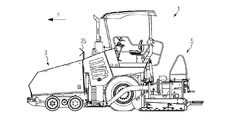
図1は、実施形態に係る方法で制御される、ロードフィニッシャー1を示す。ロードフィニッシャー1は、舗装方向Fで前方に配置され舗装用資材を入れるホッパー3を備える。ロードフィニッシャー1は、舗装方向Fの後方に配置され舗装用資材を固めて均す舗装スクリード5をさらに有する。舗装動作中、舗装用資材がホッパー3から、舗装方向Fに対して反対側の後方に運ばれ、舗装スクリード5の前に置かれる。ロードフィニッシャー1は、ここでは特にディーゼルエンジンとして設計される内燃機関である、主駆動部M(図2参照)を備える。主駆動部Mは、移動用の駆動や、ロードフィニッシャー1の作業用構成要素の駆動、さらにはロードフィニッシャー1の他のエネルギー消費部位にもエネルギーを提供する。
FIG. 1 shows a load finisher 1 controlled by the method according to the embodiment. The road finisher 1 includes a
舗装スクリード5は、スクリード加熱系7を備える。これは、図示の実施形態では、舗装スクリード5を加熱するための2つの電気抵抗加熱要素9を有するものである。スクリード加熱系7は、主駆動部Mからエネルギー供給を受ける。このため、主駆動部Mにより発電機Gが動作し、スクリード加熱系7に供給する電力を生成する。ロードフィニッシャー1の別のエネルギー消費部位にも、発電機Gを介して電力が供給されることが考えられる。
The paving screed 5 includes a
ロードフィニッシャー1の通常動作中、スクリード加熱系7は制御方式に応じて動作することで、スクリード5に舗装用資材の張り付きが生じ得る舗装用資材の冷却を防止するのに十分温度に、スクリード5を常に保つことを保証する。ロードフィニッシャー1のコントローラ11は、舗装スクリード5に設けられた温度センサ13からの出力信号を受信し、受信した出力信号に基づいて、ロードフィニッシャー1の通常動作中に、スクリード加熱系7を制御する。スクリード加熱系7を制御することで、スクリード5の温度が所定の動作温度値になるように制御できる。このため、コントローラ11は、温度センサ13から受信した出力信号に応じて、制御ループ内のスクリード加熱系7を作動、停止できる。スクリード加熱系7が頻繁にON/OFFされることを防ぐため、スクリード5の温度を、スクリード動作温度値ではなく、所与の温度範囲を許容する所定のスクリード動作温度範囲に制御することも好ましい。例えばコントローラ11は、温度センサ13からの出力信号が、低温度閾値を下回ったことを示す場合にスクリード加熱系7を作動し、温度センサ13からの出力信号が、高温度閾値を超えたことを示す場合に、スクリード加熱系7を停止してもよい。
During normal operation of the load finisher 1, the
ロードフィニッシャー1はさらに、冷却系15を備える。これは、ロードフィニッシャー1の各種構成要素を冷却するように設計できる。図2は、主駆動部Mを冷却するための冷却系である冷却系15を示す。但し、冷却系15が上記に加えて、または替えて、油圧系のようなロードフィニッシャー1のその他構成要素を冷却することも考えられる。冷却系15は、ロードフィニッシャー1の冷却対象構成要素と熱交換する冷媒17を備える。主駆動部Mを冷却する場合、冷媒17はエンジン冷却系からのクーラントを含む。但し、別の用途では、冷媒17は例えば冷却要素として設計されてもよい。冷却系15はさらに、冷媒17を冷やす冷却空気流を発生するファン19をさらに備える。ファン19は、発電機Gを介して電気エネルギーで動作されるため、元を辿れば発電機Gを駆動する主駆動部Mからエネルギー供給を受ける要素の1つである。
The load finisher 1 further includes a
ロードフィニッシャー1の通常舗装動作の際、ロードフィニッシャー1のコントローラ11を使用してファン19を調整することで、冷媒17の温度が制御される。そのためにコントローラ11は、ファン19を作動または停止でき、或いはファン19の適切な速度を適用できる。コントローラ11は、温度センサ21から、冷媒17の温度を決定するための出力信号を受信する。この出力信号に基づいて、コントローラ11はファン19を調整して、冷媒17の温度を所定の冷媒動作温度値に調整できる。制御応答をよりスムーズにするために、冷媒17の温度を所与の幅を持つ所定の冷媒動作温度範囲に制御してもよい。
During the normal paving operation of the load finisher 1, the temperature of the refrigerant 17 is controlled by adjusting the
本発明によれば、ロードフィニッシャー1のエネルギー需要の増える将来の動作状態が事前認識され、ロードフィニッシャー1の制御において考慮される。このエネルギー需要の増える動作状態は、主駆動部Mにより供給を受けるロードフィニッシャー1の少なくとも1つの構成要素が、エネルギー需要増となる、さらに/あるいは追加的に作動される必要があるような動作状態である。エネルギー需要増動作状態の一例として、ロードフィニッシャー1が上り坂で運転される場合が挙げられる。すなわち、ロードフィニッシャー1の移動駆動用にエネルギー需要の増加が生じる。エネルギー需要の増加は、舗装動作開始時にも生じる。舗装処理の開始時、例えばロードフィニッシャー1の加速や、資材ホッパー3からロードフィニッシャー1の後方への資材流開始のために、より多くのエネルギーを使用する必要がある。
According to the present invention, a future operation state in which the energy demand of the load finisher 1 increases is recognized in advance, and is considered in the control of the load finisher 1. This operating state with increased energy demand is such that at least one component of the load finisher 1 supplied by the main drive M has an increased energy demand and / or needs to be additionally activated. It is. As an example of the energy demand increasing operation state, there is a case where the road finisher 1 is driven uphill. That is, an increase in the energy demand for driving the movement of the load finisher 1 occurs. An increase in energy demand also occurs at the beginning of the pavement operation. At the start of the pavement process, more energy needs to be used, for example, to accelerate the load finisher 1 or to start material flow from the
エネルギー需要の増える将来の動作状態は、異なる様々な方法で予測できる。例えば、ロードフィニッシャー1のコントローラ11は、各建設プロジェクトの計画データまたはルートデータを利用して、来るべきロードフィニッシャー1の上り坂運転や、その他該当する動作状況を予測できる。例えば、計画またはルートデータは、ロードフィニッシャー1そのものに記憶されるか、通信モジュール23を介してロードフィニッシャー1に供給されてもよい。
Future operating conditions with increasing energy demand can be predicted in a variety of different ways. For example, the
舗装動作(新たな建設現場における、または舗装中断後の)を事前検出できるように、例えば、ロードフィニッシャー1に舗装用資材を投入するためにトラックが到着する予想時間を特定できる。トラックの到着時間は、通信モジュール23を介して、上位建設現場組織システムから制御部11へ送信可能である。また、ロードフィニッシャー1がトラック検出装置25を備えることも考えられる。当該装置は、トラックの接近を光学的に検出するものである。さらに、トラックとロードフィニッシャー1との間の通信により、トラックの予想到着時間が判定されてもよい。
In order to be able to detect in advance the paving operation (at a new construction site or after paving interruption), for example, the expected time of arrival of the truck for loading the paving material into the road finisher 1 can be determined. The arrival time of the truck can be transmitted from the host construction site organization system to the
ロードフィニッシャー1のエネルギー需要の増える将来の動作状態がどのように事前検出されるかについては、他の態様も考えられる。エネルギー需要増動作状態が発生すると予想される時間も検出、特に推定されることが好ましい。 Other aspects of how the future operating state in which the energy demand of the road finisher 1 increases are detected in advance. It is preferable that the time when the energy demand increasing operation state is expected to occur is also detected, especially estimated.
エネルギー需要の増える将来の動作状態が検出された場合、予想されるピーク電力を吸収できるように対策がとられる。以下の実施形態では、このような対策として、スクリード加熱系7の動作調整、冷却系15の動作調整の両方が行われる。ただし、スクリード加熱系7、或いは冷却系15のみの動作を調整することも考えられる。
If a future operating condition with increased energy demand is detected, measures are taken to absorb the expected peak power. In the following embodiment, as such a measure, both the operation adjustment of the
エネルギー需要の増える将来の動作状態が検出された場合、スクリード加熱系7は制御系11に制御される。これにより、スクリード5がエネルギー需要増動作状態の発生予想時間前に、通常舗装動作における制御における所定の動作温度値あるいは動作温度範囲を超えるように加熱される。すなわち、エネルギー需要増発生前に、スクリード5がある程度過熱されるのである。ただし過熱が、スクリード5を損傷しない範囲で実施されることは言うまでもない。
The
さらに、エネルギー需要の増える将来の動作状態が検出された場合、冷却系15のファン19の動作が適用される。エネルギー需要増動作状態の発生予想時間前に、ロードフィニッシャー1の通常舗装動作における制御における所定の冷媒動作温度値あるいは冷媒動作温度範囲を下回るように、冷媒17を追加的に冷却するように、ファン19がロードフィニッシャー1のコントローラ11により制御される。このように、エネルギー需要増動作状態が発生する前に、冷媒17が過冷却されるのである。
Further, when a future operation state in which the energy demand increases is detected, the operation of the
ロードフィニッシャー1のエネルギー需要の増える将来の動作状態が検出された場合、スクリード5の加熱、冷媒17の冷却にエネルギーが投入される。該動作状態が発生した時点で(実際の状態遷移、または発生予想時間の到来)、スクリード加熱系7およびファン19は停止される。したがって、エネルギー需要増動作状態が発生したときに、主駆動部Mの負荷は低減し、ピーク電力が吸収されるのである。この処理では、舗装スクリード5の熱容量、冷媒17の熱容量をバッファとして利用することで、スクリード加熱系7およびファン19が一時的に停止される。
When a future operation state in which the energy demand of the load finisher 1 increases is detected, energy is supplied to heating the screed 5 and cooling the refrigerant 17. At the time when the operating state occurs (actual state transition or the expected occurrence time comes), the
エネルギー需要増動作状態の終了に伴い、スクリード加熱系7およびファン19を解放して再度作動することも考えられる。必要であれば、スクリード加熱系7およびファン19をより早期に再作動してもよい。
With the end of the energy demand increasing operation state, the
エネルギー需要増動作状態のときにも、温度センサ13がスクリード5の温度を監視することが好ましい。スクリード5が過度に冷やされないように、温度センサ13のシグナリングによりスクリードの動作温度があらかじめ定められた動作温度値、或いは、あらかじめ定められた動作温度範囲を下回ったことが示された場合に、スクリード加熱系7を再作動してもよい。
It is preferable that the temperature sensor 13 monitors the temperature of the screed 5 even in the energy demand increasing operation state. If the signaling of the temperature sensor 13 indicates that the operating temperature of the screed has fallen below a predetermined operating temperature value or a predetermined operating temperature range so that the screed 5 is not excessively cooled, The
同様に温度センサ21は、エネルギー需要増動作状態中に冷媒17の温度を監視し続けてもよい。冷媒17が過熱されないように、所定の冷媒動作温度値または範囲を超えたらファン19を再作動するようにしてもよい。
Similarly, the
Claims (15)
所定のスクリード動作温度値または所定のスクリード動作温度範囲に前記舗装スクリード(5)の温度を制御することで、前記ロードフィニッシャー(1)の舗装動作中に、前記スクリード加熱系(7)を動作して、前記舗装スクリード(5)を加熱するように構成される、ロードフィニッシャー(1)を制御する方法であって、
前記ロードフィニッシャー(1)により、前記ロードフィニッシャー(1)のエネルギー需要が増える将来の動作状態が事前認識され、
エネルギー需要が増える将来の動作状態が検出された場合に、前記スクリード加熱系(7)を動作して、前記舗装スクリード(5)を前記所定のスクリード動作温度値または前記所定のスクリード動作温度範囲を超えるように加熱し、
エネルギー需要が増える前記将来の動作状態に達した際に、前記スクリード加熱系(7)を少なくとも一時的に停止することを特徴とする方法。 A main drive unit (M), a material hopper (3) disposed in the front of the pavement direction (F), and operated by energy generated by the main drive unit (M) disposed in the rear of the pavement direction (F). Paving screed (5) with a possible screed heating system (7);
By controlling the temperature of the paving screed (5) to a predetermined screed operating temperature value or a predetermined screed operating temperature range, the screed heating system (7) is operated during the paving operation of the load finisher (1). A method of controlling a road finisher (1) configured to heat the pavement screed (5),
By the load finisher (1), a future operation state in which the energy demand of the load finisher (1) increases is recognized in advance,
When a future operating state in which energy demand increases is detected, the screed heating system (7) is operated to set the paved screed (5) to the predetermined screed operating temperature value or the predetermined screed operating temperature range. Heat to exceed
A method, characterized in that the screed heating system (7) is at least temporarily shut down when the future operating condition in which energy demand increases is reached.
前記ロードフィニッシャー(1)の舗装動作時に、前記冷媒(17)の温度を、所定の冷媒動作温度値または所定の冷媒動作温度範囲に制御するように、前記ファン(19)を動作するように構成される、ロードフィニッシャー(1)を制御する方法であって、
前記ロードフィニッシャー(1)により、前記ロードフィニッシャー(1)のエネルギー需要が増える将来の動作状態が事前認識され、
エネルギー需要が増える将来の動作状態が検出された場合に、前記ファン(19)を動作して、前記冷媒(17)を前記所定の冷媒動作温度値または所定の冷媒動作温度範囲未満に冷却し、
エネルギー需要が増える動作状態が発生したときに、前記ファン(19)を少なくとも一時的に停止することを特徴とする方法。 The main drive unit (M), the material hopper (3) disposed in front of the pavement direction (F), the pavement screed (5) disposed in the back of the pavement direction (F), and the refrigerant (17) And a fan (19) operable to generate a cooling airflow that cools the refrigerant (17) with energy generated by the main drive (M). ,
The fan (19) is operated to control the temperature of the refrigerant (17) to a predetermined refrigerant operation temperature value or a predetermined refrigerant operation temperature range during the paving operation of the load finisher (1). A method for controlling a road finisher (1),
By the load finisher (1), a future operation state in which the energy demand of the load finisher (1) increases is recognized in advance,
Operating a fan (19) to cool the refrigerant (17) below the predetermined refrigerant operating temperature value or below a predetermined refrigerant operating temperature range, when a future operating state in which energy demand increases is detected;
The method characterized in that the fan (19) is stopped at least temporarily when an operating condition that increases energy demand occurs.
Applications Claiming Priority (2)
| Application Number | Priority Date | Filing Date | Title |
|---|---|---|---|
| EP18172399.0 | 2018-05-15 | ||
| EP18172399.0A EP3569764B1 (en) | 2018-05-15 | 2018-05-15 | Method for predictive control of a road paver |
Publications (2)
| Publication Number | Publication Date |
|---|---|
| JP2020002764A true JP2020002764A (en) | 2020-01-09 |
| JP7028824B2 JP7028824B2 (en) | 2022-03-02 |
Family
ID=62167257
Family Applications (1)
| Application Number | Title | Priority Date | Filing Date |
|---|---|---|---|
| JP2019091120A Active JP7028824B2 (en) | 2018-05-15 | 2019-05-14 | Road finisher pre-control method |
Country Status (6)
| Country | Link |
|---|---|
| US (1) | US10753051B2 (en) |
| EP (1) | EP3569764B1 (en) |
| JP (1) | JP7028824B2 (en) |
| CN (1) | CN110485239B (en) |
| BR (1) | BR102019009842B1 (en) |
| PL (1) | PL3569764T3 (en) |
Families Citing this family (6)
| Publication number | Priority date | Publication date | Assignee | Title |
|---|---|---|---|---|
| DE102015012298A1 (en) * | 2015-09-23 | 2017-03-23 | Abg Allgemeine Baumaschinen-Gesellschaft Mbh | Method of operating a self-propelled road paver and paver therefor |
| PL3527721T3 (en) * | 2018-02-19 | 2021-05-04 | Joseph Vögele AG | Finisher with power regulators for electric heating devices of the leveling board |
| PL4116493T3 (en) * | 2021-07-07 | 2025-03-24 | Joseph Vögele AG | Finishing machine with a heating device and a method of detecting a failure of a heating element in the finishing machine |
| CN114277649A (en) * | 2021-12-22 | 2022-04-05 | 山西路桥第八工程有限公司 | Basic unit plastic detection device of highway construction |
| EP4283044A1 (en) * | 2022-05-25 | 2023-11-29 | Joseph Vögele AG | Method for heating an installation board of a road finisher |
| US12492518B2 (en) | 2022-07-29 | 2025-12-09 | Caterpillar Paving Products Inc. | Adjusting a setting of a screed assembly based on temperature data of the screed assembly |
Citations (5)
| Publication number | Priority date | Publication date | Assignee | Title |
|---|---|---|---|---|
| JP2012229605A (en) * | 2011-04-18 | 2012-11-22 | Joseph Voegele Ag | Method and system for coating road surface |
| JP2012251553A (en) * | 2011-06-01 | 2012-12-20 | Joseph Voegele Ag | Construction machine with automatic fan rotational speed regulation |
| JP2013500434A (en) * | 2009-07-27 | 2013-01-07 | ゼネラル・エレクトリック・カンパニイ | Thermal management system, vehicle and related method |
| JP2014129695A (en) * | 2012-12-28 | 2014-07-10 | Sumitomo (Shi) Construction Machinery Co Ltd | Generator control device and generator control method in road paving machine |
| JP2015094132A (en) * | 2013-11-12 | 2015-05-18 | 住友建機株式会社 | Asphalt finisher |
Family Cites Families (8)
| Publication number | Priority date | Publication date | Assignee | Title |
|---|---|---|---|---|
| JP2010242359A (en) * | 2009-04-04 | 2010-10-28 | Sumitomo (Shi) Construction Machinery Co Ltd | Screed heating device for road paving machine |
| EP2256248B2 (en) | 2009-05-25 | 2022-03-09 | Joseph Vögele AG | Road finisher |
| EP2281947B2 (en) | 2009-06-26 | 2022-04-13 | Joseph Vögele AG | Road finisher with automatic motor control |
| CN201873932U (en) * | 2010-11-24 | 2011-06-22 | 成都市新筑路桥机械股份有限公司 | Electromagnetic heating control system for ironing board of paving machine |
| DE102011082336A1 (en) * | 2011-09-08 | 2013-03-14 | Bayerische Motoren Werke Aktiengesellschaft | Method for controlling power distribution processes in a vehicle |
| PL2672008T3 (en) * | 2012-06-05 | 2018-07-31 | Joseph Vögele AG | Road finisher and method for incorporating mixed goods with a road finisher |
| CN102877399A (en) * | 2012-08-18 | 2013-01-16 | 徐州凯莫尔重工科技有限公司 | Automatic-temperature-control heating system of ironing board of paver |
| BR112015018038A2 (en) | 2013-02-14 | 2017-07-11 | Ammann Schweiz Ag | METHOD FOR HEATING A PAVER SABLE OF AN ASPHALT PAVER |
-
2018
- 2018-05-15 EP EP18172399.0A patent/EP3569764B1/en active Active
- 2018-05-15 PL PL18172399T patent/PL3569764T3/en unknown
-
2019
- 2019-05-13 US US16/410,541 patent/US10753051B2/en active Active
- 2019-05-14 BR BR102019009842-2A patent/BR102019009842B1/en active IP Right Grant
- 2019-05-14 JP JP2019091120A patent/JP7028824B2/en active Active
- 2019-05-14 CN CN201910398451.8A patent/CN110485239B/en active Active
Patent Citations (5)
| Publication number | Priority date | Publication date | Assignee | Title |
|---|---|---|---|---|
| JP2013500434A (en) * | 2009-07-27 | 2013-01-07 | ゼネラル・エレクトリック・カンパニイ | Thermal management system, vehicle and related method |
| JP2012229605A (en) * | 2011-04-18 | 2012-11-22 | Joseph Voegele Ag | Method and system for coating road surface |
| JP2012251553A (en) * | 2011-06-01 | 2012-12-20 | Joseph Voegele Ag | Construction machine with automatic fan rotational speed regulation |
| JP2014129695A (en) * | 2012-12-28 | 2014-07-10 | Sumitomo (Shi) Construction Machinery Co Ltd | Generator control device and generator control method in road paving machine |
| JP2015094132A (en) * | 2013-11-12 | 2015-05-18 | 住友建機株式会社 | Asphalt finisher |
Also Published As
| Publication number | Publication date |
|---|---|
| US20190352863A1 (en) | 2019-11-21 |
| EP3569764A1 (en) | 2019-11-20 |
| US10753051B2 (en) | 2020-08-25 |
| BR102019009842A2 (en) | 2019-11-19 |
| PL3569764T3 (en) | 2021-12-27 |
| BR102019009842B1 (en) | 2024-01-16 |
| CN110485239A (en) | 2019-11-22 |
| EP3569764B1 (en) | 2021-07-28 |
| CN110485239B (en) | 2022-01-28 |
| JP7028824B2 (en) | 2022-03-02 |
Similar Documents
| Publication | Publication Date | Title |
|---|---|---|
| JP7028824B2 (en) | Road finisher pre-control method | |
| JP5864939B2 (en) | Operation method of road finishing machine and road finishing machine | |
| US8160804B2 (en) | System and method for thermal management of engine during idle shutdown | |
| US7614368B2 (en) | Automated no-idle heating and engine pre-heat using engine coolant | |
| CN103079853A (en) | Heating/cooling device and method for operating a heating/cooling device | |
| US20100326067A1 (en) | Self-propelled machine | |
| JP2007177418A (en) | Engine control device of construction machine | |
| US20160186389A1 (en) | Method of warming paving machines | |
| JP5968216B2 (en) | Generator control device and method for controlling generator in road paving machine | |
| KR20070110603A (en) | Hybrid vehicle heating system control method | |
| JP6118713B2 (en) | Asphalt finisher | |
| JP4312195B2 (en) | Screed device | |
| CN104204356B (en) | Resistive braking via tenderizer heating | |
| JP5388950B2 (en) | Emulsion heating apparatus for tack pavers and emulsion heating method for tack pavers | |
| JP6192459B2 (en) | Road paving machine | |
| JP3681687B2 (en) | Asphalt finisher tamper control device | |
| US10889945B2 (en) | Emulsion heating control for a paving machine | |
| US20180194260A1 (en) | System for dump body heating and temperature control | |
| JPH076174Y2 (en) | Anti-freezing agent spraying Automatic vehicle spraying equipment | |
| JP6124748B2 (en) | Overheat prevention device for road paving machine | |
| KR20000010796U (en) | Vehicle's coolant freeze protection | |
| JP2013014939A (en) | Screed heating apparatus for paving machine | |
| JP2003262163A (en) | Cooling device for engine supply fuel | |
| JP2002227115A (en) | Snow melting equipment |
Legal Events
| Date | Code | Title | Description |
|---|---|---|---|
| A621 | Written request for application examination |
Free format text: JAPANESE INTERMEDIATE CODE: A621 Effective date: 20190911 |
|
| A977 | Report on retrieval |
Free format text: JAPANESE INTERMEDIATE CODE: A971007 Effective date: 20200728 |
|
| A131 | Notification of reasons for refusal |
Free format text: JAPANESE INTERMEDIATE CODE: A131 Effective date: 20201104 |
|
| A521 | Request for written amendment filed |
Free format text: JAPANESE INTERMEDIATE CODE: A523 Effective date: 20210122 |
|
| A131 | Notification of reasons for refusal |
Free format text: JAPANESE INTERMEDIATE CODE: A131 Effective date: 20210622 |
|
| A521 | Request for written amendment filed |
Free format text: JAPANESE INTERMEDIATE CODE: A523 Effective date: 20210921 |
|
| TRDD | Decision of grant or rejection written | ||
| A01 | Written decision to grant a patent or to grant a registration (utility model) |
Free format text: JAPANESE INTERMEDIATE CODE: A01 Effective date: 20220125 |
|
| A61 | First payment of annual fees (during grant procedure) |
Free format text: JAPANESE INTERMEDIATE CODE: A61 Effective date: 20220217 |
|
| R150 | Certificate of patent or registration of utility model |
Ref document number: 7028824 Country of ref document: JP Free format text: JAPANESE INTERMEDIATE CODE: R150 |
|
| R250 | Receipt of annual fees |
Free format text: JAPANESE INTERMEDIATE CODE: R250 |
|
| R250 | Receipt of annual fees |
Free format text: JAPANESE INTERMEDIATE CODE: R250 |