JP2020005331A - DC-DC converter - Google Patents
DC-DC converter Download PDFInfo
- Publication number
- JP2020005331A JP2020005331A JP2018119551A JP2018119551A JP2020005331A JP 2020005331 A JP2020005331 A JP 2020005331A JP 2018119551 A JP2018119551 A JP 2018119551A JP 2018119551 A JP2018119551 A JP 2018119551A JP 2020005331 A JP2020005331 A JP 2020005331A
- Authority
- JP
- Japan
- Prior art keywords
- bridge circuit
- converter
- switching
- winding
- modulation mode
- Prior art date
- Legal status (The legal status is an assumption and is not a legal conclusion. Google has not performed a legal analysis and makes no representation as to the accuracy of the status listed.)
- Granted
Links
Images



Classifications
-
- H—ELECTRICITY
- H02—GENERATION; CONVERSION OR DISTRIBUTION OF ELECTRIC POWER
- H02M—APPARATUS FOR CONVERSION BETWEEN AC AND AC, BETWEEN AC AND DC, OR BETWEEN DC AND DC, AND FOR USE WITH MAINS OR SIMILAR POWER SUPPLY SYSTEMS; CONVERSION OF DC OR AC INPUT POWER INTO SURGE OUTPUT POWER; CONTROL OR REGULATION THEREOF
- H02M3/00—Conversion of DC power input into DC power output
- H02M3/22—Conversion of DC power input into DC power output with intermediate conversion into AC
- H02M3/24—Conversion of DC power input into DC power output with intermediate conversion into AC by static converters
- H02M3/28—Conversion of DC power input into DC power output with intermediate conversion into AC by static converters using discharge tubes with control electrode or semiconductor devices with control electrode to produce the intermediate AC
- H02M3/325—Conversion of DC power input into DC power output with intermediate conversion into AC by static converters using discharge tubes with control electrode or semiconductor devices with control electrode to produce the intermediate AC using devices of a triode or a transistor type requiring continuous application of a control signal
- H02M3/335—Conversion of DC power input into DC power output with intermediate conversion into AC by static converters using discharge tubes with control electrode or semiconductor devices with control electrode to produce the intermediate AC using devices of a triode or a transistor type requiring continuous application of a control signal using semiconductor devices only
- H02M3/33507—Conversion of DC power input into DC power output with intermediate conversion into AC by static converters using discharge tubes with control electrode or semiconductor devices with control electrode to produce the intermediate AC using devices of a triode or a transistor type requiring continuous application of a control signal using semiconductor devices only with automatic control of the output voltage or current, e.g. flyback converters
-
- H—ELECTRICITY
- H02—GENERATION; CONVERSION OR DISTRIBUTION OF ELECTRIC POWER
- H02M—APPARATUS FOR CONVERSION BETWEEN AC AND AC, BETWEEN AC AND DC, OR BETWEEN DC AND DC, AND FOR USE WITH MAINS OR SIMILAR POWER SUPPLY SYSTEMS; CONVERSION OF DC OR AC INPUT POWER INTO SURGE OUTPUT POWER; CONTROL OR REGULATION THEREOF
- H02M3/00—Conversion of DC power input into DC power output
- H02M3/22—Conversion of DC power input into DC power output with intermediate conversion into AC
- H02M3/24—Conversion of DC power input into DC power output with intermediate conversion into AC by static converters
- H02M3/28—Conversion of DC power input into DC power output with intermediate conversion into AC by static converters using discharge tubes with control electrode or semiconductor devices with control electrode to produce the intermediate AC
- H02M3/325—Conversion of DC power input into DC power output with intermediate conversion into AC by static converters using discharge tubes with control electrode or semiconductor devices with control electrode to produce the intermediate AC using devices of a triode or a transistor type requiring continuous application of a control signal
- H02M3/335—Conversion of DC power input into DC power output with intermediate conversion into AC by static converters using discharge tubes with control electrode or semiconductor devices with control electrode to produce the intermediate AC using devices of a triode or a transistor type requiring continuous application of a control signal using semiconductor devices only
- H02M3/33569—Conversion of DC power input into DC power output with intermediate conversion into AC by static converters using discharge tubes with control electrode or semiconductor devices with control electrode to produce the intermediate AC using devices of a triode or a transistor type requiring continuous application of a control signal using semiconductor devices only having several active switching elements
- H02M3/33576—Conversion of DC power input into DC power output with intermediate conversion into AC by static converters using discharge tubes with control electrode or semiconductor devices with control electrode to produce the intermediate AC using devices of a triode or a transistor type requiring continuous application of a control signal using semiconductor devices only having several active switching elements having at least one active switching element at the secondary side of an isolation transformer
-
- H—ELECTRICITY
- H02—GENERATION; CONVERSION OR DISTRIBUTION OF ELECTRIC POWER
- H02M—APPARATUS FOR CONVERSION BETWEEN AC AND AC, BETWEEN AC AND DC, OR BETWEEN DC AND DC, AND FOR USE WITH MAINS OR SIMILAR POWER SUPPLY SYSTEMS; CONVERSION OF DC OR AC INPUT POWER INTO SURGE OUTPUT POWER; CONTROL OR REGULATION THEREOF
- H02M1/00—Details of apparatus for conversion
- H02M1/0003—Details of control, feedback or regulation circuits
- H02M1/0032—Control circuits allowing low power mode operation, e.g. in standby mode
-
- H—ELECTRICITY
- H02—GENERATION; CONVERSION OR DISTRIBUTION OF ELECTRIC POWER
- H02M—APPARATUS FOR CONVERSION BETWEEN AC AND AC, BETWEEN AC AND DC, OR BETWEEN DC AND DC, AND FOR USE WITH MAINS OR SIMILAR POWER SUPPLY SYSTEMS; CONVERSION OF DC OR AC INPUT POWER INTO SURGE OUTPUT POWER; CONTROL OR REGULATION THEREOF
- H02M1/00—Details of apparatus for conversion
- H02M1/0048—Circuits or arrangements for reducing losses
- H02M1/0054—Transistor switching losses
- H02M1/0058—Transistor switching losses by employing soft switching techniques, i.e. commutation of transistors when applied voltage is zero or when current flow is zero
-
- H—ELECTRICITY
- H02—GENERATION; CONVERSION OR DISTRIBUTION OF ELECTRIC POWER
- H02M—APPARATUS FOR CONVERSION BETWEEN AC AND AC, BETWEEN AC AND DC, OR BETWEEN DC AND DC, AND FOR USE WITH MAINS OR SIMILAR POWER SUPPLY SYSTEMS; CONVERSION OF DC OR AC INPUT POWER INTO SURGE OUTPUT POWER; CONTROL OR REGULATION THEREOF
- H02M1/00—Details of apparatus for conversion
- H02M1/08—Circuits specially adapted for the generation of control voltages for semiconductor devices incorporated in static converters
-
- H—ELECTRICITY
- H02—GENERATION; CONVERSION OR DISTRIBUTION OF ELECTRIC POWER
- H02M—APPARATUS FOR CONVERSION BETWEEN AC AND AC, BETWEEN AC AND DC, OR BETWEEN DC AND DC, AND FOR USE WITH MAINS OR SIMILAR POWER SUPPLY SYSTEMS; CONVERSION OF DC OR AC INPUT POWER INTO SURGE OUTPUT POWER; CONTROL OR REGULATION THEREOF
- H02M1/00—Details of apparatus for conversion
- H02M1/38—Means for preventing simultaneous conduction of switches
-
- H—ELECTRICITY
- H02—GENERATION; CONVERSION OR DISTRIBUTION OF ELECTRIC POWER
- H02M—APPARATUS FOR CONVERSION BETWEEN AC AND AC, BETWEEN AC AND DC, OR BETWEEN DC AND DC, AND FOR USE WITH MAINS OR SIMILAR POWER SUPPLY SYSTEMS; CONVERSION OF DC OR AC INPUT POWER INTO SURGE OUTPUT POWER; CONTROL OR REGULATION THEREOF
- H02M3/00—Conversion of DC power input into DC power output
- H02M3/22—Conversion of DC power input into DC power output with intermediate conversion into AC
- H02M3/24—Conversion of DC power input into DC power output with intermediate conversion into AC by static converters
- H02M3/28—Conversion of DC power input into DC power output with intermediate conversion into AC by static converters using discharge tubes with control electrode or semiconductor devices with control electrode to produce the intermediate AC
- H02M3/325—Conversion of DC power input into DC power output with intermediate conversion into AC by static converters using discharge tubes with control electrode or semiconductor devices with control electrode to produce the intermediate AC using devices of a triode or a transistor type requiring continuous application of a control signal
- H02M3/335—Conversion of DC power input into DC power output with intermediate conversion into AC by static converters using discharge tubes with control electrode or semiconductor devices with control electrode to produce the intermediate AC using devices of a triode or a transistor type requiring continuous application of a control signal using semiconductor devices only
- H02M3/33569—Conversion of DC power input into DC power output with intermediate conversion into AC by static converters using discharge tubes with control electrode or semiconductor devices with control electrode to produce the intermediate AC using devices of a triode or a transistor type requiring continuous application of a control signal using semiconductor devices only having several active switching elements
- H02M3/33576—Conversion of DC power input into DC power output with intermediate conversion into AC by static converters using discharge tubes with control electrode or semiconductor devices with control electrode to produce the intermediate AC using devices of a triode or a transistor type requiring continuous application of a control signal using semiconductor devices only having several active switching elements having at least one active switching element at the secondary side of an isolation transformer
- H02M3/33584—Bidirectional converters
-
- H—ELECTRICITY
- H02—GENERATION; CONVERSION OR DISTRIBUTION OF ELECTRIC POWER
- H02M—APPARATUS FOR CONVERSION BETWEEN AC AND AC, BETWEEN AC AND DC, OR BETWEEN DC AND DC, AND FOR USE WITH MAINS OR SIMILAR POWER SUPPLY SYSTEMS; CONVERSION OF DC OR AC INPUT POWER INTO SURGE OUTPUT POWER; CONTROL OR REGULATION THEREOF
- H02M3/00—Conversion of DC power input into DC power output
- H02M3/22—Conversion of DC power input into DC power output with intermediate conversion into AC
- H02M3/24—Conversion of DC power input into DC power output with intermediate conversion into AC by static converters
- H02M3/28—Conversion of DC power input into DC power output with intermediate conversion into AC by static converters using discharge tubes with control electrode or semiconductor devices with control electrode to produce the intermediate AC
- H02M3/325—Conversion of DC power input into DC power output with intermediate conversion into AC by static converters using discharge tubes with control electrode or semiconductor devices with control electrode to produce the intermediate AC using devices of a triode or a transistor type requiring continuous application of a control signal
- H02M3/335—Conversion of DC power input into DC power output with intermediate conversion into AC by static converters using discharge tubes with control electrode or semiconductor devices with control electrode to produce the intermediate AC using devices of a triode or a transistor type requiring continuous application of a control signal using semiconductor devices only
- H02M3/337—Conversion of DC power input into DC power output with intermediate conversion into AC by static converters using discharge tubes with control electrode or semiconductor devices with control electrode to produce the intermediate AC using devices of a triode or a transistor type requiring continuous application of a control signal using semiconductor devices only in push-pull configuration
- H02M3/3376—Conversion of DC power input into DC power output with intermediate conversion into AC by static converters using discharge tubes with control electrode or semiconductor devices with control electrode to produce the intermediate AC using devices of a triode or a transistor type requiring continuous application of a control signal using semiconductor devices only in push-pull configuration with automatic control of output voltage or current
-
- Y—GENERAL TAGGING OF NEW TECHNOLOGICAL DEVELOPMENTS; GENERAL TAGGING OF CROSS-SECTIONAL TECHNOLOGIES SPANNING OVER SEVERAL SECTIONS OF THE IPC; TECHNICAL SUBJECTS COVERED BY FORMER USPC CROSS-REFERENCE ART COLLECTIONS [XRACs] AND DIGESTS
- Y02—TECHNOLOGIES OR APPLICATIONS FOR MITIGATION OR ADAPTATION AGAINST CLIMATE CHANGE
- Y02B—CLIMATE CHANGE MITIGATION TECHNOLOGIES RELATED TO BUILDINGS, e.g. HOUSING, HOUSE APPLIANCES OR RELATED END-USER APPLICATIONS
- Y02B70/00—Technologies for an efficient end-user side electric power management and consumption
- Y02B70/10—Technologies improving the efficiency by using switched-mode power supplies [SMPS], i.e. efficient power electronics conversion e.g. power factor correction or reduction of losses in power supplies or efficient standby modes
Landscapes
- Engineering & Computer Science (AREA)
- Power Engineering (AREA)
- Dc-Dc Converters (AREA)
Abstract
Description
本発明は、ソフトスイッチングを行うDC−DCコンバータに関する。 The present invention relates to a DC-DC converter that performs soft switching.
DC−DCコンバータなどの電力変換装置では、スイッチング損失を低減して、高効率で電力伝送を行うため、また、ノイズを低減して、スイッチングサージを抑えて、耐圧の低い安価な素子を用いるために、ゼロボルトスイッチング(以下、ZVSと言う)が用いられている。特許文献1には、1次側直流電圧と2次側直流電圧の電圧差が大きい場合に、ZVS動作を成立させて、高効率な電力伝送を可能としたDC−DCコンバータが開示されている。特許文献1に記載のDC−DCコンバータでは、1次側および2次側それぞれで電力を検出し、それら2つの電力差が最小となるように、1次側スイッチのデューティと2次側スイッチのデューティとを増減させている。これにより、ZVS動作が成立するようにしている。
In power converters such as DC-DC converters, in order to reduce switching loss and perform power transmission with high efficiency, and to reduce noise, suppress switching surge, and use inexpensive devices with low withstand voltage. For this purpose, zero volt switching (hereinafter referred to as ZVS) is used.
しかしながら、特許文献1では、ZVS動作を行うために、1次側および2次側それぞれで電力の検出、および、スイッチング制御を行う必要がある。このため、回路構成、および、その制御が複雑となり、生産性の向上およびコストダウンを図ることが難しい。
However, in
そこで、本発明は、簡易な制御でZVS動作を行い、スイッチング損失を低減するDC−DCコンバータを提供することを目的とする。 Accordingly, an object of the present invention is to provide a DC-DC converter that performs a ZVS operation with simple control and reduces switching loss.
上記課題を解決するため、本願の第1発明のDC−DCコンバータは、寄生容量であるキャパシタ、または、並列接続された外付けのキャパシタを含む、4つのスイッチング素子を有する第1フルブリッジ回路と、寄生容量であるキャパシタ、または、並列接続された外付けのキャパシタを含む、4つのスイッチング素子を有する第2フルブリッジ回路と、前記第1フルブリッジ回路に接続された第1巻線と、前記第2フルブリッジ回路に接続され、前記第1巻線と磁気結合する第2巻線とを有するトランスと、前記第1巻線または前記第2巻線に直列接続されたインダクタンス成分と、前記第1フルブリッジ回路および前記第2フルブリッジ回路それぞれの各スイッチング素子をソフトスイッチング制御する制御回路と、を備え、前記制御回路は、前記第1フルブリッジ回路および前記第2フルブリッジ回路それぞれの電圧出力期間を調整する出力角変調モードと、スイッチング周波数を調整する周波数変調モードとで実行可能であり、出力すべき目標電力に応じて、前記出力角変調モード、または、前記周波数変調モード、を実行する。 In order to solve the above problems, a DC-DC converter according to a first aspect of the present invention includes a first full bridge circuit having four switching elements including a capacitor that is a parasitic capacitance or an externally connected capacitor connected in parallel. A second full-bridge circuit having four switching elements including a capacitor that is a parasitic capacitance or an external capacitor connected in parallel; a first winding connected to the first full-bridge circuit; A transformer connected to a second full-bridge circuit and having a second winding magnetically coupled to the first winding; an inductance component connected in series to the first winding or the second winding; A control circuit for soft-switching control of each switching element of each of the first full-bridge circuit and the second full-bridge circuit; The path is executable in an output angle modulation mode for adjusting a voltage output period of each of the first full-bridge circuit and the second full-bridge circuit, and a frequency modulation mode for adjusting a switching frequency. , The output angle modulation mode or the frequency modulation mode is executed.
本願の第2発明は、第1発明のDC−DCコンバータであって、スイッチング素子のターンオンとターンオフとの切り替えタイミングで、前記トランスおよび前記インダクタンス成分の等価インダクタに流れるインダクタ電流は、閾値電流以上である。 A second invention according to the present application is the DC-DC converter according to the first invention, wherein an inductor current flowing through the transformer and the equivalent inductor of the inductance component is equal to or greater than a threshold current at a switching timing of turning on and off the switching element. is there.
本願の第3発明は、第1発明または第2発明のDC−DCコンバータであって、前記制御回路は、前記目標電力が閾値電力未満である場合には、前記出力角変調モードを実行し、前記目標電力が前記閾値電力以上である場合には、前記周波数変調モードを実行する。 A third invention of the present application is the DC-DC converter according to the first invention or the second invention, wherein the control circuit executes the output angle modulation mode when the target power is less than a threshold power, If the target power is equal to or higher than the threshold power, the frequency modulation mode is executed.
本願の第4発明は、第1発明または第2発明のDC−DCコンバータであって、前記制御回路は、前記出力角変調モードと、前記周波数変調モードと、前記第1巻線側の電圧および前記第2巻線側の電圧の位相を変更する位相制御モードと、で実行可能であり、出力すべき目標電力に応じて、前記出力角変調モード、前記周波数変調モード、または、前記位相制御モード、を実行する。 A fourth invention of the present application is the DC-DC converter according to the first invention or the second invention, wherein the control circuit includes the output angle modulation mode, the frequency modulation mode, a voltage on the first winding side, A phase control mode for changing the phase of the voltage on the second winding side, the output angle modulation mode, the frequency modulation mode, or the phase control mode depending on a target power to be output. , Run.
本願の第5発明は、第4発明のDC−DCコンバータであって、前記制御回路は、前記目標電力が第1閾値電力未満である場合には、前記出力角変調モードを実行し、前記目標電力が前記第1閾値電力以上である場合には、前記周波数変調モードを実行し、前記目標電力が、前記第1閾値電力より大きい第2閾値電力以上である場合には、前記位相制御モードを実行する。 A fifth invention of the present application is the DC-DC converter of the fourth invention, wherein the control circuit executes the output angle modulation mode when the target power is less than a first threshold power, and When the power is equal to or higher than the first threshold power, the frequency modulation mode is executed. When the target power is equal to or higher than a second threshold power larger than the first threshold power, the phase control mode is changed. Execute.
本願の第6発明のDC−DCコンバータは、寄生容量であるキャパシタ、または、並列接続された外付けのキャパシタを含む、4つのスイッチング素子を有する第1フルブリッジ回路と、寄生容量であるキャパシタ、または、並列接続された外付けのキャパシタを含む、4つのスイッチング素子を有する第2フルブリッジ回路と、前記第1フルブリッジ回路に接続された第1巻線と、前記第2フルブリッジ回路に接続され、前記第1巻線と磁気結合する第2巻線とを有するトランスと、前記第1巻線または前記第2巻線に直列接続されたインダクタンス成分と、前記第1フルブリッジ回路および前記第2フルブリッジ回路それぞれの各スイッチング素子をソフトスイッチング制御する制御回路と、を備え、前記制御回路は、前記第1フルブリッジ回路および前記第2フルブリッジ回路それぞれの電圧出力期間を調整する出力角変調モード、または、前記第1巻線側の電圧および前記第2巻線側の電圧の位相を変更する位相制御モード、を実行可能であり、出力すべき目標電力に応じて、前記出力角変調モード、または、前記位相制御モード、を実行する。 A DC-DC converter according to a sixth aspect of the present invention includes: a first full-bridge circuit having four switching elements including a capacitor that is a parasitic capacitance or an external capacitor connected in parallel; a capacitor that is a parasitic capacitance; Alternatively, a second full bridge circuit having four switching elements including an external capacitor connected in parallel, a first winding connected to the first full bridge circuit, and a connection to the second full bridge circuit A transformer having a second winding magnetically coupled to the first winding, an inductance component connected in series to the first winding or the second winding, the first full bridge circuit and the second full bridge circuit. And a control circuit for performing soft switching control of each switching element of each of the two full bridge circuits. An output angle modulation mode for adjusting a voltage output period of each of the first circuit and the second full bridge circuit, or a phase control mode for changing a phase of a voltage of the first winding and a voltage of the second winding. And executes the output angle modulation mode or the phase control mode according to the target power to be output.
本願の第7発明は、第6発明のDC−DCコンバータであって、スイッチング素子のターンオンとターンオフとの切り替えタイミングで、前記トランスおよび前記インダクタンス成分の等価インダクタに流れるインダクタ電流は、閾値電流以上である。 A seventh invention of the present application is the DC-DC converter according to the sixth invention, wherein an inductor current flowing through the transformer and the equivalent inductor of the inductance component is equal to or more than a threshold current at a switching timing of turning on and off the switching element. is there.
本願の第8発明は、第1発明から第7発明のDC−DCコンバータであって、前記閾値電流は、前記等価インダクタに蓄積されるエネルギーが、2つの前記キャパシタに蓄積されるエネルギー以上となるように、設定されている。 An eighth invention of the present application is the DC-DC converter according to the first invention to the seventh invention, wherein the threshold current is such that energy stored in the equivalent inductor is equal to or more than energy stored in the two capacitors. And so on.
本願の第9発明は、第8発明のDC−DCコンバータであって、前記閾値電流をIref、前記第1フルブリッジ回路の入力電圧をVx、前記キャパシタのキャパシタンスをC、前記等価インダクタのインダクタンスをL、補正係数をαで表した場合、Iref=α・Vx√(2C/L)、を満たす。 A ninth invention of the present application is the DC-DC converter according to the eighth invention, wherein the threshold current is I ref , the input voltage of the first full bridge circuit is Vx, the capacitance of the capacitor is C, and the inductance of the equivalent inductor is Is represented by L and the correction coefficient is represented by α, I ref = α · Vx√ (2C / L) is satisfied.
本願の第1発明〜第9発明によれば、スイッチング周波数によって、出力角変調モードと、周波数変調モードとを切り替える。モードを適切に切り替えることで、スイッチング周波数が高くなることによるスイッチング損失の向上を抑制できる。つまり、出力すべき目標電力に応じて、各スイッチング素子をスイッチング制御するため、回路構成が複雑となることを防止して、簡易な制御でZVS動作を行い、スイッチング損失を低減することができる。 According to the first to ninth aspects of the present invention, the output angle modulation mode and the frequency modulation mode are switched according to the switching frequency. By appropriately switching the mode, it is possible to suppress an increase in switching loss due to an increase in the switching frequency. That is, since the switching of each switching element is controlled in accordance with the target power to be output, the circuit configuration can be prevented from becoming complicated, the ZVS operation can be performed with simple control, and the switching loss can be reduced.
特に第3発明によれば、低電力出力の際には、スイッチング周波数を変更しないため、スイッチング周波数が高くなることによるスイッチング損失向上を抑制できる。さらに、周波数が上昇することがないので、素子、特にインダクタの発熱を低減できる。 In particular, according to the third aspect, at the time of low power output, the switching frequency is not changed, so that it is possible to suppress an increase in switching loss due to an increase in the switching frequency. Further, since the frequency does not increase, the heat generation of the element, particularly the inductor, can be reduced.
以下、本発明の実施形態について、図面を参照しつつ説明する。以下では、本発明の「DC−DCコンバータ」について、デュアルアクティブブリッジ(DAB)コンバータ(以下、DC−DCコンバータと称す)を例に挙げて説明する。 Hereinafter, embodiments of the present invention will be described with reference to the drawings. Hereinafter, the “DC-DC converter” of the present invention will be described using a dual active bridge (DAB) converter (hereinafter, referred to as a DC-DC converter) as an example.
<1.DC−DCコンバータの回路構成>
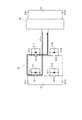
図1は、本実施形態に係るDC−DCコンバータ1の回路図である。
<1. Circuit configuration of DC-DC converter>
FIG. 1 is a circuit diagram of a DC-
DC−DCコンバータ1は、一対の入出力端子IO11および入出力端子IO12と、一対の入出力端子IO21および入出力端子IO22と、を備えている。一対の入出力端子IO11、IO12には直流電源E1が接続されている。一対の入出力端子IO21、IO22には直流電源E2が接続されている。
The DC-
DC−DCコンバータ1は、入出力端子IO11、IO12から入力される直流電源E1の電源電圧を変圧し、入出力端子IO21、IO22から出力する。また、DC−DCコンバータ1は、入出力端子IO21、IO22から入力される、直流電源E2の電源電圧を変圧し、入出力端子IO11、IO12から出力する。つまり、DC−DCコンバータ1は、双方向に電力伝送が可能なコンバータである。
The DC-
DC−DCコンバータ1は、第1フルブリッジ回路10と、第2フルブリッジ回路20と、トランスTと、を備えている。
The DC-
トランスTは、第1巻線n1と、第2巻線n2とを備えている。第1巻線n1と第2巻線n2とは磁気結合する。第1巻線n1は、第1フルブリッジ回路10を介して、入出力端子IO11、IO12に接続されている。第2巻線n2は、第2フルブリッジ回路20を介して、入出力端子IO21、IO22に接続されている。
The transformer T includes a first winding n1 and a second winding n2. The first winding n1 and the second winding n2 are magnetically coupled. The first winding n1 is connected to the input / output terminals IO11 and IO12 via the first
第1フルブリッジ回路10は、スイッチング素子Q11とスイッチング素子Q12とが直列接続された第1レグと、スイッチング素子Q13とスイッチング素子Q14とが直列接続された第2レグと、を有している。スイッチング素子Q11、Q12、Q13、Q14には、ダイオードD11、D12、D13、D14、および、キャパシタC11、C12、C13、C14が並列に接続されている。スイッチング素子Q11〜Q14はMOS−FETである。ただし、スイッチング素子Q11〜Q14は、IGBTまたはJFET等であってもよい。ダイオードD11〜D14は、実素子であってもよいし、寄生ダイオードであってもよい。また、キャパシタC11〜C14は、実素子、寄生容量、または、寄生容量と実素子との組み合わせであってもよい。
The first
トランスTの第1巻線n1は、第1レグおよび第2レグそれぞれの中点に接続されている。トランスTの第1巻線n1と、第1レグの中点との間には、インダクタL1が設けられている。ただし、インダクタL1は、第1巻線n1または第2巻線n2に直列接続されていればよく、その配置場所は適宜変更可能である。例えば、インダクタL1は、第1巻線n1と第2レグの中点との間に設けられていてもよい。また、インダクタL1は、実素子、トランスTの漏れインダクタンス、または、実素子と漏れインダクタンスとの組み合わせであってもよい。 The first winding n1 of the transformer T is connected to the middle point of each of the first leg and the second leg. An inductor L1 is provided between the first winding n1 of the transformer T and the middle point of the first leg. However, the inductor L1 only needs to be connected in series to the first winding n1 or the second winding n2, and the arrangement location thereof can be changed as appropriate. For example, the inductor L1 may be provided between the first winding n1 and the middle point of the second leg. Further, the inductor L1 may be a real element, a leakage inductance of the transformer T, or a combination of the real element and the leakage inductance.
第2フルブリッジ回路20は、スイッチング素子Q21とスイッチング素子Q22とが直列接続された第3レグと、スイッチング素子Q23とスイッチング素子Q24とが直列接続された第4レグと、を有している。スイッチング素子Q21、Q22、Q23、Q24には、ダイオードD21、D22、D23、D24、および、キャパシタC21、C22、C23、C24が並列に接続されている。スイッチング素子Q21〜Q24はMOS−FETである。ただし、スイッチング素子Q21〜Q24は、IGBTまたはJFET等であってもよい。ダイオードD21〜D24は、実素子であってもよいし、寄生ダイオードであってもよい。また、キャパシタC21〜C24は、実素子、寄生容量、または、寄生容量と実素子との組み合わせであってもよい。
The second
トランスTの第2巻線n2は、第3レグおよび第4レグそれぞれの中点に接続されている。前記のインダクタL1は、第2巻線n2と、第3レグまたは第4レグの中点との間に設けられていてもよい。 The second winding n2 of the transformer T is connected to the middle point of each of the third leg and the fourth leg. The inductor L1 may be provided between the second winding n2 and a middle point of the third leg or the fourth leg.
スイッチング素子Q11〜Q14およびスイッチング素子Q21〜Q24それぞれのゲート端子は、制御回路30に接続されている。制御回路30は、DC−DCコンバータ1の出力電力が設定される目標電力となるように、スイッチング素子Q11〜Q14、Q21〜Q24それぞれをスイッチング制御する。本実施形態では、制御回路30は、スイッチング損失を低減するために、スイッチング素子Q11〜Q14、Q21〜Q24それぞれをソフトスイッチングする。
The gate terminals of the switching elements Q11 to Q14 and the switching elements Q21 to Q24 are connected to the
<2.ソフトスイッチング動作について>
以下に、各スイッチング素子Q11〜Q14、Q21〜Q24のソフトスイッチング動作について説明する。なお、本実施の形態では、3−LEVEL方式のDAB制御が採用されている。
<2. About soft switching operation>
Hereinafter, the soft switching operation of each of the switching elements Q11 to Q14 and Q21 to Q24 will be described. In this embodiment, 3-LEVEL DAB control is employed.
DC−DCコンバータ1は、入出力端子IO11、IO12および入出力端子IO21、IO22の一方から他方、または、他方から一方への電力伝送を行う。以下では、入出力端子IO11、IO12を入力側(1次側)とし、入出力端子IO21、IO22を出力側(2次側)として説明する。
The DC-
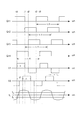
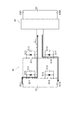
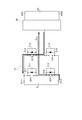
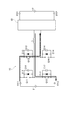
図2は、DC−DCコンバータ1のタイミングチャートを示す図である。図3、図4、図5、図6、図7および図8は、DC−DCコンバータ1での電流経路を説明するための図である。図3〜図8では、第2フルブリッジ回路20の図示は簡略し、図1のインダクタL1およびトランスTは、等価的なインダクタLで表す。
FIG. 2 is a diagram showing a timing chart of the DC-
図2では、第1フルブリッジ回路10の各スイッチング素子Q11〜Q14についてのみ、そのタイミングチャートを示す。また、図2のV1は、図1に示す、スイッチング素子Q11とスイッチング素子Q12との中点と、スイッチング素子Q13とスイッチング素子Q14との中点との間の電圧である。V2は、スイッチング素子Q21とスイッチング素子Q22との中点と、スイッチング素子Q23とスイッチング素子Q24との中点との間の電圧である。この例では、直流電源E1、E2それぞれが同じ電源電圧である。ILは、インダクタL(図3〜図8参照)に流れるインダクタ電流である。
FIG. 2 shows a timing chart of only each of the switching elements Q11 to Q14 of the first
制御回路30は、位相差を設けて、第1フルブリッジ回路10と、第2フルブリッジ回路20とをスイッチング制御する。以下では、第1フルブリッジ回路10と、第2フルブリッジ回路20との位相差を、δで表す。制御回路30は、第1フルブリッジ回路10および第2フルブリッジ回路20それぞれにおいて、スイッチング周波数f(周期1/f)で、フェーズシフトPWM制御を行う。
The
また、以下では、第1フルブリッジ回路10の各スイッチング素子Q11〜Q14についてのスイッチング制御について、説明する。第2フルブリッジ回路20については、電圧V2が、図2に示す波形となるように、スイッチング制御され、その説明は、第1フルブリッジ回路10と同様に説明することができる。したがって、図3〜図8では、説明を簡易にするために、第1フルブリッジ回路10側の電流経路についてのみ示す。なお、各図では、各スイッチング素子は簡略化した回路記号で示している。
In the following, switching control of each of the switching elements Q11 to Q14 of the first
(t0〜t1)
t0〜t1期間では、スイッチング素子Q11、Q14がオン、スイッチング素子Q12、Q13がオフである。
(T0-t1)
During the period from t0 to t1, the switching elements Q11 and Q14 are on and the switching elements Q12 and Q13 are off.
この場合、図3に示すように、直流電源E1から、スイッチング素子Q11、インダクタL、第2フルブリッジ回路20、スイッチング素子Q14、直流電源E1の順に電流が流れる。この期間の電圧V1はHiである。
In this case, as shown in FIG. 3, a current flows from the DC power supply E1 in the order of the switching element Q11, the inductor L, the second
タイミングt1では、スイッチング素子Q11がターンオフされた後、デッドタイムを挟んで、スイッチング素子Q12がターンオンされる。このデッドタイムでは、スイッチング素子Q11、Q12は共にオフとなる。このとき、インダクタLには、その性質上、インダクタ電流ILが流れ続けるため、図4に示すように、キャパシタC11およびキャパシタC12それぞれから、インダクタLに電流が流れる。キャパシタC11は放電し、キャパシタC12は充電される。キャパシタC12が充電されると、スイッチング素子Q12のドレイン・ソース間電圧はゼロである。このときに、スイッチング素子Q12をターンオンすると、ZVSとなる。 At timing t1, after switching element Q11 is turned off, switching element Q12 is turned on with a dead time in between. In this dead time, the switching elements Q11 and Q12 are both turned off. At this time, the inductor L, by their nature, the inductor current I L continues to flow, as shown in FIG. 4, a capacitor C11 and capacitor C12, respectively, current flows through the inductor L. The capacitor C11 is discharged, and the capacitor C12 is charged. When the capacitor C12 is charged, the drain-source voltage of the switching element Q12 is zero. At this time, when the switching element Q12 is turned on, ZVS occurs.
(t1〜t2)
t1〜t2期間では、スイッチング素子Q12、Q14がオン、スイッチング素子Q11、Q13がオフである。この場合、図5に示すように、スイッチング素子Q14、スイッチング素子Q12からインダクタLの経路に電流が流れる。このときの電圧V1はゼロである。
(T1 to t2)
During the period from t1 to t2, the switching elements Q12 and Q14 are on and the switching elements Q11 and Q13 are off. In this case, as shown in FIG. 5, a current flows from the switching elements Q14 and Q12 to the path of the inductor L. The voltage V1 at this time is zero.
タイミングt2では、スイッチング素子Q14がターンオフされた後、デッドタイムを挟んで、スイッチング素子Q13がターンオンされる。このデッドタイムでは、図4での説明と同様、キャパシタC14は放電し、キャパシタC13は充電される。キャパシタC13が充電されることで、スイッチング素子Q13のドレイン・ソース間電圧はゼロである。このときに、スイッチング素子Q13をターンオンすると、ZVSとなる。 At timing t2, after switching element Q14 is turned off, switching element Q13 is turned on with a dead time in between. In this dead time, the capacitor C14 is discharged and the capacitor C13 is charged, as in the description of FIG. When the capacitor C13 is charged, the drain-source voltage of the switching element Q13 is zero. At this time, when the switching element Q13 is turned on, ZVS occurs.
(t2〜t3)
t2〜t3期間では、スイッチング素子Q12、Q13がオン、スイッチング素子Q11、Q14がオフである。タイミングt2で、スイッチング素子Q13をターンオンした直後は、図6に示すように、直流電源E1、スイッチング素子Q12、インダクタL、第2フルブリッジ回路20、スイッチング素子Q13、直流電源E1の経路に電流が流れる。この電流は、直流電源E1に逆流することになり、その結果、図7に示すように、直流電源E1、スイッチング素子Q13、第2フルブリッジ回路20、インダクタL、スイッチング素子Q12、直流電源E1の経路に電流が流れるようになる。この期間の電圧V1は、t0〜t1期間と逆極性となる。
(T2 to t3)
During the period from t2 to t3, the switching elements Q12 and Q13 are on and the switching elements Q11 and Q14 are off. Immediately after the switching element Q13 is turned on at the timing t2, as shown in FIG. Flows. This current flows back to the DC power supply E1, and as a result, as shown in FIG. 7, the DC power supply E1, the switching element Q13, the second
また、タイミングt3では、スイッチング素子Q12がターンオフされた後、デッドタイムを挟んで、スイッチング素子Q11がターンオンされる。そして、図4での説明と同様、キャパシタC12は放電し、キャパシタC11は充電される。そして、キャパシタC11が充電されることで、スイッチング素子Q11のドレイン・ソース間電圧はゼロである。このときに、スイッチング素子Q11をターンオンすると、ZVSとなる。 Further, at the timing t3, after the switching element Q12 is turned off, the switching element Q11 is turned on with a dead time therebetween. Then, as in the description of FIG. 4, the capacitor C12 is discharged, and the capacitor C11 is charged. When the capacitor C11 is charged, the drain-source voltage of the switching element Q11 is zero. At this time, when the switching element Q11 is turned on, it becomes ZVS.
(t3〜t0)
t3〜t0期間では、スイッチング素子Q11、Q13がオン、スイッチング素子Q12、Q14がオフである。この場合、図8に示すように、インダクタL、スイッチング素子Q11、スイッチング素子Q13の経路に電流が流れる。このときの電圧V1はゼロである。
(T3 to t0)
During the period from t3 to t0, the switching elements Q11 and Q13 are on and the switching elements Q12 and Q14 are off. In this case, as shown in FIG. 8, a current flows through the path of the inductor L, the switching element Q11, and the switching element Q13. The voltage V1 at this time is zero.
タイミングt0では、スイッチング素子Q13がターンオフされた後、デッドタイムが設けられて、スイッチング素子Q14がターンオンされる。そして、図4での説明と同様、キャパシタC13は放電し、キャパシタC14は充電される。キャパシタC14が充電されることで、スイッチング素子Q14のドレイン・ソース間電圧はゼロである。このときに、スイッチング素子Q14をターンオンすると、ZVSとなる。そして、図3の状態に遷移する。 At timing t0, after switching element Q13 is turned off, a dead time is provided, and switching element Q14 is turned on. Then, as in the description of FIG. 4, the capacitor C13 is discharged, and the capacitor C14 is charged. When the capacitor C14 is charged, the drain-source voltage of the switching element Q14 is zero. At this time, when the switching element Q14 is turned on, ZVS occurs. And it changes to the state of FIG.
上記のようにスイッチング制御することで、電圧V1は、図2に示す波形のように、遷移する。また、制御回路30が、第2フルブリッジ回路20をスイッチング制御することで、電圧V2は、図2に示す波形のように遷移する。上記のように、第1フルブリッジ回路10と、第2フルブリッジ回路20とは、位相差δでスイッチング制御されるため、電圧V1の立ち上がりと、電圧V2の立ち上がりとの位相差は、δである。
By performing the switching control as described above, the voltage V1 transitions as shown in the waveform of FIG. The
<3.DC−DCコンバータの出力電力について>
制御回路30は、DC−DCコンバータ1の出力電力を制御する際、出力電力に応じて、出力角変調モード、または、周波数変調モードで制御を行う。以下、出力角変調モードと、周波数変調モードとについて説明する。
<3. Regarding output power of DC-DC converter>
When controlling the output power of the DC-
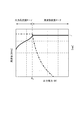
図9は、出力角変調モードおよび周波数変調モードそれぞれの制御を説明するための図である。 FIG. 9 is a diagram for describing control of each of the output angle modulation mode and the frequency modulation mode.
ここで、電圧V1と電圧V2とが、互いに逆極性となる極性反転期間を、τcで表す。また、第1フルブリッジ回路10の電圧出力期間を、τ1で表す。第2フルブリッジ回路20の電圧出力期間を、τ2で表す。τ1、τ2、τc(何れも図2参照)は、時間を角度(ラジアン)表記したものである。この例では、τ1=τ2であり、τ1=τ2=τで表す。図9の実線は、このτの変化を示す。また、図9の一点鎖線は、スイッチング周波数fの変化を示す。さらに、図9の横軸は出力電力である。
Here, voltage V1 and the voltage V2, the polarity inversion period of the opposite polarities, represented by tau c. Further, the voltage output period of the first
まず、出力角変調モードについて説明する。 First, the output angle modulation mode will be described.
制御回路30は、DC−DCコンバータ1が低電力出力のとき、出力角変調モードで、DC−DCコンバータ1の出力制御を行う。出力角変調モードでは、制御回路30は、スイッチング周波数f、および、極性反転期間τcを固定にし、τ1、τ2を変更して、DC−DCコンバータ1からの出力電力が目標値となるようにする。
When the DC-
τ1は、第1フルブリッジ回路10の各スイッチング素子の位相を制御することで、変更される。また、τ2は、第2フルブリッジ回路20の各スイッチング素子のオン位相を制御することで、変更される。
τ 1 is changed by controlling the phase of each switching element of the first
固定値であるτcは、各スイッチング素子をZVSできるように設定される。そのために、τcは、以下の式(1)の条件を満たす必要がある。

上記の式(1)において、Lは、図3などのインダクタLのインダクタンスである。Vxは、直流電源E1の電源電圧を(図1参照)である。 In the above equation (1), L is the inductance of the inductor L in FIG. Vx is the power supply voltage of the DC power supply E1 (see FIG. 1).
また、Irefは、ZVSを実現するために必要なインダクタ電流ILの電流値である。上記のように、例えば、タイミングt1のデッドタイム(図4)において、キャパシタC11が放電し、キャパシタC12が充電した後に、スイッチング素子Q12のドレイン・ソース間電圧がゼロであれば、スイッチング素子Q12のターンオンはZVSとなる。つまり、インダクタLのエネルギーは、少なくとも、キャパシタC11、C12それぞれに蓄積されるエネルギー以上であれば、スイッチング素子Q12をZVSできる。このためには、以下の式(2)が成り立つ必要がある。
式(2)において、ILはインダクタLに流れるインダクタ電流である。Cは、キャパシタC11〜C14それぞれのキャパシタンスである。そして、式(2)は、以下の式(3)に変換される。なお、式(3)のαは補正係数であり、必要に応じて適宜値が設定される。ここでは、α=1とする。
インダクタ電流ILが、式(3)のα・Vx√(2C/L)以上であると、スイッチング素子Q12のZVSが可能となる。つまり、閾値電流Irefは、α・Vx√(2C/L)で表すことができる。そして、スイッチング素子をターンオンする各タイミングで、|IL|≧|Iref|の条件を満たせば、各スイッチング素子のZVSが可能となる。 The inductor current I L and is α · Vx√ of formula (3) (2C / L) or higher, it is possible to ZVS switching element Q12. That is, the threshold current I ref can be represented by α · Vx√ (2C / L). If the condition of | I L | ≧ | I ref | is satisfied at each timing when the switching element is turned on, ZVS of each switching element becomes possible.
次に、DC−DCコンバータ1の出力電力をPで表し、τ1=τ2=τで表すと、電力Pは、以下の式(4)で表すことができる。
式(4)において、Vx、Vyは既知である。τcは、上記の式(1)で表される。また、電力Pは、DC−DCコンバータ1から出力したい目標値であり、既知である。したがって、DC−DCコンバータ1から出力したい電力の目標値が与えられると、式(4)の逆関数から、τ(=τ1=τ2)を算出することができる。
In equation (4), Vx and Vy are known. τ c is represented by the above equation (1). The power P is a target value to be output from the DC-
制御回路30は、τ1、τ2が、式(4)から得られたτとなるように、第1フルブリッジ回路10および第2フルブリッジ回路20それぞれを、スイッチング制御する。これにより、DC−DCコンバータ1からは、目標の電力Pが出力される。
The
以上のように、出力角変調モードでは、スイッチング周波数fが一定であるため、スイッチング周波数が高くなることによるスイッチング損失の向上を抑制できる。さらに、スイッチング周波数が上昇することがないため、素子、特にインダクタLの発熱を低減できる。 As described above, in the output angle modulation mode, since the switching frequency f is constant, it is possible to suppress an increase in switching loss due to an increase in the switching frequency. Further, since the switching frequency does not increase, the heat generation of the element, particularly, the inductor L can be reduced.
また、インダクタLに閾値電流Iref以上のインダクタ電流ILを流すことで、第1フルブリッジ回路10および第2フルブリッジ回路20それぞれの各スイッチング素子のZVSを実現できる。
Also, by passing a threshold current I ref or more inductor current I L in inductor L, it can be realized ZVS of the first
次に、周波数変調モードについて説明する。 Next, the frequency modulation mode will be described.
図9に示すように、出力角変調モードでは、τを大きくなると、出力電力は増加する。出力電力Pが閾値電力(以下、PTで表す)以上である場合、制御回路30は、周波数変調モードで、DC−DCコンバータ1の出力制御を行う。閾値電力PTは、本発明の「第1閾値電力」の一例である。
As shown in FIG. 9, in the output angle modulation mode, as τ increases, the output power increases. When the output power P is equal to or higher than the threshold power (hereinafter, referred to as PT ), the
まず、閾値電力PTについて説明する。 First, the threshold power PT will be described.
上記の式(4)は、τに関して2次関数の形となっている。このため、電力Pに対してτは2つの解を持つ。そこで、所定のアルゴリズムで一つのτに特定する。例えば、2次関数の頂点近傍に解を求めるようにしてもよい。この場合、周波数を抑えることができ、発熱を抑えることができる。あるいは、2次関数の頂点近傍から離れた位置で解を求めるようにしてもよい。特に、以下の式(5)は、上述したアルゴリズムに適用し得る、好適なτの算定式が記されている。
周波数変調モードにおいて、DC−DCコンバータ1の出力電力をPで表し、τ1とτ2とが等しく、τ(=τ1=τ2)で表し、τcを時間で表したtcを用いると、電力Pは、以下の式(6)で表すことができる。
式(6)において、Vx、Vyは既知であり、τcは、上記の式(1)で表され、τfixは、式(5)で表されるτである。また、電力Pは、DC−DCコンバータ1から出力したい目標値であり、既知である。したがって、式(6)の逆関数により、ωを算出できる。そして、ωから、スイッチング周波数fを算出できる。
In equation (6), Vx and Vy are known, τ c is represented by equation (1), and τ fix is τ represented by equation (5). The power P is a target value to be output from the DC-
制御回路30は、式(6)から得られたスイッチング周波数fで、第1フルブリッジ回路10および第2フルブリッジ回路20それぞれの各スイッチング素子を、スイッチング制御する。これにより、DC−DCコンバータ1からは、目標の電力Pが出力される。
The
周波数変調モードでは、図9に示すように、スイッチング周波数fを小さくすると、出力電力は大きくなる。つまり、周波数変調モードにおいてスイッチング周波数fが高くなることがない。このため、スイッチング周波数が高くなることによるスイッチング損失の向上を抑制できる。さらに、スイッチング周波数が上昇することがないため、素子、特にインダクタLの発熱を低減できる。 In the frequency modulation mode, as shown in FIG. 9, when the switching frequency f is reduced, the output power increases. That is, the switching frequency f does not increase in the frequency modulation mode. Therefore, it is possible to suppress an increase in switching loss due to an increase in switching frequency. Further, since the switching frequency does not increase, the heat generation of the element, particularly, the inductor L can be reduced.
また、出力角変調モードと同様に、インダクタLに閾値電流Iref以上のインダクタ電流ILを流すことで、第1フルブリッジ回路10および第2フルブリッジ回路20それぞれの各スイッチング素子のZVSを実現できる。
Similar to the output angle modulation mode, by supplying a threshold current I ref or more inductor current I L in inductor L, realize ZVS of the first
以上のように、本実施形態では、スイッチング周波数が高くなることによるスイッチング損失の向上を抑制できる。さらに、スイッチング周波数が上昇することがないため、素子、特にインダクタLの発熱を低減できる。また、各スイッチング素子のZVSを実現できるため、高効率な電力変換が実現できる。この制御は、回路中に検出回路を設ける必要がなく、また、複雑な制御を必要としないため、簡易な制御でZVS動作を行い、スイッチング損失を低減することができる。 As described above, in the present embodiment, it is possible to suppress an increase in switching loss due to an increase in switching frequency. Further, since the switching frequency does not increase, the heat generation of the element, particularly, the inductor L can be reduced. Also, since ZVS of each switching element can be realized, highly efficient power conversion can be realized. This control does not require the provision of a detection circuit in the circuit, and does not require complicated control. Therefore, the ZVS operation can be performed with simple control, and switching loss can be reduced.
<4.変形例>
以上、本発明の一実施形態について説明したが、本発明は、上記の実施形態に限定されるものではない。
<4. Modification>
As mentioned above, although one Embodiment of this invention was described, this invention is not limited to said Embodiment.
上記の実施形態では、DC−DCコンバータ1の出力が低電力である場合に、出力角変調モードを実行し、出力が高電力である場合に、周波数変調モードを実行しているが、これに限らない。DC−DCコンバータ1の出力が低電力である場合に、周波数変調モードを実行し、出力が高電力である場合に、出力角変調モードを実行してもよい。
In the above embodiment, the output angle modulation mode is executed when the output of the DC-
また、DC−DCコンバータ1から出力する電力の目標値が、閾値電力PTよりも大きい閾値電力(第2閾値電力)以上である場合、制御回路30は、位相制御モードを実行するようにしてもよい。位相制御モードは、スイッチング周波数fを一定にしつつ、第1巻線n1側の電圧、および、第2巻線n2側の電圧の位相を変更する。つまり、V1と、V2との位相差δを変更する。位相差δの変更は、第1フルブリッジ回路10それぞれのスイッチング素子と、第2フルブリッジ回路20それぞれのスイッチング素子との位相差を変更することで、可能となる。
When the target value of the power output from the DC-
位相制御モードの場合、出力電力Pは、以下の式(7)で表される。式(7)のnは、第1巻線n1と、第2巻線n2との巻線比である。
式(7)からわかるように、第1フルブリッジ回路10と第2フルブリッジ回路20との位相差δを変更させることで、出力電力Pを制御することができる。
As can be seen from Expression (7), the output power P can be controlled by changing the phase difference δ between the first
また、DC−DCコンバータ1の出力電力に応じて、出力角変調モードと、位相制御モードとを、切り替えて実行してもよい。
Further, the output angle modulation mode and the phase control mode may be switched and executed according to the output power of the DC-
さらに、上記の実施形態では、式(4)において、τ=τ1=τ2を条件としているが、τ1と、τ2とが異なっていてもよい。この場合、以下の式(8)を用いて、目標の電力Pを出力するための、τ1と、τ2とを算出することができる。
また、上記の実施形態では、入出力端子IO11、IO12を入力側とし、入出力端子IO21、IO22を出力側として説明した。しかしながら、DC−DCコンバータ1は双方向に電力伝送可能である。したがって、入出力端子IO11、IO12を出力側とし、入出力端子IO21、IO22を入出力側とすることが可能である。この場合、上記の実施形態と同様に説明することができため、その説明を省略する。なお、DC−DCコンバータ1は、双方向型でなくてもよい。
In the above embodiment, the input / output terminals IO11 and IO12 have been described as input sides, and the input / output terminals IO21 and IO22 have been described as output sides. However, the DC-
また、上記実施形態では、極性反転期間τcは固定値としているが、可変値であってもよい。上記実施形態では、上記の固定値以上とされていれば、ZVS動作を実現させ得る。 In the above embodiment, the polarity inversion period τ c is a fixed value, but may be a variable value. In the above embodiment, the ZVS operation can be realized if the value is equal to or more than the fixed value.
上記の実施形態または変形例に登場した各要素を、矛盾が生じない範囲で、適宜に組み合わせてもよい。 Elements appearing in the above-described embodiment or the modified example may be appropriately combined as long as no contradiction occurs.
1 :DC−DCコンバータ
10 :第1フルブリッジ回路
20 :第2フルブリッジ回路
30 :制御回路
C11、C12、C13、C14:キャパシタ
C21、C22、C23、C24:キャパシタ
D11、D12、D13、D14:ダイオード
D21、D22、D23、D24:ダイオード
E1、E2:直流電源
IL :インダクタ電流
IO11、IO12:入出力端子
IO21、IO22:入出力端子
L :インダクタ
L1 :インダクタ
Q11、Q12、Q13、Q14:スイッチング素子
Q21、Q22、Q23、Q24:スイッチング素子
T :トランス
V1 :電圧
V2 :電圧
1: DC-DC converter 10: first full bridge circuit 20: second full bridge circuit 30: control circuits C11, C12, C13, C14: capacitors C21, C22, C23, C24: capacitors D11, D12, D13, D14: Diodes D21, D22, D23, D24: Diodes E1, E2: DC power supply IL: Inductor currents IO11, IO12: I / O terminals IO21, IO22: I / O terminals L: Inductor L1: Inductors Q11, Q12, Q13, Q14: Switching elements Q21, Q22, Q23, Q24: switching element T: transformer V1: voltage V2: voltage
Claims (9)
寄生容量であるキャパシタ、または、並列接続された外付けのキャパシタを含む、4つのスイッチング素子を有する第2フルブリッジ回路と、
前記第1フルブリッジ回路に接続された第1巻線と、前記第2フルブリッジ回路に接続され、前記第1巻線と磁気結合する第2巻線とを有するトランスと、
前記第1巻線または前記第2巻線に直列接続されたインダクタンス成分と、
前記第1フルブリッジ回路および前記第2フルブリッジ回路それぞれの各スイッチング素子をソフトスイッチング制御する制御回路と、
を備え、
前記制御回路は、
前記第1フルブリッジ回路および前記第2フルブリッジ回路それぞれの電圧出力期間を調整する出力角変調モードと、スイッチング周波数を調整する周波数変調モードとで実行可能であり、出力すべき目標電力に応じて、前記出力角変調モード、または、前記周波数変調モード、を実行する、
DC−DCコンバータ。 A first full bridge circuit having four switching elements including a capacitor that is a parasitic capacitance or an external capacitor connected in parallel;
A second full bridge circuit having four switching elements including a capacitor that is a parasitic capacitance or an external capacitor connected in parallel;
A transformer having a first winding connected to the first full bridge circuit and a second winding connected to the second full bridge circuit and magnetically coupled to the first winding;
An inductance component connected in series to the first winding or the second winding;
A control circuit for performing soft switching control on each switching element of each of the first full bridge circuit and the second full bridge circuit;
With
The control circuit includes:
An output angle modulation mode for adjusting the voltage output period of each of the first full-bridge circuit and the second full-bridge circuit and a frequency modulation mode for adjusting the switching frequency can be executed according to a target power to be output. Performing the output angle modulation mode, or the frequency modulation mode,
DC-DC converter.
スイッチング素子のターンオンとターンオフとの切り替えタイミングで、前記トランスおよび前記インダクタンス成分の等価インダクタに流れるインダクタ電流は、閾値電流以上である、
DC−DCコンバータ。 The DC-DC converter according to claim 1, wherein
At the switching timing between the turn-on and the turn-off of the switching element, an inductor current flowing through the transformer and an equivalent inductor of the inductance component is equal to or greater than a threshold current.
DC-DC converter.
前記制御回路は、
前記目標電力が閾値電力未満である場合には、前記出力角変調モードを実行し、
前記目標電力が前記閾値電力以上である場合には、前記周波数変調モードを実行する、
DC−DCコンバータ。 The DC-DC converter according to claim 1 or 2, wherein:
The control circuit includes:
If the target power is less than the threshold power, execute the output angle modulation mode,
If the target power is greater than or equal to the threshold power, execute the frequency modulation mode,
DC-DC converter.
前記制御回路は、
前記出力角変調モードと、前記周波数変調モードと、前記第1巻線側の電圧および前記第2巻線側の電圧の位相を変更する位相制御モードと、で実行可能であり、出力すべき目標電力に応じて、前記出力角変調モード、前記周波数変調モード、または、前記位相制御モード、を実行する、
DC−DCコンバータ。 The DC-DC converter according to claim 1 or 2, wherein:
The control circuit includes:
The output angle modulation mode, the frequency modulation mode, and a phase control mode for changing a phase of a voltage of the first winding and a phase of a voltage of the second winding, and a target to be output. According to the power, the output angle modulation mode, the frequency modulation mode, or the phase control mode, to execute,
DC-DC converter.
前記制御回路は、
前記目標電力が第1閾値電力未満である場合には、前記出力角変調モードを実行し、
前記目標電力が前記第1閾値電力以上である場合には、前記周波数変調モードを実行し、
前記目標電力が、前記第1閾値電力より大きい第2閾値電力以上である場合には、前記位相制御モードを実行する、
DC−DCコンバータ。 The DC-DC converter according to claim 4, wherein
The control circuit includes:
If the target power is less than the first threshold power, execute the output angle modulation mode,
If the target power is greater than or equal to the first threshold power, execute the frequency modulation mode,
If the target power is equal to or greater than a second threshold power that is greater than the first threshold power, execute the phase control mode;
DC-DC converter.
寄生容量であるキャパシタ、または、並列接続された外付けのキャパシタを含む、4つのスイッチング素子を有する第2フルブリッジ回路と、
前記第1フルブリッジ回路に接続された第1巻線と、前記第2フルブリッジ回路に接続され、前記第1巻線と磁気結合する第2巻線とを有するトランスと、
前記第1巻線または前記第2巻線に直列接続されたインダクタンス成分と、
前記第1フルブリッジ回路および前記第2フルブリッジ回路それぞれの各スイッチング素子をソフトスイッチング制御する制御回路と、
を備え、
前記制御回路は、
前記第1フルブリッジ回路および前記第2フルブリッジ回路それぞれの電圧出力期間を調整する出力角変調モード、または、前記第1巻線側の電圧および前記第2巻線側の電圧の位相を変更する位相制御モード、を実行可能であり、出力すべき目標電力に応じて、前記出力角変調モード、または、前記位相制御モード、を実行する、
DC−DCコンバータ。 A first full bridge circuit having four switching elements including a capacitor that is a parasitic capacitance or an external capacitor connected in parallel;
A second full bridge circuit having four switching elements including a capacitor that is a parasitic capacitance or an external capacitor connected in parallel;
A transformer having a first winding connected to the first full bridge circuit and a second winding connected to the second full bridge circuit and magnetically coupled to the first winding;
An inductance component connected in series to the first winding or the second winding;
A control circuit that performs soft switching control on each switching element of each of the first full bridge circuit and the second full bridge circuit;
With
The control circuit includes:
An output angle modulation mode for adjusting a voltage output period of each of the first full-bridge circuit and the second full-bridge circuit, or changing a phase of the voltage on the first winding and a voltage on the second winding. A phase control mode can be executed, and the output angle modulation mode or the phase control mode is executed according to a target power to be output.
DC-DC converter.
スイッチング素子のターンオンとターンオフとの切り替えタイミングで、前記トランスおよび前記インダクタンス成分の等価インダクタに流れるインダクタ電流は、閾値電流以上である、
DC−DCコンバータ。 The DC-DC converter according to claim 6, wherein
At the switching timing between the turn-on and the turn-off of the switching element, an inductor current flowing through the transformer and an equivalent inductor of the inductance component is equal to or greater than a threshold current.
DC-DC converter.
前記閾値電流は、前記等価インダクタに蓄積されるエネルギーが、2つの前記キャパシタに蓄積されるエネルギー以上となるように、設定されている、
DC−DCコンバータ。 The DC-DC converter according to any one of claims 1 to 7, wherein:
The threshold current is set such that energy stored in the equivalent inductor is equal to or greater than energy stored in the two capacitors.
DC-DC converter.
前記閾値電流をIref、前記第1フルブリッジ回路の入力電圧をVx、前記キャパシタのキャパシタンスをC、前記等価インダクタのインダクタンスをL、補正係数をαで表した場合、
Iref=α・Vx√(2C/L)、
を満たす、DC−DCコンバータ。 The DC-DC converter according to claim 8, wherein
When the threshold current is I ref , the input voltage of the first full bridge circuit is Vx, the capacitance of the capacitor is C, the inductance of the equivalent inductor is L, and the correction coefficient is α,
I ref = α · Vx√ (2C / L),
A DC-DC converter.
Priority Applications (4)
| Application Number | Priority Date | Filing Date | Title |
|---|---|---|---|
| JP2018119551A JP7036680B2 (en) | 2018-06-25 | 2018-06-25 | DC-DC converter |
| PCT/JP2019/017379 WO2020003718A1 (en) | 2018-06-25 | 2019-04-24 | Dc-dc converter |
| US17/048,254 US11469676B2 (en) | 2018-06-25 | 2019-04-24 | DC-DC converter |
| CN201980043383.1A CN112352375B (en) | 2018-06-25 | 2019-04-24 | DC-DC Converters |
Applications Claiming Priority (1)
| Application Number | Priority Date | Filing Date | Title |
|---|---|---|---|
| JP2018119551A JP7036680B2 (en) | 2018-06-25 | 2018-06-25 | DC-DC converter |
Publications (3)
| Publication Number | Publication Date |
|---|---|
| JP2020005331A true JP2020005331A (en) | 2020-01-09 |
| JP2020005331A5 JP2020005331A5 (en) | 2021-06-17 |
| JP7036680B2 JP7036680B2 (en) | 2022-03-15 |
Family
ID=68986353
Family Applications (1)
| Application Number | Title | Priority Date | Filing Date |
|---|---|---|---|
| JP2018119551A Active JP7036680B2 (en) | 2018-06-25 | 2018-06-25 | DC-DC converter |
Country Status (4)
| Country | Link |
|---|---|
| US (1) | US11469676B2 (en) |
| JP (1) | JP7036680B2 (en) |
| CN (1) | CN112352375B (en) |
| WO (1) | WO2020003718A1 (en) |
Cited By (6)
| Publication number | Priority date | Publication date | Assignee | Title |
|---|---|---|---|---|
| CN114337253A (en) * | 2021-12-30 | 2022-04-12 | 电子科技大学 | High-transformation-ratio scalable DC-DC converter |
| JP2022138010A (en) * | 2021-03-09 | 2022-09-22 | 株式会社豊田自動織機 | Power conversion device |
| JP2022138011A (en) * | 2021-03-09 | 2022-09-22 | 株式会社豊田自動織機 | Power conversion device |
| WO2022244087A1 (en) * | 2021-05-18 | 2022-11-24 | 住友電気工業株式会社 | Power conversion apparatus, on-board charger and control method |
| JP7448872B1 (en) | 2023-09-25 | 2024-03-13 | 日新電機株式会社 | DC-DC converter and control method |
| WO2025037511A1 (en) * | 2023-08-14 | 2025-02-20 | 株式会社豊田自動織機 | Power conversion device |
Families Citing this family (3)
| Publication number | Priority date | Publication date | Assignee | Title |
|---|---|---|---|---|
| WO2020225854A1 (en) * | 2019-05-07 | 2020-11-12 | 三菱電機株式会社 | Power conversion device |
| WO2023122779A1 (en) * | 2021-12-23 | 2023-06-29 | Vitesco Technologies USA, LLC | Resonant converter having variable frequency control and fixed valley time-shift for efficient soft switching operation |
| CN119561388B (en) * | 2024-12-02 | 2025-12-30 | 浙江大学 | A method and system for optimizing the switching losses of an energy storage DC-DC converter |
Citations (2)
| Publication number | Priority date | Publication date | Assignee | Title |
|---|---|---|---|---|
| WO2012144249A1 (en) * | 2011-04-18 | 2012-10-26 | 三菱電機株式会社 | Power conversion device and in-vehicle power supply device equipped with same |
| JP2017085785A (en) * | 2015-10-28 | 2017-05-18 | ニチコン株式会社 | Bidirectional insulation type dc/dc converter |
Family Cites Families (20)
| Publication number | Priority date | Publication date | Assignee | Title |
|---|---|---|---|---|
| JP2000324823A (en) * | 1999-05-12 | 2000-11-24 | Sharp Corp | Switching power supply |
| US7796406B2 (en) * | 2007-07-31 | 2010-09-14 | Lumenis Ltd. | Apparatus and method for high efficiency isolated power converter |
| JP5241571B2 (en) * | 2009-03-05 | 2013-07-17 | 富士通テレコムネットワークス株式会社 | Switching power supply |
| US20120044722A1 (en) * | 2010-02-23 | 2012-02-23 | Slobodan Cuk | Isolated switching converter |
| JP5591002B2 (en) * | 2010-07-22 | 2014-09-17 | 新電元工業株式会社 | Current resonant converter and control method thereof |
| US8780585B2 (en) * | 2010-07-31 | 2014-07-15 | Texas Instruments Incorporated | Double phase-shifting full-bridge DC-to-DC converter |
| JP5963125B2 (en) * | 2011-07-22 | 2016-08-03 | 株式会社Ihi | DC power converter |
| US8611116B2 (en) * | 2011-07-28 | 2013-12-17 | Power Integrations, Inc. | Varying switching frequency and period of a power supply controller |
| JP2013132175A (en) * | 2011-12-22 | 2013-07-04 | Origin Electric Co Ltd | Series resonant converter circuit |
| JP2014217196A (en) * | 2013-04-26 | 2014-11-17 | パナソニック株式会社 | Bidirectional dc/dc converter |
| WO2015004989A1 (en) * | 2013-07-11 | 2015-01-15 | 富士電機株式会社 | Bidirectional dc-to-dc converter |
| CN103457477B (en) * | 2013-09-23 | 2015-09-30 | 武汉中原电子集团有限公司 | A kind of control method of phase-shifted soft switch converter |
| CN105658467B (en) * | 2013-10-17 | 2017-06-23 | 日产自动车株式会社 | Power-converting device and electric power conversion method |
| JP2015122903A (en) * | 2013-12-24 | 2015-07-02 | パナソニックIpマネジメント株式会社 | Switching power-supply device and power conversion device |
| JP2015213402A (en) * | 2014-05-07 | 2015-11-26 | 三菱電機株式会社 | DC / DC converter |
| JP6307368B2 (en) | 2014-06-27 | 2018-04-04 | 新電元工業株式会社 | DC / DC converter control device and control method thereof |
| JP6337732B2 (en) * | 2014-10-09 | 2018-06-06 | 富士通株式会社 | Power circuit |
| KR101659724B1 (en) * | 2014-12-04 | 2016-09-26 | 울산과학기술원 | Soft start control method for dual active bridge converter and apparatus thereof |
| JP2017070083A (en) * | 2015-09-30 | 2017-04-06 | サンケン電気株式会社 | Resonant bidirectional dc/dc converter |
| CN108631357B (en) * | 2018-04-03 | 2020-08-28 | 阳光电源股份有限公司 | Medium-high voltage energy conversion system |
-
2018
- 2018-06-25 JP JP2018119551A patent/JP7036680B2/en active Active
-
2019
- 2019-04-24 US US17/048,254 patent/US11469676B2/en active Active
- 2019-04-24 WO PCT/JP2019/017379 patent/WO2020003718A1/en not_active Ceased
- 2019-04-24 CN CN201980043383.1A patent/CN112352375B/en active Active
Patent Citations (2)
| Publication number | Priority date | Publication date | Assignee | Title |
|---|---|---|---|---|
| WO2012144249A1 (en) * | 2011-04-18 | 2012-10-26 | 三菱電機株式会社 | Power conversion device and in-vehicle power supply device equipped with same |
| JP2017085785A (en) * | 2015-10-28 | 2017-05-18 | ニチコン株式会社 | Bidirectional insulation type dc/dc converter |
Cited By (11)
| Publication number | Priority date | Publication date | Assignee | Title |
|---|---|---|---|---|
| JP2022138010A (en) * | 2021-03-09 | 2022-09-22 | 株式会社豊田自動織機 | Power conversion device |
| JP2022138011A (en) * | 2021-03-09 | 2022-09-22 | 株式会社豊田自動織機 | Power conversion device |
| JP7444114B2 (en) | 2021-03-09 | 2024-03-06 | 株式会社豊田自動織機 | power converter |
| JP7444113B2 (en) | 2021-03-09 | 2024-03-06 | 株式会社豊田自動織機 | power converter |
| WO2022244087A1 (en) * | 2021-05-18 | 2022-11-24 | 住友電気工業株式会社 | Power conversion apparatus, on-board charger and control method |
| JPWO2022244087A1 (en) * | 2021-05-18 | 2022-11-24 | ||
| JP7639904B2 (en) | 2021-05-18 | 2025-03-05 | 住友電気工業株式会社 | POWER CONVERSION DEVICE, ON-BOARD CHARGER, AND CONTROL METHOD |
| CN114337253A (en) * | 2021-12-30 | 2022-04-12 | 电子科技大学 | High-transformation-ratio scalable DC-DC converter |
| WO2025037511A1 (en) * | 2023-08-14 | 2025-02-20 | 株式会社豊田自動織機 | Power conversion device |
| JP7448872B1 (en) | 2023-09-25 | 2024-03-13 | 日新電機株式会社 | DC-DC converter and control method |
| JP2025052700A (en) * | 2023-09-25 | 2025-04-07 | 日新電機株式会社 | DC-DC converter and control method |
Also Published As
| Publication number | Publication date |
|---|---|
| CN112352375A (en) | 2021-02-09 |
| WO2020003718A1 (en) | 2020-01-02 |
| US11469676B2 (en) | 2022-10-11 |
| JP7036680B2 (en) | 2022-03-15 |
| US20210175808A1 (en) | 2021-06-10 |
| CN112352375B (en) | 2024-09-20 |
Similar Documents
| Publication | Publication Date | Title |
|---|---|---|
| JP7036680B2 (en) | DC-DC converter | |
| US10622907B2 (en) | DC-DC converter | |
| CN110999059B (en) | Converter | |
| CN110999058B (en) | converter | |
| JP7030254B2 (en) | DC-DC converter | |
| CN112335166B (en) | DC-DC converter | |
| JP6902962B2 (en) | converter | |
| JP7175137B2 (en) | converter | |
| JP2025081042A (en) | DC-DC Converter | |
| JP2025131156A (en) | DC-DC converter | |
| JP2025131155A (en) | DC-DC converter | |
| JP2025131157A (en) | DC-DC converter | |
| WO2025062959A1 (en) | Power conversion device | |
| WO2025062960A1 (en) | Power conversion device |
Legal Events
| Date | Code | Title | Description |
|---|---|---|---|
| A621 | Written request for application examination |
Free format text: JAPANESE INTERMEDIATE CODE: A621 Effective date: 20210311 |
|
| A521 | Request for written amendment filed |
Free format text: JAPANESE INTERMEDIATE CODE: A523 Effective date: 20210428 |
|
| A711 | Notification of change in applicant |
Free format text: JAPANESE INTERMEDIATE CODE: A712 Effective date: 20211105 |
|
| TRDD | Decision of grant or rejection written | ||
| A01 | Written decision to grant a patent or to grant a registration (utility model) |
Free format text: JAPANESE INTERMEDIATE CODE: A01 Effective date: 20220222 |
|
| A61 | First payment of annual fees (during grant procedure) |
Free format text: JAPANESE INTERMEDIATE CODE: A61 Effective date: 20220303 |
|
| R150 | Certificate of patent or registration of utility model |
Ref document number: 7036680 Country of ref document: JP Free format text: JAPANESE INTERMEDIATE CODE: R150 |
|
| R250 | Receipt of annual fees |
Free format text: JAPANESE INTERMEDIATE CODE: R250 |
|
| R250 | Receipt of annual fees |
Free format text: JAPANESE INTERMEDIATE CODE: R250 |