JP2020007359A - Combination of PD-1 antagonist and VEGFR inhibitor for cancer treatment - Google Patents
Combination of PD-1 antagonist and VEGFR inhibitor for cancer treatment Download PDFInfo
- Publication number
- JP2020007359A JP2020007359A JP2019170177A JP2019170177A JP2020007359A JP 2020007359 A JP2020007359 A JP 2020007359A JP 2019170177 A JP2019170177 A JP 2019170177A JP 2019170177 A JP2019170177 A JP 2019170177A JP 2020007359 A JP2020007359 A JP 2020007359A
- Authority
- JP
- Japan
- Prior art keywords
- cancer
- axitinib
- dose
- individual
- medicament
- Prior art date
- Legal status (The legal status is an assumption and is not a legal conclusion. Google has not performed a legal analysis and makes no representation as to the accuracy of the status listed.)
- Granted
Links
- 0 CCC*(C)CC1=C(CSC(CCCC2)C2C(NC)=O)*N=C1C[C@](C)c1ccccn1 Chemical compound CCC*(C)CC1=C(CSC(CCCC2)C2C(NC)=O)*N=C1C[C@](C)c1ccccn1 0.000 description 1
Images




Classifications
-
- C—CHEMISTRY; METALLURGY
- C07—ORGANIC CHEMISTRY
- C07K—PEPTIDES
- C07K16/00—Immunoglobulins [IG], e.g. monoclonal or polyclonal antibodies
- C07K16/18—Immunoglobulins [IG], e.g. monoclonal or polyclonal antibodies against material from animals or humans
- C07K16/28—Immunoglobulins [IG], e.g. monoclonal or polyclonal antibodies against material from animals or humans against receptors, cell surface antigens or cell surface determinants
- C07K16/2803—Immunoglobulins [IG], e.g. monoclonal or polyclonal antibodies against material from animals or humans against receptors, cell surface antigens or cell surface determinants against the immunoglobulin superfamily
- C07K16/2818—Immunoglobulins [IG], e.g. monoclonal or polyclonal antibodies against material from animals or humans against receptors, cell surface antigens or cell surface determinants against the immunoglobulin superfamily against CD28 or CD152
-
- A—HUMAN NECESSITIES
- A61—MEDICAL OR VETERINARY SCIENCE; HYGIENE
- A61K—PREPARATIONS FOR MEDICAL, DENTAL OR TOILETRY PURPOSES
- A61K31/00—Medicinal preparations containing organic active ingredients
- A61K31/33—Heterocyclic compounds
- A61K31/395—Heterocyclic compounds having nitrogen as a ring hetero atom, e.g. guanethidine or rifamycins
- A61K31/435—Heterocyclic compounds having nitrogen as a ring hetero atom, e.g. guanethidine or rifamycins having six-membered rings with one nitrogen as the only ring hetero atom
- A61K31/44—Non condensed pyridines; Hydrogenated derivatives thereof
- A61K31/4427—Non condensed pyridines; Hydrogenated derivatives thereof containing further heterocyclic ring systems
- A61K31/4439—Non condensed pyridines; Hydrogenated derivatives thereof containing further heterocyclic ring systems containing a five-membered ring with nitrogen as a ring hetero atom, e.g. omeprazole
-
- A—HUMAN NECESSITIES
- A61—MEDICAL OR VETERINARY SCIENCE; HYGIENE
- A61K—PREPARATIONS FOR MEDICAL, DENTAL OR TOILETRY PURPOSES
- A61K39/00—Medicinal preparations containing antigens or antibodies
- A61K39/395—Antibodies; Immunoglobulins; Immune serum, e.g. antilymphocytic serum
- A61K39/39533—Antibodies; Immunoglobulins; Immune serum, e.g. antilymphocytic serum against materials from animals
- A61K39/39558—Antibodies; Immunoglobulins; Immune serum, e.g. antilymphocytic serum against materials from animals against tumor tissues, cells, antigens
-
- A—HUMAN NECESSITIES
- A61—MEDICAL OR VETERINARY SCIENCE; HYGIENE
- A61K—PREPARATIONS FOR MEDICAL, DENTAL OR TOILETRY PURPOSES
- A61K45/00—Medicinal preparations containing active ingredients not provided for in groups A61K31/00 - A61K41/00
- A61K45/06—Mixtures of active ingredients without chemical characterisation, e.g. antiphlogistics and cardiaca
-
- A—HUMAN NECESSITIES
- A61—MEDICAL OR VETERINARY SCIENCE; HYGIENE
- A61P—SPECIFIC THERAPEUTIC ACTIVITY OF CHEMICAL COMPOUNDS OR MEDICINAL PREPARATIONS
- A61P13/00—Drugs for disorders of the urinary system
- A61P13/12—Drugs for disorders of the urinary system of the kidneys
-
- A—HUMAN NECESSITIES
- A61—MEDICAL OR VETERINARY SCIENCE; HYGIENE
- A61P—SPECIFIC THERAPEUTIC ACTIVITY OF CHEMICAL COMPOUNDS OR MEDICINAL PREPARATIONS
- A61P35/00—Antineoplastic agents
-
- A—HUMAN NECESSITIES
- A61—MEDICAL OR VETERINARY SCIENCE; HYGIENE
- A61P—SPECIFIC THERAPEUTIC ACTIVITY OF CHEMICAL COMPOUNDS OR MEDICINAL PREPARATIONS
- A61P35/00—Antineoplastic agents
- A61P35/02—Antineoplastic agents specific for leukemia
-
- A—HUMAN NECESSITIES
- A61—MEDICAL OR VETERINARY SCIENCE; HYGIENE
- A61P—SPECIFIC THERAPEUTIC ACTIVITY OF CHEMICAL COMPOUNDS OR MEDICINAL PREPARATIONS
- A61P43/00—Drugs for specific purposes, not provided for in groups A61P1/00-A61P41/00
-
- C—CHEMISTRY; METALLURGY
- C07—ORGANIC CHEMISTRY
- C07K—PEPTIDES
- C07K16/00—Immunoglobulins [IG], e.g. monoclonal or polyclonal antibodies
- C07K16/18—Immunoglobulins [IG], e.g. monoclonal or polyclonal antibodies against material from animals or humans
- C07K16/28—Immunoglobulins [IG], e.g. monoclonal or polyclonal antibodies against material from animals or humans against receptors, cell surface antigens or cell surface determinants
- C07K16/30—Immunoglobulins [IG], e.g. monoclonal or polyclonal antibodies against material from animals or humans against receptors, cell surface antigens or cell surface determinants from tumour cells
-
- C—CHEMISTRY; METALLURGY
- C07—ORGANIC CHEMISTRY
- C07K—PEPTIDES
- C07K16/00—Immunoglobulins [IG], e.g. monoclonal or polyclonal antibodies
- C07K16/18—Immunoglobulins [IG], e.g. monoclonal or polyclonal antibodies against material from animals or humans
- C07K16/28—Immunoglobulins [IG], e.g. monoclonal or polyclonal antibodies against material from animals or humans against receptors, cell surface antigens or cell surface determinants
- C07K16/30—Immunoglobulins [IG], e.g. monoclonal or polyclonal antibodies against material from animals or humans against receptors, cell surface antigens or cell surface determinants from tumour cells
- C07K16/3015—Breast
-
- C—CHEMISTRY; METALLURGY
- C07—ORGANIC CHEMISTRY
- C07K—PEPTIDES
- C07K16/00—Immunoglobulins [IG], e.g. monoclonal or polyclonal antibodies
- C07K16/18—Immunoglobulins [IG], e.g. monoclonal or polyclonal antibodies against material from animals or humans
- C07K16/28—Immunoglobulins [IG], e.g. monoclonal or polyclonal antibodies against material from animals or humans against receptors, cell surface antigens or cell surface determinants
- C07K16/30—Immunoglobulins [IG], e.g. monoclonal or polyclonal antibodies against material from animals or humans against receptors, cell surface antigens or cell surface determinants from tumour cells
- C07K16/3023—Lung
-
- C—CHEMISTRY; METALLURGY
- C07—ORGANIC CHEMISTRY
- C07K—PEPTIDES
- C07K16/00—Immunoglobulins [IG], e.g. monoclonal or polyclonal antibodies
- C07K16/18—Immunoglobulins [IG], e.g. monoclonal or polyclonal antibodies against material from animals or humans
- C07K16/28—Immunoglobulins [IG], e.g. monoclonal or polyclonal antibodies against material from animals or humans against receptors, cell surface antigens or cell surface determinants
- C07K16/30—Immunoglobulins [IG], e.g. monoclonal or polyclonal antibodies against material from animals or humans against receptors, cell surface antigens or cell surface determinants from tumour cells
- C07K16/303—Liver or Pancreas
-
- C—CHEMISTRY; METALLURGY
- C07—ORGANIC CHEMISTRY
- C07K—PEPTIDES
- C07K16/00—Immunoglobulins [IG], e.g. monoclonal or polyclonal antibodies
- C07K16/18—Immunoglobulins [IG], e.g. monoclonal or polyclonal antibodies against material from animals or humans
- C07K16/28—Immunoglobulins [IG], e.g. monoclonal or polyclonal antibodies against material from animals or humans against receptors, cell surface antigens or cell surface determinants
- C07K16/30—Immunoglobulins [IG], e.g. monoclonal or polyclonal antibodies against material from animals or humans against receptors, cell surface antigens or cell surface determinants from tumour cells
- C07K16/3038—Kidney, bladder
-
- C—CHEMISTRY; METALLURGY
- C07—ORGANIC CHEMISTRY
- C07K—PEPTIDES
- C07K16/00—Immunoglobulins [IG], e.g. monoclonal or polyclonal antibodies
- C07K16/18—Immunoglobulins [IG], e.g. monoclonal or polyclonal antibodies against material from animals or humans
- C07K16/28—Immunoglobulins [IG], e.g. monoclonal or polyclonal antibodies against material from animals or humans against receptors, cell surface antigens or cell surface determinants
- C07K16/30—Immunoglobulins [IG], e.g. monoclonal or polyclonal antibodies against material from animals or humans against receptors, cell surface antigens or cell surface determinants from tumour cells
- C07K16/3053—Skin, nerves, brain
-
- C—CHEMISTRY; METALLURGY
- C07—ORGANIC CHEMISTRY
- C07K—PEPTIDES
- C07K16/00—Immunoglobulins [IG], e.g. monoclonal or polyclonal antibodies
- C07K16/18—Immunoglobulins [IG], e.g. monoclonal or polyclonal antibodies against material from animals or humans
- C07K16/28—Immunoglobulins [IG], e.g. monoclonal or polyclonal antibodies against material from animals or humans against receptors, cell surface antigens or cell surface determinants
- C07K16/30—Immunoglobulins [IG], e.g. monoclonal or polyclonal antibodies against material from animals or humans against receptors, cell surface antigens or cell surface determinants from tumour cells
- C07K16/3061—Blood cells
-
- C—CHEMISTRY; METALLURGY
- C07—ORGANIC CHEMISTRY
- C07K—PEPTIDES
- C07K16/00—Immunoglobulins [IG], e.g. monoclonal or polyclonal antibodies
- C07K16/18—Immunoglobulins [IG], e.g. monoclonal or polyclonal antibodies against material from animals or humans
- C07K16/28—Immunoglobulins [IG], e.g. monoclonal or polyclonal antibodies against material from animals or humans against receptors, cell surface antigens or cell surface determinants
- C07K16/30—Immunoglobulins [IG], e.g. monoclonal or polyclonal antibodies against material from animals or humans against receptors, cell surface antigens or cell surface determinants from tumour cells
- C07K16/3069—Reproductive system, e.g. ovaria, uterus, testes, prostate
-
- A—HUMAN NECESSITIES
- A61—MEDICAL OR VETERINARY SCIENCE; HYGIENE
- A61K—PREPARATIONS FOR MEDICAL, DENTAL OR TOILETRY PURPOSES
- A61K39/00—Medicinal preparations containing antigens or antibodies
- A61K2039/505—Medicinal preparations containing antigens or antibodies comprising antibodies
-
- A—HUMAN NECESSITIES
- A61—MEDICAL OR VETERINARY SCIENCE; HYGIENE
- A61K—PREPARATIONS FOR MEDICAL, DENTAL OR TOILETRY PURPOSES
- A61K39/00—Medicinal preparations containing antigens or antibodies
- A61K2039/545—Medicinal preparations containing antigens or antibodies characterised by the dose, timing or administration schedule
-
- A—HUMAN NECESSITIES
- A61—MEDICAL OR VETERINARY SCIENCE; HYGIENE
- A61K—PREPARATIONS FOR MEDICAL, DENTAL OR TOILETRY PURPOSES
- A61K2300/00—Mixtures or combinations of active ingredients, wherein at least one active ingredient is fully defined in groups A61K31/00 - A61K41/00
-
- C—CHEMISTRY; METALLURGY
- C07—ORGANIC CHEMISTRY
- C07K—PEPTIDES
- C07K2317/00—Immunoglobulins specific features
- C07K2317/20—Immunoglobulins specific features characterized by taxonomic origin
- C07K2317/24—Immunoglobulins specific features characterized by taxonomic origin containing regions, domains or residues from different species, e.g. chimeric, humanized or veneered
-
- C—CHEMISTRY; METALLURGY
- C07—ORGANIC CHEMISTRY
- C07K—PEPTIDES
- C07K2317/00—Immunoglobulins specific features
- C07K2317/70—Immunoglobulins specific features characterized by effect upon binding to a cell or to an antigen
- C07K2317/76—Antagonist effect on antigen, e.g. neutralization or inhibition of binding
Landscapes
- Health & Medical Sciences (AREA)
- Chemical & Material Sciences (AREA)
- Life Sciences & Earth Sciences (AREA)
- Organic Chemistry (AREA)
- Immunology (AREA)
- Medicinal Chemistry (AREA)
- General Health & Medical Sciences (AREA)
- Veterinary Medicine (AREA)
- Public Health (AREA)
- Animal Behavior & Ethology (AREA)
- Pharmacology & Pharmacy (AREA)
- Molecular Biology (AREA)
- Biochemistry (AREA)
- Biophysics (AREA)
- Genetics & Genomics (AREA)
- Proteomics, Peptides & Aminoacids (AREA)
- Cell Biology (AREA)
- Engineering & Computer Science (AREA)
- Epidemiology (AREA)
- Chemical Kinetics & Catalysis (AREA)
- General Chemical & Material Sciences (AREA)
- Nuclear Medicine, Radiotherapy & Molecular Imaging (AREA)
- Bioinformatics & Cheminformatics (AREA)
- Biomedical Technology (AREA)
- Oncology (AREA)
- Mycology (AREA)
- Microbiology (AREA)
- Urology & Nephrology (AREA)
- Hematology (AREA)
- Gynecology & Obstetrics (AREA)
- Neurology (AREA)
- Gastroenterology & Hepatology (AREA)
- Pregnancy & Childbirth (AREA)
- Reproductive Health (AREA)
- Medicines Containing Antibodies Or Antigens For Use As Internal Diagnostic Agents (AREA)
- Peptides Or Proteins (AREA)
- Medicines That Contain Protein Lipid Enzymes And Other Medicines (AREA)
- Pharmaceuticals Containing Other Organic And Inorganic Compounds (AREA)
- Medicinal Preparation (AREA)
Abstract
【課題】癌治療に有用な併用療法の提供。【解決手段】個体中の癌を治療する方法であり、プログラム死1タンパク質(PD−1)の拮抗薬及びVEGFR阻害剤を含む併用療法を個体に投与することを含み、PD−1拮抗薬が、重鎖及び軽鎖を含む抗PD−1モノクローナル抗体であり、重鎖及び軽鎖は、それぞれ、特定の配列を含み、さらに、VEGFR阻害剤がN−メチル−2−[3−((E)−2−ピリジン−2−イル−ビニル)−1H−インダゾール−6−イルスルファニル]−ベンズアミドまたは薬学的に許容されるその塩である前記癌を治療する方法。【選択図】なしPROBLEM TO BE SOLVED: To provide a combination therapy useful for treating cancer. A method of treating cancer in an individual, comprising administering to the individual a combination therapy comprising an antagonist of programmed death 1 protein (PD-1) and a VEGFR inhibitor, wherein the PD-1 antagonist is , A heavy chain and a light chain, wherein the heavy chain and the light chain each have a specific sequence, and the VEGFR inhibitor is N-methyl-2-[3-((E )-2-Pyridin-2-yl-vinyl)-1H-indazol-6-ylsulfanyl]-benzamide or a pharmaceutically acceptable salt thereof, for the treatment of said cancer. [Selection diagram] None
Description
関連出願
本出願は、2014年2月4日に出願した米国仮出願第61/935809号の全体を参考として援用しその優先権を主張する。
Related application
This application incorporates and claims priority to US Provisional Application No. 61/935809, filed February 4, 2014, the entirety of which is hereby incorporated by reference.
配列表
本出願は、ASCII形式で電子的に提出された配列表を含み、本明細書にその全体を参考として援用する。2015年1月29日に作成されたASCIIコピーは、PCFC-956-WO1_SL.txtと命名し、そのサイズは32535バイトである。
Sequence listing
This application contains a Sequence Listing electronically filed in ASCII format, which is incorporated herein by reference in its entirety. The ASCII copy created on January 29, 2015 is named PCFC-956-WO1_SL.txt and is 32535 bytes in size.
本発明は、癌治療に有用な併用療法に関する。具体的には、本発明は、プログラム死1タンパク質(PD-1)の拮抗薬と血管内皮増殖因子受容体(VEGFR)経路の阻害剤とを含む併用療法に関する。
The present invention relates to a combination therapy useful for treating cancer. Specifically, the present invention relates to a combination therapy comprising an antagonist of programmed
PD-1は、免疫調節及び末梢性免疫寛容の維持における重要なプレーヤーとして認識されている。PD-1は、ナイーブT、BおよびNKT細胞上に適度に発現し、次いでT/B細胞受容体により、発現が上昇し、リンパ球、単球および骨髄細胞(1)上に信号を送る。 PD-1 is recognized as an important player in immune regulation and maintenance of peripheral immune tolerance. PD-1 is moderately expressed on na ー ブ ve T, B and NKT cells, and then upregulated by T / B cell receptors, signaling on lymphocytes, monocytes and bone marrow cells (1).
PD-1に対して、2つのリガンド、PD-L1(B7-H1)およびPD-L2(B7-DC)が知られ、種々の組織で生じるヒト癌の中で発現する。大量のサンプルセット、例えば、卵巣、腎臓、大腸、膵臓、肝臓癌および黒色腫において、PD-L1の発現は予後不良やその後の治療(2-13)にかかわらず、全生存率を減少させることと関連していることが示された。同様に、浸潤性リンパ球腫瘍上のPD-1発現は、乳癌および黒色腫(14-15)における機能不全性T細胞をマークし、又、腎臓の癌(16)における予後不良と関連することが見出された。したがって、PD-L1を発現する腫瘍細胞は、PD-1を発現するT細胞と相互作用し、T細胞の活性化および免疫監視の回避を減衰し、これにより、腫瘍に対する免疫応答が損なわれるように作用する、ということが提案されて来た。 For PD-1, two ligands, PD-L1 (B7-H1) and PD-L2 (B7-DC), are known and are expressed in human cancers arising in various tissues. In large sample sets, such as ovary, kidney, colon, pancreas, liver cancer, and melanoma, PD-L1 expression reduces overall survival regardless of poor prognosis or subsequent treatment (2-13) It was shown to be related. Similarly, PD-1 expression on infiltrating lymphocyte tumors marks dysfunctional T cells in breast and melanoma (14-15) and is associated with poor prognosis in renal cancer (16) Was found. Thus, tumor cells that express PD-L1 interact with T cells that express PD-1 and attenuate T cell activation and evasion of immune surveillance, thereby impairing the immune response to the tumor Has been proposed to act on
PD-1と、そのリガンドであるPD-L1およびPD-L2の一方または両方との間の相互作用を阻害する数種のモノクローナル抗体は、癌治療のために臨床研究中である。 Several monoclonal antibodies that inhibit the interaction between PD-1 and one or both of its ligands, PD-L1 and PD-L2, are in clinical research for cancer treatment.
このような抗体の有効性は、もし、他の承認済の又は試験的な癌療法、例えば放射線、外科手術、化学療法剤、標的療法、腫瘍中で制御不能になった他のシグナル伝達経路を阻害する医薬及び他の免疫増強剤、と組み合わせて投与するならば、強化できるかもしれないという提案がなされて来た。 The efficacy of such antibodies may be due to other approved or experimental cancer therapies, such as radiation, surgery, chemotherapeutics, targeted therapies, and other signaling pathways that have become uncontrollable in tumors. Proposals have been made that if administered in combination with inhibitors and other immunopotentiators, they may be potent.
タンパク質チロシンキナーゼは、癌の治療における重要な標的として同定されている。成長因子リガンドとそれらの各々の受容体であるチロシンキナーゼは、腫瘍の血管新生および成長のために必要とされる。血管内皮増殖因子(VEGF)は、血管が新生している間の、内皮細胞が分枝し、拡張し、かつ生残り、新しい血管形成を主導する過程における重要な要素である。不必要な血管新生は、網膜症、乾癬、関節リウマチ、加齢性黄斑変性症(AMD)および癌(固形腫瘍を含む)などの、種々の疾患の、顕著な特徴である。非特許文献1。
Protein tyrosine kinases have been identified as important targets in the treatment of cancer. Growth factor ligands and their respective receptors, tyrosine kinases, are required for tumor angiogenesis and growth. Vascular endothelial growth factor (VEGF) is a key element in the process by which endothelial cells branch, dilate, and survive, and lead to new blood vessel formation during the neovascularization. Unwanted angiogenesis is a hallmark of various diseases, such as retinopathy, psoriasis, rheumatoid arthritis, age-related macular degeneration (AMD), and cancer, including solid tumors.
血管内皮増殖因子受容体(VEGFR)阻害剤は、進行性のおよび転移性の腎細胞癌、消化
管間質腫瘍および肝細胞癌を含む様々なタイプの癌治療のために承認されており、臨床的な設定で調査すべきものとして継続している。このような阻害剤の有効性は、もし、他の承認済の又は試験的な癌療法、例えば放射線、外科手術、化学療法剤、標的療法、腫瘍中で制御不能になった他のシグナル伝達経路を阻害する医薬及び他の免疫増強剤、と組み合わせて投与するならば、強化できるかもしれないという提案がなされて来た。
Vascular endothelial growth factor receptor (VEGFR) inhibitors have been approved for the treatment of various types of cancer, including advanced and metastatic renal cell carcinoma, gastrointestinal stromal tumor and hepatocellular carcinoma, and It continues as something to investigate in a typical setting. The efficacy of such inhibitors may be due to other approved or experimental cancer therapies, such as radiation, surgery, chemotherapeutics, targeted therapies, and other signaling pathways that have become uncontrollable in tumors Proposals have been made that if administered in combination with drugs and other immunopotentiators that inhibit the drug, it may be possible to enhance it.
一実施態様において、本発明は、個体にPD-1拮抗薬とVEGFR阻害剤とを含む併用療法を投与することを含む、個体における癌治療の方法を提供する。 In one embodiment, the present invention provides a method of treating cancer in an individual, comprising administering to the individual a combination therapy comprising a PD-1 antagonist and a VEGFR inhibitor.
別の実施態様において、本発明は、癌治療のため、VEGF阻害剤と組合わせて使用するPD-1拮抗薬を含む医薬を提供する。 In another embodiment, the present invention provides a medicament comprising a PD-1 antagonist for use in combination with a VEGF inhibitor for the treatment of cancer.
さらに別の実施態様において、本発明は、癌治療のためのPD-1拮抗薬と組み合わせて使用するVEGF阻害剤を含む医薬を提供する。 In yet another embodiment, the invention provides a medicament comprising a VEGF inhibitor for use in combination with a PD-1 antagonist for the treatment of cancer.
他の実施態様では、個体の癌を治療するための医薬製造時に、VEGFR阻害剤と組み合わせて投与するPD-1拮抗薬の使用、及び個体の癌を治療するための医薬製造時にPD-1拮抗薬と組み合わせて投与するVEGFR阻害剤の使用、を提供する。 In another embodiment, the use of a PD-1 antagonist administered in combination with a VEGFR inhibitor during the manufacture of a medicament for treating cancer in an individual, and the use of a PD-1 antagonist during the manufacture of a medicament for treating cancer in an individual. Use of a VEGFR inhibitor administered in combination with a drug.
さらに別の実施態様において、本発明は、個体における癌治療の医薬の製造に、PD-1拮抗薬及びVEGFR阻害剤の使用を提供する。いくつかの実施態様では、医薬は、キットを含み、キットはまた、個体における癌治療にVEGFR阻害剤と組み合わせてPD-1拮抗薬を使用するための使用説明書を含むパッケージ挿入物を含む。 In yet another embodiment, the invention provides the use of a PD-1 antagonist and a VEGFR inhibitor for the manufacture of a medicament for treating cancer in an individual. In some embodiments, the medicament comprises a kit, the kit also comprising a package insert comprising instructions for using a PD-1 antagonist in combination with a VEGFR inhibitor for treating cancer in an individual.
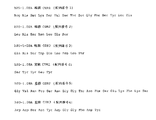
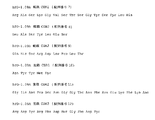
上記の治療方法、医薬および使用のすべてにおいて、PD-1拮抗薬は、PD-L1のPD-1に対する結合を阻害し、かつ又、好ましくは、PD-L2のPD-1に対する結合を阻害する。上記の治療方法、医薬および使用のいくつかの実施態様において、PD-1拮抗薬は、モノクローナル抗体、またはそのフラグメントに結合する抗原であり、PD-1またはPD-L1に特異的に結合し、かつ、PD-L1がPD-1に結合するのをブロックする。一実施態様では、PD-1拮抗薬は、重鎖および軽鎖を含む抗PD-1抗体であり、前記重鎖及び軽鎖は、図6(配列番号21及び配列番号22)に示すアミノ酸配列を含む。 In all of the above treatment methods, medicaments and uses, PD-1 antagonists inhibit the binding of PD-L1 to PD-1, and preferably also inhibit the binding of PD-L2 to PD-1 . In some embodiments of the above therapeutic methods, medicaments and uses, the PD-1 antagonist is an antigen that binds to a monoclonal antibody, or a fragment thereof, and specifically binds to PD-1 or PD-L1, Also, it blocks PD-L1 from binding to PD-1. In one embodiment, the PD-1 antagonist is an anti-PD-1 antibody comprising a heavy and light chain, wherein the heavy and light chains have the amino acid sequence shown in FIG. 6 (SEQ ID NO: 21 and SEQ ID NO: 22). including.
本明細書での上記、治療方法、医薬および使用の実施態様の全てにおいて、VEGFR阻害剤は、N-メチル-2-[3-((E)-2-ピリジン-2-イル-ビニル)-1H-インダゾール-6-イルスルファニル]-ベンズアミドまたは医薬的に許容されるその塩である。 In all of the above embodiments of the methods of treatment, medicaments and uses herein, the VEGFR inhibitor is N-methyl-2- [3-((E) -2-pyridin-2-yl-vinyl)- 1H-indazol-6-ylsulfanyl] -benzamide or a pharmaceutically acceptable salt thereof.
本発明の治療方法、医薬および使用の上記の実施態様のいくつかにおいて、個体とはヒトであり、癌とは固形腫瘍であり、いくつかの実施態様では、固形腫瘍は、膀胱癌、乳癌、明細胞腎臓癌、頭/頸部扁平上皮癌、肺扁平上皮癌、悪性黒色腫、非小細胞肺癌(NSCLC)、卵巣癌、膵臓癌、前立腺癌、腎細胞癌、小細胞肺癌(SCLC)またはトリプル陰性乳癌である。ある実施態様では、癌は、腎細胞癌(RCC)である。ある実施態様では、癌は、明細胞腎臓癌である。 In some of the above embodiments of the treatment methods, medicaments and uses of the present invention, the individual is a human and the cancer is a solid tumor, and in some embodiments, the solid tumor is bladder cancer, breast cancer, Clear cell kidney cancer, head / neck squamous cell carcinoma, lung squamous cell carcinoma, malignant melanoma, non-small cell lung cancer (NSCLC), ovarian cancer, pancreatic cancer, prostate cancer, renal cell cancer, small cell lung cancer (SCLC) or Triple negative breast cancer. In some embodiments, the cancer is renal cell carcinoma (RCC). In one embodiment, the cancer is a clear cell kidney cancer.
本発明の治療方法、医薬および使用の他の実施態様において、個体とはヒトであり、癌とは、ヘム悪性腫瘍であり、いくつかの実施態様では、ヘム悪性腫瘍は、急性リンパ芽球性白血病(ALL)、急性骨髄性白血病(AML)、慢性リンパ球性白血病(CLL)、慢性骨髄
性白血病(CML)びまん性大細胞型B細胞リンパ腫(DLBCL)、EBV陽性DLBCL、縦隔原発B細胞性大細胞型リンパ腫、T細胞/組織球リッチ大細胞型B細胞リンパ腫、濾胞性リンパ腫、
ホジキンリンパ腫(HL)、マントル細胞リンパ腫(MCL)、多発性骨髄腫(MM)、骨髄性
細胞白血病-1タンパク質(MCL-1)、骨髄異形成症候群(MDS)、非ホジキンリンパ腫(NHL )、または小リンパ球性リンパ腫(SLL)である。
In other embodiments of the treatment methods, medicaments and uses of the present invention, the individual is a human and the cancer is a heme malignancy, and in some embodiments, the heme malignancy is an acute lymphoblastic Leukemia (ALL), acute myeloid leukemia (AML), chronic lymphocytic leukemia (CLL), chronic myelogenous leukemia (CML), diffuse large B-cell lymphoma (DLBCL), EBV-positive DLBCL, primary mediastinal B cell Large-cell lymphoma, T-cell / histiocytic-rich large B-cell lymphoma, follicular lymphoma,
Hodgkin lymphoma (HL), mantle cell lymphoma (MCL), multiple myeloma (MM), myeloid cell leukemia-1 protein (MCL-1), myelodysplastic syndrome (MDS), non-Hodgkin lymphoma (NHL), or Small lymphocytic lymphoma (SLL).
また、上記の治療方法、医薬および使用のいくつかの実施態様のいずれかにおいて、PD-L1およびPD-L2の一方または両方の発現についての癌検査では陽性である。さらに他の実施態様では、癌は、PD-L1の発現が上昇する。 Also, in any of the several embodiments of the therapeutic methods, medicaments and uses described above, a cancer test for expression of one or both of PD-L1 and PD-L2 is positive. In yet another embodiment, the cancer has increased expression of PD-L1.
上記の治療方法、医薬および使用の一つの実施態様において、個体とはヒトであり、癌とは、ヒトPD-L1に関する検査が陽性であるRCCである。 In one embodiment of the above therapeutic methods, medicaments and uses, the individual is a human and the cancer is an RCC that tests positive for human PD-L1.
上記の治療方法、医薬および使用の別の実施態様において、癌とは明細胞サブタイプを有する進行性RCCであり、かつ、それ以前にRCCの治療を受けたことのない人に存在しているものである。 In another embodiment of the above treatment methods, medicaments and uses, the cancer is a progressive RCC having a clear cell subtype and is present in a person who has not previously been treated for RCC. Things.
略語。本発明の詳細な説明および実施例全体を通じて以下の略語を使用する。
BID 一日二回1用量
CDR 相補性決定領域
CHO チャイニーズハムスター卵巣
DFS 無病生存
DTR 用量制限毒性
FFPE ホルマリン固定パラフィン包埋
FR フレームワーク領域
IgG 免疫グロブリンG
IHC 免疫組織化学または免疫組織化学的
MTD 最大耐用量
NCBI 米国国立生物工学情報センター
NCI 米国国立癌研究所
OR 総合的な奏功
OS 全生存期間
PD 進行性疾患
PFS 無増悪生存期間
PR 部分的奏功
Q2W 隔週1用量
Q3W 3週1用量
QD 1日1用量
RECIST 固形腫瘍効果判定基準
SD 安定な疾患
VH 免疫グロブリン重鎖可変領域
VK 免疫グロブリンκ軽鎖可変領
Abbreviation. The following abbreviations are used throughout the detailed description and examples of the invention.
BID 1 dose twice daily
CDR complementarity determining region
CHO Chinese Hamster Ovary
DFS disease-free survival
DTR dose limiting toxicity
FFPE formalin fixed paraffin embedded
FR framework area
IgG immunoglobulin G
IHC immunohistochemistry or immunohistochemistry
MTD maximum tolerated dose
NCBI National Center for Biotechnology Information
NCI National Cancer Institute
OR Comprehensive success
OS overall lifetime
PD progressive disease
PFS progression-free survival
PR partial response
RECIST Solid tumor efficacy criteria
SD Stable disease
VH immunoglobulin heavy chain variable region
VK immunoglobulin kappa light chain variable region
定義
本発明がより容易に理解できるように、一定の技術用語および科学用語を、以下に具体的に定義する。本明細書のどこにも具体的に定義されなければ、本明細書で使用される他のすべての技術用語および科学用語は、本発明が属する技術分野の当業者によって理解される一般的な意味を有する。
Definitions In order for the present invention to be more readily understood, certain technical and scientific terms are specifically defined below. Unless specifically defined elsewhere herein, all other technical and scientific terms used herein have the common meaning understood by one of ordinary skill in the art to which this invention belongs. Have.
「約」は、数値的に定義されたパラメータ(例えば、PD-1拮抗薬やVEGFR阻害剤の用量、または本明細書に記載した併用療法での治療時間の長さ)を修飾する時、使用し、パラメータが、そのパラメータについて言及した数値の上下10%に変動し得ることを意味する。例えば、約5mg/kgの用量は4.5mg/kgと5.5mg/kgとの間で変動し得る。 “About” is used to modify a numerically defined parameter (eg, the dose of a PD-1 antagonist or VEGFR inhibitor, or the length of treatment time with a combination therapy described herein). This means that the parameter can vary by up to 10% above and below the numerical value mentioned for that parameter. For example, a dose of about 5 mg / kg can vary between 4.5 mg / kg and 5.5 mg / kg.
添付した特許請求の範囲を含め(原英文)明細書中で使用する、「(a)」「(an)」
及び「(the)」など、単数形の単語は、文脈上で明確に指示しない限り、それらに対応
する複数形の関連を含む。
"(A)" and "(an)" as used in the specification, including the appended claims.
"A" and "an" include their corresponding plural associations unless the context clearly dictates otherwise.
「投与」および「治療」とは、それを、動物、ヒト、実験対象、細胞、組織、器官、または生体液に適用するとき、外部由来の医薬剤、治療剤、診断剤または組成物を動物、ヒト、対象、細胞、組織、器官、または生体液に接触することを意味する。 "Administration" and "treatment" refer to the use of an externally derived pharmaceutical, therapeutic, diagnostic or diagnostic agent or composition when applied to an animal, human, experimental subject, cell, tissue, organ, or biological fluid. , Human, subject, cell, tissue, organ, or biological fluid.
細胞の治療は、試薬と細胞との接触、並びに、試薬と、細胞に接触している流体との接触を包含する。 Cell therapy involves contacting the reagent with the cell, as well as contacting the reagent with the fluid in contact with the cell.
また、「投与」および「治療」は、例えば、細胞についての試験管内(in vitro)および体外(ex vivo)での、試薬、診断薬、結合化合物または、別の細胞による治療をも意
味する。「対象」という用語は、任意の生物、好ましくは動物、より好ましくは哺乳動物(例えば、ラット、マウス、イヌ、ネコ、ウサギ)、および最も好ましくはヒトを含む。
"Administration" and "treatment" also mean, for example, treatment of a cell with a reagent, diagnostic agent, binding compound, or another cell, in vitro and in vivo with the cell. The term “subject” includes any organism, preferably an animal, more preferably a mammal (eg, a rat, mouse, dog, cat, rabbit), and most preferably a human.
本明細書中で使用する、「抗体」という用語は、生物学的に、又は、結合性について所望の活性を発現する任意の態様の抗体を意味する。従って、最も広い意味で使用され、これに限定はされないが、具体的には、モノクローナル抗体(完全長モノクローナル抗体を含む)、ポリクローナル抗体、多重特異性抗体(例えば、二重特異性抗体)、ヒト化抗体、完全ヒト抗体、キメラ抗体、およびラクダ化単一ドメイン抗体である。「親抗体」とは、抗体を改変する前に、抗原に免疫系を曝露して、得られる抗体であり、ヒトの治療に使用するため、抗体をヒト化する意図で使用する。 As used herein, the term "antibody" refers to any embodiment of an antibody that exhibits the desired activity, biologically or for binding. Thus, it is used in the broadest sense and is not limited to, specifically, monoclonal antibodies (including full-length monoclonal antibodies), polyclonal antibodies, multispecific antibodies (eg, bispecific antibodies), human Antibodies, fully human antibodies, chimeric antibodies, and camelized single domain antibodies. A “parent antibody” is an antibody obtained by exposing the immune system to an antigen before modifying the antibody, and is used with the intention of humanizing the antibody for use in human therapy.
一般に、基本的な抗体構造単位は、四量体を含む。各四量体は、2本の同一のポリペプチド鎖の対を含み、各対は1本の「軽」鎖(約25kDa)と1本の「重」鎖(約50から70 kDa)を有する。各鎖のアミノ末端部は、主に抗原認識に関与する約100から110、又はそれ以上のアミノ酸の可変領域を含む。重鎖のカルボキシ末端部は、主にエフェクター機能に関与する定常領域を定義し得る。一般的に、ヒト軽鎖はカッパおよびラムダ軽鎖として分類する。さらに、ヒト重鎖は、一般的に、ミュー、デルタ、ガンマ、アルファ、またはイプシロンとして分類し、それぞれ、IgM、IgD、IgG、IgA、およびIgEとして抗体のアイソタイプを定義する。軽鎖および重鎖内で、可変領域および定常領域は、約12又はそれ以上のアミノ酸の「J」領域により、重鎖、これもまた、約10又はそれ以上のアミノ酸の「D」領域を含む、と連結している。一般的には、Fundamental Immunology Ch. 7(Paul、W., ed., 2nd ed. Raven Press, N.Y. (1989)、を参照のこと。 Generally, the basic antibody structural unit comprises a tetramer. Each tetramer contains two identical pairs of polypeptide chains, each pair having one “light” chain (about 25 kDa) and one “heavy” chain (about 50 to 70 kDa). . The amino terminus of each chain contains a variable region of about 100 to 110 or more amino acids primarily responsible for antigen recognition. The carboxy terminus of the heavy chain may define a constant region primarily responsible for effector functions. Generally, human light chains are classified as kappa and lambda light chains. In addition, human heavy chains are generally classified as mu, delta, gamma, alpha, or epsilon, and define the antibody's isotype as IgM, IgD, IgG, IgA, and IgE, respectively. Within light and heavy chains, the variable and constant regions comprise a heavy chain, also with a `` D '' region of about 10 or more amino acids, with a `` J '' region of about 12 or more amino acids , And is connected. See generally, Fundamental Immunology Ch. 7 (Paul, W., ed., 2nd ed. Raven Press, N.Y. (1989)).
軽鎖/重鎖対の各々の可変領域は抗体結合部位を形成する。したがって、一般に、未変化の抗体は2箇所の結合部位を有する。二機能性または二重特異性抗体を除けば、2箇所の結合部位は、一般に、同じである。 The variable regions of each light / heavy chain pair form an antibody binding site. Thus, in general, an unchanged antibody has two binding sites. Except for bifunctional or bispecific antibodies, the two binding sites are generally the same.
一般に、重鎖および軽鎖の可変ドメインは両方ともに、相補性決定領域(CDRs)とも称される3箇所の超可変領域を含み、これは比較的保存されたフレームワーク領域(FR)内に配置されている。CDRは、通常、フレームワーク領域によって整列され、特異的エピトー
プへの結合を可能にしている。一般に、N末端からC末端に、軽鎖及び重鎖の可変ドメインは両方共に、FR1、CDR1、FR2、CDR2、FR3、CDR3およびFR4を含む。各ドメインに割当てられるアミノ酸は、一般に、以下の文献の定義に一致する。Sequences of Proteins of Immunological Interest, Kabat, et al.; National Institutes of Health, Bethesda, Md. ; 5th ed.; NIH Publ. No. 91-3242 (1991); Kabat (1978) Adv. Prot. Chem. 32:1-75; Kabat, et al., (1977) J. Biol. Chem. 252:6609-6616; Chothia, et al., (1987) J Mol. Biol. 196:901-917又は、Chothia, et al., (1989) Nature 342:878-883.
Generally, both the heavy and light chain variable domains contain three hypervariable regions, also called complementarity determining regions (CDRs), which are located within relatively conserved framework regions (FR). Have been. CDRs are usually aligned by framework regions, allowing binding to specific epitopes. Generally, from the N-terminus to the C-terminus, both the light and heavy chain variable domains include FR1, CDR1, FR2, CDR2, FR3, CDR3 and FR4. The amino acids assigned to each domain generally correspond to the definitions in the following literature. Sequences of Proteins of Immunological Interest, Kabat , et al .; National Institutes of Health, Bethesda, Md;. 5 th ed .; NIH Publ No. 91-3242 (1991);... Kabat (1978) Adv Prot Chem. 32: 1-75; Kabat, et al., (1977) J. Biol. Chem. 252: 6609-6616; Chothia, et al., (1987) J Mol. Biol. 196: 901-917 or Chothia, et al., (1989) Nature 342: 878-883.
本明細書中で使用される用語「超可変領域」は、抗原結合に関与する抗体のアミノ酸残基を意味する。超可変領域は「相補性決定領域」または「CDR」(すなわち、軽鎖可変ドメイン内のCDRL1、CDRL2およびCDRL3、並びに、重鎖可変ドメイン内のCDRH1、CDRH2およびCDRH3)からのアミノ酸残基を含む。Kabat et al. (1991) Sequences of Proteins of Immunological Interest, 5th Ed. Public Health Service, National Institutes of Health, Bethesda, Md. (defining the CDR regions of an antibody by sequence)を参照のこと。Chothia and Lesk (1987) J. Mol. Biol. 196: 901-917 (defining the CDR regions of an antibody by structure)も又、参照のこと。本明細書で使用する用語「フレームワーク」又は「FR」残基は、CDR残基として本明細書で定義した超可変領域残基以外の可変ドメイン残基を意味する。 The term “hypervariable region” as used herein refers to the amino acid residues of an antibody that are involved in antigen binding. The hypervariable region comprises amino acid residues from the "complementarity-determining regions" or "CDRs" (ie, CDRL1, CDRL2 and CDRL3 in the light chain variable domain, and CDRH1, CDRH2 and CDRH3 in the heavy chain variable domain). . See Kabat et al. (1991) Sequences of Proteins of Immunological Interest, 5th Ed. Public Health Service, National Institutes of Health, Bethesda, Md. (Defining the CDR regions of an antibody by sequence). See also Chothia and Lesk (1987) J. Mol. Biol. 196: 901-917 (defining the CDR regions of an antibody by structure). As used herein, the term "framework" or "FR" residue refers to those variable domain residues other than the hypervariable region residues defined herein as CDR residues.
本明細書に、使用されるように「抗体フラグメント」または「抗原結合フラグメント」は、特に指示しない限り、抗体の抗原結合性フラグメント、すなわち完全長抗体により、結合した抗原に特異的に結合する能力を保持する、抗体フラグメント、例えば1又はそれ以上のCDR領域を保持するフラグメント、を意味する。抗体結合性フラグメントの例としては、これらに限定するわけではないが、Fab、Fab'、F(ab')2、およびFvフラグメント
、ダイアボディ、直鎖状抗体、単鎖抗体分子、例えば、SC-FV、ナノボディおよび抗体フラグメントから形成される多重特異性抗体などが挙げられる。
As used herein, unless otherwise indicated, an "antibody fragment" or "antigen-binding fragment" refers to an antigen-binding fragment of an antibody, i.e., the ability to specifically bind to a bound antigen by a full-length antibody. Means an antibody fragment, eg, a fragment carrying one or more CDR regions. Examples of antibody binding fragments include, but are not limited to, Fab, Fab ′, F (ab ′) 2 , and Fv fragments, diabodies, linear antibodies, single chain antibody molecules such as SC -Multispecific antibodies formed from FVs, Nanobodies and antibody fragments.
特定の標的タンパク質に「特異的に結合する」抗体は、他のタンパク質と比較するとき、そのターゲットに優先的な結合を示す抗体であるが、この特異性は絶対的結合特異性を必要とする訳ではない。抗体がその狙いとする標的に関して、「特異的である」と見做されるのは、その結合が、例えば、偽陽性のような望ましくない結果を生じることなく、試料中の標的タンパク質の存在を決定付ける場合である。本発明において有用な抗体、またはその結合フラグメントは、標的タンパク質に結合し、その親和性は、非標的タンパク質より、少なくとも2倍大きく、好ましくは少なくとも10倍大きく、より好ましくは少なくとも20倍大きく、最も好ましくは少なくとも100倍大きい。本明細書で使用するとき、抗体が、与えられたアミノ酸配列を含むポリペプチド、例えば成熟ヒトPD-1またはヒトPD-L1分子のアミノ酸配列など、に特異的に結合する、と言われるのは、その配列を含むポリペプチドに結合するが、その配列を欠くタンパク質には結合しない場合である。 An antibody that "specifically binds" to a particular target protein is one that shows preferential binding to that target when compared to other proteins, but this specificity requires absolute binding specificity Not in translation. An antibody is considered to be "specific" for its intended target because its binding determines the presence of the target protein in the sample without producing undesirable results, such as false positives. It is a case to decide. Antibodies, or binding fragments thereof, useful in the present invention bind to a target protein and have an affinity that is at least 2-fold greater than the non-target protein, preferably at least 10-fold greater, more preferably at least 20-fold greater, Preferably it is at least 100 times larger. As used herein, it is said that an antibody specifically binds to a polypeptide comprising a given amino acid sequence, such as the amino acid sequence of a mature human PD-1 or human PD-L1 molecule. , But binds to a polypeptide containing the sequence but does not bind to a protein lacking the sequence.
「キメラ抗体」とは、重鎖及び/又は軽鎖の一部が特定の種(例えば、ヒト)由来の抗体中の対応する配列と同一又は相同であるか、又は、特定のクラスまたはサブクラスの抗体に属し、一方、鎖の残部は他種(例えば、マウス)由来の抗体中の対応する配列と同一又は相同であるか、又は、それらが所望の生物学的活性を示す限り、別の抗体のクラスもしくはサブクラス、並びに、このような抗体のフラグメントに属する、抗体を意味する。 A "chimeric antibody" is one in which a portion of the heavy and / or light chains is identical or homologous to the corresponding sequence in an antibody from a particular species (e.g., human), or of a particular class or subclass. Belong to the antibody, while the rest of the chain is identical or homologous to the corresponding sequence in an antibody from another species (eg, mouse), or another antibody, as long as they exhibit the desired biological activity. And antibodies belonging to such classes or subclasses, as well as fragments of such antibodies.
「ヒト抗体」は、ヒト免疫グロブリンタンパク質配列のみを含む抗体を指す。ヒト抗体は、マウス中で、マウス細胞中で、またはマウス細胞由来のハイブリドーマ中で、産生された場合マウスの炭水化物鎖を含んでいても良い。同様に、「マウス抗体」または「ラット抗体」は、それぞれ、マウスまたはラットの免疫グロブリン配列のみを含む抗体を意味する。 "Human antibody" refers to an antibody that contains only human immunoglobulin protein sequences. A human antibody may comprise a murine carbohydrate chain when produced in a mouse, in a mouse cell, or in a hybridoma derived from a mouse cell. Similarly, "mouse antibody" or "rat antibody" means an antibody that contains only mouse or rat immunoglobulin sequences, respectively.
「ヒト化抗体」は、非ヒト(例えば、マウス)抗体、並びに、ヒト抗体由来の配列を含有する抗体の態様を意味する。このような抗体は、非ヒト免疫グロブリンに由来する最小配列を含有する。一般に、ヒト化抗体は、可変ドメインの少なくとも1つ、通常は2つの全てを、または実質的に全てを含み、ここで、超可変ループの全て、又は、実質的に全ては非ヒト免疫グロブリンのそれに一致し、かつ、FR領域の全て、又は、実質的に全てはヒト免疫グロブリン配列のそれである。ヒト化抗体は、又、場合により、免疫グロブリン定常領域(Fc)の少なくとも一部、通常はヒト免疫グロブリンのそれを含む。親げっ歯類抗体とヒト化抗体とを区別する必要が有るとき、接頭辞「hum」、「HU」または「H」を抗体クローンの名称に付加する。げっ歯類抗体のヒト化態様は親和性を増加させ、ヒト化抗体の安定性を増大し、または他の理由のため、ある種のアミノ酸置換を包含し得るが、一般的に、親げっ歯類抗体の同じCDR配列を含む。 “Humanized antibody” refers to embodiments of non-human (eg, mouse) antibodies, as well as antibodies containing sequences derived from human antibodies. Such antibodies contain minimal sequence derived from non-human immunoglobulin. Generally, a humanized antibody comprises at least one, usually all, or substantially all, of the variable domains, wherein all, or substantially all, of the hypervariable loops are non-human immunoglobulin. Correspondingly, and all or substantially all of the FR region is that of a human immunoglobulin sequence. A humanized antibody optionally also will comprise at least a portion of an immunoglobulin constant region (Fc), usually that of a human immunoglobulin. When it is necessary to distinguish between a rodent antibody and a humanized antibody, the prefix "hum", "HU" or "H" is added to the name of the antibody clone. Although the humanized aspect of a rodent antibody may increase affinity, increase the stability of the humanized antibody, or include certain amino acid substitutions for other reasons, generally, It contains the same CDR sequence of the antibody.
用語「癌」、「癌性」、または「悪性」とは、一般に無秩序な細胞増殖を特徴とする哺乳動物の生理学的状態を意味するか、又は、と記述される。癌の例としては、癌腫、リンパ腫、白血病、芽細胞腫、及び肉腫が、挙げられるが、これらに限定される訳ではない。このような癌のより具体的な例としては、扁平上皮細胞癌、骨髄腫、小細胞肺癌、非小細胞肺癌、神経膠腫、ホジキンリンパ腫、非ホジキンリンパ腫、急性骨髄性白血病(AML)、多発性骨髄腫、胃腸(管)癌、腎臓の癌、卵巣癌、肝臓癌、リンパ芽球性白血病、リンパ性白血病、結腸直腸癌、子宮内膜癌、腎臓癌、前立腺癌、甲状腺癌、黒色腫、軟骨肉腫、神経芽腫、膵臓癌、多形性膠芽腫、子宮頸がん、脳腫瘍、胃癌、膀胱癌、肝癌、乳癌、結腸癌、及び頭頸部癌を挙げられる。別の具体的な癌の例としては、腎細胞癌を含む。さらに癌の具体例としては、明細胞腎臓癌を含む。本発明に従って治療され得る癌は、検査用組織試料内でPD-L1およびPD-L2の片方、又は、両方によって、発現が上昇することにより特徴付けられる癌を含む。 The terms "cancer," "cancerous," or "malignant" refer to or describe the physiological condition in mammals that is typically characterized by unregulated cell growth. Examples of cancer include, but are not limited to, carcinoma, lymphoma, leukemia, blastoma, and sarcoma. More specific examples of such cancers include squamous cell carcinoma, myeloma, small cell lung cancer, non-small cell lung cancer, glioma, Hodgkin lymphoma, non-Hodgkin lymphoma, acute myeloid leukemia (AML), multiple Myeloma, gastrointestinal (tubular) cancer, kidney cancer, ovarian cancer, liver cancer, lymphoblastic leukemia, lymphocytic leukemia, colorectal cancer, endometrial cancer, kidney cancer, prostate cancer, thyroid cancer, melanoma , Chondrosarcoma, neuroblastoma, pancreatic cancer, glioblastoma multiforme, cervical cancer, brain tumor, stomach cancer, bladder cancer, liver cancer, breast cancer, colon cancer, and head and neck cancer. Another specific example of a cancer includes renal cell carcinoma. Further, specific examples of cancer include clear cell kidney cancer. Cancers that can be treated according to the present invention include cancers characterized by elevated expression by one or both of PD-L1 and PD-L2 in a test tissue sample.
「生物療法剤」とは、抗体または融合タンパク質などの生体分子を意味し、それは、腫瘍の維持および/または増殖を支援するか、または抗腫瘍免疫応答を抑制する生物学的経路の何れかにおけるリガンド/受容体の信号伝達を遮断する。 By "biotherapeutic agent" is meant a biomolecule, such as an antibody or a fusion protein, which either supports the maintenance and / or growth of a tumor or is a biological pathway that either suppresses an anti-tumor immune response. Block ligand / receptor signaling.
本明細書において使用される「CDR」又は「CDRs”」とは、特に断らない限りKabat番号付与体系を使用して定義された免疫グロブリン可変領域における相補的決定領域(複数含)を、意味する。 As used herein, “CDR” or “CDRs” ”means, unless otherwise indicated, the complementary determining region (s) in an immunoglobulin variable region defined using the Kabat numbering system. .
「化学療法剤」は、癌の治療に有用な化合物である。化学療法剤の種類としては、それだけに限定する訳ではないが、アルキル化剤、代謝拮抗剤、キナーゼ阻害剤、紡錘体毒植物アルカロイド、細胞毒性/抗腫瘍抗生物質、トポイソメラーゼ阻害剤、光増感剤、抗エストロゲンもしくは選択的エストロゲン受容体修飾薬(SERM)、抗プロゲステロン、エストロゲン受容体発現低下制御剤(ERDs)、エストロゲン受容体拮抗薬、黄体ホルモン放出ホルモン刺激薬、抗アンドロゲン、アロマターゼ阻害剤、EGFR阻害剤、VEGF阻害剤、及び異常な細胞繁殖または腫瘍増殖に関与する遺伝子の発現を阻害するアンチセンスオリゴヌクレオチド等を挙げられる。本発明の治療方法において有用な化学療法剤は細胞増殖抑制性及び/又は細胞傷害性医薬が挙げられる。 "Chemotherapeutic agents" are compounds useful for treating cancer. Types of chemotherapeutic agents include, but are not limited to, alkylating agents, antimetabolites, kinase inhibitors, spindle poison plant alkaloids, cytotoxic / antitumor antibiotics, topoisomerase inhibitors, photosensitizers , Antiestrogen or selective estrogen receptor modulator (SERM), antiprogesterone, estrogen receptor down-regulator (ERDs), estrogen receptor antagonist, progestin-releasing hormone stimulant, antiandrogen, aromatase inhibitor, EGFR Inhibitors, VEGF inhibitors, and antisense oligonucleotides that inhibit the expression of genes involved in abnormal cell proliferation or tumor growth, and the like. Chemotherapeutic agents useful in the treatment methods of the present invention include cytostatic and / or cytotoxic drugs.
本明細書中で使用される「コチア」とはAl-Lazikani et al., JMB 273:927-948 (1997)に記載の抗体の番号付与体系を指す。 As used herein, "Cothia" refers to the antibody numbering system described in Al-Lazikani et al., JMB 273: 927-948 (1997).
「保存的修飾変異体」または「保存的置換」とは、タンパク質中のアミノ酸を、類似の特性(例えば、電荷、側鎖の大きさ、疎水性/親水性、主鎖構造及び剛性など)を有する他のアミノ酸で置換することを意味し、タンパク質の抗原親和性及び/又は特異性などの生物学的活性や他の所望の特性を交換することなく、このような変化を頻繁に行うことができる。当業者であれば、ポリペプチドの本質的ではない領域における単一アミノ酸の置換は、実質的に、生物学的活性を変化させないことは、一般に認識している(参照、Watson et al. (1987) Molecular Biology of the Gene, The Benjamin/Cummings Pub. Co., p. 224 (4th Ed.))。又、構造的にまたは機能的に類似のアミノ酸での置換は生物活性を破壊する可能性は低い。代表的な保存的置換を、以下の表1に表記する。 "Conservatively modified variants" or "conservative substitutions" refer to amino acids in a protein that have similar properties (eg, charge, side chain size, hydrophobicity / hydrophilicity, backbone structure and rigidity). Has the ability to make such changes frequently without exchanging biological activity such as antigen affinity and / or specificity or other desired properties of the protein. it can. Those skilled in the art generally recognize that substitution of a single amino acid in a non-essential region of the polypeptide does not substantially alter the biological activity (see Watson et al. (1987). ) Molecular Biology of the Gene, The Benjamin / Cummings Pub. Co., p. 224 (4th Ed.)). Also, substitutions with structurally or functionally similar amino acids are less likely to disrupt biological activity. Representative conservative substitutions are set forth in Table 1 below.

本明細書および特許請求の範囲全体を通して使用する「(単数形)本質的に〜からなる」及び「(複数形)本質的に〜からなる」又は「本資質的に〜からなっている」などの変形は、引用した何れかの要素又は要素群を含み、及び、場合により、引用した要素と同様の又は異なった性質で、指定された投薬計画、方法、又は組成物の基本的な又は新規な特性を実質的に変更しない他の要素を含むことを示す。非限定的な例としては、引用したアミノ酸配列から本質的になるPD-1拮抗薬は、1種またはそれ以上のアミノ酸も含み得て、結合化合物の特性に実質的に影響を与えない1種またはそれ以上のアミノ酸残基、の置換をもまた含む。 As used throughout this specification and the claims, "(singular) consists essentially of" and "(plural) consists essentially of" or "consists essentially of." Of any of the cited elements or groups of elements and, optionally, with the same or a different nature as the cited elements, the basic or novel nature of the specified dosing regimen, method or composition. Include other elements that do not substantially change the characteristics. By way of non-limiting example, a PD-1 antagonist consisting essentially of the cited amino acid sequence can also include one or more amino acids, wherein one PDA antagonist does not substantially affect the properties of the binding compound. Or more amino acid residues.
「診断用抗PD-Lモノクローナル抗体」とは、特定の哺乳動物細胞の表面に発現され、指定したPD-L(PD-L1またはPDL-2)の成熟態様に特異的に結合するmAbを意味する。成熟し
たPD-Lは、前分泌リーダー配列を欠いており、リーダーペプチドとも称する。本明細書において、用語「PD-L」及び「成熟PD-L」は交換可能に使用され、かつ特に指示しない限り、同一の分子を意味することを理解すべきであり、さもなければ、文脈から、容易に理解出来る。
The term “diagnostic anti-PD-L monoclonal antibody” refers to a mAb that is expressed on the surface of a specific mammalian cell and specifically binds to a specified PD-L (PD-L1 or PDL-2) maturation mode. I do. Mature PD-L lacks the pre-secretory leader sequence and is also referred to as the leader peptide. It should be understood that the terms "PD-L" and "mature PD-L" are used interchangeably herein and unless otherwise indicated, refer to the same molecule, or the context From, you can easily understand.
本明細書中で使用する診断用抗ヒトPD-L1 mAb または抗-hPD-L1 mAbとは、成熟したヒトPD-L1に特異的に結合するモノクローナル抗体を意味する。成熟したヒトPD-L1分子は、以下の配列のアミノ酸19−290で構成されている。
MRIFAVFIFMTYWHLLNAFTVTVPKDLYVVEYGSNMTIECKFPVEKQLDLAALIVYWEMEDKNIIQFVHGEEDLKVQHSS
YRQRARLLKDQLSLGNAALQITDVKLQDAGVYRCMISYGGADYKRITVKVNAPYNKINQRILVVDPVTSEHELTCQAEGYPKAEVIWTSSDHQVLSGKTTTTNSKREEKLFNVTSTLRINTTTNEIFYCTFRRLDPEENHTAELVIPELPLAHPPNERTHLVILGAILLCLGVALTFIFRLRKGRMMDVKKCGIQDTNSKKQSDTHLEET (配列番号25)
As used herein, a diagnostic anti-human PD-L1 mAb or anti-hPD-L1 mAb refers to a monoclonal antibody that specifically binds to mature human PD-L1. The mature human PD-L1 molecule is composed of amino acids 19-290 of the following sequence.
MRIFAVFIFMTYWHLLNAFTVTVPKDLYVVEYGSNMTIECKFPVEKQLDLAALIVYWEMEDKNIIQFVHGEEDLKVQHSS
YRQRARLLKDQLSLGNAALQITDVKLQDAGVYRCMISYGGADYKRITVKVNAPYNKINQRILVVDPVTSEHELTCQAEGYPKAEVIWTSSDHQVLSGKTTTTNSKREEKLFNVTSTLRINTTTNEIFYCTFRRLDPEENHTAELVIPELPLAHPKNERTGLVTFGARKLEGVALV
ホルマリン固定パラフィン包埋(FFPE)腫瘍組織部位におけるPD-L1発現の免疫組織化学(IHC)検出のために、診断用mAbsとして有用な診断用抗ヒトPD-L1mAbsの具体的な例としては、抗体20C3および抗体22C3であり、これは同時係属中の国際特許出願PCT/US13/075932号、2013年12月18日に申請し、2014年6月26日に国際特許公開WO2014/100079号として公開されている。FFPE組織部位内でのPD-L1発現によるIHC検出に有用であると報告されている(Chen, B.J. et al., Clin Cancer Res 19: 3462-3473 (2013))。他の抗ヒトPD-L1 mAbはウサギ抗ヒトPD-L1 mAbであり、Sino Biological, Inc. (Beijing, P.R. China; Catalog number 10084-R015)から公に入手出来る。 Specific examples of diagnostic anti-human PD-L1 mAbs useful as diagnostic mAbs for immunohistochemical (IHC) detection of PD-L1 expression in formalin-fixed paraffin-embedded (FFPE) tumor tissue sites include antibodies 20C3 and antibody 22C3, which are co-pending International Patent Application No. PCT / US13 / 075932, filed on December 18, 2013 and published on June 26, 2014 as International Patent Publication WO2014 / 100079. ing. It has been reported that PD-L1 expression in FFPE tissue sites is useful for IHC detection (Chen, B.J. et al., Clin Cancer Res 19: 3462-3473 (2013)). Another anti-human PD-L1 mAb is a rabbit anti-human PD-L1 mAb, which is publicly available from Sino Biological, Inc. (Beijing, P.R. China; Catalog number 10084-R015).
本明細書で使用する「フレームワーク領域」または「FR」とはCDR領域以外の免疫グロ
ブリン可変領域を意味する。
As used herein, "framework region" or "FR" means an immunoglobulin variable region other than a CDR region.
「相同性」とは、2つのポリペプチド配列が最適に整列されているときに、両者間の配列類似性を意味する。2つの比較配列の両方における位置が同じアミノ酸モノマーサブユニットで占有されている場合、例えば、もし二つの異なるAbの軽鎖CDR中の位置がアラニンによって占有されているならば、2つのAbはその位置で相同である。相同性のパーセントは2つの配列によって共有される相同な位置の数を比較する位置の全数で割り、100倍したものである。例えば、配列が最適に整列されている時2つの配列中の10箇所のうち8箇所が一致または相同であるなら、その時、2つの配列は80%相同である。一般に、2つの配列が最大の相同性パーセントとなるように整列される時、比較を実施する。例えば、比較は、BLASTアルゴリズムによって実行することが出来、そのアルゴリズムのパラメータは、それぞれに関連する配列の全長に亘りそれぞれの配列間で最大の一致を与えるように選択される。 "Homology" refers to sequence similarity between two polypeptide sequences when they are optimally aligned. If a position in both two comparison sequences is occupied by the same amino acid monomer subunit, e.g., if a position in the light chain CDRs of two different Abs is occupied by alanine, then the two Abs are Homologous in position. The percent homology is the number of homologous positions shared by the two sequences divided by the total number of positions compared and multiplied by 100. For example, if eight out of ten positions in two sequences are identical or homologous when the sequences are optimally aligned, then the two sequences are 80% homologous. Generally, a comparison is performed when two sequences are aligned for maximum percent homology. For example, the comparison can be performed by a BLAST algorithm, wherein the parameters of the algorithm are selected to give the largest match between each sequence over the entire length of each associated sequence.
以下の参考文献は、多くの場合、配列分析のために使用されるBLASTアルゴリズムに関するものである。BLASTアルゴリズム:Altschul, S.F., et al., (1990) J. Mol. Biol. 215:403-410; Gish, W., et al., (1993) Nature Genet. 3:266-272; Madden, T.L., et al., (1996) Meth. Enzymol. 266:131-141; Altschul, S.F., et al., (1997) Nucleic Acids Res. 25:3389-3402; Zhang, J., et al., (1997) Genome Res. 7:649-656; Wootton, J.C., et al., (1993) Comput. Chem. 17:149-163; Hancock, J.M. et al., (1994) Comput. Appl. Biosci. 10:67-70; ALIGNMENT SCORING SYSTEMS: Dayhoff, M.O., et al., "A model of evolutionary change in proteins." in Atlas of Protein Sequence and Structure, (1978) vol. 5, suppl. 3. M.O. Dayhoff (ed.), pp. 345-352, Natl. Biomed. Res. Found., Washington, DC; Schwartz, R.M., et al., "Matrices for detecting distant relationships." in Atlas of Protein Sequence and Structure, (1978) vol. 5, suppl. 3." M.O. Dayhoff (ed.), pp. 353-358, Natl. Biomed. Res. Found., Washington, DC; Altschul, S.F., (1991) J. Mol. Biol. 219:555-565; States, D.J., et al., (1991) Methods 3:66-70; Henikoff, S., et al., (1992) Proc. Natl. Acad. Sci. USA 89:10915-10919; Altschul, S.F., et al., (1993) J. Mol. Evol. 36:290-300; ALIGNMENT STATISTICS: Karlin, S., et al., (1990) Proc. Natl. Acad. Sci. USA 87:2264-2268; Karlin, S., et al., (1993) Proc. Natl. Acad. Sci. USA 90:5873-5877; Dembo, A., et al., (1994) Ann. Prob. 22:2022-2039; and Altschul, S.F. "Evaluating the statistical significance of multiple distinct local alignments." in Theoretical and Computational Methods in Genome Research (S. Suhai, ed.), (1997) pp. 1-14, Plenum, New York. The following references relate to the BLAST algorithm, which is often used for sequence analysis. BLAST algorithm: Altschul, SF, et al., (1990) J. Mol. Biol. 215: 403-410; Gish, W., et al., (1993) Nature Genet. 3: 266-272; Madden, TL , et al., (1996) Meth.Enzymol. 266: 131-141; Altschul, SF, et al., (1997) Nucleic Acids Res. 25: 3389-3402; Zhang, J., et al., (1997) Genome Res. 7: 649-656; Wootton, JC, et al., (1993) Comput.Chem. 17: 149-163; Hancock, JM et al., (1994) Comput.Appl.Biosci. 10:67. -70; ALIGNMENT SCORING SYSTEMS: Dayhoff, MO, et al., "A model of evolutionary change in proteins." In Atlas of Protein Sequence and Structure, (1978) vol. 5, suppl. 3.MO Dayhoff (ed.) pp. 345-352, Natl. Biomed. Res. Found., Washington, DC; Schwartz, RM, et al., "Matrices for detecting distant relationships." in Atlas of Protein Sequence and Structure, (1978) vol. 5 suppl. 3. "MO Dayhoff (ed.), pp. 353-358, Natl. Biomed. Res. Found., Washington, DC; Altschul, SF, (1991) J. Mol. Biol. 219: 555-565. ; States, DJ, et al., (1991) Methods 3: 66-70; Henikoff, S., et al., ( Natl. Acad. Sci. USA 89: 10915-10919; Altschul, SF, et al., (1993) J. Mol. Evol. 36: 290-300; ALIGNMENT STATISTICS: Karlin, S., et al. Natl. Acad. Sci. USA 87: 2264-2268; Karlin, S., et al., (1993) Proc. Natl. Acad. Sci. USA 90: 5873-5877; Dembo, A. ., et al., (1994) Ann.Prob. 22: 2022-2039; and Altschul, SF "Evaluating the statistical significance of multiple distinct local alignments." in Theoretical and Computational Methods in Genome Research (S. Suhai, ed. ), (1997) pp. 1-14, Plenum, New York.
「単離された抗体」および「単離された抗体フラグメント」とは、精製の状態を意味し、その文脈より、名付けられた分子が核酸、タンパク質、脂質、炭水化物等の他の生体分子、または細胞の破片や成長培地等の他の材料が、実質的に無いことを意味する。一般に、「単離された」という用語は、本明細書中に記載する結合化合物を実験用にまたは治療用に使用するのを、実質的に妨げる量でそれらが存在しない限り、そのような物質が完全に存在しないということを意味する意図はなく、又は、水、緩衝液、あるいは塩が存在しないことを意味する意図もない。 "Isolated antibody" and "isolated antibody fragment" refer to the purified state, in which context the named molecule is a nucleic acid, protein, lipid, other biomolecule such as a carbohydrate, or It means that there is substantially no other material such as cell debris or growth medium. In general, the term "isolated" refers to such substances, unless they are present in an amount that substantially prevents the binding compounds described herein from being used experimentally or therapeutically, such substances. Is not completely absent, nor is it meant to be absent of water, buffer, or salt.
本明細書で使用する「Kabat」はElvin A. Kabatにより、開拓された免疫グロブリンの整列および番号付与体系を意味する((1991) Sequences of Proteins of Immunological Interest, 5th Ed. Public Health Service, National Institutes of Health, Bethesda, Md.)。 As used herein, "Kabat" refers to the alignment and numbering system of immunoglobulins pioneered by Elvin A. Kabat ((1991) Sequences of Proteins of Immunological Interest, 5th Ed.Public Health Service, National Institutes of Health, Bethesda, Md.).
本明細書で使用する、「モノクローナル抗体」または「mAb」もしくは「Mab」とは、実質的に均一な抗体の個体群を意味し、すなわち個体群を含む抗体分子は、ごく少量存在し得る可能性としての自然的変異型は除き、アミノ酸配列が同一である。対照的に、従来の「ポリクロナール」抗体調製物は、通常、その種々のドメイン中に、具体的には、しばしば異なるエピトープに特異的であるCDR中に、異なるアミノ酸配列を有する多くの異なる
抗体を含む。「モノクローナル」修飾因子は、実質的に均一な抗体集団から得られたままの抗体の特徴を示し、かつ特定の如何なる方法によっても抗体の産生を必要とすると解釈されるべきではない。例えば、本発明に従って、使用するモノクロナール抗体は、Kohler
et al. (1975) Nature 256: 495、に記載されたハイブリドーマ法により、作製しても良く、また、または組換えDNA法(参照、例えば米国特許第4,816,567号)によって作製しても良い。「モノクローナル抗体」は、又、例えば、Clackson et al. (1991) Nature 352:
624-628、及びMarks et al. (1991) J. Mol. Biol. 222: 581-597、に記載された技術を用いてファージ抗体ライブラリーから単離しても良い。Presta (2005) J. Allergy Clin.
Immunol. 116:731.も又、参照のこと。
As used herein, `` monoclonal antibody '' or `` mAb '' or `` Mab '' refers to a substantially homogeneous population of antibodies, i.e., the antibody molecules comprising the population may be present in very small amounts. The amino acid sequences are identical, except for the natural variants as sex. In contrast, conventional "polyclonal" antibody preparations typically elicit many different antibodies having different amino acid sequences in their different domains, specifically in the CDRs that are often specific for different epitopes. Including. A "monoclonal" modulator exhibits the characteristics of the antibody as obtained from a substantially homogeneous population of antibodies, and is not to be construed as requiring production of the antibody by any particular method. For example, according to the present invention, the monoclonal antibody used is Kohler
et al. (1975) Nature 256: 495, may be prepared by the hybridoma method, or may be prepared by a recombinant DNA method (see, for example, US Pat. No. 4,816,567). "Monoclonal antibodies" also include, for example, Clackson et al. (1991) Nature 352:
624-628, and Marks et al. (1991) J. Mol. Biol. 222: 581-597. Presta (2005) J. Allergy Clin.
See also Immunol. 116: 731.
「患者」または「対象」とは、治療を望まれているか、又は臨床試験、疫学的研究に参加しているか又はコントロールとして利用されるか何れかの一つの対象を意味し、ヒト並びにウシ、ウマ、イヌ、もしくはネコなどの哺乳動物家畜の患者を含む。 "Patient" or "subject" means one subject either in need of treatment or participating in clinical trials, epidemiological studies or used as a control, human and bovine, Includes patients from mammals such as horses, dogs, or cats.
「PD-1拮抗薬」は、何れかの化学化合物または生物学的分子を意味し、癌細胞上で発現したPD-L1が免疫細胞(T細胞、B細胞またはNKT細胞)上で発現したPD-1と結合するのをブロックし、および好ましくは、癌細胞上で発現したPD-L2が前記免疫細胞上で発現したPD-1と結合するのもブロックする。PD-1及びそのリガンドに関する代替名及び同義語は、PD-1について、PDCDl、PD1、CD279及びSLEB2、PD-L1について、PDCD1L1、PDL1、B7H1、B7-4、CD274及びB7-H、及びPD-L2について、PDCD1L2, PDL2, B7-DC, Btdc及びCD273を含む。ヒト個体が治療を受ける本発明の、治療方法、医薬、および使用の何れかにおいて、PD-1拮抗薬は、ヒトPD-L1がヒトPD-1に結合するのをブロックし、好ましくはヒトPD-L1とヒト PD-L2の両方がヒトPD-1に結合するのをブロックする。ヒトPD-1のアミノ酸配列は、NCBI遺伝子座番号:NP_005009に見出すことが出来る。ヒトPD-L1およびPD-L2のアミノ酸配列を、それぞれ、NCBI遺伝子座番号:NP_054862及びNP_079515に見出すことが出来る。 "PD-1 antagonist" means any chemical compound or biological molecule, and PD-L1 expressed on cancer cells is expressed on immune cells (T cells, B cells or NKT cells). -1 and preferably also block PD-L2 expressed on cancer cells from binding to PD-1 expressed on said immune cells. Alternative names and synonyms for PD-1 and its ligands are PDCD1, PD1, CD279 and SLEB2 for PD-1, PDCD1L1, PDL1, B7H1, B7-4, CD274 and B7-H, and PD7 for PD-L1. -L2 includes PDCD1L2, PDL2, B7-DC, Btdc and CD273. In any of the treatment methods, medicaments, and uses of the present invention, wherein a human individual is treated, the PD-1 antagonist blocks binding of human PD-L1 to human PD-1, and preferably inhibits human PD-1. -Blocks both L1 and human PD-L2 from binding to human PD-1. The amino acid sequence of human PD-1 can be found at NCBI locus number: NP_005009. The amino acid sequences of human PD-L1 and PD-L2 can be found at NCBI locus number: NP_054862 and NP_079515, respectively.
本発明の治療方法、医薬、および使用の何れかにおいて有用なPD-1拮抗薬は、モノクローナル抗体(mAb)、またはその抗原結合性フラグメントを含み、PD-1またはPD-L1に特異的に結合し、好ましくは、ヒトPD-1またはヒトPD-L1に結合する。mAbは、ヒト抗体、ヒト化抗体またはキメラ抗体であり、ヒト定常領域を含んでいても良い。実施態様によっては、ヒト定常領域は、IgG1、IgG2、lgG3及びIgG4定常領域からなる群から選択され、好ましい実施態様では、ヒト定常領域は、IgG1またはIgG4定常領域である。いくつかの実施態様において、抗原結合性フラグメントはFab、Fab'-SH、F(ab')2、scFv及び Fvフラグメントからなる群から選択される。 PD-1 antagonists useful in any of the treatment methods, medicaments, and uses of the present invention include monoclonal antibodies (mAbs), or antigen-binding fragments thereof, and specifically bind to PD-1 or PD-L1 And preferably binds to human PD-1 or human PD-L1. mAbs are human, humanized or chimeric antibodies, and may include human constant regions. In some embodiments, the human constant region is selected from the group consisting of an IgG1, IgG2, IgG3, and IgG4 constant region; in a preferred embodiment, the human constant region is an IgG1 or IgG4 constant region. In some embodiments, the antigen binding fragment is selected from the group consisting of Fab, Fab'-SH, F (ab ') 2 , scFv, and Fv fragments.
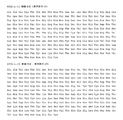
ヒトPD-1に特異的に結合し、しかも、本発明の治療方法、医薬、および使用において有用であるモノクローナル抗体の例は、米国特許第7488802号、米国特許第7521051号、米国特許第8008449号、米国特許第8354509号、米国特許第8168757号、国際特許公開2004/004771号、国際特許公開2004/072286号、国際特許公開2004/056875号、及び米国特許公開第2011/0271358号に記載されている。本発明の治療方法、医薬、および使用においてPD-1拮抗薬として有用である特定の抗ヒトPD-1 mAbは以下のMK-3475、ニボルマブ (BMS-936558)、ヒト化抗体、およびAMP-514を含み、MK-3475はヒト化IgG4 mAbであり、その構造はWHO Drug Information, Vol. 27, No. 1, pages 68-69 (2013)に記載され、図6に示す重鎖及び軽鎖アミノ酸配列を含み、ニボルマブ(BMS-936558)は、ヒトIgG4 mAbであり、その構造はWHO Drug Information, Vol. 27, No. 1, pages 68-69 (2013)に記載され、図7に示す重鎖及び軽鎖アミノ酸配列を含み、ヒト化抗体はh409A11, h409A16 及びh409A17,であり、国際特許公開2008/156712号に記載され、及びAMP-514は、メディミューン社(MedImmune)により開発された。 Examples of monoclonal antibodies that specifically bind to human PD-1 and are useful in the therapeutic methods, medicaments, and uses of the present invention are described in U.S. Patent No. 7,488,802, U.S. Patent No.7521051, U.S. Patent No. U.S. Patent No. 8,354,509, U.S. Patent No. 8,816,857, International Patent Publication No. 2004/004771, International Patent Publication No. 2004/072286, International Patent Publication No. 2004/056875, and U.S. Patent Publication No. 2011/0271358. I have. Certain anti-human PD-1 mAbs useful as PD-1 antagonists in the treatment methods, medicaments, and uses of the present invention include the following MK-3475, nivolumab (BMS-936558), humanized antibodies, and AMP-514 MK-3475 is a humanized IgG4 mAb, the structure of which is described in WHO Drug Information, Vol. 27, No. 1, pages 68-69 (2013), and the heavy and light chain amino acids shown in FIG. Nivolumab (BMS-936558) is a human IgG4 mAb, the structure of which is described in WHO Drug Information, Vol. 27, No. 1, pages 68-69 (2013) and shown in FIG. And light chain amino acid sequences, the humanized antibodies are h409A11, h409A16 and h409A17, described in WO 2008/156712, and AMP-514 was developed by MedImmune.
ヒトPD-L1に結合し、かつ本発明の治療方法、医薬、および使用に有用であるモノクローナル抗体の例としては、国際特許公開2013/019906号、国際特許公開2010/077634A1号及び米国特許第8383796号に記載されている。本発明の治療方法、医薬、および使用においてPD-1拮抗薬として有用である特定の抗ヒトPD-L1 モノクロナール抗体はMPDL3280A、BMS-936559、MEDI4736、MSB0010718C並びに国際特許公開2013/019906号の、重鎖及び軽鎖可変領域、それぞれ、配列番号24及び配列番号21を含む抗体を包含する。 Examples of monoclonal antibodies that bind to human PD-L1 and are useful for the therapeutic methods, medicaments, and uses of the present invention include WO 2013/019906, WO 2010 / 077634A1, and US Patent No. 8383796. No. Certain anti-human PD-L1 monoclonal antibodies useful as PD-1 antagonists in the therapeutic methods, medicaments, and uses of the present invention are MPDL3280A, BMS-936559, MEDI4736, MSB0010718C and International Patent Publication 2013/019906, Antibodies comprising the heavy and light chain variable regions, SEQ ID NO: 24 and SEQ ID NO: 21, respectively.
本発明の治療方法、医薬、および使用の何れかにおいて有用な他のPD-1拮抗薬は、PD-1またはPD-L1に特異的に結合し、好ましくは、ヒトPD-1またはヒトPD-L1に特異的に結合するイムノアドヘシンを含み、例えば、免疫グロブリン分子のFc領域などの定常領域と融合する、細胞外またはPD-L1若しくはPD-L2のPD-1結合部位を含む融合タンパク質が挙げられる。PD-1に特異的に結合するイムノアドヘシン分子の例としては、国際特許公開2010/027827号および国際特許公開2011/066342号に記載されている。本発明の治療方法、医薬、および使用においてPD-1拮抗薬として有用な特定の融合タンパク質は、AMP-224(B7-DCIg としても知られる)を含み、これはPD-L2-Fc融合タンパク質であり、かつヒトPD-1に結合する。 Other PD-1 antagonists useful in any of the treatment methods, medicaments, and uses of the present invention specifically bind to PD-1 or PD-L1, and preferably comprise human PD-1 or human PD-L1. A fusion protein comprising an immunoadhesin that specifically binds to L1, for example, fused to a constant region such as the Fc region of an immunoglobulin molecule, comprising a extracellular or PD-L1 or PD-L2 PD-1 binding site. No. Examples of immunoadhesin molecules that specifically bind to PD-1 are described in WO 2010/027827 and WO 2011/066342. Certain fusion proteins useful as PD-1 antagonists in the therapeutic methods, medicaments, and uses of the present invention include AMP-224 (also known as B7-DCIg), which is a PD-L2-Fc fusion protein. Yes, and binds to human PD-1.
本発明の治療方法、医薬、および使用のいくつかの好ましい実施態様において、PD-1拮抗薬はモノクローナル抗体、又は、その抗原結合性フラグメントであり、(a)軽鎖CDRは、配列番号1、2および3、並びに重鎖CDRは、配列番号:4、5及び6であり、又は(b)軽鎖CDRは、配列番号7、8および9、並びに重鎖CDRは、配列番号:10、11及び12である、を含む。 In some preferred embodiments of the therapeutic methods, medicaments, and uses of the present invention, the PD-1 antagonist is a monoclonal antibody, or an antigen-binding fragment thereof, and (a) the light chain CDR comprises SEQ ID NO: 1, 2 and 3, and the heavy chain CDRs are SEQ ID NOs: 4, 5 and 6, or (b) the light chain CDRs are SEQ ID NOs: 7, 8 and 9, and the heavy chain CDRs are SEQ ID NOs: 10, 11 And 12 are included.
本発明の治療方法、医薬、および使用の好ましい他の実施態様において、PD-1拮抗薬は、モノクローナル抗体、またはその抗原結合性断片であり、ヒトPD-1に特異的に結合し、かつ、(a)配列番号13を含む重鎖可変領域またはその変異体、及び(b)配列番号15、若しくはその変異体、配列番号16、若しくはその変異体、及び配列番号17若しくはその変異体からなる群から選択されたアミノ酸配列を含む軽鎖可変領域を含む。重鎖可変領域配列の変異体は、フレームワーク領域内(すなわち、CDRの外側)で17個迄の保存的アミノ酸置換を有するものを除き、基準配列と同一であり、しかも、フレームワーク領域内で好ましくは10、9、8、7、6又は5個未満の保存的アミノ酸置換を有する。軽鎖可変領域配列の変異体は、フレームワーク領域内(すなわち、CDRの外側)で5個迄の保存的アミノ酸置換を有するものを除き、基準配列と同一であり、しかも、フレームワーク領域内で好ましくは4、3又は2個未満の保存的アミノ酸置換を有する。 In other preferred embodiments of the therapeutic methods, medicaments, and uses of the present invention, the PD-1 antagonist is a monoclonal antibody, or an antigen-binding fragment thereof, that specifically binds to human PD-1, and (a) a heavy chain variable region comprising SEQ ID NO: 13 or a variant thereof, and (b) a group consisting of SEQ ID NO: 15, or a variant thereof, SEQ ID NO: 16, or a variant thereof, and SEQ ID NO: 17 or a variant thereof And a light chain variable region comprising an amino acid sequence selected from: Variants of the heavy chain variable region sequence are identical to the reference sequence except for those that have up to 17 conservative amino acid substitutions within the framework region (ie, outside of the CDRs). Preferably it has less than 10, 9, 8, 7, 6 or 5 conservative amino acid substitutions. Variants of the light chain variable region sequence are identical to the reference sequence, except for those that have up to 5 conservative amino acid substitutions within the framework region (ie, outside of the CDRs). Preferably it has less than 4, 3 or 2 conservative amino acid substitutions.
本発明の治療方法、医薬、および使用の好ましい他の一実施態様において、PD-1拮抗薬は、ヒトPD-1に特異的に結合するモノクローナル抗体であり、かつ(a)配列番号14を有する重鎖、及び(b)配列番号18、配列番号19,または配列番号20を有する軽鎖、を含む。 In another preferred embodiment of the therapeutic methods, medicaments and uses of the present invention, the PD-1 antagonist is a monoclonal antibody that specifically binds to human PD-1 and has (a) SEQ ID NO: 14 A heavy chain, and (b) a light chain having SEQ ID NO: 18, SEQ ID NO: 19, or SEQ ID NO: 20.
本発明の治療方法、医薬、および使用の好ましい、さらに、他の一実施態様において、PD-1拮抗薬は、ヒトPD-1に特異的に結合するモノクローナル抗体であり、かつ(a)配列番号14を有する重鎖、及び(b)配列番号18を有する軽鎖、を含む。 In still another preferred embodiment of the therapeutic methods, medicaments and uses of the present invention, the PD-1 antagonist is a monoclonal antibody that specifically binds to human PD-1 and (a) SEQ ID NO: A heavy chain having 14 and (b) a light chain having SEQ ID NO: 18.
下表2には、本発明の治療方法、医薬、および使用における代表的な抗-PD-1モノクロナール抗体のアミノ酸配列のリストを提供し、その配列を図1から5に示した。 Table 2 below provides a list of amino acid sequences of representative anti-PD-1 monoclonal antibodies in the therapeutic methods, medicaments, and uses of the present invention, and the sequences are shown in FIGS.
本明細書で使用される「PD-L1」または「PD -L2」発現とは、細胞表面上での指定され
たPD-Lタンパク質の、又は細胞又は組織内での指定されたPD-L mRNAの、検出可能なレベルの何れかの発現を意味する。PD-Lタンパク質の発現は、診断用PD-L抗体を用いて、腫瘍組織部位をIHCアッセイにおいて、またはフローサイトメトリーによって、検出し得る。
あるいは、腫瘍細胞によるPD-Lタンパク質の発現は、所望のPD-L標的、例えば、PD-L1ま
たはPD -L2、に特異的に結合する、結合剤(例えば、抗体フラグメント、アフィボディなど)を使用して、PET画像化によって検出しても良い。PD-L mRNAの発現を検出し、及び測定する技術は、RT-PCR、及びリアルタイム定量RT-PCRを含む。
As used herein, `` PD-L1 '' or `` PD-L2 '' expression refers to a specified PD-L protein on the cell surface, or a specified PD-L mRNA in a cell or tissue. Means the expression of any detectable level of PD-L protein expression can be detected in tumor tissue sites in an IHC assay or by flow cytometry using a diagnostic PD-L antibody.
Alternatively, expression of PD-L protein by tumor cells can be achieved by binding agents (eg, antibody fragments, affibodies, etc.) that specifically bind to a desired PD-L target, eg, PD-L1 or PD-L2. And may be detected by PET imaging. Techniques for detecting and measuring PD-L mRNA expression include RT-PCR and real-time quantitative RT-PCR.
腫瘍組織部位のIHCアッセイにおいて、PD-L1タンパク質の発現を定量化するため、数種のアプローチが記載されている。例えば、以下を参照のこと。
Thompson, R. H., et al., PNAS 101 (49); 17174-17179 (2004);
Thompson, R. H. et al., Cancer Res. 66:3381-3385 (2006);
Gadiot, J., et al., Cancer 117:2192-2201 (2011);
Taube, J. M. et al., Sci Transl Med 4, 127ra37 (2012);及び
Toplian, S. L. et al., New Eng. J Med. 366 (26): 2443-2454 (2012)。
Several approaches have been described to quantify PD-L1 protein expression in tumor tissue site IHC assays. For example, see below.
Thompson, RH, et al., PNAS 101 (49); 17174-17179 (2004);
Thompson, RH et al., Cancer Res. 66: 3381-3385 (2006);
Gadiot, J., et al., Cancer 117: 2192-2201 (2011);
Taube, JM et al.,
Toplian, SL et al., New Eng. J Med. 366 (26): 2443-2454 (2012).
一つのアプローチは、PD-LIの発現について陽性または陰性の単純な2つのエンドポイントを使用するものであり、細胞表面膜の染色により組織学的証拠を示す腫瘍細胞のパーセントに関して定義される陽性の結果を用いる。腫瘍組織部位は、PD-L1の発現について陽性として計数され、少なくとも1%、全腫瘍細胞の、好ましくは5%である。 One approach uses two simple endpoints, positive or negative for PD-LI expression, where positive staining, defined as the percentage of tumor cells showing histological evidence by staining of cell surface membranes. Use the result. Tumor tissue sites are counted as positive for PD-L1 expression and are at least 1%, preferably 5% of all tumor cells.
別のアプローチでは、腫瘍組織部位におけるPD-L1の発現は、主にリンパ球を含む、腫
瘍細胞中で、ならびに浸潤性免疫細胞中で定量化する。膜染色を示す腫瘍細胞と浸潤免疫細胞のパーセンテージとを別々に、5%未満、5から9%、次いで、10%の増分で100%まで定量化する。腫瘍細胞について、PD-L1発現はスコアが5%未満であれば負として、また5%以上であれば正としてカウントする。免疫浸潤物内のPD-L1 発現を準定量的測定として、調整炎症得点(AIS)と称し、報告されており、それは染色膜細胞のパーセントと浸
潤強度とを掛合わせることにより、定量化し、無(0)、穏やか(得点1、リンパ球 稀)、中位(得点2、リンパ組織球性凝集体による限局性腫瘍浸潤)又は、厳しい(得点3、びまん性浸潤)と格付けされる。腫瘍組織部位はAISが5以上の場合、免疫浸潤物によるPD-L1発現については、正としてカウントする。
In another approach, the expression of PD-L1 at tumor tissue sites is quantified in tumor cells, mainly including lymphocytes, as well as in infiltrating immune cells. The percentage of tumor cells showing membrane staining and the percentage of infiltrating immune cells are quantified separately, less than 5%, 5 to 9% and then in 10% increments to 100%. For tumor cells, PD-L1 expression is counted as negative if the score is less than 5% and positive if the score is 5% or more. PD-L1 expression in immunoinfiltrates has been reported as a semi-quantitative measure, referred to as the adjusted inflammation score (AIS), which is quantified by multiplying the percentage of stained membrane cells by the infiltration intensity. It is rated as (0), mild (
PD-L mRNAの発現レベルは、ユビキチンCなど、定量的RT-PCRにおいて、しばしば、使用されている1個またはそれ以上の基準遺伝子のmRNA発現レベルと比較しても良い。 PD-L mRNA expression levels may be compared in quantitative RT-PCR, such as ubiquitin C, with mRNA expression levels of one or more reference genes often used.
いくつかの実施態様では、悪性細胞による、及び/又は腫瘍内の免疫細胞の浸潤による(タンパク質及び/又はmRNA)PD-L1の発現レベルは、適切なコントロールによるPD-L1発現のレベル(タンパク質および/またはmRNA)との比較に基づいて、「過剰発現」であるか、または「上昇」であるかを判定される。例えば、コントロールのPD-L1タンパク質ま
たはmRNAの発現レベルは、同じ型の非悪細胞内の、または対応する正常組織からの部位内の定量レベルであっても良い。いくつかの好ましい実施態様で、腫瘍試料中のPD-L1の発
現は、試料中のPD-L1タンパク質(及び/又はPD-L1 mRNA)が、コントロール中のそれより、少なくとも10%、20%、または30%大きい場合、上昇したと判定される。
In some embodiments, the level of expression of PD-L1 by malignant cells and / or by the infiltration of immune cells within the tumor (protein and / or mRNA) is the level of PD-L1 expression (protein and And / or mRNA) to determine if it is "overexpressed" or "elevated." For example, the level of expression of the control PD-L1 protein or mRNA may be a quantitative level in non-bad cells of the same type or in a site from the corresponding normal tissue. In some preferred embodiments, the expression of PD-L1 in the tumor sample is such that the PD-L1 protein (and / or PD-L1 mRNA) in the sample is at least 10%, 20%, Or, if it is 30% larger, it is determined to have risen.
本明細書で用いる「RECIST 1.1効果基準」とは、Eisenhauer et al., E.A. et al., Eur. J Cancer 45:228-247 (2009)の中で、標的病変または非標的病変のため、効果が測定される状況に適切に基づいているものとして記述された定義を意味する。 As used herein, `` RECIST 1.1 efficacy criteria '' refers to, in Eisenhauer et al., EA et al., Eur.J Cancer 45: 228-247 (2009), an effect for target lesions or non-target lesions. Means a definition written as being appropriately based on the situation being measured.
「持続奏功」とは、治療剤、または本明細書に記載の併用療法による治療の中止後の持続的な治療効果を意味する。いくつかの実施態様では、持続的な奏功は、治療期間と少なくとも同じであるか、または治療期間よりも、少なくとも1.5、2.0、2.5または3倍長い持続時間を有する。 By "continuous response" is meant a sustained therapeutic effect after discontinuation of treatment with a therapeutic agent or combination therapy as described herein. In some embodiments, the sustained response has a duration that is at least as long as the treatment period, or at least 1.5, 2.0, 2.5 or 3 times longer than the treatment period.
「組織部位」とは、組織試料の単一部分または組織片、例えば、正常組織または腫瘍の試料から切取った組織の薄いスライスを意味する。 By "tissue site" is meant a single portion or piece of tissue sample, eg, a thin slice of tissue cut from a normal or tumor sample.
本明細書中で使用する、癌を「治療」または「治療すること」とは、癌を有するか、又は、癌と診断された被験体に、PD-1拮抗薬及びVEGFR阻害剤を、併用療法で投薬し、例え
ば、癌細胞数の減少、腫瘍の縮小、末梢器官への癌細胞浸潤速度減少、または腫瘍転移速度若しくは腫瘍増殖速度の減少等、少なくとも一つの肯定的な治療効果を達成することを意味する。癌における肯定的な治療効果は、多くの方法で測定することができる。( W. A. Weber, J. Nucl. Med.50:1S-10S (2009))参照のこと)。例えば、腫瘍増殖阻害に関して、NCI標準によれば、T/Cが42%以下は、抗腫瘍活性の最低レベルである。T/C が10%未満は高い抗腫瘍活性レベルと見なされ、ここでT/C(%)=治療を受けた腫瘍の体積の中央値/コントロールの腫瘍体積の中央値x100である。いくつかの実施態様において、本発明の組み合せによって達成した治療は、PR、CR、OR、PFS、DFSおよびOSの何れかである。PFSは又、「腫瘍の進行までの時間」を意味し、治療中及び治療後に癌が増殖しない時間の長さを示し、かつ、患者がCRまたはPRを経験した時間の量、並びに、患者が経験したSDの時間の量を含む。DFSとは、治療中及び治療後に患者に疾患のないままの時間の長さを意味する。OSとは、無処置または未処理の個体または患者と比較した、平均余命の延長を意味する。いくつかの好ましい実施態様では、本発明の組み合わせの効果は、RECIST 1.1効果基準を用いて評価するPR、CR、PFS、DFS、ORまたはOSの何れかである。癌患者の治療に有効な、本発明を組み合わせるための治療計画は、疾患の状態、年齢、患者の体重、及び被験者における抗癌効果を引き出す治療の能力などの要因によって、変更し得る。 本発明のいずれかの観点による実施態様は、すべての被験者に対し、肯定的な治療効果を達成するのに有効であるとは言えないかもしれないが、統計的に有意な被験者数で、当該分野で周知の何れかの統計的検定、Studentのt-検定, カイ二乗検定, Mann及びWhitneyによるU-検定, Kruskal-Wallis検定 (H-検定)、Jonckheere-Terpstra-検定及びWilcoxon-検定などによって決定するべきである。
As used herein, `` treating '' or `` treating '' cancer refers to a subject having cancer or diagnosed with cancer, which is used in combination with a PD-1 antagonist and a VEGFR inhibitor. Dosing with therapy to achieve at least one positive therapeutic effect, for example, reducing the number of cancer cells, shrinking the tumor, reducing the rate of cancer cell invasion into peripheral organs, or reducing the rate of tumor metastasis or tumor growth. Means that. A positive therapeutic effect on cancer can be measured in a number of ways. (See WA Weber, J. Nucl. Med. 50: 1S-10S (2009)). For example, for tumor growth inhibition, according to NCI standards, a T / C of 42% or less is the lowest level of antitumor activity. A T / C of less than 10% is considered a high level of antitumor activity, where T / C (%) = median treated tumor volume / median control tumor volume × 100. In some embodiments, the treatment achieved by the combination of the invention is any of PR, CR, OR, PFS, DFS and OS. PFS also means "time to tumor progression", indicating the length of time that cancer does not grow during and after treatment, and the amount of time that the patient has experienced CR or PR, and Including the amount of SD time experienced. DFS means the length of time a patient remains disease free during and after treatment. OS means prolonging life expectancy as compared to untreated or untreated individuals or patients. In some preferred embodiments, the effect of the combination of the invention is any of PR, CR, PFS, DFS, OR or OS evaluated using the RECIST 1.1 efficacy criteria. The therapeutic regimen for combining the present invention that is effective in treating a cancer patient can vary depending on factors such as the disease state, age, patient weight, and the ability of the treatment to elicit an anti-cancer effect in the subject. Embodiments according to any of the aspects of the invention may not be effective in achieving a positive therapeutic effect on all subjects, but with a statistically significant number of subjects, By any statistical test known in the art, such as Student's t-test, Chi-square test, U-test by Mann and Whitney, Kruskal-Wallis test (H-test), Jonckheere-Terpstra-test and Wilcoxon-test You have to decide.
用語「治療計画」、「投与プロトコル」および「処方計画」は、互換的に使用され、本発明の組み合せにおける各治療剤の投与の用量およびタイミングを意味する。 The terms "treatment regime", "administration protocol" and "prescription regime" are used interchangeably and refer to the dose and timing of administration of each therapeutic agent in the combination of the invention.
「腫瘍」とは、癌であると診断された、又は癌を有する疑いのある被験者に適用するとき、その大きさを問わず、悪性または潜在的に悪性の新生物または組織の塊を意味し、原発性腫瘍および二次的新生物を含む。固形腫瘍は、通常は嚢胞または液体領域を含まない組織の異常に増殖したもの、またはその塊である。固形腫瘍のタイプの違いは、それらを形成する細胞のタイプにより命名されている。固形腫瘍の例としては、肉腫、癌腫、およびリンパ腫を挙げられる。白血病(血液の癌)は、一般に固形腫瘍を形成しない(National Cancer Institute, Dictionary of Cancer Terms)。 By "tumor" is meant a malignant or potentially malignant neoplasm or mass of tissue, irrespective of its size, when applied to a subject diagnosed with or suspected of having cancer. , Primary tumors and secondary neoplasms. A solid tumor is an abnormally grown or a mass of tissue that usually does not contain cysts or fluid areas. The differences between the types of solid tumors are named by the type of cells that form them. Examples of solid tumors include sarcomas, carcinomas, and lymphomas. Leukemia (cancer of the blood) generally does not form solid tumors (National Cancer Institute, Dictionary of Cancer Terms).
「腫瘍負荷」とも称される「腫瘍量」とは、身体全体に分布した腫瘍物質の総量を意味する。腫瘍量とは、リンパ節および狭小骨を含む身体全体の癌細胞の総数、または腫瘍の合計サイズを意味する。腫瘍量は、当該技術分野で周知の種々の方法により、決定することが出来、例えば、被験体から腫瘍(単数または複数)を取り出した上で、その寸法を例えばノギスを用いて測定し、または体内においては、画像化技術例えば、超音波、骨スキャン、コンピュータ断層撮影(CT)または磁気共鳴画像(MRI)スキャンなどを使用する。 "Tumor burden", also referred to as "tumor burden", refers to the total amount of tumor material distributed throughout the body. By tumor mass is meant the total number of cancer cells throughout the body, including lymph nodes and skeletal bone, or the total size of the tumor. Tumor burden can be determined by various methods well known in the art, for example, by removing tumor (s) from a subject and measuring its size using, for example, a caliper, or In the body, imaging techniques such as ultrasound, bone scans, computed tomography (CT) or magnetic resonance imaging (MRI) scans are used.
用語「腫瘍の大きさ」とは、腫瘍の長さおよび幅として測定できる腫瘍の全体の大きさを意味する。腫瘍の大きさは、当該技術分野で周知の種々の方法により、決定することが出来、例えば、被験体から腫瘍(単数または複数)を取り出した上で、その寸法を例えばノギスを用いて測定し、または体内においては、画像化技術例えば、骨スキャン、超音波、CT、またはMRIスキャン等を使用する。 The term "tumor size" refers to the overall size of a tumor, which can be measured as the length and width of the tumor. Tumor size can be determined by various methods well known in the art, for example, by removing the tumor (s) from a subject and measuring its size using, for example, a caliper. Or, in the body, use imaging techniques such as bone scans, ultrasound, CT, or MRI scans.
本明細書で使用する「可変領域」または「V領域」とは、異なる抗体間の配列において可変であるIgG鎖のセグメントを意味する。それは、軽鎖中のKabat残基109に、及び重鎖中の残基113に延伸する。 As used herein, “variable region” or “V region” refers to a segment of an IgG chain that is variable in sequence between different antibodies. It extends to Kabat residue 109 in the light chain and to residue 113 in the heavy chain.
「VEGFR阻害剤」は、血管内皮増殖因子(VEGF)受容体の、または血管内皮増殖因子(VEGF)に対するモノクローナル抗体の小分子阻害剤を意味する。実施態様では、「VEGFR阻害剤」とは、血管内皮増殖因子(VEGF)受容体の小分子阻害剤を意味する。本発明の治療方法、医薬、および使用において、VEGFR阻害剤として、有用な特定のVEGFR阻害剤には、アキシチニブ、スニチニブ、ソラフェニブ、チボザニブ、およびベバシズマブが含まれる。実施態様では本発明の治療方法、医薬、および使用において、VEGFR阻害剤として、有用な特定のVEGFR阻害剤には、アキシチニブ、スニチニブ、ソラフェニブ、およびチボザニブが含まれる。 "VEGFR inhibitor" means a small molecule inhibitor of the vascular endothelial growth factor (VEGF) receptor or of a monoclonal antibody against vascular endothelial growth factor (VEGF). In embodiments, “VEGFR inhibitor” means a small molecule inhibitor of the vascular endothelial growth factor (VEGF) receptor. Certain VEGFR inhibitors useful as VEGFR inhibitors in the treatment methods, medicaments, and uses of the present invention include axitinib, sunitinib, sorafenib, tibozanib, and bevacizumab. In embodiments, certain VEGFR inhibitors useful as VEGFR inhibitors in the therapeutic methods, medicaments, and uses of the present invention include axitinib, sunitinib, sorafenib, and tibozanib.
本発明の治療方法、医薬、および使用による実施態様において、VEGFR阻害剤は化合物、N-メチル-2-[3-((E)-2-ピリジン-2-イル- ビニル)-1H-インダゾール-6-イルスルファニル] -ベンズアミドまたは6- [2-(メチルカルバモイル)フェニルスルファニル]-3-E-[2-(ピリジン-2-イル)エテニル]インダゾールであり、下記の構造式を有し、アキチニブ又はAG-013736として知られる。
アキシチニブは、血管内皮増殖因子(VEGF)受容体1、2および3であり、強力かつ選択的な阻害剤である。これらの受容体は、病的血管新生、腫瘍増殖、および転移性進行癌に関与している。アキシチニブは、VEGF媒介性内皮細胞の増殖と生存を強力に阻害することが示されている(Hu-Lowe, D.D., et al., Clin Cancer Res 14: 7272-7283 (2008)、Solowiej, S., et al., Biochemistry 48: 7019-31 (2009))。現在、臨床試験が進行中であり、または様々な癌の治療のために、アキシチニブを使用する研究がなされ、様々な癌としては、肝臓癌、黒色腫、中皮腫、非小細胞肺癌、前立腺癌、腎細胞癌、軟組織肉腫及び固形腫瘍を挙げられる。インライタ(登録商標)(アキシチニブ)は、腎細胞癌の治療のために米国、欧州、日本およびその他の管轄区域で承認されている。
Axitinib is a vascular endothelial growth factor (VEGF)
アキシチニブ、ならびに薬学的に許容されるその塩は、米国特許第6534524号に記載されている。アキシチニブを作製する方法は、米国特許第6884890号および米国特許第7232910号に、米国特許公開第2006/0091067号及び米国特許公開第2007/0203196号および米国特許公開第2006/048745号に、及び、国際特許公開第2004/0224988号に、記載されている。アキシチニブの剤形は、米国特許公開第2004/0224988号に記載されている。アキシチニブの多形形態及び医薬組成物は、米国特許第8791140号および米国特許公開第2006/0094763号、米国特許公開第2008/0274192号、若しくは米国特許公開第2014/0248347号にも、記載されている。アキシチニブの使用は、単剤として、または併用療法における使用を含み、米国特許第7141581号および米国特許公開第2014/0288125号に記載されている。上に掲載した特許および特許出願は、参照として本明細書に組込まれる。 Axitinib, as well as pharmaceutically acceptable salts thereof, are described in US Pat. No. 6,545,524. Methods for making axitinib are described in U.S. Patent Nos. 6,884,890 and 7,329,910; U.S. Patent Publication Nos. 2006/0091067 and U.S. Patent Publication Nos. 2007/0203196 and 2006/048745; International Patent Publication No. 2004/0224988. Axitinib dosage forms are described in U.S. Patent Publication No. 2004/0224988. Polymorphic forms and pharmaceutical compositions of axitinib are also described in US Patent No. 8791140 and US Patent Publication No. 2006/0094763, US Patent Publication No. 2008/0274192, or US Patent Publication No. 2014/0248347. I have. The use of axitinib, including as a single agent or in combination therapy, is described in U.S. Patent No. 7,141,581 and U.S. Patent Publication No. 2014/0288125. The patents and patent applications listed above are incorporated herein by reference.
アキシチニブは、特に示されない限り、その塩への言及を含むと理解される。アキシチニブは、本質的に塩基性であり、様々な無機および有機酸と様々な塩を形成することが出来る。本明細書で使用する用語「塩(類)」は、無機及び/又は有機酸と形成される酸性塩を意味する。アキシチニブの薬学的に許容される塩は、例えば、アキシチニブをある量の、即ち当量の酸、と塩が沈殿するような媒体中で、又は水性媒体中で、反応させ、その後、凍結乾燥して形成出来る。 Axitinib is understood to include reference to salts thereof, unless otherwise indicated. Axitinib is basic in nature and can form various salts with various inorganic and organic acids. The term "salt (s)" as used herein refers to acidic salts formed with inorganic and / or organic acids. A pharmaceutically acceptable salt of axitinib can be obtained, for example, by reacting axitinib with an amount, i.e., an equivalent amount of an acid, in a medium in which the salt precipitates, or in an aqueous medium, followed by lyophilization. Can be formed.
アキシチニブの代表的な酸付加塩は、酢酸塩、アスコルビン酸塩、安息香酸塩、ベンゼンスルホン酸酸塩、ビスルフェート、ボレート、ブチレート、シトレート、樟脳酸塩、カンホスルホネート、フマル酸塩、塩酸塩、臭化水素酸塩、ヨウ化水素酸塩、乳酸塩、マレイン酸塩、メタンスルホン酸塩、ナフタレンスルホン酸塩、硝酸塩、シュウ酸塩、リン酸塩、プロピオン酸塩、サリチル酸塩、コハク酸塩、硫酸塩、酒石酸塩、チオシアン酸塩、トルエンスルホン酸塩(トシレートとしても知られる)などを含む。更に、基本的な(basic)医薬化合物から薬学的に有用な塩の形成のために適切と、一般に、見なされている酸を議論し、例えば、S. Berge et al, Journal of Pharmaceutical Sciences(1977) 66(1) 1-19; P. Gould, International J. of Pharmaceutics (1986) 33 201-217; Anderson et al, The Practice of Medicinal Chemistry (1996), Academic Press, New York、及びThe Orange Book (Food & Drug Administration, Washington, D.C. on their website)等。 これらの開示は参照として本明細書に組み込まれる。 Representative acid addition salts of axitinib include acetate, ascorbate, benzoate, benzenesulfonate, bisulfate, borate, butyrate, citrate, camphorate, camphosulfonate, fumarate, hydrochloride, odor Hydrochloride, hydroiodide, lactate, maleate, methanesulfonate, naphthalenesulfonate, nitrate, oxalate, phosphate, propionate, salicylate, succinate, sulfuric acid Salts, tartrate, thiocyanate, toluenesulfonate (also known as tosylate) and the like. In addition, the commonly discussed acids which are generally considered suitable for the formation of pharmaceutically useful salts from basic pharmaceutical compounds are discussed, for example, in S. Berge et al, Journal of Pharmaceutical Sciences (1977). ) 66 (1) 1-19; P. Gould, International J. of Pharmaceutics (1986) 33 201-217; Anderson et al, The Practice of Medicinal Chemistry (1996), Academic Press, New York, and The Orange Book ( Food & Drug Administration, Washington, DC on their website). These disclosures are incorporated herein by reference.
この全ての酸塩は、本発明で使用されるアキシチニブの企図する範囲内で、薬学的に許容される塩であり、かつ、全ての酸塩は本発明の目的のため、対応する化合物の遊離形態と同等であると見なされる。 All of the acid salts are pharmaceutically acceptable salts within the contemplated scope of axitinib for use in the present invention, and all acid salts are free of the corresponding compound for the purposes of the present invention. Considered equivalent to form.
本発明の方法、医薬および使用において、アキシチニブのプロドラッグも、その使用を、企図している。本明細書で用いる用語「プロドラッグ」とは、薬物前駆体である化合物を意味し、それが被験体に投与されると、代謝または化学プロセスにより化学的変換が起こり、アキシチニブまたはその塩を生成するものである。プロドラッグに関する議論はT. Higuchi and V. Stella, Pro-drugs as Novel Delivery Systems (1987) 14 of the A.C.S. Symposium Series, 及び Bioreversible Carriers in Drug Design, (1987) Edward B. Roche, ed., American Pharmaceutical Association and Pergamon Press,に提供されており、両者共に参照として本発明に組み込まれる。 Prodrugs of axitinib are also contemplated for use in the methods, medicaments and uses of the present invention. As used herein, the term "prodrug" refers to a compound that is a drug precursor that, when administered to a subject, undergoes a chemical transformation by a metabolic or chemical process to produce axitinib or a salt thereof. Is what you do. Discussion of prodrugs can be found in T. Higuchi and V. Stella, Pro-drugs as Novel Delivery Systems (1987) 14 of the ACS Symposium Series, and Bioreversible Carriers in Drug Design, (1987) Edward B. Roche, ed., American Pharmaceutical Association and Pergamon Press, both of which are incorporated herein by reference.
II 方法、使用及び医薬
本発明の一態様において、本発明は、個体における癌を治療するための方法を提供するものであり、PD-1拮抗薬およびVEGR阻害剤を含む併用療法で個体に投与することを含む。
II Methods, Uses and Medications In one aspect of the present invention, the present invention provides a method for treating cancer in an individual, wherein the method comprises administering to the individual a combination therapy comprising a PD-1 antagonist and a VEGR inhibitor. Including doing.
併用療法は、1つまたはそれ以上の追加的治療薬を含み得る。追加治療剤は、例えば、VEGR阻害剤以外の化学療法剤、生物学的療法剤(VEGF、EGFR、HER2/neu、他の成長因子受容体、CD20、CD40、CD-40L、CTLA-4、OX-40、4-1BB、およびICOS、に対する抗体を含むがこれらに限定されない)、免疫原性剤(例えば、弱毒化癌細胞、腫瘍抗原、腫瘍由来の抗原若しくは核酸でパルスされた樹状細胞等の抗原提示細胞、免疫刺激性サイトカイン(例えば、IL-2、IFNα2、GM-CSF)、および、GM-CSFなどの、しかしこれに限定されるものではなく、免疫刺激サイトカインをコードする遺伝子を導入した細胞)でも良い。 Combination therapy may include one or more additional therapeutic agents. Additional therapeutic agents include, for example, chemotherapeutic agents other than VEGR inhibitors, biological therapeutic agents (VEGF, EGFR, HER2 / neu, other growth factor receptors, CD20, CD40, CD-40L, CTLA-4, OX -40, 4-1BB, and ICOS, including, but not limited to, antibodies to immunogenic agents (eg, attenuated cancer cells, tumor antigens, dendritic cells pulsed with tumor-derived antigens or nucleic acids, etc.) Introducing a gene encoding an immunostimulatory cytokine, such as, but not limited to, an antigen presenting cell, an immunostimulatory cytokine (eg, IL-2, IFNα2, GM-CSF), and GM-CSF Cells).
化学療法剤は、例えば、チオテパおよびシクロホスファミドなどのアルキル化剤、ブスルファン、インプロスルファンおよびピポスルファンなどのアルキルスルホン酸塩、ベンゾドーパ、カルボコン、メツレドーパ、およびウレドーパなどのアジリジン、エチレンイミンおよび、アルトレトアミン、トリエチレンメラミン、トリエチレンホスホルアミド、トリエチレンチオホスホルアミド若しくはトリメチローロメラミンを含むメチルアメラミン、アセトゲニン(特にブラタシンとブラタシノン)、カンプトテシン(合成類似体であるトポテカンを含む)、ブリオスタチン、カリスタチン、CC-1065;(アドゼレシン、カルゼレシン、及び、ビゼレシン合成類似体を含む)、クリプトフィシン(特にクリプトフィシン1およびクリプトフィシン8)、ドラスタチン; デュオカルマイシン(合成類似体、KW-2189とCBI-TMIを含むr)、エリュテロビン、パンクラチスタチン、サルコディクチン、スポンギスタチン、窒素マスタード(例えばクロラムブシル、クロルナファジン、クロロフォスファミド、エストラムスチン、イホスファミド、メクロレタミン、メクロレタミン酸化物塩酸塩、メルファラン、ノベムビチン、フェネステリン、フェノールエステルイン、プレドニムスチン、トロホスファミド、ウラシル マスタードなど)、カルムスチン、クロロゾトシン、フォテムスチン、ロムスチン、ニムスチン、ラニムスチンなどのニトロソ尿素、エンジイン抗生物質などの抗生物質(例えばカリケアマイシン、特にカリケアマイシンガンマIIおよびカリケアマイシンファイII、等、例えば、Agnew, Chem. Intl. Ed. Engl. 33:183-186 (1994)を、参照のこと。ダイネミシンAを含むダイネミシン、クロドロナート等のビスホスホナート、エスペラミシン、並びにネオカルチノスタチン発色団及び関連する色素蛋白質エンジイン抗生物質発色団)アクラシノマイシン、アクチノマイシン、アウトラマイシン、アザセリン、ブレオマイシン、カクチノマイシン、カラビシン、カルミノマイシン、カルチノフィリン、クロモマイシン、ダクチノマイシン、ダウノルビシン、デトルビシン、6-ジアゾ-5-オキソ-L-ノルロイシン、ドキソルビシン(モルホリノ-ドキソルビシン、シアノモルホリノ-ドキソルビシン、2-ピロリノ-ドキソルビシン及びデオキシドキソルビシンを含む)、エピルビシン、エソルビシン、イダルビシン、マルセロマイシン、マイトマイシンCなどのマイトマイシン、ミコフェノール酸、ノガラマイシン、オリボマイシン、ペプロマイシン、ポトフィロマイシン、ピューロマイシン、ケラマイシン、ロドルビシン、ストレプトニグリン、ストレプトゾシン、ツベルシジン、ウベニメクス、ジノスタチン、ゾルビシン、メトトレキサートおよび5-フルオロウラシル(5-FU)などの抗代謝物、デノプテリン、メトトレキサート、プテロプテリン、トリメトトレキサートなどの葉酸類似体、フルダラビン、6-メルカプトプリン、チアミプリン、チオグアニンなどのプリン類似体、アンシタビン、アザシチジン、6-アザウリジン、カルモフール、シタラビン、ジデオキシウリジン、ドキシフルリジン、エノシタビン、フロクスウリジンなどのピリミジン類似体; カルステロン、プロピオン酸ドロモスタノロン、エピチオスタノール、メピチオスタン、テストラクトンなどのアンドロゲン、アミノグルテチミド、ミトタン、トリロスタンなどの抗副腎、フロリニック酸などの葉酸補充液、アセグラトン、アルドホスホアミド グリコシド、アミノレブリン酸; エニルウラシル、アムサクリン、ベストラブシル、ビサントレン、エダトラキサート、デフォファミン、デメコルシン、ジアジキオン、エルホルミチン、酢酸エリプチニウム、エポチロン、エトグルシド、硝酸ガリウム、水酸化尿素、レンチナン、ロニダミン、メイタンシンおよびアンサマイトシン等のメイタンシノイド、ミトグアゾン、ミトキサントロン、モピダモル、ニトラクリン、ペントスタチン、フェナメット、ピラルビシン、ロソキサントロン、ポドフィリニック酸、2-エチルヒドラジド、プロカルバジン、ラゾキサン、リゾキシン、シゾフィラン、スピロゲルマニウム、テヌアゾン酸;、トリアジキオン、2、2'、2"-トリクロロトリエチルアミン、トリコテセン(特にT-2トキシン、ベルラクリンA、ロリジンA 、及びアングイジン)、ウレタン、ビンデシン、ダカルバジン、マンノムスチン、ミトブロニトール、ミトラクトール、ピポブロマン、ガシトシン、アラビノシド(Ara-C);シクロホスファミド、チオテパ、タキソイド、例えばパクリタキセルおよびドセタキセル(doxetaxel);クロラムブシル、ゲムシタビン、6-チオグアニン、メルカプトプリン、メトトレキサート、シスプラチンおよびカルボプラチンなどの白金類似体、ビンブラスチン、白金、エトポシド(VP-16)、イホファミド、ミトキサントロン、ビンクリスチン、ビノレルビン、ノバントロン、テニポシド、エダトレキサート、ダウノマイシン、アミノプテリン、ゼローダ、イバンドロネート、CPT-11、トポイソメラーゼ阻害剤RFS 2000、ジフルオロメチルオルニチン(DMFO)、レチノイン酸等のレチノイド、カペシタビン、および薬学的に許容される塩、酸または上記のいずれかの誘導体。また腫瘍に対するホルモン作用を調節または阻害するように働く、抗エストロゲン及び、選択的エストロゲン受容体モジュレーター(SERM)等の抗ホルモン剤としては、例えば、タモキシフェン、ラロキシフェン、ドロロキシフェン、4-ヒドロキシタモキシフェン、トリオキシフェン、ケトキシフェン、LY117018、オナプリストン、およびトレミフェン(フェアストン)、副腎におけるエストロゲン産生を調節する酵素アロマターゼを阻害するアロマターゼ阻害剤としては、例えば、4(5)-イミダゾール、アミノグルテチミド、酢酸メゲストロール、エキセメスタン、フォルメスタン、ファドロゾール、ボロゾール、レトロゾールおよびアナストロゾール等が、及び、フルタミド、ニルタミド、ビカルタミド、ロイプロリド、およびゴセレリンなどの抗アンドロゲン、並びに薬学的に許容される塩、酸、または上記のいずれかの誘導体が挙げられる。 Chemotherapeutic agents include, for example, alkylating agents such as thiotepa and cyclophosphamide, alkylsulfonates such as busulfan, improsulfan and pipesulfan, aziridines such as benzodopa, carbocon, methotredopa, and uredopa, ethyleneimine and alto Methylamine, including retamine, triethylenemelamine, triethylenephosphoramide, triethylenethiophosphoramide or trimethylolomelamine, acetogenins (especially bratacin and bratacinone), camptothecin (including the synthetic analog topotecan), Bryostatin, calistatin, CC-1065; (including adzelesin, calzelesin, and viserecin synthetic analogs), cryptophycins (especially cryptophysin 1 and cryptophysin 8), Dolastatin; duocarmycin (synthetic analogues, including KW-2189 and CBI-TMI), eluterobin, pancrastatin, sarcodictin, spongistatin, nitrogen mustard (eg chlorambucil, chlornafazine, chlorophosphamide) , Estramustine, ifosfamide, mechlorethamine, mechlorethamine oxide hydrochloride, melphalan, novelbine, phenesterine, phenolic ester in, prednistin, trofosfamide, uracil mustard, etc.), carmustine, chlorozotocin, fotemustine, lomustine, nymustine, nitrosurein, nitromusurein Antibiotics such as calicheamicin, especially calicheamicin gamma II and calicheamicin phi II, such as Agnew, Chem. 33: 183-186 (1994), Dynemicin including Dynemicin A, bisphosphonates such as clodronate, esperamicin, and neocarzinostatin chromophore and related chromoprotein enediyne antibiotics. Chromophores) acracinomycin, actinomycin, outramycin, azaserine, bleomycin, cactinomycin, carabicin, carminomycin, carcinophylline, chromomycin, dactinomycin, daunorubicin, detorubicin, 6-diazo-5-oxo-L -Such as norleucine, doxorubicin (including morpholino-doxorubicin, cyanomorpholino-doxorubicin, 2-pyrrolino-doxorubicin and deoxyxorubicin), epirubicin, esorubicin, idarubicin, marcelomycin, mitomycin C, etc. Itomycin, mycophenolic acid, nogaramycin, oribomycin, peplomycin, potofiromycin, puromycin, keramycin, rhodrubicin, streptonigrin, streptozocin, tubercidin, ubenimex, dinostatin, sorbicin, methotrexate and 5-fluorouracil (5-FU), etc. Anti-metabolites, folate analogues such as denopterin, methotrexate, pteropterin, trimethotrexate, fludarabine, 6-mercaptopurine, thiamipurine, purine analogues such as thioguanine, ancitabine, azacitidine, 6-azauridine, carmofur, cytarabine, dideoxyuridine, Pyrimidine analogues such as doxyfluridine, enositabine, floxuridine; calsterone, drostannolo propionate Androgen such as epithiostanol, mepithiostane and test lactone; anti-adrenal glands such as aminoglutethimide, mitotane and trilostane; folic acid supplements such as florinic acid; acegraton; aldophosphoamide glycosides; aminolevulinic acid; eniluracil, amsacrine, vest Maytansinoids, mitoguazone, mitoxantrone such as labcil, bisantrene, edatraxate, defofamine, demecorsin, diazikion, erformitin, elliptinium acetate, epothilone, etogluside, gallium nitrate, urea hydroxide, lentinan, lonidamine, maytansine and ansamitocin. , Mopidamole, nitracrine, pentostatin, phenamet, pirarubicin, rosoxantrone, podophylnic acid, 2-ethylhydrido Zide, procarbazine, lazoxane, rhizoxin, schizophyllan, spirogermanium, tenuazonic acid; triadione, 2,2 ', 2 "-trichlorotriethylamine, trichothecenes (especially T-2 toxin, berlaculin A, loridine A, and anguidine), urethane, Vindesine, dacarbazine, mannomustine, mitobronitol, mitractol, pipobroman, gacytosine, arabinoside (Ara-C); cyclophosphamide, thiotepa, taxoids such as paclitaxel and docetaxel (doxetaxel); Platinum analogs such as, cis-platin and carboplatin, vinblastine, platinum, etoposide (VP-16), ifofamide, mitoxantrone, vincristine Retinoids such as vinorelbine, novantrone, teniposide, edatrexate, daunomycin, aminopterin, xeloda, ibandronate, CPT-11, topoisomerase inhibitor RFS 2000, difluoromethylornithine (DMFO), retinoic acid, capecitabine, and pharmaceutically acceptable Salts, acids or derivatives of any of the above. Examples of anti-estrogens and anti-hormones such as selective estrogen receptor modulators (SERMs) that act to regulate or inhibit hormonal effects on tumors include, for example, tamoxifen, raloxifene, droloxifene, 4-hydroxy tamoxifen, Trioxyphene, ketoxifene, LY117018, onapristone, and toremifene (fairstone), aromatase inhibitors that inhibit the enzyme aromatase that regulates estrogen production in the adrenal glands, include, for example, 4 (5) -imidazole, aminoglutethimide, Megestrol acetate, exemestane, formestane, fadrozole, borozole, letrozole and anastrozole and the like, and flutamide, nilutamide, bicalutamide, leuprolide, and goserelin Antiandrogens, and pharmaceutically acceptable salts, acids or derivatives of any of the above mentioned.
本発明の併用療法の各治療薬は、単独で、または医薬(ここで、医薬組成物とも称する。)で投与しても良く、その医薬は、治療薬および、標準的な薬学的慣行に従って、1つまたはそれ以上の薬学的に許容される担体、賦形剤及び希釈剤を含む。 Each therapeutic agent of the combination therapy of the invention may be administered alone or as a medicament (also referred to herein as a pharmaceutical composition), wherein the medicament comprises a therapeutic agent and, according to standard pharmaceutical practice, It contains one or more pharmaceutically acceptable carriers, excipients and diluents.
本発明の併用療法における各治療薬は、同時に(即ち、同じ医薬内で)、同時に(即ち、別個の医薬を、順序は任意で 片方投与の直後に他方も行なう)または任意の順序で、順次投与しても良い。 併用療法における治療薬が、異なる剤形(一方の医薬は錠剤またはカプセルであり、他方の医薬は、滅菌液体である)であり、及び/又は、異なる投薬スケジュール、例えば、少なくとも毎日投与する化学療法剤と、より少ない頻度 例えば、週1回、2週間に1回、または3週間に1回、投与されるバイオ療法剤、で投与される場合、順次投与は、特に有用である。 Each therapeutic agent in the combination therapy of the invention may be administered simultaneously (ie, within the same medicament), simultaneously (ie, separate medicaments, in any order, with one followed immediately by the other) or in any order, sequentially. May be administered. The therapeutic agents in the combination therapy are in different dosage forms (one drug is a tablet or capsule and the other drug is a sterile liquid) and / or different dosing schedules, eg, at least daily chemotherapy Sequential administration is particularly useful when administered with an agent and a less frequent biotherapeutic, for example, once a week, once every two weeks, or once every three weeks.
いくつかの実施態様では、VEGFR阻害剤は、PD-1拮抗薬の投与前に投与され、一方、他の実施態様ではVEGFR阻害剤は、PD-1拮抗薬の投与後に投与される。 In some embodiments, the VEGFR inhibitor is administered before administration of the PD-1 antagonist, while in other embodiments, the VEGFR inhibitor is administered after administration of the PD-1 antagonist.
いくつかの実施態様において、併用療法における治療薬の少なくとも一つは、同じ投与計画(投与量、頻度および治療期間)を使用して投与され、通常、同じ癌を治療するために医薬を単剤療法として使用する場合に、採用される。他の実施態様において、併用療法における患者は、少なくとも一つの治療薬を、単剤療法で使用される場合よりも、少ない総量で、例えば、より少ない用量、より少ない頻度、及び/又は、より短い治療期間で与えられる。 In some embodiments, at least one of the therapeutic agents in the combination therapy is administered using the same dosing regimen (dosage, frequency and duration of treatment), and usually the drug is administered as a single agent to treat the same cancer. Adopted when used as therapy. In other embodiments, the patient in the combination therapy has at least one therapeutic agent in a lesser total amount, such as a lower dose, less frequent, and / or shorter than when used in monotherapy. Given during the treatment period.
本発明の併用療法の各小分子治療剤は、静脈内、筋肉内、腹腔内、皮下、直腸、局所、および経皮ルートの投与を含み、経口的または非経口的に投与することが出来る。 Each small molecule therapeutic of the combination therapy of the present invention can be administered orally or parenterally, including intravenous, intramuscular, intraperitoneal, subcutaneous, rectal, topical, and transdermal routes.
本発明の併用療法は、腫瘍の除去手術の前に、又は後に、使用しても良く、又、放射線治療の間または前後に使用しても良い。 The combination therapy of the present invention may be used before or after tumor removal surgery and may be used during or before and after radiation therapy.
いくつかの態様において、本発明の併用療法は、それ以前に生物療法剤または化学療法剤で治療を受けていない患者、すなわち、治療未経験患者に投与される。他の実施態様において、併用療法は、生物療法剤または化学療法剤を用いた、それ以前の治療の後に、持続性の応答を達成するのに失敗したすなわち、治療経験した患者に投与される。 In some embodiments, the combination therapy of the invention is administered to a patient that has not been previously treated with a biotherapeutic or chemotherapeutic agent, ie, a naive patient. In other embodiments, the combination therapy is administered to a patient who has failed to achieve a sustained response, ie, has undergone treatment, following a previous treatment with a biotherapeutic or chemotherapeutic agent.
本発明の併用療法は、通常は触診によって、またはMRI、超音波、またはCATスキャンなどの当技術分野で周知の画像化技術によって発見するのに十分な大きさの腫瘍を治療するために使用される。いくつかの好ましい実施態様において、本発明の併用療法は、少なくとも約200mm3、300mm3、400mm3、500mm3、750mm3、又は1000mm3までの寸法を有する進行
期の腫瘍の治療に使用される。
The combination therapy of the present invention is usually used to treat tumors large enough to be detected by palpation or by imaging techniques well known in the art, such as MRI, ultrasound, or CAT scans. You. In some preferred embodiments, the combination therapies of the invention are used to treat advanced stage tumor with a size of at least about 200mm 3, 300mm 3, 400mm 3 ,
本発明による併用療法は、好ましくは、PD-LIの発現についての検査で陽性の癌を有するヒト患者に投与される。いくつかの好ましい実施態様では、PD-LIの発現は、FFPEや患者から除去した腫瘍試料の凍結組織切片、に関するIHCアッセイにおいて、診断用抗ヒトPD-LIの抗体、またはその抗原結合フラグメントを用いて検出される。通常は、患者の担当医師は、PD-1拮抗薬及びVEGFR阻害剤による治療開始に先立ち、患者から除去した腫瘍試料中のPD-LI発現を決定するための診断検査を注文することになるが、医師は治療開始後いつでも例えば、治療サイクルが完了後に、最初の又は引続いての診断検査の注文をしても良いことは想定出来る。 The combination therapy according to the present invention is preferably administered to a human patient with a cancer that is positive for PD-LI expression. In some preferred embodiments, the expression of PD-LI is determined by using a diagnostic anti-human PD-LI antibody, or antigen-binding fragment thereof, in an IHC assay on FFPE or frozen tissue sections of a tumor sample removed from a patient. Detected. Typically, the patient's physician will order a diagnostic test to determine PD-LI expression in tumor samples removed from the patient prior to initiating treatment with a PD-1 antagonist and a VEGFR inhibitor. It can be envisioned that the physician may order the first or subsequent diagnostic test at any time after the start of treatment, for example, after the treatment cycle is completed.
本発明の併用療法のために選択する投与計画(投薬レジメンとも呼ぶ)は、実体の血清または組織代謝回転速度、症状のレベル、実体の免疫原性、及び、治療すべき個体における標的とする細胞、組織または器官への到達性を含む諸要因に依存する。好ましい投与計画では、患者に送達する各治療剤の量を、許容可能なレベルの副作用に一致させつつ、最大にする。従って、生物療法剤と化学療法剤の各々の組合せにおける、投与量と投与頻度は、部分的には、特定の治療剤、治療すべき癌の重症度、及び患者の特性に依存する。抗体、サイトカイン、及び小分子の用量を適切に選択する際の指針は入手可能である。例えば、Wawrzynczak (1996) Antibody Therapy, Bios Scientific Pub. Ltd, Oxfordshire, UK;Kresina (ed.) (1991) Monoclonal Antibodies, Cytokines and Arthritis, Marcel Dekker, New York, NY;Bach (ed.) (1993) Monoclonal Antibodies and Peptide Therapy in Autoimmune Diseases, Marcel Dekker, New York, NY; Baert et al. (2003) New Engl. J. Med. 348:601-608; Milgrom et al. (1999) New Engl. J. Med. 341:1966-1973; Slamon et al. (2001) New Engl. J. Med. 344:783-792; Beniaminovitz et al. (2000) New Engl. J. Med. 342:613-619; Ghosh et al. (2003) New Engl. J. Med. 348:24-32; Lipsky et al. (2000) New Engl. J. Med. 343:1594-1602; Physicians' Desk Reference 2003 (Physicians' Desk Reference, 57th Ed); Medical Economics Company; ISBN: 1563634457; 57th edition (November 2002). を参照。適切な投与計画は、例えば、治療に影響すると、又は治療に影響することが予測されると当該分野で公知のまたは疑問とされるパラメータまたは因子を用いて、臨床医により作成可能であり、しかもそれは、例えば、患者の病歴(例えば、以前の治療)、治療すべき癌の種類および病期、及び併用療法における、一種又はそれ以上の治療剤に対するバイオマーカーの応答に依存するものである。 The dosage regimen (also referred to as the dosing regimen) selected for the combination therapy of the invention will depend on the serum or tissue turnover rate of the entity, the level of symptoms, the immunogenicity of the entity, and the target cells in the individual to be treated. Depends on factors including accessibility to tissues or organs. In a preferred dosing regimen, the amount of each therapeutic agent delivered to the patient is maximized, consistent with an acceptable level of side effects. Thus, the dosage and frequency of each combination of biotherapeutic and chemotherapeutic agent will depend, in part, on the particular therapeutic agent, the severity of the cancer to be treated, and the characteristics of the patient. Guidance is available on the appropriate choice of antibody, cytokine, and small molecule doses. For example, Wawrzynczak (1996) Antibody Therapy, Bios Scientific Pub. Ltd, Oxfordshire, UK; Kresina (ed.) (1991) Monoclonal Antibodies, Cytokines and Arthritis, Marcel Dekker, New York, NY; Bach (ed.) (1993) Monoclonal Antibodies and Peptide Therapy in Autoimmune Diseases, Marcel Dekker, New York, NY; Baert et al. (2003) New Engl. J. Med. 348: 601-608; Milgrom et al. (1999) New Engl. J. Med 341: 1966-1973; Slamon et al. (2001) New Engl. J. Med. 344: 783-792; Beniaminovitz et al. (2000) New Engl. J. Med. 342: 613-619; Ghosh et al. (2003) New Engl. J. Med. 348: 24-32; Lipsky et al. (2000) New Engl. J. Med. 343: 1594-1602; Physicians 'Desk Reference 2003 (Physicians' Desk Reference, 57th Ed. ); Medical Economics Company; ISBN: 1563634457; 57th edition (November 2002). Appropriate dosage regimens can be made by the clinician, for example, using parameters or factors known or questioned in the art to affect or be expected to affect treatment, and It depends, for example, on the patient's medical history (eg, previous treatment), the type and stage of cancer to be treated, and the response of the biomarker to one or more therapeutic agents in combination therapy.
本発明の併用療法における生物学的治療薬は、連続的に注入で投与しても良く、又は、間隔を置いても良い、例えば、毎日、隔日、週3回、または毎週、隔週、3週間、毎月、隔月に一度等。 週ごとの総用量は、一般に、少なくとも0.05 μg/kg, 0.2 μg/kg, 0.5 μg/kg, 1 μg/kg, 10 μg/kg, 100 μg/kg, 0.2 mg/kg, 1.0 mg/kg, 2.0 mg/kg, 10 mg/kg, 25 mg/kg, 50 mg/kg体重、又はそれ以上である。例えば、下記を参照のこと。Yang et al. (2003) New Engl. J. Med. 349:427-434; Herold et al. (2002) New Engl. J. Med. 346:1692-1698; Liu et al. (1999) J. Neurol. Neurosurg. Psych. 67:451-456; Portielji et al. (20003) Cancer Immunol. Immunother. 52:133-144. The biological therapeutic in the combination therapy of the invention may be administered by continuous infusion or at intervals, e.g., daily, every other day, three times a week, or weekly, every two weeks, three weeks. , Monthly, bi-monthly etc. The total weekly dose is generally at least 0.05 μg / kg, 0.2 μg / kg, 0.5 μg / kg, 1 μg / kg, 10 μg / kg, 100 μg / kg, 0.2 mg / kg, 1.0 mg / kg, 2.0 mg / kg, 10 mg / kg, 25 mg / kg, 50 mg / kg body weight or more. See, for example, below. Yang et al. (2003) New Engl. J. Med. 349: 427-434; Herold et al. (2002) New Engl. J. Med. 346: 1692-1698; Liu et al. (1999) J. Neurol Neurosurg. Psych. 67: 451-456; Portielji et al. (20003) Cancer Immunol. Immunother. 52: 133-144.
併用療法において、PD-1拮抗薬として、抗ヒトPD-1 mAbを用いるいくつかの実施態様では、投与計画は、抗ヒトPD-1 mAb を投与することを含み、その用量は、1、2、3、5または10mg/kgであり、間隔は治療の全過程を通して約14日(±2日)または約21日(±2日)または約30日(±2日)である。 In some embodiments, wherein the combination therapy uses an anti-human PD-1 mAb as the PD-1 antagonist, the dosing regimen comprises administering the anti-human PD-1 mAb, wherein the dose is 1, 2 , 3, 5 or 10 mg / kg, with an interval of about 14 days (± 2 days) or about 21 days (± 2 days) or about 30 days (± 2 days) throughout the course of treatment.
併用療法において、PD-1拮抗薬として、抗ヒトPD-1 mAbを用いるいくつかの実施態様では、投与計画は、抗ヒトPD-1 mAb を投与することを含み、その用量は、患者体内への用
量が増加するに連れて、約0.005 mg/kg から約 10 mg/kgになろう。他の用量増加の実施
態様では、用量の間隔は漸次、短くなり、例えば、最初と第2回目の間隔は約30日(±2日)、第2回目と第3回目の用量の間隔は約14日(±2日)となる。ある実施態様では、第2回目以降の用量については、用量の間隔は約14日(±2日)となるであろう。
In some embodiments using an anti-human PD-1 mAb as the PD-1 antagonist in a combination therapy, the dosing regimen comprises administering the anti-human PD-1 mAb, wherein the dose is administered to the patient. As the dose increases, from about 0.005 mg / kg to about 10 mg / kg. In other dose escalation embodiments, the dose interval is progressively shorter, for example, the first and second intervals are about 30 days (± 2 days), and the second and third dose intervals are about 14 days (± 2 days). In certain embodiments, for subsequent doses, the interval between doses will be about 14 days (± 2 days).
特定の態様において、被験体は、本明細書に記載のPD-1拮抗薬のいずれかを含む医薬を静脈内(IV)注入で投与されることになろう。 In certain embodiments, the subject will be administered a medicament comprising any of the PD-1 antagonists described herein by intravenous (IV) infusion.
本発明の好ましい一実施形態では、併用療法におけるPD-1拮抗薬はニボルマブであり、これを静脈内投与し、その用量は1 mg/kg Q2W、2 mg/kg Q2W、3 mg/kg Q2W、5 mg/kg Q2W、10 mg Q2W、1 mg/kg Q3W、2 mg/kg Q3W、3 mg/kg Q3W、5 mg/kg Q3W、及び10 mg Q3W、からなる群から選択される。 In one preferred embodiment of the invention, the PD-1 antagonist in the combination therapy is nivolumab, which is administered intravenously, at doses of 1 mg / kg Q2W, 2 mg / kg Q2W, 3 mg / kg Q2W, It is selected from the group consisting of 5 mg / kg Q2W, 10 mg Q2W, 1 mg / kg Q3W, 2 mg / kg Q3W, 3 mg / kg Q3W, 5 mg / kg Q3W, and 10 mg Q3W.
本発明の別の好ましい一実施態様では、併用療法におけるPD-1拮抗薬はMK-3475であり、これを液状医薬で投与し、その用量は1 mg/kg Q2W, 2 mg/kg Q2W, 3 mg/kg Q2W, 5 mg/kg Q2W, 10 mg Q2W, 1 mg/kg Q3W, 2 mg/kg Q3W, 3 mg/kg Q3W, 5 mg/kg Q3W, 10 mg Q3W及びこれらの用量の何れかと等価量、即ち200 mg Q3W等のフラット用量から成る群から選択される。いくつかの特に好ましい実施態様では、MK-3475は、液状医薬として投与され、これは、ヒスチジン緩衝液pH 5.5、10 mM中、MK-3475 25 mg/ml、スクロース 7%(w / v)、ポリソルベート80 0.02%(w / v)を含み、次に、この医薬は選択された投与量で、約30分以上の時間で、IV注入によって投与される。 In another preferred embodiment of the invention, the PD-1 antagonist in the combination therapy is MK-3475, which is administered as a liquid medicament, at a dose of 1 mg / kg Q2W, 2 mg / kg Q2W, 3 mg / kg Q2W, 5 mg / kg Q2W, 10 mg Q2W, 1 mg / kg Q3W, 2 mg / kg Q3W, 3 mg / kg Q3W, 5 mg / kg Q3W, 10 mg Q3W and equivalent to any of these doses Or a flat dose such as 200 mg Q3W. In some particularly preferred embodiments, MK-3475 is administered as a liquid medicament, comprising 25 mg / ml MK-3475 in histidine buffer pH 5.5, 10 mM, 7% sucrose (w / v), Polysorbate 80 contains 0.02% (w / v), and then the medicament is administered by IV infusion at a selected dose for a time of about 30 minutes or more.
アキシチニブと組み合わせるMK-3475の最適な用量は、これらの薬剤の一方、又は、両
方の用量漸増により見極めることが出来る。一実施形態では、アキシチニブを5mg BIDで投与し、MK-3475は、開始用量2 mg/kg Q2Wで投与し、そしてこの用量組合せが患者に許容される場合、MK-3475の用量は、10 mg/kg Q2W用量まで増量し、一方、開始用量の組合せが患者に許容されない場合、その時はMK-3475の用量を減量する。
The optimal dose of MK-3475 in combination with axitinib can be determined by escalating one or both of these agents. In one embodiment, axitinib is administered at 5 mg BID, MK-3475 is administered at a starting dose of 2 mg / kg Q2W, and if this dose combination is tolerated by patients, the dose of MK-3475 is 10 mg / kg Q2W dose up, while if the starting dose combination is not acceptable to the patient, then reduce the dose of MK-3475.
別の実施形態において、アキシチニブを5 mg BID で投与し、MK-3475を開始用量2 mg/kg Q3Wで投与し、そしてこの開始用量の組合せが患者に許容されない場合には、MK-3475の用量を、1 mg/kg Q3Wに減量する。 In another embodiment, axitinib is administered at 5 mg BID, MK-3475 is administered at a starting dose of 2 mg / kg Q3W, and if this combination of starting doses is not tolerated by the patient, the dose of MK-3475 is To 1 mg / kg Q3W.
別の実施態様において、アキシチニブを5 mg BIDで投与し、MK-3475を開始用量2 mg/kg
Q3Wで投与し、そしてこの用量の組合せが患者に許容されない場合には、アキシチニブの用量を3 mg BID.に減量する。
In another embodiment, axitinib is administered at 5 mg BID and MK-3475 is administered at a starting dose of 2 mg / kg
Administered in Q3W and if this dose combination is not acceptable to the patient, reduce the dose of axitinib to 3 mg BID.
実施態様では、アキシチニブ 5 mg BIDを食物と共に又は無しで投与し、各々の用量は約12時間あけて、投与した。MK-3475を投与する日に、アキシチニブは、MK-3475投与の前に又は後に与えても良い。
In embodiments,
いくつかの実施態様では、患者はMK-3475とアキシチニブとの組合せ投与に先立ち、アキシチニブ単剤で直接、7日間のリードイン期間で治療される。 In some embodiments, the patient is treated directly with axitinib alone for a 7-day lead-in period prior to the combined administration of MK-3475 and axitinib.
いくつかの実施態様において、治療サイクルは、併用療法の最初の日に始まり、2週間で終わる。そのような実施形態において、併用療法では、好ましくは、少なくとも12週間(6サイクルの治療)、より好ましくは、少なくとも24週間、さらにより好ましくは患者がCRを達成した後に、少なくとも2週間投与する。 In some embodiments, the treatment cycle begins on the first day of combination therapy and ends in two weeks. In such embodiments, the combination therapy is preferably administered for at least 12 weeks (6 cycles of treatment), more preferably for at least 24 weeks, and even more preferably for at least 2 weeks after the patient has achieved CR.
いくつかの好ましい実施態様において、患者は2週間連続、無薬物関連グレード>2の有害事象でアキシチニブを許容する場合は、アキシチニブの投与量は、6サイクル後に増加される。アキシチニブの投与量は、各サイクルにつき2 mg BIDを最大用量10 mg BID迄増加させても良い。 In some preferred embodiments, if the patient tolerates axitinib with no drug-related grade> 2 adverse events for two consecutive weeks, the dose of axitinib is increased after six cycles. The dose of axitinib may be increased from 2 mg BID per cycle to a maximum dose of 10 mg BID.
いくつかの実施態様において、患者は、本発明の併用療法での治療のために選抜され、かつ、患者は、主に明細胞サブタイプの進行RCCであると診断されており、原発腫瘍は切除されている。好ましくは、患者は進行性RCCのための事前の全身療法を受けていない。 In some embodiments, the patient is selected for treatment with the combination therapy of the invention, and the patient has been diagnosed with advanced RCC, primarily of the clear cell subtype, and the primary tumor is resected. Have been. Preferably, the patient has not received prior systemic therapy for advanced RCC.
本発明は又、上記記載の通り、PD-1拮抗薬及び薬学的に許容可能な賦形剤を含む医薬も提供する。PD-1拮抗薬が生物療法剤、例えばmAbである時、その拮抗薬は従来の細胞培地を使用し、次に回収/精製技術によりCHO細胞内で産生しても良い。 The present invention also provides a medicament comprising a PD-1 antagonist and a pharmaceutically acceptable excipient, as described above. When the PD-1 antagonist is a biotherapeutic agent, eg, a mAb, the antagonist may be produced in CHO cells using conventional cell culture media and then by a recovery / purification technique.
いくつかの実施態様では、PD-1拮抗薬として抗PD-1抗体を含む医薬を、液体製剤として提供しても良いし、又は使用前に注射用滅菌水で凍結乾燥粉末を再構成することにより調製しても良い。国際特許公開第2012/135408号には、本発明での使用に適するMK-3475を
含む液体、及び、凍結乾燥した医薬の製剤を記載する。いくつかの好ましい実施態様では、MK-3475を含む医薬は、MK-3475 約50mgを含有するガラスバイアル中で提供される。
In some embodiments, a medicament comprising an anti-PD-1 antibody as a PD-1 antagonist may be provided as a liquid formulation, or reconstitute the lyophilized powder with sterile water for injection before use. May be prepared. WO 2012/135408 describes liquid and lyophilized pharmaceutical formulations containing MK-3475 suitable for use in the present invention. In some preferred embodiments, the medicament comprising MK-3475 is provided in a glass vial containing about 50 mg of MK-3475.
本発明はまた、アキシチニブおよび薬学的に許容される賦形剤を含む医薬を提供する。 The present invention also provides a medicament comprising axitinib and a pharmaceutically acceptable excipient.
本明細書に記載の抗PD-1およびVEGFR阻害剤医薬は、第一容器と第二容器及びパッケージ挿入物を含むキットとして提供しても良い。第一容器は、抗PD-1拮抗薬を含む少なくとも1用量の医薬を含み、第二容器は、VEGFR阻害剤を含む少なくとも1用量の医薬、及びパッケージ挿入物又はラベル、を含み、これには薬物を使用することによる、癌患者のための治療に関する使用説明書が含まれる。第一及び第二容器は、同一または異なる形状(例えば、バイアル、シリンジおよびボトル)で、及び/又は、材料(例えば、プラスチック又はガラス)を含んでも良い。キットはさらに、希釈剤、フィルター、IVバッグおよびライン、針とシリンジ等の医薬を投与するのに役立ち得る他の物品を含んでいても良い。キットのいくつかの好ましい実施態様では、抗PD-1拮抗薬は、抗PD-1抗体であり、かつ使用説明書には、本医薬はIHC分析によるPD-L.1発現に関する検査が陽性である癌を有する患者の治療に使用することを企図している、と明言されている。 The anti-PD-1 and VEGFR inhibitor medicaments described herein may be provided as a kit comprising a first container and a second container and a package insert. The first container comprises at least one dose of a medicament comprising an anti-PD-1 antagonist, the second container comprises at least one dose of a medicament comprising a VEGFR inhibitor, and a package insert or label, comprising: Includes instructions for treatment for cancer patients by using the drug. The first and second containers may be of the same or different shapes (e.g., vials, syringes and bottles) and / or include materials (e.g., plastic or glass). The kit may further include other articles that can help administer the medicament, such as diluents, filters, IV bags and lines, needles and syringes. In some preferred embodiments of the kit, the anti-PD-1 antagonist is an anti-PD-1 antibody, and the instructions indicate that the drug is positive for PD-L.1 expression by IHC analysis. It is stated that it is intended for use in treating patients with certain cancers.
本発明のこれら及び他の観点は、下記の代表的で具体的な実施態様を含み、本明細書に含まれる教示から明らかになるであろう。 These and other aspects of the invention include the following representative and specific embodiments, and will be apparent from the teachings contained herein.
本発明の代表的な具体的実施態様
1.PD-1拮抗薬及びVEGFR阻害剤を含む併用療法を個体に投与することを含む個体中の癌を治療する方法。
2.PD-1拮抗薬が、モノクローナル抗体、又はその抗原結合フラグメントである、実施態様1に記載の方法。
3.VEGFR阻害剤が化合物N- メチル-2- [3 -((E)-2- ピリジン-2- イル-ビニル)-1H-インダゾール-6-イルスルファニル] -ベンズアミドまたはその薬学的に許容される塩である、実施態様1または2に記載の方法。
4.個体中の癌を治療するためにVEGFR阻害剤と組み合わせて使用するPD-1拮抗薬を含む医薬であり、PD-1拮抗薬が、モノクローナル抗体、またはその抗原結合フラグメントである前記医薬。
5.個体中の癌を治療するためにPD-1拮抗薬と組み合わせて使用するVEGFR阻害剤を含む医薬。
6.薬学的に許容される賦形剤をさらに含む、実施態様4または5に記載の医薬。
7.個体中の癌を治療するため、VEGFR阻害剤と組み合わせて投与する時の医薬の製造における、PD-1拮抗薬の使用。
8.個体中の癌を治療するため、PD-1拮抗薬と組み合わせて投与する時の医薬の製造にお
ける、VEGFR阻害剤化合物の使用。
9.個体中の癌を治療するための医薬製造における、PD-1拮抗薬及びVEGFR阻害剤の使用。
10.第一容器、第二容器及びパッケージ挿入物を含むキットであり、第一容器は、少なくとも1用量の抗PD-1拮抗薬を含む医薬を含み、第二容器は、少なくとも1用量のVEGFR阻害剤を含む医薬を含み、及びパッケージ挿入物は、医薬を使用して個体の癌治療をするための使用説明書を含む。
11.使用説明書に、医薬は免疫組織化学(IHC)分析によるPD-L.1発現に関する検査が陽性である癌、を有する個体の治療に使用することを企図している、と明言している、実施態様10に記載のキット。
12.個体がヒトであり、かつPD-1拮抗薬がモノクローナル抗体であるか、又はその抗原結合フラグメントであり、具体的には、ヒトPD-L1に結合し、かつヒトPD-L1がヒトPD-1に結合するのをブロックする、実施態様1から11の何れかに記載の方法、医薬、使用又はキッ
ト。
13.PD-1拮抗薬がMPDL3280A、BMS-936559、MEDI4736、MSB0010718C又は重鎖及び軽鎖可変領域を含むモノクローナル抗体であり、これは、国際特許公開第2013/019906号にそれぞれ記載の配列番号24及び配列番号21である、実施態様11に記載の方法、医薬、使用又はキット。
14.個体はヒトであり、かつ、PD-1拮抗薬はモノクローナル抗体、であるか、又はその抗原結合フラグメントであり、具体的には、ヒトPD-1に結合し、かつヒトPD-L1がヒトPD-1に結合するのをブロックする、実施態様1から11の何れかに記載の方法、医薬、使用又はキット。
15.PD-1拮抗薬もまた、ヒトPD-L2がヒトPD-1に結合するのをブロックする、実施態様14に記載の、方法、医薬、使用又はキット。
16.モノクローナル抗体、又はその抗原結合フラグメントは、
(a)配列番号が1、2及び3である軽鎖CDR、及び配列番号が4、5及び6である、重鎖CDR、
又は
(b)配列番号が7、8及び9である軽鎖CDR、及び配列番号が10、11及び12である重鎖CDR
を含む、実施態様15に記載の方法、医薬、使用又はキット。
17.モノクローナル抗体、又はその抗原結合フラグメントは、配列番号が7、8及び9である軽鎖CDR、及び配列番号が10、11及び12である重鎖CDRを含む、実施態様15に記載の方法、医薬、使用又はキット。
18.PD-1拮抗薬が、重鎖及び軽鎖を含む抗PD-1モノクローナル抗体であり、重鎖が、配列番号21であり、及び軽鎖が配列番号22である実施態様15に記載の方法、医薬、使用又はキット。
19.PD-1拮抗薬が、重鎖及び軽鎖を含む抗PD-1モノクローナル抗体であり、重鎖が、配列番号23であり、及び軽鎖が配列番号24である実施態様15に記載の方法、医薬、使用又はキット。
20.癌が固形腫瘍である実施態様12から19の何れかに記載の方法、医薬、使用又はキット。
21.癌が膀胱癌、乳癌、明細胞腎臓癌、頭部/頸部扁平上皮癌、肺扁平上皮癌、悪性黒色腫、非小細胞肺癌(NSCLC)、卵巣癌、膵臓癌、前立腺癌、腎細胞癌、小細胞肺癌(SCLC)又はトリプルネガティブ乳癌である、実施態様12から19の何れかに記載の方法、医薬、使用又はキット。
22.癌が、進行性腎細胞癌である、実施態様12から19の何れかに記載の方法、医薬、使用又はキット。
23.個体はそれ以前に進行性腎細胞癌の治療を受けたことがない、実施態様12から19の何れかに記載の方法、医薬、使用又はキット。
24.癌が、明細胞腎臓癌である、実施態様12から19の何れかに記載の方法、医薬、使用又はキット。
25.癌が、急性リンパ芽球性白血病(ALL)、急性骨髄性白血病(AML)、慢性リンパ球性白血病(CLL)、慢性骨髄性白血病(CML)、大規模びまん性B細胞リンパ腫(DLBCL)、濾胞性リンパ腫、ホジキンリンパ腫(HL)、マントル細胞リンパ腫(MCL)、多発性骨髄腫(MM)、骨髄性細胞白血病-1タンパク質(MCL-1)、骨髄異形成症候群(MDS)、非ホジキンリンパ腫(NHL)、又は小リンパ球性リンパ腫(SLL)である、実施態様12から19の何れかに記載の方法、医薬、使用又はキット。
26.癌検査がヒトPD-L1に関し陽性である、実施態様12から25の何れかに記載の方法、医薬、使用又はキット。
27.ヒトPD-L1の発現が上昇している、実施態様26に記載の、方法、医薬、使用又はキット。
28.PD-1拮抗薬がMK-3475、又はニボルマブである、実施態様15に記載の、方法、医薬、使用又はキット。
29.MK-3475が、液体医薬として調剤され、pH 5.5のヒスチジン緩衝液10 mM中、MK-3475
25mg/ml、スクロース 7%(w / v)、ポリソルベート80 0.02%(w / v)を含む、実施態様28に記載の方法、医薬、使用又はキット。
30.VEGR阻害剤が、スニチニブ、ソラフェニブ又はチボザニブである、実施態様1から29の何れかに記載の方法、医薬、使用又はキット。
31.VEGR阻害剤が、N-メチル-2-[3-((E)-2-ピリジン-2-イル-ビニル)-1H-インダゾール-6-イルスルファニル]-ベンズアミド、又は薬学的に許容されるその塩である、実施態様1から29の何れかに記載の方法、医薬、使用又はキット。
32.VEFR阻害剤がアキシチニブで、かつ1mgの錠剤又は5mgの錠剤として調剤する、実施態様1から29の何れかに記載の方法、医薬、使用又はキット。
33.癌と診断されたヒト個体を治療する方法であり、(a)アキシチニブを5 mg BID用量で投与し、及びMK-3475を1 mg/kg Q3W, 2 mg/kg Q3W 及び 200 mg Q3Wからなる群から選択される用量で投与するか、又は(b)アキシチニブを、3 mg BID用量で投与し、及びMK-3475を1 mg/kg Q3W, 2 mg/kg Q3W 及び 200 mg Q3Wからなる群から選択される用量で投与する、MK-3475及びアキシチニブを含む併用療法、
を個体に投与することを含む前記ヒト個体を治療する方法。
34.MK-3475を含む医薬であり、ヒト個体における癌を治療するために、
(a)アキシチニブを5mgBID用量で、及びMK-3475を1 mg/kg Q3W, 2 mg/kg Q3W 及び 200 mg Q3Wからなる群から選択される用量で、又は、(b) アキシチニブを3 mg BID用量で、及びMK-3475を1 mg/kg Q3W, 2 mg/kg Q3W 及び 200 mg Q3Wからなる群から選択される用量で、個体に投与することを含む方法により、アキシチニブと組み合わせて使用するための前記医薬。
35.アキシチニブを含む医薬であり、ヒト個体の癌を治療するために、
(a)アキシチニブを5mgBID用量で、及びMK-3475を1 mg/kg Q3W, 2 mg/kg Q3W 及び 200 mg Q3Wからなる群から選択される用量で、又は、(b) アキシチニブを3 mg BID用量で、及びMK-3475を1 mg/kg Q3W, 2 mg/kg Q3W 及び 200 mg Q3Wからなる群から選択される用量で、個体に投与することを含む方法により、MK-3475と組み合わせて使用する前記医薬。
36.アキシチニブを5 mg BID の用量で投与し、かつ、MK-3475 を1 mg/kg Q3Wの用量で投与する、実施態様33から35の何れかに記載の方法又は医薬。
37.アキシチニブを5 mg BID の用量で投与し、かつ、MK-3475 を2 mg/kg Q3Wの用量で投与する、実施態様33から35の何れかに記載の方法又は医薬 。
38.アキシチニブを3 mg BID の用量で投与し、かつ、MK-3475 を1 mg/kg Q3Wの用量で与する、実施態様33から35の何れかに記載の方法又は医薬。
39.アキシチニブを3 mg BID の用量で投与し、かつ、MK-3475 を2 mg/kg Q3Wの用量で投与する、実施態様33から35の何れかに記載の方法又は医薬。
40.アキシチニブを3 mg BID の用量で投与し、かつ、MK-3475 を200 mg/kg Q3Wの用量で 投与する、実施態様33から35の何れかに記載の方法又は医薬。
41.癌が腎細胞癌である、実施態様33から40の何れかに記載の方法又は医薬 。
42.個体がそれ以前に腎細胞癌の治療を受けたことがない、実施態様41に記載の方法又は医薬。
43.癌が明細胞腎臓癌である、実施態様33から40の何れかに記載の方法又は医薬 。
44.併用療法の投与前に、個体から取り出した癌の組織切片の検査が、PD-L1の発現に関して陽性である、実施態様33から43の何れかに記載の方法又は医薬。
45.組織切片における腫瘍細胞の少なくとも50%が免疫組織化学(IHC)分析による検査でPD-L1発現に関して陽性である、実施態様44に記載の方法又は医薬。
46.IHC分析で抗体22C3を使用して、PD-L1の発現を検出する、実施態様45に記載の方法又は医薬。
47.MK-3475をIV注入によって投与する、33から46の何れかに記載の方法又は医薬 。
Representative specific embodiments of the present invention
1. A method of treating cancer in an individual comprising administering to the individual a combination therapy comprising a PD-1 antagonist and a VEGFR inhibitor.
2. The method of
3. VEGFR inhibitor is a compound N-methyl-2- [3-((E) -2-pyridin-2-yl-vinyl) -1H-indazol-6-ylsulfanyl] -benzamide or a pharmaceutically
Four. A medicament comprising a PD-1 antagonist for use in combination with a VEGFR inhibitor for treating cancer in an individual, wherein the PD-1 antagonist is a monoclonal antibody or an antigen-binding fragment thereof.
Five. A medicament comprising a VEGFR inhibitor for use in combination with a PD-1 antagonist to treat cancer in an individual.
6. The medicament according to
7. Use of a PD-1 antagonist in the manufacture of a medicament when administered in combination with a VEGFR inhibitor to treat cancer in an individual.
8. Use of a VEGFR inhibitor compound in the manufacture of a medicament when administered in combination with a PD-1 antagonist to treat cancer in an individual.
9. Use of a PD-1 antagonist and a VEGFR inhibitor in the manufacture of a medicament for treating cancer in an individual.
Ten. A kit comprising a first container, a second container and a package insert, wherein the first container comprises a medicament comprising at least one dose of an anti-PD-1 antagonist, and wherein the second container comprises at least one dose of a VEGFR inhibitor. And the package insert includes instructions for using the medicament to treat an individual for cancer.
11. The instructions specify that the medicament is intended for use in the treatment of an individual with a cancer that tests positive for PD-L.1 expression by immunohistochemistry (IHC) analysis, A kit according to embodiment 10.
12. The individual is human, and the PD-1 antagonist is a monoclonal antibody or an antigen-binding fragment thereof, specifically, binds to human PD-L1, and human PD-L1 is a human PD-1 12. The method, medicament, use or kit according to any of
13. The PD-1 antagonist is MPDL3280A, BMS-936559, MEDI4736, MSB0010718C or a monoclonal antibody comprising a heavy and light chain variable region, which has SEQ ID NO: 24 and SEQ ID NO: 24 as described in WO 2013/019906, respectively. 12. The method, medicament, use or kit according to
14. The individual is a human, and the PD-1 antagonist is a monoclonal antibody, or an antigen-binding fragment thereof, specifically, which binds to human PD-1 and human PD-L1 is human PD-L1. 12. The method, medicament, use or kit according to any of
15. 15. The method, medicament, use or kit according to embodiment 14, wherein the PD-1 antagonist also blocks human PD-L2 from binding to human PD-1.
16. Monoclonal antibodies, or antigen-binding fragments thereof,
(A) light chain CDRs having SEQ ID NOs: 1, 2 and 3, and heavy chain CDRs having SEQ ID NOs: 4, 5 and 6,
Or (b) light chain CDRs having SEQ ID NOs: 7, 8 and 9, and heavy chain CDRs having SEQ ID NOs: 10, 11 and 12
16. The method, medicament, use or kit according to embodiment 15, comprising:
17. The method according to embodiment 15, wherein the monoclonal antibody, or antigen-binding fragment thereof, comprises a light chain CDR having SEQ ID NO: 7, 8, and 9, and a heavy chain CDR having SEQ ID NO: 10, 11, and 12. , Use or kit.
18. The method according to embodiment 15, wherein the PD-1 antagonist is an anti-PD-1 monoclonal antibody comprising a heavy chain and a light chain, wherein the heavy chain is SEQ ID NO: 21, and the light chain is SEQ ID NO: 22, Medicament, use or kit.
19. The method according to embodiment 15, wherein the PD-1 antagonist is an anti-PD-1 monoclonal antibody comprising a heavy chain and a light chain, wherein the heavy chain is SEQ ID NO: 23, and the light chain is SEQ ID NO: 24, Medicament, use or kit.
20. 20. The method, medicament, use or kit according to any of embodiments 12 to 19, wherein the cancer is a solid tumor.
twenty one. The cancer is bladder cancer, breast cancer, clear cell kidney cancer, head / neck squamous cell carcinoma, lung squamous cell carcinoma, melanoma, non-small cell lung cancer (NSCLC), ovarian cancer, pancreatic cancer, prostate cancer,
twenty two. 20. The method, medicament, use or kit according to any of embodiments 12 to 19, wherein the cancer is advanced renal cell carcinoma.
twenty three. 20. The method, medicament, use or kit according to any of embodiments 12 to 19, wherein the individual has not previously been treated for advanced renal cell carcinoma.
twenty four. 20. The method, medicament, use or kit according to any of embodiments 12 to 19, wherein the cancer is a clear cell kidney cancer.
twenty five. Cancer is acute lymphoblastic leukemia (ALL), acute myeloid leukemia (AML), chronic lymphocytic leukemia (CLL), chronic myelogenous leukemia (CML), diffuse large B-cell lymphoma (DLBCL), follicle Lymphoma, Hodgkin lymphoma (HL), mantle cell lymphoma (MCL), multiple myeloma (MM), myeloid cell leukemia-1 protein (MCL-1), myelodysplastic syndrome (MDS), non-Hodgkin lymphoma (NHL) 20. The method, medicament, use or kit according to any of embodiments 12 to 19, wherein the method is a small lymphocytic lymphoma (SLL).
26. 26. The method, medicament, use or kit according to any of embodiments 12 to 25, wherein the cancer test is positive for human PD-L1.
27. 27. The method, medicament, use or kit according to embodiment 26, wherein the expression of human PD-L1 is increased.
28.
29. MK-3475 was formulated as a liquid drug, and MK-3475 in 10 mM histidine buffer at pH 5.5.
29. The method, medicament, use or kit according to
30. 30. The method, medicament, use or kit according to any of
31. VEGR inhibitor is N-methyl-2- [3-((E) -2-pyridin-2-yl-vinyl) -1H-indazol-6-ylsulfanyl] -benzamide, or a pharmaceutically acceptable 30. The method, medicament, use or kit according to any of
32. 30. The method, medicament, use or kit according to any of
33. A method for treating a human individual diagnosed with cancer, comprising the steps of (a) administering axitinib at a dose of 5 mg BID and MK-3475 at 1 mg / kg Q3W, 2 mg / kg Q3W, and 200 mg Q3W Or (b) axitinib at a 3 mg BID dose and MK-3475 selected from the group consisting of 1 mg / kg Q3W, 2 mg / kg Q3W and 200 mg Q3W A combination therapy comprising MK-3475 and axitinib, administered at the dose given
A method of treating said human individual comprising administering to said individual.
34. A medicine comprising MK-3475, for treating cancer in a human individual,
(a) axitinib at a 5 mg BID dose and MK-3475 at a dose selected from the group consisting of 1 mg / kg Q3W, 2 mg / kg Q3W and 200 mg Q3W, or (b) axitinib at a 3 mg BID dose And MK-3475 for use in combination with axitinib by a method comprising administering to an individual at a dose selected from the group consisting of 1 mg / kg Q3W, 2 mg / kg Q3W and 200 mg Q3W. The medicament.
35. A medicament containing axitinib, for treating cancer in human individuals,
(a) axitinib at a 5 mg BID dose and MK-3475 at a dose selected from the group consisting of 1 mg / kg Q3W, 2 mg / kg Q3W and 200 mg Q3W, or (b) axitinib at a 3 mg BID dose And MK-3475 in combination with MK-3475 by a method comprising administering to an individual at a dose selected from the group consisting of 1 mg / kg Q3W, 2 mg / kg Q3W and 200 mg Q3W. The medicament.
36. The method or medicament according to any of embodiments 33 to 35, wherein axitinib is administered at a dose of 5 mg BID and MK-3475 is administered at a dose of 1 mg / kg Q3W.
37. The method or medicament according to any of embodiments 33 to 35, wherein axitinib is administered at a dose of 5 mg BID and MK-3475 is administered at a dose of 2 mg / kg Q3W.
38. The method or medicament according to any of embodiments 33 to 35, wherein axitinib is administered at a dose of 3 mg BID and MK-3475 is given at a dose of 1 mg / kg Q3W.
39. The method or medicament according to any of embodiments 33 to 35, wherein axitinib is administered at a dose of 3 mg BID and MK-3475 is administered at a dose of 2 mg / kg Q3W.
40. The method or medicament according to any of embodiments 33 to 35, wherein axitinib is administered at a dose of 3 mg BID and MK-3475 is administered at a dose of 200 mg / kg Q3W.
41. 41. The method or medicament according to any of embodiments 33 to 40, wherein the cancer is renal cell carcinoma.
42. 42. The method or medicament according to embodiment 41, wherein the individual has not previously been treated for renal cell carcinoma.
43. 41. The method or medicament according to any of embodiments 33 to 40, wherein the cancer is clear cell kidney cancer.
44. 44. The method or medicament of any of embodiments 33 to 43, wherein examination of a tissue section of the cancer removed from the individual prior to administration of the combination therapy is positive for expression of PD-L1.
45. The method or medicament of embodiment 44, wherein at least 50% of the tumor cells in the tissue section are positive for PD-L1 expression by examination by immunohistochemistry (IHC) analysis.
46. 46. The method or medicament according to embodiment 45, wherein the expression of PD-L1 is detected using antibody 22C3 in an IHC assay.
47. 47. The method or medicament according to any of 33 to 46, wherein MK-3475 is administered by IV infusion.
一般的方法
分子生物学における標準的な方法は、Sambrook, Fritsch and Maniatis (1982 & 1989 2nd Edition, 2001 3rdEdition) Molecular Cloning, A Laboratory Manual, Cold Spring Harbor Laboratory Press, Cold Spring Harbor, NYS、ambrook and Russell (2001) Molecular Cloning, 3rd ed., Cold Spring Harbor Laboratory Press, Cold Spring Harbor, NY; Wu (1993) Recombinant DNA, Vol. 217, Academic Press, San Diego, CA)に記載されている。又、標準的方法がAusbel, et al. (2001) Current Protocols in Molecular Biology, Vols.1-4, John Wiley and Sons, Inc. New York, NY、にも見られ、細菌細胞およびDNA変異誘発におけるクローニング(第1巻)哺乳動物細胞および酵母におけるクローニング(第2巻)、複合糖質およびタンパク質発現(第3巻)、および生物情報科学(第4巻)について説明している。
Standard methods in General Procedure molecular biology, Sambrook, Fritsch and Maniatis (1982 & 1989 2 nd Edition, 2001 3 rd Edition) Molecular Cloning, A Laboratory Manual, Cold Spring Harbor Laboratory Press, Cold Spring Harbor, NYS, . ambrook and Russell (2001) Molecular Cloning, 3 rd ed, Cold Spring Harbor Laboratory Press, Cold Spring Harbor, NY;. Wu (1993) Recombinant DNA, Vol 217, Academic Press, are described in San Diego, CA) . Standard methods have also been found in Ausbel, et al. (2001) Current Protocols in Molecular Biology, Vols. 1-4, John Wiley and Sons, Inc.New York, NY, and in bacterial cells and DNA mutagenesis. Cloning (Vol. 1) Describes cloning in mammalian cells and yeast (Vol. 2), glycoconjugate and protein expression (Vol. 3), and bioinformatics (Vol. 4).
免疫沈降、クロマトグラフィー、電気泳動、遠心分離、および結晶化を含むタンパク質精製方法は、(Coligan, et al. (2000) Current Protocols in Protein Science, Vol. 1, John Wiley and Sons, Inc., New York)に記載されている。化学分析、化学修飾、翻訳後修飾、融合タンパク質の産生、タンパク質のグリコシル化は(例えば、Coligan, et al. (2000) Current Protocols in Protein Science, Vol. 2, John Wiley and Sons, Inc., New York; Ausubel, et al. (2001) Current Protocols in Molecular Biology, Vol. 3, John Wiley and Sons, Inc., NY, NY, pp. 16.0.5-16.22.17; Sigma-Aldrich, Co. (2001) Products for Life Science Research, St. Louis, MO; pp. 45-89; Amersham Pharmacia Biotech (2001) BioDirectory, Piscataway, N.J., pp. 384-391)を参照)に記載されている。産生、精製、ならびにポリクローナル抗体およびモノクローナル抗体の断片化は(Coligan, et al. (2001) Current Protcols in Immunology, Vol. 1, John Wiley and Sons, Inc., New York; Harlow and Lane (1999) Using Antibodies, Cold Spring Harbor Laboratory Press, Cold Spring Harbor, NY; Harlow and Lane, supra))に記載されている。リガンド/受容体の相互作用を特徴付ける標準的な技術は入手可能である(例えば、Coligan, et al. (2001) Current Protocols in Immunology, Vol. 4, John Wiley, Inc., New Yorkを参照)。 Protein purification methods including immunoprecipitation, chromatography, electrophoresis, centrifugation, and crystallization are described in (Coligan, et al. (2000) Current Protocols in Protein Science, Vol. 1, John Wiley and Sons, Inc., New York). Chemical analysis, chemical modification, post-translational modification, production of fusion proteins, glycosylation of proteins (eg, Coligan, et al. (2000) Current Protocols in Protein Science, Vol. 2, John Wiley and Sons, Inc., New York; Ausubel, et al. (2001) Current Protocols in Molecular Biology, Vol. 3, John Wiley and Sons, Inc., NY, NY, pp. 16.0.5-16.22.17; Sigma-Aldrich, Co. (2001 ) Products for Life Science Research, St. Louis, MO; pp. 45-89; Amersham Pharmacia Biotech (2001) BioDirectory, Piscataway, NJ, pp. 384-391). Production, purification, and fragmentation of polyclonal and monoclonal antibodies are described in (Coligan, et al. (2001) Current Protocols in Immunology, Vol. 1, John Wiley and Sons, Inc., New York; Harlow and Lane (1999) Using Antibodies, Cold Spring Harbor Laboratory Press, Cold Spring Harbor, NY; Harlow and Lane, supra)). Standard techniques for characterizing ligand / receptor interactions are available (see, eg, Coligan, et al. (2001) Current Protocols in Immunology, Vol. 4, John Wiley, Inc., New York).
モノクローナル抗体、ポリクローナル抗体、およびヒト化抗体は調製することができる(例えば、Sheperd and Dean (eds.) (2000) Monoclonal Antibodies, Oxford Univ. Press, New York, NY、Kontermann and Dubel (eds.) (2001) Antibody Engineering, Springer-Verlag, New York、Harlow and Lane (1988) Antibodies A Laboratory Manual, Cold Spring Harbor Laboratory Press, Cold Spring Harbor, NY, pp. 139-243、Carpenter, et al. (2000) J. Immunol. 165:6205、He, et al. (1998) J. Immunol. 160:1029;、Tang et al. (1999) J. Biol. Chem. 274:27371-27378; Baca et al. (1997) J. Biol. Chem. 272:10678-10684; Chothia et al. (1989) Nature 342:877-883; Foote and Winter (1992) J. Mol. Biol. 224:487-499、米国特許第6329511号を参照のこと)。 Monoclonal, polyclonal, and humanized antibodies can be prepared (e.g., Shepherd and Dean (eds.) (2000) Monoclonal Antibodies, Oxford Univ. Press, New York, NY, Kontermann and Dubel (eds.) ( 2001) Antibody Engineering, Springer-Verlag, New York, Harlow and Lane (1988) Antibodies A Laboratory Manual, Cold Spring Harbor Laboratory Press, Cold Spring Harbor, NY, pp. 139-243, Carpenter, et al. (2000) J Immunol. 165: 6205, He, et al. (1998) J. Immunol. 160: 1029 ;, Tang et al. (1999) J. Biol. Chem. 274: 27371-27378; Baca et al. (1997) J. Biol. Chem. 272: 10678-10684; Chothia et al. (1989) Nature 342: 877-883; Foote and Winter (1992) J. Mol. Biol. 224: 487-499; U.S. Pat. See).
ヒト化の代替物は、遺伝子導入マウスにおいて、ファージまたはヒト抗体ライブラリーに提示されたヒト抗体ライブラリーを使用することである (Vaughan et al. (1996) Nature Biotechnol. 14:309-314、Barbas (1995) Nature Medicine1:837-839、Mendez et al. (1997) Nature Genetics15:146-156、Hoogenboom and Chames (2000) Immunol. Today 21:371-377、Barbas et al. (2001) Phage Display: A Laboratory Manual, Cold Spring Harbor Laboratory Press, Cold Spring Harbor, New York; Kay et al. (1996) Phage Display of Peptides and Proteins: A Laboratory Manual, Academic Press, San Diego, CA、de Bruin et al. (1999) Nature Biotechnol. 17:397-399)。 An alternative to humanization is to use human antibody libraries displayed in phage or human antibody libraries in transgenic mice (Vaughan et al. (1996) Nature Biotechnol. 14: 309-314, Barbas (1995) Nature Medicine 1: 837-839, Mendez et al. (1997) Nature Genetics 15: 146-156, Hoogenboom and Chames (2000) Immunol. Today 21: 371-377, Barbas et al. (2001) Phage Display: A Laboratory Manual, Cold Spring Harbor Laboratory Press, Cold Spring Harbor, New York; Kay et al. (1996) Phage Display of Peptides and Proteins: A Laboratory Manual, Academic Press, San Diego, CA, de Bruin et al. (1999) Nature Biotechnol. 17: 397-399).
抗体生成のために、抗原を精製する必要はない。 動物は、関心ある抗原を有する細胞で免疫することができる。 次いで、免疫した動物から脾細胞を、単離することが出来、次に脾細胞を、骨髄腫細胞株と融合し、ハイブリドーマを産生することが出来る(例えば、Meyaard et al. (1997) Immunity 7:283-290; Wright et al. (2000) Immunity 13:233-242; Preston et al., supra; Kaithamana et al.(1999) J. Immunol. 163:5157-5164Meyaardを参照)。 It is not necessary to purify the antigen for antibody production. Animals can be immunized with cells having the antigen of interest. Splenocytes can then be isolated from the immunized animal, and the splenocytes can then be fused with a myeloma cell line to produce hybridomas (eg, Meyaard et al. (1997) Immunity 7 : 283-290; Wright et al. (2000) Immunity 13: 233-242; Preston et al., Supra; Kaithamana et al. (1999) J. Immunol. 163: 5157-5164 Meyaard).
抗体は、例えば、小さな医薬分子、酵素、リポソーム、ポリエチレングリコール(PEG)に接合させることができる。抗体は治療のため、診断のため、キットにするため又は、他の目的のために、有用であり、例えば、染料、放射性同位元素、酵素または金属(例えば、コロイド状金と結合した抗体を含む(例えば、Le Doussal et al. (1991) J. Immunol. 146:169-175; Gibellini et al. (1998) J. Immunol. 160:3891-3898; Hsing and Bishop (1999) J. Immunol. 162:2804-2811; Everts et al. (2002) J. Immunol. 168:883-889を参照)。 Antibodies can be conjugated to, for example, small drug molecules, enzymes, liposomes, polyethylene glycol (PEG). Antibodies are useful for therapy, diagnostics, kits or for other purposes, e.g., dyes, radioisotopes, enzymes or metals (e.g., including antibodies conjugated to colloidal gold (For example, Le Doussal et al. (1991) J. Immunol. 146: 169-175; Gibellini et al. (1998) J. Immunol. 160: 3891-3898; Hsing and Bishop (1999) J. Immunol. 162: 2804-2811; Everts et al. (2002) J. Immunol. 168: 883-889).
蛍光活性化細胞分取(FACS)などのフローサイトメトリーのための方法が利用可能である。(例えば、Owens, et al. (1994) Flow Cytometry Principles for Clinical Laboratory Practice, John Wiley and Sons, Hoboken, NJ; Givan (2001) Flow Cytometry, 2nd ed.; Wiley-Liss, Hoboken, NJ; Shapiro (2003) Practical Flow Cytometry, John Wiley and Sons, Hoboken, NJを参照) 例えば、診断試薬として使用するため、核酸プライマー若しくはプローブを含む核酸、ポリペプチド、及び抗体を修飾するのに適した蛍光試薬が利用可能である(Molecular Probesy (2003) Catalogue, Molecular Probes, Inc., Eugene, OR; Sigma-Aldrich (2003) Catalogue, St. Louis, MO))。 Methods for flow cytometry such as fluorescence activated cell sorting (FACS) are available. (E.g., Owens, et al (1994) Flow Cytometry Principles for Clinical Laboratory Practice, John Wiley and Sons, Hoboken, NJ;. Givan (2001) Flow Cytometry, 2 nd ed .; Wiley-Liss, Hoboken, NJ; Shapiro ( (See 2003) Practical Flow Cytometry, John Wiley and Sons, Hoboken, NJ) For example, use fluorescent reagents suitable for modifying nucleic acids, polypeptides, and antibodies, including nucleic acid primers or probes, for use as diagnostic reagents It is possible (Molecular Probesy (2003) Catalog, Molecular Probes, Inc., Eugene, OR; Sigma-Aldrich (2003) Catalog, St. Louis, MO).
免疫系の組織学の標準的な方法が記載されている(例えば、Muller-Harmelink (ed.) (1986) Human Thymus: Histopathology and Pathology, Springer Verlag, New York, NY; Hiatt, et al. (2000) Color Atlas of Histology, Lippincott, Williams, and Wilkins, Phila, PA; Louis, et al. (2002) Basic Histology: Text and Atlas, McGraw-Hill, New York, NY、を参照)。 Standard methods of histology of the immune system have been described (eg, Muller-Harmelink (ed.) (1986) Human Thymus: Histopathology and Pathology, Springer Verlag, New York, NY; Hiatt, et al. (2000). ) Color Atlas of Histology, Lippincott, Williams, and Wilkins, Phila, PA; Louis, et al. (2002) Basic Histology: Text and Atlas, McGraw-Hill, New York, NY).
例えば、抗原性フラグメント、リーダー配列、タンパク質の折り畳み、機能的ドメイン、グリコシル化部位、および配列アラインメントを決定するためのソフトウェアパッケージと、データベースが利用可能である(例えば、GenBank, Vector NTI(R) Suite (Informax, Inc, Bethesda, MD); GCG Wisconsin Package (Accelrys, Inc., San Diego, CA); DeCypher(R) (TimeLogic Corp., Crystal Bay, Nevada); Menne, et al. (2000) Bioinformatics16: 741-742; Menne, et al. (2000) Bioinformatics Applications Note16:741-742; Wren, et al. (2002) Comput. Methods Programs Biomed.68:177-181; von Heijne (1983) Eur. J. Biochem. 133:17-21; von Heijne (1986) Nucleic Acids Res. 14:4683-4690を参照)。 For example, software packages and databases are available for determining antigenic fragments, leader sequences, protein folding, functional domains, glycosylation sites, and sequence alignments (eg, GenBank, Vector NTI® Suite ). (Informax, Inc, Bethesda, MD); GCG Wisconsin Package (Accelrys, Inc., San Diego, CA); DeCypher (R) (TimeLogic Corp., Crystal Bay, Nevada); Menne, et al. (2000) Bioinformatics16: 741-742; Menne, et al. (2000) Bioinformatics Applications Note 16: 741-742; Wren, et al. (2002) Comput.Methods Programs Biomed. 68: 177-181; von Heijne (1983) Eur. J. Biochem 133: 17-21; von Heijne (1986) Nucleic Acids Res. 14: 4683-4690).
実施例1 アキシチニブおよびMK-3475の組み合わせによる腎細胞癌患者の治療。
この研究では、RCCを有するヒト患者におけるアキシチニブとMK-3475との組み合わせの有効性を評価する。患者をアキシチニブ5 mg BID又は3 mg BIDにより、及びMK-3475を1 mg/kg又は2 mg/kg、3週間毎に静脈内注入により、18ヶ月の期間、治療する。
Example 1 Treatment of a patient with renal cell carcinoma with a combination of axitinib and MK-3475.
This study evaluates the efficacy of axitinib in combination with MK-3475 in human patients with RCC. Patients are treated with
表3にアキシチニブとMK-3475との組み合わせに関する代表的投薬情報を提供する。 Table 3 provides representative dosing information for the combination of axitinib and MK-3475.
アキシチニブとMK-3475の組み合わせは、以下のどちらか単独による治療の成果測定の
うち少なくとも1つと比べ、どれよりも効果が高いであろうことが期待される。
It is expected that the combination of axitinib and MK-3475 will be more effective than at least one of the following outcome measures alone.
奏功期間(DR)[時間枠、18ヶ月]− 客観的腫瘍の最初の奏功記述から、客観的腫瘍の憎悪まで、又は何れかの癌に起因する死亡までの週で示す時間。腫瘍奏功の期間は、(客観的腫瘍の憎悪を、又は癌に起因する死亡を最初に記述した日付から、最初のCRまたはPRの日付をマイナスし、その後、確定され、プラス1される)を7で割ることにより算出される。 DRは確定した客観的腫瘍奏功を有する参加者のサブグループについて算出される。 Duration of Response (DR) [Time Frame, 18 months]-Time in weeks from objective response description of objective tumor, to objective tumor aggression, or death due to any cancer. The duration of tumor response is (the date of the first description of objective tumor aggression or death due to cancer minus the date of the first CR or PR, and is then confirmed and increased by 1) It is calculated by dividing by 7. DR is calculated for a subgroup of participants with a confirmed objective tumor response.
客観的奏功(OR)を有する参加者の割合[時間枠 18ヶ月]− 固形腫瘍における奏功
評価基準(RECIST )に従って確定した完全寛解(CR)又は部分寛解(PR)の評価に基づ
く、ORを有する参加者の割合。確定した寛解とは骨髄芽球が5%未満を繰り返し示す骨髄
を有し、全ての細胞株が正常に成熟し、しかも、末梢血の絶対値は少なくともは2ヶ月間
持続するものである。PRとは、予備治療を含め芽細胞中の少なくとも50%の減少分を除いた、すべてのCRの基準を有するものである。
Proportion of participants with objective response (OR) [timeframe 18 months]-have an OR based on a complete response (CR) or partial response (PR) assessment determined according to the Response Assessment Criteria for Solid Tumors (RECIST) Percent of participants. A defined remission is one in which bone marrow blasts have less than 5% bone marrow, all cell lines mature normally, and the absolute value of peripheral blood persists for at least two months. PR has all CR criteria except for at least a 50% reduction in blasts, including pretreatment.
無増悪生存期間(PFS)[時間枠 18ヶ月]− 研究治療の最初の投与から、どちらが先に起ころうが、客観的な腫瘍増殖についての、または原因は問わないが死亡についての最初の記述まで、の期間の中央値である。PFS の算出(週)=(最初の発症日−最初の投与日+1)÷7。 Progression-free survival (PFS) [time frame 18 months]-from the first dose of study treatment to the first description of objective tumor growth or death of any cause, regardless of which occurs first , The median of the periods. Calculation of PFS (week) = (first onset date-first administration day + 1) / 7
全生存期間(OS)[時間枠 5年]− 全生存期間は、登録から死亡までの期間である。参加者が生きているときは、全生存期間は、最後の接触で打ち切られる。
Overall survival (OS) [
東部共同腫瘍学グループ[ECOG]全身状態[時間枠2.5年まで]− ECOG-PS測定で(30
日遅れでの最初の投与日と最終投与日の間の時間)の治療に関し、参加者の全身状態を、5点満点で評価し、0=十分活動的/疾患前の全ての活動を制限なしに実行出来る。
Eastern Joint Oncology Group [ECOG] General condition [time frame up to 2.5 years]-ECOG-PS measurement (30
Participant's general status is rated on a scale of 1 to 5 with respect to the treatment between the first and last dosing days with a day delay, 0 = fully active / all activities before disease are unrestricted Can be executed.
1=物理的に激しい活動は制限され、歩行/軽作業又はデスクワークが出来る。2=歩行(起きている時間の50%以上)、すべてのセルフケアは可能であるが如何なる作業活動も実行できない。3=限定的なセルフケアのみ可能、起きている時間の50%以上をベッド/椅子に限定される。4=完全な身体障がい、完全にベッド/椅子に限定され、如何なるセルフケアも実行出来ない。5=死亡。 1 = Physically intense activity is restricted and can walk / light work or desk work. 2 = walking (more than 50% of the time waking), all self-care is possible but no work activities can be performed. 3 = Only limited self-care is possible, more than 50% of waking time is limited to beds / chairs. 4 = Completely disabled, completely restricted to beds / chairs, unable to perform any self-care. 5 = dead.
血液バイオマーカーの存在(率)又は不在[時間枠2.5年まで]− 完全寛解及び、再発/進行が発生した場合、バイオマーカー(FGF、U.K VEGF...)を同定するため。 Presence (rate) or absence of blood biomarkers [up to 2.5 years time frame]-To identify biomarkers (FGF, U.K VEGF ...) if complete remission and relapse / progression occur.
研究のための患者の適格性は、以下の基準に従って決定する。
研究対象年齢:18歳以上。
研究対象性別:両方。
健康なボランティアの受入れ:否
主に明細胞サブタイプを有する原発腫瘍であると組織学的または細胞学的に確定した進行性RCCを摘除する。
固形腫瘍における奏功評価基準(RECIST)バージョン1.1で定義された少なくとも一つの測定可能病変である。
東部共同腫瘍学グループの全身状態0または1; 及び、
高血圧は制御下にある。
Patient eligibility for the study is determined according to the following criteria.
Study age: 18 years or older.
Gender of study: Both.
Accepting healthy volunteers: No Remove advanced RCC that is histologically or cytologically determined to be primarily a primary tumor with a clear cell subtype.
At least one measurable lesion as defined by the Response Criteria for Solid Tumors (RECIST) version 1.1.
Eastern Joint Oncology Group
Hypertension is under control.
表4に、配列表中の配列についての簡単な説明を提供する。 Table 4 provides a brief description of the sequences in the sequence listing.
参考文献
1. Sharpe, A.H, Wherry, E.J., Ahmed R., and Freeman G.J. The function of programmed cell death 1 and its ligands in regulating autoimmunity and infection. Nature Immunology (2007); 8:239-245.
2. Dong H et al. Tumor-associated B7-H1 promotes T-cell apoptosis: a potential mechanism of immune evasion. Nat Med. 2002 Aug;8(8):793-800.
3. Yang et al. PD-1 interaction contributes to the functional suppression of T-cell responses to human uveal melanoma cells in vitro. Invest Ophthalmol Vis Sci. 2008 Jun;49(6 (2008): 49: 2518-2525.
4. Ghebeh et al. The B7-H1 (PD-L1) T lymphocyte-inhibitory molecule is expressed
in breast cancer patients with infiltrating ductal carcinoma: correlation with important high-risk propgnostic factors. Neoplasia (2006) 8: 190-198.
5. Hamanishi J et al. Programmed cell death 1 ligand 1 and tumor-infiltrating CD8+ T lymphocytes are prognostic factors of human ovarian cancer. Proceeding of the National Academy of Sciences (2007): 104: 3360-3365.
6. Thompson RH et al. Significance of B7-H1 overexpression in kidney cancer. Clinical genitourin Cancer(2006): 5: 206-211.
7. Nomi, T. Sho, M., Akahori, T., et al. Clinical significance and therapeutic potential of the programmed death- 1 ligand/programmed death-1 pathway in human pancreatic cancer. Clinical Cancer Research (2007);13:2151-2157.
8. Ohigashi Y et al. Clinical significance of programmed death-1 ligand-1 and programmed death-1 ligand 2 expression in human esophageal cancer. Clin. Cancer Research (2005): 11: 2947-2953.
9. Inman et al. PD-L1 (B7-H1) expression by urothelial carcinoma of the bladder and BCG-induced granulomata: associations with localized stage progression. Cancer (2007): 109: 1499-1505.
10. Shimauchi T et al. Augmented expression of programmed death-1 in both neoplasmatic and nonneoplastic CD4+ T-cells in adult T-cell Leukemia/ Lymphoma. Int. J. Cancer (2007): 121:2585-2590.
11. Gao et al. Overexpression of PD-L1 significantly associates with tumor aggressiveness and postoperative recurrence in human hepatocellular carcinoma. Clinical Cancer Research (2009) 15: 971-979.
12. Nakanishi J. Overexpression of B7-H1 (PD-L1) significantly associates with tumor grade and postoperative prognosis in human urothelial cancers. Cancer Immunol Immunother. (2007) 56: 1173- 1182.
13. Hino et al. Tumor cell expression of programmed cell death-1 is a prognostic
factor for malignant melanoma. Cancer(2010): 00: 1-9.
14. Ghebeh H. Foxp3+ tregs and B7-H1+/PD-1+ T lymphocytes co-infiltrate the tumor tissues of high-risk breast cancer patients: implication for immunotherapy. BMC Cancer. 2008 Feb 23;8:57.
15. Ahmadzadeh M et al. Tumor antigen-specific CD8 T cells infiltrating the tumor express high levels of PD-1 and are functionally impaired. Blood(2009) 114: 1537-1544.
16. Thompson RH et al. PD-1 is expressed by tumor infiltrating cells and is associated with poor outcome for patients with renal carcinoma. Clinical Cancer Research(2007) 15: 1757-1761.
References
1. Sharpe, AH, Wherry, EJ, Ahmed R., and Freeman GJ The function of
2. Dong H et al. Tumor-associated B7-H1 promotes T-cell apoptosis: a potential mechanism of immune evasion.Nat Med. 2002 Aug; 8 (8): 793-800.
3. Yang et al. PD-1 interaction contributes to the functional suppression of T-cell responses to human uveal melanoma cells in vitro.Invest Ophthalmol Vis Sci. 2008 Jun; 49 (6 (2008): 49: 2518-2525.
4. Ghebeh et al. The B7-H1 (PD-L1) T lymphocyte-inhibitory molecule is expressed
in breast cancer patients with infiltrating ductal carcinoma: correlation with important high-risk propgnostic factors. Neoplasia (2006) 8: 190-198.
5. Hamanishi J et al.
6. Thompson RH et al. Significance of B7-H1 overexpression in kidney cancer.Clinical genitourin Cancer (2006): 5: 206-211.
7. Nomi, T. Sho, M., Akahori, T., et al. Clinical significance and therapeutic potential of the programmed death-1 ligand / programmed death-1 pathway in human pancreatic cancer. Clinical Cancer Research (2007); 13 : 2151-2157.
8. Ohigashi Y et al. Clinical significance of programmed death-1 ligand-1 and programmed death-1 ligand 2 expression in human esophageal cancer. Clin. Cancer Research (2005): 11: 2947-2953.
9. Inman et al. PD-L1 (B7-H1) expression by urothelial carcinoma of the bladder and BCG-induced granulomata: associations with localized stage progression.Cancer (2007): 109: 1499-1505.
10. Shimauchi T et al. Augmented expression of programmed death-1 in both neoplasmatic and nonneoplastic CD4 + T-cells in adult T-cell Leukemia / Lymphoma. Int. J. Cancer (2007): 121: 2585-2590.
11. Gao et al. Overexpression of PD-L1 significantly associates with tumor aggressiveness and postoperative recurrence in human hepatocellular carcinoma. Clinical Cancer Research (2009) 15: 971-979.
12. Nakanishi J. Overexpression of B7-H1 (PD-L1) significantly associates with tumor grade and postoperative prognosis in human urothelial cancers.Cancer Immunol Immunother. (2007) 56: 1173-1182.
13. Hino et al. Tumor cell expression of programmed cell death-1 is a prognostic
factor for malignant melanoma. Cancer (2010): 00: 1-9.
14.Ghebeh H. Foxp3 + tregs and B7-H1 + / PD-1 + T lymphocytes co-infiltrate the tumor tissues of high-risk breast cancer patients: implication for immunotherapy.BMC Cancer.2008
15.Ahmadzadeh M et al. Tumor antigen-specific CD8 T cells infiltrating the tumor express high levels of PD-1 and are functionally impaired. Blood (2009) 114: 1537-1544.
16. Thompson RH et al. PD-1 is expressed by tumor infiltrating cells and is associated with poor outcome for patients with renal carcinoma.Clinical Cancer Research (2007) 15: 1757-1761.
本明細書で引用した全ての参考文献は、各個々の刊行物、データベースエントリ(例えば、ジェンバンク配列またはGenelDエントリ)、特許出願、または特許が、具体的かつ個別に参照により組み込まれることを示しているのと同程度に、参照により組み込まれる。 All references cited herein indicate that each individual publication, database entry (eg, Genbank sequence or GenelD entry), patent application, or patent is specifically and individually incorporated by reference. To the same extent as is incorporated by reference.
出願人の、参照による取り込む旨の声明は、米国特許規則37 C.F.R. §1.57(b)(1)に準拠し、それぞれ、すべての個々の刊行物、データベースエントリ(例えばジェンバンク配列またはGenelDエントリ)、特許出願、または特許に関連し、たとえ、そのような引用が、参照により組み込むというそれ専用の声明にすぐ、隣接していない場合であっても、その各々は米国特許規則37 C.F.R. §1.57(b)(2)に準拠し、明らかに同一であることを、意図している。 Applicant's statement of incorporation by reference is pursuant to 37 CFR §1.57 (b) (1) and is filed with all individual publications, database entries (e.g., Genbank sequences or GenelD entries), respectively. Each related to a patent application, or patent, even if such citations are not immediately adjacent to a dedicated statement of incorporation by reference, each of them is a subject of 37 CFR §1.57 (b) ) Intended to be apparently identical pursuant to (2).
本明細書中にもし有ったとしても、参照により組み込むとの専用の声明を含めることが、参照により組み込むという一般的な声明を如何なる方法であっても弱める訳ではない。 The inclusion of a special statement, if any, herein incorporated by reference does not weaken the general statement of incorporating by reference in any way.
本明細書の参考文献の引用は、参照が関連する先行技術であることを承認するものとして意図するものではなく、また、これらの刊行物または文書の内容または日付に関していかなる承認を構成するものでもない。 Citation of a reference herein is not intended as an admission that the reference is related art and is not an endorsement of the content or date of these publications or documents. Absent.
Claims (20)
(a)はアキシチニブは、5ミリグラムBIDおよびMK−3475の用量で投与される個体にMK−3475及びアキシチニブを含む併用療法を投与することを含む、癌と診断されたヒト個体に投与される治療するための方法1mg/kgのQ3Wからなる群から選択された用量での2mg/kgのQ3W及び200mg Q3Wまたは(b)アキシチニブは3ミリグラムBIDおよびMK−3475の用量で投与されるが、から選択された用量で投与される。1mg/kgでのQ3Wからなる群を2mg/kgのQ3W及び200mgのQ3W。 A method of treating a human individual diagnosed with cancer, comprising: (a) administering axitinib at a 5 mg BID dose and MK-3475 selected from the group consisting of 1 mg / kg Q3W, 2 mg / kg Q3W and 200 mg Q3W. Administering a dose of, or (b) axitinib at a 3 mg BID dose and MK-3475 at a dose selected from the group consisting of 1 mg / kg Q3W, 2 mg / kg Q3W and 200 mg Q3W, MK A method of treating a human individual comprising administering to the individual a combination therapy comprising -3475 and axitinib.
(A) Therapy administered to a human individual diagnosed with cancer comprising administering a combination therapy comprising MK-3475 and axitinib to an individual administered axitinib at a dose of 5 mg BID and MK-3475. 2 mg / kg Q3W and 200 mg Q3W at a dose selected from the group consisting of 1 mg / kg Q3W or (b) axitinib is administered at a dose of 3 mg BID and MK-3475. Administered dose. Groups consisting of Q3W at 1 mg / kg, 2 mg / kg Q3W and 200 mg Q3W.
(i)アキシチニブを5mgBID用量で、及びMK−3475を1mg/kg Q3W,2mg/kg Q3W及び200mg Q3Wからなる群から選択される用量で、又は、
(ii)アキシチニブを3mg BID用量で、及びMK−3475を1mg/kg Q3W,2mg/kg Q3W及び200mg Q3Wからなる群から選択される用量で、個体に投与することを含む方法により、使用するか、又は、
(b)アキシチニブを含む医薬を、MK−3475と組み合わせて、ヒト個体の癌を治療するために、
(i)アキシチニブを5mgBID用量で、及びMK−3475を1 mg/kg Q3W,2mg/kg Q3W及び200mg Q3Wからなる群から選択される用量で、又は、
(ii)アキシチニブを3mg BID用量で、及びMK−3475を1mg/kg Q3W,2mg/kg Q3W及び200mg Q3Wからなる群から選択される用量で、個体に投与することを含む方法により、MK−3475と組み合わせて使用する前記医薬。 (A) combining a medicament comprising MK-3475 with axitinib to treat cancer in a human individual;
(I) axitinib at a 5 mg BID dose and MK-3475 at a dose selected from the group consisting of 1 mg / kg Q3W, 2 mg / kg Q3W and 200 mg Q3W, or
(Ii) using axitinib in a 3 mg BID dose and MK-3475 by a method comprising administering to an individual a dose selected from the group consisting of 1 mg / kg Q3W, 2 mg / kg Q3W and 200 mg Q3W. Or
(B) combining a medicament comprising axitinib with MK-3475 to treat cancer in a human individual;
(I) axitinib at a 5 mg BID dose and MK-3475 at a dose selected from the group consisting of 1 mg / kg Q3W, 2 mg / kg Q3W and 200 mg Q3W, or
(Ii) MK-3475 by a method comprising administering axitinib to an individual at a 3 mg BID dose and MK-3475 at a dose selected from the group consisting of 1 mg / kg Q3W, 2 mg / kg Q3W and 200 mg Q3W. The medicament used in combination with the above.
Priority Applications (1)
| Application Number | Priority Date | Filing Date | Title |
|---|---|---|---|
| JP2021093346A JP2021130709A (en) | 2014-02-04 | 2021-06-03 | Combination of PD-1 antagonist and VEGFR inhibitor for cancer treatment |
Applications Claiming Priority (3)
| Application Number | Priority Date | Filing Date | Title |
|---|---|---|---|
| US201461935809P | 2014-02-04 | 2014-02-04 | |
| US61/935,809 | 2014-02-04 | ||
| JP2016549715A JP6591428B2 (en) | 2014-02-04 | 2015-02-03 | Combination of PD-1 antagonist and VEGFR inhibitor for cancer treatment |
Related Parent Applications (1)
| Application Number | Title | Priority Date | Filing Date |
|---|---|---|---|
| JP2016549715A Division JP6591428B2 (en) | 2014-02-04 | 2015-02-03 | Combination of PD-1 antagonist and VEGFR inhibitor for cancer treatment |
Related Child Applications (1)
| Application Number | Title | Priority Date | Filing Date |
|---|---|---|---|
| JP2021093346A Division JP2021130709A (en) | 2014-02-04 | 2021-06-03 | Combination of PD-1 antagonist and VEGFR inhibitor for cancer treatment |
Publications (2)
| Publication Number | Publication Date |
|---|---|
| JP2020007359A true JP2020007359A (en) | 2020-01-16 |
| JP6894952B2 JP6894952B2 (en) | 2021-06-30 |
Family
ID=52463238
Family Applications (3)
| Application Number | Title | Priority Date | Filing Date |
|---|---|---|---|
| JP2016549715A Active JP6591428B2 (en) | 2014-02-04 | 2015-02-03 | Combination of PD-1 antagonist and VEGFR inhibitor for cancer treatment |
| JP2019170177A Active JP6894952B2 (en) | 2014-02-04 | 2019-09-19 | Combination of PD-1 antagonist and VEGFR inhibitor for cancer treatment |
| JP2021093346A Pending JP2021130709A (en) | 2014-02-04 | 2021-06-03 | Combination of PD-1 antagonist and VEGFR inhibitor for cancer treatment |
Family Applications Before (1)
| Application Number | Title | Priority Date | Filing Date |
|---|---|---|---|
| JP2016549715A Active JP6591428B2 (en) | 2014-02-04 | 2015-02-03 | Combination of PD-1 antagonist and VEGFR inhibitor for cancer treatment |
Family Applications After (1)
| Application Number | Title | Priority Date | Filing Date |
|---|---|---|---|
| JP2021093346A Pending JP2021130709A (en) | 2014-02-04 | 2021-06-03 | Combination of PD-1 antagonist and VEGFR inhibitor for cancer treatment |
Country Status (22)
| Country | Link |
|---|---|
| US (4) | US10570202B2 (en) |
| EP (3) | EP3102605B1 (en) |
| JP (3) | JP6591428B2 (en) |
| KR (3) | KR20230023810A (en) |
| CN (2) | CN105960415A (en) |
| AU (1) | AU2015214390B2 (en) |
| BR (1) | BR112016017256A2 (en) |
| CA (2) | CA2937521C (en) |
| CY (2) | CY1121374T1 (en) |
| DK (1) | DK3102605T3 (en) |
| EA (1) | EA201691376A1 (en) |
| ES (2) | ES2710211T3 (en) |
| HU (2) | HUE057205T2 (en) |
| IL (2) | IL311399A (en) |
| MX (1) | MX386604B (en) |
| PL (2) | PL3102605T3 (en) |
| PT (2) | PT3498734T (en) |
| SG (2) | SG10201806656UA (en) |
| SI (2) | SI3102605T1 (en) |
| TR (1) | TR201901507T4 (en) |
| TW (1) | TWI663983B (en) |
| WO (1) | WO2015119930A1 (en) |
Families Citing this family (92)
| Publication number | Priority date | Publication date | Assignee | Title |
|---|---|---|---|---|
| BR122017025062B8 (en) | 2007-06-18 | 2021-07-27 | Merck Sharp & Dohme | monoclonal antibody or antibody fragment to human programmed death receptor pd-1, polynucleotide and composition comprising said antibody or fragment |
| EP3079699A4 (en) * | 2013-12-11 | 2017-07-19 | Glaxosmithkline LLC | Treating cancer with a combination of a pd-1 antagonist and a vegfr inhibitor |
| SG10201804945WA (en) | 2013-12-12 | 2018-07-30 | Shanghai hengrui pharmaceutical co ltd | Pd-1 antibody, antigen-binding fragment thereof, and medical application thereof |
| US10899840B2 (en) | 2014-02-04 | 2021-01-26 | Pfizer Inc. | Combination of a PD-1 antagonist and a 4-1BB agonist for treating cancer |
| PL3102605T3 (en) | 2014-02-04 | 2019-06-28 | Pfizer Inc. | Combination of a pd-1 antagonist and a vegfr inhibitor for treating cancer |
| KR20240144452A (en) * | 2014-03-05 | 2024-10-02 | 브리스톨-마이어스 스큅 컴퍼니 | Treatment of renal cancer using a combination of an anti-pd-1 antibody and another anti-cancer agent |
| RU2714233C2 (en) | 2015-02-26 | 2020-02-13 | Мерк Патент Гмбх | Pd-1/pd-l1 inhibitors for treating cancer |
| EP3839510A3 (en) | 2015-04-17 | 2021-08-25 | Merck Sharp & Dohme Corp. | Blood-based biomarkers of tumor sensitivity to pd-1 antagonists |
| MY193229A (en) | 2015-06-16 | 2022-09-26 | Merck Patent GmbH | Pd-l1 antagonist combination treatments |
| SMT202500282T1 (en) | 2015-11-18 | 2025-09-12 | Bristol Myers Squibb Co | Treatment of lung cancer using a combination of an anti-pd-1 antibody and an anti-ctla-4 antibody |
| IL260021B (en) | 2015-12-14 | 2022-09-01 | Macrogenics Inc | Bispecific molecules having immunoreactivity with pd-1 and ctla-4, and methods of use thereof |
| CN105669864B (en) | 2015-12-23 | 2018-10-16 | 杭州尚健生物技术有限公司 | Anti-human 1 antibody of programmed death receptor and its preparation method and application |
| CN107126563B (en) * | 2016-02-26 | 2021-09-10 | 博生吉医药科技(苏州)有限公司 | Composition containing low-dose antibody for blocking VEGF signal path and application thereof |
| CA3026876A1 (en) * | 2016-06-10 | 2017-12-14 | Novartis Ag | Therapeutic uses of a c-raf inhibitor |
| SG11201811564QA (en) | 2016-06-29 | 2019-01-30 | Tesaro Inc | Methods of treating ovarian cancer |
| WO2018044888A1 (en) * | 2016-08-29 | 2018-03-08 | Chen James C | Tumor vaccination systems, devices, and methods |
| JP6695003B2 (en) * | 2016-09-26 | 2020-05-20 | イムクローン・リミテッド・ライアビリティ・カンパニーImclone LLC | Combination therapy for cancer |
| EP4026849A1 (en) * | 2016-09-26 | 2022-07-13 | Ensemble Group Holdings | Methods of assessing and treating cancer in subjects having dysregulated lymphatic systems using a combination of vegfr-3 and pd-1 or pd-l1 inhibitors |
| KR20190062515A (en) | 2016-10-06 | 2019-06-05 | 화이자 인코포레이티드 | Usage of Abelipab for the Treatment of Cancer |
| TWI764943B (en) * | 2016-10-10 | 2022-05-21 | 大陸商蘇州盛迪亞生物醫藥有限公司 | Combination use of anti-pd-1 antibody and vegfr inhibitor in the preparation of a medicament for the treatment of cancer |
| JP7275030B2 (en) | 2017-01-20 | 2023-05-17 | タユー ファシャ バイオテック メディカル グループ カンパニー, リミテッド | ANTI-PD-1 ANTIBODY AND USES THEREOF |
| TW201837467A (en) | 2017-03-01 | 2018-10-16 | 美商建南德克公司 | For the diagnosis and treatment of cancer |
| BR112019018401A2 (en) * | 2017-03-06 | 2020-04-07 | Merck Patent Gmbh | aqueous formulation of anti-pd-l1 antibody |
| WO2018183408A1 (en) * | 2017-03-31 | 2018-10-04 | Merck Sharp & Dohme Corp. | Compositions and methods for treating cancer with a combination of an antagonist of pd-1 and an anti-ctla4 antibody |
| TW202444417A (en) | 2017-05-09 | 2024-11-16 | 美商提薩羅有限公司 | Combination therapies for treating cancer |
| CN106963948A (en) * | 2017-05-12 | 2017-07-21 | 顾艳宏 | A Pa is combined the application in colon cancer drug is prepared for Buddhist nun with the antibody of Anti PD 1 |
| EP3626266A4 (en) | 2017-05-16 | 2021-04-07 | Jiangsu Hengrui Medicine Co., Ltd. | PHARMACEUTICAL COMPOSITION BASED ON ANTI-PD-L1 ANTIBODIES AND ITS USE |
| CA3244313A1 (en) | 2017-06-02 | 2025-06-13 | Bayer Healthcare Llc | Combination of regorafenib and pd-1/pd-l1(2) inhibitors for treating cancer |
| EP3664829A4 (en) * | 2017-08-09 | 2021-05-05 | Orionis Biosciences, Inc. | PD-1 AND PD-L1 BINDERS |
| US11351163B2 (en) * | 2017-09-29 | 2022-06-07 | Bristol-Myers Squibb Company | Compositions and methods of treating cancer |
| CA3078806A1 (en) * | 2017-10-13 | 2019-04-18 | Merck Patent Gmbh | Combination of a parp inhibitor and a pd-1 axis binding antagonist |
| TW201923089A (en) | 2017-11-06 | 2019-06-16 | 美商建南德克公司 | Diagnostic and therapeutic methods for cancer |
| WO2019096194A1 (en) * | 2017-11-16 | 2019-05-23 | 江苏恒瑞医药股份有限公司 | Use of pd-1 antibody combined with vegfr inhibitor in treatment of small cell lung cancer |
| TW201938165A (en) * | 2017-12-18 | 2019-10-01 | 美商輝瑞股份有限公司 | Methods and combination therapy to treat cancer |
| US12448448B2 (en) * | 2018-06-20 | 2025-10-21 | Incyte Corporation | Anti-PD-1 antibodies and uses thereof |
| MY205645A (en) | 2018-06-23 | 2024-11-02 | Genentech Inc | Methods of treating lung cancer with a pd-1 axis binding antagonist, a platinum agent, and a topoisomerase ii inhibitor |
| WO2020018789A1 (en) | 2018-07-18 | 2020-01-23 | Genentech, Inc. | Methods of treating lung cancer with a pd-1 axis binding antagonist, an antimetabolite, and a platinum agent |
| US12258407B2 (en) | 2018-07-19 | 2025-03-25 | Tayu Huaxia Biotech Medical Group Co., Ltd. | Anti-PD-1 antibodies, dosages and uses thereof |
| EP3847154A1 (en) | 2018-09-03 | 2021-07-14 | F. Hoffmann-La Roche AG | Carboxamide and sulfonamide derivatives useful as tead modulators |
| EP3867646A1 (en) * | 2018-10-18 | 2021-08-25 | F. Hoffmann-La Roche AG | Diagnostic and therapeutic methods for sarcomatoid kidney cancer |
| US12577307B2 (en) * | 2018-10-31 | 2026-03-17 | Genentech, Inc. | Method and medicament for treating cancer unresponsive to PD-1/PD-L1 signaling inhibitor |
| EA202191273A1 (en) * | 2018-11-05 | 2021-09-15 | Авео Фармасьютикалз, Инк. | USE OF TIVOZANIB FOR THE TREATMENT OF SUBJECTS WITH REFRACTED CANCER |
| TWI822897B (en) * | 2018-11-06 | 2023-11-21 | 大陸商江蘇恆瑞醫藥股份有限公司 | Use of anti-pd-1 antibody in combination with famitinib for preparation of medicament for treating tumor diseases |
| AU2020208193A1 (en) | 2019-01-14 | 2021-07-29 | BioNTech SE | Methods of treating cancer with a PD-1 axis binding antagonist and an RNA vaccine |
| BR112021020867A2 (en) | 2019-04-19 | 2022-01-04 | Genentech Inc | Antibodies, nucleic acid, vector, host cell, method of producing an antibody, immunoconjugate, pharmaceutical formulation, uses of the antibody, method of treating an individual with cancer, and method of reducing clearance |
| TW202130618A (en) | 2019-11-13 | 2021-08-16 | 美商建南德克公司 | Therapeutic compounds and methods of use |
| MX2022009391A (en) | 2020-01-31 | 2022-09-26 | Genentech Inc | Methods of inducing neoepitope-specific t cells with a pd-1 axis binding antagonist and an rna vaccine. |
| PT3884929T (en) | 2020-03-25 | 2023-08-09 | Ocular Therapeutix Inc | Ocular implant containing a tyrosine kinase inhibitor |
| WO2022004760A1 (en) | 2020-06-30 | 2022-01-06 | 塩野義製薬株式会社 | Combined use of anti-ccr8 antibody and chemotherapeutic agent |
| US11787775B2 (en) | 2020-07-24 | 2023-10-17 | Genentech, Inc. | Therapeutic compounds and methods of use |
| WO2022052874A1 (en) | 2020-09-09 | 2022-03-17 | 深圳微芯生物科技股份有限公司 | Use of chiauranib in combination with immune checkpoint inhibitor in antitumor therapy |
| AR123855A1 (en) | 2020-10-20 | 2023-01-18 | Genentech Inc | PEG-CONJUGATED ANTI-MERTK ANTIBODIES AND METHODS OF USE |
| WO2022093981A1 (en) | 2020-10-28 | 2022-05-05 | Genentech, Inc. | Combination therapy comprising ptpn22 inhibitors and pd-l1 binding antagonists |
| AU2021374594B2 (en) | 2020-11-04 | 2026-03-05 | Genentech, Inc. | Dosing for treatment with anti-cd20/anti-cd3 bispecific antibodies and anti-cd79b antibody drug conjugates |
| JP7716473B2 (en) | 2020-11-04 | 2025-07-31 | ジェネンテック, インコーポレイテッド | Subcutaneous administration of anti-CD20/anti-CD3 bispecific antibodies |
| TWI874719B (en) | 2020-11-04 | 2025-03-01 | 美商建南德克公司 | Dosing for treatment with anti-cd20/anti-cd3 bispecific antibodies |
| EP4255481A1 (en) | 2020-12-02 | 2023-10-11 | Genentech, Inc. | Methods and compositions for neoadjuvant and adjuvant urothelial carcinoma therapy |
| WO2022232503A1 (en) | 2021-04-30 | 2022-11-03 | Genentech, Inc. | Therapeutic and diagnostic methods and compositions for cancer |
| CA3213632A1 (en) | 2021-04-30 | 2022-11-03 | F. Hoffmann-La Roche Ag | Dosing for combination treatment with anti-cd20/anti-cd3 bispecific antibody and anti-cd79b antibody drug conjugate |
| WO2022247846A1 (en) * | 2021-05-26 | 2022-12-01 | 石药集团中奇制药技术(石家庄)有限公司 | Combination of docetaxel albumin composition and immune checkpoint inhibitor and use thereof |
| WO2023279092A2 (en) | 2021-07-02 | 2023-01-05 | Genentech, Inc. | Methods and compositions for treating cancer |
| WO2023010094A2 (en) | 2021-07-28 | 2023-02-02 | Genentech, Inc. | Methods and compositions for treating cancer |
| AU2022317820A1 (en) | 2021-07-28 | 2023-12-14 | F. Hoffmann-La Roche Ag | Methods and compositions for treating cancer |
| CA3227334A1 (en) * | 2021-07-28 | 2023-02-02 | Tiumbio Co., Ltd. | Pharmaceutical composition for preventing or treating tumor, and use thereof |
| WO2023056403A1 (en) | 2021-09-30 | 2023-04-06 | Genentech, Inc. | Methods for treatment of hematologic cancers using anti-tigit antibodies, anti-cd38 antibodies, and pd-1 axis binding antagonists |
| WO2023080900A1 (en) | 2021-11-05 | 2023-05-11 | Genentech, Inc. | Methods and compositions for classifying and treating kidney cancer |
| US12110276B2 (en) | 2021-11-24 | 2024-10-08 | Genentech, Inc. | Pyrazolo compounds and methods of use thereof |
| US12275745B2 (en) | 2021-11-24 | 2025-04-15 | Genentech, Inc. | Therapeutic compounds and methods of use |
| WO2023134787A2 (en) * | 2022-01-14 | 2023-07-20 | 上海君实生物医药科技股份有限公司 | Use of combination of anti-pd-1 antibody and anti-vegf antibody in treatment of hepatocellular carcinoma |
| US20250188147A1 (en) * | 2022-03-04 | 2025-06-12 | Panalos Bioscience, Inc. | Composition for combi-therapy comprising vegf-grab and pd-1 or pd-l1 antagonist |
| IL315770A (en) | 2022-04-01 | 2024-11-01 | Genentech Inc | Dosing for treatment with anti-fcrh5/anti-cd3 bispecific antibodies |
| JP2025517650A (en) | 2022-05-11 | 2025-06-10 | ジェネンテック, インコーポレイテッド | Administration for Treatment with Anti-FcRH5/Anti-CD3 Bispecific Antibody |
| KR20250022049A (en) | 2022-06-07 | 2025-02-14 | 제넨테크, 인크. | Method for determining the efficacy of a treatment for lung cancer comprising an anti-PD-L1 antagonist and an anti-TIGIT antagonist antibody |
| AU2023305619A1 (en) | 2022-07-13 | 2025-01-23 | F. Hoffmann-La Roche Ag | Dosing for treatment with anti-fcrh5/anti-cd3 bispecific antibodies |
| KR20250040020A (en) | 2022-07-19 | 2025-03-21 | 제넨테크, 인크. | Dosage regimen for treatment with anti-FCRH5/anti-CD3 bispecific antibodies |
| EP4581366A1 (en) | 2022-09-01 | 2025-07-09 | Genentech, Inc. | Therapeutic and diagnostic methods for bladder cancer |
| WO2024077095A1 (en) | 2022-10-05 | 2024-04-11 | Genentech, Inc. | Methods and compositions for classifying and treating bladder cancer |
| EP4599088A1 (en) | 2022-10-05 | 2025-08-13 | Genentech, Inc. | Methods and compositions for classifying and treating lung cancer |
| KR20250093336A (en) | 2022-10-25 | 2025-06-24 | 제넨테크, 인크. | Treatment and Diagnosis Methods for Multiple Myeloma |
| JP2026501282A (en) | 2022-12-20 | 2026-01-14 | ジェネンテック, インコーポレイテッド | Methods of treating pancreatic cancer with pd-1 axis binding antagonists and rna vaccines |
| PE20260040A1 (en) | 2023-04-11 | 2026-01-09 | Ocular Therapeutix Inc | OCULAR IMPLANT CONTAINING A TYROSINE KINASE INHIBITOR |
| WO2024218649A2 (en) * | 2023-04-17 | 2024-10-24 | Aurigene Oncology Limited | Combination of a protein kinase inhibitor with immunomodulatory agents |
| AU2024270495A1 (en) | 2023-05-05 | 2025-10-09 | Genentech, Inc. | Dosing for treatment with anti-fcrh5/anti-cd3 bispecific antibodies |
| EP4709484A1 (en) | 2023-05-10 | 2026-03-18 | Genentech, Inc. | Methods and compositions for treating cancer |
| WO2024263904A1 (en) | 2023-06-23 | 2024-12-26 | Genentech, Inc. | Methods for treatment of liver cancer |
| WO2024263195A1 (en) | 2023-06-23 | 2024-12-26 | Genentech, Inc. | Methods for treatment of liver cancer |
| KR20260047513A (en) * | 2023-06-30 | 2026-04-08 | 머크 샤프 앤드 돔 엘엘씨 | Treatment method and use of a pharmaceutical combination containing a conjugate |
| WO2025024257A1 (en) | 2023-07-21 | 2025-01-30 | Genentech, Inc. | Diagnostic and therapeutic methods for cancer |
| TW202515614A (en) | 2023-08-25 | 2025-04-16 | 美商建南德克公司 | Methods and compositions for treating non-small cell lung cancer |
| WO2025085404A1 (en) | 2023-10-16 | 2025-04-24 | Genentech, Inc. | Diagnostic and therapeutic methods for treating lung cancer |
| WO2025155607A1 (en) | 2024-01-16 | 2025-07-24 | Genentech, Inc. | Methods of treating urothelial carcinoma with a pd-1 axis binding antagonist and an rna vaccine |
| WO2025174933A1 (en) | 2024-02-14 | 2025-08-21 | Genentech, Inc. | Methods for treatment of pancreatic cancer with anti-pd-l1 ab, anti-tigit ab, gemcitabine and nab-placlitaxel |
Citations (3)
| Publication number | Priority date | Publication date | Assignee | Title |
|---|---|---|---|---|
| JP2006522087A (en) * | 2003-04-03 | 2006-09-28 | ファイザー・インク | Dosage form comprising AG013736 |
| WO2012135408A1 (en) * | 2011-03-31 | 2012-10-04 | Merck Sharp & Dohme Corp. | Stable formulations of antibodies to human programmed death receptor pd-1 and related treatments |
| JP6591428B2 (en) * | 2014-02-04 | 2019-10-16 | ファイザー・インコーポレイテッド | Combination of PD-1 antagonist and VEGFR inhibitor for cancer treatment |
Family Cites Families (52)
| Publication number | Priority date | Publication date | Assignee | Title |
|---|---|---|---|---|
| US4816567A (en) | 1983-04-08 | 1989-03-28 | Genentech, Inc. | Recombinant immunoglobin preparations |
| HK1044159A1 (en) | 1998-12-01 | 2002-10-11 | 蛋白质设计实验室股份有限公司 | Humanized antibodies to gamma-interferon |
| TWI262914B (en) | 1999-07-02 | 2006-10-01 | Agouron Pharma | Compounds and pharmaceutical compositions for inhibiting protein kinases |
| US7141581B2 (en) | 1999-07-02 | 2006-11-28 | Agouron Pharmaceuticals, Inc. | Indazole compounds and pharmaceutical compositions for inhibiting protein kinases, and methods for their use |
| AU2003281200A1 (en) | 2002-07-03 | 2004-01-23 | Tasuku Honjo | Immunopotentiating compositions |
| US6778740B2 (en) * | 2002-07-31 | 2004-08-17 | Agilent Technologies, Inc. | Alignment of optical fiber elements |
| CN101899114A (en) | 2002-12-23 | 2010-12-01 | 惠氏公司 | Anti-PD-1 antibody and uses thereof |
| US7563869B2 (en) | 2003-01-23 | 2009-07-21 | Ono Pharmaceutical Co., Ltd. | Substance specific to human PD-1 |
| KR20070058689A (en) | 2004-11-02 | 2007-06-08 | 화이자 인코포레이티드 | Process for preparing an indazole compound |
| WO2006048746A2 (en) | 2004-11-02 | 2006-05-11 | Pfizer Inc. | Methods for the removal of heavy metals |
| MX2007005273A (en) | 2004-11-02 | 2007-07-19 | Pfizer | Polymorphic forms of 6-[2-(methylcarbamoyl)phenylsulfanyl]-3-e-[2 -(pyridin-2-yl)ethenyl]indazole. |
| CN101052633A (en) | 2004-11-02 | 2007-10-10 | 辉瑞大药厂 | Methods of preparing indazole compounds |
| MX2007005291A (en) | 2004-11-02 | 2007-07-19 | Pfizer | Methods of preparing indazole compounds. |
| DK2439273T3 (en) | 2005-05-09 | 2019-06-03 | Ono Pharmaceutical Co | HUMAN MONOCLONAL ANTIBODIES FOR PROGRAMMED DEATH-1 (PD-1) AND PROCEDURES FOR TREATMENT OF CANCER USING ANTI-PD-1 ANTIBODIES ALONE OR IN COMBINATION WITH OTHER IMMUNTER APPLICATIONS |
| WO2006123223A1 (en) | 2005-05-19 | 2006-11-23 | Pfizer Inc. | Pharmaceutical compostions comprising an amorphous form of a vegf-r inhibitor |
| PT1907424E (en) | 2005-07-01 | 2015-10-09 | Squibb & Sons Llc | Human monoclonal antibodies to programmed death ligand 1 (pd-l1) |
| WO2008100562A2 (en) | 2007-02-14 | 2008-08-21 | Medical College Of Georgia Research Institute, Inc. | Indoleamine 2,3-dioxygenase, pd-1/pd-l pathways, and ctla4 pathways in the activation of regulatory t cells |
| NZ580126A (en) | 2007-04-05 | 2012-03-30 | Pfizer Prod Inc | Crystalline forms of 6- [2- (methylcarbamoyl) phenylsulfanyl] -3-e- [2- (pyridin-2-yl) ethenyl] indazole suitable for the treatment of abnormal cell growth in mammals |
| BR122017025062B8 (en) | 2007-06-18 | 2021-07-27 | Merck Sharp & Dohme | monoclonal antibody or antibody fragment to human programmed death receptor pd-1, polynucleotide and composition comprising said antibody or fragment |
| EP2262837A4 (en) | 2008-03-12 | 2011-04-06 | Merck Sharp & Dohme | BINDING PROTEINS WITH PD-1 |
| JP2012500855A (en) | 2008-08-25 | 2012-01-12 | アンプリミューン、インコーポレーテッド | PD-1 antagonists and methods for treating infectious diseases |
| US8552154B2 (en) | 2008-09-26 | 2013-10-08 | Emory University | Anti-PD-L1 antibodies and uses therefor |
| EP3255060A1 (en) | 2008-12-09 | 2017-12-13 | F. Hoffmann-La Roche AG | Anti-pd-l1 antibodies and their use to enhance t-cell function |
| WO2011066342A2 (en) | 2009-11-24 | 2011-06-03 | Amplimmune, Inc. | Simultaneous inhibition of pd-l1/pd-l2 |
| EP2545078A1 (en) | 2010-03-11 | 2013-01-16 | UCB Pharma, S.A. | Pd-1 antibody |
| EP2714738B1 (en) | 2011-05-24 | 2018-10-10 | Zyngenia, Inc. | Multivalent and monovalent multispecific complexes and their uses |
| MX368257B (en) | 2011-08-01 | 2019-09-26 | Genentech Inc | Methods of treating cancer using pd-1 axis binding antagonists and mek inhibitors. |
| KR20130030181A (en) | 2011-09-16 | 2013-03-26 | 한국전자통신연구원 | Method and apparatus for motion vector encoding/decoding using motion vector predictor |
| CN103826618A (en) | 2011-09-30 | 2014-05-28 | 辉瑞大药厂 | Pharmaceutical compositions of n-methyl-2-[3-((e)-2-pyridin-2-yl-vinyl)-1h-indazol-6-ylsulfanyl]-benzamide |
| US9205078B2 (en) | 2011-11-11 | 2015-12-08 | Pfizer Inc. | N-methyl-2-[3-((E)-2-pyridin-2-yl-vinyl)-1H-indazol-6-ylsulfanyl]-benzamide for the treatment of chronic myelogenous leukemia |
| RU2737765C2 (en) * | 2012-05-04 | 2020-12-02 | Пфайзер Инк. | Prostate-associated antigens and immunotherapeutic regimens based on vaccines |
| RU2689760C2 (en) | 2012-05-31 | 2019-05-30 | Дженентек, Инк. | Methods of treating cancer using pd-1 axis binding and vegf antagonists |
| US9682143B2 (en) * | 2012-08-14 | 2017-06-20 | Ibc Pharmaceuticals, Inc. | Combination therapy for inducing immune response to disease |
| AR093984A1 (en) | 2012-12-21 | 2015-07-01 | Merck Sharp & Dohme | ANTIBODIES THAT JOIN LEGEND 1 OF SCHEDULED DEATH (PD-L1) HUMAN |
| WO2014163684A1 (en) | 2013-04-03 | 2014-10-09 | Ibc Pharmaceuticals, Inc. | Combination therapy for inducing immune response to disease |
| JP6568093B2 (en) | 2013-11-07 | 2019-08-28 | デシフェラ ファーマシューティカルズ,エルエルシー | Method of inhibiting TIE2 kinase useful for cancer treatment |
| US9457019B2 (en) | 2013-11-07 | 2016-10-04 | Deciphera Pharmaceuticals, Llc | Methods for inhibiting tie-2 kinase useful in the treatment of cancer |
| EP3079699A4 (en) | 2013-12-11 | 2017-07-19 | Glaxosmithkline LLC | Treating cancer with a combination of a pd-1 antagonist and a vegfr inhibitor |
| JP2017507900A (en) | 2013-12-17 | 2017-03-23 | ジェネンテック, インコーポレイテッド | Method for treating HER2-positive cancer using PD-1 axis binding antagonist and anti-HER2 antibody |
| PE20170255A1 (en) | 2014-01-24 | 2017-03-22 | Dana Farber Cancer Inst Inc | ANTIBODY MOLECULES BINDING AND USES OF PD-1 |
| WO2015126903A1 (en) | 2014-02-18 | 2015-08-27 | Health Research, Inc. | Combination therapy for hepatocellular carcinoma |
| KR20240144452A (en) | 2014-03-05 | 2024-10-02 | 브리스톨-마이어스 스큅 컴퍼니 | Treatment of renal cancer using a combination of an anti-pd-1 antibody and another anti-cancer agent |
| US9555031B2 (en) | 2014-04-11 | 2017-01-31 | The University Of North Carolina At Chapel Hill | Therapeutic uses of selected pyrrolopyrimidine compounds with anti-mer tyrosine kinase activity |
| WO2015176033A1 (en) | 2014-05-15 | 2015-11-19 | Bristol-Myers Squibb Company | Treatment of lung cancer using a combination of an anti-pd-1 antibody and another anti-cancer agent |
| WO2016022813A1 (en) | 2014-08-07 | 2016-02-11 | Aerpio Therapeutics, Inc. | Combination of immunotherapies with activators of tie-2 |
| KR20170060042A (en) | 2014-09-13 | 2017-05-31 | 노파르티스 아게 | Combination therapies of alk inhibitors |
| KR20170066546A (en) | 2014-10-03 | 2017-06-14 | 노파르티스 아게 | Combination therapies |
| EP4245376A3 (en) | 2014-10-14 | 2023-12-13 | Novartis AG | Antibody molecules to pd-l1 and uses thereof |
| WO2016059602A2 (en) | 2014-10-16 | 2016-04-21 | Glaxo Group Limited | Methods of treating cancer and related compositions |
| EP3212670B1 (en) | 2014-10-29 | 2020-12-23 | Five Prime Therapeutics, Inc. | Combination therapy for cancer |
| GB201421647D0 (en) | 2014-12-05 | 2015-01-21 | Amcure Gmbh And Ruprecht-Karls-Universitat And Karlsruher Institut F�R Technologie | CD44v6-derived cyclic peptides for treating cancers and angiogenesis related diseases |
| TWI595006B (en) | 2014-12-09 | 2017-08-11 | 禮納特神經系統科學公司 | Anti-PD-1 antibodies and methods of using same |
-
2015
- 2015-02-03 PL PL15703439T patent/PL3102605T3/en unknown
- 2015-02-03 EA EA201691376A patent/EA201691376A1/en unknown
- 2015-02-03 EP EP15703439.8A patent/EP3102605B1/en not_active Revoked
- 2015-02-03 SI SI201530602T patent/SI3102605T1/en unknown
- 2015-02-03 EP EP18205542.6A patent/EP3498734B1/en not_active Revoked
- 2015-02-03 PL PL18205542T patent/PL3498734T3/en unknown
- 2015-02-03 KR KR1020237003437A patent/KR20230023810A/en not_active Ceased
- 2015-02-03 PT PT182055426T patent/PT3498734T/en unknown
- 2015-02-03 CN CN201580007146.1A patent/CN105960415A/en active Pending
- 2015-02-03 PT PT15703439T patent/PT3102605T/en unknown
- 2015-02-03 EP EP21187795.6A patent/EP3971209A1/en active Pending
- 2015-02-03 AU AU2015214390A patent/AU2015214390B2/en active Active
- 2015-02-03 TW TW104103603A patent/TWI663983B/en active
- 2015-02-03 BR BR112016017256A patent/BR112016017256A2/en not_active Application Discontinuation
- 2015-02-03 ES ES15703439T patent/ES2710211T3/en active Active
- 2015-02-03 IL IL311399A patent/IL311399A/en unknown
- 2015-02-03 TR TR2019/01507T patent/TR201901507T4/en unknown
- 2015-02-03 HU HUE18205542A patent/HUE057205T2/en unknown
- 2015-02-03 CN CN202410389501.7A patent/CN118286440A/en active Pending
- 2015-02-03 SG SG10201806656UA patent/SG10201806656UA/en unknown
- 2015-02-03 US US15/115,730 patent/US10570202B2/en active Active
- 2015-02-03 CA CA2937521A patent/CA2937521C/en active Active
- 2015-02-03 SG SG11201605824XA patent/SG11201605824XA/en unknown
- 2015-02-03 SI SI201531757T patent/SI3498734T1/en unknown
- 2015-02-03 HU HUE15703439A patent/HUE041469T2/en unknown
- 2015-02-03 ES ES18205542T patent/ES2899457T3/en active Active
- 2015-02-03 CA CA3210360A patent/CA3210360A1/en active Pending
- 2015-02-03 JP JP2016549715A patent/JP6591428B2/en active Active
- 2015-02-03 WO PCT/US2015/014212 patent/WO2015119930A1/en not_active Ceased
- 2015-02-03 DK DK15703439.8T patent/DK3102605T3/en active
- 2015-02-03 MX MX2016010082A patent/MX386604B/en unknown
- 2015-02-03 KR KR1020167024007A patent/KR20160108566A/en not_active Ceased
- 2015-02-03 KR KR1020257022562A patent/KR20250109796A/en active Pending
-
2016
- 2016-07-13 IL IL246760A patent/IL246760A0/en unknown
-
2019
- 2019-02-01 CY CY20191100147T patent/CY1121374T1/en unknown
- 2019-09-19 JP JP2019170177A patent/JP6894952B2/en active Active
-
2020
- 2020-01-14 US US16/742,657 patent/US20200325228A1/en not_active Abandoned
-
2021
- 2021-06-03 JP JP2021093346A patent/JP2021130709A/en active Pending
- 2021-11-29 CY CY20211101042T patent/CY1124785T1/en unknown
-
2022
- 2022-04-20 US US17/725,240 patent/US12534530B2/en active Active
-
2025
- 2025-12-29 US US19/434,574 patent/US20260116979A1/en active Pending
Patent Citations (3)
| Publication number | Priority date | Publication date | Assignee | Title |
|---|---|---|---|---|
| JP2006522087A (en) * | 2003-04-03 | 2006-09-28 | ファイザー・インク | Dosage form comprising AG013736 |
| WO2012135408A1 (en) * | 2011-03-31 | 2012-10-04 | Merck Sharp & Dohme Corp. | Stable formulations of antibodies to human programmed death receptor pd-1 and related treatments |
| JP6591428B2 (en) * | 2014-02-04 | 2019-10-16 | ファイザー・インコーポレイテッド | Combination of PD-1 antagonist and VEGFR inhibitor for cancer treatment |
Non-Patent Citations (4)
| Title |
|---|
| ANONYMOUS: "NCT02014636 A PHASE I/II STUDY TO ASSESS THE SAFETY AND EFFICACY OF PAZOPANIB AND MK 3475 以下備考", CLINICAL TRIALS.GOV, JPN5017001124, 24 January 2014 (2014-01-24), pages 1 - 11, ISSN: 0004343597 * |
| THE NEW ENGLAND JOURNAL OF MEDICINE, vol. 366, no. 26, JPN6018049396, 2012, pages 2443 - 2454, ISSN: 0004343599 * |
| THE ONCOLOGIST, vol. 17, JPN6018049395, 2012, pages 1081 - 1089, ISSN: 0004343598 * |
| YASUDA S; SHO M; YAMATO I; ET AL: "SIMULTANEOUS BLOCKADE OF PROGRAMMED DEATH 1 AND VASCULAR ENDOTHELIAL GROWTH FACTOR 以下備考", CLINICAL & EXPERIMENTAL IMMUNOLOGY, vol. VOL:172, NR:3, JPN5017001125, 18 April 2013 (2013-04-18), pages 500 - 506, ISSN: 0004343600 * |
Also Published As
Similar Documents
| Publication | Publication Date | Title |
|---|---|---|
| US12534530B2 (en) | Combination of a PD-1 antagonist and a VEGFR inhibitor for treating cancer | |
| JP7507209B2 (en) | Combination of a PD-1 antagonist and a VEGFR/FGFR/RET tyrosine kinase inhibitor for treating cancer | |
| KR102232153B1 (en) | Treating cancer with a combination of a pd-1 antagonist and dinaciclib | |
| JP2021113220A (en) | PD-L1 antagonist combination therapy | |
| JP2020117524A (en) | Combination of PD-1 antagonists and ALK inhibitors for treating cancer | |
| KR20160108568A (en) | Combination of a pd-1 antagonist and an ido1 inhibitor for treating cancer | |
| HK40010365A (en) | Combination of a pd-1 antagonist and a vegfr inhibitor for treating cancer | |
| HK40010365B (en) | Combination of a pd-1 antagonist and a vegfr inhibitor for treating cancer | |
| HK1228930A1 (en) | Combination of a pd-1 antagonist and a vegfr inhibitor for treating cancer |
Legal Events
| Date | Code | Title | Description |
|---|---|---|---|
| A521 | Request for written amendment filed |
Free format text: JAPANESE INTERMEDIATE CODE: A523 Effective date: 20191018 |
|
| A621 | Written request for application examination |
Free format text: JAPANESE INTERMEDIATE CODE: A621 Effective date: 20191018 |
|
| A131 | Notification of reasons for refusal |
Free format text: JAPANESE INTERMEDIATE CODE: A132 Effective date: 20200915 |
|
| A601 | Written request for extension of time |
Free format text: JAPANESE INTERMEDIATE CODE: A601 Effective date: 20201215 |
|
| A601 | Written request for extension of time |
Free format text: JAPANESE INTERMEDIATE CODE: A601 Effective date: 20210215 |
|
| A521 | Request for written amendment filed |
Free format text: JAPANESE INTERMEDIATE CODE: A523 Effective date: 20210311 |
|
| TRDD | Decision of grant or rejection written | ||
| A01 | Written decision to grant a patent or to grant a registration (utility model) |
Free format text: JAPANESE INTERMEDIATE CODE: A01 Effective date: 20210406 |
|
| A601 | Written request for extension of time |
Free format text: JAPANESE INTERMEDIATE CODE: A601 Effective date: 20210506 |
|
| A61 | First payment of annual fees (during grant procedure) |
Free format text: JAPANESE INTERMEDIATE CODE: A61 Effective date: 20210604 |
|
| R150 | Certificate of patent or registration of utility model |
Ref document number: 6894952 Country of ref document: JP Free format text: JAPANESE INTERMEDIATE CODE: R150 |
|
| S531 | Written request for registration of change of domicile |
Free format text: JAPANESE INTERMEDIATE CODE: R313531 |
|
| S533 | Written request for registration of change of name |
Free format text: JAPANESE INTERMEDIATE CODE: R313533 |
|
| R350 | Written notification of registration of transfer |
Free format text: JAPANESE INTERMEDIATE CODE: R350 |
|
| R250 | Receipt of annual fees |
Free format text: JAPANESE INTERMEDIATE CODE: R250 |
|
| R250 | Receipt of annual fees |
Free format text: JAPANESE INTERMEDIATE CODE: R250 |