JP2020007445A - Food packaging film and food packaging - Google Patents
Food packaging film and food packaging Download PDFInfo
- Publication number
- JP2020007445A JP2020007445A JP2018129156A JP2018129156A JP2020007445A JP 2020007445 A JP2020007445 A JP 2020007445A JP 2018129156 A JP2018129156 A JP 2018129156A JP 2018129156 A JP2018129156 A JP 2018129156A JP 2020007445 A JP2020007445 A JP 2020007445A
- Authority
- JP
- Japan
- Prior art keywords
- food packaging
- packaging film
- less
- layer
- biaxially stretched
- Prior art date
- Legal status (The legal status is an assumption and is not a legal conclusion. Google has not performed a legal analysis and makes no representation as to the accuracy of the status listed.)
- Granted
Links
Images

Landscapes
- Wrappers (AREA)
- Manufacture Of Macromolecular Shaped Articles (AREA)
- Laminated Bodies (AREA)
Abstract
Description
本発明は、食品用包装フィルムおよび食品用包装体に関する。 The present invention relates to a food packaging film and a food packaging.
二軸延伸ポリプロピレンフィルム(以下、OPPフィルムとも呼ぶ。)は、加工性、水蒸気バリア性、透明性、機械的強度および剛性等の性能バランスに優れており、食品を包装するための包装フィルムとして用いられている。 A biaxially stretched polypropylene film (hereinafter also referred to as an OPP film) is excellent in workability, water vapor barrier property, transparency, mechanical strength, rigidity, etc. and is used as a packaging film for packaging food. Have been.
このようなOPPフィルムを用いた食品用包装フィルムに関する技術としては、例えば、特許文献1(特開2008−73926号公報)および特許文献2(特開2004−82499号公報)に記載のものが挙げられる。 As a technique relating to a food packaging film using such an OPP film, for example, those described in Patent Literature 1 (JP-A-2008-73926) and Patent Literature 2 (JP-A-2004-82499) are exemplified. Can be
特許文献1にはプロピレン単独重合体(A)75〜90重量%及び粘着付与剤(D)25〜10重量%を含むプロピレン重合体組成物からなる二軸延伸フィルムの片面に、融点が155℃以上のプロピレン系重合体(B)からなる層を介して融点が125〜145℃の範囲のプロピレン・α−オレフィンランダム共重合体(C)からなる層を有し、上記二軸延伸フィルムの他の片面に、プロピレン系重合体(E)からなる層を有してなることを特徴とする二軸延伸多層ポリプロピレンフィルムが記載されている。
特許文献1には、上記のような構成を有する二軸延伸多層ポリプロピレンフィルムは石油樹脂等のフィルム表面への滲み出しを抑制でき、ラミネート強度および防湿性に優れると記載されている。
Patent Document 1 discloses that a biaxially stretched film composed of a propylene polymer composition containing 75 to 90% by weight of a propylene homopolymer (A) and 25 to 10% by weight of a tackifier (D) has a melting point of 155 ° C. A layer comprising a propylene / α-olefin random copolymer (C) having a melting point in the range of 125 to 145 ° C via a layer comprising the propylene-based polymer (B) as described above; Describes a biaxially stretched multilayer polypropylene film having a layer made of a propylene-based polymer (E) on one side of the film.
Patent Document 1 describes that a biaxially stretched multilayer polypropylene film having the above-described configuration can suppress seepage of a film of a petroleum resin or the like and is excellent in lamination strength and moisture resistance.
特許文献2には、高結晶化樹脂を10〜40重量%と石油樹脂を6〜15重量%とを含有してなる二軸延伸ポリプロピレン系樹脂層の少なくとも一方の面に接着剤層を介して、ポリビニルアルコール系樹脂層をさらに有してなる多層樹脂フィルムであって、相対湿度85%RH、温度23℃における酸素透過度が600mL/m2・day・MPa以下であり、かつ相対湿度90%RH、温度40℃における水蒸気透過度が3.5g/m2・day・20μm以下であることを特徴とする多層樹脂フィルムが記載されている。
特許文献2には、上記のような構成を有する多層樹脂フィルムは優れた酸素ガスバリア性及び防湿性を有すると記載されている。
Patent Document 2 discloses that a biaxially stretched polypropylene-based resin layer containing 10 to 40% by weight of a highly crystallized resin and 6 to 15% by weight of a petroleum resin is provided with an adhesive layer on at least one surface thereof. A multilayer resin film further comprising a polyvinyl alcohol-based resin layer, wherein the relative humidity is 85% RH, the oxygen permeability at a temperature of 23 ° C. is 600 mL / m 2 · day · MPa or less, and the relative humidity is 90% A multilayer resin film is described in which the water vapor permeability at RH and a temperature of 40 ° C. is 3.5 g / m 2 · day · 20 μm or less.
Patent Literature 2 describes that a multilayer resin film having the above configuration has excellent oxygen gas barrier properties and moisture proof properties.
OPPフィルムには、環境負荷削減の観点から、水蒸気バリア性のさらなる向上が求められている。水蒸気バリア性が向上すると、OPPフィルムの厚みを薄くできるため、プロピレン系重合体の使用量を低減でき、環境負荷を削減することが可能である。
ここで、本発明者らの検討によれば、OPPフィルムを構成するプロピレン系重合体として、高結晶性プロピレン系重合体を使用すると、OPPフィルムの水蒸気バリア性を向上させることができることを知見した。しかしながら、このような高結晶性プロピレン系重合体を使用すると、延伸ムラが生じ易く、二軸延伸工程の後に得られるOPPフィルムの厚みムラが大きくなる場合があることが明らかになった。
このように、本発明者は、OPPフィルムにおいて水蒸気バリア性および厚みムラの間には、トレードオフの関係があることを知見した。言い換えれば、本発明者は、OPPフィルムには、水蒸気バリア性向上および厚みムラ抑制の両方をバランスよく向上させるという観点において、改善の余地があることを見出した。
The OPP film is required to further improve the water vapor barrier property from the viewpoint of reducing the environmental load. When the water vapor barrier property is improved, the thickness of the OPP film can be reduced, so that the amount of the propylene-based polymer used can be reduced, and the environmental load can be reduced.
Here, according to the study of the present inventors, it has been found that when a highly crystalline propylene-based polymer is used as the propylene-based polymer constituting the OPP film, the water vapor barrier property of the OPP film can be improved. . However, it has been found that when such a highly crystalline propylene-based polymer is used, stretching unevenness is likely to occur, and the thickness unevenness of the OPP film obtained after the biaxial stretching step may be large.
As described above, the present inventors have found that there is a trade-off between the water vapor barrier property and the thickness unevenness in the OPP film. In other words, the present inventor has found that there is room for improvement in the OPP film from the viewpoint of improving both the water vapor barrier property and suppressing thickness unevenness in a well-balanced manner.
本発明は上記事情に鑑みてなされたものであり、厚みムラが小さく、水蒸気バリア性が向上した食品用包装フィルムを提供するものである。 The present invention has been made in view of the above circumstances, and provides a food packaging film having small thickness unevenness and improved water vapor barrier properties.
本発明者らは上記課題を解決するために鋭意検討した。その結果、示差走査熱量測定の2ndRunにおけるDSC曲線において、150℃以上180℃以下の範囲に観察される吸熱ピークAの熱量という尺度が、水蒸気バリア性向上と厚みムラ抑制のバランスを向上させるための設計指針として有効であるという知見を得た。
本発明者らは上記知見をもとにさらに鋭意検討した結果、150℃以上180℃以下の範囲に観察される吸熱ピークAの熱量が特定の範囲にある二軸延伸フィルム層を用いることによって、厚みムラが小さく、水蒸気バリア性が向上した食品用包装フィルムが得られることを見出し、本発明に至った。
The present inventors have made intensive studies to solve the above problems. As a result, in the DSC curve at 2nd Run of the differential scanning calorimetry, the measure of the calorific value of the endothermic peak A observed in the range of 150 ° C. or more and 180 ° C. or less was used to improve the balance between the improvement in water vapor barrier property and the suppression of thickness unevenness. We found that it is effective as a design guide.
The present inventors have conducted further studies based on the above findings, and by using a biaxially stretched film layer in which the calorific value of the endothermic peak A observed in the range of 150 ° C or more and 180 ° C or less is in a specific range, The present inventors have found that a food packaging film having small thickness unevenness and improved water vapor barrier properties can be obtained, and the present invention has been accomplished.
すなわち、本発明によれば、以下に示す食品用包装フィルムおよび食品用包装体が提供される。 That is, according to the present invention, a food packaging film and a food packaging shown below are provided.
[1]
食品を包装するためのフィルムであって、
プロピレン系重合体を含む二軸延伸フィルム層を備え、
上記二軸延伸フィルム層に対して、示差走査熱量計を用いて、
昇温速度10℃/分で−50℃から250℃まで昇温する過程と、250℃で10分間保つ等温過程と、降温速度10℃/分で250℃から−50℃まで降温する過程とからなる一回目の示差走査熱量測定(1stRun)と、
昇温速度10℃/分で−50℃から250℃まで昇温する過程からなる二回目の示差走査熱量測定(2ndRun)と、
を続けて行ったとき、
上記二回目の示差走査熱量測定により得られたDSC曲線2において、150℃以上180℃以下の範囲に吸熱ピークAが観察され、
上記吸熱ピークAの熱量が95J/g以上120J/g以下である食品用包装フィルム。
[2]
上記[1]に記載の食品用包装フィルムにおいて、
上記一回目の示差走査熱量測定により得られたDSC曲線1において、150℃以上165℃以下の範囲に吸熱ピークBおよび165℃超え180℃以下の範囲に吸熱ピークCがそれぞれ観察される食品用包装フィルム。
[3]
上記[2]に記載の食品用包装フィルムにおいて、
上記吸熱ピークBのピーク高さBに対する上記吸熱ピークCのピーク高さCの比(C/B)が1.0以上3.0以下である食品用包装フィルム。
[4]
上記[1]乃至[3]のいずれか一つに記載の食品用包装フィルムにおいて、
上記一回目の示差走査熱量測定により得られたDSC曲線1において、100℃以上130℃以下の範囲に発熱ピークDが観察される食品用包装フィルム。
[5]
上記[4]に記載の食品用包装フィルムにおいて、
上記発熱ピークDの半値幅が2.0℃以上6.0℃以下である食品用包装フィルム。
[6]
上記[1]乃至[5]のいずれか一つに記載の食品用包装フィルムにおいて、
JIS K7127(1999)に準拠し、引張試験機を用いて測定温度23±2℃、50±5%RH、引張速度5mm/minの条件で測定される、上記食品用包装フィルムのMD方向の引張弾性率T1とTD方向の引張弾性率T2との合計値(T1+T2)が5000MPa以上10000MPa以下である食品用包装フィルム。
[7]
上記[1]乃至[6]のいずれか一つに記載の食品用包装フィルムにおいて、
上記二軸延伸フィルム層の少なくとも一方の面上にヒートシール層をさらに備える食品用包装フィルム。
[8]
上記[7]に記載の食品用包装フィルムにおいて、
上記ヒートシール層は上記二軸延伸フィルム層の上記一方の面に直接接するように設けられている食品用包装フィルム。
[9]
上記[7]または[8]に記載の食品用包装フィルムにおいて、
上記ヒートシール層がホモポリプロピレンおよびプロピレンと炭素数が2以上10以下のα−オレフィンとのランダム共重合体から選択される一種または二種以上を含む食品用包装フィルム。
[10]
上記[1]乃至[9]のいずれか一つに記載の食品用包装フィルムにおいて、
上記二軸延伸フィルム層の一方の面上に表面層をさらに備える食品用包装フィルム。
[11]
上記[10]に記載の食品用包装フィルムにおいて、
上記表面層はアンチブロッキング剤を含む食品用包装フィルム。
[12]
上記[10]または[11]に記載の食品用包装フィルムにおいて、
上記表面層はホモポリプロピレンおよびプロピレンと炭素数が2以上10以下のα−オレフィンとのランダム共重合体から選択される一種または二種以上を含む食品用包装フィルム。
[13]
上記[1]乃至[12]のいずれか一つに記載の食品用包装フィルムにおいて、
上記二軸延伸フィルム層に含まれる粘着付与剤の含有量が、上記二軸延伸フィルム層の全体を100質量%としたとき、10質量%以下である食品用包装フィルム。
[14]
上記[1]乃至[13]のいずれか一つに記載の食品用包装フィルムにおいて、
下記の方法で測定される水蒸気透過度が6.0g/(m2・24h)以下である食品用包装フィルム。
(測定方法)
上記食品用包装フィルムをヒートシール層が内面になるように折り返し、2方をヒートシールして袋状にする。その後、内容物として塩化カルシウムを入れる。次いで、もう1方をヒートシールして表面積が0.01m2になるように袋を作製する。次いで、得られた袋を40℃、湿度90%RHの条件で72時間保管する。保管前後の塩化カルシウムの重量を測定し、その差から水蒸気透過度(g/(m2・24h))を算出する。
[15]
上記[1]乃至[14]のいずれか一つに記載の食品用包装フィルムにおいて、
外装包装袋に用いられる食品用包装フィルム。
[16]
上記[1]乃至[15]のいずれか一つに記載の食品用包装フィルムを用いた食品用包装体。
[1]
A film for packaging food,
With a biaxially stretched film layer containing a propylene-based polymer,
For the biaxially stretched film layer, using a differential scanning calorimeter,
From the process of raising the temperature from −50 ° C. to 250 ° C. at a rate of 10 ° C./min, the isothermal process of maintaining the temperature at 250 ° C. for 10 minutes, and the process of decreasing the temperature from 250 ° C. to −50 ° C. at a rate of 10 ° C./min. The first differential scanning calorimetry (1stRun)
A second differential scanning calorimetry (2ndRun) comprising a process of raising the temperature from -50 ° C to 250 ° C at a rate of 10 ° C / min,
When I went to
In DSC curve 2 obtained by the second differential scanning calorimetry, endothermic peak A is observed in the range of 150 ° C. or more and 180 ° C. or less,
A food packaging film having a heat quantity of the endothermic peak A of 95 J / g or more and 120 J / g or less.
[2]
In the food packaging film according to the above [1],
In the DSC curve 1 obtained by the first differential scanning calorimetry, a food package in which an endothermic peak B is observed in a range of 150 ° C or more and 165 ° C or less and an endothermic peak C is observed in a range of 165 ° C or more and 180 ° C or less, respectively. the film.
[3]
In the food packaging film according to the above [2],
A food packaging film wherein the ratio (C / B) of the peak height C of the endothermic peak C to the peak height B of the endothermic peak B is 1.0 or more and 3.0 or less.
[4]
In the food packaging film according to any one of the above [1] to [3],
A food packaging film in which an exothermic peak D is observed in a range of 100 ° C. or more and 130 ° C. or less in a DSC curve 1 obtained by the first differential scanning calorimetry.
[5]
In the food packaging film according to the above [4],
A food packaging film having a half width of the exothermic peak D of 2.0 ° C. or more and 6.0 ° C. or less.
[6]
In the food packaging film according to any one of the above [1] to [5],
According to JIS K7127 (1999), the tensile strength in the MD direction of the food packaging film is measured using a tensile tester at a measurement temperature of 23 ± 2 ° C., 50 ± 5% RH, and a tensile speed of 5 mm / min. A food packaging film having a total value (T 1 + T 2 ) of the elastic modulus T 1 and the tensile elastic modulus T 2 in the TD direction of 5,000 MPa or more and 10,000 MPa or less.
[7]
The food packaging film according to any one of the above [1] to [6],
A food packaging film further comprising a heat seal layer on at least one surface of the biaxially stretched film layer.
[8]
In the food packaging film according to the above [7],
A food packaging film, wherein the heat seal layer is provided so as to directly contact the one surface of the biaxially stretched film layer.
[9]
In the food packaging film according to the above [7] or [8],
A food packaging film in which the heat seal layer contains one or more selected from homopolypropylene and a random copolymer of propylene and an α-olefin having 2 to 10 carbon atoms.
[10]
In the food packaging film according to any one of the above [1] to [9],
A food packaging film further comprising a surface layer on one surface of the biaxially stretched film layer.
[11]
In the food packaging film according to the above [10],
The surface layer is a food packaging film containing an anti-blocking agent.
[12]
In the food packaging film according to the above [10] or [11],
The above-mentioned surface layer is a food packaging film containing one or more selected from homopolypropylene and a random copolymer of propylene and an α-olefin having 2 to 10 carbon atoms.
[13]
In the food packaging film according to any one of the above [1] to [12],
A food packaging film, wherein the content of the tackifier contained in the biaxially stretched film layer is 10% by mass or less when the whole of the biaxially stretched film layer is 100% by mass.
[14]
In the food packaging film according to any one of the above [1] to [13],
Food packaging film water vapor transmission rate as measured by the following method is 6.0g / (m 2 · 24h) or less.
(Measuring method)
The food packaging film is folded back so that the heat seal layer is on the inner surface, and the two sides are heat sealed to form a bag. Thereafter, calcium chloride is added as the contents. Next, the other side is heat-sealed to prepare a bag so that the surface area becomes 0.01 m 2 . Next, the obtained bag is stored at 40 ° C. and a humidity of 90% RH for 72 hours. Measuring the weight of calcium chloride before and after storage, it calculates a water vapor transmission rate of (g / (m 2 · 24h )) from the difference.
[15]
In the food packaging film according to any one of the above [1] to [14],
Food packaging film used for outer packaging bags.
[16]
A food package using the food packaging film according to any one of [1] to [15].
本発明によれば、厚みムラが小さく、水蒸気バリア性が向上した食品用包装フィルムを提供することができる。 ADVANTAGE OF THE INVENTION According to this invention, the thickness nonuniformity is small and the packaging film for foods which the water vapor barrier property improved can be provided.
以下に、本発明の実施形態について、図面を用いて説明する。なお、図は概略図であり、実際の寸法比率とは一致していない。なお、文中の数字の間にある「〜」は特に断りがなければ、以上から以下を表す。 Hereinafter, embodiments of the present invention will be described with reference to the drawings. Note that the figure is a schematic diagram and does not match the actual dimensional ratio. In addition, "~" between numbers in a sentence represents the following from the above unless otherwise specified.
<食品用包装フィルム>
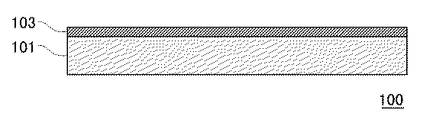
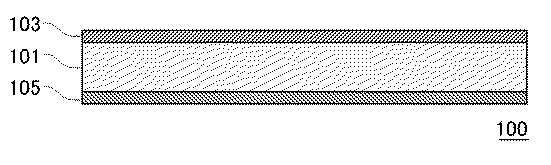
図1および図2は、本発明に係る実施形態の食品用包装フィルム100の構造の一例を模式的に示した断面図である。
本実施形態に係る食品用包装フィルム100は、食品を包装するためのフィルムであって、プロピレン系重合体を含む二軸延伸フィルム層101を備え、二軸延伸フィルム層101に対して、示差走査熱量計を用いて、昇温速度10℃/分で−50℃から250℃まで昇温する過程と、250℃で10分間保つ等温過程と、降温速度10℃/分で250℃から−50℃まで降温する過程とからなる一回目の示差走査熱量測定(1stRun)と、昇温速度10℃/分で−50℃から250℃まで昇温する過程からなる二回目の示差走査熱量測定(2ndRun)と、を続けて行ったとき、上記二回目の示差走査熱量測定により得られたDSC曲線2において、150℃以上180℃以下の範囲に吸熱ピークAが観察され、上記吸熱ピークAの熱量が95J/g以上120J/g以下である。これにより、厚みムラが小さく、水蒸気バリア性が向上した食品用包装フィルムを実現することができる。
上記吸熱ピークAの熱量の下限は95J/g以上であるが、食品用包装フィルム100の水蒸気バリア性をさらに向上させる観点から、好ましくは100J/g以上、より好ましくは105J/g以上、さらに好ましくは110J/g以上である。
上記吸熱ピークAの熱量の上限は120J/g以下であるが、厚みムラをより抑制する観点から、好ましくは118J/g以下、より好ましくは115J/g以下である。
ここで、上記吸熱ピークAの熱量は、吸熱ピークAを含む融解吸熱カーブと、ベースラインとで囲まれる面積を求めることで算出される。ベースラインは、吸熱ピークAの前後において、Heat Flowを時間で微分し、Deriv. Heat Flowを表示し、Deriv. Heat Flowの変化が始まる点(すなわち、Deriv. Heat Flowのフラット領域が終了する点)と、Deriv. Heat Flowの変化が終わる点(すなわち、Deriv. Heat Flowがフラット領域に入る点)と、を結んだ線とする。
また、150℃以上180℃以下の範囲に複数の吸熱ピークが観察される場合は、最大ピークを吸熱ピークAとする。
<Food packaging film>
1 and 2 are cross-sectional views schematically showing an example of the structure of a
The
The lower limit of the calorific value of the endothermic peak A is 95 J / g or more, but from the viewpoint of further improving the water vapor barrier property of the
The upper limit of the calorific value of the endothermic peak A is 120 J / g or less, but from the viewpoint of further suppressing thickness unevenness, it is preferably 118 J / g or less, more preferably 115 J / g or less.
Here, the calorific value of the endothermic peak A is calculated by obtaining an area surrounded by a melting endothermic curve including the endothermic peak A and a base line. The baseline is obtained by differentiating the Heat Flow with respect to time before and after the endothermic peak A, displaying the Deriv. Heat Flow, and the point where the change of the Deriv. Heat Flow starts (ie, the point where the flat region of the Deriv. Heat Flow ends). ) And a point where the change of the Deriv. Heat Flow ends (that is, a point where the Deriv. Heat Flow enters the flat region).
When a plurality of endothermic peaks are observed in the range of 150 ° C. or more and 180 ° C. or less, the maximum peak is taken as endothermic peak A.
上述したように、OPPフィルムには、環境負荷削減の観点から、水蒸気バリア性のさらなる向上が求められている。水蒸気バリア性が向上すると、プロピレン系重合体の使用量を低減でき、環境負荷を削減することが可能である。
ここで、本発明者らの検討によれば、OPPフィルムを構成するプロピレン系重合体として、高結晶性プロピレン系重合体を使用すると、OPPフィルムの水蒸気バリア性を向上させることができることを知見した。しかしながら、このような高結晶性プロピレン系重合体を使用すると、延伸ムラが生じ易く、二軸延伸工程の後に得られるOPPフィルムの厚みムラが大きくなる場合があることが明らかになった。
このように、本発明者は、OPPフィルムにおいて水蒸気バリア性および厚みムラの間には、トレードオフの関係があることを知見した。言い換えれば、本発明者は、OPPフィルムには、水蒸気バリア性向上および厚みムラ抑制の両方をバランスよく向上させるという観点において、改善の余地があることを見出した。
As described above, the OPP film is required to further improve the water vapor barrier property from the viewpoint of reducing the environmental load. When the water vapor barrier property is improved, the amount of the propylene-based polymer used can be reduced, and the environmental load can be reduced.
Here, according to the study of the present inventors, it has been found that when a highly crystalline propylene-based polymer is used as the propylene-based polymer constituting the OPP film, the water vapor barrier property of the OPP film can be improved. . However, it has been found that when such a highly crystalline propylene-based polymer is used, stretching unevenness is likely to occur, and the thickness unevenness of the OPP film obtained after the biaxial stretching step may be large.
As described above, the present inventors have found that there is a trade-off between the water vapor barrier property and the thickness unevenness in the OPP film. In other words, the present inventor has found that there is room for improvement in the OPP film from the viewpoint of improving both the water vapor barrier property and suppressing thickness unevenness in a well-balanced manner.
本発明者らは上記課題を解決するために鋭意検討した。その結果、示差走査熱量測定の2ndRunにおけるDSC曲線2において、150℃以上180℃以下の範囲に観察される吸熱ピークAの熱量という尺度が、水蒸気バリア性向上と厚みムラ抑制のバランスを向上させるための設計指針として有効であるという知見を得た。
本発明者らは上記知見をもとにさらに鋭意検討した結果、150℃以上180℃以下の範囲に観察される吸熱ピークAの熱量が95J/g以上120J/g以下の範囲にある二軸延伸フィルム層101を用いることによって、厚みムラが小さく、水蒸気バリア性が向上した食品用包装フィルムが得られることを見出した。
すなわち、本実施形態に係る食品用包装フィルム100によれば、厚みムラが小さく、水蒸気バリア性が向上した食品用包装体を実現できる。
また、本実施形態に係る食品用包装フィルム100によれば、水蒸気バリア性を向上できるため、二軸延伸フィルム層101の厚みをより薄くしても十分な水蒸気バリア性を得ることができる。そのため、本実施形態に係る食品用包装フィルム100によれば、食品用包装フィルムや包装体におけるプロピレン系重合体の使用量を低減でき、環境負荷を削減することができる。
以上から、本実施形態によれば、十分な水蒸気バリア性を有し、環境に優しい食品用包装体を実現できるとともに、厚みムラが小さく、外観や包装適性、製袋性に優れた食品用包装フィルム100を提供することができる。
The present inventors have made intensive studies to solve the above problems. As a result, in the DSC curve 2 at 2ndRun of the differential scanning calorimetry, the measure of the calorific value of the endothermic peak A observed in the range of 150 ° C. or more and 180 ° C. or less is to improve the balance between the improvement of the water vapor barrier property and the suppression of thickness unevenness. It was found that it was effective as a design guideline.
The present inventors have conducted further intensive studies based on the above findings. As a result, the biaxial stretching in which the calorific value of the endothermic peak A observed in the range of 150 ° C. or more and 180 ° C. or less is in the range of 95 J / g or more and 120 J / g or less. It has been found that by using the
That is, according to the
Moreover, according to the
From the above, according to the present embodiment, a food packaging having a sufficient water vapor barrier property and being able to realize an environmentally friendly food packaging, having small thickness unevenness, and having excellent appearance, packaging suitability, and excellent bag making properties. A
本実施形態に係るプロピレン系重合体を含む二軸延伸フィルム層101は、上記二回目の示差走査熱量測定により得られたDSC曲線2において、150℃以上180℃以下の範囲に観察される吸熱ピークAの熱量が95J/g以上120J/g以下となるように制御されたものである。これにより、水蒸気バリア性向上および厚みムラ抑制の両方をバランスよく向上させることができる。この理由は明らかではないが以下の理由が考えられる。
まず、吸熱ピークAの熱量が上記下限値以上であることにより、二軸延伸フィルム層101の結晶性を高めることができ、その結果、本実施形態に係る食品用包装フィルム100の水蒸気バリア性を向上させることができる、と考えられる。また、吸熱ピークAの熱量が上記上限値以下であることにより、二軸延伸フィルム層101の結晶化による延伸ムラを低減することができ、その結果、二軸延伸フィルム層101の延伸時に生じる厚みムラを小さくすることができる、と考えられる。
ここで、二軸延伸フィルム層101の吸熱ピークAの熱量は、例えば、二軸延伸フィルム層101に含まれるプロピレン系重合体の含有割合や延伸処理時の諸条件を調整すること等により達成できる。より具体的には、二軸延伸フィルム層101を構成するプロピレン系重合体として、融点や結晶化度、立体規則性等が異なる2種類以上のプロピレン系重合体を併用し、これらの割合を調整することや、延伸処理時の延伸倍率、延伸時の温度、熱処理の温度や時間等を適宜調整することにより調整することが可能である。
The biaxially stretched
First, when the calorific value of the endothermic peak A is equal to or more than the lower limit, the crystallinity of the biaxially stretched
Here, the calorific value of the endothermic peak A of the biaxially stretched
本実施形態に係る食品用包装フィルム100における、上記一回目の示差走査熱量測定により得られたDSC曲線1において、例えば、150℃以上165℃以下の範囲に吸熱ピークBおよび165℃超え180℃以下の範囲に吸熱ピークCがそれぞれ観察されることが好ましい。
150℃以上165℃以下の範囲に吸熱ピークBを有することによって、二軸延伸フィルム層101の延伸ムラをより低減することができ、その結果、二軸延伸フィルム層101の延伸時に生じる厚みムラをより一層小さくすることができる。また、165℃超え180℃以下の範囲に吸熱ピークCを有することによって、二軸延伸フィルム層101の結晶性をより高めることができ、その結果、本実施形態に係る食品用包装フィルム100の水蒸気バリア性をより一層向上させることができる。
In the DSC curve 1 obtained by the first differential scanning calorimetry in the
By having the endothermic peak B in the range of 150 ° C. or more and 165 ° C. or less, the stretching unevenness of the biaxially stretched
本実施形態に係る食品用包装フィルム100において、上記吸熱ピークBのピーク高さBに対する上記吸熱ピークCのピーク高さCの比(C/B)は、食品用包装フィルム100の水蒸気バリア性をより向上させる観点から、1.0以上であることが好ましく、1.2以上であることがより好ましく、1.5以上であることがさらに好ましい。
また、本実施形態に係る食品用包装フィルム100において、上記吸熱ピークBのピーク高さBに対する上記吸熱ピークCのピーク高さCの比(C/B)は、食品用包装フィルム100の厚みムラをより一層抑制する観点から、3.0以下であることが好ましく、2.5以下であることがより好ましく、2.3以下であることがさらに好ましい。
ここで、吸熱ピークBのピーク高さBおよび吸熱ピークCのピーク高さCは、それぞれピークトップPからX軸に垂直に引いた線とベースラインとの交点をQとしたとき、直線P−QのHeat Flow値である。ベースラインは、吸熱ピークBおよび吸熱ピークCの前後において、Heat Flowを時間で微分し、Deriv. Heat Flowを表示し、Deriv. Heat Flowの変化が始まる点(すなわち、Deriv. Heat Flowのフラット領域が終了する点)と、Deriv. Heat Flowの変化が終わる点(すなわち、Deriv. Heat Flowがフラット領域に入る点)と、を結んだ線とする。
In the
Further, in the
Here, the peak height B of the endothermic peak B and the peak height C of the endothermic peak C are represented by a straight line P−, where Q is the intersection of a line drawn perpendicularly to the X axis from the peak top P and the base line. Q is the Heat Flow value. The baseline is obtained by differentiating the Heat Flow with respect to time before and after the endothermic peak B and the endothermic peak C, displaying the Deriv. Heat Flow, and the point where the change of the Deriv. Heat Flow starts (that is, the flat area of the Deriv. Heat Flow). End point) and the point where the change of Deriv. Heat Flow ends (that is, the point where Deriv. Heat Flow enters the flat region).
本実施形態に係る食品用包装フィルム100における、上記一回目の示差走査熱量測定により得られたDSC曲線1において、例えば、100℃以上130℃以下の範囲、好ましくは100℃以上120℃以下の範囲に発熱ピークDが観察されることが好ましい。これにより、二軸延伸フィルム層101の結晶性をより高めることができ、その結果、本実施形態に係る食品用包装フィルム100の水蒸気バリア性向上と厚みムラ抑制のバランスをより一層向上させることができる。
In the
上記発熱ピークDの半値幅は、例えば2.0℃以上6.0℃以下、好ましくは3.0℃以上5.0℃以下である。
上記発熱ピークDの半値幅を上記下限値以上とすることにより、二軸延伸フィルム層101の内部歪みをより低減することができ、その結果、二軸延伸フィルム層101の延伸時に生じる厚みムラをより一層小さくすることができる。
また、上記発熱ピークDの半値幅を上記上限値以下とすることにより、二軸延伸フィルム層101の結晶性をより高めることができ、その結果、本実施形態に係る食品用包装フィルム100の水蒸気バリア性をより一層向上させることができる。
ここで、上記発熱ピークDの半値幅は、例えば、以下の方法により算出することができる。まず、発熱ピークDのピークトップRからX軸に向かって垂直に引いた線とベースラインとの交点をSとする。次いで、直線R−Sの中点を通過し、かつ、X軸に平行な直線を引いたときに、発熱ピークDと交わる点をそれぞれT1およびT2とする。そして、直線T1−T2の長さを半値幅とする。ベースラインは、発熱ピークDの前後において、Heat Flowを時間で微分し、Deriv. Heat Flowを表示し、Deriv. Heat Flowの変化が始まる点(すなわち、Deriv. Heat Flowのフラット領域が終了する点)と、Deriv. Heat Flowの変化が終わる点(すなわち、Deriv. Heat Flowがフラット領域に入る点)と、を結んだ線とする。
The half width of the exothermic peak D is, for example, 2.0 ° C. or more and 6.0 ° C. or less, and preferably 3.0 ° C. or more and 5.0 ° C. or less.
By setting the half width of the heat generation peak D to the lower limit or more, the internal strain of the biaxially stretched
In addition, by setting the half width of the heat generation peak D to be equal to or less than the upper limit, the crystallinity of the biaxially stretched
Here, the half width of the heat generation peak D can be calculated by, for example, the following method. First, let S be the intersection of a line drawn vertically from the peak top R of the exothermic peak D toward the X-axis and the baseline. Then, through the midpoint of the straight line R-S, and, when obtained by subtracting the straight line parallel to the X axis, the point of intersection with the exothermic peak D and T 1 and T 2, respectively. Then, the length of the straight line T 1 -T 2 is defined as a half width. The baseline is the point at which the Heat Flow is differentiated with time before and after the exothermic peak D, the Deriv. Heat Flow is displayed, and the point at which the change of the Deriv. Heat Flow starts (that is, the point at which the flat region of the Deriv. Heat Flow ends). ) And a point where the change of the Deriv. Heat Flow ends (that is, a point where the Deriv. Heat Flow enters the flat region).
本実施形態に係る食品用包装フィルム100において、JIS K7127(1999)に準拠し、引張試験機を用いて測定温度23±2℃、50±5%RH、引張速度5mm/minの条件で測定されるMD方向の引張弾性率T1とTD方向の引張弾性率T2との合計値(T1+T2)が5000MPa以上であることが好ましく、6000MPa以上であることがより好ましく、7000MPa以上であることがさらに好ましく、7100MPa以上であることが特に好ましく、そして10000MPa以下であることが好ましく、9000MPa以下であることがより好ましく、8000MPa以下であることがさらに好ましく、7500MPa以下であることが特に好ましい。
MD方向の引張弾性率T1とTD方向の引張弾性率T2との合計値(T1+T2)が上記下限値以上であると、本実施形態に係る食品用包装フィルム100のヒートシール性、水蒸気バリア性および透明性のバランスを良好にすることができる。さらに、本実施形態に係る食品用包装フィルム100のコシを良好なものとすることができ、その結果、ヒートシールする際のフィルムの位置ずれ等を抑制でき、シール不良が発生することを抑制できる。
すなわち、MD方向の引張弾性率T1とTD方向の引張弾性率T2との合計値(T1+T2)が上記下限値以上であると、本実施形態に係る食品用包装フィルム100のヒートシール性、水蒸気バリア性、透明性および包装適性のバランスを良好にすることができる。
また、MD方向の引張弾性率T1とTD方向の引張弾性率T2との合計値(T1+T2)が上記上限値以下であると、帯電防止剤の添加量を増やさなくても本実施形態に係る食品用包装フィルム100の表面固有抵抗を効果的に低下させることができ、その結果、食品用包装フィルム100の良好なヒートシール性を維持しながら帯電防止性を向上させることができる。
このような引張弾性率はフィルムのコシを定量的に測定する代用値であり、例えば、二軸延伸フィルム層101に含まれるプロピレン系重合体の含有割合や延伸処理時の諸条件を調整すること等により達成できる。より具体的には、二軸延伸フィルム層101を構成するプロピレン系重合体として融点や融解熱量が異なる複数のプロピレン系重合体を使用することや、延伸処理時の延伸倍率、延伸時の温度、熱処理の温度や時間等を適宜調整することにより弾性率を調整し食品用包装フィルム100の引張弾性率を調整することができる。
The
MD direction tensile modulus T 1 and the total value of the tensile modulus T 2 of the TD direction when the (T 1 + T 2) is not less than the above lower limit, the heat sealable
That is, when the total value of the tensile modulus T 2 of the tensile modulus T 1 and TD direction MD direction (T 1 + T 2) is not less than the above lower limit, the heat of the
This addition, when the total value of the tensile modulus T 2 of the tensile modulus T 1 and TD direction MD direction (T 1 + T 2) is less than the above upper limit, without increasing the amount of the antistatic agent The surface specific resistance of the
Such a tensile modulus is a substitute value for quantitatively measuring the stiffness of the film, for example, by adjusting the content ratio of the propylene-based polymer contained in the biaxially stretched
ここで、本実施形態に係る食品用包装フィルム100を用いて作製した食品用包装体は、水蒸気バリア性について十分な性能を示している。そのため、水蒸気バリア性は求められるものの、酸素バリア性はあまり求められない食品(例えば、乾燥食品)を包装するための食品用包装体を構成するフィルムとして特に好適に用いることができる。
Here, the food packaging body manufactured using the
本実施形態に係る食品用包装フィルム100を用いて作製した食品用包装体は、十分な水蒸気バリア性を有している。食品用包装フィルム100において、水蒸気バリア性により優れた食品用包装体を安定的に得る観点から、下記の方法で測定される水蒸気透過度が6.0g/(m2・24h)以下であることが好ましく、5.5g/(m2・24h)以下であることがより好ましく、5.0g/(m2・24h)以下であることがさらに好ましい。
(測定方法)
食品用包装フィルム100をヒートシール層103が内面になるように折り返し、2方をヒートシールして袋状にする。その後、内容物として塩化カルシウムを入れる。次いで、もう1方をヒートシールして表面積が0.01m2になるように袋を作製する。次いで、得られた袋を40℃、湿度90%RHの条件で72時間保管する。保管前後の塩化カルシウムの重量を測定し、その差から水蒸気透過度(g/(m2・24h))を算出する。
このような水蒸気透過度は、例えば、前述した吸熱ピーク特性や発熱ピーク特性等の二軸延伸フィルム層101のDSC特性、二軸延伸フィルム層101に含まれるプロピレン系重合体の含有割合、ヒートシール層103の構成材料や厚み等を調整することにより達成できる。
A food package produced using the
(Measuring method)
The
Such a water vapor transmission rate is determined, for example, by the DSC characteristics of the biaxially stretched
本実施形態に係る食品用包装フィルム100の厚みは特に限定しないが、水蒸気バリア性、コスト、機械的強度、透明性等の所望の目的に応じて任意に設定することができ、特に限定されないが、例えば5μm以上100μm以下であり、好ましくは10μm以上50μm以下であり、より好ましく15μm以上40μm以下である。
食品用包装フィルム100の厚みが上記範囲内であると、製袋性、機械的特性、取扱い性、外観、透明性、成形性、軽量性等のバランスがより優れる。
The thickness of the
When the thickness of the
以下、食品用包装フィルム100を構成する各層について説明する。
Hereinafter, each layer constituting the
[二軸延伸フィルム層]
本実施形態に係る二軸延伸フィルム層101(二軸延伸ポリプロピレン系フィルム層とも呼ぶ。)は、例えば、プロピレン系重合体を含むプロピレン系重合体組成物により構成されたフィルムを二軸延伸することにより形成されたものである。
[Biaxially stretched film layer]
The biaxially-stretched film layer 101 (also referred to as a biaxially-stretched polypropylene-based film layer) according to this embodiment is formed by, for example, biaxially stretching a film composed of a propylene-based polymer composition containing a propylene-based polymer. It is formed by:
本実施形態に係る二軸延伸フィルム層101は単層であってもよいし、プロピレン系重合体組成物により構成された層が複数積層された構成でもよいが、二軸延伸されてなることが必要である。
The biaxially stretched
また、食品用包装フィルム100において、食品用包装フィルム100の全体の厚みに対する二軸延伸フィルム層101の厚みの割合が、好ましくは50%以上100%以下であり、より好ましくは60%以上99%以下であり、さらに好ましくは70%以上97%以下であり、特に好ましくは75%以上95%以下である。
In the
(プロピレン系重合体組成物)
本実施形態に係るプロピレン系重合体組成物はプロピレン系重合体を含む。
本実施形態に係るプロピレン系重合体組成物すなわち二軸延伸フィルム層101に含まれるプロピレン系重合体の含有量は、プロピレン系重合体組成物の全体を100質量%としたとき、好ましくは50質量%以上100質量%以下、より好ましくは70質量%以上100質量%以下、さらに好ましくは90質量%以上100質量%以下、特に好ましくは95質量%以上100質量%以下である。これにより、フィルムのコシ、水蒸気バリア性、機械的特性、取扱い性、外観、成形性等のバランスをより良好にすることができる。
(Propylene polymer composition)
The propylene-based polymer composition according to the present embodiment contains a propylene-based polymer.
The content of the propylene-based polymer composition according to the present embodiment, that is, the content of the propylene-based polymer contained in the biaxially stretched
(プロピレン系重合体)
本実施形態に係るプロピレン系重合体は、例えば、プロピレン単独重合体、プロピレンとエチレンまたは炭素数が4〜20のα−オレフィンとの共重合体等が挙げられる。上記炭素数が4〜20のα−オレフィンとしては、1−ブテン、1−ペンテン、1−ヘキセン、4−メチル−1−ペンテン、1−オクテン、1−デセン、1−ドデセン、1−テトラデセン、1−ヘキサデセン、1−オクタデセン、1−エイコセン等が挙げられる。これらの中でもエチレンまたは炭素数が4〜10のα−オレフィンが好ましく、エチレンがより好ましい。これらのα−オレフィンは、プロピレンとランダム共重合体を形成してもよく、またブロック共重合体を形成してもよい。エチレンまたは炭素数が4〜20のα−オレフィンから導かれる構成単位の含有量は、プロピレン系重合体の全体を100モル%としたとき、5モル%以下であることが好ましく、2モル%以下であることがより好ましい。二軸延伸フィルム層101中のプロピレン系重合体は、1種類単独で用いてもよいし、2種以上を組み合わせて用いてもよい。
これらの中でも、耐熱性、水蒸気バリア性、機械的特性および剛性等の性能バランスにより一層優れた二軸延伸フィルム層101を得る観点から、プロピレン系重合体としてはプロピレン単独重合体が好ましい。
(Propylene polymer)
The propylene-based polymer according to the present embodiment includes, for example, a propylene homopolymer, a copolymer of propylene and ethylene or an α-olefin having 4 to 20 carbon atoms, and the like. Examples of the α-olefin having 4 to 20 carbon atoms include 1-butene, 1-pentene, 1-hexene, 4-methyl-1-pentene, 1-octene, 1-decene, 1-dodecene, 1-tetradecene, Examples thereof include 1-hexadecene, 1-octadecene, and 1-eicosene. Among them, ethylene or an α-olefin having 4 to 10 carbon atoms is preferable, and ethylene is more preferable. These α-olefins may form a random copolymer with propylene, or may form a block copolymer. The content of the structural unit derived from ethylene or an α-olefin having 4 to 20 carbon atoms is preferably 5 mol% or less, and preferably 2 mol% or less, when the entire propylene-based polymer is 100 mol%. Is more preferable. The propylene-based polymer in the biaxially stretched
Among these, a propylene homopolymer is preferable as the propylene-based polymer, from the viewpoint of obtaining a biaxially stretched
ここで、前述した二軸延伸フィルム層101の吸熱ピーク特性や発熱ピーク特性等のDSC特性を満たすためには、プロピレン系重合体として適切なものを選択することが重要である。
より具体的には、本実施形態に係る二軸延伸フィルム層101は、例えば、融点や結晶化度、立体規則性等が異なる2種類以上のプロピレン系重合体を併用し、これらの割合を調整することによって、前述した吸熱ピーク特性や発熱ピーク特性等のDSC特性を調整することが可能である。
Here, in order to satisfy the DSC characteristics such as the endothermic peak characteristic and the exothermic peak characteristic of the biaxially stretched
More specifically, the biaxially stretched
例えば、本実施形態に係る二軸延伸フィルム層101に含まれるプロピレン系重合体は、DSC測定による融点が130℃以上162℃以下の範囲にある第1プロピレン系重合体と、DSC測定による融点が162℃超え180℃以下の範囲にある第2プロピレン系重合体と、を含む態様が挙げられる。
この場合、二軸延伸フィルム層101に含まれる第1プロピレン系重合体および第2プロピレン系重合体の合計量を100質量%としたとき、第2プロピレン系重合体の含有量は、食品用包装フィルム100の水蒸気バリア性向上の観点から、1質量%以上であることが好ましく、10質量%以上であることがより好ましく、25質量%以上であることがさらに好ましく、35質量%以上であることがさらにより好ましく、50質量%以上であることが特に好ましい。
また、二軸延伸フィルム層101に含まれる第1プロピレン系重合体および第2プロピレン系重合体の合計量を100質量%としたとき、第2プロピレン系重合体の含有量は、食品用包装フィルム100の厚みムラをより一層抑制する観点から、85質量%以下であることが好ましく、75質量%以下であることがより好ましく、70質量%以下であることがさらに好ましい。
For example, the propylene-based polymer contained in the biaxially stretched
In this case, when the total amount of the first propylene-based polymer and the second propylene-based polymer contained in the biaxially stretched
Further, when the total amount of the first propylene-based polymer and the second propylene-based polymer contained in the biaxially stretched
また、本実施形態において、第2プロピレン系重合体は高立体規則性プロピレン系重合体であることが好ましい。ここで、高立体規則性プロピレン系重合体とは、立体規則性の指標であるアイソタクチックメソペンタッド分率(mmmm)が96.0%以上であるプロピレン系重合体をいう。
本実施形態に係る高立体規則性プロピレン系重合体のアイソタクチックメソペンタッド分率(mmmm)は、好ましくは96.5%以上であり、より好ましくは97.0%以上である。高立体規則性プロピレン系重合体のアイソタクチックメソペンタッド分率(mmmm)の上限は特に限定されないが、製造のし易さの観点から、99.5%以下であり、より好ましくは99.3%以下であり、さらに好ましくは99.0%以下である。
アイソタクチックメソペンタッド分率(mmmm)は、13C−核磁気共鳴(NMR)スペクトルから公知の方法により求めることができる。
In this embodiment, the second propylene-based polymer is preferably a highly stereoregular propylene-based polymer. Here, the high stereoregularity propylene polymer refers to a propylene polymer having an isotactic mesopentad fraction (mmmm) of 96.0% or more, which is an index of stereoregularity.
The isotactic mesopentad fraction (mmmm) of the highly stereoregular propylene polymer according to this embodiment is preferably 96.5% or more, and more preferably 97.0% or more. The upper limit of the isotactic mesopentad fraction (mmmm) of the highly stereoregular propylene polymer is not particularly limited, but is preferably 99.5% or less, more preferably 99.5%, from the viewpoint of easy production. It is at most 3%, more preferably at most 99.0%.
The isotactic mesopentad fraction (mmmm) can be determined from a 13 C-nuclear magnetic resonance (NMR) spectrum by a known method.
本実施形態に係るプロピレン系重合体は種々の方法により製造することができる。例えばチーグラー・ナッタ系触媒やメタロセン系触媒等の公知の触媒を用いて製造することができる。 The propylene-based polymer according to this embodiment can be produced by various methods. For example, it can be produced using a known catalyst such as a Ziegler-Natta catalyst or a metallocene catalyst.
ASTM D1238に準拠し、230℃、2.16kg荷重の条件で測定される本実施形態に係るプロピレン系重合体のメルトフローレート(MFR)は、流動性および成形性の観点から、好ましくは0.5g/10分以上、より好ましくは1g/10分以上、さらに好ましくは2g/10分以上であり、成形性をより安定化させる観点から、好ましくは20g/10分以下、より好ましくは10g/10分以下、さらに好ましくは7g/10分以下である。 According to ASTM D1238, the melt flow rate (MFR) of the propylene-based polymer according to the present embodiment measured under the conditions of 230 ° C. and a load of 2.16 kg is preferably 0. It is at least 5 g / 10 min, more preferably at least 1 g / 10 min, even more preferably at least 2 g / 10 min, and from the viewpoint of further stabilizing moldability, preferably at most 20 g / 10 min, more preferably at most 10 g / 10. Min, more preferably 7 g / 10 min or less.
(その他の成分)
本実施形態に係るプロピレン系重合体組成物には、必要に応じて、粘着付与剤、耐熱安定剤、耐候安定剤、酸化防止剤、紫外線吸収剤、滑剤、スリップ剤、核剤、アンチブロッキング剤、帯電防止剤、防曇剤、顔料、染料、無機または有機の充填剤等の各種添加剤を本実施形態の目的を損なわない範囲で添加してもよい。
(Other components)
In the propylene polymer composition according to the present embodiment, if necessary, a tackifier, a heat stabilizer, a weather stabilizer, an antioxidant, an ultraviolet absorber, a lubricant, a slip agent, a nucleating agent, an antiblocking agent Various additives such as an antistatic agent, an antifogging agent, a pigment, a dye, and an inorganic or organic filler may be added within a range that does not impair the purpose of the present embodiment.
本実施形態に係る粘着付与剤としては、一般的に粘着付与剤として製造・販売されている粘着性を付与する性質を有する樹脂状物質を用いることができる。
このような粘着付与剤としては、例えば、クロマン・インデン樹脂等のクロマン系樹脂;フェノール・ホルムアルデヒド樹脂およびキシレン・ホルムアルデヒド樹脂等のフェノール系樹脂;テルペン・フェノール樹脂、テルペン樹脂(α,β−ピネン樹脂)、芳香族変性テルペン樹脂、水素添加テルペン樹脂等のテルペン系樹脂;合成ポリテルペン樹脂、芳香族系炭化水素樹脂、脂肪族系炭化水素樹脂、脂肪族系環状炭化水素樹脂、脂肪族・脂環族系石油樹脂、脂肪族・芳香族系石油樹脂、不飽和炭化水素重合体および炭化水素系粘着化樹脂等の石油系炭化水素樹脂;上記石油系炭化水素樹脂の水素添加物(水素添加石油系炭化水素樹脂とも呼ぶ。);ロジンのペンタエリスリトール・エステル、ロジンのグリセリン・エステル、水素添加ロジン、水素添加ロジン・エステル、特殊ロジン・エステルおよびロジン系粘着付与剤等のロジン系樹脂等を挙げることができる。
これらの中でも、プロピレン系重合体との相性がよく、食品用包装フィルム100の水蒸気バリア性をより効果的に向上させることができる観点から、石油系炭化水素樹脂および水素添加石油系炭化水素樹脂から選択される少なくとも一種が好ましく、水素添加石油系炭化水素樹脂がより好ましい。
ここで、水素添加石油系炭化水素樹脂の水素添加率は特に限定されないが、プロピレン系重合体との相性性により優れる点から、好ましくは90%以上、より好ましくは95%以上、さらに好ましくは99%以上である。
As the tackifier according to the present embodiment, a resinous substance having the property of imparting tackiness, which is generally manufactured and sold as a tackifier, can be used.
Such tackifiers include, for example, chroman resins such as chroman / indene resins; phenolic resins such as phenol / formaldehyde resins and xylene / formaldehyde resins; terpenes / phenolic resins; terpene resins (α, β-pinene resins) ), Terpene resins such as aromatic modified terpene resins and hydrogenated terpene resins; synthetic polyterpene resins, aromatic hydrocarbon resins, aliphatic hydrocarbon resins, aliphatic cyclic hydrocarbon resins, aliphatic and alicyclic resins Petroleum hydrocarbon resins such as petroleum-based petroleum resins, aliphatic / aromatic petroleum resins, unsaturated hydrocarbon polymers and hydrocarbon-based tackifying resins; hydrogenated products of the above petroleum-based hydrocarbon resins (hydrogenated petroleum-based carbon Rosin pentaerythritol ester, rosin glycerin ester, hydrogenated rosin And rosin resins such as hydrogenated rosin esters, special rosin esters and rosin tackifiers.
Among them, from the viewpoint of good compatibility with the propylene-based polymer, from the viewpoint of more effectively improving the water vapor barrier properties of the
Here, the hydrogenation rate of the hydrogenated petroleum hydrocarbon resin is not particularly limited, but is preferably 90% or more, more preferably 95% or more, and still more preferably 99%, from the viewpoint of being more compatible with the propylene polymer. % Or more.
ここで、本実施形態に係るプロピレン系重合体組成物すなわち二軸延伸フィルム層101に含まれる粘着付与剤の含有量は、食品用包装フィルム100のリサイクル性や低コスト化の観点や、食品用包装フィルム100の曲げ弾性の低下を抑制したり、加工性、寸法安定性および透明性等を向上させたりする観点から、二軸延伸フィルム層101の全体を100質量%としたとき、好ましくは10質量%以下であり、より好ましくは5質量%以下であり、さらに好ましくは3質量%以下であり、特に好ましくは1質量%以下である。
Here, the content of the tackifier contained in the propylene-based polymer composition according to the present embodiment, that is, the biaxially stretched
(プロピレン系重合体組成物の調製方法)
本実施形態に係るプロピレン系重合体組成物は、各成分をドライブレンド、タンブラーミキサー、バンバリーミキサー、単軸押出機、二軸押出機、高速二軸押出機、熱ロール等により混合または溶融・混練することにより調製することができる。
(Method for preparing propylene-based polymer composition)
The propylene polymer composition according to the present embodiment is obtained by mixing or melting / kneading the components by dry blending, a tumbler mixer, a Banbury mixer, a single-screw extruder, a twin-screw extruder, a high-speed twin-screw extruder, a hot roll, or the like. Can be prepared.
[ヒートシール層]
本実施形態に係る食品用包装フィルム100は、ヒートシール性を付与するために、二軸延伸フィルム層101の少なくとも一方の面上にヒートシール層103を備えることが好ましい。ヒートシール層103は、二軸延伸フィルム層101の両面に設けられていてもよい。
また、ヒートシール層103は、食品用包装フィルム100のヒートシール性をより良好にする観点から、本実施形態に係る食品用包装フィルム100の最外層に設けられることが好ましい。
[Heat seal layer]
The
The
また、ヒートシール層103は、二軸延伸フィルム層101の表面上に直接接するように設けられていることが好ましい。これにより、食品用包装フィルム100の製造工程を簡略化することができる。
Further, it is preferable that the
食品用包装フィルム100において、ヒートシール層103の厚みは、好ましくは0.1μm以上10μm以下、より好ましくは0.2μm以上9μm以下、さらに好ましくは0.5μm以上8μm以下、特に好ましくは1μm以上8μm以下である。ここで、ヒートシール層103の厚みとは、二軸延伸フィルム層101の片面に設けられたヒートシール層103の厚みをいう。
ヒートシール層103の厚みが上記下限値以上であることにより、食品用包装フィルム100のヒートシール性をより一層良好にすることができる。
また、ヒートシール層103の厚みが上記上限値以下であることにより、食品用包装フィルムに求められるブロッキング性およびスリップ性をより一層良好にできる。
すなわち、二軸延伸フィルム層101の表面上に直接接するようにヒートシール層103を設けることで食品用包装フィルム100の製造工程を簡略化することができる。
ここで、本実施形態において、二軸延伸フィルム層101の両面にヒートシール層103が設けられる場合、ヒートシール層103の上記厚みは二軸延伸フィルム層101の片面に設けられたヒートシール層103の厚みを示す。
In the
When the thickness of the
When the thickness of the
That is, by providing the
Here, in the present embodiment, when the heat seal layers 103 are provided on both surfaces of the biaxially stretched
食品用包装フィルム100において、一方の面に設けられるヒートシール層103は、単層であることが好ましい。これにより、食品用包装フィルム100の製造工程をより一層簡略化することができる。
In the
また、ヒートシール層103は、二軸延伸フィルム層101の二軸延伸前の状態にあるフィルムと同時に二軸延伸されて形成されることが好ましい。これにより、共押出し成形法等の成形方法、すなわち一度の成形で作製した積層フィルムを用いて食品用包装フィルム100を作製することができるため、食品用包装フィルム100の製造工程をより一層簡略化することができる。したがって、ヒートシール層103は二軸延伸されていることが好ましい。
Further, it is preferable that the
(ポリオレフィン)
本実施形態に係るヒートシール層103は、例えば、ポリオレフィンを含むポリオレフィン系樹脂組成物(A)により構成される。ヒートシール層103を構成するポリオレフィンとしては、例えば、エチレン、プロピレン、ブテン−1、ヘキセン−1、4−メチル−ペンテン−1、オクテン−1等のα−オレフィンの単独重合体または共重合体;高圧法低密度ポリエチレン;線状低密度ポリエチレン(LLDPE);高密度ポリエチレン;ポリプロピレン;プロピレンと炭素数が2以上10以下のα−オレフィンとのランダム共重合体;エチレン・酢酸ビニル共重合体(EVA);アイオノマー樹脂等が挙げられる。
これらの中でも、ヒートシール層103を構成するポリオレフィンとしては、二軸延伸フィルム層101との接着性や、ヒートシール性等のバランスが優れる点から、ホモポリプロピレンおよびプロピレンと炭素数が2以上10以下のα−オレフィンとのランダム共重合体から選択される少なくとも一種が好ましい。
また、ヒートシール性およびヒートシール強度の安定性の観点から、ヒートシール層103は、上記ポリオレフィンの中でもオレフィン系エラストマーを含むことが好ましい。
(Polyolefin)
The
Among them, as the polyolefin constituting the
Further, from the viewpoint of the heat sealability and the stability of the heat seal strength, the
本実施形態に係るプロピレン・α−オレフィンランダム共重合体は、プロピレンとα−オレフィン(ただし、α−オレフィンはプロピレンを除く)とのランダム共重合体であり、α―オレフィンとしては、例えば、エチレン、1−ブテン、1−ペンテン、1−ヘキセン、4−メチル−1−ペンテン、1−オクテン等が挙げられる。これら共重合体は、単独で用いてもよいし、二種以上を混合して用いてもよい。
プロピレン・α−オレフィンランダム共重合体の中でも、プロピレン・エチレンランダム共重合体、プロピレン・エチレン・1−ブテンランダム共重合体、プロピレン・1−ブテンランダム共重合体が好ましい。
The propylene / α-olefin random copolymer according to the present embodiment is a random copolymer of propylene and an α-olefin (however, the α-olefin is not propylene). Examples of the α-olefin include ethylene. , 1-butene, 1-pentene, 1-hexene, 4-methyl-1-pentene, 1-octene and the like. These copolymers may be used alone or as a mixture of two or more.
Among propylene / α-olefin random copolymers, propylene / ethylene random copolymer, propylene / ethylene / 1-butene random copolymer, and propylene / 1-butene random copolymer are preferable.
本実施形態に係るヒートシール層103を構成するポリオレフィンの融点は、好ましくは60℃以上175℃以下、より好ましくは65℃以上170℃以下、さらに好ましくは70℃以上167℃以下の範囲にある。ポリオレフィンの融点が上記下限値以上であると、ヒートシール層103の表面のベタツキを抑制することができ、食品用包装フィルム100の耐ブロッキング性を向上させることができる。
また、ポリオレフィンの融点が上記上限値以下であると、食品用包装フィルム100のヒートシール性をより良好にすることができる。
The melting point of the polyolefin constituting the
When the melting point of the polyolefin is equal to or less than the upper limit, the heat sealing property of the
また、上記オレフィン系エラストマーとしては、例えば、融点が好ましくは110℃以下、より好ましくは100℃以下、さらに好ましくは80℃以下または融点が観測されない炭素数2〜20のα−オレフィン重合体またはエチレンとα−オレフィンとの共重合体;エチレンと不飽和カルボン酸または不飽和カルボン酸エステルとの共重合体;等が挙げられる。
具体的には、エチレン・プロピレン共重合体、エチレン・1−ブテン共重合体、エチレン・1−ヘキセン共重合体、エチレン・4−メチルペンテン−1共重合体、エチレン・1−オクテン共重合体、プロピレン単独共重合体、プロピレン・エチレン共重合体、プロピレン・エチレン・1−ブテン共重合体、1−ブテン単独重合体、1−ブテン・エチレン共重合体、1−ブテン・プロピレン共重合体、4−メチルペンテン−1単独重合体、4−メチルペンテン−1・プロピレン共重合体、4−メチルペンテン−1・1−ブテン共重合体、4−メチルペンテン−1・プロピレン・1−ブテン共重合体、プロピレン・1−ブテン共重合体、エチレン・酢酸ビニル共重合体、エチレン・メタクリル酸共重合体、エチレン・メタクリル酸メチル共重合体等を挙げることができる。
ヒートシール性およびヒートシール強度の安定性の観点から、特に好ましくはプロピレン・1−ブテン共重合体である。
Examples of the olefin-based elastomer include, for example, an α-olefin polymer having a melting point of preferably 110 ° C. or lower, more preferably 100 ° C. or lower, and further preferably 80 ° C. or lower or a C 2 to C 20 polymer having no observable melting point or ethylene. And an α-olefin; a copolymer of ethylene and an unsaturated carboxylic acid or an unsaturated carboxylic acid ester; and the like.
Specifically, ethylene / propylene copolymer, ethylene / 1-butene copolymer, ethylene / 1-hexene copolymer, ethylene / 4-methylpentene-1 copolymer, ethylene / 1-octene copolymer , Propylene homopolymer, propylene / ethylene copolymer, propylene / ethylene / 1-butene copolymer, 1-butene homopolymer, 1-butene / ethylene copolymer, 1-butene / propylene copolymer, 4-methylpentene-1 homopolymer, 4-methylpentene-1 · propylene copolymer, 4-methylpentene-1 / 1-butene copolymer, 4-methylpentene-1-propylene / 1-butene copolymer Copolymer, propylene / 1-butene copolymer, ethylene / vinyl acetate copolymer, ethylene / methacrylic acid copolymer, ethylene / methyl methacrylate copolymer It can be mentioned.
From the viewpoint of heat sealability and stability of heat seal strength, a propylene / 1-butene copolymer is particularly preferred.
ASTM D1238に準拠し、230℃、2.16kg荷重の条件で測定される本実施形態に係るヒートシール層103を構成するポリオレフィンのメルトフローレート(MFR)は、流動性および成形性の観点から、好ましくは0.5g/10分以上、より好ましくは1g/10分以上、さらに好ましくは2g/10分以上であり、成形性をより安定化させる観点から、好ましくは20g/10分以下、より好ましくは10g/10分以下、さらに好ましくは7g/10分以下である。
In accordance with ASTM D1238, the melt flow rate (MFR) of the polyolefin constituting the
本実施形態に係るポリオレフィン系樹脂組成物(A)すなわちヒートシール層103中のポリオレフィンの含有量は、ポリオレフィン系樹脂組成物(A)の全体を100質量%としたとき、好ましくは50質量%以上100質量%以下、より好ましくは70質量%以上100質量%以下、さらに好ましくは90質量%以上100質量%以下、特に好ましくは95質量%以上100質量%以下である。これにより、二軸延伸フィルム層101との接着性や、ヒートシール性等のバランスをより良好にすることができる。
また、本実施形態に係るポリオレフィン系樹脂組成物(A)すなわちヒートシール層103中のオレフィン系エラストマーの含有量は、二軸延伸フィルム層101に含まれるポリオレフィンの含有量を100質量%としたとき、好ましくは10質量%以上50質量%以下、より好ましくは15質量%以上45質量%以下、さらに好ましくは20質量%以上40質量%以下である。
The polyolefin resin composition (A) according to the present embodiment, that is, the content of the polyolefin in the
In addition, the content of the polyolefin-based resin composition (A) according to the present embodiment, that is, the content of the olefin-based elastomer in the
(その他の成分)
本実施形態に係るヒートシール層103を構成するポリオレフィン系樹脂組成物(A)には、必要に応じて、粘着付与剤、耐熱安定剤、耐候安定剤、酸化防止剤、紫外線吸収剤、滑剤、スリップ剤、核剤、アンチブロッキング剤、帯電防止剤、防曇剤、顔料、染料、無機または有機の充填剤等の各種添加剤を本実施形態の目的を損なわない範囲で添加してもよい。特に、本実施形態に係るヒートシール層103は、本実施形態に係る食品用包装フィルム100の耐ブロッキング性を向上させる観点から、アンチブロッキング剤を含むことが好ましい。
アンチブロッキング剤としては、例えば、タルク、シリカ、クレー、炭酸カルシウム、合成ゼオライト、デンプン、酸化アルミニウム、アクリル樹脂、メタクリル樹脂、シリコン樹脂、ポリテトラフロロエチレン樹脂等が挙げられる。
(Other components)
The polyolefin-based resin composition (A) constituting the
Examples of the anti-blocking agent include talc, silica, clay, calcium carbonate, synthetic zeolite, starch, aluminum oxide, acrylic resin, methacrylic resin, silicone resin, polytetrafluoroethylene resin and the like.
また、ヒートシール層103のヒートシール性を良好にする観点から、ヒートシール層103には、粘着付与剤は実質的に含まれないことが好ましい。より具体的には、ヒートシール層103中の粘着付与剤の含有量は、0.5質量%以下が好ましく、0.1質量%以下がより好ましく、0.01質量%以下がさらに好ましく、特に好ましくは0質量%である。
ここで、粘着付与剤とは、一般的に粘着付与剤として製造・販売されている粘着性を付与する性質を有する樹脂状物質である。
このような粘着付与剤としては、例えば、クロマン・インデン樹脂等のクロマン系樹脂;フェノール・ホルムアルデヒド樹脂およびキシレン・ホルムアルデヒド樹脂等のフェノール系樹脂;テルペン・フェノール樹脂、テルペン樹脂(α,β−ピネン樹脂)、芳香族変性テルペン樹脂、水素添加テルペン樹脂等のテルペン系樹脂;合成ポリテルペン樹脂、芳香族系炭化水素樹脂、脂肪族系炭化水素樹脂、脂肪族系環状炭化水素樹脂、脂肪族・脂環族系石油樹脂、脂肪族・芳香族系石油樹脂、不飽和炭化水素重合体および炭化水素系粘着化樹脂等の石油系炭化水素樹脂;上記石油系炭化水素樹脂の水素添加物(水素添加石油系炭化水素樹脂とも呼ぶ。);ロジンのペンタエリスリトール・エステル、ロジンのグリセリン・エステル、水素添加ロジン、水素添加ロジン・エステル、特殊ロジン・エステルおよびロジン系粘着付与剤等のロジン系樹脂等を挙げることができる。
Further, from the viewpoint of improving the heat sealing property of the
Here, the tackifier is a resinous substance having the property of imparting tackiness, which is generally manufactured and sold as a tackifier.
Such tackifiers include, for example, chroman resins such as chroman / indene resins; phenolic resins such as phenol / formaldehyde resins and xylene / formaldehyde resins; terpenes / phenolic resins; terpene resins (α, β-pinene resins) ), Terpene resins such as aromatic modified terpene resins and hydrogenated terpene resins; synthetic polyterpene resins, aromatic hydrocarbon resins, aliphatic hydrocarbon resins, aliphatic cyclic hydrocarbon resins, aliphatic and alicyclic resins Petroleum hydrocarbon resins such as petroleum-based petroleum resins, aliphatic / aromatic petroleum resins, unsaturated hydrocarbon polymers and hydrocarbon-based tackifying resins; hydrogenated products of the above petroleum-based hydrocarbon resins (hydrogenated petroleum-based carbon Rosin pentaerythritol ester, rosin glycerin ester, hydrogenated rosin And rosin resins such as hydrogenated rosin esters, special rosin esters and rosin tackifiers.
(ポリオレフィン系樹脂組成物(A)の調製方法)
本実施形態に係るポリオレフィン系樹脂組成物(A)は、例えば、各成分をドライブレンド、タンブラーミキサー、バンバリーミキサー、単軸押出機、二軸押出機、高速二軸押出機、熱ロール等により混合または溶融・混練することにより調製することができる。
(Method for Preparing Polyolefin Resin Composition (A))
The polyolefin-based resin composition (A) according to the embodiment is, for example, mixed with a dry blend, a tumbler mixer, a Banbury mixer, a single-screw extruder, a twin-screw extruder, a high-speed twin-screw extruder, a hot roll, and the like. Alternatively, it can be prepared by melting and kneading.
[表面層]
本実施形態に係る食品用包装フィルム100は、表面の印刷適性を向上させるために、図2に示すように二軸延伸フィルム層101のヒートシール層103が設けられた面とは反対側の面に表面層105をさらに備えることが好ましい。
また、表面層105は、食品用包装フィルム100の印刷適性をより良好にする観点から、本実施形態に係る食品用包装フィルム100の最外層に設けられることが好ましい。
[Surface layer]
The
The
また、表面層105は、二軸延伸フィルム層101の表面上に直接接するように設けられていることが好ましい。これにより、食品用包装フィルム100の製造工程を簡略化することができる。
Further, it is preferable that the
食品用包装フィルム100において、表面層105の厚みは、好ましくは0.1μm以上10μm以下、より好ましくは0.2μm以上9μm以下、さらに好ましくは0.5μm以上8μm以下、特に好ましくは1μm以上8μm以下である。ここで、表面層105の厚みとは、二軸延伸フィルム層101の片面に設けられた表面層105の厚みをいう。
表面層105の厚みが上記下限値以上であることにより、食品用包装フィルム100の印刷適性をより一層良好にすることができる。
また、表面層105の厚みが上記上限値以下であることにより、印刷時に求められるブロッキング性およびスリップ性をより一層良好にできる。
すなわち、二軸延伸フィルム層101の表面上に直接接するように表面層105を設けることで食品用包装フィルム100の製造工程を簡略化することができる。
In the
When the thickness of the
When the thickness of the
That is, by providing the
食品用包装フィルム100において、表面層105は単層であることが好ましい。これにより、食品用包装フィルム100の製造工程をより一層簡略化することができる。
In the
また、表面層105は、二軸延伸フィルム層101の二軸延伸前の状態にあるフィルムと同時に二軸延伸されて形成されることが好ましい。これにより、共押出し成形法等の成形方法、すなわち一度の成形で作製した積層フィルムを用いて食品用包装フィルム100を作製することができるため、食品用包装フィルム100の製造工程をより一層簡略化することができる。したがって、表面層105は二軸延伸されていることが好ましい。
The
また、表面層105は、食品用包装フィルム100の印刷適性をより良好にする観点から、表面処理を行ってもよい。具体的には、コロナ処理、火炎処理、プラズマ処理、プライマーコート処理、オゾン処理等の表面活性化処理を行ってもよい。
The
(ポリオレフィン)
本実施形態に係る表面層105は、例えば、ポリオレフィンを含むポリオレフィン系樹脂組成物(B)により構成される。表面層105を構成するポリオレフィンとしては、例えば、エチレン、プロピレン、ブテン−1、ヘキセン−1、4−メチル−ペンテン−1、オクテン−1等のα−オレフィンの単独重合体または共重合体;高圧法低密度ポリエチレン;線状低密度ポリエチレン(LLDPE);高密度ポリエチレン;ポリプロピレン;プロピレンと炭素数が2以上10以下のα−オレフィンとのランダム共重合体;エチレン・酢酸ビニル共重合体(EVA);アイオノマー樹脂等が挙げられる。
これらの中でも、表面層105を構成するポリオレフィンとしては、二軸延伸フィルム層101との接着性や、印刷適性等のバランスが優れる点から、ホモポリプロピレンおよびプロピレンと炭素数が2以上10以下のα−オレフィンとのランダム共重合体から選択される少なくとも一種が好ましい。
(Polyolefin)
The
Among these, as the polyolefin constituting the
本実施形態に係るプロピレン・α−オレフィンランダム共重合体は、プロピレンとα−オレフィン(ただし、α−オレフィンはプロピレンを除く)とのランダム共重合体であり、α―オレフィンとしては、例えば、エチレン、1−ブテン、1−ペンテン、1−ヘキセン、4−メチル−1−ペンテン、1−オクテン等が挙げられる。これら共重合体は、単独で用いてもよいし、二種以上を混合して用いてもよい。
プロピレン・α−オレフィンランダム共重合体の中でも、プロピレン・エチレンランダム共重合体、プロピレン・エチレン・1−ブテンランダム共重合体、プロピレン・1−ブテンランダム共重合体が好ましい。
The propylene / α-olefin random copolymer according to the present embodiment is a random copolymer of propylene and an α-olefin (however, the α-olefin is not propylene). Examples of the α-olefin include ethylene. , 1-butene, 1-pentene, 1-hexene, 4-methyl-1-pentene, 1-octene and the like. These copolymers may be used alone or as a mixture of two or more.
Among propylene / α-olefin random copolymers, propylene / ethylene random copolymer, propylene / ethylene / 1-butene random copolymer, and propylene / 1-butene random copolymer are preferable.
本実施形態に係る表面層105を構成するポリオレフィンの融点は、好ましくは90℃以上175℃以下、より好ましくは95℃以上170℃以下、さらに好ましくは100℃以上167℃以下の範囲にある。ポリオレフィンの融点が上記下限値以上であると、表面層105の表面のベタツキを抑制することができ、食品用包装フィルム100の耐ブロッキング性を向上させることができる。
The melting point of the polyolefin constituting the
ASTM D1238に準拠し、230℃、2.16kg荷重の条件で測定される本実施形態に係る表面層105を構成するポリオレフィンのメルトフローレート(MFR)は、流動性および成形性の観点から、好ましくは0.5g/10分以上、より好ましくは1g/10分以上、さらに好ましくは2g/10分以上であり、成形性をより安定化させる観点から、好ましくは20g/10分以下、より好ましくは10g/10分以下、さらに好ましくは7g/10分以下である。
In accordance with ASTM D1238, the melt flow rate (MFR) of the polyolefin constituting the
本実施形態に係るポリオレフィン系樹脂組成物(B)すなわち表面層105中のポリオレフィンの含有量は、ポリオレフィン系樹脂組成物(B)の全体を100質量%としたとき、好ましくは50質量%以上100質量%以下、より好ましくは70質量%以上100質量%以下、さらに好ましくは90質量%以上100質量%以下、特に好ましくは95質量%以上100質量%以下である。これにより、二軸延伸フィルム層101との接着性や、印刷適性等のバランスをより良好にすることができる。
The polyolefin resin composition (B) according to the present embodiment, that is, the content of the polyolefin in the
(その他の成分)
本実施形態に係る表面層105を構成するポリオレフィン系樹脂組成物(B)には、必要に応じて、粘着付与剤、耐熱安定剤、耐候安定剤、酸化防止剤、紫外線吸収剤、滑剤、スリップ剤、核剤、アンチブロッキング剤、帯電防止剤、防曇剤、顔料、染料、無機または有機の充填剤等の各種添加剤を本実施形態の目的を損なわない範囲で添加してもよい。
特に、本実施形態に係る表面層105は、本実施形態に係る食品用包装フィルム100の耐ブロッキング性を向上させる観点から、アンチブロッキング剤を含むことが好ましい。
アンチブロッキング剤としては、例えば、前述したヒートシール層103に用いられるアンチブロッキング剤と同様なものを挙げることができる。
(Other components)
The polyolefin-based resin composition (B) constituting the
In particular, the
As the antiblocking agent, for example, those similar to the antiblocking agent used for the
(ポリオレフィン系樹脂組成物(B)の調製方法)
本実施形態に係るポリオレフィン系樹脂組成物(B)は、例えば、各成分をドライブレンド、タンブラーミキサー、バンバリーミキサー、単軸押出機、二軸押出機、高速二軸押出機、熱ロール等により混合または溶融・混練することにより調製することができる。
(Preparation method of polyolefin resin composition (B))
The polyolefin-based resin composition (B) according to the present embodiment is, for example, mixed with a dry blend, a tumbler mixer, a Banbury mixer, a single-screw extruder, a twin-screw extruder, a high-speed twin-screw extruder, a hot roll, and the like. Alternatively, it can be prepared by melting and kneading.
<食品用包装フィルムの製造方法>
本実施形態に係る食品用包装フィルム100は、例えば、二軸延伸フィルム層101を形成するための樹脂組成物(P)と、必要に応じてヒートシール層103を形成するためのポリオレフィン系樹脂組成物(A)と、表面層105を形成するためのポリオレフィン系樹脂組成物(B)と、をフィルム状に共押出し成形して得たフィルムを、公知の同時二軸延伸法あるいは逐次二軸延伸法等の二軸延伸フィルム製造方法を用いて二軸延伸することにより得ることができる。
成形装置および成形条件としては特に限定されず、従来公知の成形装置および成形条件を採用することができる。成形装置としては、T−ダイ押出機、多層T−ダイ押出機、インフレーション成形機あるいは多層インフレーション成形機等を用いることができる。二軸延伸の条件は、例えば、公知のOPPフィルムの製造条件を採用することができる。より具体的には、逐次二軸延伸法では、例えば、縦延伸温度を100℃〜145℃、縦延伸倍率を4.5〜6倍の範囲、横延伸温度を130℃〜190℃、横延伸倍率を9〜11倍の範囲にすればよい。
また、本実施形態に係る食品用包装フィルム100は、二軸延伸フィルム層101と必要に応じてヒートシール層103と表面層105とをそれぞれ別々に成形し、これらを積層して加熱成形することによっても得ることができる。
<Production method of food packaging film>
The
The molding apparatus and molding conditions are not particularly limited, and conventionally known molding apparatuses and molding conditions can be employed. As a molding device, a T-die extruder, a multilayer T-die extruder, an inflation molding machine, a multilayer inflation molding machine, or the like can be used. For the biaxial stretching conditions, for example, known OPP film manufacturing conditions can be adopted. More specifically, in the sequential biaxial stretching method, for example, the longitudinal stretching temperature is 100 ° C. to 145 ° C., the longitudinal stretching ratio is in the range of 4.5 to 6 times, the transverse stretching temperature is 130 ° C. to 190 ° C., and the transverse stretching is performed. The magnification may be in the range of 9 to 11 times.
In addition, the
<食品用包装フィルムの用途>
本実施形態に係る食品用包装フィルム100は食品用包装体を構成するフィルムとして好適に用いることもできる。本実施形態に係る食品用包装体は、例えば、食品を収容することを目的として使用される包装袋自体または当該袋に食品を収容したものである。また、本実施形態に係る食品用包装体は用途に応じその一部に食品用包装フィルム100を使用してもよいし、食品用包装体の全体に食品用包装フィルム100を使用してもよい。
<Uses of food packaging film>
The
本実施形態に係る食品用包装フィルム100は水蒸気バリア性が求められる外装包装袋に用いることが好ましい。
また、本実施形態に係る食品用包装フィルム100が、食品、食品を個包装する個包装袋、および複数の個包装袋を包装する外装包装袋により構成される集積包装体に用いられる場合、食品用包装フィルム100は集積包装体において水蒸気バリア性が求められる外装包装袋に用いることが好ましい。これにより、十分な水蒸気バリア性を有する集積包装体を得ることができる。
The
Further, when the
以上、図面を参照して本発明の実施形態について述べたが、これらは本発明の例示であり、上記以外の様々な構成を採用することもできる。 The embodiments of the present invention have been described with reference to the drawings. However, these are merely examples of the present invention, and various configurations other than those described above can be adopted.
以下、本実施形態を、実施例・比較例を参照して詳細に説明する。なお、本実施形態は、これらの実施例の記載に何ら限定されるものではない。 Hereinafter, the present embodiment will be described in detail with reference to examples and comparative examples. Note that the present embodiment is not limited to the description of these examples.
1.原料
実施例および比較例で用いた原料について以下に示す。
(1)プロピレン系重合体
PP1:高立体規則性プロピレン単独重合体(MFR:3g/10分、融点:167℃、アイソタクチックメソペンタッド分率(mmmm):98.5%)
PP2:プロピレン単独重合体(MFR:3g/10分、融点:161℃、アイソタクチックメソペンタッド分率(mmmm):92%、)
1. Raw Materials Raw materials used in Examples and Comparative Examples are shown below.
(1) Propylene polymer PP1: high stereoregularity propylene homopolymer (MFR: 3 g / 10 min, melting point: 167 ° C., isotactic mesopentad fraction (mmmm): 98.5%)
PP2: propylene homopolymer (MFR: 3 g / 10 min, melting point: 161 ° C., isotactic mesopentad fraction (mmmm): 92%)
2.測定および評価方法
(1)プロピレン系重合体のアイソタクチックメソペンタッド分率(mmmm)
アイソタクチックメソペンタッド分率(メソペンタッド分率、(mmmm))の測定は、13C−NMRを用いて行った。アイソタクチックメソペンタッド分率は、Zambelliら、Macromolecules,第6巻,925頁(1973)に記載の方法に従い、アイソタクチックメソ平均連鎖長は、J.C.Randallによる、“Polymer Sequence Distribution”第2章(1977年)(Academic Press,New York)に記載の方法に従って算出した。
2. Measurement and evaluation method (1) Isotactic mesopentad fraction of propylene polymer (mmmm)
The measurement of the isotactic mesopentad fraction (mesopentad fraction, (mmmm)) was performed using 13 C-NMR. The isotactic mesopentad fraction was determined according to the method described in Zambelli et al., Macromolecules, vol. 6, p. 925 (1973). C. Calculated according to the method described by Randall in “Polymer Sequence Distribution”, Chapter 2 (1977) (Academic Press, New York).
(2)プロピレン系重合体のMFR
ASTM D1238に準拠し、230℃、2.16kg荷重の条件で測定した。
(2) MFR of propylene polymer
According to ASTM D1238, it was measured at 230 ° C. under a load of 2.16 kg.
(3)示差走査熱量測定
実施例および比較例で得られた食品用包装フィルムから約5.0mgの試験片を切り出した。次いで、当該試料に対し、示差走査熱量計(製品名:Q200DSC TAインスツルメント社製)を用いて、窒素気流下で、昇温速度10℃/分で−50℃から250℃まで昇温する過程と、250℃で10分間保つ等温過程と、降温速度10℃/分で250℃から−50℃まで降温する過程とからなる一回目の示差走査熱量測定(1stRun)と、昇温速度10℃/分で−50℃から250℃まで昇温する過程からなる二回目の示差走査熱量測定(2ndRun)と、を続けて行った。
得られたDSC曲線から、吸熱ピークAの熱量(J/g)、吸熱ピークBおよびCの有無、吸熱ピークBのピーク高さBに対する吸熱ピークCのピーク高さCの比(C/B)、発熱ピークDの有無、並びに発熱ピークDの半値幅をそれぞれ求めた。
(3) Differential Scanning Calorimetry A test piece of about 5.0 mg was cut out from the food packaging films obtained in Examples and Comparative Examples. Next, the sample is heated from −50 ° C. to 250 ° C. at a heating rate of 10 ° C./min under a nitrogen stream using a differential scanning calorimeter (product name: Q200 DSC TA Instruments). The first differential scanning calorimetry (1stRun) consisting of a process, an isothermal process of keeping at 250 ° C. for 10 minutes, and a process of decreasing the temperature from 250 ° C. to −50 ° C. at a temperature decreasing rate of 10 ° C./min; The second differential scanning calorimetry (2ndRun), which is a process of raising the temperature from −50 ° C. to 250 ° C./min, was continuously performed.
From the obtained DSC curve, the calorie (J / g) of endothermic peak A, the presence or absence of endothermic peaks B and C, and the ratio of peak height C of endothermic peak C to peak height B of endothermic peak B (C / B) , The presence or absence of an exothermic peak D, and the half width of the exothermic peak D were determined.
(4)引張弾性率
実施例および比較例で得られた食品用包装フィルムから15mm×15cmの試験片を切り出した。次いで、オリエンテック社製引張試験機を用いて、JIS K7127(1999)に準拠し、測定温度23±2℃、50±5%RH、引張速度5mm/minの条件で上記試験片のMD方向の引張弾性率T1およびTD方向の引張弾性率T2をそれぞれ測定した。
(4) Tensile Modulus A 15 mm × 15 cm test piece was cut out from the food packaging films obtained in Examples and Comparative Examples. Then, using a tensile tester manufactured by Orientec Co., in accordance with JIS K7127 (1999), in the MD direction of the test piece at a measurement temperature of 23 ± 2 ° C., 50 ± 5% RH, and a tensile speed of 5 mm / min. tensile modulus T 1 and TD direction tensile modulus T 2 were measured.
(5)厚みムラの評価
逐次二軸延伸機を用いて、下記記載の方法で、流れ方向と垂直方向に約1m幅の二軸延伸ポリプロピレン系フィルムを作製した。フィルムを10枚重ね、1m幅の方向で9等分し、両端を除く8箇所の厚みを測定した。その測定値を以下の式に当てはめて、Xを計算した。Xが小さいほど、厚みムラが良好となる。
X=(最大厚み−最小厚み)/(最大厚み+最小厚み)
次いで、以下の基準により食品用包装フィルムの厚みムラを評価した。
◎:Xが2%未満
〇:Xが2%以上4%未満
△:Xが4%以上6%未満
×:Xの値が6%以上
(5) Evaluation of thickness unevenness Using a sequential biaxial stretching machine, a biaxially oriented polypropylene-based film having a width of about 1 m in a direction perpendicular to the flow direction was produced by the method described below. Ten films were stacked and divided into nine equal parts in the direction of 1 m width, and the thickness at eight places except both ends was measured. X was calculated by applying the measured value to the following equation. The smaller the X, the better the thickness unevenness.
X = (maximum thickness−minimum thickness) / (maximum thickness + minimum thickness)
Next, the thickness unevenness of the food packaging film was evaluated according to the following criteria.
◎: X is less than 2% Δ: X is 2% or more and less than 4% Δ: X is 4% or more and less than 6% X: The value of X is 6% or more
(6)延伸ムラの評価
延伸成形されたフィルム外観を確認し、両端150mmを除く部分に明らかに厚い部分が残った状態か否かを目視で確認した。厚い部分が残った状態であると延伸ムラが発生している状態であり、フィルム物性が安定していない。
◎:延伸ムラなし
×:延伸ムラあり
(6) Evaluation of stretch unevenness The appearance of the stretched film was confirmed, and it was visually checked whether or not a clearly thick portion remained in portions except for 150 mm at both ends. If the thick portion remains, it means that stretching unevenness has occurred, and the physical properties of the film are not stable.
:: No stretching unevenness ×: Stretching unevenness
(7)水蒸気バリア性
食品用包装フィルムをヒートシール層が内面になるように折り返し、2方をヒートシールして袋状にした。その後、内容物として塩化カルシウムを入れた。次いで、もう1方をヒートシールして表面積が0.01m2になるように袋を作製した。次いで、得られた袋を40℃、湿度90%RHの条件で72時間保管した。保管前後の塩化カルシウムの重量を測定し、その差から水蒸気透過度(g/(m2・24h))をそれぞれ算出した。
ここで、実施例および比較例で得られた二軸延伸ポリプロピレン系フィルムの一方の面上にヒートシール層を形成した。
次いで、以下の基準により食品用包装フィルムの水蒸気バリア性を評価した。
◎◎:水蒸気透過度が5.0g/(m2・24h)以下
◎:水蒸気透過度が5.0g/(m2・24h)超過5.5g/(m2・24h)以下
〇:水蒸気透過度が5.5g/(m2・24h)超過6.0g/(m2・24h)以下
×:水蒸気透過度が6.0g/(m2・24h)超過
(7) Water Vapor Barrier Property The food packaging film was folded so that the heat seal layer was on the inner surface, and heat sealed on two sides to form a bag. Thereafter, calcium chloride was added as the content. Next, the other side was heat-sealed to produce a bag having a surface area of 0.01 m 2 . Next, the obtained bag was stored at 40 ° C. and a humidity of 90% RH for 72 hours. The weight of calcium chloride before and after the storage were measured, water vapor permeability from the difference a (g / (m 2 · 24h )) was calculated.
Here, a heat seal layer was formed on one surface of the biaxially stretched polypropylene-based films obtained in the examples and comparative examples.
Next, the water vapor barrier property of the packaging film for food was evaluated according to the following criteria.
◎◎: water vapor permeability of 5.0g / (m 2 · 24h) or less ◎: water vapor permeability of 5.0g / (m 2 · 24h) exceeding 5.5g / (m 2 · 24h) or less ○: water vapor permeability degrees is 5.5g / (m 2 · 24h) exceeding 6.0g / (m 2 · 24h) or less ×: water vapor permeability is 6.0g / (m 2 · 24h) exceeded
[実施例1〜7および比較例1〜3]
表1に示す組成で二軸延伸ポリプロピレン系フィルムをそれぞれ押出成形し、次いで、二軸延伸処理することで食品用包装フィルムをそれぞれ作製し、各評価をおこなった。押出成形条件および二軸延伸処理条件は以下のとおりである。
押出成形機:60mmφ多層T−ダイ押出成形機(スクリュー:L/D=27、スクリュー精機社製)
押出設定温度:230〜250℃、加工速度:20m/min(巻き取り速度)
縦延伸温度:115〜130℃
縦延伸倍率:5倍
横延伸温度:140〜175℃
横延伸倍率:10倍
[Examples 1 to 7 and Comparative Examples 1 to 3]
Each of the biaxially stretched polypropylene-based films was extrusion-molded with the composition shown in Table 1 and then subjected to biaxial stretching treatment to produce food packaging films, and each evaluation was performed. Extrusion molding conditions and biaxial stretching treatment conditions are as follows.
Extruder: 60 mmφ multilayer T-die extruder (screw: L / D = 27, manufactured by Screw Seiki)
Extrusion setting temperature: 230-250 ° C, processing speed: 20 m / min (winding speed)
Longitudinal stretching temperature: 115-130 ° C
Vertical stretching ratio: 5 times Horizontal stretching temperature: 140 to 175 ° C
Lateral stretching ratio: 10 times
実施例の食品用包装フィルムは、比較例の食品用包装フィルムよりも厚みムラがそれぞれ小さかった。また、実施例の食品用包装フィルムを用いると、比較例の食品用包装フィルムを用いた場合に比べて、水蒸気バリア性が向上した食品用包装体を得ることができた。 Each of the food packaging films of the examples had smaller thickness unevenness than the food packaging film of the comparative example. In addition, when the food packaging film of the example was used, a food packaging having improved water vapor barrier properties could be obtained as compared with the case of using the food packaging film of the comparative example.
100 食品用包装フィルム
101 二軸延伸フィルム層
103 ヒートシール層
105 表面層
Claims (16)
プロピレン系重合体を含む二軸延伸フィルム層を備え、
前記二軸延伸フィルム層に対して、示差走査熱量計を用いて、
昇温速度10℃/分で−50℃から250℃まで昇温する過程と、250℃で10分間保つ等温過程と、降温速度10℃/分で250℃から−50℃まで降温する過程とからなる一回目の示差走査熱量測定(1stRun)と、
昇温速度10℃/分で−50℃から250℃まで昇温する過程からなる二回目の示差走査熱量測定(2ndRun)と、
を続けて行ったとき、
前記二回目の示差走査熱量測定により得られたDSC曲線2において、150℃以上180℃以下の範囲に吸熱ピークAが観察され、
前記吸熱ピークAの熱量が95J/g以上120J/g以下である食品用包装フィルム。 A film for packaging food,
With a biaxially stretched film layer containing a propylene-based polymer,
For the biaxially stretched film layer, using a differential scanning calorimeter,
From the process of raising the temperature from −50 ° C. to 250 ° C. at a rate of 10 ° C./min, the isothermal process of maintaining the temperature at 250 ° C. for 10 minutes, and the process of decreasing the temperature from 250 ° C. to −50 ° C. at a rate of 10 ° C./min. The first differential scanning calorimetry (1stRun)
A second differential scanning calorimetry (2ndRun) comprising a process of raising the temperature from -50 ° C to 250 ° C at a rate of 10 ° C / min,
When I went to
In the DSC curve 2 obtained by the second differential scanning calorimetry, an endothermic peak A is observed in a range of 150 ° C. or more and 180 ° C. or less,
A food packaging film having a heat quantity of the endothermic peak A of 95 J / g or more and 120 J / g or less.
前記一回目の示差走査熱量測定により得られたDSC曲線1において、150℃以上165℃以下の範囲に吸熱ピークBおよび165℃超え180℃以下の範囲に吸熱ピークCがそれぞれ観察される食品用包装フィルム。 The food packaging film according to claim 1,
In the DSC curve 1 obtained by the first differential scanning calorimetry, a food package in which an endothermic peak B is observed in a range of 150 ° C or more and 165 ° C or less and an endothermic peak C is observed in a range of 165 ° C or more and 180 ° C or less. the film.
前記吸熱ピークBのピーク高さBに対する前記吸熱ピークCのピーク高さCの比(C/B)が1.0以上3.0以下である食品用包装フィルム。 The food packaging film according to claim 2,
A food packaging film wherein the ratio (C / B) of the peak height C of the endothermic peak C to the peak height B of the endothermic peak B is 1.0 or more and 3.0 or less.
前記一回目の示差走査熱量測定により得られたDSC曲線1において、100℃以上130℃以下の範囲に発熱ピークDが観察される食品用包装フィルム。 The food packaging film according to any one of claims 1 to 3,
A food packaging film in which an exothermic peak D is observed in a range of 100 ° C. or more and 130 ° C. or less in a DSC curve 1 obtained by the first differential scanning calorimetry.
前記発熱ピークDの半値幅が2.0℃以上6.0℃以下である食品用包装フィルム。 The food packaging film according to claim 4,
A food packaging film having a half width of the exothermic peak D of 2.0 ° C. or more and 6.0 ° C. or less.
JIS K7127(1999)に準拠し、引張試験機を用いて測定温度23±2℃、50±5%RH、引張速度5mm/minの条件で測定される、前記食品用包装フィルムのMD方向の引張弾性率T1とTD方向の引張弾性率T2との合計値(T1+T2)が5000MPa以上10000MPa以下である食品用包装フィルム。 The food packaging film according to any one of claims 1 to 5,
According to JIS K7127 (1999), the tensile strength in the MD direction of the food packaging film is measured using a tensile tester at a measurement temperature of 23 ± 2 ° C., 50 ± 5% RH, and a tensile speed of 5 mm / min. A food packaging film having a total value (T 1 + T 2 ) of the elastic modulus T 1 and the tensile elastic modulus T 2 in the TD direction of 5,000 MPa or more and 10,000 MPa or less.
前記二軸延伸フィルム層の少なくとも一方の面上にヒートシール層をさらに備える食品用包装フィルム。 The food packaging film according to any one of claims 1 to 6,
A food packaging film further comprising a heat seal layer on at least one surface of the biaxially stretched film layer.
前記ヒートシール層は前記二軸延伸フィルム層の前記一方の面に直接接するように設けられている食品用包装フィルム。 The food packaging film according to claim 7,
The food packaging film, wherein the heat seal layer is provided so as to directly contact the one surface of the biaxially stretched film layer.
前記ヒートシール層がホモポリプロピレンおよびプロピレンと炭素数が2以上10以下のα−オレフィンとのランダム共重合体から選択される一種または二種以上を含む食品用包装フィルム。 The food packaging film according to claim 7 or 8,
A food packaging film in which the heat sealing layer contains one or more selected from homopolypropylene and a random copolymer of propylene and an α-olefin having 2 to 10 carbon atoms.
前記二軸延伸フィルム層の一方の面上に表面層をさらに備える食品用包装フィルム。 The food packaging film according to any one of claims 1 to 9,
A food packaging film further comprising a surface layer on one surface of the biaxially stretched film layer.
前記表面層はアンチブロッキング剤を含む食品用包装フィルム。 The food packaging film according to claim 10,
The surface layer is a food packaging film containing an anti-blocking agent.
前記表面層はホモポリプロピレンおよびプロピレンと炭素数が2以上10以下のα−オレフィンとのランダム共重合体から選択される一種または二種以上を含む食品用包装フィルム。 The food packaging film according to claim 10 or 11,
A food packaging film, wherein the surface layer comprises one or two or more selected from homopolypropylene and a random copolymer of propylene and an α-olefin having 2 to 10 carbon atoms.
前記二軸延伸フィルム層に含まれる粘着付与剤の含有量が、前記二軸延伸フィルム層の全体を100質量%としたとき、10質量%以下である食品用包装フィルム。 The food packaging film according to any one of claims 1 to 12,
A food packaging film, wherein the content of the tackifier contained in the biaxially stretched film layer is 10% by mass or less when the whole of the biaxially stretched film layer is 100% by mass.
下記の方法で測定される水蒸気透過度が6.0g/(m2・24h)以下である食品用包装フィルム。
(測定方法)
前記食品用包装フィルムをヒートシール層が内面になるように折り返し、2方をヒートシールして袋状にする。その後、内容物として塩化カルシウムを入れる。次いで、もう1方をヒートシールして表面積が0.01m2になるように袋を作製する。次いで、得られた袋を40℃、湿度90%RHの条件で72時間保管する。保管前後の塩化カルシウムの重量を測定し、その差から水蒸気透過度(g/(m2・24h))を算出する。 The food packaging film according to any one of claims 1 to 13,
Food packaging film water vapor transmission rate as measured by the following method is 6.0g / (m 2 · 24h) or less.
(Measuring method)
The food packaging film is folded back so that the heat sealing layer is on the inner surface, and the two sides are heat sealed to form a bag. Thereafter, calcium chloride is added as the contents. Next, the other side is heat-sealed to prepare a bag so that the surface area becomes 0.01 m 2 . Next, the obtained bag is stored at 40 ° C. and a humidity of 90% RH for 72 hours. Measuring the weight of calcium chloride before and after storage, it calculates a water vapor transmission rate of (g / (m 2 · 24h )) from the difference.
外装包装袋に用いられる食品用包装フィルム。 The food packaging film according to any one of claims 1 to 14,
Food packaging film used for outer packaging bags.
Priority Applications (2)
| Application Number | Priority Date | Filing Date | Title |
|---|---|---|---|
| JP2018129156A JP7301504B2 (en) | 2018-07-06 | 2018-07-06 | Food packaging film and food package |
| JP2023101440A JP7502830B2 (en) | 2018-07-06 | 2023-06-21 | Food packaging film and food packaging body |
Applications Claiming Priority (1)
| Application Number | Priority Date | Filing Date | Title |
|---|---|---|---|
| JP2018129156A JP7301504B2 (en) | 2018-07-06 | 2018-07-06 | Food packaging film and food package |
Related Child Applications (1)
| Application Number | Title | Priority Date | Filing Date |
|---|---|---|---|
| JP2023101440A Division JP7502830B2 (en) | 2018-07-06 | 2023-06-21 | Food packaging film and food packaging body |
Publications (2)
| Publication Number | Publication Date |
|---|---|
| JP2020007445A true JP2020007445A (en) | 2020-01-16 |
| JP7301504B2 JP7301504B2 (en) | 2023-07-03 |
Family
ID=69150568
Family Applications (2)
| Application Number | Title | Priority Date | Filing Date |
|---|---|---|---|
| JP2018129156A Active JP7301504B2 (en) | 2018-07-06 | 2018-07-06 | Food packaging film and food package |
| JP2023101440A Active JP7502830B2 (en) | 2018-07-06 | 2023-06-21 | Food packaging film and food packaging body |
Family Applications After (1)
| Application Number | Title | Priority Date | Filing Date |
|---|---|---|---|
| JP2023101440A Active JP7502830B2 (en) | 2018-07-06 | 2023-06-21 | Food packaging film and food packaging body |
Country Status (1)
| Country | Link |
|---|---|
| JP (2) | JP7301504B2 (en) |
Cited By (6)
| Publication number | Priority date | Publication date | Assignee | Title |
|---|---|---|---|---|
| JP2022155924A (en) * | 2021-03-31 | 2022-10-14 | スタープラスチック工業株式会社 | Film for package and package |
| JP2022155923A (en) * | 2021-03-31 | 2022-10-14 | スタープラスチック工業株式会社 | Film for package and package |
| JP2022155925A (en) * | 2021-03-31 | 2022-10-14 | スタープラスチック工業株式会社 | Film for package and package |
| JP2022155922A (en) * | 2021-03-31 | 2022-10-14 | スタープラスチック工業株式会社 | Film for package and package |
| WO2024070972A1 (en) * | 2022-09-28 | 2024-04-04 | 三井化学東セロ株式会社 | Biaxially oriented polypropylene film, package for food, and food package |
| WO2024070975A1 (en) * | 2022-09-28 | 2024-04-04 | 三井化学東セロ株式会社 | Biaxially stretched polypropylene film, food packaging body, and packaged food |
Families Citing this family (1)
| Publication number | Priority date | Publication date | Assignee | Title |
|---|---|---|---|---|
| JP7301504B2 (en) * | 2018-07-06 | 2023-07-03 | 三井化学東セロ株式会社 | Food packaging film and food package |
Citations (21)
| Publication number | Priority date | Publication date | Assignee | Title |
|---|---|---|---|---|
| US5516563A (en) * | 1993-04-07 | 1996-05-14 | Hoechst Aktiengesellschaft | Opaque, matte, biaxially oriented, multilayer polypopylene film, process for the production thereof, and the use thereof |
| JPH08230123A (en) * | 1994-12-12 | 1996-09-10 | Toray Ind Inc | Laminated film |
| JP2000017086A (en) * | 1998-07-01 | 2000-01-18 | Japan Polychem Corp | Biaxially structured polypropylene film |
| JP2004017333A (en) * | 2002-06-13 | 2004-01-22 | Tohcello Co Ltd | Biaxially oriented polypropylene multilayer film and use thereof |
| JP2006103114A (en) * | 2004-10-04 | 2006-04-20 | Mitsubishi Plastics Ind Ltd | Laminated sheet for packaging body and packaging body formed from this sheet |
| JP2007084813A (en) * | 2005-08-26 | 2007-04-05 | Toray Ind Inc | Polypropylene film and method for producing the same |
| WO2008139727A1 (en) * | 2007-05-07 | 2008-11-20 | Mitsubishi Plastics, Inc. | Laminated porous film and separator for cell |
| WO2009063819A1 (en) * | 2007-11-13 | 2009-05-22 | Prime Polymer Co., Ltd. | Propylene resin composition for stretched sheet, and stretched sheet and thermally molded article each comprising the composition |
| JP2009235228A (en) * | 2008-03-27 | 2009-10-15 | Tohcello Co Ltd | Oriented film made of polypropylene |
| JP2012035624A (en) * | 2010-07-12 | 2012-02-23 | Mitsui Chemicals Tohcello Inc | Laminated film |
| JP2012136648A (en) * | 2010-12-27 | 2012-07-19 | Henkel Japan Ltd | Hot melt adhesive |
| WO2013080854A1 (en) * | 2011-11-28 | 2013-06-06 | 三井化学東セロ株式会社 | Propylene-based polymer composition, biaxially stretched film, and use therefor |
| JP2014055276A (en) * | 2012-01-24 | 2014-03-27 | Toyobo Co Ltd | Stretched polypropylene film |
| CN104149434A (en) * | 2013-05-13 | 2014-11-19 | 中国科学院化学研究所 | Composite binding layer-containing propylene polymer multilayer composite film and preparation method, use and products thereof |
| WO2015064653A1 (en) * | 2013-10-31 | 2015-05-07 | 出光興産株式会社 | Polyolefin composition, oriented polyolefin film, and production method for same |
| JP2015199228A (en) * | 2014-04-07 | 2015-11-12 | グンゼ株式会社 | Biaxially stretched polypropylene film and packaging bag |
| JP2016050222A (en) * | 2014-08-28 | 2016-04-11 | 出光興産株式会社 | Polyolefin-based composition, molded article formed thereof, film, stretch film and production method thereof |
| JP2016074760A (en) * | 2014-10-02 | 2016-05-12 | 出光興産株式会社 | Stretched film, production method of the same, and packaging material using the same |
| WO2017169952A1 (en) * | 2016-03-28 | 2017-10-05 | 東洋紡株式会社 | Biaxially stretched laminated polypropylene film |
| US20170342247A1 (en) * | 2014-12-12 | 2017-11-30 | Borealis Ag | Polypropylene films with improved sealing behaviour, especially in view of improved sealing properties |
| WO2017221985A1 (en) * | 2016-06-24 | 2017-12-28 | 王子ホールディングス株式会社 | Biaxially stretched polypropylene film, metallized film, and capacitor |
Family Cites Families (1)
| Publication number | Priority date | Publication date | Assignee | Title |
|---|---|---|---|---|
| JP7301504B2 (en) * | 2018-07-06 | 2023-07-03 | 三井化学東セロ株式会社 | Food packaging film and food package |
-
2018
- 2018-07-06 JP JP2018129156A patent/JP7301504B2/en active Active
-
2023
- 2023-06-21 JP JP2023101440A patent/JP7502830B2/en active Active
Patent Citations (21)
| Publication number | Priority date | Publication date | Assignee | Title |
|---|---|---|---|---|
| US5516563A (en) * | 1993-04-07 | 1996-05-14 | Hoechst Aktiengesellschaft | Opaque, matte, biaxially oriented, multilayer polypopylene film, process for the production thereof, and the use thereof |
| JPH08230123A (en) * | 1994-12-12 | 1996-09-10 | Toray Ind Inc | Laminated film |
| JP2000017086A (en) * | 1998-07-01 | 2000-01-18 | Japan Polychem Corp | Biaxially structured polypropylene film |
| JP2004017333A (en) * | 2002-06-13 | 2004-01-22 | Tohcello Co Ltd | Biaxially oriented polypropylene multilayer film and use thereof |
| JP2006103114A (en) * | 2004-10-04 | 2006-04-20 | Mitsubishi Plastics Ind Ltd | Laminated sheet for packaging body and packaging body formed from this sheet |
| JP2007084813A (en) * | 2005-08-26 | 2007-04-05 | Toray Ind Inc | Polypropylene film and method for producing the same |
| WO2008139727A1 (en) * | 2007-05-07 | 2008-11-20 | Mitsubishi Plastics, Inc. | Laminated porous film and separator for cell |
| WO2009063819A1 (en) * | 2007-11-13 | 2009-05-22 | Prime Polymer Co., Ltd. | Propylene resin composition for stretched sheet, and stretched sheet and thermally molded article each comprising the composition |
| JP2009235228A (en) * | 2008-03-27 | 2009-10-15 | Tohcello Co Ltd | Oriented film made of polypropylene |
| JP2012035624A (en) * | 2010-07-12 | 2012-02-23 | Mitsui Chemicals Tohcello Inc | Laminated film |
| JP2012136648A (en) * | 2010-12-27 | 2012-07-19 | Henkel Japan Ltd | Hot melt adhesive |
| WO2013080854A1 (en) * | 2011-11-28 | 2013-06-06 | 三井化学東セロ株式会社 | Propylene-based polymer composition, biaxially stretched film, and use therefor |
| JP2014055276A (en) * | 2012-01-24 | 2014-03-27 | Toyobo Co Ltd | Stretched polypropylene film |
| CN104149434A (en) * | 2013-05-13 | 2014-11-19 | 中国科学院化学研究所 | Composite binding layer-containing propylene polymer multilayer composite film and preparation method, use and products thereof |
| WO2015064653A1 (en) * | 2013-10-31 | 2015-05-07 | 出光興産株式会社 | Polyolefin composition, oriented polyolefin film, and production method for same |
| JP2015199228A (en) * | 2014-04-07 | 2015-11-12 | グンゼ株式会社 | Biaxially stretched polypropylene film and packaging bag |
| JP2016050222A (en) * | 2014-08-28 | 2016-04-11 | 出光興産株式会社 | Polyolefin-based composition, molded article formed thereof, film, stretch film and production method thereof |
| JP2016074760A (en) * | 2014-10-02 | 2016-05-12 | 出光興産株式会社 | Stretched film, production method of the same, and packaging material using the same |
| US20170342247A1 (en) * | 2014-12-12 | 2017-11-30 | Borealis Ag | Polypropylene films with improved sealing behaviour, especially in view of improved sealing properties |
| WO2017169952A1 (en) * | 2016-03-28 | 2017-10-05 | 東洋紡株式会社 | Biaxially stretched laminated polypropylene film |
| WO2017221985A1 (en) * | 2016-06-24 | 2017-12-28 | 王子ホールディングス株式会社 | Biaxially stretched polypropylene film, metallized film, and capacitor |
Cited By (8)
| Publication number | Priority date | Publication date | Assignee | Title |
|---|---|---|---|---|
| JP2022155924A (en) * | 2021-03-31 | 2022-10-14 | スタープラスチック工業株式会社 | Film for package and package |
| JP2022155923A (en) * | 2021-03-31 | 2022-10-14 | スタープラスチック工業株式会社 | Film for package and package |
| JP2022155925A (en) * | 2021-03-31 | 2022-10-14 | スタープラスチック工業株式会社 | Film for package and package |
| JP2022155922A (en) * | 2021-03-31 | 2022-10-14 | スタープラスチック工業株式会社 | Film for package and package |
| JP7672856B2 (en) | 2021-03-31 | 2025-05-08 | スタープラスチック工業株式会社 | Packaging film and packaging material |
| JP7696743B2 (en) | 2021-03-31 | 2025-06-23 | スタープラスチック工業株式会社 | Packaging film and packaging material |
| WO2024070972A1 (en) * | 2022-09-28 | 2024-04-04 | 三井化学東セロ株式会社 | Biaxially oriented polypropylene film, package for food, and food package |
| WO2024070975A1 (en) * | 2022-09-28 | 2024-04-04 | 三井化学東セロ株式会社 | Biaxially stretched polypropylene film, food packaging body, and packaged food |
Also Published As
| Publication number | Publication date |
|---|---|
| JP2023121783A (en) | 2023-08-31 |
| JP7502830B2 (en) | 2024-06-19 |
| JP7301504B2 (en) | 2023-07-03 |
Similar Documents
| Publication | Publication Date | Title |
|---|---|---|
| JP7502830B2 (en) | Food packaging film and food packaging body | |
| JP7480401B2 (en) | Food packaging film and food packaging body | |
| JP7603096B2 (en) | Food packaging film and food packaging body | |
| JP6107002B2 (en) | Sealant film, and packaging material and packaging bag using the same | |
| JP7839071B2 (en) | Food packaging film and food packaging body | |
| CN103328211B (en) | Stretch packaging film | |
| JP2018052120A (en) | Sealant film, and packaging material and packaging bag using the same | |
| JP2023010777A (en) | Food packaging film and food package | |
| JP2006327183A (en) | Heat-sealable laminated polypropylene based resin film and package | |
| JP2019006461A (en) | Food product packaging film and food product packaging body | |
| JP7112835B2 (en) | Food packaging film and food package | |
| KR20230117111A (en) | Biaxially oriented polypropylene resin film and package using the same | |
| JP7470503B2 (en) | Food packaging film and food packaging body | |
| JP2019006463A (en) | Food product packaging film and food product packaging body | |
| JP2019147381A (en) | Sealant film, and package material and package bag using the same | |
| JP7470502B2 (en) | Food packaging film and food packaging body | |
| JP7377060B2 (en) | Food packaging film and food packaging | |
| JP2025085268A (en) | Biaxially oriented polyethylene film, packaging material and packaging body | |
| JP2025085245A (en) | Biaxially oriented polyethylene film, packaging material and packaging body | |
| JP2025085243A (en) | Biaxially oriented polyethylene film, packaging material and packaging body | |
| JP2025085265A (en) | Biaxially oriented polyethylene film, packaging material and packaging body | |
| JP2025085240A (en) | Biaxially oriented polyethylene film, packaging material and packaging body | |
| JP2024049096A (en) | Biaxially oriented polypropylene film, food packaging and food packaging | |
| WO2025110134A1 (en) | Biaxially stretched polyethylene film, packaging material, and package | |
| JP2025085273A (en) | Biaxially oriented polyethylene film, packaging material and packaging body |
Legal Events
| Date | Code | Title | Description |
|---|---|---|---|
| A621 | Written request for application examination |
Free format text: JAPANESE INTERMEDIATE CODE: A621 Effective date: 20210623 |
|
| A977 | Report on retrieval |
Free format text: JAPANESE INTERMEDIATE CODE: A971007 Effective date: 20220512 |
|
| A131 | Notification of reasons for refusal |
Free format text: JAPANESE INTERMEDIATE CODE: A131 Effective date: 20220517 |
|
| A131 | Notification of reasons for refusal |
Free format text: JAPANESE INTERMEDIATE CODE: A131 Effective date: 20220802 |
|
| A131 | Notification of reasons for refusal |
Free format text: JAPANESE INTERMEDIATE CODE: A131 Effective date: 20221213 |
|
| TRDD | Decision of grant or rejection written | ||
| A01 | Written decision to grant a patent or to grant a registration (utility model) |
Free format text: JAPANESE INTERMEDIATE CODE: A01 Effective date: 20230523 |
|
| A61 | First payment of annual fees (during grant procedure) |
Free format text: JAPANESE INTERMEDIATE CODE: A61 Effective date: 20230621 |
|
| R150 | Certificate of patent or registration of utility model |
Ref document number: 7301504 Country of ref document: JP Free format text: JAPANESE INTERMEDIATE CODE: R150 |