JP2021194574A - Sludge dewatering method - Google Patents
Sludge dewatering method Download PDFInfo
- Publication number
- JP2021194574A JP2021194574A JP2020101460A JP2020101460A JP2021194574A JP 2021194574 A JP2021194574 A JP 2021194574A JP 2020101460 A JP2020101460 A JP 2020101460A JP 2020101460 A JP2020101460 A JP 2020101460A JP 2021194574 A JP2021194574 A JP 2021194574A
- Authority
- JP
- Japan
- Prior art keywords
- sludge
- polymer flocculant
- added
- chloride
- metal salt
- Prior art date
- Legal status (The legal status is an assumption and is not a legal conclusion. Google has not performed a legal analysis and makes no representation as to the accuracy of the status listed.)
- Granted
Links
Images
Landscapes
- Separation Of Suspended Particles By Flocculating Agents (AREA)
- Treatment Of Sludge (AREA)
Abstract
【課題】難脱水性の有機性汚泥についても効率的に脱水処理して低含水率の脱水ケーキを得ることができる汚泥の脱水方法を提供する。【解決手段】有機性汚泥に対して、カチオン性界面活性剤と、2価金属塩と、を添加し、その後、カチオン性高分子凝集剤を添加して脱水する、汚泥の脱水方法である。【選択図】なしThe present invention provides a sludge dewatering method that can efficiently dehydrate even difficult-to-dewater organic sludge to obtain a dehydrated cake with a low water content. A method for dewatering sludge in which a cationic surfactant and a divalent metal salt are added to organic sludge, and then a cationic polymer flocculant is added for dewatering. [Selection diagram] None
Description
本発明は、汚泥の脱水方法に関する。 The present invention relates to a method for dehydrating sludge.
下水処理、屎尿処理およびその他の各種産業廃水処理等において発生する有機性汚泥は難脱水性のものが多く、このような有機性汚泥に汚泥脱水剤を添加して脱水処理して得られる脱水ケーキの含水率は高い場合が多い。含水率が高い脱水ケーキを焼却処理する際の焼却燃料の増加や最終処分量の増大等、処分費、環境負荷の点等から、得られる脱水ケーキの含水率のさらなる低減が望まれている。 Most of the organic sludge generated in sewage treatment, rabbit urine treatment and other various industrial wastewater treatments is difficult to dehydrate, and a dehydrated cake obtained by adding a sludge dehydrating agent to such organic sludge and dehydrating it. The water content of is often high. It is desired to further reduce the water content of the obtained dehydrated cake from the viewpoints of disposal cost, environmental load, etc., such as an increase in incinerator fuel and an increase in the final disposal amount when incinerating a dehydrated cake having a high water content.
従来、有機性汚泥を凝集処理して脱水する際に用いられているカチオン性高分子凝集剤としては、例えばジメチルアミノエチルメタクリレート系、ジメチルアミノエチルアクリレート系、ポリアミジン系が用いられていたが、さらなる脱水効果の改善のために、特許文献1〜3に示すような提案がなされている。 Conventionally, as the cationic polymer flocculant used for coagulating and dehydrating organic sludge, for example, dimethylaminoethyl methacrylate type, dimethylaminoethyl acrylate type, and polyamidine type have been used, but further Proposals as shown in Patent Documents 1 to 3 have been made for improving the dehydration effect.
特許文献1,2には、カチオン性界面活性剤および高分子凝集剤を添加し、脱水処理を行うことが記載されている。 Patent Documents 1 and 2 describe that a cationic surfactant and a polymer flocculant are added to perform dehydration treatment.
特許文献3には、有機性汚泥に酵素を添加し、さらに界面活性剤、アルカリ土類金属化合物またはアルカリ金属化合物を添加し、脱水処理を行うことが記載されている。 Patent Document 3 describes that an enzyme is added to organic sludge, and a surfactant, an alkaline earth metal compound or an alkali metal compound is further added to perform dehydration treatment.
このような問題に対して、従来の汚泥脱水剤はいずれも十分に満足し得るものとは言えず、例えば特許文献1,2に記載されている方法では、カチオン性界面活性剤を添加することにより脱水ケーキの含水率をある程度低減することが可能だが、高価なカチオン性界面活性剤を多量に添加する必要があるため、現実的ではない。特許文献3に記載されている方法では、高価な酵素を必要とすることに加えて、酵素自体を低温保存する必要があるため、取り扱いが難しいといった問題がある。 None of the conventional sludge dewatering agents can be said to be sufficiently satisfactory for such problems. For example, in the methods described in Patent Documents 1 and 2, a cationic surfactant is added. Although it is possible to reduce the water content of the dehydrated cake to some extent, it is not realistic because a large amount of expensive cationic surfactant needs to be added. The method described in Patent Document 3 has a problem that it is difficult to handle because an expensive enzyme is required and the enzyme itself needs to be stored at a low temperature.
本発明の目的は、難脱水性の有機性汚泥についても効率的に脱水処理して低含水率の脱水ケーキを得ることができる汚泥の脱水方法を提供することにある。 An object of the present invention is to provide a sludge dewatering method capable of efficiently dehydrating a refractory organic sludge to obtain a dewatered cake having a low water content.
本発明は、有機性汚泥に対して、カチオン性界面活性剤と、2価金属塩と、を添加し、その後、カチオン性高分子凝集剤を添加して脱水する、汚泥の脱水方法である。 The present invention is a sludge dehydration method in which a cationic surfactant and a divalent metal salt are added to organic sludge, and then a cationic polymer flocculant is added to dehydrate the sludge.
前記汚泥の脱水方法において、前記カチオン性界面活性剤が、下記一般式(1)によって示されるアルキル第4級アンモニウム塩、下記一般式(2)によって示されるアルキルジメチルベンジルアンモニウム塩、および下記一般式(3)によって示されるアルキルピリジニウム塩のうちの少なくとも1つであることが好ましい。
(R1〜R4は、独立して炭素数1〜20のアルキル基、X−は、Cl−、Br−、I−、またはOH−である。)
(Rは、炭素数4〜24のアルキル基、X−は、Cl−、Br−、I−、またはOH−である。)
(Rは、炭素数6〜20のアルキル基、X−は、Cl−、Br−、I−、またはOH−である。)
In the sludge dehydration method, the cationic surfactant is an alkyl quaternary ammonium salt represented by the following general formula (1), an alkyldimethylbenzylammonium salt represented by the following general formula (2), and the following general formula. It is preferably at least one of the alkylpyridinium salts represented by (3).
(R 1 to R 4 are independently alkyl groups having 1 to 20 carbon atoms, and X − is Cl − , Br − , I − , or OH − .)
(R is an alkyl group having 4 to 24 carbon atoms, and X − is Cl − , Br − , I − , or OH − .)
(R is an alkyl group having 6 to 20 carbon atoms, and X − is Cl − , Br − , I − , or OH − .)
前記汚泥の脱水方法において、前記2価金属塩が、塩化マグネシウム、水酸化マグネシウム、炭酸マグネシウム、硫酸マグネシウム、塩化カルシウム、水酸化カルシウム、炭酸カルシウム、硫酸カルシウム、塩化第1鉄、水酸化鉄(II)、硫酸第1鉄、塩化バリウム、水酸化バリウム、炭酸バリウム、硫酸バリウムのうちの少なくとも1つであることが好ましい。 In the sludge dehydration method, the divalent metal salt is magnesium chloride, magnesium hydroxide, magnesium carbonate, magnesium sulfate, calcium chloride, calcium hydroxide, calcium carbonate, calcium sulfate, ferrous chloride, iron hydroxide (II). ), Ferrous sulfate, barium chloride, barium hydroxide, barium carbonate, barium sulfate, at least one of them is preferable.
前記汚泥の脱水方法において、前記カチオン性高分子凝集剤を添加した後、さらにアニオン性高分子凝集剤を添加することが好ましい。 In the sludge dehydration method, it is preferable to add the cationic polymer flocculant and then further add the anionic polymer flocculant.
本発明により、難脱水性の有機性汚泥についても効率的に脱水処理して低含水率の脱水ケーキを得ることができる汚泥の脱水方法を提供することができる。 INDUSTRIAL APPLICABILITY According to the present invention, it is possible to provide a sludge dewatering method capable of efficiently dewatering a dewatering organic sludge to obtain a dewatered cake having a low water content.
本発明の実施の形態について以下説明する。本実施形態は本発明を実施する一例であって、本発明は本実施形態に限定されるものではない。 Embodiments of the present invention will be described below. The present embodiment is an example of carrying out the present invention, and the present invention is not limited to the present embodiment.
本発明の実施形態に係る汚泥の脱水方法は、有機性汚泥に対して、カチオン性界面活性剤と、2価金属塩と、を添加し、その後、カチオン性高分子凝集剤を添加して脱水する方法である。 In the sludge dehydration method according to the embodiment of the present invention, a cationic surfactant and a divalent metal salt are added to the organic sludge, and then a cationic polymer flocculant is added to dehydrate the sludge. How to do it.
本発明の実施形態に係る汚泥の脱水方法は、有機性汚泥に対して、カチオン性界面活性剤と、2価金属塩と、を添加し、その後、カチオン性高分子凝集剤を添加し、さらにアニオン性高分子凝集剤を添加して脱水する方法である。 In the sludge dehydration method according to the embodiment of the present invention, a cationic surfactant and a divalent metal salt are added to the organic sludge, and then a cationic polymer flocculant is added, and further. This is a method of dehydrating by adding an anionic polymer flocculant.
例えば、まず有機性汚泥にカチオン性界面活性剤および2価金属塩を添加した後、撹拌を行い、次いでカチオン性高分子凝集剤を添加混合することにより、有機性汚泥の凝集フロックを形成し、得られた凝集物を固液分離すればよい。また、例えば、まず有機性汚泥にカチオン性界面活性剤および2価金属塩を添加した後、撹拌を行い、次いでカチオン性高分子凝集剤を添加混合し、その後、アニオン性高分子凝集剤を添加混合することにより、有機性汚泥の凝集フロックを形成し、得られた凝集物を固液分離してもよい。なお、カチオン性界面活性剤および2価金属塩の添加順序は、どちらが先でもよい。 For example, first, a cationic surfactant and a divalent metal salt are added to the organic sludge, then stirring is performed, and then a cationic polymer flocculant is added and mixed to form a cohesive floc of the organic sludge. The obtained agglomerates may be separated into solid and liquid. Further, for example, first, a cationic surfactant and a divalent metal salt are added to the organic sludge, then stirring is performed, then a cationic polymer flocculant is added and mixed, and then an anionic polymer flocculant is added. By mixing, agglomerated flocs of organic sludge may be formed, and the obtained agglomerates may be solid-liquid separated. The order of adding the cationic surfactant and the divalent metal salt may be either first.
本実施形態に係る汚泥脱水剤および汚泥の脱水方法によって、難脱水性の有機性汚泥についても効率的に脱水処理して低含水率の脱水ケーキを得ることができる。また、低添加量のカチオン性界面活性剤で低含水率の脱水ケーキを得ることが可能となる。 According to the sludge dewatering agent and the sludge dewatering method according to the present embodiment, a dewatered cake having a low water content can be obtained by efficiently dewatering an organic sludge that is difficult to dehydrate. Further, it becomes possible to obtain a dehydrated cake having a low water content with a low additive amount of a cationic surfactant.
カチオン性界面活性剤としては、下記一般式(1)によって示されるアルキル第4級アンモニウム塩、下記一般式(2)によって示されるアルキルジメチルベンジルアンモニウム塩、下記一般式(3)によって示されるアルキルピリジニウム塩、塩化ベンゼトニウム等が挙げられる。 Examples of the cationic surfactant include an alkyl quaternary ammonium salt represented by the following general formula (1), an alkyldimethylbenzylammonium salt represented by the following general formula (2), and an alkylpyridinium represented by the following general formula (3). Examples include salts and benzethonium chloride.
(R1〜R4は、例えば、独立して直鎖または分岐の炭素数1〜20のアルキル基であり、直鎖または分岐の炭素数1〜18のアルキル基が好ましい。X−は、例えば、Cl−、Br−、I−、またはOH−であり、Cl−、Br−が好ましい。)
(R 1 to R 4 are, for example, independently linear or branched alkyl groups having 1 to 20 carbon atoms, and linear or branched alkyl groups having 1 to 18 carbon atoms are preferable. X − is, for example, , Cl − , Br − , I − , or OH − , preferably Cl − , Br − .)
(Rは、例えば、直鎖または分岐の炭素数4〜24のアルキル基であり、直鎖または分岐の炭素数6〜18のアルキル基が好ましい。X−は、例えば、Cl−、Br−、I−、またはOH−であり、Cl−、Br−が好ましい。)
(R is, for example, a linear or branched alkyl group having 4 to 24 carbon atoms, preferably a linear or branched alkyl group having 6 to 18 carbon atoms. X − is, for example, Cl − , Br −,. I − or OH − , preferably Cl − or Br −)
(Rは、例えば、直鎖または分岐の炭素数6〜20のアルキル基であり、直鎖または分岐の炭素数6〜15のアルキル基が好ましい。X−は、例えば、Cl−、Br−、I−、またはOH−であり、Cl−、Br−が好ましい。)
(R is, for example, a linear or branched alkyl group having 6 to 20 carbon atoms, preferably a linear or branched alkyl group having 6 to 15 carbon atoms. X − is, for example, Cl − , Br −,. I − or OH − , preferably Cl − or Br −)
これらのうち、汚泥の脱水効果が高い等の点から、上記一般式(1)によって示されるアルキル第4級アンモニウム塩、上記一般式(2)によって示されるアルキルジメチルベンジルアンモニウム塩、および上記一般式(3)によって示されるアルキルピリジニウム塩のうちの少なくとも1つであることが好ましい。 Of these, the alkyl quaternary ammonium salt represented by the above general formula (1), the alkyldimethylbenzylammonium salt represented by the above general formula (2), and the above general formula from the viewpoint of high sludge dewatering effect and the like. It is preferably at least one of the alkylpyridinium salts represented by (3).
2価金属塩としては、マグネシウム、カルシウム、鉄、バリウム、ストロンチウム、ラジウム等の塩化物、臭化物、ヨウ化物、水酸化物、炭酸塩、硫酸塩等が挙げられる。これらのうち、汚泥の脱水効果が高い等の点から、塩化マグネシウム、水酸化マグネシウム、炭酸マグネシウム、硫酸マグネシウム、塩化カルシウム、水酸化カルシウム、炭酸カルシウム、硫酸カルシウム、塩化第1鉄、水酸化鉄(II)、硫酸第1鉄、塩化バリウム、水酸化バリウム、炭酸バリウム、硫酸バリウムのうちの少なくとも1つであることが好ましい。 Examples of the divalent metal salt include chlorides such as magnesium, calcium, iron, barium, strontium and radium, bromide, iodide, hydroxides, carbonates and sulfates. Of these, magnesium chloride, magnesium hydroxide, magnesium carbonate, magnesium sulfate, calcium chloride, calcium hydroxide, calcium carbonate, calcium sulfate, ferrous chloride, iron hydroxide (from the viewpoint of high sludge dehydration effect, etc.) II), ferrous sulfate, barium chloride, barium hydroxide, barium carbonate, and barium sulfate are preferably at least one of them.
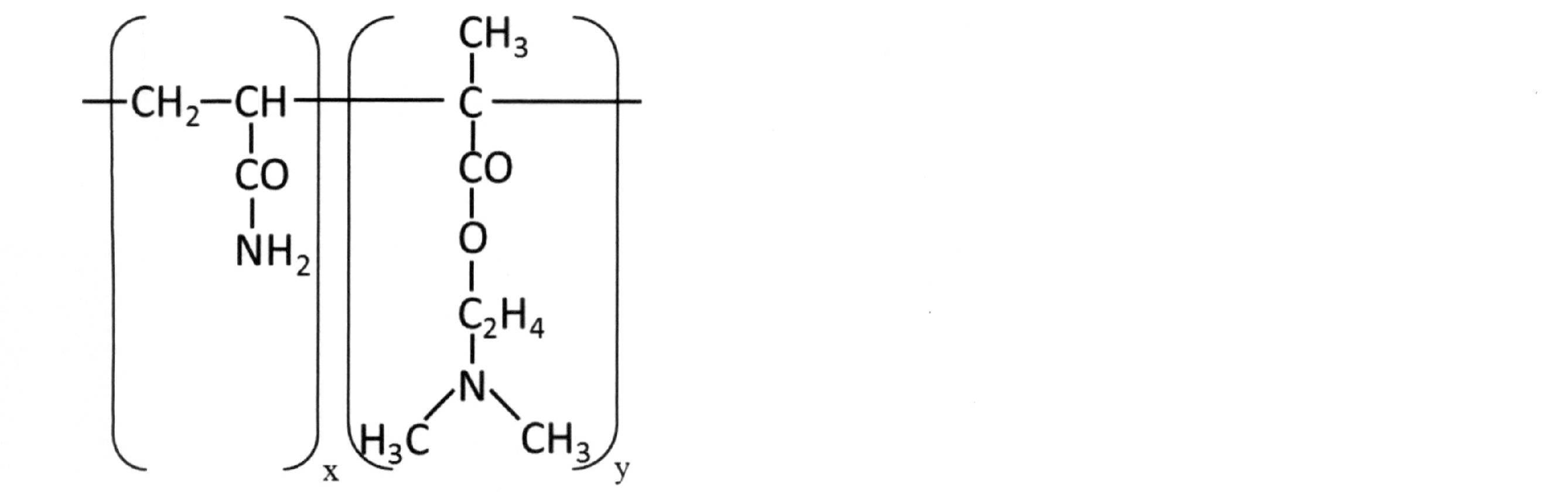
カチオン性高分子凝集剤としては、ポリアミジン、ジメチルアミノエチルメタクリレート系高分子凝集剤(DAM)、ジメチルアミノエチルアクリレート系高分子凝集剤(DAA)、ベンジルクロライド系高分子凝集剤(BC)、エピクロロヒドリン・ジメチルアミン縮合物、ジシアンジアミン・ホルムアルデヒド縮合物等が挙げられ、汚泥の脱水効果が高い等の点から、ポリアミジン、ジメチルアミノエチルメタクリレート系高分子凝集剤(DAM)、ジメチルアミノエチルアクリレート系高分子凝集剤(DAA)が好ましい。ジメチルアミノエチルメタクリレート系高分子凝集剤(DAM)は、ジメチルアミノエチルメタクリレートの単独重合体、ジメチルアミノエチルメタクリレートの四級化物の単独重合体、ジメチルアミノエチルメタクリレートとアクリルアミドとの共重合体、およびジメチルアミノエチルメタクリレートの四級化物とアクリルアミドとの共重合体のうちの少なくとも1つを含む凝集剤である。ジメチルアミノエチルアクリレート系高分子凝集剤(DAA)は、ジメチルアミノエチルアクリレートの単独重合体、ジメチルアミノエチルアクリレートの四級化物の単独重合体、ジメチルアミノエチルアクリレートとアクリルアミドとの共重合体、ジメチルアミノエチルアクリレートの四級化物とアクリルアミドとの共重合体のうちの少なくとも1つを含む凝集剤である。 Examples of the cationic polymer flocculant include polyamidine, dimethylaminoethyl methacrylate-based polymer flocculant (DAM), dimethylaminoethyl acrylate-based polymer flocculant (DAA), benzyl chloride-based polymer flocculant (BC), and epichloro. Hydrin / dimethylamine condensate, dicyandiamine / formaldehyde condensate, etc., and polyamidine, dimethylaminoethyl methacrylate-based polymer flocculant (DAM), dimethylaminoethyl acrylate, etc. from the viewpoint of high sludge dehydration effect. A polymer flocculant (DAA) is preferred. Dimethylaminoethyl methacrylate-based polymer flocculants (DAMs) are homopolymers of dimethylaminoethyl methacrylate, homopolymers of quaternized products of dimethylaminoethyl methacrylate, copolymers of dimethylaminoethyl methacrylate and acrylamide, and dimethyl. A flocculant containing at least one of a copolymer of a quaternary product of aminoethyl methacrylate and acrylamide. The dimethylaminoethyl acrylate-based polymer flocculant (DAA) is a homopolymer of dimethylaminoethyl acrylate, a homopolymer of a quaternized product of dimethylaminoethyl acrylate, a copolymer of dimethylaminoethyl acrylate and acrylamide, and dimethylamino. A flocculant containing at least one of a quaternary product of ethyl acrylate and a copolymer of acrylamide.
ジメチルアミノエチルメタクリレート系高分子凝集剤(DAM)
Dimethylaminoethyl methacrylate-based polymer flocculant (DAM)
ジメチルアミノエチルアクリレート系高分子凝集剤(DAA)
Dimethylaminoethyl acrylate-based polymer flocculant (DAA)
アニオン性高分子凝集剤としては、ポリアクリルアミド系(アクリルアミドとアクリル酸塩との共重合物)、メタアクリル酸系等が挙げられ、コスト等の点から、ポリアクリルアミド系が好ましい。 Examples of the anionic polymer flocculant include polyacrylamide type (copolymer of acrylamide and acrylate), methacrylic acid type and the like, and polyacrylamide type is preferable from the viewpoint of cost and the like.
カチオン性高分子凝集剤の重量平均分子量は、特に制限はないが、1万〜1500万の範囲であることが好ましく、10万〜1000万の範囲であることがより好ましい。カチオン性高分子凝集剤の重量平均分子量が1万未満であると、汚泥が十分に凝集しない場合があり、1500万を超えると、高分子凝集剤自体が水を抱水し、十分に含水率が低下しない場合がある。 The weight average molecular weight of the cationic polymer flocculant is not particularly limited, but is preferably in the range of 10,000 to 15 million, and more preferably in the range of 100,000 to 10 million. If the weight average molecular weight of the cationic polymer flocculant is less than 10,000, the sludge may not sufficiently aggregate, and if it exceeds 15 million, the polymer flocculant itself embraces water and has a sufficient water content. May not decrease.
アニオン性高分子凝集剤の重量平均分子量は、特に制限はないが、100万〜4000万の範囲であることが好ましく、500万〜3000万の範囲であることがより好ましい。アニオン性高分子凝集剤の重量平均分子量が100万未満であると、汚泥が十分に凝集しない場合があり、4000万を超えると、アニオン性高分子凝集剤自体が水を抱水し、十分に含水率が低下しない場合がある。 The weight average molecular weight of the anionic polymer flocculant is not particularly limited, but is preferably in the range of 1 million to 40 million, more preferably in the range of 5 million to 30 million. If the weight average molecular weight of the anionic polymer flocculant is less than 1 million, the sludge may not sufficiently aggregate, and if it exceeds 40 million, the anionic polymer flocculant itself embraces water and is sufficiently. Moisture content may not decrease.
本実施形態に係る汚泥脱水剤において、カチオン性界面活性剤の添加量は、汚泥のSS量に対して0.1〜50質量%の範囲であることが好ましく、0.5〜30質量%の範囲であることがより好ましい。カチオン性界面活性剤の添加量が汚泥のSS量に対して0.1質量%未満であると、脱水効果が十分に発揮されない場合があり、50質量%を超えると、カチオン性界面活性剤のコスト面で不利になる場合がある。 In the sludge dehydrating agent according to the present embodiment, the amount of the cationic surfactant added is preferably in the range of 0.1 to 50% by mass with respect to the SS amount of the sludge, and is 0.5 to 30% by mass. It is more preferably in the range. If the amount of the cationic surfactant added is less than 0.1% by mass with respect to the SS amount of the sludge, the dehydration effect may not be sufficiently exhibited, and if it exceeds 50% by mass, the amount of the cationic surfactant is increased. It may be disadvantageous in terms of cost.
本実施形態に係る汚泥脱水剤において、2価金属塩の添加量は、汚泥のSS量に対して0.5〜100質量%の範囲であることが好ましく、1〜50質量%の範囲であることがより好ましい。2価金属塩の添加量が汚泥のSS量に対して0.5質量%未満であると、脱水効果が十分に発揮されない場合があり、100質量%を超えると、2価金属塩自体が汚泥となるため、汚泥廃棄量が増加する場合がある。 In the sludge dehydrating agent according to the present embodiment, the amount of the divalent metal salt added is preferably in the range of 0.5 to 100% by mass, preferably in the range of 1 to 50% by mass with respect to the SS amount of the sludge. Is more preferable. If the amount of the divalent metal salt added is less than 0.5% by mass with respect to the SS amount of the sludge, the dehydration effect may not be sufficiently exhibited, and if it exceeds 100% by mass, the divalent metal salt itself is the sludge. Therefore, the amount of sludge waste may increase.
本実施形態に係る汚泥脱水剤において、カチオン性高分子凝集剤の添加量は、汚泥のSS量に対して0.1〜10質量%の範囲であることが好ましく、0.5〜5質量%の範囲であることがより好ましい。カチオン性高分子凝集剤の添加量が汚泥のSS量に対して0.1質量%未満であると、汚泥の脱水効果が得られない場合があり、10質量%を超えると、汚泥の凝集フロックが形成されない場合がある。アニオン性高分子凝集剤を添加する場合、アニオン性高分子凝集剤の添加量は、汚泥のSS量に対して0.01〜2質量%の範囲であることが好ましく、0.05〜1質量%の範囲であることがより好ましい。アニオン性高分子凝集剤の添加量が汚泥のSS量に対して0.01質量%未満であると、アニオン性高分子凝集剤の不足により汚泥が凝集しない場合があり、2質量%を超えると、アニオン性高分子凝集剤の過多により水に粘性が生じ、汚泥が十分に脱水されない場合がある。 In the sludge dehydrating agent according to the present embodiment, the amount of the cationic polymer flocculant added is preferably in the range of 0.1 to 10% by mass with respect to the SS amount of the sludge, and is 0.5 to 5% by mass. It is more preferable that the range is. If the amount of the cationic polymer flocculant added is less than 0.1% by mass with respect to the SS amount of the sludge, the sludge dehydration effect may not be obtained, and if it exceeds 10% by mass, the sludge agglomerating flocs may not be obtained. May not be formed. When the anionic polymer flocculant is added, the amount of the anionic polymer flocculant added is preferably in the range of 0.01 to 2% by mass, and 0.05 to 1% by mass with respect to the SS amount of the sludge. More preferably, it is in the range of%. If the amount of the anionic polymer flocculant added is less than 0.01% by mass with respect to the SS amount of the sludge, the sludge may not aggregate due to the lack of the anionic polymer flocculant, and if it exceeds 2% by mass. , The excess of anionic polymer flocculants may cause the water to become viscous and the sludge may not be sufficiently dehydrated.
脱水の対象となる汚泥は、有機性汚泥を含み、さらに無機性汚泥を含んでもよい。有機性汚泥は、下水処理、屎尿処理およびその他の各種産業廃水処理等の有機物を含む排水の処理において発生する汚泥であり、無機性汚泥は、無機物を含む排水の処理において発生する汚泥である。 The sludge to be dehydrated contains organic sludge and may further contain inorganic sludge. Organic sludge is sludge generated in the treatment of wastewater containing organic substances such as sewage treatment, rabbit urine treatment and other various industrial wastewater treatments, and inorganic sludge is sludge generated in the treatment of wastewater containing inorganic substances.
本実施形態に係る汚泥の脱水方法において、カチオン性界面活性剤と、2価金属塩と、カチオン性高分子凝集剤と、を含む汚泥脱水剤として製剤化し、この汚泥脱水剤を汚泥に対して添加して脱水してもよい。例えば、カチオン性界面活性剤と2価金属塩とを含む製剤と、カチオン性高分子凝集剤を含む製剤と、の2剤を含む汚泥脱水剤とすればよい。また、例えば、カチオン性界面活性剤と2価金属塩とを含む製剤と、カチオン性高分子凝集剤を含む製剤と、アニオン性高分子凝集剤を含む製剤と、の3剤を含む汚泥脱水剤とすればよい。 In the sludge dewatering method according to the present embodiment, a sludge dewatering agent containing a cationic surfactant, a divalent metal salt, and a cationic polymer flocculant is formulated, and the sludge dewatering agent is applied to the sludge. It may be added and dehydrated. For example, it may be a sludge dehydrating agent containing two agents, a preparation containing a cationic surfactant and a divalent metal salt, and a preparation containing a cationic polymer flocculant. Further, for example, a sludge dehydrating agent containing three agents, a preparation containing a cationic surfactant and a divalent metal salt, a preparation containing a cationic polymer flocculant, and a preparation containing an anionic polymer flocculant. And it is sufficient.
汚泥の脱水の際の温度は、特に制限はないが、例えば、10〜40℃の範囲とすればよい。 The temperature at the time of dewatering the sludge is not particularly limited, but may be, for example, in the range of 10 to 40 ° C.
汚泥の脱水の際のpHは、特に制限はないが、例えば、pH3〜pH10の範囲とすればよい。
The pH at the time of dewatering sludge is not particularly limited, but may be, for example, in the range of pH 3 to
汚泥の脱水の際に、カチオン性界面活性剤、2価金属塩、カチオン性高分子凝集剤、アニオン性高分子凝集剤の他に、無機凝集剤、有機凝結剤、合成繊維等を添加してもよい。 When dehydrating sludge, an inorganic flocculant, an organic coagulant, a synthetic fiber, etc. are added in addition to a cationic surfactant, a divalent metal salt, a cationic polymer flocculant, and an anionic polymer flocculant. May be good.
固液分離の方法としては、特に制限はないが、例えば、自然沈降分離、膜分離、ベルトプレス脱水機、スクリュープレス脱水機、遠心脱水機、フィルタープレス脱水機、多重円盤脱水機、真空脱水機、電気浸透脱水機等が挙げられる。 The method of solid-liquid separation is not particularly limited, but for example, natural sedimentation separation, membrane separation, belt press dehydrator, screw press dehydrator, centrifugal dehydrator, filter press dehydrator, multiple disk dehydrator, vacuum dehydrator. , Electro-osmosis dehydrator and the like.
以下、実施例および比較例を挙げ、本発明をより具体的に詳細に説明するが、本発明は、以下の実施例に限定されるものではない。 Hereinafter, the present invention will be described in more detail with reference to Examples and Comparative Examples, but the present invention is not limited to the following Examples.
[汚泥性状]
本実施例および比較例において処理対象とする汚泥は生物処理により発生した余剰汚泥を含む有機性汚泥である。
[Sludge properties]
The sludge to be treated in this example and the comparative example is organic sludge containing excess sludge generated by biological treatment.
処理対象とした有機性汚泥について、下水試験法に基づいて、導電率(EC)、蒸発残留物、蒸発残留物(TS)の強熱減量(VTS)、浮遊(懸濁)物質(SS)、浮遊物質(SS)の強熱減量(VSS)を測定した。今回用いた有機性汚泥A〜Dの性状を表1に示す。 Regarding the organic sludge to be treated, based on the sewage test method, conductivity (EC), evaporation residue, ignition residue (TS) ignition loss (VTS), suspended solids (SS), Ignition loss (VSS) of suspended solids (SS) was measured. Table 1 shows the properties of the organic sludges A to D used this time.
<参考例1、参考比較例1>
表1に示す性状の汚泥A(300mL)を容量500mLのビーカーに採り、それに界面活性剤の水溶液を所定量加え、1時間撹拌した。次に0.3質量%水溶液のポリジメチルアミノエチルメタクリレート系のカチオン性高分子凝集剤を所定量加え、よく撹拌した。最後にポリアクリルアミド系のアニオン性高分子凝集剤を加え、よく撹拌し、汚泥フロックを形成した。
<Reference Example 1, Reference Comparative Example 1>
Sludge A (300 mL) having the properties shown in Table 1 was placed in a beaker having a capacity of 500 mL, a predetermined amount of an aqueous solution of a surfactant was added thereto, and the mixture was stirred for 1 hour. Next, a predetermined amount of a polydimethylaminoethyl methacrylate-based cationic polymer flocculant in a 0.3% by mass aqueous solution was added, and the mixture was stirred well. Finally, a polyacrylamide-based anionic polymer flocculant was added and stirred well to form sludge flocs.
次いで、汚泥フロックを手絞りにより脱水し、脱水ケーキを形成した。その脱水ケーキを温度105℃で終夜(12時間)乾燥した後、脱水ケーキ中の水分量を計測してケーキ含水率(質量%)とした。結果を表2、図1に示す。 The sludge flocs were then dehydrated by hand to form a dehydrated cake. The dehydrated cake was dried at a temperature of 105 ° C. overnight (12 hours), and then the water content in the dehydrated cake was measured to determine the moisture content (% by mass) of the cake. The results are shown in Table 2 and FIG.
カチオン性界面活性剤を添加した参考例1−1〜1−13では、カチオン性界面活性剤の添加と共に脱水性能が大きく向上した。中でも、塩化ベンザルコニウムを添加した系が最も脱水性能が良いことが確認できた。一方で、両性界面活性剤を添加した参考比較例1−1〜1−4では、脱水性能の向上はほとんどなかった。また、アニオン性界面活性剤を添加した参考比較例1−5〜1−7では凝集フロックが形成せず、含水率を測定することができなかった。 In Reference Examples 1-1 to 1-13 to which the cationic surfactant was added, the dehydration performance was greatly improved with the addition of the cationic surfactant. Among them, it was confirmed that the system to which benzalkonium chloride was added had the best dehydration performance. On the other hand, in Reference Comparative Examples 1-1 to 1-4 to which the amphoteric surfactant was added, the dehydration performance was hardly improved. Further, in Reference Comparative Examples 1-5 to 1-7 to which the anionic surfactant was added, aggregated flocs were not formed and the water content could not be measured.
以上の結果より、カチオン性の界面活性剤を添加することにより脱水性能が向上することが確認できた。 From the above results, it was confirmed that the dehydration performance was improved by adding the cationic surfactant.
<実施例1、比較例1>
汚泥Aの代わりに汚泥Bを用いたこと、界面活性剤とともに金属塩を添加する以外は参考例1と同様に実験を実施した。結果を表3に示す。
<Example 1, Comparative Example 1>
The experiment was carried out in the same manner as in Reference Example 1 except that sludge B was used instead of sludge A and a metal salt was added together with the surfactant. The results are shown in Table 3.
塩化カルシウムを添加していない比較例1−1と比べて、実施例1−1,1−2では、塩化ベンザルコニウムと塩化カルシウムを併用することにより、脱水性能が大きく向上することが確認できた。 It can be confirmed that in Examples 1-1 and 1-2, the dehydration performance is greatly improved by using benzalkonium chloride and calcium chloride in combination as compared with Comparative Example 1-1 to which calcium chloride is not added. rice field.
<実施例2、比較例2>
実施例2−1に関しては、実施例1と同様に実験を実施した。実施例2−2に関しては、金属塩として炭酸カルシウムを用いる以外は、実施例2−3に関しては、金属塩として水酸化カルシウムを用いる以外は実施例1と同様に実験を実施した。
<Example 2, Comparative Example 2>
For Example 2-1 the experiment was carried out in the same manner as in Example 1. For Example 2-2, the experiment was carried out in the same manner as in Example 1 except that calcium carbonate was used as the metal salt, and for Example 2-3, except that calcium hydroxide was used as the metal salt.
比較例2−1に関しては、表1に示す性状の有機性汚泥300mLを容量500mLのビーカーに採り、0.3質量%水溶液のカチオン性高分子凝集剤を所定量加え、よく撹拌した。最後にアニオン性高分子凝集剤を加え、よく撹拌し、汚泥フロックを形成した。 For Comparative Example 2-1 300 mL of the organic sludge having the properties shown in Table 1 was placed in a beaker having a capacity of 500 mL, a predetermined amount of a cationic polymer flocculant in a 0.3% by mass aqueous solution was added, and the mixture was well stirred. Finally, an anionic polymer flocculant was added and stirred well to form sludge flocs.
次いで、汚泥フロックを手絞りにより脱水し、脱水ケーキを形成した。その脱水ケーキを温度105℃で終夜(12時間)乾燥した後、脱水ケーキ中の水分量を計測してケーキ含水率とした。結果を表4に示す。 The sludge flocs were then dehydrated by hand to form a dehydrated cake. The dehydrated cake was dried at a temperature of 105 ° C. overnight (12 hours), and then the water content in the dehydrated cake was measured to determine the moisture content of the cake. The results are shown in Table 4.
実施例2−1〜2−3では、対イオンの異なるカルシウム塩を用いて実験を実施した。その結果、どのカルシウム塩を添加しても脱水性能の向上が認められたが、中でも塩化カルシウムと水酸化カルシウムの脱水性能が良好であることが確認できた。 In Examples 2-1 to 2-3, experiments were carried out using calcium salts having different counterions. As a result, it was confirmed that the dehydration performance was improved regardless of which calcium salt was added, but it was confirmed that the dehydration performance of calcium chloride and calcium hydroxide was particularly good.
<実施例3、比較例3>
実施例3−1〜3−8に関しては、2価金属の種類を変えた以外は実施例1と同様に実験を実施した。
<Example 3, Comparative Example 3>
For Examples 3-1 to 3-8, the same experiment as in Example 1 was carried out except that the type of the divalent metal was changed.
比較例3−1〜3−4に関しては、界面活性剤を添加していないこと以外は実施例1と同様に実験を実施した。結果を表5に示す。 For Comparative Examples 3-1 to 3-4, the experiment was carried out in the same manner as in Example 1 except that no surfactant was added. The results are shown in Table 5.
実施例3−1〜3−8では、2価金属の種類を変えて実験を実施した。その結果、どの2価の金属塩でも大幅に脱水性能が向上することが明らかとなった。またMgCl2<CaCl2<FeCl2<BaCl2の順で脱水性能が向上することがわかった。 In Examples 3-1 to 3-8, the experiment was carried out by changing the type of the divalent metal. As a result, it was clarified that the dehydration performance was significantly improved with any divalent metal salt. It was also found that the dehydration performance was improved in the order of MgCl 2 <CaCl 2 <FeCl 2 <BaCl 2.
<比較例4>
比較例4−1に関しては、汚泥Cを用いたこと、界面活性剤を添加していないこと以外は実施例1と同様に実験を実施した。比較例4−2に関しては、汚泥Cを用いたこと、金属塩を添加していないこと以外は実施例1と同様に実験を実施した。比較例4−3に関しては、汚泥Cを用いたこと以外は参考例1と同様に実験を実施した。結果を表6に示す。
<Comparative Example 4>
For Comparative Example 4-1 the experiment was carried out in the same manner as in Example 1 except that sludge C was used and no surfactant was added. Regarding Comparative Example 4-2, the experiment was carried out in the same manner as in Example 1 except that sludge C was used and no metal salt was added. For Comparative Example 4-3, the experiment was carried out in the same manner as in Reference Example 1 except that sludge C was used. The results are shown in Table 6.
比較例4−3では、1価の金属塩であるNaClとカチオン性界面活性剤である塩化ベンザルコニウムを添加して脱水試験を行ったが、脱水性能の向上は見られず、界面活性剤単独である比較例4−2と比較すると、脱水性能は悪化してしまった。以上より、1価の金属塩を添加すると、脱水性能が悪化することが確認できた。 In Comparative Example 4-3, a dehydration test was conducted by adding NaCl, which is a monovalent metal salt, and benzalkonium chloride, which is a cationic surfactant, but no improvement in dehydration performance was observed, and the surfactant was used. Compared with Comparative Example 4-2 which is a single substance, the dehydration performance has deteriorated. From the above, it was confirmed that the dehydration performance deteriorated when the monovalent metal salt was added.
<実施例5、比較例5>
実施例5−1〜5−4に関しては、カチオン性界面活性剤の種類を変え、汚泥Bを用いたこと以外は実施例1と同様に実験を実施した。
<Example 5, Comparative Example 5>
For Examples 5-1 to 5-4, the same experiment as in Example 1 was carried out except that the type of cationic surfactant was changed and sludge B was used.
比較例5−1に関しては、汚泥Bを用いたこと以外は比較例2−1と同様に実験を実施した。結果を表7に示す。 For Comparative Example 5-1 the experiment was carried out in the same manner as in Comparative Example 2-1 except that sludge B was used. The results are shown in Table 7.
実施例5−1〜5−4では、カチオン性界面活性剤の種類を変えて実験を実施した。その結果、塩化ベンザルコニウムに限らず臭化セチルトリメチルアンモニウムでも金属塩併用による脱水性の構造が確認できた。 In Examples 5-1 to 5-4, the experiment was carried out by changing the type of the cationic surfactant. As a result, it was confirmed that not only benzalkonium chloride but also cetyltrimethylammonium bromide has a dehydrating structure when used in combination with a metal salt.
<実施例6、比較例6>
実施例6−1〜6−4に関しては、塩化ベンザルコニウムおよび塩化カルシウムの添加濃度を変え、汚泥Dを用いたこと以外は実施例1と同様に実験を実施した。
<Example 6, Comparative Example 6>
For Examples 6-1 to 6-4, the same experiment as in Example 1 was carried out except that the addition concentrations of benzalkonium chloride and calcium chloride were changed and sludge D was used.
比較例6−1に関しては、汚泥Dを用いたこと以外は比較例2−1と同様に実験を実施した。結果を表8に示す。 For Comparative Example 6-1 the experiment was carried out in the same manner as in Comparative Example 2-1 except that sludge D was used. The results are shown in Table 8.
実施例6−1〜6−4では、塩化ベンザルコニウムおよび塩化カルシウムの添加濃度を変えて実験を実施した。その結果、塩化ベンザルコニウムの添加量がごく少量であっても、塩化カルシウムを添加することにより脱水性能が向上することが確認できた。 In Examples 6-1 to 6-4, the experiment was carried out by changing the addition concentration of benzalkonium chloride and calcium chloride. As a result, it was confirmed that the dehydration performance was improved by adding calcium chloride even if the amount of benzalkonium chloride added was very small.
このように、実施例の汚泥の脱水方法によって、難脱水性の有機性汚泥についても効率的に脱水処理して低含水率の脱水ケーキを得ることができた。 As described above, by the sludge dehydration method of the example, it was possible to efficiently dehydrate the poorly dehydrated organic sludge to obtain a dehydrated cake having a low water content.
Claims (4)
前記カチオン性界面活性剤が、下記一般式(1)によって示されるアルキル第4級アンモニウム塩、下記一般式(2)によって示されるアルキルジメチルベンジルアンモニウム塩、および下記一般式(3)によって示されるアルキルピリジニウム塩のうちの少なくとも1つであることを特徴とする汚泥の脱水方法。
(R1〜R4は、独立して炭素数1〜20のアルキル基、X−は、Cl−、Br−、I−、またはOH−である。)
(Rは、炭素数4〜24のアルキル基、X−は、Cl−、Br−、I−、またはOH−である。)
(Rは、炭素数6〜20のアルキル基、X−は、Cl−、Br−、I−、またはOH−である。) The sludge dewatering method according to claim 1.
The cationic surfactant is an alkyl quaternary ammonium salt represented by the following general formula (1), an alkyldimethylbenzylammonium salt represented by the following general formula (2), and an alkyl represented by the following general formula (3). A method for dehydrating sludge, which is characterized by being at least one of pyridinium salts.
(R 1 to R 4 are independently alkyl groups having 1 to 20 carbon atoms, and X − is Cl − , Br − , I − , or OH − .)
(R is an alkyl group having 4 to 24 carbon atoms, and X − is Cl − , Br − , I − , or OH − .)
(R is an alkyl group having 6 to 20 carbon atoms, and X − is Cl − , Br − , I − , or OH − .)
前記2価金属塩が、塩化マグネシウム、水酸化マグネシウム、炭酸マグネシウム、硫酸マグネシウム、塩化カルシウム、水酸化カルシウム、炭酸カルシウム、硫酸カルシウム、塩化第1鉄、水酸化鉄(II)、硫酸第1鉄、塩化バリウム、水酸化バリウム、炭酸バリウム、硫酸バリウムのうちの少なくとも1つであることを特徴とする汚泥の脱水方法。 The method for dehydrating sludge according to claim 1 or 2.
The divalent metal salt is magnesium chloride, magnesium hydroxide, magnesium carbonate, magnesium sulfate, calcium chloride, calcium hydroxide, calcium carbonate, calcium sulfate, ferrous chloride, iron (II) hydroxide, ferrous sulfate, A method for dehydrating sludge, which is at least one of barium chloride, barium hydroxide, barium carbonate, and barium sulfate.
前記カチオン性高分子凝集剤を添加した後、さらにアニオン性高分子凝集剤を添加することを特徴とする汚泥の脱水方法。 The method for dehydrating sludge according to any one of claims 1 to 3.
A method for dehydrating sludge, which comprises adding the cationic polymer flocculant and then further adding an anionic polymer flocculant.
Priority Applications (1)
| Application Number | Priority Date | Filing Date | Title |
|---|---|---|---|
| JP2020101460A JP7427535B2 (en) | 2020-06-11 | 2020-06-11 | Sludge dewatering method |
Applications Claiming Priority (1)
| Application Number | Priority Date | Filing Date | Title |
|---|---|---|---|
| JP2020101460A JP7427535B2 (en) | 2020-06-11 | 2020-06-11 | Sludge dewatering method |
Publications (2)
| Publication Number | Publication Date |
|---|---|
| JP2021194574A true JP2021194574A (en) | 2021-12-27 |
| JP7427535B2 JP7427535B2 (en) | 2024-02-05 |
Family
ID=79196823
Family Applications (1)
| Application Number | Title | Priority Date | Filing Date |
|---|---|---|---|
| JP2020101460A Active JP7427535B2 (en) | 2020-06-11 | 2020-06-11 | Sludge dewatering method |
Country Status (1)
| Country | Link |
|---|---|
| JP (1) | JP7427535B2 (en) |
Cited By (3)
| Publication number | Priority date | Publication date | Assignee | Title |
|---|---|---|---|---|
| CN114538746A (en) * | 2022-03-01 | 2022-05-27 | 陕西化工研究院有限公司 | Treatment method for separating oil sludge and sewage |
| CN116621405A (en) * | 2023-06-20 | 2023-08-22 | 华中科技大学 | A method of coupling freeze-thaw and dehydrating agent to realize deep dehydration of non-mechanical sludge |
| CN119607710A (en) * | 2024-11-11 | 2025-03-14 | 同济大学 | Application of a quaternary ammonium salt surfactant |
Citations (5)
| Publication number | Priority date | Publication date | Assignee | Title |
|---|---|---|---|---|
| JPS5613099A (en) * | 1979-07-10 | 1981-02-07 | Nichireki Chem Ind Co Ltd | Treating method of sludge |
| JPS6174700A (en) * | 1984-09-20 | 1986-04-16 | Kyoritsu Yuki Kogyo Kenkyusho:Kk | Dehydrating method of organic sewage |
| JPS61181600A (en) * | 1984-04-25 | 1986-08-14 | Sanyo Chem Ind Ltd | Aid for dehydrating sludge and its method |
| JPH06238300A (en) * | 1993-02-12 | 1994-08-30 | Hymo Corp | Sludge dewatering method |
| JP2016120464A (en) * | 2014-12-25 | 2016-07-07 | 三菱レイヨン株式会社 | Sludge dewatering method |
-
2020
- 2020-06-11 JP JP2020101460A patent/JP7427535B2/en active Active
Patent Citations (5)
| Publication number | Priority date | Publication date | Assignee | Title |
|---|---|---|---|---|
| JPS5613099A (en) * | 1979-07-10 | 1981-02-07 | Nichireki Chem Ind Co Ltd | Treating method of sludge |
| JPS61181600A (en) * | 1984-04-25 | 1986-08-14 | Sanyo Chem Ind Ltd | Aid for dehydrating sludge and its method |
| JPS6174700A (en) * | 1984-09-20 | 1986-04-16 | Kyoritsu Yuki Kogyo Kenkyusho:Kk | Dehydrating method of organic sewage |
| JPH06238300A (en) * | 1993-02-12 | 1994-08-30 | Hymo Corp | Sludge dewatering method |
| JP2016120464A (en) * | 2014-12-25 | 2016-07-07 | 三菱レイヨン株式会社 | Sludge dewatering method |
Cited By (4)
| Publication number | Priority date | Publication date | Assignee | Title |
|---|---|---|---|---|
| CN114538746A (en) * | 2022-03-01 | 2022-05-27 | 陕西化工研究院有限公司 | Treatment method for separating oil sludge and sewage |
| CN114538746B (en) * | 2022-03-01 | 2024-05-14 | 陕西化工研究院有限公司 | Treatment method for separating oil sludge and sewage |
| CN116621405A (en) * | 2023-06-20 | 2023-08-22 | 华中科技大学 | A method of coupling freeze-thaw and dehydrating agent to realize deep dehydration of non-mechanical sludge |
| CN119607710A (en) * | 2024-11-11 | 2025-03-14 | 同济大学 | Application of a quaternary ammonium salt surfactant |
Also Published As
| Publication number | Publication date |
|---|---|
| JP7427535B2 (en) | 2024-02-05 |
Similar Documents
| Publication | Publication Date | Title |
|---|---|---|
| JP7427535B2 (en) | Sludge dewatering method | |
| RU2009122374A (en) | METHOD FOR HANDLING Sludge | |
| JP5621256B2 (en) | Wastewater coagulation method | |
| JP2960261B2 (en) | Sludge dewatering agent | |
| JP4937779B2 (en) | Method for dewatering organic sludge | |
| JP6134940B2 (en) | Coagulation treatment method for oil-containing cleaning wastewater | |
| JP6744526B2 (en) | Wastewater treatment method and wastewater treatment agent | |
| JP3064878B2 (en) | Organic sludge treatment | |
| JP7427534B2 (en) | Sludge dewatering method | |
| JP2001179300A (en) | Method for dehydrating sludge of pulp or papermaking industry | |
| JPWO2008047739A1 (en) | Sewage sludge dewatering method | |
| JP4660896B2 (en) | Sludge dewatering method | |
| JP7709700B2 (en) | Organic sludge dewatering agent | |
| JP2003033604A (en) | Wastewater treatment agent | |
| JP2991588B2 (en) | Method for dewatering sludge containing calcium compound | |
| JP2004121997A (en) | Sludge dewatering agent and sludge dewatering method | |
| JP4161559B2 (en) | Composition, amphoteric polymer flocculant and method for dewatering sludge | |
| JP6919116B2 (en) | How to treat rice-washed wastewater | |
| JPS62156000A (en) | Treatment of oil-containing sludge | |
| JP3222247B2 (en) | Sludge dewatering method | |
| WO2016158632A1 (en) | Flocculant for treating waste water, and method for flocculation treatment of waste water | |
| JP3772287B2 (en) | Sludge dewatering method | |
| JPS63274409A (en) | Dehydration method for organic sludge | |
| JP3260729B2 (en) | Polymer flocculant | |
| JP6138499B2 (en) | Muddy water treatment method |
Legal Events
| Date | Code | Title | Description |
|---|---|---|---|
| A621 | Written request for application examination |
Free format text: JAPANESE INTERMEDIATE CODE: A621 Effective date: 20230306 |
|
| A977 | Report on retrieval |
Free format text: JAPANESE INTERMEDIATE CODE: A971007 Effective date: 20231017 |
|
| A131 | Notification of reasons for refusal |
Free format text: JAPANESE INTERMEDIATE CODE: A131 Effective date: 20231024 |
|
| A521 | Request for written amendment filed |
Free format text: JAPANESE INTERMEDIATE CODE: A523 Effective date: 20231201 |
|
| TRDD | Decision of grant or rejection written | ||
| A01 | Written decision to grant a patent or to grant a registration (utility model) |
Free format text: JAPANESE INTERMEDIATE CODE: A01 Effective date: 20240116 |
|
| A61 | First payment of annual fees (during grant procedure) |
Free format text: JAPANESE INTERMEDIATE CODE: A61 Effective date: 20240124 |
|
| R150 | Certificate of patent or registration of utility model |
Ref document number: 7427535 Country of ref document: JP Free format text: JAPANESE INTERMEDIATE CODE: R150 |