JP2021519085A - How to Produce a Widely Defensive Vaccine Composition Containing Neuraminidase - Google Patents
How to Produce a Widely Defensive Vaccine Composition Containing Neuraminidase Download PDFInfo
- Publication number
- JP2021519085A JP2021519085A JP2020551865A JP2020551865A JP2021519085A JP 2021519085 A JP2021519085 A JP 2021519085A JP 2020551865 A JP2020551865 A JP 2020551865A JP 2020551865 A JP2020551865 A JP 2020551865A JP 2021519085 A JP2021519085 A JP 2021519085A
- Authority
- JP
- Japan
- Prior art keywords
- amino acid
- influenza
- protein
- polypeptide
- sequence
- Prior art date
- Legal status (The legal status is an assumption and is not a legal conclusion. Google has not performed a legal analysis and makes no representation as to the accuracy of the status listed.)
- Granted
Links
Images
















Classifications
-
- A—HUMAN NECESSITIES
- A61—MEDICAL OR VETERINARY SCIENCE; HYGIENE
- A61K—PREPARATIONS FOR MEDICAL, DENTAL OR TOILETRY PURPOSES
- A61K39/00—Medicinal preparations containing antigens or antibodies
- A61K39/12—Viral antigens
- A61K39/145—Orthomyxoviridae, e.g. influenza virus
-
- A—HUMAN NECESSITIES
- A61—MEDICAL OR VETERINARY SCIENCE; HYGIENE
- A61K—PREPARATIONS FOR MEDICAL, DENTAL OR TOILETRY PURPOSES
- A61K39/00—Medicinal preparations containing antigens or antibodies
- A61K39/12—Viral antigens
-
- A—HUMAN NECESSITIES
- A61—MEDICAL OR VETERINARY SCIENCE; HYGIENE
- A61P—SPECIFIC THERAPEUTIC ACTIVITY OF CHEMICAL COMPOUNDS OR MEDICINAL PREPARATIONS
- A61P31/00—Antiinfectives, i.e. antibiotics, antiseptics, chemotherapeutics
- A61P31/12—Antivirals
- A61P31/14—Antivirals for RNA viruses
- A61P31/16—Antivirals for RNA viruses for influenza or rhinoviruses
-
- C—CHEMISTRY; METALLURGY
- C12—BIOCHEMISTRY; BEER; SPIRITS; WINE; VINEGAR; MICROBIOLOGY; ENZYMOLOGY; MUTATION OR GENETIC ENGINEERING
- C12N—MICROORGANISMS OR ENZYMES; COMPOSITIONS THEREOF; PROPAGATING, PRESERVING, OR MAINTAINING MICROORGANISMS; MUTATION OR GENETIC ENGINEERING; CULTURE MEDIA
- C12N7/00—Viruses; Bacteriophages; Compositions thereof; Preparation or purification thereof
-
- C—CHEMISTRY; METALLURGY
- C12—BIOCHEMISTRY; BEER; SPIRITS; WINE; VINEGAR; MICROBIOLOGY; ENZYMOLOGY; MUTATION OR GENETIC ENGINEERING
- C12N—MICROORGANISMS OR ENZYMES; COMPOSITIONS THEREOF; PROPAGATING, PRESERVING, OR MAINTAINING MICROORGANISMS; MUTATION OR GENETIC ENGINEERING; CULTURE MEDIA
- C12N9/00—Enzymes; Proenzymes; Compositions thereof; Processes for preparing, activating, inhibiting, separating or purifying enzymes
- C12N9/14—Hydrolases (3)
- C12N9/24—Hydrolases (3) acting on glycosyl compounds (3.2)
- C12N9/2402—Hydrolases (3) acting on glycosyl compounds (3.2) hydrolysing O- and S- glycosyl compounds (3.2.1)
-
- C—CHEMISTRY; METALLURGY
- C12—BIOCHEMISTRY; BEER; SPIRITS; WINE; VINEGAR; MICROBIOLOGY; ENZYMOLOGY; MUTATION OR GENETIC ENGINEERING
- C12Y—ENZYMES
- C12Y302/00—Hydrolases acting on glycosyl compounds, i.e. glycosylases (3.2)
- C12Y302/01—Glycosidases, i.e. enzymes hydrolysing O- and S-glycosyl compounds (3.2.1)
- C12Y302/01018—Exo-alpha-sialidase (3.2.1.18), i.e. trans-sialidase
-
- G—PHYSICS
- G16—INFORMATION AND COMMUNICATION TECHNOLOGY [ICT] SPECIALLY ADAPTED FOR SPECIFIC APPLICATION FIELDS
- G16B—BIOINFORMATICS, i.e. INFORMATION AND COMMUNICATION TECHNOLOGY [ICT] SPECIALLY ADAPTED FOR GENETIC OR PROTEIN-RELATED DATA PROCESSING IN COMPUTATIONAL MOLECULAR BIOLOGY
- G16B15/00—ICT specially adapted for analysing two-dimensional [2D] or three-dimensional [3D] molecular structures, e.g. structural or functional relations or structure alignment
- G16B15/20—Protein or domain folding
-
- A—HUMAN NECESSITIES
- A61—MEDICAL OR VETERINARY SCIENCE; HYGIENE
- A61K—PREPARATIONS FOR MEDICAL, DENTAL OR TOILETRY PURPOSES
- A61K39/00—Medicinal preparations containing antigens or antibodies
- A61K2039/51—Medicinal preparations containing antigens or antibodies comprising whole cells, viruses or DNA/RNA
- A61K2039/525—Virus
- A61K2039/5258—Virus-like particles
-
- A—HUMAN NECESSITIES
- A61—MEDICAL OR VETERINARY SCIENCE; HYGIENE
- A61K—PREPARATIONS FOR MEDICAL, DENTAL OR TOILETRY PURPOSES
- A61K39/00—Medicinal preparations containing antigens or antibodies
- A61K2039/57—Medicinal preparations containing antigens or antibodies characterised by the type of response, e.g. Th1, Th2
- A61K2039/575—Medicinal preparations containing antigens or antibodies characterised by the type of response, e.g. Th1, Th2 humoral response
-
- C—CHEMISTRY; METALLURGY
- C12—BIOCHEMISTRY; BEER; SPIRITS; WINE; VINEGAR; MICROBIOLOGY; ENZYMOLOGY; MUTATION OR GENETIC ENGINEERING
- C12N—MICROORGANISMS OR ENZYMES; COMPOSITIONS THEREOF; PROPAGATING, PRESERVING, OR MAINTAINING MICROORGANISMS; MUTATION OR GENETIC ENGINEERING; CULTURE MEDIA
- C12N2760/00—MICROORGANISMS OR ENZYMES; COMPOSITIONS THEREOF; PROPAGATING, PRESERVING, OR MAINTAINING MICROORGANISMS; MUTATION OR GENETIC ENGINEERING; CULTURE MEDIA ssRNA viruses negative-sense
- C12N2760/00011—Details
- C12N2760/16011—Orthomyxoviridae
- C12N2760/16022—New viral proteins or individual genes, new structural or functional aspects of known viral proteins or genes
-
- C—CHEMISTRY; METALLURGY
- C12—BIOCHEMISTRY; BEER; SPIRITS; WINE; VINEGAR; MICROBIOLOGY; ENZYMOLOGY; MUTATION OR GENETIC ENGINEERING
- C12N—MICROORGANISMS OR ENZYMES; COMPOSITIONS THEREOF; PROPAGATING, PRESERVING, OR MAINTAINING MICROORGANISMS; MUTATION OR GENETIC ENGINEERING; CULTURE MEDIA
- C12N2760/00—MICROORGANISMS OR ENZYMES; COMPOSITIONS THEREOF; PROPAGATING, PRESERVING, OR MAINTAINING MICROORGANISMS; MUTATION OR GENETIC ENGINEERING; CULTURE MEDIA ssRNA viruses negative-sense
- C12N2760/00011—Details
- C12N2760/16011—Orthomyxoviridae
- C12N2760/16023—Virus like particles [VLP]
-
- C—CHEMISTRY; METALLURGY
- C12—BIOCHEMISTRY; BEER; SPIRITS; WINE; VINEGAR; MICROBIOLOGY; ENZYMOLOGY; MUTATION OR GENETIC ENGINEERING
- C12N—MICROORGANISMS OR ENZYMES; COMPOSITIONS THEREOF; PROPAGATING, PRESERVING, OR MAINTAINING MICROORGANISMS; MUTATION OR GENETIC ENGINEERING; CULTURE MEDIA
- C12N2760/00—MICROORGANISMS OR ENZYMES; COMPOSITIONS THEREOF; PROPAGATING, PRESERVING, OR MAINTAINING MICROORGANISMS; MUTATION OR GENETIC ENGINEERING; CULTURE MEDIA ssRNA viruses negative-sense
- C12N2760/00011—Details
- C12N2760/16011—Orthomyxoviridae
- C12N2760/16034—Use of virus or viral component as vaccine, e.g. live-attenuated or inactivated virus, VLP, viral protein
-
- C—CHEMISTRY; METALLURGY
- C12—BIOCHEMISTRY; BEER; SPIRITS; WINE; VINEGAR; MICROBIOLOGY; ENZYMOLOGY; MUTATION OR GENETIC ENGINEERING
- C12N—MICROORGANISMS OR ENZYMES; COMPOSITIONS THEREOF; PROPAGATING, PRESERVING, OR MAINTAINING MICROORGANISMS; MUTATION OR GENETIC ENGINEERING; CULTURE MEDIA
- C12N2760/00—MICROORGANISMS OR ENZYMES; COMPOSITIONS THEREOF; PROPAGATING, PRESERVING, OR MAINTAINING MICROORGANISMS; MUTATION OR GENETIC ENGINEERING; CULTURE MEDIA ssRNA viruses negative-sense
- C12N2760/00011—Details
- C12N2760/16011—Orthomyxoviridae
- C12N2760/16111—Influenzavirus A, i.e. influenza A virus
- C12N2760/16134—Use of virus or viral component as vaccine, e.g. live-attenuated or inactivated virus, VLP, viral protein
-
- G—PHYSICS
- G16—INFORMATION AND COMMUNICATION TECHNOLOGY [ICT] SPECIALLY ADAPTED FOR SPECIFIC APPLICATION FIELDS
- G16B—BIOINFORMATICS, i.e. INFORMATION AND COMMUNICATION TECHNOLOGY [ICT] SPECIALLY ADAPTED FOR GENETIC OR PROTEIN-RELATED DATA PROCESSING IN COMPUTATIONAL MOLECULAR BIOLOGY
- G16B30/00—ICT specially adapted for sequence analysis involving nucleotides or amino acids
- G16B30/10—Sequence alignment; Homology search
Landscapes
- Life Sciences & Earth Sciences (AREA)
- Health & Medical Sciences (AREA)
- Chemical & Material Sciences (AREA)
- General Health & Medical Sciences (AREA)
- Virology (AREA)
- Engineering & Computer Science (AREA)
- Bioinformatics & Cheminformatics (AREA)
- Organic Chemistry (AREA)
- Physics & Mathematics (AREA)
- Medicinal Chemistry (AREA)
- Genetics & Genomics (AREA)
- Wood Science & Technology (AREA)
- Zoology (AREA)
- Biotechnology (AREA)
- Microbiology (AREA)
- Spectroscopy & Molecular Physics (AREA)
- Immunology (AREA)
- Veterinary Medicine (AREA)
- Public Health (AREA)
- Animal Behavior & Ethology (AREA)
- Pharmacology & Pharmacy (AREA)
- Biochemistry (AREA)
- General Engineering & Computer Science (AREA)
- Bioinformatics & Computational Biology (AREA)
- Medical Informatics (AREA)
- Evolutionary Biology (AREA)
- Theoretical Computer Science (AREA)
- Biophysics (AREA)
- Pulmonology (AREA)
- Epidemiology (AREA)
- Mycology (AREA)
- Biomedical Technology (AREA)
- Molecular Biology (AREA)
- Crystallography & Structural Chemistry (AREA)
- Proteomics, Peptides & Aminoacids (AREA)
- Analytical Chemistry (AREA)
- Nuclear Medicine, Radiotherapy & Molecular Imaging (AREA)
- General Chemical & Material Sciences (AREA)
- Chemical Kinetics & Catalysis (AREA)
- Oncology (AREA)
Abstract
本開示は、組換えノイラミニダーゼ(NA)ポリペプチドを生成するためのクラスターベースコンセンサスアプローチに関する。本開示は、組換えNAポリペプチドを含むインフルエンザワクチン組成物にさらに関する。【選択図】図1AThe present disclosure relates to a cluster-based consensus approach for producing recombinant neuraminidase (NA) polypeptides. The present disclosure further relates to influenza vaccine compositions comprising recombinant NA polypeptides. [Selection diagram] FIG. 1A
Description
本出願は、その内容すべてを全体として参照により組み入れる米国仮出願第62/649,002号、2018年3月28日出願および米国仮出願第62/718,527号、2018年8月14日出願の優先権を主張する。 This application incorporates all of its contents by reference as a whole, US Provisional Application No. 62 / 649,002, March 28, 2018 and US Provisional Application No. 62 / 718,527, August 14, 2018. Claim priority.
本出願は、ASCII形式で電子的に提出され、その全体を参照により本明細書に組み入れる配列表を含む。2019年3月27日に作成された前記ASCIIコピーは、01121−0037−00PCT_SL.txtと名付けられ、サイズ69,015バイトである。 This application is submitted electronically in ASCII format and includes a sequence listing that is incorporated herein by reference in its entirety. The ASCII copy made on March 27, 2019 is 01121-0037-00PCT_SL. It is named txt and has a size of 69,015 bytes.
インフルエンザは、1つまたはそれ以上のインフルエンザウイルスによって生じる非常に伝染性の呼吸器疾患である。現在、ワクチンは、インフルエンザに対する最も有効な防御を提供する。ワクチン組成物は、蔓延しているインフルエンザ株における差異に適応するように世界保健機関によって毎年更新されている。しかし、不正確な予測から生じるワクチンミスマッチは、ワクチン接種された集団においてさえ顕著な罹患率および死亡率を生じる場合がある。 Influenza is a highly contagious respiratory disease caused by one or more influenza viruses. Currently, vaccines provide the most effective protection against influenza. Vaccine compositions are updated annually by the World Health Organization to adapt to differences in prevalent influenza strains. However, vaccine mismatches resulting from inaccurate predictions can result in significant morbidity and mortality even in vaccinated populations.
インフルエンザウイルスは、ウイルス膜の表面に2つの構造糖タンパク質、すなわち、ヘマグルチニン(HA)およびノイラミニダーゼ(NA)を含有する。HAは、シアル酸に結合し、ウイルス侵入に関与する一方で、NAは、シアル酸の除去により感染細胞からのウイルスの放出に関与する。現在、インフルエンザワクチンは、一般に、HAへの免疫応答を誘導することに基づいている。しかし、HAにおける可変性は、関連する蔓延している株の小さなサブセットに対してだけ有効であるようなワクチンを生じる場合がある。NAもインフルエンザワクチン組成物にしばしば含まれる。しかし、NAの含有量および活性は、現在のワクチン製剤において標準化されていない。 Influenza viruses contain two structural glycoproteins on the surface of the viral membrane: hemagglutinin (HA) and neuraminidase (NA). HA binds to sialic acid and is involved in viral entry, while NA is involved in the release of virus from infected cells by removing sialic acid. Currently, influenza vaccines are generally based on inducing an immune response to HA. However, variability in HA may result in vaccines that are only effective against a small subset of the associated endemic strains. NA is also often included in influenza vaccine compositions. However, NA content and activity have not been standardized in current vaccine formulations.
ミスマッチ株を含むインフルエンザウイルスに対して広範で、持続的な(例えば、複数シーズン)防御を提供できる有効なインフルエンザワクチンに対する必要性が残っている。 There remains a need for effective influenza vaccines that can provide widespread and lasting (eg, multi-season) protection against influenza viruses, including mismatched strains.
本発明は、特に、複数のインフルエンザ株に対して広範に反応性で、防御的な免疫応答を誘発することができるNAポリペプチドを生成するためのクラスターベースコンセンサス(CBC)アプローチを提供する。種々の実施形態では、方法は:
・1つより多いインフルエンザNAポリペプチド配列を選択すること、および配列をアラインすること;
・ペアワイズ類似性/非類似性マトリクスを算出すること;
・ペアワイズ類似性/非類似性マトリクスから類似配列のクラスターを同定することおよび創出すること;
・各クラスター内で、ペアワイズアライメント法を使用して配列アライメント中の各位置についてコンセンサスアミノ酸があるかどうかを決定することであって、所与の位置でのアミノ酸の頻度が50%以上である場合、そのアミノ酸はコンセンサスアミノ酸と指定され、所与の位置でのアミノ酸の頻度が50%未満である場合、そのアミノ酸は可変アミノ酸と指定されること;
・各クラスターについてコンセンサスアミノ酸および可変アミノ酸を含む第1の配列を生成すること;
・場合により、1つより多いクラスターが分析される場合:
○各クラスターについて生成された配列をアラインすること;
○ペアワイズアライメント法を使用して配列アライメント中の各位置についてコンセンサスアミノ酸があるかどうかを決定することであって、所与の位置でのアミノ酸の頻度が50%以上である場合、そのアミノ酸はコンセンサスアミノ酸と指定され、所与の位置でのアミノ酸の頻度が50%未満である場合、そのアミノ酸は可変アミノ酸と指定されること;および
○コンセンサスアミノ酸および可変アミノ酸を含む第2の配列を生成すること
によって、クラスターから生成された第1の配列と別のクラスターまたは複数のクラスターにおいて生成された配列とを比較すること;
・生成された第1の配列または第2の配列内で:
○第1のまたは第2の配列に基づいて一連の検査配列を生成することであって、検査アミノ酸を可変アミノ酸位置に位置させること;
○検査配列それぞれについて分子モデリングを実行すること;
○負の総エネルギー値を有するポリペプチドをもたらすアミノ酸(複数可)を選択することによって各可変アミノ酸位置についてのコンセンサスアミノ酸を決定すること
によって、各可変アミノ酸位置についてコンセンサスアミノ酸を決定すること、ならびに
・コンセンサスアミノ酸を含むインフルエンザNAポリペプチドを生成すること
を含む。
The present invention provides, in particular, a cluster-based consensus (CBC) approach for producing NA polypeptides that are broadly responsive to multiple influenza strains and capable of eliciting a defensive immune response. In various embodiments, the method is:
-Selecting more than one influenza NA polypeptide sequence and aligning the sequence;
-Calculating a pairwise similarity / dissimilarity matrix;
-Identifying and creating clusters of similar sequences from the pairwise similarity / dissimilarity matrix;
• Within each cluster, the pairwise alignment method is used to determine if there is a consensus amino acid for each position during sequence alignment, where the frequency of amino acids at a given position is 50% or greater. , The amino acid is designated as a consensus amino acid, and if the frequency of the amino acid at a given position is less than 50%, the amino acid is designated as a variable amino acid;
-Generate a first sequence containing consensus amino acids and variable amino acids for each cluster;
-In some cases, if more than one cluster is analyzed:
○ Align the generated sequences for each cluster;
○ Using the pairwise alignment method to determine if there is a consensus amino acid for each position in sequence alignment, and if the frequency of the amino acid at a given position is 50% or higher, then the amino acid is consensus. If designated as an amino acid and the frequency of the amino acid at a given position is less than 50%, then the amino acid is designated as a variable amino acid; and ○ to generate a second sequence containing a consensus amino acid and a variable amino acid. Comparing the first sequence generated from a cluster with the sequence generated in another cluster or multiple clusters by
-In the generated first or second sequence:
○ To generate a series of test sequences based on the first or second sequence, and to position the test amino acid at the variable amino acid position;
○ Perform molecular modeling for each test sequence;
○ Determining the consensus amino acid for each variable amino acid position by selecting the amino acid (s) that result in the polypeptide having a negative total energy value, and determining the consensus amino acid for each variable amino acid position, and ... Includes producing influenza NA polypeptides containing consensus amino acids.
種々の実施形態では、本発明は、本発明の方法を使用して生成されたNAポリペプチドを提供する。例示的実施形態では、NAポリペプチは、配列番号1〜3またはこれらの断片のいずれか1つのアミノ酸配列を含む。一部の実施形態では、本発明は、本明細書に記載の1つまたはそれ以上のNAポリペプチドを含む四量体NAタンパク質にさらに関する。 In various embodiments, the invention provides NA polypeptides produced using the methods of the invention. In an exemplary embodiment, the NA polypepti comprises the amino acid sequence of any one of SEQ ID NOs: 1-3 or fragments thereof. In some embodiments, the invention further relates to tetrameric NA proteins, including one or more of the NA polypeptides described herein.
種々の実施形態では、本発明のNAポリペプチドおよび/または四量体NAタンパク質は、ワクチン抗原として利用される。一部の実施形態では、NAポリペプチドおよび四量体NAタンパク質は、複数のインフルエンザ株、型またはサブタイプに対して広範に防御的な免疫応答を提供する。理論に束縛されることを望むわけではないが、NAポリペプチドおよび四量体NAタンパク質がインフルエンザウイルス内の複数のエピトープ(例えば、保存されたエピトープ)に対する中和抗体応答を誘発できると考えられる。 In various embodiments, the NA polypeptides and / or tetrameric NA proteins of the invention are utilized as vaccine antigens. In some embodiments, NA polypeptides and tetrameric NA proteins provide a broadly protective immune response against multiple influenza strains, types or subtypes. Although not bound by theory, it is believed that NA polypeptides and tetrameric NA proteins can elicit a neutralizing antibody response to multiple epitopes (eg, conserved epitopes) within the influenza virus.
本出願のさらなる実施形態は、以下のとおりである:
実施形態A1.コンセンサスアミノ酸を含む組換えインフルエンザノイラミニダーゼ(NA)ポリペプチドを生成するための方法であって:
a.1つより多いインフルエンザNAポリペプチド配列を選択すること、および配列をアラインすること;
b.ペアワイズ類似性/非類似性マトリクスを算出すること;
c.ペアワイズ類似性/非類似性マトリクスから類似配列のクラスターを同定することおよび創出すること;
d.各クラスター内で、ペアワイズアライメント法を使用して配列アライメント中の各位置についてコンセンサスアミノ酸があるかどうかを決定することであって、所与の位置でのアミノ酸の頻度が50%以上である場合、そのアミノ酸はコンセンサスアミノ酸と指定され、所与の位置でのアミノ酸の頻度が50%未満である場合、そのアミノ酸は可変アミノ酸と指定されること;
e.各クラスターについてコンセンサスアミノ酸および可変アミノ酸を含む第1の配列を生成すること;
f.場合により、複数のクラスターが分析される場合:
i.各クラスターについて工程(e)において生成された配列をアラインすること;
ii.ペアワイズアライメント法を使用して配列アライメント中の各位置についてコンセンサスアミノ酸があるかどうかを決定することであって、所与の位置でのアミノ酸の頻度が50%以上である場合、そのアミノ酸はコンセンサスアミノ酸と指定され、所与の位置でのアミノ酸の頻度が50%未満である場合、そのアミノ酸は可変アミノ酸と指定されること;ならびに
iii.コンセンサスアミノ酸および可変アミノ酸を含む第2の配列を生成すること
によって、クラスターの工程(e)において生成された第1の配列と別のクラスターまたは複数のクラスターにおいて生成された第1の配列とを比較すること;
g.工程(e)において生成された第1の配列または工程(f)(iii)において生成された第2の配列内で:
iv.第1のまたは第2の配列に基づいて一連の検査配列を生成することであって、検査アミノ酸を可変アミノ酸位置に位置させること;
v.検査配列それぞれについて分子モデリングを実行すること;
vi.負の総エネルギー値を有するポリペプチドをもたらすアミノ酸(複数可)を選択することによって各可変アミノ酸位置についてのコンセンサスアミノ酸を決定すること
によって、各可変アミノ酸位置についてコンセンサスアミノ酸を決定すること、ならびに
h.コンセンサスアミノ酸を含む組換えインフルエンザNAポリペプチドを生成すること
を含む方法。
実施形態A2.配列をアラインすることは、MAFFT、MUSCLE、CLUSTAL OMEGA、FASTA、これらの組合せまたは任意の他の多重配列アライメントソフトウェアパッケージを使用することを含む、実施形態A1の方法。
実施形態A3.ペアワイズ類似性/非類似性マトリクスを算出することは、BLOSUM、PAM、IDENTITY置換マトリクスまたはこれらの組合せを使用することを含む、実施形態A1またはA2の方法。
実施形態A4.ペアワイズ類似性/非類似性マトリクスから類似配列のクラスターを同定および創出することは、K平均クラスタリング、ミニマックスクラスタリング(minimax clustering)、主成分分析(PCA)、多次元尺度構成法(MDS)またはこれらの組合せを使用することを含む、実施形態A1〜3のいずれか1つの方法。
実施形態A5.分子モデリングは、インフルエンザNAポリペプチドまたはタンパク質の結晶構造と比較することを含む、実施形態A1〜4のいずれか1つの方法。
実施形態A6.分子モデリングは、Rosettaまたは任意の他の分子モデリングソフトウェアの使用を含む、実施形態A1〜5のいずれか1つの方法。
実施形態A7.検査アミノ酸は、タンパク質に見出される任意の天然または非天然アミノ酸を含む、実施形態A1〜6のいずれか1つの方法。
実施形態A8.実施形態A1〜7のいずれか1つの方法を使用して生成された組換えインフルエンザNAポリペプチド。
実施形態A9.配列番号1、2もしくは3またはこれらの断片から選択されるアミノ酸配列、または配列番号1、2もしくは3またはその断片に少なくとも85%、90%、95%、96%、97%、98%もしくは99%同一性を有するアミノ酸配列を含む、実施形態A8の組換えインフルエンザNAポリペプチド。
実施形態A10.配列番号1、2または3のアミノ酸75〜469を含む、実施形態A9の組換えNAポリペプチド。
実施形態A11.実施形態A8〜10のいずれか1つの1つまたはそれ以上の組み換えNAポリペプチドを含む組換え四量体NAタンパク質。
実施形態A12.実施形態A8〜10のいずれか1つの組換えHAポリペプチドまたは実施形態A11の組換え四量体NAタンパク質をコードする単離された核酸。
実施形態A13.実施形態A12の核酸を含むベクター。
実施形態A14.実施形態A13のベクターを含む、単離された細胞。
実施形態A15.哺乳動物細胞である、実施形態A14の単離された細胞。
実施形態A16.HEK293T細胞またはCHO細胞である、実施形態A15の単離された細胞。
実施形態A17.昆虫細胞である、実施形態A14の単離された細胞。
実施形態A18.実施形態A8〜10のいずれか1つの組換えNAポリペプチドまたは実施形態A11の組換え四量体NAタンパク質を含む融合タンパク質。
実施形態A19.実施形態A8〜10のいずれか1つの組換えNAポリペプチドまたは実施形態A11の組換え四量体NAタンパク質を含むインフルエンザウイルス様粒子(VLP)。
実施形態A20.インフルエンザヘマグルチニン(HA)タンパク質、インフルエンザマトリクス(M1)タンパク質、ヒト免疫不全ウイルス(HIV)gagタンパク質またはこれらの組合せの1つもしくはそれ以上をさらに含む、実施形態A19のインフルエンザVLP。
実施形態A21.実施形態A8〜10のいずれか1つの組換えNAポリペプチド、実施形態A11の組換え四量体NAタンパク質、実施形態A18の融合タンパク質または実施形態A19もしくはA20のインフルエンザVLPおよび薬学的に許容される担体、賦形剤またはアジュバントを含む医薬組成物。
実施形態A22.1つまたはそれ以上のインフルエンザ株、型および/またはサブタイプに対する免疫応答を誘発する、実施形態A21の医薬組成物。
実施形態A23.インフルエンザウイルスに対して対象を免疫化する方法であって、実施形態A8〜10のいずれか1つの組換えNAポリペプチド、実施形態A11の組換え四量体NAタンパク質、実施形態A18の融合タンパク質、実施形態A19もしくはA20のインフルエンザVLPまたは実施形態A21もしくはA22の医薬組成物の有効量を対象に投与することを含む方法。
実施形態A24.対象においてインフルエンザウイルスへの免疫応答を誘導する方法であって、実施形態A8〜10のいずれか1つの組換えNAポリペプチド、実施形態A11の組換え四量体NAタンパク質、実施形態A18の融合タンパク質、実施形態A19もしくはA20のインフルエンザVLPまたは実施形態A21もしくはA22の医薬組成物の有効量を対象に投与することを含む方法。
実施形態A25.インフルエンザウイルスは、季節性またはパンデミックインフルエンザウイルスである、実施形態A23またはA24の方法。
実施形態A26.免疫応答は、1つまたはそれ以上のインフルエンザウイルス株、型またはサブタイプに対する抗体の産生を含む、実施形態A24またはA25の方法。
実施形態A27.対象は、哺乳動物である、実施形態A23〜26のいずれか1つの方法。
実施形態A28.対象は、ヒトである、実施形態A27の方法。
実施形態A29.投与することは、筋肉内、鼻腔内、皮内、皮下、経口または静脈内経路を介して実行される、実施形態A23〜28のいずれか1つの方法。
Further embodiments of the present application are as follows:
Embodiment A1. A method for producing recombinant influenza neuraminidase (NA) polypeptides containing consensus amino acids:
a. Selecting more than one influenza NA polypeptide sequence and aligning the sequence;
b. Calculating a pairwise similarity / dissimilarity matrix;
c. Identifying and creating clusters of similar sequences from the pairwise similarity / dissimilarity matrix;
d. Within each cluster, the pairwise alignment method is used to determine if there is a consensus amino acid for each position during sequence alignment, where the frequency of amino acids at a given position is 50% or greater. The amino acid is designated as a consensus amino acid, and if the frequency of the amino acid at a given position is less than 50%, the amino acid is designated as a variable amino acid;
e. Generate a first sequence containing consensus amino acids and variable amino acids for each cluster;
f. In some cases, when multiple clusters are analyzed:
i. Align the sequences generated in step (e) for each cluster;
ii. The pairwise alignment method is used to determine if there is a consensus amino acid for each position in sequence alignment, and if the frequency of the amino acid at a given position is 50% or greater, then the amino acid is a consensus amino acid. If the frequency of the amino acid at a given position is less than 50%, then the amino acid is designated as a variable amino acid; and iii. By generating a second sequence containing consensus amino acids and variable amino acids, the first sequence generated in the cluster step (e) is compared with the first sequence generated in another cluster or multiple clusters. To do;
g. Within the first sequence generated in step (e) or the second sequence generated in step (f) (iii):
iv. Generating a series of test sequences based on the first or second sequence, locating the test amino acid at the variable amino acid position;
v. Perform molecular modeling for each test sequence;
vi. Determining the consensus amino acid for each variable amino acid position by determining the consensus amino acid for each variable amino acid position by selecting the amino acid (s) that result in the polypeptide having a negative total energy value, as well as h. A method comprising producing a recombinant influenza NA polypeptide comprising a consensus amino acid.
Embodiment A2. Aligning the sequences is the method of embodiment A1, comprising using MAFFT, MUSCLE, Clustal OMEGA, FASTA, combinations thereof or any other multi-sequence alignment software package.
Embodiment A3. The method of embodiment A1 or A2, wherein calculating the pairwise similarity / dissimilarity matrix comprises using a BLOSUM, PAM, IDENTITY substitution matrix or a combination thereof.
Embodiment A4. Identifying and creating clusters of similar sequences from a pairwise similarity / dissimilar matrix can be K-means clustering, minimax clustering, principal component analysis (PCA), multidimensional scaling (MDS) or these. Any one method of embodiments A1 to 3, comprising using a combination of.
Embodiment A5. The method of any one of embodiments A1-4, wherein molecular modeling comprises comparing to the crystal structure of an influenza NA polypeptide or protein.
Embodiment A6. Molecular modeling is the method of any one of embodiments A1-5, comprising the use of Rosetta or any other molecular modeling software.
Embodiment A7. The method of any one of embodiments A1-6, wherein the test amino acid comprises any natural or unnatural amino acid found in the protein.
Embodiment A8. Recombinant influenza NA polypeptide produced using any one of the methods A1-7.
Embodiment A9. Amino acid sequences selected from SEQ ID NO: 1, 2 or 3 or fragments thereof, or at least 85%, 90%, 95%, 96%, 97%, 98% or 99 in SEQ ID NO: 1, 2 or 3 or fragments thereof. % The recombinant influenza NA polypeptide of embodiment A8 comprising an amino acid sequence having identity.
Embodiment A10. Recombinant NA polypeptide of embodiment A9 comprising amino acids 75-469 of SEQ ID NO: 1, 2 or 3.
Embodiment A11. A recombinant tetrameric NA protein comprising any one or more of the recombinant NA polypeptides of embodiments A8-10.
Embodiment A12. An isolated nucleic acid encoding the recombinant HA polypeptide of any one of embodiments A8-10 or the recombinant tetramer NA protein of embodiment A11.
Embodiment A13. A vector containing the nucleic acid of embodiment A12.
Embodiment A14. An isolated cell comprising the vector of embodiment A13.
Embodiment A15. An isolated cell of embodiment A14, which is a mammalian cell.
Embodiment A16. An isolated cell of embodiment A15, which is a HEK293T cell or a CHO cell.
Embodiment A17. An isolated cell of embodiment A14, which is an insect cell.
Embodiment A18. A fusion protein comprising any one of the recombinant NA polypeptides of embodiments A8-10 or the recombinant tetrameric NA protein of embodiment A11.
Embodiment A19. An influenza virus-like particle (VLP) comprising any one of the recombinant NA polypeptides of embodiments A8-10 or the recombinant tetrameric NA protein of embodiment A11.
Embodiment A20. The influenza VLP of embodiment A19, further comprising one or more of influenza hemagglutinin (HA) protein, influenza matrix (M1) protein, human immunodeficiency virus (HIV) gag protein or a combination thereof.
Embodiment A21. Recombinant NA polypeptide of any one of embodiments A8-10, recombinant tetramer NA protein of embodiment A11, fusion protein of embodiment A18 or influenza VLP of embodiment A19 or A20 and pharmaceutically acceptable. A pharmaceutical composition comprising a carrier, excipient or adjuvant.
Embodiment A22. The pharmaceutical composition of Embodiment A21 that elicits an immune response against one or more influenza strains, types and / or subtypes.
Embodiment A23. A method of immunizing a subject against influenza virus, wherein any one of the recombinant NA polypeptides of embodiments A8-10, recombinant tetramer NA protein of embodiment A11, fusion protein of embodiment A18, A method comprising administering to a subject an effective amount of an influenza VLP of embodiment A19 or A20 or a pharmaceutical composition of embodiment A21 or A22.
Embodiment A24. A method of inducing an immune response to influenza virus in a subject, the recombinant NA polypeptide of any one of embodiments A8-10, the recombinant tetramer NA protein of embodiment A11, and the fusion protein of embodiment A18. , A method comprising administering to a subject an effective amount of an influenza VLP of embodiment A19 or A20 or a pharmaceutical composition of embodiment A21 or A22.
Embodiment A25. The method of embodiment A23 or A24, wherein the influenza virus is a seasonal or pandemic influenza virus.
Embodiment A26. The method of embodiment A24 or A25, wherein the immune response comprises the production of antibodies against one or more influenza virus strains, types or subtypes.
Embodiment A27. The subject is a mammal, any one of embodiments A23-26.
Embodiment A28. The method of embodiment A27, wherein the subject is a human.
Embodiment A29. Administration is performed via the intramuscular, intranasal, intradermal, subcutaneous, oral or intravenous route, any one of embodiments A23-28.
追加的目的および有利点は、続く記載に部分的に記載され、部分的に記載から明らかになり、実行によって収得される。目的および有利点は、添付の特許請求の範囲に具体的に示される要素および組合せの手段によって認識され、達成される。 Additional objectives and advantages are partially described in the subsequent description, partially revealed by the description, and gained by practice. Objectives and advantages are recognized and achieved by means of elements and combinations specifically set forth in the appended claims.
前述の一般的な記載および続く詳細な記載の両方は、例示的および説明的なだけであり、特許請求の範囲の限定ではないことは理解される。 It is understood that both the general and subsequent detailed statements described above are exemplary and descriptive only and are not limiting the scope of the claims.
本明細書に組み入れられ、その一部を構成する添付の図は、1つ(複数)の実施形態(複数可)を例示し、記載と共に本明細書に記載の原理を説明する目的を果たす。 The accompanying figures incorporated herein by reference, which constitute a portion thereof, exemplify one (s) embodiments (s) and serve the purpose of explaining the principles described herein together with the description.
配列の記載

定義
アジュバント:本明細書において使用される場合、アジュバントは、抗原への免疫応答を非特異的に増強する物質またはビヒクルを指す。アジュバントとして、抗原が吸着されるミネラル(例えば、アラム、水酸化またはリン酸アルミニウム)の懸濁物;抗原溶液がミネラル油中または水中に乳化されている油中水または水中油乳剤(例えば、フロイント不完全アジュバント)が非限定的に挙げられる。時に、死菌マイコバクテリアが抗原性をさらに増強するために含まれる(例えば、フロイント完全アジュバント)。免疫賦活性オリゴヌクレオチド(例えば、CpGモチーフ)もアジュバントとして使用できる(例えば、米国特許第6,194,388号;第6,207,646号;第6,214,806号;第6,218,371号;第6,239,116号;第6,339,068号;第6,406,705号;および第6,429,199号を参照されたい)。アジュバントは、Toll様受容体(TLR)アゴニストおよび共刺激分子などの生物学的分子も含む。例示的生物学的アジュバントとして、これだけに限らないが、IL−2、RANTES、GM−CSF、TNF−a、IFN−γ、G−CSF、LFA−3、CD72、B7−1、B7−2、OX−40L、41 BBLまたはこれらの組合せが挙げられる。
Definition of an adjuvant: As used herein, an adjuvant refers to a substance or vehicle that non-specifically enhances an immune response to an antigen. As an adjuvant, a suspension of minerals on which the antigen is adsorbed (eg, alum, hydroxide or aluminum phosphate); water in oil or oil emulsion in oil (eg Freund) in which the antigen solution is emulsified in mineral oil or water. Incomplete adjuvant), but is not limited. Occasionally, killed mycobacteria are included to further enhance antigenicity (eg, Freund's complete adjuvant). Immunostimulatory oligonucleotides (eg, CpG motifs) can also be used as adjuvants (eg, US Pat. Nos. 6,194,388; 6,207,646; 6,214,806; 6,218, 371; 6,239,116; 6,339,068; 6,406,705; and 6,429,199). The adjuvant also includes biological molecules such as Toll-like receptor (TLR) agonists and co-stimulatory molecules. Exemplary biological adjuvants include, but are not limited to, IL-2, TNFES, GM-CSF, TNF-a, IFN-γ, G-CSF, LFA-3, CD72, B7-1, B7-2, OX-40L, 41 BBL or a combination thereof can be mentioned.
抗体:本明細書において使用される場合、抗体は、特定の抗原に特異的結合を付与するために十分なカノニカル免疫グロブリン配列エレメントを含むタンパク質またはポリペプチドを指す。一部の実施形態では、抗体は、2本の重鎖および2本の軽鎖を含む古典的抗体である。各重鎖は、1つの可変領域(例えば、VH)ならびに少なくとも3つの定常領域(例えば、CH1、CH2およびCH3)を含み、各軽鎖は、1つの可変領域(VL)および1つの定常領域(CL)を含む。可変領域は、抗体の特異性を決定する。各可変領域は、4つの比較的保存されたフレームワーク領域(FR)に隣接された、相補性決定領域(CDR)としても周知の3つの高頻度可変性領域を含む。3つのCDRは、CDR1、CDR2およびCDR3と称され、抗体結合特異性に寄与する。一部の実施形態では、抗体は、例えば、抗体の抗原結合または可変領域などの未処置抗体の一部を含む「抗体断片」または「抗体断片(複数)」とも称される。「抗体断片」の例として、Fab、Fab’、F(ab’)2、Fv断片、三価抗体(triabody)、四価抗体(tetrabody)、直鎖抗体、1本鎖抗体分子および多特異性抗体に含まれるCDR含有部分が挙げられる。ある特定の実施形態では、天然抗体において見出されるような十分な免疫グロブリンドメイン配列を含む任意のポリペプチドまたはポリペプチドの複合体は、かかるポリペプチドが天然で産生される(例えば、抗原に反応する生物によって生成される)、または組換え工学、化学合成もしくは他の人工システムもしくは方法によって産生されるかに関わらず、「抗体」と呼ばれるおよび/または「抗体」として使用される。一部の実施形態では、抗体は、モノクローナルである;一部の実施形態では、抗体は、ポリクローナルである。一部の実施形態では、抗体は、キメラ抗体である。一部の実施形態では、抗体はヒト化されている。 Antibodies: As used herein, an antibody refers to a protein or polypeptide that contains sufficient canonical immunoglobulin sequence elements to impart specific binding to a particular antigen. In some embodiments, the antibody is a classical antibody comprising two heavy chains and two light chains. Each heavy chain contains one variable region (eg, VH ) and at least three stationary regions (eg, CH 1 , CH 2 and CH 3 ), and each light chain contains one variable region ( VL ) and Includes one steady region ( CL ). The variable region determines the specificity of the antibody. Each variable region contains three high frequency variable regions, also known as complementarity determining regions (CDRs), adjacent to four relatively conserved framework regions (FRs). The three CDRs, referred to as CDR1, CDR2 and CDR3, contribute to antibody binding specificity. In some embodiments, the antibody is also referred to as an "antibody fragment" or "antibody fragment" that comprises a portion of the untreated antibody, such as, for example, the antigen binding or variable region of the antibody. Examples of "antibody fragments" are Fab, Fab', F (ab') 2, Fv fragments, triabody, tetrabody, linear antibody, single-stranded antibody molecule and multispecificity. The CDR-containing portion contained in the antibody can be mentioned. In certain embodiments, any polypeptide or complex of polypeptides that contains sufficient immunoglobulin domain sequences, such as those found in native antibodies, is such a polypeptide that is naturally produced (eg, reacts with an antigen). It is referred to as an "antibody" and / or used as an "antibody" whether it is produced by an organism) or by recombinant engineering, chemical synthesis or other artificial systems or methods. In some embodiments, the antibody is monoclonal; in some embodiments, the antibody is polyclonal. In some embodiments, the antibody is a chimeric antibody. In some embodiments, the antibody is humanized.
抗原:本明細書において使用される場合、抗原は、生物に曝露もしくは投与される場合に免疫応答を誘発する作用剤および/または、T細胞受容体(例えば、MHC分子によって提示される場合)によって結合されるもしくは抗体(例えば、B細胞によって産生される)に結合する作用剤を指す。一部の実施形態では、抗原は、生物において液性応答(例えば、抗原特異的抗体の産生を含む)を誘発する。代替的にまたは追加的に、一部の実施形態では、抗原は、生物において細胞性応答(例えば、その受容体が抗原と特異的に相互作用するT細胞を含む)を誘発する。具体的な抗原が標的生物(例えば、マウス、ウサギ、霊長類、ヒト)の1つまたはいくつかのメンバーにおいて免疫応答を誘発できるが、標的生物種のすべてのメンバーにおいてではないことは、当業者によって理解される。一部の実施形態では、抗原は、標的生物種のメンバーの少なくとも約25%、30%、35%、40%、45%、50%、55%、60%、65%、70%、75%、80%、85%、90%、91%、92%、93%、94%、95%、96%、97%、98%、99%において免疫応答を誘発する。一部の実施形態では、抗原は、抗体および/またはT細胞受容体に結合し、生物において具体的な生理学的応答を誘導する場合としない場合がある。一部の実施形態では、例えば抗原は、かかる相互作用がin vivoで生じるかどうかに関わらずin vitroで抗体に、および/またはT細胞受容体に結合できる。一部の実施形態では、抗原は、異種性免疫原によって誘導されたものを含む特異的液性または細胞性免疫の産生物と反応する。一部の実施形態では、インフルエンザNAポリペプチドまたはその免疫原性断片は、抗原である。 Antigens: As used herein, antigens are by agents and / or T cell receptors (eg, as presented by MHC molecules) that elicit an immune response when exposed or administered to an organism. An agent that binds or binds to an antibody (eg, produced by B cells). In some embodiments, the antigen elicits a humoral response in the organism, including, for example, the production of antigen-specific antibodies. Alternatively or additionally, in some embodiments, the antigen elicits a cellular response in the organism, including, for example, T cells whose receptors interact specifically with the antigen. Those skilled in the art will appreciate that a particular antigen can elicit an immune response in one or several members of a target organism (eg, mouse, rabbit, primate, human), but not in all members of the target species. Understood by. In some embodiments, the antigen is at least about 25%, 30%, 35%, 40%, 45%, 50%, 55%, 60%, 65%, 70%, 75% of the members of the target organism. , 80%, 85%, 90%, 91%, 92%, 93%, 94%, 95%, 96%, 97%, 98%, 99% induce an immune response. In some embodiments, the antigen may or may not bind to an antibody and / or T cell receptor to induce a specific physiological response in the organism. In some embodiments, for example, the antigen can bind to an antibody and / or a T cell receptor in vitro whether or not such an interaction occurs in vivo. In some embodiments, the antigen reacts with the product of specific humoral or cell-mediated immunity, including those induced by heterologous immunogens. In some embodiments, the influenza NA polypeptide or immunogenic fragment thereof is an antigen.
抗原ドリフト:本明細書において使用される場合、抗原ドリフトは、比較的頻繁に生じるHAまたはNA抗原における変異を指す。抗原ドリフトは、インフルエンザウイルスが免疫認識を逃れられるようにでき、ワクチン効能を減少させる場合がある。 Antigenic drift: As used herein, antigen drift refers to mutations in HA or NA antigens that occur relatively frequently. Antigenic drift can allow the influenza virus to escape immune recognition and may reduce vaccine efficacy.
抗原シフト:本明細書において使用される場合、抗原シフトは、異なるインフルエンザ株間の遺伝子材料の再集合によって生じるHAまたはNA抗原における主な変化を指す。 Antigenic shift: As used herein, antigen shift refers to the major changes in HA or NA antigen caused by the reassortment of genetic material between different influenza strains.
およそ:本明細書において使用される場合、用語「およそ」または「約」は、目的の1つまたはそれ以上の値に適用される場合、述べられる基準値に近い値を指す。ある特定の実施形態では、用語「およそ」または「約」は、他に述べられない限りまたは内容から他が明らかでない限り、述べられた基準値のいずれかの方向における(超えるまたは少ない)約25%、20%、19%、18%、17%、16%、15%、14%、13%、12%、11%、10%、9%、8%、7%、6%、5%、4%、3%、2%、1%またはこれ未満の範囲内の値の範囲を指す(かかる値が可能値の100%を超える場合を除く)。 Approximately: As used herein, the term "approximately" or "approximately" refers to a value close to the stated reference value when applied to one or more values of interest. In certain embodiments, the term "approximately" or "about" is about 25 (greater than or less than) in any direction of the stated reference values, unless otherwise stated or otherwise apparent from the content. %, 20%, 19%, 18%, 17%, 16%, 15%, 14%, 13%, 12%, 11%, 10%, 9%, 8%, 7%, 6%, 5%, Refers to a range of values within the range of 4%, 3%, 2%, 1% or less (unless such values exceed 100% of the possible values).
エピトープ:本明細書において使用される場合、免疫グロブリン(例えば、抗体または受容体)結合成分の全体または部分によって特異的に認識される任意の部分を指す。一部の実施形態では、エピトープは、抗原上の複数の化学原子または基からなる。一部の実施形態では、かかる化学的原子または基は抗原が適切な三次元コンホメーションをとった場合に表面に曝露される。一部の実施形態では、かかる化学原子または基は、抗原がかかるコンホメーションをとった場合に空間的に互いに物理的に近い。一部の実施形態では、化学的原子または基の少なくとも一部は、抗原が代替的コンホメーションをとった(例えば、直鎖化されている)場合に互いに物理的に離される。 Epitope: As used herein, refers to any portion that is specifically recognized by all or a portion of an immunoglobulin (eg, antibody or receptor) binding component. In some embodiments, the epitope consists of multiple chemical atoms or groups on the antigen. In some embodiments, such chemical atoms or groups are exposed to the surface when the antigen has the proper three-dimensional conformation. In some embodiments, such chemical atoms or groups are spatially physically close to each other when the antigen takes such a conformation. In some embodiments, at least some of the chemical atoms or groups are physically separated from each other when the antigens are in an alternative conformation (eg, linearized).
宿主:本明細書において使用される場合、用語「宿主」は、目的のポリペプチドが存在するシステム(例えば、細胞、生物など)を指す。一部の実施形態では、宿主は、特定の感染病原体での感染に感受性であるシステムである。一部の実施形態では、宿主は、目的の特定のポリペプチドまたはタンパク質を発現するシステムである。 Host: As used herein, the term "host" refers to the system in which the polypeptide of interest resides (eg, cells, organisms, etc.). In some embodiments, the host is a system that is susceptible to infection with a particular infectious agent. In some embodiments, the host is a system that expresses a particular polypeptide or protein of interest.
宿主細胞:本明細書において使用される場合、「宿主細胞」は、外来性DNA(組換えまたはその他)が導入される細胞を指す。例えば、宿主細胞は、標準的組換え技術によって本明細書に記載のインフルエンザNAポリペプチドを産生するために使用できる。当業者は、かかる用語が具体的な対象細胞だけでなく、かかる細胞の後代も指すことを理解する。ある特定の改変が、変異または環境の影響のいずれかのために続く世代に生じる場合があることから、かかる後代は、実際に、親細胞と同一でない場合があるが、本明細書において使用される、用語「宿主細胞」の範囲内にいまだ含まれる。一部の実施形態では、宿主細胞は、外来性DNA(例えば、組換え核酸配列)を発現するために好適な任意の原核および真核細胞を含む。例示的細胞として、原核もしくは真核細胞(単細胞もしくは多細胞)、細菌細胞(例えば、大腸菌、バチルス種、ストレプトマイセス種などの株)、マイコバクテリア細胞、真菌細胞、酵母細胞(例えば、出芽酵母、分裂酵母、P.パストリス、P.メタノリカ(P.methanolica)など)、植物細胞、昆虫細胞(例えば、SF−9、SF−21、バキュロウイルス感染昆虫細胞、イラクサギンウワバなど)、非ヒト動物細胞、ヒト細胞、または細胞融合物(例えば、ハイブリドーマまたはクアドローマ)が挙げられる。一部の実施形態では、細胞は、ヒト、サル、類人猿、ハムスター、ラットまたはマウス細胞である。一部の実施形態では、細胞は、真核細胞であり、これだけに限らないが、CHO(例えば、CHO K1、DXB−11CHO、Veggie−CHO)、COS(例えば、COS−7)、網膜細胞、Vero、CV1、腎細胞(例えば、HEK293、293EBNA、MSR293、MDCK、HaK、BHK)、HeLa、HepG2、WI38、MRC5、Colo205、HB8065、HL−60、(例えば、BHK21)、ジャーカット、ダウディ、A431(上皮性)、CV−1、U937、3T3、L細胞、C127細胞、SP2/0、NS−0、MMT060562、セルトリ細胞、BRL3A細胞、HT1080細胞、骨髄腫細胞、腫瘍細胞および前述の細胞由来の細胞系から選択される。一部の実施形態では、細胞は、1つまたはそれ以上のウイルス遺伝子を含む、例えば、ウイルス遺伝子を発現する網膜細胞(例えば、PER.C6(商標)細胞)。 Host Cell: As used herein, "host cell" refers to a cell into which foreign DNA (recombination or other) is introduced. For example, host cells can be used to produce the influenza NA polypeptides described herein by standard recombination techniques. Those skilled in the art will understand that such term refers not only to the specific target cell, but also to the progeny of such cell. Such progeny may not actually be identical to the parent cell, as certain modifications may occur in subsequent generations due to either mutations or environmental influences, but are used herein. Still within the scope of the term "host cell". In some embodiments, the host cell comprises any prokaryotic and eukaryotic cell suitable for expressing exogenous DNA (eg, recombinant nucleic acid sequences). Illustrative cells include prokaryotic or eukaryotic cells (single or multicellular), bacterial cells (eg, strains of Escherichia coli, Bacillus, Streptomyces, etc.), mycobacterial cells, fungal cells, yeast cells (eg, germinated yeast). , Dividing yeast, P. pastris, P. meethanolica, etc.), plant cells, insect cells (eg, SF-9, SF-21, baculovirus-infected insect cells, Iraqi stag beetle, etc.), non-human animals Examples include cells, human cells, or cell fusions (eg, hybridoma or quadroma). In some embodiments, the cells are human, monkey, ape, hamster, rat or mouse cells. In some embodiments, the cell is a eukaryotic cell, but not limited to, a CHO (eg, CHO K1, DXB-11CHO, Veggie-CHO), a COS (eg, COS-7), a retinal cell, and the like. Vero, CV1, renal cells (eg HEK293, 293EBNA, MSR293, MDCK, HaK, BHK), HeLa, HepG2, WI38, MRC5, Color205, HB8065, HL-60, (eg BHK21), Jarkat, Daudi, A431 (Epithelial), CV-1, U937, 3T3, L cells, C127 cells, SP2 / 0, NS-0, MMT060562, Sertri cells, BRL3A cells, HT1080 cells, myeloma cells, tumor cells and the above-mentioned cells. Selected from cell lineage. In some embodiments, the cell comprises one or more viral genes, eg, retinal cells expressing the viral gene (eg, PER. C6 ™ cells).
免疫応答:本明細書において使用される場合、用語「免疫応答」は、抗原またはワクチンなどの刺激への、B細胞、T細胞、樹状細胞、マクロファージまたは多形核球(polymorphonucleocyte)などの免疫システムの細胞の応答を指す。免疫応答は、例えば、インターフェロンまたはサイトカインを分泌する上皮細胞を含む、宿主防御応答に関与する任意の体細胞を含む。免疫応答として、これだけに限らないが、自然および/または適応免疫応答が挙げられる。本明細書において使用される場合、防御免疫応答は、対象を感染から保護する(例えば、感染を予防するまたは感染に関連する疾患の発症を予防する)免疫応答を指す。免疫応答を測定する方法は、当技術分野において十分周知であり、例えば、リンパ球(BまたはT細胞など)の増殖および/または活性、サイトカインまたはケモカインの分泌、炎症、抗体産生などを測定することによるものが挙げられる。 Immune response: As used herein, the term "immune response" refers to immunity of B cells, T cells, dendritic cells, macrophages or polymorphonucleocytes to stimuli such as antigens or vaccines. Refers to the cellular response of the system. The immune response includes any somatic cells involved in the host defense response, including, for example, epithelial cells that secrete interferon or cytokines. Immune responses include, but are not limited to, natural and / or adaptive immune responses. As used herein, a protective immune response refers to an immune response that protects a subject from infection (eg, prevents infection or prevents the development of an infection-related disease). Methods of measuring an immune response are well known in the art, such as measuring the proliferation and / or activity of lymphocytes (such as B or T cells), cytokine or chemokine secretion, inflammation, antibody production, and the like. Can be mentioned.
免疫原:本明細書において使用される場合、用語「免疫原」は、動物に注射または吸収される組成物を含む、好適な条件下で動物において抗体の産生またはT細胞応答などの免疫応答を刺激できる化合物、組成物または物質を指す。本明細書において使用される場合、「免疫原性組成物」は、免疫原(NAポリペプチドまたは四量体NAタンパク質など)を含む組成物である。本明細書において使用される場合、「免疫化」は、ワクチン接種によってなど感染性疾患から対象が保護されるようにすることを意味する。 Immunogen: As used herein, the term "immunogen" refers to an immune response, such as antibody production or T cell response, in an animal under suitable conditions, including a composition that is injected or absorbed by the animal. Refers to a compound, composition or substance that can be irritating. As used herein, an "immunogenic composition" is a composition comprising an immunogen (such as an NA polypeptide or tetrameric NA protein). As used herein, "immunization" means ensuring that a subject is protected from an infectious disease, such as by vaccination.
インフルエンザウイルス:本明細書において使用される場合、オルトミクソウイルス科に属するセグメント化されたマイナス鎖RNAウイルスを指す。 Influenza virus: As used herein, refers to a segmented negative-strand RNA virus belonging to the Orthomyxoviridae family.
インフルエンザワクチン:本明細書において使用される場合、インフルエンザウイルス感染の予防、回復または処置のために投与される、免疫応答を刺激できる免疫原性組成物を指す。インフルエンザワクチンとして、例えば、弱毒化または死菌(例えば、分割された)インフルエンザウイルス、ウイルス様粒子(VLP)および/または抗原ポリペプチドもしくはタンパク質(例えば、本明細書に記載のNAポリペプチドもしくは四量体NAタンパク質)またはそれら由来のDNAまたはかかる免疫原性材料の任意の組換えバージョンが挙げられる。インフルエンザワクチンは、DNAおよびウイルスベクターに基づくワクチンも含む。本明細書において検討されるワクチンは、場合により、1つまたはそれ以上のアジュバントを含む場合がある。 Influenza vaccine: As used herein, refers to an immunogenic composition capable of stimulating an immune response, administered for the prevention, recovery or treatment of influenza virus infection. As influenza vaccines, for example, attenuated or killed (eg, split) influenza viruses, virus-like particles (VLPs) and / or antigen polypeptides or proteins (eg, NA polypeptides or quaternaries described herein). Body NA proteins) or DNA derived from them or any recombinant version of such immunogenic material. Influenza vaccines also include vaccines based on DNA and viral vectors. The vaccines considered herein may optionally include one or more adjuvants.
単離された:本明細書において使用される場合、(i)最初に産生された(天然において、または実験設定においてであるかに関わらず)際に付随していた構成成分の少なくとも一部から分離された;または(ii)人工的に産生された、のいずれかである作用剤または実体を指す。単離された作用剤または実体は、最初に付随していた他の構成成分の少なくとも約10%、少なくとも約20%、少なくとも約30%、少なくとも約40%、少なくとも約50%、少なくとも約60%、少なくとも約70%、少なくとも約80%、少なくとも約90%またはこれ超から分離されている。一部の実施形態では、単離された作用剤は、90%、91%、92%、93%、94%、95%、96%、97%、98%、99%を超えて純粋である。本明細書において使用される場合、他の構成成分を実質的に含まない場合に物質は、「純粋」である。一部の実施形態では、当業者によって理解されるとおり、物質は、例えば、1つまたはそれ以上の担体または賦形剤(例えば、緩衝液、溶媒、水など)などのある特定の他の構成成分と配合された後でも「単離された」または「純粋」とさえ見なすことができ;かかる実施形態では、物質の単離または純度パーセントは、かかる担体または賦形剤を含まずに算出される。例示的実施形態では、天然に存在するポリペプチドまたはポリヌクレオチドなどの生物学的ポリマーは、a)その起源または誘導の供給源が、天然でのその天然状態においてそれに伴う構成成分の一部またはすべてと付随しない理由から;b)天然でそれを産生する種と同じ種の他のポリペプチドまたは核酸を実質的に含まない;c)天然でそれを産生する種のものではない細胞または他の発現システムによって発現される、またはそれ由来の構成成分に付随する、場合に、「単離された」と見なされる。したがって、例えば、一部の実施形態では、化学的に合成されるまたは、天然でそれを産生するのとは異なる細胞システムにおいて合成されるポリペプチドは、「単離された」ポリペプチドと見なされる。代替的にまたは追加的に、一部の実施形態では、1つまたはそれ以上の精製技術に供されたポリペプチドは、a)天然でそれに付随する;および/またはb)最初に産生された際に付随する、他の構成成分から分離されている程度に「単離された」ポリペプチドと見なされる。 Isolated: When used herein, (i) from at least some of the constituents that were associated with the initial production (whether in nature or in an experimental setting). Refers to an agent or entity that is either isolated; or (ii) artificially produced. The isolated agent or entity is at least about 10%, at least about 20%, at least about 30%, at least about 40%, at least about 50%, at least about 60% of the other constituents initially associated. , At least about 70%, at least about 80%, at least about 90% or more. In some embodiments, the isolated agent is more than 90%, 91%, 92%, 93%, 94%, 95%, 96%, 97%, 98%, 99% pure. .. As used herein, a substance is "pure" if it is substantially free of other constituents. In some embodiments, as understood by those skilled in the art, the substance is, for example, one or more carriers or excipients (eg, buffers, solvents, water, etc.) in certain other configurations. It can even be considered "isolated" or even "pure" after being blended with the ingredients; in such embodiments, the isolation or percent purity of the material is calculated without such carriers or excipients. NS. In exemplary embodiments, biological polymers such as naturally occurring polypeptides or polynucleotides are a) some or all of the components associated with their origin or source of induction in their native state. For reasons not associated with; b) substantially free of other polypeptides or nucleic acids of the same species that naturally produce it; c) cells or other expressions that are not of the species that naturally produce it. It is considered "isolated" if it is expressed by the system or associated with a component derived from it. Thus, for example, in some embodiments, a polypeptide that is chemically synthesized or synthesized in a cellular system that is different from the one that produces it in nature is considered to be an "isolated" polypeptide. .. Alternatively or additionally, in some embodiments, the polypeptides subjected to one or more purification techniques are a) naturally associated with it; and / or b) when first produced. It is considered to be an "isolated" polypeptide to the extent that it is separated from other components associated with.
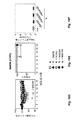
ノイラミニダーゼまたはNAタンパク質:本明細書において使用される場合、ノイラミニダーゼまたはNAタンパク質は、インフルエンザウイルス膜の表面上の構造糖タンパク質を指す。NAは、細胞表面タンパク質からのシアル酸の除去により感染細胞からのインフルエンザウイルスの放出に関与する。現在、抗体とのそれらの相互作用によって決められる11個の周知のNAサブタイプ(すなわち、N1、N2、N3、N4、N5、N6、N7、N8、N9、N10およびN11)がある。所与のNAサブタイプのすべてのバリアントは、類似の一連の抗体によって中和される。NA阻害(NAI)アッセイは、具体的なインフルエンザウイルスにおけるNA糖タンパク質サブタイプを同定するために使用でき、それによりウイルスを分類できる。ヒトは、一般にN1またはN2サブタイプのウイルスに感染する。一部の実施形態では、NAタンパク質は、モノマーであり、単一のNAポリペプチドを含む。他の実施形態では、NAタンパク質は、四量体であり、4つのNAポリペプチドを含む。図2Aは、本明細書に記載のモノマーおよび四量体NAタンパク質の実施形態を例示する。本明細書において使用される場合、「ノイラミニダーゼポリペプチド」または「NAポリペプチド」は、そのアミノ酸配列がNAの少なくとも1つの特徴的な配列を含むポリペプチドを指す。NAポリペプチドは、全長インフルエンザNAポリペプチド配列およびその断片を含む場合がある。当業者は、NAポリペプチド一般の、および/または具体的なNAポリペプチド(例えば、N1もしくはN2ポリペプチド)の、または具体的な宿主(例えば、トリ、ラクダ、イヌ、ネコ、ジャコウネコ、ウマ、ヒト、ヒョウ、ミンク、マウス、アシカ、ムナジロテン、ブタ、トラ、クジラなど)の感染を媒介するNAの特徴的である配列を容易に同定できる。the National Center for Biotechnology Information(NCBI)は、NAポリペプチド配列のデータベースを維持している。 Neuraminidase or NA protein: As used herein, neuraminidase or NA protein refers to a structural glycoprotein on the surface of an influenza virus membrane. NA is involved in the release of influenza virus from infected cells by removing sialic acid from cell surface proteins. Currently, there are 11 well-known NA subtypes (ie, N1, N2, N3, N4, N5, N6, N7, N8, N9, N10 and N11) determined by their interaction with the antibody. All variants of a given NA subtype are neutralized by a similar set of antibodies. NA inhibition (NAI) assays can be used to identify NA glycoprotein subtypes in specific influenza viruses, thereby classifying the virus. Humans are generally infected with N1 or N2 subtype viruses. In some embodiments, the NA protein is a monomer and comprises a single NA polypeptide. In other embodiments, the NA protein is a tetramer and comprises four NA polypeptides. FIG. 2A illustrates embodiments of the monomers and tetrameric NA proteins described herein. As used herein, "neuraminidase polypeptide" or "NA polypeptide" refers to a polypeptide whose amino acid sequence comprises at least one characteristic sequence of NA. The NA polypeptide may include a full-length influenza NA polypeptide sequence and fragments thereof. Those skilled in the art will be familiar with NA polypeptides in general and / or specific NA polypeptides (eg, N1 or N2 polypeptides), or specific hosts (eg, birds, camels, dogs, cats, civets, horses). , Humans, leopards, minks, mice, sea lions, beech martens, pigs, tigers, whales, etc.) The characteristic sequences of NA that mediate infection can be easily identified. The National Center for Biotechnology Information (NCBI) maintains a database of NA polypeptide sequences.
大発生:本明細書において使用される場合、インフルエンザウイルス「大発生」は、所与の年に単一の国の中から単離されたウイルスの集合物を指す。 Outbreak: As used herein, an influenza virus "outbreak" refers to a collection of viruses isolated from within a single country in a given year.
パンデミック、季節性、ブタ株:本明細書において使用される場合、「パンデミック」インフルエンザ株は、ヒト集団のパンデミック感染を生じたまたは生じる能力を有するものである。一部の実施形態では、パンデミック株は、パンデミック感染を生じさせたことがある。一部の実施形態では、かかるパンデミック感染は、複数の地域にわたる伝染性感染を含む。一部の実施形態では、パンデミック感染は、感染がそれらの間を通常は通過しないような互いに分かれている地域(例えば、山、水域によって、異なる大陸の部分としてなど)にわたる感染を含む。一部の実施形態では、パンデミックインフルエンザ株は、ヒトがそれに対する免疫を欠いているトリまたはブタ由来の新規HAまたはNAを有するウイルスを生じる、ヒトインフルエンザウイルスとトリまたはブタインフルエンザウイルスとの間の再集合から生じるもの(およそ20〜30年ごとに生じる抗原シフト)を含む。言い換えると、ヒト集団は、無感作であり、過去のワクチン接種または過去の曝露のいずれかの結果としての抵抗性を有さないまたはわずかしか有さないと考えられる。パンデミック株と季節性株とは、抗原的に異なり、配列によって全く異なる。一般に、季節性インフルエンザ株は、具体的な季節または具体的な年、例えば、1986年から2009年(パンデミックではない2009年配列を含む)由来の蔓延している株、および抗原領域をコードする実質的に類似(すなわち、抗原配列空間において類似)の遺伝配列を有する他の株と定義される。ブタインフルエンザ株は、ブタに固有のウイルスに関連する任意のインフルエンザ株を指す。例示的パンデミック株として、非限定的に、A/California/07/2009、A/California/04/2009、A/Belgium/145/2009、A/South Carolina/01/1918およびA/New Jersey/1976が挙げられる。パンデミックサブタイプとして、特に、H5N1、H2N2、H9N2、H7N7、H7N3、H7N9およびH10N7サブタイプが挙げられる。例示的季節性株として、非限定的に、A/Puerto Rico/8/1934、A/Fort Monmouth/1/1947、A/Chile/1/1983、A/Texas/36/1991、A/Singapore/6/1986、A/Beijing/32/1992、A/New Caledonia/20/1999、A/Solomon Islands/03/2006、およびA/Brisbane/59/2007が挙げられる。例示的ブタ株として、非限定的に、A/New Jersey/1976単離体およびA/California/07/2009が挙げられる。追加的インフルエンザパンデミック、季節性および/またはブタ株は、当技術分野において周知である。 Pandemic, Seasonal, Pig Strains: As used herein, a "pandemic" influenza strain is one that has caused or is capable of causing a pandemic infection in a human population. In some embodiments, the pandemic strain has caused a pandemic infection. In some embodiments, such pandemic infections include infectious infections across multiple regions. In some embodiments, pandemic infections include infections that span separate areas (eg, mountains, waters, or parts of different continents) where the infection normally does not pass between them. In some embodiments, the pandemic influenza strain produces a virus with a novel HA or NA from a bird or swine flu in which the human lacks immunity to it, a re-between the human influenza virus and the bird or swine flu virus. Includes those that result from assembly (antigenic shifts that occur approximately every 20-30 years). In other words, the human population is considered to be insensitive and have little or no resistance as a result of either past vaccination or past exposure. Pandemic strains and seasonal strains are antigenically different and completely different depending on the sequence. In general, seasonal influenza strains are endemic strains from a specific season or specific year, eg, 1986-2009 (including non-pandemic 2009 sequences), and a parenchyma encoding an antigenic region. It is defined as another strain having a genetic sequence that is similar (ie, similar in the antigen sequence space). Swine flu strain refers to any influenza strain associated with a virus unique to pigs. Illustrative pandemic strains include, but are not limited to, A / California / 07/2009, A / California / 04/2009, A / Belgium / 145/2009, A / South Carolina / 01/1918 and A / New Jersey / 1976. Can be mentioned. Pandemic subtypes include, in particular, the H5N1, H2N2, H9N2, H7N7, H7N3, H7N9 and H10N7 subtypes. Illustrative seasonal strains include, but are not limited to, A / Puerto Rico / 8/1934, A / Fort Monmuth / 1/1947, A / Chile / 1/11983, A / Texas / 36/1991, A / Singapore /. 6/1986, A / Beijing / 32/1992, A / New Caledonia / 20/1999, A / Solomon Islands / 03/2006, and A / Brisbane / 59/2007. Exemplary porcine strains include, but are not limited to, A / New Jersey / 1976 isolates and A / California / 07/2009. Additional influenza pandemics, seasonal and / or porcine strains are well known in the art.
予防:本明細書において使用される場合、具体的な疾患、障害または状態(例えば、感染、例えばインフルエンザウイルスでの)の、予防(prophylaxis)、疾患顕在化の回避、発病の遅延ならびに/または1つまたはそれ以上の症状の頻度および/もしくは重症度の低減を指す。一部の実施形態では、予防は集団ベースで評価され、疾患、障害または状態の発症、頻度および/または1つまたはそれ以上の症状の強度における統計的に有意な減少が疾患、障害または状態に感受性の集団において観察される場合に、作用剤は具体的な疾患、障害または状態を「予防」すると見なされる。 Prevention: As used herein, prophylaxis of a particular disease, disorder or condition (eg, with an infection, eg influenza virus), avoidance of disease manifestation, delay of onset and / or 1 Refers to a reduction in the frequency and / or severity of one or more symptoms. In some embodiments, prophylaxis is assessed on a population basis and a statistically significant reduction in the onset, frequency and / or intensity of one or more symptoms of the disease, disorder or condition is associated with the disease, disorder or condition. When observed in a susceptible population, the agent is considered to "prevent" a particular disease, disorder or condition.
組換え:本明細書において使用される場合、用語「組換え」は、宿主細胞にトランスフェクトされた組換え発現ベクターを使用して発現されたポリペプチド、組換え、コンビナトリアルポリペプチドライブラリーから単離されたポリペプチドまたは、選択された配列エレメントを互いにスプライシングすることを含む任意の他の手段によって製造、発現、創出または単離されたポリペプチドなどの、組換え手段によって設計、操作、製造、発現、創出または単離されるポリペプチドまたはタンパク質(例えば、本明細書に記載のNAポリペプチドもしくは四量体NAタンパク質)を指すと意図される。一部の実施形態では、1つまたはそれ以上のかかる選択された配列エレメントは、天然で見出される。一部の実施形態では、1つまたはそれ以上のかかる選択された配列エレメントは、コンピューターで設計される。一部の実施形態では、1つまたはそれ以上のかかる選択された配列エレメントは、周知の配列エレメント、例えば、天然または合成供給源由来、の変異導入(例えば、in vivoまたはin vitro)から生じる。一部の実施形態では、1つまたはそれ以上のかかる選択された配列エレメントは、同じポリペプチドに天然では存在しない複数(例えば、2つ以上)(例えば、2つの別々のNAポリペプチド由来の2つのエピトープ)の周知の配列エレメントの組合せから生じる。 Recombinant: As used herein, the term "recombinant" is isolated from a polypeptide, recombinant, combinatorial polypeptide library expressed using a recombinant expression vector transfected into a host cell. Designed, manipulated, manufactured, expressed by recombinant means, such as a polypeptide prepared, expressed, created or isolated by any other means, including splicing selected sequence elements with each other. , Is intended to refer to a polypeptide or protein created or isolated (eg, NA polypeptide or tetrameric NA protein described herein). In some embodiments, one or more such selected sequence elements are found naturally. In some embodiments, one or more such selected array elements are computer designed. In some embodiments, one or more such selected sequence elements result from a mutation introduction (eg, in vivo or in vitro) of a well-known sequence element, eg, from a natural or synthetic source. In some embodiments, one or more such selected sequence elements are multiple (eg, two or more) (eg, two or more) (eg, two from two separate NA polypeptides) that are not naturally present in the same polypeptide. It results from a combination of well-known sequence elements of one epitope).
シグナル配列、分泌シグナル、または分泌シグナルペプチド:本明細書において使用される場合、用語は、細胞からの分泌のためのシグナルを伝達するペプチド配列を指す。分泌シグナルは、そうでなければ分泌されないポリペプチドまたはタンパク質の分泌をもたらすことができる。 Signal Sequence, Secretory Signal, or Secretory Signal Peptide: As used herein, the term refers to a peptide sequence that transmits a signal for secretion from a cell. Secretory signals can result in the secretion of otherwise secreted polypeptides or proteins.
四量体化ドメイン:本明細書において使用される場合、用語は、ポリペプチドまたはタンパク質の四量体アセンブリを生じるドメインをコードするアミノ酸配列を指す。具体的なタンパク質に由来しない四量体化ドメインは、人工または異種性四量体化ドメインと称される。例示的四量体化ドメインとして、これだけに限らないが、テトラブラキオン、GCN4ロイシンジッパーまたは血管拡張因子刺激リン酸化タンパク質(VASP)由来の配列が挙げられる。 Tetrameric domain: As used herein, the term refers to an amino acid sequence that encodes the domain that yields the tetrameric assembly of a polypeptide or protein. Tetrameric domains that are not derived from a specific protein are referred to as artificial or heterologous tetrameric domains. Exemplary tetramerization domains include, but are not limited to, sequences derived from tetrabrachyone, GCN4 leucine zipper or vasodilator-stimulated phosphorylated protein (VASP).
配列同一性:アミノ酸配列または核酸配列間の類似性は、配列間の類似性および/または同一性の観点から表される。配列類似性は、配列同一性および相同性によって密接に関連している配列の要素を含む。配列類似性は、類似性(または同一性もしくは相同性)百分率の観点からしばしば測定される;百分率が高いほど2つの配列はより類似している。所与の遺伝子またはタンパク質のホモログまたはバリアントは、標準的方法を使用してアラインされた場合に比較的高い程度の配列同一性を有する。比較のための配列のアライメント法は、当技術分野において十分周知である。種々のプログラムおよびアライメントアルゴリズムが当技術分野において記載されている:Smith and Waterman,Adv.Appl.Math.2:482,1981;Needleman and Wunsch,J.Mol.Biol.48:443,1970;Pearson and Lipman,Proc.Natl.Acad.Sci.U.S.A.85:2444,1988;Higgins and Sharp,Gene 73:237〜244,1988;Higgins and Sharp,CABIOS 5:151〜153,1989;Corpet et al.,Nucleic Acids Research 16:10881〜10890,1988およびPearson and Lipman,Proc.Natl.Acad.Sci.U.S.A.85:2444,1988.Altschul et al.,Nature Genet.6:119〜129,1994。NCBI Basic Local Alignment Search Tool(BLAST(登録商標))(Altschul et al.,J.Mol.Biol.215:403〜410,1990)は、配列分析プログラムblastp、blastn、blastx、tblastnおよびtblastxとの関連での使用のためにthe National Center for Biotechnology Information(NCBI、Bethesda、Md.)を含むいくつかの供給元から入手可能である。 Sequence Identity: Similarity between amino acid sequences or nucleic acid sequences is expressed in terms of similarity and / or identity between sequences. Sequence similarity includes elements of sequences that are closely related by sequence identity and homology. Sequence similarity is often measured in terms of similarity (or identity or homology) percentage; the higher the percentage, the more similar the two sequences. Homologs or variants of a given gene or protein have a relatively high degree of sequence identity when aligned using standard methods. Sequence alignment methods for comparison are well known in the art. Various programs and alignment algorithms have been described in the art: Smith and Waterman, Adv. Apple. Math. 2: 482,1981; Needleman and Wunsch, J. Mol. Mol. Biol. 48: 443, 1970; Pearson and Lipman, Proc. Natl. Acad. Sci. U.S. S. A. 85: 2444, 1988; Higgins and Sharp, Gene 73: 237-244, 1988; Higgins and Sharp, CABIOS 5: 151-153, 1989; Corpet et al. , Nucleic Acids Research 16: 10881-10890, 1988 and Pearson and Lipman, Proc. Natl. Acad. Sci. U.S. S. A. 85: 2444, 1988. Altschul et al. , Nature Genet. 6: 119 to 129, 1994. NCBI Basic Local Element Search Tool (BLAST®) (Altschul et al., J. Mol. Biol. 215: 403-410, 1990) is a sequence analysis program related to blastp, blastn, blastx, tblastn and blast. It is available from several sources, including the National Center for Biotechnology Information (NCBI, Bethesda, Md.) For use in.
対象:本明細書において使用される場合、動物界の任意のメンバーを指す。一部の実施形態では、「対象」はヒトを指す。一部の実施形態では、「対象」は非ヒト動物を指す。一部の実施形態では、対象として、これだけに限らないが、哺乳動物、鳥類、は虫類、両生類、魚類、昆虫および/または虫が挙げられる。ある特定の実施形態では、非ヒト対象は、哺乳動物(例えば、げっ歯類、マウス、ラット、ウサギ、サル、イヌ、ネコ、ヒツジ、ウシ、霊長類および/またはブタ)である。一部の実施形態では、対象は、トランスジェニック動物、遺伝的に操作された動物、および/またはクローンである場合がある。本発明のある特定の実施形態では、対象は、成人、青年または幼児である。一部の実施形態では、用語「個体」または「患者」は、「対象」と互換的であるとして使用され、意図される。本発明によって同様に検討されるのは、子宮内での医薬組成物の投与および/または処置法の実施である。 Subject: As used herein, refers to any member of the animal kingdom. In some embodiments, "subject" refers to a human. In some embodiments, "subject" refers to a non-human animal. In some embodiments, the subject includes, but is not limited to, mammals, birds, reptiles, amphibians, fish, insects and / or insects. In certain embodiments, the non-human subject is a mammal (eg, rodent, mouse, rat, rabbit, monkey, dog, cat, sheep, cow, primate and / or pig). In some embodiments, the subject may be a transgenic animal, a genetically engineered animal, and / or a clone. In certain embodiments of the invention, the subject is an adult, adolescent or toddler. In some embodiments, the term "individual" or "patient" is used and intended to be compatible with "subject". Also considered by the present invention is the administration and / or treatment of the pharmaceutical composition in utero.
ワクチン接種:本明細書において使用される場合、用語「ワクチン接種」または「ワクチン接種する」は、例えば病原体への、免疫応答を生成する目的の組成物の投与を指す。ワクチン接種は、病原体への曝露および/または1つまたはそれ以上の症状の発症の前、その間および/または後、一部の実施形態では、病原体への曝露の前、その間および/または直後に投与される。一部の実施形態では、ワクチン接種は、ワクチン接種組成物の適切な時間間隔での複数回投与を含む。 Vaccination: As used herein, the term "vaccination" or "vaccination" refers to the administration of a composition of interest to generate an immune response, eg, to a pathogen. Vaccination is administered before, during, and / or after exposure to the pathogen and / or the onset of one or more symptoms, and in some embodiments, before, during, and / or immediately after exposure to the pathogen. Will be done. In some embodiments, vaccination comprises multiple doses of the vaccination composition at appropriate time intervals.
ウイルス様粒子(VLP):本明細書において使用される場合、句「ウイルス様粒子」または「VLP」は、ウイルスに類似しているが、いかなるウイルス遺伝材料も欠いており、したがって感染性でない粒子を指す。「ウイルス様粒子」または「VLP」は、哺乳動物細胞系、昆虫細胞系、酵母および植物細胞を含む種々の細胞培養システムにおける異種性発現によって産生される。加えてVLPは、当技術分野において周知の方法によって精製される。一部の実施形態では本明細書に記載のインフルエンザVLPは、HAポリペプチドおよび/またはNAポリペプチドを含む。一部の実施形態では、本明細書に記載のインフルエンザVLPは、HAポリペプチド、NAポリペプチドおよび/または構造ポリペプチドを含む。一部のある特定の実施形態では、本明細書に記載のインフルエンザVLPは、HAポリペプチド、NAポリペプチドおよび/またはインフルエンザM1ポリペプチドを含む。一部の実施形態では、本明細書に記載のインフルエンザVLPは、HAポリペプチド、NAポリペプチドおよび/またはHIV gagポリペプチドを含む。当業者は、他のウイルス構造タンパク質を本明細書に例示されるものの代替として使用できることを認識する。インフルエンザVLPは、HAおよびNAタンパク質、ならびに場合によりM1タンパク質および/またはHIV gagタンパク質をコードするプラスミドを用いた、宿主細胞(例えば、哺乳動物細胞)のトランスフェクションによって産生できる。タンパク質発現を可能にするための好適な期間でのトランスフェクトされた細胞のインキュベーション後に、VLPは細胞培養上清から単離される。一部の実施形態では、本明細書に記載のインフルエンザVLPは、哺乳動物細胞(例えば、ヒト細胞)での一過性トランスフェクションによって産生される。一部の実施形態では、インフルエンザVLPは、1つまたはそれ以上のアッセイの使用によって分析される。例えば、インフルエンザVLP粒子サイズは、動的光散乱によって分析でき、かかるVLPは、タンパク質染色によって、ヘマグルチニン活性およびヘマグルチニン含有量の定量についても分析される。 Virus-like particles (VLPs): As used herein, the phrase "virus-like particles" or "VLPs" are similar to viruses, but lack any viral genetic material and are therefore non-infectious. Point to. "Virus-like particles" or "VLPs" are produced by heterologous expression in various cell culture systems, including mammalian cell lines, insect cell lines, yeast and plant cells. In addition, VLPs are purified by methods well known in the art. In some embodiments, the influenza VLPs described herein include HA and / or NA polypeptides. In some embodiments, the influenza VLPs described herein include HA polypeptides, NA polypeptides and / or structural polypeptides. In some specific embodiments, the influenza VLPs described herein include HA polypeptides, NA polypeptides and / or influenza M1 polypeptides. In some embodiments, the influenza VLPs described herein include HA polypeptides, NA polypeptides and / or HIV gag polypeptides. Those skilled in the art will recognize that other viral structural proteins can be used as alternatives to those exemplified herein. Influenza VLP can be produced by transfection of host cells (eg, mammalian cells) with plasmids encoding HA and NA proteins, and optionally M1 and / or HIV gag proteins. After incubation of the transfected cells for a suitable period to allow protein expression, the VLPs are isolated from the cell culture supernatant. In some embodiments, the influenza VLPs described herein are produced by transient transfection on mammalian cells (eg, human cells). In some embodiments, influenza VLPs are analyzed by the use of one or more assays. For example, influenza VLP particle size can be analyzed by dynamic light scattering, and such VLPs are also analyzed by protein staining for quantification of hemagglutinin activity and hemagglutinin content.
野生型(WT):当技術分野において理解されるとおり、用語「野生型」は、天然で見出されるタンパク質または核酸の通常の形態を一般に指す。例えば、野生型NAポリペプチドは、インフルエンザウイルスの天然の単離物において見出される。種々の異なる野生型NA配列をNCBIインフルエンザウイルス配列データベースにおいて見出すことができる。 Wild-type (WT): As understood in the art, the term "wild-type" generally refers to the normal form of a protein or nucleic acid found in nature. For example, wild-type NA polypeptides are found in natural isolates of influenza virus. A variety of different wild-type NA sequences can be found in the NCBI influenza virus sequence database.
ノイラミニダーゼ(NA)ポリペプチドを設計するための方法
コンセンサスインフルエンザタンパク質配列を生成することに関連する重要な課題は、時間的および地理的配列バイアスに関する。かかるバイアスは、一部は、公的なおよび/または民間の配列データベースに提供される配列記録がしばしばより最近の配列に大きく偏っているために存在する。さらに、合衆国などのある特定の地理的領域と関連する配列がしばしば大きな比率を占める。一態様では、本発明は、かかる時間的および地理的配列バイアスを克服するクラスターベースコンセンサスアプローチを使用して、コンセンサスアミノ酸を含むインフルエンザNAポリペプチドを生成するための新規方法を提供する。本発明の方法は、系統発生学的情報と無関係で、一次アミノ酸配列に含有される情報だけに依存する。したがって、本方法は、全体的な配列多様性を反映し、時間的または地理的に大きな比率を占める配列へのバイアスがないNAポリペプチド配列を生成することができる。
Methods for Designing Neuraminidase (NA) Polypeptides A key issue associated with generating consensus influenza protein sequences concerns temporal and geographical sequence bias. This bias exists, in part, because sequence records provided in public and / or private sequence databases are often heavily biased towards more recent sequences. In addition, sequences associated with certain geographic areas, such as the United States, often make up a large proportion. In one aspect, the invention provides a novel method for producing influenza NA polypeptides containing consensus amino acids using a cluster-based consensus approach that overcomes such temporal and geographical sequence bias. The method of the present invention is independent of phylogenetic information and depends only on the information contained in the primary amino acid sequence. Thus, the method can generate NA polypeptide sequences that reflect overall sequence diversity and are not biased towards sequences that occupy large proportions in time or geographically.
種々の実施形態では、方法は、複数のインフルエンザNA配列における配列差異のコンピューター分析に基づいてNAポリペプチド配列を設計すること、類似配列のクラスターを生成するためにコンセンサスベース配列アルゴリズムを適用すること、およびコンセンサスアミノ酸配列を有するNAポリペプチドの構造分析を実施することを含む。一部の実施形態では、本方法は、K平均法、ミニマックスクラスタリングおよび最遠距離優先クラスタリング(Farthest-First clustering)などのツールを使用してクラスター化できるペアワイズ類似性/非類似性マトリクスを生成する。代替的にまたは追加的に、ペアワイズ類似性/非類似性マトリクスは、好適なクラスターを定義するため(例えば、クラスターを分離し、数を決めるため)の、多次元尺度構成法(MDS)または主成分分析(PCA)などのオーディネーション技術を使用してコンパクト表現で可視化される。さらに本方法は、コンセンサス配列内の可変アミノ酸位置を解明し、正しくフォールドし、それにより機能性であり易い候補を順位付けるために、分子モデリングおよび結晶構造との比較を利用する。 In various embodiments, the method is to design the NA polypeptide sequence based on computer analysis of sequence differences in multiple influenza NA sequences, to apply a consensus-based sequence algorithm to generate clusters of similar sequences, And to perform a structural analysis of the NA polypeptide having a consensus amino acid sequence. In some embodiments, the method produces a pairwise similarity / dissimilarity matrix that can be clustered using tools such as K-means clustering, minimax clustering and Farstest-First clustering. do. Alternatively or additionally, the pairwise similarity / dissimilarity matrix is a multidimensional scaling (MDS) or principal component for defining suitable clusters (eg, for separating and numbering clusters). Visualized in a compact representation using auditioning techniques such as component analysis (PCA). In addition, the method utilizes molecular modeling and comparison with crystal structure to elucidate variable amino acid positions within consensus sequences, fold correctly, and thereby rank candidates that are more likely to be functional.
理論に束縛されることを望むわけではないが、本発明の方法は、さまざまなインフルエンザ株、型および/またはサブタイプにわたって保存されたエピトープを含むNAポリペプチドを生成すると考えられる。したがって、種々の実施形態では、本方法は、広範なインフルエンザ株(例えば、1つまたはそれ以上の季節性、パンデミックもしくはブタ株)、インフルエンザ型(例えば、1つまたはそれ以上のインフルエンザA型、B型もしくはC型)および/またはインフルエンザサブタイプ(例えば、非限定的に、H1N1、H3N2もしくはH5N1などの1つまたはそれ以上のインフルエンザサブタイプ)に対して交差反応性免疫応答の増強を誘導できるNAポリペプチドを生成する。 Without wishing to be bound by theory, it is believed that the methods of the invention produce NA polypeptides containing epitopes conserved across various influenza strains, types and / or subtypes. Thus, in various embodiments, the method comprises a wide range of influenza strains (eg, one or more seasonal, pandemic or porcine strains), influenza types (eg, one or more influenza A, B). NA that can induce enhanced cross-reactive immune response to type or C) and / or influenza subtypes (eg, but not limited to one or more influenza subtypes such as H1N1, H3N2 or H5N1) Produces a polypeptide.
一部の実施形態では、本方法は、種々のインフルエンザNAポリペプチド配列を選択することを含む。種々の異なるNA配列は、the National Center for Biotechnology Information(NCBI)インフルエンザウイルス配列データベースなどの配列データベースにおいて見出すことができる。一部の実施形態では、固有の配列の非重複サブセットは、配列アライメントのために選択される。 In some embodiments, the method comprises selecting various influenza NA polypeptide sequences. A variety of different NA sequences can be found in sequence databases such as the National Center for Biotechnology Information (NCBI) influenza virus sequence database. In some embodiments, a non-overlapping subset of unique sequences is selected for sequence alignment.
一部の実施形態では、本方法は、インフルエンザNAポリペプチド配列をアラインすることを含む。当技術分野において周知の任意の多重配列アライメントツールを使用できる。例えば、Katoh and Kuma(2002)NAR,30:3059;Katoh and Standley(2013)Mol BioL Evol 30:772;Edgar,R.C.(2004)NAR,32:1792;Edgar,R.C.(2004)BMC Bioinf,113;Sievers et al.(2011)Mol Sys Biol 7:539;およびPearson and Lipman.(1988)PNAS,85:2444を参照されたい。本発明のために利用できる例示的配列アライメントツールとして、これだけに限らないが、MAFFT、MUSCLE、CLUSTAL OMEGA、FASTA、またはこれらの組合せが挙げられる。 In some embodiments, the method comprises aligning the influenza NA polypeptide sequence. Any multi-sequence alignment tool well known in the art can be used. For example, Katoh and Kuma (2002) NAR, 30:30 59; Katoh and Standley (2013) Mol BioL Evol 30: 772; Edgar, R. et al. C. (2004) NAR, 32: 1792; Edgar, R. et al. C. (2004) BMC Bioinf, 113; Sievers et al. (2011) Mol Sys Biol 7: 539; and Pearson and Lipman. (1988) PNAS, 85: 2444. Exemplary sequence alignment tools available for the present invention include, but are not limited to, MAFFT, MUSCLE, Clustal OMEGA, FASTA, or combinations thereof.
一部の実施形態では、特異的配列領域は、さらなる分析から遮蔽される場合がある。例えば、NAシグナルペプチド配列、膜貫通ドメイン配列または任意の他の保存NAドメインの任意の1つは、さらなる分析から遮蔽される場合がある。 In some embodiments, the specific sequence region may be shielded from further analysis. For example, the NA signal peptide sequence, transmembrane domain sequence or any other conserved NA domain may be shielded from further analysis.
一部の実施形態では、本方法は、アラインされた配列からペアワイズ類似性/非類似性マトリクスを算出することを含む。2つ以上の配列間の距離を算出するための任意の方法を使用できる。ペアワイズ類似性/非類似性マトリクスを算出するための例示的ツールとして、これだけに限らないが、BLOSUM、PAM、IDENTITY置換マトリクスまたはこれらの組合せが挙げられる。一実施形態では、FastTreeなどのペアワイズ類似性/非類似性マトリクスを算出するための代替法を使用する場合がある(Price,M.N.,Dehal,P.S.,and Arkin,A.P.(2009)Molecular Biology and Evolution 26:1641〜1650)。 In some embodiments, the method comprises calculating a pairwise similarity / dissimilarity matrix from the aligned sequences. Any method can be used to calculate the distance between two or more sequences. Illustrative tools for calculating pairwise similarity / dissimilarity matrices include, but are not limited to, BLOSUM, PAM, IDENTITY substitution matrices, or combinations thereof. In one embodiment, an alternative method for calculating a pairwise similarity / dissimilarity matrix, such as FastTree, may be used (Price, MN, Dehal, PS, and Arkin, AP. (2009) Molecular Biology and Evolution 26: 1641 to 1650).
一部の実施形態では、本方法は、ペアワイズ類似性/非類似性マトリクスから類似配列のクラスターを同定するおよび創出することをさらに含む。類似配列のクラスターを同定するための例示的ツールとして、これだけに限らないが、K平均クラスタリング、ミニマックスクラスタリング、最遠距離優先クラスタリング、主成分分析(PCA)、多次元尺度構成法(MDS)またはこれらの組合せが挙げられる。一実施形態では、クラスタリングのためにK平均法が利用される(Hartigan,J.A.et al.(1979)Journal of the Royal Statistical Society,Series C,Applied Statistics,28(1):100〜108を参照されたい)。別の実施形態では、ミニマックスクラスタリング(例えば、類似性マトリクスのミニマックスリンケージ階層クラスタリング(linkage hierarchical clustering))が利用される(Bien,J.et al.,(2011)The Journal of the American Statistical Associationを参照されたい)。さらなる実施形態では、近似解法(farthest-first traversal)が使用される(Rosenkrantz et al.(1977)SIAM J Comp,6:563を参照されたい)。 In some embodiments, the method further comprises identifying and creating clusters of similar sequences from a pairwise similarity / dissimilarity matrix. Illustrative tools for identifying clusters of similar sequences include, but are not limited to, K-means clustering, minimax clustering, farthest distance priority clustering, principal component analysis (PCA), multidimensional scaling (MDS) or These combinations can be mentioned. In one embodiment, the K-means method is used for clustering (Hartigan, JA et al. (1979) Journal of the Royal Static Society, Series C, Applied Statics, 28 (1): 100-108). Please refer to). In another embodiment, minimax clustering (eg, minimax linkage hierarchical clustering of similarity matrices) is utilized (Bien, J. et al., (2011) The Journal of the American Statistical Associationation). Please refer to). In a further embodiment, an approximate solution (farthest-first traversal) is used (see Rosenkrantz et al. (1977) SIAM J Comp, 6: 563).
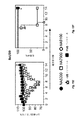
一部の実施形態では、オーディネーション技術が、ペアワイズ類似性/非類似性マトリクス由来の類似配列のクラスターを同定および創出するために使用される。例えば、一部の実施形態では、PCAは、ペアワイズ類似性/非類似性マトリクスの次元削減(dimension reduction)のために使用される。PCAは、高次元、ペアワイズ類似性/非類似性マトリクスを、類似配列のクラスターの可視化および同定を促進する低次元サブ空間に変換するために利用できる(Pearson,K.(1901)Philosophical Magazine 2(11):559〜572およびHotelling,H.(1933)Journal of Educational Psychology,24,417〜441,and 498〜520を参照されたい)。さらなる実施形態では、多次元尺度構成法(MDS)が使用される。MDSは、多次元データセットの類似性および非類似性のレベルを算出および可視化し、一連の点のすべての対の間の距離を最良に再現する次元の削減されたセットを見出す手段を指す。一部の実施形態では、MDSは、オブジェクト間の距離が維持されるように、N次元空間中の各オブジェクトを位置させるために使用される。一部の実施形態では、MDSは、距離マトリクスに含有される情報の提示を可能にする。一部の実施形態では、MDSは、削減された次元空間にNA配列を置き、それによりウイルス配列の対の間の相対距離を正確に維持する。一部の実施形態では、系統発生学的方法が再集合および/または組換えの存在下で一致しない場合があることから、MDSは、系統発生学的方法における欠点を克服する。一部の実施形態では、MDSは、無作為であるインフルエンザウイルスにおける中立置換を除去する。種々の実施形態では、MDSまたはPCAなどのオーディネーション技術は、クラスターの可視化および同定を促進するために、高次元、ペアワイズ距離マトリクスを低次元サブ空間に変換することを助ける。 In some embodiments, an audition technique is used to identify and create clusters of similar sequences from a pairwise similarity / dissimilarity matrix. For example, in some embodiments, the PCA is used for dimension reduction of the pairwise similarity / dissimilarity matrix. The PCA can be used to transform a high-dimensional, pairwise similarity / dissimilar matrix into a low-dimensional subspace that facilitates visualization and identification of clusters of similar sequences (Pearson, K. (1901) Philosophical Magazine 2 (Pearson, K. (1901)) 11): 559-572 and Hotelling, H. (1933) Journal of Educational Psychology, 24,417-441, and 498-520). In a further embodiment, Multidimensional Scaling (MDS) is used. MDS refers to a means of calculating and visualizing the levels of similarity and dissimilarity of a multidimensional dataset and finding a reduced set of dimensions that best reproduces the distance between all pairs of points. In some embodiments, MDS is used to position each object in N-dimensional space so that the distance between the objects is maintained. In some embodiments, MDS allows the presentation of information contained in the distance matrix. In some embodiments, the MDS places the NA sequences in a reduced dimensional space, thereby accurately maintaining the relative distance between pairs of viral sequences. In some embodiments, MDS overcomes the shortcomings of phylogenetic methods, as phylogenetic methods may not match in the presence of reassortment and / or recombination. In some embodiments, MDS eliminates a neutral substitution in a randomized influenza virus. In various embodiments, auditioning techniques such as MDS or PCA help transform high-dimensional, pairwise distance matrices into low-dimensional subspaces to facilitate cluster visualization and identification.
一部の実施形態では、本明細書に記載の方法は、類似配列の1より多いクラスター(例えば、季節性様、パンデミック様またはブタ様配列)を創出する。本明細書に記載の方法での使用のための配列の例示的クラスターは、これだけに限らないが、図1Aに示されるものである。 In some embodiments, the methods described herein create more than one cluster of similar sequences (eg, seasonal, pandemic, or porcine-like sequences). Illustrative clusters of sequences for use in the methods described herein are, but are not limited to, those shown in FIG. 1A.
一部の実施形態では、各クラスター内で、コンセンサス配列は、多重配列アライメントにおける各位置で最も頻繁なアミノ酸に基づいて算出される。例えば、所与の位置でのアミノ酸の頻度が50%(または使用者が定義する任意の他の閾値)以上である場合、そのアミノ酸はコンセンサスアミノ酸と指定される。代替的に、所与の位置でのアミノ酸の頻度が50%(または使用者が定義する任意の他の閾値)未満である場合、そのアミノ酸は可変アミノ酸と指定される。一部の実施形態では、第1の配列は、コンセンサスアミノ酸および可変アミノ酸を含む各クラスターについて生成される。一部の実施形態では、各クラスターについて生成された第1の配列は、クラスター内コンセンサス配列と指定される。 In some embodiments, within each cluster, the consensus sequence is calculated based on the most frequent amino acids at each position in the multi-sequence alignment. For example, if the frequency of an amino acid at a given position is greater than or equal to 50% (or any other threshold defined by the user), then the amino acid is designated as a consensus amino acid. Alternatively, if the frequency of an amino acid at a given position is less than 50% (or any other threshold defined by the user), the amino acid is designated as a variable amino acid. In some embodiments, the first sequence is generated for each cluster containing consensus amino acids and variable amino acids. In some embodiments, the first sequence generated for each cluster is designated as an intra-cluster consensus sequence.
一部の実施形態では、コンセンサス配列は、複数配列クラスターについて生成される。かかる実施形態では、複数クラスターについて選択されたクラスター内コンセンサス配列は、特定された結果の特性に基づいて追加的コンセンサス配列を導き出すためにマージされる。例えば、特定の地理的領域、宿主または時期と関連するクラスター内コンセンサス配列は、クラスターを超えるコンセンサス配列(例えば、第2の配列)を生成するためにマージされる。 In some embodiments, consensus sequences are generated for multi-sequence clusters. In such an embodiment, the intra-cluster consensus sequences selected for multiple clusters are merged to derive additional consensus sequences based on the characteristics of the identified results. For example, intra-cluster consensus sequences associated with a particular geographic region, host or time period are merged to generate a consensus sequence beyond the cluster (eg, a second sequence).
種々の実施形態では、クラスターを超えるコンセンサス配列を生成するために、1つのクラスターから生成されたクラスター内コンセンサス配列(例えば、第1の配列)は、別のクラスターまたは複数クラスターから生成されたクラスター内コンセンサス配列(例えば、第1の配列)と比較される。一部の実施形態では、生成された配列は、互いに対してアラインされる。一部の実施形態では、ペアワイズアライメント法は、アライメントにおいて各位置に対するコンセンサスアミノ酸があるかどうかを決定するために利用される。既に記載したとおり、所与の位置でのアミノ酸の頻度が50%(または使用者が定義する任意の他の閾値)以上である場合、そのアミノ酸はコンセンサスアミノ酸と指定され、所与の位置でのアミノ酸の頻度が50%(または使用者が定義する任意の他の閾値)未満である場合、そのアミノ酸は可変アミノ酸と指定される。一部の実施形態では、コンセンサスアミノ酸および可変アミノ酸を含むクラスターを超えるコンセンサス配列(例えば、第2の配列)は、かかる多重クラスター分析から生成される。種々の実施形態では、各位置で配列をアラインするおよびコンセンサスアミノ酸を決定するプロセスは、目的のすべての配列クラスターが検討されるまで繰り返し実施される。 In various embodiments, the intra-cluster consensus sequence (eg, the first sequence) generated from one cluster is within a cluster generated from another cluster or multiple clusters in order to generate a consensus sequence across clusters. It is compared with a consensus sequence (eg, the first sequence). In some embodiments, the generated sequences are aligned with each other. In some embodiments, the pairwise alignment method is utilized to determine if there is a consensus amino acid for each position in the alignment. As already mentioned, if the frequency of an amino acid at a given position is greater than or equal to 50% (or any other threshold defined by the user), then the amino acid is designated as a consensus amino acid and at a given position. If the frequency of an amino acid is less than 50% (or any other threshold defined by the user), the amino acid is designated as a variable amino acid. In some embodiments, a consensus sequence (eg, a second sequence) beyond the cluster containing consensus amino acids and variable amino acids is generated from such multiple cluster analysis. In various embodiments, the process of aligning sequences at each position and determining consensus amino acids is repeated until all sequence clusters of interest have been considered.
一部の実施形態では、追加的工程は、生成されたクラスター内コンセンサス配列内、および/またはクラスターを超えるコンセンサス配列(例えば、第1の配列および/または第2の配列)内の、各可変アミノ酸位置についてコンセンサスアミノ酸を決定するために実施される。かかる実施形態では、一連の検査配列は、コンセンサス配列(例えば、第1のおよび/または第2の配列)に基づいて生成され、検査アミノ酸を、可変アミノ酸位置に位置させる。本明細書に記載の方法において使用される検査アミノ酸は、必須または非必須アミノ酸を含むタンパク質において見出される任意の天然または非天然(例えば、非古典的)アミノ酸を包含する。例示的アミノ酸として、下の表2に提供されるアミノ酸および本明細書他所に記載されるものが挙げられる。 In some embodiments, the additional step is for each variable amino acid within the generated intra-cluster consensus sequence and / or within the consensus sequence beyond the cluster (eg, first and / or second sequence). Performed to determine consensus amino acids for position. In such an embodiment, a series of test sequences is generated based on a consensus sequence (eg, a first and / or second sequence) and positions the test amino acid at the variable amino acid position. The test amino acids used in the methods described herein include any natural or non-natural (eg, non-classical) amino acids found in proteins containing essential or non-essential amino acids. Illustrative amino acids include the amino acids provided in Table 2 below and those listed elsewhere herein.
種々の実施形態では、本方法は、検査配列を分析するための分子モデリングの使用を検討する。一部の実施形態では、分子モデリングは、検査配列のそれぞれについて実施される。一部の実施形態では、分子モデリングは、分析されるインフルエンザタンパク質(すなわち、NA)の結晶構造との比較を含む。かかる結晶構造情報は、例えば、the Protein Data Bankから容易に入手可能である。一実施形態では、分子モデリングは、Rosetta(https://www.rosettacommons.org/software)または任意の他の同様の分子モデリングソフトウェアの使用を含む(例えば、Leaver−Fay et al.(2011)Meth.Enzymol.487:545〜74を参照されたい)。例えば、コンセンサス配列中の可変アミノ酸位置を解明するために、Rosetta内のメトロポリス−モンテカルロシミュレートされたアニーリングプロトコールは、差異の同定された部位に存在するアミノ酸残基のすべての可能な組合せの置換を標本抽出するために使用される。次いで可能な置換は、エネルギー値に基づいてスコア化される。 In various embodiments, the method considers the use of molecular modeling to analyze test sequences. In some embodiments, molecular modeling is performed for each of the test sequences. In some embodiments, molecular modeling involves comparison with the crystal structure of the influenza protein (ie, NA) being analyzed. Such crystal structure information is readily available, for example, from the Protein Data Bank. In one embodiment, molecular modeling involves the use of Rosetta (https://www.rosettacomons.org/software) or any other similar molecular modeling software (eg, Leaver-Fay et al. (2011) Meth). See Enzymol. 487: 545-74). For example, to elucidate the variable amino acid positions in the consensus sequence, the metropolis-montecarlo-simulated annealing protocol within Rosetta replaces all possible combinations of amino acid residues present at the identified sites of the difference. Is used to sample. Possible substitutions are then scored based on the energy value.
一部の実施形態では、各可変アミノ酸位置についてのコンセンサスアミノ酸は、出発値と同様のまたはそれより低い算出された総エネルギー値を有するNAポリペプチドを生じるアミノ酸(複数可)を選択することによって決定される。一部の実施形態では、各可変アミノ酸位置についてのコンセンサスアミノ酸は、負の総エネルギー値を有するNAポリペプチドを生じるアミノ酸(複数可)を選択することによって決定される。理論に束縛されることを望むわけではないが、負の総エネルギースコアを有するNAポリペプチドは、安定なタンパク質にさらにフォールドし易い一方で、正のエネルギースコアを有するポリペプチドは、あまり正しくフォールドしないと考えられる。一部の実施形態では、1つまたはそれ以上のNAポリペプチドは、それらの負の総エネルギースコアおよび/または参照構造との比較に従って生成され、順位付けられる。 In some embodiments, the consensus amino acid for each variable amino acid position is determined by selecting the amino acid (s) that yield the NA polypeptide having a calculated total energy value similar to or lower than the starting value. Will be done. In some embodiments, the consensus amino acid for each variable amino acid position is determined by selecting the amino acid (s) that give rise to the NA polypeptide having a negative total energy value. Although not bound by theory, NA polypeptides with a negative total energy score are more likely to fold into stable proteins, while polypeptides with a positive energy score do not fold very correctly. it is conceivable that. In some embodiments, one or more NA polypeptides are produced and ranked according to their negative total energy score and / or reference structure comparison.
種々の実施形態では、本方法は種々の位置にコンセンサスアミノ酸を含むNAポリペプチド配列を生成する。本発明の方法を使用して生成された例示的NAポリペプチドは表1に示されている。表1の配列表は、米国仮特許出願第62/649,002号の表1の配列表と同一である。 In various embodiments, the method produces NA polypeptide sequences containing consensus amino acids at various positions. Illustrative NA polypeptides produced using the methods of the invention are shown in Table 1. The sequence listing in Table 1 is the same as the sequence listing in Table 1 of US Provisional Patent Application No. 62 / 649,002.
ノイラミニダーゼ(NA)ポリペプチドおよびタンパク質
別の態様では、本発明は、本明細書に記載の方法を用いて生成されたNAポリペプチドを提供する。一部の実施形態では、NAポリペプチドは、コンセンサスアミノ酸配列を含み、複数のインフルエンザ株(例えば、1つまたはそれ以上のパンデミック、季節性、および/またはブタインフルエンザ株)、タイプ(例えば、1つまたはそれ以上のインフルエンザA型、B型、および/またはC型ウイルス)、および/またはサブタイプ(例えば、1つまたはそれ以上のH1N1、H3N2、またはH5N1)に対する免疫応答を誘発することができる。したがって、一部の実施形態では、NAポリペプチドは、インフルエンザに対する改良された防御免疫を提供するために、抗原としてワクチン組成物中に取り込まれ得る。
Neuraminidase (NA) Polypeptides and Proteins In another aspect, the invention provides NA polypeptides produced using the methods described herein. In some embodiments, the NA polypeptide comprises a consensus amino acid sequence and comprises multiple influenza strains (eg, one or more pandemic, seasonal, and / or swine flu strains), type (eg, one). Or more influenza A, B, and / or C viruses) and / or subtypes (eg, one or more H1N1, H3N2, or H5N1) can be elicited. Thus, in some embodiments, the NA polypeptide can be incorporated into the vaccine composition as an antigen to provide improved protective immunity against influenza.
一部の実施形態では、本発明は、配列番号1、2、もしくは3から選択されるアミノ酸配列を含むNAポリペプチド、またはこれらの断片を提供する。例えば、一部の実施形態では、NAポリペプチドは、配列番号1、2、または3のアミノ酸75〜469を含む。一部の実施形態では、NAポリペプチドは、配列番号1、2、もしくは3と少なくとも約80%、85%、90%、95%、96%、97%、98%、もしくは99%の配列同一性を有するアミノ酸配列、またはその断片(例えば、配列番号1、2、もしくは3のアミノ酸75〜469を含む断片)を含む。 In some embodiments, the invention provides an NA polypeptide comprising an amino acid sequence selected from SEQ ID NOs: 1, 2, or 3 or fragments thereof. For example, in some embodiments, the NA polypeptide comprises amino acids 75-469 of SEQ ID NO: 1, 2, or 3. In some embodiments, the NA polypeptide is sequence identical to SEQ ID NO: 1, 2, or 3 at least about 80%, 85%, 90%, 95%, 96%, 97%, 98%, or 99%. It contains an amino acid sequence having sex, or a fragment thereof (for example, a fragment containing amino acids 75 to 469 of SEQ ID NO: 1, 2, or 3).
一部の実施形態では、本発明は、配列番号7〜18から選択されるアミノ酸配列を含むNAポリペプチド、またはその断片を提供する。一部の実施形態では、NAポリペプチドは、配列番号7〜18と少なくとも約80%、85%、90%、95%、96%、97%、98%、もしくは99%の配列同一性を有するアミノ酸配列、またはその断片を含む。 In some embodiments, the invention provides an NA polypeptide comprising an amino acid sequence selected from SEQ ID NOs: 7-18, or fragments thereof. In some embodiments, the NA polypeptide has at least about 80%, 85%, 90%, 95%, 96%, 97%, 98%, or 99% sequence identity with SEQ ID NOs: 7-18. Contains an amino acid sequence, or a fragment thereof.
一部の実施形態では、本発明は、配列番号1、2、もしくは3、または配列番号7〜18のいずれか1つに対して1つまたはそれ以上のアミノ酸突然変異を有するNAポリペプチド、またはその断片を提供する。例えば、NAポリペプチドは、配列番号1、2、もしくは3、または配列番号7〜18のいずれか1つに対してアミノ酸突然変異、またはこれらの断片に対して約1、約2、約3、約4、約5、約6、約7、約8、約9、約10、約11、約12、約13、約14、約15、約16、約17、約18、約19、約20、約21、約22、約23、約24、約25、約26、約27、約28、約29、約30、約31、約32、約33、約34、約35、約36、約37、約38、約39、約40、約41、約42、約43、約44、約45、約46、約47、約48、約49、もしくは約50個のアミノ酸突然変異、またはその断片を含むことができる。 In some embodiments, the invention is an NA polypeptide having one or more amino acid mutations to any one of SEQ ID NOs: 1, 2, or 3, or SEQ ID NOs: 7-18, or Provide that fragment. For example, NA polypeptides have amino acid mutations for any one of SEQ ID NOs: 1, 2, or 3, or SEQ ID NOs: 7-18, or about 1, about 2, about 3, for fragments thereof. About 4, about 5, about 6, about 7, about 8, about 9, about 10, about 11, about 12, about 13, about 14, about 15, about 16, about 17, about 18, about 19, about 20, about 20 , About 21, about 22, about 23, about 24, about 25, about 26, about 27, about 28, about 29, about 30, about 31, about 32, about 33, about 34, about 35, about 36, about 37, about 38, about 39, about 40, about 41, about 42, about 43, about 44, about 45, about 46, about 47, about 48, about 49, or about 50 amino acid mutations, or fragments thereof Can be included.
一部の実施形態では、1つまたはそれ以上のアミノ酸突然変異は、置換、挿入、欠失、および切断から独立して選択される。一部の実施形態では、アミノ酸突然変異は、アミノ酸置換であり、保存的および/または非保存的置換を含み得る。 In some embodiments, one or more amino acid mutations are selected independently of substitutions, insertions, deletions, and cleavages. In some embodiments, the amino acid mutation is an amino acid substitution and may include conservative and / or non-conservative substitutions.
保存的置換は、例えば、関連するアミノ酸残基の極性、電荷、サイズ、溶解性、疎水性、親水性、および/または両親媒性の性質における類似性に基づいて行われる。例えば、20個の天然に存在するアミノ酸は、以下の6つの標準なアミノ酸群に群分けすることができる:(1)疎水性:Met、Ala、Val、Leu、Ile;(2)中性親水性:Cys、Ser、Thr、Asn、Gln;(3)酸性:Asp、Glu;(4)塩基性:His、Lys、Arg;(5)鎖配向に影響を及ぼす残基:Gly、Pro;および(6)芳香族:Trp、Tyr、Phe。本明細書で使用される場合、「保存的置換」は、上記で示された6つの標準的なアミノ酸群と同じ群内にリストされた別のアミノ酸によるアミノ酸の交換として定義される。例えば、GluによるAspの交換は、改変されたポリペプチドに1つの負電荷を保持する。さらに、α−ヘリックスを破壊する能力に基づいて、グリシンおよびプロリンが互いに置換される。本明細書で使用される場合、「非保存的置換」は、上記で示された6つの標準アミノ酸群の異なる群にリストされた別のアミノ酸によるアミノ酸の交換として定義される。 Conservative substitutions are made, for example, on the basis of similarities in the polarity, charge, size, solubility, hydrophobicity, hydrophilicity, and / or amphipathic nature of the associated amino acid residues. For example, 20 naturally occurring amino acids can be grouped into the following 6 standard amino acid groups: (1) Hydrophobicity: Met, Ala, Val, Leu, Ile; (2) Neutral Hydrophile Gender: Cys, Ser, Thr, Asn, Gln; (3) Acidity: Asp, Glu; (4) Basicity: His, Lys, Arg; (5) Residues affecting chain orientation: Gly, Pro; and (6) Aroma: Trp, Tyr, Ph. As used herein, "conservative substitution" is defined as the exchange of amino acids by another amino acid listed within the same group as the six standard amino acid groups shown above. For example, the exchange of Asp with Glu retains one negative charge on the modified polypeptide. In addition, glycine and proline are replaced with each other based on their ability to destroy the α-helix. As used herein, "non-conservative substitution" is defined as the exchange of amino acids by another amino acid listed in a different group of the six standard amino acid groups shown above.
種々の実施形態では、置換はまた、非古典的アミノ酸(例えば、セレノシステイン、ピロリジン、N−ホルミルメチオニンβ−アラニン、GABAおよびδ−アミノレブリン酸、4−アミノ安息香酸(PABA)、一般的なアミノ酸のD−異性体、2,4−ジアミノ酪酸、α−アミノイソ酪酸、4−アミノ酪酸、Abu、2−アミノ酪酸、γ−Abu、ε−Ahx、6−アミノヘキサン酸、Aib、2−アミノイソ酪酸、3−アミノプロピオン酸、オルニチン、ノルロイシン、ノルバリン、ヒドロキシプロリン、サルコスメ、シトルリン、ホモシトルリン、シスチン酸、t−ブチルグリシン、t−ブチルアラニン、フェニルグリシン、シクロヘキシルアラニン、β−アラニン、フルオロアミノ酸、デザイナーアミノ酸、例えば、βメチルアミノ酸、Cα−メチルアミノ酸、Nα−メチルアミノ酸、および一般的なアミノ酸類似体)を含み得る。 In various embodiments, the substitutions also include non-classical amino acids (eg, selenocysteine, pyrrolidine, N-formylmethionine β-alanine, GABA and δ-aminolevulinic acid, 4-aminobenzoic acid (PABA), common amino acids. D-isomer, 2,4-diaminobutyric acid, α-aminoisobutyric acid, 4-aminobutyric acid, Abu, 2-aminobutyric acid, γ-Abu, ε-Ahx, 6-aminohexanoic acid, Aib, 2-aminoisobutyric acid , 3-Aminopropionic Acid, Ornitine, Norleucine, Nolvalin, Hydroxyproline, Sarcosme, Citrulin, Homocitrulin, Cistic Acid, t-Butylglycine, t-Butylalanine, Phenylglycin, Cyclohexylalanine, β-Alanine, Fluoroamino Acids, Designer Amino acids such as β-methyl amino acids, Cα-methyl amino acids, Nα-methyl amino acids, and common amino acid analogs) can be included.
種々の実施形態では、本発明は、さらに、4つのNAポリペプチドを含む四量体NAタンパク質を提供する。一部の実施形態では、四量体NAタンパク質内の少なくとも1つ、少なくとも2つ、少なくとも3つ、または4つすべてのNAポリペプチドは、本明細書に記載のアミノ酸配列を含む。例えば、四量体NAタンパク質の少なくとも1つ、少なくとも2つ、少なくとも3つ、または4つ全てのNAポリペプチドは、配列番号1、2、もしくは3、または配列番号7〜18のアミノ酸配列、またはその断片を含み得る。例示的な実施形態では、四量体NAタンパク質は、配列番号1、2、もしくは3のアミノ酸75〜469を含む少なくとも1つ、少なくとも2つ、少なくとも3つ、または少なくとも4つNAポリペプチドを含む。一部の実施形態では、四量体NAタンパク質は、4つの同一のNAポリペプチドを含む。他の実施形態では、四量体NAタンパク質は、異なるアミノ酸配列を有する2つ以上の非同一のNAポリペプチドを含む。 In various embodiments, the invention further provides a tetrameric NA protein comprising four NA polypeptides. In some embodiments, at least one, at least two, at least three, or all four NA polypeptides within a tetrameric NA protein comprise the amino acid sequence described herein. For example, at least one, at least two, at least three, or all four NA polypeptides of a tetrameric NA protein are amino acid sequences of SEQ ID NOs: 1, 2, or 3, or SEQ ID NOs: 7-18, or It may contain the fragment. In an exemplary embodiment, the tetrameric NA protein comprises at least one, at least two, at least three, or at least four NA polypeptides comprising amino acids 75-469 of SEQ ID NO: 1, 2, or 3. .. In some embodiments, the tetrameric NA protein comprises four identical NA polypeptides. In other embodiments, the tetrameric NA protein comprises two or more non-identical NA polypeptides having different amino acid sequences.
種々の実施形態では、本発明は、本発明のNAポリペプチド、またはその断片を含む融合タンパク質をさらに提供する。 In various embodiments, the invention further provides a fusion protein comprising the NA polypeptide of the invention, or a fragment thereof.
種々の実施形態では、本発明のNAポリペプチドは、四量体化配列または四量体化ドメインを含み、それは単量体NAポリペプチドの四量体NAタンパク質への集合を促進する。一部の実施形態では、NAポリペプチドは、天然のインフルエンザ分離株に見られるNAポリペプチドに存在する四量体化配列または四量体化ドメインを含む。例えば、NAポリペプチドは、四量体形成を促進することが公知である天然のインフルエンザ分離株に見られるNAポリペプチドのステム領域配列を含み得る。他の実施形態では、NAポリペプチドは、野生型NAポリペプチドには天然に存在しない、操作されたもしくは異種の四量体化配列または四量体化ドメインを含み得る。例えば、ある実施形態では、NAポリペプチドは、テトラブラキオンまたは血管拡張剤刺激リンタンパク質(VASP)に由来する四量体化ドメインを含むように操作される。別の実施形態では、NAポリペプチドは、GCN4ロイシンジッパードメインを含み得る。例示的な実施形態では、本発明のNAポリペプチドは、配列番号4のアミノ酸配列を含む四量体化ドメインを含むように操作される。四量体化を促進することができる任意の配列またはドメインを本発明に利用することができる。 In various embodiments, the NA polypeptide of the invention comprises a tetrameric sequence or tetramerization domain, which facilitates assembly of the monomeric NA polypeptide into a tetrameric NA protein. In some embodiments, the NA polypeptide comprises a tetrameric sequence or tetramerization domain present in the NA polypeptide found in native influenza isolates. For example, the NA polypeptide can include the stem region sequence of the NA polypeptide found in natural influenza isolates known to promote tetramer formation. In other embodiments, the NA polypeptide may comprise an engineered or heterologous tetramerized sequence or tetramerized domain that is not naturally present in the wild-type NA polypeptide. For example, in certain embodiments, the NA polypeptide is engineered to include a tetramerization domain derived from tetrabrachyone or a vasodilator-stimulating phosphoprotein (VASP). In another embodiment, the NA polypeptide may comprise the GCN4 leucine zipper domain. In an exemplary embodiment, the NA polypeptide of the invention is engineered to include a tetrameric domain comprising the amino acid sequence of SEQ ID NO: 4. Any sequence or domain that can promote tetramerization can be utilized in the present invention.
一部の実施形態では、NAポリペプチドは、分泌シグナルペプチドを含み得る。一実施形態では、分泌シグナルペプチドの取り込みは、NAポリペプチドまたは四量体NAタンパク質が宿主細胞から分泌されることを可能にする。別の実施形態では、分泌シグナルペプチドの取り込みは、タンパク質の発現および生成に使用される宿主細胞(例えば、宿主細胞の上清)からのNAポリペプチドまたは四量体NAタンパク質の精製を可能にする。 In some embodiments, the NA polypeptide may comprise a secretory signal peptide. In one embodiment, the uptake of a secretory signal peptide allows the NA polypeptide or tetrameric NA protein to be secreted from the host cell. In another embodiment, the uptake of the secretory signal peptide allows purification of the NA polypeptide or tetramer NA protein from the host cell (eg, host cell supernatant) used for protein expression and production. ..
当該技術分野において公知である任意の分泌シグナルペプチドを本発明のNAポリペプチドに組み込むことができると期待される。一部の実施形態では、分泌シグナルペプチドは、タンパク質の発現および生成に使用される宿主細胞に特異的である。例示的な分泌シグナルペプチドには、限定されないが、CD33シグナルペプチド配列、ヒトIgGカッパ軽鎖シグナルペプチド(ヒト細胞における発現のため)、ミツバチメリチンシグナル配列(昆虫細胞における発現のため)、および酵母アルファ−因子シグナル配列(酵母細胞における発現のため)が含まれる。例示的な実施形態では、分泌シグナル配列は、CD5分泌シグナルペプチドである。一実施形態では、CD5分泌シグナルペプチドは、配列番号5のアミノ酸配列を含む。 It is expected that any secretory signal peptide known in the art can be incorporated into the NA polypeptide of the invention. In some embodiments, the secretory signal peptide is specific for the host cell used for protein expression and production. Exemplary secretory signal peptides include, but are not limited to, the CD33 signal peptide sequence, the human IgG kappa light chain signal peptide (for expression in human cells), the honeybee melitin signal sequence (for expression in insect cells), and yeast alpha. -Contains the factor signal sequence (for expression in yeast cells). In an exemplary embodiment, the secretory signal sequence is a CD5 secretory signal peptide. In one embodiment, the CD5 secretory signal peptide comprises the amino acid sequence of SEQ ID NO: 5.
一部の実施形態では、NAポリペプチドは、リンカー配列などのさらなる機能的配列を含む。一部の実施形態では、リンカーは、ポリペプチドである。一部の実施形態では、リンカーは、アミノ酸の長さが約100個未満である。例えば、リンカーは、アミノ酸の長さが約100個未満、約90個、約80個、約70個、約60個、約50個、約40個、約30個、約20個、約19個、約18個、約17個、約16個、約15個、約14個、約13個、約12個、約11個、約10個、約9個、約8個、約7個、約6個、約5個、約4個、約3個、または約2個であり得る。 In some embodiments, the NA polypeptide comprises an additional functional sequence, such as a linker sequence. In some embodiments, the linker is a polypeptide. In some embodiments, the linker is less than about 100 amino acids in length. For example, linkers have amino acid lengths of less than about 100, about 90, about 80, about 70, about 60, about 50, about 40, about 30, about 20, and about 19. , About 18, about 17, about 16, about 15, about 14, about 14, about 13, about 12, about 11, about 10, about 9, about 9, about 8, about 7, about 7, about It can be 6, about 5, about 4, about 3, or about 2.
種々の実施形態では、リンカーは、グリシンおよび/またはセリン残基(例えば、約30%、もしくは約40%、もしくは約50%、もしくは約60%、もしくは約70%、もしくは約80%、もしくは約90%、もしくは約95%、もしくは約97%のグリシンおよびセリン)で実質的に構成される。例えば、一部の実施形態では、リンカーは(Gly4Ser)nであり、nは約1〜約8、例えば、1、2、3、4、5、6、7、または8(配列番号21)である。ある実施形態では、リンカー配列は、GGSGGSGGGGSGGGGS(配列番号22)である。さらなる例示的リンカーには、限定されないが、配列LE、GGGGS(配列番号23)、(GGGGS)n(n=1〜4)(配列番号24)、(Gly)8(配列番号25)、(Gly)6(配列番号26)、(EAAAK)n(n=1〜3)(配列番号27)、A(EAAAK)nA(n=2〜5)(配列番号28)、AEAAAKEAAAKA(配列番号29)、A(EAAAK)4ALEA(EAAAK)4A(配列番号30)、PAPAP(配列番号31)、KESGSVSSEQLAQFRSLD(配列番号32)、EGKSSGSGSESKST(配列番号33)、GSAGSAAGSGEF(配列番号34)、および(XP)n、(Xは、任意のアミノ酸、例えば、Ala、Lys、またはGluを示す)を有するリンカーが含まれる。例示的な実施形態では、リンカーは、GGSまたはGSGである。別の例示的な実施形態では、リンカーはSAである。 In various embodiments, the linker is a glycine and / or serine residue (eg, about 30%, or about 40%, or about 50%, or about 60%, or about 70%, or about 80%, or about. It is substantially composed of 90%, or about 95%, or about 97% glycine and serine). For example, in some embodiments, the linker is (Gly 4 Ser) n , where n is about 1 to about 8, such as 1, 2, 3, 4, 5, 6, 7, or 8 (SEQ ID NO: 21). ). In certain embodiments, the linker sequence is GGSGGGSGGGGGSGGGGS (SEQ ID NO: 22). Further exemplary linkers include, but are not limited to, SEQ ID NO: LE, GGGGS (SEQ ID NO: 23), (GGGGS) n (n = 1-4) (SEQ ID NO: 24), (Gly) 8 (SEQ ID NO: 25), (Gly). 6 (SEQ ID NO: 26), (EAAAK) n (n = 1-3) (SEQ ID NO: 27), A (EAAAK) n A (n = 2-5) (SEQ ID NO: 28), AEAAAAKEAAAKA (SEQ ID NO: 29) , A (EAAAK) 4 ALEA (EAAAK) 4 A (SEQ ID NO: 30), PAPAP (SEQ ID NO: 31), KESGSVSSEQLAQFRSLD (SEQ ID NO: 32), EGKSSGSGSESKST (SEQ ID NO: 33), GSAGSAAGSGEF (SEQ ID NO: 34), and (X. A linker having n , (where X represents any amino acid, eg, Ala, Lys, or Glu) is included. In an exemplary embodiment, the linker is GGS or GSG. In another exemplary embodiment, the linker is SA.
一部の実施形態では、NAポリペプチドは、機能的タグ配列(例えば、タンパク質精製を促進するため)をさらに含む。限定されないが、NAポリペプチドは、グルタチオン−S−トランスフェラーゼ(GST)、ポリヒスチジン(例えば、6×His(配列番号35)))、プロテインA、ストレプトアビジン/ビオチンベースのタグ、ならびに当該技術分野において公知である任意の他のタンパク質タグなどのアフィニティータグを含み得る。 In some embodiments, the NA polypeptide further comprises a functional tag sequence (eg, to facilitate protein purification). NA polypeptides include, but are not limited to, glutathione-S-transferase (GST), polyhistidine (eg, 6 x His (SEQ ID NO: 35)), protein A, streptavidin / biotin-based tags, and in the art. It may include affinity tags such as any other known protein tag.
一部の実施形態では、NAポリペプチドは、トロンビン切断部位、トリプシン切断部位、エンテロキナーゼ切断部位、または当該技術分野において公知である任意の他のプロテアーゼ切断部位などのプロテアーゼ切断部位をさらに含む。 In some embodiments, the NA polypeptide further comprises a protease cleavage site such as a thrombin cleavage site, a trypsin cleavage site, an enterokinase cleavage site, or any other protease cleavage site known in the art.
種々の実施形態では、本明細書に記載のNAポリペプチド(または四量体NAタンパク質)は、異なる配列を有するある範囲のインフルエンザウイルスに対する改良された防御免疫(例えば、広範な反応性の免疫応答)を提供する。種々の実施形態では、本明細書に記載のNAポリペプチド(または四量体NAタンパク質)は、複数のインフルエンザ株の間で保存されたエピトープに対する増強された免疫応答を誘発する。種々の実施形態では、本明細書に記載のNAポリペプチド(または四量体NAタンパク質)は、抗原シフトまたは抗原ドリフトを示す異なるインフルエンザウイルスに対する免疫応答を誘導する。 In various embodiments, the NA polypeptides (or tetrameric NA proteins) described herein have improved protective immunity against a range of influenza viruses with different sequences (eg, a broadly reactive immune response). )I will provide a. In various embodiments, the NA polypeptides (or tetrameric NA proteins) described herein elicit an enhanced immune response against epitopes conserved among multiple influenza strains. In various embodiments, the NA polypeptides (or tetrameric NA proteins) described herein induce an immune response against different influenza viruses that exhibit antigen shift or antigen drift.
一部の実施形態では、本明細書に記載のNAポリペプチドまたは四量体NAタンパク質は、野生型または天然に存在するインフルエンザウイルス株由来のNAポリペプチドまたは四量体NAタンパク質と比較して、異なるインフルエンザ株/タイプ/サブタイプにわたってより大きな免疫原性を示す。一部の実施形態では、本明細書に記載のNAポリペプチドまたは四量体NAタンパク質は、野生型または天然に存在するインフルエンザウイルス株由来のNAポリペプチドまたは四量体NAタンパク質と比較してより大きな安定性を有する。 In some embodiments, the NA polypeptide or tetrameric NA protein described herein is compared to a wild-type or naturally occurring influenza virus strain-derived NA polypeptide or tetrameric NA protein. Shows greater immunogenicity across different influenza strains / types / subtypes. In some embodiments, the NA polypeptide or tetrameric NA protein described herein is more than the NA polypeptide or tetrameric NA protein from a wild-type or naturally occurring influenza virus strain. Has great stability.
核酸の構築および発現
種々の実施形態では、組換えNAポリペプチドを産生する方法が提供される。本方法は、本明細書に記載のクラスターベースコンセンサス法を用いて、コンセンサスアミノ酸配列を含むNAポリペプチドを生成し、宿主細胞を、NAポリペプチドをコードするベクターでトランスフェクトすることによってNAポリペプチドを生成することを含む。種々の実施形態では、組換え四量体NAタンパク質を生成する方法もまた提供される。
Nucleic Acid Construction and Expression In various embodiments, methods of producing recombinant NA polypeptides are provided. The method uses the cluster-based consensus method described herein to generate an NA polypeptide containing a consensus amino acid sequence and transfect the host cell with a vector encoding the NA polypeptide to produce the NA polypeptide. Includes producing. In various embodiments, methods of producing recombinant tetrameric NA protein are also provided.
一部の実施形態では、本明細書に記載のNAポリペプチドは、当該技術分野において公知である分子生物学的方法を使用して、核酸から産生される。例えば、核酸分子は、適切な宿主細胞に導入された場合にNAポリペプチドを発現することができるベクターに挿入される。適切な宿主細胞には、限定されないが、細菌、酵母、昆虫、および哺乳動物細胞、ならびに本明細書の他の箇所に記載される任意の他の細胞型が含まれる。ベクターへのDNA断片の挿入のための当業者に公知である任意の方法を使用して、転写/翻訳制御シグナルの制御下でNAポリペプチドをコードする発現ベクターを構築することができる。これらの方法は、インビトロの組換えDNAおよび合成クローニング技術、ならびにインビボの組換え技術を含み得る(Sambrookら、Molecular Cloning、A Laboratory Manual, Cold Spring Harbor Laboratory; Current Protocols in Molecular Biology、Eds.Ausubelら、Greene Publ.Assoc.、Wiley−Interscience、NY)を参照されたい)。 In some embodiments, the NA polypeptides described herein are produced from nucleic acids using molecular biological methods known in the art. For example, a nucleic acid molecule is inserted into a vector capable of expressing an NA polypeptide when introduced into a suitable host cell. Suitable host cells include, but are not limited to, bacterial, yeast, insect, and mammalian cells, as well as any other cell type described elsewhere herein. Any method known to those of skill in the art for inserting a DNA fragment into a vector can be used to construct an expression vector encoding an NA polypeptide under the control of transcription / translation control signals. These methods may include in vitro recombinant DNA and synthetic cloning techniques, as well as in vivo recombinant techniques (Sambrook et al., Molecular Cloning, A Laboratory Manual, Cold Spring Harbor Laboratory; Cold Spring Harbor Laboratory; Molecular Protocols in Molecular. , Greene Publ. Assoc., Willy-Interscience, NY)).
一部の実施形態では、本発明は、NAポリペプチド、またはNAポリペプチドの特徴的もしくは生物学的に活性な部分をコードする核酸を提供する。一部の実施形態では、本発明は、NAポリペプチド、またはNAポリペプチドの特徴的もしくは生物学的に活性な部分をコードする核酸に相補的な核酸を提供する。他の実施形態では、本発明は、四量体NAタンパク質をコードする核酸をさらに提供する。 In some embodiments, the invention provides a NA polypeptide, or nucleic acid encoding a characteristic or biologically active portion of the NA polypeptide. In some embodiments, the invention provides a nucleic acid complementary to the NA polypeptide, or nucleic acid encoding a characteristic or biologically active portion of the NA polypeptide. In other embodiments, the invention further provides nucleic acids encoding tetrameric NA proteins.
一部の実施形態では、本発明は、NAポリペプチド、またはNAポリペプチドの特徴的もしくは生物学的に活性な部分をコードする核酸にハイブリダイズする核酸分子を提供する。このような核酸は、例えば、プライマーとしてまたはプローブとして用いることができる。例示的な実施形態では、このような核酸は、ポリメラーゼ連鎖反応(PCR)におけるプライマーとして、ハイブリダイゼーション(インサイチュのハイブリダイゼーションを含む)のためのプローブとして、および/または逆転写PCR(RT−PCR)のためのプライマーとして使用することができる。 In some embodiments, the invention provides a nucleic acid molecule that hybridizes to a NA polypeptide, or a nucleic acid encoding a characteristic or biologically active portion of the NA polypeptide. Such nucleic acids can be used, for example, as primers or probes. In an exemplary embodiment, such nucleic acids are used as primers in polymerase chain reaction (PCR), as probes for hybridization (including in situ hybridization), and / or reverse transcription PCR (RT-PCR). Can be used as a primer for.
一部の実施形態では、核酸は、DNAまたはRNAであり得、一本鎖または二本鎖であり得る。一部の実施形態では、本発明による核酸は、1つまたはそれ以上の非天然ヌクレオチドを含み得る。一部の実施形態では、本発明による核酸は、天然ヌクレオチドのみを含む。 In some embodiments, the nucleic acid can be DNA or RNA and can be single-stranded or double-stranded. In some embodiments, the nucleic acids according to the invention may comprise one or more unnatural nucleotides. In some embodiments, the nucleic acids according to the invention contain only native nucleotides.
本発明による核酸分子の発現は、組換えDNA分子で形質転換された宿主において分子が発現されるように、第2の核酸配列によって調節される。例えば、本発明の核酸分子の発現は、当該技術分野において公知であるプロモーターおよび/またはエンハンサーエレメントによって制御することができる。 Expression of a nucleic acid molecule according to the invention is regulated by a second nucleic acid sequence such that the molecule is expressed in a host transformed with a recombinant DNA molecule. For example, the expression of nucleic acid molecules of the invention can be controlled by promoters and / or enhancer elements known in the art.
一部の実施形態では、核酸分子を含む発現ベクターは、核酸構築物によってコードされるNAポリペプチドまたはタンパク質の生成を可能にするために、適切な宿主細胞に形質転換される。次に、発現ベクターで形質転換された宿主細胞を、本発明のNAポリペプチドまたは四量体NAタンパク質の生成を可能にする条件下で増殖させ、続いて、ポリペプチドまたはタンパク質を回収する。本発明で用いることができる例示的な細胞型には、限定されないが、哺乳動物細胞、昆虫細胞、酵母細胞、植物細胞、および細菌細胞が含まれる。昆虫細胞には、限定されないが、SF細胞、毛虫細胞、蝶細胞、蛾細胞、SF9細胞、SF21細胞、ショウジョウバエ細胞、S2細胞、ツマジロクサヨトウ(fall armyworm)細胞、キャベツルーパー細胞、スポドプテラ・フルギペルダ(Spodoptera frugiperda)細胞、およびイラクサギンウワバ(Trichoplasia ni)細胞が含まれる。適切な哺乳動物細胞には、限定されないが、Madin−Darbyイヌ腎臓(MDCK)細胞、VERO細胞、EBx細胞、ニワトリ胚細胞、チャイニーズハムスター卵巣(CHO)細胞、サル腎臓細胞、ヒト胚性腎臓細胞、HEK293T細胞、NSO細胞、骨髄腫細胞、ハイブリドーマ細胞、初代アデノイド細胞株、初代気管支上皮細胞、形質転換ヒト細胞株、およびPer.C6細胞が含まれる。他の有用な細胞または細胞系には、限定されないが、植物ベースのシステム(例えば、タバコ植物;例えば、Jul−Larsen,A.ら、Hum Vaccin Immunother.、8巻(5号):653〜61頁、2012年を参照されたい)、酵母(例えば、Athmaram,T.N.ら、Virol J.、8巻:524頁、2011年を参照されたい)、および真菌(例えば、Allgaier,S.ら、Biologicals、37巻:128〜32頁、2009年を参照されたい)が含まれる。細菌ベースの発現系もまた、本発明に包含される(例えば、Davis,A.R.ら、Gene、21巻:273〜284頁、1983年を参照されたい)。本発明は、さらに、バキュロウイルスシステムの使用を意図する。 In some embodiments, the expression vector containing the nucleic acid molecule is transformed into a suitable host cell to allow the production of the NA polypeptide or protein encoded by the nucleic acid construct. The host cell transformed with the expression vector is then grown under conditions that allow the production of the NA polypeptide or tetrameric NA protein of the invention, followed by recovery of the polypeptide or protein. Exemplary cell types that can be used in the present invention include, but are not limited to, mammalian cells, insect cells, yeast cells, plant cells, and bacterial cells. Insect cells include, but are not limited to, SF cells, caterpillar cells, butterfly cells, moth cells, SF9 cells, SF21 cells, Drosophila cells, S2 cells, fall armyworm cells, cabbage looper cells, prodenia flugiperda. (Spodoptera frugiperda) cells, and Trichoplasia ni cells are included. Suitable mammalian cells include, but are not limited to, Madein-Darby canine kidney (MDCK) cells, VERO cells, EBx cells, chicken embryo cells, Chinese hamster ovary (CHO) cells, monkey kidney cells, human embryonic kidney cells, HEK293T cells, NSO cells, myeloma cells, hybridoma cells, primary adenoid cell lines, primary bronchial epithelial cells, transformed human cell lines, and Per. Contains C6 cells. Other useful cells or cell lines are, but are not limited to, plant-based systems (eg, tobacco plants; eg, Jul-Laren, A. et al., Hum Vaccin Immunother., Vol. 8 (No. 5): 653-61. See page 2012), yeast (eg, Athmaram, TN et al., Virol J., 8: 524, see 2011), and fungi (eg, Allgaier, S. et al.). , Biologicals, Vol. 37: pp. 128-32, see 2009). Bacterial-based expression systems are also included in the present invention (see, eg, Davis, AR et al., Gene, Vol. 21, pp. 273-284, 1983). The present invention further contemplates the use of a baculovirus system.
本発明のNAポリペプチドまたは四量体NAタンパク質は、当該技術分野において公知である任意の技術によって精製することができる。例えば、NAポリペプチドまたは四量体NAタンパク質は、可溶性画分においてまたは封入体として細胞から回収することができ、そこから、例えば、塩酸グアニジニウムおよび透析によってこれらを抽出することができる。NAポリペプチドまたは四量体NAタンパク質をさらに精製するために、従来のイオン交換クロマトグラフィー、疎水性相互作用クロマトグラフィー、逆相クロマトグラフィー、サイズ排除クロマトグラフィー、アフィニティークロマトグラフィー、ゲル濾過、またはこれらの組み合わせを使用することができる。一部の実施形態では、NAポリペプチドまたは四量体NAタンパク質はまた、真核細胞または原核細胞からの分泌後に、馴化培地から回収することができる。このような実施形態では、精製された組換えNAポリペプチドまたは四量体NAタンパク質は、細胞がポリペプチドまたはタンパク質を培養上清中に分泌するのに十分な条件下で宿主細胞を培養し、上清からポリペプチドまたはタンパク質を精製することによって産生される。 The NA polypeptide or tetrameric NA protein of the present invention can be purified by any technique known in the art. For example, NA polypeptides or tetrameric NA proteins can be recovered from cells in soluble fractions or as inclusion bodies, from which they can be extracted, for example, by guanidinium hydrochloride and dialysis. Conventional ion exchange chromatography, hydrophobic interaction chromatography, reverse phase chromatography, size exclusion chromatography, affinity chromatography, gel filtration, or these to further purify the NA polypeptide or tetramer NA protein. Combinations can be used. In some embodiments, the NA polypeptide or tetrameric NA protein can also be recovered from the conditioned medium after secretion from eukaryotic or prokaryotic cells. In such an embodiment, the purified recombinant NA polypeptide or tetramer NA protein is used to culture the host cell under conditions sufficient for the cell to secrete the polypeptide or protein into the culture supernatant. Produced by purifying a polypeptide or protein from the supernatant.
一部の実施形態では、組換えNAポリペプチドは、モノマーとして宿主細胞から精製される。他の実施形態では、組換えNAポリペプチドは、四量体として宿主細胞から精製される。 In some embodiments, the recombinant NA polypeptide is purified from the host cell as a monomer. In other embodiments, the recombinant NA polypeptide is purified from the host cell as a tetramer.
NAポリペプチドおよびタンパク質の評価
一部の実施形態では、本発明は、(i)1つまたはそれ以上のインフルエンザウイルスに対する免疫応答を誘発するかどうか、(ii)1つまたはそれ以上のインフルエンザウイルスに対する防御的な免疫応答を提供するかどうか、または(iii)対象への投与後に1つまたはそれ以上のインフルエンザウイルスに対する抗体を産生するかどうかを決定するために、本明細書に記載の方法を用いて産生されたNAポリペプチドまたは四量体NAタンパク質を評価することを意図する。このような機能を試験するための種々の方法は、当該技術分野において周知であり、利用することができる。
Evaluation of NA Polypeptides and Proteins In some embodiments, the present invention (i) whether to elicit an immune response against one or more influenza viruses, (ii) against one or more influenza viruses. The methods described herein are used to determine whether to provide a defensive immune response or (iii) produce antibodies against one or more influenza viruses after administration to a subject. It is intended to evaluate the NA polypeptide or tetramer NA protein produced in the virus. Various methods for testing such functions are well known and available in the art.
一部の実施形態では、本明細書に記載の方法に従って生成されたNAポリペプチドまたは四量体NAタンパク質は、所望の発現および立体構造について評価される。スクリーニング法は当該技術分野において周知であり、無細胞、細胞ベース、および動物アッセイを含む。インビトロアッセイには、検出可能な標識の使用を伴う固体状態または可溶性標的分子検出法が含まれる。このようなアッセイにおいて、NAポリペプチドまたは四量体NAタンパク質は、標的分子(例えば、免疫グロブリン)への結合を介して同定される。一部の実施形態では、本明細書に記載のNAポリペプチドまたはタンパク質は、所望の発現および立体構造特性に基づいて選択される。 In some embodiments, NA polypeptides or tetrameric NA proteins produced according to the methods described herein are evaluated for desired expression and conformation. Screening methods are well known in the art and include cell-free, cell-based, and animal assays. In vitro assays include solid state or soluble target molecule detection methods with the use of detectable labels. In such an assay, the NA polypeptide or tetrameric NA protein is identified via binding to a target molecule (eg, immunoglobulin). In some embodiments, the NA polypeptides or proteins described herein are selected based on the desired expression and conformational properties.
本発明は、さらに、動物宿主においてNAポリペプチドを試験する方法を提供する。本明細書で使用される場合、「動物宿主」は、インフルエンザ研究に適した任意の動物モデルを含む。例えば、動物宿主には、哺乳動物宿主が含まれ、限定されないが、霊長類、フェレット、ネコ、イヌ、ウシ、ウマ、ウサギ、およびげっ歯類、例えば、マウス、ハムスター、およびラットを含む。一部の実施形態では、NAポリペプチドまたは四量体NAタンパク質の投与前にまたはそれと同時に、動物宿主にインフルエンザウイルスを接種し、動物宿主をインフルエンザウイルスに感染させ、または代わりに動物宿主をインフルエンザウイルスに曝露する。あるいは、動物宿主は、NAポリペプチドまたは四量体NAタンパク質をコードするDNA分子とともに投与される。鼻腔内経路を含む、当該技術分野において公知である任意の方法により、動物宿主にインフルエンザウイルスを接種し、動物宿主をインフルエンザウイルスに感染させ、または代わりに動物宿主をインフルエンザウイルスに曝露する。 The present invention further provides a method of testing NA polypeptides in an animal host. As used herein, "animal host" includes any animal model suitable for influenza research. For example, animal hosts include, but are not limited to, mammalian hosts, including, but not limited to, primates, ferrets, cats, dogs, cows, horses, rabbits, and rodents such as mice, hamsters, and rats. In some embodiments, the animal host is inoculated with the influenza virus before or at the same time as the administration of the NA polypeptide or tetramer NA protein to infect the animal host with the influenza virus, or instead infect the animal host with the influenza virus. Be exposed to. Alternatively, the animal host is administered with a DNA molecule encoding an NA polypeptide or tetrameric NA protein. The animal host is inoculated with the influenza virus by any method known in the art, including the intranasal route, infecting the animal host with the influenza virus, or instead exposing the animal host to the influenza virus.
一部の実施形態では、動物宿主は、NAポリペプチドまたは四量体NAタンパク質(場合により、組成物中の成分として)の投与前に、ウイルス曝露または感染に対して未感作である。未感作および/または接種された動物は、種々の研究のいずれにも使用することができる。例えば、このような動物モデルは、当該技術分野において公知であるように、ウイルス伝播の研究に使用することができる。例えば、接種された動物(例えば、フェレット)から未感作動物へのウイルスインフルエンザの空気伝播が公知である(Tumpeyら、2007年、Science 315巻;655〜59頁)。例示的なウイルス伝播研究において、NAポリペプチドまたは四量体NAタンパク質を適切な動物宿主に投与して、動物宿主において広範な免疫応答を誘発する上での上記NAポリペプチドまたはタンパク質の有効性を決定することができる。動物宿主における研究から収集されたこのような情報を使用して、ヒト宿主において免疫応答を誘発するためのNAポリペプチドまたはタンパク質の有効性を予測することができる。 In some embodiments, the animal host is insensitive to viral exposure or infection prior to administration of the NA polypeptide or tetrameric NA protein (possibly as a component in the composition). Unsensitized and / or inoculated animals can be used for any of the various studies. For example, such animal models can be used in the study of virus transmission, as is known in the art. For example, airborne transmission of viral influenza from inoculated animals (eg, ferrets) to insensitive agents is known (Tupey et al., 2007, Science 315; pp. 655-59). In an exemplary viral transmission study, the effectiveness of the NA polypeptide or protein in inducing a broad immune response in the animal host by administering the NA polypeptide or tetrameric NA protein to the appropriate animal host. Can be decided. Such information gathered from studies in animal hosts can be used to predict the effectiveness of NA polypeptides or proteins for eliciting an immune response in human hosts.
インフルエンザウイルス様粒子(VLP)
一部の実施形態では、本発明は、本明細書に記載されるように、NAポリペプチドまたは四量体NAタンパク質を含むインフルエンザウイルス様粒子(VLP)を提供する。インフルエンザVLPは、一部の実施形態では、一般的に、HA、NAおよび/またはウイルス構造タンパク質(例えば、HIV gag、インフルエンザM1タンパク質)から構成される。インフルエンザVLPの生成は、当該技術分野において公知である。例えば、インフルエンザVLPは、HA、NAおよび/もしくはHIV gagまたはM1タンパク質をコードするプラスミドで宿主細胞をトランスフェクションすることによって産生される。例示的な実施形態では、適切な宿主細胞は、ヒト細胞(例えば、HEK293T)を含む。トランスフェクトされた細胞を適切な時間インキュベートして、タンパク質発現を可能にした後(例えば、約72時間)、VLPを細胞培養上清から単離することができる。一部の実施形態では、本明細書に開示されるインフルエンザVLPは、1つまたはそれ以上のインフルエンザウイルスに対する広範な中和免疫応答を誘発するためのインフルエンザワクチンとして使用される。
Influenza virus-like particles (VLP)
In some embodiments, the invention provides influenza virus-like particles (VLPs), including NA polypeptides or tetrameric NA proteins, as described herein. Influenza VLPs, in some embodiments, are generally composed of HA, NA and / or viral structural proteins (eg, HIV gag, influenza M1 protein). The production of influenza VLPs is known in the art. For example, influenza VLPs are produced by transfecting host cells with a plasmid encoding HA, NA and / or HIV gag or M1 protein. In an exemplary embodiment, suitable host cells include human cells (eg, HEK293T). After incubating the transfected cells for an appropriate period of time to allow protein expression (eg, about 72 hours), the VLP can be isolated from the cell culture supernatant. In some embodiments, the influenza VLPs disclosed herein are used as influenza vaccines to elicit a broad neutralized immune response against one or more influenza viruses.
医薬組成物および投与
種々の実施形態では、本発明は、本明細書に記載されるようなNAポリペプチドもしくは四量体NAタンパク質、および/または関連実体を含む医薬組成物を提供する。一部の実施形態では、医薬組成物は、インフルエンザウイルスに対する防御的な免疫応答などの免疫応答を誘発することができる免疫原性組成物(例えば、ワクチン)である。
Pharmaceutical Compositions and Administration In various embodiments, the present invention provides pharmaceutical compositions comprising NA polypeptides or tetrameric NA proteins as described herein, and / or related entities. In some embodiments, the pharmaceutical composition is an immunogenic composition (eg, a vaccine) capable of eliciting an immune response, such as a protective immune response against influenza virus.
例えば、一部の実施形態では、医薬組成物は、以下:(1)生弱毒化インフルエンザウイルス、例えば、複製欠損ウイルス、(2)不活化ウイルス、(3)ウイルス様粒子(VLP)、(4)本発明の組換えNAポリペプチドもしくは組換え四量体NAタンパク質、またはその特徴的もしくは生物学的活性部分、(5)本発明のNAポリペプチドもしくは四量体NAタンパク質をコードする核酸、またはその特徴的もしくは生物学的活性部分、(6)本発明のNAポリペプチドもしくは四量体NAタンパク質をコードするDNAベクター、またはその特徴的もしくは生物学的活性部分、ならびに/または(7)発現系、例えば、本発明のNAポリペプチドもしくは四量体NAタンパク質を発現する細胞のうちの1つまたはそれ以上を含み得る。 For example, in some embodiments, the pharmaceutical composition comprises: (1) a bioattenuated influenza virus, such as a replication-deficient virus, (2) an inactivated virus, (3) a virus-like particle (VLP), (4). ) Recombinant NA polypeptide or recombinant NA protein of the present invention, or a characteristic or biologically active portion thereof, (5) Nucleic acid encoding the NA polypeptide or tetrameric NA protein of the present invention, or Its characteristic or biologically active moiety, (6) a DNA vector encoding the NA polypeptide or tetramer NA protein of the invention, or its characteristic or biologically active moiety, and / or (7) expression system. For example, it may comprise one or more of the cells expressing the NA polypeptide or tetrameric NA protein of the invention.
一部の実施形態では、本発明は、本発明のNAポリペプチドまたは四量体NAタンパク質に関連する抗体または他の薬剤を含む医薬組成物を提供する。ある実施形態では、医薬組成物は、本明細書に記載のNAポリペプチドまたは四量体NAタンパク質に結合および/または競合する抗体を含む。あるいは、抗体は、本明細書に記載のNAポリペプチドまたは四量体NAタンパク質を含むウイルス粒子を認識することができる。別の実施形態では、医薬組成物は、本明細書に記載のNAポリペプチドまたは四量体NAタンパク質と相互作用するかまたは競合する小分子を含む。さらなる実施形態では、医薬組成物は、遺伝子サイレンシングに用いることができる、NAポリペプチド配列に相補的な配列を有する核酸などの核酸を含む。 In some embodiments, the invention provides a pharmaceutical composition comprising an antibody or other agent associated with the NA polypeptide or tetrameric NA protein of the invention. In certain embodiments, the pharmaceutical composition comprises an antibody that binds and / or competes with the NA polypeptide or tetrameric NA protein described herein. Alternatively, the antibody can recognize viral particles containing the NA polypeptides or tetrameric NA proteins described herein. In another embodiment, the pharmaceutical composition comprises a small molecule that interacts with or competes with the NA polypeptide or tetrameric NA protein described herein. In a further embodiment, the pharmaceutical composition comprises a nucleic acid, such as a nucleic acid having a sequence complementary to the NA polypeptide sequence, which can be used for gene silencing.
一部の実施形態では、本明細書に記載の医薬組成物は、免疫応答を増強するために、単独でまたは1つまたはそれ以上の薬剤と組み合わせて投与される。例えば、一部の実施形態では、医薬組成物は、アジュバントと組み合わせて投与される。本発明は、任意の公知のアジュバントの使用を意図する。例示的アジュバントには、限定されないが、フロイント不完全アジュバントまたはフロイント完全アジュバントが含まれる。一部の実施形態では、1つまたはそれ以上のサイトカイン(例えば、IL−2、IL−6、IL−12、RANTES、GM−CSF、TNF−α、またはIFN−γ)、1つまたはそれ以上の増殖因子(例えば、GM−CSFまたはG−CSF)、1つまたはそれ以上の分子、例えば、OX−40Lもしくは41 BBL、またはこれらの組み合わせが、生物学的アジュバントとして使用される。一部の実施形態では、医薬組成物は、アジュバントとしてアルミニウム塩およびモノホスホリルリピドAを含み得る。代替的にまたは追加的に、ヒトワクチン、例えば、MF59(Chiron Corp.)、CPG 7909(Cooperら(2004年)Vaccine、22巻:3136頁)、およびサポニン、例えば、QS21(Ghochikyanら(2006年)Vaccine、24巻:2275頁)に使用されるアジュバントを用いることができる。アジュバントのさらなる例としては、限定されないが、ポリ[ジ(カルボキシルアトフェノキシ)ホスファゼン](PCCP;Payneら(1998年)Vaccine、16巻:92頁)、ブロック共重合体P1205(CRL1005;Katzら(2000年)Vaccine、18巻:2177頁)、およびポリメチルメタクリレート(PMMA;Kreuterら(1981年)J.Pharm.Sci.、70巻:367頁)が挙げられる。さらなるアジュバントは、本明細書の他の箇所に記載される。 In some embodiments, the pharmaceutical compositions described herein are administered alone or in combination with one or more agents to enhance an immune response. For example, in some embodiments, the pharmaceutical composition is administered in combination with an adjuvant. The present invention contemplates the use of any known adjuvant. Exemplary adjuvants include, but are not limited to, Freund's incomplete adjuvant or Freund's complete adjuvant. In some embodiments, one or more cytokines (eg, IL-2, IL-6, IL-12, RANTES, GM-CSF, TNF-α, or IFN-γ), one or more. Growth factors (eg, GM-CSF or G-CSF), one or more molecules, such as OX-40L or 41 BBL, or combinations thereof, are used as biological adjuvants. In some embodiments, the pharmaceutical composition may include an aluminum salt and monophosphoryl lipid A as an adjuvant. Alternatively or additionally, human vaccines such as MF59 (Chiron Corp.), CPG 7909 (Cooper et al. (2004) Vaccine, Vol. 22, p. 3136), and saponins such as QS21 (Ghochikyan et al. (2006)). ) Vaccine, Vol. 24: p. 2275). Further examples of adjuvants include, but are not limited to, poly [di (carboxyatophenoxy) phosphazene] (PCCP; Payne et al. (1998) Vaccine, 16: 92), block copolymer P1205 (CRL1005; Katz et al.) 2000) Vaccine, Vol. 18, p. 2177), and Polymethylmethacrylate (PMMA; Kreuter et al. (1981), J. Pharma. Sci., Vol. 70: p. 367). Additional adjuvants are described elsewhere herein.
一部の実施形態では、医薬組成物は、薬学的に許容される担体または賦形剤をさらに含む。本明細書で使用される場合、用語「担体」とは、医薬組成物とともに投与する希釈剤、アジュバント、賦形剤、またはビヒクルを指す。例示的な実施形態では、担体には、無菌液体、例えば、水および油が含まれ得、石油、動物、植物、または合成起源の油、例えば、ピーナッツ油、大豆油、鉱油、ゴマ油などが挙げられる。一部の実施形態では、担体は、1つまたはそれ以上の固体成分であるかまたはそれを含む。また、薬学的に許容される担体には、限定されないが、生理食塩水、緩衝生理食塩水、デキストロース、グリセロール、エタノール、およびこれらの組み合わせが含まれる。本明細書で使用される場合、賦形剤は、医薬組成物に含まれる任意の非治療剤であり、例えば、所望の稠度もしくは安定化効果を提供または寄与し得る。適切な医薬賦形剤には、限定されないが、デンプン、グルコース、ラクトース、スクロース、ゼラチン、麦芽、米、小麦粉、チョーク、シリカゲル、ステアリン酸ナトリウム、グリセロールモノステアレート、タルク、塩化ナトリウム、乾燥スキムミルク、グリセロール、プロピレン、グリコール、水、エタノールが含まれる。種々の実施形態では、医薬組成物は無菌である。 In some embodiments, the pharmaceutical composition further comprises a pharmaceutically acceptable carrier or excipient. As used herein, the term "carrier" refers to a diluent, adjuvant, excipient, or vehicle administered with a pharmaceutical composition. In an exemplary embodiment, the carrier may include sterile liquids such as water and oils and may include petroleum, animal, plant or synthetic oils such as peanut oil, soybean oil, mineral oil, sesame oil and the like. Be done. In some embodiments, the carrier is or comprises one or more solid components. Also, pharmaceutically acceptable carriers include, but are not limited to, saline, buffered saline, dextrose, glycerol, ethanol, and combinations thereof. As used herein, the excipient is any non-therapeutic agent contained in the pharmaceutical composition, which may provide or contribute, for example, the desired consistency or stabilizing effect. Suitable pharmaceutical excipients include, but are not limited to, starch, glucose, lactose, sucrose, gelatin, malt, rice, flour, chalk, silica gel, sodium stearate, glycerol monostearate, talc, sodium chloride, dried skim milk, Includes glycerol, propylene, glycol, water and ethanol. In various embodiments, the pharmaceutical composition is sterile.
一部の実施形態では、医薬組成物は、少量の湿潤もしくは乳化剤、またはpH緩衝剤を含有する。一部の実施形態では、医薬組成物は、安定剤、緩衝剤、または保存剤などの種々の添加剤のいずれかを含み得る。さらに、補助剤、安定剤、増粘剤、潤滑剤、および着色剤を含むことができる。 In some embodiments, the pharmaceutical composition contains a small amount of wetting or emulsifier, or pH buffer. In some embodiments, the pharmaceutical composition may comprise any of a variety of additives such as stabilizers, buffers, or preservatives. In addition, auxiliaries, stabilizers, thickeners, lubricants, and colorants can be included.
種々の実施形態では、医薬組成物は、任意の所望の投与様式に適合するように製剤化される。例えば、医薬組成物は、溶液、懸濁液(複数)、エマルジョン、液滴、錠剤、丸剤、ペレット、カプセル、液体を含有するカプセル、ゼラチンカプセル、粉末、徐放性製剤、坐薬、エマルジョン(複数)、エアロゾル、スプレー、懸濁液、凍結乾燥粉末、凍結懸濁液、乾燥粉末、または使用に適した任意の他の形態をとることができる。医薬剤の製剤化および製造における一般的な考察は、例えば、参照により本明細書に組み入れられるRemington’s Pharmaceutical Sciences、第19版、Mack Publishing Co.、Easton、PA、1995年に見出される。 In various embodiments, the pharmaceutical composition is formulated to fit any desired mode of administration. For example, pharmaceutical compositions include solutions, suspensions, emulsions, droplets, tablets, pills, pellets, capsules, capsules containing liquids, gelatin capsules, powders, sustained release formulations, suppositories, emulsions (s). Multiple), aerosols, sprays, suspensions, lyophilized powders, lyophilized suspensions, dry powders, or any other form suitable for use. General considerations in the formulation and manufacture of pharmaceuticals are described, for example, in Remington's Pharmaceutical Sciences, 19th Edition, Mac Publishing Co., which is incorporated herein by reference. , Easton, PA, found in 1995.
医薬組成物は、任意の投与経路を介して投与することができる。投与経路には、例えば、経口、皮内、筋肉内、腹腔内、静脈内、皮下、鼻腔内、粘膜内、硬膜外、舌下、鼻腔内、脳内、膣内、経皮、直腸、気管内点滴、気管支点滴、吸入、または局所的が含まれる。投与は、局所または全身であり得る。一部の実施形態では、投与は、経口的に行われる。別の実施形態では、投与は非経口注射による。場合によっては、投与は、本明細書に記載のNAポリペプチドまたは四量体NAタンパク質の血流中への放出をもたらす。投与様式は、医師の裁量に任せることができる。 The pharmaceutical composition can be administered via any route of administration. Routes of administration include, for example, oral, intradermal, intramuscular, intraperitoneal, intravenous, subcutaneous, intranasal, intramucosal, epidural, sublingual, intranasal, intracerebral, vaginal, transdermal, rectal, etc. Includes intratramuscular infusion, bronchial infusion, inhalation, or topical. Administration can be local or systemic. In some embodiments, administration is oral. In another embodiment, administration is by parenteral injection. In some cases, administration results in the release of the NA polypeptides or tetrameric NA proteins described herein into the bloodstream. The mode of administration can be left to the discretion of the doctor.
ある実施形態では、医薬組成物は、経口投与に適合される。経口送達のための組成物は、例えば、錠剤、ロゼンジ、水性もしくは油性懸濁液、顆粒、粉末、エマルジョン、カプセル、シロップ、またはエリキシルの形態であり得る。 In certain embodiments, the pharmaceutical composition is adapted for oral administration. Compositions for oral delivery can be, for example, in the form of tablets, lozenges, aqueous or oily suspensions, granules, powders, emulsions, capsules, syrups, or elixirs.
別の実施形態では、医薬組成物は、非経口投与(例えば、静脈内、筋肉内、腹腔内、および皮下)に適している。このような組成物は、例えば、溶液、懸濁液、分散液、エマルジョンなどとして製剤化することができる。これらはまた、使用直前に無菌注射可能媒体に溶解または懸濁することができる無菌固体組成物(例えば、凍結乾燥組成物)の形態で製造することができる。例えば、非経口投与は、注射によって達成することができる。このような実施形態では、注射剤は、慣用の形態、すなわち、液体溶液または懸濁液、注射前の液体の溶液または懸濁液に適した固体形態、またはエマルジョンとして調製される。一部の実施形態では、注射溶液および懸濁液は、無菌粉末、凍結乾燥粉末、または顆粒から調製される。 In another embodiment, the pharmaceutical composition is suitable for parenteral administration (eg, intravenous, intramuscular, intraperitoneal, and subcutaneous). Such compositions can be formulated as, for example, solutions, suspensions, dispersions, emulsions and the like. They can also be produced in the form of sterile solid compositions (eg, lyophilized compositions) that can be dissolved or suspended in sterile injectable media immediately prior to use. For example, parenteral administration can be achieved by injection. In such embodiments, the injection is prepared in a conventional form, i.e., a liquid solution or suspension, a solid form suitable for a liquid solution or suspension prior to injection, or an emulsion. In some embodiments, injection solutions and suspensions are prepared from sterile powders, lyophilized powders, or granules.
さらなる実施形態では、医薬組成物は、吸入による送達(例えば、肺および呼吸器系への直接送達)のために製剤化される。例えば、組成物は、鼻スプレーまたは任意の他の公知のエアロゾル製剤の形態をとることができる。一部の実施形態では、吸入またはエアロゾル送達のための調製物は、複数の粒子を含む。一部の実施形態では、このような調製物は、約1、約2、約3、約4、約5、約6、約7、約8、約9、約10、約11、約12、または約13ミクロンの平均粒径を有することができる。一部の実施形態では、吸入またはエアロゾル送達のための調製物は、乾燥粉末として製剤化される。一部の実施形態では、吸入またはエアロゾル送達のための調製物は、例えば、湿潤剤の含有を介して、湿潤粉末として製剤化される。一部の実施形態では、湿潤剤は、水、食塩水、または生理的pHの他の液体からなる群から選択される。 In a further embodiment, the pharmaceutical composition is formulated for delivery by inhalation (eg, direct delivery to the lungs and respiratory system). For example, the composition can be in the form of a nasal spray or any other known aerosol formulation. In some embodiments, the preparation for inhalation or aerosol delivery comprises multiple particles. In some embodiments, such preparations are about 1, about 2, about 3, about 4, about 5, about 6, about 7, about 8, about 9, about 10, about 11, about 12, Alternatively, it can have an average particle size of about 13 microns. In some embodiments, the preparation for inhalation or aerosol delivery is formulated as a dry powder. In some embodiments, the preparation for inhalation or aerosol delivery is formulated as a wetting powder, eg, through the inclusion of a wetting agent. In some embodiments, the wetting agent is selected from the group consisting of water, saline solution, or other liquid of physiological pH.
一部の実施形態では、本発明による医薬組成物は、液滴として鼻腔または口腔に投与される。一部の実施形態では、用量は、複数の液滴(例えば、1〜100、1〜50、1〜20、1〜10、1〜5など)を含み得る。 In some embodiments, the pharmaceutical composition according to the invention is administered as droplets into the nasal cavity or oral cavity. In some embodiments, the dose may include multiple droplets (eg, 1-100, 1-50, 1-20, 1-10, 1-5, etc.).
一部の実施形態では、医薬組成物は、脂質小胞内にカプセル化され、トラップされ、もしくは結合されるNAポリペプチドまたは四量体NAタンパク質、生物学的利用能および/もしくは生体適合性および/もしくは生分解性マトリックス、または他の微粒子を含む。一部の実施形態では、医薬組成物は、NAポリペプチドまたは四量体NAタンパク質を示すナノ粒子を含む。一部の実施形態では、ナノ粒子は、フェリチンナノ粒子である(例えば、米国特許公開第2014/0072958号を参照されたい)。 In some embodiments, the pharmaceutical composition is an NA polypeptide or tetrameric NA protein encapsulated, trapped or bound within lipid vesicles, bioavailability and / or biocompatibility and / Or contains a biodegradable matrix, or other microparticles. In some embodiments, the pharmaceutical composition comprises nanoparticles representing an NA polypeptide or tetrameric NA protein. In some embodiments, the nanoparticles are ferritin nanoparticles (see, eg, US Patent Publication No. 2014/0072958).
本発明の医薬組成物は、所望の結果を達成するのに適切な任意の用量で投与することができる。一部の実施形態では、所望の結果は、1つまたはそれ以上インフルエンザ株に対する長期持続性適応免疫応答の誘導である。一部の実施形態では、所望の結果は、インフルエンザ感染の1つまたはそれ以上の症状の強度、重症度、頻度の減少、および/または発症の遅延である。一部の実施形態では、所望の結果は、インフルエンザウイルス感染の阻害または予防である。必要とされる用量は、対象の種、年齢、体重、および一般的な状態、予防または治療される感染の重症度、使用される特定の組成物、およびその投与様式に依存して、対象によって変化する。 The pharmaceutical compositions of the present invention can be administered at any dose suitable to achieve the desired result. In some embodiments, the desired result is the induction of a long-lasting adaptive immune response against one or more influenza strains. In some embodiments, the desired outcome is the intensity, severity, reduced frequency, and / or delayed onset of one or more symptoms of influenza infection. In some embodiments, the desired result is inhibition or prevention of influenza virus infection. The dose required depends on the subject's species, age, body weight, and general condition, the severity of the infection being prevented or treated, the particular composition used, and the mode of administration thereof. Change.
一部の実施形態では、本発明による医薬組成物は、単回または複数回用量で投与される。一部の実施形態では、医薬組成物は、異なる日に複数回用量で投与される(例えば、プライム−ブーストワクチン接種戦略)。一部の実施形態では、医薬組成物は、対象が治療的投薬の期間中に介在する治療的投薬より少ない期間を経ないように、連続投薬レジメンに従って投与される。一部の実施形態では、医薬組成物は、対象が治療的投薬の2つの期間中に介在する治療的投薬より少ない、少なくとも1つの期間を受けるように、間欠的投薬レジメンに従って投与される。一部の実施形態では、医薬組成物は、ブーストレジメンの一部として投与される。 In some embodiments, the pharmaceutical composition according to the invention is administered in single or multiple doses. In some embodiments, the pharmaceutical composition is administered in multiple doses on different days (eg, prime-boost vaccination strategy). In some embodiments, the pharmaceutical composition is administered according to a continuous dosing regimen so that the subject does not undergo less than the therapeutic dosing intervening during the therapeutic dosing period. In some embodiments, the pharmaceutical composition is administered according to an intermittent dosing regimen such that the subject receives at least one period, less than the therapeutic dosing intervening during the two periods of therapeutic dosing. In some embodiments, the pharmaceutical composition is administered as part of a boost regimen.
種々の実施形態では、医薬組成物は、1つまたはそれ以上のさらなる治療剤と同時に投与される。同時投与は、これらの投与のタイミングが、追加の治療剤およびNAポリペプチドまたは四量体NAタンパク質の薬理活性が時間的に重なり合い、それによって組み合わされた治療効果を発揮するようなものである場合、同時に投与される治療剤を必要としない。一般的に、各薬剤は、その薬剤について決定された用量および時間スケジュールで投与される。 In various embodiments, the pharmaceutical composition is administered simultaneously with one or more additional therapeutic agents. Co-administration is when the timing of these administrations is such that the pharmacological activity of the additional therapeutic agent and the NA polypeptide or tetramer NA protein overlaps in time, thereby exerting a combined therapeutic effect. Does not require a therapeutic agent to be administered at the same time. Generally, each drug is administered at a dose and time schedule determined for that drug.
一部の実施形態では、医薬組成物は、他の慣用的インフルエンザワクチンと同時に投与される。例えば、本発明の医薬組成物は、季節性インフルエンザワクチンと同時に投与することができる。一部の実施形態では、季節性インフルエンザワクチンは、一価、二価、三価、または四価であり得る。 In some embodiments, the pharmaceutical composition is administered concurrently with other conventional influenza vaccines. For example, the pharmaceutical composition of the present invention can be administered at the same time as the seasonal influenza vaccine. In some embodiments, the seasonal influenza vaccine can be monovalent, divalent, trivalent, or tetravalent.
一部の実施形態では、本発明は、薬剤と併用して、それらの生物学的利用能を改善し、これらの代謝を減少もしくは修飾し、これらの排出を阻害し、および/または体内でのこれらの分布を修飾し得る医薬組成物の送達を包含する。一部の実施形態では、本明細書に記載の医薬組成物は、1つまたはそれ以上の抗ウイルス剤(例えば、オセルタミビル[TAMIFLU(登録商標)]またはザナマビル[RELEZA(登録商標)]など)と併用して投与される。 In some embodiments, the invention, in combination with agents, improves their bioavailability, reduces or modifies their metabolism, inhibits their excretion, and / or in the body. Includes delivery of pharmaceutical compositions that can modify these distributions. In some embodiments, the pharmaceutical compositions described herein are with one or more antiviral agents (eg, oseltamivir [TAMIFLU®] or Xanamavir [RELEZA®]). It is administered in combination.
NAポリペプチドに対する抗体
本発明は、本発明に従って生成されたNAポリペプチドまたは四量体NAタンパク質に対する抗体を提供する。これらは、モノクローナルまたはポリクローナルであり得、当業者に公知である種々の技術(例えば、参照により本明細書に組み込まれるHarlowおよびLane、1988年、Antibodies:A Laboratory Manual、Cold Spring Harbor Laboratoryを参照されたい)のいずれかによって調製される。例えば、抗体は、モノクローナル抗体の生成を含む細胞培養技術によって、または抗体の生成を可能にするために、適切な細菌もしくは哺乳動物の宿主細胞への抗体遺伝子のトランスフェクションを介して産生される。
Antibodies to NA Polypeptides The present invention provides antibodies to NA polypeptides or tetrameric NA proteins produced according to the present invention. These can be monoclonal or polyclonal and refer to various techniques known to those of skill in the art (eg, Harlow and Lane, 1988, Antibodies: A Laboratory Manual, Cold Spring Harbor Laboratory, incorporated herein by reference. It is prepared by any of the above. For example, antibodies are produced by cell culture techniques involving the production of monoclonal antibodies, or via transfection of the antibody gene into a suitable bacterial or mammalian host cell to allow the production of the antibody.
一部の実施形態では、抗体は、2つの重鎖および2つの軽鎖で構成される古典的な抗体であり得る。他の実施形態では、抗体は、抗体誘導体であり得る。例えば、一部の実施形態では、抗体は、単一ドメイン抗体、組換え重鎖のみの抗体(VHH)、一本鎖抗体(scFv)、サメ重鎖のみの抗体(VNAR)、マイクロプロテイン(システインノットプロテイン、ノッティン)、DARPin、テトラネクチン、アフィボディ、トランスボディ、アンチカリン、アドネクチン、アフィリン、マイクロボディ、ペプチドアプタマー、オルターラーゼ、プラスチック抗体、フィロマー、ストラドボディ、マキシボディ、エビボディ、フィノマー、アルマジロリピートタンパク質、クニッツドメイン、アビマー、アトリマー、プロボディ、イムノボディ、トリオマブ、トロイボディ、ペプボディ;ワクシボディ、ユニボディ;アフィマー、デュオボディ、Fv、Fab、Fab’、F(ab’)2、ペプチド模倣分子、もしくは合成分子、または当該技術分野において公知である任意の他の抗体フォーマットであり得る。 In some embodiments, the antibody can be a classical antibody composed of two heavy chains and two light chains. In other embodiments, the antibody can be an antibody derivative. For example, in some embodiments, the antibody is a single domain antibody, a recombinant heavy chain only antibody (VHH), a single chain antibody (scFv), a shark heavy chain only antibody (VNAR), a microprotein (cysteine). Knot protein, nottin), DARPin, tetranectin, affibody, transbody, anticarine, adnectin, affiline, microbody, peptide aptamer, alterlase, plastic antibody, phylomer, stradobody, maxibody, shrimp body, finomer, armadillo repeat Protein, Knitz domain, Abimmer, Attrimer, Probody, Immunobody, Triomab, Troybody, Pepbody; Waxibody, Unibody; Affimer, Duobody, Fv, Fab, Fab', F (ab') 2 , Peptide mimic molecule, or It can be a synthetic molecule or any other antibody format known in the art.
免疫化およびインフルエンザウイルスからの防御方法
別の態様では、本発明は、対象における1つまたはそれ以上のインフルエンザウイルスに対して対象を免疫化する方法を提供する。本発明は、さらに、対象における1つまたはそれ以上のインフルエンザウイルスに対する免疫応答を誘発する方法を提供する。一部の実施形態では、本方法は、本明細書に記載の有効量の医薬組成物を対象に投与することを含む。一部の実施形態では、本方法は、本明細書に記載の有効量の組換えNAポリペプチドまたは四量体NAタンパク質を対象に投与することを含む。一部の実施形態では、本方法は、本明細書に記載の有効量のNAポリペプチドまたは四量体NAタンパク質を含むVLPを対象に投与することを含む。
Immunization and Protection Against Influenza Virus In another aspect, the invention provides a method of immunizing a subject against one or more influenza viruses in the subject. The present invention further provides a method of inducing an immune response against one or more influenza viruses in a subject. In some embodiments, the method comprises administering to the subject an effective amount of the pharmaceutical composition described herein. In some embodiments, the method comprises administering to the subject an effective amount of a recombinant NA polypeptide or tetrameric NA protein described herein. In some embodiments, the method comprises administering to the subject a VLP containing an effective amount of the NA polypeptide or tetrameric NA protein described herein.
種々の実施形態では、本明細書に提供される免疫化方法は、1つまたはそれ以上のインフルエンザウイルス内の複数のエピトープに対する広範な防御的な免疫応答を誘発する。種々の実施形態では、本明細書に提供される免疫化方法は、1つまたはそれ以上のインフルエンザウイルスに対する広範な中和免疫応答を誘発する。一部の実施形態では、免疫応答は、抗体応答を含む。したがって、種々の実施形態では、本明細書に記載の医薬組成物は、異なるタイプのインフルエンザウイルスに対して広範な交差防御を与えることができる。一部の実施形態では、医薬組成物は、トリ、ブタ、季節性および/またはパンデミックインフルエンザウイルスに対する交差防御を与える。一部の実施形態では、医薬組成物は、1つまたはそれ以上インフルエンザA、B、またはCサブタイプに対する交差防御を与える。一部の実施形態では、医薬組成物は、インフルエンザA H1サブタイプウイルス(例えば、H1N1)、インフルエンザA H3サブタイプウイルス(例えば、H3N2)、および/またはインフルエンザA H5サブタイプウイルス(例えば、H5N1)の複数の株に対して交差防御を与える。 In various embodiments, the immunization methods provided herein elicit a broad defensive immune response against multiple epitopes within one or more influenza viruses. In various embodiments, the immunization methods provided herein elicit a broad neutralizing immune response against one or more influenza viruses. In some embodiments, the immune response comprises an antibody response. Thus, in various embodiments, the pharmaceutical compositions described herein can provide broad cross-protection against different types of influenza viruses. In some embodiments, the pharmaceutical composition provides cross-protection against avian, porcine, seasonal and / or pandemic influenza viruses. In some embodiments, the pharmaceutical composition provides cross-protection against one or more influenza A, B, or C subtypes. In some embodiments, the pharmaceutical composition comprises an influenza A H1 subtype virus (eg, H1N1), an influenza A H3 subtype virus (eg, H3N2), and / or an influenza A H5 subtype virus (eg, H5N1). Provides cross protection against multiple strains of.
一部の実施形態では、本発明の方法は、1つまたはそれ以上の季節性インフルエンザ株に対する改善された免疫応答を誘発することができる。例示的な季節性株には、限定されないが、A/Puerto Rico/8/1934、A/Fort Monmouth/1/1947、A/Chile/1/1983、A/Texas/36/1991、A/Singapore/6/1986、A/Beijing/32/1992、A/New Caledonia/20/1999、A/Solomon Islands/03/2006、およびA/Brisbane/59/2007が含まれる。一部の実施形態では、本発明の方法は、1つまたはそれ以上のパンデミックインフルエンザ株に対する改善された免疫応答を誘発することができる。例示的なパンデミック株としては、限定されないが、A/California/07/2009、A/California/04/2009、A/Belgium/145/2009、A/South Carolina/01/1918、およびA/New Jersey/1976が挙げられる。パンデミックのサブタイプには、特にH5N1、H2N2、H9N2、H7N7、H7N3、H7N9、H10N7のサブタイプが含まれる。一部の実施形態では、本発明の方法は、1つまたはそれ以上のブタインフルエンザ株に対する改善された免疫応答を誘発することができる。例示的なブタ株としては、限定されないが、A/New Jersey/1976分離株およびA/California/07/2009が挙げられる。追加のインフルエンザパンデミック、季節性、および/またはブタ株は、当該技術分野において公知である。 In some embodiments, the methods of the invention can elicit an improved immune response against one or more seasonal influenza strains. Exemplary seasonal strains include, but are not limited to, A / Puerto Rico / 8/1934, A / Fort Monmuth / 1/1947, A / Chile / 1/11983, A / Texas / 36/1991, A / Singapore. / 6/1986, A / Beijing / 32/1992, A / New Caledonia / 20/1999, A / Solomon Islands / 03/2006, and A / Brisbane / 59/2007 are included. In some embodiments, the methods of the invention can elicit an improved immune response against one or more pandemic influenza strains. Exemplary pandemic strains include, but are not limited to, A / California / 07/2009, A / California / 04/2009, A / Belgium / 145/2009, A / South Carolina / 01/1918, and A / New Jersey. / 1976 can be mentioned. Pandemic subtypes include, in particular, the H5N1, H2N2, H9N2, H7N7, H7N3, H7N9, and H10N7 subtypes. In some embodiments, the methods of the invention can elicit an improved immune response against one or more swine flu strains. Exemplary porcine strains include, but are not limited to, A / New Jersey / 1976 isolates and A / California / 07/2009. Additional influenza pandemics, seasonality, and / or porcine strains are known in the art.
種々の実施形態では、本方法は、ある範囲の抗原的に異なるインフルエンザ株にわたって免疫防御を拡大することができる。例えば、本発明の方法は、抗原シフトから生じる新たなパンデミック株に対する免疫応答を誘発することができる(すなわち、これらが、延長されたタイムラインにわたって遺伝的配列空間において遠く離れている抗原的に異なる株をカバーするようにする)。本発明の医薬組成物が、抗原的に浮遊した蔓延している季節性株に対する免疫応答(例えば、改良された季節応答)を誘発することによって継続して有効であるように、比較的短い期間にわたって生じる遺伝的変化に対処するために、本発明の方法を適用させることもできる。したがって、種々の実施形態では、本方法は、(1)1つまたはそれ以上の季節性株に対するカバレッジ(すなわち、中和免疫応答を誘発する能力)を拡大するため;(2)1つまたはそれ以上のパンデミック株に対するカバレッジを拡大するため(抗原ドリフトに対処するため);および(3)任意の他の抗原的に異なるインフルエンザ株に対するカバレッジを拡大するために使用される。本方法は、ミスマッチ株を含むインフルエンザウイルスに対して、広範な、長期間持続する(例えば、多季節)防御を提供することができると期待される。 In various embodiments, the method is capable of extending immune defense across a range of antigenically different influenza strains. For example, the methods of the invention can elicit an immune response against new pandemic strains resulting from antigen shift (ie, they are antigenically distinct in the genetic sequence space over an extended timeline. Try to cover the stock). A relatively short period of time such that the pharmaceutical compositions of the present invention are continuously effective by inducing an immune response (eg, an improved seasonal response) to an antigenically floating prevailing seasonal strain. The methods of the invention can also be applied to address the genetic alterations that occur over. Thus, in various embodiments, the method is to (1) increase coverage for one or more seasonal strains (ie, the ability to elicit a neutralizing immune response); (2) one or more. Used to increase coverage for these pandemic strains (to address antigen drift); and (3) to increase coverage for any other antigenically different influenza strain. The method is expected to be able to provide extensive, long-lasting (eg, multi-seasonal) protection against influenza viruses, including mismatched strains.
一部の実施形態では、本発明は、本発明の医薬組成物をそれを必要とする対象に投与することによって、インフルエンザ感染を予防または治療する方法を提供する。一部の実施形態では、対象は、インフルエンザ感染に罹患しているかまたはそれに感受性である。一部の実施形態では、対象がインフルエンザ感染に一般的に関連する1つまたはそれ以上の症状を示す場合、対象はインフルエンザ感染に罹患していると考えられる。一部の実施形態では、対象は、インフルエンザウイルスに曝露されたことが知られているかまたは曝露されたと思われる。一部の実施形態では、対象がインフルエンザウイルスに曝露されたことが知られているかまたは曝露されたと思われる場合、対象はインフルエンザ感染に感受性であると考えられる。一部の実施形態では、対象が、インフルエンザウイルスに感染したことが知られているかもしくはそれが疑われる他の個人と接触していた場合、および/または対象が、インフルエンザ感染が知られているもしくは流行していると考えられる場所にいるかもしくはそこにいた場合、インフルエンザウイルスに曝露されたことが知られているか、または曝露されたと思われる。 In some embodiments, the invention provides a method of preventing or treating influenza infection by administering the pharmaceutical composition of the invention to a subject in need thereof. In some embodiments, the subject has or is susceptible to influenza infection. In some embodiments, a subject is considered to be infected with influenza if the subject exhibits one or more symptoms commonly associated with influenza infection. In some embodiments, the subject is known or appears to have been exposed to the influenza virus. In some embodiments, a subject is considered susceptible to influenza infection if the subject is known or appears to have been exposed to the influenza virus. In some embodiments, if the subject has been in contact with another individual known or suspected of being infected with the influenza virus, and / or the subject is known or suspected of having an influenza virus. If you are or have been in a location that is believed to be endemic, you are known to have been or have been exposed to the influenza virus.
種々の実施形態では、本明細書に記載の医薬組成物は、インフルエンザ感染の1つまたはそれ以上の症状の発症前または後に投与される。一部の実施形態では、医薬組成物は、予防として投与される。このような実施形態では、本発明の方法は、インフルエンザウイルス感染から対象を予防または防御するのに有効である。一部の実施形態では、本発明の医薬組成物は、季節性および/もしくはパンデミックインフルエンザワクチンの成分として、または長期にわたる(多季節)防御を付与することを意図したインフルエンザワクチン接種レジメンの一部として使用される。一部の実施形態では、本発明の医薬組成物は、インフルエンザ感染の症状を治療するために使用される。 In various embodiments, the pharmaceutical compositions described herein are administered before or after the onset of one or more symptoms of influenza infection. In some embodiments, the pharmaceutical composition is administered prophylactically. In such embodiments, the methods of the invention are effective in preventing or protecting a subject from influenza virus infection. In some embodiments, the pharmaceutical composition of the invention is a component of a seasonal and / or pandemic influenza vaccine, or as part of an influenza vaccination regimen intended to provide long-term (multiseasonal) protection. used. In some embodiments, the pharmaceutical compositions of the present invention are used to treat the symptoms of influenza infection.
一部の実施形態では、インフルエンザ感染に罹患しているかまたは感受性である対象は、本発明による医薬組成物の投与前、投与中、または投与後に、本発明のNAポリペプチドまたは四量体NAタンパク質に対する抗体について試験される。一部の実施形態では、このような抗体を有する対象は、本発明の医薬組成物を投与されない。一部の実施形態では、医薬組成物の適切な用量は、このような抗体の検出(またはその欠如)に基づいて選択される。 In some embodiments, a subject suffering from or susceptible to influenza infection is the NA polypeptide or tetrameric NA protein of the invention before, during, or after administration of the pharmaceutical composition according to the invention. Tested for antibodies against. In some embodiments, subjects with such antibodies are not administered the pharmaceutical composition of the invention. In some embodiments, the appropriate dose of pharmaceutical composition is selected based on the detection (or lack thereof) of such antibodies.
種々の実施形態では、対象は、動物界の任意のメンバーである。一部の実施形態では、対象は、非ヒト動物である。一部の実施形態では、対象は、哺乳動物、トリ(例えば、ニワトリまたはトリ)、爬虫類、両生類、魚類、昆虫、および/または線虫である。特定の実施形態では、非ヒト対象は、哺乳動物(例えば、げっ歯類、マウス、ラット、ウサギ、サル、イヌ、ネコ、ヒツジ、ウシ、霊長類、および/またはブタ)である。一部の実施形態では、対象は、トランスジェニック動物、遺伝的に操作された動物、および/またはクローンである。 In various embodiments, the subject is any member of the animal kingdom. In some embodiments, the subject is a non-human animal. In some embodiments, the subjects are mammals, birds (eg, chickens or birds), reptiles, amphibians, fish, insects, and / or nematodes. In certain embodiments, the non-human subject is a mammal (eg, rodent, mouse, rat, rabbit, monkey, dog, cat, sheep, cow, primate, and / or pig). In some embodiments, the subject is a transgenic animal, a genetically engineered animal, and / or a clone.
一部の実施形態では、対象は、ヒトである。一部の実施形態では、対象は、成人、青年、または乳児である。一部の実施形態では、ヒト対象は、6カ月未満の年齢である。一部の実施形態では、ヒト対象は、6カ月以上の年齢であり、6カ月齢から35カ月の年齢であり、36カ月の年齢から8歳であり、または9歳以上である。一部の実施形態では、ヒト対象は、55歳以上の高齢者、例えば、60歳以上、または65歳以上である。また、本発明は、医薬組成物の投与および/または子宮内での処置法の性能も意図している。 In some embodiments, the subject is a human. In some embodiments, the subject is an adult, adolescent, or infant. In some embodiments, the human subject is less than 6 months old. In some embodiments, the human subject is 6 months or older, 6 months to 35 months old, 36 months to 8 years old, or 9 years old or older. In some embodiments, the human subject is an elderly person 55 years or older, such as 60 years or older, or 65 years or older. The present invention also contemplates the performance of administration of pharmaceutical compositions and / or treatments in utero.
この説明および例示的な実施形態は、限定的であるものとして解釈されるべきではない。本明細書および添付の特許請求の範囲の目的で、特に断らない限り、明細書および特許請求の範囲において使用される量、パーセンテージ、または比率を表す全ての数字、および他の数値は、全ての場合において、これらがまだそのように修飾されていない範囲で、用語「約」によって修飾されていると理解されるべきである。したがって、別段の指示がない限り、以下の明細書および添付の特許請求の範囲に記載される数値パラメータは、求められる所望の特性に応じて変化し得る近似値である。少なくとも、均等論の適用を特許請求の範囲に限定する試みとしてではなく、各数値パラメータは、報告された有効桁数に照らし、通常の丸め技法を適用して、少なくとも解釈されるべきである。 This description and exemplary embodiments should not be construed as limiting. For the purposes of this specification and the appended claims, all numbers, and other numbers, representing quantities, percentages, or ratios used in the specification and claims are all unless otherwise noted. In some cases, it should be understood that they are modified by the term "about" to the extent that they have not yet been so modified. Therefore, unless otherwise indicated, the numerical parameters described in the following specification and the appended claims are approximate values that may vary depending on the desired properties sought. At least, not as an attempt to limit the application of the doctrine of equivalents to the claims, each numerical parameter should be at least interpreted in the light of the reported number of significant digits, applying conventional rounding techniques.
本明細書および添付の特許請求の範囲で使用される場合、単数形の「a」、「an」および「the」、ならびに任意の単語の任意の単数形の使用は、明示的であり、明確に1つの指示対象に限定されない限り、複数の指示対象を含むことに留意されたい。本明細書で使用される場合、用語「含む」およびその文法的変形は、リスト中の項目の記載が、リスト中の項目に置換または追加される他の類似の項目の除外にならないように、非限定的であることが意図される。 As used herein and in the appended claims, the use of the singular forms "a", "an" and "the", and any singular form of any word is explicit and explicit. Note that includes multiple referents, unless limited to one referent. As used herein, the term "contains" and its grammatical variants ensure that the description of an item in the list does not exclude other similar items that are replaced or added to the item in the list. Intended to be non-limiting.
本発明は、以下の実施例を参照することによって、より十分に理解される。本明細書に含まれる全ての文献の引用は、参照により組み入れられる。 The present invention will be better understood by reference to the following examples. Citations of all references contained herein are incorporated by reference.
以下の実施例は、ある特定の開示された実施形態を説明するために提供されるのであって、いかなる形態においても本開示の範囲を限定するものとして解釈すべきではない。本明細書において使用される場合、CBC NAは、本明細書において説明されるクラスターベースコンセンサス(CBC)アプローチを使用して設計されたNAポリペプチドまたはタンパク質を意味する。 The following examples are provided to illustrate certain disclosed embodiments and should not be construed as limiting the scope of this disclosure in any form. As used herein, CBC NA means an NA polypeptide or protein designed using the cluster-based consensus (CBC) approach described herein.
組換えインフルエンザNAポリペプチドを設計するためのクラスターベースのコンセンサスアプローチ
クラスターベースコンセンサス(CBC)アプローチを使用して、組換えインフルエンザNAポリペプチドを生成させた。第一段階として、1918年から2011年までのインフルエンザA型ノイラミニダーゼ(NA)タンパク質配列(サブタイプH1N1)を、全米バイオテクノロジー情報センターのInfluenza Virus Resourceからダウンロードした(Baoら. (2008) J. Virol. 82, 596〜601を参照されたい)。詳細には、コンセンサスアミノ酸配列の分析および生成のために、1796の完全長ヒト宿主NAタンパク質配列の非冗長セットを同定した。当該非冗長配列を、 MAFFT v7(Katoh, S. (2013) Mol. Biol. Evol. 30, 772〜780)を使用してアラインすることにより、多重配列アラインメントを得た。それに続いて、当該全て対全てのペアワイズ同一性マトリックスを、パイソンを使用して計算した。次いで、同様の配列のクラスターを生成させるため、配列の間における次元削減および類似性の視覚化のために、ペアワイズ同一性マトリックスに対して古典的多次元尺度構成法(MDS)を実施した。MDSから最初の二つの次元のみを維持することは、高次元同一性マトリックスにおける各個別配列の間の関係性を二次元散布図へとマッピングすることを可能にした。
Cluster-based consensus approach for designing recombinant influenza NA polypeptides A cluster-based consensus (CBC) approach was used to generate recombinant influenza NA polypeptides. As a first step, the influenza A neuraminidase (NA) protein sequence (subtype H1N1) from 1918 to 2011 was downloaded from the Influenza Virus Resource of the National Center for Biotechnology Information (Bao et al. (2008) J. Virus). . 82, 596-601). Specifically, a non-redundant set of 1796 full-length human host NA protein sequences was identified for analysis and generation of consensus amino acid sequences. Multiple sequence alignment was obtained by aligning the non-redundant sequence using MAFFT v7 (Katoh, S. (2013) Mol. Biol. Evol. 30, 772-780). Subsequently, the all-to-all pairwise identity matrix was calculated using Python. A classical multidimensional scaling (MDS) was then performed on the pairwise identity matrix for dimensionality reduction and visualization of similarities between sequences to generate clusters of similar sequences. Retaining only the first two dimensions from MDS made it possible to map the relationships between each individual sequence in the high-dimensional identity matrix to a two-dimensional scatter plot.
概して、同様のタンパク質配列の5つの非重複クラスターが、当該ペアワイズ同一性マトリックスの当該二次元表現から定義された(図1A)。当該5つのクラスターは、季節性様配列(3つのクラスター:1933〜1950;1948〜1997;1998〜2009)、ブタ様配列(1つのクラスター:1976〜2008)、およびパンデミック様配列(1つのクラスター:2009〜2011)を表した。 In general, five non-overlapping clusters of similar protein sequences were defined from the two-dimensional representation of the pairwise identity matrix (FIG. 1A). The five clusters are seasonal-like sequences (three clusters: 1933 to 1950; 1948 to 1997; 1998 to 2009), pig-like sequences (one cluster: 1976 to 2008), and pandemic-like sequences (one cluster:). 2009-2011) was represented.
配列クラスターの間においてコンセンサス配列を生成させるため、最初に、多数決(すなわち、各位置において最も頻繁なアミノ酸)によって、各配列クラスター内のコンセンサス配列を生成した。例として、所与の位置でのアミノ酸の頻度が50%以上であった場合、そのアミノ酸はコンセンサスアミノ酸と指定され、所与の位置でのアミノ酸の頻度が50%未満であった場合、そのアミノ酸は可変アミノ酸と指定される。アラインメントにおける特定の位置においてアミノ酸が変動する場合(例えば、最大頻度が<0.5である場合)、当該位置における代表的なアミノ酸の決定は、比較モデル化によって生成されたコンセンサス配列の構造モデルの分析に基づいた。 To generate consensus sequences among sequence clusters, a majority vote (ie, the most frequent amino acids at each position) first generated consensus sequences within each sequence cluster. As an example, if the frequency of an amino acid at a given position is greater than or equal to 50%, then the amino acid is designated as a consensus amino acid, and if the frequency of an amino acid at a given position is less than 50%, then that amino acid. Is designated as a variable amino acid. When amino acids fluctuate at a particular position in the alignment (eg, when the maximum frequency is <0.5), the determination of a representative amino acid at that position is a structural model of the consensus sequence generated by comparative modeling. Based on analysis.
詳細には、明確な多数決が、配列における特定の位置において単一のアミノ酸を定義することができない場合には、複数のコンセンサス配列(当該アラインメントに基づいて可能性のある各アミノ酸に対して1つ)を生成させた。明確に決定することができない位置は、任意の1つの特定の場所において生じ得る、可能性の高いアミノ酸の唯一のセットから分子モデリングによって解決されるように、「X」としてコードした。したがって、潜在的な構造上の問題を解決するため、および可変位置において好適なアミノ酸を選択するため、および計算された低いエネルギーに基づいて配列を選択するために、当該設計の重要な一面を、分子モデリングによって洗練させた。例えば、当該コンセンサス法によって生成された配列の3D構造を、Rosetta Molecular Modelingパッケージ(Leaver−Fayら. (2011) Meth. Enzymol. 487:545〜74)を使用してモデル化した。負の総エネルギー値を有する分子は、安定なおよび/または機能的なタンパク質への折り畳みの高い可能性を有すると予測され、その一方で、正のエネルギー値を有するものは、適切に折り畳まれる可能性は低いと考えられた。したがって、コンセンサス生成法を使用して残基位置を明確に割り当てることがでない場合、最も低い、または最も低い値に近い、計算されたポテンシャルエネルギーを有する構造を生じるアミノ酸を選択したが、それは、それらが安定であると推定されるためであり、したがって、発現される可能性が高く、機能的であると見込まれるためである。このプロセスを使用することにより、複数の候補配列を含む、エネルギー最小化設計のセットを生成させた。場合によって、さらなる評価のために、5つのクラスターのそれぞれに対して単一の代表的配列(クラスター内典型配列)を選択した。 Specifically, if a clear majority vote cannot define a single amino acid at a particular position in the sequence, then multiple consensus sequences, one for each possible amino acid based on the alignment. ) Was generated. Positions that cannot be clearly determined are coded as "X" so that they can be resolved by molecular modeling from only one set of amino acids that are likely to occur at any one particular location. Therefore, an important aspect of the design, to solve potential structural problems, to select suitable amino acids at variable positions, and to select sequences based on calculated low energies, Refined by molecular modeling. For example, the 3D structure of the sequences generated by the consensus method was modeled using the Rosetta Molecular Modeling package (Leaver-Fay et al. (2011) Meth. Enzymol. 487: 545-74). Molecules with negative total energy values are expected to have a high likelihood of folding into stable and / or functional proteins, while those with positive energy values can be properly folded. The sex was considered low. Therefore, if it is not possible to explicitly assign residue positions using the consensus generation method, we have selected amino acids that give rise to structures with calculated potential energies that are the lowest or close to the lowest values, but they Is presumed to be stable and therefore likely to be expressed and expected to be functional. By using this process, a set of energy minimization designs containing multiple candidate sequences was generated. In some cases, a single representative sequence (typical within the cluster) was selected for each of the five clusters for further evaluation.
抗原適用範囲の幅をさらに広げるために、複数のコンセンサス配列(すなわち、クラスター内配列)を組み合わせることにより、コンセンサス配列を定義するのと同じ手順および前に説明したような構造モデリングを使用して、クラスター間コンセンサス配列を得た。したがって、
(i)NAポリペプチドを得るためのブタ様(1976〜2008)およびパンデミック様(2009〜2011)配列−NA5200(配列番号1)、(ii)NA7900(配列番号2)を得るための、3つの季節性様(1933〜1950、1948〜1997、1998〜2009)配列クラスター、およびiii)NA9100(配列番号3)を得るための5つ全ての配列クラスター、の組み合わせによって、コンセンサスアミノ酸を含むNAポリペプチド配列を生成させた(図1Aを参照されたい)。図1Bは、多次元尺度構成法によって決定される、他の既知のH1N1サブタイプ配列に対する配列空間におけるNA5200、NA7900、およびNA9100の位置を示している。追加の例示的NA配列は、配列番号7〜18として表1に提示される。
To further extend the range of antigen coverage, by combining multiple consensus sequences (ie, sequences within the cluster), using the same procedure as defining the consensus sequence and structural modeling as described above, An intercluster consensus sequence was obtained. therefore,
(I) Three to obtain pig-like (1976-2008) and pandemic-like (2009-2011) sequences-NA5200 (SEQ ID NO: 1), (ii) NA7900 (SEQ ID NO: 2) to obtain NA polypeptides. NA polypeptide containing consensus amino acids by a combination of seasonality-like (1933-1950, 1948-1997, 1998-2009) sequence clusters, and iii) all five sequence clusters to obtain NA9100 (SEQ ID NO: 3). An array was generated (see Figure 1A). FIG. 1B shows the positions of NA5200, NA7900, and NA9100 in the sequence space with respect to other known H1N1 subtype sequences as determined by multidimensional scaling. Additional exemplary NA sequences are presented in Table 1 as SEQ ID NOs: 7-18.
CBC NAポリペプチドの機能的キャラクタリゼーション
CBC NAポリペプチドの機能的活性を評価するために、MUNANA(4−メチルウンベリフェロン)アッセイを実施した。詳細には、HEK293T細胞を、1μgのEndo−free MaxiprepNAプラスミド(すなわち、NA膜貫通およびステムドメインを有する完全長NA)によって、または100ngのGFPコントロールプラスミドによってトランスフェクトした。pCAXL(新しい制限部位が生成されたpCAGGに由来する)、pcDNA3、およびPEFプラスミドを使用した結果を比較した。トランスフェクトの3日後に試料を収集した。
Functional characterization of CBC NA polypeptides MUNANA (4-methylumbelliferone) assays were performed to assess the functional activity of CBC NA polypeptides. Specifically, HEK293T cells were transfected with 1 μg of Endo-free Maxiprep NA plasmid (ie, full-length NA with NA transmembrane and stem domain) or 100 ng of GFP control plasmid. Results using pCAXL (derived from the pCAGG in which the new restriction site was generated), pcDNA3, and PEF plasmid were compared. Samples were collected 3 days after transfection.
37℃での、200mのMNaAc(pH6.5)、2mMのCaCl2、および1%のブタノール中におけるCBC NAによる2’−(4−メチルウンベリフェリル)−α−D−N−アセチルノイラミン酸(1mM)からの4−メチルウンベリフェロンの切断によって、NA活性を決定した。4−メチルウンベリフェロンの放出を、1時間にわたって2分毎に測定した(355nmおよび460nm)。1つのノイラミニダーゼユニットを、1分間あたりの1nmolの4−メチルウンベリフェロンを放出するNAの量として定義した。 2'-(4-methylumbelliferyl) -α-DN-acetylneuramine by CBC NA in 200 m MNaAc (pH 6.5), 2 mM CaCl 2, and 1% butanol at 37 ° C. NA activity was determined by cleavage of 4-methylumbelliferone from acid (1 mM). Release of 4-methylumbelliferone was measured every 2 minutes over 1 hour (355 nm and 460 nm). One neuraminidase unit was defined as the amount of NA releasing 1 nmol 4-methylumbelliferone per minute.
図2Bに示されるように、最も高いNA活性は、pCAXLベクターにおいて見られ、それは、このプラスミドにおける最も高い発現レベルに一致した。NA7900は、pCAXLにおいて発現された場合、NA9100と同様の発現レベルを有したが、より低い酵素活性を有した。NA7900は発現されず、pcDNA3において発現された場合、酵素活性も有さなかった。 As shown in FIG. 2B, the highest NA activity was found in the pCAXL vector, which was consistent with the highest expression level in this plasmid. NA7900 had similar expression levels as NA9100 when expressed in pCAXL, but had lower enzymatic activity. NA7900 was not expressed, and when expressed in pcDNA3, it had no enzymatic activity.
次に、CBC NAポリペプチドの免疫原性を、DNA免疫化によって試験した。1セットの実験において、pCAXLベクター中にクローンした完全長のNA5200、NA7900、またはNA9100の30μgによって、BALB/Cマウスをプライミングおよび追加免疫した(3週間空けて)。空プラスミドをネガティブコントロールとして含ませた。免疫化は、筋肉内エレクトロポレーションによって実施した。詳細には、エレクトロポレーションは、100msの間隔での20msの200Vの8つの電気パルスによって、注入の部位の周りにおいて2プロング針を使用することにより実施した。図3A〜3Fは、インフルエンザH1N1ウイルス抗原(すなわち、PR8、USSR/77、Sing/86、N.Cal/99、Bris/07、またはPdm/09)のパネルに対する血清の結合活性を測定したELISAアッセイの結果を示す。結果は、CBC NAコンストラクトによって免疫したマウスからの血清が、H1N1ウイルス抗原のパネルに対して広範な交差反応性を示したことを示した。実際に、CBC NAコンストラクトによって免疫したマウスからの血清は、このELISAアッセイにおいて、野生型PR8 NAによって免疫したマウスから生成された血清よりもH1N1ウイルスへのより広範な結合性の証拠を示した。 The immunogenicity of the CBC NA polypeptide was then tested by DNA immunization. In one set of experiments, BALB / C mice were primed and boost immunized (3 weeks apart) with 30 μg of full-length NA5200, NA7900, or NA9100 cloned into the pCAXL vector. An empty plasmid was included as a negative control. Immunization was performed by intramuscular electroporation. Specifically, electroporation was performed by using a 2-prong needle around the site of injection with eight 200 V electrical pulses of 20 ms at 100 ms intervals. 3A-3F are ELISA assays that measure serum binding activity to panels of influenza H1N1 virus antigens (ie, PR8, USSR / 77, Sing / 86, N. Cal / 99, Bris / 07, or Pdm / 09). The result of is shown. The results showed that sera from mice immunized with the CBC NA construct showed extensive cross-reactivity to a panel of H1N1 virus antigens. In fact, sera from mice immunized with the CBC NA construct showed broader evidence of binding to the H1N1 virus in this ELISA assay than sera produced from mice immunized with wild PR8 NA.
CBC NAポリペプチドをさらに特徴付けるため、ELLAアッセイを使用して、pCAXLベクター中へとクローンした完全長のNA5200、NA7900、またはNA9100の30μgによって免疫したマウスからの血清のNA阻害(NAI)活性を決定した(図4A〜4E)。当該ELLAアッセイを、Couzens, L.ら (2014) J. Virol. Methods 210, 7〜14に記載されるように実施した。簡潔には、NA5200、NA7900、またはNA9100をコードするNAコンストラクトで免疫したマウスから血清を調製した。90%最大NA活性を与えるために、熱不活性化血清の段階希釈物(1:20倍の希釈から開始)を、所定のウイルス濃度においてインフルエンザAウイルス(IAV)と共にインキュベートした。インキュベートは、10mg/mlのBSA、1mMのCaCl2、0.5mMのMgCl2、および0.5%Tween20を補ったPBSにおいて、37℃で30分間実施した。フェチュイン(Sigma Aldrich、5μg/ml)でコーティングされたプレートのウェルに希釈物を加えて、37℃で18時間インキュベートした。フェチュインからのシアル酸のNA媒介除去の後に露出したガラクトース残基を検出するために、HRP標識ピーナッツアグルチニン(PNA、Sigma Aldrich、2.5μg/ml)を使用した。非線形回帰分析(GraphPad Prism)によって、50%阻害濃度(IC50)を計算した。図4A〜4Eに示されるように、CBC NAによって免疫したマウスからの血清は、広範な交差反応性NAI活性を示した。 To further characterize the CBC NA polypeptide, the ELLA assay was used to determine the NA inhibitory (NAI) activity of serum from mice immunized with 30 μg of full-length NA5200, NA7900, or NA9100 cloned into a pCAXL vector. (FIGS. 4A-4E). The ELLA assay was described by Couzens, L. et al. Et al. (2014) J. et al. Virol. It was performed as described in Methods 210, 7-14. Briefly, sera were prepared from mice immunized with NA constructs encoding NA5200, NA7900, or NA9100. A serial dilution of heat-inactivated serum (starting with a 1:20-fold dilution) was incubated with influenza A virus (IAV) at a given virus concentration to give 90% maximum NA activity. Incubation was performed at 37 ° C. for 30 minutes in PBS supplemented with 10 mg / ml BSA, 1 mM CaCl 2 , 0.5 mM MgCl 2, and 0.5% Tween 20. Dilutions were added to the wells of plates coated with fetuin (Sigma Aldrich, 5 μg / ml) and incubated at 37 ° C. for 18 hours. HRP-labeled peanut aglutinin (PNA, Sigma Aldrich, 2.5 μg / ml) was used to detect exposed galactose residues after NA-mediated removal of sialic acid from fetuin. The 50% inhibition concentration (IC50) was calculated by non-linear regression analysis (GraphPad Prism). As shown in FIGS. 4A-4E, sera from mice immunized with CBC NA showed extensive cross-reactive NAI activity.
CBC NAコンストラクトで免疫したマウスの生残率および体重も分析した。詳細には、これらのマウスに、1LD50量のpdm/09(A/ベルギー/1/2009)またはPR8ウイルスをチャレンジ感染させた(それぞれ、図5A〜5Fおよび6A〜6F)。結果は、NA5200、NA7900、およびNA9100をコードするDNAコンストラクトでワクチン接種したマウスは、野生型NAでワクチン接種したマウスと比べて、ウイルスのチャレンジ感染に対してより高い生残率およびより少ない体重減少を実証したことを示している。 Survival rates and body weight of mice immunized with the CBC NA construct were also analyzed. Specifically, these mice were challenge-infected with 1LD50 doses of pdm / 09 (A / Belgium / 1/209) or PR8 virus (FIGS. 5A-5F and 6A-6F, respectively). The results show that mice vaccinated with DNA constructs encoding NA5200, NA7900, and NA9100 have higher survival rates and less weight loss against viral challenge infections than mice vaccinated with wild-type NA. It shows that it demonstrated.
四量体CBC NAタンパク質の発現および精製
NAポリペプチドは、自然な進化過程とは異なる基準に従って設計されたため、正しい折り畳みおよびエピトープの完全性の維持を確認することは重要であった。したがって、構造の完全性の代用として、NA酵素活性を使用した。ザナミビルの添加によって酵素的に阻害されたNA抗原による免疫化によって、NA阻害抗体を誘導することができるが(Sultana, I.,ら (2011) Vaccine 29, 2601〜2606を参照されたい)、当該NAは、依然として、その天然の四量体形態であることが必要とされる(Bucher, D. J. and Kilbourne, E. D. (1972) J. Virol. 10, 60〜6およびDeroo, T.ら (1996) Vaccine 14, 561〜569)ことが分かっている。したがって、哺乳動物発現系において可溶性四量体タンパク質として製造および精製できるように、当該NA5200、NA7900、およびNA9100ポリペプチドコンストラクトを改変した。2009パンデミックインフルエンザA(H1N1pdm)に由来する可溶性四量体NAも製造し、それらは、天然に存在するコントロールとしての役割を果たした(Schotsaertら 2016を参照されたい)。
Expression and purification of tetrameric CBC NA protein Since NA polypeptides were designed according to criteria different from the natural evolutionary process, it was important to confirm correct folding and maintenance of epitope integrity. Therefore, NA enzyme activity was used as a substitute for structural integrity. NA-inhibiting antibodies can be induced by immunization with NA antigens enzymatically inhibited by the addition of zanamivir (see Sultana, I., et al. (2011) Vaccine 29, 2601-2606). NA is still required to be in its natural tetrameric form (Vaccine, D. J. and Kilbourne, E. D. (1972) J. Virol. 10, 60-6 and Dero, T. Et al. (1996)
本質的にA/ベルギー/1/2009 rNAに対して前に説明したように、組換え四量体NAタンパク質(rNAとも呼ばれる)を製造した(Schotsaertら 2016を参照されたい)。簡潔には、ポリペプチドが、配列番号1、2、または3のアミノ酸75〜469を含むように、単量体NAポリペプチド(すなわち、NA5200、NA7900、およびNA9100)の茎部を除去した。当該茎部を、四量体コイルドコイルへの自己組織化を駆動することができるテトラブラキオン(配列番号4)に由来するヘリックス構造のペプチドで置き換え、それにより、NA酵素ドメインの三次構造および四次構造を安定化した。当該四量体NAタンパク質構造の概略図を、図2Aに提供する。 Essentially for A / Belgium / 1/209 rNA, recombinant tetramer NA protein (also called rNA) was produced as previously described (see Schottsaert et al. 2016). Briefly, the stems of monomeric NA polypeptides (ie, NA5200, NA7900, and NA9100) were removed such that the polypeptide contained amino acids 75-469 of SEQ ID NO: 1, 2, or 3. The stem is replaced with a helix-structured peptide derived from tetrabrachyone (SEQ ID NO: 4) that can drive self-assembly into a tetrameric coiled coil, thereby resulting in tertiary and quaternary structure of the NA enzyme domain. Stabilized. A schematic diagram of the tetramer NA protein structure is provided in FIG. 2A.
N末端CD5誘導分泌シグナル(配列番号5)によって、NAポリペプチドおよび/またはNAタンパク質の分泌を促進させた。タンパク質精製を容易にするために、Strepタグ(配列番号6)またはHISタグ(例えば、6X His(配列番号35))のどちらかを、分泌シグナル配列と四量体化配列との間においてクローンした(Schmidt,ら (2011) PLoS One 6, e16284)。さらに、リンカー配列(配列番号19)も組み込んだ。当技術分野において既知の他のリンカー配列、例えば、トロンビン切断部位(配列番号20)を含むものなど、も使用してもよいことが想到される。 The N-terminal CD5-induced secretory signal (SEQ ID NO: 5) promoted the secretion of NA polypeptide and / or NA protein. To facilitate protein purification, either the Strep tag (SEQ ID NO: 6) or the HIS tag (eg, 6XHis (SEQ ID NO: 35)) was cloned between the secretory signal sequence and the tetrameric sequence. (Schmidt, et al. (2011) PLoS One 6, e16284). In addition, a linker sequence (SEQ ID NO: 19) was also incorporated. It is conceivable that other linker sequences known in the art, such as those containing a thrombin cleavage site (SEQ ID NO: 20), may also be used.
Strepタグ付けされたNAタンパク質の精製のために、当該NAコンストラクトをExpi293細胞において発現させた。培地上清を、低速遠心分離(1000Xg)によって清澄化し、その後に、0.2μmろ過によって不溶性細胞破片を除去した。細胞上清を、限界ろ過および接線流ろ過によって濃縮し、その後に、アビジンを補ったPBSに対する透析によって、発現培地に存在する全てのビチオンを除去した。透析した上清を、PBSで平衡化したStrep−Trapカラム(GE Healthcare)にロードした。結合タンパク質を、PBS中における2.5mMのデスチオビオチンによって溶出させた。溶出分画をプールし、PBSで平衡化したHiLoad 16/600 Superdex 200(GE Healthcare)における分取SECによってポリッシュするために濃縮した。
The NA construct was expressed in Expi293 cells for purification of Strept-tagged NA proteins. The medium supernatant was clarified by slow centrifugation (1000Xg) and then insoluble cell debris was removed by 0.2 μm filtration. Cell supernatants were concentrated by marginal filtration and tangential filtration, followed by dialysis against avidin-supplemented PBS to remove all bitions present in the expression medium. The dialyzed supernatant was loaded onto a Strept-Trap column (GE Healthcare) equilibrated with PBS. The bound protein was eluted with 2.5 mM desthiobiotin in PBS. Eluted fractions were pooled and concentrated for polishing by preparative SEC in
Hisタグ付けされた組換えNAタンパク質の精製のために、当該NAコンストラクトをExpi293細胞において発現させた。培地上清を、前に説明したように、清澄化し濃縮した。透析した上清を、PBSで平衡化したpH7.4のHis Trap Excel(GE Healthcare)樹脂に吸着させた。非結合タンパク質をPBSで洗い流し、結合タンパク質を、PBS中における20〜500mMのイミダゾールの直線勾配によって溶出させた。次いで、溶出したタンパク質を、サイズ排除モードにおいて、PBSで平衡化したHiLoad XK50/70 Superdex200、prepグレードカラム(GE Healthcare)において精製した。いくつかの実施形態では、透析した試料を、50mMのTrisで平衡化したpH8のHiTrap Q HPカラム(GE healthcare)にロードした。全ての非結合タンパク質を、pH8の50mMのTrisで洗い流し、結合タンパク質を、50mMのTris中における0〜1MのNaClによるpH8.0の直線勾配によって溶出させた。プールした分画を、0.2μmフィルターによってろ過し、PBSに対して透析して、少量の一定分量を液体窒素において急速冷凍した。
The NA construct was expressed in Expi293 cells for purification of His-tagged recombinant NA protein. The medium supernatant was clarified and concentrated as previously described. The dialyzed supernatant was adsorbed on a PBS-equilibrium pH 7.4 His Trap Excel (GE Healthcare) resin. The unbound protein was rinsed with PBS and the bound protein was eluted with a linear gradient of 20-500 mM imidazole in PBS. The eluted proteins were then purified in PBS equilibrated HiRoad XK50 / 70 Superdex200, prep grade column (GE Healthcare) in size exclusion mode. In some embodiments, dialyzed samples were loaded onto a
サイズ排除クロマトグラフィー分析により、予測された可溶性四量体NAの分子量に対応する保持時間によって、NA5200、NA7900、およびNA9100を含むタンパク質の支配的なピークが明らかとなった(図7A)。NA5200およびNA9100四量体タンパク質の場合、小さなピークが観察され、それらは、当該支配的なピークよりサイズ排除カラムからより速く溶出した。これらの分画は、おそらく、NAの凝集形態に対応し、よって破棄した。 Size-exclusion chromatography analysis revealed dominant peaks in proteins containing NA5200, NA7900, and NA9100 with a retention time corresponding to the predicted molecular weight of soluble tetramer NA (FIG. 7A). For NA5200 and NA9100 tetrameric proteins, small peaks were observed and they eluted faster from the size exclusion column than the dominant peak. These fractions probably corresponded to the aggregated form of NA and were therefore discarded.
当該四量体NAタンパク質のNA活性を、MUNANAアッセイによって決定した。図7Bに示されるように、小分子シアル酸コンジュゲート前駆体からの4−メチルウンベリフェロンの放出によって決定した場合、3つ全ての四量体CBC NAタンパク質(NA5200、NA7900、またはNA9100ポリペプチドを含む)は、酵素的に活性であった。当該3つの四量体NAの比活性度(specific activity)は、2009H1N1pdm由来可溶性四量体NAと同様であるかまたはわずかに高かった(図7B)。 The NA activity of the tetramer NA protein was determined by the MUNANA assay. As shown in FIG. 7B, all three tetrameric CBC NA proteins (NA5200, NA7900, or NA9100 polypeptides) as determined by the release of 4-methylumbelliferone from the small molecule sialic acid conjugate precursor. Was enzymatically active. The specific activity of the three tetramer NAs was similar to or slightly higher than that of the 2009H1N1pdm-derived soluble tetramer NA (FIG. 7B).
次に、NetNGlyc 1.0サーバを使用して、当該CBC NAのヘッドドメインにおける可能性のあるN−グリコシル化部位の予測を実施した。潜在的N−グリコシル化部位を、関連するN1と比較した。NA5200、NA7900、およびNA9100ポリペプチドは、3つの潜在的N−グリコシル化部位、すなわち、88、146、および235の位置における部位を有しており(表1を参照されたい)、それらは、ほとんどすべてのN1 NAに存する(Sunら, PLoS One, 6, e22844, 2011)。
Next, a NetNGlyc 1.0 server was used to predict possible N-glycosylation sites in the head domain of the CBC NA. The potential N-glycosylation site was compared to the associated N1. The NA5200, NA7900, and NA9100 polypeptides have three potential N-glycosylation sites, ie, sites at
全体として、これらのデータは、当該四量体CBC NAタンパク質が、正しい折り畳みおよびエピトープの完全性の維持を示したことを示した。 Overall, these data showed that the tetrameric CBC NA protein showed correct folding and maintenance of epitope integrity.
四量体CBC NAタンパク質による免疫化の研究
NAによるワクチン接種による防御は、ノイラミニダーゼ阻害(NAI)を媒介することができる抗体の誘導に依存することが知られている(Wohlboldら 2015を参照されたい)。したがって、当該四量体CBC NAタンパク質に対する抗体反応の潜在的幅を調べる初期段階として、タンパク質の免疫化の研究を実施した。詳細には、6週齢のマウスを、免疫刺激剤モノホスホリルリピドAおよび合成トレハロースジコリノミコレートを含有するSigma Adjuvant System(SAS)を使用して、1μgの組換え四量体CBC NAタンパク質もしくはコントロールNAによって、または単独もしくはNAと組み合わせた0.1μgHAの一価の不活性化ワクチンによって、プライミングし、次いで3週間の間隔の後に追加免疫した。プライミングおよび追加免疫の3週間後に、尾部出血によって血清試料を採取した。場合により、眼窩後方出血による追加免疫ワクチン接種の3週間後に、終末放血(terminal bleed)を実施した。
Study of Immunization with Tetramer CBC NA Protein NA vaccination protection is known to depend on the induction of antibodies capable of mediating neuraminidase inhibition (NAI) (see Wohlbold et al. 2015). ). Therefore, protein immunization studies were conducted as an early step in investigating the potential range of antibody responses to the tetrameric CBC NA protein. Specifically, 6-week-old mice were subjected to 1 μg of recombinant tetrameric CBC NA protein or using Sigma Adjuvant System (SAS) containing the immunostimulator monophosphoryl lipid A and synthetic trehalose dicolinemicolate. Primed with control NA or with a 0.1 μg HA monovalent inactivated vaccine alone or in combination with NA, followed by adjuvant immunization after a 3-week interval. Serum samples were taken by tail bleeding 3 weeks after priming and boost immunization. In some cases, terminal bleeding was performed 3 weeks after booster immunization with posterior orbital hemorrhage.
当該CBC NAタンパク質で免疫したマウスからの熱不活性化血清を、ヒトH1N1ウイルスのパネルに対してNAIを媒介するそれらの能力について、3種の野生型NAタンパク質で免疫したマウスと比較した。詳細には、この研究において使用したA型インフルエンザウイルス(IAV)は、マウス適合H1N1株A/USSR/90/1977(USSR/77)、A/ニューカレドニア/20/1999(NC/99)、A/ブリスベン/59/2007(Bris/07)、およびA/ベルギー/1/2009(Bel/09;www.ncbi.nlm.nih.gov/nuccore/?term=txid1502382に記載される通り)であった。当該A/ブタ/ベルギー/1/98株は、マウスの肺における連続継代によってマウスに適合させた(Neirynck, S.ら (1999) Nat. Med. 5, 1157〜1163)。A/プエルトリコ/8/34(PR8/34)および当該H5N1ウイルスNIBRG−14も当該パネルに含めた。特に、当該NIBRG−14株は、それが、潜在的パンデミック原因ウイルスを代表するので含ませた。NIBRG−14は、A/ベトナム/1194/2004のNA(多塩基切断部位を除去)およびHAセグメント、感染したヒトから単離された鳥ウイルス、ならびにPR8/34からの他の6つの遺伝子セグメント、を発現する6:2リバースジェネティクス由来の合併結合変異ウイルスである。全体として、これらの株は、これらの遠縁のウイルスからのNAに対する、任意の誘導された抗NA抗体の交差反応性を探すために選択した。 Heat-inactivated sera from mice immunized with the CBC NA protein were compared to mice immunized with three wild-type NA proteins for their ability to mediate NAI against a panel of human H1N1 viruses. Specifically, the influenza A virus (IAV) used in this study was mouse-matched H1N1 strain A / USSR / 90/1977 (USSR / 77), A / New Caledonia / 20/1999 (NC / 99), A. / Brisben / 59/2007 (Bris / 07), and A / Belgium / 1/209 (Bel / 09; as described in www.ncbi.nlm.nih.gov/nuccore/?term=txid1502382). .. The A / pig / Belgium / 1/98 strain was adapted to mice by continuous passage in the lungs of the mice (Neilynck, S. et al. (1999) Nat. Med. 5, 1157 to 1163). A / Puerto Rico / 8/34 (PR8 / 34) and the H5N1 virus NIBRG-14 were also included in the panel. In particular, the NIBRG-14 strain was included as it represents a potential pandemic-causing virus. NIBRG-14 contains NA (removing multibase cleavage sites) and HA segments of A / Vietnam / 1194/2004, avian virus isolated from infected humans, and 6 other gene segments from PR8 / 34. It is a combined binding mutant virus derived from 6: 2 reverse genetics that expresses. Overall, these strains were selected to look for cross-reactivity of any induced anti-NA antibody to NA from these distantly related viruses.
前に説明したように、ELLAアッセイを使用してNAI活性を評価した。前の研究(Wohlboldら 2015)によって観察されたように、天然のNAに対して産生された免疫血清は、いくらかの交差反応性を有した(図8Aおよび8B)。PR8/34 NA抗血清は、PR8/34に対してNAIを媒介し、USSR/77およびSw/Bel/98に対してはより少ない程度に媒介した。同様に、NC/99に由来する精製した組換え四量体NAによるワクチン接種によって誘導された抗血清は、それ自体およびBris/07と反応した。Bel/09 NA抗血清は、それ自体およびSw/Bel/98に対して最も強いNAI力価を媒介し、次にNIBRG−14に対して強いNAI力価を媒介した。 As previously described, the ELLA assay was used to assess NAI activity. As observed by a previous study (Wohlbold et al. 2015), immune sera produced against native NA had some cross-reactivity (FIGS. 8A and 8B). PR8 / 34 NA antisera mediated NAI for PR8 / 34 and less to USSR / 77 and Sw / Bel / 98. Similarly, antisera induced by vaccination with purified recombinant tetramer NA derived from NC / 99 reacted with itself and Bris / 07. Bel / 09 NA antisera mediated the strongest NAI titer against itself and Sw / Bel / 98, followed by the strongest NAI titer against NIBRG-14.
結果は、当該四量体CBC NAタンパク質が、複数の株(遠縁の株を含む)に対する増強された交差防御を明確に誘起したことを示している(図8Aおよび8B)。抗NA5200抗血清は、Bel/09、Sw/Bel/98、およびNIBRG−14のNA活性を強く示し、PR8/34およびUSSR/77に対してはより少ない程度に示した。抗NA7900抗血清は、試験した4種全ての季節性H1N1ウイルス(PR8/34、USSR/77、NC/99、およびBris/07)およびNIBRG−14に対してNAIを媒介し、それにより、NC/99四量体rNAに対して産生された抗血清よりも広範なNAI範囲を示した。最後に、NA9100に対して産生された抗血清は、試験した全てのH1N1ウイルスに対して、実質的なNAIを示した。 The results show that the tetrameric CBC NA protein clearly induced enhanced cross-protection against multiple strains (including distantly related strains) (FIGS. 8A and 8B). The anti-NA5200 antiserum showed strong NA activity for Bel / 09, Sw / Bel / 98, and NIBRG-14, to a lesser extent against PR8 / 34 and USSR / 77. Anti-NA7900 antisera mediated NAI against all four seasonal H1N1 viruses tested (PR8 / 34, USSR / 77, NC / 99, and Bris / 07) and NIBRG-14, thereby NC. It showed a wider NAI range than the antisera produced for / 99 tetramer rNA. Finally, the antisera produced against NA9100 showed substantial NAI against all H1N1 viruses tested.
さらに、当該CBC NAまたは野生型(WT)NAと、ELLAアッセイにおいて使用したH1N1ウイルスとの間において共有される配列同一性のパーセントを決定した。評価のために、75から前方のアミノ酸のみ(配列番号1、2、または3に対して)を、固有のNA茎部配列を欠いた個別のNAポリペプチドと見なした。BlastP スイート−2配列ソフトウェアを使用して同一性のパーセントを決定した(Bao 2008およびKatoh 2013を参照されたい)。太字の数字は、当該NAIアッセイにおいて、>2.3(すなわち、1:5)の1:IC50が観察された場合を特定する。 In addition, the percentage of sequence identity shared between the CBC NA or wild-type (WT) NA and the H1N1 virus used in the ELLA assay was determined. For evaluation, only the amino acids anterior to 75 (for SEQ ID NOs: 1, 2, or 3) were considered as individual NA polypeptides lacking the unique NA stem sequence. Percentages of identity were determined using BlastP Suite-2 sequencing software (see Bao 2008 and Katoh 2013). Bold numbers identify cases where a> 2.3 (ie 1: 5) 1: IC50 is observed in the NAI assay.
表3に示されるように、NA9100は、試験したH1N1ウイルスに対して最も高い同一性のパーセントを共有し、次いで、NA7900、続いてNA5200の順であった。比較において、他のH1N1 NAに対するWT NAの同一性は、大いに異なった。概して、WTウイルスとCBC設計NAとの間におけるより高い程度の配列同一性は、NAIにおける適用範囲のより広い幅と相関した(表3の太字に示されるように)。大部分のコンセンサスNAが、≧88%同一性においてNAIを示したにもかかわらず、NC/99 NAは、USSR/77と92%の同一性を共有するが、NAIは検出されなかった。 As shown in Table 3, NA9100 shared the highest percentage of identity for the H1N1 virus tested, followed by NA7900, followed by NA5200. In comparison, the identity of WT NA with respect to other H1N1 NAs was very different. In general, a higher degree of sequence identity between the WT virus and the CBC design NA correlated with a wider range of coverage in NAI (as shown in bold in Table 3). NC / 99 NA shared 92% identity with USSR / 77, but no NAI was detected, although most consensus NAs showed NAI at ≧ 88% identity.
まとめると、これらのデータは、野生型四量体NAは、ある程度の交差反応性抗体反応を誘導するが、その一方で、四量体CBC NAタンパク質は、複数のインフルエンザ株に対する著しく高められた交差防御を提供したことを示している。理論に束縛されることを望むわけではないが、当該CBC NAは、天然NAができないような、インフルエンザNA内における複数の保存エピトープに対しても広範な反応性免疫応答を引き起こすことができると考えられる。 Taken together, these data show that wild-type tetramer NA induces some cross-reactive antibody response, while tetrameric CBC NA protein has significantly enhanced cross-reactivity against multiple influenza strains. Indicates that it provided protection. Although not bound by theory, it is believed that the CBC NA can provoke a wide range of reactive immune responses against multiple conserved epitopes within influenza NA, which is not possible with native NA. Be done.
四量体CBC NAタンパク質によるワクチン接種チャレンジ感染研究
四量体CBC NAタンパク質の防御能力をさらに研究するために、活性ワクチン接種チャレンジ感染実験を実施した。これらの実験において、マウスを、アジュバントと一緒にNA5200、NA7900、またはNA9100ポリペプチドを含む四量体CBC NAタンパク質によって、皮下によりプライミングおよび追加免疫した。緩衝液およびアジュバントのみによって模擬ワクチン接種したマウスを、コントロールとして含ませた。追加免疫の3週間後、マウスを、5LD50量のPR8/34、USSR/77、NC/99、Bel/09、Sw/Bel/98、またはNIBRG−14のいずれかによって、鼻腔内感染により、チャレンジ感染させた。続いて、当該マウスを、体重および生残の変化について14日間にわたって評価した(図9A〜9L)。
Vaccination Challenge Infection Study with Tetramer CBC NA Protein In order to further study the protective ability of tetramer CBC NA protein, an active vaccination challenge infection experiment was conducted. In these experiments, mice were subcutaneously primed and boosted with a tetrameric CBC NA protein containing NA5200, NA7900, or NA9100 polypeptide with an adjuvant. Mice that were simulated vaccinated with buffer and adjuvant alone were included as controls. Three weeks after booster immunization, mice are challenged by intranasal infection with 5LD50 doses of PR8 / 34, USSR / 77, NC / 99, Bel / 09, Sw / Bel / 98, or NIBRG-14. Infected. The mice were then evaluated for changes in body weight and survival over a 14-day period (FIGS. 9A-9L).
アジュバントのみを受けた全てのチャレンジ感染させたマウスは、9日目までに感染症で死亡した(図9A〜9Lの「模擬」群)。NA5200を含む四量体CBC NAタンパク質によるワクチン接種は、USSR/77を除いて、試験した全てのH1N1ウイルスによるチャレンジ感染からマウスを著しく防御した。対照的に、NA5200は、USSR/77でチャレンジ感染させたワクチン接種マウスを部分的にのみ防御した。これらのマウスが、経時において一時的な体重減少を示し、死亡に対して部分的にのみ防御されたからである(図9C〜9D)。NA7900を含む四量体CBC NAタンパク質によるワクチン接種は、PR8/34、USSR/77、NC/99、またはNIBRG−14感染によるチャレンジ感染からマウスを著しく防御したが、Bel/09およびSw/Bel/98に対してはそうではなく、それらにおいては、部分的防御のみが観察された。NA9100を含む四量体CBC NAタンパク質によるワクチン接種は、広い範囲の防御を示し、PR8/34、NC/99、Bel/09、Sw/Bel/98、およびNIBRG−14感染によるチャレンジ感染からマウスを著しく防御した。USSR/77を感染させ、NA9100をワクチン接種させたマウスは、二元配置分散分析の主要カラム効果を考慮した場合、模擬ワクチン接種させたマウスと比較して有意な差を示さなかった(p値=0.08)。しかしながら、6日目から9日目において、NA9100ワクチン接種したマウスは、模擬ワクチン接種させたマウスと比較して、体重減少において有意な差があり(p<0.01、二元配置分散分析)、ならびに100%のマウスが当該感染を生残した(図9C)。全体として、これらの結果は、NA5200およびNA9100ポリペプチドを含む四量体CBC NAタンパク質が、潜在的に長期の時間枠および対応する抗原性空間にわたって、インフルエンザウイルス感染に対して広範な防御を提供したことを示している。
All challenge-infected mice that received only adjuvant died of infection by day 9 (“simulated” group in FIGS. 9A-9L). Vaccination with tetrameric CBC NA protein, including NA5200, significantly protected mice from challenge infection with all H1N1 viruses tested except USSR / 77. In contrast, NA5200 only partially protected vaccinated mice challenge-infected with USSR / 77. These mice showed temporary weight loss over time and were only partially protected against death (FIGS. 9C-9D). Vaccination with tetrameric CBC NA protein, including NA7900, significantly protected mice from challenge infections from PR8 / 34, USSR / 77, NC / 99, or NIBRG-14 infections, but Bel / 09 and Sw / Bel /. Not against 98, in which only partial defense was observed. Vaccination with tetrameric CBC NA protein, including NA9100, showed a wide range of protection and mice from challenge infections with PR8 / 34, NC / 99, Bel / 09, Sw / Bel / 98, and NIBRG-14 infections. Remarkably defended. Mice infected with USSR / 77 and vaccinated with NA9100 showed no significant difference compared to simulated vaccinated mice when considering the primary column effects of two-way ANOVA (p-value). = 0.08). However, from
以前の研究は、抗NA免疫性が誘導される場合、肺内のウイルス量が減少することを示していた(Bosch, B. J.ら (2010) J. Virol. 84, 10366〜74;Schulman, J. L.,ら (1968) J. Virol. 2, 778〜86;およびWebster, R. G. および Laver, W. G. J., (1967) Immunology 99)。したがって、NA5200、NA7900、またはNA9100ポリペプチドを含む四量体CBC NAタンパク質によるワクチン接種を、肺のウイルス量を減少させる能力についても評価した。詳細には、マウスを、NA5200、NA7900、またはNA9100のいずれかを含む四量体CBC NAタンパク質によってプライミングおよび追加免疫し、追加免疫の3週間後に5LD50量のPR8/34、NC/99、またはBel/09を感染させた。感染後3日目および7日目に、肺を採取し、ウイルス量を調べた。
Previous studies have shown that when anti-NA immunity is induced, the amount of virus in the lungs is reduced (Bosch, BJ et al. (2010) J. Virus. 84, 10366-74; Schulman. , J. L., et al. (1968) J. Virus. 2, 778-86; and Webster, R. G. and Lover, W. G. J., (1967) Immunology 99). Therefore, vaccination with a tetrameric CBC NA protein containing the NA5200, NA7900, or NA9100 polypeptide was also evaluated for its ability to reduce lung viral load. Specifically, mice are primed and boosted with a tetrameric CBC NA protein containing either NA5200, NA7900, or NA9100 and 5LD50 doses of PR8 / 34, NC / 99, or
体重減少および生残についてマウスを観察し、それらが元の体重の≧25%を失った場合、安楽死させた。いくつかの実験において、3日目、6日目、または7日目に、ペントバルビタールナトリウムの過剰投与(最終濃度は3mg/マウス)によってマウスを犠牲にし、気管支肺胞洗浄(BAL)を実施して、肺を切除した。BALは、Van Hoeckeら(Van Hoecke,ら (2017) J. Vis. Exp. e55398〜e55398)に従って実施し、ウイルス量について、組織培養伝染性用量(TCID50)において無細胞上清を評価した。BSAの標準曲線を使用して、Bradfordタンパク質色素によって無細胞BAL体液における総タンパク質レベルを決定した。肺ホモジネートを調製し、前に説明したように清澄化し(De Baets, S.ら (2015) PLoS One 10を参照されたい)、TCID50アッセイによってウイルス価を評価した。
Mice were observed for weight loss and survival and were euthanized if they lost ≥25% of their original body weight. In some experiments, bronchoalveolar lavage (BAL) was performed on
清澄化した肺ホモジネートまたはBAL体液(BALF)におけるウイルス価を評価するために、標準TCID50アッセイを使用した。非必須アミノ酸、2mMのL−グルタミン、0.4mMのピルビン酸ナトリウムを補った、DMEM+10%FCSにおいて培養した、96ウェルプレートにおけるMDCK細胞の融合性単層を、無血清培地で洗浄し、1μg/mlのTPCK処理トリプシン(Sigma)を含有する無血清DMEMにおいて10倍希釈の試料と共にインキュベートした。感染の7日後に、ニワトリ赤血球の凝集によってウェルにおいてウイルスを検出し、Reed and Muench法(Reed and Muench 1938)によって値を計算した。 A standard TCID50 assay was used to assess viral titers in clarified lung homogenate or BAL fluid (BALF). A fusion monolayer of MDCK cells in 96-well plates cultured in DMEM + 10% FCS supplemented with non-essential amino acids, 2 mM L-glutamine, 0.4 mM sodium pyruvate was washed with serum-free medium and 1 μg / g. Incubated with 10-fold diluted samples in serum-free DMEM containing ml of TPCK-treated trypsin (Sigma). Seven days after infection, the virus was detected in the wells by agglutination of chicken erythrocytes and values were calculated by the Reed and Muench method (Reed and Muench 1938).
図10A〜10Fに示されるように、ウイルス量は、3日目においては、模擬処理動物と比較して、CBC NAワクチン接種した群において有意な減少を示さなかった。しかしながら、チャレンジ感染後の7日目まで、四量体CBC NAタンパク質でワクチン接種した全てのマウスは、模擬ワクチン接種したマウスより肺において著しく低いウイルス量を有した。血管漏出および肺浮腫は、重篤なインフルエンザ感染の兆候であり(Tate, M. D.ら J. Immunol. (2009) 183およびJob, E. R.ら J. Immunol. (2014) 192)、無細胞BAL体液内の総タンパク質含有量に基づくこれらのパラメータについて、NAワクチン接種における可能性のある恩恵も評価した。四量体CBC NAタンパク質でワクチン接種し、PR8/34、NC/99、またはBel/09のいずれかを感染させたマウスは、チャレンジ感染後の3日目に単離されたBAL体液では、タンパク質レベルにおいて有意な差を示さなかったが、感染後7日目において、コントロールと比較して著しく低い総タンパク質を有した(図10A〜10F)。
As shown in FIGS. 10A-10F, viral load did not show a significant reduction in the CBC NA vaccinated group on
合わせて、これらのデータは、NA5200、NA7900、またはNA9100を含む四量体CBC NAタンパク質によるワクチン接種が、様々な異なるアッセイプラットフォームによって測定した場合に、有意な抗ウイルス効力を示したことを示している。 Together, these data show that vaccination with tetrameric CBC NA proteins, including NA5200, NA7900, or NA9100, showed significant antiviral efficacy when measured by a variety of different assay platforms. There is.
受動的移入実験
前に説明したように、NAによるワクチン接種による防御の主要な相関関係は、NA阻害抗体を誘導する能力である。したがって、抗体が、CBC NAによって誘導される防御の主要メディエーターであるかどうかを決定するために、受動的移入実験を実施した。そのような実験において、NA5200、NA7900、NA9100をコードするDNAまたは緩衝液単独(PBS)によって免疫したマウスから、熱不活性化抗血清を調製した。図11A〜11Dに示されるように、当該抗血清は、3ラウンドの免疫化の後、広範なNAI活性を示した。次いで、2LD50量のPR8/34、NC/99、またはBel/09のいずれかによる感染の1日前に、当該抗血清を、6週齢のマウスに、鼻腔内により受動的に移入した。個々の野生型rNAに対して産生された抗血清を、同種ポジティブコントロールとして含ませた。抗血清は、NAI応答の拡張を評価するために実施例4(図8Aおよび8B)において前に使用したのと同じ血清であった。全てのウイルスチャレンジ感染において、当該ポジティブコントロールの抗血清は、同種ウイルスによる潜在的致死性感染後、マウスを体重減少および生残から完全に防御した。受動的移入実験のための例示的実験スケジュールを図12に提供する。
Passive transfer experiments As explained earlier, the major correlation of protection from vaccination with NA is the ability to induce NA-inhibiting antibodies. Therefore, passive transfer experiments were performed to determine if the antibody was the major mediator of protection induced by CBC NA. In such experiments, heat-inactivated antisera were prepared from mice immunized with DNA encoding NA5200, NA7900, NA9100 or buffer alone (PBS). As shown in FIGS. 11A-11D, the antiserum showed extensive NAI activity after 3 rounds of immunization. The antiserum was then passively transferred intranasally into 6-week-
受動的実験の結果を図13A〜13Hに提供し、それらは、1LD50量のBel09によるチャレンジ感染の後の、CBC NAによる体重減少防御および生残の増加を示している。図14A〜14Fは、1LD50量のBel09、NC/99、またはPR8/34によるチャレンジ感染後の、CBC NAによって提供された体重減少防御および生残の増加を示している。 The results of passive experiments are provided in FIGS. 13A-13H, showing weight loss protection and increased survival with CBC NA after challenge infection with 1LD50 dose of Bel09. Figures 14A-14F show the weight loss protection and increased survival provided by CBC NA after challenge infection with 1LD50 doses of Bel09, NC / 99, or PR8 / 34.
受動的移入実験も、四量体CBC NAタンパク質によってマウスを免疫することによって実施した。図15A〜15Fに示されるように、NA5200を含む四量体CBC NAによる活性ワクチン接種は、PR8/34、NC/99、およびBel/09感染に対して防御するが、NA5200抗血清のみの受動的移入は、Bel/09またはPR8/34で感染させたマウスにおいて体重減少および死亡に対する著しい防御を提供し、NC/99で感染させたマウスにおいては提供しなかった(p<0.01、二元配置分散分析または対数順位検定)。NA7900免疫血清を含む四量体CBC NAによって免疫したマウスからの抗血清の受動的移入は、PR8/34およびNC/99で感染させた場合、ネガティブコントロール群と比較して、罹患および死亡に対して著しく防御した(p<0.01、二元配置分散分析または対数順位検定)。しかしながら、NA7900抗血清の受動的移入は、Bel/09ウイルスによるチャレンジ感染からマウスを有意には防御しなかった。最後に、NA9100抗血清の受動的移入は、体重減少および生残の両方において、3種全てのチャレンジ感染ウイルスに対して有意な防御を提供した(p<0.01、二元配置分散分析または対数順位検定)。 Passive transfer experiments were also performed by immunizing mice with the tetrameric CBC NA protein. As shown in FIGS. 15A-15F, active vaccination with tetrameric CBC NA containing NA5200 protects against PR8 / 34, NC / 99, and Bel / 09 infections, but passive NA5200 antisera only. Target transfer provided significant protection against weight loss and death in Bel / 09 or PR8 / 34 infected mice and not in NC / 99 infected mice (p <0.01, 2). ANOVA or logarithmic rank test). Passive transfer of antisera from mice immunized with tetrameric CBC NA containing NA7900-immunized serum is associated with morbidity and mortality when infected with PR8 / 34 and NC / 99 compared to the negative control group. Significantly protected (p <0.01, two-way ANOVA or logarithmic order test). However, passive transfer of NA7900 antiserum did not significantly protect mice from challenge infection with Bel / 09 virus. Finally, passive transfer of NA9100 antiserum provided significant protection against all three challenge-infected viruses in both weight loss and survival (p <0.01, two-way ANOVA or Logarithmic rank test).
全ての受動的移入実験において、死亡に対する完全な防御は、NAIを媒介する当該抗血清の能力と相関した(図8Aを参照されたい)。そのため、抗体は、四量体CBC NAタンパク質によって誘導される防御において主要な役割を果たすが、いくつかの場合においては、例えば、NAIは存在しないが防御は明白である場合、他のメカニズムも防御に貢献しているかもしれないと結論付けることができる。 In all passive transfer experiments, complete protection against mortality correlated with the ability of the antiserum to mediate NAI (see Figure 8A). As such, antibodies play a major role in the defense induced by the tetrameric CBC NA protein, but in some cases, for example, if NAI is absent but protection is apparent, other mechanisms also protect. It can be concluded that it may contribute to.
一価ワクチンによる防御範囲および複合アプローチの評価
次に、CBC NAが、(i)野生型組換え四量体NAタンパク質(rNA)と比べて、インビボにおいてより広範な防御を提供することができるかどうか、および(ii)不活性化スプリットワクチンによって提供される防御において増加することができるかどうか、について試験するために、実験を実施した。詳細には、NA5200およびNA9100または、Bel/09およびNC/99単独に由来するかもしくは一価H1N1 pdm09ワクチンとの組み合わせに由来する野生型可溶性組換えNAによって、マウスをワクチン接種した。続いて、当該マウスを、Bel/09またはNC/99でチャレンジ感染させた。
Evaluation of Scope of Protection with Monovalent Vaccines and Combined Approach Next, can CBC NA provide broader protection in vivo compared to (i) wild-type recombinant tetramer NA protein (rNA)? Experiments were conducted to test whether and if (ii) can be increased in the defenses provided by the inactivated split vaccine. Specifically, mice were vaccinated with wild-type soluble recombinant NA derived from NA5200 and NA9100 or Bel / 09 and NC / 99 alone or in combination with the monovalent H1N1 pdm09 vaccine. Subsequently, the mice were challenge-infected with Bel / 09 or NC / 99.
NC/99 rNAでワクチン接種したマウスは、Bel/09 rNAでワクチン接種してその後にBel/09をチャレンジ感染させたマウスと比較して、体重減少および死亡から有意には防御されなかった。同種ワクチン接種したマウスは、NA5200およびNA9100でワクチン接種した両方のマウスよりも、わずかに少ないが有意な体重減少を示したが、当該マウスの100%が感染を生残した(図16A、16B)。さらに、NC/99ワクチン接種した7日目の肺におけるウイルス量は、平均して、模擬ワクチン接種したマウスと同様であった。NA5200およびNA9100でワクチン接種したマウスの7日目におけるウイルス価は、模擬ワクチン接種させたマウスと比べて有意に減少したが(p<0.01、一元配置分散分析)、同種rNAおよびNA5200の両方は、NA9100 NAより勝っていた(図16C)。このパターンも、NC/99でチャレンジ感染させたマウスに対して観察された。Bel/09 rNAでワクチン接種したマウスは、より著しく体重を失い、感染後6日目において、NC/99でワクチン接種したマウスと比較して、増加した死亡とより高いウイルス量を示した(図16G、16H、16I)。
Mice vaccinated with NC / 99 rNA were not significantly protected from weight loss and death compared to mice vaccinated with Bel / 09 rNA and subsequently challenge-infected with Bel / 09. Allogeneic vaccinated mice showed slightly less but significant weight loss than both NA5200 and NA9100 vaccinated mice, but 100% of the mice survived the infection (FIGS. 16A, 16B). .. In addition, the viral load in the lungs on
図9Eおよび9Fに提示されたデータと比較して、NA5200は、NC/99でチャレンジ感染させたマウスを同じ程度には防御しなかったが、NA9100は、同種ワクチン接種したマウスと比較して、マウスを防御する能力において有意な差を示さなかった。さらに、Bel/09 rNAも、PR8/34ウイルスで感染させた場合、罹患および死亡からマウスを防御しなかった(データは示されていない)。まとめると、これらのデータは、NA9100が、試験した野生型NAより広範な防御を示したことを示している。 Compared to the data presented in FIGS. 9E and 9F, NA5200 did not protect mice challenge-infected with NC / 99 to the same extent, whereas NA9100 compared to allogeneic vaccinated mice. There was no significant difference in the ability to protect the mice. In addition, Bel / 09 rNA also did not protect mice from morbidity and mortality when infected with the PR8 / 34 virus (data not shown). Taken together, these data indicate that NA9100 showed broader protection than the wild-type NA tested.
一価H1N1 pdm09ワクチン(単独において、または組換え四量体NAタンパク質との組み合わせにおいて)でワクチン接種し、Bel/09をチャレンジ感染させたマウスは、体重減少の兆候をほとんど示さず、死亡もほとんどなかった(図16Dおよび16E)。さらに、感染後7日目において、肺にウイルスの兆候はなかった(図16F)。これらの結果は、一価ワクチンによる、とりわけアジュバントとの組み合わせにおける免疫化は、同種ウイルスに対して堅牢であることを確認する。 Mice vaccinated with the monovalent H1N1 pdm09 vaccine (either alone or in combination with recombinant tetramer NA protein) and challenge-infected with Bel / 09 show few signs of weight loss and few deaths. Not (FIGS. 16D and 16E). Furthermore, on the 7th day after infection, there were no signs of virus in the lungs (Fig. 16F). These results confirm that immunization with a monovalent vaccine, especially in combination with an adjuvant, is robust against allogeneic viruses.
マウスをNC/99でチャレンジ感染させた場合、模擬ワクチン接種したマウスと比較して、アジュバントワクチン単独によっても、ある程度の防御が提供された(図16G〜16L)。NA5200およびNA9100の両方は、一価のみとの比較において、体重減少および生残に対して相加効果を示さなかった(図16Jおよび16K)。しかしながら、一価ワクチンへのNC/99またはNA9100 NAの追加は、一価単独と比較して、肺におけるウイルス価を著しく減少させた(図16L)。そのため、これらのデータは、伝統的なワクチンアプローチとの組み合わせにおける防御に貢献するNAの能力を示している。 When mice were challenge-infected with NC / 99, the adjuvant vaccine alone provided some protection as compared to simulated vaccinated mice (FIGS. 16G-16L). Both NA5200 and NA9100 showed no additive effect on weight loss and survival when compared to monovalent alone (FIGS. 16J and 16K). However, the addition of NC / 99 or NA9100 NA to the monovalent vaccine significantly reduced the viral titer in the lung as compared to monovalent alone (Fig. 16L). As such, these data show NA's ability to contribute to protection in combination with traditional vaccine approaches.
HA変異体に対する効力の評価
2017年の南半球インフルエンザシーズンに対して、世界保健機構(WHO)は、季節性インフルエンザワクチンのA(H1N1)pdm09様ウイルスを、A/Michigan/45/2015様株で置き換えることを推奨した。このインフルエンザ変異体は、結果として中高年の成人における増加した感染率を生じるHA内での変化を有することが想定された(B. Flanneryら 2018, JID)。
Evaluation of efficacy against HA variants For the 2017 Southern Hemisphere influenza season, the World Health Organization (WHO) will replace the seasonal influenza vaccine A (H1N1) pdm09-like virus with A / Michigan / 45/2015-like strains. Recommended. This influenza variant was envisioned to have changes in HA resulting in increased infection rates in middle-aged and older adults (B. Frannery et al. 2018, JID).
したがって、この変異体の配列が元のCBC NA設計戦略に含まれないため、当該四量体CBC NAタンパク質が、この変異体に対してNA阻害を媒介することができるかどうかを試験するために実験を実施した。 Therefore, to test whether the tetrameric CBC NA protein can mediate NA inhibition against this mutant, as the sequence of this mutant is not included in the original CBC NA design strategy. The experiment was carried out.
最初に、赤血球凝集抑制(HAI)を使用して、Bel/09と当該A/ミシガン/45/2015様ウイルスA/シンガポール/GP1908/2015(Sing/15)との間のHA抗原性の差を調べた。Bel/09およびSing/15(1280HAUvs640HAU)に対してHAIを媒介する、当該一価スプリットA(H1N1)pdm09ワクチンに対してマウスにおいて産生された抗血清の能力において、二倍の差が観察された。この結果は、フェレット基準血清が有意な抗原性ドリフトの証拠を示さなかった以前の研究と一致していた。 First, using hemagglutination inhibition (HAI), the difference in HA antigenicity between Bel / 09 and the A / Michigan / 45/2015-like virus A / Singapore / GP1908 / 2015 (Sing / 15). Examined. A two-fold difference was observed in the ability of antisera produced in mice against the monovalent split A (H1N1) pdm09 vaccine to mediate HAI against Bel / 09 and Sing / 15 (1280 HAU vs 640 HAU). .. This result was consistent with previous studies in which ferret-based sera did not show evidence of significant antigenic drift.
次に、Bel/09およびSing/15に対するNA阻害を媒介する、当該四量体CBC NAタンパク質または四量体Bel/09NAに対して産生された抗血清の能力を試験した(図17A〜17C)。Bel/09抗血清は、Bel/09と比較した場合、ドリフト変異体Sing/15に対して著しく低いNAI力価を有したが(p<0.05、一元配置分散分析)、NA5200またはNA9100を含む四量体CBC NAに対して産生された抗血清は、野生型Bel/09抗血清より低いレベルにもかかわらず、Sing/15およびBel/09の両方に対して同様に良好にNAIを媒介した(図17Aおよび17B)。アミノ酸同一性を考慮する場合、75のアミノ酸から前方において、Sing/15は、それぞれNA5200、NA7900、NA9100、およびBel/09に対して91%、87%、89%、および97%の同一性を共有した(図17C)。したがって、これらのデータは、当該CBC NAが、当該タンパク質の初期設計に含まれなかった株に対して同じレベルの阻害を示したことを示している。 The ability of the antiserum produced against the tetramer CBC NA protein or tetramer Bel / 09NA to mediate NA inhibition against Bel / 09 and Sing / 15 was then tested (FIGS. 17A-17C). .. Bel / 09 antisera had significantly lower NAI titers against drift variant Sing / 15 when compared to Bel / 09 (p <0.05, one-way ANOVA), but NA5200 or NA9100. Antisera produced against the containing tetramer CBC NA mediate NAI equally well against both Sing / 15 and Bel / 09, despite lower levels than wild-type Bel / 09 antisera. (FIGS. 17A and 17B). When considering amino acid identity, forward from 75 amino acids, Sing / 15 has 91%, 87%, 89%, and 97% identity to NA5200, NA7900, NA9100, and Bel / 09, respectively. Shared (Fig. 17C). Therefore, these data indicate that the CBC NA showed the same level of inhibition against strains that were not included in the initial design of the protein.
したがって、クラスターベースコンセンサスアプローチは、HA抗原性ドリフトが生じる株にわたって抗NA応答を生じさせることができるNAポリペプチドを提供することができたと考えられる。したがって、本方法は、免疫応答を拡張し、様々なインフルエンザ株、タイプ、およびサブタイプに対する長期(すなわち、複数シーズン)の防御を提供するために利用することができる。 Therefore, it is believed that the cluster-based consensus approach was able to provide an NA polypeptide capable of producing an anti-NA response across strains in which HA antigenic drift occurs. Therefore, the method can be utilized to enhance the immune response and provide long-term (ie, multi-season) protection against various influenza strains, types, and subtypes.
Claims (29)
a.1つより多いインフルエンザNAポリペプチド配列を選択すること、および該配列をアラインすること;
b.ペアワイズ類似性/非類似性マトリクスを算出すること;
c.該ペアワイズ類似性/非類似性マトリクスから類似配列のクラスターを同定することおよび創出すること;
d.各クラスター内で、ペアワイズアライメント法を使用して配列アライメント中の各位置についてコンセンサスアミノ酸があるかどうかを決定することであって、所与の位置でのアミノ酸の頻度が50%以上である場合、そのアミノ酸はコンセンサスアミノ酸と指定され、所与の位置でのアミノ酸の頻度が50%未満である場合、そのアミノ酸は可変アミノ酸と指定されること;
e.各クラスターについてコンセンサスアミノ酸および可変アミノ酸を含む第1の配列を生成すること;
f.場合により、複数のクラスターが分析される場合:
i.各クラスターについて工程(e)において生成された該配列をアラインすること;
ii.ペアワイズアライメント法を使用して該配列アライメント中の各位置についてコンセンサスアミノ酸があるかどうかを決定することであって、所与の位置でのアミノ酸の頻度が50%以上である場合、そのアミノ酸はコンセンサスアミノ酸と指定され、所与の位置でのアミノ酸の頻度が50%未満である場合、そのアミノ酸は可変アミノ酸と指定されること;ならびに
iii.コンセンサスアミノ酸および可変アミノ酸を含む第2の配列を生成すること
によって、クラスターの工程(e)において生成された該第1の配列と別のクラスターまたは複数のクラスターにおいて生成された第1の配列とを比較すること;
g.工程(e)において生成された該第1の配列または工程(f)(iii)において生成された該第2の配列内で:
i.該第1のまたは第2の配列に基づいて一連の検査配列を生成することであって、検査アミノ酸を可変アミノ酸位置に位置させること;
ii.該検査配列それぞれについて分子モデリングを実行すること;
iii.負の総エネルギー値を有するポリペプチドをもたらすアミノ酸(複数可)を選択することによって各可変アミノ酸位置についてのコンセンサスアミノ酸を決定すること
によって、各可変アミノ酸位置についてコンセンサスアミノ酸を決定すること、ならびに
h.該コンセンサスアミノ酸を含む組換えインフルエンザNAポリペプチドを生成すること
を含む前記方法。 A method for producing recombinant influenza neuraminidase (NA) polypeptides containing consensus amino acids:
a. Selecting more than one influenza NA polypeptide sequence and aligning that sequence;
b. Calculating a pairwise similarity / dissimilarity matrix;
c. Identifying and creating clusters of similar sequences from the pairwise similarity / dissimilarity matrix;
d. Within each cluster, the pairwise alignment method is used to determine if there is a consensus amino acid for each position during sequence alignment, where the frequency of amino acids at a given position is 50% or greater. The amino acid is designated as a consensus amino acid, and if the frequency of the amino acid at a given position is less than 50%, the amino acid is designated as a variable amino acid;
e. Generate a first sequence containing consensus amino acids and variable amino acids for each cluster;
f. In some cases, when multiple clusters are analyzed:
i. Aligning the sequence generated in step (e) for each cluster;
ii. The pairwise alignment method is used to determine if there is a consensus amino acid for each position in the sequence alignment, and if the frequency of the amino acid at a given position is 50% or greater, the amino acid is consensus. If designated as an amino acid and the frequency of the amino acid at a given position is less than 50%, then the amino acid is designated as a variable amino acid; and iii. By generating a second sequence containing a consensus amino acid and a variable amino acid, the first sequence generated in the cluster step (e) and the first sequence generated in another cluster or a plurality of clusters are combined. To compare;
g. Within the first sequence generated in step (e) or the second sequence generated in steps (f) (iii):
i. Generating a series of test sequences based on the first or second sequence, locating the test amino acid at the variable amino acid position;
ii. Perform molecular modeling for each of the test sequences;
iii. Determining the consensus amino acid for each variable amino acid position by determining the consensus amino acid for each variable amino acid position by selecting the amino acid (s) that result in the polypeptide having a negative total energy value, as well as h. The method comprising producing a recombinant influenza NA polypeptide comprising the consensus amino acid.
Applications Claiming Priority (5)
| Application Number | Priority Date | Filing Date | Title |
|---|---|---|---|
| US201862649002P | 2018-03-28 | 2018-03-28 | |
| US62/649,002 | 2018-03-28 | ||
| US201862718527P | 2018-08-14 | 2018-08-14 | |
| US62/718,527 | 2018-08-14 | ||
| PCT/US2019/024327 WO2019191261A1 (en) | 2018-03-28 | 2019-03-27 | Methods of generating broadly protective vaccine compositions comprising neuraminidase |
Publications (3)
| Publication Number | Publication Date |
|---|---|
| JP2021519085A true JP2021519085A (en) | 2021-08-10 |
| JP2021519085A5 JP2021519085A5 (en) | 2022-03-31 |
| JP7329530B2 JP7329530B2 (en) | 2023-08-18 |
Family
ID=68060729
Family Applications (1)
| Application Number | Title | Priority Date | Filing Date |
|---|---|---|---|
| JP2020551865A Active JP7329530B2 (en) | 2018-03-28 | 2019-03-27 | Methods of producing broadly protective vaccine compositions containing neuraminidase |
Country Status (5)
| Country | Link |
|---|---|
| US (1) | US12521430B2 (en) |
| EP (1) | EP3773709A4 (en) |
| JP (1) | JP7329530B2 (en) |
| CN (1) | CN112153981B (en) |
| WO (1) | WO2019191261A1 (en) |
Families Citing this family (6)
| Publication number | Priority date | Publication date | Assignee | Title |
|---|---|---|---|---|
| MX2019014943A (en) | 2018-12-12 | 2020-08-06 | Cambridge Tech Llc | Universal influenza vaccine. |
| CN115461074A (en) * | 2020-03-06 | 2022-12-09 | 华盛顿大学 | Engineered influenza neuraminidase antigens |
| WO2021201677A1 (en) | 2020-04-01 | 2021-10-07 | Kiadis Pharma Intellectual Property B.V. | Compositions and methods targeting influenza |
| CN111893104B (en) * | 2020-07-12 | 2021-06-04 | 复旦大学 | Structure-based CRISPR protein optimization design method |
| CN118176204A (en) | 2021-08-11 | 2024-06-11 | 圣诺菲·帕斯图尔公司 | Truncated influenza neuraminidase and methods of use thereof |
| AU2022379948A1 (en) * | 2021-11-05 | 2024-06-20 | Sanofi Pasteur Inc. | Multivalent influenza vaccines comprising recombinant hemagglutinin and neuraminidase and methods of using the same |
Citations (5)
| Publication number | Priority date | Publication date | Assignee | Title |
|---|---|---|---|---|
| US20110229518A1 (en) * | 2008-11-28 | 2011-09-22 | Statens Serum Institut | Optimized influenza vaccines |
| JP2015513902A (en) * | 2012-03-30 | 2015-05-18 | ユニバーシティ オブ ピッツバーグ − オブ ザ コモンウェルス システム オブ ハイヤー エデュケイション | Antigens of H5N1 and H1N1 influenza viruses showing broad reactivity optimized by calculation |
| WO2016196846A2 (en) * | 2015-06-02 | 2016-12-08 | Sanofi Pasteur Inc. | Engineered influenza antigenic polypeptides and immunogenic compositions thereof |
| JP2017210482A (en) * | 2007-11-12 | 2017-11-30 | ザ トラスティーズ オブ ザ ユニバーシティ オブ ペンシルバニア | Novel vaccine against multiple subtypes of influenza virus |
| JP2018501258A (en) * | 2014-12-19 | 2018-01-18 | オレゴン ヘルス アンド サイエンス ユニバーシティー | Synergistic combination administration of computer-optimized broad-reactive antigen against H1N1 influenza |
Family Cites Families (2)
| Publication number | Priority date | Publication date | Assignee | Title |
|---|---|---|---|---|
| JP4980895B2 (en) * | 2004-05-25 | 2012-07-18 | メディミューン,エルエルシー | Influenza hemagglutinin and neuraminidase variants |
| EP3774884B1 (en) * | 2018-03-28 | 2023-12-06 | Sanofi Pasteur Inc. | Methods of generating broadly protective vaccine compositions comprising hemagglutinin |
-
2019
- 2019-03-27 US US17/041,792 patent/US12521430B2/en active Active
- 2019-03-27 CN CN201980033797.6A patent/CN112153981B/en active Active
- 2019-03-27 JP JP2020551865A patent/JP7329530B2/en active Active
- 2019-03-27 WO PCT/US2019/024327 patent/WO2019191261A1/en not_active Ceased
- 2019-03-27 EP EP19777329.4A patent/EP3773709A4/en active Pending
Patent Citations (5)
| Publication number | Priority date | Publication date | Assignee | Title |
|---|---|---|---|---|
| JP2017210482A (en) * | 2007-11-12 | 2017-11-30 | ザ トラスティーズ オブ ザ ユニバーシティ オブ ペンシルバニア | Novel vaccine against multiple subtypes of influenza virus |
| US20110229518A1 (en) * | 2008-11-28 | 2011-09-22 | Statens Serum Institut | Optimized influenza vaccines |
| JP2015513902A (en) * | 2012-03-30 | 2015-05-18 | ユニバーシティ オブ ピッツバーグ − オブ ザ コモンウェルス システム オブ ハイヤー エデュケイション | Antigens of H5N1 and H1N1 influenza viruses showing broad reactivity optimized by calculation |
| JP2018501258A (en) * | 2014-12-19 | 2018-01-18 | オレゴン ヘルス アンド サイエンス ユニバーシティー | Synergistic combination administration of computer-optimized broad-reactive antigen against H1N1 influenza |
| WO2016196846A2 (en) * | 2015-06-02 | 2016-12-08 | Sanofi Pasteur Inc. | Engineered influenza antigenic polypeptides and immunogenic compositions thereof |
Also Published As
| Publication number | Publication date |
|---|---|
| US20210046176A1 (en) | 2021-02-18 |
| US12521430B2 (en) | 2026-01-13 |
| EP3773709A4 (en) | 2021-12-29 |
| WO2019191261A1 (en) | 2019-10-03 |
| JP7329530B2 (en) | 2023-08-18 |
| EP3773709A1 (en) | 2021-02-17 |
| CN112153981A (en) | 2020-12-29 |
| CN112153981B (en) | 2025-01-21 |
Similar Documents
| Publication | Publication Date | Title |
|---|---|---|
| JP7329530B2 (en) | Methods of producing broadly protective vaccine compositions containing neuraminidase | |
| JP6294828B2 (en) | Influenza virus vaccine and use thereof | |
| CN105452270B (en) | Influenza virus vaccine and use thereof | |
| JP2016531934A (en) | Influenza vaccine and treatment | |
| JP2022521410A (en) | Optimized vaccine composition and method for its production | |
| KR20080027777A (en) | Peptide-based Influenza Vaccine Preparations | |
| US11576964B2 (en) | Methods of generating broadly protective vaccine compositions comprising hemagglutinin | |
| JP7479424B2 (en) | Modifications of engineered influenza hemagglutinin polypeptides | |
| JP2018535694A (en) | Influenza vaccines and therapies | |
| JP2018052953A (en) | Influenza vaccines and uses thereof | |
| KR102098585B1 (en) | H2 subtype influenza virus having cross immunogenicity and vaccine comprising the same | |
| EA051755B1 (en) | MODIFICATION OF ENGINEERED POLYPEPTIDES OF INFLUENZA VIRUS HEMAGGLUTININ | |
| WO2022161598A1 (en) | Antibodies broadly targeting coronaviruses and uses thereof | |
| EA044592B1 (en) | MODIFICATION OF CONSTRUCTED POLYPEPTIDES OF INFLUENZA VIRUS HEMAGGLUTIININ |
Legal Events
| Date | Code | Title | Description |
|---|---|---|---|
| A521 | Request for written amendment filed |
Free format text: JAPANESE INTERMEDIATE CODE: A523 Effective date: 20220323 |
|
| A621 | Written request for application examination |
Free format text: JAPANESE INTERMEDIATE CODE: A621 Effective date: 20220323 |
|
| A977 | Report on retrieval |
Free format text: JAPANESE INTERMEDIATE CODE: A971007 Effective date: 20230207 |
|
| A131 | Notification of reasons for refusal |
Free format text: JAPANESE INTERMEDIATE CODE: A131 Effective date: 20230214 |
|
| A521 | Request for written amendment filed |
Free format text: JAPANESE INTERMEDIATE CODE: A523 Effective date: 20230515 |
|
| TRDD | Decision of grant or rejection written | ||
| A01 | Written decision to grant a patent or to grant a registration (utility model) |
Free format text: JAPANESE INTERMEDIATE CODE: A01 Effective date: 20230711 |
|
| A61 | First payment of annual fees (during grant procedure) |
Free format text: JAPANESE INTERMEDIATE CODE: A61 Effective date: 20230807 |
|
| R150 | Certificate of patent or registration of utility model |
Ref document number: 7329530 Country of ref document: JP Free format text: JAPANESE INTERMEDIATE CODE: R150 |
|
| S531 | Written request for registration of change of domicile |
Free format text: JAPANESE INTERMEDIATE CODE: R313531 |
|
| S533 | Written request for registration of change of name |
Free format text: JAPANESE INTERMEDIATE CODE: R313533 |