JP2025041263A - Methods for preventing road surface freezing - Google Patents
Methods for preventing road surface freezing Download PDFInfo
- Publication number
- JP2025041263A JP2025041263A JP2023148454A JP2023148454A JP2025041263A JP 2025041263 A JP2025041263 A JP 2025041263A JP 2023148454 A JP2023148454 A JP 2023148454A JP 2023148454 A JP2023148454 A JP 2023148454A JP 2025041263 A JP2025041263 A JP 2025041263A
- Authority
- JP
- Japan
- Prior art keywords
- road surface
- freezing
- metal salt
- mortar
- salt compound
- Prior art date
- Legal status (The legal status is an assumption and is not a legal conclusion. Google has not performed a legal analysis and makes no representation as to the accuracy of the status listed.)
- Granted
Links
Images
Classifications
-
- C—CHEMISTRY; METALLURGY
- C09—DYES; PAINTS; POLISHES; NATURAL RESINS; ADHESIVES; COMPOSITIONS NOT OTHERWISE PROVIDED FOR; APPLICATIONS OF MATERIALS NOT OTHERWISE PROVIDED FOR
- C09K—MATERIALS FOR MISCELLANEOUS APPLICATIONS, NOT PROVIDED FOR ELSEWHERE
- C09K3/00—Materials not provided for elsewhere
-
- E—FIXED CONSTRUCTIONS
- E01—CONSTRUCTION OF ROADS, RAILWAYS, OR BRIDGES
- E01C—CONSTRUCTION OF, OR SURFACES FOR, ROADS, SPORTS GROUNDS, OR THE LIKE; MACHINES OR AUXILIARY TOOLS FOR CONSTRUCTION OR REPAIR
- E01C11/00—Details of pavings
- E01C11/24—Methods or arrangements for preventing slipperiness or protecting against influences of the weather
-
- E—FIXED CONSTRUCTIONS
- E01—CONSTRUCTION OF ROADS, RAILWAYS, OR BRIDGES
- E01C—CONSTRUCTION OF, OR SURFACES FOR, ROADS, SPORTS GROUNDS, OR THE LIKE; MACHINES OR AUXILIARY TOOLS FOR CONSTRUCTION OR REPAIR
- E01C7/00—Coherent pavings made in situ
- E01C7/08—Coherent pavings made in situ made of road-metal and binders
- E01C7/18—Coherent pavings made in situ made of road-metal and binders of road-metal and bituminous binders
- E01C7/24—Binder incorporated as an emulsion or solution
-
- E—FIXED CONSTRUCTIONS
- E01—CONSTRUCTION OF ROADS, RAILWAYS, OR BRIDGES
- E01C—CONSTRUCTION OF, OR SURFACES FOR, ROADS, SPORTS GROUNDS, OR THE LIKE; MACHINES OR AUXILIARY TOOLS FOR CONSTRUCTION OR REPAIR
- E01C7/00—Coherent pavings made in situ
- E01C7/08—Coherent pavings made in situ made of road-metal and binders
- E01C7/35—Toppings or surface dressings; Methods of mixing, impregnating, or spreading them
Landscapes
- Engineering & Computer Science (AREA)
- Chemical & Material Sciences (AREA)
- Architecture (AREA)
- Civil Engineering (AREA)
- Structural Engineering (AREA)
- Materials Engineering (AREA)
- Organic Chemistry (AREA)
- Dispersion Chemistry (AREA)
- Road Paving Structures (AREA)
- Materials Applied To Surfaces To Minimize Adherence Of Mist Or Water (AREA)
Abstract
Description
本発明は、道路舗装等の路面凍結抑制方法に関する。 The present invention relates to a method for preventing freezing of road surfaces such as road pavements.
積雪寒冷地における路面においては、スパイクタイヤの使用禁止区域が広がったことを受け、スタッドレスタイヤが冬タイヤの主流となってきたため、雪氷路面でのすべり抵抗性の低下が問題となってきている。このため、交通安全の面から、冬期に路面の凍結を抑制することが重要な課題となっている。 As areas where studded tires are prohibited from being used have expanded in snowy, cold regions, studless tires have become the mainstream type of winter tires, and this has led to a problem of reduced skid resistance on snowy and icy roads. For this reason, from the perspective of traffic safety, preventing road surfaces from freezing in winter has become an important issue.
このような路面の凍結を抑制する方法として、たとえば、特許文献1には、有機酸の金属塩化合物と、ポリマーエマルションと、固化材と、骨材とを含有する凍結抑制表面処理混合物を、路面に吹き付ける方法が開示されている。しかしながら、上記の凍結抑制表面処理混合物は、可使時間が短いため、吹き付け機械に詰まりが発生しやすい。また、上記の凍結抑制表面処理混合物は、硬化時間が長いため、路面に吹き付けた後、バーナー等を用いて混合物を加熱する必要がある場合がある。また、吹き付けによる施工では、飛散した材料による汚損を防ぐため、工区の養生に多大な労力を要する。このように、特許文献1の凍結抑制表面処理混合物を用いた方法では、上記の要因により施工が困難であるという問題があった。加えて、凍結抑制効果、及び凍結抑制効果の持続性のさらなる向上も求められていた。
For example,
本発明は、上記に鑑み提案されたもので、簡便に施工することができ、かつ、凍結抑制効果、及び凍結抑制効果の持続性を高めることができる路面凍結抑制方法を提供することを目的とする。 The present invention has been proposed in light of the above, and aims to provide a method for preventing road surface freezing that can be easily applied and can improve the anti-freezing effect and the durability of the anti-freezing effect.
本発明者等は、上記課題を解決するために鋭意検討を行った結果、有機酸の金属塩化合物を含有する凍結抑制剤を路面に散布する第1の工程と、ポリマーエマルション、固化材、及び骨材を含有するモルタルを前記路面に塗布する第2の工程と、を備えた路面凍結抑制方法によれば、上記の課題を解決することができることを見出し、本発明を完成させるに至った。 As a result of intensive research into solving the above problems, the inventors discovered that the above problems could be solved by a road surface anti-freezing method that includes a first step of spraying an anti-freezing agent containing a metal salt compound of an organic acid onto a road surface, and a second step of applying mortar containing a polymer emulsion, a solidifying agent, and an aggregate onto the road surface, and thus completed the present invention.
[1]本発明の態様1によれば、有機酸の金属塩化合物を含有する凍結抑制剤を路面に散布する第1の工程と、ポリマーエマルション、固化材、及び骨材を含有するモルタルを前記路面に塗布する第2の工程と、を備えた路面凍結抑制方法が提供される。
[1] According to
[2]本発明の態様2によれば、前記凍結抑制剤における前記有機酸の金属塩化合物の含有量が、5~45重量%である態様1に記載の路面凍結抑制方法が提供される。
[2] According to
[3]本発明の態様3によれば、前記第1の工程において、前記凍結抑制剤の散布量が0.05~0.5L/m2である態様1または2に記載の路面凍結抑制方法が提供される。
[3] According to
[4]本発明の態様4によれば、前記第1の工程において、前記凍結抑制剤を散布することにより前記路面に配置される前記有機酸の金属塩化合物の量が、2.5~225g/m2である態様1~3のいずれかに記載の路面凍結抑制方法が提供される。
[4] According to
[5]本発明の態様5によれば、前記第2の工程において、前記モルタル層の厚さが0.2~4mmである態様1~4のいずれかに記載の路面凍結抑制方法が提供される。
[5] According to
[6]本発明の態様6によれば、前記第2の工程を、前記第1の工程の後10分~2時間経過してから行う態様1~5のいずれかに記載の路面凍結抑制方法が提供される。
[6] According to
[7]本発明の態様7によれば、前記有機酸の金属塩化合物が、カルボン酸の金属塩である態様1~6のいずれかに記載の路面凍結抑方法が提供される。
[7] According to aspect 7 of the present invention, there is provided a method for preventing freezing of road surfaces according to any one of
[8]本発明の態様8によれば、前記有機酸の金属塩化合物が、ギ酸の金属塩である態様7に記載の路面凍結抑制方法が提供される。 [8] According to aspect 8 of the present invention, there is provided a method for suppressing freezing of road surfaces as described in aspect 7, in which the metal salt compound of an organic acid is a metal salt of formic acid.
[9]本発明の態様9によれば、前記ポリマーエマルションが、アクリル酸エステル重合体のエマルションである態様1~8のいずれかに記載の路面凍結抑制方法が提供される。
[9] According to aspect 9 of the present invention, there is provided a method for suppressing freezing of road surfaces according to any one of
本発明によれば、簡便に施工することができ、かつ、凍結抑制効果、及び凍結抑制効果の持続性を高めることができる路面凍結抑制方法を提供することができる。 The present invention provides a method for preventing freezing on road surfaces that is easy to implement and can enhance the anti-freezing effect and the durability of the anti-freezing effect.
本実施形態における路面凍結抑制方法は、有機酸の金属塩化合物を含有する凍結抑制剤を路面に散布する第1の工程と、ポリマーエマルション、固化材、及び骨材を含有するモルタルを前記路面に塗布する第2の工程と、を備えている。本実施形態における路面凍結抑制方法によれば、凍結抑制剤が散布された路面上に、ポリマーエマルション、固化材、及び骨材を含有するモルタルからなるモルタル層が形成される。これにより、舗装道路などの路面に凍結抑制効果を付与することができる。 The road surface anti-freezing method in this embodiment includes a first step of spraying an anti-freezing agent containing a metal salt compound of an organic acid onto a road surface, and a second step of applying mortar containing a polymer emulsion, a solidifying agent, and aggregate to the road surface. According to the road surface anti-freezing method in this embodiment, a mortar layer consisting of mortar containing a polymer emulsion, a solidifying agent, and aggregate is formed on the road surface onto which the anti-freezing agent has been sprayed. This makes it possible to impart an anti-freezing effect to road surfaces such as paved roads.
第1の工程では、有機酸の金属塩化合物を含有する凍結抑制剤を、路面に散布する。凍結抑制剤は、有機酸の金属塩化合物を含有する水溶液である。凍結抑制剤を路面に散布する方法としては、特に限定されないが、例えば、タンクに貯留した凍結抑制剤をポンプで送出し、散布機を用いて工区に散布する方法が挙げられる。なお、特に限定されないが、本発明による凍結抑制効果を十分に発揮させるため、第1の工程の前に、ブロワ等で路面上を清掃しておくことが好ましい。 In the first step, a freeze inhibitor containing a metal salt compound of an organic acid is sprayed onto the road surface. The freeze inhibitor is an aqueous solution containing a metal salt compound of an organic acid. There is no particular limitation on the method of spraying the freeze inhibitor onto the road surface, but an example of such a method is to pump out the freeze inhibitor stored in a tank and spray it onto the work area using a sprayer. Although not particularly limited, in order to fully exert the freeze inhibitor effect of the present invention, it is preferable to clean the road surface with a blower or the like before the first step.
有機酸の金属塩化合物は、凝固点降下作用により、凍結抑制効果を示す化合物である。このような有機酸の金属塩化合物としては、有機酸の金属塩であればよく特に限定されないが、カルボン酸の金属塩、スルホン酸の金属塩などが挙げられ、凍結抑制効果をより高めることができるという観点より、カルボン酸の金属塩が好ましい。また、カルボン酸としては、特に限定されず、ギ酸、酢酸、プロピオン酸、酪酸、吉草酸、カプロン酸などの飽和脂肪族モノカルボン酸;シュウ酸、マロン酸、コハク酸、グルタル酸、アジピン酸、フマル酸、マレイン酸などの飽和脂肪族ジカルボン酸;乳酸、リンゴ酸、クエン酸などのヒドロキシカルボン酸;アクリル酸、メタクリル酸、オレイン酸、リノール酸などの不飽和脂肪族モノカルボン酸;安息香酸、フタル酸、イソフタル酸、テレフタル酸などの芳香族カルボン酸;などが挙げられる。これらのなかでも、凍結抑制効果が高いという観点より、飽和脂肪族モノカルボン酸が好ましく、ギ酸、酢酸、プロピオン酸がより好ましく、ギ酸が特に好ましい。 Metal salt compounds of organic acids are compounds that exhibit a freeze-suppressing effect due to a freezing point lowering action. Such metal salt compounds of organic acids are not particularly limited as long as they are metal salts of organic acids, but examples thereof include metal salts of carboxylic acids and metal salts of sulfonic acids. From the viewpoint of enhancing the freeze-suppressing effect, metal salts of carboxylic acids are preferred. In addition, the carboxylic acids are not particularly limited, and examples thereof include saturated aliphatic monocarboxylic acids such as formic acid, acetic acid, propionic acid, butyric acid, valeric acid, and caproic acid; saturated aliphatic dicarboxylic acids such as oxalic acid, malonic acid, succinic acid, glutaric acid, adipic acid, fumaric acid, and maleic acid; hydroxycarboxylic acids such as lactic acid, malic acid, and citric acid; unsaturated aliphatic monocarboxylic acids such as acrylic acid, methacrylic acid, oleic acid, and linoleic acid; aromatic carboxylic acids such as benzoic acid, phthalic acid, isophthalic acid, and terephthalic acid; and the like. Among these, saturated aliphatic monocarboxylic acids are preferred from the viewpoint of a high freeze-suppressing effect, and formic acid, acetic acid, and propionic acid are more preferred, with formic acid being particularly preferred.
また、有機酸の金属塩化合物を構成する金属としては、特に限定されないが、リチウム、ナトリウム、カリウム、ルビジウム、セシウムなどの周期表第1族金属、ベリリウム、マグネシウム、カルシウム、ストロンチウム、バリウムなどの周期表第2族金属などが挙げられるが、これらの中でも、凍結抑制効果をより高めることができるという観点より、周期表第1族金属が好ましく、リチウム、ナトリウム、カリウムがより好ましく、ナトリウムが特に好ましい。
The metals constituting the metal salt compounds of organic acids are not particularly limited, but include metals in
凍結抑制剤における有機酸の金属塩化合物の含有量は、好ましくは5~45重量%であり、より好ましくは10~35重量%であり、さらに好ましくは15~25重量%である。凍結抑制剤における有機酸の金属塩化合物の含有量を上記範囲内とすることにより、凍結抑制効果をより高めることができる。 The content of the metal salt compound of an organic acid in the freeze inhibitor is preferably 5 to 45% by weight, more preferably 10 to 35% by weight, and even more preferably 15 to 25% by weight. By keeping the content of the metal salt compound of an organic acid in the freeze inhibitor within the above range, the freeze inhibitor effect can be further improved.
第1の工程における凍結抑制剤の散布量は、路面の単位面積当たりに対する量で、好ましくは0.05~0.5L/m2、より好ましくは0.08~0.4L/m2、さらに好ましくは0.1~0.3L/m2である。 The amount of antifreeze agent to be sprayed in the first step is preferably 0.05 to 0.5 L/m 2 , more preferably 0.08 to 0.4 L/m 2 , and even more preferably 0.1 to 0.3 L/m 2 , in terms of the amount per unit area of the road surface.
第1の工程により路面上に配置される有機酸の金属塩化合物の量は、路面の単位面積当たりに対する量で、好ましくは2.5~225g/m2であり、より好ましくは8~140g/m2であり、さらに好ましくは15~75g/m2である。路面上に散布される有機酸の金属塩化合物の量を上記範囲内とすることにより、凍結抑制効果をより高めることができる。路面上に配置される有機酸の金属塩化合物の量は、凍結抑制剤における有機酸の金属塩化合物の含有量、及び凍結抑制剤の散布量を調整することにより、調整することができる。 The amount of the metal salt compound of an organic acid placed on the road surface by the first step is preferably 2.5 to 225 g/ m2 , more preferably 8 to 140 g/ m2 , and even more preferably 15 to 75 g/ m2 , in terms of the amount per unit area of the road surface. By setting the amount of the metal salt compound of an organic acid sprayed on the road surface within the above range, the anti-freezing effect can be further improved. The amount of the metal salt compound of an organic acid placed on the road surface can be adjusted by adjusting the content of the metal salt compound of an organic acid in the anti-freezing agent and the amount of the anti-freezing agent sprayed.
第2の工程では、凍結抑制剤が散布された路面上に、ポリマーエマルション、固化材、及び骨材を含有するモルタル(ポリマーセメントモルタル)を塗布する。 In the second step, mortar (polymer cement mortar) containing a polymer emulsion, a solidifying agent, and aggregate is applied to the road surface on which the antifreeze agent has been sprayed.
モルタルに含有されるポリマーエマルションは、水中にポリマーが分散してなるポリマー分散液であればよく、特に限定されないが、アクリル系重合体のエマルション、酢酸ビニル系重合体のエマルション、ブタジエン系重合体のエマルション、天然ゴムのエマルションなどが挙げられる。 The polymer emulsion contained in the mortar may be a polymer dispersion in which a polymer is dispersed in water, and is not particularly limited. Examples of the polymer emulsion include an acrylic polymer emulsion, a vinyl acetate polymer emulsion, a butadiene polymer emulsion, and a natural rubber emulsion.
アクリル系重合体のエマルションの具体例としては、(メタ)アクリル酸エステル(アクリル酸エステルおよび/またはメタクリル酸エステルの意味。)を重合してなる(メタ)アクリル酸エステル重合体のエマルションや、(メタ)アクリル酸エステルとブタジエンを共重合してなる(メタ)アクリル酸エステル-ブタジエン共重合体のエマルションなどが挙げられる。 Specific examples of emulsions of acrylic polymers include emulsions of (meth)acrylic acid ester polymers obtained by polymerizing (meth)acrylic acid esters (meaning acrylic acid esters and/or methacrylic acid esters), and emulsions of (meth)acrylic acid ester-butadiene copolymers obtained by copolymerizing (meth)acrylic acid esters and butadiene.
酢酸ビニル系重合体のエマルションの具体例としては、エチレン-酢酸ビニル共重合体(EVA)のエマルションや、ポリ酢酸ビニル(PVAC)のエマルションなどが挙げられる。 Specific examples of vinyl acetate polymer emulsions include emulsions of ethylene-vinyl acetate copolymer (EVA) and polyvinyl acetate (PVAC).
ブタジエン系重合体のエマルションの具体例としては、スチレンとブタジエンを共重合してなるスチレン-ブタジエン共重合体のエマルションや、アクリロニトリルとブタジエンとを共重合してなるアクリロニトリル-ブタジエン共重合体のエマルションなどが挙げられる。 Specific examples of butadiene polymer emulsions include emulsions of styrene-butadiene copolymers obtained by copolymerizing styrene and butadiene, and emulsions of acrylonitrile-butadiene copolymers obtained by copolymerizing acrylonitrile and butadiene.
上記したポリマーエマルションのなかでも、凍結抑制効果の持続性をより高めることができるという観点より、アクリル系重合体のエマルションが好ましく、アクリル酸エステルを重合してなるアクリル酸エステル重合体のエマルションがより好ましい。 Among the above-mentioned polymer emulsions, from the viewpoint of being able to further enhance the durability of the anti-freezing effect, emulsions of acrylic polymers are preferred, and emulsions of acrylic ester polymers obtained by polymerizing acrylic esters are more preferred.
ポリマーエマルション中に含まれるポリマーのガラス転移温度(Tg)は、凍結抑制効果の持続性をより高めるという観点より、好ましくは0℃未満、より好ましくは-10℃以下、特に好ましくは-20℃以下である。 The glass transition temperature (Tg) of the polymer contained in the polymer emulsion is preferably less than 0°C, more preferably -10°C or lower, and particularly preferably -20°C or lower, from the viewpoint of further increasing the durability of the anti-freezing effect.
また、ポリマーエマルション中のポリマーの割合(固形分の割合)は、特に限定されないが、好ましくは20~70質量%、より好ましくは30~50質量%、さらに好ましくは35~45質量%である。 The proportion of polymer in the polymer emulsion (proportion of solids) is not particularly limited, but is preferably 20 to 70% by mass, more preferably 30 to 50% by mass, and even more preferably 35 to 45% by mass.
モルタルにおけるポリマーエマルションの含有量は、骨材100重量部に対する量で、
好ましくは20~70重量部であり、より好ましくは30~50重量部であり、さらに好ましくは35~45重量部である。ポリマーエマルションの含有量を上記範囲とすることにより、凍結抑制効果の持続性をより高めることができる。
The content of the polymer emulsion in the mortar is the amount relative to 100 parts by weight of aggregate.
The content of the polymer emulsion is preferably 20 to 70 parts by weight, more preferably 30 to 50 parts by weight, and even more preferably 35 to 45 parts by weight. By setting the content of the polymer emulsion within the above range, the durability of the anti-freezing effect can be further increased.
モルタルに含有される固化材としては、ポリマーエマルション中に含まれる水と反応して硬化することができるものであればよく、例えば、セメントを好適に用いることができる。セメントとしては、特に限定されず、たとえば、超速硬セメントや、超早強ポルトランドセメント、早強ポルトランドセメント、普通ポルトランドセメント等のポルトランドセメントや、高炉セメント、フライアッシュセメントなどの混合セメントや、エコセメントなどが挙げられる。これらのなかでも、早期の交通開放の観点から、超速硬セメント、超早強ポルトランドセメント、早強ポルトランドセメントが好ましく、超速硬セメントがより好ましい。 The solidification material contained in the mortar may be any material capable of reacting with the water contained in the polymer emulsion to harden, and for example, cement can be suitably used. There are no particular limitations on the cement, and examples include Portland cements such as ultra-rapid hardening cement, ultra-high-early strength Portland cement, high-early strength Portland cement, and ordinary Portland cement, mixed cements such as blast furnace cement and fly ash cement, and ecocement. Among these, from the viewpoint of early opening to traffic, ultra-rapid hardening cement, ultra-high-early strength Portland cement, and high-early strength Portland cement are preferred, and ultra-rapid hardening cement is more preferred.
モルタルにおける固化材の含有量は、骨材100重量部に対して、好ましくは20~60重量部、より好ましくは30~50重量部、さらに好ましくは35~45重量部である。 The content of the solidifying agent in the mortar is preferably 20 to 60 parts by weight, more preferably 30 to 50 parts by weight, and even more preferably 35 to 45 parts by weight, per 100 parts by weight of aggregate.
モルタルに含有される骨材としては、特に限定されないが、砕石、砂、石粉など、通常の路面の舗装に用いられるものを適宜用いることができるが、本発明の路面用の凍結抑制表面処理混合物を舗装道路などの路面へ塗布する際における塗布性をより良好なものとするという観点より、シリカサンド(珪砂)、川砂、山砂、陸砂、海砂、砕砂などの細骨材が好ましい。また、骨材としては、骨材の全量中における0.6mm以下の粒度を有する骨材の割合が0~50質量%であるものが好ましく、0.6mm以下の粒度を有する骨材の割合が10~30質量%であるものがより好ましい。 The aggregate contained in the mortar is not particularly limited, and crushed stone, sand, stone powder, and other aggregates that are used in normal road paving can be used as appropriate. However, from the viewpoint of improving the applicability of the antifreeze surface treatment mixture for road surfaces of the present invention when applied to road surfaces such as paved roads, fine aggregates such as silica sand, river sand, mountain sand, land sand, sea sand, and crushed sand are preferred. In addition, the aggregate preferably contains 0 to 50% by mass of aggregate with a grain size of 0.6 mm or less, and more preferably contains 10 to 30% by mass of aggregate with a grain size of 0.6 mm or less.
なお、モルタルには、本発明の作用効果を損なわない限りにおいて、上記以外に、舗装路面において通常用いられる添加剤、たとえば、硬化促進剤、流動化剤、消泡剤、遅延剤、フィラー、植物繊維、顔料などを添加してもよい。モルタルは、上記の各成分を混合することにより製造することができる。 In addition to the above, additives commonly used in paved road surfaces, such as hardening accelerators, flow agents, defoamers, retarders, fillers, vegetable fibers, pigments, etc., may be added to the mortar as long as they do not impair the effects of the present invention. Mortar can be manufactured by mixing the above components.
モルタルを路面上に塗布する方法としては、特に限定されないが、例えば、ハンドミキサー等で混合したモルタルを工区内に配置し、ゴムレーキ等を用いて敷き均す方法や、混合装置及び/又はスプレッダボックスを備えた車両を用いてモルタルを塗布しながら敷き均す方法などが挙げられる。 There are no particular limitations on the method for applying mortar to the road surface, but examples include a method in which mortar mixed with a hand mixer or the like is placed in the work area and then spread evenly using a rubber rake, or a method in which mortar is applied and spread evenly using a vehicle equipped with a mixer and/or spreader box.
第2の工程で形成されるモルタル層の厚さは、好ましくは0.2~4mmであり、より好ましくは0.5~3mmであり、さらに好ましくは1~2mmである。モルタル層の厚さは、モルタルに含有される各成分の配合を調整したり、モルタルを塗布する際に所望の厚さとなるようにモルタルを敷き均したりすることにより、調整することができる。 The thickness of the mortar layer formed in the second step is preferably 0.2 to 4 mm, more preferably 0.5 to 3 mm, and even more preferably 1 to 2 mm. The thickness of the mortar layer can be adjusted by adjusting the composition of the components contained in the mortar, or by spreading the mortar evenly to the desired thickness when applying the mortar.
また、第2の工程で形成されるモルタル層の厚さは、特に限定されないが、第1の工程において路面上に配置された単位面積当たりの有機酸の金属塩化合物の量に対する厚さで、好ましくは0.0008~1.6mm/(g/m2)であり、好ましくは0.003~0.38mm/(g/m2)であり、より好ましくは0.01~0.14mm/(g/m2)である。有機酸の金属塩化合物の量に対するモルタル層の厚さを上記範囲内とすることにより、凍結抑制剤による凍結抑制効果、及び凍結抑制効果の持続性をより高めることができる。 The thickness of the mortar layer formed in the second step is not particularly limited, but is preferably 0.0008 to 1.6 mm/(g/ m2 ), more preferably 0.003 to 0.38 mm/(g/m2), and more preferably 0.01 to 0.14 mm/(g/ m2 ) relative to the amount of the metal salt compound of an organic acid placed on the road surface per unit area in the first step. By setting the thickness of the mortar layer relative to the amount of the metal salt compound of an organic acid within the above range, the anti-freezing effect of the anti-freezing agent and the durability of the anti-freezing effect can be further improved.
特に限定されないが、第2の工程は、第1の工程の後、10分~2時間経過後に行うことが好ましく、30分~1時間経過後に行うことがより好ましい。第1の工程の後、所定の時間が経過してから第2の工程を行うことにより、モルタルを適切に硬化させることができ、凍結抑制剤による凍結抑制効果、及び凍結抑制効果の持続性をより高めることができる。 Although not particularly limited, the second step is preferably carried out 10 minutes to 2 hours after the first step, and more preferably 30 minutes to 1 hour after the first step. By carrying out the second step a predetermined time after the first step, the mortar can be properly hardened, and the anti-freezing effect of the anti-freezing agent and the durability of the anti-freezing effect can be further improved.
また、第2の工程において、モルタルを塗布した後、必要に応じて養生し、モルタルを硬化させることが好ましい。 In the second step, after applying the mortar, it is preferable to cure the mortar as necessary to harden it.
本実施形態における路面凍結抑制方法では、第1の工程において、有機酸の金属塩化合物を含有する凍結抑制剤を路面に散布した後に、第2の工程において、ポリマーエマルション、固化材、及び骨材を含有するモルタルを塗布する。これにより、所望の組成を有するモルタルを用いて、モルタルの可使時間および硬化時間のバランスを適切に調整することができるため、モルタルの取り扱いが容易となり、簡便な施工が可能となる。 In the road surface freezing prevention method of this embodiment, in the first step, a freezing prevention agent containing a metal salt compound of an organic acid is sprayed onto the road surface, and then in the second step, mortar containing a polymer emulsion, a solidifying agent, and an aggregate is applied. This allows the balance between the pot life and hardening time of the mortar to be appropriately adjusted using a mortar with the desired composition, making the mortar easier to handle and enabling simple construction.
また、本実施形態では、路面に散布した凍結抑制剤の上にモルタル層を形成することにより、凍結抑制剤による凍結抑制効果の持続性を向上することができる。この理由としては定かではないが、モルタル層が封かん層(シール層)の役割を果たし、凍結抑制剤に含有される有機酸の金属塩化合物の徐放性が向上するためであると考えられる。 In addition, in this embodiment, by forming a mortar layer on top of the antifreeze agent sprayed on the road surface, the durability of the antifreeze effect of the antifreeze agent can be improved. The reason for this is unclear, but it is thought that this is because the mortar layer acts as a sealing layer, improving the sustained release of the metal salt compound of the organic acid contained in the antifreeze agent.
また、上記のモルタルを用いて形成されるモルタル層は、表面及び内部に微細な空隙を有する。このため、第1の工程において散布された凍結抑制剤が、第2の工程で形成されたモルタル層の空隙からモルタル層の表面に浸み出すことができる。従って、本実施形態における路面凍結抑制方法によれば、凍結抑制剤による凍結抑制効果を有効に発現させることができる。 The mortar layer formed using the above mortar has fine voids on the surface and inside. Therefore, the antifreeze agent sprayed in the first step can seep out from the voids in the mortar layer formed in the second step to the surface of the mortar layer. Therefore, according to the road surface antifreeze method of this embodiment, the antifreeze effect of the antifreeze agent can be effectively exerted.
また、本実施形態における路面凍結抑制方法を適用した路面に塩化カルシウム等の融雪剤を散布した場合に、モルタル層が微細な空隙を有していることにより、空隙によって融雪剤が路面に保持されやすい。このため、本実施形態における路面凍結抑制方法によれば、融雪剤の効果の持続性も向上することができる。 In addition, when a defrosting agent such as calcium chloride is spread on a road surface to which the road surface freezing prevention method of this embodiment has been applied, the mortar layer has minute voids, which make it easy for the defrosting agent to be retained on the road surface. Therefore, the road surface freezing prevention method of this embodiment can also improve the durability of the effect of the defrosting agent.
以上の特徴から、本実施形態における路面凍結抑制方法は、寒冷地など、冬期において路面の凍結が起こり易い地域の路面において、好適に用いることができる。 Due to the above characteristics, the road surface freezing prevention method in this embodiment can be suitably used on road surfaces in cold regions and other areas where road surfaces are prone to freezing in winter.
以下、本発明を、さらに詳細な実施例に基づき説明するが、本発明は、これら実施例に限定されない。 The present invention will be described below in more detail with reference to examples, but the present invention is not limited to these examples.
<比較例1>
密粒度アスファルト混合物(13)を用いて、締固め温度まで加熱したモールド(型枠)内へ投入した後、締固め(両面50回)を行い、密粒度アスファルト混合物(13)の供試体を得た。これを比較例1の供試体とした。
<Comparative Example 1>
The dense-graded asphalt mixture (13) was used and placed in a mold (formwork) heated to the compaction temperature, and then compacted (50 times on both sides) to obtain a specimen of the dense-graded asphalt mixture (13). This was used as the specimen for Comparative Example 1.
<実施例1>
有機酸の金属塩化合物としてのギ酸ナトリウムを水に添加し混合することで、ギ酸ナトリウム濃度20重量%の凍結抑制剤を調製した。次いで、ポリマーエマルションとしてのアクリル酸エステル重合体のエマルション(アクリル酸エステルを重合してなる重合体の水分散液、固形分としてのポリマーの含有割合:38重量%、ポリマーのガラス転移温度(Tg):-52℃)23.0重量部、固化材としてのセメント(超速硬セメント)22重量部、および細骨材(粒度1.7mm以下、細骨材全量中の0.6mm以下の粒度を持つ細骨材の割合:22重量%)55.0重量部をミキサーに配合し、混合することで、モルタルを得た。
Example 1
Sodium formate as a metal salt compound of an organic acid was added to water and mixed to prepare a freeze inhibitor with a sodium formate concentration of 20% by weight. Next, 23.0 parts by weight of an emulsion of an acrylic acid ester polymer as a polymer emulsion (aqueous dispersion of a polymer obtained by polymerizing an acrylic acid ester, the content of the polymer as a solid content: 38% by weight, the glass transition temperature (Tg) of the polymer: -52°C), 22 parts by weight of cement (ultrafast hardening cement) as a solidifying agent, and 55.0 parts by weight of fine aggregate (grain size 1.7 mm or less, the proportion of fine aggregate having a grain size of 0.6 mm or less in the total amount of fine aggregate: 22% by weight) were mixed in a mixer and mixed to obtain mortar.
次いで、比較例1と同様にして得た密粒度アスファルト混合物(13)の供試体の表面に、スプレーを用いて上記の凍結抑制剤を0.2L/m2散布した。すなわち、供試体の表面には、40g/m2のギ酸ナトリウムが散布された。凍結抑制剤を散布してから1時間経過後、供試体の凍結抑制剤を散布した面に、上記のモルタルを厚さ約1mmで塗布し、モルタル層を形成した。さらに、室温下で2時間養生し、モルタルを硬化させた。これを実施例1の供試体とした。 Next, the above-mentioned antifreeze agent was sprayed at 0.2 L/m 2 on the surface of a specimen of dense-graded asphalt mixture (13) obtained in the same manner as in Comparative Example 1 using a spray. That is, 40 g/m 2 of sodium formate was sprayed on the surface of the specimen. One hour after the antifreeze agent was sprayed, the above-mentioned mortar was applied to a thickness of about 1 mm on the surface of the specimen on which the antifreeze agent was sprayed, forming a mortar layer. Furthermore, the mortar was cured at room temperature for 2 hours. This was used as the specimen of Example 1.
<比較例2>
有機酸の金属塩化合物としてのギ酸ナトリウムをさらに加えた以外は、実施例1のモルタルと同様にして、ギ酸ナトリウムを含有する混合物を得た。得られた混合物を、比較例1と同様にして得た密粒度アスファルト混合物(13)の供試体の表面に、リシンガンを用いて、0.7MPaにて吹き付けを行い、室温下で、2時間放置することで、約1mmの厚さの膜を形成し、これを比較例2の供試体とした。なお、混合物製造時に投入したギ酸ナトリウムの量は、混合物を厚さ約1mmの膜とした際に供試体表面に散布されるギ酸ナトリウムの量が40g/m2となる量とした。
<Comparative Example 2>
A mixture containing sodium formate was obtained in the same manner as the mortar in Example 1, except that sodium formate was further added as a metal salt compound of an organic acid. The obtained mixture was sprayed at 0.7 MPa using a lysine gun onto the surface of a specimen of a dense-graded asphalt mixture (13) obtained in the same manner as in Comparative Example 1, and left at room temperature for 2 hours to form a film with a thickness of about 1 mm, which was used as the specimen of Comparative Example 2. The amount of sodium formate added during the preparation of the mixture was set to an amount such that the amount of sodium formate sprayed on the surface of the specimen when the mixture was made into a film with a thickness of about 1 mm was 40 g/m 2 .
<氷着引張試験>
「舗装性能評価法別冊」((社)日本道路協会 平成20年3月)に記載されている「氷着引張強度を求めるための引張試験機による測定方法」に従い、実施例1の供試体、比較例1の供試体、及び比較例2の供試体について、凍結抑制効果を室内にて評価した。なお、図1は、氷着引張試験方法を示す図である。
<Icing tension test>
According to the "Method of measurement using a tensile tester to determine ice adhesion tensile strength" described in the "Supplementary volume of the Pavement Performance Evaluation Method" (Japan Road Association, March 2008), the anti-freezing effect was evaluated indoors for the specimens of Example 1, Comparative Example 1, and Comparative Example 2. Note that Figure 1 shows the ice adhesion tensile test method.
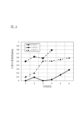
具体的には、まず、試験温度を-5℃に設定し、供試体10表面に薄い氷膜を形成した。次いで、不織布30を貼り付けた測定冶具20を準備し、測定冶具20に貼り付けた不織布30を水で飽和させて供試体10表面に設置した。次いで、供試体10表面に接地圧4kPaとなる荷重をかけた状態にて、-5℃の環境にて4時間養生を行った後、荷重を取り除いて、測定冶具20の上部に、ゴム板40を設置し、ここに420gの鋼球を25cmの高さから10回落下させた。その後、供試体10から、測定冶具20を引き抜き、測定冶具20を引き抜いた際の最大荷重を測定し、これを氷着引張強度とした。氷着引張強度が小さいほど、凍結抑制効果が高いと判断できる。また、凍結抑制効果の持続性を評価するため、同じ供試体について繰り返し氷着引張試験を行った。繰り返し試験を行っても氷着引張強度が大きく上昇しない場合、凍結抑制効果の持続性が高いと判断できる。あるいは、繰り返し試験を行うことで氷着引張強度が大きく上昇した場合であっても、氷着引張強度が大きく上昇したときの試験回数が大きいほど、凍結抑制効果の持続性が高いと判断できる。測定結果を図2に示す。 Specifically, the test temperature was set to -5°C and a thin ice film was formed on the surface of the specimen 10. Next, the measurement jig 20 with the nonwoven fabric 30 attached was prepared, and the nonwoven fabric 30 attached to the measurement jig 20 was saturated with water and placed on the surface of the specimen 10. Next, the surface of the specimen 10 was subjected to a load of 4 kPa ground pressure, and the specimen was cured in an environment of -5°C for 4 hours. The load was then removed, and a rubber plate 40 was placed on top of the measurement jig 20, and a steel ball weighing 420 g was dropped onto the rubber plate 40 from a height of 25 cm 10 times. After that, the measurement jig 20 was pulled out from the specimen 10, and the maximum load when the measurement jig 20 was pulled out was measured, and this was taken as the ice adhesion tensile strength. The smaller the ice adhesion tensile strength, the higher the anti-freezing effect. In addition, to evaluate the durability of the anti-freezing effect, the same specimen was repeatedly subjected to ice adhesion tensile tests. If the ice adhesion tensile strength does not increase significantly even after repeated tests, it can be determined that the anti-freezing effect is highly durable. Alternatively, even if the ice adhesion tensile strength increases significantly as a result of repeated testing, the greater the number of tests at which the ice adhesion tensile strength increases, the more durable the anti-freezing effect can be determined. The measurement results are shown in Figure 2.
図2に示すように、有機酸の金属塩化合物としてのギ酸ナトリウムを使用した実施例1の供試体によれば、密粒度アスファルト混合物(13)の供試体と比較して、氷着引張強度が大きく低減されており、凍結抑制効果に優れるものであるといえる。 As shown in Figure 2, the specimen of Example 1, which used sodium formate as the metal salt compound of an organic acid, showed a significantly reduced freezing tensile strength compared to the specimen of the dense-graded asphalt mixture (13), and it can be said that this has an excellent anti-freezing effect.
<融雪剤の効果の持続性評価>
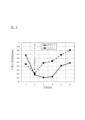
実施例1の供試体の表面を2日間流水にさらし、ギ酸ナトリウムを供試体の表面から流出させた。この供試体について、上記と同様の手順で氷着引張試験を行った。次いで、融雪剤としての塩化カルシウムを含有する塩化カルシウム水溶液を、供試体表面における塩化カルシウムの量が20g/m2となるように、氷着引張試験後の供試体表面に散布した。塩化カルシウム水溶液散布後の供試体について、繰り返し氷着引張試験を行った。塩化カルシウム水溶液散布後の氷着引張試験において、氷着引張強度が大きく上昇したときの試験回数が大きいほど、融雪剤の効果の持続性が高いと判断できる。比較例1の供試体についても、同様に融雪剤の効果の持続性評価を行った。測定結果を図3に示す。なお、図3において、回数1の結果は、供試体表面を2日間流水にさらした後の結果を表す。また、図3において、回数2~6の結果は、供試体表面に塩化カルシウム水溶液を散布した後の結果を表す。
<Evaluation of the durability of the effects of snow-melting agents>
The surface of the specimen of Example 1 was exposed to running water for two days, and sodium formate was washed out from the surface of the specimen. The icing tensile test was performed on this specimen in the same manner as described above. Next, a calcium chloride aqueous solution containing calcium chloride as a snow-melting agent was sprayed on the surface of the specimen after the icing tensile test so that the amount of calcium chloride on the surface of the specimen was 20 g/m 2. The test specimen after the calcium chloride aqueous solution was sprayed was repeatedly subjected to the icing tensile test. In the icing tensile test after the calcium chloride aqueous solution was sprayed, the greater the number of tests when the icing tensile strength increased significantly, the higher the durability of the effect of the snow-melting agent can be judged to be. The test specimen of Comparative Example 1 was also similarly evaluated for the durability of the effect of the snow-melting agent. The measurement results are shown in FIG. 3. In FIG. 3, the result of the
図2に示すように、有機酸の金属塩化合物を含有する凍結抑制剤を散布し、ポリマーエマルション、固化材、及び骨材を含有するモルタルを塗布してモルタル層を形成する方法により得られた実施例1の供試体は、氷着引張強度が小さく、凍結抑制効果に優れていた(特に、1回目の試験結果)。また、実施例1の供試体は、繰り返し氷着引張試験を行っても、氷着引張強度が大きく上昇せず、凍結抑制効果の持続性にも優れていた。 As shown in Figure 2, the specimen of Example 1 obtained by the method of spraying a freeze inhibitor containing a metal salt compound of an organic acid and applying a mortar containing a polymer emulsion, a solidifying agent, and an aggregate to form a mortar layer had a small freeze adhesion tensile strength and was excellent in freeze inhibition effect (particularly the first test result). Furthermore, even when the freeze adhesion tensile test was repeatedly performed on the specimen of Example 1, the freeze adhesion tensile strength did not increase significantly, and the freeze inhibition effect was also excellent in durability.
一方、凍結抑制剤を散布しなかった比較例1の供試体や、有機酸の金属塩化合物、ポリマーエマルション、固化材、及び骨材を含有する混合物を吹き付けることにより得られた比較例2の供試体は、氷着引張強度が大きく、凍結抑制効果に劣っていた。また、比較例1の供試体及び比較例2の供試体では、繰り返し氷着引張試験を行うことで氷着引張強度が大きく上昇してしまい、凍結抑制効果の持続性にも劣っていた。 On the other hand, the specimens of Comparative Example 1, in which no antifreeze agent was sprayed, and Comparative Example 2, obtained by spraying a mixture containing a metal salt compound of an organic acid, a polymer emulsion, a solidifying agent, and aggregate, had high ice adhesion tensile strength and poor antifreeze effect. Furthermore, in the specimens of Comparative Example 1 and Comparative Example 2, the ice adhesion tensile strength increased significantly when the ice adhesion tensile test was repeatedly performed, and the antifreeze effect was poor in durability.
また、図3に示すように、実施例1の供試体は、有機酸の金属塩化合物としてのギ酸ナトリウムを流出させ、融雪剤としての塩化カルシウム水溶液を散布した後において、繰り返し氷着引張試験を行っても、氷着引張強度が大きく上昇しなかったことから、融雪剤の効果の持続性にも優れていた。 In addition, as shown in Figure 3, the test specimen of Example 1 had excellent durability of the effect of the snow-melting agent, since the snow-melting tensile strength did not increase significantly even after repeated ice adhesion tensile tests were conducted after sodium formate, which was a metal salt compound of an organic acid, was drained out and an aqueous solution of calcium chloride was sprayed as the snow-melting agent.
Claims (9)
ポリマーエマルション、固化材、及び骨材を含有するモルタルを前記路面に塗布し、モルタル層を形成する第2の工程と、を備えた路面凍結抑制方法。 A first step of spraying an antifreeze agent containing a metal salt compound of an organic acid onto a road surface;
A method for suppressing freezing of a road surface, comprising a second step of applying mortar containing a polymer emulsion, a solidification material, and an aggregate to the road surface to form a mortar layer.
Priority Applications (3)
| Application Number | Priority Date | Filing Date | Title |
|---|---|---|---|
| JP2023148454A JP7591630B1 (en) | 2023-09-13 | 2023-09-13 | Methods for preventing road surface freezing |
| PCT/JP2024/032756 WO2025058040A1 (en) | 2023-09-13 | 2024-09-12 | Method for suppressing road surface freezing |
| KR1020267008198A KR20260049320A (en) | 2023-09-13 | 2024-09-12 | Road surface freezing prevention method |
Applications Claiming Priority (1)
| Application Number | Priority Date | Filing Date | Title |
|---|---|---|---|
| JP2023148454A JP7591630B1 (en) | 2023-09-13 | 2023-09-13 | Methods for preventing road surface freezing |
Publications (2)
| Publication Number | Publication Date |
|---|---|
| JP7591630B1 JP7591630B1 (en) | 2024-11-28 |
| JP2025041263A true JP2025041263A (en) | 2025-03-26 |
Family
ID=93587969
Family Applications (1)
| Application Number | Title | Priority Date | Filing Date |
|---|---|---|---|
| JP2023148454A Active JP7591630B1 (en) | 2023-09-13 | 2023-09-13 | Methods for preventing road surface freezing |
Country Status (3)
| Country | Link |
|---|---|
| JP (1) | JP7591630B1 (en) |
| KR (1) | KR20260049320A (en) |
| WO (1) | WO2025058040A1 (en) |
Citations (5)
| Publication number | Priority date | Publication date | Assignee | Title |
|---|---|---|---|---|
| JPS62160302A (en) * | 1985-12-30 | 1987-07-16 | 日瀝化学工業株式会社 | Freezing preventing paving method |
| JPH07324307A (en) * | 1994-05-31 | 1995-12-12 | Taisei Rotetsuku Kk | Construction method of asphalt group surface treatment material with freeze suppressing function |
| JP2010222910A (en) * | 2009-03-25 | 2010-10-07 | Toa Doro Kogyo Co Ltd | Road pavement composition and road pavement method |
| JP2020076210A (en) * | 2018-11-05 | 2020-05-21 | 前田道路株式会社 | Freezing suppression surface treatment mixture for road surfaces |
| JP2021138582A (en) * | 2020-03-06 | 2021-09-16 | 首都高メンテナンス神奈川株式会社 | Repair material for civil engineering construction, and repairing method for civil engineering construction |
-
2023
- 2023-09-13 JP JP2023148454A patent/JP7591630B1/en active Active
-
2024
- 2024-09-12 WO PCT/JP2024/032756 patent/WO2025058040A1/en active Pending
- 2024-09-12 KR KR1020267008198A patent/KR20260049320A/en active Pending
Patent Citations (5)
| Publication number | Priority date | Publication date | Assignee | Title |
|---|---|---|---|---|
| JPS62160302A (en) * | 1985-12-30 | 1987-07-16 | 日瀝化学工業株式会社 | Freezing preventing paving method |
| JPH07324307A (en) * | 1994-05-31 | 1995-12-12 | Taisei Rotetsuku Kk | Construction method of asphalt group surface treatment material with freeze suppressing function |
| JP2010222910A (en) * | 2009-03-25 | 2010-10-07 | Toa Doro Kogyo Co Ltd | Road pavement composition and road pavement method |
| JP2020076210A (en) * | 2018-11-05 | 2020-05-21 | 前田道路株式会社 | Freezing suppression surface treatment mixture for road surfaces |
| JP2021138582A (en) * | 2020-03-06 | 2021-09-16 | 首都高メンテナンス神奈川株式会社 | Repair material for civil engineering construction, and repairing method for civil engineering construction |
Also Published As
| Publication number | Publication date |
|---|---|
| JP7591630B1 (en) | 2024-11-28 |
| KR20260049320A (en) | 2026-04-13 |
| WO2025058040A1 (en) | 2025-03-20 |
Similar Documents
| Publication | Publication Date | Title |
|---|---|---|
| BRPI0911751B1 (en) | USE OF A COMPOSITION UNDERSTANDING OR CONSISTING AT LEAST A TASK AND HARDENING ACCELERATOR, ADDITIVE TO HYDRAULIC TUSK SYSTEMS, MIXTURE CONTAINING AGGLUTINATING, PROCESS TO ACCELERATE THE PRETUS AND ADHESCRIPTION OF HYDRAULIC PREDUSTING FROM THE SAME | |
| JPS62273263A (en) | Method for shortening curing time of bitumen, asphalt, coal tar and mixture thereof and composition | |
| JP4092421B2 (en) | How to lower the pavement temperature | |
| NO334327B1 (en) | Method and means for preventing the formation of winter smoothness on traffic surfaces | |
| JP7591630B1 (en) | Methods for preventing road surface freezing | |
| JP7273481B2 (en) | Anti-icing surface treatment mixture for road surfaces | |
| KR101426692B1 (en) | A very early strength concrete compositions using modified emulsified asphalt and method of bridge deck pavement using the same | |
| JPH06500528A (en) | Homogeneous tar and cement components and their manufacturing method | |
| JP4480856B2 (en) | Permeable concrete joining paste or mortar, and permeable concrete joining method | |
| KR101488799B1 (en) | A high early strength concrete compositions using modified emulsified asphalt and method of bridge deck pavement using the same | |
| KR101426691B1 (en) | High performance cement concrete compositions for bridge deck pavement with modified emulsified asphalt and method of bridge deck pavement using the same | |
| US2863841A (en) | Paving mixture comprising vermiculite, rubber, sand, and bituminous binder | |
| JP4278268B2 (en) | Permeable concrete joint paste or mortar | |
| GB2451120A (en) | Block paving sand | |
| CA2971090A1 (en) | Hydraulic composition for building roads | |
| JP2649264B2 (en) | Rapid construction method for semi-rigid pavement | |
| JPH06329918A (en) | Pavement composition | |
| KR20150030369A (en) | A super high early strength concrete compositions using modified emulsified asphalt and method of bridge deck pavement using the same | |
| JP4606526B2 (en) | Rapid hard injection material for railway tracks and method for manufacturing the same | |
| JPH0548323B2 (en) | ||
| CN107840600A (en) | A kind of permanent seal cooling gravity flow asphalt and the construction method in the hardening of track traffic | |
| JPH09316808A (en) | Sand cushion material and joint material for paving stone, and work execution method for paving stone using the same | |
| JP3795767B2 (en) | Soil-based pavement and its construction method | |
| JP4664711B2 (en) | Cement-based material coating curing agent and method for applying the coating curing agent | |
| JP2861612B2 (en) | Temperature buffer type premix grout material |
Legal Events
| Date | Code | Title | Description |
|---|---|---|---|
| A621 | Written request for application examination |
Free format text: JAPANESE INTERMEDIATE CODE: A621 Effective date: 20240703 |
|
| A871 | Explanation of circumstances concerning accelerated examination |
Free format text: JAPANESE INTERMEDIATE CODE: A871 Effective date: 20240703 |
|
| A131 | Notification of reasons for refusal |
Free format text: JAPANESE INTERMEDIATE CODE: A131 Effective date: 20240806 |
|
| A521 | Request for written amendment filed |
Free format text: JAPANESE INTERMEDIATE CODE: A523 Effective date: 20240828 |
|
| TRDD | Decision of grant or rejection written | ||
| A01 | Written decision to grant a patent or to grant a registration (utility model) |
Free format text: JAPANESE INTERMEDIATE CODE: A01 Effective date: 20241029 |
|
| A61 | First payment of annual fees (during grant procedure) |
Free format text: JAPANESE INTERMEDIATE CODE: A61 Effective date: 20241118 |
|
| R150 | Certificate of patent or registration of utility model |
Ref document number: 7591630 Country of ref document: JP Free format text: JAPANESE INTERMEDIATE CODE: R150 |