JP3802995B2 - Hydraulic power transmission coupling - Google Patents
Hydraulic power transmission coupling Download PDFInfo
- Publication number
- JP3802995B2 JP3802995B2 JP11642299A JP11642299A JP3802995B2 JP 3802995 B2 JP3802995 B2 JP 3802995B2 JP 11642299 A JP11642299 A JP 11642299A JP 11642299 A JP11642299 A JP 11642299A JP 3802995 B2 JP3802995 B2 JP 3802995B2
- Authority
- JP
- Japan
- Prior art keywords
- lock pin
- ball
- pin member
- suction
- orifice
- Prior art date
- Legal status (The legal status is an assumption and is not a legal conclusion. Google has not performed a legal analysis and makes no representation as to the accuracy of the status listed.)
- Expired - Lifetime
Links
Images





Landscapes
- Arrangement And Driving Of Transmission Devices (AREA)
Description
【0001】
【発明の属する技術分野】
本発明は、車両の駆動力配分に使用され、特に所定の温度以上になるとロックする油圧式動力伝達継手に関する。
【0002】
【従来の技術】
従来の油圧式動力伝達継手としては、例えば下記のようなものがある。
【0003】
この油圧式動力伝達継手は、相対回転可能な入出力軸間に設けられ、前記一方の軸に連結され、内側面に2つ以上の山を有するカム面に形成したカムハウジングと;
前記他方の軸に連結されるとともに、前記カムハウジング内に回転自在に収納され、複数のプランジャー室を軸方向に形成したロータと;
前記複数のプランジャー室のそれぞれに、リターンスプリングの押圧を受けて往復移動自在に収納されるとともに、前記両軸の相対回転時に前記カム面によって駆動される複数のプランジャーと;
前記ロータに形成され、前記プランジャー室に通じる吸入吐出孔と;
前記ロータの端面に回転自在に摺接するとともに、前記カムハウジングとの間で所定の関係に位置決めされ、前記吸入吐出孔との位置関係によって吸入弁および吐出弁の作用をする複数の吸入ポート、吐出ポートを表面に形成したロータリバルブと、
前記プランジャーの駆動による吐出油の流動により流動抵抗を発生する流動抵抗発生手段を備え;
前記両軸の回転速度差に応じたトルクを伝達する。
【0004】
このような油圧式動力伝達継手において、連続して砂地等、高トルクが発生する場所を走行すると油圧式動力伝達継手が冷却しきれずに過熱して、破損が発生してしまう。
【0005】
このような問題を解決するために、継手を保護するために、一定油温以上になると、温度スイッチが作動し、強制的にリリーフバルブを開いて、トルクの発生を防止する温度感応式リリーフ機構も提案されている。
【0006】
また、一定油温以上になると、形状記憶合金等を利用して、高圧回路を閉止し、差動回転を発生しないようにし、発熱エネルギーを減少させる機構も提案されている。
【0007】
リリーフバルブは、例えば図10に示すように使用される。図10において、201は潤滑油(オイル)を貯留するオイルバスであり、オイルバス201内のオイルはポンプ202により吸い上げられ、チェック弁203を介してピストン204を作動させる。ピストン204はプレート205を押圧し、クラッチ206を締結させる。油路207内の油温が一定値以上になると、リリーフバルブ208が開き、オイルはオイルストレーナ201に戻される。
【0008】
このリリーフバルブ208は、図11に示すように、油路207のリリーフ孔209を閉止するボール210と、ボール210を付勢するスプリング211を有する。油路207には温度スイッチ212が挿入され、温度スイッチ212は一定油温以上になると、ボール210を押してドレーン孔209を開く。
【0009】
ボール210は、図12に示すように、ドレーン孔209の開口部に形成されたテーパ面の弁座213に着座し、スプリング211により弁座213に押し付けられるように付勢されている。この状態においては、ドレーン孔209は閉止されている。油温が一定値以上になると、図11の温度スイッチ212が作動し、ボール210は温度スイッチ212に押されて、ドレーン孔209を開く。油路207からのオイルは、ドレーン孔209を通ってドレーンし、油圧のリリーフが行われる。
【0010】
また、図13および図14に示すように、形状記憶合金のスプリングを用いてロックさせるものもある。
【0011】
図13および図14において、ロータリバルブ221内には収納孔222が形成され、収納孔222内にはロックピン部材223が移動自在に収納される。ロックピン部材223の外周に形成された大径部224と収納孔222の内壁との間には形状記憶合金よりなるスプリング225が介装され、大径部224と収納孔222を閉止するプラグ226との間には通常のスプリング227,228が介装されている。温度が所定値未満のときは、スプリング225は変形せず、ロックピン部材223はスプリング227,228により矢印aで示すように付勢されて、ロックピン部材223は先端部が孔229から突出している。この状態においては、通常のトルク特性が得られる。
【0012】
温度が所定値以上になると、形状記憶合金よりなるスプリング225が変形して、ロックピン部材223は矢印bで示す方向に移動する、こうして、オリフィスを閉じて、ロック状態とし、リジット4WDの状態を得る。
【0013】
【発明が解決しようとする課題】
しかしながら、このような従来の油圧式動力伝達継手にあっては、図10〜図12に示すリリーフバルブを使用した場合には、砂地、深雪地などトルクが必要な走行時に、油温が上昇して、所定値を越えると、トルクが低下し走破性が低下するという問題があった。
【0014】
また、図13および図14に示すように、形状記憶合金を使用した場合には、走破性の問題は解決するが、一度リジット4WDになると、ある時間が経過し、油温が下がらないと、オリフィスが開き、前後輪の差動回転を吸収することができるようにならないため、ロックした状態で高μ路コーナを走行すると、タイトコーナーブレーキング現象が発生するという問題があった。
【0015】
本発明は、このような従来の問題点を解決するためになされたものであって、走行性をそこなうことがなく、一定トルク以上が発生しないとロックしないためタイトコーナーブレーキング現象も発生しない油圧式動力伝達継手を提供することを目的とする。
【0016】
【課題を解決するための手段】
請求項1の発明は、相対回転可能な入出力軸間に設けられ、前記一方の軸に連結され、内側面に2つ以上の山を有するカム面に形成したカムハウジングと;
前記他方の軸に連結されるとともに、前記カムハウジング内に回転自在に収納され、複数のプランジャー室を軸方向に形成したロータと;
前記複数のプランジャー室のそれぞれに、リターンスプリングの押圧を受けて往復移動自在に収納されるとともに、前記両軸の相対回転時に前記カム面によって駆動される複数のプランジャーと;
前記ロータに形成され、前記プランジャー室に通じる吸入吐出孔と;
前記ロータの端面に回転自在に摺接するとともに、前記カムハウジングとの間で所定の関係に位置決めされ、前記吸入吐出孔との位置関係によって吸入弁および吐出弁の作用をする複数の吸入ポート、吐出ポートを表面に形成したロータリバルブと、
前記プランジャーの駆動による吐出油の流動により流動抵抗を発生する流動抵抗発生手段を備え;
前記両軸の回転速度差に応じたトルクを伝達する油圧式動力伝達継手において、
油圧が所定値以上に上昇すると移動して保持していた弁体をフリーとして前記流動抵抗発生手段としてのオリフィスを閉止させるロックピン部材と、
該ロックピン部材との間に油圧室を形成するとともにロックピン部材を付勢するスプリングを保持するプラグ部材とを備え、
該プラグ部材に形成したドレーン孔を開閉するボールと、温度が所定値以上になると前記ボールを押して前記ドレーン孔を開く温度スイッチを設けた。
【0017】
請求項2の発明は、油圧が所定値以上に上昇すると移動して保持していた弁体をフリーとして前記流動抵抗発生手段としてのオリフィスを閉止させるロックピン部材と、
該ロックピン部材との間にオリフィスが開口するダンパ室を形成するとともにピストン部材を介してロックピン部材を付勢するスプリングを保持するプラグ部材とを備え、
プラグ部材に形成したドレーン孔を開閉するボールと、
温度が所定値以上になると前記ボールを押して前記ドレーン孔を開く温度スイッチを設けた。
【0018】
請求項3の発明は、油圧が所定値以上に上昇すると移動して保持していた弁体をフリーとして前記流動抵抗発生手段としてのオリフィスを閉止させるロックピン部材と、
該ロックピン部材との間にダンパ室を形成するとともにロックピン部材を付勢するスプリングを保持するプラグ部材とを備え、
該プラグ部材に前記ダンパ室と低圧側と通過しロックピン部材の移動を遅らせるオリフィスと、
該オリフィスを開閉するボールと、
温度が所定値未満のときは該ボールを押し付けてオリフィスを閉止し温度が所定値以上のとき変形してボールを移動させてオリフィスを開くバイメタルよりなる開閉部材とを設けた。
【0019】
このような構成を備えた本発明によれば、温度が所定値以上になると、プラグ部材に形成したドレーン孔を開閉するボールを、温度スイッチにより押して、ドレーン孔を開くようにしたので、温度が所定値以上になったとき、トルクが低下することがなく、走破性をそこなうことがなく、また、一定トルク以上が発生しないと、ロックしないため、タイトコーナーブレーキング現象も発生しない。
【0020】
また、油温がある温度以上では上昇しない高エネルギー発生状態ではロックして、差動回転数がほぼゼロとなるため、発熱を抑制することができる。
【0021】
また、温度が所定値以上になると、プラグ部材に形成したドレーン孔を開閉するボールを、温度スイッチにより押してドレーン孔を開くようにした前記の機構と、ロックピン部材とプラグ部材に収納したピストン部材との間にダンパ室を形成し、ダンパ室にオリフィスを開口するロックダンパ機構とをセットしたので、前記のような効果が得られるだけではなく、ロックショックを感じることがなく、温度が所定値以上のときは遅滞なくロック状態にすることができる。
【0022】
さらに、温度が所定値以上のときは、バイメタルよりなる開閉部材がボールをフリーとしてオリフィスを開放してロックピン部材が移動できるようにするので前記のような効果を得られ、さらにロックショックを感じることがない。
【0023】
【発明の実施の形態】
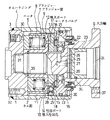
図1は本発明の一実施形態を示す断面図である。
【0024】
図1において、1は内側面に2つ以上の山を有するカム面2を形成したカムであり、カム1は図示しない出力軸に連結され、出力軸と一体で回転する。また、カム1は溶接部3でカムハウジング4に固定され、カム1はカムハウジング4と一体で回転する。
【0025】
5はカムハウジング4内に回転自在に収納されたロータであり、ロータ5は入力軸6に結合され、入力軸6と一体で回転する。
【0026】
ロータ5には、軸方向に複数個のプランジャー室7が形成され、プランジャー室7内は複数個のプランジャー8がリターンスプリング9を介して摺動自在に収納されている。また、ロータ5には複数の吸入吐出孔10が各プランジャー室7に通じるように形成されている。
【0027】
11は表面に吸入ポート12、吸入路13および吐出ポート14が形成されたロータリバルブであり、このロータリバルブ11の裏面には吐出ポート14のそれぞれに連通する連通溝15が形成されている。また、前記裏面には密着して蓋部材16が設けられ、連通溝15を閉止している。
【0028】
また、ロータリバルブ11はカムハウジング4の内周に形成した切欠き17に係合する位置決め用の突起18を有する。
【0029】
ロータリバルブ11は、吸入吐出孔10の開閉タイミングを決定するタイミング部材を構成し、切欠き17と突起18がカム1とロータリバルブ11の位相関係を規制する位置決め機構を構成している。
【0030】
プランジャー8が吸入工程にある場合は、ロータリバルブ11の吸入ポート12とロータ5の吸入吐出孔10が通じる位置関係となり、後述するオリフィス、吸入ポート12、吸入路13、ロータ5の吸入吐出孔10を通じて、プランジャー室7に油を吸入することができる。
【0031】
また、プランジャー8が吐出工程にある場合は、吸入工程と逆の関係となり、ロータ5の吸入吐出孔10はロータリバルブ11の吐出ポート14を介して連通溝15に通じる。
【0032】
19はカムハウジング4と一体で回転するベアリングリテーナーであり、ベアリング20を介して入力軸6を支持している。ベアリングリテーナー19とロータリバルブ11との間にはスラストニードルベアリング21が介装され、このスラストニードルベアリング21側のフリクショントルクはロータ5とロータリバルブ11の間のフリクショントルクより小さくなるように設定されている。
【0033】
したがって、差動回転の方向が変わると、ロータリバルブ11はロータ5とともにつれ回りし、ロータリバルブ11の位置決め用の突起18がカムハウジング4の切欠き17に当たるまで回転した後、カムハウジング4と一体で回転する。これにより、正転時または逆転時にも所定のタイミングで吸入吐出孔10は強制的に切替わる。
【0034】
ベアリングリテーナー19と入力軸6の間にはオイルシール22が設けられ、また、入力軸6の内部には油の熱膨張・収縮を吸収するためのアキュムレータピストン23が摺動自在に収納されている。24はアキュムレータ室25のOリング摺動部への泥水の侵入を防止する蓋部材である。
【0035】
アキュムレータ室25は油路26,27を介して継手の内部に連通している。ロータリバルブ11には前記吐出ポート14に連通する高圧室28が形成され、高圧室28の出口部はプラグ29により閉止されている。なお、30は注油孔、31はニードルベアリング、32はねじ孔、33,34はOリング、35,36はスナップリング、37は取付孔である。
【0036】
図2はロータリバルブ11の断面図である。
【0037】
図2において、11はロータリバルブであり、ロータリバルブ11にはボール(弁体)38を移動自在に収納する収納室39が形成されている。収納室39は高圧路40を介して吐出ポート14に連通している。ロータリバルブ11には収納孔41が形成され、収納孔41内にはロックピン部材42を移動自在に収納する収納部材43が挿入されている。収納部材43の底壁には収納部材43の内部に形成された室44と収納室39を連通させる連通孔45が形成されている。連通孔45の入口部には弁座46が形成され、弁座46にはロック状態時ボール38が着座して連通孔45を閉止する。
【0038】
ロックピン部材42は小径のピン部47と大径の大径部48を有し、ボール38はロックピン部材42によりその位置が制御される。ピン部47と連通孔45との間の間隙は、流動抵抗発生手段としてのオリフィス49となっている。したがって、連通孔45の孔径を大きく形成することができ、孔径精度もラフにすることができる。
【0039】
ボール38がロックピン部材42により保持されているときは、オリフィス49は開放されているが、ボール38がフリーになると、ボール38は収納部材43の弁座46の着座して、オリフィス49を閉止する。
【0040】
ロックピン部材42の大径部48の外周には凹部50が形成され、凹部50にはシール部材51が介装されている。収納孔41に収納された収納部材43に続いてプラグ52がねじ込まれ、プラグ52の内部には開口部54を有するスプリング保持部材55が設けられている。スプリング保持部材55とロックピン部材42との間には二つのスプリング56,57が介装されている。ロックピン部材42は通常時はスプリング56,57により図中左方向に付勢され、ボール38を保持している。プラグ52にはドレーン孔58が形成され、ドレーン孔58は通常時にはスプリング56,57を保持するスプリング保持部材55で押圧されたボール59によって閉止されている。
【0041】
ドレーン孔58に連通する溝60がプラグ52に形成され、また排出孔61がプラグ52とロータリバルブ11にそれぞれ形成されている。
【0042】
プラグ52には凹部62が形成され、凹部62には温度スイッチ63が挿入され、温度スイッチ63のピン部64はボール59に当接するように、ドレーン孔58に挿入されている。ロータリバルブ11にはL字型の板金部材65がボルト66により固定され、板金部材65により温度スイッチ69を保持している。
【0043】
温度スイッチ63は温度が所定値以上になると、ピン部64が突出してボール59を押し、ボール59はスプリング56,57に抗してスプリング保持部材55を押圧し、ドレーン孔58が開放される。なお、プラグ52とロックピン部材42との間には油圧室67が形成され、油圧室67内にはオイルが充満している。
【0044】
次に、作用を説明する。
【0045】
図1において、カム1とロータ5との間に回転差が生じないときは、プランジャー8は作動せず、トルクは伝達されない。なお、このとき、プランジャー8はリターンスプリング9によりカム面2に押し付けられている。
【0046】
次に、カム1とロータ5との間に回転差が生じると、吐出行程にあるプランジャー8はカム1のカム面2により軸方向に押し込まれる。
【0047】
この時、吸入吐出孔10は吐出ポート14と通じているため、プランジャー8はプランジャー室7の油を吸入吐出孔10からロータリバルブ11の吐出ポート14に押し出す。
【0048】
吐出ポート14に押し出された油は、オリフィスを通って吸入路13から吸入ポート12に供給される。このとき、オリフィスの抵抗により吐出ポート14、プランジャー室7などの油圧が上昇し、プランジャー8に反力が発生する。
【0049】
このプランジャー反力に逆ってカム1を回転させることによりトルクが発生し、カム1とロータ5との間でトルクが伝達される。なお、吐出ポート14は連通溝15で連通されているため、吐出行程にあるすべてのプランジャー室7の油圧は等しくなる。
【0050】
さらに、カム1が回転すると、吸入行程となり、吸入吐出孔10は吸入ポート12と通じるため、吸入路13の油は、吸入ポート12、吸入吐出孔10を介してプランジャー室7に吸入され、プランジャー8はカム1のカム面2に沿って戻る。
【0051】
図2において、通常走行時にはスプリング56,57を保持するスプリング保持部材55によりボール59がドレーン孔58に押圧されて、ドレーン孔58を閉止しており、油圧室67内のオイルは逃げられないため、ロックピン部材42は移動しない。したがって、ロックピン部材42は弁体としてのボール38を保持しており、ボール38は連通孔45を開放しているため、吐出ポート14からの吐出圧は、高圧路40、収納室39からオリフィス49を通過して、低圧側に排出される。
【0052】
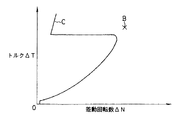
したがって、図3のAで示すように通常のトルク特性を示す。図3において、Bは高トルク×高差動域を示し、この高トルク×高差動域Bを通過する通常トルク特性が得られる。
【0053】
次に、図3の高トルク×高差動域Bで長時間運転すると、発熱エネルギーが高いため、継手内の油温が上昇し、所定値以上になると、温度スイッチ63が作動して、そのピン部64がボール59を押圧する。
【0054】
ボール59はスプリング56,57に抗してスプリング保持部材55を押圧し、ドレーン孔58から離れてドレーン孔58を開放する。油圧室67内のオイルは、ドレーン孔58、溝62、排出孔61を通って低圧側にドレーンする。このため、ロックピン部材42は移動可能となり、ロックピン部材42のピン部47に作用する油圧が所定値以上になると、ロックピン部材42は図中右方向に移動し、ボール38はフリーとなって、連通孔45を閉止し、オリフィス49を閉止する。このように、一定トルク以上ではスプリング56,57のスプリング力に打ち勝ってロックピン部材42は移動し、ロック状態になる。
【0055】
このときのトルク特性は、図4のCで示すようなロック特性となる。高トルク×高差動域Bより小さい値のとき、ロック状態になる。
【0056】
このように、温度が所定値以上になったときは、2WDにはならないので、走破性がそこなわれることがなく、また、一定トルク以上が発生しないと、ロックしないため、タイトコーナーブレーキング現象も発生しない。また、継手の油温がある温度以上に上昇する高エネルギー発生状態{ΔN×ΔT≧C(一定値)}ではロックし、差動回転数ΔN≒0となるため、発熱は抑制される。
【0057】
図5〜図7は本発明の第2の実施形態を示す要部断面図である。
【0058】
図5において、ロータリバルブ11には吐出ポート14と吸入ポート12が周方向に交互に形成され、吸入ポート12は吸入路13に連通している。ロータリバルブ11の外周に形成した突起18はカムハウジング4の内周に形成した切欠き17に係合する。ロータリバルブ11には収納孔71が形成され、収納孔71内には弁体としてのボール72を収納する収納室73が形成された収納部材74が挿入され、収納部材74に続いてプラグ75がねじ込まれ、収納孔71が閉止されている。
収納室73にはボール72が移動自在に収納され、収納室73は図示しない高圧路により吐出ポート14に連通している。
【0059】
ロータリバルブ11にはロックピン部材76が移動自在に収納される別の収納孔77が形成され、収納孔77はロータリバルブ11に形成した連通孔78および収納部材74に形成した連通孔79を介して収納室73に連通している。収納孔77には低圧孔80が形成されている。低圧孔80からオイルが低圧側に排出される。ロックピン部材76は連通孔78,79に移動自在に挿入され、通常時にボール72を押圧して保持する小径のピン部81と、外周に形成した溝82にシール部材83が挿入された大径の大径部84と、ロックピン部材76の移動量を一定に規定するストッパ部85とを有する。
【0060】
ロックピン部材76のピン部81とロータリバルブ11に形成した連通孔78との間隙が流動抵抗発生手段としてのオリフィス86を形成している。ロックピン部材76が図中左方向に移動し、ボール72がフリーとなると、ボール72は連通孔79を閉止し、オリフィス86が閉止されて、ロック状態になる。
【0061】
また、ロータリバルブ11には収納孔77に連通する収納孔87が形成され、収納孔87内には油圧室88が形成されたプラグ89がねじ込まれている。油圧室88内にはばね90により図中右方向に付勢されるピストン部材91が移動自在に収納され、ピストン部材91の外周に形成した溝92にはシール部材93が介装されている。ピストン部材91とロックピン部材76との間にはロックピン部材76を図中右方向に付勢するスプリング94が介装され、スプリング94が収納されるダンパ室95が形成されている。ダンパ室95にはオリフィス96が開口しており、オリフィス96は低圧側に連通し、ロックピン部材76の移動を遅らせるもので、ロックによる感じるショックを防止する。油圧室88は、ピストン部材91に設けたシール部材93によりシールされており、油圧室88のオイルは、ダンパ室95に流れて、オリフィス96から流出することはないようにしている。
【0062】
また、ロータリバルブ11にはダンパ室95に連通するさらに別の収納孔97が形成され、収納孔97にはプラグ98がねじ込まれている。プラグ98にはダンパ室95とロータリバルブ11の外側の低圧側とを連通する吸入孔99が形成され、吸入孔99はボール100により開閉される。ロックするときは、ボール100は吸入孔99を閉止し、ロック解除のときはボール100は吸入孔99を開放し、オイルをダンパ室95に吸入させる。
【0063】
プラグ89に形成した油圧室88とロータリバルブ11の外側の低圧側とを連通するドレーン孔101がプラグ89に形成され、ドレーン孔101はボール102により開閉される。プラグ89に形成した凹部103には温度スイッチ104が収納され、温度スイッチ104のピン部105はドレーン孔101に移動自在に挿入される。
【0064】
温度が所定値以上になると、温度スイッチ104は作動し、ピン部105がボール102を押して、ドレーン孔101を開く。ドレーン孔101が開くと、ピストン部材91は移動可能となり、ロックピン部材76のストッパ部85により押圧されて、図中左方向に移動する。温度スイッチ104の外側には蓋部材106が設けられ、温度スイッチ104は蓋部材106により、プラグ89からはずれるのが防止される。蓋部材106にはドレーン孔101に連通する排出孔107が設けられている。
【0065】
次に、作用を説明する。
【0066】
通常走行時には、図5に示すようにロックピン部材76は移動せず、ボール72を保持している。連通孔78とロックピン部材76のピン部81との間隙よりなるオリフィス86は開いており、吐出ポート14からの吐出圧(内圧)は、収納室73、連通孔79、オリフィス86を通過して低圧孔80から低圧側に排出される。
【0067】
また、温度が所定値未満では、温度スイッチ104は作動せず、ドレーン孔101はボール102により閉止されている。ピストン部材91は左方向に移動できない。このときのトルク特性は、図3のAに示すように、通常のトルク特性を示す。
【0068】
次に、図6に示すように、前後輪差動回転数ΔNが所定値を越えると、収納室73の油圧が上昇し、収納室73の油圧によるロックピン部材76を押す力がスプリング94によるロックピン部材76を押す力より大きくなるため、ロックピン部材76が左方向に移動しようとするが、ロックピン部材76の背後のダンパ室95内にはオイルが充満しており、オイルはオリフィス96を通過するため、ロックピン部材76の移動は遅れる。
【0069】
したがって、低μ路の発進時にピークトルクが発生してもその瞬時にはロックピン部材76は左方向に移動しないため、ロックしない。その結果、ロックショックを感じることはない。
【0070】
図7に示すように、温度が所定値以上になると、温度スイッチ104が作動し、温度スイッチ104のピン部105がボール102を押して、ドレーン孔101を開く。ロックピン部材76はさらに左方向に移動し、ストッパ部85でピストン部材91を押して、急速に左方向に移動する。このため、ボール72は連通孔79を閉止し、オリフィス86を閉止するため、ロック状態となる。このときのトルク特性は、図4のCに示すようなロック特性となる。
【0071】
収納室73の油圧が低下し、収納室73の油圧によるロックピン部材76を押す力よりもスプリング94によるロックピン部材76を押す力が大きくなると、ロックピン部材76は図中右方向に移動し、ボール72を保持し、オイルはオリフィス86を通過するようになる。また、温度が所定値未満になると、温度スイッチ104は作動しなくなり、元の状態に戻って、ボール102がドレーン孔101を閉止する。このようなロック解除では、ボール100が吸入孔99を開き、オイルがダンパ室95に吸入され、ロック解除を瞬時に行うことができる。
【0072】
本実施形態においても前記実施形態と同様な効果が得られ、さらに、ロックショックを感じることがなく、ロック時には遅滞なくロック状態にすることができる。
【0073】
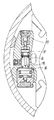
図8および図9は本発明の第3の実施形態を示す要部断面図である。
【0074】
図8において、ロータリバルブ11には吐出ポート14に連通する高圧室111が形成され、高圧室111内には硬化したカラー部材112が収納される。
【0075】
カラー部材112内には弁体としてのボール113が移動自在に収納される収納室114が形成されている。収納室114は開口部115を介して連通孔116に連通している。
【0076】
連通孔116は、ロックピン部材117を収納する収納孔118に連通し、収納孔118内にはロックピン部材117が摺動自在に収納される。ロックピン部材117は小径のピン部119と大径の大径部120とストッパ部121を有し、ボール113はロックピン部材117によりその位置が制御される。ロックピン部材117の大径部120には溝122が形成され、溝122にはオイルシール123が介装される。
【0077】
ピン部119と連通孔116との間の間隙は、流動抵抗発生手段としてのオリフィス124になっている。したがって、連通孔116の孔径は大きく形成することができ、孔径精度もラフにすることができる。
【0078】
ピン部119側の収納孔118には低圧側に連通する低圧孔125が形成されている。オリフィス124を通過したオイルは低圧孔125から低圧側に排出される。
【0079】
ボール113がロックピン部材117により保持されているときは、オリフィス124は開放されているが、ボール113がフリーになると、ボール113はカラー部材112に形成された弁座126に着座し、オリフィス124を閉止する。
【0080】
収納孔118にはプラグ127がねじ込まれ、プラグ127により閉止されている。プラグ127の内部には段部128が形成され、段部128にはスプリング受け部129が設けられている。スプリング受け部129とロックピン部材117との間にはスプリング130が介装されている。
【0081】
収納孔118内に収納されたロックピン部材117はスプリング130により付勢されて、ボール113を保持し、ボール113を収納する収納室114内の油圧がある所定値以上に上昇すると、ロックピン部材117はスプリング130に抗して右方向に移動し、ストッパ部121がスプリング受け部129に当接する。ロックピン部材117のストッパ部121はロックピン部材117の一定距離以上の移動を阻止する。
【0082】
スプリング受け部129には連通孔131が形成され、ロックピン部材117の背後の室132とボール133を収納する室134とは連通孔131により連通している。室132と室134がロックピン部材117が右方向に移動するのを遅らせるためのダンパ室を形成している。
【0083】
プラグ127の端部にはバイメタルよりなる開閉部材135が取り付けられる係止部材136が係止されている。プラグ127と係止部材136には、吸入孔137,138が形成され、吸入孔137,138はボール133により開閉される。ロックするときは、ボール133が吸入孔137,138を閉止し、ロック解除のときはボール133は吸入孔137,138を開放して室132および室134はオイルを吸入する。
【0084】
プラグ127にはロックピン部材117の移動を遅らせるオリフィス139が形成され、オリフィス139の出口側にはボール140を収納する収納部141が形成されている。バイメタルよりなる開閉部材135は温度が所定値未満のときは、変形せず、ボール140を押圧してオリフィス139を閉止し、温度が所定値以上になると、変形してボール140から離れ、オリフィス139を開く。
【0085】
次に、作用を説明する。
【0086】
通常走行時には、温度が所定値未満であるため、バイメタルよりなる開閉部材135は、変形せず、ボール140を押圧し、オリフィス139を閉止している。また、ボール133は吸入孔137,138を閉止している。室132および室134のオイルは、逃げられないため、ロックピン部材117は移動しない。このため、ロックピン部材117はボール113を保持しており、吐出ポート14からのオイルは、収納室114、開口部115、オリフィス124を通過して低圧孔125から低圧側に排出される。このため、トルク特性は、図3のAに示すような通常のトルク特性を示す。
【0087】
図3のBで示す高トルク×高差動域で長時間運転すると、発熱エネルギーが高いため、油温が上昇し、所定値以上になると、バイメタルよりなる開閉部材135が変形し、ボール140がオリフィス139からはずれて、オリフィス139を開く。このため、室132および室134のオイルは、オリフィス139からドレーンすることができ、ロックピン部材117は移動可能となる。
【0088】
この場合、室132および室134内に充満しているオイルはオリフィス139を通過するため、ロックピン部材117の移動は遅れる。
【0089】
このため、低μ路の発進時にピークトルクが発生してもその瞬時にはロックピン部材117は右方向に移動しないため、ロックしない。その結果、ロックショックを感じることはない。
【0090】
一方、高い駆動力が必要な場合(高トルクが持続する場合)では、ロックピン部材117の背後の室132および室134に充満しているオイルは、オリフィス139を通過して低圧側に排出され、ロックピン部材117は遅延して数秒後には右方向に移動するため、ロックピン部材117によって保持されていたボール113はフリーとなり、オリフィス124を閉止する。このときのトルク特性は、図4のCに示すようなロック特性となる。したがって、このロック状態においては、車両の走破性は保持される。
【0091】
収納室114の油圧が低下し、収納室114の油圧によるロックピン部材117を押す力よりもスプリング130によるロックピン部材117を押す力が大きくなると、ロックピン部材117は図中左方向に移動し、ボール113を保持し、オイルはオリフィス124を通過するようになる。このようなロック解除では、ボール133が吸入孔137から離れてフリーとなり、吸入孔137,138が開放され、オイルは室132および室134に吸入し、ロック解除が瞬時に行える。このようにダンパ効果を保持しながら、ロック解除を瞬時に行うことができる。
【0092】
また、温度が所定値未満に低下すると、バイメタルよりなる開閉部材135は、元の状態に戻り、ボール140を押圧してオリフィス139を閉止する。
【0093】
【発明の効果】
以上説明してきたように、本発明によれば、温度が所定値以上になると、プラグ部材に形成したドレーン孔を開閉するボールを、温度スイッチにより押して、ドレーン孔を開くため、温度が所定値以上になったとき、トルクが低下することがなく、走破性をそこなうことがなく、また、一定トルク以上が発生しないと、ロックしないため、タイトコーナーブレーキング現象も発生しない。
【0094】
また、油温がある温度以上では上昇しない高エネルギー発生状態ではロックして、差動回転数がほぼゼロとなるため、発熱を抑制することができる。
【0095】
また、温度が所定値以上になると、プラグ部材に形成したドレーン孔を開閉するボールを、温度スイッチにより押してドレーン孔を開くようにした前記の機構と、ロックピン部材とプラグ部材に収納したピストン部材との間にダンパ室を形成し、ダンパ室にオリフィスを開口するロックダンパ機構とをセットしたため、前記のような効果が得られるだけではなく、ロックショックを感じることがなく、温度が所定値以上のときは遅滞なくロック状態にすることができる。
【0096】
さらに、温度が所定値以上のときは、バイメタルよりなる開閉部材がボールをフリーとしてオリフィスを開放してロックピン部材が移動できるようにするため、前記のような効果を得られ、さらにロックショックを感じることがない。
【図面の簡単な説明】
【図1】本発明の第1の実施形態を示す断面図
【図2】本発明の第1の実施形態を示す要部断面図
【図3】通常のトルク特性を示すグラフ
【図4】通常のトルク特性からロック特性への移行を示すグラフ
【図5】本発明の第2の実施形態を示す要部断面図(その一)
【図6】本発明の第2の実施形態を示す要部断面図(その二)
【図7】本発明の第2の実施形態を示す要部断面図(その三)
【図8】本発明の第3の実施形態を示す要部断面図(その一)
【図9】本発明の第3の実施形態を示す要部断面図(その二)
【図10】従来のリリーフバルブの使用例を示す図
【図11】従来のリリーフバルブと温度スイッチを示す図
【図12】従来のリリーフバルブの断面図
【図13】従来の形状記憶合金を用いたロック機構を示す図(その一)
【図14】従来の形状記憶合金を用いたロック機構を示す図(その二)
【符号の説明】
1:カム
2:カム面
3:溶接部
4:カムハウジング
5:ロータ
6:入力軸
7:プランジャー室
8:プランジャー
9:リターンスプリング
10:吸入吐出孔
11:ロータリバルブ
12:吸入ポート
13:吸入路
14:吐出ポート
15:連通溝
16:蓋部材
17:切欠き
18:突起
19:ベアリングリテーナー
20:ベアリング
21:スラストニードルベアリング
22:オイルシール
23:アキュムレータピストン
24:蓋部材
25:アキュムレータ室
26,27:油路
28:高圧室
29:プラグ
30:注油孔
31:ニードルベアリング
32:ねじ孔
33,34:Oリング
35,36:スナップリング
37:取付孔
38:ボール(弁体)
39:収納室
40:高圧路
41:収納孔
42:ロックピン部材
43:収納部材
44:室
45:連通孔
46:弁座
47,64:ピン部
48:大径部
49:オリフィス(流動抵抗発生手段)
50,62:凹部
51:シール部材
52:プラグ(プラグ部材)
54:開口部
55:スプリング保持部材
56,57:スプリング
58:ドレーン孔
59:ボール
60:溝
61:排出孔
63:温度スイッチ
65:板金部材
66:ボルト
67:油圧室
71,77,87,97:収納孔
72,100,102:ボール
73:収納室
74:収納部材
75,89,98:プラグ
76:ロックピン部材
78,79:連通孔
80:低圧孔
81,105:ピン部
82,92:溝
83,93:シール部材
84:大径部
85:ストッパ部
86,96:オリフィス
88:油圧室
90:皿ばね
91:ピストン部材
94:スプリング
95:ダンパ室
99:吸入孔
101:ドレーン孔
103:凹部
104:温度スイッチ
106:蓋部材
107:排出孔
111:高圧室
112:カラー部材
113:ボール(弁体)
114:収納室
115:開口部
116,131:連通孔
117:ロックピン部材
118:収納孔
119:ピン部
120:大径部
121:ストッパ部
122:溝
123:オイルシール
124,139:オリフィス
125:低圧孔
126:弁座
127:プラグ
128:段部
129:スプリング受け部
130:スプリング
132,134:室
133,140:ボール
135:開閉部材
136:係止部材
137,138:吸入孔
139:オリフィス
141:収納部[0001]
BACKGROUND OF THE INVENTION
The present invention relates to a hydraulic power transmission joint that is used for distribution of driving force of a vehicle, and that locks when a predetermined temperature is exceeded.
[0002]
[Prior art]
Examples of conventional hydraulic power transmission joints include the following.
[0003]
The hydraulic power transmission joint is provided between a relatively rotatable input / output shaft, connected to the one shaft, and a cam housing formed on a cam surface having two or more ridges on an inner surface;
A rotor coupled to the other shaft and rotatably accommodated in the cam housing, and having a plurality of plunger chambers formed in the axial direction;
A plurality of plungers which are received in the plurality of plunger chambers so as to be able to reciprocate under the pressure of a return spring, and which are driven by the cam surface when the two shafts rotate relative to each other;
A suction / discharge hole formed in the rotor and communicating with the plunger chamber;
A plurality of suction ports that are slidably contacted with the end surface of the rotor and are positioned in a predetermined relationship with the cam housing and act as a suction valve and a discharge valve depending on the positional relationship with the suction and discharge holes, and a discharge port A rotary valve with a port formed on the surface;
Flow resistance generating means for generating a flow resistance by the flow of discharged oil by driving the plunger;
Torque is transmitted according to the rotational speed difference between the two shafts.
[0004]
In such a hydraulic power transmission joint, when the vehicle continuously travels in a place where high torque is generated, such as sandy ground, the hydraulic power transmission joint cannot be cooled and overheats, resulting in damage.
[0005]
To solve such problems, a temperature-sensitive relief mechanism that prevents the generation of torque by operating the temperature switch and forcibly opening the relief valve when the oil temperature exceeds a certain level in order to protect the joint. Has also been proposed.
[0006]
In addition, a mechanism has been proposed that uses a shape memory alloy or the like to close the high-pressure circuit so as not to generate differential rotation and reduce the heat generation energy when the oil temperature exceeds a certain level.
[0007]
The relief valve is used, for example, as shown in FIG. In FIG. 10,
[0008]
As shown in FIG. 11, the
[0009]
As shown in FIG. 12, the
[0010]
In addition, as shown in FIGS. 13 and 14, there are some which are locked using a spring of a shape memory alloy.
[0011]
13 and 14, a
[0012]
When the temperature exceeds a predetermined value, the
[0013]
[Problems to be solved by the invention]
However, in such a conventional hydraulic power transmission joint, when the relief valve shown in FIG. 10 to FIG. 12 is used, the oil temperature rises during traveling that requires torque such as sand or deep snow. When the value exceeds the predetermined value, there is a problem that the torque is lowered and the running performance is lowered.
[0014]
Moreover, as shown in FIG. 13 and FIG. 14, when the shape memory alloy is used, the problem of runnability is solved, but once the rigid 4WD is reached, a certain period of time has passed and the oil temperature has not decreased. Since the orifice is not opened and the differential rotation of the front and rear wheels cannot be absorbed, there is a problem that a tight corner braking phenomenon occurs when driving on a high μ road corner in a locked state.
[0015]
The present invention has been made to solve such a conventional problem, and does not impair running performance, and does not lock unless a certain torque or more is generated, so that a tight corner braking phenomenon does not occur. An object is to provide a power transmission coupling.
[0016]
[Means for Solving the Problems]
According to a first aspect of the present invention, the cam housing is provided between the input / output shafts capable of relative rotation, is connected to the one shaft, and is formed on a cam surface having two or more ridges on the inner surface;
A rotor coupled to the other shaft and rotatably accommodated in the cam housing, and having a plurality of plunger chambers formed in the axial direction;
A plurality of plungers which are received in the plurality of plunger chambers so as to be able to reciprocate under the pressure of a return spring, and which are driven by the cam surface when the two shafts rotate relative to each other;
A suction / discharge hole formed in the rotor and communicating with the plunger chamber;
A plurality of suction ports that are slidably contacted with the end surface of the rotor and are positioned in a predetermined relationship with the cam housing and act as a suction valve and a discharge valve depending on the positional relationship with the suction and discharge holes, and a discharge port A rotary valve with a port formed on the surface;
Flow resistance generating means for generating a flow resistance by the flow of discharged oil by driving the plunger;
In the hydraulic power transmission joint that transmits torque according to the rotational speed difference between the two shafts,
A lock pin member for closing the orifice as the flow resistance generating means by freeing the valve body that has been moved and held when the hydraulic pressure rises above a predetermined value;
A plug member that forms a hydraulic chamber with the lock pin member and holds a spring that biases the lock pin member;
A ball that opens and closes the drain hole formed in the plug member and a temperature switch that opens the drain hole by pressing the ball when the temperature reaches a predetermined value or more are provided.
[0017]
The invention of
A plug member that forms a damper chamber with an orifice opening between the lock pin member and a spring that biases the lock pin member via the piston member;
A ball that opens and closes a drain hole formed in the plug member;
A temperature switch is provided that opens the drain hole by pushing the ball when the temperature exceeds a predetermined value.
[0018]
According to a third aspect of the present invention, there is provided a lock pin member for closing the orifice as the flow resistance generating means by freeing the valve body that has been moved and held when the hydraulic pressure rises to a predetermined value or more;
A plug member that forms a damper chamber with the lock pin member and holds a spring that biases the lock pin member;
An orifice that passes through the damper chamber and the low pressure side of the plug member to delay the movement of the lock pin member;
A ball for opening and closing the orifice;
When the temperature is lower than a predetermined value, the ball is pressed to close the orifice, and when the temperature is equal to or higher than the predetermined value, an opening / closing member made of a bimetal is provided to deform and move the ball to open the orifice.
[0019]
According to the present invention having such a configuration, when the temperature exceeds a predetermined value, the ball that opens and closes the drain hole formed in the plug member is pushed by the temperature switch so that the drain hole is opened. When the value exceeds a predetermined value, the torque does not decrease, the running performance is not deteriorated, and if a certain torque or more does not occur, the lock does not occur and the tight corner braking phenomenon does not occur.
[0020]
In addition, the oil temperature is locked in a high energy generation state where the oil temperature does not rise above a certain temperature, and the differential rotation speed becomes almost zero, so that heat generation can be suppressed.
[0021]
In addition, when the temperature exceeds a predetermined value, the mechanism that opens the drain hole by pressing a ball that opens and closes the drain hole formed in the plug member with a temperature switch, and the piston member housed in the lock pin member and the plug member A damper chamber is formed between the damper chamber and a lock damper mechanism that opens an orifice in the damper chamber, so that not only the above-mentioned effects can be obtained, but also a lock shock is not felt, and the temperature is a predetermined value. In these cases, the locked state can be achieved without delay.
[0022]
Furthermore, when the temperature is higher than a predetermined value, the opening and closing member made of bimetal frees the ball and opens the orifice so that the lock pin member can move, so that the above effects can be obtained, and further a lock shock is felt. There is nothing.
[0023]
DETAILED DESCRIPTION OF THE INVENTION
FIG. 1 is a sectional view showing an embodiment of the present invention.
[0024]
In FIG. 1,
[0025]
A rotor 5 is rotatably housed in the cam housing 4. The rotor 5 is coupled to the input shaft 6 and rotates integrally with the input shaft 6.
[0026]
A plurality of plunger chambers 7 are formed in the rotor 5 in the axial direction, and a plurality of plungers 8 are slidably accommodated in the plunger chamber 7 via return springs 9. A plurality of suction / discharge holes 10 are formed in the rotor 5 so as to communicate with the plunger chambers 7.
[0027]
[0028]
The
[0029]
The
[0030]
When the plunger 8 is in the suction process, a positional relationship is established between the
[0031]
Further, when the plunger 8 is in the discharge process, the relationship is reverse to that of the suction process, and the suction / discharge hole 10 of the rotor 5 communicates with the
[0032]
A bearing
[0033]
Accordingly, when the direction of the differential rotation is changed, the
[0034]
An
[0035]
The
[0036]
FIG. 2 is a sectional view of the
[0037]
In FIG. 2, 11 is a rotary valve, and the
[0038]
The lock pin member 42 has a small-
[0039]
When the ball 38 is held by the lock pin member 42, the orifice 49 is open, but when the ball 38 becomes free, the ball 38 is seated on the
[0040]
A recess 50 is formed on the outer periphery of the large-
[0041]
A groove 60 communicating with the drain hole 58 is formed in the plug 52, and a discharge hole 61 is formed in the plug 52 and the
[0042]
A concave portion 62 is formed in the plug 52, a temperature switch 63 is inserted into the concave portion 62, and a pin portion 64 of the temperature switch 63 is inserted into the drain hole 58 so as to contact the ball 59. An L-shaped
[0043]
When the temperature of the temperature switch 63 exceeds a predetermined value, the pin portion 64 protrudes to push the ball 59, the ball 59 pushes the spring holding member 55 against the springs 56, 57, and the drain hole 58 is opened. A hydraulic chamber 67 is formed between the plug 52 and the lock pin member 42, and the hydraulic chamber 67 is filled with oil.
[0044]
Next, the operation will be described.
[0045]
In FIG. 1, when there is no rotational difference between the
[0046]
Next, when a rotational difference is generated between the
[0047]
At this time, since the suction / discharge hole 10 communicates with the
[0048]
The oil pushed out to the
[0049]
Torque is generated by rotating the
[0050]
Further, when the
[0051]
In FIG. 2, the ball 59 is pressed against the drain hole 58 by the spring holding member 55 that holds the springs 56 and 57 during normal running, and the drain hole 58 is closed, so that the oil in the hydraulic chamber 67 cannot escape. The lock pin member 42 does not move. Therefore, since the lock pin member 42 holds the ball 38 as a valve body and the ball 38 opens the
[0052]
Therefore, a normal torque characteristic is shown as indicated by A in FIG. In FIG. 3, B indicates a high torque × high differential region, and a normal torque characteristic passing through the high torque × high differential region B is obtained.
[0053]
Next, when the engine is operated for a long time in the high torque × high differential range B in FIG. 3, the heat generation energy is high, so that the oil temperature in the joint rises and when the temperature exceeds a predetermined value, the temperature switch 63 is activated, The pin portion 64 presses the ball 59.
[0054]
The ball 59 presses the spring holding member 55 against the springs 56 and 57, leaves the drain hole 58 and opens the drain hole 58. Oil in the hydraulic chamber 67 drains to the low pressure side through the drain hole 58, the groove 62, and the discharge hole 61. For this reason, the lock pin member 42 can move, and when the hydraulic pressure acting on the
[0055]
The torque characteristic at this time is a lock characteristic as indicated by C in FIG. When the value is smaller than high torque × high differential range B, the lock state is established.
[0056]
In this way, when the temperature exceeds a predetermined value, 2WD is not achieved, so that the running performance is not impaired, and when a certain torque or more does not occur, the lock does not lock, and the tight corner braking phenomenon. Does not occur. Also, in a high energy generation state {ΔN × ΔT ≧ C (constant value)} in which the oil temperature of the joint rises above a certain temperature, the joint is locked and the differential rotational speed ΔN≈0, so heat generation is suppressed.
[0057]
5 to 7 are cross-sectional views showing the main part of a second embodiment of the present invention.
[0058]
In FIG. 5, the
A
[0059]
The
[0060]
A gap between the
[0061]
The
[0062]
The
[0063]
A
[0064]
When the temperature reaches a predetermined value or more, the
[0065]
Next, the operation will be described.
[0066]
During normal running, the
[0067]
When the temperature is lower than the predetermined value, the
[0068]
Next, as shown in FIG. 6, when the front and rear wheel differential rotation speed ΔN exceeds a predetermined value, the hydraulic pressure in the
[0069]
Therefore, even if the peak torque is generated when the low μ road starts, the
[0070]
As shown in FIG. 7, when the temperature reaches a predetermined value or more, the
[0071]
When the hydraulic pressure in the
[0072]
In this embodiment, the same effects as those of the above embodiment can be obtained, and further, the lock shock can not be felt, and the locked state can be achieved without delay at the time of locking.
[0073]
8 and 9 are cross-sectional views showing the main part of the third embodiment of the present invention.
[0074]
In FIG. 8, the
[0075]
A
[0076]
The
[0077]
A gap between the
[0078]
The
[0079]
When the
[0080]
A
[0081]
The
[0082]
A
[0083]
A locking
[0084]
The
[0085]
Next, the operation will be described.
[0086]
Since the temperature is lower than a predetermined value during normal travel, the opening / closing
[0087]
When operating for a long time in the high torque x high differential range shown by B in FIG. 3, since the heat generation energy is high, when the oil temperature rises and exceeds a predetermined value, the opening / closing
[0088]
In this case, since the oil filled in the
[0089]
For this reason, even if a peak torque is generated when starting on a low μ road, the
[0090]
On the other hand, when high driving force is required (when high torque is sustained), the oil filling the
[0091]
When the hydraulic pressure in the
[0092]
When the temperature falls below a predetermined value, the opening / closing
[0093]
【The invention's effect】
As described above, according to the present invention, when the temperature exceeds a predetermined value, the ball that opens and closes the drain hole formed in the plug member is pushed by the temperature switch to open the drain hole. In this case, the torque does not decrease, the running performance is not impaired, and if the torque exceeds a certain value, the lock is not generated and the tight corner braking phenomenon does not occur.
[0094]
In addition, the oil temperature is locked in a high energy generation state where the oil temperature does not rise above a certain temperature, and the differential rotation speed becomes almost zero, so that heat generation can be suppressed.
[0095]
In addition, when the temperature exceeds a predetermined value, the mechanism that opens the drain hole by pressing a ball that opens and closes the drain hole formed in the plug member with a temperature switch, and the piston member housed in the lock pin member and the plug member The damper chamber is formed between the two and the lock damper mechanism that opens the orifice in the damper chamber, so that not only the above effects can be obtained, but also the lock shock is not felt, and the temperature is not less than a predetermined value. In the case of, it can be locked without delay.
[0096]
Furthermore, when the temperature is higher than a predetermined value, the opening and closing member made of bimetal frees the ball and opens the orifice so that the lock pin member can move. I don't feel it.
[Brief description of the drawings]
FIG. 1 is a cross-sectional view showing a first embodiment of the present invention.
FIG. 2 is a cross-sectional view of the main part showing the first embodiment of the present invention.
FIG. 3 is a graph showing normal torque characteristics.
FIG. 4 is a graph showing a transition from normal torque characteristics to lock characteristics.
FIG. 5 is a sectional view (No. 1) showing a main part of a second embodiment of the present invention.
FIG. 6 is a sectional view (No. 2) showing a main part of a second embodiment of the present invention.
FIG. 7 is a sectional view (No. 3) showing main parts of a second embodiment of the present invention.
FIG. 8 is a sectional view (No. 1) showing main parts of a third embodiment of the present invention.
FIG. 9 is a sectional view (No. 2) showing main parts of a third embodiment of the present invention.
FIG. 10 is a diagram showing an example of using a conventional relief valve
FIG. 11 is a view showing a conventional relief valve and a temperature switch.
FIG. 12 is a sectional view of a conventional relief valve.
FIG. 13 is a diagram showing a lock mechanism using a conventional shape memory alloy (part 1).
FIG. 14 is a diagram showing a lock mechanism using a conventional shape memory alloy (part 2).
[Explanation of symbols]
1: Cam
2: Cam surface
3: Welded part
4: Cam housing
5: Rotor
6: Input shaft
7: Plunger chamber
8: Plunger
9: Return spring
10: Suction / discharge hole
11: Rotary valve
12: Inhalation port
13: Inhalation route
14: Discharge port
15: Communication groove
16: Lid member
17: Notch
18: Projection
19: Bearing retainer
20: Bearing
21: Thrust needle bearing
22: Oil seal
23: Accumulator piston
24: Lid member
25: Accumulator room
26, 27: Oil passage
28: High pressure chamber
29: Plug
30: Lubrication hole
31: Needle bearing
32: Screw hole
33, 34: O-ring
35, 36: Snap ring
37: Mounting hole
38: Ball (valve)
39: Storage room
40: High-pressure road
41: Storage hole
42: Lock pin member
43: Storage member
44: Room
45: Communication hole
46: Valve seat
47, 64: Pin part
48: Large diameter part
49: Orifice (flow resistance generating means)
50, 62: recess
51: Seal member
52: Plug (plug member)
54: Opening
55: Spring holding member
56, 57: Spring
58: Drain hole
59: Ball
60: Groove
61: Discharge hole
63: Temperature switch
65: Sheet metal member
66: Bolt
67: Hydraulic chamber
71, 77, 87, 97: storage hole
72, 100, 102: Ball
73: Storage room
74: Storage member
75, 89, 98: Plug
76: Lock pin member
78, 79: Communication hole
80: Low pressure hole
81, 105: Pin part
82, 92: Groove
83, 93: Seal member
84: Large diameter part
85: Stopper
86, 96: Orifice
88: Hydraulic room
90: Belleville spring
91: Piston member
94: Spring
95: Damper room
99: Suction hole
101: Drain hole
103: Recess
104: Temperature switch
106: Lid member
107: discharge hole
111: High pressure chamber
112: Color member
113: Ball (valve)
114: Storage room
115: opening
116, 131: communication hole
117: Lock pin member
118: Storage hole
119: Pin part
120: Large diameter portion
121: Stopper
122: Groove
123: Oil seal
124, 139: Orifice
125: Low pressure hole
126: Valve seat
127: Plug
128: Step
129: Spring receiving part
130: Spring
132,134: Room
133, 140: Ball
135: Opening / closing member
136: Locking member
137, 138: suction hole
139: Orifice
141: Storage section
Claims (3)
前記他方の軸に連結されるとともに、前記カムハウジング内に回転自在に収納され、複数のプランジャー室を軸方向に形成したロータと;
前記複数のプランジャー室のそれぞれに、リターンスプリングの押圧を受けて往復移動自在に収納されるとともに、前記両軸の相対回転時に前記カム面によって駆動される複数のプランジャーと;
前記ロータに形成され、前記プランジャー室に通じる吸入吐出孔と;
前記ロータの端面に回転自在に摺接するとともに、前記カムハウジングとの間で所定の関係に位置決めされ、前記吸入吐出孔との位置関係によって吸入弁および吐出弁の作用をする複数の吸入ポート、吐出ポートを表面に形成したロータリバルブと、
前記プランジャーの駆動による吐出油の流動により流動抵抗を発生する流動抵抗発生手段を備え;
前記両軸の回転速度差に応じたトルクを伝達する油圧式動力伝達継手において、
油圧が所定値以上に上昇すると移動して保持していた弁体をフリーとして前記流動抵抗発生手段としてのオリフィスを閉止させるロックピン部材と、
該ロックピン部材との間に油圧室を形成するとともにロックピン部材を付勢するスプリングを保持するプラグ部材とを備え、
該プラグ部材に形成したドレーン孔を開閉するボールと、温度が所定値以上になると前記ボールを押して前記ドレーン孔を開く温度スイッチを設けたことを特徴とする油圧式動力伝達継手。A cam housing provided between the relatively rotatable input / output shafts, connected to the one shaft, and formed on a cam surface having two or more ridges on the inner surface;
A rotor coupled to the other shaft and rotatably accommodated in the cam housing, and having a plurality of plunger chambers formed in the axial direction;
A plurality of plungers which are received in the plurality of plunger chambers so as to be able to reciprocate under the pressure of a return spring, and which are driven by the cam surface when the two shafts rotate relative to each other;
A suction / discharge hole formed in the rotor and communicating with the plunger chamber;
A plurality of suction ports that are slidably contacted with the end surface of the rotor and are positioned in a predetermined relationship with the cam housing and act as a suction valve and a discharge valve depending on the positional relationship with the suction and discharge holes, and a discharge port A rotary valve with a port formed on the surface;
Flow resistance generating means for generating flow resistance by the flow of discharged oil by driving the plunger;
In the hydraulic power transmission joint that transmits torque according to the rotational speed difference between the two shafts,
A lock pin member for closing the orifice as the flow resistance generating means by freeing the valve body that has been moved and held when the hydraulic pressure rises above a predetermined value;
A plug member that forms a hydraulic chamber with the lock pin member and holds a spring that biases the lock pin member;
A hydraulic power transmission joint comprising: a ball that opens and closes a drain hole formed in the plug member; and a temperature switch that pushes the ball and opens the drain hole when a temperature exceeds a predetermined value.
前記他方の軸に連結されるとともに、前記カムハウジング内に回転自在に収納され、複数のプランジャー室を軸方向に形成したロータと;
前記複数のプランジャー室のそれぞれに、リターンスプリングの押圧を受けて往復移動自在に収納されるとともに、前記両軸の相対回転時に前記カム面によって駆動される複数のプランジャーと;
前記ロータに形成され、前記プランジャー室に通じる吸入吐出孔と;
前記ロータの端面に回転自在に摺接するとともに、前記カムハウジングとの間で所定の関係に位置決めされ、前記吸入吐出孔との位置関係によって吸入弁および吐出弁の作用をする複数の吸入ポート、吐出ポートを表面に形成したロータリバルブと、
前記プランジャーの駆動による吐出油の流動により流動抵抗を発生する流動抵抗発生手段を備え;
前記両軸の回転速度差に応じたトルクを伝達する油圧式動力伝達継手において、
油圧が所定値以上に上昇すると移動して保持していた弁体をフリーとして前記流動抵抗発生手段としてのオリフィスを閉止させるロックピン部材と、
該ロックピン部材との間にオリフィスが開口するダンパ室を形成するとともにピストン部材を介してロックピン部材を付勢するスプリングを保持するプラグ部材とを備え、
プラグ部材に形成したドレーン孔を開閉するボールと、
温度が所定値以上になると前記ボールを押して前記ドレーン孔を開く温度スイッチを設けたことを特徴とする油圧式動力伝達継手。A cam housing provided between the input / output shafts capable of relative rotation, connected to the one shaft, and formed on a cam surface having two or more ridges on the inner surface;
A rotor coupled to the other shaft and rotatably accommodated in the cam housing, and having a plurality of plunger chambers formed in the axial direction;
A plurality of plungers which are received in the plurality of plunger chambers so as to be able to reciprocate under the pressure of a return spring, and which are driven by the cam surface when the two shafts rotate relative to each other;
A suction / discharge hole formed in the rotor and communicating with the plunger chamber;
A plurality of suction ports that are slidably contacted with the end surface of the rotor and are positioned in a predetermined relationship with the cam housing and act as a suction valve and a discharge valve depending on the positional relationship with the suction and discharge holes, and a discharge port A rotary valve with a port formed on the surface;
Flow resistance generating means for generating a flow resistance by the flow of discharged oil by driving the plunger;
In the hydraulic power transmission joint that transmits torque according to the rotational speed difference between the two shafts,
A lock pin member for closing the orifice as the flow resistance generating means by freeing the valve body that has been moved and held when the hydraulic pressure rises above a predetermined value;
A plug member that forms a damper chamber with an orifice opening between the lock pin member and a spring that biases the lock pin member via the piston member;
A ball that opens and closes a drain hole formed in the plug member;
A hydraulic power transmission joint comprising a temperature switch that opens the drain hole by pushing the ball when a temperature exceeds a predetermined value.
前記他方の軸に連結されるとともに、前記カムハウジング内に回転自在に収納され、複数のプランジャー室を軸方向に形成したロータと;
前記複数のプランジャー室のそれぞれに、リターンスプリングの押圧を受けて往復移動自在に収納されるとともに、前記両軸の相対回転時に前記カム面によって駆動される複数のプランジャーと;
前記ロータに形成され、前記プランジャー室に通じる吸入吐出孔と;
前記ロータの端面に回転自在に摺接するとともに、前記カムハウジングとの間で所定の関係に位置決めされ、前記吸入吐出孔との位置関係によって吸入弁および吐出弁の作用をする複数の吸入ポート、吐出ポートを表面に形成したロータリバルブと、
前記プランジャーの駆動による吐出油の流動により流動抵抗を発生する流動抵抗発生手段を備え;
前記両軸の回転速度差に応じたトルクを伝達する油圧式動力伝達継手において、
油圧が所定値以上に上昇すると移動して保持していた弁体をフリーとして前記流動抵抗発生手段としてのオリフィスを閉止させるロックピン部材と、
該ロックピン部材との間にダンパ室を形成するとともにロックピン部材を付勢するスプリングを保持するプラグ部材とを備え、
該プラグ部材に前記ダンパ室と低圧側と通過しロックピン部材の移動を遅らせるオリフィスと、
該オリフィスを開閉するボールと、
温度が所定値未満のときは該ボールを押し付けてオリフィスを閉止し温度が所定値以上のとき変形してボールを移動させてオリフィスを開くバイメタルよりなる開閉部材とを設けたことを特徴とする油圧式動力伝達継手。A cam housing provided between the input / output shafts capable of relative rotation, connected to the one shaft, and formed on a cam surface having two or more ridges on the inner surface;
A rotor coupled to the other shaft and rotatably accommodated in the cam housing, and having a plurality of plunger chambers formed in the axial direction;
A plurality of plungers which are received in the plurality of plunger chambers so as to be able to reciprocate under the pressure of a return spring, and which are driven by the cam surface when the two shafts rotate relative to each other;
A suction / discharge hole formed in the rotor and communicating with the plunger chamber;
A plurality of suction ports that are slidably contacted with the end surface of the rotor and are positioned in a predetermined relationship with the cam housing and act as a suction valve and a discharge valve depending on the positional relationship with the suction and discharge holes, and a discharge port A rotary valve with a port formed on the surface;
Flow resistance generating means for generating a flow resistance by the flow of discharged oil by driving the plunger;
In the hydraulic power transmission joint that transmits torque according to the rotational speed difference between the two shafts,
A lock pin member for closing the orifice as the flow resistance generating means by freeing the valve body that has been moved and held when the hydraulic pressure rises above a predetermined value;
A plug member that forms a damper chamber with the lock pin member and holds a spring that biases the lock pin member;
An orifice that passes through the damper chamber and the low pressure side of the plug member to delay the movement of the lock pin member;
A ball for opening and closing the orifice;
A hydraulic device comprising a bimetal opening / closing member that presses the ball to close the orifice when the temperature is lower than a predetermined value and deforms when the temperature is higher than the predetermined value to move the ball to open the orifice Power transmission coupling.
Priority Applications (1)
| Application Number | Priority Date | Filing Date | Title |
|---|---|---|---|
| JP11642299A JP3802995B2 (en) | 1999-04-23 | 1999-04-23 | Hydraulic power transmission coupling |
Applications Claiming Priority (1)
| Application Number | Priority Date | Filing Date | Title |
|---|---|---|---|
| JP11642299A JP3802995B2 (en) | 1999-04-23 | 1999-04-23 | Hydraulic power transmission coupling |
Publications (2)
| Publication Number | Publication Date |
|---|---|
| JP2000310247A JP2000310247A (en) | 2000-11-07 |
| JP3802995B2 true JP3802995B2 (en) | 2006-08-02 |
Family
ID=14686703
Family Applications (1)
| Application Number | Title | Priority Date | Filing Date |
|---|---|---|---|
| JP11642299A Expired - Lifetime JP3802995B2 (en) | 1999-04-23 | 1999-04-23 | Hydraulic power transmission coupling |
Country Status (1)
| Country | Link |
|---|---|
| JP (1) | JP3802995B2 (en) |
Families Citing this family (1)
| Publication number | Priority date | Publication date | Assignee | Title |
|---|---|---|---|---|
| CN108317080B (en) * | 2018-04-17 | 2024-03-01 | 山东省章丘鼓风机股份有限公司 | Explosion-proof roots blower |
-
1999
- 1999-04-23 JP JP11642299A patent/JP3802995B2/en not_active Expired - Lifetime
Also Published As
| Publication number | Publication date |
|---|---|
| JP2000310247A (en) | 2000-11-07 |
Similar Documents
| Publication | Publication Date | Title |
|---|---|---|
| JP3802995B2 (en) | Hydraulic power transmission coupling | |
| JP3802994B2 (en) | Hydraulic power transmission coupling | |
| JP3807586B2 (en) | Hydraulic power transmission coupling | |
| JP2886795B2 (en) | Hydraulic power transmission coupling | |
| JP2000310249A (en) | Hydraulic power transmission coupling | |
| JP3069257B2 (en) | Hydraulic power transmission coupling | |
| JP2886816B2 (en) | Hydraulic power transmission coupling | |
| JP2000310246A (en) | Hydraulic power transmission coupling | |
| JP2886796B2 (en) | Hydraulic power transmission coupling | |
| US6454070B1 (en) | Drain mechanism for hydraulic power transmission joint | |
| JP2989467B2 (en) | Hydraulic power transmission coupling | |
| JP2952139B2 (en) | Hydraulic power transmission coupling | |
| JP2786971B2 (en) | Hydraulic power transmission coupling | |
| JP2905802B2 (en) | Hydraulic power transmission coupling | |
| JP4253792B2 (en) | Drain mechanism of hydraulic power transmission joint | |
| JP2584286Y2 (en) | Hydraulic power transmission coupling | |
| JP3401392B2 (en) | Hydraulic power transmission coupling | |
| JP2931705B2 (en) | Hydraulic power transmission coupling | |
| US6341682B1 (en) | Hydraulic power transmission joint | |
| JP2886794B2 (en) | Hydraulic power transmission coupling | |
| JP3816758B2 (en) | Drain mechanism of hydraulic power transmission joint | |
| JPH0754868A (en) | Hydraulic power transmission joint | |
| JP3486509B2 (en) | Hydraulic power transmission coupling | |
| JP2601909Y2 (en) | Hydraulic power transmission coupling | |
| JP2564892Y2 (en) | Hydraulic power transmission coupling |
Legal Events
| Date | Code | Title | Description |
|---|---|---|---|
| A131 | Notification of reasons for refusal |
Free format text: JAPANESE INTERMEDIATE CODE: A131 Effective date: 20050719 |
|
| TRDD | Decision of grant or rejection written | ||
| A01 | Written decision to grant a patent or to grant a registration (utility model) |
Free format text: JAPANESE INTERMEDIATE CODE: A01 Effective date: 20060411 |
|
| A61 | First payment of annual fees (during grant procedure) |
Free format text: JAPANESE INTERMEDIATE CODE: A61 Effective date: 20060501 |
|
| R150 | Certificate of patent or registration of utility model |
Free format text: JAPANESE INTERMEDIATE CODE: R150 |
|
| FPAY | Renewal fee payment (event date is renewal date of database) |
Free format text: PAYMENT UNTIL: 20100512 Year of fee payment: 4 |
|
| FPAY | Renewal fee payment (event date is renewal date of database) |
Free format text: PAYMENT UNTIL: 20110512 Year of fee payment: 5 |
|
| FPAY | Renewal fee payment (event date is renewal date of database) |
Free format text: PAYMENT UNTIL: 20120512 Year of fee payment: 6 |
|
| FPAY | Renewal fee payment (event date is renewal date of database) |
Free format text: PAYMENT UNTIL: 20120512 Year of fee payment: 6 |
|
| FPAY | Renewal fee payment (event date is renewal date of database) |
Free format text: PAYMENT UNTIL: 20130512 Year of fee payment: 7 |
|
| R250 | Receipt of annual fees |
Free format text: JAPANESE INTERMEDIATE CODE: R250 |
|
| R250 | Receipt of annual fees |
Free format text: JAPANESE INTERMEDIATE CODE: R250 |
|
| R250 | Receipt of annual fees |
Free format text: JAPANESE INTERMEDIATE CODE: R250 |
|
| R250 | Receipt of annual fees |
Free format text: JAPANESE INTERMEDIATE CODE: R250 |
|
| R250 | Receipt of annual fees |
Free format text: JAPANESE INTERMEDIATE CODE: R250 |
|
| R250 | Receipt of annual fees |
Free format text: JAPANESE INTERMEDIATE CODE: R250 |
|
| EXPY | Cancellation because of completion of term |