JP4100866B2 - Game machine - Google Patents
Game machine Download PDFInfo
- Publication number
- JP4100866B2 JP4100866B2 JP2000400185A JP2000400185A JP4100866B2 JP 4100866 B2 JP4100866 B2 JP 4100866B2 JP 2000400185 A JP2000400185 A JP 2000400185A JP 2000400185 A JP2000400185 A JP 2000400185A JP 4100866 B2 JP4100866 B2 JP 4100866B2
- Authority
- JP
- Japan
- Prior art keywords
- game
- winning
- memory
- auxiliary game
- auxiliary
- Prior art date
- Legal status (The legal status is an assumption and is not a legal conclusion. Google has not performed a legal analysis and makes no representation as to the accuracy of the status listed.)
- Expired - Fee Related
Links
- 230000015654 memory Effects 0.000 claims description 113
- 238000001514 detection method Methods 0.000 description 11
- 230000006870 function Effects 0.000 description 8
- 238000010586 diagram Methods 0.000 description 3
- 230000000694 effects Effects 0.000 description 3
- 230000001771 impaired effect Effects 0.000 description 2
- 230000010355 oscillation Effects 0.000 description 2
- 238000010248 power generation Methods 0.000 description 2
- 208000019901 Anxiety disease Diseases 0.000 description 1
- 241000287127 Passeridae Species 0.000 description 1
- 206010037660 Pyrexia Diseases 0.000 description 1
- 230000009471 action Effects 0.000 description 1
- 230000036506 anxiety Effects 0.000 description 1
- 210000001217 buttock Anatomy 0.000 description 1
- 239000003990 capacitor Substances 0.000 description 1
- 230000008859 change Effects 0.000 description 1
- 238000013500 data storage Methods 0.000 description 1
- 238000005516 engineering process Methods 0.000 description 1
- 230000006872 improvement Effects 0.000 description 1
- 230000007246 mechanism Effects 0.000 description 1
- 238000012986 modification Methods 0.000 description 1
- 230000004048 modification Effects 0.000 description 1
- 238000012544 monitoring process Methods 0.000 description 1
- 238000005192 partition Methods 0.000 description 1
- 238000011084 recovery Methods 0.000 description 1
- 230000004044 response Effects 0.000 description 1
- 239000000758 substrate Substances 0.000 description 1
- 239000000725 suspension Substances 0.000 description 1
Images


Landscapes
- Pinball Game Machines (AREA)
Description
【0001】
【発明の属する技術分野】
本発明は、変動入賞装置の可動部材を動作させる補助遊技を実行可能なパチンコ遊技機等の遊技機に関する。
【0002】
【従来の技術】
従来の技術を、代表的な遊技機であるパチンコ機を例に挙げて説明する。
例えば、第2種のパチンコ機では、1回開き始動入賞口と2回開き始動入賞口とがそれぞれ個別に設けられており、各始動入賞口への入賞を条件として大入賞口の可動部材(いわゆる羽根)が1回開放(例えば、0.4秒)、2回開放(例えば、0.5秒×2回)の始動食いつき制御(補助遊技)を行う。この食いつき制御の間に可動部材によって大入賞口内に導入された遊技球が凹室内を流下して、幸運にも所定の有効時間内に大当り入賞口に入賞(いわゆるV入賞)した場合には、大当たりとなって特別遊技(大当たり遊技)に移行する。この特別遊技では、いわゆるラウンド遊技が行われる。このラウンド遊技では、可動部材を所定の開閉パターンで開閉制御することで大入賞口内へ容易に入賞し得る状態とし、当該ラウンド中に大当り入賞口に入賞すると次ラウンドへ移行することができる。つまり、サイクル単位で遊技が行われる。そして、このラウンド遊技は、例えば、最大15ラウンドまで繰り返し行うことができる。
【0003】
ここで、現状の機種では、上記の始動食いつき制御を行っている最中には、始動入賞口はその機能が無効化されている。このため、無効状態中に新たに始動入賞口に入賞したとしても、入賞に対する賞球が払い出しが行われるだけで始動食いつき制御は行われない。そして、所定期間(例えば、大入賞口の開放が終了するまで)が経過すると始動入賞口は再度有効状態となり、遊技球の入賞があれば始動食いつき制御が実行される。また、上記の特別遊技中も同様であり、特別遊技中における始動入賞口は、始動口としての機能が無効化されており、特別遊技が終了するとこの機能が有効とされていた。
【0004】
これに対し、第1種のパチンコ機(いわゆるフィーバータイプ、或いはセブン機)では、始動入賞記憶が最大4つまで可能であった。そこで、最近では第2種のパチンコ機についても始動入賞記憶が可能な遊技機が提案されている。
【0005】
【発明が解決しようとする課題】
しかしながら、第2種のパチンコ機に始動入賞記憶を単に設けた場合には、特別遊技が終了した後に直ちに始動記憶による補助遊技が実行される。このため、大当りが連続して発生する可能性があり、大当りが連続して発生してしまうと出球が一気に大量発生することとなり、健全な遊技性が阻害されてしまう虞がある。
【0006】
また、多量な入賞球が発生可能な特別遊技が終了した直後に、補助遊技が連続して行われると、遊技状態が偏ってしまう。すなわち、可動部材が頻繁に開く期間と、可動部材があまり開かない期間とが明確になってしまう。その結果、通常の遊技状態が退屈なものとなり、遊技の興趣が損なわれてしまう虞もある。
【0007】
なお、特別遊技が終了したら1分程度の一定期間待機させ、その後、始動記憶による補助遊技を実行させることも考えられる。しかし、この場合、待機していることを知らなかった遊技者は、待機時間において可動部材が開放しないために遊技を止めてしまうことも考えられ、遊技の興趣が損なわれてしまいかねない。
【0008】
そこで、本発明の目的は、上記課題を解決し、遊技の健全性を確保しつつ、遊技性を向上させることができる遊技機を提供することにある。
【0009】
【課題を解決するための手段】
本発明は上記目的を達成するために提案されたものであり、請求項1に記載のものは、遊技盤の遊技領域に始動入賞部と一般入賞部と変動入賞装置とを設け、
遊技球の始動入賞部への入賞を条件に変動入賞装置の可動部材を開状態に変換させる補助遊技を実行し、該補助遊技において変動入賞装置に受け入れられた遊技球が特定入賞部へ入賞したことに基づいて可動部材を複数回開閉制御させる特別遊技を発生する遊技機において、
前記特別遊技の期間中に始動入賞部へ遊技球の入賞があった場合に、その始動入賞を記憶する始動入賞記憶手段と、
前記特別遊技の終了後に前記始動入賞記憶手段の記憶に基づき補助遊技を実行する記憶補助遊技制御手段と、
を備え、
前記記憶補助遊技制御手段は、特別遊技の終了時に前記始動入賞記憶手段に記憶があった場合に該記憶による補助遊技を保留し、特別遊技終了後の前記始動入賞部または一般入賞部のいずれかへの遊技球の入賞を条件に、始動入賞記憶手段の記憶による補助遊技を実行するようにしたことを特徴とする遊技機である。
【0010】
【発明の実施の形態】
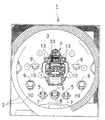
以下、本発明の実施の形態を、図面に基づいて説明する。ここで、図1は、代表的な遊技機であるパチンコ遊技機(第2種)の遊技盤1の正面図である。
【0011】
この遊技盤1は、表面に、ガイドレール2等の区画部材によって囲まれた遊技領域3が形成され、この遊技領域3内のほぼ中央には、本発明の変動入賞装置の一種であるセンター役物4が設けられている。センター役物4の下方には、本発明の始動入賞部の一種である第1始動口5及び第2始動口6が設けられている。これらの始動入賞口5,6内には、それぞれ球検出手段である第1始動口センサ7、第2始動口センサ8が設けられて入賞球が検出可能になっている。また、センター役物4の左右、及び下方両側部分には一般入賞部としての一般入賞口9が設けられており、各一般入賞口9には入賞口センサ10がそれぞれ設けられて入賞球が検出可能になっている。上記した第1,第2始動口センサ7,8、入賞口センサ10は、例えば球の通過時の磁気的変化に伴って球の検出を行なう近接スイッチで構成されている。また、後述する他の入賞口センサやカウントセンサ、継続センサ等も同様の構成である。
【0012】
上記センター役物4は、大入賞口とも呼ばれ、遊技球を内部に停留可能な停留機構を備えた役物である。即ち、センター役物4は、図2に示すように、遊技盤表面に取り付ける取付基板12に開口部を開設し、この開口部の左右には、一対の羽根部材13,13を、基端部に取り付けた支軸14によって回動可能な状態で設ける。また、開口部の上方には庇部15を前方に突設し、開口部の下縁部分には中央にV入賞口や大当たり入賞口とも呼ばれる継続入賞口16(本発明の特定入賞部に相当)を、この継続入賞口16の左右に普通入賞口17をそれぞれ区画して設ける。取付基板12の裏側には、ケースを取り付けて凹室20を形成する。この凹室20の内部には、人形を模した左右一対の停留部材21,21を配設している。これらの停留部材21,21は、軸22,22を中心として水平方向に90度向きが変換できるように並設されており、図2のように両者の人形が正面を向いている場合には、そのスカート部分に形成した球停留部23,23がそれぞれ接近対向してその上に遊技球24を載せて停留させることが可能であり、また各停留部材21を外側左右に回動すると両球停留部23が前方に移動しながら開いて停留していた遊技球24を継続入賞口16に向けて流下させるように構成されている。
【0013】
羽根部材13は、本発明の可動部材(球受開閉部材)の一種であり、支軸14の後端にはクランク部材等を介して大入賞口ソレノイド(電気的駆動源の一種)25(図3参照)が接続されている。そして、この大入賞口ソレノイド25を駆動することにより、支軸14を中心に羽根部材13を回動させることができる。即ち、大入賞口ソレノイド25が消磁した状態では、各大入賞口ソレノイド25の復帰スプリングの付勢により、羽根部材13,13が起立状態(図2に実線で示す状態)になり、凹室20内に遊技球24を受け入れ難い閉状態となる。一方、各大入賞口ソレノイド25を励磁すると、クランク部材のクランク作用により支軸14が回転し、両羽根部材13,13が上端を外側に開く方向に回動し、流下してきた遊技球24を受け止めて凹室20内に受け入れ易い状態、つまり、センター役物4への入賞が容易な開状態(図2に点線で示す状態)となる。
【0014】
本実施形態では、始動口5,6に入賞すると、羽根部材13,13が所定パターンで開閉動作される補助遊技(始動食いつき制御)が実行される。例えば、前記した第1始動口5に入賞すると、羽根部材13,13が所定時間(例えば、0.4秒)だけ1回開状態に変換され、第2始動口6に入賞すると所定時間(例えば、0.5秒)だけ2回開状態に変換される。
そして、羽根部材13,13が開状態になったときに遊技球24が羽根部材13上に流下すると、この遊技球24が凹室20内に案内され、前記した球停留部23で停留したり、そのまま床板26上を前方に流下して継続入賞口16または普通入賞口17に入賞したりする。
なお、球停留部23,23で遊技球24が停留すると、その後に停留部材21,21が回動した時点で遊技球24は床板26上に落下し、継続入賞口16に向かって放出される。このため、遊技球24は、高い確率で継続入賞口16に入賞する。
【0015】
また、本実施形態では、継続入賞口16に入賞した入賞球を検出する球検出手段としての大入賞口継続センサ30と、センター役物4に入賞した入賞球をすべて検出する球検出手段としての大入賞口カウントセンサ31(図3参照)が設けられ、大入賞口カウントセンサ31からの信号に基づいて入賞した入賞球の個数を検出できるように構成されている。
【0016】
また、センター役物4のケース下部には、継続入賞口16及び普通入賞口17の前面飾り板32が設けられている。この前面飾り板32に、大当り遊技におけるラウンド数やカウント数等の遊技情報等を表示する情報表示器を設けてもよい。このような情報表示器は、例えば多数のLED(ドット)を平面的に配置した集合プレートから構成される。
【0017】
そして、本実施形態のパチンコ機では、補助遊技においてセンター役物4内に受け入れられた遊技球24が継続入賞口16に入賞した場合、大当たりとなって特別遊技(大当たり遊技)が発生される。
この特別遊技では、いわゆるラウンド遊技が行われる。このラウンド遊技では、羽根部材13,13を開閉制御することでセンター役物4内へ容易に入賞し得る状態を形成し、このラウンド中に継続入賞口16に入賞すると次ラウンドへ移行することができる。つまり、遊技をサイクル単位で継続することができる。そして、このラウンド遊技は、例えば、最大15ラウンドまで繰り返し行うことができる。
【0018】
ところで、本実施形態のパチンコ機では、各始動口5,6に入賞があった後所定期間が経過するまでの補助遊技期間中において、これらの始動口5,6に遊技球が入賞した場合に、その始動入賞を記憶するための始動入賞記憶手段が設けられている。この始動入賞記憶手段は、言い換えれば、始動入賞部としての各始動口5,6への遊技球24の入賞に対し、未だ補助遊技が実行されていない始動入賞を記憶するものである。そして、この始動入賞記憶手段は、後述する遊技制御装置39の遊技制御部(遊技用マイクロコンピュータ,図3参照)40のRAMによって構成される。
なお、上記の補助遊技期間とは、食いつき制御状態をいい、羽根部材13,13の開放時間及び開放後に設定される有効時間をも含む期間である。
【0019】
また、始動入賞の記憶がある場合に、補助遊技期間の経過後に始動入賞記憶に基づく補助遊技を実行する記憶補助遊技制御手段も備えられている。この記憶補助遊技制御手段は、遊技制御部40によって構成される。さらに、この記憶補助遊技制御手段は、上述した特別遊技の終了時点で始動入賞記憶があった場合、この始動入賞記憶による補助遊技を保留し、特別遊技終了時からのランダムなタイミングで始動入賞記憶による補助遊技を実行する。なお、その詳細な制御については後述する。
【0020】
そして、センター役物4のケース上部、詳しくはケース上部の羽根部材13,13の間の位置には、情報報知器33が設けられている。この情報報知器33は、始動入賞記憶による補助遊技が保留されていることを報知する保留状態報知手段としての保留状態報知器61と、始動入賞記憶の情報を報知する記憶情報報知手段としての始動記憶状態情報報知器62と、保留状態とされていた始動入賞記憶による補助遊技が開始されるタイミングを報知する開始タイミング報知手段としての開始タイミング報知器63とを備えている。また、始動記憶状態情報報知器62は、少なくとも、始動入賞記憶による補助遊技が保留状態となっている場合と、始動入賞記憶による補助遊技が実行決定されている場合とを異なる報知態様により報知するようになっており、特別遊技の実行期間中に第1,第2始動口5,6への新たな入賞があった場合に、その新たな始動入賞があったことをさらに別の報知態様により報知する。
本実施形態の情報報知器33は、例えば多数のLED(ドット)を平面的に配置した集合プレートにより構成され、これらのLEDは後述する報知機能に合わせて区画配置されている。
【0021】
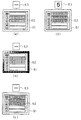
この情報報知器33において、保留状態報知器61は、矩形枠体状にLEDを配置した報知表示部として形成されている。また、始動記憶状態情報報知器62は、保留状態報知器61の内側に上下方向に配置された横長矩形状のLED報知表示部として形成され、それぞれの表示部の横には、例えば−の記号、1,2,3,4の番号が付されている。また、開始タイミング報知器63は、これら保留状態報知器61よりも上方に配置された略正方形状のLED報知表示部として形成されている。この報知表示部には、例えば保留状態を示す−の太文字記号、及び5,4,3,2,1,0(GO)の算用数字等によるカウントダウンが表示されるようになっている。
なお、本実施形態では、始動記憶状態情報報知器62の各報知表示部の左横に−の太文字記号と1〜4の番号が付されているが、この場合における−の太文字記号は新たな始動記憶入賞を示しており、1〜4の番号は入賞球を4個まで記憶可能であることを示している。
【0022】
次に、上記の情報報知器33の具体的な報知態様について説明する。本実施形態では、例えば図4(a),(b),(c),(d)に示すような4つの報知態様が考えられる。
【0023】
図4(a)は、例えば特別遊技(大当り)の終了後に始動記憶による補助遊技が実行決定された場合の報知態様を示している。この状態で、始動記憶状態情報報知器62は、例えば所定の色(実行決定の色)で点灯表示(同図における1,2の番号の報知表示部)して2個の入賞球の始動入賞記憶が実行決定されたことを報知している。また、開始タイミング報知器63は算用数字によるカウントダウン表示を行っておらず、始動入賞記憶の実行決定はされたが、未だ開始前の状態であることを報知している。このとき、保留状態報知器61は消灯している。
【0024】
図4(b)は、例えば始動記憶による補助遊技が保留状態にある場合の報知態様を示している。この状態で、保留状態報知器61は所定の色で点灯して、始動記憶による補助遊技が保留状態であることを報知している。また、始動記憶状態情報報知器62は、例えば実行決定とは異なる所定の色(保留状態の色)で点滅表示(同図における1,2の番号の報知表示部)して、2個の入賞球の始動入賞記憶が保留状態であることを報知している。この場合も、開始タイミング報知器63は−記号を表示し、保留状態であることを報知している。
【0025】
図4(c)は、例えば始動記憶による補助遊技が保留状態のときに新たな始動入賞があった場合の報知態様を示している。この状態で、始動記憶状態情報報知器62は、例えば所定の色(実行決定の色)で点灯表示(同図における1,2の番号の報知表示部)して新たな始動入賞を起因として2個の入賞球の始動入賞記憶が実行決定されたことを報知し、さらに、新たな始動入賞(同図における−の太文字記号の報知表示部)があったことを報知している。また、開始タイミング報知器63は算用数字によるカウントダウン表示を行っておらず、−記号を表示している。このとき、保留状態報知器61は消灯している。
【0026】
図4(d)は、例えば始動記憶による補助遊技のカウントダウンが開始された場合の報知態様を示している。この状態で、開始タイミング報知器63は、例えば算用数字によるカウントダウン表示を行っており、開始タイミングを遊技者に対して報知している。また、始動記憶状態情報報知器62は、例えば保留状態とは異なる所定の色(実行決定の色)で点灯表示(同図における1,2の番号の報知表示部)して2個の入賞球の始動入賞記憶による補助遊技が実行決定されていることを報知するとともに、新たな始動入賞(同図における−の太文字記号の報知表示部)があったことを報知している。このとき、保留状態報知器61は消灯している。
なお、同図における−の太文字記号は、始動入賞記憶により現在行おうとしている補助遊技、或いは、現在実行中の補助遊技の内容を報知するものであってもよい。
【0027】
次に、上記したセンター役物4や情報報知器33などのパチンコ機の各部を制御する制御装置について説明する。ここで、図3は、パチンコ機の電気的構成を説明するブロック図である。
【0028】
遊技制御装置39は、CPU、ROM、RAMを持つ遊技用マイクロコンピュータからなる遊技制御部40と、遊技制御部40に供給するリセットパルスを生成するリセットパルス生成回路41と、動作クロックを発生する発振回路42と、外部装置との間で信号の入出力を行う入出力I/F43とを備えて構成されている。同様に、排出制御装置71は、CPU、ROM、RAMを持つマイクロコンピュータからなる排出制御部72と、動作クロックを発生する発振回路73と、外部装置との間で信号の入出力を行う入出力I/F74とを備えている。
【0029】
また、電源供給装置44は、電源電圧を監視することで停電を検出し停電の検出によって停電検出信号を出力する停電検出回路45、及び、停電検出信号の受信時からデータ格納に必要な所定時間の経過後にリセット信号を出力する遅延回路46を有する処理部47と、直流電源(例えば5V)を生成する直流電源生成回路49と、常時充電されつつ遊技制御部40のRAM及び排出制御部のRAMに電源を供給し、RAMに記憶された制御用データを、停電からの復帰に十分な一定の保持時間に亘ってバックアップ可能(電源供給可能)なコンデンサを有するバックアップ電源50とを備えている。このバックアップ電源50はバックアップ手段として機能し、例えば、2〜3時間程度に亘ってRAM内の制御用データをバックアップする。
【0030】
上記の遊技制御部40には、入出力I/F43を介して、大入賞口継続センサ30、大入賞口カウントセンサ31、第1始動口センサ7、第2始動口センサ8、及び入賞口センサ10…などの各種のセンサ検出信号が入力される。また、遊技制御部40からは、入出力I/F43を介して、大入賞口ソレノイド25、情報報知器33を構成する保留状態報知器61、始動記憶状態情報報知器62、及び開始タイミング報知器63…、各制御装置に対し、ソレノイド用の制御信号やモータ用の制御信号などの必要な制御信号が出力される。この他に、遊技制御部40には、停電検出回路45からの停電検出信号と、リセットパルス生成回路41からのリセットパルスが入力される。そして、遊技制御部40は、停電検出信号を受信すると、遊技の制御に必要な制御パラメータをRAMに格納し、リセットパルスが送出されるまで待機する。そして、リセットパルスの受信により、遊技制御部40は作動を停止させる。また、電源投入時において、遊技制御部40は、リセットパルス生成回路41からのリセットパルスの受信により作動を開始する。
【0031】
そして、この遊技制御部40は遊技制御手段として機能し、大入賞口カウントセンサ31や第1,第2始動口センサ7,8といった球検出センサからの検出信号に基づいて大入賞口ソレノイド25を制御して大入賞口の可動部材としての羽根部材13の開閉制御を行なうとともに、遊技全体の制御を行う。
【0032】
また、遊技制御部40は、記憶補助遊技制御手段としても機能し、特別遊技の終了時点で始動入賞記憶があった場合に、この始動入賞記憶による補助遊技を保留し、特別遊技終了後のランダムなタイミングで始動入賞記憶による補助遊技を実行する制御を行う。ここで、「ランダムなタイミング」とは、例えば正規乱数等によるランダムな時間値を取得して特別遊技を終了してからその時間がきたら始動記憶による補助遊技を実行するような場合をいう。
この実施形態では、特別遊技の終了後に始動入賞記憶があってもランダムなタイミングでその始動入賞記憶による補助遊技が実行されるので、大当り後に連続して補助遊技が行われる場合に比べて、大当りの連続性を抑制することができ、遊技の健全化を図ることができる。また、始動入賞記憶による補助遊技がランダムなタイミングで実行されるので、何時実行されるのかが遊技者側に特定できないため、期待感の演出にもなり、遊技性の向上も図れる。
【0033】
なお、この場合において、開始タイミング報知器63によるカウントダウンは必要に応じて適宜に行えばよい。すなわち、始動入賞記憶による補助遊技の実行タイミングを遊技者側に知らせたくない場合には、カウントダウン表示を停止し、演出効果を高める。また、遊技者に有利な遊技状態を設定する場合には、カウントダウン表示を行って補助遊技の実行タイミングを積極的に遊技者に知らせ、次の大当たりを狙いやすくする。これにより、遊技の幅を広げることができ、遊技性の一層の向上を図ることができる。
【0034】
また、この場合において、始動入賞記憶による補助遊技を、特別遊技終了後の遊技における所定の入賞口、例えば第1,第2始動口5,6への所定回目(例えば初回)の入賞を条件に実行させるようにしてもよい。これは、第1,第2始動口5,6への遊技球の入賞が釘等の影響によりランダムなタイミングとなるからである。
なお、このように構成した場合には、第1,第2始動口5,6に入賞しないと始動入賞記憶が消化されないため、一定の時間が経過したら始動入賞記憶を消去するようにしたり、或いは遊技者が異なることを検出可能な場合(例えば、会員カードの読み取り等によるもの)には、その検出により始動入賞記憶を消去したりするのが好ましい。
【0035】
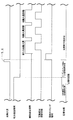
次に、図5に示すタイミングチャートに基づき、始動入賞記憶による補助遊技の実行を、第1,第2始動口5,6への入賞を条件に行う場合の制御について説明する。図5において、各チャートは上から始動入賞、特別遊技期間、補助遊技期間、可動部材開放状態、開始タイミング報知、及び記憶状態を示している。
【0036】
このタイミングチャートに示すように、特別遊技が終了するまでの間、 第1,第2始動口5,6への入賞があっても始動入賞記憶は保留状態になっている。この例では、2個の入賞球の始動記憶が保持されている。そして、この特別遊技を終了しても、該特別遊技終了後の遊技における始動口5,6への入賞が第1,第2始動口センサ7,8により検知されるまでは、始動入賞記憶の保留状態は継続される。
【0037】
この保留状態において、図4(b)に示すように保留状態報知器61は所定の色で点灯して、始動記憶による補助遊技が保留状態であることを報知する。また、始動記憶状態情報報知器62は、例えば所定の色で点滅表示して2個の入賞球の始動入賞記憶が保留状態であることを報知する。このとき、開始タイミング報知器63は−記号を表示し、保留状態であることを報知する。
このように始動記憶が保留状態になっていることを報知するのは、有益な状態となっていることを遊技者に対して明確に知らせるためである。これにより、大当たり直後に始動記憶が実行されないことで、始動記憶が残存することを忘れて遊技者が遊技機から離れてしまう不都合を確実にすることもできる。
【0038】
また、始動口5,6への最初の入賞を検知すると、図4(c)に示すように、始動記憶状態情報報知器62が、例えば所定の色(実行決定の色)で点灯表示して2個の入賞球の始動入賞記憶が実行決定されたことを報知するとともに、新たな始動入賞(同図における−の太文字記号の報知表示部)があったことを報知する。この時点では、開始タイミング報知器63は算用数字によるカウントダウン表示を行っておらず、−記号を表示している。このとき、保留状態報知器61は消灯している。
【0039】
そして、図4(d)に示すように、特別遊技期間経過後の始動口5,6への最初の入賞を契機に、開始タイミング報知器63は、補助遊技の開始タイミングのカウントダウンを開始する。また、始動記憶状態情報報知器62は、例えば保留状態とは異なる所定の色で点灯表示して2個の入賞球の始動入賞記憶による補助遊技が実行決定されていることを報知するとともに、新たな始動入賞があったことを報知している。このとき、当然のことながら保留状態報知器61は消灯している。
【0040】
カウントダウンの終了後、該始動入賞記憶による補助遊技を実行する。その際、まず新たな始動入賞による補助遊技を実行した後に、始動記憶されていた補助遊技(本タイミングチャートでは、2回の補助遊技)を実行する。すなわち、補助遊技期間のチャートにおける3連続の補助遊技の実行に対応させて、大入賞口ソレノイド25を制御して大入賞口の可動部材としての羽根部材13の開閉制御を行なう。なお、始動記憶による補助遊技を優先させて行ってもよい。
【0041】
この例では、始動入賞口5,6への入賞があった場合に、始動入賞記憶による補助遊技が実行されるので、ランダムな期間の経過後に補助遊技群が実行される。このため、大当り直後にすぐに連続して補助遊技が実行されることを極力防止でき、遊技の健全化が図れる。
また、遊技者は、始動入賞記憶による補助遊技が纏めて実行されるのを期待しながら遊技を行うので、期待感を持って遊技を行うことが可能となり、興趣を高めることもできる。
さらに、図5のタイミングチャートでは、始動入賞記憶による補助遊技よりもトリガとなる始動入賞による補助遊技を優先するので、遊技者は始動入賞と、その入賞により行われる補助遊技との関連性を理解し易く、遊技に混乱が生じるのを抑制できる。
【0042】
なお、この例では、開始タイミング報知器63によるカウントダウンを行っているが、このカウントダウンを行わずに補助遊技を開始させてもよい。この場合、遊技者が予期しないタイミングで補助遊技が開始されるので、遊技の興趣をより高めることができる。
また、この例では、特別遊技終了後における始動入賞口5,6への入賞に起因して始動入賞記憶による補助遊技が実行されるがこれに限らず、特別遊技終了後における一般入賞口9への入賞に起因して始動入賞記憶による補助遊技を実行させてもよいし、或いは、始動入賞口5,6と一般入賞口9の何れかの入賞に起因して補助遊技を実行させてもよい。
【0043】
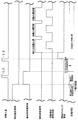
ところで、上記の遊技制御部40を記憶補助遊技制御手段として機能させ、特別遊技終了後に、補助遊技の開始を一定時間以上待機させる待機時間を続けて設定し、始動入賞記憶による補助遊技の保留を待機時間の経過後に解除が可能となるように制御してもよい。以下、このような制御を、図6のタイミングチャートに基づいて説明する。この図6において、各チャートは上から始動入賞、特別遊技期間、絶対的保留期間、補助遊技期間、可動部材開放状態、開始タイミング報知、及び記憶状態を示している。
【0044】
このタイミングチャートでも、特別遊技が終了するまでの間、始動口5,6への入賞があっても始動入賞記憶は保留されており、この例では1つの始動記憶が保持されている。そして、特別遊技を終了しても、絶対的保留期間は始動入賞記憶による補助遊技が保留状態で維持される。この絶対的保留期間に始動口5,6への入賞があっても、この始動入賞は始動入賞記憶手段としてのRAMに記憶される。この保留状態において、図4(b)に示すように保留状態報知器61は所定の色で点灯して、始動記憶による補助遊技が保留状態であることを報知する。また、始動記憶状態情報報知器62は、例えば所定の色で点滅表示して2個の入賞球の始動入賞記憶が保留状態であることを報知する。このとき、開始タイミング報知器63は−記号を表示し、保留状態であることを報知している。
【0045】
この始動入賞記憶の保留状態は、絶対的保留期間(保留解除不能な所定時間であり、本発明の待機時間に相当)の経過後の遊技における始動口5,6への最初の入賞が始動口センサ7,8により検知されるまで継続される。そして、絶対的保留期間経過後において始動口5,6への最初の入賞を検知すると、図4(c)に示すように、始動記憶状態情報報知器62が、例えば所定の色(実行決定の色)で点灯表示して2個の入賞球の始動入賞記憶が実行決定されたことを報知するとともに、新たな始動入賞があったことを報知する。この時点では、開始タイミング報知器63は−記号を表示し、保留状態報知器61は消灯している。
【0046】
そして、開始タイミング報知器63は、図4(d)に示すように、絶対的保留期間経過後の始動口5,6への最初の入賞に起因して、該始動入賞記憶による補助遊技の開始タイミングのカウントダウンを開始する。また、始動記憶状態情報報知器62は、例えば保留状態とは異なる所定の色で点灯表示して2個の入賞球の始動入賞記憶による補助遊技が実行決定されていることを報知するとともに、新たな始動入賞があったことを報知する。このとき、保留状態報知器61は消灯している。
【0047】
カウントダウンの終了後、始動入賞記憶による補助遊技を実行する。その際、まず新たな始動入賞による補助遊技を実行した後に、始動記憶されていた補助遊技(本タイミングチャートでは、2回の補助遊技)を実行する。すなわち、補助遊技期間のチャートにおける3連続の補助遊技の実行に対応させて、大入賞口ソレノイド25を制御して羽根部材13,13の開閉制御を行なう。
【0048】
そして、この遊技制御によれば、始動入賞記憶による補助遊技が、特別遊技の終了後に所定時間に亘って解除することが不能となり、つまり絶対的保留期間が経過してから始動記憶による補助遊技が実行可能となるので、確実に特別遊技と始動入賞記憶による補助遊技とを区別することができ、遊技の健全性を図ることができる。
なお、「上記の所定時間」とは、特別遊技(大当たり)終了時に設定されるウェイト時間とは異なるもので10秒等のまとまった時間である。つまり、特別遊技後に始動記憶による補助遊技を実行させるまでに確実に間隔を空けるということであり、この所定時間中に始動入賞があった場合には、その補助遊技を行っても良いし、また記憶として取り込むようにしてもよい。
【0049】
かくして本実施形態によれば、保留状態報知器61により始動入賞記憶による補助遊技が保留状態となっていることを報知することで、遊技者は、特別遊技の終了後に始動入賞記憶が残存していて、未だ実行決定されていないこと把握することが可能となる。
また、始動記憶状態情報報知器62が、始動入賞記憶による補助遊技が保留状態となっている場合と、始動入賞記憶による補助遊技が実行決定されている場合とで識別可能な異なる報知態様で報知表示を行うことにより、遊技者が保留状態となっている始動入賞記憶の存在を明確に把握することが可能となる。そして、保留状態とされていた始動入賞記憶による補助遊技が実行決定された場合に、開始タイミング報知器63がそのタイミングを報知するので、遊技者の興趣を高めることが可能もある。
【0050】
さらに、始動記憶状態情報報知器62は、特別遊技期間中に始動入賞口への新たな入賞があった場合に、その新たな始動入賞を記憶するので、特別遊技が実行されている場合にも始動入賞記憶が可能となり、大当たり後に保留される補助遊技の数が増加し、補助遊技群となる可能性が高まって期待感を向上させることができる。すなわち、補助遊技が連続的に実行されるので大当りになるかもしれないという期待感が向上する。
【0051】
加えて、特別遊技期間中に始動入賞口への新たな入賞があった場合に、始動記憶状態情報報知器62が、その新たな始動入賞があったことを別の報知態様により報知するので、この新たな入賞が無効になるのではないかという遊技者の無用な不安感を払拭するとともに、新たな始動入賞を記憶して大当たり後に保留される補助遊技の数を増加したことを遊技者に把握させることが可能である。
【0052】
ところで、今回開示した実施の形態はすべての点で例示であって制限的なものではないと考えるべきである。本発明の範囲は、前記した説明ではなくて特許請求の範囲によって示され、特許請求の範囲と均等の意味および範囲内でのすべての変更が含まれることが意図される。
【0053】
例えば、始動記憶の最大記憶数(保留可能数)は、4つに限らず適宜に設定することができる。
また、本発明はパチンコ機に限らず、雀球遊技機、アレンジボール式遊技機など遊技球を発射して遊技を行なう遊技機であればパチンコ機と同様に実施することができる。
【0054】
【発明の効果】
以上説明したように本発明によれば、以下の効果を奏する。
請求項1に記載の発明によれば、特別遊技の終了時に前記始動入賞記憶手段に記憶があった場合に該記憶による補助遊技を保留し、特別遊技終了後の前記始動入賞部または一般入賞部のいずれかへの遊技球の入賞を条件に、始動入賞記憶手段の記憶による補助遊技を実行することにより、ランダムなタイミングでその始動入賞記憶による補助遊技が実行され、大当り後に連続して補助遊技が行われる場合に比べて、大当りの連続性を抑制することができ、遊技の健全化を図ることができる。
【図面の簡単な説明】
【図1】 本発明のパチンコ遊技機の遊技盤の正面図である。
【図2】 本発明の大入賞口の一例であるセンター役物の正面図である。
【図3】 パチンコ遊技機の制御装置を示すブロック図である。
【図4】 (a)〜(d)は、図2の情報報知器で表示する情報とその表示の仕方を示した説明図である。
【図5】 始動入賞記憶による補助遊技の実行制御の一例を示したタイミングチャートである。
【図6】 始動入賞記憶による補助遊技の実行制御の他の例を示したタイミングチャートである。
【符号の説明】
1 遊技盤
2 ガイドレール
3 遊技領域
4 変動入賞装置(センター役物)
5 第1始動口
6 第2始動口
7 第1始動口センサ
8 第2始動口センサ
9 一般入賞口
10 一般入賞口の入賞口センサ
12 取付基板
13 可動部材(球受開閉部材)の一例である羽根部材
14 支軸
15 庇部
16 継続入賞口
17 普通入賞口
20 凹室
21 停留部材
22 軸
23 球停留部
24 遊技球
25 大入賞口ソレノイド
26 床板
30 継続センサ
31 カウントセンサ
32 前面飾り板
33 情報報知器
39 遊技制御装置
40 遊技制御部
41 リセットパルス生成回路
42 発振回路
43 入出力I/F
44 電源供給装置
45 停電検出回路
46 遅延回路
47 処理部
49 直流電源生成回路
50 バックアップ電源
61 保留状態報知器
62 始動記憶情報報知器
63 開始タイミング報知器
71 排出制御装置
72 排出制御部
73 発振回路
74 入出力I/F[0001]
BACKGROUND OF THE INVENTION
The present invention relates to a gaming machine such as a pachinko gaming machine capable of executing an auxiliary game for operating a movable member of a variable prize apparatus.
[0002]
[Prior art]
The conventional technology will be described by taking a pachinko machine as a typical gaming machine as an example.
For example, in the second type of pachinko machine, a start prize opening that is opened once and a start prize opening that is opened twice are individually provided, and a movable member ( The so-called blades perform the start biting control (auxiliary game) that opens once (for example, 0.4 seconds) and opens twice (for example, 0.5 seconds × 2 times). When the game ball introduced into the big prize opening by the movable member during this biting control flows down in the concave chamber and fortunately wins the big hit prize opening (so-called V prize) within a predetermined effective time, It becomes a jackpot and moves to a special game (jackpot game). In this special game, a so-called round game is performed. In this round game, the movable member is controlled to open and close with a predetermined opening / closing pattern so that it can be easily entered into the big winning opening, and when the big winning winning opening is won during the round, it is possible to shift to the next round. That is, a game is played in cycle units. This round game can be repeated up to 15 rounds, for example.
[0003]
Here, in the current model, during the start bite control, the function of the start winning opening is invalidated. For this reason, even if a new winning prize is won in the invalid state, the starting bite control is not performed only by paying out the winning ball for the winning. Then, when a predetermined period (for example, until the opening of the big prize opening ends), the starting prize opening becomes valid again, and if there is a winning game ball, the starting bite control is executed. The same applies to the special game described above, and the start winning port during the special game has its function as a start port disabled, and this function is enabled when the special game ends.
[0004]
On the other hand, with the first type of pachinko machine (so-called fever type or seven machine), it is possible to store up to four start winning memories. Therefore, recently, a gaming machine capable of memorizing the start-up prize for the second type of pachinko machine has been proposed.
[0005]
[Problems to be solved by the invention]
However, if the start prize memory is simply provided in the second type of pachinko machine, the auxiliary game by the start memory is executed immediately after the special game is completed. For this reason, there is a possibility that the big hits are continuously generated. If the big hits are continuously generated, a large number of balls are generated at a stretch, and there is a possibility that healthy game play may be hindered.
[0006]
In addition, if the auxiliary game is continuously performed immediately after the special game in which a large amount of winning balls can be generated, the gaming state is biased. In other words, the period during which the movable member opens frequently and the period during which the movable member does not open much become clear. As a result, the normal game state becomes boring, and there is a risk that the interest of the game will be impaired.
[0007]
When the special game is over, it is possible to wait for a certain period of about 1 minute and then execute an auxiliary game by starting memory. However, in this case, a player who did not know that he / she was on standby may stop the game because the movable member does not open during the standby time, and the entertainment of the game may be impaired.
[0008]
SUMMARY OF THE INVENTION An object of the present invention is to provide a gaming machine that can solve the above-described problems and improve game playability while ensuring game soundness.
[0009]
[Means for Solving the Problems]
The present invention has been proposed in order to achieve the above object, and the present invention according to claim 1In the game area of the game board, a start winning part, a general winning part, and a variable winning device are provided.
The movable member of the variable prize device is subject to the winning of the game ball starting prizeConvert to open stateAnd the movable member is moved a plurality of times based on the fact that the game ball received by the variable winning device in the auxiliary game has won the specific winning part.Open / close controlGenerate special gamesDoIn gaming machines,
When a game ball is won in the start prize section during the special game period, the start prize is stored.Starting winning memory means;
After the special gameInSaidA memory auxiliary game control means for executing an auxiliary game based on the memory of the start winning memory means;
With
SaidThe memory assist game control means is used at the end of the special game.In the start winning storage meansIf you have a memoryThe memoryWithholding auxiliary games byStorage of the start winning storage means on condition that the game ball wins either the start winning portion or the general winning portion after the special game is overIt is a gaming machine characterized by executing an auxiliary game by.
[0010]
DETAILED DESCRIPTION OF THE INVENTION
Hereinafter, embodiments of the present invention will be described with reference to the drawings. Here, FIG. 1 is a front view of a
[0011]
A
[0012]
The
[0013]
The
[0014]
In the present embodiment, when winning is made at the
Then, when the
When the
[0015]
Further, in the present embodiment, the large winning
[0016]
Further, a front
[0017]
In the pachinko machine according to the present embodiment, when the
In this special game, a so-called round game is performed. In this round game, a state in which a winning can be easily made into the
[0018]
By the way, in the pachinko machine according to the present embodiment, when a game ball wins at these
In addition, said auxiliary | assistant game period means a biting control state, and is a period including the opening time of the
[0019]
Further, when there is a start winning memory, a memory assist game control means for executing an auxiliary game based on the start winning memory after the auxiliary game period has elapsed. This memory assist game control means is constituted by a
[0020]
An
The
[0021]
In the
In the present embodiment, − bold character symbols and
[0022]
Next, a specific notification mode of the
[0023]
FIG. 4A shows a notification mode when, for example, the auxiliary game based on the start memory is determined to be executed after the special game (big hit) is completed. In this state, the start memory
[0024]
FIG. 4B shows a notification mode when, for example, the auxiliary game by the start memory is in a holding state. In this state, the hold
[0025]
FIG. 4C shows a notification mode when there is a new start winning when the auxiliary game by the start memory is in a hold state, for example. In this state, the start memory
[0026]
FIG. 4 (d) shows a notification mode when, for example, the countdown of the auxiliary game by the start memory is started. In this state, the start
It should be noted that the-bold character symbol in the figure may be used to notify the contents of the auxiliary game that is currently being played by the start winning memory or the auxiliary game that is currently being executed.
[0027]
Next, a description will be given of a control device that controls each part of the pachinko machine such as the
[0028]
The
[0029]
The
[0030]
The
[0031]
And this game control
[0032]
The
In this embodiment, even if there is a start winning memory after the end of the special game, the auxiliary game by the start winning memory is executed at random timing. Therefore, compared to the case where the auxiliary game is continuously performed after the big win, The continuity of the game can be suppressed, and the game can be sound. In addition, since the auxiliary game based on the start winning memory is executed at random timing, it is not possible for the player to specify when it will be executed, so that an expectation can be produced and the game performance can be improved.
[0033]
In this case, the countdown by the
[0034]
Further, in this case, the auxiliary game based on the start winning memory is determined based on a predetermined (for example, first time) winning in a predetermined winning port in the game after the special game, for example, the first and
In the case of such a configuration, the start winning memory is not digested unless the first and
[0035]
Next, based on the timing chart shown in FIG. 5, a description will be given of the control in the case where the execution of the auxiliary game by the start winning memory is performed on the condition that the first and
[0036]
As shown in this timing chart, until the special game ends, even if there is a winning at the first and
[0037]
In this hold state, as shown in FIG. 4B, the hold
The reason for notifying that the start memory is in the hold state is to clearly notify the player that the start memory is in a useful state. Thus, since the start memory is not executed immediately after the big hit, it is possible to ensure the inconvenience of forgetting that the start memory remains and the player leaving the gaming machine.
[0038]
When the first winning at the
[0039]
And as shown in FIG.4 (d), the start timing alert |
[0040]
After the countdown is completed, an auxiliary game based on the start winning memory is executed. At that time, first, an auxiliary game by a new start prize is executed, and then the auxiliary game that has been stored at the start (two auxiliary games in this timing chart) is executed. That is, in response to the execution of three consecutive auxiliary games in the chart of the auxiliary game period, the special
[0041]
In this example, when a winning is made to the start winning
In addition, since the player plays the game while expecting the auxiliary games based on the start winning memory to be executed together, it is possible to play the game with a sense of expectation and to enhance the interest.
Furthermore, in the timing chart of FIG. 5, since the auxiliary game by the start winning prize which gives a trigger is prioritized over the auxiliary game by the start winning memory, the player understands the relationship between the start winning prize and the auxiliary game to be performed by the winning prize. It is easy to do and can suppress that the game is confused.
[0042]
In this example, the start
Further, in this example, the auxiliary game based on the start winning memory is executed due to the winning at the
[0043]
By the way, the above-mentioned
[0044]
Also in this timing chart, until the special game ends, even if there is a winning at the starting
[0045]
The start winning memory is held in a state where the first winning to the
[0046]
Then, as shown in FIG. 4 (d), the start
[0047]
After the countdown is completed, an auxiliary game based on the start winning memory is executed. At that time, first, an auxiliary game by a new start prize is executed, and then the auxiliary game that has been stored at the start (two auxiliary games in this timing chart) is executed. That is, in accordance with the execution of three consecutive auxiliary games in the chart of the auxiliary game period, the winning
[0048]
Then, according to this game control, the auxiliary game based on the start winning memory cannot be released for a predetermined time after the special game ends, that is, the auxiliary game based on the start memory is not performed after the absolute holding period has elapsed. Since the game can be executed, the special game and the auxiliary game based on the start winning memory can be reliably distinguished, and the game can be sound.
The above-mentioned “predetermined time” is a time that is different from the wait time set at the end of the special game (big hit) and is a united time such as 10 seconds. In other words, after the special game, there is a certain interval before the auxiliary game with the start memory is executed, and if there is a start prize during this predetermined time, the auxiliary game may be performed. You may make it take in as memory | storage.
[0049]
Thus, according to the present embodiment, the on-hold
In addition, the start memory state
[0050]
Further, the start memory
[0051]
In addition, when there is a new winning to the start winning opening during the special game period, the start memory
[0052]
By the way, it should be thought that embodiment disclosed this time is an illustration and restrictive at no points. The scope of the present invention is defined by the terms of the claims, rather than the description above, and is intended to include any modifications within the scope and meaning equivalent to the terms of the claims.
[0053]
For example, the maximum number of start memories (the number that can be held) is not limited to four and can be set as appropriate.
The present invention is not limited to a pachinko machine, and can be implemented in the same manner as a pachinko machine as long as it is a game machine that launches a game ball such as a sparrow ball game machine or an arrangement ball type game machine.
[0054]
【The invention's effect】
As described above, the present invention has the following effects.
According to the invention described in
[Brief description of the drawings]
FIG. 1 is a front view of a game board of a pachinko gaming machine according to the present invention.
FIG. 2 is a front view of a center accessory that is an example of a special winning opening of the present invention.
FIG. 3 is a block diagram showing a control device of a pachinko gaming machine.
4A to 4D are explanatory diagrams showing information to be displayed by the information notification device of FIG. 2 and how to display the information.
FIG. 5 is a timing chart showing an example of auxiliary game execution control based on a start winning memory;
FIG. 6 is a timing chart showing another example of the auxiliary game execution control based on the start winning memory.
[Explanation of symbols]
1 Game board
2 Guide rail
3 game areas
4 Fluctuating prize-winning equipment (center role)
5 First starting port
6 Second starting port
7 First start sensor
8 Second start sensor
9 General winning entrance
10 Award winning sensor for general winning award
12 Mounting board
13 Blade member which is an example of movable member (ball receiving opening and closing member)
14 Spindle
15 Buttocks
16 Continuing winning mouth
17 Ordinary winning mouth
20 concave chamber
21 Stopping member
22 axes
23 ball stop
24 game balls
25 grand prize solenoid
26 Floor board
30 Continuity sensor
31 Count sensor
32 Front panel
33 Information alarm
39 Game control device
40 Game control unit
41 Reset pulse generation circuit
42 Oscillator circuit
43 I / O I / F
44 Power supply device
45 Power failure detection circuit
46 Delay circuit
47 Processing section
49 DC power generation circuit
50 Backup power supply
61 On-hold status indicator
62 Start memory information indicator
63 Start timing alarm
71 Emission control device
72 Discharge control unit
73 Oscillator circuit
74 Input / output I / F
Claims (1)
遊技球の始動入賞部への入賞を条件に変動入賞装置の可動部材を開状態に変換させる補助遊技を実行し、該補助遊技において変動入賞装置に受け入れられた遊技球が特定入賞部へ入賞したことに基づいて可動部材を複数回開閉制御させる特別遊技を発生する遊技機において、
前記特別遊技の期間中に始動入賞部へ遊技球の入賞があった場合に、その始動入賞を記憶する始動入賞記憶手段と、
前記特別遊技の終了後に前記始動入賞記憶手段の記憶に基づき補助遊技を実行する記憶補助遊技制御手段と、
を備え、
前記記憶補助遊技制御手段は、特別遊技の終了時に前記始動入賞記憶手段に記憶があった場合に該記憶による補助遊技を保留し、特別遊技終了後の前記始動入賞部または一般入賞部のいずれかへの遊技球の入賞を条件に、始動入賞記憶手段の記憶による補助遊技を実行するようにしたことを特徴とする遊技機。 In the game area of the game board, a start winning part, a general winning part, and a variable winning device are provided.
An auxiliary game is executed to convert the movable member of the variable winning device into an open state on condition that the game ball is awarded to the start winning portion, and the game ball received by the variable winning device in the auxiliary game wins the specific winning portion. In a gaming machine that generates a special game that controls opening and closing of a movable member multiple times based on that,
Start prize storage means for storing the start prize when a game ball is won in the start prize section during the special game period ;
A memory aid game control means for executing an auxiliary game based on the storage of the starting winning storage means after completion of the special game,
With
The memory auxiliary game control means holds the auxiliary game by the memory when there is a memory in the start prize storage means at the end of the special game, and either the start prize section or the general prize section after the special game ends. A game machine characterized in that an auxiliary game is stored by storing the start winning memory means on condition that a game ball is won .
Priority Applications (1)
| Application Number | Priority Date | Filing Date | Title |
|---|---|---|---|
| JP2000400185A JP4100866B2 (en) | 2000-12-28 | 2000-12-28 | Game machine |
Applications Claiming Priority (1)
| Application Number | Priority Date | Filing Date | Title |
|---|---|---|---|
| JP2000400185A JP4100866B2 (en) | 2000-12-28 | 2000-12-28 | Game machine |
Publications (3)
| Publication Number | Publication Date |
|---|---|
| JP2002200251A JP2002200251A (en) | 2002-07-16 |
| JP2002200251A5 JP2002200251A5 (en) | 2005-03-10 |
| JP4100866B2 true JP4100866B2 (en) | 2008-06-11 |
Family
ID=18864829
Family Applications (1)
| Application Number | Title | Priority Date | Filing Date |
|---|---|---|---|
| JP2000400185A Expired - Fee Related JP4100866B2 (en) | 2000-12-28 | 2000-12-28 | Game machine |
Country Status (1)
| Country | Link |
|---|---|
| JP (1) | JP4100866B2 (en) |
Families Citing this family (6)
| Publication number | Priority date | Publication date | Assignee | Title |
|---|---|---|---|---|
| JP4914963B2 (en) * | 2004-06-02 | 2012-04-11 | 株式会社高尾 | Bullet ball machine |
| JP4699046B2 (en) * | 2005-02-24 | 2011-06-08 | 株式会社三共 | Game machine |
| JP5400338B2 (en) * | 2008-09-26 | 2014-01-29 | 京楽産業.株式会社 | A pachinko machine with an accessory |
| JP5271651B2 (en) * | 2008-09-26 | 2013-08-21 | 京楽産業.株式会社 | A pachinko machine with an accessory |
| JP5089725B2 (en) * | 2010-05-13 | 2012-12-05 | 京楽産業.株式会社 | Game machine |
| JP4923198B2 (en) * | 2011-09-01 | 2012-04-25 | 株式会社高尾 | Bullet ball machine |
-
2000
- 2000-12-28 JP JP2000400185A patent/JP4100866B2/en not_active Expired - Fee Related
Also Published As
| Publication number | Publication date |
|---|---|
| JP2002200251A (en) | 2002-07-16 |
Similar Documents
| Publication | Publication Date | Title |
|---|---|---|
| JP4397455B2 (en) | Game machine | |
| JP2005334194A (en) | Game machine, program, and record medium | |
| JPS6325790B2 (en) | ||
| JP4100866B2 (en) | Game machine | |
| JP2000202141A (en) | Gaming machine | |
| JP4259747B2 (en) | Game machine | |
| JP2006149817A (en) | Game machine | |
| JP2002200251A5 (en) | ||
| JP4301726B2 (en) | Game machine | |
| JP4004243B2 (en) | Game machine | |
| JP2002200250A5 (en) | ||
| JP3192648B1 (en) | Ball game machine | |
| JPH0442030B2 (en) | ||
| JP2929054B2 (en) | Pachinko machine | |
| JP2006204615A (en) | Game machine | |
| JP2004081556A (en) | Game machine, and program and recording medium for the same | |
| JP2007000374A (en) | Management data generation system, game information relay device, and management data generation method | |
| JP3346540B2 (en) | Ball game machine | |
| JP2009213655A (en) | Game machine | |
| JP2004049537A (en) | Game machine | |
| JP3029564B2 (en) | Symbol fluctuation control device for ball game machines | |
| JP2006333910A (en) | Game machine | |
| JP2001300017A (en) | Ball game machine | |
| JP2005224512A (en) | Game machine | |
| JP2006305133A (en) | Game machine and simulation program |
Legal Events
| Date | Code | Title | Description |
|---|---|---|---|
| A521 | Written amendment |
Free format text: JAPANESE INTERMEDIATE CODE: A523 Effective date: 20040405 |
|
| A621 | Written request for application examination |
Free format text: JAPANESE INTERMEDIATE CODE: A621 Effective date: 20040405 |
|
| TRDD | Decision of grant or rejection written | ||
| A977 | Report on retrieval |
Free format text: JAPANESE INTERMEDIATE CODE: A971007 Effective date: 20080314 |
|
| A01 | Written decision to grant a patent or to grant a registration (utility model) |
Free format text: JAPANESE INTERMEDIATE CODE: A01 Effective date: 20080318 |
|
| A61 | First payment of annual fees (during grant procedure) |
Free format text: JAPANESE INTERMEDIATE CODE: A61 Effective date: 20080318 |
|
| FPAY | Renewal fee payment (event date is renewal date of database) |
Free format text: PAYMENT UNTIL: 20110328 Year of fee payment: 3 |
|
| R150 | Certificate of patent or registration of utility model |
Free format text: JAPANESE INTERMEDIATE CODE: R150 |
|
| FPAY | Renewal fee payment (event date is renewal date of database) |
Free format text: PAYMENT UNTIL: 20110328 Year of fee payment: 3 |
|
| FPAY | Renewal fee payment (event date is renewal date of database) |
Free format text: PAYMENT UNTIL: 20110328 Year of fee payment: 3 |
|
| S533 | Written request for registration of change of name |
Free format text: JAPANESE INTERMEDIATE CODE: R313533 |
|
| FPAY | Renewal fee payment (event date is renewal date of database) |
Free format text: PAYMENT UNTIL: 20110328 Year of fee payment: 3 |
|
| R360 | Written notification for declining of transfer of rights |
Free format text: JAPANESE INTERMEDIATE CODE: R360 |
|
| FPAY | Renewal fee payment (event date is renewal date of database) |
Free format text: PAYMENT UNTIL: 20110328 Year of fee payment: 3 |
|
| FPAY | Renewal fee payment (event date is renewal date of database) |
Free format text: PAYMENT UNTIL: 20120328 Year of fee payment: 4 |
|
| R370 | Written measure of declining of transfer procedure |
Free format text: JAPANESE INTERMEDIATE CODE: R370 |
|
| FPAY | Renewal fee payment (event date is renewal date of database) |
Free format text: PAYMENT UNTIL: 20120328 Year of fee payment: 4 |
|
| FPAY | Renewal fee payment (event date is renewal date of database) |
Free format text: PAYMENT UNTIL: 20130328 Year of fee payment: 5 |
|
| FPAY | Renewal fee payment (event date is renewal date of database) |
Free format text: PAYMENT UNTIL: 20130328 Year of fee payment: 5 |
|
| FPAY | Renewal fee payment (event date is renewal date of database) |
Free format text: PAYMENT UNTIL: 20130328 Year of fee payment: 5 |
|
| FPAY | Renewal fee payment (event date is renewal date of database) |
Free format text: PAYMENT UNTIL: 20140328 Year of fee payment: 6 |
|
| R250 | Receipt of annual fees |
Free format text: JAPANESE INTERMEDIATE CODE: R250 |
|
| LAPS | Cancellation because of no payment of annual fees |