JP4222614B2 - Neuropathic pain treatment - Google Patents
Neuropathic pain treatment Download PDFInfo
- Publication number
- JP4222614B2 JP4222614B2 JP2005033896A JP2005033896A JP4222614B2 JP 4222614 B2 JP4222614 B2 JP 4222614B2 JP 2005033896 A JP2005033896 A JP 2005033896A JP 2005033896 A JP2005033896 A JP 2005033896A JP 4222614 B2 JP4222614 B2 JP 4222614B2
- Authority
- JP
- Japan
- Prior art keywords
- pain
- neuropathic pain
- dcmb
- administration
- neuropathic
- Prior art date
- Legal status (The legal status is an assumption and is not a legal conclusion. Google has not performed a legal analysis and makes no representation as to the accuracy of the status listed.)
- Expired - Fee Related
Links
Images
Classifications
-
- A—HUMAN NECESSITIES
- A61—MEDICAL OR VETERINARY SCIENCE; HYGIENE
- A61K—PREPARATIONS FOR MEDICAL, DENTAL OR TOILETRY PURPOSES
- A61K31/00—Medicinal preparations containing organic active ingredients
- A61K31/13—Amines
- A61K31/133—Amines having hydroxy groups, e.g. sphingosine
-
- A—HUMAN NECESSITIES
- A61—MEDICAL OR VETERINARY SCIENCE; HYGIENE
- A61K—PREPARATIONS FOR MEDICAL, DENTAL OR TOILETRY PURPOSES
- A61K31/00—Medicinal preparations containing organic active ingredients
- A61K31/13—Amines
- A61K31/135—Amines having aromatic rings, e.g. ketamine, nortriptyline
- A61K31/137—Arylalkylamines, e.g. amphetamine, epinephrine, salbutamol, ephedrine or methadone
-
- A—HUMAN NECESSITIES
- A61—MEDICAL OR VETERINARY SCIENCE; HYGIENE
- A61K—PREPARATIONS FOR MEDICAL, DENTAL OR TOILETRY PURPOSES
- A61K31/00—Medicinal preparations containing organic active ingredients
- A61K31/33—Heterocyclic compounds
- A61K31/395—Heterocyclic compounds having nitrogen as a ring hetero atom, e.g. guanethidine or rifamycins
- A61K31/435—Heterocyclic compounds having nitrogen as a ring hetero atom, e.g. guanethidine or rifamycins having six-membered rings with one nitrogen as the only ring hetero atom
- A61K31/47—Quinolines; Isoquinolines
- A61K31/472—Non-condensed isoquinolines, e.g. papaverine
-
- A—HUMAN NECESSITIES
- A61—MEDICAL OR VETERINARY SCIENCE; HYGIENE
- A61K—PREPARATIONS FOR MEDICAL, DENTAL OR TOILETRY PURPOSES
- A61K31/00—Medicinal preparations containing organic active ingredients
- A61K31/33—Heterocyclic compounds
- A61K31/395—Heterocyclic compounds having nitrogen as a ring hetero atom, e.g. guanethidine or rifamycins
- A61K31/55—Heterocyclic compounds having nitrogen as a ring hetero atom, e.g. guanethidine or rifamycins having seven-membered rings, e.g. azelastine, pentylenetetrazole
-
- A—HUMAN NECESSITIES
- A61—MEDICAL OR VETERINARY SCIENCE; HYGIENE
- A61P—SPECIFIC THERAPEUTIC ACTIVITY OF CHEMICAL COMPOUNDS OR MEDICINAL PREPARATIONS
- A61P17/00—Drugs for dermatological disorders
- A61P17/02—Drugs for dermatological disorders for treating wounds, ulcers, burns, scars, keloids, or the like
-
- A—HUMAN NECESSITIES
- A61—MEDICAL OR VETERINARY SCIENCE; HYGIENE
- A61P—SPECIFIC THERAPEUTIC ACTIVITY OF CHEMICAL COMPOUNDS OR MEDICINAL PREPARATIONS
- A61P25/00—Drugs for disorders of the nervous system
-
- A—HUMAN NECESSITIES
- A61—MEDICAL OR VETERINARY SCIENCE; HYGIENE
- A61P—SPECIFIC THERAPEUTIC ACTIVITY OF CHEMICAL COMPOUNDS OR MEDICINAL PREPARATIONS
- A61P25/00—Drugs for disorders of the nervous system
- A61P25/04—Centrally acting analgesics, e.g. opioids
-
- A—HUMAN NECESSITIES
- A61—MEDICAL OR VETERINARY SCIENCE; HYGIENE
- A61P—SPECIFIC THERAPEUTIC ACTIVITY OF CHEMICAL COMPOUNDS OR MEDICINAL PREPARATIONS
- A61P29/00—Non-central analgesic, antipyretic or antiinflammatory agents, e.g. antirheumatic agents; Non-steroidal antiinflammatory drugs [NSAID]
-
- A—HUMAN NECESSITIES
- A61—MEDICAL OR VETERINARY SCIENCE; HYGIENE
- A61P—SPECIFIC THERAPEUTIC ACTIVITY OF CHEMICAL COMPOUNDS OR MEDICINAL PREPARATIONS
- A61P29/00—Non-central analgesic, antipyretic or antiinflammatory agents, e.g. antirheumatic agents; Non-steroidal antiinflammatory drugs [NSAID]
- A61P29/02—Non-central analgesic, antipyretic or antiinflammatory agents, e.g. antirheumatic agents; Non-steroidal antiinflammatory drugs [NSAID] without antiinflammatory effect
-
- A—HUMAN NECESSITIES
- A61—MEDICAL OR VETERINARY SCIENCE; HYGIENE
- A61P—SPECIFIC THERAPEUTIC ACTIVITY OF CHEMICAL COMPOUNDS OR MEDICINAL PREPARATIONS
- A61P3/00—Drugs for disorders of the metabolism
- A61P3/08—Drugs for disorders of the metabolism for glucose homeostasis
- A61P3/10—Drugs for disorders of the metabolism for glucose homeostasis for hyperglycaemia, e.g. antidiabetics
-
- A—HUMAN NECESSITIES
- A61—MEDICAL OR VETERINARY SCIENCE; HYGIENE
- A61P—SPECIFIC THERAPEUTIC ACTIVITY OF CHEMICAL COMPOUNDS OR MEDICINAL PREPARATIONS
- A61P31/00—Antiinfectives, i.e. antibiotics, antiseptics, chemotherapeutics
- A61P31/12—Antivirals
- A61P31/14—Antivirals for RNA viruses
- A61P31/18—Antivirals for RNA viruses for HIV
-
- A—HUMAN NECESSITIES
- A61—MEDICAL OR VETERINARY SCIENCE; HYGIENE
- A61P—SPECIFIC THERAPEUTIC ACTIVITY OF CHEMICAL COMPOUNDS OR MEDICINAL PREPARATIONS
- A61P35/00—Antineoplastic agents
-
- A—HUMAN NECESSITIES
- A61—MEDICAL OR VETERINARY SCIENCE; HYGIENE
- A61P—SPECIFIC THERAPEUTIC ACTIVITY OF CHEMICAL COMPOUNDS OR MEDICINAL PREPARATIONS
- A61P41/00—Drugs used in surgical methods, e.g. surgery adjuvants for preventing adhesion or for vitreum substitution
-
- A—HUMAN NECESSITIES
- A61—MEDICAL OR VETERINARY SCIENCE; HYGIENE
- A61P—SPECIFIC THERAPEUTIC ACTIVITY OF CHEMICAL COMPOUNDS OR MEDICINAL PREPARATIONS
- A61P43/00—Drugs for specific purposes, not provided for in groups A61P1/00-A61P41/00
-
- C—CHEMISTRY; METALLURGY
- C07—ORGANIC CHEMISTRY
- C07D—HETEROCYCLIC COMPOUNDS
- C07D217/00—Heterocyclic compounds containing isoquinoline or hydrogenated isoquinoline ring systems
- C07D217/02—Heterocyclic compounds containing isoquinoline or hydrogenated isoquinoline ring systems with only hydrogen atoms or radicals containing only carbon and hydrogen atoms, directly attached to carbon atoms of the nitrogen-containing ring; Alkylene-bis-isoquinolines
-
- C—CHEMISTRY; METALLURGY
- C07—ORGANIC CHEMISTRY
- C07D—HETEROCYCLIC COMPOUNDS
- C07D217/00—Heterocyclic compounds containing isoquinoline or hydrogenated isoquinoline ring systems
- C07D217/12—Heterocyclic compounds containing isoquinoline or hydrogenated isoquinoline ring systems with radicals, substituted by hetero atoms, attached to carbon atoms of the nitrogen-containing ring
- C07D217/14—Heterocyclic compounds containing isoquinoline or hydrogenated isoquinoline ring systems with radicals, substituted by hetero atoms, attached to carbon atoms of the nitrogen-containing ring other than aralkyl radicals
-
- C—CHEMISTRY; METALLURGY
- C07—ORGANIC CHEMISTRY
- C07D—HETEROCYCLIC COMPOUNDS
- C07D223/00—Heterocyclic compounds containing seven-membered rings having one nitrogen atom as the only ring hetero atom
- C07D223/14—Heterocyclic compounds containing seven-membered rings having one nitrogen atom as the only ring hetero atom condensed with carbocyclic rings or ring systems
- C07D223/16—Benzazepines; Hydrogenated benzazepines
Landscapes
- Health & Medical Sciences (AREA)
- Chemical & Material Sciences (AREA)
- Organic Chemistry (AREA)
- Life Sciences & Earth Sciences (AREA)
- General Health & Medical Sciences (AREA)
- Medicinal Chemistry (AREA)
- Pharmacology & Pharmacy (AREA)
- Animal Behavior & Ethology (AREA)
- Public Health (AREA)
- Veterinary Medicine (AREA)
- General Chemical & Material Sciences (AREA)
- Nuclear Medicine, Radiotherapy & Molecular Imaging (AREA)
- Chemical Kinetics & Catalysis (AREA)
- Bioinformatics & Cheminformatics (AREA)
- Engineering & Computer Science (AREA)
- Epidemiology (AREA)
- Pain & Pain Management (AREA)
- Diabetes (AREA)
- Biomedical Technology (AREA)
- Virology (AREA)
- Rheumatology (AREA)
- Neurosurgery (AREA)
- Emergency Medicine (AREA)
- Neurology (AREA)
- Tropical Medicine & Parasitology (AREA)
- Communicable Diseases (AREA)
- Surgery (AREA)
- Molecular Biology (AREA)
- Hematology (AREA)
- Endocrinology (AREA)
- Oncology (AREA)
- Obesity (AREA)
- Dermatology (AREA)
- AIDS & HIV (AREA)
- Pharmaceuticals Containing Other Organic And Inorganic Compounds (AREA)
- Medicines That Contain Protein Lipid Enzymes And Other Medicines (AREA)
- Acyclic And Carbocyclic Compounds In Medicinal Compositions (AREA)
- Other In-Based Heterocyclic Compounds (AREA)
Description
本発明は、神経因性疼痛に対して優れた疼痛抑制作用を有する神経因性疼痛治療剤、そのような治療剤を用いる神経因性疼痛の治療方法等に関する。 The present invention relates to a therapeutic agent for neuropathic pain having an excellent pain-suppressing effect on neuropathic pain, a method for treating neuropathic pain using such a therapeutic agent, and the like.
神経因性疼痛は末梢神経系または中枢神経系の損傷、機能障害などを原因として生じる痛みであり、モルヒネなどオピオイド系の薬物でさえも十分に奏効しない難治性疼痛である。神経因性疼痛を伴う疾患としては、例えば、帯状疱疹後神経痛、三叉神経痛、糖尿病性神経痛、術後や外傷後の遷延痛など、痛覚過敏やアロディニアの症状を呈する疾患を挙げることができる。 Neuropathic pain is pain caused by damage or dysfunction of the peripheral nervous system or central nervous system, and is intractable pain that does not sufficiently respond even to opioid drugs such as morphine. Examples of the disease accompanied by neuropathic pain include diseases that exhibit hyperalgesia and allodynia such as postherpetic neuralgia, trigeminal neuralgia, diabetic neuralgia, prolonged pain after surgery or trauma.
従来の薬物療法において使用されてきた鎮痛剤としては、モルヒネに代表される中枢性オピオイド系鎮痛薬、インドメタシンに代表される非ステロイド系抗炎症剤(NSAIDs)などが知られている。しかし、これらの鎮痛剤は神経因性疼痛に対して一般的に効果が小さく、通常の侵害受容性疼痛に有効である鎮痛剤(特に麻薬性鎮痛薬など)は特に効果が小さいことが知られている。そして、麻薬性鎮痛薬の神経因性疼痛に対する鎮痛効果の不十分さが神経因性疼痛の大きな特徴とされ、場合によってはその特徴を利用して神経因性疼痛の診断を行なっている。 As analgesics that have been used in conventional pharmacotherapy, central opioid analgesics represented by morphine, nonsteroidal anti-inflammatory drugs (NSAIDs) represented by indomethacin, and the like are known. However, these analgesics are generally less effective against neuropathic pain, and analgesics (especially narcotic analgesics) that are effective for normal nociceptive pain are known to be particularly ineffective. ing. Inadequate analgesic effect of narcotic analgesics on neuropathic pain is a major feature of neuropathic pain. In some cases, neuropathic pain is diagnosed using this feature.
神経因性疼痛の発生には様々な要素が複雑に関係していると考えられている。これまで、神経因性疼痛の治療法としては、神経ブロックや、脊髄硬膜外電気刺激などの神経外科学的治療、三環系抗うつ薬、バクロフェン等の薬剤の腰部髄腔内投与などが知られている。しかし、これらの治療法には、十分な効果が得られなかったり、副作用を伴うという問題がある。また、外用剤として、カプサイシンクリームが、神経末端から放出される発痛物質サブスタンスPを枯渇させ、疼痛を軽減させることにより、帯状疱疹後神経痛、乳房切除後の疼痛症候群に効果があるという報告もある。しかし、カプサイシンによる灼熱痛を伴うという問題もあるなど、有用性や安全性の面で問題がある。このように、神経因性疼痛は難治性の疾患であり、未だ有効な治療法は確立されていない。 Various factors are thought to be intricately related to the development of neuropathic pain. So far, neuropathic pain has been treated by nerve block, neurosurgery such as spinal epidural electrical stimulation, tricyclic antidepressants, intrathecal administration of drugs such as baclofen, etc. Are known. However, these treatment methods have problems that a sufficient effect cannot be obtained and there are side effects. In addition, as a topical agent, capsaicin cream has been reported to be effective in postherpetic neuralgia and pain syndrome after mastectomy by depleting pain substance substance P released from nerve terminals and reducing pain. is there. However, there are problems in terms of usefulness and safety, such as the problem of burning pain caused by capsaicin. Thus, neuropathic pain is an intractable disease, and an effective treatment method has not yet been established.
カテコールアミン(ドーパンミンやノルエピネフリン、エピネフリンの総称)あるいはセロトニンやヒスタミンといった、これらモノアミン作動系の神経伝達物質は、痛みに対する関連性が強い化学物質とされており、これまでにも多くの報告がなされている。
ヒスタミンは神経伝達物質および神経調節物質としての機能を有し、中枢神経系や末梢神経系で働くことが明らかにされており、血圧や痛みの調節に関与している。
セロトニンは、体内セロトニンの90%以上が消化管粘膜に存在し、胃腸管や血管周囲の腸壁神経系でセロトニン神経系を形成しているが、脳幹の縫線核においても神経系が見出されており、この脳のセロトニン神経系は、気分や睡眠、食欲、体温、痛み、血圧および嘔吐などに関連する神経伝達物質として働いている。
These monoaminergic neurotransmitters, such as catecholamine (generic name for dopamine, norepinephrine, and epinephrine), serotonin, and histamine, are considered to be strongly related to pain, and many reports have been published so far. .
Histamine has a function as a neurotransmitter and neuromodulator, has been shown to work in the central nervous system and peripheral nervous system, and is involved in the regulation of blood pressure and pain.
Serotonin has more than 90% of the body's serotonin in the gastrointestinal mucosa and forms the serotonin nervous system in the gastrointestinal tract and the intestinal nervous system around the blood vessels, but the nervous system is also found in the raphe nucleus of the brainstem. The brain's serotonin nervous system serves as a neurotransmitter related to mood, sleep, appetite, body temperature, pain, blood pressure and vomiting.
そして、チロシン -> ド―パ -> ドーパミン -> ノルエピネフリン -> エピネフリンの経路で生成されるカテコールアミンも生理学的反応において様々な役割を演じている。ドーパミンは、ノルエピネフリンの前駆物質であるが、神経伝達物質としての作用は、腎臓の血管を拡張させたり、腸管平滑筋の弛緩を起こしたり、あるいはエピネフリン受容体を介して血圧にも影響を与えている。エピネフリンは血圧や平滑筋、すい臓などの代謝系に関連しており、また、ノルエピネフリンは脳内のアラームシステムとも言われ、ここが異常となると、様々なストレス関連障害が発生する。
このように、これら生理活性アミンは、種々の受容体サブタイプを介して生理作用を発現することから、例えば、ある受容体サブタイプに特異的に作用する薬物(作動薬)、これらのアミンの作用に特異的に拮抗する薬物(拮抗薬)、あるいは作用を遮断する薬物(遮断薬)は、神経因性の疼痛に対しての効果が期待された。
And catecholamines produced in the tyrosine->dopa->dopamine->norepinephrine-> epinephrine pathway also play various roles in physiological responses. Dopamine is a precursor of norepinephrine, but its action as a neurotransmitter dilates the blood vessels of the kidneys, causes relaxation of the intestinal smooth muscle, and also affects blood pressure via the epinephrine receptor. Yes. Epinephrine is related to metabolic systems such as blood pressure, smooth muscle, and pancreas, and norepinephrine is also referred to as an alarm system in the brain. When this becomes abnormal, various stress-related disorders occur.
Thus, since these physiologically active amines express physiological actions via various receptor subtypes, for example, drugs (agonists) that specifically act on certain receptor subtypes, Drugs that specifically antagonize the action (antagonists) or drugs that block the action (blockers) were expected to have an effect on neuropathic pain.
例えば、抗うつ剤はすでに、鎮痛補助剤として、主に慢性疼痛の治療に用いられている。しかしながら、第一、第二世代といわれる三環系および四環系の抗うつ剤の殆どは、セロトニンとノルエピネフリンの両者の再取り込み阻害作用を有しているが、非選択性であり、抗コリン作用による口渇、便秘、排尿障害、かすみ目や抗ヒスタミン作用による眠気、あるいは抗アドレナリンα1作用による起立性低血圧といった多くの副作用を有することが判明している。また、第三世代の抗うつ剤といわれるSSRI(選択的セロトニン再取り込み阻害剤)を用いた慢性疼痛処置法(特許文献1)もあるが、一般的には、眠気、吐き気、口渇、便秘や幻覚、妄想といった精神病症状を起こしたり、時に、過敏症として造血障害、肝障害、そしてほかの抗精神病薬との併用により強度の筋強直、嚥下困難、頻脈、発熱など、または精神安定剤との併用により、心室性不整脈など心血管系の副作用があるなど、脳内セロトニン活性の異常亢進によるセロトニン症候群という副作用発症の危険性が潜むため、この薬剤の取扱には専門家の指導を必要とする。最も副作用の少ないとされる第四世代のSNRI(セロトニン・ノルエピネフリン再取り込み阻害剤)についても、一般的には、眠気、吐き気、口渇、便秘などがあり、心臓、腎臓、肝臓の障害者には痙攣や白血球減少、緑内障を起こしやすいという副作用をもつ。これもSSRI同様、併用薬との相互作用も多いため取扱には十分な注意が必要である。 For example, antidepressants are already used primarily as an analgesic aid in the treatment of chronic pain. However, most of the tricyclic and tetracyclic antidepressants referred to as the first and second generations have an inhibitory effect on the reuptake of both serotonin and norepinephrine, but are non-selective and anticholine. It has been found to have many side effects such as dry mouth due to action, constipation, dysuria, drowsiness due to blurred vision or antihistamine action, or orthostatic hypotension due to anti-adrenergic α1 action. There is also a method for treating chronic pain using SSRI (selective serotonin reuptake inhibitor), which is said to be a third-generation antidepressant (Patent Document 1), but in general, sleepiness, nausea, dry mouth, constipation May cause psychotic symptoms such as hypertension, hallucinations, delusions, sometimes hypersensitivity, hematopoietic disorders, liver disorders, and other antipsychotics in combination with strong muscle tonicity, difficulty swallowing, tachycardia, fever, or tranquilizers When used in combination with this drug, there is a risk of side effects called serotonin syndrome due to abnormally increased serotonin activity in the brain, such as ventricular arrhythmia and other cardiovascular side effects. And The fourth-generation SNRI (serotonin / norepinephrine reuptake inhibitor), which is said to have the least side effects, generally has sleepiness, nausea, dry mouth, constipation, etc. Has the side effects of being prone to convulsions, leukopenia and glaucoma. As with SSRI, there are many interactions with concomitant drugs, so handling with sufficient care is necessary.
そのほか、モノアミン作動系神経伝達物質に作用を及ぼす化合物によって、痛みを軽減あるいは改善する方法は幾らか知られている(特表2004-513916号公報(特許文献1);特表平9-511739号公報(特許文献2);特表2002-523366号公報(特許文献3);特表2002-537245号公報(特許文献4);特表2000-507544号公報(特許文献5)等)。
例えば、特表平9-511739号公報及び特表2002-537245号公報には、非炎症性局所疾患やフィブロミアルギア(線維筋痛症)等に対してセロトニン(5−HT3)受容体拮抗薬を使用することが記載されている。特表2002-523366号公報(特許文献3)には、疼痛を含む様々な機能障害に対して、ドーパミン再取り込み阻害剤を使用することが記載されている。
また、特表2000-507544号公報(特許文献5)には、非定型的抗精神病薬(クロザピン、リスペリドン、クエチアピン、ペロスピロン、オランザピンなど)と痛みに用いる薬剤との併用剤が記載されている。さらに、特表2002-503224号公報(特許文献6)には、相乗鎮痛剤としてのセロトニン再取り込み阻害剤、複合セロトニン−ノルエピネフリン再取り込み阻害剤、セロトニンレセプター作動剤及び拮抗剤等が記載されている。
In addition, there are some known methods for reducing or improving pain by using a compound that acts on a monoaminergic neurotransmitter (Japanese Patent Publication No. 2004-513916 (Patent Document 1); Japanese Patent Publication No. 9-511739). Publication (Patent Document 2); JP-T 2002-523366 (Patent Document 3); JP-T 2002-537245 (Patent Document 4); JP-T 2000-507544 (Patent Document 5)).
For example, Japanese Patent Publication No. 9-511739 and Japanese Patent Publication No. 2002-537245 disclose serotonin (5-HT3) receptor antagonists for non-inflammatory local diseases, fibromyalgia (fibromyalgia) and the like. It is described to use. JP-T-2002-523366 (Patent Document 3) describes the use of dopamine reuptake inhibitors for various functional disorders including pain.
JP-T-2000-507544 (Patent Document 5) describes a combination of an atypical antipsychotic drug (clozapine, risperidone, quetiapine, perospirone, olanzapine, etc.) and a drug used for pain. Furthermore, JP-T-2002-503224 (Patent Document 6) describes serotonin reuptake inhibitors, combined serotonin-norepinephrine reuptake inhibitors, serotonin receptor agonists and antagonists as synergistic analgesics. .
一方、フェニルエタノールアミンN−メチル転移酵素(PNMT)は、カテコールアミン作動系において最後の段階であるノルエピネフリンからエピネフリンの生合成を触媒する酵素であり、血圧調節や神経内分泌機能にも重要な役割を果たしている。
しかしながらこれまでに、(±)−2,3−ジクロロ−α−メチルベンジルアミン(DCMB)を代表とするPNMT阻害剤が、難治性である神経因性疼痛に対し有効であることは、何の記載も示唆もされていない。
However, to date, what has been shown that PNMT inhibitors, typified by (±) -2,3-dichloro-α-methylbenzylamine (DCMB), are effective against refractory neuropathic pain. Neither listed nor suggested.
上記のように神経因性疼痛の治療に有効な薬剤は未だ知られていないのが現状であり、そのような薬剤の開発が望まれている。このような状況において、本発明の目的は、神経因性疼痛という難治性疼痛に優れた効果を発揮する新規な神経因性疼痛治療剤を提供することにある。 As described above, there are currently no known drugs effective for the treatment of neuropathic pain, and the development of such drugs is desired. In such a situation, an object of the present invention is to provide a novel therapeutic agent for neuropathic pain that exhibits an excellent effect on intractable pain called neuropathic pain.
本発明者らは上記の課題を達成すべく独自の発想に基づき研究を進めたところ、難治性神経因性疼痛モデルにおいて、DCMBを代表とするPNMT(フェニルエタノールアミンN−メチル転移酵素)阻害薬が高い鎮痛効果を示すことを見出し、本発明を完成させた。
すなわち、本発明は、次のような神経因性疼痛治療剤、神経因性疼痛の治療のための医薬組成物、神経因性疼痛の治療方法などを提供する。
The present inventors have conducted research based on an original idea to achieve the above-mentioned problems. As a result, in a refractory neuropathic pain model, a PNMT (phenylethanolamine N-methyltransferase) inhibitor typified by DCMB Was found to show a high analgesic effect, and the present invention was completed.
That is, the present invention provides the following therapeutic agents for neuropathic pain, pharmaceutical compositions for treating neuropathic pain, methods for treating neuropathic pain, and the like.
(1)フェニルエタノールアミンN−メチル転移酵素(PNMT)阻害薬を有効成分とし て含有する神経因性疼痛治療剤。
(2)前記PNMT阻害薬が、
(±)-2,3−ジクロロ−α−メチルベンジルアミン
((±)-2,3-dichloro-alpha-methylbenzylamine:DCMB);
8,9-ジクロロ-2,3,4,5-テトラヒドロ-1H-2-ベンズアゼピン
(8,9-dichloro-2,3,4,5-tetrahydro-1H-2-benzazepine);
7,8-ジクロロ-1,2,3,4-テトラヒドロイソキノリン
(7,8-dichloro-1,2,3,4-tetrahydroisoquinoline);
2-シクロオクチル-2-ヒドロキシエチルアミン
(2-cyclooctyl-2-hydroxyethylamine);
(±)-7-アミノスルホニル-3-フルオロメチル-1,2,3,4-テトラヒドロイソキノリン
((±)-7-Aminosulfonyl-3-fluoromethyl-1,2,3,4-tetrahydroisoquinoline);
(±)-3-フルオロメチル-7-(N-2,2,2-トリフルオロエチルアミノスルホニル)-1,2,3,4-テトラヒドロイソキノリン
((±)-3-Fluoromethyl-7-(N-2,2,2-trifluoroethylaminosulfonyl)-1,2,3,4-tetrahydroisoquinoline);
(±)-3-フルオロメチルl-7-(N-3,3,3-トリフルオロプロピルアミノスルホニル)-1,2,3,4-テトラヒドロイソキノリン)
((±)-3-Fluoromethyl-7-(N-3,3,3-trifluoropropylaminosulfonyl)-1,2,3,4-tetrahydroisoquinoline);及び
それらの薬学的に許容し得る塩から選択される上記(1)記載の神経因性疼痛治療剤。
(3)前記PNMT阻害薬が、(±)−2,3−ジクロロ−α−メチルベンジルアミン(DCMB)及びそれらの薬学的に許容し得る塩から選択される上記(2)記載の神経因性疼痛治療剤。
(1) A therapeutic agent for neuropathic pain comprising a phenylethanolamine N-methyltransferase (PNMT) inhibitor as an active ingredient.
(2) The PNMT inhibitor is
(±) -2,3-dichloro-α-methylbenzylamine ((±) -2,3-dichloro-alpha-methylbenzylamine: DCMB);
8,9-dichloro-2,3,4,5-tetrahydro-1H-2-benzazepine (8,9-dichloro-2,3,4,5-tetrahydro-1H-2-benzazepine);
7,8-dichloro-1,2,3,4-tetrahydroisoquinoline;
2-cyclooctyl-2-hydroxyethylamine;
(±) -7-Aminosulfonyl-3-fluoromethyl-1,2,3,4-tetrahydroisoquinoline ((±) -7-Aminosulfonyl-3-fluoromethyl-1,2,3,4-tetrahydroisoquinoline);
(±) -3-Fluoromethyl-7- (N-2,2,2-trifluoroethylaminosulfonyl) -1,2,3,4-tetrahydroisoquinoline ((±) -3-Fluoromethyl-7- (N -2,2,2-trifluoroethylaminosulfonyl) -1,2,3,4-tetrahydroisoquinoline);
(±) -3-Fluoromethyl 1-7- (N-3,3,3-trifluoropropylaminosulfonyl) -1,2,3,4-tetrahydroisoquinoline)
((±) -3-Fluoromethyl-7- (N-3,3,3-trifluoropropylaminosulfonyl) -1,2,3,4-tetrahydroisoquinoline); and the above selected from pharmaceutically acceptable salts thereof ( 1) The neuropathic pain therapeutic agent according to 1).
(3) The neurogenicity according to the above (2), wherein the PNMT inhibitor is selected from (±) -2,3-dichloro-α-methylbenzylamine (DCMB) and pharmaceutically acceptable salts thereof. Pain treatment agent.
(4)神経因性疼痛が、帯状疱疹後神経痛、三叉神経痛、糖尿病性神経痛、がん性疼痛、術後や外傷後の遷延痛、痛覚過敏、アロディニア、開胸術後痛、CRPS、多発性硬化症による疼痛、AIDS、視床痛、脊髄障害による対麻痺性疼痛、無知覚性疼痛及び幻肢痛における神経因性疼痛から選択される一以上の症状である上記(1)〜(3)のいずれかに記載の神経因性疼痛治療剤。
(5)フェニルエタノールアミンN−メチル転移酵素(PNMT)阻害薬及び薬学的に許容し得る担体を含有する神経因性疼痛治療のための医薬組成物。
(6)フェニルエタノールアミンN−メチル転移酵素(PNMT)阻害薬の有効量を哺乳動物に投与して神経因性疼痛を治療する方法。
(7)神経因性疼痛治療剤の製造のためのフェニルエタノールアミンN−メチル転移酵素(PNMT)阻害薬の使用。
(4) Neuropathic pain is postherpetic neuralgia, trigeminal neuralgia, diabetic neuralgia, cancer pain, postoperative or posttraumatic prolonged pain, hyperalgesia, allodynia, post-thoracotomy pain, CRPS, multiple The above (1) to (3), which are one or more symptoms selected from pain due to sclerosis, AIDS, thalamic pain, paraplegic pain due to spinal cord disorder, non-sensory pain, and neuropathic pain in phantom limb pain The therapeutic agent for neuropathic pain according to any one of the above.
(5) A pharmaceutical composition for treating neuropathic pain comprising a phenylethanolamine N-methyltransferase (PNMT) inhibitor and a pharmaceutically acceptable carrier.
(6) A method of treating neuropathic pain by administering an effective amount of a phenylethanolamine N-methyltransferase (PNMT) inhibitor to a mammal.
(7) Use of a phenylethanolamine N-methyltransferase (PNMT) inhibitor for the manufacture of a therapeutic agent for neuropathic pain.
PNMT阻害薬を有効成分とする本発明の神経因性疼痛治療剤は、帯状疱疹後神経痛、三叉神経痛、糖尿病性神経痛、がん性疼痛、術後や外傷後の遷延痛、痛覚過敏、アロディニア等の症状を呈する神経因性疼痛の治療に有効である。 The therapeutic agent for neuropathic pain of the present invention containing a PNMT inhibitor as an active ingredient includes postherpetic neuralgia, trigeminal neuralgia, diabetic neuralgia, cancer pain, postoperative or posttraumatic prolonged pain, hyperalgesia, etc. It is effective in the treatment of neuropathic pain with the symptoms of
以下、本発明を詳細に説明する。
本発明は、PNMT(フェニルエタノールアミンN−メチル転移酵素)阻害薬を有効成分として含有する神経因性疼痛治療剤、PNMT阻害薬及び薬学的に許容できる担体を含有する神経因性疼痛の治療のための医薬組成物、PNMT阻害薬を用いる神経因性疼痛の治療方法を提供する。PNMTの特異的阻害薬としてDCMB((±)−2,3−ジクロロ−α−メチルベンジルアミン)は良く知られているが、驚くべきことに、本発明者は、このPNMT阻害薬であるDCMBが単独で神経因性疼痛に対し治療効果があることを初めて見出した。特に、これまである種のモノアミン作動系神経伝達に働く化合物(セロトニン(5−HT3)受容体拮抗薬、ドーパミン再取り込み阻害剤)による疼痛の緩和や改善は知られていたが、PNMT阻害薬であるDCMBになんらかの鎮痛作用があるとは考えられてはいなかった。したがってこれまでに神経因性疼痛モデルにおいてDCMBによる疼痛抑制効果を検討した報告は一切ない。このような事実は、本発明の独創性を示す証左となる。
Hereinafter, the present invention will be described in detail.
The present invention relates to a therapeutic agent for neuropathic pain containing a PNMT (phenylethanolamine N-methyltransferase) inhibitor as an active ingredient, a PNMT inhibitor, and a pharmaceutically acceptable carrier. A pharmaceutical composition for treating neuropathic pain using a PNMT inhibitor is provided. DCMB ((±) -2,3-dichloro-α-methylbenzylamine) is well known as a specific inhibitor of PNMT, but surprisingly, the present inventor has identified DCMB as this PNMT inhibitor. For the first time was found to have a therapeutic effect on neuropathic pain alone. In particular, it has been known that alleviation and improvement of pain with compounds acting on certain monoaminergic neurotransmissions (serotonin (5-HT3) receptor antagonists, dopamine reuptake inhibitors), but PNMT inhibitors A DCMB was not thought to have any analgesic action. Therefore, there is no report which examined the pain suppression effect by DCMB until now in the neuropathic pain model. Such a fact is proof of the originality of the present invention.
本明細書中、「フェニルエタノールアミンN−メチル転移酵素(PNMT)阻害薬」は、カテコールアミン作動系における最後の段階であるノルエピネフリンからエピネフリンの生合成を触媒する酵素の働きを阻害する化合物であることを意味する。エピネフリン生合成阻害作用は、公知の手法、例えば、Endocrinology Vol. 141, No. 3 1142-1150 (2000)に記載の方法によって確認することができる。
本明細書において用いる「治療」なる用語は、一般的には、ヒト及びヒト以外の哺乳動物の症状を改善させることを意味する。また「改善」なる用語は、例えば、本発明の治療剤を投与しない場合と比較して、疾患の程度が軽減する場合及び悪化しない場合を指し、予防という意味をも包含する。さらに「医薬組成物」なる用語は、本発明において有用な活性成分(DCMB等)と医薬の調製において用いられる担体等の添加物を含有する組成物を意味する。
In the present specification, a “phenylethanolamine N-methyltransferase (PNMT) inhibitor” is a compound that inhibits the action of an enzyme that catalyzes the biosynthesis of epinephrine from norepinephrine, which is the final step in the catecholaminergic system. Means. The epinephrine biosynthesis inhibitory action can be confirmed by a known method, for example, the method described in Endocrinology Vol. 141, No. 3 1142-1150 (2000).
The term “treatment” as used herein generally means ameliorating the symptoms of humans and non-human mammals. The term “improvement” means, for example, a case where the degree of the disease is reduced or aggravated as compared with the case where the therapeutic agent of the present invention is not administered, and also includes the meaning of prevention. Further, the term “pharmaceutical composition” means a composition containing an active ingredient useful in the present invention (such as DCMB) and an additive such as a carrier used in the preparation of a medicament.
本発明で好ましく用いられるPNMT(フェニルエタノールアミンN−メチル転移酵素)阻害薬として、例えば、
(±)-2,3−ジクロロ−α−メチルベンジルアミン(DCMB:この塩酸塩はLY-78335);
8,9-ジクロロ-2,3,4,5-テトラヒドロ-1H-2-ベンズアゼピン(LY-134046);
7,8-ジクロロ-1,2,3,4-テトラヒドロイソキノリン(SKF 64139);
2-シクロオクチル-2-ヒドロキシエチルアミン(好ましくはその塩酸塩(UK-1187A));
(±)-7-アミノスルホニル-3-フルオロメチル-1,2,3,4-テトラヒドロイソキノリン;
(±)-3-フルオロメチル-7-(N-2,2,2-トリフルオロエチルアミノスルホニル)-1,2,3,4-テトラヒドロイソキノリン(好ましくはその塩酸塩);
(±)-3-フルオロメチルl-7-(N-3,3,3-トリフルオロプロピルアミノスルホニル)-1,2,3,4-テトラヒドロイソキノリン(好ましくはその塩酸塩)及びそれらの薬学的に許容し得る塩が例示される。なお、これらのPNMT阻害薬の中では、特に、DCMBが好ましい。
上記したPNMT阻害薬は、公知であり、メルクインデックス(The Merck Index, 13th Edition(2001)、各種文献、薬理学の参考書(例えば、The pharmacological basis of therapeutics 9th Edition, McGraw Hill)等に記載されている。特に、DCMBは市販されており、例えば、Sigma−Aldrich社より入手できる。また、DCMBは、同社のホームページにて、その物理化学的性状、関連する主要文献等を確認できる。
As a PNMT (phenylethanolamine N-methyltransferase) inhibitor preferably used in the present invention, for example,
(±) -2,3-dichloro-α-methylbenzylamine (DCMB: this hydrochloride is LY-78335);
8,9-dichloro-2,3,4,5-tetrahydro-1H-2-benzazepine (LY-134046);
7,8-dichloro-1,2,3,4-tetrahydroisoquinoline (SKF 64139);
2-cyclooctyl-2-hydroxyethylamine (preferably its hydrochloride salt (UK-1187A));
(±) -7-aminosulfonyl-3-fluoromethyl-1,2,3,4-tetrahydroisoquinoline;
(±) -3-fluoromethyl-7- (N-2,2,2-trifluoroethylaminosulfonyl) -1,2,3,4-tetrahydroisoquinoline (preferably its hydrochloride salt);
(±) -3-Fluoromethyll-7- (N-3,3,3-trifluoropropylaminosulfonyl) -1,2,3,4-tetrahydroisoquinoline (preferably its hydrochloride) and their pharmaceuticals Examples of acceptable salts. Among these PNMT inhibitors, DCMB is particularly preferable.
The above-mentioned PNMT inhibitors are known, and are described in Merck Index (The Merck Index, 13 th Edition (2001), various literatures, pharmacological reference books (for example, The pharmacological basis of therapeutics 9 th Edition, McGraw Hill), etc. In particular, DCMB is commercially available, and can be obtained from, for example, Sigma-Aldrich, and DCMB can be confirmed on the company's website for its physicochemical properties and related main literature.
なお、本明細書中、「フェニルエタノールアミンN−メチル転移酵素(PNMT)阻害薬を有効成分として含有する」という用語は、PNMT阻害薬として公知の化合物およびこの化合物の医薬的に許容し得る形態(例えば、その塩、エステル、アミド、水和または溶媒和形態、ラセミ混合物、光学的に純粋な形態、プロドラッグ等)での使用を全て包含する意味で用いられる。 In the present specification, the term “containing a phenylethanolamine N-methyltransferase (PNMT) inhibitor as an active ingredient” means a compound known as a PNMT inhibitor and a pharmaceutically acceptable form of the compound. (E.g., its salts, esters, amides, hydrated or solvated forms, racemic mixtures, optically pure forms, prodrugs, etc.) are used to encompass all uses.
したがって、本発明において用いられる有効成分としての化合物はフリー体であっても、医薬的に許容される塩であってもよい。このような「塩」は、酸塩と塩基塩を含む。酸塩としては、たとえば、塩酸塩、臭化水素酸塩、ヨウ化水素酸塩、硝酸塩、硫酸塩、重硫酸塩、リン酸塩、酸性リン酸塩、酢酸塩、乳酸塩、クエン酸塩、酸性クエン酸塩、酒石酸塩、重酒石酸塩、コハク酸塩、マレイン酸塩、フマル酸塩、グルコン酸塩、糖酸塩、安息香酸塩、メタンスルホン酸塩、エタンスルホン酸塩、ベンゼンスルホン酸塩、p−トルエンスルホン酸塩、1,1'−メチレン−ビス−(2−ヒドロキシ−3−ナフトエ酸)塩などが挙げられる。塩基塩としては、たとえば、ナトリウム塩、カリウム塩などのアルカリ金属塩、カルシウム塩、マグネシウム塩などのアルカリ土類金属塩、アンモニウム塩、N−メチルグルカミン塩などの水溶性アミン付加塩、低級アルカノールアンモニウム塩、薬学的に許容することができる有機アミンの他の塩基から誘導される塩を挙げることができる。 Therefore, the compound as an active ingredient used in the present invention may be a free form or a pharmaceutically acceptable salt. Such “salts” include acid salts and base salts. Examples of the acid salt include hydrochloride, hydrobromide, hydroiodide, nitrate, sulfate, bisulfate, phosphate, acidic phosphate, acetate, lactate, citrate, Acid citrate, tartrate, bitartrate, succinate, maleate, fumarate, gluconate, saccharide, benzoate, methanesulfonate, ethanesulfonate, benzenesulfonate , P-toluenesulfonate, 1,1′-methylene-bis- (2-hydroxy-3-naphthoic acid) salt, and the like. Examples of the base salt include alkali metal salts such as sodium salts and potassium salts, alkaline earth metal salts such as calcium salts and magnesium salts, water-soluble amine addition salts such as ammonium salts and N-methylglucamine salts, and lower alkanols. Mention may be made of ammonium salts, salts derived from other bases of pharmaceutically acceptable organic amines.
本発明の神経因性疼痛治療剤及び組成物は、神経因性疼痛の治療に有効である。そのような神経因性疼痛の例としては、例えば、帯状疱疹後神経痛、三叉神経痛、糖尿病性神経痛、がん性疼痛、術後や外傷後の遷延痛、痛覚過敏、アロディニア、開胸術後痛、CRPS、多発性硬化症による疼痛、AIDS、視床痛、脊髄障害による対麻痺性疼痛、無知覚性疼痛、幻肢痛における神経因性疼痛、などが含まれる。また、病態において帯状疱疹後神経痛と共通点の多い、フィブロミアルギア(線維筋痛症)も治療効果が期待できる。 The therapeutic agent and composition for neuropathic pain of the present invention are effective for the treatment of neuropathic pain. Examples of such neuropathic pain include, for example, postherpetic neuralgia, trigeminal neuralgia, diabetic neuralgia, cancer pain, postoperative or posttraumatic prolonged pain, hyperalgesia, allodynia, postthoracotomy pain , CRPS, pain due to multiple sclerosis, AIDS, thalamic pain, paraplegic pain due to spinal cord disorder, non-sensory pain, neuropathic pain in phantom limb pain, and the like. In addition, fibromial gear (fibromyalgia), which has much in common with postherpetic neuralgia in the pathological state, can be expected to have a therapeutic effect.
本発明の神経因性疼痛治療剤の投与形態は特に制限は無く、経口的あるいは非経口的に投与することが出来る。本発明の神経因性疼痛治療剤の有効成分であるPNMT阻害薬であるDCMB等は単独で配合されても良いが、これに製薬学的に許容しうる担体あるいは製剤用添加物を配合して製剤の形態で提供することもできる。この場合、本発明の有効成分であるDCMBは、例えば、製剤中、0.1〜99.9重量%含有することができる。 The administration mode of the therapeutic agent for neuropathic pain of the present invention is not particularly limited, and can be administered orally or parenterally. DCMB or the like, which is a PNMT inhibitor, which is an active ingredient of the therapeutic agent for neuropathic pain of the present invention, may be added alone, but a pharmaceutically acceptable carrier or formulation additive is added thereto. It can also be provided in the form of a formulation. In this case, DCMB which is an active ingredient of the present invention can be contained, for example, in an amount of 0.1 to 99.9% by weight in the preparation.
製薬学的に許容しうる担体あるいは添加剤としては、例えば賦形剤、崩壊剤、崩壊補助剤、結合剤、滑沢剤、コーティング剤、色素、希釈剤、溶解剤、溶解補助剤、等張化剤、pH調整剤、安定化剤等を用いることが出来る。 Examples of pharmaceutically acceptable carriers or additives include excipients, disintegrants, disintegration aids, binders, lubricants, coating agents, dyes, diluents, solubilizers, solubilizers, isotonic agents. Agents, pH adjusters, stabilizers and the like can be used.
経口投与に適する製剤の例としては、例えば散剤、錠剤、カプセル剤、細粒剤、顆粒剤、液剤またはシロップ剤等を挙げることが出来る。経口投与の場合、微晶質セルロース、クエン酸ナトリウム、炭酸カルシウム、リン酸ジカリウム、グリシンのような種々の賦形剤を、澱粉、好適にはとうもろこし、じゃがいもまたはタピオカの澱粉、およびアルギン酸やある種のケイ酸複塩のような種々の崩壊剤、およびポリビニルピロリドン、蔗糖、ゼラチン、アラビアゴムのような顆粒形成結合剤と共に使用することができる。また、ステアリン酸マグネシウム、ラウリル硫酸ナトリウム、タルク等の滑沢剤も錠剤形成に非常に有効であることが多い。同種の固体組成物をゼラチンカプセルに充填して使用することもできる。これに関連して好適な物質としてラクトースまたは乳糖の他、高分子量のポリエチレングリコールを挙げることができる。経口投与用として水性懸濁液および/またはエリキシルにしたい場合、活性成分を各種の甘味料または香味料、着色料または染料と併用する他、必要であれば乳化剤および/または懸濁化剤も併用し、水、エタノール、プロピレングリコール、グリセリン等、およびそれらを組み合わせた希釈剤と共に使用することができる。 Examples of preparations suitable for oral administration include powders, tablets, capsules, fine granules, granules, liquids or syrups. For oral administration, various excipients such as microcrystalline cellulose, sodium citrate, calcium carbonate, dipotassium phosphate, glycine are added to starch, preferably corn, potato or tapioca starch, and alginic acid and certain species. It can be used with various disintegrants such as silicate double salts and granulating binders such as polyvinylpyrrolidone, sucrose, gelatin, gum arabic. In addition, lubricants such as magnesium stearate, sodium lauryl sulfate, and talc are often very effective for tablet formation. The same kind of solid composition can also be used by filling gelatin capsules. Suitable substances in this connection include lactose or lactose as well as high molecular weight polyethylene glycols. When an aqueous suspension and / or elixir is desired for oral administration, the active ingredient is used in combination with various sweeteners, flavors, colorants or dyes, and if necessary, an emulsifier and / or suspending agent is also used. And can be used with water, ethanol, propylene glycol, glycerin, and the like, and diluents that combine them.
非経口投与に適する製剤としては、例えば注射剤、坐剤等を挙げることが出来る。非経口投与の場合、本発明の有効成分をゴマ油または落花生油のいずれかに溶解するか、あるいはプロピレングリコール水溶液に溶解した溶液を使用することができる。水溶液は必要に応じて適宜に緩衝し(好適にはpH8以上)、液体希釈剤をまず等張にする必要がある。このような水溶液は静脈内注射に適し、油性溶液は関節内注射、筋肉注射および皮下注射に適する。これらすべての溶液を無菌状態で製造するには、当業者に周知の標準的な製薬技術で容易に達成することができる。さらに、本発明の有効成分は皮膚など局所的に投与することも可能である。この場合は標準的な医薬慣行によりクリーム、ゼリー、ペースト、軟膏の形で局所投与するのが望ましい。 Examples of preparations suitable for parenteral administration include injections and suppositories. In the case of parenteral administration, a solution in which the active ingredient of the present invention is dissolved in either sesame oil or peanut oil or dissolved in an aqueous propylene glycol solution can be used. The aqueous solution should be appropriately buffered as necessary (preferably pH 8 or more), and the liquid diluent must first be made isotonic. Such aqueous solutions are suitable for intravenous injection and oily solutions are suitable for intra-articular, intramuscular and subcutaneous injection. All these solutions can be prepared aseptically by standard pharmaceutical techniques well known to those skilled in the art. Furthermore, the active ingredient of the present invention can also be administered locally such as on the skin. In this case, topical administration in the form of creams, jellies, pastes, ointments is desirable according to standard pharmaceutical practice.
本発明の神経因性疼痛治療剤の投与量は特に限定されず、疼痛の種類、患者の年齢や症状、投与経路、治療の目的、併用薬剤の有無等の種々の条件に応じて適切な投与量を選択することが可能である。本発明の神経因性疼痛治療剤の投与量は、例えば、成人(例えば、体重60kg)1日当たり100から25000mg程度、好ましくは150から9000mgである。注射剤として投与する場合の投与量は、例えば、成人(例えば、体重60kg)1日当たり100から5000mg程度、好ましくは180から1800mgである。これらの1日投与量は2回から4回に分けて投与されても良い。 The dose of the therapeutic agent for neuropathic pain of the present invention is not particularly limited, and is appropriately administered according to various conditions such as the type of pain, the age and symptoms of the patient, the administration route, the purpose of treatment, and the presence or absence of a concomitant drug. It is possible to select the amount. The dose of the therapeutic agent for neuropathic pain of the present invention is, for example, about 100 to 25000 mg, preferably 150 to 9000 mg per day for an adult (for example, body weight 60 kg). The dose when administered as an injection is, for example, about 100 to 5000 mg, preferably 180 to 1800 mg per day for an adult (for example, body weight 60 kg). These daily doses may be administered in two to four divided doses.
実 施 例
以下、本発明を実施例に基づいてより具体的に説明するが、本発明はこれら実施例に何ら限定されるものではない。
EXAMPLES Hereinafter, the present invention will be described more specifically based on examples, but the present invention is not limited to these examples.
(使用した実験材料及び一般的実験方法)
(1)モデル動物
実験動物として、6週齢の雄性ラット(体重:196.2〜221.9g)に、L5/L6脊髄神経に完全結紮を施し作製した疼痛過敏症モデルを用いた。
(2)群分け
機械刺激テストは、Dynamic Planter Aesthesiometer(37400、ウゴバジル社)、熱刺激テストは、足底熱刺激装置(Planter test 7370、ウゴバジル社)を用いて、モデル動物の足の疼痛閾値をそれぞれ測定し、各実験日の投与前に測定した疼痛閾値が均一になるように前臨床パッケージVersion5.0(SASインスティチュートジャパン)を用いて群分けした。なお、機械刺激では、モデル動物の足の疼痛閾値が8.0g以上の動物は試験から除外し、熱刺激では、モデル足の疼痛閾値が10秒以上の動物は試験から除外した。
(Experimental materials used and general experimental methods)
(1) Model animal As an experimental animal, a pain hypersensitivity model prepared by completely ligating the L5 / L6 spinal nerve to a 6-week-old male rat (weight: 196.2 to 221.9 g) was used.
(2) Grouping Use the Dynamic Planter Aesthesiometer (37400, Ugo Basil) for the mechanical stimulation test, and the plantar pain stimulation threshold (Planter test 7370, Ugo Basil) for the thermal stimulation test. Each was measured and divided into groups using Preclinical Package Version 5.0 (SAS Institute Japan) so that the pain threshold measured before administration on each experimental day was uniform. For mechanical stimulation, animals with a model animal's foot pain threshold of 8.0 g or more were excluded from the test, and for thermal stimulation, animals with a model foot pain threshold of 10 seconds or more were excluded from the test.
(3)被験物質の調製
被験物質について必要量を秤量し、媒体である生理食塩液に溶解させ、最高濃度の3mg/ml液を調製した。各濃度の投与液はそれぞれの最高用量の調合液を媒体で希釈し、全て用時調製とした。
(4)投与方法
披験物質は、脊髄への直接作用の確認を目的としているが、脳関門を通過することが確認されているため、簡易な投与方法である腹腔内投与とした。注射筒及び注射針を用いて、10ml/kgの容量で腹腔内に投与した。
(3) Preparation of test substance A necessary amount of the test substance was weighed and dissolved in a physiological saline solution as a medium to prepare a 3 mg / ml solution having the highest concentration. Each concentration of the administration solution was prepared by diluting the preparation solution of each maximum dose with a medium, and was prepared at the time of use.
(4) Administration method The test substance is intended to confirm the direct action on the spinal cord, but since it has been confirmed that it passes through the brain barrier, it was administered intraperitoneally as a simple administration method. Administration was carried out intraperitoneally at a volume of 10 ml / kg using a syringe barrel and a needle.
(機械刺激方法)
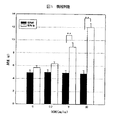
疼痛過敏症モデルの雄性ラット(344.2〜436.9g)を1群5匹使用。DCMB((±)−2,3−ジクロロ−α−メチルベンジルアミン)投与前と、投与後20分、40分及び60分に最大圧力:15.0g、最大圧力まで到達する時間:20秒に設定した刺激装置を用いて左足蹠の疼痛閾値を測定した。その結果を図1に示す。図中、"**"は Dunnettの多重検定法によりP<0.01で優位差があること、"*"は Dunnettの多重検定法によりP<0.05で優位差があることを示す(以下同様)。
図1に示すように、生理食塩液を投与した対照群では、投与後の最大疼痛閾値が5.7gを示したのに対し、DCMBを投与した群では(a)0.3mg/kg投与の場合、投与後の最大閾値が6.3g、(b)3mg/kg投与の場合、投与後の最大閾値が8.9g、(c)30mg/kg投与の場合、投与後の最大閾値が12.0gを示した。このように、DCMBの投与は、3mg/kg及び30mg/kgの投与で疼痛閾値を有意に上昇させ、神経因性疼痛における鎮痛効果が確認された。
(Mechanical stimulation method)
A group of 5 male rats (344.2-436.9g) of hypersensitivity pain group. Maximum pressure: 15.0 g before 20 minutes, 40 minutes and 60 minutes after administration of DCMB ((±) -2,3-dichloro-α-methylbenzylamine), time to reach maximum pressure: 20 seconds The pain threshold of the left footpad was measured using the stimulator. The result is shown in FIG. In the figure, “**” indicates that there is a dominant difference at P <0.01 by Dunnett's multiple test method, and “*” indicates that there is a dominant difference at P <0.05 by Dunnett's multiple test method (the same applies hereinafter).
As shown in FIG. 1, in the control group to which physiological saline was administered, the maximum pain threshold after administration showed 5.7 g, whereas in the group to which DCMB was administered (a) in the case of 0.3 mg / kg administration, When the maximum threshold after administration was 6.3 g, (b) 3 mg / kg administration, the maximum threshold after administration was 8.9 g, and (c) 30 mg / kg administration, the maximum threshold after administration was 12.0 g. Thus, administration of DCMB significantly increased the pain threshold at 3 mg / kg and 30 mg / kg, confirming the analgesic effect in neuropathic pain.
(熱刺激方法)
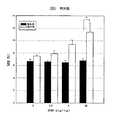
疼痛過敏症モデルの雄性ラット(367.4〜485.4g)を1群5匹使用。DCMB投与前と、投与後20分、40分及び60分に熱刺激強度35に設定した足底熱刺激装置を用いて左足蹠の疼痛閾値を測定した。その結果を図2に示す。
図2に示すように、生理食塩液を投与した対照群では、投与後の最大疼痛閾値が7.5秒を示したのに対し、DCMBを投与した群では、(a)0.3mg/kg投与の場合、投与後の最大閾値が7.9秒、(b)3mg/kg投与の場合、投与後の最大閾値が9.4秒、(c)30mg/kg投与の場合、投与後の最大閾値が11.4秒を示した。このように、DCMBの投与は、10mg/kgの投与で疼痛閾値を有意に上昇させ、神経因性疼痛における鎮痛効果が確認された。
(Thermal stimulation method)
A group of 5 male rats (367.4 to 485.4 g) of hypersensitivity pain group. The pain threshold of the left footpad was measured using a plantar thermal stimulator set to a thermal stimulation intensity of 35 before administration of DCMB and at 20, 40 and 60 minutes after administration. The result is shown in FIG.
As shown in FIG. 2, in the control group to which physiological saline was administered, the maximum pain threshold after administration was 7.5 seconds, whereas in the group to which DCMB was administered, (a) 0.3 mg / kg was administered. The maximum threshold after administration was 7.9 seconds, (b) In the case of 3 mg / kg administration, the maximum threshold after administration was 9.4 seconds, (c) In the case of 30 mg / kg administration, the maximum threshold after administration was 11.4 seconds . Thus, administration of DCMB significantly increased the pain threshold at the dose of 10 mg / kg, confirming the analgesic effect in neuropathic pain.
以上述べたように、本発明のDCMB等のPNMT阻害薬を含有する神経因性疼痛治療剤は、種々の原因による神経因性疼痛の症状を改善する作用を有するので、神経因性疼痛の治療に有効に用いることができる。 As described above, since the therapeutic agent for neuropathic pain containing a PNMT inhibitor such as DCMB of the present invention has an action of improving the symptoms of neuropathic pain due to various causes, the treatment of neuropathic pain Can be used effectively.
Claims (4)
Pharmaceutical composition for treating neuropathic pain comprising (±) -2,3-dichloro-α-methylbenzylamine (DCMB) or a pharmaceutically acceptable salt thereof, and a pharmaceutically acceptable carrier .
Priority Applications (3)
| Application Number | Priority Date | Filing Date | Title |
|---|---|---|---|
| JP2005033896A JP4222614B2 (en) | 2005-02-10 | 2005-02-10 | Neuropathic pain treatment |
| PCT/JP2006/302788 WO2006085688A1 (en) | 2005-02-10 | 2006-02-10 | Psychogenic pain therapeutic agent |
| JP2007502684A JPWO2006085688A1 (en) | 2005-02-10 | 2006-02-10 | Neuropathic pain treatment |
Applications Claiming Priority (1)
| Application Number | Priority Date | Filing Date | Title |
|---|---|---|---|
| JP2005033896A JP4222614B2 (en) | 2005-02-10 | 2005-02-10 | Neuropathic pain treatment |
Publications (2)
| Publication Number | Publication Date |
|---|---|
| JP2007332030A JP2007332030A (en) | 2007-12-27 |
| JP4222614B2 true JP4222614B2 (en) | 2009-02-12 |
Family
ID=36793242
Family Applications (2)
| Application Number | Title | Priority Date | Filing Date |
|---|---|---|---|
| JP2005033896A Expired - Fee Related JP4222614B2 (en) | 2005-02-10 | 2005-02-10 | Neuropathic pain treatment |
| JP2007502684A Pending JPWO2006085688A1 (en) | 2005-02-10 | 2006-02-10 | Neuropathic pain treatment |
Family Applications After (1)
| Application Number | Title | Priority Date | Filing Date |
|---|---|---|---|
| JP2007502684A Pending JPWO2006085688A1 (en) | 2005-02-10 | 2006-02-10 | Neuropathic pain treatment |
Country Status (2)
| Country | Link |
|---|---|
| JP (2) | JP4222614B2 (en) |
| WO (1) | WO2006085688A1 (en) |
Families Citing this family (1)
| Publication number | Priority date | Publication date | Assignee | Title |
|---|---|---|---|---|
| DE102007033359B4 (en) | 2007-07-16 | 2010-12-02 | Johann Wolfgang Goethe-Universität Frankfurt am Main | Use of a granule or a granulin-like compound for the therapy or prophylaxis of chronic pain |
-
2005
- 2005-02-10 JP JP2005033896A patent/JP4222614B2/en not_active Expired - Fee Related
-
2006
- 2006-02-10 WO PCT/JP2006/302788 patent/WO2006085688A1/en not_active Ceased
- 2006-02-10 JP JP2007502684A patent/JPWO2006085688A1/en active Pending
Also Published As
| Publication number | Publication date |
|---|---|
| JPWO2006085688A1 (en) | 2008-06-26 |
| WO2006085688A1 (en) | 2006-08-17 |
| JP2007332030A (en) | 2007-12-27 |
Similar Documents
| Publication | Publication Date | Title |
|---|---|---|
| EP3579826B1 (en) | Methods of treating cdkl5 disorders with the compound ov329 | |
| JP2012025756A (en) | Dosing regimen for selective s1p1 receptor agonist | |
| KR20210139293A (en) | Pulmonary Arterial Hypertension and Associated Pulmonary Arterial Hypertension Treatment and Daily Administration | |
| JP2006131545A (en) | Neuropathic pain treatment | |
| US12194033B2 (en) | Glycine receptor modulators and methods of use | |
| CA2654557A1 (en) | Combination preparations comprising bifeprunox and l-dopa | |
| JPWO2009069828A1 (en) | Drugs that improve motor complications or mental symptoms of Parkinson's disease | |
| JP4222614B2 (en) | Neuropathic pain treatment | |
| CN101636391B (en) | Novel prophylactic and/or therapeutic agent for neurogenic pain | |
| WO2007081060A1 (en) | Therapeutic agent for neuropathic pain | |
| JP4362457B2 (en) | Neuropathic pain treatment | |
| JP2008507550A (en) | Nervous system disorders and conditions treatment methods | |
| JP4227121B2 (en) | Neuropathic pain treatment | |
| JP4221383B2 (en) | Neuropathic pain treatment | |
| JP5559696B2 (en) | Treatment for diabetic nephropathy | |
| JP2007063205A (en) | Neuropathic pain treatment | |
| JP2004535457A (en) | New uses of pyridazinone derivatives | |
| CN1771029A (en) | Combination of desoxypeganine and mecamylamine for the treatment of alcohol abuse | |
| CN1466587A (en) | Dementia therapeutic agent containing 2-aryl-8-oxodihydropurine derivative as active ingredient | |
| CN101415425B (en) | Triglyceride-lowering agent and hyperinsulinism-ameliorating agent | |
| US20070293506A1 (en) | Combination preparations comprising bifeprunox and a dopamine agonist | |
| JPH0827029A (en) | New medicine use of 5ht1 agonist | |
| HK40015213A (en) | Use of carbamate compounds for prevention, alleviation or treatment of bipolar disorder | |
| JP2018035086A (en) | Pharmaceuticals for preventing and/or treating hypoactive bladder | |
| KR20260016608A (en) | Omidenepag combination |
Legal Events
| Date | Code | Title | Description |
|---|---|---|---|
| A131 | Notification of reasons for refusal |
Free format text: JAPANESE INTERMEDIATE CODE: A131 Effective date: 20080819 |
|
| A521 | Written amendment |
Free format text: JAPANESE INTERMEDIATE CODE: A523 Effective date: 20081010 |
|
| TRDD | Decision of grant or rejection written | ||
| A01 | Written decision to grant a patent or to grant a registration (utility model) |
Free format text: JAPANESE INTERMEDIATE CODE: A01 Effective date: 20081104 |
|
| A01 | Written decision to grant a patent or to grant a registration (utility model) |
Free format text: JAPANESE INTERMEDIATE CODE: A01 |
|
| A521 | Written amendment |
Free format text: JAPANESE INTERMEDIATE CODE: A821 Effective date: 20081010 |
|
| A61 | First payment of annual fees (during grant procedure) |
Free format text: JAPANESE INTERMEDIATE CODE: A61 Effective date: 20081117 |
|
| R150 | Certificate of patent or registration of utility model |
Free format text: JAPANESE INTERMEDIATE CODE: R150 |
|
| FPAY | Renewal fee payment (event date is renewal date of database) |
Free format text: PAYMENT UNTIL: 20111128 Year of fee payment: 3 |
|
| FPAY | Renewal fee payment (event date is renewal date of database) |
Free format text: PAYMENT UNTIL: 20121128 Year of fee payment: 4 |
|
| FPAY | Renewal fee payment (event date is renewal date of database) |
Free format text: PAYMENT UNTIL: 20121128 Year of fee payment: 4 |
|
| S111 | Request for change of ownership or part of ownership |
Free format text: JAPANESE INTERMEDIATE CODE: R313113 |
|
| FPAY | Renewal fee payment (event date is renewal date of database) |
Free format text: PAYMENT UNTIL: 20121128 Year of fee payment: 4 |
|
| R360 | Written notification for declining of transfer of rights |
Free format text: JAPANESE INTERMEDIATE CODE: R360 |
|
| FPAY | Renewal fee payment (event date is renewal date of database) |
Free format text: PAYMENT UNTIL: 20121128 Year of fee payment: 4 |
|
| R370 | Written measure of declining of transfer procedure |
Free format text: JAPANESE INTERMEDIATE CODE: R370 |
|
| LAPS | Cancellation because of no payment of annual fees |