JP4268366B2 - Heat-sensitive adhesive sheet and information recording medium - Google Patents
Heat-sensitive adhesive sheet and information recording medium Download PDFInfo
- Publication number
- JP4268366B2 JP4268366B2 JP2002060185A JP2002060185A JP4268366B2 JP 4268366 B2 JP4268366 B2 JP 4268366B2 JP 2002060185 A JP2002060185 A JP 2002060185A JP 2002060185 A JP2002060185 A JP 2002060185A JP 4268366 B2 JP4268366 B2 JP 4268366B2
- Authority
- JP
- Japan
- Prior art keywords
- heat
- sensitive adhesive
- adhesive layer
- information recording
- film substrate
- Prior art date
- Legal status (The legal status is an assumption and is not a legal conclusion. Google has not performed a legal analysis and makes no representation as to the accuracy of the status listed.)
- Expired - Fee Related
Links
Images



Landscapes
- Adhesive Tapes (AREA)
- Adhesives Or Adhesive Processes (AREA)
- Credit Cards Or The Like (AREA)
- Laminated Bodies (AREA)
Description
【0001】
【発明の属する技術分野】
本発明は、例えば記録材の情報記録面を剥離可能に接着することのできる感熱接着シート及びそれを用いた情報記録体に関する。
【0002】
【従来の技術】
従来、公共料金等の各種請求書、受領書及び満期通知書等のような個人のプライバシーに係わる書類の郵送には、プライバシー保護の観点から封書が使用されてきたが、封書は葉書に比べ郵送料が高いことからコスト高になるという欠点があった。
【0003】
そこで、近年、個人のプライバシーに係わる記録内容を隠蔽することのできる様々な葉書が提案されている。
【0004】
例えば実開平3−57071号公報には、片面が表面処理されている透明フィルム基材の両面に感熱接着剤層を有し、透明フィルム基材と双方の感熱接着剤層との間の界面接着強度を異ならせた感熱接着シートが提案されている。この感熱接着シートでは、片面のみが表面処理されている透明フィルム基材を用いることで、基材の表面処理面と感熱接着剤層との間の界面接着強度を、基材の非表面処理面と感熱接着剤層との間のそれよりも強くし、基材の非表面処理面側に接着される記録材(情報記録材)を基材と感熱接着剤層との界面で剥離可能にしている。
【0005】
また、特開平4−126298号公報には、支持体(フィルム基材)の両面に合成樹脂塗工層(感熱性接着剤層)を有し、支持体と合成樹脂塗工層とのT型剥離強度が、この合成樹脂塗工層に感熱接着される記録材(情報記録材)と該合成樹脂塗工層とのT型剥離強度よりも小さい感熱接着シートが提案されている。この感熱接着シートにおいても、支持体に接着した記録材を支持体と感熱接着剤層との界面で剥離可能にしている。
【0006】
【発明が解決しようとする課題】
前述したような感熱接着シートによれば、記録材を支持体(フィルム基材)と感熱接着剤層との界面で剥離することができるため、記録材に記載された情報(文字)部分が剥がれ落ちたりすることが無く、確実に情報(文字)を読むことができる。
【0007】
しかしながら、上記従来の感熱接着シートでは、記録材を剥離する際に、「バリバリ」といったような耳障りな音が発生し易く、この点の改良が望まれていた。
【0008】
そこで、本発明の主たる目的は、記録材等を剥離する際の音を軽減し得る感熱接着シート、及びこの感熱接着シートを用いた情報記録体を提供することにある。
【0009】
【課題を解決するための手段】
本発明者は、感熱接着シートに接着された記録材を剥離する際に発生する音のメカニズムを鋭意検討した結果、基材と感熱接着剤層との界面における剥離強度にバラツキがあると、剥離をスムーズに連続して行うことができず、どうしても「バリバリ」といった耳障りな音を発生してしまい、接着面の全面に渡って剥離強度をなるべく均一化することによって、剥離音を軽減し得ることを知見した。そして、かかる知見に基づき、基材と感熱接着剤層の構成について数多くの実験・検討を重ねた結果、本発明に至ったものである。
【0011】
本発明の第1は、片面に表面処理が施されているフィルム基材の該表面処理面に第一の感熱接着剤層を有し、他方の面に第二の感熱接着剤層を有する感熱接着シートであって、
前記表面処理を施すことにより、表面の水に対する濡れ性が向上された面に、水系感熱性粘着剤とポリエチレンワックス水分散物と水分散型ポリエステル樹脂を含有してなる水系感熱エマルジョン樹脂を塗工することで前記第一の感熱接着剤層が設けられ、
前記第一の感熱接着剤層と前記フィルム基材との接着強度が、前記第二の感熱接着剤層と前記フィルム基材との接着強度よりも弱いことを特徴とする感熱接着シートである。
また前記第一の感熱接着剤層と前記フィルム基材とのT型剥離強度が5〜15g/25mmであり、前記第二の感熱接着剤層と前記フィルム基材とのT型剥離強度が100g/25mm以上であることを特徴とする感熱接着シートである。
【0015】
本発明の第2は、片面に表面処理が施されているフィルム基材の該表面処理面に第一の感熱接着剤層を有し、他方の面に第二の感熱接着剤層を有する感熱接着シートの両面に記録材の情報記録面を接着した情報記録体であって、
前記表面処理を施すことにより、表面の水に対する濡れ性が向上された面に、水系感熱性粘着剤とポリエチレンワックス水分散物と水分散型ポリエステル樹脂を含有してなる水系感熱エマルジョン樹脂を塗工することで前記第一の感熱接着剤層が設けられ、
前記第一の感熱接着剤層と前記フィルム基材との接着強度が、前記第二の感熱接着剤層と前記フィルム基材との接着強度よりも弱いことを特徴とする情報記録体である。
また前記第一の感熱接着剤層と前記フィルム基材とのT型剥離強度が5〜15g/25mmであり、前記第二の感熱接着剤層と前記フィルム基材とのT型剥離強度が100g/25mm以上であることを特徴とする情報記録体である。
【0017】
【発明の実施の形態】
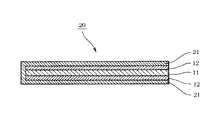
図1は本発明の感熱接着シートの一構成例を示す断面図であり、図2は図1の感熱接着シートを用いた本発明の情報記録体の断面図である。
【0018】
図1の感熱接着シート10は、フィルム基材11の両面に感熱接着剤層12を有するものである。また、図2の情報記録体20は、情報記録面を有する記録材21の該情報記録面を、図1の感熱接着シート10の感熱接着剤層12に感熱接着して一体化せしめたものである。
【0019】
本発明で用いるフィルム基材11としては合成樹脂フィルムが好適であり、具体的には、例えばポリエチレンフィルム、ポリプロピレンフィルム、ポリエステルフィルム、ポリカーボネートフィルム、ポリアミドフィルム等の公知の合成樹脂フィルムの中から適宜選択して使用することができるが、これらの中でも安価で透明性に優れる二軸延伸ポリプロピレン(OPP)フィルムが特に好ましい。
【0020】
フィルム基材11の感熱接着剤層12が形成される面には、表面張力(表面自由エネルギー)を上げるための表面処理が施されている。具体的には、コロナ放電処理、フレーム処理、プライマー処理(コーティングあるいは化学エッチング)、プラズマ処理、遠紫外線照射処理等であり、これらの中でも材料への熱影響がほとんどなく、比較的安価で、短時間で十分な効果が得られるコロナ放電処理が好適である。このような表面処理を施すことにより、表面の濡れ性が向上し、下述の水系感熱エマルジョン樹脂を塗工して感熱接着剤層12を形成する際に、感熱接着剤層12をより均一にムラ無く形成することができる。
【0021】
感熱接着剤層12は、水系感熱性粘着剤とポリエチレンワックス水分散物と水分散型ポリエステル樹脂を含有してなる水系感熱エマルジョン樹脂を塗工して形成されている。
【0022】
上記水系感熱性粘着剤としては、例えばEVA(エチレン−酢酸ビニル共重合体樹脂)、アクリル系樹脂、酢酸ビニル系樹脂、エチレン−メタクリル酸共重合体樹脂等の感熱性粘着剤を用いることができ、比較的低温(例えば100℃以下)でシール性が得られるEVAが好適である。
【0023】
上記ポリエチレンワックス水分散物は、主として水系感熱エマルジョン樹脂を塗工する際のブロッキングを防止し、感熱接着剤層12をより均一に塗布形成できるようにするために添加される。このポリエチレンワックス水分散物の粒径は、10〜15μm程度のものが好適である。
【0024】
上記水分散型ポリエステル樹脂は、主として感熱接着剤層12の光沢性を向上せしめると共に、フィルム基材11と感熱接着剤層12との接着性(剥離強度)を調整し、易剥離性を付与するためのものである。
【0025】
フィルム基材11に前述したような表面処理を施すと、フィルム基材11と感熱接着剤層12との接着性(剥離強度)は高くなる。従来の感熱接着シート(例えば前述した実開平3−57071号公報に記載の感熱接着シート)は、このことを利用して、基材の表面処理面と感熱接着剤層との間の界面接着強度を、基材の非表面処理面と感熱接着剤層との間のそれよりも強くし、基材の非表面処理面側に接着される記録材については、基材と感熱接着剤層との界面での剥離を可能にしている。
【0026】
一方、図1に例示した本発明の感熱接着シートは、図2に示したような情報記録体20を構成した際、フィルム基材11の表面処理面と感熱接着剤層12との界面で記録材21を剥離可能にするために、フィルム基材11の表面処理面と感熱接着剤層12とのT型剥離強度が5〜15g/25mmとなるように、上述した水系感熱エマルジョン樹脂の各成分が調製され、塗工されている。
【0027】
即ち、前記EVA等の水系感熱性粘着剤に前記ポリエチレンワックス水分散物を添加せしめると、一般にフィルム基材11との粘着性が高まる。このため、このまま前述したような表面処理を施したフィルム基材11の表面処理面に感熱接着剤層12を形成すると、これらの界面は極めて高い剥離強度を有するものとなり、かかる界面で記録材21を剥離することが難しくなる。一方、前記EVA等の水系感熱性粘着剤に前記水分散型ポリエステル樹脂を添加せしめると、粘着性が低下するため、本発明で用いる水系感熱エマルジョン樹脂の上記各成分を調製することにより、所望の剥離強度を実現することができる。
【0028】
本発明で用いる水系感熱エマルジョン樹脂を構成する水系感熱性粘着剤、ポリエチレンワックス水分散物及び水分散型ポリエステル樹脂の混合割合(固形分換算重量を基準)は、フィルム基材11の表面処理状態等にもよるが、例えば水系感熱性粘着剤30〜70重量部、水分散型ポリエステル樹脂70〜30重量部、ポリエチレンワックス水分散物5〜20重量部が適当である。このように調製することにより、5〜15g/m2程度の塗布量で前述した所望の剥離強度を得ることができる。
【0029】
尚、本明細書で言う「T型剥離強度」とは、JIS K6854「接着剤のはく離接着強さ試験方法」に準拠し、接着後23℃、湿度50%の条件下で2h放置した後、試験片25mm幅、剥離速度300mm/分の条件で測定される剥離強度である。
【0030】
このように、上記本発明の感熱接着シートでは、フィルム基材11の感熱接着剤層12を形成する面を予めコロナ処理等の表面処理を施すと共に、感熱接着剤層12を塗布形成する水系感熱エマルジョン樹脂にポリエチレンワックス水分散物を添加せしめることによって、塗工時のブロッキングを防止し、感熱接着剤層12をフィルム基材11に均一に塗布形成できるようにし、更に、感熱接着剤層12を塗布形成する水系感熱エマルジョン樹脂に水分散型ポリエステル樹脂を添加せしめることにより、フィルム基材11の表面処理面と感熱接着剤層12との接着力を低減して易剥離性を実現し、フィルム基材11の表面処理面と感熱接着剤層12との接着力のバラツキを低減でき、ひいては図2に示したような情報記録体20において記録材21及び感熱接着剤層12をフィルム基材11から剥離する際の剥離力のバラツキを低減でき、剥離音を軽減することができる。
【0031】
尚、情報記録体20に使用する記録材21は、通常の葉書や便箋等に使用する紙やコンピューター用記録材等の公知の材料の中から適宜選択して使用することができる。
【0032】
また、図1の感熱接着シートでは、両面を表面処理したフィルム基材11の双方の面に感熱接着剤層12を形成しているが、本発明の感熱接着シートは、図3に示すように片面のみを表面処理したフィルム基材11’の該表面処理面にのみ前述の感熱接着剤層12を形成したものであっても良い。但し、このような形態の感熱接着シートを用いて、図4に示すように、情報記録面を有する記録材41の該情報記録面を、感熱接着剤層12に感熱接着して情報記録体40とする場合には、情報を外から見ることができないようにするために、フィルム基材11’として不透明化したものを用いる必要がある。
【0033】
図5は本発明の感熱接着シートの別の構成例を示す断面図であり、図6は図5の感熱接着シートを用いた本発明の情報記録体の断面図である。
【0034】
図5の感熱接着シート50は、片面に表面処理が施されているフィルム基材51の該表面処理面に第一の感熱接着剤層52aを有し、他方の面(非表面処理面)に第二の感熱接着剤層52bを有するものである。また、図6の情報記録体60は、情報記録面を有する記録材61a,61bの該情報記録面を、図5の感熱接着シート50の両面に感熱接着して一体化せしめたものである。
【0035】
フィルム基材51には前述のフィルム基材11と同様のものを用いることができるが、本例の感熱接着シート50においては、片面のみに前述したような表面処理が施されているものを用いる。尚、本例の感熱接着シート50を図6のような情報記録体60に用いる場合には、後述のように第一の感熱接着剤層52aとフィルム基材51との界面のみを易剥離性として構成するため、記録材61bの情報記録面に記載された情報を後に読み取ることができるように、フィルム基材51としては透明なものが用いられる。
【0036】
フィルム基材51の表面処理面に形成される第一の感熱接着剤層52aは、前述の感熱接着剤層12と同様、水系感熱性粘着剤とポリエチレンワックス水分散物と水分散型ポリエステル樹脂を含有してなる水系感熱エマルジョン樹脂を塗工して形成される。そして、フィルム基材51の表面処理面と第一の感熱接着剤層52aとのT型剥離強度が5〜15g/25mmとなるように、上述した水系感熱エマルジョン樹脂の各成分が調製され、塗工される。
【0037】
したがって本例の感熱接着シート50においても、フィルム基材51の表面処理面と第一の感熱接着剤層52aとの接着力のバラツキを低減でき、ひいては図6に示したような情報記録体60において記録材61aを剥離する際の剥離力のバラツキを低減でき、剥離音を軽減することができる。
【0038】
一方、フィルム基材51の非表面処理面に形成される第二の感熱接着剤層52bは特に限定されるものではなく、EVA、アクリル系樹脂、酢酸ビニル系樹脂、エチレン−メタクリル酸共重合体樹脂、ポリエチレン等の一般的な感熱性粘着剤を塗工もしくは押出しラミネートによって形成することができ、フィルム基材51の非表面処理面と第二の感熱接着剤層52bとのT型剥離強度が100g/25mm以上となるように塗工される。
【0039】
このように、図5に示した本発明の感熱接着シートでは、上記のような剥離強度となるように双方の感熱接着剤層を形成することにより、図6に示したような情報記録体60を構成した際、従来の感熱接着シート(例えば前述した実開平3−57071号公報に記載の感熱接着シート)とは逆に、フィルム基材51の表面処理面側に接着される記録材51aを易剥離性として構成しているものである。
【0040】
【実施例】
以下、本発明の実施例を説明するが、本発明はこれによって限定されるものではない。
【0041】
(実施例1〜3)
図1に示した感熱接着シートを作製し、この感熱接着シートを用いて図2に示したような情報記録体を作製した。
【0042】
フィルム基材11として両面がコロナ処理された厚さ25μmのOPPフィルムを用い、この両面に表1に示す配合比で調製した水系感熱エマルジョン樹脂を乾燥後の厚みが15μmとなるように塗工して感熱接着剤層12を形成し、図1の感熱接着シートを得た。尚、水系感熱性粘着剤としてはEVA(日本エヌエスシー社製、品番:10457−101C)、ポリエチレンワックス水分散物としては商品名:HI−DISPER A−98016(岐阜セラック社製)、水分散型ポリエステル樹脂としては商品名:バイロナール MD−1930(東洋紡社製)を用いた。
【0043】
次いで、コンピューターからの情報を印刷した秤量120.5g/m2の記録材21の情報記録面を感熱接着剤層12に内部温度85℃でヒートシールして、図2の情報記録体を得た。
【0044】
本実施例で得られた感熱接着シートの感熱接着剤層12とフィルム基材11とのT型剥離強度を測定した。その結果を表1に示す。
【0045】
【表1】

上記の如く作製した情報記録体はフィルム基材11と感熱接着剤層12との間で容易に剥がすことができ、印字面は全く損傷がなく良好に判読することができた。また、剥離をスムーズに連続して行うことができ、「バリバリ」といった耳障りな音も発生しなかった。尚、記録材21と感熱接着剤層12とのT型剥離強度を測定したところ、いずれも100g/25mm以上であった。
【0047】
(実施例4)
図3に示した感熱接着シートを作成し、この感熱接着シートを用いて図4に示したような情報記録体を作成した。
【0048】
フィルム基材11’として、白色不透明、片面がコロナ処理され、他の面に所望の印刷が施された厚さ25μmのOPPフィルムを用い、このコロナ処理面に表1に示す各配合比で調製した水系感熱エマルジョン樹脂を乾燥後の厚みが15μmとなるように塗工して感熱接着剤層12を形成し、図3の感熱接着シートを得た。
【0049】
次いで、コンピューターからの情報を印刷した秤量120.5g/m2の記録材41の情報記録面を感熱接着剤層12に内部温度85℃でヒートシールして図4の情報記録体を得た。
【0050】
上記の如く作成した情報記録体はフィルム基材11’と感熱接着剤層12との間で容易に剥がすことができ、印字面は全く損傷がなく良好に判読することができた。また、剥離をスムーズに連続して行うことができ、「バリバリ」といった耳障りな音も発生しなかった。
【0051】
(実施例5〜7)
図5に示した感熱接着シートを作製し、この感熱接着シートを用いて図6に示したような情報記録体を作製した。
【0052】
フィルム基材51として片面がコロナ処理された厚さ25μmのOPPフィルムを用い、このコロナ処理面に表2に示す配合比で調製した水系感熱エマルジョン樹脂を乾燥後の厚みが15μmとなるように塗工して第一の感熱接着剤層32aを形成した。尚、水系感熱エマルジョン樹脂を構成する水系感熱性粘着剤、ポリエチレンワックス水分散物、水分散型ポリエステル樹脂としては実施例1〜3と同じものを用いた。
【0053】
次に、フィルム基材51の他方の面に、ディレードタック接着剤(商品名:エコブリッド TM−100、ダイセル化学工業社製)を乾燥後の厚みが15μmとなるように塗工して第二の感熱接着剤層52bを形成し、図5の感熱接着シートを得た。
【0054】
次いで、コンピューターからの情報を印刷した秤量120.5g/m2の2枚の記録材61a,61bの情報記録面を感熱接着剤層52a,52bに内部温度85℃でヒートシールして、図6の情報記録体を得た。
【0055】
本実施例で得られた感熱接着シートの感熱接着剤層52aとフィルム基材51とのT型剥離強度▲1▼、感熱接着剤層52bとフィルム基材51とのT型剥離強度▲2▼を測定した。その結果を表2に示す。
【0056】
【表2】
上記の如く作製した情報記録体はフィルム基材51と感熱接着剤層52aとの間で容易に剥がすことができ、印字面は全く損傷がなく良好に判読することができた。また、剥離をスムーズに連続して行うことができ、「バリバリ」といった耳障りな音も発生しなかった。尚、記録材61a,61bと感熱接着剤層52a,52bとのT型剥離強度を測定したところ、いずれも100g/25mm以上であった。
【0058】
【発明の効果】
本発明の感熱接着シートによれば、フィルム基材上に感熱接着剤層を塗布形成する際のブロッキングを防止し、感熱接着剤層をフィルム基材に均一に塗布形成できると共に、フィルム基材の表面処理面と感熱接着剤層との接着力を低減して易剥離性を実現したことにより、フィルム基材の表面処理面と感熱接着剤層との接着力のバラツキを低減でき、ひいては情報記録体において記録材を剥離する際の剥離力のバラツキを低減でき、剥離音を軽減することができる。
【図面の簡単な説明】
【図1】本発明の感熱接着シートの一構成例を示す断面図である。
【図2】図1の感熱接着シートを用いた情報記録体の断面図である。
【図3】本発明の感熱接着シートの別の構成例を示す断面図である。
【図4】図3の感熱接着シートを用いた情報記録体の断面図である。
【図5】本発明の感熱接着シートの別の構成例を示す断面図である。
【図6】図5の感熱接着シートを用いた情報記録体の断面図である。
【符号の説明】
10、30、50 感熱接着シート
11、11’ フィルム基材
12 感熱接着剤層
20、40、60 情報記録体
21、41、61a、61b 記録材
52a 第一の感熱接着剤層
52b 第二の感熱接着剤層[0001]
BACKGROUND OF THE INVENTION
The present invention relates to a heat-sensitive adhesive sheet that can releasably bond an information recording surface of a recording material, for example, and an information recording body using the same.
[0002]
[Prior art]
In the past, sealed letters have been used for the mailing of personal privacy documents such as various bills such as utility bills, receipts and maturity notices. There was a drawback that the cost was high due to the high shipping cost.
[0003]
Therefore, in recent years, various postcards have been proposed that can conceal the recorded contents related to personal privacy.
[0004]
For example, Japanese Utility Model Laid-Open No. 3-57071 has a heat-sensitive adhesive layer on both surfaces of a transparent film substrate on which one side is surface-treated, and interfacial adhesion between the transparent film substrate and both heat-sensitive adhesive layers. Heat-sensitive adhesive sheets with different strengths have been proposed. In this heat-sensitive adhesive sheet, by using a transparent film base material that is surface-treated only on one side, the interfacial adhesive strength between the surface-treated surface of the base material and the heat-sensitive adhesive layer is reduced to the non-surface-treated surface of the base material. The recording material (information recording material) bonded to the non-surface-treated surface side of the substrate can be peeled off at the interface between the substrate and the heat-sensitive adhesive layer. Yes.
[0005]
Japanese Patent Application Laid-Open No. 4-126298 discloses a T-type having a synthetic resin coating layer (heat-sensitive adhesive layer) on both sides of a support (film substrate), and the support and the synthetic resin coating layer. There has been proposed a heat-sensitive adhesive sheet having a peel strength smaller than the T-type peel strength between a recording material (information recording material) to be heat-bonded to the synthetic resin coating layer and the synthetic resin coating layer. Also in this heat-sensitive adhesive sheet, the recording material adhered to the support can be peeled off at the interface between the support and the heat-sensitive adhesive layer.
[0006]
[Problems to be solved by the invention]
According to the heat-sensitive adhesive sheet as described above, since the recording material can be peeled off at the interface between the support (film base material) and the heat-sensitive adhesive layer, the information (character) portion described on the recording material is peeled off. Information (characters) can be read without fail.
[0007]
However, in the conventional heat-sensitive adhesive sheet, when the recording material is peeled off, an irritating sound such as “barriness” is likely to occur, and improvement of this point has been desired.
[0008]
Accordingly, a main object of the present invention is to provide a heat-sensitive adhesive sheet capable of reducing sound when peeling a recording material and the like, and an information recording body using the heat-sensitive adhesive sheet.
[0009]
[Means for Solving the Problems]
As a result of earnestly examining the mechanism of sound generated when the recording material adhered to the heat-sensitive adhesive sheet is peeled off, the present inventor peels off if there is variation in the peel strength at the interface between the substrate and the heat-sensitive adhesive layer. Cannot be carried out smoothly and continuously, and it will inevitably generate an irritating sound such as “barbari”, and the peeling sound can be reduced by making the peeling strength as uniform as possible across the entire adhesive surface. I found out. And based on this knowledge, as a result of repeating many experiments and examinations about the structure of the base material and the heat-sensitive adhesive layer, the present invention has been achieved.
[0011]
In the first aspect of the present invention, a heat-sensitive adhesive layer having a first heat-sensitive adhesive layer on the surface-treated surface of a film substrate that has been surface-treated on one surface and a second heat-sensitive adhesive layer on the other surface. An adhesive sheet,
By applying the surface treatment, a water- based heat-sensitive emulsion resin containing a water-based heat-sensitive adhesive, a polyethylene wax aqueous dispersion, and a water-dispersible polyester resin is applied to the surface whose surface wettability is improved. The first heat-sensitive adhesive layer is provided,
The heat-sensitive adhesive sheet is characterized in that an adhesive strength between the first heat-sensitive adhesive layer and the film substrate is weaker than an adhesive strength between the second heat-sensitive adhesive layer and the film substrate.
The T-type peel strength between the first heat-sensitive adhesive layer and the film base is 5 to 15 g / 25 mm, and the T-type peel strength between the second heat-sensitive adhesive layer and the film base is 100 g. It is a heat-sensitive adhesive sheet characterized by being / 25 mm or more .
[0015]
In the second aspect of the present invention, a heat-sensitive material having a first heat-sensitive adhesive layer on the surface-treated surface of a film substrate that has been surface-treated on one surface and a second heat-sensitive adhesive layer on the other surface. An information recording body in which the information recording surface of the recording material is bonded to both sides of the adhesive sheet,
By applying the surface treatment, a water- based heat-sensitive emulsion resin containing a water-based heat-sensitive adhesive, a polyethylene wax aqueous dispersion, and a water-dispersible polyester resin is applied to the surface whose surface wettability is improved. wherein the first heat-sensitive adhesive layer is provided by,
The information recording body is characterized in that an adhesive strength between the first heat-sensitive adhesive layer and the film base material is weaker than an adhesive strength between the second heat-sensitive adhesive layer and the film base material.
The T-type peel strength between the first heat-sensitive adhesive layer and the film base is 5 to 15 g / 25 mm, and the T-type peel strength between the second heat-sensitive adhesive layer and the film base is 100 g. It is an information recording body characterized by being / 25 mm or more.
[0017]
DETAILED DESCRIPTION OF THE INVENTION
FIG. 1 is a cross-sectional view showing one structural example of the heat-sensitive adhesive sheet of the present invention, and FIG. 2 is a cross-sectional view of an information recording body of the present invention using the heat-sensitive adhesive sheet of FIG.
[0018]
A heat-sensitive
[0019]
As the
[0020]
The surface of the
[0021]
The heat-
[0022]
As the water-based heat-sensitive adhesive, for example, a heat-sensitive adhesive such as EVA (ethylene-vinyl acetate copolymer resin), acrylic resin, vinyl acetate resin, ethylene-methacrylic acid copolymer resin can be used. EVA which can obtain a sealing property at a relatively low temperature (for example, 100 ° C. or lower) is preferable.
[0023]
The polyethylene wax aqueous dispersion is added mainly to prevent blocking when the water-based thermal emulsion resin is applied, and to enable the
[0024]
The water-dispersible polyester resin mainly improves the glossiness of the heat-
[0025]
When the
[0026]
On the other hand, the heat-sensitive adhesive sheet of the present invention illustrated in FIG. 1 is recorded at the interface between the surface-treated surface of the
[0027]
That is, when the polyethylene wax aqueous dispersion is added to an aqueous heat-sensitive adhesive such as EVA, the adhesiveness to the
[0028]
The mixing ratio (based on solid content weight) of the water-based heat-sensitive adhesive, the polyethylene wax aqueous dispersion and the water-dispersible polyester resin constituting the water-based heat-sensitive emulsion resin used in the present invention is the surface treatment state of the
[0029]
The “T-type peel strength” referred to in this specification is based on JIS K6854 “Adhesive Peeling Adhesive Strength Test Method”, and after leaving for 2 hours at 23 ° C. and 50% humidity after bonding, It is the peel strength measured under the conditions of a test piece 25 mm width and a peel speed of 300 mm / min.
[0030]
As described above, in the heat-sensitive adhesive sheet of the present invention, the surface of the
[0031]
Note that the
[0032]
Further, in the heat-sensitive adhesive sheet of FIG. 1, the heat-
[0033]
FIG. 5 is a cross-sectional view showing another configuration example of the heat-sensitive adhesive sheet of the present invention, and FIG. 6 is a cross-sectional view of the information recording body of the present invention using the heat-sensitive adhesive sheet of FIG.
[0034]
The heat-sensitive adhesive sheet 50 of FIG. 5 has a first heat-
[0035]
Although the same thing as the above-mentioned
[0036]
The first heat-
[0037]
Therefore, also in the heat-sensitive adhesive sheet 50 of this example, the variation in the adhesive force between the surface-treated surface of the
[0038]
On the other hand, the second heat-
[0039]
As described above, in the heat-sensitive adhesive sheet of the present invention shown in FIG. 5, the
[0040]
【Example】
Examples of the present invention will be described below, but the present invention is not limited thereto.
[0041]
(Examples 1-3)
The heat-sensitive adhesive sheet shown in FIG. 1 was produced, and an information recording body as shown in FIG. 2 was produced using this heat-sensitive adhesive sheet.
[0042]
A 25 μm thick OPP film with corona treatment on both sides was used as the
[0043]
Next, the information recording surface of the
[0044]
The T-type peel strength between the heat-
[0045]
[Table 1]
The information recording body produced as described above could be easily peeled between the
[0047]
(Example 4)
The heat-sensitive adhesive sheet shown in FIG. 3 was prepared, and an information recording body as shown in FIG. 4 was prepared using this heat-sensitive adhesive sheet.
[0048]
As the
[0049]
Subsequently, the information recording surface of the
[0050]
The information recording material prepared as described above could be easily peeled off between the
[0051]
(Examples 5-7)
The heat-sensitive adhesive sheet shown in FIG. 5 was produced, and an information recording body as shown in FIG. 6 was produced using this heat-sensitive adhesive sheet.
[0052]
An OPP film having a thickness of 25 μm with one side corona-treated as a
[0053]
Next, a delayed tack adhesive (trade name: Ecobrid TM-100, manufactured by Daicel Chemical Industries) is applied to the other surface of the
[0054]
Next, the information recording surfaces of the two
[0055]
T-type peel strength (1) between the heat-
[0056]
[Table 2]
The information recording body produced as described above could be easily peeled between the
[0058]
【The invention's effect】
According to the heat-sensitive adhesive sheet of the present invention, blocking at the time of applying and forming a heat-sensitive adhesive layer on a film base material can be prevented, and the heat-sensitive adhesive layer can be uniformly applied and formed on the film base material. By reducing the adhesive force between the surface-treated surface and the heat-sensitive adhesive layer and realizing easy releasability, variations in the adhesive force between the surface-treated surface of the film substrate and the heat-sensitive adhesive layer can be reduced, and as a result information recording It is possible to reduce variation in peeling force when peeling the recording material on the body, and to reduce peeling sound.
[Brief description of the drawings]
FIG. 1 is a cross-sectional view showing a structural example of a heat-sensitive adhesive sheet of the present invention.
2 is a cross-sectional view of an information recording body using the heat-sensitive adhesive sheet of FIG.
FIG. 3 is a cross-sectional view showing another configuration example of the heat-sensitive adhesive sheet of the present invention.
4 is a cross-sectional view of an information recording body using the heat-sensitive adhesive sheet of FIG.
FIG. 5 is a cross-sectional view showing another configuration example of the heat-sensitive adhesive sheet of the present invention.
6 is a cross-sectional view of an information recording body using the heat-sensitive adhesive sheet of FIG.
[Explanation of symbols]
10, 30, 50 Heat-
Claims (4)
前記表面処理を施すことにより、表面の水に対する濡れ性が向上された面に、水系感熱性粘着剤とポリエチレンワックス水分散物と水分散型ポリエステル樹脂を含有してなる水系感熱エマルジョン樹脂を塗工することで前記第一の感熱接着剤層が設けられ、
前記第一の感熱接着剤層と前記フィルム基材との接着強度が、前記第二の感熱接着剤層と前記フィルム基材との接着強度よりも弱いことを特徴とする感熱接着シート。A heat-sensitive adhesive sheet having a first heat-sensitive adhesive layer on the surface-treated surface of a film base that has been surface-treated on one side, and a second heat-sensitive adhesive layer on the other surface,
By applying the surface treatment, a water- based heat-sensitive emulsion resin containing a water-based heat-sensitive adhesive, a polyethylene wax aqueous dispersion, and a water-dispersible polyester resin is applied to the surface whose surface wettability is improved. The first heat-sensitive adhesive layer is provided,
The heat-sensitive adhesive sheet, wherein an adhesive strength between the first heat-sensitive adhesive layer and the film substrate is weaker than an adhesive strength between the second heat-sensitive adhesive layer and the film substrate.
前記表面処理を施すことにより、表面の水に対する濡れ性が向上された面に、水系感熱性粘着剤とポリエチレンワックス水分散物と水分散型ポリエステル樹脂を含有してなる水系感熱エマルジョン樹脂を塗工することで前記第一の感熱接着剤層が設けられ、
前記第一の感熱接着剤層と前記フィルム基材との接着強度が、前記第二の感熱接着剤層と前記フィルム基材との接着強度よりも弱いことを特徴とする情報記録体。A recording material on both sides of a heat-sensitive adhesive sheet having a first heat-sensitive adhesive layer on the surface-treated surface of a film substrate that has been surface-treated on one side and a second heat-sensitive adhesive layer on the other surface An information recording body having an information recording surface bonded thereto,
By applying the surface treatment, a water- based heat-sensitive emulsion resin containing a water-based heat-sensitive adhesive, a polyethylene wax aqueous dispersion, and a water-dispersible polyester resin is applied to the surface whose surface wettability is improved. The first heat-sensitive adhesive layer is provided,
An information recording body, wherein an adhesive strength between the first heat-sensitive adhesive layer and the film substrate is weaker than an adhesive strength between the second heat-sensitive adhesive layer and the film substrate.
Priority Applications (1)
| Application Number | Priority Date | Filing Date | Title |
|---|---|---|---|
| JP2002060185A JP4268366B2 (en) | 2002-03-06 | 2002-03-06 | Heat-sensitive adhesive sheet and information recording medium |
Applications Claiming Priority (1)
| Application Number | Priority Date | Filing Date | Title |
|---|---|---|---|
| JP2002060185A JP4268366B2 (en) | 2002-03-06 | 2002-03-06 | Heat-sensitive adhesive sheet and information recording medium |
Publications (2)
| Publication Number | Publication Date |
|---|---|
| JP2003261837A JP2003261837A (en) | 2003-09-19 |
| JP4268366B2 true JP4268366B2 (en) | 2009-05-27 |
Family
ID=29195567
Family Applications (1)
| Application Number | Title | Priority Date | Filing Date |
|---|---|---|---|
| JP2002060185A Expired - Fee Related JP4268366B2 (en) | 2002-03-06 | 2002-03-06 | Heat-sensitive adhesive sheet and information recording medium |
Country Status (1)
| Country | Link |
|---|---|
| JP (1) | JP4268366B2 (en) |
Families Citing this family (4)
| Publication number | Priority date | Publication date | Assignee | Title |
|---|---|---|---|---|
| JP5013480B2 (en) * | 2008-03-04 | 2012-08-29 | 小林クリエイト株式会社 | Information hiding form |
| WO2017219032A1 (en) * | 2016-06-17 | 2017-12-21 | Jindal Films Americas Llc | Linerless adhesive activation |
| JP6233821B2 (en) * | 2016-08-26 | 2017-11-22 | 大阪シーリング印刷株式会社 | Pseudo adhesive sheet |
| JP7503494B2 (en) * | 2017-11-17 | 2024-06-20 | アイメリーズ ユーエスエー,インコーポレーテッド | Heat Seal Coating |
-
2002
- 2002-03-06 JP JP2002060185A patent/JP4268366B2/en not_active Expired - Fee Related
Also Published As
| Publication number | Publication date |
|---|---|
| JP2003261837A (en) | 2003-09-19 |
Similar Documents
| Publication | Publication Date | Title |
|---|---|---|
| CN102574408A (en) | Laser marking process and articles | |
| JP4268366B2 (en) | Heat-sensitive adhesive sheet and information recording medium | |
| JPH04126298A (en) | Thermal adhesive sheet and data recording material using the same | |
| JP2004042293A (en) | Heat-sensitive adhesive sheet and information recording body | |
| JP4579498B2 (en) | Adhesive sheet | |
| JP5377841B2 (en) | Information recording adhesive sheet | |
| JP2008145720A (en) | Information hiding seal | |
| JP2004315775A (en) | Removable adhesive film | |
| JP3032625B2 (en) | Transparent heat-sensitive adhesive sheet | |
| JP2862735B2 (en) | Sealing sheet and information recording body using the same | |
| JP3011672B2 (en) | Adhesive sheet | |
| JP2004051878A (en) | Heat-sensitive adhesive resin composition and recording medium using the same | |
| JPH08146881A (en) | Concealing sheet | |
| JPH0628302Y2 (en) | Seal sheet for sealed postcards | |
| JP2587457Y2 (en) | Confidentiality laminate | |
| JPH1178310A (en) | Adhesive tape for fixing card-shaped information carrier and sheet for printing | |
| JPH0459395A (en) | Information holding sheet | |
| JPH0740683A (en) | Round-trip concealment mail form | |
| JP2595792Y2 (en) | Self peeling composite sheet | |
| JP4378179B2 (en) | Release sheet and adhesive | |
| JP2610564B2 (en) | Sealing sheet and information recording body using the same | |
| JP2603166B2 (en) | Heat-sensitive adhesive sheet capable of tearing away | |
| JPH0717166A (en) | Heat-sensitive laminated sheet and information recording body with the same | |
| JP2719743B2 (en) | Sealing sheet and information recording body using the same | |
| JP2001226652A (en) | Heat-sensitive adhesive sheet and information-recording body using the same |
Legal Events
| Date | Code | Title | Description |
|---|---|---|---|
| A621 | Written request for application examination |
Free format text: JAPANESE INTERMEDIATE CODE: A621 Effective date: 20050112 |
|
| A977 | Report on retrieval |
Free format text: JAPANESE INTERMEDIATE CODE: A971007 Effective date: 20080807 |
|
| A131 | Notification of reasons for refusal |
Free format text: JAPANESE INTERMEDIATE CODE: A131 Effective date: 20080812 |
|
| A521 | Request for written amendment filed |
Free format text: JAPANESE INTERMEDIATE CODE: A523 Effective date: 20081014 |
|
| A131 | Notification of reasons for refusal |
Free format text: JAPANESE INTERMEDIATE CODE: A131 Effective date: 20081111 |
|
| A521 | Request for written amendment filed |
Free format text: JAPANESE INTERMEDIATE CODE: A523 Effective date: 20090106 |
|
| TRDD | Decision of grant or rejection written | ||
| A01 | Written decision to grant a patent or to grant a registration (utility model) |
Free format text: JAPANESE INTERMEDIATE CODE: A01 Effective date: 20090203 |
|
| A01 | Written decision to grant a patent or to grant a registration (utility model) |
Free format text: JAPANESE INTERMEDIATE CODE: A01 |
|
| A61 | First payment of annual fees (during grant procedure) |
Free format text: JAPANESE INTERMEDIATE CODE: A61 Effective date: 20090220 |
|
| R150 | Certificate of patent or registration of utility model |
Free format text: JAPANESE INTERMEDIATE CODE: R150 |
|
| FPAY | Renewal fee payment (event date is renewal date of database) |
Free format text: PAYMENT UNTIL: 20120227 Year of fee payment: 3 |
|
| FPAY | Renewal fee payment (event date is renewal date of database) |
Free format text: PAYMENT UNTIL: 20120227 Year of fee payment: 3 |
|
| FPAY | Renewal fee payment (event date is renewal date of database) |
Free format text: PAYMENT UNTIL: 20130227 Year of fee payment: 4 |
|
| FPAY | Renewal fee payment (event date is renewal date of database) |
Free format text: PAYMENT UNTIL: 20140227 Year of fee payment: 5 |
|
| R250 | Receipt of annual fees |
Free format text: JAPANESE INTERMEDIATE CODE: R250 |
|
| R250 | Receipt of annual fees |
Free format text: JAPANESE INTERMEDIATE CODE: R250 |
|
| R250 | Receipt of annual fees |
Free format text: JAPANESE INTERMEDIATE CODE: R250 |
|
| LAPS | Cancellation because of no payment of annual fees |