JP4506830B2 - Communication terminal - Google Patents
Communication terminal Download PDFInfo
- Publication number
- JP4506830B2 JP4506830B2 JP2007335595A JP2007335595A JP4506830B2 JP 4506830 B2 JP4506830 B2 JP 4506830B2 JP 2007335595 A JP2007335595 A JP 2007335595A JP 2007335595 A JP2007335595 A JP 2007335595A JP 4506830 B2 JP4506830 B2 JP 4506830B2
- Authority
- JP
- Japan
- Prior art keywords
- unit
- message
- time
- communication terminal
- transmission
- Prior art date
- Legal status (The legal status is an assumption and is not a legal conclusion. Google has not performed a legal analysis and makes no representation as to the accuracy of the status listed.)
- Expired - Fee Related
Links
Images

Landscapes
- Telephone Function (AREA)
- Mobile Radio Communication Systems (AREA)
Description
本発明は、情報を送信する通信端末に関するものである。 The present invention relates to a communication terminal end for transmitting information.
従来、スケジュールの内容と現在の状況に基づいた連絡を自動的に行うことが可能な情報処理装置及びメッセージ送信方法について提案されている(特許文献1段落0008)。 Conventionally, there has been proposed an information processing apparatus and a message transmission method capable of automatically making a contact based on the contents of a schedule and the current situation (paragraph 0008 of Patent Document 1).
特許文献1には、現在位置とスケジュール場所との間の距離が予め設定された設定距離以上にあるかを判定し(特許文献1段落0039、図4のB10)、設定距離以上にある場合、現在位置からスケジュール場所に行くまでの所要時間を求め、スケジュールの時間に間に合うか否かを判定し、間に合わない場合にメッセージを送信することが記載されている(特許文献1段落0040、図4のB13)。また、その際、遅れる時間をメッセージ送信することについても記載されている(特許文献1段落0090、図10)。 In Patent Document 1, it is determined whether the distance between the current position and the schedule place is equal to or larger than a preset distance (Patent Document 1, paragraph 0039, B10 in FIG. 4). It is described that the required time from the current position to the schedule location is obtained, it is determined whether or not it is in time for the schedule, and a message is transmitted when it is not in time (Patent Document 1, paragraph 0040, FIG. 4). B13). In this case, it is also described that a message is transmitted for a time delay (Patent Document 1, paragraph 0090, FIG. 10).
しかし、メッセージを送信する際には現在位置を検出する必要があること、及び、設定距離が短い距離の場合には、頻繁に現在位置からスケジュール場所に行くまでの所要時間を求める必要があることは、通信端末に処理負担をかけてしまう。また、設定距離が長い距離の場合には、本当は遅れる場合でもメッセージが送信されない場合があり、使い勝手向上の観点からさらなる改善の余地があった。 However, when sending a message, it is necessary to detect the current position, and when the set distance is short, it is necessary to frequently obtain the time required to go from the current position to the schedule location. Causes a processing burden on the communication terminal. Further, when the set distance is a long distance, a message may not be transmitted even if it is actually delayed, and there is room for further improvement from the viewpoint of improving usability.
本発明の目的は、使い勝手の向上した通信端末を提供することである。 An object of the present invention is to provide a communication terminal end with an improved usability.
本発明にかかる通信端末は、入力された時刻、送信先及びメッセージを含む予約送信情報を記憶し、現在時刻が前記記憶された時刻よりも前に通信端末の電源を切断するとき、前記予約送信情報が記憶されていることを表示する。 Communication terminal according to the present invention, when entered time, stores the reservation transmission information including the destination and message, when the current time is to disconnect the power supply of the communication terminal before the stored time, the it indicates that the reservation transmission information is stored.
本発明により、使い勝手の向上した通信端末を提供できる。 According to the present invention, a communication terminal with improved usability can be provided.
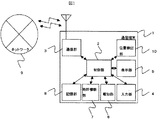
以下、図面を参照しながら、本発明の提案する通信端末の実施の形態を説明する。図1は、本発明の実施の一形態を示す機能ブロック図である。図示される通信端末1は、制御部2、通信部3、入力部4、表示部5、報知部6、時計機能部7、記憶部8を備える。
Hereinafter, embodiments of a communication terminal proposed by the present invention will be described with reference to the drawings. FIG. 1 is a functional block diagram showing an embodiment of the present invention. The illustrated communication terminal 1 includes a control unit 2, a communication unit 3, an
まず、通信端末1各部の機能を説明する。制御部2は、通信端末1各部の機能を制御するものである。通信部3は、制御部2によって制御され、ネットワーク9と無線通信を行うものである。入力部4は、例えばキーパッドの類で、ユーザが制御部2へ情報を入力するものである。表示部5は、例えば液晶ディスプレイの類で、制御部2によって制御され、文字情報、画像情報などを表示するものである。報知部6は、例えばスピーカの類で、制御部2によって制御され、音声または振動などの鳴動により、ユーザへ報知を行うものである。時計機能部7は、制御部2から現在時刻情報を参照できるものである。記憶部8は、例えばRAMの類で、端末制御部2が処理する各種情報を記憶することができるものである。
First, the function of each part of the communication terminal 1 will be described. The control unit 2 controls functions of each unit of the communication terminal 1. The communication unit 3 is controlled by the control unit 2 and performs wireless communication with the network 9. The
次に、図2乃至図7を参照しながら、会議が延長した場合にその旨を登録した連絡先に自動的に連絡する例について説明する。予約送信の時刻条件と組み合わせる第1送信条件は、予約送信時刻を報知するアラームが停止されないことである。さらに本例では、予約送信実行後にユーザが初めて端末を操作したときに、第2送信条件を満たしたとして遅延時間の目安を知らせる電子メールを自動的に送信する。 Next, with reference to FIGS. 2 to 7, an example of automatically contacting the registered contact address when the conference is extended will be described. The first transmission condition combined with the reservation transmission time condition is that the alarm notifying the reservation transmission time is not stopped. Further, in this example, when the user operates the terminal for the first time after execution of reservation transmission, an e-mail notifying the target of the delay time is automatically transmitted assuming that the second transmission condition is satisfied.
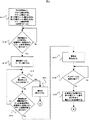
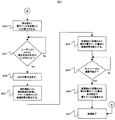
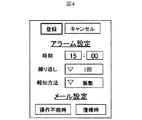
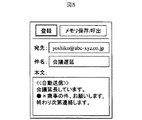
図2及び図3は、この動作例において、制御部2が実行する処理のフローチャートである。ユーザは予め、入力部4により、アラーム報知時刻、アラーム報知方法、第1の電子メール書式と宛先、第2の電子メール書式と宛先、及びアラーム報知開始から自動停止までの時間を指定するアラーム継続時間を入力しておく。図4は設定画面の一例である。この例では、アラーム報知時刻の設定と共に、第1及び第2の電子メールの自動送信設定画面を呼び出せるようになっている。図5は、図4のアラーム設定画面から呼び出される、電子メールの自動送信設定画面の一例である。この例では、自動送信する電子メールの内容の保存及び呼出が可能となっており、入力の手間を省くことができる。
2 and 3 are flowcharts of processing executed by the control unit 2 in this operation example. The user uses the
第1の電子メール書式は、例えば図5のようなもので、遅延の旨を連絡するものである。第2の電子メール書式は、例えば図6のようなもので、遅延時間の目安となる時間情報を制御部により挿入できる制御コードを含んでいる。この例では、図中の『"$DELAY"』を該当制御コードとする。制御部は、この制御コードに遅延時間の目安となる時間情報を挿入する機能を持つ。ユーザによりこれらの設定情報が入力されると、制御部2は、これを記憶部8に記憶する(手順A11)。 The first e-mail format is, for example, as shown in FIG. 5, and informs the delay. The second e-mail format is, for example, as shown in FIG. 6 and includes a control code that allows the control unit to insert time information that is a measure of the delay time. In this example, “$ DELAY” in the figure is the corresponding control code. The control unit has a function of inserting time information serving as a reference for the delay time into the control code. When the setting information is input by the user, the control unit 2 stores it in the storage unit 8 (procedure A11).
続いて制御部2は、時計機能部7の監視を開始する。手順A11で記憶部8に記憶されたアラーム報知時刻と時計機能部7の示す時刻が一致したとき(手順A12−Yes)、制御部2は、記憶部に記憶されたアラーム報知方法に従って、報知部6によりユーザに報知する(手順A13)。本例では、ユーザが会議中であるので、アラーム報知方法はバイブレーション機能による振動が望ましいが、音声による報知が周囲の迷惑にならないような場合であれば、音声によるアラーム報知を行っても良い。また、ユーザが端末を見れる状態であれば、周囲への迷惑を確実に避けるため、表示部5に表示又は図示していない発行部や蛍光部により点滅、点灯することにより報知してもよい。この場合、表示部5、発行部や蛍光部は、報知部6として機能している。どの報知方法を用いるかは、本例では予め記憶部8に記憶された設定情報に基づくが、この設定を省略し、その時点での端末の設定に従っても良い。なお、このアラーム報知は、ユーザから入力部4に何らかの入力があった場合に停止されるものとする。
Subsequently, the control unit 2 starts monitoring the clock function unit 7. When the alarm notification time stored in the storage unit 8 in step A11 coincides with the time indicated by the clock function unit 7 (step A12-Yes), the control unit 2 follows the alarm notification method stored in the storage unit. 6 to inform the user (procedure A13). In this example, since the user is in a meeting, the alarm notification method is preferably vibration by the vibration function. However, if the notification by voice does not disturb the surroundings, the alarm notification by voice may be performed. Further, if the user can see the terminal, notification may be made by blinking or turning on the issuing unit or the fluorescent unit not shown or displayed on the
アラーム報知中にユーザからアラーム報知停止の入力があった場合には(手順A14-Yes)、ユーザは通信端末を自由に操作できる状態であり、会議は終了していると判断できる。従って遅延の連絡をする必要は無く、この場合、制御部2は、報知部6による報知を停止させ(手順A15)、一連の処理を終了する(手順A27)。 If there is an alarm notification stop input from the user during the alarm notification (procedure A14-Yes), the user can freely operate the communication terminal, and it can be determined that the conference has ended. Therefore, there is no need to communicate the delay, and in this case, the control unit 2 stops the notification by the notification unit 6 (procedure A15) and ends the series of processes (procedure A27).
ユーザからアラーム報知停止の入力が無い場合は(手順A14-No)、報知が始まってからの経過時間と、記憶部8に記憶されたアラーム継続時間を比較し(手順A16)、前者が後者を超えていない場合は、手順A14に戻り、ユーザからの入力を待つ(手順A16-No)。報知開始からの経過時間が、記憶部8に記憶したアラーム継続時間を越えた場合には(手順16-Yes)、ユーザはアラーム報知を停止できない状況であり、会議は延長して継続中であると判断できる。この場合は、制御部2は、報知部6による報知を停止させ(手順A17)、通信部3がネットワーク9と通信可能かどうかをチェックし(手順A18)、通信可能であれば(手順A18-Yes)、制御部2は通信部3を用いて、記憶部8に記憶された第1の電子メール書式を、第1の宛先に送信する(手順A19)。 If there is no alarm notification stop input from the user (Procedure A14-No), the elapsed time from the start of notification is compared with the alarm duration stored in the storage unit 8 (Procedure A16), and the former determines the latter If not, return to step A14 and wait for input from the user (step A16-No). If the elapsed time from the start of notification exceeds the alarm duration stored in the storage unit 8 (step 16-Yes), the user cannot stop the alarm notification and the conference is extended and continuing. It can be judged. In this case, the control unit 2 stops notification by the notification unit 6 (procedure A17), checks whether the communication unit 3 can communicate with the network 9 (procedure A18), and if communication is possible (procedure A18- Yes), the control unit 2 uses the communication unit 3 to transmit the first electronic mail format stored in the storage unit 8 to the first destination (procedure A19).
このようにすることで、送信された者は、ユーザが遅れる旨を把握できる。また、予約送信時刻と現在時刻が一致した場合にユーザに連絡すればよいため、端末の処理負担を軽くすることができる。また、ユーザが報知中に何らかの入力を行えば、メッセージ送信を停止するため、連絡できる場合にも必要のないメッセージ送信を停止させることができる。 By doing in this way, the transmitted person can grasp that the user is delayed. Further, since it is sufficient to contact the user when the reserved transmission time matches the current time, the processing burden on the terminal can be reduced. In addition, if the user makes any input during the notification, the message transmission is stopped, so that unnecessary message transmission can be stopped even when contact is possible.
また、メッセージの受信者は、ユーザが通信端末を操作可能となる以前にユーザの状況を知ることができ、利便性が高い。また、報知を止めるという自然かつ単一の動作により予約送信が解除されるため、予約解除忘れによるご送信が起こる可能性を低減できる。 In addition, the recipient of the message can know the user's situation before the user can operate the communication terminal, which is highly convenient. Moreover, since the reservation transmission is canceled by a natural and single operation of stopping the notification, the possibility of transmission due to forgetting to cancel the reservation can be reduced.
手順A18で、通信が不可能であれば、定期的に手順A18を繰りし、通信可能となるのを待って(手順A18-No)手順A19へ進む。 If communication is impossible in step A18, step A18 is periodically repeated, and after waiting for communication (step A18-No), the process proceeds to step A19.
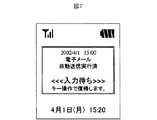
手順A19で第1の電子メールを送信した後、制御部2は、例えば図7のような表示を表示部5に表示させ、自動送信済みであることユーザに通知する(手順A20)。ユーザから入力部4に何らかの入力があるまで、この表示を表示し続けることにより(手順A21-NO)、ユーザは自動送信後初めての操作時に、確かに自動送信が実行されたことを容易に確認することができる。ユーザから何らかの送信確認を示す入力があった場合には(手順A21-YES)、制御部2は、表示部5に表示された自動送信済みの表示を消す(手順A22)。ここで制御部2は、時計機能部7を参照して現在時刻を取得し、記憶部8に記憶されたアラーム報知時刻又はメール送信時刻からの経過時間を算出し(手順A23)、予定からの遅延時間の目安として、第2の電子メール書式の制御コード部に挿入する(手順A24)。
After transmitting the first e-mail in step A19, the control unit 2 displays a display such as that shown in FIG. 7 on the
その後、制御部2は再び通信部3とネットワーク9との通信状況をチェックし、通信可能ならば(手順A25-Yes)、手順A24で遅延時間の挿入された第2の電子メールを、第2の宛先に送信し(手順A26)、一連の処理を終了する(手順A27)。ネットワーク9と通信不可能ならば(手順A25-No)、通信可能になるのを待って手順A26に進む。この第2の電子メールにより、電子メール受信者は、ユーザが通信端末を操作可能になったことだけでなく、遅延時間も容易に知ることができ、より的確な対応を取ることができる。 Thereafter, the control unit 2 checks the communication status between the communication unit 3 and the network 9 again. If communication is possible (procedure A25-Yes), the second e-mail with the delay time inserted in the procedure A24 is sent to the second e-mail. (Procedure A26), and a series of processing ends (procedure A27). If communication with the network 9 is not possible (procedure A25-No), it waits for communication to be possible and proceeds to procedure A26. By this second e-mail, the e-mail recipient can not only know that the user can operate the communication terminal, but also can easily know the delay time, and can take a more appropriate action.
尚、本例では、第2の電子メール設定により遅延時間の目安となる時間情報を送信したが、これは本発明を限定するものではなく、例えば、第2の電子メールによる連絡が不必要である場合には、第2の電子メール設定及び手順A23乃至A26を省略しても良い。 In this example, the second e-mail setting transmits time information that is a guideline for the delay time. However, this does not limit the present invention, and for example, contact by the second e-mail is unnecessary. In some cases, the second e-mail setting and the procedures A23 to A26 may be omitted.
また、手順A14で、端末に何らかの入力があれば、報知を停止し、連絡可能と考えている。しかし、状況によっては、簡単な操作はできるが、連絡不可能な場合があるので、送信中止を示す特定の入力が行われた場合にメッセージ送信を中止し、それ以外の場合には、報知を停止するのみで、送信予定のメッセージを送信するようにしてもよい。また、そのようにすることによって、例えば、鞄の中に入れていてたまたまボタンが押される等による不用意な送信停止を防げることができる。 Also, in step A14, if there is any input on the terminal, the notification is stopped and it is considered that contact is possible. However, depending on the situation, although simple operations are possible, contact may not be possible, so message transmission will be stopped when a specific input indicating transmission stop is made, and otherwise notification will be made. The message scheduled to be transmitted may be transmitted only by stopping. In addition, by doing so, it is possible to prevent an inadvertent transmission stop due to, for example, pressing a button in a bag.
ここまで、会議の遅延連絡を例に説明してきたが、この機能は、例えばユーザがアラームを目覚ましに使用したときにも有効で、ユーザがアラームに気付かず寝過ごしてしまった場合には、ユーザが睡眠中であっても、待ち合わせ相手などへの遅刻連絡を即座に知らせることができる。これにより、電子メールを受信した相手は、ユーザへ電話をかける、予定を変更するなどの対応を早めに取ることができるようになり、遅刻の損害を軽減することができる。 Up to this point, we have explained an example of delayed contact of a conference, but this function is also effective when, for example, the user uses an alarm to wake up, and if the user falls asleep without noticing the alarm, the user can Even during sleep, it is possible to immediately notify late arrival to a meeting partner. As a result, the other party who has received the e-mail can take early actions such as making a call to the user or changing the schedule, thereby reducing damage caused by the late arrival.
また、以下のようにして一定間隔でユーザにアラーム報知を行い、その都度、第1の宛先に電子メールを送信するようにしても良い。まず、アラーム報知を繰り返す間隔を指定するアラーム報知間隔、及び第1の電子メール書式として、アラーム報知間隔を挿入する為の制御コードを含む電子メール書式を記憶させておく。手順A19では第1の電子メールを送信する時にアラーム報知間隔を挿入して送信し、さらに手順A21で自動送信済の表示が消されなかった場合(A21-No)には、記憶部8に記憶されたアラーム報知時刻を、アラーム報知間隔だけ遅らせて再び手順A12に戻る。この後、ユーザによりアラーム停止、または自動送信済みの表示を消す操作が入力された場合には、手順A22以降の第2の電子メール作成に進む。尚、第2の電子メールに挿入する遅延時間は、最初のアラーム報知時刻からの経過時間で計算する。これにより、ユーザに対して複数回アラーム報知を行うことができ、さらにその都度電子メールによる連絡を行うことができるため、電子メール受信者はより詳細な状況を知ることができ、便利である。 Further, alarm notification may be given to the user at regular intervals as described below, and an e-mail may be transmitted to the first destination each time. First, an e-mail format including a control code for inserting an alarm notification interval is stored as an alarm notification interval for specifying an interval for repeating alarm notification and a first e-mail format. In step A19, when the first e-mail is sent, an alarm notification interval is inserted and sent. If the automatic transmission display is not erased in step A21 (A21-No), it is stored in the storage unit 8. The alarm notification time thus made is delayed by the alarm notification interval, and the process returns to step A12 again. Thereafter, when the user inputs an operation to stop the alarm or to turn off the automatic transmission display, the process proceeds to the second e-mail creation after step A22. Note that the delay time to be inserted into the second e-mail is calculated by the elapsed time from the first alarm notification time. Thus, the alarm can be notified to the user a plurality of times, and further, contact can be made by e-mail each time, so that the e-mail recipient can know more detailed situation and is convenient.
また、通信端末1がGPS等による位置検出部10を備え、第1、及び第2の電子メールを送信する前に、通信端末1の現在位置情報を取得し、それぞれのメールに位置情報を付加して送信するよう、制御部2によって制御されても良い。例えば本例の通信端末1を幼い子供や徘徊老人に持たせ、電子メール自動送信の宛先を家族に設定する。所有者がアラーム報知を停止できなかった場合には、自動的に所有者の現在位置情報を持った電子メールを家族に送信する。これを定時刻に実行するように設定しておくことで、家族は所有者が通常どおりに行動できていることを定期的に確認できる。この場合にも、上記の例のように一定間隔で繰り返し予約送信を行う設定にしておけば、所有者が通信端末1を操作不能になってから移動したような場合でも、定期的に位置情報を得ることができる。
Further, the communication terminal 1 has a
また、予約送信を繰り返し行う場合には、位置情報を含んだ電子メールを送信するときに、前回取得した位置情報からの移動距離、移動方角、平均速度などの移動情報を算出して付加するようにしてもよい。例えば、前回と現在の情報の差分を計算する手段を設けて距離や移動方角を算出したり、平均速度を算出するようにしておけば、メール受信者は前回の電子メールと比較することなく、端末所有者の移動の様子を把握することができるため、便利である。なお、この例では、常に位置情報を発信する監視機能とは異なり、所有者がアラーム報知を停止している間は位置情報を送信しないため、通常時の所有者のプライバシーは保護される。 In addition, when the reservation transmission is repeatedly performed, the movement information such as the movement distance, the movement direction, and the average speed from the previously acquired position information is calculated and added when an e-mail including the position information is transmitted. It may be. For example, if a means for calculating the difference between the previous information and the current information is provided to calculate the distance and direction of movement, or the average speed is calculated, the mail recipient does not compare with the previous e-mail, This is convenient because the terminal owner can grasp the state of movement. In this example, unlike the monitoring function that always transmits the position information, the position information is not transmitted while the owner stops the alarm notification, so that the privacy of the owner at the normal time is protected.
また、この通信端末を行動が心配な幼児や徘徊老人に持たせ、定時刻に報知を行うことで所有者の安否を確認できる。さらに送信する情報に所有者の位置情報も付加すれば、異常が起きた場所に関する情報も得ることができる。この場合も、アラームを止めるという自然かつ単一の動作により予約送信が解除されるため、幼児や老人にも容易に操作可能である。 Moreover, the safety of the owner can be confirmed by holding this communication terminal to an infant or an elderly person who is worried about the behavior and making a notification at a fixed time. Furthermore, if the owner's position information is also added to the information to be transmitted, information regarding the location where the abnormality has occurred can be obtained. Also in this case, since the reserved transmission is canceled by a natural and single action of stopping the alarm, it can be easily operated by an infant or an elderly person.
また、これまでの説明では、予約送信時刻と組み合わせる第1送信条件を、ユーザによるアラーム報知の停止が無い事とする例について説明したが、これはこの発明の効力を制限するものではなく、予約送信時刻と組み合わせる第1送信条件は、たとえば次のようなものであっても良い。 In the description so far, the example in which the first transmission condition combined with the reserved transmission time is determined not to stop the alarm notification by the user is described. However, this does not limit the effectiveness of the present invention. The first transmission condition combined with the transmission time may be as follows, for example.
まず第1送信条件を、予想到着時刻が予定到着時刻より遅れることとする例について説明する。この例では、通信端末は現在位置検索機能を備え、また、現在位置と現在時刻及び目的地の位置から、目的地への予想到着時刻を取得できる到着時間予測機能を、通信端末またはネットワーク上に備えている。上記の到着時刻予測機能は、例えば交通機関の時刻表データベースと、それ以外の区間を徒歩として所要時間を算出するものなどで実現されるものであっても良い。 First, an example in which the first transmission condition is that the expected arrival time is delayed from the planned arrival time will be described. In this example, the communication terminal has a current position search function, and an arrival time prediction function that can obtain an estimated arrival time at the destination from the current position, current time, and destination position is provided on the communication terminal or the network. I have. The arrival time prediction function described above may be realized by, for example, a timetable database of a transportation facility and one that calculates a required time by walking other sections.
ユーザは予め、予約送信時刻、宛先のほかに、待ち合わせなどの目的地の位置と予定到着時間を登録しておく。例えば、予約送信時刻を予定到着時刻より早く設定しておいてもよく、この場合メール受信者は待ち合わせの予定時刻より以前に遅延の旨を知ることができるという利点がある。予約送信時刻になると、まず通信端末は現在位置検索機能により現在位置情報を得、次に到着時間予測機能を用いて、現在位置と現在時刻及び目的地の位置から目的地への予想到着時刻を取得する。この予想到着時刻が、予め記憶した予定到達時刻より遅い場合に、通信端末は予約送信宛先へ電子メールを送信する。この電子メールは予想到着時刻情報を含んでいてもよく、電子メール受信者が遅延の度合いを把握することができるので、便利である。 In addition to the reserved transmission time and destination, the user registers the destination location such as waiting and the scheduled arrival time in advance. For example, the reserved transmission time may be set earlier than the scheduled arrival time. In this case, there is an advantage that the mail receiver can know the delay before the scheduled waiting time. When the reserved transmission time is reached, the communication terminal first obtains the current position information by the current position search function, and then uses the arrival time prediction function to determine the current position, the current time, and the estimated arrival time from the destination position to the destination. get. When the predicted arrival time is later than the pre-stored scheduled arrival time, the communication terminal transmits an e-mail to the reserved transmission destination. This e-mail may contain expected arrival time information, which is convenient because the e-mail recipient can grasp the degree of delay.
さらに、上記の例で予想到着時刻を取得する時に、複数回にわたり現在位置を取得することで、ユーザが移動中であるのか、それとも動いていないのかを制御部が判別しても良い。ユーザが動いていない場合には、送信する電子メール中に、予想到着時刻ではなく「まだ移動していません」等のメッセージを含ませることができ、会議などが終了していないにもかかわらず、その時点からの予想到着時刻を送信してしまう誤りを防ぐことができる。 Furthermore, when acquiring the predicted arrival time in the above example, the control unit may determine whether the user is moving or not moving by acquiring the current position multiple times. If the user is not moving, the e-mail to be sent can contain a message such as “Not moved yet” instead of the expected arrival time, even though the meeting has not ended. The error of transmitting the expected arrival time from that point can be prevented.
また、予想到着時刻の取得は予約送信時刻後一定時間ごとに繰り返し行われても良い。この場合には、予定到着時刻に間に合わなくなった時点で電子メールを送信できるので、受信者はより早く遅延を知ることができ、便利である。 In addition, the acquisition of the expected arrival time may be repeatedly performed at regular intervals after the reserved transmission time. In this case, since the e-mail can be transmitted when it is not in time for the scheduled arrival time, the receiver can know the delay earlier, which is convenient.
続いて第1送信条件を、通信端末1がドライブモードに設定されている事とする例について説明する。この場合、予約送信時刻を待ち合わせ時刻とし、電子メール自動送信の宛先を待ち合わせ相手とすれば、以下のような効果が得られる。ここで、ドライブモードとはユーザが自動車を運転をしている場合に用いる複数の設定項目をまとめて規定するもので、通信端末1は動作モードとしてこのドライブモードを持つものとする。予約送信時刻に、ユーザが車の運転中で、まだ待ち合わせの場所にたどり着いていない時には、制御部2は、位置検出部10により現在の位置情報を取得し、その位置情報、運転中であることを含んだ電子メールを待ち合わせ相手に自動的に送信する。予約送信時刻にユーザが既に車を降り、ドライブモードを解除している場合には、制御部2は、電子メールを送信しない。これにより、ユーザが待ち合わせ時刻に現れなかった場合に、待ち合わせ相手はユーザが現在運転中であること、及び現在どこにいるのかを知ることができ、便利である。さらにドライブモードの設定が、所有自動車との短距離通信などにより、車とユーザとの距離に応じて制御部により自動的に設定されても良く、この場合は、ドライブモードの解除忘れによる誤送信を防ぐことができる。
Next, an example in which the communication terminal 1 is set to the drive mode will be described as the first transmission condition. In this case, if the reserved transmission time is set as the waiting time and the destination of automatic email transmission is set as the waiting party, the following effects can be obtained. Here, the drive mode collectively defines a plurality of setting items used when the user is driving a car, and the communication terminal 1 has this drive mode as an operation mode. When the user is driving the car at the reserved transmission time and has not yet arrived at the meeting place, the control unit 2 obtains the current position information by the
また、予め予約送信が設定されていた場合において、その後ユーザからの電源切断の操作が行われた時にその予約内容を表示部に表示させるよう、制御部によって制御されても良い。また、その後ユーザが内容を確認した後に何らかの入力を行うことで電源が切断されるよう、制御部によって制御されても良い。例えば病院など、携帯端末の使用が自粛されるべき場所では、端末の電源がユーザにより切断されている状況が考えられる。この場合でも上記制御によれば、ユーザは電源切断操作時に予約送信の設定内容を知ることができ、便利である。さらに予約内容表示の時、音もしくは振動、表示、点灯、点滅によりユーザへ予約内容表示の報知が行われてもよい。音もしくは振動の場合には、例えばユーザがポケットの中などで表示部を見ないで電源を切断しようとしたときにも、ユーザに予約内容の確認を促すことができるという利点がある。また、電源が切断された状態で予約送信の時刻が経過した場合には、次に電源が再投入された時に、予約送信時刻が経過したことを知らせるメッセージや、電子メール送信を促すメッセージが表示部に表示されるよう、制御部により制御されてもよい。こうすることによりユーザは、例えば予約送信予定であった連絡先へ連絡するなどの適切な対応を忘れずに行うことができる。更に、電子メールの送信を画面で、例えば「送信しますか?はい/いいえ」のような選択肢を表示させておき、ユーザにより「はい」が選択された場合に、電子メール作成画面が表示されたり、予め登録された書式の電子メールが送信されるよう、制御部によって制御されてもよい。この場合、ユーザはわずかなキー操作で電子メールを送信でき、便利である。 Further, in the case where reservation transmission is set in advance, the control unit may be controlled to display the reservation content on the display unit when a power-off operation is subsequently performed by the user. Further, the control unit may control the power supply so that the power is turned off by performing some input after the user confirms the contents. For example, in a place such as a hospital where the use of a mobile terminal is to be restrained, there may be a situation where the power of the terminal is cut off by the user. Even in this case, according to the above control, the user can know the setting contents of the reserved transmission at the time of power-off operation, which is convenient. Further, when the reservation content is displayed, the user may be notified of the reservation content display by sound or vibration, display, lighting, and blinking. In the case of sound or vibration, there is an advantage that the user can be prompted to confirm reservation contents even when the user tries to turn off the power without looking at the display unit in a pocket or the like. Also, if the reservation transmission time has passed with the power turned off, the next time the power is turned on again, a message that informs you that the reservation transmission time has passed and a message that prompts you to send an e-mail are displayed. It may be controlled by the control unit so as to be displayed on the unit. By doing so, the user can take an appropriate action such as, for example, contacting a contact that was scheduled to be transmitted. In addition, when an e-mail is sent on the screen, an option such as “Do you want to send it? Yes / No” is displayed, and when “Yes” is selected by the user, an e-mail creation screen is displayed. Alternatively, it may be controlled by the control unit so that an e-mail in a pre-registered format is transmitted. In this case, the user can conveniently send an e-mail with a few key operations, which is convenient.
また、ネットワーク側に、電子メール送信機能と通信端末の電源の状態を監視する機能を持つサーバが設けられ、通信端末は電源切断時にサーバへ予約送信の内容を登録するよう、制御部によって制御されてもよい。例えば、ユーザから電源切断の入力があった場合には、制御部は設定されている予約送信時刻、宛先、電子メール書式をネットワーク側のサーバに送信する。サーバでは、受信した予約送信時刻に通信端末の電源が切断されている場合に、端末に替わって指定の宛先へ電子メール送信を送信する。この場合、通信端末の電源が切断された状態でも予約送信を行うことができる。 In addition, a server having an e-mail transmission function and a function for monitoring the power state of the communication terminal is provided on the network side, and the communication terminal is controlled by the control unit to register the contents of reservation transmission to the server when the power is turned off. May be. For example, when the user inputs power-off, the control unit transmits the set reservation transmission time, destination, and e-mail format to the server on the network side. When the communication terminal is powered off at the received reserved transmission time, the server transmits an e-mail transmission to a designated destination instead of the terminal. In this case, reservation transmission can be performed even when the communication terminal is powered off.
尚、本実施例では、通信端末1から送信される情報は電子メールであるとしたが、情報の形式は本発明を限定するものではなく、例えば音声によるメッセージであっても良い。音声によるメッセージであれば、メッセージ内容の入力を簡単にすることができる。 In the present embodiment, the information transmitted from the communication terminal 1 is an e-mail, but the format of the information is not limited to the present invention, and may be a voice message, for example. If it is a voice message, the message content can be easily entered.
実施例では、予約送信時刻と現在時刻が一致した場合に報知するようにしているが、予約送信時刻より任意の一定時間前に報知するようにしてもよい。そのようにすることにより、予約送信時刻と一致した時刻にメッセージを送信することができる。 In the embodiment, the notification is made when the reserved transmission time and the current time coincide with each other. However, the notification may be given any predetermined time before the reserved transmission time. By doing so, the message can be transmitted at a time coincident with the reserved transmission time.
また、携帯端末に実施例のような動作を行わせるプログラムをダウンロード又は入力することによって、実施例記載の携帯端末を得るようにしても良い。この場合には、プログラムを入力するだけで、携帯端末を買い換えなくてもよい。 Moreover, you may make it obtain the portable terminal of an Example description by downloading or inputting the program which makes a portable terminal perform operation | movement like an Example. In this case, it is not necessary to replace the portable terminal by simply inputting the program.
また、スケジュールをユーザに報知することにも役立てることができるため、これまでの実施例での「予約送信時刻」を、報知する時刻を入力したものと考えて「入力時刻」としてもよい。また、報知部6による報知する時間を一時的その他の「所定時間」と異なる時間としてもよい。その結果、報知する時間を短くできることから周りの人への迷惑を避けることができたり、報知する時間はそのままでもメッセージを送信するか否かの判断時間を長くすることができる。 Moreover, since it can also be useful for notifying the user of the schedule, the “reservation transmission time” in the embodiments so far may be regarded as the input time of the notification, and may be set as the “input time”. In addition, the time for notification by the notification unit 6 may be temporarily different from other “predetermined time”. As a result, since the notification time can be shortened, it is possible to avoid inconvenience to surrounding people, and it is possible to increase the time for determining whether or not to transmit a message even if the notification time remains unchanged.
1 通信端末
2 制御部
3 ネットワーク通信部
4 入力部
5 表示部
6 報知部
7 時計機能部
8 記憶部
9 ネットワーク
10 位置検出部
A11〜A27 通信端末における各処理
DESCRIPTION OF SYMBOLS 1 Communication terminal 2 Control part 3
Claims (5)
ユーザからの入力を行う入力部と、
前記入力部により入力された時刻、送信先及びメッセージを含む予約送信情報を記憶する記憶部と、
現在時刻を参照可能な時計機能部と、
前記ユーザへの報知を行う報知部と、
表示を行う表示部と、
前記記憶部に記憶されたメッセージを送信先に送信する送信部と、を備え、
前記記憶部に記憶されたメッセージは、第1メッセージ及び第2メッセージを含み、
前記記憶部に記憶された時刻と前記時計機能部の示す現在時刻が一致した場合に前記報知部により報知を行い、
前記報知から所定時間内に前記入力部により送信中止を示す入力が行われた場合には、前記送信部によりメッセージを送信せず、
前記所定時間内に前記入力部により入力が行われなかった場合に、前記送信部により前記第1メッセージを送信し、前記送信部により前記第1メッセージを送信した後にユーザに前記第1メッセージを送信したことを前記報知部により報知し、前記入力部により前記第1メッセージを送信したことをユーザが確認したことを示す入力が行われたとき、前記送信部により前記第2メッセージを送信し、
前記時計機能部の現在時刻が前記記憶部に記憶された時刻より前に前記通信端末の電源を切断するとき、前記記憶部に予約送信情報が記憶されていることを前記表示部に表示することを特徴とする通信端末。 A communication terminal capable of communicating via a network,
An input unit for inputting from the user;
A storage unit for storing reservation transmission information including a time, a transmission destination, and a message input by the input unit;
Clock function that can refer to the current time,
An informing unit for informing the user;
A display unit for displaying, and
A transmission unit that transmits the message stored in the storage unit to a transmission destination,
The message stored in the storage unit includes a first message and a second message,
When the time stored in the storage unit matches the current time indicated by the clock function unit, the notification unit performs notification,
When an input indicating transmission stop is performed by the input unit within a predetermined time from the notification, a message is not transmitted by the transmission unit,
If no input is made by the input unit within the predetermined time, the transmission unit transmits the first message, and the transmission unit transmits the first message and then transmits the first message to the user. When the input indicating that the user has confirmed that the first message is transmitted by the input unit is transmitted by the notification unit, the second message is transmitted by the transmission unit,
When the power of the communication terminal is turned off before the current time of the clock function unit is stored in the storage unit, the display unit displays that reserved transmission information is stored in the storage unit A communication terminal characterized by.
電源切断後に、電源が再投入されたとき、前記時計機能部の現在時刻が前記記憶部に記憶された時刻を過ぎている場合には、前記時刻を過ぎていることを前記表示部に表示することを特徴とする通信端末。 The communication terminal according to claim 1,
When the power is turned on again after the power is turned off, if the current time of the clock function unit has passed the time stored in the storage unit, the fact that the time has passed is displayed on the display unit A communication terminal characterized by that.
前記通信端末の位置を検出する位置検出部を有し、
前記第1メッセージ及び前記第2メッセージとともに、前記位置検出部で検出された位置を表す位置情報を送信することを特徴とする通信端末。 A communication terminal according to any one of claims 1 to 4 ,
A position detection unit for detecting the position of the communication terminal;
A communication terminal that transmits position information representing a position detected by the position detection unit together with the first message and the second message.
Priority Applications (1)
| Application Number | Priority Date | Filing Date | Title |
|---|---|---|---|
| JP2007335595A JP4506830B2 (en) | 2007-12-27 | 2007-12-27 | Communication terminal |
Applications Claiming Priority (1)
| Application Number | Priority Date | Filing Date | Title |
|---|---|---|---|
| JP2007335595A JP4506830B2 (en) | 2007-12-27 | 2007-12-27 | Communication terminal |
Related Parent Applications (1)
| Application Number | Title | Priority Date | Filing Date |
|---|---|---|---|
| JP2003056514A Division JP4111008B2 (en) | 2003-03-04 | 2003-03-04 | Communication terminal |
Publications (2)
| Publication Number | Publication Date |
|---|---|
| JP2008113464A JP2008113464A (en) | 2008-05-15 |
| JP4506830B2 true JP4506830B2 (en) | 2010-07-21 |
Family
ID=39445676
Family Applications (1)
| Application Number | Title | Priority Date | Filing Date |
|---|---|---|---|
| JP2007335595A Expired - Fee Related JP4506830B2 (en) | 2007-12-27 | 2007-12-27 | Communication terminal |
Country Status (1)
| Country | Link |
|---|---|
| JP (1) | JP4506830B2 (en) |
Families Citing this family (1)
| Publication number | Priority date | Publication date | Assignee | Title |
|---|---|---|---|---|
| JP5961969B2 (en) * | 2011-09-29 | 2016-08-03 | 株式会社ナカヨ | Mobile terminal and message transmission method |
Family Cites Families (4)
| Publication number | Priority date | Publication date | Assignee | Title |
|---|---|---|---|---|
| JP2617997B2 (en) * | 1988-06-30 | 1997-06-11 | 三田工業株式会社 | Facsimile machine |
| JPH11215569A (en) * | 1998-01-27 | 1999-08-06 | Casio Comput Co Ltd | Information transmitting apparatus and information transmitting method of information transmitting apparatus |
| JP2001333177A (en) * | 2000-05-19 | 2001-11-30 | Go Kan | Information communication method and its information communication unit |
| JP2002048882A (en) * | 2000-08-07 | 2002-02-15 | Matsushita Graphic Communication Systems Inc | Electronic device and facsimile provided therewith |
-
2007
- 2007-12-27 JP JP2007335595A patent/JP4506830B2/en not_active Expired - Fee Related
Also Published As
| Publication number | Publication date |
|---|---|
| JP2008113464A (en) | 2008-05-15 |
Similar Documents
| Publication | Publication Date | Title |
|---|---|---|
| JP4111008B2 (en) | Communication terminal | |
| US20160075296A1 (en) | Mobile Alert System | |
| US20140026094A1 (en) | Service notification and alert system and method | |
| JP2005103679A (en) | Robot equipment | |
| JP6156082B2 (en) | Vehicle status notification system | |
| CN110636444A (en) | Earthquake early warning method, device and storage medium | |
| JP4506830B2 (en) | Communication terminal | |
| JP2006162091A (en) | Air conditioner and remote control system for air conditioner | |
| JP2010118728A (en) | Information processing apparatus, mobile communication terminal device, rescue support system, rescue support method, and program | |
| JP4427717B2 (en) | Remote operation system | |
| JP4081685B2 (en) | Monitoring device and method, and recording medium | |
| JP2006011949A (en) | Mobile terminal, status monitoring program, and status monitoring system | |
| US11323956B2 (en) | Method for operating a device during an unavailability time period | |
| JP6976519B2 (en) | Vehicle systems, information processing equipment, and vehicles | |
| JPH09200821A (en) | Portable transmitter and portable communication device | |
| JP2014225191A (en) | Disaster advance announcement interlocking rescue system and portable information terminal | |
| JP4468416B2 (en) | Device remote monitoring method, device remote monitoring method, and mobile terminal | |
| JP2007164603A (en) | Mobile phone software reservation update method and mobile phone with software reservation update function | |
| JP2008022138A (en) | Alarm automatic setting system and portable terminal having alarm automatic setting function | |
| JP2005322009A (en) | Portable terminal equipment having crime preventing function and crime notification system and crime notification method | |
| JP4835655B2 (en) | Call system, call transmission device, and call control program | |
| JP7016288B2 (en) | Personal ID holder with schedule notification function and schedule notification system | |
| JP2009163395A (en) | Security device and method | |
| JP2005303864A (en) | Mobile phone | |
| JP2015017896A (en) | Mobile terminal device |
Legal Events
| Date | Code | Title | Description |
|---|---|---|---|
| A131 | Notification of reasons for refusal |
Free format text: JAPANESE INTERMEDIATE CODE: A131 Effective date: 20090526 |
|
| A521 | Request for written amendment filed |
Free format text: JAPANESE INTERMEDIATE CODE: A523 Effective date: 20090721 |
|
| A131 | Notification of reasons for refusal |
Free format text: JAPANESE INTERMEDIATE CODE: A131 Effective date: 20091110 |
|
| A521 | Request for written amendment filed |
Free format text: JAPANESE INTERMEDIATE CODE: A523 Effective date: 20091225 |
|
| TRDD | Decision of grant or rejection written | ||
| A01 | Written decision to grant a patent or to grant a registration (utility model) |
Free format text: JAPANESE INTERMEDIATE CODE: A01 Effective date: 20100406 |
|
| A01 | Written decision to grant a patent or to grant a registration (utility model) |
Free format text: JAPANESE INTERMEDIATE CODE: A01 |
|
| A61 | First payment of annual fees (during grant procedure) |
Free format text: JAPANESE INTERMEDIATE CODE: A61 Effective date: 20100419 |
|
| FPAY | Renewal fee payment (event date is renewal date of database) |
Free format text: PAYMENT UNTIL: 20130514 Year of fee payment: 3 |
|
| FPAY | Renewal fee payment (event date is renewal date of database) |
Free format text: PAYMENT UNTIL: 20130514 Year of fee payment: 3 |
|
| LAPS | Cancellation because of no payment of annual fees |