JP4657443B2 - Mobile communication terminal device and position detection method thereof - Google Patents
Mobile communication terminal device and position detection method thereof Download PDFInfo
- Publication number
- JP4657443B2 JP4657443B2 JP2000346956A JP2000346956A JP4657443B2 JP 4657443 B2 JP4657443 B2 JP 4657443B2 JP 2000346956 A JP2000346956 A JP 2000346956A JP 2000346956 A JP2000346956 A JP 2000346956A JP 4657443 B2 JP4657443 B2 JP 4657443B2
- Authority
- JP
- Japan
- Prior art keywords
- base station
- communication terminal
- mobile communication
- terminal device
- position information
- Prior art date
- Legal status (The legal status is an assumption and is not a legal conclusion. Google has not performed a legal analysis and makes no representation as to the accuracy of the status listed.)
- Expired - Fee Related
Links
Images
Classifications
-
- Y—GENERAL TAGGING OF NEW TECHNOLOGICAL DEVELOPMENTS; GENERAL TAGGING OF CROSS-SECTIONAL TECHNOLOGIES SPANNING OVER SEVERAL SECTIONS OF THE IPC; TECHNICAL SUBJECTS COVERED BY FORMER USPC CROSS-REFERENCE ART COLLECTIONS [XRACs] AND DIGESTS
- Y02—TECHNOLOGIES OR APPLICATIONS FOR MITIGATION OR ADAPTATION AGAINST CLIMATE CHANGE
- Y02D—CLIMATE CHANGE MITIGATION TECHNOLOGIES IN INFORMATION AND COMMUNICATION TECHNOLOGIES [ICT], I.E. INFORMATION AND COMMUNICATION TECHNOLOGIES AIMING AT THE REDUCTION OF THEIR OWN ENERGY USE
- Y02D30/00—Reducing energy consumption in communication networks
- Y02D30/70—Reducing energy consumption in communication networks in wireless communication networks
Landscapes
- Position Fixing By Use Of Radio Waves (AREA)
- Mobile Radio Communication Systems (AREA)
Description
【0001】
【発明の属する技術分野】
本発明は、携帯通信端末装置及びその位置検出方法に係り、特に符号分割多元接続(CDMA)(スペクトル拡散(SS)通信も含む)方式で通信を行う携帯通信端末装置の位置を検出する場合に用いて好適な携帯通信端末装置及びその位置検出方法に関する。
【0002】
【従来の技術】
近年、所謂携帯電話やPHS(Personal Handyphone System)等の携帯通信端末装置の普及率が年々上昇しているが、特に、通信毎にユーザに異なる拡散符号を割り当てることにより複数のユーザが同じ周波数帯を使用して同じ時間帯に通信を行なう、所謂符号分割多元接続(CDMA:Code Division Multiple Access)方式の携帯通信端末装置を利用するユーザが急増している。CDMA方式の携帯通信端末装置は、1台の携帯通信端末装置が同一周波数を利用する複数の基地局(例えば、3つの基地局)から送出される無線信号を常時受信して拡散コード等により基地局間の信号の多重・分離を行っている。また、CDMA方式の携帯通信端末は、通信中の基地局からの無線信号の強度が低くなって所定値未満になると、受信電界強度が高くなった基地局との間で無線通信を継続する所謂ソフトハンドオフ制御を行うため、通信が切断されにくいという利点を有する。
【0003】
また、基地局の位置を示す位置情報をパイロット信号に含ませ、各基地局をGPS(Global Positioning System、全地球測位システム)の衛星と見立てて携帯通信端末装置の現在位置を求める技術が例えば特開平11−308658号公報に開示されている。この技術では、各基地局から送出されるパイロット信号の到達時間の差に基づいて携帯通信端末装置の位置を求めており、携帯通信端末装置の位置を求める方法として具体的にTOA(Time or Arrival)法及びTDOA(Time Difference of Arrival)法等を開示している。
【0004】
TOA法は、まず複数の基地局からのパイロット信号の到来時間から携帯通信端末装置と各基地局との距離を求める。次に、求めた距離を半径とし、各基地局の位置情報で示される位置を中心とした円を描き、描いた円の交点から携帯通信端末の位置を求める方法である。一方、TDOA法は、まず2つの基地局のパイロット信号の到来時間の差から各基地局と携帯通信端末装置との距離の相対的な差を求め、この差から描ける双曲線(携帯通信端末はこの双曲線上に存在する)を複数の基地局の内から選択する2つの基地局の組み合わせを変えて求め、それらの双曲線の交点から携帯通信端末装置の位置を得る方法である。
【0005】
基地局の位置が既知である場合には、上述の方法によって携帯通信端末装置の位置情報を求めることができる。しかしながら、携帯通信端末装置に対する基地局の配置や数によっては求めた携帯通信端末装置の位置の誤差が大であったり、又は位置を求めることができない場合がある。例えば、携帯通信端末装置に対して基地局が2つしか存在しない場合には、上述したTOA法を用いると携帯通信端末装置の位置を1点に絞ることができず、円の交点の2地点を携帯通信端末装置の位置の候補として求められるに留まり、TODA法を用いた場合には携帯通信端末装置が双曲線上のどこに位置するかを特定することができない。また、携帯通信端末装置に対して基地局が1つしか存在しない場合にはTOA法では円上のどこに携帯通信端末が位置しているかを特定することができず、TODA法では一つの双曲線を特定することすらできない。
【0006】
そこで、基地局から送信されるパイロット信号を用いずに、携帯通信端末装置の位置を求める方法として、カー・ナビゲーション・システム等で利用されているGPSを携帯通信端末装置に備えることにより携帯通信端末装置の測定する方法が案出され、現在実用化に向けた開発が行われている。尚、接続ケーブル等を用いてGPS機器を携帯通信端末装置に接続して位置情報を取得する装置は既に実用化されている。携帯通信端末装置でGPSを利用する場合には、GPSで用いられる衛星の位置情報である衛星歴(アルマナックデータ)や衛星位置の誤差情報等を電話回線を経由して取得することにより単独のGPS機器と比較して衛星捕捉や位置検出が容易となる。また、上記衛星位置の誤差情報を用いることで、位置検出精度を10倍程度に高めることができる。
【0007】
【発明が解決しようとする課題】
ところで、携帯通信端末装置は消費電力を極力低減して動作時間を長くすることが求められる。例えば、日本国内で実現しているCDMA方式の携帯通信端末装置は、待ち受け時に間欠受信と称される動作を行って消費電力の低減を図ることにより待ち受け時間を長くしている。ここで、「待ち受け時」とは、サービス圏内で携帯通信端末装置の電源が投入されて基地局を捕捉している状態であるが、通話中ではない状態、又は、基地局からの呼び出しメッセージ等を受信し、通話、接続の待機をしている状態をいい、「待ち受け時間」とは内蔵の電源(内蔵電池)の容量内で連続して待ち受け状態を維持できる時間をいう。
【0008】
上記間欠受信は、基地局により通知される周期(例えば、5.12秒)毎に、所定のタイミングで基地局から携帯通信端末へ送信されるメッセージを受信し、上記周期内における受信後の時間は受信回路の電源を遮断し又は低消費電カモード等に移行させる動作をいう。間欠受信の動作の詳細は、CDMA方式携帯自動車電話システムの標準規格(ARIB STD−T53)で規定されている。
【0009】
間欠受信を具体的に説明すると以下の動作を行う。つまり、携帯通信端末装置は使用者によって電源が投入された後、基地局のパイロット信号を探索し、通常受信強度が最も高いパイロット信号を送出している基地局を捕捉し、同期チャネルメッセージを受信して基地局の基準時間に同期して待ち受け、ページングチャネルメッセージの受信を開始する。ページングチャネルメッセージの受信開始後、上記標準規格に規定される条件に従って必要なメッセージを受信でき、間欠受信が許可されている場合は次に受信すべきメッセージが受信できるように受信回路の電源を再投入するためのタイマを設定し、受信を停止して受信回路等の電源遮断等を行う。
【0010】
タイマの設定時間になると携帯通信端末装置は、受信回路等を再起動して前回受信した基地局パイロット信号をサーチして再同期し、基地局からのメッセージを受信する。この時、より受信条件の良い基地局を探すために他の基地局のパイロット信号を並行してサーチし、上記標準規格で規定される条件を満たす基地局が発見できた場合はアイドルハンドオフ(待ち受け中に受信する基地局を変更する動作)を実施し、新しい基地局からのメッセージを受信する。現在の基地局又はアイドルハンドオフを実施した場合は新しい基地局からのメッセージの受信を完了し、自機宛のメッセージが含まれない等の上記標準規格で規定される条件が満たされた場合には、携帯通信端末装置は受信を中断して上記のタイマを再設定して受信回路等の電源を遮断する。
【0011】
以後、タイマにより所定周期(例えば、5.12秒)毎に受信回路の再起動、基地局のパイロット信号のサーチと捕捉、メッセージの受信及び他の基地局のパイロット信号のサーチと必要に応じたアイドルハンドオフの実施、並びにメッセージの受信後の受信中断と受信回路等の電源遮断を繰り返す。以上説明した動作により、CDMA方式の携帯通信端末装置では連続受信を行う場合に比べて消費電流を低減し、待ち受け時間を長くしている。
【0012】
携帯通信端末装置が待ち受け状態にない場合には、受信回路が動作状態であるため、前述した基地局をGPSの衛星と見立てて携帯通信端末装置の位置を求める場合及びGPSを用いて携帯通信端末装置の位置を求める場合の何れであっても携帯通信端末装置の位置を求めることができる。しかしながら、待ち受け状態の場合には、受信回路が動作していないために携帯通信端末装置の位置を求めることができない。
【0013】
現在、北米の連邦通信委員会(FCC)は、Enhanced911(E911)を提唱しており、この中で非常時の通報用途等に携帯通信端末装置を用いることが提案されている。この提案では、例えば位置を50m以内の精度で求める機能を携帯通信端末装置に備えつけ、かかる携帯通信端末装置を携帯する使用者の非常時には携帯通信端末装置の位置を通報し、危険に曝された携帯通信端末装置の使用者を緊急救助チームが発見することを可能とするシステムが想起されている。ここで、非常時とは例えば事故に遭遇した時等をいうが、使用者が事故に遭遇した時に携帯通信端末装置が必ずしも通話中であるとは限らない。通常、非常時には携帯通信端末装置が待ち受け状態にある場合が多いと考えられるため、GPS等による位置検出を待ち受け状態で実現する必要がある。
【0014】
また、特開平9−261711号公報では通話中のハンドオフ動作において、GPS等の位置検出結果に基づいて、ハンドオフ先を最適化する方法が提案されている。この方法は、例えば携帯通信端末装置に最も近く位置する基地局を優先的にハンドオフ先にして最適化する方法である。上記公報で開示された技術は通話中のハンドオフの最適化を目的としているが、待ち受け状態にある携帯通信端末装置のアイドルハンドオフを最適化するために基地局の位置情報と携帯通信端末装置の位置情報とを利用することは有用であると考えられる。この場合にも待ち受け状態にある携帯通信端末装置の位置を求める必要がある。
【0015】
前述したように、携帯通信端末装置は待ち受け状態のときに受信回路等を停止させる等の間欠受信を行って消費電流を極力低減し、待ち受け時間を長くするという要請がある。よって、常時GPSを用いて位置を求めることは待ち受け状態における消費電力の増大を招くため現実的ではない。間欠受信を行っている最中に間欠的にGPSを用いて位置を求められれば連続受信を行う場合よりは消費電力を低減することができる。しかしながら、間欠受信の周期を短くすると消費電力が増大し、逆に周期を長くすると位置情報の更新が遅くなり、特に高速移動時(高速道路の走行、新幹線乗車時等)に最新の位置情報で示される位置と実際の自機の位置との間に大きな誤差が生じる原因となる。
【0016】
本発明は、上記事情に鑑みてなされたものであり、消費電力の増大をさほど招かずに、精度良く携帯通信端末装置の位置を求めることができる携帯通信端末装置及びその位置検出方法を提供することを目的とする。
【0017】
【課題を解決するための手段】
上記課題を解決するために、本発明は、以下の手段を採用した。
本発明に係る携帯通信端末装置は、基地局の位置情報と当該基地局から送信される信号の到達時間とに基づいて位置を検出する第1の位置検出手段と、前記第1の位置検出手段で検出される位置の精度よりも高い精度で位置を検出する第2の位置検出手段と、位置情報を記憶する手段と、前記記憶されている位置情報と、前記第1の位置検出手段の位置検出結果とから所定の閾値を超える移動を検出した場合に、前記第2の位置検出手段を動作させて位置を求める制御手段と、を具備することを特徴としている。
また、前記第2の位置検出手段が前記第1の位置検出手段よりも消費電力が大であることを特徴としている。
また、前記第2の位置検出手段で検出された位置の情報を記憶する記憶手段と、前記記憶手段の内容を、新たに前記第2の位置検出手段で検出された位置の情報に更新する更新手段と、を具備することを特徴としている。
また、前記制御手段が、前記第1の位置検出手段の動作状態を一定の周期で制御することを特徴としている。
本発明に係る携帯通信端末装置の位置検出方法は、基地局の位置情報と当該基地局から送信される信号の到達時間とに基づいて位置を検出する第1の位置検出手段を用いて位置を検出するステップと、記憶されている位置情報と、前記第1の位置検出手段の位置検出結果とから所定の閾値を超える移動を検出した場合に、前記第1の位置検出手段で検出される位置の精度よりも高い精度で位置を検出する第2の位置検出手段を動作させて位置を検出するステップと、を有することを特徴としている。
【0018】
以上の構成による本発明を要約すると以下の通りである。まず、本発明の主要な目的はGPS等の第2の位置検出手段を必要な時だけ動作させ、それ以外では電源をオフ(又は低消費電カモードなど)することにより消費電流を低減し、GPS等の機能を追加することによる待ち受け時間の短縮を最小限にし、且つ位置情報の更新を実用上十分な早さで更新するというものである。
第1の位置検出手段は通常の間欠受信開始時の基地局パイロットサーチと同様の受信動作に基づき、消費電力の点ではほとんど増加等の問題を生じない。一方、第2の位置情報取得手段(典型的にはGPS)はCDMAとは異なる周波数、異なる信号を受信して処理する必要があり、GPSを動作させることにより確実に消費電流は増加する。間欠待ち受け中においてGPSを連続動作させることは連続的な消費電力により待ち受け時間は著しく減少し、また例えば基地局の下り信号の受信周期である5.12秒毎にGPSを1回動作させて位置を更新するというようなGPSの間欠動作であっても待ち受け時間に与える影響は非常に大きいと考えられる。
一方、GPSをより長い周期、例えば数分に1回程度動作させるようにすると、携帯通信端末装置(を保持しているユーザ)が高速(自動車、新幹線等)で移動した場合、最新の位置情報が数分前の位置情報である可能性があり、移動速度にもよるが例えば新幹線での移動速度を時速300km程度、GPSの動作周期を3分とすると最新の位置情報と実際の現在の位置が最大15kmもの誤差(前回のGPS測定から3分後、次の測定の直前として、時速300kmで3分間移動すると300km/h×3分÷60分/時間=15km)を生じることとなる。
そのため、間欠待ち受け動作中、ほとんどの時間を占めると思われる端末の静止状態または低速移動状態においてはGPSの動作周期は長く、高速移動中では短くなるような制御が消費電力の低減と最新の位置情報に含まれる現在位置との誤差の低減に有効であると考えられる。
この目的(消費電流低減と位置の誤差の低減の両立)を達成するために、本発明では待ち受け中の各間欠待ち受け周期において上記第1の位置検出手段を動作させて移動を検出し、所定の閾値を超える移動を検出した場合、第2の位置情報取得手段(GPS等)を動作させ、正確な位置情報を取得する。また、長時間移動が検出されなかった場合や基地局の配置、数の関係等で移動が検出できなかった場合(例えば一つの基地局だけが捕捉でき、その基地局から同心円上の位置を移動した場合、基地局との距離が変化しないのでパイロット信号のタイムオフセットでは移動が検出できない)に備え、間欠待ち受け周期よりも長い別の周期、例えば1分、3分、5分等の周期でGPSを動作させ、位置情報を更新する。
また、上記の移動の検出が困難であるような基地局環境においてはこのGPSを動作させる周期をより短く設定してもよい。また逆に基地局信号に基づく第1の位置検出手段のみで十分な位置情報取得ができるような基地局環境においてはGPSを一切動作させないよう設定してもよい。
このような構成とすることによりGPSの動作を最小限とし、消費電流を抑えながら位置情報の誤差の低減を実現することが可能である。
【0019】
【発明の実施の形態】
以下、図面を参照して本発明の一実施形態による携帯通信端末装置及びその位置検出方法について詳細に説明する。尚、本実施形態は、本発明の携帯通信端末装置をCDMA方式の携帯通信端末装置として適用した場合を例に挙げて説明する。図1は、本発明の一実施形態による携帯通信端末装置の構成を示す機能ブロック図である。尚、図1に示した機能ブロックは、本発明に直接的に関係がある機能のみをブロック化して図示している。
【0020】
図1に示した携帯通信端末装置10は、基地局B1〜B3及び図示せぬ他の基地局(以下、基地局B1〜B3及び図示せぬ基地局を総称する場合には、単に基地局という)との間で通信を行うとともに、これらの基地局から送出される位置情報と各基地局から送出される信号の到達時間に基づいて携帯通信端末装置10の現在位置を求める。また、GPSの衛星ST1〜ST3から送出される位置検出用信号(以下、衛星ST1〜ST3から送出される位置検出用信号をGPS信号という)を受信して携帯通信端末装置の位置を検出する。基地局から送出される位置情報及び信号の到達時間に基づいて位置を求める場合の位置検出精度は例えば数百メートル程度であり、GPS信号を用いて位置を求める場合の精度は例えば数十〜百メートル精度である。
【0021】
基地局から送出される位置情報及び信号並びにGPS信号は携帯通信端末装置10が備えるアンテナATで受信され、アンテナATで受信した情報は受信部12で復調等の処理が施される。受信部12において処理が施された信号は、第1の位置検出手段としての基地局信号処理部14が備えるサーチ部16及びメッセージ受信部18並びに第2の位置検出手段としてのGPS信号処理部22へ出力される。
【0022】
基地局信号処理部14は、サーチ部16、メッセージ受信部18、及び位置情報算出部20を備え、基地局から送出される基地局の位置情報と基地局から送信される信号の到達時間とに基づいて携帯通信端末装置10の位置情報を数百メートル程度の精度で求める。サーチ部16は、受信部12を介して基地局から出力されるパイロット信号を受信し、各基地局から送出されるパイロット信号の時間オフセットと受信信号強度を得る。基地局は待ち受けチャネル上で基地局の周囲にある隣接基地局の情報を送出している。ここで、隣接基地局の情報とは、ネイバーリストと呼ばれるものであり、隣接する基地局から送出されるパイロット信号のタイムオフセットのインデックスのリストである。各基地局から出力されるパイロット信号がタイムオフセットを有することにより、携帯通信端末装置10は受信したパイロット信号がどの基地局から送出されたものかを区別することができる。
【0023】
各基地局から出力されるパイロット信号の周期は2の15乗×0.8138μs=26.666…秒であり、各基地局のタイムオフセットは64×0.8138μsおきの512通りの離散値をとる。これら512通りのオフセットの内、何番目かのオフセットがインデックスとなる。例えば、インデックスがnであれば、その基地局の基準パイロット信号とインデックスとなるパイロット信号との時間的なずれは、n×64×0.8138μsとなる。携帯通信端末装置10がこのパイロット信号を受信する場合、基地局と携帯通信端末装置との間の距離を光速で除算した分だけ更に時間オフセットが生じる。携帯通信端末装置10が備えるサーチ部16が、基地局から送出される特定のパイロット信号をサーチする結果、各基地局から送出されるパイロット信号の時間オフセット(基地局から送信される信号の到達時間)とパイロット信号の受信信号強度とを測定することが可能となる。
【0024】
尚、CDMA方式の携帯通信端末装置10が基地局から送出されるパイロット信号をサーチ部16がサーチする場合、マルチパス成分と呼ばれる反射成分等により1つの基地局から時間的に分散した複数のパイロット信号が得られる場合がある。マルチパス成分であるパイロット信号は、通常受信強度も低く携帯通信端末装置10への到来時間も遅れる。かかるマルチパス成分があると、一般的には携帯通信端末装置10における位置検出精度を低下させるが、サーチの結果に対し所定の閾値以上の受信強度を有するパイロット信号のみ用いるようにすれば位置検出精度を向上させることができる。
【0025】
また、基地局は、携帯通信端末装置10に対し同期チャネル上で各基地局の位置情報(緯度、経度)を送出している。メッセージ受信部18は、各基地局から送出される基地局の位置情報を受信して各基地局の位置を示す基地局位置情報を求める。位置情報算出部20は、サーチ部16から出力されるパイロット信号の時間オフセット及び受信信号強度、並びにメッセージ受信部18から出力される基地局位置情報に基づいて、携帯通信端末装置10の位置情報を算出する。基地局信号処理部14で算出された位置情報は、制御部24へ出力される。
【0026】
位置情報算出部20が各基地局から送出される位置情報とそれぞれの基地局から携帯通信端末装置までの距離に基づいて携帯通信端末装置10の位置を示す位置情報を算出する場合、前述したTOA方法及びTODA法の何れの方法を用いても位置情報を求めることができる。例えば、TODA法を用いて位置情報を算出する場合、2つの基地局の位置を示す位置情報と、携帯通信端末装置とそれぞれの基地局との距離の相対的な差が既知のとき、携帯通信端末装置10の位置しうる座標は幾何学的に1つの双曲線上にプロットすることができる。
【0027】
また、基地局が3局以上あり、2つの基地局の組み合わせが複数ある場合、複数の双曲線の交点を用いて携帯通信端末装置の位置を決定できる。仮に、交点が複数ある場合は、その平均を用いることで精度を向上させることができる。よって、基地局から送出される信号に基づいて携帯通信端末装置10が位置を検出するときには基地局が3局以上なければならない。従って、基地局が2局以下である場合には、携帯通信端末装置10の位置情報が得られないか又は位置情報が求められても誤差が極めて大となる。かかる不具合を防止するために、位置情報算出部20は、位置情報及びパイロット信号が得られた基地局が2局以上であるか否かを示す信号を制御部24へ出力する。
【0028】
制御部24は、携帯通信端末装置10が待ち受け状態にある場合、基地局信号処理部14が一定の周期(例えば5.12秒)で間欠受信するようその動作を制御する。尚、本実施形態では、5.12秒毎に基地局信号処理部14が動作状態又は非動作状態になるよう制御部24に制御される場合を例に挙げて説明する。かかる制御は、携帯通信端末装置10が待ち受け状態にあるときの消費電力を低減するために行われる。携帯通信端末装置10には図示せぬリアルタイムクロックが設けられ、制御部24はこのリアルタイムクロックを基準として基地局信号処理部14の間欠受信動作の制御を行う。
【0029】
また、GPS信号処理部22は、受信部12を介して受信したGPS信号に基づいて、携帯通信端末装置10の位置(緯度及び経度)を示す位置情報を算出する。このGPS制御部22は、待ち受け状態において常時動作している訳ではなく、その動作タイミングが制御部24によって制御される。本実施形態では、GPS制御部22の消費電力が基地局信号処理部14の消費電力よりも大であり、制御部24がGPS信号処理部22に電源を供給する電源制御部26を制御することにより、GPS信号処理部22に供給される電源のオン・オフ制御を行う場合を例に挙げて説明する。GPS信号処理部22で算出された位置情報は、制御部24に出力されてから記憶手段としての位置情報記憶部28に記憶される。
【0030】
制御部24は、比較判定部30、更新部32、及びタイマ34を有する。比較判定部30は、基地局信号処理部14で算出された位置情報と位置情報記憶部28に記憶されている位置情報とを比較して所定の距離(例えば、100m)以上であるか否かを判断する。GPS信号処理部22は制御部24の制御の下、その動作タイミングが制御されおり、位置情報記憶部28に記憶されている位置情報の最も最新なものは、前回GPS信号処理部22が動作した時に検出した位置情報である。GPS信号処理部22が非動作状態にある場合に、携帯通信端末装置10が移動すると、位置情報記憶部28に記憶されている位置情報は現在の位置を示す位置情報とずれているため、誤ったものとなる。
【0031】
よって、本実施形態では、一定の周期で間欠受信を行う基地局信号処理部14で算出された現在の位置情報と位置情報記憶部28に記憶されている過去の位置情報とを比較し、これらが所定の距離以上離れている場合には携帯通信端末装置10が移動したと比較判定部30が判定する。尚、比較判定部30は、本発明にいう移動検出手段に相当する。比較判定部30で移動が検出された場合、制御部24は電源制御部26を制御してGPS信号処理部22を動作させ、GPS信号に基づいて位置情報を検出する。GPS信号によって検出された位置情報は制御部24へ出力され、更新部32によって位置情報記憶部28の記憶内容が更新される。
また、前述したように携帯通信端末装置10が基地局を3局以上捕らえることができなければ、基地局から送出される信号に基づいて携帯通信端末装置10の位置情報を求めることができない。携帯通信端末装置10の位置情報を求めることができないと携帯通信端末装置10の移動を検出することはできず、その結果GPS信号処理部22を動作させることができない。かかる場合には、長期に亘って携帯通信端末装置10の位置情報を得ることができない。
【0032】
かかる不具合を防止するため、位置情報算出部20から出力されるパイロット信号が得られた基地局が2局以上であるか否かを示す信号に基づいて、制御部24は、タイマ34を用いてGPS信号処理部22を所定の周期(例えば、基地局信号処理部14で間欠受信を行う周期の2倍〜数倍程度の周期)で動作させる制御を行う。
【0033】
以上本発明の一実施形態による携帯通信端末装置10の概略構成について説明したが、次に、本発明の一実施形態による携帯通信端末装置10の動作の一例について説明する。図2及び図3は、本発明の一実施形態による携帯通信端末装置10の動作の一例を示す図である。携帯通信端末装置10の使用者が携帯通信端末装置10の電源を投入すると、まず、基地局のパイロット信号を探索し、通常受信強度が最も高いパイロット信号を送出している基地局を捕捉して同期する(ステップS10、S12)。
【0034】
ここで、携帯通信端末装置10は、内部に図示せぬリアルタイムクロックを備えており、このリアルタイムクロックを基準として動作タイミングを規定しているため基地局信号処理部14が非動作状態から動作状態となった場合であっても問題なく動作することができる。しかしながら、基地局信号処理部14が5.12秒間の非動作状態にあるときに、リアルタイムクロックの精度又はジッター等により基地局で用いている時刻と、リアルタイムクロックを基準として携帯通信端末装置10内部で用いている時刻との間に時間的なずれが生ずる。そこで、携帯通信端末装置10が待ち受け状態にある場合であって、基地局信号処理部14が動作しているときには、最初に図示せぬ内部のリアルタイムクロックの時刻を基準としてサーチ部16が待ち受け中の基地局のパイロット信号をサーチする。サーチ部16がパイロット信号を受信すると、そのタイムオフセットの時間的なずれから自局のリアルタイムクロックの時刻を捕正し、基地局に同期する
【0035】
その後、携帯通信端末装置10は、同期チャネルメッセージを受信して(ステップS14)基地局の基準時間に同期して待ち受け、ページングチャネルメッセージの受信を開始する(ステップS16)。ページングチャネルメッセージの受信開始後、制御部24は前述した標準規格に規定される条件に従って必要なメッセージを受信でき、間欠受信を行う条件が成立したか否かを判断する(ステップS18)。ステップS18の判断結果が「NO」の場合には、ページングチャネルメッセージの受信を行い(ステップS20)、ステップS18の判断結果が「YES」になるまで、かかる動作を繰り返す。
【0036】
ステップS18の判断結果が「YES」になると、制御部24は、間欠受信を行うためのタイマ(基地局信号処理部14を非動作状態にした後に、受信すべきメッセージが受信できるように受信回路の電源を再投入するためのタイマ)を設定し、タイマをスタートさせる(ステップS22)。タイマをスタートさせると、制御部24は、電源制御部26を制御してGPS信号処理部22に電源を供給して動作状態とし(ステップS24)、GPS信号を受信して携帯通信端末装置10の位置情報を算出する(ステップS26)。GPS信号処理部22が位置情報を算出すると、更新部32は算出された位置情報を位置情報記憶部28に記憶させる(ステップS28)。
【0037】
以上の処理が終了すると、制御部24は、電源制御部26を介してGPS信号処理部22へ供給する電源を断としてGPS信号処理部22の動作を停止させ(ステップS30)、受信部12や基地局信号処理部14等を非動作状態とする(ステップS32)。次に、制御部24はステップS22の処理で設定したタイマがタイムアウトになったか否かを判断する(ステップS34)。この判断結果が「NO」の場合にはステップS34の処理を繰り返して時間経過を待つ。
【0038】
一方、ステップS34の判断結果が「YES」の場合、つまりタイマの設定時間になると携帯通信端末装置10は、基地局信号処理部14等を再起動して(ステップS36)、前回受信した基地局パイロット信号をサーチして再同期し(ステップS38、S40)、基地局からのメッセージを受信する(ステップS42)。尚、この場合において、より受信条件の良い基地局を探すために、携帯通信端末装置10が他の基地局のパイロット信号をサーチし、前述した標準規格で規定される条件を満たす基地局が発見できた場合はアイドルハンドオフ(待ち受け中に受信する基地局を変更する動作)を実施し、新しい基地局からのメッセージを受信する。現在の基地局又はアイドルハンドオフを実施した場合は新しい基地局からのメッセージの受信を完了する。
【0039】
次に、制御部24は前述した標準規格に規定される条件に従って必要なメッセージを受信でき、間欠受信を行う条件が成立したか否かを判断する(ステップS44)。ステップS18の判断結果が「NO」の場合には、ページングチャネルメッセージの受信を行い(ステップS46)、ステップS44の判断結果が「YES」になるまで、かかる動作を繰り返す。
【0040】
ステップS44の判断結果が「YES」になると、制御部24は他の基地局があるか否かをサーチする(ステップS48)。この処理ではパイロット信号があるか否かを判断することにより、他の基地局の存在を判断する。以上の処理が終了すると、次に、基地局信号処理部14は、各基地局から送出される基地局の位置を示す位置情報及びパイロット信号の到達時間に基づいて、携帯通信端末装置10の位置情報を検出する(ステップS50)。
【0041】
基地局信号処理部14が各基地局から送出される基地局の位置を示す位置情報及びパイロット信号の到達時間に基づいて位置情報を検出すると、次に、制御部24が備える比較判定部30は基地局信号処理部14が検出した位置情報と位置情報記憶部28に記憶されている位置情報とを比較し、かかる位置情報が所定の距離(例えば、100m)以上であるか否かを判定することにより、携帯通信端末装置10が移動したか否かを判定する(ステップS52)。
【0042】
ステップS52の判断結果が「NO」の場合には、制御部24は間欠受信を行うためのタイマを設定し、タイマをスタートさせる(ステップS54)。タイマをスタートさせると、制御部24は受信部12や基地局信号処理部14等を非動作状態とする(ステップS56)。次に、制御部24はステップS54の処理で設定したタイマがタイムアウトになったか否かを判断する(ステップS58)。この判断結果が「NO」の場合にはステップS58の処理を繰り返して時間経過を待つ。一方、ステップS58の判断結果が「YES」の場合には、処理はステップS36へ戻り、前述した処理を繰り返す。このように、各基地局から送出される基地局の位置を示す位置情報及びパイロット信号の到達時間から求められる位置情報と位置情報記憶部28に記憶されている位置情報とに基づいて携帯通信端末装置10の移動を検出した結果、携帯通信端末装置10が移動してない場合には制御部24は通常の間欠受信の制御を行う。
【0043】
一方、ステップS52において、比較判定部30が基地局信号処理部14が検出した位置情報と位置情報記憶部28に記憶されている位置情報とを比較した結果、移動していると判定した場合(ステップS52の判断結果が「YES」の場合)には、制御部24は電源制御部26を制御してGPS信号処理部22に電源を供給して動作状態とし(ステップS60)、GPS信号を受信して携帯通信端末装置10の位置情報を算出する(ステップS62)。GPS信号処理部22が位置情報を算出すると、既に位置情報記憶部28に記憶されている位置情報を新たに求められた位置情報に更新する(ステップS64)。以上の処理が終了すると、制御部24は、電源制御部26を介してGPS信号処理部22へ供給する電源を断としてGPS信号処理部22の動作を停止させ(ステップS66)、ステップS54の処理へ進む。
【0044】
このように、本実施形態では、携帯通信端末装置10の移動が検出されたときに、GPS信号処理部22を動作状態にしてGPS信号から携帯通信端末装置10の位置情報を求めるようにしている。従って、消費電力が基地局信号処理部14の消費電力よりも大であるGPS信号処理部22を必要なとき(移動が検出されたとき)のみ動作させているので、待ち受け状態における消費電力の大幅な増大を招くことはない。
【0045】
また、本実施形態では、電源投入時に予めGPS信号を用いて携帯通信端末装置10の位置情報を求めており、以降は間欠受信を行う周期(例えば、5.12秒)で各基地局から送出される基地局の位置を示す位置情報及びパイロット信号の到達時間から携帯通信端末装置10の位置情報を求めている。各基地局から送出される基地局の位置を示す位置情報及びパイロット信号の到達時間から求められる位置情報は携帯通信端末装置10の移動を検出するために用い、移動が検出されたときにGPS信号を用いて携帯通信端末装置10の位置情報を求めており、その結果高い精度の位置情報を得ることができる。
【0046】
尚、図2及び図3に示したフローは、携帯通信端末装置10の近傍に3局以上の基地局があり、携帯通信端末装置10の位置情報を求めることができる場合のフローである。基地局が2局以下の場合には携帯通信端末装置10の位置情報を求めることができない場合がある。この場合、位置情報算出部29から制御部24へ基地局が2局以上である信号が出力されるので、この信号に基づいてタイマ34を動作させ、GPS信号処理部22を所定の周期(例えば、基地局信号処理部14で間欠受信を行う周期の2倍〜数倍程度の周期)で動作させる制御を行う。かかる動作を行った場合には、図2及び図3に示した制御を行う場合よりもGPS信号処理部22の動作頻度が高くなり、消費電力の増大を招くと考えられる。しかしながら、携帯通信端末装置10の移動を検出できずに誤差が大である位置情報を得ている状況よりも好適であると考えられる。
【0047】
以上、本発明の一実施形態による携帯通信端末装置及びその位置検出方法について説明したが、本発明は上記実施形態に制限されず、本発明の範囲内で自由に変更が可能である。例えば、上記実施形態では、基地局の数が少ないため基地局から送出される各種信号に基づいて携帯通信端末装置10の位置情報を得ることができない場合、タイマ34を用いて一定の周期でGPS信号処理部22を動作させていた。ここで、比較判定部30が移動のみを検出するのではなく、更に移動量を検出し、検出した移動量に応じてGPS信号処理部22を動作させる周期を可変させても良い。また、GPS信号を用いて位置を検出する際に、衛星歴(アルマナックデータ)や衛星位置の誤差情報等を電話回線を経由して取得することにより検出精度の向上を図っても良い。
【0048】
更に、上記間欠待ち受け中の受信期間毎に基地局位置情報とパイロット信号の到来時間とのずれに基づく位置情報の取得は多数の基地局のパイロット信号が受信できるときには幾何学的に求まる携帯通信端末装置の存在しうる双曲線が複数描けることから多くの交点が得られ、この平均(重心)を計算することによりより精度の高い位置情報を得ることができる。このため、例えば5つ以上の基地局のパイロット信号が受信できる場合は移動が検出された場合もGPS機能を動作させず、基地局位置情報とパイロット信号の到来時間のずれに基づく位置情報の取得による位置情報で前記内部記噫手段に保持された位置情報を更新するように構成することもできる。
【0049】
更に、基地局から送出される位置情報とパイロット信号の到来時間から位置情報を用いる場合、TDOA法等を用いるのではなく、より簡易な方法として、パイロット信号の受信できる基地局の変化やパイロット信号の到来時間の変化により位置情報ではなく移動の検出のみを行い、GPS機能を再動作させる条件とするよう構成することもできる。
【0050】
また、上記実施形態では位置情報記憶部28に記憶されたGPS信号処理部22で得られた位置情報と基地局信号処理部14で求められた位置情報とを比較することにより携帯通信端末装置10の移動を検出していたが、基地局信号処理部14で求められた位置情報のみを用いて移動を検出するようにしても良い。具体的には携帯通信端末装置10に前回GPS機能により自局位置情報を取得した時の各基地局から送出されるパイロット信号の到来時間のずれを基地局のインデックスとあわせて保持する内部記憶手段を追加する。そして、間欠受信を行う度(5.12秒毎)に受信・測定できる各基地局のパイロット信号の到来時間のずれと、内部記憶手段に保持された各基地局のパイロット信号の到来時間のずれとを基地局のインデックス毎に比較し、所定の閾値、例えば1μs(電波伝搬速度から計算して約300mに相当)を超えるずれの変化があったときに携帯通信端末装置の移動を検出したものとしてGPS機能を動作状態としてGPS信号から位置情報を検出する。その後、内部記憶手段に保持された位置情報及び各基地局のインデックスとパイロット到来時間のずれを更新し、GPS機能の動作を停止し、電源を遮断する。
【0051】
更に、パイロット信号を受信できる基地局が2つ以下の場合についても上記と同様にGPS機能を間欠待ち受け時の受信の周期(5.12秒)より長い周期(例えば2分)等で動作させることにより実際の携帯通信端末装置の移動を検出できない条件下でも位置情報の更新を行うようにすることもできる。また、パイロット信号を受信できる基地局について、新規の基地局が所定の受信強度以上で受信できたり、前回所定の受信強度以上で受信できた基地局が受信できなくなった場合も(携帯通信端末装置の移動が原因と考えられるので)GPS機能を動作させる条件に追加することもできる。
【0052】
【発明の効果】
以上、説明したように、本発明によれば、消費電力の増大をさほど招かずに、精度良く携帯通信端末装置の位置を求めることができるという効果がある。
【図面の簡単な説明】
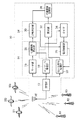
【図1】 本発明の一実施形態による携帯通信端末装置の構成を示す機能ブロック図である。
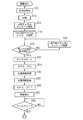
【図2】 本発明の一実施形態による携帯通信端末装置10の動作の一例を示す図である。
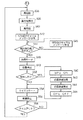
【図3】 本発明の一実施形態による携帯通信端末装置10の動作の一例を示す図である。
【符号の説明】
10 携帯通信端末装置
12 受信部
14 基地局信号処理部(第1の位置検出手段)
16 サーチ部
18 メッセージ受信部
20 位置情報算出部
22 GPS信号処理部(第2の位置検出手段)
24 制御部(制御手段)
26 電源制御部
28 位置情報記憶部(記憶手段)
30 比較判定部(移動検出手段)
32 更新部(更新手段)
34 タイマ
B1〜B3 基地局
ST1〜ST3 GPSの衛星[0001]
BACKGROUND OF THE INVENTION
The present invention relates to a mobile communication terminal apparatus and a position detection method thereof, and more particularly to detecting the position of a mobile communication terminal apparatus that performs communication using a code division multiple access (CDMA) (including spread spectrum (SS) communication) method. The present invention relates to a portable communication terminal device suitable for use and a position detection method thereof.
[0002]
[Prior art]
In recent years, the penetration rate of portable communication terminal devices such as so-called mobile phones and PHS (Personal Handyphone System) has been increasing year by year. In particular, by assigning different spreading codes to users for each communication, multiple users can use the same frequency band. Users using so-called code division multiple access (CDMA) mobile communication terminal devices that communicate in the same time zone are rapidly increasing. A CDMA portable communication terminal apparatus always receives radio signals transmitted from a plurality of base stations (for example, three base stations) that use the same frequency by one portable communication terminal apparatus, and uses a spreading code or the like as a base. Multiplex and demultiplex signals between stations. In addition, a CDMA mobile communication terminal is a so-called so-called wireless communication that continues with a base station having a high received electric field strength when the strength of a radio signal from the base station in communication becomes lower than a predetermined value. Since soft handoff control is performed, there is an advantage that communication is not easily disconnected.
[0003]
In addition, for example, a technique for obtaining the current position of the mobile communication terminal device by including position information indicating the position of the base station in the pilot signal and regarding each base station as a GPS (Global Positioning System) satellite is used. This is disclosed in Japanese Utility Model Laid-Open No. 11-308658. In this technique, the position of the mobile communication terminal apparatus is obtained based on the difference in arrival times of pilot signals transmitted from the respective base stations, and a specific method for obtaining the position of the mobile communication terminal apparatus is TOA (Time or Arrival). ) Method and TDOA (Time Difference of Arrival) method.
[0004]
In the TOA method, first, the distance between the mobile communication terminal device and each base station is obtained from the arrival times of pilot signals from a plurality of base stations. Next, a method is used in which a circle is drawn centered on the position indicated by the position information of each base station with the obtained distance as a radius, and the position of the mobile communication terminal is obtained from the intersection of the drawn circles. On the other hand, in the TDOA method, first, the relative difference in distance between each base station and the mobile communication terminal device is obtained from the difference in the arrival times of the pilot signals of the two base stations, and the hyperbola that can be drawn from this difference (the mobile communication terminal This is a method of obtaining the position of the mobile communication terminal device from the intersection of these hyperbolic curves by obtaining a combination of two base stations selected from among a plurality of base stations.
[0005]
When the position of the base station is known, the position information of the mobile communication terminal device can be obtained by the method described above. However, depending on the arrangement and number of base stations with respect to the mobile communication terminal device, there may be a case where the obtained position error of the mobile communication terminal device is large or the position cannot be obtained. For example, when there are only two base stations for the mobile communication terminal device, the position of the mobile communication terminal device cannot be reduced to one point using the TOA method described above, and two points at the intersection of circles However, when the TODA method is used, it is impossible to specify where the mobile communication terminal device is located on the hyperbola. In addition, when there is only one base station for the mobile communication terminal device, the TOA method cannot specify where the mobile communication terminal is located on the circle, and the TODA method uses one hyperbola. I can't even identify.
[0006]
Therefore, as a method of obtaining the position of the mobile communication terminal device without using the pilot signal transmitted from the base station, the mobile communication terminal device is provided with a GPS used in a car navigation system or the like. A method for measuring the device has been devised, and development for practical use is now underway. An apparatus for acquiring position information by connecting a GPS device to a mobile communication terminal device using a connection cable or the like has already been put into practical use. When GPS is used in a portable communication terminal device, a single GPS is obtained by acquiring satellite history (almanac data), satellite position error information, and the like, which are the position information of the satellite used in the GPS, via a telephone line. Satellite acquisition and position detection are easier than equipment. Further, by using the error information of the satellite position, the position detection accuracy can be increased about 10 times.
[0007]
[Problems to be solved by the invention]
By the way, the mobile communication terminal device is required to reduce the power consumption as much as possible to increase the operation time. For example, a CDMA mobile communication terminal device realized in Japan extends the standby time by performing an operation called intermittent reception during standby to reduce power consumption. Here, “in standby” refers to a state where the mobile communication terminal device is turned on in the service area and is capturing the base station, but is not in a call, or a call message from the base station, etc. The “waiting time” means the time during which the standby state can be maintained continuously within the capacity of the built-in power supply (built-in battery).
[0008]
The intermittent reception receives a message transmitted from the base station to the mobile communication terminal at a predetermined timing every period (for example, 5.12 seconds) notified by the base station, and the time after reception within the period. Is an operation of shutting off the power supply of the receiving circuit or shifting to a low power consumption power mode or the like. The details of the intermittent reception operation are defined in the standard (ARIB STD-T53) of the CDMA cellular phone system.
[0009]
When the intermittent reception is specifically described, the following operation is performed. In other words, after the power is turned on by the user, the mobile communication terminal device searches for the pilot signal of the base station, captures the base station that is sending the pilot signal with the highest normal reception strength, and receives the synchronization channel message. Then, it waits in synchronization with the reference time of the base station and starts receiving a paging channel message. After starting to receive paging channel messages, the necessary power can be received according to the conditions stipulated in the above standard, and if intermittent reception is permitted, the power to the receiving circuit must be restarted so that the next message to be received can be received. Set the timer to turn on, stop the reception and shut off the power of the receiving circuit and so on.
[0010]
When the set time of the timer is reached, the mobile communication terminal device restarts the receiving circuit, searches for the base station pilot signal received last time, resynchronizes, and receives a message from the base station. At this time, in order to search for a base station with better reception conditions, the pilot signals of other base stations are searched in parallel, and if a base station satisfying the conditions specified in the above standard is found, idle handoff (waiting) is performed. The operation of changing the receiving base station during the receiving operation is performed, and a message from the new base station is received. When the current base station or idle handoff is performed, the message received from the new base station is completed, and the conditions specified in the above standards, such as the absence of a message addressed to itself, are satisfied. The mobile communication terminal device interrupts reception and resets the timer to shut off the power supply of the receiving circuit and the like.
[0011]
After that, the timer restarts the receiver circuit every predetermined period (for example, 5.12 seconds), searches and captures the pilot signal of the base station, receives the message and searches for the pilot signal of other base stations as necessary. Idle handoff, reception interruption after receiving a message, and power interruption of the receiving circuit, etc. are repeated. With the operation described above, the CDMA mobile communication terminal device reduces the current consumption and extends the standby time compared to the case of continuous reception.
[0012]
When the mobile communication terminal device is not in a standby state, the receiving circuit is in an operating state. Therefore, when the base station described above is regarded as a GPS satellite and the position of the mobile communication terminal device is obtained, and the mobile communication terminal using GPS The position of the mobile communication terminal device can be obtained in any case where the position of the device is obtained. However, in the standby state, the position of the mobile communication terminal device cannot be obtained because the receiving circuit is not operating.
[0013]
Currently, the Federal Communications Commission (FCC) in North America advocates Enhanced911 (E911), and it is proposed to use a portable communication terminal device for emergency reporting purposes. In this proposal, for example, a function for obtaining the position with an accuracy of 50 m or less is provided in the mobile communication terminal device, and the position of the mobile communication terminal device is notified in the event of an emergency of the user carrying the mobile communication terminal device. A system has been recalled that allows an emergency rescue team to find a user of a portable communication terminal. Here, the emergency means, for example, when an accident is encountered, but the mobile communication terminal device is not always busy when the user encounters an accident. Normally, it is considered that the mobile communication terminal device is often in a standby state in an emergency, and therefore position detection by GPS or the like needs to be realized in a standby state.
[0014]
Japanese Patent Laid-Open No. 9-261711 proposes a method for optimizing a handoff destination based on a position detection result of GPS or the like in a handoff operation during a call. This method is, for example, a method of optimizing the base station closest to the mobile communication terminal device as a handoff destination. The technique disclosed in the above publication is aimed at optimizing handoff during a call, but in order to optimize idle handoff of a mobile communication terminal device in a standby state, the position information of the base station and the position of the mobile communication terminal device It is considered useful to use information. Also in this case, it is necessary to obtain the position of the mobile communication terminal device in the standby state.
[0015]
As described above, there is a demand for the mobile communication terminal device to perform intermittent reception such as stopping the reception circuit in a standby state, thereby reducing current consumption as much as possible and extending the standby time. Therefore, it is not practical to always obtain the position using the GPS because it causes an increase in power consumption in the standby state. If the position is obtained intermittently using GPS during intermittent reception, power consumption can be reduced as compared to continuous reception. However, if the intermittent reception cycle is shortened, power consumption increases, and conversely, if the cycle is lengthened, updating of the location information is delayed, especially with the latest location information when traveling at high speeds (such as driving on highways, boarding the Shinkansen). This causes a large error between the indicated position and the actual position of the aircraft.
[0016]
The present invention has been made in view of the above circumstances, and provides a mobile communication terminal apparatus and a position detection method thereof that can accurately determine the position of the mobile communication terminal apparatus without causing a significant increase in power consumption. For the purpose.
[0017]
[Means for Solving the Problems]
In order to solve the above problems, the present invention employs the following means.
A mobile communication terminal apparatus according to the present invention includes a first position detecting unit that detects a position based on position information of a base station and an arrival time of a signal transmitted from the base station, and the first position detecting unit. Second position detecting means for detecting a position with higher accuracy than the accuracy of the position detected by Means for storing position information; and the stored position information; Position detection result of the first position detecting means When a movement exceeding a predetermined threshold is detected from And a control means for operating the second position detecting means to obtain the position.
In addition, the second position detecting unit consumes more power than the first position detecting unit.
Further, storage means for storing information on the position detected by the second position detection means, and update for newly updating the contents of the storage means to information on the position detected by the second position detection means And means.
Further, the control means controls the operation state of the first position detection means at a constant cycle.
A position detection method for a mobile communication terminal apparatus according to the present invention uses a first position detection unit that detects a position based on position information of a base station and an arrival time of a signal transmitted from the base station. Detecting step; Memorized location information, Position detection result of the first position detecting means When a movement exceeding a predetermined threshold is detected from And a step of detecting a position by operating a second position detecting means for detecting a position with higher accuracy than the accuracy of the position detected by the first position detecting means.
[0018]
The present invention having the above configuration is summarized as follows. First, the main object of the present invention is to operate the second position detection means such as GPS only when necessary, and to reduce the current consumption by turning off the power (or the low power consumption mode, etc.) otherwise. The shortening of the standby time by adding such a function is minimized, and the position information is updated at a sufficiently fast speed in practice.
The first position detecting means is based on a receiving operation similar to that of the base station pilot search at the time of starting normal intermittent reception, and causes almost no problem in terms of power consumption. On the other hand, the second position information acquisition means (typically GPS) needs to receive and process signals different in frequency and CDMA, and the current consumption increases reliably by operating the GPS. Continuous operation of GPS during intermittent standby significantly reduces the standby time due to continuous power consumption. For example, the GPS is operated once every 5.12 seconds, which is the reception cycle of the downlink signal of the base station. Even if the GPS is intermittently updated, the influence on the standby time is considered to be very large.
On the other hand, if GPS is operated for a longer period, for example, about once every few minutes, the latest position information is obtained when the mobile communication terminal device (the user holding the mobile communication device) moves at high speed (automobile, bullet train, etc.). May be position information several minutes ago, but depending on the moving speed, for example, if the moving speed on the Shinkansen is about 300 km / h and the GPS operation cycle is 3 minutes, the latest position information and the actual current position Error of as much as 15 km (3 km after the previous GPS measurement and immediately before the next measurement, if it moves for 3 minutes at 300 km / h, 300 km / h × 3 minutes ÷ 60 minutes / hour = 15 km).
Therefore, during intermittent standby operation, the GPS operation cycle is long in the stationary state or low-speed movement state of the terminal that seems to occupy most of the time, and control that shortens during high-speed movement reduces power consumption and the latest position. It is considered effective for reducing an error from the current position included in the information.
In order to achieve this object (coexistence of reduction of current consumption and reduction of position error), the present invention detects the movement by operating the first position detecting means in each of the intermittent standby periods during standby. When a movement exceeding the threshold is detected, the second position information acquisition means (GPS or the like) is operated to acquire accurate position information. In addition, when movement is not detected for a long time or when movement is not detected due to the location and number of base stations (for example, only one base station can be captured and moved to a concentric circle from that base station. In this case, since the distance to the base station does not change, the movement cannot be detected with the time offset of the pilot signal), and in other periods longer than the intermittent standby period, for example, 1 minute, 3 minutes, 5 minutes, etc. To update the position information.
Further, in a base station environment where it is difficult to detect the movement, the GPS operating period may be set shorter. Conversely, in a base station environment where sufficient position information can be obtained only by the first position detection means based on the base station signal, the GPS may be set not to operate at all.
With such a configuration, it is possible to minimize the GPS operation and to reduce the position information error while suppressing current consumption.
[0019]
DETAILED DESCRIPTION OF THE INVENTION
Hereinafter, a mobile communication terminal device and a position detection method thereof according to an embodiment of the present invention will be described in detail with reference to the drawings. In the present embodiment, a case where the mobile communication terminal device of the present invention is applied as a CDMA mobile communication terminal device will be described as an example. FIG. 1 is a functional block diagram showing a configuration of a mobile communication terminal device according to an embodiment of the present invention. Note that the functional block shown in FIG. 1 shows only functions directly related to the present invention.
[0020]
The mobile
[0021]
The position information, signal, and GPS signal transmitted from the base station are received by the antenna AT provided in the mobile
[0022]
The base station
[0023]
The period of the pilot signal output from each base station is 2 15 × 0.8138 μs = 26.666... Second, and the time offset of each base station takes 512 discrete values every 64 × 0.8138 μs. . Among these 512 types of offsets, the offset of the number is an index. For example, if the index is n, the time lag between the reference pilot signal of the base station and the pilot signal serving as the index is n × 64 × 0.8138 μs. When the mobile
[0024]
When the
[0025]
Further, the base station sends position information (latitude and longitude) of each base station on the synchronization channel to the mobile
[0026]
When the position
[0027]
In addition, when there are three or more base stations and there are a plurality of combinations of two base stations, the position of the mobile communication terminal device can be determined by using a plurality of hyperbolic intersections. If there are a plurality of intersections, the accuracy can be improved by using the average. Therefore, when the mobile
[0028]
When the mobile
[0029]
The GPS
[0030]
The
[0031]
Therefore, in the present embodiment, the current position information calculated by the base station
Further, as described above, unless the mobile
[0032]
In order to prevent such a problem, the
[0033]
The general configuration of the mobile
[0034]
Here, the mobile
[0035]
Thereafter, the mobile
[0036]
When the determination result in step S18 is “YES”, the
[0037]
When the above processing is completed, the
[0038]
On the other hand, when the determination result in step S34 is “YES”, that is, when the timer setting time is reached, the mobile
[0039]
Next, the
[0040]
When the determination result in step S44 is “YES”, the
[0041]
When the base station
[0042]
If the determination result in step S52 is “NO”, the
[0043]
On the other hand, when it is determined in step S52 that the comparison /
[0044]
As described above, in the present embodiment, when the movement of the mobile
[0045]
In the present embodiment, the position information of the mobile
[0046]
The flow shown in FIGS. 2 and 3 is a flow when there are three or more base stations in the vicinity of the mobile
[0047]
The mobile communication terminal device and its position detection method according to an embodiment of the present invention have been described above. However, the present invention is not limited to the above embodiment, and can be freely changed within the scope of the present invention. For example, in the above embodiment, when the location information of the mobile
[0048]
Further, the acquisition of position information based on the difference between the base station position information and the arrival time of the pilot signal for each reception period during the intermittent standby can be obtained geometrically when the pilot signals of a large number of base stations can be received. Since a plurality of hyperbolas that can exist in the apparatus can be drawn, many intersections are obtained, and by calculating this average (center of gravity), position information with higher accuracy can be obtained. For this reason, for example, when pilot signals of five or more base stations can be received, the GPS function is not operated even when movement is detected, and the position information is acquired based on the difference between the arrival time of the base station position information and the pilot signal. The position information held in the internal storage means can be updated with the position information according to the above.
[0049]
Further, when using position information from the position information transmitted from the base station and the arrival time of the pilot signal, the TDOA method or the like is not used, but as a simpler method, the change of the base station that can receive the pilot signal or the pilot signal It is also possible to configure such that only the movement, not the position information, is detected by the change in the arrival time of the GPS, and the GPS function is reactivated.
[0050]
Further, in the above embodiment, the mobile
[0051]
Furthermore, when the number of base stations that can receive a pilot signal is two or less, the GPS function should be operated at a period (for example, 2 minutes) longer than the reception period (5.12 seconds) during intermittent standby, as described above. Thus, the position information can be updated even under conditions in which the actual movement of the mobile communication terminal device cannot be detected. Also, regarding a base station that can receive a pilot signal, a new base station can receive a signal with a predetermined reception strength or higher, or a base station that has received a signal with a predetermined reception strength or higher can no longer be received (mobile communication terminal device). It can be added to the conditions for operating the GPS function.
[0052]
【The invention's effect】
As described above, according to the present invention, there is an effect that the position of the mobile communication terminal apparatus can be obtained with high accuracy without causing much increase in power consumption.
[Brief description of the drawings]
FIG. 1 is a functional block diagram showing a configuration of a mobile communication terminal device according to an embodiment of the present invention.
FIG. 2 is a diagram showing an example of the operation of the mobile
FIG. 3 is a diagram showing an example of the operation of the mobile
[Explanation of symbols]
10 Mobile communication terminal device
12 Receiver
14 Base station signal processor (first position detecting means)
16 Search part
18 Message receiver
20 Location information calculation unit
22 GPS signal processor (second position detecting means)
24 Control unit (control means)
26 Power supply control unit
28 position information storage unit (storage means)
30 Comparison determination unit (movement detection means)
32 Update unit (update means)
34 Timer
B1-B3 base station
ST1 to ST3 GPS satellites
Claims (5)
前記第1の位置検出手段で検出される位置の精度よりも高い精度で位置を検出する第2の位置検出手段と、
位置情報を記憶する手段と、
前記記憶されている位置情報と、前記第1の位置検出手段の位置検出結果とから所定の閾値を超える移動を検出した場合に、前記第2の位置検出手段を動作させて位置を求める制御手段と、
を具備することを特徴とする携帯通信端末装置。First position detecting means for detecting a position based on position information of the base station and an arrival time of a signal transmitted from the base station;
Second position detection means for detecting the position with higher accuracy than the position accuracy detected by the first position detection means;
Means for storing location information;
Control means for determining the position by operating the second position detection means when a movement exceeding a predetermined threshold is detected from the stored position information and the position detection result of the first position detection means. When,
A mobile communication terminal device comprising:
前記記憶手段の内容を、新たに前記第2の位置検出手段で検出された位置の情報に更新する更新手段と、
を具備することを特徴とする請求項1記載の携帯通信端末装置。Storage means for storing information on the position detected by the second position detection means;
Updating means for updating the contents of the storage means to information on the position newly detected by the second position detecting means;
The mobile communication terminal device according to claim 1, comprising:
記憶されている位置情報と、前記第1の位置検出手段の位置検出結果とから所定の閾値を超える移動を検出した場合に、前記第1の位置検出手段で検出される位置の精度よりも高い精度で位置を検出する第2の位置検出手段を動作させて位置を検出するステップと、
を有することを特徴とする携帯通信端末装置の位置検出方法。Detecting the position using first position detecting means for detecting the position based on the position information of the base station and the arrival time of the signal transmitted from the base station;
When movement exceeding a predetermined threshold is detected from the stored position information and the position detection result of the first position detection means, the accuracy of the position detected by the first position detection means is higher. Operating a second position detecting means for detecting the position with accuracy to detect the position;
A method for detecting a position of a mobile communication terminal device.
Priority Applications (1)
| Application Number | Priority Date | Filing Date | Title |
|---|---|---|---|
| JP2000346956A JP4657443B2 (en) | 2000-11-14 | 2000-11-14 | Mobile communication terminal device and position detection method thereof |
Applications Claiming Priority (1)
| Application Number | Priority Date | Filing Date | Title |
|---|---|---|---|
| JP2000346956A JP4657443B2 (en) | 2000-11-14 | 2000-11-14 | Mobile communication terminal device and position detection method thereof |
Publications (2)
| Publication Number | Publication Date |
|---|---|
| JP2002152808A JP2002152808A (en) | 2002-05-24 |
| JP4657443B2 true JP4657443B2 (en) | 2011-03-23 |
Family
ID=18820759
Family Applications (1)
| Application Number | Title | Priority Date | Filing Date |
|---|---|---|---|
| JP2000346956A Expired - Fee Related JP4657443B2 (en) | 2000-11-14 | 2000-11-14 | Mobile communication terminal device and position detection method thereof |
Country Status (1)
| Country | Link |
|---|---|
| JP (1) | JP4657443B2 (en) |
Families Citing this family (10)
| Publication number | Priority date | Publication date | Assignee | Title |
|---|---|---|---|---|
| CA2490851C (en) * | 2002-06-27 | 2016-07-19 | Ting-Mao Chang | A power saving mobility aware system and method |
| KR20060096121A (en) * | 2003-12-01 | 2006-09-06 | 인터디지탈 테크날러지 코포레이션 | How customers implement control using programmable portals |
| KR100606782B1 (en) * | 2004-06-21 | 2006-08-01 | 엘지전자 주식회사 | Multi-mode mobile terminal and communication service switching method using location information |
| CN1758547A (en) | 2004-10-04 | 2006-04-12 | 松下电器产业株式会社 | Receiving device, semiconductor integrated circuit, transmitting/receiving device, and receiving method |
| US8326316B2 (en) | 2005-03-31 | 2012-12-04 | Nec Corporation | Portable wireless terminal and moving velocity detecting method for portable wireless terminal |
| JP2008298721A (en) * | 2007-06-04 | 2008-12-11 | Keio Gijuku | Position estimation system and program |
| US8390512B2 (en) | 2009-06-05 | 2013-03-05 | Qualcomm Incorporated | On demand positioning |
| JP5978033B2 (en) * | 2012-07-10 | 2016-08-24 | 株式会社ゼンリンデータコム | Information terminal, positioning method and program |
| JP6452933B2 (en) * | 2013-10-30 | 2019-01-16 | 京セラ株式会社 | Electronics |
| JP7172710B2 (en) * | 2019-02-21 | 2022-11-16 | 三菱電機株式会社 | Wireless communication system and wireless communication device |
Family Cites Families (1)
| Publication number | Priority date | Publication date | Assignee | Title |
|---|---|---|---|---|
| JPH1183529A (en) * | 1997-09-03 | 1999-03-26 | Furuno Electric Co Ltd | Position-detection informing device |
-
2000
- 2000-11-14 JP JP2000346956A patent/JP4657443B2/en not_active Expired - Fee Related
Also Published As
| Publication number | Publication date |
|---|---|
| JP2002152808A (en) | 2002-05-24 |
Similar Documents
| Publication | Publication Date | Title |
|---|---|---|
| US6327471B1 (en) | Method and an apparatus for positioning system assisted cellular radiotelephone handoff and dropoff | |
| US6957068B2 (en) | Subscriber station with dynamic multi-mode service acquisition capability | |
| US5970413A (en) | Using a frequency that is unavailable for carrying telephone voice information traffic for determining the position of a mobile subscriber in a CDMA cellular telephone system | |
| Zhao | Standardization of mobile phone positioning for 3G systems | |
| JP5791968B2 (en) | Method and apparatus for determining position using a small number of GPS satellites and synchronous and asynchronous base stations | |
| EP1859294B1 (en) | Gps position tracking method with variable updating rate for power conservation | |
| US5943014A (en) | Using a signal with increased power for determining the position of a mobile subscriber in a CDMA cellular telephone system | |
| KR100660257B1 (en) | System and method for determining the location of a wireless CDM transceiver | |
| US9008061B2 (en) | Positioning device and positioning method | |
| US8700049B2 (en) | System and/or method for reducing initial position uncertainty in SPS operation | |
| US6654362B1 (en) | Use of location in handoff in wireless communication systems | |
| EP1535398B1 (en) | Mobile communication system using position location information | |
| JP2003530004A (en) | Dynamic adjustment of search window size according to signal strength | |
| CA2257512C (en) | Using a signal with increased power for determining the position of a mobile subscriber in a cdma cellular telephone system | |
| US6424297B2 (en) | Method for detecting the position of a moving body | |
| JP4657443B2 (en) | Mobile communication terminal device and position detection method thereof | |
| JP4073812B2 (en) | Communication control method, base station information creation device | |
| US20040198387A1 (en) | Position detection system and portable terminal | |
| Dev et al. | NRPos: A multi-RACH framework for 5G NR positioning | |
| WO2018200082A1 (en) | Adaptive wake-up scheduling under prs muting | |
| US20080227469A1 (en) | GSM Network-Based Timing Advance Positioning | |
| RU93545U1 (en) | LOCATION DETERMINATION SYSTEM OF MOBILE OBJECTS | |
| JP2003194912A (en) | Positioning device | |
| GB2357014A (en) | Locating a mobile transmitting at high power with a three antenna base station | |
| JP2005136748A (en) | Mobile communication system, mobile apparatus and base station apparatus |
Legal Events
| Date | Code | Title | Description |
|---|---|---|---|
| A621 | Written request for application examination |
Free format text: JAPANESE INTERMEDIATE CODE: A621 Effective date: 20071019 |
|
| A977 | Report on retrieval |
Free format text: JAPANESE INTERMEDIATE CODE: A971007 Effective date: 20100126 |
|
| A131 | Notification of reasons for refusal |
Free format text: JAPANESE INTERMEDIATE CODE: A131 Effective date: 20100413 |
|
| A521 | Request for written amendment filed |
Free format text: JAPANESE INTERMEDIATE CODE: A523 Effective date: 20100614 |
|
| A02 | Decision of refusal |
Free format text: JAPANESE INTERMEDIATE CODE: A02 Effective date: 20100706 |
|
| A521 | Request for written amendment filed |
Free format text: JAPANESE INTERMEDIATE CODE: A523 Effective date: 20101006 |
|
| A911 | Transfer to examiner for re-examination before appeal (zenchi) |
Free format text: JAPANESE INTERMEDIATE CODE: A911 Effective date: 20101021 |
|
| TRDD | Decision of grant or rejection written | ||
| A01 | Written decision to grant a patent or to grant a registration (utility model) |
Free format text: JAPANESE INTERMEDIATE CODE: A01 Effective date: 20101214 |
|
| A01 | Written decision to grant a patent or to grant a registration (utility model) |
Free format text: JAPANESE INTERMEDIATE CODE: A01 |
|
| A61 | First payment of annual fees (during grant procedure) |
Free format text: JAPANESE INTERMEDIATE CODE: A61 Effective date: 20101222 |
|
| FPAY | Renewal fee payment (event date is renewal date of database) |
Free format text: PAYMENT UNTIL: 20140107 Year of fee payment: 3 |
|
| R150 | Certificate of patent or registration of utility model |
Ref document number: 4657443 Country of ref document: JP Free format text: JAPANESE INTERMEDIATE CODE: R150 Free format text: JAPANESE INTERMEDIATE CODE: R150 |
|
| LAPS | Cancellation because of no payment of annual fees |