JP4801877B2 - Stirrer for hydrogen water production - Google Patents
Stirrer for hydrogen water production Download PDFInfo
- Publication number
- JP4801877B2 JP4801877B2 JP2003334512A JP2003334512A JP4801877B2 JP 4801877 B2 JP4801877 B2 JP 4801877B2 JP 2003334512 A JP2003334512 A JP 2003334512A JP 2003334512 A JP2003334512 A JP 2003334512A JP 4801877 B2 JP4801877 B2 JP 4801877B2
- Authority
- JP
- Japan
- Prior art keywords
- water
- hydrogen
- drinking water
- gas
- cathode
- Prior art date
- Legal status (The legal status is an assumption and is not a legal conclusion. Google has not performed a legal analysis and makes no representation as to the accuracy of the status listed.)
- Expired - Lifetime
Links
- UFHFLCQGNIYNRP-UHFFFAOYSA-N Hydrogen Chemical compound [H][H] UFHFLCQGNIYNRP-UHFFFAOYSA-N 0.000 title claims description 85
- XLYOFNOQVPJJNP-UHFFFAOYSA-N water Substances O XLYOFNOQVPJJNP-UHFFFAOYSA-N 0.000 title claims description 60
- 239000001257 hydrogen Substances 0.000 title claims description 53
- 229910052739 hydrogen Inorganic materials 0.000 title claims description 53
- 238000004519 manufacturing process Methods 0.000 title description 6
- 239000004033 plastic Substances 0.000 claims description 8
- 229920003023 plastic Polymers 0.000 claims description 8
- 239000004020 conductor Substances 0.000 claims description 5
- 239000011810 insulating material Substances 0.000 claims description 2
- 238000000465 moulding Methods 0.000 claims description 2
- 235000020188 drinking water Nutrition 0.000 description 35
- 239000003651 drinking water Substances 0.000 description 35
- 238000003756 stirring Methods 0.000 description 22
- 238000005868 electrolysis reaction Methods 0.000 description 12
- 239000011521 glass Substances 0.000 description 10
- IJGRMHOSHXDMSA-UHFFFAOYSA-N Atomic nitrogen Chemical compound N#N IJGRMHOSHXDMSA-UHFFFAOYSA-N 0.000 description 7
- MYMOFIZGZYHOMD-UHFFFAOYSA-N Dioxygen Chemical compound O=O MYMOFIZGZYHOMD-UHFFFAOYSA-N 0.000 description 7
- 229910001882 dioxygen Inorganic materials 0.000 description 7
- 239000008399 tap water Substances 0.000 description 6
- 235000020679 tap water Nutrition 0.000 description 6
- 230000007423 decrease Effects 0.000 description 5
- 239000007789 gas Substances 0.000 description 5
- -1 polypropylene Polymers 0.000 description 5
- 229920006395 saturated elastomer Polymers 0.000 description 5
- XEEYBQQBJWHFJM-UHFFFAOYSA-N Iron Chemical compound [Fe] XEEYBQQBJWHFJM-UHFFFAOYSA-N 0.000 description 4
- QVGXLLKOCUKJST-UHFFFAOYSA-N atomic oxygen Chemical compound [O] QVGXLLKOCUKJST-UHFFFAOYSA-N 0.000 description 4
- 230000035622 drinking Effects 0.000 description 4
- 230000000694 effects Effects 0.000 description 4
- 239000003014 ion exchange membrane Substances 0.000 description 4
- 239000012528 membrane Substances 0.000 description 4
- 238000000034 method Methods 0.000 description 4
- 239000001301 oxygen Substances 0.000 description 4
- 229910052760 oxygen Inorganic materials 0.000 description 4
- 239000004743 Polypropylene Substances 0.000 description 3
- KRKNYBCHXYNGOX-UHFFFAOYSA-N citric acid Chemical compound OC(=O)CC(O)(C(O)=O)CC(O)=O KRKNYBCHXYNGOX-UHFFFAOYSA-N 0.000 description 3
- 229910001873 dinitrogen Inorganic materials 0.000 description 3
- 229920001155 polypropylene Polymers 0.000 description 3
- 239000004698 Polyethylene Substances 0.000 description 2
- 238000004090 dissolution Methods 0.000 description 2
- 239000010419 fine particle Substances 0.000 description 2
- 150000002431 hydrogen Chemical class 0.000 description 2
- 229910052742 iron Inorganic materials 0.000 description 2
- 229910052757 nitrogen Inorganic materials 0.000 description 2
- 229920000573 polyethylene Polymers 0.000 description 2
- 229920002050 silicone resin Polymers 0.000 description 2
- 229910001220 stainless steel Inorganic materials 0.000 description 2
- 239000010935 stainless steel Substances 0.000 description 2
- 229910021642 ultra pure water Inorganic materials 0.000 description 2
- 239000012498 ultrapure water Substances 0.000 description 2
- 102100028175 Abasic site processing protein HMCES Human genes 0.000 description 1
- QTBSBXVTEAMEQO-UHFFFAOYSA-N Acetic acid Chemical compound CC(O)=O QTBSBXVTEAMEQO-UHFFFAOYSA-N 0.000 description 1
- 101001006387 Homo sapiens Abasic site processing protein HMCES Proteins 0.000 description 1
- WHXSMMKQMYFTQS-UHFFFAOYSA-N Lithium Chemical compound [Li] WHXSMMKQMYFTQS-UHFFFAOYSA-N 0.000 description 1
- 235000001630 Pyrus pyrifolia var culta Nutrition 0.000 description 1
- 240000002609 Pyrus pyrifolia var. culta Species 0.000 description 1
- VYPSYNLAJGMNEJ-UHFFFAOYSA-N Silicium dioxide Chemical class O=[Si]=O VYPSYNLAJGMNEJ-UHFFFAOYSA-N 0.000 description 1
- RTAQQCXQSZGOHL-UHFFFAOYSA-N Titanium Chemical compound [Ti] RTAQQCXQSZGOHL-UHFFFAOYSA-N 0.000 description 1
- 229960000583 acetic acid Drugs 0.000 description 1
- 238000009835 boiling Methods 0.000 description 1
- 229940043430 calcium compound Drugs 0.000 description 1
- 150000001674 calcium compounds Chemical class 0.000 description 1
- 201000010099 disease Diseases 0.000 description 1
- 208000037265 diseases, disorders, signs and symptoms Diseases 0.000 description 1
- 230000005611 electricity Effects 0.000 description 1
- 239000003792 electrolyte Substances 0.000 description 1
- 238000002474 experimental method Methods 0.000 description 1
- 239000000945 filler Substances 0.000 description 1
- 150000004679 hydroxides Chemical class 0.000 description 1
- 239000007788 liquid Substances 0.000 description 1
- 229910052744 lithium Inorganic materials 0.000 description 1
- 150000002681 magnesium compounds Chemical class 0.000 description 1
- 230000014759 maintenance of location Effects 0.000 description 1
- 238000005259 measurement Methods 0.000 description 1
- 230000007935 neutral effect Effects 0.000 description 1
- 238000006386 neutralization reaction Methods 0.000 description 1
- 150000007524 organic acids Chemical class 0.000 description 1
- 230000033116 oxidation-reduction process Effects 0.000 description 1
- 239000002994 raw material Substances 0.000 description 1
- 239000002689 soil Substances 0.000 description 1
- 239000007921 spray Substances 0.000 description 1
- 235000021419 vinegar Nutrition 0.000 description 1
- 239000000052 vinegar Substances 0.000 description 1
Images



Landscapes
- Electrolytic Production Of Non-Metals, Compounds, Apparatuses Therefor (AREA)
- Table Equipment (AREA)
- Water Treatment By Electricity Or Magnetism (AREA)
Description
本発明は、簡易な手段で水素水を製造するための道具に関し、更に詳しくは、水を容れたコップのような容器内に電極部を挿入して攪拌するだけで水素ガスが飽和した所謂水素水を製造し、その場で飲取することができる水素水製造用攪拌具に関するものである。 The present invention relates to a tool for producing hydrogen water by simple means. More specifically, the present invention relates to a so-called hydrogen gas in which hydrogen gas is saturated simply by inserting an electrode part into a container such as a cup containing water and stirring. The present invention relates to a stirrer for producing hydrogen water that can produce water and drink it on the spot.
体内の活性酸素を中和して病気の治療、あるいは健康の増進、あるいは体質の改善等を図るために、体内に水素を取り込む方法が有効とされている。そこで、この水素を体内に取り込むために、飲料水に水素を溶存させた所謂水素水が近年注目されている。また、例えば水道水に水素を溶存させるための電気分解式器具も発売されたりしている。これを特許出願で見ると次のようなものがある。
以上に掲示した各公知例は、すべて電気分解槽内に電極を入れて水素を発生させ、水素水を得る方法であることから、装置が複雑になり、更に、飲取するその場で水素水を製造し、そのまま直ぐに飲むことはできない。
しかし、例えばガラスコップのようなものに飲料水を容れ、これを攪拌するだけで水素水を製造することができれば、家庭内では勿論のこと、旅行先等、何処ででも手軽に水素を体内に取り込んでその効能を享受することができるばかりでなく、飽和した水素は時間の経過と共に減少することから、製造直後に水素水を飲取することにより、効果的に水素を体内に取り込むことができる。
本発明は、斯る点に鑑みて提供されるものであって、その目的は、装置として例えば電解槽を必要とせず、手軽に水素水を得ることができると共に携行したりして何処ででも水素水を作って直ぐに飲取することができる水素水製造用攪拌具を提供することである。
Each of the known examples described above is a method in which an electrode is placed in an electrolysis tank to generate hydrogen to obtain hydrogen water, so that the apparatus becomes complicated, and further, the Can not be taken immediately.
However, if hydrogen water can be produced simply by mixing drinking water in a glass cup and stirring it, the hydrogen can be easily put into the body at any place, such as at home as well as at travel destinations. Not only can it take in and enjoy its effects, but saturated hydrogen will decrease over time, so you can effectively take hydrogen into your body by drinking hydrogen water immediately after production. .
The present invention is provided in view of such points, and the object thereof is not to require, for example, an electrolytic cell as an apparatus, and hydrogen water can be easily obtained and carried anywhere. An object of the present invention is to provide a stirring device for producing hydrogen water that can be immediately taken after making the hydrogen water.
上記目的を達成するため、請求項1に記載の発明においては、水素水製造用撹拌具において、絶縁材質によりメッシュ又はハニカム又は円孔形状から成ると共に波形に形成されたセパレータ6を中間層となし、このセパレータ6の片面にメッシュ又はハニカム又は円孔形状から成る陽極4を配置し、他面にメッシュ又はハニカム又は円孔形状から成る陰極5を配置して三層構造となし、この三層構造の陽極4及びセパレータ6及び陰極5の周囲をプラスチック製の枠体1aでインモールドすることにより一体化して全体が三層構造の電極部1を形成したこと、前記枠体1aには把手部2を形成し、前記陽極4には陽極用導線7を接続し、前記陰極5には陰極用導線8を接続したことを特徴とするものである。
In order to achieve the above object, in the invention described in
本発明の効果は次のとおりである。
請求項1の発明によれば、イオン交換膜や半透膜を使用しないため、発生した水素ガス
は数ミクロンのマイクロバルーンとなり、同時に発生する酸素ガスと協力して飲料水の窒素ガスを低下させることができる。例えば、実験によると、1000ml中に10から15ml溶存していた窒素ガスは6から8mlに低下した。
また、電解槽を持たないため、何処へでも携行して使用し、水素水を製造して飲取することができる。
通常、飲料水に溶解する水素ガスは6〜7mlが限度と言われており、完全に気体を抜いた純水に溶解する水素ガスは20℃で18mlである。
The effects of the present invention are as follows.
According to the invention of
Moreover, since it does not have an electrolytic cell, it can be carried and used everywhere to produce and drink hydrogen water.
Usually, it is said that the limit of hydrogen gas dissolved in drinking water is 6 to 7 ml, and the amount of hydrogen gas dissolved in pure water that has been completely degassed is 18 ml at 20 ° C.
本発明においては、約120mlの飲料水を入れたガラスコップに電極寸法が横20mmX縦40mmでDC12V、電流0.5Aを印加することにより、発生する水素ガスは毎分
3.3〜3.4mlである。そこで、電極部をガラスコップ内で動かし、水を攪拌することによって、効率よく発生した水素ガスは飲料水に溶解して行き、約3分で水素ガスは飽和する。
そして、溶解しきれない水素ガスは、微細な気泡となって残留しているので時間を待たず、そのまま飲むことによって約2〜3倍の水素が体内に入るので都合が良い。微細な気泡は、水素ガスのマイクロバルーンを含んだ状態で、180mlの飲料水には水素ガスが5〜8mlも
含有している。電気分解した飲料水は、マイクロバルーンが存在している短時間(数秒以内)に飲むことが大切で、ボトルなどに保存すると水素は時間経過で急速に減少し、1時間の放置で約1/10以上も低下する。このことから、飲取する直前に水素水を作ることができる本発明の水素水製造用攪拌具は水素を体内に取り込む上で極めて有効である。
In the present invention, by applying a voltage of 12V DC and a current of 0.5A to a glass cup containing about 120 ml of drinking water, the electrode dimensions are 20 mm wide x 40 mm long, the generated hydrogen gas is reduced every minute.
3.3-3.4ml. Therefore, by moving the electrode part in the glass cup and stirring the water, the efficiently generated hydrogen gas is dissolved in the drinking water, and the hydrogen gas is saturated in about 3 minutes.
Since the hydrogen gas that cannot be dissolved remains in the form of fine bubbles, it does not wait for a long time, and it is convenient because about 2 to 3 times as much hydrogen enters the body by drinking as it is. The fine bubbles include hydrogen gas microballoons, and 180 ml of drinking water contains 5 to 8 ml of hydrogen gas. It is important to drink electrolyzed drinking water in a short time (within a few seconds) when microballoons are present. When stored in bottles, hydrogen rapidly decreases over time, and approximately 1 / Decrease by 10 or more. For this reason, the hydrogen water producing stirrer of the present invention capable of producing hydrogen water immediately before drinking is extremely effective in taking hydrogen into the body.
なお、飲取する水素水内で遊離した微量の水素ガスは、人体に入っても生体膜でのガス交換によって吸収されるので、水素水と共に活性酸素の中和に貢献する。
攪拌しないで電気分解すると、水素ガスの気泡は大きくなり、飲料水への溶解速度は極端に遅くなり、計測によると十数倍の差がでることを確認した。また電気分解によって飲料水のクラスターは約6個以下となり、水道水の約13個と比較しても水の分子房が小さく
なり活性化される。したがって、水素水の製造に当っては、良く攪拌することが肝要である。ところで、クラスター6個とは名水と言われる岩清水と同じ数値である。
In addition, since the trace amount hydrogen gas liberated in the drinking hydrogen water is absorbed by the gas exchange in the biological membrane even if it enters the human body, it contributes to the neutralization of active oxygen together with the hydrogen water.
When electrolysis was performed without stirring, the bubbles of hydrogen gas became large, the dissolution rate in drinking water became extremely slow, and it was confirmed that a difference of a dozen times was obtained according to the measurement. Electrolysis reduces the number of drinking water clusters to about 6 or less, and even when compared to about 13 tap water, the molecular tract of water becomes smaller and activated. Therefore, it is important to stir well in the production of hydrogen water. By the way, 6 clusters are the same numerical value as Iwashimizu, which is said to be famous water.
なお、プラスチックスメッシュ形状のセパレータをこれもメッシュ状の陽極と陰極で挟み、三層に形成し、この縁周りをプラスチックスで枠体にモールドすることによって、電極間を限界まで狭くすることができる。この結果、電気分解する抵抗値が下がり、イオン伝導度の悪い飲料水でも比較的低い電圧で電気分解を行うことができる。
また、縁周りのプラスチックが電極を補強するため、通常の攪拌操作で電極が変形したり、破壊することは無い。
また、電極を振り回し、回転させることにより、電極内部に付着するガスの除去を行い、電気分解の効率の維持を図ることができる。
飲料水を長期間に亘って電気分解すると、シリカ化合物や鉄分、カルシウム化合物、マグネシウム化合物などが電極に付着して電気の流れを妨害するが、本発明による水素水の製造用攪拌具は、電極の汚れを洗浄する場合も簡単で、食用酢やクエン酸液などに浸漬して水洗すれば簡単に溶解洗浄でき、これにより再生できる。
In addition, a plastic smesh- shaped separator is also sandwiched between a mesh-like anode and a cathode, formed into three layers, and the periphery between the edges is molded into a frame with plastics, so that the gap between the electrodes can be narrowed to the limit. it can. As a result, the resistance value for electrolysis decreases, and electrolysis can be performed at a relatively low voltage even in drinking water having poor ionic conductivity.
In addition, since the plastic around the edge reinforces the electrode, the electrode is not deformed or broken by a normal stirring operation.
In addition, the gas adhering to the inside of the electrode can be removed by swinging and rotating the electrode, and the efficiency of electrolysis can be maintained.
When drinking water is electrolyzed over a long period of time, silica compounds, iron, calcium compounds, magnesium compounds, etc. adhere to the electrodes and obstruct the flow of electricity. It is also easy to wash the soil, and if it is immersed in edible vinegar or citric acid solution and washed with water, it can be easily dissolved and washed, and can be regenerated.
また、手動で電極部を水中に挿し込み、攪拌するだけで良いので、水素水を手軽に作ることができて便利である。
また、多量の飲料水で水素水を作る場合に便利である。本発明による実施例の電極を使用し、飲料水2000mlを処理した場合、電解電圧を約二倍のDC24Vにす
れば、十分目的を達成することが出来る。勿論、攪拌することによっての効果は手動で行ったものと同じである。
Moreover, since it is only necessary to manually insert the electrode part into the water and stir it, hydrogen water can be easily produced, which is convenient.
It is also convenient when making hydrogen water with a large amount of drinking water. When the electrode of the embodiment according to the present invention is used and 2000 ml of drinking water is treated, the object can be sufficiently achieved if the electrolytic voltage is about double DC24V. Of course, the effect of stirring is the same as that performed manually.
水に水素ガスを溶解させることは容易ではなく、純水で窒素や酸素が全く含まれていない条件では、水1000mlに気温20℃で水素ガスは約18ml溶解するが、溶解した水素は不安定であり、短時間で急速に減少する。水道水などの飲料水にはすでに窒素や酸素が飽和状態で含まれているため、単に水素ガスを吹き込んでも6〜7ml位しか溶解しない。
飲料水からこれらの飽和したガスを抜くことは容易でない。例えば、真空状態や気体透過半透膜を利用する方法や、煮沸などで除去することは可能であるが、装置が高価で大掛かりとなり、現実的ではない。
It is not easy to dissolve hydrogen gas in water, and under conditions where pure water does not contain any nitrogen or oxygen, about 18 ml of hydrogen gas dissolves in 1000 ml of water at a temperature of 20 ° C, but the dissolved hydrogen is unstable. It decreases rapidly in a short time. Drinking water such as tap water already contains nitrogen and oxygen in a saturated state, so even if only hydrogen gas is blown, only about 6 to 7 ml is dissolved.
It is not easy to vent these saturated gases from drinking water. For example, it can be removed by a method using a vacuum state or a gas permeable semipermeable membrane, or by boiling, but the apparatus is expensive and large, which is not practical.
電気分解による方式は、高圧ガスを使用しないことと、必要最小限の水素ガスを自由に制御出来るため理想的で安全であるが、イオン交換膜の寿命や電極に付着する水酸化物や酸化物の除去について解決しなければならない。
電気分解直後の飲料水には微粒子状態の水素ガスの気泡が多く存在しており、見かけ上での水素含有量は水1000mlに約20〜30mlも存在するが、飲料水に溶解させた水素ガスは保存が困難であり、微粒子状態で分散している水素ガスの気泡は、秒単位で急速に抜けて行く。
溶存する水素ガスの量は酸化還元電位計(ORP)の値から近似的に計算でき、例えば飲料水1000mlに水素ガスが20〜30ml完全に溶解している場合の還元電位は-600mVを示し、微粒子気泡の水素ガスが存在している状況では-800〜900mVを示す。
また、低い電圧で電気分解され、気泡の大きな水素ガスによって作られたコップ中の水素水160mlでは水素ガスの供給を断って放置すると、還元電位は30秒後で-600mV、一分後
には-400mV、3分後は-350mVまで低下する。
なお、-350mVで飲料水1000ml中に溶解している水素ガスはおよそ5mlである。
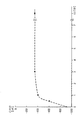
図6に飲料水(山梨県大月市水道水)1000ml中に溶解する水素ガス量とORP電位を示し、図7に通電時間とORP電位の増加(但し、160ml水道水の場合)の例を示し、図8
に通電停止後の時間とORP電位の低下(但し、水素水1000ml)の例を示す。
The electrolysis method is ideal and safe because it does not use high-pressure gas and the minimum hydrogen gas can be controlled freely. However, the lifetime of the ion exchange membrane and the hydroxides and oxides attached to the electrodes Must be solved about the removal of.
The drinking water immediately after electrolysis has many bubbles of fine hydrogen gas, and the apparent hydrogen content is about 20-30 ml in 1000 ml of water, but dissolved in drinking water. Is difficult to preserve, and bubbles of hydrogen gas dispersed in a fine particle state rapidly escape in seconds.
The amount of dissolved hydrogen gas can be approximately calculated from the value of an oxidation-reduction potentiometer (ORP). For example, when hydrogen gas is completely dissolved in 1000 to 30 ml of drinking water, the reduction potential shows −600 mV, In the situation where fine bubble hydrogen gas is present, -800 to 900 mV is indicated.
In addition, when 160 ml of hydrogen water in a cup made of hydrogen gas with large bubbles is electrolyzed at a low voltage, if the hydrogen gas supply is turned off and left to stand, the reduction potential is -600 mV after 30 seconds, and- After 400 mV, it drops to -350 mV after 3 minutes.
The hydrogen gas dissolved in 1000 ml of drinking water at -350 mV is about 5 ml.
Fig. 6 shows the amount of hydrogen gas and ORP potential dissolved in 1000 ml of drinking water (Otsuki City, Yamanashi Prefecture). Fig. 7 shows an example of increase in energization time and ORP potential (however, in the case of 160 ml tap water). FIG. 8
Shows an example of the time after energization is stopped and the ORP potential drop (however, 1000 ml of hydrogen water).
そこで、本発明においては、電気分解する電極の間に配置するイオン交換膜や半透膜を無くし、簡単な構造にした。
本発明は、飲料水を入れたガラスコップなど、上部が開放された容器に入れて攪拌しながら電気分解させるので、水素ガスが均一に飲料水に分散する。また、電極を引き上げて即時に飲料できるため、微粒子の気泡を多量に含む水素水を飲取することが出来る。
水素水の製造用攪拌具の端末には、通電用端子がついており、ACアダプターから直流電源を得ることができる。
イオン交換膜などの電解質を使用しないと、飲料水のイオン伝導度は低く、通常の電圧(約2.7V)では電気分解が起こりにくいため、高電圧DC12〜48Vを加えるため、水素ガスと酸素ガスの気泡は非常に微細(数ミクロンから数十ミクロンの気泡)なマイクロバルーンとなる。この結果、飲料水への水素ガスは効率良く溶解される。
同時に発生する酸素ガスは、そのまま飲料水に溶解させても問題ない。
Therefore, in the present invention, the ion exchange membrane and the semipermeable membrane disposed between the electrodes to be electrolyzed are eliminated, and the structure is simplified.
In the present invention, the hydrogen gas is uniformly dispersed in the drinking water because it is electrolyzed while being stirred in a container such as a glass cup containing drinking water and opened. Moreover, since the electrode can be pulled up and immediately drinkable, hydrogen water containing a large amount of fine particle bubbles can be drunk.
The terminal of the stirrer for producing hydrogen water has a terminal for energization, and a DC power source can be obtained from the AC adapter.
If an electrolyte such as an ion exchange membrane is not used, the ionic conductivity of drinking water is low and electrolysis does not occur easily at normal voltage (about 2.7V), so high voltage DC12 ~ 48V is applied, so hydrogen gas and oxygen gas These bubbles become very fine (bubbles of several to tens of microns) microballoons. As a result, the hydrogen gas into the drinking water is efficiently dissolved.
There is no problem even if the oxygen gas generated at the same time is dissolved in drinking water as it is.
また、本発明は、電極間には水素ガスや酸素ガス、および飲料水が自由に移動出来る多孔絶縁板として例えばポリプロピレンで作られたメッシュ(網)等にチタニウムのメッシュに白金メッキした電極を2枚挟んだものを用意し、これを枠体に固定するために、縁周
りをポリプロピレンやポリエチレンなどのプラスチックスでモールドする。この時、通電端子と一体化された例えばステンレスパイプの攪拌棒(把手)も同時にモールドすれば都合良い。
In addition, the present invention provides a porous insulating plate in which hydrogen gas, oxygen gas, and drinking water can freely move between the electrodes. Prepare a sandwiched sheet and mold the periphery with plastics such as polypropylene or polyethylene to fix it to the frame. At this time, it is convenient to mold a stirring rod (grip) of, for example, a stainless steel pipe integrated with the current-carrying terminal at the same time.
また、本発明は、水素水の製造用攪拌具を取付け台に固定し、小型のモーターを利用して電極部を自動回転させるようにしても良い。この時、近接して小型の攪拌装置を取付けると、多量に水素水を製造するときは製造効率が良い。なお、攪拌の動作としては、回転ばかりでなく、往復あるいは煽ぎ動等でも効果は同じである。 Further, in the present invention, a stirring tool for producing hydrogen water may be fixed to a mounting base, and the electrode unit may be automatically rotated using a small motor. At this time, if a small stirrer is attached in the vicinity, the production efficiency is good when producing a large amount of hydrogen water. The effect of the stirring operation is the same not only in rotation but also in reciprocation or rowing.
本発明の実施例を図面1〜4を参照して説明する。
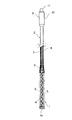
図1は本発明による水素水の製造用攪拌具の全体図であって、1は電極部、2はステン
レスパイプ等を用いた中空の把手部、3は通電部である。先ず、電極部1について説明すると、電極部1は、図2に示すように、チタニウムメッシュに白金メッキした陽極4と陰極5に挟まれたポリプロピレンなどのプラスチックス製メッシュで作られたセパレーター6との3層構造となっていて、陽極用導線7、陰極用導電8を絶縁する防水用シリコン樹脂9を把手部2の先端に充填して把手部2と一体化し、更にポリエチレンやポリプロピレンなどのプラスチックスで陽極4と陰極5及びセパレータ6を枠体1aにモールドした構成である。把手部2の上端には、通電コネクター用ホルダー10と通電コネクターメス11が形成されている。
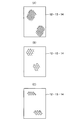
図4は、電極部1の陽極4と陰極5及びセパレータ6の構造例を示し、(A)はメッシュタイプ、(B)はハニカムタイプ、(C)は円孔タイプの例である。但し、この孔の形状は問わない。
なお、本実施例の場合、AC電源を用いているが通電コネクター用ホルダー10の部分にボタン型一次電池(鉄電池、アルカリ電池)あるいはボタン型二次電池(イオンリチウム二次電池)などを入れてコードレス化することも可能である。
An embodiment of the present invention will be described with reference to FIGS.
FIG. 1 is an overall view of a stirring tool for producing hydrogen water according to the present invention, wherein 1 is an electrode portion, 2 is a hollow handle portion using a stainless steel pipe or the like, and 3 is an energizing portion. First, the
FIG. 4 shows an example of the structure of the
In this embodiment, an AC power source is used, but a button-type primary battery (iron battery, alkaline battery) or a button-type secondary battery (ion lithium secondary battery) is inserted into the energizing
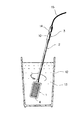
電極部1の大きさは、通常の180mlガラスコップに入れて攪拌できる大きさとなってお
り、図3に水素水をガラスコップ12内で作っている状態を示す。先ず、ガラスコップ12に飲料水13を入れて通電コネクターオス14をコネクターメス11に接続し、ACアダプターへのコード15を経由して約12Vの直流電源と接続することで飲料水の電気分解が
開始され、水素ガスと酸素ガスが2:1の容積比で発生する。この過程で、把手部2を適当に回してコップ12内の水を攪拌すると、水素ガスは微細な気泡となって発生し、コップ12内の飲料水13へ均一に拡散し、吸収されやすくなる。
飲料水にはすでに空気中の酸素ガスや窒素ガスなどが飽和しており、同時に発生する酸素ガスは多少溶解するものの、大部分は大気中に放出される。
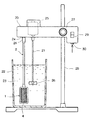
図5は把手部2の上部2aを固定スタンド20に取付け、攪拌装置21を追加した実施例であって、大き目の容器22で多量の飲料水23を処理する場合に都合が良い。この図4において、把手部2の固定と通電は兼用コネクター24を使用し、攪拌用小型モーター25は攪拌翼26を容器22内で回転する。27は把手部2の高さをガイドポール28により調整するためのツマミ、29は電源スイッチ、30はDC電源の入力端子である。
The size of the
Drinking water is already saturated with oxygen gas, nitrogen gas, etc. in the air, and the oxygen gas generated at the same time is somewhat dissolved, but most is released into the atmosphere.
FIG. 5 shows an embodiment in which the
図5は、攪拌翼26を外し、ここに把手部2を取り付け、モーター24で電極部1を直接回転させる例である。この場合、電極部1への電源は、スリップリングを通じて供給させればよい。
なお、電動式の場合、攪拌翼26又は電極部1を回転させているが、容器22内において、左右に往復動させたり、あるいは煽ぐような動きを電極部1に与えることによっても効率的な電気分解、つまり水素水の製造が可能である。
〔実験例〕
180mlのガラスコップに水道水を160ml入れ、DC12Vを通電しながら攪拌を行った場合の
還元電位(ORP)の変化は以下の通りであった。
水道水・・・・・・・+450〜+500mV
通電30秒後・・・・-400〜-420mV
通電1分後・・・・・-600mV
通電2分後・・・・・-700mV
通電3分後・・・・・-800〜-900mV
通電を停止して、10分間放置しても-380〜-400mVを示した。
FIG. 5 shows an example in which the
In the case of the electric type , the stirring
[Experimental example]
Changes in the reduction potential (ORP) when 160 ml of tap water was placed in a 180 ml glass cup and stirred while DC 12 V was applied were as follows.
Tap water ... + 450- + 500mV
30 seconds after energization: -400 to -420mV
1 minute after energization: -600mV
2 minutes after energization: -700mV
3 minutes after energization: -800 to -900mV
Even when the power supply was stopped and left for 10 minutes, -380 to -400 mV was indicated.
1 電極部
1a 枠体
2 把手部
2a 上部
3 通電部
4 陽極
5 陰極
6 セパレータ
7 陽極用導線
8 陰極用導線
9 シリコン樹脂
10 コネクターホルダー
11 コネクターメス
12 ガラスコップ
13 飲料水
14 通電コネクターオス
15 コード
20 固定スタンド
21 攪拌装置
22 容器
23 飲料水
24 コネクター
25 モーター
26 攪拌翼
27 ツマミ
28 ガイドポール
29 電源スイッチ
30 DC電源入力端子
DESCRIPTION OF
Claims (1)
Priority Applications (2)
| Application Number | Priority Date | Filing Date | Title |
|---|---|---|---|
| JP2003334512A JP4801877B2 (en) | 2003-09-26 | 2003-09-26 | Stirrer for hydrogen water production |
| TW093118405A TW200512165A (en) | 2003-09-26 | 2004-06-25 | Stirrer for hydrogen water production |
Applications Claiming Priority (1)
| Application Number | Priority Date | Filing Date | Title |
|---|---|---|---|
| JP2003334512A JP4801877B2 (en) | 2003-09-26 | 2003-09-26 | Stirrer for hydrogen water production |
Publications (2)
| Publication Number | Publication Date |
|---|---|
| JP2005095808A JP2005095808A (en) | 2005-04-14 |
| JP4801877B2 true JP4801877B2 (en) | 2011-10-26 |
Family
ID=34462177
Family Applications (1)
| Application Number | Title | Priority Date | Filing Date |
|---|---|---|---|
| JP2003334512A Expired - Lifetime JP4801877B2 (en) | 2003-09-26 | 2003-09-26 | Stirrer for hydrogen water production |
Country Status (2)
| Country | Link |
|---|---|
| JP (1) | JP4801877B2 (en) |
| TW (1) | TW200512165A (en) |
Cited By (2)
| Publication number | Priority date | Publication date | Assignee | Title |
|---|---|---|---|---|
| DE202022104633U1 (en) | 2021-09-30 | 2022-09-02 | Nutristamina S.R.O. | Generator of a liquid saturated with gas |
| US12268996B2 (en) | 2021-09-30 | 2025-04-08 | Nutristamina S.R.O. | Gas-saturated liquid generator |
Families Citing this family (15)
| Publication number | Priority date | Publication date | Assignee | Title |
|---|---|---|---|---|
| CA2612584A1 (en) * | 2005-07-05 | 2007-01-11 | Research Water Pty Ltd. | Water treatment apparatus |
| JP2008289682A (en) * | 2007-05-25 | 2008-12-04 | Shinwa Kogyo Kk | Muddler for generating electrolysis reduction hydrogen water |
| JPWO2011096503A1 (en) * | 2010-02-08 | 2013-06-13 | 義久 石井 | Electrode structure of a device for producing hypochlorous acid water, etc. |
| JP4652479B1 (en) | 2010-07-14 | 2011-03-16 | ミズ株式会社 | Selective hydrogenation device for biological fluids |
| JP6252955B2 (en) * | 2013-03-18 | 2017-12-27 | 学校法人北里研究所 | Nanobubble sterilization method and nanobubble generator used therefor |
| KR101446193B1 (en) * | 2013-03-27 | 2014-10-01 | 김상선 | Electrode use hydrogen water generation device |
| JP2014226575A (en) * | 2013-05-18 | 2014-12-08 | 株式会社健康支援センター | Hydrogen water generator |
| JP6101891B2 (en) * | 2013-06-12 | 2017-03-29 | 株式会社健康支援センター | Portable hydrogen water generator |
| JP5747390B2 (en) * | 2013-11-29 | 2015-07-15 | 株式会社インテクトプランニング | Hydrogen water production apparatus and electrode used therefor |
| KR101580668B1 (en) * | 2014-03-28 | 2015-12-29 | 주식회사 삼천리 | Sodium hypochlorite generator for managing residual chlorine |
| JP6176202B2 (en) * | 2014-07-24 | 2017-08-09 | 中国電力株式会社 | Hydrogen-containing liquid generator |
| KR101662244B1 (en) * | 2014-10-08 | 2016-10-05 | 수소비전 주식회사 | Neutral-pH Hydrogen-enriched electrolyzed water production device for portable |
| CN104386783B (en) * | 2014-11-25 | 2017-02-01 | 李复兴 | Hydrogen-rich water rod |
| CN106076156A (en) * | 2016-07-21 | 2016-11-09 | 柳州合科技有限公司 | A kind of high rigidity anticorrosion antiwear pesticide agitator |
| JP6391659B2 (en) * | 2016-12-26 | 2018-09-19 | 株式会社コスモスエンタープライズ | Hydrogen water generator |
-
2003
- 2003-09-26 JP JP2003334512A patent/JP4801877B2/en not_active Expired - Lifetime
-
2004
- 2004-06-25 TW TW093118405A patent/TW200512165A/en unknown
Cited By (2)
| Publication number | Priority date | Publication date | Assignee | Title |
|---|---|---|---|---|
| DE202022104633U1 (en) | 2021-09-30 | 2022-09-02 | Nutristamina S.R.O. | Generator of a liquid saturated with gas |
| US12268996B2 (en) | 2021-09-30 | 2025-04-08 | Nutristamina S.R.O. | Gas-saturated liquid generator |
Also Published As
| Publication number | Publication date |
|---|---|
| TW200512165A (en) | 2005-04-01 |
| JP2005095808A (en) | 2005-04-14 |
Similar Documents
| Publication | Publication Date | Title |
|---|---|---|
| JP4801877B2 (en) | Stirrer for hydrogen water production | |
| CN103936109B (en) | Drinking-water Electrowinning device | |
| AU664745B2 (en) | Water ionizing electrode and process for using | |
| JP2002336856A (en) | Electrolytic water production apparatus and electrolytic water production method | |
| JP2013525612A (en) | Portable hydrogen-rich water production equipment | |
| JP2011157580A (en) | Electrolytic synthesis method of ozone fine bubble | |
| JP2012086193A (en) | Hydrogen dissolved water producing device | |
| JP5710691B2 (en) | Membrane-electrode assembly and electrolyzed water generator using the same | |
| JP5094122B2 (en) | Method and apparatus for generating one or more gases | |
| CN101005886B (en) | Process for producing solution having carbon dioxide dissolved therein, apparatus therefor and carbonated water | |
| CN104520242B (en) | Generate bubble and the apparatus and method of foam | |
| CN202201742U (en) | Neutral hydrogen-rich water electrolysis device | |
| JP2018196883A (en) | Method for controlling generation of halogen-containing by-products in drinking water treatment | |
| CN101115685B (en) | Manufacturing method of carbon dioxide gas solution and carbonated water | |
| CN113774409B (en) | A static flat plate hydrogen peroxide electrochemical generator | |
| CN1530335A (en) | Ozone generator | |
| CN105665163B (en) | Shower bath head | |
| JP6391659B2 (en) | Hydrogen water generator | |
| CN206232822U (en) | A kind of Portable miniature high efficiency hydrogen generator | |
| CN117822004A (en) | Electrolysis device and control method thereof, control device and disinfection equipment | |
| JP2007196161A (en) | Apparatus for producing hybrid ozonized water | |
| JP4181170B2 (en) | Drinking electrolyzed water and method for producing the same | |
| CN104944531A (en) | Method for efficiently removing nitrate in underground water through Ti nanometer electrode | |
| JP2005152867A (en) | Electrolytic water manufacturing means | |
| JP3790054B2 (en) | Reduced water generating apparatus and generating method |
Legal Events
| Date | Code | Title | Description |
|---|---|---|---|
| A621 | Written request for application examination |
Free format text: JAPANESE INTERMEDIATE CODE: A621 Effective date: 20050819 |
|
| A977 | Report on retrieval |
Free format text: JAPANESE INTERMEDIATE CODE: A971007 Effective date: 20070502 |
|
| A131 | Notification of reasons for refusal |
Free format text: JAPANESE INTERMEDIATE CODE: A131 Effective date: 20080717 |
|
| A521 | Request for written amendment filed |
Free format text: JAPANESE INTERMEDIATE CODE: A523 Effective date: 20080912 |
|
| A02 | Decision of refusal |
Free format text: JAPANESE INTERMEDIATE CODE: A02 Effective date: 20090108 |
|
| A521 | Request for written amendment filed |
Free format text: JAPANESE INTERMEDIATE CODE: A821 Effective date: 20090206 |
|
| A01 | Written decision to grant a patent or to grant a registration (utility model) |
Free format text: JAPANESE INTERMEDIATE CODE: A01 |
|
| A61 | First payment of annual fees (during grant procedure) |
Free format text: JAPANESE INTERMEDIATE CODE: A61 Effective date: 20110808 |
|
| FPAY | Renewal fee payment (event date is renewal date of database) |
Free format text: PAYMENT UNTIL: 20140812 Year of fee payment: 3 |
|
| R150 | Certificate of patent or registration of utility model |
Free format text: JAPANESE INTERMEDIATE CODE: R150 Ref document number: 4801877 Country of ref document: JP Free format text: JAPANESE INTERMEDIATE CODE: R150 |
|
| FPAY | Renewal fee payment (event date is renewal date of database) |
Free format text: PAYMENT UNTIL: 20140812 Year of fee payment: 3 |
|
| R250 | Receipt of annual fees |
Free format text: JAPANESE INTERMEDIATE CODE: R250 |
|
| R250 | Receipt of annual fees |
Free format text: JAPANESE INTERMEDIATE CODE: R250 |
|
| R250 | Receipt of annual fees |
Free format text: JAPANESE INTERMEDIATE CODE: R250 |
|
| R250 | Receipt of annual fees |
Free format text: JAPANESE INTERMEDIATE CODE: R250 |
|
| R250 | Receipt of annual fees |
Free format text: JAPANESE INTERMEDIATE CODE: R250 |
|
| R250 | Receipt of annual fees |
Free format text: JAPANESE INTERMEDIATE CODE: R250 |
|
| R250 | Receipt of annual fees |
Free format text: JAPANESE INTERMEDIATE CODE: R250 |
|
| R250 | Receipt of annual fees |
Free format text: JAPANESE INTERMEDIATE CODE: R250 |
|
| S531 | Written request for registration of change of domicile |
Free format text: JAPANESE INTERMEDIATE CODE: R313531 |
|
| S533 | Written request for registration of change of name |
Free format text: JAPANESE INTERMEDIATE CODE: R313533 |
|
| R350 | Written notification of registration of transfer |
Free format text: JAPANESE INTERMEDIATE CODE: R350 |
|
| R250 | Receipt of annual fees |
Free format text: JAPANESE INTERMEDIATE CODE: R250 |
|
| R250 | Receipt of annual fees |
Free format text: JAPANESE INTERMEDIATE CODE: R250 |
|
| EXPY | Cancellation because of completion of term |