JP5043177B2 - In-mold label - Google Patents
In-mold label Download PDFInfo
- Publication number
- JP5043177B2 JP5043177B2 JP2010256075A JP2010256075A JP5043177B2 JP 5043177 B2 JP5043177 B2 JP 5043177B2 JP 2010256075 A JP2010256075 A JP 2010256075A JP 2010256075 A JP2010256075 A JP 2010256075A JP 5043177 B2 JP5043177 B2 JP 5043177B2
- Authority
- JP
- Japan
- Prior art keywords
- layer
- label
- weight
- resin
- mold
- Prior art date
- Legal status (The legal status is an assumption and is not a legal conclusion. Google has not performed a legal analysis and makes no representation as to the accuracy of the status listed.)
- Expired - Lifetime
Links
Images

Classifications
-
- B—PERFORMING OPERATIONS; TRANSPORTING
- B32—LAYERED PRODUCTS
- B32B—LAYERED PRODUCTS, i.e. PRODUCTS BUILT-UP OF STRATA OF FLAT OR NON-FLAT, e.g. CELLULAR OR HONEYCOMB, FORM
- B32B27/00—Layered products comprising a layer of synthetic resin
- B32B27/18—Layered products comprising a layer of synthetic resin characterised by the use of special additives
-
- G—PHYSICS
- G09—EDUCATION; CRYPTOGRAPHY; DISPLAY; ADVERTISING; SEALS
- G09F—DISPLAYING; ADVERTISING; SIGNS; LABELS OR NAME-PLATES; SEALS
- G09F3/00—Labels, tag tickets, or similar identification or indication means; Seals; Postage or like stamps
- G09F3/08—Fastening or securing by means not forming part of the material of the label itself
- G09F3/10—Fastening or securing by means not forming part of the material of the label itself by an adhesive layer
-
- B—PERFORMING OPERATIONS; TRANSPORTING
- B32—LAYERED PRODUCTS
- B32B—LAYERED PRODUCTS, i.e. PRODUCTS BUILT-UP OF STRATA OF FLAT OR NON-FLAT, e.g. CELLULAR OR HONEYCOMB, FORM
- B32B27/00—Layered products comprising a layer of synthetic resin
- B32B27/18—Layered products comprising a layer of synthetic resin characterised by the use of special additives
- B32B27/20—Layered products comprising a layer of synthetic resin characterised by the use of special additives using fillers, pigments, thixotroping agents
-
- G—PHYSICS
- G09—EDUCATION; CRYPTOGRAPHY; DISPLAY; ADVERTISING; SEALS
- G09F—DISPLAYING; ADVERTISING; SIGNS; LABELS OR NAME-PLATES; SEALS
- G09F3/00—Labels, tag tickets, or similar identification or indication means; Seals; Postage or like stamps
- G09F3/04—Labels, tag tickets, or similar identification or indication means; Seals; Postage or like stamps to be fastened or secured by the material of the label itself, e.g. by thermo-adhesion
-
- B—PERFORMING OPERATIONS; TRANSPORTING
- B29—WORKING OF PLASTICS; WORKING OF SUBSTANCES IN A PLASTIC STATE IN GENERAL
- B29C—SHAPING OR JOINING OF PLASTICS; SHAPING OF MATERIAL IN A PLASTIC STATE, NOT OTHERWISE PROVIDED FOR; AFTER-TREATMENT OF THE SHAPED PRODUCTS, e.g. REPAIRING
- B29C49/00—Blow-moulding, i.e. blowing a preform or parison to a desired shape within a mould; Apparatus therefor
- B29C49/24—Lining or labelling
- B29C2049/2414—Linings or labels, e.g. specific geometry, multi-layered or material
- B29C2049/24302—Label materials
-
- B—PERFORMING OPERATIONS; TRANSPORTING
- B29—WORKING OF PLASTICS; WORKING OF SUBSTANCES IN A PLASTIC STATE IN GENERAL
- B29L—INDEXING SCHEME ASSOCIATED WITH SUBCLASS B29C, RELATING TO PARTICULAR ARTICLES
- B29L2031/00—Other particular articles
- B29L2031/744—Labels, badges, e.g. marker sleeves
-
- Y—GENERAL TAGGING OF NEW TECHNOLOGICAL DEVELOPMENTS; GENERAL TAGGING OF CROSS-SECTIONAL TECHNOLOGIES SPANNING OVER SEVERAL SECTIONS OF THE IPC; TECHNICAL SUBJECTS COVERED BY FORMER USPC CROSS-REFERENCE ART COLLECTIONS [XRACs] AND DIGESTS
- Y10—TECHNICAL SUBJECTS COVERED BY FORMER USPC
- Y10S—TECHNICAL SUBJECTS COVERED BY FORMER USPC CROSS-REFERENCE ART COLLECTIONS [XRACs] AND DIGESTS
- Y10S428/00—Stock material or miscellaneous articles
- Y10S428/91—Product with molecular orientation
-
- Y—GENERAL TAGGING OF NEW TECHNOLOGICAL DEVELOPMENTS; GENERAL TAGGING OF CROSS-SECTIONAL TECHNOLOGIES SPANNING OVER SEVERAL SECTIONS OF THE IPC; TECHNICAL SUBJECTS COVERED BY FORMER USPC CROSS-REFERENCE ART COLLECTIONS [XRACs] AND DIGESTS
- Y10—TECHNICAL SUBJECTS COVERED BY FORMER USPC
- Y10S—TECHNICAL SUBJECTS COVERED BY FORMER USPC CROSS-REFERENCE ART COLLECTIONS [XRACs] AND DIGESTS
- Y10S428/00—Stock material or miscellaneous articles
- Y10S428/914—Transfer or decalcomania
-
- Y—GENERAL TAGGING OF NEW TECHNOLOGICAL DEVELOPMENTS; GENERAL TAGGING OF CROSS-SECTIONAL TECHNOLOGIES SPANNING OVER SEVERAL SECTIONS OF THE IPC; TECHNICAL SUBJECTS COVERED BY FORMER USPC CROSS-REFERENCE ART COLLECTIONS [XRACs] AND DIGESTS
- Y10—TECHNICAL SUBJECTS COVERED BY FORMER USPC
- Y10T—TECHNICAL SUBJECTS COVERED BY FORMER US CLASSIFICATION
- Y10T428/00—Stock material or miscellaneous articles
- Y10T428/13—Hollow or container type article [e.g., tube, vase, etc.]
- Y10T428/1352—Polymer or resin containing [i.e., natural or synthetic]
-
- Y—GENERAL TAGGING OF NEW TECHNOLOGICAL DEVELOPMENTS; GENERAL TAGGING OF CROSS-SECTIONAL TECHNOLOGIES SPANNING OVER SEVERAL SECTIONS OF THE IPC; TECHNICAL SUBJECTS COVERED BY FORMER USPC CROSS-REFERENCE ART COLLECTIONS [XRACs] AND DIGESTS
- Y10—TECHNICAL SUBJECTS COVERED BY FORMER USPC
- Y10T—TECHNICAL SUBJECTS COVERED BY FORMER US CLASSIFICATION
- Y10T428/00—Stock material or miscellaneous articles
- Y10T428/24—Structurally defined web or sheet [e.g., overall dimension, etc.]
- Y10T428/24802—Discontinuous or differential coating, impregnation or bond [e.g., artwork, printing, retouched photograph, etc.]
- Y10T428/24843—Discontinuous or differential coating, impregnation or bond [e.g., artwork, printing, retouched photograph, etc.] with heat sealable or heat releasable adhesive layer
-
- Y—GENERAL TAGGING OF NEW TECHNOLOGICAL DEVELOPMENTS; GENERAL TAGGING OF CROSS-SECTIONAL TECHNOLOGIES SPANNING OVER SEVERAL SECTIONS OF THE IPC; TECHNICAL SUBJECTS COVERED BY FORMER USPC CROSS-REFERENCE ART COLLECTIONS [XRACs] AND DIGESTS
- Y10—TECHNICAL SUBJECTS COVERED BY FORMER USPC
- Y10T—TECHNICAL SUBJECTS COVERED BY FORMER US CLASSIFICATION
- Y10T428/00—Stock material or miscellaneous articles
- Y10T428/249921—Web or sheet containing structurally defined element or component
- Y10T428/249953—Composite having voids in a component [e.g., porous, cellular, etc.]
- Y10T428/249982—With component specified as adhesive or bonding agent
- Y10T428/249983—As outermost component
-
- Y—GENERAL TAGGING OF NEW TECHNOLOGICAL DEVELOPMENTS; GENERAL TAGGING OF CROSS-SECTIONAL TECHNOLOGIES SPANNING OVER SEVERAL SECTIONS OF THE IPC; TECHNICAL SUBJECTS COVERED BY FORMER USPC CROSS-REFERENCE ART COLLECTIONS [XRACs] AND DIGESTS
- Y10—TECHNICAL SUBJECTS COVERED BY FORMER USPC
- Y10T—TECHNICAL SUBJECTS COVERED BY FORMER US CLASSIFICATION
- Y10T428/00—Stock material or miscellaneous articles
- Y10T428/249921—Web or sheet containing structurally defined element or component
- Y10T428/249953—Composite having voids in a component [e.g., porous, cellular, etc.]
- Y10T428/249982—With component specified as adhesive or bonding agent
- Y10T428/249985—Composition of adhesive or bonding component specified
-
- Y—GENERAL TAGGING OF NEW TECHNOLOGICAL DEVELOPMENTS; GENERAL TAGGING OF CROSS-SECTIONAL TECHNOLOGIES SPANNING OVER SEVERAL SECTIONS OF THE IPC; TECHNICAL SUBJECTS COVERED BY FORMER USPC CROSS-REFERENCE ART COLLECTIONS [XRACs] AND DIGESTS
- Y10—TECHNICAL SUBJECTS COVERED BY FORMER USPC
- Y10T—TECHNICAL SUBJECTS COVERED BY FORMER US CLASSIFICATION
- Y10T428/00—Stock material or miscellaneous articles
- Y10T428/25—Web or sheet containing structurally defined element or component and including a second component containing structurally defined particles
-
- Y—GENERAL TAGGING OF NEW TECHNOLOGICAL DEVELOPMENTS; GENERAL TAGGING OF CROSS-SECTIONAL TECHNOLOGIES SPANNING OVER SEVERAL SECTIONS OF THE IPC; TECHNICAL SUBJECTS COVERED BY FORMER USPC CROSS-REFERENCE ART COLLECTIONS [XRACs] AND DIGESTS
- Y10—TECHNICAL SUBJECTS COVERED BY FORMER USPC
- Y10T—TECHNICAL SUBJECTS COVERED BY FORMER US CLASSIFICATION
- Y10T428/00—Stock material or miscellaneous articles
- Y10T428/25—Web or sheet containing structurally defined element or component and including a second component containing structurally defined particles
- Y10T428/252—Glass or ceramic [i.e., fired or glazed clay, cement, etc.] [porcelain, quartz, etc.]
-
- Y—GENERAL TAGGING OF NEW TECHNOLOGICAL DEVELOPMENTS; GENERAL TAGGING OF CROSS-SECTIONAL TECHNOLOGIES SPANNING OVER SEVERAL SECTIONS OF THE IPC; TECHNICAL SUBJECTS COVERED BY FORMER USPC CROSS-REFERENCE ART COLLECTIONS [XRACs] AND DIGESTS
- Y10—TECHNICAL SUBJECTS COVERED BY FORMER USPC
- Y10T—TECHNICAL SUBJECTS COVERED BY FORMER US CLASSIFICATION
- Y10T428/00—Stock material or miscellaneous articles
- Y10T428/25—Web or sheet containing structurally defined element or component and including a second component containing structurally defined particles
- Y10T428/254—Polymeric or resinous material
-
- Y—GENERAL TAGGING OF NEW TECHNOLOGICAL DEVELOPMENTS; GENERAL TAGGING OF CROSS-SECTIONAL TECHNOLOGIES SPANNING OVER SEVERAL SECTIONS OF THE IPC; TECHNICAL SUBJECTS COVERED BY FORMER USPC CROSS-REFERENCE ART COLLECTIONS [XRACs] AND DIGESTS
- Y10—TECHNICAL SUBJECTS COVERED BY FORMER USPC
- Y10T—TECHNICAL SUBJECTS COVERED BY FORMER US CLASSIFICATION
- Y10T428/00—Stock material or miscellaneous articles
- Y10T428/25—Web or sheet containing structurally defined element or component and including a second component containing structurally defined particles
- Y10T428/256—Heavy metal or aluminum or compound thereof
-
- Y—GENERAL TAGGING OF NEW TECHNOLOGICAL DEVELOPMENTS; GENERAL TAGGING OF CROSS-SECTIONAL TECHNOLOGIES SPANNING OVER SEVERAL SECTIONS OF THE IPC; TECHNICAL SUBJECTS COVERED BY FORMER USPC CROSS-REFERENCE ART COLLECTIONS [XRACs] AND DIGESTS
- Y10—TECHNICAL SUBJECTS COVERED BY FORMER USPC
- Y10T—TECHNICAL SUBJECTS COVERED BY FORMER US CLASSIFICATION
- Y10T428/00—Stock material or miscellaneous articles
- Y10T428/25—Web or sheet containing structurally defined element or component and including a second component containing structurally defined particles
- Y10T428/256—Heavy metal or aluminum or compound thereof
- Y10T428/257—Iron oxide or aluminum oxide
-
- Y—GENERAL TAGGING OF NEW TECHNOLOGICAL DEVELOPMENTS; GENERAL TAGGING OF CROSS-SECTIONAL TECHNOLOGIES SPANNING OVER SEVERAL SECTIONS OF THE IPC; TECHNICAL SUBJECTS COVERED BY FORMER USPC CROSS-REFERENCE ART COLLECTIONS [XRACs] AND DIGESTS
- Y10—TECHNICAL SUBJECTS COVERED BY FORMER USPC
- Y10T—TECHNICAL SUBJECTS COVERED BY FORMER US CLASSIFICATION
- Y10T428/00—Stock material or miscellaneous articles
- Y10T428/25—Web or sheet containing structurally defined element or component and including a second component containing structurally defined particles
- Y10T428/258—Alkali metal or alkaline earth metal or compound thereof
-
- Y—GENERAL TAGGING OF NEW TECHNOLOGICAL DEVELOPMENTS; GENERAL TAGGING OF CROSS-SECTIONAL TECHNOLOGIES SPANNING OVER SEVERAL SECTIONS OF THE IPC; TECHNICAL SUBJECTS COVERED BY FORMER USPC CROSS-REFERENCE ART COLLECTIONS [XRACs] AND DIGESTS
- Y10—TECHNICAL SUBJECTS COVERED BY FORMER USPC
- Y10T—TECHNICAL SUBJECTS COVERED BY FORMER US CLASSIFICATION
- Y10T428/00—Stock material or miscellaneous articles
- Y10T428/25—Web or sheet containing structurally defined element or component and including a second component containing structurally defined particles
- Y10T428/259—Silicic material
-
- Y—GENERAL TAGGING OF NEW TECHNOLOGICAL DEVELOPMENTS; GENERAL TAGGING OF CROSS-SECTIONAL TECHNOLOGIES SPANNING OVER SEVERAL SECTIONS OF THE IPC; TECHNICAL SUBJECTS COVERED BY FORMER USPC CROSS-REFERENCE ART COLLECTIONS [XRACs] AND DIGESTS
- Y10—TECHNICAL SUBJECTS COVERED BY FORMER USPC
- Y10T—TECHNICAL SUBJECTS COVERED BY FORMER US CLASSIFICATION
- Y10T428/00—Stock material or miscellaneous articles
- Y10T428/26—Web or sheet containing structurally defined element or component, the element or component having a specified physical dimension
- Y10T428/263—Coating layer not in excess of 5 mils thick or equivalent
- Y10T428/264—Up to 3 mils
- Y10T428/265—1 mil or less
-
- Y—GENERAL TAGGING OF NEW TECHNOLOGICAL DEVELOPMENTS; GENERAL TAGGING OF CROSS-SECTIONAL TECHNOLOGIES SPANNING OVER SEVERAL SECTIONS OF THE IPC; TECHNICAL SUBJECTS COVERED BY FORMER USPC CROSS-REFERENCE ART COLLECTIONS [XRACs] AND DIGESTS
- Y10—TECHNICAL SUBJECTS COVERED BY FORMER USPC
- Y10T—TECHNICAL SUBJECTS COVERED BY FORMER US CLASSIFICATION
- Y10T428/00—Stock material or miscellaneous articles
- Y10T428/28—Web or sheet containing structurally defined element or component and having an adhesive outermost layer
- Y10T428/2813—Heat or solvent activated or sealable
- Y10T428/2817—Heat sealable
- Y10T428/2826—Synthetic resin or polymer
-
- Y—GENERAL TAGGING OF NEW TECHNOLOGICAL DEVELOPMENTS; GENERAL TAGGING OF CROSS-SECTIONAL TECHNOLOGIES SPANNING OVER SEVERAL SECTIONS OF THE IPC; TECHNICAL SUBJECTS COVERED BY FORMER USPC CROSS-REFERENCE ART COLLECTIONS [XRACs] AND DIGESTS
- Y10—TECHNICAL SUBJECTS COVERED BY FORMER USPC
- Y10T—TECHNICAL SUBJECTS COVERED BY FORMER US CLASSIFICATION
- Y10T428/00—Stock material or miscellaneous articles
- Y10T428/28—Web or sheet containing structurally defined element or component and having an adhesive outermost layer
- Y10T428/2848—Three or more layers
-
- Y—GENERAL TAGGING OF NEW TECHNOLOGICAL DEVELOPMENTS; GENERAL TAGGING OF CROSS-SECTIONAL TECHNOLOGIES SPANNING OVER SEVERAL SECTIONS OF THE IPC; TECHNICAL SUBJECTS COVERED BY FORMER USPC CROSS-REFERENCE ART COLLECTIONS [XRACs] AND DIGESTS
- Y10—TECHNICAL SUBJECTS COVERED BY FORMER USPC
- Y10T—TECHNICAL SUBJECTS COVERED BY FORMER US CLASSIFICATION
- Y10T428/00—Stock material or miscellaneous articles
- Y10T428/28—Web or sheet containing structurally defined element or component and having an adhesive outermost layer
- Y10T428/2852—Adhesive compositions
- Y10T428/2878—Adhesive compositions including addition polymer from unsaturated monomer
-
- Y—GENERAL TAGGING OF NEW TECHNOLOGICAL DEVELOPMENTS; GENERAL TAGGING OF CROSS-SECTIONAL TECHNOLOGIES SPANNING OVER SEVERAL SECTIONS OF THE IPC; TECHNICAL SUBJECTS COVERED BY FORMER USPC CROSS-REFERENCE ART COLLECTIONS [XRACs] AND DIGESTS
- Y10—TECHNICAL SUBJECTS COVERED BY FORMER USPC
- Y10T—TECHNICAL SUBJECTS COVERED BY FORMER US CLASSIFICATION
- Y10T428/00—Stock material or miscellaneous articles
- Y10T428/28—Web or sheet containing structurally defined element or component and having an adhesive outermost layer
- Y10T428/2852—Adhesive compositions
- Y10T428/2878—Adhesive compositions including addition polymer from unsaturated monomer
- Y10T428/2891—Adhesive compositions including addition polymer from unsaturated monomer including addition polymer from alpha-beta unsaturated carboxylic acid [e.g., acrylic acid, methacrylic acid, etc.] Or derivative thereof
-
- Y—GENERAL TAGGING OF NEW TECHNOLOGICAL DEVELOPMENTS; GENERAL TAGGING OF CROSS-SECTIONAL TECHNOLOGIES SPANNING OVER SEVERAL SECTIONS OF THE IPC; TECHNICAL SUBJECTS COVERED BY FORMER USPC CROSS-REFERENCE ART COLLECTIONS [XRACs] AND DIGESTS
- Y10—TECHNICAL SUBJECTS COVERED BY FORMER USPC
- Y10T—TECHNICAL SUBJECTS COVERED BY FORMER US CLASSIFICATION
- Y10T428/00—Stock material or miscellaneous articles
- Y10T428/31504—Composite [nonstructural laminate]
-
- Y—GENERAL TAGGING OF NEW TECHNOLOGICAL DEVELOPMENTS; GENERAL TAGGING OF CROSS-SECTIONAL TECHNOLOGIES SPANNING OVER SEVERAL SECTIONS OF THE IPC; TECHNICAL SUBJECTS COVERED BY FORMER USPC CROSS-REFERENCE ART COLLECTIONS [XRACs] AND DIGESTS
- Y10—TECHNICAL SUBJECTS COVERED BY FORMER USPC
- Y10T—TECHNICAL SUBJECTS COVERED BY FORMER US CLASSIFICATION
- Y10T428/00—Stock material or miscellaneous articles
- Y10T428/31504—Composite [nonstructural laminate]
- Y10T428/31507—Of polycarbonate
-
- Y—GENERAL TAGGING OF NEW TECHNOLOGICAL DEVELOPMENTS; GENERAL TAGGING OF CROSS-SECTIONAL TECHNOLOGIES SPANNING OVER SEVERAL SECTIONS OF THE IPC; TECHNICAL SUBJECTS COVERED BY FORMER USPC CROSS-REFERENCE ART COLLECTIONS [XRACs] AND DIGESTS
- Y10—TECHNICAL SUBJECTS COVERED BY FORMER USPC
- Y10T—TECHNICAL SUBJECTS COVERED BY FORMER US CLASSIFICATION
- Y10T428/00—Stock material or miscellaneous articles
- Y10T428/31504—Composite [nonstructural laminate]
- Y10T428/31725—Of polyamide
- Y10T428/31739—Nylon type
- Y10T428/31743—Next to addition polymer from unsaturated monomer[s]
-
- Y—GENERAL TAGGING OF NEW TECHNOLOGICAL DEVELOPMENTS; GENERAL TAGGING OF CROSS-SECTIONAL TECHNOLOGIES SPANNING OVER SEVERAL SECTIONS OF THE IPC; TECHNICAL SUBJECTS COVERED BY FORMER USPC CROSS-REFERENCE ART COLLECTIONS [XRACs] AND DIGESTS
- Y10—TECHNICAL SUBJECTS COVERED BY FORMER USPC
- Y10T—TECHNICAL SUBJECTS COVERED BY FORMER US CLASSIFICATION
- Y10T428/00—Stock material or miscellaneous articles
- Y10T428/31504—Composite [nonstructural laminate]
- Y10T428/31725—Of polyamide
- Y10T428/31739—Nylon type
- Y10T428/31743—Next to addition polymer from unsaturated monomer[s]
- Y10T428/31746—Polymer of monoethylenically unsaturated hydrocarbon
-
- Y—GENERAL TAGGING OF NEW TECHNOLOGICAL DEVELOPMENTS; GENERAL TAGGING OF CROSS-SECTIONAL TECHNOLOGIES SPANNING OVER SEVERAL SECTIONS OF THE IPC; TECHNICAL SUBJECTS COVERED BY FORMER USPC CROSS-REFERENCE ART COLLECTIONS [XRACs] AND DIGESTS
- Y10—TECHNICAL SUBJECTS COVERED BY FORMER USPC
- Y10T—TECHNICAL SUBJECTS COVERED BY FORMER US CLASSIFICATION
- Y10T428/00—Stock material or miscellaneous articles
- Y10T428/31504—Composite [nonstructural laminate]
- Y10T428/31725—Of polyamide
- Y10T428/3175—Next to addition polymer from unsaturated monomer[s]
-
- Y—GENERAL TAGGING OF NEW TECHNOLOGICAL DEVELOPMENTS; GENERAL TAGGING OF CROSS-SECTIONAL TECHNOLOGIES SPANNING OVER SEVERAL SECTIONS OF THE IPC; TECHNICAL SUBJECTS COVERED BY FORMER USPC CROSS-REFERENCE ART COLLECTIONS [XRACs] AND DIGESTS
- Y10—TECHNICAL SUBJECTS COVERED BY FORMER USPC
- Y10T—TECHNICAL SUBJECTS COVERED BY FORMER US CLASSIFICATION
- Y10T428/00—Stock material or miscellaneous articles
- Y10T428/31504—Composite [nonstructural laminate]
- Y10T428/31725—Of polyamide
- Y10T428/3175—Next to addition polymer from unsaturated monomer[s]
- Y10T428/31757—Polymer of monoethylenically unsaturated hydrocarbon
-
- Y—GENERAL TAGGING OF NEW TECHNOLOGICAL DEVELOPMENTS; GENERAL TAGGING OF CROSS-SECTIONAL TECHNOLOGIES SPANNING OVER SEVERAL SECTIONS OF THE IPC; TECHNICAL SUBJECTS COVERED BY FORMER USPC CROSS-REFERENCE ART COLLECTIONS [XRACs] AND DIGESTS
- Y10—TECHNICAL SUBJECTS COVERED BY FORMER USPC
- Y10T—TECHNICAL SUBJECTS COVERED BY FORMER US CLASSIFICATION
- Y10T428/00—Stock material or miscellaneous articles
- Y10T428/31504—Composite [nonstructural laminate]
- Y10T428/31786—Of polyester [e.g., alkyd, etc.]
- Y10T428/31797—Next to addition polymer from unsaturated monomers
-
- Y—GENERAL TAGGING OF NEW TECHNOLOGICAL DEVELOPMENTS; GENERAL TAGGING OF CROSS-SECTIONAL TECHNOLOGIES SPANNING OVER SEVERAL SECTIONS OF THE IPC; TECHNICAL SUBJECTS COVERED BY FORMER USPC CROSS-REFERENCE ART COLLECTIONS [XRACs] AND DIGESTS
- Y10—TECHNICAL SUBJECTS COVERED BY FORMER USPC
- Y10T—TECHNICAL SUBJECTS COVERED BY FORMER US CLASSIFICATION
- Y10T428/00—Stock material or miscellaneous articles
- Y10T428/31504—Composite [nonstructural laminate]
- Y10T428/31855—Of addition polymer from unsaturated monomers
- Y10T428/31909—Next to second addition polymer from unsaturated monomers
-
- Y—GENERAL TAGGING OF NEW TECHNOLOGICAL DEVELOPMENTS; GENERAL TAGGING OF CROSS-SECTIONAL TECHNOLOGIES SPANNING OVER SEVERAL SECTIONS OF THE IPC; TECHNICAL SUBJECTS COVERED BY FORMER USPC CROSS-REFERENCE ART COLLECTIONS [XRACs] AND DIGESTS
- Y10—TECHNICAL SUBJECTS COVERED BY FORMER USPC
- Y10T—TECHNICAL SUBJECTS COVERED BY FORMER US CLASSIFICATION
- Y10T428/00—Stock material or miscellaneous articles
- Y10T428/31504—Composite [nonstructural laminate]
- Y10T428/31855—Of addition polymer from unsaturated monomers
- Y10T428/31935—Ester, halide or nitrile of addition polymer
-
- Y—GENERAL TAGGING OF NEW TECHNOLOGICAL DEVELOPMENTS; GENERAL TAGGING OF CROSS-SECTIONAL TECHNOLOGIES SPANNING OVER SEVERAL SECTIONS OF THE IPC; TECHNICAL SUBJECTS COVERED BY FORMER USPC CROSS-REFERENCE ART COLLECTIONS [XRACs] AND DIGESTS
- Y10—TECHNICAL SUBJECTS COVERED BY FORMER USPC
- Y10T—TECHNICAL SUBJECTS COVERED BY FORMER US CLASSIFICATION
- Y10T428/00—Stock material or miscellaneous articles
- Y10T428/31504—Composite [nonstructural laminate]
- Y10T428/31855—Of addition polymer from unsaturated monomers
- Y10T428/31938—Polymer of monoethylenically unsaturated hydrocarbon
Landscapes
- Physics & Mathematics (AREA)
- General Physics & Mathematics (AREA)
- Engineering & Computer Science (AREA)
- Theoretical Computer Science (AREA)
- Blow-Moulding Or Thermoforming Of Plastics Or The Like (AREA)
- Laminated Bodies (AREA)
Description
本発明は、ラベルを予め金型内に該ラベルの印刷が施こされた表面側が金型壁面に接するようにセットし、金型内に溶融した熱可塑性樹脂のパリソンを導き中空成形して、或いは溶融した熱可塑性樹脂シートを真空成形もしくは圧空成形してラベル貼合容器を製造するインモールド成形に用いるラベルに関するものである。 The present invention sets the label in advance so that the surface side on which the label is printed in the mold is in contact with the mold wall surface, and guides and molds the melted thermoplastic resin parison in the mold, Or it is related with the label used for the in-mold shaping | molding which manufactures a label bonding container by carrying out vacuum forming or pressure forming of the molten thermoplastic resin sheet.
従来、ラベル付きの樹脂成形容器を一体成形するには、金型内に予めブランク又はラベルをインサートし、次いで射出成形、中空成形、差圧成形、発泡成形などにより該金型内で容器を成形して、容器に絵付けなどを行なっている(特開昭58−69015号公報、ヨーロッパ公開特許第254923号明細書参照)。この様なインモールド成形用ラベルとしては、グラビア印刷された樹脂フィルム、オフセット多色印刷された合成紙(例えば、特公平2−7814号公報、特開平2−84319号公報参照)、或いは、アルミニウム箔の裏面に高圧法低密度ポリエチレン、エチレン・酢酸ビニル共重合体をラミネートし、その箔の表面にグラビア印刷したアルミニウムラベルなどが知られている。 Conventionally, in order to integrally mold a resin-molded container with a label, a blank or label is inserted in advance into the mold, and then the container is molded in the mold by injection molding, hollow molding, differential pressure molding, foam molding, etc. The container is painted (see Japanese Patent Application Laid-Open No. 58-69015, European Patent Publication No. 254923). As such an in-mold molding label, a gravure-printed resin film, an offset multicolor-printed synthetic paper (for example, see Japanese Patent Publication No. 2-7814, Japanese Patent Laid-Open No. 2-84319), or aluminum There is known an aluminum label or the like obtained by laminating a high pressure method low density polyethylene and an ethylene / vinyl acetate copolymer on the back surface of the foil, and gravure printing on the surface of the foil.
しかしながら、上記のインモールド成形用ラベルやブランクを用いて、インモールド成形によりラベルで加飾されたラベル貼合容器を製造する方法においては、特に夏期の高温時には、ラベルの接着層成分が粘着性を帯びるために、ラベルの製造工程におけるフィルムや合成紙への印刷加工、特に枚葉でのオフセット印刷を行う際に、紙どうしの離れや滑り性が悪化し、何度もラベル製造機の停止、再スタートが強いられるという問題が指摘されている。 However, in the method for producing a label bonding container decorated with a label by in-mold molding using the above-mentioned label or blank for in-mold molding, the adhesive layer component of the label is sticky particularly at high temperatures in summer. Therefore, when printing on film or synthetic paper in the label manufacturing process, especially when performing offset printing on a single sheet, paper separation and slipperiness deteriorate, and the label production machine stops many times. The problem of being forced to restart has been pointed out.
さらに、ロールにてグラビア印刷、フレキソ印刷等を行う場合にも、印刷後のシーティング(断裁)工程で滑り性が悪いために、紙が不揃いとなって断裁を中断しなければならないことがあった。 In addition, when performing gravure printing, flexographic printing, etc. on a roll, the sheeting (cutting) process after printing has poor slipping properties, so the paper may become uneven and cutting may have to be interrupted. .
また、そのようにして印刷、打ち抜かれたラベルを梱包し運送している過程で、同様に高温環境では、ラベルどうしが接着すなわちブロッキングし易くなり、インモールド成形時に自動ラベル供給装置を用いて金型内にラベルを供給する際に、ラベルが2枚あるいはそれ以上が同時に金型内に供給され、正規でない位置にラベルが貼合した容器(不良品)が生じたり、ラベルが有効に利用されないという問題が生じている。 Also, in the process of packing and transporting the labels printed and punched in this way, the labels easily adhere to each other in a high-temperature environment, that is, they are easily blocked. When supplying labels into the mold, two or more labels are supplied into the mold at the same time, resulting in a container (defective product) in which the label is bonded to an illegal position, or the label is not used effectively. The problem has arisen.
本発明は、夏期の高温環境でもラベルのブロッキング性に優れ、印刷加工時の作業性も良好で、かつ、ラベルの容器への融着強度が高い貼合容器を与えるインモールドラベル成形用ラベルの提供を目的とする。 The present invention provides an in-mold label forming label that provides a bonding container that is excellent in label blocking properties even in a high-temperature environment in summer, has good workability during printing, and has high fusion strength to the label container. For the purpose of provision.
本発明は、熱可塑性樹脂フィルム基材層(I)の裏面に、ヒートシール性樹脂層(II)を設けたインモールド成形用ラベルであって、ヒートシール性樹脂層(II)の樹脂基材が、ポリエチレン系樹脂と、ヒートシール性樹脂層(II)の肉厚より平均粒径が2〜8μm大きい有機または無機微細粉末とを含有し、ヒートシール性樹脂層(II)における前記有機または無機微細粉末の含有量が0.05〜10重量%であることを特徴とするインモールド成形用ラベルである。 The present invention is an in-mold molding label in which a heat-sealable resin layer (II) is provided on the back surface of a thermoplastic resin film substrate layer (I), and the resin substrate of the heat-sealable resin layer (II) but the polyethylene resin, the average particle diameter than the thickness of the heat sealable resin layer (II) is contained and 2~8μm large organic or inorganic fine fine powder, the organic or the heat sealable resin layer (II) the content of inorganic fine fine powder is a label for in-mold forming, which is a 0.05 to 10 wt%.
ヒートシール性樹脂層(II)を構成するポリエチレン系樹脂に、上記の特定の脂肪酸アミド類及び特定の有機または無機微細粉末の少なくとも1つを含有させることにより、ラベルの印刷加工時の給排紙性や断裁時の紙揃いを良好とし、かつラベルの金型への挿入時のミスを減少させ、さらにはインモールド成形後の容器本体へのラベルの融着を強固とした。 By supplying at least one of the above-mentioned specific fatty acid amides and specific organic or inorganic fine powder to the polyethylene resin constituting the heat-sealable resin layer (II), paper feeding and discharging at the time of label printing processing In addition, the paper alignment at the time of cutting and cutting was improved, errors during insertion of the label into the mold were reduced, and further, the fusion of the label to the container body after in-mold molding was strengthened.
(インモールド成形用ラベルの構造):
本発明のインモールド成形用ラベルについてさらに詳細に説明する。
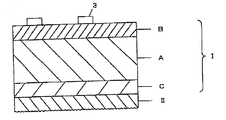
図1は、中空成形用ラベルの断面図を示したものであり、図中、1はインモールド成形用ラベル、2は熱可塑性樹脂フィルム基材層(I)、3は印刷、4はヒートシール性樹脂層(II)である。ヒートシール性樹脂層(II)は、必要により表面にエンボス加工を施こし、それによりラベル貼合容器のラベルのブリスターの発生を防ぐことができる(特開平2−84319号公報、特開平3−260689号公報参照)。
(In-mold molding label structure):
The in-mold label according to the present invention will be described in more detail.
FIG. 1 shows a cross-sectional view of a hollow molding label, in which 1 is a label for in-mold molding, 2 is a thermoplastic resin film base layer (I), 3 is printing, and 4 is heat sealing. It is a conductive resin layer (II). The heat-sealable resin layer (II) can be embossed on the surface as necessary, thereby preventing the generation of blisters on the label of the label bonding container (JP-A-2-84319 and JP-A-3-3). 260689).
図2は、熱可塑性樹脂フィルム基材層(I)として表面層(B)、コア層(A)、裏面層(C)を有するものを用い、ヒートシール層にエンボスを施した別の態様のインモールド成形用ラベルの断面の部分拡大図である。 FIG. 2 shows another embodiment in which a thermoplastic resin film base layer (I) having a surface layer (B), a core layer (A), and a back surface layer (C) is embossed on the heat seal layer. It is the elements on larger scale of the cross section of the label for in-mold shaping | molding.
(基材層(I)):
インモールド成形用ラベルの熱可塑性樹脂フィルム基材層(I)の素材として使用される熱可塑性樹脂としては、高密度ポリエチレン、中密度ポリエチレン等のエチレン系樹脂、あるいはプロピレン系樹脂等のポリオレフィン系樹脂、ポリメチル−1−ペンテン、エチレン−環状オレフィン共重合体、ナイロン−6、ナイロン−6,6、ナイロン−6,10、ナイロン−6,12、ナイロン−6,T等のポリアミド系樹脂、ポリエチレンテレフタレートやその共重合体、ポリエチレンナフタレート、脂肪族ポリエステル等の熱可塑性ポリエステル系樹脂、ポリカーボネート、シンジオタクティックポリスチレン、ポリフェニレンスルフィド等の熱可塑性樹脂が挙げられる。
(Base material layer (I)):
The thermoplastic resin used as the material for the thermoplastic resin film base layer (I) of the in-mold molding label is an ethylene resin such as high density polyethylene or medium density polyethylene, or a polyolefin resin such as propylene resin. , Polymethyl-1-pentene, ethylene-cyclic olefin copolymer, nylon-6, nylon-6,6, nylon-6,10, nylon-6,12, nylon-6, T, and other polyamide resins, polyethylene terephthalate And copolymers thereof, thermoplastic polyester resins such as polyethylene naphthalate and aliphatic polyester, and thermoplastic resins such as polycarbonate, syndiotactic polystyrene and polyphenylene sulfide.
熱可塑性樹脂の融点は135〜280℃の範囲であり、これらの樹脂は2種以上混合して用いることもできる。また、熱可塑性樹脂フィルム基材層(I)を構成する主成分の熱可塑性樹脂が、ヒートシール性樹脂層(II)を構成するポリエチレン系樹脂の融点より15℃以上高い融点を有することが好ましい。これらの樹脂の中でも、ポリオレフィン系樹脂を用いることが好ましい。更にポリオレフィン系樹脂の中でも、プロピレン系樹脂が、耐薬品性、コストの面などから好ましい。 The melting point of the thermoplastic resin is in the range of 135 to 280 ° C., and these resins can be used in combination of two or more. Moreover, it is preferable that the thermoplastic resin as a main component constituting the thermoplastic resin film base layer (I) has a melting point higher by 15 ° C. or more than the melting point of the polyethylene resin constituting the heat sealable resin layer (II). . Among these resins, it is preferable to use a polyolefin-based resin. Furthermore, among polyolefin resins, propylene resins are preferred from the standpoints of chemical resistance and cost.
かかるプロピレン系樹脂としては、アイソタクティックないしはシンジオタクティック及び種々の立体規則性を示すプロピレン単独重合体であり、プロピレンを主成分とし、これと、エチレン、ブテン−1、ヘキセン−1、ヘプテン−1,4−メチルペンテン−1等のα−オレフィンとの共重合体が使用される。この共重合体は、2元系でも3元系でも4元系でもよく、またランダム共重合体でもブロック共重合体であってもよい。 Such propylene resins include propylene homopolymers exhibiting isotactic or syndiotactic and various stereoregularities, mainly composed of propylene, and ethylene, butene-1, hexene-1, heptene- Copolymers with α-olefins such as 1,4-methylpentene-1 are used. This copolymer may be a binary system, a ternary system, or a quaternary system, and may be a random copolymer or a block copolymer.
無機微細粉末を添加する場合は、粒径が通常0.01〜15μm、好ましくは0.01〜5μmのものを使用する。具体的には、重質炭酸カルシウム、軽質炭酸カルシウム、焼成クレイ、シリカ、けいそう土、タルク、酸化チタン、硫酸バリウム、アルミナなどを使用することができる。 When adding an inorganic fine powder, the particle size is usually 0.01 to 15 μm, preferably 0.01 to 5 μm. Specifically, heavy calcium carbonate, light calcium carbonate, calcined clay, silica, diatomaceous earth, talc, titanium oxide, barium sulfate, alumina, and the like can be used.
有機フィラーを添加する場合は、主成分である熱可塑性樹脂とは異なる種類の樹脂を選択することが好ましい。例えば熱可塑性樹脂フィルムがポリオレフィン系樹脂フィルムである場合には、有機フィラーとしてポリエチレンテレフタレート、ポリブチレンテレフタレート、ポリカーボネート、ナイロン−6、ナイロン−6,6、ナイロン−6、T、環状オレフィン、ポリスチレン、ポリメタクリレート等の重合体であって、ポリオレフィン系樹脂の融点よりも高い融点(例えば170〜300℃)ないしはガラス転移温度(例えば170〜280℃)を有するものを使用することができる。 When an organic filler is added, it is preferable to select a different type of resin from the thermoplastic resin that is the main component. For example, when the thermoplastic resin film is a polyolefin resin film, the organic filler is polyethylene terephthalate, polybutylene terephthalate, polycarbonate, nylon-6, nylon-6,6, nylon-6, T, cyclic olefin, polystyrene, poly A polymer such as methacrylate having a melting point (for example, 170 to 300 ° C.) or glass transition temperature (for example, 170 to 280 ° C.) higher than that of the polyolefin resin can be used.
安定剤を添加する場合は、通常0.001〜1重量%の範囲内で添加する。具体的には、立体障害フェノール系、リン系、アミン系の安定剤などを使用することができる。
光安定剤を添加する場合は、通常0.001〜1重量%の範囲内で添加する。具体的には、立体障害アミン系、ベンゾトリアゾール系、ベンゾフェノン系の光安定剤などを使用することができる。
分散剤や潤滑剤は、例えば無機微細粉末を分散させる目的で使用する。使用量は通常0.01〜4重量%の範囲内にする。具体的には、シランカップリング剤、オレイン酸やステアリン酸等の高級脂肪酸、金属石鹸、ポリアクリル酸、ポリメタクリル酸およびこれらの塩などを使用することができる。
When a stabilizer is added, it is usually added within a range of 0.001 to 1% by weight. Specifically, sterically hindered phenol-based, phosphorus-based, amine-based stabilizers and the like can be used.
When a light stabilizer is added, it is usually added within a range of 0.001 to 1% by weight. Specifically, sterically hindered amine-based, benzotriazole-based, benzophenone-based light stabilizers, and the like can be used.
A dispersant and a lubricant are used for the purpose of dispersing inorganic fine powder, for example. The amount used is usually in the range of 0.01 to 4% by weight. Specifically, silane coupling agents, higher fatty acids such as oleic acid and stearic acid, metal soap, polyacrylic acid, polymethacrylic acid, and salts thereof can be used.
熱可塑性樹脂フィルムの成形方法は特に限定されないため、公知の方法の中から適宜選択して成形することができる。例えば、スクリュー型押出機に接続された単層または多層のTダイやIダイを使用して溶融樹脂をシート状に押し出すキャスト成形、カレンダー成形、圧延成形、インフレーション成形、熱可塑性樹脂と有機溶媒やオイルとの混合物をキャスト成形またはカレンダー成形した後に溶媒やオイルを除去する方法などを用いて成形することができる。 Since the method for forming the thermoplastic resin film is not particularly limited, it can be appropriately selected from known methods. For example, cast molding, calender molding, rolling molding, inflation molding, thermoplastic resin and organic solvent, which extrude molten resin into a sheet using a single layer or multilayer T die or I die connected to a screw type extruder After the mixture with oil is cast or calendered, it can be molded using a method of removing the solvent or oil.
支持体に用いる熱可塑性樹脂フィルムは、延伸したものであってもよい。延伸は、通常用いられている種々の方法のいずれかによって行うことができる。 The thermoplastic resin film used for the support may be stretched. Stretching can be performed by any of a variety of commonly used methods.
延伸の温度は、非結晶樹脂の場合は使用する熱可塑樹脂のガラス転移点温度以上、結晶性樹脂の場合には非結晶部分のガラス転移点温度以上から結晶部の融点以下の熱可塑性樹脂に好適な公知の温度範囲内で行うことができる。具体的には、延伸温度は使用する熱可塑性樹脂の融点より2〜60℃低い温度が好ましく、樹脂がプロピレン単独重合体(融点155〜167℃)のときは140〜164℃、高密度ポリエチレン(融点121〜134℃)のときは110〜120℃、ポリエチレンテレフタレート(融点246〜252℃)のときは104〜115℃に設定するのが好ましい。また、延伸速度は20〜350m/分にするのが好ましい。 In the case of an amorphous resin, the stretching temperature is not less than the glass transition temperature of the thermoplastic resin to be used. In the case of a crystalline resin, the stretching temperature is not less than the glass transition temperature of the amorphous portion to the melting point of the crystal portion. It can be carried out within a suitable known temperature range. Specifically, the stretching temperature is preferably 2 to 60 ° C. lower than the melting point of the thermoplastic resin used. When the resin is a propylene homopolymer (melting point 155 to 167 ° C.), 140 to 164 ° C., high-density polyethylene ( When the melting point is 121 to 134 ° C., it is preferably 110 to 120 ° C., and when the polyethylene terephthalate (melting point is 246 to 252 ° C.), it is preferably 104 to 115 ° C. The stretching speed is preferably 20 to 350 m / min.
延伸方法としては、ロール群の周速差を利用した縦延伸、テンターオープンを使用した横延伸、圧延、テンターオープンとリニアモーターの組み合わせによる同時二軸延伸などを用いることができる。 As the stretching method, longitudinal stretching using the peripheral speed difference of the roll group, transverse stretching using a tenter open, rolling, simultaneous biaxial stretching by a combination of a tenter open and a linear motor, or the like can be used.
延伸倍率は特に限定されず、用いる熱可塑性樹脂の特性等を考慮して適宜決定する。例えば、熱可塑性樹脂としてプロピレン単独重合体ないしはその共重合体を使用するときには、一方向に延伸する場合は約1.2〜12倍、好ましくは2〜10倍であり、二軸延伸の場合は面積倍率で1.5〜60倍、好ましくは10〜50倍である。その他の熱可塑性樹脂を使用するときには、一方向に延伸する場合は1.2〜10倍、好ましくは2〜5倍であり、二軸延伸の場合には面積倍率で1.5〜20倍、好ましくは4〜12倍である。 The draw ratio is not particularly limited, and is appropriately determined in consideration of the characteristics of the thermoplastic resin used. For example, when a propylene homopolymer or a copolymer thereof is used as a thermoplastic resin, it is about 1.2 to 12 times, preferably 2 to 10 times when stretched in one direction, and biaxially stretched. The area magnification is 1.5 to 60 times, preferably 10 to 50 times. When using other thermoplastic resins, 1.2 to 10 times, preferably 2 to 5 times in the case of stretching in one direction, 1.5 to 20 times in area magnification in the case of biaxial stretching, Preferably it is 4 to 12 times.
これらの中でも、印刷性、ラベルの金型内への供給性、熱収縮防止性などの面から、基材層(I)としては、無機微細粉末を5〜30重量%、高密度ポリエチレン3〜20重量%およびプロピレン系樹脂を92〜50重量%の割合で含有する樹脂組成物の二軸延伸フィルムコア層(A)の片面に、無機微細粉末を35〜65重量%、高密度ポリエチレン0〜10重量%およびプロピレン系樹脂を55〜35重量%の割合で含有する樹脂組成物の一軸延伸フィルムの表面層(B)を、この表面層(B)とは反対のコア層(A)の片面に無機微細粉末を35〜65重量%、高密度ポリエチレン0〜10重量%およびプロピレン系樹脂55〜35重量%の割合で含有する樹脂組成物の一軸延伸フィルムよりなる裏面層(C)が貼合された微多孔性樹脂延伸フィルム(図2参照)が好ましい。
Among these, from the viewpoints of printability, label supply capability within the mold, and heat shrinkage prevention properties, the base material layer (I) is 5 to 30% by weight of inorganic fine powder,
又、基材層(I)の密度調整のため、上記コア層(A)と表面層(B)の間に密度調整用の層を設けた次の如き基材層フィルムも好ましい。 Moreover, the following base material layer film which provided the layer for density adjustment between the said core layer (A) and surface layer (B) for the density adjustment of base material layer (I) is also preferable.
例えば、無機微細粉末を5〜30重量%、高密度ポリエチレン3〜20重量%およびプロピレン系樹脂を92〜50重量%の割合で含有する樹脂組成物の二軸延伸フィルムコア層(A)の片面に、無機微細粉末を35〜65重量%、高密度ポリエチレン0〜10重量%およびプロピレン系樹脂を55〜35重量%の割合で含有する樹脂組成物の一軸延伸フィルムの裏面層(C)を、この裏面層(C)とは反対のコア層(A)の片面には無機微細粉末を35〜65重量%、高密度ポリエチレン0〜10重量%およびプロピレン系樹脂55〜35重量%の割合で含有する樹脂組成物の一軸延伸フィルムよりなる中間層(D)と、無機微細粉末を35〜65重量%、高密度ポリエチレン0〜10重量%、およびプロピレン系樹脂を55〜35重量%の割合で含有し、かつ、中間層(D)とは無機微細粉末の含有率が異なる樹脂組成物の一軸延伸フィルムよりなる表面層(B)が貼合された微多孔性樹脂延伸フィルム、である。これら微多孔性樹脂延伸フィルム(I)においては、印刷は表面層(B)側に設け、ヒートシール性樹脂層(II)は裏面層(C)側に設けられる。 For example, one side of the biaxially stretched film core layer (A) of a resin composition containing 5 to 30% by weight of inorganic fine powder, 3 to 20% by weight of high-density polyethylene, and 92 to 50% by weight of propylene resin A back layer (C) of a uniaxially stretched resin composition containing 35 to 65% by weight of an inorganic fine powder, 0 to 10% by weight of high-density polyethylene and 55 to 35% by weight of a propylene-based resin, One side of the core layer (A) opposite to the back layer (C) contains an inorganic fine powder in a proportion of 35 to 65% by weight, high-density polyethylene 0 to 10% by weight and propylene-based resin 55 to 35% by weight. Intermediate layer (D) made of a uniaxially stretched resin composition, 35 to 65% by weight of inorganic fine powder, 0 to 10% by weight of high-density polyethylene, and 55 to 35% by weight of propylene-based resin It is contained in a proportion, and the intermediate layer (D) is a microporous resin stretched film in which a surface layer (B) made of a uniaxially stretched resin composition having a different content of inorganic fine powder is bonded. . In these microporous resin stretched films (I), printing is provided on the surface layer (B) side, and the heat-sealable resin layer (II) is provided on the back layer (C) side.
さらに、印刷方式がグラビア印刷や、レタープレス印刷、フレキソ印刷等の場合には、無機あるいは有機微細粉末を5〜30重量%、高密度ポリエチレン3〜20重量%およびプロピレン系樹脂を92〜50重量%の割合で含有する樹脂組成物の微多孔性二軸延伸フィルム基材層(I)の片面にヒートシール性樹脂層(II)を積層したものも使用できる。 Furthermore, when the printing method is gravure printing, letter press printing, flexographic printing, etc., the inorganic or organic fine powder is 5 to 30% by weight, the high density polyethylene is 3 to 20% by weight, and the propylene resin is 92 to 50% by weight. It is also possible to use a laminate of the heat-sealable resin layer (II) on one side of the microporous biaxially stretched film substrate layer (I) of the resin composition contained in a percentage.
これら微多孔性樹脂延伸フィルムは、次式で示される空孔率が5〜60%、好ましくは、8〜50%、より好ましくは8〜40%である。5%未満では軽量化がはかりにくく、60%超ではラベルとしての強度に難点が生じやすい。 These microporous resin stretched films have a porosity represented by the following formula of 5 to 60%, preferably 8 to 50%, more preferably 8 to 40%. If it is less than 5%, it is difficult to reduce the weight, and if it exceeds 60%, the strength as a label tends to be difficult.

微多孔性樹脂延伸フィルムの密度は0.65〜1.02g/cm3の範囲である。
基材層(I)の肉厚は20〜200μm、好ましくは40〜150μmの範囲である。
The density of the microporous resin stretched film is in the range of 0.65 to 1.02 g / cm 3 .
The thickness of the base material layer (I) is 20 to 200 μm, preferably 40 to 150 μm.
(ヒートシール性樹脂層(II)):
(1)構成成分
(i) ポリエチレン系樹脂
(i)成分のポリエチレン系樹脂としては、密度が0.900〜0.935g/cm3の低密度ないし中密度の高圧法ポリエチレン、密度が0.880〜0.940g/cm3の直鎖線状ポリエチレン、エチレン・酢酸ビニル共重合体、エチレン・アクリル酸共重合体、エチレン・アクリル酸アルキルエステル共重合体、エチレン・メタクリル酸アルキルエステル共重合体(アルキル基の炭素数は1〜8)、エチレン・メタクリル酸共重合体の金属塩(Zn、Al、Li、K、Naなど)等の融点が80〜130℃のポリエチレン系樹脂が用いられる。
(Heat sealable resin layer (II)):
(1) Component (i) Polyethylene resin (i) The polyethylene resin as the component (i) is a low density to medium density high pressure polyethylene having a density of 0.900 to 0.935 g / cm 3 , and a density of 0.880. straight chain linear polyethylene ~0.940g / cm 3, ethylene-vinyl acetate copolymer, ethylene-acrylic acid copolymer, ethylene-alkyl acrylate copolymers, ethylene-alkyl methacrylate copolymer (alkyl A polyethylene resin having a melting point of 80 to 130 ° C. such as an ethylene / methacrylic acid copolymer metal salt (Zn, Al, Li, K, Na, etc.) is used.
好ましくは、結晶化度(X線法)が10〜60%、数平均分子量が10,000〜40,000の高圧法ポリエチレン、又は直鎖線状ポリエチレンがよい。中でも容器への接着性の面からエチレン40〜98重量%と、炭素数が3〜30のα−オレフィン60〜2重量%とを、メタロセン触媒、特にメタロセン・アルモキサン触媒、または、例えば、国際公開パンフレットWO92/01723号公報等に開示されているようなメタロセン化合物と、メタロセン化合物と反応して安定なアニオンを形成する化合物とからなる触媒を使用して、共重合体させることにより得られる直鎖線状ポリエチレンが最適である。これらポリエチレン系樹脂は、単独でも、あるいは二種以上の混合物であってもよい。 Preferably, a high pressure polyethylene having a crystallinity (X-ray method) of 10 to 60% and a number average molecular weight of 10,000 to 40,000 or a linear linear polyethylene is preferable. Among these, 40 to 98% by weight of ethylene and 60 to 2% by weight of α-olefin having 3 to 30 carbon atoms are used for metallocene catalyst, particularly metallocene / alumoxane catalyst or, for example, international publication in terms of adhesion to containers. A linear line obtained by copolymerization using a catalyst comprising a metallocene compound as disclosed in pamphlet WO92 / 01723 and a compound that reacts with the metallocene compound to form a stable anion. Polyethylene is optimal. These polyethylene resins may be used alone or as a mixture of two or more.
該ポリエチレン系樹脂の融点は、前記基材層(I)で用いられる熱可塑性樹脂の融点より15℃以上、好ましくは15〜90℃低いことが望ましい。融点の差が15℃未満の場合は、製造時のシートロール巻き取り中に、シート表裏面が融着し易く、作業性が悪い。 The melting point of the polyethylene resin is 15 ° C. or more, preferably 15 to 90 ° C. lower than the melting point of the thermoplastic resin used in the base material layer (I). When the difference between the melting points is less than 15 ° C., the front and back surfaces of the sheet are likely to be fused during winding of the sheet roll during production, and workability is poor.
(ii)脂肪酸アミド類
前記樹脂成分中に配合される脂肪酸アミドとしては、下記に示す特定の脂肪酸アミドを単独で、もしくは二種類以上を混合し、押出機やニーダーなどによって混練することで得られる混合物が用いられる。
(Ii) Fatty acid amides The fatty acid amides to be blended in the resin component can be obtained by mixing the following specific fatty acid amides alone or in combination of two or more and kneading them with an extruder or kneader. A mixture is used.
本発明における脂肪酸アミドとしては、脂肪酸アミド、不飽和脂肪酸アミド、飽和脂肪酸置換アミド、不飽和脂肪酸置換アミド、飽和脂肪酸ビスアミド、不飽和脂肪酸ビスアミド等の、分子量が300以上、好ましくは300〜1000のものが用いられる。分子量が300未満の場合は、該インモールド成形用ラベルの製造時における加熱,延伸の際、脂肪酸アミドがフィルム表面より離脱し、目的とする滑り性やブロッキング性が得られない。また、分子量が1000を超えると、脂肪酸アミドが表面にブリードアウトせず、目的とする滑り性が得られない。また、これら脂肪酸アミドの融点は60〜160℃の範囲のものが好ましい。60℃未満ではインモールド成形用ラベル製造時における加熱,延伸の際、脂肪酸アミドがフィルム表面より離脱し、目的とする滑り性やブロッキング性が得られない。また、160℃を超えると、脂肪酸アミドが表面にブリードアウトせず、目的とする滑り性が得られない。 As the fatty acid amide in the present invention, a fatty acid amide, an unsaturated fatty acid amide, a saturated fatty acid substituted amide, an unsaturated fatty acid substituted amide, a saturated fatty acid bisamide, an unsaturated fatty acid bisamide, etc., having a molecular weight of 300 or more, preferably 300 to 1000 Is used. When the molecular weight is less than 300, the fatty acid amide is detached from the film surface during heating and stretching during the production of the in-mold molding label, and the desired slipping property and blocking property cannot be obtained. On the other hand, when the molecular weight exceeds 1000, the fatty acid amide does not bleed out to the surface, and the desired slip property cannot be obtained. The melting point of these fatty acid amides is preferably in the range of 60 to 160 ° C. When the temperature is less than 60 ° C., the fatty acid amide is detached from the film surface during heating and stretching during the production of the in-mold molding label, and the desired slipping property and blocking property cannot be obtained. Moreover, when it exceeds 160 degreeC, fatty acid amide will not bleed out on the surface and the target slipperiness will not be obtained.
このような脂肪酸アミド類としては、ベヘン酸アミド、メチレンビスステアリン酸アミド、エチレンビスラウリン酸アミド、エチレンビスステアリン酸アミド、エチレンビスオレイン酸アミド、エチレンビスエルシン酸アミド、N−ステアリルエルカアミド、N−ステアリルオレイルアミド等が挙げられる。 Such fatty acid amides include behenic acid amide, methylene bis stearic acid amide, ethylene bis lauric acid amide, ethylene bis stearic acid amide, ethylene bis oleic acid amide, ethylene bis erucinic acid amide, N-stearyl erucamide, N -Stearyl oleyl amide etc. are mentioned.
これらの脂肪酸アミド類は、ヒートシール性樹脂層を形成する樹脂中に好ましくは0.05〜10重量%、更に好ましくは0.1〜5重量%の割合で配合される。 These fatty acid amides are preferably blended in the resin forming the heat-sealable resin layer in a proportion of 0.05 to 10% by weight, more preferably 0.1 to 5% by weight.
配合量が少なすぎると、目的とする滑り性やブロッキング性が不足し、また多すぎると、インモールド成形時のブリスターが発生し易くなり、かつボトルとの密着強度が低下し、商品価値のないインモールド成形品となる。 If the blending amount is too small, the target slipping property and blocking property are insufficient, and if it is too large, blistering at the time of in-mold molding tends to occur, and the adhesion strength with the bottle is lowered, and there is no commercial value. It becomes an in-mold molded product.
(iii) 微細粉末
前記樹脂成分中に配合される微細粉末としては、下記に示す有機または無機の微細粉末を単独で、もしくは二種類以上を混合し、押出機やニーダーなどによって混練することで得られる混合物が用いられる。
(Iii) Fine powder The fine powder blended in the resin component is obtained by mixing the following organic or inorganic fine powders alone or in combination of two or more and kneading them with an extruder or kneader. The resulting mixture is used.
(a)有機微細粉末
前記ポリエチレン系樹脂に配合される有機微細粉末としては、ポリメチルメタクリレート微粒子、架橋ポリメチルメタクリレート微粒子、架橋ポリスチレン微粒子、シリコーン樹脂微粒子、ポリテトラフルオロエチレン微粒子等を挙げることができる。中でも、架橋ポリメチルメタクリレート微粒子、シリコーン樹脂微粒子がポリエチレン系樹脂との混線性や、耐熱性の点で好ましい。
(A) Organic fine powder Examples of the organic fine powder blended with the polyethylene resin include polymethyl methacrylate fine particles, crosslinked polymethyl methacrylate fine particles, crosslinked polystyrene fine particles, silicone resin fine particles, and polytetrafluoroethylene fine particles. . Among these, cross-linked polymethyl methacrylate fine particles and silicone resin fine particles are preferable in terms of cross-linking properties with polyethylene resins and heat resistance.
(b)無機微細粉末
前記ポリエチレン系樹脂に配合される無機微細粉末としては、重質炭酸カルシウム、軽質炭酸カルシウム、クレー、アルミノシリケート、ソジュウムカルシウムアルミノシリケート、シリカ、ソーダ石灰ガラス、タルク、酸化チタン、硫酸バリウム等を挙げることができる。この中でも、ポリエチレン系樹脂のヒートシール性を阻害しないよう少量の配合で高い効果が得られる点でフィラー粒径のアスペクト比が小さい球形あるいは立方体に近いものや、粒度分布の狭いものが好ましい。
(B) Inorganic fine powder As the inorganic fine powder blended in the polyethylene resin, heavy calcium carbonate, light calcium carbonate, clay, aluminosilicate, sodium calcium aluminosilicate, silica, soda lime glass, talc, titanium oxide And barium sulfate. Among these, a spherical or cube-like one having a small aspect ratio of the filler particle size or a narrow particle size distribution is preferable in that a high effect can be obtained with a small amount of blending so as not to inhibit the heat sealability of the polyethylene resin.
(iv)任意成分
本発明のヒートシール性樹脂層(II)成分には、該ヒートシール性樹脂層の要求性能を阻害しない範囲で公知の他の樹脂用添加剤を任意に添加することができる。該添加剤としては、染料、核剤、可塑剤、離型剤、酸化防止剤、難燃剤、紫外線吸収剤等を挙げることができる。
(Iv) Optional component The heat sealable resin layer (II) component of the present invention may optionally contain other known additives for resins as long as the required performance of the heat sealable resin layer is not impaired. . Examples of the additive include dyes, nucleating agents, plasticizers, mold release agents, antioxidants, flame retardants, and ultraviolet absorbers.
(2)肉厚
ヒートシール性樹脂層(II)の肉厚は好ましくは1〜10μm、更に好ましくは2〜8μmの範囲である。
この肉厚は中空成形時にヒートシール性樹脂層(II)のフィルムがパリソンなどの溶融ポリエチレンやポリプロピレンの熱により溶解し、成形品の容器とラベルが強固に融着する傾向があるために1μm以上必要であり、また、10μmを越えるとラベルがカールし、オフセット印刷が困難となったり、ラベルを金型へ固定することが困難となる傾向があるので好ましくない。
(2) Thickness The thickness of the heat-sealable resin layer (II) is preferably in the range of 1 to 10 μm, more preferably 2 to 8 μm.
This thickness is 1 μm or more because the film of the heat-sealable resin layer (II) is melted by the heat of molten polyethylene such as parison or polypropylene during hollow molding, and the container of the molded product and the label tend to be firmly fused. It is necessary, and if it exceeds 10 μm, the label is curled, and offset printing tends to be difficult, and it tends to be difficult to fix the label to the mold.
これらヒートシール性樹脂層(II)の肉厚と、前記微細粉末の粒径および含有量が、目的とするラベルを得るためには重要である。すなわち、微細粉末の粒径がヒートシール性樹脂層の肉厚より小さいと、微細粉末が層内部に埋もれ、表面に露出しない為に、目的とする滑り性や、ブロッキング防止性が発現しない。この為には、微細粉末の平均粒径は、少なくともヒートシール性樹脂層の肉厚よりも大きいことが必要である。 The thickness of the heat-sealable resin layer (II) and the particle size and content of the fine powder are important for obtaining a target label. That is, when the particle size of the fine powder is smaller than the thickness of the heat-sealable resin layer, the fine powder is buried inside the layer and is not exposed on the surface, so that the intended slipping property and antiblocking property are not exhibited. For this purpose, the average particle size of the fine powder needs to be at least larger than the thickness of the heat-sealable resin layer.
また、微細粉末の粒径の上限に関しては、特に制限はないが、平均粒径が20μm以下、好ましくは15μm以下のものが好ましい。粒径が20μmを超えると、ヒートシール性樹脂層より脱落しやすく、粒子自体あるいはそれらが凝集して、ラベル印刷の外観に悪影響を与える傾向がある。 The upper limit of the particle size of the fine powder is not particularly limited, but those having an average particle size of 20 μm or less, preferably 15 μm or less are preferred. When the particle diameter exceeds 20 μm, it tends to fall off from the heat-sealable resin layer, and the particles themselves or those aggregates tend to adversely affect the appearance of label printing.
以上のような平均粒径がヒートシール性樹脂層の肉厚よりも大きい有機あるいは無機微細粉末の含有量は、0.03〜15重量%、好ましくは0.05〜10重量%である。含有量が少なすぎると目的する滑り性、ブロッキング防止性が発現せず、また多すぎると、ラベルの熱融着に悪影響をおよぼす。従って、ラベルの熱融着性と滑り性、ブロッキング防止性をバランスよく高めるためには、該微細粉末の粒度分布が狭いものがより好ましい。 The content of the organic or inorganic fine powder having the above average particle size larger than the thickness of the heat-sealable resin layer is 0.03 to 15% by weight, preferably 0.05 to 10% by weight. If the content is too small, the intended slipping property and anti-blocking property will not be exhibited. If the content is too large, the thermal fusion of the label will be adversely affected. Therefore, in order to improve the heat fusion property, slipperiness and antiblocking property of the label in a well-balanced manner, it is more preferable that the fine powder has a narrow particle size distribution.
前述したようにラベルのヒートシール性樹脂層には、中空成形時のブリスターの発生を防止するために、特開平2−84319号公報、特開平3−260689号公報に記載するようにエンボス加工を施こすことができる。
そのエンボス模様は、例えば2.54cm当り5〜25線のエンボス加工であって、このエンボス加工の谷の深さが1〜8μm(ミクロン)であって、かつ、ヒートシール性樹脂層の肉厚の1/3以上である。エンボス加工は、射出成形用ラベルには必要がない。
As described above, the heat sealable resin layer of the label is embossed as described in JP-A-2-84319 and JP-A-3-260689 in order to prevent the occurrence of blisters during hollow molding. Can be rubbed.
The embossed pattern is, for example, an embossing of 5 to 25 lines per 2.54 cm, the embossed valley depth is 1 to 8 μm (micron), and the thickness of the heat-
これらのインモールド成形用ラベルは必要あればコロナ放電加工等によって基材層(I)の表面の印刷性を改善しておくことができる。 If necessary, these in-mold molding labels can improve the surface printability of the base material layer (I) by corona discharge machining or the like.
印刷は、グラビア印刷、オフセット印刷、フレキソ印刷、スクリーン印刷などの印刷を施して、バーコード、製造元、販売会社名、キャラクター、商品名、使用方法などが印刷されたものを使用することができる。 For printing, gravure printing, offset printing, flexographic printing, screen printing, or the like is performed, and barcodes, manufacturers, sales company names, characters, product names, usage methods, and the like can be used.
印刷されたラベル(1)は打抜加工により必要な形状寸法のラベルに分離される。このインモールド成形用ラベルは容器表面の一部に貼着される部分的なものであってもよいが、通常はカップ状容器の側面を取巻くブランクとして、中空成形では瓶状容器の表側及び/又は裏側に貼着されるラベルとして製造される。 The printed label (1) is separated into labels having a necessary shape and dimension by punching. The label for in-mold molding may be a partial label stuck to a part of the surface of the container. Usually, as a blank surrounding the side surface of the cup-shaped container, in hollow molding, the front side of the bottle-shaped container and / or Or it is manufactured as a label stuck on the back side.
(インモールド成形)
このインモールド成形用ラベルは、該ラベルを差圧成形金型の下雌金型のキャビティ内にラベルの印刷側が金型のキャビティ面に接するように設置した後、金型吸引により金型内壁に固定され、次いで容器成形材料樹脂シートの溶融物が下雌金型の上方に導かれ、常法により差圧成形され、ラベルが容器外壁に一体に融着されたラベル貼合容器が成形される。
(In-mold molding)
This in-mold molding label is placed on the inner wall of the mold by suction of the mold after the label is placed in the cavity of the female mold under the differential pressure mold so that the printing side of the label is in contact with the cavity surface of the mold. Then, the melt of the container molding material resin sheet is guided to the upper part of the lower female mold, is subjected to differential pressure molding by a conventional method, and a label bonding container in which the label is integrally fused to the outer wall of the container is molded. .
差圧成形は、真空成形、圧空成形のいずれも採用できるが、一般には両者を併用し、かつプラグアシストを利用した差圧成形が好ましい。また、このラベルは、溶融樹脂パリソンを圧空により金型内壁に圧着する中空成形にも適用可能である。 As the differential pressure forming, either vacuum forming or pressure forming can be adopted, but in general, differential pressure forming using both of them and utilizing plug assist is preferable. This label can also be applied to hollow molding in which a molten resin parison is pressure-bonded to the inner wall of a mold by compressed air.
このようにして製造されたラベル貼合容器は、ラベル(1)が金型内で固定された後に、ラベルと樹脂容器が一体に成形されるので、ラベル(1)の変形もなく、容器本体とラベル(1)の密着強度が強固であり、ブリスターもなく、ラベルにより加飾された外観が良好な容器となる。 Since the label and the resin container are integrally formed after the label (1) is fixed in the mold, the label bonding container manufactured in this way is not deformed, and the container body The label (1) has a strong adhesion strength, no blister, and has a good appearance decorated with a label.
以下に実施例及び比較例により本発明を更に具体的に説明する。
〔I〕物性の測定方法と評価方法
実施例及び比較例における物性の測定と評価は、以下に示す方法によって実施した。
(1)物性の測定:
(a)MFR:JIS−K−7210に準拠
(b)密度:JIS−K−7112に準拠
(c)摩擦係数:JIS−K−7125に準拠し、印刷を施す前の表面層(B)とヒートシール性樹脂層(II)との摩擦係数(静摩擦係数、動摩擦係数)を測定した。
Hereinafter, the present invention will be described more specifically with reference to Examples and Comparative Examples.
[I] Measurement method and evaluation method of physical properties Measurement and evaluation of physical properties in Examples and Comparative Examples were performed by the following methods.
(1) Measurement of physical properties:
(A) MFR: Conforms to JIS-K-7210 (b) Density: Conforms to JIS-K-7112 (c) Coefficient of friction: Surface layer (B) before printing according to JIS-K-7125 The friction coefficient (static friction coefficient, dynamic friction coefficient) with the heat-sealable resin layer (II) was measured.
(2)インモールド成形:
(d)ラベルの金型内への挿入適性 横60mm、縦110mmの寸法に打抜いたラベルをラベルマガジンにセットし、30℃、相対湿度50%の環境下、ぺんてる(株)製の自動ラベル供給装置にて、100枚連続でブロー成形用割型へ供給を行ない、成形を行った時のミス(2枚差しや、金型よりラベルが落下する、あるいは、所定の位置にラベルが融着しない)の回数を計測した。
○:1回もミスが発生しない
△:1〜5枚ミスが発生する
×:6枚以上ミスが発生する。
(e)ラベルの容器への融着強度:
容器に貼着したラベルを15mm幅に切り取り、ラベルと容器との間の接着強度を、島津製作所製の引張試験機「オートグラフ AGS−D形」を用い、300mm/分の引張速度で、T字剥離することにより求めた。
ラベル使用上の判断基準は次の通りである。
400(g/15mm)以上 :実用上全く問題がない
200〜400(g/15mm):やや接着性が弱いが、実用上問題がない
200(g/15mm)以下 :実用上問題である
(2) In-mold molding:
(D) Label insertion suitability into a mold A label punched into dimensions 60 mm wide and 110 mm long is set in a label magazine, and an automatic label manufactured by Pentel Co., Ltd. in an environment of 30 ° C. and 50% relative humidity. Supply 100 sheets continuously to the blow molding split mold with the feeder, and mistakes when molding (2 sheets inserted, the label falls from the mold, or the label is fused at a predetermined position) No) was counted.
○: No mistake occurs. Δ: 1 to 5 mistakes occur. ×: 6 or more mistakes occur.
(E) Fusion strength of label to container:
The label affixed to the container is cut to a width of 15 mm, and the adhesive strength between the label and the container is measured using a tensile tester “Autograph AGS-D type” manufactured by Shimadzu Corporation at a tensile speed of 300 mm / min. It was determined by peeling the letters.
The criteria for label usage are as follows.
400 (g / 15 mm) or more: No problem in practical use 200 to 400 (g / 15 mm): Slightly weak adhesion, but no problem in practical use 200 (g / 15 mm) or less: Problem in practical use
(3)オフセット印刷における給紙性
三菱重工(株)製ダイヤ−II型印刷機を使用し、菊平版(636mm×470mm)の紙サイズで、7000枚/時の速度で1000枚連続印刷した。その際にシート供給装置でのトラブル(2枚差しや、紙ずれ)により機械が停止した回数を、以下の基準により判断した。
○:1回も機械が停止しない
△:1〜3回機械が停止する
×:4回以上機械が停止する
(3) Paper Feedability in Offset Printing Using a diamond-type II printing machine manufactured by Mitsubishi Heavy Industries, 1000 sheets were continuously printed at a speed of 7000 sheets / hour with a paper size of Kikuhira (636 mm × 470 mm). At that time, the number of times the machine stopped due to troubles in the sheet supply device (two sheets inserted or paper misalignment) was judged according to the following criteria.
○: Machine does not stop even once
Δ: Machine stops 1-3 times
×: Machine stops 4 times or more
ラベルの製造例
(実施例1)
(1)日本ポリケム(株)製プロピレン単独重合体である“ノバテックPP、MA−8”(商品名、融点164℃)67重量部、日本ポリケム(株)製、高密度ポリエチレン“ノバテックHD、HJ580”(商品名、融点134℃、密度0.960g/cm3)10重量部および粒径1.5μmの炭酸カルシウム粉末23重量部よりなる樹脂組成物(A)を押出機を用いて溶融混練したのち、ダイより250℃の温度でシート状に押出し、約50℃の温度となるまでこのシートを冷却した。
次いで、このシートを約153℃に加熱したのち、ロール群の周速度を利用して縦方向に4倍延伸して、一軸延伸フィルムを得た。
(2)別に、日本ポリケム(株)製プロピレン単独重合体“ノバテックPP、MA−3”(商品名;融点165℃)51.5重量部、密度0.950g/cm3の高密度ポリエチレン“HJ580”3.5重量部、粒径1.5μmの炭酸カルシウム粉末42重量部、粒径0.8μmの酸化チタン粉末3重量部よりなる組成物(B)を別の押出機を用いて240℃で溶融混練し、これを前記縦延伸フィルムの表面にダイよりフィルム状に押し出し、積層(B/A)して、表面層/コア層の積層体を得た。
(3)メタロセン触媒を用いてエチレンと1−ヘキセンを共重合させて得たMFRが18g/10分、密度が0.898g/cm3であるエチレン・1−ヘキセン共重合体(1−ヘキセン含量22重量%、結晶化度30、数平均分子量23、000、融点90℃)80重量部と、MFRが4g/10分、密度が0.92g/cm3の高圧法低密度ポリエチレン19重量部と、エチレンビスオレイン酸アミド1重量部を、二軸押出機により200℃で溶融混練し、ダイよりストランド状に押し出しカッティングしてヒートシール性樹脂層用ペレット(II)を得た。
(4)プロピレン単独重合体“MA−3”51.5重量部、高密度ポリエチレン“HJ580”3.5重量部、粒径1.5μmの炭酸カルシウム粉末42重量部および粒径0.8μmの酸化チタン粉末3重量部よりなる組成物(C)と、前記ヒートシール性樹脂層用ペレット(II)を、それぞれ別の押出機を用い、230℃で溶融混練し、一台の共押出ダイに供給して、該ダイ内で積層した後、この積層物をダイより230℃でフィルム状に押し出して、前記表面層/コア層用の積層体(B/A)のA層側にヒートシール性樹脂層(II)が外側になるように押し出し、これを積層した。
この四層フィルム(B/A/C/II)をテンターオーブンに導き、155℃に加熱した後テンターを用いて横方向に7倍延伸し、次いで164℃で熱セットし、更に表面層(B層)側に、70W/m2/分のコロナ放電処理をしたのち、55℃迄冷却し、耳部をスリットして、密度0.790g/cm3、肉厚が100μm(B/A/C/II=30/40/25/5μm)の四層構造の微多孔性樹脂延伸フィルムを得た。
Example of label production (Example 1)
(1) 67 parts by weight of “Novatech PP, MA-8” (trade name, melting point 164 ° C.) which is a propylene homopolymer manufactured by Nippon Polychem Co., Ltd., high density polyethylene “Novatech HD, HJ580, manufactured by Nippon Polychem Co., Ltd. “A resin composition (A) comprising 10 parts by weight (trade name, melting point 134 ° C., density 0.960 g / cm 3 ) and 23 parts by weight of calcium carbonate powder having a particle size of 1.5 μm was melt-kneaded using an extruder. After that, the sheet was extruded from the die at a temperature of 250 ° C. and cooled to a temperature of about 50 ° C.
Next, the sheet was heated to about 153 ° C. and then stretched 4 times in the longitudinal direction using the peripheral speed of the roll group to obtain a uniaxially stretched film.
(2) Separately, 51.5 parts by weight of a propylene homopolymer “Novatech PP, MA-3” (trade name; melting point 165 ° C.) manufactured by Nippon Polychem Co., Ltd., high density polyethylene “HJ580” having a density of 0.950 g / cm 3 “A composition (B) comprising 3.5 parts by weight, 42 parts by weight of calcium carbonate powder having a particle diameter of 1.5 μm, and 3 parts by weight of titanium oxide powder having a particle diameter of 0.8 μm was obtained at 240 ° C. using another extruder. It was melt-kneaded and extruded onto the surface of the longitudinally stretched film in a film form from a die and laminated (B / A) to obtain a surface layer / core layer laminate.
(3) An ethylene / 1-hexene copolymer having a MFR of 18 g / 10 min and a density of 0.898 g / cm 3 obtained by copolymerizing ethylene and 1-hexene using a metallocene catalyst (content of 1-hexene) 80 parts by weight (22% by weight, crystallinity 30, number average molecular weight 23,000, melting point 90 ° C.), 19 parts by weight of high-pressure low-density polyethylene having an MFR of 4 g / 10 min and a density of 0.92 g / cm 3 Then, 1 part by weight of ethylenebisoleic acid amide was melt-kneaded at 200 ° C. by a twin screw extruder, extruded into a strand shape from a die, and cut to obtain a pellet (II) for heat-sealable resin layer.
(4) 51.5 parts by weight of propylene homopolymer “MA-3”, 3.5 parts by weight of high density polyethylene “HJ580”, 42 parts by weight of calcium carbonate powder having a particle size of 1.5 μm, and oxidation having a particle size of 0.8 μm The composition (C) composed of 3 parts by weight of titanium powder and the pellets (II) for the heat-sealable resin layer are melt-kneaded at 230 ° C. using different extruders and supplied to one coextrusion die. Then, after laminating in the die, the laminate is extruded from the die into a film at 230 ° C., and a heat sealable resin is applied to the A layer side of the surface layer / core layer laminate (B / A). The layer (II) was extruded so that it was on the outside, and this was laminated.
This four-layer film (B / A / C / II) was introduced into a tenter oven, heated to 155 ° C., stretched 7 times in the transverse direction using the tenter, and then heat-set at 164 ° C., and the surface layer (B Layer) side is subjected to a corona discharge treatment of 70 W / m 2 / min, cooled to 55 ° C., slits at the ears, a density of 0.790 g / cm 3 and a wall thickness of 100 μm (B / A / C) / II = 30/40/25/5 μm) A microporous resin stretched film having a four-layer structure was obtained.
この四層構造の積層延伸樹脂フィルムの表面層(B)側に、27℃、相対湿度60%の環境にてオフセット印刷を施した。このようにして得られたインモールド成形用ラベル用紙は、紙ばなれや滑り性が良好であり、静電気の発生も少なく、印刷の給排紙がスムーズで、途中で停止するようなこともなかった。
次いで、これを断裁及び打ち抜き加工して、インモールド成形用ラベル(1)(横60mm、縦110mm)を得た。
これらのインモールド成形用ラベル(1)を、30℃、相対湿度50%の環境にて100枚積み重ね、自動ラベル供給装置を用いてブロー成形用割型の一方に真空を利用して印刷面側が金型と接するように固定した後、高密度ポリエチレン(融点134℃)のパリソンを200℃で溶融押出し、次いで割型を型締めした後、4.2kg/cm2の圧空をパリソン内に供給し、パリソンを膨張させて型に密着させて容器状とすると共にインモールド用ラベルと融着させ、次いで該型を冷却した後、型開きをしてラベルが貼着した中空容器を取り出した。この際の、ラベルの金型内への挿入適性、ブリスターの発生の有無、ラベルの密着強度を表1に示す。
このラベル貼合中空容器は印刷の退色もなく、ラベルの位置ズレやブリスターの発生も見受けられなかった。容器とラベルの融着強度は590g/15mm幅であった。このものの評価結果を表1に示す。
Offset printing was performed on the surface layer (B) side of the laminated stretched resin film having a four-layer structure in an environment of 27 ° C. and a relative humidity of 60%. The in-mold label paper obtained in this way has good alignment and slipperiness, little static electricity, smooth feeding and discharging of printing, and no stopping in the middle. It was.
Next, this was cut and punched to obtain an in-mold forming label (1) (width 60 mm, height 110 mm).
One hundred of these in-mold molding labels (1) are stacked in an environment of 30 ° C. and a relative humidity of 50%, and an automatic label feeder is used to apply a vacuum to one of the blow molding split molds so that the printing surface side is After fixing it in contact with the mold, a high-density polyethylene (melting point 134 ° C.) parison was melt extruded at 200 ° C., and the split mold was clamped, and then 4.2 kg / cm 2 of compressed air was supplied into the parison. The parison was inflated and brought into close contact with the mold to form a container and fused with an in-mold label. The mold was then cooled, and the mold was opened and the hollow container with the label attached was taken out. Table 1 shows the suitability for inserting the label into the mold, the presence or absence of blistering, and the adhesion strength of the label.
This label-bonded hollow container had no printing fading, and no label displacement or blistering was observed. The fusion strength between the container and the label was 590 g / 15 mm width. The evaluation results of this product are shown in Table 1.
(実施例2)
(1)日本ポリケム(株)製プロピレン単独重合体である“ノバテックPP、MA−8”(商品名、融点164℃)67重量部、日本ポリケム(株)製、高密度ポリエチレン“ノバテックHD、HJ580”(商品名、融点134℃、密度0.960g/cm3)10重量部および粒径1.5μmの炭酸カルシウム粉末23重量部よりなる樹脂組成物(A)を押出機を用いて溶融混練したのち、ダイより250℃の温度でシート状に押出し、約50℃の温度となるまでこのシートを冷却した。
次いで、このシートを約153℃に加熱したのち、ロール群の周速度を利用して縦方向に4倍延伸して、一軸延伸フィルムを得た。
(2)この一軸延伸フィルムの片面に、前記(3)にて得られたヒートシール性樹脂ペレット(II)を、押出機を用いて200℃にて溶融混練し、ダイよりフィルム状に押し出し、積層(A/II)した。
(3)この二層フィルム(A/II)をテンターオーブンに導き、153℃に加熱した後テンターを用いて横方向に7倍に延伸し、次いで160℃で熱セットし、更に印刷面(A層)側に70W/cm2/分のコロナ放電処理をしたのち、55℃迄冷却し、耳部をスリットして、密度0.720g/cm3、肉厚が100μm(A/II=95/5μm)の二層構造の微多孔性樹脂延伸フィルムを得た。このものの評価結果を表1に示す。
(Example 2)
(1) 67 parts by weight of “Novatech PP, MA-8” (trade name, melting point 164 ° C.) which is a propylene homopolymer manufactured by Nippon Polychem Co., Ltd., high density polyethylene “Novatech HD, HJ580, manufactured by Nippon Polychem Co., Ltd. “A resin composition (A) comprising 10 parts by weight (trade name, melting point 134 ° C., density 0.960 g / cm 3 ) and 23 parts by weight of calcium carbonate powder having a particle size of 1.5 μm was melt-kneaded using an extruder. After that, the sheet was extruded from the die at a temperature of 250 ° C. and cooled to a temperature of about 50 ° C.
Next, the sheet was heated to about 153 ° C. and then stretched 4 times in the longitudinal direction using the peripheral speed of the roll group to obtain a uniaxially stretched film.
(2) On one side of this uniaxially stretched film, the heat-sealable resin pellet (II) obtained in (3) above is melt-kneaded at 200 ° C. using an extruder, and extruded from a die into a film shape. Laminated (A / II).
(3) The two-layer film (A / II) was introduced into a tenter oven, heated to 153 ° C., stretched 7 times in the transverse direction using the tenter, then heat-set at 160 ° C., and further printed surface (A Layer) side was subjected to a corona discharge treatment of 70 W / cm 2 / min, cooled to 55 ° C., slitted at the ears, with a density of 0.720 g / cm 3 and a wall thickness of 100 μm (A / II = 95 / A microporous resin stretched film having a two-layer structure of 5 μm) was obtained. The evaluation results of this product are shown in Table 1.
(実施例3〜8、比較例1〜4)
実施例1においてヒートシール性樹脂層(II)の配合を表1に記載のものに変更した以外は、実施例1と同様にしてインモールド成形用ラベルを得た。このものの評価結果を表1に示す。
(Examples 3-8, Comparative Examples 1-4)
An in-mold molding label was obtained in the same manner as in Example 1 except that the composition of the heat-sealable resin layer (II) was changed to that shown in Table 1 in Example 1. The evaluation results of this product are shown in Table 1.
(実施例9)
(1)日本ポリケム(株)製プロピレン単独重合体である“ノバテックPP,MA−8”(商品名、融点164℃)67重量部、日本ポリケム(株)製高密度ポリエチレン“ノバテックHD,HJ580”(商品名、融点134℃、密度0.960g/cm3)10重量部および粒径1.5μmの炭酸カルシウム粉末23重量部よりなる樹脂組成物(A)を押出機を用いて溶融混練したのち、ダイより250℃の温度でシート状に押出し、約50℃の温度となるまでこのシートを冷却した。
次いで、このシートを約153℃に加熱したのち、ロール群の周速度を利用して縦方向に4倍延伸して、一軸延伸フィルムを得た。
(2)別に、日本ポリケム(株)製プロピレン単独重合体“ノバテックPP,MA−3”(商品名;融点165℃)51.5重量部、密度0.950g/cm3の高密度ポリエチレン“HJ580”3.5重量部、粒径1.5μmの炭酸カルシウム粉末42重量部、粒径0.8μmの酸化チタン粉末3重量部よりなる組成物(B)を別の押出機を用いて240℃で溶融混練し、これを前記縦延伸フィルムの表面にダイよりフィルム状に押し出し、積層(B/A)して、表面層/コア層の積層体を得た。
(3)メタロセン触媒を用いてエチレンと1−ヘキセンを共重合させて得たMFRが18g/10分、密度が0.898g/cm3であるエチレン・1−ヘキセン共重合体(1−ヘキセン含量22重量%、結晶化度30、数平均分子量23、000、融点90℃)80重量部と、MFRが4g/10分、密度が0.92g/cm3の高圧法低密度ポリエチレン19重量部と、(株)日本触媒製の架橋ポリメチルメタクリレート微粒子“エポスターMA1010”(平均粒径10μm)1重量部を、二軸押出機により200℃で溶融混練し、ダイよりストランド状に押し出しカッティングしてヒートシール性樹脂層用ペレット(II)を得た。
(4)プロピレン単独重合体“MA−3”51.5重量部、高密度ポリエチレン“HJ580”3.5重量部、粒径1.5μmの炭酸カルシウム粉末42重量部および粒径0.8μmの酸化チタン粉末3重量部よりなる組成物(C)と、前記ヒートシール性樹脂層用ペレット(II)を、それぞれ別の押出機を用い、230℃で溶融混練し、一台の共押出ダイに供給して、該ダイ内で積層した後、この積層物をダイより230℃でフィルム状に押し出して、前記表面層/コア層用の積層体(B/A)のA層側にヒートシール性樹脂層(II)が外側になるように押し出し、これを積層した。
この四層フィルム(B/A/C/II)をテンターオーブンに導き、155℃に加熱した後テンターを用いて横方向に7倍延伸し、次いで164℃で熱セットし、更に表面層(B層)側に、70W/m2/分のコロナ放電処理をしたのち、55℃迄冷却し、耳部をスリットして、密度0.790g/cm3、肉厚が100μm(B/A/C/II=30/40/25/5μm)の四層構造の微多孔性樹脂延伸フィルムを得た。
Example 9
(1) 67 parts by weight of “Novatec PP, MA-8” (trade name, melting point 164 ° C.), a propylene homopolymer manufactured by Nippon Polychem Co., Ltd., and high density polyethylene “Novatech HD, HJ580” manufactured by Nippon Polychem Co., Ltd. After melt-kneading a resin composition (A) comprising 10 parts by weight (trade name, melting point 134 ° C., density 0.960 g / cm 3 ) and 23 parts by weight of calcium carbonate powder having a particle size of 1.5 μm using an extruder. The sheet was extruded from the die at a temperature of 250 ° C. and cooled to a temperature of about 50 ° C.
Next, the sheet was heated to about 153 ° C. and then stretched 4 times in the longitudinal direction using the peripheral speed of the roll group to obtain a uniaxially stretched film.
(2) Separately, 51.5 parts by weight of a propylene homopolymer “Novatec PP, MA-3” (trade name; melting point 165 ° C.) manufactured by Nippon Polychem Co., Ltd., high density polyethylene “HJ580” having a density of 0.950 g / cm 3 “A composition (B) comprising 3.5 parts by weight, 42 parts by weight of calcium carbonate powder having a particle diameter of 1.5 μm, and 3 parts by weight of titanium oxide powder having a particle diameter of 0.8 μm was obtained at 240 ° C. using another extruder. It was melt-kneaded and extruded onto the surface of the longitudinally stretched film in a film form from a die and laminated (B / A) to obtain a surface layer / core layer laminate.
(3) An ethylene / 1-hexene copolymer having a MFR of 18 g / 10 min and a density of 0.898 g / cm 3 obtained by copolymerizing ethylene and 1-hexene using a metallocene catalyst (content of 1-hexene) 80 parts by weight (22% by weight, crystallinity 30, number average molecular weight 23,000, melting point 90 ° C.), 19 parts by weight of high-pressure low-density polyethylene having an MFR of 4 g / 10 min and a density of 0.92 g /
(4) 51.5 parts by weight of propylene homopolymer “MA-3”, 3.5 parts by weight of high density polyethylene “HJ580”, 42 parts by weight of calcium carbonate powder having a particle size of 1.5 μm, and oxidation having a particle size of 0.8 μm The composition (C) composed of 3 parts by weight of titanium powder and the pellets (II) for the heat-sealable resin layer are melt-kneaded at 230 ° C. using different extruders and supplied to one coextrusion die. Then, after laminating in the die, the laminate is extruded from the die into a film at 230 ° C., and a heat sealable resin is applied to the A layer side of the surface layer / core layer laminate (B / A). The layer (II) was extruded so that it was on the outside, and this was laminated.
This four-layer film (B / A / C / II) was introduced into a tenter oven, heated to 155 ° C., stretched 7 times in the transverse direction using the tenter, and then heat-set at 164 ° C., and the surface layer (B Layer) side is subjected to a corona discharge treatment of 70 W / m 2 / min, cooled to 55 ° C., slits at the ears, a density of 0.790 g / cm 3 and a wall thickness of 100 μm (B / A / C) / II = 30/40/25/5 μm) A microporous resin stretched film having a four-layer structure was obtained.
この四層構造の積層延伸樹脂フィルムの表面層(B)側に、27℃、相対湿度60%の環境にてオフセット印刷を施した。このようにして得られたインモールド成形用ラベル用紙は、紙ばなれや滑り性が良好であり、静電気の発生も少なく、印刷の給排紙がスムーズで、途中で停止するようなこともなかった。
次いで、これを断裁及び打ち抜き加工して、インモールド成形用ラベル(1)(横60mm、縦110mm)を得た。
これらのインモールド成形用ラベル(1)を、30℃、相対湿度50%の環境にて100枚積み重ね、自動ラベル供給装置を用いてブロー成形用割型の一方に真空を利用して印刷面側が金型と接するように固定した後、高密度ポリエチレン(融点134℃)のパリソンを200℃で溶融押出し、次いで割型を型締めした後、4.2kg/cm2の圧空をパリソン内に供給し、パリソンを膨張させて型に密着させて容器状とすると共にインモールド用ラベルと融着させ、次いで該型を冷却した後、型開きをしてラベルが貼着した中空容器を取り出した。この際の、ラベルの金型内への挿入適性、ブリスターの発生の有無、ラベルの密着強度を表2に示す。
このラベル貼合中空容器は印刷の退色もなく、ラベルの位置ズレやブリスターの発生も見受けられなかった。容器とラベルの融着強度は740g/15mm幅であった。このものの評価結果を表2に示す。
Offset printing was performed on the surface layer (B) side of the laminated stretched resin film having a four-layer structure in an environment of 27 ° C. and a relative humidity of 60%. The in-mold label paper obtained in this way has good alignment and slipperiness, little static electricity, smooth feeding and discharging of printing, and no stopping in the middle. It was.
Next, this was cut and punched to obtain an in-mold forming label (1) (width 60 mm, height 110 mm).
One hundred of these in-mold molding labels (1) are stacked in an environment of 30 ° C. and a relative humidity of 50%, and an automatic label feeder is used to apply a vacuum to one of the blow molding split molds so that the printing surface side is After fixing it in contact with the mold, a high-density polyethylene (melting point 134 ° C.) parison was melt extruded at 200 ° C., and the split mold was clamped, and then 4.2 kg / cm 2 of compressed air was supplied into the parison. The parison was inflated and brought into close contact with the mold to form a container and fused with an in-mold label. The mold was then cooled, and the mold was opened and the hollow container with the label attached was taken out. Table 2 shows the suitability for inserting the label into the mold, the presence or absence of blistering, and the adhesion strength of the label.
This label-bonded hollow container had no printing fading, and no label displacement or blistering was observed. The fusion strength between the container and the label was 740 g / 15 mm width. The evaluation results of this are shown in Table 2.
(実施例10、比較例5,6)
実施例9において、ヒートシール性樹脂層(II)の高圧法低密度ポリエチレンおよび“エポスターMA1010”の組成を、表2に記載の含有量に変更した以外は、実施例9と同様にしてインモールド成形用ラベルを得た。このものの評価結果を表2に示す。
(Example 10, Comparative Examples 5 and 6)
In Example 9, except that the composition of the high-pressure method low-density polyethylene of the heat-sealable resin layer (II) and “Eposter MA1010” was changed to the contents shown in Table 2, in-mold. A molding label was obtained. The evaluation results of this are shown in Table 2.
(実施例11)
実施例9において、ヒートシール性樹脂層(II)のポリエチレン系樹脂組成を表2に記載のものに変更した以外は、実施例9と同様にしてインモールド成形用ラベルを得た。このものの評価結果を表2に示す。
(Example 11)
In Example 9, a label for in-mold molding was obtained in the same manner as in Example 9 except that the polyethylene resin composition of the heat-sealable resin layer (II) was changed to that shown in Table 2. The evaluation results of this are shown in Table 2.
(実施例12)
実施例9において、ヒートシール性樹脂層(II)の有機微細粉末として、(株)日本触媒製の架橋ポリメチルメタクリレート微粒子“エポスターMA1013”(平均粒径13μm)を用いた以外は、実施例9と同様にしてインモールド成形用ラベルを得た。このものの評価結果を表2に示す。
(Example 12)
In Example 9, Example 9 except that cross-linked polymethyl methacrylate fine particles “Epaster MA1013” (average particle size 13 μm) manufactured by Nippon Shokubai Co., Ltd. was used as the organic fine powder of the heat-sealable resin layer (II). In the same manner as above, an in-mold label was obtained. The evaluation results of this are shown in Table 2.
(実施例13)
実施例9において、ヒートシール性樹脂層(II)の有機微細粉末として、根上工業(株)製の架橋ポリメチルメタクリレート微粒子“アートパールG400”(平均粒径10μm)を用いた以外は、実施例9と同様にしてインモールド成形用ラベルを得た。このものの評価結果を表2に示す。
(Example 13)
In Example 9, except that the fine polymer fine particle “Art Pearl G400” (average particle size 10 μm) manufactured by Negami Kogyo Co., Ltd. was used as the organic fine powder of the heat-sealable resin layer (II). In the same manner as in Example 9, an in-mold forming label was obtained. The evaluation results of this are shown in Table 2.
(実施例14)
実施例9において、ヒートシール性樹脂層(II)の有機微細粉末として、東芝シリコーン(株)製のシリコーン樹脂微粒子“トスパール3120”(平均粒径12μm)を用いた以外は、実施例9と同様にしてインモールド成形用ラベルを得た。このものの評価結果を表2に示す。
(Example 14)
In Example 9, as the organic fine powder of the heat-sealable resin layer (II), the same as Example 9 except that the silicone resin fine particles “Tospearl 3120” (average particle size 12 μm) manufactured by Toshiba Silicone Co., Ltd. were used. Thus, a label for in-mold molding was obtained. The evaluation results of this are shown in Table 2.
(実施例15)
実施例9において、ヒートシール性樹脂層(II)の有機微細粉末として、綜研化学(株)製の架橋ポリメチルメタクリレート微粒子“MX−1000”(平均粒径10μm)を用いた以外は、実施例9と同様にしてインモールド成形用ラベルを得た。このものの評価結果を表2に示す。
(Example 15)
In Example 9, except that cross-linked polymethyl methacrylate fine particles “MX-1000” (average particle size 10 μm) manufactured by Soken Chemical Co., Ltd. were used as the organic fine powder of the heat-sealable resin layer (II). In the same manner as in Example 9, an in-mold forming label was obtained. The evaluation results of this are shown in Table 2.
(比較例7)
実施例9において、ヒートシール性樹脂層(II)の有機微細粉末として、根上工業(株)製の架橋ポリメチルメタクリレート微粒子“アートパールF−4P”(平均粒径2μm)を用いた以外は、実施例9と同様にしてインモールド成形用ラベルを得た。このものの評価結果を表2に示す。
(Comparative Example 7)
In Example 9, as the organic fine powder of the heat-sealable resin layer (II), cross-linked polymethyl methacrylate fine particles “Art Pearl F-4P” (
(比較例8)
実施例9において、ヒートシール性樹脂層(II)の有機微細粉末として、東芝シリコーン(株)製のシリコーン樹脂微粒子“トスパール145”(平均粒径4.5μm)を用いた以外は、実施例9と同様にしてインモールド成形用ラベルを得た。このものの評価結果を表2に示す。
(Comparative Example 8)
In Example 9, Example 9 was used except that the silicone resin fine particles “Tospearl 145” (average particle size: 4.5 μm) manufactured by Toshiba Silicone Co., Ltd. were used as the organic fine powder of the heat-sealable resin layer (II). In the same manner as above, an in-mold label was obtained. The evaluation results of this are shown in Table 2.
(実施例16)
実施例9において、ヒートシール性樹脂層(II)の高圧法低密度ポリエチレンを18重量部、無機微細粉末として、丸尾カルシウム(株)製の重質炭酸カルシウム粉末“スーパーS”(平均粒径7μm)2重量部を用いた以外は、実施例9と同様にしてインモールド成形用ラベルを得た。このものの評価結果を表2に示す。
(Example 16)
In Example 9, heavy calcium carbonate powder “Super S” (average particle size 7 μm) manufactured by Maruo Calcium Co., Ltd. was used as 18 parts by weight of high-pressure low-density polyethylene of heat-sealable resin layer (II) and inorganic fine powder. ) An in-mold label was obtained in the same manner as in Example 9 except that 2 parts by weight were used. The evaluation results of this are shown in Table 2.
(実施例17)
実施例16において、ヒートシール性樹脂層(II)の高圧法低密度ポリエチレンおよび“スーパーS”の組成を、表2に記載の含有量に変更した以外は、実施例9と同様にしてインモールド成形用ラベルを得た。このものの評価結果を表2に示す。
(Example 17)
In Example 16, except that the composition of the high pressure method low density polyethylene and “Super S” of the heat-sealable resin layer (II) was changed to the contents shown in Table 2, in-mold A molding label was obtained. The evaluation results of this are shown in Table 2.
(実施例18)
実施例16において、ヒートシール性樹脂層(II)の無機微細粉末として、水澤化学工業(株)製のソジュウムカルシュウムアルミノシリケート微粒子“シルトンJC−70”(平均粒径7μm)を用いた以外は、実施例9と同様にしてインモールド成形用ラベルを得た。このものの評価結果を表2に示す。
(Example 18)
In Example 16, as the inorganic fine powder of the heat sealable resin layer (II), sodium calcium aluminosilicate fine particles “Silton JC-70” (average particle diameter 7 μm) manufactured by Mizusawa Chemical Industry Co., Ltd. was used. In the same manner as in Example 9, an in-mold label was obtained. The evaluation results of this are shown in Table 2.
(実施例19)
実施例16において、ヒートシール性樹脂層(II)の無機微細粉末として、水澤化学工業(株)製のアルミノシリケート微粒子“シルトンAMT−100”(平均粒径7μm)を用いた以外は、実施例9と同様にしてインモールド成形用ラベルを得た。このものの評価結果を表2に示す。
(Example 19)
In Example 16, the aluminosilicate fine particles “Silton AMT-100” (average particle size: 7 μm) manufactured by Mizusawa Chemical Industry Co., Ltd. were used as the inorganic fine powder of the heat-sealable resin layer (II). In the same manner as in Example 9, an in-mold forming label was obtained. The evaluation results of this are shown in Table 2.
(比較例9)
実施例16において、ヒートシール性樹脂層(II)の無機微細粉末として、丸尾カルシウム(株)製の重質炭酸カルシウム粉末“スーパー#1500”(平均粒径2μm)を用いた以外は、実施例9と同様にしてインモールド成形用ラベルを得た。このものの評価結果を表2に示す。
(Comparative Example 9)
In Example 16, except that heavy calcium carbonate powder “Super # 1500” (
本発明のインモールド成形用ラベルは、印刷加工時の給排紙性や断裁における作業性に優れ、インモールド成形時の金型への挿入が容易であり、ブリスターの発生がなく、容器とラベルの融着力の高いラベル貼合容器を与える。
The label for in-mold molding of the present invention is excellent in paper feeding / discharging during printing and workability in cutting, can be easily inserted into a mold during in-mold molding, does not generate blisters, and has a container and label. A label bonding container with high fusing power is provided.
Claims (8)
Priority Applications (1)
| Application Number | Priority Date | Filing Date | Title |
|---|---|---|---|
| JP2010256075A JP5043177B2 (en) | 1998-10-15 | 2010-11-16 | In-mold label |
Applications Claiming Priority (5)
| Application Number | Priority Date | Filing Date | Title |
|---|---|---|---|
| JP29312998 | 1998-10-15 | ||
| JP1998293129 | 1998-10-15 | ||
| JP1998317422 | 1998-11-09 | ||
| JP31742298 | 1998-11-09 | ||
| JP2010256075A JP5043177B2 (en) | 1998-10-15 | 2010-11-16 | In-mold label |
Related Parent Applications (1)
| Application Number | Title | Priority Date | Filing Date |
|---|---|---|---|
| JP2000-576436A Division JPWO2000022601A1 (en) | 1998-10-15 | 1999-10-13 | In-mold label |
Publications (2)
| Publication Number | Publication Date |
|---|---|
| JP2011081404A JP2011081404A (en) | 2011-04-21 |
| JP5043177B2 true JP5043177B2 (en) | 2012-10-10 |
Family
ID=26559279
Family Applications (1)
| Application Number | Title | Priority Date | Filing Date |
|---|---|---|---|
| JP2010256075A Expired - Lifetime JP5043177B2 (en) | 1998-10-15 | 2010-11-16 | In-mold label |
Country Status (6)
| Country | Link |
|---|---|
| US (1) | US6620473B2 (en) |
| EP (1) | EP1122704A4 (en) |
| JP (1) | JP5043177B2 (en) |
| KR (1) | KR100648026B1 (en) |
| TW (1) | TW491766B (en) |
| WO (1) | WO2000022601A1 (en) |
Families Citing this family (46)
| Publication number | Priority date | Publication date | Assignee | Title |
|---|---|---|---|---|
| AU5592301A (en) * | 2000-07-24 | 2002-01-31 | Yupo Corporation | Label for in-mold decorating and labeled resin molded article |
| DE20014501U1 (en) * | 2000-08-22 | 2002-01-17 | Pacimex Verpackungen GmbH, 85298 Scheyern | information carrier |
| KR100858041B1 (en) * | 2000-10-03 | 2008-09-10 | 오지 세이시 가부시키가이샤 | Molding base paper and molded paper vessel produced from it |
| JP4822589B2 (en) * | 2000-12-26 | 2011-11-24 | 株式会社ユポ・コーポレーション | In-mold label |
| CN1181360C (en) | 2000-12-28 | 2004-12-22 | 王子油化合成纸株式会社 | half light reflector |
| US6758000B2 (en) | 2001-01-10 | 2004-07-06 | Avery Dennison Corporation | Livestock security tag assembly |
| JP4963756B2 (en) * | 2001-02-09 | 2012-06-27 | 株式会社ユポ・コーポレーション | Void-containing stretched thermoplastic resin film and method for producing the same |
| CN1492800A (en) * | 2001-02-22 | 2004-04-28 | Yupo��ʽ���� | Label for in-mold molding |
| US7128970B2 (en) * | 2001-05-22 | 2006-10-31 | Michael J. Stevenson | Graphics transfers for use in rotational molding |
| US6773653B2 (en) | 2001-10-05 | 2004-08-10 | Avery Dennison Corporation | In-mold labeling method |
| US20030080191A1 (en) | 2001-10-26 | 2003-05-01 | Allen Lubow | Method and apparatus for applying bar code information to products during production |
| WO2003052681A1 (en) | 2001-12-17 | 2003-06-26 | International Barcode Corporation | Double-sided bar code doubling as a single bar code |
| WO2003067561A1 (en) * | 2002-02-04 | 2003-08-14 | Yupo Corporation | Label for in-mold molding |
| US6716501B2 (en) | 2002-07-18 | 2004-04-06 | Avery Dennison Corporation | Multilayered film |
| US7399509B2 (en) * | 2003-12-23 | 2008-07-15 | Kari Virtanen | Thin polyethylene pressure sensitive labels |
| US8097338B2 (en) | 2004-05-21 | 2012-01-17 | Yupo Corporation | In-mold label, and labeled resin-labeled article |
| US20060094807A1 (en) * | 2004-09-09 | 2006-05-04 | Prejean George W | Injectable moldable thermoplastic compositions |
| JP4565939B2 (en) * | 2004-09-10 | 2010-10-20 | ロンシール工業株式会社 | Polyolefin multilayer sheet and molded product |
| US20060068183A1 (en) * | 2004-09-29 | 2006-03-30 | Curwood, Inc. | Packaging laminates containing anti-block particles |
| CN101053004B (en) * | 2004-11-10 | 2012-01-11 | 艾利丹尼森公司 | In-mold labels and uses thereof |
| US8182902B2 (en) * | 2004-11-18 | 2012-05-22 | Yupo Corporation | Labeled in-mold shaped article, and in-mold label |
| WO2006106775A1 (en) * | 2005-03-30 | 2006-10-12 | Yupo Corporation | In-mold molding label and molded product using the same |
| CA2649258C (en) * | 2006-04-19 | 2015-05-26 | Toray Industries, Inc. | Biaxially oriented polyester film for molded part |
| US8263213B2 (en) * | 2006-12-19 | 2012-09-11 | E I Du Pont De Nemours And Company | Painted composite thermoplastic articles |
| US20080176090A1 (en) * | 2006-12-19 | 2008-07-24 | Elia Andri E | Composite thermoplastic articles |
| US20080176079A1 (en) * | 2006-12-19 | 2008-07-24 | Elia Andri E | Process for coating vehicle exterior parts made from thermoplastic composite articles |
| US20080220224A1 (en) * | 2007-03-06 | 2008-09-11 | Naoki Tokumoto | Decorative Material |
| EP2181843A1 (en) * | 2008-10-30 | 2010-05-05 | Taghleef Industries SPA | Multilayered film and in-mold label obtained from said film |
| KR101394622B1 (en) * | 2009-04-06 | 2014-05-20 | 에스케이이노베이션 주식회사 | Microporous polyolefin multilayer film possessing good mechanical properties and thermal stability |
| US20110113732A1 (en) * | 2009-11-13 | 2011-05-19 | The Coca-Cola Company | Method of isolating column loading and mitigating deformation of shaped metal vessels |
| JP5790095B2 (en) | 2011-04-01 | 2015-10-07 | ソニー株式会社 | Thin film element, manufacturing method thereof, and manufacturing method of image display device |
| CN104077956B (en) * | 2013-03-28 | 2017-05-17 | 优泊公司 | Label for intramode molding and labeled plastic container utilizing label for intramode molding |
| ITMO20130338A1 (en) * | 2013-12-12 | 2015-06-13 | Isi Plast S P A | PROCEDURE AND MACHINE FOR RECOGNITION OF LABELS |
| CN105102224B (en) * | 2014-03-03 | 2017-08-29 | 优泊公司 | Film and tape label plastic containers |
| CN106575491B (en) | 2014-05-29 | 2019-06-28 | 优泊公司 | Label, method for producing label, method for using label, and adherend with label |
| JP5753937B1 (en) * | 2014-11-28 | 2015-07-22 | 株式会社ユポ・コーポレーション | In-mold label and labeled plastic container |
| CN111531993A (en) * | 2015-02-16 | 2020-08-14 | 优泊公司 | Thermoplastic resin film and method for producing the same, label for in-mold molding, and plastic container with label and method for producing the same |
| WO2018005512A1 (en) | 2016-06-28 | 2018-01-04 | Yupo Corporation | Labeled molded container having light contrast at three-dimensional end portion |
| CN107103836A (en) * | 2017-07-04 | 2017-08-29 | 东莞市安德标签材料有限公司 | In-mold label material and method of application thereof |
| JP6953623B2 (en) * | 2018-03-30 | 2021-10-27 | 株式会社ユポ・コーポレーション | Laminates, in-mold labels, labeled molded bodies, roll-shaped in-mold labels and in-mold label stacks |
| KR102110900B1 (en) | 2018-04-13 | 2020-05-15 | 주재근 | Label for in-mold molding and manufacturing method for the same |
| KR102123298B1 (en) | 2018-05-14 | 2020-06-17 | 주재근 | Adhesive composition for in-mold molding label and in-mold molding label |
| JP7289011B2 (en) * | 2020-03-27 | 2023-06-08 | 株式会社ユポ・コーポレーション | Thermal label and method for producing thermal label |
| MX2022002238A (en) | 2021-02-23 | 2022-08-24 | Taghleef Ind Inc | MULTILAYER FILM WITH INCREASED SURFACE ROUGHNESS AND METHOD FOR MANUFACTURING SAME. |
| JP7848033B2 (en) * | 2022-03-31 | 2026-04-20 | 株式会社ユポ・コーポレーション | Thermoplastic resin films, labels, and in-mold labels |
| KR20250163503A (en) | 2024-05-14 | 2025-11-21 | 주식회사 삼영특수인쇄 | In-mold Label for Easy Label Removal And Manufacturing Method of the Same |
Family Cites Families (17)
| Publication number | Priority date | Publication date | Assignee | Title |
|---|---|---|---|---|
| JPS4640794B1 (en) * | 1968-03-26 | 1971-12-02 | ||
| NZ213356A (en) * | 1984-11-14 | 1989-01-06 | Mobil Oil Corp | Oriented multi-layer film containing polyprolylene |
| JPS62164777A (en) * | 1986-01-14 | 1987-07-21 | Mitsubishi Paper Mills Ltd | heat sensitive adhesive composition |
| US4758462A (en) * | 1986-08-29 | 1988-07-19 | Mobil Oil Corporation | Opaque film composites and method of preparing same |
| CA1340219C (en) * | 1988-04-06 | 1998-12-15 | Tadahiko Katsura | Labelled vessel and process for preparation thereof |
| JPH0429184A (en) * | 1990-05-24 | 1992-01-31 | Oji Yuka Synthetic Paper Co Ltd | label |
| US5049436A (en) * | 1990-06-11 | 1991-09-17 | Mobil Oil Corporation | Broad sealing multi-layered opp films which yield hermetic seals |
| JP3145132B2 (en) * | 1991-02-04 | 2001-03-12 | 株式会社ユポ・コーポレーション | In-mold labels with good slipperiness |
| JP3230698B2 (en) * | 1992-09-25 | 2001-11-19 | 東洋紡績株式会社 | Semi-tone printable packaging material |
| DE4306153A1 (en) * | 1993-02-27 | 1994-09-01 | Hoechst Ag | Sealable oriented polyolefin multilayer film, process for its production and its use |
| JP3920373B2 (en) * | 1996-02-02 | 2007-05-30 | 株式会社ユポ・コーポレーション | In-mold label |
| JPH09221644A (en) * | 1996-02-16 | 1997-08-26 | Mitsubishi Paper Mills Ltd | Delayed tack type adhesive sheet |
| US5662985A (en) * | 1996-05-21 | 1997-09-02 | Mobil Oil Corporation | Two-side coated label facestock |
| JPH1095448A (en) * | 1996-09-18 | 1998-04-14 | Dainippon Printing Co Ltd | Cover material for carrier tape |
| GB2321875A (en) * | 1997-02-08 | 1998-08-12 | Hoechst Trespaphan Gmbh | Polymeric films having voided core layer |
| TW382113B (en) * | 1998-04-06 | 2000-02-11 | Oji Yuka Synt Paper Co Ltd | In-mold label |
| KR100547027B1 (en) * | 1998-09-22 | 2006-01-26 | 가부시키가이샤 유포 코포레숀 | Transparent label |
-
1999
- 1999-10-13 WO PCT/JP1999/005644 patent/WO2000022601A1/en not_active Ceased
- 1999-10-13 KR KR1020017004720A patent/KR100648026B1/en not_active Expired - Fee Related
- 1999-10-13 TW TW88117680A patent/TW491766B/en not_active IP Right Cessation
- 1999-10-13 EP EP99947873A patent/EP1122704A4/en not_active Withdrawn
-
2001
- 2001-04-16 US US09/834,968 patent/US6620473B2/en not_active Expired - Lifetime
-
2010
- 2010-11-16 JP JP2010256075A patent/JP5043177B2/en not_active Expired - Lifetime
Also Published As
| Publication number | Publication date |
|---|---|
| EP1122704A4 (en) | 2009-01-28 |
| TW491766B (en) | 2002-06-21 |
| US20010028952A1 (en) | 2001-10-11 |
| JP2011081404A (en) | 2011-04-21 |
| US6620473B2 (en) | 2003-09-16 |
| EP1122704A1 (en) | 2001-08-08 |
| WO2000022601A1 (en) | 2000-04-20 |
| KR20010085922A (en) | 2001-09-07 |
| KR100648026B1 (en) | 2006-11-23 |
Similar Documents
| Publication | Publication Date | Title |
|---|---|---|
| JP5043177B2 (en) | In-mold label | |
| JP4524043B2 (en) | label | |
| AU2003281630B2 (en) | Multilayer in-mold film | |
| CN101821167B (en) | Injection molding composite vessel and manufacture method thereof | |
| US6919113B2 (en) | Multilayered film | |
| TWI681001B (en) | Thermoplastic resin film and its manufacturing method, label for in-mold forming, and plastic container with label and manufacturing method thereof | |
| JP4516214B2 (en) | Transparent label | |
| JPWO2000036040A1 (en) | label | |
| US9149976B2 (en) | Label for in-mold forming and resin container with the label | |
| CN1827362B (en) | Tag for forming in mold and formed product using same | |
| JPWO2000017839A1 (en) | Transparent Label | |
| CN101202002B (en) | Label for in-mold forming having excellent delabeling property, and container with the label | |
| WO2001098059A1 (en) | Label for in-mold decorating and resin moldings with said label | |
| JP7848033B2 (en) | Thermoplastic resin films, labels, and in-mold labels | |
| JP2002036345A (en) | Label for in-mold molding and resin molded product with the label | |
| JP2001353770A (en) | Label for in-mold molding and resin molded product with the label | |
| EP1768079A1 (en) | In-molding label and resin molded piece with label | |
| WO2021193861A1 (en) | Heat-sensitive label and method for producing heat-sensitive label | |
| JPWO2000022601A1 (en) | In-mold label | |
| WO2022210896A1 (en) | Laminate and method for manufacturing laminate |
Legal Events
| Date | Code | Title | Description |
|---|---|---|---|
| A131 | Notification of reasons for refusal |
Free format text: JAPANESE INTERMEDIATE CODE: A131 Effective date: 20120207 |
|
| A521 | Request for written amendment filed |
Free format text: JAPANESE INTERMEDIATE CODE: A523 Effective date: 20120406 |
|
| TRDD | Decision of grant or rejection written | ||
| A01 | Written decision to grant a patent or to grant a registration (utility model) |
Free format text: JAPANESE INTERMEDIATE CODE: A01 Effective date: 20120703 |
|
| A01 | Written decision to grant a patent or to grant a registration (utility model) |
Free format text: JAPANESE INTERMEDIATE CODE: A01 |
|
| A61 | First payment of annual fees (during grant procedure) |
Free format text: JAPANESE INTERMEDIATE CODE: A61 Effective date: 20120711 |
|
| R150 | Certificate of patent or registration of utility model |
Ref document number: 5043177 Country of ref document: JP Free format text: JAPANESE INTERMEDIATE CODE: R150 Free format text: JAPANESE INTERMEDIATE CODE: R150 |
|
| FPAY | Renewal fee payment (event date is renewal date of database) |
Free format text: PAYMENT UNTIL: 20150720 Year of fee payment: 3 |
|
| R250 | Receipt of annual fees |
Free format text: JAPANESE INTERMEDIATE CODE: R250 |
|
| R250 | Receipt of annual fees |
Free format text: JAPANESE INTERMEDIATE CODE: R250 |
|
| R250 | Receipt of annual fees |
Free format text: JAPANESE INTERMEDIATE CODE: R250 |
|
| R250 | Receipt of annual fees |
Free format text: JAPANESE INTERMEDIATE CODE: R250 |
|
| R250 | Receipt of annual fees |
Free format text: JAPANESE INTERMEDIATE CODE: R250 |
|
| EXPY | Cancellation because of completion of term |