JP5127748B2 - Question signal transmission method - Google Patents
Question signal transmission method Download PDFInfo
- Publication number
- JP5127748B2 JP5127748B2 JP2009056929A JP2009056929A JP5127748B2 JP 5127748 B2 JP5127748 B2 JP 5127748B2 JP 2009056929 A JP2009056929 A JP 2009056929A JP 2009056929 A JP2009056929 A JP 2009056929A JP 5127748 B2 JP5127748 B2 JP 5127748B2
- Authority
- JP
- Japan
- Prior art keywords
- lockout
- coverage
- function
- aircraft
- question
- Prior art date
- Legal status (The legal status is an assumption and is not a legal conclusion. Google has not performed a legal analysis and makes no representation as to the accuracy of the status listed.)
- Expired - Fee Related
Links
Images



Landscapes
- Traffic Control Systems (AREA)
- Radar Systems Or Details Thereof (AREA)
Description
この発明は二次監視レーダシステム(SSR:Secondary Surveillance Radar)における地上局からの質問信号の送信方法に関する。特にこの発明は、ロックアウト覆域制限機能を実装するモードS−SSRセンサの改良に関する。 The present invention relates to a method for transmitting an interrogation signal from a ground station in a secondary surveillance radar system (SSR: Secondary Surveillance Radar). In particular, the present invention relates to an improvement of a mode S-SSR sensor that implements a lockout coverage limiting function.
二次監視レーダは航空機の識別情報、高度情報、及び位置情報を取得する装置であり、航空管制システムにおける重要な位置づけにある(非特許文献1を参照)。近年では国際民間航空機関(ICAO:International Civil Aviation Organization)により標準化されたSSRモードSの運用が開始されている。 The secondary monitoring radar is a device that acquires aircraft identification information, altitude information, and position information, and is in an important position in an air traffic control system (see Non-Patent Document 1). In recent years, the operation of SSR mode S standardized by the International Civil Aviation Organization (ICAO) has been started.
SSRモードSにはオールコール質問と、これに応答した航空機に対する個別質問(ロールコール)とが設定されており、また、センサ覆域の重複(ダブルカバーレッジ)に対処するためのロックアウトを制限する機能を備える。ロックアウトは、個別質問に対する航空機からの応答を抑制して、覆域の重複するレーダ地上局それぞれが同じ航空機を個別に監視できるようにする仕組みである。しかしながら識別コード(Interrogator identifier:IIコード)が同じ地上局の全てに対して応答が抑制されるので、目標補足できなくなる地上装置が生じる。SSRモードSのレーダ地上局の数は増加の一途を辿っており、IIコードが16ビットデータであるので、覆域の重複するレーダ地上局のIIコードが同じであるケースは、今後増えていくと考えられる。 In SSR mode S, all-call questions and individual questions (roll calls) for aircraft responding to this are set, and lockout is limited to deal with overlapping sensor coverage (double coverage) It has a function to do. Lockout is a mechanism that suppresses responses from aircraft to individual questions so that each radar ground station with an overlapping coverage can individually monitor the same aircraft. However, since responses to all ground stations having the same identification code (Interrogator identifier: II code) are suppressed, a ground device that cannot capture the target is generated. Since the number of radar ground stations in SSR mode S is steadily increasing and the II code is 16-bit data, the cases where the II codes of the radar ground stations with overlapping coverage are the same will increase in the future. it is conceivable that.
これへの対処としてロックアウト覆域制限機能、およびSLO機能が知られている。ロックアウト覆域制限機能とはダブルカバーレッジとなる範囲を緯度および経度でデータベース化し、その範囲ではロックアウトを抑制することで地上局による補足を可能とする機能である。 As a countermeasure against this, a lockout coverage limiting function and an SLO function are known. The lockout coverage restriction function is a function that enables the coverage by the ground station by creating a database of latitudes and longitudes as a range of double coverage and suppressing lockout in that range.
SLO機能とは、ロックアウトオーバライドのオールコール質問として知られるもので、ダブルカバーレッジとなる領域(ロックアウト覆域制限領域と同じ)ではオールコールの確率捕捉処理に係わる応答確率値(PR値)を通常の値よりも下げることでロックアウト機能を抑制するものである。 The SLO function is known as an all-call question for lockout override. In a double coverage area (the same as the lockout coverage restricted area), the response probability value (PR value) related to the all-call probability acquisition process. The lockout function is suppressed by lowering the value below the normal value.
しかしながら既存のSLO機能ではPR値が固定的であるので、ロックアウト覆域制限領域における距離範囲が狭い領域でも応答確率が低く、応答の受信効率が悪化することになる。また、重複覆域外でSLO領域内に位置する航空機が、既にロールコールに移行した状態から再度オールコールに戻った場合、SLOで応答確率が低く設定されていると、オールコール応答を受けづらくなり、検出率が低下することになる。
この発明は上記事情によりなされたもので、その目的は、ロックアウト機能により応答信号の受信効率が低下することを防止した質問信号送信方法を提供することにある。
However, since the PR value is fixed in the existing SLO function, the response probability is low even in a region where the distance range in the lockout coverage limited region is narrow, and the reception efficiency of the response is deteriorated. Also, if an aircraft located in the SLO area outside the overlapping coverage area has returned to an all call from a state that has already shifted to a roll call, it is difficult to receive an all call response if the response probability is set low in the SLO. The detection rate will decrease.
The present invention has been made in view of the above circumstances, and an object of the present invention is to provide an interrogation signal transmission method that prevents a response signal reception efficiency from being lowered by a lockout function.
上記目的を達成するためにこの発明の一態様によれば、個別質問に対する航空機からの応答を抑制するロックアウト機能と、複数のセンサ覆域の重複する重複領域において前記ロックアウト機能を抑圧するロックアウト覆域制限機能とを備えるモードS二次監視レーダシステムにおける質問信号送信方法であって、前記質問信号を送出するスイープごとの前記重複領域の距離範囲を、磁方位単位ごとに予め対応付けたデータベースを作成することと、前記データベースにおける磁方位に対応付けられた距離範囲の長さに対応して、ロックアウトオーバライドの確率指示に係わるPR値を可変することと、前記PR値を含むロックアウトオーバライドのオールコール質問を送信することとを含むことを特徴とする質問信号送信方法が提供される。 In order to achieve the above object, according to one aspect of the present invention, a lockout function that suppresses response from an aircraft to an individual question and a lock that suppresses the lockout function in an overlapping region where a plurality of sensor coverage areas overlap. An interrogation signal transmission method in a mode S secondary monitoring radar system having an out-of-cover limit function, wherein a distance range of the overlap area for each sweep for transmitting the interrogation signal is associated in advance for each magnetic azimuth unit Creating a database, varying a PR value related to a lockout override probability instruction in accordance with the length of the distance range associated with the magnetic orientation in the database, and a lockout including the PR value A method for transmitting a question signal comprising: sending an override all-call question.
このような手段を講じることにより、ロックアウト覆域制限機能を実装したモードS−SSRセンサで、ロックアウト覆域距離範囲に応じてPR値が可変される。つまりロックアウト覆域距離範囲が長ければPR値の値を小さくし、ロックアウト覆域距離範囲が短くなればなるほどPR値を大きくして応答の機会を増やすようにする。これはロックアウト覆域距離範囲を磁方位単位で認識することで可能になり、このようにロックアウトオーバライドの確率指示を可変した質問信号を送信することで、地上局は航空機からの応答信号を効率良く受信することができ、ひいては目標を見失うことなく捕捉することができるようになる。 By taking such means, the PR value is varied according to the lockout coverage distance range in the mode S-SSR sensor in which the lockout coverage restriction function is implemented. That is, if the lockout coverage distance range is long, the PR value is decreased, and the PR value is increased as the lockout coverage distance range is shortened to increase the chance of response. This is made possible by recognizing the lockout coverage distance range in units of magnetic bearings, and by transmitting a question signal with variable lockout override probability indications in this way, the ground station sends a response signal from the aircraft. It can be received efficiently, and can be captured without losing sight of the target.
この発明によれば、ロックアウト機能により応答信号の受信効率が低下することを防止した質問信号送信方法を提供することができる。 According to the present invention, it is possible to provide a query signal transmission method that prevents the response signal reception efficiency from being lowered by the lockout function.
図1は、同じIIコードを持つ地上局のセンサ覆域が重複している状態を示す図である。互いに重複するセンサ覆域を展開する地上局を、それぞれA局、B局とする。この状態でロックアウト機能が作用すると、航空機100はIIコードを付与された質問の全てに応答しなくなるので、A局、B局のいずれにも応答を返さなくなる。
FIG. 1 is a diagram showing a state where sensor coverages of ground stations having the same II code overlap. The ground stations that develop overlapping sensor coverage areas are designated as station A and station B, respectively. If the lockout function is activated in this state, the
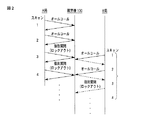
図2は、図1の状況下でロックアウト機能が作用した状態を示すシーケンス図である。A局からのオールコールを受けた航空機は、自機の高度、識別子などを含む応答信号を返す。次に、A局がこの航空機に個別質問(ロックアウト付き)を送出すると、B局からのオールコール質問に対する応答もロックアウトされる。従ってB局はオールコールに対する応答を受けることができず、目標を補足できなくなってしまう。 FIG. 2 is a sequence diagram showing a state in which the lockout function is activated under the situation of FIG. The aircraft that has received an all call from station A returns a response signal including its altitude, identifier, and the like. Next, when station A sends an individual question (with lockout) to this aircraft, the response to the all-call question from station B is also locked out. Therefore, the B station cannot receive a response to the all call and cannot supplement the target.
図3は、ロックアウト覆域制限機能を説明するための覆域地図の例を示す図である。図3の斜線部において覆域が重複している。ロックアウト覆域制限機能とは、このダブルカバーレッジとなる範囲を約5NM(Nautical Mile)相当の緯度経度セルで設定し、この範囲にてロックアウトの有無を制御して他局での捕捉を可能にする機能である。この機能のもとではA局、B局の互いのモードS質問信号においてロックアウト機能を制御し、これによりダブルカバーレッジ領域での目標補足を可能とする。 FIG. 3 is a diagram illustrating an example of a coverage map for explaining the lockout coverage restriction function. In the shaded area in FIG. 3, the covered areas overlap. With the lockout coverage limit function, this double-coverage range is set with a latitude / longitude cell equivalent to about 5 NM (Nautical Mile), and lockout is controlled within this range to capture at other stations. It is a function that makes it possible. Under this function, the lockout function is controlled in the mode S question signal of the A station and the B station, thereby enabling target supplementation in the double coverage area.
図4は、ロックアウト覆域制限領域の詳細を示す図である。既存の技術では、ロックアウト覆域制限領域は複数のセル単位に分割される。各セルは、覆域の重複する領域のあるセンサ局で共通に設定される原点(grid origin)の位置を基準として、緯度のインデックスと経度のインデックスとの配列とする。各セルの横幅(経度grid幅)は0.1253度であり、縦幅(緯度grid幅)は0.0833度である。各セルには(1,1)や(−2,−1)というようにインデックスが付与される。ロックアウト覆域制限機能は、レンジアジマスと高度で検出された航空機の位置を緯度経度に変換し、該当するセルを緯度経度で検索してロックアウト覆域制限のセルであるか否かを判断する。 FIG. 4 is a diagram showing details of the lockout coverage restricted area. In the existing technology, the lockout coverage limited area is divided into a plurality of cells. Each cell is an array of latitude indices and longitude indices with reference to the position of the origin that is commonly set in the sensor stations having overlapping areas. The horizontal width (longitude grid width) of each cell is 0.1253 degrees, and the vertical width (latitude grid width) is 0.0833 degrees. Each cell is assigned an index such as (1, 1) or (-2, -1). The lockout coverage restriction function converts the position of the aircraft detected at range azimuth and altitude into latitude and longitude, and searches for the corresponding cell by latitude and longitude to determine whether it is a lockout coverage restriction cell or not. To do.
図5は、SLO機能につき説明するための図である。図中矢印に沿って航空機が移動しているとき、SLO機能はA局の覆域の境界(図中点線)付近に位置し、B局の覆域内でA局の覆域に移動する航空機に有効となる。その後、星印で示す領域、すなわちSLO領域内であるが重複はしていない領域に航空機が移動したとする。このとき、既にロールコールに移行した状態から何らかの理由でコーストしオールコールに戻ったとすれば、SLOのもとで応答確率が低くなっているので、A局は航空機からの応答を受けづらくなり、検出率が低下する。 FIG. 5 is a diagram for explaining the SLO function. When the aircraft is moving along the arrows in the figure, the SLO function is located near the boundary of the coverage area of station A (dotted line in the figure), and the aircraft moves to the coverage area of station A within the coverage area of station B. It becomes effective. Thereafter, it is assumed that the aircraft has moved to an area indicated by an asterisk, that is, an area within the SLO area but not overlapping. At this time, if it is coasted for some reason from the state already shifted to the roll call and returned to the all call, the response probability is low under the SLO, so the station A becomes difficult to receive the response from the aircraft, Detection rate decreases.
図6は、図5の状況下でSLO機能が作用した状態を示す図である。航空機はB局の覆域からA局の覆域の境界に移動するとき、B局からロックアウト指示つきのロールコール質問を受け、B局からロックアウトされた状態となる。この状態から同じIIコードのA局からSLOのオールコールを受けたとしても、応答確率が低下しているので、A局は航空機からの応答信号を低い確率でしか受け取ることができない。 FIG. 6 is a diagram showing a state in which the SLO function is activated under the situation of FIG. When the aircraft moves from the coverage area of station B to the boundary of the coverage area of station A, it receives a roll call question with a lockout instruction from station B and is locked out of station B. Even if an SLO all-call is received from the A station of the same II code from this state, the response probability is lowered, so that the A station can receive the response signal from the aircraft with a low probability.
図7は、この実施形態における作用を説明するための模式図である。A局のセンサから見て、自局(A局)の覆域とB局の覆域とが重なる領域は、1スイープごとに変化する。つまり、図中の両矢印で示すように重なりの中央付近では重なり合う距離は長いが、両端に近づくにつれ重なり合いの距離は短くなる。つまりスイープ方向で見れば、重なりがある距離と重なりが無い距離との割合を比べると、重なりの無い距離が長いスイープでもPR値は小さくなるので検出率が悪くなる。
これに対しこの実施形態では、スイープ方向に応じてPR値を変化させ、重なりの無い距離が長いスイープではPR値を高くして応答率を高めるようにする。以下に詳しく説明する。
FIG. 7 is a schematic diagram for explaining the operation in this embodiment. The area where the coverage area of the own station (A station) overlaps with the coverage area of the B station, as viewed from the sensor of the A station, changes for each sweep. That is, as shown by the double arrows in the figure, the overlapping distance is long near the center of the overlapping, but the overlapping distance becomes shorter as it approaches both ends. That is, when viewed in the sweep direction, comparing the ratio between the distance with overlap and the distance without overlap, the PR value becomes small even with a sweep with a long distance without overlap, and the detection rate becomes worse.
On the other hand, in this embodiment, the PR value is changed according to the sweep direction, and in the sweep where the distance without overlap is long, the PR value is increased to increase the response rate. This will be described in detail below.
図8は、SLOのPR値のパターンの一例を示す図である。既存の技術では(a)に示すように、センサ覆域の重複する距離範囲が広いスイープ期間でも、距離範囲が狭いスイープ期間でも、PR値は一定である。よって重複する距離範囲が狭くなるにつれ航空機からの応答を得ることが難しくなり、航空管制に支障をきたす。 FIG. 8 is a diagram illustrating an example of a PR value pattern of SLO. In the existing technology, as shown in (a), the PR value is constant both in the sweep period where the distance range where the sensor coverage overlaps is wide and in the sweep period where the distance range is narrow. Therefore, as the overlapping distance range becomes narrow, it becomes difficult to obtain a response from the aircraft, which hinders air traffic control.
そこでこの実施形態では、図8(b)に示すように、センサ覆域の重複する距離範囲が広いスイープ期間に比べ、距離範囲が狭いスイープ期間におけるPR値を高くするようにする。ただし既存の技術のように、緯度経度で分割されたセル単位での覆域判定によってはこれを実現することができない。そこでこの実施形態では、スイープに伴うレーダ磁方位とロックアウト覆域の距離範囲とを予め対応付けることにより、磁方位をパラメータとしてPR値を可変するようにする。 Therefore, in this embodiment, as shown in FIG. 8B, the PR value in the sweep period in which the distance range is narrow is made higher than in the sweep period in which the distance range where the sensor coverage overlaps is wide. However, this cannot be realized by the coverage determination in cell units divided by latitude and longitude as in the existing technology. Therefore, in this embodiment, the PR value is varied using the magnetic direction as a parameter by previously associating the radar magnetic direction accompanying the sweep with the distance range of the lockout coverage.
図9は、この発明に係わるモードS二次監視レーダシステムにおける処理手順を示すフローチャートである。ステップS1において、磁方位単位でロックアウト覆域、すなわちセンサ覆域の重複する領域の距離範囲を予め設定する。このステップでは、例えば全周360度を214で分割した磁方位ごとに、約0.004NMの距離精度で覆域範囲内を緯度経度に変換する。そして、緯度経度で示されるロックアウト覆域制限領域のセルのインデックスを求め、ロックアウトの有無を設定する。磁方位ごとの距離範囲はデータベース化され、地上装置に予め記憶される。
地上局において1スイープに相当するアジマスが変化すると(ステップS2)、そのアジマスに相当する重複領域の割合に応じてPR値を可変し、その値を記したロックアウトオーバライドのオールコール質問を送信する(ステップS3)。
FIG. 9 is a flowchart showing a processing procedure in the mode S secondary monitoring radar system according to the present invention. In step S1, the distance range of the lockout coverage, that is, the overlapping region of the sensor coverage, is set in advance in units of magnetic orientation. In this step, for example, the coverage area is converted into latitude and longitude with a distance accuracy of about 0.004 NM for each magnetic orientation obtained by dividing 360 degrees around 2 14 . Then, the index of the cell in the lockout coverage restricted area indicated by the latitude and longitude is obtained, and the presence or absence of lockout is set. The distance range for each magnetic orientation is made into a database and stored in advance in the ground device.
When the azimuth corresponding to one sweep changes in the ground station (step S2), the PR value is varied in accordance with the ratio of the overlapping area corresponding to the azimuth, and the lockout override all-call question describing the value is transmitted. (Step S3).
このオールコール質問に対する応答信号があれば、この応答した航空機の位置を磁方位で検出し(ステップS4)、ここで得た磁方位と距離とから、航空機の位置がロックアウト覆域制限領域内であるか否かを判定する(ステップS5)。そうして、ロックアウト覆域制限領域でなければロックアウト指示を出し(ステップS7)、ロックアウト覆域制限領域であればロックアウト指示を出さずに次のスイープに移行する(ステップS8)。 If there is a response signal to this all-call question, the position of the aircraft that responded is detected by the magnetic direction (step S4), and the position of the aircraft is within the lockout coverage restricted area from the magnetic direction and distance obtained here. It is determined whether or not (step S5). If it is not the lockout coverage restricted area, a lockout instruction is issued (step S7), and if it is the lockout coverage restricted area, the process proceeds to the next sweep without issuing the lockout instruction (step S8).
以上述べたようにこの実施形態では、地上局において磁方位ごとにロックアウト覆域の距離範囲を予めデータベース化する。これにより、磁方位単位で行う1回の送受信(1スイープ)ごとに、地上局においてロックアウト覆域の距離範囲を認識することが可能になる。これをもとに、1スイープ毎にSLOのPR値を容易に可変することが可能になり、重複覆域でない距離の割合が大きい場合には、PR値を大きくしてロックアウトオーバライドのオールコール質問を送信するようにしている。 As described above, in this embodiment, the distance range of the lockout coverage is previously stored in a database for each magnetic orientation in the ground station. This makes it possible to recognize the distance range of the lockout coverage at the ground station for each transmission / reception (one sweep) performed in units of magnetic orientation. Based on this, it becomes possible to easily change the PR value of SLO for each sweep, and when the ratio of the distance that is not the overlap coverage is large, the PR value is increased and the lockout override all-call is performed. I send questions.
このようにすることで、オールコール質問に対する応答返送率を確保することができ、目標検出率を低下させずに済む。例えば、重複覆域外でSLO領域内に位置する航空機が、既にロールコールに移行した状態からオールコール状態に戻ったとしても、応答を返す確率を一定レベルに保てるので、検出率を低下させないことができる。これらのことから、ロックアウト機能により応答信号の受信効率が低下することを防止した質問信号送信方法を提供することが可能となる。 By doing so, it is possible to secure a response return rate for all-call questions, and it is not necessary to reduce the target detection rate. For example, even if an aircraft located in the SLO area outside the overlapping coverage area has returned to the all-call state from the state that has already shifted to the roll call, the probability of returning a response can be maintained at a constant level, so the detection rate may not be lowered. it can. For these reasons, it is possible to provide a query signal transmission method that prevents the response signal reception efficiency from being lowered by the lockout function.
なお、この発明は上記実施の形態に限定されるものではなく、実施段階ではその要旨を逸脱しない範囲で構成要素を変形して具体化できる。また、上記実施形態に開示されている複数の構成要素の適宜な組み合わせにより、種々の発明を形成できる。例えば、実施形態に示される全構成要素から幾つかの構成要素を削除してもよい。 In addition, this invention is not limited to the said embodiment, In an implementation stage, a component can be deform | transformed and embodied in the range which does not deviate from the summary. In addition, various inventions can be formed by appropriately combining a plurality of components disclosed in the embodiment. For example, some components may be deleted from all the components shown in the embodiment.
100…航空機、A,B…地上局 100 ... Aircraft, A, B ... Ground station
Claims (2)
前記質問信号を送出するスイープごとの前記重複領域の距離範囲を、磁方位単位ごとに予め対応付けたデータベースを作成することと、
前記データベースにおける磁方位に対応付けられた距離範囲の長さに対応して、ロックアウトオーバライドの確率指示に係わるPR値を可変することと、
前記PR値を含むロックアウトオーバライドのオールコール質問を送信することとを含むことを特徴とする質問信号送信方法。 In a mode S secondary monitoring radar system having a lockout function for suppressing response from an aircraft to an individual question and a lockout coverage limiting function for suppressing the lockout function in an overlapping region where a plurality of sensor coverages overlap A question signal transmission method,
Creating a database in which the distance range of the overlapping area for each sweep that sends out the interrogation signal is associated in advance for each magnetic orientation unit;
Varying the PR value associated with the lockout override probability indication corresponding to the length of the distance range associated with the magnetic orientation in the database;
Transmitting a lockout override all-call question including the PR value.
前記位置がロックアウト覆域制限領域にあればロックアウト指示を出さずに次のスイープに移行することとを含むことを特徴とする請求項1に記載の質問信号送信方法。 And determining whether the position of the aircraft that returned the response to the all-call question is within the lockout coverage restricted area;
The method of claim 1, further comprising: transitioning to the next sweep without issuing a lockout instruction if the position is in the lockout coverage limited area.
Priority Applications (1)
| Application Number | Priority Date | Filing Date | Title |
|---|---|---|---|
| JP2009056929A JP5127748B2 (en) | 2009-03-10 | 2009-03-10 | Question signal transmission method |
Applications Claiming Priority (1)
| Application Number | Priority Date | Filing Date | Title |
|---|---|---|---|
| JP2009056929A JP5127748B2 (en) | 2009-03-10 | 2009-03-10 | Question signal transmission method |
Publications (2)
| Publication Number | Publication Date |
|---|---|
| JP2010211517A JP2010211517A (en) | 2010-09-24 |
| JP5127748B2 true JP5127748B2 (en) | 2013-01-23 |
Family
ID=42971601
Family Applications (1)
| Application Number | Title | Priority Date | Filing Date |
|---|---|---|---|
| JP2009056929A Expired - Fee Related JP5127748B2 (en) | 2009-03-10 | 2009-03-10 | Question signal transmission method |
Country Status (1)
| Country | Link |
|---|---|
| JP (1) | JP5127748B2 (en) |
Families Citing this family (2)
| Publication number | Priority date | Publication date | Assignee | Title |
|---|---|---|---|---|
| WO2013121694A1 (en) * | 2012-02-15 | 2013-08-22 | 日本電気株式会社 | Movable body position measuring system, central processing unit, and question control method used therein |
| JP2014199214A (en) * | 2013-03-29 | 2014-10-23 | 株式会社東芝 | Secondary surveillance radar device, and radar system |
Family Cites Families (7)
| Publication number | Priority date | Publication date | Assignee | Title |
|---|---|---|---|---|
| JPH04332892A (en) * | 1991-05-09 | 1992-11-19 | Toshiba Corp | Secondary surveillance radar |
| JPH09159755A (en) * | 1995-12-06 | 1997-06-20 | Toyo Commun Equip Co Ltd | Secondary radar system |
| JP3042469B2 (en) * | 1997-10-30 | 2000-05-15 | 日本電気株式会社 | Aircraft monitoring system |
| JP4723961B2 (en) * | 2004-09-14 | 2011-07-13 | 株式会社東芝 | Secondary monitoring radar device and its question transmission method |
| JP4664841B2 (en) * | 2006-03-16 | 2011-04-06 | 株式会社東芝 | Secondary surveillance radar |
| JP4377894B2 (en) * | 2006-06-30 | 2009-12-02 | 株式会社東芝 | Mode S secondary monitoring radar |
| JP4498332B2 (en) * | 2006-09-14 | 2010-07-07 | 株式会社東芝 | Mode S secondary monitoring radar device |
-
2009
- 2009-03-10 JP JP2009056929A patent/JP5127748B2/en not_active Expired - Fee Related
Also Published As
| Publication number | Publication date |
|---|---|
| JP2010211517A (en) | 2010-09-24 |
Similar Documents
| Publication | Publication Date | Title |
|---|---|---|
| US9310477B1 (en) | Systems and methods for monitoring airborne objects | |
| EP2270535B1 (en) | Indoor/outdoor decision apparatus and indoor/outdoor decision method | |
| ES2525034T3 (en) | S-mode anti-reflection algorithm to eliminate false tracks due to reflected responses in ground-based radar systems | |
| Papi et al. | Radiolocation and tracking of automatic identification system signals for maritime situational awareness | |
| US11687072B2 (en) | Automatic UAV landing pad | |
| US9063208B2 (en) | Assisted global navigation satellite system for indoor positioning | |
| US20100045506A1 (en) | Method And System For Locating Signal Jammers | |
| BR102016002937A2 (en) | intrusion detection method, method for detecting an intrusive object and navigation system | |
| WO2019126950A1 (en) | Positioning method, cloud server, terminal, system, electronic device and computer program product | |
| CN109085573A (en) | Vehicle-mounted unmanned aerial vehicle managing and control system and method | |
| CN106373433A (en) | Method and device for setting flight path of aircraft | |
| EP3761062A1 (en) | Position determination of mobile objects | |
| Zhao et al. | An RSSI gradient-based AP localization algorithm | |
| Meng et al. | Required navigation performance for connected and autonomous vehicles: where are we now and where are we going? | |
| CN105445733A (en) | Method of carrying out fusion processing on SSR navigation management and IFF multi-mode cooperation track | |
| KR20160113841A (en) | Method for position tracking service using drone, system and computer-readable medium recording the method | |
| CN109407049A (en) | A kind of object localization method and system of full passive detection | |
| US7809496B2 (en) | Error control in a traffic management system | |
| US8340936B2 (en) | Methods and systems for locating targets | |
| Mazan et al. | A Study of Devising Neural Network Based Indoor Localization Using Beacons: First Results. | |
| Kubelka et al. | Radio propagation models for differential GNSS based on dense point clouds | |
| EP3867892A1 (en) | Traffic management system and an unmanned aerial vehicle compatible with such a system | |
| JP5127748B2 (en) | Question signal transmission method | |
| US20210341950A1 (en) | Identification method for detecting locations of unmanned aerial vehicles and unmanned aerial vehicle detection apparatus for performing the same | |
| KR102679626B1 (en) | Object tracking method and system |
Legal Events
| Date | Code | Title | Description |
|---|---|---|---|
| A621 | Written request for application examination |
Free format text: JAPANESE INTERMEDIATE CODE: A621 Effective date: 20110427 |
|
| A977 | Report on retrieval |
Free format text: JAPANESE INTERMEDIATE CODE: A971007 Effective date: 20120921 |
|
| TRDD | Decision of grant or rejection written | ||
| A01 | Written decision to grant a patent or to grant a registration (utility model) |
Free format text: JAPANESE INTERMEDIATE CODE: A01 Effective date: 20121002 |
|
| A01 | Written decision to grant a patent or to grant a registration (utility model) |
Free format text: JAPANESE INTERMEDIATE CODE: A01 |
|
| A61 | First payment of annual fees (during grant procedure) |
Free format text: JAPANESE INTERMEDIATE CODE: A61 Effective date: 20121030 |
|
| FPAY | Renewal fee payment (event date is renewal date of database) |
Free format text: PAYMENT UNTIL: 20151109 Year of fee payment: 3 |
|
| LAPS | Cancellation because of no payment of annual fees |