JP5358024B2 - Apparatus for determining potential future concerns to be introduced into a user profile of a communication device - Google Patents
Apparatus for determining potential future concerns to be introduced into a user profile of a communication device Download PDFInfo
- Publication number
- JP5358024B2 JP5358024B2 JP2012533556A JP2012533556A JP5358024B2 JP 5358024 B2 JP5358024 B2 JP 5358024B2 JP 2012533556 A JP2012533556 A JP 2012533556A JP 2012533556 A JP2012533556 A JP 2012533556A JP 5358024 B2 JP5358024 B2 JP 5358024B2
- Authority
- JP
- Japan
- Prior art keywords
- user
- interest
- interests
- graph
- profile
- Prior art date
- Legal status (The legal status is an assumption and is not a legal conclusion. Google has not performed a legal analysis and makes no representation as to the accuracy of the status listed.)
- Expired - Fee Related
Links
Images
Classifications
-
- G—PHYSICS
- G06—COMPUTING OR CALCULATING; COUNTING
- G06F—ELECTRIC DIGITAL DATA PROCESSING
- G06F17/00—Digital computing or data processing equipment or methods, specially adapted for specific functions
-
- G—PHYSICS
- G06—COMPUTING OR CALCULATING; COUNTING
- G06F—ELECTRIC DIGITAL DATA PROCESSING
- G06F15/00—Digital computers in general; Data processing equipment in general
- G06F15/16—Combinations of two or more digital computers each having at least an arithmetic unit, a program unit and a register, e.g. for a simultaneous processing of several programs
-
- G—PHYSICS
- G06—COMPUTING OR CALCULATING; COUNTING
- G06F—ELECTRIC DIGITAL DATA PROCESSING
- G06F16/00—Information retrieval; Database structures therefor; File system structures therefor
- G06F16/30—Information retrieval; Database structures therefor; File system structures therefor of unstructured textual data
- G06F16/33—Querying
- G06F16/335—Filtering based on additional data, e.g. user or group profiles
- G06F16/337—Profile generation, learning or modification
-
- G—PHYSICS
- G06—COMPUTING OR CALCULATING; COUNTING
- G06Q—INFORMATION AND COMMUNICATION TECHNOLOGY [ICT] SPECIALLY ADAPTED FOR ADMINISTRATIVE, COMMERCIAL, FINANCIAL, MANAGERIAL OR SUPERVISORY PURPOSES; SYSTEMS OR METHODS SPECIALLY ADAPTED FOR ADMINISTRATIVE, COMMERCIAL, FINANCIAL, MANAGERIAL OR SUPERVISORY PURPOSES, NOT OTHERWISE PROVIDED FOR
- G06Q30/00—Commerce
- G06Q30/02—Marketing; Price estimation or determination; Fundraising
-
- H—ELECTRICITY
- H04—ELECTRIC COMMUNICATION TECHNIQUE
- H04L—TRANSMISSION OF DIGITAL INFORMATION, e.g. TELEGRAPHIC COMMUNICATION
- H04L67/00—Network arrangements or protocols for supporting network services or applications
- H04L67/2866—Architectures; Arrangements
- H04L67/30—Profiles
- H04L67/303—Terminal profiles
-
- H—ELECTRICITY
- H04—ELECTRIC COMMUNICATION TECHNIQUE
- H04L—TRANSMISSION OF DIGITAL INFORMATION, e.g. TELEGRAPHIC COMMUNICATION
- H04L67/00—Network arrangements or protocols for supporting network services or applications
- H04L67/2866—Architectures; Arrangements
- H04L67/30—Profiles
- H04L67/306—User profiles
-
- H—ELECTRICITY
- H04—ELECTRIC COMMUNICATION TECHNIQUE
- H04N—PICTORIAL COMMUNICATION, e.g. TELEVISION
- H04N21/00—Selective content distribution, e.g. interactive television or video on demand [VOD]
- H04N21/40—Client devices specifically adapted for the reception of or interaction with content, e.g. set-top-box [STB]; Operations thereof
- H04N21/45—Management operations performed by the client for facilitating the reception of or the interaction with the content or administrating data related to the end-user or to the client device itself, e.g. learning user preferences for recommending movies, resolving scheduling conflicts
- H04N21/466—Learning process for intelligent management, e.g. learning user preferences for recommending movies
-
- H—ELECTRICITY
- H04—ELECTRIC COMMUNICATION TECHNIQUE
- H04L—TRANSMISSION OF DIGITAL INFORMATION, e.g. TELEGRAPHIC COMMUNICATION
- H04L67/00—Network arrangements or protocols for supporting network services or applications
- H04L67/2866—Architectures; Arrangements
- H04L67/30—Profiles
-
- H—ELECTRICITY
- H04—ELECTRIC COMMUNICATION TECHNIQUE
- H04L—TRANSMISSION OF DIGITAL INFORMATION, e.g. TELEGRAPHIC COMMUNICATION
- H04L67/00—Network arrangements or protocols for supporting network services or applications
- H04L67/50—Network services
- H04L67/535—Tracking the activity of the user
-
- H—ELECTRICITY
- H04—ELECTRIC COMMUNICATION TECHNIQUE
- H04N—PICTORIAL COMMUNICATION, e.g. TELEVISION
- H04N21/00—Selective content distribution, e.g. interactive television or video on demand [VOD]
- H04N21/40—Client devices specifically adapted for the reception of or interaction with content, e.g. set-top-box [STB]; Operations thereof
- H04N21/43—Processing of content or additional data, e.g. demultiplexing additional data from a digital video stream; Elementary client operations, e.g. monitoring of home network or synchronising decoder's clock; Client middleware
- H04N21/442—Monitoring of processes or resources, e.g. detecting the failure of a recording device, monitoring the downstream bandwidth, the number of times a movie has been viewed, the storage space available from the internal hard disk
- H04N21/44213—Monitoring of end-user related data
Landscapes
- Engineering & Computer Science (AREA)
- Theoretical Computer Science (AREA)
- Business, Economics & Management (AREA)
- Physics & Mathematics (AREA)
- General Physics & Mathematics (AREA)
- Accounting & Taxation (AREA)
- Development Economics (AREA)
- Finance (AREA)
- Strategic Management (AREA)
- Databases & Information Systems (AREA)
- General Engineering & Computer Science (AREA)
- Signal Processing (AREA)
- Marketing (AREA)
- Economics (AREA)
- Game Theory and Decision Science (AREA)
- General Business, Economics & Management (AREA)
- Entrepreneurship & Innovation (AREA)
- Data Mining & Analysis (AREA)
- Computer Networks & Wireless Communication (AREA)
- Software Systems (AREA)
- Computational Linguistics (AREA)
- Computer Hardware Design (AREA)
- Multimedia (AREA)
- Mathematical Physics (AREA)
- Information Retrieval, Db Structures And Fs Structures Therefor (AREA)
Description
本発明は、少なくとも1つの通信ネットワークに接続できる通信装置のユーザに対するコンテンツ・アイテムの推薦に関し、より具体的には、ユーザ・コンテンツ推奨の個別化に関する。 The present invention relates to content item recommendation for users of communication devices that can connect to at least one communication network, and more particularly to personalization of user content recommendations.
本明細書において「ユーザ・プロファイル」によって意味するのは、1つまたは複数の対象(たとえば、テレビ番組、ラジオ番組、ニュース、音楽、広告、娯楽、購入する商品、またはサービスの使用など)に関連する社会人口統計学的なデータおよび関心事(または嗜好あるいは習慣)など、ユーザの認識情報を記述した1組のデータ(またはメタデータ)である。ユーザの関心事を記述する(メタ)データは、単語または表現でもよく、または、多くの場合、コンテンツ・アイテムに関連する記述にも見られる概念でもよい。 As used herein, by “user profile” is meant one or more subjects (eg, use of television programs, radio programs, news, music, advertisements, entertainment, purchased goods, or services, etc.) A set of data (or metadata) describing the user's recognition information, such as socio-demographic data and interests (or preferences or habits). The (meta) data describing the user's interests may be a word or expression, or in many cases a concept found in the description associated with the content item.
さらに、本明細書において「ユーザ・コンテンツ推薦」が意味するのは、ユーザのプロファイルに含まれる関心事(または嗜好もしくは習慣)に基づいて、ユーザに提案されるコンテンツ・アイテムの推薦(または提案)である。 Further, in this specification, “user content recommendation” means recommendation (or proposal) of a content item proposed to the user based on the interest (or preference or habit) included in the user profile. It is.
さらに、本明細書において「概念」が意味するのは、1つもしくは複数の単語によって、または1つもしくは複数の分類学もしくは存在論から定義されたものであり、そのため、意味内容に関連する。これは、通常、少なくとも1つのプロパティの組によって記述される(つまり種類および値を持つ記述子の組)。 Further, in this specification, the term “concept” is defined by one or more words or from one or more taxonomies or ontologies, and thus relates to the semantic content. This is usually described by a set of at least one property (ie a set of descriptors with kind and value).
ユーザ・コンテンツ推薦の個別化の領域において主な挑戦の1つは、それぞれのニーズに適したコンテンツ・アイテムをユーザに提供するために、ユーザの関心事をできるだけ適切に理解することである。 One of the main challenges in the area of personalization of user content recommendation is to understand the user's interests as well as possible in order to provide the user with content items that are suitable for their needs.
当業者には自明なように、コンテンツ推薦の通常の技術(コンテンツに基づくフィルタリング・アルゴリズムなど)では、ユーザによって消費されたコンテンツの記述に現れなかった概念をユーザ・プロファイルに導入することはできない。実際は、コンテンツ・アイテムがユーザによって消費されると、このコンテンツ・アイテムを記述するメタデータを(様々なヒューリスティックに従って)ユーザ・プロファイルに追加でき、次に推薦が、ユーザ・プロファイルとコンテンツ・メタデータとの間の類似点に基づいて生成される。そのため、ユーザ・プロファイルに対応するメタデータがないコンテンツ・アイテムは、ユーザに推薦されない。 As will be apparent to those skilled in the art, conventional techniques for content recommendation (such as content-based filtering algorithms) cannot introduce concepts into the user profile that did not appear in the description of the content consumed by the user. In fact, when a content item is consumed by a user, metadata describing this content item can be added to the user profile (according to various heuristics), and then the recommendation is made to the user profile and content metadata. Is generated based on the similarity between. Therefore, content items that do not have metadata corresponding to the user profile are not recommended to the user.
これらの方法は、推薦を過剰に特定化する傾向があり、推薦に十分な多様性/発見を追加することを可能にしない。より具体的には、これらの方法はユーザの関心事を予想することを可能にしない。つまり、ユーザは、その概念に関連する推薦をさらに得るには、概念(または等価物)によって記述された何かを消費した経験がある必要がある。たとえば、既存のシステムでは、ユーザがヴィクトル・ユーゴーの1冊の本が好きだった場合、推薦システムは、ユーザにヴィクトル・ユーゴーの他の本を推薦する傾向があるが、このユーザは(他の多くのユーザも)、ユーザ(複数可)の好み(複数可)は当然、時とともに変わるため、ならびにユーザ(複数可)が消費したアイテムの影響のため、および一時的にユーザ(複数可)が持っていた他の関心事の影響ために、他の作家を発見することに興味があるかもしれない。 These methods tend to over-specify recommendations and do not allow adding enough diversity / discovery to recommendations. More specifically, these methods do not make it possible to anticipate user interests. That is, the user needs to have consumed something described by the concept (or equivalent) in order to get further recommendations related to that concept. For example, in an existing system, if a user likes a book from Victor Hugo, the recommendation system tends to recommend other books from Victor Hugo, Many users), of course, the preference (s) of the user (s) will of course change over time and due to the effects of the items consumed by the user (s) and temporarily You may be interested in discovering other writers because of the influence of other interests you had.
最近、ユーザ・コンテンツ推薦を改善するために、他の方法が提案されている。 Recently, other methods have been proposed to improve user content recommendation.
第1の方法は、いわゆる「協調推薦」に関するものである。典型的な協調推薦は、ユーザの嗜好または過去の振る舞いの類似性に基づいて、ユーザ間の隠れたリンクを見つけることで成り立つコア機構を含む。アイテムは、ユーザが他のユーザと共有する関心事に関して、または同様のプロファイルを持つ他のユーザから得られたアイテムに関する意見、比較、および評価に従って、特定のユーザに推薦される。 The first method relates to so-called “cooperative recommendation”. Typical collaborative recommendations include a core mechanism that consists of finding hidden links between users based on user preferences or similarity of past behavior. Items are recommended to a particular user according to opinions, comparisons, and ratings regarding interests that the user shares with other users or items obtained from other users with similar profiles.
このため、この第1の方法では、ユーザとアイテムとの間の比較は全体的に行われ、一時的な側面は考慮されないため、2つのアイテム間に強い依存関係がある場合、この方法はあまり適切ではない場合がある。さらに、協調推薦により、推薦において幾分の多様性をもたらすことが可能な場合でも、次の(または将来的な)ユーザの関心事を予想する問題に直接的に取り組むことができない。さらに、協調推薦は、効果を発揮するためにかなりの数のユーザ評価を必要とする(これは、「コールドスタート問題」と呼ばれる)。 For this reason, in this first method, the comparison between the user and the item is made overall, and the temporary aspect is not taken into account, so this method is not very useful if there is a strong dependency between the two items. It may not be appropriate. Furthermore, even though collaborative recommendation can provide some diversity in recommendations, it cannot directly address the problem of predicting the next (or future) user interest. In addition, collaborative recommendation requires a significant number of user ratings in order to be effective (this is called the “cold start problem”).
第2の方法は、いわゆる「頻出パターン抽出アルゴリズム」に関するものである。これらのアルゴリズムは、Goethals,B.、「Survey on frequent pattern mining」、Technical report、Helsinki Institute for Information Technology、2003年に記述されているように、1組のトランザクションにおけるアイテムの出現の間の依存関係を見つけることを可能にする。頻出パターン抽出アルゴリズムの目的は、「アイテムXの組がトランザクションに現れる場合、アイテムYの他の組も、そのトランザクションに現れる」という意味である「X=>Y」という形の1組の頻出および確信の相関ルールを見つけることである。相関ルールは、XおよびYがともに現れるトランザクションの数と、トランザクションの総数との間の比率が、頻出しきい値を満たす場合に、頻出と考えられる。同様に、相関ルールは、Xを含むすべてのトランザクションの中で、XおよびYがともに現れるトランザクションの割合が確信しきい値より大きい場合に確信である。 The second method relates to a so-called “frequent pattern extraction algorithm”. These algorithms are described in Goethals, B .; , “Survey on frequent pattern mining”, Technical report, Helsinki Institute for Information Technology, as described in 2003, allows to find dependencies between the occurrences of items in a set of transactions. The purpose of the frequent pattern extraction algorithm is a set of frequent occurrences of the form “X => Y”, which means “If a set of item X appears in a transaction, another set of item Y also appears in that transaction” Finding association rules of confidence. An association rule is considered frequent if the ratio between the number of transactions in which both X and Y appear and the total number of transactions meets the frequent threshold. Similarly, the association rule is certain if the proportion of transactions in which both X and Y appear among all transactions involving X is greater than the certainty threshold.
頻出パターン抽出アルゴリズムがアイテム間の関係を見つけることを可能にする場合でも、それらはトランザクションにおけるアイテムの存在だけに関係するものであり、嗜好(またはアイテム)が出現する時期は考慮しない。トランザクションにおけるアイテムの出現順序を考慮する、一時頻出パターン抽出(frequent temporal pattern mining)のための方法が存在する(たとえば、Sivaselvan,B.ら、「An efficient frequent temporal pattern mining algorithm」、Information Technology Journal、vol.5、pp.1043〜1047、2006年)。しかし、一時性は、頻出する2組のアイテムを分けるアイテムの数の点から考慮され、アイテム間に経過した時間の点からは考慮されない。 Even when frequent pattern extraction algorithms allow to find relationships between items, they are only concerned with the presence of items in the transaction and do not consider when preferences (or items) appear. There are methods for frequent temporal pattern mining that consider the order of appearance of items in a transaction (eg, Sivaselvan, B. et al., “An efficient frequent patterning mining algorithm”, Information vol.5, pp.1043-1047, 2006). However, temporality is considered in terms of the number of items that separate two sets of items that appear frequently, and is not considered in terms of the time that has passed between the items.
第3の方法は、いわゆる「一時確率モデル(temporal probabilistic model)」を関するものである。一部の確率モデルが、ユーザの関心事および関心事の移り変わりの取り込みおよび予測のために提案されている。これらについては、Suzuki,T.ら、「Learning to estimate user interest utilizing the Variational Bayes’’ estimator」、Intelligent Systems Design and Applicationsの第5回国際会議の議事録、Wroclaw、Poland、94〜99、2005年の記事、およびWang,S.ら、「Mining Interest Navigation Patterns with Hidden Markov Model」、Lecture Notes in Computer Science Volume 4027/2006、pp.470〜478、Springer、2000年に特に述べられている。 The third method relates to a so-called “temporal probabilistic model”. Some probabilistic models have been proposed for capturing and predicting user interests and changes in interests. For these, Suzuki, T .; “Learning to Estimate User Interest Uritizing the Variational Bayes' Estimator,” Intelligent Systems Design and Applications, Proceedings of the 5th International Conference, 1999, Wolc 94, Wroclaw. Et al., “Minning Interest Navigation Patterns with Hidden Markov Model,” “Lecture Notes in Computer Science Volume 4027/2006,” 470-478, Springer, 2000.
これらの最後のモデルは、単一ユーザの関心事の移り変わりを取り込むために考案されたものであり、1人のユーザの取り込まれた関心事の移り変わりパターンを同様のユーザに適用するために考案されたものではない。 These last models were devised to capture the transition of interests of a single user and were devised to apply the captured patterns of interest transition of one user to similar users. Not a thing.
そのため、本発明の目的は、推薦システムにおけるユーザの受け入れおよび確信を改善し、ユーザの関心事を更新する前に事前の観察を必要とするコンテンツに基づく推薦システムの欠点を緩和するために、将来的なユーザの関心事を予想することである。 Therefore, it is an object of the present invention to improve the user acceptance and confidence in the recommendation system and to alleviate the shortcomings of content-based recommendation systems that require prior observation before updating the user's interests. Is to anticipate the interests of a typical user.
この目的のために、本発明は、少なくとも1人のネットワーク・オペレータのクライアント(複数可)であるユーザ(複数可)の潜在的な関心事(複数可)を決定することを目的とし、各ユーザは、少なくとも各自の関心事を定義するプロファイルに関連する装置を提供するものであって、
−含まれている新しい実際の関心事(複数可)を決定するために、少なくとも1人のユーザのプロファイルを分析し、新しい実際の関心事と見なされた第1の日に対応して、このユーザの決定された新しい実際の関心事を表す識別子をユーザのプロファイルに格納するために配置された追跡手段と、
−決定された新しい実際の関心事に先行する関心事の時系列の順序を決定するためにユーザの第1の日を分析し、ユーザのプロファイルに導入するために、前記のユーザの少なくとも1つの潜在的な将来の関心事を予測するために、この決定されたユーザの関心事の順序を少なくとも1人の他のユーザの関心事の少なくとも1つの他の順序と比較するために配置された推薦手段とを含む。
For this purpose, the present invention aims to determine the potential interest (s) of the user (s) who are the client (s) of at least one network operator, Provides at least a device associated with a profile that defines their interests,
-Analyzing the profile of at least one user to determine the new actual interest (s) included, corresponding to the first day considered as the new actual interest Tracking means arranged to store an identifier representing the user's determined new actual interest in the user's profile;
At least one of said users for analyzing the first day of the user to determine the time-series order of interest preceding the determined new actual interest and introducing it into the user's profile Recommendations arranged to compare this determined order of user interest with at least one other order of interest of at least one other user to predict potential future interests Means.
本発明に従った装置は、特に以下に述べるように、別々または組み合わせて考慮された追加的な特性を含むことができる。
−その推薦手段は、このユーザの少なくとも1つの潜在的な将来の関心事を予測するために、決定されたユーザの関心事の順序を、他のユーザの関心事から構築された関心事のグラフ内に決定された、関心事の少なくとも1つの他の順序と比較するために配置することができる。
〉その推薦手段は、ユーザの格納された実際の関心事から関心事グラフを構築し更新するために配置することができる。
−その推薦手段は、複数のユーザについて時間の経過に伴う関心事の変化をモデル化する関心事グラフの構築し更新するために配置することができる。
−変形においては、その推薦手段は、1人のユーザについて時間の経過に伴う関心事の変化をモデル化する補助的な関心事グラフを構築し更新して、関心事グラフを作成するために他のユーザのために構築された補助的な関心事グラフとともに、この補助的な関心事グラフを集約するために配置することができる。
−その推薦手段は、指示され重み付けされた関心事グラフG(V,W)を構築し更新するために配置することができ、ここで、Vは、ユーザの関心事をそれぞれ表す1組のノードであり、Wは、ユーザの関心事から他のユーザの関心事への移り変わりを表す1組の指示された端部(edge)である。
〉その推薦手段は、指示された端部のそれぞれに重みを割り当てるために配置することができ、各重みは、各ユーザと、第1および第2の連続する実際の関心事の出現の間の経過時間との対応を確立する表によって定義される。
−その推薦手段は、ユーザの新しい実際の関心事を決定したことを追跡手段によって通知されるたびに、関心事グラフを更新するために配置することができる。
−その推薦手段は、指示された端部に割り当てられた重みから少なくとも1つの統計的基準を決定し、選択された適用可能なコンテキストに適応された関心事を提案し、それらの提案された関心事からユーザのために少なくとも1つの潜在的な将来の関心事を予測するためにヒューリスティックを用いて決定された各統計的基準を使用するために配置することができる。
〉少なくとも1つの統計的基準は、2つの関心事の間の関連を表すことができる。
〉少なくとも1つの統計的基準は、2つの関心事の間の移り変わりの頻度を表すことができる。
−その追跡手段は、ユーザのプロファイルに含まれている関心事に関連するユーザのコンテンツ・アイテムの消費を決定し、関連するコンテンツ・アイテムのこの決定された消費が、選択されたしきい値より大きい場合に、この関心事は新しい実際の関心事であると見なすために配置することができる。
〉その追跡手段は、関心事の第1の日は、この関心事に関連するコンテンツ・アイテムの消費が、選択されたしきい値より大きいことが検出された日であると見なすために配置することができる。
−その推薦手段は、ユーザのプロファイルに潜在的な将来の関心事を導入するための好ましい日を決定するために配置することができる。
The device according to the present invention may include additional characteristics that are considered separately or in combination, particularly as described below.
The recommender means a graph of interests constructed from other user interests to determine the order of the determined user interests in order to predict at least one potential future interest of this user; Can be arranged for comparison with at least one other order of interest determined within.
The recommendation means can be arranged to build and update an interest graph from the user's stored actual interests.
The recommendation means can be arranged to build and update an interest graph that models changes in interest over time for multiple users.
-In a variant, the recommender can construct and update an auxiliary interest graph that models changes in interest over time for one user, and create other interest graphs. This auxiliary interest graph can be arranged to be aggregated with the auxiliary interest graph constructed for the user.
The recommendation means can be arranged to build and update the indicated and weighted interest graph G (V, W), where V is a set of nodes each representing the user's interest W is a set of indicated edges that represent the transition from one user's interest to another user's interest.
> The recommender can be arranged to assign a weight to each of the indicated edges, each weight being between each user and the first and second successive occurrences of actual interest Defined by a table that establishes a correspondence with elapsed time.
The recommendation means can be arranged to update the interest graph whenever the tracking means is notified that the user has determined a new actual interest.
The recommendation means determines at least one statistical criterion from the weights assigned to the indicated end, proposes interests adapted to the selected applicable context, and proposes those proposed interests; Can be arranged to use each statistical criterion determined using heuristics to predict at least one potential future concern for the user from the facts.
> At least one statistical criterion can represent an association between two concerns.
The at least one statistical criterion can represent the frequency of transition between two concerns.
The tracking means determines the consumption of the user's content item in relation to the interests contained in the user's profile, and this determined consumption of the related content item is less than the selected threshold If so, this concern can be arranged to be considered a new actual concern.
> The tracking means is arranged to consider the first day of interest as the day on which the consumption of content items related to this interest is detected to be greater than a selected threshold. be able to.
The recommendation means can be arranged to determine a preferred date for introducing potential future interests into the user's profile.
また、本発明は、少なくとも1つの通信ネットワークのためにネットワーク機器を提供し、複数のユーザのために潜在的な将来の関心事を予測するために集中化された方法で機能するように意図された、上記のような装置を含む。 The present invention is also intended to provide network equipment for at least one communication network and to function in a centralized manner to predict potential future concerns for multiple users. And a device as described above.
また、本発明は、少なくとも1つの通信ネットワークに接続されることを意図したユーザ通信装置を提供し、そのユーザのために潜在的な将来の関心事を予測するように意図された、上記のような装置を含む。 The present invention also provides a user communication device intended to be connected to at least one communication network and is intended to predict potential future interests for that user, as described above. Equipment.
本発明の他の機能および利点は、以下、詳細な仕様および添付された図面を確認することにより明白になるだろう。 Other features and advantages of the present invention will become apparent hereinafter upon review of the detailed specification and the accompanying drawings.
添付の図面は、本発明を完成させるためだけでなく、必要な場合は、その定義にも貢献することができる。 The accompanying drawings may contribute not only to complete the invention, but also to its definition, if necessary.
本発明は、i)ネットワーク・オペレータのクライアントであり、ii)このネットワーク・オペレータの通信ネットワーク(CN)に接続できる通信装置(CE)を装備し、かつiii)少なくともユーザの関心事を定義するプロファイルに関連する、少なくとも1人のユーザ(Uj)に潜在的な関心事(複数可)を提供することを意図した装置(D)を提示することを目的とする。 The present invention is i) a client of a network operator, ii) equipped with a communication device (CE) connectable to the network operator's communication network (CN), and iii) a profile defining at least user interests It is intended to present a device (D) intended to provide potential interest (s) to at least one user (Uj) related to.
導入部で述べたように、本明細書において「ユーザ・プロファイル」によって意味するのは、1つまたは複数の対象(たとえば、テレビ番組、ラジオ番組、ニュース、音楽、広告、娯楽、購入する商品、またはサービスの使用など)に関連する社会人口統計学的なデータおよび関心事(または嗜好あるいは習慣)など、ユーザの認識情報を記述した1組のデータ(またはメタデータ)である。ユーザの関心事を記述する(メタ)データは、単語または表現でもよく、または、多くの場合、コンテンツ・アイテムに関連する記述にも見られる概念でもよい。 As mentioned in the introductory part, what is meant by “user profile” herein is one or more objects (eg, television programs, radio programs, news, music, advertising, entertainment, merchandise to be purchased, Or a set of data (or metadata) describing the user's perception information, such as socio-demographic data and interests (or preferences or habits) related to service usage. The (meta) data describing the user's interests may be a word or expression, or in many cases a concept found in the description associated with the content item.
以下の記述において、通信ネットワーク(CN)が、たとえばADSLタイプの有線ネットワークであることは例と見なされる。しかし、本発明はこのタイプの通信ネットワークに限定されるものではない。実際は、本発明は、任意のタイプの通信ネットワークに関し、有線ネットワークだけでなくワイヤレス・ネットワークにも関する。 In the following description, it is considered as an example that the communication network (CN) is for example an ADSL type wired network. However, the invention is not limited to this type of communication network. In fact, the present invention relates to any type of communication network and not only to wired networks but also to wireless networks.
この想定により、以下の記述では、ユーザ通信装置(CE)は、固定されたコンピュータまたはポータブル・コンピュータであると考えられる。しかし、本発明はこのタイプの通信装置に限定されるものではない。実際は、本発明は、ワイヤレス・ネットワークおよび/または有線ネットワークに接続できる任意のタイプの通信装置に関する。このため、たとえば、通信装置は、固定電話もしくは携帯電話、携帯情報端末(またはPDA)、またはセットトップ・ボックス(STB)でもよい。 With this assumption, in the following description, the user communication device (CE) is considered to be a fixed computer or a portable computer. However, the present invention is not limited to this type of communication device. In fact, the invention relates to any type of communication device that can be connected to a wireless network and / or a wired network. Thus, for example, the communication device may be a landline or mobile phone, a personal digital assistant (or PDA), or a set top box (STB).
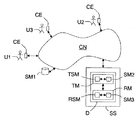
図1の限定を目的としない例に示すように、装置Dは、本発明によれば、ネットワーク・オペレータの通信ネットワークCNに接続されたネットワーク機器SSに配置(localize)することができる。このネットワーク機器SSは、たとえば、ネットワーク・オペレータのクライアントであるユーザUjに関連する情報へのアクセスを専門とするサーバSSでもよい。このサーバSSは、たとえば、推薦システムでもよい。このため、この例では、装置Dは、複数のユーザUj(ここでj=1から3)のために集中化された方法で機能する。しかし、また、この装置Dは、(また集中化された方法で機能するように)ネットワーク機器に結合したり、または単一ユーザUjのために分散された方法で機能するようにユーザ通信装置CEに配置したり、もしくは結合したりできる As shown in the non-limiting example of FIG. 1, device D can be localized in a network device SS connected to a network operator's communication network CN according to the invention. The network device SS may be, for example, a server SS specializing in access to information related to the user Uj who is a client of the network operator. This server SS may be a recommendation system, for example. Thus, in this example, device D functions in a centralized manner for multiple users Uj (where j = 1 to 3). However, this device D can also be coupled to network equipment (also to function in a centralized manner) or user communication device CE to function in a distributed manner for a single user Uj. Can be placed in or combined with
この装置Dは、電子回路(複数可)(またはハードウェア・モジュール)およびソフトウェア・モジュールの組み合わせで構成することができる。この場合、それは、ハードウェア・モジュールとソフトウェア・モジュールとの間の相互接続を可能にするソフトウェア・インタフェースをさらに含む。しかし、これは、電子回路(複数可)またはソフトウェア・モジュールで構成することもできる(この最後の場合は、メモリ、またはCD−ROMなど任意のコンピュータ・ソフトウェア製品に格納することができる)。 This device D can be composed of a combination of electronic circuit (s) (or hardware modules) and software modules. In this case, it further includes a software interface that allows interconnection between the hardware module and the software module. However, it can also consist of electronic circuit (s) or software modules (in this last case it can be stored in memory or any computer software product such as a CD-ROM).
本発明に従った装置Dは、追跡モジュールTMおよび推薦モジュールRMを含む。 The device D according to the invention includes a tracking module TM and a recommendation module RM.
この追跡モジュールTMは、少なくとも1人のユーザUjのプロファイルを分析することを意図する。記述した例において、装置Dは、複数のユーザUj(ここでj=1から3)のために集中化された方法で機能することに注意することが重要である。そのため、これは、この複数のすべてのユーザUjのプロファイルを分析するために配置され、プロファイルは、たとえば、ネットワーク・オペレータに属し、通信ネットワークCNに(図示するように)接続されるか含まれる第1のストレージ手段SM1に格納される。しかし、装置Dが単一ユーザ通信装置CEに関連する変形においては、追跡モジュールTMは、このユーザUjの唯一のプロファイルを分析するために配置され、プロファイルは、ユーザ通信装置CEのストレージ手段に格納することができる。 This tracking module TM is intended to analyze the profile of at least one user Uj. In the example described, it is important to note that device D functions in a centralized way for a plurality of users Uj (where j = 1 to 3). Therefore, this is arranged to analyze the profiles of all this plurality of users Uj, the profiles belonging for example to the network operator and connected to or included in the communication network CN (as shown). 1 storage means SM1. However, in a variant in which device D is associated with a single user communication device CE, the tracking module TM is arranged to analyze this user Uj's unique profile, which is stored in the storage means of the user communication device CE. can do.
あらゆる分析が、追跡モジュールTMのサブモジュールTSMによって実行され、分析されたユーザ・プロファイルに含まれている各新しい実際の関心事を決定することを目的としている。「新しい実際の関心事」は、前の分析の間にユーザ・プロファイルに既に含まれていたが、このユーザにとって本当に重要なものと見なされなかった関心事か、または最後の分析の間にユーザ・プロファイルに含まれておらず、このユーザにとって本当に重要なものと直ちに見なされる関心事のいずれかである。そのため、新しい実際の関心事が非常に新しい(または最近の)関心事であることは必須ではない。 Any analysis is performed by the submodule TSM of the tracking module TM and is intended to determine each new actual interest contained in the analyzed user profile. "New actual interests" are interests that were already included in the user profile during the previous analysis but were not considered really important to this user, or the user during the last analysis Any of the concerns that are not included in the profile and that are immediately considered to be really important to this user. Therefore, it is not essential that the new actual interest is a very new (or recent) concern.
(ユーザ・プロファイルに含まれている)関心事が、このユーザUjにとって本当に重要かどうかを決定するために、追跡モジュールTM(より正確には、そのサブモジュールTSM)は、この関心事に関連するこのユーザUjのコンテンツ・アイテムの消費を決定し、関連するコンテンツ・アイテムのこの決定された消費が、選択されたしきい値TISより大きい場合に、この関心事は(新しい)実際の関心事であると見なすために配置することができる。コンテンツ・アイテム消費のこの決定は、通信ネットワークCNに(たとえばコンテンツ・アイテムを伝達するサーバ(複数可)に)または関連するユーザ通信装置CEに追跡モジュールTMによって(サーバSSを介して)実行することができる。 In order to determine whether an interest (included in the user profile) is really important for this user Uj, the tracking module TM (more precisely, its submodule TSM) is associated with this interest. determining the consumption of content items of the user Uj, consumption is the determination of the associated content item, is greater than a selected threshold T iS, this concern is the (new) actual concern Can be arranged to be considered. This determination of content item consumption is performed by the tracking module TM (via the server SS) to the communication network CN (eg to the server (s) that communicates the content item) or to the associated user communication device CE. Can do.
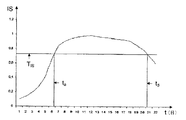
ユーザのプロファイルに含まれている関心事に関連するコンテンツ・アイテムのユーザUjによる消費を表す、関心事の強さISの時間tの経過に伴う変化の例を図2に示している。一般的に言って、関心事の強さISはコンテンツ消費の関数である。この図では、時刻tは日で示され(しかし、処理されたデータおよび/または関連するアプリケーションによって月、週、または時間で示すこともできる。より一般的には、時間(t)の経過に伴う関心事の強さISの変化を描写するために、単位(t)は最も適切に選択される)、選択されたしきい値TISは0.72に等しい。さらに、この例では、追跡モジュールTMは、関心事は、IS曲線がしきい値TISより大きくなったときに対応する日taにおいて、つまりta=6.4日において、本当に重要になったと見なす。以後、この日taを第1の日と呼ぶ。 An example of the change in interest intensity IS over time, representing the consumption by user Uj of content items related to the interests included in the user's profile, is shown in FIG. Generally speaking, the strength of interest IS is a function of content consumption. In this figure, time t is indicated in days (but may also be indicated in months, weeks, or hours depending on the processed data and / or associated application. More generally, over time (t) to depict the change in intensity iS of concern with the unit (t) is chosen most properly), the threshold T iS selected is equal to 0.72. Furthermore, in this example, the tracking module TM is concern, at the date t a which IS curve corresponds to when it becomes larger than the threshold value T IS, i.e. at t a = 6. 4 days, become really important Is considered. After that, the day t a referred to as a first day.
追跡モジュールTM(より正確には、そのサブモジュールTSM)が、ユーザUjの関心事が本当に重要であると見なすと、このユーザUjの識別子および新しい実際の関心事と見なされた第1の日に対応する、この関心事を表す識別子をユーザのプロファイルに格納する。サブモジュールTSMは、図示したように追跡モジュールTMの一部かもしれない第2のストレージ手段SM2に、上記のデータを格納することができる。この第2のストレージ手段SM2は、当業者に知られている任意の種類のものでよい。したがって、たとえば、それはデータベースもしくはレポジトリ、またはメモリなどでもよい。 When the tracking module TM (more precisely, its sub-module TSM) considers the user Uj's interests to be really important, the first day that this user Uj's identifier and the new actual interest were considered A corresponding identifier representing this interest is stored in the user's profile. The submodule TSM can store the above data in the second storage means SM2, which may be part of the tracking module TM as shown. This second storage means SM2 may be of any kind known to those skilled in the art. Thus, for example, it may be a database or repository, memory, or the like.
好ましくは、また、追跡モジュールTMは、このユーザの関心事が、このユーザの実際の関心事ではないと見なす場合(つまり、このユーザの関心事の関心事の強さISが、選択されたしきい値TISより小さくなった場合)、関心事の識別子、ユーザ識別子、および第1の日taに対応して、第2のストレージ手段SM2に第2の日tdを格納する。図2において、IS曲線がしきい値TISより小さくなったときに対応する第2の日tdは、20.6日に等しい。 Preferably, the tracking module TM also assumes that the interest of the user is not the actual interest of the user (ie the strength of interest of the interest of the user IS is selected). If smaller than the threshold T iS), concern identifier, in response to the user identifier, and the first day t a, and stores the second day t d in the second storage means SM2. 2, the second day t d corresponding to when the IS curve is smaller than the threshold value T IS is equal 20. 6th.
(装置Dの)推薦モジュールRMは、第2の格納手段SM2に格納されるユーザUjの第1の日taを分析するために配置される。この分析は、推薦モジュールRMのサブモジュールRSMによって実行され、ユーザUjの新しい実際の関心事として、追跡モジュールTMによって見なされたばかりの関心事に先行する関心事の時系列の順序を決定することを意図する。 Recommendation module RM (device D) is arranged to analyze the first day t a user Uj to be stored in the second storing means SM2. This analysis is performed by the submodule RSM of the recommendation module RM to determine the order of the time series of interests that precede the interests that were just regarded by the tracking module TM as the new actual interests of the user Uj Intended.
追跡モジュールTMによって、または要求に応じて、もしくは自動的に(たとえば定期的に)、第2のストレージ手段SM2のコンテンツを分析することによって、推薦モジュールRMに、ユーザUjの新しい実際の関心事の出現について通知することができる。 By analyzing the content of the second storage means SM2 by the tracking module TM or on demand or automatically (eg periodically), the recommendation module RM is informed of the user's new real interests. You can be notified about the appearance.
ユーザUjの関心事の時系列の順序は、それぞれの関心事の識別子およびユーザ識別子に対応して、第2のストレージ手段SM2に格納された第1の日taに従って順序づけられたこのユーザUjの関心事のリストを含む順序である。 The order of time series of user Uj concern, in response to the identifier and the user identifier of each concern, ordered in the user Uj in accordance with a first date t a which is stored in the second storage means SM2 An order that includes a list of interests.
サブモジュールRSMが、ユーザUjの関心事の時系列の順序を決定すると、この潜在的な将来の関心事をこのユーザUjのプロファイルに導入できる、または少なくともこのユーザUjに提案できる順序に、このユーザUjの少なくとも1つの潜在的な将来の関心事を予測するために、この決定されたユーザの関心事の順序を少なくとも1人の他のユーザUj’’(j’’≠j)の関心事の少なくとも1つの他の順序と比較する。 Once the sub-module RSM has determined the timeline order of the user Uj's interests, this user can be introduced to this user Uj's profile, or at least proposed to this user Uj, in this user's Uj's profile. In order to predict at least one potential future interest of Uj, this determined order of user interests is taken to be the interest of at least one other user Uj ″ (j ″ ≠ j). Compare with at least one other order.
このため、既知の方法とは違い、本発明はアイテムを推奨するのではなく、このユーザUjの過去の関心事の順序(複数可)、および他のユーザ(複数可)の他の関心事の順序に基づいて、ユーザUjの将来的な(または潜在的な)関心事を推薦する。 Thus, unlike known methods, the present invention does not recommend items, but rather the order (s) of this user Uj's past interests and other interests of other user (s). Based on the order, the user Uj's future (or potential) interests are recommended.
本発明は、一部のユーザは、時間の経過とともに趣味および関心事が同様に変化すると仮定した場合に、現在は、推薦システムの既存の方法では無視されていて、他のユーザUj’’の関心事の順序から推定することができる、ユーザの関心事の間の一時的な依存関係を利用する。たとえば、ジャズ音楽に興味を持ち始めたユーザUjは、ジャズ音楽、および/または特にジャズ音楽を演奏する特定の芸術家(複数可)、および/またはジャズ・マヌーシュなど、ジャズ音楽のサブジャンル、および/または新たな関心事に関連するコンサートに関連する音楽ジャンルに急速に興味を持つ可能性がある。他の例では、特定の自然災害に対するユーザUjの関心事は、社会面および/または経済への関心を生じさせる可能性がある。さらに他の例では、ファッションに対するユーザUjの関心は、オンライン・ショッピングに対するより一般的な関心を生じさせる可能性がある。 The present invention is currently ignored by the existing methods of the recommendation system, assuming that some users have similar hobbies and interests over time, and other users Uj '' Take advantage of temporary dependencies between user interests that can be inferred from the order of interests. For example, a user Uj who has begun to be interested in jazz music may be jazz music, and / or a particular artist (s) performing jazz music, and / or a jazz music subgenre, such as jazz manouche, and You may be rapidly interested in music genres related to concerts related to new interests. In other examples, user Uj's interest in a particular natural disaster may generate social and / or economic interest. In yet another example, user Uj's interest in fashion may generate a more general interest in online shopping.
推薦モジュールRM(より正確にはそのサブモジュールRSM)は、このユーザUjの少なくとも1つの潜在的な将来の関心事を予測するために、このユーザUjに関連し、第2のストレージ手段SM2に格納されたデータに決定されたばかりの、ユーザの関心事の順序を、他のユーザUj’の関心事から構築された関心事のグラフに決定できる、(好ましくは最長の)関心事の少なくとも1つの他の順序と比較するために配置することができる。 The recommendation module RM (more precisely its submodule RSM) is associated with this user Uj and stored in the second storage means SM2 in order to predict at least one potential future interest of this user Uj. At least one other of the (preferably longest) interests can be determined in a graph of interests constructed from the interests of other users Uj ′ Can be arranged to compare with the order.
関心事のそのようなグラフは、ユーザUjの実際の関心事を定義し、第2のストレージ手段SM2に格納されるデータから、推薦モジュールRM(より正確には、そのサブモジュールRSMによって)によって構築し更新することができる。 Such a graph of interests defines the actual interests of the user Uj and is constructed by the recommendation module RM (more precisely by its submodule RSM) from the data stored in the second storage means SM2. And can be updated.
サブモジュールRSMは、図示する推薦モジュールRMの一部でもよい第3のストレージ手段SM3に関心事グラフを格納することができる。この第3のストレージ手段SM3は、当業者に知られている任意の種類のものでもよい。したがって、それはたとえば、レポジトリまたはメモリでもよい。 The submodule RSM can store the interest graph in the third storage means SM3 which may be part of the recommended module RM shown. This third storage means SM3 may be of any kind known to those skilled in the art. Thus, for example, it may be a repository or memory.
たとえば、関心事のグラフは、複数のユーザUjに対する時間の経過に伴う関心事の変化をモデル化することができる。それは、格納されたデータから直接、または関心事グラフを集約することによって、構築し更新することができる。最後のケースは、装置Dがユーザ通信装置CEにおいて分散される状況に特に適応される。この場合、推薦モジュールRM(より正確には、そのサブモジュールRSM)は、ユーザUjに関連する装置Dに属し、このユーザUjに対する時間の経過に伴う関心事の変化をモデル化する、補助的な関心事グラフを構築および更新し、関心事グラフを作成するために、(それぞれの関連する装置Dによって)他のユーザUj’’のために構築された、補助的な関心事グラフによってこの補助的な関心事グラフを集約するために、配置することができる。 For example, the interest graph can model changes in interest over time for multiple users Uj. It can be constructed and updated directly from stored data or by aggregating interest graphs. The last case is particularly adapted to the situation where the device D is distributed in the user communication device CE. In this case, the recommendation module RM (more precisely, its sub-module RSM) belongs to the device D associated with the user Uj and is an auxiliary that models the change of interest over time for this user Uj. This ancillary graph is constructed by an auxiliary interest graph constructed for other users Uj ″ (by respective associated devices D) to construct and update the interest graph and create the interest graph. Can be arranged to aggregate interesting interest graphs.
関心事グラフは、指示され重み付けされたグラフG(V,W)でもよく、Vはユーザの関心事をそれぞれ表す1組のノードであり、Wは1組の指示された端部であり、それぞれがユーザの関心事in−1から他のユーザの関心事inへの移り変わりを表す。 The interest graph may be a directed and weighted graph G (V, W), where V is a set of nodes each representing the user's interest, W is a set of indicated edges, There represents a transition from concern i n-1 of the user to the interests i n the other users.
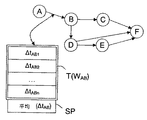
そのような指示され重み付けされた関心事グラフG(V,W)の限定を目的としない例を図3に示す。この例において、6人のユーザの関心事にそれぞれ対応する6つのノードA、B、C、D、EおよびFは、1組の8つの指示された端部Wを有するこのグラフG(V,W)を構成する。より正確には、ノードAとBとの間に指示された端部WAB、ノードBとCとの間に指示された端部WBC、ノードBとDとの間に指示された端部WBD、ノードCとFとの間に指示された端部WCF、ノードDとEとの間に指示された端部WDE、ノードDとFとの間に指示された端部WDF、およびノードEとFとの間に指示された端部WEFがある。 An example not intended to limit such an indicated and weighted interest graph G (V, W) is shown in FIG. In this example, six nodes A, B, C, D, E, and F, each corresponding to the interests of six users, are represented in this graph G (V, V, with a set of eight indicated edges W. W). More precisely, the end W AB indicated between nodes A and B, the end W BC indicated between nodes B and C, and the end indicated between nodes B and D. W BD , end W CF indicated between nodes C and F, end W DE indicated between nodes D and E, end W DF indicated between nodes D and F , And the end W EF indicated between nodes E and F.
重みは、たとえば推薦モジュールRMによって(より正確には、そのサブモジュールRSMによって)各指示された端部Wに割り当てられる。限定を目的とせず示すように、各重みは、表T(WAB)(またはT(WBC))または・・・またはT(WEF)によって定義することができる。たとえば、図示する表T(WAB)は、指示された端部WABに関連し、各ユーザUj(j=1からn、たとえばn=3)と、ノードAおよびBにそれぞれ関連する連続した2つの実際の関心事の出現の間の経過時間ΔtABjとの間の対応を確立する。 A weight is assigned to each indicated end W, for example by the recommendation module RM (more precisely by its submodule RSM). As shown without limitation, each weight may be defined by a table T (W AB ) (or T (W BC )) or... Or T (W EF ). For example, the illustrated table T (W AB ) is associated with the indicated end W AB , each user Uj (j = 1 to n, for example n = 3), and a sequence associated with nodes A and B respectively. Establish a correspondence between the elapsed time Δt ABj between the appearance of two actual concerns.
たとえば、ユーザUjに対して現れる最後の既知の実際の関心事は、図2のグラフにおいてノードB、D、およびCによって表されたものである。ノードB、D、およびCは、ユーザUjの順序づけられた関心事の順序を構成する。図示したこのグラフの例では、ノードCはノードBおよびFに接続され、ノードDはノードB、E、およびFに接続されるが、ノードDはノードCに接続されない。このため、1つの実行可能な移り変わりはノードCからノードFである。しかし、この移り変わり(C−F)は、ユーザUjの最後の既知の関心事にのみ依存しているとすると、この移り変わりは、少し弱く相対的に確信が低い可能性がある。その理由は、グラフにおいて、EもDもCに接続されていないからである。このため、ノードCを無視し、(ノードDによって表される)ユーザUjの以前の関心事を考慮すると、グラフにおいて、ノードDは前身としてノードBを持っていると見なされる。これは、(ノードDによって表される)ユーザの関心事の前身も表している。したがって、ユーザUjの潜在的な将来の関心事として、それぞれノードEおよびFによって表される、関心事を考慮することができる。 For example, the last known actual concern that appears for user Uj is that represented by nodes B, D, and C in the graph of FIG. Nodes B, D, and C constitute an ordered order of interest for user Uj. In the illustrated example of the graph, node C is connected to nodes B and F, node D is connected to nodes B, E, and F, but node D is not connected to node C. Thus, one possible transition is node C to node F. However, if this transition (CF) depends only on the last known interest of user Uj, this transition may be a little weak and relatively unconfident. The reason is that neither E nor D is connected to C in the graph. Thus, ignoring node C and considering the previous interests of user Uj (represented by node D), node D is considered to have node B as its predecessor in the graph. This also represents the predecessor of the user's interests (represented by node D). Thus, the concerns expressed by nodes E and F, respectively, can be considered as potential future concerns for user Uj.
(上記の例のように)ユーザUjについて複数の潜在的な将来の関心事が存在する場合、推薦モジュールRM(より正確には、そのサブモジュールRSM)は、指示された端部Wの重みから1つまたは複数の統計的基準を計算し、最も適切な潜在的な将来の関心事を選択するために、各決定された統計的基準を使用することができる。 If there are multiple potential future concerns for user Uj (as in the example above), the recommendation module RM (more precisely, its sub-module RSM) is determined from the weight of the indicated end W. Each determined statistical criterion can be used to calculate one or more statistical criteria and select the most appropriate potential future concern.
たとえば、サブモジュールRSMは、グラフの2つのノード間の移り変わりの関連(したがって、2つの対応する関心事)を見積もるために、標準偏差など統計的基準を計算することができる。たとえば、値の分散が非常に大きい場合、移り変わりは十分に利用可能かもしれない。 For example, the sub-module RSM can calculate statistical criteria such as standard deviations in order to estimate the transitional relationship between two nodes of the graph (and thus the two corresponding interests). For example, if the variance of values is very large, the transition may be fully available.
また、サブモジュールRSMは、2つの関心事の間の移り変わりの頻度を推定するために、指示された端部Wの表のエントリ(または重み)の相対数など統計的基準を計算することができる。これは、この移り変わりが主流であるか、またはより特定のものであるかを示すことができる。 The sub-module RSM can also calculate statistical criteria such as the relative number of entries (or weights) in the indicated end W table to estimate the frequency of transition between two concerns. . This can indicate whether this transition is mainstream or more specific.
これらの統計的基準に基づいて、選択された適用可能なコンテキストに適応される適切な関心事を提案し、これらの提案された関心事からユーザUjに対する少なくとも1つの潜在的な将来の関心事を予測することを支援するヒューリスティックを構築することが可能である。たとえば、「ロングテール」のコンテンツにつながる可能性があるため、用途の内容に基づいて、ユーザの関心事の主流でない変化を重視するほうが面白い場合がある。 Based on these statistical criteria, we propose appropriate interests that are adapted to the selected applicable context, and from these proposed interests at least one potential future concern for user Uj. It is possible to build heuristics that help make predictions. For example, it may be more interesting to place emphasis on non-mainstream changes in user interests based on usage, as it may lead to “long tail” content.
ヒューリスティックでは、考慮されるユーザUjの関心事の既知の順序から抽出された関心事ik、ik+i・・・inの最長の順序に対する関心事グラフを調査する。また、特に2つの可能な関心事の間で決定された関連する基準が低い場合に、または2つの可能な関心事の間の移り変わりの頻度が低い場合、つまり、これが限界の移り変わり(marginal transition)である場合に、不完全な順序を考慮することによって、検索を緩めることも可能である。このため、inとin+1との間の移り変わりの頻度が最も高い関心事グラフの次ノードin+1を選択することができる(このヒューリスティックは主流の関心事の変化を対象とする)。 The heuristic examines the interest graph for the longest order of interests i k , i k + i ... N extracted from the known order of interests of the user Uj considered. Also, especially when the relevant criteria determined between two possible concerns are low, or when the frequency of transition between two possible concerns is low, i.e. this is a marginal transition. It is possible to relax the search by taking into account the incomplete order. For this reason, it is possible to select the next node i n + 1 of the interest graph with the highest frequency of transition between i n and i n + 1 (this heuristic targets changes in mainstream interests).
また、推薦モジュールRM(より正確には、そのサブモジュールRSM)は、ユーザUjのプロファイルに、潜在的な将来の関心事を導入するために、好ましい日を決定するために配置することができる。この目的のために、たとえば、このユーザUjの最後の関心事と予測される関心事(複数可)との間の指示された端部Wの重み(複数可)を使用することができる。たとえば、それは、選択された指示された端部Wに関連する表の平均値(平均(ΔtAB))を計算し、ユーザUjに新しい対応する関心事を推薦する前に、またはこのユーザUjのプロファイルに導入できる順序で、この新しい対応する関心事を推奨する前に、この平均値によってスケジューリングされたタイマーの期限が切れるまで待つことができる。 Also, the recommendation module RM (more precisely, its sub-module RSM) can be arranged to determine a preferred date in order to introduce potential future interests in the user Uj's profile. For this purpose, for example, the indicated edge W weight (s) between the last interest and predicted interest (s) of this user Uj may be used. For example, it calculates the average value (average (Δt AB )) of the table associated with the selected indicated end W and recommends this user Uj before recommending a new corresponding interest to user Uj. In the order that can be introduced into the profile, it is possible to wait until the timer scheduled by this average expires before recommending this new corresponding interest.
所与のユーザUjの将来的な関心事を予測するために、推薦モジュールRMは、図4に関して以後記述するようなアルゴリズムを実装することができる。 In order to predict the future interest of a given user Uj, the recommendation module RM can implement an algorithm as described below with respect to FIG.
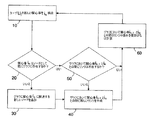
このアルゴリズムは、追跡モジュールTMによってユーザUjに対して新しい実際の関心事inが検出されたときに、ステップ10から始まる。
This algorithm, when a new real concern i n is detected for the user Uj by the tracking module TM, begins at
次に、ステップ20で、1つの(RM)は、この新しい実際の関心事inが、関心事グラフにノードとして既に存在するかどうかを決定するために第1のテストを実行する。存在しない場合、ステップ30で、1つの(RM)は、(新しい実際の関心事inを表す)新しいノードを関心事グラフに追加する。
Next, at
次に、ステップ40で、1つの(RM)は、関心事グラフにおいて関心事in−1およびinを表す2つのノードの間のリンク(または指示された端部W)を作成する。
Next, at
次に、ステップ60で、1つの(RM)は、関心事グラフにおいて関心事in−1およびinを表す2つのノードの間のリンク(または指示された端部W)の重みを計算する。
Next, at
ここで、ステップ20で実行された第1のテストが、新しい実際の関心事inが、関心事グラフにノードとして既に存在することを示している場合、関心事in−1およびinを表す2つのノードの間のリンク(または指示された端部W)が関心事グラフに存在するかどうかを決定するために、ステップ50で、1つの(RM)は、第2のテストを実行する。存在しない場合は、1つの(RM)は、(新しいリンクを作成するために)ステップ40、および(この新しいリンクの重みを計算するために)ステップ60を実行する。
The first test performed in
第2のテストが、関心事in−1およびinを表す2つのノードの間のリンク(または指示された端部W)が既に関心事グラフに存在することを示している場合、1つの(RM)は、このリンクの重みを更新するためにステップ60を実行する。これによって、このユーザUjが、その関心事に関連する十分なコンテンツを消費するまで、長い時間待つことなく、その関心事に関係するコンテンツをユーザUjに推薦することができるようになる。このため、本発明のおかげで、ユーザがこの種のコンテンツに対して実証された興味を示す前でも、ユーザは、ユーザが興味を持っている可能性があるコンテンツに、より速くアクセスすることができる。
If the second test indicates that a link (or indicated end W) between two nodes representing interests i n-1 and i n already exists in the interest graph, one (RM) performs
本発明は、(過剰な特定化を回避できるため)コンテンツに基づくフィルタリング・アルゴリズムに大きな利点を提供することができ、協調フィルタリング手法に見られるような(コールドスタートなどの)課題(複数可)がない。さらに、本発明はユーザ評価を必要としない。 The present invention can provide significant advantages to content-based filtering algorithms (because it can avoid over-specification) and has the problem (s) (such as cold start) found in collaborative filtering techniques. Absent. Furthermore, the present invention does not require user evaluation.
本発明は、例としてのみ示した上記の装置、ネットワーク機器、および通信装置の実施形態に限定されるものではなく、添付の特許請求の範囲において、当業者によって考えられる代替的な実施形態をすべて包含する。 The present invention is not limited to the above-described device, network equipment, and communication device embodiments shown by way of example only, and all alternative embodiments contemplated by those skilled in the art are within the scope of the appended claims. Include.
Claims (16)
Applications Claiming Priority (3)
| Application Number | Priority Date | Filing Date | Title |
|---|---|---|---|
| EP09305989.7 | 2009-10-16 | ||
| EP09305989A EP2312515A1 (en) | 2009-10-16 | 2009-10-16 | Device for determining potential future interests to be introduced into profile(s) of user(s) of communication equipment(s) |
| PCT/EP2010/064101 WO2011045162A1 (en) | 2009-10-16 | 2010-09-24 | Device for determining potential future interests to be introduced into profile(s) of user(s) of communication equipment(s) |
Publications (2)
| Publication Number | Publication Date |
|---|---|
| JP2013507705A JP2013507705A (en) | 2013-03-04 |
| JP5358024B2 true JP5358024B2 (en) | 2013-12-04 |
Family
ID=41728030
Family Applications (1)
| Application Number | Title | Priority Date | Filing Date |
|---|---|---|---|
| JP2012533556A Expired - Fee Related JP5358024B2 (en) | 2009-10-16 | 2010-09-24 | Apparatus for determining potential future concerns to be introduced into a user profile of a communication device |
Country Status (7)
| Country | Link |
|---|---|
| US (1) | US9251525B2 (en) |
| EP (1) | EP2312515A1 (en) |
| JP (1) | JP5358024B2 (en) |
| KR (1) | KR101352418B1 (en) |
| CN (1) | CN102576444A (en) |
| IN (1) | IN2012DN03141A (en) |
| WO (1) | WO2011045162A1 (en) |
Families Citing this family (13)
| Publication number | Priority date | Publication date | Assignee | Title |
|---|---|---|---|---|
| US8234375B2 (en) * | 2005-12-08 | 2012-07-31 | Mybuys, Inc. | Apparatus and method for providing a marketing service |
| CN102999539B (en) * | 2011-09-13 | 2015-11-25 | 富士通株式会社 | Predict the method and apparatus of the future developing trend of given topic |
| JP5662303B2 (en) * | 2011-11-17 | 2015-01-28 | 日本電信電話株式会社 | Content recommendation apparatus, method, and program |
| JP5745388B2 (en) * | 2011-11-17 | 2015-07-08 | 日本電信電話株式会社 | Content recommendation apparatus, method, and program |
| US10163063B2 (en) * | 2012-03-07 | 2018-12-25 | International Business Machines Corporation | Automatically mining patterns for rule based data standardization systems |
| US9582547B2 (en) * | 2013-11-18 | 2017-02-28 | Palo Alto Research Center Incorporated | Generalized graph, rule, and spatial structure based recommendation engine |
| CN104765752B (en) * | 2014-01-07 | 2018-10-16 | 三星电子(中国)研发中心 | Recommendation apparatus based on user model evolution and method |
| US20190095262A1 (en) * | 2014-01-17 | 2019-03-28 | Renée BUNNELL | System and methods for determining character strength via application programming interface |
| WO2016095133A1 (en) * | 2014-12-17 | 2016-06-23 | Yahoo! Inc. | Method and system for determining user interests based on a correspondence graph |
| US10893312B2 (en) * | 2015-06-26 | 2021-01-12 | British Telecommunications Public Limited Company | Digital content provision |
| US11194842B2 (en) * | 2018-01-18 | 2021-12-07 | Samsung Electronics Company, Ltd. | Methods and systems for interacting with mobile device |
| US10866989B1 (en) * | 2018-04-06 | 2020-12-15 | Architecture Technology Corporation | Real time recommender modeling system, methods of construction, and methods of use |
| CN112148960B (en) * | 2019-06-27 | 2024-03-22 | 北京百度网讯科技有限公司 | Method, device, equipment and storage medium for determining category of attention point |
Family Cites Families (32)
| Publication number | Priority date | Publication date | Assignee | Title |
|---|---|---|---|---|
| US6981040B1 (en) * | 1999-12-28 | 2005-12-27 | Utopy, Inc. | Automatic, personalized online information and product services |
| FR2809557B1 (en) * | 2000-05-25 | 2004-12-10 | Cit Alcatel | METHOD FOR BROADCASTING MULTIMEDIA INFORMATION ELEMENTS, RECEIVING MULTIMEDIA INFORMATION ELEMENTS BROADCASTED BY THIS METHOD, AND USER INTERFACE FOR CONSULTING THESE INFORMATION ELEMENTS |
| US20020173971A1 (en) * | 2001-03-28 | 2002-11-21 | Stirpe Paul Alan | System, method and application of ontology driven inferencing-based personalization systems |
| JP4581446B2 (en) * | 2004-03-22 | 2010-11-17 | ソニー株式会社 | Information processing apparatus and method, and program |
| JP2005332127A (en) * | 2004-05-19 | 2005-12-02 | Nippon Telegr & Teleph Corp <Ntt> | Situation prediction system and method based on personal profile, program and recording medium |
| JP2006048319A (en) * | 2004-08-04 | 2006-02-16 | Sony Corp | Information processing apparatus and method, recording medium, and program |
| US8281037B2 (en) * | 2005-01-03 | 2012-10-02 | Orb Networks, Inc. | System and method for delivering content to users on a network |
| US7991764B2 (en) * | 2005-07-22 | 2011-08-02 | Yogesh Chunilal Rathod | Method and system for communication, publishing, searching, sharing and dynamically providing a journal feed |
| US8019777B2 (en) * | 2006-03-16 | 2011-09-13 | Nexify, Inc. | Digital content personalization method and system |
| US20070250467A1 (en) * | 2006-04-24 | 2007-10-25 | Imakenews, Inc. | Systems and methods for targeted content delivery |
| US7970934B1 (en) * | 2006-07-31 | 2011-06-28 | Google Inc. | Detecting events of interest |
| WO2008040004A2 (en) * | 2006-09-28 | 2008-04-03 | Sfgt Inc. | Apparatuses, methods, and systems for code triggered information querying and serving |
| US8055664B2 (en) * | 2007-05-01 | 2011-11-08 | Google Inc. | Inferring user interests |
| US20090012955A1 (en) * | 2007-07-03 | 2009-01-08 | John Chu | Method and system for continuous, dynamic, adaptive recommendation based on a continuously evolving personal region of interest |
| US20090249129A1 (en) * | 2007-10-12 | 2009-10-01 | David Femia | Systems and Methods for Managing Multi-Component Systems in an Infrastructure |
| US8165985B2 (en) * | 2007-10-12 | 2012-04-24 | Palo Alto Research Center Incorporated | System and method for performing discovery of digital information in a subject area |
| US7958066B2 (en) * | 2007-11-02 | 2011-06-07 | Hunch Inc. | Interactive machine learning advice facility |
| US9159034B2 (en) * | 2007-11-02 | 2015-10-13 | Ebay Inc. | Geographically localized recommendations in a computing advice facility |
| US8032480B2 (en) * | 2007-11-02 | 2011-10-04 | Hunch Inc. | Interactive computing advice facility with learning based on user feedback |
| US8666909B2 (en) * | 2007-11-02 | 2014-03-04 | Ebay, Inc. | Interestingness recommendations in a computing advice facility |
| US9165254B2 (en) * | 2008-01-14 | 2015-10-20 | Aptima, Inc. | Method and system to predict the likelihood of topics |
| US8781989B2 (en) * | 2008-01-14 | 2014-07-15 | Aptima, Inc. | Method and system to predict a data value |
| US20090187540A1 (en) * | 2008-01-22 | 2009-07-23 | Microsoft Corporation | Prediction of informational interests |
| US20090228774A1 (en) * | 2008-03-06 | 2009-09-10 | Joseph Matheny | System for coordinating the presentation of digital content data feeds |
| US10664889B2 (en) * | 2008-04-01 | 2020-05-26 | Certona Corporation | System and method for combining and optimizing business strategies |
| US20090299945A1 (en) * | 2008-06-03 | 2009-12-03 | Strands, Inc. | Profile modeling for sharing individual user preferences |
| US8271413B2 (en) * | 2008-11-25 | 2012-09-18 | Google Inc. | Providing digital content based on expected user behavior |
| JP5182178B2 (en) * | 2009-03-18 | 2013-04-10 | ソニー株式会社 | Information processing apparatus and information processing method |
| US9466077B2 (en) * | 2009-06-30 | 2016-10-11 | Google Inc. | Propagating promotional information on a social network |
| US8229873B1 (en) * | 2009-09-18 | 2012-07-24 | Google Inc. | News topic-interest-based recommendations twiddling |
| FR2960077A1 (en) * | 2010-05-11 | 2011-11-18 | Alcatel Lucent | DEVICE FOR THE DYNAMIC MANAGEMENT OF DOWNLOADABLE APPLICATIONS FOR COMMUNICATION EQUIPMENT |
| US8924382B2 (en) * | 2011-10-03 | 2014-12-30 | Oracle International Corporation | Techniques for distributing information over a network |
-
2009
- 2009-10-16 EP EP09305989A patent/EP2312515A1/en not_active Ceased
-
2010
- 2010-09-24 US US13/502,191 patent/US9251525B2/en not_active Expired - Fee Related
- 2010-09-24 WO PCT/EP2010/064101 patent/WO2011045162A1/en not_active Ceased
- 2010-09-24 KR KR1020127012345A patent/KR101352418B1/en not_active Expired - Fee Related
- 2010-09-24 JP JP2012533556A patent/JP5358024B2/en not_active Expired - Fee Related
- 2010-09-24 IN IN3141DEN2012 patent/IN2012DN03141A/en unknown
- 2010-09-24 CN CN2010800462176A patent/CN102576444A/en active Pending
Also Published As
| Publication number | Publication date |
|---|---|
| IN2012DN03141A (en) | 2015-09-18 |
| US20120265816A1 (en) | 2012-10-18 |
| KR101352418B1 (en) | 2014-02-07 |
| WO2011045162A1 (en) | 2011-04-21 |
| KR20120082447A (en) | 2012-07-23 |
| JP2013507705A (en) | 2013-03-04 |
| US9251525B2 (en) | 2016-02-02 |
| EP2312515A1 (en) | 2011-04-20 |
| CN102576444A (en) | 2012-07-11 |
Similar Documents
| Publication | Publication Date | Title |
|---|---|---|
| JP2013507705A (en) | Apparatus for determining potential future concerns to be introduced into a user profile of a communication device | |
| Goyani et al. | A review of movie recommendation system: Limitations, Survey and Challenges | |
| Sohail et al. | Classifications of recommender systems: A review. | |
| Kim et al. | Personalized recommendation over a customer network for ubiquitous shopping | |
| Sharma et al. | A survey of recommender systems: approaches and limitations | |
| Jung | Attribute selection-based recommendation framework for short-head user group: An empirical study by MovieLens and IMDB | |
| US8200667B2 (en) | Method and apparatus for constructing user profile using content tag, and method for content recommendation using the constructed user profile | |
| Huang et al. | A comprehensive survey on retrieval methods in recommender systems | |
| Ono et al. | A context-aware movie preference model using a Bayesian network for recommendation and promotion | |
| Yang et al. | Local implicit feedback mining for music recommendation | |
| Xu et al. | Integrated collaborative filtering recommendation in social cyber-physical systems | |
| US20120185481A1 (en) | Method and Apparatus for Executing a Recommendation | |
| CN104991966A (en) | Ordering method and system of media content | |
| EP3673381A1 (en) | Apparatus and method for training a similarity model used to predict similarity between items | |
| Hrnjica et al. | Model-based recommender systems | |
| KR20130033506A (en) | Item recommendation method and apparatus | |
| Panagiotakis et al. | Session-based recommendation by combining probabilistic models and LSTM | |
| Xia | E-commerce product recommendation method based on collaborative filtering technology | |
| Chen et al. | Double layered recommendation algorithm based on fast density clustering: Case study on Yelp social networks dataset | |
| Zhang et al. | Item group recommendation: a method based on game theory | |
| Mustafa et al. | Performance comparison of top N recommendation algorithms | |
| SP et al. | Lazy collaborative filtering with dynamic neighborhoods | |
| Lee et al. | Personalized TV contents recommender system using collaborative context tagging-based user’s preference prediction technique | |
| Wang | Utilizing imbalanced data and classification cost matrix to predict movie preferences | |
| Jitendra et al. | An automated music recommendation system based on listener preferences |
Legal Events
| Date | Code | Title | Description |
|---|---|---|---|
| A977 | Report on retrieval |
Free format text: JAPANESE INTERMEDIATE CODE: A971007 Effective date: 20130716 |
|
| TRDD | Decision of grant or rejection written | ||
| A01 | Written decision to grant a patent or to grant a registration (utility model) |
Free format text: JAPANESE INTERMEDIATE CODE: A01 Effective date: 20130801 |
|
| A61 | First payment of annual fees (during grant procedure) |
Free format text: JAPANESE INTERMEDIATE CODE: A61 Effective date: 20130830 |
|
| R150 | Certificate of patent or registration of utility model |
Ref document number: 5358024 Country of ref document: JP Free format text: JAPANESE INTERMEDIATE CODE: R150 Free format text: JAPANESE INTERMEDIATE CODE: R150 |
|
| R250 | Receipt of annual fees |
Free format text: JAPANESE INTERMEDIATE CODE: R250 |
|
| R250 | Receipt of annual fees |
Free format text: JAPANESE INTERMEDIATE CODE: R250 |
|
| R250 | Receipt of annual fees |
Free format text: JAPANESE INTERMEDIATE CODE: R250 |
|
| R250 | Receipt of annual fees |
Free format text: JAPANESE INTERMEDIATE CODE: R250 |
|
| LAPS | Cancellation because of no payment of annual fees |