JP5419210B2 - Gelling agent - Google Patents
Gelling agent Download PDFInfo
- Publication number
- JP5419210B2 JP5419210B2 JP2009134774A JP2009134774A JP5419210B2 JP 5419210 B2 JP5419210 B2 JP 5419210B2 JP 2009134774 A JP2009134774 A JP 2009134774A JP 2009134774 A JP2009134774 A JP 2009134774A JP 5419210 B2 JP5419210 B2 JP 5419210B2
- Authority
- JP
- Japan
- Prior art keywords
- compound
- gelling agent
- gel
- group
- mol
- Prior art date
- Legal status (The legal status is an assumption and is not a legal conclusion. Google has not performed a legal analysis and makes no representation as to the accuracy of the status listed.)
- Expired - Fee Related
Links
Images






Classifications
-
- C—CHEMISTRY; METALLURGY
- C07—ORGANIC CHEMISTRY
- C07C—ACYCLIC OR CARBOCYCLIC COMPOUNDS
- C07C317/00—Sulfones; Sulfoxides
- C07C317/16—Sulfones; Sulfoxides having sulfone or sulfoxide groups and singly-bound oxygen atoms bound to the same carbon skeleton
- C07C317/22—Sulfones; Sulfoxides having sulfone or sulfoxide groups and singly-bound oxygen atoms bound to the same carbon skeleton with sulfone or sulfoxide groups bound to carbon atoms of six-membered aromatic rings of the carbon skeleton
-
- A—HUMAN NECESSITIES
- A61—MEDICAL OR VETERINARY SCIENCE; HYGIENE
- A61K—PREPARATIONS FOR MEDICAL, DENTAL OR TOILETRY PURPOSES
- A61K8/00—Cosmetics or similar toiletry preparations
- A61K8/02—Cosmetics or similar toiletry preparations characterised by special physical form
- A61K8/04—Dispersions; Emulsions
- A61K8/042—Gels
-
- A—HUMAN NECESSITIES
- A61—MEDICAL OR VETERINARY SCIENCE; HYGIENE
- A61K—PREPARATIONS FOR MEDICAL, DENTAL OR TOILETRY PURPOSES
- A61K8/00—Cosmetics or similar toiletry preparations
- A61K8/18—Cosmetics or similar toiletry preparations characterised by the composition
- A61K8/30—Cosmetics or similar toiletry preparations characterised by the composition containing organic compounds
- A61K8/69—Cosmetics or similar toiletry preparations characterised by the composition containing organic compounds containing fluorine
- A61K8/70—Cosmetics or similar toiletry preparations characterised by the composition containing organic compounds containing fluorine containing perfluoro groups, e.g. perfluoroethers
-
- A—HUMAN NECESSITIES
- A61—MEDICAL OR VETERINARY SCIENCE; HYGIENE
- A61Q—SPECIFIC USE OF COSMETICS OR SIMILAR TOILETRY PREPARATIONS
- A61Q19/00—Preparations for care of the skin
-
- A—HUMAN NECESSITIES
- A61—MEDICAL OR VETERINARY SCIENCE; HYGIENE
- A61K—PREPARATIONS FOR MEDICAL, DENTAL OR TOILETRY PURPOSES
- A61K2800/00—Properties of cosmetic compositions or active ingredients thereof or formulation aids used therein and process related aspects
- A61K2800/10—General cosmetic use
-
- A—HUMAN NECESSITIES
- A61—MEDICAL OR VETERINARY SCIENCE; HYGIENE
- A61K—PREPARATIONS FOR MEDICAL, DENTAL OR TOILETRY PURPOSES
- A61K2800/00—Properties of cosmetic compositions or active ingredients thereof or formulation aids used therein and process related aspects
- A61K2800/40—Chemical, physico-chemical or functional or structural properties of particular ingredients
- A61K2800/48—Thickener, Thickening system
Landscapes
- Health & Medical Sciences (AREA)
- Life Sciences & Earth Sciences (AREA)
- Chemical & Material Sciences (AREA)
- Animal Behavior & Ethology (AREA)
- General Health & Medical Sciences (AREA)
- Public Health (AREA)
- Veterinary Medicine (AREA)
- Organic Chemistry (AREA)
- Birds (AREA)
- Epidemiology (AREA)
- Dermatology (AREA)
- Dispersion Chemistry (AREA)
- Organic Low-Molecular-Weight Compounds And Preparation Thereof (AREA)
Description
本発明は有機化合物をゲル化又は増粘するためのゲル化剤に関する。 The present invention relates to a gelling agent for gelling or thickening an organic compound.
従来各種産業分野において、液体状物質を固化、すなわちゼリー状に固めるとか、又は増粘する目的でゲル化剤が用いられている。例えば接着剤、塗料、印刷インキ、化粧品等の流動性の制御、チクソトロピー性の付与、海上への石油類の流出対策、家庭等における食用油の処分、その他食品製造業、医療分野等において使用されている。これらのゲル化剤としては、水分を固化させるもの、例えばコラーゲン、ゼラチン、寒天、アガー(カラギーナン)、ペクチン等があり、また有機物、特に炭化水素類、アルコール類、ケトン類、エステル類その他の有機溶剤及びそれらを主として含む溶液等を固化させるゲル化剤がある。 Conventionally, in various industrial fields, a gelling agent has been used for the purpose of solidifying a liquid substance, that is, solidifying in a jelly form or increasing the viscosity. For example, it is used in fluidity control of adhesives, paints, printing inks, cosmetics, etc., imparting thixotropy, countermeasures for oil spills to the sea, disposal of cooking oil at home, etc., other food manufacturing industries, medical fields, etc. ing. These gelling agents include those that solidify moisture, such as collagen, gelatin, agar, agar (carrageenan), pectin, etc., and organic substances, especially hydrocarbons, alcohols, ketones, esters and other organic substances. There are gelling agents that solidify solvents and solutions mainly containing them.
これらのうち、有機溶液を固化させるためのゲル化剤としては、低分子量又は高分子量の有機化合物があり、低分子量ゲル化剤としては、例えばアミノ基、イミド基、尿素基など水素結合性官能基を分子内に有する低分子量有機化合物群が知られている。また高分子ゲル化剤としては、親油性を有する高分子ポリマーの絡み合った分子中に油類を取り込み膨油はするが、固体状を保つものとして例えばポリビニルアルコール/ポリエチレン/各種エラストマーや、尿素樹脂、ポリオレフィン不織布などが知られている。 Among these, as the gelling agent for solidifying the organic solution, there are low molecular weight or high molecular weight organic compounds, and as the low molecular weight gelling agent, for example, a hydrogen bonding functional group such as an amino group, an imide group, or a urea group. A group of low molecular weight organic compounds having a group in the molecule is known. In addition, as the polymer gelling agent, for example, polyvinyl alcohol / polyethylene / various elastomers, urea resins, etc. are used to keep the solid state by taking oils into the entangled molecules of the oleophilic polymer. Polyolefin nonwoven fabrics are known.
本発明は、有機溶液を固化させるための低分子量ゲル化剤を提供する。 The present invention provides a low molecular weight gelling agent for solidifying an organic solution.
従来有機溶液を固化させるゲル化剤は、一般に大量のゲル化剤、例えば溶液に対して、5〜10%程度用いる必要があったこと及び比較的低い温度例えば30〜40℃程度でゾルに転移し、液状に戻る傾向があった。 Conventional gelling agents that solidify an organic solution generally need to be used in a large amount of gelling agent, for example, about 5 to 10% of the solution, and are transferred to a sol at a relatively low temperature, for example, about 30 to 40 ° C. However, there was a tendency to return to liquid form.
ゲル化させるために多くのゲル化剤を使用することは、経済的に不利であるばかりでなく、ゲル化される溶媒中への異物の混入量が多くなることを意味しており、ゲル化された溶媒を利用する場合にあっては不純物としてのゲル化剤の影響も無視し得ない場合がある。 The use of many gelling agents for gelation is not only economically disadvantageous, but also means that the amount of foreign matter mixed in the solvent to be gelled is increased. In the case of using the prepared solvent, the influence of the gelling agent as an impurity may not be negligible.
またゲル化温度の上限が低い場合は、少しの温度上昇により、形状が保てなくなり、流動化して液洩れ等の原因となる場合がある。 When the upper limit of the gelation temperature is low, the shape cannot be maintained due to a slight increase in temperature, which may cause fluid leakage and liquid leakage.
そこで、より少量で且つ比較的高温までゲル状態が保たれるゲル化剤の開発が望まれていた。 Therefore, it has been desired to develop a gelling agent that can maintain a gel state in a smaller amount and at a relatively high temperature.
本発明者らは、より少量の使用で、且つ比較的高温下でもゲル状態を保持し得るゲル化剤の開発を目指し、すでに特許文献1乃至4として、パーフルオロアルキル基と炭化水素基をそれぞれ有する、特定構造のエーテル類、チオエーテル類及びスルホン類を提案した。
The present inventors have aimed at developing a gelling agent that can maintain a gel state even at a relatively high temperature with a smaller amount of use, and already disclosed in
これらの低分子量有機ゲル化剤にあっては比較的少量の使用で、或いは比較的高い温度下でも有機溶液をゲル状に保つことは可能となった。 With these low molecular weight organic gelling agents, it is possible to keep the organic solution in a gel state with a relatively small amount of use or even at a relatively high temperature.
本発明は更に少量のゲル化剤の使用で、且つ高い温度例えば50〜70℃においてもゲル状を保つことが可能なゲル化剤を目的として、鋭意開発を行い、本発明を完成するに至った。 The present invention has been intensively developed for the purpose of a gelling agent that can maintain a gel state even at a high temperature, for example, 50 to 70 ° C., by using a small amount of the gelling agent, and has led to the completion of the present invention. It was.
上記目的を達成する手段として、本願の請求項1に記載の発明は、下記一般式(1)の化合物よりなるゲル化剤を提供する。
As means for achieving the above object, the invention described in

また本願の請求項2に記載の発明は、上記請求項1に記載のゲル化剤0.4〜5重量パーセントと室温(20〜25℃)で液状である有機化合物99.6〜95重量パーセントを含むゲルを提供する。
In addition, the invention according to
本発明は、新規な化合物である前記一般式(1)の化合物よりなるゲル化剤であって、本発明のゲル化剤は、室温下に液体である種々の有機化合物、例えば炭化水素類、アルコール類、ケトン類、エステル類、カルボン酸類、アミン類、ニトリル類、アミド類等をゲル化又は増粘することができる。 The present invention is a gelling agent comprising a compound of the above general formula (1), which is a novel compound, and the gelling agent of the present invention comprises various organic compounds that are liquid at room temperature, such as hydrocarbons, Alcohols, ketones, esters, carboxylic acids, amines, nitriles, amides and the like can be gelled or thickened.
特に後述する実施例に示す如く、本発明のゲル化剤は、適用する有機化合物との組合せを適宜選ぶことによって1%以下の使用で、室温下で有機化合物をゲル化することも可能となり、また或る組み合わせを選択することにより80℃近くまでの温度下においてもゲルを保持することが可能となるので、産業上きわめて有用なゲル化剤である。 In particular, as shown in the examples described later, the gelling agent of the present invention can gel an organic compound at room temperature by using 1% or less by appropriately selecting a combination with an organic compound to be applied. Further, by selecting a certain combination, it becomes possible to maintain the gel even at a temperature close to 80 ° C., which is an industrially extremely useful gelling agent.
本発明は、下記一般式(1)で示される新規化合物よりなるゲル化剤である。 The present invention is a gelling agent comprising a novel compound represented by the following general formula (1).
R1及びR3は、同種又は異種の炭素数0〜6のアルキレン基であり、それらは枝分かれしてもよいし、また直鎖状であってもよい。更になくてもよい。好ましくはエテン基又はプロペン基である。 R 1 and R 3 are the same or different alkylene groups having 0 to 6 carbon atoms, and they may be branched or linear. Further, it may not be necessary. An ethene group or a propene group is preferred.
R2は炭素数3〜18の枝分かれしていてもよいし、直鎖状であってもよいアルキレン基であり、該炭素数が3より短い場合はゲル化し難いし、また18より大きい場合はゲル化は行われるが合成上難しい。好ましく4〜12のアルキレン基である。 R 2 is an alkylene group which may be branched or linear, having 3 to 18 carbon atoms. When the carbon number is shorter than 3, it is difficult to gel, and when it is larger than 18, Gelation takes place but is difficult to synthesize. Preferably it is a 4-12 alkylene group.
またZは、フェニレン基又はビフェニレン基であり、場合によっては置換基が存在していてもよい。一般にビフェニレン基である場合、より少量のゲル化剤でゲル化し得る傾向にあるが、中間体が容易に入手し得る等の理由から、フェニレン基が有利に使用することができる。
本発明のゲル化剤の特徴は、比較的長い分子であって、2個のエーテル結合を持っていること及び2個のスルホン基を持っている点である。かかる分子構造において、前者は化合物内の回転の自由度を増し、分子に柔軟性を与え、スルホン基の部分の水素結合性により、分子間にゆるやかな結合を生じ、液晶に見られるような針状の分子塊を形成し集合体となり、その間に液体状有機化合物が存在することにより、ゲル化するものではないかと推測される。
すなわち、本発明のゲル化剤は、従来知られている多くのゲル化剤とは異なるゲル化機構による可能性も強い。
本発明のゲル化剤は、図15〜17に示すように、ゲル化剤の使用量、ゲル化する有機化合物の種類によってゾル−ゲル転移温度は、著しく変化する。従って、当業者が実際に使用する場合は、あらかじめ予備的にテストし、ゲル化しようとする液体有機化合物と使用するゲル化剤及びその使用量を決定すべきである。
Z is a phenylene group or a biphenylene group, and a substituent may be present in some cases. In general, when it is a biphenylene group, it tends to be gelled with a smaller amount of a gelling agent, but a phenylene group can be advantageously used because an intermediate is easily available.
The characteristic of the gelling agent of the present invention is that it is a relatively long molecule having two ether bonds and two sulfone groups. In such a molecular structure, the former increases the degree of freedom of rotation in the compound, gives the molecule flexibility, and the hydrogen bonding property of the sulfone group part causes a loose bond between the molecules, which can be seen in liquid crystals. It is presumed that a gel-like molecular mass is formed to form an aggregate, and a liquid organic compound is present between them to form a gel.
That is, there is a strong possibility that the gelling agent of the present invention has a gelling mechanism different from many conventionally known gelling agents.
In the gelling agent of the present invention, as shown in FIGS. 15 to 17, the sol-gel transition temperature varies significantly depending on the amount of gelling agent used and the type of organic compound to be gelled. Therefore, when a person skilled in the art actually uses the liquid organic compound to be gelled, the gelling agent to be used and the amount of the gelling agent to be used should be determined in advance.
本発明のゲル化剤の製法は何ら限定されるものでないが、一般に次のスキームによって合成することができる。 Although the manufacturing method of the gelatinizer of this invention is not limited at all, generally it can synthesize | combine by the following scheme.
すなわち、すでに市販されている下記化合物(I)より化合物(II)を合成する。 That is, compound (II) is synthesized from the following compound (I) which is already commercially available.
ここで、(III)の化合物はゲル化能を有するが更に次の反応式に示すように、チオエーテル部分を酸化し、スルホン化することにより、化合物(IV)として本発明のゲル化剤を得る。
Here, the compound of (III) has gelling ability, but as shown in the following reaction formula, the thioether moiety is oxidized and sulfonated to obtain the gelling agent of the present invention as compound (IV). .
本発明のゲル化剤は、一般に1〜5重量パーセント使用すればよいが、場合によっては0.4重量パーセントでも十分の場合もある。勿論、10重量パーセントの如く多量に用いることも何等指しつかえない。使用に当たっては、目的とするゲルの状態における温度や強度を勘案して、あらかじめテストを行い本発明のゲル化剤の中から最適の化合物及び使用量を選定すべきであり、当業者が極めて簡単な予備テストによってそれらを決定し得るものである。 The gelling agent of the present invention is generally used in an amount of 1 to 5 weight percent, but in some cases, 0.4 weight percent may be sufficient. Of course, it cannot be used at all as much as 10 weight percent. In use, the optimum compound and amount to be used should be selected from the gelling agents of the present invention by conducting a test in advance in consideration of the temperature and strength in the target gel state. They can be determined by simple preliminary tests.
以下に実施例を示すが本発明は、これらに限定されるものではない。
〔合成例1〕
Examples are shown below, but the present invention is not limited thereto.
[Synthesis Example 1]
化合物Aの合成 Synthesis of Compound A
性状:白色粉末
収量:14.06g (56.5%)
融点:63.4〜68.2℃
IR(KBr):1141.9cm−1(C−O),1186.2,1211.3,1236.4cm−1(C−F),3446.8cm−1(O−H)(図1参照)
1H NMR(CDCl3):d=2.33(2H,tt,J=18.8,8.0Hz),2.99(2H,tt,J=8.0,4.0Hz),3.56(1H,brs,OH),6.82(2H,d,J=8.6Hz),7.34(2H,d,J=8.6Hz)ppm.(図8参照)
〔合成例2〕
Properties: White powder
Yield: 14.06 g (56.5%)
Melting point: 63.4-68.2 ° C
IR (KBr): 1141.9 cm −1 (C—O), 1186.2, 1211.3, 1236.4 cm −1 (C—F), 3446.8 cm −1 (O—H) (see FIG. 1)
1 H NMR (CDCl 3 ): d = 2.33 (2H, tt, J = 18.8, 8.0 Hz), 2.99 (2H, tt, J = 8.0, 4.0 Hz), 3. 56 (1H, brs, OH), 6.82 (2H, d, J = 8.6 Hz), 7.34 (2H, d, J = 8.6 Hz) ppm. (See Figure 8)
[Synthesis Example 2]
化合物1−5の合成 Synthesis of Compound 1-5
性状:白色粉末
収量:3.64g(67.2%)
融点:55〜57℃
IR(KBr):1141.9cm−1(C−O),1180.4,1190.1,1209.4,1244.1cm−1(C−F),2870.1,2937.6cm−1(C−H)(図2参照)
1H NMR(CDCl3):d=1.67(2H,quin,J=7.5Hz),1.87(4H,quin,J=7.5Hz),2.23−2.43(4H, m),2.99(4H,m),3.99(4H,t,J=7.5Hz),6.87(4H,d,J=8.5Hz),7.37(4H,d,J=8.5Hz)ppm.(図9参照)
〔合成例3〕
Properties: White powder
Yield: 3.64 g (67.2%)
Melting point: 55-57 ° C
IR (KBr): 1141.9 cm −1 (C—O), 1180.4, 1190.1, 1209.4, 1244.1 cm −1 (C—F), 2870.1, 2937.6 cm −1 (C -H) (See FIG. 2)
1 H NMR (CDCl 3 ): d = 1.67 (2H, quin, J = 7.5 Hz), 1.87 (4H, quin, J = 7.5 Hz), 2.23-2.43 (4H, m), 2.99 (4H, m), 3.99 (4H, t, J = 7.5 Hz), 6.87 (4H, d, J = 8.5 Hz), 7.37 (4H, d, J = 8.5 Hz) ppm. (See Figure 9)
[Synthesis Example 3]
化合物2−5の合成 Synthesis of Compound 2-5
NMRを測定した結果、試料の主成分は二量体スルフィドだったので、再び同様の反応を行った。
As a result of measuring NMR, since the main component of the sample was dimer sulfide, the same reaction was performed again.
二量体スルフィド(1.04g 0.000996mol)、H2O2(0.198g 35パーセント 0.00582mol)、氷酢酸(5ml)を100mlのナスフラスコに入れ、70℃のオイルバスで5日間攪拌した。エーテルと水を加えると固体が析出したので、水層を除いた後、吸引濾過を行った。その後、クロロホルムで吸引濾過し、濾液をエバポレーターで濃縮した。
性状:白色粉末
収量:0.78g(72.9%)
融点:154〜158℃
IR(KBr):1147.7cm−1(C−O),1188.2,1230.6,1267.2cm−1(C−F),2866.2,2941.4cm−1(C−H)(図3参照)
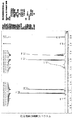
1H NMR(CDCl3):d=1.70(2H,quin,J=7.5Hz),1.93(4H,quin,J=7.5Hz),2.48−2.67(4H,m),3.28(4H,m),4.10(4H,t,J=7.5Hz),7.05(4H,d,J=8.9Hz),7.86(4H,d,J=8.9Hz)ppm.(図10参照)
〔合成例4〕
Dimer sulfide (1.04 g 0.000996 mol), H 2 O 2 (0.198
Properties: White powder
Yield: 0.78 g (72.9%)
Melting point: 154-158 ° C
IR (KBr): 1147.7 cm −1 (C—O), 1188.2, 1230.6, 1267.2 cm −1 (C—F), 2866.2, 2941.4 cm −1 (C—H) ( (See Figure 3)
1 H NMR (CDCl 3 ): d = 1.70 (2H, quin, J = 7.5 Hz), 1.93 (4H, quin, J = 7.5 Hz), 2.48-2.67 (4H, m), 3.28 (4H, m), 4.10 (4H, t, J = 7.5 Hz), 7.05 (4H, d, J = 8.9 Hz), 7.86 (4H, d, J = 8.9 Hz) ppm. (See Figure 10)
[Synthesis Example 4]
化合物1−6の合成 Synthesis of Compound 1-6
性状:白色粉末
収量:3.94g(70.4%)
融点:75〜83℃
IR(KBr):1141.9cm−1(C−O),1180.4,1211.3,1246.0cm−1(C−F),2941.4cm−1(C−H)(図4参照)
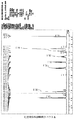
1H NMR (CDCl3):d=1.55(4H,quin,J=7.0Hz),1.82(4H,quin,J=7.0Hz),2.23−2.47(4H,m),3.01(4H,m),3.97(4H,t,=7.0Hz),6.86(4H,d,J=8.6Hz),7.37(4H,d,J=8.6Hz)ppm(図11参照)
〔合成例5〕
Properties: White powder
Yield: 3.94 g (70.4%)
Melting point: 75-83 ° C
IR (KBr): 1141.9 cm −1 (C—O), 1180.4, 1211.3, 1246.0 cm −1 (C—F), 2941.4 cm −1 (C—H) (see FIG. 4)
1 H NMR (CDCl 3 ): d = 1.55 (4H, quin, J = 7.0 Hz), 1.82 (4H, quin, J = 7.0 Hz), 2.23-2.47 (4H, m), 3.01 (4H, m), 3.97 (4H, t, = 7.0 Hz), 6.86 (4H, d, J = 8.6 Hz), 7.37 (4H, d, J = 8.6 Hz) ppm (see FIG. 11)
[Synthesis Example 5]
化合物2−6の合成 Synthesis of Compound 2-6
性状:白色粉末
収量:0.16g(15.1%)
融点:143〜147℃
IR(KBr):1139.9,1151.5cm−1(C−O),1193.9,1211.3,1234.4,1253.7cm−1(C−F),2939.5cm−1(C−H)(図5参照)
1H NMR(CDCl3):d=1.56−1.70(4H,m),1.80−1.90(4H,m),2.45−2.63(4H,m),3.27−3.33(4H,m),4.07(4H,t,=6.5Hz),7.04(4H,d,J=8.9Hz),7.85(4H,d,J=8.9Hz)ppm.(図12参照)
〔合成例6〕
Properties: White powder
Yield: 0.16 g (15.1%)
Melting point: 143-147 ° C
IR (KBr): 1139.9, 1151.5 cm −1 (C—O), 1193.9, 1211.3, 1234.4, 1253.7 cm −1 (C—F), 2939.5 cm −1 (C -H) (See FIG. 5)
1 H NMR (CDCl 3 ): d = 1.56-1.70 (4H, m), 1.80-1.90 (4H, m), 2.45-2.63 (4H, m), 3 .27-3.33 (4H, m), 4.07 (4H, t, = 6.5 Hz), 7.04 (4H, d, J = 8.9 Hz), 7.85 (4H, d, J = 8.9 Hz) ppm. (See Figure 12)
[Synthesis Example 6]
化合物1−10の合成 Synthesis of Compound 1-10
性状:白色粉末
収量:5.13g(88.3%)
融点:75.0〜80.0℃
IR(KBr):1141.9cm−1(C−O),1180.4,1192.0,1211.3,1246.0cm−1(C−F),2850.8,2918.3,2939.5cm−1(C−H)(図6参照)
1H NMR(CDCl3):d=1.33−1.43(12H,m),1.78(4H,qui,J=6.6Hz),2.33(4H,tt,J=17.3,8.0Hz),2.99(4H,tt,J=8.0,4.0Hz),3.94(4H,t,J=6.6Hz),6.86(4H,d,J=8.6Hz),7.36(4H,d,J=8.6Hz)ppm.(図13参照)
〔合成例7〕
Properties: White powder
Yield: 5.13 g (88.3%)
Melting point: 75.0-80.0 ° C
IR (KBr): 1141.9 cm −1 (C—O), 1180.4, 1192.0, 1211.3, 1246.0 cm −1 (C—F), 2850.8, 2918.3, 2939.5 cm -1 (C-H) (see FIG. 6)
1 H NMR (CDCl 3 ): d = 1.33-1.43 (12H, m), 1.78 (4H, qui, J = 6.6 Hz), 2.33 (4H, tt, J = 17. 3, 8.0 Hz), 2.99 (4H, tt, J = 8.0, 4.0 Hz), 3.94 (4H, t, J = 6.6 Hz), 6.86 (4H, d, J = 8.6 Hz), 7.36 (4H, d, J = 8.6 Hz) ppm. (See Figure 13)
[Synthesis Example 7]
化合物2−10の合成
Synthesis of Compound 2-10
性状:白色粉末
収量1.5g (70.7%)
融点:156〜157℃
IR(KBr):1211.3cm−1,1292.3cm−1,1321.2cm−1,1599.0,2918.3cm−1,2937.6cm−1(図7参照)
1H NMR(CDCl3):δ=1.25−1.60(12H,m)、1.79−1.86(4H,m),2.56−2.60(4H,m),3.27−3.31(4H,m),4.04(4H,t,J=6.5Hz),7.04(4H,d,J=8.9Hz),7.84(4H,d,J=8.9Hz)ppm(図13参照)
分子量(計算値):1146
実験値
M/Z=1147(M+H)
Properties: White powder
Yield 1.5g (70.7%)
Melting point: 156-157 ° C
IR (KB r ): 1211.3 cm −1 , 1292.3 cm −1 , 1321.2 cm −1 , 1599.0, 2918.3 cm −1 , 2937.6 cm −1 (see FIG. 7)
1 H NMR (CDCl 3 ): δ = 1.25-1.60 (12H, m), 1.79-1.86 (4H, m), 2.56-2.60 (4H, m), 3 .27-3.31 (4H, m), 4.04 (4H, t, J = 6.5 Hz), 7.04 (4H, d, J = 8.9 Hz), 7.84 (4H, d, J = 8.9 Hz) ppm (see FIG. 13)
Molecular weight (calculated value): 1146
Experimental value M / Z = 1147 (M + H)
最低ゲル化濃度の測定
最低ゲル化濃度の測定は次のように行った。
[1]化合物をサンプル管に量り取る。
[2]各種溶媒を加える。
[3]加熱し化合物を溶解させる。
[4]放冷し室温でゲル化を確認する。
[5]ゲル化していれば再び溶媒を加え濃度を下げていく。
[6][3]〜[6]を繰り返す
最低ゲル化濃度の結果を表1に示した。
Measurement of minimum gelation concentration
The minimum gelation concentration was measured as follows.
[1] Weigh the compound into a sample tube.
[2] Add various solvents.
[3] Heat to dissolve the compound.
[4] Allow to cool and check for gelation at room temperature.
[5] If gelled, the solvent is added again to lower the concentration.
Repeat [6] [3]-[6]
The results of the lowest gelation concentration are shown in Table 1.
値が小さいほど、少量の添加により有機ゲルを形成していることを示しており、ゲル化能が高いことを表す。
A smaller value indicates that an organic gel is formed by addition of a small amount, and indicates that the gelation ability is high.
P13 TFSIやPC,GBLなどの溶媒において、大幅に最低ゲル化濃度は低くなっており、炭素鎖伸長に伴い、ゲル化能が上昇することがわかった。一方、スルホン化した化合物2−5,2−6,2−10を比較すると、中央の炭素数に関わらず最低ゲル化濃度はほぼ同じ値となった。また、化合物1−6と化合物2−6を比較すると、スルホン化した化合物2−6の方がゲル化能は高くなった。
In solvents such as P13 TFSI, PC, and GBL, it was found that the minimum gelation concentration was significantly reduced, and the gelation ability increased with carbon chain elongation. On the other hand, when the sulfonated compounds 2-5, 2-6, and 2-10 were compared, the lowest gelation concentration was almost the same value regardless of the central carbon number. Further, when Compound 1-6 and Compound 2-6 were compared, the sulfonated compound 2-6 had higher gelling ability.
ゾル−ゲル転移温度の測定
ゾル−ゲル転移温度の測定は次のように行った。
[1]化合物をサンプル管に量り取る。
[2]各種溶媒を加え、濃度を10wt%付近に調整する。
[3]加熱し化合物を溶解させる。
[4]放冷し室温でゲル化させる。
[5]リボンヒーターで加熱し、ゾル状態になる温度を確認する。
[6]再び溶媒を加え、濃度を徐々に下げていき、同様にしてゾル状態になる温度を確認する。
化合物2−5,2−6,2−10をP13 TFSI,PC,GBL,1−Octanol溶媒中で測定した。
各化合物について、化合物2−5にあっては、PC,GBLではゾル−ゲル転移温度は濃度に対してあまり変化が見られなかったが、P13 TFSIでは5wt%,1−Octanolでは7wt%で急激にゾル−ゲル転移温度は変化した。
Measurement of sol-gel transition temperature
The sol-gel transition temperature was measured as follows.
[1] Weigh the compound into a sample tube.
[2] Various solvents are added to adjust the concentration to around 10 wt%.
[3] Heat to dissolve the compound.
[4] Allow to cool and gel at room temperature.
[5] Heat with a ribbon heater and check the temperature at which it becomes sol.
[6] The solvent is added again, the concentration is gradually lowered, and the temperature at which the sol state is obtained is similarly confirmed.
Compounds 2-5, 2-6, 2-10 were measured in P13 TFSI, PC, GBL, 1-Octanol solvent.
As for each compound, in Compound 2-5, the sol-gel transition temperature did not change much with respect to the concentration in PC and GBL, but rapidly increased to 5 wt% for P13 TFSI and 7 wt% for 1-Octanol. The sol-gel transition temperature changed.
化合物2−6にあっては、P13 TFSI,PC,GBLのゾル−ゲル転移温度は6wt%以上でほぼ同じ値であったが、1−Octanolのゾル−ゲル転移温度は他の溶媒に比べ低くなった。 In Compound 2-6, the sol-gel transition temperature of P13 TFSI, PC, and GBL was almost the same value at 6 wt% or more, but the sol-gel transition temperature of 1-Octanol was lower than that of other solvents. became.
化合物2−10にあっては、ゾル−ゲル転移温度はP13 TFSIをゲル化したものが最も高くなった。 In Compound 2-10, the sol-gel transition temperature was highest when P13 TFSI was gelled.
なお結果は図15〜17にそれぞれグラフを示す。 The results are shown in graphs in FIGS.
各種油類のゲル化例
実施例1と同様にして、サラダ油、東芝シリコーン社製シリコンオイル(TSF483)(メチルハイドロジェンポリシロキサン−ジメチルポリシロキサン共重合体)及び松村石油株式会社製石油ネオバックMR−200(商標)(物性値:ISO粘度グレード68、密度0.883g/cm3 at 15℃)について、それぞれゲル化状況を表2〜4に示す。
Example of gelation of various oils In the same manner as in Example 1, salad oil, silicon oil (TSF483) (methylhydrogenpolysiloxane-dimethylpolysiloxane copolymer) manufactured by Toshiba Silicone Co., Ltd. and Petroleum Neoback MR- manufactured by Matsumura Oil Co., Ltd. Tables 2 to 4 show the gelation status of 200 (trademark) (physical property value: ISO viscosity grade 68, density 0.883 g / cm 3 at 15 ° C.), respectively.
本発明のゲル化剤は、接着剤、塗料、印刷インキ、化粧品分野における流動性の制御、チクソトロピー性の付与、海上での石油流出時の回収、家庭等における廃食用油の処理、医療分野等、各種産業分野において、液体状有機化合物を固化し又は増粘する分野に適用することができる。 The gelling agent of the present invention includes adhesives, paints, printing inks, fluidity control in the cosmetics field, provision of thixotropy, recovery at the time of oil spill at sea, treatment of waste cooking oil at home, medical field, etc. In various industrial fields, the present invention can be applied to a field where a liquid organic compound is solidified or thickened.
Claims (2)
Priority Applications (3)
| Application Number | Priority Date | Filing Date | Title |
|---|---|---|---|
| JP2009134774A JP5419210B2 (en) | 2009-06-04 | 2009-06-04 | Gelling agent |
| PCT/JP2010/059578 WO2010140699A1 (en) | 2009-06-04 | 2010-05-31 | Gelatinization agent and gel |
| US13/376,053 US8455694B2 (en) | 2009-06-04 | 2010-05-31 | Gelling agent and gel |
Applications Claiming Priority (1)
| Application Number | Priority Date | Filing Date | Title |
|---|---|---|---|
| JP2009134774A JP5419210B2 (en) | 2009-06-04 | 2009-06-04 | Gelling agent |
Publications (2)
| Publication Number | Publication Date |
|---|---|
| JP2010280799A JP2010280799A (en) | 2010-12-16 |
| JP5419210B2 true JP5419210B2 (en) | 2014-02-19 |
Family
ID=43297830
Family Applications (1)
| Application Number | Title | Priority Date | Filing Date |
|---|---|---|---|
| JP2009134774A Expired - Fee Related JP5419210B2 (en) | 2009-06-04 | 2009-06-04 | Gelling agent |
Country Status (3)
| Country | Link |
|---|---|
| US (1) | US8455694B2 (en) |
| JP (1) | JP5419210B2 (en) |
| WO (1) | WO2010140699A1 (en) |
Families Citing this family (7)
| Publication number | Priority date | Publication date | Assignee | Title |
|---|---|---|---|---|
| EP2400588B1 (en) | 2009-02-18 | 2016-01-27 | Asahi Kasei E-materials Corporation | Electrolyte solution for lithium-ion secondary battery, and lithium-ion secondary battery comprising the same |
| WO2010143658A1 (en) | 2009-06-10 | 2010-12-16 | 旭化成イーマテリアルズ株式会社 | Electrolytic solution and lithium ion secondary battery utilizing same |
| JP5618287B2 (en) * | 2010-05-31 | 2014-11-05 | 国立大学法人山口大学 | Gelling agent and gel |
| JP5618288B2 (en) * | 2010-05-31 | 2014-11-05 | 国立大学法人山口大学 | Gelling agent and gel |
| JP6288618B2 (en) * | 2014-03-06 | 2018-03-07 | 国立大学法人山口大学 | Novel aromatic compounds having perfluoroalkyl groups at both ends |
| JP6443915B2 (en) * | 2014-09-22 | 2018-12-26 | 国立大学法人山口大学 | Fluoroalkane derivative, gelling agent, liquid crystalline compound and gel composition |
| US10039749B1 (en) | 2018-01-15 | 2018-08-07 | King Saud University | Substituted pyrazole derivatives |
Family Cites Families (5)
| Publication number | Priority date | Publication date | Assignee | Title |
|---|---|---|---|---|
| JP4820994B2 (en) | 2006-01-20 | 2011-11-24 | 国立大学法人山口大学 | Perfluoroalkyl group derivative gelling agent |
| WO2007083843A1 (en) * | 2006-01-20 | 2007-07-26 | National University Corporation Yamaguchi University | Aromatic compound gelatinizing agent having perfluoroalkyl group |
| JP4820993B2 (en) | 2006-01-20 | 2011-11-24 | 国立大学法人山口大学 | Organic liquid gelling agent comprising aromatic compound having perfluoroalkyl group |
| JP4876243B2 (en) | 2006-01-23 | 2012-02-15 | 国立大学法人山口大学 | Aromatic compound gelling agent having perfluoroalkyl group |
| EP2221295B1 (en) * | 2007-12-17 | 2014-01-01 | National University Corporation Yamaguchi University | Gelling agent containing fluoroalkyl derivative |
-
2009
- 2009-06-04 JP JP2009134774A patent/JP5419210B2/en not_active Expired - Fee Related
-
2010
- 2010-05-31 WO PCT/JP2010/059578 patent/WO2010140699A1/en not_active Ceased
- 2010-05-31 US US13/376,053 patent/US8455694B2/en not_active Expired - Fee Related
Also Published As
| Publication number | Publication date |
|---|---|
| US20120077885A1 (en) | 2012-03-29 |
| US8455694B2 (en) | 2013-06-04 |
| WO2010140699A1 (en) | 2010-12-09 |
| JP2010280799A (en) | 2010-12-16 |
Similar Documents
| Publication | Publication Date | Title |
|---|---|---|
| JP5419210B2 (en) | Gelling agent | |
| JP6240146B2 (en) | Nucleating systems for polyarylene sulfide compositions. | |
| KR101815029B1 (en) | Curable composition | |
| JP6550153B2 (en) | Phthalonitrile resin | |
| JP2019517618A (en) | Compound | |
| JPWO2009078268A1 (en) | Gelling agent containing fluoroalkyl group derivative | |
| US11124609B2 (en) | Polymeric coatings for metal surfaces | |
| JPH06234854A (en) | Preparation of arylene sulfide polymer | |
| JP5146690B2 (en) | Room temperature curable fluoropolyether rubber composition and cured product thereof | |
| JP5582495B2 (en) | Gelling agent | |
| CN104645875B (en) | Viscoelastic system that a kind of functionalization Gemini surface active is constructed and preparation method | |
| JP2011246422A (en) | Fluoroalkane derivative, gelling agent and gel composition | |
| CN106916043A (en) | Solvent-free acid amides synthetic method and its macromolecule antioxidative stabilizer synthesis in apply | |
| JP5864381B2 (en) | Novel fluorocarbon chain-containing compound, its production method and use | |
| JP5618287B2 (en) | Gelling agent and gel | |
| JP6501351B2 (en) | Fluoroalkane derivative, gelling agent, liquid crystalline compound and gel composition | |
| CN108290830A (en) | Phthalonitrile compound | |
| CN101255230A (en) | Preparation method of mercapto-terminated polyether | |
| JP6443915B2 (en) | Fluoroalkane derivative, gelling agent, liquid crystalline compound and gel composition | |
| JP5618288B2 (en) | Gelling agent and gel | |
| US5126420A (en) | Rtv organopolysiloxane compositions | |
| JP6288618B2 (en) | Novel aromatic compounds having perfluoroalkyl groups at both ends | |
| US4699634A (en) | Process for the modification of aromatic polymers via phase transfer catalysis to produce polyarylene polymers and the use thereof | |
| WO2003074540A1 (en) | Gelling organic compounds having ferrocene groups and gels and cast films made by using the same | |
| JPH05320518A (en) | Curable fluorosilicone resin composition |
Legal Events
| Date | Code | Title | Description |
|---|---|---|---|
| A621 | Written request for application examination |
Free format text: JAPANESE INTERMEDIATE CODE: A621 Effective date: 20120313 |
|
| A131 | Notification of reasons for refusal |
Free format text: JAPANESE INTERMEDIATE CODE: A131 Effective date: 20130730 |
|
| A521 | Request for written amendment filed |
Free format text: JAPANESE INTERMEDIATE CODE: A523 Effective date: 20130924 |
|
| TRDD | Decision of grant or rejection written | ||
| A01 | Written decision to grant a patent or to grant a registration (utility model) |
Free format text: JAPANESE INTERMEDIATE CODE: A01 Effective date: 20131112 |
|
| A61 | First payment of annual fees (during grant procedure) |
Free format text: JAPANESE INTERMEDIATE CODE: A61 Effective date: 20131115 |
|
| R150 | Certificate of patent or registration of utility model |
Ref document number: 5419210 Country of ref document: JP Free format text: JAPANESE INTERMEDIATE CODE: R150 |
|
| R250 | Receipt of annual fees |
Free format text: JAPANESE INTERMEDIATE CODE: R250 |
|
| R250 | Receipt of annual fees |
Free format text: JAPANESE INTERMEDIATE CODE: R250 |
|
| R250 | Receipt of annual fees |
Free format text: JAPANESE INTERMEDIATE CODE: R250 |
|
| R250 | Receipt of annual fees |
Free format text: JAPANESE INTERMEDIATE CODE: R250 |
|
| R250 | Receipt of annual fees |
Free format text: JAPANESE INTERMEDIATE CODE: R250 |
|
| R250 | Receipt of annual fees |
Free format text: JAPANESE INTERMEDIATE CODE: R250 |
|
| LAPS | Cancellation because of no payment of annual fees |