JP5631996B2 - Pre-registration / pre-authentication in wireless networks - Google Patents
Pre-registration / pre-authentication in wireless networks Download PDFInfo
- Publication number
- JP5631996B2 JP5631996B2 JP2012525654A JP2012525654A JP5631996B2 JP 5631996 B2 JP5631996 B2 JP 5631996B2 JP 2012525654 A JP2012525654 A JP 2012525654A JP 2012525654 A JP2012525654 A JP 2012525654A JP 5631996 B2 JP5631996 B2 JP 5631996B2
- Authority
- JP
- Japan
- Prior art keywords
- time
- network
- base station
- estimated
- cell
- Prior art date
- Legal status (The legal status is an assumption and is not a legal conclusion. Google has not performed a legal analysis and makes no representation as to the accuracy of the status listed.)
- Active
Links
Images





Classifications
-
- H—ELECTRICITY
- H04—ELECTRIC COMMUNICATION TECHNIQUE
- H04W—WIRELESS COMMUNICATION NETWORKS
- H04W36/00—Hand-off or reselection arrangements
- H04W36/0005—Control or signalling for completing the hand-off
- H04W36/0083—Determination of parameters used for hand-off, e.g. generation or modification of neighbour cell lists
- H04W36/00837—Determination of triggering parameters for hand-off
- H04W36/008375—Determination of triggering parameters for hand-off based on historical data
-
- H—ELECTRICITY
- H04—ELECTRIC COMMUNICATION TECHNIQUE
- H04W—WIRELESS COMMUNICATION NETWORKS
- H04W36/00—Hand-off or reselection arrangements
- H04W36/0005—Control or signalling for completing the hand-off
- H04W36/0011—Control or signalling for completing the hand-off for data sessions of end-to-end connection
- H04W36/0016—Hand-off preparation specially adapted for end-to-end data sessions
-
- H—ELECTRICITY
- H04—ELECTRIC COMMUNICATION TECHNIQUE
- H04W—WIRELESS COMMUNICATION NETWORKS
- H04W36/00—Hand-off or reselection arrangements
- H04W36/0005—Control or signalling for completing the hand-off
- H04W36/0055—Transmission or use of information for re-establishing the radio link
- H04W36/0061—Transmission or use of information for re-establishing the radio link of neighbour cell information
Landscapes
- Engineering & Computer Science (AREA)
- Computer Networks & Wireless Communication (AREA)
- Signal Processing (AREA)
- Mobile Radio Communication Systems (AREA)
Description
関連出願の相互参照
[0001] 本出願は、2009年8月18日に出願された米国仮特許出願第61/234757号の出願日の利益を請求するものであり、これにより同出願の開示内容は参照により本明細書に組み込まれる。
Cross-reference of related applications
[0001] This application claims the benefit of the filing date of US Provisional Patent Application No. 61/234757, filed Aug. 18, 2009, the disclosure of which is hereby incorporated herein by reference. Embedded in the book.
[0002] 本発明は、一般に、事前登録(pre-registration)/事前認証(pre-authentication)を実行し、無線通信ネットワーク内のリソースを予約するための方法及びシステムに関し、より具体的には、次世代ユニバーサル地上無線アクセス・ネットワーク(E−UTRAN)及び進化型高速パケット・データ(eHRPD)ネットワークにおけるこのような方法及びシステムの使用に関する。 [0002] The present invention relates generally to a method and system for performing pre-registration / pre-authentication and reserving resources in a wireless communication network, and more specifically, It relates to the use of such methods and systems in next generation universal terrestrial radio access networks (E-UTRAN) and evolved high-speed packet data (eHRPD) networks.
[0003] 第4世代(4G)の無線システムは、エンドツーエンド(無線アクセス・ネットワークからコア・ネットワークまで)の全IPシステムである。4Gシステムは、既存の通信ネットワーク、例えば、3Gネットワークをアップグレードし、かなり高いデータ転送速度で「いつでも、どこでも(Anytime, Anywhere)」安全なユビキタスIPベース通信を提供することが期待されている。4Gネットワークは、既存のサービス(例えば、音声、電子メール)を強化し、例えば、ワイヤレス・ブロードバンド・アクセス、ビデオ・チャット、モバイルTV、HDTVコンテンツ、及びデジタル放送(DVB)などの新しいサービスを提供するものと予想されている。このようなネットワークは、スペクトル効率を強化し(周波数単位あたりのビット数/時間単位の増加)、より多くの容量、滑らかなハンドオフ、シームレスな接続性、複数のネットワーク間のグローバル・ローミングを提供することが期待されている。 The fourth generation (4G) wireless system is an end-to-end (from a radio access network to a core network) all-IP system. 4G systems are expected to upgrade existing communication networks, such as 3G networks, to provide “Anytime, Anywhere” secure ubiquitous IP-based communication at fairly high data rates. 4G networks enhance existing services (eg, voice, e-mail) and provide new services such as, for example, wireless broadband access, video chat, mobile TV, HDTV content, and digital broadcasting (DVB). It is expected. Such networks enhance spectral efficiency (increased bits per frequency unit / time unit), provide more capacity, smooth handoffs, seamless connectivity, and global roaming between multiple networks It is expected that.
[0004] 主要な4G無線システムは、第3世代パートナーシップ・プロジェクト(3GPP)によって定義された進化型パケット・システム(EPS)である。これは、無線アクセス・ネットワーク(RAN)用のロング・ターム・エボリューション(LTE)と、コア・ネットワーク用のサービス・アーキテクチャ進化(SAE)を含む。また、これは、異種無線アクセス技術をサポートし、グレースフルなネットワーク進化(graceful network evolution)を可能にするために、3GPP2進化データ最適化(EV−DO)などの他の無線技術により網間接続するためのアーキテクチャも含む。3GPP LTE及びSAEによって定義された無線アクセス・ネットワーク及びコア・ネットワークは、それぞれ、次世代ユニバーサル地上無線アクセス・ネットワーク(E−UTRAN)及び進化型パケット・コア(EPC)と呼ばれる。 [0004] The primary 4G wireless system is the Evolutionary Packet System (EPS) defined by the Third Generation Partnership Project (3GPP). This includes Long Term Evolution (LTE) for Radio Access Network (RAN) and Service Architecture Evolution (SAE) for Core Network. It also supports inter-network connectivity via other wireless technologies such as 3GPP2 Evolutionary Data Optimization (EV-DO) to support heterogeneous wireless access technologies and enable graceful network evolution. It also includes an architecture for The radio access network and core network defined by 3GPP LTE and SAE are called Next Generation Universal Terrestrial Radio Access Network (E-UTRAN) and Evolved Packet Core (EPC), respectively.
[0005] EV−DOは、一般に、3GPP2高速パケット・データ(HRPD)及び進化型HRPD(eHRPD)規格を参照する。HRPDは、3GPP2 C.S0024−A v3.0の仕様書に記載されているように、パケット伝送用のCDMA2000ベースの技術である。eHRPDネットワークは、進化した動作モードをサポートする無線アクセス・ネットワークを提供し、3GPP EPCによる複数のパケット・データ・ネットワークへの接続をサポートするIP環境を提供する。この網間接続アーキテクチャは、3GPP2 X.S0057の仕様書に記載されているように、E−UTRAN及びeHRPD網間接続と呼ばれる。 [0005] EV-DO generally refers to 3GPP2 high-speed packet data (HRPD) and evolved HRPD (eHRPD) standards. HRPD is a 3GPP2 C.I. As described in the specification of S0024-A v3.0, it is a CDMA2000-based technology for packet transmission. The eHRPD network provides a radio access network that supports an advanced mode of operation and provides an IP environment that supports connections to multiple packet data networks via 3GPP EPC. This inter-network connection architecture is based on 3GPP2 X. As described in the specification of S0057, this is called E-UTRAN and eHRPD inter-network connection.
[0006] 3GPP及び3GPP2などの規格団体は網間接続(internetworking)アーキテクチャ(例えば、図1を参照)、呼び出しの流れ(例えば、図2を参照)、及びネットワーク間のユーザ装置又は移動局/デバイスのハンドオフに関連する高レベルの仕様書を提供する際に相当な量の作業を実行してきたが、多くの詳細は実現に委ねられている。例えば、図2を参照して説明すると、事前登録する時期に関連する手順は指定されていない(図2のブロック208を参照)。加えて、リソースをどのくらい予約しなければならないかを決定するための手順は同様に設計実現に開放されている(図2のブロック218を参照)。
[0006] Standard bodies such as 3GPP and 3GPP2 have an internetworking architecture (eg, see FIG. 1), call flow (eg, see FIG. 2), and user equipment or mobile stations / devices between networks. Although a considerable amount of work has been done in providing high-level specifications related to the handoffs, many details are left to implementation. For example, referring to FIG. 2, a procedure related to pre-registration time is not specified (see
[0007] 一般的な問題として、規格団体は通常、事前登録及び事前認証を実行するためのアルゴリズムを標準化しない。従って、事前認証及び事前登録を使用してハンドオフ遅延を削減するために種々の手法が提案されてきた。1つの手法では、独立して或いは1つ又は複数の基地局と共同で機能しているユーザ装置又は移動局は、そのユーザ装置又は移動局を隣接ネットワークにハンドオフする前に、候補基地局に対する事前登録/事前認証、事前対応のキー配布、及びその他の手順を実行する際に訪問し関与する可能性のある隣接基地局を選択する。しかし、ほとんどの既存の事前登録/認証メカニズムは、典型的に、ユーザ装置の移動を予測すること、並びに、このような移動に基づいて、ユーザ装置のハンドオフ先になる可能性のあるターゲット基地局を選択する方法に焦点を合わせている。 [0007] As a general problem, standards bodies typically do not standardize algorithms for performing pre-registration and pre-authentication. Accordingly, various approaches have been proposed to reduce handoff delay using pre-authentication and pre-registration. In one approach, a user equipment or mobile station that is functioning independently or jointly with one or more base stations may advance a candidate base station prior to handing off the user equipment or mobile station to an adjacent network. Select neighboring base stations that may be visited and involved in performing registration / pre-authentication, proactive key distribution, and other procedures. However, most existing pre-registration / authentication mechanisms typically predict user equipment movement and target base stations that may be handed off to user equipment based on such movement. Focus on how to choose.
[0008] より具体的には、いくつかのメカニズムでは、サーバに関連する集中型データベースを使用して、セル間のユーザ装置移動履歴を収集し、例えば、WiFiネットワーク内のアクセス・ポイント間の隣接グラフを構築することにより、今後のハンドオフ挙動を予測している。しかし、アクセス・ポイント間で交換される余分な信号メッセージによって、同じアルゴリズムを使用しない他のアクセス・ポイントに対して信号送出する際に一貫性の問題を引き起こす可能性がある。さらに、集中型サーバは性能上のボトルネックになる可能性がある。加えて、アクセス・ポイントは同じ管理ドメイン下にある必要があるので、この技法は異種ネットワーク(異なるアクセス技法を使用する複数のネットワーク)には適していない。 [0008] More specifically, some mechanisms use a centralized database associated with the server to collect user equipment movement history between cells, eg, neighbors between access points in a WiFi network. The future handoff behavior is predicted by constructing the graph. However, extra signaling messages exchanged between access points can cause consistency problems when signaling to other access points that do not use the same algorithm. In addition, a centralized server can become a performance bottleneck. In addition, this technique is not suitable for heterogeneous networks (multiple networks using different access techniques) because the access points need to be under the same administrative domain.
[0009] 他のメカニズムでは、それぞれのアクセス・ポイントは、移動局又はユーザ装置がその隣接移動局又はユーザ装置に到達できる平均所要時間間隔を記録する。ユーザ装置が事前認証を要求すると、サービング・アクセス・ポイントは、その要件を満足するすべての隣接移動局又はユーザ装置を識別するのを支援する。これらのメカニズムは、多数の移動局が存在する場合、実現するのが難しいものになる。 [0009] In another mechanism, each access point records the average time interval that a mobile station or user equipment can reach its neighboring mobile station or user equipment. When the user equipment requests pre-authentication, the serving access point helps to identify all neighboring mobile stations or user equipment that meet its requirements. These mechanisms are difficult to implement when there are a large number of mobile stations.
[0010] 既存の技法を考慮すると、事前登録/事前登録が効果的にハンドオフ遅延を削減できるようにするために、いくつかの技術的問題を解決する必要がある。上述の通り、1つの問題は、事前登録/事前認証をいつ実行しなければならないかである。モバイル・デバイス又はユーザ装置は、任意の速度で移動し、任意の時期にその現在セルを離れることができる。事前登録/事前認証を実行すべきである場合、実際のハンドオフが行われる前にそれを実行しなければならない。しかし、現在セルが小さく、ユーザ装置が高速で移動している場合、ユーザ装置は、隣接セルのうちのいくつか又はすべてに対して事前登録/事前認証を実行するための十分な時間がない可能性がある。従って、隣接セルに対する事前登録/事前認証をトリガする時期及びトリガすべきかどうかを決定することは重要である。 [0010] In view of existing techniques, several technical issues need to be solved in order for pre-registration / pre-registration to effectively reduce handoff delay. As discussed above, one issue is when pre-registration / pre-authentication must be performed. A mobile device or user equipment can move at any speed and leave its current cell at any time. If pre-registration / pre-authentication is to be performed, it must be performed before the actual handoff takes place. However, if the current cell is small and the user equipment is moving at high speed, the user equipment may not have enough time to perform pre-registration / pre-authentication for some or all of the neighboring cells There is sex. Therefore, it is important to determine when and whether to trigger pre-registration / pre-authentication for neighboring cells.
[0011] もう1つの問題は、どの隣接ネットワーク又はセルに対して事前登録/事前認証を実行しなければならないかである。ユーザ装置は、任意の方向に移動することができ、任意の時期にその移動方向を変更することができる。従って、それに対してユーザ装置が事前登録及び事前認証を実行しなければならない隣接セルを決定することは重要である。複数の隣接ネットワーク又はセルに対して事前登録及び事前認証を実行すべきである場合、これらの隣接セルに対してユーザ装置が事前登録及び事前認証を実行する順序を決定することも重要である。これは、事前登録及び事前認証が時間のかかる処理であり、移動局が事前登録及び事前認証しようとしているすべての隣接ネットワーク又はセルに対して事前登録及び事前認証動作を完了する前にその移動局が現在セルを離れる可能性があるからである。 [0011] Another problem is which neighboring network or cell must be pre-registered / pre-authenticated. The user device can move in any direction and can change the direction of movement at any time. Therefore, it is important for the user equipment to determine a neighboring cell to which pre-registration and pre-authentication must be performed. If pre-registration and pre-authentication are to be performed for multiple neighboring networks or cells, it is also important to determine the order in which the user equipment performs pre-registration and pre-authentication for these neighboring cells. This is a time-consuming process for pre-registration and pre-authentication, and before the mobile station completes pre-registration and pre-authentication operations for all neighboring networks or cells that it is trying to pre-register and pre-authenticate. Is likely to leave the current cell.
[0012] もう1つの問題は、隣接ネットワーク内で事前登録/事前認証によって予約されたネットワーク・リソースをいつ解除しなければならないかである。図2に示されているように、隣接セル又はネットワークに対して事前登録/事前認証が遂行されると、IPアドレス、セキュリティ・キー、及びモビリティ・コンテキストを含む何らかのコンテキストが隣接ネットワーク内の特定のユーザ装置又は移動局のために予約される。しかし、ユーザ装置は、そのユーザ装置が事前登録/事前認証を実行した候補セルのうちのいくつかを訪問しない可能性がある。従って、適切な時期にこれらのセル内のコンテキストを削除することが重要である。 [0012] Another issue is when network resources reserved by pre-registration / pre-authentication in neighboring networks must be released. As shown in FIG. 2, when pre-registration / pre-authentication is performed for a neighboring cell or network, some context including IP address, security key, and mobility context is specified in the neighboring network. Reserved for user equipment or mobile station. However, the user equipment may not visit some of the candidate cells for which the user equipment has performed pre-registration / pre-authentication. Therefore, it is important to delete the context in these cells at the appropriate time.
[0013] この場合、ハンドオフを実行する時期並びに無線ネットワーク内及び特定の全IP無線ネットワーク内でリソースを予約する期間を決定することに関連する問題及び短所に対処することを対象とするシステム及び方法は有益である。 [0013] In this case, a system and method directed to addressing the problems and disadvantages associated with determining when to perform a handoff and the period for reserving resources within a wireless network and within a particular all-IP wireless network Is beneficial.
[0014] 本発明の一態様は、無線ネットワーク・モビリティを管理するための方法である。この方法は、好ましくは、第1のネットワーク装置(network equipment)で、1つ又は複数のユーザ・デバイス(user device)が第1のネットワーク装置のサービスエリア範囲(coverage range)内にとどまる時間に関連する1つ又は複数の時間サンプル(time sample)を取得することを含む。また、この方法は、好ましくは、第2のネットワーク装置で、取得した時間サンプルに基づいて他のユーザ・デバイスがサービスエリア範囲内にとどまる可能性のある時間を推定することも含む。 [0014] One aspect of the invention is a method for managing wireless network mobility. This method is preferably related to the time at which the one or more user devices stay within the coverage range of the first network equipment at the first network equipment. Obtaining one or more time samples. The method also preferably includes estimating, at the second network device, a time during which other user devices may stay within the coverage area based on the acquired time samples.
[0015] 本発明のこの態様により、この方法は、好ましくは、確率過程(stochastic process)を使用して取得したサンプルを処理することを含み、確率過程はウィーナ過程(Wiener process)を含む。 [0015] According to this aspect of the invention, the method preferably includes processing a sample obtained using a stochastic process, the stochastic process including a Wiener process.
[0016] さらに、本発明のこの態様により、この方法は、時系列分析を使用して取得したサンプルを処理することを含むことができる。 [0016] Further in accordance with this aspect of the invention, the method can include processing a sample obtained using time series analysis.
[0017] さらに、本発明のこの態様により、この方法は、第2のネットワーク装置により、推定した時間を他のユーザ・デバイスに伝送することを含むことができる。 [0017] Further in accordance with this aspect of the invention, the method may include transmitting the estimated time to another user device by the second network device.
[0018] さらに、本発明のこの態様により、第1のネットワーク装置及び第2のネットワーク装置は同じネットワーク装置を含む。 [0018] Further in accordance with this aspect of the invention, the first network device and the second network device comprise the same network device.
[0019] さらに、本発明のこの態様により、第1又は第2のネットワーク装置は、基地局、携帯電話、モビリティ管理エンティティ(mobility management entity)、ホーム加入者サーバ(home subscriber server)、サービング・ゲートウェイ(serving gateway)、及び認証認可アカウンティング・サーバ(authentication, authorization and accounting server)から構成されるグループから選択することができる。 [0019] Further in accordance with this aspect of the invention, the first or second network device comprises a base station, a mobile phone, a mobility management entity, a home subscriber server, a serving gateway. (Serving gateway) and a group consisting of authentication, authorization and accounting server.
[0020] さらに、この方法は、あるネットワーク装置で、他のユーザ・デバイスから事前認証/事前登録要求を受信することと、推定した時間に基づいてそのネットワーク装置で事前認証/事前登録要求を実行することを含むことができる。 [0020] Further, the method receives a pre-authentication / pre-registration request from another user device at a network device and executes the pre-authentication / pre-registration request at the network device based on the estimated time. Can include.
[0021] さらに、本発明のこの態様により、この方法は、他のユーザ・デバイスに関連する1つ又は複数の隣接基地局のサービスエリアによって定義された1つ又は複数の隣接セルの信号対雑音比を取得することと、隣接セルの中から、取得した信号対雑音比に基づいて他のユーザ・デバイスをハンドオフするためのターゲット・セルを決定することを含むことができる。 [0021] Further in accordance with this aspect of the invention, the method also includes signal to noise of one or more neighboring cells defined by the coverage area of one or more neighboring base stations associated with other user devices. Obtaining the ratio may include determining a target cell for handing off other user devices from neighboring cells based on the obtained signal-to-noise ratio.
[0022] 他の態様では、本発明は、無線ネットワーク・リソースを管理する方法を含む。この方法は、好ましくは、第1のネットワーク装置で、第1の基地局に関連する複数のユーザ・デバイスに関する1つ又は複数の時間サンプルを取得することと、第2のネットワーク装置で、取得した時間サンプルに基づいて第1の基地局に関連する他のユーザ・デバイスに関するセル在留時間(cell residence time)を推定することと、第2のネットワーク装置で、推定したセル在留時間に基づいてネットワーク・リソースを解除する時期を決定することを含む。 [0022] In another aspect, the invention includes a method for managing wireless network resources. The method preferably includes obtaining at the first network device one or more time samples for a plurality of user devices associated with the first base station and obtaining at the second network device. Estimating a cell residence time for other user devices associated with the first base station based on the time sample; and a second network device based on the estimated cell residence time Includes determining when to release resources.
[0023] さらに、本発明のこの態様により、推定することは、推定したセル在留時間の標準偏差を計算することをさらに含む。 [0023] Further, according to this aspect of the invention, the estimating further includes calculating a standard deviation of the estimated cell residence time.
[0024] さらに、本発明のこの態様により、ネットワーク・リソースは、ネットワーク・アドレス、QoSプロファイル、セキュリティ・キー、又はベアラ(bearer)を含むことができる。 [0024] Furthermore, according to this aspect of the invention, the network resource may include a network address, a QoS profile, a security key, or a bearer.
[0025] さらに、本発明のこの態様により、この方法は、第2の基地局で、他のユーザ・デバイスから事前認証又は事前登録要求を受信することと、第2の基地局で、推定した時間に基づいて他のユーザ・デバイスを事前認証及び事前登録することと、他のユーザ・デバイスに関連する隣接セルに他のユーザ・デバイスをハンドオフするためのネットワーク・リソースを予約することを含むことができる。 [0025] Further in accordance with this aspect of the invention, the method estimated at the second base station that the second base station receives a pre-authentication or pre-registration request from another user device. Including pre-authentication and pre-registration of other user devices based on time and reserving network resources to handoff other user devices to neighboring cells associated with other user devices Can do.
[0026] さらに、推定することは、確率過程又は時系列分析を使用して、取得した時間サンプルを処理することを含むことができ、確率過程はウィーナ過程を含むことができる。 [0026] Further, the estimating can include processing the acquired time samples using a stochastic process or time series analysis, and the stochastic process can include a Wiener process.
[0027] さらに、この方法は、ネットワーク装置により、推定した時間を他のユーザ・デバイスに伝送することを含むことができる。 [0027] Further, the method can include transmitting the estimated time to other user devices by the network device.
[0028] 他の態様では、本発明は、基地局に関連する複数のユーザ・デバイスに関する1つ又は複数の時間サンプルを取得するための基地局と、取得した時間サンプルに基づいて基地局に関連する他のユーザ・デバイスに関するセル在留時間を推定するためのネットワーク・デバイスに関連するプロセッサとを含むことができるシステムである。 [0028] In other aspects, the present invention relates to a base station for obtaining one or more time samples for a plurality of user devices associated with the base station and to the base station based on the obtained time samples. And a processor associated with the network device for estimating cell residence time for other user devices.
[0029] さらに、本発明のこの態様により、ネットワーク・デバイスは、基地局、携帯電話、モビリティ管理エンティティ、ホーム加入者サーバ、サービング・ゲートウェイ、及び認証認可アカウンティング・サーバから構成されるグループから選択することができる。 [0029] Further in accordance with this aspect of the invention, the network device selects from the group consisting of a base station, a mobile phone, a mobility management entity, a home subscriber server, a serving gateway, and an authentication authorization accounting server. be able to.
[0030] さらに、本発明のこの態様により、時間サンプルは、セル在留時間と、ユーザ・デバイスがセルに入る時間と、ユーザ・デバイスがセルを離れる時間を含む。 [0030] Further in accordance with this aspect of the invention, the time sample includes a cell residence time, a time when the user device enters the cell, and a time when the user device leaves the cell.
詳細な説明
[0040] 図1Aは、E−UTRAN及びeHRPDネットワークの網間接続ネットワーク・トポロジを示している。図示の通り、トポロジ100は、eHRPDネットワーク部分又はセル101と、E−UTRANネットワーク部分又はセル102とを含む。ユーザ装置、移動局、又はネットワーク・デバイス103はこれらのネットワーク又はセル101、102の間を移動するので、基地局109、113により、適宜、シームレスに通信を確立する必要がある。これは、ネットワーク又はセル間の滑らかでシームレスなハンドオフを可能にするために、ネットワーク・リソースの事前認証及び事前登録並びに割り振りを必要とする。
Detailed description
[0040] FIG. 1A shows an inter-network connection network topology for E-UTRAN and eHRPD networks. As shown,
[0041] 図1Bは、簡略化したE−UTRAN及びeHRPD網間接続アーキテクチャ160を示している。図示の通り、E−UTRANネットワークは、基地局又はeNodeB(基地局を含むことができる進化型ノードB又はeNB)113を含む無線アクセス・ネットワーク168を含む。eNodeB113は、3GPP進化型パケット・コア(EPC)ネットワーク170内の1つ又は複数のネットワーク装置又は要素に接続される。具体的には、eNodeB113は、サービング・ゲートウェイ164又はモビリティ管理エンティティ174のいずれかに接続することができる。サービング・ゲートウェイ164は、パケット・データ・ネットワーク・ゲートウェイ176並びにポリシー及び課金ルール機能ネットワーク要素184に接続することができる。モビリティ管理エンティティ174は、それ自体が3GPP認証認可アカウンティング(AAA)サーバ186に接続されるホーム加入者サーバ180に接続される。図1Bはこのようなネットワーク装置間の線として接続を示しているが、ネットワーク装置又は要素間に中間装置が存在する可能性があることを理解されたい。それぞれのネットワーク装置間に示されている線は、これらのネットワーク装置又は要素が相互に直接又は間接的に通信することを示すためのものである。
[0041] FIG. 1B shows a simplified E-UTRAN and eHRPD
[0042] 機能的には、サービング・ゲートウェイ164は、ネットワークのE−UTRAN168部分とEPC170部分との間でデータ・パケットを移送する。モビリティ管理エンティティ174はモビリティ管理及び認証に関連する機能を担当する。サービング・ゲートウェイ164はそれぞれのユーザ装置1031に関連付けられている。ユーザ装置がeNodeB113の全域を移動する場合、サービング・ゲートウェイ164はローカル・モビリティ・アンカ・ポイントとして機能する。即ち、これは、ユーザ・パケット・データを経路指定し転送する。パケット・データ・ネットワーク・ゲートウェイ176は、3GPP EPCと外部パケット・データ・ネットワーク(図示せず)との間でパケット・データのアンカ・ポイントとして機能する。複数のパケット・データ・ネットワークにアクセスするために2つ以上のパケット・データ・ネットワーク・ゲートウェイが存在する可能性がある。ホーム加入者サーバ180は加入者に関する情報を保管する。ポリシー及び課金ルール機能要素184は、QoSリソースのポリシー制御及び管理をサポートする。3GPP AAAサーバ186は認証、認可、およびアカウンティングを担当する。
[0042] Functionally, the serving
[0043] 図1Bに示されているように、ユーザ装置1031はeHRPD無線アクセス・ネットワーク192を介してeHRPDネットワーク188にローミングすることができる。無線アクセス・ネットワーク192はユーザ装置103と通信する基地局109を含む。基地局109は進化型アクセス・ネットワーク/進化型パケット制御機能(eAN/ePCF)194に接続される。eAN/ePCF194は、HRPDサービング・ゲートウェイ190、アクセス・ネットワークAAA196に接続され、好ましくは、モビリティ管理エンティティ174に接続される。HRPDサービング・ゲートウェイ190は3GPP2 AAAサーバ198に接続される。
[0043] As shown in FIG. 1B, the
[0044] 3GPP2 eHRPDネットワーク188では、HRPDサービング・ゲートウェイ190はeHRPDアクセス・ネットワークを3GPP HPCと接続するサービング・ネットワークである。eAN/ePCF194は進化型アクセス・ネットワーク(eAN)と進化型パケット制御機能(ePCF)の組み合わせである。eANはユーザ装置との無線通信に使用される。ePCFは、eANとHRPDサービング・ゲートウェイ190との間のパケットのリレーを管理する。論理的にはeANとePCFを分離することができるが、実際問題としては、これらは、通常、実現される時に物理的に同じ場所に配置されることが期待されている。アクセス・ネットワークAAA196は、図1BではeHRPD無線アクセス・ネットワーク192であるアクセス・ネットワークの認証を担当する。3GPP2 AAA198はeHRPDシステム内のAAAサーバとして機能する。
[0044] In the
[0045] 図1A及び図1Bに関連して説明すると、ユーザ装置は、現在在留しているセルから他のセルに移動する時にハンドオフされる。セルは、基地局によって対応される無線信号サービスエリアによって定義される。3GPP LTEでは、セル・サービスエリアは1kmから100kmに及ぶ可能性がある。アクティブ・ハンドオフ(active handoff)とは、ユーザ装置103がアクティブ状態にある時、即ち、ユーザ装置103とeAN/ePCF194との間に物理的なトラフィック・チャネルが存在し、eAN/ePCF194とHSGW190との間に接続が存在する時に行われるハンドオフを指す。また、ユーザ装置103とHSGW190との間にはポイントツーポイント・プロトコル(PPP)リンクも存在する。休止ハンドオフ(dormant handoff)では、ユーザ装置103とeAN/ePCF194との間に物理的なトラフィック・チャネルが存在しない。従って、休止ハンドオフでは、HSGW190とユーザ装置103との間でパケット・データを送信する前にユーザ装置をページングしなければならない。
[0045] Referring to FIGS. 1A and 1B, a user equipment is handed off when moving from a currently residing cell to another cell. A cell is defined by the radio signal service area supported by the base station. In 3GPP LTE, the cell service area can range from 1 km to 100 km. An active handoff is when the
[0046] ハンドオフには2つのフェーズが存在する。第1のフェーズは、ターゲット隣接セルに対して事前登録及び事前認証を実行することである。この点に関しては、隣接セルが異なるネットワーク、例えば、3GPP EPCと3GPP2 eHRPDにある時に、隣接ネットワーク間でハンドオフが行われる。第2のフェーズであるハンドオフ・フェーズは、ハンドオフ手順の残りの部分、即ち、ユーザ装置又はネットワーク・デバイスに実際にネットワーク又はサービング基地局を変更させることを含む。研究によれば、登録及び認証は、通常、ハンドオフ中に実行されるその他の手順より長い時間がかかることが分かっている。従って、事前登録及び事前認証はハンドオフ待ち時間を大幅に短縮することができるであろう。 [0046] There are two phases in handoff. The first phase is to perform pre-registration and pre-authentication on the target neighbor cell. In this regard, handoff is performed between adjacent networks when adjacent cells are in different networks, eg, 3GPP EPC and 3GPP2 eHRPD. The second phase, the handoff phase, includes allowing the user equipment or network device to actually change the network or serving base station, the rest of the handoff procedure. Studies have shown that registration and authentication typically takes longer than other procedures performed during handoff. Thus, pre-registration and pre-authentication will greatly reduce handoff latency.
[0047] 次に図2を参照すると、3GPP1 X.0057に規定されているように、E−UTRAN及びeHRPDネットワーク間のハンドオフ手順の一部として事前登録及び事前認証のためのステップを描写する呼び出し流れ図が示されている。図示の通り、ユーザ装置103は、eHRPDシステム内で新しいセッション209の確立を開始する。デバイス認証210の後に、eHRPD eAN/ePCF194はHRPDサービング・ゲートウェイ190との主要なA10接続を確立する。次にユーザ装置103とHRPDサービング・ゲートウェイ190はPPP接続確立手順212を開始する。次にユーザ装置103は、IETF RFC4187に記載されているように、2121〜2123でEAP−AKAを使用することによってユーザ認証及び認可を実行する。EAP−AKAメッセージは、ポイントツーポイント・プロトコル(PPP)を使用してユーザ装置103とHRPDサービング・ゲートウェイ190との間で交換される。EAP−AKAメッセージは3GPP2 AAAサーバ198によって3GPP AAAサーバ186にさらにリレーされ、その3GPP AAAサーバ186がユーザ装置を認証し認可する。
[0047] Referring now to FIG. As defined in 0057, a call flow diagram depicting the steps for pre-registration and pre-authentication as part of the handoff procedure between E-UTRAN and eHRPD networks is shown. As shown, the
[0048] 認証及び認可が成功すると、3GPP AAAサーバ186は、ホーム加入者サーバ180に照会し、パケット・データ・ネットワーク・ゲートウェイ・アドレスをeHRPDシステムに返す。HRPDサービング・ゲートウェイ190は、213、214で、3GPP AAAサーバ186又はホーム加入者サーバ180から受信したPDN GW IPアドレス、QoSプロファイル、及びその他のユーザ・コンテキスト情報を保管する。上記のステップの後に、ネットワークは、すべての専用ベアラを確立し、事前登録/認証プロセスを完了するために、リソース予約手順を開始する。この手順を使用して、eHRPD及びIPコンテキストが確立される。
[0048] Upon successful authentication and authorization, the
[0049] 本発明の様々な態様により、ユーザ装置が、いつ、どの隣接無線セル又はネットワークに対して、事前登録/事前認証を実行しなければならないかどうかを予測し、ハンドオフ遅延を短縮するために事前登録/事前認証中に確立されたコンテキスト(例えば、予約されたネットワーク・リソース)の存続期間(lifetime)を推定するための方法及びシステムによって、無線ネットワーク・モビリティ及びリソース管理が強化される。具体的には、この方法及びシステムは履歴情報を使用してユーザ装置のセル在留時間を予測するが、このセル在留時間は、ユーザ装置が基地局に接続する時からユーザ装置が他の基地局にハンドオフされるまでの時間間隔として定義される。以下に詳細に説明するように、履歴情報は、好ましくは、前にあるセルに在留していたユーザ装置に関する在留時間サンプルを含む。 [0049] According to various aspects of the present invention, to predict when and when a user equipment must perform pre-registration / pre-authentication for which neighboring wireless cell or network, to reduce handoff delay Wireless network mobility and resource management are enhanced by a method and system for estimating the lifetime of contexts (eg, reserved network resources) established during pre-registration / pre-authentication. Specifically, this method and system uses the history information to predict the cell residence time of the user equipment, and this cell residence time is determined when the user equipment connects to another base station from when the user equipment connects to the base station. Defined as the time interval before handoff. As will be described in detail below, the historical information preferably includes a residence time sample for the user equipment that was in the previous cell.
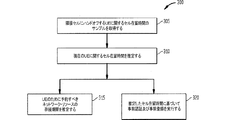
[0050] 次に図3を参照すると、本発明の一態様による方法を示す流れ図300が示されている。この方法はステップ305で、ネットワーク装置(例えば、基地局)がネットワーク装置に関連するセル内に在留していたユーザ装置(複数も可)に関するセル在留時間のサンプルを取得することから始まる。典型的に、セル在留時間は、ユーザ装置(複数も可)がそれぞれの元のサービング・セルから隣接セルにハンドオフされる時に取得される。他の諸実施形態では、ユーザ装置をポーリングするか又はユーザ装置にその現在の在留時間をネットワーク装置に対して定期的に報告させることにより、セル在留時間を定期的に取得することができる。
[0050] Referring now to FIG. 3, a
[0051] ステップ310では、ネットワーク装置は、ステップ305で取得したサンプルに基づいて、セル内に在留しているユーザ装置に関するセル在留時間を推定する。次に、推定したセル在留時間に基づいて、ネットワーク装置はステップ315でユーザ装置のために予約すべきネットワーク・リソースの存続期間を推定し、ステップ320でユーザ装置に関する事前認証及び事前登録を実行する。
[0051] In
[0052] 図4は、本発明の一態様により実現可能なシステム400を示している。特に、図4は、基地局401とユーザ装置402とを含むシステム400を例示的に描写している。上記で説明したように、基地局401は、eNodeB又はeNBを含むか或いはeNodeB又はeNBと呼ばれる場合がある。一般に、基地局401は、ユーザ装置402との間でユーザ及び制御情報を通信するためのアンテナと受信機及び送信機(まとめてトランシーバ・ユニット)とを含む。その点に関しては、アンテナは、ユーザ装置に無線周波を放射するか又はユーザ装置から無線周波を受信するように構成される。図1及び図2に示されているように、基地局は、RANの一部を含み、コア・ネットワーク、例えば、EPC170又はeHRPD188に結合される。
[0052] FIG. 4 illustrates a
[0053] 基地局401は、前に基地局401のセル又はサービング・エリア内に在留していたユーザ装置に関するセル在留時間の取得サンプルを含むデータベース403を含むことができる。図4は基地局の一部としてデータベース403を示しているが、データベースは図2に示されているようにコア・ネットワーク内に在留することもできる。例えば、データベースは、図1Bに示されているネットワーク装置又は要素のいずれかに、或いは個別のデータベースとして在留することができる。同様に、ステップ413〜423のいずれのステップもこのようなネットワーク装置のいずれかによって実行することもできる。
[0053]
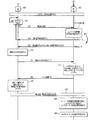
[0054] 図4に示されているように、ステップ410でユーザ装置402は、それが現在接続されているか又は、例えば、他のユーザ装置と通信するために使用している基地局の信号対雑音比(SNR)をモニターする。その点に関しては、基地局は、ユーザ装置402にコンテンツ(例えば、音声、ビデオなど)を提供するために使用される基地局であるという点で、サービング基地局と呼ぶこともできる。このようにして、ユーザ装置402は他の基地局を聴取することができるが、基地局401はそれが在留している(又はとどまっている)現在セルを定義する。さらに、上述の通り、ユーザ装置が基地局のサービスエリア又はセル内にとどまるか又は在留する時間は、一般に、ユーザ装置のセル在留時間と呼ばれる。
[0054] As shown in FIG. 4, at
[0055] ユーザ装置又はユーザ装置402は、一般に、基地局401と無線で通信することができる任意のモバイル・デバイス又は移動局を含む。ユーザ装置402の例としては、携帯電話、スマートフォン、携帯情報端末、又はモバイル・コンピューティング・デバイスを含む。
[0055] User equipment or
[0056] ステップ411では、ユーザ装置402は、現在の測定SNRを所定のしきい値T1(例えば、T1≦50%)と比較する。SNRがT1より小さい場合、ユーザ装置は、ステップ412で、候補隣接基地局又はセルに対して事前登録及び事前認証を実行することを望んでいることを基地局に通知する。ステップ413〜420では、基地局401(又はその他のネットワーク装置)は、ユーザ装置402のセル在留時間を推定することにより、事前登録/事前認証をトリガすべきかどうかを決定する。
[0056] In
[0057] 具体的には、基地局401は、ステップ413で、ユーザ装置402から事前登録及び事前認証要求を受信する。次に、ステップ414では、基地局401は、基地局401によって対応されるセルから隣接セルにハンドオフされるユーザ装置に関するセル在留時間について収集したサンプルをデータベース403から検索する。ステップ415〜418については以下にさらに詳細に説明するが、これらのステップでは、基地局401は統計モデルに基づいてユーザ装置のセル在留時間を推定する。ステップ419では、ユーザ装置の残余時間(residual time)が計算される。この残余時間は、推定したセル在留時間と、ユーザ装置が現在セルに在留していた時間との差である。420では、ユーザ装置の残余時間がしきい値T2、例えば、T2≦500msより小さい場合、基地局401はステップ423に移行して、事前登録/事前認証を実行するようユーザ装置に指示し、ステップ421でセル在留時間の標準偏差を推定し始める。ステップ422では、セル在留時間について推定した標準偏差を使用して、ハンドオフを実行するためのユーザ装置のために予約すべきネットワーク・リソースの存続時間を推定することができる。残余時間が所定のしきい値T2に等しいか又はそれより大きい場合、基地局401は事前登録及び事前認証要求を認可しない。
Specifically, the
[0058] 次に図5Aを参照すると、本発明の追加の態様を示す呼び出し流れ図が示されている。上記で説明したように、ステップ411では、ユーザ装置402は、現在の測定SNRを所定のしきい値T1(例えば、T1≦50%)と比較する。SNRがT1より小さい場合、ユーザ装置は、ステップ412で、候補隣接基地局又はセルに対して事前登録及び事前認証を実行することを望んでいることを基地局に通知する。基地局401は、ステップ418〜419で、ユーザ装置402に関するセル在留時間及び残余時間を推定する。図4に関して前述したように、ステップ420では、残余時間が所定のしきい値T2に等しいか又はそれより大きい場合、基地局401はステップ424で事前登録及び事前認証要求を拒否する。これに反して、ユーザ装置の残余時間がしきい値T2より小さい場合、基地局401はステップ423で事前登録/事前認証要求を認可する。
[0058] Referring now to FIG. 5A, a call flow diagram illustrating additional aspects of the present invention is shown. As described above, in
[0059] 図5Bは本発明の他の態様を示している。この態様では、基地局401は、ユーザ装置が基地局に接続する時に、又は基地局とのそのSNRがしきい値T1より低いことをユーザ装置が基地局に報告する時に、予測セル在留時間をユーザ装置に送信する。次にユーザ装置自体は、基地局から受信した予測セル在留時間を使用して、いつ事前登録及び事前認証を開始しなければならないか(並びに、開始しなければならないかどうか)を決定することができる。
[0059] FIG. 5B illustrates another embodiment of the present invention. In this aspect, the
[0060] 本発明の他の態様では、基地局は、1つ又は複数のユーザ装置から取得するセル在留時間を他のネットワーク装置に伝送することもできる。これらの取得した在留時間又はサンプルは、他のネットワーク装置又は要素に保管し、他のネットワーク装置内のセル在留時間を推定するために使用することができる。前述の通り、このようなネットワーク装置は、モビリティ管理エンティティ174、ホーム加入者サーバ180、サービング・ゲートウェイ164、又はAAAサーバ186などの3GPP EPC内のネットワーク・コンポーネントを含むことができる。3GPP2 eHRPDネットワークの場合、この装置は、eAN/ePCF194、アクセス・ネットワークAAA196、又はAAAサーバ198を含むことができる。
[0060] In another aspect of the present invention, the base station may transmit the cell residence time acquired from one or a plurality of user apparatuses to another network apparatus. These acquired residence times or samples can be stored in other network devices or elements and used to estimate cell residence times in other network devices. As described above, such network devices may include network components in 3GPP EPC such as
[0061] 本発明の他の態様では、基地局は、SNRの降順に基づいてソートされたリスト内の隣接セルに対して事前登録/事前認証を実行するようユーザ装置に指示することができる。図5C及び図5Dは、ユーザ装置がステップ453で基地局の隣接セルのSNRを収集し、ステップ454で収集したSNRを基地局に報告することを示している。典型的に、E−UTRAN又はeHRPDにすることができる隣接セルの数は10より小さい。E−UTRANからeHRPDへのハンドオフでは、基地局はまずeHRPDのセルをリストする。次に基地局はステップ455で、ユーザ装置によって報告されたSNRに基づいてeHRPDセルのリストをソートする。事前登録及び事前認証を開始する前にユーザ装置がすべての隣接セルを検出できない可能性があるので、リスト内の一部又はすべてのセルのSNRがゼロになる可能性がある。次にネットワークはステップ456で、ソートしたリストをユーザ装置に返送し、SNRの降順に基づいてリスト内のセルに対して事前登録/事前認証を実行するようユーザ装置に指示する。SNRが最も高いセルに対して事前登録/事前認証を実行すべき理由は、ユーザ装置がそのセルにローミングする可能性があることである。
[0061] In another aspect of the present invention, the base station can instruct the user equipment to perform pre-registration / pre-authentication on neighboring cells in the list sorted based on the descending order of SNR. 5C and 5D show that the user apparatus collects the SNR of the neighboring cell of the base station in
[0062] 本発明の他の態様では、基地局は、SNR自体ではなく、SNRの増加率に基づいて、ユーザ装置の事前登録及び事前認証に関する候補セルのランク付けを決定する。SNRの増加率が高いということは、ユーザ装置がその候補セルに向かって移動しているという表示である。図5A及び図5Bでは、ユーザ装置が事前登録及び事前認証を実行することを決定すると、ユーザ装置は、ステップ453で所与の期間[t1,t2]について候補セルに関するSNRをサンプリングし、ステップ454でt1及びt2における候補セルのSNRを基地局に報告する。ユーザ装置からSNRを受信すると、基地局はステップ455で各候補セルについてこの期間におけるSNRの増加率を計算する。次に基地局は、SNRの増加率に応じて降順に候補セルをランク付けし、ステップ456でそのリストをユーザ装置に返送する。
[0062] In another aspect of the present invention, the base station determines the ranking of candidate cells for pre-registration and pre-authentication of the user equipment based on the SNR increase rate, not the SNR itself. A high SNR increase rate is an indication that the user equipment is moving toward the candidate cell. In FIGS. 5A and 5B, when the user equipment decides to perform pre-registration and pre-authentication, the user equipment samples the SNR for the candidate cell for a given time period [t 1 , t 2 ] in
[0063] 図5A〜図5Dは、SNRの増加率が最も高いか又はSNRが最も高い候補セルから、ユーザ装置が事前登録及び事前認証を実行することを示している。ネットワークがユーザ装置の事前登録及び事前認証に移行した後、基地局はステップ459でネットワーク在留時間の標準偏差を推定し、ユーザ装置をハンドオフするために予約されたコンテキスト・データの存続期間を計算し始め、ステップ460でそれに応じてコンテキスト・データの存続期間を設定する。本発明の他の諸実施形態では、コンテキスト存続期間の計算は他のネットワーク装置又は要素で実行することができる。このようなネットワーク装置は、モビリティ管理エンティティ174、ホーム加入者サーバ180、サービング・ゲートウェイ164、又はAAAサーバ186などの3GPP EPC内のネットワーク・コンポーネントを含むことができる。3GPP2 eHRPDネットワークの場合、この装置は、eAN/ePCF194、アクセス・ネットワークAAA196、又はAAAサーバ198を含むことができる。
[0063] FIGS. 5A to 5D illustrate that the user apparatus performs pre-registration and pre-authentication from a candidate cell having the highest SNR increase rate or the highest SNR. After the network transitions to user equipment pre-registration and pre-authentication, the base station estimates the standard deviation of network residence time in
[0064] 本発明のさらに好ましい一態様では、ウィーナ過程を使用してセル在留時間を推定することができる。ウィーナ過程とは、確率変数の値が多数の独立した要因又は弱く従属する要因による影響を受け、そのそれぞれが比較的小さい影響力を有するプロセスをモデル化する際に効果的であることが証明されている確率過程である。セル在留時間は、独立しているか又は互いに弱く従属する多数の要因による影響を受けるモデルである。従って、ウィーナ過程はセル在留時間をモデル化するための効果的な方法を提供する。 [0064] In a further preferred aspect of the present invention, the cell residence time can be estimated using a Wiener process. A Wiener process has proven to be effective in modeling a process in which the value of a random variable is affected by a number of independent or weakly dependent factors, each of which has a relatively small impact. It is a stochastic process. Cell residence time is a model that is influenced by a number of factors that are independent or weakly dependent on each other. Thus, the Wiener process provides an effective way to model cell residence time.
[0065] 一般に、ウィーナ過程Xtは、以下の3つの特性によって定義される。即ち、Xtは、すべてのt≧0について分布したN(0,c2t)である。Nは、平均が0で分散がc2tである正規分布を示す。{Xt;t≧0}は独立した増分を有する。0≦s≦tの場合、増分{Xt−Xs}は分布したN(0,c2(t−s))である。 [0065] In general, Wiener process X t is defined by three characteristics below. That is, X t is N (0, c 2 t) distributed for all t ≧ 0. N indicates a normal distribution with an average of 0 and a variance of c 2 t. {X t ; t ≧ 0} has independent increments. If 0 ≦ s ≦ t, the increment {X t −X s } is the distributed N (0, c 2 (ts)).
[0066] c=1である標準的なウィーナ過程は{Wt;t≧0}によって示され、この場合、すべての0≦s≦tについて、E[Wt]=0、Var(Wt)=tである。その上、ずれ又は傾向がμtである一般的なウィーナ過程は以下のように表される。

[0067] Δtが予測時間間隔であり、αが標準正規確率変数であるとする。一般的なウィーナ過程を使用することにより、変動ΔKは以下のように表すことができる。
[0068] ΔKはt−Δtからtまでの変動である。ΔKという量はすべてのΔt時間単位ごとに計算される。ΔKは任意の所与のΔtに関する正規確率変数としてモデル化することができる。さらに、以下の式のウィーナ過程の変動により、ΔKの平均及び標準偏差は時間の経過につれて変化することができる。
[0069]ここで、μ及びδは定数である。式(3)に示されているように、ΔKは平均がμΔtで標準偏差がδ√Δtである正規分布確率変数になる。これは、任意の所与の時間間隔Δtの場合、ΔKの平均及び標準偏差をμ及びδから直接計算できることを示唆している。従って、μ及びδは、それぞれ、ΔKの期待されたずれ及び標準偏差率と呼ばれる。その上、任意の所与の時間間隔θの場合、長さθの前の時間間隔におけるΔKのサンプル値の平均及び分散に基づいてμ及びδを推定することができる。k(t)がK(t)のサンプル値であるとすると、前のr個の時間間隔[t−iθ−θ,t−iθ]におけるΔKのサンプル値はk(t−iθ)−k(t−iθ−θ)になり、ここで、i=0,...,r−1である。このため、μは以下のように
によって推定することができる。
[0069] where μ and δ are constants. As shown in equation (3), ΔK is a normal distribution random variable with an average of μΔt and a standard deviation of δ√Δt. This suggests that for any given time interval Δt, the mean and standard deviation of ΔK can be calculated directly from μ and δ. Therefore, μ and δ are called the expected deviation and standard deviation rate of ΔK, respectively. Moreover, for any given time interval θ, μ and δ can be estimated based on the mean and variance of the sample values of ΔK in the time interval prior to length θ. If k (t) is the sample value of K (t), the sample value of ΔK in the previous r time intervals [t−iθ−θ, t−iθ] is k (t−iθ) −k ( t−iθ−θ), where i = 0,. . . , R-1. Therefore, μ is
Can be estimated.
[0070] また、δの推定である
は以下の式によって得られる。
Is obtained by the following equation.
[0071] 式(3)〜式(5)を使用することにより、rが十分大きい時にΔKを厳密に推定することができる。通常、rについては25で十分である。ウィーナ過程は、任意の所与のサンプリング時間間隔θにおいて古い記録を使用することにより、近い将来のK(t+Δt)を推定することができる。 By using the equations (3) to (5), ΔK can be estimated accurately when r is sufficiently large. Usually 25 is sufficient for r. The Wiener process can estimate K (t + Δt) in the near future by using old records at any given sampling time interval θ.
[0072] セル在留時間は、特にE−UTRAN−eHRPD網間接続ネットワーク・システムにおいて、異なるユーザ装置について幅広く変化する可能性がある。従って、k(t−iθ)は、すべてのi=0,...,r−1について、t−iθ以前に隣接セルへのハンドオフを実行した最後のn個のユーザ装置に関するセル在留時間の瞬間平均(instantaneous mean)を表すように定義される。次に式(4)〜式(5)でk(t−iθ)を使用して、
及び
を計算し、次にこれらを使用して式(3)を使用することによりΔKを生成する。ウィーナ過程を使用する場合、最初は、基地局がr×θの時間単位を実行して十分なサンプルを収集する必要がある。その後、基地局は、式(3)〜式(5)を使用してΔKの推定値を計算し始めることができる。次に推定したK(t+Δt)はΔK及びK(t)によって計算することができる。
[0072] The cell residence time can vary widely for different user equipments, especially in E-UTRAN-eHRPD inter-network connection network systems. Therefore, k (t−iθ) is equal to all i = 0,. . . , R−1 is defined to represent the instantaneous mean of the cell residence time for the last n user equipments that performed a handoff to an adjacent cell before t−iθ. Next, using k (t−iθ) in Equation (4) to Equation (5),
as well as
Are then used to generate ΔK by using equation (3). When using the Wiener process, initially the base station needs to perform r × θ time units to collect enough samples. Thereafter, the base station can begin calculating an estimate of ΔK using equations (3)-(5). The estimated K (t + Δt) can then be calculated by ΔK and K (t).
[0073] ウィーナ過程の上記のステップは図4にステップ413〜418として示されている。具体的には、時間tにおいて基地局401はステップ413でユーザ装置402から事前登録及び事前認証要求を受信する。次にステップ414で、基地局は、例えば、長さθのr−1個の時間間隔について最後のn個のユーザ装置に関するセル在留時間について収集したサンプルをデータベース403から検索する。ステップ415で、t−(r−1)θ以前のセル在留時間の瞬間平均が計算される。次にステップ416で、基地局401は、t−Δtからtまでのセル在留時間の変動について期待されたずれ及び標準偏差を計算する。次にステップ417で、t−Δtからtまでのセル在留時間の変動が計算される。ステップ418では、t−Δtからtまでのセル在留時間について計算された変動に基づいてユーザ装置402に関するセル在留時間が推定される。
[0073] The above steps of the Wiener process are shown as steps 413-418 in FIG. Specifically, at time t, the
[0074] 本発明の他の諸実施形態では、時系列分析などのその他の統計モデルを使用して、セル在留時間を推定することができるであろう。また、平均化を含むその他のモデルを使用して、セル在留時間を推定することもできる。 [0074] In other embodiments of the invention, other statistical models such as time series analysis could be used to estimate cell residence time. Other models including averaging can also be used to estimate cell residence time.
[0075] 本発明の他の態様では、事前登録/認証によって予約されたネットワーク・リソースのコンテキスト存続期間は、セル在留時間に基づいて推定することができる。予測されたコンテキスト存続期間が残余セル在留時間より短い場合、ハンドオフが始まる前に予約されたコンテキストが期限切れになる可能性がある。これは、事前登録/事前認証プロセスに影響を及ぼし、場合によってはそのプロセスを無意味なものにする可能性がある。 [0075] In another aspect of the invention, the context duration of network resources reserved by pre-registration / authentication can be estimated based on cell residence time. If the predicted context lifetime is shorter than the residual cell residence time, the reserved context may expire before the handoff begins. This can affect the pre-registration / pre-authentication process and possibly make it meaningless.
[0076] 式(3)〜式(5)によって推定されたセル在留時間の標準偏差を計算することができる。std(t−iθ)は、すべてのi=0,...,r−1について、t−iθ以前に隣接セルへのハンドオフを実行したn個のユーザ装置のセル在留時間の瞬間標準偏差として定義される。また、std(t−iθ)は、すべてのi=0,...,r−1について、時間間隔[t−iθ−θ,t−iθ]内のセル内のすべてのユーザ装置及びk(t−iθ)によって計算される。 [0076] The standard deviation of the cell residence time estimated by the equations (3) to (5) can be calculated. std (t−iθ) is calculated for all i = 0,. . . , R−1 is defined as the instantaneous standard deviation of the cell residence time of n user devices that have performed a handoff to an adjacent cell before t−iθ. Also, std (t−iθ) is set so that all i = 0,. . . , R−1 is calculated by all user devices and k (t−iθ) in the cell within the time interval [t−iθ−θ, t−iθ].
[0077] 前述の通り、次にΔK及びK(t)によってK(t+Δt)を計算することができる。σ(t+Δt)はセル在留時間について推定した標準偏差を示すものとする。即ち、σ(t+Δt)=std(t)である。ユーザ装置がハンドオフを実行する前にユーザ装置のコンテキスト存続期間が期限切れにならない確率を高めるために、以下のようにコンテキスト存続期間を予測することができ、ここでaは正の実数の信頼係数である。例えば、a=2である場合、ユーザ装置の実際のコンテキスト存続期間が予測されたコンテキスト存続期間より長くなる確率は5%未満になる。
コンテキスト存続期間=K(t+Δt)+a×σ(t+Δt)
[0077] As described above, K (t + Δt) can then be calculated from ΔK and K (t). σ (t + Δt) represents the standard deviation estimated for the cell residence time. That is, σ (t + Δt) = std (t). To increase the probability that the context duration of the user equipment will not expire before the user equipment performs the handoff, the context duration can be predicted as follows, where a is a positive real confidence factor: is there. For example, if a = 2, the probability that the actual context duration of the user equipment will be longer than the predicted context duration is less than 5%.
Context lifetime = K (t + Δt) + a × σ (t + Δt)
[0078] 予約されたネットワーク・リソースを解除する手法の1つは、ユーザ装置がセル内に移動した時に、そのコンテキストを削除するようにその他のセルをトリガするための明示的な信号を使用することである。しかし、この手順を実現するために、ネットワーク・アーキテクチャ及び新しい信号の流れを変更するか又は定義する必要がある可能性がある。3GPP2 eHRPDでは、基地局は他の基地局と直接交信することはできない。信号メッセージは、他の基地局に到達するためにeAN/ePCFを通過するか又はHSGWさえ通過することが必要になる。eGPP EPS内のeNodeBはX2インターフェースというインターフェースによって接続することができるが、X2インターフェースの主要目的は、ハンドオフ後に古いeNodeBから新しいeNodeBにパケットを転送することである。未使用のコンテキストを削除するためのX2インターフェースの使用は標準化することが必要になる。E−UTRAN及びeHRPDからのハンドオフの場合、基地局間の信号メッセージはPDN GWを通過することが必要になり、その結果、経路指定パスが長くなる。標準化の問題に加えて、この手法は事前登録/事前認証の複雑さを大幅に増加するものである。 [0078] One approach to releasing reserved network resources uses explicit signals to trigger other cells to delete their context when the user equipment moves into the cell. That is. However, to implement this procedure, the network architecture and new signal flow may need to be changed or defined. In 3GPP2 eHRPD, a base station cannot communicate directly with other base stations. Signaling messages will need to go through eAN / ePCF or even HSGW to reach other base stations. Although eNodeBs in eGPP EPS can be connected by an interface called the X2 interface, the main purpose of the X2 interface is to transfer packets from the old eNodeB to the new eNodeB after handoff. The use of the X2 interface to delete unused contexts needs to be standardized. In the case of handoff from E-UTRAN and eHRPD, signaling messages between base stations need to pass through the PDN GW, resulting in a longer routing path. In addition to standardization issues, this approach greatly increases the complexity of pre-registration / pre-authentication.
[0079] 上記の目的のために、それぞれの事前確立したコンテキストは、自動的に期限切れになるコンテキスト存続期間を有することができる。これにより、事前確立したコンテキストを除去するよう隣接ネットワークを指示するためにユーザ装置が追加の信号を使用する必要性が回避され、このため、事前登録/事前認証の複雑さが大幅に低減される。 [0079] For the purposes described above, each pre-established context may have a context lifetime that expires automatically. This avoids the need for the user equipment to use additional signals to instruct the neighboring network to remove the pre-established context, thus greatly reducing the complexity of pre-registration / pre-authentication. .
[0080] 事前確立したコンテキストの存続期間を決定する方法は重要である。コンテキスト存続期間が長すぎるか又は無限である場合、未使用のコンテキスト内の予約されたリソースは、他のユーザ装置によって使用することができないので、候補ネットワーク及びユーザ装置のいずれでも浪費されることになる。事前登録/事前認証を実行するユーザ装置が多数存在する場合、各セル内のリソースは不必要に消耗する可能性もある。その上、未使用のセキュリティ・キー資料は、削除されない場合、結果的にセキュリティ問題を引き起こす可能性がある。これに反して、ハンドオフが行われる前にコンテキストが削除される場合、ユーザ装置は、そのセルを訪問する時に再登録/認証をやり直し、そのコンテキストを再確立する必要がある。それ以前に実行された事前登録/事前認証は無用なものになり、ユーザ装置及び基地局におけるメッセージング・オーバヘッド及びコンピューティング・オーバヘッドは増加する。この問題は、大規模ネットワークの場合に特に重要になる。 [0080] The method of determining the lifetime of a pre-established context is important. If the context lifetime is too long or infinite, reserved resources in the unused context cannot be used by other user equipments, and thus can be wasted on either the candidate network or the user equipment. Become. If there are many user devices that perform pre-registration / pre-authentication, resources in each cell may be unnecessarily consumed. Moreover, unused security key material can result in security problems if not deleted. On the other hand, if the context is deleted before the handoff takes place, the user equipment needs to re-register / authenticate again when visiting the cell and re-establish the context. The pre-registration / pre-authentication performed before then becomes useless, increasing the messaging and computing overhead at the user equipment and base station. This problem is particularly important for large networks.
[0081] 静的コンテキスト存続期間が任意に選択されると、結果的に性能が悪くなることが証明されている。評価基準の1つは呼び出しブロック/ハンドオフ低下確率(call blocking/handoff dropping probability)である。存続期間が長くなると、その結果、呼び出しブロック/ハンドオフ低下確率が高くなる。明らかに、ハンドオフ呼び出しのためにより多くのリソースが予約される場合、新しい呼び出しのブロック確率が低下することになる。これに反して、新しい呼び出しのためにより多くのリソースが予約される場合、ハンドオフ低下確率が低下することになる。従って、存続期間が短くなると、呼び出しブロック/ハンドオフ低下確率の点で性能が良好になる。 [0081] It has been proven that performance is degraded as a result of the arbitrary choice of static context lifetime. One evaluation criterion is call blocking / handoff dropping probability. Longer lifetimes result in higher call block / handoff reduction probabilities. Obviously, if more resources are reserved for handoff calls, the block probability of new calls will decrease. On the other hand, if more resources are reserved for new calls, the handoff reduction probability will decrease. Therefore, the shorter the lifetime, the better the performance in terms of call block / handoff reduction probability.
[0082] もう1つの評価基準は、予約されているコンテキストのうちのいくつが実際に使用されるかを示す測定値である。これは、以下のようにヒット率として定義することができるであろう。
[0083] ヒット率=NNotExpired/NUE×100%
[0082] Another evaluation criterion is a measurement that indicates how many of the reserved contexts are actually used. This could be defined as the hit rate as follows:
[0083] Hit rate = N NotExpired / N UE × 100%
[0084] コンテキスト存続期間が長くなるにつれて、ヒット率も上昇する。逆に、コンテキスト存続期間が短くなると、結果的にヒット率が低くなる。従って、静的コンテキスト存続期間の使用により、呼び出しブロック/ハンドオフ低下確率及びヒット率という2通りの性能尺度は互いに矛盾する。従って、動的コンテキスト存続期間アルゴリズムが必要である。 [0084] As the context lifetime increases, the hit rate also increases. Conversely, a shorter hit duration results in a lower hit rate. Thus, due to the use of static context lifetime, two performance measures, call block / handoff reduction probability and hit rate, contradict each other. Therefore, a dynamic context lifetime algorithm is needed.
[0085] ユーザ装置が候補セル内にハンドオフされた後、この候補セル内のユーザ装置のために予約されたコンテキスト存続期間は、ユーザ装置がこのセル内にとどまる限り持続するようにリセットされる。 [0085] After the user equipment is handed off in the candidate cell, the context duration reserved for the user equipment in this candidate cell is reset to last as long as the user equipment remains in this cell.
[0086] 本明細書で使用する用語は特定の諸実施形態のみを記述するためのものであって、本発明を制限するためのものではない。本明細書で使用する「a」、「an」、及び「the」という単数形は、明らかに文脈が特に指示しない限り、複数形も含むものである。本明細書で使用される場合、「comprises」及び/又は「comprising」という用語は、明記された特徴、整数、ステップ、操作、要素、及び/又はコンポーネントの存在を指定するが、1つ又は複数のその他の特徴、整数、ステップ、操作、要素、コンポーネント、及び/又はそのグループの存在又は追加を排除しないことはさらに理解されるであろう。 [0086] The terminology used herein is for the purpose of describing particular embodiments only and is not intended to be limiting of the invention. As used herein, the singular forms “a”, “an”, and “the” include plural referents unless the context clearly dictates otherwise. As used herein, the terms “comprises” and / or “comprising” specify the presence of a specified feature, integer, step, operation, element, and / or component, but one or more It will be further understood that it does not exclude the presence or addition of other features, integers, steps, operations, elements, components, and / or groups thereof.
[0087] 本発明の様々な態様は、コンピュータ又はマシンで使用可能又は読み取り可能な媒体に実施されたプログラム、ソフトウェア、又はコンピュータ命令として実施することができ、それにより、コンピュータ、プロセッサ、及び/又はマシン上で実行された時に、コンピュータ又はマシンにこの方法の諸ステップを実行させる。詳細には、本明細書に記載されている方法は、メモリ内に保管され、プロセス又は中央演算処理装置(CPU)、マイクロプロセッサなどによって実行されるプログラミング命令に変換することができる。このようなプロセッサは、Intel、AMD、又は任意のその他の同様の製品によって作られたものを含むことができる。加えて、特定用途向け集積回路(ASIC)を使用して動作するよう命令をプログラミングすることもでき、これにより、この方法を、例えば、基地局又はユーザ装置にとってよりポータブルなものにすることができる。 [0087] Various aspects of the invention can be implemented as a program, software, or computer instructions implemented on a computer or machine usable or readable medium, whereby a computer, processor, and / or Causes a computer or machine to perform the method steps when executed on a machine. In particular, the methods described herein can be converted into programming instructions that are stored in memory and executed by a process or central processing unit (CPU), microprocessor, or the like. Such processors can include those made by Intel, AMD, or any other similar product. In addition, instructions can be programmed to operate using an application specific integrated circuit (ASIC), thereby making the method more portable, for example, to a base station or user equipment. .
[0088] 本発明のシステム及び方法は、汎用コンピュータ又は専用コンピュータ・システム上で実現し実行することができる。このコンピュータ・システムは、任意のタイプの既知のシステムであるか又は今後、既知のシステムになる可能性があり、典型的に、プロセッサ、メモリ・デバイス、記憶装置、入出力装置、内部バス、及び/又は通信ハードウェア及びソフトウェアなどと協力して他のコンピュータ・システムと通信するための通信インターフェースを含むことができる。 The system and method of the present invention can be implemented and executed on a general purpose computer or a dedicated computer system. The computer system may be any type of known system or may become a known system in the future, typically a processor, memory device, storage device, input / output device, internal bus, and A communication interface for communicating with other computer systems in cooperation with communication hardware and software, etc. may be included.
[0089] 上述の通り、本発明のユーザ装置、移動局、又はユーザ・デバイスは、携帯電話、モバイル・コンピュータ、モバイル・メディア・レコーダ、モバイル・メディア・プレーヤ、モバイル・ゲーム・コンソール、ナビゲーション装置、通信装置、及び付属品などのモバイル・デバイスを含むことができる。それらの間でモバイル・デバイスがハンドオフを実行する無線ネットワークは、3GPP、3GPP2、又はWiFiネットワークを含むことができる。 [0089] As described above, the user device, mobile station, or user device of the present invention includes a mobile phone, a mobile computer, a mobile media recorder, a mobile media player, a mobile game console, a navigation device, Mobile devices such as communication devices and accessories can be included. The wireless network between which the mobile device performs the handoff can include a 3GPP, 3GPP2, or WiFi network.
[0090] 本明細書では特定の諸実施形態に関連して本発明を説明してきたが、これらの実施形態は本発明の原理及び適用例の例証に過ぎないことを理解されたい。従って、特許請求の範囲によって定義された本発明の精神及び範囲を逸脱せずに、例示的な諸実施形態に対して多数の変更を行うことができ、その他の配置を考案できることを理解されたい。 [0090] Although the invention herein has been described with reference to particular embodiments, it is to be understood that these embodiments are merely illustrative of the principles and applications of the present invention. Accordingly, it should be understood that numerous modifications can be made to the exemplary embodiments and other arrangements can be devised without departing from the spirit and scope of the invention as defined by the claims. .
Claims (15)
前記複数の取得した時間サンプルに基づいて第2のデバイスが前記サービスエリア範囲内にとどまることになる時間量を推定することと、
前記推定した時間量に基づいて前記第2のデバイスのコンテキストの存続時間を推定することであって、前記コンキストの存続時間は前記第2のデバイスのハンドオフ期間中に使用されるために予約されるネットワーク・リソースの時間量からなる、推定することと、
前記第2のデバイスから事前認証要求を受信することと、
前記推定した時間量または前記第2のデバイスのために予約されるネットワーク・リソースの前記推定した存続期間に基づいて前記第2のデバイスを事前認証するか否かを決定すること
を含む、方法。 In network device, and a plurality of first device acquires the time samples of multiple that are related to the time remain within the service area range of the network device,
And the second device for estimating the amount of time that will remain in the service area range based on the acquired time samples before Kifuku number,
Estimating the lifetime of the context of the second device based on the estimated amount of time, the lifetime of the conquist being reserved for use during the handoff period of the second device An estimate consisting of the amount of time of network resources;
Receiving a pre-authentication request from the second device;
And determining whether based on the estimated duration of network resources pre-authenticating the second device to be reserved for the estimated amount of time or the second device, the method .
前記第2のデバイスの前記認証に基づいて前記第2のデバイスの事前登録を実行すること
をさらに含む、請求項1記載の方法。 Receiving a pre-registration request from the second device;
Further comprising The method of claim 1, wherein the performing a pre-registration of the second of said authentication based Zui by the second device of the device.
前記複数の取得した時間サンプルに基づいて前記第1の基地局に関連付けられた第2のデバイスに関するセル在留時間を推定することと、
前記推定したセル在留時間に基づいて前記第2のデバイスのコンテキストの存続時間を推定することであって、前記コンキストの存続時間は前記第2のデバイスのハンドオフ期間中に使用されるために予約されるネットワーク・リソースの時間量からなる、推定することと
前記推定したセル在留時間または前記第2のデバイスのために予約されるネットワーク・リソースの前記推定した存続時間に基づいてネットワーク・リソースを解除する時期を決定すること
を含む、方法。 In network device comprises obtaining multiple time samples related to a plurality of first device associated with the first base station,
Estimating a cell residence time for the second device associated with the first base station based on the acquired time samples before Kifuku number,
Estimating the lifetime of the context of the second device based on the estimated cell residence time, the lifetime of the conquist being reserved for use during the handoff period of the second device. consisting amount of time of network resources that releases the network resources based on the lifetime that the estimated network resources reserved for said estimated cell residence time to estimate or the second device A method comprising determining a time.
前記第2の基地局で、前記推定したセル在留時間に基づいて前記第2のデバイスを事前認証及び事前登録することと、
前記第2のデバイスに関連付けられた隣接セルに前記第2のデバイスをハンドオフするための複数のネットワーク・リソースを予約すること
をさらに含む、請求項9記載の方法。 Receiving a pre-authentication request and a pre-registration request from the second device at a second base station;
And said second base station, pre-authentication and pre-registration of the second device based on the cell residence time that the estimated,
Further comprising The method of claim 9 to reserve multiple network resources for handing off said second device to a neighboring cell associated with the second device.
少なくとも1つのプロセッサを含むネットワーク要素であって、
前記基地局に関連する第2のデバイスに関するセル在留時間であって、前記複数の取得した時間サンプルに基づくセル在留時間を推定し、
前記推定したセル在留時間に基づいて前記第2のデバイスのコンテキストの存続時間を推定することであって、前記コンキストの存続時間は前記第2のデバイスのハンドオフ期間中に使用されるために予約されたネットワーク・リソースの時間量からなる、推定し、
前記第2のデバイスから事前認証要求を受信し、
前記推定した時間量または前記第2のデバイスのために予約されるネットワーク・リソースの前記推定した存続期間に基づいて前記第2のデバイスを事前認証するか否かを決定するように構成されたネットワーク要素と
を含む、システム。 And a base station that is configured to obtain multiple time samples related to a plurality of first device associated with the base station,
A network element comprising at least one processor,
Wherein a cell residence time for the second device associated with the base station, estimates the cell residence time that is based on the acquired time samples before Kifuku number,
Estimating the lifetime of the context of the second device based on the estimated cell residence time, the lifetime of the conquist being reserved for use during the handoff period of the second device. Consisting of the amount of time of network resources
Receiving a pre-authentication request from the second device;
A network configured to determine whether to pre-authenticate the second device based on the estimated amount of time or the estimated lifetime of network resources reserved for the second device A system that includes elements.
Applications Claiming Priority (5)
| Application Number | Priority Date | Filing Date | Title |
|---|---|---|---|
| US23475709P | 2009-08-18 | 2009-08-18 | |
| US61/234,757 | 2009-08-18 | ||
| US12/634,842 US9107131B2 (en) | 2009-08-18 | 2009-12-10 | Pre registration/pre authentication in wireless networks |
| US12/634,842 | 2009-12-10 | ||
| PCT/US2010/045826 WO2011022448A1 (en) | 2009-08-18 | 2010-08-18 | Pre registration/pre-authentication in wireless networks |
Publications (2)
| Publication Number | Publication Date |
|---|---|
| JP2013502838A JP2013502838A (en) | 2013-01-24 |
| JP5631996B2 true JP5631996B2 (en) | 2014-11-26 |
Family
ID=43605338
Family Applications (1)
| Application Number | Title | Priority Date | Filing Date |
|---|---|---|---|
| JP2012525654A Active JP5631996B2 (en) | 2009-08-18 | 2010-08-18 | Pre-registration / pre-authentication in wireless networks |
Country Status (6)
| Country | Link |
|---|---|
| US (1) | US9107131B2 (en) |
| EP (1) | EP2468010B1 (en) |
| JP (1) | JP5631996B2 (en) |
| KR (1) | KR101190991B1 (en) |
| CN (1) | CN102648637B (en) |
| WO (1) | WO2011022448A1 (en) |
Families Citing this family (24)
| Publication number | Priority date | Publication date | Assignee | Title |
|---|---|---|---|---|
| US9107131B2 (en) | 2009-08-18 | 2015-08-11 | Tti Inventions D Llc | Pre registration/pre authentication in wireless networks |
| US8782253B2 (en) * | 2010-06-01 | 2014-07-15 | Verizon Patent And Licensing Inc. | Low latency handoff to or from a long term evolution network |
| US8670466B1 (en) * | 2010-12-22 | 2014-03-11 | Applied Micro Circuits Corporation | System and method for residence time calculation |
| CN103535071B (en) | 2011-04-02 | 2017-02-15 | 高通股份有限公司 | Systems and methods for inter-radio access technology (RAT) mobility |
| JP6655274B2 (en) * | 2011-08-12 | 2020-02-26 | エスケーテレコム株式会社Sk Telecom Co.,Ltd. | Method and apparatus for simultaneous data transmission service based on multiple networks |
| CN102307375B (en) * | 2011-09-06 | 2020-05-19 | 中兴通讯股份有限公司 | Switching method and system between different networks and eHRPD network |
| US9451505B2 (en) * | 2011-10-20 | 2016-09-20 | Qualcomm Incorporated | Methods and apparatus for handling failure and retry mechanisms during eHRPD pre-registration |
| WO2013141538A1 (en) * | 2012-03-18 | 2013-09-26 | 엘지전자 주식회사 | Method for moving in wireless communication system and apparatus supporting same |
| WO2014185844A1 (en) * | 2013-05-17 | 2014-11-20 | Telefonaktiebolaget L M Ericsson (Publ) | Methods and devices for managing a cellular radio network |
| US9426156B2 (en) * | 2013-11-19 | 2016-08-23 | Care Innovations, Llc | System and method for facilitating federated user provisioning through a cloud-based system |
| US9386106B1 (en) * | 2013-12-13 | 2016-07-05 | Symantec Corporation | Community-based detection of a missing device |
| KR20160138470A (en) * | 2014-03-19 | 2016-12-05 | 노키아 솔루션스 앤드 네트웍스 오와이 | Method and system for path predictive congestion avoidance |
| US10652225B2 (en) * | 2014-06-30 | 2020-05-12 | International Business Machines Corporation | Queue management and load shedding for complex authentication schemes |
| CN105657725B (en) * | 2016-02-01 | 2018-11-23 | 重庆邮电大学 | A kind of urban function region radiation areas confining method based on mobile phone signaling data |
| US9826388B2 (en) | 2016-02-19 | 2017-11-21 | Comcast Cable Communications, Llc | Cognitive roaming support |
| WO2018068187A1 (en) * | 2016-10-10 | 2018-04-19 | 华为技术有限公司 | Mobile management method and device |
| US11343721B2 (en) * | 2017-03-08 | 2022-05-24 | Telefonaktiebolaget Lm Ericsson (Publ) | Communication device, network nodes and methods performed therein for handling communication in a communication network |
| EP3373625A1 (en) * | 2017-03-09 | 2018-09-12 | Gemalto Sa | Method and apparatus for optimizing data exchange between a first and at least one second wireless communication device |
| CN107241718B (en) * | 2017-06-13 | 2020-12-22 | 台州智奥通信设备有限公司 | Method and system for discarding paired master keys |
| CN107517461B (en) * | 2017-08-21 | 2021-08-27 | 上海掌门科技有限公司 | Method and equipment for carrying out wireless connection pre-authorization on user equipment |
| WO2020120156A1 (en) * | 2018-12-11 | 2020-06-18 | Sony Corporation | Communications device, infrastructure equipment, core network equipment and methods |
| CN110621006B (en) * | 2019-09-27 | 2022-04-15 | 腾讯科技(深圳)有限公司 | Access processing method for user equipment, smart device and computer storage medium |
| CN116963230A (en) * | 2020-08-17 | 2023-10-27 | 瑞典爱立信有限公司 | Method and apparatus for cell selection in non-terrestrial networks (NTNs) |
| US11632271B1 (en) | 2022-02-24 | 2023-04-18 | T-Mobile Usa, Inc. | Location-based channel estimation in wireless communication systems |
Family Cites Families (26)
| Publication number | Priority date | Publication date | Assignee | Title |
|---|---|---|---|---|
| GB9016341D0 (en) * | 1990-07-25 | 1990-09-12 | British Telecomm | Speed estimation |
| US5623535A (en) | 1994-09-08 | 1997-04-22 | Lucent Technologies Inc. | Operations of cellular communications systems based on mobility and teletraffic statistics collected by mobile units |
| DE19505780A1 (en) | 1995-02-20 | 1996-08-29 | Philips Patentverwaltung | Mobile radio system with improved "handover" |
| JP4172098B2 (en) | 1999-02-25 | 2008-10-29 | 松下電工株式会社 | Cellular communication system |
| US6320855B1 (en) | 1999-09-09 | 2001-11-20 | Qualcom Incorporated | Method and system for initiating idle handoff in a wireless communications system |
| US6993458B1 (en) * | 2000-11-07 | 2006-01-31 | International Business Machines Corporation | Method and apparatus for preprocessing technique for forecasting in capacity management, software rejuvenation and dynamic resource allocation applications |
| US20020107026A1 (en) | 2000-12-15 | 2002-08-08 | Prathima Agrawal | Dynamic predictive resource reservation in wireless networks |
| US20030016655A1 (en) * | 2001-01-29 | 2003-01-23 | Docomo Communications Laboratories Usa, Inc. | Fast dynamic route establishment in wireless, mobile access digital networks using mobility prediction |
| US20020181419A1 (en) * | 2001-06-01 | 2002-12-05 | Tao Zhang | Method for handoff in multimedia wireless networks |
| JP4292156B2 (en) | 2002-10-30 | 2009-07-08 | 株式会社エヌ・ティ・ティ・ドコモ | Optimized mobility management based on location-related context |
| US7509131B2 (en) * | 2004-06-29 | 2009-03-24 | Microsoft Corporation | Proximity detection using wireless signal strengths |
| CN101444134A (en) | 2004-12-30 | 2009-05-27 | 网状网络公司 | Systems and methods for determining mobility of nodes in a wireless communication network |
| US7431575B2 (en) * | 2005-01-21 | 2008-10-07 | Cummins Filtration Ip, Inc. | Auto valve priming pump |
| US7876742B2 (en) | 2005-02-02 | 2011-01-25 | Panasonic Corporation | Mobility signaling using direct or indirect signaling based on cell residency heuristics |
| US9007954B2 (en) | 2005-05-26 | 2015-04-14 | Nokia Corporation | Beacon transmission for wireless networks |
| JP2008543190A (en) * | 2005-05-30 | 2008-11-27 | テレフオンアクチーボラゲット エル エム エリクソン(パブル) | Handover control technology in multiple wireless wireless communication systems |
| JP4711760B2 (en) | 2005-07-08 | 2011-06-29 | 株式会社エヌ・ティ・ティ・ドコモ | HANDOVER CONTROL DEVICE, MOBILE COMMUNICATION SYSTEM, AND HANDOVER METHOD |
| US20100061322A1 (en) | 2006-11-23 | 2010-03-11 | Electronics And Telecommunications Research Institute | Method for allocating code to cells and planning cells in ofdm cellular system |
| KR100856920B1 (en) | 2006-12-05 | 2008-09-05 | 한국전자통신연구원 | Wireless Multicasting Service Method Using Relay Transmission Method |
| EP3128799A1 (en) | 2007-04-26 | 2017-02-08 | Telefonaktiebolaget LM Ericsson (publ) | Processing mobile station transaction information at a serving control node in a wireless communication system |
| EP2168390B1 (en) * | 2007-06-19 | 2018-05-16 | Telefonaktiebolaget LM Ericsson (publ) | Improved resource reservation during handover in a wireless communication system |
| US20090047958A1 (en) * | 2007-08-16 | 2009-02-19 | Anna Pucar Rimhagen | Neighbor List Management for User Terminal |
| WO2009055991A1 (en) * | 2007-11-01 | 2009-05-07 | Huawei Technologies Co., Ltd. | Determination of network parameters |
| ATE486473T1 (en) | 2008-08-28 | 2010-11-15 | Alcatel Lucent | MEASUREMENT IN RADIO COMMUNICATION SYSTEMS |
| CN101365242A (en) * | 2008-08-29 | 2009-02-11 | 同济大学 | Group switching method and system based on movement prediction |
| US9107131B2 (en) | 2009-08-18 | 2015-08-11 | Tti Inventions D Llc | Pre registration/pre authentication in wireless networks |
-
2009
- 2009-12-10 US US12/634,842 patent/US9107131B2/en active Active
-
2010
- 2010-08-18 WO PCT/US2010/045826 patent/WO2011022448A1/en not_active Ceased
- 2010-08-18 JP JP2012525654A patent/JP5631996B2/en active Active
- 2010-08-18 EP EP10810524.8A patent/EP2468010B1/en active Active
- 2010-08-18 CN CN201080036834.8A patent/CN102648637B/en active Active
- 2010-08-18 KR KR1020127006820A patent/KR101190991B1/en active Active
Also Published As
| Publication number | Publication date |
|---|---|
| CN102648637B (en) | 2015-04-08 |
| US9107131B2 (en) | 2015-08-11 |
| EP2468010B1 (en) | 2017-09-20 |
| WO2011022448A1 (en) | 2011-02-24 |
| KR20120038022A (en) | 2012-04-20 |
| EP2468010A4 (en) | 2014-11-12 |
| KR101190991B1 (en) | 2012-10-15 |
| EP2468010A1 (en) | 2012-06-27 |
| JP2013502838A (en) | 2013-01-24 |
| CN102648637A (en) | 2012-08-22 |
| US20110044264A1 (en) | 2011-02-24 |
Similar Documents
| Publication | Publication Date | Title |
|---|---|---|
| JP5631996B2 (en) | Pre-registration / pre-authentication in wireless networks | |
| EP2314104B1 (en) | Improved mobility management | |
| JP5621016B2 (en) | Method and apparatus for processing mobile station history information in a wireless communication system | |
| CN101690322B (en) | Avoid Ping-Pong Switching | |
| CN101448295B (en) | Mobile broadband wireless access system for transmitting service information during handover | |
| CN104170467A (en) | Mobility management method and apparatus in high speed railway | |
| KR20150129843A (en) | Improving distribution of clients across a network | |
| EP2982164B1 (en) | Measurement configuration for heterogenous networks | |
| CN110089154A (en) | Method and apparatus for managing mobility in wireless communication system | |
| CN115361711A (en) | First node, second node, or method performed thereby | |
| Lin et al. | A predictive handover scheme to improve service quality in the IEEE 802.21 network | |
| KR100693045B1 (en) | QOS monitoring system of broadband wireless network and its method | |
| Choi et al. | Takeover: a new vertical handover concept for next-generation heterogeneous networks | |
| Prithiviraj et al. | Fuzzy logic based decision making algorithm to optimize the handover performance in HetNets | |
| KR20100066875A (en) | Handover apparatus and method for preventing time delay in the heterogeneous networks | |
| WO2010001373A1 (en) | Handover method and system | |
| Duong et al. | Proactive context transfer in WLAN-based access networks | |
| KR100943759B1 (en) | Link layer triggering apparatus and method for heterogeneous manganese handover | |
| US11838813B1 (en) | Efficient radio access technology offloading without dedicated measurement report | |
| Ashoka et al. | Handover delay in mobile WiMAX: a simulation study | |
| Gharsallah et al. | QoS-based handover approach for 5G mobile communication system | |
| WO2015084153A1 (en) | System and method for a handover in a wireless network | |
| Chinaeke-Ogbuka et al. | QoS comparison of proactive & prevent scanning handover schemes in WLAN | |
| CN121151971A (en) | Conditional switching methods, devices, equipment, media and program products | |
| Hassan et al. | Performance simulation and analysis of video transmission over proxy mobile IPv6 in a micro mobility domain |
Legal Events
| Date | Code | Title | Description |
|---|---|---|---|
| A621 | Written request for application examination |
Free format text: JAPANESE INTERMEDIATE CODE: A621 Effective date: 20130807 |
|
| A131 | Notification of reasons for refusal |
Free format text: JAPANESE INTERMEDIATE CODE: A131 Effective date: 20140212 |
|
| A977 | Report on retrieval |
Free format text: JAPANESE INTERMEDIATE CODE: A971007 Effective date: 20140212 |
|
| A521 | Request for written amendment filed |
Free format text: JAPANESE INTERMEDIATE CODE: A523 Effective date: 20140509 |
|
| TRDD | Decision of grant or rejection written | ||
| A01 | Written decision to grant a patent or to grant a registration (utility model) |
Free format text: JAPANESE INTERMEDIATE CODE: A01 Effective date: 20140930 |
|
| A61 | First payment of annual fees (during grant procedure) |
Free format text: JAPANESE INTERMEDIATE CODE: A61 Effective date: 20141008 |
|
| R150 | Certificate of patent or registration of utility model |
Ref document number: 5631996 Country of ref document: JP Free format text: JAPANESE INTERMEDIATE CODE: R150 |
|
| R250 | Receipt of annual fees |
Free format text: JAPANESE INTERMEDIATE CODE: R250 |
|
| R250 | Receipt of annual fees |
Free format text: JAPANESE INTERMEDIATE CODE: R250 |
|
| R250 | Receipt of annual fees |
Free format text: JAPANESE INTERMEDIATE CODE: R250 |
|
| R250 | Receipt of annual fees |
Free format text: JAPANESE INTERMEDIATE CODE: R250 |
|
| R250 | Receipt of annual fees |
Free format text: JAPANESE INTERMEDIATE CODE: R250 |
|
| R250 | Receipt of annual fees |
Free format text: JAPANESE INTERMEDIATE CODE: R250 |
|
| R250 | Receipt of annual fees |
Free format text: JAPANESE INTERMEDIATE CODE: R250 |
|
| R250 | Receipt of annual fees |
Free format text: JAPANESE INTERMEDIATE CODE: R250 |
|
| R250 | Receipt of annual fees |
Free format text: JAPANESE INTERMEDIATE CODE: R250 |