JP5684110B2 - Method for maintaining a routing table and node for use in an overlay network - Google Patents
Method for maintaining a routing table and node for use in an overlay network Download PDFInfo
- Publication number
- JP5684110B2 JP5684110B2 JP2011509861A JP2011509861A JP5684110B2 JP 5684110 B2 JP5684110 B2 JP 5684110B2 JP 2011509861 A JP2011509861 A JP 2011509861A JP 2011509861 A JP2011509861 A JP 2011509861A JP 5684110 B2 JP5684110 B2 JP 5684110B2
- Authority
- JP
- Japan
- Prior art keywords
- node
- routing table
- nodes
- withdrawal
- overlay network
- Prior art date
- Legal status (The legal status is an assumption and is not a legal conclusion. Google has not performed a legal analysis and makes no representation as to the accuracy of the status listed.)
- Expired - Fee Related
Links
Images



Classifications
-
- H—ELECTRICITY
- H04—ELECTRIC COMMUNICATION TECHNIQUE
- H04L—TRANSMISSION OF DIGITAL INFORMATION, e.g. TELEGRAPHIC COMMUNICATION
- H04L67/00—Network arrangements or protocols for supporting network services or applications
- H04L67/01—Protocols
- H04L67/10—Protocols in which an application is distributed across nodes in the network
- H04L67/104—Peer-to-peer [P2P] networks
-
- H—ELECTRICITY
- H04—ELECTRIC COMMUNICATION TECHNIQUE
- H04L—TRANSMISSION OF DIGITAL INFORMATION, e.g. TELEGRAPHIC COMMUNICATION
- H04L67/00—Network arrangements or protocols for supporting network services or applications
- H04L67/01—Protocols
- H04L67/10—Protocols in which an application is distributed across nodes in the network
- H04L67/104—Peer-to-peer [P2P] networks
- H04L67/1044—Group management mechanisms
- H04L67/1048—Departure or maintenance mechanisms
-
- H—ELECTRICITY
- H04—ELECTRIC COMMUNICATION TECHNIQUE
- H04L—TRANSMISSION OF DIGITAL INFORMATION, e.g. TELEGRAPHIC COMMUNICATION
- H04L67/00—Network arrangements or protocols for supporting network services or applications
- H04L67/01—Protocols
- H04L67/10—Protocols in which an application is distributed across nodes in the network
- H04L67/104—Peer-to-peer [P2P] networks
- H04L67/1061—Peer-to-peer [P2P] networks using node-based peer discovery mechanisms
- H04L67/1065—Discovery involving distributed pre-established resource-based relationships among peers, e.g. based on distributed hash tables [DHT]
Landscapes
- Engineering & Computer Science (AREA)
- Computer Networks & Wireless Communication (AREA)
- Signal Processing (AREA)
- Physics & Mathematics (AREA)
- Computing Systems (AREA)
- Mathematical Physics (AREA)
- Theoretical Computer Science (AREA)
- Computer And Data Communications (AREA)
- Data Exchanges In Wide-Area Networks (AREA)
Description
本発明は、オーバレイネットワークにおける分散ハッシュテーブルを維持するためのメカニズムに関する。本発明は特に、オーバレイネットワークからのノードの離脱(leaving)を取り扱うための最適化手順に適用できる。 The present invention relates to a mechanism for maintaining a distributed hash table in an overlay network. The present invention is particularly applicable to optimization procedures for handling node leaving from the overlay network.
ピアツーピアすなわちP2Pのネットワークは、ファイル共有およびVoIP電話を含む多種多様なサービスを容易にするために、処理能力および通信帯域を含めて、加入ノードの共同利用リソースを用いる。セントラルサーバがない場合、特定のP2Pサービスは、リソース位置を最適化するために“オーバレイネットワーク”を用いる場合がある。オーバレイネットワークは、下位層のネットワーク(たとえば、インターネット)における可能な限り多くの物理リンクにわたるパスを表わす仮想リンクにより接続されるノードを備える。オーバレイネットワークにおける各ノードは、オーバレイネットワーク内の他の特定ノードへの一連のリンクが入っているルーティングテーブルを維持する。リソース要求は、リソース要求が、そのリソースに係るノードに到達するまでノード間を通過する。 Peer-to-peer or P2P networks use the shared resources of subscriber nodes, including processing power and communication bandwidth, to facilitate a wide variety of services, including file sharing and VoIP telephony. In the absence of a central server, certain P2P services may use an “overlay network” to optimize resource location. The overlay network comprises nodes connected by virtual links that represent paths across as many physical links as possible in the lower layer network (eg, the Internet). Each node in the overlay network maintains a routing table that contains a series of links to other specific nodes in the overlay network. A resource request passes between nodes until the resource request reaches the node associated with the resource.
分散ハッシュテーブル(DHT)は、リソース名(“キー”)をオーバレイネットワーク内の位置に対応付けるための効率的な手段を提供する。DHTは、キー、たとえば曲名、SIP URIs等を有限の値空間、たとえば128ビットに対応付けるためにハッシングアルゴリズムを用いる。ハッシングアルゴリズムは、値空間にわたってハッシュ値が比較的一様に広がることを保証するように選ばれる。このようにして、たとえば、100個の曲名のハッシングは同様に、値空間にわたって比較的等間隔である100個のハッシュ値をもたらす。オーバレイネットワーク内のノードは、ユーザ名で識別され、ユーザ名はそれ自身がそれぞれのハッシュ値に変換される。各ノードはそれから、自身の値に隣接する、値空間内の一連のハッシュ値に係るようになる。実際、ノードは、自身が“所有する”リソース名に一致するリソースが得られることのできる位置(たとえば、IPアドレス)を記憶するであろう。オーバレイネットワークにおけるノードがリソース要求を受信する場合、ノードは対応するハッシュ値を所有するかどうかを決定する。ハッシュ値を所有すると、ノードはリソースの位置を要求元に(オーバレイネットワークを経て)返す。ハッシュ値を所有していないと、ノードは、リソース要求のハッシュ値に最も近いハッシュ値を有するハッシュテーブル内の該当ノードを識別するために、自身のルーティングテーブルを調べ、そしてリソース要求を当該ノードに送る。受信ノードは、リソース要求に対応するハッシュ値を所有しており、したがってリソース位置を知っているノードにリソース要求が達するまで、同手順を繰り返す。 The distributed hash table (DHT) provides an efficient means for associating resource names (“keys”) with locations in the overlay network. DHT uses a hashing algorithm to associate keys such as song titles, SIP URIs, etc. with a finite value space, such as 128 bits. The hashing algorithm is chosen to ensure that the hash value spreads relatively uniformly across the value space. Thus, for example, hashing of 100 song titles similarly results in 100 hash values that are relatively equally spaced across the value space. Nodes in the overlay network are identified by a user name, which is itself converted into a respective hash value. Each node then comes to a series of hash values in the value space that are adjacent to its value. In fact, a node will store a location (eg, an IP address) where a resource that matches the resource name it “owns” can be obtained. When a node in the overlay network receives a resource request, the node determines whether it owns the corresponding hash value. Having owned the hash value, the node returns the resource location to the requestor (via the overlay network). If it does not own the hash value, the node looks up its routing table to identify the node in the hash table that has the hash value closest to the hash value of the resource request, and sends the resource request to that node. send. The receiving node owns the hash value corresponding to the resource request, and therefore repeats the same procedure until the resource request reaches a node that knows the resource location.
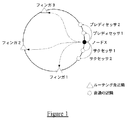
図1は、リング(リング内に少数のノードのみが図示されている)状に編成されているオーバレイネットワークを説明している。この例では、各ノードはリング中に少数の後続ノードおよび先行ノードばかりでなく、少数のより離れたノードの位置およびハッシュ値が入っているルーティングテーブルを維持する。図示しているネットワークでは、ノードXは、ルーティングテーブル内に2つのサクセッサ(successor)ノードおよび2つのプレディセッサ(predecessor)ノードに対する位置だけでなく、3つの離れたノードに対する位置を維持する。ルーティングテーブル内の多数のエントリが、ネットワークをルーチングに関してより効率的に、そしてノードの脱退(withdrawal)に対してよりロバストにすることができるが、大きなテーブルは維持するのが難しく、そしてしたがって、ネットワークの不信頼性を増大させる。 FIG. 1 illustrates an overlay network organized in a ring (only a few nodes are shown in the ring). In this example, each node maintains a routing table that contains the location and hash values of a few more distant nodes as well as a few subsequent nodes and predecessors in the ring. In the network shown, node X maintains a position in the routing table for three distant nodes as well as a position for two successor nodes and two predecessor nodes. A large number of entries in the routing table can make the network more efficient with respect to routing and more robust to node withdrawal, but a large table is difficult to maintain and therefore the network Increase the unreliability of
オーバレイネットワーク内のノードは、近隣と周期的に連絡をとるように努めることにより、ルーティングテーブルにおける情報が最新であることを保証する。いくつかの異なるメカニズムがこの目的のために用いられる場合がある。 Nodes in the overlay network ensure that the information in the routing table is up-to-date by striving to periodically contact neighbors. Several different mechanisms may be used for this purpose.
1)ノードは、ルーティングテーブルに挙げられている他のノードがオーバレイネットワークを離脱していないことを調べるために、キープアライブメッセージを周期的に送ることができる。このメカニズムは、DHT手法、たとえばPastry[A.RowstronおよびP.Druschel:Pastry:大規模ピアツーピアシステムのための、拡張可能な分散オブジェクト位置およびルーチング、ミドルウェア、2001年]、Chord[I.Stoica、R.Morris、D.Karger、M.F.KaashoekおよびH.Balakrishnan:Chord:インターネットアプリケーションのための拡張可能なピアツーピア検索サービス、ACM SIGCOMM’01会議の会議録、2001年8月、サンディエゴ、カリフォルニア、USA]および内容でアドレスを指定できるネットワーク(CAN)[S.Ratsanamy、P.Francis、M.Handly、R.KarpおよびS.Shenker:拡張可能な内容でアドレスを指定できるネットワーク、ACM SIGCOMM2001、2001年8月]により用いられる。 1) A node can periodically send keep-alive messages to check that no other node listed in the routing table has left the overlay network. This mechanism is based on DHT techniques such as Pastry [A. Rowstron and P.M. Druschel: Pastry: Scalable distributed object location and routing for large-scale peer-to-peer systems, middleware, 2001], Chord [I. Stoica, R.A. Morris, D.M. Karger, M.M. F. Kaashhoek and H.H. Balakrishnan: Chord: Extensible Peer-to-Peer Search Service for Internet Applications, ACM SIGCOMM'01 Conference Proceedings, August 2001, San Diego, California, USA] and Content Addressable Network (CAN) [S. Ratsanamy, P.M. Francis, M.M. Handly, R.M. Karp and S.K. Shenker: A network that can specify addresses with expandable content, ACM SIGCOMM 2001, August 2001].
2)ノードは、旧エントリに置き換えて、ルーティングテーブルに挿入でき得る新しいノードについて学習するためにクエリを周期的に送ることができる(たとえば、Chord)。 2) A node can periodically send a query to learn about a new node that can be inserted into the routing table, replacing the old entry (eg, Chord).
3)ノードは、近隣のルーティングテーブルにおけるエントリについての情報を要求するクエリを、直通の近隣(direct neighbours)に周期的に送ることができる。この情報は、ノード自身のルーティングテーブルを更新するのに用いられる(たとえば、Chord)。 3) A node can periodically send a query requesting information about an entry in a neighbor routing table to direct neighbors. This information is used to update the node's own routing table (eg, Chord).
4)ノードは、自身のルーティングテーブルを近隣に周期的に送ることができる(たとえば、CAN)。 4) A node can periodically send its routing table to a neighbor (eg, CAN).
ルーティングテーブルを維持するための別の(付加的な)手法は、リソース要求の発信元がルーティングテーブルに挿入されうるかどうかをノードが調べる工程を伴う(たとえば、Kademlia[P.MaymounkovおよびD.Mazieres:Kademlia:排他的論理和尺度に基づくピアツーピア情報システム、IPTPS02の会議録、ケンブリッジ、USA,2002年3月])。 Another (additional) approach for maintaining the routing table involves the node checking whether the source of the resource request can be inserted into the routing table (eg, Kademlia [P. Maymonkov and D. Mazieres: Kademlia: Peer-to-peer information system based on the exclusive-or scale, IPTPS02 proceedings, Cambridge, USA, March 2002]).
DHTにおける近隣関係の例を示す図2を考える。図では、リングトポロジが仮定されている。ノードXは、ルーティングテーブルに3つのサクセッサポインタおよび3つのプレディセッサポインタを維持する。複数のサクセッサポインタおよびプレディセッサポインタを維持する理由がロバスト性を増大させることであることは、既に明瞭であるだろう。単一のサクセッサが停止するようになる確率がpであると、その場合、すべての3つのサクセッサが同時に停止するようになる確率はp3である。しかしながら、極めて大きな実世界のDHTに基づくオーバレイネットワークでは、このことはネットワークにおける接続性を維持するには十分でなく、所与のノードのすべての3つのサクセッサ(またはその代わりに、すべての3つのプレディセッサ)が十分短い期間内にネットワークを離脱すると、ネットワークは寸断する。 Consider FIG. 2, which shows an example of a neighborhood relationship in DHT. In the figure, a ring topology is assumed. Node X maintains three successor pointers and three predecessor pointers in the routing table. It will already be clear that the reason for maintaining multiple successor and predecessor pointers is to increase robustness. If the probability that a single successors will be stopped is a p, in which case, the probability that all three successors will be stopped at the same time is p 3. However, in an extremely large real-world DHT-based overlay network, this is not sufficient to maintain connectivity in the network, and all three successors (or alternatively all three) of a given node If the predecessor leaves the network within a sufficiently short period of time, the network will be disrupted.
ノードは、手順を踏んで(gracefully)または手順を踏まずに(ungracefully)ネットワークを離脱できる。ノードは、手順を踏んで離脱する場合、実際に離脱するに先立って、ネットワークを離脱しようとする意思について近隣に知らせる。ノードは、(アプリケーション層で解釈される)離脱メッセージを送ることによりこのことを行う。これは、近隣が自身のルーティングテーブルから離脱するノードを直ちに除去できるようにする。ノードが手順を踏まずにネットワークを離脱する場合、最初に近隣に知らせることなく、ネットワークを去る。したがって、近隣はノードが離脱していることを自ら検出しなければならない。手順を踏まずに離脱する理由には以下がある。(i)ノードが機能停止になった、(ii)P2Pアプリケーションが機能停止になった、または不意に休止した、そして(iii)利己的な振舞い。(iii)の代わりに、ユーザが、手順を踏んだ撤退(departure)につきものの遅延を回避するために手順を踏まずに離脱することを選ぶ場合がある。 A node can leave the network either gracefully or ungracefully. When a node leaves following a procedure, it informs its neighbors about its intention to leave the network prior to actually leaving. The node does this by sending a leave message (interpreted at the application layer). This makes it possible to immediately remove nodes whose neighbors leave their routing table. If a node leaves the network without following the steps, it leaves the network without first informing the neighbors. Therefore, the neighbor must detect itself that the node has left. The reasons for leaving without following the procedure are as follows. (I) a node has become out of service, (ii) a P2P application has become out of service, or has unexpectedly paused, and (iii) selfish behavior. Instead of (iii), the user may choose to leave without following the procedure to avoid the delays associated with the departure following the procedure.
オーバレイネットワークから手順を踏まずに撤退する場合、ノードは近隣が2つの異なる方法で離脱していることを知ることができる。 When withdrawing from the overlay network without taking steps, the node can know that the neighbor has left in two different ways.
1)下位層のトランスポートプロトコルが信頼できる場合(たとえば、TCP)、近隣の撤退は、トランスポート層の接続がダウンするという事実から迅速に検出される。 1) If the lower layer transport protocol is reliable (eg, TCP), a neighbor withdrawal is quickly detected from the fact that the transport layer connection is down.
2)トランスポートプロトコルが信頼できない場合(たとえば、UDP)、ノードは、次周期のDHT保守メッセージを近隣に送ろうと試みるまで、近隣が離脱していることを学習しない。次周期の保守メッセージ送信を待つことに加えて、ノードはまた、近隣が実際に離脱しているということが確実となりうる前に、トランザクションが時間切れするまで待たなければならない。 2) If the transport protocol is unreliable (eg, UDP), the node will not learn that the neighbor has left until it tries to send the next period DHT maintenance message to the neighbor. In addition to waiting for the next periodic maintenance message transmission, the node must also wait until the transaction times out before it can be certain that the neighbor has actually left.
手順を踏んだ撤退と手順を踏まない撤退との双方の場合、最終結果は、離脱ノードの直通の近隣の各々がルーティングテーブルで1つ少ないポインタを有することである。たとえば、図2におけるノードS1がネットワークを離脱すると、ノードXは、2つのサクセッサポインタ、すなわちS2およびS3を残しているだけである。また、ノードXが追加のサクセッサを見つける機会を得る前に、S2およびS3がまたネットワークを離脱すると、ノードXはもはやサクセッサを知らないので、オーバレイネットワークは分割されるようになる。同じ状況がノードXのプレディセッサノードについて生じうる。 In both the cased exit and the step out exit, the end result is that each direct neighbor of the leaving node has one less pointer in the routing table. For example, when node S1 in FIG. 2 leaves the network, node X only leaves two successor pointers, S2 and S3. Also, if S2 and S3 also leave the network before node X has the opportunity to find additional successors, the overlay network will become partitioned because node X no longer knows the successors. The same situation can occur for node X's predecessor node.
このようにして、現存する解決策に関連する問題は、所与のノードのサクセッサまたはプレディセッサのすべてが短期間のうちに停止すると、ネットワークは分割されるようになりうるし、そしてリソース要求はギャップを埋めることができないということである。この“短期間”は、2つの連続するDHT保守メッセージ間の時間に当てはまる。そのような保守メッセージがたとえば、60秒ごとに送られるとした場合、単一のノードのすべてのサクセッサまたはプレディセッサが、この60秒の期間内にオーバレイネットワークを離脱すると、オーバレイネットワークは崩壊する。このことは、ネットワークが高い“解約(churn)”率に直面している場合、起こり得そうな事象である。この問題に対する直感的な解決策は、DHT保守メッセージをより頻繁に送ることであろうが、周期的な保守メッセージの送信間隔は、もたらされる信号負荷がネットワークを過負荷にするようになるので、任意には小さくできない。この問題は、S.Rhea、D.Geels、T.RoscoeおよびJ.Kubiatowicz:DHTにおける解約の取り扱い、USENIXの会議録、年次技術会議、2004年6月、により確認されている。 In this way, the problem associated with existing solutions is that if all of a given node's successors or predecessors go down in a short period of time, the network can become partitioned and resource demands can be gaps. It ca n’t be filled. This “short period” applies to the time between two consecutive DHT maintenance messages. If such a maintenance message is sent every 60 seconds, for example, if all successors or predecessors of a single node leave the overlay network within this 60 second period, the overlay network will collapse. This is a likely event when the network is facing a high “churn” rate. An intuitive solution to this problem would be to send DHT maintenance messages more frequently, but the periodic maintenance message transmission interval will cause the resulting signal load to overload the network, so Cannot be arbitrarily small. The problem is that Rhea, D.C. Geels, T .; Roscoe and J.M. Kubiatowicz: Confirmed by DHT handling of cancellations, USENIX proceedings, Annual Technical Conference, June 2004.
本発明の目的は、ノードが停止する、またはそうでなければネットワークから脱退する場合、オーバレイネットワークに対して混乱を最小にすることである。少なくとも、本発明の特定の実施形態は、脱退するノード、または脱退するノードの近隣ノードが他の近隣のルーティングテーブルを更新できるようにすることにより、この目的を達成する。 The object of the present invention is to minimize disruption to the overlay network when a node goes down or otherwise leaves the network. At least certain embodiments of the present invention achieve this goal by allowing a leaving node, or a neighboring node of a leaving node, to update other neighboring routing tables.
本発明の第1の態様によれば、オーバレイネットワークのノードでルーティングテーブルを維持する方法が提供され、所与ノードのルーティングテーブルには、一連の近隣サクセッサノードおよび近隣プレディセッサノードのうちの各々に対して、ノードのオーバレイネットワークアドレスとノードの物理的ロケータとの間のマッピングが入っている。 According to a first aspect of the present invention, there is provided a method for maintaining a routing table at a node of an overlay network, wherein the routing table of a given node includes each of a series of neighboring successor nodes and neighboring predecessor nodes. In contrast, it contains a mapping between the node's overlay network address and the node's physical locator.
本方法は、ノードがオーバレイネットワークから撤退する時点でまたはその直前に、撤退ノード(または撤退を承知している、撤退ノードの近隣ノードのうちの1つ)から、各近隣ノード(または撤退ノードの他の各近隣ノード)に離脱要求を送る工程、撤退を表示する工程および受信ノードのルーティングテーブルに入っていないノードに対する1つ以上のマッピングを入れる工程を備える。各近隣ノード(または他の各近隣ノード)が離脱要求を受信し、そして前記(複数の)マッピングを用いてルーティングテーブルを更新する。 The method starts at or just before the node withdraws from the overlay network from the withdrawal node (or one of the withdrawal node's neighbors that knows the withdrawal) from each neighboring node (or the withdrawal node's Sending a leave request to each other neighboring node), displaying the withdrawal, and entering one or more mappings for nodes not in the receiving node's routing table. Each neighbor node (or each other neighbor node) receives the leave request and updates the routing table with the mapping (s).
本発明の実施形態では、脱退ノードの近隣が自身のルーティングテーブルを置換プレディセッサノードまたは置換サクセッサノードで迅速に更新できるようにする。ネットワークにおいて高い解約である場合において、ネットワーク鎖における破断の危険性が大いに減少する。 Embodiments of the present invention allow a neighbor of a leaving node to quickly update its routing table at a replacement predecessor node or replacement successor node. In the case of high churn in the network, the risk of breakage in the network chain is greatly reduced.
本発明の第2の態様によれば、オーバレイネットワークのノードでルーティングテーブルを維持する方法が提供され、所与ノードのルーティングテーブルには、一連の近隣サクセッサノードおよび近隣プレディセッサノードのうちの各々に対して、ノードのオーバレイネットワークアドレスとノードの物理的ロケータとの間のマッピングが入っている。 According to a second aspect of the invention, there is provided a method for maintaining a routing table at a node of an overlay network, wherein the routing table for a given node includes each of a series of neighboring successor nodes and neighboring predecessor nodes. In contrast, it contains a mapping between the node's overlay network address and the node's physical locator.
本方法では、ノードがオーバレイネットワークを撤退する直前に、撤退ノードから撤退ノードの各近隣ノードに離脱要求を送信し、撤退を示し、そして、受信ノードのルーティングテーブル内に入っていないノードに対する物理的ロケータマッピングへの1つ以上のオーバレイネットワークアドレスを入れることを備える。各近隣ノードで離脱要求を受信する時点で、ノードは(複数の)マッピングを用いて自身のルーティングテーブルを更新する。 In this method, immediately before the node withdraws from the overlay network, a withdrawal request is sent from the withdrawal node to each neighboring node of the withdrawal node, indicating the withdrawal, and physical for nodes that are not in the receiving node's routing table. Providing one or more overlay network addresses to the locator mapping. When each neighbor node receives a leave request, the node updates its routing table with the mapping (s).
本発明のこの態様の実施形態では、離脱要求内に入っている少なくとも1つのマッピングは、受信ノードには未知の、撤退ノードの近隣ノードに対応する。 In an embodiment of this aspect of the invention, the at least one mapping contained in the leave request corresponds to a neighbor node of the withdrawal node that is unknown to the receiving node.
本発明の第3の態様によれば、オーバレイネットワークのノードでルーティングテーブルを維持する方法が提供され、所与ノードのルーティングテーブルには、一連の近隣サクセッサノードおよび近隣プレディセッサノードのうちの各々に対して、ノードのオーバレイネットワークアドレスとノードの物理的ロケータとの間のマッピングが入っている。 According to a third aspect of the present invention, there is provided a method for maintaining a routing table at a node of an overlay network, wherein the routing table of a given node includes each of a series of neighboring successor nodes and neighboring predecessor nodes. In contrast, it contains a mapping between the node's overlay network address and the node's physical locator.
本方法では、ノードがオーバレイネットワークから撤退する時点で、撤退を承知している、撤退ノードの近隣ノードのうちの1つから、撤退ノードの他の近隣ノードに離脱要求を送信し、ここで離脱要求は撤退を示すとともに受信ノードのルーティングテーブルに入っていないノードに対する1つ以上のマッピングを含んでいる。前記他の各近隣ノードで離脱要求を受信すると、そのノードはその(複数の)マッピングを用いて自身のルーティングテーブルを更新する。 In this method, when a node withdraws from the overlay network, a withdrawal request is sent from one of the neighboring nodes of the withdrawal node that is aware of the withdrawal to the other neighboring nodes of the withdrawal node, where The request indicates withdrawal and includes one or more mappings for nodes not in the receiving node's routing table. When each other neighboring node receives a leave request, the node updates its routing table with the mapping (s).
本発明のこの態様の実施形態では、(複数の)離脱要求を送るノードが、周期的に送信されるキープアライブメッセージに対して撤退ノードが応答しなかったという結果から撤退ノードの撤退を検出する。離脱要求を送るノードは、(複数の)離脱要求を送ることによりその検出への反応を示す。受信ノードのルーティングテーブルに入っていないノードに対する前記1つ以上のマッピングは、離脱要求を送るノードのルーティングテーブルに入っているマッピングであってもよい。 In an embodiment of this aspect of the invention, the node sending the leave request (s) detects the withdrawal node withdrawal from the result that the withdrawal node did not respond to the periodically transmitted keep-alive message. . The node sending the leave request indicates its response to the detection by sending the leave request (s). The one or more mappings for nodes not in the receiving node's routing table may be mappings in the routing table of the node sending the leave request.
離脱要求を受信するノードは、その受信ノードが撤退ノードの近隣ノードのうちの、該離脱要求を送っているノードが承知していない近隣ノードを承知しているかどうかを判断するようにしてもよい。その受信ノードが、離脱要求を送っているノードが承知していない近隣ノードを承知している場合、離脱要求を送っているノードに対して、離脱要求を送信する。ここで送信される離脱要求は、その受信ノードのルーティングテーブルに入っていないノードに対する物理的ロケータマッピングへのを1つ以上のオーバレイネットワークアドレス含んでいる。受信ノードまたはさらなる各受信ノードにおいて、離脱要求を受信する時点で、ノードは自身のルーティングテーブルが更新される。 The node that receives the leave request may determine whether or not the receiving node is aware of neighboring nodes of the withdrawal node that the node sending the leave request does not know. . When the receiving node knows a neighboring node that the node sending the leave request does not know, it sends the leave request to the node sending the leave request. The leave request sent here includes one or more overlay network addresses to physical locator mapping for nodes not in the receiving node's routing table. At the time of receiving a leave request at the receiving node or each further receiving node, the node updates its routing table.
当然のことながら、受信ノードでルーティングテーブルを更新するステップは、撤退ノードに対応するマッピングを削除すること、および受信した離脱要求に入っている新しいマッピングをルーティングテーブルに追加することを含んでもよい。 Of course, updating the routing table at the receiving node may include deleting the mapping corresponding to the withdrawal node and adding a new mapping in the received withdrawal request to the routing table.
本発明の実施形態に都合よく組み込み可能な機能は、それぞれのルーティングテーブルに含まれていないノードに対する1つ以上のマッピングをキャッシュすることである。ネットワークからノードが撤退する場合に、撤退するノードの少なくとも1つの近隣ノードのルーティングテーブルは1つ以上のキャッシュされたマッピングを含むように更新できる。 A feature that can be conveniently incorporated into embodiments of the present invention is to cache one or more mappings for nodes not included in the respective routing table. When a node withdraws from the network, the routing table of at least one neighboring node of the withdrawing node can be updated to include one or more cached mappings.
本発明の第4の態様によれば、オーバレイネットワーク内で用い、そして一連の近隣サクセッサノードおよび近隣プレディセッサノードの各々に対して、ノードのオーバレイネットワークアドレスとノードの物理的ロケータとの間のマッピングが入っているルーティングテーブルを記憶するための記憶装置を備えるノードが提供される。ノードはまた、ノードまたは近隣ノードがネットワークから撤退する時点で、ノードの1つのまたは複数の近隣ノードに離脱要求を送るように構成された処理部を備え、離脱要求は撤退するノードを識別し、そして受信ノードのルーティングテーブルに入っていないノードに対する物理的ロケータマッピングへの1つ以上のオーバレイネットワークアドレスが入っている。 According to a fourth aspect of the present invention, between each of a series of neighboring successor nodes and neighboring predecessor nodes, between the node's overlay network address and the node's physical locator. A node is provided that comprises a storage device for storing a routing table containing the mapping. The node also comprises a processing unit configured to send a leave request to one or more of the node's neighbors when the node or neighbor leaves the network, the leave request identifying the node to leave, It contains one or more overlay network addresses to physical locator mapping for nodes not in the receiving node's routing table.
ノードは、近隣ノードから離脱要求を受信し、上記記憶装置に入っているルーティングテーブルから離脱要求で識別されている撤退ノードに対応するマッピングを削除し、そして離脱要求に入っている1つ以上の新しいマッピングをルーティングテーブルに追加するように構成されるさらなる処理ユニットを備えるようにしてもよい。また、さらなる処理ユニットが、離脱要求が撤退するノードから発しているかどうかを決定し、撤退ノードから発していない場合には、撤退ノードのすべての近隣ノードのうちの上記離脱要求を送ったノードが承知していないノードを識別するためにルーティングテーブルを調べ、そしてそのような識別されたあらゆつノードに対して離脱要求を送るように構成されてもよい。この離脱要求には、撤退ノードを識別するとともに、受信ノードのルーティングテーブルに入っていないノードに対する1つ以上のマッピングが入っている。 The node receives a leave request from a neighboring node, deletes the mapping corresponding to the withdrawn node identified in the leave request from the routing table contained in the storage device, and one or more in the leave request There may be a further processing unit configured to add the new mapping to the routing table. Further, the further processing unit determines whether or not the withdrawal request originates from the node to be withdrawn, and if it has not originated from the withdrawal node, the node that sent the above withdrawal request among all the neighboring nodes of the withdrawal node It may be configured to look up a routing table to identify nodes that are not aware and send a leave request to all such identified nodes. This leave request includes one or more mappings for nodes that are not in the routing table of the receiving node, as well as identifying the withdrawal node.
ノードは、近隣ノードがネットワークから撤退する場合に、ルーティングテーブルに含まれていないノードに対する1つ以上のマッピングをキャッシュするためのさらなる記憶装置、およびキャッシュされた1つ以上のマッピングを含むようにルーティングテーブルを更新するためのさらなるプロセッサを備え得る。 The node routes to include additional storage for caching one or more mappings for nodes not included in the routing table and one or more cached mappings when a neighboring node withdraws from the network A further processor for updating the table may be provided.
本発明の第5の態様によれば、オーバレイネットワークのノードでルーティングテーブルを維持する方法が提供され、所与のノードのルーティングテーブルには、一連の近隣サクセッサノードおよび近隣プレディセッサノードの各々に対して、ノードのオーバレイネットワークアドレスとノードの物理的ロケータとの間のマッピングが入っている。 According to a fifth aspect of the present invention, there is provided a method for maintaining a routing table at a node of an overlay network, wherein a routing table for a given node includes a sequence of neighboring successor nodes and neighboring predecessor nodes. In contrast, there is a mapping between the node's overlay network address and the node's physical locator.
本方法は、ノードに更新されたアドレス指定情報を提供するためにそれらノード間で保守メッセージを周期的に交換することを含む工程を。アドレス指定情報がピアノードに対して所与ノードで受信され、そしてかかるピアノードが所与ノードのルーティングテーブルに含まれていない場合、情報は所与ノードでキャッシュされる。所与ノードのルーティングテーブルに入っているノードがネットワークから脱退する場合、ピアノードはキャッシュされた情報を用いてルーティングテーブルに追加される。 The method includes periodically exchanging maintenance messages between the nodes to provide updated addressing information to the nodes. If addressing information is received at a given node for a peer node and such peer node is not included in the routing table of the given node, the information is cached at the given node. When a node in the given node's routing table leaves the network, the peer node is added to the routing table using the cached information.
本明細書で説明している最適化DHT離脱操作は、近隣ノードのルーティングテーブルが、あるノードがネットワークから撤退することにより影響を受ける場合に、近隣ノードが自身のルーティングテーブルを迅速に更新するのを手助けするノードに依存する。撤退するノードは、たとえば手順を踏んだ撤退シナリオでの近隣ノード、または手順を踏まない撤退の場合での別の近隣ノードである場合がある。これら2つのシナリオについてこれから詳細に考察することとする。 The optimized DHT leave operation described herein allows a neighboring node to quickly update its routing table when a neighboring node's routing table is affected by a node leaving the network. Depends on the node that helps. The node to be withdrawn may be, for example, a neighboring node in a withdrawal scenario following a procedure, or another neighboring node in the case of a withdrawal without following a procedure. These two scenarios will now be considered in detail.
リングトポロジを用いるChord DHTに基づくオーバレイネットワークの例を示す図2を再度参照する。Chord DHTは、本明細書では例として用いられているが、説明する手順は他のDHTに基づくオーバレイネットワークに同様に適用できる。説明している例では、DHTに基づくオーバレイネットワークにおける各ノードは、6つの近隣、すなわち、3つのプレディセッサノードおよび3つのサクセッサノードへのポインタを維持するということを仮定している。勿論、提案メカニズムは任意の数のサクセッサポインタおよびプレディセッサポインタとともに機能する。 Reference is again made to FIG. 2, which shows an example of an overlay network based on Chord DHT using a ring topology. Although Chord DHT is used as an example herein, the procedure described is equally applicable to other DHT-based overlay networks. In the described example, it is assumed that each node in the DHT-based overlay network maintains pointers to six neighbors: three predecessor nodes and three successor nodes. Of course, the proposed mechanism works with any number of successor and predecessor pointers.
図2で、ノードXは3つのサクセッサ、S1、S2、およびS3を有する。オーバレイネットワークが重大な“解約”に遭遇していると、ノードXのサクセッサのすべてが短時間フレームのうちにオーバレイネットワークを離脱することを選ぶ可能性がある。ノードが手順を踏んで撤退することを仮定すると、ノードは自身の近隣ノードに離脱要求を送るであろう。しかしながら、上述したように、ノードXは、すべての3つのサクセッサがネットワークを離脱してしまう前に、他のサクセッサノードのどれをも識別する時間を有しない場合がある。このシナリオで、ネットワークの分割を回避するために、オーバレイを離脱しようとする各ノードは、実際にネットワークを離脱する前に、近隣が自身のルーティングテーブルを代替の近隣ノードで埋めるのに協力する。 In FIG. 2, node X has three successors, S1, S2, and S3. If the overlay network encounters a significant “cancellation”, all of Node X's successors may choose to leave the overlay network in a short frame. Assuming that a node steps out and leaves, the node will send a leave request to its neighbors. However, as described above, node X may not have time to identify any of the other successor nodes before all three successors leave the network. In this scenario, to avoid network partitioning, each node attempting to leave the overlay cooperates with the neighbors filling their routing tables with alternative neighbors before actually leaving the network.
以下の本文で、用語“近隣テーブル”が、直接につながる近隣へのポインタが入っているルーティングテーブルの一部を引用するのに用いられ、用語“プレディセッサテーブル”が、プレディセッサポインタが入っている近隣テーブルの一部を引用するのに用いられ、そして用語“サクセッサテーブル”が、サクセッサポインタが入っている近隣テーブルの一部を引用するのに用いられる。 In the following text, the term “neighbor table” is used to refer to the part of the routing table that contains a pointer to the directly connected neighbor, and the term “predecessor table” contains the predecessor pointer. The term “successor table” is used to quote a part of the neighbor table that contains the successor pointer.
図2のノードS1が、手順を踏んでオーバレイネットワークを離脱することを選ぶ場合を考える。ネットワークでのすべての他のノードと同じように、S1は自身のルーティングテーブルに近隣ノードへのポインタを維持している。図2では、ノードS1が3つのプレディセッサポインタおよび3つのサクセッサポインタを維持することを仮定している。ノードS1のサクセッサはS2、S3およびAである。ノードS1のプレディセッサは、X、P1およびP2を含む。ネットワークを離脱する前に、ノードS1は近隣のノードNの各々に対して以下の手順を繰り返す。 Consider the case where node S1 in FIG. 2 chooses to leave the overlay network following the procedure. Like all other nodes in the network, S1 maintains pointers to neighboring nodes in its routing table. In FIG. 2, it is assumed that node S1 maintains three predecessor pointers and three successor pointers. The successors of node S1 are S2, S3 and A. The predecessor of node S1 includes X, P1 and P2. Before leaving the network, the node S1 repeats the following procedure for each of the neighboring nodes N.
●ノードNがノードS1のプレディセッサであると、ノードS1は、Nに対する新しいサクセッサテーブルを構築し、そしてサクセッサテーブルをノードNに送られる離脱メッセージに含める。ノードS1は、ノードNに対して創出するサクセッサテーブルに自身を含めるべきではない。サクセッサテーブルにはS1のサクセッサばかりでなく、S1とNとの間のノードを含めることができる。実際には、NがS1の直接のプレディセッサでない場合に、そのようになる。これらの介在するノードのいくつかは、それまではノードNには未知である場合がある。(Chord DHTアルゴリズムに従って、新規に加わったノードのサクセッサのみがノードを承知していて、他のノードは、次周期のDHT保守メッセージが予定される場合に新規のノードについて学習するであろう)。 If node N is the predecessor of node S1, node S1 builds a new successor table for N and includes the successor table in the leave message sent to node N. Node S1 should not include itself in the successor table created for node N. The successor table can include not only the successors of S1, but also the nodes between S1 and N. In practice, this is the case when N is not a direct predecessor of S1. Some of these intervening nodes may be unknown to node N so far. (According to the Chord DHT algorithm, only the newly added node's successor is aware of the node, and other nodes will learn about the new node when the next period DHT maintenance message is scheduled).
●ノードNがノードS1のサクセッサであると、ノードS1はノードNに対する新しいプレディセッサテーブルを創出し、そしてプレディセッサテーブルをノードNに送られる離脱メッセージに含める。このテーブルには、ノードS1とノードNとの間に位置するS1のサクセッサのどれもを含む。ノードS1は、勿論、ノードNに送られるプレディセッサテーブルに自身を含めるべきではない。 If node N is the successor of node S1, node S1 creates a new predecessor table for node N and includes the predecessor table in the leave message sent to node N. This table includes any of the successors of S1 that are located between node S1 and node N. Node S1 should of course not include itself in the predecessor table sent to node N.
●ノードS1からのサクセッサ/プレディセッサテーブルが入っている離脱メッセージを受信して、ノードNは最初にノードS1を自身のルーティングテーブルから取り除く。次に、Nは離脱メッセージで伝えられるノードのリストを細かく調べる。リストにある各ノードに対して、ノードNはノードを自身のサクセッサテーブルおよびプレディセッサテーブルにあるエントリと比較し、そしてあるノードが存在していない場合に、そのノードをテーブルの正しい位置に挿入する。 When receiving the leave message containing the successor / predecessor table from node S1, node N first removes node S1 from its routing table. Next, N examines the list of nodes conveyed in the leave message in detail. For each node in the list, node N compares the node with entries in its successor table and predecessor table, and if a node does not exist, inserts that node in the correct position in the table To do.
この手順は、オーバレイネットワークが安定状態に留まっており、そしてノードS1の撤退後でも完全な接続性を保持することを保証する。すなわち、ノードS1の撤退は決してネットワークの運用を妨害しない。 This procedure ensures that the overlay network remains stable and retains full connectivity even after the withdrawal of node S1. That is, the withdrawal of the node S1 never interferes with the network operation.
ノード(たとえば、図2のノードA)が近隣に知らせずにネットワークを離脱すると、異なる状況が生じる。これは、P2Pアプリケーションの突然のクラッシュまたは何らかの他の異常終了のために、または離脱ノード側での利己的な振舞いのために起こる可能性がある。ノードAの近隣のノードBが、オーバレイネットワーク内で、ノードAが停止していることを(たとえば、ノードAに宛てた周期的なキープアライブメッセージ、保守メッセージまたは任意の他のメッセージが停止しているという事実から)最初に検出するノードであると仮定する。このとき、ノードBは、ノードAの撤退をノードAの他の近隣に知らせ、そして他の近隣の近隣テーブルの内容を更新させる責務を負わされる。しかしながら、ノードBはノードAの近隣テーブルを完全には再現できない(この例では、ノードBは、ノードAの近隣であるが、しかしノードBの近隣ではないS1に関する知識を有していない)ので、ノードB以外の近隣ノードは、ノードBが承知していないそれらの近隣ノードの近隣テーブルを更新することによる手順に関与しなければならない。 A different situation occurs when a node (eg, node A in FIG. 2) leaves the network without informing the neighbors. This can happen due to a sudden crash or some other abnormal termination of the P2P application, or due to selfish behavior on the leaving node side. Node B's neighbor Node B has confirmed that Node A is down in the overlay network (for example, a periodic keep-alive message, maintenance message or any other message destined for Node A is down) Suppose it is the first node to detect (from the fact that it is). At this time, Node B is responsible for notifying Node A's withdrawal to other neighbors of Node A and updating the contents of the neighbor table of other neighbors. However, because node B cannot fully reproduce the neighbor table of node A (in this example, node B is a neighbor of node A, but does not have knowledge of S1 that is not a neighbor of node B) Neighboring nodes other than Node B must be involved in the procedure by updating the neighbor table of those neighboring nodes that Node B is not aware of.
ノードAの撤退を最初に検出する近隣ノードが、ノードAの最も離れたサクセッサまたは最も離れたプレディセッサである例外的な場合では、かかる近隣は、他の近隣ですでに知らないものとなっている、利用できる情報を有しない。このようにして、最も離れた近隣ノードはより近くの近隣ノードの近隣テーブルの内容を更新できない。しかしながら、最も離れた近隣ノードはさらに、ノードAに代わって、より近くの近隣ノードが他の近隣ノードに近隣テーブルを伴った離脱要求を送らせるようになる空の離脱要求を送ることができる(より近くの近隣ノードが他のノードに恩恵をもたらす情報を有する)。 In the exceptional case where the first neighbor that detects Node A's withdrawal is Node A's furthest successor or furthest predecessor, such neighbor is already unknown to other neighbors. , No information available. In this way, the farthest neighbor node cannot update the contents of the neighbor table of the nearest neighbor node. However, the farthest neighbor node can also send an empty leave request on behalf of node A, causing a nearby neighbor node to send a leave request with a neighbor table to other neighbor nodes ( A nearby neighbor node has information that benefits other nodes).
例として、図2のノードXが自身の近隣、すなわち、ノードS1、S2、S3、P1、P2およびP3に知らせずに、ネットワークを離脱することを仮定する。さらに、たとえばノードXがノードS1からのキープアライブメッセージに応答し損なうために、ノードS1が、ノードXが離脱していることを検出する最初のノードであると仮定する。ノードXの停止を検出した直後に、ノードS1は、ノードXの近隣テーブルの内容のできる限り正確な表現を創出することになる。この場合、S1はノードXの6つの近隣のうちの5つに関する情報を再現できる。これは、S1がノードXのすべてのサクセッサおよびノードXのプレディセッサのうちの2つを知っているからである。次に、ノードS1は、S1が承知している、ノードXの各近隣Nに対して以下の手順を行う。 As an example, assume that node X of FIG. 2 leaves the network without notifying its neighbors, ie, nodes S1, S2, S3, P1, P2, and P3. Further assume that node S1 is the first node to detect that node X has left, for example because node X fails to respond to the keep-alive message from node S1. Immediately after detecting the stop of node X, node S1 will create a representation as accurate as possible of the contents of the neighbor table of node X. In this case, S1 can reproduce information on five of the six neighbors of node X. This is because S1 knows all of the successors of node X and two of node X's predecessors. Next, the node S1 performs the following procedure for each neighbor N of the node X that S1 is aware of.
●ノードS1はノードNの近隣テーブルの内容を構築する。 • Node S1 builds the contents of the neighbor table of node N.
●ノードS1は、S1がノードNに対して構築した近隣テーブルからノードXを取り除き、ノードXの回復された近隣テーブルから適切なノードを選び、そしてこれらをノードNに対する新しい近隣テーブルに挿入する。より具体的には、ノードNがノードXのプレディセッサであると、ノードS1はノードNに対する新しいサクセッサテーブルを創出する。その代わりに、ノードNがノードXのサクセッサであると、ノードS1はノードNに対する新しいプレディセッサテーブルを創出する。 Node S1 removes node X from the neighbor table that S1 built for node N, selects the appropriate nodes from node X's recovered neighbor table, and inserts these into the new neighbor table for node N. More specifically, if node N is a predecessor of node X, node S1 creates a new successor table for node N. Instead, if node N is the successor of node X, node S1 creates a new predecessor table for node N.
●ノードS1は、ノードXに代わって、ノードNに離脱要求を送る。離脱要求には、S1が創出している新しいサクセッサテーブルまたはプレディセッサテーブルを含める。 Node S1 sends a leave request to node N on behalf of node X. The withdrawal request includes a new successor table or predecessor table created by S1.
●ノードNは、ノードS1から受信した離脱要求に基づいて自身の近隣テーブルを更新する。 Node N updates its neighbor table based on the leave request received from node S1.
ノードXのルーティングテーブルの内容を決定する場合、ノードS1はノードXの最も離れているプレディセッサ、すなわち、P3のID(identity)を知らない。しかしながら、P1とP2の双方はP3のIDを知っている。したがって、ノードXの近隣Nが、ノードXに代わって別のノードから送られた離脱要求を受信する(離脱要求の発信元のソースアドレスがノードXのアドレスと一致しないので、近隣Nがこれを検出できる)と、近隣ノードNは以下の処理動作を実行する。 When determining the contents of the routing table of node X, node S1 does not know the most distant predecessor of node X, that is, the identity (P3) of P3. However, both P1 and P2 know the ID of P3. Therefore, neighbor N of node X receives a leave request sent from another node on behalf of node X (because the source address of the source of the leave request does not match the address of node X, The neighboring node N executes the following processing operation.
●ノードNは、ノードXの近隣テーブルの内容の表現を再現する。より具体的には、ノードNがノードXのプレディセッサであると、ノードNはXのプレディセッサテーブルを再現する。他方、ノードNがノードXのサクセッサであると、ノードNはノードXのサクセッサテーブルの表現を再現する。 Node N reproduces the representation of the contents of the neighbor table of Node X. More specifically, if node N is a predecessor of node X, node N reproduces the predecessor table of X. On the other hand, if node N is the successor of node X, node N reproduces the representation of the successor table of node X.
●ノードNが構築した近隣テーブルに基づいて、ノードNは、ノードXの任意の近隣のうち、離脱要求の送信元(すなわち、ノードS1)が承知していないノードを承知しているかどうかを調べる。ノードNが図2のノードP2であると仮定すると、P2は離脱要求の送信元、ノードS1がノードP3(ノードXの第3のプレディセッサ)を承知していないことを検出する。 Based on the neighbor table constructed by the node N, the node N checks whether it knows a node that the sender of the leave request (that is, the node S1) does not know among any neighbors of the node X . Assuming that the node N is the node P2 in FIG. 2, it detects that P2 is the source of the leave request and the node S1 does not know the node P3 (the third predecessor of the node X).
●ノードNは、ノードXに代わって、離脱要求の送信元が承知していない、ノードXの近隣の各々に離脱要求を送る。再び、ノードNが図2のノードP2であり、そして送信元がS1であると仮定すると、P2はノードP3に離脱要求を送ることになるであろう。 Node N sends a leave request on behalf of node X to each of the neighbors of node X that the sender of the leave request is not aware of. Again, assuming that node N is node P2 in FIG. 2 and the source is S1, P2 will send a leave request to node P3.
●最後に、ノードNは、離脱要求の送信元(すなわち、ノードS1)が承知していない、ノードXの近隣のリストを(離脱要求に対してノードNが生成する応答で)返送する。離脱要求の送信元(すなわち、ノードS1)はそれから、これらのノードを自身のプレディセッサテーブルに挿入できる。 Finally, node N returns a list of neighbors of node X (in response to the leave request generated by node N) that the sender of the leave request (ie, node S1) does not know. The source of the leave request (ie, node S1) can then insert these nodes into its predecessor table.
上記例では、ノードXがオーバレイネットワークを離脱していることを検出する最初のノードが、サクセッサ(S1)であると仮定した。ノードXがオーバレイネットワークを離脱していることを検出する最初のノードがプレディセッサであると、プレディセッサ(たとえば、P1)は、ノードXの最も離れたサクセッサ、すなわちこの例ではS3に関する知識を有しない。この場合、ノードXのサクセッサのうちの1つ、たとえばノードS1が上述の工程を実行する。 In the above example, it is assumed that the first node that detects that the node X has left the overlay network is the successor (S1). If the first node that detects that node X has left the overlay network is a predecessor, the predecessor (eg, P1) does not have knowledge of node X's most distant successor, in this example S3. In this case, one of the successors of the node X, for example, the node S1, executes the above-described process.
保守運用は、DHTネットワークで実行され、そして新しいノードについて学習し、近隣ノードの状態を調べるための、参加ノード間における周期的なメッセージ交換を含む。しかしながら、DHTに基づくオーバレイネットワークにおけるノードは慣習的に、ノードが自身のルーティングテーブルを更新するために近隣から受信する情報の一部のみを用い、そして情報の残りを廃棄する。たとえば、図2のネットワーク例では、ノードXは直通の近隣P1からノードEの存在について学習するけれども、ノードXがプレディセッサテーブルに3つのプレディセッサポインタ、プレディセッサP1、P2およびP3のみを維持しているので、通常、ノードXはノードEの情報を廃棄する。しかしながら、ノードXがノードEの連絡情報をキャッシュすると、ノードXはノードP1(およびまたP2およびP3)の手順を踏まない、考えうる撤退からより迅速に回復できる。言い換えると、ノードXはノードEを自身の近隣テーブルに挿入しないけれども、ノードXは近隣キャッシュを実装する別のデータ構造にノードEの連絡情報を記憶する。ノードP1が突然ネットワークを離脱すると、ノードXは、ノードEが活性しているか、そしてルーティングテーブルに追加できるかどうかを確認するために、キャッシュを調べ、そしてたとえばノードEに連絡する。 Maintenance operations are performed in the DHT network and include periodic message exchanges between participating nodes to learn about new nodes and to check the status of neighboring nodes. However, nodes in DHT-based overlay networks conventionally use only a portion of the information that they receive from their neighbors to update their routing tables and discard the rest of the information. For example, in the example network of FIG. 2, node X learns about the presence of node E from direct neighbor P1, but node X maintains only three predecessor pointers, predecessors P1, P2 and P3 in the predecessor table. Therefore, normally, the node X discards the information of the node E. However, if node X caches contact information for node E, node X can recover more quickly from possible withdrawals that do not go through the procedure of node P1 (and also P2 and P3). In other words, node X does not insert node E into its neighbor table, but node X stores node E contact information in a separate data structure that implements a neighbor cache. When node P1 suddenly leaves the network, node X checks the cache and contacts, for example, node E to see if node E is active and can be added to the routing table.
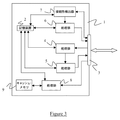
以下、上述したメカニズムを実装するのに相応しいDHTに基づくオーバレイネットワークのノード1が概略的に説明されている図3を参照する。ノード1は、ノードのためのルーティングテーブルを記憶するように構成された記憶装置2を備える。ノードには、オーバレイネットワークにおける他のノードとのインタフェース3(典型的には、IPネットワーク、たとえばインターネットとのインタフェース)が備わっている。第1の処理部4は、インタフェース3を通して近隣ノードから離脱要求を受信するように構成されている。離脱要求が受信された場合、第1の処理部はルーティングテーブルを上述のように更新するように構成されている。離脱要求はまた、撤退ノードが要求を送ったノードであるかどうかを決定する第2の処理部5により受信される。撤退ノードが要求を送ったノードでない場合には、第2の処理部5が、要求を送ったノードが承知していない、撤退ノードの近隣ノードを識別するために、ルーティングテーブルを調べる。第2の処理部はそれから、1つ以上のさらなる離脱要求を構築し、そしてこれらを識別されたノードに送る。
In the following, reference is made to FIG. 3, in which a node 1 of an overlay network based on DHT suitable for implementing the above-described mechanism is schematically described. Node 1 includes a
第3の処理部6は、ノードのネットワークからの手順を踏んだ撤退を取り扱うように構成されている。第3の処理部6は離脱要求をノードの近隣に送り、各近隣ノードに対する1つ以上の代替マッピングを識別することによりこれを行う。この第3の処理部はまた、近隣が手順を踏まずにオーバレイネットワークを離脱する場合、近隣ノードにキープアライブメッセージを周期的に送ることに関与する、接続性検出器7により通知されるように、そして撤退ノードの近隣に適切な離脱要求を送るように構成されている。
The
第4の処理部8は、メモリ9内に、その時点のルーティングテーブルに入っていないノードに対するマッピングが入っているキャッシュを維持する。第4の処理部が近隣から離脱要求を受信する場合、第4の処理部はキャッシュメモリからマッピングを抽出し、そしてこれをルーティングテーブルに追加する場合がある。
The
次に、手順を踏んだ撤退シナリオで適用されるメカニズムを説明している図4を参照する。工程S1からS3までで、撤退ノードは離脱要求を近隣ノード(ここでは、3つのみが示されている)に送る。工程S4からS6までで、近隣ノードの各々はルーティングテーブルを更新する。 Reference is now made to FIG. 4 illustrating the mechanism applied in a step-by-step withdrawal scenario. In steps S1 to S3, the withdrawal node sends a withdrawal request to neighboring nodes (only three are shown here). In steps S4 to S6, each of the neighboring nodes updates the routing table.
図5は、手順を踏まない撤退のシナリオの場合に適用されるメカニズムを説明している。工程T1で、撤退ノードの第1の近隣ノードが周期的なキープアライブメッセージを撤退ノードに送る。第1の近隣で、キープアライブへの応答がその間に受信されていないタイムアウトT2の後、第1の近隣は、撤退ノードに対するエントリを削除するために工程T3でルーティングテーブルを更新する。工程T4およびT5で、第1の近隣は撤退ノードに代わって、離脱要求を撤退ノードの近隣に送る。離脱要求には、前述のように新しいマッピングが入っている。離脱要求の受信時点で、工程T6およびT7で近隣は自身のルーティングテーブルを更新する。近隣のうちの1つ、この場合では第3の近隣は、第1の近隣が承知していない、撤退ノードのさらなる近隣を承知している。工程T8で、近隣は、かかるさらなる近隣にさらなる離脱要求を送る。工程T9で、さらなる近隣が自身のルーティングテーブルを更新する。 FIG. 5 illustrates the mechanism applied in the case of a withdrawal scenario that does not follow the procedure. In step T1, the first neighbor node of the withdrawal node sends a periodic keepalive message to the withdrawal node. In the first neighborhood, after a timeout T2 during which no response to a keepalive has been received, the first neighborhood updates the routing table in step T3 to delete the entry for the withdrawal node. In steps T4 and T5, the first neighbor sends a withdrawal request to the withdrawal node neighborhood on behalf of the withdrawal node. The withdrawal request includes a new mapping as described above. Upon receipt of the leave request, the neighborhood updates its routing table in steps T6 and T7. One of the neighbors, in this case the third neighbor, is aware of further neighbors of the withdrawal node that the first neighbor is not aware of. In step T8, the neighborhood sends a further leave request to such further neighborhood. In step T9, further neighbors update their routing tables.
本明細書で説明したメカニズムは、DHTに基づくオーバレイネットワークのロバスト性を向上するので、本メカニズムは、インターネット技術特別委員会(IETF)のP2PSIP作業部会により標準化途上にある、P2PSIP電話のような重大なDHTに基づくシステムに特に有用である。 The mechanism described here improves the robustness of DHT-based overlay networks, so this mechanism is critical for P2PSIP phones, such as P2PSIP phones, which are being standardized by the P2PSIP working group of the Internet Engineering Task Force (IETF). This is particularly useful for systems based on modern DHT.
当業者には当然のことながら、本発明の範囲を逸脱することなく、様々な変更が上述した実施形態になされる可能性がある。 It will be appreciated by those skilled in the art that various modifications may be made to the above-described embodiments without departing from the scope of the present invention.
Claims (12)
前記ノードが前記オーバレイネットワークに新たに参加した他のノードを知ることができるように、前記オーバレイネットワークのノード間でDHT保守メッセージを周期的に交換し、
前記オーバレイネットワークからのノードの撤退に際して、前記撤退するノードの近隣ノードのうちの前記撤退を検知した一つのノードから、前記撤退するノードの他の近隣ノードの各々に、前記撤退を示すとともに受信ノードのルーティングテーブルに含まれていないノードに対する1つ以上のマッピングを含む離脱要求を送信し、
前記他の近隣ノードの各々において離脱要求を受信し、前記受信ノードにおいて前記ルーティングテーブルを更新するために前記マッピングを利用することを特徴とする方法。 A method of maintaining a routing table in a node of a Chord Distributed Hash Table (DHT) based overlay network, wherein a given node has a routing table for each of a set of neighboring successor nodes and predecessor nodes A mapping between the node's overlay network address and the node's physical locator,
Periodically exchanging DHT maintenance messages between the nodes of the overlay network so that the node can know other nodes that have newly joined the overlay network;
When a node is withdrawn from the overlay network, one of the neighboring nodes of the withdrawing node that has detected the withdrawal has indicated the withdrawal to each of the other neighboring nodes of the withdrawing node and has received the receiving node Send a leave request containing one or more mappings for nodes not included in the routing table of
Receiving a leave request at each of the other neighboring nodes and utilizing the mapping to update the routing table at the receiving node.
近隣のサクセッサノード及びプレディセッサノードのセットの各々に対する、前記ノードのオーバレイネットワークアドレスと前記ノードの物理的ロケータとの間のマッピングを含む、ルーティングテーブルを格納するメモリと、
前記ノードが前記オーバレイネットワークに新たに参加した他のノードを知ることができるように、前記オーバレイネットワークの他のノードとの間でDHT保守メッセージを周期的に交換する処理ユニットを備え、
前記処理ユニットは、前記オーバレイネットワークからの近隣ノードの撤退に際して、前記撤退するノードを特定するとともに受信ノードのルーティングテーブル内に含まれていない少なくとも1つのノードに対するマッピングを含む離脱要求を前記ノードの1つ以上の近隣ノードに送信する処理ユニットと、を備えることを特徴とするノード。 A node for use in a Chord Distributed Hash Table (DHT) based overlay network comprising:
A memory storing a routing table, including a mapping between the node's overlay network address and the node's physical locator for each of the neighboring successor node and predecessor node sets;
A processing unit for periodically exchanging DHT maintenance messages with other nodes of the overlay network so that the node can know other nodes newly joining the overlay network;
Said processing unit, upon withdrawal of the neighboring nodes from the overlay network, the node leave request including mapping for at least one node not included in the routing table of the receiving node with identifying the node to the withdrawal A processing unit that transmits to one or more neighboring nodes.
Applications Claiming Priority (1)
| Application Number | Priority Date | Filing Date | Title |
|---|---|---|---|
| PCT/EP2008/056376 WO2009141013A1 (en) | 2008-05-23 | 2008-05-23 | Maintaining distributed hash tables in an overlay network |
Publications (2)
| Publication Number | Publication Date |
|---|---|
| JP2011521573A JP2011521573A (en) | 2011-07-21 |
| JP5684110B2 true JP5684110B2 (en) | 2015-03-11 |
Family
ID=40427876
Family Applications (1)
| Application Number | Title | Priority Date | Filing Date |
|---|---|---|---|
| JP2011509861A Expired - Fee Related JP5684110B2 (en) | 2008-05-23 | 2008-05-23 | Method for maintaining a routing table and node for use in an overlay network |
Country Status (6)
| Country | Link |
|---|---|
| US (1) | US8526331B2 (en) |
| EP (2) | EP2289217B1 (en) |
| JP (1) | JP5684110B2 (en) |
| CN (1) | CN102037704B (en) |
| CA (1) | CA2724406A1 (en) |
| WO (1) | WO2009141013A1 (en) |
Families Citing this family (15)
| Publication number | Priority date | Publication date | Assignee | Title |
|---|---|---|---|---|
| CN101616171B (en) * | 2008-06-27 | 2013-08-28 | 华为技术有限公司 | Method, device and system for retaining node guiding state |
| ATE551818T1 (en) * | 2008-06-27 | 2012-04-15 | Alcatel Lucent | METHOD FOR PROVIDING A SUCCESSOR LIST |
| CN101997901B (en) * | 2009-08-28 | 2014-04-30 | 国际商业机器公司 | P2P file transfer management method and system |
| CN102148740B (en) * | 2010-02-05 | 2013-09-18 | 中国移动通信集团公司 | Neighbor cell routing table updating method and system |
| CN101826986B (en) * | 2010-05-04 | 2011-12-28 | 中国人民解放军国防科学技术大学 | Physical network perceived overlay network constructing method |
| CN103095744B (en) * | 2011-10-28 | 2016-05-25 | 中国移动通信集团公司 | Peer network node down method and system, peer network node |
| CN103139081B (en) * | 2011-11-28 | 2017-08-11 | 中兴通讯股份有限公司 | Distributed hashtable routing table update method and node |
| US9032251B2 (en) * | 2013-03-12 | 2015-05-12 | Cray Inc. | Re-forming an application control tree without terminating the application |
| US20140330901A1 (en) * | 2013-05-03 | 2014-11-06 | Htc Corporation | Method and device for sharing digital object over mesh network |
| GB2530722B (en) * | 2014-09-19 | 2016-08-17 | Imagination Tech Ltd | Cache hashing |
| US10394782B2 (en) | 2015-06-10 | 2019-08-27 | Unist (Ulsan National Institute Of Science And Technology) | Chord distributed hash table-based map-reduce system and method |
| CN108075991B (en) * | 2016-11-18 | 2020-09-08 | 新华三技术有限公司 | Message forwarding method and device |
| CN110324248B (en) * | 2018-03-30 | 2021-07-30 | 中移(苏州)软件技术有限公司 | A method, device, electronic device and medium for routing update of bare metal server |
| US12531843B2 (en) | 2023-12-18 | 2026-01-20 | Western Digital Technologies, Inc. | Secure peer-to-peer file sharing using distributed ownership data |
| US12572301B2 (en) * | 2023-12-18 | 2026-03-10 | Western Digital Technologies, Inc. | Peer-to-peer file sharing using consistent hashing for distributing data among storage nodes |
Family Cites Families (8)
| Publication number | Priority date | Publication date | Assignee | Title |
|---|---|---|---|---|
| US7725600B2 (en) * | 2004-02-03 | 2010-05-25 | Nokia Corporation | Method and apparatus providing address management in a flat structure mobile network |
| US7640339B1 (en) * | 2005-02-14 | 2009-12-29 | Sun Microsystems, Inc. | Method and apparatus for monitoring a node in a distributed system |
| ATE460032T1 (en) | 2005-07-28 | 2010-03-15 | Univ Berlin Tech | COMMUNICATIONS NETWORK, METHOD FOR ROUTING DATA PACKETS AND METHOD FOR LOCALIZING AND SECURING DATA OF A DESIRED RESOURCE IN SUCH A COMMUNICATIONS NETWORK |
| US7881223B2 (en) * | 2006-03-31 | 2011-02-01 | Panasonic Corporation | Method for on demand distributed hash table update |
| US7684352B2 (en) * | 2006-11-02 | 2010-03-23 | Nortel Networks Ltd | Distributed storage of routing information in a link state protocol controlled network |
| CN101589581B (en) * | 2006-11-27 | 2014-05-07 | 艾利森电话股份有限公司 | Method and system for providing a routing architecture for an overlay network |
| US20080225780A1 (en) * | 2007-03-13 | 2008-09-18 | Nortel Networks Limited | Use of distributed hashtables for wireless access mobility management |
| CN101499997B (en) * | 2008-01-29 | 2013-06-05 | 中兴通讯股份有限公司 | Apparatus for multi-path low speed service multiplexing and demultiplexing, and method therefor |
-
2008
- 2008-05-23 CN CN200880129498.4A patent/CN102037704B/en not_active Expired - Fee Related
- 2008-05-23 WO PCT/EP2008/056376 patent/WO2009141013A1/en not_active Ceased
- 2008-05-23 CA CA2724406A patent/CA2724406A1/en not_active Abandoned
- 2008-05-23 JP JP2011509861A patent/JP5684110B2/en not_active Expired - Fee Related
- 2008-05-23 EP EP08759976.7A patent/EP2289217B1/en not_active Not-in-force
- 2008-05-23 US US12/993,990 patent/US8526331B2/en active Active
- 2008-05-23 EP EP13170003.1A patent/EP2634997B1/en not_active Not-in-force
Also Published As
| Publication number | Publication date |
|---|---|
| CA2724406A1 (en) | 2009-11-26 |
| US8526331B2 (en) | 2013-09-03 |
| JP2011521573A (en) | 2011-07-21 |
| HK1157096A1 (en) | 2012-06-22 |
| EP2289217B1 (en) | 2017-01-04 |
| CN102037704B (en) | 2014-08-27 |
| EP2634997B1 (en) | 2018-03-07 |
| WO2009141013A1 (en) | 2009-11-26 |
| EP2634997A1 (en) | 2013-09-04 |
| EP2289217A1 (en) | 2011-03-02 |
| CN102037704A (en) | 2011-04-27 |
| US20110110269A1 (en) | 2011-05-12 |
Similar Documents
| Publication | Publication Date | Title |
|---|---|---|
| JP5684110B2 (en) | Method for maintaining a routing table and node for use in an overlay network | |
| US8750097B2 (en) | Maintenance of overlay networks | |
| JP4317522B2 (en) | Network traffic control in a peer-to-peer environment | |
| EP1987657B1 (en) | Scalable wireless messaging system | |
| CN102668505B (en) | Method and arrangement for locating services in a peer-to-peer network | |
| US7739391B2 (en) | Gateway for wireless mobile clients | |
| JP2013514733A (en) | Method and apparatus for locating services in a peer-to-peer network | |
| EP2234332A1 (en) | Method, device and system for diagnosing whether nodes are abnormal or not in p2p network | |
| US20040208119A1 (en) | Providing a node of a peer-to peer network with access to a resource | |
| US8817595B2 (en) | Overlay network node and overlay networks | |
| JP4437956B2 (en) | How to provide index server support for file sharing applications | |
| CN100559794C (en) | A network of computers used to identify multiple nodes matching the same label | |
| JP4947663B2 (en) | Delay time determination method, peer node, and program in overlay network | |
| KR101081203B1 (en) | Virtual networks | |
| JP5228369B2 (en) | COMMUNICATION SYSTEM, COMMUNICATION METHOD, AND COMMUNICATION PROGRAM | |
| HK1157096B (en) | Maintaining distributed hash tables in an overlay network | |
| JP2006221457A (en) | Servant for performing replication control in Pure P2P communication, replication control method and program thereof |
Legal Events
| Date | Code | Title | Description |
|---|---|---|---|
| A529 | Written submission of copy of amendment under article 34 pct |
Free format text: JAPANESE INTERMEDIATE CODE: A529 Effective date: 20110112 |
|
| A621 | Written request for application examination |
Free format text: JAPANESE INTERMEDIATE CODE: A621 Effective date: 20110422 |
|
| A977 | Report on retrieval |
Free format text: JAPANESE INTERMEDIATE CODE: A971007 Effective date: 20121029 |
|
| A131 | Notification of reasons for refusal |
Free format text: JAPANESE INTERMEDIATE CODE: A131 Effective date: 20130405 |
|
| A601 | Written request for extension of time |
Free format text: JAPANESE INTERMEDIATE CODE: A601 Effective date: 20130620 |
|
| A602 | Written permission of extension of time |
Free format text: JAPANESE INTERMEDIATE CODE: A602 Effective date: 20130627 |
|
| A521 | Request for written amendment filed |
Free format text: JAPANESE INTERMEDIATE CODE: A523 Effective date: 20131007 |
|
| A131 | Notification of reasons for refusal |
Free format text: JAPANESE INTERMEDIATE CODE: A131 Effective date: 20140602 |
|
| A601 | Written request for extension of time |
Free format text: JAPANESE INTERMEDIATE CODE: A601 Effective date: 20140902 |
|
| A602 | Written permission of extension of time |
Free format text: JAPANESE INTERMEDIATE CODE: A602 Effective date: 20140909 |
|
| A521 | Request for written amendment filed |
Free format text: JAPANESE INTERMEDIATE CODE: A523 Effective date: 20141126 |
|
| TRDD | Decision of grant or rejection written | ||
| A01 | Written decision to grant a patent or to grant a registration (utility model) |
Free format text: JAPANESE INTERMEDIATE CODE: A01 Effective date: 20141222 |
|
| A61 | First payment of annual fees (during grant procedure) |
Free format text: JAPANESE INTERMEDIATE CODE: A61 Effective date: 20150114 |
|
| R150 | Certificate of patent or registration of utility model |
Ref document number: 5684110 Country of ref document: JP Free format text: JAPANESE INTERMEDIATE CODE: R150 |
|
| R250 | Receipt of annual fees |
Free format text: JAPANESE INTERMEDIATE CODE: R250 |
|
| R250 | Receipt of annual fees |
Free format text: JAPANESE INTERMEDIATE CODE: R250 |
|
| R250 | Receipt of annual fees |
Free format text: JAPANESE INTERMEDIATE CODE: R250 |
|
| R250 | Receipt of annual fees |
Free format text: JAPANESE INTERMEDIATE CODE: R250 |
|
| R250 | Receipt of annual fees |
Free format text: JAPANESE INTERMEDIATE CODE: R250 |
|
| LAPS | Cancellation because of no payment of annual fees |