JP5723066B2 - Evaluation of spectacle lenses for protection against UV hazards - Google Patents
Evaluation of spectacle lenses for protection against UV hazards Download PDFInfo
- Publication number
- JP5723066B2 JP5723066B2 JP2014510837A JP2014510837A JP5723066B2 JP 5723066 B2 JP5723066 B2 JP 5723066B2 JP 2014510837 A JP2014510837 A JP 2014510837A JP 2014510837 A JP2014510837 A JP 2014510837A JP 5723066 B2 JP5723066 B2 JP 5723066B2
- Authority
- JP
- Japan
- Prior art keywords
- spectacle lens
- value
- reflection
- transmission
- wearer
- Prior art date
- Legal status (The legal status is an assumption and is not a legal conclusion. Google has not performed a legal analysis and makes no representation as to the accuracy of the status listed.)
- Active
Links
Images



Classifications
-
- G—PHYSICS
- G01—MEASURING; TESTING
- G01N—INVESTIGATING OR ANALYSING MATERIALS BY DETERMINING THEIR CHEMICAL OR PHYSICAL PROPERTIES
- G01N21/00—Investigating or analysing materials by the use of optical means, i.e. using sub-millimetre waves, infrared, visible or ultraviolet light
- G01N21/17—Systems in which incident light is modified in accordance with the properties of the material investigated
- G01N21/59—Transmissivity
-
- B—PERFORMING OPERATIONS; TRANSPORTING
- B07—SEPARATING SOLIDS FROM SOLIDS; SORTING
- B07C—POSTAL SORTING; SORTING INDIVIDUAL ARTICLES, OR BULK MATERIAL FIT TO BE SORTED PIECE-MEAL, e.g. BY PICKING
- B07C5/00—Sorting according to a characteristic or feature of the articles or material being sorted, e.g. by control effected by devices which detect or measure such characteristic or feature; Sorting by manually actuated devices, e.g. switches
- B07C5/34—Sorting according to other particular properties
- B07C5/342—Sorting according to other particular properties according to optical properties, e.g. colour
-
- G—PHYSICS
- G01—MEASURING; TESTING
- G01J—MEASUREMENT OF INTENSITY, VELOCITY, SPECTRAL CONTENT, POLARISATION, PHASE OR PULSE CHARACTERISTICS OF INFRARED, VISIBLE OR ULTRAVIOLET LIGHT; COLORIMETRY; RADIATION PYROMETRY
- G01J1/00—Photometry, e.g. photographic exposure meter
- G01J1/42—Photometry, e.g. photographic exposure meter using electric radiation detectors
- G01J1/429—Photometry, e.g. photographic exposure meter using electric radiation detectors applied to measurement of ultraviolet light
-
- G—PHYSICS
- G01—MEASURING; TESTING
- G01M—TESTING STATIC OR DYNAMIC BALANCE OF MACHINES OR STRUCTURES; TESTING OF STRUCTURES OR APPARATUS, NOT OTHERWISE PROVIDED FOR
- G01M11/00—Testing of optical apparatus; Testing structures by optical methods not otherwise provided for
- G01M11/02—Testing optical properties
- G01M11/0285—Testing optical properties by measuring material or chromatic transmission properties
-
- G—PHYSICS
- G01—MEASURING; TESTING
- G01N—INVESTIGATING OR ANALYSING MATERIALS BY DETERMINING THEIR CHEMICAL OR PHYSICAL PROPERTIES
- G01N21/00—Investigating or analysing materials by the use of optical means, i.e. using sub-millimetre waves, infrared, visible or ultraviolet light
- G01N21/17—Systems in which incident light is modified in accordance with the properties of the material investigated
- G01N21/25—Colour; Spectral properties, i.e. comparison of effect of material on the light at two or more different wavelengths or wavelength bands
- G01N21/31—Investigating relative effect of material at wavelengths characteristic of specific elements or molecules, e.g. atomic absorption spectrometry
- G01N21/33—Investigating relative effect of material at wavelengths characteristic of specific elements or molecules, e.g. atomic absorption spectrometry using ultraviolet light
-
- G—PHYSICS
- G01—MEASURING; TESTING
- G01N—INVESTIGATING OR ANALYSING MATERIALS BY DETERMINING THEIR CHEMICAL OR PHYSICAL PROPERTIES
- G01N21/00—Investigating or analysing materials by the use of optical means, i.e. using sub-millimetre waves, infrared, visible or ultraviolet light
- G01N21/17—Systems in which incident light is modified in accordance with the properties of the material investigated
- G01N21/55—Specular reflectivity
-
- G—PHYSICS
- G02—OPTICS
- G02C—SPECTACLES; SUNGLASSES OR GOGGLES INSOFAR AS THEY HAVE THE SAME FEATURES AS SPECTACLES; CONTACT LENSES
- G02C7/00—Optical parts
- G02C7/02—Lenses; Lens systems ; Methods of designing lenses
- G02C7/024—Methods of designing ophthalmic lenses
- G02C7/028—Special mathematical design techniques
-
- G—PHYSICS
- G02—OPTICS
- G02C—SPECTACLES; SUNGLASSES OR GOGGLES INSOFAR AS THEY HAVE THE SAME FEATURES AS SPECTACLES; CONTACT LENSES
- G02C7/00—Optical parts
- G02C7/10—Filters, e.g. for facilitating adaptation of the eyes to the dark; Sunglasses
-
- A—HUMAN NECESSITIES
- A61—MEDICAL OR VETERINARY SCIENCE; HYGIENE
- A61F—FILTERS IMPLANTABLE INTO BLOOD VESSELS; PROSTHESES; DEVICES PROVIDING PATENCY TO, OR PREVENTING COLLAPSING OF, TUBULAR STRUCTURES OF THE BODY, e.g. STENTS; ORTHOPAEDIC, NURSING OR CONTRACEPTIVE DEVICES; FOMENTATION; TREATMENT OR PROTECTION OF EYES OR EARS; BANDAGES, DRESSINGS OR ABSORBENT PADS; FIRST-AID KITS
- A61F9/00—Methods or devices for treatment of the eyes; Devices for putting in contact-lenses; Devices to correct squinting; Apparatus to guide the blind; Protective devices for the eyes, carried on the body or in the hand
- A61F9/02—Goggles
-
- G—PHYSICS
- G01—MEASURING; TESTING
- G01N—INVESTIGATING OR ANALYSING MATERIALS BY DETERMINING THEIR CHEMICAL OR PHYSICAL PROPERTIES
- G01N21/00—Investigating or analysing materials by the use of optical means, i.e. using sub-millimetre waves, infrared, visible or ultraviolet light
- G01N21/17—Systems in which incident light is modified in accordance with the properties of the material investigated
- G01N21/55—Specular reflectivity
- G01N2021/558—Measuring reflectivity and transmission
-
- G—PHYSICS
- G01—MEASURING; TESTING
- G01N—INVESTIGATING OR ANALYSING MATERIALS BY DETERMINING THEIR CHEMICAL OR PHYSICAL PROPERTIES
- G01N2201/00—Features of devices classified in G01N21/00
- G01N2201/06—Illumination; Optics
- G01N2201/061—Sources
- G01N2201/0616—Ambient light is used
Landscapes
- Physics & Mathematics (AREA)
- General Physics & Mathematics (AREA)
- Health & Medical Sciences (AREA)
- General Health & Medical Sciences (AREA)
- Chemical & Material Sciences (AREA)
- Analytical Chemistry (AREA)
- Ophthalmology & Optometry (AREA)
- Spectroscopy & Molecular Physics (AREA)
- Biochemistry (AREA)
- Life Sciences & Earth Sciences (AREA)
- Immunology (AREA)
- Pathology (AREA)
- Optics & Photonics (AREA)
- Mathematical Physics (AREA)
- Investigating Or Analysing Materials By Optical Means (AREA)
- Eyeglasses (AREA)
- Photometry And Measurement Of Optical Pulse Characteristics (AREA)
- Optical Filters (AREA)
- Laminated Bodies (AREA)
- Testing Of Optical Devices Or Fibers (AREA)
- Investigating Materials By The Use Of Optical Means Adapted For Particular Applications (AREA)
- Lenses (AREA)
Description
〔技術分野〕
本発明は、UVの危険性からの保護に関して眼鏡レンズを評価する方法及び又眼鏡レンズセットを分類する方法に関する。
〔Technical field〕
The present invention relates to a method for evaluating spectacle lenses for protection from UV hazards and also a method for classifying spectacle lens sets.
〔背景技術〕
人の目に対するUV放射による危険性は、長い期間にわたって疑われ、研究されてきた。例えば、米国特許第5,949,535号明細書は、目へのUV放射によって引き起こされる可能性があるいくつかの損傷の提示を含む。日常生活において、遭遇するUV放射の殆どは、太陽から生じるが、しかし既存の人工光源のいくつかも又、かなりの量のUV放射を生成する。
[Background Technology]
The danger of UV radiation to the human eye has been suspected and studied for a long time. For example, US Pat. No. 5,949,535 includes the presentation of some damage that can be caused by UV radiation to the eye. In everyday life, most of the UV radiation encountered comes from the sun, but some of the existing artificial light sources also produce a significant amount of UV radiation.
アイウェアが、UVの危険性に対する保護を着用者に提供できることが又知られている。例えば、既に言及した米国特許第5,949,535号明細書は、特にUV領域における、アイウェアの太陽放射保護能力に従うアイウェアの評価を開示する。次に、UVの危険性に対するアイウェアの保護効率を定量化する数値を使用者に提供することによって、アイウェアの使用者に、その保護効率を通知することができる。この先行技術文献で開示された評価方法は、次の値の少なくとも2つに基づいている。即ち、280nm(ナノメートル)〜400nmのUV波長領域における各眼鏡レンズ用の第1の透過値、400nm〜500nmの青色波長領域における各眼鏡レンズ用の第2の透過値、及び眼鏡レンズを着用者の顔に保持するフレームのまわりから目に達する入射光の量を定量化するための更なる値である。より正確には、この最後の値は、眼鏡レンズを通してフィルタリングされることも、アイウェアフレームによって吸収又は反射されることもなく目に達する外部光を表す。 It is also known that eyewear can provide a wearer with protection against UV hazards. For example, the previously mentioned US Pat. No. 5,949,535 discloses the evaluation of eyewear according to the sun protection capability of the eyewear, particularly in the UV region. The eyewear user can then be notified of the protection efficiency by providing the user with a numerical value that quantifies the protection efficiency of the eyewear against UV hazards. The evaluation method disclosed in this prior art document is based on at least two of the following values. That is, the wearer wears the first transmission value for each spectacle lens in the UV wavelength region of 280 nm (nanometer) to 400 nm, the second transmission value for each spectacle lens in the blue wavelength region of 400 nm to 500 nm, and the spectacle lens. It is a further value for quantifying the amount of incident light that reaches the eye from around the frame held on the face. More precisely, this last value represents the external light reaching the eye without being filtered through the spectacle lens or absorbed or reflected by the eyewear frame.
しかしこの周知の評価方法は、アイウェア着用者の目に入る総UV放射量を全ての状況において適切に定量化するわけではない。特に、かなりの放射量が目に入るが、しかしこの方法によって考慮されないいくつかの状況が存在する。 However, this well-known evaluation method does not adequately quantify the total amount of UV radiation entering the eyewear wearer's eye in all situations. In particular, there are several situations where significant radiation doses are visible, but are not considered by this method.
〔発明の概要〕
〔発明が解決しようとする課題〕
従って、本発明の目的は、眼鏡レンズによってもたらされる、UVの危険性に対する保護をより有意に定量化する眼鏡レンズの評価を提供することである。特に、評価は、実際に発生するUVへの目の暴露における殆どの状況を考慮するべきである。
[Summary of the Invention]
[Problems to be Solved by the Invention]
Accordingly, it is an object of the present invention to provide an evaluation of spectacle lenses that more significantly quantifies the protection against UV hazards provided by spectacle lenses. In particular, the evaluation should consider most situations in the actual exposure of the eyes to UV.
本発明の別の目的は、眼鏡レンズを入手するつもりの顧客が容易に直接理解できる、UV保護に関して眼鏡レンズを評価するための値を提供することである。 Another object of the present invention is to provide values for evaluating spectacle lenses with respect to UV protection, which can be readily understood directly by customers who intend to obtain spectacle lenses.
本発明の更に別の目的は、特に、適切な光学値を測定及び/又は計算することによって容易に決定できる、UV保護に関する眼鏡レンズ用の評価値を提供することである。 Yet another object of the present invention is to provide an evaluation value for spectacle lenses with respect to UV protection, which can be easily determined, in particular by measuring and / or calculating appropriate optical values.
〔課題を解決するための手段〕
これらの目的や他の目的を満たすために、本発明の第1の態様は、眼鏡レンズ、即ちUVの危険性に対してその眼鏡レンズによって提供される保護に関して眼鏡レンズを評価する方法であって、それによって、指標値が、眼鏡レンズのないUV暴露に対して、眼鏡レンズの着用者用に目に当たる総UV量の減少を定量化するために計算され、方法が以下のステップ、
/1/ 決定されたUV波長領域にわたり、各波長値用の危険性及び強度を定量化するために重み付けされたスペクトル透過値を積分することによって取得される、眼鏡レンズ用のUV透過値を提供するステップと、
/2/ 眼鏡レンズの背面におけるUV反射値を提供するステップであって、UV反射が、眼鏡レンズの背面に関係する、且つ決定されたUV波長領域にわたり各波長値用の危険性及び強度を定量化するために重み付けされたスペクトル反射値を積分することによって取得されるステップと、
/3/ UV透過及びUV反射用の非ゼロの正係数をそれぞれ備えた加法公式を用いて、眼鏡レンズのUV透過及びUV反射の両方の値を組み合わせるステップと、
/4/ ステップ/3/において取得された結果で割られた基本数から指標値を計算するステップと、
を含む方法を提案する。
[Means for solving the problems]
To meet these and other objectives, a first aspect of the present invention is a method for evaluating a spectacle lens with respect to the spectacle lens, i.e. the protection provided by the spectacle lens against the danger of UV. , Whereby an index value is calculated to quantify the decrease in the total amount of UV hitting the eye for the spectacle lens wearer, relative to UV exposure without the spectacle lens, and the method comprises the following steps:
/ 1 / Provides UV transmission values for spectacle lenses, obtained by integrating weighted spectral transmission values to quantify the risk and intensity for each wavelength value over the determined UV wavelength region And steps to
/ 2 // providing a UV reflection value at the back of the spectacle lens, wherein the UV reflection relates to the back of the spectacle lens and quantifies the risk and intensity for each wavelength value over the determined UV wavelength region Obtained by integrating the weighted spectral reflection values to
/ 3 / combining both the UV transmission and UV reflection values of the spectacle lens using an additive formula with non-zero positive coefficients for UV transmission and UV reflection respectively;
Calculating the index value from the basic number divided by the result obtained at / 4 / step / 3 /;
A method including
従って、本発明の評価方法は、UV放射への変化する目の暴露状態を考慮することに効率的である。これらの状態の第1の状態は、着用者の顔がUV光源の方へ向けられている場合に発生する。次に、眼鏡レンズを通したUV放射の透過は、UV放射への着用者の目の主な暴露モードであり、この寄与は、加法公式に含まれる眼鏡レンズのUV透過値を通して指標値に関係する。 Therefore, the evaluation method of the present invention is efficient in considering the changing state of eye exposure to UV radiation. The first of these states occurs when the wearer's face is directed toward the UV light source. Secondly, the transmission of UV radiation through the spectacle lens is the main mode of exposure of the wearer's eye to UV radiation, and this contribution is related to the index value through the UV transmission value of the spectacle lens included in the additive formula. To do.
しかし、第2の暴露状態も又、着用者の顔が、例えば、UV光源の方向と着用者の顔の前方方向との間で、135°〜160°の角度で、UV光源から離れるように向けられた場合に発生する。かかる状態において、UV放射は、眼鏡レンズを通って目へと透過されないが、しかしいくらかの放射は、主として両方の外側部において着用者の頭のまわりでUV光源から眼鏡レンズの背面に当たり、眼鏡レンズによって目へと反射される。この他の暴露モードは、眼鏡レンズを通した透過を含む暴露モードとは別個であり、又着用者が眼鏡レンズを着用している場合に、UVへの目の暴露に関係する。本発明によれば、この反射に基づいた暴露モードは又、加法公式に同様に含まれるUV反射値を通して指標値に関係する。 However, the second exposure condition also causes the wearer's face to move away from the UV light source, for example, at an angle of 135 ° to 160 ° between the direction of the UV light source and the forward direction of the wearer's face. Occurs when directed. In such a situation, no UV radiation is transmitted through the spectacle lens to the eye, but some radiation hits the back of the spectacle lens from the UV light source mainly around the wearer's head in both outer parts, and the spectacle lens Is reflected by the eye. This other exposure mode is separate from the exposure mode involving transmission through the spectacle lens, and relates to eye exposure to UV when the wearer is wearing the spectacle lens. According to the invention, this reflection-based exposure mode is also related to the index value through the UV reflection value which is also included in the additive formula.
従って、本発明の評価方法は、眼鏡レンズを通した放射透過、しかし又眼鏡レンズの背面による放射反射ゆえのUVへの目の暴露状態を考慮することに効率的である。 Therefore, the evaluation method of the present invention is efficient in considering the state of eye exposure to UV due to radiation transmission through the spectacle lens, but also due to radiation reflection by the back of the spectacle lens.
任意選択的に、指標値は、オフセット又は補正項を更に実行することによって、眼鏡レンズのUV透過値及びUV反射値を書き込まれた加法公式の結果に対する基本数の比率から、ステップ/4/において取得してもよい。かかるオフセット又は補正項は、加法公式の結果に対する基本数の比率に追加してもよい。それは、眼鏡レンズに対するUV光源の位置、眼鏡フレームパラメータ、着用者の人相学的パラメータ、レンズサイズ及び曲率パラメータなどの幾何学的パラメータに依存し得る。 Optionally, the index value is determined in step / 4 / from the ratio of the base number to the result of the additive formula written with the UV transmission value and the UV reflection value of the spectacle lens by further executing an offset or correction term. You may get it. Such an offset or correction term may be added to the ratio of the base number to the result of the additive formula. It may depend on geometrical parameters such as the position of the UV light source relative to the spectacle lens, spectacle frame parameters, wearer's anthropological parameters, lens size and curvature parameters.
好ましくは、ステップ/4/において計算される指標値は、加法公式を用いた眼鏡レンズのUV透過値及びUV反射値の組み合わせ用にステップ/3/で取得された結果で割られた基本数に等しくてもよい。 Preferably, the index value calculated in step / 4 / is the base number divided by the result obtained in step / 3 / for the combination of the UV transmission value and the UV reflection value of the spectacle lens using an additive formula. May be equal.
本発明の好ましいインプリメンテーションにおいて、加法公式の結果は、この公式において、眼鏡レンズのUV透過を、UV透過用に用いられるスケールによる最大値と置き換える場合に、かつ又眼鏡レンズのUV反射をゼロと置き換える場合に、1であってもよい。次に、眼鏡レンズのUV透過値及びUV反射値を用いる場合の加法公式の結果は、着用者が眼鏡レンズを着用している場合に、眼鏡レンズなしの着用者と比較して、全体的なUVへの目の暴露に対する減少係数と等しくてもよい。換言すれば、加法公式の結果は、日常生活においてUVの危険性に対して目を保護するための眼鏡レンズの効率を定量化する。本発明によって提供される指標値のかかる意味は、理解するのが容易で簡単である。 In a preferred implementation of the present invention, the result of the additive formula is that in this formula the UV transmission of the spectacle lens is replaced with the maximum value by the scale used for UV transmission, and also the UV reflection of the spectacle lens is zero. 1 may be used when replacing. Next, the result of the additive formula when using the UV transmission value and the UV reflection value of the spectacle lens is the overall result when the wearer wears the spectacle lens compared to the wearer without the spectacle lens. It may be equal to the reduction factor for eye exposure to UV. In other words, the result of the additive formula quantifies the efficiency of the spectacle lens to protect the eyes against the dangers of UV in everyday life. This meaning of the index value provided by the present invention is easy and simple to understand.
本発明は、自然又は人工の任意のUV光源に関係する、即ちステップ/1/及び/2/において用いられる重み関数がこのUV光源に対応するならば、自然又は人工の任意のUV光源に関係する危険性に対して眼鏡レンズを評価するために使用し得る。これは、眼鏡レンズのスペクトル透過値及び反射値用の重み関数が、実際のUV光源に対応するスペクトル照射値に基づくことを含む。太陽が、考慮されるUV光源である場合に、ステップ/1/及び/2/における各波長値の強度の定量化は、眼鏡レンズのスペクトル透過値及びスペクトル反射値用の重み関数内の係数として、太陽スペクトル照射の値を用いることによって実行してもよい。 The present invention relates to any natural or artificial UV light source, i.e. any natural or artificial UV light source if the weighting function used in steps / 1 / and / 2 / corresponds to this UV light source. Can be used to evaluate spectacle lenses for the risk of This includes that the spectacle lens spectral transmission and reflection weighting functions are based on the spectral illumination values corresponding to the actual UV light source. When the sun is the UV light source considered, the quantification of the intensity of each wavelength value in steps / 1 / and / 2 is as a coefficient in the weight function for the spectacle lens spectral transmission and spectral reflection values. Or by using the value of solar spectrum illumination.
好ましくは、ステップ/3/において用いられる加法公式は、α・RUV+β・τUV+γであってもよく、ここでτUV及びRUVは、それぞれ、眼鏡レンズのUV透過及びUV反射であり、α及びβは、それぞれ、眼鏡レンズのUV反射及びUV透過用の係数であり、γは、一定値である。一定値γは、非ゼロであってもよい。次に、それは、着用者の目に入る前に拡散される太陽UV放射を含むUV強度量を表してもよい。このUV強度量は又、直接太陽UV放射、即ち、着用者が眼鏡レンズを着用している場合に、この放射が、眼鏡レンズと共に用いられるフレームの周囲エッジの外側を通過した後で着用者の目に入るような入射方向を備えた直接太陽UV放射を含んでもよい。両方の場合に、一定値γは、着用者の目に入る前に拡散される太陽UV放射を含む、かつ又恐らく眼鏡レンズのまわりから着用者の目に入る直接太陽UV放射を含むUV強度量の、昼間における基準状態で実行される測定から取得してもよい。 Preferably, the additive formula used in step / 3 / may be α · R UV + β · τ UV + γ, where τ UV and R UV are the UV transmission and UV reflection of the spectacle lens, respectively. , Α, and β are coefficients for UV reflection and UV transmission of the spectacle lens, respectively, and γ is a constant value. The constant value γ may be non-zero. It may then represent the amount of UV intensity including solar UV radiation that is diffused before entering the wearer's eye. This amount of UV intensity is also directly solar UV radiation, i.e., if the wearer is wearing a spectacle lens, this radiation will pass through the outside of the peripheral edge of the frame used with the spectacle lens. It may include direct solar UV radiation with a direction of incidence that enters the eye. In both cases, the constant value γ includes the amount of UV intensity that includes solar UV radiation that is diffused before entering the wearer's eye, and that also includes direct solar UV radiation that enters the wearer's eye from around the spectacle lens. May be obtained from measurements performed in a reference state in the daytime.
本発明の好ましい代替インプリメンテーションにおいて、加法公式における眼鏡レンズのUV反射値及びUV透過値の係数は、両方とも1に等しくてもよく、一定値は、ゼロであってもよい。そのとき、非常に単純な計算が、任意の眼鏡レンズ用の指標値につながる。 In a preferred alternative implementation of the invention, the coefficients of the spectacle lens UV reflection value and UV transmission value in the additive formula may both be equal to 1, and the constant value may be zero. A very simple calculation then leads to an index value for any spectacle lens.
両方のステップ/1/及び/2/において用いられる、決定されたUV波長領域は、280nm〜380nmの第1の領域、280nm〜400nmの第2の領域、315nm〜380nmの第3の領域、又は280nm〜315nmの第4の領域の何れかであってもよい。 The determined UV wavelength region used in both steps / 1 / and / 2 / is a first region from 280 nm to 380 nm, a second region from 280 nm to 400 nm, or a third region from 315 nm to 380 nm, or Any of the 4th field of 280 nm-315 nm may be sufficient.
本発明の第2の態様は、UVの危険性に対して眼鏡レンズセットのそれぞれによって提供される保護に関して眼鏡レンズセットを分類する方法であって、方法が、以下のステップ、
− 眼鏡レンズにおける各眼鏡レンズ用に、上記のような評価方法を実行することによって、それぞれの指標値を計算するステップと、
− 眼鏡レンズ用にそれぞれ取得された指標値を互いに比較するステップと、
を含む方法を提案する。
A second aspect of the invention is a method of classifying a spectacle lens set with respect to the protection provided by each of the spectacle lens sets against UV hazards, the method comprising the following steps:
-For each spectacle lens in the spectacle lens, calculating the respective index value by performing the evaluation method as described above;
-Comparing each obtained index value for the spectacle lens with each other;
A method including
従って、眼鏡レンズの1つを取得するつもりの顧客は、UVの危険性に対する眼鏡レンズのそれぞれの保護効率に関する明瞭な情報に基づいて眼鏡レンズを選択することができる。顧客は、裸眼状態と比較された各眼鏡レンズの絶対的な保護効率を認識しながら、眼鏡レンズの指標値に関して眼鏡レンズを分類することができる。 Thus, a customer who intends to obtain one of the spectacle lenses can select the spectacle lens based on clear information regarding the respective protection efficiency of the spectacle lens against the danger of UV. The customer can classify the spectacle lens with respect to the index value of the spectacle lens while recognizing the absolute protection efficiency of each spectacle lens compared to the naked eye condition.
ここで、今列挙する図に関連して、非限定的なインプリメンテーション用に本発明を詳細に説明する。 The invention will now be described in detail for a non-limiting implementation in connection with the figures listed here.
〔図面の簡単な説明〕
図1は、眼鏡レンズ着用者の目に当たる放射流を示す。
[Brief description of the drawings]
FIG. 1 shows the radiation flow hitting the eye of a spectacle lens wearer.
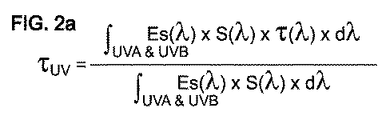
図2aおよび図2bは、眼鏡レンズ用のUV透過値及びUV反射値を計算するための数式を再現する。 2a and 2b reproduce the mathematical formula for calculating the UV transmission value and the UV reflection value for the spectacle lens.
図2cは、本発明のインプリメンテーションにおいて使用可能なスペクトル重み値を含む表である。 FIG. 2c is a table containing spectral weight values that can be used in an implementation of the present invention.
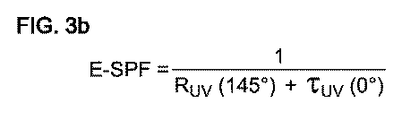
図3aおよび図3bは、本発明に従って指標値を計算するのに適した可能な数式を再現する。 3a and 3b reproduce possible mathematical formulas suitable for calculating index values according to the present invention.
〔発明を実施するための形態〕
明確にするために、図1に表された要素は、実際の寸法に関連した大きさにされることも、実際の寸法の比率に関連した大きさにされることもない。更に、異なる図で用いられる同じ文字は、同一の意味を有する。
[Mode for Carrying Out the Invention]
For clarity, the elements depicted in FIG. 1 are not sized relative to actual dimensions, nor are they sized relative to actual dimensional ratios. Furthermore, the same letters used in different figures have the same meaning.
地球大気を透過される太陽放射のUV部分は、2つの波長領域、即ち、可視領域との境界における380nm(ナノメートル)から下へ315nmまでの波長値に対応するUVA、及び315nmから下へ280nmまでの波長値用のUVBに通常分割される。UVCと表示される280nm未満の波長を備えた、太陽から生じるUV放射は、大気のオゾンによって吸収され、その結果、殆どの人々が遭遇しない例外的な状況を除いて、日常生活では誰もUVCにさらされない。更に、380nm〜400nm間に含まれる波長を備えた放射も又、UV領域に属すると見なされ得る。しかしながら、以下の詳細な説明において、別段の表示がなければ、太陽放射に関して考慮されるUV波長領域は、280nm〜380nmに及び得るが、しかし本発明は、他のUV領域に適用してもよい。 The UV portion of solar radiation that is transmitted through the Earth's atmosphere is UVA corresponding to wavelength values from 380 nm (nanometers) down to 315 nm at the boundary with the two wavelength regions, namely the visible region, and 280 nm down from 315 nm. It is usually divided into UVBs for wavelength values up to. UV radiation originating from the sun with a wavelength of less than 280 nm, labeled UVC, is absorbed by atmospheric ozone, and as a result no one in daily life has UVC, except in exceptional circumstances that most people do not encounter. Not exposed to. Furthermore, radiation with a wavelength comprised between 380 nm and 400 nm can also be considered to belong to the UV region. However, in the following detailed description, unless otherwise indicated, the UV wavelength region considered for solar radiation can range from 280 nm to 380 nm, but the invention may be applied to other UV regions. .
周知の方法で、UVA放射は、人の目の水晶体によって吸収され、UVB放射の主要な部分は、角膜によって吸収される。周知の眼病理が、これらのUV放射に関係し、その結果、UV暴露に対する目の保護が、関心の高まる問題になる。特に、UVB放射は、UVA放射より危険であることが知られている。本発明は、計算及び理解が簡単だが意味のある方法で、スペクタクル眼鏡レンズなどの眼鏡レンズ用のかかる保護を定量化することを目指す。 In a well-known manner, UVA radiation is absorbed by the lens of the human eye and a major portion of UVB radiation is absorbed by the cornea. Well-known ocular pathologies are related to these UV radiations, so that protection of the eye against UV exposure becomes a matter of increasing interest. In particular, UVB radiation is known to be more dangerous than UVA radiation. The present invention aims to quantify such protection for spectacle lenses, such as spectacle spectacle lenses, in a way that is simple to calculate and understand but meaningful.
本発明は、眼鏡レンズの基本材料が何であっても、即ち無機、有機又はハイブリッドであっても、任意のスペクタクル眼鏡レンズ、即ち屈折異常補正眼鏡レンズ、累進屈折力眼鏡レンズ、多焦点眼鏡レンズ、度の入っていない眼鏡レンズ、サングラスなどに適用される。本発明は又、眼鏡レンズの光学面、即ち眼鏡レンズの前面、背面、前面及び背面の両方、並びに/又は恐らく前面と背面との間に位置する眼鏡レンズの追加の境界面の少なくとも1つに、1つ又は複数のコーティング又は層を設けられた眼鏡レンズに適用される。特に、本発明は、眼鏡レンズの背面における反射がいくつかの状況で重要であることが後で示されるように、眼鏡レンズの背面に反射防止コーティングを設けられた眼鏡レンズに適用される。 Whatever the basic material of the spectacle lens, that is, any spectacle spectacle lens, ie refractive error correction spectacle lens, progressive power spectacle lens, multifocal spectacle lens, Applies to spectacle lenses, sunglasses, etc. The invention also relates to at least one of the optical surfaces of the spectacle lens, i.e. the front, back, both front and back of the spectacle lens, and / or possibly the additional interface of the spectacle lens located between the front and back. Applies to spectacle lenses provided with one or more coatings or layers. In particular, the present invention applies to spectacle lenses that are provided with an anti-reflective coating on the back of the spectacle lens, as it will be shown later that reflection on the back of the spectacle lens is important in some situations.
本発明は又、眼鏡レンズの曲率、フレームの正確な形状、特にフレームの外側部、フレームの材料等が何であっても、ゴーグル用眼鏡レンズに適用される。特に、本発明は、単一の細長い眼鏡レンズが、着用者の両眼の前を連続的に延びる構成と適合する。本発明は又、UV透過性又はUV阻止性であるフレームの外側部と適合する。 The invention also applies to goggles spectacle lenses, whatever the curvature of the spectacle lens, the exact shape of the frame, in particular the outer part of the frame, the material of the frame, etc. In particular, the present invention is compatible with a configuration in which a single elongated spectacle lens extends continuously in front of the wearer's eyes. The present invention is also compatible with the outer part of the frame which is UV transmissive or UV blocking.
図1は、眼鏡レンズ着用者の目に当たるいくつかの放射フローを概略的に示す。参照番号1、1a及び1bは、それぞれ、眼鏡レンズ、その正面及びその背面を示す。ここで放射フローを列挙する。
FIG. 1 schematically illustrates several radiation flows that strike the eye of a spectacle lens wearer.
T:太陽から直接生じ、且つ前面1aから背面1bへと眼鏡レンズ1を透過し、その後、目に達する放射。
T: radiation that originates directly from the sun and passes through the
R:太陽から直接生じ、且つ眼鏡レンズ1の背面1bで反射され、その後、目に達する放射。
R: radiation that originates directly from the sun and is reflected by the back surface 1b of the
D1:太陽から直接生じ、眼鏡レンズ1の周辺エッジ及び眼鏡レンズ1と共に用いられるフレームの外側で眼鏡レンズ1のまわりを通過し、目に達する放射。
D 1 : Radiation originating directly from the sun, passing around the
D2:眼鏡レンズ1のまわりを通過して目に達する前に、地面又は水面などの着用者の環境に含まれる要素によって拡散されるので、太陽から間接的に生じる放射。
D 2 : Radiation generated indirectly from the sun because it is diffused by elements contained in the wearer's environment, such as the ground or water surface, before passing around the
D3:目に達する前に、着用者の皮膚又は眼鏡レンズフレームによって拡散されるので、太陽から間接的に生じる放射。 D 3 : Radiation that indirectly arises from the sun because it is diffused by the wearer's skin or eyeglass lens frame before reaching the eyes.
これらの放射フローは、特にUV放射に対して当てはまる。 These radiation flows are particularly true for UV radiation.
放射フローT及びRは、眼鏡レンズの特徴、特にその透過値及び反射値にそれぞれ依存する。しかし、それらは又、眼鏡レンズ寸法、基本値、プリズム値、広角値などの更なる眼鏡レンズの特徴に依存し得る。眼科において周知のように、眼鏡レンズの基本値は、その正面の基準点における眼鏡レンズの曲率値に関係する。眼鏡レンズ1に対する放射フローT及びRの発生方向ゆえに、これらのフローT及びRは、同時には存在しない。実際には、放射フローTは、着用者の顔が太陽側に向けられている場合に、ゼロではなく、そのとき直接太陽放射は、眼鏡レンズ1の背面1bに達することができない。反対に、放射フローRは、着用者の顔が太陽から離れるように向けられている場合に、ゼロではなく、そのとき直接太陽放射は、眼鏡レンズ1を通過するために眼鏡レンズ1の前面1aに達することができない。しかし放射フローT及びRは、眼鏡レンズ着用者が、最初に南方向に面してから、北方向から約30°オフセットされた北側まで回転している場合に、次々に発生し得る。
The radiation flows T and R depend on the characteristics of the spectacle lens, in particular their transmission and reflection values, respectively. However, they can also depend on further spectacle lens characteristics such as spectacle lens dimensions, basic values, prism values, wide angle values. As is well known in ophthalmology, the basic value of a spectacle lens is related to the curvature value of the spectacle lens at its front reference point. Due to the direction of generation of the radiation flows T and R with respect to the
更に、放射フローTは、着用者の頭の方位に、しかし又日中の時間及び太陽の高さに関する地球表面の緯度に依存する入射角iT、広角度等の値を備えた眼鏡レンズ1の前面1aに当たる。しかしながら、入射角iTが大きすぎない限り、透過が、通常、限られた範囲でのみ変化するので、入射角iTに関して0°(度)で眼鏡レンズ1を通る透過用の値が、ほぼ常に当てはまると考えてもよい。入射角は、眼鏡レンズ1の前方へ、即ち前面1aから先へ向けられた基準方向FDに対して測定される。
Furthermore, the radiant flow T is a
眼鏡レンズの背面1bにおける放射フローR用の入射角iRの値は、フローRが、眼鏡レンズ1のエッジと着用者の頭との間を伝播できるようにする必要がある。それゆえに、放射フローRの入射角iRの値は、再び基準方向FDに関して、135°〜160°、より多くの場合に145°〜150°である。かかる角度値は、図1に実際には現れない。なぜなら、放射フローRの伝播方向が、この図の断面内に含まれないからである。直接太陽放射が、同時には、iT角度で眼鏡レンズ1を透過されず、iR角度で反射されないことが再び繰り返される。
The value of the angle of incidence i R for radiation flow R at the back 1b of the spectacle lens, flow R is, it is necessary to be able to propagate between the wearer's head and the edge of the
放射フローD1〜D3は、眼鏡レンズ透過値及び反射値に依存しないが、しかしそれらは、眼鏡レンズ寸法、フレーム及び着用者の顔の幾何学的特徴などの他のパラメータに依存する可能性がある。更に、放射フローD2及びD3のエネルギスペクトル分布は、これらのフローが目に達する前に拡散されるので、太陽照射のみには依存しない。この理由で、拡散要素のスペクトル拡散効率は、重要な役割を果たす可能性がある。単純にするために、眼表面におけるフローD1〜D3のそれぞれの放射エネルギは、結果としての放射寄与D内で合計されてもよく、その結果としてD=D1+D2+D3である。放射寄与Dの総エネルギ値が、放射フローT又はRのエネルギ量よりはるかに少ないいくつかの状況に関して、又は指標値計算における単純化のために、放射寄与Dがゼロに等しいと見なしてもよい。 Radiation flow D 1 to D 3 is not dependent on the spectacle lens transmittance values and reflectance values, but they can depend spectacle lens dimensions, other parameters such as geometric features of the face of the frame and the wearer There is. Furthermore, the energy spectral distribution of the radiant flows D 2 and D 3 does not depend solely on solar illumination because these flows are diffused before reaching the eye. For this reason, the spread spectrum efficiency of the spreading element can play an important role. For simplicity, the radiant energy of each of the flows D 1 -D 3 at the ocular surface may be summed within the resulting radiant contribution D, resulting in D = D 1 + D 2 + D 3 . For some situations where the total energy value of the radiant contribution D is much less than the amount of energy of the radiant flow T or R, or for simplicity in the index value calculation, the radiant contribution D may be considered equal to zero. .
国際規格ISO13666は、太陽UVAスペクトルにおける透過と同様に、太陽UVBスペクトルにおける透過を計算するための方法を示す。両方とも、UV放射用の相対スペクトル有効度関数S(λ)を掛けられた太陽スペクトル照射Es(λ)で重み付けされた眼鏡レンズのスペクトル透過の、対応するUVA及びUVB波長領域にわたる連続和、即ち積分として表現される。次に、S(λ)とEs(λ)の積が、スペクトル透過の実際の重み関数として現れ、W(λ)と表示される。本説明の文脈において、透過及び透過率は、それらが基準領域係数によって相互に関連付けられることを光学における当業者が知っていという条件で、等しく用いられる。 International standard ISO 13666 shows a method for calculating the transmission in the solar UVB spectrum as well as the transmission in the solar UVA spectrum. Both are continuous sums over the corresponding UVA and UVB wavelength regions of the spectral transmission of the spectacle lens weighted by the solar spectral illumination Es (λ) multiplied by the relative spectral effectiveness function S (λ) for UV radiation, ie Expressed as an integral. Next, the product of S (λ) and Es (λ) appears as the actual weight function of spectral transmission and is denoted W (λ). In the context of this description, transmission and transmission are used equally, provided that those skilled in optics know that they are related to each other by a reference area factor.
図2aは、一緒に連結されたUVA及びUVBスペクトルに対応する、UV総太陽スペクトルにおける眼鏡レンズの透過用の式を含む。この式は、UVA及びUVB領域用の規格ISO13666の式と別々に一致する。上記で報告された指示に従って、総太陽スペクトルUVA&UVBは、280nm〜380nmにわたる波長領域に対応してもよい。τ(λ)は、眼鏡レンズを通したスペクトル透過を示し、τUVは、眼鏡レンズの平均UV太陽透過とも呼ばれる、眼鏡レンズのUV透過である。 FIG. 2a includes equations for transmission of spectacle lenses in the UV total solar spectrum, corresponding to UVA and UVB spectra coupled together. This equation agrees separately with that of the standard ISO 13666 for the UVA and UVB regions. In accordance with the instructions reported above, the total solar spectrum UVA & UVB may correspond to a wavelength region ranging from 280 nm to 380 nm. τ (λ) represents the spectral transmission through the spectacle lens, and τ UV is the UV transmission of the spectacle lens, also called the average UV solar transmission of the spectacle lens.
図2bは、眼鏡レンズの背面におけるUV放射反射のために図2aに対応する。R(λ)は、眼鏡レンズ背面におけるスペクトル反射を示し、RUVは、眼鏡レンズの平均UV太陽反射とも呼ばれる、眼鏡レンズ背面におけるUV反射である。 FIG. 2b corresponds to FIG. 2a for UV radiation reflection at the back of the spectacle lens. R (λ) represents the spectral reflection at the back of the spectacle lens and R UV is the UV reflection at the back of the spectacle lens, also called the average UV solar reflection of the spectacle lens.
図2a及び2bにおけるUV透過及びUV反射の両方の式において、UV波長領域にわたる連続和は、例えば5nmの波長ピッチを用いて、離散和と置き換えてもよい。太陽スペクトル照射Es(λ)及び相対スペクトル有効度関数S(λ)の値が、適切に補間されるならば、他の波長ピッチの値が、代替として用いられてもよい。規格ISO13666の付録Aは、280nm〜380nmで、5nmのピッチを備えた各UV波長λ用の太陽スペクトル照射Es(λ)及び相対スペクトル有効度関数S(λ)の値を備えた、図2cに再現された表を含む。従って、この表は、UV透過値及びUV反射値を計算するために用いることができる。 In both the UV transmission and UV reflection equations in FIGS. 2a and 2b, the continuous sum over the UV wavelength region may be replaced with a discrete sum, for example using a wavelength pitch of 5 nm. Other wavelength pitch values may alternatively be used if the values of the solar spectral illumination Es (λ) and the relative spectral effectiveness function S (λ) are interpolated appropriately. Appendix A of Standard ISO 13666 includes values of solar spectral illumination Es (λ) and relative spectral effectiveness function S (λ) for each UV wavelength λ from 280 nm to 380 nm with a pitch of 5 nm, in FIG. Includes reproduced table. This table can therefore be used to calculate UV transmission and UV reflection values.
図3aは、本発明の指標値用の可能な数式を示す。この指標は、目−太陽保護係数を表すE−SPF(登録商標)と表示される。この式において、
BNは、一定でゼロではない基本数であり、指標用のスケールファクタとして働く。
FIG. 3a shows possible formulas for the index values of the present invention. This index is displayed as E-SPF (registered trademark) representing the eye-solar protection factor. In this formula:
BN is a constant and non-zero basic number and serves as a scale factor for the indicator.
τUV(iT)は、入射角値iT用に評価される、上記のような眼鏡レンズのUV透過である。 τ UV (i T ) is the UV transmission of the spectacle lens as described above, evaluated for the incident angle value i T.
RUV(iR)は、入射角値iR用に評価される、上記のような眼鏡レンズ背面のUV反射である。 R UV (i R ) is the UV reflection on the back of the spectacle lens as described above, evaluated for the incident angle value i R.
α及びβは、それぞれ、UV反射RUV及びUV透過τUVの係数である。 α and β are coefficients of UV reflection R UV and UV transmission τ UV , respectively.
γは、一定値である。 γ is a constant value.
図1に関連して報告された幾何学的考慮との一貫性のために、UV透過τUVは、30°未満である、眼鏡レンズ1上へのUV光線の入射角iTの第1の値用に提供してもよい。UV反射RUVは、135°〜160°である、眼鏡レンズ1の背面1b上へのUV光線の入射角iRの第2の値用に提供してもよく、両方の入射角iT及びiRは、眼鏡レンズの前方に向けられた基準方向FDから測定される。
For consistency with the geometric considerations reported in connection with FIG. 1, the UV transmission τ UV is less than 30 °, the first of the incident angles i T of the UV rays on the
両方の係数α及びβ用に非ゼロ値を用いていることは、取得される指標値が、UVへの目の暴露が眼鏡レンズを通した放射透過による状態に対して、しかし又UVへの目の暴露が眼鏡レンズの背面における放射反射による場合の状態に対して意味があるようにすることができる。これは、特に有利である。なぜなら、背面反射によるUVへの目の暴露は、例えば、外側の眼鏡レンズエッジと着用者のこめかみとの間の大きな開いた隙間を伴うサングラスを用いた、且つ太陽の高さが低い状態に対するいくつかの場合に、長い期間にわたる暴露への最も重要な寄与を形成し得るからである。 The use of non-zero values for both coefficients α and β means that the index value obtained is relative to the situation where the eye exposure to UV is due to radiation transmission through the spectacle lens, but also to UV. It can be meaningful for situations where the exposure of the eye is due to radiation reflection at the back of the spectacle lens. This is particularly advantageous. This is because the exposure of the eyes to the UV by back reflection is, for example, in some cases with sunglasses with a large open gap between the outer spectacle lens edge and the wearer's temple, and for low sun levels. In that case, it can form the most important contribution to long-term exposure.
好ましくは、基本数BNに対する係数βの比率、即ちβ/BNは、0.01〜1の範囲であってもよい。同様に、比率α/BNも又、0.01〜1の同じ範囲であってもよい。より好ましくは、α/BNは、1以下に留まりながら、昇順優先の順序で0.2、0.4、0.5又は0.6以上である。同時に、β/BNは、再び1以下に留まりながら、昇順優先の順序で、0.4、0.5、0.6又は0.7以上である。好ましい組み合わせでは、α/BN及びβ/BNの両方とも0.5〜1の範囲である。 Preferably, the ratio of the coefficient β to the basic number BN, ie β / BN, may be in the range of 0.01-1. Similarly, the ratio α / BN may also be in the same range of 0.01-1. More preferably, α / BN is 0.2, 0.4, 0.5, or 0.6 or more in ascending order of priority while remaining at 1 or less. At the same time, β / BN is 0.4, 0.5, 0.6 or 0.7 or more in ascending order of priority while staying again at 1 or less. In a preferred combination, both α / BN and β / BN are in the range of 0.5-1.
一般に、係数α及びβは、係数β用の眼鏡レンズ面積、及び係数α用の、眼鏡レンズと着用者のこめかみとの間の開いた隙間の面積など、眼鏡レンズ又は眼鏡レンズ着用状態に関する幾何学的係数の役割に特に表す。両方の係数β及びαは、それぞれ放射フローT及びRに対応する、着用者の目に当たる直接太陽UV強度及び着用者の頭の背後から眼鏡レンズの背面に当たる直接太陽UV強度用にそれぞれ実行される光度測定から取得してもよい。かかる測定のために、昼間の照度パラメータ、眼鏡レンズと共に用いられる眼鏡フレームのサイズ及び着用パラメータ、並びに眼鏡レンズの基本パラメータの中から選択されるパラメータ用に、基準値が使用されてもよい。かかる測定のいくつかのインプリメンテーションにおいて、係数α及びβは、太陽時、着用者の頭の方位、着用者の頭の傾斜、季節、年内の日付、地球上の緯度等の中から選択される、照度パラメータにおける変化するいくつかのパラメータを用いて実行される平均測定結果から取得してもよい。 In general, the coefficients α and β are spectacle lens or spectacle lens wearing conditions such as the spectacle lens area for the coefficient β and the area of the open gap between the spectacle lens and the wearer's temple for the coefficient α. This is particularly expressed in the role of the dynamic coefficient. Both coefficients β and α are performed for the direct sun UV intensity hitting the wearer's eye and the direct sun UV intensity hitting the back of the spectacle lens from the wearer's head, corresponding to the radiation flows T and R, respectively. It may be obtained from a photometric measurement. For such measurements, reference values may be used for parameters selected from daytime illumination parameters, size and wear parameters of spectacle frames used with spectacle lenses, and basic parameters of spectacle lenses. In some implementations of such measurements, the coefficients α and β are selected from solar time, wearer head orientation, wearer head tilt, season, date within the year, latitude on the earth, etc. Or obtained from an average measurement result performed using several parameters that vary in illuminance parameters.
一定値γは、総放射寄与Dを表す。それは、本発明の単純化されたインプリメンテーション用にゼロであってもよく、又は着用者の目に達する前に拡散される太陽UV放射フローD2及びD3を含むUV強度量の、昼間における基準状態で実行される測定から取得された値を備えた非ゼロであってもよい。この場合に、一定値γを取得するために測定されるUV強度量は、この放射フローが、眼鏡レンズを着用者が着用した場合に、眼鏡レンズと共に用いられるフレームの周囲エッジの外を通過した後で着用者の目に達するような入射方向を備えた直接太陽UV放射フローD1を更に含んでもよい。 The constant value γ represents the total radiation contribution D. It the simplified implementation may be zero for, or UV intensity quantity including solar UV radiation flow D 2 and D 3 are diffused before reaching the eye of the wearer of the present invention, Day May be non-zero with values obtained from measurements performed in a reference state. In this case, the amount of UV intensity measured to obtain a constant value γ has passed this radiation flow outside the peripheral edge of the frame used with the spectacle lens when the wearer wears the spectacle lens. It may further include a direct solar UV radiation flow D 1 with an incident direction that later reaches the wearer's eyes.
係数α及びβ並びに一定値γは、着用者をシミュレートするダミーモデルの頭の目の位置に置かれたセンサを用いた照射測定によって決定してもよい。測定は、日射環境において行われ、眼鏡レンズは、それが着用者によって実際に着用されているかのように、同じ位置でモデルの頭の眼鏡に取り付けられる。 The coefficients α and β and the constant value γ may be determined by irradiation measurement using a sensor placed at the eye position of the head of a dummy model that simulates the wearer. Measurements are made in a solar environment and the spectacle lens is attached to the spectacles of the model's head in the same position as if it were actually worn by the wearer.
第1の実験において、眼鏡レンズの背面は、UV阻止材料、例えば、眼鏡レンズの前面に当たり、且つその背面に透過される全ての可視及びUV光線と同様に、背面に当たるUV光線を吸収する不透明な材料によって覆われる。従って、前方から眼鏡レンズを通して、且つ後ろから眼鏡レンズ背面における反射で生じることになるUV光線は、センサに達しない。次に、一定値γを決定することができる。 In the first experiment, the back surface of the spectacle lens is opaque to UV blocking material, eg, the front surface of the spectacle lens, and absorbs UV light striking the back surface, as well as all visible and UV light transmitted through the back surface. Covered with material. Therefore, the UV rays that are generated by reflection from the front through the spectacle lens and from the back on the back of the spectacle lens do not reach the sensor. Next, a constant value γ can be determined.
第2の実験において、UV阻止材料は、眼鏡レンズの前面を覆う。次に、センサは、一定値γに加えて、眼鏡レンズの背面での反射による照射部分を測定する。係数αの値は、このように計算することができる。 In the second experiment, the UV blocking material covers the front surface of the spectacle lens. Next, in addition to the constant value γ, the sensor measures the irradiated portion due to reflection on the back surface of the spectacle lens. The value of the coefficient α can be calculated in this way.
第3の最後の実験において、着用者の目が受ける全照射は、センサによって測定され、係数βの値も又取得することができる。 In the third final experiment, the total irradiation experienced by the wearer's eyes is measured by a sensor and the value of the coefficient β can also be obtained.
図3bは、本発明の好ましいインプリメンテーション用に図3aに対応する。このインプリメンテーションにおいて、UV反射RUV及びUV透過τUVの両方における係数α及びβは、1に等しく、一定値は、ゼロである。即ち、α=β=1及びγ=0である。基本数BNも又、1に等しくてもよい。例えば、このように計算されるE−SPF値は、145°の入射角iRに対して評価されるUV反射用の値、及び0°の入射角iTに対して評価されるUV透過用の値に基づいてもよい。かかるE−SPF値は、図2a及び2bの式に従って取得されるUV透過値及びUV反射値から、任意の眼鏡レンズ用に計算するのが簡単である。 FIG. 3b corresponds to FIG. 3a for a preferred implementation of the invention. In this implementation, the coefficients α and β in both UV reflection R UV and UV transmission τ UV are equal to 1 and the constant value is zero. That is, α = β = 1 and γ = 0. The base number BN may also be equal to 1. For example, the E-SPF value calculated in this way is for UV reflection evaluated for an incident angle i R of 145 ° and for UV transmission evaluated for an incident angle i T of 0 °. May be based on the value of. Such an E-SPF value is simple to calculate for any spectacle lens from the UV transmission and reflection values obtained according to the equations of FIGS. 2a and 2b.
E−SPF指標用の図3bの式は、2つの基本眼鏡レンズを、基本眼鏡レンズの背面に配置された2つの反射防止コーティングと組み合わせることによって得られた4つの眼鏡レンズを評価するために用いられた。基本眼鏡レンズ1と表示された第1の基本眼鏡レンズは、入射角iTのゼロ値において約5%に等しいUV透過τUV(0°)を有し、基本眼鏡レンズ2と表示された第2の眼鏡レンズのUV透過τUV(0°)は、ゼロである。コーティング1と表示された第1のコーティングは、主として可視波長領域において効率的であるのに対して、コーティング2と表示された第2のコーティングは、入射角iRの約145°において、UV領域における背面反射を最小化するように最適化された。従って、両方の基本眼鏡レンズ1及び2に関して、コーティング1のUV反射RUV(145°)は、約13%に等しく、コーティング2のそれは、約4%に等しい。以下の表は、4つの眼鏡レンズ用に取得されたE−SPF値を集約する。
The equation of FIG. 3b for the E-SPF index is used to evaluate four spectacle lenses obtained by combining two basic spectacle lenses with two anti-reflective coatings placed on the back of the basic spectacle lens. It was. The first basic spectacle lens labeled as the

従って、本発明は、UVの危険性に対して眼鏡レンズのそれぞれによって提供される目の保護に関して、眼鏡レンズを簡単且つ効率的に分類できるようにする。最初に、それぞれの指標値が、眼鏡レンズにおける各眼鏡レンズに対して計算される。次に、眼鏡レンズ用にそれぞれ取得された指標値は、互いに比較される。 Thus, the present invention allows the eyeglass lenses to be easily and efficiently classified with respect to the eye protection provided by each of the eyeglass lenses against UV hazards. First, respective index values are calculated for each spectacle lens in the spectacle lens. Next, the respective index values obtained for the spectacle lenses are compared with each other.
一般に本発明に関して、指標値の分母における加法公式の結果、即ちα・RUV+βτUV+γは、昼間の屋外の照度状態をシミュレートするように設計された卓上光度計を用いて、眼鏡レンズで実行される測定から直接取得してもよい。この目的で、重み関数W(λ)を再現するように選択されたフィルタを恐らく備えたUV光源、及び任意選択的に、放射フローD1〜D3を再現するための追加UV光源が、眼鏡レンズ1の前に及びその後ろに180°−iRに等しい角度オフセットで位置してもよい。全てのUV光源は、同時に作動され、眼鏡レンズの後ろに位置するUV光度計が、眼鏡レンズに関し、着用者の目の位置で総UV放射量を捕捉する。
In general, for the present invention, the result of the addition formula in the denominator of the index value, ie α · R UV + βτ UV + γ, is a spectacle lens using a tabletop photometer designed to simulate daytime outdoor illumination conditions. It may be obtained directly from the measurement performed. For this purpose, a UV light source, possibly equipped with a filter selected to reproduce the weighting function W (λ), and optionally an additional UV light source for reproducing the radiation flows D 1 to D 3 , is provided. It may be located in front of and behind the
本発明は、すぐ上の明細に関していくつかの詳細を適合又は修正しながら、しかしその利点の少なくともいくつかを維持しながら実施され得る。特に、挙げられた数値は、単に説明目的のためであり、適応され得る。 The present invention may be practiced while adapting or modifying some details with respect to the immediately preceding specification, but retaining at least some of its advantages. In particular, the numerical values given are merely illustrative and can be adapted.
更に、本発明の代替インプリメンテーションは、UV透過τUV及びUV反射RUVの両方の値を計算するために用いられる、UV放射の波長領域を修正することによって取得してもよい。次に、指標値E−SPFは、UV透過τUV及びUV反射RUVの値に基づいて、選択されるUV波長領域用に取得されるが、これらのUV透過τUV及びUV反射Rは、この選択されるUV波長領域用に計算された。従って、修正されたUV波長領域は、全体として280nm〜380nmにわたるUVA&UVBの代わりに、図2a及び2bの公式において考慮されることになり、UV透過τUV及びUV反射RUV用のもたらされた結果は、図3a及び3bの公式に波及する。 Furthermore, alternative implementations of the present invention may be obtained by modifying the wavelength region of UV radiation used to calculate both UV transmission τ UV and UV reflection R UV values. Then, the index value E-SPF based on the value of the UV transmission tau UV and UV reflection R UV, but is obtained for the UV wavelength region to be selected, these UV transmission tau UV and UV reflection R, Calculated for this selected UV wavelength region. Thus, the modified UV wavelength region would be considered in the formulas of FIGS. 2a and 2b instead of UVA & UVB over the whole 280 nm to 380 nm, resulting in UV transmission τ UV and UV reflection R UV The results spill over to the formulas in FIGS. 3a and 3b.
これらの代替インプリメンテーションの第1のインプリメンテーションにおいて、詳細な説明で前に使用されたような280nm〜380nmのUV波長領域は、280nm〜400nmの拡張UV波長領域と置き換えてもよい。 In a first implementation of these alternative implementations, the UV wavelength region from 280 nm to 380 nm as previously used in the detailed description may be replaced with an extended UV wavelength region from 280 nm to 400 nm.
代替インプリメンテーションの第2のインプリメンテーションにおいて、UV波長領域は、315nm〜380nmのUVA放射に制限してもよい。次に、図2a及び2bの公式は、UVA透過値即ちτUVA、及びUVA反射値RUVA用の値につながる。次に、UVA放射のみに関係する指標E−SPF用の値E−SPF(UVA)が取得される。 In a second implementation of an alternative implementation, the UV wavelength region may be limited to UVA radiation between 315 nm and 380 nm. The formulas of FIGS. 2a and 2b then lead to values for the UVA transmission value or τ UVA and the UVA reflection value R UVA . Next, a value E-SPF (UVA) for an index E-SPF relating only to UVA radiation is obtained.
第3の代替インプリメンテーションは、第2のインプリメンテーションのUVA波長領域の代わりに、280nm〜315nmのUVB波長領域のみを用いることによって、同様の方法で取得される。従って、UVB放射に関係するUVB透過値τUVB、UVB反射値RUVB、及び指標E−SPF(UVB)用の値が取得される。 The third alternative implementation is obtained in a similar manner by using only the UVB wavelength region from 280 nm to 315 nm instead of the UVA wavelength region of the second implementation. Accordingly, the UVB transmission value τ UVB , the UVB reflection value R UVB , and the value for the index E-SPF (UVB) related to UVB radiation are obtained.
しかしながら、以下の不等式に注意を払うべきである。 However, attention should be paid to the following inequality.
τUVA+τUVB≠τUV。この後者のτUVは、UVA及びUVB領域のマージを用いて、図2aに示されている通りである。 τ UVA + τ UVB ≠ τ UV . This latter τ UV is as shown in FIG. 2a, using a merge of the UVA and UVB regions.
RUVA+RUVB≠RUV。後者のRUVは、UVA及びUVB領域のマージを用いて、図2bに示されている通りである。 R UVA + R UVB ≠ R UV . The latter R UV is as shown in FIG. 2b, using a merge of the UVA and UVB regions.
E−SPF(UVA)+E−SPF(UVB)≠ESPF。この後者のE−SPF値は、τUV及びRUVの値がUVA及びUVB領域のマージ用に取得される図3a又は3bの公式からもたらされる通りである。 E-SPF (UVA) + E-SPF (UVB) ≠ ESPF. This latter E-SPF value is as resulting from the formula of FIG. 3a or 3b where the values of τ UV and R UV are obtained for merging of the UVA and UVB regions.
Claims (16)
/1/ 決定されたUV波長領域(UVA&UVB)にわたり、各波長値(λ)用の危険性(S(λ))及び強度(Es(λ))を定量化するために重み付けされたスペクトル透過値(τ(λ))を積分することによって取得される、前記眼鏡レンズ(1)用のUV透過(τUV)値を提供するステップと、
/2/ 前記眼鏡レンズ(1)の背面(1b)におけるUV反射(RUV)値を提供するステップであって、前記UV反射が、前記眼鏡レンズの前記背面に関係する、且つ前記決定されたUV波長領域(UVA&UVB)にわたり各波長値(λ)用の前記危険性(S(λ))及び強度(Es(λ))を定量化するために重み付けされたスペクトル反射値(R(λ))を積分することによって取得されるステップと、
/3/ 前記UV透過及びUV反射用の非ゼロの正係数(β、α)をそれぞれ備えた加法公式を用いて、前記眼鏡レンズ(1)のUV透過(τUV)及びUV反射(RUV)の両方の値を組み合わせるステップと、
/4/ ステップ/3/において取得された結果で割られた非ゼロの基本数(BN)から前記指標値(E−SPF)を計算するステップと、
を含む方法。 A method of assessing the spectacle lens (1) with respect to the protection provided by the spectacle lens against the danger of UV, whereby the eye of the spectacle lens wearer against UV exposure without the spectacle lens. An index value (E-SPF) for quantifying the decrease in the total UV amount falling on is calculated and the method comprises the following steps:
/ 1 / weighted spectral transmission values to quantify the risk (S (λ)) and intensity (Es (λ)) for each wavelength value (λ) over the determined UV wavelength region (UVA & UVB) Providing a UV transmission (τ UV ) value for the spectacle lens (1) obtained by integrating (τ (λ));
/ 2 / providing a UV reflection (R UV ) value at the back side (1b) of the spectacle lens (1), the UV reflection being related to the back side of the spectacle lens and the determined Spectral reflection values (R (λ)) weighted to quantify the hazard (S (λ)) and intensity (Es (λ)) for each wavelength value (λ) over the UV wavelength region (UVA & UVB) A step obtained by integrating
/ 3 / The UV transmission (τ UV ) and UV reflection (R UV ) of the spectacle lens (1) using additive formulas with non-zero positive coefficients (β, α) for UV transmission and UV reflection, respectively. ) Combining both values,
Calculating the index value (E-SPF) from a non-zero basic number (BN) divided by the result obtained at / 4 / step / 3 /;
Including methods.
前記眼鏡レンズ(1)の前記UV透過(τUV)値及び前記UV反射(RUV)値を用いる場合の前記加法公式の前記結果が、眼鏡レンズのない前記着用者と比較した、前記着用者が前記眼鏡レンズを着用している場合の前記全体的なUVへの目の暴露用の減少係数と等しい、請求項1又は2に記載の方法。 In the additive formula, wherein the UV transmittance (tau UV) of the spectacle lens, the UV reflection (R UV in case, and also the spectacle lens is replaced with the maximum value by the scale used for UV transmission (tau UV) ) Is replaced with zero, the result of the additive formula may be 1,
The wearer, wherein the result of the additive formula when using the UV transmission (τ UV ) value and the UV reflection (R UV ) value of the spectacle lens (1) is compared to the wearer without the spectacle lens The method according to claim 1 or 2, wherein is equal to a reduction factor for the overall UV eye exposure when wearing the spectacle lens.
τUV及びRUVが、それぞれ、前記眼鏡レンズ(1)の前記UV透過及び前記UV反射であり、
α及びβが、それぞれ、前記眼鏡レンズ(1)の前記UV反射(RUV)及び前記UV透過(τUV)用の前記係数であり、
γが一定値である、請求項1〜9の何れか一項に記載の方法。 The additive formula used in step / 3 / is α · R UV + β · τ UV + γ, where
τ UV and R UV are the UV transmission and the UV reflection of the spectacle lens (1), respectively.
α and β are the coefficients for the UV reflection (R UV ) and the UV transmission (τ UV ), respectively, of the spectacle lens (1);
The method according to claim 1, wherein γ is a constant value.
− 前記眼鏡レンズにおける各眼鏡レンズ用に、請求項1〜15の何れか一項に記載の評価方法を実行することによって、それぞれの指標値(E−SPF)を計算するステップと、
− 前記眼鏡レンズ用にそれぞれ取得された前記指標値を互いに比較するステップと、
を含む方法。 A method for classifying said set of spectacle lenses with respect to the protection provided by each of the spectacle lenses against UV hazards, comprising the following steps:
-Calculating each index value (E-SPF) for each spectacle lens in the spectacle lens by performing the evaluation method according to any one of claims 1 to 15;
-Comparing the index values respectively obtained for the spectacle lenses with each other;
Including methods.
Applications Claiming Priority (3)
| Application Number | Priority Date | Filing Date | Title |
|---|---|---|---|
| EP11306764.9A EP2607884A1 (en) | 2011-12-23 | 2011-12-23 | Eyeglass rating with respect to protection against uv hazard |
| EP11306764.9 | 2011-12-23 | ||
| PCT/EP2012/075406 WO2013092377A1 (en) | 2011-12-23 | 2012-12-13 | Eyeglass rating with respect to protection against uv hazard |
Related Child Applications (1)
| Application Number | Title | Priority Date | Filing Date |
|---|---|---|---|
| JP2015065147A Division JP2015163879A (en) | 2011-12-23 | 2015-03-26 | Method of providing calculation of spectacle lenses to customer, spectacle lenses, and method of evaluating spectacle lenses |
Publications (3)
| Publication Number | Publication Date |
|---|---|
| JP2014513818A JP2014513818A (en) | 2014-06-05 |
| JP2014513818A5 JP2014513818A5 (en) | 2015-02-19 |
| JP5723066B2 true JP5723066B2 (en) | 2015-05-27 |
Family
ID=47471757
Family Applications (3)
| Application Number | Title | Priority Date | Filing Date |
|---|---|---|---|
| JP2014510837A Active JP5723066B2 (en) | 2011-12-23 | 2012-12-13 | Evaluation of spectacle lenses for protection against UV hazards |
| JP2015065147A Pending JP2015163879A (en) | 2011-12-23 | 2015-03-26 | Method of providing calculation of spectacle lenses to customer, spectacle lenses, and method of evaluating spectacle lenses |
| JP2016074297A Pending JP2016130740A (en) | 2011-12-23 | 2016-04-01 | Method for providing evaluation of spectacle lens to customers, spectacle lens, and method for evaluating spectacle lens |
Family Applications After (2)
| Application Number | Title | Priority Date | Filing Date |
|---|---|---|---|
| JP2015065147A Pending JP2015163879A (en) | 2011-12-23 | 2015-03-26 | Method of providing calculation of spectacle lenses to customer, spectacle lenses, and method of evaluating spectacle lenses |
| JP2016074297A Pending JP2016130740A (en) | 2011-12-23 | 2016-04-01 | Method for providing evaluation of spectacle lens to customers, spectacle lens, and method for evaluating spectacle lens |
Country Status (17)
| Country | Link |
|---|---|
| US (3) | US9404863B2 (en) |
| EP (2) | EP2607884A1 (en) |
| JP (3) | JP5723066B2 (en) |
| KR (1) | KR102041951B1 (en) |
| CN (2) | CN105181299B (en) |
| AU (1) | AU2012358073B2 (en) |
| BR (1) | BR112014015313B1 (en) |
| CA (1) | CA2859774C (en) |
| CO (1) | CO6990677A2 (en) |
| EA (1) | EA026427B9 (en) |
| ES (1) | ES2544846T3 (en) |
| IL (1) | IL233222B (en) |
| MX (1) | MX351462B (en) |
| PL (1) | PL2684030T3 (en) |
| PT (1) | PT2684030E (en) |
| WO (1) | WO2013092377A1 (en) |
| ZA (1) | ZA201404532B (en) |
Families Citing this family (23)
| Publication number | Priority date | Publication date | Assignee | Title |
|---|---|---|---|---|
| EP2607884A1 (en) * | 2011-12-23 | 2013-06-26 | Essilor International (Compagnie Générale d'Optique) | Eyeglass rating with respect to protection against uv hazard |
| EP3090305B1 (en) * | 2014-01-03 | 2017-09-06 | Essilor International (Compagnie Générale D'Optique) | Method for determining an optical equipment comprising at least one optical lens and a spectacle frame |
| CN106461967A (en) | 2014-05-20 | 2017-02-22 | 埃西勒国际通用光学公司 | Eyeglass lenses with minimized edge visibility |
| KR20160073834A (en) * | 2014-12-17 | 2016-06-27 | 에스케이하이닉스 주식회사 | Semiconductor memory device and operating method thereof |
| FR3031195B1 (en) | 2014-12-24 | 2017-02-10 | Essilor Int | OPTICAL ARTICLE COMPRISING AN INTERFERENTIAL COATING WITH HIGH REFLECTION IN THE FIELD OF ULTRAVIOLET |
| WO2016107866A1 (en) * | 2014-12-30 | 2016-07-07 | Essilor International (Compagnie Generale D'optique) | Management system and method of an active device |
| FR3033892B1 (en) | 2015-03-20 | 2019-10-25 | Essilor International | METHOD FOR EVALUATING AN ULTRAVIOLET EYE EXPOSURE INDEX AND ASSOCIATED SYSTEM |
| EP3128362B1 (en) * | 2015-08-05 | 2023-10-04 | Essilor International | Method for determining a parameter of an optical equipment |
| WO2017141252A1 (en) * | 2016-02-18 | 2017-08-24 | Shamir Optical Industry Ltd. | Methods and apparatus for rating eyeglass protection from infrared exposure |
| EP3214483A1 (en) * | 2016-03-04 | 2017-09-06 | ESSILOR INTERNATIONAL (Compagnie Générale d'Optique) | Method for determining a value quantifying the effect of an optical filter on a parameter linked to an eye |
| US10018530B2 (en) * | 2016-04-01 | 2018-07-10 | Signet Armorlite, Inc. | System for measuring transmission of light through glasses |
| WO2017223167A1 (en) * | 2016-06-21 | 2017-12-28 | Ntt Docomo, Inc. | Optics of wearable display devices |
| EP3276327B1 (en) * | 2016-07-29 | 2019-10-02 | Essilor International | Method for virtual testing of at least one lens having a predetermined optical feature and associated device |
| US11422089B2 (en) * | 2017-12-28 | 2022-08-23 | Transitions Optical, Ltd. | Method for measuring optical characteristics of a transparent article |
| CN111670350B (en) | 2017-12-28 | 2022-06-10 | 光学转变有限公司 | Method and system for measuring optical properties of contact lenses |
| US11151222B1 (en) * | 2018-05-09 | 2021-10-19 | STWRD, Inc. | Sky exposure and solar radiation for forms of life |
| DE102018008669A1 (en) * | 2018-11-05 | 2020-05-07 | Shape Engineering GmbH | Process for the manufacture of spectacle lenses |
| DE102018132243B3 (en) * | 2018-12-14 | 2019-12-24 | Carl Zeiss Vision International Gmbh | Method for producing spectacle frames specifically for a person and spectacle glasses specifically for a person, and spectacle frame, spectacle lens and glasses |
| CN112845163B (en) * | 2020-12-21 | 2022-04-19 | 江苏汇鼎光学眼镜有限公司 | Device for measuring yellowing degree of spectacle lens |
| CN112808626B (en) * | 2020-12-21 | 2022-03-29 | 江苏汇鼎光学眼镜有限公司 | Method for online automatic optical performance detection and lens screening |
| AU2022226417A1 (en) | 2021-02-26 | 2023-09-07 | Essilor International | Method for determining at least one optical product intended to face an eye of a user using an eye resistance level and a light protection level |
| EP4318104A4 (en) * | 2021-03-31 | 2025-05-07 | Mitsui Chemicals, Inc. | OPTICAL ELEMENT, EYEGLASSES LENS, AUTONOMOUS NERVE REGULATION METHOD, AND EVALUATION METHOD FOR OPTICAL ELEMENT |
| CN117396738A (en) * | 2021-05-31 | 2024-01-12 | 依视路国际公司 | Method for assessing at least one level of light protection of at least one optical product intended to face the user's eyes |
Family Cites Families (21)
| Publication number | Priority date | Publication date | Assignee | Title |
|---|---|---|---|---|
| JPS588131U (en) * | 1981-07-09 | 1983-01-19 | 三菱電機株式会社 | spectrometer |
| US4549081A (en) * | 1984-03-15 | 1985-10-22 | Ace Sophisticates, Inc. | Spectrophotometer for measuring absorption characteristics of a complex lens |
| KR940004664B1 (en) * | 1990-12-28 | 1994-05-27 | 포항종합제철 주식회사 | Determination of aging degree of mineral oil rolling oil |
| JP3337832B2 (en) * | 1993-09-27 | 2002-10-28 | 株式会社資生堂 | Method and apparatus for measuring ultraviolet protection effect |
| JPH0943550A (en) * | 1995-07-28 | 1997-02-14 | Kyowa Hakko Kogyo Co Ltd | Eyeglass lens |
| US5949535A (en) | 1998-03-26 | 1999-09-07 | Hall; Gary W. | Protective rating system for eyewear |
| DE60012485T2 (en) * | 1999-02-18 | 2005-08-18 | The Regents Of The University Of California, Oakland | SALICYLAMIDE LANTHANIDE COMPLEXES FOR USE AS LUMINESCENCE MARKERS |
| US6963399B2 (en) * | 2001-10-18 | 2005-11-08 | Cargill Robert L | Method and apparatus for quantifying an “integrated index” of a material medium |
| FR2864251B1 (en) * | 2003-12-17 | 2006-04-28 | Essilor Int | OPTICAL ARTICLE COATED WITH A MULTILAYER ANTI-REFLECTIVE COATING ABSORBENT IN THE VISIBLE AND METHOD FOR MANUFACTURING THE SAME |
| JP2005215038A (en) * | 2004-01-27 | 2005-08-11 | Seiko Epson Corp | Eyeglass lenses |
| CN1311230C (en) * | 2004-03-12 | 2007-04-18 | 宁波明星科技发展有限公司 | Quickly measuring method and device for lens transmittivity |
| JP4609840B2 (en) * | 2004-08-23 | 2011-01-12 | 株式会社ニデック | Eyeglass lens measuring device |
| JP4524428B2 (en) * | 2004-11-16 | 2010-08-18 | 学校法人日本大学 | Ultraviolet ray prevention effect measuring method and system |
| US7140729B2 (en) * | 2004-11-24 | 2006-11-28 | Renee Resler | Children's sunglasses |
| FR2905007B1 (en) * | 2006-08-16 | 2008-10-31 | Essilor Int | QUANTITAVE EVALUATION OF A COLOR FILTER |
| FR2907548B1 (en) * | 2006-10-18 | 2009-01-16 | Essilor Int | VISUALIZATION OF THE REFLECTIVE POWER OF ULTRAVIOLET RADIATION OF A GLASS OF GLASSES |
| KR100967874B1 (en) | 2008-03-13 | 2010-07-05 | 엘지전자 주식회사 | Reflective Screen |
| JP2009237509A (en) * | 2008-03-28 | 2009-10-15 | Kanazawa Medical Univ | Lens for eyeglasses |
| BRPI1007918A2 (en) * | 2009-02-05 | 2016-02-23 | Hoya Corp | eyeglass lens design, eyeglass lens evaluation, and eyeglass lens manufacturing, eyeglass lens manufacturing system, and eyeglass lens methods |
| US20120200847A1 (en) * | 2011-02-09 | 2012-08-09 | Hall Gary W | Protection factor rating system for protective eyewear |
| EP2607884A1 (en) * | 2011-12-23 | 2013-06-26 | Essilor International (Compagnie Générale d'Optique) | Eyeglass rating with respect to protection against uv hazard |
-
2011
- 2011-12-23 EP EP11306764.9A patent/EP2607884A1/en not_active Withdrawn
-
2012
- 2012-12-13 EA EA201400626A patent/EA026427B9/en not_active IP Right Cessation
- 2012-12-13 PL PL12809193T patent/PL2684030T3/en unknown
- 2012-12-13 CA CA2859774A patent/CA2859774C/en active Active
- 2012-12-13 WO PCT/EP2012/075406 patent/WO2013092377A1/en not_active Ceased
- 2012-12-13 AU AU2012358073A patent/AU2012358073B2/en active Active
- 2012-12-13 PT PT128091931T patent/PT2684030E/en unknown
- 2012-12-13 JP JP2014510837A patent/JP5723066B2/en active Active
- 2012-12-13 MX MX2014007745A patent/MX351462B/en active IP Right Grant
- 2012-12-13 KR KR1020147017165A patent/KR102041951B1/en active Active
- 2012-12-13 US US14/003,159 patent/US9404863B2/en active Active
- 2012-12-13 EP EP12809193.1A patent/EP2684030B1/en active Active
- 2012-12-13 ES ES12809193.1T patent/ES2544846T3/en active Active
- 2012-12-13 CN CN201510543978.7A patent/CN105181299B/en active Active
- 2012-12-13 BR BR112014015313-2A patent/BR112014015313B1/en active IP Right Grant
- 2012-12-13 CN CN201280063449.1A patent/CN104011532B/en active Active
-
2013
- 2013-09-11 US US14/023,864 patent/US9000390B2/en active Active
-
2014
- 2014-06-18 IL IL233222A patent/IL233222B/en active IP Right Grant
- 2014-06-20 CO CO14134044A patent/CO6990677A2/en unknown
- 2014-06-20 ZA ZA2014/04532A patent/ZA201404532B/en unknown
-
2015
- 2015-03-26 JP JP2015065147A patent/JP2015163879A/en active Pending
-
2016
- 2016-04-01 JP JP2016074297A patent/JP2016130740A/en active Pending
- 2016-07-08 US US15/205,592 patent/US20160320302A1/en not_active Abandoned
Also Published As
Similar Documents
| Publication | Publication Date | Title |
|---|---|---|
| JP5723066B2 (en) | Evaluation of spectacle lenses for protection against UV hazards | |
| JP2014513818A5 (en) | ||
| Kwok et al. | Prevention of the adverse photic effects of peripheral light-focusing using UV-blocking contact lenses | |
| Citek | Anti-reflective coatings reflect ultraviolet radiation | |
| US8542352B1 (en) | Protection factor rating system for protective eyewear | |
| Walsh et al. | Can UV radiation-blocking soft contact lenses attenuate UV radiation to safe levels during summer months in the southern United States? | |
| Chorley et al. | Civilian pilot exposure to ultraviolet and blue light and pilot use of sunglasses | |
| Rifai et al. | Efficiency of ocular UV protection by clear lenses | |
| US5949535A (en) | Protective rating system for eyewear | |
| US10859466B2 (en) | Methods and apparatus for rating eyeglass protection from infrared exposure | |
| DeLoss et al. | Current silicone hydrogel UVR blocking lenses and their associated protection factors | |
| NZ626532B2 (en) | Eyeglass rating with respect to protection against uv hazard | |
| Ali et al. | Overview of solar radiation exposure to the human health particularly to the eye: a review article facts and figures till today | |
| Hall | Annals of Ophthalmology and Visual Sciences | |
| Sliney et al. | Fluorescent (OAP) Coatings Inspection Safety | |
| Fleming | Quantification of the Environmental Solar Ultraviolet Radiation Field at the Human Eye and the Investigation of Peripherally Focused Rays. | |
| CN101852679A (en) | Testing method of sunglasses for human eye protection performance |
Legal Events
| Date | Code | Title | Description |
|---|---|---|---|
| A521 | Request for written amendment filed |
Free format text: JAPANESE INTERMEDIATE CODE: A821 Effective date: 20140122 |
|
| A621 | Written request for application examination |
Free format text: JAPANESE INTERMEDIATE CODE: A621 Effective date: 20131118 |
|
| RD01 | Notification of change of attorney |
Free format text: JAPANESE INTERMEDIATE CODE: A7426 Effective date: 20140122 |
|
| A977 | Report on retrieval |
Free format text: JAPANESE INTERMEDIATE CODE: A971007 Effective date: 20140924 |
|
| A131 | Notification of reasons for refusal |
Free format text: JAPANESE INTERMEDIATE CODE: A131 Effective date: 20140930 |
|
| A524 | Written submission of copy of amendment under article 19 pct |
Free format text: JAPANESE INTERMEDIATE CODE: A524 Effective date: 20141225 |
|
| A871 | Explanation of circumstances concerning accelerated examination |
Free format text: JAPANESE INTERMEDIATE CODE: A871 Effective date: 20150120 |
|
| A975 | Report on accelerated examination |
Free format text: JAPANESE INTERMEDIATE CODE: A971005 Effective date: 20150206 |
|
| TRDD | Decision of grant or rejection written | ||
| A01 | Written decision to grant a patent or to grant a registration (utility model) |
Free format text: JAPANESE INTERMEDIATE CODE: A01 Effective date: 20150224 |
|
| A61 | First payment of annual fees (during grant procedure) |
Free format text: JAPANESE INTERMEDIATE CODE: A61 Effective date: 20150326 |
|
| R150 | Certificate of patent or registration of utility model |
Ref document number: 5723066 Country of ref document: JP Free format text: JAPANESE INTERMEDIATE CODE: R150 |
|
| R250 | Receipt of annual fees |
Free format text: JAPANESE INTERMEDIATE CODE: R250 |
|
| S111 | Request for change of ownership or part of ownership |
Free format text: JAPANESE INTERMEDIATE CODE: R313113 |
|
| R350 | Written notification of registration of transfer |
Free format text: JAPANESE INTERMEDIATE CODE: R350 |
|
| R250 | Receipt of annual fees |
Free format text: JAPANESE INTERMEDIATE CODE: R250 |
|
| R250 | Receipt of annual fees |
Free format text: JAPANESE INTERMEDIATE CODE: R250 |
|
| R250 | Receipt of annual fees |
Free format text: JAPANESE INTERMEDIATE CODE: R250 |
|
| R250 | Receipt of annual fees |
Free format text: JAPANESE INTERMEDIATE CODE: R250 |
|
| R250 | Receipt of annual fees |
Free format text: JAPANESE INTERMEDIATE CODE: R250 |
|
| R250 | Receipt of annual fees |
Free format text: JAPANESE INTERMEDIATE CODE: R250 |
|
| R250 | Receipt of annual fees |
Free format text: JAPANESE INTERMEDIATE CODE: R250 |
|
| R250 | Receipt of annual fees |
Free format text: JAPANESE INTERMEDIATE CODE: R250 |