JP5989618B2 - Mitigating inter-network interference - Google Patents
Mitigating inter-network interference Download PDFInfo
- Publication number
- JP5989618B2 JP5989618B2 JP2013190521A JP2013190521A JP5989618B2 JP 5989618 B2 JP5989618 B2 JP 5989618B2 JP 2013190521 A JP2013190521 A JP 2013190521A JP 2013190521 A JP2013190521 A JP 2013190521A JP 5989618 B2 JP5989618 B2 JP 5989618B2
- Authority
- JP
- Japan
- Prior art keywords
- interference
- wireless network
- network
- notification
- control device
- Prior art date
- Legal status (The legal status is an assumption and is not a legal conclusion. Google has not performed a legal analysis and makes no representation as to the accuracy of the status listed.)
- Active
Links
Images
Classifications
-
- H—ELECTRICITY
- H01—ELECTRIC ELEMENTS
- H01Q—ANTENNAS, i.e. RADIO AERIALS
- H01Q3/00—Arrangements for changing or varying the orientation or the shape of the directional pattern of the waves radiated from an antenna or antenna system
- H01Q3/26—Arrangements for changing or varying the orientation or the shape of the directional pattern of the waves radiated from an antenna or antenna system varying the relative phase or relative amplitude of energisation between two or more active radiating elements; varying the distribution of energy across a radiating aperture
-
- H—ELECTRICITY
- H04—ELECTRIC COMMUNICATION TECHNIQUE
- H04B—TRANSMISSION
- H04B7/00—Radio transmission systems, i.e. using radiation field
- H04B7/02—Diversity systems; Multi-antenna system, i.e. transmission or reception using multiple antennas
- H04B7/04—Diversity systems; Multi-antenna system, i.e. transmission or reception using multiple antennas using two or more spaced independent antennas
- H04B7/06—Diversity systems; Multi-antenna system, i.e. transmission or reception using multiple antennas using two or more spaced independent antennas at the transmitting station
- H04B7/0613—Diversity systems; Multi-antenna system, i.e. transmission or reception using multiple antennas using two or more spaced independent antennas at the transmitting station using simultaneous transmission
- H04B7/0682—Diversity systems; Multi-antenna system, i.e. transmission or reception using multiple antennas using two or more spaced independent antennas at the transmitting station using simultaneous transmission using phase diversity (e.g. phase sweeping)
-
- H—ELECTRICITY
- H04—ELECTRIC COMMUNICATION TECHNIQUE
- H04L—TRANSMISSION OF DIGITAL INFORMATION, e.g. TELEGRAPHIC COMMUNICATION
- H04L12/00—Data switching networks
- H04L12/28—Data switching networks characterised by path configuration, e.g. LAN [Local Area Networks] or WAN [Wide Area Networks]
Landscapes
- Engineering & Computer Science (AREA)
- Computer Networks & Wireless Communication (AREA)
- Signal Processing (AREA)
- Mobile Radio Communication Systems (AREA)
Description
相互に関係する複数のデバイスを有し、デバイスの1つがピコネットネットワークコントローラ(PNC)となってネットワーク内の通信のほとんどをスケジューリングする小規模な無線ネットワークは、ピコネットと呼ばれることが多い。多数のピコネットが比較的狭い領域に形成される高密度なネットワーク環境下では、隣接するピコネットの物理的な範囲が重複し、異なるピコネットのデバイス間の干渉が引き起こされる場合がある。典型的なPNCは、ネットワーク内の各デバイスについて、各スーパーフレーム中に通信するタイムスロットを確立する。デバイスは複数(時には多数)のスーパーフレームにおいて同一のタイムスロットで通信し続けてよい。故に、ネットワーク間に干渉が発生すると、長期間にわたり各スーパーフレームで干渉が繰り返される場合がある。しかしながら、一旦干渉が発生するとこれを想定することは容易であるが、干渉を緩和するべく異なるピコネットのスケジュールを調整することが難しい場合がある。従来のシステムでは、(1)複数のPNCが直接通信可能、つまり相互のスケジュールを認識している場合には、他のネットワークがアクティブな間に少なくとも1つのPNCが自己のネットワークアイドル期間をスケジューリングすることによりネットワーク間の干渉の発生を防ぐか、(2)複数のPNCが直接通信可能でない場合には、相互に直接通信可能な程度に近いデバイスへPNC機能を再割り当てした後に方法(1)を利用するしかなかった。これらの手法は常に効果的または実現可能であるとは限らない。ネットワークアイドル期間をスケジューリングすると、全体のネットワーク帯域幅を大幅に低減する。PNC機能の再割り当ては、かなり複雑かつ時間のかかるプロセスである。さらに、PNC機能をピコネットの片側に再割り当てすると、隣接する別のピコネットのPNCの範囲から外れてしまい、問題が解決されずに別のピコネットに移動したに過ぎない場合がある。 A small wireless network that has a plurality of interrelated devices, one of which is a piconet network controller (PNC) and schedules most of the communications in the network, is often referred to as a piconet. In a high-density network environment in which a large number of piconets are formed in a relatively narrow area, the physical ranges of adjacent piconets may overlap, causing interference between devices of different piconets. A typical PNC establishes a time slot that communicates during each superframe for each device in the network. Devices may continue to communicate in the same time slot in multiple (sometimes many) superframes. Therefore, when interference occurs between networks, the interference may be repeated in each superframe over a long period of time. However, once interference occurs, it is easy to assume this, but it may be difficult to adjust different piconet schedules to mitigate the interference. In conventional systems, (1) if multiple PNCs can communicate directly, that is, if they are aware of each other's schedule, at least one PNC schedules its own network idle period while other networks are active (2) If a plurality of PNCs are not directly communicable, reassign the PNC function to devices that are close to each other so that they can communicate directly with each other. I had to use it. These approaches are not always effective or feasible. Scheduling the network idle period significantly reduces the overall network bandwidth. The reassignment of PNC functions is a fairly complex and time consuming process. Further, if the PNC function is reassigned to one side of the piconet, it may be out of the range of the PNC of another adjacent piconet, and the problem may not be solved and the user may simply move to another piconet.
本発明の一部の実施形態は、以下の詳細な説明および本発明の実施形態の図示に用いられる添付の図面を参照することにより理解され得る。図面は次の通りである。 Some embodiments of the present invention may be understood by reference to the following detailed description and accompanying drawings that are used to illustrate embodiments of the invention. The drawings are as follows.
以下の説明では、様々な具体的な詳細を示す。しかしながら、本発明の実施形態はこれらの具体的な詳細を用いることなく実施可能であることが理解されるべきである。また別の場合には、説明の理解を不明瞭にすることを防ぐべく、周知の回路、構造および技術については詳述しない。 In the following description, numerous specific details are set forth. However, it should be understood that embodiments of the invention may be practiced without these specific details. In other instances, well known circuits, structures and techniques have not been described in detail in order to avoid obscuring the understanding of the description.
「1つの実施形態」、「ある実施形態」、「例示的な実施形態」、「様々な実施形態」等は、説明された本発明の1つまたは複数の実施形態が特定の機能、構造または特性を含んでよいことを示すが、必ずしも全ての実施形態が特定の機能、構造または特性を含むわけではないことを示す。さらに、一部の実施形態は別の実施形態で説明された機能の一部または全てを含んでよく、また全く含まなくてもよい。 “One embodiment”, “one embodiment”, “exemplary embodiment”, “various embodiments”, etc., are those in which one or more embodiments of the invention described are specific functions, structures or While indicating that a feature may be included, it is indicated that not all embodiments include a particular function, structure, or property. Further, some embodiments may include some, all, or none of the functions described in other embodiments.
以下の説明と特許請求の範囲では、「結合した」、「接続した」およびこれらの類似の用語が用いられる場合がある。これらの用語は互いに類義語であることが意図されていないことが理解されるべきである。正確には、特定の実施形態において「接続した」は、2つ以上の要素が互いに物理的または電気的に直接接していることを示すために用いられる。「結合した」は、2つ以上の要素が相互に動作または作用するが、これらは物理的または電気的に直接接している場合と、接していない場合があることを示すために用いられる。 In the following description and claims, the terms “coupled”, “connected” and similar terms may be used. It should be understood that these terms are not intended as synonyms for each other. To be precise, in a specific embodiment, “connected” is used to indicate that two or more elements are in direct physical or electrical contact with each other. “Coupled” is used to indicate that two or more elements operate or act on each other, but may or may not be in direct physical or electrical contact.
特許請求の範囲で用いられているように、特に規定のない限り、共通の要素を示す「第1の」、「第2の」、「第3の」等の序数詞の使用は、単に異なる場合に類似の要素が参照されていることを示すに過ぎず、説明された要素が時間的、空間的、順位的またはあらゆる方法において特定の順序でなくてはならない事を暗示することを意図していない。 As used in the claims, unless otherwise specified, the use of ordinal numbers such as “first”, “second”, “third”, etc. to indicate common elements is simply different. Is intended to imply that similar elements are referenced, and that the elements described must be in a particular order in time, space, order, or in any way. Absent.
本発明の様々な実施形態は、ハードウェア、ファームウェアおよびソフトウェアの1つまたはあらゆる組み合わせで実装可能である。本発明は、1つ以上のプロセッサによって実行され、ここに説明する動作の実行を可能にする機械可読媒体内または機械可読媒体上に含まれる命令としても実装可能である。機械可読媒体は、コンピュータなどの機械によって読み取り可能な形式で情報を格納、送信および/または受信するあらゆるメカニズムを含んでよい。例えば機械可読媒体は、これらに限定されないが、ROM、RAM、磁気ディスク格納媒体、光格納媒体、フラッシュメモリデバイス等の有体の格納媒体を含んでよい。また機械可読媒体は、これらに限定されないが、電磁信号、光信号または音声搬送波信号等の命令を符号化するために変調された伝播信号を含んでよい。 Various embodiments of the present invention may be implemented in one or any combination of hardware, firmware and software. The invention may also be implemented as instructions contained in or on a machine readable medium that is executed by one or more processors and that enables the operations described herein to be performed. A machine-readable medium may include any mechanism for storing, transmitting, and / or receiving information in a form readable by a machine, such as a computer. For example, machine-readable media may include, but are not limited to, tangible storage media such as ROM, RAM, magnetic disk storage media, optical storage media, flash memory devices, and the like. A machine-readable medium may also include a propagated signal modulated to encode instructions such as, but not limited to, an electromagnetic signal, an optical signal, or an audio carrier signal.
用語「無線」およびその派生語は、変調された電磁放射を用いることにより非固体の媒体を介してデータを通信する回路、デバイス、システム、方法、技術、通信チャネル等の説明に用いられてよい。当該用語は関連付けられたデバイスが無線であることを意味しないが、一部の実施形態ではその場合もある。用語「モバイル」無線デバイスとは、通信中に移動可能な無線デバイスの説明に用いられる。 The term “radio” and its derivatives may be used to describe circuits, devices, systems, methods, techniques, communication channels, etc. that communicate data over non-solid media by using modulated electromagnetic radiation. . The term does not imply that the associated device is wireless, but in some embodiments it may. The term “mobile” wireless device is used to describe a wireless device that is movable during communication.
本文書の説明は概して、ピコネットとして知られる無線通信ネットワークに関して記述する。しかしながら、説明する趣旨および技術が他の種類のネットワークで用いられてもよい。特に規定のない限り、本発明の様々な実施形態はピコネットに限定されるものではない。 The description in this document generally describes a wireless communication network known as a piconet. However, the spirit and techniques described may be used with other types of networks. Unless otherwise specified, various embodiments of the present invention are not limited to piconets.
本発明の様々な実施形態では、2つの重複するネットワーク間の干渉を検知するために非コントローラネットワークデバイスを用いる。その後、ネットワーク間でスケジューリング情報が通信され、干渉を回避するべく少なくとも1つのネットワークでスケジュール調整が採用される。1つの実施形態では、干渉を検知したデバイスが、自己のスケジュール済みの通信に関するスケジューリング情報をブロードキャストする。近傍のネットワークのデバイスは当該ブロードキャストを受信し、自己のコントローラへ当該情報を転送する。その後、当該コントローラは自己のネットワークスケジュールを変更し、干渉を回避する。当該技術は、2つのコントローラ間の通信を必要としない。別の実施形態では、干渉を検知したデバイスが、自己のコントローラに干渉を通知し、当該コントローラが近傍のコントローラと通信して、干渉の発生しないスケジューリングを調整する。当該技術では、2つのコントローラが相互通信することが必要である。いずれの実施形態においても、コントローラの機能を別のデバイスに再割り当てすることが必要であり、これは煩雑で時間のかかる作業となり得る。 Various embodiments of the present invention use non-controller network devices to detect interference between two overlapping networks. Thereafter, scheduling information is communicated between the networks and schedule adjustment is employed in at least one network to avoid interference. In one embodiment, the device that detected the interference broadcasts scheduling information regarding its scheduled communication. A device in a nearby network receives the broadcast and transfers the information to its controller. The controller then changes its network schedule to avoid interference. The technique does not require communication between the two controllers. In another embodiment, the device that detected the interference notifies the controller of the interference, and the controller communicates with a neighboring controller to adjust the scheduling without the interference. This technique requires that two controllers communicate with each other. In any embodiment, it is necessary to reassign the controller functions to another device, which can be a cumbersome and time consuming task.
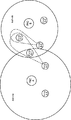
図1はネットワーク間に干渉が発生している2つの重複するネットワークのネットワーク図を示す。ネットワークAは、ピコネットコントローラPNC−Aと、PNC−Aに登録されその通信が実質的にPNC−Aによってスケジュールされ得る、3つの関連付けられたネットワークデバイスA−1、A−2およびA−3とを備える。ネットワークBは、ピコネットコントローラPNC−Bと、PNC−Bに登録されその通信が実質的にPNC−Bによってスケジュールされ得る、3つの関連付けられたネットワークデバイスB−1、B−2およびB−3とを備える。各ネットワークの各デバイスは、少なくとも1つ(指向性通信では複数)のアンテナを有してよい。特に規定のない限り必須ではないが、各ネットワークの一部またはすべてのデバイスは電池で動作するモバイルデバイスであってよい。図示したネットワーク構成において、コントローラPNC−Bの範囲下にもあるデバイスA−1は、PNC−AおよびPNC−Bの両方からの信号を受信可能であるが、典型的にはPNC−Bからの信号を無視する。同様に、PNC−Aの範囲の端にあるデバイスB−2は、PNC−Aからの信号を受信および復号できる可能性があるが、通常これらの信号を無視する。 FIG. 1 shows a network diagram of two overlapping networks in which interference occurs between the networks. Network A has a piconet controller PNC-A and three associated network devices A-1, A-2 and A-3 that are registered with PNC-A and whose communication can be substantially scheduled by PNC-A. Is provided. Network B has a piconet controller PNC-B and three associated network devices B-1, B-2 and B-3 that are registered with PNC-B and whose communication can be substantially scheduled by PNC-B. Is provided. Each device in each network may have at least one (multiple for directional communication) antennas. Although not required unless otherwise specified, some or all of the devices in each network may be battery powered mobile devices. In the network configuration shown, device A-1, which is also under the scope of controller PNC-B, can receive signals from both PNC-A and PNC-B, but typically from PNC-B. Ignore the signal. Similarly, device B-2 at the end of the range of PNC-A may be able to receive and decode signals from PNC-A, but typically ignores these signals.
ピコネットのような一部の種類のネットワークでは、周波数の重複が想定されていることから、他のデバイスからまたは他のデバイスへの潜在的な干渉を低減するためにネットワーク内のデバイス間の通信は指向性であってよい。複数のアンテナが共存するデバイスは、各アンテナからわずかに異なる信号を送信し、特定の方向へは比較的強い信号、別の方向へは比較的弱い信号となるように組み合わせ、効果的に指向性を持つ送信を行なうことが可能である。同様に、各アンテナからの信号のうち、特定の方向から信号を分離しつつ、別の方向からの信号を最小化する等、特定の方法で信号を処理することにより、受信にも指向性を持たせることができる。特定の2つのデバイス間の通信を介して、当該処理の特定のパラメータを判断することにより、送信および受信の両方を特定の方向に集中させることが可能である。これは一般的にアンテナトレーニングと呼ばれており、様々なアンテナトレーニングが知られている。アンテナトレーニングは、説明する本発明の実施形態の新規性の一部ではないことからここでは詳述しない。 In some types of networks, such as piconets, frequency overlap is assumed, so communication between devices in the network is less likely to reduce potential interference from or to other devices. It may be directivity. Devices with multiple antennas coexist effectively by transmitting slightly different signals from each antenna and combining them so that they are relatively strong signals in one direction and relatively weak signals in another direction. Can be sent. Similarly, the signal from each antenna is processed in a specific way, such as minimizing the signal from another direction while separating the signal from a specific direction, so that directivity is also provided for reception. You can have it. By determining specific parameters of the process via communication between two specific devices, it is possible to concentrate both transmission and reception in a specific direction. This is generally called antenna training, and various antenna trainings are known. Antenna training is not detailed here because it is not part of the novelty of the described embodiment of the invention.
図示した具体例では、しずく形の送信エンベロープが示すように、ネットワークBでデバイスB−2がデバイスB−1へ指向性送信を行なっている。同時に、ネットワークAではデバイスA−2がデバイスA−1へ指向性送信を行なっている。しかしながら、デバイスA−1、A−2、B−1およびB−2の相対的な位置が原因となり、デバイスB−1はデバイスA−2およびB−2からの信号を同時に受信する場合がある。A−2およびB−2が同一または類似の周波数で送信している場合、A−2からB−1が受信する信号が、B−2からB−1が受信する信号に干渉する場合がある。例えば繰り返されるスーパーフレーム内の同一のタイムスロット等の一定の間隔で、A−1/A−2の通信およびB−1/B−2の通信が繰り返された場合、干渉が長期間にわたって繰り返し、B−2からB−1への通信を困難にする場合がある。これらの通信のうちのいずれかのタイムスロットを変更することにより問題が解決することもあるが、従来のシステムでは、相互のネットワークスケジュールを把握していないコントローラによってタイムスロットが決定されている場合がある。 In the illustrated example, device B-2 performs directional transmission to device B-1 in network B, as indicated by a drop-shaped transmission envelope. At the same time, in network A, device A-2 performs directional transmission to device A-1. However, due to the relative positions of devices A-1, A-2, B-1 and B-2, device B-1 may receive signals from devices A-2 and B-2 simultaneously. . When A-2 and B-2 are transmitting at the same or similar frequency, the signal received by A-2 to B-1 may interfere with the signal received by B-2 to B-1 . For example, when A-1 / A-2 communication and B-1 / B-2 communication are repeated at regular intervals such as the same time slot in a repeated superframe, the interference is repeated over a long period of time. Communication from B-2 to B-1 may be difficult. Changing the time slot of one of these communications may solve the problem, but in conventional systems, the time slot may be determined by controllers that do not know each other's network schedule. is there.
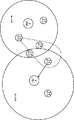
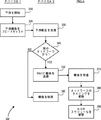
図2は本発明のある実施形態による、図1の干渉の緩和を試みるネットワーク図を示す。図3は本発明のある実施形態による、図2のネットワーク図に関連した方法のフロー図300を示す。以下の説明では図2および図3の両方を参照する。この実施形態では、ステップ310で隣接するネットワークからの干渉があることをB−1が判断し、ステップ320でB−1が干渉に関する情報を含む報告をブロードキャストしてよい。ここでの用語「ブロードキャスト」は、送信が特定のデバイスに向けられたものではなく、これが受信可能なあらゆるデバイスによって受信および処理されることを意図していることを示す。ここでの用語「報告」は、伝達を意図された情報を報告するに適したあらゆる形式を含んでよい。例では、しずく形の送信エンベロープで示したように送信が指向性送信であるが、他の実施形態では全方向性送信等の他の技術を用いてもよい。当該ブロードキャストは、ネットワークA内のデバイスによって受信されることを意図しており、例示的な実施形態では、推定された干渉の発生源に向かって送信を行なっている。
FIG. 2 shows a network diagram that attempts to mitigate the interference of FIG. 1 according to an embodiment of the invention. FIG. 3 shows a flow diagram 300 of a method associated with the network diagram of FIG. 2, according to an embodiment of the invention. In the following description, reference is made to both FIG. 2 and FIG. In this embodiment, B-1 may determine that there is interference from an adjacent network at
一部の実施形態では、当該送信の内容は、干渉についての情報を報告するように設計された形式であってよい。例えば、これらに限定されないが、形式は、(1)当該送信が干渉に関する情報を含むことを示すフィールド、(2)送信デバイスの識別情報、(3)干渉デバイスの識別情報(既知の場合)、(4)干渉発生時刻、(5)ビットエラーレート、フレームエラーレート、信号/ノイズ比、干渉信号の受信電力等の信号パラメータ、(6)ピコネットの識別情報、(7)その他等を含んでよい。また、当該干渉報告には、他のネットワークのPNCが自己のネットワークスケジュールを再調整して将来の干渉を回避することを期待して、干渉を受けたデバイス(例えばB−1)の今後の受信スケジュールが含まれてよい。多くのネットワークでは、2つのネットワークコントローラのスケジュールが同期化されないことから、ネットワークBのスーパーフレーム内の干渉のタイミング(および同様にネットワークBのスーパーフレーム内のネットワークスケジュール)を示すのみでは、PNC−Aにとって不十分な場合がある。したがって、あるネットワークのデバイスについてのタイミング情報が別のネットワークにとって意味を持つようなタイミングに変換されることを実現するべく、他の情報も直接または間接的に伝達されてよい。例えば、B−1からの送信は、送信の特定の時点(例えば、ヘッダの開始時、データの終了時等、その他の時点が用いられてもよい)から計測された、ネットワークBの次のスーパーフレームが開始する時間(例えば、時間オフセット)についての情報を含んでよい。その後、送信デバイスの次のスーパーフレーム開始時間を判断するために、送信の記録された受信時間に当該情報が追加され、2つのネットワークのスーパーフレーム間のタイミングの変換を可能にしてよい。送信デバイスと受信デバイスとは互いに近傍にあることから、送信信号の通過時間は実質的には一瞬であり、計算では無視されてよい。 In some embodiments, the content of the transmission may be in a format designed to report information about interference. For example, but not limited to, the format is (1) a field indicating that the transmission includes information regarding interference, (2) identification information of the transmitting device, (3) identification information of the interference device (if known), (4) Interference occurrence time, (5) Bit error rate, frame error rate, signal / noise ratio, interference signal received power and other signal parameters, (6) piconet identification information, (7) others, etc. . The interference report also includes future reception of the interfered device (eg, B-1) in the hope that the PNC of the other network will readjust its network schedule to avoid future interference. A schedule may be included. In many networks, the schedules of the two network controllers are not synchronized, so simply indicating the timing of interference within the superframe of Network B (and also the network schedule within the superframe of Network B), PNC-A May not be enough for you. Thus, other information may also be communicated directly or indirectly to realize that timing information about a device in one network is converted to a timing that is meaningful to another network. For example, the transmission from B-1 is the next super of network B measured from a specific point in time of transmission (for example, other time points may be used, such as the start of a header, the end of data, etc.). Information about the time (eg, time offset) at which the frame starts may be included. Thereafter, in order to determine the next superframe start time of the transmitting device, the information may be added to the recorded reception time of the transmission to allow timing conversion between the superframes of the two networks. Since the transmitting device and the receiving device are close to each other, the transit time of the transmission signal is substantially instantaneous and may be ignored in the calculation.
図2および図3の例では、ステップ330で、A−2が干渉の通知およびデバイスB−1の今後のスケジュールを受信してよく、その後ステップ350で、ネットワークA内で許容されるあらゆる実現可能な通信形式を介し、情報がPNC−Aへ転送されてよい。ステップ370でPCN−Aが報告を受信して情報を検討した後、ステップ380でPCN−Aは、報告されたネットワークタイミングを自己のネットワークタイミングへと上述の通りに変換し、ステップ390でPCN−Aは、デバイスA−2からデバイスA−1への今後の送信のタイミングを再スケジュールし、ネットワークBのスーパーフレーム内における干渉時間期間を回避してよい。一部の実施形態では、デバイスA−1以外のデバイスがデバイスB−1への干渉を引き起こしていることが見受けられないことから、デバイスA−2からこれらのデバイスへの送信のタイミングは、当該処理によって変化しなくてもよい。デバイスA−1以外のデバイスがネットワークB内の他のデバイスへの干渉を引き起こした場合、これらのデバイスも図2の処理全体を行うことで情報をPNC−Aへ報告してよい。
In the example of FIGS. 2 and 3, at
B−1からのブロードキャストが指向性送信であっても、A−2以外のデバイスによって受信される可能性はある。例えば、デバイスB−2も受信する場合がある。しかしながら、B−2はB−1と同じネットワーク内にあり、別のネットワーク向けの干渉報告であることは送信の形式が示すことから、B−2は単に当該報告を無視することができる。デバイスB−2ではなくA−2の動作を示す図3では、自己のネットワークから送信された報告を破棄する当該選択肢をステップ340およびステップ360に示すが、同様の選択肢はネットワーク全体のあらゆる非PNCデバイスによって採用されてよい。
Even if the broadcast from B-1 is a directional transmission, it may be received by a device other than A-2. For example, device B-2 may also be received. However, since B-2 is in the same network as B-1 and the transmission format indicates that it is an interference report for another network, B-2 can simply ignore the report. In FIG. 3, which shows the operation of A-2 instead of device B-2, the option of discarding reports sent from its own network is shown in
別の可能性としては、ネットワークAの別のデバイスも送信を受信することがある。例えば、メッセージを受信可能な程度にA−1がデバイスA−1がデバイスB−1の送信エンベロープの近傍にある場合がある。この場合、ステップ330、340および350を行なうことでデバイスA−1もPNC−Aへ情報を報告してよい。PNC−AはデバイスA−2からの報告を処理しつつ、デバイスA−1からの冗長の報告を単に無視することができる。
Another possibility is that another device in network A will also receive the transmission. For example, A-1 may be in the vicinity of the transmission envelope of device B-1 so that message A-1 can be received. In this case, device A-1 may also report information to PNC-A by performing
ネットワークAおよびネットワークBのスーパーフレームのタイミングが初めから同期していないことから、デバイスB−1には、送信がいつネットワークAのデバイスによって正しく受信されるのかが不明である。例えば、デバイスB−1からの干渉報告は、デバイスA−2がデバイスA−3へ送信した際に送信される場合がある。このため、デバイスA−2はデバイスB−1からの送信を検知/復号化することができない。このような不確実さに起因して、デバイスB−1からの干渉報告は、正しく受信されるまで何度も、さらにはスーパーフレームの異なる位置から再送信される必要がある場合がある。一部の実施形態では、デバイスB−1からの干渉報告の受信に成功した場合に、デバイスA−2がデバイスB−1へ確認メッセージ(ACK)を送信してよい。ネットワーク間のフィードバックの有効な形式が存在しない別の実施形態では、B−1は干渉報告が正しく受信されたことを完全に知るすべがなく、干渉が停止した場合にこれを推察するしかない。 Since the timing of the superframes of network A and network B are not synchronized from the beginning, device B-1 does not know when the transmission is correctly received by the device of network A. For example, the interference report from the device B-1 may be transmitted when the device A-2 transmits to the device A-3. For this reason, the device A-2 cannot detect / decode the transmission from the device B-1. Due to such uncertainties, the interference report from device B-1 may need to be retransmitted many times, even from different locations in the superframe, until it is correctly received. In some embodiments, device A-2 may send an acknowledgment message (ACK) to device B-1 upon successful reception of an interference report from device B-1. In another embodiment where there is no valid form of feedback between networks, B-1 has no way of knowing that the interference report has been received correctly and can only infer when the interference stops.
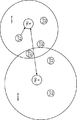
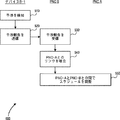
図4は図2に示す本発明の実施形態とは異なる実施形態による、図1の干渉の緩和を試みる別のネットワーク図を示す。図5は本発明のある実施形態による、図4のネットワーク図に関連した方法のフロー図500を示す。以下の説明では図4および図5の両方を参照する。上記と同様に、ステップ510で、デバイスB−1が自己のネットワーク内のデバイスからの送信の受信を試みる際に干渉を検知してよい。その後、ステップ520で、自己のネットワークコントローラPNC−Bへ干渉報告を送信してよい。当該送信は、ブロードキャストではなくPNC−B向けのユニキャスト送信であってよい。
FIG. 4 shows another network diagram that attempts to mitigate the interference of FIG. 1 according to an embodiment different from that of the present invention shown in FIG. FIG. 5 shows a flow diagram 500 of a method associated with the network diagram of FIG. 4, according to an embodiment of the invention. In the following description, reference is made to both FIG. 4 and FIG. Similar to above, at
送信はこのような干渉をPNC−Bへ報告するために特別に設計された形式であってよいが、当該形式は図2および図3について説明した形式とは異なってもよい。例えば、デバイスB−1の今後の通信スケジュールは既にPNC−Bに知られていることから、当該形式にはこうした情報が含まれない場合がある。しかしながら、これらに限定されないが、形式は、(1)当該送信が干渉に関する情報を含むことを示すフィールド、(2)送信デバイスの識別情報、(3)干渉デバイスの識別情報(既知の場合)、(4)干渉発生時刻、(5)ビットエラーレート、フレームエラーレート、信号/ノイズ比、干渉信号の受信電力等の信号パラメータ、(6)その他等、図2および図3の例における情報に類似のその他の情報を含んでもよい。 The transmission may be in a form specifically designed to report such interference to PNC-B, but the form may be different from the form described with respect to FIGS. For example, since the future communication schedule of the device B-1 is already known to the PNC-B, such information may not be included in the format. However, the format is not limited to these: (1) a field indicating that the transmission includes information regarding interference, (2) identification information of the transmission device, (3) identification information of the interference device (if known), (4) Interference occurrence time, (5) Bit error rate, frame error rate, signal / noise ratio, signal parameters such as interference signal reception power, (6) Others, etc., similar to the information in the examples of FIGS. Other information may be included.
ステップ530で当該報告を受信すると、PNC−Bはステップ540でPNC−Aとの通信リンクを確立してよい。ステップ550ではその後、2つのPNCがそれぞれのネットワークスケジュールに関する情報を交換し、一方また両方のPNCがネットワークスケジュールの一部を再調整して報告された干渉を回避してよい。上述のように、2つのネットワークのスーパーフレームのタイミングは同期していない場合があることから、2つのネットワーク間でスーパーフレームのタイミングを変換可能とするべく、2つのPNCによる共通のタイミング基準が確立される必要がある。複数のネットワークのデバイスが指向性送信を用いる場合、図1に示した特定の干渉の例では、再スケジューリングについてはB−2からB−1への送信およびA−2からA−1への送信のみを考慮するだけでよい。
Upon receiving the report at
図2および図3の実施形態、ならびに図4および図5の実施形態の両方において、干渉を検知したネットワークデバイスが干渉を報告しているが、報告の方法は各実施形態によって異なる。第1の方法では、干渉を検知したデバイスの予定されたスケジュールと共に干渉の通知が、干渉するネットワークの方向へブロードキャストされる。当該通知は干渉するネットワーク内のデバイスによって受信され、干渉するネットワークのネットワークコントローラへ転送される。当該ネットワークコントローラはその後、自己のネットワークスケジュールを変更して干渉を引き起こすことを回避してよい。第2の方法では、干渉を検知したデバイスに関連付けられたネットワークコントローラへ干渉が報告され、当該ネットワークコントローラはその後、他のネットワークコントローラに連絡して干渉の発生しないスケジュールの調整を交渉する。第1の方法は、2つのネットワークコントローラが相互に通信可能である必要がなく、互いの範囲外に存在する場合でも実現可能である点において優れている。一方で第1の方法では、1つのPNCのみがそのネットワークスケジュールを調整可能であることから、干渉のないスケジュールを作成できる可能性が若干低くなる点が不利である。 In both the embodiments of FIGS. 2 and 3 and the embodiments of FIGS. 4 and 5, the network device that detected the interference reports the interference, but the method of reporting is different for each embodiment. In the first method, an interference notification is broadcast in the direction of the interfering network along with the scheduled schedule of the device that detected the interference. The notification is received by a device in the interfering network and forwarded to the network controller of the interfering network. The network controller may then avoid changing its network schedule to cause interference. In the second method, the interference is reported to the network controller associated with the device that detected the interference, and the network controller then contacts other network controllers to negotiate a schedule adjustment that does not cause the interference. The first method is excellent in that the two network controllers do not need to be able to communicate with each other and can be realized even when they exist outside the range of each other. On the other hand, the first method is disadvantageous in that only one PNC can adjust its network schedule, so that the possibility of creating a schedule without interference is slightly reduced.
以上の説明は例示を目的としており、限定することを意図していない。当業者であれば変更例に想到するであろう。このような変更例は本発明の様々な実施形態に含まれることを意図しており、本発明は以下の特許請求の範囲の趣旨および範囲によってのみ限定される。
[項目1]
第1無線ネットワークで動作する第1通信デバイス
を備え、
前記第1通信デバイスは、前記第1無線ネットワークのスケジュールされた受信時間中に第2無線ネットワークからの干渉を検知し、前記干渉の通知を送信する装置。
[項目2]
前記第1通信デバイスは、前記第1無線ネットワークのコントローラに前記通知を送信する項目1に記載の装置。
[項目3]
前記通知は、前記干渉の時刻および前記干渉を引き起こすデバイスの識別情報のうち少なくとも1つを含む項目2に記載の装置。
[項目4]
前記通知は、前記第1通信デバイスによる通信のスケジュールのブロードキャストを含む項目1に記載の装置。
[項目5]
前記第1通信デバイスに結合された少なくとも1つのアンテナをさらに備える項目1に記載の装置。
[項目6]
前記第1無線ネットワークは、ピコネットを含む項目1に記載の装置。
[項目7]
第1無線ネットワーク内で動作する第1ネットワークコントローラ
を備え、
前記第1ネットワークコントローラは、第2無線ネットワークから第1モバイルデバイスへの干渉の通知を前記第1無線ネットワーク内の前記第1モバイルデバイスから受信し、前記第2無線ネットワークの第2ネットワークコントローラに前記干渉を通知し、前記第2ネットワークコントローラとネットワークスケジュールを調整して前記干渉を回避する装置。
[項目8]
前記第2ネットワークコントローラへの前記通知は、前記干渉の時刻インジケータおよび前記第2無線ネットワーク内の干渉デバイスの識別情報のうち少なくとも1つの提供を有する項目7に記載の装置。
[項目9]
前記第1無線ネットワークおよび前記第2無線ネットワークはピコネットである項目7に記載の装置。
[項目10]
第1無線ネットワーク内に第1ネットワークコントローラ
を備え、
前記第1ネットワークコントローラは、第2無線ネットワーク内の第2モバイルデバイスへの前記第1無線ネットワークからの干渉についての通知を前記第1無線ネットワーク内の第1モバイルデバイスから受信し、前記第2モバイルデバイスにより予定された通信のスケジュールを前記第1モバイルデバイスから受信し、前記第1無線ネットワーク内のネットワーク通信のスケジュールを再調整して前記予定された通信との将来の干渉を回避する装置。
[項目11]
前記通知は、前記干渉の時刻インジケータを有する項目10に記載の装置。
[項目12]
前記通知は、前記第2モバイルデバイスの識別情報を有する項目10に記載の装置。
[項目13]
第1無線ネットワークのスケジュールされた受信時間中の第2無線ネットワークから第1デバイスへの干渉を前記第1無線ネットワーク内の前記第1デバイスによって検知する段階と、
前記検知に応答して、前記第1デバイスから前記干渉の通知を送信する段階と
を備える方法。
[項目14]
前記通知を送信する段階は、前記第1無線ネットワーク内のコントローラへ通知を送信する段階を有する項目13に記載の方法。
[項目15]
前記コントローラへ前記通知を送信する段階は、前記コントローラに前記干渉の時刻を通知する段階を含む項目14に記載の方法。
[項目16]
前記通知を送信する段階は、前記第1デバイスによる通信のスケジュールをブロードキャストする段階を有する項目13に記載の方法。
[項目17]
前記スケジュールをブロードキャストする段階は、前記第1デバイスの識別情報をブロードキャストする段階を含む項目16に記載の方法。
[項目18]
第1無線ネットワークの第1デバイスから、第2無線ネットワークから前記第1デバイスへの干渉についての通知を前記第1無線ネットワークの第1コントローラによって受信する段階と、
前記第2無線ネットワークの第2コントローラに前記干渉について通知する段階と、
前記干渉を回避するべく前記第2コントローラとネットワークスケジュールを調整する段階と
を備える方法。
[項目19]
前記通知する段階は、前記干渉の時刻インジケータを提供する段階を有する項目18に記載の方法。
[項目20]
前記通知する段階は、前記第2無線ネットワークの干渉デバイスの識別情報を有する段階を含む項目19に記載の方法。
[項目21]
第2無線ネットワークの第1モバイルデバイスへの干渉についての通知と、前記第1モバイルデバイスの受信時間のスケジュールとを第1無線ネットワーク内の第1ネットワークコントローラによって受信する段階と、
前記スケジュールされた受信時間中のさらなる干渉の発生を回避するべく、前記第1無線ネットワークのネットワーク通信スケジュールを再調整する段階と
を備える方法。
[項目22]
前記受信する段階は、前記第1無線ネットワークのデバイスから受信する段階を有する項目21に記載の方法。
[項目23]
前記受信する段階は、前記通知および前記スケジュールを前記第1無線ネットワーク内の2つの異なるデバイスから受信する段階を含む項目22に記載の方法。
[項目24]
1つ以上のプロセッサによって実行されると動作を実施する命令を有する有体のコンピュータ可読媒体を備える物品であって、
前記動作は、
第1無線ネットワークのスケジュールされた受信時間中の第2無線ネットワークから第1デバイスへの干渉を前記第1無線ネットワーク内の前記第1デバイスによって検知する段階と、
前記検知する段階に応答して前記第1デバイスから前記干渉の通知を送信する段階と
を備える物品。
[項目25]
前記通知を送信する段階は、前記通知を前記第1無線ネットワーク内のコントローラへ送信する段階を有する項目24に記載の物品。
[項目26]
前記コントローラへ前記通知を送信する段階は、前記コントローラに前記干渉の時刻を通知する段階を含む項目25に記載の物品。
[項目27]
前記通知する段階は、前記第1デバイスによる通信のスケジュールをブロードキャストする段階を有する項目24に記載の物品。
[項目28]
前記スケジュールをブロードキャストする段階は、指向性送信を行なう段階を含む項目27に記載の物品。
[項目29]
1つ以上のプロセッサによって実行されると動作を実施する命令を有する有体のコンピュータ可読媒体を備える物品であって、
前記動作は、
第1無線ネットワークの第1コントローラによって、前記第1無線ネットワークの第1デバイスから、第2無線ネットワークから前記第1デバイスへの干渉についての通知を受信する段階と、
前記第2無線ネットワークの第2コントローラに前記干渉について通知する段階と、
前記干渉を回避するべく前記第2コントローラとネットワークのスケジュールを調整する段階と
を備える物品。
[項目30]
前記通知する段階は、前記干渉の時刻インジケータを送信する段階を有する項目29に記載の物品。
[項目31]
前記通知する段階は、前記第2無線ネットワークの干渉デバイスの識別情報を含む段階を有する項目30に記載の物品。
[項目32]
1つ以上のプロセッサによって実行されると動作を実施する命令を有する有体のコンピュータ可読媒体を備える物品であって、
前記動作は、
第2無線ネットワークの第1モバイルデバイスへの干渉についての通知と、前記第1モバイルデバイスのスケジュールされた受信時間とを第1無線ネットワーク内の第1ネットワークコントローラによって受信する段階と、
前記スケジュールされた受信時間中のさらなる干渉の発生を回避するべく、前記第1無線ネットワークのネットワーク通信スケジュールを再調整する段階と
を備える物品。
[項目33]
前記受信する段階は、前記第1無線ネットワークのデバイスから受信する段階を有する項目32に記載の物品。
[項目34]
前記受信する段階は、前記第1無線ネットワークの2つの異なるデバイスから受信する段階を含む項目33に記載の物品。
The above description is for illustrative purposes and is not intended to be limiting. Those skilled in the art will be able to conceive of modifications. Such modifications are intended to be included in various embodiments of the present invention, and the present invention is limited only by the spirit and scope of the following claims.
[Item 1]
First communication device that operates in a first wireless network
With
The first communication device is an apparatus that detects interference from a second wireless network during a scheduled reception time of the first wireless network and transmits the notification of the interference.
[Item 2]
The apparatus according to
[Item 3]
The apparatus according to
[Item 4]
The apparatus according to
[Item 5]
The apparatus of
[Item 6]
The apparatus according to
[Item 7]
First network controller operating in the first wireless network
With
The first network controller receives a notification of interference from a second wireless network to the first mobile device from the first mobile device in the first wireless network, and sends the notification to the second network controller of the second wireless network. An apparatus for notifying the interference and adjusting the network schedule with the second network controller to avoid the interference.
[Item 8]
8. The apparatus according to item 7, wherein the notification to the second network controller comprises providing at least one of an interference time indicator and identification information of an interference device in the second wireless network.
[Item 9]
The apparatus according to item 7, wherein the first wireless network and the second wireless network are piconets.
[Item 10]
A first network controller in the first wireless network
With
The first network controller receives from the first mobile device in the first wireless network a notification about interference from the first wireless network to a second mobile device in a second wireless network, and the second mobile device An apparatus for receiving a schedule of communications scheduled by a device from the first mobile device and re-adjusting a schedule of network communications within the first wireless network to avoid future interference with the scheduled communications.
[Item 11]
The apparatus of item 10, wherein the notification comprises a time indicator of the interference.
[Item 12]
The apparatus according to item 10, wherein the notification includes identification information of the second mobile device.
[Item 13]
Detecting interference from the second wireless network to the first device during a scheduled reception time of the first wireless network by the first device in the first wireless network;
Responsive to the detection, transmitting a notification of the interference from the first device;
A method comprising:
[Item 14]
14. The method of item 13, wherein sending the notification comprises sending a notification to a controller in the first wireless network.
[Item 15]
15. The method of item 14, wherein sending the notification to the controller comprises notifying the controller of the time of the interference.
[Item 16]
14. The method of item 13, wherein sending the notification comprises broadcasting a schedule of communications by the first device.
[Item 17]
The method of claim 16, wherein broadcasting the schedule comprises broadcasting identification information of the first device.
[Item 18]
Receiving a notification from a first device of a first wireless network about interference from a second wireless network to the first device by a first controller of the first wireless network;
Notifying the second controller of the second wireless network about the interference;
Adjusting a network schedule with the second controller to avoid the interference;
A method comprising:
[Item 19]
The method of item 18, wherein the notifying comprises providing a time indicator of the interference.
[Item 20]
20. The method of item 19, wherein the notifying step comprises the step of having identification information of an interference device of the second wireless network.
[Item 21]
Receiving a notification of interference to a first mobile device of a second wireless network and a schedule of reception times of the first mobile device by a first network controller in the first wireless network;
Re-adjusting the network communication schedule of the first wireless network to avoid further occurrence of interference during the scheduled reception time;
A method comprising:
[Item 22]
24. The method of item 21, wherein the receiving comprises receiving from a device of the first wireless network.
[Item 23]
23. The method of item 22, wherein the receiving comprises receiving the notification and the schedule from two different devices in the first wireless network.
[Item 24]
An article comprising a tangible computer readable medium having instructions for performing operations when executed by one or more processors,
The operation is
Detecting interference from the second wireless network to the first device during a scheduled reception time of the first wireless network by the first device in the first wireless network;
Transmitting the interference notification from the first device in response to the detecting step;
An article comprising
[Item 25]
25. The article of item 24, wherein sending the notification comprises sending the notification to a controller in the first wireless network.
[Item 26]
26. The article of item 25, wherein transmitting the notification to the controller includes notifying the controller of the time of the interference.
[Item 27]
25. The article of item 24, wherein the notifying comprises broadcasting a schedule of communications by the first device.
[Item 28]
The article of item 27, wherein broadcasting the schedule includes performing directional transmission.
[Item 29]
An article comprising a tangible computer readable medium having instructions for performing operations when executed by one or more processors,
The operation is
Receiving a notification from a first device of the first wireless network about interference from a second wireless network to the first device by a first controller of the first wireless network;
Notifying the second controller of the second wireless network about the interference;
Adjusting a network schedule with the second controller to avoid the interference;
An article comprising
[Item 30]
30. The article of item 29, wherein the notifying includes transmitting a time indicator of the interference.
[Item 31]
The article according to item 30, wherein the notifying step includes the step of including identification information of an interference device of the second wireless network.
[Item 32]
An article comprising a tangible computer readable medium having instructions for performing operations when executed by one or more processors,
The operation is
Receiving a notification of interference to a first mobile device of a second wireless network and a scheduled reception time of the first mobile device by a first network controller in the first wireless network;
Re-adjusting the network communication schedule of the first wireless network to avoid further occurrence of interference during the scheduled reception time;
An article comprising
[Item 33]
The article of item 32, wherein the receiving comprises receiving from a device of the first wireless network.
[Item 34]
34. The article of item 33, wherein the receiving comprises receiving from two different devices of the first wireless network.
Claims (19)
前記第1通信デバイスから前記第1無線ネットワークのコントロールデバイスに、前記干渉の発生時刻、前記干渉を引き起こすデバイスの識別情報及び前記第1通信デバイスの今後の受信スケジュールを含む前記干渉の通知を送信する段階と
を備える方法。 Detecting interference from a second wireless network to the first communication device by a first communication device operating in the first wireless network;
The interference notification including the occurrence time of the interference, identification information of the device causing the interference, and a future reception schedule of the first communication device is transmitted from the first communication device to the control device of the first wireless network. A method comprising:
を備え、
前記第1通信デバイスは、前記第1無線ネットワークにおける第2無線ネットワークからの干渉を検知し、前記干渉の発生時刻、前記干渉を引き起こすデバイスの識別情報及び前記第1通信デバイスの今後の受信スケジュールを含む前記干渉の通知を前記第1無線ネットワークのコントロールデバイスに無線送信する、装置。 Comprising a first communication device operating in a first wireless network;
The first communication device detects interference from the second wireless network in the first wireless network, and determines an occurrence time of the interference, identification information of the device causing the interference, and a future reception schedule of the first communication device. An apparatus for wirelessly transmitting said interference notification to a control device of said first wireless network.
前記第1無線ネットワークの前記コントロールデバイスから、前記第2無線ネットワークのコントロールデバイスに前記干渉の通知を送信する段階と、
前記第1無線ネットワークの前記コントロールデバイスによって、前記干渉に基づいて、前記第2無線ネットワークの前記コントロールデバイスとネットワークスケジュールを調整する段階と
を備え、
前記干渉の通知は、前記干渉を引き起こすデバイスの識別情報を含む、方法。 Receiving a notification of interference from a second wireless network to a mobile device by a control device of the first wireless network from a mobile device operating in the first wireless network;
Transmitting the interference notification from the control device of the first wireless network to the control device of the second wireless network ;
Adjusting a network schedule with the control device of the second wireless network based on the interference by the control device of the first wireless network ; and
The notification of interference includes identification information of a device that causes the interference.
を備え、
前記第1ネットワークコントロールデバイスは、前記第1無線ネットワークで動作するモバイルデバイスから、第2無線ネットワークから前記モバイルデバイスへの干渉の通知を受信し、前記第2無線ネットワークの第2ネットワークコントロールデバイスに前記干渉を通知し、前記干渉に基づいて、前記第2ネットワークコントロールデバイスとネットワークスケジュールを調整し、
前記干渉の通知は、前記干渉を引き起こすデバイスの識別情報を含む、装置。 A first network control device operating in a first wireless network;
The first network control device receives a notification of interference from a second wireless network to the mobile device from a mobile device operating in the first wireless network, and transmits the notification to the second network control device of the second wireless network. Notify the interference, and adjust the network schedule with the second network control device based on the interference,
The interference notification includes identification information of a device that causes the interference.
第1無線ネットワークで動作する第1通信デバイスによって、第2無線ネットワークから前記第1通信デバイスへの干渉を検出する段階と、
前記第1通信デバイスによって、前記第1通信デバイスから前記第1無線ネットワークのコントロールデバイスへ、前記干渉の発生時刻、前記干渉を引き起こすデバイスの識別情報及び前記第1通信デバイスの今後の受信スケジュールを含む干渉の通知を送信する段階と
を実行させるためのプログラム。 On the computer,
Detecting interference from a second wireless network to the first communication device by a first communication device operating in the first wireless network;
The first communication device includes the time of occurrence of the interference, the identification information of the device causing the interference, and the future reception schedule of the first communication device from the first communication device to the control device of the first wireless network. A program for executing a step of transmitting a notification of interference.
第1無線ネットワークのコントロールデバイスによって、第1無線ネットワークで動作するモバイルデバイスから、第2無線ネットワークから前記モバイルデバイスへの干渉を示し、前記干渉を引き起こすデバイスの識別情報を含む干渉の通知を受信する段階と、
前記第1無線ネットワークの前記コントロールデバイスによって、前記第1無線ネットワークの前記コントロールデバイスから、前記第2無線ネットワークのコントロールデバイスへ前記干渉の通知を送信する段階と、
前記第1無線ネットワークの前記コントロールデバイスによって、前記干渉に基づいて、前記第2無線ネットワークの前記コントロールデバイスとネットワークスケジュールを調整する段階と
を実行させるためのプログラム。 On the computer,
A control device of the first wireless network receives an interference notification from a mobile device operating in the first wireless network indicating interference from the second wireless network to the mobile device and including identification information of the device causing the interference Stages,
Transmitting the interference notification from the control device of the first wireless network to the control device of the second wireless network by the control device of the first wireless network ;
A program for causing the control device of the first wireless network to adjust a network schedule with the control device of the second wireless network based on the interference .
Applications Claiming Priority (4)
| Application Number | Priority Date | Filing Date | Title |
|---|---|---|---|
| US3548008P | 2008-03-11 | 2008-03-11 | |
| US61/035,480 | 2008-03-11 | ||
| US12/215,157 US8170488B2 (en) | 2008-03-11 | 2008-06-25 | Mitigation of internetwork interference |
| US12/215,157 | 2008-06-25 |
Related Parent Applications (1)
| Application Number | Title | Priority Date | Filing Date |
|---|---|---|---|
| JP2010549941A Division JP5423690B2 (en) | 2008-03-11 | 2009-03-11 | Mitigating inter-network interference |
Publications (2)
| Publication Number | Publication Date |
|---|---|
| JP2014030232A JP2014030232A (en) | 2014-02-13 |
| JP5989618B2 true JP5989618B2 (en) | 2016-09-07 |
Family
ID=43661285
Family Applications (2)
| Application Number | Title | Priority Date | Filing Date |
|---|---|---|---|
| JP2010549941A Active JP5423690B2 (en) | 2008-03-11 | 2009-03-11 | Mitigating inter-network interference |
| JP2013190521A Active JP5989618B2 (en) | 2008-03-11 | 2013-09-13 | Mitigating inter-network interference |
Family Applications Before (1)
| Application Number | Title | Priority Date | Filing Date |
|---|---|---|---|
| JP2010549941A Active JP5423690B2 (en) | 2008-03-11 | 2009-03-11 | Mitigating inter-network interference |
Country Status (7)
| Country | Link |
|---|---|
| US (2) | US8170488B2 (en) |
| EP (1) | EP2253101B1 (en) |
| JP (2) | JP5423690B2 (en) |
| KR (1) | KR101201566B1 (en) |
| CN (1) | CN101971566B (en) |
| BR (1) | BRPI0906147B1 (en) |
| WO (1) | WO2009114583A2 (en) |
Families Citing this family (30)
| Publication number | Priority date | Publication date | Assignee | Title |
|---|---|---|---|---|
| JP3329183B2 (en) | 1996-05-17 | 2002-09-30 | 株式会社大林組 | Steel members |
| US8170488B2 (en) | 2008-03-11 | 2012-05-01 | Intel Corporation | Mitigation of internetwork interference |
| US8391924B2 (en) * | 2009-01-14 | 2013-03-05 | Cisco Technology, Inc. | Add-on device for a network device |
| US8928533B2 (en) * | 2009-01-14 | 2015-01-06 | Cisco Technology, Inc. | Mount for a network device |
| US8457560B2 (en) * | 2009-04-06 | 2013-06-04 | Samsung Electronics Co., Ltd. | Apparatus and method for interference minimization in body area networks using low duty cycle and preamble design |
| US8509688B2 (en) * | 2009-04-23 | 2013-08-13 | Samsung Electronics Co., Ltd. | Apparatus and method for mac logical channel selection for operating piconets in body area networks |
| US8428518B2 (en) * | 2009-09-11 | 2013-04-23 | Intel Corporation | Traffic constraints in a mmWAVE wireless network |
| JP5903616B2 (en) * | 2010-08-26 | 2016-04-13 | パナソニックIpマネジメント株式会社 | Multi-hop communication method, multi-hop communication system, and communication terminal |
| US8923177B2 (en) * | 2010-09-22 | 2014-12-30 | Qualcomm Incorporated | Methods and apparatus for avoiding collisions |
| US9107232B2 (en) * | 2010-12-10 | 2015-08-11 | Qualcomm Incorporated | Interference management between multiple networks |
| EP2656676B1 (en) * | 2010-12-20 | 2018-11-21 | Nokia Technologies Oy | Apparatus and method to set a control channel configuration in a communication system |
| US9287944B2 (en) * | 2010-12-20 | 2016-03-15 | Celeno Communications Ltd. | System and method for allowing multiple stations in a network to use MU-MIMO transmit beamforming |
| EP2732568A4 (en) * | 2011-07-13 | 2015-04-01 | Ericsson Telefon Ab L M | Apparatus and method for proactive inter-cell interference coordination |
| GB2497556B (en) * | 2011-12-14 | 2014-02-12 | Broadcom Corp | Method and apparatus for communications on an unlicensed band |
| US9001680B2 (en) * | 2012-07-16 | 2015-04-07 | Broadcom Corporation | Method and apparatus for providing improved detection of overlapping networks |
| US9491770B1 (en) * | 2012-12-19 | 2016-11-08 | Google Inc. | System and method for avoiding interfering signals |
| US9154983B2 (en) * | 2013-01-14 | 2015-10-06 | Qualcomm Incorporated | Systems and methods for detecting or signaling the presence of bursty interference on wireless networks |
| US8989152B1 (en) | 2013-02-12 | 2015-03-24 | Sprint Spectrum L.P. | Systems and methods for symmetrical implementation of inter-cell interference coordination (ICIC) in a radio access network (RAN) |
| CN103249048B (en) * | 2013-05-13 | 2016-08-24 | 华为技术有限公司 | A kind of neighbor networks disturbance coordination method and device |
| EP3008961A1 (en) * | 2013-06-11 | 2016-04-20 | Nokia Solutions and Networks Oy | Interference mitigation in strong imbalance zone |
| US9986582B2 (en) * | 2013-08-30 | 2018-05-29 | Qualcomm Incorporated | Determination of communication control parameter based on communication schedule |
| WO2015039116A2 (en) * | 2013-09-16 | 2015-03-19 | Marvell World Trade Ltd. | Access point coordination for traffic control in wireless networks |
| US10816638B2 (en) * | 2014-09-16 | 2020-10-27 | Symbol Technologies, Llc | Ultrasonic locationing interleaved with alternate audio functions |
| US20160116567A1 (en) | 2014-10-22 | 2016-04-28 | Symbol Technologies, Inc. | Reducing interference from adjacent uncoordinated locationing systems |
| CN104410076B (en) * | 2014-12-12 | 2017-04-12 | 新奥科技发展有限公司 | Distributed energy network system, microgrid, network scheduling system and forming method thereof |
| US20170188314A1 (en) * | 2015-12-24 | 2017-06-29 | Intel Corporation | Uplink interference management in shared spectrum networks |
| EP3769446B1 (en) * | 2018-03-19 | 2021-11-17 | Signify Holding B.V. | Interference handling for wireless networks with multiple coordinators |
| US11095391B2 (en) | 2018-12-19 | 2021-08-17 | Nxp Usa, Inc. | Secure WiFi communication |
| US11140616B2 (en) | 2019-04-03 | 2021-10-05 | Apple Inc. | On demand system information block acquisition |
| US11330600B2 (en) | 2020-01-24 | 2022-05-10 | Cisco Technology, Inc. | Cohesive resource management for wireless networks |
Family Cites Families (39)
| Publication number | Priority date | Publication date | Assignee | Title |
|---|---|---|---|---|
| JPH10303803A (en) * | 1997-04-24 | 1998-11-13 | Matsushita Electric Ind Co Ltd | Interference wave detection receiver |
| US6930993B1 (en) * | 1998-09-30 | 2005-08-16 | Mitsubishi Denki Kabushiki Kaisha | TDMA radio communication system, and a base station and subscriber stations for radio communication |
| JP3250539B2 (en) * | 1999-03-05 | 2002-01-28 | 日本電気株式会社 | Interference avoidance method and wireless packet communication system |
| JP2000316180A (en) * | 1999-04-30 | 2000-11-14 | Ntt Docomo Inc | Mobile communication system and channel allocation method in mobile communication system |
| JP3344365B2 (en) * | 1999-05-31 | 2002-11-11 | 日本電気株式会社 | Mobile communication system and service area quality information collecting method thereof |
| US6346692B1 (en) * | 1999-09-20 | 2002-02-12 | Agere Systems Guardian Corp. | Adaptive microwave oven |
| US6891857B1 (en) * | 1999-09-29 | 2005-05-10 | Intel Corporation | Multiple wireless communication protocol methods and apparatuses including proactive reduction of interference |
| US7440484B2 (en) * | 2000-08-09 | 2008-10-21 | Texas Instruments Incorporated | Reduced hopping sequences for a frequency hopping system |
| US7233602B2 (en) * | 2001-03-22 | 2007-06-19 | Oxford Semiconductor, Inc. | Coordination architecture for wireless communication devices using multiple protocols |
| US7167484B2 (en) * | 2001-03-22 | 2007-01-23 | Oxford Semiconductor, Inc. | Centralized coordination point for wireless communication devices using multiple protocols |
| US6954616B2 (en) * | 2001-03-22 | 2005-10-11 | Transdimension, Inc. | Top-level controller for wireless communication devices and protocols |
| US7177294B2 (en) * | 2001-03-22 | 2007-02-13 | Oxford Semiconductor, Inc. | Collision rectification in wireless communication devices |
| US7136361B2 (en) * | 2001-07-05 | 2006-11-14 | At&T Corp. | Hybrid coordination function (HCF) access through tiered contention and overlapped wireless cell mitigation |
| US7215659B1 (en) * | 2001-10-18 | 2007-05-08 | Oxford Semiconductor, Inc. | Remotely-cooperative scheduling solution for moderating wireless protocols |
| JP3607854B2 (en) * | 2001-11-22 | 2005-01-05 | 松下電器産業株式会社 | Base station apparatus, mobile station apparatus, and transmission power control method |
| JP3912118B2 (en) * | 2002-01-21 | 2007-05-09 | ソニー株式会社 | Wireless communication system, wireless communication terminal and control station |
| JP3952277B2 (en) * | 2002-03-28 | 2007-08-01 | ソニー株式会社 | Wireless communication system, wireless communication apparatus and method, and program |
| US7941149B2 (en) * | 2002-05-13 | 2011-05-10 | Misonimo Chi Acquistion L.L.C. | Multi-hop ultra wide band wireless network communication |
| US7957356B2 (en) * | 2002-05-13 | 2011-06-07 | Misomino Chi Acquisitions L.L.C. | Scalable media access control for multi-hop high bandwidth communications |
| JP3968514B2 (en) * | 2002-07-05 | 2007-08-29 | ソニー株式会社 | Wireless communication system, wireless communication apparatus, wireless communication method, and computer program |
| US7408907B2 (en) * | 2002-09-11 | 2008-08-05 | Cisco Technology, Inc. | System and method for management of a shared frequency band using client-specific management techniques |
| US7280801B2 (en) | 2002-12-02 | 2007-10-09 | Agere Systems Inc. | Reducing interference between different communication systems sharing a common wireless transmission medium |
| AU2004211330A1 (en) | 2003-02-13 | 2004-08-26 | Koninklijke Philips Electronics N.V. | The use of pseudo-random frequency sequence to reduce pico-net interference in a multi-band UWB network |
| KR20050008410A (en) | 2003-07-14 | 2005-01-21 | 김성진 | compound of photoresist strip solution preventing of corrosion about a copper wire |
| EP1695567A4 (en) * | 2003-11-13 | 2009-08-26 | Thomson Licensing | INTEGRATED CELLULAR COMMUNICATION SYSTEM / PCS-POTS |
| US7907898B2 (en) | 2004-03-26 | 2011-03-15 | Qualcomm Incorporated | Asynchronous inter-piconet routing |
| EP1744571B1 (en) * | 2004-05-28 | 2015-09-30 | Panasonic Corporation | Multi-mode control station, radio communication system, radio station, and radio communication control method |
| DE602005023736D1 (en) * | 2004-07-22 | 2010-11-04 | Philips Intellectual Property | PROCEDURE FOR CONNECTING A NEW DEVICE TO AN EXISTING NETWORK |
| JP4151973B2 (en) * | 2004-09-24 | 2008-09-17 | 株式会社東芝 | Channel setting method in ad hoc wireless communication system |
| CN101076958A (en) * | 2004-10-19 | 2007-11-21 | 夏普株式会社 | Base station device, wireless communication system, and wireless transmission method |
| JP2006173891A (en) * | 2004-12-14 | 2006-06-29 | Canon Inc | COMMUNICATION DEVICE, COMMUNICATION METHOD, AND PROGRAM FOR CONTROLLING COMMUNICATION DEVICE |
| JP4662353B2 (en) | 2005-08-12 | 2011-03-30 | キヤノン株式会社 | Communication system, communication apparatus, communication control device, control program, and control method |
| US7653357B2 (en) * | 2005-08-22 | 2010-01-26 | Toshiba America Research, Inc. | Access point interference control and selection methods |
| WO2007031960A2 (en) * | 2005-09-16 | 2007-03-22 | Koninklijke Philips Electronics, N.V. | Method for improving self-coexistence of wireless communication networks |
| US8180363B2 (en) * | 2005-11-15 | 2012-05-15 | Sony Computer Entertainment Inc. | Communication apparatus preventing communication interference |
| CN101001437B (en) | 2006-01-09 | 2011-03-09 | 华为技术有限公司 | Method for distributing CTS of common base station |
| WO2008075316A2 (en) * | 2006-12-21 | 2008-06-26 | Nxp B.V. | Quality of service for wlan and bluetooth combinations |
| US7860521B2 (en) * | 2007-12-26 | 2010-12-28 | Motorola, Inc. | System and method for minimizing inter-communications system mobile station-to-mobile station interference |
| US8170488B2 (en) * | 2008-03-11 | 2012-05-01 | Intel Corporation | Mitigation of internetwork interference |
-
2008
- 2008-06-25 US US12/215,157 patent/US8170488B2/en not_active Expired - Fee Related
-
2009
- 2009-03-11 EP EP09719867.5A patent/EP2253101B1/en active Active
- 2009-03-11 JP JP2010549941A patent/JP5423690B2/en active Active
- 2009-03-11 BR BRPI0906147-9A patent/BRPI0906147B1/en active IP Right Grant
- 2009-03-11 WO PCT/US2009/036736 patent/WO2009114583A2/en not_active Ceased
- 2009-03-11 CN CN200980108637.XA patent/CN101971566B/en active Active
- 2009-03-11 KR KR1020107020301A patent/KR101201566B1/en active Active
-
2012
- 2012-04-30 US US13/459,371 patent/US8639189B2/en active Active
-
2013
- 2013-09-13 JP JP2013190521A patent/JP5989618B2/en active Active
Also Published As
| Publication number | Publication date |
|---|---|
| WO2009114583A3 (en) | 2009-11-05 |
| BRPI0906147B1 (en) | 2022-02-15 |
| WO2009114583A2 (en) | 2009-09-17 |
| JP5423690B2 (en) | 2014-02-19 |
| US20130017849A1 (en) | 2013-01-17 |
| EP2253101B1 (en) | 2019-04-24 |
| CN101971566A (en) | 2011-02-09 |
| CN101971566B (en) | 2014-05-07 |
| US20090233554A1 (en) | 2009-09-17 |
| EP2253101A2 (en) | 2010-11-24 |
| JP2011514108A (en) | 2011-04-28 |
| US8170488B2 (en) | 2012-05-01 |
| KR20100120207A (en) | 2010-11-12 |
| EP2253101A4 (en) | 2014-08-13 |
| KR101201566B1 (en) | 2012-11-14 |
| BRPI0906147A2 (en) | 2015-06-30 |
| US8639189B2 (en) | 2014-01-28 |
| JP2014030232A (en) | 2014-02-13 |
Similar Documents
| Publication | Publication Date | Title |
|---|---|---|
| JP5989618B2 (en) | Mitigating inter-network interference | |
| US11205845B2 (en) | Training method and system for directional transmission in wireless communication | |
| US9949141B2 (en) | Clustering management in mmWave wireless systems | |
| CN109155930B (en) | Method of operating a cellular network comprising high frequency burst transmission | |
| US10771201B2 (en) | On-demand retransmissions in broadcast communication | |
| CN117915274A (en) | Identify antenna panels for sidelink transmission | |
| US8965293B2 (en) | Interference management | |
| CN109565841A (en) | Signaling mechanism for the sub-band scheduling in secondary link | |
| US20200162938A1 (en) | Methods providing control and data frames using different beam widths and/or frequencies and related wireless communication nodes | |
| US20230073868A1 (en) | Multi-ap association on nstr links | |
| CN104919874A (en) | Method and device for sending and receiving scheduling data in a wireless communication system using beamforming | |
| US20180115982A1 (en) | Techniques for reliable multicast in wlan | |
| JP2019514254A (en) | Method of telegram division transmission by bidirectional network | |
| CN110612709A (en) | Method and associated network node supporting multicast/multi-user transmission using talk-before-listen | |
| CN101997582A (en) | Cooperative communication method and apparatus based on super frame | |
| US10687384B2 (en) | Enhanced Wi-Fi disconnection with collocated wireless technology | |
| CN113330757B (en) | Data transmission method and related device | |
| TWI572243B (en) | Direct communication system | |
| JP2005328286A (en) | Wireless communication system |
Legal Events
| Date | Code | Title | Description |
|---|---|---|---|
| A977 | Report on retrieval |
Free format text: JAPANESE INTERMEDIATE CODE: A971007 Effective date: 20140521 |
|
| A131 | Notification of reasons for refusal |
Free format text: JAPANESE INTERMEDIATE CODE: A131 Effective date: 20140603 |
|
| A521 | Request for written amendment filed |
Free format text: JAPANESE INTERMEDIATE CODE: A523 Effective date: 20140902 |
|
| A521 | Request for written amendment filed |
Free format text: JAPANESE INTERMEDIATE CODE: A523 Effective date: 20140903 |
|
| A02 | Decision of refusal |
Free format text: JAPANESE INTERMEDIATE CODE: A02 Effective date: 20150303 |
|
| A521 | Request for written amendment filed |
Free format text: JAPANESE INTERMEDIATE CODE: A523 Effective date: 20150703 |
|
| A521 | Request for written amendment filed |
Free format text: JAPANESE INTERMEDIATE CODE: A821 Effective date: 20150703 |
|
| A911 | Transfer to examiner for re-examination before appeal (zenchi) |
Free format text: JAPANESE INTERMEDIATE CODE: A911 Effective date: 20150728 |
|
| A912 | Re-examination (zenchi) completed and case transferred to appeal board |
Free format text: JAPANESE INTERMEDIATE CODE: A912 Effective date: 20150918 |
|
| A61 | First payment of annual fees (during grant procedure) |
Free format text: JAPANESE INTERMEDIATE CODE: A61 Effective date: 20160810 |
|
| R150 | Certificate of patent or registration of utility model |
Ref document number: 5989618 Country of ref document: JP Free format text: JAPANESE INTERMEDIATE CODE: R150 |
|
| R250 | Receipt of annual fees |
Free format text: JAPANESE INTERMEDIATE CODE: R250 |
|
| R250 | Receipt of annual fees |
Free format text: JAPANESE INTERMEDIATE CODE: R250 |
|
| R250 | Receipt of annual fees |
Free format text: JAPANESE INTERMEDIATE CODE: R250 |
|
| R250 | Receipt of annual fees |
Free format text: JAPANESE INTERMEDIATE CODE: R250 |
|
| R250 | Receipt of annual fees |
Free format text: JAPANESE INTERMEDIATE CODE: R250 |
|
| R250 | Receipt of annual fees |
Free format text: JAPANESE INTERMEDIATE CODE: R250 |
|
| R250 | Receipt of annual fees |
Free format text: JAPANESE INTERMEDIATE CODE: R250 |