JP6681908B2 - Heating unit - Google Patents
Heating unit Download PDFInfo
- Publication number
- JP6681908B2 JP6681908B2 JP2017540328A JP2017540328A JP6681908B2 JP 6681908 B2 JP6681908 B2 JP 6681908B2 JP 2017540328 A JP2017540328 A JP 2017540328A JP 2017540328 A JP2017540328 A JP 2017540328A JP 6681908 B2 JP6681908 B2 JP 6681908B2
- Authority
- JP
- Japan
- Prior art keywords
- fibers
- carbon dioxide
- water
- housing
- heating unit
- Prior art date
- Legal status (The legal status is an assumption and is not a legal conclusion. Google has not performed a legal analysis and makes no representation as to the accuracy of the status listed.)
- Active
Links
Images

Classifications
-
- F—MECHANICAL ENGINEERING; LIGHTING; HEATING; WEAPONS; BLASTING
- F24—HEATING; RANGES; VENTILATING
- F24H—FLUID HEATERS, e.g. WATER OR AIR HEATERS, HAVING HEAT-GENERATING MEANS, e.g. HEAT PUMPS, IN GENERAL
- F24H1/00—Water heaters, e.g. boilers, continuous-flow heaters or water-storage heaters
- F24H1/22—Water heaters other than continuous-flow or water-storage heaters, e.g. water heaters for central heating
- F24H1/40—Water heaters other than continuous-flow or water-storage heaters, e.g. water heaters for central heating with water tube or tubes
- F24H1/41—Water heaters other than continuous-flow or water-storage heaters, e.g. water heaters for central heating with water tube or tubes in serpentine form
-
- F—MECHANICAL ENGINEERING; LIGHTING; HEATING; WEAPONS; BLASTING
- F24—HEATING; RANGES; VENTILATING
- F24H—FLUID HEATERS, e.g. WATER OR AIR HEATERS, HAVING HEAT-GENERATING MEANS, e.g. HEAT PUMPS, IN GENERAL
- F24H1/00—Water heaters, e.g. boilers, continuous-flow heaters or water-storage heaters
- F24H1/10—Continuous-flow heaters, i.e. heaters in which heat is generated only while the water is flowing, e.g. with direct contact of the water with the heating medium
-
- C—CHEMISTRY; METALLURGY
- C09—DYES; PAINTS; POLISHES; NATURAL RESINS; ADHESIVES; COMPOSITIONS NOT OTHERWISE PROVIDED FOR; APPLICATIONS OF MATERIALS NOT OTHERWISE PROVIDED FOR
- C09K—MATERIALS FOR MISCELLANEOUS APPLICATIONS, NOT PROVIDED FOR ELSEWHERE
- C09K5/00—Heat-transfer, heat-exchange or heat-storage materials, e.g. refrigerants; Materials for the production of heat or cold by chemical reactions other than by combustion
- C09K5/16—Materials undergoing chemical reactions when used
-
- F—MECHANICAL ENGINEERING; LIGHTING; HEATING; WEAPONS; BLASTING
- F24—HEATING; RANGES; VENTILATING
- F24D—DOMESTIC- OR SPACE-HEATING SYSTEMS, e.g. CENTRAL HEATING SYSTEMS; DOMESTIC HOT-WATER SUPPLY SYSTEMS; ELEMENTS OR COMPONENTS THEREFOR
- F24D17/00—Domestic hot-water supply systems
-
- F—MECHANICAL ENGINEERING; LIGHTING; HEATING; WEAPONS; BLASTING
- F24—HEATING; RANGES; VENTILATING
- F24D—DOMESTIC- OR SPACE-HEATING SYSTEMS, e.g. CENTRAL HEATING SYSTEMS; DOMESTIC HOT-WATER SUPPLY SYSTEMS; ELEMENTS OR COMPONENTS THEREFOR
- F24D3/00—Hot-water central heating systems
-
- F—MECHANICAL ENGINEERING; LIGHTING; HEATING; WEAPONS; BLASTING
- F24—HEATING; RANGES; VENTILATING
- F24V—COLLECTION, PRODUCTION OR USE OF HEAT NOT OTHERWISE PROVIDED FOR
- F24V30/00—Apparatus or devices using heat produced by exothermal chemical reactions other than combustion
-
- F—MECHANICAL ENGINEERING; LIGHTING; HEATING; WEAPONS; BLASTING
- F24—HEATING; RANGES; VENTILATING
- F24D—DOMESTIC- OR SPACE-HEATING SYSTEMS, e.g. CENTRAL HEATING SYSTEMS; DOMESTIC HOT-WATER SUPPLY SYSTEMS; ELEMENTS OR COMPONENTS THEREFOR
- F24D17/00—Domestic hot-water supply systems
- F24D17/0036—Domestic hot-water supply systems with combination of different kinds of heating means
-
- F—MECHANICAL ENGINEERING; LIGHTING; HEATING; WEAPONS; BLASTING
- F24—HEATING; RANGES; VENTILATING
- F24H—FLUID HEATERS, e.g. WATER OR AIR HEATERS, HAVING HEAT-GENERATING MEANS, e.g. HEAT PUMPS, IN GENERAL
- F24H2240/00—Fluid heaters having electrical generators
- F24H2240/09—Fluid heaters having electrical generators with photovoltaic cells
-
- F—MECHANICAL ENGINEERING; LIGHTING; HEATING; WEAPONS; BLASTING
- F24—HEATING; RANGES; VENTILATING
- F24S—SOLAR HEAT COLLECTORS; SOLAR HEAT SYSTEMS
- F24S90/00—Solar heat systems not otherwise provided for
-
- Y—GENERAL TAGGING OF NEW TECHNOLOGICAL DEVELOPMENTS; GENERAL TAGGING OF CROSS-SECTIONAL TECHNOLOGIES SPANNING OVER SEVERAL SECTIONS OF THE IPC; TECHNICAL SUBJECTS COVERED BY FORMER USPC CROSS-REFERENCE ART COLLECTIONS [XRACs] AND DIGESTS
- Y02—TECHNOLOGIES OR APPLICATIONS FOR MITIGATION OR ADAPTATION AGAINST CLIMATE CHANGE
- Y02B—CLIMATE CHANGE MITIGATION TECHNOLOGIES RELATED TO BUILDINGS, e.g. HOUSING, HOUSE APPLIANCES OR RELATED END-USER APPLICATIONS
- Y02B10/00—Integration of renewable energy sources in buildings
- Y02B10/20—Solar thermal
-
- Y—GENERAL TAGGING OF NEW TECHNOLOGICAL DEVELOPMENTS; GENERAL TAGGING OF CROSS-SECTIONAL TECHNOLOGIES SPANNING OVER SEVERAL SECTIONS OF THE IPC; TECHNICAL SUBJECTS COVERED BY FORMER USPC CROSS-REFERENCE ART COLLECTIONS [XRACs] AND DIGESTS
- Y02—TECHNOLOGIES OR APPLICATIONS FOR MITIGATION OR ADAPTATION AGAINST CLIMATE CHANGE
- Y02B—CLIMATE CHANGE MITIGATION TECHNOLOGIES RELATED TO BUILDINGS, e.g. HOUSING, HOUSE APPLIANCES OR RELATED END-USER APPLICATIONS
- Y02B10/00—Integration of renewable energy sources in buildings
- Y02B10/70—Hybrid systems, e.g. uninterruptible or back-up power supplies integrating renewable energies
Landscapes
- Engineering & Computer Science (AREA)
- Chemical & Material Sciences (AREA)
- Combustion & Propulsion (AREA)
- Physics & Mathematics (AREA)
- Thermal Sciences (AREA)
- Mechanical Engineering (AREA)
- General Engineering & Computer Science (AREA)
- Chemical Kinetics & Catalysis (AREA)
- Materials Engineering (AREA)
- Organic Chemistry (AREA)
- Treating Waste Gases (AREA)
- Gas Separation By Absorption (AREA)
- Instantaneous Water Boilers, Portable Hot-Water Supply Apparatuses, And Control Of Portable Hot-Water Supply Apparatuses (AREA)
- Nonwoven Fabrics (AREA)
- Central Heating Systems (AREA)
Description
本発明は、水を加熱する加熱ユニットに関する。特に、本発明は、向上した環境プロファイルを有するおよび/または低価格で温水を提供する家庭用加熱ユニットに関する。 The present invention relates to a heating unit that heats water. In particular, the invention relates to a domestic heating unit having an improved environmental profile and / or providing hot water at a low price.
温水の直接使用でもセントラルヒーティングシステムでの使用でも、水の加熱は、多くの国でエネルギー消費の大部分を占める。地球温暖化の公知の問題のために、特にエネルギーが化石燃料から得られる場合に、エネルギー消費を削減するさらに高まる必要がある。 Heating water, whether used directly in hot water or in central heating systems, accounts for the majority of energy consumption in many countries. Due to the known problems of global warming, there is a need to further reduce energy consumption, especially when the energy is derived from fossil fuels.
例えば太陽光または風力による、熱エネルギーを提供する多くの化石燃料以外の方法に関連する問題は、しばらく経って使用するためにエネルギーを貯蔵するのが非常に難しいことである。 A problem associated with many non-fossil fuel methods of providing thermal energy, such as by solar or wind power, is that it is very difficult to store energy for later use.
特にセントラルヒーティングシステムでの使用で水を加熱することは、特に冬場により寒い所で、多くの世帯でかなりの出費である。電気代は、オフピーク時間中に低価格であることがある。しかしながら、これは多くの人が家を暖房することを望む時間でない。熱を貯蔵できる方法は、従って経済的に有利であることが多い。 Heating water, especially for use in central heating systems, is a significant expense for many households, especially in colder winters. Electricity bills can be low during off-peak hours. However, this is not the time that many want to heat their homes. Methods that can store heat are therefore often economically advantageous.
本発明は、従来技術の1つ以上の不都合な点を克服する温水を提供するのに使用できる簡単な加熱ユニットを提供しようとする。 The present invention seeks to provide a simple heating unit that can be used to provide hot water that overcomes one or more of the disadvantages of the prior art.
本発明の第1態様によると、以下を備える加熱ユニットが提供される:
‐ハウジング;
‐ハウジング内に含まれるアミノ基含有繊維;
‐水用の導管;
‐二酸化炭素をハウジングに送る手段;および
‐熱をアミノ基含有繊維に供給する手段。
According to a first aspect of the present invention there is provided a heating unit comprising:
-housing;
-Amino group containing fibers contained within the housing;
-A conduit for water;
Means for delivering carbon dioxide to the housing; and means for supplying heat to the amino group-containing fibers.
本発明の第2態様によると、水を加熱する方法が提供され、その方法は以下を含む:
(a)第1態様の加熱ユニットを提供するステップ;
(b)二酸化炭素をハウジングに送るステップ;および
(c)水を導管に通すステップ。
According to a second aspect of the present invention there is provided a method of heating water, which method comprises:
(A) providing a heating unit of the first aspect;
(B) sending carbon dioxide to the housing; and (c) passing water through a conduit.
本発明の加熱ユニットは、ハウジングを備える。これは、本質的にアミノ基含有繊維を保持する容器である。ハウジングを作るのに使用される材料の形状、寸法および種類は、変更可能である。ハウジングは、適切に固体気密壁を有する。それは、あらゆる適切な材料で作られてよい。適切な材料は、プラスチック、木、ガラス、セラミック、コンクリートおよび金属を含む。好ましくは、ハウジングはプラスチックで作られている。 The heating unit of the present invention includes a housing. This is essentially a container that holds the amino group containing fibers. The shape, size and type of materials used to make the housing can vary. The housing suitably has a solid hermetic wall. It may be made of any suitable material. Suitable materials include plastic, wood, glass, ceramic, concrete and metal. Preferably the housing is made of plastic.
適切なプラスチック材料は、当業者に知られており、例えば、エポキシコーティングおよび高密度および低密度ポリエチレンを含む。 Suitable plastic materials are known to those skilled in the art and include, for example, epoxy coatings and high and low density polyethylene.
適切な金属材料は、ステンレス鋼を含む。 Suitable metallic materials include stainless steel.
ハウジングは、外面および内面を有する。外面は、適切に耐候性であってよい。内面は、適切に熱を反射してよい。 The housing has an outer surface and an inner surface. The outer surface may suitably be weather resistant. The inner surface may suitably reflect heat.
本発明の加熱ユニットのハウジング内に位置するのは、アミノ基含有繊維である。これによって、アミノ化合物で含浸されたまたはアミノ化合物でコーティングされた繊維材料を意味する。 Located within the housing of the heating unit of the present invention is an amino group-containing fiber. By this is meant a fibrous material impregnated with or coated with an amino compound.
あらゆる適切な繊維を使用することができ、例えば合成海綿繊維および他の固体繊維状マトリックスである。好ましくは、アミノ基含有繊維は、セルロース系繊維材料である。適切なセルロース系繊維は、天然セルロース系繊維および半合成または加工セルロース系を含む。 Any suitable fiber can be used, such as synthetic sponge fibers and other solid fibrous matrices. Preferably, the amino group-containing fiber is a cellulosic fiber material. Suitable cellulosic fibers include natural cellulosic fibers and semi-synthetic or engineered cellulosics.
繊維は、天然繊維および/または合成繊維および/または半合成繊維を含んでよく、例えば再生セルロース製品である。適切な合成繊維は、ポリアミド、ポリエステルおよびポリアクリル系を含む。好ましくは、材料は、天然繊維を含む。 The fibers may include natural and / or synthetic fibers and / or semi-synthetic fibers, for example regenerated cellulosic products. Suitable synthetic fibers include polyamide, polyester and polyacrylic systems. Preferably the material comprises natural fibers.
好ましくは、セルロース系繊維は、天然セルロース系繊維を含む。 Preferably, the cellulosic fibers include natural cellulosic fibers.
この場合に使用される適切な天然セルロース系繊維は、綿、麻、亜麻、ジュート、ケナフ、ラミー、サイザル、カポック、アガベ、ラタン、大豆、つる植物、バナナ、コイア、茎繊維およびその混合を含む。 Suitable natural cellulosic fibers used in this case include cotton, hemp, flax, jute, kenaf, ramie, sisal, kapok, agave, rattan, soybeans, vines, bananas, coirs, stem fibers and mixtures thereof. .
ある好ましい実施形態では、セルロース系繊維は、農業からの廃棄物または副産物である。そのようなセルロース系繊維は、そうでなければ他の用途ではほとんどあるいは全く価値がない。適切な廃棄物または副産物は、例えば穀類または菜種である、作物の茎、葉、もみ殻または外皮から得られてよい。最も好ましくは、セルロース系繊維は、わらまたは木材パルプ由来である。 In certain preferred embodiments, the cellulosic fibers are waste or by-products from agriculture. Such cellulosic fibers would otherwise have little or no value in other applications. Suitable waste products or by-products may be obtained from the stems, leaves, chaffs or husks of crops, for example cereals or rapeseed. Most preferably, the cellulosic fibers are derived from straw or wood pulp.
ある実施形態では、セルロース系繊維は、精製木材パルプ由来であってよく、例えば登録商標TENSELで販売される材料である。 In some embodiments, the cellulosic fibers may be derived from refined wood pulp, such as the material sold under the registered trademark TENSEL.
ある実施形態では、セルロース系繊維は、例えば松パルプである、パルプ工場から直接得られた廃棄物であってよい。 In certain embodiments, the cellulosic fibers may be waste obtained directly from the pulp mill, for example pine pulp.
ある実施形態では、セルロース系繊維は、例えば小麦、ライ麦または大麦である、穀草類から得られたわら材料であってよい。 In certain embodiments, the cellulosic fiber may be a straw material obtained from cereals, such as wheat, rye or barley.
セルロース系繊維は、微細粒子材料として適切に提供される。適切には、繊維は、少なくとも10ミクロン、好ましくは少なくとも50ミクロン、より好ましくは少なくとも100ミクロンの平均粒径を有する。セルロース系繊維は、少なくとも0.2mm、好ましくは少なくとも0.2mmの平均粒径を有してよい。セルロース系繊維は、10cmまで、適切には5cmまで、好ましくは1cmまで、より好ましくは0.5cmまでの平均粒径を有してよい。 Cellulosic fibers are suitably provided as a fine particle material. Suitably, the fibers have an average particle size of at least 10 microns, preferably at least 50 microns, more preferably at least 100 microns. The cellulosic fibers may have an average particle size of at least 0.2 mm, preferably at least 0.2 mm. The cellulosic fibers may have an average particle size of up to 10 cm, suitably up to 5 cm, preferably up to 1 cm, more preferably up to 0.5 cm.
特に好ましい実施形態では、セルロース系繊維は、0.5〜3mmの平均粒径を有する。 In a particularly preferred embodiment, the cellulosic fibers have an average particle size of 0.5-3 mm.
平均粒径は、従来のふるい分け技術によって適切に測定されてよい。 Average particle size may be suitably measured by conventional sieving techniques.
繊維は、アミノ基含有繊維である。これによって、アミノ化合物を含有することを意味する。適切には、アミノ化合物は、繊維の表面に保持される。 The fiber is an amino group-containing fiber. By this is meant containing an amino compound. Suitably the amino compound is retained on the surface of the fiber.
アミノ基含有繊維は、あらゆる適切な方法によって製造されてよい。そのような方法は、当業者に知られ、例えば、アミノ化合物を含む液体組成物に繊維を浸す、アミノ化合物を繊維に噴霧する等を含む。 The amino group-containing fiber may be manufactured by any suitable method. Such methods are known to those skilled in the art and include, for example, immersing the fiber in a liquid composition containing the amino compound, spraying the fiber with the amino compound, and the like.
適切には、繊維の表面とアミノ化合物との間に相互作用がある。例えば、これは、単純な静電相互作用、双極子間の相互作用、水素結合、または全共有結合であり得る。理論に束縛されるものではないが、アミノ官能基と繊維の表面との間に水素結合があると考えられている。 Suitably there is an interaction between the surface of the fiber and the amino compound. For example, this can be simple electrostatic interactions, dipole-dipole interactions, hydrogen bonds, or total covalent bonds. Without wishing to be bound by theory, it is believed that there is a hydrogen bond between the amino functionality and the surface of the fiber.
アミノ化合物は、例えばアンモニア、脂肪族または芳香族アミン、アミドまたは尿素である、アミノまたは置換アミノ部分を含むあらゆる化合物から選択されてよい。好ましくは、アミノ化合物は、アンモニアまたはアミンから選択される。 The amino compound may be selected from any compound containing an amino or substituted amino moiety, for example ammonia, an aliphatic or aromatic amine, an amide or a urea. Preferably the amino compound is selected from ammonia or amines.
ある好ましい実施形態では、アミノ化合物は、アンモニアを含む。これによって、水酸化アンモニア(すなわちアンモニア水組成物から)を含むことを意味する。 In certain preferred embodiments, the amino compound comprises ammonia. By this is meant to include ammonia hydroxide (ie, from an aqueous ammonia composition).
適切なアミノ化合物は、天然化合物および合成化合物を含む。2つ以上のアミノ化合物の混合物が、繊維に担持されてよい。 Suitable amino compounds include natural and synthetic compounds. Mixtures of two or more amino compounds may be loaded onto the fibers.
適切なアミンは、芳香族および脂肪族アミンである。これらのアミンは、置換または非置換でもよい。適切なアミンの例は、アミノ酸、アルカノールアミン、アルキルアミンおよびアルケニルアミンを含む。この場合に使用される特に好ましいアミンは、アルキルアミンおよびアルカノールアミンである。 Suitable amines are aromatic and aliphatic amines. These amines may be substituted or unsubstituted. Examples of suitable amines include amino acids, alkanolamines, alkylamines and alkenylamines. Particularly preferred amines used in this case are alkylamines and alkanolamines.
アミノ化合物は、アンモニア、第1級アミン、第2級アミンまたは第3級アミンから選択されてよい。ある好ましいアミンは、第1級アミン、第2級アミン、またはその混合物である。この場合に使用される、ある特に好ましいアミンは、第1級または第2級アルキルアミン、特に、最大12炭素原子まで、より好ましくは最大4炭素原子までを有するアルキルアミンである。好ましいアミンは、メチルアミン、ジメチルアミン、エチルアミン、ジエチルアミン、プロピルアミン、ジプロピルアミン、ブチルアミン、ジブチルアミンおよびその混合物および異性体を含む。 The amino compound may be selected from ammonia, primary amines, secondary amines or tertiary amines. Some preferred amines are primary amines, secondary amines, or mixtures thereof. One particularly preferred amine used in this case is a primary or secondary alkylamine, in particular an alkylamine having up to 12 carbon atoms, more preferably up to 4 carbon atoms. Preferred amines include methylamine, dimethylamine, ethylamine, diethylamine, propylamine, dipropylamine, butylamine, dibutylamine and mixtures and isomers thereof.
ある特に好ましいアミノ化合物は、アルカノールアミンである。適切なアルカノールアミンの例は、エタノールアミン、2‐(メチルアミノ)エタノール、ジエタノールアミン、2‐アミノ‐2‐メチル‐1‐プロパノールおよびジイソプロパノールアミンを含む。1つの特に好ましい化合物は、2‐アミノ‐2‐メチル‐1‐プロパノールである。 One particularly preferred amino compound is an alkanolamine. Examples of suitable alkanolamines include ethanolamine, 2- (methylamino) ethanol, diethanolamine, 2-amino-2-methyl-1-propanol and diisopropanolamine. One particularly preferred compound is 2-amino-2-methyl-1-propanol.
適切には、アミノ化合物は、式R1R2R3Nの化合物であり、R1,R2,およびR3のそれぞれは、水素、アルキル基および式HO‐X(Xはアルキレン基を表す)のグループから、独立に選択される。好ましくは、R1,R2,およびR3のそれぞれは、水素、1〜10炭素原子を有するアルキル基、および式HO‐X(Xは1〜10炭素原子を有するアルキレン基を表す)のグループから、独立に選択される。好ましくは、R1,R2,およびR3のそれぞれは、水素、1〜4炭素原子を有するアルキル基、および式HO‐X(Xは1〜4炭素原子を有するアルキレン基を表す)のグループから、独立に選択される。 Suitably the amino compound is a compound of formula R 1 R 2 R 3 N, wherein each of R 1 , R 2 and R 3 is hydrogen, an alkyl group and a formula HO-X, where X represents an alkylene group. ) From the group independently selected. Preferably, each of R 1 , R 2 , and R 3 is hydrogen, an alkyl group having 1 to 10 carbon atoms, and a group of formula HO-X, where X represents an alkylene group having 1 to 10 carbon atoms. Independently selected from. Preferably, each of R 1 , R 2 , and R 3 is hydrogen, an alkyl group having 1 to 4 carbon atoms, and a group of formula HO-X, where X represents an alkylene group having 1 to 4 carbon atoms. Independently selected from.
適切には、アミノ化合物の繊維に対する重量比は、少なくとも0.1:1、好ましくは少なくとも0.5:1、より好ましくは少なくとも1:1である。 Suitably, the weight ratio of amino compound to fiber is at least 0.1: 1, preferably at least 0.5: 1, more preferably at least 1: 1.
適切には、ステップ(a)でアミノ化合物の繊維に対する重量比は、最大100:1まで(アミノ化合物繊維)、好ましくは最大50:1まで、より好ましくは最大20:1までであり、例えば最大15:1までである。 Suitably, the weight ratio of amino compound to fiber in step (a) is up to 100: 1 (amino compound fiber), preferably up to 50: 1, more preferably up to 20: 1, for example up to Up to 15: 1.
ある特に好ましい実施形態では、繊維は、アミノ化合物1.5〜5、好ましくは2〜3重量部を含む。 In one particularly preferred embodiment, the fiber comprises 1.5 to 5, preferably 2 to 3 parts by weight amino compound.
本発明の加熱ユニットは、二酸化炭素をハウジングに送る手段を備える。使用に当たって二酸化炭素がハウジングに送られるときに、それは、発熱反応で繊維上のアミンと反応する。 The heating unit of the present invention comprises means for delivering carbon dioxide to the housing. In use, as carbon dioxide is delivered to the housing, it reacts with amines on the fiber in an exothermic reaction.
二酸化炭素は、純二酸化炭素として提供されてよい。これは、二酸化炭素ガス、超臨界二酸化炭素または固体二酸化炭素として提供されてよい。好ましい実施形態では、二酸化炭素は気体状態である。 Carbon dioxide may be provided as pure carbon dioxide. It may be provided as carbon dioxide gas, supercritical carbon dioxide or solid carbon dioxide. In a preferred embodiment, carbon dioxide is in the gaseous state.
ある実施形態では、二酸化炭素は、例えば窒素または二酸化硫黄である、他の気体成分と混合されてよい。 In certain embodiments, carbon dioxide may be mixed with other gaseous components, such as nitrogen or sulfur dioxide.
二酸化炭素をハウジングに送る手段は、適切にはバルブであり、それは、二酸化炭素の流れを制御するように開閉できる。 The means for delivering carbon dioxide to the housing is suitably a valve, which can be opened and closed to control the flow of carbon dioxide.
ある実施形態では、化石燃料の直接燃焼からの二酸化炭素が、ユニットに流れ込むように向けられてよい。 In certain embodiments, carbon dioxide from direct combustion of fossil fuels may be directed into the unit.
好ましくは、ハウジングへの二酸化炭素の流れは、綿密に制御される。ある好ましい実施形態では、加熱ユニットは、ハウジングに接続された二酸化炭素を貯蔵する容器を備える。 Preferably, the flow of carbon dioxide to the housing is closely controlled. In one preferred embodiment, the heating unit comprises a container for storing carbon dioxide connected to the housing.
本発明の加熱ユニットは、水用の導管を有する。ある好ましい実施形態では、導管は、アミノ基含有繊維を通る。 The heating unit of the present invention has a conduit for water. In certain preferred embodiments, the conduits run through amino group-containing fibers.
導管は、体積に対して大きな表面積比率を提供するように適切に形作られ、それがアミノ基含有繊維に対して大きな表面積を呈するようになっている。繊維が二酸化炭素と接触するときに、発熱反応が生じ、生成された熱が導管の中の水を加熱する。 The conduit is suitably shaped to provide a large surface area to volume ratio such that it exhibits a large surface area for amino group-containing fibers. When the fibers come into contact with carbon dioxide, an exothermic reaction occurs and the heat generated heats the water in the conduit.
ハウジングの中に位置する導管の一部は、複数のプレート、フィン、コイル、細管等を備えてよく、繊維との最大接触および従って最大熱交換を確かにする。導管は、水がハウジングを複数回通るようにおよび/または導管がハウジングに入る際に複数の流路に分かれて出るときに再結合できるように、配置することができる。 The portion of the conduit located in the housing may comprise plates, fins, coils, tubules, etc. to ensure maximum contact with the fibers and thus maximum heat exchange. The conduits can be arranged so that water can pass through the housing multiple times and / or can be recombined as the conduit splits into multiple channels as it enters the housing.
従って、本発明は、水用の導管が通るアミノ基含有繊維を備えるハウジングを適切に提供する。二酸化炭素がハウジングに入ることができるとき、導管の中の水を暖める発熱反応が生じる。 Accordingly, the present invention suitably provides a housing with amino group-containing fibers through which a conduit for water passes. As carbon dioxide can enter the housing, an exothermic reaction occurs that warms the water in the conduit.
ある代替実施形態では、水用の導管は、繊維を通らないが、繊維の上部に沿って通る。そのような実施形態では、導管の中の水は、繊維を通る複数のヒートチューブからの熱伝達によって適切に暖められる。 In an alternative embodiment, the conduit for water does not pass through the fibers but runs along the top of the fibers. In such an embodiment, the water in the conduit is suitably warmed by heat transfer from multiple heat tubes through the fibers.
ヒートチューブは、熱伝導性固体から作られる伝熱装置であり、それは液体を含む。ヒートチューブが暖められるとき(この場合繊維との接触を通じて)、液体は、蒸発し、ヒートチューブの上部まで上昇する。ヒートチューブの上部は、水用の導管と適切に接触している。蒸気は、チューブの上部で凝縮し、潜熱が水に提供され、その結果水を暖める。 A heat tube is a heat transfer device made from a thermally conductive solid, which contains a liquid. When the heat tube is warmed (through contact with the fibers in this case), the liquid evaporates and rises to the top of the heat tube. The top of the heat tube is in proper contact with the water conduit. The vapor condenses at the top of the tube, providing latent heat to the water, thereby warming it.
そのような実施形態では、本発明の加熱ユニットは、1つ以上のヒートチューブと接触する水用の導管を適切に備え、ヒートチューブが繊維を通る。 In such an embodiment, the heating unit of the present invention suitably comprises a conduit for water in contact with one or more heat tubes, the heat tubes passing through the fibers.
従って、本発明は、以下を備える加熱ユニットを提供する:
‐ハウジング
‐ハウジング内に含まれるアミノ基含有繊維;
‐水用の導管であって、繊維を通るまたは繊維を通る1つ以上のヒートチューブと接触する、水用の導管;
‐二酸化炭素をハウジングに送る手段;および
‐熱をアミノ基含有繊維に供給する手段。
Accordingly, the present invention provides a heating unit comprising:
-Housing-Amino group-containing fiber contained in the housing;
-A conduit for water, in contact with one or more heat tubes through the fibers or through the fibers;
Means for delivering carbon dioxide to the housing; and means for supplying heat to the amino group-containing fibers.
ヒートチューブは、当業者によく知られている。 Heat tubes are well known to those skilled in the art.
二酸化炭素は、希釈剤またはキャリアと共に提供されてよい。好ましくは、それは、希釈剤またはキャリアの添加なしに提供される。微量不純物が存在してよい。 Carbon dioxide may be provided with a diluent or carrier. Preferably it is provided without the addition of diluents or carriers. Trace impurities may be present.
二酸化炭素は、好ましくは、500〜1500kPaの圧力で提供されてよい。ある実施形態では、二酸化炭素は、周囲圧力、および好ましくは周囲温度で、送られてよい。好ましい実施形態では、二酸化炭素ガスは、超大気圧である。 Carbon dioxide may preferably be provided at a pressure of 500 to 1500 kPa. In certain embodiments, carbon dioxide may be delivered at ambient pressure, and preferably at ambient temperature. In a preferred embodiment, the carbon dioxide gas is at superatmospheric pressure.
セルロース系材料での二酸化炭素の取り込みは、好ましくは少なくとも1%omf、好ましくは少なくとも5%omf、より好ましくは少なくとも10%omf、例えば少なくとも15%omf、である。 Carbon dioxide uptake in cellulosic materials is preferably at least 1% omf, preferably at least 5% omf, more preferably at least 10% omf, such as at least 15% omf.
セルロース系材料での二酸化炭素の取り込みは、最大100%omfまで、適切には最大80%omfまで、好ましくは最大60%omfまで、好ましくは最大40%omfまで、例えば最大30%omfまで、または最大25%omfまで、である。 Uptake of carbon dioxide in cellulosic materials is up to 100% omf, suitably up to 80% omf, preferably up to 60% omf, preferably up to 40% omf, eg up to 30% omf, or Up to 25% omf.
%omf(%on mass of fibre)によって、二酸化炭素を含む化合物と接触する繊維の質量の百分率として二酸化炭素の質量のことを指すことを意味する。 By% omf (% on mass of fiber) it is meant to refer to the mass of carbon dioxide as a percentage of the mass of the fiber in contact with the compound containing carbon dioxide.
誤解を避けるために、上記の量は、アミノ基含有繊維の重量の増加のことを指す。 For the avoidance of doubt, the above amounts refer to an increase in the weight of amino group-containing fibers.
二酸化炭素がハウジングに送られるとき、それは、繊維に可逆的に結合するようになる。従って、二酸化炭素は、繊維を加熱することによって、しばらく経って繊維から放出されることができる。しかしながら、アミンは繊維上に適切にとどまり、繊維が再使用される。これは、本発明の加熱ユニットおよび方法の重要な特徴である。 When carbon dioxide is delivered to the housing, it becomes reversibly bound to the fibers. Thus, carbon dioxide can be released from the fiber over time by heating the fiber. However, the amine remains properly on the fiber and the fiber is reused. This is an important feature of the heating unit and method of the present invention.
二酸化炭素がハウジングに送られるとき、発熱反応で放出された熱は、導管を通る水を暖めるのに使用される。ハウジングへの二酸化炭素の投与速度および導管を通る水の流速は、確実に水が所望の温度に加熱されるように制御されることができる。これは、ある実施形態では、サーモスタットによって制御されてよい。 When carbon dioxide is delivered to the housing, the heat released in the exothermic reaction is used to warm the water through the conduit. The rate of carbon dioxide administration to the housing and the flow rate of water through the conduit can be controlled to ensure that the water is heated to the desired temperature. This may be controlled by a thermostat in some embodiments.
二酸化炭素のある量が繊維上のアミノ化合物と反応すると、発熱反応速度は低下し、繊維が最終的に「飽和」して反応が完結するまで、次第に減少する熱が放出される。この時点で、二酸化炭素は、繊維を出てハウジングから出る必要があり、繊維上のアミンを別の発熱反応で再び反応させ、さらに多くの水を暖める。 When a certain amount of carbon dioxide reacts with the amino compound on the fiber, the exothermic reaction rate decreases, releasing progressively lesser heat until the fiber eventually "saturates" to complete the reaction. At this point, carbon dioxide has to exit the fiber and out of the housing, causing the amine on the fiber to react again in another exothermic reaction, warming more water.
従って、本発明の加熱ユニットは、熱をアミノ基含有繊維に供給する手段を備える。 Accordingly, the heating unit of the present invention comprises means for supplying heat to the amino group containing fibers.
ある実施形態では、熱をアミノ基含有繊維に供給する手段は、ソーラーパネルを備えてよい。 In certain embodiments, the means for providing heat to the amino group-containing fibers may comprise solar panels.
ある実施形態では、ソーラーパネルは、カバーが設けられてよく、二酸化炭素が、水を暖めることが望まれるときに、出されないようになっている。 In some embodiments, the solar panel may be provided with a cover such that carbon dioxide is not emitted when it is desired to warm the water.
ある実施形態では、繊維に熱を供給する手段は、入口バルブおよび出口ポートを備えてよく、それを通って暖かな空気または他の気体が、繊維を吹き抜けることができる。例えば、従来の化石燃料燃焼ボイラー、火またはオーブンから生成された熱は、繊維を通って導かれることができる。 In certain embodiments, the means for supplying heat to the fibers may include an inlet valve and an outlet port through which warm air or other gas may blow through the fibers. For example, heat generated from a conventional fossil fuel-fired boiler, fire or oven can be conducted through the fibers.
ある実施形態では、繊維に熱を供給する手段は、電気ホットプレートまたはフィラメントを含んでよい。 In some embodiments, the means for providing heat to the fibers may include an electric hot plate or filament.
ある実施形態では、熱を供給する手段は、さらなる温水ベースヒーター回路を備えてよい。 In certain embodiments, the means for providing heat may comprise an additional hot water based heater circuit.
本発明の加熱ユニットは、不動産物件の既存の水加熱システムと一体化できるように意図されている。本発明の加熱ユニットは、家庭環境で水を暖めるのに特に有用である。典型的に、加熱ユニットは、約0.5〜2m3、適切には約1m3の体積を有する。しかしながら、当然のことながら、より大きなまたは複数のユニットが、病院またはホテルなどのより大きな建物用に提供され得る。システムは、必要に応じて水を暖めるのに使用することができ、繊維が二酸化炭素で「飽和」したとき、温水は、従来の化石燃料を動力源としたボイラーに戻ることができる。そのようなボイラーから生成された余分な熱は、「飽和」繊維から二酸化炭素を出すこと、および本発明の加熱ユニットを再生することに、使用され得る。 The heating unit of the present invention is intended to be integrated with existing water heating systems in real estate properties. The heating unit of the present invention is particularly useful for warming water in a domestic environment. Typically, the heating unit is about 0.5 to 2 m 3, suitably has a volume of about 1 m 3. However, it should be appreciated that larger or multiple units may be provided for larger buildings such as hospitals or hotels. The system can be used to warm water as needed, and when the fibers are "saturated" with carbon dioxide, the warm water can be returned to a conventional fossil fuel powered boiler. The extra heat generated from such a boiler can be used to emit carbon dioxide from "saturated" fibers and to regenerate the heating unit of the present invention.
ある実施形態では、本発明の加熱ユニットは、「ストレージ」ヒーターとして使用されることができる。二酸化炭素は、エネルギーがより安価であるときのオフピーク時間中に繊維を暖めることによって出されることができ、そしてピーク時間中に必要とされる水を暖めるのに使用されることができる。 In certain embodiments, the heating unit of the present invention can be used as a "storage" heater. Carbon dioxide can be emitted by warming the fibers during off-peak hours when energy is cheaper, and can be used to warm the water needed during peak hours.
特に好ましい実施形態では、加熱ユニットは、通常の使用中に典型的な家庭で必要とされる温水の大部分を提供するのに使用されることができる。好ましくは、二酸化炭素は、例えば風力または太陽エネルギーである再生可能資源によって提供される熱または電気によって繊維から出されることができる。 In a particularly preferred embodiment, the heating unit can be used to provide most of the warm water required in a typical home during normal use. Preferably, carbon dioxide can be emitted from the fibers by heat or electricity provided by renewable sources such as wind or solar energy.
繊維から出された二酸化炭素は、大気中に放出されてよい。これは、例えば、二酸化炭素が化石燃料の燃焼から直接提供される実施形態で、適切であるかもしれない。 The carbon dioxide emitted from the fibers may be released into the atmosphere. This may be appropriate, for example, in embodiments where carbon dioxide is provided directly from the combustion of fossil fuels.
好ましい実施形態では、二酸化炭素は、ハウジングに接続された容器に向け直され、それが再び必要とされるまで貯蔵される。これは、さらなる減圧チャンバおよび/またはポンプを提供することによって、適切に実現されてよい。 In a preferred embodiment, carbon dioxide is redirected to a container connected to the housing and stored until it is needed again. This may be suitably accomplished by providing an additional vacuum chamber and / or pump.
従って、好ましい実施形態では、本発明の加熱ユニットは、二酸化炭素用の閉ループを備える。同じ二酸化炭素が、繰り返し繊維と反応することができ、そして次の加熱ステップで出され、それが再び必要とされるまで貯蔵される。 Therefore, in a preferred embodiment, the heating unit of the invention comprises a closed loop for carbon dioxide. The same carbon dioxide can react with the fiber repeatedly and is emitted in the next heating step and stored until it is needed again.
本発明は、再生可能資源またはオフピーク電気からの熱が、しばらく経って発熱反応で熱エネルギーとして放出するために二酸化炭素として効果的に「貯蔵」されることができるようにする。 The present invention allows heat from renewable resources or off-peak electricity to be effectively "stored" as carbon dioxide in order to release it as heat energy in an exothermic reaction over time.
ハウジングには、反射内面が適切に設けられてよい。これは、熱が水の加熱中または二酸化炭素の除去中に失われないことを適切に確実にするためである。 The housing may suitably be provided with a reflective inner surface. This is to ensure that heat is not lost during heating of water or removal of carbon dioxide.
導管は、繊維を直接通ることによってまたはヒートチューブを介して暖められる水用の流路を提供する。この水は、そして家庭供給の温水システムに適切に向けられ、洗浄等用の温水として使用することができるまたはセントラルヒーティングシステムで使用することができる。 The conduit provides a flow path for water that is warmed by passing directly through the fiber or through a heat tube. This water is then properly directed to a home-supplied hot water system, which can be used as hot water for cleaning or the like or can be used in a central heating system.
ある実施形態では、加熱ユニットは、複数の個別チャンバに分けられてよく、複数の個別チャンバは、それぞれ個別の導管および/またはヒートチューブを有する。二酸化炭素は、発熱反応を引き起こす1つのチャンバに向けられることができ、水は、そのチャンバの導管を通ることができる。余分な熱は、すでに使用された隣り合うチャンバから二酸化炭素を出すのに使用されてよい。温水が次に必要とされるとき、二酸化炭素は、異なるチャンバに向けられることができる。当然のことながら、ある程度の追加の熱もある箇所で供給される必要があり、例えばソーラーパネルを通じてであるが、1つのチャンバからの余分な熱が、隣り合うチャンバを「再生」するのに役立つことができる。 In certain embodiments, the heating unit may be divided into a plurality of individual chambers, each having a separate conduit and / or heat tube. Carbon dioxide can be directed to one chamber that causes an exothermic reaction and water can pass through the conduits of that chamber. The extra heat may be used to drive carbon dioxide from the adjacent chamber that has already been used. When hot water is next needed, carbon dioxide can be directed to the different chambers. Of course, some additional heat must also be provided at some point, such as through a solar panel, but the extra heat from one chamber helps to "regenerate" adjacent chambers. be able to.
本発明は、本発明の好ましい非限定的実施形態を説明する添付図面を参照してこれからさらに記載される。 The invention will now be further described with reference to the accompanying drawings, which illustrate preferred non-limiting embodiments of the invention.
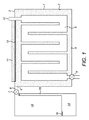
本発明の加熱ユニットは、図1に示されている。ユニットには、アウターハウジング1が設けられている。これは、例えば、ポリエチレンから作られてよい。内面2は、好ましくは、ステンレス鋼などの熱反射材料から作られる。外面3は、好ましくは、耐候性であり、ポリエチレンから作られてよい。 The heating unit of the present invention is shown in FIG. The unit is provided with an outer housing 1. It may be made of polyethylene, for example. The inner surface 2 is preferably made of a heat-reflecting material such as stainless steel. The outer surface 3 is preferably weather resistant and may be made of polyethylene.
ハウジング内に位置するのは、アミノ化合物でコーティングされた繊維4である。グリッド5は、繊維がバルブ7へと管6に入るのを防ぐ。これは、二酸化炭素のシリンダー13に接続された二方弁である。
Located within the housing is a fiber 4 coated with an amino compound. The grid 5 prevents fibers from entering the tube 6 into the valve 7. This is a two-way valve connected to a
ハウジングを通っているのは導管8であり、導管8は、繊維を通って複数回曲がり、繊維に対して大きな表面積を呈する。繊維は、導管の屈曲部分の周囲に充填される。水は、入口9でハウジングに入って出口10を通って出る。水は、加熱ユニットが一体化される家庭供給の水加熱システムから適切に供給されてそこに戻される。
Through the housing is a conduit 8 that bends multiple times through the fiber and presents a large surface area for the fiber. The fibers are filled around the bend of the conduit. Water enters the housing at inlet 9 and exits through
ユニットには、ソーラーパネル11が設けられている。スクリーン12は、所望するときにソーラーパネルからの熱が繊維に向けられることができるように、必要なときにリモートで開閉できる。
The unit is provided with a solar panel 11. The
出された二酸化炭素は、バルブ7を通って適切に戻り、流路15を介してチャンバ14に向けられる。そこから、それは開口16を介してシリンダー13に向け直されることができる。
The emitted carbon dioxide returns appropriately through the valve 7 and is directed to the
図2は、本発明のさらなる加熱ユニットの平面図を示す。ハウジング21は、4つのサブチャンバ22に分けられ、そのそれぞれはアミノ基含有繊維(図示せず)が含まれている。内部隔壁23は、熱反射性でなく、気体不透過性である。外壁24の内側面は、熱反射性である。
FIG. 2 shows a plan view of a further heating unit according to the invention. The
単一源25からの二酸化炭素は、複数の流路26を介してチャンバのいずれかにバルブ27を介して向けられることができる。水は、水供給に接続された単一源28から入り、単一出口30につながる複数の導管29を介してチャンバのいずれかを選択的に通ることができる。ソーラーパネル31は、必要に応じて異なるチャンバを横切って移動できる。
Carbon dioxide from a
Claims (9)
(a)‐ハウジングと、
‐前記ハウジング内に含まれるアミノ基含有繊維と、
‐水用の導管と、
‐二酸化炭素を前記ハウジングに送る手段と、
‐熱を前記アミノ基含有繊維に供給する手段と、
を備える加熱ユニットを提供するステップと、
(b)二酸化炭素を前記ハウジングに送るステップと、
(c)水を前記導管に通すステップと、
を含む方法。 A method of heating water,
(A) -a housing,
-Amino group-containing fiber contained in the housing,
-A conduit for water,
-Means for delivering carbon dioxide to said housing,
-Means for supplying heat to the amino group-containing fibers,
Providing a heating unit comprising:
(B) sending carbon dioxide to the housing,
(C) passing water through the conduit,
Including the method .
Applications Claiming Priority (3)
| Application Number | Priority Date | Filing Date | Title |
|---|---|---|---|
| GB1418614.2 | 2014-10-20 | ||
| GB1418614.2A GB2531530B (en) | 2014-10-20 | 2014-10-20 | Heating unit |
| PCT/GB2015/053094 WO2016063017A1 (en) | 2014-10-20 | 2015-10-19 | Heating unit |
Publications (2)
| Publication Number | Publication Date |
|---|---|
| JP2017531778A JP2017531778A (en) | 2017-10-26 |
| JP6681908B2 true JP6681908B2 (en) | 2020-04-15 |
Family
ID=52013286
Family Applications (1)
| Application Number | Title | Priority Date | Filing Date |
|---|---|---|---|
| JP2017540328A Active JP6681908B2 (en) | 2014-10-20 | 2015-10-19 | Heating unit |
Country Status (11)
| Country | Link |
|---|---|
| US (1) | US10731893B2 (en) |
| EP (1) | EP3209948B8 (en) |
| JP (1) | JP6681908B2 (en) |
| CN (1) | CN107110557B (en) |
| AU (1) | AU2015334728B2 (en) |
| CA (1) | CA2963330C (en) |
| DK (1) | DK3209948T3 (en) |
| ES (1) | ES2765729T3 (en) |
| GB (1) | GB2531530B (en) |
| PT (1) | PT3209948T (en) |
| WO (1) | WO2016063017A1 (en) |
Family Cites Families (18)
| Publication number | Priority date | Publication date | Assignee | Title |
|---|---|---|---|---|
| SE411457C (en) * | 1977-12-14 | 1986-06-23 | Hans Ivar Wallsten | USE IN A HEAT CUMULATOR OF A FIBROST BERARM MATERIAL FIXED SORBENT |
| JPS55152394A (en) | 1979-05-17 | 1980-11-27 | Toray Ind Inc | Regeneration method |
| JP3089144B2 (en) * | 1993-10-06 | 2000-09-18 | 関西電力株式会社 | Gas-liquid contact plate heat exchanger |
| GB2446820B (en) * | 2007-02-23 | 2011-09-21 | Mark Collins | A Method of Generating Heat |
| DE102007014846B4 (en) * | 2007-03-28 | 2012-09-27 | Robert Bosch Gmbh | Thermochemical heat storage, heating system with a thermochemical heat storage and use of the heating system |
| CN201078726Y (en) * | 2007-08-14 | 2008-06-25 | 陈秋平 | Power generation energy storage type solar water heater |
| EP2127726A1 (en) * | 2008-05-29 | 2009-12-02 | Shell Internationale Researchmaatschappij B.V. | Method of regenerating a loaded sorbent using concentrated solar power and an apparatus therefor |
| WO2010022399A1 (en) * | 2008-08-22 | 2010-02-25 | Global Research Technologies, Llc | Removal of carbon dioxide from air |
| FR2937119B1 (en) * | 2008-10-15 | 2010-12-17 | Air Liquide | METHOD FOR GENERATING ENERGY AND CAPTURING CO 2 |
| EP2266680A1 (en) | 2009-06-05 | 2010-12-29 | ETH Zürich, ETH Transfer | Amine containing fibrous structure for adsorption of CO2 from atmospheric air |
| CN101769604A (en) * | 2009-02-19 | 2010-07-07 | 中国科学院理化技术研究所 | Solar water heater for guiding solar energy to water storage tank by using energy transmission medium |
| GB2474249B (en) * | 2009-10-07 | 2015-11-04 | Mark Collins | An apparatus for generating heat |
| JP5627956B2 (en) * | 2010-08-30 | 2014-11-19 | バブコック日立株式会社 | Method and apparatus for treating exhaust gas containing carbon dioxide |
| US9115913B1 (en) * | 2012-03-14 | 2015-08-25 | Leonardo Corporation | Fluid heater |
| US9555361B2 (en) * | 2012-08-29 | 2017-01-31 | Ccm Research Limited | Method and compositions for capturing carbon dioxide |
| US8940627B2 (en) | 2012-11-19 | 2015-01-27 | Nthdegree Technologies Worldwide Inc. | Conductive ink for filling vias |
| NO2986357T3 (en) * | 2013-04-18 | 2018-07-14 | ||
| US9482209B2 (en) * | 2014-10-29 | 2016-11-01 | Lai Fan Huang | Solar water heater |
-
2014
- 2014-10-20 GB GB1418614.2A patent/GB2531530B/en active Active
-
2015
- 2015-10-19 EP EP15784745.0A patent/EP3209948B8/en active Active
- 2015-10-19 JP JP2017540328A patent/JP6681908B2/en active Active
- 2015-10-19 ES ES15784745T patent/ES2765729T3/en active Active
- 2015-10-19 CA CA2963330A patent/CA2963330C/en active Active
- 2015-10-19 US US15/520,164 patent/US10731893B2/en active Active
- 2015-10-19 CN CN201580056857.8A patent/CN107110557B/en active Active
- 2015-10-19 AU AU2015334728A patent/AU2015334728B2/en active Active
- 2015-10-19 PT PT157847450T patent/PT3209948T/en unknown
- 2015-10-19 WO PCT/GB2015/053094 patent/WO2016063017A1/en not_active Ceased
- 2015-10-19 DK DK15784745.0T patent/DK3209948T3/en active
Also Published As
| Publication number | Publication date |
|---|---|
| CA2963330A1 (en) | 2016-04-28 |
| CN107110557A (en) | 2017-08-29 |
| DK3209948T3 (en) | 2020-01-20 |
| WO2016063017A1 (en) | 2016-04-28 |
| EP3209948A1 (en) | 2017-08-30 |
| US10731893B2 (en) | 2020-08-04 |
| GB2531530B (en) | 2017-01-18 |
| AU2015334728B2 (en) | 2019-02-21 |
| US20170336097A1 (en) | 2017-11-23 |
| CA2963330C (en) | 2023-09-05 |
| GB201418614D0 (en) | 2014-12-03 |
| PT3209948T (en) | 2020-01-16 |
| ES2765729T3 (en) | 2020-06-10 |
| GB2531530A (en) | 2016-04-27 |
| AU2015334728A1 (en) | 2017-04-20 |
| EP3209948B8 (en) | 2019-11-27 |
| EP3209948B1 (en) | 2019-10-16 |
| JP2017531778A (en) | 2017-10-26 |
| CN107110557B (en) | 2020-02-07 |
Similar Documents
| Publication | Publication Date | Title |
|---|---|---|
| WO2019088579A3 (en) | Vaporizer and aerosol generating device comprising same | |
| CN102216516A (en) | Clothes treating apparatus | |
| NO20071639L (en) | A system comprising a heat exchanger arrangement, a coil holder device and a heat exchanger arrangement | |
| US20140053791A1 (en) | Downfired High Efficiency Gas-Fired Water Heater | |
| US10088149B2 (en) | One atmosphere boiler instant superheated steam apparatus and method | |
| US8844471B2 (en) | Integrated contact condensing water heater | |
| JP2017531778A (en) | Heating unit | |
| US20150165368A1 (en) | Utilization of heat for the separation of co2 | |
| CN201921773U (en) | Hot coating spraying machine | |
| CN105899875A (en) | Method and plant for co-generation of heat and power | |
| KR101975888B1 (en) | Waste Heat Recovery Boiler for Additionally Spraying Water | |
| US20180142959A1 (en) | Method for operating a heat exchange system with a bypass duct and heat exchange system with a bypass duct | |
| JP2015087043A (en) | Boiler system | |
| AU2013200499B2 (en) | A Water Heating System | |
| CN108758593B (en) | steam generator system | |
| WO2006029479A1 (en) | Biocidal treatment device | |
| CN216395886U (en) | A flue gas heater device for SCR denitrification ammonia water dilution system | |
| US20130269372A1 (en) | Waste oil based water production system | |
| JPS626082B2 (en) | ||
| KR20200144798A (en) | Methanol boiler for home | |
| RU32865U1 (en) | Heater | |
| KR101881805B1 (en) | Pellet stove for combined usage of humidifier | |
| DE202016003851U1 (en) | Electricity - high-temperature storage for control energy | |
| RU2267054C1 (en) | Boiler aggregate | |
| KR20250042491A (en) | Incinerator system using latent heat energy storage |
Legal Events
| Date | Code | Title | Description |
|---|---|---|---|
| A621 | Written request for application examination |
Free format text: JAPANESE INTERMEDIATE CODE: A621 Effective date: 20181002 |
|
| A977 | Report on retrieval |
Free format text: JAPANESE INTERMEDIATE CODE: A971007 Effective date: 20190520 |
|
| A131 | Notification of reasons for refusal |
Free format text: JAPANESE INTERMEDIATE CODE: A131 Effective date: 20190604 |
|
| A521 | Request for written amendment filed |
Free format text: JAPANESE INTERMEDIATE CODE: A523 Effective date: 20190830 |
|
| TRDD | Decision of grant or rejection written | ||
| A01 | Written decision to grant a patent or to grant a registration (utility model) |
Free format text: JAPANESE INTERMEDIATE CODE: A01 Effective date: 20200303 |
|
| A61 | First payment of annual fees (during grant procedure) |
Free format text: JAPANESE INTERMEDIATE CODE: A61 Effective date: 20200324 |
|
| R150 | Certificate of patent or registration of utility model |
Ref document number: 6681908 Country of ref document: JP Free format text: JAPANESE INTERMEDIATE CODE: R150 |
|
| R250 | Receipt of annual fees |
Free format text: JAPANESE INTERMEDIATE CODE: R250 |
|
| R250 | Receipt of annual fees |
Free format text: JAPANESE INTERMEDIATE CODE: R250 |
|
| R250 | Receipt of annual fees |
Free format text: JAPANESE INTERMEDIATE CODE: R250 |