JP6920005B2 - Methods and systems for designing railcar interiors - Google Patents
Methods and systems for designing railcar interiors Download PDFInfo
- Publication number
- JP6920005B2 JP6920005B2 JP2019208582A JP2019208582A JP6920005B2 JP 6920005 B2 JP6920005 B2 JP 6920005B2 JP 2019208582 A JP2019208582 A JP 2019208582A JP 2019208582 A JP2019208582 A JP 2019208582A JP 6920005 B2 JP6920005 B2 JP 6920005B2
- Authority
- JP
- Japan
- Prior art keywords
- interior
- acoustic noise
- interior space
- noise
- arrangement
- Prior art date
- Legal status (The legal status is an assumption and is not a legal conclusion. Google has not performed a legal analysis and makes no representation as to the accuracy of the status listed.)
- Active
Links
Images






Classifications
-
- G—PHYSICS
- G06—COMPUTING OR CALCULATING; COUNTING
- G06F—ELECTRIC DIGITAL DATA PROCESSING
- G06F30/00—Computer-aided design [CAD]
- G06F30/10—Geometric CAD
- G06F30/15—Vehicle, aircraft or watercraft design
-
- G—PHYSICS
- G06—COMPUTING OR CALCULATING; COUNTING
- G06F—ELECTRIC DIGITAL DATA PROCESSING
- G06F30/00—Computer-aided design [CAD]
- G06F30/20—Design optimisation, verification or simulation
-
- Y—GENERAL TAGGING OF NEW TECHNOLOGICAL DEVELOPMENTS; GENERAL TAGGING OF CROSS-SECTIONAL TECHNOLOGIES SPANNING OVER SEVERAL SECTIONS OF THE IPC; TECHNICAL SUBJECTS COVERED BY FORMER USPC CROSS-REFERENCE ART COLLECTIONS [XRACs] AND DIGESTS
- Y02—TECHNOLOGIES OR APPLICATIONS FOR MITIGATION OR ADAPTATION AGAINST CLIMATE CHANGE
- Y02T—CLIMATE CHANGE MITIGATION TECHNOLOGIES RELATED TO TRANSPORTATION
- Y02T90/00—Enabling technologies or technologies with a potential or indirect contribution to GHG emissions mitigation
Landscapes
- Engineering & Computer Science (AREA)
- Physics & Mathematics (AREA)
- Theoretical Computer Science (AREA)
- Geometry (AREA)
- General Physics & Mathematics (AREA)
- Computer Hardware Design (AREA)
- General Engineering & Computer Science (AREA)
- Evolutionary Computation (AREA)
- Aviation & Aerospace Engineering (AREA)
- Pure & Applied Mathematics (AREA)
- Mathematical Optimization (AREA)
- Mathematical Analysis (AREA)
- Computational Mathematics (AREA)
- Automation & Control Theory (AREA)
- Measurement Of Mechanical Vibrations Or Ultrasonic Waves (AREA)
Description
本発明は、特に、内装内部に配置された要素の選ばれた構成にしたがって内装内部の1つまたは複数の場所で経験する音響雑音の表現を提供することによる、鉄道車両の内装の設計に関する。 The present invention particularly relates to the design of rail vehicle interiors by providing a representation of acoustic noise experienced in one or more locations within the interior according to a chosen configuration of elements arranged within the interior.
鉄道車両の内装は、一般的に、列車自体よりも寿命が著しく短い。したがって、鉄道車両の内装は、鉄道運行会社の変更またはブランド戦略、現代化の必要性により、または一般的な摩耗を考慮して、周期的に改装される。新しい鉄道車両の内装を設計するとき、一般的な方策はコンピュータベースのコンフィギュレータを使用するものであるが、それは設計者が、例えば鉄道客車の内装を取り付ける前に、異なる配置を可視化できるためである。例えば、US2007/0233433Aは、3D空間要件にしたがって航空機の内装要素を配置することを開示している。US2016/0110916AおよびUS2009/0216502Aは、ビル、航空機、および列車を構成するための内装空間の構成および表示について開示している。 Railcar interiors generally have a significantly shorter lifespan than the train itself. Therefore, the interiors of rolling stock are periodically refurbished due to changes in railway operating companies or brand strategies, the need for modernization, or in consideration of general wear. When designing the interior of a new rail car, a common strategy is to use a computer-based configurator because the designer can visualize different arrangements, for example, before installing the rail car interior. .. For example, US2007 / 0233433A discloses the placement of aircraft interior elements according to 3D spatial requirements. US2016 / 0110916A and US2009 / 0216502A disclose the composition and display of interior spaces for building, aircraft, and trains.
しかしながら、これらの開示は、構成された空間の視覚的表現を提供することはできるが、設計者に設計上の考慮点についての完全な理解は提供しない。具体的には、構成の変更が、後で製造され使用されたときの空間内におけるユーザ経験全体にどのように影響するかを、設計者が十分に理解するようにすることはできない。 However, while these disclosures can provide a visual representation of the constructed space, they do not provide the designer with a complete understanding of design considerations. Specifically, it is not possible for designers to fully understand how configuration changes affect the overall user experience in space when later manufactured and used.
本発明者らは、車両内、特に鉄道車両などの公共交通機関(例えば、列車または路面電車)における音響雑音レベルが、ユーザ経験に大きく影響を及ぼし得ることを理解している。更に、本発明者らは、内装設備の異なる配置(構成)、ならびにかかる内装設備の材質および構造が、空間、例えば鉄道車両(客車)の内装を通って、音がどのように伝播し減衰するかに大幅に影響する可能性があり、したがって、例えば異なる場所における、ユーザの音響雑音認知に影響を及ぼし得ることを認識している。 We understand that acoustic noise levels in vehicles, especially in public transportation such as railroad vehicles (eg, trains or trams), can have a significant impact on the user experience. Furthermore, we present how different arrangements (configurations) of interior equipment, as well as the materials and structures of such interior equipment, propagate and attenuate sound through the interior of a space, eg, a railroad vehicle (passenger car). We are aware that it can significantly affect the user's acoustic noise perception, for example in different locations.
上記に照らして、本発明は、鉄道車両の設計者に、鉄道車両の内装空間内における音響雑音レベルの表現を提供することを目的とする。好ましくは、本発明は、例えば、内装設備のタイプ、場所、および構造/材質によって、音響雑音レベルがどのように影響を受けるか、より好ましくは、特定の内装構成が、後で製造される鉄道車両の使用中におけるユーザ経験全体にどのように影響を及ぼす可能性があるかの表現を提供する。 In light of the above, it is an object of the present invention to provide a railroad vehicle designer with an expression of acoustic noise levels in the interior space of a railroad vehicle. Preferably, the present invention describes how the acoustic noise level is affected, for example by the type, location, and structure / material of the interior equipment, more preferably a railroad in which a particular interior configuration is later manufactured. It provides an expression of how it can affect the overall user experience while using the vehicle.
本発明は、鉄道車両の内装配置を設計する方法を提供し、方法は、シミュレートした鉄道車両に内装空間を提供するステップと、1つまたは複数のシミュレートした要素を内装空間内に配置するステップと、シミュレートした要素およびそれらの内装空間内における配置に少なくとも基づいて、内装空間の音響雑音分布を提供するステップと、内装空間内の1つまたは複数の場所における音響雑音の表現を提供するステップとを含む。 The present invention provides a method of designing an interior arrangement of a railroad vehicle, the method of providing an interior space for a simulated railcar and placing one or more simulated elements within the interior space. Provides a step that provides an acoustic noise distribution in an interior space, and a representation of acoustic noise in one or more locations within the interior space, at least based on the steps and their simulated elements and their placement in the interior space. Including steps.
任意に、本発明は、1つまたは複数の音響雑音源のモデルを提供するステップを更に含み、音響雑音分布を提供するステップが、モデル、シミュレートした内装要素、およびそれらの内装空間内における配置に少なくとも基づいて、内部空間の音響雑音分布を生成するステップを含む、方法を提供する。 Optionally, the invention further comprises a step of providing a model of one or more acoustic noise sources, the steps of providing an acoustic noise distribution being the model, the simulated interior elements, and their arrangement within the interior space. Provided is a method comprising the steps of generating an acoustic noise distribution in the interior space, at least based on.
任意に、本発明は、内装空間内の場所を選択するステップと、選択された場所における音響雑音の表現を提供するステップとを更に含む、方法を提供する。 Optionally, the present invention provides a method further comprising selecting a location within the interior space and providing a representation of acoustic noise at the selected location.
任意に、音響雑音の提供される表現は、音響雑音の可聴表現もしくは視覚表現、または可聴および視覚表現の両方である。 Optionally, the representation provided by acoustic noise is either an audible or visual representation of acoustic noise, or both an audible and visual representation.
任意に、提供される表現は、少なくとも内装空間、シミュレートした要素、およびそれらの配置の視覚表現を更に含む。 Optionally, the representations provided further include at least a visual representation of the interior space, simulated elements, and their arrangement.
任意に、1つまたは複数の音響雑音源は、内装空間の外部、または内装空間の内部にあってもよい。 Optionally, the one or more sources of acoustic noise may be outside the interior space or inside the interior space.
任意に、内装の外部にある雑音源から内部空間内への音響雑音の伝達は、車体振動モデルを介してモデル化される。 Optionally, the transmission of acoustic noise from a noise source outside the interior into the interior space is modeled via a vehicle body vibration model.
任意に、内装空間の音響雑音分布は、内装空間の外部にある音響雑音源、および/または内装空間の内部にある1つまたは複数の音響雑音源に対する車体振動モデルに基づいて、光線追跡方法によって計算される。 Optionally, the acoustic noise distribution in the interior space is based on a vehicle body vibration model for acoustic noise sources outside the interior space and / or for one or more acoustic noise sources inside the interior space, by ray tracing methods. It is calculated.
任意に、光線追跡方法は、1つまたは複数のシミュレートした内装要素に対応する、1つまたは複数の吸音係数を利用する。 Optionally, the ray tracing method utilizes one or more sound absorption coefficients corresponding to one or more simulated interior elements.
任意に、1つまたは複数の吸音係数は、音響雑音の振動数に応じて異なる値を有する。 Optionally, the one or more sound absorption coefficients have different values depending on the frequency of the acoustic noise.
任意に、音響雑音分布は更に、1つまたは複数のシミュレートした内装要素に対するもの以外の1つまたは複数の吸音係数に基づく。 Optionally, the acoustic noise distribution is further based on one or more sound absorption coefficients other than those for one or more simulated interior elements.
任意に、1つまたは複数の音響雑音源の音量および/または振動数を変化させることができる。 Optionally, the volume and / or frequency of one or more acoustic noise sources can be varied.
任意に、1つまたは複数の音響雑音源の音響雑音分布および/またはモデル、ならびに/あるいは1つまたは複数の吸音係数は、鉄道車両ならびに/あるいは据付品および設備ならびに/あるいはその構築材料の代表的な測定データに基づく。 Optionally, the acoustic noise distribution and / or model of one or more acoustic noise sources, and / or one or more sound absorption coefficients, are representative of railroad vehicles and / or fixtures and equipment and / or their construction materials. Based on various measurement data.
任意に、音響雑音分布は、鉄道車両ならびに/あるいは据付品および設備ならびに/あるいはその構築材料の代表的な測定データに基づく。任意に、1つまたは複数の音響雑音源のモデルは、鉄道車両ならびに/あるいは据付品および設備ならびに/あるいはその構築材料の代表的な測定データに基づく。任意に、1つまたは複数の吸音係数は、鉄道車両ならびに/あるいは据付品および設備ならびに/あるいはその構築材料の代表的な測定データに基づく。 Optionally, the acoustic noise distribution is based on representative measurement data of railroad vehicles and / or fixtures and equipment and / or their construction materials. Optionally, the model of one or more acoustic noise sources is based on representative measurement data of railroad vehicles and / or fixtures and equipment and / or their construction materials. Optionally, one or more sound absorption coefficients are based on representative measurement data of railroad vehicles and / or fixtures and equipment and / or their construction materials.
本発明はまた、コンピュータ上で作動させると本明細書に記載する方法のいずれか1つを実行するコンピュータプログラムコードを備える、コンピュータプログラムを提供する。本発明はまた、コンピュータプログラム(製品)を格納するコンピュータ可読媒体を提供する。例えば、本発明は、コンピュータ可読媒体上で具体化されたコンピュータプログラムを提供する。 The present invention also provides a computer program comprising computer program code that, when activated on a computer, performs any one of the methods described herein. The present invention also provides a computer-readable medium for storing a computer program (product). For example, the present invention provides a computer program embodied on a computer-readable medium.
更に、本発明は、鉄道車両の内装配置を設計するシステムを提供し、システムは、シミュレートした鉄道車両の内装空間内で1つまたは複数のシミュレートした要素を配置するように(例えば、ユーザによって)操作可能な入力手段と、シミュレートした要素およびそれらの内装空間内における配置に基づいて、内装空間の音響雑音分布を提供するように構成されたプロセッサと、選択された場所における音響雑音の表現を(例えば、ユーザに)提供するように構成された出力手段とを備える。 Further, the present invention provides a system for designing an interior arrangement of a railroad vehicle so that the system arranges one or more simulated elements within the interior space of the simulated railroad vehicle (eg, a user). With operable input means, a processor configured to provide an acoustic noise distribution in the interior space based on the simulated elements and their placement in the interior space, and the acoustic noise at a selected location. It comprises an output means configured to provide the representation (eg, to the user).
任意に、プロセッサは、シミュレートした要素およびそれらの内装空間内における配置、ならびに1つまたは複数の音響雑音源のモデルに基づいて、内装空間の音響雑音分布を提供するように構成されてもよい。システムは、1つまたは複数の音響雑音源のモデルを選択(もしくは構成)するように操作可能な入力手段を更に備えてもよい。 Optionally, the processor may be configured to provide an acoustic noise distribution in the interior space based on the simulated elements and their placement within the interior space, as well as the model of one or more acoustic noise sources. .. The system may further include input means that can be manipulated to select (or configure) a model of one or more acoustic noise sources.
任意に、システムは、内装空間内の場所を選択するように操作可能な入力手段を更に備える。出力手段は、好ましくは、選択された場所における音響雑音の表現を提供する。 Optionally, the system further comprises input means that can be manipulated to select a location within the interior space. The output means preferably provides a representation of acoustic noise at a selected location.
任意に、システムは、音響雑音の可聴表現を提供する。システムは、音響雑音の視覚表現を提供してもよい。システムは、音響雑音の可聴および視覚表現を提供してもよい。 Optionally, the system provides an audible representation of acoustic noise. The system may provide a visual representation of acoustic noise. The system may provide an audible and visual representation of acoustic noise.
任意に、システムは、少なくとも内装空間、シミュレートした要素、およびそれらの配置の視覚表現を更に提供する。 Optionally, the system further provides at least a visual representation of the interior space, simulated elements, and their arrangement.
本発明は、記載した態様および好ましい特徴の組み合わせを含むが、ただし、かかる組み合わせが明らかに容認できないかまたは明示的に回避される場合を除く。 The present invention includes combinations of the described embodiments and preferred features, except where such combinations are clearly unacceptable or explicitly avoided.
以下、本発明の原理を例証する実施形態について、添付図面を参照して考察する。 Hereinafter, embodiments that illustrate the principles of the present invention will be considered with reference to the accompanying drawings.
以下、本発明の態様および実施形態について、添付図面を参照して考察する。更なる態様および実施形態が当業者には明白となるであろう。本明細書で言及する全ての文献を参照により本明細書に組み込む。 Hereinafter, embodiments and embodiments of the present invention will be discussed with reference to the accompanying drawings. Further embodiments and embodiments will be apparent to those skilled in the art. All references referred to herein are incorporated herein by reference.
図1は、本発明の一実施形態の例示のハードウェア構造を示している。モバイルタブレット100と、仮想現実(VR)システム200と、サーバ300とを有する。
FIG. 1 shows an exemplary hardware structure according to an embodiment of the present invention. It has a mobile tablet 100, a virtual reality (VR) system 200, and a
モバイルタブレットは、構成を入力し、列車の選択された構成を表示する、タッチパネルを有する。この実施形態は、モバイルタブレット100を使用する例を示している。コンピュータ(例えば、パーソナルコンピュータ(PC))、またはディスプレイおよび入力デバイスを有する他の機器を、モバイルタブレット100の代わりに使用することができる。 The mobile tablet has a touch panel for inputting configurations and displaying selected configurations of trains. This embodiment shows an example of using the mobile tablet 100. A computer (eg, a personal computer (PC)), or other device with a display and input device, can be used in place of the mobile tablet 100.
VRシステム200は、3D VR画像を表示するヘッドセット210と、列車構成のパラメータを修正するコントローラ220と、ヘッドセット210とコントローラ220の場所および方向を検出する位置センサ230とを有する。PC、あるいは可聴および/または視覚出力を有する他の機器を、VRシステム200の代わりに使用することができる。
The VR system 200 includes a headset 210 that displays a 3D VR image, a
サーバ300は、モバイルタブレット100によって作成される列車構成の情報を格納する機能を有する。サーバは、選択された構成を有する鉄道客車内部の音響レベルをモデル化する機能を有してもよい。また例えば、内装空間における音響雑音分布のリアルタイム3D可聴表現、内装空間の視覚表現、シミュレートした要素、およびヘッドセット210に表示されるそれらの配置を作成するのに使用されてもよい。あるいは、内装空間、シミュレートした要素、およびそれらの配置の視覚表現を含むかもしくは含まない、音響雑音の視覚および/または可聴表現を含む、鉄道車両の内装空間内の場所における分布に関する音響雑音の表現の代替形態を生成してもよい。
The
サーバ300は、有線または無線接続で、モバイルタブレット100およびVRシステムと接続することができる。あるいは、モバイルタブレット100、VRシステム200、およびサーバ300の1つまたは複数が、単一のシステム、例えばPCに含まれてもよい。
列車コンフィギュレータ
次に、列車構成を設計および修正するモバイルタブレット100の操作について説明する。
The
Train Configurator Next, the operation of the mobile tablet 100 for designing and modifying the train configuration will be described.
図2は、列車タイプを選択する列車コンフィギュレータの画面の一例を示している。この例では、列車コンフィギュレータは、構成する列車タイプに関して、「高速列車」、「都市間列車」、「通勤列車」、および「地下鉄」という4つの選択肢を有する。モバイルタブレット100は、これら4つの選択肢をそのタッチパネル上で選択するように表示する。より多数またはより少数の選択肢が提供されてもよい。 FIG. 2 shows an example of a train configurator screen for selecting a train type. In this example, the train configurator has four choices for the type of train it constitutes: "high-speed train", "intercity train", "commuter train", and "subway". The mobile tablet 100 displays these four options to be selected on the touch panel. More or fewer options may be offered.
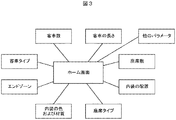
図3は、列車構成を生成するのに使用することができる入力パラメータの一例を示している。これらの入力パラメータとしては、客車の長さ、客車数、客車タイプ、エンドゾーンのタイプ(例えば、運転士室、荷物/自転車/器具庫、空力整形)、内装の色および材質、座席タイプ、内装の配置、座席数、および他のパラメータが挙げられる。他のパラメータモ構成可能な選択肢のリストに含められてもよい。 FIG. 3 shows an example of input parameters that can be used to generate a train configuration. These input parameters include passenger car length, number of passenger cars, passenger car type, end zone type (eg driver's room, luggage / bicycle / equipment storage, aerodynamic shaping), interior color and material, seat type, interior Placement, number of seats, and other parameters. Other parameters may be included in the list of configurable options.
モバイルタブレットのパラメータ入力画面は全て、選択された構成を保存する「保存」アイコンを有する。「保存」コマンドがアイコンによって入力されると、列車構成情報がサーバ300に伝達され、サーバ300のメモリに保存される。サーバに保存された列車構成は、モバイルタブレット100にダウンロード、転送、またはロードし、ディスプレイで見ることができる。
All mobile tablet parameter entry screens have a "save" icon to save the selected configuration. When the "save" command is input by the icon, the train configuration information is transmitted to the
図4は、列車コンフィギュレータのホーム画面の一例を示している。
これは「都市間」列車タイプの構成の一例である。1つまたは複数の基本パラメータ、例えば客車寸法、車輪タイプ、推進システム、換気システム、ドアおよび窓の場所が、初期構成として設定されてもよく、初期構成の情報がホーム画面に示される。あるいは、ユーザは、初期構成を参照せずに鉄道車両を構成してもよい。
FIG. 4 shows an example of the home screen of the train configurator.
This is an example of an "intercity" train type configuration. One or more basic parameters, such as passenger car dimensions, wheel type, propulsion system, ventilation system, door and window locations, may be set as the initial configuration and information on the initial configuration is displayed on the home screen. Alternatively, the user may configure the railroad vehicle without referring to the initial configuration.
ホーム画面は、座席および他の内装レイアウトを示すセクション401を有する。この例示の画面は、客車1および2の標準クラスの座席配置を示している。ディスプレイは、より多数またはより少数の客車を示してもよい。
The home screen has
スクロールバー402は、座席配置が画面に示されている客車を示す。ユーザがバーを動かして、詳細な座席配置が画面に示される客車を選択することができる。
The
画面はまた、各客車の重要業績評価指標(KPI)を示すセクション403を有してもよい。これらによって、客車を提供するためのコスト、必要な製造リードタイムを考慮した納期、座席数を考慮した利益率、座席ピッチおよび座席タイプを考慮した快適性、座席数および座席タイプを考慮した清掃効率、ならびに座席ピッチなどのパラメータに関して、列車構成の効果を解釈することが可能になる。客車に関する異なるKPI、例えば雑音レベルも、計算され表示されてもよい。KPIは、モバイルタブレット100またはサーバ300によって計算されてもよい。あるいは、客車のKPIはこの方式では提供されないことがある。
The screen may also have
画面はまた、列車編成全体の選択されたパラメータから作成される列車編成全体のKPIを示す、セクション404を有してもよい。この例では、列車全体に関するKPIは、各客車に関するものと類似しているが、雑音レベルの指示も含み、そのモデル化については更に詳細に後述する。列車に関する異なるKPIも計算され表示されてもよい。KPIは、モバイルタブレット100またはサーバ300によって計算されてもよい。あるいは、列車のKPIはこの方式では提供されないことがある。
The screen may also have
画面はまた、作成された列車構成をサーバ300のメモリに保存し、列車構成をサーバ300のメモリからロードするため、「ロード/保存」のプルダウンボタンをセクション405に有する。
The screen also has a "load / save" pull-down button in
画面はまた、更に詳細に後述するように、サーバが、少なくとも構成された鉄道車両の音響雑音分布をVRヘッドセット210または他の出力手段に提供するようにする、セクション406を有してもよい。
The screen may also have
画面はまた、客車数、標準クラスの客車およびファーストクラスの客車の数、ならびに列車編成の全長などの車両全体のパラメータを選択する、セクション407を有する。これに関する一例のコンフィギュレーション画面は、図5に示されるようなものである。画面は、客車数、ファーストクラスの客車の数、標準クラスの客車の数、および列車編成の長さを増加または減少させる、ボタンを有してもよい。この画面はまた、ホーム画面として、例えば、列車編成の長さ、合計座席数、列車編成のコスト、納期、利益率、快適性、清掃効率、および雑音を含む、KPIを示してもよい。列車編成における客車数、標準クラスの客車およびファーストクラスの客車の数が、例えばボタンをクリックすることによって変更されると、これらのパラメータがモバイルタブレット100またはサーバ300によって計算/作成され、この画面に表示される。例えば、客車数が変更されると、列車編成の長さ、コスト、納期、利益率、および/または雑音が潜在的に変更される。同様に、標準およびファーストクラスの客車の数が変更されると、座席数、コスト、納期、利益率、快適性、清掃効率、および/または雑音が潜在的に変更される。
The screen also has section 407 for selecting vehicle-wide parameters such as the number of passenger cars, the number of standard-class and first-class passenger cars, and the overall length of the train formation. An example configuration screen relating to this is as shown in FIG. The screen may have buttons for increasing or decreasing the number of passenger cars, the number of first class passenger cars, the number of standard class passenger cars, and the length of the train formation. The screen may also show KPIs as home screens, including, for example, train formation length, total number of seats, train formation cost, delivery time, rate of return, comfort, cleaning efficiency, and noise. When the number of passenger cars in the train formation, the number of standard class passenger cars and the number of first class passenger cars are changed, for example by clicking a button, these parameters are calculated / created by the mobile tablet 100 or the
客車クラスおよび客車タイプの数は、この例に示されるよりも多数または少数であってもよい。例えば、列車は、荷物車、食堂車、または動力車も含んでもよく、ファーストクラスおよび標準クラス両方の座席(および/または代替のクラス)が分割された客車も有してもよい。あるいは、構成はクラスを参照しないことがあり、その代わり、ユーザによって自由に構成可能である。 The number of passenger car classes and passenger car types may be greater or lesser than shown in this example. For example, the train may also include luggage cars, dining cars, or motor vehicles, and may also have passenger cars with split seats (and / or alternative classes) in both first class and standard class. Alternatively, the configuration may not refer to the class, instead it is freely configurable by the user.
画面はまた、座席数、テーブル、ベイおよびラック、座席タイプ、ならびに内装の色および材質を含む、標準およびファーストクラスの客車のパラメータを選択するため、「標準クラス」のプルダウンボタンをセクション408に、「ファーストクラス」のプルダウンをセクション409に有してもよい。「標準クラス」のプルダウンボタンがセクション408で選択されるか、または「ファーストクラス」プルダウンボタンがセクション409で選択されると、異なる選択肢を有するメニューが現れて、内装レイアウト、座席の材質などを構成することが可能になる。より多数もしくは少数の客車タイプまたは客車クラスが提供されてもよい。
The screen also has a "Standard Class" pull-down button in Section 408 to select standard and first class passenger car parameters, including seat count, table, bay and rack, seat type, and interior color and material. A "first class" pull-down may be provided in
図6は、標準クラスの客車の場合のコンフィギュレーション画面の一例を示している。パラメータは客車の座席数を含む。複数の内装レイアウトの選択肢が表示されてもよい。ホーム画面からのKPIもこの画面上に示されたことがある。画面は、客車の座席数を増減させ、異なる内装レイアウトを選択し、例えば3D画像として各レイアウト・オプションを可視化し、ならびに/あるいは選択された内装レイアウト・オプションを保存する、ボタンを有していてもよい。可能なレイアウトは、客車長さおよび座席数などのパラメータに基づいて、テンプレートから自動的に生成されてもよく、またはユーザが構成してもよい。 FIG. 6 shows an example of the configuration screen in the case of a standard class passenger car. The parameters include the number of passenger car seats. Multiple interior layout options may be displayed. KPIs from the home screen have also been shown on this screen. The screen has buttons to increase or decrease the number of seats in the passenger car, select different interior layouts, visualize each layout option as a 3D image, for example, and / or save the selected interior layout option. May be good. Possible layouts may be automatically generated from the template based on parameters such as passenger car length and number of seats, or may be user configured.
各客車に対して、および列車全体に対して選択されたレイアウトは、音響雑音モデルの入力パラメータとして使用されて、内装音響雑音レベルを計算しシミュレートすることが可能になる。 The layout selected for each passenger car and for the entire train can be used as an input parameter for the acoustic noise model to calculate and simulate the interior acoustic noise level.
そのため、一般に客車客室内の音響雑音レベルを意味する、雑音のKPIは、少なくとも座席数および/または座席の構造、例えば使用される材質に依存する。例えば、「座席数」を増加させた場合、座席が雑音を吸収するので「雑音」は減少する。更に、座席の構造、例えば使用される材質に応じて、「雑音」のKPIも変更することができる。
音響雑音レベルのモデル化
以下、構成された列車内装に関する音響雑音レベルモデルを生成するプロセスについて記載する。
Therefore, the noise KPI, which generally means the acoustic noise level in the passenger car cabin, depends on at least the number of seats and / or the structure of the seats, eg, the material used. For example, when the "number of seats" is increased, the "noise" decreases because the seats absorb the noise. In addition, the "noise" KPI can also be modified depending on the structure of the seat, eg the material used.
Modeling of acoustic noise level The process of generating an acoustic noise level model for the constructed train interior is described below.
列車内装の音響雑音レベルモデルを生成する方法は、
1)音響雑音源の強度を推定/測定するステップと、
2)車体振動モデルなど、外部音響雑音源から鉄道車両内への伝達に関する数値モデルを展開するステップと、
3)光線追跡方法などの方法を使用して、内装レイアウトの音響モデルを展開するステップであって、光線追跡方法が、内部レイアウトの詳細な幾何学形状からの反射/吸収を考慮して、外部音響雑音に対する車体振動の放射からの、ならびに/あるいは内部音響雑音源からの音線を追跡する、ステップと、
4)列車内部の詳細な音響分布マップをシミュレートするステップとを含む。
How to generate an acoustic noise level model for a train interior
1) Steps to estimate / measure the intensity of the acoustic noise source,
2) Steps to develop a numerical model related to transmission from an external acoustic noise source to the inside of a railway vehicle, such as a vehicle body vibration model,
3) A step of developing an acoustic model of an interior layout using a method such as a ray tracing method, where the ray tracing method takes into account reflection / absorption from the detailed geometric shape of the internal layout and is external. Tracking sound lines from the radiation of vehicle body vibrations to acoustic noise and / or from internal acoustic noise sources, with steps.
4) Includes steps to simulate a detailed acoustic distribution map inside the train.
上述したように、列車構成が変更された場合、変更された音響伝播を反映させるように、ステップ3の音響モデルを再計算することができる。したがって、モデルによって、設計の詳細の効果を考慮に入れ、内装音響雑音の表現に含めることが可能になる。音響モデルは、1つまたは複数の初期/所定の鉄道車両構成に対して前もって計算されていてもよく、または各列車構成に対して再計算されてもよい。また、これら2つの方法の組み合わせがあってもよく、例えば、標準的構成の音響モデルは前もって計算され、非標準的構成の音響モデルは必要に応じて計算されてもよい。計算は、列車構成が保存されると随時、列車構成が更新されると随時、またはユーザ入力を介して(例えば、「可視化」ボタンを押し下げることによる)行われてもよい。 As mentioned above, if the train configuration is changed, the acoustic model of step 3 can be recalculated to reflect the changed acoustic propagation. Therefore, the model allows the effect of design details to be taken into account and included in the representation of interior acoustic noise. The acoustic model may be pre-calculated for one or more initial / predetermined rail vehicle configurations, or recalculated for each train configuration. There may also be a combination of these two methods, for example, an acoustic model with a standard configuration may be calculated in advance and an acoustic model with a non-standard configuration may be calculated as needed. The calculation may be performed at any time when the train configuration is saved, at any time when the train configuration is updated, or via user input (eg, by pressing the "visualize" button).
音響雑音源の推定
列車内装内部から聞くことができる音響雑音源としては、レール上での車輪の転動音、空力/風力騒音、装置雑音、および環境雑音が挙げられる。
Estimating Acoustic Noise Sources Acoustic noise sources that can be heard from inside train interiors include wheel rolling noise on rails, aerodynamic / wind noise, equipment noise, and environmental noise.
機器雑音源としては、例えば、推進および換気システム、ケータリング機材、および車内放送システムを挙げることができる。音響雑音レベルは、メーカー仕様書から、または測定によって推定することができる。車両の内装に伝達される音響雑音レベルをシミュレートするため、外部機器からの音響雑音レベルを車体振動モデルに入力することができる。内部機器からの音響雑音を光線追跡モデルに導入することができる(雑音は鉄道車両の本体を通って伝達されないため)。 Equipment noise sources include, for example, propulsion and ventilation systems, catering equipment, and in-vehicle broadcasting systems. The acoustic noise level can be estimated from the manufacturer's specifications or by measurement. In order to simulate the acoustic noise level transmitted to the interior of the vehicle, the acoustic noise level from an external device can be input to the vehicle body vibration model. Acoustic noise from internal equipment can be introduced into the ray tracing model (because the noise is not transmitted through the body of the railcar).
環境雑音は列車外部の音源を含む。これは、例えば、建物、トンネル、および/または他の列車などの周囲構造からの反響、風および/または雨などの天気による雑音、ならびに他の列車からの転動音および空力騒音を含んでもよい。 Environmental noise includes sound sources outside the train. This may include, for example, echoes from surrounding structures such as buildings, tunnels, and / or other trains, weather noise such as wind and / or rain, and rolling and aerodynamic noise from other trains. ..
空力騒音は、コンピュータ流体力学モデルを使用して、または縮小モデルを使用した風胴内での測定データからシミュレートすることができる。例えば、多くの音響センサは縮尺1/10の車両の外部に設置することができる。次に、縮尺1/10の車両が風胴内にあるときの各風速に対して音響レベルを測定することができ、測定した音響データおよび縮小モデルによって、実際の車両の雑音レベル(dB)および振動数(f)を計算することができる。縮小モデルから変換する係数は、実際の測定データに基づいて相関表として作成することができる。 Aerodynamic noise can be simulated using computer hydrodynamic models or from measured data in the wind cylinder using a reduced model. For example, many acoustic sensors can be installed outside a vehicle at a scale of 1/10. Next, the acoustic level can be measured for each wind speed when the 1/10 scale vehicle is in the wind barrel, and the measured acoustic data and the reduced model can be used to measure the actual vehicle noise level (dB) and The frequency (f) can be calculated. The coefficients to be converted from the reduced model can be created as a correlation table based on the actual measurement data.
あるいは、実車両の測定によって空力騒音を測定することができる。外部雑音は、図7の例に示されるように、線路の両側に配置されたマイクロフォン(S1、S2)を使用することによって測定することができる。雑音レベルおよびピーク振動数は、ある範囲の車両速度に対して測定することができる。例えば、表1に示されるように、100、125、150、175、200km/hである。 Alternatively, the aerodynamic noise can be measured by measuring the actual vehicle. External noise can be measured by using microphones (S1, S2) arranged on both sides of the line, as shown in the example of FIG. Noise levels and peak frequencies can be measured for a range of vehicle speeds. For example, as shown in Table 1, it is 100, 125, 150, 175, 200 km / h.

装置雑音と同様に、計算された空力騒音を車体振動モデルの励起源として使用することができる。 Similar to device noise, the calculated aerodynamic noise can be used as the excitation source for the vehicle body vibration model.
転動音は、特に普通客車の中央位置に関して、優勢な床下音響雑音源の1つである。転動音は、車輪およびレール走行面の非常に小さい振幅のうねりによって引き起こされる。一般的に、両方の表面において、1mm未満から数十mm以下の範囲の振幅を有するうねりがある。音響雑音の重要部分のうねりは数センチメートルの波長を有する。波長λ(m)の不規則性によって、振動数f=ν/λ(νはm/s単位の列車速度)の振動が起こる。異なるレールタイプに対して測定される一般的な粗さを図8に示している。 Rolling noise is one of the predominant underfloor acoustic noise sources, especially with respect to the central position of ordinary passenger cars. Rolling noise is caused by very small amplitude swells on the wheels and rail running surfaces. Generally, there are wavinesses on both surfaces with amplitudes ranging from less than 1 mm to less than a few tens of mm. The swell of an important part of acoustic noise has a wavelength of several centimeters. Due to the irregularity of the wavelength λ (m), vibration of frequency f = ν / λ (ν is the train speed in m / s unit) occurs. The general roughness measured for different rail types is shown in FIG.
転動音によって引き起こされる外部雑音の予測モデルは、業界において十分に開発され広く使用されてきた。例えば、「Thompson, D J., Railway Noise and Vibration-Mechanism Modelling and Means of Control,Elsevier,Oxford,2009」および「Kitagawa T, Thompson D J., The horizontal directivity of acoustic noise radiated by a rail and implications for the use of microphone arrays; Journal of Sound and Vibration, Volume 329,Issue 2,18 January 2010」は、鉄道車両における振動雑音のモデル化について記載している。
Prediction models for external noise caused by rolling noise have been well developed and widely used in the industry. For example, "Thompson, D J., Railway Noise and Vibration-Mechanism Modeling and Means of Control, Elsevier, Oxford, 2009" and "Kitagawa T, Thompson D J., The horizontal directivity of acoustic noise radiated by a rail and implications for" The use of microphone arrays; Journal of Sound and Vibration, Volume 329,
レールをビーム様の導波路構造と見なすと、特定の波のタイプに対してx=0における点励起によって引き起こされるレールに沿った任意位置xにおける振動応答は、次式のように計算することができる。 Considering the rail as a beam-like waveguide structure, the vibrational response at any position x along the rail caused by point excitation at x = 0 for a particular wave type can be calculated as: can.
縦または横方向でのレールの応答全体は、伝播波および近距離波の合計として得ることができる。
The entire rail response in the vertical or horizontal direction can be obtained as the sum of the propagating and short-range waves.
転動音によって引き起こされる内装雑音を調べるには、線路に沿って分布された雑音源を考慮することが重要である。この目的で、振動するレールを、図9に示されるように、レールの中心線に沿って配置された適切な音源強度の音響点源の列に置き換える。 To investigate the internal noise caused by rolling noise, it is important to consider the noise sources distributed along the track. For this purpose, the vibrating rail is replaced with a sequence of acoustic point sources of appropriate sound source intensity arranged along the centerline of the rail, as shown in FIG.
次に、これらの点源の音響出力を推定することができる。単極点源の場合、音響出力は球表面の音響強度の積分として与えられる。 Next, the acoustic output of these point sources can be estimated. For single pole sources, the acoustic output is given as an integral of the acoustic intensity of the sphere surface.
次に、この音響レベルを、図10に示されるように、車体振動モデルの励起源として含めることができる。 This acoustic level can then be included as an excitation source for the vehicle body vibration model, as shown in FIG.
車体振動の数値モデル
音響は、車体の振動によって車両の内装へと放射される。雑音レベルが車両の内装内へとどのように放射されるかを判定するため、客車は振動モデルでモデル化される。例えば、統計エネルギーまたは有限要素モデルが使用されてもよい。車体は、図11に示されるように、表面音源の列として見ることができる。これらの表面音源から車体の振動によって放射された音響出力は、外部音響レベルから計算することができる。振動モデルの表面音源を励起して、外部雑音がどのように内装に伝達されるかを判定する上で、上述の雑音源を使用することができる。
Numerical model of vehicle body vibration Sound is radiated into the interior of the vehicle by the vibration of the vehicle body. Passenger cars are modeled with vibration models to determine how noise levels are radiated into the interior of the vehicle. For example, statistical energy or finite element models may be used. The car body can be seen as a row of surface sound sources, as shown in FIG. The acoustic output radiated by the vibration of the vehicle body from these surface sound sources can be calculated from the external acoustic level. The noise sources described above can be used to excite the surface sound source of the vibration model to determine how external noise is transmitted to the interior.
音響モデル化に使用される光線追跡モデルは音響出力を音響入力とするので、サブシステムiの放射出力(Pi)は、外部音響出力(W)および係数(a)から得ることができる。 Since the ray tracing model used for acoustic modeling takes the acoustic output as the acoustic input, the radiation output ( Pi ) of subsystem i can be obtained from the external acoustic output (W) and the coefficient (a).
放射出力は、次式のように、dB単位の音響レベル(SWL)に変換することができる。
The radiation output can be converted into an acoustic level (SWL) in dB units as in the following equation.
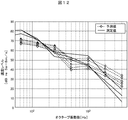
車体振動モデルからの予測された内装雑音レベルの一例、および測定値との比較を図12に示している。
この変換されたdB単位の音響は、光線追跡モデルに入力されてもよい。
An example of the predicted interior noise level from the vehicle body vibration model and a comparison with the measured values are shown in FIG.
This converted dB unit sound may be input to the ray tracing model.
内装の音響モデル
最も単純な方法として、内装雑音レベルは、車体振動および音響減衰係数に基づいて作成された音響レベルから推定することができる。音響減衰係数は、表2に一例が示される交換表を使用して決定することができる。
Interior Acoustic Model In the simplest way, the interior noise level can be estimated from the acoustic levels created based on vehicle body vibration and acoustic damping factors. The acoustic attenuation coefficient can be determined using the exchange table shown in Table 2 as an example.
内装雑音分布は光線追跡モデルを使用して推定することができる。適切な方策の一例が、例えば、「Claus Lynge Christensen, Jens Holger Rindel, Environmental Noise Control, The 2005 Congress and Exposition on noise Control Engineering, Predicting Acoustics in Class Rooms」、および「Claus Lynge Christensen, Odeon Room Acoustics Program, Version 7.0,User Manual, Industrial, Auditorium and Combined Editions, Odeon A/S, Lyngby, Denmark, August 2004」に開示されている。これらなどのモデル化技術を使用して、音響雑音分布マップを生成することができる。 The internal noise distribution can be estimated using a ray tracing model. Examples of suitable measures are, for example, "Claus Lynge Christensen, Jens Holger Rindel, Environmental Noise Control, The 2005 Congress and Exposition on noise Control Engineering, Predicting Acoustics in Class Rooms", and "Claus Lynge Christensen, Odeon Room Acoustics Program," Version 7.0, User Manual, Industrial, Auditorium and Combined Editions, Odeon A / S, Lyngby, Denmark, August 2004. Modeling techniques such as these can be used to generate acoustic noise distribution maps.
光線追跡モデル化の場合、列車コンフィギュレータシステムから入力された内装レイアウト情報が使用される。一般の光線追跡アルゴリズムが本発明に使用される。光線追跡アルゴリズムに対する一般的な入力を図13に示している。 For ray tracing modeling, the interior layout information input from the train configurator system is used. A general ray tracing algorithm is used in the present invention. Typical inputs to the ray tracing algorithm are shown in FIG.
音波が反射される毎にエネルギーが表面によってどの程度吸収されるかを決定する、内装材質の吸音係数(α)は、内装雑音分布を決定するのに使用される。一般に使用される材質に基づいた例を表3に示している。 The sound absorption coefficient (α) of the interior material, which determines how much energy is absorbed by the surface each time a sound wave is reflected, is used to determine the interior noise distribution. Table 3 shows examples based on commonly used materials.
それに加えて、乗客、荷物などによる吸収に関する推定が行われてもよい。異なる内装特性に対する吸音係数は、材質、構成要素、または完全な内装据付品の測定によって、またはそれらのシミュレーションによって決定されてもよい。 In addition, estimates regarding absorption by passengers, luggage, etc. may be made. Sound absorption coefficients for different interior characteristics may be determined by measurements of materials, components, or complete interior fixtures, or by simulation of them.
列車内装に関する残響時間は、音響吸収レベルの指示を提供するのに使用することができる。これは、図14および表4に示されるように、音源および受信機を異なる位置(P1、P2)に配置することによって計算することができる。残響時間を得るのに音圧減衰が計算される。 The reverberation time for train interiors can be used to provide indications for sound absorption levels. This can be calculated by arranging the sound source and the receiver at different positions (P1, P2), as shown in FIGS. 14 and 4. Sound pressure attenuation is calculated to obtain the reverberation time.
雑音分布
次に、内装の音響モデルの結果を使用して、一例が図15に示される、車両の内装に対する雑音分布を生成することができる。上述したように、雑音分布は各構成に対して生成されてもよく、ならびに/あるいは初期もしくは所定の鉄道車両構成に対して前もって生成されてもよい。例えば、座席数の変更によって合計吸収面積が変化し、それらの設計の形状が音響伝播方向に影響を及ぼす。これらの設計の詳細が雑音レベルに与える影響は、本発明によって適宜検討し図示することができる。
Noise Distribution Next, the results of the interior acoustic model can be used to generate the noise distribution for the interior of the vehicle, an example of which is shown in FIG. As mentioned above, the noise distribution may be generated for each configuration and / or pre-generated for the initial or predetermined rail vehicle configuration. For example, changing the number of seats changes the total absorption area, and the shape of their design affects the direction of acoustic propagation. The effect of these design details on noise levels can be appropriately investigated and illustrated by the present invention.
雑音分布は、内装の音響雑音の表現をユーザに対して提供するのに使用される。例えば、VRシステム200を介して出力されてもよい、音響雑音の可聴または視覚表現を生成するのに使用されてもよい。 The noise distribution is used to provide the user with a representation of the acoustic noise in the interior. For example, it may be used to generate an audible or visual representation of acoustic noise that may be output via the VR system 200.
表現
「可視化」コマンドがパラメータ入力画面の1つから入力されると、サーバは、鉄道車両内の場所における音響雑音の表現を選択または生成し、この表現をユーザに提供する。表現は、好ましくは、鉄道車両内の音響雑音の可聴表現であるが、別の方法として、またはそれに加えて、鉄道車両内の音響雑音の可視表現を含んでもよい。
Representation When a "visualization" command is entered from one of the parameter input screens, the server selects or generates a representation of acoustic noise at a location within the railcar and provides this representation to the user. The representation is preferably an audible representation of the acoustic noise in the railcar, but may otherwise or in addition include a visible representation of the acoustic noise in the railcar.
表現は、それに加えて、鉄道車両の内装の視覚表現を含んでもよい。例えば、サーバ300は、モバイルタブレット100から受信した列車構成情報に対応する視覚および/または可聴情報を選択し、それをVRシステム200に伝達してもよい。図1の例示のVRシステム200は、列車構成情報に対応する視覚情報または音響雑音モデル、ならびに位置センサ230によって検出されるヘッドセットの位置および方向に基づいて画像を示す、ディスプレイを含むヘッドセット210を備える。また、位置センサ230によって検出されたコントローラ220の場所および方向に基づいて、コントローラ画像を示してもよい。
The representation may additionally include a visual representation of the interior of the railroad vehicle. For example, the
ヘッドセット210はまた、選択された列車構成、列車速度、および位置センサ230によって検出されたユーザ位置にしたがって、モデル化された雑音レベルをユーザに出力するスピーカーを有してもよい。 The headset 210 may also have speakers that output a modeled noise level to the user according to the selected train configuration, train speed, and user position detected by the position sensor 230.
列車構成のパラメータの1つまたは複数を(例えば、列車構成を保存する、もしくはタブレット100の「可視化」ボタンを選択することによって)変更するため、コマンドがコントローラ220またはタブレット100から入力されると、サーバ300は、列車構成および視覚モデルを変更し、音響雑音分布を再計算するか、またはコントローラからのコマンド情報に基づいて、代替の音響雑音分布を選択する。サーバ300は、次に、ユーザに提供するために、更新された画像および音響雑音分布情報を伝達する。
設計プロセス
以下、本明細書に記載のシステムを使用する、本発明の態様にしたがって鉄道車両の内装を設計する方法について説明する。
設計者は、コンフィギュレータを使用して、鉄道車両のタイプ、ユーザ選択などにしたがって設定された内寸を有する、鉄道車両または一連の鉄道車両を規定する。行われる選択によって、雑音レベル、例えば、転動音および/または空力騒音による雑音レベルを、音響雑音分布に関して計算することが可能になる。ユーザには、鉄道車両または鉄道車両構成要素の様々な初期構成が提供されてもよい。コンフィギュレータに対する入力は、例えば、タブレット100、またはVRシステム200のコントローラ220を使用することによって行われてもよい。
When a command is entered from
Design Process Hereinafter, a method of designing the interior of a railroad vehicle according to the embodiment of the present invention using the system described in the present specification will be described.
The designer uses a configurator to define a rail car or series of rail cars with internal dimensions set according to the type of rail car, user choice, and so on. The choices made make it possible to calculate noise levels, such as rolling noise and / or aerodynamic noise levels, with respect to the acoustic noise distribution. The user may be provided with various initial configurations of rail vehicles or rail vehicle components. Input to the configurator may be made, for example, by using the tablet 100 or the
例えば、異なる鉄道車両は、一階建てまたは二階建てであってもよく、客車内の1つを超える高さに床を有してもよい。 For example, different rail cars may be one-story or two-story and may have floors at a height of more than one in the passenger car.
異なる鉄道車両タイプはまた、特に角を曲がる間、転動音に影響するであろう、ボギーまたは固定ホイールなどの異なる車輪構成を有してもよい。また、異なる軌間、車輪の半径およびタイプ、ならびに/あるいはサスペンションのタイプに合わせて構成することも可能であってもよいが、それはこれが、転動音の発生および車両への伝達に影響する可能性があるためである。 Different rail vehicle types may also have different wheel configurations, such as bogies or fixed wheels, which will affect rolling noise, especially while turning corners. It may also be configured for different gauges, wheel radii and types, and / or suspension types, which can affect the generation of rolling noise and transmission to the vehicle. Because there is.
異なる鉄道車両はまた、空力騒音に影響するであろう、異なる空力プロファイルを有してもよい。列車内における特定の鉄道車両の位置も、空力騒音に影響するであろう。鉄道車両の寸法も、共振振動数などを変更させるので、車体振動モデルに影響するであろう。 Different railcars may also have different aerodynamic profiles that will affect aerodynamic noise. The location of certain railcars within the train will also affect aerodynamic noise. The dimensions of the railroad vehicle will also affect the vehicle body vibration model because it changes the resonance frequency and so on.
鉄道車両の定義はまた、車両構築材料による雑音減衰のパラメータ(例えば、窓および客車壁の厚さ、雑音緩衝材料の提供)を含んでもよい。 The definition of a rail vehicle may also include parameters for noise attenuation by the vehicle construction material (eg, window and passenger car wall thickness, provision of noise damping material).
鉄道車両の定義は、推進システム、制動システム、および/または換気システム、ならびに鉄道車両上におけるそれらの場所など、更なる外部雑音源のパラメータを含んでもよい。推進システムの場合、これは推進タイプ(例えば、ディーゼル、電気、二方式)を含んでもよい。定義はまた、動作可能な窓および/またはドア、ならびに鉄道車両上における場所などのパラメータを含んでもよい。特に後者は、鉄道車両の雑音減衰に影響を及ぼし、それが雑音源にも作用する。 The definition of rolling stock may include additional external noise source parameters such as propulsion systems, braking systems, and / or ventilation systems, as well as their location on the rolling stock. For propulsion systems, this may include propulsion types (eg, diesel, electric, two systems). Definitions may also include parameters such as operable windows and / or doors, and location on rail vehicles. In particular, the latter affects the noise attenuation of rail vehicles, which also acts on the noise source.
予期される雑音入力および減衰は、シミュレーションによって、または停止中および/または移動している鉄道車両、例えば列車に属している鉄道車両の(実世界の)測定値から決定することができる。シミュレートした場合、シミュレーションは、他の実世界の測定値に基づいて、例えば、鉄道車両に組み込まれた材質および/または構成要素の測定された音響特性に基づいて生成されてもよい。 Expected noise inputs and attenuation can be determined by simulation or from (real-world) measurements of railcars that are stopped and / or moving, such as railcars that belong to a train. When simulated, the simulation may be generated based on other real-world measurements, for example, based on the measured acoustic properties of the material and / or components incorporated into the rolling stock.
次に、ユーザは、規定された鉄道車両の内部空間内の、座席、ベンチ、テーブル、床材もしくは天井材、段差、傾斜路、または階段、荷物室、自転車および/もしくは器具庫、仕切り、ドア、窓、トイレ、ケータリングおよび/または小売設備(例えば、食品/飲料調理器、冷蔵庫、ディスプレイ棚、売場用機器を含む)、乗客情報/娯楽システム(例えば、スピーカー、スクリーン、アラーム)、ゴミ箱、雑誌ラック、手すり、柱、吊革、非常用機器(例えば、はしご、階段)、アクセシビリティ機器(例えば、車椅子用傾斜路)、カーテン、および/またはブラインド、照明器具などの突出した本体、換気および/または暖房用通気口、コンセントなどの群から選択された、1つまたは複数の内装要素(例えば、物体もしくは本体、例えば据付品および設備)を配置する。 The user then uses seats, benches, tables, flooring or ceiling materials, steps, ramps or stairs, luggage compartments, bicycles and / or equipment storage, dividers, doors within the defined railroad vehicle interior space. , Windows, toilets, catering and / or retail equipment (including, for example, food / beverage cookers, refrigerators, display shelves, sales floor equipment), passenger information / entertainment systems (eg, speakers, screens, alarms), trash cans, magazines. Racks, railings, pillars, hanging leather, emergency equipment (eg ladders, stairs), accessibility equipment (eg wheelchair ramps), curtains and / or blinds, protruding bodies such as lighting fixtures, ventilation and / or heating Place one or more interior elements (eg, objects or bodies, such as fixtures and equipment) selected from the group of vents, outlets, and the like.
異なる内装要素の構築材料も選択することができる。構築材料の選択は内装要素の吸音係数に影響する。 Construction materials for different interior elements can also be selected. The choice of construction material affects the sound absorption coefficient of the interior elements.
これらの要素(乗客情報システム、ケータリング設備など)の一部も、音響モデルの雑音源であることがある。例えば、これによって、ユーザが、作られる信号が適切に可聴であることを確保するため、乗客情報スピーカー、アラームシステムなどの場所を試験することが可能になってもよい。 Some of these factors (passenger information systems, catering equipment, etc.) can also be sources of noise in acoustic models. For example, this may allow the user to test locations such as passenger information speakers, alarm systems, etc. to ensure that the signals produced are properly audible.
内装設計要素および好ましくはそれらの場所は、構成された客車の内装に対する音響雑音分布の表現を提供するのに使用されてもよい。あるいは、内装設計要素および好ましくはそれらの場所は、構成された客車の内装およびその中の雑音分布の表現を提供するのに使用されてもよい。 Interior design elements and preferably their location may be used to provide a representation of the acoustic noise distribution for the interior of the constructed passenger car. Alternatively, interior design elements and preferably their locations may be used to provide a representation of the interior of the constructed passenger car and the noise distribution therein.
パラメータも含めて、乗客によって生成される背景雑音、ならびに乗客および荷物の両方によって予期される雑音減衰を考慮に入れてもよい。乗客および積荷はまた、車体振動モデルが車両のサスペンションを通して少なくとも雑音伝達に影響するので、車体振動モデルによって考慮されてもよい。車両内における乗客および/または荷物の場所は、ユーザによって選択されてもよく、または積載バランスなどのパラメータと組み合わせて、所定のもしくは無作為の乗客分布プロファイルにしたがって提供されてもよい。 The parameters may also be taken into account for the background noise generated by the passengers and the noise attenuation expected by both the passengers and the luggage. Passengers and cargo may also be considered by the vehicle body vibration model, as the vehicle body vibration model affects at least noise transmission through the vehicle suspension. Passenger and / or luggage locations within the vehicle may be selected by the user or may be provided in combination with parameters such as load balance according to a predetermined or random passenger distribution profile.
ユーザはまた、シミュレーションに対するパラメータを提供する。これらは、初期設定として提供されるか、前もって設定されるか、またはシミュレーションの各実行前にユーザによって設定されてもよい。パラメータとしては、例えば、観察位置(または、ユーザがシミュレートされた空間内で「移動」できるようにシミュレーションが構成される場合、開始位置)が挙げられる。現在速度、線路が直線かまたは曲線か、推進のタイプおよび負荷、制動システムおよび負荷、アンチロック、換気/暖房システム負荷、ドアおよび窓の開閉状態、ケータリング/小売設備の使用、乗客アナウンスまたはアラーム、ならびに車両の乗客/荷物負荷など、様々なパラメータも鉄道車両操作に対して設定されてもよい。天候、通過列車、ならびにトンネルおよび/または周囲の建物からの反響を含む、環境雑音が選択されてもよい。列車および内装雑音伝播の少なくとも空力雑音に影響する、内部および/または外部気温、気圧および/または湿度が、構成されてもよい。 The user also provides parameters for the simulation. These may be provided as default settings, set in advance, or set by the user prior to each run of the simulation. Parameters include, for example, the observation position (or the starting position if the simulation is configured to allow the user to "move" within the simulated space). Current speed, whether the track is straight or curved, propulsion type and load, braking system and load, anti-lock, ventilation / heating system load, door and window open / closed status, use of catering / retail equipment, passenger announcement or alarm, Also, various parameters such as vehicle passenger / luggage load may be set for rail vehicle operation. Environmental noise may be selected, including weather, passing trains, and echoes from tunnels and / or surrounding buildings. Internal and / or external air temperature, pressure and / or humidity that affect at least aerodynamic noise in train and interior noise propagation may be configured.
シミュレーションは、選択されたパラメータおよびユーザへの出力にしたがって、サーバ300によって生成される。少なくともシミュレートした音響雑音分布の表現が出力される。これは、音響雑音分布の可聴または視覚どちらかの表現であってもよい。鉄道車両の内装の視覚表現は、ユーザが、構成された鉄道車両の、また見込まれる乗客経験のより完全なシミュレーションを経験できるように、追加的に提供されてもよい。シミュレーションは、VRシステム200を介して、または可聴および/または視覚出力の他の手段によって、ユーザに提供されてもよい。
The simulation is generated by the
ユーザは、鉄道車両のパラメータ、内装要素の配置、または必要に応じてシミュレーションパラメータを修正して、結果としての雑音分布に関して異なる構成および状況の間で比較する手段を提供することができる。したがって、予期される乗客経験に対する設計パラメータの影響をより完全に理解した上で、鉄道車両の内装を設計することができる。 The user can modify rail vehicle parameters, interior element placement, or simulation parameters as needed to provide a means of comparing different configurations and situations with respect to the resulting noise distribution. Therefore, the interior of a railroad vehicle can be designed with a more complete understanding of the impact of design parameters on the expected passenger experience.
上述の説明、または以下の特許請求の範囲、または添付図面に開示され、それらの特定の形態で、もしくは開示した機能を実施する手段に関して明示される特徴、あるいは開示した結果を得るための方法またはプロセスは、適宜、別個にまたはかかる特徴の任意の組み合わせで、本発明をその多様な形態で実現するために利用されてもよい。 Features disclosed in the above description, or in the following claims, or in the accompanying drawings, and manifested in their particular form or with respect to the means by which the disclosed functions are performed, or methods for obtaining the disclosed results. The process may be utilized to realize the invention in its various forms, as appropriate, separately or in any combination of such features.
本発明を上述した例示的な実施形態と併せて記載してきたが、本開示を得ることによって当業者には多くの等価な修正および変形が明白となるであろう。したがって、上述した本発明の例示の実施形態は、限定ではなく例示と見なされる。記載した実施形態に対する様々な変更が、本発明の趣旨および範囲から逸脱することなく行われてもよい。 Although the present invention has been described in conjunction with the exemplary embodiments described above, obtaining this disclosure will reveal to those skilled in the art many equivalent modifications and modifications. Therefore, the exemplary embodiments of the invention described above are considered exemplary rather than limiting. Various modifications to the described embodiments may be made without departing from the spirit and scope of the invention.
あらゆる疑義を回避するため、本明細書に提供するあらゆる理論的説明は、読者の理解を促進する目的で提供されるものである。本発明者らは、それらの理論的説明のいずれによっても束縛されることを望まない。 To avoid any doubt, all theoretical explanations provided herein are provided for the purpose of facilitating the reader's understanding. We do not want to be bound by any of those theoretical explanations.
本明細書で使用するあらゆる見出しは、単に体系化するためのものであり、記載する主題を限定するものと解釈すべきではない。 All headings used herein are for systematic purposes only and should not be construed as limiting the subject matter described.
本明細書およびそれに続く特許請求の範囲全体を通して、文脈によって別様が求められない限り、「備える」および「含む」という単語、ならびに「備えている」および「含んでいる」などの変形は、提示される整数もしくはステップまたは整数群もしくはステップ群を含むが、他のあらゆる整数もしくはステップまたは整数群もしくはステップ群を除外しないことを示唆するものと理解される。 Throughout the specification and subsequent claims, unless otherwise required by the context, the words "provide" and "include", as well as variations such as "provide" and "include", are used. It is understood to indicate that it includes the integers or steps or integers or steps presented, but does not exclude any other integers or steps or integers or steps.
本明細書および添付の特許請求の範囲で使用するとき、単数形「a」、「an」、および「the」は、文脈において別段の指定を明確にしないかぎり、複数形を含むことに留意すべきである。 It should be noted that, as used herein and in the appended claims, the singular forms "a", "an", and "the" include the plural unless otherwise specified in the context. Should be.
100 モバイルタブレット
200 仮想現実(VR)システム
300 サーバ
100 Mobile Tablet 200 Virtual Reality (VR)
Claims (12)
1つまたは複数のシミュレートした要素を前記内装空間内に配置するステップと、
1つまたは複数の音響雑音源のモデルを提供するステップと、
前記シミュレートした要素およびそれらの前記内装空間内における配置に少なくとも基づいて、前記内装空間の音響雑音分布を提供するステップと、
前記内装空間内の1つまたは複数の場所における音響雑音の表現を提供するステップとを含み、
前記音響雑音分布を提供する前記ステップが、前記モデル、前記シミュレートした内装要素、およびそれらの前記内装空間内における配置に少なくとも基づいて、前記内装空間の音響雑音分布を生成するステップを含み、
前記1つまたは複数の音響雑音源が、前記内装空間の外部、または前記内装空間の内部にあり、
前記内装空間の外部にある雑音源から前記内装空間内への音響雑音の伝達が、乗客および荷物によって予期される雑音減衰を考慮した車体振動モデルを介してモデル化される、鉄道車両の内装配置を設計する方法。 Steps to provide interior space for simulated railcars,
Steps to place one or more simulated elements in the interior space, and
Steps to provide a model for one or more acoustic noise sources,
A step of providing an acoustic noise distribution in the interior space, at least based on the simulated elements and their placement within the interior space.
Look including the step of providing the acoustic noise representation at one or more locations within the interior space,
The step of providing the acoustic noise distribution comprises generating an acoustic noise distribution of the interior space based on at least the model, the simulated interior elements, and their arrangement within the interior space.
The one or more sources of acoustic noise are outside the interior space or inside the interior space.
The interior layout of a railcar, where the transmission of acoustic noise from a noise source outside the interior space into the interior space is modeled via a vehicle body vibration model that takes into account the noise attenuation expected by passengers and luggage. How to design.
前記選択された場所における前記音響雑音の表現を提供するステップとを更に含む、請求項1に記載の鉄道車両の内装配置を設計する方法。 Steps to select a location in the interior space and
The method of designing an interior arrangement of a railroad vehicle according to claim 1, further comprising a step of providing the representation of the acoustic noise at the selected location.
請求項6に記載の鉄道車両の内装配置を設計する方法。 The one or more sound absorption coefficients have different values depending on the frequency of the acoustic noise.
The method for designing the interior arrangement of a railway vehicle according to claim 6.
前記シミュレートした要素およびそれらの前記内装空間内における配置と、1つまたは複数の音響雑音源のモデルとに基づいて、前記内装空間の音響雑音分布を提供するように構成されたプロセッサと、
前記内装空間内の場所を選択するように操作可能な入力手段と、
前記選択された場所において前記音響雑音の表現を提供するように構成された出力手段とを備え、
前記プロセッサは、
前記音響雑音分布を提供する場合に、前記モデル、前記シミュレートした内装要素、およびそれらの前記内装空間内における配置に少なくとも基づいて、前記内装空間の音響雑音分布を生成し、
前記1つまたは複数の音響雑音源が、前記内装空間の外部、または前記内装空間の内部にあり、
前記内装空間の外部にある雑音源から前記内装空間内への音響雑音の伝達を、乗客および荷物によって予期される雑音減衰を考慮した車体振動モデルを介してモデル化する、鉄道車両の内装配置を設計するシステム。 Input means that can be manipulated to place one or more simulated elements within the interior space of a simulated rail vehicle, and
A processor configured to provide an acoustic noise distribution in the interior space based on the simulated elements and their arrangement within the interior space and a model of one or more acoustic noise sources.
An input means that can be operated to select a location in the interior space,
With an output means configured to provide a representation of the acoustic noise at the selected location .
The processor
When providing the acoustic noise distribution, the acoustic noise distribution of the interior space is generated, at least based on the model, the simulated interior elements, and their arrangement within the interior space.
The one or more sources of acoustic noise are outside the interior space or inside the interior space.
The transmission of acoustic noise from the noise source that is external to the interior space to the interior space, you modeled through the vehicle body vibration model considering noise attenuation expected by passengers and luggage, the interior arrangement of the rail vehicle The system to design.
前記提供される表現が、少なくとも前記内装空間、前記シミュレートした要素、およびそれらの配置の視覚表現を更に含む、請求項11に記載の鉄道車両の内装配置を設計するシステム。 The provided representation of the acoustic noise is either an audible or visual representation, or both an audible and visual representation.
The system for designing an interior arrangement of a railroad vehicle according to claim 11 , wherein the provided representation further includes at least the interior space, the simulated elements, and a visual representation of their arrangement.
Applications Claiming Priority (2)
| Application Number | Priority Date | Filing Date | Title |
|---|---|---|---|
| EP18211171.6 | 2018-12-07 | ||
| EP18211171.6A EP3663943A1 (en) | 2018-12-07 | 2018-12-07 | Method and system for designing a rail vehicle interior based on simulation of acoustic noise |
Publications (2)
| Publication Number | Publication Date |
|---|---|
| JP2020090279A JP2020090279A (en) | 2020-06-11 |
| JP6920005B2 true JP6920005B2 (en) | 2021-08-18 |
Family
ID=64661245
Family Applications (1)
| Application Number | Title | Priority Date | Filing Date |
|---|---|---|---|
| JP2019208582A Active JP6920005B2 (en) | 2018-12-07 | 2019-11-19 | Methods and systems for designing railcar interiors |
Country Status (2)
| Country | Link |
|---|---|
| EP (1) | EP3663943A1 (en) |
| JP (1) | JP6920005B2 (en) |
Families Citing this family (6)
| Publication number | Priority date | Publication date | Assignee | Title |
|---|---|---|---|---|
| CN112163274B (en) * | 2020-09-25 | 2021-08-06 | 中车长春轨道客车股份有限公司 | Low-noise optimization design method and system in vehicle |
| CN112464379B (en) * | 2020-11-26 | 2022-09-02 | 中国船舶重工集团有限公司第七一0研究所 | Sound source system for simulating underwater propeller noise |
| DE102021200873A1 (en) * | 2021-02-01 | 2022-08-04 | Siemens Mobility GmbH | Railing arrangement for a rail vehicle |
| CN113686586B (en) * | 2021-07-02 | 2024-06-25 | 中汽研(天津)汽车工程研究院有限公司 | An acoustic environment reproduction test chamber for automobiles |
| CN113569434B (en) * | 2021-09-26 | 2021-12-03 | 西南交通大学 | Method for predicting spatial reverberation time of railway tunnel in vehicle state |
| CN113987890B (en) * | 2021-11-17 | 2025-08-15 | 华东交通大学 | Method for determining damping law of environmental vibration caused by subway vehicle |
Family Cites Families (8)
| Publication number | Priority date | Publication date | Assignee | Title |
|---|---|---|---|---|
| US6088521A (en) * | 1998-05-04 | 2000-07-11 | Ford Global Technologies, Inc. | Method and system for providing a virtual wind tunnel |
| US8060345B2 (en) | 2004-03-18 | 2011-11-15 | The Boeing Company | Transforming airplane configuration requirements into intelligent spatial geometry |
| US20090216502A1 (en) | 2008-02-22 | 2009-08-27 | William John Booth | Carrier Design System |
| JP2012068384A (en) * | 2010-09-22 | 2012-04-05 | Yamaha Corp | Acoustic space evaluation device and acoustic space structure |
| DE102010043368A1 (en) * | 2010-11-04 | 2012-05-10 | Airbus Operations Gmbh | A method for acoustic analysis of a body and system for carrying out such a method |
| US10062205B2 (en) | 2014-10-16 | 2018-08-28 | Trick 3D | Systems and methods for generating an interactive floor plan |
| CN105590003A (en) * | 2016-01-05 | 2016-05-18 | 浙江大学 | Interior noise analysis and prediction method of high speed train |
| US10248744B2 (en) * | 2017-02-16 | 2019-04-02 | The University Of North Carolina At Chapel Hill | Methods, systems, and computer readable media for acoustic classification and optimization for multi-modal rendering of real-world scenes |
-
2018
- 2018-12-07 EP EP18211171.6A patent/EP3663943A1/en active Pending
-
2019
- 2019-11-19 JP JP2019208582A patent/JP6920005B2/en active Active
Also Published As
| Publication number | Publication date |
|---|---|
| JP2020090279A (en) | 2020-06-11 |
| EP3663943A1 (en) | 2020-06-10 |
Similar Documents
| Publication | Publication Date | Title |
|---|---|---|
| JP2020090279A (en) | Railway vehicle interior design method and design system for the same | |
| Zhang et al. | SEA and contribution analysis for interior noise of a high speed train | |
| Li et al. | Influence of rail fastener stiffness on railway vehicle interior noise | |
| Forssén et al. | Modelling the interior sound field of a railway vehicle using statistical energy analysis | |
| CN105590003A (en) | Interior noise analysis and prediction method of high speed train | |
| JP2020009214A (en) | BIM system and method | |
| Van Renterghem et al. | The importance of roof shape for road traffic noise shielding in the urban environment | |
| JP5506003B1 (en) | BIM system and method | |
| JP6806416B1 (en) | BIM control method | |
| JP5619125B2 (en) | BIM system | |
| Li et al. | A framework to predict the airborne noise inside railway vehicles with application to rolling noise | |
| CN111721554A (en) | Rail transit vehicle noise distribution calculation method and system | |
| CN115563700A (en) | A Noise Prediction Method for Train Interior Based on Equivalent Acoustic-Vibration Modeling of Composite Structure | |
| Yao et al. | Vibroacoustic damping optimisation of high-speed train floor panels in low-and mid-frequency range | |
| Panahi et al. | Acoustic performance enhancement in a railway passenger carriage using hybrid ray-tracing and image-source method | |
| Zhao et al. | Sound field of subway platforms with complex forms | |
| CN113569434B (en) | Method for predicting spatial reverberation time of railway tunnel in vehicle state | |
| Sanderson et al. | CAE interior cavity model validation using acoustic modal analysis | |
| Morales et al. | Efficient wave-based acoustic material design optimization | |
| Huang et al. | Research on acoustic environment impact of high-speed railway station waiting hall based on image simulation technology | |
| Manning | SEA models to predict structureborne noise in vehicles | |
| YOSHIZAWA et al. | Study of analysis method of interior noise in railway cars by means of ray tracing method | |
| Jové et al. | Study of the aerodynamic contribution to the high-speed train cabin internal noise by means of hybrid FE-SEA modeling | |
| Sapena et al. | Interior noise prediction in high-speed rolling stock driver’s cab: Focus on structure-borne paths (mechanical and aero sources) | |
| JP4536619B2 (en) | Prediction system for pressure fluctuations in stations due to high-speed train running |
Legal Events
| Date | Code | Title | Description |
|---|---|---|---|
| A621 | Written request for application examination |
Free format text: JAPANESE INTERMEDIATE CODE: A621 Effective date: 20191119 |
|
| A977 | Report on retrieval |
Free format text: JAPANESE INTERMEDIATE CODE: A971007 Effective date: 20201027 |
|
| A131 | Notification of reasons for refusal |
Free format text: JAPANESE INTERMEDIATE CODE: A131 Effective date: 20201201 |
|
| A521 | Written amendment |
Free format text: JAPANESE INTERMEDIATE CODE: A523 Effective date: 20210128 |
|
| TRDD | Decision of grant or rejection written | ||
| A01 | Written decision to grant a patent or to grant a registration (utility model) |
Free format text: JAPANESE INTERMEDIATE CODE: A01 Effective date: 20210706 |
|
| A61 | First payment of annual fees (during grant procedure) |
Free format text: JAPANESE INTERMEDIATE CODE: A61 Effective date: 20210722 |
|
| R150 | Certificate of patent or registration of utility model |
Ref document number: 6920005 Country of ref document: JP Free format text: JAPANESE INTERMEDIATE CODE: R150 |