JP7061908B2 - Composite nanofiber non-woven fabric and its manufacturing method - Google Patents
Composite nanofiber non-woven fabric and its manufacturing method Download PDFInfo
- Publication number
- JP7061908B2 JP7061908B2 JP2018061844A JP2018061844A JP7061908B2 JP 7061908 B2 JP7061908 B2 JP 7061908B2 JP 2018061844 A JP2018061844 A JP 2018061844A JP 2018061844 A JP2018061844 A JP 2018061844A JP 7061908 B2 JP7061908 B2 JP 7061908B2
- Authority
- JP
- Japan
- Prior art keywords
- woven fabric
- nanofiber non
- polyazole
- composite
- composite nanofiber
- Prior art date
- Legal status (The legal status is an assumption and is not a legal conclusion. Google has not performed a legal analysis and makes no representation as to the accuracy of the status listed.)
- Active
Links
Images

Classifications
-
- Y—GENERAL TAGGING OF NEW TECHNOLOGICAL DEVELOPMENTS; GENERAL TAGGING OF CROSS-SECTIONAL TECHNOLOGIES SPANNING OVER SEVERAL SECTIONS OF THE IPC; TECHNICAL SUBJECTS COVERED BY FORMER USPC CROSS-REFERENCE ART COLLECTIONS [XRACs] AND DIGESTS
- Y02—TECHNOLOGIES OR APPLICATIONS FOR MITIGATION OR ADAPTATION AGAINST CLIMATE CHANGE
- Y02E—REDUCTION OF GREENHOUSE GAS [GHG] EMISSIONS, RELATED TO ENERGY GENERATION, TRANSMISSION OR DISTRIBUTION
- Y02E60/00—Enabling technologies; Technologies with a potential or indirect contribution to GHG emissions mitigation
- Y02E60/30—Hydrogen technology
- Y02E60/50—Fuel cells
-
- Y—GENERAL TAGGING OF NEW TECHNOLOGICAL DEVELOPMENTS; GENERAL TAGGING OF CROSS-SECTIONAL TECHNOLOGIES SPANNING OVER SEVERAL SECTIONS OF THE IPC; TECHNICAL SUBJECTS COVERED BY FORMER USPC CROSS-REFERENCE ART COLLECTIONS [XRACs] AND DIGESTS
- Y02—TECHNOLOGIES OR APPLICATIONS FOR MITIGATION OR ADAPTATION AGAINST CLIMATE CHANGE
- Y02P—CLIMATE CHANGE MITIGATION TECHNOLOGIES IN THE PRODUCTION OR PROCESSING OF GOODS
- Y02P70/00—Climate change mitigation technologies in the production process for final industrial or consumer products
- Y02P70/50—Manufacturing or production processes characterised by the final manufactured product
Landscapes
- Conductive Materials (AREA)
- Fuel Cell (AREA)
- Treatments For Attaching Organic Compounds To Fibrous Goods (AREA)
- Nonwoven Fabrics (AREA)
Description
本発明は、複合ナノファイバー不織布及びその製造方法に関する。 The present invention relates to a composite nanofiber nonwoven fabric and a method for producing the same.
ナノファイバー不織布は、数十から数百nmの繊維径を有する極細繊維(ナノファイバー)で構成される不織布である。繊維径がμmオーダーを超える従来の不織布に比べて、ナノファイバー不織布は、高比表面積、微細孔径、nmオーダーの微細構造に由来する特異な機能発現、といった特徴を有するため、樹脂補強材、電解質膜補強材、電池やキャパシタのセパレータ、濾材、細胞培養基材などといった用途への応用がなされている。 The nanofiber non-woven fabric is a non-woven fabric composed of ultrafine fibers (nanofibers) having a fiber diameter of several tens to several hundreds of nm. Compared to conventional non-woven fabrics with fiber diameters on the order of μm, nanofiber non-woven fabrics have features such as high specific surface area, fine pore size, and unique functional expression derived from microstructures on the order of nm. It has been applied to applications such as membrane reinforcing materials, separators for batteries and capacitors, filter media, and cell culture substrates.
ポリアゾール系化合物は高耐熱性、高機械強度、高い化学的安定性といった特徴を有するため、ポリアゾール系化合物含有ナノファイバー不織布は高機能、高性能な不織布として注目されている。 Since polyazole-based compounds have features such as high heat resistance, high mechanical strength, and high chemical stability, nanofiber non-woven fabrics containing polyazole-based compounds are attracting attention as high-performance, high-performance non-woven fabrics.
例えば、特許文献1には、ポリアゾール系化合物のナノファイバーで構成されたナノファイバー不織布とイオン性基含有高分子電解質とが複合化した複合層を有する複合高分子電解質膜が、低加湿、低温条件においても優れたプロトン伝導性を有し、なおかつ寸法変化率が小さく、機械強度と化学安定性に優れることが記載されている。
For example, in
また、特許文献2には、小孔内表面にポリベンズイミダゾールなどの高弾性率材料が複合化されているポリテトラフルオロエチレン多孔質膜と、高分子電解質を含んでなる燃料電池用電解質膜が開示されており、該電解質膜は、低抵抗、高機械強度、高耐久性を併せ持つことが記載されている。
Further,
さらに、特許文献3には、多孔質基材と高分子が複合化されてなる複合多孔質膜であって、前記多孔質基材は、繊維の織布、繊維の不織布、金属多孔質体、無機物質多孔質体のいずれか1種からなり、前記高分子は6員環と5員複素環との縮環化合物を繰り返し単位に含んでおり、多孔質基材の空孔中で三次元網目状の多孔構造を形成している、複合多孔質膜が記載されている。
Further,
しかしながら、ポリアゾール系化合物は軟化温度が極めて高い高耐熱ポリマーであるため、引用文献1のようにポリアゾール系化合物のナノファイバーで構成されたナノファイバー不織布に対して、熱処理やカレンダー処理、プレス等のボンディング加工を施すことは難しい。そのため、繊維の解れや脱落の無い高品位な自立性不織布が得られにくい。なお、本明細書において「自立性」とは、取扱い上の諸条件において自壊・崩壊しないことをいい、「自壊・崩壊」とは、繊維の解れ、脱落がないこと、応力に対し破断や永久変形がないことをいう。実際、ポリアゾール系ナノファイバー不織布は、引張等の外部応力にさらされた際に破断しやすく、また、取扱い時の摩擦等により繊維が解れ易く脱落しやすいといった問題を有している。これらの問題は特に、ナノファイバー不織布を連続的にロール状に巻き取ったり、ロールから繰り出したりする際に多く発生し、ナノファイバー不織布の品位低下の要因となる。
However, since the polyazole-based compound is a highly heat-resistant polymer having an extremely high softening temperature, the nanofiber non-woven fabric composed of the nanofibers of the polyazole-based compound as in
また、引用文献2のポリテトラフルオロエチレン多孔質膜についても、一般に剛性が低く自立性が不足しているため、加工や取扱いの際に加わる張力により永久変形を生じやすく、シワや折れが発生するなどといった問題を生じやすい。また、ポリテトラフルオロエチレン多孔質膜は、ナノファイバー不織布と比較して孔径が小さくなる傾向にあり、高弾性率材料との複合化により孔が閉塞するなどの問題を生じやすい。そのため、製造方法の観点から言えば、複合化前後で多孔構造や空隙率を維持することが難しい。
Further, the polytetrafluoroethylene porous membrane of
さらに、特許文献3は、多孔質基材と高分子の三次元網目構造とを複合化することにより、多孔質基材の剛性を向上させるとともに、平均孔径を小さくするものであるが、ナノファイバー不織布を用いることについては一切開示がない。
Further,
本発明は、上記事情に鑑みてなされたものであり、ポリアゾール系化合物に由来する低帯電性等の特徴を有しつつも、応力が加わるような過酷な使用環境や製造・加工プロセスにおいて破断、繊維の解れや脱落といった問題を生じにくい複合ナノファイバー不織布、及びその製造方法を提供することを目的とする。 The present invention has been made in view of the above circumstances, and although it has characteristics such as low chargeability derived from a polyazole compound, it breaks in a harsh usage environment where stress is applied or in a manufacturing / processing process. It is an object of the present invention to provide a composite nanofiber non-woven fabric which is less likely to cause problems such as fiber unraveling and falling off, and a method for producing the same.
本発明者らは上記課題を解決するため鋭意検討を行った。その結果、基材ナノファイバー不織布の繊維表面の少なくとも一部をポリアゾール系化合物により被覆することにより、上記課題が解決されることを見出し、本発明を完成するに至った。 The present inventors have conducted diligent studies to solve the above problems. As a result, it has been found that the above-mentioned problems can be solved by covering at least a part of the fiber surface of the base material nanofiber non-woven fabric with a polyazole-based compound, and the present invention has been completed.
すなわち、本発明は下記の通りである。
〔1〕
基材ナノファイバー不織布と、
該基材ナノファイバー不織布を構成する繊維表面の少なくとも一部を被覆するポリアゾール系化合物と、を有し、
前記複合ナノファイバー不織布全体における前記ポリアゾール系化合物の質量パーセント濃度X(%)と、前記複合ナノファイバー不織布の繊維表面における前記ポリアゾール系化合物の質量パーセント濃度Y(%)の比Y/Xが、2以上である、
複合電解質膜用の複合ナノファイバー不織布。
〔2〕
前記複合ナノファイバー不織布全体における前記ポリアゾール系化合物の質量パーセント濃度X(%)が、0.5%以上10%以下である、
〔1〕に記載の複合ナノファイバー不織布。
〔3〕
前記ポリアゾール系化合物が、ポリベンズイミダゾール系化合物を含む、
〔1〕又は〔2〕に記載の複合ナノファイバー不織布。
〔4〕
前記基材ナノファイバー不織布を構成する繊維が、ポリエーテルスルホン(PES)、ポリフッ化ビニリデン(PVDF)、ポリスルホン(PSU)、ポリイミド(PI)、ポリアクリロニトリル(PAN)からなる群より選ばれる一種類以上の化合物を含む、
〔1〕から〔3〕のいずれか一項に記載の複合ナノファイバー不織布。
〔5〕
前記複合ナノファイバー不織布を構成する繊維の平均繊維径が、100nm以上500nm以下である、
〔1〕から〔4〕のいずれか一項に記載の複合ナノファイバー不織布。
〔6〕
〔1〕から〔5〕のいずれか一項に記載の複合ナノファイバー不織布と、
プロトン伝導性ポリマーと、を備える、
複合電解質膜。
〔7〕
〔1〕から〔5〕のいずれか一項に記載の複合ナノファイバー不織布の製造方法であって、
ポリアゾール系化合物及びアルカリ金属水酸化物がプロトン性溶媒に溶解したポリアゾール溶液に、基材ナノファイバー不織布を浸漬する工程を含む、
複合ナノファイバー不織布の製造方法。
That is, the present invention is as follows.
[1]
Substrate nanofiber non-woven fabric and
It has a polyazole-based compound that covers at least a part of the fiber surface constituting the base material nanofiber nonwoven fabric, and has.
The ratio Y / X of the mass percent concentration X (%) of the polyazole compound in the entire composite nanofiber nonwoven fabric to the mass percent concentration Y (%) of the polyazole compound on the fiber surface of the composite nanofiber nonwoven fabric is 2 That's it ,
Composite nanofiber non-woven fabric for composite electrolyte membranes .
[2]
The mass percent concentration X (%) of the polyazole compound in the entire composite nanofiber nonwoven fabric is 0.5% or more and 10% or less.
The composite nanofiber non-woven fabric according to [1] .
[3]
The polyazole-based compound contains a polybenzimidazole-based compound.
The composite nanofiber non-woven fabric according to [1] or [2] .
[4]
One or more of the fibers constituting the base material nanofiber non-woven fabric selected from the group consisting of polyethersulfone (PES), polyvinylidene fluoride (PVDF), polysulfone (PSU), polyimide (PI), and polyacrylonitrile (PAN). Containing the compound of
The composite nanofiber non-woven fabric according to any one of [1] to [3] .
[5]
The average fiber diameter of the fibers constituting the composite nanofiber non-woven fabric is 100 nm or more and 500 nm or less.
The composite nanofiber non-woven fabric according to any one of [1] to [4] .
[6]
The composite nanofiber nonwoven fabric according to any one of [1] to [5] and
With a proton conductive polymer,
Composite electrolyte membrane.
[7]
The method for producing a composite nanofiber nonwoven fabric according to any one of [1] to [5] .
The step comprising immersing the base material nanofiber non-woven fabric in a polyazole solution in which a polyazole compound and an alkali metal hydroxide are dissolved in a protonic solvent
A method for manufacturing a composite nanofiber non-woven fabric.
本発明によれば、ポリアゾール系化合物に由来する低帯電性等の特徴を有しつつも、応力が加わるような過酷な使用環境や製造・加工プロセスにおいて破断、繊維の解れや脱落といった問題を生じにくい複合ナノファイバー不織布、及びその製造方法を提供することができる。 According to the present invention, although it has characteristics such as low chargeability derived from a polyazole compound, it causes problems such as breakage, fiber unraveling and falling off in a harsh usage environment where stress is applied and in a manufacturing / processing process. It is possible to provide a difficult composite nanofiber non-woven fabric and a method for producing the same.
以下、必要に応じて図面を参照しつつ、本発明を実施するための形態(以下、単に「本実施形態」という。)について詳細に説明するが、本発明は下記本実施形態に限定されるものではない。本発明は、その要旨を逸脱しない範囲で様々な変形が可能である。 Hereinafter, embodiments for carrying out the present invention (hereinafter, simply referred to as “the present embodiment”) will be described in detail with reference to the drawings as necessary, but the present invention is limited to the following embodiments. It's not a thing. The present invention can be modified in various ways without departing from the gist thereof.
<複合ナノファイバー不織布>
本実施形態の複合ナノファイバー不織布は、基材ナノファイバー不織布を構成する繊維表面の少なくとも一部が、ポリアゾール系化合物で被覆されたものである。これにより、本実施形態の複合ナノファイバー不織布は、従来、ポリアゾール系化合物のナノファイバーで構成されたナノファイバー不織布において問題とされていた繊維の解れや脱落の問題が解消され、ポリアゾール系化合物由来の低帯電性や高耐熱性などの特徴と、基材ナノファイバー不織布由来の優れた破断伸度、繊維の解れや脱落の低減といった、双方の優れた特性を併せ持つものとなる。さらに、帯電性が低いことにより、異物の吸着が抑制されることに加え、静電気によるシワやロールへの巻き付きトラブルが減少する。そのため、例えば、本実施形態の複合ナノファイバー不織布を他の樹脂と複合化する際における収率低下を軽減することができる。また、応力が加わるような過酷な使用環境や、長尺ロールの高速での巻取り、繰り出しを含むような製造・加工プロセスにおいても、破断、繊維の解れ脱落、といったナノファイバー不織布および加工品の品位低下が抑制される。以下、複合ナノファイバー不織布の構成について詳述する。
<Composite nanofiber non-woven fabric>
In the composite nanofiber nonwoven fabric of the present embodiment, at least a part of the fiber surface constituting the base material nanofiber nonwoven fabric is coated with a polyazole-based compound. As a result, the composite nanofiber non-woven fabric of the present embodiment solves the problem of fiber unraveling and falling off, which has been conventionally a problem in nanofiber non-woven fabrics composed of nanofibers of polyazole-based compounds, and is derived from polyazole-based compounds. It has both excellent characteristics such as low chargeability and high heat resistance, excellent break elongation derived from the base material nanofiber non-woven fabric, and reduction of fiber unraveling and falling off. Further, since the chargeability is low, the adsorption of foreign substances is suppressed, and wrinkles due to static electricity and troubles of wrapping around the roll are reduced. Therefore, for example, it is possible to reduce the decrease in yield when the composite nanofiber nonwoven fabric of the present embodiment is composited with another resin. In addition, even in harsh usage environments where stress is applied, and in manufacturing and processing processes that include high-speed winding and feeding of long rolls, nanofiber non-woven fabrics and processed products such as breakage and fiber unraveling and falling off. Deterioration of quality is suppressed. Hereinafter, the configuration of the composite nanofiber non-woven fabric will be described in detail.
<ポリアゾール系化合物>
ポリアゾール系化合物とは、窒素原子を1個以上含む複素五員環(アゾール環)を有する繰り返し単位を含む重合体、又は、当該繰り返し単位からなる重合体をいう。このような、ポリアゾール系化合物としては、特に制限されないが、例えば、ポリイミダゾール系化合物、ポリベンズイミダゾール系化合物、ポリベンズビスイミダゾール系化合物、ポリベンズオキサゾール系化合物、ポリオキサゾール系化合物、ポリチアゾール系化合物、ポリベンズチアゾール系化合物、ポリチアジアゾール系化合物、ポリベンズチアジアゾール系化合物、ポリトリアゾール系化合物、ポリベンズトリアゾール系化合物、ポリピラゾール系化合物、ポリベンズピラゾール系化合物、ポリフラザン系化合物、ポリベンズフラザン系化合物、ポリピロール系化合物が挙げられる。
<Polyazole compound>
The polyazole-based compound refers to a polymer containing a repeating unit having a complex five-membered ring (azole ring) containing one or more nitrogen atoms, or a polymer composed of the repeating unit. Such polyazole-based compounds are not particularly limited, but are, for example, polyimidazole-based compounds, polybenzimidazole-based compounds, polybenzbisimidazole-based compounds, polybenzoxazole-based compounds, polyoxazole-based compounds, and polythiazole-based compounds. , Polybenzthiazole-based compounds, Polythiazol-based compounds, Polybenzthiazol-based compounds, Polytriazole-based compounds, Polybenztriazole-based compounds, Polypyrazole-based compounds, Polybenzpyrazole-based compounds, Polyflazan-based compounds, Polybenzfrazan-based compounds. , Polypyrrole compounds can be mentioned.
また、アゾール環を有する繰り返し単位は、アゾール環が2価の芳香族基と結合した構造を有していてもよい。2価の芳香族基としては、特に制限されないが、例えば、p-フェニレン基、m-フェニレン基、ナフタレン基、ジフェニレンエーテル基、ジフェニレンスルホニル基、ビフェニレン基、ターフェニル基、2,2-ビス(4-カルボキシフェニレン)ヘキサフルオロプロパン基などが挙げられる。アゾール環と2価の芳香族基とを有する繰り返し単位を含む重合体、又は、当該繰り返し単位からなる重合体を用いることにより、得られる複合ナノファイバー不織布の低帯電性、耐熱性、機械強度、化学的安定性がより向上する傾向にある。このなかでも、ポリイミダゾール系化合物、ポリベンズイミダゾール系化合物、ポリベンズビスイミダゾール系化合物が好ましく、ポリベンズイミダゾールがより好ましく、ポリ[2,2’-(m-フェニレン)-5,5’-ビスベンズイミダゾール]がさらに好ましい。なお、アゾール環は、窒素原子以外に酸素原子又は硫黄原子を含んでもよい。また、上記2価の芳香族基以外にも、イミド基、アミド基、エステル基、エーテル基、スルホニル基、カルボニル基などの2価の連結基を繰り返し単位中に含んでいてもよい。 Further, the repeating unit having an azole ring may have a structure in which the azole ring is bonded to a divalent aromatic group. The divalent aromatic group is not particularly limited, but for example, a p-phenylene group, an m-phenylene group, a naphthalene group, a diphenylene ether group, a diphenylene sulfonyl group, a biphenylene group, a terphenyl group, 2,2-. Examples thereof include a bis (4-carboxyphenylene) hexafluoropropane group. The low chargeability, heat resistance, and mechanical strength of the composite nanofiber non-woven fabric obtained by using a polymer containing a repeating unit having an azole ring and a divalent aromatic group, or a polymer composed of the repeating unit. Chemical stability tends to be improved. Among these, polyimidazole-based compounds, polybenzimidazole-based compounds, and polybenzbenzimidazole-based compounds are preferable, polybenzimidazole is more preferable, and poly [2,2'-(m-phenylene) -5,5'-bis Benzimidazole] is more preferred. The azole ring may contain an oxygen atom or a sulfur atom in addition to the nitrogen atom. Further, in addition to the above divalent aromatic group, a divalent linking group such as an imide group, an amide group, an ester group, an ether group, a sulfonyl group and a carbonyl group may be contained in the repeating unit.
ポリアゾール系化合物の重量平均分子量は、好ましくは300~500000であり、より好ましくは1000~100000であり、さらに好ましくは5000~50000である。ポリアゾール系化合物の重量平均分子量はGPC法により測定することができる。 The weight average molecular weight of the polyazole compound is preferably 300 to 500,000, more preferably 1,000 to 100,000, and further preferably 5,000 to 50,000. The weight average molecular weight of the polyazole compound can be measured by the GPC method.
なお、ポリアゾール系化合物は、1種類で用いてもよく、また2種類以上を併用してもよい。 The polyazole compound may be used alone or in combination of two or more.
<基材ナノファイバー不織布>
本実施形態における基材ナノファイバー不織布とは、ナノオーダーの繊維径を有するナノファイバー(極細繊維)が接着剤や熱による接着、あるいは機械的に絡合して形成された繊維集合体である。ナノファイバーの平均繊維径は、好ましくは750nm以下であり、より好ましくは500nm以下であり、さらに好ましくは400nm以下であり、特に好ましくは350nm以下である。平均繊維径が750nm以下であることにより、高比表面積、微細孔径、nmオーダーの微細構造に由来する特異な機能が発現する。また、ナノファイバーの平均繊維径は、好ましくは10nm以上であり、より好ましくは50nm以上であり、さらに好ましくは100nm以上である。平均繊維径が10nm以上であることにより、不織布の生産性及び加工性がより向上し、目付、空隙率の均一性がより向上し、自立性がより確保されやすい傾向にある。
<Base material nanofiber non-woven fabric>
The base material nanofiber non-woven fabric in the present embodiment is a fiber aggregate formed by bonding nanofibers (ultrafine fibers) having a fiber diameter of nano-order with an adhesive or heat, or by mechanically entwining them. The average fiber diameter of the nanofibers is preferably 750 nm or less, more preferably 500 nm or less, still more preferably 400 nm or less, and particularly preferably 350 nm or less. When the average fiber diameter is 750 nm or less, a unique function derived from a high specific surface area, a fine pore size, and a microstructure on the order of nm is exhibited. The average fiber diameter of the nanofibers is preferably 10 nm or more, more preferably 50 nm or more, and further preferably 100 nm or more. When the average fiber diameter is 10 nm or more, the productivity and processability of the nonwoven fabric are further improved, the uniformity of the basis weight and the porosity is further improved, and the independence tends to be more easily secured.
ナノファイバーの平均繊維径の調整方法は、常法により行うことができ、例えば、静電紡糸法によりナノファイバーを紡糸する場合には、装置の印加電圧、電極間距離、温度、湿度、紡糸溶液の溶媒種、及び紡糸溶液濃度等を調整することで所望の繊維径のナノファイバーを得ることができる。 The method for adjusting the average fiber diameter of the nanofibers can be performed by a conventional method. For example, when spinning nanofibers by the electrostatic spinning method, the applied voltage of the device, the distance between electrodes, the temperature, the humidity, and the spinning solution. Nanofibers having a desired fiber diameter can be obtained by adjusting the solvent type, the concentration of the spinning solution, and the like.
基材ナノファイバー不織布の平均繊維径は、走査型電子顕微鏡により求めることができる。具体的には、基材ナノファイバー不織布の表面を撮影した5000倍の走査型電子顕微鏡写真のもと、50本の繊維の繊維径の算術平均を基材ナノファイバー不織布の平均繊維径とする。ここで繊維径は、繊維の長さ方向に対して直交する方向における長さをいう。 The average fiber diameter of the base material nanofiber non-woven fabric can be determined by a scanning electron microscope. Specifically, the arithmetic average of the fiber diameters of 50 fibers is taken as the average fiber diameter of the base material nanofiber non-woven fabric based on a 5000 times scanning electron micrograph of the surface of the base material nanofiber non-woven fabric. Here, the fiber diameter refers to the length in the direction orthogonal to the length direction of the fiber.
ナノファイバーを構成する素材は、特に限定はされないが、例えば、ポリオレフィン系樹脂(例えばポリエチレン、ポリプロピレン、ポリメチルペンテンなど)、スチレン系樹脂(例えばポリスチレンなど)、ポリエステル系樹脂(例えばポリエチレンテレフタレート、ポリトリメチレンテレフタレート、ポリブチレンテレフタレート、ポリエチレンナフタレート、ポリブチレンナフタレート、ポリカーボネート、ポリアリレート、全芳香族ポリエステル樹脂など)、アクリル系樹脂(例えばポリアクリロニトリル(PAN)、ポリメタクリル酸、ポリアクリル酸、ポリメタクリル酸メチルなど)、ポリアミド系樹脂(例えば6ナイロン、66ナイロン、芳香族ポリアミド系樹脂など)、ポリエーテル系樹脂(例えばポリエーテルエーテルケトン、ポリアセタール、ポリフェニレンエーテル、変性ポリフェニレンエーテル、芳香族ポリエーテルケトンなど)、ウレタン系樹脂、塩素系樹脂(例えばポリ塩化ビニル、ポリ塩化ビニリデンなど)、フッ素系樹脂(例えばポリテトラフルオロエチレン、ポリフッ化ビニリデン(PVDF)など)、ポリフェニレンサルファイド、ポリアミドイミド系樹脂、ポリイミド系樹脂(PI)、ポリエーテルイミド系樹脂、芳香族ポリエーテルアミド系樹脂、ポリスルホン系樹脂(例えばポリスルホン(PSU)、ポリエーテルスルホン(PES)など)、セルロース系樹脂、ポリビニルアルコール系樹脂からなる群より選ばれる一種類以上が挙げられる。 The material constituting the nanofiber is not particularly limited, but is, for example, a polyolefin resin (for example, polyethylene, polypropylene, polymethylpentene, etc.), a styrene resin (for example, polystyrene, etc.), a polyester resin (for example, polyethylene terephthalate, polytry). Methylene terephthalate, polybutylene terephthalate, polyethylene naphthalate, polybutylene naphthalate, polycarbonate, polyarylate, total aromatic polyester resin, etc.), acrylic resins (eg polyacrylonitrile (PAN), polymethacrylic acid, polyacrylic acid, polymethacryl) Methyl acid acid, etc.), polyamide resins (eg 6 nylon, 66 nylon, aromatic polyamide resins, etc.), polyether resins (eg polyetheretherketone, polyacetal, polyphenylene ether, modified polyphenylene ether, aromatic polyetherketone, etc.) ), Urethane-based resin, chlorine-based resin (for example, polyvinyl chloride, polyvinylidene chloride, etc.), fluororesin (for example, polytetrafluoroethylene, polyvinylidene fluoride (PVDF), etc.), polyphenylene sulfide, polyamideimide-based resin, polyimide-based. From the group consisting of resin (PI), polyetherimide-based resin, aromatic polyetheramide-based resin, polysulfone-based resin (for example, polysulfone (PSU), polyethersulfone (PES), etc.), cellulose-based resin, and polyvinyl alcohol-based resin. One or more types to be selected can be mentioned.
このなかでも、ポリエーテルスルホン、ポリフッ化ビニリデン、ポリスルホン、ポリイミド、ポリアクリロニトリルからなる群より選ばれる一種類以上の樹脂で構成されたナノファイバーが好ましく、ポリエーテルスルホン、ポリフッ化ビニリデンからなる群より選ばれる一種類以上の化合物で構成されたナノファイバーがより好ましい。このようなナノファイバーを有する基材ナノファイバー不織布は、加工性に優れ、また、後述する浸漬工程においてポリアゾール溶液を用いてポリアゾール系化合物で被覆する際の化学的安定性に優れる傾向にある。 Among these, nanofibers composed of one or more kinds of resins selected from the group consisting of polyethersulfone, polyvinylidene fluoride, polysulfone, polyimide and polyacrylonitrile are preferable, and selected from the group consisting of polyethersulfone and polyvinylidene fluoride. Nanofibers composed of one or more compounds are more preferred. The base material nanofiber nonwoven fabric having such nanofibers tends to be excellent in processability and also excellent in chemical stability when coated with a polyazole-based compound using a polyazole solution in a dipping step described later.
また、ナノファイバーとしては、上記樹脂に官能基を導入したものも使用することができる。導入される官能基としては、特に限定されないが、例えば、スルホン酸基、カルボキシ基、リン酸基などの酸性官能基が挙げられる。このような酸性官能基を有するナノファイバーは、酸塩基相互作用によりポリアゾール系化合物との親和性に優れる。そのため、酸性官能基を有するナノファイバーを用いることで、後述する浸漬工程において、より効率的に被覆が進行する傾向にある。 Further, as the nanofiber, a fiber in which a functional group is introduced into the above resin can also be used. The functional group to be introduced is not particularly limited, and examples thereof include acidic functional groups such as a sulfonic acid group, a carboxy group, and a phosphoric acid group. Nanofibers having such an acidic functional group have excellent affinity with polyazole compounds due to acid-base interaction. Therefore, by using nanofibers having an acidic functional group, coating tends to proceed more efficiently in the dipping step described later.
ナノファイバーとしては、これらの樹脂1種からなるファイバーであっても、2種以上の樹脂からなるファイバーであってもよい。また、不織布は、同一の樹脂組成からなる1種のナノファイバーのみから構成されるものであっても、異なる樹脂組成からなる2種以上のナノファイバーから構成されるものであってもよい。 The nanofiber may be a fiber made of one of these resins or a fiber made of two or more kinds of resins. Further, the nonwoven fabric may be composed of only one kind of nanofibers having the same resin composition, or may be composed of two or more kinds of nanofibers having different resin compositions.
ナノファイバーを構成する素材が、ある特定の用途において、耐薬品性、耐溶剤性といった化学的な安定性に欠けるものであっても、繊維表面がポリアゾール系化合物で被覆されることで耐薬品性、耐溶剤性が改善され得る。これにより、基材ナノファイバー不織布単体では使用できなかった特定の用途へも応用が可能になる。 Even if the material constituting the nanofiber lacks chemical stability such as chemical resistance and solvent resistance in a specific application, the fiber surface is coated with a polyazole compound to provide chemical resistance. , Solvent resistance can be improved. This makes it possible to apply it to specific applications that could not be used with the base material nanofiber non-woven fabric alone.
基材ナノファイバー不織布は、例えば、静電紡糸法(エレクトロスピニング法)、メルトブロー法、及びスパンボンド法などにより紡糸・製造することが可能である。これらの中でも、静電紡糸法は、平均繊維径が小さく、実質的に連続した繊維からなり、空隙率の大きな1mを超える広幅なナノファイバー不織布を連続的に生産することも可能であるため、好適に用いられる。ナノファイバー不織布を紡糸・製造する量産用の装置としては、例えば、エルマルコ株式会社製の「Nanospider」(商品名)のNS8S1600U(型式名、ワイヤー電極方式)、株式会社メック社のEDEN(NF-1001S)(製品名、ノズル吐出電極方式)、株式会社フューエンス社のエスプレイヤー量産機(ノズル吐出電極方式)を好適に用いることができる。 The base material nanofiber non-woven fabric can be spun and manufactured by, for example, an electrostatic spinning method (electrospinning method), a melt blow method, a spunbond method, or the like. Among these, the electrostatic spinning method has a small average fiber diameter, is composed of substantially continuous fibers, and can continuously produce a wide nanofiber non-woven fabric having a large porosity of more than 1 m. It is preferably used. As a mass production device for spinning and manufacturing nanofiber non-woven fabrics, for example, NS8S1600U (model name, wire electrode method) of "Nanospider" (trade name) manufactured by El Marco Co., Ltd. and EDEN (NF-1001S) of MEC Co., Ltd. ) (Product name, nozzle discharge electrode method), Fuence Co., Ltd.'s Esper mass production machine (nozzle discharge electrode method) can be preferably used.
破断や、繊維の解れ脱落が起こりにくい高品位な自立性不織布を得る上で、本実施形態の基材ナノファイバー不織布は、紡糸工程の後にボンディング加工を施され、ナノファイバー同士の接点が部分的に接着されていることが好ましい。ここで、「部分的」とは数多くあるナノファイバー同士の接点のうちの一部が接着されているということである。ナノファイバー同士の接点のうちの接着されている接点の割合には好適な範囲があり、多いほどナノファイバー不織布の自立性が向上し、不織布の破断や、繊維の解れ脱落が抑制される傾向にある。一方、少ないほど、接着した接点において、不織布に残留応力や残留ひずみが蓄積され難い傾向にある。例えば、本実施形態の複合ナノファイバー不織布をプロトン伝導性ポリマーと複合化し複合電解質膜を作製する際に、応力やひずみが緩和されることでシワが発生し、複合電解質膜の品位低下につながるが、このような品質の低下を抑制することができる。ボンディング加工の方法としては、例えば、赤外線や熱風による加熱処理や熱プレス、カレンダー処理などが挙げられる。 In order to obtain a high-quality self-supporting non-woven fabric that is less likely to break or unravel and fall off, the base material nanofiber non-woven fabric of the present embodiment is subjected to a bonding process after the spinning process, and the contact points between the nanofibers are partially formed. It is preferable that it is adhered to. Here, "partial" means that some of the many contacts between nanofibers are bonded together. There is a suitable range for the ratio of adhered contacts among the contacts between nanofibers, and the larger the range, the better the independence of the nanofiber non-woven fabric, and the tendency is to suppress the breakage of the non-woven fabric and the unraveling and falling off of the fibers. be. On the other hand, the smaller the number, the less likely it is that residual stress and residual strain will be accumulated in the non-woven fabric at the bonded contacts. For example, when the composite nanofiber non-woven fabric of the present embodiment is composited with a proton conductive polymer to prepare a composite electrolyte membrane, wrinkles are generated by relaxing stress and strain, which leads to deterioration of the quality of the composite electrolyte membrane. , Such deterioration of quality can be suppressed. Examples of the bonding processing method include heat treatment using infrared rays and hot air, heat pressing, and calendar processing.
基材ナノファイバー不織布の目付(g/m2)は、用途に応じて適宜調整することができるが、0.5g/m2以上50g/m2以下であると好ましく、1.0g/m2以上20g/m2以下であるとより好ましく、1.0g/m2以上10g/m2以下であるとさらに好ましい。目付が0.5g/m2以上であることにより、基材ナノファイバー不織布の自立性がより向上し、複合ナノファイバー不織布を作製する際の取扱いが容易となり、製造プロセスが安定化する傾向にある。また、得られる複合ナノファイバー不織布の機械物性もより向上する傾向にある。また、目付が50g/m2以下であることにより、基材ナノファイバー不織布の生産性が向上し、また複合ナノファイバー不織布をより薄く構成できる傾向にある。 The texture (g / m 2 ) of the base material nanofiber non-woven fabric can be appropriately adjusted according to the intended use, but is preferably 0.5 g / m 2 or more and 50 g / m 2 or less, preferably 1.0 g / m 2 . It is more preferably 20 g / m 2 or more, and further preferably 1.0 g / m 2 or more and 10 g / m 2 or less. When the basis weight is 0.5 g / m 2 or more, the independence of the base material nanofiber non-woven fabric is further improved, the handling when producing the composite nanofiber non-woven fabric becomes easy, and the manufacturing process tends to be stabilized. .. Further, the mechanical properties of the obtained composite nanofiber non-woven fabric tend to be further improved. Further, when the basis weight is 50 g / m 2 or less, the productivity of the base material nanofiber non-woven fabric is improved, and the composite nanofiber non-woven fabric tends to be thinner.
さらに、複合ナノファイバー不織布の多岐にわたる用途の中で例えば電解質膜補強材として使用する場合には、目付は0.5g/m2以上7.5g/m2以下であると好ましく、1.0g/m2以上5.0g/m2以下であるとより好ましく、1.5g/m2以上3.5g/m2以下であるとさらに好ましい。目付が0.5g/m2以上であることにより、上記に加え、得られる複合ナノファイバー不織布の電解質膜の補強効果もより向上し、また、目付が7.5g/m2以下であることにより、複合ナノファイバー不織布で補強された複合電解質膜の抵抗を低く保つことができる。 Further, in a wide range of applications of the composite nanofiber non-woven fabric, for example, when it is used as an electrolyte membrane reinforcing material, the texture is preferably 0.5 g / m 2 or more and 7.5 g / m 2 or less, preferably 1.0 g / m. It is more preferably m 2 or more and 5.0 g / m 2 or less, and further preferably 1.5 g / m 2 or more and 3.5 g / m 2 or less. When the texture is 0.5 g / m 2 or more, in addition to the above, the reinforcing effect of the electrolyte membrane of the obtained composite nanofiber non-woven fabric is further improved, and when the texture is 7.5 g / m 2 or less. , The resistance of the composite electrolyte membrane reinforced with the composite nanofiber non-woven fabric can be kept low.
基材ナノファイバー不織布の目付(g/m2)は以下のようにして求められる。200mm×150mmに切り出した基材ナノファイバー不織布の重量を精密天秤にて測定し、1m2あたりの重量に換算して基材ナノファイバー不織布の目付(g/m2)とする。 The basis weight (g / m 2 ) of the base material nanofiber non-woven fabric is obtained as follows. The weight of the base material nanofiber non-woven fabric cut out to 200 mm × 150 mm is measured with a precision balance and converted into the weight per 1 m 2 to obtain the texture (g / m 2 ) of the base material nanofiber non-woven fabric.
基材ナノファイバー不織布の厚みは、用途に応じて適宜調整することができるが、3μm以上200μm以下であると好ましく、3μm以上100μm以下であるとより好ましく、5μm以上50μm以下であるとさらに好ましい。厚みをこのような範囲とすることにより、膜の自立性がより向上し、複合ナノファイバー不織布を作製する際の取扱いが容易となり、製造プロセスが安定化する傾向にある。また、得られる複合ナノファイバー不織布の機械物性もより向上する傾向にある。 The thickness of the base material nanofiber non-woven fabric can be appropriately adjusted depending on the intended use, but is preferably 3 μm or more and 200 μm or less, more preferably 3 μm or more and 100 μm or less, and further preferably 5 μm or more and 50 μm or less. By setting the thickness in such a range, the self-supporting property of the film is further improved, the handling when producing the composite nanofiber non-woven fabric becomes easy, and the production process tends to be stabilized. Further, the mechanical properties of the obtained composite nanofiber non-woven fabric tend to be further improved.
さらに、複合ナノファイバー不織布を電解質膜補強材として使用する場合には、厚みは、5μm以上30μm以下であると好ましく、5μm以上25μm以下であるとさらに好ましい。厚みが上記範囲内であることにより、得られる複合ナノファイバー不織布とプロトン伝導性ポリマーを備える複合電解質膜の機械強度とプロトン伝導性を両立させることができる。 Further, when the composite nanofiber non-woven fabric is used as the electrolyte membrane reinforcing material, the thickness is preferably 5 μm or more and 30 μm or less, and further preferably 5 μm or more and 25 μm or less. When the thickness is within the above range, it is possible to achieve both the mechanical strength and the proton conductivity of the obtained composite nanofiber non-woven fabric and the composite electrolyte membrane provided with the proton conductive polymer.
基材ナノファイバーの厚みは接触式の膜厚計(ミツトヨ製、製品名「ABSデジマチックインジケータID-F125」)を用いて以下のようにして求められる。100mm×100mmに切り出した基材ナノファイバー不織布について、任意の5点で厚みを測定し、その算術平均を基材ナノファイバー不織布の厚みとする。 The thickness of the base material nanofibers is determined as follows using a contact-type film thickness meter (manufactured by Mitutoyo, product name "ABS Digimatic Indicator ID-F125"). The thickness of the base material nanofiber non-woven fabric cut into 100 mm × 100 mm is measured at any five points, and the arithmetic mean thereof is taken as the thickness of the base material nanofiber non-woven fabric.
基材ナノファイバー不織布の空隙率は、特に限定されないが、好ましくは50%以上98%以下であり、より好ましくは70%以上98%以下であり、さらに好ましくは80%以上95%以下である。空隙率が50%以上であることにより、気体や液体の透過性がより向上する傾向にあり、濾材やセパレータ等として用いる際により適する。また、樹脂補強材として用いる際には、樹脂の含浸不良がより抑制される傾向にある。一方、空隙率が98%以下であることにより、基材ナノファイバー不織布の自立性が向上し、取扱い性がより向上する傾向にある。 The porosity of the base material nanofiber non-woven fabric is not particularly limited, but is preferably 50% or more and 98% or less, more preferably 70% or more and 98% or less, and further preferably 80% or more and 95% or less. When the porosity is 50% or more, the permeability of gas or liquid tends to be further improved, and it is more suitable when used as a filter medium, a separator or the like. Further, when used as a resin reinforcing material, defective impregnation of the resin tends to be further suppressed. On the other hand, when the porosity is 98% or less, the independence of the base material nanofiber non-woven fabric is improved, and the handleability tends to be further improved.
基材ナノファイバー不織布の空隙率は以下のようにして求められる。まず、40mm×30mmに切り出した基材ナノファイバー不織布の重量を精密天秤にて測定し、測定した重量及び基材ナノファイバー不織布の厚みから膜密度ρ(g/cm3)を下記式(A)により算出する。
膜密度ρ(g/cm3)=m/(4.0×3.0×t) (A)
m:40mm×30mmに切り出した基材ナノファイバー不織布の重量(g)
t:基材ナノファイバー不織布の厚み(cm)
The porosity of the base material nanofiber non-woven fabric is obtained as follows. First, the weight of the base material nanofiber non-woven fabric cut into 40 mm × 30 mm is measured with a precision balance, and the film density ρ (g / cm 3 ) is calculated from the measured weight and the thickness of the base material nanofiber non-woven fabric according to the following formula (A). Calculated by
Film density ρ (g / cm 3 ) = m / (4.0 × 3.0 × t) (A)
m: Weight (g) of the base material nanofiber non-woven fabric cut out to 40 mm × 30 mm
t: Thickness of base material nanofiber non-woven fabric (cm)
そして、得られた膜密度ρ及び基材ナノファイバー不織布を構成する素材の真密度ρ0(g/cm3)から、下記式(B)により空隙率(%)を求めることができる。
空隙率(%)=(1-(ρ/ρ0))×100 (B)
Then, from the obtained film density ρ and the true density ρ 0 (g / cm 3 ) of the material constituting the base material nanofiber non-woven fabric, the void ratio (%) can be obtained by the following formula (B).
Porosity (%) = (1- (ρ / ρ 0 )) x 100 (B)
<被覆状態>
複合ナノファイバー不織布全体におけるポリアゾール系化合物の質量パーセント濃度X(%)は、0.3%以上15%以下であると好ましく、0.5%以上10%以下であるとさらに好ましい。ポリアゾール系化合物の質量パーセント濃度X(%)が0.3%以上であることにより、帯電防止性能及び機械強度がより向上する傾向にある。また、ポリアゾール系化合物の質量パーセント濃度X(%)が15%以下であることにより、余剰のポリアゾール系化合物が基材ナノファイバー不織布の空隙を閉塞することを抑制できる傾向にある。これにより、基材ナノファイバー不織布が有する微細かつ高空隙率な多孔構造を維持した複合ナノファイバー不織布を得ることができるため、基材ナノファイバー不織布に由来する機能をより有効に発現させすい傾向にある。
<Covering state>
The mass percent concentration X (%) of the polyazole compound in the entire composite nanofiber non-woven fabric is preferably 0.3% or more and 15% or less, and more preferably 0.5% or more and 10% or less. When the mass percent concentration X (%) of the polyazole compound is 0.3% or more, the antistatic performance and the mechanical strength tend to be further improved. Further, when the mass percent concentration X (%) of the polyazole-based compound is 15% or less, it tends to be possible to suppress the excess polyazole-based compound from closing the voids of the base material nanofiber non-woven fabric. As a result, it is possible to obtain a composite nanofiber nonwoven fabric that maintains the fine and high porosity porous structure of the substrate nanofiber nonwoven fabric, so that the functions derived from the substrate nanofiber nonwoven fabric tend to be more effectively expressed. be.
複合ナノファイバー不織布全体におけるポリアゾール系化合物の質量パーセント濃度X(%)は、例えば以下のような核磁気共鳴分光法(NMR)を用いた方法によって求めることができる。まず、複合ナノファイバー不織布をNMR測定用の重水素化溶媒に完全に溶解させる。この測定溶液について1H-NMR測定を行い、NMRスペクトルを取得する。得られたNMRスペクトルの複数のピークから、基材ナノファイバー不織布を構成する素材と、ポリアゾール系化合物、それぞれに由来するピークを一つずつ選択し、それらの積分値、INFとIAZOLEを取得する。ここで選択するピークは他のピークとの重なりが極力無いことが好ましい。さらに基材ナノファイバー不織布を構成する素材とポリアゾール系化合物の繰り返し単位の分子量MNFおよびMAZOLEと、繰り返し単位中の、これらのピークを与える水素原子(プロトン)の個数nNF、nAZOLEから、以下の式(C)により、複合ナノファイバー不織布全体におけるポリアゾール系化合物の質量パーセント濃度X(%)を算出することができる。
ポリアゾール系化合物の不織布全体における質量パーセント濃度X(%)
=100×(MAZOLE×IAZOLE/nAZOLE)/((MAZOLE×IAZOLE/nAZOLE)+(MNF×INF/nNF)) (C)
INF :基材ナノファイバー不織布を構成する素材のNMRピークAの積分値
IAZOLE:ポリアゾール系化合物のNMRピークBの積分値
MNF :NMRピークAが帰属する水素原子を有する繰り返し単位Aの分子量
MAZOLE:NMRピークBが帰属する水素原子を有する繰り返し単位Bの分子量
nNF :繰り返し単位A中のNMRピークAを与える水素原子の個数
nAZOLE:繰り返し単位B中のNMRピークBを与える水素原子の個数
The mass percent concentration X (%) of the polyazole compound in the entire composite nanofiber nonwoven fabric can be determined by, for example, the following method using nuclear magnetic resonance spectroscopy (NMR). First, the composite nanofiber nonwoven fabric is completely dissolved in a deuterated solvent for NMR measurement. 1 H-NMR measurement is performed on this measurement solution, and an NMR spectrum is obtained. From the multiple peaks of the obtained NMR spectrum, the material constituting the base material nanofiber non-woven fabric, the polyazole compound, and the peaks derived from each are selected one by one, and their integral values, IN F and I AZOLE , are obtained. do. It is preferable that the peak selected here does not overlap with other peaks as much as possible. Further, from the molecular weights M NF and M AZOLE of the repeating unit of the material constituting the base material nanofiber non-woven fabric and the polyazole compound, and the number of hydrogen atoms (protons) giving these peaks in the repeating unit n NF and n AZOLE . The mass percent concentration X (%) of the polyazole compound in the entire composite nanofiber nonwoven fabric can be calculated by the following formula (C).
Mass percent concentration X (%) of the polyazole compound in the entire non-woven fabric
= 100 x (M AZOLE x I AZOLE / n AZOLE ) / ((M AZOLE x I AZOLE / n AZOLE ) + (M NF x I NF / n NF )) (C)
I NF : Integrated value of NMR peak A of the material constituting the base material nanofiber non-woven fabric I AZOLE : Integrated value of NMR peak B of polyazole-based compound M NF : Molecular weight of repeating unit A having a hydrogen atom to which NMR peak A belongs M AZOLE : Molecular weight of repeating unit B having hydrogen atom to which NMR peak B belongs n NF : Number of hydrogen atoms giving NMR peak A in repeating unit A n AZOLE : Hydrogen atom giving NMR peak B in repeating unit B Number of
ポリアゾール系化合物の質量パーセント濃度X(%)は、後述する製造方法において用いるポリアゾール溶液中のポリアゾール系化合物の濃度を調整することや、ポリアゾール溶液の溶媒を変えて乾燥速度を調整すること等により制御することができる。 The mass percent concentration X (%) of the polyazole compound is controlled by adjusting the concentration of the polyazole compound in the polyazole solution used in the production method described later, adjusting the drying rate by changing the solvent of the polyazole solution, and the like. can do.
複合ナノファイバー不織布の繊維表面におけるポリアゾール系化合物の質量パーセント濃度Y(%)は、2%以上であると好ましく、5%以上であるとより好ましく、10%以上であるとさらに好ましい。また、質量パーセント濃度Y(%)の上限は、特に制限されないが、100%以下でもよく、80%以下でもよく、50%以下でもよく、30%以下でもよい。ポリアゾール系化合物の質量パーセント濃度Y(%)が2%以上であることにより、基材ナノファイバー表面を被覆するポリアゾール系化合物による帯電防止、高機械強度等の効果が得られやすい傾向にある。また、ポリアゾール系化合物の質量パーセント濃度Y(%)が100%以下であることにより、余剰のポリアゾール系化合物が基材ナノファイバー不織布の空隙を閉塞しにくく、基材ナノファイバー不織布が有する微細かつ高空隙率な多孔構造に由来する機能が発現しやすい傾向にある。 The mass percent concentration Y (%) of the polyazole compound on the fiber surface of the composite nanofiber non-woven fabric is preferably 2% or more, more preferably 5% or more, still more preferably 10% or more. The upper limit of the mass percent concentration Y (%) is not particularly limited, but may be 100% or less, 80% or less, 50% or less, or 30% or less. When the mass percent concentration Y (%) of the polyazole-based compound is 2% or more, the effects of the polyazole-based compound covering the surface of the base material nanofibers, such as antistatic and high mechanical strength, tend to be easily obtained. Further, since the mass percent concentration Y (%) of the polyazole-based compound is 100% or less, it is difficult for the excess polyazole-based compound to block the voids of the base material nanofiber non-woven fabric, and the fine and high content of the base material nanofiber non-woven fabric is obtained. Functions derived from a porous structure with a porosity tend to be easily exhibited.
複合ナノファイバー不織布の繊維表面におけるポリアゾール系化合物の質量パーセント濃度Y(%)は、X線光電子分光法(XPS)で得られる、繊維表面数nmにおける元素の定量情報(相対元素濃度)をもとに算出される。基材ナノファイバー不織布を構成する素材と、ポリアゾール系化合物、それぞれでのみ検出される元素を選択し、それらの相対元素濃度CNF(atomic%)とCAZOLE(atomic%)を複合ナノファイバー不織布のXPS測定により取得する。さらに基材ナノファイバー不織布を構成する素材とポリアゾール系化合物の繰り返し単位の分子量MNFおよびMAZOLEと、繰り返し単位中の選択した元素の個数NNF、NAZOLEから、以下の式(D)により、複合ナノファイバー不織布の繊維表面におけるポリアゾール系化合物の質量パーセント濃度Y(%)を算出することができる。
ポリアゾール系化合物の繊維表面における質量パーセント濃度Y(%)
=100×(MAZOLE×CAZOLE/NAZOLE)/((MAZOLE×CAZOLE/NAZOLE)+(MNF×CNF/NNF)) (D)
CNF :基材ナノファイバー不織布を構成する素材でのみ検出される元素Aの相対元素濃度
CAZOLE:ポリアゾール系化合物でのみ検出される元素Bの相対元素濃度
MNF :元素Aを有する繰り返し単位Aの分子量
MAZOLE:元素Bを有する繰り返し単位Bの分子量
NNF :繰り返し単位A中の元素Aの個数
NAZOLE:繰り返し単位B中の元素Bの個数
The mass percent concentration Y (%) of the polyazole compound on the fiber surface of the composite nanofiber non-woven fabric is based on the quantitative information (relative element concentration) of the element at several nm on the fiber surface obtained by X-ray photoelectron spectroscopy (XPS). It is calculated to. Select the materials that make up the base material nanofiber non-woven fabric and the polyazole compounds, and the elements that can be detected only in each of them, and combine their relative element concentrations C NF (atomic%) and CA AZOLE (atomic%) in the composite nanofiber non-woven fabric. Obtained by XPS measurement. Further, from the molecular weights M NF and M AZOLE of the material constituting the base material nanofiber non-woven fabric and the polyazole compound and the number of selected elements in the repeating unit N NF and N AZOLE , the following formula (D) is used. The mass percent concentration Y (%) of the polyazole compound on the fiber surface of the composite nanofiber non-woven fabric can be calculated.
Mass percent concentration Y (%) on the fiber surface of the polyazole compound
= 100 x (M AZOLE x C AZOLE / N AZOLE ) / ((M AZOLE x C AZOLE / N AZOLE ) + (M NF x C NF / N NF )) (D)
C NF : Relative element concentration of element A detected only in the material constituting the base material nanofiber non-woven fabric C AZOLE : Relative element concentration of element B detected only in polyazole-based compounds M NF : Repeating unit A having element A Molecular weight of M AZOLE : Molecular weight of repeating unit B having element B N NF : Number of element A in repeating unit A N AZOLE : Number of element B in repeating unit B
ポリアゾール系化合物の質量パーセント濃度Y(%)は、後述する製造方法において用いるポリアゾール溶液中のポリアゾール系化合物の濃度を調整することや、ポリアゾール溶液の溶媒を変えて乾燥速度を調整すること等により制御することができる。 The mass percent concentration Y (%) of the polyazole compound is controlled by adjusting the concentration of the polyazole compound in the polyazole solution used in the production method described later, adjusting the drying rate by changing the solvent of the polyazole solution, and the like. can do.
複合ナノファイバー不織布全体におけるポリアゾール系化合物の質量パーセント濃度X(%)と、複合ナノファイバー不織布の繊維表面におけるポリアゾール系化合物の質量パーセント濃度Y(%)の比Y/Xは、1を超えていると好ましく、2以上であるとさらに好ましい。また、比Y/Xの上限は特に制限されないが、100以下であってもよく、50以下であってもよく、30以下であってもよく、20以下であってもよい。比Y/Xは、複合ナノファイバー不織布の繊維表面に偏在するポリアゾール系化合物の量を示す指標であり、比Y/Xが1を超えているということは、ポリアゾール系化合物が基材ナノファイバー不織布の繊維表面を被覆する形で複合化され、繊維表面に偏在していることを意味する。これにより、基材ナノファイバー表面を被覆するポリアゾール系化合物による帯電防止、高機械強度等の効果が得られやすい傾向にある。 The ratio Y / X of the mass percent concentration X (%) of the polyazole compound in the entire composite nanofiber nonwoven fabric to the mass percent concentration Y (%) of the polyazole compound on the fiber surface of the composite nanofiber nonwoven fabric exceeds 1. It is preferable, and it is more preferable that it is 2 or more. The upper limit of the ratio Y / X is not particularly limited, but may be 100 or less, 50 or less, 30 or less, or 20 or less. The ratio Y / X is an index indicating the amount of the polyazole-based compound unevenly distributed on the fiber surface of the composite nanofiber non-woven fabric, and the fact that the ratio Y / X exceeds 1 means that the polyazole-based compound is the base material nanofiber non-woven fabric. It means that it is compounded so as to cover the fiber surface of the fiber and is unevenly distributed on the fiber surface. As a result, the polyazole-based compound that coats the surface of the base material nanofibers tends to provide effects such as antistatic and high mechanical strength.
基材ナノファイバー不織布の目付(g/m2)は、用途に応じて適宜調整することができるが、0.5g/m2以上50g/m2以下であると好ましく、1.0g/m2以上20g/m2以下であるとより好ましく、1.0g/m2以上10g/m2以下であるとさらに好ましい。目付が0.5g/m2以上であることにより、複合ナノファイバー不織布の自立性がより向上し、複合ナノファイバー不織布を用いて製品を作製する際の取扱いが容易となり、製造プロセスが安定化する傾向にある。また、得られる製品の機械物性もより向上する傾向にある。また、目付が50g/m2以下であることにより、得られる製品をより薄く構成できる傾向にある。 The texture (g / m 2 ) of the base material nanofiber non-woven fabric can be appropriately adjusted according to the intended use, but is preferably 0.5 g / m 2 or more and 50 g / m 2 or less, preferably 1.0 g / m 2 . It is more preferably 20 g / m 2 or more, and further preferably 1.0 g / m 2 or more and 10 g / m 2 or less. When the basis weight is 0.5 g / m 2 or more, the independence of the composite nanofiber non-woven fabric is further improved, the handling when manufacturing a product using the composite nanofiber non-woven fabric becomes easy, and the manufacturing process is stabilized. There is a tendency. In addition, the mechanical properties of the obtained product tend to be further improved. Further, when the basis weight is 50 g / m 2 or less, the obtained product tends to be thinner.
さらに、複合ナノファイバー不織布を電解質膜補強材として使用する場合には、目付は0.5g/m2以上7.5g/m2以下であると好ましく、1.0g/m2以上5.0g/m2以下であるとより好ましく、1.5g/m2以上3.5g/m2以下であるとさらに好ましい。目付が0.5g/m2以上であることにより、上記に加え、プロトン伝導性ポリマーと複合化して複合電解質膜を作製する際に取扱いが容易でプロセスが安定化し、また、電解質膜の補強効果もより向上する。また、目付が7.5g/m2以下であることにより、複合電解質膜の抵抗を低く保つことができる。 Further, when the composite nanofiber non-woven fabric is used as an electrolyte membrane reinforcing material, the texture is preferably 0.5 g / m 2 or more and 7.5 g / m 2 or less, and 1.0 g / m 2 or more and 5.0 g / g / or more. It is more preferably m 2 or less, and further preferably 1.5 g / m 2 or more and 3.5 g / m 2 or less. When the basis weight is 0.5 g / m 2 or more, in addition to the above, it is easy to handle when forming a composite electrolyte membrane by combining with a proton conductive polymer, the process is stabilized, and the reinforcing effect of the electrolyte membrane is obtained. Will improve even more. Further, when the basis weight is 7.5 g / m 2 or less, the resistance of the composite electrolyte membrane can be kept low.
複合ナノファイバー不織布の目付(g/m2)は以下のようにして求められる。200mm×150mmに切り出した複合ナノファイバー不織布の重量を精密天秤にて測定し、1m2あたりの重量に換算して複合ナノファイバー不織布の目付(g/m2)とする。 The basis weight (g / m 2 ) of the composite nanofiber non-woven fabric is obtained as follows. The weight of the composite nanofiber non-woven fabric cut out to 200 mm × 150 mm is measured with a precision balance, and converted into the weight per 1 m 2 to obtain the texture (g / m 2 ) of the composite nanofiber non-woven fabric.
複合ナノファイバー不織布の繊維径は、基材ナノファイバー不織布の繊維径及び繊維表面上のポリアゾール系化合物の被覆量により制御することができる。本実施形態の複合ナノファイバー不織布を構成する繊維の平均繊維径は、好ましくは750nm以下であり、より好ましくは500nm以下であり、さらに好ましくは400nm以下であり、特に好ましくは350nm以下である。平均繊維径が750nm以下であることにより、高比表面積、微細孔径、nmオーダーの微細構造に由来する特異な機能が発現する。特に、樹脂補強材としての補強効果が向上したり、濾材としての分離性能が向上する傾向にある。また、平均繊維径は、好ましくは10nm以上であり、より好ましくは50nm以上であり、さらに好ましくは100nm以上である。平均繊維径が100nm以上であることにより、不織布の生産性及び加工性がより向上し、目付、空隙率の均一性がより向上し、自立性がより確保されやすい傾向にある。 The fiber diameter of the composite nanofiber nonwoven fabric can be controlled by the fiber diameter of the base material nanofiber nonwoven fabric and the coating amount of the polyazole-based compound on the fiber surface. The average fiber diameter of the fibers constituting the composite nanofiber nonwoven fabric of the present embodiment is preferably 750 nm or less, more preferably 500 nm or less, still more preferably 400 nm or less, and particularly preferably 350 nm or less. When the average fiber diameter is 750 nm or less, a unique function derived from a high specific surface area, a fine pore size, and a microstructure on the order of nm is exhibited. In particular, the reinforcing effect as a resin reinforcing material tends to be improved, and the separation performance as a filter medium tends to be improved. The average fiber diameter is preferably 10 nm or more, more preferably 50 nm or more, and further preferably 100 nm or more. When the average fiber diameter is 100 nm or more, the productivity and processability of the nonwoven fabric are further improved, the uniformity of the basis weight and the porosity is further improved, and the independence tends to be more easily secured.
複合ナノファイバー不織布の平均繊維径は、走査型電子顕微鏡により求めることができる。具体的には、複合ナノファイバー不織布の表面を撮影した5000倍の走査型電子顕微鏡写真のもと、50本の繊維の繊維径の算術平均を複合ナノファイバー不織布の平均繊維径とする。ここで繊維径は、繊維の長さ方向に対して直交する方向における長さをいう。 The average fiber diameter of the composite nanofiber non-woven fabric can be determined by a scanning electron microscope. Specifically, the arithmetic average of the fiber diameters of 50 fibers is taken as the average fiber diameter of the composite nanofiber non-woven fabric based on a 5000 times scanning electron micrograph of the surface of the composite nanofiber non-woven fabric. Here, the fiber diameter refers to the length in the direction orthogonal to the length direction of the fiber.
複合ナノファイバー不織布の厚みは、用途に応じて適宜調整することができるが、3μm以上200μm以下であると好ましく、3μm以上100μm以下であるとより好ましく、5μm以上50μm以下であるとさらに好ましい。厚みをこのような範囲とすることにより、膜の自立性がより向上し、複合ナノファイバー不織布を用いて製品を作製する際の取扱いが容易となり、製造プロセスが安定化する傾向にある。また、得られる製品の機械物性もより向上する傾向にある。 The thickness of the composite nanofiber non-woven fabric can be appropriately adjusted depending on the intended use, but is preferably 3 μm or more and 200 μm or less, more preferably 3 μm or more and 100 μm or less, and further preferably 5 μm or more and 50 μm or less. By setting the thickness in such a range, the self-supporting property of the film is further improved, the handling when manufacturing a product using the composite nanofiber non-woven fabric becomes easy, and the manufacturing process tends to be stabilized. In addition, the mechanical properties of the obtained product tend to be further improved.
さらに、複合ナノファイバー不織布を電解質膜補強材として使用する場合には、厚みは、3μm以上30μm以下であると好ましく、3μm以上25μm以下であるとさらに好ましい。厚みが上記範囲内であることにより、複合ナノファイバー不織布とプロトン伝導性ポリマーを備える複合電解質膜の機械強度とプロトン伝導性を両立させることができる。 Further, when the composite nanofiber non-woven fabric is used as the electrolyte membrane reinforcing material, the thickness is preferably 3 μm or more and 30 μm or less, and further preferably 3 μm or more and 25 μm or less. When the thickness is within the above range, it is possible to achieve both the mechanical strength and the proton conductivity of the composite electrolyte membrane provided with the composite nanofiber non-woven fabric and the proton conductive polymer.
複合ナノファイバーの厚みは接触式の膜厚計(ミツトヨ製、製品名「ABSデジマチックインジケータID-F125」)を用いて以下のようにして求められる。100mm×100mmに切り出した複合ナノファイバー不織布について、任意の5点で厚みを測定し、その算術平均を複合ナノファイバー不織布の厚みとする。 The thickness of the composite nanofiber is determined as follows using a contact type film thickness meter (manufactured by Mitutoyo, product name "ABS Digimatic Indicator ID-F125"). The thickness of the composite nanofiber nonwoven fabric cut out to 100 mm × 100 mm is measured at any five points, and the arithmetic average thereof is taken as the thickness of the composite nanofiber nonwoven fabric.
複合ナノファイバー不織布の空隙率は、基材ナノファイバー不織布の空隙率に応じて制御することができる。複合ナノファイバー不織布の空隙率は、特に限定されないが、好ましくは50%以上98%以下であり、より好ましくは70%以上98%以下であり、さらに好ましくは75%以上95%以下である。空隙率が50%以上であることにより、気体や液体の透過性がより向上する傾向にあり、濾材やセパレータ等として用いる際により適する。また、樹脂補強材として用いる際には、樹脂の含浸不良がより抑制される傾向にある、一方、空隙率が98%以下であることにより、複合ナノファイバー不織布の自立性が向上し、取扱い性がより向上する傾向にある。 The porosity of the composite nanofiber non-woven fabric can be controlled according to the porosity of the base material nanofiber non-woven fabric. The porosity of the composite nanofiber non-woven fabric is not particularly limited, but is preferably 50% or more and 98% or less, more preferably 70% or more and 98% or less, and further preferably 75% or more and 95% or less. When the porosity is 50% or more, the permeability of gas or liquid tends to be further improved, and it is more suitable when used as a filter medium, a separator or the like. Further, when used as a resin reinforcing material, poor resin impregnation tends to be further suppressed, while the porosity of 98% or less improves the independence of the composite nanofiber non-woven fabric and makes it easy to handle. Tends to improve.
複合ナノファイバー不織布の空隙率は以下のようにして求められる。まず、40mm×30mmに切り出した複合ナノファイバー不織布の重量を精密天秤にて測定し、測定した重量及び複合ナノファイバー不織布の厚みから膜密度ρ(g/cm3)を下記式(A)により算出する。
膜密度ρ(g/cm3)=m/(4.0×3.0×t) (A)
m:40mm×30mmに切り出した複合ナノファイバー不織布の重量(g)
t:複合ナノファイバー不織布の厚み(cm)
The porosity of the composite nanofiber non-woven fabric is obtained as follows. First, the weight of the composite nanofiber non-woven fabric cut into 40 mm × 30 mm is measured with a precision balance, and the film density ρ (g / cm 3 ) is calculated from the measured weight and the thickness of the composite nanofiber non-woven fabric by the following formula (A). do.
Film density ρ (g / cm 3 ) = m / (4.0 × 3.0 × t) (A)
m: Weight (g) of the composite nanofiber non-woven fabric cut into 40 mm × 30 mm
t: Thickness of composite nanofiber non-woven fabric (cm)
そして、得られた膜密度ρ及び複合ナノファイバー不織布を構成する素材の真密度ρ0(g/cm3)から、下記式(B)により空隙率(%)を求めることができる。複合ナノファイバー不織布を構成する素材の真密度ρ0は、基材ナノファイバー不織布を構成する素材の真密度ρNF(g/cm3)、ポリアゾール系化合物の真密度ρAZOLE(g/cm3)、複合ナノファイバー不織布全体におけるポリアゾール系化合物の質量パーセント濃度X(%)を用いて、下記式(E)により算出される。
空隙率(%)=(1-(ρ/ρ0))×100 (B)
真密度ρ0(g/cm3)=100×ρNF×ρAZOLE/(X×ρNF+(100-X)×ρAZOLE) (E)
Then, from the obtained film density ρ and the true density ρ 0 (g / cm 3 ) of the material constituting the composite nanofiber non-woven fabric, the void ratio (%) can be obtained by the following formula (B). The true density ρ 0 of the material constituting the composite nanofiber non-woven fabric is the true density ρ NF (g / cm 3 ) of the material constituting the base material nanofiber non-woven fabric, and the true density ρ AZOLE (g / cm 3 ) of the polyazole-based compound. , Calculated by the following formula (E) using the mass percent concentration X (%) of the polyazole-based compound in the entire composite nanofiber non-woven fabric.
Porosity (%) = (1- (ρ / ρ 0 )) x 100 (B)
True density ρ 0 (g / cm 3 ) = 100 × ρ NF × ρ AZOLE / (X × ρ NF + (100-X) × ρ AZOLE ) (E)
<複合ナノファイバー不織布の製造方法>
本実施形態における複合ナノファイバー不織布の製造方法について説明する。複合ナノファイバー不織布の製造方法は、ポリアゾール系化合物及びアルカリ金属水酸化物がプロトン性溶媒に溶解したポリアゾール溶液に、基材ナノファイバー不織布を浸漬する工程を含む。これにより、繊維表面の少なくとも一部をポリアゾール系化合物で被覆された複合ナノファイバー不織布を得ることができる。浸漬工程はバッチ式であっても連続式であってもよい。
<Manufacturing method of composite nanofiber non-woven fabric>
The method for producing the composite nanofiber nonwoven fabric in the present embodiment will be described. The method for producing a composite nanofiber nonwoven fabric includes a step of immersing the substrate nanofiber nonwoven fabric in a polyazole solution in which a polyazole compound and an alkali metal hydroxide are dissolved in a protonic solvent. This makes it possible to obtain a composite nanofiber nonwoven fabric in which at least a part of the fiber surface is coated with a polyazole-based compound. The dipping step may be a batch type or a continuous type.
一般にポリアゾール系化合物は、その剛直な分子骨格ゆえに溶解性が低く、非プロトン性極性溶媒などの樹脂の溶解性が高い溶媒にしか溶けない。したがって、ポリアゾール系化合物単体を非プロトン性極性溶媒に溶解した溶液に、基材ナノファイバー不織布を浸漬すると、基材ナノファイバー不織布が溶解してしまうという問題が生じる。しかし、アルカリ金属水酸化物を共存させることで、プロトン性溶媒にポリアゾール系化合物を溶解させたポリアゾール溶液を用いたこの製造方法により、基材ナノファイバー不織布がポリアゾール溶液に溶解するという問題を生じずに、繊維表面をより均一に被覆する形でポリアゾール系化合物と基材ナノファイバー不織布とを複合化することができる。 In general, polyazole compounds have low solubility due to their rigid molecular skeleton, and are only soluble in highly soluble solvents such as aprotic polar solvents. Therefore, when the base material nanofiber non-woven fabric is immersed in a solution in which the polyazole compound alone is dissolved in an aprotonic polar solvent, there arises a problem that the base material nanofiber non-woven fabric is dissolved. However, by coexisting with an alkali metal hydroxide, this production method using a polyazole solution in which a polyazole compound is dissolved in a protonic solvent does not cause the problem that the base nanofiber non-woven fabric is dissolved in the polyazole solution. In addition, the polyazole-based compound and the base material nanofiber non-woven fabric can be composited so as to cover the fiber surface more uniformly.
本実施形態において、プロトン性溶媒とは、水、アルコール類、脂肪酸などのように解離してプロトンを放出する溶媒を言う。下記にプロトン性溶媒の例を示すが、解離してプロトンを放出する溶媒であれば、これに限定されるものではない。またプロトン性溶媒の内、水以外をプロトン性有機溶媒とする。プロトン性溶媒の例としては、水;脂肪族アルコール類として、メタノール、エタノール、1-プロパノール、2-プロパノール、1-ブタノール、2-ブタノール、イソブチルアルコール、tert-ブチルアルコール、1-ペンタノール、2-ペンタノール、3-ペンタノール、2-メチル-1-ブタノール、イソペンチルアルコール、tert-ペンチルアルコール、3-メチル-2-ブタノール、ネオペンチルアルコール、1-ヘキサノール、2-メチル-1-ペンタノール、4-メチルー2-ペンタノール、2-エチル-1-ブタノール、1-へプタノール、2-ヘプタノール、3-ヘプタノール、1-オクタノール、2-オクタノール、2-メチル-1-ヘキサノール、1-ノナノール、3,5,5-トリメチル-1-ヘキサノール、1-デカノール、1-ウンデカノール、1-ドデカノール、アリルアルコール、プロパルギルアルコール、ベンジルアルコール、シクロヘキサノール、1-メチルシクロヘキサノール、2-メチルシクロヘキサノール、3-メチルシクロヘキサノール、4-メチルシクロヘキサノール、α-テルピネオール、アビエチノール、フーゼル油;複数の官能基を有するものとして、2-メトキシエタノール、2-エトキシエタノール、2-(メトキシメトキシ)エタノール、2-イソプロポキシエタノール、2-ブトキシエタノール、2-(イソペンチルオキシ)エタノール、2-(へキシルオキシ)エタノール、2-フェノキシエタノール、2-(ベンジルオキシ)エタノール、フルフリルアルコール、テトラヒドロフルフリルアルコール、ジエチレングリコール、ジエチレングリコールモノメチルエーテル、ジエチレングリコールモノエチルエーテル、ジエチレングリコールモノブチルエーテル、トリエチレングリコール、トリエチレングリコールモノメチルエーテル、テトラエチレングリコール、ポリエチレングリコール、1-メトキシ-2-プロパノール、1-エトキシ-2-プロパノール、ジプロピレングリコール、ジプロピレングリコールモノメチルエーテル、ジプロピレングリコールモノエチルエーテル、トリプロピレングリコールモノメチルエーテル、ポリプロピレングリコール、ジアセトンアルコール、2-クロロエタノール、1-クロロ-2-プロパノール、3-クロロ-1,2-プロパンジオール、1,3-ジクロロ-2-プロパノール、2,2,2-トリフルオロエタノール、3-ヒドロキシプロピオニトリル、2-アミノエタノール、2-(ジエチルアミノ)エタノール、2-(ジエチルアミノ)エタノール、ジエタノールアミン、N-ブチルジエタノールアミン、トリエタノールアミン、トリイソプロパノールアミン、2,2’-チオジエタノール;ジオール類として、1,2-エタンジオール、1,2-プロパンジオール、1,3-プロパンジオール、1,2-ブタンジオール、1,3-ブタンジオール、1,4-ブタンジオール、2,3-ブタンジオール、1,5-ペンタンジオール、2-ブテン-1,4-ジオール、2-メチル-2,4-ペンタンジオール、2-エチル-1,3-ヘキサンジオール、グリセリン、2-エチル-2-(ヒドロキシメチル)-1,3-プロパンジオール、1,2,6-ヘキサントリオール;フェノール類として、フェノール、クレゾール、o-クレゾール、m-クレゾール、p-クレゾール、キシレノール類;フッ素化アルコール類として、一般式[CF3-(CF2)x-(CH2)y-OH]でありx=1~20、y=0~19でかつx+yが20以下のものやフッ素などでハロゲン化置換したアルコール等が挙げられる。これらの溶媒は単独で用いても構わないし、2種類以上を混合して用いても構わない。 In the present embodiment, the protonic solvent refers to a solvent that dissociates and releases protons, such as water, alcohols, and fatty acids. Examples of the protonic solvent are shown below, but the solvent is not limited to this as long as it is a solvent that dissociates and releases protons. Of the protonic solvents, other than water is used as a protonic organic solvent. Examples of protonic solvents are water; as aliphatic alcohols, methanol, ethanol, 1-propanol, 2-propanol, 1-butanol, 2-butanol, isobutyl alcohol, tert-butyl alcohol, 1-pentanol, 2 -Pentanol, 3-pentanol, 2-methyl-1-butanol, isopentyl alcohol, tert-pentyl alcohol, 3-methyl-2-butanol, neopentyl alcohol, 1-hexanol, 2-methyl-1-pentanol , 4-Methyl-2-pentanol, 2-ethyl-1-butanol, 1-heptanol, 2-heptanol, 3-heptanol, 1-octanol, 2-octanol, 2-methyl-1-hexanol, 1-nonanol, 3,5,5-trimethyl-1-hexanol, 1-decanol, 1-undecanol, 1-dodecanol, allyl alcohol, propargyl alcohol, benzyl alcohol, cyclohexanol, 1-methylcyclohexanol, 2-methylcyclohexanol, 3- Methylcyclohexanol, 4-methylcyclohexanol, α-terpineol, avietinol, fusel oil; 2-methoxyethanol, 2-ethoxyethanol, 2- (methoxymethoxy) ethanol, 2-isopropoxy as having multiple functional groups. Ethanol, 2-butoxyethanol, 2- (isopentyloxy) ethanol, 2- (hexyloxy) ethanol, 2-phenoxyethanol, 2- (benzyloxy) ethanol, furfuryl alcohol, tetrahydrofurfuryl alcohol, diethylene glycol, diethylene glycol monomethyl ether , Diethylene glycol monoethyl ether, diethylene glycol monobutyl ether, triethylene glycol, triethylene glycol monomethyl ether, tetraethylene glycol, polyethylene glycol, 1-methoxy-2-propanol, 1-ethoxy-2-propanol, dipropylene glycol, dipropylene glycol Monomethyl Ether, Dipropylene Glycol Monoethyl Ether, Tripropylene Glycol Monomethyl Ether, Polypropylene Glycol, Diacetone Alcohol, 2-Chloroethanol, 1-Chloro-2-propanol, 3-Chloro-1,2-Propanediol, 1,3 -Dichloro-2-propanol, 2,2,2-trif Luoloethanol, 3-hydroxypropionitrile, 2-aminoethanol, 2- (diethylamino) ethanol, 2- (diethylamino) ethanol, diethanolamine, N-butyldiethanolamine, triethanolamine, triisopropanolamine, 2,2'- Thiodiethanol; as diols, 1,2-ethanediol, 1,2-propanediol, 1,3-propanediol, 1,2-butanediol, 1,3-butanediol, 1,4-butanediol, 2 , 3-Butandiol, 1,5-Pentanediol, 2-Buten-1,4-diol, 2-Methyl-2,4-Pentanediol, 2-Ethyl-1,3-Hexanediol, Glycerin, 2-Ethyl -2- (Hydroxymethyl) -1,3-propanediol, 1,2,6-hexanetriol; as phenols, phenol, cresol, o-cresol, m-cresol, p-cresol, xylenol; fluorinated alcohol As a kind, the general formula [CF 3- (CF 2 ) x- (CH 2 ) y -OH] is x = 1 to 20, y = 0 to 19, and x + y is 20 or less, or halogenated with fluorine or the like. Examples thereof include substituted alcohol. These solvents may be used alone or in combination of two or more.
アルカリ金属水酸化物としては、特に制限されないが、例えば、LiOH、NaOH、KOH、RbOH、CsOH、FrOHなどの一価のアルカリ金属水酸化物が挙げられる。この中でもNaOHが同時に混合するポリアゾール系化合物の溶解性の面から好ましい。 The alkali metal hydroxide is not particularly limited, and examples thereof include monovalent alkali metal hydroxides such as LiOH, NaOH, KOH, RbOH, CsOH, and FrOH. Among these, it is preferable from the viewpoint of solubility of the polyazole compound in which NaOH is mixed at the same time.
ポリアゾール溶液におけるポリアゾール系化合物の質量パーセント濃度は、ポリアゾール溶液の総量を100質量%として、好ましくは0.005~25質量%であり、より好ましくは0.005~20質量%であり、さらに好ましくは0.01~15質量%であり、特に好ましくは0.01~5質量%である。ポリアゾール系化合物の質量パーセント濃度が0.005質量%以上であることにより、基材ナノファイバー不織布の繊維表面を効率的に被覆できる傾向にある。また、ポリアゾール系化合物の質量パーセント濃度が25質量%以下であることにより、ポリアゾール系化合物の未溶解物の発生を抑制できる傾向にある。 The mass percent concentration of the polyazole compound in the polyazole solution is preferably 0.005 to 25% by mass, more preferably 0.005 to 20% by mass, still more preferably 0.005 to 20% by mass, with the total amount of the polyazole solution being 100% by mass. It is 0.01 to 15% by mass, and particularly preferably 0.01 to 5% by mass. When the mass percent concentration of the polyazole compound is 0.005 mass% or more, the fiber surface of the base material nanofiber non-woven fabric tends to be efficiently coated. Further, when the mass percent concentration of the polyazole-based compound is 25% by mass or less, the generation of undissolved substances of the polyazole-based compound tends to be suppressed.
また、ポリアゾール溶液におけるアルカリ金属水酸化物の質量パーセント濃度は、ポリアゾール溶液の総量を100質量%として、好ましくは0.001~25質量%であり、より好ましくは0.001~20質量%であり、さらに好ましくは0.01~15質量%であり、特に好ましくは0.01~5質量%である。アルカリ金属水酸化物の量が0.001質量%以上であることにより、ポリアゾール系化合物が十分に溶解され、基材ナノファイバー不織布の繊維表面を効率的に被覆できる傾向にある。また、アルカリ金属水酸化物の量が25質量%以下であることにより、アルカリ金属水酸化物の沈殿を抑制できる傾向にある。 The mass percent concentration of the alkali metal hydroxide in the polyazole solution is preferably 0.001 to 25% by mass, more preferably 0.001 to 20% by mass, with the total amount of the polyazole solution being 100% by mass. , More preferably 0.01 to 15% by mass, and particularly preferably 0.01 to 5% by mass. When the amount of the alkali metal hydroxide is 0.001% by mass or more, the polyazole-based compound is sufficiently dissolved, and the fiber surface of the base material nanofiber non-woven fabric tends to be efficiently coated. Further, when the amount of the alkali metal hydroxide is 25% by mass or less, the precipitation of the alkali metal hydroxide tends to be suppressed.
さらに、ポリアゾール溶液におけるポリアゾール系化合物とアルカリ金属水酸化物の質量パーセント濃度は、ポリアゾール系化合物が0.005~25質量%でアルカリ金属水酸化物が0.001~25質量%であり、より好ましくはポリアゾール系化合物が0.005~20質量%でアルカリ金属水酸化物が0.001~20質量%であり、さらに好ましくはポリアゾール系化合物が0.01~15質量%でアルカリ金属水酸化物が0.01~15質量%である。 Further, the mass percent concentration of the polyazole compound and the alkali metal hydroxide in the polyazole solution is 0.005 to 25% by mass of the polyazole compound and 0.001 to 25% by mass of the alkali metal hydroxide, which is more preferable. Is 0.005 to 20% by mass of the polyazole compound and 0.001 to 20% by mass of the alkali metal hydroxide, more preferably 0.01 to 15% by mass of the polyazole compound and the alkali metal hydroxide. It is 0.01 to 15% by mass.
また、ポリアゾール溶液におけるポリアゾール系化合物に対するアルカリ金属水酸化物の質量比は、好ましくは1.5以下であり、より好ましくは0.2~1.5であり、さらに好ましくは0.3~1.2である。質量比が上記範囲内であることにより、ポリアゾール系化合物が十分に溶解され、基材ナノファイバー不織布の繊維表面を効率的に被覆できる傾向にある。 The mass ratio of the alkali metal hydroxide to the polyazole compound in the polyazole solution is preferably 1.5 or less, more preferably 0.2 to 1.5, and further preferably 0.3 to 1. It is 2. When the mass ratio is within the above range, the polyazole-based compound is sufficiently dissolved, and the fiber surface of the base material nanofiber non-woven fabric tends to be efficiently coated.
ポリアゾール系化合物の溶解に際しては、ポリアゾール系化合物及びアルカリ金属水酸化物をプロトン性溶媒に添加し、加温をする方法が溶解性を高める上で好ましい。この際の温度は、好ましくは10~160℃であり、より好ましくは10~150℃であり、さらに好ましくは10~90℃である。なお、加温の上限は、プロトン性溶媒の沸点としてもよい。 When dissolving the polyazole compound, a method of adding the polyazole compound and the alkali metal hydroxide to the protonic solvent and heating the compound is preferable in order to improve the solubility. The temperature at this time is preferably 10 to 160 ° C, more preferably 10 to 150 ° C, and even more preferably 10 to 90 ° C. The upper limit of heating may be the boiling point of the protonic solvent.
<溶液除去工程>
本実施形態の複合ナノファイバー不織布の製造方法は、浸漬工程後、必要に応じて、過剰なポリアゾール溶液を除去する溶液除去工程を有してもよい。溶液の除去方法は特に限定はされないが、例えば、布や紙等で余剰のポリアゾール溶液を拭き取る方法、空気流により余剰のポリアゾール溶液を吹き飛ばす方法、マスロールなどに接触させる方法や、振動を加える方法などが挙げられる。過剰なポリアゾール溶液を除去することにより、基材ナノファイバー不織布の空隙率や微細構造が維持され、平坦性に優れた高品位な複合ナノファイバー不織布を得ることができる傾向にある。
<Solution removal process>
The method for producing the composite nanofiber nonwoven fabric of the present embodiment may include a solution removing step of removing an excess polyazole solution, if necessary, after the dipping step. The method for removing the solution is not particularly limited, but for example, a method of wiping off the excess polyazole solution with a cloth or paper, a method of blowing off the excess polyazole solution with an air stream, a method of contacting with a mass roll, a method of applying vibration, etc. Can be mentioned. By removing the excess polyazole solution, the porosity and fine structure of the base material nanofiber non-woven fabric are maintained, and a high-quality composite nanofiber non-woven fabric having excellent flatness tends to be obtained.
<乾燥工程>
本実施形態の複合ナノファイバー不織布の製造方法は、浸漬工程後、必要に応じて、付着したポリアゾール溶液を乾燥させる乾燥工程を有してもよい。乾燥方法は特に限定はされないが、例えば赤外線や熱風を用いた加熱乾燥処理、真空乾燥処理、自然乾燥や、それらの組み合わせが挙げられる。
<Drying process>
The method for producing the composite nanofiber nonwoven fabric of the present embodiment may include a drying step of drying the attached polyazole solution, if necessary, after the dipping step. The drying method is not particularly limited, and examples thereof include heat drying treatment using infrared rays and hot air, vacuum drying treatment, natural drying, and combinations thereof.
<洗浄工程>
本実施形態の複合ナノファイバー不織布の製造方法は、乾燥工程後、必要に応じて、複合ナノファイバー不織布を酸及び/又は水で洗浄する洗浄工程を有してもよい。洗浄することにより、ポリアゾール系化合物の被膜中のアルカリ金属水酸化物を除去することができる。洗浄方法としては、複合ナノファイバー不織布を酸及び/又は水に接触させてアルカリ金属水酸化物が酸又は水中に溶解する態様であれば特に制限されない。洗浄に水を使用する場合、例えば、水洗後の水のpHが6~7となればアルカリ金属水酸化物を充分に除去できたとみなすことができる。
<Washing process>
The method for producing the composite nanofiber nonwoven fabric of the present embodiment may include a washing step of washing the composite nanofiber nonwoven fabric with acid and / or water, if necessary, after the drying step. By washing, the alkali metal hydroxide in the coating film of the polyazole compound can be removed. The cleaning method is not particularly limited as long as the composite nanofiber non-woven fabric is brought into contact with an acid and / or water to dissolve the alkali metal hydroxide in the acid or water. When water is used for washing, for example, if the pH of the water after washing with water is 6 to 7, it can be considered that the alkali metal hydroxide has been sufficiently removed.
洗浄を施された複合ナノファイバー不織布は、必要に応じて、再度乾燥処理を施してもよい。乾燥処理方法は特に限定はされないが、例えば赤外線や熱風を用いた加熱乾燥処理、真空乾燥処理、自然乾燥や、それらの組み合わせが挙げられる。 The washed composite nanofiber non-woven fabric may be dried again if necessary. The drying treatment method is not particularly limited, and examples thereof include heat drying treatment using infrared rays and hot air, vacuum drying treatment, natural drying, and combinations thereof.
<用途>
本実施形態の複合ナノファイバー不織布の用途は特に限定されず、例えば樹脂補強材、電解質膜補強材、電池やキャパシタのセパレータ、濾材、細胞培養基材などに好適に用いられる。中でも電解質膜補強材、とりわけ固体高分子形燃料電池用電解質膜の補強材として好適に用いられる。電解質膜補強材として複合ナノファイバー不織布を用いることで、電解質膜の機械強度や耐久性を向上させることができる。以下、複合ナノファイバー不織布と、プロトン伝導性ポリマーと、を備える、複合電解質膜について説明する。
<Use>
The use of the composite nanofiber non-woven fabric of the present embodiment is not particularly limited, and is suitably used for, for example, a resin reinforcing material, an electrolyte membrane reinforcing material, a separator for a battery or a capacitor, a filter medium, a cell culture substrate, and the like. Above all, it is suitably used as a reinforcing material for an electrolyte membrane, particularly as a reinforcing material for an electrolyte membrane for a polymer electrolyte fuel cell. By using the composite nanofiber non-woven fabric as the electrolyte membrane reinforcing material, the mechanical strength and durability of the electrolyte membrane can be improved. Hereinafter, the composite electrolyte membrane including the composite nanofiber nonwoven fabric and the proton conductive polymer will be described.
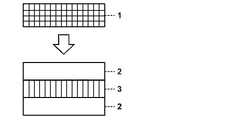
図1に、複合ナノファイバー不織布とプロトン伝導性ポリマーが複合化される際の断面模式図を示す。図1に示されるように、複合ナノファイバー不織布1はプロトン伝導性ポリマー2と複合化しており、その空隙にはプロトン伝導性ポリマー2が少なくとも部分的に充填され、複合層3を形成する。複合層3の両面にはプロトン伝導性ポリマー層2が形成される。図2に本実施形態の複合電解質膜の使用態様の一例を説明するための模式図を示す。図2に示されるように、本実施形態の複合ナノファイバー不織布1は、電極触媒層4、電解質であるプロトン伝導性ポリマー層2、複合ナノファイバー不織布1とプロトン伝導性ポリマー2の複合層3、プロトン伝導性ポリマー層2、および電極触媒層4の順で膜電極複合体を構成して使用することができる。
FIG. 1 shows a schematic cross-sectional view when a composite nanofiber non-woven fabric and a proton conductive polymer are composited. As shown in FIG. 1, the composite
複合電解質膜の厚みは、1μm以上300μm以下であることが好ましく、より好ましくは2μm以上100μm以下、更に好ましくは5μm以上50μm以下、特に好ましくは5μm以上25μm以下である。複合電解質膜の厚みを上記範囲に調整することにより、水素と酸素との直接反応のような不都合を低減でき、燃料電池製造時や燃料電池運転中に差圧・歪み等が生じても、膜の損傷等が発生し難くなる傾向にある。さらに、複合電解質膜のイオン透過性をより良好に維持し、電解質膜としての性能をより有効かつ確実に維持する観点からも、厚みを上記範囲に調整することは好ましい。 The thickness of the composite electrolyte membrane is preferably 1 μm or more and 300 μm or less, more preferably 2 μm or more and 100 μm or less, still more preferably 5 μm or more and 50 μm or less, and particularly preferably 5 μm or more and 25 μm or less. By adjusting the thickness of the composite electrolyte membrane within the above range, inconveniences such as the direct reaction between hydrogen and oxygen can be reduced, and even if differential pressure or strain occurs during fuel cell manufacturing or fuel cell operation, the membrane There is a tendency that damage to the fuel cell is less likely to occur. Further, from the viewpoint of maintaining the ion permeability of the composite electrolyte membrane better and maintaining the performance as the electrolyte membrane more effectively and surely, it is preferable to adjust the thickness within the above range.
複合電解質膜の厚みは接触式の膜厚計(ミツトヨ製、製品名「ABSデジマチックインジケータID-F125」)を用いて以下のようにして求められる。100mm×100mmに切り出した複合電解質膜について、任意の5点で厚みを測定し、その算術平均を複合電解質膜の厚みとする。 The thickness of the composite electrolyte membrane is determined as follows using a contact-type film thickness meter (manufactured by Mitutoyo, product name "ABS Digimatic Indicator ID-F125"). The thickness of the composite electrolyte membrane cut out to 100 mm × 100 mm is measured at any five points, and the arithmetic mean thereof is taken as the thickness of the composite electrolyte membrane.
上記プロトン伝導性ポリマーは特に限定されないが、例えば、イオン交換基を有するパーフルオロカーボン高分子化合物、及び、分子内に芳香環を有する炭化水素系高分子化合物にイオン交換基を導入したものが挙げられる。これらは1種を単独で又は2種以上を組み合わせて用いられる。これらの中でも、化学的安定性に一層優れる観点から、イオン交換基を有するパーフルオロカーボン高分子化合物が好適である。 The proton conductive polymer is not particularly limited, and examples thereof include a perfluorocarbon polymer compound having an ion exchange group and a hydrocarbon polymer compound having an aromatic ring in the molecule in which an ion exchange group is introduced. .. These may be used alone or in combination of two or more. Among these, a perfluorocarbon polymer compound having an ion exchange group is preferable from the viewpoint of further excellent chemical stability.
プロトン伝導性ポリマーのイオン交換容量(ミリ当量/g)は、0.5ミリ当量/g以上3.0ミリ当量/g以下であると好ましく、0.65ミリ当量/g以上2.0ミリ当量/g以下であるとより好ましく、0.8ミリ当量/g以上1.5ミリ当量/g以下であるとさらに好ましい。イオン交換容量が3.0ミリ当量/g以下であることにより、電解質膜として使用した際に、燃料電池運転中の高温高加湿下における電解質膜の膨潤がより低減される傾向にある。このように膨潤が低減されることにより、電解質膜の強度の低下や、しわが発生して電極から剥離したりするといった問題、さらには、ガス遮断性が低下する問題を低減できる傾向にある。また、イオン交換容量が0.5ミリ当量/g以上であることにより、得られた電解質膜を備えた燃料電池の発電能力がより向上する傾向にある。 The ion exchange capacity (milli equivalent / g) of the proton conductive polymer is preferably 0.5 mm equivalent / g or more and 3.0 mm equivalent / g or less, and 0.65 mm equivalent / g or more and 2.0 mm equivalent. It is more preferably less than / g, and even more preferably 0.8 mm equivalent / g or more and 1.5 mm equivalent / g or less. When the ion exchange capacity is 3.0 mm equivalent / g or less, when used as an electrolyte membrane, the swelling of the electrolyte membrane under high temperature and high humidification during fuel cell operation tends to be further reduced. By reducing the swelling in this way, there is a tendency to reduce problems such as a decrease in the strength of the electrolyte membrane, wrinkles generated and peeling from the electrode, and a problem in which the gas barrier property is deteriorated. Further, when the ion exchange capacity is 0.5 mm equivalent / g or more, the power generation capacity of the fuel cell provided with the obtained electrolyte membrane tends to be further improved.
イオン交換容量は、以下の方法により求めることができる。イオン交換基の対イオンがプロトンの状態となっている電解質膜(シート面積でおよそ2cm2以上20cm2以下)を、25℃の飽和NaCl水溶液30mLに浸漬し、攪拌しながら30分間放置する。次いで、飽和NaCl水溶液中のプロトンを、フェノールフタレインを指示薬として0.01NのNaOH水溶液を用いて中和滴定する。中和後に得られた、イオン交換基の対イオンがナトリウムイオンの状態となっている電解質膜を、純水ですすぎ、さらに真空乾燥してから秤量する。中和に要したNaOHの物質量をM(mmol)、イオン交換基の対イオンがナトリウムイオンである電解質膜の重量をW(mg)とし、下記式(F)により当量重量EW(g/eq)を求める。
EW(g/eq)=(W/M)-22 (F)
さらに、得られたEWの値の逆数をとって1000倍とすることにより、イオン交換容量(ミリ当量/g)を算出する。
The ion exchange capacity can be determined by the following method. An electrolyte membrane (sheet area of about 2 cm 2 or more and 20 cm 2 or less) in which the counter ion of the ion exchange group is in a proton state is immersed in 30 mL of a saturated NaCl aqueous solution at 25 ° C. and left for 30 minutes with stirring. Next, the protons in the saturated NaCl aqueous solution are neutralized and titrated using a 0.01 N NaOH aqueous solution using phenolphthalein as an indicator. The electrolyte membrane obtained after neutralization, in which the counterion of the ion exchange group is in the state of sodium ions, is rinsed with pure water, vacuum dried, and then weighed. The amount of substance of NaOH required for neutralization is M (mmol), the weight of the electrolyte membrane in which the counter ion of the ion exchange group is sodium ion is W (mg), and the equivalent weight EW (g / eq) is given by the following formula (F). ).
EW (g / eq) = (W / M) -22 (F)
Further, the ion exchange capacity (milli equivalent / g) is calculated by taking the reciprocal of the obtained EW value and multiplying it by 1000.
イオン交換基としては、特に限定されないが、例えばスルホン酸基、スルホンイミド基、スルホンアミド基、カルボキシ基及びリン酸基が挙げられ、中でもスルホン酸基であることが好ましい。イオン交換基は1種を単独で又は2種以上を組み合わせて用いられる。 The ion exchange group is not particularly limited, and examples thereof include a sulfonic acid group, a sulfonimide group, a sulfonamide group, a carboxy group and a phosphoric acid group, and a sulfonic acid group is preferable. The ion exchange group may be used alone or in combination of two or more.
分子内に芳香環を有する炭化水素系高分子化合物としては、特に限定されないが、例えば、ポリフェニレンスルフィド、ポリフェニレンエーテル、ポリスルホン、ポリエーテルスルホン、ポリエーテルエーテルスルホン、ポリエーテルケトン、ポリエーテルエーテルケトン、ポリチオエーテルエーテルスルホン、ポリチオエーテルケトン、ポリチオエーテルエーテルケトン、ポリベンズイミダゾール、ポリベンズオキサゾール、ポリオキサジアゾール、ポリベンズオキサジノン、ポリキシリレン、ポリフェニレン、ポリチオフェン、ポリピロール、ポリアニリン、ポリアセン、ポリシアノゲン、ポリナフチリジン、ポリフェニレンスルフィドスルホン、ポリフェニレンスルホン、ポリイミド、ポリエーテルイミド、ポリエステルイミド、ポリアミドイミド、ポリアリレート、芳香族ポリアミド、ポリスチレン、ポリエステル、及びポリカーボネートが挙げられる。これらは1種を単独で又は2種以上を組み合わせて用いられる。 The hydrocarbon-based polymer compound having an aromatic ring in the molecule is not particularly limited, and for example, polyphenylene sulfide, polyphenylene ether, polysulfone, polyether sulfone, polyether ether sulfone, polyether ketone, polyether ether ketone, poly. Thioether Sulfone, Polythioether Sulfone, Polythioether Ketone, Polybenzimidazole, Polybenzoxazole, Polyoxadiazole, Polybenzoxadinone, Polyxylylene, Polyphenylene, Polythiophene, Polypyrrole, Polyaniline, Polyacene, Polycyanogen, Polynaphthylidine, Polyphenylene Sulfide Examples thereof include sulfone, polyphenylene sulfone, polyimide, polyetherimide, polyesterimide, polyamideimide, polyarylate, aromatic polyamide, polystyrene, polyester, and polycarbonate. These may be used alone or in combination of two or more.
また、イオン交換基を有するパーフルオロカーボン高分子化合物としては、特に限定されないが、例えば、パーフルオロカーボンスルホン酸樹脂、パーフルオロカーボンカルボン酸樹脂、パーフルオロカーボンスルホンイミド樹脂、パーフルオロカーボンスルホンアミド樹脂、及びパーフルオロカーボンリン酸樹脂、並びにこれら樹脂のアミン塩及び金属塩が挙げられる。これらは1種を単独で又は2種以上を組み合わせて用いられる。 The perfluorocarbon polymer compound having an ion exchange group is not particularly limited, and is, for example, a perfluorocarbon sulfonic acid resin, a perfluorocarbon carboxylic acid resin, a perfluorocarbon sulfonic acid resin, a perfluorocarbon sulfonamide resin, and a perfluorocarbon phosphorus. Acid resins and amine and metal salts of these resins can be mentioned. These may be used alone or in combination of two or more.
パーフルオロカーボン高分子化合物としては、特に限定されないが、より具体的には、下記式[1]で表される重合体が挙げられる。
-[CF2CX1X2]a-[CF2-CF(-O-(CF2-CF(CF2X3))b-Oc-(CFR1)d-(CFR2)e-(CF2)f-X4)]g- [1]
ここで、式中、X1、X2及びX3は、各々独立して、ハロゲン原子又は炭素数1以上3以下のパーフルオロアルキル基を示す。a及びgは、0≦a<1、0<g≦1、a+g=1を満たす。bは0以上8以下の整数である。cは0又は1である。d及びeは、互いに独立して、0以上6以下の整数である。fは、0以上10以下の整数である。ただし、d+e+fは0に等しくない。R1及びR2は、互いに独立して、ハロゲン原子、炭素数1以上10以下のパーフルオロアルキル基又はフルオロクロロアルキル基を示す。X4はCOOZ、SO3Z、PO3Z2又はPO3HZを示す。ここで、Zは水素原子、アルカリ金属原子、アルカリ土類金属原子又はアミン類(NH4、NH3R3、NH2R3R4、NHR3R4R5、又はNR3R4R5R6)を示す。また、R3、R4、R5及びR6は、各々独立してアルキル基又はアレーン基を示す。
The perfluorocarbon polymer compound is not particularly limited, but more specifically, a polymer represented by the following formula [1] can be mentioned.
-[CF 2 CX 1 X 2 ] a- [CF 2 -CF (-O- (CF 2 -CF (CF 2 X 3 )) b -O c- (CFR 1 ) d- (CFR 2 ) e- ( CF 2 ) f -X 4 )] g- [1]
Here, in the formula, X 1 , X 2 and X 3 each independently represent a halogen atom or a perfluoroalkyl group having 1 or more and 3 or less carbon atoms. a and g satisfy 0 ≦ a <1, 0 <g ≦ 1, and a + g = 1. b is an integer of 0 or more and 8 or less. c is 0 or 1. d and e are integers of 0 or more and 6 or less independently of each other. f is an integer of 0 or more and 10 or less. However, d + e + f is not equal to 0. R 1 and R 2 independently represent a halogen atom, a perfluoroalkyl group having 1 or more carbon atoms and 10 or less carbon atoms, or a fluorochloroalkyl group. X 4 indicates COOZ, SO 3 Z, PO 3 Z 2 or PO 3 HZ. Here, Z is a hydrogen atom, an alkali metal atom, an alkaline earth metal atom or an amine (NH 4 , NH 3 R 3 , NH 2 R 3 R 4 , NHR 3 R 4 R 5 or NR 3 R 4 R 5 ). R 6 ) is shown. Further, R 3 , R 4 , R 5 and R 6 each independently indicate an alkyl group or an arene group.
これらの中でも、下記式[2]又は式[3]で表されるパーフルオロカーボンスルホン酸樹脂若しくはその金属塩が好ましい。
-[CF2CF2]a-[CF2-CF(-O-(CF2-CF(CF3))b-O-(CF2)c-SO3X)]d- [2]
ここで、式中、a及びdは、0≦a<1、0≦d<1、a+d=1を満たす。bは1以上8以下の整数である。cは0以上10以下の整数である。Xは水素原子又はアルカリ金属原子を示す。
-[CF2CF2]e-[CF2-CF(-O-(CF2)f-SO3Y)]g- [3]
ここで、式中、e及びgは、0≦e<1、0≦g<1、e+g=1を満たす。fは0以上10以下の整数である。Yは水素原子又はアルカリ金属原子を示す。
Among these, the perfluorocarbon sulfonic acid resin represented by the following formula [2] or the formula [3] or a metal salt thereof is preferable.
-[CF 2 CF 2 ] a- [CF 2 -CF (-O- (CF 2 -CF (CF 3 )) b -O- (CF 2 ) c -SO 3 X)] d- [2]
Here, in the formula, a and d satisfy 0 ≦ a <1, 0 ≦ d <1, and a + d = 1. b is an integer of 1 or more and 8 or less. c is an integer of 0 or more and 10 or less. X represents a hydrogen atom or an alkali metal atom.
-[CF 2 CF 2 ] e- [CF 2 -CF (-O- (CF 2 ) f -SO 3 Y)] g- [3]
Here, in the formula, e and g satisfy 0 ≦ e <1, 0 ≦ g <1, and e + g = 1. f is an integer of 0 or more and 10 or less. Y represents a hydrogen atom or an alkali metal atom.
以下、本発明を実施例及び比較例を用いてより具体的に説明する。本発明は、以下の実施例によって何ら限定されるものではない。 Hereinafter, the present invention will be described in more detail with reference to Examples and Comparative Examples. The present invention is not limited to the following examples.
<基材ナノファイバー不織布の目付>
200mm×150mmに切り出した基材ナノファイバー不織布の重量を精密天秤にて測定し、1m2あたりの重量に換算して基材ナノファイバー不織布の目付(g/m2)とした。
<Metsuke of base material nanofiber non-woven fabric>
The weight of the base material nanofiber non-woven fabric cut out to 200 mm × 150 mm was measured with a precision balance, and converted into the weight per 1 m 2 to obtain the texture (g / m 2 ) of the base material nanofiber non-woven fabric.
<基材ナノファイバー不織布及び複合ナノファイバー不織布の平均繊維径>
基材ナノファイバー不織布及び複合ナノファイバー不織布の表面を撮影した5000倍の走査型電子顕微鏡写真のもと、50本の繊維の繊維径の算術平均を基材ナノファイバー不織布及び複合ナノファイバー不織布の平均繊維径とした。ここで繊維径は、繊維の長さ方向に対して直交する方向における長さを用いた。
<Average fiber diameter of base material nanofiber non-woven fabric and composite nanofiber non-woven fabric>
Based on a 5000x scanning electron micrograph of the surface of the base material nanofiber non-woven fabric and the composite nanofiber non-woven fabric, the arithmetic average of the fiber diameters of 50 fibers is the average of the base material nanofiber non-woven fabric and the composite nanofiber non-woven fabric. The fiber diameter was used. Here, as the fiber diameter, the length in the direction orthogonal to the length direction of the fiber was used.
<基材ナノファイバー不織布及び複合ナノファイバー不織布の厚み>
基材ナノファイバー不織布及び複合ナノファイバー不織布の厚みは接触式の膜厚計(ミツトヨ製、製品名「ABSデジマチックインジケータID-F125」)を用いて測定した。100mm×100mmに切り出した基材ナノファイバー不織布及び複合ナノファイバー不織布について、任意の5点で厚みを測定し、その算術平均を基材ナノファイバー不織布及び複合ナノファイバー不織布の厚みとした。
<Thickness of base material nanofiber non-woven fabric and composite nanofiber non-woven fabric>
The thickness of the base material nanofiber non-woven fabric and the composite nanofiber non-woven fabric was measured using a contact type film thickness meter (manufactured by Mitutoyo, product name "ABS Digimatic Indicator ID-F125"). The thicknesses of the base material nanofiber non-woven fabric and the composite nanofiber non-woven fabric cut into 100 mm × 100 mm were measured at arbitrary five points, and the arithmetic average thereof was taken as the thickness of the base material nanofiber non-woven fabric and the composite nanofiber non-woven fabric.
<基材ナノファイバー不織布及び複合ナノファイバー不織布の空隙率>
40mm×30mmに切り出した基材ナノファイバー不織布及び複合ナノファイバー不織布の重量を精密天秤にて測定し、測定した重量、及び、基材ナノファイバー不織布及び複合ナノファイバー不織布の厚みから膜密度ρ(g/cm3)を下記式(A)により算出した。
膜密度ρ(g/cm3)=m/(4.0×3.0×t) (A)
m:40mm×30mmに切り出した基材ナノファイバー不織布の重量(g)
t:ナノファイバー不織布の厚み(cm)
<Porosity of base material nanofiber non-woven fabric and composite nanofiber non-woven fabric>
The weights of the base material nanofiber non-woven fabric and the composite nanofiber non-woven fabric cut out to 40 mm × 30 mm were measured with a precision balance, and the film density ρ (g) was taken from the measured weight and the thickness of the base material nanofiber non-woven fabric and the composite nanofiber non-woven fabric. / Cm 3 ) was calculated by the following formula (A).
Film density ρ (g / cm 3 ) = m / (4.0 × 3.0 × t) (A)
m: Weight (g) of the base material nanofiber non-woven fabric cut out to 40 mm × 30 mm
t: Thickness of nanofiber non-woven fabric (cm)
そして、基材ナノファイバー不織布については、得られた膜密度ρ及び基材ナノファイバー不織布を構成する素材の真密度ρ0(g/cm3)から、下記式(B)により空隙率(%)を求めた。また、複合ナノファイバー不織布については、得られた膜密度ρ及び複合ナノファイバー不織布の真密度ρ0から、下記式(B)により空隙率(%)を求めた。
空隙率(%)=(1-(ρ/ρ0))×100 (B)
The void ratio (%) of the base material nanofiber non-woven fabric is calculated from the obtained film density ρ and the true density ρ 0 (g / cm 3 ) of the material constituting the base material nanofiber non-woven fabric according to the following formula (B). Asked. For the composite nanofiber nonwoven fabric, the void ratio (%) was determined by the following formula (B) from the obtained film density ρ and the true density ρ 0 of the composite nanofiber nonwoven fabric.
Porosity (%) = (1- (ρ / ρ 0 )) x 100 (B)
なお、複合ナノファイバー不織布の真密度ρ0は、基材ナノファイバー不織布を構成する素材の真密度ρNF(g/cm3)、ポリアゾール系化合物の真密度ρAZOLE(g/cm3)、複合ナノファイバー不織布全体におけるポリアゾール系化合物の質量パーセント濃度X(%)を用いて、下記式(E)により算出した。
真密度ρ0(g/cm3)=100×ρNF×ρAZOLE/(X×ρNF+(100-X)×ρAZOLE) (E)
The true density ρ 0 of the composite nanofiber non-woven fabric is the true density ρ NF (g / cm 3 ) of the material constituting the base material nanofiber non-woven fabric, the true density ρ AZOLE (g / cm 3 ) of the polyazole-based compound, and the composite. It was calculated by the following formula (E) using the mass percent concentration X (%) of the polyazole-based compound in the entire nanofiber non-woven fabric.
True density ρ 0 (g / cm 3 ) = 100 × ρ NF × ρ AZOLE / (X × ρ NF + (100-X) × ρ AZOLE ) (E)
<複合ナノファイバー不織布全体におけるポリアゾール系化合物の質量パーセント濃度>
複合ナノファイバー不織布全体におけるポリアゾール系化合物の質量パーセント濃度X(%)は、以下のような核磁気共鳴分光法(NMR)を用いた方法によって求めた。複合ナノファイバー不織布をNMR測定用の重水素化溶媒に完全に溶解させた測定溶液について、核磁気共鳴装置(日本電子製、製品名「JNM-ECS400」)を用いて1H-NMR測定を行い、NMRスペクトルを取得した。基材ナノファイバー不織布を構成する素材と、ポリアゾール系化合物、それぞれに由来するピークを一つずつ選択し、それらの積分値、INFとIAZOLEを取得した。さらに基材ナノファイバー不織布を構成する素材とポリアゾール系化合物の繰り返し単位の分子量MNFおよびMAZOLEと、繰り返し単位中の、これらのピークを与える水素原子(プロトン)の個数nNF、nAZOLEから、以下の式(C)により、複合ナノファイバー不織布全体におけるポリアゾール系化合物の質量パーセント濃度X(%)を算出した。
ポリアゾール系化合物の不織布全体における質量パーセント濃度X(%)
=100×(MAZOLE×IAZOLE/nAZOLE)/((MAZOLE×IAZOLE/nAZOLE)+(MNF×INF/nNF)) (C)
<Mass percent concentration of polyazole compounds in the entire composite nanofiber non-woven fabric>
The mass percent concentration X (%) of the polyazole compound in the entire composite nanofiber nonwoven fabric was determined by the following method using nuclear magnetic resonance spectroscopy (NMR). 1 H-NMR measurement was performed using a nuclear magnetic resonance apparatus (manufactured by JEOL Ltd., product name "JNM-ECS400") for a measurement solution in which a composite nanofiber non-woven fabric was completely dissolved in a deuterated solvent for NMR measurement. , NMR spectra were obtained. The material constituting the base material nanofiber non-woven fabric, the polyazole compound, and the peaks derived from each were selected one by one, and their integral values, IN F and I AZOLE , were obtained. Further, from the molecular weights M NF and M AZOLE of the repeating unit of the material constituting the base material nanofiber non-woven fabric and the polyazole compound, and the number of hydrogen atoms (protons) giving these peaks in the repeating unit n NF and n AZOLE . The mass percent concentration X (%) of the polyazole compound in the entire composite nanofiber non-woven fabric was calculated by the following formula (C).
Mass percent concentration X (%) of the polyazole compound in the entire non-woven fabric
= 100 x (M AZOLE x I AZOLE / n AZOLE ) / ((M AZOLE x I AZOLE / n AZOLE ) + (M NF x I NF / n NF )) (C)
<複合ナノファイバー不織布の繊維表面におけるポリアゾール系化合物の質量パーセント濃度>
複合ナノファイバー不織布の繊維表面におけるポリアゾール系化合物の質量パーセント濃度Y(%)は、以下のようなX線光電子分光法(XPS)を用いた方法によって求めた。複合ナノファイバー不織布について、X線光電子分光装置(サーモフィッシャーサイエンティフィック製、製品名「ESCALAB 250」)を用いてXPS測定を行った。1mm×2mmスロット型マスクを被せた測定試料をXPS測定に供し、分析領域は約1mmの大きさの楕円、光電子取込角を0°とした。基材ナノファイバー不織布を構成する素材と、ポリアゾール系化合物、それぞれでのみ検出される元素を選択し、それらの相対元素濃度CNF(atomic%)とCAZOLE(atomic%)を取得した。さらに基材ナノファイバー不織布を構成する素材とポリアゾール系化合物の繰り返し単位の分子量MNFおよびMAZOLEと、繰り返し単位中の選択した元素の個数NNF、NAZOLEから、以下の式(D)により、複合ナノファイバー不織布の繊維表面におけるポリアゾール系化合物の質量パーセント濃度Y(%)を算出した。
ポリアゾール系化合物の繊維表面における質量パーセント濃度Y(%)
=100×(MAZOLE×CAZOLE/NAZOLE)/((MAZOLE×CAZOLE/NAZOLE)+(MNF×CNF/NNF)) (D)
<Mass percent concentration of polyazole compound on the fiber surface of composite nanofiber non-woven fabric>
The mass percent concentration Y (%) of the polyazole compound on the fiber surface of the composite nanofiber non-woven fabric was determined by the following method using X-ray photoelectron spectroscopy (XPS). The composite nanofiber non-woven fabric was subjected to XPS measurement using an X-ray photoelectron spectrometer (manufactured by Thermo Fisher Scientific, product name "ESCALAB 250"). The measurement sample covered with a 1 mm × 2 mm slot type mask was subjected to XPS measurement, the analysis area was an ellipse having a size of about 1 mm, and the photoelectron capture angle was set to 0 °. Elements constituting the base material nanofiber non-woven fabric and polyazole compounds were selected, and their relative element concentrations C NF (atomic%) and CA AZOLE (atomic%) were obtained. Further, from the molecular weights M NF and M AZOLE of the material constituting the base material nanofiber non-woven fabric and the polyazole compound and the number of selected elements in the repeating unit N NF and N AZOLE , the following formula (D) is used. The mass percent concentration Y (%) of the polyazole compound on the fiber surface of the composite nanofiber non-woven fabric was calculated.
Mass percent concentration Y (%) on the fiber surface of the polyazole compound
= 100 x (M AZOLE x C AZOLE / N AZOLE ) / ((M AZOLE x C AZOLE / N AZOLE ) + (M NF x C NF / N NF )) (D)
<基材ナノファイバー不織布及び複合ナノファイバー不織布の繊維の解れ脱落の評価>
50mm×50mmに切り出した基材ナノファイバー不織布又は複合ナノファイバー不織布の表面を20mm×20mmのクリーンペーパー(桜井株式会社製、製品名「EXクリーン ブルー EX72B」)で3度、同一方向に擦った。その後、基材ナノファイバー不織布又は複合ナノファイバー不織布の表面を目視で観察し、繊維の解れ脱落に由来する毛羽立ちの有無を確認し、以下の基準により判定した。
○:繊維の解れ脱落が確認されなかった。
×:繊維の解れ脱落が確認された。
<Evaluation of fiber unraveling and falling off of base material nanofiber non-woven fabric and composite nanofiber non-woven fabric>
The surface of the base material nanofiber non-woven fabric or the composite nanofiber non-woven fabric cut out to 50 mm × 50 mm was rubbed in the same direction three times with 20 mm × 20 mm clean paper (manufactured by Sakurai Co., Ltd., product name “EX Clean Blue EX72B”). Then, the surface of the base material nanofiber non-woven fabric or the composite nanofiber non-woven fabric was visually observed to confirm the presence or absence of fluffing due to the loosening and falling of the fibers, and the determination was made according to the following criteria.
◯: No unraveling or falling off of the fiber was confirmed.
X: It was confirmed that the fibers were unraveled and dropped off.
<基材ナノファイバー不織布及び複合ナノファイバー不織布の破断伸度>
基材ナノファイバー不織布又は複合ナノファイバー不織布について、シート形状に加工する際の流れ方向(MD)及びMDと直交する方向(TD)を区別し、基材ナノファイバー不織布又は複合ナノファイバー不織布をMD方向に70mm、TD方向に10mmの大きさに切り出した。切り出した5枚の試料について、JIS K-7127に準拠してMD方向の引張試験を行い、得られた5点の破断伸度(%)の算術平均値を基材ナノファイバー不織布及び複合ナノファイバー不織布の破断伸度(%)とした。測定は50Nロードセルを備える引っ張り試験機(エー・アンド・デイ社製、製品名「テンシロン万能材料試験機 RTG-1210」)を用いた。チャック間距離は50mm、クロスヘッド速度300mm/minとして、24℃、相対湿度45%の環境下で行った。
<Breaking elongation of base material nanofiber non-woven fabric and composite nanofiber non-woven fabric>
For the base material nanofiber non-woven fabric or composite nanofiber non-woven fabric, distinguish the flow direction (MD) and the direction orthogonal to MD (TD) when processing into a sheet shape, and use the base material nanofiber non-woven fabric or composite nanofiber non-woven fabric in the MD direction. It was cut out to a size of 70 mm and 10 mm in the TD direction. Tensile tests in the MD direction were performed on the five cut-out samples in accordance with JIS K-7127, and the arithmetic average values of the obtained five points of elongation at break (%) were used as the base material nanofiber non-woven fabric and composite nanofiber. The breaking elongation (%) of the non-woven fabric was used. For the measurement, a tensile tester equipped with a 50N load cell (manufactured by A & D Co., Ltd., product name "Tensilon universal material tester RTG-1210") was used. The distance between the chucks was 50 mm, the crosshead speed was 300 mm / min, the temperature was 24 ° C., and the relative humidity was 45%.
<基材ナノファイバー不織布及び複合ナノファイバー不織布の帯電電位>
クリーンペーパー(桜井株式会社製、製品名「EXクリーン ブルー EX72B」)上に、100mm×100mmに切り出した基材ナノファイバー不織布又は複合ナノファイバー不織布を設置した。3M社製Ionized Air Blower 967を用いて、1分間除電を行った。除電停止から5分後に、アズワン社製クリーンノールニトリル手袋(パウダーフリー)を装着した手でナノファイバー不織布の端部を掴んでクリーンペーパーから剥離し、直後の基材ナノファイバー不織布又は複合ナノファイバー不織布の帯電電位(kV)を静電気測定器(シムコ社製、製品名「Electrostatic Fieldmeter AD-1684A」)で測定した。
<Charging potential of base material nanofiber non-woven fabric and composite nanofiber non-woven fabric>
A base material nanofiber non-woven fabric or a composite nanofiber non-woven fabric cut out to 100 mm × 100 mm was placed on clean paper (manufactured by Sakurai Co., Ltd., product name “EX Clean Blue EX72B”). Static elimination was performed for 1 minute using 3M's Ionized Air Blower 967. Five minutes after the static electricity removal was stopped, the end of the nanofiber non-woven fabric was grasped by a hand wearing AS ONE's Clean Nole Nitrile Gloves (powder-free) and peeled off from the clean paper. The charging potential (kV) of the above was measured with an electrostatic measuring device (manufactured by Simco, product name "Electrostatic Fieldmeter AD-1684A").
[実施例1]
<ポリベンズイミダゾール(PBI)溶液の製造>
ポリベンズイミダゾール(シグマアルドリッチジャパン社製、重量平均分子量27000)1gを充分に粉砕し、16質量%水酸化ナトリウム水溶液5g、エタノール20gを添加した後、80℃で1時間加熱攪拌した。ポリベンズイミダゾールは溶解し、赤褐色透明のポリベンズイミダゾール溶液が得られた。この溶液はポリベンズイミダゾールが3.8質量%、水酸化ナトリウム(溶液中のナトリウムを水酸化物として換算)が3.1質量%、水が16.1質量%、エタノールが77.0質量%であった。この溶液にエタノールを添加することでポリベンズイミダゾールの濃度を0.05質量%に調整し、複合ナノファイバー不織布の製造に供した。
[Example 1]
<Manufacturing of polybenzimidazole (PBI) solution>
1 g of polybenzimidazole (manufactured by Sigma-Aldrich Japan, weight average molecular weight 27000) was sufficiently pulverized, 5 g of a 16 mass% sodium hydroxide aqueous solution and 20 g of ethanol were added, and then the mixture was heated and stirred at 80 ° C. for 1 hour. Polybenzimidazole was dissolved and a reddish brown transparent polybenzimidazole solution was obtained. This solution contains 3.8% by mass of polybenzimidazole, 3.1% by mass of sodium hydroxide (converting sodium in the solution as a hydroxide), 16.1% by mass of water, and 77.0% by mass of ethanol. Met. By adding ethanol to this solution, the concentration of polybenzimidazole was adjusted to 0.05% by mass, and the composite nanofiber non-woven fabric was produced.
<複合ナノファイバー不織布の製造>
上記PBI溶液に、表1の実施例1に記載の基材ナノファイバー不織布を浸漬し、すぐに引き上げた。引き上げた基材ナノファイバー不織布に付着した余分なPBI溶液をろ紙でふき取り、風乾により粗乾燥させた後に、100℃に設定した乾燥機(エスペック社製、型式「SPH-201M」)内で30分間乾燥させた。乾燥させた複合ナノファイバー不織布を水浴に30分、2度浸漬することで水洗を行った。さらに風乾により粗乾燥させた後に、100℃に設定した乾燥機(エスペック社製、型式「SPH-201M」)内で30分間乾燥することで複合ナノファイバー不織布を得た。
<Manufacturing of composite nanofiber non-woven fabric>
The base material nanofiber non-woven fabric shown in Example 1 of Table 1 was immersed in the above PBI solution and immediately pulled up. After wiping off the excess PBI solution adhering to the pulled-up base material nanofiber non-woven fabric with a filter paper and roughly drying it by air drying, it is placed in a dryer (manufactured by Espec Co., Ltd., model "SPH-201M") set at 100 ° C. for 30 minutes. It was dried. The dried composite nanofiber non-woven fabric was washed with water by immersing it in a water bath twice for 30 minutes. Further, it was roughly dried by air drying, and then dried in a dryer (manufactured by Espec Co., Ltd., model "SPH-201M") set at 100 ° C. for 30 minutes to obtain a composite nanofiber non-woven fabric.
得られた複合ナノファイバー不織布に関して、複合ナノファイバー不織布全体におけるポリアゾール系化合物の質量パーセント濃度X(%)、複合ナノファイバー不織布の繊維表面におけるポリアゾール系化合物の質量パーセント濃度Y(%)、Y/X値、平均繊維径(nm)、厚み(μm)、空隙率(%)、繊維の解れ脱落の有無、破断伸度(%)、帯電電位(kV)を評価した。複合ナノファイバー不織布全体におけるポリアゾール系化合物の質量パーセント濃度X(%)の算出にあたっては、複合ナノファイバー不織布を濃度が3質量%になるように溶解させた重水素化N,N-ジメチルホルムアミド(DMF-d7)溶液の1H-NMRスペクトルにおいて、ポリエーテルスルホン(PES)に由来する7.3-7.4ppm付近のピークと、ポリベンズイミダゾール(PBI)に由来する9.3-9.4ppm付近のピークの積分値を用いた。化学シフトの基準は、DMFに由来する8.02ppmのピークを用いた。複合ナノファイバー不織布の繊維表面におけるポリアゾール系化合物の質量パーセント濃度Y(%)の算出にあたっては、XPS測定で取得したPESの硫黄(S)の相対元素濃度(atomic%)と、PBIの窒素(N)の相対元素濃度(atomic%)を用いた。結果を表1に示す。 With respect to the obtained composite nanofiber non-woven fabric, the mass percent concentration X (%) of the polyazole-based compound in the entire composite nanofiber non-woven fabric, the mass percent concentration Y (%) of the polyazole-based compound on the fiber surface of the composite nanofiber non-woven fabric, Y / X. The values, average fiber diameter (nm), thickness (μm), void ratio (%), presence / absence of fiber unraveling and falling off, elongation at break (%), and charging potential (kV) were evaluated. In calculating the mass percent concentration X (%) of the polyazole compound in the entire composite nanofiber non-woven fabric, dehydrogenated N, N-dimethylformamide (DMF) in which the composite nanofiber non-woven fabric is dissolved so as to have a concentration of 3% by mass is used. -D7) In the 1 H-NMR spectrum of the solution, a peak around 7.3-7.4 ppm derived from polyether sulfone (PES) and around 9.3-9.4 ppm derived from polybenzimidazole (PBI). The integrated value of the peak of was used. The chemical shift criterion used was a peak of 8.02 ppm derived from DMF. In calculating the mass percent concentration Y (%) of the polyazole compound on the fiber surface of the composite nanofiber non-woven fabric, the relative element concentration (atomic%) of sulfur (S) of PES obtained by XPS measurement and nitrogen (N) of PBI ) Relative element concentration (atomic%) was used. The results are shown in Table 1.
[実施例2]
ポリベンズイミダゾールの濃度を0.3質量%に調整した以外は実施例1と同様の方法で複合ナノファイバー不織布を作製し、評価を行った。結果を表1に示す。
[Example 2]
A composite nanofiber non-woven fabric was prepared and evaluated by the same method as in Example 1 except that the concentration of polybenzimidazole was adjusted to 0.3% by mass. The results are shown in Table 1.
[実施例3]
ポリベンズイミダゾールの濃度を0.5質量%に調整した以外は実施例1と同様の方法で複合ナノファイバー不織布を作製し、評価を行った。結果を表1に示す。
[Example 3]
A composite nanofiber non-woven fabric was prepared and evaluated by the same method as in Example 1 except that the concentration of polybenzimidazole was adjusted to 0.5% by mass. The results are shown in Table 1.
[実施例4]
ポリベンズイミダゾールの濃度を1.0質量%に調整した以外は実施例1と同様の方法で複合ナノファイバー不織布を作製し、評価を行った。結果を表1に示す。
[Example 4]
A composite nanofiber non-woven fabric was prepared and evaluated by the same method as in Example 1 except that the concentration of polybenzimidazole was adjusted to 1.0% by mass. The results are shown in Table 1.
[実施例5]
ポリベンズイミダゾールの濃度を1.5質量%に調整した以外は実施例1と同様の方法で複合ナノファイバー不織布を作製し、評価を行った。結果を表1に示す。
[Example 5]
A composite nanofiber non-woven fabric was prepared and evaluated by the same method as in Example 1 except that the concentration of polybenzimidazole was adjusted to 1.5% by mass. The results are shown in Table 1.
[実施例6]
表1の実施例6に記載の基材ナノファイバー不織布を用いた以外は実施例5と同様の方法で複合ナノファイバー不織布を取得し、評価を行った。複合ナノファイバー不織布全体におけるポリアゾール系化合物の質量パーセント濃度X(%)の算出にあたっては、複合ナノファイバー不織布を濃度が3質量%になるように溶解させた重水素化N,N-ジメチルホルムアミド(DMF-d7)溶液の1H-NMRスペクトルにおいて、ポリフッ化ビニリデン(PVDF)に由来する2.2-2.6ppm及び2.9-3.3ppm付近のピークと、ポリベンズイミダゾール(PBI)に由来する9.3-9.4ppm付近のピークの積分値を用いた。化学シフトの基準は、DMFに由来する8.02ppmのピークを用いた。複合ナノファイバー不織布の繊維表面におけるポリアゾール系化合物の質量パーセント濃度Y(%)の算出にあたっては、XPS測定で取得したPVDFのフッ素(F)の相対元素濃度(atomic%)と、PBIの窒素(N)の相対元素濃度(atomic%)を用いた。結果を表1に示す。
[Example 6]
A composite nanofiber nonwoven fabric was obtained and evaluated by the same method as in Example 5 except that the substrate nanofiber nonwoven fabric described in Example 6 of Table 1 was used. In calculating the mass percent concentration X (%) of the polyazole compound in the entire composite nanofiber non-woven fabric, dehydrogenated N, N-dimethylformamide (DMF) in which the composite nanofiber non-woven fabric is dissolved so as to have a concentration of 3% by mass is used. -D7) In the 1 H-NMR spectrum of the solution, peaks near 2.2-2.6 ppm and 2.9-3.3 ppm derived from polyvinylidene fluoride (PVDF) and derived from polybenzimidazole (PBI). The integrated value of the peak near 9.3-9.4 ppm was used. The chemical shift criterion used was a peak of 8.02 ppm derived from DMF. In calculating the mass percent concentration Y (%) of the polyazole compound on the fiber surface of the composite nanofiber non-woven fabric, the relative element concentration (atomic%) of fluorine (F) of PVDF obtained by XPS measurement and nitrogen (N) of PBI ) Relative element concentration (atomic%) was used. The results are shown in Table 1.
[比較例1]
表1の比較例1に記載の基材ナノファイバー不織布について、特にポリアゾール系化合物との複合化を行うことなく、繊維の解れ脱落の有無、破断伸度(%)、帯電電位(kV)を評価した。結果を表1に示す。
[Comparative Example 1]
With respect to the base material nanofiber nonwoven fabric shown in Comparative Example 1 of Table 1, the presence or absence of fiber unraveling and falling off, the elongation at break (%), and the charging potential (kV) were evaluated without particularly compounding with a polyazole-based compound. bottom. The results are shown in Table 1.
[比較例2]
表1の比較例2に記載の基材ナノファイバー不織布を用いた以外は比較例1と同様の方法で評価を行った。結果を表1に示す。
[Comparative Example 2]
The evaluation was carried out in the same manner as in Comparative Example 1 except that the base material nanofiber non-woven fabric described in Comparative Example 2 in Table 1 was used. The results are shown in Table 1.
[比較例3]
表1の比較例3に記載の基材ナノファイバー不織布を用いた以外は比較例1と同様の方法で評価を行った。結果を表1に示す。
[Comparative Example 3]
The evaluation was carried out in the same manner as in Comparative Example 1 except that the base material nanofiber non-woven fabric described in Comparative Example 3 in Table 1 was used. The results are shown in Table 1.

本発明の複合ナノファイバー不織布は、低帯電性などのポリアゾール系化合物に由来する特性を備え、かつ応力が加わるような過酷な使用環境や製造・加工プロセスにおいても破断、繊維の解れや脱落、といった問題を生じにくい高品位なナノファイバー不織布となる。そのため、樹脂補強材、電解質膜補強材、電池やキャパシタのセパレータ、濾材、細胞培養基材などの各種用途における材料として産業上の利用可能性を有する。 The composite nanofiber non-woven fabric of the present invention has properties derived from polyazole-based compounds such as low chargeability, and is subject to breakage, fiber unraveling and falling off even in harsh usage environments where stress is applied and in manufacturing and processing processes. It is a high-quality nanofiber non-woven fabric that does not cause problems. Therefore, it has industrial applicability as a material for various applications such as a resin reinforcing material, an electrolyte membrane reinforcing material, a separator for a battery or a capacitor, a filter medium, and a cell culture substrate.
Claims (7)
該基材ナノファイバー不織布を構成する繊維表面の少なくとも一部を被覆するポリアゾール系化合物と、を有し、
前記複合ナノファイバー不織布全体における前記ポリアゾール系化合物の質量パーセント濃度X(%)と、前記複合ナノファイバー不織布の繊維表面における前記ポリアゾール系化合物の質量パーセント濃度Y(%)の比Y/Xが、2以上である、
複合電解質膜用の複合ナノファイバー不織布。 Substrate nanofiber non-woven fabric and
It has a polyazole-based compound that covers at least a part of the fiber surface constituting the base material nanofiber nonwoven fabric, and has.
The ratio Y / X of the mass percent concentration X (%) of the polyazole compound in the entire composite nanofiber nonwoven fabric to the mass percent concentration Y (%) of the polyazole compound on the fiber surface of the composite nanofiber nonwoven fabric is 2 That's it ,
Composite nanofiber non-woven fabric for composite electrolyte membranes .
請求項1に記載の複合ナノファイバー不織布。 The mass percent concentration X (%) of the polyazole compound in the entire composite nanofiber nonwoven fabric is 0.5% or more and 10% or less.
The composite nanofiber non-woven fabric according to claim 1 .
請求項1又は2に記載の複合ナノファイバー不織布。 The polyazole-based compound contains a polybenzimidazole-based compound.
The composite nanofiber non-woven fabric according to claim 1 or 2 .
請求項1から3のいずれか一項に記載の複合ナノファイバー不織布。 One or more of the fibers constituting the base material nanofiber non-woven fabric selected from the group consisting of polyethersulfone (PES), polyvinylidene fluoride (PVDF), polysulfone (PSU), polyimide (PI), and polyacrylonitrile (PAN). Containing the compound of
The composite nanofiber non-woven fabric according to any one of claims 1 to 3 .
請求項1から4のいずれか一項に記載の複合ナノファイバー不織布。 The average fiber diameter of the fibers constituting the composite nanofiber non-woven fabric is 100 nm or more and 500 nm or less.
The composite nanofiber non-woven fabric according to any one of claims 1 to 4 .
プロトン伝導性ポリマーと、を備える、
複合電解質膜。 The composite nanofiber nonwoven fabric according to any one of claims 1 to 5 .
With a proton conductive polymer,
Composite electrolyte membrane.
ポリアゾール系化合物及びアルカリ金属水酸化物がプロトン性溶媒に溶解したポリアゾール溶液に、基材ナノファイバー不織布を浸漬する工程を含む、
複合ナノファイバー不織布の製造方法。 The method for producing a composite nanofiber nonwoven fabric according to any one of claims 1 to 5 .
The step comprising immersing the base material nanofiber non-woven fabric in a polyazole solution in which a polyazole compound and an alkali metal hydroxide are dissolved in a protonic solvent
A method for manufacturing a composite nanofiber non-woven fabric.
Priority Applications (1)
| Application Number | Priority Date | Filing Date | Title |
|---|---|---|---|
| JP2018061844A JP7061908B2 (en) | 2018-03-28 | 2018-03-28 | Composite nanofiber non-woven fabric and its manufacturing method |
Applications Claiming Priority (1)
| Application Number | Priority Date | Filing Date | Title |
|---|---|---|---|
| JP2018061844A JP7061908B2 (en) | 2018-03-28 | 2018-03-28 | Composite nanofiber non-woven fabric and its manufacturing method |
Publications (2)
| Publication Number | Publication Date |
|---|---|
| JP2019173208A JP2019173208A (en) | 2019-10-10 |
| JP7061908B2 true JP7061908B2 (en) | 2022-05-02 |
Family
ID=68166534
Family Applications (1)
| Application Number | Title | Priority Date | Filing Date |
|---|---|---|---|
| JP2018061844A Active JP7061908B2 (en) | 2018-03-28 | 2018-03-28 | Composite nanofiber non-woven fabric and its manufacturing method |
Country Status (1)
| Country | Link |
|---|---|
| JP (1) | JP7061908B2 (en) |
Families Citing this family (3)
| Publication number | Priority date | Publication date | Assignee | Title |
|---|---|---|---|---|
| JP7179647B2 (en) * | 2018-10-31 | 2022-11-29 | 日本バイリーン株式会社 | fiber sheets and composite membranes |
| JP7296741B2 (en) * | 2019-02-05 | 2023-06-23 | 日本バイリーン株式会社 | Nonwoven fabric and composite membrane comprising said nonwoven fabric as support |
| CN115074994B (en) * | 2022-07-11 | 2024-07-26 | 江苏优风环保科技有限公司 | A method for preparing air filter material and air filter material prepared therefrom |
Citations (4)
| Publication number | Priority date | Publication date | Assignee | Title |
|---|---|---|---|---|
| JP2008515668A (en) | 2004-10-06 | 2008-05-15 | ザ リサーチ ファウンデーション オブ ステイト ユニバーシティー オブ ニューヨーク | High flow rate and low adhesion filtration media |
| JP2012238590A (en) | 2011-04-28 | 2012-12-06 | Japan Vilene Co Ltd | Composite membrane, and method for manufacturing the same |
| JP2015028850A (en) | 2013-07-30 | 2015-02-12 | 公立大学法人首都大学東京 | Composite membrane and method for producing the same |
| WO2017204531A1 (en) | 2016-05-24 | 2017-11-30 | 한양대학교 산학협력단 | Self-humidifying ion exchange composite membrane and preparing method therefor |
Family Cites Families (2)
| Publication number | Priority date | Publication date | Assignee | Title |
|---|---|---|---|---|
| JP3071114B2 (en) * | 1993-12-15 | 2000-07-31 | 日新製鋼株式会社 | Sealing equipment for entrances and exits of compartments such as continuous annealing furnaces and continuous coating equipment |
| JP3242553B2 (en) * | 1995-06-26 | 2001-12-25 | 日本バイリーン株式会社 | Buffer material for manufacturing optical disc, and tray using this buffer material |
-
2018
- 2018-03-28 JP JP2018061844A patent/JP7061908B2/en active Active
Patent Citations (4)
| Publication number | Priority date | Publication date | Assignee | Title |
|---|---|---|---|---|
| JP2008515668A (en) | 2004-10-06 | 2008-05-15 | ザ リサーチ ファウンデーション オブ ステイト ユニバーシティー オブ ニューヨーク | High flow rate and low adhesion filtration media |
| JP2012238590A (en) | 2011-04-28 | 2012-12-06 | Japan Vilene Co Ltd | Composite membrane, and method for manufacturing the same |
| JP2015028850A (en) | 2013-07-30 | 2015-02-12 | 公立大学法人首都大学東京 | Composite membrane and method for producing the same |
| WO2017204531A1 (en) | 2016-05-24 | 2017-11-30 | 한양대학교 산학협력단 | Self-humidifying ion exchange composite membrane and preparing method therefor |
Also Published As
| Publication number | Publication date |
|---|---|
| JP2019173208A (en) | 2019-10-10 |
Similar Documents
| Publication | Publication Date | Title |
|---|---|---|
| Liu et al. | Spray layer‐by‐layer electrospun composite proton exchange membranes | |
| JP7061908B2 (en) | Composite nanofiber non-woven fabric and its manufacturing method | |
| KR101367557B1 (en) | Polyamide imide fiber non-woven fabric composed of the fiber, process for manufacture of the non-woven fabric, and separator for electronic component | |
| US11705569B2 (en) | Composite polymer electrolyte membrane | |
| JP6624290B2 (en) | Porous electrode substrate and method for producing the same | |
| JP6150228B2 (en) | Composite membrane and manufacturing method thereof | |
| AU2003275623A2 (en) | Heat-resistant film and composite ion-exchange membrane | |
| CN109755613B (en) | A three-dimensional skeleton and sulfonated aromatic polymer composite proton exchange membrane and preparation method thereof | |
| JP2019114504A (en) | Composite polymer electrolyte film | |
| JP2011222499A (en) | Composite polymer electrolyte membrane, manufacturing method of the same, and manufacturing method of membrane electrode assembly | |
| JP2016089197A (en) | Base material for alkaline water electrolysis diaphragm | |
| US11958950B2 (en) | Ion exchange membrane and method for producing dry ion exchange membrane | |
| WO2022138100A1 (en) | Base material for alkaline water hydrolysis diaphragm, and alkaline water hydrolysis diaphragm | |
| JP5151084B2 (en) | Separator for electronic parts | |
| WO2015083546A1 (en) | Composite film for electrochemical element | |
| JP5049092B2 (en) | Capacitor separator and capacitor | |
| JP7559557B2 (en) | Composite electrolyte membrane, catalyst-layered electrolyte membrane, membrane electrode assembly, polymer electrolyte fuel cell, and method for producing composite electrolyte membrane | |
| JP2020126768A (en) | Polymer electrolyte membrane | |
| CN106133037B (en) | The manufacturing method of solution film-forming support membrane and the dielectric film using it | |
| WO2011021446A1 (en) | Electrically insulating sheet and method for producing same | |
| JP7393933B2 (en) | Manufacturing method of polymer electrolyte membrane | |
| JP7419135B2 (en) | Polymer electrolyte membrane | |
| Liu et al. | Micro porous forming of polyimide composite membrane with temperature and humidity control and its application Evaluation in lithium-ion batteries | |
| JP2019077964A (en) | Fiber sheet and method for producing fiber sheet | |
| JP5867093B2 (en) | Composite polymer electrolyte membrane and method for producing the same |
Legal Events
| Date | Code | Title | Description |
|---|---|---|---|
| A621 | Written request for application examination |
Free format text: JAPANESE INTERMEDIATE CODE: A621 Effective date: 20201203 |
|
| A131 | Notification of reasons for refusal |
Free format text: JAPANESE INTERMEDIATE CODE: A131 Effective date: 20220112 |
|
| A521 | Request for written amendment filed |
Free format text: JAPANESE INTERMEDIATE CODE: A523 Effective date: 20220310 |
|
| TRDD | Decision of grant or rejection written | ||
| A01 | Written decision to grant a patent or to grant a registration (utility model) |
Free format text: JAPANESE INTERMEDIATE CODE: A01 Effective date: 20220411 |
|
| A61 | First payment of annual fees (during grant procedure) |
Free format text: JAPANESE INTERMEDIATE CODE: A61 Effective date: 20220419 |
|
| R150 | Certificate of patent or registration of utility model |
Ref document number: 7061908 Country of ref document: JP Free format text: JAPANESE INTERMEDIATE CODE: R150 |