JP7601139B2 - Information processing system, information processing method, and program - Google Patents
Information processing system, information processing method, and program Download PDFInfo
- Publication number
- JP7601139B2 JP7601139B2 JP2023077214A JP2023077214A JP7601139B2 JP 7601139 B2 JP7601139 B2 JP 7601139B2 JP 2023077214 A JP2023077214 A JP 2023077214A JP 2023077214 A JP2023077214 A JP 2023077214A JP 7601139 B2 JP7601139 B2 JP 7601139B2
- Authority
- JP
- Japan
- Prior art keywords
- information processing
- command
- user
- processing device
- terminal
- Prior art date
- Legal status (The legal status is an assumption and is not a legal conclusion. Google has not performed a legal analysis and makes no representation as to the accuracy of the status listed.)
- Active
Links
Images



Classifications
-
- H—ELECTRICITY
- H04—ELECTRIC COMMUNICATION TECHNIQUE
- H04L—TRANSMISSION OF DIGITAL INFORMATION, e.g. TELEGRAPHIC COMMUNICATION
- H04L67/00—Network arrangements or protocols for supporting network services or applications
- H04L67/01—Protocols
- H04L67/12—Protocols specially adapted for proprietary or special-purpose networking environments, e.g. medical networks, sensor networks, networks in vehicles or remote metering networks
-
- H—ELECTRICITY
- H04—ELECTRIC COMMUNICATION TECHNIQUE
- H04L—TRANSMISSION OF DIGITAL INFORMATION, e.g. TELEGRAPHIC COMMUNICATION
- H04L67/00—Network arrangements or protocols for supporting network services or applications
- H04L67/50—Network services
- H04L67/56—Provisioning of proxy services
-
- A—HUMAN NECESSITIES
- A63—SPORTS; GAMES; AMUSEMENTS
- A63H—TOYS, e.g. TOPS, DOLLS, HOOPS OR BUILDING BLOCKS
- A63H11/00—Self-movable toy figures
-
- G—PHYSICS
- G05—CONTROLLING; REGULATING
- G05D—SYSTEMS FOR CONTROLLING OR REGULATING NON-ELECTRIC VARIABLES
- G05D1/00—Control of position, course, altitude or attitude of land, water, air or space vehicles, e.g. using automatic pilots
- G05D1/0011—Control of position, course, altitude or attitude of land, water, air or space vehicles, e.g. using automatic pilots associated with a remote control arrangement
- G05D1/0027—Control of position, course, altitude or attitude of land, water, air or space vehicles, e.g. using automatic pilots associated with a remote control arrangement involving a plurality of vehicles, e.g. fleet or convoy travelling
-
- G—PHYSICS
- G05—CONTROLLING; REGULATING
- G05D—SYSTEMS FOR CONTROLLING OR REGULATING NON-ELECTRIC VARIABLES
- G05D1/00—Control of position, course, altitude or attitude of land, water, air or space vehicles, e.g. using automatic pilots
- G05D1/02—Control of position or course in two dimensions
- G05D1/021—Control of position or course in two dimensions specially adapted to land vehicles
-
- G—PHYSICS
- G05—CONTROLLING; REGULATING
- G05D—SYSTEMS FOR CONTROLLING OR REGULATING NON-ELECTRIC VARIABLES
- G05D1/00—Control of position, course, altitude or attitude of land, water, air or space vehicles, e.g. using automatic pilots
- G05D1/40—Control within particular dimensions
- G05D1/43—Control of position or course in two dimensions [2D]
-
- G—PHYSICS
- G06—COMPUTING OR CALCULATING; COUNTING
- G06F—ELECTRIC DIGITAL DATA PROCESSING
- G06F3/00—Input arrangements for transferring data to be processed into a form capable of being handled by the computer; Output arrangements for transferring data from processing unit to output unit, e.g. interface arrangements
- G06F3/16—Sound input; Sound output
-
- H—ELECTRICITY
- H04—ELECTRIC COMMUNICATION TECHNIQUE
- H04L—TRANSMISSION OF DIGITAL INFORMATION, e.g. TELEGRAPHIC COMMUNICATION
- H04L67/00—Network arrangements or protocols for supporting network services or applications
- H04L67/50—Network services
- H04L67/56—Provisioning of proxy services
- H04L67/562—Brokering proxy services
-
- H—ELECTRICITY
- H04—ELECTRIC COMMUNICATION TECHNIQUE
- H04Q—SELECTING
- H04Q9/00—Arrangements in telecontrol or telemetry systems for selectively calling a substation from a main station, in which substation desired apparatus is selected for applying a control signal thereto or for obtaining measured values therefrom
Landscapes
- Engineering & Computer Science (AREA)
- General Physics & Mathematics (AREA)
- Physics & Mathematics (AREA)
- Computer Networks & Wireless Communication (AREA)
- Automation & Control Theory (AREA)
- Remote Sensing (AREA)
- Radar, Positioning & Navigation (AREA)
- Aviation & Aerospace Engineering (AREA)
- Signal Processing (AREA)
- Theoretical Computer Science (AREA)
- General Health & Medical Sciences (AREA)
- Health & Medical Sciences (AREA)
- General Engineering & Computer Science (AREA)
- Computing Systems (AREA)
- Medical Informatics (AREA)
- Human Computer Interaction (AREA)
- Audiology, Speech & Language Pathology (AREA)
- Manipulator (AREA)
- Selective Calling Equipment (AREA)
- User Interface Of Digital Computer (AREA)
Description
本開示は、情報処理システム、情報処理方法及びプログラムに関する。 The present disclosure relates to an information processing system , an information processing method, and a program.
現在、生活やビジネスにおいて各種情報処理装置が利用される機会は増加している。例えば、宅内においても複数台の各種情報処理装置が設置されるケースがある。また、情報処理装置としては、ユーザとコミュニケーションするスマートスピーカ、あるいは、コミュニケーションするとともに、自律走行(移動)も可能とするロボットも開発、製品化されている。このように複数台の情報処理装置が、宅内あるいはオフィス内で使用される中、特許文献1~3には、情報処理装置間で連携を取って処理を実行することも検討されている。
Currently, the number of opportunities to use various information processing devices in daily life and business is increasing. For example, there are cases where multiple information processing devices are installed in a home. In addition, smart speakers that communicate with users, and robots that can communicate and also travel (move) autonomously have been developed and commercialized as information processing devices. In this way, with multiple information processing devices being used in a home or office,
このような分野では、ロボットを含む各種情報処理装置とユーザとの間で円滑にコミュニケーションを図ることが望まれている。 In such fields, it is desirable to facilitate smooth communication between users and various information processing devices, including robots.
本開示は、情報処理装置とユーザとの間で円滑なコミュニケーションを実現する情報処理システム、情報処理方法及びプログラムを提供することを目的の一つとする。 An object of the present disclosure is to provide an information processing system , an information processing method, and a program that realize smooth communication between an information processing device and a user.
本開示は、例えば、
少なくとも、ユーザからの命令対象となる命令対象情報処理装置と、第1の情報処理装置と、第2の情報処理装置と、を含み、
第1の情報処理装置及び第2の情報処理装置は、それぞれ、
ユーザからの命令を受信した場合に、当該命令を命令対象情報処理装置が実行可能か否かを判断する判断部を備え、
判断部による判断を、第1の情報処理装置及び第2の情報処理装置の何れが行うかが、あらかじめ設定された優先度に基づいて決定される
情報処理システムである。
The present disclosure relates to, for example,
The information processing apparatus includes at least an instruction target information processing device that is a target of an instruction from a user, a first information processing device, and a second information processing device,
The first information processing device and the second information processing device each include
a determination unit that , when receiving a command from a user, determines whether the command is executable by the command-recipient information processing device ;
Whether the first information processing device or the second information processing device performs the determination by the determination unit is determined based on a preset priority.
It is an information processing system .
本開示は、例えば、
少なくとも、ユーザからの命令対象となる命令対象情報処理装置と、第1の情報処理装置と、第2の情報処理装置と、を含む情報処理システムで行われる情報処理方法であって、
第1の情報処理装置及び第2の情報処理装置のそれぞれが備える判断部が、ユーザからの命令を受信した場合に、当該命令を命令対象情報処理装置が可能か否かを判断し、
判断部による判断を、第1の情報処理装置及び第2の情報処理装置の何れが行うかを、あらかじめ設定された優先度に基づいて決定する
情報処理方法である。
The present disclosure relates to, for example,
An information processing method performed in an information processing system including at least an instruction target information processing device that is a target of an instruction from a user, a first information processing device, and a second information processing device,
a determination unit included in each of the first information processing device and the second information processing device, when receiving a command from a user, determines whether the command can be issued to the command target information processing device;
Whether the determination by the determination unit is to be made by the first information processing device or the second information processing device is determined based on a preset priority.
It is an information processing method.
本開示は、例えば、
少なくとも、ユーザからの命令対象となる命令対象情報処理装置と、第1の情報処理装置と、第2の情報処理装置と、を含む情報処理システムで行われる情報処理方法をコンピュータに実行させるプログラムであって、
第1の情報処理装置及び第2の情報処理装置のそれぞれが備える判断部が、ユーザからの命令を受信した場合に、当該命令を命令対象情報処理装置が可能か否かを判断し、
判断部による判断を、第1の情報処理装置及び第2の情報処理装置の何れが行うかを、あらかじめ設定された優先度に基づいて決定する
情報処理方法をコンピュータに実行させるプログラムである。
The present disclosure relates to, for example,
A program for causing a computer to execute an information processing method performed in an information processing system including at least an instruction target information processing device that is a target of an instruction from a user, a first information processing device, and a second information processing device,
a determination unit included in each of the first information processing device and the second information processing device, when receiving a command from a user, determines whether the command can be issued to the command target information processing device;
Whether the determination by the determination unit is to be made by the first information processing device or the second information processing device is determined based on a preset priority.
It is a program that causes a computer to execute the information processing method.
本開示の少なくとも一つの実施形態によれば、命令対象である情報処理装置とユーザとの間で円滑なコミュニケーションを行うことが可能となる。ここに記載された効果は必ずしも限定されるものではなく、本開示中に記載されたいずれの効果であっても良い。また、例示された効果により本開示の内容が限定して解釈されるものではない。 According to at least one embodiment of the present disclosure, smooth communication can be achieved between the information processing device that is the target of the command and the user. The effects described here are not necessarily limited, and may be any of the effects described in this disclosure. Furthermore, the contents of the present disclosure should not be interpreted as being limited by the effects exemplified.
以下、本開示の実施形態等について図面を参照しながら説明する。なお、説明は以下の順序で行う。
<1.第1の実施形態>
<2.第2の実施形態>
<3.変形例>
以下に説明する実施形態等は本開示の好適な具体例であり、本開示の内容がこれらの実施形態に限定されるものではない。
Hereinafter, embodiments of the present disclosure will be described with reference to the drawings. The description will be made in the following order.
1. First embodiment
2. Second embodiment
3. Modifications
The embodiments and the like described below are preferred specific examples of the present disclosure, and the contents of the present disclosure are not limited to these embodiments.
<1.第1の実施形態>
図1は、実施形態に係る情報処理システムの利用状況を説明するための図である。本実施形態では、宅内でユーザXは携帯端末1を所持しており、歩行(移動)可能なロボット2を使用している状況を想定している。宅内には、インターネット等の通信網Cに接続可能な通信設備が設けられている。通信設備としては、通信網Cに接続されるルータ3、ルータに接続されるアクセスポイント4が設けられている。携帯端末1、ロボット2は、アクセスポイント4と無線通信を行うことで、通信網Cに接続されている情報処理サーバ5等と通信を行うことが可能となっている。
1. First embodiment
1 is a diagram for explaining a usage situation of an information processing system according to an embodiment. In this embodiment, a situation is assumed in which a user X has a
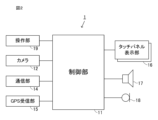
図2は、実施形態に係る携帯端末1の構成を示すブロック図である。本実施形態の携帯端末1は、いわゆる、スマートフォン、タブレット等の情報処理装置である。携帯端末1では、後で説明する命令代行処理を実行することになるが、命令代行処理をする装置としては、携帯端末1に限られるものではなく、ロボット、スマートスピーカ(AIスピーカ)、テレビ等の各種情報処理装置を使用することが可能である。本実施形態の携帯端末1は、制御部11、操作部19、カメラ12、通信部14、GPS(Global Positioning System)受信部15、タッチパネル表示部16、スピーカ17、マイクロホン18を有して構成されている。
FIG. 2 is a block diagram showing the configuration of a
制御部11は、各種プログラムを実行可能なCPU(Central Processing Unit)、各種プログラム、データを記憶するROM、RAM等を有して構成され、携帯端末1を統括して制御する部位である。操作部19は、電源ボタン、音量ボタン等、ユーザからの操作を受け付ける部位である。カメラ12は、携帯端末1の前面、もしくは、後面、あるいはその両方に設けられ、ユーザの操作等に応じて静止画あるいは動画を取り込む部位である。
The
通信部14は、外部の各種装置と通信を行う部位であって、本実施形態では、アクセスポイント4と通信を行うため、Wifi規格を使用した形態としている。通信部14には、この他、Bluetooth(登録商標)、赤外線通信等による近距離通信手段の他、アクセスポイント4ではなく、携帯通信網を介して通信網Cに接続可能な携帯通信手段を使用してもよい。
The
GPS受信部15は、衛星からの信号を受信することで、携帯端末1の位置(緯度、経度)を判定可能な位置検出部である。携帯端末1における位置検出部としては、GPS受信部15の他、屋内での位置を検出する屋内測位、あるいは、周囲環境をマッピングデータとして記憶しておき、カメラ12による撮像によって、携帯端末1の位置を割り出すこととしてもよい。
The
タッチパネル表示部16は、液晶、有機EL等を使用した表示部と、感圧方式、静電容量方式等によるタッチパネルを重畳させたユーザインタフェイスであって、表示部に各種表示を行うことが可能である。また、表示部に表示される各種オブジェクトに対して、タッチ入力することで、ユーザからの各種入力を受け付けることが可能となっている。スピーカ17は、ユーザに対して音による通知を行うことが可能である。マイクロホン18は、携帯端末1の周囲音を取り込むことが可能である。
The touch
図3は、実施形態に係るロボット2の構成を示すブロック図である。本実施形態のロボット2は、ペット型(犬型)のロボット2であって、ユーザと各種コミュニケーションを図ることが可能なロボット2である。本実施形態では、ユーザXの命令対象として歩行(移動)可能なロボット2を例としているが、ロボット2に限られるものではなく、命令を受信可能な各種情報処理装置、例えば、移動しないロボット、スマートスピーカ(AIスピーカ)、テレビ等を使用することが可能である。
Figure 3 is a block diagram showing the configuration of a
本実施形態において、ロボット2は、制御部21、操作部22、カメラ23、接触センサ24、通信部25、GPS受信部26、表示部27、スピーカ28、マイクロホン29、複数のアクチュエータ30a、30b…を有して構成されている。なお、ロボット2の形態は、あくまでも一例であって、各種形態を採用することが可能である。
In this embodiment, the
制御部21は、各種プログラムを実行可能なCPU、各種プログラム、データを記憶するROM(Read-only Memory)、RAM(Random Access Memory)等を有して構成され、ロボット2を統括して制御する。操作部22は、電源ボタン等、ユーザからの操作を受け付ける部位である。カメラ23は、ロボット2の頭部等に設けられ、周囲の環境を撮影して取り込むセンサである。接触センサ24は、ロボット2の頭部、腹部、背部等に設けられ、ユーザによる接触を検出可能なセンサである。
The
通信部25は、外部の各種装置と通信を行う部位であって、本実施形態では、アクセスポイント4と通信を行うため、Wifi規格を使用した形態としている。通信部25には、携帯端末1と同様、Bluetooth(登録商標)、赤外線通信等による近距離通信手段の他、アクセスポイント4ではなく、携帯通信網を介して通信網Cに接続可能な携帯通信手段を使用することも可能である。
The
表示部27は、ロボット2の頭部において目の位置に設けられた液晶、あるいは、有機EL等による表示手段であって、表示内容を変化させることでロボット2の感情を表現することが可能である。表示部27としては、この他にも設けることが可能であって、例えば、LED(Light Emitting Diode)等を設けることで、ロボット2の各種状態(例えば、バッテリーの状態、通信状態等)を外部に通知可能としてもよい。スピーカ28は、ユーザに対して音による通知を行うことが可能であって、例えば、鳴き声等を放音することで、ロボット2の感情を表現することが可能である。マイクロホン18は、携帯端末1の周囲音を取り込むことが可能であり、例えば、ユーザが発声した命令を取り込んで、各種処理を実行することが可能である。
The
アクチュエータ30a、30bは、ロボット2の手足の関節、首、尾等に設けられ、制御部21の命令により駆動される。特に、手足の関節に設けられているアクチュエータを駆動することで、ロボット2は歩行(移動)することが可能となっている。
The
図1には、図2、図3で説明した携帯端末1、ロボット2を宅内で使用する環境が示されている。従来、宅内等においてロボット2を利用する場合、ユーザXは、ロボット2に対して音声による命令を行うことで、ロボット2とのコミュニケーションを取ることが可能である。しかしながら、ロボット2が電源オフとなっている状態、バッテリー切れ等による休止状態、あるいは、その所在が部屋Bであって、ユーザXの声を十分に受信できない状態等の場合、ユーザXが命令を行っても、ロボット2は、それに対して反応できない状況がある。
Figure 1 shows an environment in which the
このような状況において、ユーザXは、何故、自分の命令に対してロボット2が反応しなかったのか分からない場合もあり、再度、命令を行う等、ユーザXとロボット2と間のインタラクションのロスが生じてしまう。本実施形態の情報処理システムは、このような状況の下、ロボット2等、ユーザがコミュニケーションを行うことが可能な各種情報処理装置と、ユーザ間のインタラクションのロスを抑制し、円滑なコミュニケーションすることを一つの目的としている。
In such a situation, the user X may not understand why the
そのため、本実施形態の情報処理システムでは、命令対象個体となるロボット2以外の別個体である携帯端末1において、ロボット2に対して行われた命令に対して命令代行処理を行うこととしている。以下に、この命令代行処理について、図1の状況を例として説明を行う。
Therefore, in the information processing system of this embodiment, command proxy processing is performed on the
図1において、母親であるユーザXは、部屋A(キッチン)で食事の準備をしているが、手が空かないため部屋B(リビング)の様子を見ることができない。食事の準備が終わりそうになったユーザXは、子どもを呼ぶために、部屋Aにいるロボット2に対して、子どもを呼ぶ命令を発声する。ここで、ロボット2には「ロボ」と名付けられていることとする。ユーザXの発声内容は「ロボ、子どもを呼んできて。」であり、命令対象を示す「ロボ」と、命令内容である「子どもを呼んできて。」を組み合わせることで、ロボット2に対する命令となっている。ユーザXにより命令は発声された際、ロボット2は、スリープ中であって、命令を受信することができない状況となっている。
In FIG. 1, User X, a mother, is preparing a meal in Room A (the kitchen), but is busy and cannot check on what is happening in Room B (the living room). When User X is about to finish preparing the meal, she issues a command to
このような状況下、ユーザXが携帯する携帯端末1では、命令代行処理が実行されており、ロボット2に対して発せられた命令に対して代行することが可能となっている。
Under these circumstances, command proxy processing is being executed on the
図5は、実施形態に係る携帯端末1で実行される命令代行処理を示すフロー図である。なお、本説明では、携帯端末1、ロボット2を含む情報処理装置を単に「端末」と呼ぶことがある。本実施形態の命令代行処理は、携帯端末1において実行される処理であり、その実行中、マイクロホン18に入力される音声を解析し、命令を受信したか否かを判定する(S101)。本実施形態では、先に説明したように、命令対象と命令内容の組み合わせで命令が構成されているため、命令対象を明確に判定することが可能となっている。このような形態のみならず、命令対象が付されていない命令であってもよい。その場合、発声内容自体の解析、過去の会話内容の解析、あるいはカメラ23で撮影した周囲状況等、各種状況に基づいて、命令対象を判定することが考えられる。
Figure 5 is a flow diagram showing the command proxy process executed by the
受信した命令対象が限定されない場合(S102:No)、本実施形態では、スピーカ17から音声による通知等を行うことで、ユーザXに再発声を促す通知を行うこととしている(S103)。例えば、ロボット2が複数体存在する空間内において、命令対象が付されていない命令、あるいは命令対象に曖昧性が残る命令を発声した場合には、携帯端末1において「命令の対象が特定できません。命令対象を指定してください。」等のようにユーザXに音声、あるいは、表示にて通知することとしている。ここで、命令対象に曖昧性の残る命令コマンドとは、例えば、携帯端末1の半径Nメートルの範囲内において、命令対象となり得る端末の数が1体以外(0体もしくは2体以上)の環境下において、命令対象が付されずに発話された場合等のことをいう。具体的には,命令対象の個体が2体以上存在する空間内において、命令対象を明示的に発声しない「~して」という命令等がこれに該当する。
In the case where the received command target is not limited (S102: No), in this embodiment, the
一方、受信した命令中、命令対象が限定される場合(S102:Yes)、自端末(この場合、携帯端末1)に対する命令か、他端末に対する命令かが判定される(S104)。自端末への命令である場合(S104:No)には、携帯端末1において命令が実行される(S105)。一方、他端末に対する命令である場合(S104:Yes)、通信部14を使用して、他端末の状態を取得する(S106)。図1の場合、携帯端末1からロボット2の状況を取得する場合、両者がアクセスポイント4を介して無線通信することで、ロボット2の状況を直接、取得してもよいし、情報処理サーバ5にロボット2の状況をアップロードしておき、携帯端末1は、情報処理サーバ5にアクセスすることでロボット2の状況を間接的に取得することとしてもよい。あるいは、直接、取得できない場合、間接的に取得する等、両者を併用することとしてもよい。
On the other hand, when the command target is limited among the received commands (S102: Yes), it is determined whether the command is for the own terminal (in this case, the mobile terminal 1) or for another terminal (S104). If the command is for the own terminal (S104: No), the command is executed in the mobile terminal 1 (S105). On the other hand, if the command is for another terminal (S104: Yes), the
他端末の状況を取得した後、他端末は命令を実行可能か否かが判定される(S107)。命令を実行可能な場合(S107:Yes)、命令は他端末によって処理されることになるため、命令代行処理の先頭に戻る。一方、他端末が命令を実行できない場合(S107:No)、他端末が携帯端末1の近傍にいるか否かが判定される(S108)。近傍にいるか否かの判断は、取得したロボット2の状況に含まれる位置情報と、携帯端末1のGPS受信部15で判定した位置情報を参照することで判定することが可能である。両方の位置情報が所定距離内にある場合には近傍にいると判定(S108:Yes)され、第1状態確認処理(S200)が実行される。一方、両方の位置情報が所定距離外にある場合には近傍にいないと判定(S108:No)され、第2状態確認処理(S300)が実行される。
After acquiring the status of the other terminal, it is determined whether the other terminal can execute the command (S107). If the command can be executed (S107: Yes), the command will be processed by the other terminal, and the process returns to the beginning of the command proxy process. On the other hand, if the other terminal cannot execute the command (S107: No), it is determined whether the other terminal is in the vicinity of the mobile terminal 1 (S108). The determination of whether the other terminal is in the vicinity can be made by referring to the position information included in the acquired status of the
図1の状況は、ユーザXにより、ロボット2に対する命令が発声された場合であるが、ロボット2は休止中であるため、ユーザXによる命令を実行できない(S107:No)と判定された場合である。また、携帯端末1とロボット2は近傍にいると判定された場合となっている。したがって、図1の状況では第1状態確認処理(S200)が実行されることになる。
The situation in FIG. 1 is a case where a command is spoken by user X to
図6は、実施形態に係る携帯端末で実行される第1状態確認処理(S200)を示すフロー図である。本実施形態では、S106で取得した他端末の状況を3つの状態、すなわち、(1)別の命令を実行している状態、(2)他端末を命令受理可能状態に移行するためにユーザXの介入が必要である状態、例として、休止、電源オフの状態、(3)他端末を命令受理可能状態に移行するためにユーザXの介入が不要である状態、例として、スリープの状態、に分類している。第1状態確認処理では、他端末の状態がこれら3つの状態中、何れの状態かを判定する(S201)。 Figure 6 is a flow diagram showing a first status confirmation process (S200) executed by a mobile terminal according to an embodiment. In this embodiment, the status of the other terminal acquired in S106 is classified into three states: (1) a state in which another command is being executed; (2) a state in which the intervention of user X is required to transition the other terminal to a command-receiving state, such as a hibernation or power-off state; and (3) a state in which the intervention of user X is not required to transition the other terminal to a command-receiving state, such as a sleep state. In the first status confirmation process, it is determined which of these three states the other terminal is in (S201).
(1)他端末が別の命令を実行している状態の場合(S201:別の命令を実行中)、まず、携帯端末1のスピーカ17からの音声、あるいは、携帯端末1のタッチパネル表示部16を使用して、現在、他端末で実行中の命令(別命令)を中止するか否かをユーザXに問う通知が行われる(S202)。
(1) When the other terminal is executing a different command (S201: Executing a different command), first, a notification is given to the user X by voice from the
音声による返答、あるいは、タッチパネル表示部16に対する入力によって、ユーザXから別命令の実行を中断する旨の入力があった場合(S203:Yes)、他端末において別命令を中断させ、命令受理可能状態に移行させる(S204)。ここで、命令受理可能状態とは、他端末がユーザXの命令を受理でき,かつその命令を実行可能な状態になっていることを意味する。そして、携帯端末1で保持している命令、すなわち、S101で受信した命令を他端末に送信する(S205)。一方、別命令の実行が中断されない場合(S203:No)、ユーザXからの命令は棄却される(S206)。このように、本実施形態では、命令対象となる端末において、命令が実行不能、すなわち、別命令を中断して命令を実行する、あるいは、後で説明するように命令対象となる端末が休止、あるいは、電源オフの場合には、受信した命令を棄却することとしている。命令を棄却する場合、携帯端末1からユーザXに対して、命令が棄却された旨、命令が棄却された理由を通知することとしてもよい。
When user X responds by voice or inputs to the touch
図1は、ロボット2は休止中の例を示しているが、ユーザXによる命令の発声時、ロボット2が別命令を実行している場合には、ユーザXに別命令の実行中断が問われる(S202)。そして、ユーザXから、中断する旨の入力があった場合(S203:Yes)には、既に発声された命令がロボット2に対して送信される(S205)。したがって、ユーザXは、同じ命令を再度繰り返して発声する必要が無く、ロボット2との円滑なコミュニケーションを図ることが可能となる。
Figure 1 shows an example in which the
(2)他端末を命令受理可能状態に移行するためにユーザXの介入が必要である状態、ここでは、他端末が休止、電源オフの状態の場合(S201:休止、電源オフ)、ユーザXの命令は棄却される(S206)。この場合、ユーザは他端末(図1の場合ではロボット2)に対して命令を発声したにもかかわらず、ロボット2から反応、あるいは、応答が得られないことから、携帯端末1において、ロボット2の状況をスピーカ17からの音声、あるいは、タッチパネル表示部16の表示によって、ユーザXに通知する通知処理を行うこととしてもよい。
(2) A state in which the intervention of user X is required to transition the other terminal to a state in which it can accept commands. In this case, if the other terminal is in a paused or powered-off state (S201: paused, powered-off state), the command from user X is rejected (S206). In this case, even though the user issues a command to the other terminal (
(3)他端末を命令受理可能状態に移行するためにユーザXの介入が不要である状態、ここでは、他端末がスリープの状態の場合(S201:スリープ)、携帯端末1は、命令の対象としている他端末と通信することで、当該他端末を命令受理可能状態に移行させる(S207)。他端末を命令可能状態に移行させた後、携帯端末1で保持している命令、すなわち、S101で受信した命令を他端末に送信する(S208)。この場合、(1)他端末が別の命令を実行している状態と同様、ユーザXは、同じ命令を再度繰り返して発声する必要が無く、ロボット2との円滑なコミュニケーションを図ることが可能となる。
(3) A state in which the intervention of user X is not required to transition the other terminal to a command-receiving state, in this case when the other terminal is in a sleep state (S201: Sleep), the
次に、第2状態確認処理(S300)、すなわち、他端末は携帯端末1の近傍にいない場合(S108:No)について説明する。図4は、実施形態に係る情報処理システムの利用状況を説明するための図である。図4の状況は、ユーザXと異なる部屋Bにロボット2がいる場合であって、他端末(ロボット2)は、携帯端末1の近傍にいない場合を示している。このような場合、ユーザXから発声された命令が、ロボット2で受信できない場合が考えられ、ユーザXの命令が無駄になってしまう、すなわち、ユーザXとロボット2との間のインタラクションのロスが生じることが考えられる。
Next, the second status confirmation process (S300), i.e., the case where the other terminal is not in the vicinity of the mobile terminal 1 (S108: No), will be described. FIG. 4 is a diagram for explaining the usage status of the information processing system according to the embodiment. The situation in FIG. 4 shows a case where the
第2状態確認処理(S300)は、第1状態確認処理(S200)の場合と同様、他端末の状況を3つの状態、すなわち、(1)別の命令を実行している状態、(2)他端末を命令受理可能状態に移行するためにユーザXの介入が必要である状態、例として、休止、電源オフの状態、(3)他端末を命令受理可能状態に移行するためにユーザXの介入が不要である状態、例として、スリープの状態、に分類している。第1状態確認処理では、他端末の状態がこれら3つの状態中、何れの状態かを判定する(S301)。 In the second status confirmation process (S300), as in the first status confirmation process (S200), the status of the other terminal is classified into three states: (1) a state in which another command is being executed; (2) a state in which the intervention of user X is required to transition the other terminal to a state in which the other terminal can accept commands, such as a hibernation or power-off state; and (3) a state in which the intervention of user X is not required to transition the other terminal to a state in which the other terminal can accept commands, such as a sleep state. In the first status confirmation process, it is determined which of these three states the other terminal is in (S301).
(1)他端末が別の命令を実行している状態の場合(S301:別の命令を実行中)、まず、携帯端末1のスピーカ17からの音声、あるいは、携帯端末1のタッチパネル表示部16を使用して、現在、他端末で実行中の命令(別命令)を中止するか否かをユーザXに問う通知を行う(S302)。
(1) When the other terminal is executing a different command (S301: executing a different command), first, a notification is given to the user X by voice from the
音声による返答、あるいは、タッチパネル表示部16に対する入力によって、ユーザXから別命令の実行を中断する旨の入力があった場合(S303:Yes)、他端末において別命令を中断させ、命令受理可能状態に移行させる(S304)。一方、別命令の実行が中断されない場合(S303:No)、ユーザからの命令は棄却される(S308)。
If user X responds by voice or inputs to the touch
別命令の実行を中断する旨が入力された後、携帯端末1において、他端末は可動体、すなわち、ロボット2のように移動可能な端末か否かが判定される(S305)。この判定は、予め携帯端末1において他端末の情報を記憶しておく、あるいは、S106において他端末の状態を取得する際、併せて取得すること等が考えられる。可動体と判定された場合(S305:Yes)、他端末をユーザXの近傍、すなわち、携帯端末1の近傍に移動させる(S306)。図4の場合、ロボット2は部屋Bから、携帯端末1のある部屋Aに移動させることになる。移動完了後、携帯端末1で保持している命令、すなわち、S101で受信した命令を他端末に送信する(S307)。一方、他端末が可動体では無い場合(S305:No)、他端末を移動させることなく、S101で受信した命令を他端末に送信する(S307)。
After the instruction to suspend execution of another command is input, the
このように、他端末が可動体の場合、他端末を携帯端末1の近傍、すなわち、ユーザXの近傍に移動させた後、ユーザXからの命令を他端末に実行させることで、ユーザXと他端末(図4の場合、ロボット2)との間のコミュニケーションを、近距離で適切に行わせることが可能となる。
In this way, when the other terminal is a movable object, by moving the other terminal to the vicinity of the
(2)他端末が休止、電源オフの状態の場合(S301:休止、電源オフ)、ユーザの命令は棄却される(S308)。この場合、第1状態確認処理の場合と同様、携帯端末1において、ユーザXにロボット2の状況を通知する通知処理を行うこととしてもよい。
(2) If the other terminal is in a paused state or powered off state (S301: paused, powered off), the user's command is rejected (S308). In this case, similar to the first status confirmation process, the
(3)他端末がスリープの状態の場合(S301:スリープ)、携帯端末1は、命令の対象となっている他端末と通信することで、当該他端末を命令受理可能状態に移行させる(S309)。その後、S305~307と同様の処理であるS310~312の処理を実行することで、他端末が可動体の場合(S310:Yes)には、他端末をユーザXの近傍に移動(S311)させた後、S101で受信した命令を他端末に送信する(S312)。一方、他端末が可動体で無い場合(S310:No)には、他端末を移動させることなく、S101で受信した命令を他端末に送信する(S312)。
(3) When the other terminal is in a sleep state (S301: Sleep), the
以上、第1の実施形態に係る情報処理システムについて説明を行ったが、本実施形態の情報処理システムでは、命令対象となる情報処理装置(図1の場合、ロボット2)以外の情報処理装置(図1の場合、携帯端末1)において、命令代行処理を実行することで、ユーザと命令対象となる情報処理装置との間で、インタラクションロスを抑制し、円滑なコミュニケーションを実現することが可能となる。
The information processing system according to the first embodiment has been described above. In the information processing system according to this embodiment, command proxy processing is executed in an information processing device (
<2.第2の実施形態>
図8は、実施形態に係る情報処理システムの利用状況を説明するための図である。第1の実施形態では、命令対象となるロボット2が1台の場合について説明を行った。今後、ロボット2が普及するに従い、1家庭で複数のロボット2を利用することが考えられる。第2の実施形態は、このような状況を鑑みた場合であって、複数のロボット2a、2bが宅内で利用される状況を示している。
2. Second embodiment
8 is a diagram for explaining a usage situation of the information processing system according to the embodiment. In the first embodiment, a case where there is one
図8の例では、部屋Aにいるロボット2aは命令受理可能状態にあり、部屋Bにいるロボット2bは休止中となっている。ここで、ロボット2aの名前を「ロボa」、ロボット2bの名前を「ロボb」とする。ユーザXは、ロボット2bに対し、例えば、第1の実施形態と同様、「ロボb、子どもを呼んできて。」と発声したとする。ロボット2bはユーザXから離れた部屋Bに位置しており、かつ、休止中であるため、ユーザXの命令を処理することができない。複数台のロボット2a、2bが存在する第2の実施形態では、ロボット2bに対する命令を、ロボット2bに代わってロボット2aが実行することが可能となっている。
In the example of FIG. 8,
図9は、実施形態に係る携帯端末で実行される命令先変更処理を示すフロー図である。命令先変更処理では、図6で説明した第1状態確認処理(S200)、あるいは、図7で説明した第2状態確認処理(S300)において、命令先となる他端末において命令実行が不能となったか否かを監視する(S351)。ここで、命令が実行不能となった場合とは、命令先となる端末において、如何様にも命令が処理できない場合であって、第1状態確認処理(S200)、第2状態確認処理(S300)において、ユーザの命令を棄却する場合に相当する。 Figure 9 is a flow diagram showing the command destination change process executed by the mobile terminal according to the embodiment. In the command destination change process, in the first status check process (S200) described in Figure 6 or the second status check process (S300) described in Figure 7, it is monitored (S351) whether the command cannot be executed in the other terminal that is the command destination. Here, a case where the command cannot be executed means that the command cannot be processed in any way in the terminal that is the command destination, which corresponds to a case where the user's command is rejected in the first status check process (S200) or the second status check process (S300).
例えば、第1状態確認処理(S200)において、別命令の実行を中断しないと指示された場合(S203:No)、他端末の状態が休止、あるいは電源オフの状態にある場合(S201:休止、電源オフ)、第2状態確認処理(S300)において、別命令の実行を中断しないと指示された場合(S303:No)、他端末の状態が休止、あるいは電源オフの状態にある場合(S301:休止、電源オフ)がこれに相当する。 For example, this corresponds to the case where, in the first status confirmation process (S200), it is instructed not to suspend execution of another command (S203: No), the other terminal is in a suspended state or the power is off (S201: Suspended, Power Off), and in the second status confirmation process (S300), it is instructed not to suspend execution of another command (S303: No), the other terminal is in a suspended state or the power is off (S301: Suspended, Power Off).
このような命令先となっている端末(他端末)での命令実行が不能と判断された場合(S351:Yes)、命令を実行可能な別端末の存在が判定される(S356)。命令を実行可能な別端末が複数存在する場合、ユーザXの近傍、すなわち、携帯端末1に近い別端末が候補として選定される。別端末において実行する場合、ユーザXの命令と異なる端末で実行されることになるため、本実施形態では、ユーザに別端末の存在、並びに、別端末で命令を代行して実行してもよいかをユーザXに通知して、ユーザXに確認を取ることとしている(S358)。ユーザXから、別端末で命令を実行する指示が入力された場合(S359:Yes)、別端末にユーザの命令を送信し、別端末で命令を実行させる(S360)。一方、別端末で命令を実行しない指示が入力された場合(S359:No)、ユーザの命令は棄却される(S357)。
If it is determined that the command cannot be executed on the terminal (other terminal) that is the destination of the command (S351: Yes), the existence of another terminal that can execute the command is determined (S356). If there are multiple other terminals that can execute the command, the other terminals in the vicinity of the user X, i.e., close to the
図8の例では、ユーザXは、ロボット2bに対し、「ロボb、子どもを呼んできて。」と発声したが、ロボット2bは休止中であるため、携帯端末1は、「ロボbは休止中です。ロボaに処理を代行させますか?」という内容をユーザXに対して通知する(S358)。ユーザXが、代行させる内容の指示を行った場合(S359:Yes)、携帯端末1は、ロボット2bに対する命令はロボット2aに送信される(S360)。一方、ユーザXが、代行させない内容の指示を行った場合(S359:No)、ロボット2bに対する命令は棄却される(S357)。
In the example of FIG. 8, user X says to
このように複数台のロボット2a、2bが存在する第2の実施形態では、ロボット2bに対する命令を、ロボット2bに代わってロボット2aが実行することが可能となっている。
In this way, in the second embodiment where
<3.変形例>
以上、本開示の複数の実施形態について具体的に説明したが、本開示の内容は上述した実施形態に限定されるものではなく、本開示の技術的思想に基づく各種の変形が可能である。以下、変形例について説明する。
3. Modifications
Although a number of embodiments of the present disclosure have been specifically described above, the contents of the present disclosure are not limited to the above-described embodiments, and various modifications based on the technical ideas of the present disclosure are possible. Modifications will be described below.
(複数台の情報処理装置が存在する場合)
図10は、実施形態に係る情報処理システムの利用状況を説明するための図である。第1の実施形態、第2の実施形態では、命令代行処理、命令先変更処理を実行する情報処理装置として、ユーザXが所持する携帯端末1を使用することとしていた。現在、家庭内において、ユーザとインタラクティブな対応が可能な情報処理装置は、携帯端末1aのみならず、テレビ1b、スピーカ1c(スマートスピーカ、AIスピーカ等と呼ばれることがある)が考えられる。このような情報処理装置では、ユーザXの発声により各種制御を行うことが可能である。情報処理装置が複数台、使用される環境下では、何れか1の情報処理装置において、命令代行処理、命令先変更処理を実行することが好ましい。
(When multiple information processing devices exist)
FIG. 10 is a diagram for explaining the usage of the information processing system according to the embodiment. In the first and second embodiments, a
例えば、下記に示すような設定によって、命令代行処理、命令先変更処理を実行する1の情報処理装置を選択することが可能である。 For example, by using the settings shown below, it is possible to select one information processing device to perform command proxy processing and command destination change processing.
(1)ユーザが予め設定しておく。ロボット2に対する命令代行処理、命令先変更処理を実行する情報処理装置をユーザ自身で設定しておくことで、命令代行処理、命令先変更処理を実行する1の情報処理装置を決定することが可能である。
(1) The user sets it in advance. By setting the information processing device that will execute command proxy processing and command destination change processing for the
(2)ウェラブルデバイスを優先する。ウェアラブルデバイスを優先する理由はユーザの口元に近いことが想定され、ユーザの発声を認識しやすいこと、そして、ユーザの会話を常時受け付け状態となっていることが多いことが想定されるためである。複数のウェアラブルデバイスが存在する場合、ウェアラブルデバイスの種別に応じて、よりユーザの口元に近いことが想定されるものを選択することが考えられる。 (2) Give priority to wearable devices. The reason for giving priority to wearable devices is that they are expected to be closer to the user's mouth, making it easier to recognize the user's speech, and are expected to be in a state where the user's conversation is constantly being received. If there are multiple wearable devices, it is conceivable to select the one that is expected to be closer to the user's mouth depending on the type of wearable device.
(3)ユーザに近い位置に位置する情報処理装置を優先する。情報処理装置に設けられるGPS受信部、カメラ、あるいは、赤外線センサ等、各種センサを使用して、情報処理装置とユーザとの間の距離を測定し、ユーザに最も近く位置する情報処理装置を選択することが考えられる。なお、マイクロホンを有する情報処理装置では、ユーザからの声をより大きく受信可能な情報処理装置を、ユーザに近く位置する情報処理装置として判断することも可能である。 (3) Prioritize information processing devices located closer to the user. It is possible to measure the distance between the information processing device and the user using various sensors, such as a GPS receiver, camera, or infrared sensor, provided in the information processing device, and select the information processing device located closest to the user. Note that, in the case of information processing devices having a microphone, it is also possible to determine that the information processing device that can receive the user's voice more loudly is the information processing device located closest to the user.
(4)複数の情報処理装置間で通信を行い、1の情報処理装置を決定する。その際、上述する(1)~(3)で説明した条件を考慮して決定することとしてもよい。 (4) Communication is performed between multiple information processing devices to determine one information processing device. In this case, the determination may be made taking into consideration the conditions described in (1) to (3) above.
(5)情報処理サーバ5で、1の情報処理装置を決定する。情報処理サーバ5において、複数の情報処理装置に関する情報を取得し、命令代行処理、命令先変更処理を実行するのに適切な情報処理装置を決定することとしてもよい。
(5) The
(ユーザが複数人いる場合)
例えば、図6で説明した第1状態確認処理(S200)において、ロボット2が別の命令を実行している場合、現在、他端末で実行中の命令(別命令)を中止するか否かをユーザXに問う通知が行われる(S202)。ユーザが複数人いる場合、別命令の依頼元であるユーザと、今回の命令の依頼元であるユーザが異なることが考えられる。そのため、S202の通知では、別命令の依頼元のユーザを併せて通知することが好ましい。その際、命令を受信する場合には、依頼元のユーザの命令発話を用いた話者認識、あるいは、依頼元のユーザの顔画像を用いた顔認識等,あるいはその両方を使用して、命令の依頼元となるユーザを認識して、命令に対応付けて記憶しておくことが好ましい。また、他のユーザによって命令が中断されることが好ましくない場合も考えられる。そのため、別命令の実行を中断する際には、依頼元のユーザに対して命令の実行中断可否を問い合わせることとしてもよい。
(If there are multiple users)
For example, in the first state confirmation process (S200) described in FIG. 6, when the
(音声以外による命令)
第1の実施形態、第2の実施形態では、ロボット2に対する命令として、音声による命令を使用して説明したが、音声による命令のみならず、例えば、リモートコントロール装置、ジェスチャ等を使用したユーザの操作によってロボット2に対する命令を発行することとしてもよい。
(Non-vocal commands)
In the first and second embodiments, voice commands are used to give commands to the
(命令先変更処理の変形例)
図9で説明した命令先変更処理では、命令先となっている端末での命令実行が不能な場合(S351)、命令を実行可能な別端末を探索し、別端末が存在する場合、別端末にユーザの命令を送信することとしていた。命令先変更処理では、このような形態に代え、命令先となっている端末が命令実行できる場合であっても、より早く命令が実行できる別端末が存在する場合、ユーザの命令を別端末に送信することとしてもよい。
(Modification of instruction destination change process)
In the command destination change process described in Fig. 9, if the command destination terminal cannot execute the command (S351), another terminal capable of executing the command is searched for, and if another terminal is present, the user's command is sent to the other terminal. Instead of this form, in the command destination change process, even if the command destination terminal can execute the command, if another terminal capable of executing the command exists, the user's command may be sent to the other terminal.
図8の状況において、ロボット2a、ロボット2bは共に命令実行可能状態にあるとする。このような状況で、ユーザXが、ロボット2bに対し、「ロボb、今日の天気は?」と発声した場合、ロボット2bは、部屋Bから部屋Aに移動した後、命令を実行することになる。一方、部屋Aには、命令実行可能状態にあるロボット2aが存在している。ロボット2bが部屋Bから部屋Aに移動して命令を実行するよりも、ユーザXに近いロボット2aが命令を実行した方が早いことが考えられる。したがって、より早く命令が実行できる別端末にユーザXの命令を送信することで、ユーザXの命令を迅速に処理することが可能となる。この場合においても、ユーザXに別端末の存在、並びに、別端末で命令を代行して実行してもよいかをユーザXに通知して、ユーザXに確認を取ることが好ましい。また、代行して命令を実行する場合、携帯端末1にて最適なロボットを自動選択する形態の他、代行するロボットをユーザに選択させることとしてもよい。例えば、携帯端末1において、「ロボbを指定しましたが、近傍にロボaが居ます。どうしますか?」とユーザに確認を取り、どちらのロボット2a、2bに命令を実行させるか選択させることとしてもよい。
In the situation of FIG. 8, both
(曖昧性を有する命令の変形例)
図5で説明した命令代行処理において、命令対象が限定されない場合、ユーザに再発声を促すこととしている。この他、曖昧性を有する命令として、命令対象は特定されているものの、命令内容自体に曖昧性が残る場合がある。例えば、ユーザXが「ロボ、えーっと、あれ取って来て、あれ。」等のような発声を行った場合がこれに相当する。このような場合、命令対象は明らかとなっているため、図5で説明した命令代行処理において、携帯端末1が命令対象となっている端末の状態を取得する処理(S106)を実行しても問題は無い。ただし、携帯端末1によるユーザXへの通知は、ユーザXの発声終了時であることが望ましく、仮にユーザXの発声が終了しても、端末への命令自体に曖昧性が残っていた場合には、携帯端末1による端末への命令送信は行わないことが望ましい。なお、曖昧性の残る命令かどうかを判定するためには、例えば、信頼度スコアが顕著に低く、受理可能な命令セット外の命令が認識された、等の判定方法が考えられる。
(Modification of Ambiguous Instructions)
In the command proxy process described in FIG. 5, if the command target is not limited, the user is prompted to re-utter the command. In addition, as a command having ambiguity, there is a case where the command target is specified but the command content itself remains ambiguous. For example, a case where the user X utters "Robot, um, get that, that." corresponds to this case. In such a case, since the command target is clear, there is no problem in the command proxy process described in FIG. 5, in which the
本開示は、装置、方法、プログラム、システム等により実現することもできる。例えば、上述した実施形態で説明した機能を行うプログラムをダウンロード可能とし、実施形態で説明した機能を有しない装置が当該プログラムをダウンロードすることにより、当該装置において実施形態で説明した制御を行うことが可能となる。本開示は、このようなプログラムを配布するサーバにより実現することも可能である。また、各実施形態、変形例で説明した事項は、適宜組み合わせることが可能である。 The present disclosure can also be realized by an apparatus, a method, a program, a system, etc. For example, a program that performs the functions described in the above-mentioned embodiments can be made downloadable, and an apparatus that does not have the functions described in the embodiments can download the program and perform the control described in the embodiments in the apparatus. The present disclosure can also be realized by a server that distributes such a program. In addition, the matters described in each embodiment and modified example can be combined as appropriate.
本開示は、以下の構成も採ることができる。
(1)
ユーザからの命令を受信する受信部と、
命令対象となる他の複数の情報処理装置において命令実行が可能か否かを判断する判断部と、
前記複数の情報処理装置が、前記命令実行が可能であると判断された場合に、ユーザからのあらかじめ設定された優先度に基づき、前記ユーザからの命令を代行する
情報処理装置。
(2)
前記優先度は、前記複数の情報処理装置に対する前記ユーザの設定の有無である
(1)に記載の情報処理装置。
(3)
前記優先度は、ウェアラブルデバイスほど優先度が高くなる
(1)に記載の情報処理装置。
(4)
前記ユーザの口元に近いウェアラブルデバイスほど前記優先度が高くなる
(3)に記載の情報処理装置。
(5)
前記優先度は、前記ユーザまでの距離に基づく優先度である
(1)に記載の情報処理装置。
(6)
前記ユーザに近いほど前記優先度が高くなる
(5)に記載の情報処理装置。
(7)
前記優先度は、前記複数の情報処理装置間での通信結果に基づく優先度である
(1)から(4)までの何れかに記載の情報処理装置。
(8)
前記優先度は、前記複数の情報処理装置のそれぞれと通信を行う情報処理装置によって決定される
(1)に記載の情報処理装置。
(9)
受信部が、ユーザからの命令を受信し、
判断部が、命令対象となる他の複数の情報処理装置において命令実行が可能か否かを判断し、
前記複数の情報処理装置が、前記命令実行が可能であると判断された場合に、ユーザからのあらかじめ設定された優先度に基づき、前記ユーザからの命令を代行する
情報処理方法。
(10)
受信部が、ユーザからの命令を受信し、
判断部が、命令対象となる他の複数の情報処理装置において命令実行が可能か否かを判断し、
前記複数の情報処理装置が、前記命令実行が可能であると判断された場合に、ユーザからのあらかじめ設定された優先度に基づき、前記ユーザからの命令を代行する
情報処理方法をコンピュータに実行させるプログラム。
The present disclosure may also have the following configurations.
(1)
A receiving unit for receiving an instruction from a user;
a determination unit that determines whether or not the command can be executed in a plurality of other information processing devices that are the target of the command;
When it is determined that the command can be executed, the information processing device executes the command on behalf of the user based on a priority level preset by the user.
(2)
The information processing device according to any one of (1) to (7), wherein the priority is determined based on whether or not the user has made a setting for the plurality of information processing devices.
(3)
The information processing device according to any one of
(4)
The information processing device according to (3), wherein the priority of a wearable device is higher when the wearable device is closer to the user's mouth.
(5)
The information processing device according to any one of
(6)
The information processing device according to (5), wherein the priority is higher as the information processing device is closer to the user.
(7)
The information processing device according to any one of (1) to (4), wherein the priority is based on a communication result between the plurality of information processing devices.
(8)
The information processing device according to any one of (1) to (7), wherein the priority is determined by an information processing device that communicates with each of the plurality of information processing devices.
(9)
A receiving unit receives a command from a user,
a determination unit that determines whether or not the instruction can be executed in a plurality of other information processing devices that are the target of the instruction;
When it is determined that the command can be executed, the information processing devices execute the command on behalf of the user based on a priority level preset by the user.
(10)
A receiving unit receives a command from a user,
a determination unit that determines whether or not the instruction can be executed in a plurality of other information processing devices that are the target of the instruction;
a program for causing a computer to execute an information processing method, the information processing apparatus executing the instructions on behalf of the user based on a priority level preset by the user when it is determined that the instructions can be executed by the information processing apparatuses.
1:携帯端末(情報処理装置) 17:スピーカ
1a:携帯端末 18:マイクロホン
1b:テレビ 19:操作部
1c:スピーカ 21:制御部
2(2a、2b):ロボット 22:操作部
3:ルータ 23:カメラ
4:アクセスポイント 24:接触センサ
5:情報処理サーバ 25:通信部
11:制御部 26:GPS受信部
12:カメラ 27:表示部
14:通信部 28:スピーカ
15:GPS受信部 29:マイクロホン
16:タッチパネル表示部 30a、30b…:アクチュエータ
1: Mobile terminal (information processing device) 17: Speaker 1a: Mobile terminal 18:
Claims (10)
前記第1の情報処理装置及び前記第2の情報処理装置は、それぞれ、
ユーザからの命令を受信した場合に、当該命令を前記命令対象情報処理装置が実行可能か否かを判断する判断部を備え、
前記判断部による判断を、前記第1の情報処理装置及び前記第2の情報処理装置の何れが行うかが、あらかじめ設定された優先度に基づいて決定される
情報処理システム。 The information processing apparatus includes at least an instruction target information processing device that is a target of an instruction from a user, a first information processing device, and a second information processing device,
The first information processing device and the second information processing device each include
a determination unit that , when receiving a command from a user, determines whether the command is executable by the command-recipient information processing device ;
Whether the determination by the determination unit is to be made by the first information processing device or the second information processing device is determined based on a preset priority.
Information processing system .
請求項1に記載の情報処理システム。 The information processing system according to claim 1 , wherein the priority is determined based on whether or not the user has set the first information processing apparatus and the second information processing apparatus .
請求項1に記載の情報処理システム。 The information processing system according to claim 1 , wherein the priority is higher for a wearable device.
請求項3に記載の情報処理システム。 The information processing system according to claim 3 , wherein the priority of a wearable device is higher for a wearable device located closer to the user's mouth.
請求項1に記載の情報処理システム。 The information processing system according to claim 1 , wherein the priority is based on a distance to the user.
請求項5に記載の情報処理システム。 The information processing system according to claim 5 , wherein the priority is higher the closer to the user.
請求項1に記載の情報処理システム。 The information processing system according to claim 1 , wherein the priority is determined based on a communication result of communication between the first information processing device and the second information processing device .
前記優先度は、前記情報処理サーバによって決定される
請求項1に記載の情報処理システム。 an information processing server that communicates with the first information processing device and the second information processing device;
The information processing system according to claim 1 , wherein the priority is determined by the information processing server .
前記第1の情報処理装置及び前記第2の情報処理装置のそれぞれが備える判断部が、ユーザからの命令を受信した場合に、当該命令を前記命令対象情報処理装置が可能か否かを判断し、a determination unit included in each of the first information processing device and the second information processing device, when receiving a command from a user, determines whether the command can be executed by the command target information processing device;
前記判断部による判断を、前記第1の情報処理装置及び前記第2の情報処理装置の何れが行うかを、あらかじめ設定された優先度に基づいて決定するdetermining whether the determination by the determination unit is to be made by the first information processing device or the second information processing device based on a preset priority;
情報処理方法。Information processing methods.
前記第1の情報処理装置及び前記第2の情報処理装置のそれぞれが備える判断部が、ユーザからの命令を受信した場合に、当該命令を前記命令対象情報処理装置が可能か否かを判断し、a determination unit included in each of the first information processing device and the second information processing device, when receiving a command from a user, determines whether the command can be executed by the command target information processing device;
前記判断部による判断を、前記第1の情報処理装置及び前記第2の情報処理装置の何れが行うかを、あらかじめ設定された優先度に基づいて決定するdetermining whether the determination by the determination unit is to be made by the first information processing device or the second information processing device based on a preset priority;
情報処理方法をコンピュータに実行させるプログラム。A program that causes a computer to execute an information processing method.
Applications Claiming Priority (3)
| Application Number | Priority Date | Filing Date | Title |
|---|---|---|---|
| JP2018061209 | 2018-03-28 | ||
| JP2018061209 | 2018-03-28 | ||
| JP2020509729A JP7279706B2 (en) | 2018-03-28 | 2019-01-28 | Information processing device, information processing system, information processing method and information processing program |
Related Parent Applications (1)
| Application Number | Title | Priority Date | Filing Date |
|---|---|---|---|
| JP2020509729A Division JP7279706B2 (en) | 2018-03-28 | 2019-01-28 | Information processing device, information processing system, information processing method and information processing program |
Publications (2)
| Publication Number | Publication Date |
|---|---|
| JP2023104938A JP2023104938A (en) | 2023-07-28 |
| JP7601139B2 true JP7601139B2 (en) | 2024-12-17 |
Family
ID=68061364
Family Applications (2)
| Application Number | Title | Priority Date | Filing Date |
|---|---|---|---|
| JP2020509729A Active JP7279706B2 (en) | 2018-03-28 | 2019-01-28 | Information processing device, information processing system, information processing method and information processing program |
| JP2023077214A Active JP7601139B2 (en) | 2018-03-28 | 2023-05-09 | Information processing system, information processing method, and program |
Family Applications Before (1)
| Application Number | Title | Priority Date | Filing Date |
|---|---|---|---|
| JP2020509729A Active JP7279706B2 (en) | 2018-03-28 | 2019-01-28 | Information processing device, information processing system, information processing method and information processing program |
Country Status (4)
| Country | Link |
|---|---|
| US (2) | US11558482B2 (en) |
| EP (1) | EP3780644A4 (en) |
| JP (2) | JP7279706B2 (en) |
| WO (1) | WO2019187581A1 (en) |
Families Citing this family (1)
| Publication number | Priority date | Publication date | Assignee | Title |
|---|---|---|---|---|
| US20250041742A1 (en) * | 2023-08-02 | 2025-02-06 | Curio Interactive, Inc. | Artificial intelligence conversational device, system and method |
Citations (6)
| Publication number | Priority date | Publication date | Assignee | Title |
|---|---|---|---|---|
| JP2005167637A (en) | 2003-12-02 | 2005-06-23 | Canon Inc | Printing system, printing control method, and printing system control method |
| US20100153317A1 (en) | 2008-12-11 | 2010-06-17 | Samsung Electronics Co., Ltd | Intelligent robot and control method thereof |
| JP2015076877A (en) | 2013-10-04 | 2015-04-20 | パナソニック インテレクチュアル プロパティ コーポレーション オブアメリカPanasonic Intellectual Property Corporation of America | Wearable terminal and method for controlling wearable terminal |
| JP2015201739A (en) | 2014-04-08 | 2015-11-12 | パナソニック インテレクチュアル プロパティ コーポレーション オブアメリカPanasonic Intellectual Property Corporation of America | Voice operation system for plural devices, voice operation method and program |
| JP2017009867A (en) | 2015-06-24 | 2017-01-12 | パナソニック インテレクチュアル プロパティ コーポレーション オブ アメリカPanasonic Intellectual Property Corporation of America | Control apparatus, control method thereof, and program |
| JP2017139962A (en) | 2013-02-05 | 2017-08-10 | 三菱電機株式会社 | Household power control system |
Family Cites Families (8)
| Publication number | Priority date | Publication date | Assignee | Title |
|---|---|---|---|---|
| JP4062880B2 (en) | 2000-12-15 | 2008-03-19 | 富士ゼロックス株式会社 | Process organization device |
| JP2003345435A (en) | 2002-05-24 | 2003-12-05 | Mitsubishi Heavy Ind Ltd | Robots and robot systems |
| US7107442B2 (en) * | 2003-08-20 | 2006-09-12 | Apple Computer, Inc. | Method and apparatus for implementing a sleep proxy for services on a network |
| US20070205910A1 (en) * | 2006-02-22 | 2007-09-06 | Parker-Hannifin Corporation | Wireless motion control system |
| US8818556B2 (en) * | 2011-01-13 | 2014-08-26 | Microsoft Corporation | Multi-state model for robot and user interaction |
| US9154312B2 (en) * | 2011-07-20 | 2015-10-06 | Qualcomm Incorporated | Power save proxy in communication networks |
| KR101871430B1 (en) * | 2011-11-14 | 2018-06-26 | 한국전자통신연구원 | Method and system for multi-small robots control |
| JP2017052075A (en) | 2015-09-11 | 2017-03-16 | シャープ株式会社 | Response device and adjustment device |
-
2019
- 2019-01-28 US US16/979,337 patent/US11558482B2/en active Active
- 2019-01-28 WO PCT/JP2019/002706 patent/WO2019187581A1/en not_active Ceased
- 2019-01-28 EP EP19775919.4A patent/EP3780644A4/en not_active Withdrawn
- 2019-01-28 JP JP2020509729A patent/JP7279706B2/en active Active
-
2022
- 2022-12-21 US US18/069,383 patent/US11949753B2/en active Active
-
2023
- 2023-05-09 JP JP2023077214A patent/JP7601139B2/en active Active
Patent Citations (6)
| Publication number | Priority date | Publication date | Assignee | Title |
|---|---|---|---|---|
| JP2005167637A (en) | 2003-12-02 | 2005-06-23 | Canon Inc | Printing system, printing control method, and printing system control method |
| US20100153317A1 (en) | 2008-12-11 | 2010-06-17 | Samsung Electronics Co., Ltd | Intelligent robot and control method thereof |
| JP2017139962A (en) | 2013-02-05 | 2017-08-10 | 三菱電機株式会社 | Household power control system |
| JP2015076877A (en) | 2013-10-04 | 2015-04-20 | パナソニック インテレクチュアル プロパティ コーポレーション オブアメリカPanasonic Intellectual Property Corporation of America | Wearable terminal and method for controlling wearable terminal |
| JP2015201739A (en) | 2014-04-08 | 2015-11-12 | パナソニック インテレクチュアル プロパティ コーポレーション オブアメリカPanasonic Intellectual Property Corporation of America | Voice operation system for plural devices, voice operation method and program |
| JP2017009867A (en) | 2015-06-24 | 2017-01-12 | パナソニック インテレクチュアル プロパティ コーポレーション オブ アメリカPanasonic Intellectual Property Corporation of America | Control apparatus, control method thereof, and program |
Also Published As
| Publication number | Publication date |
|---|---|
| US20230118228A1 (en) | 2023-04-20 |
| JPWO2019187581A1 (en) | 2021-04-08 |
| US11949753B2 (en) | 2024-04-02 |
| US11558482B2 (en) | 2023-01-17 |
| WO2019187581A1 (en) | 2019-10-03 |
| US20210006633A1 (en) | 2021-01-07 |
| JP2023104938A (en) | 2023-07-28 |
| JP7279706B2 (en) | 2023-05-23 |
| EP3780644A1 (en) | 2021-02-17 |
| EP3780644A4 (en) | 2021-03-24 |
Similar Documents
| Publication | Publication Date | Title |
|---|---|---|
| US10532003B2 (en) | Guide robot and method and system for operating the same | |
| KR102374910B1 (en) | Voice data processing method and electronic device supporting the same | |
| KR102490376B1 (en) | Electronic apparatus and Method of executing a function by speech recognition between the electronic apparatus | |
| US8736228B1 (en) | Charging an electronic device including traversing at least a portion of a path with an apparatus | |
| KR102592769B1 (en) | Electronic device and operating method thereof | |
| JP5366048B2 (en) | Information provision system | |
| KR102490916B1 (en) | Electronic apparatus, method for controlling thereof, and non-transitory computer readable recording medium | |
| EP3738117B1 (en) | System for processing user utterance and controlling method thereof | |
| KR20210010270A (en) | Robot and method for recognizinig wake-up word thereof | |
| KR102421824B1 (en) | Electronic device for providing voice based service using external device and operating method thereof, the external device and operating method thereof | |
| KR20190022109A (en) | Method for activating voice recognition servive and electronic device for the same | |
| JP6759445B2 (en) | Information processing equipment, information processing methods and computer programs | |
| JP2009241166A (en) | Robot remote operation system | |
| KR102845515B1 (en) | Method for contolling external device based on voice and electronic device thereof | |
| JP2009090420A (en) | Robot remote control system | |
| KR20190089128A (en) | Speech recognition method and apparatus therefor | |
| KR20200045851A (en) | Electronic Device and System which provides Service based on Voice recognition | |
| JPWO2020021861A1 (en) | Information processing equipment, information processing system, information processing method and information processing program | |
| JP7601139B2 (en) | Information processing system, information processing method, and program | |
| US20130124210A1 (en) | Information terminal, consumer electronics apparatus, information processing method and information processing program | |
| CN115691498B (en) | Voice interaction methods, electronic devices and media | |
| US11127400B2 (en) | Electronic device and method of executing function of electronic device | |
| JP7208361B2 (en) | Communication robot and its control method, information processing server and information processing method | |
| CN211484452U (en) | A self-moving cleaning robot | |
| CN205334503U (en) | robot with facial recognition |
Legal Events
| Date | Code | Title | Description |
|---|---|---|---|
| A621 | Written request for application examination |
Free format text: JAPANESE INTERMEDIATE CODE: A621 Effective date: 20230516 |
|
| A131 | Notification of reasons for refusal |
Free format text: JAPANESE INTERMEDIATE CODE: A131 Effective date: 20240611 |
|
| A521 | Request for written amendment filed |
Free format text: JAPANESE INTERMEDIATE CODE: A523 Effective date: 20240806 |
|
| TRDD | Decision of grant or rejection written | ||
| A01 | Written decision to grant a patent or to grant a registration (utility model) |
Free format text: JAPANESE INTERMEDIATE CODE: A01 Effective date: 20241105 |
|
| A61 | First payment of annual fees (during grant procedure) |
Free format text: JAPANESE INTERMEDIATE CODE: A61 Effective date: 20241118 |
|
| R150 | Certificate of patent or registration of utility model |
Ref document number: 7601139 Country of ref document: JP Free format text: JAPANESE INTERMEDIATE CODE: R150 |