JP7656830B2 - B cell antibody receptor and its uses - Google Patents
B cell antibody receptor and its uses Download PDFInfo
- Publication number
- JP7656830B2 JP7656830B2 JP2021553671A JP2021553671A JP7656830B2 JP 7656830 B2 JP7656830 B2 JP 7656830B2 JP 2021553671 A JP2021553671 A JP 2021553671A JP 2021553671 A JP2021553671 A JP 2021553671A JP 7656830 B2 JP7656830 B2 JP 7656830B2
- Authority
- JP
- Japan
- Prior art keywords
- cell
- antibody
- cells
- seq
- domain
- Prior art date
- Legal status (The legal status is an assumption and is not a legal conclusion. Google has not performed a legal analysis and makes no representation as to the accuracy of the status listed.)
- Active
Links
Images







Classifications
-
- C—CHEMISTRY; METALLURGY
- C07—ORGANIC CHEMISTRY
- C07K—PEPTIDES
- C07K14/00—Peptides having more than 20 amino acids; Gastrins; Somatostatins; Melanotropins; Derivatives thereof
- C07K14/435—Peptides having more than 20 amino acids; Gastrins; Somatostatins; Melanotropins; Derivatives thereof from animals; from humans
- C07K14/705—Receptors; Cell surface antigens; Cell surface determinants
- C07K14/70503—Immunoglobulin superfamily
-
- A—HUMAN NECESSITIES
- A61—MEDICAL OR VETERINARY SCIENCE; HYGIENE
- A61P—SPECIFIC THERAPEUTIC ACTIVITY OF CHEMICAL COMPOUNDS OR MEDICINAL PREPARATIONS
- A61P7/00—Drugs for disorders of the blood or the extracellular fluid
- A61P7/04—Antihaemorrhagics; Procoagulants; Haemostatic agents; Antifibrinolytic agents
-
- A—HUMAN NECESSITIES
- A61—MEDICAL OR VETERINARY SCIENCE; HYGIENE
- A61K—PREPARATIONS FOR MEDICAL, DENTAL OR TOILETRY PURPOSES
- A61K40/00—Cellular immunotherapy
- A61K40/10—Cellular immunotherapy characterised by the cell type used
- A61K40/11—T-cells, e.g. tumour infiltrating lymphocytes [TIL] or regulatory T [Treg] cells; Lymphokine-activated killer [LAK] cells
-
- A—HUMAN NECESSITIES
- A61—MEDICAL OR VETERINARY SCIENCE; HYGIENE
- A61K—PREPARATIONS FOR MEDICAL, DENTAL OR TOILETRY PURPOSES
- A61K40/00—Cellular immunotherapy
- A61K40/30—Cellular immunotherapy characterised by the recombinant expression of specific molecules in the cells of the immune system
- A61K40/31—Chimeric antigen receptors [CAR]
-
- A—HUMAN NECESSITIES
- A61—MEDICAL OR VETERINARY SCIENCE; HYGIENE
- A61K—PREPARATIONS FOR MEDICAL, DENTAL OR TOILETRY PURPOSES
- A61K40/00—Cellular immunotherapy
- A61K40/40—Cellular immunotherapy characterised by antigens that are targeted or presented by cells of the immune system
- A61K40/41—Vertebrate antigens
- A61K40/42—Cancer antigens
- A61K40/4202—Receptors, cell surface antigens or cell surface determinants
- A61K40/421—Immunoglobulin superfamily
- A61K40/4211—CD19 or B4
-
- A—HUMAN NECESSITIES
- A61—MEDICAL OR VETERINARY SCIENCE; HYGIENE
- A61P—SPECIFIC THERAPEUTIC ACTIVITY OF CHEMICAL COMPOUNDS OR MEDICINAL PREPARATIONS
- A61P43/00—Drugs for specific purposes, not provided for in groups A61P1/00-A61P41/00
-
- C—CHEMISTRY; METALLURGY
- C07—ORGANIC CHEMISTRY
- C07K—PEPTIDES
- C07K14/00—Peptides having more than 20 amino acids; Gastrins; Somatostatins; Melanotropins; Derivatives thereof
- C07K14/435—Peptides having more than 20 amino acids; Gastrins; Somatostatins; Melanotropins; Derivatives thereof from animals; from humans
- C07K14/705—Receptors; Cell surface antigens; Cell surface determinants
-
- C—CHEMISTRY; METALLURGY
- C07—ORGANIC CHEMISTRY
- C07K—PEPTIDES
- C07K14/00—Peptides having more than 20 amino acids; Gastrins; Somatostatins; Melanotropins; Derivatives thereof
- C07K14/435—Peptides having more than 20 amino acids; Gastrins; Somatostatins; Melanotropins; Derivatives thereof from animals; from humans
- C07K14/705—Receptors; Cell surface antigens; Cell surface determinants
- C07K14/70503—Immunoglobulin superfamily
- C07K14/7051—T-cell receptor (TcR)-CD3 complex
-
- C—CHEMISTRY; METALLURGY
- C07—ORGANIC CHEMISTRY
- C07K—PEPTIDES
- C07K14/00—Peptides having more than 20 amino acids; Gastrins; Somatostatins; Melanotropins; Derivatives thereof
- C07K14/435—Peptides having more than 20 amino acids; Gastrins; Somatostatins; Melanotropins; Derivatives thereof from animals; from humans
- C07K14/705—Receptors; Cell surface antigens; Cell surface determinants
- C07K14/70503—Immunoglobulin superfamily
- C07K14/70514—CD4
-
- C—CHEMISTRY; METALLURGY
- C07—ORGANIC CHEMISTRY
- C07K—PEPTIDES
- C07K14/00—Peptides having more than 20 amino acids; Gastrins; Somatostatins; Melanotropins; Derivatives thereof
- C07K14/435—Peptides having more than 20 amino acids; Gastrins; Somatostatins; Melanotropins; Derivatives thereof from animals; from humans
- C07K14/705—Receptors; Cell surface antigens; Cell surface determinants
- C07K14/70503—Immunoglobulin superfamily
- C07K14/70517—CD8
-
- C—CHEMISTRY; METALLURGY
- C07—ORGANIC CHEMISTRY
- C07K—PEPTIDES
- C07K14/00—Peptides having more than 20 amino acids; Gastrins; Somatostatins; Melanotropins; Derivatives thereof
- C07K14/435—Peptides having more than 20 amino acids; Gastrins; Somatostatins; Melanotropins; Derivatives thereof from animals; from humans
- C07K14/705—Receptors; Cell surface antigens; Cell surface determinants
- C07K14/70503—Immunoglobulin superfamily
- C07K14/70521—CD28, CD152
-
- C—CHEMISTRY; METALLURGY
- C07—ORGANIC CHEMISTRY
- C07K—PEPTIDES
- C07K14/00—Peptides having more than 20 amino acids; Gastrins; Somatostatins; Melanotropins; Derivatives thereof
- C07K14/435—Peptides having more than 20 amino acids; Gastrins; Somatostatins; Melanotropins; Derivatives thereof from animals; from humans
- C07K14/705—Receptors; Cell surface antigens; Cell surface determinants
- C07K14/70578—NGF-receptor/TNF-receptor superfamily, e.g. CD27, CD30, CD40, CD95
-
- C—CHEMISTRY; METALLURGY
- C07—ORGANIC CHEMISTRY
- C07K—PEPTIDES
- C07K14/00—Peptides having more than 20 amino acids; Gastrins; Somatostatins; Melanotropins; Derivatives thereof
- C07K14/435—Peptides having more than 20 amino acids; Gastrins; Somatostatins; Melanotropins; Derivatives thereof from animals; from humans
- C07K14/705—Receptors; Cell surface antigens; Cell surface determinants
- C07K14/70596—Molecules with a "CD"-designation not provided for elsewhere
-
- C—CHEMISTRY; METALLURGY
- C12—BIOCHEMISTRY; BEER; SPIRITS; WINE; VINEGAR; MICROBIOLOGY; ENZYMOLOGY; MUTATION OR GENETIC ENGINEERING
- C12N—MICROORGANISMS OR ENZYMES; COMPOSITIONS THEREOF; PROPAGATING, PRESERVING, OR MAINTAINING MICROORGANISMS; MUTATION OR GENETIC ENGINEERING; CULTURE MEDIA
- C12N5/00—Undifferentiated human, animal or plant cells, e.g. cell lines; Tissues; Cultivation or maintenance thereof; Culture media therefor
- C12N5/06—Animal cells or tissues; Human cells or tissues
- C12N5/0602—Vertebrate cells
- C12N5/0634—Cells from the blood or the immune system
- C12N5/0636—T lymphocytes
-
- C—CHEMISTRY; METALLURGY
- C12—BIOCHEMISTRY; BEER; SPIRITS; WINE; VINEGAR; MICROBIOLOGY; ENZYMOLOGY; MUTATION OR GENETIC ENGINEERING
- C12N—MICROORGANISMS OR ENZYMES; COMPOSITIONS THEREOF; PROPAGATING, PRESERVING, OR MAINTAINING MICROORGANISMS; MUTATION OR GENETIC ENGINEERING; CULTURE MEDIA
- C12N9/00—Enzymes; Proenzymes; Compositions thereof; Processes for preparing, activating, inhibiting, separating or purifying enzymes
- C12N9/14—Hydrolases (3)
- C12N9/24—Hydrolases (3) acting on glycosyl compounds (3.2)
- C12N9/2402—Hydrolases (3) acting on glycosyl compounds (3.2) hydrolysing O- and S- glycosyl compounds (3.2.1)
- C12N9/2465—Hydrolases (3) acting on glycosyl compounds (3.2) hydrolysing O- and S- glycosyl compounds (3.2.1) acting on alpha-galactose-glycoside bonds, e.g. alpha-galactosidase (3.2.1.22)
-
- C—CHEMISTRY; METALLURGY
- C12—BIOCHEMISTRY; BEER; SPIRITS; WINE; VINEGAR; MICROBIOLOGY; ENZYMOLOGY; MUTATION OR GENETIC ENGINEERING
- C12Y—ENZYMES
- C12Y302/00—Hydrolases acting on glycosyl compounds, i.e. glycosylases (3.2)
- C12Y302/01—Glycosidases, i.e. enzymes hydrolysing O- and S-glycosyl compounds (3.2.1)
- C12Y302/01022—Alpha-galactosidase (3.2.1.22)
-
- A—HUMAN NECESSITIES
- A61—MEDICAL OR VETERINARY SCIENCE; HYGIENE
- A61K—PREPARATIONS FOR MEDICAL, DENTAL OR TOILETRY PURPOSES
- A61K38/00—Medicinal preparations containing peptides
-
- A—HUMAN NECESSITIES
- A61—MEDICAL OR VETERINARY SCIENCE; HYGIENE
- A61K—PREPARATIONS FOR MEDICAL, DENTAL OR TOILETRY PURPOSES
- A61K48/00—Medicinal preparations containing genetic material which is inserted into cells of the living body to treat genetic diseases; Gene therapy
- A61K48/005—Medicinal preparations containing genetic material which is inserted into cells of the living body to treat genetic diseases; Gene therapy characterised by an aspect of the 'active' part of the composition delivered, i.e. the nucleic acid delivered
-
- C—CHEMISTRY; METALLURGY
- C07—ORGANIC CHEMISTRY
- C07K—PEPTIDES
- C07K2319/00—Fusion polypeptide
-
- C—CHEMISTRY; METALLURGY
- C07—ORGANIC CHEMISTRY
- C07K—PEPTIDES
- C07K2319/00—Fusion polypeptide
- C07K2319/01—Fusion polypeptide containing a localisation/targetting motif
- C07K2319/03—Fusion polypeptide containing a localisation/targetting motif containing a transmembrane segment
-
- C—CHEMISTRY; METALLURGY
- C12—BIOCHEMISTRY; BEER; SPIRITS; WINE; VINEGAR; MICROBIOLOGY; ENZYMOLOGY; MUTATION OR GENETIC ENGINEERING
- C12N—MICROORGANISMS OR ENZYMES; COMPOSITIONS THEREOF; PROPAGATING, PRESERVING, OR MAINTAINING MICROORGANISMS; MUTATION OR GENETIC ENGINEERING; CULTURE MEDIA
- C12N2510/00—Genetically modified cells
-
- C—CHEMISTRY; METALLURGY
- C12—BIOCHEMISTRY; BEER; SPIRITS; WINE; VINEGAR; MICROBIOLOGY; ENZYMOLOGY; MUTATION OR GENETIC ENGINEERING
- C12N—MICROORGANISMS OR ENZYMES; COMPOSITIONS THEREOF; PROPAGATING, PRESERVING, OR MAINTAINING MICROORGANISMS; MUTATION OR GENETIC ENGINEERING; CULTURE MEDIA
- C12N2740/00—Reverse transcribing RNA viruses
- C12N2740/00011—Details
- C12N2740/10011—Retroviridae
- C12N2740/13011—Gammaretrovirus, e.g. murine leukeamia virus
- C12N2740/13041—Use of virus, viral particle or viral elements as a vector
- C12N2740/13043—Use of virus, viral particle or viral elements as a vector viral genome or elements thereof as genetic vector
-
- C—CHEMISTRY; METALLURGY
- C12—BIOCHEMISTRY; BEER; SPIRITS; WINE; VINEGAR; MICROBIOLOGY; ENZYMOLOGY; MUTATION OR GENETIC ENGINEERING
- C12N—MICROORGANISMS OR ENZYMES; COMPOSITIONS THEREOF; PROPAGATING, PRESERVING, OR MAINTAINING MICROORGANISMS; MUTATION OR GENETIC ENGINEERING; CULTURE MEDIA
- C12N2740/00—Reverse transcribing RNA viruses
- C12N2740/00011—Details
- C12N2740/10011—Retroviridae
- C12N2740/16011—Human Immunodeficiency Virus, HIV
- C12N2740/16041—Use of virus, viral particle or viral elements as a vector
- C12N2740/16043—Use of virus, viral particle or viral elements as a vector viral genome or elements thereof as genetic vector
Landscapes
- Health & Medical Sciences (AREA)
- Life Sciences & Earth Sciences (AREA)
- Chemical & Material Sciences (AREA)
- Organic Chemistry (AREA)
- Immunology (AREA)
- General Health & Medical Sciences (AREA)
- Zoology (AREA)
- Genetics & Genomics (AREA)
- Biochemistry (AREA)
- Medicinal Chemistry (AREA)
- Cell Biology (AREA)
- Molecular Biology (AREA)
- Engineering & Computer Science (AREA)
- Proteomics, Peptides & Aminoacids (AREA)
- Toxicology (AREA)
- Biophysics (AREA)
- Gastroenterology & Hepatology (AREA)
- Bioinformatics & Cheminformatics (AREA)
- Animal Behavior & Ethology (AREA)
- Veterinary Medicine (AREA)
- Public Health (AREA)
- Biomedical Technology (AREA)
- Wood Science & Technology (AREA)
- Epidemiology (AREA)
- Biotechnology (AREA)
- General Engineering & Computer Science (AREA)
- Hematology (AREA)
- Microbiology (AREA)
- Pharmacology & Pharmacy (AREA)
- Chemical Kinetics & Catalysis (AREA)
- General Chemical & Material Sciences (AREA)
- Nuclear Medicine, Radiotherapy & Molecular Imaging (AREA)
- Diabetes (AREA)
- Peptides Or Proteins (AREA)
- Micro-Organisms Or Cultivation Processes Thereof (AREA)
- Medicines Containing Material From Animals Or Micro-Organisms (AREA)
- Medicines That Contain Protein Lipid Enzymes And Other Medicines (AREA)
- Developmental Biology & Embryology (AREA)
- Virology (AREA)
Description
本発明は、新規の人工受容体(B細胞抗体受容体(B-cell antibody receptor;BAR)、免疫細胞及び再生医療等製品(細胞医薬品)に関する。 The present invention relates to novel artificial receptors (B-cell antibody receptors (BARs)), immune cells, and regenerative medicine products (cellular pharmaceuticals).
生物の体内には様々なタンパク質が存在し、その機能によって、生命活動を維持している。タンパク質をコードする遺伝子に変異が起こると、そのタンパク質が産生できなくなったり、活性が低下してしまったりして、疾患を発症することがある。 Living organisms have various proteins in their bodies, and their functions are what maintain life. When a mutation occurs in a gene that codes for a protein, that protein can no longer be produced or its activity can be reduced, which can lead to the onset of disease.
血友病は、血液凝固因子の量的、質的異常による遺伝性の疾患であり、原因となる血液凝固因子の種類によって血友病A、血友病B等に分類される。血液凝固因子の活性の度合いによって症状は異なるが、重症になると関節内出血、筋肉内出血等が生じ、関節機能や運動に障害を起こすことがある。血友病の治療としては、不足している血液凝固因子を体外から補充する補充療法が行われる。Hemophilia is a hereditary disease caused by quantitative and qualitative abnormalities in blood clotting factors, and is classified as hemophilia A, hemophilia B, etc., depending on the type of blood clotting factor responsible. Symptoms vary depending on the level of activity of the blood clotting factor, but severe cases can cause intra-articular and intramuscular bleeding, which can impair joint function and movement. Hemophilia is treated with replacement therapy, which replenishes missing blood clotting factors from outside the body.
血栓性血小板減少性紫斑病は、フォンビルブラント因子(VWF)の切断酵素であるADAMTS13の量的、質的異常による機能不全が原因の疾患で、先天性と後天性のものがあり、この機能不全は過剰な微小血栓を誘発し、血小板が血栓形成で消費され減少し、様々な末梢臓器での虚血性変化に伴う臓器不全を引き起こす。先天性の場合は当該タンパクをコードする遺伝子の変異、後天性の場合はこのタンパク質への自己抗体によると報告されている。治療法としては、先天性に対しては、2週間毎に新鮮凍結血漿10ml/kg体重を輸注し、ADAMTS13酵素を補充する事により発症を予防する。後天性に対しては血漿交換療法がおこなわれている。
Thrombotic thrombocytopenic purpura is a disease caused by quantitative and qualitative abnormalities in the function of ADAMTS13, a cleaving enzyme of von Willebrand factor (VWF). It can be congenital or acquired, and this dysfunction induces excessive microthrombi, which reduces platelets as they are consumed in thrombus formation, causing organ failure due to ischemic changes in various peripheral organs. In congenital cases, it is reported to be caused by mutations in the gene that codes for the protein, and in acquired cases, it is reported to be caused by autoantibodies to this protein. As a treatment, for congenital cases, fresh frozen
ライソゾーム病は、細胞内小器官であるライソゾーム内の酸性分解酵素の遺伝的欠損により、ライソゾーム内に大量の脂質あるいはムコ多糖などを蓄積し、肝臓、脾臓の腫大、骨変性、中枢神経障害など、種々な症状を呈する疾患群であり、現在60種の疾患が含まれる(非特許文献1)。Lysosomal diseases are a group of diseases that currently include 60 types, and are caused by a genetic deficiency of acid degrading enzymes in lysosomes, intracellular organelles, leading to the accumulation of large amounts of lipids or mucopolysaccharides in lysosomes, resulting in a variety of symptoms such as liver and spleen enlargement, bone degeneration, and central nervous system disorders (Non-patent Document 1).
ライソゾーム病に分類される疾患は、欠損する酵素の種類によって区別されており、例えば、ファブリー病、ゴーシェ病、ポンぺ病、ムコ多糖症が挙げられる。 Diseases classified as lysosomal disorders are distinguished by the type of enzyme that is deficient, and examples include Fabry disease, Gaucher disease, Pompe disease, and mucopolysaccharidoses.
ライソゾーム病の1つであるファブリー病は、α-ガラクトシダーゼ(α-GAL、以下単に「GLA」ともいう)という酵素の遺伝的欠損や活性低下によりGL-3やGb3という糖たんぱく質が分解されず、分解されなかった糖たんぱく質が組織・臓器に蓄積することで発症する疾患である。症状としては、神経症状(疼痛)、角膜混濁、皮膚症状、心機能障害、腎機能障害等が認められる。治療法としては、製剤化したα-GALを点滴により補充して、糖たんぱく質を分解することにより症状の改善や進行の抑制を行う(非特許文献2)。Fabry disease, a lysosomal disease, occurs when a genetic deficiency or reduced activity of the enzyme α-galactosidase (α-GAL, hereafter simply referred to as "GLA") prevents the breakdown of glycoproteins GL-3 and Gb3, resulting in the accumulation of unbroken glycoproteins in tissues and organs. Symptoms include neurological symptoms (pain), corneal opacity, skin symptoms, cardiac dysfunction, and renal dysfunction. Treatment involves administering a formulated α-GAL intravenously to replenish the patient and break down the glycoproteins, thereby improving symptoms and inhibiting progression (Non-Patent Document 2).
血友病やライソゾーム病のように、遺伝子変異によりタンパク質の機能を発揮できないことを原因とする疾患の治療としては、補充療法(Replacement Therapy)が施行されているが、凝固因子又は責任酵素のタンパク質が欠落もしくは大きな欠損を有している変異の場合は、体外から補充する凝固因子又は責任酵素が患者体内の免疫により異物とみなされ、体外から補充した凝固因子又は責任酵素に対する中和抗体が産生されるケースが少なからず存在する。患者体内で抗体が産生されるケースでは、酵素が機能を十分に発揮できないため、治療効果が減弱してしまうことになる。例えば、ファブリー病の治療では、患者体内でα-GALに対する中和抗体が産生され、当該抗体が投与されたα-GALに結合することで治療効果が減弱するケースが確認されている(非特許文献3、4)。Replacement therapy is used to treat diseases such as hemophilia and lysosomal diseases caused by genetic mutations that prevent proteins from functioning. However, in cases where the mutations cause the coagulation factor or responsible enzyme protein to be missing or have a large defect, the coagulation factor or responsible enzyme supplemented from outside the body is regarded as a foreign substance by the patient's immune system, and there are quite a few cases in which neutralizing antibodies are produced against the coagulation factor or responsible enzyme supplemented from outside the body. In cases in which antibodies are produced in the patient's body, the enzyme cannot fully function, and the therapeutic effect is weakened. For example, in the treatment of Fabry disease, cases have been confirmed in which neutralizing antibodies against α-GAL are produced in the patient's body, and the antibodies bind to the administered α-GAL, thereby weakening the therapeutic effect (
先に述べた通り、凝固因子や責任酵素に対する抗体が患者体内で産生されることにより疾患が発生することや治療法が十分な効果を発揮することができない状況が発生するため、それらの抗体の機能を制御する技術が求められている。As mentioned above, the production of antibodies against coagulation factors and responsible enzymes in the patient's body can lead to diseases or prevent treatments from being fully effective, so there is a demand for technology to control the function of these antibodies.
本件発明者らは、上記課題を解決するため、鋭意研究を重ねた結果、原因となる中和抗体を産生するB細胞を新規のB細胞抗体受容体を発現する免疫細胞で排除することで解決できることを見出した。すなわち、本件発明は以下の通りである。
(1) a)抗体結合ドメインとb)細胞膜貫通ドメインとc)共刺激因子の細胞内ドメインとd)活性化受容体の細胞内ドメインとが結合したB細胞抗体受容体。
(2) 前記a)、b)、c)又はd)の結合部分にリンカーが挿入されている(1)に記載のB細胞抗体受容体。
(3) 前記a)抗体結合ドメインが、抗体が特異的に認識する抗体認識配列を含むタンパク質又はペプチドである(1)又は(2)に記載のB細胞抗体受容体。
(4) 前記b)膜貫通ドメインが、CD28、CD3ζ、CD4、CD8αからなる群から選択される(1)~(3)のいずれかに記載のB細胞抗体受容体。
(5) 前記c)共刺激因子の細胞内ドメインが、OX40、4-1BB、CD27、CD278及びCD28からなる群から選択される(1)~(4)のいずれかに記載のB細胞抗体受容体。
(6) 前記d)活性化受容体がTCR又はNKG2Dからなる群から選択される(1)~(5)のいずれかに記載のB細胞抗体受容体。
(7)前記a)抗体結合ドメインがα-GALの全長タンパク質を含み、該α-GALの全長タンパク質をコードする塩基配列が配列番号1に記載の塩基配列、又は同一の機能を有する、配列番号1に記載の塩基配列と95%以上の同一の塩基配列を含む、(1)~(6)のいずれかに記載のB細胞抗体受容体。
(8)前記a)抗体結合ドメインがα-GALの抗体認識配列領域(D1 region)を含み、該α-GALの抗体認識配列領域(D1 region)をコードする塩基配列が配列番号2に記載の塩基配列、又は同一の機能を有する、配列番号2に記載の塩基配列と95%以上の同一の塩基配列を含む、(1)~(6)のいずれかに記載のB細胞抗体受容体。
(9)前記a)抗体結合ドメインがADAMTS13のスペーサードメインタンパク質を含み、該ADAMTS13のスペーサードメインタンパク質をコードする塩基配列が配列番号3もしくは37に記載の塩基配列、又は同一の機能を有する、配列番号3もしくは37に記載の塩基配列と95%以上の同一の塩基配列を含む、(1)~(6)のいずれかに記載のB細胞抗体受容体。
(10)前記a)抗体結合ドメインがADAMTS13のスペーサードメイン及びシステインリッチドメインを含み、該ADAMTS13のスペーサードメインをコードする塩基配列が、配列番号3もしくは37に記載の塩基配列、又は同一の機能を有する、配列番号3もしくは37に記載の塩基配列と95%以上の同一の塩基配列を含み、及びシステインリッチドメインをコードする塩基配列が、配列番号4に記載の塩基配列、又は同一の機能を有する、配列番号4に記載の塩基配列と95%以上の同一の塩基配列を含む、(1)~(6)のいずれかに記載のB細胞抗体受容体。
(11)前記a)抗体結合ドメインが血液凝固第VIII因子もしくは血液凝固第IX因子の全長タンパク質又は抗体認識配列を含む、(1)~(6)のいずれかに記載のB細胞抗体受容体。
(12) (1)~(8)のいずれかに記載のB細胞抗体受容体をコードする核酸。
(13) (12)に記載の核酸を含むベクター。
(14) (12)に記載の核酸又は(13)に記載のベクターを用いて遺伝子導入されたB細胞抗体受容体を発現する免疫細胞。
(15) 前記免疫細胞が、αβT細胞、CD8T細胞、CD4T細胞、γδT細胞又はNK細胞である(14)に記載の免疫細胞。
(16) (14)又は(15)に記載の免疫細胞を有効成分とする再生医療等製品(細胞医薬品)。
(17) ライソゾーム病を治療及び/又は予防するための、(16)に記載の再生医療等製品(細胞医薬品)。
(18) ライソゾーム病がファブリー病である、(17)に記載の再生医療等製品(細胞医薬品)。
(19) 治療を必要とする対象に、(14)又は(15)に記載の免疫細胞、或いは(17に記載の再生医療等製品(細胞医薬品)を投与することを特徴とする、ライソゾーム病を治療及び/又は予防する方法。
(20) ライソゾーム病がファブリー病である、(19)に記載の方法。
(21) (1)~(6)、(9)又は(10)に記載のB細胞抗体受容体をコードする核酸。
(22) (21)に記載の核酸を含むベクター。
(23) (21)に記載の核酸又は(22)に記載のベクターを用いて遺伝子導入されたB細胞抗体受容体を発現する免疫細胞。
(24) 前記免疫細胞が、αβT細胞、CD8T細胞、CD4T細胞、γδT細胞又はNK細胞である(23)に記載の免疫細胞。
(25) (23)又は(24)に記載の免疫細胞を有効成分とする再生医療等製品(細胞医薬品)。
(26) 血栓性血小板減少性紫斑病を治療及び/又は予防するための、(25)に記載の再生医療等製品(細胞医薬品)。
(27) 治療を必要とする対象に、(23)又は(24)に記載の免疫細胞、或いは(26)に記載の再生医療等製品(細胞医薬品)を投与することを特徴とする、血栓性血小板減少性紫斑病を治療及び/又は予防する方法。
(28) (1)~(6)又は(11)に記載のB細胞抗体受容体をコードする核酸。
(29) (28)に記載の核酸を含むベクター。
(30) (28)に記載の核酸又は(29)に記載のベクターを用いて遺伝子導入されたB細胞抗体受容体を発現する免疫細胞。
(31) 前記免疫細胞が、αβT細胞、CD8T細胞、CD4T細胞、γδT細胞又はNK細胞である(30)に記載の免疫細胞。
(32) (30)又は(31)に記載の免疫細胞を有効成分とする再生医療等製品(細胞医薬品)。
(33) 血友病を治療及び/又は予防するための、(32)に記載の再生医療等製品(細胞医薬品)。
(34) 治療を必要とする対象に、(30)又は(31)に記載の免疫細胞、或いは(33)に記載の再生医療等製品(細胞医薬品)を投与することを特徴とする、血友病を治療及び/又は予防する方法。
As a result of intensive research aimed at solving the above problems, the present inventors have discovered that the problem can be solved by eliminating the B cells that produce the neutralizing antibodies that cause the problem with immune cells that express a novel B cell antibody receptor.
(1) A B cell antibody receptor comprising a) an antibody-binding domain, b) a transmembrane domain, c) an intracellular domain of a costimulatory factor, and d) an intracellular domain of an activating receptor.
(2) The B cell antibody receptor described in (1), in which a linker is inserted into the binding site of a), b), c), or d).
(3) The B cell antibody receptor according to (1) or (2), wherein the antibody-binding domain a) is a protein or peptide comprising an antibody recognition sequence that is specifically recognized by an antibody.
(4) The B cell antibody receptor according to any one of (1) to (3), wherein the transmembrane domain (b) is selected from the group consisting of CD28, CD3ζ, CD4, and CD8α.
(5) The B cell antibody receptor according to any one of (1) to (4), wherein the intracellular domain of the costimulatory factor c) is selected from the group consisting of OX40, 4-1BB, CD27, CD278, and CD28.
(6) The B cell antibody receptor according to any one of (1) to (5), wherein the activating receptor d) is selected from the group consisting of TCR and NKG2D.
(7) A B cell antibody receptor described in any of (1) to (6), wherein the antibody-binding domain a) comprises a full-length α-GAL protein, and the base sequence encoding the full-length α-GAL protein comprises the base sequence set forth in SEQ ID NO: 1, or a base sequence that is 95% or more identical to the base sequence set forth in SEQ ID NO: 1 and has the same function.
(8) A B cell antibody receptor described in any of (1) to (6), in which the a) antibody-binding domain comprises an antibody recognition sequence region (D1 region) of α-GAL, and a base sequence encoding the antibody recognition sequence region (D1 region) of α-GAL comprises the base sequence set forth in SEQ ID NO: 2, or a base sequence having the same function and which is 95% or more identical to the base sequence set forth in SEQ ID NO: 2.
(9) A B cell antibody receptor described in any of (1) to (6), wherein the a) antibody binding domain comprises a spacer domain protein of ADAMTS13, and the base sequence encoding the spacer domain protein of ADAMTS13 comprises the base sequence set forth in SEQ ID NO: 3 or 37, or a base sequence that is 95% or more identical to the base sequence set forth in SEQ ID NO: 3 or 37 and has the same function.
(10) A B cell antibody receptor described in any of (1) to (6), wherein the a) antibody binding domain comprises a spacer domain and a cysteine-rich domain of ADAMTS13, the base sequence encoding the spacer domain of ADAMTS13 comprises the base sequence set forth in SEQ ID NO: 3 or 37, or a base sequence that has the same function and is 95% or more identical to the base sequence set forth in SEQ ID NO: 3 or 37, and the base sequence encoding the cysteine-rich domain comprises the base sequence set forth in SEQ ID NO: 4, or a base sequence that has the same function and is 95% or more identical to the base sequence set forth in SEQ ID NO: 4.
(11) The B cell antibody receptor described in any of (1) to (6), wherein the a) antibody-binding domain comprises a full-length protein or an antibody recognition sequence of blood coagulation factor VIII or blood coagulation factor IX.
(12) A nucleic acid encoding the B cell antibody receptor according to any one of (1) to (8).
(13) A vector comprising the nucleic acid according to (12).
(14) An immune cell expressing a B cell antibody receptor gene transferred using the nucleic acid according to (12) or the vector according to (13).
(15) The immune cell according to (14), wherein the immune cell is an αβ T cell, a CD8 T cell, a CD4 T cell, a γδ T cell, or a NK cell.
(16) A regenerative medicine product (cell drug) containing the immune cell according to (14) or (15) as an active ingredient.
(17) The regenerative medicine product (cellular pharmaceutical product) according to (16) for treating and/or preventing a lysosomal disease.
(18) The regenerative medicine product (cellular pharmaceutical product) according to (17), wherein the lysosomal disease is Fabry disease.
(19) A method for treating and/or preventing a lysosomal disease, comprising administering to a subject in need of treatment the immune cell according to (14) or (15), or the regenerative medicine product (cell drug) according to (17).
(20) The method according to (19), wherein the lysosomal disease is Fabry disease.
(21) A nucleic acid encoding the B cell antibody receptor according to (1) to (6), (9) or (10).
(22) A vector comprising the nucleic acid according to (21).
(23) An immune cell expressing a B cell antibody receptor gene transferred using the nucleic acid according to (21) or the vector according to (22).
(24) The immune cell according to (23), wherein the immune cell is an αβ T cell, a CD8 T cell, a CD4 T cell, a γδ T cell, or a NK cell.
(25) A regenerative medicine product (cell drug) containing the immune cell according to (23) or (24) as an active ingredient.
(26) The regenerative medicine product (cellular drug) according to (25) for treating and/or preventing thrombotic thrombocytopenic purpura.
(27) A method for treating and/or preventing thrombotic thrombocytopenic purpura, comprising administering to a subject in need of treatment the immune cell according to (23) or (24), or the regenerative medicine product (cellular drug) according to (26).
(28) A nucleic acid encoding the B cell antibody receptor according to (1) to (6) or (11).
(29) A vector comprising the nucleic acid according to (28).
(30) An immune cell expressing a B cell antibody receptor gene transferred using the nucleic acid according to (28) or the vector according to (29).
(31) The immune cell according to (30), wherein the immune cell is an αβ T cell, a CD8 T cell, a CD4 T cell, a γδ T cell, or a NK cell.
(32) A regenerative medicine product (cell drug) containing the immune cell according to (30) or (31) as an active ingredient.
(33) The regenerative medicine product (cellular drug) according to (32) for treating and/or preventing hemophilia.
(34) A method for treating and/or preventing hemophilia, comprising administering to a subject in need of treatment the immune cell according to (30) or (31), or the regenerative medicine product (cellular drug) according to (33).
本発明により、患者体内で産生される抗体に起因する疾患、例えばライソゾーム病の治療に有効な手段が提供される。The present invention provides an effective means for treating diseases caused by antibodies produced in the patient's body, such as lysosomal diseases.
本発明は、体外から補充された治療用酵素又は凝固因子或いは内在性のタンパク質に対する抗体が患者体内で産生されることにより発生する疾患を治療するためのB細胞抗体受容体-免疫細胞を提供し、該細胞を用いた免疫療法に関する。ここで、「B細胞抗体受容体-免疫細胞」(以下単に「BAR-免疫細胞」とも言う。)とは、B細胞抗体受容体(BAR)を発現させた免疫細胞を意味し、免疫細胞がT細胞である場合、「B細胞抗体受容体-T細胞」(以下単に「BAR-T細胞」とも言う)と呼ぶ。The present invention provides B cell antibody receptor-immune cells for treating diseases caused by the production in a patient's body of antibodies against exogenously supplied therapeutic enzymes or coagulation factors or endogenous proteins, and relates to immunotherapy using said cells. Here, "B cell antibody receptor-immune cells" (hereinafter also simply referred to as "BAR-immune cells") refer to immune cells that express a B cell antibody receptor (BAR), and when the immune cells are T cells, they are called "B cell antibody receptor-T cells" (hereinafter also simply referred to as "BAR-T cells").
[1]B細胞抗体受容体(BAR)
本発明のBARは、a)抗体結合ドメインとb)細胞膜貫通ドメインとc)共刺激因子の細胞内ドメイン、d)活性化受容体の細胞内ドメインを含むことを特徴とする。a)抗体結合ドメインが結合する抗体を過剰発現する細胞に対して高い特異性と細胞障害活性を有する。
[1] B cell antibody receptor (BAR)
The BAR of the present invention is characterized by comprising a) an antibody-binding domain, b) a transmembrane domain, c) an intracellular domain of a costimulatory factor, and d) an intracellular domain of an activating receptor, and has high specificity and cytotoxicity against cells that overexpress an antibody to which the antibody-binding domain binds.
a)抗体結合ドメインは、疾患の原因となる抗体が特異的に結合する物質であれば特に制限はされない。ライソゾーム病等の酵素補充療法の治療効果を阻害するB細胞を傷害・排除するならば、例えば、ファブリー病の場合はα-GAL、ゴーシェ病の場合はグルコセレブロシダーゼ、ポンぺ病の場合はα-グルコシダーゼ、ムコ多糖症の場合はα-L-イズロニダーゼの全長タンパク質、又は抗体認識配列を含むペプチド等が選択される。これらタンパク質のアミノ酸配列又は塩基配列は、一般に公開されており、国立生物工学情報センター(National Center for Biotechnology Information;NCBI)のデータベースからキーワード検索で取得可能である。
この抗体結合ドメインは、疾患の原因となる抗体と結合し、相互作用することにより、斯かる抗体を産生するB細胞を傷害・排除する。
a) The antibody-binding domain is not particularly limited as long as it is a substance to which a disease-causing antibody specifically binds. To damage or eliminate B cells that inhibit the therapeutic effect of enzyme replacement therapy for lysosomal diseases and the like, for example, full-length proteins of α-GAL in the case of Fabry disease, glucocerebrosidase in the case of Gaucher disease, α-glucosidase in the case of Pompe disease, and α-L-iduronidase in the case of mucopolysaccharidoses, or peptides containing antibody recognition sequences are selected. The amino acid sequences or nucleotide sequences of these proteins are publicly available and can be obtained by keyword search from the database of the National Center for Biotechnology Information (NCBI).
This antibody-binding domain binds to and interacts with disease-causing antibodies, thereby damaging and eliminating the B cells that produce such antibodies.
また、血友病のように血液凝固因子の投与による治療効果を阻害する抗体を産生するB細胞を傷害・排除するならば、例えば、血液凝固第VIII因子、血液凝固第IX因子、の全長タンパク質、又は抗体認識配列を含むペプチド等が選択される。 In addition, if it is necessary to damage or eliminate B cells that produce antibodies that inhibit the therapeutic effect of administering blood coagulation factors, such as in hemophilia, then, for example, the full-length proteins of blood coagulation factor VIII and blood coagulation factor IX, or peptides containing antibody recognition sequences, etc., are selected.
また、血栓性血小板減少性紫斑病の場合にはADAMTS13の全長タンパク質、又は抗体認識配列を含むペプチド等が挙げられる。 In the case of thrombotic thrombocytopenic purpura, examples include the full-length ADAMTS13 protein or a peptide containing an antibody recognition sequence.
抗体結合ドメインの一態様として、α-GALの全長タンパク質(Full Length)又は抗体認識配列領域(D1 region)を含むペプチドが挙げられ、α-GALの全長タンパク質(Full Length)のアミノ酸配列及びそれをコードする塩基配列は、配列番号10、配列番号1に、その抗体認識配列領域(D1 region)のアミノ酸配列及びそれをコードする塩基配列は、配列番号11、配列番号2に示される。
なお、上記α-GALの全長タンパク質(Full Length)又は抗体認識配列領域(D1 region)をコードする塩基配列は、同一の機能を有する実質的に相同な塩基配列であってもよい。ここで、用語「実質的に相同」は、一次塩基配列レベルで互いに有意に類似した2つ以上の生物分子配列を包含する。例えば、2つ以上の核酸配列の文脈で、「実質的に相同」とは、少なくとも約75%同一、好ましくは少なくとも約80%同一、及びより好ましくは少なくとも約85%同一又は少なくとも約90%同一であり、並びにさらにより好ましくは少なくとも約95%同一、より好ましくは少なくとも97%同一である、より好ましくは少なくとも約98%同一である、より好ましくは少なくとも99%同一であることを意味する。
One embodiment of the antibody-binding domain is a peptide containing the full-length α-GAL protein (full length) or the antibody recognition sequence region (D1 region). The amino acid sequence of the full-length α-GAL protein (full length) and the nucleotide sequence encoding it are shown in SEQ ID NO:10 and SEQ ID NO:1, and the amino acid sequence of the antibody recognition sequence region (D1 region) and the nucleotide sequence encoding it are shown in SEQ ID NO:11 and SEQ ID NO:2.
The base sequence encoding the full-length protein (full length) or antibody recognition sequence region (D1 region) of α-GAL may be a substantially homologous base sequence having the same function. Here, the term "substantially homologous" includes two or more biological molecule sequences that are significantly similar to each other at the primary base sequence level. For example, in the context of two or more nucleic acid sequences, "substantially homologous" means at least about 75% identical, preferably at least about 80% identical, and more preferably at least about 85% identical or at least about 90% identical, and even more preferably at least about 95% identical, more preferably at least 97% identical, more preferably at least about 98% identical, and more preferably at least 99% identical.
抗体結合ドメインの一態様として、ADAMTS13が挙げられる。ADAMTS13は、多数のドメインが連結したタンパク質であるが、ADAMTS13に対する抗体は、その大半がスペーサードメインに結合することが報告されているため、抗体結合ドメインとしてはスペーサードメインを用いることが好ましいと考えられる。ADAMTS13のスペーサードメインのアミノ酸配列及びそれをコードする塩基配列は、配列番号12及び3に示される(図13、図18)。なお、上記ADAMTS13のスペーサードメインをコードする塩基配列は、同一の機能を有する実質的に相同な塩基配列であってもよい。また、スペーサードメインとそれ以外の部分を組み合わせて用いることも可能である。それ以外の部分の一態様として、システインリッチドメインが挙げられ、システインリッチドメインのアミノ酸配列及びそれをコードする塩基配列は、配列番号13及び4に示される(図14、図19)。One embodiment of the antibody binding domain is ADAMTS13. ADAMTS13 is a protein in which many domains are linked, but it has been reported that most of the antibodies against ADAMTS13 bind to the spacer domain, so it is considered preferable to use a spacer domain as the antibody binding domain. The amino acid sequence of the spacer domain of ADAMTS13 and the base sequence encoding it are shown in SEQ ID NOs: 12 and 3 (FIGS. 13 and 18). The base sequence encoding the spacer domain of ADAMTS13 may be a substantially homologous base sequence having the same function. It is also possible to use the spacer domain in combination with other parts. One embodiment of the other parts is a cysteine-rich domain, and the amino acid sequence of the cysteine-rich domain and the base sequence encoding it are shown in SEQ ID NOs: 13 and 4 (FIGS. 14 and 19).
b)膜貫通ドメインの種類は、B細胞抗体受容体の機能を阻害しない限り制限されない。例えば、T細胞等で発現するCD28、CD3、CD4、CD8α等の膜貫通ドメインを用いることができる。これら膜貫通ドメインのアミノ酸配列又は塩基配列情報は一般に公開されており、NCBIのデータベースからキーワード検索で取得可能である。これらの膜貫通ドメインは、B細胞抗体受容体の機能を阻害しない限り、適宜変異が導入されていてもよい。ここで、用語「変異」は、1個又は数個~複数個のアミノ酸の欠失、置換又は付加を含む任意の変異を意味する。
a)抗体結合ドメイン、b)細胞膜貫通ドメイン、c)共刺激因子の細胞内ドメイン、又はd)活性化受容体の細胞内ドメインの結合部分に場合によりオリゴペプチドリンカー又はポリペプチドリンカーを挿入して、互いに連結することができる。好ましくは、長さが2~10個のアミノ酸からなるリンカーを用いることができる。例えば、アミノ酸配列「GSGGG」を有するフレキシブルリンカーを使用することができる。
膜貫通ドメインの一態様として、CD3の膜貫通ドメイン(TM)のアミノ酸配列、及びそれをコードする塩基配列を、それぞれ配列番号15及び配列番号6に示す。
本発明のBARは、細胞外ドメインと膜貫通ドメインの間、又は細胞内ドメインと膜貫通ドメインの間に、スペーサー配列を配置することができる。スペーサー配列は、膜貫通ドメインと細胞外ドメイン及び/又は膜貫通ドメインと細胞内ドメインとを連結する働きをする任意のオリゴペプチド又はポリペプチドを意味する。スペーサー配列は、300個までのアミノ酸、好ましくは10~100個のアミノ酸、最も好ましくは10~50個のアミノ酸を含む。
b) The type of transmembrane domain is not limited as long as it does not inhibit the function of the B cell antibody receptor. For example, transmembrane domains such as CD28, CD3, CD4, and CD8α expressed in T cells can be used. Information on the amino acid or base sequence of these transmembrane domains is publicly available and can be obtained by keyword search from the NCBI database. These transmembrane domains may be appropriately mutated as long as it does not inhibit the function of the B cell antibody receptor. Here, the term "mutation" means any mutation including deletion, substitution, or addition of one or several to multiple amino acids.
An oligopeptide linker or a polypeptide linker may be inserted between the binding sites of a) the antibody binding domain, b) the cell transmembrane domain, c) the intracellular domain of the costimulatory factor, or d) the intracellular domain of the activating receptor, to link them to each other. Preferably, a linker having a length of 2 to 10 amino acids can be used. For example, a flexible linker having the amino acid sequence "GSGGG" can be used.
As one embodiment of the transmembrane domain, the amino acid sequence of the transmembrane domain (TM) of CD3 and the nucleotide sequence encoding it are shown in SEQ ID NO: 15 and SEQ ID NO: 6, respectively.
The BAR of the present invention may have a spacer sequence between the extracellular domain and the transmembrane domain, or between the intracellular domain and the transmembrane domain. The spacer sequence refers to any oligopeptide or polypeptide that functions to link the transmembrane domain and the extracellular domain and/or the transmembrane domain and the intracellular domain. The spacer sequence comprises up to 300 amino acids, preferably 10 to 100 amino acids, and most preferably 10 to 50 amino acids.
c)共刺激因子の細胞内ドメインの種類は、免疫細胞等が有する共刺激因子に由来する細胞内ドメインであればよく、特に限定はされない。例えば、OX40、4-1BB、CD27、CD278及びCD28等の共刺激因子からなる群から選択される1種以上の細胞内ドメインを適宜選択して使用することができる。これら共刺激因子の細胞内ドメインのアミノ酸配列又は塩基配列情報は一般に公開されており、NCBIのデータベースからキーワード検索で取得可能である。これらの共刺激因子の細胞内ドメインは、B細胞抗体受容体の機能を阻害しない限り、適宜変異が導入されていてもよい。
共刺激因子の細胞内ドメインの一態様として、4-1BBが挙げられ、そのアミノ酸配列、及びそれをコードする塩基配列を、それぞれ配列番号16及び配列番号7に示す。
c) The type of intracellular domain of the costimulatory factor is not particularly limited, as long as it is an intracellular domain derived from a costimulatory factor possessed by immune cells or the like. For example, one or more intracellular domains selected from the group consisting of costimulatory factors such as OX40, 4-1BB, CD27, CD278, and CD28 can be appropriately selected and used. Information on the amino acid sequences or base sequences of the intracellular domains of these costimulatory factors is publicly available and can be obtained by keyword search from the NCBI database. The intracellular domains of these costimulatory factors may be appropriately mutated as long as they do not inhibit the function of the B cell antibody receptor.
One embodiment of the intracellular domain of a costimulatory factor is 4-1BB, the amino acid sequence of which and the base sequence encoding it are shown in SEQ ID NO: 16 and SEQ ID NO: 7, respectively.
d)活性化受容体の細胞内ドメインの種類は、免疫細胞の種類によって適切なものを選択すればよく、例えば、免疫細胞としてT細胞を用いる場合には、T細胞受容体(TCR)の細胞内ドメインであるCD3ζ(TCRζ鎖とも呼ばれるCD3に由来する細胞内ドメイン)を選択することが好ましい。またNK細胞を用いる場合には、NKG2Dに由来する細胞内ドメインを選択することが好ましい。これら活性化受容体ドメインのアミノ酸配列又は塩基配列情報は一般に公開されており、NCBIのデータベースからキーワード検索で取得可能である。これらの細胞内ドメインは、B細胞抗体受容体の機能を阻害しない限り、適宜変異が導入されていてもよい。
活性化受容体の細胞内ドメインの一態様として、CD3ζが挙げられ、そのアミノ酸配列、及びそれをコードする塩基配列を、それぞれ配列番号17及び配列番号8に示す。
本明細書における用語「ドメイン」とは、ポリペプチド内の一領域である。本明細書において、「ドメイン」は、B細胞抗体受容体分子内の位置により、「抗体結合ドメイン」、「膜貫通ドメイン」、及び「細胞内ドメイン」のように使用される。
細胞内で発現したBARタンパク質の細胞膜への輸送などをサポートするためにシグナルシークエンスを付けることもできる。シグナルシークエンスとしては、CSF2RAという受容体遺伝子に由来するLeader2(配列番号5及び14)、CD8に由来するLeader1(配列番号24及び25)が挙げられる。
d) The type of intracellular domain of the activating receptor may be appropriately selected depending on the type of immune cell. For example, when T cells are used as immune cells, it is preferable to select CD3ζ (an intracellular domain derived from CD3, also called TCRζ chain), which is an intracellular domain of the T cell receptor (TCR). When NK cells are used, it is preferable to select an intracellular domain derived from NKG2D. Information on the amino acid sequence or base sequence of these activating receptor domains is publicly available and can be obtained by keyword search from the NCBI database. These intracellular domains may be appropriately mutated as long as they do not inhibit the function of the B cell antibody receptor.
One embodiment of the intracellular domain of an activating receptor is CD3ζ, the amino acid sequence of which and the base sequence encoding it are shown in SEQ ID NO: 17 and SEQ ID NO: 8, respectively.
The term "domain" as used herein refers to a region within a polypeptide. As used herein, "domain" refers to "antibody binding domain", "transmembrane domain", and "intracellular domain" depending on their location within the B cell antibody receptor molecule.
A signal sequence can also be added to support the transport of the intracellularly expressed BAR protein to the cell membrane, etc. Examples of signal sequences include Leader2 (SEQ ID NOs: 5 and 14) derived from a receptor gene called CSF2RA and Leader1 (SEQ ID NOs: 24 and 25) derived from CD8.
[2]免疫細胞
B細胞抗体受容体を導入する免疫細胞の例として、αβT細胞、CD8T細胞、CD4T細胞、γδT細胞又はNK細胞等が用いられる。
まず、αβT細胞等の原料となる末梢血単核球(PBMCs)を準備する。PBMCsを採取する方法は、特に限定されないが、例えば、採血により得られた末梢血を密度勾配遠心法により分離することで、PBMCsを取得することができる。1回の採血量は、治療法により適宜設定することが可能であるが、例えば、24~72mLの採血を行えば、1×1^7~3×10^7のPBMCsを取得することができる。また、多量の細胞を確保する必要がある場合には、成分採血装置を用いて単核球成分を採取することが可能である。
[2] Immune cells Examples of immune cells into which a B cell antibody receptor is introduced include αβ T cells, CD8 T cells, CD4 T cells, γδ T cells, and NK cells.
First, peripheral blood mononuclear cells (PBMCs) are prepared as a raw material for αβ T cells and the like. The method for collecting PBMCs is not particularly limited, but for example, PBMCs can be obtained by separating peripheral blood obtained by blood collection using density gradient centrifugation. The amount of blood collected at one time can be appropriately set depending on the treatment method, but for example, 1×1^7 to 3×10^7 PBMCs can be obtained by collecting 24 to 72 mL of blood. In addition, when it is necessary to secure a large amount of cells, mononuclear cell components can be collected using a blood component collection device.
αβT細胞を製造する場合、採取したPBMCsを培養液(培地)に懸濁し、得られた細胞懸濁液にインターロイキン2(IL-2)、抗CD3抗体を添加して、培養を行う。
抗CD3抗体は、培地中に添加しても、培養容器の底面に固相化してもよいが、抗CD3抗体を固相化したフラスコ等の培養容器にPBMCsを播種することで、より好適に培養できることが知られている(例えば、特許3056230号)。IL-2の濃度は、培地中に1000~2000IU/mLの濃度となるように添加することが好ましい。
When producing αβ T cells, the collected PBMCs are suspended in a culture solution (medium), and interleukin 2 (IL-2) and anti-CD3 antibody are added to the obtained cell suspension, followed by culturing.
The anti-CD3 antibody may be added to the medium or immobilized on the bottom surface of a culture vessel, but it is known that PBMCs can be cultured more suitably by seeding them in a culture vessel such as a flask on which the anti-CD3 antibody is immobilized (for example, Japanese Patent No. 3056230). IL-2 is preferably added to the medium at a concentration of 1000 to 2000 IU/mL.
前項のように調製したαβT細胞には、CD8T細胞やCD4T細胞を含んでいるため、CD8T細胞又はCD4T細胞を免疫細胞として用いる場合には、磁気ビーズ等を用いた細胞分離法で、調製したαβT細胞からCD8T細胞又はCD4T細胞をポジティブセレクション又はネガティブセレクションすることで取得することができる。 The αβ T cells prepared as described above contain CD8 T cells and CD4 T cells. Therefore, when CD8 T cells or CD4 T cells are used as immune cells, they can be obtained by positive or negative selection of CD8 T cells or CD4 T cells from the prepared αβ T cells using a cell separation method using magnetic beads or the like.
NK細胞を製造する場合、PBMCsを抗CD16抗体等、NK細胞に発現する分子のアゴニストやIL-2等の存在下で培養する方法が一般的である(例えば、特許4275680等)。本発明に用いるNK細胞は、そのいずれの方法を用いても構わない。また、特許文献WO2009/151183等に記載された方法により調製されたCD16+及び/又はCD56+細胞をNK細胞として用いても構わない。 When producing NK cells, a common method is to culture PBMCs in the presence of an agonist of a molecule expressed in NK cells, such as an anti-CD16 antibody, or IL-2 (for example, Patent 4275680, etc.). The NK cells used in the present invention may be produced by any of these methods. In addition, CD16+ and/or CD56+ cells prepared by the method described in Patent Document WO2009/151183, etc. may be used as NK cells.
γδT細胞を製造する場合、採取したPBMCsをビスホスホネート等のリン酸抗原及びIL-2の存在下で培養することにより、γδT細胞を選択的に増殖及び活性化させて、γδT細胞を高純度に含む細胞群を調製することができる(例えば、特許文献WO2006/006720等)。本発明に用いるγδT細胞は、いずれの方法を用いても構わない。When producing γδ T cells, the collected PBMCs can be cultured in the presence of a phosphate antigen such as a bisphosphonate and IL-2 to selectively proliferate and activate the γδ T cells, thereby preparing a cell population containing γδ T cells at a high purity (for example, Patent Document WO2006/006720, etc.). The γδ T cells used in the present invention may be produced by any method.
培養は、温度を34~38℃、好ましくは37℃で、CO2濃度を2~10%、好ましくは5%の条件下で行い、培養期間は、1~20日、特に1~2週間程度が好ましい。Cultivation is carried out at a temperature of 34-38°C, preferably 37°C, and a CO2 concentration of 2-10%, preferably 5%, and the cultivation period is preferably 1-20 days, and more preferably 1-2 weeks.
使用する培地は特に限定されないが、AIM-V培地(インビトロジェン)、RPMI-1640培地(インビトロジェン)、ダルベッコ改変イーグル培地(インビトロジェン)、イスコフ培地(インビトロジェン)、KBM培地(コージンバイオ)、ALys培地(細胞科学研究所)等細胞培養に使用されている市販の培地を使用することができる。あらかじめIL-2が添加された、ヒト末梢血T細胞用培地(例えば、ALys505N;細胞科学研究所)であってもよい。また、必要に応じて5~20%の牛血清(Fetal Bovine Serum:FBS)、牛胎児血清(Fetal Calf Serum:FCS)、ヒト血清(Human Serum)、ヒト血漿(Human Plasma:HBP)等を添加することができる。The medium to be used is not particularly limited, but commercially available media used in cell culture, such as AIM-V medium (Invitrogen), RPMI-1640 medium (Invitrogen), Dulbecco's modified Eagle medium (Invitrogen), Iscove's medium (Invitrogen), KBM medium (Kohjin Bio), and ALys medium (Cell Science Institute), can be used. A human peripheral blood T cell medium (e.g., ALys505N; Cell Science Institute) to which IL-2 has been added in advance may also be used. In addition, 5-20% fetal bovine serum (FBS), fetal calf serum (FCS), human serum, human plasma (HBP), etc. can be added as necessary.
前述のように調製した免疫細胞;αβT細胞、CD8T細胞、CD4T細胞、γδT細胞及び/又はNK細胞に、B細胞抗体受容体をコードする遺伝子を導入する。導入する遺伝子は、DNA又はRNAから選択することができる。導入方法としては、ウイルスベクターによる導入、電気穿孔法による導入、リポフェクションによる導入等、適宜選択することができる。A gene encoding a B cell antibody receptor is introduced into the immune cells prepared as described above; αβ T cells, CD8 T cells, CD4 T cells, γδ T cells, and/or NK cells. The gene to be introduced can be selected from DNA or RNA. The method of introduction can be appropriately selected from introduction using a viral vector, introduction using electroporation, introduction using lipofection, etc.
このようにして調製された免疫細胞は、a)抗体結合部分により、疾患の原因となる抗体を産生するB細胞に当該抗体を介して特異的に結合することで、活性化シグナル、共刺激シグナルにより活性化し、当該B細胞を傷害、排除する。その結果、疾患の原因となる抗体産生が抑制され、疾患が治療されることとなる。The immune cells prepared in this way a) specifically bind to B cells that produce disease-causing antibodies via the antibody, and are activated by activation signals and costimulatory signals, damaging and eliminating the B cells. As a result, the production of disease-causing antibodies is suppressed, and the disease is treated.
[3]再生医療等製品(細胞医薬品)及び医薬組成物又はこれらを用いた治療及び予防方法
本発明によれば、B細胞抗体受容体(BAR)を発現する細胞は、疾患を治療及び/又は予防するために使用することができ、典型的には、再生医療等製品(細胞医薬品)及び医薬組成物が提供され得る。ここで、「治療」とは、標的疾患に特徴的な症状又は随伴症状を緩和すること(軽症化)、症状の悪化を阻止ないし遅延することなどが含まれ、治療の中には疾患の改善も含まれる。「予防」とは、疾病(障害)又はその症状の発症/発現を防止若しくは遅延すること、又は発症/発現の危険性を低下させることをいう。
一態様において、本発明の再生医療等製品(細胞医薬品)は、BARを発現する本発明の細胞を活性成分として含み、さらに、適切な賦形剤などを含んでもよい。
別の態様において、本発明の医薬組成物は、有効量の本発明の細胞を活性成分として含み、さらに、適切な医薬として許容される賦形剤などを含んでもよい。該細胞製剤及び医薬組成物に含まれる賦形剤には、種々の細胞培養培地、リン酸緩衝生理食塩水、等張食塩水などが挙げられる。
本明細書における用語「再生医療等製品」には、
1)(i)人又は動物の体の構造又は機能の再建、修復又は形成、或いは
(ii)人又は動物の疾病の治療又は予防、
に使用されることが目的とされている物のうち、人又は動物の細胞に培養その他の加工を施したもの;或いは
2)人又は動物の疾病の治療に使用されることが目的とされている物のうち、人又は動物の細胞に導入され、これらの体内で発現する遺伝子を含有させたもの
を指す。特に限定しないが、
1)ヒト細胞加工製品
ア ヒト体細胞加工製品
イ ヒト体性幹細胞加工製品
ウ ヒト胚性幹細胞加工製品
エ ヒト人工多能性幹細胞加製品
2)動物 細胞加工製品
ア 動物体細胞加工製品
イ 動物体性幹細胞加工製品
ウ 動物胚性幹細胞加工製品
エ 動物人工多能性幹細胞加製品
3)遺伝子治療用製品
ア プラスミドベクター製品
イ ウイルスベクター製品
ウ 遺伝子発現治療製品(ア・イを除く。)
が挙げられ、本願発明のB細胞抗体受容体を発現する免疫細胞を有効成分とする再生医療等製品はヒト体細胞加工製品に該当する。
[3] Regenerative medicine products (cell medicines) and pharmaceutical compositions, or treatment and prevention methods using them According to the present invention, cells expressing a B cell antibody receptor (BAR) can be used to treat and/or prevent a disease, and typically, regenerative medicine products (cell medicines) and pharmaceutical compositions can be provided. Here, "treatment" includes alleviating (alleviating) symptoms characteristic of a target disease or associated symptoms, preventing or delaying the worsening of symptoms, and the like, and treatment also includes improvement of the disease. "Prevention" refers to preventing or delaying the onset/onset of a disease (disorder) or its symptoms, or reducing the risk of onset/onset.
In one aspect, the regenerative medicine product (cellular pharmaceutical product) of the present invention contains the cells of the present invention expressing BAR as an active ingredient, and may further contain a suitable excipient, etc.
In another embodiment, the pharmaceutical composition of the present invention comprises an effective amount of the cells of the present invention as an active ingredient, and may further comprise a suitable pharma- ceutical acceptable excipient, etc. The excipient contained in the cell preparation and pharmaceutical composition includes various cell culture media, phosphate buffered saline, isotonic saline, etc.
The term "regenerative medicine product" as used herein includes the following:
1) (i) the reconstruction, repair or formation of a structure or function of the human or animal body; or (ii) the treatment or prevention of disease in humans or animals;
1) refers to products that are intended to be used in the treatment of diseases in humans or animals, and that have been cultured or otherwise processed using human or animal cells; or 2) refers to products that are intended to be used in the treatment of diseases in humans or animals, and that contain genes that are introduced into human or animal cells and expressed in the body.
1) Human cell processed products A. Human somatic cell processed products B. Human somatic stem cell processed products C. Human embryonic stem cell processed products D. Human induced pluripotent stem cell processed products2) Animal cell processed products A. Animal somatic cell processed products B. Animal somatic stem cell processed products C. Animal embryonic stem cell processed products D. Animal induced pluripotent stem cell processed products3) Gene therapy products A. Plasmid vector products B. Viral vector products C. Gene expression therapy products (excluding A and B)
and regenerative medicine products that contain immune cells expressing the B cell antibody receptor of the present invention as active ingredients are classified as human somatic cell processed products.
[4]本発明のB細胞抗体受容体(BAR)をコードする核酸
本発明によれば、上記[1]に記載するBARのアミノ酸配列をコードする核酸が提供される。別段の規定がない限り、「アミノ酸配列をコードする核酸(又は塩基配列)」には、相互に縮重型であり、同じアミノ酸配列をコードするすべての塩基配列が含まれる。
BARをコードする核酸は、特定された責任酵素のcDNA配列から常法により容易に作製することができる。例えば、BARを構成するa)~d)のうち、a)をコードする核酸は、例えば、体細胞から、mRNAを抽出し、そのmRNAから逆転写によりcDNAを作製し、そのcDNAをテンプレートとして、PCR法等を用いることにより増幅・取得することが出来る。b)、c)及びd)をコードする核酸は、例えば、免疫細胞からmRNAを抽出し、そのmRNAから逆転写によりcDNAを作製し、そのcDNAをテンプレートとして、PCR法等を用いることにより増幅・取得することが出来る。
BARをコードする核酸は、上記の通り取得した各ドメインをコードする核酸を連結することにより、得ることができる。各ドメインをコードする核酸の連結は、例えば、相同組換えによるクローニング、オーバーラップ伸長法等の公知の方法を用いて行うことができる。
作製したBARの核酸は、プラスミドやウイルスベクターに組み込んで用いたり、mRNAを合成して用いたりすることができる。
[4] Nucleic acid encoding the B cell antibody receptor (BAR) of the present invention According to the present invention, there is provided a nucleic acid encoding the amino acid sequence of the BAR described in [1] above. Unless otherwise specified, the term "nucleic acid (or base sequence) encoding an amino acid sequence" includes all base sequences that are mutually degenerate and encode the same amino acid sequence.
Nucleic acids encoding BAR can be easily prepared from the cDNA sequence of the identified responsible enzyme by a conventional method. For example, among a) to d) constituting BAR, the nucleic acid encoding a) can be obtained by, for example, extracting mRNA from somatic cells, preparing cDNA from the mRNA by reverse transcription, and using the cDNA as a template to amplify and obtain using a PCR method or the like. Nucleic acids encoding b), c) and d) can be obtained by, for example, extracting mRNA from immune cells, preparing cDNA from the mRNA by reverse transcription, and using the cDNA as a template to amplify and obtain using a PCR method or the like.
The nucleic acid encoding BAR can be obtained by linking the nucleic acids encoding each domain obtained as described above. Linking of the nucleic acids encoding each domain can be performed using known methods such as cloning by homologous recombination and overlap extension method.
The prepared BAR nucleic acid can be incorporated into a plasmid or a viral vector for use, or can be used by synthesizing mRNA.
[5]本発明のB細胞抗体受容体(BAR)を発現する免疫細胞の製造方法
本発明のBARを発現する免疫細胞の製造方法は、上記[4]に記載するBARをコードする核酸を免疫細胞に導入する工程を含む。該工程は、BARをコードする核酸を含むウイルスベクター又は非ウイルスベクターを利用して、免疫細胞を生体外で形質転換する方法や、エレクトロポレーション法で実施される。
例えば、本発明に係るBARをコードする核酸を含むウイルスベクター又はプラスミドベクターもしくは核酸そのものを利用して、免疫細胞を生体外で形質転換することにより製造することができる。
ベクターの種類及び用途は特に限定されないが、プラスミドベクター、又はウイルスベクター(例えば、レンチウイルス、アデノウイルス、又はレトロウイルス)であり得る。また、ベクターは、例えば、クローニング用ベクター又は発現用ベクターであり得る。発現用ベクターとしては、大腸菌、又は放線菌等の原核細胞用のベクター、或いは、酵母細胞、昆虫細胞、又は哺乳類細胞等の真核細胞用のベクターを挙げることができる。
[5] Method for producing immune cells expressing the B cell antibody receptor (BAR) of the present invention The method for producing immune cells expressing the BAR of the present invention comprises the step of introducing the nucleic acid encoding the BAR described in the above [4] into immune cells. The step is carried out by a method of transforming immune cells ex vivo using a viral or non-viral vector containing the nucleic acid encoding the BAR, or by electroporation.
For example, the BAR can be produced by transforming immune cells ex vivo using a viral vector or plasmid vector containing a nucleic acid encoding the BAR of the present invention, or the nucleic acid itself.
The type and use of the vector are not particularly limited, and may be a plasmid vector or a viral vector (e.g., lentivirus, adenovirus, or retrovirus). The vector may be, for example, a cloning vector or an expression vector. The expression vector may be a vector for prokaryotic cells such as Escherichia coli or actinomycetes, or a vector for eukaryotic cells such as yeast cells, insect cells, or mammalian cells.
エレクトロポレーションに用いる機器や方法は特に限定されないが、MaxCyte GT(MaxCyte社)、Nepagene(ネッパジーン社)、Nucleofector(Lonza社)、Gene Pulser(Biorad社)などを用いることができる。
B細胞抗体受容体(BAR)を発現する免疫細胞はa)抗体結合ドメインでB細胞上の抗体を認識した後、その認識シグナルを、ζ鎖を通じてT細胞等の内部に伝達し、膜貫通ドメイン、及び共刺激因子を介して細胞内にて細胞傷害活性を惹起させるシグナルを作動させ、疾患の原因となる抗体を産生するB細胞に対して細胞障害活性を発揮する。
The equipment and method used for electroporation are not particularly limited, but MaxCyte GT (MaxCyte), Nepagene (Nepagene), Nucleofector (Lonza), Gene Pulser (Biorad), etc. can be used.
Immune cells expressing B cell antibody receptors (BARs) a) recognize antibodies on B cells with their antibody-binding domains, then transmit the recognition signal to the inside of T cells etc. via the ζ chain, and activate signals that induce cytotoxic activity within the cells via the transmembrane domain and costimulatory factors, thereby exerting cytotoxic activity against B cells that produce disease-causing antibodies.
[6]本発明のB細胞抗体受容体(BAR)を発現する免疫細胞
本発明のBARを発現する免疫細胞は、上記[5]の製造方法により、上記[4]のBARをコードする核酸が導入及び発現された免疫細胞である。
[6] Immune cells expressing the B cell antibody receptor (BAR) of the present invention Immune cells expressing the BAR of the present invention are immune cells into which a nucleic acid encoding the BAR of [4] above has been introduced and expressed by the production method of [5] above.
本発明の再生医療等製品(細胞医薬品)は、本発明の免疫細胞を医薬品として利用可能な液体(例えば、生理食塩水)に懸濁させた注射剤(細胞懸濁液)であり、疾患を治療及び/又は予防するために使用することができる。この注射剤は、静脈内、皮内又は皮下等に注射されてもよいし、病変部に直接注入されてもよいし、点滴として全身投与されてもよい。生理学的に許容できる担体又は賦形剤を含んでもよい。The regenerative medicine product (cell drug) of the present invention is an injectable agent (cell suspension) in which the immune cells of the present invention are suspended in a liquid that can be used as a medicine (e.g., physiological saline), and can be used to treat and/or prevent diseases. This injectable agent may be injected intravenously, intradermally, subcutaneously, etc., or may be injected directly into the affected area, or may be administered systemically as an infusion. It may contain a physiologically acceptable carrier or excipient.
本発明の再生医療等製品(細胞医薬品)に含まれる免疫細胞の数は、投与方法や疾患の種類、患者の症状、患者の年齢、性別、体重、疾患の重篤度等に応じて適宜設定されうる。通常は10^8~10^12個/人(好ましくは10^9個/人)となるように設定すればよい。The number of immune cells contained in the regenerative medicine product (cellular medicine) of the present invention can be set appropriately depending on the administration method, type of disease, patient symptoms, age, sex, weight, severity of disease, etc. of the patient. Usually, it is set to 10^8 to 10^12 cells/person (preferably 10^9 cells/person).
本発明の再生医療等製品(細胞医薬品)の製造方法は、特に限定されない。例えば、1)本発明の免疫細胞を遠心分離等により培地から回収し;2)回収した免疫細胞を洗浄液(例えば、生理食塩水やPBS等)で洗浄し;3)洗浄した免疫細胞を遠心分離等により洗浄液から回収し;4)回収した免疫細胞を医薬品として利用可能な液体(例えば、生理食塩水)に懸濁させることで、経静脈投与が可能な点滴剤として製造されうる。The method for producing the regenerative medicine product (cell drug) of the present invention is not particularly limited. For example, the immune cells of the present invention may be produced as an infusion preparation that can be administered intravenously by 1) recovering the immune cells of the present invention from the culture medium by centrifugation or the like; 2) washing the recovered immune cells with a washing solution (e.g., physiological saline, PBS, etc.); 3) recovering the washed immune cells from the washing solution by centrifugation or the like; and 4) suspending the recovered immune cells in a liquid that can be used as a pharmaceutical (e.g., physiological saline).
本発明の再生医療等製品(細胞医薬品)の対象となる疾患としては、ライソゾーム病が挙げられる。ライソゾーム病は、ファブリー病、ゴーシェ病、ポンぺ病、ムコ多糖症を含む。また、血友病、血栓性血小板減少性紫斑病等の補充療法が施行される疾患が挙げられる。 Diseases that can be treated with the regenerative medicine product (cell medicine) of the present invention include lysosomal diseases. Lysosomal diseases include Fabry disease, Gaucher disease, Pompe disease, and mucopolysaccharidoses. Other examples include diseases that require replacement therapy, such as hemophilia and thrombotic thrombocytopenic purpura.
本発明の再生医療等製品(細胞医薬品)の投与対象(被験体)は、例えば、上記疾患に罹患した動物又は罹患する可能性がある動物である。動物とは、例えば、哺乳類動物であり、好ましくはヒトである。The subject (subject) to which the regenerative medicine product (cellular drug) of the present invention is administered is, for example, an animal that is afflicted with or may be afflicted with the above-mentioned disease. The animal is, for example, a mammal, preferably a human.
以下、本発明について実施例を参照して詳細に説明するが、本発明はこれらの実施例により限定されない。The present invention will now be described in detail with reference to examples, but the present invention is not limited to these examples.
1.GLAの塩基配列・アミノ酸配列の同定
GLAの塩基配列・アミノ酸配列は一般に公開されており、発明者らは、国立生物工学情報センターNCBIのデータベースから配列情報を入手した(https://www.ncbi.nlm.nih.gov/protein/4NXS_A)。抗体認識配列領域であるD1 domainの塩基配列は、非特許文献(J Mol Biol.2004 Mar 19;337(2):319-35.)に従って同定した。GLA全長タンパク質をコードする塩基配列を配列番号1に、GLAの抗体認識配列領域(D1 domain)をコードする塩基配列を配列番号2に示す。GLAの配列がプラスミドに挿入されたMGC Human GLA Sequence-Verified cDNA(Clone ID:3609235)(Dharmacon社)を購入し、そのプラスミドをテンプレートにし、全長タンパク質(Full Length)の塩基配列は配列番号19及び配列番号20に示すプライマーセット、抗体認識配列領域(D1 region)の塩基配列は配列番号19及び配列番号21に示すプライマーセットを用いて単離した。
1. Identification of the base sequence and amino acid sequence of GLA The base sequence and amino acid sequence of GLA are publicly available, and the inventors obtained sequence information from the database of the National Center for Biotechnology Information (NCBI) (https://www.ncbi.nlm.nih.gov/protein/4NXS_A). The base sequence of the D1 domain, which is the antibody recognition sequence region, was identified according to a non-patent document (J Mol Biol. 2004 Mar 19; 337(2): 319-35.). The base sequence encoding the full-length GLA protein is shown in SEQ ID NO: 1, and the base sequence encoding the antibody recognition sequence region (D1 domain) of GLA is shown in SEQ ID NO: 2. MGC Human GLA Sequence-Verified cDNA (Clone ID: 3609235) (Dharmacon), in which a GLA sequence was inserted into a plasmid, was purchased, and the plasmid was used as a template to isolate the full-length protein (Full Length) using the primer set shown in SEQ ID NO: 19 and SEQ ID NO: 20, and the antibody recognition sequence region (D1 region) using the primer set shown in SEQ ID NO: 19 and SEQ ID NO: 21.
2.2種類のBARの塩基配列の特定
BARを構成する共刺激因子(4-1BB)の細胞内ドメインと活性化因子(CD3ζ)の細胞内ドメイン、膜貫通ドメイン(TM)とスペーサー配列のアミノ酸配列は、CD19 CAR-T細胞ではすでに有効性が実証されているもの(特許文献;WO2012079000A1 配列番号8)を採用した。膜貫通ドメイン、4-1BB及びCD3ζを結合した塩基配列は、Integrated DNA Technologies社の人工遺伝子合成受託サービスにて合成し、それをテンプレートにして、配列番号22及び配列番号23に示すプライマーセットを用いて、膜貫通ドメイン、4-1BB及びCD3ζをコードする塩基配列を取得した。
上述した全長タンパク質(Full Length)又は抗体認識配列領域(D1 region)の塩基配列と、膜貫通ドメイン、4-1BB及びCD3ζを結合した塩基配列を、In-fusionクローニング法によりpMSCVプラスミドのXhoI-EcoRIに挿入して、BARの塩基配列をクローニングした。
2. Identification of the base sequences of two types of BAR The amino acid sequences of the intracellular domain of the costimulatory factor (4-1BB) and the intracellular domain of the activating factor (CD3ζ), the transmembrane domain (TM), and the spacer sequence constituting the BAR were those whose effectiveness had already been demonstrated in CD19 CAR-T cells (Patent Document; WO2012079000A1, SEQ ID NO: 8). The base sequence combining the transmembrane domain, 4-1BB, and CD3ζ was synthesized by the artificial gene synthesis contract service of Integrated DNA Technologies, Inc., and using this as a template, the base sequence encoding the transmembrane domain, 4-1BB, and CD3ζ was obtained using the primer set shown in SEQ ID NO: 22 and SEQ ID NO: 23.
The nucleotide sequence of the full-length protein (Full Length) or the antibody recognition sequence region (D1 region) described above, and the nucleotide sequence combining the transmembrane domain, 4-1BB, and CD3ζ were inserted into the XhoI-EcoRI site of the pMSCV plasmid by in-fusion cloning to clone the nucleotide sequence of BAR.
3.GLA BAR-T細胞の作製
上記2で特定した2種類のBARの塩基配列は、汎用プラスミドにサブクローニングされ、この配列のSpacerの5’側に複数の制限酵素サイトが導入されている。この制限酵素サイトを利用して抗原の配列を組換えた。抗体結合ドメインであるGLAの全長タンパク質又はD1 regionの塩基配列は、PCRにより増幅され、Sequencingにて配列に変異が入っていないことを確認した上で、前記のプラスミドに組換えを行った。
前述の通り組換えを行ったプラスミドを用いて、GLAの全長タンパク質(Full Length:FL) BARをコードする塩基配列とD1 regionのGLA BARをコードする塩基配列をそれぞれレトロウイルスベクター(図15、16)もしくはレンチウイルスベクター(図9、図10)に挿入し、ウイルスベクターを作製した。
このベクターを用いてヒトT細胞に遺伝子導入し、FL BAR-T細胞とD1 BAR-T細胞を作製した。抗GLA抗体を用いてFACSを行なった。結果を図2に示す。平均蛍光強度の右方偏移を認め、FL BAR-T細胞とD1 BAR-T細胞において、BARが発現され、蛍光強度が増強したと判断できる。
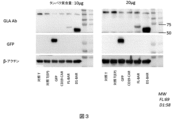
別の遺伝子導入方法として、mRNA Transfectionを行なった。BARを構成する塩基配列をIn vitro transcription行うためのプラスミドベクター(pmRNAex、図12、図17)にサブクローニングし、mMESSAGEmMACHINE T7 Ultra kit, Catalog#AM1345(Thermo Fisher Science社)を用いてBAR mRNAフラグメントを単離した。MaxCyte社のエレクトロポレーション装置によりBARをコードするmRNAを、ヒトT細胞に導入し、タンパク発現量をウエスタンブロッティングにて確認した。エレクトロポレーションから14時間後にβアクチンをハウスキーピング・プロテインとして、BARの発現量の測定を行なった。この結果からGLA BARのmRNAをエレクトロポレーション法によりヒトT細胞へ導入することで、BARが発現することが確認された。なお、D1 regionを抗体結合ドメインとしたBARはFLを抗体結合ドメインとしたBARと比較して、極めて強い発現を示した(図3)。
3. Preparation of GLA BAR-T cells The two types of BAR sequences specified in 2 above were subcloned into a general-purpose plasmid, and multiple restriction enzyme sites were introduced into the 5' side of the spacer of this sequence. The antigen sequence was recombined using these restriction enzyme sites. The base sequence of the full-length protein or D1 region of GLA, which is the antibody binding domain, was amplified by PCR, and after confirming by sequencing that the sequence was free of mutations, it was recombined into the above-mentioned plasmid.
Using the recombinant plasmids as described above, the nucleotide sequence encoding the full-length GLA protein (Full Length: FL) BAR and the nucleotide sequence encoding the GLA BAR of the D1 region were inserted into a retroviral vector (FIGS. 15 and 16) or a lentiviral vector (FIGS. 9 and 10), respectively, to prepare viral vectors.
This vector was used to introduce genes into human T cells to generate FL BAR-T cells and D1 BAR-T cells. FACS was performed using an anti-GLA antibody. The results are shown in Figure 2. A rightward shift in the mean fluorescence intensity was observed, indicating that BAR was expressed in FL BAR-T cells and D1 BAR-T cells, leading to increased fluorescence intensity.
As another gene transfer method, mRNA transfection was performed. The base sequence constituting BAR was subcloned into a plasmid vector (pmRNAex, FIG. 12, FIG. 17) for in vitro transcription, and the BAR mRNA fragment was isolated using mMESSAGEmMACHINE T7 Ultra kit, Catalog#AM1345 (Thermo Fisher Science). The mRNA encoding BAR was introduced into human T cells using a MaxCyte electroporation device, and the protein expression level was confirmed by Western blotting. 14 hours after electroporation, the expression level of BAR was measured using β-actin as a housekeeping protein. These results confirmed that the expression of BAR was achieved by electroporating GLA BAR mRNA into human T cells. The BAR with the D1 region as the antibody-binding domain showed significantly stronger expression than the BAR with the FL region as the antibody-binding domain (Figure 3).
4.抗GLA抗体過剰発現細胞(anti-GLA scFv 過剰発現M1細胞)の作製
ヒトGLAのタンパク質を接種したマウスの脾臓細胞とミエローマ細胞を融合し、ハイブリドーマを取得した。この雑多なハイブリドーマ集団をHAT培地にてポジティブセレクションして抗GLAモノクローナル抗体を産生するハイブリドーマを取得した(図4)。
次に、抗GLAモノクローナル抗体産生B細胞からAntibody sequencingを行い、抗GLAモノクローナル抗体の重鎖及び軽鎖の可変領域のアミノ酸配列を取得した。取得したアミノ酸配列を元にリンカーを間に入れて抗GLA抗体のscFvの配列を作出した(図5)。抗GLA抗体のscFvのアミノ酸配列、及びそれをコードする塩基配列をそれぞれ配列番号18及び配列番号9に示す。
上記により特定した抗GLA抗体のscFvの塩基配列をサブクローニングしてプラスミドベクターに組換えを行った(図6)。
得られたプラスミドベクターをサブクローニングし、レトロウイルスベクターに組換え、マウス骨髄性白血病由来の株化細胞であるM1細胞に感染させることにより抗GLA抗体のscFvを強制発現させたTransfectantを作出し、中和抗体産生B細胞のモデル細胞とした。作製したモデル細胞が抗GLA抗体を過剰発現していることが、この細胞を対象としたGLA-mCherryの結合アッセイより確認された(図11)。
4. Preparation of anti-GLA antibody overexpressing cells (anti-GLA scFv overexpressing M1 cells) Spleen cells from mice inoculated with human GLA protein were fused with myeloma cells to obtain hybridomas. This diverse hybridoma population was positively selected in HAT medium to obtain hybridomas producing anti-GLA monoclonal antibodies (Figure 4).
Next, antibody sequencing was performed on the anti-GLA monoclonal antibody-producing B cells to obtain the amino acid sequences of the heavy and light chain variable regions of the anti-GLA monoclonal antibody. Based on the obtained amino acid sequence, a linker was inserted between the anti-GLA antibody scFv sequence (FIG. 5). The amino acid sequence of the anti-GLA antibody scFv and the base sequence encoding it are shown in SEQ ID NO: 18 and SEQ ID NO: 9, respectively.
The base sequence of the scFv of the anti-GLA antibody identified above was subcloned and recombined into a plasmid vector (FIG. 6).
The obtained plasmid vector was subcloned, recombined into a retrovirus vector, and then infected into M1 cells, a cell line derived from mouse myeloid leukemia, to produce transfectants that forcibly express the scFv of the anti-GLA antibody, which were used as model cells for neutralizing antibody-producing B cells. The overexpression of anti-GLA antibody in the model cells was confirmed by a GLA-mCherry binding assay using these cells (Figure 11).
5.CD19 CAR-T細胞の作製
非特許文献(New England Journal of Medicine 2014;371(16):1507-1517)のMaterial and Methodに従って、特許文献(WO2012079000A1 配列番号8)にあるCD19 CAR-Tをコードする塩基配列をレトロウイルスベクターもしくはレンチウイルスベクターに挿入し、レトロウイルスもしくはレンチウイルスベクターを作製後にレトロネクチンを用いてヒトT細胞に遺伝子導入を行い、CD19 CAR-T細胞を作製した。
5. Preparation of CD19 CAR-T cells According to the Material and Method of the non-patent document (New England Journal of
6.In Vitro細胞障害性試験
(方法)
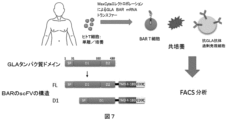
2で作製した2種類のGLA BAR-T細胞と、3で作製した抗GLA抗体のscFvを強制発現させたM1細胞に対する細胞障害性試験の概略を図7に示す。抗体結合ドメインとしてGLAの全長タンパク質を採用した「FL BAR-T細胞」、とGLAのD1領域を採用した「D1 BAR-T細胞」を検討対象とした。免疫細胞はヒトprimary T細胞で、T細胞培養方法及び細胞障害性試験のプロトコルはCD19 CAR-T細胞のValidationにおける実験と同様の方法である(非特許文献Frontiers in immunology 8,1956(2018)又は非特許文献Science 353,179-184(2016))。方法は、ヒト末梢血より比重遠心法により単核球分画を取得し、これをanti-CD3/CD28抗体を接着させたプレートに移し、T cellの選択的増殖を促した。翌日に、IL-7:20ug/mlとIL-15:10ug/mlでT細胞にエフェクター細胞への分化を抑え、Memory(Stem)細胞に維持しながら増殖刺激を与えた。このサイトカインは、CAR-T細胞の細胞障害活性を最も強く保ち、in vivoに投与した時にもその細胞障害活性が最もよく保持されていた組み合わせとして報告されている。2日目に抗CD19 CAR又はBARをコードする組換えレトロウイルスによって、刺激されたヒトT細胞に遺伝子を導入し、5日目に抗GLA抗体のscFvを発現したM1細胞、感染コントロールとしてのGFPを導入したM1細胞と共培養を開始し、0日目と4日目にFACSにて解析を行った。
BAR-T細胞とGFPを遺伝子導入したM1細胞との共培養は遺伝子導入コントロールとして、CD19 CAR-T細胞と抗GLA抗体のscFv過剰発現M1細胞との共培養は非特異的な障害の可能性を排除するために供した。
6. In Vitro Cytotoxicity Test (Method)
Figure 7 shows an outline of the cytotoxicity test against the two types of GLA BAR-T cells prepared in 2 and M1 cells in which the scFv of the anti-GLA antibody prepared in 3 was forcibly expressed. The subjects of the study were "FL BAR-T cells" using the full-length GLA protein as the antibody binding domain, and "D1 BAR-T cells" using the D1 region of GLA. The immune cells were human primary T cells, and the T cell culture method and the protocol for the cytotoxicity test were the same as those used in the validation of CD19 CAR-T cells (Non-Patent Document Frontiers in Immunology 8, 1956 (2018) or Non-Patent Document Science 353, 179-184 (2016)). The method was to obtain a mononuclear cell fraction from human peripheral blood by density centrifugation, transfer it to a plate to which anti-CD3/CD28 antibody had been attached, and promote selective proliferation of T cells. On the next day, proliferation stimulation was given to T cells with IL-7: 20 ug/ml and IL-15: 10 ug/ml, suppressing differentiation into effector cells and maintaining them as memory (stem) cells. This cytokine has been reported as the combination that most strongly maintains the cytotoxic activity of CAR-T cells, and best retains the cytotoxic activity when administered in vivo. On the second day, a gene was introduced into stimulated human T cells by a recombinant retrovirus encoding anti-CD19 CAR or BAR, and on the fifth day, co-culture was started with M1 cells expressing scFv of anti-GLA antibody and M1 cells introduced with GFP as an infection control, and analysis was performed by FACS on
Coculture of BAR-T cells and M1 cells transfected with GFP served as a gene transfection control, and coculture of CD19 CAR-T cells and M1 cells overexpressing an scFv of an anti-GLA antibody was performed to exclude the possibility of nonspecific damage.
(結果)
結果を図8に示す。共培養開始から4日後にFACSによる解析を実施した。X軸は、APC 抗CD3抗体で共培養細胞を染色してFACSにかけている。M1細胞の生細胞率は、コントロールであるGFP導入M1細胞とBAR-T細胞との共培養(図8下段 GFP)では72.3%を示し、抗GLA抗体のscFv過剰発現したM1細胞とCD19 CAR-T細胞との共培養(図8下段 CD19)では66.9%を示し、非特異的反応がないことを確認した。一方、抗GLA抗体のscFv過剰発現したM1細胞とFL BAR-T細胞との共培養(図8下段 FL)ではM1細胞は56.4%、抗GLA抗体のscFv過剰発現したM1細胞とD1 BAR-T細胞との共培養(図8下段 D1)ではM1細胞は50.8%を示し、コントロールと比較し有意にM1細胞の細胞数を減少させることに成功した。また、この細胞障害性試験の結果、及びタンパク質発現の強度・安定性からD1 regionを細胞外ドメインとするGLA BAR-T細胞はより抗GLA抗体産生B細胞の特異的除去に有効であると判断された。
(result)
The results are shown in Figure 8. Analysis by FACS was performed 4 days after the start of co-culture. The X-axis represents the results of staining the co-cultured cells with APC anti-CD3 antibody and subjecting them to FACS. The viability of M1 cells was 72.3% in the co-culture of the control GFP-introduced M1 cells with BAR-T cells (Figure 8, lower row, GFP), and 66.9% in the co-culture of M1 cells overexpressing the scFv of the anti-GLA antibody with CD19 CAR-T cells (Figure 8, lower row, CD19), confirming the absence of non-specific reactions. On the other hand, in the co-culture of M1 cells overexpressing scFv of anti-GLA antibody with FL BAR-T cells (FIG. 8, lower row, FL), the M1 cell count was 56.4%, and in the co-culture of M1 cells overexpressing scFv of anti-GLA antibody with D1 BAR-T cells (FIG. 8, lower row, D1), the M1 cell count was 50.8%, which successfully reduced the number of M1 cells significantly compared to the control. In addition, based on the results of this cytotoxicity test and the strength and stability of protein expression, it was determined that GLA BAR-T cells having the D1 region as the extracellular domain are more effective in specifically removing anti-GLA antibody-producing B cells.
7.標的細胞(anti-GLA scFv発現細胞)の調製
白血病のヒト前駆B細胞株であるNalm6(RCB1933)(理研セルバンクより購入)に、抗GLA抗体のscFvをコードしたレトロウイルスベクター(図21)を導入し、BAR-T細胞の標的モデル細胞を作製した。レトロウイルスベクター導入後mCherryでソーティングを行い、ビオチン標識した抗Fab2抗体を反応させた後、蛍光標識したストレプトアビジンを反応させ、解析した結果、作成した標的モデル細胞による抗GLA抗体の発現が確認された(図24)。
7. Preparation of target cells (anti-GLA scFv expressing cells) A retroviral vector (FIG. 21) encoding the scFv of anti-GLA antibody was introduced into Nalm6 (RCB1933), a human leukemia precursor B cell line (purchased from Riken Cell Bank), to prepare target model cells for BAR-T cells. After the introduction of the retroviral vector, sorting was performed using mCherry, and the cells were reacted with biotin-labeled anti-Fab2 antibody, and then reacted with fluorescently labeled streptavidin. Analysis confirmed the expression of anti-GLA antibody by the target model cells (FIG. 24).
8.GLA BAR-T細胞の調製
ヒト白血病T細胞株であるJurkatに、hGLAのアミノ酸配列(配列番号10、DNA配列は配列番号1)をコードしたレトロウイルスベクター(図20)を導入し、BAR-T細胞を作製した。レトロウイルスベクターで遺伝子導入後、GFPでソーティングし(図25)、抗GLA抗体を反応させた後、蛍光標識した二次抗体を反応させ、解析した結果、BARの発現を確認した(図26)。
8. Preparation of GLA BAR-T cells A retroviral vector (FIG. 20) encoding the amino acid sequence of hGLA (SEQ ID NO: 10, DNA sequence SEQ ID NO: 1) was introduced into Jurkat, a human leukemia T cell line, to prepare BAR-T cells. After gene introduction with the retroviral vector, the cells were sorted by GFP (FIG. 25), reacted with anti-GLA antibody, and then reacted with a fluorescently labeled secondary antibody. Analysis confirmed the expression of BAR (FIG. 26).
9.混合培養によるBAR-T細胞の活性化確認
8で作製したBAR-T細胞(Jurkat-GLA-BAR2-EGFP:Effector)と7で作製した標的細胞(NALM6-scFv-GLA-mCherry:Target)を混合比率1:0、2:1、1:1で24時間混合培養し、CD69の検出試験を行った。Jurkatは活性化するとCD69の発現が増加することが知られており、Jurkatに導入したBAR-T細胞が、標的細胞の抗GLA抗体のscFvと結合し、活性化シグナルが入るならば、混合比に依存して、CD69の発現が増加すると考えられた。混合培養を実施した結果、標的細胞が存在していないコントロール(E:T=1:0)と比較して、標的細胞の存在下では、CD69の発現が増加しており、標的細胞が増加(E:T=2:1→1:1)するとCD69の発現はさらに増加した(図27)。このことより、BAR-T細胞は、抗原特異的に活性化することが確認された。
9. Confirmation of BAR-T cell activation by mixed culture The BAR-T cells (Jurkat-GLA-BAR2-EGFP: Effector) prepared in 8 and the target cells (NALM6-scFv-GLA-mCherry: Target) prepared in 7 were mixed and cultured for 24 hours at a mixing ratio of 1:0, 2:1, and 1:1, and a CD69 detection test was performed. It is known that the expression of CD69 increases when Jurkat is activated, and if the BAR-T cells introduced into Jurkat bind to the scFv of the anti-GLA antibody of the target cells and an activation signal is received, it was thought that the expression of CD69 would increase depending on the mixing ratio. As a result of performing mixed culture, CD69 expression was increased in the presence of target cells compared to the control (E:T = 1:0) in which no target cells were present, and CD69 expression further increased when the number of target cells was increased (E:T = 2:1 → 1:1) (Figure 27). This confirmed that BAR-T cells are activated in an antigen-specific manner.
10. BAR-T細胞の調製(ADAMTS13)
ヒト白血病T細胞株であるJurkatに、ADAMTS13のアミノ酸配列をコードしたレトロウイルスベクター(図22)を導入し、BAR-T細胞を作製した。レトロウイルスベクターで遺伝子導入後、GFPでソーティングし、HA-TAGでADAMTS13の発現を確認した(図28、29)。
10. Preparation of BAR-T cells (ADAMTS13)
A retroviral vector encoding the amino acid sequence of ADAMTS13 (FIG. 22) was introduced into Jurkat, a human leukemia T cell line, to generate BAR-T cells. After gene introduction with the retroviral vector, the cells were sorted by GFP, and the expression of ADAMTS13 was confirmed by HA-TAG (FIGS. 28 and 29).
本件発明を用いることにより、特定の抗体を産生するB細胞を特異的に傷害・排除することができるため、酵素補充療法を行っているにもかかわらず、当該酵素に対する抗体が産生され、十分な治療効果を得られないライソゾーム病等の患者の改善が期待できる。また、本件発明は、抗体に起因する疾患に対する治療薬としても期待できる。 By using this invention, it is possible to specifically damage and eliminate B cells that produce specific antibodies, which is expected to improve the condition of patients with lysosomal diseases who, despite undergoing enzyme replacement therapy, are unable to obtain sufficient therapeutic effects due to the production of antibodies against the enzyme in question. This invention is also expected to be useful as a treatment for diseases caused by antibodies.
配列番号 1 <223> α-GAL全長タンパク質をコードするDNA
配列番号 2 <223> α-GAL D1領域タンパク質をコードするDNA
配列番号 3 <223> ADAMTS13のスペーサードメインをコードするDNA
配列番号 4 <223> ADAMTS13のシステインリッチドメインをコードするDNA
配列番号 5 <223> シグナル配列Leader2をコードするDNA
配列番号 6 <223> 膜貫通ドメインをコードするDNA
配列番号 7 <223> 4-1BBをコードするDNA
配列番号 8 <223> CD3ζをコードするDNA
配列番号 9 <223> 抗GLA抗体のscFvをコードするDNA
配列番号 10 <223> α-GAL全長タンパク質
配列番号 11 <223> α-GAL D1領域タンパク質
配列番号 12 <223> ADAMTS13のスペーサードメイン
配列番号 13 <223> ADAMTS13のシステインリッチドメイン
配列番号 14 <223> シグナル配列Leader2タンパク質
配列番号 15 <223> 膜貫通ドメインタンパク質
配列番号 16 <223> 4-1BBタンパク質
配列番号 17 <223> CD3ζタンパク質
配列番号 18 <223> 抗GLA抗体のscFvタンパク質
配列番号 19 <223> α-GALのプライマー(前)
配列番号 20 <223> α-GALのプライマー(後:全長用)
配列番号 21 <223> α-GALのプライマー(後:D1領域用)
配列番号 22 <223> TM, 4-1BB, CD3ζのプライマー(前)
配列番号 23 <223> TM, 4-1BB, CD3ζのプライマー(後)
配列番号 24 <223> シグナル配列Leader1をコードするDNA
配列番号 25 <223> シグナル配列Leader1タンパク質
配列番号 26 <223> ヒトCD8シグナルペプチドをコードするDNA
配列番号 27 <223> ヒトCD8シグナルペプチド
配列番号 28 <223> HAをコードするDNA
配列番号 29 <223> HAタンパク質
配列番号 30 <223> IgG4抗体ヒンジ領域をコードするDNA
配列番号 31 <223> IgG4抗体ヒンジ領域タンパク質
配列番号 32 <223> ヒトIgG抗GLA抗体L鎖をコードするDNA
配列番号 33 <223> ヒトIgG抗GLA抗体L鎖タンパク質
配列番号 34 <223> mCherryをコードするDNA
配列番号 35 <223> mCherryタンパク質
配列番号 36 <223> 抗GLA抗体のscFvをコードするDNA
配列番号 37 <223> ADAMTS13のスペーサードメインをコードするDNA
配列番号 38 <223> ADAMTS13のスペーサードメイン
配列番号 39 <223> ヒトIgG抗ADAMTS13抗体L鎖シグナルペプチドをコードするDNA
配列番号 40 <223> ヒトIgG抗ADAMTS13抗体L鎖シグナルペプチド
配列番号 41 <223> 抗ADAMTS13抗体のscFvをコードするDNA
配列番号 42 <223> 抗ADAMTS13抗体のscFv
配列番号 43 <223> ヒトCD8a膜貫通ドメインをコードするDNA
配列番号 44 <223> ヒトCD8a膜貫通ドメイン
SEQ ID NO: 1 <223> DNA encoding the full-length α-GAL protein
SEQ ID NO: 2 <223> DNA encoding α-GAL D1 domain protein
SEQ ID NO: 3 <223> DNA encoding the spacer domain of ADAMTS13
SEQ ID NO: 4 <223> DNA encoding the cysteine-rich domain of ADAMTS13
SEQ ID NO: 5 <223> DNA encoding signal sequence Leader2
SEQ ID NO: 6 <223> DNA encoding transmembrane domain
SEQ ID NO: 7 <223> DNA encoding 4-1BB
SEQ ID NO: 8 <223> DNA encoding CD3ζ
SEQ ID NO: 9 <223> DNA encoding the scFv of anti-GLA antibody
SEQ ID NO: 10 <223> α-GAL full length protein SEQ ID NO: 11 <223> α-GAL D1 region protein SEQ ID NO: 12 <223> ADAMTS13 spacer domain SEQ ID NO: 13 <223> ADAMTS13 cysteine-rich domain SEQ ID NO: 14 <223> Signal sequence Leader2 protein SEQ ID NO: 15 <223> Transmembrane domain protein SEQ ID NO: 16 <223> 4-1BB protein SEQ ID NO: 17 <223> CD3ζ protein SEQ ID NO: 18 <223> Anti-GLA antibody scFv protein SEQ ID NO: 19 <223> α-GAL primer (first)
SEQ ID NO: 20 <223> Primer for α-GAL (following: for full length)
SEQ ID NO: 21 <223> Primer for α-GAL (following: for D1 region)
SEQ ID NO: 22 <223> TM, 4-1BB, CD3ζ primer (first)
SEQ ID NO: 23 <223> TM, 4-1BB, CD3ζ primer (after)
SEQ ID NO: 24 <223> DNA encoding signal sequence Leader1
SEQ ID NO: 25 <223> Signal sequence Leader1 protein SEQ ID NO: 26 <223> DNA encoding human CD8 signal peptide
SEQ ID NO: 27 <223> Human CD8 signal peptide SEQ ID NO: 28 <223> DNA encoding HA
SEQ ID NO: 29 <223> HA protein SEQ ID NO: 30 <223> DNA encoding the IgG4 antibody hinge region
SEQ ID NO: 31 <223> IgG4 antibody hinge region protein SEQ ID NO: 32 <223> DNA encoding human IgG anti-GLA antibody L chain
SEQ ID NO: 33 <223> Human IgG anti-GLA antibody L chain protein SEQ ID NO: 34 <223> DNA encoding mCherry
SEQ ID NO: 35 <223> mCherry protein SEQ ID NO: 36 <223> DNA encoding scFv of anti-GLA antibody
SEQ ID NO: 37 <223> DNA encoding the spacer domain of ADAMTS13
SEQ ID NO: 38 <223> Spacer domain of ADAMTS13 SEQ ID NO: 39 <223> DNA encoding human IgG anti-ADAMTS13 antibody L chain signal peptide
SEQ ID NO: 40 <223> Human IgG anti-ADAMTS13 antibody L chain signal peptide SEQ ID NO: 41 <223> DNA encoding scFv of anti-ADAMTS13 antibody
SEQ ID NO: 42 <223> scFv of anti-ADAMTS13 antibody
SEQ ID NO: 43 <223> DNA encoding human CD8a transmembrane domain
SEQ ID NO: 44 <223> human CD8a transmembrane domain
Claims (13)
前記a)抗体結合ドメインがα-GALの全長タンパク質を含み、該α-GALの全長タンパク質をコードする塩基配列が配列番号1に記載の塩基配列、又は同一の機能を有する、配列番号1に記載の塩基配列と95%以上の同一の塩基配列を含む、或いは
前記a)抗体結合ドメインがα-GALの抗体認識配列領域(D1 region)を含み、該α-GALの抗体認識配列領域(D1 region)をコードする塩基配列が配列番号2に記載の塩基配列、又は同一の機能を有する、配列番号2に記載の塩基配列と95%以上の同一の塩基配列を含む、
B細胞抗体受容体。 A B cell antibody receptor comprising: a) an antibody binding domain; b) a transmembrane domain; c) an intracellular domain of a costimulatory factor; and d) an intracellular domain of an activating receptor,
a) the antibody-binding domain comprises a full-length α-GAL protein, and the nucleotide sequence encoding the full-length α-GAL protein comprises the nucleotide sequence set forth in SEQ ID NO: 1, or a nucleotide sequence having the same function and 95% or more identical to the nucleotide sequence set forth in SEQ ID NO: 1; or
a) the antibody-binding domain comprises an antibody recognition sequence region (D1 region) of α-GAL, and a base sequence encoding the antibody recognition sequence region (D1 region) of α-GAL comprises a base sequence set forth in SEQ ID NO: 2, or a base sequence having the same function and 95% or more identical to the base sequence set forth in SEQ ID NO: 2;
B cell antibody receptor.
Applications Claiming Priority (3)
| Application Number | Priority Date | Filing Date | Title |
|---|---|---|---|
| JP2019199624 | 2019-11-01 | ||
| JP2019199624 | 2019-11-01 | ||
| PCT/JP2020/040515 WO2021085504A1 (en) | 2019-11-01 | 2020-10-28 | B-cell antibody receptor and use thereof |
Publications (2)
| Publication Number | Publication Date |
|---|---|
| JPWO2021085504A1 JPWO2021085504A1 (en) | 2021-05-06 |
| JP7656830B2 true JP7656830B2 (en) | 2025-04-04 |
Family
ID=75716286
Family Applications (1)
| Application Number | Title | Priority Date | Filing Date |
|---|---|---|---|
| JP2021553671A Active JP7656830B2 (en) | 2019-11-01 | 2020-10-28 | B cell antibody receptor and its uses |
Country Status (4)
| Country | Link |
|---|---|
| US (1) | US20220403002A1 (en) |
| EP (1) | EP4070855B1 (en) |
| JP (1) | JP7656830B2 (en) |
| WO (1) | WO2021085504A1 (en) |
Citations (1)
| Publication number | Priority date | Publication date | Assignee | Title |
|---|---|---|---|---|
| WO2018140573A1 (en) | 2017-01-26 | 2018-08-02 | Sangamo Therapeutics, Inc. | B-cell engineering |
Family Cites Families (6)
| Publication number | Priority date | Publication date | Assignee | Title |
|---|---|---|---|---|
| GR1001034B (en) | 1989-07-21 | 1993-03-31 | Ortho Pharma Corp | METHOD OF CONTROL OF THE MULTIPLICATOR OF REGIONAL BLOOD. |
| US6210666B1 (en) * | 1997-10-21 | 2001-04-03 | Orphan Medical, Inc. | Truncated α-galactosidase A to treat fabry disease |
| WO2006006720A1 (en) | 2004-07-13 | 2006-01-19 | Medinet., Co.Ltd | METHOD OF CULTURING ϜδT CELLS, ϜδT CELLS AND REMEDY/PREVENTIVE |
| JP4275680B2 (en) | 2006-04-28 | 2009-06-10 | 裕 照沼 | Culture methods for lymphocyte activity / proliferation |
| KR20090127974A (en) | 2008-06-10 | 2009-12-15 | 주식회사 엔케이바이오 | Medium composition for self-activating lymphocyte culture |
| PH12013501201A1 (en) | 2010-12-09 | 2013-07-29 | Univ Pennsylvania | Use of chimeric antigen receptor-modified t cells to treat cancer |
-
2020
- 2020-10-28 JP JP2021553671A patent/JP7656830B2/en active Active
- 2020-10-28 WO PCT/JP2020/040515 patent/WO2021085504A1/en not_active Ceased
- 2020-10-28 US US17/773,241 patent/US20220403002A1/en active Pending
- 2020-10-28 EP EP20882274.2A patent/EP4070855B1/en active Active
Patent Citations (1)
| Publication number | Priority date | Publication date | Assignee | Title |
|---|---|---|---|---|
| WO2018140573A1 (en) | 2017-01-26 | 2018-08-02 | Sangamo Therapeutics, Inc. | B-cell engineering |
Non-Patent Citations (3)
| Title |
|---|
| Adair P. R. et al.,Front. Immunol.,2017年,Vol. 8, Article 1117,pp. 1-10 |
| PARVATHANENI, K. and SCOTT, D. W.,Blood Advances,2018年,Vol.2, No.18,P.2332-2340 |
| 松本雅則,III. 診断と医療 4.血栓性血小板減少性紫斑病,日本内科学会雑誌,2014年,Vol.103, No.7,P.1613-1621 |
Also Published As
| Publication number | Publication date |
|---|---|
| WO2021085504A1 (en) | 2021-05-06 |
| EP4070855B1 (en) | 2025-12-24 |
| EP4070855C0 (en) | 2025-12-24 |
| EP4070855A1 (en) | 2022-10-12 |
| US20220403002A1 (en) | 2022-12-22 |
| JPWO2021085504A1 (en) | 2021-05-06 |
| EP4070855A4 (en) | 2024-04-03 |
Similar Documents
| Publication | Publication Date | Title |
|---|---|---|
| JP7216045B2 (en) | Central memory T cells for adoptive T cell therapy | |
| TWI908706B (en) | Cartyrin compositions and methods for use | |
| KR102437015B1 (en) | Transgenic T Cells and Chimeric Antigen Receptor T Cell Compositions and Related Methods | |
| JP7720148B2 (en) | Regulatory T cells expressing chimeric antigen receptors | |
| AU2025223904A1 (en) | Methods, compositions and components for CRISPR-CAS9 editing of TGFBR2 in T cells for immunotherapy | |
| US11154572B2 (en) | Methods of treatment with natural killer cells matched for killer immunoglobulin receptor type | |
| US20260002159A1 (en) | Methods, compositions and components for crispr-cas9 editing of cblb in t cells for immunotherapy | |
| KR20250010750A (en) | Vcar compositions and methods for use | |
| JP2022511345A (en) | Method of gene editing of cells based on CRISPR / Cas system | |
| AU2016379393A1 (en) | Engineered meganucleases with recognition sequences found in the human beta-2 microglobulin gene | |
| KR20220070449A (en) | Methods and compositions for transformation and delivery of lymphocytes | |
| KR20200142037A (en) | Optimized engineered nuclease with specificity for human T cell receptor alpha constant region genes | |
| JP7637379B2 (en) | Modified TCR and method for producing same | |
| JP2021536245A (en) | Methods and Compositions for Gene Modification of Lymphocytes in Blood or Concentrated PBMCs | |
| CN113727720A (en) | Chimeric antigen receptor modified cells for the treatment of CLDN6 expressing cancers | |
| KR20180041087A (en) | Methods and compositions for treating cancer | |
| US12473342B2 (en) | Chimeric antigen receptor T regulatory cells for the treatment of atherosclerosis | |
| JP2021519107A (en) | Genetically reprogrammed Tregs expressing membrane-bound IL-10 | |
| TWI835848B (en) | Conditionally active chimeric antigen receptors for modified t-cells | |
| Jacobsen et al. | Naive idiotope-specific B and T cells collaborate efficiently in the absence of dendritic cells | |
| US20260027208A1 (en) | Host cells bearing kras binding protein and knockout of endogenous tcr and methods of use thereof | |
| US20240084256A1 (en) | Method for culturing cord blood-derived natural killer cells using transformed t-cells | |
| CN111378046B (en) | Immune effector cell conversion receptor | |
| EP4070855B1 (en) | B-cell antibody receptor and use thereof | |
| HK40118416A (en) | A chimeric antigen receptor, a recombinant immune cell and uses |
Legal Events
| Date | Code | Title | Description |
|---|---|---|---|
| A521 | Request for written amendment filed |
Free format text: JAPANESE INTERMEDIATE CODE: A821 Effective date: 20220426 |
|
| A621 | Written request for application examination |
Free format text: JAPANESE INTERMEDIATE CODE: A621 Effective date: 20231026 |
|
| A131 | Notification of reasons for refusal |
Free format text: JAPANESE INTERMEDIATE CODE: A131 Effective date: 20240903 |
|
| A601 | Written request for extension of time |
Free format text: JAPANESE INTERMEDIATE CODE: A601 Effective date: 20241031 |
|
| A521 | Request for written amendment filed |
Free format text: JAPANESE INTERMEDIATE CODE: A523 Effective date: 20241224 |
|
| TRDD | Decision of grant or rejection written | ||
| A01 | Written decision to grant a patent or to grant a registration (utility model) |
Free format text: JAPANESE INTERMEDIATE CODE: A01 Effective date: 20250311 |
|
| A61 | First payment of annual fees (during grant procedure) |
Free format text: JAPANESE INTERMEDIATE CODE: A61 Effective date: 20250313 |
|
| R150 | Certificate of patent or registration of utility model |
Ref document number: 7656830 Country of ref document: JP Free format text: JAPANESE INTERMEDIATE CODE: R150 |