JP7682190B2 - Object velocity and/or yaw rate detection and tracking - Google Patents
Object velocity and/or yaw rate detection and tracking Download PDFInfo
- Publication number
- JP7682190B2 JP7682190B2 JP2022546428A JP2022546428A JP7682190B2 JP 7682190 B2 JP7682190 B2 JP 7682190B2 JP 2022546428 A JP2022546428 A JP 2022546428A JP 2022546428 A JP2022546428 A JP 2022546428A JP 7682190 B2 JP7682190 B2 JP 7682190B2
- Authority
- JP
- Japan
- Prior art keywords
- object detection
- journey
- previous
- velocity
- estimated
- Prior art date
- Legal status (The legal status is an assumption and is not a legal conclusion. Google has not performed a legal analysis and makes no representation as to the accuracy of the status listed.)
- Active
Links
Images


Classifications
-
- G—PHYSICS
- G06—COMPUTING OR CALCULATING; COUNTING
- G06T—IMAGE DATA PROCESSING OR GENERATION, IN GENERAL
- G06T7/00—Image analysis
- G06T7/20—Analysis of motion
- G06T7/246—Analysis of motion using feature-based methods, e.g. the tracking of corners or segments
- G06T7/248—Analysis of motion using feature-based methods, e.g. the tracking of corners or segments involving reference images or patches
-
- B—PERFORMING OPERATIONS; TRANSPORTING
- B60—VEHICLES IN GENERAL
- B60W—CONJOINT CONTROL OF VEHICLE SUB-UNITS OF DIFFERENT TYPE OR DIFFERENT FUNCTION; CONTROL SYSTEMS SPECIALLY ADAPTED FOR HYBRID VEHICLES; ROAD VEHICLE DRIVE CONTROL SYSTEMS FOR PURPOSES NOT RELATED TO THE CONTROL OF A PARTICULAR SUB-UNIT
- B60W60/00—Drive control systems specially adapted for autonomous road vehicles
- B60W60/001—Planning or execution of driving tasks
-
- B—PERFORMING OPERATIONS; TRANSPORTING
- B60—VEHICLES IN GENERAL
- B60W—CONJOINT CONTROL OF VEHICLE SUB-UNITS OF DIFFERENT TYPE OR DIFFERENT FUNCTION; CONTROL SYSTEMS SPECIALLY ADAPTED FOR HYBRID VEHICLES; ROAD VEHICLE DRIVE CONTROL SYSTEMS FOR PURPOSES NOT RELATED TO THE CONTROL OF A PARTICULAR SUB-UNIT
- B60W60/00—Drive control systems specially adapted for autonomous road vehicles
- B60W60/001—Planning or execution of driving tasks
- B60W60/0027—Planning or execution of driving tasks using trajectory prediction for other traffic participants
- B60W60/00272—Planning or execution of driving tasks using trajectory prediction for other traffic participants relying on extrapolation of current movement
-
- G—PHYSICS
- G01—MEASURING; TESTING
- G01S—RADIO DIRECTION-FINDING; RADIO NAVIGATION; DETERMINING DISTANCE OR VELOCITY BY USE OF RADIO WAVES; LOCATING OR PRESENCE-DETECTING BY USE OF THE REFLECTION OR RERADIATION OF RADIO WAVES; ANALOGOUS ARRANGEMENTS USING OTHER WAVES
- G01S13/00—Systems using the reflection or reradiation of radio waves, e.g. radar systems; Analogous systems using reflection or reradiation of waves whose nature or wavelength is irrelevant or unspecified
- G01S13/86—Combinations of radar systems with non-radar systems, e.g. sonar, direction finder
- G01S13/867—Combination of radar systems with cameras
-
- G—PHYSICS
- G01—MEASURING; TESTING
- G01S—RADIO DIRECTION-FINDING; RADIO NAVIGATION; DETERMINING DISTANCE OR VELOCITY BY USE OF RADIO WAVES; LOCATING OR PRESENCE-DETECTING BY USE OF THE REFLECTION OR RERADIATION OF RADIO WAVES; ANALOGOUS ARRANGEMENTS USING OTHER WAVES
- G01S13/00—Systems using the reflection or reradiation of radio waves, e.g. radar systems; Analogous systems using reflection or reradiation of waves whose nature or wavelength is irrelevant or unspecified
- G01S13/88—Radar or analogous systems specially adapted for specific applications
- G01S13/89—Radar or analogous systems specially adapted for specific applications for mapping or imaging
-
- G—PHYSICS
- G01—MEASURING; TESTING
- G01S—RADIO DIRECTION-FINDING; RADIO NAVIGATION; DETERMINING DISTANCE OR VELOCITY BY USE OF RADIO WAVES; LOCATING OR PRESENCE-DETECTING BY USE OF THE REFLECTION OR RERADIATION OF RADIO WAVES; ANALOGOUS ARRANGEMENTS USING OTHER WAVES
- G01S13/00—Systems using the reflection or reradiation of radio waves, e.g. radar systems; Analogous systems using reflection or reradiation of waves whose nature or wavelength is irrelevant or unspecified
- G01S13/88—Radar or analogous systems specially adapted for specific applications
- G01S13/93—Radar or analogous systems specially adapted for specific applications for anti-collision purposes
- G01S13/931—Radar or analogous systems specially adapted for specific applications for anti-collision purposes of land vehicles
-
- G—PHYSICS
- G01—MEASURING; TESTING
- G01S—RADIO DIRECTION-FINDING; RADIO NAVIGATION; DETERMINING DISTANCE OR VELOCITY BY USE OF RADIO WAVES; LOCATING OR PRESENCE-DETECTING BY USE OF THE REFLECTION OR RERADIATION OF RADIO WAVES; ANALOGOUS ARRANGEMENTS USING OTHER WAVES
- G01S17/00—Systems using the reflection or reradiation of electromagnetic waves other than radio waves, e.g. lidar systems
- G01S17/88—Lidar systems specially adapted for specific applications
- G01S17/89—Lidar systems specially adapted for specific applications for mapping or imaging
-
- G—PHYSICS
- G01—MEASURING; TESTING
- G01S—RADIO DIRECTION-FINDING; RADIO NAVIGATION; DETERMINING DISTANCE OR VELOCITY BY USE OF RADIO WAVES; LOCATING OR PRESENCE-DETECTING BY USE OF THE REFLECTION OR RERADIATION OF RADIO WAVES; ANALOGOUS ARRANGEMENTS USING OTHER WAVES
- G01S7/00—Details of systems according to groups G01S13/00, G01S15/00, G01S17/00
- G01S7/48—Details of systems according to groups G01S13/00, G01S15/00, G01S17/00 of systems according to group G01S17/00
- G01S7/4808—Evaluating distance, position or velocity data
-
- G—PHYSICS
- G05—CONTROLLING; REGULATING
- G05D—SYSTEMS FOR CONTROLLING OR REGULATING NON-ELECTRIC VARIABLES
- G05D1/00—Control of position, course, altitude or attitude of land, water, air or space vehicles, e.g. using automatic pilots
- G05D1/0088—Control of position, course, altitude or attitude of land, water, air or space vehicles, e.g. using automatic pilots characterized by the autonomous decision making process, e.g. artificial intelligence, predefined behaviours
-
- G—PHYSICS
- G05—CONTROLLING; REGULATING
- G05D—SYSTEMS FOR CONTROLLING OR REGULATING NON-ELECTRIC VARIABLES
- G05D1/00—Control of position, course, altitude or attitude of land, water, air or space vehicles, e.g. using automatic pilots
- G05D1/02—Control of position or course in two dimensions
- G05D1/021—Control of position or course in two dimensions specially adapted to land vehicles
- G05D1/0212—Control of position or course in two dimensions specially adapted to land vehicles with means for defining a desired trajectory
- G05D1/0219—Control of position or course in two dimensions specially adapted to land vehicles with means for defining a desired trajectory ensuring the processing of the whole working surface
-
- G—PHYSICS
- G05—CONTROLLING; REGULATING
- G05D—SYSTEMS FOR CONTROLLING OR REGULATING NON-ELECTRIC VARIABLES
- G05D1/00—Control of position, course, altitude or attitude of land, water, air or space vehicles, e.g. using automatic pilots
- G05D1/02—Control of position or course in two dimensions
- G05D1/021—Control of position or course in two dimensions specially adapted to land vehicles
- G05D1/0231—Control of position or course in two dimensions specially adapted to land vehicles using optical position detecting means
- G05D1/0246—Control of position or course in two dimensions specially adapted to land vehicles using optical position detecting means using a video camera in combination with image processing means
-
- G—PHYSICS
- G06—COMPUTING OR CALCULATING; COUNTING
- G06F—ELECTRIC DIGITAL DATA PROCESSING
- G06F18/00—Pattern recognition
- G06F18/20—Analysing
- G06F18/25—Fusion techniques
-
- G—PHYSICS
- G06—COMPUTING OR CALCULATING; COUNTING
- G06T—IMAGE DATA PROCESSING OR GENERATION, IN GENERAL
- G06T7/00—Image analysis
- G06T7/20—Analysis of motion
-
- G—PHYSICS
- G06—COMPUTING OR CALCULATING; COUNTING
- G06T—IMAGE DATA PROCESSING OR GENERATION, IN GENERAL
- G06T7/00—Image analysis
- G06T7/70—Determining position or orientation of objects or cameras
-
- G—PHYSICS
- G06—COMPUTING OR CALCULATING; COUNTING
- G06V—IMAGE OR VIDEO RECOGNITION OR UNDERSTANDING
- G06V10/00—Arrangements for image or video recognition or understanding
- G06V10/20—Image preprocessing
- G06V10/25—Determination of region of interest [ROI] or a volume of interest [VOI]
-
- G—PHYSICS
- G06—COMPUTING OR CALCULATING; COUNTING
- G06V—IMAGE OR VIDEO RECOGNITION OR UNDERSTANDING
- G06V20/00—Scenes; Scene-specific elements
- G06V20/50—Context or environment of the image
- G06V20/56—Context or environment of the image exterior to a vehicle by using sensors mounted on the vehicle
-
- B—PERFORMING OPERATIONS; TRANSPORTING
- B60—VEHICLES IN GENERAL
- B60W—CONJOINT CONTROL OF VEHICLE SUB-UNITS OF DIFFERENT TYPE OR DIFFERENT FUNCTION; CONTROL SYSTEMS SPECIALLY ADAPTED FOR HYBRID VEHICLES; ROAD VEHICLE DRIVE CONTROL SYSTEMS FOR PURPOSES NOT RELATED TO THE CONTROL OF A PARTICULAR SUB-UNIT
- B60W2420/00—Indexing codes relating to the type of sensors based on the principle of their operation
- B60W2420/40—Photo, light or radio wave sensitive means, e.g. infrared sensors
- B60W2420/403—Image sensing, e.g. optical camera
-
- B—PERFORMING OPERATIONS; TRANSPORTING
- B60—VEHICLES IN GENERAL
- B60W—CONJOINT CONTROL OF VEHICLE SUB-UNITS OF DIFFERENT TYPE OR DIFFERENT FUNCTION; CONTROL SYSTEMS SPECIALLY ADAPTED FOR HYBRID VEHICLES; ROAD VEHICLE DRIVE CONTROL SYSTEMS FOR PURPOSES NOT RELATED TO THE CONTROL OF A PARTICULAR SUB-UNIT
- B60W2420/00—Indexing codes relating to the type of sensors based on the principle of their operation
- B60W2420/40—Photo, light or radio wave sensitive means, e.g. infrared sensors
- B60W2420/408—Radar; Laser, e.g. lidar
-
- G—PHYSICS
- G06—COMPUTING OR CALCULATING; COUNTING
- G06T—IMAGE DATA PROCESSING OR GENERATION, IN GENERAL
- G06T2207/00—Indexing scheme for image analysis or image enhancement
- G06T2207/10—Image acquisition modality
- G06T2207/10028—Range image; Depth image; 3D point clouds
-
- G—PHYSICS
- G06—COMPUTING OR CALCULATING; COUNTING
- G06T—IMAGE DATA PROCESSING OR GENERATION, IN GENERAL
- G06T2207/00—Indexing scheme for image analysis or image enhancement
- G06T2207/10—Image acquisition modality
- G06T2207/10032—Satellite or aerial image; Remote sensing
- G06T2207/10044—Radar image
-
- G—PHYSICS
- G06—COMPUTING OR CALCULATING; COUNTING
- G06T—IMAGE DATA PROCESSING OR GENERATION, IN GENERAL
- G06T2207/00—Indexing scheme for image analysis or image enhancement
- G06T2207/20—Special algorithmic details
- G06T2207/20081—Training; Learning
-
- G—PHYSICS
- G06—COMPUTING OR CALCULATING; COUNTING
- G06T—IMAGE DATA PROCESSING OR GENERATION, IN GENERAL
- G06T2207/00—Indexing scheme for image analysis or image enhancement
- G06T2207/30—Subject of image; Context of image processing
- G06T2207/30241—Trajectory
-
- G—PHYSICS
- G06—COMPUTING OR CALCULATING; COUNTING
- G06T—IMAGE DATA PROCESSING OR GENERATION, IN GENERAL
- G06T2207/00—Indexing scheme for image analysis or image enhancement
- G06T2207/30—Subject of image; Context of image processing
- G06T2207/30248—Vehicle exterior or interior
- G06T2207/30252—Vehicle exterior; Vicinity of vehicle
Landscapes
- Engineering & Computer Science (AREA)
- Physics & Mathematics (AREA)
- General Physics & Mathematics (AREA)
- Remote Sensing (AREA)
- Radar, Positioning & Navigation (AREA)
- Theoretical Computer Science (AREA)
- Multimedia (AREA)
- Computer Vision & Pattern Recognition (AREA)
- Automation & Control Theory (AREA)
- Computer Networks & Wireless Communication (AREA)
- Electromagnetism (AREA)
- Aviation & Aerospace Engineering (AREA)
- Artificial Intelligence (AREA)
- Evolutionary Computation (AREA)
- Human Computer Interaction (AREA)
- Data Mining & Analysis (AREA)
- Transportation (AREA)
- Mechanical Engineering (AREA)
- Health & Medical Sciences (AREA)
- Business, Economics & Management (AREA)
- Game Theory and Decision Science (AREA)
- Medical Informatics (AREA)
- Life Sciences & Earth Sciences (AREA)
- Bioinformatics & Cheminformatics (AREA)
- General Engineering & Computer Science (AREA)
- Bioinformatics & Computational Biology (AREA)
- Evolutionary Biology (AREA)
- Traffic Control Systems (AREA)
- Image Analysis (AREA)
- Control Of Driving Devices And Active Controlling Of Vehicle (AREA)
Description
本発明は、オブジェクト速度および/またはヨーレート検出およびトラッキングに関する。 The present invention relates to object velocity and/or yaw rate detection and tracking.
(関連出願)
本PCT出願は、2020年5月5日に出願された米国特許出願第16/866,865号に対する優先権を主張し、これは、2020年1月31日に出願された米国特許出願第16/779,576号の一部継続であり、その全体が本明細書に組み込まれる。
(Related Applications)
This PCT application claims priority to U.S. Patent Application No. 16/866,865, filed May 5, 2020, which is a continuation-in-part of U.S. Patent Application No. 16/779,576, filed January 31, 2020, which is incorporated herein in its entirety.
自律車両は、センサーを用いてよく、自律車両が横断する環境に関するデータをキャプチャする。自律車両は、このセンサーデータを用いて環境におけるオブジェクトを検出し、衝突を回避する。しかしながら、自律車両は、2つまたはそれより多くの異なるタイプのセンサーを含んでよく、それに応じて、センサーデータは、その書式および内容において大きく異なる場合があるため、2つの異なるタイプのセンサーによって生成される検出は、異なることがある。2つの異なるセンサータイプに関連して判定される検出間の小さな相違は、車両によって作成されるオブジェクト表現を小刻みに動かし(つまり、「跳びまわったり」)および/または明滅(つまり、点いたり消えたり)させることがある。深度カメラのようなあるセンサータイプは、また、深度測定における大きな誤差の変動を引き起こす傾向があることがあり、これは、オブジェクトのトラッキングをさらに複雑にすることがある。これは、車両を安全にナビゲートすること、おいび/または機械学習(ML)モデルを訓練することの効率を妨げることがある。さらに、相違を低減および/またはオブジェクト表現またはそれに関連するデータを平滑化するための技術は、コンピューティングバンド幅および/またはメモリを消費することがある。 An autonomous vehicle may use sensors to capture data about the environment it traverses. The autonomous vehicle uses this sensor data to detect objects in the environment and avoid collisions. However, an autonomous vehicle may include two or more different types of sensors, and accordingly, the sensor data may vary widely in format and content, such that detections produced by the two different types of sensors may differ. Small differences between detections determined in association with two different sensor types may cause the object representation created by the vehicle to wiggle (i.e., "jump around") and/or flicker (i.e., turn on and off). Certain sensor types, such as depth cameras, may also be prone to large error variations in depth measurements, which may further complicate tracking of objects. This may hinder the efficiency of safely navigating the vehicle and/or training machine learning (ML) models. Furthermore, techniques for reducing the differences and/or smoothing the object representations or data associated therewith may consume computing bandwidth and/or memory.
詳細な説明は、添付の図面を参照して説明される。図面において、参照番号の左端の数字は、その参照番号が最初に現れる図を識別する。異なる図面における同一の参照番号は、類似するまたは同一の項目を示している。 The detailed description will be described with reference to the accompanying drawings, in which the leftmost digit(s) of a reference number identifies the figure in which the reference number first appears. The same reference numbers in different drawings indicate similar or identical items.
センサーデータを用いてオブジェクトの現在および/または以前の位置、速度、加速度、または進路をトラッキングするための技術は、最近受信した(例えば、現在の)センサーデータから生成される現在のオブジェクト検出が以前に受信したセンサーデータから生成された以前のオブジェクト検出に関連付けられるかを判定することを含んでよい。つまり、行程は、以前のセンサーデータで検出されたオブジェクトが現在のセンサーデータで検出される同一のオブジェクトであることを識別することができる。ある例示において、行程は、追加的または代替的に、自律車両のプラニングコンポーネントに対して有用なオブジェクトについてのさまざまな現在および/または以前のデータを含んでよく、自律車両を制御するために、オブジェクトの動作/挙動を予測して、軌道および/または経路を判定する。例えば、行程は、追加的または代替的に、オブジェクトによって現在および/または以前に占有された環境の領域の表示、オブジェクトに関連付けられるオブジェクト分類(例えば、車両、特大車両、歩行者、サイクリスト)、オブジェクトに関連付けられる現在および/または以前の進路、オブジェクトの現在および/または以前の速度および/または加速度、および/またはオブジェクトの現在の位置および/または速度を含んでよいが、任意の他のパラメーターが企図される。 Techniques for tracking the current and/or previous position, velocity, acceleration, or path of an object using sensor data may include determining whether a current object detection generated from recently received (e.g., current) sensor data is associated with a previous object detection generated from previously received sensor data. That is, the journey may identify that an object detected in the previous sensor data is the same object detected in the current sensor data. In certain examples, the journey may additionally or alternatively include various current and/or previous data about the object useful to a planning component of the autonomous vehicle to predict the motion/behavior of the object and determine a trajectory and/or path to control the autonomous vehicle. For example, the journey may additionally or alternatively include a representation of an area of the environment currently and/or previously occupied by the object, an object classification associated with the object (e.g., vehicle, oversized vehicle, pedestrian, cyclist), a current and/or previous path associated with the object, a current and/or previous velocity and/or acceleration of the object, and/or a current position and/or velocity of the object, although any other parameters are contemplated.
ある例示において、センサータイプの1つまたは複数のセンサーは、パイプライン(例えば、一連の動作、ステップ、ネットワークまたはそのレイヤー、機械学習モデル、アナログデジタルコンバーター、増幅器、フィールドプログラマブルゲートアレイ(FPGA)、特定用途向け集積回路(ASICなど)などのハードウェア)に関連付けられてよく、関連するそのセンサーデータに含まれるオブジェクトについての情報を判定することに用いられる。センサーデータは、そのタイプの1つまたは複数のセンサーから受信されてよく、パイプライン(ここで、本明細書では、知覚パイプラインと称されてよい)は、センサーデータに少なくとも部分的に基づいて環境表現を生成することができる。簡潔にするために、パイプラインの集合出力は、本明細書では環境表現と称される。環境表現は、1つまたは複数のオブジェクト検出を含んでよく、1つまたは複数の出力タイプを含んでよい。例えば、視覚パイプライン302は、視覚データ310(例えば、1つまたは複数のRGB画像、熱画像を含むセンサーデータ)に少なくとも部分的に基づいて環境表現308を出力することができる。 In one example, one or more sensors of a sensor type may be associated with a pipeline (e.g., a series of operations, steps, a network or layers thereof, machine learning models, hardware such as analog-to-digital converters, amplifiers, field programmable gate arrays (FPGAs), application specific integrated circuits (ASICs, etc.), etc.) used to determine information about objects contained in the associated sensor data. The sensor data may be received from one or more sensors of the type, and the pipeline (which may be referred to herein as a perception pipeline) may generate an environment representation based at least in part on the sensor data. For simplicity, the aggregate output of the pipeline is referred to herein as an environment representation. The environment representation may include one or more object detections and may include one or more output types. For example, the vision pipeline 302 may output an environment representation 308 based at least in part on the vision data 310 (e.g., sensor data including one or more RGB images, thermal images).
環境表現は、オブジェクト検出を含んでよく、これは、オブジェクトによって環境の一部が占有されている表示および/または尤度、検出されるオブジェクトに関連付けられる関心領域(ROI)(例えば、境界ボックス、マスク、セグメンテーション、またはオブジェクトによって環境の領域が占有されているある他の識別)、オブジェクト分類、オブジェクトの進路、オブジェクトの速度および/または加速度、オブジェクトの高さなどを含んでよい。環境表現は、追加的または代替的に、米国特許出願第15/963,833号でより詳細に説明されるように、これは、本明細書にその全体が組み込まれるセンサーデータのボクセル化された表現(このようなデータの離散化された3次元表現)および/またはトップダウンセグメンテーション、および/または環境のトップダウン表現を含んでよい。米国特許出願第15/963,833号は、追加的または代替的に、本明細書で説明される回帰を含むために修正されてよく、これらの追加的または代替的な回帰に関連付けられる損失をバックプロパゲーションすることによって修正されてよいことに留意されたい。ある例示において、本明細書で説明される関心領域は、3次元ROIおよび/または2次元ROI(例えば、ROIのトップダウン/鳥瞰視点)であってよい。ある例示において、さらなる環境表現は、異なるセンサータイプに関連付けられる知覚パイプラインによって生成されてよい。 The environment representation may include object detection, which may include an indication and/or likelihood that a portion of the environment is occupied by an object, a region of interest (ROI) associated with the detected object (e.g., a bounding box, mask, segmentation, or some other identification of an area of the environment occupied by the object), object classification, the path of the object, the velocity and/or acceleration of the object, the height of the object, etc. The environment representation may additionally or alternatively include a voxelized representation (a discretized three-dimensional representation of such data) of the sensor data and/or a top-down segmentation and/or a top-down representation of the environment, as described in more detail in U.S. Patent Application No. 15/963,833, which is incorporated herein in its entirety. It is noted that U.S. Patent Application No. 15/963,833 may additionally or alternatively be modified to include the regressions described herein, and may be modified by backpropagating losses associated with these additional or alternative regressions. In some examples, the regions of interest described herein may be three-dimensional ROIs and/or two-dimensional ROIs (e.g., a top-down/bird's-eye view of the ROI). In some examples, further environmental representations may be generated by a perception pipeline associated with different sensor types.
ある例示において、多様なオブジェクト検出は、環境における同一のオブジェクトに関連して生成されることができる。これらの多様なオブジェクト検出は、異なる知覚パイプラインによって生成されることができ、これは、異なるセンサータイプに関連付けられてよい。例えば、ライダー知覚パイプラインは、ライダーデータを受信することができ、オブジェクトに関連付けられるオブジェクト検出を判定することができ、ハイブリッドライダー視覚知覚パイプラインは、ライダーおよび視覚データを受信することができ、同一のオブジェクトに関連付けられる異なるオブジェクト検出を生成することができ、視覚知覚パイプラインは、カメラから画像を受信することができ、同一のオブジェクトなどに関連付けられるさらなるオブジェクト検出を生成することができる。センサーと知覚パイプラインとの間の差異のため、異なるパイプラインによって生成される同一のオブジェクトに関連付けられるオブジェクト検出は、互いの間で変化することがある。例えば、第1のオブジェクト検出は、異なる次元を有するオブジェクトに関連付けられるROIを示してよく、ROIは、同一のオブジェクトに関連付けられる第2のオブジェクト検出によって示される。より極端な場合において、あるパイプラインは、オブジェクトに関連付けられるオブジェクト検出を生成することができ、別のパイプラインは、検出を全く生成することができない。例えば、レーダーまたはライダーパイプラインは、オブジェクトを検出することができるが、オブジェクトは、カメラの視野から妨げられることがある。 In one example, multiple object detections can be generated associated with the same object in the environment. These multiple object detections can be generated by different perception pipelines, which may be associated with different sensor types. For example, a lidar perception pipeline can receive lidar data and determine object detections associated with the object, a hybrid lidar visual perception pipeline can receive lidar and visual data and generate different object detections associated with the same object, a visual perception pipeline can receive images from a camera and generate further object detections associated with the same object, and so on. Due to differences between the sensors and perception pipelines, the object detections associated with the same object generated by different pipelines may vary between each other. For example, a first object detection may indicate an ROI associated with an object having different dimensions, and the ROI is indicated by a second object detection associated with the same object. In more extreme cases, one pipeline may generate an object detection associated with an object, and another pipeline may not generate a detection at all. For example, a radar or lidar pipeline may detect an object, but the object may be obstructed from the camera's view.
ある例示において、本明細書で説明される技術は、異なるセンサータイプに関連付けられる環境表現の少なくとも一部を集約すること、および推定されるオブジェクト検出を出力するように訓練されるMLモデルへの入力として集約されるデータを提供することを含んでよい。ある例示において、集約されるデータは、マルチチャネル画像で表現されてよく、ここで、異なるチャネルは、知覚データが生成されるおよび/または異なるタイプの知覚データからの異なるタイプのセンサーに関連付けられてよい。例えば、集約されるデータは、ライダー、視覚、および/またはレーダー占有グリッド(例えば、それぞれのセンサーデータのタイプに関連付けられる知覚パイプラインに従って、環境における対応する位置が占有されているか、または占有されていないかを示すピクセルのような別個の部分を有するグリッドなど)、ライダー、視覚、および/またはレーダーに関連して生成されるROIのトップダウン表現、環境の一部に関連付けられるオブジェクト分類、環境の一部が占有されている確率、検出されるオブジェクトのヨーなどを含んでよい。占有マップに関して米国特許出願第16/591,518号を参照されたく、その全体が参照により本明細書に組み込まれる。ある例示において、占有グリッドは、最大の高さまで伸びてよく、これは、自律車両の高さに加えてバッファに対応してよい。つまり、占有グリッドは、環境の一部の最大の高さよりも低い占有の部分を示してよい。例えば、占有グリッドは、このようなオブジェクトが最大の高さを上回る位置にあってよいため、通りにわたって配置される交通信号または標識によって、環境の一部が占有されていることを示すこととなることはない。 In one example, the techniques described herein may include aggregating at least a portion of the environment representation associated with different sensor types and providing the aggregated data as input to an ML model trained to output a presumed object detection. In one example, the aggregated data may be represented in a multi-channel image, where different channels may be associated with different types of sensors from which sensory data is generated and/or different types of sensory data. For example, the aggregated data may include lidar, vision, and/or radar occupancy grids (e.g., grids having distinct portions, such as pixels, indicating whether a corresponding location in the environment is occupied or unoccupied according to a perception pipeline associated with the respective sensor data type), top-down representations of ROIs generated in association with lidar, vision, and/or radar, object classifications associated with portions of the environment, probabilities that portions of the environment are occupied, yaw of detected objects, etc. See U.S. Patent Application No. 16/591,518 for occupancy maps, which are incorporated herein by reference in their entirety. In one example, the occupancy grid may extend to a maximum height, which may correspond to a buffer in addition to the height of the autonomous vehicle. That is, the occupancy grid may indicate portions of occupancy that are below a maximum height of a portion of the environment. For example, a traffic light or sign placed across a street would not indicate that a portion of the environment is occupied because the occupancy grid may be located above the maximum height of such an object.
ある例示において、集約されるデータは、追加的または代替的に、例えば、マップデータ(例えば、車道データ、運転可能な表面位置、目的地)、気象データ、交通通知(例えば、渋滞、衝突、車線修正、工事、速度修正)、安全通知(例えば、環境ハザード場所、災害場所、路面状態、視認性条件)などのリモートコンピューティングデバイスからのデータおよび/または非知覚ベースのデータを含んでよい。ある例示において、リモートコンピューティングデバイスは、別の自律車両、サードパーティサービス、分散コンピューティングデバイス、リモートセンサーなどであってよい。 In some examples, the aggregated data may additionally or alternatively include data from a remote computing device and/or non-perceptual based data, such as, for example, map data (e.g., roadway data, drivable surface locations, destinations), weather data, traffic notifications (e.g., congestion, collisions, lane corrections, construction, speed corrections), safety notifications (e.g., environmental hazard locations, disaster locations, road surface conditions, visibility conditions). In some examples, the remote computing device may be another autonomous vehicle, a third party service, a distributed computing device, a remote sensor, etc.
ある例示において、異なるパイプラインから集約されるデータは、1つまたは複数の以前の時間に対する環境表現の少なくとも一部を追加的に含んでよい。例えば、異なるセンサータイプに関連付けられる知覚パイプラインは、同期されることができ、同一の周波数(例えば、100ミリ秒ごと、500ミリ秒ごと、1秒ごと)で環境表現を生成する。知覚パイプラインが500ミリ秒ごとに実質的に同一の時間で環境表現を出力するために同期される例示において、集約されるデータは、0ミリ秒(つまり、ごく最近受信した環境表現のセットに対応する集約されるデータのセット)、-500ミリ秒、1秒などの上記のデータを含んでよい。少なくとも1つの例示において、集約されるデータは、時間ステップに対して、0ミリ秒、-100ミリ秒、-200ミリ秒、-300ミリ秒、および/または-400ミリ秒、および/または-1秒、-2秒、および/または-3秒の集約されるデータを含むマルチチャネル画像を含んでもよいが、任意の適切な時間ステップが用いられてよい。例えば、集約されるデータは、nが正の整数(例えば、1、2、3、4、5、10など)である現在および最後のn時間ステップに対して異なるパイプラインから受信したオブジェクト検出を含んでよい。 In some examples, the aggregated data from different pipelines may additionally include at least a portion of the environmental representation for one or more previous times. For example, perception pipelines associated with different sensor types may be synchronized to generate environmental representations at the same frequency (e.g., every 100 ms, every 500 ms, every 1 sec). In examples where the perception pipelines are synchronized to output environmental representations at substantially the same time, every 500 ms, the aggregated data may include the above data for 0 ms (i.e., the set of aggregated data corresponding to the most recently received set of environmental representations), -500 ms, 1 sec, etc. In at least one example, the aggregated data may include a multi-channel image including aggregated data for time steps of 0 ms, -100 ms, -200 ms, -300 ms, and/or -400 ms, and/or -1 sec, -2 sec, and/or -3 sec, although any suitable time steps may be used. For example, the data to be aggregated may include object detections received from different pipelines for the current and last n time steps, where n is a positive integer (e.g., 1, 2, 3, 4, 5, 10, etc.).
1つまたは複数の以前に生成された行程は、集約されるデータに加えて(例えば、集約されるデータのチャネルとして)MLモデルへの入力として提供されてよい。例えば、行程は、あらゆる時間ステップまたはある区間で(例えば、一つおきの時間ステップ)関連付けられて生成されることができる。以前に生成された行程は、マルチチャネル画像におけるチャネルとして含んでよい。ある例示において、行程は、オブジェクトに関連付けられるROIの中心、範囲、および/またはヨー、および/またはオブジェクトに関連して生成される他の以前の関心領域を有するROIに関連する識別子を含んでよい。 One or more previously generated runs may be provided as inputs to the ML model in addition to the data to be aggregated (e.g., as channels of the data to be aggregated). For example, a run may be generated associated with every time step or at an interval (e.g., every other time step). The previously generated runs may be included as channels in a multi-channel image. In one example, the run may include the center, extent, and/or yaw of an ROI associated with an object, and/or an identifier associated with an ROI having other previous regions of interest generated in association with the object.
ある例示において、MLモデルは、最終の環境表現を出力するように訓練されてよく、これは、1つまたは複数の推定されるオブジェクト検出を含んでよい。上記のように、オブジェクトに関連付けられるオブジェクト検出は、異なるパイプライン間の寸法、位置、または存在さえも変化することがある。最終の環境表現は、異なるパイプラインから受信したオブジェクト検出(例えば、集約されるデータの一部としてMLモデルへの入力として受信した)に少なくとも部分的に基づいて、判定されるオブジェクトごとの1つの推定されるオブジェクト検出を含んでよい。例えば、MLモデルによって生成される推定されるオブジェクト検出は、占有されている環境の一部(例えば、オブジェクトに関連付けられる領域)を識別するROI、未来の時間に関連付けられる予測されるROI、ROIに関連付けられる速度、ROIに関連付けられるオブジェクト分類(例えば、車両、歩行者、大型車両、サイクリスト)、ROIの速度の分類(例えば、静止しているまたは動的)、ROIに関連付けられる進路(例えば、ヨー)、および/または進路区分(bin)(例えば、0度および180度を中心とした2つの区分であり、0度、90度、180度、および270度を中心とした4つの区分であり、この出力は、区分の中心からの距離をさらに含んでよい)、および/またはROIに関連付けられる高さ(例えば、検出されるオブジェクトの高さ)を含んでよい。ある例示において、任意の関心領域は、非最大抑制技術に従うような信頼レイヤーの出力に少なくとも部分的に基づいて生成されることができる。例えば、米国特許出願第16/013,764号および第16/013,729号を参照されたく、これらは、それらの全体が本明細書に組み込まれる。 In one example, the ML model may be trained to output a final environment representation, which may include one or more estimated object detections. As noted above, the object detections associated with an object may vary in size, location, or even presence between different pipelines. The final environment representation may include one estimated object detection for each object determined based at least in part on the object detections received from the different pipelines (e.g., received as inputs to the ML model as part of the aggregated data). For example, a predicted object detection generated by the ML model may include a ROI identifying a portion of the occupied environment (e.g., an area associated with the object), a predicted ROI associated with a future time, a speed associated with the ROI, an object classification associated with the ROI (e.g., vehicle, pedestrian, large vehicle, cyclist), a classification of the speed of the ROI (e.g., stationary or dynamic), a path (e.g., yaw) associated with the ROI, and/or path bins (e.g., two bins centered at 0 degrees and 180 degrees, four bins centered at 0 degrees, 90 degrees, 180 degrees, and 270 degrees, the output of which may further include distance from the center of the bins), and/or a height (e.g., height of the detected object) associated with the ROI. In one example, any region of interest may be generated based at least in part on the output of the confidence layer such as following a non-maximum suppression technique. See, e.g., U.S. Patent Application Nos. 16/013,764 and 16/013,729, which are incorporated herein in their entireties.
ある例示において、MLモデルの出力は、画像を含んでよく、ここで、それぞれのピクセルが上記の情報を格納する。例えば、最終の環境表現は、画像のような環境のトップダウン表現を含んでよい。画像は、上記で説明されるデータを示してよい。画像のピクセルは、環境の一部が占有されていること、一部を占有しているオブジェクトのオブジェクト分類、オブジェクトの速度などを示してよい。オブジェクト検出は、上記で説明されるデータ(例えば、オブジェクト分類、オブジェクトの速度、オブジェクトの向き)に占有されているおよび/または関連付けられているように示されるピクセルの領域(または最終の環境の他の別個の部分)として最終の環境において示されてよい。 In one example, the output of the ML model may include an image, where each pixel stores the above information. For example, the final environment representation may include a top-down representation of the environment, such as an image. The image may indicate the data described above. The pixels of the image may indicate that a portion of the environment is occupied, the object classification of the object occupying the portion, the velocity of the object, etc. Object detections may be shown in the final environment as regions of pixels (or other distinct portions of the final environment) that are shown to be occupied and/or associated with the data described above (e.g., object classification, object velocity, object orientation).
ある例示において、技術は、以前に生成された行程を最終の環境表現の推定されるオブジェクト検出のうちの1つに関連するか、および/または新しい行程を生成するかを判定することをさらに含んでよい。ある例示において、技術は、以前の行程を受信すること、および以前の行程に関連付けられるROIを以前の行程に関連付けられる以前の時間フレームから現在および/または未来の時間フレームに投影することを含んでよい。例えば、これは、ROIの位置および/または進路の表現を変更することを含んでよい。追加的または代替的な例示において、投影されたROIは、以前の時間ステップでMLモデルによって出力される予測されるROIを含んでよい。技術は、投影されたROIと、MLモデルによって生成された推定されるオブジェクト検出のいずれかとの関連度を判定することを含んでよい。例えば、関連度は、重複度(例えば、領域の和集合分の領域の共通部分(IOU))、Munkresのマッチングスコア、サイズ比較、特徴比較(例えば、投影されたROIは、推定されるオブジェクト検出と同一のオブジェクト分類に関連付けられているか?投影されたROIに関連付けられる速度と推定されるオブジェクト検出に関連付けられる予測される速度との間に大きな相違点があるか)などである。ある例示において、関連度を判定することは、スコアリング関数において符号化されてよく、これは、機械学習および/または決定論的であってよい。例えば、IOUは、関連度に対するスコアを判定するMLモデルに対して、推定されるオブジェクト検出ROIに対して投影されたROIの位置およびサイズの表現と共に、決定論的に判定されてよく、入力として用いられてよい。 In one example, the technique may further include determining whether to associate a previously generated journey with one of the estimated object detections of the final environment representation and/or generate a new journey. In one example, the technique may include receiving a previous journey and projecting an ROI associated with the previous journey from a previous time frame associated with the previous journey to a current and/or future time frame. For example, this may include modifying the representation of the position and/or path of the ROI. In additional or alternative examples, the projected ROI may include a predicted ROI output by the ML model at a previous time step. The technique may include determining a degree of association between the projected ROI and any of the estimated object detections generated by the ML model. For example, relevance may be overlap (e.g., Intersection of Regions of Unions (IOU)), Munkres matching score, size comparison, feature comparison (e.g., is the projected ROI associated with the same object classification as the estimated object detection? Is there a significant difference between the velocity associated with the projected ROI and the predicted velocity associated with the estimated object detection?), etc. In one example, determining relevance may be encoded in a scoring function, which may be machine learning and/or deterministic. For example, the IOU may be determined deterministically and used as input to an ML model that determines a score for relevance, along with a representation of the location and size of the projected ROI relative to the estimated object detection ROI.
関連度が閾値を満たすか、または上回る場合、技術は、以前の行程を推定されるオブジェクト検出に関連付けることを含んでよい。しかしながら、関連度が閾値を満たさない場合、技術は、任意の他の投影されたROI(例えば、推定されるオブジェクト検出に重複するか、または閾値距離内にある他のROI)を用いて推定されるオブジェクト検出をテストすること、および/または推定されるオブジェクト検出に投影されたROIが一致しない場合、推定されるオブジェクト検出に関連付けられる新しい行程を生成することを含んでよい。追加的または代替的な例示において、以前の行程は、推定されるオブジェクト検出に関連付けられてよく、または新しい行程は、IOUだけに基づいてより簡単に生成されてもよいが、追加的または代替的なデータは、推定されるオブジェクト検出が以前のオブジェクト検出/行程に対応する場合に判定するために用いられてよい。 If the relevance meets or exceeds the threshold, the technique may include associating the previous journey with the estimated object detection. However, if the relevance does not meet the threshold, the technique may include testing the estimated object detection with any other projected ROIs (e.g., other ROIs that overlap or are within a threshold distance of the estimated object detection) and/or generating a new journey to be associated with the estimated object detection if the projected ROI does not match the estimated object detection. In additional or alternative examples, the previous journey may be associated with the estimated object detection, or a new journey may be generated more simply based on the IOU alone, although additional or alternative data may be used to determine if the estimated object detection corresponds to a previous object detection/journey.
本明細書で説明される技術は、車両の周囲の状況におけるオブジェクトの動きおよび/または挙動を予測する能力を改善すること、および/または一時的に閉塞され得るオブジェクトを継続して説明することによって、車両の安全性を改善することができる。これらの技術は、また、知覚システムの動作範囲を増加させる(例えば、車両から40メートル、60メートル、または80メートルまで増加させる)ことができる。少なくともある例示において、技術は、具体的には、ここで、異なるセンサーモダリティが異なるサイズの関心領域を生成する例示において、センサーモダリティに関連付けられる深度推定が変化する場合に、オブジェクトがオーバーセグメント化されている場合、および/またはアンダーセグメント化されている場合に、オブジェクトに関連付けられる行程を判定するためのコンピューティング帯域幅をさらに低減することができる。オブジェクトをトラッキングするために多様なセンサーモダリティを用いる他の技術は、それぞれのセンサーモダリティからのオブジェクト検出を以前の行程と比較することを要求することがあるのに対して、瞬間技術は、MLモデルによって判定される推定されるオブジェクト検出を以前の行程と比較することを含む。これらの技術は、オブジェクト検出(例えば、オブジェクトの位置、セグメンテーション)および/またはトラッキングの精度を高めることができる。基礎となるオブジェクト検出がより安定しているため、本明細書で説明される技術を用いて生成される行程は、より少なく小刻みに動かす。 The techniques described herein can improve vehicle safety by improving the ability to predict object motion and/or behavior in the vehicle's surroundings and/or by continually accounting for objects that may be temporarily occluded. These techniques can also increase the operating range of the perception system (e.g., to 40 meters, 60 meters, or 80 meters from the vehicle). In at least some examples, the techniques can further reduce the computing bandwidth for determining the journey associated with an object when the object is over-segmented and/or under-segmented, particularly when the depth estimate associated with the sensor modality changes, in examples where different sensor modalities generate regions of interest of different sizes. The instantaneous technique involves comparing the estimated object detection, as determined by the ML model, to the previous journey, whereas other techniques using various sensor modalities to track objects may require comparing the object detection from each sensor modality to the previous journey. These techniques can increase the accuracy of object detection (e.g., object location, segmentation) and/or tracking. Journeys generated using the techniques described herein have fewer jerks because the underlying object detection is more stable.
(例示的な状況)
図1は、車両102を含む例示的な状況100を図示している。ある例示において、車両102は、米国運輸省道路交通安全局によって発行されたレベル5分類に従って動作するように構成される自律車両であってよく、これは、運転者(または乗員)の常時車両制御を期待することなく全行程に対するすべてのセーフティクリティカルな機能を実行することが可能である車両を説明する。しかしながら、他の例示において、車両102は、任意の他のレベルまたは分類を有する完全なまたは部分的な自律車両であってよい。本明細書で説明される技術は、自律車両に対するようなロボット制御を越えるものに適用され得ると企図される。例えば、本明細書で説明される技術は、検索、製造、拡張現実などに適用されてよい。さらに、車両102は、陸上車両として描写されているにもかかわらず、宇宙船、水上車両などであることがある。ある例示において、車両102は、シミュレーション車両としてシミュレーションにおいて表現されてよい。簡潔にするために、本明細書での説明は、シミュレーション車両と現実世界の車両とを区別しない。したがって、「車両」への言及は、シミュレーション車両および/または現実世界の車両を言及してよい。
(Example Situation)
FIG. 1 illustrates an
本明細書で説明される技術に従って、車両102は、車両102のセンサー104からセンサーデータを受信することができる。例えば、センサー104は、位置センサー(例えば、グローバルポジショニングシステム(GPS)センサー)、慣性センサー(例えば、加速度センサー、ジャイロスコープセンサーなど)、磁場センサー(例えば、コンパス)、位置/速度/加速度センサー(例えば、速度計、駆動システムセンサー)、深度位置センサー(例えば、ライダーセンサー、レーダーセンサー、ソーナーセンサー、飛行時間(ToF)カメラ、深度カメラ、超音波および/またはソーナーセンサー、および/または他の深度感知センサー)、画像センサー(例えば、カメラ)、音声センサー(例えば、マイク)、および/または環境センサー(例えば、気圧計、湿度計など)を含んでよい。 In accordance with the techniques described herein, the vehicle 102 can receive sensor data from sensors 104 of the vehicle 102. For example, the sensors 104 may include position sensors (e.g., Global Positioning System (GPS) sensors), inertial sensors (e.g., acceleration sensors, gyroscope sensors, etc.), magnetic field sensors (e.g., compasses), position/speed/acceleration sensors (e.g., speedometers, drive system sensors), depth position sensors (e.g., lidar sensors, radar sensors, sonar sensors, time-of-flight (ToF) cameras, depth cameras, ultrasonic and/or sonar sensors, and/or other depth-sensing sensors), image sensors (e.g., cameras), audio sensors (e.g., microphones), and/or environmental sensors (e.g., barometers, hygrometers, etc.).
センサー104は、センサーデータを生成することができ、これは、車両102に関連付けられるコンピューティングデバイス106によって受信されることができる。しかしながら、他の例示において、センサー104および/またはコンピューティングデバイス106のうちのいくつかまたはすべては、車両102から離れて別個に、および/または車両102から遠隔に配置され、データキャプチャ、処理、コマンド、および/または制御は、有線および/または無線ネットワークを介して1つまたは複数のリモートコンピューティングデバイスによって車両102との間で通信されることができる。 The sensors 104 can generate sensor data, which can be received by a computing device 106 associated with the vehicle 102. However, in other examples, some or all of the sensors 104 and/or computing devices 106 can be located separately and/or remotely from the vehicle 102, and data capture, processing, command, and/or control can be communicated to and from the vehicle 102 by one or more remote computing devices via wired and/or wireless networks.
コンピューティングデバイス106は、知覚コンポーネント110、プランニングコンポーネント112、トラッキングコンポーネント114、および/またはシステムコントローラー116を格納するメモリ108を備えてよい。例示的な目的のために図1に描写されるが、トラッキングコンポーネント114が他のコンポーネントのうちのいずれか1つまたは複数よりも別個のコンピューティングデバイス(またはそれ以外の場合)に存在し得ると理解されたい。一般に、知覚コンポーネント110は、車両102を取り囲む環境に何があるかを判定することができ、プランニングコンポーネント112は、知覚コンポーネント110から受信した情報に従って車両102をどのように操作するかを判定することができる。例えば、プランニングコンポーネント112は、知覚データおよび/または、例えば、1つまたは複数のマップ、ローカリゼーション情報(例えば、ここで、車両102がマップおよび/または知覚コンポーネント110によって検出される特徴に関連する環境の中にある)などのような他の情報に少なくとも部分的に基づいて、軌道118を判定することができる。軌道118は、車両102の駆動コンポーネントを作動させるためにコントローラー116に対する命令を含んでよく、ステアリング角度および/またはステアリングレートをもたらし、これは、車両位置、車両速度、および/または車両加速度につながることがある。例えば、軌道118は、コントローラー116に対してトラッキングするためにターゲットの進路、ターゲットステアリング角度、ターゲットステアリングレート、ターゲット位置、ターゲット速度、および/またはターゲット加速度を含んでよい。知覚コンポーネント110、プランニングコンポーネント112、および/またはトラッキングコンポーネント114は、1つまたは複数の機械学習(ML)モデルおよび/または他のコンピューター実行可能命令を含んでよい。
The computing device 106 may include a memory 108 that stores the perception component 110, the planning component 112, the tracking component 114, and/or the
ある例示において、コントローラー116は、軌道118をトラッキングするために十分な車両102の駆動コンポーネントを作動させるためのソフトウェアおよび/またはハードウェアを含んでよい。例えば、コントローラー116は、1つまたは複数のPID(Proportional-integral-derivative)コントローラーを含んでよい。
In one example, the
ある例示において、知覚コンポーネント110は、センサー104からセンサーデータを受信することができ、車両102の付近のオブジェクトに関連するデータ(例えば、検出されるオブジェクト、インスタンスセグメンテーション、セマンティックセグメンテーション、2次元および/または3次元境界ボックス、行程に関連付けられるオブジェクト分類)、車両の目的地を指定するルートデータ、車道の特徴を識別するグローバルマップデータ(例えば、自律車両をローカライズするために有用な異なるセンサーモダリティで検出可能な特徴)、車両に近接して検出される特徴を識別するローカルマップデータ(例えば、建物、木、フェンス、消火栓、停止標識の位置および/または寸法、およびさまざまなセンサーモダリティで検出可能な任意の他の特徴)、行程データ(例えば、環境表現、オブジェクト検出、および/または本明細書で説明される行程)などを判定することができる。 In one example, the perception component 110 can receive sensor data from the sensors 104 and can determine data related to objects in the vicinity of the vehicle 102 (e.g., detected objects, instance segmentation, semantic segmentation, two-dimensional and/or three-dimensional bounding boxes, object classifications associated with a journey), route data specifying the vehicle's destination, global map data identifying roadway features (e.g., features detectable with different sensor modalities useful for localizing an autonomous vehicle), local map data identifying features detected in proximity to the vehicle (e.g., locations and/or dimensions of buildings, trees, fences, fire hydrants, stop signs, and any other features detectable with various sensor modalities), journey data (e.g., environment representations, object detection, and/or journeys described herein), and the like.
ある例示において、知覚コンポーネント110は、ハードウェアおよび/またはソフトウェアのパイプラインを含んでよく、これは、1つまたは複数のGPU、MLモデル、カルマンフィルターなどを含んでよい。ある例示において、知覚コンポーネント110は、自律車両を取り囲む環境のできるだけ多くを監視することができ、これは、センサー能力、オブジェクトおよび/または環境閉塞(例えば、建物、標高変化、他のオブジェクトの前のオブジェクト)、および/または霧、雪などの環境影響によって制限されてよい。例えば、センサーデータは、ライダーおよび/またはレーダーデータを含んでよく、これは、知覚コンポーネント110が入力として受信することができる。知覚コンポーネント110は、軌道118を判定することにおいて、プランニングコンポーネント112によって考慮されるべきイベントまたはオブジェクトの挙動を考慮に入れないことを回避するために、できるだけ多くのオブジェクトおよび環境についての情報を検出するように構成されてよい。 In one example, the perception component 110 may include a hardware and/or software pipeline, which may include one or more GPUs, ML models, Kalman filters, etc. In one example, the perception component 110 may monitor as much of the environment surrounding the autonomous vehicle as possible, which may be limited by sensor capabilities, objects and/or environmental occlusions (e.g., buildings, elevation changes, objects in front of other objects), and/or environmental effects such as fog, snow, etc. For example, sensor data may include lidar and/or radar data, which the perception component 110 may receive as input. The perception component 110 may be configured to detect as much information about objects and the environment as possible to avoid not taking into account events or object behaviors that should be considered by the planning component 112 in determining the trajectory 118.
知覚コンポーネント110によって判定されるオブジェクト分類は、例えば、乗用車、歩行者、サイクリスト、配送行程、セミトレーラー行程、交通標識などの異なるオブジェクトタイプ間を区別することができる。行程は、これまでの、現在の、および/または予測されるオブジェクトの位置、速度、加速度、および/または進路を含んでよい。知覚コンポーネント110によって生成されるデータは、集合的に知覚データと称されてよい。知覚コンポーネント110が知覚データを生成すると、知覚コンポーネント110は、知覚データをプランニングコンポーネント112に提供してよい。ある例示において、知覚データは、センサー特有のパイプラインの出力(例えば、視覚、ライダー、レーダー)および/またはハイブリッドセンサーパイプラインの出力(例えば、視覚ライダー、レーダーライダー)を含んでよい。知覚データは、追加的または代替的に、本明細書で説明されるように、行程、推定されるオブジェクト検出、および/または最終の環境表現を含んでよい。 The object classification determined by the perception component 110 may distinguish between different object types, such as, for example, a vehicle, a pedestrian, a cyclist, a delivery trip, a semi-trailer trip, a traffic sign, etc. The trip may include the object's previous, current, and/or predicted position, speed, acceleration, and/or path. The data generated by the perception component 110 may be collectively referred to as perception data. Once the perception component 110 generates the perception data, the perception component 110 may provide the perception data to the planning component 112. In certain examples, the perception data may include the output of a sensor-specific pipeline (e.g., vision, lidar, radar) and/or the output of a hybrid sensor pipeline (e.g., visual lidar, radar lidar). The perception data may additionally or alternatively include the trip, estimated object detections, and/or a final environment representation, as described herein.
プランニングコンポーネント112は、知覚コンポーネント110から受信される知覚データを用いてよく、1つまたは複数の軌道を判定し、車両102の動きを制御して経路またはルートを横断し、および/またはそれ以外の場合、車両102の動作を制御するが、任意のこのような動作は、さまざまな他のコンポーネントにおいて実行されてよい(例えば、ローカリゼーションは、ローカリゼーションコンポーネントによって実行されてよく、これは、知覚データに少なくとも部分的に基づいてよい)。例えば、プランニングコンポーネント112は、第1の位置から第2の位置への車両102のためのルートを判定することができ、知覚データおよび/またはシミュレーション知覚データ(これは、このようなデータに検出されるオブジェクトに関する予測をさらに含んでよい)に実質的に同時に且つ少なくとも部分的に基づいて、後退する水平線技法(例えば、1マイクロ秒、二分の一秒)に従って車両102の動きを制御するための複数の潜在的な軌道を生成して、(例えば、検出されるオブジェクトのいずれかを回避すべく)ルートを横断するための車両を制御し、車両102の駆動コンポーネントに伝送され得る駆動制御信号を生成するために用いられ得る潜在的な軌道のうちの1つを車両102の軌道118として選択する。図1は、進路、速度、および/または加速度を示す矢印として表現されるこのような軌道118の例示を描写するが、軌道自体は、コントローラー116のための命令を含んでよく、これは、次に、車両102の駆動システムを作動させてよい。
The planning component 112 may use the perception data received from the perception component 110 to determine one or more trajectories and control the movement of the vehicle 102 to traverse a path or route and/or otherwise control the operation of the vehicle 102, although any such operations may be performed in various other components (e.g., localization may be performed by a localization component, which may be based at least in part on the perception data). For example, the planning component 112 may determine a route for the vehicle 102 from a first location to a second location, generate a plurality of potential trajectories for controlling the movement of the vehicle 102 according to a receding horizon technique (e.g., one microsecond, half a second) substantially simultaneously and based at least in part on the perception data and/or the simulation perception data (which may further include predictions regarding objects detected in such data), to control the vehicle to traverse the route (e.g., to avoid any of the detected objects), and select one of the potential trajectories as the trajectory 118 of the vehicle 102 that may be used to generate drive control signals that may be transmitted to the drive components of the vehicle 102. FIG. 1 depicts an example of such a trajectory 118 represented as an arrow indicating a course, speed, and/or acceleration, but the trajectory itself may include instructions for the
トラッキングコンポーネント114は、それぞれの知覚パイプライン(例えば、視覚パイプライン、ライダーパイプライン、ハイブリッド視覚ライダーパイプライン、レーダーパイプライン、ハイブリッド視覚ライダーレーダーパイプラインなど)から1つまたは複数の環境表現および/またはオブジェクト検出を受信することができ、以前に生成された行程を現在のオブジェクト検出に関連付けるか、または現在のオブジェクト検出に関連して新しい行程を生成するか、否かを判定することができる。トラッキングコンポーネント114は、追加的または代替的に、異なるオブジェクト検出の要約として機能し得る最終の環境表現および/または推定されるオブジェクト検出を判定することができる。ある例示において、本明細書で説明されるトラッキングコンポーネント114は、1つまたは複数のセンサータイプ(例えば、ライダー、RGBカメラ、熱画像、ソーナー、レーダーなどの別個のセンサータイプ、および/または視覚ライダー接続、ライダーレーダー接続などのハイブリッドセンサータイプ)によって生成されるオブジェクト検出および/または環境表現を推定されるオブジェクト検出を含み得る最終の環境表現を出力するように訓練される本明細書で説明されるMLモデルへと入力することによって、推定されるオブジェクト検出を判定することができる。ある例示において、以前の行程の投影に対して推定されるオブジェクト検出の関連度(例えば、領域の和集合分の領域の共通部分(IOU)、サイズおよび/または特徴比較に少なくとも部分的に基づくスコア)が閾値を満たすか、または上回る場合、推定されるオブジェクト検出は、生のオブジェクト検出の判定に基づいている代わりに、以前の行程に関連付けられてよい。IOUが閾値に満たない場合、生のオブジェクト検出は、判定に含められてよい。 The tracking component 114 can receive one or more environment representations and/or object detections from the respective perception pipelines (e.g., a vision pipeline, a lidar pipeline, a hybrid visual lidar pipeline, a radar pipeline, a hybrid visual lidar radar pipeline, etc.) and can determine whether to associate a previously generated journey with the current object detection or generate a new journey in relation to the current object detection. Additionally or alternatively, the tracking component 114 can determine a final environment representation and/or estimated object detection that can serve as a summary of the different object detections. In one example, the tracking component 114 described herein can determine an estimated object detection by inputting object detections and/or environment representations generated by one or more sensor types (e.g., separate sensor types such as lidar, RGB camera, thermal image, sonar, radar, and/or hybrid sensor types such as visual lidar connection, lidar radar connection, etc.) into an ML model described herein that is trained to output a final environment representation that can include an estimated object detection. In one example, if the relevance of the estimated object detection to the projection of the previous run (e.g., a score based at least in part on area union (IOU), size and/or feature comparison) meets or exceeds a threshold, the estimated object detection may be associated with the previous run instead of being based on the raw object detection determination. If the IOU does not meet the threshold, the raw object detection may be included in the determination.
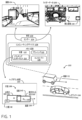
例えば、図1は、トラッキングコンポーネント114のMLモデルによって判定される最終の環境表現の一部であり得る環境のトップダウン表現120を図示する。この場合において、トップダウン表現120は、推定されるROI122として図示されるオブジェクト検出を示す。トップダウン表現120および/または推定されるROI122は、1つまたは複数の知覚パイプラインから受信されるオブジェクト検出に少なくとも部分的に基づいて、トラッキングコンポーネント114のMLモデルによって判定されることができる。例えば、MLモデルへの入力として提供されるオブジェクト検出は、画像124に関連付けられる3次元ROIを含んでよく、このうちの1つは、ROI126として示され、およびライダーデータ128に関連付けられるトップダウンROI(例えば、これは、2次元および/または3次元であってよい)このうちのROI130が示される。
For example, FIG. 1 illustrates a top-down
推定されるROI122は、知覚パイプラインのうちの少なくとも1つによって識別されるオブジェクトに関連付けられるMLモデルによって生成される推定されるオブジェクト検出の一部であってよい。推定されるROI122は、中心132および範囲(黒色線)を含むように描写される。範囲は、推定されるオブジェクト検出に関連してMLモデルによって判定されたオブジェクト分類に関連付けられるアンカーボックスに少なくとも部分的に基づいて画定されてよい。追加的または代替的な例示において、推定されるROIは、別の形態の境界形状またはマスクのようなトップダウン表現の一部の任意の他の識別を含んでよい。
The estimated
図1は、また、1つまたは複数のオブジェクト検出に関連して、トラッキングコンポーネント114によって以前に生成された行程136に関連付けられる以前のROI134を図示する。ある例示において、行程136は、1つまたは複数の以前のオブジェクト検出を関連させてよく、および/または速度、加速度、進路、オブジェクト分類、一意の識別子、閉塞状態(例えば、オブジェクトが現在/以前に部分的にまたは完全に1つまたは複数のセンサーから閉塞されているか)のようにそれに関連するデータを示してよい。以前のROI134は、共に関連付けられるように本明細書で説明されるデータ(例えば、職業マップ、トップダウンセグメンテーション、オブジェクト分類、オブジェクトの進路、オブジェクト速度および/または加速度)のいずれかに関連付けられてよい。例えば、以前のROI134は、オブジェクト138およびオブジェクト分類140の「車両」に関連付けられてよい。例示のために、以前のROI134は、行程136に関連付けられる最新のオブジェクト検出に関連付けられてよい。
FIG. 1 also illustrates a
本明細書で説明される技術は、以前のROI134を推定されるROI122に関連付けられる時間へと投影することを含んでよく、これは、行程136および共に関連付けられるデータに基づいて、以前のROI134に関連付けられるオブジェクトの位置、向き、速度、加速度などを予測することを含んでよい。図1は、以前のROI134のこのような投影142を破線で描写する。描写される例示において、推定されるROI122間のIOUは、推定されるROI122が車両にも関連付けられ、および/または投影142と推定されるROI122との間のIOUがIOU閾値を満たすか、または上回るため、関連度閾値を満たすか、または上回る。
The techniques described herein may include projecting the
とはいえ、行程は、少なくとも以前のROIを含んでよく、これは、中心、範囲などを含んでよく、推定されるオブジェクト検出は、推定されるROI122を含んでよい。ある例示において、本明細書で説明される技術は、行程に関連付けられる速度および/または進路に少なくとも部分的に基づいて、以前のROIを投影することを含んでよい。IOU、中心間の距離、埋め込み間の距離、または投影されたROI136から推定されるROI130のMunkresのマッチングが閾値を満たす場合、推定されるオブジェクト検出は、行程136に加えられてよい。そうではない場合、推定されるオブジェクト検出は、新しい行程に関連付けられてよく、および/または代替のトラッキングコンポーネントは、生の検出を用いてよく、行程を生成する。
However, the journey may include at least the previous ROI, which may include a center, range, etc., and the estimated object detection may include the estimated
(例示的なシステム)
図2は、本明細書で説明される技術を実装する例示的なシステム200のブロック図を図示する。ある例示において、例示的なシステム200は、車両202を含んでよく、これは、図1の車両102を表現してよい。ある例示において、車両202は、米国運輸省道路交通安全局によって発行されたレベル5分類に従って動作するように構成される自律車両であってよく、これは、全行程に対する全てのセーフティクリティカルな機能を実行することが可能である車両を説明しており、運転者(または乗員)は、いかなるときにも車両を制御することを期待されていない。しかしながら、他の例示において、車両202は、他のレベルまたは分類を有する完全にまたは部分的な自律車両であってよい。さらに、ある場合において、本明細書で説明される技術は、非自律型車両によっても使用可能であってよい。
Exemplary Systems
FIG. 2 illustrates a block diagram of an
車両202は、車両コンピューティングデバイス204、センサー206、エミッター208、ネットワークインターフェース210、および/または駆動コンポーネント212を含んでよい。車両コンピューティングデバイス204は、コンピューティングデバイス106を表現してよく、センサー206は、センサー104を表現してよい。システム200は、追加的または代替的に、コンピューティングデバイス214を含んでよい。
The
ある例示において、センサー206は、センサー104を表現してよく、ライダーセンサー、レーダーセンサー、超音波トランスデューサー、ソーナーセンサー、位置センサー(例えば、グローバルポジショニングシステム(GPS)、コンパスなど)、慣性センサー(例えば、慣性測定ユニット(IMU)、加速度計、磁力計、ジャイロスコープなど)、画像センサー(例えば、赤緑青(RGB)、赤外線(IR)、強度、深度、飛行時間カメラなど)、マイク、ホイールエンコーダー、環境センサー(例えば、温度計、湿度計、光センサー、圧力センサーなど)などを含んでよい。センサー206は、これらまたは他のタイプのセンサーのそれぞれの多様な例示を含んでよい。例えば、レーダーセンサーは、車両202の角部、前部、後部、側部、および/または上部に位置する個々のレーダーセンサーを含んでよい。別の例示として、カメラは、車両202の外部および/または内部についてのさまざまな位置に配置される多様なカメラを含んでよい。センサー206は、車両コンピューティングデバイス204および/またはコンピューティングデバイス214に入力を提供してよい。
In one example, the sensors 206 may represent the sensors 104 and may include lidar sensors, radar sensors, ultrasonic transducers, sonar sensors, position sensors (e.g., Global Positioning System (GPS), compass, etc.), inertial sensors (e.g., Inertial Measurement Units (IMUs), accelerometers, magnetometers, gyroscopes, etc.), image sensors (e.g., Red Green Blue (RGB), Infrared (IR), intensity, depth, time of flight cameras, etc.), microphones, wheel encoders, environmental sensors (e.g., thermometers, hygrometers, light sensors, pressure sensors, etc.), etc. The sensors 206 may include various examples of each of these or other types of sensors. For example, the radar sensors may include individual radar sensors located at the corners, front, rear, sides, and/or top of the
車両202は、また、上記のように、光および/または音を放出するためのエミッター208を含んでよい。この例示におけるエミッター208は、車両202の乗員と通信するための内部オーディオおよび視覚エミッターを含んでよい。限定ではなく例示として、内部エミッターは、スピーカー、ライト、合図、ディスプレイスクリーン、タッチスクリーン、触覚エミッター(例えば、振動および/または力フィードバック)、機械的アクチュエータ(例えば、シートベルトテンショナー、シートポジショナー、ヘッドレストポジショナーなど)などを含んでよい。この例示におけるエミッター208は、また、外部エミッターを含んでよい。限定ではなく例示として、この例示における外部エミッターは、進行方向を信号で伝えるためのライトまたは車両動作の他のインジケーター(例えば、インジケーターライト、合図、ライトアレイなど)、および歩行者または他の近くの車両と聴覚的に通信するための1つまたは複数のオーディオエミッター(例えば、スピーカー、スピーカーアレイ、ホーンなど)を含み、これらの1つまたは複数は、音響ビームステアリング技術を含む。
The
車両202は、また、車両202と1つまたは複数の他のローカルコンピューティングデバイスまたはリモートコンピューティングデバイスとの間の通信を可能にするネットワークインターフェース210を含んでよい。例えば、ネットワークインターフェース210は、車両202および/または駆動モジュール212の他のローカルコンピューティングデバイスとの通信を容易にすることができる。また、ネットワークインターフェース210は、追加的または代替的に、車両が他の近くのコンピューティングデバイス(例えば、他の近くの車両、交通信号など)と通信することを可能とすることができる。ネットワークインターフェース210は、追加的または代替的に、車両202がコンピューティングデバイス214と通信することを可能にすることができる。ある例示において、コンピューティングデバイス214は、分散コンピューティングシステム(例えば、クラウドコンピューティングアーキテクチャ)の1つまたは複数のノードを含んでよい。
The
ネットワークインターフェース210は、車両コンピューティングデバイス204を別のコンピューティングデバイスまたはネットワーク216などのネットワークに接続するための物理的および/または論理的インターフェースを含んでよい。例えば、ネットワークインターフェース210は、IEEE200.11規格によって定義された周波数、ブルートゥース(登録商標)などの短距離無線周波数、セルラー通信(例えば、2G、3G、4G、4G LTE、5Gなど)、またはそれぞれのコンピューティングデバイスが他のコンピューティングデバイスとインターフェースすることを可能にする適切な有線または無線通信プロトコルを介するなどのWi-Fiベースの通信を可能にすることができる。ある場合において、車両コンピューティングデバイス204および/またはセンサー206は、所定の時間期間の経過後に、ほぼリアルタイムなどで、ネットワーク216を介して、具体的な周波数でセンサーデータをコンピューティングデバイス214に送信することができる。
The
ある例示において、車両202は、1つまたは複数の駆動コンポーネント212を含んでよい。ある例示において、車両202は、1つの駆動コンポーネント212を有してよい。ある例示において、駆動コンポーネント212は、1つまたは複数のセンサーを含んでよく、駆動コンポーネント212および/または車両202の周囲の状況を検出する。限定ではなく例示として、駆動コンポーネント212のセンサーは、駆動コンポーネントの車輪の回転を感知するための1つまたは複数のホイールエンコーダー(例えば、回転エンコーダー)、駆動コンポーネント、カメラまたは他の画像センサーの向きおよび加速度を測定する慣性センサー(例えば、慣性測定ユニット、加速度計、ジャイロスコープ、磁気計など)、駆動コンポーネントの周囲の状況のオブジェクトを音響的に検出する超音波センサー、ライダーセンサー、レーダーセンサーなどを含んでよい。ホイールエンコーダーのようなあるセンサーは、駆動コンポーネント212に一意であってよい。ある場合において、駆動コンポーネント212のセンサーは、車両202の対応するシステム(例えば、センサー206)と重複するか、または補完してよい。
In some examples, the
駆動コンポーネント212は、高電圧バッテリー、車両を推進するモーター、バッテリーからの直流電流を他の車両システムによって利用される交流電流へと変換するインバーター、ステアリングモーターおよびステアリングラック(これは、電動であってよい)を含むステアリングシステム、油圧または電気アクチュエータを含むブレーキシステム、油圧および/または空気圧コンポーネントを含むサスペンションシステム、トラクションの損失を軽減して、制御を維持するための制動力を分散する安定制御システム、HVACシステム、照明(例えば、車両の外部周囲を照らすヘッド/テールライトなどの照明)、および1つまたは複数の他のシステム(例えば、冷却システム、安全システム、車載充電システム、DC/DCコンバーター、高電圧ジャンクション、高電圧ケーブル、充電システム、充電ポートなどの他の電装コンポーネント)を含む多くの車両システムを含んでよい。さらに、駆動コンポーネント212は、センサーからデータを受信して前処理をし得る駆動コンポーネントコントローラーを含んでよく、さまざまな車両システムの動作を制御する。ある場合において、駆動コンポーネントコントローラーは、1つまたは複数のプロセッサおよび1つまたは複数の当該プロセッサと通信可能に結合されたメモリを含んでよい。メモリは、駆動コンポーネント212のさまざまな機能を実行する1つまたは複数のコンポーネントを格納する。さらに、駆動コンポーネント212は、また、それぞれの駆動コンポーネントによって、1つまたは複数の他のローカルコンピューティングデバイスまたはリモートコンピューティングデバイスとの通信を可能にする1つまたは複数の通信接続を含んでよい。
The
車両コンピューティングデバイス204は、プロセッサ218、および1つまたは複数のプロセッサ218と通信可能に結合されたメモリ220を含んでよい。メモリ220は、メモリ108を表現してよい。コンピューティングデバイス214は、また、プロセッサ222、および/またはメモリ224を含んでよい。プロセッサ218および/または222は、本明細書で説明されるように、データを処理して、動作を実行するための命令を実行することが可能である任意の適切なプロセッサであってよい。限定ではなく例示として、プロセッサ218および/または222は、1つまたは複数の中央処理装置(CPU)、グラフィックス処理装置(GPU)、集積回路(例えば、特定用途向け集積回路(ASIC))、ゲートアレイ(例えば、フィールドプログラマブルゲートアレイ(FPGA))、および/または電子データを処理して、その電子データを、レジスタおよび/またはメモリに格納され得る他の電子データへと変換する他のデバイスまたはデバイスの一部を含んでよい。
The
メモリ220および/またはメモリ224は、非一時的なコンピューター可読媒体の例示であってよい。メモリ220および/または224は、オペレーティングシステムを格納してよく、本明細書で説明されて、機能がさまざまなシステムに起因する1つまたは複数のソフトウェアアプリケーション、命令、プログラム、および/またはデータを実装する方法。さまざまな実装において、メモリは、スタティックRAM(SRAM)、シンクロナスDRAM(SDRAM)、不揮発性/フラッシュタイプメモリ、または情報を格納可能である任意の他のタイプのメモリのような適切なメモリ技術を用いて実装されてよい。本明細書で説明されるアーキテクチャ、システム、および個々のエレメントは、多くの他の論理的、プログラム的、および物理的なコンポーネントを含んでよく、これらのうちの添付図面に示されるものは、単に本明細書での説明に関連する例示に過ぎない。 Memory 220 and/or memory 224 may be exemplary of a non-transitory computer-readable medium. Memory 220 and/or 224 may store an operating system and methods for implementing one or more software applications, instructions, programs, and/or data whose functions are attributed to various systems described herein. In various implementations, memory may be implemented using suitable memory technology such as static RAM (SRAM), synchronous DRAM (SDRAM), non-volatile/flash type memory, or any other type of memory capable of storing information. The architectures, systems, and individual elements described herein may include many other logical, programmatic, and physical components, of which those shown in the accompanying drawings are merely exemplary in connection with the description herein.
ある例示において、メモリ220および/またはメモリ224は、ローカリゼーションコンポーネント226、知覚コンポーネント228、プランニングコンポーネント230、トラッキングコンポーネント232、マップ234、および/またはシステムコントローラー236を格納してよい。知覚コンポーネント228は、知覚コンポーネント110を表現してよく、プラニングコンポーネント230は、プラニングコンポーネント112を表現してよく、および/またはトラッキングコンポーネント232は、トラッキングコンポーネント114を表現してよい。
In one example, memory 220 and/or memory 224 may store a localization component 226, a perception component 228, a planning component 230, a
少なくとも1つの例示において、ローカリゼーションコンポーネント226は、車両202の位置、速度および/または向き(例えば、x位置、y位置、z位置、ロール、ピッチ、またはヨーのうちの1つまたは複数)を判定するためにセンサー206からのデータを受信するハードウェアおよび/またはソフトウェアを含んでよい。例えば、ローカリゼーションコンポーネント226は、環境のマップ234を含んでよく、および/または要求/受信することができ、マップ234内の自律車両の位置、速度、および/または向きを継続的に判定することが可能である。ある例示において、コンポーネント226は、SLAM(simultaneous localization and mapping)、CLAMS(calibration, localization and mapping, simultaneously)、相対SLAM、バンドル調整、非線形最小二乗最適化などを利用することができ、画像データ、ライダーデータ、レーダーデータ、IMUデータ、GPSデータ、ホイールエンコーダーデータなどを受信し、自律車両の位置、姿勢、および/または速度を正確に判定する。ある例示において、本明細書で説明されるように、ローカリゼーションコンポーネント226は、車両202のさまざまなコンポーネントにデータを提供してよく、軌道を生成する、および/またはマップデータを生成するための自律車両の初期位置を判定する。ある例示において、ローカリゼーションコンポーネント226は、トラッキングコンポーネント232に、共に関連付けられる環境および/またはセンサーデータに対する車両202の位置および/または向きを提供してよい。
In at least one example, the localization component 226 may include hardware and/or software to receive data from the sensors 206 to determine the position, speed, and/or orientation (e.g., one or more of x-position, y-position, z-position, roll, pitch, or yaw) of the
ある例示において、知覚コンポーネント228は、ハードウェアおよび/またはソフトウェアに実装される主要な知覚システムおよび/または予測システムを含んでよい。知覚コンポーネント228は、車両202の周囲の環境におけるオブジェクトを検出することができ(例えば、オブジェクトが存在すると識別する)、オブジェクトを分類することができ(例えば、検出されるオブジェクトに関連付けられるオブジェクトタイプを判定する)、センサーデータおよび/または環境の他の表現をセグメント化することができ(例えば、センサーデータの一部および/または環境表現を検出されるオブジェクトおよび/またはオブジェクトタイプに関連付けられているものとして識別する)、オブジェクトに関連付けられる特徴(例えば、オブジェクトに関連付けられる現在の、予測される、および/または以前の位置、向き、速度、および/または加速度を識別する行程)などを判定することができる。知覚コンポーネント228によって判定されるデータは、知覚データと称される。 In one example, the perception component 228 may include a primary perception system and/or prediction system implemented in hardware and/or software. The perception component 228 may detect objects in the environment around the vehicle 202 (e.g., identify an object as present), classify objects (e.g., determine an object type associated with a detected object), segment sensor data and/or other representations of the environment (e.g., identify a portion of the sensor data and/or environmental representation as associated with a detected object and/or object type), determine features associated with the object (e.g., a process for identifying a current, predicted, and/or previous position, orientation, velocity, and/or acceleration associated with an object), and the like. Data determined by the perception component 228 is referred to as perception data.
プランニングコンポーネント230は、ローカリゼーションコンポーネント226から車両202の位置および/または向き、および/または知覚コンポーネント228から知覚データを受信することができ、このデータのいずれかに少なくとも部分的に基づいて車両202の動作を制御するための命令を判定することができる。ある例示において、命令を判定することは、命令が関連付けられるシステムに関連付けられるフォーマットに少なくとも部分的に基づいて命令を判定することを含んでよい(例えば、自律車両の動きを制御するための第1の命令は、システムコントローラー236および/または駆動コンポーネント212が解析し/実行させ得るメッセージおよび/または信号(例えば、アナログ、デジタル、空気圧、キネマティック)の第1のフォーマットでフォーマットされてよく、エミッター208に対する第2の命令は、共に関連付けられる第2のフォーマットに従ってフォーマットされてよい)。
The planning component 230 can receive the position and/or orientation of the
トラッキングコンポーネント232は、車両202および/またはコンピューティングデバイス214で動作してよい。ある例示において、トラッキングコンポーネント232は、パイプラインにおけるプラニングコンポーネント230からの上流(入力を提供する)であってよく、知覚コンポーネント228の少なくともあるコンポーネント228からの下流(入力を受信する)であってよい。トラッキングコンポーネント232は、トラッキングコンポーネント232の出力のすべて、一部、または全くないものをプラニングコンポーネント230に渡すように構成されてよい。ある例示において、トラッキングコンポーネント232は、知覚コンポーネント228の一部であってよい。ある例示において、トラッキングコンポーネント232は、最終の環境表現を判定する本明細書で説明されるMLモデルを含んでよく、これは、推定されるオブジェクト検出を含んでよい。トラッキングコンポーネント232は、追加的または代替的に、MLモデルによって生成される推定されるオブジェクト検出を受信する第1のコンポーネント、およびセンサータイプ(例えば、MLモデルへの入力のうちの1つ)に関連して生成される少なくとも1つの「生の」オブジェクト検出、および/または推定されるオブジェクト検出および行程に関連付けられる1つまたは複数のオブジェクト検出を受信する第2のコンポーネントを含んでよい。いずれにせよ、トラッキングコンポーネントの第1のコンポーネントおよび/または第2のコンポーネントは、推定されるオブジェクト検出を行程に関連付けるか、またはオブジェクト検出に関連付けられる新しい行程を生成するか否かを判定することができる。トラッキングコンポーネント232は、追加的または代替的に、1つまたは複数のオブジェクト検出の速度、進路、および/または他のこれまでの、または現在の特徴を出力することができ、これらのすべてまたは一部は、行程の少なくとも一部であってよい。
The
メモリ220および/または224は、追加的または代替的に、マッピングシステム(例えば、センサーデータに少なくとも部分的に基づいてマップを生成する)、プランニングシステム、ライドマネジメントシステムなどを格納してよい。ローカリゼーションコンポーネント226、知覚コンポーネント228、プランニングコンポーネント230、マップ234、および/またはシステムコントローラー236は、メモリ220に格納されているように図示されるが、これらのコンポーネントのうちのいずれかは、プロセッサ実行可能命令、機械学習モデル(例えば、ニューラルネットワーク)、および/またはハードウェアを含んでよく、これらのコンポーネントのいずれかのすべてまたは一部は、メモリ224に格納されてよく、またはコンピューティングデバイス214の一部として構成されてもよい。 Memory 220 and/or 224 may additionally or alternatively store a mapping system (e.g., generating a map based at least in part on sensor data), a planning system, a ride management system, etc. Although localization component 226, perception component 228, planning component 230, map 234, and/or system controller 236 are illustrated as being stored in memory 220, any of these components may include processor-executable instructions, machine learning models (e.g., neural networks), and/or hardware, and all or a portion of any of these components may be stored in memory 224 or configured as part of computing device 214.
本明細書で説明されるように、ローカリゼーションコンポーネント226、知覚コンポーネント228、プランニングコンポーネント230、トラッキングコンポーネント232、および/またはシステム200の他のコンポーネントは、1つまたは複数のMLモデルを含んでよい。例えば、ローカリゼーションコンポーネント226、知覚コンポーネント228、プランニングコンポーネント230、および/またはトラッキングコンポーネント232は、それぞれ異なるMLモデルパイプラインを含んでよい。ある例示において、MLモデルは、ニューラルネットワークを含んでよい。例示的なニューラルネットワークは、一連の接続されたレイヤーを通して入力データを渡して出力を生み出す生物学的に着想を得たアルゴリズムである。ニューラルネットワークにおけるそれぞれのレイヤーは、また別のニューラルネットワークを含むことも可能であり、または任意の数のレイヤー(畳み込みであるか否か)を含むことが可能である。本開示の脈絡で理解されることが可能であるように、ニューラルネットワークは、機械学習を利用することが可能であり、これは、出力が学習されたパラメーターに基づいて生成されるこのようなアルゴリズムの幅広いクラスを参照することが可能である。
As described herein, the localization component 226, the perception component 228, the planning component 230, the
ニューラルネットワークのコンテキストで説明されるが、任意のタイプの機械学習が本開示と整合するように用いられることが可能である。例えば、機械学習アルゴリズムは、回帰アルゴリズム(例えば、通常最小二乗回帰(OLSR)、線形回帰、ロジスティック回帰、段階的回帰、MARS(multivariate adaptive regression splines)、LOESS(locally estimated scatterplot smoothing))、インスタンスベースアルゴリズム(例えば、リッジ回帰、LASSO(least absolute shrinkage and selection operator)、Elastic net、LARS(least-angle regression))、決定木アルゴリズム(例えば、分類および回帰木(CART)、ID3(iterative dichotomiser 3)、カイ二乗自動相互作用検出(CHAID)、決定切り株、条件付き決定木)、ベイジアンアルゴリズム(例えば、ナイーブベイズ、ガウスナイーブベイズ、多項ナイーブベイズ、AODE(average one-dependence estimators)、ベイジアンビリーフネットワーク(BNN)、ベイジアンネットワーク)、クラスタリングアルゴリズム(例えば、k平均、kメジアン、期待値の最大化(EM)、階層的クラスタリング)、相関ルール学習アルゴリズム(例えば、パーセプトロン、誤差逆伝搬、ホップフィールドネットワーク、RBFN(Radial Basis Function Network))、深層学習アルゴリズム(例えば、深層ボルツマンマシン(DBM)、深層ビリーフネットワーク(DBN)、畳み込みニューラルネットワーク(CNN)、積層オートエンコーダー)、次元縮小アルゴリズム(例えば、主成分分析(PCA)、主成分回帰(PCR)、部分最小二乗回帰(PLSR)、サモンマッピング、多次元尺度構成法(MDS)、射影追跡、線形判別分析(LDA)、混合判別分析(MDA)、二次判別分析(QDA)、柔軟判別分析(FDA))、アンサンブルアルゴリズム(例えば、ブースティング、ブートストラップアグリゲーション(バギング)、アダブースト、積層ジェネラリゼーション(ブレンディング)、勾配ブースティングマシン(GBM)、勾配ブースト回帰木(GBRT)、ランダムフォレスト)、SVM(サポートベクタマシン)、教師あり学習、教師なし学習、半教師あり学習などを含んでよいが、これらに限定はされない。アーキテクチャのさらなる例示は、ResNet-50、ResNet-101、VGG、DenseNet、PointNetなどのニューラルネットワークを含む。ある例示において、本明細書で説明されるMLモデルは、PointPillars、SECOND、トップダウン特徴レイヤー(例えば、米国特許出願第15/963,833号を参照し、これは、その全体が本明細書に組み込まれる)、および/またはVoxelNetを含んでよい。アーキテクチャの待ち時間の最適化は、MobilenetV2、Shufflenet、Channelnet、Peleenetなどを含んでよい。MLモデルは、ある例示において、Pixorなどの残余ブロックを含んでよい。 Although described in the context of neural networks, any type of machine learning can be used consistent with the present disclosure. For example, machine learning algorithms can include regression algorithms (e.g., ordinary least squares regression (OLSR), linear regression, logistic regression, stepwise regression, multivariate adaptive regression splines (MARS), locally estimated scatterplot smoothing (LOESS)), instance-based algorithms (e.g., ridge regression, least absolute shrinkage and selection operator (LASSO), elastic net, least-angle regression (LARS)), decision tree algorithms (e.g., classification and regression trees (CART), iterative dichotomiser 3 (ID3), chi-squared automated interaction detection (CHAID), decision stump, conditional decision tree), Bayesian algorithms (e.g., naive Bayes, Gaussian naive Bayes, multinomial naive Bayes, average one-dependence estimators), Bayesian belief networks (BNN), Bayesian networks), clustering algorithms (e.g., k-means, k-median, expectation maximization (EM), hierarchical clustering), association rule learning algorithms (e.g., perceptron, backpropagation, Hopfield network, RBFN (Radial Basis Function Network), deep learning algorithms (e.g., Deep Boltzmann Machines (DBM), Deep Belief Networks (DBN), Convolutional Neural Networks (CNN), stacked autoencoders), dimensionality reduction algorithms (e.g., Principal Component Analysis (PCA), Principal Component Regression (PCR), Partial Least Squares Regression (PLSR), Sammon Mapping, Multidimensional Scaling (MDS), Projection Pursuit, Linear Discriminant Analysis (LDA), Mixed Discriminant Analysis (MDA), Quadratic Discriminant Analysis (QDA), Flexible Discriminant Analysis (FDA)), ensemble algorithms (e.g., Boosting, Bootstrap Aggregation (Bagging), AdaBoost, Stacked Generalization (Blending), Gradient Boosting Machines (GBM), Gradient Boosted Regression Trees (GBRT), Random Forests), Support Vector Machines (SVM), supervised learning, unsupervised learning, semi-supervised learning, and the like, but are not limited to these. Further examples of architectures include neural networks such as ResNet-50, ResNet-101, VGG, DenseNet, PointNet, etc. In some examples, the ML models described herein may include PointPillars, SECOND, top-down feature layers (see, e.g., U.S. Patent Application No. 15/963,833, which is incorporated herein in its entirety), and/or VoxelNet. Latency optimization architectures may include MobilenetV2, Shufflenet, Channelnet, Peleenet, etc. The ML models may include residual blocks such as Pixor, in some examples.
メモリ220は、追加的または代替的に、1つまたは複数のシステムコントローラー236を格納してよく、これは、車両202のステアリング、推進、ブレーキ、安全性、エミッター、通信、および他のシステムを制御するように構成されてよい。これらのシステムコントローラー236は、駆動コンポーネント212および/または車両202の他のコンポーネントの対応するシステムと通信してよく、および/または制御してよい。例えば、プラニングコンポーネント230は、知覚コンポーネント228によって生成される知覚データに少なくとも部分的に基づいて、命令を生成することができ、知覚データを検証することができ、または命令をシステムコントローラー236に伝送することができる。システムコントローラー236は、プランニングコンポーネント230から受信した命令に少なくとも部分的に基づいて、車両202の動作を制御することができる。
The memory 220 may additionally or alternatively store one or more system controllers 236, which may be configured to control steering, propulsion, braking, safety, emitter, communication, and other systems of the
図2は、分散システムとして図示されている一方で、代替の例示において、車両202のコンポーネントは、コンピューティングデバイス214に関連付けられてよく、および/またはコンピューティングデバイス214のコンポーネントは、車両202に関連付けられてよいことに留意されたい。つまり、車両202は、コンピューティングデバイス214に関連付けられる1つまたは複数の機能を実行することができ、逆もまた同様である。
Note that while FIG. 2 is illustrated as a distributed system, in alternative examples, components of
(例示的なシステム)
図3は、異なる知覚パイプラインから受信した1つまたは複数のオブジェクト検出から推定されるオブジェクト検出を判定する、および/または推定されるオブジェクト検出に少なくとも部分的に基づいて更新される、または新しい行程を判定するための例示的な知覚システム300のブロック図を図示する。例示的な知覚システム300は、知覚システム300の周囲の状況の特徴を判定するための任意の数のパイプラインを含んでよい。例えば、パイプラインは、自律車両の環境の中にあるもの、および/または環境におけるセンサーおよび/またはオブジェクトの特徴を判定することができる。図3は、任意の数およびタイプのパイプラインが企図されるが、3つのパイプラインである視覚パイプライン302、レーダーパイプライン304、およびライダーパイプライン306を描写する。例えば、パイプラインは、同一のタイプのセンサー(例えば、1つまたは複数のカメラ、1つまたは複数のライダーセンサー、1つまたは複数のレーダーセンサー)、視界の方向(例えば、重複した視界を有する1つまたは複数のカメラ)、多様なタイプのセンサー(例えば、ハイブリッド視覚ライダーパイプライン)、他のソースからのデータ(例えば、リモートコンピューティングデバイスからのデータ、メモリに格納されたマップデータ)などに関連付けられてよい。
Exemplary Systems
FIG. 3 illustrates a block diagram of an example perception system 300 for determining an estimated object detection from one or more object detections received from different perception pipelines and/or determining an updated or new journey based at least in part on the estimated object detection. The example perception system 300 may include any number of pipelines for determining characteristics of the surroundings of the perception system 300. For example, the pipelines may determine characteristics of what is in the autonomous vehicle's environment and/or sensors and/or objects in the environment. FIG. 3 depicts three pipelines: a vision pipeline 302, a radar pipeline 304, and a lidar pipeline 306, although any number and types of pipelines are contemplated. For example, the pipelines may be associated with the same type of sensor (e.g., one or more cameras, one or more lidar sensors, one or more radar sensors), direction of view (e.g., one or more cameras with overlapping fields of view), diverse types of sensors (e.g., a hybrid vision lidar pipeline), data from other sources (e.g., data from a remote computing device, map data stored in memory), etc.
いずれにせよ、1つまたは複数のパイプラインのパイプラインは、センサーデータを受信して、1つまたは複数の出力を判定するように構成されてよい。簡潔にするために、パイプラインの集合出力は、本明細書では環境表現と称される。環境表現は、1つまたは複数のオブジェクト検出を含んでよく、且つ1つまたは複数の出力タイプを含んでよい。例えば、視覚パイプライン302は、視覚データ310(例えば、1つまたは複数のRGB画像、熱画像を含むセンサーデータ)に少なくとも部分的に基づいて環境表現308を出力することができる。視覚パイプライン302によって生成される環境表現308は、1つまたは複数のオブジェクト検出を含んでよく、オブジェクト検出のうちの少なくとも1つは、
・オブジェクトに関連付けられる2次元ROI、
-米国特許出願番号第15/970,838号および16/386,249号のこれらの出願は、その全体が参照によって本明細書に組み込まれ、さらに詳細に記載されているように、312で描写されているもののうちの1つのようなオブジェクトに関連付けられる3次元ROI、
-米国特許出願第15/970,838号で説明されるように、オブジェクトおよび/またはROIに関連付けられる深度推定(例えば、センサー/車両からオブジェクトまでの距離の推定)、
-米国特許出願第15/970,838号で説明されるオブジェクトの高さ、
-オブジェクト分類および/またはオブジェクトに関連付けられる尤度、センサーデータがオブジェクト分類によって指定されるタイプのオブジェクト(例えば、車両、歩行者、連結式車両、動物、子供)に関連付けられている事後確率を示す尤度、ある例示において、オブジェクト分類および/または尤度は、ピクセルのようなセンサーデータの別個の部分に関連付けられてよく、
-歩行者または動物に分類されるオブジェクトが立っている、歩いている、または走っているという表示、
-車両、バイクなど(例えば、ヘッドライト、サイドミラーライト)に関連付けられるブレーキまたは他のインジケーターライトの状態(例えば、ターン表示、停止表示、警告表示)および/または位置の表示、
-環境表現(例えば、環境のボクセル化、環境のメッシュ表現)に対するオブジェクトの位置(例えば、中心および/または範囲)、
-オブジェクトの姿勢であって、これは、オブジェクトの位置および/または進路を含んでよく、
-占有マップ314(例えば、ピクセル/ボクセルを占有するオブジェクトが存在するかのインスタンスセグメンテーション)であって、これは、オブジェクトによって占有されているように示される部分を含んでよく、および/または
-閉塞グリッド(例えば、環境の一部が視線から1つまたは複数の視覚センサーに閉塞される確率を含む)を含んでよい。
In any event, one or more of the pipelines of the pipelines may be configured to receive the sensor data and determine one or more outputs. For simplicity, the collective output of the pipelines is referred to herein as an environment representation. The environment representation may include one or more object detections and may include one or more output types. For example, the vision pipeline 302 may output an environment representation 308 based at least in part on the vision data 310 (e.g., sensor data including one or more RGB images, thermal images). The environment representation 308 generated by the vision pipeline 302 may include one or more object detections, at least one of which is a
A 2D ROI associated with the object;
- a three-dimensional ROI associated with an object such as one of those depicted at 312, as described in further detail in U.S. Patent Application Serial Nos. 15/970,838 and 16/386,249, which are incorporated herein by reference in their entireties;
Depth estimates associated with objects and/or ROIs (e.g., estimates of distance from the sensor/vehicle to the object), as described in U.S. patent application Ser. No. 15/970,838;
- the height of the object as described in US patent application Ser. No. 15/970,838;
object classifications and/or likelihoods associated with an object, the likelihood indicating the posterior probability that the sensor data is associated with an object of a type specified by the object classification (e.g., vehicle, pedestrian, articulated vehicle, animal, child); in one example, the object classifications and/or likelihoods may be associated with distinct portions of the sensor data, such as pixels;
- indication of an object classified as a pedestrian or animal standing, walking or running;
- indicating the state (e.g., turn indicator, stop indicator, warning indicator) and/or position of brake or other indicator lights associated with a vehicle, bike, etc. (e.g., headlights, side mirror lights);
- the location (e.g., center and/or extent) of the object relative to the environment representation (e.g., a voxelization of the environment, a mesh representation of the environment);
- the pose of the object, which may include the position and/or path of the object;
- an occupancy map 314 (e.g., an instance segmentation of whether there is an object occupying a pixel/voxel), which may include parts that are indicated as being occupied by an object, and/or - an occlusion grid (e.g., including the probability that parts of the environment are occluded from the line of sight to one or more visual sensors).
ある例示において、視覚パイプラインがバイク運転者を歩行者またはサイクリストとして分類してよいが、共に関連付けられるオブジェクト分類は、本明細書に提示される技術に従って、バイク運転者に関連付けられる行程に少なくとも部分的に基づいて、オブジェクトがバイク運転者であると示すために修正されてよい。例えば、行程は、歩行者またはサイクリストが移動できるよりも速くバイク運転者が移動していることを示してよく、したがって、オブジェクト分類が訂正されてよい。同様に、クラス情報は、行程に関連付けられてよい。このような例示において、(例えば、1つまたは複数の以前の時間からの)クラスに関連付けられる以前のクラス情報は、視覚パイプラインから出力されるオブジェクト分類が変更されるべきか信頼性をさらに高めることに用いられてよい。言うまでもなく、このような修正は、入力として、またはその他の点では、知覚分類を受信して、情報をトラッキングするコンポーネント、サブコンポーネント、または他のアルゴリズムに基づいて実行されるコンポーネントの出力であってよい。 In one example, the vision pipeline may classify a motorcyclist as a pedestrian or cyclist, but the associated object classification may be modified to indicate that the object is a motorcyclist, based at least in part on the journey associated with the motorcyclist, in accordance with the techniques presented herein. For example, the journey may indicate that the motorcyclist is moving faster than a pedestrian or cyclist can move, and the object classification may be corrected accordingly. Similarly, class information may be associated with the journey. In such an example, previous class information associated with the class (e.g., from one or more previous times) may be used to further refine whether the object classification output from the vision pipeline should be changed. Of course, such modifications may be the output of a component, subcomponent, or other component that receives the perceptual classification as an input or otherwise executes based on the tracking information.
レーダーパイプライン304は、環境表現(図面のスペースを節約するために図示せず)を判定することができ、
・占有マップであって、これは、オブジェクトによって占有されているように示される部分を含んでよく、
-レーダー検出(これは、ある例示において、3次元表現またはトップダウン表現などの環境表現へとラスタライズされてよい)、
米国特許出願第16/407,139号のその全体が参照により本明細書に組み込まれ、さらに詳細に記載されているような閉塞グリッド(例えば、環境の一部が視線から1つまたは複数のレーダーセンサーに閉塞される確率を含む)、
米国特許出願第16/416,686号のその全体が参照により本明細書に組み込まれ、さらに詳細に記載されているようなオブジェクトに関連付けられるヨーレート、
オブジェクトに関連付けられる速度(例えば、オブジェクトに関連付けられる地上範囲レート)、
レーダー断面(RCS)、および/または
ROIおよび/またはオブジェクト分類を含む。
The radar pipeline 304 can determine an environment representation (not shown to conserve drawing space);
an occupancy map, which may include the portions that are indicated as being occupied by objects;
- radar detection (which in some instances may be rasterized into a representation of the environment, such as a three-dimensional or top-down representation);
an occlusion grid (e.g., including the probability that a portion of the environment is occluded from the line of sight to one or more radar sensors), as described in more detail in U.S. Patent Application No. 16/407,139, which is incorporated herein by reference in its entirety;
yaw rate associated with an object, as described in more detail in U.S. Patent Application No. 16/416,686, which is incorporated herein by reference in its entirety;
A velocity associated with the object (e.g., a ground range rate associated with the object);
Radar cross section (RCS), and/or ROI and/or object classification.
ライダーパイプライン306は、環境表現316を判定することができ、
・占有マップ318であって、これは、オブジェクトによって占有されているように示される部分を含んでよく、
-閉塞グリッド(例えば、環境の一部が視線から1つまたは複数のライダーセンサーに閉塞される確率を含む)
-オブジェクトに関連付けられるROIおよび/またはオブジェクト分類、および/または
-米国特許出願第15/963,833号のその全体が本明細書に組み込まれ、さらに詳細に記載されているようなトップダウンセグメンテーション(例えば、環境の一部が占有されているかのトップダウン表示および/またはトップダウンROI(例えば、320で描写されるライダーのトップダウンROIなど))を含む。
The lidar pipeline 306 can determine an environment representation 316;
an occupancy map 318, which may include the portions that are shown as occupied by objects;
- Occlusion grid (e.g., including the probability that a part of the environment is occluded from the line of sight to one or more lidar sensors)
- ROIs and/or object classifications associated with objects, and/or - top-down segmentation as described in further detail in U.S. patent application Ser. No. 15/963,833, which is incorporated herein in its entirety (e.g., a top-down indication of whether a portion of the environment is occupied and/or a top-down ROI, such as the lidar top-down ROI depicted at 320).
図3に関して図示および説明されるパイプラインは、単なる例示である。知覚システム300は、本明細書で示されて、それらの説明されるパイプラインよりも多く、よりも少なく、および/または異なるパイプラインを含んでよい。さらに、パイプラインは、描写されるようにきちんと分離されている代わりに、混在されてよい。例えば、上記の環境表現の少なくともいくつかは、2つの異なるパイプラインの一部の積であってよい。描写される例示において、限られたスペースおよびその明確性のための視覚環境表現およびライダー環境表現の拡大のために、レーダー環境表現に関する具体的な詳細は、描写されないが、レーダーパイプラインおよびレーダー環境表現は、追加的または代替的に企図されることに留意されたい。 The pipelines shown and described with respect to FIG. 3 are merely exemplary. The perception system 300 may include more, less, and/or different pipelines than those shown and described herein. Additionally, the pipelines may be intermixed instead of neatly separated as depicted. For example, at least some of the above environment representations may be a product of portions of two different pipelines. Note that in the depicted examples, due to limited space and the expansion of the visual environment representation and the lidar environment representation for clarity, specific details regarding the radar environment representation are not depicted, but that radar pipelines and radar environment representations are additionally or alternatively contemplated.
異なるパイプラインによって生成されるさまざまな環境表現は、マルチチャネルデータ構造322へと集約されてよい。例えば、この集約は、データを、共通の参照フレームおよび/または同一の寸法を有するボクセル空間、メッシュ表現などの環境の共通の表現へと投影することを含んでよい。集約は、追加的または代替的に、3次元ROIを、トップダウン視点から2次元ROIへと投影するような環境表現のうちの1つまたは複数の部分のトップダウン表現を判定すること、および/またはセンサー視点、深度、および/またはオブジェクト分類に関連付けられる2次元ROIに少なくとも部分的に基づいて、トップダウン2次元ROIを判定することを含んでよい。ある例示において、マルチチャネルデータ構造322は、マルチチャネル画像を含んでよく、ここで、異なるパイプラインおよび/または異なるタイプの出力(例えば、占有マップ、閉塞グリッド、ROI、オブジェクト分類)に関連付けられてよい。例えば、画像の第1のチャネルは、視覚パイプラインによって判定されるように、環境のそれぞれの部分が占有されているか/占有されていないかを示すピクセルを含んでよく、画像の第2のチャネルは、ライダーパイプラインによって判定されるように、環境のそれぞれの部分が占有されているか/占有されていないかを示すピクセルを含んでよく、第3のチャネルは、環境のそれぞれの部分が特定のオブジェクト分類に関連付けられているかを示すピクセルを含んでよいなどである。 The various environmental representations generated by the different pipelines may be aggregated into a multi-channel data structure 322. For example, the aggregation may include projecting the data into a common representation of the environment, such as a common reference frame and/or a voxel space having identical dimensions, a mesh representation, etc. The aggregation may additionally or alternatively include determining a top-down representation of one or more portions of the environmental representation, such as projecting a three-dimensional ROI from a top-down perspective into a two-dimensional ROI, and/or determining a top-down two-dimensional ROI based at least in part on a two-dimensional ROI associated with a sensor perspective, depth, and/or object classification. In one example, the multi-channel data structure 322 may include a multi-channel image, where different pipelines and/or different types of outputs (e.g., occupancy maps, occlusion grids, ROIs, object classifications) may be associated. For example, a first channel of an image may include pixels that indicate whether each portion of the environment is occupied/unoccupied as determined by a vision pipeline, a second channel of an image may include pixels that indicate whether each portion of the environment is occupied/unoccupied as determined by a lidar pipeline, a third channel may include pixels that indicate whether each portion of the environment is associated with a particular object classification, etc.
マルチチャネルデータ構造322は、1つまたは複数の知覚パイプラインおよび/または他のソースから(例えば、自律車両のメモリから、リモートコンピューティングデバイスから)受信したデータの出力を含んでよい。例えば、マルチチャネルデータ構造322は、2019年11月27日に出願された米国特許出願第16/698,055号のその全体が本明細書に組み込まれ、さらに詳細に記載されているように、環境のトップダウン表現(例えば、これは、2次元、3次元、またはより高い次元であってよい)、環境の占有マップ、環境の閉塞される部分の表現、オブジェクトに関連付けられるROI、オブジェクトに関連付けられるオブジェクト分類、センサーデータのセグメンテーション、センサーデータの3次元離散化表現、オブジェクトに関連付けられるヨーおよび/またはヨーレート、オブジェクトに関連付けられる速度および/または加速度、オブジェクトに関連付けられる範囲のセット(例えば、次元)、および/または地上高の推定を含んでよい。 The multi-channel data structure 322 may include the output of data received from one or more perception pipelines and/or other sources (e.g., from memory of the autonomous vehicle, from a remote computing device). For example, the multi-channel data structure 322 may include a top-down representation of the environment (e.g., which may be two-dimensional, three-dimensional, or higher dimensional), an occupancy map of the environment, a representation of occluded portions of the environment, an ROI associated with the object, an object classification associated with the object, a segmentation of the sensor data, a three-dimensional discretized representation of the sensor data, a yaw and/or yaw rate associated with the object, a velocity and/or acceleration associated with the object, a set of ranges (e.g., dimensions) associated with the object, and/or an estimate of ground height, as described in U.S. Patent Application No. 16/698,055, filed November 27, 2019, which is incorporated herein in its entirety and described in further detail.
本明細書で用いられるように、オブジェクト検出は、ROI、正の占有表示、オブジェクト分類などのオブジェクトの存在を示す1つまたは複数の環境表現の一部であってよい。 As used herein, an object detection may be part of one or more environmental representations that indicate the presence of an object, such as an ROI, positive occupancy indication, object classification, etc.
ある例示において、以前の行程324および/または以前の環境表現326は、マルチチャネルデータ構造322の一部であってよく、またはその他の点では、MLアーキテクチャ328への入力として提供されてもよい。例えば、以前の行程324および/または以前の環境表現326は、環境表現がパイプラインによって生成された最後のn(nは、正の整数)時間ステップおよび/または判定された行程に関連付けられてよい。例えば、システムは、時間間隔(例えば、10ミリ秒ごと、100ミリ秒ごと、500ミリ秒ごと)で、またはそれによって環境表現および/または行程を判定するために同期されてよい。以前のn個の時間ステップで判定された行程および/または環境表現である。追加的または代替的な例示において、例えば、ここで、知覚システムが半同期または非同期である場合、以前の行程324および/または以前の環境表現326は、時間ウィンドウに関連付けられてよい。例えば、このデータは、ローリングベースで、2秒間、3秒間、5秒間、および/またはアプリケーションに適切な任意の他の時間ウィンドウにわたって累積されてよい。
In one example, the previous journey 324 and/or
マルチチャネルデータ構造322は、MLアーキテクチャ328への入力として提供されてよく、これは、1つまたは複数の推定されるオブジェクト検出330を含む最終の環境表現を判定するように訓練されてよい。例えば、MLアーキテクチャ328は、環境の一部が占有されているという表示、占有部分(例えば、オブジェクト)に関連付けられるROIおよび/またはオブジェクト分類、オブジェクトの向き(例えば、ヨーおよび/またはヨー/進路区分)、オブジェクトに関連付けられる速度(例えば、静止/移動表示、横方向および/または長手方向の速度、ヨーレート)、オブジェクトに関連付けられる高さ、および/または未来の時間ステップに関連付けられる予測されるROIを含む環境のトップダウン表現を判定することができる。ある例示において、最終の環境表現は、画像のようなマルチチャネルデータ構造であってよく、ここで、異なる画像チャネルは、上記の異なる値を示すが、追加的または代替的な例示において、推定されるオブジェクト検出330は、行程、テンソル、またはそれ以外の場合に関連付けて用いられるデータ構造のような一意のデータ構造で出力されてよい。ある例示において、推定されるオブジェクト検出は、最終の環境表現の1つまたは複数の部分(例えば、ピクセル、領域)に関連付けられてよく、少なくとも1つの例示において、1つまたは複数の部分のそれぞれは、オブジェクトに関連付けられる速度を示してよい。後者の例示において、技術は、1つまたは複数の部分によって示される速度に少なくとも部分的に基づいて、オブジェクトに関連付けられる最終の速度および/またはヨーレートを判定することを含んでよい。
The multi-channel data structure 322 may be provided as an input to an
その最終の環境表現および/または推定されるオブジェクト検出330は、トラッキングコンポーネント332への入力として提供されてよい。トラッキングコンポーネント332は、推定されるオブジェクト検出を、以前の行程334に関連付けるか、新しい行程に関連付けるか、または1つまたは複数のオブジェクト検出を、パイプラインおよび/または推定されるオブジェクト検出330から偶発的なトラッキングコンポーネントに進めるかを判定するように訓練および/または構成されてよい。ある例示において、トラッキングコンポーネント332は、本明細書で説明される判定に少なくとも部分的に基づいて、更新または新しい行程336をプラニングコンポーネントに出力することができる。
The final environment representation and/or estimated object detections 330 may be provided as inputs to a
ある例示において、偶発的なトラッキングコンポーネントは、パイプラインから生の環境表現を受信して、そこから行程を判定するように構成されるトラッキングコンポーネントであってよい。偶発的なトラッキングコンポーネントは、ある場合において、異なるパイプライン間でより多くのデータを用いて、オブジェクト検出が誤検出であるか、および/またはオブジェクト検出を以前の行程または新しい行程に関連付けるかを判定するため、より多くの算定および/またはメモリを要求する。 In one example, the incidental tracking component may be a tracking component configured to receive raw environment representations from the pipelines and determine a journey therefrom. The incidental tracking component may in some cases require more computations and/or memory to use more data across different pipelines to determine whether an object detection is a false positive and/or associate the object detection with a previous journey or a new journey.
(例示的な処理)
図4は、1つまたは複数の知覚パイプラインによって生成される多様なオブジェクト検出および/または環境表現から最終の環境表現および/または推定されるオブジェクト検出を判定するための例示的なプロセス400の絵入りのフロー図を図示する。例示的なプロセス400は、推定されるオブジェクト検出を以前の行程に関連付けることを判定すること、推定されるオブジェクト検出に関連付けられる新しい行程を生成することを判定すること、および/または本明細書で説明されるデータを偶発的なトラッキングコンポーネントに進めることを判定することに少なくとも部分的に基づいて、環境におけるオブジェクトを追加的または代替的にトラッキングすることができる。
Exemplary Processing
4 illustrates a pictorial flow diagram of an
動作402で、例示的なプロセス400は、本明細書で説明される技術のいずれかに従って、第1のセンサータイプに関連付けられる第1のオブジェクト検出および第2のセンサータイプに関連付けられる第2のオブジェクト検出を受信することを含んでよい。例えば、第1のオブジェクト検出404は、第1のパイプライン408から受信した第1の環境表現406の一部であってよく、第2のオブジェクト検出410は、n番目のパイプライン414から受信したn番目のオブジェクト環境表現412の一部であってよい。
At
図は、オブジェクト検出および環境表現をトップダウンROIとして描写するが、少なくとも1つの例示において、オブジェクト検出は、ライダーベースのオブジェクト検出、レーダーベースのオブジェクト検出、および/または視覚ベースのオブジェクト検出を含んでよい。ライダーベースのオブジェクト検出は、ライダー占有マップ、ライダーベースの2次元または3次元ROI、トップダウンセグメンテーションROI、トップダウンセグメンテーションマップ、ライダー閉塞グリッド、および/またはオブジェクト分類を含んでよい。レーダーベースのオブジェクト検出は、レーダー占有マップ、地上ベースの範囲レート、RCS、レーダーベースのROIおよび/またはオブジェクト分類、および/またはレーダー閉塞グリッドを含んでよい。視覚ベースのオブジェクト検出は、視覚閉塞グリッド、インスタンスセグメンテーション、2次元ROI(例えば、画像空間において)、3次元ROI、深度、オブジェクト分類、視覚埋め込み、および/またはオブジェクトの姿勢(例えば、位置および/または向き)を含んでよい。追加的または代替的なオブジェクト検出は、用いられてよい。ある例示において、上記のオブジェクト検出コンポーネントのうちのいくつかは、例えば、レーダーベースのROI、姿勢データ、または3次元ROIなどのハイブリッドコンポーネントを含んでよく、これらのうちのいずれかは、ライダー、レーダー、および/または視覚ベースであってよい。 Although the figure depicts the object detection and environment representation as a top-down ROI, in at least one example, the object detection may include lidar-based object detection, radar-based object detection, and/or vision-based object detection. Lidar-based object detection may include lidar occupancy maps, lidar-based 2D or 3D ROIs, top-down segmentation ROIs, top-down segmentation maps, lidar occlusion grids, and/or object classification. Radar-based object detection may include radar occupancy maps, ground-based range rates, RCS, radar-based ROIs and/or object classification, and/or radar occlusion grids. Vision-based object detection may include visual occlusion grids, instance segmentation, 2D ROIs (e.g., in image space), 3D ROIs, depth, object classification, visual embedding, and/or object pose (e.g., position and/or orientation). Additional or alternative object detection may be employed. In some examples, some of the above object detection components may include hybrid components, such as, for example, radar-based ROI, pose data, or 3D ROI, any of which may be lidar, radar, and/or vision-based.
動作416で、例示的なプロセス400は、本明細書で説明される技術のいずれかに従って、環境におけるオブジェクトに関連付けられる行程を受信することを含んでよい。例えば、行程418は、以前の時間ステップに関連して以前に判定された行程であってよい。描写される例示において、行程418は、オブジェクト検出404およびオブジェクト検出410によって示されるように、第1のパイプライン408およびn番目のパイプライン414によって検出されたオブジェクトに関連付けられる。行程418は、異なるパイプラインからのオブジェクト検出データのうちのいずれかを関連させてよく、および/または、以前の時間ステップからMLモデルによって生成される推定されるオブジェクト検出、少なくともずっと以前の時間における静的に設定されている時間ウィンドウ、または車両の速度によって設定されている時間ウィンドウ、トラッキングされているオブジェクトの数(例えば、より多くのオブジェクト、データを節約するためのより小さい時間ウィンドウ、またはより多くのオブジェクト、閉塞を通じてオブジェクトをトラッキングすべく、同一または大きい時間ウィンドウ)、またはそれらの組み合わせを含んでよい。行程は、最終的に、2つの異なるパイプラインによって生成される2つの異なるオブジェクト検出が同一のオブジェクトに関連付けられ、および/または同一または異なるパイプラインによって生成される時間における2つの異なるオブジェクト検出が同一のオブジェクトに関連付けられていることを示す。
At
描写される行程418は、MLモデルによって生成される以前の推定されるオブジェクト検出を関連させ、これは、描写される例示において、自律車両を取り囲む環境における同一の車両に関連付けられる4つの2次元(トップダウン)ROI(420)、車両の姿勢、およびROIを通る線として示される車両の中心の履歴位置を含む。推定されるオブジェクト検出は、追加的または代替的に、この場合における「車両」のようなオブジェクト分類、車両の履歴および/または(以前に)予測された速度、ピクセルごとの占有率(例えば、車両に関連付けられるピクセルのマスク)、車両の推定される高さなどを含んでよい。 The depicted journey 418 relates previous estimated object detections generated by the ML model, which in the depicted example include four two-dimensional (top-down) ROIs (420) associated with the same vehicle in the environment surrounding the autonomous vehicle, the vehicle's pose, and the historical location of the vehicle's center shown as a line through the ROI. The estimated object detections may additionally or alternatively include an object classification, such as "vehicle" in this case, the vehicle's historical and/or (previously) predicted speed, per-pixel occupancy (e.g., a mask of pixels associated with the vehicle), the vehicle's estimated height, etc.
動作422で、例示的なプロセス400は、本明細書で説明される技術のいずれかに従って、第1のオブジェクト検出、第2のオブジェクト検出、および/または行程をMLモデルへと入力することを含んでよい。ある例示において、オブジェクト検出および/または行程は、マルチチャネルデータ構造へと集約されてよい。ある例示において、オブジェクト検出のある部分は、ボクセル空間へと投影されてよく、および/または動作422の前で、2次元のトップダウンビューでレンダリングされてよい。
At
オブジェクト検出は、環境表現の一部としてMLモデルに提供されてよいことに留意されたい。例えば、環境表現406は、上記のように、多様なオブジェクト検出およびオブジェクト速度、推定される高さなどの図示されていないデータを含む。ある例示において、環境表現は、集約されてよく、入力としてMLモデルに提供されてよい。ある例示において、オブジェクト検出は、環境表現の残余から分離されてよく、入力として提供されてよい。例えば、環境表現は、共通の参照フレームにあってよく、または集約している間に共通の参照フレームに変換されてもよい。パイプラインは、共通の参照フレームのそれらの座標と共に確かなオブジェクト検出を出力するように構成されてよい。例えば、これらの確かなオブジェクト検出は、閾値の信頼性を満たすか、または上回る尤度に関連付けられる環境表現の一部であってよい。上記のオブジェクト検出コンポーネントのそれぞれおよびいずれかは、回帰信頼スコアに関連付けられてよい。例えば、オブジェクト分類は、信頼スコアに関連付けられてよく、ROIは、非最大抑制技術を介して異なるピクセルに関連付けられる信頼スコアに少なくとも部分的に基づいて判定されてよく、占有は、それぞれのピクセルに関連付けられる尤度に少なくとも部分的に基づいて判定されてよく、それぞれのパイプラインなどのMLモデルによって判定されてよい。
Note that the object detections may be provided to the ML model as part of the environment representation. For example, the
動作424で、例示的なプロセス400は、本明細書で説明される技術のいずれかに従って、MLモデルからの出力として、推定されるオブジェクト検出426を受信することを含んでよい。ある例示において、MLモデルは、最終の環境表現428および/または推定されるオブジェクト検出426を出力するように訓練されてよい。推定されるオブジェクト検出426は、環境の一部が占有され、および/またはオブジェクト分類に関連付けられていることを示す最終の環境表現428の性質による最終の環境表現428の一部であってよい。MLモデルは、オブジェクトに関連付けられるROI(例えば、中心および/または範囲)、オブジェクトに関連付けられるオブジェクト分類、オブジェクトの推定される姿勢(例えば、位置および/または向き)、オブジェクトの推定される速度、および/またはオブジェクトの推定される高さを出力するように訓練されてよい。MLモデルは、追加的または代替的に、これらの出力のいずれかに関連して信頼スコアを判定することができる。ある例示において、ROIは、MLモデルが訓練されたオブジェクト分類に関連付けられるアンカーボックスまたは任意の他の正準オブジェクト形状に少なくとも部分的に基づいて生成されてよい。
At
ある例示において、最終の環境表現は、環境のトップダウン表現のマルチチャネル画像を含んでよい。マルチチャネル画像は、異なるチャネルにおいて、最も近いROIの中心までの距離、ROIの範囲、ピクセルがオブジェクトに関連付けられる尤度(例えば、ROIを生成するための非最大抑制のために用いられる)、ピクセルが複数のオブジェクト分類の具体的なオブジェクト分類に関連付けられている尤度、向き、速度、および/または推定される高さを示すピクセルのような別個の部分を含んでよい。 In one example, the final environment representation may include a multi-channel image of a top-down representation of the environment. The multi-channel image may include separate portions in different channels such as pixels indicating the distance to the center of the closest ROI, the extent of the ROI, the likelihood that the pixel is associated with an object (e.g., used for non-maximum suppression to generate the ROI), the likelihood that the pixel is associated with a specific object classification of multiple object classifications, orientation, velocity, and/or estimated height.
ある例示において、MLモデルは、向きが収まる入る区分(例えば、北、南、東、西、45°区分、90°区分、180°区分などの任意の他の数およびタイプの進路区分)を示す向きに関連付けられるクラス、および/または向きに関連付けられる回帰(例えば、ピクセルに関連して判定された区分の中心からの変動度の数)を判定することができる。 In one example, the ML model can determine a class associated with the orientation that indicates the segment into which the orientation falls (e.g., north, south, east, west, 45° segments, 90° segments, 180° segments, or any other number and type of track segments) and/or a regression associated with the orientation (e.g., the number of degrees of variation from the center of the segment determined in relation to the pixel).
ある例示において、MLモデルは、分類アルゴリズムを用いて速度を判定することができ、静的または動的、または速度の区分(例えば、5、10、15の増分、または区分が少なくとも1つの例示において、オブジェクトが時速1~10マイルで移動していることを示し得るこのような時速マイル)などの出力をもたらす。追加的または代替的に、MLモデルは、回帰タスクを用いて、速度区分の中心からのオフセットとして(例えば、ここで、速度値は、オブジェクトが分類された区分の値から回帰を加算/減算することによって判定されてよい)、またはスタンドアローン回帰として(例えば、回帰タスクが速度を直接算定する)、速度を判定することができる。ある例示において、速度ビニングおよび/または回帰タスクは、入力マルチチャネル画像の一部である1つまたは複数の以前のオブジェクト検出および/または行程に少なくとも部分的に基づいてよい。同様に、MLモデルは、分類タスク(例えば、高さ区分として)および/または回帰タスク(例えば、高さ区分または直接回帰高さからのオフセットとして)を用いて推定される高さを判定することができる。 In one example, the ML model can determine speed using a classification algorithm, resulting in an output such as static or dynamic, or a segment of speed (e.g., 5, 10, 15 increments, or such miles per hour where the segment may indicate that the object is moving between 1-10 miles per hour in at least one example). Additionally or alternatively, the ML model can determine speed using a regression task as an offset from the center of the speed segment (e.g., where the speed value may be determined by adding/subtracting a regression from the value of the segment into which the object was classified) or as a stand-alone regression (e.g., where the regression task directly calculates the speed). In one example, the speed binning and/or regression task may be based at least in part on one or more previous object detections and/or travels that are part of the input multi-channel image. Similarly, the ML model can determine an estimated height using a classification task (e.g., as a height segment) and/or a regression task (e.g., as an offset from the height segment or a direct regression height).
ある例示において、MLモデルを訓練することは、オブジェクト分類、向き区分、速度区分、および/または推定される高さ区分とそれぞれのグラウンドトゥルースとの間の差(例えば、オブジェクト分類のためのセマンティックラベル、グラウンドトゥルースインスタンスセグメンテーション、および/またはグラウンドトゥルースROI、向き区分のためのグラウンドトゥルース向き表示、速度区分のためのグラウンドトゥルース速度、高さ区分のためのグラウンドトゥルース高さ)に少なくとも部分的に基づいて分類損失を判定することを含んでよい。ある例示において、合計分類損失は、これらの損失を合計することによって決定されることができる。ある例示において、分類損失を判定することは、米国特許出願第16/013,729号でより詳細に記載されているように、交差エントロピー焦点損失を判定することを含んでよく、その全体が参照により本明細書に組み込まれるが、他の形態の損失が企図される。ある例示において、区分に対する分類損失を判定することは、交差エントロピーまたはHuber損失に少なくとも部分的に基づいてよい。 In one example, training the ML model may include determining a classification loss based at least in part on the difference between the object classification, orientation classification, speed classification, and/or estimated height classification and the respective ground truth (e.g., semantic labels for object classification, ground truth instance segmentation, and/or ground truth ROI, ground truth orientation indication for orientation classification, ground truth speed for speed classification, ground truth height for height classification). In one example, a total classification loss may be determined by summing these losses. In one example, determining the classification loss may include determining a cross-entropy focal loss, as described in more detail in U.S. Patent Application No. 16/013,729, which is incorporated herein by reference in its entirety, although other forms of loss are contemplated. In one example, determining the classification loss for the classification may be based at least in part on cross-entropy or Huber loss.
MLモデルを訓練することは、追加的または代替的に、ROIの中心までの距離、これは、対数空間で示されてよく、向き区分からの推定される向きまたはオフセット、速度区分からの推定される速度またはオフセット、および/または高さ区分からの推定される高さまたはオフセット、およびそれぞれ共に関連付けられるそれぞれのグラウンドトゥルース間の差に少なくとも部分的に基づいて、1つまたは複数の回帰損失を判定することを含んでよい。回帰損失を判定することは、上記の回帰出力のうちの1つまたは複数のそれぞれに対してL1(または任意の他の損失)損失を判定すること、およびそれらの回帰損失を合計して合計回帰損失を判定することを含んでよい。 Training the ML model may additionally or alternatively include determining one or more regression losses based at least in part on the distance to the center of the ROI, which may be shown in logarithmic space, between the estimated orientation or offset from the orientation segment, the estimated velocity or offset from the velocity segment, and/or the estimated height or offset from the height segment, and the respective ground truths associated with each. Determining the regression loss may include determining an L1 (or any other loss) loss for each of one or more of the regression outputs above, and summing the regression losses to determine a total regression loss.
MLモデルを訓練することは、追加的または代替的に、合計分類損失および合計回帰損失を合計することによって合計損失を判定することを含んでよい。ある例示において、MLモデルは、それぞれのタスクに関連して不確実性を出力するように訓練されてよい。タスクに対して判定された損失は、出力タスクに関連して不確実性出力に少なくとも部分的に基づいて重み付けされてよいことによって、不確実性がより大きいほど、損失に適用される重み付けがより大きく、合成損失が大きくなる。この重み付けは、合計分類損失および/または合計回帰損失を決定する前に発生してよいが、それは、別の時間で発生してよい。ある例示において、不確実性は、共分散に少なくとも部分的に基づいてよく、および/または異分散であってよい。 Training the ML model may additionally or alternatively include determining a total loss by summing the total classification loss and the total regression loss. In one example, the ML model may be trained to output an uncertainty associated with each task. The losses determined for the tasks may be weighted based at least in part on the uncertainty output associated with the output task, such that the greater the uncertainty, the greater the weighting applied to the loss and the greater the combined loss. This weighting may occur prior to determining the total classification loss and/or the total regression loss, but it may occur at another time. In one example, the uncertainty may be based at least in part on covariance and/or may be heteroscedastic.
ある例示において、合計損失は、重み付けされているか否かにかかわらず、MLモデルのさまざまな回帰および/または分類コンポーネントを通してバックプロパゲーションされてよく、これは、合計損失を最小限に抑えるために1つまたは複数のコンポーネントのうちの1つまたは複数のパラメーターを調整することを含んでよい。追加的または代替的に、合計損失は、パイプラインまたはパイプラインの一部のうちの1つまたは複数を通してバックプロパゲーションされてよい。例えば、合計損失は、トップダウンセグメンテーションコンポーネント、ROIコンポーネント、向きコンポーネント、速度コンポーネント、および/または視覚パイプライン、ライダーパイプラインなどの高さコンポーネントのうちの1つまたは複数のパラメーターを調整するために用いられてよい。 In one example, the total loss, whether weighted or not, may be backpropagated through various regression and/or classification components of the ML model, which may include adjusting one or more parameters of one or more components to minimize the total loss. Additionally or alternatively, the total loss may be backpropagated through one or more of the pipelines or portions of the pipeline. For example, the total loss may be used to adjust one or more parameters of a top-down segmentation component, an ROI component, an orientation component, a velocity component, and/or an elevation component of a vision pipeline, a lidar pipeline, etc.
ある例示において、本明細書で説明される損失は、ピクセルごとの損失の代わりに、またはそれに加えて、オブジェクトごとの検出によって判定されてよい。オブジェクトごとの検出の基準に損失を判定することは、小さいオブジェクトに対して推定されるオブジェクト検出を判定することにおいて、MLモデルの精度を高めることができる。ある例示において、損失は、オブジェクトの輪郭の指示、オブジェクトに関連付けられるピクセルおよび/またはサブピクセルを識別するインスタンスセグメンテーションなどを含むグラウンドトゥルースに少なくとも部分的に基づいて判定されてよい。 In some examples, the losses described herein may be determined by object-based detection instead of or in addition to pixel-based losses. Determining the losses on an object-based detection basis may increase the accuracy of the ML model in determining estimated object detections for small objects. In some examples, the losses may be determined at least in part based on ground truth including indications of object contours, instance segmentation that identifies pixels and/or subpixels associated with the object, and the like.
ある例示において、MLモデルは、追加的または代替的に、推定されるオブジェクトが関連付けられる行程の表示を出力することができる。ある例示において、MLモデルは、新しい行程を生成するか、またはオブジェクト検出を以前の行程に関連付けるかを判定することに用いるためにオブジェクト検出に関連して埋め込みを出力することができる。埋め込みは、ある例示において、MLモデルの他の出力に少なくとも部分的に基づいてよい。例えば、埋め込みは、MLモデルの他の出力(例えば、ROI、オブジェクト分類、推定される向き、推定される速度、推定される高さ、推定される方向)を受信するMLモデルのコンポーネントによって判定されてよいが、埋め込みは、知覚パイプラインのうちの1つまたは複数の出力に少なくとも部分的に基づいて追加的または代替的に判定されてよい。 In some examples, the ML model may additionally or alternatively output an indication of a journey with which the estimated object is associated. In some examples, the ML model may output an embedding associated with the object detection for use in determining whether to generate a new journey or associate the object detection with a previous journey. The embedding may in some examples be based at least in part on other outputs of the ML model. For example, the embedding may be determined by a component of the ML model that receives other outputs of the ML model (e.g., ROI, object classification, estimated orientation, estimated speed, estimated height, estimated direction), but the embedding may additionally or alternatively be determined at least in part based on the output of one or more of the perception pipelines.
追加的または代替的な例示において、MLモデルは、異なる高さ区分に対して本明細書で説明されるオブジェクト検出を出力するように構成されてよい。例えば、マルチチャネル出力画像の第1のセットのチャネルは、第1の高さ範囲(例えば、0.25メートル~2メートル)に対するオブジェクト検出を含んでよく、第2のセットのチャネルは、第2の高さ範囲(例えば、2メートル~4メートル)などに対するオブジェクト検出を含んでよい。任意の他の高さ間隔は、用いられてよい。 In additional or alternative examples, the ML model may be configured to output object detections as described herein for different height intervals. For example, a first set of channels of a multi-channel output image may include object detections for a first height range (e.g., 0.25 meters to 2 meters), a second set of channels may include object detections for a second height range (e.g., 2 meters to 4 meters), etc. Any other height intervals may be used.
動作432で、例示的なプロセス400は、本明細書で説明される技術のいずれかに従って、推定されるオブジェクト検出に少なくとも部分的に基づいて、オブジェクトに関連付けられて更新される(432)か、または新しい行程を判定することを含んでよい。ある例示において、動作432は、追加的または代替的に、1つまたは複数の以前の行程および/または推定されるオブジェクト検出に少なくとも部分的に基づいてよい。ある例示において、例示的なプロセス400は、現在メモリに格納されている以前の行程ごとに更新することを判定することを含んでよい。行程を更新することは、行程が部分的にまたは完全に閉塞され得る(例えば、閉塞された状態フラグは、変更されてよい)オブジェクトに関連付けられていることを示す推定されるオブジェクト検出のうちの1つを行程に関連付けること、および/または行程を使わなくすることを含んでよい。行程を使わなくすることは、行程に関連付けられるオブジェクトが少なくとも閾値時間の間に閉塞されて、オブジェクトが視野内にもはや存在し得ない、および/または行程を削除することを示すことを含んでよい。すべての行程が更新されると、行程に関連付けられていない任意の残りの推定されるオブジェクト検出は、代替のトラッキングコンポーネントに渡されてよく、および/または共に関連付けられて新しい行程が生成されてよい。
At
図5は、本明細書で説明されるMLモデルによって判定される推定されるオブジェクト検出に少なくとも部分的に基づいて、環境におけるオブジェクトをトラッキングするための例示的なプロセス500を図示する絵入りのフロー図である。例示的なプロセス500は、例示的なプロセス400の動作432の少なくとも一部であってよく、または独立したプロセスであってもよい。動作432で、本明細書で説明される技術のいずれかに従って、推定されるオブジェクト検出432に少なくとも部分的に基づいて、オブジェクトに関連付けられて更新されるか、または新しい行程を判定することを含んでよい。
5 is a pictorial flow diagram illustrating an example process 500 for tracking an object in an environment based at least in part on an estimated object detection determined by an ML model described herein. The example process 500 may be at least a portion of
動作502で、例示的なプロセス500は、本明細書で説明される技術のいずれかに従って、以前の時間に関連付けられる以前の行程の少なくとも一部を現在の時間へと投影することを含んでよい。例えば、以前の行程の少なくとも一部を投影することは、以前の行程(例えば、行程418)に少なくとも部分的に基づいて投影されたROI504を判定することを含んでよい。ある例示において、投影されたROIは、以前の行程418に関連付けられる最新のROIに少なくとも部分的に基づいてよい。図5は、黒いシェーディングでROIを満たすことによって、行程418の最新のROIを図示する。投影された領域504は、点線で描写され、履歴の速度、向き、および/または行程418に関連付けられる位置に少なくとも部分的に基づいてよい。追加的または代替的な例示において、投影されたROIは、以前の時間ステップでMLモデルによって出力される予測されるROIを含んでよい。
At
図5が投影されたROI504を図示するが、推定されるオブジェクト検出に関連付けられる他の影響されやすい属性のいずれかが投影されてよいことに留意されたい。例えば、オブジェクト分類は、フレーム間で変化するべきではないが、速度、向き、高さ(例えば、歩行者が座っているか、またはかがめることのため)、ROI位置などは、変化してよく、行程418および/または共に関連付けられるデータに少なくとも部分的に基づいて予測/投影されてよい。例えば、行程418は、MLモデルによって生成される以前の推定されるオブジェクト検出、および共に関連付けられるデータのいずれかに関連されてよい。したがって、投影ROI504は、本明細書で説明されるが、オブジェクト分類、予測される速度、予測される向き、予測される高さ、予測される位置、予測される向き、および/または予測される埋め込みは、共に関連付けられ得ることが理解される。投影されたROI504を判定することは、埋め込みがどのデータに基づいているかに応じて、投影されたROI504に関連付けられる埋め込みおよび予測される速度、予測される向き、予測される高さ、予測される位置、予測される向きに少なくとも部分的に基づいて、更新された/予測された埋め込みを判定することを含んでよい。例えば、埋め込みが速度および位置などの可鍛性データに基づいている場合、埋め込みは、更新されてよいが、埋め込みが生のセンサーデータおよび/または知覚パイプラインデータに基づいている場合、更新することなく埋め込みが用いられてよい。
5 illustrates a projected
動作506で、例示的なプロセス500は、本明細書で説明される技術のいずれかに従って、推定されるオブジェクト検出と投影されたROIとの間の関連度を判定することを含んでよい。例えば、推定されるオブジェクト検出は、本明細書で説明されるMLモデルによって判定される推定されるオブジェクト検出426の少なくとも一部であってよい。ある例示において、動作506は、投影されたROI504と推定されたオブジェクト検出426との間のIOU、推定されるオブジェクト検出426の中心と投影された関心領域504(または以前のROI)との間のユークリッド距離、投影されたROI504と推定されるオブジェクト検出426との間のMunkresのマッチングなどに少なくとも部分的に基づいてスコアを判定することを含んでよい。少なくとも1つの例示において、関連度を判定することは、投影された関心領域504に関連付けられる埋め込みと推定されるオブジェクト検出426に関連付けられる埋め込みとの間の差(例えば、ユークリッド距離)を判定することを含んでよい。ある例示において、埋め込みは、オブジェクト分類、サイズ、および/またはオブジェクト検出の他の特徴を考慮してよい。関連度は、少なくとも1つの例示において、IOUの合計または重み付けされた合計、中心間の距離、Munkresのマッチングスコア、および/または埋め込み間の距離などの1つまたは組み合わせを含んでよい。
At
ある例示において、関連度は、IOUの合計または重み付けの合計、および埋め込み間の距離を含んでよい。このような例示において、このような合計は、第1のIOUを含んでよく、または(正規化された)距離は、高いIOUが類似性を示すため、それが算定された後に反転されてもよいが、埋め込み間の高い距離は、相違を示す。IOUは、IOUを1から減算することによって反転されてよい。IOUは、0と1との間の範囲であってよく、埋め込み間のユークリッド距離は、1よりも著しく大きくなってよいため、埋め込み間のユークリッド距離は、学習した埋め込み空間における埋め込み間の最小および最大距離に少なくとも部分的に基づいて正規化されてよい。追加的または代替的の例示において、IOUのロジットは、学習した埋め込み空間における埋め込み間の最大距離に少なくとも部分的に基づいて判定されてよく、スケーリングされてよい。追加的または代替的な例示において、関連度は、1つまたは複数の関連度に少なくとも部分的に基づいて判定されるスコアを含んでよい。例えば、MLモデルは、IOU、埋め込み間の距離、行程の少なくとも一部、および/または推定されるオブジェクト検出データの少なくとも一部を受信し、推定されるオブジェクト検出データが以前の行程に関連付けられている尤度を示すスコアを出力するように訓練されてよい。 In one example, the relevance may include a sum or weighted sum of IOUs and the distance between the embeddings. In such an example, such a sum may include the first IOU, or the (normalized) distance may be inverted after it is calculated, since a high IOU indicates similarity, whereas a high distance between the embeddings indicates dissimilarity. The IOU may be inverted by subtracting the IOU from 1. Since the IOU may range between 0 and 1, and the Euclidean distance between the embeddings may be significantly greater than 1, the Euclidean distance between the embeddings may be normalized based at least in part on the minimum and maximum distance between the embeddings in the learned embedding space. In additional or alternative examples, the logit of the IOU may be determined and scaled based at least in part on the maximum distance between the embeddings in the learned embedding space. In additional or alternative examples, the relevance may include a score determined at least in part on one or more relevance measures. For example, the ML model may be trained to receive the IOU, the distance between embeddings, at least a portion of the journey, and/or at least a portion of the estimated object detection data, and output a score indicative of the likelihood that the estimated object detection data is associated with the previous journey.
動作508で、例示的なプロセス500は、本明細書で説明される技術のいずれかに従って、関連度が閾値関連度を満たすかを判定することを含んでよい。閾値関連度を満たす関連度は、推定されるオブジェクト検出426に関連付けられるオブジェクトが行程418によって示されるように、同一のオブジェクトであること/であり得る同一のオブジェクトであることを示す。関連度が閾値関連度を満たす場合、例示的なプロセス500は、動作510に継続してよい。一方で、動作506で判定される関連度が閾値関連度を満たさない場合、例示的なプロセス5008は、動作442に継続してよい。
At
関連度は、関連度がIOUを含む場合、Munkresのマッチングが見出される場合によって、埋め込み間の距離が閾値距離よりも短い場合によって、中心間の距離が閾値距離よりも短い場合によって、および/または閾値複合スコアを満たす複合スコアによって、閾値関連度を満たすか、または閾値IOU値を上回る場合、閾値関連度を満たしてよい。後者の例示に従って、IOUと埋め込み間の距離とを組み合わせてスコアを判定する場合、上記のように、IOUが反転した場合に、および埋め込み間の距離が正規化されて次に反転した場合の逆もまた同様に、組み合わせられたスコアが組み合わせられたスコア閾値を下回り、閾値の組み合わせられたスコアの満足が達成されることができる。多様な関連度が判定される例示(例えば、MLモデル生成スコア、IOU、埋め込み間の距離)において、動作508は、動作510に移行するために満たされなければならない関連度閾値のうちの1つまたは複数を指定するルールセットを含んでよい(例えば、すべての関連度は、それぞれの関連度に関連付けられる閾値、少なくとも1つ、3つのうちの2つなどを上回らなければならない)。
A relevance may meet a threshold relevance if it includes an IOU, if a Munkres match is found, if the distance between embeddings is less than a threshold distance, if the distance between centers is less than a threshold distance, and/or if the composite score meets a threshold composite score, or if it exceeds a threshold IOU value. In accordance with the latter example, when IOU and distance between embeddings are combined to determine a score, as described above, the combined score may fall below the combined score threshold and satisfaction of the threshold combined score may be achieved if IOU is inverted, and vice versa if the distance between embeddings is normalized and then inverted. In examples where multiple relevance measures are determined (e.g., ML model generation score, IOU, distance between embeddings),
動作510で、例示的なプロセス500は、本明細書で説明される技術のいずれかに従って、推定されるオブジェクト検出426を更新された行程430として行程418に関連付けることを含んでよい。
At
動作512で、例示的なプロセス500は、本明細書で説明される技術のいずれかに従って、推定されるオブジェクト検出に関連付けられる新しい行程を生成すること、および/または第1のオブジェクト検出、第2のオブジェクト検出、および/または推定されるオブジェクト検出を代替のトラッキングコンポーネントに提供することを含んでよい。新しい行程を生成することは、推定されるオブジェクト検出が、知覚パイプラインのいずれかによって以前に検出されなかった、および/または共に関連付けられるセンサーの視野内になかったオブジェクトに関連付けられることを示す。追加的または代替的な例示において、1つまたは複数のパイプラインおよび/または行程418からの生オブジェクト検出は、代替のトラッキングコンポーネントへの入力として提供されてよい。ある例示において、代替のトラッキングコンポーネントは、多様な知覚パイプラインからのオブジェクト検出を比較することに少なくとも部分的に基づいて、新しい行程を判定するか、または以前の行程を更新するように構成されてよい。
At
(例示的なアーキテクチャ)
図6は、本明細書で説明される推定されるオブジェクト検出を生成するためのMLモデルの例示的なアーキテクチャ600を図示するブロック図である。ある例示において、例示的なアーキテクチャ600は、1つのオブジェクト分類または多様なオブジェクト分類に関連付けられてよい。つまり、例示的アーキテクチャ600は、具体的なオブジェクト分類に関連付けられるオブジェクト検出に対して受信および/または訓練されてよく、または例示的アーキテクチャ600は、さまざまなタイプのオブジェクト分類のオブジェクト検出に対して受信および/または訓練されてもよい。例示的アーキテクチャ600が1つのオブジェクト分類に関連付けられる例示において、MLモデルは、異なるオブジェクト分類に関連して訓練される例示的なアーキテクチャ600の多様な例示を含んでよい。
Example Architecture
6 is a block diagram illustrating an
いずれにせよ、例示的アーキテクチャ600は、第1のセットのレイヤー602、第2のセットのレイヤー604、および/または第3のセットのレイヤー606を含んでよいが、さらなるまたは代替のセットのレイヤーの数が用いられてよい。レイヤーは、MLモデル、サブネットワーク、および/または別個のネットワークの一部であってよい。少なくとも1つの例示において、セットのレイヤー602~606のうちの少なくとも1つは、1つまたは複数の畳み込みレイヤーを含んでよく、これは、上記の損失に少なくとも部分的に基づいて調整された学習パラメーター、および/または(例えば、それらの入力をアップサンプリングするために)逆畳み込みレイヤーを含んでよい。ある例示において、上記のマルチチャネル画像は、第1のセットのレイヤー602、第2のセットのレイヤー604、および/または第3のセットのレイヤー606のうちのいずれか1つまたは複数への入力として提供されてよい。上記のように、マルチチャネル画像は、現在および/または以前の時間ステップからのデータを含んでよい。ある例示において、第1のセットのレイヤー602の出力は、集約レイヤー608および第2のセットのレイヤー604への入力として提供されてよく、第2のセットのレイヤー604の出力は、集約レイヤー608および第3のセットのレイヤー606への入力として提供されてよく、第3のセットのレイヤー606の出力は、集約レイヤー608への入力として提供されてよい。
In any event, the
ある例示において、集約レイヤー608は、それぞれのレイヤーの出力を連結またはアップサンプリングしてよく、要素ごとに合計してデータ構造を形成してよい。ある例示において、集約レイヤー608によって生成されるデータ構造は、分類レイヤー610および/または回帰レイヤー612への入力として提供されてよい。分類レイヤー610は、本明細書で説明される分類タスクに対する畳み込みレイヤーまたは他のコンポーネントのうちの1つまたは複数のセットを含んでよい。ある例示において、分類タスクの出力レイヤーは、尤度のテンソル(または他のデータ構造)を出力することができ、ここで、フィールドの別個の部分が環境の関連する部分が分類(例えば、占有された空間、オブジェクト分類、速度区分、向き区分、高さ区分)に関連付けられている尤度を示す。例えば、分類レイヤー610の第1のセットのレイヤーは、環境のそれぞれの部分が占有されているか、または占有されていないか、および/またはそれぞれのオブジェクト分類に関連付けられているかを判定することができ、分類レイヤー610の別のセットのレイヤーは、環境が推定される高さ区分などに関連付けられているかを判定することができる。ある例示において、オブジェクト分類レイヤーのセットの別個の部分は、追加的または代替的に、例示的なMLアーキテクチャ600が訓練されたオブジェクト分類のそれぞれに関連付けられる尤度を含んでよい。つまり、分類出力ヘッドは、環境の一部がクラス(例えば、高さ区分、オブジェクト分類、占有率)に関連付けられているか、または関連付けられていないバイナリ表示を出力することができるか、または分類出力ヘッドは、回帰値を出力することができ、これに、分類を判定するためにNMSアルゴリズムが適用されてよい。回帰レイヤー612の出力レイヤーは、ROI中心オフセット、ROI範囲、速度オフセット、向きオフセット、高さオフセットなどの回帰されているそれらのタスクに対する値のフィールドを出力することができる。
In one example, the aggregation layer 608 may concatenate or upsample the output of each layer and sum element-wise to form a data structure. In one example, the data structure generated by the aggregation layer 608 may be provided as input to the
分類レイヤー610および/または回帰レイヤー612のさまざまな出力は、推定されるオブジェクト検出614へと集約されてよい。例えば、これは、区分値からオフセットを減算すること、分類および/または回帰出力に適用される非最大抑制技術に少なくとも部分的に基づいてROIを判定すること、2つまたはそれより多くのROIが、2つまたはそれより多くのROIに関連付けられる中心オフセットに少なくとも部分的に基づいて、連結式オブジェクトに関連付けられることを判定すること、および2つまたはそれより多くのROIを1つのオブジェクト検出へとグループ化すること、出力を正規化すること、および/または、出版購読型ネットワークでの伝送のためのメッセージのような共通のオブジェクト検出フォーマットへと出力をフォーマットすることを含んでよい。ある例示において、ここで、分類出力が区分を含み、回帰出力がヨー、ヨーレート、高さ、速度、加速度、オブジェクト範囲などのようなオフセットを含み、分類は、区分を示してよく、これは、値の範囲(例えば、0~5メートル、時速0~10マイル)であってよく、(回帰される)オフセットは、区分の基準点から減算される正または負の値を指定してよい。例えば、基準点は、区分の中心値(例えば、0~5メートルの範囲を指定する区分における3メートル)または区分の端部(例えば、0~5メートルの間の範囲を指定する区分における0メートルまたは5メートル)であってよい。本明細書で説明されるMLモデルによって出力されるデータ構造の一部として示される姿勢は、オブジェクトの位置、中心、および/または向きを含み得ることに留意されたい(例えば、向きは、ヨーを含んでよい)。ある例示において、姿勢は、追加的または代替的に、オブジェクトの範囲を含んでよい。
The various outputs of the
(例示的なアーキテクチャ)
図7は、MLモデルを訓練してオブジェクトに関連付けられる速度および/またはヨーレートを判定するため、および/またはMLモデルを用いて推論時間での速度および/またはヨーレートを判定するための例示的なプロセスの絵入りのフロー図を図示する。
Example Architecture
FIG. 7 illustrates a pictorial flow diagram of an exemplary process for training an ML model to determine a velocity and/or yaw rate associated with an object and/or for using an ML model to determine the velocity and/or yaw rate at inference time.
動作702で、例示的なプロセス700は、本明細書で説明される技術のいずれかに従って、MLモデルからオブジェクト検出の一部に関連付けられる複数の速度を受信することを含んでよい。ある例示において、このような速度は、環境速度(例えば、環境における速度の推定)を含んでよいのに対して、他の例示において、速度は、ピクセル速度(例えば、ピクセル空間/座標における速度)を表現してよい。ピクセル速度が生成されるそれらの例示において、「Object Velocity from Images」と題された、2019年5月9日に出願された米国特許出願第16/408,195号に詳述されるように環境速度への変換を実行してよく、その内容全体が参照により本明細書に組み込まれる。オブジェクト検出404は、ピクセル704およびピクセル706などの1つまたは複数の部分に関連付けられてよい。例えば、MLモデルは、ピクセル704に関連して速度708およびピクセル706に関連して速度710を出力することができる。図7は、2つのピクセルを描写しているが、オブジェクト検出404は、より多くのまたはより少ないピクセル(または他の別個の部分)に関連付けられてよい。図示される例示において、オブジェクト検出404に関連付けられるオブジェクトは、右折を実行している。
At
MLモデルは、訓練されてよいことによって、速度出力は、ピクセルに関連して、オブジェクトの対応する部分の動きを示す速度を示してよい。描写される例示において、オブジェクトは、車両であってよく、これは、オブジェクトの中心712(または他の回転点)の周りを(例えば、ターンによって)回転することが可能である。ある例示において、ここで、このようなオブジェクトが直進している場合、オブジェクト検出の一部に関連して出力される速度は、実質的に同一であってよいのに対して、オブジェクトがターンしている例示において、図7に描写されるように速度が変化してよい。 The ML model may be trained such that the velocity output indicates a velocity associated with a pixel that is indicative of the movement of a corresponding portion of an object. In the depicted example, the object may be a vehicle that is capable of rotating (e.g., by turning) around a center 712 (or other rotation point) of the object. In one example, where such an object is moving straight, the velocity output associated with a portion of the object detection may be substantially the same, whereas in an example where the object is turning, the velocity may change as depicted in FIG. 7.
ある例示において、最終の環境表現の別個の部分は、オブジェクトによって占有される環境の一部の中心、範囲、および/または他の次元、および共に関連付けられる信頼性を示すROIを出力することができる。ある例示において、多様なROIは、同一のオブジェクトに関連付けられてよい。どのROIが同一のオブジェクトに関連付けられ得るかを判定することは、ROI間の整列の程度を判定すること(例えば、領域の和集合分の領域の共通部分(IOU)を判定すること)を含んでよい。以前のまたは実質的に同時の動作は、オブジェクトに関連して出力するための閾値整列度を満たすか、またはそれを上回る整列度を有するROIのグループのうちの1つのROIを判定することを含んでよい。少なくともある例示において、このような整列は、例えば、関連する速度、ヨーレート、または行程情報に含まれ得る他の状態情報(これは、このようなターンを考慮するオブジェクトの運動学的および/または動的モデリングを含み得る)に基づいて、以前に検出されたオブジェクトを時間において先に伝播することに基づいて実行されてよい。出力するROIを判定することは、ROIのグループのうちのどのROIが最大信頼スコアに関連付けられているかを判定すること、およびそのROIをオブジェクトに関連して出力することを含んでよい。このプロセスは、非最大抑制技術の少なくとも一部である。さらなるまたは代替的な技術を用いて、ROIを選択してよく、オブジェクトに関連して出力する。 In one example, a separate portion of the final environment representation may output an ROI indicating the center, extent, and/or other dimensions of the portion of the environment occupied by the object, and the associated confidence. In one example, the various ROIs may be associated with the same object. Determining which ROIs may be associated with the same object may include determining a degree of alignment between the ROIs (e.g., determining an intersection of areas of unions (IOU)). The previous or substantially concurrent operation may include determining one ROI of the group of ROIs that meets or exceeds a threshold degree of alignment for outputting in association with the object. In at least one example, such alignment may be performed based on propagating a previously detected object forward in time, for example, based on associated speed, yaw rate, or other state information that may be included in the journey information (which may include kinematic and/or dynamic modeling of the object that takes such turns into account). Determining the ROI to output may include determining which ROI of the group of ROIs is associated with the maximum confidence score, and outputting that ROI in association with the object. This process is at least part of a non-maximum suppression technique. Additional or alternative techniques may be used to select the ROI and output associated with the object.
動作702は、オブジェクトに関連してROI出力を用いることを含んでよく、出力ROIに関連付けられるピクセル(または他の別個の部分)を判定する。例えば、ピクセルは、ROI内であってよい。動作702、714、720、および/または722は、これらのピクセルに少なくとも部分的に基づいて達成されることができる。
動作714で、例示的なプロセス700は、本明細書で説明される技術のいずれかに従って、複数の速度に少なくとも部分的に基づいて最終速度716および/またはヨーレート718を判定することを含んでよい。ある例示において、最終速度は、長手方向成分および横方向成分を含んでよく、ヨーレートは、角速度であってよく、さらなるまたは代替的なの表現が企図される。オブジェクトに関連付けられる最終速度および/またはヨーレートを判定することは、回帰(例えば、線形回帰、またはそれ以外)を解くことを含んでよい。非限定的な例示として、オブジェクトの剛体回転は、以下の式を用いて線形回帰を実行することによって推定されてよい。
At

ここで、 Here,

は、環境表現、例えば、ピクセル704の別個の部分pに関連して速度出力を表現して、 represents the velocity output in relation to a distinct portion p of the environment representation, e.g., pixel 704,

は、(オブジェクトoの中心712を参照して)オブジェクトの長手方向および/または横方向の速度(つまり、最終速度716)を表現して、 represents the longitudinal and/or lateral velocity of the object (i.e., final velocity 716) (with reference to the center 712 of object o),

は、オブジェクト検出に関連付けられるROIの中心712の位置と is the position of the center 712 of the ROI associated with the object detection, and

に関連付けられる別個の部分の位置との間のベクトルを表現する。言うまでもなく、任意の他の運動学的または動的制約は、自転車モデル、非剛性変換、結合システム(連結式オブジェクト(例えば、バス、列車など))などを含むが、これらに限定されないと考慮される。さらに、少なくともある例示において、回帰に対して対応するシステムの選択は、検出されたオブジェクト分類および/またはサブ分類に少なくとも部分的に基づいてよい。 represents vectors between the positions of the distinct parts associated with the . Of course, any other kinematic or dynamic constraints are contemplated, including but not limited to bicycle models, non-rigid transformations, coupled systems (articulated objects (e.g., buses, trains, etc.)), etc. Furthermore, in at least some examples, the selection of a corresponding system for regression may be based at least in part on the detected object classification and/or sub-classification.
ある例示において、 In one example,

は、横方向の速度および長手方向の速度という2つの未知数の成分を含んでよく、また、 may contain two unknown components, the lateral velocity and the longitudinal velocity, and

は、未知数であってよい。このような例示において、少なくとも3つの別個の部分は、これらの3つの未知数に対して解かれ得る連立方程式を形成するために用いられてよく、最終速度716および/またはヨーレート718を判定する。多かれ少なかれ別個の部分は、用いられてよい。例えば、より少ないは、 may be unknowns. In such an example, at least three separate parts may be used to form a system of equations that can be solved for these three unknowns to determine the final velocity 716 and/or yaw rate 718. More or fewer separate parts may be used. For example, fewer may be used.

が、1つの未知数を含む例示において用いられてよい。追加のピクセルからより多い速度が用いられる例示において、最終速度を判定することは、異なる別個の部分に対する式(1)による連立方程式を判定すること、および最終速度716および/またはヨーレート718を判定するための線形回帰を判定することを含んでよい。 may be used in examples involving one unknown. In examples where more velocities from additional pixels are used, determining the final velocity may include determining a system of equations according to equation (1) for the different discrete portions and determining a linear regression to determine the final velocity 716 and/or yaw rate 718.
オブジェクトに関連付けられるピクセルのサブセットにわたって回帰を実行する文脈で説明されているが、それぞれが独立して一意の速度推定を有し、本開示は、それほど限定される意図はない。少なくともある例示において、機械学習モデルは、オブジェクトの線形および/または角速度のうちの1つまたは複数を直接出力することができる。このような例示において、識別される運動学的モデルおよび/または動的モデルにわたる回帰の等価物は、それらを明示的に提供することなくモデルによって実行されてよい。 Although described in the context of performing a regression over a subset of pixels associated with an object, each having an independently unique velocity estimate, the disclosure is not intended to be so limited. In at least some examples, the machine learning model may directly output one or more of the linear and/or angular velocities of the object. In such examples, the equivalent of a regression over the identified kinematic and/or dynamic models may be performed by the model without explicitly providing them.
ある例示において、MLモデルは、速度、角速度、および/または別個の部分に関連して共分散を出力することができる。このような例示、且つ別個の部分(例えば、横方向の速度、長手方向の速度、およびヨーレートを回帰する場合の2つまたは3つ)に関連付けられる最小数の速度を上回る速度が用いられる場合、(位置、分類、速度、角速度、および/またはその他の点のいずれかで、モデルによって出力されるように)共分散閾値を下回る共分散に関連付けられる1つまたは複数の速度は、推定される速度を解くために破棄されること/用いられないことがある。ある例示において、最終(または推定される)速度716および/またはヨーレート718は、行程に関連付けられてよく、ある例示において、本明細書で説明される他の速度検出方法を交換または補完してよい。 In some examples, the ML model can output covariances associated with velocity, angular velocity, and/or distinct portions. In such examples, and when more than a minimum number of velocities associated with distinct portions (e.g., two or three when regressing lateral velocity, longitudinal velocity, and yaw rate) are used, one or more velocities associated with covariances below a covariance threshold (as output by the model, either in terms of position, classification, velocity, angular velocity, and/or otherwise) may be discarded/not used to solve for the estimated velocity. In some examples, the final (or estimated) velocity 716 and/or yaw rate 718 may be associated with travel, and in some examples may replace or complement other velocity detection methods described herein.
ある例示において、動作702および/または714は、推論時間(例えば、車両で用いられる間)および動作720および/または722の間に達成されることができ、図7の例示的なプロセス700の破線部分は、リモートコンピューティングデバイスおよび/または車両に対する訓練プロセスの一部として達成されることができる。
In one example,
動作720で、例示的なプロセス700は、本明細書で説明される技術のいずれかに従って、ピクセル速度ごとのグラウンドトゥルース表示に少なくとも部分的に基づいて、ピクセルごとの損失を判定することを含んでよい。例えば、動作720は、それぞれのピクセル(または他の別個の部分)のそれぞれに関連付けられるピクセルのグループ(または他の別個の部分)および/または速度に関連付けられるピクセルのグループ(または他の別個の部分)を示すグラウンドトゥルースのオブジェクト検出を受信することを含んでよい。他の技術とは異なり、それぞれのピクセルのそれぞれに関連付けられる速度は、オブジェクト全体に関連付けられる速度ではなく、オブジェクトのそれぞれの部分に関連付けられる速度であり、これは、速度が異なることを意味してよく、速度708および710のように異なる。少なくともある例示において、このような速度は、環境速度を表現するのではなく、むしろピクセル空間におけるピクセル速度を示すピクセル速度を表現してよい。このような速度は、車両によって以前にキャプチャされたログデータおよび/またはシミュレーションから派生されてよい。ログデータを用いるこれらの例示において、検出されるオブジェクトの次の位置は、オブジェクト速度(および/または角速度)、および次に分解されて用いられる上記の類似のアルゴリズム(これは、逆数であってよい)が用いられてよく、画像におけるピクセルベースごとにこのような線形速度および角速度を判定する。動作720は、ピクセルに関連してMLモデルによって出力される速度と同一または近いピクセルに関連してグラウンドトゥルースによって示される速度との間の差を判定することに少なくとも部分的に基づいて、損失を判定することを含んでよい(例えば、近いピクセルに関連付けられる速度は、2つまたは複数の最も近いピクセル間に補間される速度、または正確にマッチングしない場合、最も近いピクセルの速度であってよい)。例えば、差を判定することは、速度間の大きさおよび/または方向の差を判定することを含んでよい。この差は、L1、L2、Huber、または他の損失を判定するために用いられてよい。ある例示において、このような損失は、環境表現、推定されるオブジェクト検出、および/またはグラウンドトゥルースのオブジェクト検出のそれぞれのピクセルに関連して算定されてよい。
At
動作722で、例示的なプロセス700は、本明細書で説明される技術のいずれかに従って、動作720で判定された損失を低減するためにMLモデルの1つまたは複数のパラメーターを変更することを含んでよい。ある例示において、これは、1つのピクセルに関連付けられる損失を低減すること、または推定されるオブジェクト検出のピクセルに関連付けられる損失の合計に関連付けられる損失を低減することを含んでよい。
At
(例示的な条項)
A.方法は、第1のセンサータイプに関連付けられる第1のオブジェクト検出および第2のセンサータイプに関連付けられる第2のオブジェクト検出を受信することであって、第1のオブジェクト検出および第2のオブジェクト検出は、自律車両を取り巻く環境におけるオブジェクトを識別すること、オブジェクトに関連付けられる行程を受信することであって、行程は、オブジェクトの推定される以前の位置、以前の関心領域、またはオブジェクトの以前の速度のうちの少なくとも1つを識別すること、第1のオブジェクト検出、第2のオブジェクト検出、および行程の少なくとも一部を機械学習(ML)モデルへと入力すること、MLモデルから、関心領域、オブジェクト分類、およびオブジェクトに関連付けられる姿勢を含むデータ構造を受信することであって、姿勢は、オブジェクトに関連付けられる位置またはヨーのうちの少なくとも1つを示すこと、データ構造に少なくとも部分的に基づいて、オブジェクトに関連付けられる更新された行程を判定することであって、更新された行程は、行程の少なくとも一部、現在の位置、およびオブジェクトに関連付けられる関心領域またはヨーのうちの少なくとも1つを含むこと、および更新された行程に少なくとも部分的に基づいて自律車両を制御することを備える。
(Illustrative clauses)
A. The method comprises receiving a first object detection associated with a first sensor type and a second object detection associated with a second sensor type, the first object detection and the second object detection identifying an object in an environment surrounding the autonomous vehicle, receiving a journey associated with the object, the journey identifying at least one of an estimated previous position of the object, a previous region of interest, or a previous velocity of the object, inputting the first object detection, the second object detection, and at least a portion of the journey into a machine learning (ML) model, receiving from the ML model a data structure including a region of interest, an object classification, and a pose associated with the object, the pose indicating at least one of a position or a yaw associated with the object, determining an updated journey associated with the object based at least in part on the data structure, the updated journey including at least a portion of the journey, a current position, and at least one of the region of interest or yaw associated with the object, and controlling the autonomous vehicle based at least in part on the updated journey.
B.段落Aに記載の方法であって、データ構造は、さらに、オブジェクトが静止しているまたは動的であるという表示、環境のトップダウンセグメンテーション、ヨーレート、オブジェクトに関連付けられる速度、またはオブジェクトに関連付けられる加速度のうちの少なくとも1つを含む。 B. The method of paragraph A, wherein the data structure further includes at least one of an indication that the object is stationary or dynamic, a top-down segmentation of the environment, a yaw rate, a velocity associated with the object, or an acceleration associated with the object.
C.段落Aまたは段落Bのいずれかに記載の方法であって、更新された行程を判定することは、関心領域の以前の関心領域に対する整列の程度を判定すること、および整列の程度が閾値の整列の程度を満たすか、または上回ると判定することを含む。 C. The method of either paragraph A or paragraph B, wherein determining the updated itinerary includes determining a degree of alignment of the region of interest to a previous region of interest, and determining that the degree of alignment meets or exceeds a threshold degree of alignment.
D.段落A~Cのいずれか1つに記載の方法であって、第1のオブジェクト検出および第2のオブジェクト検出は、オブジェクトに関連付けられる初期推定を含み、データ構造は、オブジェクトに関連付けられる1つまたは複数の改良された推定を含む。 D. The method of any one of paragraphs A-C, wherein the first object detection and the second object detection include an initial estimate associated with the object, and the data structure includes one or more refined estimates associated with the object.
E.段落A~Dのいずれか1つに記載の方法であって、第1のオブジェクト検出が生成された時間の以前の時間に関連付けられる第1の以前のオブジェクト検出を受信すること、第2のオブジェクト検出が生成された時間の以前の時間に関連付けられる第2の以前のオブジェクト検出を受信すること、および第1のオブジェクト検出、第2のオブジェクト検出、および行程に加えて、第1の以前のオブジェクト検出および第2の以前のオブジェクト検出をMLモデルに入力することをさらに備える。 E. The method of any one of paragraphs A-D, further comprising receiving a first prior object detection associated with a time prior to a time at which the first object detection was generated, receiving a second prior object detection associated with a time prior to a time at which the second object detection was generated, and inputting the first prior object detection and the second prior object detection into an ML model in addition to the first object detection, the second object detection, and the process.
F.段落A~Eのいずれか1つに記載の方法であって、第1のオブジェクト検出、第2のオブジェクト検出、および行程の少なくとも一部を入力することは、第1のオブジェクト検出、第2のオブジェクト検出、および行程の少なくとも一部に少なくとも部分的に基づいてマルチチャネル画像を生成すること、およびマルチチャネル画像をMLモデルに入力することを含む。 F. The method of any one of paragraphs A-E, wherein inputting the first object detection, the second object detection, and at least a portion of the journey includes generating a multi-channel image based at least in part on the first object detection, the second object detection, and at least a portion of the journey, and inputting the multi-channel image to an ML model.
G.システムは、1つまたは複数のプロセッサ、および1つまたは複数のプロセッサによって実行される場合に、システムに、第1の出力および第2出力を受信すること、環境におけるオブジェクトに関連付けられる行程を受信することであって、行程は、オブジェクトの推定される以前の位置、以前の関心領域、またはオブジェクトの以前の速度のうちの少なくとも1つを識別すること、第1の出力、第2の出力、および行程の少なくとも一部を機械学習(ML)モデルへと入力すること、MLモデルから、関心領域、オブジェクト分類、およびオブジェクトに関連付けられる姿勢を含むデータ構造を受信することであって、姿勢は、オブジェクトに関連付けられる位置またはヨーのうちの少なくとも1つを示すこと、およびデータ構造に少なくとも部分的に基づいてオブジェクトに関連付けられる更新された行程を判定することであって、更新された行程は、行程の少なくとも一部、現在の位置、およびオブジェクトの関心領域またはオブジェクトに関連付けられるヨーのうちの少なくとも1つを含むことを含む動作を実行させるプロセッサ実行可能命令を格納するメモリを備える。 G. The system includes one or more processors and a memory storing processor-executable instructions that, when executed by the one or more processors, cause the system to perform operations including receiving a first output and a second output; receiving a journey associated with an object in an environment, the journey identifying at least one of an estimated previous position of the object, a previous region of interest, or a previous velocity of the object; inputting the first output, the second output, and at least a portion of the journey into a machine learning (ML) model; receiving from the ML model a data structure including a region of interest, an object classification, and a pose associated with the object, the pose indicating at least one of a position or a yaw associated with the object; and determining an updated journey associated with the object based at least in part on the data structure, the updated journey including at least a portion of the journey, a current position, and at least one of the region of interest of the object or a yaw associated with the object.
H.段落Gに記載のシステムであって、動作は、更新された行程に少なくとも部分的に基づいて自律車両を制御することをさらに含む。 H. The system of paragraph G, wherein the operations further include controlling the autonomous vehicle based at least in part on the updated itinerary.
I.段落GまたはHのいずれかに記載のシステムであって、第1の出力は、オブジェクトに関連付けられる初期推定を含み、データ構造は、オブジェクトに関連付けられる改良された推定を含む。 I. The system of either paragraph G or H, wherein the first output includes an initial estimate associated with the object and the data structure includes a refined estimate associated with the object.
J.段落G~Iのいずれか1つに記載のシステムであって、データ構造は、オブジェクトが静止しているまたは動的であるという表示、環境のトップダウンセグメンテーション、ヨーレート、オブジェクトに関連付けられる速度、またはオブジェクトに関連付けられる加速度のうちの少なくとも1つをさらに含む。 J. The system of any one of paragraphs G-I, wherein the data structure further includes at least one of an indication that the object is stationary or dynamic, a top-down segmentation of the environment, a yaw rate, a velocity associated with the object, or an acceleration associated with the object.
K.段落G~Jのいずれか1つに記載のシステムであって、第1の出力は、第1の知覚パイプラインの出力であり、第2の出力は、第2の知覚パイプラインの出力であり、第3の出力は、第1の出力および第2の出力に関連付けられる環境の一部が占有されていないことを示して、第3の出力は、第1の出力および第2の出力に加えて、MLモデルへの入力として提供される。 K. The system of any one of paragraphs G-J, wherein the first output is an output of a first perception pipeline, the second output is an output of a second perception pipeline, and the third output indicates that a portion of the environment associated with the first output and the second output is unoccupied, and the third output is provided as an input to the ML model in addition to the first output and the second output.
L.段落G~Kのいずれか1つに記載のシステムであって、更新された行程を判定することは、関心領域の以前の関心領域に対する整列度を判定すること、および整列度が閾値整列度を満たすか、または上回ることを判定することを含む。 L. The system of any one of paragraphs G-K, wherein determining the updated journey includes determining an alignment of the region of interest with respect to the previous region of interest and determining that the alignment meets or exceeds a threshold alignment.
M.段落G~Lのいずれか1つに記載のシステムであって、第1の出力または第2の出力のうちの少なくとも1つは、トップダウンの視点からの環境表現、環境の一部が占有されていることの表示、環境の閉塞される部分の表現、オブジェクトに関連付けられる関心領域、オブジェクトに関連付けられる分類、センサーデータセグメンテーション、センサーデータの3次元離散化表現、オブジェクトに関連付けられるヨー、オブジェクトに関連付けられるヨーレート、地上高の推定、オブジェクトに関連付けられる範囲のセット、オブジェクトに関連付けられる速度、またはオブジェクトに関連付けられる加速度のうちの少なくとも1つを含む。 M. The system of any one of paragraphs G-L, wherein at least one of the first output or the second output includes at least one of a representation of the environment from a top-down perspective, an indication that a portion of the environment is occupied, a representation of an occluded portion of the environment, a region of interest associated with the object, a classification associated with the object, a sensor data segmentation, a three-dimensional discretized representation of the sensor data, a yaw associated with the object, a yaw rate associated with the object, an estimate of the height above ground, a set of ranges associated with the object, a velocity associated with the object, or an acceleration associated with the object.
N.段落G~Mのいずれか1つに記載のシステムであって、動作は、第1の出力が生成された時間の以前の時間に関連付けられる第1の以前の環境表現を受信することであって、第1の以前の環境表現は、第1の知覚パイプラインに関連付けられること、第2の出力が生成された時間の以前の時間に関連付けられる第2の以前の環境表現を受信することであって、第1の以前の環境表現は、第1の知覚パイプラインに関連付けられること、第1の出力、第2の出力、および行程に加えて、第1の以前の環境表現および第2の以前の環境表現をMLモデルに入力することをさらに含む。 N. The system of any one of paragraphs G-M, further comprising: receiving a first prior environmental representation associated with a time prior to the time the first output was generated, the first prior environmental representation being associated with the first perception pipeline; receiving a second prior environmental representation associated with a time prior to the time the second output was generated, the first prior environmental representation being associated with the first perception pipeline; and inputting the first prior environmental representation and the second prior environmental representation into the ML model in addition to the first output, the second output, and the process.
O.段落G~Nのいずれか1つに記載のシステムであって、第1の出力、第2の出力、および行程の少なくとも一部を入力することは、第1の出力、第2の出力、および行程の少なくとも一部に少なくとも部分的に基づいてマルチチャネル画像を生成することを含む。 O. The system of any one of paragraphs G-N, wherein inputting the first output, the second output, and at least a portion of the process includes generating a multi-channel image based at least in part on the first output, the second output, and at least a portion of the process.
P.非一時的なコンピューター可読媒体は、1つまたは複数のプロセッサによって実行される場合に、1つまたは複数のプロセッサに、第1のプロセスに関連付けられる第1の出力および第2のプロセスに関連付けられる第2の出力を受信すること、環境におけるオブジェクトに関連付けられる行程を受信することであって、行程は、オブジェクトの推定される以前の位置、以前の関心領域、またはオブジェクトの以前の速度のうちの少なくとも1つを識別すること、第1の出力、第2の出力、および行程の少なくとも一部を機械学習(ML)モデルへと入力すること、MLモデルから、関心領域、オブジェクト分類、およびオブジェクトに関連付けられる姿勢を含むデータ構造を受信することであって、姿勢は、オブジェクトに関連付けられる位置またはヨーのうちの少なくとも1つを示すこと、およびデータ構造に少なくとも部分的に基づいてオブジェクトに関連付けられる更新された行程を判定することであって、更新された行程は、行程の少なくとも一部、現在の位置、およびオブジェクトの関心領域またはオブジェクトに関連付けられるヨーのうちの少なくとも1つを含むことを含む動作を実行させるプロセッサ実行可能命令を格納する。 P. A non-transitory computer-readable medium stores processor-executable instructions that, when executed by one or more processors, cause the one or more processors to perform operations including receiving a first output associated with a first process and a second output associated with a second process; receiving a journey associated with an object in an environment, the journey identifying at least one of an estimated previous position of the object, a previous region of interest, or a previous velocity of the object; inputting the first output, the second output, and at least a portion of the journey into a machine learning (ML) model; receiving from the ML model a data structure including a region of interest, an object classification, and a pose associated with the object, the pose indicating at least one of a position or a yaw associated with the object; and determining an updated journey associated with the object based at least in part on the data structure, the updated journey including at least a portion of the journey, a current position, and at least one of the region of interest of the object or a yaw associated with the object.
Q.段落Pに記載の非一時的なコンピューター可読媒体であって、第1の出力は、オブジェクトに関連付けられる初期推定を含み、データ構造は、オブジェクトに関連付けられる最終決定された推定を含む。 Q. The non-transitory computer-readable medium of paragraph P, wherein the first output includes an initial guess associated with the object and the data structure includes a finalized guess associated with the object.
R.段落PまたはQに記載の非一時的なコンピューター可読媒体であって、データ構造は、さらに、オブジェクトが静止しているまたは動的であるという表示、環境のトップダウンセグメンテーション、ヨーレート、オブジェクトに関連付けられる速度、またはオブジェクトに関連付けられる加速度のうちの少なくとも1つを含む。 R. The non-transitory computer-readable medium of paragraph P or Q, wherein the data structure further includes at least one of an indication that the object is stationary or dynamic, a top-down segmentation of the environment, a yaw rate, a velocity associated with the object, or an acceleration associated with the object.
S.段落P~Qのいずれか1つに記載の非一時的なコンピューター可読媒体であって、第1の出力または第2の出力のうちの少なくとも1つは、トップダウンの視点からの環境表現、環境の一部が占有されていることの表示、環境の閉塞される部分の表現、オブジェクトに関連付けられる関心領域、オブジェクトに関連付けられる分類、センサーデータセグメンテーション、センサーデータの3次元離散化表現、オブジェクトに関連付けられるヨー、オブジェクトに関連付けられるヨーレート、地上高の推定、オブジェクトに関連付けられる範囲のセット、オブジェクトに関連付けられる速度、またはオブジェクトに関連付けられる加速度のうちの少なくとも1つを含む。 S. The non-transitory computer-readable medium of any one of paragraphs P-Q, wherein at least one of the first output or the second output includes at least one of a representation of the environment from a top-down perspective, an indication that a portion of the environment is occupied, a representation of an occluded portion of the environment, a region of interest associated with the object, a classification associated with the object, a sensor data segmentation, a three-dimensional discretized representation of the sensor data, a yaw associated with the object, a yaw rate associated with the object, an estimate of the height above ground, a set of ranges associated with the object, a velocity associated with the object, or an acceleration associated with the object.
T.段落P~Sのいずれか1つに記載の非一時的なコンピューター可読媒体であって、第1の出力、第2の出力、および行程の少なくとも一部を入力することは、第1の出力、第2の出力、および行程の少なくとも一部に少なくとも部分的に基づいてマルチチャネル画像を生成することを含む。 T. The non-transitory computer-readable medium of any one of paragraphs P-S, wherein inputting the first output, the second output, and at least a portion of the process includes generating a multi-channel image based at least in part on the first output, the second output, and at least a portion of the process.
U.方法は、第1のセンサータイプに関連付けられる第1のオブジェクト検出および第2のセンサータイプに関連付けられる第2のオブジェクト検出を受信することであって、第1のオブジェクト検出および第2のオブジェクト検出は、自律車両を取り巻く環境におけるオブジェクトを識別すること、オブジェクトに関連付けられる行程を受信することであって、行程は、オブジェクトの推定される以前の位置、以前の関心領域、またはオブジェクトの以前の速度のうちの少なくとも1つを識別すること、第1のオブジェクト検出、第2のオブジェクト検出、および行程の少なくとも一部を機械学習(ML)モデルへと入力すること、MLモデルから、オブジェクトに関連付けられる関心領域およびオブジェクトに関連付けられる複数の速度、オブジェクトの一部に関連付けられる複数の速度の速度を受信すること、複数の速度に少なくとも部分的に基づいて、オブジェクトに関連付けられる推定される速度および推定されるヨーレートを判定すること、関心領域に少なくとも部分的に基づいてオブジェクトに関連付けられる更新された行程を判定することであって、更新された行程は、行程の少なくとも一部と、推定される速度または推定されるヨーレートのうちの少なくとも1つとを含むこと、および更新された行程に少なくとも部分的に基づいて自律車両を制御することを備える。 U. The method includes receiving a first object detection associated with a first sensor type and a second object detection associated with a second sensor type, the first object detection and the second object detection identifying an object in an environment surrounding the autonomous vehicle; receiving a journey associated with the object, the journey identifying at least one of an estimated previous position of the object, a previous region of interest, or a previous velocity of the object; inputting the first object detection, the second object detection, and at least a portion of the journey into a machine learning (ML) model; receiving from the ML model a region of interest associated with the object and a plurality of velocities associated with the object, a plurality of velocities associated with a portion of the object; determining an estimated velocity and an estimated yaw rate associated with the object based at least in part on the plurality of velocities; determining an updated journey associated with the object based at least in part on the region of interest, the updated journey including at least a portion of the journey and at least one of the estimated velocity or the estimated yaw rate; and controlling the autonomous vehicle based at least in part on the updated journey.
V.段落Uに記載の方法であって、MLモデルから、オブジェクトが静止しているまたは動的であるという表示、環境のトップダウンセグメンテーション、オブジェクトの現在の位置、またはオブジェクトに関連付けられる加速度のうちの少なくとも1つを受信することをさらに備える。 V. The method of paragraph U, further comprising receiving from the ML model at least one of an indication that the object is stationary or dynamic, a top-down segmentation of the environment, a current position of the object, or an acceleration associated with the object.
W.段落UまたはVに記載の方法であって、推定される速度および推定されるヨーレートを判定することは、連立方程式に従って速度にわたる回帰を実行することを含む。 W. The method of paragraph U or V, wherein determining the estimated speed and the estimated yaw rate includes performing a regression over the speeds according to simultaneous equations.
X.段落U~Wのいずれか1つに記載の方法であって、ピクセルに関連付けられるグラウンドトゥルース速度を示すグラウンドトゥルースデータを受信すること、グラウンドトゥルース速度と速度との差を判定すること、および差を低減するためにMLモデルの1つまたは複数のパラメーターを変更することをさらに備える。 X. The method of any one of paragraphs U-W, further comprising receiving ground truth data indicating a ground truth velocity associated with the pixel, determining a difference between the ground truth velocity and the velocity, and modifying one or more parameters of the ML model to reduce the difference.
Y.段落U~Xのいずれか1つに記載の方法であって、第1のオブジェクト検出、第2のオブジェクト検出、および行程の少なくとも一部を入力することは、第1のオブジェクト検出、第2のオブジェクト検出、および行程の少なくとも一部に少なくとも部分的に基づいてマルチチャネル画像を生成すること、およびマルチチャネル画像をMLモデルに入力することを含む。 Y. The method of any one of paragraphs U-X, wherein inputting the first object detection, the second object detection, and at least a portion of the journey includes generating a multi-channel image based at least in part on the first object detection, the second object detection, and at least a portion of the journey, and inputting the multi-channel image to an ML model.
Z.段落U~Yのいずれか1つに記載の方法であって、複数の速度の速度は、画像のピクセルに関連付けられ、複数の速度は、画像の異なるピクセルに関連付けられる。 Z. The method of any one of paragraphs U-Y, wherein the multiple velocities are associated with pixels of the image, and the multiple velocities are associated with different pixels of the image.
AA.段落U~Zのいずれか1つに記載の方法であって、第1のオブジェクト検出は、第1の知覚パイプラインの出力であり、第2のオブジェクト検出は、第2の知覚パイプラインの出力である。 AA. The method of any one of paragraphs U-Z, wherein the first object detection is an output of a first perception pipeline and the second object detection is an output of a second perception pipeline.
AB.システムは、1つまたは複数のプロセッサ、および1つまたは複数のプロセッサによって実行される場合に、システムに、第1のセンサータイプに関連付けられる第1のオブジェクト検出および第2のセンサータイプに関連付けられる第2のオブジェクト検出を受信することであって、第1のオブジェクト検出および第2のオブジェクト検出は、自律車両を取り巻く環境におけるオブジェクトを識別すること、オブジェクトに関連付けられる行程を受信することであって、行程は、オブジェクトの推定される以前の位置、以前の関心領域、またはオブジェクトの以前の速度のうちの少なくとも1つを識別すること、第1のオブジェクト検出、第2のオブジェクト検出、および行程の少なくとも一部を機械学習(ML)モデルへと入力すること、MLモデルから、オブジェクトに関連付けられる関心領域およびオブジェクトに関連付けられる複数の速度、オブジェクトの一部に関連付けられる複数の速度の速度を受信すること、複数の速度に少なくとも部分的に基づいて、オブジェクトに関連付けられる推定される速度および推定されるヨーレートを判定すること、関心領域に少なくとも部分的に基づいてオブジェクトに関連付けられる更新された行程を判定することであって、更新された行程は、行程の少なくとも一部と、推定される速度または推定されるヨーレートのうちの少なくとも1つとを含むこと、および更新された行程に少なくとも部分的に基づいて自律車両を制御することを含む動作を実行させるプロセッサ実行可能命令を格納するメモリを備える。 AB. The system includes one or more processors, and when executed by the one or more processors, the system includes receiving a first object detection associated with a first sensor type and a second object detection associated with a second sensor type, the first object detection and the second object detection identifying an object in an environment surrounding the autonomous vehicle; receiving a journey associated with the object, the journey identifying at least one of an estimated previous position of the object, a previous area of interest, or a previous velocity of the object; inputting at least a portion of the first object detection, the second object detection, and the journey into a machine learning (ML) model. receiving from the ML model a region of interest associated with the object and a plurality of velocities associated with the object, a plurality of velocities associated with a portion of the object; determining an estimated velocity and an estimated yaw rate associated with the object based at least in part on the plurality of velocities; determining an updated journey associated with the object based at least in part on the region of interest, the updated journey including at least a portion of the journey and at least one of the estimated velocity or the estimated yaw rate; and controlling the autonomous vehicle based at least in part on the updated journey.
AC.段落ABに記載のシステムであって、動作は、MLモデルから、オブジェクトが静止しているまたは動的であるという表示、環境のトップダウンセグメンテーション、オブジェクトの現在の位置、またはオブジェクトに関連付けられる加速度のうちの少なくとも1つを受信することをさらに含む。 AC. The system of paragraph AB, wherein the operations further include receiving from the ML model at least one of an indication that the object is stationary or dynamic, a top-down segmentation of the environment, a current position of the object, or an acceleration associated with the object.
AD.段落ABまたはACのいずれかに記載のシステムであって、第1のオブジェクト検出、第2のオブジェクト検出、および行程の少なくとも一部を入力することは、第1のオブジェクト検出、第2のオブジェクト検出、および行程の少なくとも一部に少なくとも部分的に基づいてマルチチャネル画像を生成すること、およびマルチチャネル画像をMLモデルに入力することを含む。 AD. The system of either paragraph AB or AC, wherein inputting the first object detection, the second object detection, and at least a portion of the journey includes generating a multi-channel image based at least in part on the first object detection, the second object detection, and at least a portion of the journey, and inputting the multi-channel image to an ML model.
AE.段落AB~ADのいずれか1つに記載のシステムであって、複数の速度の速度は、画像のピクセルに関連付けられ、複数の速度は、画像の異なるピクセルに関連付けられる。 AE. The system of any one of paragraphs AB-AD, wherein the multiple velocities are associated with pixels of the image, and the multiple velocities are associated with different pixels of the image.
AF.段落AB~AEのいずれか1つに記載のシステムであって、第1のオブジェクト検出は、第1の知覚パイプラインの出力であり、第2のオブジェクト検出は、第2の知覚パイプラインの出力である。 AF. The system of any one of paragraphs AB-AE, wherein the first object detection is an output of a first perception pipeline and the second object detection is an output of a second perception pipeline.
AG.段落AB~AFのいずれか1つに記載のシステムであって、第1のオブジェクト検出または第2のオブジェクト検出のうちの少なくとも1つは、トップダウンの視点からの環境表現、オブジェクトの分類、位置、領域、占有される領域、または状態の表示、オブジェクトに関連付けられる速度、加速度、ヨー、またはヨーレート、センサーデータセグメンテーション、または環境の閉塞される部分の表現のうちの少なくとも1つを含む。 AG. The system of any one of paragraphs AB-AF, wherein at least one of the first object detection or the second object detection includes at least one of an environment representation from a top-down perspective, an indication of an object classification, location, area, occupied area, or state, a velocity, acceleration, yaw, or yaw rate associated with the object, a sensor data segmentation, or a representation of an occluded portion of the environment.
AH.段落AB~AGのいずれか1つに記載のシステムであって、複数の速度は、MLモデルによって出力される速度のセットのサブセットであり、速度のセットは、それぞれ共分散に関連付けられ、方法は、複数の速度が閾値共分散を満たすかまたは上回る共分散に関連付けられていると判定することに少なくとも部分的に基づいて、複数の速度を出力することを判定することをさらに含む。 AH. The system of any one of paragraphs AB-AG, wherein the plurality of rates is a subset of a set of rates output by the ML model, the set of rates being each associated with a covariance, and the method further includes determining to output the plurality of rates based at least in part on determining that the plurality of rates are associated with a covariance that meets or exceeds a threshold covariance.
AI.非一時的なコンピューター可読媒体は、1つまたは複数のプロセッサによって実行される場合に、1つまたは複数のプロセッサに、第1のセンサータイプに関連付けられる第1のオブジェクト検出および第2のセンサータイプに関連付けられる第2のオブジェクト検出を受信することであって、第1のオブジェクト検出および第2のオブジェクト検出は、自律車両を取り巻く環境におけるオブジェクトを識別すること、オブジェクトに関連付けられる行程を受信することであって、行程は、オブジェクトの推定される以前の位置、以前の関心領域、またはオブジェクトの以前の速度のうちの少なくとも1つを識別すること、第1のオブジェクト検出、第2のオブジェクト検出、および行程の少なくとも一部を機械学習(ML)モデルへと入力すること、MLモデルから、オブジェクトに関連付けられる関心領域およびオブジェクトに関連付けられる複数の速度、オブジェクトの一部に関連付けられる複数の速度の速度を受信すること、複数の速度に少なくとも部分的に基づいて、オブジェクトに関連付けられる推定される速度および推定されるヨーレートを判定すること、関心領域に少なくとも部分的に基づいてオブジェクトに関連付けられる更新された行程を判定することであって、更新された行程は、行程の少なくとも一部と、推定される速度または推定されるヨーレートのうちの少なくとも1つとを含むこと、および更新された行程に少なくとも部分的に基づいて自律車両を制御することを含む動作を実行させるプロセッサ実行可能命令を格納する。 The AI. non-transitory computer readable medium, when executed by one or more processors, includes a method for causing the one or more processors to receive a first object detection associated with a first sensor type and a second object detection associated with a second sensor type, where the first object detection and the second object detection identify an object in an environment surrounding the autonomous vehicle; receive a journey associated with the object, where the journey identifies at least one of an estimated previous position of the object, a previous region of interest, or a previous velocity of the object; and, program at least a portion of the first object detection, the second object detection, and the journey using a machine learning (ML) model. The system stores processor-executable instructions for performing operations including inputting a region of interest associated with the object and a plurality of velocities associated with the object, a plurality of velocities associated with a portion of the object from the ML model, determining an estimated velocity and an estimated yaw rate associated with the object based at least in part on the plurality of velocities, determining an updated journey associated with the object based at least in part on the region of interest, the updated journey including at least a portion of the journey and at least one of the estimated velocity or the estimated yaw rate, and controlling the autonomous vehicle based at least in part on the updated journey.
AJ.段落AIに記載の非一時的なコンピューター可読媒体であって、動作は、MLモデルから、オブジェクトが静止しているまたは動的であるという表示、環境のトップダウンセグメンテーション、オブジェクトの現在の位置、またはオブジェクトに関連付けられる加速度のうちの少なくとも1つを受信することをさらに含む。 AJ. The non-transitory computer-readable medium of paragraph AI, wherein the operations further include receiving from the ML model at least one of an indication that the object is stationary or dynamic, a top-down segmentation of the environment, a current position of the object, or an acceleration associated with the object.
AK.段落AIまたはAJのいずれかに記載の非一時的なコンピューター可読媒体であって、第1のオブジェクト検出、第2のオブジェクト検出、および行程の少なくとも一部を入力することは、第1のオブジェクト検出、第2のオブジェクト検出、および行程の少なくとも一部に少なくとも部分的に基づいてマルチチャネル画像を生成すること、およびマルチチャネル画像をMLモデルに入力することを含む。 AK. The non-transitory computer-readable medium of any of paragraphs AI or AJ, wherein inputting the first object detection, the second object detection, and at least a portion of the journey includes generating a multi-channel image based at least in part on the first object detection, the second object detection, and at least a portion of the journey, and inputting the multi-channel image into an ML model.
AL.段落AI~AKのいずれかに記載の非一時的なコンピューター可読媒体であって、複数の速度の速度は、画像のピクセルに関連付けられ、複数の速度は、画像の異なるピクセルに関連付けられる。 AL. The non-transitory computer-readable medium of any of paragraphs AI-AK, wherein the multiple velocities are associated with pixels of the image, and the multiple velocities are associated with different pixels of the image.
AM.段落AI~ALのいずれか1つに記載の非一時的なコンピューター可読媒体であって、第1のオブジェクト検出または第2のオブジェクト検出のうちの少なくとも1つは、トップダウンの視点からの環境表現、オブジェクトの分類、位置、領域、占有される領域、または状態の表示、オブジェクトに関連付けられる速度、加速度、ヨー、またはヨーレート、センサーデータセグメンテーション、または環境の閉塞される部分の表現のうちの少なくとも1つを含む。 AM. The non-transitory computer-readable medium of any one of paragraphs AI-AL, wherein at least one of the first object detection or the second object detection includes at least one of an environment representation from a top-down perspective, an indication of an object classification, location, area, occupied area, or state, a velocity, acceleration, yaw, or yaw rate associated with the object, a sensor data segmentation, or a representation of an occluded portion of the environment.
AN.段落AI~AMのいずれか1つに記載の非一時的なコンピューター可読媒体であって、複数の速度は、MLモデルによって出力される速度のセットのサブセットであり、速度のセットは、それぞれ共分散に関連付けられ、方法は、複数の速度が閾値共分散を満たすかまたは上回る共分散に関連付けられていると判定することに少なくとも部分的に基づいて、複数の速度を出力することを判定することをさらに含む。 AN. The non-transitory computer-readable medium of any one of paragraphs AI-AM, wherein the plurality of rates is a subset of a set of rates output by the ML model, the set of rates being each associated with a covariance, and the method further includes determining to output the plurality of rates based at least in part on determining that the plurality of rates are associated with a covariance that meets or exceeds a threshold covariance.
AO.段落W~ANのいずれか1つに記載の方法であって、連立方程式を解くことは、連立方程式に少なくとも部分的に基づいて線形回帰を判定することを含む。 AO. The method of any one of paragraphs W-AN, wherein solving the system of equations includes determining a linear regression based at least in part on the system of equations.
AP.段落Uに記載の方法であって、第1のオブジェクト検出および第2のオブジェクト検出は、オブジェクトに関連付けられる初期推定を含み、データ構造は、オブジェクトに関連付けられる1つまたは複数の改良された推定を含む。 AP. The method of paragraph U, wherein the first object detection and the second object detection include an initial estimate associated with the object, and the data structure includes one or more refined estimates associated with the object.
AQ.段落U~APのいずれか1つに記載の方法であって、第1のオブジェクト検出は、第1の知覚パイプラインの出力であり、第2のオブジェクト検出は、第2の知覚パイプラインの出力であり、第3の出力は、第1の出力および第2の出力に関連付けられる環境の一部が占有されていないことを示して、第3の出力は、第1の出力および第2の出力に加えて、MLモデルへの入力として提供される。 AQ. The method of any one of paragraphs U-AP, wherein the first object detection is an output of a first perception pipeline, the second object detection is an output of a second perception pipeline, and a third output indicates that a portion of the environment associated with the first output and the second output is unoccupied, and the third output is provided as an input to the ML model in addition to the first output and the second output.
AR.段落U~AQのいずれか1つに記載の方法であって、第1のオブジェクト検出または第2のオブジェクト検出のうちの少なくとも1つは、トップダウンの視点からの環境の表現、歩行者または動物が立っている、歩行している、または走っている、ブレーキまたは他のインジケーターライトの状態または位置のうちの少なくとも1つの表示、オブジェクトがバイク運転者であることの表示、環境の一部が占有されていることの表示、環境の閉塞される部分の表現、オブジェクトに関連付けられる関心領域、オブジェクトに関連付けられる分類、センサーデータセグメンテーション、センサーデータの三次元離散化された表現、オブジェクトに関連付けられるヨーレート、地上高の推定、オブジェクトに関連付けられる囲のセット、オブジェクトに関連付けられる速度、またはオブジェクトに関連付けられる加速度のうちの少なくとも1つを含む。 AR. The method of any one of paragraphs U-AQ, wherein at least one of the first object detection or the second object detection includes at least one of a representation of the environment from a top-down perspective, an indication of at least one of a pedestrian or animal standing, walking, or running, a state or position of a brake or other indicator light, an indication that the object is a motorcyclist, an indication that a portion of the environment is occupied, a representation of an occluded portion of the environment, a region of interest associated with the object, a classification associated with the object, a sensor data segmentation, a three-dimensional discretized representation of the sensor data, a yaw rate associated with the object, an estimate of ground clearance, a set of perimeters associated with the object, a velocity associated with the object, or an acceleration associated with the object.
AS.段落U~ARのいずれか1つに記載の方法であって、第1のオブジェクト検出が生成された時間の以前の時間に関連付けられる第1の以前の環境表現を受信することであって、第1の以前の環境表現は、第1の知覚パイプラインに関連付けられること、第2のオブジェクト検出が生成された時間の以前の時間に関連付けられる第2の以前の環境表現を受信することであって、第1の以前の環境表現は、第1の知覚パイプラインに関連付けられること、第1の出力、第2の出力、および行程に加えて、第1の以前の環境表現および第2の以前の環境表現をMLモデルに入力することをさらに備える。 AS. The method of any one of paragraphs U-AR, further comprising receiving a first previous environmental representation associated with a time prior to a time at which a first object detection was generated, the first previous environmental representation being associated with a first perception pipeline; receiving a second previous environmental representation associated with a time prior to a time at which a second object detection was generated, the first previous environmental representation being associated with the first perception pipeline; and inputting the first previous environmental representation and the second previous environmental representation into an ML model in addition to the first output, the second output, and the process.
AT.自律車両は、段落G~OまたはAB~AHのいずれか1つに記載のシステムを備える。 AT. The autonomous vehicle is equipped with a system described in any one of paragraphs G-O or AB-AH.
AU.システムは、1つまたは複数のプロセッサ、および1つまたは複数のプロセッサによって実行される場合に、システムに、段落A~F、U~AA、またはAO~ASのいずれか1つに記載の方法を含む動作を実行させるプロセッサ実行可能命令を格納するメモリを含む。 AU. The system includes one or more processors and a memory storing processor-executable instructions that, when executed by the one or more processors, cause the system to perform operations including the methods described in any one of paragraphs A-F, U-AA, or AO-AS.
(結論)
発明の主題は、構造的な特徴および/または方法的な行為に特有の言語で説明されてきたが、添付の特許請求の範囲の中で画定される発明の主題は、必ずしも説明される特定の特徴、または動作に限定されるものではないことを理解されたい。むしろ、特定の特徴、および行為は、特許請求の範囲を実装する例示的形態として開示される。
(Conclusion)
Although the subject matter has been described in language specific to structural features and/or methodological acts, it is to be understood that the inventive subject matter defined in the appended claims is not necessarily limited to the specific features or acts described. Rather, the specific features and acts are disclosed as example forms of implementing the claims.
本明細書で説明されるコンポーネントは、任意のタイプのコンピューター可読媒体に格納されてよく、ソフトウェアおよび/またはハードウェアにおいて実装されてよい命令を表現する。上記の方法、およびプロセスのすべては、1つまたは複数のコンピューターまたはプロセッサ、ハードウェア、またはそれらのいくつかの組み合わせによって実行されるソフトウェアコードコンポーネントおよび/またはコンピューター実行可能命令を介して具現化されてよく、完全に自動化されてよい。あるいは、方法のうちの一部またはすべては、専門のコンピューターハードウェアで具現化されてよい。 The components described herein represent instructions that may be stored on any type of computer-readable medium and implemented in software and/or hardware. All of the methods and processes described above may be embodied via software code components and/or computer-executable instructions executed by one or more computers or processors, hardware, or some combination thereof, and may be fully automated. Alternatively, some or all of the methods may be embodied in specialized computer hardware.
本明細書で説明されるプロセスのうちの少なくとも一部は、論理フローグラフとして示され、それぞれの動作は、ハードウェア、ソフトウェア、またはそれらの組み合わせにおいて実装されることが可能である動作のシーケンスを表現する。ソフトウェアのコンテキストにおいて、動作は、1つまたは複数のプロセッサによって実行される場合に、列挙される動作をコンピューターまたは自律車両に実行させる1つまたは複数の非一時的なコンピューター可読記憶媒体に格納されるコンピューター実行可能命令を表現する。一般的に、コンピューター実行可能命令は、具体的な機能を実行するか、または具体的な抽象データ型を実装するルーティン、プログラム、オブジェクト、コンポーネント、データ構造などを含む。動作が説明される順序は、限定として解釈されることが意図されるわけではなく、任意の数の説明される動作が、プロセスを実装する任意の順序で、および/または並行して組み合わされることが可能である。 At least some of the processes described herein are illustrated as logical flow graphs, with each operation representing a sequence of operations that may be implemented in hardware, software, or a combination thereof. In the context of software, the operations represent computer-executable instructions stored on one or more non-transitory computer-readable storage media that, when executed by one or more processors, cause a computer or autonomous vehicle to perform the recited operations. Generally, computer-executable instructions include routines, programs, objects, components, data structures, etc. that perform specific functions or implement specific abstract data types. The order in which the operations are described is not intended to be construed as a limitation, and any number of the described operations may be combined in any order and/or in parallel to implement a process.
そうではないと特に明記されていない限り、特に「できる」、「得る」、「することがある」、または「してよい」などの条件付きの用語は、とりわけ、他の例示が含まないある特徴、要素および/またはステップをある例示が含むことを提示するための文脈内で理解されるべきである。したがって、このような条件付きの用語は、概して、ある特徴、要素および/またはステップが、1つまたは複数の例示に任意の方法で要求されるか、またはその1つまたは複数の例示が、ユーザーのインプット、またはプロンプトを用いて、または用いずに、ある特徴、要素および/またはステップが任意の具体的な例示に含まれるか、または実行されるべきであるかを判断するための論理を必ずしも含むことを暗示することは意図されていない。 Unless expressly stated otherwise, conditional terms such as "can," "may," "may," or "may" should be understood in the context of, among other things, to indicate that an example includes certain features, elements, and/or steps that other examples do not include. Thus, such conditional terms are not intended to imply that a feature, element, and/or step is required in any way in one or more examples in general, or that one or more examples necessarily include logic for determining whether a feature, element, and/or step is included in or should be performed in any particular example, with or without user input or prompting.
「X、Y、またはZのうちの少なくとも1つ」という句などの接続詞は、そうではないと特に明記されていない限り、項目、用語などがX、Y、またはZのいずれか、またはそれぞれの要素の倍数を含むそれらの任意の組み合わせであり得ると理解されるべきである。単数として明示的に説明されていない限り、「ある」は、単数、および複数を意味する。 Conjunctions such as the phrase "at least one of X, Y, or Z," unless specifically stated otherwise, should be understood to mean that the item, term, etc. can be either X, Y, or Z, or any combination thereof, including multiples of each element. Unless expressly described as singular, "a" means singular as well as plural.
本明細書で説明され、および/または添付の図に描写されるフロー図における任意のルーティンの説明、要素またはブロックは、ルーティンにおける特定の論理機能または要素を実装するための1つまたは複数のコンピューター実行可能命令を含むコードのモジュール、セグメント、または一部を潜在的に表現するように理解されるべきである。代替的な実装は、本明細書で説明される例示の範囲内に含まれ、その中で、要素または機能は、当業者によって理解されることとなるように、関係する機能に応じて、実質的に同時に、または逆の順序を含む、図示されたものまたは説明されたものと順不同で、削除され、実行されることができる。用語は、実質的に、範囲を示し得ることに留意されたい。例えば、実質的に同時に、2つのアクティビティが互いの時間範囲内で生じることを示してよく、実質的に同一の寸法は、2つの要素が互いの範囲内の寸法などを有することを示してよい。 Any routine description, element or block in the flow diagrams described herein and/or depicted in the accompanying figures should be understood to potentially represent a module, segment, or portion of code that includes one or more computer-executable instructions for implementing a particular logical function or element in the routine. Alternative implementations are included within the scope of the examples described herein, in which elements or functions can be omitted and performed out of order from that shown or described, including substantially simultaneously or in reverse order, depending on the functionality involved, as will be understood by those skilled in the art. Note that the term may substantially indicate a range. For example, substantially simultaneously may indicate that two activities occur within a time range of each other, substantially the same dimensions may indicate that two elements have dimensions within each other, etc.
上記の例示に対して多くの変形例、および修正例が作製されることができ、それらの要素は、他の容認可能な例示の中にあるものとして理解されるべきである。このような変更例、および変形例のすべてが本開示の範囲内で本明細書に含まれ、以下の特許請求の範囲によって保護されることが意図されるべきである。 Numerous variations and modifications to the above examples may be made, and those elements should be understood to be among the acceptable examples. All such variations and modifications are intended to be included herein within the scope of this disclosure and protected by the following claims.
Claims (16)
前記オブジェクトに関連付けられる以前の行程を受信することであって、前記以前の行程は、センサーデータに少なくとも部分的に基づいて判定された時間の経過に伴う前記オブジェクトの推定される位置を識別する、ことと、
前記第1のオブジェクト検出と、前記第2のオブジェクト検出と、前記以前の行程の少なくとも一部とを機械学習(ML)モデルに入力することと、
前記MLモデルから、前記オブジェクトに関連付けられる共分散のセットと関心領域、および前記オブジェクトに関連付けられる複数の速度を受信することであって、前記複数の速度のうちの1つの速度は、前記オブジェクトの一部に関連付けられており、
前記複数の速度は、前記MLモデルによって出力された速度のセットのサブセットであり、
前記速度のセットのそれぞれの速度は、共分散のセットのうちの1つの共分散に関連付けられており、
前記複数の速度を受信することは、前記複数の速度が閾値を満たす、または超える共分散に関連付けられていることを判定することに少なくとも部分的に基づく、
ことと、
前記複数の速度に少なくとも部分的に基づいて、前記オブジェクトに関連付けられる推定される速度および推定されるヨーレートを判定することと、
前記関心領域に少なくとも部分的に基づいて前記オブジェクトに関連付けられる新しい行程を判定することであって、前記新しい行程は、前記以前の行程の少なくとも一部と、前記推定される速度または前記推定されるヨーレートのうちの少なくとも1つとを含む、ことと、
前記新しい行程に少なくとも部分的に基づいて前記自律車両を制御することと、
を備える方法。 receiving a first object detection associated with a first sensor type and a second object detection associated with a second sensor type, the first object detection and the second object detection identifying an object in an environment surrounding the autonomous vehicle ;
receiving a previous journey associated with the object, the previous journey identifying an estimated location of the object over time determined based at least in part on sensor data ;
inputting the first object detection, the second object detection , and at least a portion of the previous journey into a machine learning (ML) model;
receiving from the ML model a set of covariances and a region of interest associated with the object, and a plurality of velocities associated with the object, one velocity of the plurality of velocities being associated with a portion of the object;
the plurality of rates being a subset of the set of rates output by the ML model;
each rate of the set of rates is associated with a covariance of a set of covariances;
receiving the plurality of rates is based at least in part on determining that the plurality of rates is associated with a covariance that meets or exceeds a threshold.
And ,
determining an estimated velocity and an estimated yaw rate associated with the object based at least in part on the plurality of velocities;
determining a new journey associated with the object based at least in part on the region of interest, the new journey including at least a portion of the previous journey and at least one of the estimated velocity or the estimated yaw rate ;
controlling the autonomous vehicle based at least in part on the new journey ;
A method for providing the above.
前記オブジェクトが静止しているか、または動的であるというインジケーション、
環境のトップダウンセグメンテーション、
前記オブジェクトの現在の位置、または
前記オブジェクトに関連付けられる加速度、
のうちの少なくとも1つを受信することをさらに備える、請求項1に記載の方法。 From the ML model,
an indication that the object is stationary or dynamic;
Top-down segmentation of the environment,
the current position of said object; or the acceleration associated with said object ;
The method of claim 1 , further comprising receiving at least one of:
前記グラウンドトゥルース速度と前記速度との差を判定することと、
前記差を低減するために前記MLモデルの1つまたは複数のパラメーターを変更することと、
をさらに備える、請求項1に記載の方法。 receiving ground truth data indicative of a ground truth velocity associated with the pixel;
determining a difference between the ground truth velocity and the velocity;
Varying one or more parameters of the ML model to reduce the difference ; and
The method of claim 1 further comprising:
前記第1のオブジェクト検出と、前記第2のオブジェクト検出と、前記以前の行程の少なくとも一部とに少なくとも部分的に基づいてマルチチャネルデータ構造を生成することであって、前記マルチチャネルデータ構造を生成することは、前記第1のオブジェクト検出と、前記第2のオブジェクト検出と、前記以前の行程の少なくとも一部とに少なくとも部分的に基づいて、環境に関連付けられるさまざまな属性を前記マルチチャネルデータ構造のチャネルにエンコードすることを含む、ことと、
前記マルチチャネルデータ構造を前記MLモデルに入力することと、
を含む、請求項1に記載の方法。 Inputting the first object detection, the second object detection , and at least a portion of the previous journey includes :
generating a multi-channel data structure based at least in part on the first object detection , the second object detection , and at least a portion of the previous journey, wherein generating the multi-channel data structure includes encoding different attributes associated with an environment into channels of the multi-channel data structure based at least in part on the first object detection, the second object detection, and at least a portion of the previous journey;
inputting the multi-channel data structure into the ML model ;
The method of claim 1 , comprising:
前記第2のオブジェクト検出は、第3の機械学習モデルの出力である、
請求項1に記載の方法。 the first object detection is an output of a second machine learning model ;
the second object detection is an output of a third machine learning model .
The method of claim 1 .
1つまたは複数のプロセッサと、
1つまたは複数の前記プロセッサによって実行される場合に、1つまたは複数の前記プロセッサに、
第1のセンサータイプに関連付けられる第1のオブジェクト検出および第2のセンサータイプに関連付けられる第2のオブジェクト検出を受信することであって、前記第1のオブジェクト検出および前記第2のオブジェクト検出は、自律車両を取り巻く環境におけるオブジェクトを識別する、ことと、
前記オブジェクトに関連付けられる以前の行程を受信することであって、前記以前の行程は、センサーデータに少なくとも部分的に基づいて判定された時間の経過に伴う前記オブジェクトの推定される位置を識別することと、
前記第1のオブジェクト検出と、前記第2のオブジェクト検出と、前記以前の行程の少なくとも一部とを機械学習(ML)モデルに入力することと、
前記MLモデルから、前記オブジェクトに関連付けられる共分散のセットと関心領域、および前記オブジェクトに関連付けられる複数の速度を受信することであって、前記複数の速度のうちの1つの速度は、前記オブジェクトの一部に関連付けられており、
前記複数の速度は、前記MLモデルによって出力された速度のセットのサブセットであり、
前記速度のセットのそれぞれの速度は、共分散のセットのうちの1つの共分散に関連付けられており、
前記複数の速度を受信することは、前記複数の速度が閾値を満たす、または超える共分散に関連付けられていることを判定することに少なくとも部分的に基づく、
ことと、
前記複数の速度に少なくとも部分的に基づいて、前記オブジェクトに関連付けられる推定される速度および推定されるヨーレートを判定することと、
前記関心領域に少なくとも部分的に基づいて前記オブジェクトに関連付けられる新しい行程を判定することであって、前記新しい行程は、前記以前の行程の少なくとも一部と、前記推定される速度または前記推定されるヨーレートのうちの少なくとも1つとを含む、ことと、
前記新しい行程に少なくとも部分的に基づいて前記自律車両を制御することと、
を含む動作を実行させるプロセッサ実行可能命令を格納するメモリと、
を備えるシステム。 1. A system comprising:
one or more processors;
When executed by one or more of said processors, the one or more processors are
receiving a first object detection associated with a first sensor type and a second object detection associated with a second sensor type, the first object detection and the second object detection identifying an object in an environment surrounding the autonomous vehicle ;
receiving a previous journey associated with the object, the previous journey identifying an estimated location of the object over time determined based at least in part on sensor data ;
inputting the first object detection, the second object detection , and at least a portion of the previous journey into a machine learning (ML) model;
receiving from the ML model a set of covariances and a region of interest associated with the object , and a plurality of velocities associated with the object , one velocity of the plurality of velocities being associated with a portion of the object;
the plurality of rates being a subset of the set of rates output by the ML model;
each rate of the set of rates is associated with a covariance of a set of covariances;
receiving the plurality of rates is based at least in part on determining that the plurality of rates is associated with a covariance that meets or exceeds a threshold.
And ,
determining an estimated velocity and an estimated yaw rate associated with the object based at least in part on the plurality of velocities;
determining a new journey associated with the object based at least in part on the region of interest, the new journey including at least a portion of the previous journey and at least one of the estimated velocity or the estimated yaw rate;
controlling the autonomous vehicle based at least in part on the new journey ;
a memory storing processor-executable instructions for performing operations including :
A system comprising:
前記オブジェクトが静止しているか、または動的であるというインジケーション、
環境のトップダウンセグメンテーション、
前記オブジェクトの現在の位置、または
前記オブジェクトに関連付けられる加速度、
のうちの少なくとも1つを受信することをさらに備える、請求項8に記載のシステム。 The action is derived from the ML model:
an indication that the object is stationary or dynamic;
Top-down segmentation of the environment,
the current position of said object; or the acceleration associated with said object ;
The system of claim 8 , further comprising receiving at least one of:
前記第1のオブジェクト検出と、前記第2のオブジェクト検出と、前記以前の行程の少なくとも一部とに少なくとも部分的に基づいてマルチチャネルデータ構造を生成することであって、前記マルチチャネルデータ構造を生成することは、前記第1のオブジェクト検出と、前記第2のオブジェクト検出と、前記以前の行程の少なくとも一部とに少なくとも部分的に基づいて、環境に関連付けられるさまざまな属性を前記マルチチャネルデータ構造のチャネルにエンコードすることを含む、ことと、
前記マルチチャネルデータ構造を前記MLモデルに入力することと、
を含む、請求項8に記載のシステム。 Inputting the first object detection, the second object detection , and at least a portion of the previous journey includes :
generating a multi-channel data structure based at least in part on the first object detection , the second object detection , and at least a portion of the previous journey, wherein generating the multi-channel data structure includes encoding different attributes associated with an environment into channels of the multi-channel data structure based at least in part on the first object detection, the second object detection, and at least a portion of the previous journey;
inputting the multi-channel data structure into the ML model ;
The system of claim 8 , comprising:
前記第2のオブジェクト検出は、第3の機械学習モデルの出力である、
請求項8に記載のシステム。 the first object detection is an output of a second machine learning model ;
the second object detection is an output of a third machine learning model .
The system of claim 8 .
トップダウンの視点からの環境表現、
オブジェクトの分類、位置、占有領域、または状態のインジケーション、
前記オブジェクトに関連付けられる速度、加速度、ヨー、またはヨーレート、
センサーデータセグメンテーション、または
環境の閉塞される部分の表現、
のうちの少なくとも1つを含む、請求項8に記載のシステム。 At least one of the first object detection or the second object detection
Representing the environment from a top-down perspective,
Indication of the classification, location, occupancy, or state of an object;
a velocity, acceleration, yaw, or yaw rate associated with said object;
Sensor data segmentation, or representation of occluded parts of the environment ,
The system of claim 8 , comprising at least one of:
前記関心領域と前記以前の関心領域との整合度合いを判定することと、determining a degree of alignment between the region of interest and the previous region of interest;
前記整合度合いが整合度合いの閾値を満たしているか、または超えていることを判定することと、determining whether the degree of match meets or exceeds a degree of match threshold;
を含む、請求項8に記載のシステム。The system of claim 8 , comprising:
前記方法は、The method comprises:
以前のセンサーデータに少なくとも部分的に基づいて、第2のオブジェクトに関連付けられる第2の以前の行程を判定することであって、前記第2の以前の行程は、時間の経過に伴う前記第2のオブジェクトに関連付けられる現在の、以前の、および予測される動きと位置の属性を識別する、ことと、determining a second previous journey associated with a second object based at least in part on previous sensor data, the second previous journey identifying current, previous, and predicted movement and position attributes associated with the second object over time;
前記MLモデルによって、および前記第2の以前の行程に少なくとも部分的に基づいて、前記第2のオブジェクトに関連付けられる第2の複数の速度を判定することと、determining a second plurality of velocities associated with the second object based at least in part on the ML model and on the second previous journey;
を含む、請求項1に記載の方法。The method of claim 1 , comprising:
前記関心領域と前記以前の関心領域との整合度合いを判定することと、determining a degree of alignment between the region of interest and the previous region of interest;
前記整合度合いが整合度合いの閾値を満たしているか、または超えていることを判定することと、determining whether the degree of match meets or exceeds a degree of match threshold;
を含む、請求項1に記載の方法。The method of claim 1 , comprising:
Applications Claiming Priority (5)
| Application Number | Priority Date | Filing Date | Title |
|---|---|---|---|
| US16/779,576 | 2020-01-31 | ||
| US16/779,576 US12012127B2 (en) | 2019-10-26 | 2020-01-31 | Top-down view object detection and tracking |
| US16/866,865 US11663726B2 (en) | 2020-01-31 | 2020-05-05 | Object velocity and/or yaw rate detection and tracking |
| US16/866,865 | 2020-05-05 | ||
| PCT/US2021/015811 WO2021155223A1 (en) | 2020-01-31 | 2021-01-29 | Object velocity and/or yaw rate detection and tracking |
Publications (2)
| Publication Number | Publication Date |
|---|---|
| JP2023511755A JP2023511755A (en) | 2023-03-22 |
| JP7682190B2 true JP7682190B2 (en) | 2025-05-23 |
Family
ID=77062772
Family Applications (1)
| Application Number | Title | Priority Date | Filing Date |
|---|---|---|---|
| JP2022546428A Active JP7682190B2 (en) | 2020-01-31 | 2021-01-29 | Object velocity and/or yaw rate detection and tracking |
Country Status (5)
| Country | Link |
|---|---|
| US (1) | US11663726B2 (en) |
| EP (1) | EP4096979A4 (en) |
| JP (1) | JP7682190B2 (en) |
| CN (1) | CN115038628A (en) |
| WO (1) | WO2021155223A1 (en) |
Families Citing this family (34)
| Publication number | Priority date | Publication date | Assignee | Title |
|---|---|---|---|---|
| WO2018170074A1 (en) * | 2017-03-14 | 2018-09-20 | Starsky Robotics, Inc. | Vehicle sensor system and method of use |
| AU2018365091B2 (en) | 2017-11-13 | 2021-03-04 | Raven Industries, Inc. | Safety system for autonomous operation of off-road and agricultural vehicles using machine learning for detection and identification of obstacles |
| US12012127B2 (en) * | 2019-10-26 | 2024-06-18 | Zoox, Inc. | Top-down view object detection and tracking |
| CA3177161A1 (en) * | 2020-04-28 | 2021-11-04 | Rahul RAMAKRISHNAN | Object detection and tracking for automated operation of vehicles and machinery |
| EP3904907A1 (en) * | 2020-04-29 | 2021-11-03 | Aptiv Technologies Limited | Methods and systems for tracking an object |
| DE102020207065B3 (en) * | 2020-06-05 | 2021-02-11 | Volkswagen Aktiengesellschaft | Vehicle, method, computer program and device for merging object information about one or more objects in the surroundings of a vehicle |
| US11320272B2 (en) | 2020-07-07 | 2022-05-03 | Waymo Llc | Localization adaptation based on weather estimation |
| US11487047B2 (en) * | 2020-07-15 | 2022-11-01 | International Business Machines Corporation | Forecasting environmental occlusion events |
| US11987236B2 (en) * | 2020-08-31 | 2024-05-21 | Nec Corporation | Monocular 3D object localization from temporal aggregation |
| US11841439B2 (en) * | 2020-11-02 | 2023-12-12 | Waymo Llc | Point cloud segmentation using a coherent lidar for autonomous vehicle applications |
| GB2601772A (en) * | 2020-12-09 | 2022-06-15 | Xmos Ltd | Manipulation of radar readings |
| EP4012347B1 (en) * | 2020-12-14 | 2025-01-29 | Aptiv Technologies AG | System and method for mapping a vehicle environment |
| KR102687407B1 (en) * | 2021-02-19 | 2024-07-23 | 주식회사 에이치엘클레무브 | Radar control apparatus and method |
| US12241964B2 (en) * | 2021-03-17 | 2025-03-04 | Aptiv Technologies AG | Tracking different sections of articulated vehicles |
| US11810225B2 (en) * | 2021-03-30 | 2023-11-07 | Zoox, Inc. | Top-down scene generation |
| US11858514B2 (en) | 2021-03-30 | 2024-01-02 | Zoox, Inc. | Top-down scene discrimination |
| US12136271B2 (en) * | 2021-05-13 | 2024-11-05 | Waymo Llc | Long-range object detection, localization, tracking and classification for autonomous vehicles |
| CN117693688B (en) * | 2021-07-20 | 2026-04-24 | 三菱电机株式会社 | Positioning device, positioning method, and computer-readable recording medium |
| US11948381B2 (en) * | 2021-08-20 | 2024-04-02 | Motional Ad Llc | Determining object mobility parameters using an object sequence |
| US20230054759A1 (en) * | 2021-08-23 | 2023-02-23 | Nvidia Corporation | Object tracking using lidar data for autonomous machine applications |
| US12560696B2 (en) * | 2021-12-17 | 2026-02-24 | Gm Cruise Holdings Llc | Radar tracking association with velocity matching by leveraging kinematics priors |
| US12154346B2 (en) * | 2021-12-17 | 2024-11-26 | Gm Cruise Holdings Llc | Estimating object uncertainty using a pre-non-maximum suppression ensemble |
| US12001175B2 (en) * | 2021-12-20 | 2024-06-04 | Gm Cruise Holdings Llc | Long tail lidar 3-D object detection improvement with targeted simulation data injection |
| US12493977B2 (en) * | 2022-05-06 | 2025-12-09 | Nvidia Corporation | Joint 2D and 3D object tracking for autonomous systems and applications |
| US20230360232A1 (en) * | 2022-05-06 | 2023-11-09 | Nvidia Corporation | Object tracking and time-to-collision estimation for autonomous systems and applications |
| US12299997B1 (en) * | 2022-09-26 | 2025-05-13 | Zoox, Inc. | Multi-attention machine learning for object detection and classification |
| KR20240084949A (en) * | 2022-12-07 | 2024-06-14 | 현대자동차주식회사 | Apparatus and method for object detecting |
| EP4382952A1 (en) * | 2022-12-08 | 2024-06-12 | Aptiv Technologies AG | Methods and systems for displaying information to an occupant of a vehicle |
| US20240383485A1 (en) * | 2023-05-19 | 2024-11-21 | Aurora Operations, Inc. | Tracking of Articulated Vehicles |
| JP2025029907A (en) * | 2023-08-22 | 2025-03-07 | 株式会社東芝 | Feature vector calculation device, clustering device, learning device, method and program |
| TWI892379B (en) * | 2023-12-22 | 2025-08-01 | 瑞柯科技股份有限公司 | Vehicular warning apparatus and vehicular auxiliary-line adjusting apparatus |
| US12603000B1 (en) | 2024-02-29 | 2026-04-14 | Zoox, Inc. | Prediction errors region based aggregation |
| US12589774B1 (en) * | 2024-02-29 | 2026-03-31 | Zoox, Inc. | Prediction errors classification |
| CN118501164B (en) * | 2024-07-15 | 2024-11-08 | 山东大学 | Large field of view pipeline detection control method and system based on OCT |
Citations (3)
| Publication number | Priority date | Publication date | Assignee | Title |
|---|---|---|---|---|
| US20190113918A1 (en) | 2017-10-18 | 2019-04-18 | Luminar Technologies, Inc. | Controlling an autonomous vehicle based on independent driving decisions |
| US20190147372A1 (en) | 2017-11-15 | 2019-05-16 | Uber Technologies, Inc. | Systems and Methods for Object Detection, Tracking, and Motion Prediction |
| JP2019121225A (en) | 2018-01-09 | 2019-07-22 | 株式会社デンソーアイティーラボラトリ | Image recognition system and learning method of neural network |
Family Cites Families (30)
| Publication number | Priority date | Publication date | Assignee | Title |
|---|---|---|---|---|
| EP2921362B1 (en) | 2014-03-18 | 2020-08-12 | Volvo Car Corporation | Vehicle, vehicle system and method for increasing safety and/or comfort during autonomous driving |
| US10229329B2 (en) | 2016-11-08 | 2019-03-12 | Dedrone Holdings, Inc. | Systems, methods, apparatuses, and devices for identifying, tracking, and managing unmanned aerial vehicles |
| JP6663822B2 (en) | 2016-08-08 | 2020-03-13 | 日立オートモティブシステムズ株式会社 | Automatic driving device |
| EP3285230B1 (en) * | 2016-08-19 | 2021-04-07 | Veoneer Sweden AB | Enhanced object detection and motion estimation for a vehicle environment detection system |
| US10220857B2 (en) | 2017-02-23 | 2019-03-05 | Uber Technologies, Inc. | Vehicle control system |
| US11410673B2 (en) | 2017-05-03 | 2022-08-09 | Soltare Inc. | Audio processing for vehicle sensory systems |
| US10657811B2 (en) | 2017-10-04 | 2020-05-19 | Toyota Motor Engineering & Manufacturing North America, Inc. | Travel lane identification without road curvature data |
| US10414395B1 (en) | 2018-04-06 | 2019-09-17 | Zoox, Inc. | Feature-based prediction |
| US20190310651A1 (en) * | 2018-04-10 | 2019-10-10 | Uber Technologies, Inc. | Object Detection and Determination of Motion Information Using Curve-Fitting in Autonomous Vehicle Applications |
| US10909377B2 (en) * | 2018-04-18 | 2021-02-02 | Baidu Usa Llc | Tracking objects with multiple cues |
| US10649459B2 (en) | 2018-04-26 | 2020-05-12 | Zoox, Inc. | Data segmentation using masks |
| US11138745B2 (en) | 2018-04-30 | 2021-10-05 | Uatc, Llc | Object association for autonomous vehicles |
| US10726567B2 (en) | 2018-05-03 | 2020-07-28 | Zoox, Inc. | Associating LIDAR data and image data |
| US11164016B2 (en) * | 2018-05-17 | 2021-11-02 | Uatc, Llc | Object detection and property determination for autonomous vehicles |
| US10691130B2 (en) | 2018-06-06 | 2020-06-23 | Uatc, Llc | Gridlock solver for motion planning system of an autonomous vehicle |
| US10936922B2 (en) | 2018-06-20 | 2021-03-02 | Zoox, Inc. | Machine learning techniques |
| US10817740B2 (en) | 2018-06-20 | 2020-10-27 | Zoox, Inc. | Instance segmentation inferred from machine learning model output |
| US11514293B2 (en) * | 2018-09-11 | 2022-11-29 | Nvidia Corporation | Future object trajectory predictions for autonomous machine applications |
| US10814870B2 (en) * | 2018-12-04 | 2020-10-27 | GM Global Technology Operations LLC | Multi-headed recurrent neural network (RNN) for multi-class trajectory predictions |
| US11630197B2 (en) * | 2019-01-04 | 2023-04-18 | Qualcomm Incorporated | Determining a motion state of a target object |
| US10825188B1 (en) * | 2019-03-08 | 2020-11-03 | Zoox, Inc. | Detector-tracker architecture |
| US11062454B1 (en) | 2019-04-16 | 2021-07-13 | Zoox, Inc. | Multi-modal sensor data association architecture |
| US11231481B1 (en) | 2019-05-08 | 2022-01-25 | Zoox, Inc. | Radar false negative analysis |
| US10832418B1 (en) | 2019-05-09 | 2020-11-10 | Zoox, Inc. | Object velocity from images |
| US11275173B2 (en) | 2019-05-20 | 2022-03-15 | Zoox, Inc. | Yaw rate from radar data |
| US11500385B2 (en) * | 2019-09-30 | 2022-11-15 | Zoox, Inc. | Collision avoidance perception system |
| US11726492B2 (en) * | 2019-10-02 | 2023-08-15 | Zoox, Inc. | Collision avoidance perception system |
| US11994866B2 (en) | 2019-10-02 | 2024-05-28 | Zoox, Inc. | Collision avoidance perception system |
| US12012127B2 (en) * | 2019-10-26 | 2024-06-18 | Zoox, Inc. | Top-down view object detection and tracking |
| US11614742B2 (en) | 2019-11-27 | 2023-03-28 | Zoox, Inc. | Height estimation using sensor data |
-
2020
- 2020-05-05 US US16/866,865 patent/US11663726B2/en active Active
-
2021
- 2021-01-29 EP EP21747601.9A patent/EP4096979A4/en active Pending
- 2021-01-29 JP JP2022546428A patent/JP7682190B2/en active Active
- 2021-01-29 CN CN202180011819.6A patent/CN115038628A/en active Pending
- 2021-01-29 WO PCT/US2021/015811 patent/WO2021155223A1/en not_active Ceased
Patent Citations (3)
| Publication number | Priority date | Publication date | Assignee | Title |
|---|---|---|---|---|
| US20190113918A1 (en) | 2017-10-18 | 2019-04-18 | Luminar Technologies, Inc. | Controlling an autonomous vehicle based on independent driving decisions |
| US20190147372A1 (en) | 2017-11-15 | 2019-05-16 | Uber Technologies, Inc. | Systems and Methods for Object Detection, Tracking, and Motion Prediction |
| JP2019121225A (en) | 2018-01-09 | 2019-07-22 | 株式会社デンソーアイティーラボラトリ | Image recognition system and learning method of neural network |
Non-Patent Citations (1)
| Title |
|---|
| Peter Brosseit; Dominik Kellner; Carsten Brenk; Jurgen Dickmann,Fusion of doppler radar and geometric attributes for motion estimation of extended objects,2015 Sensor Data Fusion,米国,IEEE,2015年10月05日,https://ieeexplore.ieee.org/stamp/stamp.jsp?tp=&arnumber=7347694 |
Also Published As
| Publication number | Publication date |
|---|---|
| JP2023511755A (en) | 2023-03-22 |
| CN115038628A (en) | 2022-09-09 |
| EP4096979A4 (en) | 2023-12-13 |
| US11663726B2 (en) | 2023-05-30 |
| US20210237761A1 (en) | 2021-08-05 |
| WO2021155223A1 (en) | 2021-08-05 |
| EP4096979A1 (en) | 2022-12-07 |
Similar Documents
| Publication | Publication Date | Title |
|---|---|---|
| JP7682190B2 (en) | Object velocity and/or yaw rate detection and tracking | |
| JP7662628B2 (en) | Object detection and tracking | |
| JP7611248B2 (en) | Multi-task Learning for Semantic and/or Depth-Aware Instance Segmentation | |
| EP4107042B1 (en) | Combined track confidence and classification model | |
| JP7621380B2 (en) | An unstructured vehicle route planner | |
| JP7763165B2 (en) | Collision Avoidance Perception System | |
| US11010907B1 (en) | Bounding box selection | |
| US10936902B1 (en) | Training bounding box selection | |
| US12461524B2 (en) | Correction of sensor data alignment and environment mapping | |
| JP7636403B2 (en) | Complex ground profile estimation | |
| US20220194419A1 (en) | Collaborative vehicle path generation | |
| US11628855B1 (en) | Object velocity detection from multi-modal sensor data | |
| US20210255307A1 (en) | Radar-tracked object velocity and/or yaw | |
| EP4037945A1 (en) | Collision avoidance perception system |
Legal Events
| Date | Code | Title | Description |
|---|---|---|---|
| A621 | Written request for application examination |
Free format text: JAPANESE INTERMEDIATE CODE: A621 Effective date: 20231113 |
|
| A977 | Report on retrieval |
Free format text: JAPANESE INTERMEDIATE CODE: A971007 Effective date: 20240927 |
|
| A131 | Notification of reasons for refusal |
Free format text: JAPANESE INTERMEDIATE CODE: A131 Effective date: 20241008 |
|
| A521 | Request for written amendment filed |
Free format text: JAPANESE INTERMEDIATE CODE: A523 Effective date: 20250107 |
|
| TRDD | Decision of grant or rejection written | ||
| A01 | Written decision to grant a patent or to grant a registration (utility model) |
Free format text: JAPANESE INTERMEDIATE CODE: A01 Effective date: 20250415 |
|
| A61 | First payment of annual fees (during grant procedure) |
Free format text: JAPANESE INTERMEDIATE CODE: A61 Effective date: 20250513 |
|
| R150 | Certificate of patent or registration of utility model |
Ref document number: 7682190 Country of ref document: JP Free format text: JAPANESE INTERMEDIATE CODE: R150 |