JPWO2002024949A1 - Nucleic acid analysis method - Google Patents
Nucleic acid analysis methodInfo
- Publication number
- JPWO2002024949A1 JPWO2002024949A1 JP2002529541A JP2002529541A JPWO2002024949A1 JP WO2002024949 A1 JPWO2002024949 A1 JP WO2002024949A1 JP 2002529541 A JP2002529541 A JP 2002529541A JP 2002529541 A JP2002529541 A JP 2002529541A JP WO2002024949 A1 JPWO2002024949 A1 JP WO2002024949A1
- Authority
- JP
- Japan
- Prior art keywords
- nucleic acid
- internal standard
- extraction
- detection
- analyzed
- Prior art date
- Legal status (The legal status is an assumption and is not a legal conclusion. Google has not performed a legal analysis and makes no representation as to the accuracy of the status listed.)
- Granted
Links
Images
Classifications
-
- C—CHEMISTRY; METALLURGY
- C12—BIOCHEMISTRY; BEER; SPIRITS; WINE; VINEGAR; MICROBIOLOGY; ENZYMOLOGY; MUTATION OR GENETIC ENGINEERING
- C12Q—MEASURING OR TESTING PROCESSES INVOLVING ENZYMES, NUCLEIC ACIDS OR MICROORGANISMS; COMPOSITIONS OR TEST PAPERS THEREFOR; PROCESSES OF PREPARING SUCH COMPOSITIONS; CONDITION-RESPONSIVE CONTROL IN MICROBIOLOGICAL OR ENZYMOLOGICAL PROCESSES
- C12Q1/00—Measuring or testing processes involving enzymes, nucleic acids or microorganisms; Compositions therefor; Processes of preparing such compositions
- C12Q1/68—Measuring or testing processes involving enzymes, nucleic acids or microorganisms; Compositions therefor; Processes of preparing such compositions involving nucleic acids
- C12Q1/6844—Nucleic acid amplification reactions
- C12Q1/6851—Quantitative amplification
Landscapes
- Chemical & Material Sciences (AREA)
- Life Sciences & Earth Sciences (AREA)
- Organic Chemistry (AREA)
- Engineering & Computer Science (AREA)
- Zoology (AREA)
- Wood Science & Technology (AREA)
- Proteomics, Peptides & Aminoacids (AREA)
- Health & Medical Sciences (AREA)
- Biophysics (AREA)
- Chemical Kinetics & Catalysis (AREA)
- Immunology (AREA)
- Microbiology (AREA)
- Molecular Biology (AREA)
- Analytical Chemistry (AREA)
- Physics & Mathematics (AREA)
- Biotechnology (AREA)
- Biochemistry (AREA)
- Bioinformatics & Cheminformatics (AREA)
- General Engineering & Computer Science (AREA)
- General Health & Medical Sciences (AREA)
- Genetics & Genomics (AREA)
- Measuring Or Testing Involving Enzymes Or Micro-Organisms (AREA)
Abstract
解析対象核酸の抽出工程、増幅工程、及び検出工程を含む核酸解析方法において、各工程毎に検出対象核酸とは識別検出可能な一種類以上の内部標準核酸を各工程の実施前に試料に添加した後に各工程を実施し、核酸検出工程における各内部標準核酸の検出結果から各工程の成否を判定し、さらには該判定結果に基づき再解析を実施する核酸解析方法であって、上記各工程前に添加される内部標準核酸は相互に識別可能である。本発明によれば、核酸解析を構成する抽出、増幅、検出の各工程での操作の成否を判定することが可能となり、得られる解析結果の信頼性を高めると共に、再検査を自動化することも可能となる。特に医療分野において遺伝子多型に基づく検査・診断の効率化および信頼性の向上に寄与する。In a nucleic acid analysis method including an extraction step, an amplification step, and a detection step of a nucleic acid to be analyzed, one or more types of internal standard nucleic acids that can be detected and identified from the nucleic acid to be detected are added to the sample before each step. Performing each step after the above, determining the success or failure of each step from the detection result of each internal standard nucleic acid in the nucleic acid detection step, and further performing a re-analysis based on the determination result, the nucleic acid analysis method, The previously added internal standard nucleic acids are distinguishable from each other. According to the present invention, it is possible to determine the success or failure of each of the extraction, amplification, and detection steps that constitute nucleic acid analysis, thereby increasing the reliability of the obtained analysis results and automating retesting. It becomes possible. Particularly in the medical field, it contributes to the efficiency and reliability of testing and diagnosis based on gene polymorphisms.
Description
技術分野
本発明は核酸の核酸解析方法、及び該方法を実施するためのキットに関する。詳細には、本発明の方法は、解析対象核酸の抽出工程、及び検出工程、場合によっては更に増幅工程を含み、それぞれ各工程において解析対象核酸と識別して検出可能な内部標準核酸を少なくとも一種類以上、解析対象核酸と同時に処理し、該内部標準核酸の検出結果から、各工程の成否を判定し、さらには該判定結果に基づき再解析を実施する。
背景技術
生物試料から遺伝子を単離し解析することは、分子生物学的研究にとって非常に有効な手段であるばかりでなく、医療分野においても盛んに利用されつつある。これまでにも遺伝子機能解析のため多くの遺伝子が生物個体、組織から単離、同定されている。また遺伝子増幅法として、ポリメラーゼ・チェイン・リアクション(PCR)法(Science:Vol.239、pp.487−491(1988))が開発され、存在量が非常に少ない遺伝子の単離や検出が可能となった。さらに、ヒトゲノム解析が急速に進展し、一塩基多型など遺伝子の変異と疾病または薬剤反応との関連付けが注目されている。このような遺伝子多型は分子生物学や遺伝学に留まらず、医学診断分野におけるオーダーメイド治療または投薬での利用が期待されている。
代表的な遺伝子の解析工程は、試料からの解析対象核酸の抽出工程及び検出工程から構成され、さらに該抽出工程と該検出工程の間に核酸増幅工程を含む場合もある。
核酸の抽出方法として広く知られているのは、プロテアーゼK等の蛋白質分解酵素や界面活性剤を加えて細胞を破壊および蛋白質を分解して核酸を遊離させ、フェノール/クロロホルムを添加し、遠心分離で核酸を水相に分配させた後、分取した水相にエタノールやイソプロパノール等を添加して核酸を不溶化させる、いわゆるプロテアーゼK/フェノール法(Molecular cloning:A Laboratory manual Appendix E3〜E4(New York:Cold Spring Harbor Laboratory、1989)である。しかし、本法は遠心分離を含むなど自動化には必ずしも適してはおらず、このような問題に対して、核酸の固体相への吸着特性を利用した方法が提案されており、例えばカオトロピック塩の存在下で核酸がガラスに結合することが、プロシーディング・オブ・ナショナル・アカデミー・オブ・サイエンス・オブ・ザ・ユーエスエイ、第76巻、615〜619頁(1979年)(Proc.Natl.Acad.Sci.USA76、615−619(1979))に記載されている。この核酸がある条件下において珪素酸化物(シリカ)に結合する特性を応用して、磁性シリカ粒子、シリカ粒子、シリカ繊維またはフィルター、およびこれらを含むスピンカラムまたはマイクロプレートなどによる核酸抽出キットや核酸抽出自動化装置が開示(特表平10−504834、特表平9−505724、特開平8−320274、特開平9−304385、特公2807090)されている。
核酸検出工程に用いられる方法、特に一塩基以上の配列が異なる核酸を検出する方法としては、例えばゲル電気泳動を用いた一本鎖DNA高次構造多型(SSCP)または制限酵素断片長多型(RFLP)、ガラスやシリコンウエハまたは各種ビーズに一本鎖核酸を固定化し、対象核酸とのハイブリダイゼーションを検出するマイクロアレイ法、DNAチップ法、ビーズアレイ法さらにパイロシーケンス法、インベーダー法、質量分析法、HPLC法などが、開発され広く利用されている。
核酸増幅方法としては、ポリメラーゼ連鎖反応(PCR)(米国特許4683195号および4683202号)、核酸配列基準増幅(NASBA)(欧州特許0、329、822号)などが公知であり利用されている。さらに、競合増幅または共増幅を利用した核酸の定量法が一般に知られている。この方法では、解析対象核酸と同一のプライマーと反応する数種類の内部標準核酸を同一容器内で増幅反応させ、既知量の該内部標準核酸を基準に対象核酸量を定量するものである(特表平8−107798、特表平8−501222、特表平11−123095、特表平11−506613)。
かかる従来技術は主に核酸増幅工程に内部標準核酸などと一般に称される解析対象核酸とは識別して検出可能な一定量の核酸を解析対象核酸と同時に増幅することによる、対象核酸量の定量に専ら利用されており、あくまでも解析対象核酸が正常に準備されていることを前提としている(特表平8−107798、特表平11−123095、特表平11−506613)。一方、特表平8−501222では抽出工程における対象核酸の抽出効率を反映させる方法や試料間の相互汚染を検出する方法が記載されているが、核酸増幅工程を含むことが必須であり、一連の核酸解析工程全体の成否および/またはどの工程で異常が生じたかを判定することは困難であった。
したがって、本発明は核酸の解析において、解析結果の信頼性の保証または向上を目的とした核酸解析方法を提供することを目的とする。
発明の開示
本発明は、解析対象核酸の抽出工程、及び検出工程、場合によっては該抽出工程と該検出工程の間に更に増幅工程を含む、核酸解析方法において、解析対象核酸および他の工程で使用される内部標準核酸とは識別して検出可能な一種類以上の内部標準核酸をそれぞれ各工程の実施前に試料に添加した後、対象核酸と同一容器内で各工程を実施し、核酸検出工程における各内部標準核酸の検出結果から各工程の成否を判定する方法を提供する。
すなわち、本発明は、解析対象核酸の抽出工程及び検出工程を含む核酸解析方法において、解析対象核酸と識別して検出可能な1種類以上の抽出用内部標準核酸を添加した後に核酸を抽出すること、及び上記検出工程による上記内部標準核酸の検出結果から抽出工程の成否を判定することを含む、核酸解析方法を提供する。
更に本発明は、解析対象核酸の抽出工程及び検出工程を含む核酸解析方法において、
解析対象核酸及び相互に識別して検出可能な1種類以上の抽出用内部標準核酸及び検出用内部標準核酸を添加した後に上記抽出工程及び検出工程を行うこと、そして上記検出工程による上記内部標準核酸の検出結果から抽出工程及び検出工程の成否を判定することを含む、核酸解析方法を提供する。
更にまた本発明は、解析対象核酸の抽出工程、増幅工程及び検出工程を含む核酸解析方法において、
解析対象核酸及び相互に識別して検出可能な1種類以上の抽出用内部標準核酸、増幅用内部標準核酸及び検出用内部標準核酸を添加した後に上記抽出工程及び検出工程を行うこと、そして上記検出工程による上記内部標準核酸の検出結果から抽出工程及び検出工程の成否を判定することを含む、核酸解析方法を提供する。
また、本発明は、解析対象核酸の抽出工程及び検出工程を含む核酸解析方法において、
(a)解析対象核酸を含有する試料に、該解析対象核酸と識別して検出可能な1種類以上の抽出用内部標準核酸を添加した後に核酸を抽出する核酸抽出工程、
(b)上記工程(a)において抽出された核酸を含有する試料に、上記解析対象核酸及び抽出用内部標準核酸と識別して検出可能な1種類以上の検出用内部標準核酸を添加した後に核酸を検出する核酸検出工程、及び
(c)核酸検出工程における上記の各内部標準核酸の検出結果から上記各工程の成否を判定する工程、
を含むことを特徴とする、核酸解析方法を提供する。
また、本発明は、解析対象核酸の抽出工程、増幅工程及び検出工程を含む核酸解析方法において、
(a)解析対象核酸を含有する試料に、解析対象核酸と同時に増幅可能であるが、該解析対象核酸と識別して検出可能な1種類以上の抽出用内部標準核酸を添加した後に核酸を抽出する核酸抽出工程、
(b)上記工程(a)において抽出された核酸を含有する試料に、上記解析対象核酸及び上記抽出用内部標準核酸と同時に増幅可能であるが、上記解析対象核酸及び上記抽出用内部標準核酸と識別して検出可能な1種類以上の増幅用内部標準核酸を添加した後に核酸を増幅する核酸増幅工程、
(c)上記工程(b)において増幅された核酸を含有する試料に、上記解析対象核酸、抽出用内部標準核酸、及び検出用内部標準核酸のいずれとも互いに識別して検出可能な1種類以上の検出用内部標準核酸を添加した後に核酸を検出する核酸検出工程、及び
(d)核酸検出工程における上記の各内部標準核酸の検出結果から上記各工程の成否を判定する工程、
を含むことを特徴とする、核酸解析方法を提供する。
さらに、本発明の核酸解析方法は、前記抽出工程、増幅工程または検出工程の成否判定結果に基づき、再度いずれかの工程から解析を実施することを特徴とする。
さらに、具体的には解析対象核酸を含む試料に解析対象核酸とは少なくとも一塩基以上配列の異なる一定量の抽出用内部標準核酸を添加し、その後核酸抽出工程を実施し、解析対象核酸及び抽出用内部標準核酸とは少なくとも一塩基以上配列の異なる一定量の検出用内部標準核酸を得られた核酸抽出物に添加し、その後一塩基以上配列の異なる核酸を識別検出可能な公知の核酸検出工程を実施する。その結果、図1に示すように各工程の成否を判定し、さらには該判定結果に基づき再解析を決定する。また、対象核酸を全く含まない試料(ブランク)を対象試料と同時処理することにより、試料の汚染(コンタミ)による偽陽性を監視し、再解析の判定に利用することもできる。この場合、ブランクで対象核酸が検出された場合はコンタミを生じており、抽出用内部標準核酸および検出用内部標準核酸の検出結果に係らず、除洗作業後再度、解析をやり直す。
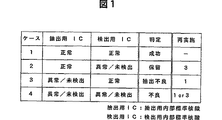
以下、抽出用内部標準核酸及び検出用内部標準核酸の検出結果が正常であった場合及び正常でなかった場合の判定、及び正常でなかった場合に再実施の必要な工程について、図1を参照しながら説明する。
ケース1(抽出用内部標準核酸及び検出用内部標準核酸の検出結果が共に正常の場合):各工程は正常に実施され、解析対象核酸の核酸解析操作は、「成功」と判定する。
ケース2(抽出用内部標準核酸の検出結果が正常で、検出用内部標準核酸の検出結果が異常又は未検出の場合):解析対象核酸がブランクで検出されなかった場合、解析対象核酸の核酸解析操作は正常に実施された可能性が高いと考えられるが、該検出用内部標準核酸及び/又は該検出用内部標準核酸の添加機構が異常である可能性があり、「保留」と判定する。したがって、該検出用内部標準核酸を交換するか、該検出用内部標準核酸の添加機構を点検し、あるいはその双方を行い、図2に示す「再実施3」から再度実施する。
ケース3(抽出用内部標準核酸の検出結果が異常又は未検出で、検出用内部標準核酸の検出結果が正常の場合):核酸抽出工程が正常に実施されなかったと考えられ、「抽出不良」と判定し、図2に示す「再実施1」から再度実施する。特に、解析対象核酸が検出されなかった場合、偽陰性の可能性が極めて高いと考えられる。また、解析対象核酸が解析対象試料で検出された場合、該抽出用内部標準核酸及び/又は該抽出用内部標準核酸の添加機構が異常である可能性があり、該抽出用内部標準核酸を交換するか、該抽出用内部標準核酸の添加機構を点検し、あるいはその双方を行い、図2に示す「再実施1」から再度実施する。
ケース4(抽出用内部標準核酸及び検出用内部標準核酸の検出結果が共に異常又は未検出の場合):抽出用内部核酸及び検出用内部標準核酸が共に未検出の場合、核酸抽出工程および核酸検出工程が正常に実施されなかったと考えられ、「不良」と判定し、図2に示す「再実施1」から再度実施する。抽出用内部核酸が未検出ではない異常の場合、核酸検出工程が正常に実施されなかったと考えられ、「不良」と判定し、図2に示す「再実施3」から再度実施する。この再実施において「成功」の判定ができない場合は「再実施1」から再度実施する。
さらに、ケース2〜4において、再実施後、ケース1の「成功」と判定できない場合は、その判定結果に基づいて再実施を繰り返す。
本発明に用いられる核酸抽出工程には、上記プロテアーゼK/フェノール法、核酸の固体相への吸着特性を利用した方法、例えば磁性シリカ粒子、シリカ粒子、シリカ繊維またはフィルター、およびこれらを含むスピンカラムまたはマイクロプレートなどによる核酸抽出方法等の公知の方法を適宜使用することができるが、特にこれらに限定するものではない。
本発明に用いられる核酸検出工程には、公知の方法であるゲル電気泳動を用いた一本鎖DNA高次構造多型(SSCP)または制限酵素断片長多型(RFLP)、マイクロアレイ法、DNAチップ法、ビーズアレイ法さらにパイロシーケンス法、インベーダー法、質量分析法、HPLC法などがあり、少なくとも一塩基以上配列の異なる核酸を識別して検出可能であれば、利用できる。また、該抽出用内部標準核酸または該検出用内部標準核酸の検出信号は、各工程の成否の判定の他、該対象核酸の定量、塩基長測定または検出信号の補正など各種データ処理に用いることも可能である。
該核酸検出工程には、核酸検出に必要な試料の前処理、例えば、熱変性処理や各種標識処理や溶媒交換などを含み、検出用内部標準核酸の核酸抽出物への添加は該前処理前に実施されることが望ましい。
次に、該抽出工程と該検出工程の間に核酸増幅工程を含む核酸解析方法において、解析対象核酸を含む試料に、解析対象核酸と同時に増幅可能であるが、該解析対象核酸と少なくとも一塩基以上配列が異なる一定量の抽出用内部標準核酸を一種類以上添加し、核酸抽出工程を実施する。次に解析対象核酸と同時に増幅可能であるが、該解析対象核酸及び抽出用内部標準核酸と少なくとも一塩基以上配列が異なる一定量の増幅用内部標準核酸を一種類以上、得られた核酸抽出物に添加し、その後核酸増幅工程を実施する。次いで、解析対象核酸、抽出用内部標準核酸、及び増幅用内部標準核酸と少なくとも一塩基以上配列が異なる一定量の検出用内部標準核酸を一種類以上、得られた核酸増幅物に添加し、その後一塩基以上配列の異なる核酸を識別検出可能な公知の核酸検出工程を実施する。
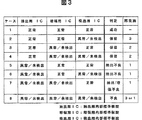
その結果、図3に示すように、上記と同様に各工程の成否を判定し、さらには該判定結果に基づき再解析を決定する。また、解析対象核酸を含まないブランク(対照試料)を解析対象核酸と同時処理することにより、コンタミによる偽陽性を監視し、再解析の判定に利用することができる。この場合、ブランクで対象核酸が検出された場合コンタミを生じており、抽出用内部標準核酸および検出用内部標準核酸の結果に係らず、除洗作業後再度、解析をやり直す必要があることになる。
核酸増幅方法としては、ポリメラーゼ連鎖反応(PCR)、核酸配列基準増幅(NASBA)等の公知の方法を適宜用いれば良く、特に限定されるものではない。尚、増幅工程を含む場合、解析対象核酸と同時に増幅される抽出用内部標準核酸及び増幅用内部標準核酸の量は、検出用内部標準核酸と比較して少量にすることができるが、好ましい相対的量比は、使用する増幅方法及び検出方法に応じて異なり、特定されるものではない。
以下、抽出用内部標準核酸、増幅用内部標準核酸、及び検出用内部標準核酸の検出結果と、各工程の成否判定の関係を、図3を参照しながら説明する。
ケース1(抽出用内部標準核酸、増幅用内部標準核酸及び検出用内部標準核酸の検出結果がいずれも正常の場合):各工程は正常に実施され、解析対象核酸の核酸解析操作は、「成功」と判定する。
ケース2(抽出用内部標準核酸及び増幅用内部標準核酸の検出結果が正常であり、検出用内部標準核酸の検出結果が異常又は未検出の場合):解析対象核酸がブランクで検出されなかった場合、解析対象核酸の核酸解析操作は正常に実施された可能性が高いと考えられるが、該検出用内部標準核酸及び/又は該検出用内部標準核酸の添加機構が異常である可能性があり、「保留」と判定する。したがって、該検出用内部標準核酸を交換するか、該検出用内部標準核酸の添加機構を点検し、あるいはその双方を行い、図2に示す「再実施3」から再度実施する
ケース3(抽出用内部標準核酸及び検出用内部標準核酸の検出結果が正常であり、増幅用内部標準核酸の検出結果が異常又は未検出の場合):解析対象核酸がブランクで検出されなかった場合、解析対象核酸の核酸解析操作は正常に実施された可能性が高いと考えられるが、該増幅用内部標準核酸及び/又は該増幅用内部標準核酸の添加機構が異常である可能性があり、「保留」と判定する。したがって、該増幅用内部標準核酸を交換するか、該増幅用内部標準核酸の添加機構を点検し、あるいはその双方を行い、図2に示す「再実施2」から再度実施する。
ケース4(抽出用内部標準核酸の検出結果が正常であり、増幅用内部標準核酸及び検出用内部標準核酸の検出結果が異常又は未検出の場合):解析対象核酸がブランクで検出されなかった場合、解析対象核酸の核酸解析操作は正常に実施された可能性が高いと考えられるが、該増幅用内部標準核酸及び/又は該増幅用内部標準核酸の添加機構および該検出用内部標準核酸及び/又は該検出用内部標準核酸の添加機構が異常である可能性があり、「保留」と判定する。したがって、該増幅用内部標準核酸及び/又は該増幅用内部標準核酸の添加機構および該検出用内部標準核酸及び/又は該検出用内部標準核酸の添加機構の交換または点検を行い、図2に示す「再実施2」から再度実施する。
ケース5(抽出用内部標準核酸の検出結果が異常又は未検出で、増幅用内部標準核酸及び検出用内部標準核酸の検出結果が正常の場合):核酸抽出工程が正常に実施されなかったと考えられ、「抽出不良」と判定し、図2に示す「再実施1」から再度実施する。特に、解析対象核酸が検出されなかった場合、偽陰性の可能性が極めて高いと考えられる。また、解析対象核酸が解析対象試料で検出された場合、該抽出用内部標準核酸及び/又は該抽出用内部標準核酸の添加機構が異常である可能性があり、該抽出用内部標準核酸を交換するか、該抽出用内部標準核酸の添加機構を点検し、あるいはその双方を行い、図2に示す「再実施1」から再度実施する。
ケース6(抽出用内部標準核酸及び検出用内部標準核酸の検出結果が異常又は未検出であり、増幅用内部標準核酸の検出結果が正常の場合):核酸抽出工程が正常に実施されなかったと考えられ、「抽出不良」と判定し、さらに該検出用内部標準核酸及び/又は該検出用内部標準核酸の添加機構が異常である可能性があり、該検出用内部標準核酸を交換するか、該検出用内部標準核酸の添加機構を点検し、あるいはその双方を行い、図2に示す「再実施1」から再度実施する。また、解析対象核酸が解析対象試料で検出された場合、該抽出用内部標準核酸及び/又は該抽出用内部標準核酸の添加機構および検出用内部標準核酸及び/又は該検出用内部標準核酸の添加機構が異常である可能性があり、該抽出用内部標準核酸及び/又は該抽出用内部標準核酸の添加機構および検出用内部標準核酸及び/又は該検出用内部標準核酸の添加機構の交換または点検を行い、図2に示す「再実施1」から再度実施する。
ケース7(抽出用内部標準核酸及び増幅用内部標準核酸の検出結果が異常/又は未検出であり、検出用内部標準核酸の検出結果が正常の場合):増幅工程及び/又は核酸抽出工程が正常に実施されず、「抽出/増幅不良」と判定し、図2に示す「再実施1」から再度実施する。解析対象核酸が解析対象試料で検出された場合、該抽出用内部標準核酸及び/又は該抽出用内部標準核酸の添加機構および増幅用内部標準核酸及び/又は該増幅用内部標準核酸の添加機構が異常である可能性があり、該抽出用内部標準核酸及び/又は該抽出用内部標準核酸の添加機構および増幅用内部標準核酸及び/又は該増幅用内部標準核酸の添加機構の交換または点検を行い、図2に示す「再実施1」から再度実施する。
ケース8(抽出用内部標準核酸、増幅用内部標準核酸及び検出用内部標準核酸の検出結果がいずれも異常又は未検出の場合):抽出用内部標準核酸、増幅用内部標準核酸および検出用内部標準核酸とも未検出の場合、核酸抽出工程、核酸増幅工程および核酸検出工程が正常に実施されなかったと考えられ、「不良」と判定し、図2に示す「再実施1」から再度実施する。抽出用内部核酸および増幅用内部標準核酸とも未検出ではない異常の場合、核酸検出工程が正常に実施されなかったと考えられ、「不良」と判定し、図2に示す「再実施3」から再度実施する。この再実施において「成功」の判定ができない場合は「再実施1」から再度実施する。
さらに、ケース2〜8において、再実施後、ケース1の「成功」と判定できない場合は、その判定結果に基づいて再実施を繰り返す。
また、該内部標準核酸は一定量、つまり既知濃度で添加されることから、内部標準核酸の検出信号量に基づいて、対象核酸の定量や塩基長測定や検出信号の補正など各種データ処理を行うことが可能である。
増幅工程において、内部標準核酸を解析対象核酸と同時に増幅させる手段としては、広く知られている共通プライマーペアと呼ばれる解析対象核酸と同一のプライマー配列を内部標準核酸に包含する方法が、経済的かつ増幅安定性に優れているが、独立した複数の個別プライマーペアを用いても本発明は実施可能である。
さらに、内部標準核酸の塩基配列は対象核酸と少なくとも一塩基以上異なる必要があるが、増幅工程を含む場合やハイブリダイゼーションを利用したDNAチップなどを検出工程に利用する場合は、対象核酸と類似性が高い方が増幅効率や結合効率が同等になり易いため、再現性に優れており好適である。
本発明はまた、上記の本発明の核酸解析方法を実施するためのキットであって、
(i)抽出用内部標準核酸及び/又は抽出用内部標準核酸を含む抽出用試薬、及び
(ii)検出用内部標準核酸及び/又は検出用内部標準核酸を含む検出用試薬、を含むことを特徴とするキットを提供する。
本発明は更に、上記の核酸解析方法を実施するためのキットであって、
(i)抽出用内部標準核酸及び/又は抽出用内部標準核酸を含む抽出用試薬、
(ii)検出用内部標準核酸及び/又は検出用内部標準核酸を含む検出用試薬、及び
(iii)増幅用内部標準核酸及び/又は増幅用内部標準核酸を含む増幅用試薬、
を含むことを特徴とするキットを提供する。
上記キットにおいて、各内部標準核酸は、単独でキットに含まれていても良いが、溶媒、標識用試薬、プライマー等の、各工程において必要とされる他の試薬と共に含まれていても良い。試薬に含むことができる各成分については、当業者であれば容易に認識できるものであり、特に限定するものではない。
また、本発明に係るキットは、上記抽出用内部標準核酸が解析対象核酸と少なくとも1塩基以上配列の異なる一定量の核酸であり、上記検出用内部標準核酸が該解析対象核酸及び上記抽出用内部標準核酸のいずれとも少なくとも1塩基以上配列の異なる一定量の核酸であることを特徴とする。
また、上記キットが増幅用内部標準核酸及び/又は増幅用内部標準核酸を含む増幅用試薬を含む場合には、上記抽出用内部標準核酸が解析対象核酸と同時に増幅可能であるが、該解析対象核酸と少なくとも1塩基以上配列が異なる一定量の核酸であり、上記増幅用内部標準核酸が該解析対象核酸と同時に増幅可能であるが該解析対象核酸及び上記抽出用内部標準核酸と少なくとも1塩基以上配列が異なる一定量の核酸であり、上記検出用内部標準核酸が解析対象核酸、上記抽出用内部標準核酸及び上記増幅用内部標準核酸のいずれとも互いに少なくとも1塩基以上配列が異なる一定量の核酸であることを特徴とする。
これにより、本発明のキットを使用して本発明の核酸解析方法を実施する際に、1塩基以上配列の異なる核酸を識別可能な検出方法を使用することが可能であり、また、内部標準核酸の検出結果から、解析対象核酸の定量や塩基長測定や検出信号の補正など各種データ処理を行うことも可能となる。
発明を実施するための形態
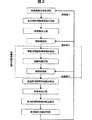
本発明の実施形態を表すフローチャートを図2に示す。
人の血液やその他の体液、組織または細胞、細菌、ウイルスなどの解析対象核酸を含む試料に、
抽出用内部標準核酸及び/又は抽出用内部標準核酸を含む抽出用試薬を試料に添加した後、解析対象核酸および抽出用内部標準核酸を同時に抽出する工程を実施し、
次に、検出用内部標準核酸及び/又は検出用内部標準核酸を含む検出用試薬を得られた核酸に添加した後、解析対象核酸、抽出用内部標準核酸、及び検出用内部標準核酸をそれぞれ識別して検出する工程を実施し、
各内部標準核酸の検出結果から前述のケースに従って各工程の成否を判定し、判定結果に基づいて該抽出工程又は核酸検出工程から、再実施を行う。
あるいはまた、上記解析対象核酸を含む試料に、
抽出用内部標準核酸及び/又は抽出用内部標準核酸を含む抽出用試薬を試料に添加した後、解析対象核酸および抽出用内部標準核酸を同時に抽出する工程を実施し、
増幅用内部標準核酸及び/又は増幅用内部標準核酸を含む増幅用試薬を核酸抽出物に添加した後、解析対象核酸、抽出用内部標準核酸、及び増幅用内部標準核酸を同時に増幅する工程を実施し、
検出用内部標準核酸及び/又は検出用内部標準核酸を含む検出用試薬を核酸増幅物に添加した後、解析対象核酸、抽出用内部標準核酸、検出用内部標準核酸、及び増幅用内部標準核酸をそれぞれ識別して検出する工程を実施し、
各内部標準核酸の検出結果から前述のケースに従って各工程の成否を判定し、判定結果に基づいて該抽出工程、増幅工程又は検出工程から再実施を行う。
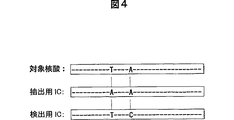
本発明に用いられる内部標準核酸の一例を図4に示す。具体的には、解析対象核酸を含む試料に、解析対象核酸とは少なくとも一塩基以上配列の異なる一定量の抽出用内部標準核酸を添加し、その後核酸抽出工程を実施し、解析対象核酸及び抽出用内部標準核酸とは少なくとも一塩基以上配列の異なる一定量の検出用内部標準核酸を得られた核酸抽出物に添加し、その後一塩基以上配列の異なる核酸を識別検出可能な核酸検出工程を実施する時に用いられる内部標準核酸の例である。解析対象核酸、抽出用内部標準核酸、及び検出用内部標準核酸の塩基長は同一であり、解析対象核酸塩基配列中の特定位置のチミン(T)がアデニン(A)であり、一塩基だけ異なる塩基配列を持つ核酸を抽出用内部標準核酸(抽出用IC)とし、解析対象核酸塩基配列中の別の特定位置のAがシトシン(C)であり、一塩基だけ異なる塩基配列を持つ核酸を検出用内部標準核酸(検出用IC)としたものである。この場合、抽出用ICと検出用ICは二塩基だけ異なる塩基配列を持つ核酸となり、一塩基以上配列の異なる核酸を識別検出可能な検出器により、異なる信号として検出される。
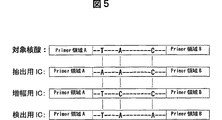
さらに、該抽出工程と該検出工程の間に核酸増幅工程を含む核酸解析方法において用いられる内部標準核酸の一例を図5に示す。この場合、本発明の方法は、具体的には解析対象核酸と同時に増幅可能であるが、該解析対象核酸と少なくとも一塩基以上配列が異なる、一定量の抽出用内部標準核酸を解析対象核酸を含む試料に添加し、核酸抽出工程を実施する。次いで、解析対象核酸と同時に増幅可能であるが、該解析対象核酸及び抽出用内部標準核酸と少なくとも一塩基以上配列が異なる一定量の増幅用内部標準核酸を得られた核酸抽出物に添加し、核酸増幅工程を実施する。その後、解析対象核酸、抽出用内部標準核酸、及び増幅用内部標準核酸と少なくとも一塩基以上配列が異なる一定量の検出用内部標準核酸を得られた核酸増幅物に添加し、一塩基以上配列の異なる核酸を識別検出可能な核酸検出工程を実施する。さらに、増幅工程において、内部標準核酸を対象核酸と同時に増幅させる手段として広く知られている共通プライマーペアど呼ばれる解析対象核酸と同一のプライマー配列を内部標準核酸に包含する方法を用いた例である。
図5に示すように、解析対象核酸塩基配列中の特定位置のTがAに一塩基だけ異なる塩基配列を持つ核酸を抽出用内部標準核酸(抽出用IC)とし、解析対象核酸塩基配列中の別の特定位置のAがCに一塩基だけ異なる塩基配列を持つ核酸を増幅用内部標準核酸(増幅用IC)とし、解析対象核酸塩基配列中のさらに別の特定位置のCがAに一塩基だけ異なる塩基配列を持つ核酸を検出用内部標準核酸(検出用IC)としたものである。この場合、抽出用ICと増幅用ICと検出用ICはそれぞれ二塩基ずつ異なる塩基配列を持つ核酸となり、一塩基以上配列の異なる核酸を識別検出可能な検出器により、異なる信号として検出される。さらに上記の塩基配列に差異を有する領域の両側に存在するプライマー領域A、プライマー領域Bは、解析対象核酸、及び各内部標準核酸と同一の塩基配列であることから、一種類のプライマーペアでそれぞれの塩基配列を増幅することが可能である。
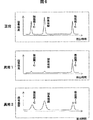
本発明の核酸解析方法を実施したときに得られる結果の一例を図6に示す。図6は、解析対象核酸を含む試料に解析対象核酸と少なくとも一塩基以上配列が異なる一定量の抽出用内部標準核酸と、解析対象核酸及び抽出用内部標準核酸と少なくとも一塩基以上配列が異なる一定量の検出用内部標準核酸を用いて、一塩基以上配列の異なる核酸を識別検出可能な核酸検出工程としてゲル電気泳動を用いた一本鎖DNA高次構造多型(SSCP)を実施した時の電気泳動クロマトグラムの例である。SSCPはキャピラリー電気泳動装置を用いて、それぞれ蛍光標識した対象核酸、抽出用ICと検出用ICをレーザーで励起し、CCDカメラで蛍光スペクトルを測定した。
図6に示すように、「正常」のケースは、それぞれ抽出用IC、対象核酸、検出用ICとも所定のピーク強度が得られており、解析工程が正常に実施されたときのクロマトグラムの例である。一方、「異常1」のケースは、図1に示すケース3の一例である。抽出用ICの蛍光ピークが極めて小さく抽出用ICは異常であり、検出用ICの蛍光ピークは正常のケースと同じ検出時間に同等の蛍光強度を示しているので正常である。したがって、抽出不良と判断し、図2に示す再実施1を行う。「異常2」のケースは、図1に示すケース4の一例である。抽出用ICおよび検出用ICの蛍光ピークが広がり、抽出用ICおよび検出用ICは未検出ではないが異常である。特に、本ケースでは解析対象核酸の蛍光ピークも広がっているため、電気泳動による核酸分離能が低下していると考えられ、図2に示す再実施3を行う。
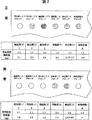
次に、本発明の核酸解析方法をDNAチップを用いて実施したときに得られる結果の一例を図7に示す。具体的には解析対象核酸と同時に増幅可能であるが、該解析対象核酸と少なくとも一塩基以上配列が異なる一定量の抽出用内部標準核酸、解析対象核酸と同時に増幅可能であるが、該解析対象核酸及び抽出用内部標準核酸と少なくとも一塩基以上配列が異なる一定量の増幅用内部標準核酸、および解析対象核酸、抽出用内部標準核酸、及び増幅用内部標準核酸と少なくとも一塩基以上配列が異なる一定量の検出用内部標準核酸を用いて、一塩基以上配列の異なる核酸を識別検出可能な核酸検出工程としてDNAチップを実施したときの例である。
DNAチップ上には、それぞれ抽出用IC1、抽出用IC2、抽出用IC3、増幅用IC、検出用ICおよび対象核酸Aと相補的な塩基配列を含有するプローブが固定化されている。このDNAチップ上で、それぞれ蛍光色素を標識した抽出用IC1、抽出用IC2、抽出用IC3、増幅用IC、検出用ICおよび対象核酸Aをハイブリダイズさせ、蛍光スペクトルを測定可能なDNAチップリーダーで検出した。
図7に示すように「正常」のケースはそれぞれ抽出用IC1、抽出用IC2、抽出用IC3、増幅用IC、検出用ICのいずれも表に示した所定のピーク強度(0.5、1.0又は1.5)が得られ、解析工程が正常に実施された例である。さらに、内部標準核酸の検出信号量に基づいて、対象核酸を定量する場合には、抽出用IC1、抽出用IC2、抽出用IC3の蛍光強度と既知の核酸量より、核酸濃度の検量線を作成し、対象核酸Aの蛍光強度から対象核酸の核酸量は2.4ngであると定量できる。
一方、「異常」のケースは図3のケース5に示した一例である。抽出用IC1、抽出用IC2、及び抽出用IC3の蛍光強度がそれぞれ0.1であり、それぞれの所定の蛍光強度である0.5、1.0又は1.5を下回っており、抽出用ICは異常である。その他の増幅用IC及び検出用ICの蛍光ピークは所定の蛍光強度と同じ強度を示しているので正常である。このとき対象核酸Aが検出されていないのは偽陰性の可能性が高いと考えられる。したがって、抽出不良と判断し、図2に示す再実施1を行う。
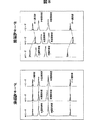
各内部標準核酸の検出信号量に基づいて、検出信号の補正を行ったデータ処理の一例を図8に示す。図6と同様、一塩基以上配列の異なる核酸を識別検出可能な核酸検出工程としてキャピラリー電気泳動装置を用いたSSCPを実施した時の電気泳動クロマトグラムの例である。
データ処理前に示したクロマトグラムは各レーンで内部核酸の検出時間にずれを生じている。このような時、対象核酸AとA’またはA”が同一ピークであるか、また対象核酸BとB’またはB”が同一ピークであるかを一目で判定することは困難である。そこで、本来既知の内部核酸は同じ検出時間になることからそれぞれのレーンの抽出用ICまたは検出用ICが同じ検出時間になるようにクロマトグラムを補正した結果がデータ処理後のクロマトグラムである。このようなデータ処理をすると対象核酸AとA’およびA”は同一ピークであり、対象核酸BとB”は同一ピークであるがB’は異なるピークであることが一目瞭然に判定できる。
産業上の利用可能性
本発明によれば、核酸解析を構成する抽出、増幅、及び検出の各工程での操作の成否を判定することが可能となり、得られる解析結果の信頼性を高めると共に、再検査を自動化することも可能となる。本効果は特に医療分野において遺伝子解析に基づいて実施される検査・診断の信頼性の向上に寄与する。
本明細書で引用した全ての刊行物、特許及び特許出願をそのまま参考として本明細書にとり入れるものとする。
【図面の簡単な説明】
図1は、抽出工程及び検出工程を含む本発明の方法における各工程の成否判定表を示す。
図2は、本発明の核酸解析方法のフローチャートを示す。
図3は、抽出工程、増幅工程、及び検出工程を含む本発明の方法における各工程の成否判定表を示す。
図4は、本発明の抽出用内部標準核酸および検出用内部標準核酸の一例を示す。
図5は、本発明の抽出用内部標準核酸、増幅用内部標準核酸、及び検出用内部標準核酸の一例を示す。
図6は、本発明の検出工程にゲル電気泳動を用いて一本鎖DNA高次構造多型を検出するために実施する本発明の方法における検出結果の一例を示す。
図7は、検出工程にDNAチップを用いた本発明の方法における検出結果を定量解析として示す一例を示す。
図8は、本発明の方法において検出工程にゲル電気泳動を用いて一本鎖DNA高次構造多型を検出するためのデータ処理の一例を示す。Technical field
The present invention relates to a method for analyzing a nucleic acid of a nucleic acid and a kit for performing the method. In detail, the method of the present invention includes a step of extracting a nucleic acid to be analyzed, a detection step, and optionally an amplification step, and in each step, at least one internal standard nucleic acid that can be identified and detected from the nucleic acid to be analyzed. More than one kind of nucleic acid is analyzed at the same time as the nucleic acid to be analyzed, and the success or failure of each step is determined from the detection result of the internal standard nucleic acid, and reanalysis is performed based on the determination result.
Background art
Isolation and analysis of genes from biological samples is not only a very effective tool for molecular biology research, but is also being actively used in the medical field. Many genes have been isolated and identified from living organisms and tissues for gene function analysis. As a gene amplification method, a polymerase chain reaction (PCR) method (Science: Vol. 239, pp. 487-492 (1988)) has been developed, and it is possible to isolate or detect a gene whose amount is very small. became. Furthermore, human genome analysis has progressed rapidly, and attention has been paid to the association between gene mutations such as single nucleotide polymorphisms and diseases or drug reactions. Such genetic polymorphisms are expected to be used not only in molecular biology and genetics but also in personalized treatment or medicine in the field of medical diagnosis.
A typical gene analysis step includes an extraction step of a nucleic acid to be analyzed from a sample and a detection step, and may further include a nucleic acid amplification step between the extraction step and the detection step.
A widely known method for extracting nucleic acids is to add a protease such as protease K or a surfactant to destroy cells and decompose proteins to release nucleic acids, add phenol / chloroform, and centrifuge. After distributing the nucleic acid to the aqueous phase by the above, the so-called protease K / phenol method (Molecular cloning: A Laboratory manual Appendix E3 to E4 (New York) : Cold Spring Harbor Laboratory, 1989) However, this method is not necessarily suitable for automation such as including centrifugation, and a method utilizing the adsorption characteristics of nucleic acids to a solid phase to solve such a problem. Has been proposed, for example The binding of nucleic acids to glass in the presence of otropic salts is described in the Proceedings of the National Academy of Sciences of the USA, 76, 615-619 (1979) (Proc. Natl.Acad.Sci.USA 76, 615-619 (1979)) By applying the property that this nucleic acid binds to silicon oxide (silica) under certain conditions, magnetic silica particles, silica particles, Disclosed are a nucleic acid extraction kit and a nucleic acid extraction automation device using a silica fiber or a filter, and a spin column or microplate containing the same (Japanese Patent Application Laid-Open Nos. 10-504834, 9-505724, 8-320274, 9-1996). -304385, JP 2807090).
Methods used in the nucleic acid detection step, particularly methods for detecting nucleic acids having one or more bases differing in sequence, include, for example, single-stranded DNA higher-order structural polymorphism (SSCP) using gel electrophoresis or restriction enzyme fragment length polymorphism. (RFLP), a microarray method, a DNA chip method, a bead array method, a pyrosequence method, an invader method, a mass spectrometry method for immobilizing a single-stranded nucleic acid on a glass or silicon wafer or various beads and detecting hybridization with a target nucleic acid , HPLC method and the like have been developed and widely used.
Known methods of nucleic acid amplification include polymerase chain reaction (PCR) (US Pat. Nos. 4,683,195 and 4,683,202) and nucleic acid sequence-based amplification (NASBA) (European Patents 0, 329, 822). Furthermore, methods for quantifying nucleic acids using competitive amplification or co-amplification are generally known. In this method, several types of internal standard nucleic acids that react with the same primer as the nucleic acid to be analyzed are amplified in the same container, and the amount of the target nucleic acid is quantified based on a known amount of the internal standard nucleic acid. 8-107798, JP-T 8-501222, JP-T 11-123095, JP-T 11-506613).
Such conventional techniques are mainly used in the nucleic acid amplification step to quantify the amount of the target nucleic acid by simultaneously amplifying a certain amount of nucleic acid that can be detected and distinguished from the nucleic acid to be analyzed, which is generally referred to as an internal standard nucleic acid, etc. It is assumed that the nucleic acid to be analyzed is normally prepared (Tokuhyo Hei 8-107798, Tokkai Hei 11-123095, Tokuhyo Hei 11-506613). On the other hand, Japanese Patent Application Laid-Open No. Hei 8-501222 describes a method for reflecting the extraction efficiency of the target nucleic acid in the extraction step and a method for detecting cross-contamination between samples. However, it is essential to include a nucleic acid amplification step. It was difficult to determine the success or failure of the entire nucleic acid analysis step and / or which step caused the abnormality.
Therefore, an object of the present invention is to provide a nucleic acid analysis method for ensuring or improving the reliability of analysis results in nucleic acid analysis.
Disclosure of the invention
The present invention is used for a nucleic acid to be analyzed and other steps in a nucleic acid analysis method, which further comprises an extraction step and a detection step of a nucleic acid to be analyzed, and optionally an amplification step between the extraction step and the detection step. After adding at least one kind of internal standard nucleic acid that can be identified and detected from the internal standard nucleic acid to each sample before performing each step, each step is performed in the same container as the target nucleic acid, and each of the nucleic acid detection steps is performed. Provided is a method for determining the success or failure of each step from the detection result of an internal standard nucleic acid.
That is, the present invention relates to a nucleic acid analysis method including an extraction step and a detection step of a nucleic acid to be analyzed, wherein the nucleic acid is extracted after adding one or more internal standard nucleic acids for extraction which can be identified and detected as the nucleic acid to be analyzed. And a method for analyzing a nucleic acid, comprising determining the success or failure of the extraction step from the detection result of the internal standard nucleic acid in the detection step.
Further, the present invention provides a nucleic acid analysis method comprising an extraction step and a detection step of a nucleic acid to be analyzed,
Performing the extraction step and the detection step after adding the nucleic acid to be analyzed and one or more types of the internal standard nucleic acid for extraction and the internal standard nucleic acid for detection, which are mutually distinguishable and detectable, and the internal standard nucleic acid according to the detection step The present invention provides a nucleic acid analysis method, which comprises determining the success or failure of an extraction step and a detection step from the detection results of the above.
Furthermore, the present invention relates to a nucleic acid analysis method including an extraction step of an analysis target nucleic acid, an amplification step and a detection step,
Performing the extraction step and the detection step after adding the nucleic acid to be analyzed and one or more types of the internal standard nucleic acid for extraction, the internal standard nucleic acid for amplification, and the internal standard nucleic acid for detection, which can be identified and detected from each other; Provided is a nucleic acid analysis method, which comprises determining the success or failure of an extraction step and a detection step from the detection result of the internal standard nucleic acid in the step.
Further, the present invention provides a nucleic acid analysis method including an extraction step and a detection step of a nucleic acid to be analyzed,
(A) a nucleic acid extraction step of adding a nucleic acid to be analyzed to a sample containing the nucleic acid to be analyzed, adding one or more internal standard nucleic acids for extraction that can be identified and detected from the nucleic acid to be analyzed, and then extracting the nucleic acid;
(B) adding, to a sample containing the nucleic acid extracted in the above step (a), one or more kinds of detection internal standard nucleic acids that can be detected by being distinguished from the analysis target nucleic acid and the extraction internal standard nucleic acid, Detecting nucleic acid, and
(C) a step of judging the success or failure of each of the above steps from the detection result of each of the above internal standard nucleic acids in the nucleic acid detection step;
The present invention provides a nucleic acid analysis method, characterized by comprising:
Further, the present invention provides a nucleic acid analysis method including an extraction step of an analysis target nucleic acid, an amplification step and a detection step,
(A) Extracting a nucleic acid after adding one or more internal standard nucleic acids for extraction which can be amplified simultaneously with the nucleic acid to be analyzed but can be distinguished and detected from the nucleic acid to be analyzed to a sample containing the nucleic acid to be analyzed Nucleic acid extraction step,
(B) The sample containing the nucleic acid extracted in the step (a) can be amplified simultaneously with the nucleic acid to be analyzed and the internal standard nucleic acid for extraction. A nucleic acid amplification step of amplifying the nucleic acid after adding at least one kind of internal standard nucleic acid for amplification that can be identified and detected;
(C) in the sample containing the nucleic acid amplified in the step (b), one or more types of nucleic acids that can be distinguished and detected from any of the nucleic acid to be analyzed, the internal standard nucleic acid for extraction, and the internal standard nucleic acid for detection. A nucleic acid detection step of detecting a nucleic acid after adding a detection internal standard nucleic acid, and
(D) a step of judging the success or failure of each of the above steps from the detection result of each of the above internal standard nucleic acids in the nucleic acid detection step;
The present invention provides a nucleic acid analysis method, characterized by comprising:
Furthermore, the nucleic acid analysis method of the present invention is characterized in that the analysis is performed again from any of the steps based on the result of the success / failure determination of the extraction step, amplification step or detection step.
Furthermore, specifically, to the sample containing the nucleic acid to be analyzed, a certain amount of an internal standard nucleic acid for extraction having a sequence different from the nucleic acid to be analyzed by at least one base is added, and then a nucleic acid extraction step is performed, and the nucleic acid to be analyzed and the extracted nucleic acid are extracted. A known nucleic acid detection step capable of adding a certain amount of a detection internal standard nucleic acid having a sequence different from at least one base to the obtained nucleic acid extract, and then discriminating and detecting a nucleic acid having a sequence different from one or more bases Is carried out. As a result, as shown in FIG. 1, the success or failure of each step is determined, and reanalysis is determined based on the determination result. In addition, by simultaneously processing a sample (blank) containing no target nucleic acid with the target sample, false positives due to sample contamination (contamination) can be monitored and used for determination of reanalysis. In this case, when the target nucleic acid is detected in the blank, contamination has occurred, and the analysis is performed again after the washing operation regardless of the detection results of the extraction internal standard nucleic acid and the detection internal standard nucleic acid.
Hereafter, refer to FIG. 1 for the determination of whether or not the detection results of the internal standard nucleic acid for extraction and the internal standard nucleic acid for detection are normal and abnormal, and the steps that need to be repeated when the results are not normal. It will be explained while doing so.
Case 1 (When both the detection results of the internal standard nucleic acid for extraction and the internal standard nucleic acid for detection are normal): Each step is performed normally, and the nucleic acid analysis operation of the nucleic acid to be analyzed is determined to be “success”.
Case 2 (When the detection result of the internal standard nucleic acid for extraction is normal and the detection result of the internal standard nucleic acid for detection is abnormal or undetected): When the nucleic acid to be analyzed is not detected as a blank, the nucleic acid analysis operation of the nucleic acid to be analyzed is performed. Although it is considered highly likely that the test was performed normally, the internal standard nucleic acid for detection and / or the mechanism of adding the internal standard nucleic acid for detection may be abnormal, and thus, it is determined to be “pending”. Therefore, the internal standard nucleic acid for detection is exchanged, or the addition mechanism of the internal standard nucleic acid for detection is checked, or both are performed, and the process is performed again from “
Case 3 (When the detection result of the internal standard nucleic acid for extraction is abnormal or not detected, and the detection result of the internal standard nucleic acid for detection is normal): It is considered that the nucleic acid extraction step was not performed normally, and it was determined that the extraction was defective. , And again from “
Case 4 (When both the detection results of the internal standard nucleic acid for extraction and the internal standard nucleic acid for detection are abnormal or not detected): When both the internal nucleic acid for extraction and the internal standard nucleic acid for detection are not detected, the nucleic acid extraction step and the nucleic acid detection step are performed. It is considered that the operation was not performed normally, so that it is determined to be “defective”, and the operation is performed again from “
Further, in
In the nucleic acid extraction step used in the present invention, the above-mentioned protease K / phenol method, a method utilizing the adsorption property of nucleic acid to a solid phase, for example, magnetic silica particles, silica particles, silica fibers or filters, and spin columns containing these Alternatively, a known method such as a nucleic acid extraction method using a microplate or the like can be appropriately used, but is not particularly limited thereto.
In the nucleic acid detection step used in the present invention, single-stranded DNA higher-order structural polymorphism (SSCP) or restriction enzyme fragment length polymorphism (RFLP) using gel electrophoresis, which is a known method, microarray method, DNA chip Method, bead array method, pyrosequencing method, invader method, mass spectrometry method, HPLC method, and the like. Any method can be used as long as nucleic acids having at least one base and different sequences can be identified and detected. The detection signal of the internal standard nucleic acid for extraction or the internal standard nucleic acid for detection may be used for various data processing such as determination of the success or failure of each step, quantification of the target nucleic acid, base length measurement or correction of the detection signal. Is also possible.
The nucleic acid detection step includes pretreatment of a sample necessary for nucleic acid detection, for example, heat denaturation treatment, various labeling treatments, solvent exchange, and the like, and addition of an internal standard nucleic acid for detection to a nucleic acid extract is performed before the pretreatment. It is desirable to be implemented.
Next, in a nucleic acid analysis method including a nucleic acid amplification step between the extraction step and the detection step, a sample containing the nucleic acid to be analyzed can be amplified simultaneously with the nucleic acid to be analyzed, but at least one base As described above, one or more kinds of fixed internal standard nucleic acids for extraction having different sequences are added, and a nucleic acid extraction step is performed. Next, at least one kind of a certain amount of an internal standard nucleic acid for amplification, which can be amplified simultaneously with the nucleic acid to be analyzed and has a sequence different from the nucleic acid to be analyzed and the internal standard nucleic acid for extraction by at least one base or more, is obtained. And then perform a nucleic acid amplification step. Next, one or more kinds of the detection target nucleic acid, the internal standard nucleic acid for extraction, and a certain amount of the internal standard nucleic acid for detection having a sequence different from the internal standard nucleic acid for amplification by at least one base or more are added to the obtained nucleic acid amplification product. A known nucleic acid detection step capable of discriminating and detecting a nucleic acid having a sequence different from one or more bases is performed.
As a result, as shown in FIG. 3, the success or failure of each step is determined in the same manner as described above, and reanalysis is determined based on the determination result. In addition, by simultaneously treating a blank (control sample) containing no nucleic acid to be analyzed with the nucleic acid to be analyzed, false positives due to contamination can be monitored and used for determination of reanalysis. In this case, contamination occurs when the target nucleic acid is detected in the blank, and it is necessary to perform analysis again after the washing operation regardless of the results of the internal standard nucleic acid for extraction and the internal standard nucleic acid for detection. .
A known method such as polymerase chain reaction (PCR) and nucleic acid sequence standard amplification (NASBA) may be used as appropriate, and is not particularly limited. When the amplification step is included, the amounts of the internal standard nucleic acid for extraction and the internal standard nucleic acid for amplification, which are simultaneously amplified with the nucleic acid to be analyzed, can be reduced as compared with the internal standard nucleic acid for detection. The quantitative ratio differs depending on the amplification method and detection method used, and is not specified.
Hereinafter, the relationship between the detection results of the internal standard nucleic acid for extraction, the internal standard nucleic acid for amplification, and the internal standard nucleic acid for detection and the determination of the success or failure of each step will be described with reference to FIG.
Case 1 (When the detection results of the internal standard nucleic acid for extraction, the internal standard nucleic acid for amplification, and the internal standard nucleic acid for detection are all normal): Each step is performed normally, and the nucleic acid analysis operation of the nucleic acid to be analyzed is “success”. judge.
Case 2 (When the detection result of the internal standard nucleic acid for extraction and the internal standard nucleic acid for amplification is normal and the detection result of the internal standard nucleic acid for detection is abnormal or not detected): If the nucleic acid to be analyzed is not detected as a blank, the analysis is performed. Although it is highly likely that the nucleic acid analysis operation of the target nucleic acid was performed normally, the addition of the internal standard nucleic acid for detection and / or the internal standard nucleic acid for detection may be abnormal, Is determined. Therefore, the detection internal standard nucleic acid is exchanged, or the addition mechanism of the detection internal standard nucleic acid is checked, or both of them are performed, and the processing is performed again from “
Case 3 (When the detection result of the internal standard nucleic acid for extraction and the internal standard nucleic acid for detection is normal and the detection result of the internal standard nucleic acid for amplification is abnormal or not detected): If the nucleic acid to be analyzed is not detected as a blank, the analysis is performed. It is highly probable that the nucleic acid analysis operation of the target nucleic acid was performed normally. However, the addition of the internal standard nucleic acid for amplification and / or the addition mechanism of the internal standard nucleic acid for amplification may be abnormal. Is determined. Therefore, the internal standard nucleic acid for amplification is replaced, or the addition mechanism of the internal standard nucleic acid for amplification is checked, or both are performed, and the process is performed again from “re-execute 2” shown in FIG.
Case 4 (When the detection result of the internal standard nucleic acid for extraction is normal and the detection result of the internal standard nucleic acid for amplification and the internal standard nucleic acid for detection is abnormal or not detected): When the nucleic acid to be analyzed is not detected as a blank, the analysis is performed. It is highly probable that the nucleic acid analysis operation of the target nucleic acid was performed normally, but the addition mechanism of the internal standard nucleic acid for amplification and / or the internal standard nucleic acid for amplification and the internal standard nucleic acid for detection and / or There is a possibility that the addition mechanism of the internal standard nucleic acid for detection may be abnormal, and it is determined to be “pending”. Therefore, the addition mechanism of the internal standard nucleic acid for amplification and / or the addition mechanism of the internal standard nucleic acid for amplification and the addition mechanism of the internal standard nucleic acid for detection and / or the internal standard nucleic acid for detection are exchanged or checked, and as shown in FIG. Perform again from "
Case 5 (When the detection result of the internal standard nucleic acid for extraction is abnormal or not detected, and the detection results of the internal standard nucleic acid for amplification and the internal standard nucleic acid for detection are normal): It is considered that the nucleic acid extraction step was not performed normally, It is determined as “extraction failure”, and the processing is performed again from “
Case 6 (When the detection results of the internal standard nucleic acid for extraction and the internal standard nucleic acid for detection are abnormal or not detected, and the detection result of the internal standard nucleic acid for amplification is normal): It is considered that the nucleic acid extraction step was not performed normally. It is determined that the extraction internal standard nucleic acid is defective, and the internal standard nucleic acid for detection and / or the addition mechanism of the internal standard nucleic acid for detection may be abnormal. The addition mechanism of the internal standard nucleic acid is checked, or both are performed, and the process is performed again from “
Case 7 (When the detection result of the internal standard nucleic acid for extraction and the internal standard nucleic acid for amplification is abnormal / undetected, and the detection result of the internal standard nucleic acid for detection is normal): The amplification step and / or the nucleic acid extraction step are performed normally Instead, it is determined as “extraction / amplification failure”, and the processing is performed again from “
Case 8 (When the detection results of the internal standard nucleic acid for extraction, the internal standard nucleic acid for amplification, and the internal standard nucleic acid for detection are all abnormal or not detected): Both the internal standard nucleic acid for extraction, the internal standard nucleic acid for amplification, and the internal standard nucleic acid for detection are used. If not detected, it is considered that the nucleic acid extraction step, the nucleic acid amplification step, and the nucleic acid detection step were not performed normally, and it is determined to be “defective”, and the processing is performed again from “
Further, in
In addition, since the internal standard nucleic acid is added in a fixed amount, that is, at a known concentration, various data processes such as quantification of the target nucleic acid, base length measurement, and correction of the detection signal are performed based on the detection signal amount of the internal standard nucleic acid. It is possible.
In the amplification step, as a means for simultaneously amplifying the internal standard nucleic acid with the nucleic acid to be analyzed, a method of including the same primer sequence as the nucleic acid to be analyzed, which is widely known as a common primer pair, in the internal standard nucleic acid is economical and Although excellent in amplification stability, the present invention can be practiced using a plurality of independent individual primer pairs.
Furthermore, the base sequence of the internal standard nucleic acid needs to differ from the target nucleic acid by at least one base. However, when the amplification step is included or a DNA chip utilizing hybridization is used for the detection step, similarity to the target nucleic acid is observed. The higher the value, the better the amplification efficiency and the coupling efficiency are likely to be the same, so that the reproducibility is excellent and this is preferable.
The present invention is also a kit for performing the above nucleic acid analysis method of the present invention,
(I) an extraction internal standard nucleic acid and / or an extraction reagent containing the extraction internal standard nucleic acid, and
(Ii) A kit comprising: an internal standard nucleic acid for detection and / or a reagent for detection containing the internal standard nucleic acid for detection.
The present invention further provides a kit for performing the above nucleic acid analysis method,
(I) an extraction internal standard nucleic acid and / or an extraction reagent containing the extraction internal standard nucleic acid,
(Ii) a detection reagent containing an internal standard nucleic acid for detection and / or an internal standard nucleic acid for detection, and
(Iii) an amplification internal standard nucleic acid and / or an amplification reagent containing the amplification internal standard nucleic acid,
And a kit comprising:
In the above kit, each internal standard nucleic acid may be included alone in the kit, or may be included together with other reagents required in each step, such as a solvent, a labeling reagent, and a primer. Each component that can be included in the reagent can be easily recognized by those skilled in the art, and is not particularly limited.
Further, in the kit according to the present invention, the internal standard nucleic acid for extraction is a fixed amount of nucleic acid having a sequence different from the nucleic acid to be analyzed by at least one base, and the internal standard nucleic acid for detection is the nucleic acid to be analyzed and the internal nucleic acid for extraction. It is characterized by a certain amount of nucleic acid having a sequence different from at least one base by at least one of the standard nucleic acids.
When the kit contains an internal standard nucleic acid for amplification and / or an amplification reagent containing an internal standard nucleic acid for amplification, the internal standard nucleic acid for extraction can be amplified simultaneously with the nucleic acid to be analyzed. A certain amount of nucleic acid having a sequence different from the nucleic acid by at least one base or more, wherein the internal standard nucleic acid for amplification can be simultaneously amplified with the nucleic acid to be analyzed, but the nucleic acid to be analyzed and the internal standard nucleic acid for extraction are at least one base or more A fixed amount of nucleic acid having a different sequence, wherein the detection internal standard nucleic acid is a fixed amount of nucleic acid having a sequence different from at least one base by at least one nucleotide from the nucleic acid to be analyzed, the internal standard nucleic acid for extraction, and the internal standard nucleic acid for amplification. There is a feature.
Thereby, when performing the nucleic acid analysis method of the present invention using the kit of the present invention, it is possible to use a detection method capable of discriminating nucleic acids having one or more bases having different sequences, and to use an internal standard nucleic acid. It is also possible to perform various data processing such as quantification of the nucleic acid to be analyzed, measurement of the base length, and correction of the detection signal from the detection result of the above.
DESCRIPTION OF EMBODIMENTS OF THE INVENTION
FIG. 2 is a flowchart illustrating an embodiment of the present invention.
For samples containing nucleic acids to be analyzed, such as human blood and other body fluids, tissues or cells, bacteria, and viruses,
After adding an extraction reagent containing the internal standard nucleic acid for extraction and / or the internal standard nucleic acid for extraction to the sample, performing a step of simultaneously extracting the nucleic acid to be analyzed and the internal standard nucleic acid for extraction,
Next, after adding the detection internal standard nucleic acid and / or the detection reagent containing the detection internal standard nucleic acid to the obtained nucleic acid, the nucleic acid to be analyzed, the extraction internal standard nucleic acid, and the detection internal standard nucleic acid are respectively identified. Implement the process of detecting
The success or failure of each step is determined from the results of detection of each internal standard nucleic acid according to the above-described case, and the process is repeated from the extraction step or the nucleic acid detection step based on the determination results.
Alternatively, in the sample containing the nucleic acid to be analyzed,
After adding an extraction reagent containing the internal standard nucleic acid for extraction and / or the internal standard nucleic acid for extraction to the sample, performing a step of simultaneously extracting the nucleic acid to be analyzed and the internal standard nucleic acid for extraction,
After adding the internal standard nucleic acid for amplification and / or the amplification reagent containing the internal standard nucleic acid for amplification to the nucleic acid extract, a step of simultaneously amplifying the nucleic acid to be analyzed, the internal standard nucleic acid for extraction, and the internal standard nucleic acid for amplification is performed. And
After adding the detection internal standard nucleic acid and / or the detection reagent containing the detection internal standard nucleic acid to the nucleic acid amplification product, the nucleic acid to be analyzed, the internal standard nucleic acid for extraction, the internal standard nucleic acid for detection, and the internal standard nucleic acid for amplification are added. Implement the process of identifying and detecting each,
The success or failure of each step is determined from the detection results of each internal standard nucleic acid according to the above-described case, and the extraction step, amplification step, or detection step is performed again based on the determination results.
FIG. 4 shows an example of the internal standard nucleic acid used in the present invention. Specifically, to the sample containing the nucleic acid to be analyzed, a certain amount of an internal standard nucleic acid for extraction having a sequence different from the nucleic acid to be analyzed by at least one base is added, and then a nucleic acid extraction step is performed, and the nucleic acid to be analyzed and the extracted nucleic acid are extracted. A specific amount of the internal standard nucleic acid having at least one base sequence different from the internal standard nucleic acid for detection is added to the obtained nucleic acid extract, and then a nucleic acid detection step capable of discriminating and detecting a nucleic acid having one or more bases different in sequence is performed. It is an example of an internal standard nucleic acid used when performing the method. The base lengths of the nucleic acid to be analyzed, the internal standard nucleic acid for extraction, and the internal standard nucleic acid for detection are the same, and thymine (T) at a specific position in the nucleic acid base sequence to be analyzed is adenine (A), and differs by only one base. A nucleic acid having a base sequence is used as an internal standard nucleic acid for extraction (IC for extraction), and A at another specific position in the nucleic acid base sequence to be analyzed is cytosine (C), and a nucleic acid having a base sequence that differs by only one base is detected. Internal standard nucleic acid for detection (IC for detection). In this case, the extraction IC and the detection IC become nucleic acids having base sequences different from each other by two bases, and are detected as different signals by a detector capable of discriminating and detecting one or more bases having different sequences.
FIG. 5 shows an example of an internal standard nucleic acid used in a nucleic acid analysis method including a nucleic acid amplification step between the extraction step and the detection step. In this case, the method of the present invention, specifically, can be amplified simultaneously with the nucleic acid to be analyzed, but has a sequence different from the nucleic acid to be analyzed by at least one base or more, a fixed amount of an internal standard nucleic acid for extraction is converted to the nucleic acid to be analyzed. The nucleic acid extraction step is performed by adding to the sample containing the nucleic acid. Next, a certain amount of the internal nucleic acid for amplification, which can be amplified simultaneously with the nucleic acid to be analyzed, but has a sequence different from the nucleic acid to be analyzed and the internal standard nucleic acid for extraction by at least one base, is added to the obtained nucleic acid extract, Perform a nucleic acid amplification step. Thereafter, a nucleic acid to be analyzed, an internal standard nucleic acid for extraction, and an internal standard nucleic acid for amplification are added to the obtained nucleic acid amplification product with a certain amount of an internal standard nucleic acid for detection having a sequence different from at least one base by more than one base. A nucleic acid detection step capable of discriminating and detecting different nucleic acids is performed. Further, in the amplification step, a method is used in which the internal standard nucleic acid includes a primer sequence identical to the nucleic acid to be analyzed, which is commonly known as a common primer pair, as a means for amplifying the internal standard nucleic acid simultaneously with the target nucleic acid. .
As shown in FIG. 5, a nucleic acid having a base sequence in which T at a specific position in the nucleic acid base sequence to be analyzed is different from A by one base is defined as an internal standard nucleic acid for extraction (IC for extraction). A nucleic acid having a base sequence in which A at another specific position differs by one base from C is defined as an internal standard nucleic acid for amplification (amplification IC), and C at another specific position in the nucleic acid base sequence to be analyzed has one base at A A nucleic acid having a base sequence that differs only by that is used as an internal standard nucleic acid for detection (IC for detection). In this case, the extraction IC, the amplification IC, and the detection IC each have a nucleic acid having a base sequence different from each other by two bases, and are detected as different signals by a detector capable of discriminating and detecting one or more bases having different sequences. Furthermore, since the primer region A and the primer region B present on both sides of the region having a difference in the base sequence have the same base sequence as the nucleic acid to be analyzed, and each internal standard nucleic acid, each of the primer pairs is a single primer pair. Can be amplified.
FIG. 6 shows an example of the result obtained when the nucleic acid analysis method of the present invention is performed. FIG. 6 shows that a sample containing a nucleic acid to be analyzed has a certain amount of an internal standard nucleic acid for extraction having a sequence different from that of the nucleic acid to be analyzed by at least one base, and a constant amount having a sequence different from the nucleic acid to be analyzed and the internal standard nucleic acid for extraction by at least one base. When single-stranded DNA higher-order structural polymorphism (SSCP) using gel electrophoresis was performed as a nucleic acid detection step capable of discriminating and detecting nucleic acids having one or more bases different in sequence using the internal standard nucleic acid for detection of the amount. It is an example of an electrophoresis chromatogram. In the SSCP, a fluorescence-labeled target nucleic acid, an extraction IC and a detection IC were excited by a laser using a capillary electrophoresis apparatus, and the fluorescence spectrum was measured by a CCD camera.
As shown in FIG. 6, in the case of “normal”, a predetermined peak intensity was obtained for each of the extraction IC, the target nucleic acid, and the detection IC, and an example of a chromatogram when the analysis process was performed normally. It is. On the other hand, the case of "abnormal 1" is an example of
Next, an example of a result obtained when the nucleic acid analysis method of the present invention is performed using a DNA chip is shown in FIG. Specifically, it can be amplified at the same time as the nucleic acid to be analyzed, but it can be amplified at the same time as a certain amount of the internal standard nucleic acid for extraction, which differs in sequence by at least one base from the nucleic acid to be analyzed, A certain amount of the internal standard nucleic acid for amplification having a sequence different from the nucleic acid and the internal standard nucleic acid for extraction by at least one base or more, and the nucleic acid to be analyzed, the internal standard nucleic acid for extraction, and the sequence having at least one base or more different from the internal standard nucleic acid for amplification This is an example in which a DNA chip is implemented as a nucleic acid detection step capable of discriminating and detecting a nucleic acid having a sequence different from one or more bases by using an amount of an internal standard nucleic acid for detection.
On the DNA chip, an extraction IC1, an extraction IC2, an extraction IC3, an amplification IC, a detection IC, and a probe containing a base sequence complementary to the target nucleic acid A are immobilized, respectively. On this DNA chip, extraction IC1, extraction IC2, extraction IC3, amplification IC, detection IC and target nucleic acid A, each of which is labeled with a fluorescent dye, are hybridized, and a DNA chip reader capable of measuring a fluorescence spectrum is used. Detected.
As shown in FIG. 7, in the case of “normal”, each of the extraction IC1, the extraction IC2, the extraction IC3, the amplification IC, and the detection IC has a predetermined peak intensity (0.5, 1. 0 or 1.5) was obtained, and the analysis process was performed normally. Furthermore, when quantifying the target nucleic acid based on the detection signal amount of the internal standard nucleic acid, a calibration curve of the nucleic acid concentration is prepared from the fluorescence intensity of the extraction IC1, the extraction IC2, and the extraction IC3 and the known amount of the nucleic acid. However, from the fluorescence intensity of the target nucleic acid A, the amount of the target nucleic acid can be determined to be 2.4 ng.
On the other hand, the case of “abnormal” is an example shown in case 5 of FIG. The fluorescence intensity of each of the extraction IC1, the extraction IC2, and the extraction IC3 is 0.1, which is lower than the predetermined fluorescence intensity of 0.5, 1.0, or 1.5, respectively. Is abnormal. The fluorescence peaks of the other amplification ICs and detection ICs are normal because they show the same intensity as the predetermined fluorescence intensity. At this time, the fact that the target nucleic acid A has not been detected is considered to be highly likely to be a false negative. Therefore, it is determined that the extraction is defective, and the first embodiment shown in FIG.
FIG. 8 shows an example of data processing in which the detection signal is corrected based on the detection signal amount of each internal standard nucleic acid. 6 is an example of an electrophoresis chromatogram when SSCP using a capillary electrophoresis apparatus is performed as a nucleic acid detection step capable of discriminating and detecting a nucleic acid having one or more bases different in sequence, as in FIG. 6.
In the chromatogram shown before the data processing, the detection time of the internal nucleic acid is shifted in each lane. In such a case, it is difficult to determine at a glance whether the target nucleic acids A and A ′ or A ″ have the same peak, and whether the target nucleic acids B and B ′ or B ″ have the same peak. Therefore, since the originally known internal nucleic acid has the same detection time, the chromatogram after data processing is the result of correcting the chromatogram so that the extraction IC or detection IC of each lane has the same detection time. By performing such data processing, it can be determined at a glance that the target nucleic acids A, A ′ and A ″ have the same peak, and the target nucleic acids B and B ″ have the same peak but B ′ has a different peak.
Industrial applicability
According to the present invention, it is possible to determine the success or failure of operations in each of the extraction, amplification, and detection steps constituting nucleic acid analysis, thereby increasing the reliability of the obtained analysis results and automating retesting. Is also possible. This effect contributes to the improvement of the reliability of tests and diagnoses performed based on gene analysis, particularly in the medical field.
All publications, patents, and patent applications cited herein are hereby incorporated by reference in their entirety.
[Brief description of the drawings]
FIG. 1 shows a success / failure determination table for each step in the method of the present invention including an extraction step and a detection step.
FIG. 2 shows a flowchart of the nucleic acid analysis method of the present invention.
FIG. 3 shows a success / failure determination table of each step in the method of the present invention including the extraction step, the amplification step, and the detection step.
FIG. 4 shows an example of the internal standard nucleic acid for extraction and the internal standard nucleic acid for detection of the present invention.
FIG. 5 shows an example of the internal standard nucleic acid for extraction, the internal standard nucleic acid for amplification, and the internal standard nucleic acid for detection of the present invention.
FIG. 6 shows an example of a detection result in the method of the present invention performed for detecting a single-stranded DNA higher-order structural polymorphism using gel electrophoresis in the detection step of the present invention.
FIG. 7 shows an example in which the detection result in the method of the present invention using a DNA chip in the detection step is shown as a quantitative analysis.
FIG. 8 shows an example of data processing for detecting a single-stranded DNA higher-order structural polymorphism using gel electrophoresis in the detection step in the method of the present invention.
Claims (11)
解析対象核酸と識別して検出可能な1種類以上の抽出用内部標準核酸を添加した後に核酸を抽出すること、及び上記検出工程による上記内部標準核酸の検出結果から抽出工程の成否を判定することを含む、核酸解析方法。In a nucleic acid analysis method including an extraction step and a detection step of a nucleic acid to be analyzed,
Extracting the nucleic acid after adding one or more internal standard nucleic acids for extraction that can be identified and detected as the nucleic acid to be analyzed, and determining the success or failure of the extraction step from the detection result of the internal standard nucleic acid in the detection step A nucleic acid analysis method, comprising:
解析対象核酸及び相互に識別して検出可能な1種類以上の抽出用内部標準核酸及び検出用内部標準核酸を添加した後に上記抽出工程及び検出工程を行うこと、そして上記検出工程による上記内部標準核酸の検出結果から抽出工程及び検出工程の成否を判定することを含む、核酸解析方法。In a nucleic acid analysis method including an extraction step and a detection step of a nucleic acid to be analyzed,
Performing the extraction step and the detection step after adding the nucleic acid to be analyzed and one or more types of the internal standard nucleic acid for extraction and the internal standard nucleic acid for detection, which are mutually distinguishable and detectable, and the internal standard nucleic acid according to the detection step A nucleic acid analysis method, comprising determining the success or failure of an extraction step and a detection step from the detection results of the above.
解析対象核酸及び相互に識別して検出可能な1種類以上の抽出用内部標準核酸、増幅用内部標準核酸及び検出用内部標準核酸を添加した後に上記抽出工程及び検出工程を行うこと、そして上記検出工程による上記内部標準核酸の検出結果から抽出工程及び検出工程の成否を判定することを含む、核酸解析方法。In a nucleic acid analysis method including an extraction step of an analysis target nucleic acid, an amplification step and a detection step,
Performing the extraction step and the detection step after adding the nucleic acid to be analyzed and one or more types of the internal standard nucleic acid for extraction, the internal standard nucleic acid for amplification, and the internal standard nucleic acid for detection, which can be identified and detected from each other; A nucleic acid analysis method, comprising determining the success or failure of an extraction step and a detection step from the detection result of the internal standard nucleic acid in the step.
(a)解析対象核酸を含有する試料に、該解析対象核酸と識別して検出可能な1種類以上の抽出用内部標準核酸を添加した後に核酸を抽出する核酸抽出工程、
(b)上記工程(a)において抽出された核酸を含有する試料に、上記解析対象核酸及び抽出用内部標準核酸と識別して検出可能な1種類以上の検出用内部標準核酸を添加した後に核酸を検出する核酸検出工程、及び
(c)核酸検出工程における上記の各内部標準核酸の検出結果から上記各工程の成否を判定する工程、
を含むことを特徴とする、核酸解析方法。In a nucleic acid analysis method including an extraction step and a detection step of a nucleic acid to be analyzed,
(A) a nucleic acid extraction step of adding a nucleic acid to be analyzed to a sample containing the nucleic acid to be analyzed, adding one or more internal standard nucleic acids for extraction that can be identified and detected from the nucleic acid to be analyzed, and then extracting the nucleic acid;
(B) adding, to a sample containing the nucleic acid extracted in the above step (a), one or more kinds of detection internal standard nucleic acids that can be detected by being distinguished from the analysis target nucleic acid and the extraction internal standard nucleic acid, (C) determining the success or failure of each of the above steps from the detection result of each of the above internal standard nucleic acids in the nucleic acid detection step;
A nucleic acid analysis method, comprising:
(a)解析対象核酸を含有する試料に、解析対象核酸と同時に増幅可能であるが、該解析対象核酸と識別して検出可能な1種類以上の抽出用内部標準核酸を添加した後に核酸を抽出する核酸抽出工程、
(b)上記工程(a)において抽出された核酸を含有する試料に、上記解析対象核酸及び上記抽出用内部標準核酸と同時に増幅可能であるが、上記解析対象核酸及び上記抽出用内部標準核酸と識別して検出可能な1種類以上の増幅用内部標準核酸を添加した後に核酸を増幅する核酸増幅工程、
(c)上記工程(b)において増幅された核酸を含有する試料に、上記解析対象核酸、抽出用内部標準核酸、及び検出用内部標準核酸のいずれとも互いに識別して検出可能な1種類以上の検出用内部標準核酸を添加した後に核酸を検出する核酸検出工程、及び
(d)核酸検出工程における上記の各内部標準核酸の検出結果から上記各工程の成否を判定する工程、
を含むことを特徴とする、核酸解析方法。In a nucleic acid analysis method including an extraction step of an analysis target nucleic acid, an amplification step and a detection step,
(A) Extracting a nucleic acid after adding one or more internal standard nucleic acids for extraction which can be amplified simultaneously with the nucleic acid to be analyzed but can be distinguished and detected from the nucleic acid to be analyzed to a sample containing the nucleic acid to be analyzed Nucleic acid extraction step,
(B) The sample containing the nucleic acid extracted in the step (a) can be amplified simultaneously with the nucleic acid to be analyzed and the internal standard nucleic acid for extraction. A nucleic acid amplification step of amplifying the nucleic acid after adding at least one kind of internal standard nucleic acid for amplification that can be identified and detected;
(C) in the sample containing the nucleic acid amplified in the step (b), one or more types of nucleic acids that can be distinguished and detected from any of the nucleic acid to be analyzed, the internal standard nucleic acid for extraction, and the internal standard nucleic acid for detection. A nucleic acid detection step of detecting the nucleic acid after adding the detection internal standard nucleic acid, and (d) a step of determining the success or failure of each of the above steps from the detection result of each of the above internal standard nucleic acids in the nucleic acid detection step;
A nucleic acid analysis method, comprising:
(i)抽出用内部標準核酸及び/又は抽出用内部標準核酸を含む抽出用試薬、及び
(ii)検出用内部標準核酸及び/又は検出用内部標準核酸を含む検出用試薬、を含むことを特徴とするキット。A kit for performing the nucleic acid analysis method according to claim 4,
(I) an extraction internal standard nucleic acid and / or an extraction reagent containing the extraction internal standard nucleic acid, and (ii) a detection internal standard nucleic acid and / or a detection reagent containing the detection internal standard nucleic acid. And kit.
(i)抽出用内部標準核酸及び/又は抽出用内部標準核酸を含む抽出用試薬、
(ii)検出用内部標準核酸及び/又は検出用内部標準核酸を含む検出用試薬、及び
(iii)増幅用内部標準核酸及び/又は増幅用内部標準核酸を含む増幅用試薬、
を含むことを特徴とするキット。A kit for performing the nucleic acid analysis method according to claim 4,
(I) an extraction internal standard nucleic acid and / or an extraction reagent containing the extraction internal standard nucleic acid,
(Ii) a detection reagent containing the detection internal standard nucleic acid and / or the detection internal standard nucleic acid, and (iii) an amplification internal standard nucleic acid and / or an amplification reagent containing the amplification internal standard nucleic acid,
A kit comprising:
Applications Claiming Priority (1)
| Application Number | Priority Date | Filing Date | Title |
|---|---|---|---|
| PCT/JP2000/006526 WO2002024949A1 (en) | 2000-09-22 | 2000-09-22 | Method of analyzing nucleic acid |
Related Child Applications (1)
| Application Number | Title | Priority Date | Filing Date |
|---|---|---|---|
| JP2005214419A Division JP2005348742A (en) | 2005-07-25 | 2005-07-25 | Nucleic acid analysis method |
Publications (2)
| Publication Number | Publication Date |
|---|---|
| JPWO2002024949A1 true JPWO2002024949A1 (en) | 2004-01-29 |
| JP3752488B2 JP3752488B2 (en) | 2006-03-08 |
Family
ID=11736503
Family Applications (1)
| Application Number | Title | Priority Date | Filing Date |
|---|---|---|---|
| JP2002529541A Expired - Fee Related JP3752488B2 (en) | 2000-09-22 | 2000-09-22 | Nucleic acid analysis method |
Country Status (4)
| Country | Link |
|---|---|
| US (1) | US7790368B1 (en) |
| EP (1) | EP1319716B1 (en) |
| JP (1) | JP3752488B2 (en) |
| WO (1) | WO2002024949A1 (en) |
Families Citing this family (21)
| Publication number | Priority date | Publication date | Assignee | Title |
|---|---|---|---|---|
| US7217542B2 (en) | 2002-10-31 | 2007-05-15 | Hewlett-Packard Development Company, L.P. | Microfluidic system for analyzing nucleic acids |
| JP2005180983A (en) * | 2003-12-17 | 2005-07-07 | Hitachi High-Technologies Corp | Chemical analyzer and structure for chemical analysis |
| CA2502549C (en) * | 2004-04-23 | 2016-02-16 | Becton, Dickinson And Company | Use of an extraction control in a method of extracting nucleic acids |
| US7981606B2 (en) | 2005-12-21 | 2011-07-19 | Roche Molecular Systems, Inc. | Control for nucleic acid testing |
| WO2008030631A2 (en) | 2006-02-03 | 2008-03-13 | Microchip Biotechnologies, Inc. | Microfluidic devices |
| KR20100028526A (en) | 2007-02-05 | 2010-03-12 | 마이크로칩 바이오테크놀로지스, 인크. | Microfluidic and nanofluidic devices, systems, and applications |
| AU2010256429B2 (en) | 2009-06-05 | 2015-09-17 | Integenx Inc. | Universal sample preparation system and use in an integrated analysis system |
| EP2606154B1 (en) | 2010-08-20 | 2019-09-25 | Integenx Inc. | Integrated analysis system |
| EP3412773B1 (en) | 2011-09-26 | 2022-11-16 | QIAGEN GmbH | Rapid method for isolating extracellular nucleic acids |
| US20150136604A1 (en) | 2011-10-21 | 2015-05-21 | Integenx Inc. | Sample preparation, processing and analysis systems |
| US10865440B2 (en) | 2011-10-21 | 2020-12-15 | IntegenX, Inc. | Sample preparation, processing and analysis systems |
| DK2909339T3 (en) * | 2012-10-18 | 2018-08-13 | Idexx Lab Inc | Kits comprehensive controls for nucleic acid amplification |
| WO2014072367A1 (en) * | 2012-11-07 | 2014-05-15 | Qiagen Gmbh | Control for diagnostic assay |
| CN105873681B (en) | 2013-11-18 | 2019-10-11 | 尹特根埃克斯有限公司 | Cartridges and Instruments for Sample Analysis |
| US10208332B2 (en) | 2014-05-21 | 2019-02-19 | Integenx Inc. | Fluidic cartridge with valve mechanism |
| WO2016065073A1 (en) | 2014-10-22 | 2016-04-28 | Integenx Inc. | Systems and methods for sample preparation, processing and analysis |
| AU2016277476B2 (en) | 2015-06-10 | 2022-07-21 | Qiagen Gmbh | Method for isolating extracellular nucleic acids using anion exchange particles |
| EP4137583A1 (en) | 2016-03-24 | 2023-02-22 | BioFire Diagnostics, LLC | Methods for quantitative amplification |
| US11185863B2 (en) | 2016-09-30 | 2021-11-30 | Koninklijke Philips N.V. | System for applying a reagent to a sample |
| WO2019163064A1 (en) * | 2018-02-22 | 2019-08-29 | 学校法人 慶應義塾 | Method for measuring success or failure of pcr |
| WO2025114394A1 (en) * | 2023-11-27 | 2025-06-05 | Sanofi | Method for detecting microorganisms |
Family Cites Families (10)
| Publication number | Priority date | Publication date | Assignee | Title |
|---|---|---|---|---|
| US5096557A (en) | 1990-07-11 | 1992-03-17 | Genetype A.G. | Internal standard for electrophoretic separations |
| AU668659B2 (en) | 1993-07-09 | 1996-05-09 | Akzo Nobel N.V. | Improved method for the quantification of nucleic acid |
| CA2159044A1 (en) * | 1994-09-26 | 1996-03-27 | Falko-Guenter Falkner | Method of quantitating nucleic acids |
| AT401270B (en) * | 1994-09-26 | 1996-07-25 | Immuno Ag | METHOD FOR QUANTIFYING GENOMIC DNA |
| WO1998004741A1 (en) * | 1996-07-26 | 1998-02-05 | Univera Pharmaceuticals, Inc. | Method of identifying aloe using pcr |
| AU734636B2 (en) | 1997-07-11 | 2001-06-21 | Xzillion Gmbh & Co. Kg | Characterising nucleic acids |
| US6013444A (en) | 1997-09-18 | 2000-01-11 | Oligotrail, Llc | DNA bracketing locus compatible standards for electrophoresis |
| US5888740A (en) * | 1997-09-19 | 1999-03-30 | Genaco Biomedical Products, Inc. | Detection of aneuploidy and gene deletion by PCR-based gene- dose co-amplification of chromosome specific sequences with synthetic sequences with synthetic internal controls |
| US6258536B1 (en) * | 1998-12-01 | 2001-07-10 | Jonathan Oliner | Expression monitoring of downstream genes in the BRCA1 pathway |
| US6544777B1 (en) * | 1999-06-03 | 2003-04-08 | Jacques Schrenzel | Non-cognate hybridization system (NCHS) |
-
2000
- 2000-09-22 JP JP2002529541A patent/JP3752488B2/en not_active Expired - Fee Related
- 2000-09-22 WO PCT/JP2000/006526 patent/WO2002024949A1/en not_active Ceased
- 2000-09-22 US US09/958,727 patent/US7790368B1/en not_active Expired - Fee Related
- 2000-09-22 EP EP00961207.8A patent/EP1319716B1/en not_active Expired - Lifetime
Also Published As
| Publication number | Publication date |
|---|---|
| EP1319716A1 (en) | 2003-06-18 |
| WO2002024949A1 (en) | 2002-03-28 |
| EP1319716B1 (en) | 2013-07-03 |
| US7790368B1 (en) | 2010-09-07 |
| EP1319716A4 (en) | 2005-01-12 |
| JP3752488B2 (en) | 2006-03-08 |
Similar Documents
| Publication | Publication Date | Title |
|---|---|---|
| JP3752488B2 (en) | Nucleic acid analysis method | |
| CN103946397B (en) | Bifunctional oligonucleotide probes for universal real-time multiplex assay detection | |
| EP2007901B1 (en) | Rapid genotyping analysis and the device thereof | |
| JP4268944B2 (en) | Nucleic acid detection or quantification method | |
| US12344889B2 (en) | Extraction-free pathogen testing methods | |
| CN111154861A (en) | Primer, probe composition, kit and method for detecting statin drug metabolic gene polymorphism | |
| EP1426448A1 (en) | Method for lowering the effects of sequence variations in a diagnostic hybridization assay, probe for use in the assay and assay | |
| CN107002066A (en) | Combined type multistep nucleic acid amplification | |
| JP2005348742A (en) | Nucleic acid analysis method | |
| Hue-Roye et al. | Principles of PCR-based assays | |
| CA3219231A1 (en) | Viral variant detection | |
| EP2660332B1 (en) | Positive control concept | |
| US20210395804A1 (en) | Sensitive and multiplexed detection of nucleic acids and proteins for large scale serological testing | |
| JP2002171986A (en) | Method for identifying base polymorphism | |
| US20240321395A1 (en) | Mitochondrial probes for endogenous control and contamination detection | |
| CN119753103A (en) | Combined liquid and solid phase DNA amplification | |
| WO2006073449A2 (en) | Multiplex systems, methods, and kits for detecting and identifying nucleic acids | |
| US20140073530A1 (en) | Rapid Genotyping Analysis and the Method Thereof | |
| WO2026099887A1 (en) | "guide rna and method of detection of sickle cell disease" | |
| Meaney et al. | Non-invasive prenatal diagnosis | |
| JP4227139B2 (en) | Biological sample analysis method, reaction solution, and analyzer | |
| Johnson | Application of Taqman Chemistry for Allelic Discrimination | |
| EP4110949A1 (en) | Methods for detection of severe acute respiratory syndrome coronavirus 2 | |
| Sykes et al. | dPCR-digital Polymerase Chain Reaction (3) | |
| JP2003135069A (en) | Method for identifying nucleotide polymorphism |
Legal Events
| Date | Code | Title | Description |
|---|---|---|---|
| A131 | Notification of reasons for refusal |
Free format text: JAPANESE INTERMEDIATE CODE: A131 Effective date: 20050524 |
|
| A521 | Request for written amendment filed |
Free format text: JAPANESE INTERMEDIATE CODE: A523 Effective date: 20050725 |
|
| TRDD | Decision of grant or rejection written | ||
| A01 | Written decision to grant a patent or to grant a registration (utility model) |
Free format text: JAPANESE INTERMEDIATE CODE: A01 Effective date: 20051206 |
|
| A61 | First payment of annual fees (during grant procedure) |
Free format text: JAPANESE INTERMEDIATE CODE: A61 Effective date: 20051212 |
|
| FPAY | Renewal fee payment (event date is renewal date of database) |
Free format text: PAYMENT UNTIL: 20081216 Year of fee payment: 3 |
|
| FPAY | Renewal fee payment (event date is renewal date of database) |
Free format text: PAYMENT UNTIL: 20091216 Year of fee payment: 4 |
|
| FPAY | Renewal fee payment (event date is renewal date of database) |
Free format text: PAYMENT UNTIL: 20101216 Year of fee payment: 5 |
|
| FPAY | Renewal fee payment (event date is renewal date of database) |
Free format text: PAYMENT UNTIL: 20101216 Year of fee payment: 5 |
|
| FPAY | Renewal fee payment (event date is renewal date of database) |
Free format text: PAYMENT UNTIL: 20111216 Year of fee payment: 6 |
|
| FPAY | Renewal fee payment (event date is renewal date of database) |
Free format text: PAYMENT UNTIL: 20111216 Year of fee payment: 6 |
|
| FPAY | Renewal fee payment (event date is renewal date of database) |
Free format text: PAYMENT UNTIL: 20121216 Year of fee payment: 7 |
|
| FPAY | Renewal fee payment (event date is renewal date of database) |
Free format text: PAYMENT UNTIL: 20131216 Year of fee payment: 8 |
|
| LAPS | Cancellation because of no payment of annual fees |