JPWO2004018564A1 - Oxygen-absorbing resin composition, laminate, and package - Google Patents
Oxygen-absorbing resin composition, laminate, and package Download PDFInfo
- Publication number
- JPWO2004018564A1 JPWO2004018564A1 JP2005501233A JP2005501233A JPWO2004018564A1 JP WO2004018564 A1 JPWO2004018564 A1 JP WO2004018564A1 JP 2005501233 A JP2005501233 A JP 2005501233A JP 2005501233 A JP2005501233 A JP 2005501233A JP WO2004018564 A1 JPWO2004018564 A1 JP WO2004018564A1
- Authority
- JP
- Japan
- Prior art keywords
- resin
- oxygen
- layer
- compound
- copolymer
- Prior art date
- Legal status (The legal status is an assumption and is not a legal conclusion. Google has not performed a legal analysis and makes no representation as to the accuracy of the status listed.)
- Granted
Links
Images





Classifications
-
- C—CHEMISTRY; METALLURGY
- C08—ORGANIC MACROMOLECULAR COMPOUNDS; THEIR PREPARATION OR CHEMICAL WORKING-UP; COMPOSITIONS BASED THEREON
- C08K—Use of inorganic or non-macromolecular organic substances as compounding ingredients
- C08K5/00—Use of organic ingredients
- C08K5/0008—Organic ingredients according to more than one of the "one dot" groups of C08K5/01 - C08K5/59
-
- B—PERFORMING OPERATIONS; TRANSPORTING
- B32—LAYERED PRODUCTS
- B32B—LAYERED PRODUCTS, i.e. PRODUCTS BUILT-UP OF STRATA OF FLAT OR NON-FLAT, e.g. CELLULAR OR HONEYCOMB, FORM
- B32B27/00—Layered products comprising a layer of synthetic resin
- B32B27/06—Layered products comprising a layer of synthetic resin as the main or only constituent of a layer, which is next to another layer of the same or of a different material
- B32B27/08—Layered products comprising a layer of synthetic resin as the main or only constituent of a layer, which is next to another layer of the same or of a different material of synthetic resin
-
- C—CHEMISTRY; METALLURGY
- C08—ORGANIC MACROMOLECULAR COMPOUNDS; THEIR PREPARATION OR CHEMICAL WORKING-UP; COMPOSITIONS BASED THEREON
- C08L—COMPOSITIONS OF MACROMOLECULAR COMPOUNDS
- C08L101/00—Compositions of unspecified macromolecular compounds
Landscapes
- Chemical & Material Sciences (AREA)
- Health & Medical Sciences (AREA)
- Chemical Kinetics & Catalysis (AREA)
- Medicinal Chemistry (AREA)
- Polymers & Plastics (AREA)
- Organic Chemistry (AREA)
- Laminated Bodies (AREA)
- Packages (AREA)
- Wrappers (AREA)
- Compositions Of Macromolecular Compounds (AREA)
Abstract
本発明の目的の1つは、包材構成に依存しないで酸素吸収能を発現できる酸素吸収能を有する樹脂組成物、および各種バリア層と複合化させることで得られる酸素バリア性/酸素吸収性を有する積層体、および包装体を提供することにある。この目的を達成するために、熱可塑性樹脂A50〜99重量%に対し、芳香族ビニル化合物aとエチレン系不飽和結合を有する化合物bとの共重合体を含有する、酸素吸収能を発現する酸素吸収樹脂Bを1〜50重量%配合した樹脂組成物の100重量部に対して、酸化触媒0.001〜2重量部と、光増感剤0〜2重量部とを配合してなる酸素吸収能を有する樹脂組成物を提供する。上記組成物においては、共重合体が、側鎖ブロック共重合体であることが好ましく、また直鎖ブロック共重合体であることも好ましい。One of the objects of the present invention is to provide an oxygen-absorbing ability / oxygen-absorbing ability obtained by combining with a resin composition having an oxygen-absorbing ability capable of developing an oxygen-absorbing ability without depending on the packaging composition, and various barrier layers. It is providing the laminated body which has, and a package. In order to achieve this object, oxygen that expresses oxygen-absorbing ability contains a copolymer of an aromatic vinyl compound a and a compound b having an ethylenically unsaturated bond with respect to 50 to 99% by weight of the thermoplastic resin A. Oxygen absorption obtained by blending 0.001 to 2 parts by weight of an oxidation catalyst and 0 to 2 parts by weight of a photosensitizer with respect to 100 parts by weight of a resin composition containing 1 to 50% by weight of the absorbent resin B A resin composition having a function is provided. In the above composition, the copolymer is preferably a side chain block copolymer, and is preferably a linear block copolymer.
Description
本発明は酸素吸収能を有する樹脂組成物、それを用いた積層体、および包装体に関する。 The present invention relates to a resin composition having oxygen absorbing ability, a laminate using the same, and a package.
各種内容物を包装するパッケージ事業という分野において、「パッケージ」または「包装」には、以下の点が求められる。
(1)消費者に対する購買意識の付与、危険性の提示といった、表示効果
(2)包装体が充填した内容物自体に侵されないといった、内容物耐性
(3)外部刺激に対する内容物保護
特に、上記(3)としては、酸素や水分に対する内容物の保護が求められている。特に最近では、食品分野、工業製品分野、医療・医薬品分野等の広分野において、酸素や水分に対する内容物の保護性が重要視されるようになってきた。例えば、酸素に対して内容物を充分保護できない場合には、酸化による内容物の分解、変質を招く場合がある。一方、水分に対して内容物を保護できない場合には、内容物が吸湿したり、加水分解による内容物の変質を招く場合がある。
このような酸素または水分による内容物の変質を防ぐ方法として、様々な方法が検討されてきた。その一つに、酸素バリアあるいは水分バリア性を有する材料を用いた包装体を設計することが挙げられる。具体的には、酸素バリア性を有する包装体としては、エチレン−ビニルアルコール共重合体等の酸素ガスバリア性に優れる熱可塑性樹脂を含有してなる基材を用いた積層体、アルミニウム蒸着、酸化ケイ素(SixOy)蒸着、酸化アルミニウム(AlxOy)蒸着などの蒸着層をポリエステル基材等に設けた積層体を具備する包装体を例示できる。
これらのバリア性基材を用いた包装体は、その高い酸素バリア性から用途が広がっている。しかしながら、これら包装体のバリア性基材はごく微量の酸素を透過させてしまう。また、これらの包装体で内容物を充填した場合、ヘッドスペース中に酸素が存在している状態がほとんどである。このヘッドスペース中の酸素も内容物を劣化させる。このため、最近では、不活性ガスでヘッドスペース中の酸素を置換して除去しているが、完全に除去しきれないのが状況である。
そこで、バリア性基材を通過する微量な酸素、または包装体内部のヘッドスペース中の酸素を除去すべく、酸素吸収樹脂の開発が行われるようになってきた。酸素吸収樹脂は、大きく以下の5つのタイプに分けられる。
(1)例えば日本特許第3064420号公報に開示されるような、不飽和化合物の酸化分解反応あるいは酸素付加反応を利用したタイプ
(2)例えば特公平7−82001号公報に開示されるような、遷移金属錯体を利用した酸素配位結合タイプ
(3)例えば日本特許第2922306号公報に開示されるような、被還元性化合物の還元/酸化反応を用いた、過酸化水素化(他ガスへの変換)タイプ
(4)例えば日本特許第2991437号公報に開示されるような、遷移金属による熱可塑性樹脂の酸化を用いたタイプ
(5)例えば日本特許第3019153号公報に開示されるような、還元鉄を熱可塑性樹脂に配合したタイプ
これら酸素吸収樹脂は、上述したバリア性樹脂とは異なり、酸化・配位などの現象を利用することで酸素を消費(吸収)させる。したがって、バリア性基材と複合化させることにより微量の透過酸素をも吸収可能である。また、ヘッドスペース中の微量酸素をも除去可能である。このため、内容物保存という点で注目を浴びている。
しかしながら、酸素吸収樹脂は、接着剤や機能性コーティング剤を介在させると、酸素吸収効率(速度)が著しく低下するといった欠点を有する。現状ではその詳細なメカニズムについては明確ではないが、接着剤あるいは機能性コーティング剤由来の溶出成分が、酸化触媒の活性を低下させる可能性、いわゆる触媒毒の可能性や、酸素吸収の起点となるユニット(例えば不飽和結合部位など)への影響、具体的には分解による消費、あるいは皮膜形成による酸化分解の阻止などが考えられる。
以上まとめると、酸素吸収樹脂は内容物を外的刺激から保護できるため、パッケージ用または包装用として期待されている。しかしながら、上述したように、いくら酸素吸収樹脂が優れていても、包装体の構成によっては包装体の酸素吸収効率(速度)が著しく低下するといった問題が生じる。あらゆる包装体にも適用できる酸素吸収能を有する樹脂組成物、それを用いた積層体、および包装体が望まれる。
本発明の課題は上記の実情を考慮したものであり、包材構成に依存しないで酸素吸収能を発現できる酸素吸収能を有する樹脂組成物、および各種バリア層と複合化させることで得られる酸素バリア性/酸素吸収性を有する積層体、および包装体を提供することを目的とする。
また、酸素吸収ポリマーにおいて、スチレン−ブタジエン−スチレン共重合体を分散相としてベース樹脂に配合した酸素吸収樹脂組成物においては、分散相内部でスチレン相とブタジエン相が相分離を起こし、スチレンとブタジエンとの配合比に応じたミクロ相分離構造を形成することが知られている。この状況では、分散相内部では変調構造を形成しているが、図1に示すように、ベース樹脂1との界面近傍では、層状構造(ラメラ構造)2を形成している。つまり、分散相の外層はスチレンあるいはブタジエン単層からなる層で幾重にも囲まれている。
このような組成物ではブタジエンユニットが酸素を吸収する部位として機能するが、上述したスチレン層およびブタジエン層からなるラメラ構造が形成されると、酸素吸収に必用な添加剤である酸化触媒または光開始剤の作用をスチレン層がブロックする。このため、スチレン−ブタジエン−スチレンからなるブロック共重合体を用いると、酸素吸収開始速度が遅いといったディメリットがある。
また、分散相の大きさも酸素吸収速度に影響を与えるため、より微細に分散されていることが好ましい。しかしながら、上述した組成物の場合その多くが非相溶系ポリマーであり、ベース樹脂と分散樹脂との溶融粘度や溶解度パラメーターに大きな差異があるために、分散相のサイズが大きくなり、酸素吸収速度に悪影響を及ぼす。
また、特にポリプロピレン樹脂のような溶融張力の無いポリマーをベース樹脂として使用した場合は、得られる組成物の加工が非常に困難である。
先に説明したように、酸素吸収樹脂は内容物を外的刺激から保護できるため、パッケージ用または包装用として期待されている。しかしながら、内容物充填時により早く酸素吸収を開始して欲しいとの要求は満たされていないのが現状であり、酸素吸収の立ち上がり速度を改善し、かつどのような樹脂とのブレンドにおいても安定して製膜することが可能な、酸素吸収能を有する樹脂組成物、あるいはそれを用いた積層体、および包装体が望まれる。
本発明は上記の実情を考慮してなされたものであり、酸素吸収の立ち上がり速さを改善し、かつ安定した加工性を有することが可能な、酸素吸収能を有する樹脂組成物、および各種バリア層と複合化させることで酸素バリア性/酸素吸収性を有する積層体、および包装体を提供することを他の目的とする。
さらに、酸素吸収樹脂の中でも、上記(2)の遷移金属錯体を用いた酸素配位結合タイプは、錯体中の遷移金属1分子に対し酸素1分子を配意させるため能力が低く、インジケーターとしての機能は果たすが、酸素吸収材として展開する事は困難であるという問題点を有する。この問題点は、特公平7−82001号公報にも開示されている。
また、上記(3)の被還元性化合物の還元/酸化反応を用いた過酸化水素化については、酸素吸収後に過酸化水素が発生する為、衛生性/安全性に問題がある。さらには、この反応を用いる事で熱可塑性樹脂自体が変色(色素として機能もする為)する事も課題として挙げられる。これら問題点は、日本特許第2922306号公報にも開示されている。
したがって、熱可塑性樹脂の酸化を利用した(1)および(4)などのタイプの酸素吸収樹脂が現在で最も主流となっていると言える。しかしながら、熱可塑性樹脂の酸化を利用した酸素吸収樹脂は、酸化反応による分解や架橋など、酸素吸収に伴うラジカル連鎖反応の副反応により膜物性が低下するという欠点を有する。例えば、日本特許第3064420号公報では、炭素−炭素二重結合の割合を限定することで上記問題の解決を図ることを提案しているが、酸化分解に伴う遊離ラジカルの影響については検討しておらず、恒久的な膜物性を維持するには至っていない。さらに、当該公報では、炭素−炭素二重結合についてのみ検討されており、樹脂の設計技術など高度な改良が必要となる。
また、酸素吸収材料には、ボイルやレトルトなどの高温殺菌に耐えうる、つまり耐ボイル性または耐レトルト性を有することが求められる。この問題を解決するために、酸素吸収樹脂を別の熱可塑性樹脂に配合するなどの試みがなされているが、一般に、酸素吸収樹脂と熱可塑性樹脂とは相溶性に劣り、樹脂の凝集力が低下して物性が低下する、例えばヒートシール強度が低下するなどが問題が生じる。
優れた耐ボイル性または耐レトルト性を有し、かつヒートシール強度も良好な酸素吸収樹脂として、先に例示した日本特許第3019153号公報に記載の還元鉄を熱可塑性樹脂に配合した酸素吸収樹脂を例示できる。このタイプの酸素吸収樹脂は、還元鉄を脱酸素剤として耐熱性を有する熱可塑性樹脂に配合することで酸素吸収能を得ている。しかしながら、無機化合物を熱可塑性樹脂に配合するため、透明性が無く、かつ着色するという問題点を有する。
本発明は上記事情を鑑みてなされたものであり、酸素吸収能が高く、かつ酸素吸収による膜物性低下を抑制し、さらには、酸素吸収に伴う膜物性低下が抑制され、透明性、耐熱性などに優れた酸素吸収能を有する包装体を提供することを他の目的とする。In the field of packaging business for packaging various contents, “package” or “packaging” requires the following points.
(1) Display effects such as giving consumers a sense of purchase and presenting dangers (2) Content resistance, such as not being violated by the contents filled in the package itself (3) Content protection against external stimuli In particular, As (3), protection of contents against oxygen and moisture is required. In particular, recently, the protection of contents against oxygen and moisture has been regarded as important in a wide range of fields such as food, industrial products, and medical / pharmaceutical fields. For example, when the contents cannot be sufficiently protected against oxygen, the contents may be decomposed or altered by oxidation. On the other hand, when the contents cannot be protected against moisture, the contents may absorb moisture or cause alteration of the contents due to hydrolysis.
Various methods have been studied as a method for preventing such alteration of contents due to oxygen or moisture. One of them is to design a package using a material having an oxygen barrier or moisture barrier property. Specifically, as a package having oxygen barrier properties, a laminate using a base material containing a thermoplastic resin having excellent oxygen gas barrier properties such as ethylene-vinyl alcohol copolymer, aluminum vapor deposition, silicon oxide Examples include a package including a laminate in which a vapor deposition layer such as (Si x O y ) vapor deposition or aluminum oxide (Al x O y ) vapor deposition is provided on a polyester base material.
The packaging body using these base materials for barriers has a wide range of uses because of its high oxygen barrier property. However, the barrier base material of these packages allows a very small amount of oxygen to permeate. In addition, when the contents are filled with these packages, oxygen is mostly present in the head space. This oxygen in the headspace also degrades the contents. For this reason, recently, oxygen in the head space is replaced with an inert gas and removed, but the situation is that it cannot be completely removed.
Therefore, development of oxygen-absorbing resins has been performed in order to remove a small amount of oxygen passing through the barrier base material or oxygen in the head space inside the package. Oxygen absorbing resins are roughly classified into the following five types.
(1) For example, as disclosed in Japanese Patent No. 3064420, a type using an oxidative decomposition reaction or oxygen addition reaction of an unsaturated compound (2), for example, as disclosed in Japanese Patent Publication No. 7-82001, Oxygen coordination bond type (3) using transition metal complex, for example, as disclosed in Japanese Patent No. 2922306, using a reduction / oxidation reaction of a compound to be reduced, hydrogen peroxide (to other gas) Conversion) Type (4) Type (5) using oxidation of a thermoplastic resin with a transition metal, for example as disclosed in Japanese Patent No. 2991437, Reduction, for example as disclosed in Japanese Patent No. 3019153 Different from the barrier resin described above, these oxygen-absorbing resins consume oxygen by utilizing phenomena such as oxidation and coordination. (Absorb). Therefore, a small amount of permeated oxygen can be absorbed by combining with a barrier substrate. It is also possible to remove trace oxygen in the head space. For this reason, it attracts attention in terms of content preservation.
However, the oxygen-absorbing resin has a drawback that the oxygen absorption efficiency (speed) is remarkably lowered when an adhesive or a functional coating agent is interposed. Although the detailed mechanism is not clear at present, the elution component derived from the adhesive or the functional coating agent may decrease the activity of the oxidation catalyst, the so-called catalyst poison, and the starting point of oxygen absorption. The influence on a unit (for example, an unsaturated bond site), specifically, consumption due to decomposition or prevention of oxidative decomposition due to film formation may be considered.
In summary, oxygen-absorbing resins are expected to be used for packaging or packaging because the contents can be protected from external stimuli. However, as described above, no matter how excellent the oxygen absorbing resin is, the oxygen absorbing efficiency (speed) of the package significantly decreases depending on the configuration of the package. A resin composition having oxygen-absorbing ability that can be applied to any package, a laminate using the resin composition, and a package are desired.
An object of the present invention is to take the above-mentioned circumstances into consideration, and a resin composition having an oxygen absorption ability that can express an oxygen absorption ability without depending on a packaging material structure, and oxygen obtained by combining with various barrier layers It aims at providing the laminated body which has barrier property / oxygen absorption property, and a package.
In the oxygen-absorbing polymer, in the oxygen-absorbing resin composition in which the styrene-butadiene-styrene copolymer is blended with the base resin as a dispersed phase, the styrene phase and the butadiene phase undergo phase separation inside the dispersed phase, and styrene and butadiene It is known to form a microphase-separated structure according to the blending ratio. In this situation, a modulation structure is formed inside the dispersed phase, but a layered structure (lamella structure) 2 is formed in the vicinity of the interface with the base resin 1 as shown in FIG. In other words, the outer layer of the dispersed phase is surrounded by layers of styrene or butadiene monolayers.
In such a composition, the butadiene unit functions as a site for absorbing oxygen. However, when the lamellar structure composed of the styrene layer and the butadiene layer is formed, an oxidation catalyst or photoinitiator that is an additive necessary for oxygen absorption is formed. The styrene layer blocks the action of the agent. For this reason, when the block copolymer which consists of styrene-butadiene-styrene is used, there exists a demerit that oxygen absorption start speed is slow.
Further, since the size of the dispersed phase also affects the oxygen absorption rate, it is preferable that the dispersed phase is more finely dispersed. However, many of the above-described compositions are incompatible polymers, and there are large differences in the melt viscosity and solubility parameters between the base resin and the dispersed resin, which increases the size of the dispersed phase and increases the oxygen absorption rate. Adversely affect.
In particular, when a polymer having no melt tension, such as polypropylene resin, is used as the base resin, it is very difficult to process the resulting composition.
As described above, the oxygen-absorbing resin is expected to be used for packaging or packaging because it can protect the contents from external stimuli. However, there is currently no requirement to start oxygen absorption earlier when filling the contents, which improves the rate of oxygen absorption rise and is stable in any resin blend. Thus, a resin composition capable of forming a film and having an oxygen-absorbing ability, or a laminate and a package using the same are desired.
The present invention has been made in consideration of the above-mentioned circumstances, and has improved oxygen absorption rising speed and can have stable processability, and has a resin composition having oxygen absorption ability and various barriers. Another object of the present invention is to provide a laminate and a package having an oxygen barrier property / oxygen absorption property by being combined with a layer.
Furthermore, among oxygen-absorbing resins, the oxygen coordination bond type using the transition metal complex of the above (2) has a low ability to coordinate one molecule of transition metal in the complex, and as an indicator Although it functions, it has a problem that it is difficult to develop as an oxygen absorber. This problem is also disclosed in Japanese Patent Publication No. 7-82001.
In addition, the hydrogenation using the reduction / oxidation reaction of the reducible compound (3) has a problem of hygiene / safety because hydrogen peroxide is generated after oxygen absorption. Furthermore, the use of this reaction also causes the thermoplastic resin itself to change color (because it also functions as a pigment). These problems are also disclosed in Japanese Patent No. 2922306.
Therefore, it can be said that the oxygen absorbing resins of the types (1) and (4) utilizing the oxidation of the thermoplastic resin are the most mainstream at present. However, oxygen-absorbing resins that utilize the oxidation of thermoplastic resins have the drawback that film properties deteriorate due to side reactions of radical chain reactions associated with oxygen absorption, such as decomposition and crosslinking by oxidation reactions. For example, Japanese Patent No. 3064420 proposes to solve the above problem by limiting the proportion of carbon-carbon double bonds, but the influence of free radicals accompanying oxidative decomposition is studied. The permanent film properties have not been maintained. Furthermore, in this publication, only a carbon-carbon double bond is studied, and advanced improvements such as resin design techniques are required.
The oxygen-absorbing material is required to withstand high temperature sterilization such as boil and retort, that is, to have boil resistance or retort resistance. In order to solve this problem, attempts have been made, for example, to blend an oxygen-absorbing resin with another thermoplastic resin. However, in general, the oxygen-absorbing resin and the thermoplastic resin have poor compatibility, and the cohesive strength of the resin is low. There is a problem that the physical properties deteriorate due to the decrease, for example, the heat seal strength decreases.
An oxygen-absorbing resin in which reduced iron described in Japanese Patent No. 3019153 exemplified above is blended with a thermoplastic resin as an oxygen-absorbing resin having excellent boil resistance or retort resistance and good heat seal strength Can be illustrated. This type of oxygen-absorbing resin obtains oxygen-absorbing ability by blending reduced iron with a heat-resistant thermoplastic resin using an oxygen scavenger. However, since the inorganic compound is blended in the thermoplastic resin, there is a problem that it is not transparent and is colored.
The present invention has been made in view of the above circumstances, and has a high oxygen absorption capacity, suppresses film physical property deterioration due to oxygen absorption, and further suppresses film physical property deterioration due to oxygen absorption, and has transparency and heat resistance. Another object is to provide a package having an excellent oxygen absorption capacity.
本発明は、上記目的を達成するために、熱可塑性樹脂A50〜99重量%に対し、芳香族ビニル化合物aとエチレン系不飽和結合を有する化合物bとの共重合体を含有する、酸素吸収能を発現する酸素吸収樹脂Bを1〜50重量%配合した樹脂組成物の100重量部に対して、
酸化触媒0.001〜2重量部と、光増感剤0〜2重量部とを配合してなる酸素吸収能を有する樹脂組成物を提供する。
上記酸素吸収能を有する樹脂組成物においては、共重合体が側鎖ブロック共重合体であることが好ましい。
また、上記酸素吸収能を有する樹脂組成物においては、共重合体が直鎖ブロック共重合体であることも好ましい。
さらに、上記酸素吸収能を有する樹脂組成物においては、酸素吸収能を発現する酸素吸収樹脂Bが、芳香族ビニル化合物aとエチレン系不飽和結合を有する化合物bとの共重合体と、前記熱可塑性樹脂Aに芳香族ビニル化合物aをグラフト共重合させたグラフト樹脂Cとを含有してなる混合物であって、上記共重合体が直鎖ブロック共重合体であることが好ましい。
また、本発明は、上記目的を達成するために、上記酸素収能を有する樹脂組成物を含有する層を具備する積層体を提供する。
さらに、本発明は、上記目的を達成するために、上記積層体から形成される包装体を提供する。
また、上記目的を達成するために、アリル位の炭素、ベンジル位の炭素、三級炭素、α位の炭素から選ばれるC−H結合解離エネルギーが小さい炭素を有する熱可塑性樹脂であって、熱または光で発生したラジカルを起点として、酸化触媒のレドックス反応を利用したラジカル連鎖反応により酸化反応を促進させることで、酸素吸収能を発現する酸素吸収樹脂Dを含有してなる層を少なくとも一層具備する酸素吸収能を有する包装体を提供する。In order to achieve the above object, the present invention comprises an oxygen-absorbing ability containing a copolymer of an aromatic vinyl compound a and a compound b having an ethylenically unsaturated bond with respect to 50 to 99% by weight of the thermoplastic resin A. With respect to 100 parts by weight of the resin composition containing 1 to 50% by weight of the oxygen-absorbing resin B that expresses
Provided is a resin composition having an oxygen absorption capacity obtained by blending 0.001 to 2 parts by weight of an oxidation catalyst and 0 to 2 parts by weight of a photosensitizer.
In the resin composition having oxygen absorption capacity, the copolymer is preferably a side chain block copolymer.
Moreover, in the resin composition having oxygen absorption capacity, the copolymer is preferably a linear block copolymer.
Further, in the resin composition having the oxygen absorbing ability, the oxygen absorbing resin B that expresses the oxygen absorbing ability includes a copolymer of an aromatic vinyl compound a and a compound b having an ethylenically unsaturated bond, and the heat It is a mixture comprising a plastic resin A and a graft resin C obtained by graft copolymerizing an aromatic vinyl compound a, and the copolymer is preferably a linear block copolymer.
Moreover, in order to achieve the said objective, this invention provides the laminated body which comprises the layer containing the resin composition which has the said oxygen abundance.
Furthermore, this invention provides the package formed from the said laminated body, in order to achieve the said objective.
In order to achieve the above object, there is provided a thermoplastic resin having carbon having a small C—H bond dissociation energy selected from allylic carbon, benzylic carbon, tertiary carbon and α-carbon. Alternatively, at least one layer containing an oxygen-absorbing resin D that expresses oxygen absorption ability by accelerating an oxidation reaction by a radical chain reaction using a redox reaction of an oxidation catalyst starting from a radical generated by light is provided. Provided is a package having oxygen absorbing ability.
図1は、スチレン−ブタジエン−スチレン分散相の相分離構造の模式図である。
図2は、ジブロックタイプ共重合体の骨格を説明する模式図である。
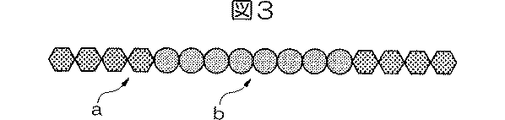
図3は、トリブロックタイプ共重合体の骨格を説明する模式図である。
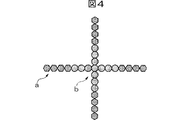
図4は、側鎖型ブロック共重合体の骨格を説明する模式図である。
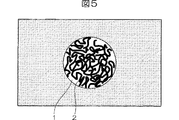
図5は、相溶化剤を配合したスチレン−ブタジエン−スチレン分散相の相分離構造の模式図である。
図6は、実施例1の酸素吸収能力の評価結果を表わすグラフである。
図7は、実施例2の酸素吸収能力の評価結果を表わすグラフである。
図8は、実施例3の酸素吸収能力の評価結果を表わすグラフである。
図9は、実施例4の酸素吸収能力の評価結果を表わすグラフである。
図10は、実施例5及び実施例6酸素吸収能力の評価結果を表わすグラフである。
図11は、実施例12の酸素吸収能の評価結果を表わすグラフである。
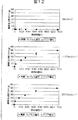
図12は、実施例13の酸素吸収能の評価結果を表わすグラフである。
図13は、実施例14の酸素吸収能の評価結果を表わすグラフである。
図14は、実施例15の酸素吸収能の評価結果を表わすグラフである。
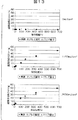
図15は、実施例16の酸素吸収能の評価結果を表わすグラフである。
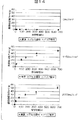
図16は、実施例17の酸素吸収能の評価結果を表わすグラフである。
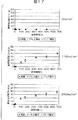
図17は、実施例18の酸素吸収能の評価結果を表わすグラフである。
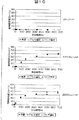
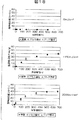
図18は、実施例19の酸素吸収能の評価結果を表わすグラフである。
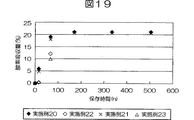
図19は、実施例20〜23の酸素吸収能の評価結果を表わすグラフである。
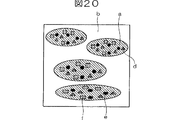
図20は、酸素吸収樹脂D−1のモルフォロジーの模式図である。
図21は、酸素吸収樹脂D−2のモルフォロジーの模式図である。
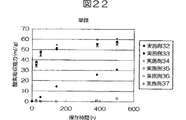
図22は、実施例32〜37の評価結果を示すグラフである。
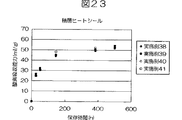
図23は、実施例38〜41の評価結果を示すグラフである。
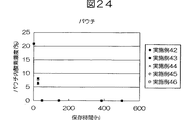
図24は、実施例42〜46の評価結果を示すグラフである。
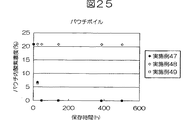
図25は、実施例47〜49の評価結果を示すグラフである。FIG. 1 is a schematic diagram of a phase separation structure of a styrene-butadiene-styrene dispersed phase.
FIG. 2 is a schematic diagram illustrating the skeleton of a diblock type copolymer.
FIG. 3 is a schematic diagram for explaining the skeleton of the triblock type copolymer.
FIG. 4 is a schematic diagram for explaining the skeleton of the side chain block copolymer.
FIG. 5 is a schematic diagram of a phase separation structure of a styrene-butadiene-styrene dispersed phase blended with a compatibilizing agent.
FIG. 6 is a graph showing the evaluation results of the oxygen absorption capacity of Example 1.
FIG. 7 is a graph showing the evaluation results of the oxygen absorption capacity of Example 2.
FIG. 8 is a graph showing the evaluation results of the oxygen absorption capacity of Example 3.
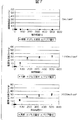
FIG. 9 is a graph showing the evaluation results of the oxygen absorption capacity of Example 4.
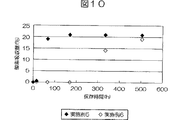
FIG. 10 is a graph showing the evaluation results of the oxygen absorption capacity of Example 5 and Example 6.
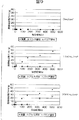
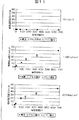
FIG. 11 is a graph showing the evaluation results of the oxygen absorption capacity of Example 12.
FIG. 12 is a graph showing the evaluation results of the oxygen absorption capacity of Example 13.
FIG. 13 is a graph showing the evaluation results of oxygen absorption capacity in Example 14.
FIG. 14 is a graph showing the evaluation results of oxygen absorption capacity in Example 15.
FIG. 15 is a graph showing the evaluation results of the oxygen absorption capacity of Example 16.
FIG. 16 is a graph showing the evaluation results of the oxygen absorption capacity of Example 17.
FIG. 17 is a graph showing the evaluation results of the oxygen absorption capacity of Example 18.
FIG. 18 is a graph showing the evaluation results of the oxygen absorption capacity of Example 19.
FIG. 19 is a graph showing the evaluation results of oxygen absorption capacity of Examples 20 to 23.
FIG. 20 is a schematic diagram of the morphology of the oxygen-absorbing resin D-1.
FIG. 21 is a schematic diagram of the morphology of the oxygen-absorbing resin D-2.
FIG. 22 is a graph showing the evaluation results of Examples 32-37.
FIG. 23 is a graph showing the evaluation results of Examples 38 to 41.
FIG. 24 is a graph showing the evaluation results of Examples 42 to 46.
FIG. 25 is a graph showing the evaluation results of Examples 47-49.
以下、本発明の酸素吸収能を有する樹脂組成物、積層体、及び包装体を詳細に説明する。
本発明の酸素吸収能を有する樹脂組成物は、熱可塑性樹脂A50〜99重量%に対し、芳香族ビニル化合物aとエチレン系不飽和結合を有する化合物bとの共重合体を含有する、酸素吸収能を発現する酸素吸収樹脂Bを1〜50重量%配合した樹脂組成物の100重量部に対して、酸化触媒0.001〜2重量部と、光増感剤0〜2重量部とを含有する。
上記酸素吸収能を有する樹脂組成物においては、上記化合物aと化合物bとからなる共重合体が側鎖ブロック共重合体であることが好ましい。
また、上記酸素吸収能を有する樹脂組成物においては、上記共重合体が直鎖ブロック共重合体であることも好ましい。
酸素吸収能を有する樹脂組成物の主成分の1つである熱可塑性樹脂Aは、酸素吸収樹脂の成形性や強度物性を支配するものである。
主に、ポリオレフィン系樹脂またはエチレン系共重合体が挙げられる。
ポリオレフィン系樹脂として、より詳細には、低密度ポリエチレン;中密度ポリエチレン;高密度ポリエチレン;αオレフィンがブテン−1、ヘキセン−1、オクテン−1、および4−メチルペンテン−1などであるエチレン−αオレフィン共重合体;ポリプロピレン、ポリブテン−1、およびポリ4−メチルペンテン−1などであるポリαオレフィン;ランダムポリプロピレン、およびブロックポリプロピレンなどのαオレフィン−エチレン共重合体;またはエチレン−プロピレン−ブテン共重合体、ブテン−プロピレン共重合体、プロピレン−ブテン共重合体、プロピレン−ヘキセン共重合体、およびプロピレン−ブテン−ヘキセン共重合体などの2種以上のαオレフィンを共重合させたものを例示できる。また、エチレン−環状オレフィン共重合体などのポリオレフィン樹脂も使用可能である。さらには、無水マレイン酸、ビニル、(メタ)アクリロキシシラン化合物、および(メタ)アクリル酸グリシジルエステルなどの反応性官能基をグラフト反応させたポリオレフィン樹脂などが挙げられる。
エチレン系共重合体としては、エチレン−(メタ)アクリル酸共重合体、エチレン−(メタ)アクリル酸メチル、エチレン−(メタ)アクリル酸エチル、エチレン−(メタ)アクリル酸n−ブチル、エチレン−(メタ)アクリル酸i−ブチル、エチレン−(メタ)アクリル酸t−ブチル、およびエチレン−(メタ)アクリル酸などイオン架橋物;エチレン−(メタ)アクリル酸−(メタ)アクリル酸エステル三元共重合体などのエチレン−α,β不飽和カルボン酸、そのエステル化物、およびそのイオン架橋物;エチレン−酢酸ビニル共重合体、その部分けん化物、およびその完全けん化物;エチレン−α,β不飽和カルボン酸エステル−無水マレイン酸三元共重合体;およびエチレン−(メタ)アクリル酸グリシジルエステル共重合体などが挙げられる。
また、必要に応じて各種成分を共重合させたものでもよく、例えば一酸化炭素と共重合させたもの、アリル系化合物と共重合させたものなど種々選択することができる。これらのポリオレフィンおよびエチレン系共重合体は、単体で使用しても、これら1種以上の混合物としても使用できる。
上記熱可塑性樹脂Aには、芳香族ビニル化合物aとエチレン系不飽和結合を有する化合物bとの共重合体を含有する酸素吸収樹脂Bを配合させる必要がある。酸素吸収樹脂Bに含まれる共重合体のエチレン系不飽和結合部位で起こる酸化反応により酸素吸収機能が生じる。
芳香族ビニル化合物aとしては、スチレン、およびメチルスチレンなどのスチレン誘導体;およびビニルナフタレンなどが挙げられるが、汎用性という点からスチレンが好ましい。
エチレン系不飽和結合を有する化合物bとしては、ブタジエン、イソプレン、および2−エチルブタジエンなどが挙げられる。これらの化合物を単体として使用しても、複数を組み合わせて混合物として用いてもよい。
本発明の酸素吸収能を有する樹脂組成物の大きな特徴は、酸素吸収樹脂Bの骨格にある。例えば、化合物aとしてスチレン、化合物bとしてブタジエンを用いたスチレン−ブタジエン共重合体の場合、その骨格として、(化合物a)−(化合物b)のジブロック共重合体(図2参照)、(化合物a)−(化合物b)−(化合物a)のトリブロック共重合体(図3参照)、{(化合物a)−(化合物b)}nであらわされる側鎖型ブロック共重合体(図4参照)が挙げられる。さらに化合物bの部分も、1,2−ブタジエン、シス1,4−ブタジエン、およびトランス1,4−ブタジエンである場合がある。
各種公報によると、芳香族ビニル化合物aとエチレン系不飽和結合を有する化合物bとの共重合体(樹脂B)の骨格として1,2−ブタジエン、シス1,4−ブタジエン、およびトランス1,4−ブタジエンを用いることにより酸素吸収速度を向上できるといった開示が見受けられる。
本発明の酸素吸収樹脂組成物においては、化合物b成分の骨格は限定されない。
本発明者は、酸素吸収能を有する樹脂組成物の検討過程において、化合物aと化合物bとからなる共重合体が、ジブロック共重合体またはトリブロック共重合体を含有してなる層を形成してその層を包装体に使用した場合、接着剤または機能性コーティング剤と上記共重合体を含有する層とが接触するように配置すると、酸素吸収効率(速度)が著しく低下することを見出した。その欠点を改善すべく鋭意検討した結果、化合物aと化合物bとからなる共重合体が側鎖型ブロック共重合体である場合、上記欠点を改善できることを見出した。したがって、化合物aと化合物bとからなる共重合体は、側鎖型ブロック共重合体であることが好ましい。しかしながら、酸素吸収樹脂Bの100%が側鎖型ブロック共重合体である必要はない。
共重合体が直鎖型ブロック共重合体である場合は、接着剤あるいは機能性コーティング層由来の溶出成分により、その酸素吸収速度は著しく低下する。しかしながら、酸素吸収能力(酸素吸収量)はエチレン系不飽和結合の量により決定されるため、その他機能を付与する目的として、ジブロックあるいはトリブロック共重合体などの直鎖型ブロック共重合体を配合しても構わない。直鎖型ブロック共重合体を使用する場合、酸素吸収樹脂B100重量%に対して、側鎖型ブロック共重合体を50%以上添加することが好ましく、70%以上添加することがより好ましい。
また、本発明者は、上記検討過程において、ジブロックあるいはトリブロック共重合体のような直鎖型ブロック共重合体は、側鎖型ブロック共重合体よりも化合物bの配合量が少なくとも、側鎖型ブロック共重合体よりも酸素吸収速度や単位樹脂重量に対する酸素吸収量が多いということを見出した。したがって、化合物aと化合物bとからなる共重合体は、直鎖型ブロック共重合体であることも好ましい。
エチレン系不飽和化合物を有する化合物bに含まれる不飽和結合部位は酸素吸収能に影響を与える。このため、芳香族ビニル化合物aとエチレン系不飽和結合を有する化合物bとの重量比(化合物a/化合物b)は、10/90から50/50の範囲にあることが好ましい。化合物aが10重量%より少ないと樹脂組成物の加工性に悪影響を与え、化合物aが50重量%より多いと酸素吸収能力に劣る。
直鎖型を用いることで同じ化合物bの配合量でもより多く酸素を吸収することが可能である。また、一般的に化合物b成分が多くなると、ゴム弾性が顕著になり、溶融状態における熱可塑性樹脂Aにおける混練性が著しく低下し、その結果、加工性の低下を伴う。このような意味でも、少ない化合物bの量で効率よく酸素を吸収する直鎖型ブロック共重合体は、好ましい化合物であるといえる。
樹脂組成物中に含まれる樹脂Bの骨格は、樹脂Bを溶解させることが可能な溶媒に、樹脂組成物を含む層を浸漬させ、その抽出液を核磁気共鳴法(NMR)などの手段により分析することで確認できる。
本発明の酸素吸収能を有する樹脂組成物は、酸化触媒を含む。好ましい酸化触媒として、遷移金属を含む化合物が挙げられる。遷移金属を含む化合物は、酸素吸収機構の触媒として働く。遷移金属としては、周期律3A〜7A、8、および1B族の元素が挙げられ、この中でも特に、コバルト、マンガン、鉄、ニッケル、銅から選ばれる1種以上の元素が好ましい。好ましい遷移金属を含む化合物としては、芳香族カルボン酸塩、および飽和または不飽和カルボン酸塩などの遷移金属化合物塩;およびアセチルアセトナト、エチレンジアミン四酢酸、サレン、ポルフィリン、およびフタロシアニンなどの遷移金属錯体が挙げられる。特に、上記遷移金属を含む炭素数10〜20の飽和あるいは不飽和脂肪酸塩が好ましい。また、上記遷移金属を含む脂肪酸塩の中でも、ステアリン酸塩、リノール酸塩、およびリノレン酸塩およびこれらの誘導体などが、ハンドリングおよびコストなどの面で好ましい。遷移金属を含む化合物の配合量は、上記樹脂Aおよび樹脂Bを含有する樹脂組成物100重量部に対し、0.001〜2重量部が好ましい。0.001重量部よりも少ないと、酸化に伴う酸素吸収能が低下する。2重量部よりも多くとも構わないが、飽和限界に到達してしまう。
上記酸化触媒の他に、本発明の酸素吸収能を有する樹脂組成物は、光増感剤を含有してもよい。好ましい光増感剤としては、ベンゾイル基を含む化合物、置換基を有するベンゾイル基を含む化合物、およびアジド化合物から少なくとも1種類以上選択される光増感剤が挙げられる。これらはUVあるいはEBなどの活性エネルギー線により容易に分解し、各種ラジカルを形成できる。このようにして得られた各種ラジカルを起点にして反応が起こる。より詳細な好ましい光増感剤としては、ベンゾフェノン、o−ベンゾイル安息香酸メチル、4−フェニルベンゾフェノン、ヒドロキシベンゾフェノン、4−ベンゾイル−4’メチル−ジフェニルサルファイド、アルキル化ベンゾフェノン、3,3’,4,4’−テトラ(t−ブチルパーオキシカルボニルベンゾフェノン)、アセトフェノン、ベンゾイン、2,2−ジメトキシ−1,2−ジフェニルエタン−1−オン、1−ヒドロキシ−シクロヘキシル−フェニルケトン、2−ヒドロキシ−2−メチル−1−フェニル−プロパン−1−オン、1−[4−(2−ヒドロキシエトキシ)−フェニル]−2−ヒドロキシ−2−メチル−1−プロパン−1−オン、2−メチル−1[4−(メチルチオ)フェニル]−2−モルフォリノプロパン−1−オン、2メチル−2−ジメチルアミノ−1−(4−モルフォリノフェニル)−ブタノン−1、ビス(2,4,6トリメチルベンゾイル)−フェニルフォスフィンオキサイド、ビス(2,6−ジメトキシベンゾイル)−2,4,4−トリメチル−ペンチルフォスフィンオキサイド、および2,4,6−トリメチルベンゾイル−ジフェニル−フォスフィンオキサイドなどが挙げられる。光増感剤の添加量は、樹脂Aおよび樹脂Bを含有する樹脂組成物100重量部に対し、0〜2重量部である。この光増感剤は活性エネルギー線による酸素吸収開始に有効な添加剤であるため、熱による酸素吸収を開始する場合には、必ずしも添加する必要はない。ただし、活性エネルギー線を用いて酸素吸収を開始させる場合には、0.001〜2重量部の範囲が好ましい。0.001重量部よりも少ないと酸素吸収能力が低下する。2重量部よりも多くとも構わないが、飽和限界に到達してしまう。
なお、上記酸化触媒および光増感剤は、少なくともどちらか一方が配合されていれば、または双方配合していなくても、樹脂Aおよび樹脂Bを含有する樹脂組成物は、酸素吸収機能を発現する。しかしながら、これらを併用すると、酸素吸収サイクルを増幅させ、酸素吸収速度も向上する。このため、双方添加することが好ましい。また、これらは紫外線などをトリガーとしているが、熱をトリガーとして利用することもできる。
酸素吸収ポリマーの能力は、樹脂1gが吸収可能な酸素の量(ml)で評価できる。酸素吸収ポリマーが用いられる包材の容積、内容物充填量、酸素透過度、シェルフライフなどのファクターが加わるが、酸素吸収能力の飽和到達時の能力としては15ml/g以上、さらに好ましくは20ml/g以上必要である。
上記酸化触媒および光増感剤の他に、必須成分ではないが、ヒンダードフェノールやリン系の酸化防止剤を添加することが好ましい。これらは、UVやEBを照射することで発生したラジカルを捕獲してしまう為、酸素吸収を妨げる。しかしながら、不飽和結合を有する化合物エチレン系不飽和結合を有する化合物bは成形時の加熱により容易に分解する可能性が有り、それにより加工性の低下を伴う恐れがある。加工性の安定性を確保する、さらには酸素吸収能の制御を行うという目的で適宜配合することができる。
ヒンダードフェノール系酸化防止剤としては、ペンタエリストールテトラキス[3−(3,5−ジ−t−ブチル−4ヒドロキシフェニル)プロピオネート]、チオジエチレンビス[3−(3,5−ジ−t−ブチル−4ヒドロキシフェニル)プロピオネート]、オクタデシル−3−(3,5−ジ−t−ブチル−4−ヒドロキシフェニル)プロピオネート、N,N−ヘキサン−1,6−ジイルビス[3−(3,5−ジ−t−ブチル−4−ヒドロキシフェニル)プロピオナミド]、ジエチル[[3,5−ビス(1,1−ジメチルエチル)−4−ヒロドキシフェニル]メチル]ホスフォネート、3,3’,3”,5,5’,5”−ヘキサ−t−ブチル−a,a’,a”−(メシチレン−2,4,6−トリイル)トリ−p−クレゾール、ヘキサメチレンビス[3−(3,5−ジ−t−ブチル−4−ヒドロキシフェニル)プロピオネート、および1,3,5−トリス(3,5−ジ−t−ブチル−4−ヒドロキシベンジル)−1,3,5−トリアジン−2,4,6(1H,3H,5H)−トリオンなどを例示できる。
リン系酸化防止剤としては、トリス(2,4−ジ−t−ブチルフェニル)フォスファイト、ビス[2,4−ビス(1,1−ジメルチエチル)−6−メチルフェニル]エチルエステル亜リン酸、テトラキス(2,4−ジ−t−ブチルフェニル)[1,1−ビフェニル]−4,4’−ジイルビスホスフォナイト、およびビス(2,4−ジ−t−ブチルフェニル)ペンタエリストールフォスファイトなどが挙げられる。その他、ラクトン系の酸化防止剤も使用可能である。
さらには、必要に応じて、上記以外の各種添加剤、例えば、難燃剤、スリップ剤、およびアンチブロッキング剤などを配合することもできる。
上述した直鎖型ブロック共重合体を用いても、まだ立ち上がりの酸素吸収速度が足りない、あるいは加工性が著しく悪いといった問題点が発生した場合は、熱可塑性樹脂Aに、樹脂B中に含まれる芳香族ビニル化合物aをグラフト共重合させたグラフト樹脂Cを用いることが有効である。グラフト樹脂Cにおける化合物aの割合は、グラフト樹脂C100重量%に対して1〜50重量%であることが好ましい。グラフト樹脂Cは、樹脂Aと樹脂Bの相溶化剤として作用するものであり、樹脂Bの分散サイズの低下、そして樹脂Bのミクロ相分離構造を変化させることが可能である。
グラフト樹脂Cを配合することで、上述した樹脂Bの分散相の界面付近に形成されたラメラ層を崩し、図5に示すような、変調構造を形成することが可能である。これは、分散相外殻を幾重ものスチレン層で保護された分散相が、その構造を破壊されることで、より酸化触媒あるいは光開始剤の攻撃を受けやすくなることに起因する。グラフト樹脂Cは、ポリオレフィン樹脂にポリスチレンをペンダント状に付加させた構造を有しており、特公平6−51767号公報などに開示されるグラフト重合方法を用いて得ることができる。
また、樹脂Aと樹脂Bとの相溶化剤として作用するグラフト樹脂Cを配合することにより、たとえ樹脂Aとしてポリプロピレンのような溶融張力の無い熱可塑性樹脂を選択し、樹脂Bとして上記樹脂Aに対して相溶しない非相溶系を選択したとしても、得られる酸素吸収能を有する樹脂組成物の加工性を改善することができる。相溶化剤を配合すれば直鎖型ブロック共重合体を使用しても、側鎖型ブロック共重合体を使用した組成物と同程度の優れた、酸素吸収能力、酸素吸収速度、および加工性を有する組成物を得ることができる。
上記酸素吸収能を有する樹脂組成物においては、球状に分散した樹脂Bの平均分散サイズが1μm以下であると、酸素吸収速度が向上するため、好ましい。
また、上述したラメラ構造と変調構造とのTEM像による分散相断面観察結果において、変調構造が90%以上である方が好ましい。90%より少ないと、ラメラ構造の影響で酸素吸収効率(速度)の更なる向上が期待できない。
なお、ミクロ相分離構造の観察には透過型電子顕微鏡が有効であり、相溶化剤の有無に伴う樹脂Bの相分離構造の変化を確認することが可能である。さらに、樹脂Bの平均分散サイズは、酸素吸収能を有する樹脂組成物を2軸押出機などでコンパウンド加工を行った直後のモルフォロジーを観察することにより測定できる。
本発明の酸素吸収能を有する樹脂組成物は、所定配合量の熱可塑性樹脂A、酸素吸収樹脂B、酸化触媒、光増感剤、および必要ならば各種添加剤を計量し、また混練機に搭載されている各フィーダーを用いて計量し、次いでリボンミキサー、タンブラーミキサー、およびヘンシェルミキサーなどを用いてドライブレンドし、その後単軸押出機および二軸押出機などの押出機、バンバリーミキサーなどの混練機を用いて、280℃以下、好ましくは260℃以下、さらに好ましくは240℃以下で混練することで得られる。なお、混練温度は、ベースとなる熱可塑性樹脂Aの融点により決定される。
本発明の酸素吸収能を有する樹脂組成物は、押出ラミネーション成形、押出キャスト成形、インフレーション成形、インジェクション成形、およびダイレクトブロー成形など各種成形法を用いて単層または積層されたシート、フィルム、あるいは三次元形状の成形体とすることができる。また上述した成形法で酸素吸収能を有する樹脂組成物を含有してなるフィルム(インフレーションなど)を得た後、ドライラミネーション、ウエットラミネーション、またはノンソルベントラミネーションで上記フィルム上に他の層を設けて、積層体を得ることも可能である。さらには、インジェクション成形で酸素吸収能を有する樹脂組成物を含有してなるプリフォームを得た後、延伸ブロー成形により多層延伸ブローボトルにすることも可能である。本発明の積層体は、これらの成形法に限られるものではない。上記のフィルム、シート、成形体は、必要に応じてさらに加工することにより、袋などの軟包装体;容器の蓋材、キャップあるいはインナーキャップ;容器本体としてのボトル、トレーまたはカップ;他の素材と組み合わせて複合容器として用いることができる。
本発明の酸素吸収能を有する樹脂組成物に含有される熱可塑性樹脂Aは、酸素透過性に優れている。つまり、組成物自体が優れた酸素吸収能を有するのに加え、含有する熱可塑性樹脂Aが優れた酸素透過能性を有している。このため、酸素の透過が過大になる場合がある。
本発明の酸素吸収能を有する樹脂組成物を含有してなる層を具備する積層体においては、酸素透過度50cm3×25μm(厚さ)/m2(面積)/24h/(1.01325×105Pa)(圧力)以下のバリア層を少なくとも1層設けることが好ましい。酸素透過度の測定は、JIS K7126に準拠し、例えばモダンコントロールズ社製のMOCON OX−TRAN(商品名)を用いて行うことができる。
上記バリア層としては、ポリエチレンテレフタレート、およびポリエチレンナフタレートなどのポリエステル樹脂、ポリアミド6、ポリアミド6−ポリアミド66共重合体、および芳香族ポリアミドなどのポリアミド樹脂、ポリアクリルニトリル樹脂、ポリビニルアルコール樹脂、エチレン−ビニルアルコール共重合体樹脂、およびポリ塩化ビニリデン樹脂から選択される熱可塑性樹脂を含有する熱可塑性樹脂層;アルミニウム箔などの金属箔層;熱可塑性樹脂層に、アルミニウム、酸化ケイ素、酸化アルミニウムなどをPVD蒸着またはヘキサメチレンジシロキサンなどのオルガノシランやアセチレンガス、およびその他の炭素ガス源を用いてCVD蒸着した蒸着熱可塑性樹脂層が挙げられる。
上記蒸着熱可塑性樹脂層においては、蒸着層と熱可塑性樹脂層との密着性を向上させる為の各種プライマー層を設けることもできる。さらに、特にPVD蒸着した蒸着熱可塑性樹脂層においては、ガスバリア性を向上させる為、ポリビニルアルコール/シラン化合物系のオーバーコート層を設けることもできる。
上記酸素透過度を有するバリア層は、多くの酸素を遮断する。バリア層を透過した僅かな酸素は、酸素吸収能を有する樹脂組成物層が完全に吸収することができる。樹脂組成物層が消費する酸素吸収能が少なくてすむため、本発明の積層体は、包装体のヘッドスペースの酸素をも吸収できる。
積層体の例を以下に記載する。なお、使用されている記号は以下の層またはフィルムを意味する。
A:ポリオレフィン樹脂を含有する層、
B:酸無水物グラフト変性ポリオレフィン樹脂を含有する層、
C:エチレン−ビニルアルコール共重合体を含有する層、
D:酸化アルミニウム蒸着ポリエステルフィルム、
E:アルミニウム箔、
F:エチレン−(メタ)アクリル酸共重合体を含有する層、
G:ポリビニルアルコール系オーバーコート層、
H:ウレタン系接着剤を含有する層、
I:ポリエステルフィルム
構成例1:A/B/C/B/酸素吸収樹脂組成物
成形法:押出成形、射出成形、ブロー成形など
用途:シート、ボトル、カップ、トレーなど
構成例2:D/G/H/A/酸素吸収樹脂組成物
成形法:押出ラミネート、ドライラミネートなど
用途:軟包装体、蓋材など
構成例3:I/H/E/F/酸素吸収樹脂組成物
成形法:押出ラミネートなど
用途:インナーキャップなど
構成例4:紙/A/D/G/H/A/酸素吸収樹脂組成物
成形法:押出ラミネートなど
用途:複合紙容器など
上述したように、様々な層構成を有する積層体は、そのまま各種用途の包装体に利用できる。なお、本発明の積層体は、上記例に限定されない。また、これらの積層体を組み合わせることで、酸素を吸収する種々の包装体を形成できる。
さらに、本発明の他の酸素吸収能を有する包装体を詳細に説明する。
本発明の他の包装体は、アリル位の炭素、ベンジル位の炭素、三級炭素、α位の炭素から選ばれるC−H結合解離エネルギーが小さい炭素を有する熱可塑性樹脂であって、熱または光で発生したラジカルを起点として、酸化触媒のレドックス反応を利用したラジカル連鎖反応により酸化反応を促進させることで、酸素吸収能を発現する酸素吸収樹脂Dを含有してなる層を少なくとも一層具備する。
上記酸素吸収樹脂Dのベースとなる熱可塑性樹脂としてはあらゆる熱可塑性樹脂を使用することができるが、その酸素吸収能力を考慮すると、酸化反応が酸素吸収に寄与する熱可塑性樹脂が好ましい。具体的には、アリル位の炭素、ベンジル位の炭素、三級炭素、α位の炭素など、C−H結合解離エネルギーが小さい熱可塑性樹脂が挙げられる。なお、酸化反応を起こしやすい熱可塑性樹脂ならば、その骨格は問わない。
アリル位の炭素を有する熱可塑性樹脂としては、共役系および非共役系を含めて、ブタジエンゴム、イソプレンゴム、スチレン−ブタジエン共重合体ゴム、スチレン−イソプレン共重合体ゴム、ジシクロペンタジエン、ノルボルネン、シクロヘキセンなどの脂環式不飽和炭化水素、およびこれらの誘導体;各種油に代表されるグリセロールの不飽和脂肪酸エステル;およびカロテノイドなどを例示できる。
アリル位の炭素を有する熱可塑性樹脂については、特に上述してきた、芳香族ビニル化合物aとエチレン系不飽和結合を有する化合物bとの共重合体を含む樹脂組成物を用いる事で、酸素吸収能力に優れた包装体を得る事が可能である。しかしながらこれらに限定されるものではない。
ベンジル位の炭素を有する熱可塑性樹脂としては、キシリレンジアミンの重合物であるMXD6などの芳香族ポリアミド;およびキシリレンジアミンのイソシアネート誘導体から合成されたポリウレタン樹脂などが挙げられる。
三級炭素を有する熱可塑性樹脂としては、プロピレンなどのC3以上のαオレフィンの重合体;αオレフィンとモノマーとの共重合体;エチレン−酢酸ビニル共重合体、その部分けん化物、および完全けん化物;ポリスチレン;エチレン−α,β不飽和カルボン酸共重合体、そのエステル化物、およびそのイオン架橋物;およびポリアクリロニトリルなど挙げられる。
さらにはα位の炭素を有する熱可塑性樹脂としては、脂肪族ポリエステル、および脂肪族ポリアミドおよびこれらの誘導体のような、脂肪族ジカルボン酸あるいはカプロラクトン、カプロラクタムの開環重合によって形成された、カルボニル結合に隣接する炭素原子を有する熱可塑性樹脂などが挙げられる。
上記酸化反応を起こしやすい熱可塑性樹脂の中でも、結晶化度またはガラス転移温度が低い熱可塑性樹脂が好ましい。
これら酸化反応を起こしやすい熱可塑性樹脂には、酸化触媒を配合した方が、酸素吸収能力の向上という点で好ましい。好ましい酸化触媒としては、上述した遷移金属を含む化合物を例示することができる。また、好ましい配合量も、上述したとおり、熱可塑性樹脂100重量部に対し、0.001〜2重量部である。
なお、酸化触媒のレドックスサイクルを向上させることができるため、遷移金属が、レドックス反応により熱可塑性樹脂Dの酸化を行う遷移金属Aと、遷移金属Aのレドックス反応を促進させる遷移金属Bとを含んでいる酸化触媒がより好ましい。遷移金属Aは、自ら酸化してあるいは還元されて、ポリマー酸化反応で生成したハイドロパーオキサイドを分解し、R−O・(ラジカル)、R−OO・(ラジカル)を生じる。
ただし、遷移金属によっては酸化反応/還元反応の速度が大きく異なるため、どちらか一方の反応が支配的になる。これは、レドックスサイクルが効率的に循環せず、最終的には反応が停止する事を意味する。酸素吸収能力を持続的に維持するためには、遷移金属Bを配合して遷移金属Aのレドックスサイクルを効率よく維持する必要がある。
代表的な組み合わせとしては、遷移金属Aが鉄、遷移金属Bが銅である。酸化還元電位に差がある遷移金属種を組み合わせる事で、遷移金属Aのレドックスサイクルが効率的に回転する。
例えば、Co2+からCo3+への反応は迅速であるが、Co+3からCo2+への反応は反応が遅いため、コバルトを遷移金属Aとして使用した場合、遷移金属Bとして鉄を配合することでコバルトのレドックスサイクルが効率的に回転する。当然ながら、上述した組み合わせ以外でももちろん構わない。
上述した酸素吸収樹脂Dの酸素吸収機構の発現を、UVなどで行う場合には、ベンゾイル基を含む化合物、置換基を有するベンゾイル基を含む化合物、およびアジド化合物から選択される1種類以上選択される光増感剤を配合した方が好ましい。酸素吸収樹脂Dに添加される好ましい光増感剤としては、上述した光増感剤と同様の光増感剤を例示できる。また、得られる樹脂組成物100重量部に対する好ましい光増感剤の配合量も、同様に、0.001〜2重量部である。
上記添加剤の他に、酸素吸収樹脂Dとして配合することが好ましい添加剤としては、上述したヒンダードフェノールやリン系の酸化防止剤が挙げられる。先に説明したように、これら酸化防止剤は、UVやEBを照射することで発生したラジカルを捕獲してしまう為、酸素吸収能を妨げる。しかしながら、上述した添加必須成分は加熱により容易に分解する可能性が有り、それにより加工性の低下を伴う恐れがある。また、遷移金属を配合した熱可塑性樹脂は自動酸化機構のため、酸化反応が進行する。従って、加工性の安定性、および酸素吸収樹脂Dの安定性を確保し、さらには酸素吸収能を制御するため、使用することが好ましい。
同様に必須成分ではないが、酸素吸収樹脂Dに配合しておいた方が好ましい物質として、各種可塑剤が挙げられる。上述したように、酸素吸収ポリマーの酸化のしやすさは、樹脂の運動性も影響受ける要因の一つである。可塑剤は、樹脂の運動性を向上させるのに有効な添加成分である。好ましい可塑剤としては、ラウリン酸、ミリスチン酸、パルチミン酸、ステアリン酸、オレイン酸、エルカ酸、およびフタル酸などの各種エステルが挙げられるが、これらに限定はされない。また、上述したエステルを含有する可塑剤だけでなく、ポリオレフィンワックスのような低分子量化合物も配合することが可能である。配合することで熱可塑性樹脂Dの分子運動性が向上するものであれば適宜使用することが可能である。
また、必要に応じて上記以外の各種添加剤、難燃剤、スリップ剤、アンチブロッキング剤など各種添加剤を配合することができる。
上述してきた酸素吸収樹脂Dは、それ単独でも使用することが可能であるが、単独で使用した場合には酸化劣化に伴う膜物性の低下を引き起こす可能性がある。また臭気の発生や黄変も伴う恐れもある。
それら問題点に対しては、上記酸素吸収樹脂D1〜50重量%に対して、熱可塑性樹脂、好ましくはシクロペンタジエニル誘導体の周期律表第III、IV、V、VI、IX、X族遷移金属原子を含有する錯体、または上記金属錯体に必要に応じてメチルアルミノキサンなどのシングルサイト触媒を用いて得られたエチレン−αオレフィン共重合体を主成分とする熱可塑性樹脂Eを50〜99重量%の割合で含有させることが好ましい。上記熱可塑性樹脂Eは、上記酸素吸収樹脂Dに対する相溶性に乏しく、したがって、得られる上記酸素吸収樹脂Dと上記熱可塑性樹脂とを含有してなる樹脂組成物は非相溶系樹脂組成物である。
上記錯体に含まれる金属の中でも、チタニウムやジルコニウムやハフニウムなどの周期律第IV族の遷移金属が好ましい。
上記シングルサイト触媒の例としては、ビス(シクロペンタジエニル)ジルコニウムクロリドにメチルアミノキサンを加えて得られたシングルサイト触媒(カミンスキー触媒)やその誘導体が挙げられる。これら触媒は、嵩高い2つのシクロペンタジエニル基に遷移金属が導入された構造を有する。チタン系の幾何拘束触媒を用いることで、C6,C8、あるいはC9以上の高級αオレフィンや、シクロペンタジエンやノルボルネンなどの環状オレフィンをも導入できるので、非常に好ましい。
さらに、得られるエチレン−αオレフィン共重合体は、密度が0.885〜0.925g/cm3であるポリオレフィンエラストマーあるいはポリオレフィンプラストマーであることがより好ましい。αオレフィンとしてはC3以上である、プロピレン、ブテン−1、ヘキセン−1、4−メチル−ペンテン−1、およびオクテン−1などを用いることができる。
上述したように、酸素吸収樹脂Dの1〜50重量%に対して熱可塑性樹脂Eが50〜99重量%の割合で配合される。酸素吸収樹脂Dが1重量%より少ないと、酸素吸収能力に劣り、50重量%より多いと膜物性に悪影響を及ぼす。
酸素吸収樹脂Dおよび熱可塑性樹脂Eを含有する樹脂組成物には、必要に応じて、高密度ポリエチレン;中密度ポリエチレン;低密度ポリエチレン;超低密度ポリエチレン;マルチサイト触媒により得られたエチレン−αオレフィン共重合体、およびその無水マレイン酸変性物などの樹脂を、シングルサイト触媒により得られたエチレン−αオレフィン共重合体の機能を損なわない範囲で配合できる。
樹脂組成物Eおよび酸素吸収樹脂Dを含有する樹脂組成物に、樹脂を添加する場合、その樹脂は樹脂組成物Eおよび酸素吸収樹脂Dに対して相溶性の低い樹脂、つまり非相溶系樹脂であることが好ましい。
非相溶系樹脂であるか否かは、樹脂の分子量、密度、モル吸引力定数から算出される溶解度パラメーターを元に判断することができる。しかしながら、溶解度パラメーターは、分子間相互作用を考慮していないため、極性ポリマー同士の組み合わせでは溶解度パラメーターを用いる非相溶系樹脂であるか否かを判断することが困難である。そのような場合には、樹脂組成物Eおよび酸素吸収樹脂Dと添加する樹脂との組み合わせが、水素結合、双極子−双極子相互作用、イオン−双極子相互作用、およびπ電子−π電子相互作用などといった分子間相互作用を持たない組み合わせであることが好ましい。
さらには、非相溶系樹脂であるか否かは、small法またはHoy法で得られるグループモル吸引力定数を用いて判断することもできる。
本発明の酸素吸収能を有する樹脂組成物が非相溶系のポリマーがブレンドされた組成物であることが好ましい理由としては以下の内容が挙げられる。
酸素吸収樹脂Dにおいて、含有される光増感化合物が光でラジカルを発生し、含有される遷移金属が有する酸化触媒作用でラジカル連鎖反応で生じることにより酸素が吸収される。つまり、酸化過程で発生した各種遊離ラジカルが熱可塑性樹脂の骨格を攻撃することで、酸化反応が連鎖的に進行し、その結果酸素を吸収(消費)している。
例えば、熱可塑性樹脂Eが酸素吸収樹脂Dに対して優れた相溶性を有する場合、つまり酸素吸収樹脂Dと熱可塑性樹脂とが相溶系の場合、酸素吸収樹脂Dに配合した添加剤も均一に熱可塑性樹脂Eに分散し、酸素吸収樹脂Dと熱可塑性樹脂Eとの均一な組成物相全体で酸化分解に伴う酸素吸収を開始する。
つまり、酸素吸収樹脂Dで起きるべき反応が、樹脂組成物全体で分解反応として起きてしまう。その結果、強度物性が低下する。
これに対して酸素吸収樹脂Dと熱可塑性樹脂Eとが非相溶系である場合、熱可塑性樹脂E中に分散した小量成分の各種添加剤に接触した酸素吸収樹脂Dのみ酸化分解し、酸素吸収することとなる。これにより、ベースとなる熱可塑性樹脂Eの分解または架橋反応する機会が少ないために、膜物性の低下を遅延させることが可能である。
上述したように、酸素吸収樹脂Dに対して相溶性の低い熱可塑性樹脂Eを配合させることにより、相溶性に優れた熱可塑性樹脂Eを配合した場合と比較して、膜物性低下を遅延させることはできる。しかしながら、結局、酸素吸収樹脂Dで発生した遊離ラジカルは熱可塑性樹脂Eへ移行するため、熱可塑性樹脂Eもラジカル連鎖反応が起きてしまう。この問題点は、以下に記載する積層構成を採用することにより解決できる。
さらに本発明において、熱可塑性樹脂Eとして、シングルサイト系のエチレン−αオレフィンからなるポリオレフィンエラストマー、またはポリオレフィンプラストマーを用いる理由は以下のとおりである。
ポリオレフィンエラストマーおよびポリオレフィンプラストマー程度の低結晶性材料を用いると、粘接着性を付与することが可能である。これは、後述する熱可塑性樹脂Fへの積層や、酸素吸収樹脂Dとの非相溶系ポリマーブレンドとの組み合わせにも有効である。
シングルサイト系エチレン−αオレフィン共重合体は分子量分布が狭い。つまり、各種成分の接着に悪影響を与えるとされる低分子量成分が存在しない。
通常、非相溶系樹脂を積層させたり、ブレンドすることは、これらの材料界面における接着性が著しく乏しいため困難とされている。しかしながら、ポリオレフィンエラストマーおよびプラストマーはガラス転移温度が低く、かつ低密度であることから濡れ性による接着性の改善を期待することができる。
さらに、シングルサイト系のエチレン−αオレフィン共重合体を使用することにより、異種材料との積層における界面接着特性、または非相溶系のポリマーブレンドにおける界面接着特性を向上させることが可能である。これにより、異種材料を積層した際の界面ラミネート強度を向上させたり、非相溶系ポリマーブレンドの凝集力を向上させてヒートシール強度の向上を達成できる。
さらに、密度0.885〜0.925g/cm3の範囲、より好ましくは、0.885〜0.910g/cm3の範囲のシングルサイト系エチレン−αオレフィン共重合体であるポリオレフィンエラストマーあるいはポリオレフィンプラストマーを用いると、得られた組成物を用いて得た包装体の耐熱性が向上する。
一般に、異種材料の接着体に熱が加えられると、どちらか一方または双方の材料が結晶化して体積収縮を起こし、界面ひずみが生じることで、接着性に悪影響を及ぼす。ポリオレフィンエラストマーおよびプラストマーはそれ自体耐熱性を持たないが、結晶化し難いため、界面のひずみが生じ難く、したがって異種材料の接着に対しては耐熱性を有する。
以上まとめると、熱可塑性樹脂Eとしてシングルサイト系のエチレン−αオレフィンからなるポリオレフィンエラストマーあるいはポリオレフィンプラストマーを用い、かつ熱可塑性樹脂Eに対する相溶性に劣る酸素吸収樹脂Dを配合させることにより、接着性および異種材料との接着における耐熱性を向上させることができるうえ、酸素吸収樹脂Dの酸化反応にともなう熱可塑性樹脂Eの酸化による物性低下を遅らせることができる。
上記酸素吸収樹脂Dは、必要とされる酸素吸収能を元に設定した各種所定配合量の材料を計量し、また混練機に搭載されている各フィーダーを用いて計量し、次いでリボンミキサー、タンブラーミキサー、およびヘンシェルミキサーなどを用いてドライブレンドし、その後単軸押出機および二軸押出機などの押出機、バンバリーミキサーなどの混練機を用いて、280℃以下、好ましくは260℃以下、さらに好ましくは240℃以下で混練することで得られる。なお、混練温度は、ベースとなる熱可塑性樹脂の融点により決定される。
さらに、上記酸素吸収樹脂Dに対して非相溶の熱可塑性樹脂Eを配合する場合には、あらかじめ酸素吸収樹脂Dを作成し、前述した成形直前に熱可塑性樹脂Eと配合して、直接積層体を得ることもできる。また、あらかじめ酸素吸収能Dを作成し、熱可塑性樹脂Eと混合し、得られた組成物を前述した成形に用いることもできる。
本発明の酸素吸収能を有する樹脂組成物を用いて積層体を形成する際、上記樹脂組成物の層の少なくともどちらか片側、好ましくは両側に、熱可塑性樹脂100重量部に対し酸素吸収能を有する樹脂組成物Dの酸素吸収過程から発生した遊離ラジカルを捕捉可能な化合物を必須成分として0.001〜2重量部配合している熱可塑性樹脂Fを含有する層を設けることが重要である。
上記遊離ラジカルを補足可能な化合物としては、先に説明した酸化防止剤を使用できる。
上記熱可塑性樹脂Fは、酸素吸収能を有する樹脂組成物の膜物性を維持するため層であり、包装体のシーラント機能を有する材料であることが好ましい。より具体的には、上記熱可塑性樹脂Fとしては、低密度ポリエチレン;中密度ポリエチレン;高密度ポリエチレン;シングルサイト触媒あるいはチグラー触媒により得られた、αオレフィンがプロピレン、ブテン−1、ヘキセン−1、4−メチル−ペンテン−1、オクテン−1などのエチレン−αオレフィン共重合体;ポリプロピレン樹脂;プロピレン−ブテン−1共重合体およびプロピレン−ブテン−1−ヘキセン−1共重合体などのC4以上のαオレフィンを共重合させたプロピレン−αオレフィン共重合体;ブテン−1−プロピレン共重合体などのαオレフィン−プロピレン共重合体;およびポリプロピレンおよびポリブテン−1などのポリαオレフィンが挙げられる。
上述したように、酸素吸収樹脂Dではラジカル連鎖反応が進行し、その遊離ラジカルが熱可塑性樹脂Eまで移行する。その遊離ラジカルはさらに積層させた熱可塑性樹脂Fにも移行し、最終的には積層体で分解・架橋反応が生じて膜物性の低下に至る。この膜物性の低下を抑制させるという意味では酸化防止剤の添加は有効な手段である。
しかしながら、酸素吸収樹脂D、熱可塑性樹脂E、および熱可塑性樹脂Fのいずれに酸化防止剤を配合しても良いと言うわけではない。酸素吸収樹脂Dは上述したように酸化反応の起点となるため、酸化防止剤を配合すると酸化反応が低下してしまう。しかしながら、酸化防止剤を配合しないと酸化反応の安定性が保てない。
酸化防止剤を熱可塑性樹脂Eに添加すると、膜物性を維持することは可能であるが、酸素吸収樹脂Dへ移行した場合には、酸素吸収能が低下する恐れがある。
熱可塑性樹脂Fに酸化防止剤を添加した場合、熱可塑性樹脂Fの膜物性を維持すると共に、熱可塑性樹脂Eへ移行した遊離ラジカルを捕獲するため、有効である。
このような点を鑑みて酸素吸収樹脂D、熱可塑性樹脂E、および熱可塑性樹脂Fにおける酸化防止剤の添加処方について鋭意検討した結果、以下の好ましい処方を見出した。
酸素吸収樹脂Dには、その酸素吸収機構の発現と安定性確保を目的として、ヒンダードフェノール系酸化防止剤および/またはリン系酸化防止剤を、酸素吸収樹脂のベースとなる熱可塑性樹脂100重量部に対し、0.001〜2重量部を配合することが好ましい。
熱可塑性樹脂Fには、膜物性の維持を目的として、ヒンダードフェノール系酸化防止剤および/またはリン系酸化防止剤を、熱可塑性樹脂100重量部に対し、0.001〜2重量部配合することが好ましい。
さらに、熱可塑性樹脂EおよびFにおける酸化防止剤のモル数においては、熱可塑性樹脂Eに含まれる酸化防止剤のモル数<熱可塑性樹脂Fに含まれる酸化防止剤のモル数であることが必要であることを見出した。
また酸化防止の使用のほかに、酸素吸収能樹脂Dと熱可塑性樹脂Eを具備する樹脂組成物層と、熱可塑性樹脂F層との厚み比も膜物性の維持に重要な要因である。
ここで、酸素吸収能を有する樹脂組成物層の厚み(T−O2)と酸素吸収能を有する樹脂組成物層の少なくとも片側または両側に設けた熱可塑性樹脂Fを含有する層とのトータル厚み(T−C)に対する、酸素吸収能を有する樹脂組成物層の厚み(T−O2)の比(T−C/T−O2)は、1.0以上である事が好ましい。層の厚み比が1.0より小さいと、熱可塑性樹脂Fが有する積層体全体の膜物性を補う能力よりも、酸素吸収能を有する樹脂組成物層の劣化に起因する膜物性の低下が勝り、結果的に膜物性の低下を引き起こす。
膜物性を維持しているか否かは、吸収前の積層体破断点伸度(E−1)と吸収後の積層体破断点伸度(E2)との比(E−2/E−1)によって判断できる。(E−2/E−1)≧0.5であれば膜物性を維持しており、0.5より小さいと、膜物性を維持しているとは言えない。
上記熱可塑性樹脂Eがエチレン−αオレフィン共重合体である点を考慮し、かつ汎用シール性を重要視した場合、熱可塑性樹脂Fは低密度ポリエチレンおよび中密度ポリエチレン等が好ましい。
上記熱可塑性樹脂Eがエチレン−αオレフィン共重合体である点を考慮し、かつ低温シール性または共雑物シール性を重要視した場合、熱可塑性樹脂Fは、シングルサイト触媒またはチグラー触媒などのマルチサイト触媒を用いて得られるエチレン−αオレフィン共重合体が好ましい。
ボイル適性を重要視した場合には、熱可塑性樹脂Fは、高密度のエチレン−αオレフィン共重合体または高密度ポリエチレンが好ましい。なお、これら樹脂を使用した場合には、熱可塑性樹脂Eとの接着性については問題がない。
なお、レトルト耐性を重要視した場合には、熱可塑性樹脂Fは、ポリプロピレン樹脂が好ましい。通常、エチレン−αオレフィン共重合体とポリプロピレン樹脂は互いに相溶しない、つまり非相溶系なので、それらの間の接着性に問題が生じるが、本発明においては、エチレン−αオレフィン共重合体を上記熱可塑性樹脂Eとして用いているため、そのような問題は生じない。
接着性に問題があるか否かは、上記酸素吸収樹脂Dおよび熱可塑性樹脂Eを含有してなる層と、熱可塑性樹脂Fを含有してなる層とを具備する積層品を、100℃−1時間の環境で保管した場合のラミネート強度で判断できる。ラミネート強度が1.0N/15mm以上である場合、優れた接着性を有すると考えられる。ラミネート強度が1.0N/15mmより小さいと、レトルト処理など高温殺菌後、包装体としての強度物性が不足する場合がある。
包装体には、外部からの酸素もできるだけ除去することが望まれる。そのため、先に説明したように、包装体は、酸素透過度が50cm3×25μm(厚さ)/m2(面積)/24h/(1.01325×105Pa)(圧力)以下であるバリア層を具備することが好ましい。バリア層の材料としては、先に例示した層を例示できる。
先に説明したように、上記酸素透過度を有するバリア層は、多くの酸素を遮断する。バリア層を透過した僅かな酸素は、酸素吸収能を有する樹脂組成物層が完全に吸収することができる。樹脂組成物層が消費する酸素吸収能が少なくてすむため、本発明の包装体は、ヘッドスペースの酸素をも吸収するできる。
バリア層を、上記酸素吸収樹脂Dを含む積層体に積層させるには、様々な手法を用いることが可能である。最も代表的な例としては、バリア層と酸素吸収樹脂Dを含む積層体とを、ウレタン系接着剤を用いてドライラミネーション法で積層させる方法;インラインで製膜した酸素吸収樹脂Dを含む積層体を、押出ラミネーション法または低温押出ラミネート法(ニーラム法)によりウレタン系接着剤を用いてバリア基材上に積層させる方法;インラインで製膜された、バリア層とその上に塗布されたウレタン系接着剤とその上に設けられた酸素吸収樹脂Dを含む層とを具備する積層体を押出ラミネーションにより製膜されたポリオレフィン系樹脂などでサンドラミネーション法を用いて挟みこむ方法;および、あらかじめバリア層にドライラミネーション法でポリオレフィン系樹脂のキャストあるいはインフレーションフィルムを積層させ、次いでこの積層バリア層を用いて上述した製法により酸素吸収樹脂Dを含む積層体を積層させる方法が挙げられる。
上記方法を実行するに際しては、ウレタン系接着剤の移行成分が酸素吸収樹脂Dを含む層にまで達し、酸素吸収能力が低下する点に注意しなければならない。詳細な原理は不明であるが、ウレタン系接着剤からの溶出成分、例えば環状エステル成分などが、酸化防止剤または遷移金属の触媒活性の触媒毒として働いている可能性が考えられる。この接着剤成分の移行は、特にボイルやレトルトなど高温殺菌を施した時に発生する。これは、包装体の酸素吸収能を低減させるきっかけとなる。
しかしながら、この問題は、ボイル処理やレトルト処理などの高温殺菌時においても溶出成分あるいは移行成分が少ない接着剤を用いることで解決できる。
例えば、このような接着剤としては、ダイマー脂肪酸類、その水素添加体、およびそれらのエステル化合物から選ばれる少なくとも1種と、必要に応じて、芳香族ジカルボン酸類とそのエステル化合物から選ばれる少なくとも1種と、少なくとも1種のグリコール類との反応により得られるポリエステルポリオール、このポリエステルポリオールをジイソシアネートで伸長して得られるポリエステルウレタンジオール、またはこれらの混合物を主剤として含有し、硬化剤としてジイソシアネートのトリメチロールプロパン付加体、ビューレット体、および三量体から選ばれる少なくとも1種のポリイソシアネートを含有する2液硬化型のウレタン系接着剤が挙げられる。
つまり、ダイマー脂肪酸、その水素添加体、またはそれらのエステルと、グリコールとの反応により得られるポリエステルポリオールを主剤として使用できる。さらに必要に応じて芳香族ジカルボン酸等を使用できる。
好ましいグリコールとしては、CnH2n(OH)2(n=2〜20、好ましくはn=2〜10)で表されるグリコール、ジエチレングリコール、ジプロピレングリコール、トリエチレングリコール、3−アミノプロパンジオール、1,3−シクロヘキサンジメタノール、1,4−シクロヘキサンジメタノール、ダイマー酸還元グリコール、ジメチロールプロピオン酸、ポリエチレングリコール、ポリプロピレングリコール、ポリ1,2−ブチレングリコール、およびポリテトラメチレンエーテルグリコールなどが挙げられる。
必要に応じて使用する芳香族ジカルボン酸としては、テレフタル酸、イソフタル酸、フタル酸、ナフタレンジカルボン酸、ビフェニルカルボン酸などを例示できる。
主剤としては、上記ポリエステルポリオールの他に、得られたポリエステルポリオールを、イソホロンジイソシアネート、キシリレンジイソシアネート、トリレンジイソシアネート、ヘキサメチレンジイソシアネート、水素添加キシリレンジイソシアネート、ジフェニルメタンジイソシアネート、ノルボルネンジイソシアネート、および水素添加ジフェニルメタンジイソシアネートなどのジイソシアネートで伸長させたポリエステルウレタンポリオールを用いることもでき、さらにはこれらの混合物を用いることもできる。
硬化剤としては、上記ジイソシアネートのトリメチロールプロパン付加体、ビューレット体、および三量体から選ばれる少なくとも1種のポリイソシアネートを使用できる。
接着剤成分が移行したか否かは、酸素吸収能を有する包装体中に蒸留水を充填し、80〜140℃の範囲で加熱処理を施した際に、フィルムを介してその接着剤から発せられる移行物質の溶出量を調べることにより判断することができ、その量が蒸留水中に50ppb以下の溶出量であることが好ましい。それ以上であると、酸素吸収能力に影響を与える。ただし、移行物質の溶出量を測定する場合、包装材料の内表面積に対する内容物量の割合は0.5ml/cm2以上であることを前提とする。
これら包装体を得るにあたって、臭気などの問題がある場合には、消臭剤、例えば、ゼオライト、活性炭、ポリエチレンイミンなどの各種アミンを、熱可塑性樹脂Eまたは熱可塑性樹脂Fに配合することが好ましい。
上述した酸素吸収樹脂Dを用いた包装体であって、酸素吸収に伴う膜物性の低下、接着剤移行による酸素吸収能力の低下を抑制した包装体においても、上述の層構成と同様の層構成を採用することができる。
以下に本発明の酸素吸収能を有する樹脂組成物、積層体、及び包装体を、実施例および比較例を参照して説明する。なお、本発明は、以下の実施例に限定されるものではない。
[酸素吸収能を有する樹脂組成物の作成:材料]
以下の材料を用いた。
<樹脂A>
・A−1:低密度ポリエチレン樹脂(MI=35)
・A−2:ブロックポリプロピレン樹脂(MI=23)
・A−3:無水マレイン酸グラフト変性ポリエチレン樹脂(MI=5)
<樹脂B>
・B−1:側鎖型スチレン−ブタジエンブロック共重合体(ブタジエン:65重量%)
・B−2:直鎖型スチレン−ブタジエンブロック共重合体(ブタジエン:60重量%)
<酸化触媒(遷移金属化合物)>
・ステアリン酸コバルト
<光増感剤>
・2メチル−2−ジメチルアミノ−1−(4−モルフォリノフェニル)−ブタノン−1またはビス(2,4,6−トリメチルベンゾイル)−フェニルフォスフィンオキサイド
[酸素吸収能を有する樹脂組成物の作成:製造]
以下の実施例に示す配合処方になるようにドライブレンドした樹脂Aと樹脂Bとを2軸押出機(φ=30,L/D=49)を用いて吐出9kg、180℃、50rpmで混練した。
また、同じ熱可塑性樹脂を用いて、熱可塑性樹脂100重量部に対して遷移金属化合物および光増感剤をそれぞれ2重量部配合した樹脂組成物を作成し、それぞれのマスターバッチを同様の条件で試作した。得られたコンパウンド物およびマスターバッチは、空冷ペレタイズを行い、アルミ包装体に保管した(不活性ガス置換済み)。
[評価サンプルの作成:材料]
<バリア性基材>
・アルミニウム箔積層ポリエステル基材(ポリエステル12μm、アルミニウム箔7μm)以下アルミ基材と呼ぶ。
・酸化アルミニウム蒸着ポリエステル基材(ポリビニルアルコール/シランカップリング剤系オーバーコート層有り:12μm)以下透明バリア基材或いは単にバリア基材と呼ぶ。
<中間層>
・低密度ポリエチレン(インフレーションフィルム40μm)
・ランダムポリプロピレン樹脂(キャストフィルム40μm)
[評価サンプルの作成:製造]
本発明の樹脂組成物の能力確認を行った。ドライラミネート手法により、上記アルミ基材、透明バリア基材と中間層であるオレフィン系フィルムを、ウレタン系接着剤により貼りあわせた積層フィルムを基材として用いた。
上記コンパウンドおよびマスターバッチに、加工性の安定性を考慮してリン系、ヒンダードフェノール系酸化防止剤をそれぞれ、0.05、0.025重量部ドライブレンドしたものを、以下に示す実施例の配合比に従い、2種2層共押出機(φ=65、L/D=23)により200℃、50m/minの条件で製膜を行った。その際、中間層に本発明の樹脂組成物を25μm、最外層に熱可塑性樹脂A−1あるいはA−2を15μmで押出した。得られた積層体は以下の層構成を有する。
(外側)アルミ基材/接着剤/低密度ポリエチレン/樹脂組成物層/A−1(内側)。
(外側)アルミ基材/接着剤/ランダムポリプロピレン/樹脂組成物層/A−2(内側)。
(外側)透明バリア基材/接着剤/低密度ポリエチレン/樹脂組成物層/A−1(内側)。
(外側)透明バリア基材/接着剤/ランダムポリプロピレン/樹脂組成物層/A−2(内側)。
上述した積層体の内側から、高圧水銀ランプを用いて0mJ/cm2(未照射)、1150mJ/cm2、2000mJ/cm2になるように光を照射したサンプルを100mm×100mmに切り取り、200mm×200mmのアルミパウチに充填した(減圧下シール)。その後、空気(O2濃度=21%)を140ml充填したものの、経時による酸素吸収能力を酸素濃度計により測定した。また参考データとして実施例および比較例で記した樹脂組成物を含む2種2層単膜フィルム自体の酸素吸収能力を示す。Hereinafter, the resin composition having an oxygen absorbing ability, the laminate, and the package of the present invention will be described in detail.
The oxygen-absorbing resin composition of the present invention contains a copolymer of an aromatic vinyl compound a and a compound b having an ethylenically unsaturated bond with respect to 50 to 99% by weight of the thermoplastic resin A. Containing 0.001 to 2 parts by weight of an oxidation catalyst and 0 to 2 parts by weight of a photosensitizer with respect to 100 parts by weight of a resin composition containing 1 to 50% by weight of the oxygen-absorbing resin B exhibiting the performance To do.
In the resin composition having oxygen absorbing ability, the copolymer composed of the compound a and the compound b is preferably a side chain block copolymer.
In the resin composition having oxygen absorbing ability, the copolymer is preferably a linear block copolymer.
The thermoplastic resin A, which is one of the main components of the resin composition having oxygen absorbing ability, controls the moldability and strength properties of the oxygen absorbing resin.
Main examples include polyolefin resins and ethylene copolymers.
More specifically, the polyolefin-based resin is low-density polyethylene; medium-density polyethylene; high-density polyethylene; ethylene-α in which α-olefin is butene-1, hexene-1, octene-1, 4-methylpentene-1, or the like. Olefin copolymers; Poly alpha olefins such as polypropylene, polybutene-1 and poly 4-methylpentene-1; alpha olefin-ethylene copolymers such as random polypropylene and block polypropylene; or ethylene-propylene-butene copolymer Examples include a copolymer of two or more α-olefins such as a polymer, a butene-propylene copolymer, a propylene-butene copolymer, a propylene-hexene copolymer, and a propylene-butene-hexene copolymer. A polyolefin resin such as an ethylene-cyclic olefin copolymer can also be used. Furthermore, polyolefin resins obtained by graft-reacting reactive functional groups such as maleic anhydride, vinyl, (meth) acryloxysilane compounds, and (meth) acrylic acid glycidyl esters are exemplified.
Examples of the ethylene copolymer include ethylene- (meth) acrylic acid copolymer, ethylene-methyl (meth) acrylate, ethylene-ethyl (meth) acrylate, ethylene- (meth) acrylate n-butyl, ethylene- Ion-crosslinked products such as i-butyl (meth) acrylate, t-butyl ethylene- (meth) acrylate, and ethylene- (meth) acrylic acid; ethylene- (meth) acrylic acid- (meth) acrylic acid ester ternary co Ethylene-α, β unsaturated carboxylic acids such as polymers, esterified products thereof, and ionic cross-linked products thereof; ethylene-vinyl acetate copolymers, partially saponified products thereof, and fully saponified products thereof; ethylene-α, β unsaturated products Carboxylic acid ester-maleic anhydride terpolymer; and ethylene- (meth) acrylic acid glycidyl ester copolymer, etc. It is below.
Moreover, what copolymerized various components as needed may be selected, for example, what was copolymerized with carbon monoxide, what was copolymerized with an allylic compound, etc. can be variously selected. These polyolefins and ethylene copolymers can be used alone or as a mixture of one or more of them.
It is necessary to mix the thermoplastic resin A with an oxygen-absorbing resin B containing a copolymer of an aromatic vinyl compound a and a compound b having an ethylenically unsaturated bond. An oxygen absorbing function is generated by an oxidation reaction that occurs at the ethylenically unsaturated bond site of the copolymer contained in the oxygen absorbing resin B.
Examples of the aromatic vinyl compound a include styrene and styrene derivatives such as methylstyrene; and vinylnaphthalene. Styrene is preferable from the viewpoint of versatility.
Examples of the compound b having an ethylenically unsaturated bond include butadiene, isoprene, and 2-ethylbutadiene. These compounds may be used alone or in combination as a mixture.
A major feature of the resin composition having oxygen absorbing ability of the present invention is the skeleton of the oxygen absorbing resin B. For example, in the case of a styrene-butadiene copolymer using styrene as the compound a and butadiene as the compound b, a diblock copolymer of (compound a)-(compound b) (see FIG. 2), (compound) a)-(compound b)-(compound a) triblock copolymer (see FIG. 3), side chain block copolymer represented by {(compound a)-(compound b)} n (see FIG. 4) ). Furthermore, the portion of compound b may be 1,2-butadiene, cis 1,4-butadiene, and trans 1,4-butadiene.
According to various publications, 1,2-butadiene, cis 1,4-butadiene, and trans 1,4 are used as a skeleton of a copolymer (resin B) of an aromatic vinyl compound a and a compound b having an ethylenically unsaturated bond. -It can be seen that oxygen absorption rate can be improved by using butadiene.
In the oxygen-absorbing resin composition of the present invention, the skeleton of the compound b component is not limited.
In the course of studying a resin composition having oxygen absorption ability, the present inventor forms a layer in which a copolymer comprising compound a and compound b contains a diblock copolymer or a triblock copolymer. When the layer is used in a package, it is found that the oxygen absorption efficiency (speed) is remarkably reduced if the adhesive or functional coating agent is placed in contact with the layer containing the copolymer. It was. As a result of intensive studies to improve the defect, it was found that the above-mentioned defect can be improved when the copolymer composed of the compound a and the compound b is a side chain type block copolymer. Therefore, the copolymer composed of compound a and compound b is preferably a side chain block copolymer. However, 100% of the oxygen-absorbing resin B need not be a side chain block copolymer.
When the copolymer is a linear block copolymer, the oxygen absorption rate is remarkably reduced due to an elution component derived from the adhesive or the functional coating layer. However, since the oxygen absorption capacity (oxygen absorption amount) is determined by the amount of ethylenically unsaturated bonds, for the purpose of imparting other functions, a linear block copolymer such as a diblock or triblock copolymer is used. You may mix | blend. When a linear block copolymer is used, it is preferable to add 50% or more, more preferably 70% or more of the side chain block copolymer to 100% by weight of the oxygen-absorbing resin B.
Further, the present inventor has found that in the above examination process, the linear block copolymer such as a diblock or triblock copolymer has at least the compounding amount of the compound b more than the side chain block copolymer. It has been found that the oxygen absorption rate and the oxygen absorption amount per unit resin weight are larger than those of the chain block copolymer. Therefore, the copolymer composed of the compound a and the compound b is also preferably a linear block copolymer.
The unsaturated bond site contained in the compound b having an ethylenically unsaturated compound affects the oxygen absorption capacity. For this reason, the weight ratio (compound a / compound b) between the aromatic vinyl compound a and the compound b having an ethylenically unsaturated bond is preferably in the range of 10/90 to 50/50. When the compound a is less than 10% by weight, the processability of the resin composition is adversely affected, and when the compound a is more than 50% by weight, the oxygen absorbing ability is inferior.
By using the straight-chain type, it is possible to absorb more oxygen even with the same amount of compound b. In general, when the amount of the compound b component is increased, the rubber elasticity becomes remarkable, and the kneadability in the thermoplastic resin A in the molten state is remarkably lowered. As a result, the workability is lowered. In this sense, it can be said that a linear block copolymer that efficiently absorbs oxygen with a small amount of the compound b is a preferable compound.
The skeleton of the resin B contained in the resin composition is obtained by immersing the layer containing the resin composition in a solvent capable of dissolving the resin B, and the extract is subjected to a means such as nuclear magnetic resonance (NMR). This can be confirmed by analysis.
The resin composition having oxygen absorbing ability of the present invention contains an oxidation catalyst. Preferable oxidation catalysts include compounds containing transition metals. A compound containing a transition metal serves as a catalyst for an oxygen absorption mechanism. Examples of the transition metal include elements of periodic groups 3A to 7A, 8, and 1B, and among these, one or more elements selected from cobalt, manganese, iron, nickel, and copper are particularly preferable. Preferred transition metal-containing compounds include aromatic carboxylates and transition metal compound salts such as saturated or unsaturated carboxylates; and transition metal complexes such as acetylacetonate, ethylenediaminetetraacetic acid, salen, porphyrin, and phthalocyanine Is mentioned. In particular, a saturated or unsaturated fatty acid salt having 10 to 20 carbon atoms and containing the transition metal is preferable. Among the fatty acid salts containing the transition metal, stearates, linoleates, linolenates and derivatives thereof are preferable in terms of handling and cost. The compounding amount of the compound containing a transition metal is preferably 0.001 to 2 parts by weight with respect to 100 parts by weight of the resin composition containing the resin A and the resin B. If the amount is less than 0.001 part by weight, the oxygen absorption capacity associated with oxidation decreases. Although it may be more than 2 parts by weight, the saturation limit is reached.
In addition to the oxidation catalyst, the resin composition having oxygen absorbing ability of the present invention may contain a photosensitizer. Preferred photosensitizers include photosensitizers selected from at least one compound selected from compounds containing a benzoyl group, compounds containing a benzoyl group having a substituent, and azide compounds. These can be easily decomposed by active energy rays such as UV or EB to form various radicals. The reaction takes place starting from the various radicals thus obtained. More preferred preferred photosensitizers include benzophenone, methyl o-benzoylbenzoate, 4-phenylbenzophenone, hydroxybenzophenone, 4-benzoyl-4′methyl-diphenyl sulfide, alkylated benzophenone, 3,3 ′, 4, 4'-tetra (t-butylperoxycarbonylbenzophenone), acetophenone, benzoin, 2,2-dimethoxy-1,2-diphenylethane-1-one, 1-hydroxy-cyclohexyl-phenyl ketone, 2-hydroxy-2- Methyl-1-phenyl-propan-1-one, 1- [4- (2-hydroxyethoxy) -phenyl] -2-hydroxy-2-methyl-1-propan-1-one, 2-methyl-1 [4 -(Methylthio) phenyl] -2-morpholinopropan-1-one, 2 Tyl-2-dimethylamino-1- (4-morpholinophenyl) -butanone-1, bis (2,4,6 trimethylbenzoyl) -phenylphosphine oxide, bis (2,6-dimethoxybenzoyl) -2,4 2,4-trimethyl-pentylphosphine oxide, 2,4,6-trimethylbenzoyl-diphenyl-phosphine oxide, and the like. The addition amount of the photosensitizer is 0 to 2 parts by weight with respect to 100 parts by weight of the resin composition containing the resin A and the resin B. Since this photosensitizer is an additive effective for initiating oxygen absorption by active energy rays, it is not always necessary to add oxygen when initiating oxygen absorption by heat. However, when oxygen absorption is started using an active energy ray, the range of 0.001 to 2 parts by weight is preferable. If the amount is less than 0.001 part by weight, the oxygen absorption capacity is lowered. Although it may be more than 2 parts by weight, the saturation limit is reached.
Note that the resin composition containing the resin A and the resin B exhibits an oxygen absorbing function as long as at least one of the oxidation catalyst and the photosensitizer is blended or both are blended. To do. However, when these are used in combination, the oxygen absorption cycle is amplified and the oxygen absorption rate is also improved. For this reason, it is preferable to add both. These are triggered by ultraviolet rays or the like, but heat can also be used as a trigger.
The ability of the oxygen-absorbing polymer can be evaluated by the amount (ml) of oxygen that can be absorbed by 1 g of resin. Factors such as the volume of the packing material in which the oxygen-absorbing polymer is used, the filling amount of the contents, the oxygen permeability, and the shelf life are added. g or more is necessary.
In addition to the oxidation catalyst and the photosensitizer, although not an essential component, it is preferable to add a hindered phenol or a phosphorus-based antioxidant. Since these capture radicals generated by irradiation with UV or EB, oxygen absorption is hindered. However, the compound b having an unsaturated bond and the compound b having an ethylenically unsaturated bond may be easily decomposed by heating during molding, which may cause a decrease in workability. They can be blended as appropriate for the purpose of ensuring the stability of processability and further controlling the oxygen absorption capacity.
Examples of the hindered phenol antioxidant include pentaerythritol tetrakis [3- (3,5-di-t-butyl-4hydroxyphenyl) propionate], thiodiethylenebis [3- (3,5-di-t-). Butyl-4hydroxyphenyl) propionate], octadecyl-3- (3,5-di-t-butyl-4-hydroxyphenyl) propionate, N, N-hexane-1,6-diylbis [3- (3,5- Di-t-butyl-4-hydroxyphenyl) propionamide], diethyl [[3,5-bis (1,1-dimethylethyl) -4-hydroxyphenyl] methyl] phosphonate, 3,3 ′, 3 ″, 5,5 ′, 5 ″ -hexa-t-butyl-a, a ′, a ″-(mesitylene-2,4,6-triyl) tri-p-cresol, hexamethylenebis 3- (3,5-di-tert-butyl-4-hydroxyphenyl) propionate and 1,3,5-tris (3,5-di-tert-butyl-4-hydroxybenzyl) -1,3,5 -Triazine-2,4,6 (1H, 3H, 5H) -trione etc. can be illustrated.
Examples of phosphorus antioxidants include tris (2,4-di-t-butylphenyl) phosphite, bis [2,4-bis (1,1-dimerthyethyl) -6-methylphenyl] ethyl ester phosphorous acid, Tetrakis (2,4-di-t-butylphenyl) [1,1-biphenyl] -4,4′-diylbisphosphonite and bis (2,4-di-t-butylphenyl) pentaerythritol For example, fights. In addition, lactone antioxidants can also be used.
Furthermore, various additives other than the above, for example, a flame retardant, a slip agent, an antiblocking agent, and the like can be blended as necessary.
Even when the above-mentioned linear block copolymer is used, if there is a problem that the oxygen absorption rate is still insufficient or the processability is extremely poor, the thermoplastic resin A is contained in the resin B. It is effective to use a graft resin C obtained by graft copolymerization of the aromatic vinyl compound a. The proportion of the compound a in the graft resin C is preferably 1 to 50% by weight with respect to 100% by weight of the graft resin C. The graft resin C acts as a compatibilizing agent for the resin A and the resin B, and can reduce the dispersion size of the resin B and change the microphase separation structure of the resin B.
By blending the graft resin C, the lamellar layer formed in the vicinity of the interface of the dispersed phase of the resin B described above can be broken, and a modulation structure as shown in FIG. 5 can be formed. This is due to the fact that the disperse phase in which the disperse phase outer shell is protected by several styrene layers is more susceptible to oxidation catalyst or photoinitiator attack by destroying its structure. The graft resin C has a structure in which polystyrene is added to a polyolefin resin in a pendant shape, and can be obtained by using a graft polymerization method disclosed in Japanese Patent Publication No. 6-51767.
Further, by blending a graft resin C that acts as a compatibilizer between the resin A and the resin B, a thermoplastic resin having no melt tension such as polypropylene is selected as the resin A, and the resin A is selected as the resin B. Even if an incompatible system that is not compatible with the resin composition is selected, the processability of the obtained resin composition having oxygen absorbing ability can be improved. Even if a linear block copolymer is used if a compatibilizing agent is added, the oxygen absorption capacity, oxygen absorption rate, and processability are as good as those of a composition using a side chain block copolymer. Can be obtained.
In the resin composition having oxygen absorbing ability, the average dispersion size of the resin B dispersed in a spherical shape is preferably 1 μm or less because the oxygen absorption rate is improved.
Moreover, in the dispersed phase cross-sectional observation result by the TEM image of the lamellar structure and the modulation structure described above, the modulation structure is preferably 90% or more. If it is less than 90%, further improvement in oxygen absorption efficiency (speed) cannot be expected due to the influence of the lamellar structure.
A transmission electron microscope is effective for observing the microphase separation structure, and it is possible to confirm a change in the phase separation structure of the resin B with or without the compatibilizer. Furthermore, the average dispersion size of the resin B can be measured by observing the morphology immediately after compounding the resin composition having oxygen absorbing ability with a twin screw extruder or the like.
The resin composition having oxygen-absorbing ability of the present invention measures a predetermined blending amount of thermoplastic resin A, oxygen-absorbing resin B, oxidation catalyst, photosensitizer, and various additives if necessary, and is added to a kneader. Weigh using each feeder installed, then dry blend using ribbon mixer, tumbler mixer, Henschel mixer, etc., then knead extruders such as single screw extruder and twin screw extruder, Banbury mixer etc. It is obtained by kneading at 280 ° C. or less, preferably 260 ° C. or less, more preferably 240 ° C. or less using a machine. The kneading temperature is determined by the melting point of the thermoplastic resin A serving as a base.
The resin composition having oxygen-absorbing ability of the present invention is a sheet, film, or tertiary layer that is a single layer or laminated using various molding methods such as extrusion lamination molding, extrusion cast molding, inflation molding, injection molding, and direct blow molding. An original shaped molded body can be obtained. In addition, after obtaining a film (such as inflation) containing a resin composition having oxygen absorption ability by the molding method described above, another layer is provided on the film by dry lamination, wet lamination, or non-solvent lamination. It is also possible to obtain a laminate. Furthermore, it is also possible to obtain a multilayer stretch blow bottle by stretch blow molding after obtaining a preform containing a resin composition having oxygen absorbing ability by injection molding. The laminate of the present invention is not limited to these molding methods. The above film, sheet and molded body may be further processed as necessary to form a flexible package such as a bag; a container lid, cap or inner cap; a bottle, tray or cup as a container body; other materials And can be used as a composite container.
The thermoplastic resin A contained in the resin composition having oxygen absorbing ability of the present invention is excellent in oxygen permeability. That is, in addition to the composition itself having an excellent oxygen absorption capacity, the thermoplastic resin A contained therein has an excellent oxygen permeability. For this reason, permeation | transmission of oxygen may become excessive.
In the laminate comprising the layer comprising the resin composition having oxygen absorbing ability of the present invention, the oxygen permeability is 50 cm. 3 × 25μm (thickness) / m 2 (Area) / 24h / (1.01325 × 10 5 It is preferable to provide at least one barrier layer of Pa or less (pressure). The oxygen permeability can be measured according to JIS K7126, for example, using MOCON OX-TRAN (trade name) manufactured by Modern Controls.
Examples of the barrier layer include polyester resins such as polyethylene terephthalate and polyethylene naphthalate, polyamide resins such as polyamide 6, polyamide 6-polyamide 66 copolymer, and aromatic polyamide, polyacrylonitrile resin, polyvinyl alcohol resin, ethylene- A thermoplastic resin layer containing a thermoplastic resin selected from a vinyl alcohol copolymer resin and a polyvinylidene chloride resin; a metal foil layer such as an aluminum foil; aluminum, silicon oxide, aluminum oxide, etc. on the thermoplastic resin layer Examples include a vapor-deposited thermoplastic resin layer formed by PVD vapor deposition or CVD vapor deposition using organosilane such as hexamethylenedisiloxane, acetylene gas, and other carbon gas sources.
In the said vapor deposition thermoplastic resin layer, the various primer layers for improving the adhesiveness of a vapor deposition layer and a thermoplastic resin layer can also be provided. Furthermore, in particular, in a vapor-deposited thermoplastic resin layer deposited by PVD, a polyvinyl alcohol / silane compound-based overcoat layer can be provided in order to improve gas barrier properties.
The barrier layer having the oxygen permeability blocks a large amount of oxygen. The slight amount of oxygen that has permeated through the barrier layer can be completely absorbed by the resin composition layer having oxygen absorbing ability. Since the oxygen absorption capacity consumed by the resin composition layer is small, the laminate of the present invention can also absorb oxygen in the head space of the package.
The example of a laminated body is described below. In addition, the symbol currently used means the following layers or films.
A: a layer containing a polyolefin resin,
B: a layer containing an acid anhydride graft-modified polyolefin resin,
C: a layer containing an ethylene-vinyl alcohol copolymer,
D: Aluminum oxide vapor deposition polyester film,
E: Aluminum foil,
F: a layer containing an ethylene- (meth) acrylic acid copolymer,
G: Polyvinyl alcohol-based overcoat layer,
H: a layer containing a urethane adhesive,
I: Polyester film
Configuration Example 1: A / B / C / B / oxygen absorbing resin composition
Molding method: extrusion molding, injection molding, blow molding, etc.
Application: Sheets, bottles, cups, trays, etc.
Configuration Example 2: D / G / H / A / oxygen absorbing resin composition
Molding method: extrusion lamination, dry lamination, etc.
Application: Soft packaging, cover materials, etc.
Configuration Example 3: I / H / E / F / oxygen absorbing resin composition
Molding method: extrusion lamination, etc.
Application: Inner cap, etc.
Configuration Example 4: Paper / A / D / G / H / A / Oxygen Absorbing Resin Composition
Molding method: extrusion lamination, etc.
Application: Composite paper container, etc.
As above-mentioned, the laminated body which has various layer structure can be utilized for the package for various uses as it is. In addition, the laminated body of this invention is not limited to the said example. Moreover, the various package bodies which absorb oxygen can be formed by combining these laminated bodies.
Furthermore, the package which has the other oxygen absorption ability of this invention is demonstrated in detail.
Another package of the present invention is a thermoplastic resin having carbon with low C—H bond dissociation energy selected from allylic carbon, benzylic carbon, tertiary carbon, and α-carbon, At least one layer comprising oxygen-absorbing resin D that exhibits oxygen-absorbing ability by promoting the oxidation reaction by radical chain reaction utilizing the redox reaction of the oxidation catalyst starting from the radical generated by light is provided. .
Any thermoplastic resin can be used as the thermoplastic resin serving as the base of the oxygen-absorbing resin D, but a thermoplastic resin in which an oxidation reaction contributes to oxygen absorption is preferable in view of its oxygen-absorbing ability. Specific examples include thermoplastic resins having a low C—H bond dissociation energy, such as allylic carbon, benzylic carbon, tertiary carbon, and α-carbon. In addition, if the thermoplastic resin which easily raise | generates an oxidation reaction, the frame | skeleton will not be ask | required.
As thermoplastic resins having allylic carbon, including conjugated and non-conjugated systems, butadiene rubber, isoprene rubber, styrene-butadiene copolymer rubber, styrene-isoprene copolymer rubber, dicyclopentadiene, norbornene, Examples include alicyclic unsaturated hydrocarbons such as cyclohexene, and derivatives thereof; unsaturated fatty acid esters of glycerol represented by various oils; and carotenoids.
With regard to the thermoplastic resin having allylic carbon, the oxygen absorbing ability can be obtained by using the resin composition containing the copolymer of the aromatic vinyl compound a and the compound b having an ethylenically unsaturated bond, which has been described above. It is possible to obtain an excellent package. However, it is not limited to these.
Examples of the thermoplastic resin having a benzylic carbon include aromatic polyamides such as MXD6 which is a polymer of xylylenediamine; and polyurethane resins synthesized from isocyanate derivatives of xylylenediamine.
Examples of thermoplastic resins having tertiary carbon include polymers of C3 or higher α-olefins such as propylene; copolymers of α-olefins and monomers; ethylene-vinyl acetate copolymers, partially saponified products thereof, and complete saponified products. Polystyrene; ethylene-α, β-unsaturated carboxylic acid copolymer, esterified product thereof, and ionic cross-linked product thereof; and polyacrylonitrile.
Furthermore, as the thermoplastic resin having carbon at the α-position, carbonyl bond formed by ring-opening polymerization of aliphatic dicarboxylic acid or caprolactone and caprolactam, such as aliphatic polyester, aliphatic polyamide and derivatives thereof, is used. Examples thereof include thermoplastic resins having adjacent carbon atoms.
Among the thermoplastic resins that easily cause the oxidation reaction, a thermoplastic resin having a low crystallinity or a glass transition temperature is preferable.
It is preferable to add an oxidation catalyst to these thermoplastic resins that easily cause an oxidation reaction from the viewpoint of improving the oxygen absorption capacity. As a preferable oxidation catalyst, the compound containing the transition metal mentioned above can be illustrated. Moreover, a preferable compounding quantity is also 0.001-2 weight part with respect to 100 weight part of thermoplastic resins as above-mentioned.
Since the redox cycle of the oxidation catalyst can be improved, the transition metal includes a transition metal A that oxidizes the thermoplastic resin D by a redox reaction and a transition metal B that promotes the redox reaction of the transition metal A. More preferred are oxidation catalysts. The transition metal A is oxidized or reduced by itself and decomposes hydroperoxide generated by the polymer oxidation reaction to generate R—O. (Radical) and R—OO. (Radical).
However, depending on the transition metal, the rate of the oxidation reaction / reduction reaction varies greatly, so one of the reactions becomes dominant. This means that the redox cycle does not circulate efficiently and eventually the reaction stops. In order to maintain the oxygen absorption capacity continuously, it is necessary to mix the transition metal B and efficiently maintain the redox cycle of the transition metal A.
As a typical combination, the transition metal A is iron and the transition metal B is copper. By combining transition metal species having a difference in redox potential, the redox cycle of transition metal A is efficiently rotated.
For example, Co 2+ To Co 3+ The reaction to is quick, but Co +3 To Co 2+ Since the reaction to is slow, when cobalt is used as transition metal A, the redox cycle of cobalt is efficiently rotated by blending iron as transition metal B. Of course, other combinations are possible.
When the above-described oxygen absorption mechanism of the oxygen-absorbing resin D is expressed by UV or the like, at least one selected from a compound containing a benzoyl group, a compound containing a benzoyl group having a substituent, and an azide compound is selected. It is preferable to add a photosensitizer. As a preferable photosensitizer added to the oxygen absorbing resin D, the same photosensitizer as the above-described photosensitizer can be exemplified. Moreover, the compounding quantity of the preferable photosensitizer with respect to 100 weight part of obtained resin compositions is 0.001-2 weight part similarly.
In addition to the above-mentioned additives, examples of additives that are preferably blended as the oxygen-absorbing resin D include the hindered phenols and phosphorus-based antioxidants described above. As described above, these antioxidants trap radicals generated by irradiation with UV or EB, and thus impede oxygen absorption ability. However, the above-mentioned essential components to be added may be easily decomposed by heating, which may cause a decrease in workability. Moreover, since the thermoplastic resin containing the transition metal has an auto-oxidation mechanism, the oxidation reaction proceeds. Therefore, it is preferable to use it in order to ensure the stability of processability and the stability of the oxygen-absorbing resin D and to control the oxygen-absorbing ability.
Similarly, although not an essential component, various plasticizers may be mentioned as substances that are preferably incorporated into the oxygen-absorbing resin D. As described above, the ease of oxidation of the oxygen-absorbing polymer is one of the factors that affect the mobility of the resin. The plasticizer is an additive component effective for improving the mobility of the resin. Preferred plasticizers include, but are not limited to, various esters such as lauric acid, myristic acid, palmitic acid, stearic acid, oleic acid, erucic acid, and phthalic acid. Moreover, not only the plasticizer containing the ester described above but also a low molecular weight compound such as a polyolefin wax can be blended. If the molecular mobility of the thermoplastic resin D is improved by blending, it can be used as appropriate.
Moreover, various additives, such as various additives other than the above, a flame retardant, a slip agent, and an antiblocking agent, can be mix | blended as needed.
The above-described oxygen-absorbing resin D can be used alone, but when used alone, there is a possibility of causing a decrease in film physical properties accompanying oxidative degradation. There is also a risk of odor generation and yellowing.
For these problems, the III-IV, V-, VI-, IX- and X-group transitions of the periodic table of thermoplastic resins, preferably cyclopentadienyl derivatives, with respect to the oxygen-absorbing resin D1 to 50% by weight. 50 to 99 weights of thermoplastic resin E containing as a main component an ethylene-α-olefin copolymer obtained by using a single-site catalyst such as methylaluminoxane as the complex containing a metal atom or, if necessary, the above metal complex It is preferable to make it contain in the ratio of%. The thermoplastic resin E is poorly compatible with the oxygen-absorbing resin D. Therefore, the obtained resin composition containing the oxygen-absorbing resin D and the thermoplastic resin is an incompatible resin composition. .
Among the metals contained in the complex, a group IV transition metal such as titanium, zirconium or hafnium is preferable.
Examples of the single site catalyst include a single site catalyst (Kaminsky catalyst) obtained by adding methylaminoxan to bis (cyclopentadienyl) zirconium chloride and derivatives thereof. These catalysts have a structure in which a transition metal is introduced into two bulky cyclopentadienyl groups. By using a titanium-based geometrically constrained catalyst, a higher α-olefin of C6, C8, or C9 or higher and a cyclic olefin such as cyclopentadiene or norbornene can be introduced, which is very preferable.
Further, the obtained ethylene-α olefin copolymer has a density of 0.885 to 0.925 g / cm. 3 More preferably, it is a polyolefin elastomer or polyolefin plastomer. As the α-olefin, propylene, butene-1, hexene-1, 4-methyl-pentene-1, octene-1, etc., which are C3 or more, can be used.
As described above, the thermoplastic resin E is blended at a ratio of 50 to 99% by weight with respect to 1 to 50% by weight of the oxygen-absorbing resin D. When the oxygen absorbing resin D is less than 1% by weight, the oxygen absorbing ability is inferior, and when it is more than 50% by weight, the film properties are adversely affected.
The resin composition containing the oxygen-absorbing resin D and the thermoplastic resin E includes, as necessary, high-density polyethylene; medium-density polyethylene; low-density polyethylene; ultra-low-density polyethylene; ethylene-α obtained by a multisite catalyst. A resin such as an olefin copolymer and a maleic anhydride modified product thereof can be blended within a range that does not impair the function of the ethylene-α olefin copolymer obtained by the single site catalyst.
When the resin is added to the resin composition containing the resin composition E and the oxygen absorbing resin D, the resin is a resin having low compatibility with the resin composition E and the oxygen absorbing resin D, that is, an incompatible resin. Preferably there is.
Whether or not the resin is an incompatible resin can be determined based on a solubility parameter calculated from the molecular weight, density, and molar attractive force constant of the resin. However, since the solubility parameter does not consider the intermolecular interaction, it is difficult to determine whether or not the polar polymer is an incompatible resin using the solubility parameter. In such a case, the combination of the resin composition E and the oxygen absorbing resin D and the resin to be added is a hydrogen bond, a dipole-dipole interaction, an ion-dipole interaction, and a π electron-π electron interaction. A combination having no intermolecular interaction such as an action is preferred.
Furthermore, whether or not the resin is an incompatible resin can also be determined using a group molar attractive force constant obtained by the small method or the Hoy method.
The reason why the resin composition having oxygen-absorbing ability of the present invention is preferably a composition in which an incompatible polymer is blended is as follows.
In the oxygen-absorbing resin D, the contained photosensitizing compound generates radicals by light, and oxygen is absorbed by the oxidation catalytic action of the contained transition metal by a radical chain reaction. That is, various free radicals generated in the oxidation process attack the skeleton of the thermoplastic resin, the oxidation reaction proceeds in a chain, and as a result, oxygen is absorbed (consumed).
For example, when the thermoplastic resin E has excellent compatibility with the oxygen absorbing resin D, that is, when the oxygen absorbing resin D and the thermoplastic resin are compatible, the additive blended in the oxygen absorbing resin D is also uniform. Dispersed in the thermoplastic resin E, oxygen absorption accompanying oxidative decomposition is started in the entire uniform composition phase of the oxygen absorbing resin D and the thermoplastic resin E.
That is, the reaction that should occur in the oxygen-absorbing resin D occurs as a decomposition reaction in the entire resin composition. As a result, strength physical properties are reduced.
On the other hand, when the oxygen-absorbing resin D and the thermoplastic resin E are incompatible, only the oxygen-absorbing resin D in contact with various additives of small components dispersed in the thermoplastic resin E is oxidized and decomposed. Will be absorbed. Thereby, since there is little opportunity of decomposition | disassembly or bridge | crosslinking reaction of the thermoplastic resin E used as a base, it is possible to delay the fall of film | membrane physical property.
As described above, by blending the thermoplastic resin E having low compatibility with the oxygen-absorbing resin D, the deterioration of film properties is delayed as compared with the case of blending the thermoplastic resin E having excellent compatibility. I can. However, eventually, free radicals generated in the oxygen-absorbing resin D move to the thermoplastic resin E, and the radical chain reaction also occurs in the thermoplastic resin E. This problem can be solved by adopting the laminated structure described below.
Furthermore, in the present invention, as the thermoplastic resin E, the reason for using a polyolefin elastomer composed of a single-site ethylene-α-olefin or a polyolefin plastomer is as follows.
When a low crystalline material such as a polyolefin elastomer and a polyolefin plastomer is used, adhesiveness can be imparted. This is also effective for the combination with the later-described lamination to the thermoplastic resin F and the incompatible polymer blend with the oxygen-absorbing resin D.
Single-site ethylene-α olefin copolymers have a narrow molecular weight distribution. That is, there are no low molecular weight components that are thought to adversely affect the adhesion of various components.
Usually, it is difficult to laminate or blend incompatible resins because the adhesion at the interface between these materials is extremely poor. However, since the polyolefin elastomer and plastomer have a low glass transition temperature and a low density, an improvement in adhesion due to wettability can be expected.
Furthermore, by using a single-site ethylene-α-olefin copolymer, it is possible to improve the interfacial adhesion characteristics in the lamination with different materials or the incompatible polymer blend. Thereby, the interfacial laminate strength at the time of laminating different materials can be improved, or the cohesive force of the incompatible polymer blend can be improved, thereby improving the heat seal strength.
Further, the density is 0.885 to 0.925 g / cm. 3 In the range of 0.885 to 0.910 g / cm. 3 When a polyolefin elastomer or polyolefin plastomer that is a single-site ethylene-α-olefin copolymer in the range is used, the heat resistance of a package obtained using the obtained composition is improved.
In general, when heat is applied to an adhesive body of different materials, one or both materials crystallize to cause volume shrinkage, and interface distortion occurs, which adversely affects adhesiveness. Polyolefin elastomers and plastomers themselves do not have heat resistance, but they are difficult to crystallize, so that interface distortion is unlikely to occur, and therefore they have heat resistance against adhesion of dissimilar materials.
In summary, by using a polyolefin elastomer or polyolefin plastomer composed of a single-site ethylene-α-olefin as the thermoplastic resin E and blending an oxygen-absorbing resin D that is inferior in compatibility with the thermoplastic resin E, adhesion is achieved. In addition, it is possible to improve the heat resistance in adhesion with different materials, and to delay the deterioration of physical properties due to the oxidation of the thermoplastic resin E accompanying the oxidation reaction of the oxygen absorbing resin D.
The oxygen-absorbing resin D measures materials of various predetermined blending amounts set based on the required oxygen-absorbing capacity, and measures using each feeder mounted on the kneader, and then a ribbon mixer, a tumbler Dry blending using a mixer, a Henschel mixer, etc., and then using an extruder such as a single screw extruder and a twin screw extruder, or a kneader such as a Banbury mixer, 280 ° C. or less, preferably 260 ° C. or less, more preferably Is obtained by kneading at 240 ° C. or lower. The kneading temperature is determined by the melting point of the base thermoplastic resin.
Further, in the case where an incompatible thermoplastic resin E is blended with the oxygen absorbing resin D, the oxygen absorbing resin D is prepared in advance, and blended with the thermoplastic resin E just before the molding, and directly laminated. You can also get a body. Moreover, the oxygen absorption capacity D is created in advance and mixed with the thermoplastic resin E, and the resulting composition can be used for the above-described molding.
When a laminate is formed using the resin composition having oxygen absorption ability of the present invention, at least one side, preferably both sides, of the layer of the resin composition has oxygen absorption ability with respect to 100 parts by weight of the thermoplastic resin. It is important to provide a layer containing the thermoplastic resin F containing 0.001 to 2 parts by weight of a compound capable of trapping free radicals generated from the oxygen absorption process of the resin composition D having as an essential component.
As the compound capable of scavenging the free radical, the antioxidant described above can be used.
The thermoplastic resin F is a layer for maintaining the film physical properties of the resin composition having oxygen absorbing ability, and is preferably a material having a sealant function of a package. More specifically, the thermoplastic resin F includes: low density polyethylene; medium density polyethylene; high density polyethylene; α-olefin obtained by a single site catalyst or Ziegler catalyst, propylene, butene-1, hexene-1, Ethylene-alpha olefin copolymers such as 4-methyl-pentene-1 and octene-1; polypropylene resins; propylene-butene-1 copolymers and propylene-butene-1-hexene-1 copolymers and other C4 or higher and a propylene-α-olefin copolymer obtained by copolymerizing an α-olefin; an α-olefin-propylene copolymer such as a butene-1-propylene copolymer; and a polyα-olefin such as polypropylene and polybutene-1.
As described above, the radical chain reaction proceeds in the oxygen-absorbing resin D, and the free radicals migrate to the thermoplastic resin E. The free radicals are further transferred to the laminated thermoplastic resin F, and finally a decomposition / crosslinking reaction occurs in the laminated body, leading to a decrease in film properties. Addition of an antioxidant is an effective means in terms of suppressing the deterioration of film physical properties.
However, it does not mean that an antioxidant may be added to any of the oxygen absorbing resin D, the thermoplastic resin E, and the thermoplastic resin F. Since the oxygen-absorbing resin D is the starting point of the oxidation reaction as described above, the oxidation reaction is lowered when an antioxidant is added. However, unless an antioxidant is added, the stability of the oxidation reaction cannot be maintained.
When an antioxidant is added to the thermoplastic resin E, the film physical properties can be maintained, but when the antioxidant is transferred to the oxygen-absorbing resin D, the oxygen-absorbing ability may be lowered.
When an antioxidant is added to the thermoplastic resin F, the film physical properties of the thermoplastic resin F are maintained, and free radicals transferred to the thermoplastic resin E are captured, which is effective.
In view of such points, as a result of intensive investigations on the additive formulation of the antioxidant in the oxygen-absorbing resin D, the thermoplastic resin E, and the thermoplastic resin F, the following preferred formulations were found.
The oxygen-absorbing resin D contains a hindered phenolic antioxidant and / or a phosphorus-based antioxidant for the purpose of developing its oxygen absorption mechanism and ensuring stability, and 100 wt. It is preferable to blend 0.001 to 2 parts by weight with respect to parts.
For the purpose of maintaining film properties, the thermoplastic resin F is blended with 0.001 to 2 parts by weight of a hindered phenol-based antioxidant and / or a phosphorus-based antioxidant with respect to 100 parts by weight of the thermoplastic resin. It is preferable.
Further, in the number of moles of the antioxidant in the thermoplastic resins E and F, it is necessary that the number of moles of the antioxidant contained in the thermoplastic resin E <the number of moles of the antioxidant contained in the thermoplastic resin F. I found out.
In addition to the use of oxidation prevention, the thickness ratio between the resin composition layer comprising the oxygen-absorbing resin D and the thermoplastic resin E and the thermoplastic resin F layer is also an important factor for maintaining the film properties.
Here, the thickness (TO) of the resin composition layer having oxygen absorption capacity 2 ) And the total thickness (TC) of the layer containing the thermoplastic resin F provided on at least one side or both sides of the resin composition layer having oxygen absorption capacity (thickness of the resin composition layer having oxygen absorption capacity) TO 2 ) Ratio (TC / TO) 2 ) Is preferably 1.0 or more. When the layer thickness ratio is less than 1.0, the film physical properties due to the deterioration of the resin composition layer having the oxygen absorption ability are better than the ability of the thermoplastic resin F to supplement the film properties of the entire laminate. As a result, the film physical properties are lowered.
Whether the film physical property is maintained or not is determined by the ratio of the elongation at break (E-1) before absorption to the elongation at break (E2) after absorption (E-2 / E-1). Can be judged. If (E-2 / E-1) ≧ 0.5, the film physical property is maintained, and if it is smaller than 0.5, it cannot be said that the film physical property is maintained.
In consideration of the fact that the thermoplastic resin E is an ethylene-α-olefin copolymer and when importance is attached to general-purpose sealing properties, the thermoplastic resin F is preferably low-density polyethylene or medium-density polyethylene.
In consideration of the fact that the thermoplastic resin E is an ethylene-α-olefin copolymer, and when importance is attached to low-temperature sealability or contaminant sealability, the thermoplastic resin F is a single-site catalyst or a Ziegler catalyst. An ethylene-α olefin copolymer obtained using a multisite catalyst is preferred.
When emphasizing the boil suitability, the thermoplastic resin F is preferably a high-density ethylene-α-olefin copolymer or high-density polyethylene. In addition, when using these resin, there is no problem about adhesiveness with the thermoplastic resin E. FIG.
When importance is attached to retort resistance, the thermoplastic resin F is preferably a polypropylene resin. Usually, since the ethylene-α olefin copolymer and the polypropylene resin are not compatible with each other, that is, they are incompatible, a problem arises in the adhesiveness between them. Since it is used as the thermoplastic resin E, such a problem does not occur.
Whether or not there is a problem in adhesiveness is determined by determining a laminate comprising the layer containing the oxygen-absorbing resin D and the thermoplastic resin E and the layer containing the thermoplastic resin F at 100 ° C. This can be judged by the laminate strength when stored in an environment for 1 hour. When the laminate strength is 1.0 N / 15 mm or more, it is considered to have excellent adhesiveness. If the laminate strength is less than 1.0 N / 15 mm, strength properties as a package may be insufficient after high temperature sterilization such as retort processing.
It is desirable for the package to remove oxygen from the outside as much as possible. Therefore, as described above, the package has an oxygen permeability of 50 cm. 3 × 25μm (thickness) / m 2 (Area) / 24h / (1.01325 × 10 5 It is preferable to provide a barrier layer that is equal to or lower than Pa) (pressure). Examples of the material for the barrier layer include the layers exemplified above.
As described above, the barrier layer having the oxygen permeability blocks a large amount of oxygen. The slight amount of oxygen that has permeated through the barrier layer can be completely absorbed by the resin composition layer having oxygen absorbing ability. Since the oxygen absorption capacity consumed by the resin composition layer is small, the package of the present invention can also absorb oxygen in the head space.
Various methods can be used for laminating the barrier layer on the laminate including the oxygen-absorbing resin D. The most typical example is a method of laminating a barrier layer and a laminate containing the oxygen absorbing resin D by a dry lamination method using a urethane adhesive; a laminate containing the oxygen absorbing resin D formed in-line. Is laminated on a barrier substrate using a urethane adhesive by an extrusion lamination method or a low-temperature extrusion lamination method (neeram method); a barrier layer formed in-line and a urethane-based adhesive applied thereon A method of sandwiching a laminate comprising an agent and a layer containing oxygen-absorbing resin D provided thereon with a polyolefin resin formed by extrusion lamination using a sand lamination method; and a barrier layer in advance Lamination of polyolefin resin cast or blown film by dry lamination method, The method of laminating a laminate using a laminated barrier layer containing an oxygen-absorbing resin D by the method described above can be mentioned.
In carrying out the above method, it must be noted that the migration component of the urethane-based adhesive reaches the layer containing the oxygen-absorbing resin D and the oxygen-absorbing ability is reduced. Although the detailed principle is unknown, there is a possibility that an elution component from the urethane-based adhesive, such as a cyclic ester component, may act as a catalyst poison for the antioxidant or transition metal catalytic activity. This transfer of the adhesive component occurs particularly when high-temperature sterilization such as boiling or retort is performed. This is an opportunity to reduce the oxygen absorption capacity of the package.
However, this problem can be solved by using an adhesive with little elution component or migration component even during high temperature sterilization such as boil treatment or retort treatment.
For example, as such an adhesive, at least one selected from dimer fatty acids, hydrogenated products thereof, and ester compounds thereof and, if necessary, at least one selected from aromatic dicarboxylic acids and ester compounds thereof. A polyester polyol obtained by reaction of a seed with at least one glycol, a polyester urethane diol obtained by extending this polyester polyol with a diisocyanate, or a mixture thereof as a main agent, and a trimethylol of a diisocyanate as a curing agent Examples thereof include a two-component curable urethane-based adhesive containing at least one polyisocyanate selected from a propane adduct, a burette, and a trimer.
That is, a polyester polyol obtained by a reaction between a dimer fatty acid, a hydrogenated product thereof, or an ester thereof and a glycol can be used as a main agent. Furthermore, aromatic dicarboxylic acid etc. can be used as needed.
Preferred glycol is C n H 2n (OH) 2 (N = 2 to 20, preferably n = 2 to 10) glycol, diethylene glycol, dipropylene glycol, triethylene glycol, 3-aminopropanediol, 1,3-cyclohexanedimethanol, 1,4-cyclohexane Examples include dimethanol, dimer acid reduced glycol, dimethylolpropionic acid, polyethylene glycol, polypropylene glycol, poly 1,2-butylene glycol, and polytetramethylene ether glycol.
Examples of the aromatic dicarboxylic acid used as necessary include terephthalic acid, isophthalic acid, phthalic acid, naphthalenedicarboxylic acid, and biphenylcarboxylic acid.
As the main agent, in addition to the above-mentioned polyester polyol, the obtained polyester polyol is obtained by isophorone diisocyanate, xylylene diisocyanate, tolylene diisocyanate, hexamethylene diisocyanate, hydrogenated xylylene diisocyanate, diphenylmethane diisocyanate, norbornene diisocyanate, and hydrogenated diphenylmethane diisocyanate. A polyester urethane polyol extended with a diisocyanate such as can also be used, and a mixture thereof can also be used.
As the curing agent, at least one polyisocyanate selected from the above-mentioned diisocyanate trimethylolpropane adduct, burette, and trimer can be used.
Whether or not the adhesive component has migrated is emitted from the adhesive through a film when distilled water is filled in a package having oxygen absorption capacity and heat treatment is performed in the range of 80 to 140 ° C. It can be judged by examining the elution amount of the migrating substance to be obtained, and the amount is preferably an elution amount of 50 ppb or less in distilled water. If it is more than that, it will affect the oxygen absorption capacity. However, when measuring the elution amount of the migrating substance, the ratio of the content amount to the inner surface area of the packaging material is 0.5 ml / cm. 2 It is assumed that this is the case.
In obtaining these packages, if there is a problem such as odor, it is preferable to add a deodorant, for example, various amines such as zeolite, activated carbon, and polyethyleneimine to the thermoplastic resin E or the thermoplastic resin F. .
In the package using the above-described oxygen-absorbing resin D, the layer structure similar to the above-described layer structure is also used in the package that suppresses the decrease in film physical properties due to oxygen absorption and the decrease in oxygen-absorbing ability due to adhesive transfer Can be adopted.
Hereinafter, the resin composition having an oxygen absorbing ability, a laminate, and a package of the present invention will be described with reference to Examples and Comparative Examples. The present invention is not limited to the following examples.
[Creation of a resin composition having oxygen absorbing ability: material]
The following materials were used.
<Resin A>
A-1: Low density polyethylene resin (MI = 35)
A-2: Block polypropylene resin (MI = 23)
A-3: Maleic anhydride graft-modified polyethylene resin (MI = 5)
<Resin B>
B-1: Side chain type styrene-butadiene block copolymer (butadiene: 65% by weight)
B-2: linear styrene-butadiene block copolymer (butadiene: 60% by weight)
<Oxidation catalyst (transition metal compound)>
・ Cobalt stearate
<Photosensitizer>
2 methyl-2-dimethylamino-1- (4-morpholinophenyl) -butanone-1 or bis (2,4,6-trimethylbenzoyl) -phenylphosphine oxide
[Preparation of resin composition having oxygen-absorbing ability: production]
Resin A and resin B, which were dry blended so as to have the formulation shown in the following examples, were kneaded using a twin screw extruder (φ = 30, L / D = 49) at a discharge of 9 kg, 180 ° C., and 50 rpm. .
In addition, using the same thermoplastic resin, a resin composition in which 2 parts by weight of the transition metal compound and the photosensitizer are mixed with 100 parts by weight of the thermoplastic resin is prepared, and each master batch is subjected to the same conditions. Prototype. The obtained compound and master batch were air-cooled pelletized and stored in an aluminum package (replaced with inert gas).
[Creation of evaluation sample: material]
<Barrier substrate>
Aluminum foil laminated polyester base material (polyester 12 μm,
Aluminum oxide-deposited polyester substrate (polyvinyl alcohol / silane coupling agent system with overcoat layer: 12 μm) or less This is called a transparent barrier substrate or simply a barrier substrate.
<Intermediate layer>
・ Low density polyethylene (inflation film 40μm)
・ Random polypropylene resin (cast film 40μm)
[Creation of evaluation sample: manufacturing]
The ability of the resin composition of the present invention was confirmed. A laminated film obtained by laminating the above-mentioned aluminum base material, transparent barrier base material and olefin-based film as an intermediate layer with a urethane-based adhesive by a dry laminating method was used as a base material.
In the following examples, 0.05 and 0.025 parts by weight of dry blends of phosphorus and hindered phenolic antioxidants were added to the above compound and masterbatch in consideration of stability of processability. According to the blending ratio, a film was formed at 200 ° C. and 50 m / min with a two-type two-layer coextrusion machine (φ = 65, L / D = 23). At that time, the resin composition of the present invention was extruded at 25 μm in the intermediate layer, and the thermoplastic resin A-1 or A-2 was extruded at 15 μm in the outermost layer. The obtained laminate has the following layer structure.
(Outside) Aluminum substrate / adhesive / low density polyethylene / resin composition layer / A-1 (inside).
(Outside) Aluminum substrate / adhesive / random polypropylene / resin composition layer / A-2 (inside).
(Outside) Transparent barrier substrate / adhesive / low density polyethylene / resin composition layer / A-1 (inside).
(Outside) Transparent barrier substrate / adhesive / random polypropylene / resin composition layer / A-2 (inside).
From the inside of the above laminate, 0 mJ / cm using a high-pressure mercury lamp 2 (Unirradiated) 1150 mJ / cm 2 , 2000 mJ / cm 2 The sample irradiated with light was cut into 100 mm × 100 mm and filled in an aluminum pouch of 200 mm × 200 mm (sealed under reduced pressure). Then air (O 2 Although 140 ml of (concentration = 21%) was filled, the oxygen absorption capacity over time was measured with an oxygen concentration meter. In addition, as reference data, the oxygen absorbing ability of the two-type two-layer single film including the resin composition described in the examples and comparative examples is shown.
樹脂A−1を70重量%、樹脂B−1を30重量%、遷移金属化合物および光増感剤を、それぞれ上記樹脂組成物100重量部に対し0.1重量部配合することで製膜した。酸素吸収能力の評価結果を表わすグラフを図6に示す。このグラフで、□はアルミ基材を用いた積層体、△は透明バリア基材を用いた積層体での酸素吸収能力を表わす。 A film was prepared by blending 70% by weight of resin A-1, 30% by weight of resin B-1, and 0.1 parts by weight of the transition metal compound and the photosensitizer with respect to 100 parts by weight of the resin composition. . A graph showing the evaluation results of the oxygen absorption capacity is shown in FIG. In this graph, □ represents the oxygen absorption capacity of a laminate using an aluminum substrate, and Δ represents a laminate using a transparent barrier substrate.
樹脂A−2を70重量%、樹脂B−1を30重量%、遷移金属化合物および光増感剤を、それぞれ上記樹脂組成物100重量部に対し0.1重量部配合することで製膜した。酸素吸収能力の評価結果を表わすグラフを図7に示す。このグラフで、□はアルミ基材を用いた積層体、△は透明バリア基材を用いた積層体での酸素吸収能力を表わす。 A film was formed by blending 70% by weight of resin A-2, 30% by weight of resin B-1, and 0.1 parts by weight of a transition metal compound and a photosensitizer with respect to 100 parts by weight of the resin composition. . A graph showing the evaluation result of the oxygen absorption capacity is shown in FIG. In this graph, □ represents the oxygen absorption capacity of a laminate using an aluminum substrate, and Δ represents a laminate using a transparent barrier substrate.
樹脂A−1を70重量%、樹脂B−2を30重量%、遷移金属化合物および光増感剤を、それぞれ上記樹脂組成物100重量部に対し0.1重量部配合することで製膜した。酸素吸収能力の評価結果を表わすグラフを図8に示す。このグラフで、□はアルミ基材を用いた積層体、△は透明バリア基材を用いた積層体での酸素吸収能力を表わす。 A film was formed by blending 70% by weight of the resin A-1 and 30% by weight of the resin B-2, and 0.1 parts by weight of the transition metal compound and the photosensitizer with respect to 100 parts by weight of the resin composition. . A graph showing the evaluation results of the oxygen absorption capacity is shown in FIG. In this graph, □ represents the oxygen absorption capacity of a laminate using an aluminum substrate, and Δ represents a laminate using a transparent barrier substrate.
樹脂A−2を70重量%、樹脂B−2を30重量%、遷移金属化合物および光増感剤を、それぞれ上記樹脂組成物100重量部に対し0.1重量部配合することで製膜した。酸素吸収能力の評価結果を表わすグラフを図9に示す。このグラフで、□はアルミ基材を用いた積層体、△は透明バリア基材を用いた積層体での酸素吸収能力を表わす。
[包材としての機能−1]
上述した積層体の内側から、高圧水銀ランプを用いて2,000mJ/cm2になるように照射したサンプルを200mm×100mmに切り取り、シール幅10mmのインパルスシール機により2方をシールした。その後、シール幅10mmのバキュームシール機により真空包装体を作成した後、包装体コーナー部からセプタム存在化で空気(O2=21%)を25ml注入した。注入部位におけるコーナー部はさらに10mmのインパルスシールにてシールを施し、ガスのリークを抑制した。表面積は14,000mm2である。その後、酸素濃度計を用いてガス10mlを注入し、包材としての酸素吸収能を確認した。70 wt% resin A-2, 30 wt% resin B-2, and a transition metal compound and a photosensitizer were each formed by blending 0.1 parts by weight with respect to 100 parts by weight of the resin composition. . A graph showing the evaluation results of the oxygen absorption capacity is shown in FIG. In this graph, □ represents the oxygen absorption capacity of a laminate using an aluminum substrate, and Δ represents a laminate using a transparent barrier substrate.
[Function as packaging material-1]
A sample irradiated to 2,000 mJ / cm 2 using a high-pressure mercury lamp from the inside of the above-described laminate was cut into 200 mm × 100 mm, and two sides were sealed with an impulse sealer having a seal width of 10 mm. Then, after creating a vacuum package by a vacuum sealing machine having a seal width of 10 mm, 25 ml of air (O 2 = 21%) was injected from the corner of the package in the presence of a septum. The corner portion at the injection site was further sealed with an impulse seal of 10 mm to suppress gas leakage. The surface area is 14,000 mm 2 . Then, 10 ml of gas was inject | poured using the oxygen concentration meter, and the oxygen absorption ability as a packaging material was confirmed.
実施例1に示す構成で評価を行った。酸素吸収能力の評価結果を表わすグラフを図10に示す。 Evaluation was performed using the configuration shown in Example 1. A graph showing the evaluation results of the oxygen absorption capacity is shown in FIG.
実施例3に示す構成で評価を行った。酸素吸収能力の評価結果を表わすグラフを同様に図10に示す。
[包材としての機能−2]Evaluation was performed using the configuration shown in Example 3. Similarly, a graph showing the evaluation results of the oxygen absorption capacity is shown in FIG.
[Function as packaging material-2]
実施例1に示す積層体をそのまま蓋材として用いた。その時の容器はポリエチレンとエチレンビニルアルコール共重合体と酸無水物グラフト変性ポリエチレンからなる3種5層バリア容器である。蓋材の表面積は20000mm2である。内容物を充填後、ヘッドスペースガス量(空気:O2=21%)を25mlに整したところ、実施例5に示す結果と同様な結果が得られた。The laminated body shown in Example 1 was used as a lid material as it was. The container at that time is a three-kind five-layer barrier container composed of polyethylene, an ethylene vinyl alcohol copolymer, and acid anhydride graft-modified polyethylene. The surface area of the lid member is 20000 mm2. After filling the contents, the headspace gas amount (air: O 2 = 21%) was adjusted to 25 ml, and the same result as that shown in Example 5 was obtained.
実施例3に示す積層体をそのまま蓋材として用いた。その時の容器はポリエチレンとエチレンビニルアルコール共重合体と酸無水物グラフト変性ポリエチレンからなる3種5層バリア容器である。蓋材の表面積は20,000mm2である。内容物を充填後、ヘッドスペースガス量(空気:O2濃度=21%)を25mlに調整したところ、実施例6に示す結果と同様な結果が得られた。The laminated body shown in Example 3 was used as a lid material as it was. The container at that time is a three-kind five-layer barrier container composed of polyethylene, an ethylene vinyl alcohol copolymer, and acid anhydride graft-modified polyethylene. The surface area of the lid is 20,000 mm 2 . After filling the contents, the amount of headspace gas (air: O 2 concentration = 21%) was adjusted to 25 ml, and the same results as those shown in Example 6 were obtained.
実施例1示す構成の積層体を円形に切り取り、それをインサートインジェクション成形により酸素吸収性を有するインナーのキャップを成形した。表面積は、約700mm2である。この時の容器は、ヘキサメチレンジシロキサンをCVD蒸着により酸化ケイ素膜を形成させた内容量500mlのポリエチレンテレフタレートボトルである。UV照射はサンプル充填前のキャップの状態で行い、ポリエチレンテレフタレートボトルに粉体サンプルを充填後、上述した調整ガスにより置換し、キャッピングを行った。ヘッドスペースガス量は10mlであった。有効面積が小さいが充填ガス量が少ない為、有効面積が小さくとも十分酸素を吸収することができた。A laminate having the structure shown in Example 1 was cut into a circular shape, and an inner cap having oxygen absorbability was formed by insert injection molding. The surface area is about 700 mm 2 . The container at this time is a polyethylene terephthalate bottle having an internal volume of 500 ml in which a silicon oxide film is formed by CVD deposition of hexamethylenedisiloxane. UV irradiation was performed in the state of the cap before filling the sample, and after filling the polyethylene terephthalate bottle with the powder sample, it was replaced with the above-described adjustment gas and capping was performed. The amount of headspace gas was 10 ml. Although the effective area was small, the amount of gas filled was small, so that oxygen could be absorbed sufficiently even if the effective area was small.
実施例3に示す積層体を円形に切り取り、それをインサートインジェクション成形により酸素吸収性を有するインナーのキャップを成形した。表面積は、約700mm2である。この時の容器は、ヘキサメチレンジシロキサンをCVD蒸着により酸化ケイ素膜を形成させた内容量500mlのポリエチレンテレフタレートボトルである。UV照射はサンプル充填前のキャップの状態で行い、ポリエチレンテレフタレートボトルに粉体サンプルを充填後、上述した調整ガスにより置換し、キャッピングを行った。ヘッドスペースガス量は10mlであった。ヘッドスペースガス量が少ない為、250h保存後で酸素吸収が僅かに確認されたが、十分でなかった。The laminated body shown in Example 3 was cut into a circular shape, and an inner cap having oxygen absorbability was formed by insert injection molding. The surface area is about 700 mm 2 . The container at this time is a polyethylene terephthalate bottle having an internal volume of 500 ml in which a silicon oxide film is formed by CVD deposition of hexamethylenedisiloxane. UV irradiation was performed in the state of the cap before filling the sample, and after filling the polyethylene terephthalate bottle with the powder sample, it was replaced with the above-described adjustment gas and capping was performed. The amount of headspace gas was 10 ml. Since the amount of headspace gas was small, oxygen absorption was slightly confirmed after storage for 250 hours, but it was not sufficient.
樹脂AとしてA−3を用いることで無水マレイン酸グラフト変性ポリエチレン樹脂をベースとした酸素吸収能を有する樹脂組成物層を作成し、エチレン−ビニルアルコール共重合体およびポリエチレン樹脂を用いて3種5層の積層体を作成した。そして実施例7と同じ形態の容器を真空成形によりトレーを作成した。実施例5で用いた積層体を蓋材として用いて同様な評価を行ったところ、酸素を吸収する能力が向上し、長期間のシェルフライフを保証することが可能であった。
実施例1〜11で用いた樹脂A並びに樹脂Bの種類とそれらの配合比とを、以下の表1にまとめて示す。

[酸素吸収能を有する樹脂組成物の作成2:材料]
以下の材料を用いた。
<樹脂A>
・A−1:低密度ポリエチレン樹脂(MI=35)
・A−2:ブロックポリプロピレン樹脂(MI=23)
・A−3:無水マレイン酸グラフト変性ポリエチレン樹脂(MI=5)
<樹脂B>
・B−1:側鎖型スチレン−ブタジエンブロック共重合体(ブタジエン:65重量%)
・B−2:直鎖型スチレン−ブタジエンブロック共重合体(ブタジエン:60重量%)
<樹脂C>
・C−1:ポリスチレン−グラフト−ポリエチレン(ポリスチレン:30重量%)
・C−2:ポリスチレン−グラフト−ポリプロピレン(ポリスチレン:30重量%)
<酸化触媒(遷移金属化合物)>
・ステアリン酸コバルト
<光増感剤>
・2メチル−2−ジメチルアミノ−1−(4−モルフォリノフェニル)−ブタノン−1あるいはビス(2,4,6−トリメチルベンゾイル)−フェニルフォスフィンオキサイド
[酸素吸収能を有する樹脂組成物の作成2:製造]
以下の実施例に示す配合処方になるようにドライブレンドした樹脂Aと樹脂B、または樹脂Aと樹脂Bと樹脂Cとを2軸押出機(φ=30、L/D=49)により吐出9kg、180℃、50rpmで混練した。また、同じ熱可塑性樹脂を用いて、熱可塑性樹脂100重量部に対して、遷移金属化合物および光増感剤をそれぞれ2重量部配合した樹脂組成物を作成し、それぞれのマスターバッチを同様の条件で試作した。得られたコンパウンド物およびマスターバッチは、空冷ペレタイズを行い、アルミ包装体に保管した(不活性ガス置換済み)。
また、本コンパウンドを紫外線硬化性エポキシ樹脂で包埋し、液体窒素で凍結させたサンプルをミクロトームで薄片サンプルを作成(染色処理済み)し、樹脂Bのミクロ層分離構造を透過型電子顕微鏡(TEM)で観察した。その結果、樹脂C未配合ではラメラ構造および変調構造からなる相分離構造を有し、変調構造が占める割合が80%であったのに対し、樹脂Cを配合することで、90〜95%が変調構造を示すようになった。
[評価サンプルの作成2:材料]
<バリア性基材>
・アルミニウム箔積層ポリエステル基材(ポリエステル12μm、アルミニウム箔7μm)以下アルミ基材と呼ぶ。
・酸化アルミニウム蒸着ポリエステル基材(ポリビニルアルコール/シランカップリング剤系オーバーコート層有り:12μm)以下透明バリア基材或いは単にバリア基材と呼ぶ。
<中間層>
・低密度ポリエチレン(インフレーションフィルム40μm)
・ランダムポリプロピレン樹脂(キャストフィルム40μm)
[評価サンプルの作成2:製造]
本発明の樹脂組成物の能力確認を行った。ドライラミネート法により、上記アルミ基材、透明バリア基材と中間層であるオレフィン系フィルムを、ウレタン系接着剤により貼りあわせた積層フィルムを基材として用いた。
上記コンパウンドおよびマスターバッチを、そして加工性の安定性を考慮してリン系、ヒンダードフェノール系酸化防止剤をそれぞれ、0.05、0.025重量部ドライブレンドしたものを、以下に示す実施例の配合比に従い、3種3層共押出機(φ=65、L/D=23)により220℃、50m/min.の条件で2種3層の共押出キャストフィルムの製膜を行った。その際、中間層に本発明の樹脂組成物を25μm、最外層および最内層に熱可塑性樹脂MI=6.5の低密度ポリエチレンあるいはMI=8.0のポリプロピレンを15μmで押出した。上述した基材および共押出キャストフィルムを、それぞれ押出ラミネート機の巻き出し部およびサンド供給部にセットし、低密度ポリエチレン(MI=5.1)あるいはポリプロピレン(MI=23)を290℃の温度で20μmになるように製膜することで、押出サンドラミネーションを施した。得られた積層体は以下のような構成を示す。
(外側)アルミ基材/接着剤/低密度ポリエチレン(ドライ)/低密度ポリエチレン(MI=5.1)/低密度ポリエチレン(MI=6.5)/樹脂組成物層/低密度ポリエチレン(MI=6.5)(内側)。
(外側)アルミ基材/接着剤/ポリプロピレン(ドライ)/ポリプロピレン(MI=23)/ポリプロピレン(MI=8.0)/樹脂組成物層/ポリプロピレン(MI=8.0)(内則)。
(外側)透明バリア基材/接着剤/低密度ポリエチレン(ドライ)/低密度ポリエチレン(MI=5.1)/低密度ポリエチレン(MI=6.5)/樹脂組成物層/低密度ポリエチレン(MI=6.5)(内側)。
(外側)透明バリア基材/接着剤/ポリプロピレン(ドライ)/ポリピロピレン(MI=23)/ポリプロピレン(MI=8.0)/樹脂組成物層/ポリプロピレン(MI=8.0)(内側)。
[評価サンプルの作成2:サンプル調整および評価法]
上述した積層体の内側から、高圧水銀ランプを用いて0mJ/cm2(未照射)、1150mJ/cm2、2000mJ/cm2になるように照射したサンプルを100mm×100mmに切り取り、200mm×200mmのアルミパウチに充填した(減圧下シール)。その後、空気(O2濃度=21%)を140ml充填したものの、経時による酸素吸収能力を酸素濃度計により測定した。また参考データとして実施例および比較例で記した樹脂組成物を含む2種3層単膜フィルム自体の酸素吸収能力も測定した。A resin composition layer having an oxygen absorption capacity based on a maleic anhydride graft-modified polyethylene resin was prepared by using A-3 as the resin A, and three
The types of resin A and resin B used in Examples 1 to 11 and their blending ratios are shown in Table 1 below.
[Preparation of resin composition having oxygen-absorbing ability 2: Material]
The following materials were used.
<Resin A>
A-1: Low density polyethylene resin (MI = 35)
A-2: Block polypropylene resin (MI = 23)
A-3: Maleic anhydride graft-modified polyethylene resin (MI = 5)
<Resin B>
B-1: Side chain type styrene-butadiene block copolymer (butadiene: 65% by weight)
B-2: linear styrene-butadiene block copolymer (butadiene: 60% by weight)
<Resin C>
C-1: polystyrene-graft-polyethylene (polystyrene: 30% by weight)
C-2: polystyrene-graft-polypropylene (polystyrene: 30% by weight)
<Oxidation catalyst (transition metal compound)>
・ Cobalt stearate <photosensitizer>
2 methyl-2-dimethylamino-1- (4-morpholinophenyl) -butanone-1 or bis (2,4,6-trimethylbenzoyl) -phenylphosphine oxide [preparation of a resin composition having oxygen absorbing ability 2: Manufacturing]
Resin A and Resin B, or Resin A, Resin B, and Resin C dry blended so as to have the formulation shown in the following Examples are discharged by a twin screw extruder (φ = 30, L / D = 49) 9 kg And kneading at 180 ° C. and 50 rpm. In addition, using the same thermoplastic resin, a resin composition in which 2 parts by weight of the transition metal compound and the photosensitizer are mixed with 100 parts by weight of the thermoplastic resin is prepared, and each master batch is subjected to the same conditions. Prototype. The obtained compound and master batch were air-cooled pelletized and stored in an aluminum package (replaced with inert gas).
In addition, this compound was embedded in a UV curable epoxy resin, frozen with liquid nitrogen, a thin sample was prepared with a microtome (stained), and the micro-layer separation structure of resin B was observed with a transmission electron microscope (TEM). ). As a result, when the resin C is not blended, it has a phase separation structure composed of a lamellar structure and a modulation structure, and the ratio occupied by the modulation structure was 80%, but by blending the resin C, 90 to 95% It came to show the modulation structure.
[Evaluation Sample Preparation 2: Materials]
<Barrier substrate>
Aluminum foil laminated polyester base material (polyester 12 μm,
Aluminum oxide-deposited polyester substrate (polyvinyl alcohol / silane coupling agent system with overcoat layer: 12 μm) or less This is called a transparent barrier substrate or simply a barrier substrate.
<Intermediate layer>
・ Low density polyethylene (inflation film 40μm)
・ Random polypropylene resin (cast film 40μm)
[Creation of Evaluation Sample 2: Manufacturing]
The ability of the resin composition of the present invention was confirmed. A laminated film in which the above-mentioned aluminum base material, transparent barrier base material and olefin-based film as an intermediate layer were bonded with a urethane-based adhesive by a dry laminating method was used as a base material.
Examples in which 0.05 and 0.025 parts by weight of the above-mentioned compound and master batch, and phosphorus-based and hindered phenol-based antioxidants are dry blended in consideration of the stability of processability are shown below. In accordance with the blending ratio of 3 types and 3 layers co-extruder (φ = 65, L / D = 23), 220 ° C., 50 m / min. A two-type, three-layer coextruded cast film was formed under the conditions described above. At that time, the resin composition of the present invention was extruded at 25 μm in the intermediate layer, and low-density polyethylene of thermoplastic resin MI = 6.5 or polypropylene of MI = 8.0 was extruded at 15 μm in the outermost layer and the innermost layer. The base material and the coextruded cast film described above are set in the unwinding section and the sand supply section of the extrusion laminating machine, respectively, and low density polyethylene (MI = 5.1) or polypropylene (MI = 23) is placed at a temperature of 290 ° C. Extrusion sand lamination was performed by forming the film to 20 μm. The obtained laminate has the following configuration.
(Outside) Aluminum substrate / Adhesive / Low density polyethylene (dry) / Low density polyethylene (MI = 5.1) / Low density polyethylene (MI = 6.5) / Resin composition layer / Low density polyethylene (MI = 6.5) (inside).
(Outside) Aluminum substrate / adhesive / polypropylene (dry) / polypropylene (MI = 23) / polypropylene (MI = 8.0) / resin composition layer / polypropylene (MI = 8.0) (internal rules).
(Outside) Transparent barrier substrate / adhesive / low density polyethylene (dry) / low density polyethylene (MI = 5.1) / low density polyethylene (MI = 6.5) / resin composition layer / low density polyethylene (MI = 6.5) (inside).
(Outside) Transparent barrier substrate / adhesive / polypropylene (dry) / polypyropylene (MI = 23) / polypropylene (MI = 8.0) / resin composition layer / polypropylene (MI = 8.0) (inside).
[Creation of Evaluation Sample 2: Sample Adjustment and Evaluation Method]
From the inside of the laminate described above, 0 mJ / cm 2 (unirradiated) using a high-pressure mercury lamp, cut a sample irradiated so as to 1150mJ /
樹脂A−1を70重量%、樹脂B−2を30重量%、遷移金属化合物および光増感剤を、それぞれ上記樹脂組成物100重量部に対し0.1重量部配合することで製膜した。酸素吸収能力の評価結果を表わすグラフを図11に示す。このグラフで、□はアルミ基材を用いた積層体、△は透明バリア基材を用いた積層体での酸素吸収能力を表わす。 A film was formed by blending 70% by weight of the resin A-1 and 30% by weight of the resin B-2, and 0.1 parts by weight of the transition metal compound and the photosensitizer with respect to 100 parts by weight of the resin composition. . A graph showing the evaluation results of the oxygen absorption capacity is shown in FIG. In this graph, □ represents the oxygen absorption capacity of a laminate using an aluminum substrate, and Δ represents a laminate using a transparent barrier substrate.
樹脂A−1を55重量%、樹脂B−2を30重量%、樹脂C−1を15重量%、遷移金属化合物および光増感剤を、それぞれ上記樹脂組成物100重量部に対し0.1重量部配合することで製膜した。酸素吸収能力の評価結果を表わすグラフを図12に示す。このグラフで、□はアルミ基材を用いた積層体、△は透明バリア基材を用いた積層体での酸素吸収能力を表わす。 Resin A-1 is 55% by weight, Resin B-2 is 30% by weight, Resin C-1 is 15% by weight, and the transition metal compound and the photosensitizer are each 0.1 parts per 100 parts by weight of the resin composition. A film was formed by blending parts by weight. A graph showing the evaluation results of the oxygen absorption capacity is shown in FIG. In this graph, □ represents the oxygen absorption capacity of a laminate using an aluminum substrate, and Δ represents a laminate using a transparent barrier substrate.
樹脂A−2を70重量%、樹脂B−2を30重量%、遷移金属化合物および光増感剤を、それぞれ上記樹脂組成物100重量部に対し0.1重量部配合することで製膜した。酸素吸収能力の評価結果を表わすグラフを図13に示す。このグラフで、□はアルミ基材を用いた積層体、△は透明バリア基材を用いた積層体での酸素吸収能力を表わす。 A film was prepared by blending 70% by weight of resin A-2, 30% by weight of resin B-2, and 0.1 parts by weight of the transition metal compound and the photosensitizer with respect to 100 parts by weight of the resin composition. . A graph showing the evaluation results of the oxygen absorption capacity is shown in FIG. In this graph, □ represents the oxygen absorption capacity of a laminate using an aluminum substrate, and Δ represents a laminate using a transparent barrier substrate.
樹脂A−2を55重量%、樹脂B−2を30重量%、樹脂C−2を15重量%、遷移金属化合物および光増感剤を、それぞれ上記樹脂組成物100重量部に対し0.1重量部配合することで製膜した。酸素吸収能力の評価結果を表わすグラフを図14に示す。このグラフで、□はアルミ基材を用いた積層体、△は透明バリア基材を用いた積層体での酸素吸収能力を表わす。 Resin A-2 is 55% by weight, Resin B-2 is 30% by weight, Resin C-2 is 15% by weight, and the transition metal compound and the photosensitizer are each 0.1 parts per 100 parts by weight of the resin composition. A film was formed by blending parts by weight. A graph showing the evaluation results of the oxygen absorption capacity is shown in FIG. In this graph, □ represents the oxygen absorption capacity of a laminate using an aluminum substrate, and Δ represents a laminate using a transparent barrier substrate.
実施例12〜15で使用した樹脂B−2のかわりに樹脂B−1を用いた。酸素吸収能力の評価結果を表わすグラフを図15から18に示す。このグラフで、□はアルミ基材を用いた積層体、△は透明バリア基材を用いた積層体での酸素吸収能力を表わす。
[包材としての機能2−1]
上述した積層体の内側から、高圧水銀ランプを用いて2000mJ/cm2になるように照射したサンプルを200mm×100mmに切り取り、シール幅10mmのインパルスシール機により2方をシールした。その後、シール幅10mmのバキュームシール機により真空包装体を作成した後、包装体コーナー部からセプタム存在化で空気(O2濃度=21%)を25ml注入した。注入部位におけるコーナー部はさらに10mmのインパルスシールにてシールを施し、ガスのリークを抑制した。表面積は14,000mm2である。その後、酸素濃度計を用いてガス10mlを注入し、包材としての酸素吸収能を確認した。
実施例20および21
実施例1、2に示す構成による包材で評価を行った。酸素吸収能力の評価結果を表わすグラフを図19に示す。
実施例22および23
実施例16および17に示す構成による包材で評価を行った。酸素吸収能力の評価結果を表わすグラフを同様に図19に示す。
[包材としての機能2−2]
実施例24および25
実施例12および13に示す積層体をそのまま蓋材として用いた。その時の容器はポリエチレンとエチレンビニルアルコール共重合体と酸無水物グラフト変性ポリエチレンからなる3種5層バリア容器である。蓋材の表面積は20,000mm2である。内容物を充填後、ヘッドスペースガス量(空気:O2濃度=21%)を25mlに調整したところ、実施例20および21に示す結果と同様な結果が得られた。
実施例26および27
実施例16および17に示す積層体をそのまま蓋材として用いた。その時の容器はポリエチレンとエチレンビニルアルコール共重合体と酸無水物グラフト変性ポリエチレンからなる3種5層バリア容器である。蓋材の表面積は20,000mm2である。内容物を充填後、ヘッドスペースガス量(空気:O2濃度=21%)を25mlに調整したところ、実施例22および23に示す結果と同様な結果が得られた。
実施例28および29
実施例12および13に示す構成の積層体を円形に切り取り、それをインサートインジェクション成形により酸素吸収性を有するインナーのキャップを成形した。表面積は、約700mm2である。この時の容器は、ヘキサメチレンジシロキサンをCVD蒸着により酸化ケイ素膜を形成させた内容量500mlのポリエチレンテレフタレートボトルである。UV照射はサンプル充填前のキャップの状態で行い、ポリエチレンテレフタレートボトルに粉体サンプルを充填後、上述した調整ガスにより置換し、キャッピングを行った。ヘッドスペースガス量は10mlであった。有効面積が小さいが充填ガス量が少ない為、有効面積が小さくとも十分酸素を吸収することができた。
実施例30および31
樹脂A−1のかわりにA−3を用いることで無水マレイン酸グラフト変性ポリエチレン樹脂をベースとした酸素吸収能を有する樹脂組成物層を作成し、エチレン−ビニルアルコール共重合体およびポリエチレン樹脂を用いて3種5層の積層体を作成した。そして実施例24および25と同じ形態の容器を真空成形によりトレーを作成した。実施例12および13で用いた積層体を蓋材として用いて同様な評価を行ったところ、酸素を吸収する能力が向上し、長期間のシェルフライフを保証することが可能であった。
実施例12〜31で用いた樹脂Aと樹脂B、または樹脂Aと樹脂Bと樹脂Cの種類とそれらの配合比を、以下の表2にまとめて示す。
以下の材料を用いた。
<ベース樹脂>
・DB−1:ホモポリプロピレン樹脂(MI=2.0)
・DB−2:スチレン−ブタジエン−スチレンブロック共重合体(ブタジエン65重量%)
<熱可塑性樹脂E>
・E−1:シングルサイト系エチレン−ヘキセン−1共重合体(密度0.89g/cm3、MI=6.5)
・E−2:低密度ポリエチレン(密度0.918g/cm3、MI=7)
・E−3:シングルサイト系エチレン−ヘキセン−1共重合体(密度0.93g/cm3、MI=4.0)
・E−4:マルチサイト系エチレン−オクテン−1共重合体(密度0.92g/cm3、MI=5.2)
<酸化触媒(遷移金属化合物)>
・T−1:ステアリン酸コバルト
・T−2:ヒドロキシステアリン酸鉄
・T−3:ステアリン酸銅
<光増感剤>
・PI−1:2メチル−2−ジメチルアミノ−1−(4−モルフォリノフェニル)−ブタノン−1
[酸素吸収樹脂Dの作成:製造]
酸素吸収樹脂D−1およびD−2は以下の異なる製法で作成した。酸素吸収樹脂D−1については、ベース樹脂DB−1を100重量部に対し、必須成分として、遷移金属化合物T−2およびT−3を金属として0.2重量部、光増感剤を0.1重量部、そして加工性、酸素吸収能力の安定性を考慮してリン系、ヒンダードフェノール系酸化防止剤をそれぞれ、0.05、および0.025重量部をあらかじめタンブラーミキサーでドライブレンドしたものを、2軸押出機(φ=30,L/D=49)により吐出9kg、180℃、50rpmで混練した。得られたコンパウンド物は、以下に示す加工時に熱可塑性樹脂Eと共にドライブレンドした後、製膜を行う事で最終的な酸素吸収樹脂D−1を含む樹脂組成物を作成した。この酸素吸収樹脂を含む樹脂組成物のモルフォロジー的な概念図を図20に示す。なお、図20において、a、b、d、e、およびfは、それぞれベース樹脂、熱可塑性樹脂E、光増感剤、酸化触媒(遷移金属化合物)、および酸化防止剤を示す。
一方、酸素吸収樹脂D−2は、予め加工安定性を考慮して、ベース樹脂DB−2にリン系、ヒンダードフェノール系酸化防止剤を同様に0.05、0.025重量部配合したものを用い、熱可塑性樹脂EとD−2のコンパウンドを、上記コンパウンド条件で混練した。そして別途、遷移金属化合物としてT−1を、さらに光増感剤をそれぞれ熱可塑性樹脂E100重量部に対しそれぞれ1重量部添加して混練しコンパウンドを作成し、それを以下に示す工程でドライブレンド後製膜する事で、遷移金属および光増感剤がD−2を100重量部とした時にそれぞれ0.1重量部になるように調製した。この酸素吸収樹脂を含む樹脂組成物のモルフォロジー的な概念図を図21に示す。なお、図21において、a、b、d、e、およびfは、それぞれベース樹脂、熱可塑性樹脂E、光増感剤、酸化触媒(遷移金属化合物)、および酸化防止剤を示す。
また、熱可塑性樹脂Eに配合した酸素吸収樹脂Dは30重量%に統一した。
[評価サンプルの作成3:材料]
<バリア基材>
・S−1:酸化アルミニウム蒸着ポリエステル基材(ポリビニルアルコール/シランカップリング剤系オーバーコート層有り:12μm)
・S−2:ポリエステル基材(25μm)/下記ポリウレタン系接着剤(3〜5μm)/アルミニウム箔層(7μm)
あらかじめこれらのバリア基材には、低密度ポリエチレン(40μm)フィルムを以下に示すポリウレタン系接着剤によりドライラミネート法にて積層させた。
<熱可塑性樹脂Fに酸化防止剤を配合する前の熱可塑性樹脂>
・Fp−1:シングルサイト系エチレン−ヘキセン−1共重合体(密度0.93g/cm3、MI=4.0)
・Fp−2:ランダムポリプロピレン樹脂
<ラミネート用樹脂>
・Ex−1:低密度ポリエチレン(E−1:MI=5.1押出ラミネートグレード)
<ポリウレタン系接着剤>
・PEU−1:
主剤:テレフタル酸、イソフタル酸、アジピン酸と1,4−ブタンジオールからなるポリエステルポリオール
硬化剤:トリメチロールプロパンのトリレンジイソシアネート付加体
・PEU−2:
主剤:2,6−ナルタレンジカルボン酸ジメチル、テレフタル酸、ダイマー酸とプロピレングリコールからなるポリエステルポリオール
硬化剤:トリメチロールプロパンのイソホロンジイソシアネート、キシリレンジイソシアネート付加体
[評価サンプルの作成3:製造]
酸素吸収樹脂Dを配合した熱可塑性樹脂Eと、熱可塑性樹脂FもしくはFもどき(以下(Fp)と称する))を3種3層共押出キャスト製膜機により、2種3層あるいは3種3層の共押出フィルムを作成した(φ=65、L/D=23)。加工温度は240℃であり、加工速度は50m/min.である。
この共押出フィルムをサンドラミネーション手法により、各種バリア基材上にラミネート用樹脂を用いて厚さ15μmで積層させた。加工温度は低密度ポリエチレンで320℃である。各層の酸化防止剤の添加量については実施例にて記載する。
[共押出フィルムの酸素吸収能力および膜物性の評価]
上述した共押出フィルム単体を用いて、高圧水銀ランプを用いて照射エネルギー2000mJ/cm2になるように照射したサンプルを100×100mmに切り取り、アルミパウチに封入後バキュームシール機により真空包装体を作成した。その後、空気(O2=21%)を100ml充填して経時による酸素吸収能力と単膜の強度物性について評価した。酸素濃度は酸素濃度計を用い、強度物性についてはテンシロンの引張り試験モードで行い、クロスヘッドスピード50mm/min.でその破断点伸度を測定した。Resin B-1 was used in place of Resin B-2 used in Examples 12-15. Graphs showing the evaluation results of the oxygen absorption capacity are shown in FIGS. In this graph, □ represents the oxygen absorption capacity of a laminate using an aluminum substrate, and Δ represents a laminate using a transparent barrier substrate.
[Function 2-1 as packaging material]
A sample irradiated to 2000 mJ / cm 2 using a high-pressure mercury lamp was cut out from the inside of the above-mentioned laminate to 200 mm × 100 mm, and two sides were sealed with an impulse sealer having a seal width of 10 mm. Then, after creating a vacuum package by a vacuum sealing machine having a seal width of 10 mm, 25 ml of air (O 2 concentration = 21%) was injected from the corner of the package in the presence of a septum. The corner portion at the injection site was further sealed with an impulse seal of 10 mm to suppress gas leakage. The surface area is 14,000 mm 2 . Then, 10 ml of gas was inject | poured using the oxygen concentration meter, and the oxygen absorption ability as a packaging material was confirmed.
Examples 20 and 21
Evaluation was performed using the packaging materials having the configurations shown in Examples 1 and 2. A graph showing the evaluation results of the oxygen absorption capacity is shown in FIG.
Examples 22 and 23
Evaluation was performed using the packaging materials having the configurations shown in Examples 16 and 17. Similarly, a graph showing the evaluation results of the oxygen absorption capacity is shown in FIG.
[Function 2-2 as packaging material]
Examples 24 and 25
The laminates shown in Examples 12 and 13 were used as they were as lid materials. The container at that time is a three-kind five-layer barrier container composed of polyethylene, an ethylene vinyl alcohol copolymer, and acid anhydride graft-modified polyethylene. The surface area of the lid is 20,000 mm 2 . After filling the contents, the amount of headspace gas (air: O 2 concentration = 21%) was adjusted to 25 ml, and results similar to those shown in Examples 20 and 21 were obtained.
Examples 26 and 27
The laminates shown in Examples 16 and 17 were used as they were as lid materials. The container at that time is a three-kind five-layer barrier container composed of polyethylene, an ethylene vinyl alcohol copolymer, and acid anhydride graft-modified polyethylene. The surface area of the lid is 20,000 mm 2 . After filling the contents, the amount of headspace gas (air: O 2 concentration = 21%) was adjusted to 25 ml, and results similar to those shown in Examples 22 and 23 were obtained.
Examples 28 and 29
The laminated body having the structure shown in Examples 12 and 13 was cut into a circular shape, and an inner cap having oxygen absorptivity was formed by insert injection molding. The surface area is about 700 mm 2 . The container at this time is a polyethylene terephthalate bottle having an internal volume of 500 ml in which a silicon oxide film is formed by CVD deposition of hexamethylenedisiloxane. UV irradiation was performed in the state of the cap before filling the sample, and after filling the polyethylene terephthalate bottle with the powder sample, it was replaced with the above-described adjustment gas and capping was performed. The amount of headspace gas was 10 ml. Although the effective area was small, the amount of gas filled was small, so that oxygen could be absorbed sufficiently even if the effective area was small.
Examples 30 and 31
A resin composition layer having an oxygen absorption capacity based on a maleic anhydride graft-modified polyethylene resin was prepared by using A-3 instead of the resin A-1, and an ethylene-vinyl alcohol copolymer and a polyethylene resin were used. 3 types and 5 layers were produced. And the tray of the container of the same form as Example 24 and 25 was created by vacuum forming. When the same evaluation was performed using the laminates used in Examples 12 and 13 as a lid member, the ability to absorb oxygen was improved, and it was possible to guarantee a long shelf life.
The types of the resin A and the resin B, or the resin A, the resin B, and the resin C used in Examples 12 to 31 and the blending ratio thereof are collectively shown in Table 2 below.
The following materials were used.
<Base resin>
DB-1: Homopolypropylene resin (MI = 2.0)
DB-2: Styrene-butadiene-styrene block copolymer (butadiene 65% by weight)
<Thermoplastic resin E>
E-1: Single-site ethylene-hexene-1 copolymer (density 0.89 g / cm 3 , MI = 6.5)
E-2: low density polyethylene (density 0.918 g / cm 3 , MI = 7)
E-3: Single-site ethylene-hexene-1 copolymer (density 0.93 g / cm 3 , MI = 4.0)
E-4: Multisite ethylene-octene-1 copolymer (density 0.92 g / cm 3 , MI = 5.2)
<Oxidation catalyst (transition metal compound)>
T-1: cobalt stearate T-2: iron hydroxystearate T-3: copper stearate <photosensitizer>
PI-1: 2methyl-2-dimethylamino-1- (4-morpholinophenyl) -butanone-1
[Creation of oxygen-absorbing resin D: manufacture]
Oxygen absorbing resins D-1 and D-2 were prepared by the following different production methods. For oxygen-absorbing resin D-1, 0.2 parts by weight of transition resin compounds T-2 and T-3 as metals with respect to 100 parts by weight of base resin DB-1 and 0 photosensitizer .1 part by weight, and 0.05 and 0.025 parts by weight of phosphorus and hindered phenol antioxidants were dry-blended in advance using a tumbler mixer in consideration of the stability of processability and oxygen absorption capacity. The product was kneaded by a twin screw extruder (φ = 30, L / D = 49) at a discharge of 9 kg, 180 ° C., and 50 rpm. The obtained compound was dry-blended with the thermoplastic resin E during the processing shown below, and then a film was formed to prepare a resin composition containing the final oxygen-absorbing resin D-1. A morphological conceptual diagram of a resin composition containing this oxygen-absorbing resin is shown in FIG. In FIG. 20, a, b, d, e, and f represent a base resin, a thermoplastic resin E, a photosensitizer, an oxidation catalyst (transition metal compound), and an antioxidant, respectively.
On the other hand, the oxygen-absorbing resin D-2 is prepared by previously mixing 0.05 and 0.025 parts by weight of a phosphorus-based and hindered phenol-based antioxidant in the base resin DB-2 in consideration of processing stability. A compound of thermoplastic resin E and D-2 was kneaded under the above compound conditions. Separately, T-1 is added as a transition metal compound, and further 1 part by weight of each photosensitizer is added to 100 parts by weight of the thermoplastic resin E to prepare a compound, which is dry blended in the following steps. Subsequent film formation was performed so that the transition metal and the photosensitizer were each 0.1 parts by weight when D-2 was 100 parts by weight. A morphological conceptual diagram of a resin composition containing this oxygen-absorbing resin is shown in FIG. In FIG. 21, a, b, d, e, and f represent a base resin, a thermoplastic resin E, a photosensitizer, an oxidation catalyst (transition metal compound), and an antioxidant, respectively.
Moreover, the oxygen absorption resin D mix | blended with the thermoplastic resin E was unified to 30 weight%.
[Evaluation Sample Preparation 3: Materials]
<Barrier substrate>
S-1: Aluminum oxide-deposited polyester base material (with polyvinyl alcohol / silane coupling agent-based overcoat layer: 12 μm)
S-2: polyester substrate (25 μm) / the following polyurethane adhesive (3-5 μm) / aluminum foil layer (7 μm)
In advance, a low-density polyethylene (40 μm) film was laminated on these barrier substrates by a dry lamination method using a polyurethane adhesive shown below.
<Thermoplastic resin before adding antioxidant to thermoplastic resin F>
Fp-1: Single-site ethylene-hexene-1 copolymer (density 0.93 g / cm 3 , MI = 4.0)
・ Fp-2: Random polypropylene resin <Resin for lamination>
Ex-1: Low density polyethylene (E-1: MI = 5.1 extrusion laminate grade)
<Polyurethane adhesive>
・ PEU-1:
Main agent: Polyester polyol composed of terephthalic acid, isophthalic acid, adipic acid and 1,4-butanediol Curing agent: Tolylene diisocyanate adduct of trimethylolpropane PEU-2:
Main agent: Polyester polyol composed of
Thermoplastic resin E blended with oxygen-absorbing resin D and thermoplastic resin F or F rebound (hereinafter referred to as (Fp)) are used in a 3 type 3 layer coextrusion cast film forming machine, 2 types 3 layers or 3 types 3 A layer coextruded film was prepared (φ = 65, L / D = 23). The processing temperature is 240 ° C., and the processing speed is 50 m / min. It is.
This coextruded film was laminated at a thickness of 15 μm on various barrier substrates using a laminating resin by a sand lamination method. The processing temperature is 320 ° C. for low density polyethylene. The amount of antioxidant added to each layer is described in the examples.
[Evaluation of oxygen absorption capacity and film properties of coextruded film]
Using the above-mentioned coextruded film alone, the sample irradiated with a high-pressure mercury lamp to an irradiation energy of 2000 mJ / cm 2 is cut into 100 × 100 mm, sealed in an aluminum pouch, and then vacuum packaged using a vacuum sealer did. Thereafter, 100 ml of air (O 2 = 21%) was filled, and the oxygen absorption capacity over time and the strength properties of the single film were evaluated. The oxygen concentration was measured using an oxygen concentration meter, and the strength properties were measured in the Tensilon tensile test mode, and the crosshead speed was 50 mm / min. The elongation at break was measured.
酸素吸収樹脂D−1、熱可塑性樹脂EとしてE−1、熱可塑性樹脂FとしてF−1を用いた。その際、層構成は、F−1/酸素吸収樹脂D−1+熱可塑性樹脂E−1/F−1=25/25/25(μm)であり、熱可塑性樹脂E中には酸化防止剤を配合していない。一方、熱可塑性樹脂Fにはリン系およびヒンダードフェノール系酸化防止剤を、Fp−1が100重量部に対しそれぞれ0.2重量部、0.1重量部配合してF−1とした。 O-1 was used as the oxygen-absorbing resin D-1, E-1 as the thermoplastic resin E, and F-1 as the thermoplastic resin F. At that time, the layer structure is F-1 / oxygen absorbing resin D-1 + thermoplastic resin E-1 / F-1 = 25/25/25 (μm), and the thermoplastic resin E contains an antioxidant. Not blended. On the other hand, the thermoplastic resin F was combined with a phosphorus-based and hindered phenol-based antioxidant, and Fp-1 was blended to 0.2 parts by weight and 0.1 parts by weight, respectively, with respect to 100 parts by weight as F-1.
酸素吸収樹脂D−2を用いた以外は、実施例32と同じである。 Example 32 is the same as Example 32 except that oxygen-absorbing resin D-2 was used.
酸素吸収樹脂DとしてD−2、熱可塑性樹脂EとしてE−2を用いた以外は実施例32と同じである。 Example 32 is the same as Example 32 except that D-2 is used as the oxygen absorbing resin D and E-2 is used as the thermoplastic resin E.
熱可塑性樹脂Fp−1に酸化防止剤を配合しなかった以外は実施例33と同じである。 Example 33 is the same as Example 33 except that the antioxidant is not added to the thermoplastic resin Fp-1.
熱可塑性樹脂Eにリン系およびヒンダードフェノール系酸化防止剤を、熱可塑性樹脂E100重量部に対して0.2重量部、0.1重量部配合し,熱可塑性樹脂Fp−1の100重量部に対し、リン系およびヒンダードフェノール系酸化防止剤を0.1重量部、0.05重量部配合した以外は、実施例33と同じである。 Phosphorous and hindered phenolic antioxidants are added to thermoplastic resin E in an amount of 0.2 parts by weight and 0.1 part by weight with respect to 100 parts by weight of thermoplastic resin E, and 100 parts by weight of thermoplastic resin Fp-1. On the other hand, this example is the same as Example 33 except that 0.1 parts by weight and 0.05 parts by weight of phosphorus-based and hindered phenol-based antioxidants are blended.
2種3層共押出フィルムの層構成を10/25/10(μm)にした以外は、実施例33と同じである。
結果を下記表3および図22に示す。以上の結果より、本明細書記載の範囲で設定された共押出単膜フィルムは、実施例32から34記載の通り、優れた酸素吸収能力を有しながら、かつ酸素吸収に伴う膜物性の低下を改善できる事が確認できた。
一方、実施例35では、熱可塑性樹脂Fp−1への酸化防止剤の添加の影響が確認できた。実施例37では層厚比による膜物性の影響が容易に確認できた。また、実施例36では熱可塑性樹脂Eへの酸化防止剤の配合が、酸素吸収能力の立ち上がりに影饗を与えている事が確認できた。これらの実施例より、酸化防止剤処方および膜厚バランスが、酸素吸収能と膜物性の維持に影響している事が確認できた。
上述したバリア基材(PEU−1を使用)に積層させた積層体を用いて、高圧水銀ランプを用いて照射エネルギー2000mJ/cm2になるように照射したサンプルを100×100mmに切り取り、そのサンプルを2つに折り曲げ、140℃、3kg/cm2、1sec.の条件でヒートシールを施した。
このヒートシールサンプルをアルミパウチに封入後バキュームシール機により真空包装体を作成した。その後、空気(O2=21%)を100ml充填して経時による酸素吸収能力と、積層体のヒートシール強度について評価した。酸素濃度は酸素濃度計を用い、ヒートシール強度については引っ張り試験機、東洋ゴールドウィン株式会社製 テンシロン(商品名)の剥離試験モードで行い、クロスヘッドスピード300mm/min.のT型剥離で行った。Example 33 is the same as Example 33 except that the layer structure of the two-type three-layer coextruded film is 10/25/10 (μm).
The results are shown in Table 3 below and FIG. From the above results, the coextruded single film film set in the range described in the present specification has excellent oxygen absorption ability as described in Examples 32 to 34, and a decrease in film physical properties accompanying oxygen absorption. We were able to confirm that
On the other hand, in Example 35, the influence of addition of the antioxidant to the thermoplastic resin Fp-1 was confirmed. In Example 37, the influence of film physical properties due to the layer thickness ratio could be easily confirmed. Moreover, in Example 36, it has confirmed that the mixing | blending of the antioxidant to the thermoplastic resin E had an influence on the rise of oxygen absorption capability. From these examples, it was confirmed that the antioxidant formulation and the film thickness balance had an influence on the maintenance of oxygen absorption capacity and film properties.
Using the laminate laminated on the above-described barrier substrate (using PEU-1), a sample irradiated with a high-pressure mercury lamp so as to have an irradiation energy of 2000 mJ / cm 2 is cut to 100 × 100 mm, and the sample Is folded in two, 140 ° C., 3 kg / cm 2 , 1 sec. Heat sealing was performed under the conditions of
The heat-sealed sample was sealed in an aluminum pouch, and a vacuum package was prepared using a vacuum sealing machine. Thereafter, 100 ml of air (O 2 = 21%) was filled, and the oxygen absorption capacity over time and the heat seal strength of the laminate were evaluated. The oxygen concentration was measured using an oxygen concentration meter, and the heat seal strength was measured in a tensile tester, a peeling test mode of Tensilon (trade name) manufactured by Toyo Goldwin Co., Ltd., and a crosshead speed of 300 mm / min. The T-type peeling was performed.
基材としてS−1を用い、実施例33記載のフィルムを積層させた。 The film described in Example 33 was laminated using S-1 as the substrate.
基材としてS−2を用いた以外は実施例38と同じである。 The same as Example 38, except that S-2 was used as the substrate.
基材としてS−1を用い、実施例34記載のフィルムを積層させた。 The film described in Example 34 was laminated using S-1 as the substrate.
基材としてS−1を用い、実施例35記載のフィルムを積層させた。
結果を表4および図23に示す。以上の結果より、実施例では基材の影響も無く、酸素吸収能力とヒートシール強度を維持しており、サンプルが材料破壊するほどの強度を確保している。
一方、実施例40でも確認されるように、酸素吸収能および膜物性の維持が確認された実施例34でも、非相溶系のブレンド設計である為、熱可塑性樹脂Fの破断に伴う強度は確保できているが、その後、酸素吸収層で凝集破壊を起こし、ヒートシール強度の安定性に課題を残している。
また、実施例41では熱可塑性樹脂Fpに酸化防止剤を配合していない為、酸素吸収層での凝集破壊強度は熱可塑性樹脂Fpの破断に伴う強度低下の傾向が確認される。
上述したバリア基材(PEU−1使用)を用いた積層体を、高圧水銀ランプを用いて照射エネルギー2000mJ/cm2になるように照射したサンプルを210×210mmに切り取り、そのサンプルを2つに折り曲げ、熱可塑性樹脂Fに酸化防止剤を配合する前の熱可塑性樹脂としてF−1を用いた場合は140℃、3kg/cm2、1sec.の条件で、F−2を用いた場合は、160℃、3kg/cm2、1secの条件でヒートシールを施した。
この有効面積40,000mm2のパウチサンプルを用いてバキュームシール機により真空包装体を作成した。その後、空気(O2=21%)を100ml充填して経時による酸素吸収能力と、パウチとしての強度物性を評価した。酸素濃度は酸素濃度計を用い、パウチの強度物性は引っ張り試験機、東洋ゴールドウィン株式会社製 テンシロン(商品名)の剥離試験モードで行い、ヒートシール部の剥離状態を観察する事で評価した。The film described in Example 35 was laminated using S-1 as the substrate.
The results are shown in Table 4 and FIG. From the above results, in the examples, there is no influence of the base material, the oxygen absorption capacity and the heat seal strength are maintained, and the strength is secured so that the sample breaks the material.
On the other hand, as confirmed in Example 40, also in Example 34 in which the maintenance of oxygen absorption ability and film physical properties was confirmed, the strength associated with the fracture of the thermoplastic resin F was ensured because of the incompatible blend design. However, after that, it causes cohesive failure in the oxygen absorbing layer, leaving a problem in the stability of heat seal strength.
Moreover, in Example 41, since the antioxidant is not mix | blended with the thermoplastic resin Fp, the tendency of the strength fall accompanying the fracture | rupture of the thermoplastic resin Fp is confirmed for the cohesive fracture strength in an oxygen absorption layer.
A sample using the above-described barrier substrate (using PEU-1) was cut into a 210 × 210 mm sample irradiated with a high-pressure mercury lamp so that the irradiation energy was 2000 mJ / cm 2. When F-1 is used as the thermoplastic resin before bending and adding the antioxidant to the thermoplastic resin F, 140 ° C., 3 kg / cm 2 , 1 sec. When F-2 was used under the above conditions, heat sealing was performed at 160 ° C., 3 kg / cm 2 , and 1 sec.
Using this pouch sample having an effective area of 40,000 mm 2, a vacuum package was prepared by a vacuum sealing machine. Thereafter, 100 ml of air (O 2 = 21%) was filled, and the oxygen absorption capacity over time and the strength properties as a pouch were evaluated. The oxygen concentration was measured using an oxygen concentration meter, and the strength properties of the pouch were evaluated in a tensile tester, a peeling test mode of Tensilon (trade name) manufactured by Toyo Goldwin Co., Ltd., and by observing the peeling state of the heat seal part.
実施例38記載の積層体をパウチにして評価した。 The laminate described in Example 38 was evaluated as a pouch.
パウチ内面の熱可塑性樹脂Fに酸化防止剤を配合する前の熱可塑性樹脂をFp−2にした以外は実施例42と同じである。 Example 42 is the same as Example 42 except that the thermoplastic resin before blending the antioxidant with the thermoplastic resin F on the inner surface of the pouch is Fp-2.
熱可塑性樹脂EをE−3にした以外は実施例43と同じである。 Example 43 is the same as Example 43 except that the thermoplastic resin E is changed to E-3.
熱可塑性樹脂EをE−2にした以外は実施例43と同じである。 Example 43 is the same as Example 43 except that the thermoplastic resin E is changed to E-2.
熱可塑性樹脂EをE−4にした以外は実施例43と同じである
下記表5および図24に結果を示す。これらの結果より、シングルサイト系エチレン−αオレフィン共重合体を用いる事で、シーラント層となる内面の熱可塑性樹脂Fがエチレン−αオレフィン共重合体でも、ポリプロピレン樹脂でも、包材が材料破壊するほどの強度が得られている事が確認できる。
また、低密度ポリエチレンおよびマルチサイト系のエチレン−αオレフィン共重合体は、低分子量成分が共押出界面で弱境界層を形成するために共押出界面の強度が弱く、層間剥離を示すことが確認された。
UVを照射していない上記積層サンプルを同様にパウチにし、95℃、1hrのボイル処理による酸素吸収能力の影響と、包材の強度物性とを評価した。酸素濃度は酸素濃度計を用い、パウチの強度物性は引っ張り試験機、東洋ゴールドウィン株式会社製 テンシロン(商品名)の剥離試験モードで行い、ヒートシール部の剥離状態を観察する事で評価した。また、以下の実施例で記載の構成を内表面積300cm2の包装体とし、内容物として水を150ml封入密封し95℃、1hrのボイル処理を施したものを室温まで放冷し、内容物である水を有機溶媒で液−液抽出あるいは固相抽出あるいは凍結乾燥にて濃縮した後、ガスクロマトグラフ質量分析計にて溶出された低分子量物質の測定を行った結果、PEU−2についてはその溶出成分が50ppb以下であったのに対し、PEU−1についてはそれをはるかに上回る溶出量であった。The results are the same as in Example 43 except that the thermoplastic resin E is changed to E-4. The results are shown in Table 5 below and FIG. From these results, by using a single-site ethylene-α olefin copolymer, the packaging material is destroyed regardless of whether the thermoplastic resin F on the inner surface serving as the sealant layer is an ethylene-α olefin copolymer or a polypropylene resin. It can be confirmed that moderate strength is obtained.
In addition, low-density polyethylene and multi-site ethylene-α-olefin copolymer have low molecular weight components and form a weak boundary layer at the coextrusion interface. It was.
The laminated sample that was not irradiated with UV was similarly made into a pouch, and the influence of the oxygen absorption ability by boil treatment at 95 ° C. for 1 hour and the strength physical properties of the packaging material were evaluated. The oxygen concentration was measured using an oxygen concentration meter, and the strength properties of the pouch were evaluated in a tensile tester, a peeling test mode of Tensilon (trade name) manufactured by Toyo Goldwin Co., Ltd., and by observing the peeling state of the heat seal part. In addition, the structure described in the following examples is a package with an inner surface area of 300 cm 2 , and 150 ml of water is sealed as the contents, and a boil treatment at 95 ° C. for 1 hr is allowed to cool to room temperature. After concentrating some water with an organic solvent by liquid-liquid extraction, solid phase extraction, or lyophilization, the low molecular weight substance eluted with a gas chromatograph mass spectrometer was measured. While the component was 50 ppb or less, the amount of elution of PEU-1 was much higher than that.
接着剤としてPEU−2を用いた以外は、実施例43と同じ構成で評価した。 Evaluation was performed in the same configuration as in Example 43 except that PEU-2 was used as the adhesive.
接着剤としてPEU−1を用いた以外は実施例47と同じである。 The same as Example 47 except that PEU-1 was used as the adhesive.
熱可塑性樹脂EとしてE−3を用いた以外は実施例47と同じである。
結果を表6および図25に示す。ボイルの影響としては、低溶出設計の接着剤を用いないと酸素吸収能を示さない事が確認された。また、実施例49では、ボイル耐性を有する処方でも、熱可塑性樹脂Eの密度が高いと、熱可塑性樹脂Fの共押出界面の強度が弱くなり、包装体としての機能を損なっている事が確認された。これは、熱可塑性樹脂Eの結晶化に伴う共押出界面における歪みの影響と推測される。
The results are shown in Table 6 and FIG. As an effect of boiling, it was confirmed that oxygen absorbing ability was not exhibited unless an adhesive having a low elution design was used. Further, in Example 49, it was confirmed that, even in the formulation having boil resistance, when the density of the thermoplastic resin E is high, the strength of the coextrusion interface of the thermoplastic resin F is weakened and the function as a package is impaired. It was. This is presumed to be the influence of strain at the coextrusion interface accompanying crystallization of the thermoplastic resin E.
本発明は、包材構成によらず酸素吸収能を発現させることが可能な、酸素吸収能を有する樹脂組成物、および各種バリア層と複合化させることで酸素バリア性/酸素吸収性を有する積層体および包装体が提供できるという効果がある。
直鎖型ブロック共重合体では、今後の包材の機能性ということで、更なるコート層や、シーラント最内層へのコーティング、あるいは酸素吸収能を有する樹脂に積層させる樹脂自体の移行成分の影響も考慮する場合、さらには充填した内容物の浸透成分によっても酸素吸収能力の低下が懸念される。しかしながら、本発明の樹脂組成物を用いることで、上記懸念を克服することが可能であることから、幅広い分野での酸素吸収性包装体への展開が可能である。
また、本発明の酸素吸収能を有する樹脂組成物は、その酸素吸収能を付与する樹脂Bとして、直鎖型ブロック共重合体を用いることで、側鎖型ブロックポリマーよりも酸素吸収能力、速度共に優れることが確認される。また相溶化剤として樹脂Cを用いることで、さらに酸素吸収速度を向上させることが可能である。また、ベース樹脂Aとしてポリプロピレンを用いた場合は、加工が困難であったが、相溶化剤を用いることで加工性が著しく向上した。
特に、酸素吸収能を付与する樹脂としてスチレン−ブタジエン−スチレンブロック共重合体を用いた場合では、酸素吸収の立ち上がりの速度が劣るという問題があったが、直鎖型ブロック共重合体を用いる、あるいは相溶化剤を用いることで酸素吸収の立ち上がり速度を向上させることが可能であり、幅広い分野での酸素吸収性包装体への展開が可能となった。
本発明の酸素吸収能を有する包装体は、どのようなタイプの酸素吸収材料を用いても、その膜物性を低下させる事無く、さらには耐熱性をも付与する事が可能である。本実施例ではレトルトの内容については記載していないが、シーラント層としてブロックポリプロピレン樹脂など耐熱性のある材料を用いる事でレトルトにも展開が可能である。
上記実施例に示すように、本発明の酸素吸収能を有する包装体は、包装体に求められる機能が低ければ、熱可塑性樹脂Bや熱可塑性樹脂Cについては何でも使用が可能である。しかしながら、耐熱性やその他の機能が求められる場合には、本発明で請求している範囲の熱可塑性樹脂を用いる事で、何れの要求をも満たす包装体を設計する事が可能である。
例を挙げれば、シーラント層としてポリプロピレン樹脂を用いる場合は、耐熱性が求められる用途と、耐熱性が求められずに酸素バリア性が要求されるポリプロピレン/エチレン−ビニルアルコール共重合体樹脂から構成される多層容器への接着性が求められる。その場合、後者の場合には熱可塑性樹脂Bの密度の制限はないが、耐熱用途への展開が困難であるのに対し、低密度のエチレン−αオレフィン共重合体エラストマーあるいはプラストマーを用いる事で汎用用途だけでなく耐熱用途にも展開が可能である。上述してきたように酸素吸収材料は今後のパッケージとして期待される材料であり、本発明の包装体構成を用いる事で、その材料を用いても包材の強度物性や各種機能性を付与する事が可能であり、かつ透明バリア基材を用いる事で、透明性を活かした包装材料設計も可能である。INDUSTRIAL APPLICABILITY The present invention relates to a resin composition having an oxygen absorbing ability that can exhibit an oxygen absorbing ability regardless of the packaging material structure, and a laminate having an oxygen barrier property / oxygen absorbing property by being combined with various barrier layers. There exists an effect that a body and a package can be provided.
In the case of linear block copolymers, the functionality of future packaging materials will be affected by the effects of migration components of the resin itself that is further laminated to the coating layer, the sealant innermost layer, or the oxygen-absorbing resin. In addition, there is a concern that the oxygen absorption capacity may be lowered due to the osmotic component of the filled contents. However, by using the resin composition of the present invention, it is possible to overcome the above-mentioned concerns, and therefore, it is possible to develop oxygen-absorbing packages in a wide range of fields.
Further, the resin composition having oxygen absorbing ability of the present invention uses a linear block copolymer as the resin B imparting the oxygen absorbing ability, so that the oxygen absorbing ability and speed are higher than those of the side chain block polymer. Both are confirmed to be excellent. Further, by using the resin C as a compatibilizing agent, it is possible to further improve the oxygen absorption rate. Further, when polypropylene was used as the base resin A, processing was difficult, but processability was remarkably improved by using a compatibilizing agent.
In particular, in the case of using a styrene-butadiene-styrene block copolymer as a resin that imparts oxygen absorption ability, there was a problem that the rate of rising of oxygen absorption was inferior, but a linear block copolymer was used, Alternatively, by using a compatibilizing agent, it is possible to improve the rising speed of oxygen absorption, and it has become possible to develop oxygen-absorbing packages in a wide range of fields.
The packaging body having oxygen absorbing ability of the present invention can be imparted with heat resistance without deteriorating its film properties, regardless of what type of oxygen absorbing material is used. Although the contents of the retort are not described in this embodiment, the retort can be developed by using a heat resistant material such as a block polypropylene resin as the sealant layer.
As shown in the above Examples, the packaging body having oxygen absorbing ability of the present invention can be used for any thermoplastic resin B or thermoplastic resin C as long as the function required of the packaging body is low. However, when heat resistance and other functions are required, it is possible to design a package satisfying any requirement by using the thermoplastic resin in the range claimed in the present invention.
For example, when a polypropylene resin is used as the sealant layer, it is composed of a use requiring heat resistance and a polypropylene / ethylene-vinyl alcohol copolymer resin requiring oxygen barrier properties without requiring heat resistance. Adhesiveness to a multilayer container is required. In that case, the density of the thermoplastic resin B is not limited in the latter case, but it is difficult to develop for heat-resistant applications, whereas a low-density ethylene-α-olefin copolymer elastomer or plastomer is used. It can be used not only for general purpose but also for heat resistance. As described above, the oxygen-absorbing material is a material that is expected as a future package. By using the package structure of the present invention, it is possible to impart strength properties and various functionalities of the packaging material even if the material is used. In addition, by using a transparent barrier base material, it is possible to design packaging materials that take advantage of transparency.
Claims (43)
酸化触媒0.001〜2重量部と、
光増感剤0.001〜2重量部とを配合してなる酸素吸収能を有する樹脂組成物。1 to 50% by weight of oxygen-absorbing resin B, which contains a copolymer of aromatic vinyl compound a and compound b having an ethylenically unsaturated bond, and exhibits oxygen-absorbing capacity, relative to 50 to 99% by weight of thermoplastic resin A % To 100 parts by weight of the blended resin composition,
0.001 to 2 parts by weight of an oxidation catalyst;
A resin composition having oxygen-absorbing ability, comprising 0.001 to 2 parts by weight of a photosensitizer.
前記共重合体が、側鎖ブロック共重合体である。A resin composition having oxygen absorption capacity according to claim 1,
The copolymer is a side chain block copolymer.
前記共重合体が、直鎖ブロック共重合体である。A resin composition having oxygen absorption capacity according to claim 1,
The copolymer is a linear block copolymer.
前記酸素吸収能を発現する酸素吸収樹脂Bが、芳香族ビニル化合物aとエチレン系不飽和結合を有する化合物bとの共重合体と、前記熱可塑性樹脂Aに芳香族ビニル化合物aをグラフト共重合させたグラフト樹脂Cとを含有してなる混合物であって、
上記共重合体が直鎖ブロック共重合体である。A resin composition having oxygen absorption capacity according to claim 1,
The oxygen-absorbing resin B expressing the oxygen-absorbing ability is a copolymer of an aromatic vinyl compound a and a compound b having an ethylenically unsaturated bond, and the aromatic vinyl compound a is graft-copolymerized to the thermoplastic resin A. A mixture comprising the graft resin C formed,
The copolymer is a linear block copolymer.
前記グラフト樹脂C100重量%中の芳香族ビニル化合物aの割合が、1〜50重量%である。A resin composition having oxygen-absorbing ability according to claim 4,
The ratio of the aromatic vinyl compound a in 100% by weight of the graft resin C is 1 to 50% by weight.
前記熱可塑性樹脂Aに分散する前記酸素吸収樹脂Bの断面におけるミクロ相分離構造において、面積率で90%以上が変調構造を占めている。A resin composition having oxygen-absorbing ability according to claim 4,
In the micro phase separation structure in the cross section of the oxygen absorbing resin B dispersed in the thermoplastic resin A, 90% or more of the area ratio occupies the modulation structure.
前記樹脂Bにおける芳香族ビニル化合物aとエチレン系不飽和結合を有する化合物bとの重量比(化合物a/化合物b)が、10/90から50/50の範囲である。A resin composition having oxygen absorption capacity according to claim 1,
The weight ratio (compound a / compound b) between the aromatic vinyl compound a and the compound b having an ethylenically unsaturated bond in the resin B is in the range of 10/90 to 50/50.
前記芳香族ビニル化合物aがスチレンまたはその誘導体であり、
前記エチレン系不飽和結合を有する化合物bがブタジエン、イソプレン、またはこれらの誘導体の単体あるいは混合物である。A resin composition having oxygen absorption capacity according to claim 1,
The aromatic vinyl compound a is styrene or a derivative thereof;
The compound b having an ethylenically unsaturated bond is a simple substance or a mixture of butadiene, isoprene, or a derivative thereof.
前記酸化触媒が、コバルト、マンガン、鉄、ニッケル、銅からなる遷移金属を1種以上含む、芳香族カルボン酸塩、飽和カルボン酸塩、または不飽和カルボン酸塩などの遷移金属化合物塩;またはコバルト、マンガン、鉄、ニッケル、銅からなる遷移金属を1種以上含む、アセチルアセトナト、エチレンジアミン四酢酸、サレン、ポルフィリン、フタロシアニンなどの遷移金属錯体から選ばれる1種以上の化合物である。A resin composition having oxygen absorption capacity according to claim 1,
A transition metal compound salt such as an aromatic carboxylate, saturated carboxylate, or unsaturated carboxylate, wherein the oxidation catalyst contains one or more transition metals composed of cobalt, manganese, iron, nickel, copper; or cobalt One or more compounds selected from transition metal complexes such as acetylacetonate, ethylenediaminetetraacetic acid, salen, porphyrin, and phthalocyanine, which contain one or more transition metals composed of manganese, iron, nickel, and copper.
前記光増感剤が、ベンゾイル基を含む化合物、置換基を有するベンゾイル基を含む化合物、またはアジド化合物から選ばれる1種以上の化合物である。A resin composition having oxygen absorption capacity according to claim 1,
The photosensitizer is one or more compounds selected from a compound containing a benzoyl group, a compound containing a benzoyl group having a substituent, or an azide compound.
前記熱可塑性樹脂Aが、ポリエチレン、エチレン−αオレフィン共重合体、ポリプロピレン、ポリブテン−1、ポリ−4−メチルペンテン−1、エチレン−プロピレンランダム共重合体、プロピレン−エチレンランダム共重合体、プロピレン−エチレンブロック共重合体、エチレン−プロピレン−ポリブテン−1共重合体、プロピレン−αオレフィン共重合体、またはエチレン−環状オレフィン共重合体であるポリオレフィン樹脂;エチレン−α,β不飽和カルボン酸、そのエステル化物、またはそのイオン架橋物、エチレン−酢酸ビニル共重合体、その部分けん化物、またはその完全けん化物であるエチレン系共重合体;ポリエステル樹脂、ポリアミド樹脂、ポリアクリロニトリル樹脂、または酸無水物であるグラフト変性ポリオレフィン樹脂の単体あるいはこれら1種以上の混合物である。A resin composition having oxygen absorption capacity according to claim 1,
The thermoplastic resin A is polyethylene, ethylene-α olefin copolymer, polypropylene, polybutene-1, poly-4-methylpentene-1, ethylene-propylene random copolymer, propylene-ethylene random copolymer, propylene- A polyolefin resin which is an ethylene block copolymer, an ethylene-propylene-polybutene-1 copolymer, a propylene-α-olefin copolymer, or an ethylene-cycloolefin copolymer; an ethylene-α, β unsaturated carboxylic acid, its ester Or an ionic cross-linked product thereof, an ethylene-vinyl acetate copolymer, a partially saponified product thereof, or an ethylene copolymer that is a completely saponified product thereof; a polyester resin, a polyamide resin, a polyacrylonitrile resin, or an acid anhydride Graft-modified polyolefin tree It is a unitary or mixtures thereof one or more.
前記酸素吸収能を有する樹脂組成物を含有する層の厚さが、5〜200μmの範囲である。The laminate according to claim 12,
The thickness of the layer containing the resin composition having oxygen absorbing ability is in the range of 5 to 200 μm.
酸素透過度が50cm3×25μm(厚さ)/m2(面積)/24h/(1.01325×105Pa)(圧力)以下である、熱可塑性樹脂層、金属箔層、金属蒸着熱可塑性ポリマー層、および無機化合物蒸着熱可塑性ポリマー層から選ばれるバリア層を少なくとも1種以上具備する。The laminate according to claim 12,
Thermoplastic resin layer, metal foil layer, metal vapor deposition thermoplastic having an oxygen permeability of 50 cm 3 × 25 μm (thickness) / m 2 (area) / 24 h / (1.01325 × 10 5 Pa) (pressure) or less At least one barrier layer selected from a polymer layer and an inorganic compound-deposited thermoplastic polymer layer is provided.
ポリエステル樹脂層、ポリアミド樹脂層、ポリアクリロニトリル層、ポリビニルアルコール層、エチレン−ビニルアルコール共重合体層、ポリ塩化ビニリデン層から選ばれる熱可塑性樹脂層;アルミニウム箔層;アルミニウム蒸着層または酸化ケイ素蒸着層と熱可塑性樹脂層とからなる金属蒸着熱可塑性ポリマー層;酸化アルミニウム蒸着層と熱可塑性ポリマー層とからなる無機化合物蒸着熱可塑性ポリマー層とから選ばれるバリア層を少なくとも1種以上有する。The laminate according to claim 12,
A thermoplastic resin layer selected from a polyester resin layer, a polyamide resin layer, a polyacrylonitrile layer, a polyvinyl alcohol layer, an ethylene-vinyl alcohol copolymer layer, and a polyvinylidene chloride layer; an aluminum foil layer; an aluminum vapor deposition layer or a silicon oxide vapor deposition layer; It has at least one barrier layer selected from a metal vapor-deposited thermoplastic polymer layer comprising a thermoplastic resin layer; an inorganic compound vapor-deposited thermoplastic polymer layer comprising an aluminum oxide vapor-deposited layer and a thermoplastic polymer layer.
前記酸素吸収樹脂D1〜50重量%に対して、熱可塑性樹脂E50〜99重量%を配合した樹脂組成物の100重量部に対して、酸化触媒0.001〜2重量部と、光増感剤0〜2重量部とを配合してなる。The package according to claim 17,
0.001 to 2 parts by weight of an oxidation catalyst with respect to 100 parts by weight of a resin composition in which 50 to 99% by weight of a thermoplastic resin E is blended with respect to 1 to 50% by weight of the oxygen absorbing resin D, and a photosensitizer 0-2 weight part is mix | blended.
アリル位の炭素を有する化合物が、芳香側ビニル化合物aとエチレン系不飽和結合を有する化合物bとの共重合体である。The package according to claim 17,
The compound having allylic carbon is a copolymer of the aromatic side vinyl compound a and the compound b having an ethylenically unsaturated bond.
前記共重合体が、側鎖ブロック共重合体である。The package according to claim 19,
The copolymer is a side chain block copolymer.
前記共重合体が、直鎖ブロック共重合体である。The package according to claim 19,
The copolymer is a linear block copolymer.
前記酸素吸収能を発現する酸素吸収樹脂Bが、芳香族ビニル化合物aとエチレン系不飽和結合を有する化合物bとの共重合体と、前記熱可塑性樹脂Aに芳香族ビニル化合物aをグラフト共重合させたグラフト樹脂Cとを含有してなる混合物であって、
上記共重合体が直鎖ブロック共重合体である。The package according to claim 19,
The oxygen-absorbing resin B expressing the oxygen-absorbing ability is a copolymer of an aromatic vinyl compound a and a compound b having an ethylenically unsaturated bond, and the aromatic vinyl compound a is graft-copolymerized to the thermoplastic resin A. A mixture comprising the graft resin C formed,
The copolymer is a linear block copolymer.
前記グラフト樹脂C100重量%中の芳香族ビニル化合物aの割合が、1〜50重量%である。The package according to claim 19,
The ratio of the aromatic vinyl compound a in 100% by weight of the graft resin C is 1 to 50% by weight.
前記熱可塑性樹脂Aに分散する前記酸素吸収樹脂Bの断面におけるミクロ相分離構造において、面積率で90%以上が変調構造を占めている。The package according to claim 19,
In the micro phase separation structure in the cross section of the oxygen absorbing resin B dispersed in the thermoplastic resin A, 90% or more of the area ratio occupies the modulation structure.
前記樹脂Bにおける芳香族ビニル化合物aとエチレン系不飽和結合を有する化合物bとの重量比(化合物a/化合物b)が、10/90から50/50の範囲である。The package according to claim 19,
The weight ratio (compound a / compound b) between the aromatic vinyl compound a and the compound b having an ethylenically unsaturated bond in the resin B is in the range of 10/90 to 50/50.
前記芳香族ビニル化合物aがスチレンまたはその誘導体であり、
前記エチレン系不飽和結合を有する化合物bがブタジエン、イソプレン、またはこれらの誘導体の単体あるいは混合物である。The package according to claim 19,
The aromatic vinyl compound a is styrene or a derivative thereof;
The compound b having an ethylenically unsaturated bond is a simple substance or a mixture of butadiene, isoprene, or a derivative thereof.
ベンジル位の炭素を有する化合物が、メタキシレンジアミンあるいはそれらの誘導体からなる。The package according to claim 17,
The compound having a benzylic carbon is metaxylenediamine or a derivative thereof.
三級炭素を有する化合物が、C3以上のαオレフィンを必須成分とするポリオレフィン樹脂、あるいはビニル基を有する樹脂である。The package according to claim 17,
The compound having tertiary carbon is a polyolefin resin having a C3 or higher α-olefin as an essential component, or a resin having a vinyl group.
α位の炭素を有する熱可塑性樹脂が脂肪族ジカルボン酸を含むポリエステル樹脂あるいはポリアミド樹脂である。The package according to claim 18,
The thermoplastic resin having α-position carbon is a polyester resin or polyamide resin containing an aliphatic dicarboxylic acid.
前記酸化触媒が、コバルト、マンガン、鉄、ニッケル、銅からなる遷移金属を1種以上含む、芳香族カルボン酸塩、飽和カルボン酸塩、または不飽和カルボン酸塩などの遷移金属化合物塩;またはコバルト、マンガン、鉄、ニッケル、銅からなる遷移金属を1種以上含む、アセチルアセトナト、エチレンジアミン四酢酸、サレン、ポルフィリン、フタロシアニンなどの遷移金属錯体から選ばれる1種以上の化合物である。The package according to claim 18,
A transition metal compound salt such as an aromatic carboxylate, saturated carboxylate, or unsaturated carboxylate, wherein the oxidation catalyst contains one or more transition metals composed of cobalt, manganese, iron, nickel, copper; or cobalt One or more compounds selected from transition metal complexes such as acetylacetonate, ethylenediaminetetraacetic acid, salen, porphyrin, and phthalocyanine, which contain one or more transition metals composed of manganese, iron, nickel, and copper.
前記光増感剤が、ベンゾイル基を含む化合物、置換基を有するベンゾイル基を含む化合物、またはアジド化合物から選ばれる1種以上の化合物である。The package according to claim 18,
The photosensitizer is one or more compounds selected from a compound containing a benzoyl group, a compound containing a benzoyl group having a substituent, or an azide compound.
前記熱可塑性樹脂Eが、シクロペンタジエニル誘導体の周期律表第III、IV、V、VI、IX、X族遷移金属原子を含有する錯体、または上記金属錯体に必要に応じてメチルアルミノキサンなどのシングルサイト触媒を用いて得られたエチレン−αオレフィン共重合体を主成分とする。The package according to claim 18,
The thermoplastic resin E is a complex containing cyclopentadienyl derivatives III, IV, V, VI, IX, group X transition metal atoms of the periodic table, or, if necessary, methylaluminoxane, etc. The main component is an ethylene-α olefin copolymer obtained using a single site catalyst.
前記熱可塑性樹脂Eの主成分が、密度が0.885〜0.925g/cm3のエチレン−αオレフィン共重合体であるポリオレフィンエラストマーまたはポリオレフィンプラストマーである。The package according to claim 18,
The main component of the thermoplastic resin E is a polyolefin elastomer or polyolefin plastomer that is an ethylene-α-olefin copolymer having a density of 0.885 to 0.925 g / cm 3 .
熱可塑性樹脂100重量部に対し、前記酸素吸収能を有する非相溶系樹脂組成物の酸素吸収過程で発生した遊離ラジカルを捕捉可能な化合物を0.001〜2重量部の割合で配合した熱可塑性樹脂Fを含有してなる層を、前記非相溶系樹脂組成物層を含有してなる層のどちらか片側または両側に配してなる。The package according to claim 18,
Thermoplastic with 100 parts by weight of thermoplastic resin compounded in a proportion of 0.001 to 2 parts by weight of a compound capable of scavenging free radicals generated during the oxygen absorption process of the incompatible resin composition having oxygen absorption capacity. The layer containing the resin F is arranged on one side or both sides of the layer containing the incompatible resin composition layer.
前記熱可塑性樹脂Eが遊離ラジカル補足可能な化合物を含有しており、
その熱可塑性樹脂Eに含まれる遊離ラジカル補足可能な化合物が、熱可塑性樹脂Fに含まれる遊離ラジカル補足可能な化合物よりも、モル数において、少ない。A package according to claim 34,
The thermoplastic resin E contains a compound capable of scavenging free radicals,
The compound capable of scavenging free radicals contained in the thermoplastic resin E is less in the number of moles than the compound capable of scavenging free radicals contained in the thermoplastic resin F.
前記酸素吸収能を有する非相溶系樹脂組成物を含有してなる層の厚さ(T−O2)が5〜200μmであって、
前記酸素吸収能を有する非相溶系樹脂組成物を含有してなる層の厚み(T−O2)と、その片側または両側に設けられた熱可塑性樹脂Fを含有してなる層の厚みとを合わせた厚み(T−C)と前記酸素吸収能を有する非相溶系樹脂組成物を含有してなる層の厚み(T−O2)との比(T−C/T−O2)が1.0以上である。A package according to claim 34,
The thickness (T-O 2 ) of the layer containing the incompatible resin composition having oxygen absorption capacity is 5 to 200 μm,
The thickness (T-O 2 ) of the layer containing the incompatible resin composition having oxygen absorption ability and the thickness of the layer containing the thermoplastic resin F provided on one side or both sides thereof. the ratio of the combined thickness (T-C) and the thickness of the oxygen-absorbing ability comprising a non-compatible system resin composition having a layer (T-O 2) (T -C / T-O 2) is 1 0.0 or more.
前記酸素吸収能を有する非相溶系樹脂組成物を含有してなる層と、熱可塑性樹脂Fを含有してなる層とからなる積層フィルムを具備し、
その積層フィルムの酸素吸収前の破断点伸度(E−1)と吸収後の破断点伸度(E2)との比(E−2/E−1)が、0.5以上である。A package according to claim 34,
Comprising a laminated film comprising a layer comprising an incompatible resin composition having oxygen absorption capacity and a layer comprising a thermoplastic resin F;
The ratio (E-2 / E-1) of the elongation at break (E-1) before oxygen absorption and the elongation at break (E2) after absorption of the laminated film is 0.5 or more.
前記熱可塑性樹脂Fに含有される熱可塑性樹脂が、低密度ポリエチレン;中密度ポリエチレン;高密度ポリエチレン;シングルサイト触媒またはチグラー触媒であるマルチサイト触媒により得られたエチレン−αオレフィン共重合体;ポリプロピレン樹脂;C4以上のαオレフィンを共重合させたプロピレン−αオレフィン共重合体、αオレフィン−プロピレン共重合体、ポリαオレフィンである。A package according to claim 34,
The thermoplastic resin contained in the thermoplastic resin F is low density polyethylene; medium density polyethylene; high density polyethylene; ethylene-α olefin copolymer obtained by a multisite catalyst that is a single site catalyst or a Ziegler catalyst; polypropylene Resin: Propylene-α olefin copolymer, α olefin-propylene copolymer, and poly α olefin obtained by copolymerizing C4 or higher α olefin.
前記酸素吸収能を有する非相溶系樹脂組成物を含有してなる層と熱可塑性樹脂Fを含有してなる層との間の100℃、1時間保管後のラミネート強度が1.0N/15mm以上である。A package according to claim 34,
The laminate strength after storage at 100 ° C. for 1 hour between the layer containing the incompatible resin composition having oxygen absorbing ability and the layer containing the thermoplastic resin F is 1.0 N / 15 mm or more. It is.
酸素透過度が50cm3×25μm(厚さ)/m2(面積)/24h/(1.01325×105Pa)(圧力)以下である、熱可塑性樹脂層、金属箔層、金属蒸着熱可塑性ポリマー層、および無機化合物蒸着熱可塑性ポリマー層から選ばれるバリア層と、前記酸素吸収能を有する非相溶系樹脂組成物を含有してなる層と、前記熱可塑性樹脂Fを含有してなる層とから構成される。A package according to claim 34,
Thermoplastic resin layer, metal foil layer, metal vapor deposition thermoplastic having an oxygen permeability of 50 cm 3 × 25 μm (thickness) / m 2 (area) / 24 h / (1.01325 × 10 5 Pa) (pressure) or less A barrier layer selected from a polymer layer and an inorganic compound vapor-deposited thermoplastic polymer layer, a layer containing the incompatible resin composition having the oxygen-absorbing ability, and a layer containing the thermoplastic resin F; Consists of
前記熱可塑性樹脂層が、ポリエステル層、ポリアミド層、ポリアクリロニトリル層、ポリビニルアルコール層、エチレン−ビニルアルコール共重合体層、ポリ塩化ビニリデン層であり、
前記金属箔層がアルミニウム箔層であり、
前記金属蒸着熱可塑性ポリマー層が、上記熱可塑性樹脂層にアルミニウム蒸着層または酸化ケイ素蒸着層を設けた層であり、
前記無機化合物蒸着熱可塑性ポリマー層が、上記熱可塑性樹脂層に酸化アルミニウム蒸着層を設けた層である。The package according to claim 40, wherein
The thermoplastic resin layer is a polyester layer, a polyamide layer, a polyacrylonitrile layer, a polyvinyl alcohol layer, an ethylene-vinyl alcohol copolymer layer, a polyvinylidene chloride layer,
The metal foil layer is an aluminum foil layer;
The metal vapor deposition thermoplastic polymer layer is a layer in which an aluminum vapor deposition layer or a silicon oxide vapor deposition layer is provided on the thermoplastic resin layer,
The inorganic compound vapor deposition thermoplastic polymer layer is a layer in which an aluminum oxide vapor deposition layer is provided on the thermoplastic resin layer.
前記バリア層と酸素吸収能を有する非相溶系樹脂組成物を含有してなる層と熱可塑性樹脂Fを含有してなる層とを積層する際に、以下に示す主剤および硬化剤からなるドライラミネート用接着剤あるいはノンソルベントラミネート用接着剤を少なくとも1層設けた。
<主剤>
ダイマー脂肪酸類、あるいはその水素添加体、およびそれらのエステル化合物から選ばれる少なくとも1種と、必要に応じて芳香族ジカルボン酸類とそのエステル化合物から選ばれる少なくとも1種と、少なくとも1種のグリコール類との反応によりできるポリエステルポリオール、あるいはこのポリエステルポリオールをジイソシアネート類で伸長する事でできるポリエステルウレタンジオール、あるいはこれらの混合物。
<硬化剤>
各種ジイソシアネート類のトリメチロールプロパン付加体、ビューレット体もしくは三量体から選ばれる少なくとも1種のポリイソシアネート類。The package according to claim 40, wherein
When laminating the barrier layer and a layer containing an incompatible resin composition having oxygen absorption capacity and a layer containing a thermoplastic resin F, a dry laminate comprising the following main agent and curing agent: At least one layer of adhesive for adhesive or non-solvent laminate was provided.
<Main agent>
At least one selected from dimer fatty acids, or hydrogenated products thereof, and ester compounds thereof; if necessary, at least one selected from aromatic dicarboxylic acids and ester compounds thereof; and at least one glycols; A polyester polyol formed by the reaction of the above, or a polyester urethane diol formed by extending this polyester polyol with diisocyanates, or a mixture thereof.
<Curing agent>
At least one polyisocyanate selected from trimethylolpropane adducts, burettes or trimers of various diisocyanates;
酸素吸収能を有する包装体中に蒸留水を充填し、80〜140℃の範囲で加熱処理を施した際に、フィルムを介してその接着剤から発せられる移行物質が蒸留水中に50ppb以下の溶出量である。
ただし、移行物質の溶出量を測定する場合、包装材料の内表面積に対する内容物量の割合は0.5ml/cm2以上であることを前提とする。The package according to claim 17,
When packed with distilled water in a package with oxygen absorption capacity and heat-treated in the range of 80-140 ° C, the migrating material emitted from the adhesive through the film is eluted at 50ppb or less in distilled water. Amount.
However, when measuring the elution amount of the migrating substance, it is assumed that the ratio of the content amount to the inner surface area of the packaging material is 0.5 ml / cm 2 or more.
Priority Applications (1)
| Application Number | Priority Date | Filing Date | Title |
|---|---|---|---|
| JP2005501233A JP4692279B2 (en) | 2002-08-23 | 2003-08-22 | Oxygen-absorbing resin composition, laminate, and package |
Applications Claiming Priority (8)
| Application Number | Priority Date | Filing Date | Title |
|---|---|---|---|
| JP2002243081 | 2002-08-23 | ||
| JP2002243081 | 2002-08-23 | ||
| JP2002259677 | 2002-09-05 | ||
| JP2002259677 | 2002-09-05 | ||
| JP2002360519 | 2002-12-12 | ||
| JP2002360519 | 2002-12-12 | ||
| PCT/JP2003/010649 WO2004018564A1 (en) | 2002-08-23 | 2003-08-22 | Resin composition having oxygen-absorbing ability, layered product, and package |
| JP2005501233A JP4692279B2 (en) | 2002-08-23 | 2003-08-22 | Oxygen-absorbing resin composition, laminate, and package |
Publications (2)
| Publication Number | Publication Date |
|---|---|
| JPWO2004018564A1 true JPWO2004018564A1 (en) | 2005-12-08 |
| JP4692279B2 JP4692279B2 (en) | 2011-06-01 |
Family
ID=31950450
Family Applications (1)
| Application Number | Title | Priority Date | Filing Date |
|---|---|---|---|
| JP2005501233A Expired - Fee Related JP4692279B2 (en) | 2002-08-23 | 2003-08-22 | Oxygen-absorbing resin composition, laminate, and package |
Country Status (3)
| Country | Link |
|---|---|
| JP (1) | JP4692279B2 (en) |
| AU (1) | AU2003262281A1 (en) |
| WO (1) | WO2004018564A1 (en) |
Cited By (2)
| Publication number | Priority date | Publication date | Assignee | Title |
|---|---|---|---|---|
| JP2012035409A (en) * | 2010-07-16 | 2012-02-23 | Sumitomo Bakelite Co Ltd | Laminated film and package |
| JP2012035436A (en) * | 2010-08-04 | 2012-02-23 | Sumitomo Bakelite Co Ltd | Laminated film and package |
Families Citing this family (13)
| Publication number | Priority date | Publication date | Assignee | Title |
|---|---|---|---|---|
| JP4941873B2 (en) * | 2004-02-23 | 2012-05-30 | 東洋製罐株式会社 | Oxygen-absorbing resin composition |
| JP4941874B2 (en) * | 2004-03-31 | 2012-05-30 | 東洋製罐株式会社 | Oxygen-absorbing resin composition |
| JP4569154B2 (en) * | 2004-04-16 | 2010-10-27 | 凸版印刷株式会社 | Gas barrier film laminate |
| JP4904679B2 (en) * | 2004-09-29 | 2012-03-28 | 凸版印刷株式会社 | Oxygen-absorbing barrier laminate and package made using the same |
| JP4752238B2 (en) * | 2004-10-18 | 2011-08-17 | 凸版印刷株式会社 | Package with oxygen absorption capacity |
| JP5019248B2 (en) * | 2004-11-24 | 2012-09-05 | 東洋製罐株式会社 | Oxygen-absorbing resin composition |
| JP5585795B2 (en) * | 2004-11-24 | 2014-09-10 | 東洋製罐株式会社 | Oxygen-absorbing resin composition |
| JP2007016117A (en) * | 2005-07-07 | 2007-01-25 | Toppan Printing Co Ltd | RESIN COMPOSITION HAVING OXYGEN ABSORPTION AND LAMINATE AND PACKAGE CONTAINING RESIN COMPOSITION LAYER |
| JP4750689B2 (en) * | 2006-05-11 | 2011-08-17 | 紀代司 圓藤 | Golf ball |
| JP2008110793A (en) * | 2006-10-31 | 2008-05-15 | Toppan Printing Co Ltd | Secondary container with oxygen absorption capacity |
| US9782747B2 (en) | 2014-07-15 | 2017-10-10 | Kuraray Co., Ltd. | Oxygen-absorbing resin composition |
| CN105536872B (en) * | 2016-01-15 | 2018-01-02 | 河北工程大学 | The preparation method of nano wire iron-phthalocyanine/carbon nano-fiber heterojunction composite |
| JP7600552B2 (en) * | 2020-07-06 | 2024-12-17 | 大日本印刷株式会社 | Oxygen-absorbing coated laminate |
Citations (3)
| Publication number | Priority date | Publication date | Assignee | Title |
|---|---|---|---|---|
| JP2001106866A (en) * | 1999-03-03 | 2001-04-17 | Kuraray Co Ltd | Oxygen absorbing resin composition |
| JP2002144501A (en) * | 2000-09-01 | 2002-05-21 | Kuraray Co Ltd | Multi-layer structure |
| JP2002155214A (en) * | 2000-09-01 | 2002-05-28 | Kuraray Co Ltd | Resin composition and multilayer container |
Family Cites Families (2)
| Publication number | Priority date | Publication date | Assignee | Title |
|---|---|---|---|---|
| JP2001029475A (en) * | 1999-07-23 | 2001-02-06 | Kanegafuchi Chem Ind Co Ltd | Blood perfusion balloon catheter |
| CN1207347C (en) * | 2000-09-01 | 2005-06-22 | 可乐丽股份有限公司 | Resin composition and multilayered container |
-
2003
- 2003-08-22 JP JP2005501233A patent/JP4692279B2/en not_active Expired - Fee Related
- 2003-08-22 WO PCT/JP2003/010649 patent/WO2004018564A1/en not_active Ceased
- 2003-08-22 AU AU2003262281A patent/AU2003262281A1/en not_active Abandoned
Patent Citations (3)
| Publication number | Priority date | Publication date | Assignee | Title |
|---|---|---|---|---|
| JP2001106866A (en) * | 1999-03-03 | 2001-04-17 | Kuraray Co Ltd | Oxygen absorbing resin composition |
| JP2002144501A (en) * | 2000-09-01 | 2002-05-21 | Kuraray Co Ltd | Multi-layer structure |
| JP2002155214A (en) * | 2000-09-01 | 2002-05-28 | Kuraray Co Ltd | Resin composition and multilayer container |
Cited By (2)
| Publication number | Priority date | Publication date | Assignee | Title |
|---|---|---|---|---|
| JP2012035409A (en) * | 2010-07-16 | 2012-02-23 | Sumitomo Bakelite Co Ltd | Laminated film and package |
| JP2012035436A (en) * | 2010-08-04 | 2012-02-23 | Sumitomo Bakelite Co Ltd | Laminated film and package |
Also Published As
| Publication number | Publication date |
|---|---|
| JP4692279B2 (en) | 2011-06-01 |
| AU2003262281A1 (en) | 2004-03-11 |
| WO2004018564A1 (en) | 2004-03-04 |
Similar Documents
| Publication | Publication Date | Title |
|---|---|---|
| JP5296532B2 (en) | Oxygen-absorbing resin composition | |
| JP4692279B2 (en) | Oxygen-absorbing resin composition, laminate, and package | |
| JP5457030B2 (en) | Oxygen-absorbing resin composition | |
| KR100780567B1 (en) | Oxygen absorption resin composition and a molded product comprising the same | |
| JP2003253131A (en) | Oxygen-absorbing resin composition and laminate and package using the same | |
| JP5133094B2 (en) | Oxygen-absorbing resin composition | |
| EP2128197A1 (en) | Oxygen-absorbing resin composition, oxygen-absorbing molded article, packaging material and packaging container | |
| JPWO2016009975A1 (en) | Oxygen-absorbing resin composition | |
| JP4590823B2 (en) | Oxygen-absorbing resin composition and laminate and package using the same | |
| JP4304147B2 (en) | Oxygen-absorbing resin composition | |
| CN107406664A (en) | Thermoplastic resin composition, lid material and easily openable container | |
| JP5892193B2 (en) | RESIN COMPOSITION HAVING OXYGEN ABSORBING Capacity, PROCESS FOR PRODUCING THE SAME, LAMINATE AND PACKAGE BODY CONTAINING THE RESIN COMPOSITION LAYER | |
| EP1672019B1 (en) | Oxygen-absorbing resin composition | |
| AU2005308248A1 (en) | Oxygen-absorbing resin compositions | |
| JP7163599B2 (en) | Easy peelable film | |
| JP5311344B2 (en) | Oxygen absorbing multilayer pellet | |
| JP4449426B2 (en) | Oxygen-absorbing resin composition, and laminate and package using the same | |
| JP2004018579A (en) | Resin composition containing inorganic compound, laminate and package using the same | |
| JP7400517B2 (en) | laminate | |
| JP4811083B2 (en) | Laminated body for easy opening lid and easy opening container | |
| JP2006335809A (en) | Oxygen-absorbing resin composition, molded article, and oxygen absorption method | |
| JP2007016117A (en) | RESIN COMPOSITION HAVING OXYGEN ABSORPTION AND LAMINATE AND PACKAGE CONTAINING RESIN COMPOSITION LAYER | |
| JP5414296B2 (en) | Method for producing molded article having oxygen absorption and molded article | |
| WO2006106780A1 (en) | Oxygen-absorptive resin composition and molded article and laminated article produced using the same | |
| JP5269570B2 (en) | Vinylidene chloride copolymer resin composition and molded product thereof |
Legal Events
| Date | Code | Title | Description |
|---|---|---|---|
| A621 | Written request for application examination |
Free format text: JAPANESE INTERMEDIATE CODE: A621 Effective date: 20060725 |
|
| A131 | Notification of reasons for refusal |
Free format text: JAPANESE INTERMEDIATE CODE: A131 Effective date: 20091110 |
|
| A521 | Request for written amendment filed |
Free format text: JAPANESE INTERMEDIATE CODE: A523 Effective date: 20100112 |
|
| A131 | Notification of reasons for refusal |
Free format text: JAPANESE INTERMEDIATE CODE: A131 Effective date: 20100216 |
|
| A521 | Request for written amendment filed |
Free format text: JAPANESE INTERMEDIATE CODE: A523 Effective date: 20100406 |
|
| TRDD | Decision of grant or rejection written | ||
| A01 | Written decision to grant a patent or to grant a registration (utility model) |
Free format text: JAPANESE INTERMEDIATE CODE: A01 Effective date: 20110125 |
|
| A01 | Written decision to grant a patent or to grant a registration (utility model) |
Free format text: JAPANESE INTERMEDIATE CODE: A01 |
|
| A61 | First payment of annual fees (during grant procedure) |
Free format text: JAPANESE INTERMEDIATE CODE: A61 Effective date: 20110207 |
|
| FPAY | Renewal fee payment (event date is renewal date of database) |
Free format text: PAYMENT UNTIL: 20140304 Year of fee payment: 3 |
|
| R150 | Certificate of patent or registration of utility model |
Ref document number: 4692279 Country of ref document: JP Free format text: JAPANESE INTERMEDIATE CODE: R150 Free format text: JAPANESE INTERMEDIATE CODE: R150 |
|
| LAPS | Cancellation because of no payment of annual fees |