KR20140075813A - Position location message flows - Google Patents
Position location message flows Download PDFInfo
- Publication number
- KR20140075813A KR20140075813A KR1020147014830A KR20147014830A KR20140075813A KR 20140075813 A KR20140075813 A KR 20140075813A KR 1020147014830 A KR1020147014830 A KR 1020147014830A KR 20147014830 A KR20147014830 A KR 20147014830A KR 20140075813 A KR20140075813 A KR 20140075813A
- Authority
- KR
- South Korea
- Prior art keywords
- service
- positioning
- slp
- supl
- ulp
- Prior art date
- Legal status (The legal status is an assumption and is not a legal conclusion. Google has not performed a legal analysis and makes no representation as to the accuracy of the status listed.)
- Granted
Links
- 238000000034 method Methods 0.000 claims abstract description 84
- 230000004044 response Effects 0.000 claims abstract description 9
- 238000012508 change request Methods 0.000 claims description 23
- 238000012545 processing Methods 0.000 claims description 8
- 101100311451 Chlamydomonas reinhardtii SULP1 gene Proteins 0.000 claims description 3
- 230000000977 initiatory effect Effects 0.000 abstract description 26
- 238000004891 communication Methods 0.000 abstract description 15
- 230000000737 periodic effect Effects 0.000 description 23
- 238000005259 measurement Methods 0.000 description 19
- 238000012546 transfer Methods 0.000 description 18
- 230000001960 triggered effect Effects 0.000 description 16
- 230000006870 function Effects 0.000 description 14
- 230000008859 change Effects 0.000 description 13
- 230000015654 memory Effects 0.000 description 13
- 230000003111 delayed effect Effects 0.000 description 10
- 230000004913 activation Effects 0.000 description 6
- 230000005540 biological transmission Effects 0.000 description 6
- 230000011664 signaling Effects 0.000 description 6
- 230000008569 process Effects 0.000 description 5
- 238000004364 calculation method Methods 0.000 description 4
- 230000001143 conditioned effect Effects 0.000 description 4
- 238000010586 diagram Methods 0.000 description 4
- 238000003780 insertion Methods 0.000 description 4
- 230000037431 insertion Effects 0.000 description 4
- 230000004048 modification Effects 0.000 description 4
- 238000012986 modification Methods 0.000 description 4
- 230000035945 sensitivity Effects 0.000 description 4
- 230000003993 interaction Effects 0.000 description 3
- 238000007726 management method Methods 0.000 description 3
- 230000003416 augmentation Effects 0.000 description 2
- 230000001413 cellular effect Effects 0.000 description 2
- 238000012937 correction Methods 0.000 description 2
- 238000005516 engineering process Methods 0.000 description 2
- 230000006872 improvement Effects 0.000 description 2
- 230000007246 mechanism Effects 0.000 description 2
- 230000003287 optical effect Effects 0.000 description 2
- 230000008520 organization Effects 0.000 description 2
- 230000002787 reinforcement Effects 0.000 description 2
- 208000011738 Lichen planopilaris Diseases 0.000 description 1
- 230000001133 acceleration Effects 0.000 description 1
- 230000008901 benefit Effects 0.000 description 1
- 238000004590 computer program Methods 0.000 description 1
- 230000007774 longterm Effects 0.000 description 1
- 238000010295 mobile communication Methods 0.000 description 1
- 208000011797 pustulosis palmaris et plantaris Diseases 0.000 description 1
- 239000007787 solid Substances 0.000 description 1
Images








Classifications
-
- H—ELECTRICITY
- H04—ELECTRIC COMMUNICATION TECHNIQUE
- H04W—WIRELESS COMMUNICATION NETWORKS
- H04W64/00—Locating users or terminals or network equipment for network management purposes, e.g. mobility management
-
- H—ELECTRICITY
- H04—ELECTRIC COMMUNICATION TECHNIQUE
- H04L—TRANSMISSION OF DIGITAL INFORMATION, e.g. TELEGRAPHIC COMMUNICATION
- H04L67/00—Network arrangements or protocols for supporting network services or applications
- H04L67/50—Network services
- H04L67/51—Discovery or management thereof, e.g. service location protocol [SLP] or web services
-
- H—ELECTRICITY
- H04—ELECTRIC COMMUNICATION TECHNIQUE
- H04W—WIRELESS COMMUNICATION NETWORKS
- H04W4/00—Services specially adapted for wireless communication networks; Facilities therefor
- H04W4/02—Services making use of location information
- H04W4/029—Location-based management or tracking services
-
- H—ELECTRICITY
- H04—ELECTRIC COMMUNICATION TECHNIQUE
- H04L—TRANSMISSION OF DIGITAL INFORMATION, e.g. TELEGRAPHIC COMMUNICATION
- H04L51/00—User-to-user messaging in packet-switching networks, transmitted according to store-and-forward or real-time protocols, e.g. e-mail
- H04L51/21—Monitoring or handling of messages
- H04L51/222—Monitoring or handling of messages using geographical location information, e.g. messages transmitted or received in proximity of a certain spot or area
-
- H—ELECTRICITY
- H04—ELECTRIC COMMUNICATION TECHNIQUE
- H04L—TRANSMISSION OF DIGITAL INFORMATION, e.g. TELEGRAPHIC COMMUNICATION
- H04L67/00—Network arrangements or protocols for supporting network services or applications
- H04L67/14—Session management
-
- H—ELECTRICITY
- H04—ELECTRIC COMMUNICATION TECHNIQUE
- H04L—TRANSMISSION OF DIGITAL INFORMATION, e.g. TELEGRAPHIC COMMUNICATION
- H04L67/00—Network arrangements or protocols for supporting network services or applications
- H04L67/14—Session management
- H04L67/141—Setup of application sessions
-
- H—ELECTRICITY
- H04—ELECTRIC COMMUNICATION TECHNIQUE
- H04L—TRANSMISSION OF DIGITAL INFORMATION, e.g. TELEGRAPHIC COMMUNICATION
- H04L67/00—Network arrangements or protocols for supporting network services or applications
- H04L67/50—Network services
- H04L67/52—Network services specially adapted for the location of the user terminal
-
- H—ELECTRICITY
- H04—ELECTRIC COMMUNICATION TECHNIQUE
- H04L—TRANSMISSION OF DIGITAL INFORMATION, e.g. TELEGRAPHIC COMMUNICATION
- H04L67/00—Network arrangements or protocols for supporting network services or applications
- H04L67/50—Network services
- H04L67/56—Provisioning of proxy services
-
- H—ELECTRICITY
- H04—ELECTRIC COMMUNICATION TECHNIQUE
- H04W—WIRELESS COMMUNICATION NETWORKS
- H04W4/00—Services specially adapted for wireless communication networks; Facilities therefor
- H04W4/02—Services making use of location information
-
- H—ELECTRICITY
- H04—ELECTRIC COMMUNICATION TECHNIQUE
- H04W—WIRELESS COMMUNICATION NETWORKS
- H04W4/00—Services specially adapted for wireless communication networks; Facilities therefor
- H04W4/20—Services signaling; Auxiliary data signalling, i.e. transmitting data via a non-traffic channel
Landscapes
- Engineering & Computer Science (AREA)
- Computer Networks & Wireless Communication (AREA)
- Signal Processing (AREA)
- Mobile Radio Communication Systems (AREA)
- Telephonic Communication Services (AREA)
Abstract
보안 사용자 평면 로케이션 (SUPL) 을 위한 로케이션 서비스들을 개시하고 원하는 경우 변경하는 기법들과 다른 로케이션 아키텍처들이 설명된다. SUPL 서비스를 개시하기 위해, SUPL 로케이션 플랫폼 (SLP) 은 임의의 서비스 요청에 적용가능한 SUPL 초기 세션 메시지를 SUPL 가능 단말 (SET) 에 송신하고 이에 응답하여 SET 의 서비스 능력들을 수신한다. SLP 는 SET 의 서비스 능력들과 일치하는 SET 로부터의 서비스를 선택하고 요청한다. SET 는 SLP 의 서비스 능력들을 요청함으로써 SUPL 서비스를 개시할 수도 있다. SET 는 SLP 로부터 수신된 서비스 능력들과 일치하는 SLP 로부터의 서비스를 선택하고 요청한다. SET 및 SLP 는 SET 에 대한 포지션 추정치를 결정하기 위해 통신한다. 서비스는 SET 에 대한 포지션 추정치를 결정하기 위해 SET 및 SLP 사이의 통신 이전 또는 동안에 변경될 수도 있다.Techniques for initiating and, if desired, changing location services for the Secure User Plane Location (SUPL) and other location architectures are described. To initiate the SUPL service, the SUPL Location Platform (SLP) sends a SUPL initial session message applicable to any service request to the SUPL capable terminal (SET) and in response receives the service capabilities of the SET. The SLP selects and requests services from the SET that match the service capabilities of the SET. The SET may initiate the SUPL service by requesting service capabilities of the SLP. The SET selects and requests services from the SLP that match the service capabilities received from the SLP. SET and SLP communicate to determine a position estimate for the SET. The service may be changed before or during communication between the SET and the SLP to determine the position estimate for the SET.
Description
관련 출원(들)에 대한 상호 참조Cross-reference to related application (s)
본 출원은, 2010년 4월 10일에 출원되고 명칭이 "SUPL 3.0 Concept, Procedures and Message Flows"인 미국 가출원번호 제61/322,823호; 2010년 4월 13일에 출원되고 명칭이 "SUPL 3.0 Concept, Procedures and Message Flows"인 미국 가출원번호 제61/323,692호; 및 2010년 4월 26일에 출원되고 명칭이 "SUPL 3.0 Concept, Procedures and Message Flows"인 미국 가출원번호 제61/328,017호의 이익을 주장하고 또한 35 USC 119 하에서 우선권 주장하는, 2011년 4월 6일에 출원되고 명칭이 "SUPL 3.0 Concept"인 미국출원 제13/081,396호의 계속출원이며, 이들 모두는 본원의 양수인에게 양도되고 본 명세서에 참조로서 전부 통합된다.This application is related to U.S. Provisional Application No. 61 / 322,823, filed April 10, 2010, entitled " SUPL 3.0 Concept, Procedures and Message Flows "; U.S. Provisional Application No. 61 / 323,692, filed April 13, 2010, entitled " SUPL 3.0 Concept, Procedures and Message Flows "; And U.S. Provisional Application No. 61 / 328,017, filed on April 26, 2010, entitled " SUPL 3.0 Concepts, Procedures and Message Flows ", also claiming priority under 35 USC 119, No. 13 / 081,396, entitled " SUPL 3.0 Concept ", all of which are assigned to the assignee hereof and hereby incorporated by reference in their entirety.
네트워크에서 무선 디바이스의 로케이션 또는 포지션을 아는 것은 종종 바람직하고 때때로 필요하다. 용어들인 "로케이션" 및 "포지션"은 동의어이고 본원에서는 교환적으로 이용된다. 예를 들어, 사용자는 무선 디바이스를 사용하여 웹사이트를 통해 브라우징할 수도 있고 로케이션 민감성 콘텐츠를 클릭할 수도 있다. 그러면 웹 서버는 무선 디바이스의 포지션을 네트워크에 질의할 수도 있다. 네트워크는 무선 디바이스의 포지션을 확인하기 위해 무선 디바이스와의 포지션 처리를 개시할 수도 있다. 그 다음 네트워크는 무선 디바이스에 대한 포지션 추정치를 웹 서버에 리턴할 수도 있으며, 웹 서버는 이 포지션 추정치를 이용하여 적절한 콘텐츠를 사용자에게 제공할 수도 있다. 무선 디바이스의 포지션의 지식이 유용하거나 또는 필요한 많은 다른 시나리오들이 있다.Knowing the location or position of a wireless device in a network is often desirable and sometimes necessary. The terms "location" and "position" are synonymous and are used interchangeably herein. For example, a user may browse through a web site using a wireless device or click on location sensitive content. The web server may then query the network for the position of the wireless device. The network may initiate position processing with the wireless device to verify the position of the wireless device. The network may then return a position estimate for the wireless device to the web server and the web server may use this position estimate to provide the appropriate content to the user. There are many other scenarios where the knowledge of the position of the wireless device is useful or necessary.
메시지 흐름 (이것은 또한 호 흐름 (call flow) 또는 프로시저라고 불리울 수도 있다) 은 무선 디바이스에 대한 포지션 추정치를 획득하고 이 포지션 추정치를 클라이언트 엔티티, 예컨대, 웹 서버에 송신하기 위해 통상 실행된다. 갖가지 메시지들은 메시지 흐름을 위해 하나 이상의 네트워크 엔티티들, 무선 디바이스, 및 클라이언트 엔티티 사이에서 통상 교환된다. 이들 메시지들은 각각의 엔티티가, 무선 디바이스에 대한 포지셔닝을 수행하고 및/또는 포지션 추정치를 클라이언트 엔티티에 전달하기 위해, 적절한 정보를 제공 받거나, 또는 이 정보를 다른 엔티티로부터 획득할 수 있는 것을 보장한다. 그러나, 이들 메시지들은 여러 네트워크 엔티티들 사이의 트래픽을 추가한다. 추가 트래픽은 무선 디바이스에 대한 포지션 추정치가 클라이언트 엔티티에 주기적으로 제공되는 로케이션 서비스들에 대해 특히 엄청날 수도 있다. 메시지들은 또한 포지션 추정치를 클라이언트 엔티티에 송신하는 응답 시간을 연장시킬 수도 있다. 더욱이, 로케이션 서비스의 상이한 유형들 (예컨대 단일 로케이션 추정치의 제공, 고정된 주기적 간격들로의 로케이션 추정치의 제공, 일부 트리거 조건이 발생될 때마다 로케이션 추정치의 제공) 은 로케이션 서비스의 다수의 유형들의 지원에 대한 비용 및 복잡도를 추가할 수도 있는 메시지 흐름의 상이한 유형들과 연관될 수도 있다.A message flow (which may also be referred to as a call flow or procedure) is typically performed to obtain a position estimate for a wireless device and transmit the position estimate to a client entity, e.g., a web server. Various messages are typically exchanged between one or more network entities, a wireless device, and a client entity for message flow. These messages ensure that each entity is provided with the appropriate information or can obtain this information from another entity, in order to perform positioning for the wireless device and / or convey the position estimate to the client entity. However, these messages add traffic between the various network entities. The additional traffic may be particularly heavy for location services where the position estimate for the wireless device is periodically provided to the client entity. The messages may also extend the response time to send the position estimate to the client entity. Moreover, different types of location services (e.g., provision of a single location estimate, provision of location estimates to fixed periodic intervals, provision of location estimates each time some trigger condition occurs), support for multiple types of location services Lt; RTI ID = 0.0 > and / or < / RTI > complexity.
로케이션 기반 서비스들을 위해 일반적으로 이용되는 하나의 프로토콜은 보안 사용자 평면 로케이션 (Secure User Plane Location; SUPL) 2.0 으로서 알려져 있다. SUPL 2.0 프로토콜에서, 보조 및 포지셔닝 데이터는 SUPL 가능 단말 (SET) 및 네트워크 측 상의 SUPL 로케이션 플랫폼 (SLP) 사이의 보안 접속을 이용하여 사용자의 트래픽 채널을 통해 송신된다. SUPL 2.0 이 로케이션 기반 서비스들을 효율적으로 제공하는 보안 수단이지만, 개선이 요망된다.One protocol commonly used for location-based services is known as Secure User Plane Location (SUPL) 2.0. In the SUPL 2.0 protocol, auxiliary and positioning data is transmitted over the user's traffic channel using a secure connection between the SUPL capable terminal (SET) and the SUPL Location Platform (SLP) on the network side. SUPL 2.0 is a security measure that efficiently provides location-based services, but improvement is desired.
보안 사용자 평면 로케이션 (SUPL) 을 위한 로케이션 서비스들을 개시하고, 원하는 경우 변경하는 기법들 및 다른 로케이션 아키텍처들이 설명된다. SUPL 서비스를 개시하기 위해, SUPL 로케이션 플랫폼 (SLP) 은 임의의 서비스 요청에 적용가능한 SUPL 초기 세션 메시지를 SUPL 가능 단말 (SET) 에 송신하고 이에 응답하여 SET 의 서비스 능력들을 수신한다. SLP 는 SET 의 서비스 능력들과 일치하는 SET 로부터의 서비스를 선택하고 요청한다. SET 는 SLP 의 서비스 능력들을 요청함으로써 SUPL 서비스를 개시할 수도 있다. SET 는 SLP 로부터 수신된 서비스 능력들과 일치하는 SLP 로부터의 서비스를 선택하고 요청한다. SET 및 SLP 는 SET 에 대한 포지션 추정치를 결정하기 위해 통신한다. 서비스는 SET 에 대한 포지션 추정치를 결정하기 위해 SET 및 SLP 사이의 통신 이전 또는 동안에 변경될 수도 있다.Techniques for initiating and, if desired, changing location services for the Secure User Plane Location (SUPL) and other location architectures are described. To initiate the SUPL service, the SUPL Location Platform (SLP) sends a SUPL initial session message applicable to any service request to the SUPL capable terminal (SET) and in response receives the service capabilities of the SET. The SLP selects and requests services from the SET that match the service capabilities of the SET. The SET may initiate the SUPL service by requesting service capabilities of the SLP. The SET selects and requests services from the SLP that match the service capabilities received from the SLP. SET and SLP communicate to determine a position estimate for the SET. The service may be changed before or during communication between the SET and the SLP to determine the position estimate for the SET.
일 구현에 있어서, 일 방법은 보안 사용자 평면 로케이션 (SUPL) 에이전트로부터 SUPL 가능 단말 (SET) 에 대한 적어도 하나의 포지션 추정치의 요청을 수신하는 단계; 적어도 하나의 사용자 평면 로케이션 프로토콜 (ULP) 서비스 계층 메시지를 SET 로 송신하고 적어도 하나의 ULP 서비스 계층 메시지를 SET 로부터 수신하는 단계로서, ULP 서비스 계층 메시지들은 포지셔닝 프로토콜 식별 및 포지셔닝 프로토콜 메시지들 이외의 어떠한 포지셔닝 관련 파라미터들도 포함하지 않는, 상기 적어도 하나의 ULP 서비스 계층 메시지를 송신 및 수신하는 단계; 적어도 하나의 포지셔닝 계층 메시지를 SET 로 송신하고 적어도 하나의 포지셔닝 계층 메시지를 SET 로부터 수신하는 단계로서, 포지셔닝 계층 메시지들은 어떠한 서비스 관련 파라미터들도 포함하지 않는 포지셔닝 프로토콜에 부합하는, 상기 적어도 하나의 포지셔닝 계층 메시지를 송신 및 수신하는 단계; SET 에 대한 적어도 하나의 포지션 추정치를 결정하기 위해 SET 와 통신하는 단계; 및 적어도 하나의 포지션 추정치를 SUPL 에이전트로 전송하는 단계를 포함한다.In one implementation, a method includes receiving a request for at least one position estimate for a SUPL capable terminal (SET) from a secure user plane location (SUPL) agent; Transmitting at least one user plane location protocol (ULP) service layer message to a SET and receiving at least one ULP service layer message from the SET, wherein the ULP service layer messages are any positioning other than the Positioning Protocol Identification and Positioning Protocol messages Transmitting and receiving the at least one ULP service layer message without including related parameters; Transmitting at least one positioning layer message to a SET and receiving at least one positioning layer message from a SET, wherein the positioning layer messages conform to a positioning protocol that does not include any service-related parameters, Sending and receiving a message; Communicating with the SET to determine at least one position estimate for the SET; And transmitting at least one position estimate to the SUPL agent.
일 구현에 있어서, 일 장치는 보안 사용자 평면 로케이션 (SUPL) 에이전트로부터 SUPL 가능 단말 (SET) 에 대한 적어도 하나의 포지션 추정치의 요청을 수신하고; 적어도 하나의 사용자 평면 로케이션 프로토콜 (ULP) 서비스 계층 메시지를 SET 로 송신하고 적어도 하나의 ULP 서비스 계층 메시지를 SET 로부터 수신하는 것으로서, ULP 서비스 계층 메시지들은 포지셔닝 프로토콜 식별 및 포지셔닝 프로토콜 메시지들 이외의 어떠한 포지셔닝 관련 파라미터들도 포함하지 않는, 상기 적어도 하나의 ULP 서비스 계층 메시지를 송신 및 수신하고; 적어도 하나의 포지셔닝 계층 메시지를 SET 로 송신하고 적어도 하나의 포지셔닝 계층 메시지를 SET 로부터 수신하는 것으로서, 포지셔닝 계층 메시지들은 어떠한 서비스 관련 파라미터들도 포함하지 않는 포지셔닝 프로토콜에 부합하는, 상기 적어도 하나의 포지셔닝 계층 메시지를 송신 및 수신하며; SET 에 대한 적어도 하나의 포지션 추정치를 결정하기 위해 SET 와 통신하며; 그리고 적어도 하나의 포지션 추정치를 SUPL 에이전트로 전송하도록, 구성된 적어도 하나의 프로세서를 포함한다.In one implementation, a device receives a request for at least one position estimate for a SUPL capable terminal (SET) from a secure user plane location (SUPL) agent; Transmitting at least one user plane location protocol (ULP) service layer message to a SET and receiving at least one ULP service layer message from a SET, wherein the ULP service layer messages are associated with any positioning other than the Positioning Protocol Identification and Positioning Protocol messages Transmitting and receiving the at least one ULP service layer message, not including parameters; Wherein at least one positioning layer message is transmitted to the SET and at least one positioning layer message is received from the SET, wherein the positioning layer messages conform to a positioning protocol that does not include any service-related parameters, To transmit and receive; Communicate with the SET to determine at least one position estimate for the SET; And to transmit the at least one position estimate to the SUPL agent.
일 구현에 있어서, 일 장치는 보안 사용자 평면 로케이션 (SUPL) 에이전트로부터 SUPL 가능 단말 (SET) 에 대한 적어도 하나의 포지션 추정치의 요청을 수신하는 수단; 적어도 하나의 사용자 평면 로케이션 프로토콜 (ULP) 서비스 계층 메시지를 SET 로 송신하고 적어도 하나의 ULP 서비스 계층 메시지를 SET 로부터 수신하는 수단으로서, ULP 서비스 계층 메시지들은 포지셔닝 프로토콜 식별 및 포지셔닝 프로토콜 메시지들 이외의 어떠한 포지셔닝 관련 파라미터들도 포함하지 않는, 상기 적어도 하나의 ULP 서비스 계층 메시지를 송신 및 수신하는 수단; 적어도 하나의 포지셔닝 계층 메시지를 SET 로 송신하고 적어도 하나의 포지셔닝 계층 메시지를 SET 로부터 수신하는 수단으로서, 포지셔닝 계층 메시지들은 어떠한 서비스 관련 파라미터들도 포함하지 않는 포지셔닝 프로토콜에 부합하는, 상기 적어도 하나의 포지셔닝 계층 메시지를 송신 및 수신하는 수단; SET 에 대한 적어도 하나의 포지션 추정치를 결정하기 위해 SET 와 통신하는 수단; 및 적어도 하나의 포지션 추정치를 SUPL 에이전트로 전송하는 수단을 포함한다.In one implementation, an apparatus includes means for receiving a request for at least one position estimate from a secure user plane location (SUPL) agent to a SUPL capable terminal (SET); Means for transmitting at least one user plane location protocol (ULP) service layer message to a SET and receiving at least one ULP service layer message from a SET, wherein the ULP service layer messages include any positioning other than Positioning Protocol Identification and Positioning Protocol messages Means for transmitting and receiving the at least one ULP service layer message, not including related parameters; Means for sending at least one positioning layer message to the SET and receiving at least one positioning layer message from the SET, wherein the positioning layer messages are in accordance with a positioning protocol that does not include any service-related parameters, Means for sending and receiving messages; Means for communicating with the SET to determine at least one position estimate for the SET; And means for sending the at least one position estimate to the SUPL agent.
일 구현에 있어서, 저장된 프로그램 코드를 포함하는 컴퓨터 판독가능 매체는 보안 사용자 평면 로케이션 (SUPL) 에이전트로부터 SUPL 가능 단말 (SET) 에 대한 적어도 하나의 포지션 추정치의 요청을 수신하기 위한 프로그램 코드; 적어도 하나의 사용자 평면 로케이션 프로토콜 (ULP) 서비스 계층 메시지를 SET 로 송신하고 적어도 하나의 ULP 서비스 계층 메시지를 SET 로부터 수신하기 위한 프로그램 코드로서, ULP 서비스 계층 메시지들은 포지셔닝 프로토콜 식별 및 포지셔닝 프로토콜 메시지들 이외의 어떠한 포지셔닝 관련 파라미터들도 포함하지 않는, 상기 적어도 하나의 ULP 서비스 계층 메시지를 송신 및 수신하기 위한 프로그램 코드; 적어도 하나의 포지셔닝 계층 메시지를 SET 로 송신하고 적어도 하나의 포지셔닝 계층 메시지를 SET 로부터 수신하기 위한 프로그램 코드로서, 포지셔닝 계층 메시지들은 어떠한 서비스 관련 파라미터들도 포함하지 않는 포지셔닝 프로토콜에 부합하는, 상기 적어도 하나의 포지셔닝 계층 메시지를 송신 및 수신하기 위한 프로그램 코드; SET 에 대한 적어도 하나의 포지션 추정치를 결정하기 위해 SET 와 통신하기 위한 프로그램 코드; 및 적어도 하나의 포지션 추정치를 SUPL 에이전트로 전송하기 위한 프로그램 코드를 포함한다.In one implementation, a computer readable medium having stored thereon program code is program code for receiving a request for at least one position estimate from a secure user plane location (SUPL) agent to a SUPL capable terminal (SET); Program code for transmitting at least one user plane location protocol (ULP) service layer message to a SET and for receiving at least one ULP service layer message from a SET, wherein the ULP service layer messages include at least one of a Positioning Protocol Identification and Positioning Protocol messages Program code for transmitting and receiving the at least one ULP service layer message without any positioning related parameters; Program code for transmitting at least one positioning layer message to a SET and receiving at least one positioning layer message from a SET, wherein the positioning layer messages conform to a positioning protocol that does not include any service related parameters, Program code for transmitting and receiving positioning layer messages; Program code for communicating with the SET to determine at least one position estimate for the SET; And program code for transmitting the at least one position estimate to the SUPL agent.
일 구현에 있어서, 일 방법은 보안 사용자 평면 로케이션 (SUPL) 에이전트로부터 SUPL 가능 단말 (SET) 에 대한 적어도 하나의 포지션 추정치의 요청을 수신하는 단계; 적어도 하나의 사용자 평면 로케이션 프로토콜 (ULP) 서비스 계층 메시지를 SUPL 로케이션 플랫폼 (SLP) 으로 송신하고 적어도 하나의 ULP 서비스 계층 메시지를 SLP 로부터 수신하는 단계로서, ULP 서비스 계층 메시지들은 포지셔닝 프로토콜 식별 및 포지셔닝 프로토콜 메시지들 이외의 어떠한 포지셔닝 관련 파라미터들도 포함하지 않는, 상기 적어도 하나의 ULP 서비스 계층 메시지를 송신 및 수신하는 단계; 적어도 하나의 포지셔닝 계층 메시지를 SLP 로 송신하고 적어도 하나의 포지셔닝 계층 메시지를 SLP 로부터 수신하는 단계로서, 포지셔닝 계층 메시지들은 어떠한 서비스 관련 파라미터들도 포함하지 않는 포지셔닝 프로토콜에 부합하는, 상기 적어도 하나의 포지셔닝 계층 메시지를 송신 및 수신하는 단계; SET 에 대한 적어도 하나의 포지션 추정치를 결정하기 위해 SLP 와 통신하는 단계; 및 SET 에 대한 적어도 하나의 포지션 추정치를 SUPL 에이전트에 제공하기 위해 SLP 와 통신하는 단계를 포함한다.In one implementation, a method includes receiving a request for at least one position estimate for a SUPL capable terminal (SET) from a secure user plane location (SUPL) agent; Transmitting at least one user plane location protocol (ULP) service layer message to a SUPL location platform (SLP) and receiving at least one ULP service layer message from an SLP, the ULP service layer messages including a Positioning Protocol Identification and Positioning Protocol message Transmitting and receiving the at least one ULP service layer message without any positioning related parameters other than the at least one ULP service layer message; Transmitting at least one positioning layer message to the SLP and receiving at least one positioning layer message from the SLP, wherein the positioning layer messages conform to a positioning protocol that does not include any service-related parameters, Sending and receiving a message; Communicating with the SLP to determine at least one position estimate for the SET; And communicating with the SLP to provide the SUPL agent with at least one position estimate for the SET.
일 구현에 있어서, 일 장치는 보안 사용자 평면 로케이션 (SUPL) 에이전트로부터 SUPL 가능 단말 (SET) 에 대한 적어도 하나의 포지션 추정치의 요청을 수신하고; 적어도 하나의 사용자 평면 로케이션 프로토콜 (ULP) 서비스 계층 메시지를 SUPL 로케이션 플랫폼 (SLP) 으로 송신하고 적어도 하나의 ULP 서비스 계층 메시지를 SLP 로부터 수신하는 것으로서, ULP 서비스 계층 메시지들은 포지셔닝 프로토콜 식별 및 포지셔닝 프로토콜 메시지들 이외의 어떠한 포지셔닝 관련 파라미터들도 포함하지 않는, 상기 적어도 하나의 ULP 서비스 계층 메시지를 송신 및 수신하고; 적어도 하나의 포지셔닝 계층 메시지를 SLP 로 송신하고 적어도 하나의 포지셔닝 계층 메시지를 SLP 로부터 수신하는 것으로서, 포지셔닝 계층 메시지들은 어떠한 서비스 관련 파라미터들도 포함하지 않는 포지셔닝 프로토콜에 부합하는, 상기 적어도 하나의 포지셔닝 계층 메시지를 송신 및 수신하고; SET 에 대한 적어도 하나의 포지션 추정치를 결정하기 위해 SLP 와 통신하며; 그리고 SET 에 대한 적어도 하나의 포지션 추정치를 SUPL 에이전트에 제공하기 위해 SLP 와 통신하도록, 구성된 적어도 하나의 프로세서를 포함한다.In one implementation, a device receives a request for at least one position estimate for a SUPL capable terminal (SET) from a secure user plane location (SUPL) agent; The method comprising: transmitting at least one user plane location protocol (ULP) service layer message to a SUPL location platform (SLP) and receiving at least one ULP service layer message from the SLP, wherein the ULP service layer messages include Positioning Protocol Identification and Positioning Protocol Transmitting and receiving the at least one ULP service layer message that does not include any other positioning related parameters; Wherein the at least one positioning layer message is transmitted to the SLP and at least one positioning layer message is received from the SLP, the positioning layer messages conforming to a positioning protocol that does not include any service-related parameters, Gt; Communicate with the SLP to determine at least one position estimate for the SET; And at least one processor configured to communicate with the SLP to provide at least one position estimate for the SET to the SUPL agent.
일 구현에 있어서, 일 장치는 보안 사용자 평면 로케이션 (SUPL) 에이전트로부터 SUPL 가능 단말 (SET) 에 대한 적어도 하나의 포지션 추정치의 요청을 수신하는 수단; 적어도 하나의 사용자 평면 로케이션 프로토콜 (ULP) 서비스 계층 메시지를 SUPL 로케이션 플랫폼 (SLP) 으로 송신하고 적어도 하나의 ULP 서비스 계층 메시지를 SLP 로부터 수신하는 수단으로서, ULP 서비스 계층 메시지들은 포지셔닝 프로토콜 식별 및 포지셔닝 프로토콜 메시지들 이외의 어떠한 포지셔닝 관련 파라미터들도 포함하지 않는, 상기 적어도 하나의 ULP 서비스 계층 메시지를 송신 및 수신하는 수단; 적어도 하나의 포지셔닝 계층 메시지를 SLP 로 송신하고 적어도 하나의 포지셔닝 계층 메시지를 SLP 로부터 수신하는 수단으로서, 포지셔닝 계층 메시지들은 어떠한 서비스 관련 파라미터들도 포함하지 않는 포지셔닝 프로토콜에 부합하는, 상기 적어도 하나의 포지셔닝 계층 메시지를 송신 및 수신하는 수단; SET 에 대한 적어도 하나의 포지션 추정치를 결정하기 위해 SLP 와 통신하는 수단; 및 SET 에 대한 적어도 하나의 포지션 추정치를 SUPL 에이전트에 제공하기 위해 SLP 와 통신하는 수단을 포함한다.In one implementation, an apparatus includes means for receiving a request for at least one position estimate from a secure user plane location (SUPL) agent to a SUPL capable terminal (SET); Means for transmitting at least one user plane location protocol (ULP) service layer message to a SUPL Location Platform (SLP) and for receiving at least one ULP service layer message from an SLP, the ULP service layer messages comprising a Positioning Protocol Identification and Positioning Protocol message Means for transmitting and receiving the at least one ULP service layer message that does not include any positioning related parameters other than the at least one ULP service layer message; Means for sending at least one positioning layer message to the SLP and for receiving at least one positioning layer message from the SLP, wherein the positioning layer messages conform to a positioning protocol that does not include any service-related parameters, Means for sending and receiving messages; Means for communicating with the SLP to determine at least one position estimate for the SET; And means for communicating with the SLP to provide the SUPL agent with at least one position estimate for the SET.
일 구현에 있어서, 저장된 프로그램 코드를 포함하는 컴퓨터 판독가능 매체는 보안 사용자 평면 로케이션 (SUPL) 에이전트로부터 SUPL 가능 단말 (SET) 에 대한 적어도 하나의 포지션 추정치의 요청을 수신하기 위한 프로그램 코드; 적어도 하나의 사용자 평면 로케이션 프로토콜 (ULP) 서비스 계층 메시지를 SUPL 로케이션 플랫폼 (SLP) 으로 송신하고 적어도 하나의 ULP 서비스 계층 메시지를 SLP 로부터 수신하기 위한 프로그램 코드로서, ULP 서비스 계층 메시지들은 포지셔닝 프로토콜 식별 및 포지셔닝 프로토콜 메시지들 이외의 어떠한 포지셔닝 관련 파라미터들도 포함하지 않는, 상기 적어도 하나의 ULP 서비스 계층 메시지를 송신 및 수신하기 위한 프로그램 코드; 적어도 하나의 포지셔닝 계층 메시지를 SLP 로 송신하고 적어도 하나의 포지셔닝 계층 메시지를 SLP 로부터 수신하기 위한 프로그램 코드로서, 포지셔닝 계층 메시지들은 어떠한 서비스 관련 파라미터들도 포함하지 않는 포지셔닝 프로토콜에 부합하는, 상기 적어도 하나의 포지셔닝 계층 메시지를 송신 및 수신하기 위한 프로그램 코드; SET 에 대한 적어도 하나의 포지션 추정치를 결정하기 위해 SLP 와 통신하기 위한 프로그램 코드; 및 SET 에 대한 적어도 하나의 포지션 추정치를 SUPL 에이전트에 제공하기 위해 SLP 와 통신하기 위한 프로그램 코드를 포함한다.In one implementation, a computer readable medium having stored thereon program code is program code for receiving a request for at least one position estimate from a secure user plane location (SUPL) agent to a SUPL capable terminal (SET); Program code for transmitting at least one User Plane Location Protocol (ULP) service layer message to a SUPL Location Platform (SLP) and for receiving at least one ULP service layer message from an SLP, the ULP service layer messages comprising a Positioning Protocol Identification and Positioning Program code for transmitting and receiving the at least one ULP service layer message that does not include any positioning related parameters other than protocol messages; Program code for transmitting at least one positioning layer message to an SLP and for receiving at least one positioning layer message from an SLP, the positioning layer messages corresponding to a positioning protocol that does not include any service-related parameters, Program code for transmitting and receiving positioning layer messages; Program code for communicating with the SLP to determine at least one position estimate for the SET; And program code for communicating with the SLP to provide the SUPL agent with at least one position estimate for the SET.
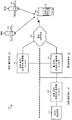
도 1 은 SUPL 가능 단말들 (SET들) 에 대한 로케이션 서비스들을 제공할 수 있는 네트워크 아키텍처를 도시한다.
도 2 는 방문/서빙 네트워크, 홈 네트워크, 및 요청 네트워크를 구비한 네트워크 아키텍처를 도시한다.
도 3 은 분리된 서비스 및 포지셔닝 계층들을 갖는 SUPL ULP 아키텍처의 다른 뷰를 예시한다.
도 4 는 인터와인딩 (intertwined) 서비스 및 포지셔닝 계층들을 갖는 기존의 SUPL ULP 아키텍처를 예시한다.
도 5 는 SLP에 의해 수행될 수도 있는 SUPL 포지셔닝 프로세스를 예시하는 흐름도이다.
도 6 은 SET 에 의해 수행될 수도 있는 SUPL 포지셔닝 프로세스를 예시하는 흐름도이다.
도 7 은 일반화된 메시지 흐름의 실시형태를 도시한다.
도 8 은 네트워크 개시 단일 픽스 서비스를 위한 메시지 흐름의 실시형태를 도시한다.
도 8a 는 도 8, 9, 12, 및 13의 메시지 흐름들과 함께 사용될 수도 있는 SUPL INIT 메시지의 일 예를 예시한다.
도 9 는 네트워크 개시 트리거식 주기적 서비스를 위한 메시지 흐름의 실시형태를 도시한다.
도 10 은 SET 개시 단일 픽스 서비스를 위한 메시지 흐름의 실시형태를 도시한다.
도 11 은 SET 개시 트리거식 주기적 서비스를 위한 메시지 흐름의 실시형태를 도시한다.
도 12 는 SET 보조 A-GNSS를 이용한 네트워크 개시 단일 픽스 LPP 서비스를 위한 메시지 흐름의 실시형태를 도시한다.
도 13 은 SET 보조 A-GNSS를 이용한 네트워크 개시 단일 픽스 TIA-801 서비스를 위한 메시지 흐름의 실시형태를 도시한다.
도 14 는 SET 보조 A-GNSS를 이용한 SET 개시 단일 픽스 LPP 서비스를 위한 메시지 흐름의 실시형태를 도시한다.
도 15 는 SET 보조 A-GNSS를 이용한 SET 개시 단일 픽스 TIA-801 서비스를 위한 메시지 흐름의 실시형태를 도시한다.
도 16 은 도 1 및 도 2 에 예시된 네트워크 아키텍처들에서의 SET, SLP, 및 통신 네트워크의 실시형태의 블록도를 도시한다.Figure 1 illustrates a network architecture capable of providing location services for SUPL capable terminals (SETs).
Figure 2 shows a network architecture with a visited / serving network, a home network, and a request network.
Figure 3 illustrates another view of the SUPL ULP architecture with separate service and positioning layers.
Figure 4 illustrates an existing SUPL ULP architecture with intertwined services and positioning layers.
5 is a flow chart illustrating a SUPL positioning process that may be performed by an SLP.
6 is a flow chart illustrating a SUPL positioning process that may be performed by a SET.
Figure 7 illustrates an embodiment of a generalized message flow.
Figure 8 shows an embodiment of a message flow for a network initiated single fix service.
FIG. 8A illustrates an example of a SUPL INIT message that may be used with the message flows of FIGS. 8, 9, 12, and 13.
Figure 9 illustrates an embodiment of a message flow for a network initiated triggered periodic service.
Figure 10 shows an embodiment of a message flow for a SET initiated single fix service.
Figure 11 shows an embodiment of a message flow for a SET initiated triggered periodic service.
12 shows an embodiment of a message flow for a network initiated single fix LPP service using SET Assist A-GNSS.
FIG. 13 shows an embodiment of a message flow for a network-initiated single-fix TIA-801 service using SET Assist A-GNSS.
14 shows an embodiment of a message flow for a SET initiated single fix LPP service using SET Assist A-GNSS.
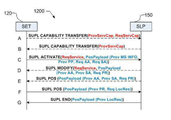
15 shows an embodiment of a message flow for a SET initiated single fix TIA-801 service using SET Assist A-GNSS.
Figure 16 shows a block diagram of an embodiment of a SET, SLP, and communications network in the network architectures illustrated in Figures 1 and 2;
본원에서 설명되는 기법들은 부호분할 다중접속 (CDMA) 네트워크들, 시분할 다중접속 (TDMA) 네트워크들, 주파수분할 다중접속 (FDMA) 네트워크들, 직교 FDMA (OFDMA) 네트워크들, 전술한 기술들의 조합을 지원하는 네트워크들, 무선 광 영역 네트워크 (WWAN) 커버리지 및/또는 무선 로컬 영역 네트워크 (WLAN) 커버리지를 갖는 네트워크들, 무선 개인 영역 네트워크 (WPAN) 와 같은 갖가지 무선 네트워크들을 위해 이용될 수도 있다. CDMA 네트워크는 광대역-CDMA (W-CDMA), cdma2000 등과 같은 하나 이상의 무선 액세스 기술들 (RAT들) 을 구현할 수도 있다. Cdma2000은 IS-2000, IS-856 및 IS-95 표준들을 커버한다. TDMA 네트워크는 이동 통신 세계화 시스템 (GSM), D-AMPS (Digital Advanced Mobile Phone System), 또는 약간 다른 RAT 를 구현할 수도 있다. D-AMPS는 IS-136 및 IS-54를 커버한다. 이들 갖가지 무선 기술들 및 표준들은 당해 기술분야에서 공지되어 있다. W-CDMA와 GSM은 "3세대 파트너십 프로젝트" (3GPP) 라는 이름의 조직으로부터의 문서들에서 기재되어 있다. Cdma2000은 "3세대 파트너십 프로젝트 2" (3GPP2) 라는 이름의 조직으로부터의 문서들에 기재되어 있다. 3GPP 및 3GPP2 문서들은 공개적으로 입수가능하다. WLAN은 IEEE 802.11x 네트워크일 수도 있고, WPAN은 블루투스 네트워크, IEEE 802.15x, 또는 일부 다른 유형의 네트워크일 수도 있다. 이 기법들은 또한 WWAN, WLAN 및/또는 WPAN의 임의의 조합으로 구현될 수도 있다. 이 기법들은 또한 DSL 또는 케이블 액세스를 제공하는 네트워크와 같은 유선 IP 가능 네트워크를 이용하여, 통신하는 디바이스를 로케이팅하는 것을 돕는데 사용될 수도 있고 및/또는 유선 네트워크를 이용하여, 통신하는 클라이언트 디바이스들을 지원하는데 이용될 수도 있다.The techniques described herein may be used to support CDMA networks, time division multiple access (TDMA) networks, frequency division multiple access (FDMA) networks, orthogonal FDMA (OFDMA) networks, (WWAN) coverage and / or networks with wireless local area network (WLAN) coverage, wireless personal area networks (WPANs), and the like. A CDMA network may implement one or more radio access technologies (RATs), such as broadband-CDMA (W-CDMA), cdma2000, Cdma2000 covers IS-2000, IS-856 and IS-95 standards. The TDMA network may implement the Global System for Mobile Communications (GSM), Digital Advanced Mobile Phone System (D-AMPS), or a slightly different RAT. D-AMPS covers IS-136 and IS-54. These various wireless technologies and standards are well known in the art. W-CDMA and GSM are described in documents from an organization named "3rd Generation Partnership Project" (3GPP). Cdma2000 is described in documents from an organization named "3rd Generation Partnership Project 2" (3GPP2). 3GPP and 3GPP2 documents are publicly available. The WLAN may be an IEEE 802.11x network, the WPAN may be a Bluetooth network, IEEE 802.15x, or some other type of network. These techniques may also be implemented in any combination of WWAN, WLAN, and / or WPAN. These techniques may also be used to help locate the communicating device using a wired IP-capable network, such as a network providing DSL or cable access, and / or support client devices communicating using a wired network May be used.
이 기법들은 또한 사용자 평면 아키텍처들과 같은 갖가지 로케이션 아키텍처들을 위해 이용될 수도 있다. 사용자 평면은 상위-계층의 애플리케이션들을 위한 데이터를 운반하고 사용자-평면 베어러 (bearer) 를 채용하는 메커니즘이며, 그것은 이 기술분야에서 알려져 있는 프로토콜들인 사용자 데이터그램 프로토콜 (UDP), 전송 제어 프로토콜 (TCP), 및 인터넷 프로토콜 (IP) 과 같은 프로토콜들로 통상 구현된다. 로케이션 서비스들 및 포지셔닝을 지원하는 메시지들은 사용자 평면 아키텍처에서의 데이터의 부분으로서 운반된다. 이 기법들은 오픈 모바일 얼라이언스 (OMA) 에 의해 보급된 보안 사용자 평면 로케이션 (SUPL) 및 사전-SUPL 아키텍처들, 3GPP TS 23.271, TS 43.059, 및 TS 25.305 에 기재된 3GPP 제어 평면 (control plane) 아키텍처, IS-881 및 3GPP2 X.S0002 에 기재된 3GPP2 제어 평면 아키텍처, X.S0024에 기재된 3GPP2 사용자 평면 아키텍처 등을 위해 이용될 수도 있다. 명료함을 위해, 이 기법들은 보안 사용자 평면 로케이션 (SUPL) 에 대해 아래에서 설명된다.These techniques may also be used for various location architectures such as user plane architectures. The user plane is a mechanism for carrying data for higher-layer applications and employing a user-plane bearer, which is a protocol known in the art as User Datagram Protocol (UDP), Transmission Control Protocol (TCP) , And Internet Protocol (IP). The messages supporting location services and positioning are carried as part of the data in the user plane architecture. These techniques include the 3GPP control plane architecture as described in 3GPP TS 23.271, TS 43.059, and TS 25.305, Secure User Plane Location (SUPL) and pre-SUPL architectures deployed by the Open Mobile Alliance (OMA) 881 and the 3GPP2 control plane architecture described in 3GPP2 X.S0002, the 3GPP2 user plane architecture described in X.S0024, and the like. For clarity, these techniques are described below for the Secure User Plane Location (SUPL).
도 1은 SUPL 가능 단말들 (SET들) 에 대한 로케이션 서비스들을 제공할 수 있는 네트워크 아키텍처 (100) 를 도시한다. SET 는 SET들에 대한 포지셔닝 및 로케이션 서비스들을 지원하는 SUPL 가능 엔티티들과의 통신을 할 수 있는 디바이스이다. 단순화를 위해, 하나의 SET (120) 만이 도 1에 도시되어 있다. SET (120) 는 정지된 것 또는 이동식일 수도 있고 또한 이동국 (MS), 사용자 장비 (UE), 단말, 스테이션, 가입자 유닛, 또는 일부 다른 기술용어로 불리울 수도 있다. SET (120) 는 셀룰러 폰, 개인휴대 정보단말 (PDA), 무선 모뎀, 개인용 컴퓨터, 랩톱 컴퓨터, 원격측정 (telemetry) 디바이스, 트래킹 디바이스 등일 수도 있다. 예를 들어, SET (120) 는 범용 이동 통신 시스템 (UMTS) 에서의 UE, GSM 또는 cdma2000 에서의 MS, IP 기반 네트워크에서의 개인용 컴퓨터 등일 수도 있다.Figure 1 shows a
SET (120) 는 SUPL 가능 엔티티들에 액세스할 수 있는 SUPL 에이전트 (122) 를 구비할 수도 있다. SET (120) 는 또한 SET 의 내부 또는 외부에 있을 수도 있는 SUPL 에이전트에 의해 포지션 찾기가 될 수 있는 SET인 타겟 SET일 수도 있다. SET (120) 는 로케이션 서비스들에 대한 프라이버시 (privacy), 보안, 포지셔닝 측정 및 포지션 계산과 같은 기능들을 수행할 수도 있다.
SET (120) 는 음성, 패킷 데이터, 메시징 등과 같은 갖가지 서비스들을 위해 통신 네트워크 (130) 와 통신할 수도 있다. SET (120) 는 또한 SUPL 가능 엔티티들과는 네트워크 (130) 를 통해 통신할 수도 있다. 네트워크 (130) 는 cdma2000 네트워크, LTE 네트워크, UMTS 네트워크, GSM 네트워크, 일부 다른 무선 액세스 네트워크 (RAN), WLAN 등과 같은 무선 네트워크일 수도 있다. 네트워크 (130) 는 또한 IP 기반 네트워크, 전화 네트워크, 케이블 네트워크 등과 같은 유선 네트워크일 수도 있다. 일부 경우들에서, 네트워크 (130) 는 다수의 개개의 네트워크들 (예컨대 각각이 인터넷에 연결된 LTE 네트워크 및 별개의 UMTS 네트워크) 을 포함할 수도 있다. 이러한 경우에, SET (120) 및 H-SLP (150) 는 상이한 네트워크들에 접속될 수도 있다 - 예컨대 SET (120) 는 LTE 네트워크에 접속될 수 있는 반면 H-SLP 는 UMTS 네트워크에 접속될 수도 있다. SET (120) 는 또한 위성 위치확인 시스템 (GPS), 유럽 갈릴레오 (Galileo) 시스템, 러시아 GLONASS 시스템, 또는 일부 다른 위성 포지셔닝 시스템의 부분일 수도 있는 하나 이상의 위성들 (190) 로부터 신호들을 수신할 수도 있다. 예를 들어, 본원에서 제공된 기법들은 예컨대, 일본의 준천정위성 (Quasi-Zenith Satellite) 시스템 (QZSS), 인도의 인도 지역 항행 위성 시스템 (IRNSS), 중국의 베이더우 (Beidou) 등과 같은 갖가지 지역 시스템들, 및/또는 갖가지 보강 시스템들 (예컨대, 하나 이상의 전역 (글로벌) 및/또는 지역 내비게이션 위성 시스템들에 관련되거나 그렇지 않으면 이런 시스템들과 함께 사용하는게 가능할 수 있는 위성 기반 보강 시스템 (SBAS)) 에 적용될 수도 있거나 또는 그렇지 않으면 그런 시스템들에서 사용하는게 가능할 수도 있다. 비제한적인 예로서, SBAS는 예컨대, 광역 보강 시스템 (WAAS), 유럽 정지궤도 내비게이션 오버레이 서비스 (EGNOS), 다기능 위성 오차보정 시스템 (MSAS), GPS 지원 정지궤도 보강 내비게이션 또는 GPS 및 정지궤도 보강 내비게이션 시스템 (GAGAN) 등과 같은 무결성 정보, 차분 정정 등을 제공하는 보강 시스템(들)을 포함할 수도 있다. 따라서, 본원에서 사용되는 바와 같이 SPS는 하나 이상의 전역 및/또는 지역 내비게이션 위성 시스템들 및/또는 보강 시스템들의 임의의 조합을 포함할 수도 있고, SPS 신호들은 SPS, SPS 유사, 및/또는 이러한 하나 이상의 SPS 와 연관된 다른 신호들을 포함할 수도 있다.
SET (120) 는 네트워크 (130) 에서의 위성들 (190) 및/또는 기지국들로부터의 신호들을 측정할 수도 있고 이 기지국들로부터의 위성들 및 네트워크 측정들에 대한 의사거리 측정치들을 획득할 수도 있다. 의사거리 측정치들은 SET (120) 에 대한 포지션 추정치를 도출하는데 이용될 수도 있다.
홈 SUPL 로케이션 플랫폼 (H-SLP) (150) 은 SUPL 서비스 관리 및 포지션 결정을 담당한다. 보통, SET (예컨대 SET (120)) 는 SET 사용자에 대해 홈 네트워크 오퍼레이터에 의해 제공되는 단일 H-SLP (예컨대 H-SLP (150)) 를 가질 것이다. H-SLP 들 외에도, 또한 E-SLP 들 (긴급 (emergency) 서비스 SLP 들이며, 비상 전화가 있는 경우에 SET 의 로케이션을 결정하는 것을 지원한다), V-SLP 들 (방문 (visited) SLP이며, 홈 네트워크에 의해 SET가 서빙되지 않는 경우에 SET 로케이션을 획득하기 위해 H-SLP를 도울 수도 있다), 및 D-SLP 들 (발견 (Discovered) SLP이며, 방문 네트워크와 통상 연관되고 홈 네트워크와는 연관되지 않을 것이고 H-SLP (150) 에 무관하게 SET 에 로케이션 서비스들을 제공할 수도 있다) 이 있다. 도 1에서, H-SLP (150) 는 H-SLP를 나타내지만, 그것은 또한 D-SLP 또는 E-SLP를 나타내고 이에 따라, H-SLP (150) 는 때때로 간단히 SLP (150) 라고 지칭된다. SUPL 서비스 관리는 SET들의 로케이션들을 관리하는 것과 타겟 SET들의 로케이션 정보를 저장하는 것, 추출하는 것 및 변경하는 것을 포함할 수도 있다. H-SLP (150) 는 SUPL 로케이션 센터 (SLC; 152) 를 구비하고 SUPL 포지셔닝 센터 (SPC; 154) 를 구비할 수도 있다. SLC (152) 는 로케이션 서비스들에 대한 갖가지 기능들을 수행하며, SUPL 의 동작을 조정하고, 사용자 평면 베어러를 통해 SET들과 상호작용한다. SLC (152) 는 프라이버시, 개시, 보안, 로밍 지원, 청구/결제, 서비스 관리, 포지션 계산 등에 대한 기능들을 수행할 수도 있다. SPC (154) 는 SET들에 대한 포지셔닝을 지원하며, 포지션 계산에 이용되는 메시지들 및 프로시저들을 담당하고, SET들로의 보조 데이터의 전달을 지원한다. SPC (154) 는 보안, 보조 데이터 전달, 레퍼런스 검색 (reference retrieval), 포지션 계산 등에 대한 기능들을 수행한다. SPC는 GPS 수신기들 (참조 네트워크, 아마도 글로벌 네트워크) 에 액세스할 수도 있고, 보조 데이터를 제공할 수 있도록 위성들에 대한 신호들을 수신할 수도 있다.The Home SUPL Location Platform (H-SLP) 150 is responsible for SUPL service management and position determination. Typically, a SET (e.g., SET 120) will have a single H-SLP (e.g., H-SLP 150) provided by a home network operator for a SET user. In addition to H-SLPs, E-SLPs (emergency service SLPs, supporting the determination of SET's location in the presence of emergency calls), V-SLPs (visited SLPs, SLPs (Discovered SLPs, which are typically associated with a visited network and are not associated with a home network) may be used to obtain the SET location if the SET is not serviced by the network And may provide location services to the SET regardless of the H-SLP 150). 1, H-
SUPL 에이전트 (예컨대, SUPL 에이전트 (122 또는 170)) 는 타겟 SET 에 대한 로케이션 정보를 획득하는 기능부 또는 엔티티이다. 대체로, SUPL 에이전트는 네트워크 엔티티 (예컨대, SUPL 에이전트 (170)) 또는 SET (예컨대, SUPL 에이전트 (122)) 내에 상주할 수도 있거나 또는 네트워크 및 SET 양쪽 모두의 외부에 있을 수도 있다. SET 상주 SUPL 에이전트의 경우, SUPL 에이전트는 로케이션 정보를 획득하기 위해 네트워크 리소스들에 액세스하거나 또는 하지 않을 수도 있고, SET 기반 모드에서처럼, 네트워크로부터의 포지셔닝 및 리소스 액세스는 일 대 일이 아닐 수도 있다 (예컨대 SET 는 네트워크로부터 한번 획득된 리소스들을 이용하여 여러 상이한 시간들에서의 로케이션 결정을 지원할 수도 있다). 네트워크 상주 SUPL 에이전트는 모바일 로케이션 서비스 애플리케이션들 (MLS 앱들) 을 이용하여, SUPL 에이전트들에 대한 로케이션 서비스들을 지원하는 요청 SLP (R-SLP) 를 구비한 H-SLP 또는 요청 네트워크에 액세스할 수도 있다. MLS 애플리케이션은 로케이션 정보를 요청하고 소비하는 애플리케이션이다. 로케이션 정보는 로케이션에 관련된 임의의 정보일 수도 있고 포지션 추정치의 갖가지 유형들 (예컨대, 위도 및 경도 좌표들, 기대 오차 추정치를 갖는 위도 및 경도 등) 을 포함할 수도 있다. MLS는 SUPL 에이전트와 H-SLP, R-SLP, D-SLP 또는 E-SLP 사이의 상호작용을 커버하는 반면, SUPL는 H-SLP, E-SLP, V-SLP 또는 D-SLP 와 SET 사이의 상호작용을 커버한다.A SUPL agent (e.g.,
도 2는 방문/서빙 네트워크 (104), 홈 네트워크 (106), 및 요청 네트워크 (108) 를 구비한 네트워크 아키텍처 (102) 를 도시한다. 방문 네트워크 (104) 는 V-SLP (160) 를 구비한다. 홈 네트워크 (106) 는 로케이션 서비스들 및 포지셔닝을 지원하는 H-SLP (150) 를 구비한다. 요청 네트워크 (108) 는 SUPL 에이전트들에 대한 로케이션 서비스들을 지원하는 R-SLP (162) 를 구비한다. H-SLP (150), V-SLP (160), 및 R-SLP (162) 각각은 SLC를 구비하고, 도 1에 대해 위에서 설명된 바와 같이 동작하는 SPC를 구비할 수도 있다. 일부 실시형태들에서, V-SLP (160) 를 갖는 방문 네트워크 (104) 가 제거될 수도 있다.Figure 2 shows a
도 1 및 도 2 에서의 SUPL 엔티티들은, 2006년 8월 24일자로 출원되고 발명 명칭이 "Location Reporting with Secure User Plane Location (SUPL)" 이며 공개번호가 US 2007/0182547이며 본원의 양수인에게 양도되고 그 전체가 참조로 본 명세서에 통합되는 미국출원번호 11/510,332, 뿐만 아니라 명칭이 "Secure User Plane Location Architecture" 인 2006년 6월의 드래프트 버전 2.0 이며 SUPL 2.0 로서 알려진 로케이션 기반 서비스들을 서술하며 OMA 로부터 공개적으로 입수가능한 문서 OMA-AD-SUPL-V2_0-20060619-D 에 기재된 것과 유사하다. 도 1 및 도 2 에서의 네트워크 엔티티들은 또한 다른 네트워크들 및 다른 로케이션 아키텍처들에서 다른 이름들에 의해 지칭될 수도 있다. 예를 들어, 3GPP 기반 네트워크 (예컨대, UMTS 네트워크) 에서, SLC는 게이트웨이 모바일 로케이션 센터 (GMLC) 로 불리우며, SPC는 서빙 모바일 로케이션 센터 (SMLC) 로 불리우며, SET 는 UE로 불리우고, SUPL 에이전트는 LCS 클라이언트로 불리운다. 3GPP 엔티티들에 의해 수행되는 기능들 및 시그널링은 대응하는 SUPL 엔티티들에 의해 수행되는 것들과 유사하며, 이에 의해 비슷한 서비스들 및 능력들이 가능하게 된다. 대체로, SLC 는 로케이션 센터, LCS 서버, 로케이션 서버, 모바일 포지셔닝 센터 (MPC) 등으로 불리울 수도 있다. SPC 는 포지셔닝 엔티티, 포지셔닝 센터, 포지션 결정 엔티티 (PDE) 등으로 불리울 수도 있다. SUPL 2.0 이 로케이션 기반 서비스들을 효율적으로 제공하는 보안 수단으로서 알려져 있지만, 개선이 요망된다. 예를 들어, 로케이션 요청의 특정 유형을 지원하기 위해 참가 엔티티들 간에 교환되는 메시지들의 수가 감소되어야 할 수도 있다. 부가적으로, 공통 메시지 흐름은 SUPL 2.0 에서 다른 메시지 흐름들의 지원을 요청하는 로케이션 서비스의 상이한 유형들을 위해 이용되어야 할 수도 있다.The SUPL entities in FIGS. 1 and 2 have been filed on August 24, 2006, entitled " Location Reporting with Secure User Plane Location (SUPL) ", public number US 2007/0182547 and assigned to the assignee hereof U.S. Application No. 11 / 510,332, which is incorporated herein by reference in its entirety, as well as draft version 2.0 of June 2006, entitled " Secure User Plane Location Architecture ", which describes location- Is similar to that described in the publicly available document OMA-AD-SUPL-V2_0-20060619-D. The network entities in Figures 1 and 2 may also be referred to by other names in other networks and other location architectures. For example, in a 3GPP based network (e.g., UMTS network), the SLC is referred to as a gateway mobile location center (GMLC), the SPC is referred to as a serving mobile location center (SMLC), the SET is referred to as a UE, . The functions and signaling performed by the 3GPP entities are similar to those performed by the corresponding SUPL entities, thereby enabling similar services and capabilities. In general, SLCs may be called Location Centers, LCS Servers, Location Servers, Mobile Positioning Centers (MPCs), and so on. An SPC may be called a positioning entity, a positioning center, a position determination entity (PDE), or the like. Although SUPL 2.0 is known as a security measure to efficiently provide location-based services, improvements are desired. For example, the number of messages exchanged between participating entities may need to be reduced to support a particular type of location request. In addition, the common message flow may have to be used for different types of location services that require support of different message flows in SUPL 2.0.
SUPL 은 (무엇보다도) 다음의 포지셔닝 방법들을 지원할 수도 있다: SET 보조 A-GPS, SET 보조 A-GNSS, SET 기반 A-GPS, SET 기반 A-GNSS, 자율 GPS 또는 자율 GNSS; A-FLT (Advanced forward link trilateration); SET 보조 및/또는 SET 기반 EOTD (Enhanced observed time difference); UMTS 를 위한 및/또는 LTE 를 위한 SET 보조 및/또는 SET 기반 OTDOA (Observed time difference of arrival); SET 보조 및/또는 SET 기반 개선된 (enhanced) 셀/섹터 및 셀-ID; SET 보조 및/또는 SET 기반 WiFi 포지셔닝, SET 보조 및/또는 SET 기반 SRN (Short Range Node) 포지셔닝 및 이들의 다양한 SET 보조 및/또는 SET 기반 하이브리드 조합들.SUPL may support (among other things) the following positioning methods: SET Assisted A-GPS, SET Assisted A-GNSS, SET-based A-GPS, SET-based A-GNSS, autonomous GPS or autonomous GNSS; Advanced forward link trilateration (A-FLT); SET assisted and / or SET based Enhanced observed time difference (EOTD); SET assisted and / or SET based OTDOA (Observed time difference of arrival) for UMTS and / or LTE; SET-assisted and / or SET-based enhanced cell / sector and cell-ID; SET assisted and / or SET based WiFi positioning, SET assisted and / or SET based Short Range Node (SRN) positioning and various SET assisted and / or SET based hybrid combinations thereof.
SET 기반 모드에 대해, SET 의 포지션은 SET 에 의해, 가능하면 SPC 로부터의 보조 데이터로 결정된다. SET 보조 모드에 대해, SET 의 포지션은 SET 로부터의 보조 (예컨대, 측정들) 에 의해 SPC 에 의해 결정된다. 자율 GPS 및 GNSS 방법들과 A-GPS 및 A-GNSS 방법들은 위성 측정들에만 기초하여 SET 에 대한 포지션 추정치를 도출하고 높은 정확도를 가진다. 하이브리드 방법은 다수의 포지션 방법들에 기초하여 포지션 추정치를 도출하고 GPS 및/또는 GNSS가 포함된다면 높은 정확도 및 높은 신뢰도를 가진다. A-FLT, EOTD, 및 OTDOA 방법들은 SET 에 의해 만들어진 기지국 타이밍의 측정치들에 기초하여 포지션 추정치를 도출하고 양호한 정확도를 가진다. 개선된 셀/섹터 및 셀-ID 방법들은 셀룰러 네트워크의 셀/섹터들의 알려진 포지션들에 기초하여 포지션 추정치를 도출하고 코오스 (coarse) 정확도를 가진다. 개선된 셀/섹터 방법에 대해, 포지션 추정치는 또한 무선 신호 타이밍 및 신호 세기들과 같은 네트워크 측정치들에 기초하여 도출될 수도 있다. WiFi 및 SRN 방법들은 WiFi 액세스 포인트들 및 짧은 범위 노드들 (예컨대 블루투스) 로부터의 신호 측정들을 채용하고 보통 높은 정확도를 가진다. 이들 갖가지 포지셔닝 방법들은 이 기술분야에서 알려져 있다. 용어들인 "포지션 추정치", "로케이션 추정치", 및 "위치 결정치"는 교환적으로 종종 이용된다. 포지션 추정치는 절대 좌표들 (예컨대, 위도 및 경도) 로, 상대 좌표들 (예컨대 알려진 고정 로케이션의 북쪽 및 동쪽의 미터 수) 로 또는 시의 주소 (예컨대 거리 주소, 시 및 국가) 로서 또는 이것들의 일부 조합으로서 주어질 수도 있고 기대 오차를 제공할 수도 있다 (예컨대 SET 의 가능한 로케이션들을 나타내는 지리적 영역을 제공할 수도 있다).For the SET-based mode, the position of the SET is determined by the SET, if possible, as auxiliary data from the SPC. For the SET assist mode, the position of the SET is determined by the SPC by the assistance (e.g., measurements) from the SET. The autonomous GPS and GNSS methods and the A-GPS and A-GNSS methods derive the position estimate for the SET based on the satellite measurements and have high accuracy. The hybrid method derives position estimates based on a number of position methods and has high accuracy and high reliability if GPS and / or GNSS is included. The A-FLT, EOTD, and OTDOA methods derive the position estimate based on the measurements of the base station timing made by SET and have good accuracy. The improved cell / sector and cell-ID methods derive the position estimate based on known positions of the cells / sectors of the cellular network and have coarse accuracy. For an improved cell / sector method, the position estimate may also be derived based on network measurements, such as wireless signal timing and signal strengths. WiFi and SRN methods employ signal measurements from WiFi access points and short range nodes (e.g., Bluetooth) and usually have high accuracy. These various positioning methods are known in the art. The terms "position estimate "," location estimate ", and "location value" are often used interchangeably. The position estimate may be expressed in absolute coordinates (e.g., latitude and longitude), relative coordinates (e.g., meters of the north and east of a known fixed location), or as addresses of a city (e.g., street address, city and state) May be given as a combination and may provide an expected error (e.g., may provide a geographical area representing possible locations of the SET).
SUPL 은 여러 가지 서비스들을 제공할 수도 있고, 그들 중의 4개는 표 1에 도시된다.SUPL may provide several services, four of which are shown in Table 1.
즉각적인 로케이션 서비스들은 또한 네트워크 개시, SET 개시, 로밍, 비로밍 등으로 지칭될 수도 있다. 지연된 로케이션 서비스들은 주기적 및/또는 트리거식 서비스들을 포함할 수도 있다. 트리거식 서비스들에 대해, 포지션 추정치들의 보고는 SET 로케이션을 SUPL 에이전트에 보고할 때를 나타내는 트리거들 또는 트리거 메커니즘에 의해 결정된다. 트리거들은 SUPL 에이전트에 의해 결정되며, H-SLP에 송신된 다음, 타겟 SET 에 포워딩될 수도 있다. 주기적 트리거식 서비스를 위한 주기적 트리거들은 주기적 간격, 포지션 보고서들의 수, 및 보고를 시작하는 가능한 시작 시간을 포함할 수도 있다. 트리거들은 영역 이벤트들, SET 의 로케이션 또는 속도에서의 변경 또는 다른 조건들에 관련될 수도 있다. 영역 이벤트 트리거식 서비스에 대한 영역 이벤트 트리거들은 미리 정의된 지리적 영역 내의 SET 진입, 진출 또는 잔류에 대응할 수도 있다. SET 의 로케이션 또는 속도에서의 변경에 관련된 트리거들은 미리정의된 임계치들에 의해 변경되는 SET 로케이션, 속도 또는 가속도에 대응할 수도 있다. 트리거들은 또한, 둘 이상의 트리거 조건들이 발생하는 때에만 또는 여러 대안적 트리거들 중의 하나만이 발생하는 때에 SET 의 로케이션이 획득되도록 조합될 수도 있다. 부가적인 또는 다른 서비스들 또한 지원될 수도 있다.Immediate location services may also be referred to as network initiation, SET initiation, roaming, non-roaming, and the like. Delayed location services may include periodic and / or triggered services. For triggered services, the reporting of position estimates is determined by triggers or trigger mechanisms that indicate when to report the SET location to the SUPL agent. The triggers may be determined by the SUPL agent, sent to the H-SLP, and then forwarded to the target SET. Periodic triggers for periodic triggered services may include periodic intervals, the number of position reports, and possible start times to start reporting. The triggers may be related to area events, changes in the location or speed of the SET, or other conditions. Area event triggers Area event triggers for a service may correspond to SET entry, entry, or residue within a predefined geographic area. Triggers associated with a change in location or speed of the SET may correspond to a SET location, speed, or acceleration that is changed by predefined thresholds. Triggers may also be combined such that the location of the SET is obtained only when two or more trigger conditions occur, or when only one of several alternative triggers occurs. Additional or other services may also be supported.
로케이션 서비스들은 표 2 에 보여진 바와 같이 분류될 수도 있다.Location services may be classified as shown in Table 2.
네트워크 개시형 (Network initiated) 은 또한 모바일 종료형 (terminated) 이라고 지칭될 수도 있다. SET 개시형은 또한 모바일 발신형 (originated) 이라고 지칭될 수도 있다.Network initiated may also be referred to as mobile terminated. The SET initiation type may also be referred to as mobile originated.
SUPL 은 SPC 를 이용한 포지셔닝을 위해 SET 및 SLP 간에 2가지 통신 모드들을 지원한다. 표 3 은 2가지 통신 모드들을 요약한다.SUPL supports two communication modes between SET and SLP for positioning with SPC. Table 3 summarizes the two communication modes.
SUPL 는 SET 에 대한 로밍 및 비로밍을 지원한다. 표 4는 여러 로밍 및 비로밍 모드들을 요약한다.SUPL supports roaming and non-roaming for SET. Table 4 summarizes the various roaming and non-roaming modes.
본원에서 사용되는 바와 같이, 로밍 및 비로밍은 SUPL에 관한 것이고, 통신 네트워크 (130) 에 관한 것은 아니다. 네트워크 (130) 는 로밍 및 비로밍에 대한 상이한 정의 및 기준들을 가질 수도 있으나, 그들은 여기서 논의되지 않는다.As used herein, roaming and non-roaming are related to SUPL and not to the
H-SLP 의 서비스 영역은, H-SLP가 SET 에 대한 포지션 추정치 또는 관련 보조 데이터를 다른 SLP 들에 연락하는 일 없이 SET 에 제공할 수 있는 영역이다. SET이 로밍되는 경우, H-SLP 는 로케이션 기능 (예컨대, 포지션 결정 및 SPC 기능) 을 제공할 수도 있거나 또는 이 로케이션 기능을 제공하기 위해 V-SLP를 요청할 수도 있다.The service area of the H-SLP is the area where the H-SLP can provide the SET with the position estimate for the SET or the associated assistance data without contacting other SLPs. When a SET is roamed, the H-SLP may provide a location function (e.g., position determination and SPC function) or may request a V-SLP to provide this location function.
메시지 흐름들의 세트는 지원되는 로케이션 서비스들의 각각에 대해 정의될 수도 있다. 각각의 메시지 흐름은 특정 로케이션 서비스와, 조건들, 예컨대, 프록시 또는 비-프록시, 로밍 또는 비로밍, 네트워크 개시 또는 SET 개시의 특정 세트 등에 적용가능할 수도 있다. 특정 메시지 흐름은 적용가능한 조건들에 대한 소망의 로케이션 서비스를 획득하는데 이용될 수도 있다.A set of message flows may be defined for each of the supported location services. Each message flow may be applicable to a specific location service and a specific set of conditions, such as proxy or non-proxy, roaming or non-roaming, network initiation, or SET initiation. A particular message flow may be used to obtain desired location services for applicable conditions.
도 3은 SET 및 SLP 간에서 SUPL에 의해 이용되는 프로토콜인 SUPL 사용자 평면 로케이션 프로토콜 (ULP) 에 적용가능한 아키텍처 (100) 의 다른 예시적인 뷰를 도시한다. 도 3에서 알 수 있는 바와 같이, 서비스 계층 (124) 과 포지셔닝 계층 (126) 은 다른 ULP 메시지들의 이용을 통해 분리되며, 여기서 SET (120) 와 SLP (150) 의 SLC (152) 사이의 ULP 서비스 계층 메시지들은 실선으로 도시되고 SET (120) 와 SLP (150) 의 SLC (152) 사이의 ULP 포지셔닝 메시지들은 파선들로 도시된다. 예시된 바와 같이, SET (120) 와 SLP (150) 의 SLC (152) 사이의 ULP 서비스들 계층 메시지는 포지셔닝 컴포넌트들을 포함하지 않아서, 모든 포지셔닝 관련된 컴포넌트들은 SET (120) 과 SLP (150) 의 SLC (152) 사이의 ULP 포지셔닝 계층 메시지들에 캡슐화된다. 따라서, SUPL ULP 아키텍처 (100) 에서의 포지셔닝 계층의 ULP 메시지들은, 서비스 계층을 통해 전송되는 동안, 서비스 계층에 대해 완전히 투명하고 임의의 서비스 계층 파라미터들을 운반하지 않는다. 마찬가지로, 서비스 계층의 ULP 메시지들은 포지셔닝에 직접 관련된 임의의 파라미터들 (예컨대 로케이션 id, 요청된 보조 데이터, A-GNSS 또는 A-GPS FTA (Fine Time Assistance) 등) 을 운반하지 않는다. 포지셔닝 계층의 ULP 메시지들 (예컨대 SUPL POS, SUPL POS INIT) 은 LTE 포지셔닝 프로토콜 (3GPP TS 36.355에서 규정된 LPP), 무선 리소스 LCS 프로토콜 (3GPP TS 44.031에서 규정된 RRLP), 무선 리소스 제어 (3GPP TS 25.331에서 규정된 RRC), TIA-801로서도 알려진 IS-801 (3GPP2 TS C.S0022 에서 규정됨) 또는 LPP 확장부와 조합된 LPP (OMA로부터 OMA-TS-LPPe-V1에서 규정된 LPPe) 와 같은 별개의 포지셔닝 프로토콜에 의해 정의된 삽입 메시지들을 보통 운반할 것이다. 특히, (예컨대 RRLP, RRC, LPP 또는 IS-801에 대한) 포지셔닝 프로토콜 메시지들을 운반하는 것을 제외하면, SUPL ULP 메시지들에는 포지셔닝 파라미터들이 없다: 서비스 계층에 이와 같이 관련된 모든 SUPL ULP 파라미터들과 포지셔닝에 관련된 것은 무엇이든 별도의 포지셔닝 프로토콜의 영향을 받는다. 이 제한은 서비스 및 포지셔닝 계층들을 분리한다.FIG. 3 shows another exemplary view of an
도 3 에 도시된 아키텍처 (100) 의 예시적인 뷰에 대한 대안으로서, ULP 포지셔닝 계층에서의 메시지들은 SET (120) 의 포지셔닝 계층 (126) 및 SLP (150) 의 SPC (154) 사이에서 직접 운반될 수도 있다. 또 다른 대안에서, SET (120) 의 포지셔닝 계층 (126) 과 SLP (150) 의 SPC (154) 는 포지셔닝 프로토콜 메시지들을 각각 서비스 계층 (124) 및 SLC (152) 와 각각 교환할 것이며, 서비스 계층 (124) 및 SLC (152) 는 포지셔닝 프로토콜 메시지들의 내용을 알 필요 없이 SET (120) 및 SLP (150) 사이에서 교환되는 ULP 포지셔닝 메시지들 (예컨대 SUPL POS, SUPL POS INIT) 내부에서 이들 메시지들을 교환한다.As an alternative to the exemplary view of the
OMA 에 의해 규정된 SUPL 2.0 아키텍처에서, 도 3 에 도시된 아키텍처는 사용될 수 없는데, SET (120) 의 서비스 계층 (124) 및 SLP (150) 의 SLC (152) 사이에서 교환되는 일부 ULP 메시지들이 또한, ULP 의 부분으로서 정의되고 RRLP, TIA-801 또는 LPP와 같은 별도의 포지셔닝 프로토콜을 이용하지 않는 포지셔닝 관련된 파라미터들을 운반하는 것을 SUPL 2.0 이 요구해서이다. 이는 서비스들 계층 (도 3에서 실선 화살표) 이 포지셔닝 계층 (도 3에서 파선 화살표) 으로부터 더 이상 분리되지 않고 대신 그 계층들 (과 그 화살표들) 은 몇몇 방식으로 조합될 필요가 있다는 것을 의미한다. 이것의 하나의 예시가 도 4 에서 도시된다.In the SUPL 2.0 architecture defined by OMA, the architecture shown in FIG. 3 can not be used and some ULP messages exchanged between the
SUPL ULP 아키텍처 (100) 는 ULP 프로토콜을 단순화시키고 공지의 SUPL ULP 아키텍처들에 관련하여, 모든 사용 사례들을 커버하는데 필요한 호 흐름들의 수를 감소시킨다. 하나의 실시형태에서, SUPL ULP 아키텍처 (100) 는 다음의 단순화들 중의 하나 이상을 포함할 수도 있다: 프록시 모드만이 지원된다; 하나의 로밍 모델 (H-SLP를 이용한 로밍) 만이 지원된다; 및 LPP 및 TIA-801만이 포지셔닝 프로토콜들로서 지원된다.The
도 5 는 SUPL ULP 아키텍처 (100) 에서의 SLP (150) 에 의해 수행될 수도 있는 SUPL 포지셔닝 프로세스를 예시하는 흐름도 (200) 이다. SLP (150) 는 SUPL 에이전트 (170) 로부터 SET (120) 에 대한 포지션 추정치의 요청을 수신한다 (202). SLP (150) 는 임의의 서비스 요청에 적용가능한 SUPL 세션 개시 메시지를 SET (120) 에 송신한다 (204). 따라서, 이 개시 메시지는 즉각적인 로케이션 서비스 또는 지연된 로케이션 서비스, 이를테면 주기적 또는 영역 이벤트 트리거식 서비스에 대해 동일할 수도 있다. 이는 상이한 서비스들을 지원할 시의 SET (120) 및 SLP (150) 에 대한 영향을 감소시키는데 개시 메시지의 처리가 특정 서비스에 의존하지 않아서이다. 덧붙여서, 새로운 서비스들은 개시 메시지에 영향을 주지 않고 (예컨대 새로운 또는 변경된 개시 메시지를 요구하는 일 없이) SUPL에 나중에 추가될 수도 있다. 더욱이, 개시 메시지가 서비스들 또는 능력들을 나타낼 필요가 없기 때문에, 개시 메시지는 SMS와 같이 몇몇 전달 수단에 의한 전송에 더 용이할 수도 있는 작은 메시지가 될 수 있다. 이에 응답하여, SLP (150) 는 SET (120) 로부터 보안 IP 접속의 요청을 수신하고, 일단 이 접속이 확립되면, SET (120) 의 서비스 능력들을 수신한다 (206). SLP (150) 는 SET (120) 의 서비스 능력들과 일치하는 SET (120) 로부터의 서비스들을 선택하고 요청하며, 이는 SUPL 서비스 전달을 활성화시킨다 (208). SLP (150) 는 SET (120) 의 서비스 능력들의 수신에 응답하여 SLP 서비스 능력들을 SET (120) 에 제공할 수도 있다. 하나의 실시형태에서, 포지셔닝 파라미터들은 SET (120) 로부터 서비스를 요청하기 전에 제공되지 않는다. 옵션으로, SLP (150) 는 SET (120) 로부터 요청된 서비스에 대해 변경된 서비스 파라미터들을 갖는 서비스 변경 요청을 SET (120) 로부터 수신할 수도 있다 (210). 이 서비스 변경 요청은 SET 사용자의 특정한 선호도들 (preferences) - 예컨대 SUPL 에이전트 (170) 에 제공되는 임의의 로케이션 추정치가 SLP (150) 에 의해 요청된 것보다 덜 정확하다 (즉 더 가능한 에러를 가진다) 는 또는 SLP (150) 에 의해 주기적으로 요청되었던 로케이션들 추정치들이 요청된 것보다 낮은 주파수로 발생한다는 선호설정을 지원할 수도 있다. 서비스 변경은 또한 SET (120) 의 일시적인 제한을 지원할 수도 있다 - 예컨대 SET (120) 프로세서 또는 메모리 활용이 현재 높다면 로케이션 정확도 또는 주기적 로케이션의 빈도를 감소시킬 수도 있다. SLP (150) 는 SUPL 서비스 전달 동안 SET (120) 에 대한 적어도 하나의 포지션 추정치를 결정하기 위해 SET (120) 와 통신한다 (212). 예를 들어, 서비스는 단일의 즉각적인 포지션이 생성될 수도 있는 즉각적인 로케이션일 수도 있다. 서비스가 지연된 로케이션을 위한 것이면, 다수의 포지션들이 주기적으로 생성될 수도 있거나 또는 다른 트리거 이벤트들에 기초하여 생성될 수도 있다. 옵션으로, SLP (150) 는 SET (120) 로부터 요청된 서비스에 대해 변경되는 또는 SET 에 의해 후속하여 변경되는 서비스 파라미터들을 가지는 서비스 변경 요청을 SET (120) 로부터 수신하거나, 또는 SET (120) 에 송신할 수도 있다 (214). 하나 이상의 포지션 추정치들은 SUPL 에이전트 (170) 에 송신된다 (216).FIG. 5 is a flow diagram 200 illustrating a SUPL positioning process that may be performed by
도 6 은 SUPL ULP 아키텍처 (100) 에서의 SET (150) 에 의해 수행될 수도 있는 SUPL 포지셔닝 프로세스를 예시하는 흐름도 (300) 이다. SET (120) 는 SUPL 에이전트 (122) 로부터 SET (120) 에 대한 포지션 추정치의 요청을 수신한다 (302). SET (120) 는 SLP (150) 에 대한 보안 IP 접속을 확립한 다음, SLP (150) 와 SUPL 개시 세션을 시작하기 위해 SLP (150) 로부터의 서비스 능력들을 요청한다 (304). SET (120) 는 SET (120) 의 서비스 능력들을 SLP (150) 의 서비스 능력들의 요청과 함께 SLP (150) 에 제공할 수도 있다. SET (120) 는 이에 응답하여 SLP (150) 로부터 서비스 능력들을 수신한다 (306). SET (120) 는 SLP (150) 로부터의 SLP (150) 의 서비스 능력들과 부합하는 서비스들을 선택하고 요청하며, 이는 SUPL 서비스 전달을 활성화시킨다 (308). 하나의 실시형태에서, 포지셔닝 파라미터들은 SLP (150) 로부터 서비스를 요청하기 전에 제공되지 않는다. 옵션으로, SET (120) 는 SLP (150) 로부터 요청된 서비스에 관해 변경된 서비스 파라미터들을 가진 서비스 변경 요청을 SLP (150) 로부터 수신할 수도 있다 (310). 변경된 서비스 파라미터들은 SLP (150) 서비스 제공자의 선호도들을 지원할 수도 있다 - 예컨대 요청된 것보다 낮은 로케이션 정확도 또는 덜 빈번한 주기적 로케이션 또는 적은 보조 데이터를 제공할 수도 있다. SET (120) 는 SUPL 서비스 전달 동안 SET (120) 에 대한 적어도 하나의 포지션 추정치를 결정하기 위해 SLP (150) 와 통신한다 (312). 예를 들어, 서비스는 단일의 즉각적인 포지션이 생성될 수도 있는 즉각적인 로케이션일 수도 있다. 서비스가 지연된 로케이션을 위한 것이면, 다수의 포지션들이 주기적으로 생성될 수도 있거나 또는 다른 트리거 이벤트들에 기초하여 생성될 수도 있다. 옵션으로, SET (120) 는 SLP (150) 로부터 요청된 서비스에 대해 변경되는 또는 SLP (150) 에 의해 후속하여 변경되는 서비스 파라미터들을 가지는 서비스 변경 요청을 SLP (150) 로부터 수신하거나, 또는 SLP (150) 에 송신할 수도 있다 (314). SET (120) 는 SUPL 서비스 전달 세션 동안 SET (120) 에 대한 적어도 하나의 포지션 추정치를 SULP 에이전트 (122) 에 제공하기 위해 SLP (150) 와 통신한다.FIG. 6 is a flow diagram 300 illustrating a SUPL positioning process that may be performed by a
도 7 내지 도 15는 SUPL ULP 아키텍처 (100) 에 대한 예의 호 흐름들을 도시한다. SUPL ULP 아키텍처 (100) 에 대한 호 흐름들은 즉각적인 단일 픽스, 트리거식 주기적 서비스, 및 트리거식 영역 이벤트 서비스를 포함한 현존하는 SUPL 서비스들에 대한 지원을 포함한다. SUPL ULP 아키텍처 (100) 는 다른 서비스들, 이를테면 주기적 보조 데이터 전달을 위한 지원을 추가로 포함한다. 대체로, SUPL ULP 아키텍처 (100) 에 대한 기본적인 호 흐름들은 다음의 4개의 기본 빌딩 블록들로 구성된다: 능력 전송, 서비스 활성화, 서비스 전달 및 서비스 종료.FIGS. 7-15 illustrate example call flows for
선택적인 연장된 호 흐름은 서비스 변경에 대한 부가적인 빌딩 블록을 포함할 수도 있다. 서비스 변경은 상업적 로케이션 서비스들에 대한 점점 더 중요한 요건들이 되고 있는 양호한 프라이버시를 허용하기 위해 이용될 수도 있다. 예를 들어, SET (120) 사용자는 SUPL 에이전트에 의해 로케이팅될 용의가 있을 수도 있지만, 서비스의 수준 - 예컨대 로케이션 정확도, 지속시간 및 주기적 세션의 빈도를 제어하기 원할 수도 있다. 따라서, 세션을 중단하고 재시작을 나중에 시도하는 대신, 서비스 변경은 사용자가 용인할 최대 서비스 레벨에서 세션이 계속되는 것을 허용한다. 서비스 변경은 프라이버시 요건들 및 포지셔닝 능력들에 기초하여 서비스 파라미터들 (서비스 자체가 아님) 의 변경을 허용하기 위해 서비스 활성화 후에 즉시 수행될 수도 있다. 서비스 변경은 또한 진행중인 지연된 로케이션 세션을 변경하는데 - 예컨대 사용자가 더 빈번하고 정확한 방향들을 필요로 하는 경우에 내비게이션 서비스에 대한 로케이션의 빈도를 증가시키는데 이용될 수도 있다. 서비스 변경은 서비스 활성화를 위해 정의된 파라미터들을 재사용할 수 있고 시그널링 관점에서의 간단한 확장이 될 수도 있다. 서비스 변경의 사용은 양호한 프라이버시 및 더 유연한 서비스 전달을 허용한다.An optional extended call flow may include additional building blocks for service changes. Service changes may be used to allow good privacy, which is becoming an increasingly important requirement for commercial location services. For example, the
본원에서 제공되는 SUPL 호 흐름들은 비로밍 모드에서의 단일 픽스 및 트리거식 주기적 픽스 서비스들에 대한 예들, 뿐만 아니라 LPP 및 TIA-801 호 흐름들의 예들을 이용한다. 제시된 호 흐름들은 개념을 예시한다는 의미이고 보안, 통지 등과 같은 세부사항들을 포함하지 않는다.SUPL call flows provided herein utilize examples of LPP and TIA-801 call flows as well as examples for single fix and triggered periodic fix services in non-roaming mode. The proposed call flows are meant to illustrate concepts and do not include details such as security, notifications, and the like.
도 7 은 SUPL ULP 아키텍처 (100) 에 대한 일반화된 메시지 흐름 (400) 의 실시형태를 도시한다. 이 호 흐름은 다음 3가지 단계 (phase) 들을 포함한다: 개시; 전달; 및 종료. 개시는, 네트워크 개시 시나리오들에 대해서만 요구되는, SLP (150) 로부터 SET (120) 로의 SUPL INIT 개시 메시지 (단계 A) 뿐 아니라 서비스 능력들의 교환 (단계 B) 및 서비스 활성화 (단계 C) 를 포함한다. 덧붙여, 개시 단계 동안, 옵션의 서비스 변경이 수행될 수도 있다 (단계 D). 서비스 능력들의 교환 동안, SUPL CAPABILITY TRANSFER 메시지들은 SET (120) 및 SLP (150) 사이에서 그들의 개별 서비스 능력들 즉, 그들이 지원할 수 있고 지원할 용의가 있는 능력들을 SUPL 세션에 대해 제공하기 위해 교환될 수도 있다. 서비스 활성화 동안, SUPL ACTIVATE 메시지가 (SET 개시 서비스 요청에 대해) SET (120) 또는 (네트워크 개시 서비스 요청에 대해) SLP (150) 에 의해, 그들의 능력들에 따라 서비스를 요청함으로써 SUPL 서비스를 활성화하기 위해 제공된다. 서비스 변경 동안, SUPL MODIFY 메시지가 (SET 개시 서비스 요청에 대해) SLP (150) 또는 (네트워크 개시 서비스 요청에 대해) SET (120) 에 의해, 서비스 활성화 동안 수신된 정보 (SUPL 에이전트의 예컨대 서비스 파라미터들 또는 아이덴티티) 에 기초하여 서비스 변경을 요청하기 위해 제공될 수도 있다. 서비스가 (예컨대 더 높은 로케이션 정확도 보다는 낮거나 또는 더 빈번한 주기적 로케이션보다는 덜 빈번한 요청을 통해) 감소되고 증가되지 않는 한, 서비스되는 변경 요청을 확인하는 것이 필요하지 않은데, 요청의 수신자가 감소된 서비스를 지원할 것이 확실하기 때문이다.FIG. 7 shows an embodiment of a
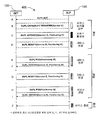
전달 단계 동안, 서비스 전달이 수행된다 (단계 E, F 및 단계 H, I). 단계 H 및 I 는 지연된 로케이션 서비스들 (예컨대 트리거식 주기적 로케이션 전달) 을 위해 이용되고, 즉각적인 단일 픽스와 같은 즉각적인 로케이션 서비스를 위해 이용되지 않는다. 서비스 전달 동안, 하나 이상의 SUPL POS 메시지들은 단계 E에서 그리고, 지연된 로케이션 서비스에 대해 단계 H 에서, 요청된 서비스 (로케이션 정보 또는 보조 데이터) 를 전달하기 위해 SET (120) 및 SLP (150) 사이에서 교환된다. 지연된 로케이션 서비스들에 대해, 단계 H 의 하나 이상의 인스턴스들이 발생할 수도 있다. SET 개시 세션에서, 그리고 적용가능한 경우, SLP (150) 는 SUPL REPORT 메시지로 포지션 추정치 (position) 를 SET 에 리턴할 수도 있다 (단계들 F 및 I). 지연된 로케이션 서비스들에 대해, 단계 I 의 하나의 인스턴스는 단계 H 의 각각의 인스턴스에 대해 발생할 수 있다. 덧붙여, 전달 단계 동안, 선택적인 서비스 변경이 서비스 전달 동안 임의의 포인트에서 수행될 수도 있다 (단계 G). 서비스 변경 동안, 수행중인 서비스에 관련된 하나 이상의 파라미터들을 바꾸기 위해 SET (120) 는 SLP (150) 에 요청을 송신할 수도 있거나 또는 SLP (150) 는 SET (120) 에 요청을 송신할 수도 있다 - 예컨대 더 높거나 또는 더 낮은 로케이션 정확도 또는 로케이션의 더 높은 또는 더 낮은 빈도 수를 요청할 수도 있다. 요청이 증가하는 것 또는 서비스를 개선하는 것 (예컨대 로케이션 정확도 또는 주기적 로케이션의 빈도 수를 증가하는 것) 이면, 서비스 변경 요청의 수신자는 새로운 서비스가 지원될 수 있는 경우 수신확인을 리턴할 수도 있다.During the delivery phase, service delivery is performed (steps E, F and H, I). Steps H and I are used for delayed location services (e.g., triggered periodic location delivery) and are not used for immediate location services such as immediate single fixes. During service delivery, one or more SUPL POS messages are exchanged between the
종료 이벤트 동안, 서비스 종료가 수행되며 (단계들 Z), 이 동안 SUPL 세션이 SLP (150) 에 의해 종료된다. 서비스 종료 동안, 서비스 (SET (120) 또는 SLP (150) 중의 어느 것) 를 개시한 엔티티는 SUPL END 를 다른 당사자 (party) 에게 송신할 수도 있다.During the termination event, service termination is performed (step Z), during which the SUPL session is terminated by the
위에서 논의된 바와 같이, 서비스 계층은 포지셔닝 계층과 별개이다. 따라서, 교환된 메시지들, 이를테면 SUPL CAPABILITY TRANSFER 메시지 (단계 B), SUPL ACTIVATE 메시지 (단계 C), SUPL MODIFY (단계들 D, G) 은 서비스 파라미터들을 포함할 수도 있지만 포지셔닝 메시지들을 포함하지 않을 수도 있다. 서비스 관련된 파라미터들은 아니고 포지셔닝 프로토콜 메시지들은 다른 ULP 메시지들, 예컨대, SUPL POS에 캡슐화될 수도 있다 (단계 E 및 H). 과외의 유연성을 제공하기 위해, 몇몇 서비스 관련 메시지들 (예컨대 SUPL ACTIVATE) 은 서비스 계층에 대해 투명하고 SET 포지셔닝 계층 (126) 및 SLC (154) 사이에서 전송되는 포지셔닝 프로토콜 메시지들을 옵션으로 운반할 수도 있다.As discussed above, the service layer is distinct from the positioning layer. Thus, the exchanged messages, such as SUPL CAPABILITY TRANSFER message (step B), SUPL ACTIVATE message (step C), SUPL MODIFY (steps D, G) may include service parameters but may not include positioning messages . Service-related parameters, and positioning protocol messages may be encapsulated in other ULP messages, e.g., SUPL POS (steps E and H). To provide extreme flexibility, some service related messages (e.g., SUPL ACTIVATE) may optionally carry positioning protocol messages transparent to the service layer and transmitted between the
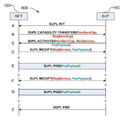
도 8 은 네트워크 개시 단일 픽스 서비스에 대한 메시지 흐름의 실시형태 (500) 를 도시한다. SLP (150) 는 SUPL INIT 메시지를 SET (120) 에 송신함으로써 SET (120) 와의 네트워크 개시 SUPL 세션을 시작한다 (단계 A). SET (120) 는 SLP (150) 에 대한 보안 IP 접속을 확립할 수도 있고 그것의 서비스 능력들 (ProvServCap) (즉, 지원할 용의가 있고 할 수 있는 서비스들) 을 제공할 수도 있고 SUPL CAPABILITY TRANSFER로 SLP 의 서비스 능력들 (ReqServCap) 을 요청할 수도 있다 (단계 B). 단계 B 의 SUPL CAPABILITY TRANSFER 는 또한 SET (120) 에 의해 지원되는 포지셔닝 프로토콜들을 포함할 수도 있다. SET (120) 의 서비스 능력들에 맞추어, SLP (150) 는 SUPL ACTIVATE (이것은 SUPL 서비스를 활성화시킨다) 로 서비스 (ReqService), 이 경우 단일의 즉각적인 픽스를 선택하고 요청한다. SLP 는 또한 그것의 서비스 능력들 (ProvServCap) 을 제공하고 또한 포지셔닝 정보를 포지셔닝 프로토콜 메시지 (PosPayload) 에서 송신할 수도 있다 (단계 C). 포지셔닝 정보는 SLP (150) 의 포지셔닝 능력들, SET (120) 의 포지셔닝 능력들의 요청, 포지셔닝 보조 데이터 또는 이것들의 몇몇 조합을 포함할 수도 있다. 단계 C 의 포지셔닝 프로토콜 메시지는 SET (120) 가 단계 B 에서 지원함을 나타내었던 포지셔닝 프로토콜에 대응할 수도 있다. SET (120) 는 서비스 요청을 평가하고, 요청된 서비스에 관해 수신된 추가 정보 (예컨대, SUPL 에이전트 ID 등) 에 의존하여, 옵션으로 서비스 (예컨대, 다른 QoP) 를 변경하고 변경된 서비스 요청 (ReqService) 을 변경된 서비스 파라미터들과 함께 SUPL MODIFY로 SLP 에 리턴할 수도 있다 (단계 D). SET (120) 는 또한 포지셔닝 프로토콜 메시지 (PosPayload) 내의 포지셔닝 정보를 SUPL MODIFY로 송신할 수도 있다. 포지셔닝 정보는 SET (120) 의 포지셔닝 능력들, SET (120) 에 의해 만들어진 몇몇 로케이션 측정들 또는 포지셔닝 보조 데이터의 요청 또는 이것들의 일부 조합을 포함할 수도 있다. SET (120) 및 SLP (150) 는 하나 이상의 SUPL POS 메시지들 내에 포함된 포지셔닝 프로토콜 메시지들 (PosPayload) 을 교환하는 SUPL POS 세션에 관여하고 SLP (150) 는 포지션 추정치를 획득한다 (단계 E). SLP (150) 는 SUPL 세션을 종료한다 (단계 F).Figure 8 shows an
도 8 의 단계 A 에서 송신된 SUPL INIT 메시지는 도 8 에서 호출된 서비스를 지원하지 않는 SET (120) 에 의해 인식되고 부분적으로 디코딩될 필요가 있을 수도 있다 - 예컨대 SUPL 1.0 또는 SUPL 2.0 과 같은 SUPL 의 이전 버전을 지원하는 SET (120) 에 의해 인식되고 부분적으로 디코딩될 필요가 있을 수도 있다. 하나의 이유는 SET (120) 가 SLP (150) 에 대한 보안 IP 접속을 확립한 다음 SUPL END 메시지를 리턴하여 SUPL 세션을 종료하고 SUPL SET (120) 가 지원하는 버전 또는 버전들을 SET (150) 에 나타내는 것을 허용하는 것일 수 있다. 이 SUPL END 응답은 SUPL 1.0 및 SUPL 2.0 에서 지원되지만, SUPL INIT 에서의 SUPL 버전 번호 파라미터를 디코딩할 수 있고 SUPL 2.0 의 경우에는 또한 최소 및 최대 SUPL 버전 파라미터를 디코딩할 수 있는 SET 에 의존한다. SLP (150) 가 SET (120) 에 의해 지원되는 SUPL 의 버전을 이 SUPL END 메시지로 수신하면, 그 SLP 는 SUPL 의 동일한 버전을 이용하여 세션을 재시작할 수 있다 - 그러면 이는 도 8에 보인 것과는 다르지만 SUPL 에이전트 (예컨대 SUPL 에이전트 (170)) 에 의해 요구된 서비스를 부분적으로 또는 완전히 지원할 수 있는 메시지 흐름을 이끌 수도 있다. SET (120) 가 SUPL INIT 를 항상 디코딩하는 것을 보장하기 위해, SLP (150) 는 SUPL 1.0 및 SUPL 2.0 의 SUPL INIT 메시지에 대해 정의된 것과 동일한 필수 (mandatory) 파라미터들 및 동일한 옵션의 파라미터들의 어쩌면 일부를 포함하는 SUPL INIT 를 도 8의 단계 A 에서 송신할 수도 있다. 그러나, 도 8의 단계 A 에서 SLP (150) 에 의해 송신된 SUPL INIT 에서의 버전 파라미터는 더 높은 SUPL 버전 번호 (예컨대 도 8의 메시지 흐름이 유효한 SUPL 버전) 를 나타낼 수도 있다. 덧붙여서, SUPL INIT 는 도 8의 메시지 흐름에 적용가능한 파라미터들을 포함하는 삽입 (embedded) 메시지 또는 삽입 컨테이너 (예컨대 SUPL 의 더 높은 버전에 대해 정의된 새로운 SUPL INIT) 를 포함할 수도 있다. 예를 들어, 도 8a 는 SUPL 버전 (502), SUPL 1.0 파라미터들 (504), SUPL 2.0 파라미터들 (506), 뿐만 아니라 더 높은 버전 SUPL 파라미터들을 포함할 수도 있는 삽입 메시지 또는 삽입 컨테이너 (508) 를 포함하는 SUPL INIT 메시지의 일 예를 도시한다. 이때 이 더 높은 버전의 SUPL를 지원하는 SET (120) 는 SUPL INIT 에서의 SUPL 1.0 및 SUPL 2.0 파라미터들의 몇몇 또는 전부를 무시하고 삽입 메시지 (또는 삽입 컨테이너) 에서의 파라미터들만을 해석할 수도 있다. 아마도 삽입 메시지는 파라미터들을 포함하지 않을 수도 있고 이 경우 SET (120) 는 SUPL 1.0 및 SUPL 2.0 파라미터들의 몇몇 또는 전부를 무시하고 후속 메시지들로 - 예컨대 도 8의 단계 C 에서 SLP (150) 에 의해 송신된 메시지로 SLP (150) 로부터 필요한 SUPL 파라미터들을 획득할 수도 있다. 도 8과 연관된 더 높은 버전의 SUPL을 지원하지 않는 SET (120) 는 SUPL INIT 메시지를 여전히 인식할 것이고 SUPL 1.0 및 어쩌면 SUPL 2.0 파라미터들뿐만 아니라 도 8의 단계 A 에서 SUPL INIT 에 포함된 SUPL 버전 번호를 디코딩할 수 있을 것이다. SET (120) 가 이 버전의 SUPL을 지원하지 않을 것이므로, 그 SET 는 그것이 지원하지 않는 SUPL 의 버전을 나타내는 SUPL END 메시지를 SLP (150) 에 리턴할 것이다. 그 다음 SLP (150) 는 SET (120) 에 의해 지원되는 SUPL 버전을 이용하여 세션을 재시작할 수 있다. 본원에서 설명되는 것과 동일한 유형의 SUPL INIT 메시지는 또한 도 9, 도 12 및 도 13의 단계 A 에서, 이들 도면들의 각각에서의 메시지 흐름들을 지원하거나 또는 지원하지 않는 SET (120) 를 지원하기 위해 송신될 수도 있다.The SUPL INIT message sent in step A of FIG. 8 may need to be recognized and partially decoded by the
도 9는 네트워크 개시 트리거식 주기적 서비스를 위한 메시지 흐름의 실시형태 (600) 를 도시한다. 메시지 흐름 (600) 에서의 개시 단계들 (A 내지 D) 은, 단계 C 의 요청된 서비스 (ReqService) 가 트리거식 주기적 서비스를 위한 것임을 제외하면, 메시지 흐름 (500) 에서의 단계들 (A 내지 D) 과 동일하다. 제 1 포지션 추정치가 주어져야 하는 경우, SET (120) 및 SLP (150) 는 하나 이상의 SUPL POS 메시지들 내에 포함된 포지셔닝 프로토콜 메시지들 (PosPayload) 을 교환하는 SUPL POS 세션에 관여하고 SLP (150) 는 포지션 추정치를 획득한다 (그리고/또는 보조 데이터는 SET (120) 에 전달된다) (단계 E). SET (120) 또는 SLP (150) 중의 어느 하나는 서비스 (즉, 서비스 파라미터들, 예를 들어 QoP, 픽스들 사이의 간격 등) 를 변경할 수도 있다 (단계 F). SET (120) 또는 SLP (150) 는 또한 포지셔닝 프로토콜 메시지 (PosPayload) 를 SUPL MODIFY 메시지에 포함시킬 수도 있다 (단계 F). SET (120) 및 SLP (150) 는 적용가능한 대로 포지션 정보를 교환하는 부가적인 SUPL POS 세션들에 관여할 수도 있다 (단계 G). SLP (150) 는 SUPL 세션을 종료한다 (단계 Z).FIG. 9 illustrates an
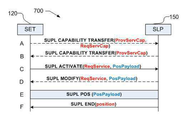
도 10은 SET 개시 단일 픽스 서비스에 대한 메시지 흐름 (700) 의 실시형태를 도시한다. SET (120) 가 SLP (150) 의 (예컨대 이전의 SUPL 세션에서 SET (120) 에 의해 획득된 바와 같은) 서비스 능력들을 미리 가지고 있지 않다면, SET (120) 는 SLP (150) 에 대한 보안 IP 접속을 확립한 다음 SUPL CAPABILITY TRANSFER 메시지를 송신함으로써 SUPL 세션들을 시작하여, 자신 소유의 서비스 능력들 (ProvServCap) 을 제공하고 SLP 들의 서비스 능력들 (ReqServCap) 을 요청한다 (단계 A). 단계 A가 실행되었다면, SLP (150) 는 그것의 서비스 능력들 (ProvServCap) 을 SUPL CAPABILITIES TRANSFER로 SET 에 제공한다 (단계 B). 단계 B 의 SUPL CAPABILITIES TRANSFER 는 또한 SLP (150) 에 의해 지원되는 포지셔닝 프로토콜들을 포함할 수도 있다. SET (120) 는 단계 A 및 B 가 실행된 후에, 또는 SUPL ACTIVATE를 송신함으로써 SET (120) 가 SPL (150) 의 서비스 능력들을 이미 가졌다면 초기 메시지로서 SUPL 서비스를 활성화시킨다 (단계 C). SET (120) 는 SLP (150) 의 서비스 능력들에 맞추어 SUPL ACTIVATE로 서비스 (ReqService) 를 선택하고 요청한다. SET (120) 는 또한 포지셔닝 프로토콜 메시지 (PosPayload) 내의 포지셔닝 정보를 SUPL ACTIVATE 로 송신할 수도 있다 (단계 C). 포지셔닝 정보는 SET (120) 의 포지셔닝 능력들, SET (120) 에 의해 만들어진 몇몇 로케이션 측정들 또는 포지셔닝 보조 데이터의 요청 또는 이것들의 일부 조합을 포함할 수도 있다. 단계 C 의 포지셔닝 프로토콜 메시지는 SLP (150) 가 단계 B에서 지원함을 나타내었던 포지셔닝 프로토콜에 대응할 수도 있다. SLP (150) 는 서비스 요청을 평가하고, 요청된 서비스에 관해 수신된 추가 정보 (예컨대, SUPL 에이전트 ID 등) 에 의존하여, SLP (150) 는 변경된 서비스 요청 (ReqService) 을 변경된 서비스 파라미터들과 함께 SUPL MODIFY 로 SET (120) 에 리턴함으로써 서비스 (예컨대, 다른 QoP) 를 변경할 수도 있다 (단계 D). SLP (150) 는 또한 포지셔닝 프로토콜 메시지 내의 포지셔닝 정보 (PosPayload) 를 SUPL MODIFY 로 송신할 수도 있다 (단계 D). 포지셔닝 정보는 SLP (150) 의 포지셔닝 능력들 및/또는 포지셔닝 보조 데이터 (예컨대 단계 C 에서 SET (120) 에 의해 요청된 바와 같음) 를 포함할 수도 있다. SET (120) 및 SLP (150) 는 하나 이상의 SUPL POS 메시지들 내에 포함된 포지셔닝 프로토콜 메시지들 (PosPayload) 을 교환하는 SUPL POS 세션에 관여한다 (단계 E). SLP (150) 는 SUPL 세션을 종료하고, 포지션 추정치가 SLP (150) 에서 계산되었다면, 포지션 추정치 (position) 를 SET (120) 에 송신한다 (단계 F).10 shows an embodiment of a
도 11은 SET 개시 트리거식 주기적 서비스를 위한 메시지 흐름 (800) 의 실시형태를 도시한다. 메시지 흐름 (800) 에서의 개시 단계들 (A 내지 D) 은, 단계 C 의 요청된 서비스 (ReqService) 가 트리거식 주기적 서비스를 위한 것임을 제외하면, 메시지 흐름 (700) 에서의 단계들 (A 내지 D) 과 동일하다. 제 1 포지션 추정치가 주어져야 하는 경우, SET (120) 및 SLP (150) 는 하나 이상의 SUPL POS 메시지들 내에 포함된 포지셔닝 프로토콜 메시지들 (PosPayload) 내의 포지셔닝 정보를 교환하는 SUPL POS 세션에 관여하고 SLP (150) 는 포지션 추정치를 획득한다 (그리고/또는 보조 데이터는 SET (120) 에 전달된다) (단계 E). 적용가능한 경우, SLP (150) 는 포지션 추정치 (position) 를 SET (120) 에 리턴하고 또한 또는 대신에 포지션 정보 (예컨대 포지셔닝 지원데이터) 를 SUPL REPORT의 포지셔닝 프로토콜 메시지 (PosPayload) 로 송신할 수도 있다 (단계 F). SET (120) 또는 SLP (150) 중의 어느 하나는 서비스 (즉, 서비스 파라미터들, 예를 들어 QoP, 픽스들 사이의 간격 등) 를 변경할 수도 있다 (단계 G). SET (120) 또는 SLP (150) 는 또한 포지션 정보 (예컨대 보조 데이터 또는 보조 데이터의 요청) 를 SUPL MODIFY 메시지에서의 포지셔닝 프로토콜 메시지 (PosPayload) 에 포함시킬 수도 있다 (단계 G). SET (120) 및 SLP (150) 는 포지션 정보를 교환하는 부가적인 SUPL POS 세션들에 관여할 수도 있고 SLP (150) 는 적용가능한 대로 포지션 추정치들을 SUPL REPORT 로 SET (120) 에 리턴할 수도 있다 (단계들 H 및 I). SLP (150) 는 SUPL 세션을 종료한다 (단계 Z).FIG. 11 shows an embodiment of a
도 12는 포지셔닝 프로토콜이 LPP이고 포지션 방법이 SET 보조 A-GNSS 인 경우의 네트워크 개시 단일 픽스 서비스에 대한 메시지 흐름의 실시형태 (900) 를 도시한다. SLP (150) 는 SUPL INIT 메시지를 SET (120) 에 송신함으로써 SET (120) 와 네트워크 개시 SUPL 세션을 시작한다 (단계 A). SET (120) 는 SLP (150) 에 대한 보안 IP 접속을 확립한 다음 그것의 서비스 능력들 (ProvServCap) (즉, 지원할 용의가 있고 할 수 있는 서비스들) 을 제공할 수도 있고 SUPL CAPABILITY TRANSFER로 SLP 의 서비스 능력들 (ReqServCap) 을 요청할 수도 있다 (단계 B). 단계 B 의 SUPL CAPABILITY TRANSFER 는 이 예에서 LPP 를 포함할 것인, SET (120) 에 의해 지원되는 포지셔닝 프로토콜들을 포함할 수도 있다. SET (120) 의 서비스 능력들에 맞추어, SLP (150) 는 SUPL ACTIVATE (이것은 SUPL 서비스를 활성화시킨다) 로 서비스 (ReqService), 이 경우 단일의 즉각적인 픽스를 선택하고 요청한다. SLP 는 또한 그것의 서비스 능력들 (ProvServCap) 을 제공하고 SET 의 LPP 포지셔닝 능력들 (LPP ReqCap) 을 요청하는 LPP 메시지를 포함하고 또한 보조 데이터와 같은 포지셔닝 정보 (PosPayload) 를 포함하는 LPP 메시지를 포함할 수도 있다 (단계 C). 단계 C 의 LPP 메시지는 SET (120) 가 단계 B에서 지원함을 나타낼 수도 있었던 LPP 포지셔닝 프로토콜에 대응한다. SET (120) 는 서비스 요청을 평가하고, 요청된 서비스에 관해 수신된 추가 정보 (예컨대, SUPL 에이전트 ID 등) 에 의존하여, 옵션으로 서비스 (예컨대, 다른 QoP) 를 변경하고 변경된 서비스 요청 (ReqService) 을 변경된 서비스 파라미터들과 함께 SUPL MODIFY로 SLP에 리턴할 수도 있다 (단계 D). SET (120) 는 또한 그것의 LPP 포지셔닝 능력들 (LPP ProvCap), 로케이션 측정치들을 포함하는 로케이션 정보 (LPP ProvLocInfo) 및 특정한 보조 데이터의 요청 (LPP ReqAssistData) 중 하나 이상을 제공하는 하나 이상의 LPP 메시지들 (PosPayload) 을 SUPL MODIFY 메시지 내에 포함시킬 수도 있다. 단계 D가 실행되지 않는다면, SET (120) 는 대신에, 그것의 LPP 포지셔닝 능력들, 몇몇 로케이션 측정들 및 특정한 보조 데이터의 요청 중 하나 이상을 포함하는 하나 이상의 LPP 메시지들을 SUPL POS 메시지 내에 포함시킬 수도 있다 (단계 E). SLP (150) 는 보조 데이터 (LPP ProvAssistData) 및/또는 로케이션 정보의 요청 (LPP ReqLocInfo) 을 포함하는 하나 이상의 LPP 메시지들을 SUPL POS 메시지로 송신한다 (단계 F). SET (120) 는 SUPL POS 메시지 내에 로케이션 정보 (LPP ProvLocInfo), 이 경우 GNSS 의사 범위 측정치들을 포함하는 LPP 메시지들을 SLP (150) 에 리턴하고 SLP (150) 는 포지션 추정치를 계산한다 (단계 G). SLP (150) 는 SUPL 세션을 종료한다 (단계 H). 일단 서비스가 단계 C 에서 활성화되었다면, 포지셔닝 계층 (이 경우 LPP) 은 단계 E, F 및 G (또는 단계 D가 수행된다면 D, F 및 G) 에서 서비스 계층에 대부분 독립적으로 동작할 수 있다. 포지셔닝 계층 LPP 메시지들 및 특정한 서비스 계층 메시지들 내에서의 그들의 전송은 이 예에서 보인 것과는 다를 수 있다. 예를 들어, 포지셔닝 계층 메시지들은 TIA-801 또는 LPP 와 LPPe 의 합일 수 있다.Figure 12 shows an
도 13은 SET 보조 A-GNSS를 이용한 네트워크 개시 단일 픽스 TIA-801 서비스를 위한 메시지 흐름 (1000) 의 실시형태를 도시한다. SLP (150) 는 SUPL INIT 메시지를 SET (120) 에 송신함으로써 SET (120) 와 네트워크 개시 SUPL 세션을 시작한다 (단계 A). SET (120) 는 SLP (150) 에 대한 보안 IP 접속을 확립한 다음 그것의 서비스 능력들 (ProvServCap) (즉, 지원할 용의가 있고 할 수 있는 SULP 서비스들) 을 제공할 수도 있고 SUPL CAPABILITY TRANSFER로 SLP 의 서비스 능력들 (ReqServCap) 을 요청할 수도 있다 (단계 B). 단계 B 의 SUPL CAPABILITY TRANSFER 는 또한, 이 예에서 TIA-801을 포함할 것인, SET (120) 에 의해 지원되는 포지셔닝 프로토콜들을 포함할 수도 있다. SET (120) 의 서비스 능력들에 맞추어, SLP (150) 는 SUPL ACTIVATE (이것은 SUPL 서비스를 활성화시킨다) 로 서비스 (ReqService), 이 경우 단일의 즉각적인 픽스를 선택하고 요청한다. SLP 는 또한 그것의 서비스 능력들 (ProvServCap) 을 제공하고, SET 의 포지셔닝 능력들 (TIA-801 ReqCap) 을 요청하고 및/또는 포지셔닝 정보를 제공하는 하나 이상의 TIA-801 포지셔닝 계층 메시지들을 포함할 수도 있다 (단계 C). 단계 C 의 TIA-801 메시지는 SET (120) 가 단계 B에서 지원함을 나타낼 수도 있었던 TIA-801 포지셔닝 프로토콜에 대응한다. SET (120) 는 서비스 요청을 평가하고, 요청된 서비스에 관해 수신된 추가 정보 (예컨대, SUPL 에이전트 ID 등) 에 의존하여, 옵션으로 서비스 (예컨대, 다른 QoP) 를 변경하고 변경된 서비스 요청 (ReqService) 을 변경된 서비스 파라미터들과 함께 SUPL MODIFY로 SLP에 리턴할 수도 있다 (단계 D). SET (120) 는 SUPL MODIFY 내에, SET (120) 의 TIA-801 포지셔닝 능력들 (MS INFO), 로케이션 정보 (Prov PP) 및 GNSS 획득 지원의 요청 (Req AA) 및 민감도 지원 (Req SA) 을 포함하는 하나 이상의 포지셔닝 계층 TIA-801 메시지들 (PosPayload) 을 포함한다. 단계 D가 실행되지 않는다면, 단계 D에 대해 서술된 TIA-801 메시지들 (PosPayload) 은 대신에 SUPL POS 메시지로 제공될 수도 있다 (단계 E). SLP (150) 는 GNSS 획득 지원 (Prov AA), 민감도 지원 (Prov SA) 및 GNSS 의사 범위 정보의 요청 (Req PR) 을 포함하는 하나 이상의 TIA-801 포지션 계층 메시지들 (PosPayload) 을 SUPL POS 메시지로 리턴한다 (단계 F). SET (120) 는 요청된 GNSS 의사 범위 측정치들을 획득하고, 로케이션 정보 (이 경우 GNSS 의사 범위 측정치들) (Prov PR) 를 포함하는 TIA-801 포지셔닝 계층 메시지를 SLP (150) 에 리턴하고 SLP (150) 는 포지션 추정치를 계산한다 (단계 G). SLP (150) 는 SUPL 세션을 종료한다 (단계 H). 일단 서비스가 단계 C 에서 활성화되었다면, 포지셔닝 계층 (이 경우 TIA-801) 은 단계 E, F 및 G (또는 단계 D가 수행된다면 D, F 및 G) 에서 서비스 계층에 대부분 독립적으로 동작할 수 있다. 포지셔닝 계층 TIA-801 메시지들 및 특정한 서비스 계층 메시지들 내에서의 그들의 전송은 이 예에서 보인 것과는 다를 수 있다.FIG. 13 shows an embodiment of a
도 14는 포지셔닝 프로토콜이 LPP이고 포지션 방법이 SET 보조 A-GNSS인 경우의 SET 개시 단일 픽스 서비스에 대한 메시지 흐름 (1100) 의 실시형태를 도시한다. SET (120) 가 SLP (150) 의 (예컨대 이전의 SUPL 세션에서 SET (120) 에 의해 획득된 바와 같은) 서비스 능력들을 미리 가지고 있지 않다면, SET (120) 는 SLP (150) 에 대한 보안 IP 접속을 확립한 다음 SUPL CAPABILITY TRANSFER 메시지를 송신함으로써 SUPL 세션을 시작하여, 자신 소유의 서비스 능력들 (ProvServCap) 을 제공하고 SLP 들의 서비스 능력들 (ReqServCap) 을 요청한다 (단계 A). 단계 A가 실행되었다면, SLP (150) 는 그것의 서비스 능력들 (ProvServCap) 을 SUPL CAPABILITIES TRANSFER로 SET 에 제공한다 (단계 B). 단계 B 의 SUPL CAPABILITIES TRANSFER 는 또한, 이 예에서 LPP를 포함할 것인, SLP (150) 에 의해 지원되는 포지셔닝 프로토콜들을 포함할 수도 있다. SET (120) 는 단계 A 및 B 가 실행된 후에, 또는 SUPL ACTIVATE를 송신함으로써 SET (120) 가 SPL (150) 의 서비스 능력들을 이미 가졌다면 초기 메시지로서 SUPL 서비스를 활성화시킨다 (단계 C). SET (120) 는 SLP (150) 의 서비스 능력들에 맞추어 서비스 (ReqService), 이 경우 단일의 즉각적인 픽스를 SUPL ACTIVATE로 선택하고 요청한다. SET (120) 는 또한 그것의 LPP 포지셔닝 능력들 (LPP ProvCap), 로케이션 측정치들을 포함하는 로케이션 정보 (LPP ProvLocInfo) 및 특정한 보조 데이터의 요청 (LPP ReqAssistData) 중 하나 이상을 제공하는 하나 이상의 LPP 포지셔닝 계층 메시지들 (PosPayload) 을 SUPL MODIFY 메시지 내에 포함시킬 수도 있다. 단계 C 의 LPP 메시지들은 SET (150) 가 단계 B에서 지원함을 나타낼 수도 있었던 LPP 포지셔닝 프로토콜에 대응한다. SLP (150) 는 서비스 요청을 평가하고, 요청된 서비스에 관해 수신된 추가 정보 (예컨대, SUPL 에이전트 ID 등) 에 의존하여, SLP (150) 는 변경된 서비스 요청 (ReqService) 을 변경된 서비스 파라미터들과 함께 SUPL MODIFY로 SET (120) 에 리턴함으로써 서비스 (예컨대, 다른 QoP) 를 변경할 수도 있다 (단계 D). SLP (150) 는 SUPL MODIFY 메시지들 내에, 보조 데이터 (LPP ProvAssistData) 및/또는 로케이션 정보의 요청 (LPP ReqLocInfo) 을 포함하는 하나 이상의 LPP 포지셔닝 계층 메시지들 (PosPayload) 을 포함시킬 수도 있다. 단계 D가 실행되지 않는다면, SLP (150) 는 대신에, 보조 데이터 (LPP ProvAssistData) 및/또는 로케이션 정보의 요청 (LPP ReqLocInfo) 을 포함하는 하나 이상의 LPP 메시지들 (PosPayload) 을 SUPL POS 메시지에 포함시킬 수도 있다 (단계 E). SET (120) 는 요청된 로케이션 정보 (이 경우 GNSS 의사 범위 측정치들) 을 획득하고, 이 로케이션 정보 (LPP ProvLocInfo) 를 포함하는 LPP 포지셔닝 계층 메시지 (PosPayload) 를 SUPL POS 메시지로 SLP (150) 에 송신하고 SLP (150) 는 포지션 추정치를 계산한다 (단계 F). SLP (150) 는 SUPL 세션을 종료하고 포지션 추정치 (position) 를 SUPL END로 SET (120) 에 송신한다 (단계 G). 일단 서비스가 단계 C 에서 활성화되었으면, 포지셔닝 계층 (이 경우 LPP) 은 단계 E 및 F (또는 단계 D가 수행된다면 D 및 F) 에서 서비스 계층에 대부분 독립적으로 동작할 수 있다. 포지셔닝 계층 LPP 메시지들 및 특정한 서비스 계층 메시지들 내에서의 그들의 전송은 이 예에서 보인 것과는 다를 수 있다. 예를 들어, 포지셔닝 계층 메시지들은 TIA-801 또는 LPP 더하기 LPPe일 수 있다.FIG. 14 shows an embodiment of a
도 15는 포지셔닝 프로토콜이 TIA-801이고 포지션 방법이 SET 보조 A-GNSS인 경우의 SET 개시 단일 픽스 서비스에 대한 메시지 흐름 (1200) 의 실시형태를 도시한다. SET (120) 가 SPL (150) 의 (예컨대 이전의 SUPL 세션에서 SET (120) 에 의해 획득된 바와 같은) 서비스 능력들을 미리 가지고 있지 않다면, SET (120) 는 SLP (150) 에 대한 보안 IP 접속을 확립한 다음 SUPL CAPABILITY TRANSFER 메시지를 송신함으로써 SUPL 세션을 시작하여, 자신 소유의 서비스 능력들 (ProvServCap) 을 제공하고 SLP 들의 서비스 능력들 (ReqServCap) 을 요청한다 (단계 A). 단계 A가 실행되었다면, SLP (150) 는 그것의 서비스 능력들 (ProvServCap) 을 SUPL CAPABILITIES TRANSFER로 SET 에 제공한다 (단계 B). 단계 B 의 SUPL CAPABILITIES TRANSFER 는 또한, 이 예에서 TIA-801을 포함할 것인, SLP (150) 에 의해 지원되는 포지셔닝 프로토콜들을 포함할 수도 있다. SET (120) 는 단계 A 및 B 가 실행된 후에, 또는 SUPL ACTIVATE를 송신함으로써 SET (120) 가 SPL (150) 의 서비스 능력들을 이미 가졌다면 초기 메시지로서 SUPL 서비스를 활성화시킨다 (단계 C). SET (120) 는 SLP (150) 의 서비스 능력들에 맞추어 서비스 (ReqService), 이 경우 단일의 즉각적인 픽스를 SUPL ACTIVATE로 선택하고 요청한다. SET (120) 는 또한 SUPL ACTIVATE 메시지 내에, 민감도 지원 (Req SA)과 그것의 포지셔닝 능력들 (Prov MS INFO), 로케이션 정보 (Prov PP) 및 획득 지원의 요청 (Req AA) 및 중의 하나 이상을 제공하는 하나 이상의 TIA-801 포지셔닝 계층 메시지들 (PosPayload) 을 포함시킬 수도 있다 (단계 C). 단계 C 의 TIA-801 메시지들은 SLP (150) 가 단계 B에서 지원함을 나타낼 수도 있었던 TIA-801 포지셔닝 프로토콜에 대응한다. SLP (150) 는 서비스 요청을 평가하고, 요청된 서비스에 관해 수신된 추가 정보 (예컨대, SUPL 에이전트 ID 등) 에 의존하여, SLP (150) 는 변경된 서비스 요청 (ReqService) 을 변경된 서비스 파라미터들과 함께 SUPL MODIFY로 SET (120) 에 리턴함으로써 서비스 (예컨대, 다른 QoP) 를 변경할 수도 있다 (단계 D). SLP (150) 는 SUPL MODIFY 메시지들 내에, 획득 지원 (Prov AA), 민감도 지원 (Prov SA) 및 의사 범위 정보의 요청 (Req PR) 을 포함하는 하나 이상의 TIA-801 포지셔닝 계층 메시지들 (PosPayload) 을 포함시킬 수도 있다. 단계 D가 실행되지 않으면, SLP (150) 는 대신에, 단계 D에서 설명된 것과 동일한 TIA-801 메시지들 (PosPayload) 을 포함하는 SUPL POS 메시지를 송신할 수도 있다 (단계 E). SET (120) 는 요청된 GNSS 의사 범위 측정치들을 획득하고, 이 로케이션 정보 (Prov PR) 및 로케이션 결과의 요청 (Req LocRes) 을 포함하는 하나 이상의 TIA-801 포지셔닝 계층 메시지들 (PosPayload) 을 SUPL POS 메시지로 SLP (150) 에 송신한다 (단계 F). SLP (150) 는 포지션 추정치를 계산하고 그것을 SUPL END 내부의 TIA-801 메시지 (Prov LocRes) 로 SET (120) 에 송신하여 SUPL 세션을 종료시킨다 (단계 G). 일단 서비스가 단계 C 에서 활성화되었다면, 포지셔닝 계층 (이 경우 TIA-801) 은 단계 E 및 F (또는 단계 D가 수행된다면 D 및 F) 에서 서비스 계층에 대부분 독립적으로 동작할 수 있다. 포지셔닝 계층 TIA-801 메시지들 및 특정한 서비스 계층 메시지들 내에서의 그들의 전송은 이 예에서 보인 것과는 다를 수 있다.FIG. 15 shows an embodiment of a
도 7 내지 도 15에서 예시된 SUPL 서비스는 SUPL 2.0 에서 서비스들이 지원되는 방법과는 다르다. 도 7 내지 도 15에 예시된 SUPL 서비스를 SUPL 2.0로 시그널링함에 있어서 이점이 있을 수도 있다. 예를 들어, 이는 소프트웨어, 펌웨어 및 하드웨어가 이미 SUPL 2.0 에 대해 이용가능한 경우 도 7 내지 도 15에 예시된 SUPL 서비스를 지원하는데 필요한 소프트웨어, 펌웨어 및 하드웨어 구현물의 양을 감소시킨다. 이 정렬 (alignment) 의 달성을 돕기 위해, SUPL 2.0과 도 7 내지 도 15에 예시된 SUPL 서비스 양쪽 모두에서 SUPL 에이전트 (112 또는 170) 에 대해 동일하게 여겨지는 서비스들 (예컨대 SUPL 즉각적인 로케이션, SUPL 주기적 로케이션, SUPL 트리거식 로케이션) 을 지원하는 SUPL 파라미터들은 SUPL 의 양쪽 모두의 버전들에서 변경 없이 이용될 수도 있다. 대안적으로, 이들 파라미터들은 SUPL 의 양쪽 모두의 버전들에서 달리 정의되고 및/또는 인코딩될 수도 있지만, 정확히 동일한 정보를 운반할 수도 있다. 일 예로, SUPL 트리거식 서비스를 위한 트리거 조건들을 운반하는 SUPL 파라미터들 (이를테면 지리적 영역과 SET가 그 영역 내에 진입하거나, 잔류하거나 또는 그 영역으로부터 진출하는 트리거 조건) 은 SUPL 의 양쪽 버전들에서 변경 없이 재사용될 수도 있거나, 또는 이들 파라미터들로부터의 정보는 변경 없이 유지될 수도 있지만 이 정보를 인코딩하는 파라미터들은 상이할 수도 있다. 전자의 경우, 정렬은 코딩 레벨에서 발생할 것이지만 후자의 경우 정렬은 정보 레벨에서 발생할 것이다.The SUPL service illustrated in FIGS. 7 to 15 is different from the method in which services are supported in SUPL 2.0. There may be an advantage in signaling the SUPL service illustrated in Figures 7 to 15 to SUPL 2.0. For example, this reduces the amount of software, firmware, and hardware implementations needed to support SUPL services illustrated in Figures 7 to 15 where software, firmware, and hardware are already available for SUPL 2.0. To facilitate achieving this alignment, services that are considered the same for both SUPL 2.0 and SUPL agent 112 or 170 (e.g. SUPL immediate location, SUPL periodic Location, SUPL triggered location) SUPL parameters may be used without modification in both versions of SUPL. Alternatively, these parameters may be defined and / or encoded differently in both versions of SUPL, but may carry exactly the same information. As an example, SUPL parameters that carry trigger conditions for a SUPL triggered service (e.g., a trigger condition in which a geographic region and a SET enter, remain or advance from that region) are unchanged in both versions of SUPL May be reused, or information from these parameters may be maintained without modification, but the parameters encoding this information may be different. In the former case, alignment will occur at the coding level, but in the latter case alignment will occur at the information level.
도 16 은 도 1 및 도 2 의 네트워크 아키텍처들 (100 및 102) 에서의 SET (120), H-SLP (150), 및 통신 네트워크 (130) 의 실시형태의 블록도를 도시한다. 통신 네트워크 (130) 는 단말들에 통신을 제공하고, 기지국들 (또는 노드 B들) 및 네트워크 제어기들을 포함할 수도 있다. 단순화를 위해, 도 16은 SET (120) 를 위한 오직 하나의 프로세서 (1920), 하나의 메모리 유닛 (1922) 및 하나의 트랜시버 (1924), 네트워크 (130) 를 위한 오직 하나의 프로세서 (1930), 하나의 메모리 유닛 (1932), 하나의 트랜시버 (1934) 및 하나의 통신 (Comm) 유닛 (1936), 그리고 SLP (150) 를 위한 오직 하나의 프로세서 (1940), 하나의 메모리 유닛 (1942) 및 하나의 트랜시버 (1944) 를 도시한다. 대체로, 각각의 엔티티는 임의의 수의 프로세서들, 메모리 유닛들, 트랜시버들, 통신 유닛들, 제어기들 등을 포함할 수도 있다. SET (120) 는 무선 통신을 지원할 수도 있고 또한 GPS 신호들을 수신 및 처리할 수도 있다.16 shows a block diagram of an embodiment of
다운링크 상에서, 네트워크 (130) 에서의 기지국들은 그들의 통신가능 구역 내에서 트래픽 데이터, 시그널링, 및 파일럿을 단말들에 송신한다. 이들 여러 유형들의 데이터는 프로세서 (1930) 에 의해 처리되고 트랜시버 (1934) 에 의해 조절되어 다운링크 신호를 발생하며, 이는 안테나를 통해 송신된다. SET (120) 에서, 하나 이상의 기지국들로부터의 다운링크 신호들은 안테나를 통해 수신되며, 트랜시버 (1924) 에 의해 조절되고, 프로세서 (1920) 에 의해 처리되어 로케이션 서비스들을 위한 여러 유형들의 정보가 획득된다. 예를 들어, 프로세서 (1920) 는 위에서 설명된 메시지 흐름들을 위해 이용되는 메시지들을 디코딩할 수도 있다. 메모리 유닛들 (1922 및 1923) 은 SET (120) 및 네트워크 (130) 를 위한 프로그램 코드들 및 데이터를 각각 저장한다. 업링크 상에서, UE (120) 는 트래픽 데이터, 시그널링, 및 파일럿을 네트워크 (130) 의 하나 이상의 기지국들에 송신할 수도 있다. 이들 여러 유형들의 데이터는 프로세서 (1920) 에 의해 처리되고 트랜시버 (1924) 에 의해 조절되어 업링크 신호를 발생하며, 이 신호는 SET 안테나를 통해 송신된다. 네트워크 (130) 에서, SET (120) 및 다른 단말들로부터의 업링크 신호들은 트랜시버 (1934) 에 의해 수신되고 조절되며 추가로 프로세서 (1930) 에 의해 처리되어 여러 유형들의 정보 (예컨대, 데이터, 시그널링, 보고서들 등) 가 획득된다. 네트워크 (130) 는 통신 유닛 (1936) 을 통해 SLP (150) 및 다른 네트워크 엔티티들과 통신한다.On the downlink, base stations in
SLP (150) 내에서, 프로세서 (1940) 는 SLP에 대한 처리를 수행하며, 메모리 유닛 (1942) 은 SLP에 대한 프로그램 코드들 및 데이터를 저장하고, 통신 유닛 (1944) 은 SLP가 네트워크 (130) 및 다른 네트워크 엔티티들과 통신하는 것을 허용한다. 프로세서 (1940) 는 위에서 설명되는 메시지 흐름들에 대해 SLP (150) 에 대한 처리를 수행할 수도 있다.Within the
본원에서 설명되는 기법들은 갖가지 수단들로 구현될 수도 있다. 예를 들어, 그 기법들은 하드웨어, 펌웨어, 소프트웨어, 또는 이것들의 조합으로 구현될 수도 있다. 하드웨어 구현예의 경우, 각각의 엔티티에서의 처리를 수행하는데 사용되는 유닛들은 하나 이상의 주문형 집적회로들 (ASIC들), 디지털 신호 프로세서들 (DSP 들), 디지털 신호 처리 디바이스들 (DSPD들), 프로그램가능 로직 디바이스들 (PLD들), 필드 프로그램가능 게이트 어레이들 (FPGA들), 프로세서들, 제어기들, 마이크로제어기들, 마이크로프로세서들, 전자 디바이스들, 본원에서 설명된 기능들을 수행하도록 디자인된 다른 전자 유닛들, 또는 그들의 조합 내에서 구현될 수도 있다.The techniques described herein may be implemented in various ways. For example, the techniques may be implemented in hardware, firmware, software, or a combination thereof. In hardware implementations, the units used to perform processing at each entity may be implemented as one or more application specific integrated circuits (ASICs), digital signal processors (DSPs), digital signal processing devices (DSPDs) (FPGAs), processors, controllers, microcontrollers, microprocessors, electronic devices, other electronic units designed to perform the functions described herein Or a combination thereof.
펌웨어 및/또는 소프트웨어 구현예의 경우, 방법론들은 본원에서 설명된 기능들을 수행하는 모듈들 (예컨대, 프로시저들, 함수들 등) 으로 구현될 수도 있다. 명령들을 유형적으로 포함하는 임의의 머신 판독가능 매체는 본원에서 설명되는 방법론들의 구현함에 있어서 사용될 수도 있다. 소프트웨어 코드들은 메모리 유닛 (예컨대, 도 16의 메모리 유닛 (1922, 1932 또는 1942) 에 저장될 수도 있고 프로세서 (예컨대, 프로세서 (1920, 1930 또는 1940)) 에 의해 실행될 수도 있다. 메모리 유닛은 프로세서 내에 또는 프로세서 외부에 구현될 수도 있다. 본원에서 사용되는 바와 같이 용어 "메모리"는 장기, 단기, 휘발성, 비휘발성, 또는 다른 메모리 중의 임의의 유형을 지칭하고, 메모리의 임의의 특정 유형 또는 메모리들의 수, 또는 메모리가 저장되는 미디어의 유형으로 제한되는 것은 아니다.In the case of firmware and / or software implementations, the methodologies may be implemented with modules (e.g., procedures, functions, and so on) that perform the functions described herein. Any machine readable medium containing tangibly the instructions may be used in the implementation of the methodologies described herein. The software codes may be stored in a memory unit (e.g.,
펌웨어 및/또는 소프트웨어로 구현된다면, 기능들은 하나 이상의 명령들 또는 코드로서 비일시적 컴퓨터 판독가능 매체 상에 저장될 수도 있다. 예들은 데이터 구조를 가지게끔 인코딩된 컴퓨터 판독가능 매체들 및 컴퓨터 프로그램으로 인코딩된 컴퓨터 판독가능 매체들을 포함한다. 컴퓨터 판독가능 매체들은 물리적 컴퓨터 저장 매체들을 포함한다. 저장 매체는 컴퓨터에 의해 액세스될 수 있는 임의의 이용가능한 매체일 수도 있다. 비제한적인 예로서, 이러한 컴퓨터 판독가능 매체들은 RAM, ROM, EEPROM, CD-ROM 또는 다른 광 디스크 스토리지, 자기 디스크 스토리지 또는 다른 자기 디스크 스토리지, 또는 소망의 프로그램 코드를 명령들 또는 데이터 구조들의 형태로 저장하는데 사용될 수 있고 컴퓨터에 의해 액세스가능하게 될 수 있는 임의의 다른 매체를 포함할 수도 있고; 디스크 (disk 및 disc) 는, 여기서 사용되는 바와 같이, 콤팩트 디스크 (CD), 레이저 디스크, 광 디스크, 디지털 다용도 디스크 (DVD), 플로피 디스크 (disk) 및 블루-레이 디스크 (disk) 를 포함하며 여기서 disks 는 보통 데이터를 자기적으로 재생하는 반면 discs는 데이터를 레이저를 이용하여 광학적으로 재생한다. 상기한 것들의 조합들은 또한 컴퓨터 판독가능 매체들의 범위 내에 포함되어야 한다.If implemented in firmware and / or software, the functions may be stored on one or more instructions or on non-volatile computer readable media as code. Examples include computer readable media encoded with a data structure and computer readable media encoded with a computer program. Computer readable media include physical computer storage media. The storage medium may be any available media that can be accessed by a computer. By way of example, and not limitation, such computer-readable media can comprise RAM, ROM, EEPROM, CD-ROM or other optical disk storage, magnetic disk storage or other magnetic disk storage, or desired program code in the form of instructions or data structures Or any other medium that can be used to store and be made accessible by a computer; Disks and discs as used herein include compact discs (CDs), laser discs, optical discs, digital versatile discs (DVD), floppy discs and Blu-ray discs Discs usually reproduce data magnetically, while discs optically reproduce data using a laser. Combinations of the above should also be included within the scope of computer readable media.
본 발명이 교육상의 목적으로 구체적인 실시형태들에 관련하여 예시되었지만, 본 발명은 그들로 제한되지는 않는다. 다양한 개조 및 변형들이 본 발명의 범위로부터 벗어남 없이 만들어질 수도 있다. 그러므로, 첨부의 청구항들의 정신 및 범위는 앞서의 설명으로 국한되지 않아야 한다.Although the present invention has been illustrated with reference to specific embodiments for educational purposes, the present invention is not limited thereto. Various modifications and variations may be made without departing from the scope of the present invention. Therefore, the spirit and scope of the appended claims should not be limited to the foregoing description.
Claims (50)
적어도 하나의 사용자 평면 로케이션 프로토콜 (User plane Location Protocol; ULP) 서비스 계층 메시지를 상기 SET 로 송신하고 적어도 하나의 ULP 서비스 계층 메시지를 상기 SET 로부터 수신하는 단계로서, ULP 서비스 계층 메시지들은 포지셔닝 프로토콜 식별 및 포지셔닝 프로토콜 메시지들 이외의 어떠한 포지셔닝 관련 파라미터들도 포함하지 않는, 상기 적어도 하나의 ULP 서비스 계층 메시지를 송신 및 수신하는 단계;
적어도 하나의 포지셔닝 계층 메시지를 상기 SET 로 송신하고 적어도 하나의 포지셔닝 계층 메시지를 상기 SET 로부터 수신하는 단계로서, 포지셔닝 계층 메시지들은 어떠한 서비스 관련 파라미터들도 포함하지 않는 포지셔닝 프로토콜에 부합하는, 상기 적어도 하나의 포지셔닝 계층 메시지를 송신 및 수신하는 단계;
상기 SET 에 대한 상기 적어도 하나의 포지션 추정치를 결정하기 위해 상기 SET 와 통신하는 단계; 및
상기 적어도 하나의 포지션 추정치를 상기 SUPL 에이전트로 전송하는 단계를 포함하는, 방법.Receiving a request for at least one position estimate for a SUPL capable terminal (SET) from a Secure User Plane Location (SUPL) agent;
Transmitting at least one user plane location protocol (ULP) service layer message to the SET and receiving at least one ULP service layer message from the SET, wherein the ULP service layer messages include positioning protocol identification and positioning Transmitting and receiving the at least one ULP service layer message that does not include any positioning related parameters other than protocol messages;
Transmitting at least one positioning layer message to the SET and receiving at least one positioning layer message from the SET, wherein the positioning layer messages conform to a positioning protocol that does not include any service related parameters, Transmitting and receiving a positioning layer message;
Communicating with the SET to determine the at least one position estimate for the SET; And
And sending the at least one position estimate to the SUPL agent.
상기 포지셔닝 계층 메시지들은 상기 ULP 서비스 계층 메시지들 내에서 캡슐화되고, 상기 ULP 서비스 계층 메시지들은 서비스 계층 파라미터들을 포함하지 않는, 방법.The method according to claim 1,
Wherein the positioning layer messages are encapsulated within the ULP service layer messages and the ULP service layer messages do not include service layer parameters.
상기 포지셔닝 계층 메시지들은 상기 ULP 서비스 계층 메시지들 내에서 캡슐화되고, 상기 ULP 서비스 계층 메시지들은 서비스 계층 파라미터들을 포함하는, 방법.The method according to claim 1,
Wherein the positioning layer messages are encapsulated within the ULP service layer messages and the ULP service layer messages comprise service layer parameters.
상기 포지셔닝 프로토콜은 LTE 포지셔닝 프로토콜 (LPP), 무선 리소스 LCS 프로토콜 (RRLP), 무선 리소스 제어 (RRC) 또는 IS-801 을 포함하는, 방법.The method according to claim 1,
Wherein the positioning protocol comprises an LTE Positioning Protocol (LPP), a Radio Resource LCS Protocol (RRLP), a Radio Resource Control (RRC) or an IS-801.
상기 SET 로부터 서비스를 요청하기 전에 어떠한 포지셔닝 관련 파라미터들도 제공되지 않는, 방법.The method according to claim 1,
No positioning related parameters are provided prior to requesting a service from the SET.
다수의 보고 이벤트들에 대하여 상기 SET 에 대한 포지션 추정치를 결정하는 단계를 더 포함하는, 방법.The method according to claim 1,
Further comprising determining a position estimate for the SET for a plurality of reporting events.
상기 적어도 하나의 ULP 서비스 계층 메시지를 상기 SET 로 송신하고 적어도 하나의 ULP 서비스 계층 메시지를 상기 SET 로부터 수신하는 단계는,
상기 SET 로부터 SET 서비스 능력들을 수신하는 단계; 및
상기 SET 서비스 능력들과 일치하는 서비스를 상기 SET 로부터 요청하는 단계를 포함하는, 방법.The method according to claim 1,
The step of transmitting the at least one ULP service layer message to the SET and receiving at least one ULP service layer message from the SET comprises:
Receiving SET service capabilities from the SET; And
Requesting from the SET a service that matches the SET service capabilities.
상기 SET 서비스 능력들은 상기 SET 에 의해 지원되는 포지셔닝 프로토콜들을 포함하고, 적어도 하나의 포지셔닝 계층 메시지를 상기 SET 로 송신하기 전에 수신되는, 방법.8. The method of claim 7,
Wherein the SET service capabilities include positioning protocols supported by the SET and are received prior to sending at least one positioning layer message to the SET.
상기 SET 서비스 능력들의 수신에 응답하여 SLP 의 서비스 능력들을 상기 SET 로 송신하는 단계를 더 포함하는, 방법.8. The method of claim 7,
And sending the service capabilities of the SLP to the SET in response to receiving the SET service capabilities.
상기 SET 로부터 요청된 서비스에 대하여 변경된 서비스 파라미터들을 갖는 서비스 변경 요청을 상기 SET 로부터 수신하는 단계를 더 포함하는, 방법.8. The method of claim 7,
Further comprising receiving from the SET a service change request having changed service parameters for the service requested from the SET.
상기 SET 로부터 요청된 서비스에 대하여 변경된 서비스 파라미터들을 갖는 서비스 변경 요청을 상기 SET 로 송신하는 단계를 더 포함하는, 방법.8. The method of claim 7,
Further comprising transmitting to the SET a service change request having changed service parameters for the service requested from the SET.
복수의 시간들에서 상기 SET 에 대한 복수의 포지션 추정치들을 결정하는 단계를 더 포함하고,
상기 서비스 변경 요청은 포지션 추정치들 간에 수신되는, 방법.11. The method of claim 10,
Further comprising determining a plurality of position estimates for the SET at a plurality of times,
Wherein the service change request is received between position estimates.
복수의 시간들에서 상기 SET 에 대한 복수의 포지션 추정치들을 결정하는 단계를 더 포함하고,
상기 서비스 변경 요청은 포지션 추정치들 간에 송신되는, 방법.12. The method of claim 11,
Further comprising determining a plurality of position estimates for the SET at a plurality of times,
Wherein the service change request is transmitted between position estimates.
적어도 하나의 사용자 평면 로케이션 프로토콜 (ULP) 서비스 계층 메시지를 상기 SET 로 송신하고 적어도 하나의 ULP 서비스 계층 메시지를 상기 SET 로부터 수신하는 것으로서, ULP 서비스 계층 메시지들은 포지셔닝 프로토콜 식별 및 포지셔닝 프로토콜 메시지들 이외의 어떠한 포지셔닝 관련 파라미터들도 포함하지 않는, 상기 적어도 하나의 ULP 서비스 계층 메시지를 송신 및 수신하고;
적어도 하나의 포지셔닝 계층 메시지를 상기 SET 로 송신하고 적어도 하나의 포지셔닝 계층 메시지를 상기 SET 로부터 수신하는 것으로서, 포지셔닝 계층 메시지들은 어떠한 서비스 관련 파라미터들도 포함하지 않는 포지셔닝 프로토콜에 부합하는, 상기 적어도 하나의 포지셔닝 계층 메시지를 송신 및 수신하고;
상기 SET 에 대한 상기 적어도 하나의 포지션 추정치를 결정하기 위해 상기 SET 와 통신하며; 그리고
상기 적어도 하나의 포지션 추정치를 상기 SUPL 에이전트로 전송하도록
구성된 적어도 하나의 프로세서를 포함하는, 장치.Receiving a request for at least one position estimate for a SUPL capable terminal (SET) from a secure user plane location (SUPL) agent;
Wherein at least one user plane location protocol (ULP) service layer message is sent to the SET and at least one ULP service layer message is received from the SET, wherein the ULP service layer messages include at least one of a Positioning Protocol Identification and Positioning Protocol messages Transmitting and receiving the at least one ULP service layer message, not including positioning related parameters;
Wherein at least one positioning layer message is transmitted to the SET and at least one positioning layer message is received from the SET, wherein the positioning layer messages conform to a positioning protocol that does not include any service-related parameters, Send and receive layer messages;
Communicate with the SET to determine the at least one position estimate for the SET; And
To transmit the at least one position estimate to the SUPL agent
And at least one processor configured to perform the processing.
상기 포지셔닝 계층 메시지들은 상기 ULP 서비스 계층 메시지들 내에서 캡슐화되고, 상기 ULP 서비스 계층 메시지들은 서비스 계층 파라미터들을 포함하지 않는, 장치.15. The method of claim 14,
Wherein the positioning layer messages are encapsulated within the ULP service layer messages and the ULP service layer messages do not include service layer parameters.
상기 포지셔닝 계층 메시지들은 상기 ULP 서비스 계층 메시지들 내에서 캡슐화되고, 상기 ULP 서비스 계층 메시지들은 서비스 계층 파라미터들을 포함하는, 장치.15. The method of claim 14,
Wherein the positioning layer messages are encapsulated within the ULP service layer messages, and the ULP service layer messages include service layer parameters.
상기 포지셔닝 프로토콜은 LTE 포지셔닝 프로토콜 (LPP), 무선 리소스 LCS 프로토콜 (RRLP), 무선 리소스 제어 (RRC) 또는 IS-801 을 포함하는, 장치.15. The method of claim 14,
Wherein the positioning protocol comprises an LTE Positioning Protocol (LPP), a Radio Resource LCS Protocol (RRLP), a Radio Resource Control (RRC) or an IS-801.
상기 SET 로부터 서비스를 요청하기 전에 어떠한 포지셔닝 관련 파라미터들도 제공되지 않는, 장치.15. The method of claim 14,
No positioning related parameters are provided prior to requesting service from the SET.
상기 적어도 하나의 프로세서는 다수의 보고 이벤트들에 대하여 상기 SET 에 대한 포지션 추정치를 결정하도록 구성되는, 장치.15. The method of claim 14,
Wherein the at least one processor is configured to determine a position estimate for the SET for a plurality of reporting events.
상기 적어도 하나의 프로세서는, 추가로,
SET 서비스 능력들을 수신하고; 그리고
상기 SET 서비스 능력들과 일치하는 서비스를 상기 SET 로부터 요청하도록
구성되는, 장치.15. The method of claim 14,
Wherein the at least one processor further comprises:
Receiving SET service capabilities; And
To request a service from the SET that matches the SET service capabilities
Lt; / RTI >
상기 SET 서비스 능력들은 상기 SET 에 의해 지원되는 포지셔닝 프로토콜들을 포함하고, 적어도 하나의 포지셔닝 계층 메시지를 상기 SET 로 송신하기 전에 수신되는, 장치.21. The method of claim 20,
Wherein the SET service capabilities include positioning protocols supported by the SET and are received prior to sending at least one positioning layer message to the SET.
상기 적어도 하나의 프로세서는, 추가로, 상기 SET 서비스 능력들의 수신에 응답하여 SULP 로케이션 플랫폼 (SLP) 의 서비스 능력들을 상기 SET 로 송신하도록 구성되는, 장치.21. The method of claim 20,
Wherein the at least one processor is further configured to send service capabilities of a SULP Location Platform (SLP) to the SET in response to receiving the SET services capabilities.
상기 적어도 하나의 프로세서는, 추가로, 상기 SET 로부터 요청된 서비스에 대하여 변경된 서비스 파라미터들을 갖는 서비스 변경 요청을 상기 SET 로부터 수신하도록 구성되는, 장치.21. The method of claim 20,
Wherein the at least one processor is further configured to receive from the SET a service change request having changed service parameters for the service requested from the SET.
상기 적어도 하나의 프로세서는, 추가로, 상기 SET 로부터 요청된 서비스에 대하여 변경된 서비스 파라미터들을 갖는 서비스 변경 요청을 상기 SET 로 송신하도록 구성되는, 장치.21. The method of claim 20,
Wherein the at least one processor is further configured to send to the SET a service change request having changed service parameters for the service requested from the SET.
상기 적어도 하나의 프로세서는, 추가로, 복수의 시간들에서 상기 SET 에 대한 복수의 포지션 추정치들을 결정하도록 구성되고,
상기 서비스 변경 요청은 포지션 추정치들 간에 수신되는, 장치.24. The method of claim 23,
Wherein the at least one processor is further configured to determine a plurality of position estimates for the SET at a plurality of times,
Wherein the service change request is received between position estimates.
상기 적어도 하나의 프로세서는, 추가로, 복수의 시간들에서 상기 SET 에 대한 복수의 포지션 추정치들을 결정하도록 구성되고,
상기 서비스 변경 요청은 포지션 추정치들 간에 송신되는, 장치.25. The method of claim 24,
Wherein the at least one processor is further configured to determine a plurality of position estimates for the SET at a plurality of times,
Wherein the service change request is transmitted between position estimates.
적어도 하나의 사용자 평면 로케이션 프로토콜 (ULP) 서비스 계층 메시지를 상기 SET 로 송신하고 적어도 하나의 ULP 서비스 계층 메시지를 상기 SET 로부터 수신하는 수단으로서, ULP 서비스 계층 메시지들은 포지셔닝 프로토콜 식별 및 포지셔닝 프로토콜 메시지들 이외의 어떠한 포지셔닝 관련 파라미터들도 포함하지 않는, 상기 적어도 하나의 ULP 서비스 계층 메시지를 송신 및 수신하는 수단;
적어도 하나의 포지셔닝 계층 메시지를 상기 SET 로 송신하고 적어도 하나의 포지셔닝 계층 메시지를 상기 SET 로부터 수신하는 수단으로서, 포지셔닝 계층 메시지들은 어떠한 서비스 관련 파라미터들도 포함하지 않는 포지셔닝 프로토콜에 부합하는, 상기 적어도 하나의 포지셔닝 계층 메시지를 송신 및 수신하는 수단;
상기 SET 에 대한 상기 적어도 하나의 포지션 추정치를 결정하기 위해 상기 SET 와 통신하는 수단; 및
상기 적어도 하나의 포지션 추정치를 상기 SUPL 에이전트로 전송하는 수단을 포함하는, 장치.Means for receiving a request for at least one position estimate for a SUPL capable terminal (SET) from a secure user plane location (SUPL) agent;
Means for sending at least one user plane location protocol (ULP) service layer message to the SET and receiving at least one ULP service layer message from the SET, wherein the ULP service layer messages include at least one of a Positioning Protocol Identification and Positioning Protocol messages Means for transmitting and receiving the at least one ULP service layer message, without any positioning related parameters;
Means for sending at least one positioning layer message to the SET and receiving at least one positioning layer message from the SET, wherein the positioning layer messages conform to a positioning protocol that does not include any service related parameters, Means for sending and receiving positioning layer messages;
Means for communicating with the SET to determine the at least one position estimate for the SET; And
And means for transmitting the at least one position estimate to the SUPL agent.
보안 사용자 평면 로케이션 (SUPL) 에이전트로부터 SUPL 가능 단말 (SET) 에 대한 적어도 하나의 포지션 추정치의 요청을 수신하기 위한 프로그램 코드;
적어도 하나의 사용자 평면 로케이션 프로토콜 (ULP) 서비스 계층 메시지를 상기 SET 로 송신하고 적어도 하나의 ULP 서비스 계층 메시지를 상기 SET 로부터 수신하기 위한 프로그램 코드로서, ULP 서비스 계층 메시지들은 포지셔닝 프로토콜 식별 및 포지셔닝 프로토콜 메시지들 이외의 어떠한 포지셔닝 관련 파라미터들도 포함하지 않는, 상기 적어도 하나의 ULP 서비스 계층 메시지를 송신 및 수신하기 위한 프로그램 코드;
적어도 하나의 포지셔닝 계층 메시지를 상기 SET 로 송신하고 적어도 하나의 포지셔닝 계층 메시지를 상기 SET 로부터 수신하기 위한 프로그램 코드로서, 포지셔닝 계층 메시지들은 어떠한 서비스 관련 파라미터들도 포함하지 않는 포지셔닝 프로토콜에 부합하는, 상기 적어도 하나의 포지셔닝 계층 메시지를 송신 및 수신하기 위한 프로그램 코드;
상기 SET 에 대한 상기 적어도 하나의 포지션 추정치를 결정하기 위해 상기 SET 와 통신하기 위한 프로그램 코드; 및
상기 적어도 하나의 포지션 추정치를 상기 SUPL 에이전트로 전송하기 위한 프로그램 코드를 포함하는, 컴퓨터 판독가능 매체.A computer readable medium comprising stored program code,
Program code for receiving a request for at least one position estimate from a secure user plane location (SUPL) agent to a SUPL capable terminal (SET);
Program code for transmitting at least one user plane location protocol (ULP) service layer message to the SET and for receiving at least one ULP service layer message from the SET, the ULP service layer messages comprising Positioning Protocol Identification and Positioning Protocol messages Program code for transmitting and receiving the at least one ULP service layer message that does not include any positioning related parameters other than;
Program code for transmitting at least one positioning layer message to the SET and for receiving at least one positioning layer message from the SET, wherein the positioning layer messages conform to a positioning protocol that does not include any service related parameters, Program code for transmitting and receiving one positioning layer message;
Program code for communicating with the SET to determine the at least one position estimate for the SET; And
And program code for transmitting the at least one position estimate to the SUPL agent.
적어도 하나의 사용자 평면 로케이션 프로토콜 (ULP) 서비스 계층 메시지를 SUPL 로케이션 플랫폼 (SLP) 으로 송신하고 적어도 하나의 ULP 서비스 계층 메시지를 상기 SLP 로부터 수신하는 단계로서, ULP 서비스 계층 메시지들은 포지셔닝 프로토콜 식별 및 포지셔닝 프로토콜 메시지들 이외의 어떠한 포지셔닝 관련 파라미터들도 포함하지 않는, 상기 적어도 하나의 ULP 서비스 계층 메시지를 송신 및 수신하는 단계;
적어도 하나의 포지셔닝 계층 메시지를 상기 SLP 로 송신하고 적어도 하나의 포지셔닝 계층 메시지를 상기 SLP 로부터 수신하는 단계로서, 포지셔닝 계층 메시지들은 어떠한 서비스 관련 파라미터들도 포함하지 않는 포지셔닝 프로토콜에 부합하는, 상기 적어도 하나의 포지셔닝 계층 메시지를 송신 및 수신하는 단계;
상기 SET 에 대한 상기 적어도 하나의 포지션 추정치를 결정하기 위해 상기 SLP 와 통신하는 단계; 및
상기 SET 에 대한 상기 적어도 하나의 포지션 추정치를 상기 SUPL 에이전트에 제공하기 위해 상기 SLP 와 통신하는 단계를 포함하는, 방법.Receiving a request for at least one position estimate for a SUPL capable terminal (SET) from a secure user plane location (SUPL) agent;
Transmitting at least one user plane location protocol (ULP) service layer message to a SUPL location platform (SLP) and receiving at least one ULP service layer message from the SLP, the ULP service layer messages including a Positioning Protocol Identification and Positioning Protocol Transmitting and receiving the at least one ULP service layer message without any positioning related parameters other than messages;
Transmitting at least one positioning layer message to the SLP and receiving at least one positioning layer message from the SLP, wherein the positioning layer messages conform to a positioning protocol that does not include any service-related parameters, Transmitting and receiving a positioning layer message;
Communicating with the SLP to determine the at least one position estimate for the SET; And
And communicating with the SLP to provide the at least one position estimate for the SET to the SUPL agent.
상기 포지셔닝 계층 메시지들은 상기 ULP 서비스 계층 메시지들 내에서 캡슐화되고, 상기 ULP 서비스 계층 메시지들은 서비스 계층 파라미터들을 포함하지 않는, 방법.30. The method of claim 29,
Wherein the positioning layer messages are encapsulated within the ULP service layer messages and the ULP service layer messages do not include service layer parameters.
상기 포지셔닝 계층 메시지들은 상기 ULP 서비스 계층 메시지들 내에서 캡슐화되고, 상기 ULP 서비스 계층 메시지들은 서비스 계층 파라미터들을 포함하는, 방법.30. The method of claim 29,
Wherein the positioning layer messages are encapsulated within the ULP service layer messages and the ULP service layer messages comprise service layer parameters.
상기 포지셔닝 프로토콜은 LTE 포지셔닝 프로토콜 (LPP), 무선 리소스 LCS 프로토콜 (RRLP), 무선 리소스 제어 (RRC) 또는 IS-801 을 포함하는, 방법.30. The method of claim 29,
Wherein the positioning protocol comprises an LTE Positioning Protocol (LPP), a Radio Resource LCS Protocol (RRLP), a Radio Resource Control (RRC) or an IS-801.
다수의 보고 이벤트들에 대하여 상기 SET 에 대한 포지션 추정치를 결정하는 단계를 더 포함하는, 방법.30. The method of claim 29,
Further comprising determining a position estimate for the SET for a plurality of reporting events.
상기 적어도 하나의 ULP 서비스 계층 메시지를 상기 SLP 로 송신하고 적어도 하나의 ULP 서비스 계층 메시지를 상기 SLP 로부터 수신하는 단계는,
SET 서비스 능력들을 상기 SLP 로 송신하는 단계;
상기 SLP 로부터 SLP 서비스 능력들을 수신하는 단계; 및
상기 SLP 서비스 능력들과 일치하는 서비스 요청을 상기 SLP 로 송신하는 단계를 포함하는, 방법.30. The method of claim 29,
The step of transmitting the at least one ULP service layer message to the SLP and receiving at least one ULP service layer message from the SLP comprises:
Sending SET service capabilities to the SLP;
Receiving SLP service capabilities from the SLP; And
And sending to the SLP a service request consistent with the SLP service capabilities.
상기 SLP 로 송신된 서비스 요청에 대하여 변경된 서비스 파라미터들을 갖는 서비스 변경 요청을 상기 SLP 로 송신하는 단계를 더 포함하는, 방법.35. The method of claim 34,
Further comprising sending to the SLP a service change request having changed service parameters for a service request sent to the SLP.
상기 SLP 로 송신된 서비스 요청에 대하여 변경된 서비스 파라미터들을 갖는 서비스 변경 요청을 상기 SLP 로부터 수신하는 단계를 더 포함하는, 방법.35. The method of claim 34,
Further comprising receiving from the SLP a service change request having changed service parameters for a service request sent to the SLP.
복수의 시간들에서 상기 SET 에 대한 복수의 포지션 추정치들을 결정하는 단계를 더 포함하고,
상기 서비스 변경 요청은 포지션 추정치들 간에 송신되는, 방법.36. The method of claim 35,
Further comprising determining a plurality of position estimates for the SET at a plurality of times,
Wherein the service change request is transmitted between position estimates.
복수의 시간들에서 상기 SET 에 대한 복수의 포지션 추정치들을 결정하는 단계를 더 포함하고,
상기 서비스 변경 요청은 포지션 추정치들 간에 수신되는, 방법.37. The method of claim 36,
Further comprising determining a plurality of position estimates for the SET at a plurality of times,
Wherein the service change request is received between position estimates.
적어도 하나의 사용자 평면 로케이션 프로토콜 (ULP) 서비스 계층 메시지를 SUPL 로케이션 플랫폼 (SLP) 으로 송신하고 적어도 하나의 ULP 서비스 계층 메시지를 상기 SLP 로부터 수신하는 것으로서, ULP 서비스 계층 메시지들은 포지셔닝 프로토콜 식별 및 포지셔닝 프로토콜 메시지들 이외의 어떠한 포지셔닝 관련 파라미터들도 포함하지 않는, 상기 적어도 하나의 ULP 서비스 계층 메시지를 송신 및 수신하고;
적어도 하나의 포지셔닝 계층 메시지를 상기 SLP 로 송신하고 적어도 하나의 포지셔닝 계층 메시지를 상기 SLP 로부터 수신하는 것으로서, 포지셔닝 계층 메시지들은 어떠한 서비스 관련 파라미터들도 포함하지 않는 포지셔닝 프로토콜에 부합하는, 상기 적어도 하나의 포지셔닝 계층 메시지를 송신 및 수신하고;
상기 SET 에 대한 상기 적어도 하나의 포지션 추정치를 결정하기 위해 상기 SLP 와 통신하며; 그리고
상기 SET 에 대한 상기 적어도 하나의 포지션 추정치를 상기 SUPL 에이전트에 제공하기 위해 상기 SLP 와 통신하도록
구성된 적어도 하나의 프로세서를 포함하는, 장치.Receiving a request for at least one position estimate for a SUPL capable terminal (SET) from a secure user plane location (SUPL) agent;
The method comprising: transmitting at least one user plane location protocol (ULP) service layer message to a SUPL location platform (SLP) and receiving at least one ULP service layer message from the SLP, wherein the ULP service layer messages include a Positioning Protocol Identification and Positioning Protocol message Transmit and receive the at least one ULP service layer message that does not include any positioning related parameters other than the at least one ULP service layer message;
Wherein at least one positioning layer message is transmitted to the SLP and at least one positioning layer message is received from the SLP, wherein the positioning layer messages conform to a positioning protocol that does not include any service-related parameters, Send and receive layer messages;
Communicate with the SLP to determine the at least one position estimate for the SET; And
To communicate with the SLP to provide the at least one position estimate for the SET to the SUPL agent
And at least one processor configured to perform the processing.
상기 포지셔닝 계층 메시지들은 상기 ULP 서비스 계층 메시지들 내에서 캡슐화되고, 상기 ULP 서비스 계층 메시지들은 서비스 계층 파라미터들을 포함하지 않는, 장치.40. The method of claim 39,
Wherein the positioning layer messages are encapsulated within the ULP service layer messages and the ULP service layer messages do not include service layer parameters.
상기 포지셔닝 계층 메시지들은 상기 ULP 서비스 계층 메시지들 내에서 캡슐화되고, 상기 ULP 서비스 계층 메시지들은 서비스 계층 파라미터들을 포함하는, 장치.40. The method of claim 39,
Wherein the positioning layer messages are encapsulated within the ULP service layer messages, and the ULP service layer messages include service layer parameters.
상기 포지셔닝 프로토콜은 LTE 포지셔닝 프로토콜 (LPP), 무선 리소스 LCS 프로토콜 (RRLP), 무선 리소스 제어 (RRC) 또는 IS-801 을 포함하는, 장치.40. The method of claim 39,
Wherein the positioning protocol comprises an LTE Positioning Protocol (LPP), a Radio Resource LCS Protocol (RRLP), a Radio Resource Control (RRC) or an IS-801.
상기 적어도 하나의 프로세서는 다수의 보고 이벤트들에 대하여 상기 SET 에 대한 포지션 추정치를 결정하도록 구성되는, 장치.40. The method of claim 39,
Wherein the at least one processor is configured to determine a position estimate for the SET for a plurality of reporting events.
상기 적어도 하나의 프로세서는, 추가로,
SET 서비스 능력들을 상기 SLP 로 송신하고;
상기 SLP 로부터 SLP 서비스 능력들을 수신하며; 그리고
상기 SLP 서비스 능력들과 일치하는 서비스 요청을 상기 SLP 로 송신하도록
구성되는, 장치.40. The method of claim 39,
Wherein the at least one processor further comprises:
Sending SET service capabilities to the SLP;
Receive SLP service capabilities from the SLP; And
To send a service request consistent with the SLP service capabilities to the SLP
Lt; / RTI >
상기 적어도 하나의 프로세서는, 추가로, 상기 SLP 로 송신된 서비스 요청에 대하여 변경된 서비스 파라미터들을 갖는 서비스 변경 요청을 상기 SLP 로 송신하도록 구성되는, 장치.45. The method of claim 44,
Wherein the at least one processor is further configured to send to the SLP a service change request having changed service parameters for a service request sent to the SLP.
상기 적어도 하나의 프로세서는, 추가로, 상기 SLP 로 송신된 서비스 요청에 대하여 변경된 서비스 파라미터들을 갖는 서비스 변경 요청을 상기 SLP 로부터 수신하도록 구성되는, 장치.45. The method of claim 44,
Wherein the at least one processor is further configured to receive from the SLP a service change request having changed service parameters for a service request sent to the SLP.
상기 적어도 하나의 프로세서는, 추가로, 복수의 시간들에서 상기 SET 에 대한 복수의 포지션 추정치들을 결정하도록 구성되고,
상기 서비스 변경 요청은 포지션 추정치들 간에 송신되는, 장치.46. The method of claim 45,
Wherein the at least one processor is further configured to determine a plurality of position estimates for the SET at a plurality of times,
Wherein the service change request is transmitted between position estimates.
상기 적어도 하나의 프로세서는, 추가로, 복수의 시간들에서 상기 SET 에 대한 복수의 포지션 추정치들을 결정하도록 구성되고,
상기 서비스 변경 요청은 포지션 추정치들 간에 수신되는, 장치.47. The method of claim 46,
Wherein the at least one processor is further configured to determine a plurality of position estimates for the SET at a plurality of times,
Wherein the service change request is received between position estimates.
적어도 하나의 사용자 평면 로케이션 프로토콜 (ULP) 서비스 계층 메시지를 SUPL 로케이션 플랫폼 (SLP) 으로 송신하고 적어도 하나의 ULP 서비스 계층 메시지를 상기 SLP 로부터 수신하는 수단으로서, ULP 서비스 계층 메시지들은 포지셔닝 프로토콜 식별 및 포지셔닝 프로토콜 메시지들 이외의 어떠한 포지셔닝 관련 파라미터들도 포함하지 않는, 상기 적어도 하나의 ULP 서비스 계층 메시지를 송신 및 수신하는 수단;
적어도 하나의 포지셔닝 계층 메시지를 상기 SLP 로 송신하고 적어도 하나의 포지셔닝 계층 메시지를 상기 SLP 로부터 수신하는 수단으로서, 포지셔닝 계층 메시지들은 어떠한 서비스 관련 파라미터들도 포함하지 않는 포지셔닝 프로토콜에 부합하는, 상기 적어도 하나의 포지셔닝 계층 메시지를 송신 및 수신하는 수단;
상기 SET 에 대한 상기 적어도 하나의 포지션 추정치를 결정하기 위해 상기 SLP 와 통신하는 수단; 및
상기 SET 에 대한 상기 적어도 하나의 포지션 추정치를 상기 SUPL 에이전트에 제공하기 위해 상기 SLP 와 통신하는 수단을 포함하는, 장치.Means for receiving a request for at least one position estimate for a SUPL capable terminal (SET) from a secure user plane location (SUPL) agent;
Means for sending at least one user plane location protocol (ULP) service layer message to a SUPL Location Platform (SLP) and for receiving at least one ULP service layer message from the SLP, the ULP service layer messages comprising a Positioning Protocol Identification and Positioning Protocol Means for transmitting and receiving the at least one ULP service layer message that does not include any positioning related parameters other than messages;
Means for sending at least one positioning layer message to the SLP and for receiving at least one positioning layer message from the SLP, the positioning layer messages corresponding to a positioning protocol that does not include any service related parameters, Means for sending and receiving positioning layer messages;
Means for communicating with the SLP to determine the at least one position estimate for the SET; And
And means for communicating with the SLP to provide the at least one position estimate for the SET to the SUPL agent.
보안 사용자 평면 로케이션 (SUPL) 에이전트로부터 SUPL 가능 단말 (SET) 에 대한 적어도 하나의 포지션 추정치의 요청을 수신하기 위한 프로그램 코드;
적어도 하나의 사용자 평면 로케이션 프로토콜 (ULP) 서비스 계층 메시지를 SUPL 로케이션 플랫폼 (SLP) 으로 송신하고 적어도 하나의 ULP 서비스 계층 메시지를 상기 SLP 로부터 수신하기 위한 프로그램 코드로서, ULP 서비스 계층 메시지들은 포지셔닝 프로토콜 식별 및 포지셔닝 프로토콜 메시지들 이외의 어떠한 포지셔닝 관련 파라미터들도 포함하지 않는, 상기 적어도 하나의 ULP 서비스 계층 메시지를 송신 및 수신하기 위한 프로그램 코드;
적어도 하나의 포지셔닝 계층 메시지를 상기 SLP 로 송신하고 적어도 하나의 포지셔닝 계층 메시지를 상기 SLP 로부터 수신하기 위한 프로그램 코드로서, 포지셔닝 계층 메시지들은 어떠한 서비스 관련 파라미터들도 포함하지 않는 포지셔닝 프로토콜에 부합하는, 상기 적어도 하나의 포지셔닝 계층 메시지를 송신 및 수신하기 위한 프로그램 코드;
상기 SET 에 대한 상기 적어도 하나의 포지션 추정치를 결정하기 위해 상기 SLP 와 통신하기 위한 프로그램 코드; 및
상기 SET 에 대한 상기 적어도 하나의 포지션 추정치를 상기 SUPL 에이전트에 제공하기 위해 상기 SLP 와 통신하기 위한 프로그램 코드를 포함하는, 컴퓨터 판독가능 매체.A computer readable medium comprising stored program code,
Program code for receiving a request for at least one position estimate from a secure user plane location (SUPL) agent to a SUPL capable terminal (SET);
Program code for transmitting at least one User Plane Location Protocol (ULP) service layer message to a SUPL Location Platform (SLP) and for receiving at least one ULP service layer message from the SLP, the ULP service layer messages comprising: Program code for transmitting and receiving the at least one ULP service layer message that does not include any positioning related parameters other than positioning protocol messages;
Program code for transmitting at least one positioning layer message to the SLP and for receiving at least one positioning layer message from the SLP, the positioning layer messages conforming to a positioning protocol that does not include any service-related parameters, Program code for transmitting and receiving one positioning layer message;
Program code for communicating with the SLP to determine the at least one position estimate for the SET; And
And program code for communicating with the SLP to provide the at least one position estimate for the SET to the SUPL agent.
Applications Claiming Priority (9)
| Application Number | Priority Date | Filing Date | Title |
|---|---|---|---|
| US32282310P | 2010-04-10 | 2010-04-10 | |
| US61/322,823 | 2010-04-10 | ||
| US32369210P | 2010-04-13 | 2010-04-13 | |
| US61/323,692 | 2010-04-13 | ||
| US32801710P | 2010-04-26 | 2010-04-26 | |
| US61/328,017 | 2010-04-26 | ||
| US13/081,396 | 2011-04-06 | ||
| US13/081,396 US8699460B2 (en) | 2010-04-10 | 2011-04-06 | Position location call flow |
| PCT/US2011/031812 WO2011127419A2 (en) | 2010-04-10 | 2011-04-08 | Supl 3.0 concept |
Related Parent Applications (1)
| Application Number | Title | Priority Date | Filing Date |
|---|---|---|---|
| KR1020127029531A Division KR101441782B1 (en) | 2010-04-10 | 2011-04-08 | Method and apparatus for position location call flow |
Publications (2)
| Publication Number | Publication Date |
|---|---|
| KR20140075813A true KR20140075813A (en) | 2014-06-19 |
| KR101645111B1 KR101645111B1 (en) | 2016-08-02 |
Family
ID=44760866
Family Applications (2)
| Application Number | Title | Priority Date | Filing Date |
|---|---|---|---|
| KR1020127029531A Active KR101441782B1 (en) | 2010-04-10 | 2011-04-08 | Method and apparatus for position location call flow |
| KR1020147014830A Active KR101645111B1 (en) | 2010-04-10 | 2011-04-08 | Position location message flows |
Family Applications Before (1)
| Application Number | Title | Priority Date | Filing Date |
|---|---|---|---|
| KR1020127029531A Active KR101441782B1 (en) | 2010-04-10 | 2011-04-08 | Method and apparatus for position location call flow |
Country Status (8)
| Country | Link |
|---|---|
| US (2) | US8699460B2 (en) |
| EP (2) | EP2654267B1 (en) |
| JP (2) | JP5480442B2 (en) |
| KR (2) | KR101441782B1 (en) |
| CN (2) | CN104320461B (en) |
| AR (1) | AR081071A1 (en) |
| TW (1) | TWI433576B (en) |
| WO (1) | WO2011127419A2 (en) |
Cited By (1)
| Publication number | Priority date | Publication date | Assignee | Title |
|---|---|---|---|---|
| KR20210128400A (en) * | 2019-02-15 | 2021-10-26 | 퀄컴 인코포레이티드 | Positioning Aid Data Procedures |
Families Citing this family (16)
| Publication number | Priority date | Publication date | Assignee | Title |
|---|---|---|---|---|
| US8699460B2 (en) | 2010-04-10 | 2014-04-15 | Qualcomm Incorporated | Position location call flow |
| EP3029489B1 (en) * | 2010-04-12 | 2019-05-22 | Nokia Technologies Oy | Session parameters in the periodic assistance data delivery |
| TW201220903A (en) * | 2010-11-04 | 2012-05-16 | Askey Computer Corp | Method for applying SUPL platform to position pico-base-station, and system thereof |
| US8862126B2 (en) | 2011-08-26 | 2014-10-14 | Qualcomm Incorporated | Secure user plane location (SUPL) redirection and mobile location protocol (MLP) tunneling to a discovered SLP |
| US9491620B2 (en) * | 2012-02-10 | 2016-11-08 | Qualcomm Incorporated | Enabling secure access to a discovered location server for a mobile device |
| US8855678B2 (en) | 2012-09-27 | 2014-10-07 | Qualcomm Incorporated | Selected acknowledgment positioning optimizations |
| US9420411B2 (en) | 2013-01-14 | 2016-08-16 | Qualcomm Incorporated | Method and apparatus for configuring secure user plane location (SUPL) enabled terminals |
| US20140282865A1 (en) * | 2013-03-12 | 2014-09-18 | Qualcomm Incorporated | Dynamic h-slp allocation for set initiated supl services |
| CN103344976B (en) * | 2013-07-05 | 2016-10-05 | 泰斗微电子科技有限公司 | A kind of auxiliary satellite navigation localization method and accordingly positioning terminal |
| US9516104B2 (en) * | 2013-09-11 | 2016-12-06 | Telecommunication Systems, Inc. | Intelligent load balancer enhanced routing |
| US9686705B2 (en) * | 2014-04-14 | 2017-06-20 | Qualcomm Incorporated | Capture of PSS and SSS with wireless local area network receive chain |
| US9900860B2 (en) * | 2016-02-26 | 2018-02-20 | Qualcomm Incorporated | Positioning protocol, positioning capability and position method identification in SUPL |
| US10027763B2 (en) * | 2016-03-25 | 2018-07-17 | Qualcomm Incorporated | Abort messages for position location message flows |
| US11678291B2 (en) | 2016-08-21 | 2023-06-13 | Qualcomm Incorporated | Methods and systems for support of location for the Internet of Things |
| US11405863B2 (en) | 2016-10-05 | 2022-08-02 | Qualcomm Incorporated | Systems and methods to enable combined periodic and triggered location of a mobile device |
| US12108305B2 (en) | 2020-09-29 | 2024-10-01 | Qualcomm Incorporated | System and methods for power efficient positioning of a mobile device |
Citations (4)
| Publication number | Priority date | Publication date | Assignee | Title |
|---|---|---|---|---|
| US20080045237A1 (en) * | 2005-07-25 | 2008-02-21 | Huawei Technologies Co., Ltd. | Method and system for secure user plane location |
| US20090083430A1 (en) * | 2007-09-26 | 2009-03-26 | Qualcomm Incorporated | Method for secure user plane (supl) version negotiation |
| US20090181698A1 (en) * | 2008-01-11 | 2009-07-16 | Qualcomm Incorporated | Method and apparatus for using service capability information for user plane location |
| US20090216846A1 (en) * | 2008-02-26 | 2009-08-27 | Qualcomm Incorporated | Method and apparatus for performing session info query for user plane location |
Family Cites Families (15)
| Publication number | Priority date | Publication date | Assignee | Title |
|---|---|---|---|---|
| ES2271473T3 (en) * | 2003-06-06 | 2007-04-16 | Siemens Aktiengesellschaft | PROCEDURE FOR THE SUPERVISION OF USER SERVICES IN A TELECOMMUNICATIONS NETWORK. |
| US7424293B2 (en) * | 2003-12-02 | 2008-09-09 | Telecommunication Systems, Inc. | User plane location based service using message tunneling to support roaming |
| US7974639B2 (en) * | 2005-02-04 | 2011-07-05 | Qualcomm Incorporated | Method and apparatus for performing position determination with a short circuit call flow |
| KR100595714B1 (en) | 2005-04-01 | 2006-07-03 | 엘지전자 주식회사 | SVP initialization message in SVPL-based location information system and SVPL processing method using the same |
| RU2404545C2 (en) * | 2005-04-29 | 2010-11-20 | ЭлДжи ЭЛЕКТРОНИКС ИНК. | Method for transfer of information about location |
| US8548487B2 (en) * | 2005-06-07 | 2013-10-01 | Nokia Corporation | Signaling for administrative domain change during location tracking |
| US8068056B2 (en) | 2005-08-25 | 2011-11-29 | Qualcomm Incorporated | Location reporting with secure user plane location (SUPL) |
| KR100748513B1 (en) * | 2005-10-07 | 2007-08-14 | 엘지전자 주식회사 | Location service method and system |
| AU2006225248B2 (en) * | 2005-10-10 | 2007-10-18 | Samsung Electronics Co., Ltd. | Location service-providing system and deferred location request service-providing method using previously computed location in location service-providing system |
| US20070167177A1 (en) | 2006-01-19 | 2007-07-19 | Nokia Corporation | Terminal status discovery in secure user plane location positioning procedure |
| US8121611B2 (en) | 2006-04-06 | 2012-02-21 | Lg Electronics Inc. | SET initiated area event triggered positioning method in mobile communication system |
| KR101223788B1 (en) * | 2006-06-09 | 2013-01-17 | 삼성전자주식회사 | A method for providing target set's positioning in for mation of supl system |
| CN101647301A (en) * | 2007-04-05 | 2010-02-10 | 诺基亚公司 | Method, apparatuses and program product for utilizing user datagram protocol instead of wireless datagram protocol for sending supl message from a location platform |
| CN101110984A (en) * | 2007-08-07 | 2008-01-23 | 华为技术有限公司 | A method and system for providing mobile data service |
| US8699460B2 (en) | 2010-04-10 | 2014-04-15 | Qualcomm Incorporated | Position location call flow |
-
2011
- 2011-04-06 US US13/081,396 patent/US8699460B2/en active Active
- 2011-04-08 CN CN201410578627.5A patent/CN104320461B/en active Active
- 2011-04-08 KR KR1020127029531A patent/KR101441782B1/en active Active
- 2011-04-08 AR ARP110101206A patent/AR081071A1/en not_active Application Discontinuation
- 2011-04-08 EP EP13020051.2A patent/EP2654267B1/en active Active
- 2011-04-08 CN CN201180014321.1A patent/CN102812689B/en active Active
- 2011-04-08 EP EP11717816A patent/EP2559222A2/en not_active Withdrawn
- 2011-04-08 JP JP2013503995A patent/JP5480442B2/en not_active Expired - Fee Related
- 2011-04-08 WO PCT/US2011/031812 patent/WO2011127419A2/en not_active Ceased
- 2011-04-08 KR KR1020147014830A patent/KR101645111B1/en active Active
- 2011-04-11 TW TW100112477A patent/TWI433576B/en active
-
2014
- 2014-02-07 US US14/175,936 patent/US9100787B2/en active Active
- 2014-02-13 JP JP2014025184A patent/JP5678219B2/en not_active Expired - Fee Related
Patent Citations (4)
| Publication number | Priority date | Publication date | Assignee | Title |
|---|---|---|---|---|
| US20080045237A1 (en) * | 2005-07-25 | 2008-02-21 | Huawei Technologies Co., Ltd. | Method and system for secure user plane location |
| US20090083430A1 (en) * | 2007-09-26 | 2009-03-26 | Qualcomm Incorporated | Method for secure user plane (supl) version negotiation |
| US20090181698A1 (en) * | 2008-01-11 | 2009-07-16 | Qualcomm Incorporated | Method and apparatus for using service capability information for user plane location |
| US20090216846A1 (en) * | 2008-02-26 | 2009-08-27 | Qualcomm Incorporated | Method and apparatus for performing session info query for user plane location |
Cited By (1)
| Publication number | Priority date | Publication date | Assignee | Title |
|---|---|---|---|---|
| KR20210128400A (en) * | 2019-02-15 | 2021-10-26 | 퀄컴 인코포레이티드 | Positioning Aid Data Procedures |
Also Published As
| Publication number | Publication date |
|---|---|
| AR081071A1 (en) | 2012-06-06 |
| US20110249623A1 (en) | 2011-10-13 |
| TWI433576B (en) | 2014-04-01 |
| EP2654267B1 (en) | 2020-05-27 |
| US8699460B2 (en) | 2014-04-15 |
| CN102812689B (en) | 2016-06-08 |
| US20140155101A1 (en) | 2014-06-05 |
| WO2011127419A3 (en) | 2011-12-01 |
| JP2014131319A (en) | 2014-07-10 |
| US9100787B2 (en) | 2015-08-04 |
| CN104320461A (en) | 2015-01-28 |
| EP2654267A1 (en) | 2013-10-23 |
| CN104320461B (en) | 2018-05-25 |
| WO2011127419A2 (en) | 2011-10-13 |
| CN102812689A (en) | 2012-12-05 |
| JP5480442B2 (en) | 2014-04-23 |
| KR20130019421A (en) | 2013-02-26 |
| KR101441782B1 (en) | 2014-09-17 |
| TW201206222A (en) | 2012-02-01 |
| EP2559222A2 (en) | 2013-02-20 |
| JP5678219B2 (en) | 2015-02-25 |
| KR101645111B1 (en) | 2016-08-02 |
| JP2013524692A (en) | 2013-06-17 |
Similar Documents
| Publication | Publication Date | Title |
|---|---|---|
| KR101645111B1 (en) | Position location message flows | |
| JP5548818B2 (en) | Support for multiple positioning protocols | |
| RU2495545C2 (en) | Method and apparatus for supporting location services with improved location service level | |
| JP5596227B2 (en) | Positioning protocol transmission | |
| CN108605204B (en) | Method and apparatus for identifying positioning protocols, positioning methods or positioning capabilities | |
| HK1168482B (en) | Method and apparatus for supporting location services with a streamlined location service layer | |
| HK1206530B (en) | Method and apparatus for supporting location services with a streamlined location service layer |
Legal Events
| Date | Code | Title | Description |
|---|---|---|---|
| A107 | Divisional application of patent | ||
| PA0104 | Divisional application for international application |
Comment text: Divisional Application for International Patent Patent event code: PA01041R01D Patent event date: 20140530 Application number text: 1020127029531 Filing date: 20121109 |
|
| PG1501 | Laying open of application | ||
| A201 | Request for examination | ||
| PA0201 | Request for examination |
Patent event code: PA02012R01D Patent event date: 20160407 Comment text: Request for Examination of Application |
|
| E701 | Decision to grant or registration of patent right | ||
| PE0701 | Decision of registration |
Patent event code: PE07011S01D Comment text: Decision to Grant Registration Patent event date: 20160502 |
|
| GRNT | Written decision to grant | ||
| PR0701 | Registration of establishment |
Comment text: Registration of Establishment Patent event date: 20160727 Patent event code: PR07011E01D |
|
| PR1002 | Payment of registration fee |
Payment date: 20160727 End annual number: 3 Start annual number: 1 |
|
| PG1601 | Publication of registration | ||
| PR1001 | Payment of annual fee |
Payment date: 20200624 Start annual number: 5 End annual number: 5 |
|
| PR1001 | Payment of annual fee |
Payment date: 20240624 Start annual number: 9 End annual number: 9 |