KR20140077018A - Method and apparatus for performing drug screening - Google Patents
Method and apparatus for performing drug screening Download PDFInfo
- Publication number
- KR20140077018A KR20140077018A KR1020120145706A KR20120145706A KR20140077018A KR 20140077018 A KR20140077018 A KR 20140077018A KR 1020120145706 A KR1020120145706 A KR 1020120145706A KR 20120145706 A KR20120145706 A KR 20120145706A KR 20140077018 A KR20140077018 A KR 20140077018A
- Authority
- KR
- South Korea
- Prior art keywords
- data
- expression levels
- drug
- biological samples
- prognostic
- Prior art date
- Legal status (The legal status is an assumption and is not a legal conclusion. Google has not performed a legal analysis and makes no representation as to the accuracy of the status listed.)
- Ceased
Links
Images




Classifications
-
- G—PHYSICS
- G01—MEASURING; TESTING
- G01N—INVESTIGATING OR ANALYSING MATERIALS BY DETERMINING THEIR CHEMICAL OR PHYSICAL PROPERTIES
- G01N33/00—Investigating or analysing materials by specific methods not covered by groups G01N1/00 - G01N31/00
- G01N33/48—Biological material, e.g. blood, urine; Haemocytometers
- G01N33/50—Chemical analysis of biological material, e.g. blood, urine; Testing involving biospecific ligand binding methods; Immunological testing
- G01N33/5005—Chemical analysis of biological material, e.g. blood, urine; Testing involving biospecific ligand binding methods; Immunological testing involving human or animal cells
- G01N33/5008—Chemical analysis of biological material, e.g. blood, urine; Testing involving biospecific ligand binding methods; Immunological testing involving human or animal cells for testing or evaluating the effect of chemical or biological compounds, e.g. drugs, cosmetics
-
- G—PHYSICS
- G16—INFORMATION AND COMMUNICATION TECHNOLOGY [ICT] SPECIALLY ADAPTED FOR SPECIFIC APPLICATION FIELDS
- G16B—BIOINFORMATICS, i.e. INFORMATION AND COMMUNICATION TECHNOLOGY [ICT] SPECIALLY ADAPTED FOR GENETIC OR PROTEIN-RELATED DATA PROCESSING IN COMPUTATIONAL MOLECULAR BIOLOGY
- G16B35/00—ICT specially adapted for in silico combinatorial libraries of nucleic acids, proteins or peptides
- G16B35/20—Screening of libraries
-
- C—CHEMISTRY; METALLURGY
- C12—BIOCHEMISTRY; BEER; SPIRITS; WINE; VINEGAR; MICROBIOLOGY; ENZYMOLOGY; MUTATION OR GENETIC ENGINEERING
- C12Q—MEASURING OR TESTING PROCESSES INVOLVING ENZYMES, NUCLEIC ACIDS OR MICROORGANISMS; COMPOSITIONS OR TEST PAPERS THEREFOR; PROCESSES OF PREPARING SUCH COMPOSITIONS; CONDITION-RESPONSIVE CONTROL IN MICROBIOLOGICAL OR ENZYMOLOGICAL PROCESSES
- C12Q1/00—Measuring or testing processes involving enzymes, nucleic acids or microorganisms; Compositions therefor; Processes of preparing such compositions
- C12Q1/68—Measuring or testing processes involving enzymes, nucleic acids or microorganisms; Compositions therefor; Processes of preparing such compositions involving nucleic acids
-
- G—PHYSICS
- G16—INFORMATION AND COMMUNICATION TECHNOLOGY [ICT] SPECIALLY ADAPTED FOR SPECIFIC APPLICATION FIELDS
- G16B—BIOINFORMATICS, i.e. INFORMATION AND COMMUNICATION TECHNOLOGY [ICT] SPECIALLY ADAPTED FOR GENETIC OR PROTEIN-RELATED DATA PROCESSING IN COMPUTATIONAL MOLECULAR BIOLOGY
- G16B25/00—ICT specially adapted for hybridisation; ICT specially adapted for gene or protein expression
-
- G—PHYSICS
- G16—INFORMATION AND COMMUNICATION TECHNOLOGY [ICT] SPECIALLY ADAPTED FOR SPECIFIC APPLICATION FIELDS
- G16B—BIOINFORMATICS, i.e. INFORMATION AND COMMUNICATION TECHNOLOGY [ICT] SPECIALLY ADAPTED FOR GENETIC OR PROTEIN-RELATED DATA PROCESSING IN COMPUTATIONAL MOLECULAR BIOLOGY
- G16B25/00—ICT specially adapted for hybridisation; ICT specially adapted for gene or protein expression
- G16B25/10—Gene or protein expression profiling; Expression-ratio estimation or normalisation
-
- C—CHEMISTRY; METALLURGY
- C12—BIOCHEMISTRY; BEER; SPIRITS; WINE; VINEGAR; MICROBIOLOGY; ENZYMOLOGY; MUTATION OR GENETIC ENGINEERING
- C12Q—MEASURING OR TESTING PROCESSES INVOLVING ENZYMES, NUCLEIC ACIDS OR MICROORGANISMS; COMPOSITIONS OR TEST PAPERS THEREFOR; PROCESSES OF PREPARING SUCH COMPOSITIONS; CONDITION-RESPONSIVE CONTROL IN MICROBIOLOGICAL OR ENZYMOLOGICAL PROCESSES
- C12Q2600/00—Oligonucleotides characterized by their use
- C12Q2600/136—Screening for pharmacological compounds
-
- G—PHYSICS
- G01—MEASURING; TESTING
- G01N—INVESTIGATING OR ANALYSING MATERIALS BY DETERMINING THEIR CHEMICAL OR PHYSICAL PROPERTIES
- G01N2500/00—Screening for compounds of potential therapeutic value
- G01N2500/10—Screening for compounds of potential therapeutic value involving cells
Landscapes
- Health & Medical Sciences (AREA)
- Life Sciences & Earth Sciences (AREA)
- Engineering & Computer Science (AREA)
- Physics & Mathematics (AREA)
- Molecular Biology (AREA)
- Bioinformatics & Cheminformatics (AREA)
- Biotechnology (AREA)
- General Health & Medical Sciences (AREA)
- Genetics & Genomics (AREA)
- Chemical & Material Sciences (AREA)
- Immunology (AREA)
- Biophysics (AREA)
- Biomedical Technology (AREA)
- Spectroscopy & Molecular Physics (AREA)
- Theoretical Computer Science (AREA)
- Medical Informatics (AREA)
- Evolutionary Biology (AREA)
- Bioinformatics & Computational Biology (AREA)
- Hematology (AREA)
- Urology & Nephrology (AREA)
- Biochemistry (AREA)
- Analytical Chemistry (AREA)
- Microbiology (AREA)
- Organic Chemistry (AREA)
- Pathology (AREA)
- Cell Biology (AREA)
- Food Science & Technology (AREA)
- Toxicology (AREA)
- General Physics & Mathematics (AREA)
- Tropical Medicine & Parasitology (AREA)
- Medicinal Chemistry (AREA)
- Proteomics, Peptides & Aminoacids (AREA)
- Wood Science & Technology (AREA)
- Zoology (AREA)
- Library & Information Science (AREA)
- General Engineering & Computer Science (AREA)
- Apparatus Associated With Microorganisms And Enzymes (AREA)
- Measuring Or Testing Involving Enzymes Or Micro-Organisms (AREA)
Abstract
약 스크리닝을 수행하는 방법 및 장치는 생물학적 샘플들에 대하여 질병의 재발 가능성을 나타내는 예후 지수들 및 표현형 피쳐들에 관한 통계 데이터를 획득하고, 생물학적 샘플들 각각에 서로 다른 종류의 약들이 투여됨으로써 변화된 표현형 피쳐들의 발현 레벨들에 관한 약 데이터를 획득하고, 획득된 통계 데이터 및 획득된 약 데이터를 이용하여 투여된 약들의 효능을 스크리닝한다.A method and apparatus for performing drug screening comprises obtaining statistical data on prognostic indices and phenotypic features indicative of the likelihood of recurrence of a disease for biological samples and comparing the phenotypic changes with different types of drugs administered to each of the biological samples Obtaining weak data about the expression levels of the features, and screening the efficacy of the administered drugs using the obtained statistical data and acquired drug data.
Description
특정 질병에 대한 효능을 보이는 약을 스크리닝하기 위한 약 스크리닝을 수행하는 방법 및 장치에 관한다.And to a method and apparatus for performing drug screening to screen for drugs exhibiting efficacy for a particular disease.
핵산 물질인 DNA가 발견된 후 환자의 세포 등과 같은 생물학적 샘플의 유전자를 분석하는 기술이 지속적으로 발달하였다. 이에 따라 일반적으로, 생물학적으로 유사한 기능을 지니거나 생물학적 상호 연관성이 높은 유전자들의 경우에는, 다양한 실험 조건하에서의 유전자 발현 패턴이 유사하게 나타난다는 점이 알려져 왔다. 그리고, 이러한 점을 이용하여 여러 실험 조건의 변화에 따른 생물학적 샘플의 유전자의 유전자 발현 수준을 측정함으로써 유전자 발현 프로파일을 획득할 수 있었다.After DNA as a nucleic acid has been discovered, techniques for analyzing the genes of biological samples such as the patient's cells have been continuously developed. Thus, in general, it has been found that, in the case of genes with biologically similar functions or with high biological interrelation, gene expression patterns are similar under various experimental conditions. Using these points, gene expression profiles could be obtained by measuring gene expression levels of genes of biological samples according to various experimental conditions.
특히, 유전자 발현 프로파일은 신약을 개발하거나, 환자의 질병을 치료할 때 세포의 유전자 발현 수준이나 유전자 발현 패턴을 파악하는데 주로 사용되고 있다. 최근에는, High Throughput Screening 등과 같은 영상화 기술을 이용하여 질병과 관련된 피쳐들(features)을 검사하는 기술이 등장하였으나, 많은 피쳐들 중에서 임상적으로(clinically) 질병과 관련이 있는 피쳐들을 정확하게 발견하는 기술들은 아직 연구 중에 있다.In particular, gene expression profiles are often used to identify gene expression levels or gene expression patterns in cells when developing new drugs or treating patients' diseases. In recent years, techniques for examining features related to diseases have been introduced using imaging techniques such as High Throughput Screening. However, among many features, techniques for accurately finding features related to clinically diseases Are still under study.
본 발명의 적어도 하나의 실시예가 이루고자 하는 기술적 과제는 약 스크리닝을 수행하는 방법 및 장치를 제공하는 데 있다. 본 실시예가 이루고자 하는 기술적 과제는 상기된 바와 같은 기술적 과제들로 한정되지 않으며, 또 다른 기술적 과제들이 존재할 수 있다.The technical problem to be solved by at least one embodiment of the present invention is to provide a method and apparatus for performing drug screening. The technical problem to be solved by this embodiment is not limited to the above-described technical problems, and other technical problems may exist.
일 측면에 따르면, 생물학적 샘플들 각각에 대하여, 약 스크리닝의 수행 방법은 질병의 재발 가능성을 나타내는 예후 지수들 및 표현형 피쳐들의 발현 레벨들에 관한 통계 데이터를 획득하는 단계; 상기 획득된 예후 지수들 및 상기 획득된 발현 레벨들 사이의 상관 관계를 분석하여 상기 상관 관계가 존재하는 표현형 피쳐들을 결정하는 단계; 상기 생물학적 샘플들 각각에 서로 다른 종류의 약들이 투여됨으로써 변화된 상기 결정된 표현형 피쳐들의 발현 레벨들에 관한 약 데이터를 획득하는 단계; 및 상기 분석된 상관 관계 및 상기 획득된 약 데이터를 이용하여 상기 투여된 약들의 효능을 스크리닝하는 단계를 포함한다.According to one aspect, for each of the biological samples, the method of performing the weak screening comprises obtaining statistical data on the prognostic indexes and expression levels of the phenotypic features indicative of the likelihood of recurrence of the disease; Analyzing a correlation between the obtained prognostic indices and the obtained expression levels to determine phenotypic features in which the correlation exists; Obtaining weak data about expression levels of the determined phenotypic features altered by administering different types of drugs to each of the biological samples; And screening the efficacy of the administered medicament using the analyzed correlation and the obtained medicament data.
다른 일 측면에 따르면, 약 스크리닝의 수행 방법은 생물학적 샘플들 각각에 대한 질병의 재발 가능성을 나타내는 예후 지수들 및 표현형 피쳐들의 발현 레벨들 사이의 상관 관계를 분석하는 단계; 상기 생물학적 샘플들 각각에 서로 다른 종류의 약들이 투여됨으로써 변화된 상기 표현형 피쳐들의 발현 레벨들에 관한 데이터를 획득하는 단계; 및 상기 획득된 데이터에서 상기 상관 관계가 존재하는 것으로 분석된 표현형 피쳐들의 변화에 대응되는 상기 예후 지수들의 변화를 상기 분석된 상관 관계를 이용하여 예측함으로써, 상기 투여된 약들을 스크리닝하는 단계를 포함한다.According to another aspect, a method of performing drug screening includes analyzing a correlation between expression levels of prognostic indices and phenotypic features indicative of the likelihood of recurrence of a disease for each of the biological samples; Obtaining data regarding expression levels of the phenotypic features altered by administering different types of drugs to each of the biological samples; And screening the administered drugs by predicting a change in the prognostic index corresponding to a change in phenotypic features analyzed as having the correlation in the obtained data using the analyzed correlation .
또 다른 일 측면에 따르면, 상기 약 스크리닝의 수행 방법을 컴퓨터에서 실행시키기 위한 프로그램을 기록한 컴퓨터로 읽을 수 있는 기록매체를 제공한다.According to another aspect, there is provided a computer-readable recording medium having recorded thereon a program for causing a computer to execute the method of performing the drug screening.
또 다른 일 측면에 따르면, 약 스크리닝의 수행 장치는 생물학적 샘플들 각각에 대하여 질병의 재발 가능성을 나타내는 예후 지수들 및 표현형 피쳐들의 발현 레벨들에 관한 통계 데이터를 획득하는 데이터 획득부; 상기 획득된 예후 지수들 및 상기 획득된 발현 레벨들 사이의 상관 관계를 분석하여 상기 상관 관계가 존재하는 표현형 피쳐들을 결정하는 표현형 피쳐 분석부; 및 상기 분석된 상관 관계 및 상기 데이터 획득부에서 추가로 획득된, 상기 생물학적 샘플들 각각에 서로 다른 종류의 약들이 투여됨으로써 변화된 상기 결정된 표현형 피쳐들의 발현 레벨들에 관한 약 데이터를 이용하여 상기 투여된 약들의 효능을 스크리닝하는 약 스크리닝부를 포함한다.According to another aspect, an apparatus for performing drug screening includes a data acquiring unit for acquiring statistical data on the expression levels of prognostic indices and phenotypic features for each of the biological samples, which indicates the probability of recurrence of the disease; A phenotypic feature analysis unit for analyzing a correlation between the obtained prognostic indices and the obtained expression levels to determine phenotypic features in which the correlation exists; And using the data about the expression levels of the determined phenotypic features altered by administering the analyzed correlations and different types of drugs to each of the biological samples further obtained in the data obtaining section, And a drug screening portion for screening the efficacy of the drugs.
또 다른 일 측면에 따르면, 약 스크리닝의 수행 장치는 생물학적 샘플들 각각에 대한 질병의 재발 가능성을 나타내는 예후 지수들 및 표현형 피쳐들의 발현 레벨들 사이의 상관 관계를 분석하는 표현형 피쳐 분석부; 상기 생물학적 샘플들 각각에 서로 다른 종류의 약들이 투여됨으로써 변화된 상기 표현형 피쳐들의 발현 레벨들에 관한 데이터를 획득하는 데이터 획득부; 및 상기 획득된 데이터에서 상기 상관 관계가 존재하는 것으로 분석된 표현형 피쳐들의 변화에 대응되는 상기 예후 지수들의 변화를 상기 분석된 상관 관계를 이용하여 예측함으로써, 상기 투여된 약들을 스크리닝하는 약 스크리닝부를 포함한다.According to yet another aspect, an apparatus for performing drug screening comprises a phenotypic feature analyzer for analyzing correlations between the expression levels of prognostic indices and phenotypic features indicative of the likelihood of recurrence of the disease for each of the biological samples; A data acquiring unit acquiring data on expression levels of the phenotypic features changed by administering different kinds of drugs to each of the biological samples; And predicting a change in the prognostic indices corresponding to a change in phenotypic features analyzed as having the correlation in the obtained data using the analyzed correlation to include a drug screening section for screening the administered drugs do.
상기된 바에 따르면, 환자 개인으로부터 추출된 비정상 조직(암, 종양 등)에 관한 샘플들로부터 획득된 이미지 데이터만으로도 다양한 종류의 약들의 효능을 정확하게 스크리닝해 낼 수 있으므로, 신약을 개발하거나, 질병을 예방하거나, 질병의 초기 단계에서 최적의 치료방법을 환자에게 제공할 수 있다.As described above, since the efficacy of various kinds of drugs can be accurately screened with only the image data obtained from the samples related to the abnormal tissue (cancer, tumor, etc.) extracted from the patient individual, Or provide the patient with an optimal treatment method at an early stage of the disease.
도 1은 본 발명의 일 실시예에 따른 약 스크리닝 시스템(1)을 도시한 도면이다.
도 2는 본 발명의 일 실시예에 따른 약 스크리닝 장치(10)의 상세 구성도이다.
도 3은 본 발명의 일 실시예에 따라 생물학적 샘플들(20)로 이용될 수 있는 세포주를 설명하기 위한 도면이다.
도 4는 본 발명의 일 실시예에 따라 발현 레벨 분석부(112)에서 분석된 표현형 피쳐들(12)을 나타내는 표이다.
도 5는 본 발명의 일 실시예에 따라 표현형 피쳐 분석부(120)에서 예후 지수들(11)과 표현형 피쳐들(12)과의 상관 관계(13)를 분석하는 방법을 설명하기 위한 도면이다.
도 6은 본 발명의 일 실시예에 따라, 생물학적 샘플들(30) 각각에 서로 다른 종류의 약들이 투여됨으로써 변화된, 결정된 표현형 피쳐들(14)의 발현 레벨들에 관한 약 데이터를 도시한 도면이다.
도 7은 본 발명의 일 실시예에 따른 약 스크리닝을 수행하는 방법을 도시한 흐름도이다.
도 8은 본 발명의 다른 일 실시예에 따른 약 스크리닝을 수행하는 방법을 도시한 흐름도이다.1 is a diagram showing a
2 is a detailed block diagram of a
3 is a diagram illustrating a cell line that may be used as
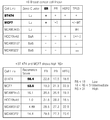
4 is a table showing the phenotype features 12 analyzed in the
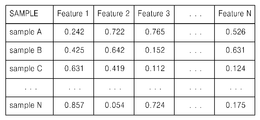
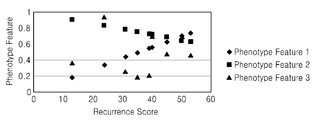
5 is a diagram for explaining a method of analyzing the
Figure 6 is a diagram showing approximate data on expression levels of determined
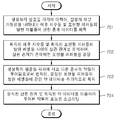
7 is a flowchart illustrating a method of performing drug screening according to an embodiment of the present invention.
8 is a flowchart illustrating a method of performing drug screening according to another embodiment of the present invention.
이하에서는 도면을 참조하여 본 발명의 실시예들을 상세히 설명하도록 하겠다.Hereinafter, embodiments of the present invention will be described in detail with reference to the drawings.
도 1은 본 발명의 일 실시예에 따른 약 스크리닝 시스템(1)을 도시한 도면이다. 도 1을 참고하면, 약 스크리닝 시스템(1)은 약 스크리닝 장치(10), 약 투여(administration) 전의 생물학적 샘플들(20) 및 약 투여 후의 생물학적 샘플들(30)을 포함한다.1 is a diagram showing a
도 1에는 비록 도시되지 않았지만, 약 스크리닝 시스템(1)에는 생물학적 샘플들(20 또는 30)로부터 표현형(phenotype) 또는 유전자 발현 수준(gene expression level) 등을 검출하기 위한 중합효소 연쇄 반응(polymerase chain reaction,PCR) 장치, 마이크로어레이, High Content Cell Imaging 장치, High Content Screening 장치 또는 High Throughput Screening 장치와 같은 유전자 분석 장치들이 추가로 포함될 수 있음을 당해 기술분야의 통상의 기술자라면 이해할 수 있다.Although not shown in FIG. 1, the
즉, 도 1에 도시된 약 스크리닝 시스템(1)은 본 실시예의 특징이 흐려지는 것을 방지하기 위하여 본 실시예에 관련된 구성요소들만이 도시되어 있으나, 도 1에 도시된 구성요소들 외에 다른 범용적인 구성요소들이 더 포함될 수 있다.That is, although only the components related to the present embodiment are shown in order to prevent the characteristic of the present embodiment from being blurred, the
한편, 도 1에서 생물학적 샘플들(20) 및 생물학적 샘플들(30)은 단지 약이 투여되기 전과 후를 구분하기 위하여 별개로 도시되었을 뿐, 동일한 것들이다. 그리고, 생물학적 샘플들(20)의 개수는 본 실시예의 설명의 편의를 위하여 3개로 도시하였을 뿐 이들의 개수는 본 시스템(1)의 사용 환경에 따라 달라질 수 있다.On the other hand, in FIG. 1, the
개체의 DNA(DeoxyriboNucleic Acid)와 같은 핵산은 개체의 유전 정보를 포함하는 유전 물질, 즉 유전자에 해당된다. 이와 같은 핵산의 염기서열은 개체를 구성하는 세포, 조직 등에 대한 정보를 포함한다. 따라서, 개인의 완전한 핵산 서열의 정보에 대한 연구는 생명 현상을 이해하고, 신약의 개발, 질병의 진단 및 예방이나, 인간의 유전 연구 등과 같은 많은 분야에서 많이 수행되고 있다.Nucleic acid, such as DNA (Deoxyribonucleic Acid), corresponds to a genetic material, or gene, that contains the genetic information of an individual. The nucleotide sequence of such a nucleic acid includes information on the cells, tissues, etc. constituting the individual. Therefore, research on the information of a complete nucleic acid sequence of an individual is performed in many fields such as understanding of life phenomena, development of new drugs, diagnosis and prevention of diseases, and human genetic research.
이러한 다양한 질병(예를 들어, 암, 종양 등)을 치료하기 위한 치료제로서 사용되는 약들(drugs)과 같은 화합물은 유전자 발현 수준의 일부 또는 전부에 영향을 미칠 수 있다. 따라서, 유전자의 발현 수준에 미치는 영향을 정확하게 분석할 수 있다면, 약과 같은 치료제의 효능을 정확하게 모니터링하거나 예측할 수 있다.Compounds such as drugs used as therapeutic agents for treating various such diseases (e.g., cancer, tumors, etc.) may affect some or all of the gene expression levels. Thus, if the effect on the expression level of a gene can be accurately analyzed, the efficacy of a drug, such as a drug, can be accurately monitored or predicted.
본 실시예에 따른, 약 스크리닝 장치(10)는 생물학적 샘플들(20)에 대하여 약들, 예를 들어 Drug A, Drug B, Drug C 등을 투여한 후 그 중에서 효능을 보이는 약을 스크리닝하는 장치이다. 여기서, 생물학적 샘플들(20) 및 생물학적 샘플들(30)은 환자로부터 추출된 암, 종양 등과 같은 비정상 조직을 포함하는 샘플들로서, 예를 들어 세포, 조직, 혈청 샘플 등을 포함한다. 이하에서는 약 스크리닝 장치(10)에 관한 도 2를 함께 참고하여 약 스크리닝 시스템(1)의 전체 동작에 대해 상세하게 설명하도록 하겠다.The
도 2는 본 발명의 일 실시예에 따른 약 스크리닝 장치(10)의 상세 구성도이다. 도 2를 참고하면, 약 스크리닝 장치(10)는 데이터 획득부(110), 표현형 피쳐 분석부(120) 및 약 스크리닝부(130)를 포함한다. 데이터 획득부(110)는 예후 지수 추정부(111) 및 발현 레벨 분석부(112)를 포함한다.2 is a detailed block diagram of a
약 스크리닝 장치(10)는 일반적으로 사용되는 프로세서들로 구현될 수 있다. 즉, 약 스크리닝 장치(10)는 다수의 논리 게이트들의 어레이로 구현될 수 있고, 범용적인 마이크로프로세서와 이 마이크로프로세서에서 실행될 수 있는 프로그램이 저장된 메모리의 조합으로 구현될 수도 있다. 또한, 약 스크리닝 장치(10)는 응용 프로그램의 모듈 형태로 구현될 수도 있다. 나아가서, 약 스크리닝 장치(10)는 본 실시예에서 설명할 동작들을 구현할 수 있는 다른 형태의 하드웨어로도 구현될 수 있음을 본 실시예가 속하는 기술분야의 통상의 기술자라면 이해할 수 있다.The
데이터 획득부(110)는 생물학적 샘플들(20) 각각에 대한 예후 지수들(11) 및 표현형 피쳐들(12)의 발현 레벨들에 관한 통계 데이터를 획득한다.The
예후 지수 추정부(111)는 생물학적 샘플들(20)로부터 획득된 유전자 발현 데이터를 이용하여 질병의 재발 가능성(recurrence likelihood)을 나타내는 예후 지수들(prognostic indices)(11)을 추정한다.
생물학적 샘플들(20) 각각으로부터 유전자 발현 데이터를 획득하는 방법에는, RT-PCR(Reverse Transcriptase Polymerase Chain Reaction) 또는 마이크로어레이를 이용하는 방법이 있고, 이 밖에도 여러 방법들이 알려져 있다. 유전자 발현 데이터를 획득하는 방법에 대해서는 당해 기술분야의 통상의 기술자에게 자명하므로, 자세한 설명은 생략하도록 하겠다.Methods for obtaining gene expression data from each of the
예후 지수 추정부(111)에서 추정되는 예후 지수(11)로는, 리커런스 스코어(Recurrence Score®), 튜머 그레이드(Tumor Grade) 및 씨-패스 스코어(C-Path score) 등이 이용될 수 있다.And the like pass score (C-Path score) may be used -
리커런스 스코어(Recurrence Score)는 유방암 조직에서 21개의 서로 다른 유전자를 분석하여 유방암을 진단하는 온코타입 DX(Oncotype DX®)의 검사 결과로부터 얻어지는 0부터 100 사이의 값으로서, 유방암이 재발할 가능성과 화학 요법(chemotherapy)이 얼마나 효과가 있을지를 알려주는 지수이다. 리커런스 스코어가 높을수록 유방암의 재발 가능성이 높다고 알려져 있다.Recurrence Score is a value ranging from 0 to 100, obtained from the results of Oncotype DX ® , which analyzes 21 different genes in breast cancer tissues to diagnose breast cancer. The probability of recurrence of breast cancer It is an index that shows how effective chemotherapy is. It is known that the higher the score, the higher the likelihood of recurrence of breast cancer.
튜머 그레이드(Tumor Grade)와 씨-패스 스코어(C-Path score) 또한 유방암 조직의 생검(biopsy)을 통해 암의 재발율(recurrence rate)을 예측하는 지수이다.Tumor Grade and C-Path score are also predictors of cancer recurrence rate through biopsy of breast cancer tissue.
당해 기술분야에서는 이 밖에도 암, 종양 등과 같은 질병의 재발 가능성을 예측하는 다양한 방법들이 공지되어 있으나, 일반적으로 리커런스 스코어가 비교적 정확한 결과를 갖는 예후 지수(11)로 알려져 있다. 본 실시예에서는 리커런스 스코어를 예로 들어 설명하도록 하겠으나, 본 실시예는 이에 한정되지 않는다. 즉, 질병의 재발 가능성을 나타내는 예후 지수(11)라면 어느 예후 지수라도 이용될 수 있음을 당해 기술분야의 통상의 기술자라면 이해할 수 있다.In the art, various methods for predicting the likelihood of recurrence of diseases such as cancer, tumor, etc. are known, but generally, the results are known as the prognostic index (11) having relatively accurate results. In the present embodiment, a description will be made by taking a likelihood score as an example, but the present embodiment is not limited to this. That is, any prognostic index can be used as a prognostic index (11) indicating the likelihood of recurrence of the disease, as one of ordinary skill in the art can understand.
약 투여 전의 생물학적 샘플들(20)인 SAMPLE A, SAMPLE B 및 SAMPLE C는 siRNA(small interfering RNA)에 의하여 처리(transfect)됨으로써 서로 다른 유전자 발현 레벨들을 갖는 샘플들에 해당될 수 있다.SAMPLE A, SAMPLE B, and SAMPLE C, prior to drug administration, may correspond to samples having different gene expression levels by being transfected with siRNA (small interfering RNA).
특히, 리커런스 스코어가 이용되는 경우, 생물학적 샘플들(20)은 리커런스 스코어에 의해 고위험군(high risk group)으로 분류되는 세포주에 해당될 수 있다. 하지만, 생물학적 샘플들(20)로서 반드시 고위험군의 세포주가 이용되어야 하는 것은 아니다.In particular, when a response score is used, the
도 3은 본 발명의 일 실시예에 따라 생물학적 샘플들(20)로 이용될 수 있는 세포주를 설명하기 위한 도면이다.3 is a diagram illustrating a cell line that may be used as
도 3을 참고하면, 인간의 유방암에 관한 6가지의 세포주들에 관한 데이터가 도시되어 있다. 리커런스 스코어에 관한 유방암 조직의 21가지 유전자의 유전자 발현 레벨을 구한 결과, BT474와 MCF7의 세포주들이 고위험군에 속해 있으면서 ER +ve임을 알 수 있다. 따라서, 적절한 생물학적 샘플들(20)로서 BT474와 MCF7가 이용될 수 있는 것으로 결정될 수 있다.Referring to FIG. 3, data on six cell lines for human breast cancer are shown. The gene expression levels of the 21 genes of breast cancer tissues in relation to the scores of the cancer were found to be ER + ve while the BT474 and MCF7 cell lines belonged to the high risk group. Thus, it can be determined that BT474 and MCF7 can be used as appropriate
한편, 생물학적 샘플들(20)인 SAMPLE A, SAMPLE B 및 SAMPLE C 각각은 서로 다른 세포주들(cell lines)의 샘플들에 해당될 수도 있다. 즉, 생물학적 샘플들(20) 각각은 도 3에서 설명한, 유방암 조직에서 추출된 서로 다른 세포주들에 해당될 수도 있다. 하지만, 서로 다른 세포주들을 이용하는 이유는 결국 생물학적 샘플들(20) 각각이 서로 다른 유전자 발현 레벨을 갖도록 하기 위함일 뿐이므로, 앞서 설명된 생물학적 샘플들(20)이 siRNA에 의하여 처리(transfect)된 것과 마찬가지로 유사한 결과를 얻을 수 있다.On the other hand, each of the
다시 도 2를 참고하면, 예후 지수 추정부(111)는 생물학적 샘플들(20) 각각에 대한 리커런스 스코어를 추정한다. 앞서 설명한 바와 같이, 생물학적 샘플들(20) 각각에는 siRNA로 처리되었으므로, 생물학적 샘플들(20) 각각은 서로 다른 유전자 발현 레벨을 갖는다. 따라서, 생물학적 샘플들(20) 각각은 동일하지 않은 리커런스 스코어들을 가질 수 있다.Referring again to FIG. 2, the
발현 레벨 분석부(112)는 생물학적 샘플들(20)에서 발현된 표현형들이 표시된 이미지 데이터를 이용하여 생물학적 샘플들(20)의 표현형 피쳐들(12)을 분석한다.The
보다 상세하게 설명하면, 발현 레벨 분석부(112)는 High Content Cell Imaging 장치, High Content Screening 장치 또는 High Throughput Screening 장치와 같은 이미징 장치들로부터 생물학적 샘플들(20)의 표현형들에 관한 이미지 데이터들을 획득한 후, 획득된 이미지 데이터로부터 표현형 피쳐들(12)을 분석한다. 여기서, 이미지 데이터들을 획득하기 전, 먼저 생물학적 샘플들(20)에는 형광 염료들로 표지(label)시키는 과정이 수행될 수 있다. 한편, High Content Cell Imaging 장치, High Content Screening 장치 또는 High Throughput Screening 장치와 같은 이미징 장치들로부터 이미지 데이터를 획득하는 과정은 당해 기술분야의 통상의 기술자에게 자명하므로, 자세한 설명은 생략하도록 하겠다.More specifically, the
도 4는 본 발명의 일 실시예에 따라 발현 레벨 분석부(112)에서 분석된 표현형 피쳐들(12)을 나타내는 표이다.4 is a table showing the phenotype features 12 analyzed in the
도 4를 참고하면, 각각의 생물학적 샘플들(20)마다 적어도 하나 이상의 표현형들이 발현되고, 그에 따른 상대적 수치들이 표현형 피쳐들(12)의 발현 레벨들로서 분석되어 있다. 보다 상세하게 설명하면, 생물학적 샘플들(20)의 표현형들은 이미지 데이터에서, 형광 염료들의 혼성화(hybridization) 결과에 따른 밝기의 강도(intensity), 또는 혼성화된 영역의 모양(shape) 등의 다양한 종류로 표현될 수 있다. 발현 레벨 분석부(112)는 표현형 피쳐들(12) 각각의 상대적 기여도(relative contribution)를 산출함으로써 표현형 피쳐들(12)의 발현 레벨들을 분석한다.Referring to FIG. 4, at least one or more phenotypes are expressed for each
결국, 발현 레벨 분석부(112)는 생물학적 샘플들(20) 각각마다 여러 표현형 피쳐들(12) 각각에 대한 발현 레벨들을 분석함으로써 통계 데이터를 획득한다.As a result, the
다시 도 2를 참고하면, 표현형 피쳐 분석부(120)는 생물학적 샘플들(20) 각각에 대한 예후 지수들(11) 및 표현형 피쳐들(12)의 발현 레벨들 사이의 상관 관계(13)를 분석한다. 그리고 나서, 표현형 피쳐 분석부(120)는 분석된 상관 관계(13)에 기초하여, 발현 레벨 분석부(112)에서 분석된 모든 표현형 피쳐들(12) 중에서 상관 관계(13)가 존재하는 표현형 피쳐들(14)을 결정한다.Referring again to FIG. 2, the phenotype
보다 상세하게 설명하면, 표현형 피쳐 분석부(120)는 획득된 통계 데이터를 이용하여 예후 지수들(11)의 분포에 대해 양의 상관 관계(positive correlation) 또는 음의 상관 관계(negative correlation)를 나타내는 발현 레벨들의 분포를 갖는 표현형 피쳐들(14)을, 상관 관계(13)가 존재하는 표현형 피쳐들(14)로서 결정한다.In more detail, the phenotype
도 5는 본 발명의 일 실시예에 따라 표현형 피쳐 분석부(120)에서 예후 지수들(11)과 표현형 피쳐들(12)과의 상관 관계(13)를 분석하는 방법을 설명하기 위한 도면이다. 도 5를 참고하면, 예후 지수들(12)(리커런스 스코어)의 분포에 대하여, 표현형 피쳐들(12)인 Phenotype Feature 1, Phenotype Feature 2 및 Phenotype Feature 3의 발현 레벨들의 분포가 도시되어 있다.5 is a diagram for explaining a method of analyzing the
Phenotype Feature 1에 대하여 살펴보면, 리커런스 스코어가 증가할 수록 Phenotype Feature 1의 발현 레벨은 증가하고 있으므로, 표현형 피쳐 분석부(120)는 리커런스 스코어와 Phenotype Feature 1은 비례 관계이고 양의 상관 관계가 존재하는 것으로 분석한다.The
Phenotype Feature 2에 대하여 살펴보면, 리커런스 스코어가 증가할 수록 Phenotype Feature 2의 발현 레벨은 감소하고 있으므로, 표현형 피쳐 분석부(120)는 리커런스 스코어와 Phenotype Feature 2는 반비례 관계이고 음의 상관 관계가 존재하는 것으로 분석한다.As to the
Phenotype Feature 3에 대하여 살펴보면, 리커런스 스코어의 변화와 관계 없이 Phenotype Feature 3의 발현 레벨이 변화하므로, 표현형 피쳐 분석부(120)는 리커런스 스코어와 Phenotype Feature 3은 아무런 상관 관계(13)가 존재하지 않는 것으로 분석한다.Since the expression level of the
결국, 표현형 피쳐 분석부(120)는 생물학적 샘플들(20)이 갖는 다양한 표현형 피쳐들(12) 중에서, 이와 같은 양의 상관 관계 또는 음의 상관 관계를 갖는 표현형 피쳐들(14)(Phenotype Features 1 및 2)을 결정한다.As a result, the phenotype
다시 도 2를 참고하면, 다음으로 생물학적 샘플들(20)에는 약 스크리닝을 위한 다양한 종류의 약들 Drug A, Drug B 및 Drug C가 투여된다. 앞서 설명한 바와 같이, 각각의 약들은 생물학적 샘플들(20)의 유전자 발현 레벨들을 억제시키거나 증가시키는 반응을 일으킬 수 있고, 또한 아무런 반응도 일으키지 않을 수 있다. 본 실시예에서는 약 투여 전의 생물학적 샘플들(20)과 달리, 약 투여 후에는 생물학적 샘플들(30)로 지칭하여 설명하도록 하겠다.Referring again to FIG. 2, the
발현 레벨 분석부(112)는 생물학적 샘플들(30) 각각에 서로 다른 종류의 약들이 투여됨으로써, 변화된 결정된 표현형 피쳐들(14)의 발현 레벨들에 관한 약 데이터를 추가적으로 획득한다.The
생물학적 샘플들(30)에서 약들의 투여에 따라 변화된 표현형 피쳐들(14)의 발현 레벨들을 관찰하기 위해서는 앞서 설명된, High Content Cell Imaging 장치, High Content Screening 장치 또는 High Throughput Screening 장치와 같은 이미징 장치들이 이용된다.Imaging devices such as the High Content Cell Imaging device, the High Content Screening device, or the High Throughput Screening device, described above, can be used to observe the expression levels of the phenotypic features 14 changed upon administration of the drugs in the
여기서, 관찰하고자 하는 표현형 피쳐들(14)은 표현형 피쳐 분석부(120)에서 상관 관계(13)가 존재하는 것으로 결정된 피쳐들에 해당된다. 즉, 결정된 표현형 피쳐들(14)은 예후 지수들(11)(리커런스 스코어)과 관련이 있다고 분석되었으므로, 악성 종양과 관련이 있을 것이라고 간주된 피쳐들이다.Here, the phenotype features 14 to be observed correspond to the features determined to be present in the
한편, 종래에는 High Content Cell Imaging 장치, High Content Screening 장치 또는 High Throughput Screening 장치 등을 이용하여 이미지 데이터를 획득한다 할지라도, 그 이미지 데이터에 담긴 의미, 예를 들어 각각의 피쳐들의 변화가 나타내는 의미 또는 약의 투여에 의한 약의 효능(efficacy)을 정확하게 분석하기 어려웠다. 다시 말하면, 이미지 데이터에 포함된 많은 피쳐들 중에서 질병과 임상적으로(clinically) 관련이 있는 피쳐들을 정확하게 분석하기 어려웠다.Conventionally, even if image data is acquired using a High Content Cell Imaging device, a High Content Screening device, or a High Throughput Screening device, the meaning contained in the image data, for example, It was difficult to accurately analyze the efficacy of the drug by administration of the drug. In other words, among many features included in image data, it was difficult to accurately analyze features clinically related to disease.
하지만, 본 실시예에 따른 도 1의 약 스크리닝 시스템(1)에 의하면, 생물학적 샘플들(14)에서 질병의 재발 가능성과 높은 관련이 있는 표현형 피쳐들(14)을 선별하여 분석하므로, 악성 종양에 관한 표현형 피쳐들(14)에 집중하여 분석할 수 있다. 그러므로, 환자로부터 추출된 비정상 조직 샘플에 포함된 악성 종양의 비율에 따라 실험 결과가 크게 영향을 받지 않을 수 있다.However, with the
도 6은 본 발명의 일 실시예에 따라, 생물학적 샘플들(30) 각각에 서로 다른 종류의 약들이 투여됨으로써 변화된, 결정된 표현형 피쳐들(14)의 발현 레벨들에 관한 약 데이터를 도시한 도면이다. 도 6의 약 데이터는 발현 레벨 분석부(112)에서 획득된 이미지 데이터에 기초하여 분석된 결과이다.Figure 6 is a diagram showing approximate data on expression levels of determined
도 6을 참고하면, 약들 Drugs A 및 B의 투여에 의해 앞서 결정된 표현형 피쳐들(14) Phenotype Features 1 및 2의 발현 레벨들의 변화 추이가 도시되어 있다. 이와 같은 변화 추이는 위약(placebo)을 기준으로 투여된 약들 Drugs A 및 B에 의해 결정된 표현형 피쳐들(14) Phenotype Features 1 및 2의 발현 레벨들이 증가 또는 감소하였는지 여부를 나타내는 정보이다.Referring to FIG. 6, there is shown a variation of the expression levels of phenotype features 1 and 2 of the phenotypic features (14) previously determined by the administration of Drugs A and B, respectively. These changes are information indicating whether the expression levels of
다시 도 2를 참고하면, 약 스크리닝부(130)는 앞서 표현형 피쳐 분석부(120)에서 분석된 상관 관계(13) 및 발현 레벨 분석부(112)에서 획득된 약 데이터를 이용하여 투여된 약들 Drugs A 및 B의 효능을 스크리닝한다.Referring again to FIG. 2, the
보다 상세하게 설명하면, 약 스크리닝부(130)는 분석된 상관 관계(13)를 이용하여, 투여된 약들 Drugs A 및 B에 의한 결정된 표현형 피쳐들(14) Phenotype Features 1 및 2의 발현 레벨들의 변화 추이에 대응되는 예후 지수들(11)(리커런스 스코어)의 변화를 예측함으로써, 투여된 약들 Drugs A 및 B을 스크리닝한다.More specifically, the
약 스크리닝부(130)는 예측된 결과, 예후 지수(11)(리커런스 스코어)가 감소할 것으로 예측된 생물학적 샘플에 투여된 약을, 효능이 존재하는 약인 것으로 스크리닝한다.The
즉, 약 스크리닝부(130)는 양의 상관 관계를 갖는 것으로 결정된 표현형 피쳐들(14)의 발현 레벨들이 감소한 경우, 또는 음의 상관 관계를 갖는 것으로 결정된 표현형 피쳐들(14)의 발현 레벨들이 증가한 경우에 예후 지수(11)(리커런스 스코어)가 감소할 것으로 예측할 수 있다. 이해를 돕기 위하여 도 6을 참고하여 설명하면 다음과 같다.That is, the weakly screening
도 6의 약 데이터를 참고하면, SAMPLE A에 Drug A가 투여된 결과, Placebo에 비해 Phenotype Feature 1은 증가하였으나, Phenotype Feature 2는 감소한 것으로 분석되었다. 앞서 표현형 피쳐 분석부(120)에서 분석된 상관 관계(13)에 따르면, Phenotype Feature 1은 리커런스 스코어와 양의 상관 관계를 갖는 것으로 분석되었고, Phenotype Feature 2은 리커런스 스코어와 음의 상관 관계를 갖는 것으로 분석되었다.Referring to the data in FIG. 6, Drug A was administered to SAMPLE A, resulting in an increase in
결국, 이와 같이 분석된 상관 관계(13)를 이용하면, 약 스크리닝부(130)는 Drug A는 Placebo에 비해 리커런스 스코어를 증가시킨다고 분석해 낼 수 있다.Finally, using the
다시 도 6의 약 데이터를 참고하면, SAMPLE B에 Drug B가 투여된 결과, Placebo에 비해 Phenotype Feature 1은 감소하였으나, Phenotype Feature 2는 증가한 것으로 분석되었다. 앞서 표현형 피쳐 분석부(120)에서 분석된 상관 관계(13)에 따르면, Phenotype Feature 1은 리커런스 스코어와 양의 상관 관계를 갖는 것으로 분석되었고, Phenotype Feature 2은 리커런스 스코어와 음의 상관 관계를 갖는 것으로 분석되었다.Referring to the data of FIG. 6 again, Drug B was administered to SAMPLE B, and
결국, 이와 같이 분석된 상관 관계(13)를 이용하면, 약 스크리닝부(130)는 Drug B는 Placebo에 비해 리커런스 스코어를 감소시킨다고 분석해 낼 수 있다.As a result, using the
한편, 리커런스 스코어가 높을수록 질병(유방암)의 재발 가능성이 높다고 알려져 있다. 따라서, 약 스크리닝부(130)는 위와 같은 결과들에 기초하여 Drug A의 투여는 리커런스 스코어를 증가시킨다고 예측할 수 있으므로, Drug A는 항암제로서의 효능이 없는 약이라고 스크리닝해 낼 수 있다. 그러나, 약 스크리닝부(130)는 위와 같은 결과들에 기초하여 Drug B의 투여는 리커런스 스코어를 감소시킨다고 예측할 수 있으므로, Drug B는 항암제로서의 효능이 존재하는 약이라고 스크리닝해 낼 수 있다.On the other hand, it is known that the higher the score, the higher the likelihood of recurrence of disease (breast cancer). Therefore, since the
약 스크리닝부(130)는 위와 같은 방법을 사용하여, 투여된 약들 Drug A, Drug B, Drug C 등의 약들의 효능을 스크리닝함으로써, 투여된 약들 Drug A, Drug B, Drug C 등의 효능에 관한 약 프로파일(15)(Drug Profile)을 생성한다.Drug A, Drug B, Drug C, etc., by screening the efficacy of the drugs, such as Drug A, Drug B, and Dr C, To generate a drug profile 15 (Drug Profile).
그러므로, 도 1의 약 스크리닝 시스템(1)에 의하면, 환자 개인으로부터 추출된 비정상 조직(암, 종양 등)에 관한 샘플들로부터 획득된 이미지 데이터만으로도 다양한 종류의 약들의 효능을 정확하게 스크리닝해 낼 수 있으므로, 신약을 개발하거나, 질병을 예방하거나, 질병의 초기 단계에서 최적의 치료방법을 환자에게 제공할 수 있다.Therefore, according to the
도 7은 본 발명의 일 실시예에 따른 약 스크리닝을 수행하는 방법을 도시한 흐름도이다. 도 7을 참고하면, 본 실시예에 따른 약 스크리닝의 수행 방법은 도 1 및 2에 도시된 약 스크리닝 시스템(1) 및 약 스크리닝 장치(10)에서 시계열적으로 처리되는 단계들로 구성된다. 따라서, 이하 생략된 내용이라 하더라도 도 1 및 2에 관하여 이상에서 기술된 내용은 본 실시예에 따른 약 스크리닝의 수행 방법에도 적용된다.7 is a flowchart illustrating a method of performing drug screening according to an embodiment of the present invention. Referring to FIG. 7, the method of performing drug screening according to the present embodiment is composed of steps of the
701 단계에서, 데이터 획득부(110)는 생물학적 샘플들(20) 각각에 대하여, 질병의 재발 가능성을 나타내는 예후 지수들(11)(리커런스 스코어, 튜머 그레이드 등) 및 표현형 피쳐들(12)의 발현 레벨들에 관한 통계 데이터를 획득한다.In
702 단계에서, 표현형 피쳐 분석부(120)는 획득된 예후 지수들(11) 및 획득된 표현형 피쳐들(12)의 발현 레벨들 사이의 상관 관계(13)를 분석하여, 상관 관계(13)가 존재하는 표현형 피쳐들(14)을 결정한다.In
703 단계에서, 데이터 획득부(110)는 생물학적 샘플들(30) 각각에 서로 다른 종류의 약들이 투여됨으로써 변화된, 결정된 표현형 피쳐들(14)의 발현 레벨들에 관한 약 데이터를 추가적으로 획득한다.In
704 단계에서, 약 스크리닝부(130)는 분석된 상관 관계(13) 및 획득된 약 데이터를 이용하여 투여된 약들의 효능을 스크리닝한다.In
도 8은 본 발명의 다른 일 실시예에 따른 약 스크리닝을 수행하는 방법을 도시한 흐름도이다. 도 8을 참고하면, 본 실시예에 따른 약 스크리닝의 수행 방법은 도 1 및 2에 도시된 약 스크리닝 시스템(1) 및 약 스크리닝 장치(10)에서 시계열적으로 처리되는 단계들로 구성된다. 따라서, 이하 생략된 내용이라 하더라도 도 1 및 2에 관하여 이상에서 기술된 내용은 본 실시예에 따른 약 스크리닝의 수행 방법에도 적용된다.8 is a flowchart illustrating a method of performing drug screening according to another embodiment of the present invention. Referring to FIG. 8, the method of performing the drug screening according to the present embodiment is comprised of the steps of the
801 단계에서, 표현형 피쳐 분석부(120)는 생물학적 샘플들(20) 각각에 대한 질병의 재발 가능성을 나타내는 예후 지수들(11)(리커런스 스코어, 튜머 그레이드 등) 및 표현형 피쳐들(12)의 발현 레벨들 사이의 상관 관계(13)를 분석한다.In
802 단계에서, 데이터 획득부(110)는 생물학적 샘플들(30) 각각에 서로 다른 종류의 약들이 투여됨으로써 변화된, 표현형 피쳐들(14)의 발현 레벨들에 관한 데이터를 획득한다.In
803 단계에서, 약 스크리닝부(130)는 획득된 데이터에서 상관 관계(13)가 존재하는 것으로 분석된 표현형 피쳐들(14)의 변화에 대응되는 예후 지수들(11)의 변화를 분석된 상관 관계(13)를 이용하여 예측함으로써, 투여된 약들을 스크리닝한다.In
한편, 상술한 본 발명의 실시예들은 컴퓨터에서 실행될 수 있는 프로그램으로 작성 가능하고, 컴퓨터로 읽을 수 있는 기록매체를 이용하여 상기 프로그램을 동작시키는 범용 디지털 컴퓨터에서 구현될 수 있다. 또한, 상술한 본 발명의 실시예에서 사용된 데이터의 구조는 컴퓨터로 읽을 수 있는 기록매체에 여러 수단을 통하여 기록될 수 있다. 상기 컴퓨터로 읽을 수 있는 기록매체는 마그네틱 저장매체(예를 들면, 롬, 플로피 디스크, 하드 디스크 등), 광학적 판독 매체(예를 들면, 시디롬, 디브이디 등)와 같은 저장매체를 포함한다.The above-described embodiments of the present invention can be embodied in a general-purpose digital computer that can be embodied as a program that can be executed by a computer and operates the program using a computer-readable recording medium. In addition, the structure of the data used in the above-described embodiments of the present invention can be recorded on a computer-readable recording medium through various means. The computer-readable recording medium includes a storage medium such as a magnetic storage medium (e.g., ROM, floppy disk, hard disk, etc.), optical reading medium (e.g., CD ROM,
이제까지 본 발명에 대하여 그 바람직한 실시예들을 중심으로 살펴보았다. 본 발명이 속하는 기술 분야에서 통상의 지식을 가진 자는 본 발명이 본 발명의 본질적인 특성에서 벗어나지 않는 범위에서 변형된 형태로 구현될 수 있음을 이해할 수 있을 것이다. 그러므로 개시된 실시예들은 한정적인 관점이 아니라 설명적인 관점에서 고려되어야 한다. 본 발명의 범위는 전술한 설명이 아니라 특허청구범위에 나타나 있으며, 그와 동등한 범위 내에 있는 모든 차이점은 본 발명에 포함된 것으로 해석되어야 할 것이다.The present invention has been described with reference to the preferred embodiments. It will be understood by those skilled in the art that various changes in form and details may be made therein without departing from the spirit and scope of the invention as defined by the appended claims. Therefore, the disclosed embodiments should be considered in an illustrative rather than a restrictive sense. The scope of the present invention is defined by the appended claims rather than by the foregoing description, and all differences within the scope of equivalents thereof should be construed as being included in the present invention.
1: 약 스크리닝 시스템
10: 약 스크리닝 장치 11: 예후 지수
12: 표현형 피쳐 13: 상관 관계
14: 약에 의해 변화된 표현형 피쳐 15: 약 프로파일
20: 약 투여 전의 생물학적 샘플들 30: 약 투여 후의 생물학적 샘플들
110: 데이터 획득부 111: 예후 지수 추정부
112: 발현 레벨 분석부 120: 표현형 피쳐 분석부
130: 약 스크리닝부1: Drug screening system
10: drug screening apparatus 11: prognostic index
12: phenotype feature 13: correlation
14: Phenotype changed by drug Feature 15: Drug profile
20: Biological samples before drug administration 30: Biological samples after drug administration
110: Data acquisition unit 111: Prognostic index estimation unit
112: expression level analysis unit 120: phenotypic feature analysis unit
130: drug screening part
Claims (28)
상기 획득된 예후 지수들 및 상기 획득된 발현 레벨들 사이의 상관 관계를 분석하여 상기 상관 관계가 존재하는 표현형 피쳐들을 결정하는 단계;
상기 생물학적 샘플들 각각에 서로 다른 종류의 약들이 투여됨으로써 변화된 상기 결정된 표현형 피쳐들의 발현 레벨들에 관한 약 데이터를 획득하는 단계; 및
상기 분석된 상관 관계 및 상기 획득된 약 데이터를 이용하여 상기 투여된 약들의 효능을 스크리닝하는 단계를 포함하는 약 스크리닝의 수행 방법.Obtaining, for each of the biological samples, statistical data on the expression levels of prognostic indices and phenotypic features indicative of the likelihood of recurrence of the disease;
Analyzing a correlation between the obtained prognostic indices and the obtained expression levels to determine phenotypic features in which the correlation exists;
Obtaining weak data about expression levels of the determined phenotypic features altered by administering different types of drugs to each of the biological samples; And
And screening the efficacy of the administered drugs using the analyzed correlation and the obtained < RTI ID = 0.0 > drug < / RTI > data.
상기 결정하는 단계는
상기 획득된 통계 데이터를 이용하여 상기 예후 지수들의 분포에 대해 양의 상관 관계(positive correlation) 또는 음의 상관 관계(negative correlation)를 나타내는 발현 레벨들의 분포를 갖는 표현형 피쳐들을 상기 상관 관계가 존재하는 표현형 피쳐들로 결정하는 방법.The method according to claim 1,
The step of determining
Using the obtained statistical data to determine phenotypic features having a distribution of expression levels showing a positive correlation or a negative correlation with the distribution of the prognostic indexes, How to determine by features.
상기 스크리닝하는 단계는
상기 분석된 상관 관계를 이용하여 상기 투여된 약들에 의한 상기 결정된 표현형 피쳐들의 발현 레벨들의 변화 추이에 대응되는 상기 예후 지수들의 변화를 예측함으로써, 상기 투여된 약들을 스크리닝하는 방법.The method according to claim 1,
The screening step
And using the analyzed correlation to predict the change in the prognostic index corresponding to a change in the expression levels of the determined phenotypic features by the administered drugs.
상기 스크리닝하는 단계는
상기 예측된 결과, 상기 예후 지수가 감소할 것으로 예측된 생물학적 샘플에 투여된 약을 상기 효능이 존재하는 약인 것으로 스크리닝하는 방법.The method of claim 3,
The screening step
Wherein said predicted outcome is a drug administered to a biological sample for which the prognostic index is predicted to decrease is said to be a drug in which said efficacy is present.
상기 스크리닝하는 단계는
양의 상관 관계를 갖는 것으로 결정된 표현형 피쳐들의 발현 레벨들이 감소한 경우 또는 음의 상관 관계를 갖는 것으로 결정된 표현형 피쳐들의 발현 레벨들이 증가한 경우에 상기 예후 지수가 감소할 것으로 예측하는 방법.5. The method of claim 4,
The screening step
Wherein the prognostic index is predicted to decrease when expression levels of phenotypic features determined to have a positive correlation decrease or when expression levels of phenotypic features determined to have a negative correlation increase.
상기 획득된 약 데이터는
상기 투여된 약들에 의한 상기 결정된 표현형 피쳐들의 발현 레벨들의 변화 추이를 포함하고,
상기 변화 추이는
위약(placebo)을 기준으로 상기 투여된 약들에 의해 상기 결정된 표현형 피쳐들의 발현 레벨들이 증가 또는 감소하였는지 여부를 나타내는 정보인 방법.The method according to claim 1,
The obtained weak data
A change in the expression levels of the determined phenotypic features by the administered drugs,
The change trend
Is information indicating whether expression levels of said determined phenotypic features have been increased or decreased by said administered drugs on a placebo basis.
상기 약 데이터를 획득하는 단계 및 상기 투여된 약들을 스크리닝하는 단계는
상기 약들이 투여된 생물학적 샘플들에 대한 이미지 데이터를 이용하여 수행되는 방법.The method according to claim 1,
The step of obtaining the drug data and screening the administered drugs
Wherein the drugs are performed using image data for the administered biological samples.
상기 이미지 데이터는
high content cell imaging 기술, high content screening 기술 및 high throughput screening 기술 중 적어도 하나를 이용하여 획득된 것인 방법.8. The method of claim 7,
The image data
high content cell imaging technique, high content screening technique, and high throughput screening technique.
상기 생물학적 샘플들은
비정상 조직을 포함하고, siRNA(small interfering RNA)에 의하여 처리(transfect)됨으로써 서로 다른 유전자 발현 레벨들을 갖는 샘플들인 방법.The method according to claim 1,
The biological samples
Wherein the sample is one that contains abnormal tissue and has different gene expression levels by being transfected with siRNA (small interfering RNA).
상기 생물학적 샘플들 각각은
비정상 조직을 포함하는 서로 다른 세포주들(cell lines)에 해당되는 샘플들인 방법.The method according to claim 1,
Each of the biological samples
Wherein the cells are samples corresponding to different cell lines including abnormal tissue.
상기 생물학적 샘플들로부터 획득된 유전자 발현 데이터를 이용하여 상기 예후 지수들을 추정하는 단계를 더 포함하고,
상기 획득된 통계 데이터는 상기 추정된 예후 지수들로부터 획득된 데이터이고,
상기 획득된 유전자 발현 데이터는 RT-PCR (Reverse Transcriptase Polymerase Chain Reaction) 및 마이크로어레이 중 적어도 하나를 이용하여 획득된 데이터인 방법.The method according to claim 1,
Further comprising estimating the prognostic index using gene expression data obtained from the biological samples,
Wherein the obtained statistical data is data obtained from the estimated prognostic indexes,
Wherein the obtained gene expression data is data obtained using at least one of Reverse Transcriptase Polymerase Chain Reaction (RT-PCR) and a microarray.
상기 예후 지수들은
리커런스 스코어(Recurrence Score), 튜머 그레이드(Tumor Grade) 및 씨-패스 스코어(C-Path score) 중 적어도 하나를 이용한 지수들인 방법.The method according to claim 1,
The prognostic indexes
Wherein the scores are based on at least one of a Recurrence Score, a Tumor Grade, and a C-Path score.
상기 생물학적 샘플들에서 발현된 표현형들이 표시된 이미지 데이터를 이용하여 상기 생물학적 샘플들의 상기 표현형 피쳐들을 분석하는 단계를 더 포함하고,
상기 획득된 통계 데이터는 상기 분석된 표현형 피쳐들로부터 획득된 데이터인 방법.The method according to claim 1,
Further comprising analyzing the phenotypic features of the biological samples using image data in which the phenotypes expressed in the biological samples are displayed,
Wherein the obtained statistical data is data obtained from the analyzed phenotypic features.
상기 생물학적 샘플들 각각에 서로 다른 종류의 약들이 투여됨으로써 변화된 상기 표현형 피쳐들의 발현 레벨들에 관한 데이터를 획득하는 단계; 및
상기 획득된 데이터에서 상기 상관 관계가 존재하는 것으로 분석된 표현형 피쳐들의 변화에 대응되는 상기 예후 지수들의 변화를 상기 분석된 상관 관계를 이용하여 예측함으로써, 상기 투여된 약들을 스크리닝하는 단계를 포함하는 약 스크리닝의 수행 방법.Analyzing correlations between expression levels of prognostic indices and phenotypic features indicative of the likelihood of recurrence of the disease for each of the biological samples;
Obtaining data regarding expression levels of the phenotypic features altered by administering different types of drugs to each of the biological samples; And
And predicting a change in the prognostic index corresponding to a change in phenotypic features analyzed as having the correlation in the obtained data using the analyzed correlation, Method of performing screening.
상기 스크리닝하는 단계는
상기 예측된 결과, 상기 예후 지수가 감소할 것으로 예측된 생물학적 샘플에 투여된 약을 상기 효능이 존재하는 약인 것으로 스크리닝하는 방법.15. The method of claim 14,
The screening step
Wherein said predicted outcome is a drug administered to a biological sample for which the prognostic index is predicted to decrease is said to be a drug in which said efficacy is present.
상기 획득된 예후 지수들 및 상기 획득된 발현 레벨들 사이의 상관 관계를 분석하여 상기 상관 관계가 존재하는 표현형 피쳐들을 결정하는 표현형 피쳐 분석부; 및
상기 분석된 상관 관계 및 상기 데이터 획득부에서 추가로 획득된, 상기 생물학적 샘플들 각각에 서로 다른 종류의 약들이 투여됨으로써 변화된 상기 결정된 표현형 피쳐들의 발현 레벨들에 관한 약 데이터를 이용하여 상기 투여된 약들의 효능을 스크리닝하는 약 스크리닝부를 포함하는 약 스크리닝의 수행 장치.A data acquiring unit for acquiring statistical data on the expression levels of phenotypic features and prognostic indexes indicating the likelihood of recurrence of disease for each of the biological samples;
A phenotypic feature analysis unit for analyzing a correlation between the obtained prognostic indices and the obtained expression levels to determine phenotypic features in which the correlation exists; And
Using the data about the expression levels of the determined phenotypic features altered by administering the analyzed correlations and different types of drugs to each of the biological samples further obtained in the data obtaining section, And a drug screening unit for screening the efficacy of the drug screening.
상기 표현형 피쳐 분석부는
상기 획득된 통계 데이터를 이용하여 상기 예후 지수들의 분포에 대해 양의 상관 관계(positive correlation) 또는 음의 상관 관계(negative correlation)를 나타내는 발현 레벨들의 분포를 갖는 표현형 피쳐들을 상기 상관 관계가 존재하는 표현형 피쳐들로 결정하는 장치.18. The method of claim 17,
The phenotype analyzing unit
Using the obtained statistical data to determine phenotypic features having a distribution of expression levels showing a positive correlation or a negative correlation with the distribution of the prognostic indexes, A device that determines the features.
상기 약 스크리닝부는
상기 분석된 상관 관계를 이용하여 상기 투여된 약들에 의한 상기 결정된 표현형 피쳐들의 발현 레벨들의 변화 추이에 대응되는 상기 예후 지수들의 변화를 예측함으로써, 상기 투여된 약들을 스크리닝하는 장치.18. The method of claim 17,
The drug screening section
And using the analyzed correlations to predict changes in the prognostic indices corresponding to changes in expression levels of the determined phenotypic features by the administered drugs.
상기 약 스크리닝부는
상기 예측된 결과, 상기 예후 지수가 감소할 것으로 예측된 생물학적 샘플에 투여된 약을 상기 효능이 존재하는 약인 것으로 스크리닝하는 장치.20. The method of claim 19,
The drug screening section
Wherein the predicted outcome is that the drug administered to the biological sample for which the prognostic index is predicted to decrease is a drug for which the efficacy is present.
상기 약 스크리닝부는
양의 상관 관계를 갖는 것으로 결정된 표현형 피쳐들의 발현 레벨들이 감소한 경우 또는 음의 상관 관계를 갖는 것으로 결정된 표현형 피쳐들의 발현 레벨들이 증가한 경우에 상기 예후 지수가 감소할 것으로 예측하는 장치.21. The method of claim 20,
The drug screening section
And predicts that the prognostic index will decrease when expression levels of phenotypic features determined to have a positive correlation decrease or when expression levels of phenotypic features determined to have a negative correlation increase.
상기 데이터 획득부 및 상기 약 스크리닝부는
high content cell imaging 장치, high content screening 장치 및 high throughput screening 장치 중 적어도 하나를 통해 상기 약들이 투여된 생물학적 샘플들로부터 획득된 이미지 데이터를 이용하는 장치.18. The method of claim 17,
The data obtaining unit and the weak screening unit
wherein the drug is administered from at least one of a high content cell imaging device, a high content screening device, and a high throughput screening device.
상기 생물학적 샘플들은
비정상 조직을 포함하고 siRNA(small interfering RNA)에 의하여 처리(transfect)됨으로써 서로 다른 유전자 발현 레벨들을 갖는 샘플들 및 비정상 조직을 포함하는 서로 다른 세포주들(cell lines)에 해당되는 샘플들 중 적어도 하나인 장치.18. The method of claim 17,
The biological samples
At least one of the samples that contain abnormal tissue and are transfected with siRNA (small interfering RNA), thereby producing samples having different gene expression levels and samples corresponding to different cell lines including abnormal tissues Device.
상기 데이터 획득부는
상기 생물학적 샘플들로부터 획득된 유전자 발현 데이터를 이용하여 상기 예후 지수들을 추정하는 예후 지수 추정부를 포함하고,
상기 획득된 통계 데이터는 상기 추정된 예후 지수들로부터 획득된 데이터이고,
상기 획득된 유전자 발현 데이터는 RT-PCR (Reverse Transcriptase Polymerase Chain Reaction) 및 마이크로어레이 중 적어도 하나를 이용하여 획득된 데이터인 장치.18. The method of claim 17,
The data obtaining unit
And a prognostic index estimator for estimating the prognostic indexes using gene expression data obtained from the biological samples,
Wherein the obtained statistical data is data obtained from the estimated prognostic indexes,
Wherein the obtained gene expression data is data obtained using at least one of Reverse Transcriptase Polymerase Chain Reaction (RT-PCR) and a microarray.
상기 예후 지수들은
리커런스 스코어(Recurrence Score), 튜머 그레이드(Tumor Grade) 및 씨-패스 스코어(C-Path score) 중 적어도 하나를 이용한 지수들인 장치.18. The method of claim 17,
The prognostic indexes
Wherein the exponents are at least one of a Recurrence Score, a Tumor Grade, and a C-Path score.
상기 데이터 획득부는
상기 생물학적 샘플들에서 발현된 표현형들이 표시된 이미지 데이터를 이용하여 상기 생물학적 샘플들의 상기 표현형 피쳐들을 분석하는 발현 레벨 분석부를 포함하고,
상기 획득된 통계 데이터는 상기 분석된 표현형 피쳐들로부터 획득된 데이터인 장치.18. The method of claim 17,
The data obtaining unit
And an expression level analyzing unit for analyzing the phenotype features of the biological samples using image data in which the phenotypes expressed in the biological samples are displayed,
Wherein the obtained statistical data is data obtained from the analyzed phenotypic features.
상기 생물학적 샘플들 각각에 서로 다른 종류의 약들이 투여됨으로써 변화된 상기 표현형 피쳐들의 발현 레벨들에 관한 데이터를 획득하는 데이터 획득부; 및
상기 획득된 데이터에서 상기 상관 관계가 존재하는 것으로 분석된 표현형 피쳐들의 변화에 대응되는 상기 예후 지수들의 변화를 상기 분석된 상관 관계를 이용하여 예측함으로써, 상기 투여된 약들을 스크리닝하는 약 스크리닝부를 포함하는 약 스크리닝의 수행 장치.A phenotypic feature analyzer for analyzing correlations between prognostic indices indicative of the likelihood of recurrence of the disease for each of the biological samples and expression levels of phenotypic features;
A data acquiring unit acquiring data on expression levels of the phenotypic features changed by administering different kinds of drugs to each of the biological samples; And
And a drug screening unit for predicting a change in the prognostic index corresponding to a change in phenotypic features analyzed as having the correlation in the obtained data using the analyzed correlation, An apparatus for performing drug screening.
상기 약 스크리닝부는
상기 예측된 결과, 상기 예후 지수가 감소할 것으로 예측된 생물학적 샘플에 투여된 약을 상기 효능이 존재하는 약인 것으로 스크리닝하는 장치.28. The method of claim 27,
The drug screening section
Wherein the predicted outcome is that the drug administered to the biological sample for which the prognostic index is predicted to decrease is a drug for which the efficacy is present.
Priority Applications (2)
| Application Number | Priority Date | Filing Date | Title |
|---|---|---|---|
| KR1020120145706A KR20140077018A (en) | 2012-12-13 | 2012-12-13 | Method and apparatus for performing drug screening |
| US14/104,660 US20140172317A1 (en) | 2012-12-13 | 2013-12-12 | Method and apparatus for performing drug screening |
Applications Claiming Priority (1)
| Application Number | Priority Date | Filing Date | Title |
|---|---|---|---|
| KR1020120145706A KR20140077018A (en) | 2012-12-13 | 2012-12-13 | Method and apparatus for performing drug screening |
Publications (1)
| Publication Number | Publication Date |
|---|---|
| KR20140077018A true KR20140077018A (en) | 2014-06-23 |
Family
ID=50931892
Family Applications (1)
| Application Number | Title | Priority Date | Filing Date |
|---|---|---|---|
| KR1020120145706A Ceased KR20140077018A (en) | 2012-12-13 | 2012-12-13 | Method and apparatus for performing drug screening |
Country Status (2)
| Country | Link |
|---|---|
| US (1) | US20140172317A1 (en) |
| KR (1) | KR20140077018A (en) |
Families Citing this family (1)
| Publication number | Priority date | Publication date | Assignee | Title |
|---|---|---|---|---|
| CN118571359A (en) * | 2024-05-06 | 2024-08-30 | 广州制高点医药科技有限公司 | A drug screening method, device and electronic device based on therapeutic index |
-
2012
- 2012-12-13 KR KR1020120145706A patent/KR20140077018A/en not_active Ceased
-
2013
- 2013-12-12 US US14/104,660 patent/US20140172317A1/en not_active Abandoned
Also Published As
| Publication number | Publication date |
|---|---|
| US20140172317A1 (en) | 2014-06-19 |
Similar Documents
| Publication | Publication Date | Title |
|---|---|---|
| Cirillo et al. | Liquid biopsy in lymphoma: Molecular methods and clinical applications | |
| JP6721665B2 (en) | Evaluation of cell signaling pathway activity using linear combination of gene expression of interest | |
| Ng et al. | An xQTL map integrates the genetic architecture of the human brain's transcriptome and epigenome | |
| Krebs et al. | Circulating tumour cells: their utility in cancer management and predicting outcomes | |
| US20210366577A1 (en) | Predicting disease outcomes using machine learned models | |
| Kelloff et al. | Cancer biomarkers: selecting the right drug for the right patient | |
| Mannucci et al. | Stool and blood biomarkers for colorectal cancer management: an update on screening and disease monitoring | |
| US11776661B2 (en) | Determination of MAPK-AP-1 pathway activity using unique combination of target genes | |
| WO2021237117A1 (en) | Predicting disease outcomes using machine learned models | |
| US20140040264A1 (en) | Method for estimation of information flow in biological networks | |
| Tura et al. | Analysis of monosomy‐3 in immunomagnetically isolated circulating melanoma cells in uveal melanoma patients | |
| WO2010123043A1 (en) | Method for evaluating cancer | |
| CN111833963B (en) | A cfDNA classification method, device and use | |
| CA3122109A1 (en) | Systems and methods for using fragment lengths as a predictor of cancer | |
| US20230257826A1 (en) | Methods for predicting prostate cancer and uses thereof | |
| US12054712B2 (en) | Fragment size characterization of cell-free DNA mutations from clonal hematopoiesis | |
| KR20130125617A (en) | Method and apparatus for analyzing genetic information of abnormal tissue | |
| US20220042106A1 (en) | Systems and methods of using cell-free nucleic acids to tailor cancer treatment | |
| CN112063714A (en) | miRNA related to colorectal cancer and application thereof | |
| KR20140077018A (en) | Method and apparatus for performing drug screening | |
| Harris et al. | Quest for the ideal cancer biomarker: an update on progress in capture and characterization of circulating tumor cells | |
| WO2018077225A9 (en) | METHOD FOR IDENTIFYING THE PRIMARY SEAT OF METASTATIC CANCER AND ASSOCIATED SYSTEM | |
| Parthasarathy | Breast cancer (BC) and the role of circulating tumor DNA | |
| KR20150043790A (en) | Extracting method for biomarker for diagnosis of biliary tract cancer, computing device therefor, biomarker for diagnosis of biliary tract cancer, and biliary tract cancer diagnosis device comprising same | |
| Campbell et al. | Applying gene expression microarrays to pulmonary disease |
Legal Events
| Date | Code | Title | Description |
|---|---|---|---|
| PA0109 | Patent application |
Patent event code: PA01091R01D Comment text: Patent Application Patent event date: 20121213 |
|
| PG1501 | Laying open of application | ||
| A201 | Request for examination | ||
| PA0201 | Request for examination |
Patent event code: PA02012R01D Patent event date: 20170327 Comment text: Request for Examination of Application Patent event code: PA02011R01I Patent event date: 20121213 Comment text: Patent Application |
|
| E902 | Notification of reason for refusal | ||
| PE0902 | Notice of grounds for rejection |
Comment text: Notification of reason for refusal Patent event date: 20180917 Patent event code: PE09021S01D |
|
| E601 | Decision to refuse application | ||
| PE0601 | Decision on rejection of patent |
Patent event date: 20181220 Comment text: Decision to Refuse Application Patent event code: PE06012S01D Patent event date: 20180917 Comment text: Notification of reason for refusal Patent event code: PE06011S01I |