KR20140077219A - Genetically modified t cell receptor mice - Google Patents
Genetically modified t cell receptor mice Download PDFInfo
- Publication number
- KR20140077219A KR20140077219A KR1020147014477A KR20147014477A KR20140077219A KR 20140077219 A KR20140077219 A KR 20140077219A KR 1020147014477 A KR1020147014477 A KR 1020147014477A KR 20147014477 A KR20147014477 A KR 20147014477A KR 20140077219 A KR20140077219 A KR 20140077219A
- Authority
- KR
- South Korea
- Prior art keywords
- human
- tcr
- beta
- alpha
- animal
- Prior art date
- Legal status (The legal status is an assumption and is not a legal conclusion. Google has not performed a legal analysis and makes no representation as to the accuracy of the status listed.)
- Granted
Links
Images















Classifications
-
- A—HUMAN NECESSITIES
- A01—AGRICULTURE; FORESTRY; ANIMAL HUSBANDRY; HUNTING; TRAPPING; FISHING
- A01K—ANIMAL HUSBANDRY; AVICULTURE; APICULTURE; PISCICULTURE; FISHING; REARING OR BREEDING ANIMALS, NOT OTHERWISE PROVIDED FOR; NEW BREEDS OF ANIMALS
- A01K67/00—Rearing or breeding animals, not otherwise provided for; New or modified breeds of animals
- A01K67/027—New or modified breeds of vertebrates
- A01K67/0275—Genetically modified vertebrates, e.g. transgenic
- A01K67/0278—Knock-in vertebrates, e.g. humanised vertebrates
-
- C—CHEMISTRY; METALLURGY
- C07—ORGANIC CHEMISTRY
- C07K—PEPTIDES
- C07K14/00—Peptides having more than 20 amino acids; Gastrins; Somatostatins; Melanotropins; Derivatives thereof
- C07K14/435—Peptides having more than 20 amino acids; Gastrins; Somatostatins; Melanotropins; Derivatives thereof from animals; from humans
- C07K14/705—Receptors; Cell surface antigens; Cell surface determinants
- C07K14/70503—Immunoglobulin superfamily
- C07K14/7051—T-cell receptor (TcR)-CD3 complex
-
- C—CHEMISTRY; METALLURGY
- C12—BIOCHEMISTRY; BEER; SPIRITS; WINE; VINEGAR; MICROBIOLOGY; ENZYMOLOGY; MUTATION OR GENETIC ENGINEERING
- C12N—MICROORGANISMS OR ENZYMES; COMPOSITIONS THEREOF; PROPAGATING, PRESERVING, OR MAINTAINING MICROORGANISMS; MUTATION OR GENETIC ENGINEERING; CULTURE MEDIA
- C12N15/00—Mutation or genetic engineering; DNA or RNA concerning genetic engineering, vectors, e.g. plasmids, or their isolation, preparation or purification; Use of hosts therefor
- C12N15/09—Recombinant DNA-technology
- C12N15/63—Introduction of foreign genetic material using vectors; Vectors; Use of hosts therefor; Regulation of expression
- C12N15/79—Vectors or expression systems specially adapted for eukaryotic hosts
- C12N15/85—Vectors or expression systems specially adapted for eukaryotic hosts for animal cells
- C12N15/8509—Vectors or expression systems specially adapted for eukaryotic hosts for animal cells for producing genetically modified animals, e.g. transgenic
-
- C—CHEMISTRY; METALLURGY
- C12—BIOCHEMISTRY; BEER; SPIRITS; WINE; VINEGAR; MICROBIOLOGY; ENZYMOLOGY; MUTATION OR GENETIC ENGINEERING
- C12N—MICROORGANISMS OR ENZYMES; COMPOSITIONS THEREOF; PROPAGATING, PRESERVING, OR MAINTAINING MICROORGANISMS; MUTATION OR GENETIC ENGINEERING; CULTURE MEDIA
- C12N5/00—Undifferentiated human, animal or plant cells, e.g. cell lines; Tissues; Cultivation or maintenance thereof; Culture media therefor
- C12N5/06—Animal cells or tissues; Human cells or tissues
- C12N5/0602—Vertebrate cells
- C12N5/0603—Embryonic cells ; Embryoid bodies
- C12N5/0606—Pluripotent embryonic cells, e.g. embryonic stem cells [ES]
-
- C—CHEMISTRY; METALLURGY
- C12—BIOCHEMISTRY; BEER; SPIRITS; WINE; VINEGAR; MICROBIOLOGY; ENZYMOLOGY; MUTATION OR GENETIC ENGINEERING
- C12N—MICROORGANISMS OR ENZYMES; COMPOSITIONS THEREOF; PROPAGATING, PRESERVING, OR MAINTAINING MICROORGANISMS; MUTATION OR GENETIC ENGINEERING; CULTURE MEDIA
- C12N5/00—Undifferentiated human, animal or plant cells, e.g. cell lines; Tissues; Cultivation or maintenance thereof; Culture media therefor
- C12N5/06—Animal cells or tissues; Human cells or tissues
- C12N5/0602—Vertebrate cells
- C12N5/0634—Cells from the blood or the immune system
- C12N5/0636—T lymphocytes
-
- A—HUMAN NECESSITIES
- A01—AGRICULTURE; FORESTRY; ANIMAL HUSBANDRY; HUNTING; TRAPPING; FISHING
- A01K—ANIMAL HUSBANDRY; AVICULTURE; APICULTURE; PISCICULTURE; FISHING; REARING OR BREEDING ANIMALS, NOT OTHERWISE PROVIDED FOR; NEW BREEDS OF ANIMALS
- A01K2207/00—Modified animals
- A01K2207/15—Humanized animals
-
- A—HUMAN NECESSITIES
- A01—AGRICULTURE; FORESTRY; ANIMAL HUSBANDRY; HUNTING; TRAPPING; FISHING
- A01K—ANIMAL HUSBANDRY; AVICULTURE; APICULTURE; PISCICULTURE; FISHING; REARING OR BREEDING ANIMALS, NOT OTHERWISE PROVIDED FOR; NEW BREEDS OF ANIMALS
- A01K2217/00—Genetically modified animals
- A01K2217/07—Animals genetically altered by homologous recombination
- A01K2217/072—Animals genetically altered by homologous recombination maintaining or altering function, i.e. knock in
-
- A—HUMAN NECESSITIES
- A01—AGRICULTURE; FORESTRY; ANIMAL HUSBANDRY; HUNTING; TRAPPING; FISHING
- A01K—ANIMAL HUSBANDRY; AVICULTURE; APICULTURE; PISCICULTURE; FISHING; REARING OR BREEDING ANIMALS, NOT OTHERWISE PROVIDED FOR; NEW BREEDS OF ANIMALS
- A01K2217/00—Genetically modified animals
- A01K2217/15—Animals comprising multiple alterations of the genome, by transgenesis or homologous recombination, e.g. obtained by cross-breeding
-
- A—HUMAN NECESSITIES
- A01—AGRICULTURE; FORESTRY; ANIMAL HUSBANDRY; HUNTING; TRAPPING; FISHING
- A01K—ANIMAL HUSBANDRY; AVICULTURE; APICULTURE; PISCICULTURE; FISHING; REARING OR BREEDING ANIMALS, NOT OTHERWISE PROVIDED FOR; NEW BREEDS OF ANIMALS
- A01K2227/00—Animals characterised by species
- A01K2227/10—Mammal
- A01K2227/105—Murine
-
- A—HUMAN NECESSITIES
- A01—AGRICULTURE; FORESTRY; ANIMAL HUSBANDRY; HUNTING; TRAPPING; FISHING
- A01K—ANIMAL HUSBANDRY; AVICULTURE; APICULTURE; PISCICULTURE; FISHING; REARING OR BREEDING ANIMALS, NOT OTHERWISE PROVIDED FOR; NEW BREEDS OF ANIMALS
- A01K2267/00—Animals characterised by purpose
- A01K2267/03—Animal model, e.g. for test or diseases
- A01K2267/035—Animal model for multifactorial diseases
- A01K2267/0387—Animal model for diseases of the immune system
-
- C—CHEMISTRY; METALLURGY
- C07—ORGANIC CHEMISTRY
- C07K—PEPTIDES
- C07K2319/00—Fusion polypeptide
-
- C—CHEMISTRY; METALLURGY
- C12—BIOCHEMISTRY; BEER; SPIRITS; WINE; VINEGAR; MICROBIOLOGY; ENZYMOLOGY; MUTATION OR GENETIC ENGINEERING
- C12N—MICROORGANISMS OR ENZYMES; COMPOSITIONS THEREOF; PROPAGATING, PRESERVING, OR MAINTAINING MICROORGANISMS; MUTATION OR GENETIC ENGINEERING; CULTURE MEDIA
- C12N2510/00—Genetically modified cells
-
- C—CHEMISTRY; METALLURGY
- C12—BIOCHEMISTRY; BEER; SPIRITS; WINE; VINEGAR; MICROBIOLOGY; ENZYMOLOGY; MUTATION OR GENETIC ENGINEERING
- C12N—MICROORGANISMS OR ENZYMES; COMPOSITIONS THEREOF; PROPAGATING, PRESERVING, OR MAINTAINING MICROORGANISMS; MUTATION OR GENETIC ENGINEERING; CULTURE MEDIA
- C12N2800/00—Nucleic acids vectors
- C12N2800/20—Pseudochromosomes, minichrosomosomes
- C12N2800/204—Pseudochromosomes, minichrosomosomes of bacterial origin, e.g. BAC
-
- C—CHEMISTRY; METALLURGY
- C12—BIOCHEMISTRY; BEER; SPIRITS; WINE; VINEGAR; MICROBIOLOGY; ENZYMOLOGY; MUTATION OR GENETIC ENGINEERING
- C12N—MICROORGANISMS OR ENZYMES; COMPOSITIONS THEREOF; PROPAGATING, PRESERVING, OR MAINTAINING MICROORGANISMS; MUTATION OR GENETIC ENGINEERING; CULTURE MEDIA
- C12N2800/00—Nucleic acids vectors
- C12N2800/30—Vector systems comprising sequences for excision in presence of a recombinase, e.g. loxP or FRT
Landscapes
- Health & Medical Sciences (AREA)
- Life Sciences & Earth Sciences (AREA)
- Genetics & Genomics (AREA)
- Chemical & Material Sciences (AREA)
- Engineering & Computer Science (AREA)
- Zoology (AREA)
- Organic Chemistry (AREA)
- Biotechnology (AREA)
- General Health & Medical Sciences (AREA)
- Immunology (AREA)
- Biomedical Technology (AREA)
- Bioinformatics & Cheminformatics (AREA)
- Wood Science & Technology (AREA)
- Biochemistry (AREA)
- General Engineering & Computer Science (AREA)
- Environmental Sciences (AREA)
- Veterinary Medicine (AREA)
- Biophysics (AREA)
- Molecular Biology (AREA)
- Cell Biology (AREA)
- Microbiology (AREA)
- Animal Behavior & Ethology (AREA)
- Biodiversity & Conservation Biology (AREA)
- Animal Husbandry (AREA)
- Physics & Mathematics (AREA)
- Proteomics, Peptides & Aminoacids (AREA)
- Medicinal Chemistry (AREA)
- Plant Pathology (AREA)
- Gastroenterology & Hepatology (AREA)
- Toxicology (AREA)
- Reproductive Health (AREA)
- Developmental Biology & Embryology (AREA)
- Gynecology & Obstetrics (AREA)
- Hematology (AREA)
- Micro-Organisms Or Cultivation Processes Thereof (AREA)
- Peptides Or Proteins (AREA)
- Preparation Of Compounds By Using Micro-Organisms (AREA)
- Measuring Or Testing Involving Enzymes Or Micro-Organisms (AREA)
Abstract
본 발명은, 게놈에 재배열되지 않은 T 세포 수용체 가변 유전자좌를 포함하는 유전자 변형된 비-사람 동물뿐만 아니라, 이를 포함하는 비-사람 배아, 세포 및 조직도 제공한다. 또한, 본 발명은, 상기 유전자 변형된 비-사람 동물을 제조하기 위한 작제물 및 이의 제조 방법도 제공한다. 본 발명은 또한 유전자 변형된 비-사람 동물의 각종 사용 방법을 제공한다.The present invention provides genetically modified non-human animals comprising T cell receptor variable loci not rearranged into the genome, as well as non-human embryos, cells and tissues comprising the same. The invention also provides constructs for producing said genetically modified non-human animals and methods for their production. The present invention also provides various methods of using the genetically modified non-human animal.
Description
관련 출원에 대한 상호 참조Cross-reference to related application
본 출원은 2011년 10월 28일자로 출원된 미국 가출원 제61/552,582호, 2012년 4월 6일자로 출원된 미국 가출원 제61/621,198호 및 2012년 9월 14일자로 출원된 미국 가출원 제61/700,908호에 대한 우선권 이익을 주장하며, 이들 모두의 전문은 본원에 인용에 의해 포함된다.This application claims the benefit of U.S. Provisional Application No. 61 / 552,582, filed October 28, 2011, U.S. Provisional Application No. 61 / 621,198, filed April 6, 2012, and U.S. Provisional Application No. 61 / 700,908, the entire contents of both of which are incorporated herein by reference.
본 발명은, 유전자 변형된 비-사람 동물의 게놈에, 사람 또는 사람화된 T 세포 수용체(T Cell Receptor: TCR) 가변 유전자좌(예를 들면, TCRα 및 TCRβ 가변 유전자좌 및/또는 TCRδ 및 TCRγ 가변 유전자좌)를 포함하고, 상기 사람 또는 사람화된 TCR 가변 유전자좌로부터 사람 또는 사람화된 TCR 폴리펩타이드(예를 들면, TCRα 및 TCRβ 폴리펩타이드 및/또는 TCRδ 및 TCRγ 폴리펩타이드)를 발현하는, 유전자 변형된 비-사람 동물, 예를 들면, 설치류(예를 들면, 마우스 또는 래트)에 관한 것이다. 본 발명의 사람 또는 사람화된 TCR 가변 유전자좌를 갖는 비-사람 동물은, 내인성 비-사람 TCR 유전자좌에서, 재배열되지 않은 사람 TCR 가변 영역 유전자 분절(예를 들면, V, D 및/또는 J 분절)을 포함한다. 본 발명은 또한 사람 또는 사람화된 TCR 가변 유전자좌를 포함하고 사람 또는 사람화된 TCR 폴리펩타이드를 발현하는 배아, 조직, 및 세포(예를 들면, T 세포)에 관한 것이다. 또한, 본 발명은 사람 또는 사람화된 TCR 가변 유전자좌를 포함하는 유전자 변형된 비-사람 동물의 제조 방법; 및 사람 또는 사람화된 TCR 가변 유전자좌를 포함하고 상기 유전자좌로부터 사람 또는 사람화된 TCR 폴리펩타이드를 발현하는 비-사람 동물, 배아, 조직, 및 세포의 사용 방법을 제공한다.The present invention relates to genetically modified non-human animal genomes that are capable of expressing human or humanized T cell receptor (TCR) variable loci (for example, TCR alpha and TCR beta variable locus and / or TCR delta and TCR gamma variable locus ) That expresses human or humanized TCR polypeptides (e.g., TCR alpha and TCR beta polypeptides and / or TCR delta and TCR gamma polypeptide) from the human or humanized TCR variable locus, - relates to human animals, such as rodents (e. G. Mice or rats). A non-human animal having a human or humanized TCR variable locus of the present invention is a human TCR variable region gene segment (e.g., V, D, and / or J segments) that has not been rearranged at endogenous non- ). The present invention also relates to embryos, tissues, and cells (e. G., T cells) expressing human or humanized TCR polypeptides comprising human or humanized TCR variable loci. The invention also relates to a method of producing a genetically modified non-human animal comprising human or humanized TCR variable locus; And methods of using non-human animals, embryos, tissues, and cells that contain human or humanized TCR variable loci and express human or humanized TCR polypeptides from the locus.
후천성 면역 반응에서, 외부 항원은 B 림프구(예를 들면, 면역글로불린) 및 T 림프구(예를 들면, T 세포 수용체 또는 TCR) 상의 수용체 분자에 의해 인식된다. 혈액 및 세포외 공간 중의 병원체는 체액성 면역 반응의 과정 동안 항체에 의해 인식되는 반면, 세포 내부의 병원체의 파괴는 세포성 면역 반응의 과정 동안 T 세포에 의해 매개된다.In the acquired immune response, external antigens are recognized by receptor molecules on B lymphocytes (e. G., Immunoglobulins) and T lymphocytes (e. G., T cell receptors or TCRs). While pathogens in the blood and extracellular space are recognized by antibodies during the course of the humoral immune response, destruction of the pathogen inside the cell is mediated by T cells during the course of the cellular immune response.
T 세포는, 세포 표면상의 주요 조직적합성 복합체(Major Histocompatibility Complex: MHC)와 관련하여 이들에 제시된 항원을 인식하고 공격한다. 상기 항원 인식은 T 세포의 표면 상에서 발현된 TCR에 의해 매개된다. 2개의 주요 부류(class)의 T 세포는 다음과 같은 기능을 제공한다: 세포독성 T 세포는 세포 표면 단백질 CD8을 발현하고 보조 T 세포는 세포 표면 단백질 CD4를 발현한다. 세포독성 T 세포는 (MHC와 관련하여) 항원을 제시하는 세포를 직접 파괴하는 신호전달 캐스케이드를 활성화하고, 한편, 보조 T 세포는 몇몇의 부류로 분화하고 (MHC II와 관련하여 제시된 항원의 인식에 의해 프라이밍됨) 이의 활성화는 대식세포-매개된 병원체를 파괴하고 B 세포에 의한 항체 생산을 자극한다.T cells recognize and attack the antigen presented to them in relation to the major histocompatibility complex (MHC) on the cell surface. The antigen recognition is mediated by TCR expressed on the surface of T cells. Two major classes of T cells provide the following functions: Cytotoxic T cells express the cell surface protein CD8 and secondary T cells express the cell surface protein CD4. Cytotoxic T cells activate a signaling cascade that directly destroys cells presenting antigens (in relation to MHC), whereas secondary T cells differentiate into several classes (in relation to the recognition of antigens presented in relation to MHC II , Its activation destroys macrophage-mediated pathogens and stimulates antibody production by B cells.
이들의 항원 특이성으로 인해, 다수의 사람 장애에 대한 항체의 치료 가능성에 대해 항체를 현재 널리 연구하고 있다. 사람 표적을 중화할 수 있는 항체를 생성하기 위해, 과학자들은, 동시에 이러한 항체에 대한 면역 반응의 활성화를 회피하면서, 사람 또는 사람화된 면역글로불린을 생산하는데 노력을 집중하였다. 생체내에서 사람화된 항체를 생산하는 하나의 방법은, (1) 서로 작동가능하게 연결되어 있는 재배열되지 않은 사람 면역글로불린 V, D 및 J 분절 레퍼토리 및 내인성 마우스 면역글로불린 중쇄 유전자좌에서의 마우스 불변 영역, 및 (2) 서로 작동가능하게 연결되어 있는 재배열되지 않은 사람 Vκ 및 Jκ 분절 레퍼토리 및 내인성 마우스 면역글로불린 κ 경쇄 유전자좌에서의 마우스 불변 κ 영역을 포함하는, 사람화된 마우스인 VELOCIMMUNE® 마우스를 사용함에 의한 방법이다. 이와 같이, VELOCIMMUNE® 마우스는 사람 항체를 조작하는데 사용하기 위한 매우 다양한 재배열된 항체 가변 도메인의 풍부한 공급원을 제공한다.Because of their antigen specificity, antibodies are currently being studied extensively for their ability to treat multiple human disorders. In order to generate antibodies capable of neutralizing human targets, scientists have concentrated their efforts on producing human or humanized immunoglobulins while at the same time avoiding activation of the immune response to these antibodies. One method of producing humanized antibodies in vivo is to (1) render unmodified human immunoglobulin V, D and J segment repertoires operably linked to each other and mouse immune at the endogenous mouse immunoglobulin heavy chain locus , And (2) VELOCIMMUNE (R) mice, which are humanized mice, including unrearranged human Vκ and Jκ segment repertoires operably linked to each other and mouse constant kappa domains at endogenous mouse immunoglobulin kappa light chain locus The method by using. As such, VELOCIMMUNE® mice provide a rich source of a wide variety of rearranged antibody variable domains for use in manipulating human antibodies.
항체와 유사하게, T 세포 수용체는, V(D)J 가변 영역 분절을 포함하는 재배열되지 않은 유전자좌(α와 β 유전자좌 또는 δ와 γ 유전자좌)에 의해 암호화된 가변 영역을 포함하고, 이러한 가변 영역은 항원 결합 특이성을 T 세포에게 부여한다. 또한, 항체와 유사하게, 항원에 대한 TCR 특이성은 신규한 치료제의 개발을 위해 이용될 수 있다. 따라서, 서로 동족인 도메인을 포함하고 목적하는 항원에 특이적으로 결합하는 도메인을 포함하는, 사람 T 세포 수용체 가변 도메인을 암호화하는 유전자를 형성하기 위해 재배열될 수 있는 재배열되지 않은 사람 T 세포 가변 영역 유전자 분절을 포함하는 비-사람 동물(예를 들면, 설치류, 예를 들면, 래트 또는 마우스)에 대한 필요성이 당업계에 존재한다. 비-사람 (내인성) T 세포 수용체 불변 유전자 서열에 연결되어 있는 T 세포 수용체 가변 영역 유전자를 형성하기 위해 재배열할 수 있는 재배열되지 않은 사람 유전자 분절을 포함하는 비-사람 동물을 포함한 보존적인 인간화를 포함하는 T 세포 가변 영역 유전자좌를 포함하는 비-사람 동물에 대한 필요성도 또한 존재한다. 사람 T 세포 수용체 가변 서열의 다양한 레퍼토리를 생성할 수 있는 비-사람 동물에 대한 필요성이 여전히 존재한다. 완전한 사람 가변 도메인을 포함하는 T 세포 수용체 폴리펩타이드를 형성하기 위해, 목적하는 항원에 반응하여 대부분 또는 모든 기능성 T 세포 수용체 가변 영역 분절을 재배열할 수 있는 비-사람 동물에 대한 필요성이 존재한다.Similar to antibodies, the T cell receptor comprises a variable region encoded by unrearranged loci (alpha and beta loci or? And? Loci) comprising V (D) J variable region segments, Impart antigen binding specificity to T cells. In addition, similar to antibodies, TCR specificity for antigens can be used for the development of novel therapeutic agents. Thus, a non-rearranged human T cell variable that can be rearranged to form a gene encoding a human T cell receptor variable domain, including domains that are homologous to each other and specifically bind to the desired antigen There is a need in the art for non-human animals (e. G., Rodents, e. G., Rats or mice) that contain region gene segments. Including non-human animals including non-rearranged human gene segments that can be rearranged to form T cell receptor variable region genes linked to non-human (endogenous) T cell receptor constant gene sequences. Lt; RTI ID = 0.0 > T-cell < / RTI > There is still a need for non-human animals capable of producing various repertoires of human T cell receptor variable sequences. There is a need for a non-human animal capable of rearranging most or all of the functional T cell receptor variable region segments in response to the desired antigen, in order to form a T cell receptor polypeptide comprising a fully human variable domain.
본 발명의 요약SUMMARY OF THE INVENTION
본 발명은, 세포성 면역 반응에서 기능하는 사람화된 분자를 발현하는 비-사람 세포를 포함하는 비-사람 동물, 예를 들면, 설치류를 제공한다. 또한, 본 발명은, 재배열되지 않은 TCR 가변 유전자좌를 포함하는 비-사람 동물도 제공한다. 본 발명은, 사람화된 설치류 세포를 포함하는 생체내 및 시험관내 시스템을 제공하고, 여기서, 상기 설치류 세포는 하나 이상의 사람화된 면역계 분자를 발현한다. 또한, 본 발명은, 사람화된 TCR 단백질을 암호화하는 재배열되지 않은 사람화된 TCR 설치류 유전자좌도 제공한다.The present invention provides non-human animals, such as rodents, that include non-human cells that express humanized molecules that function in a cellular immune response. The present invention also provides non-human animals comprising TCR variable loci that have not been rearranged. The present invention provides in vivo and in vitro systems comprising humanized rodent cells, wherein said rodent cells express one or more humanized immune system molecules. The present invention also provides a non-rearranged humanized TCR rodent locus encoding a humanized TCR protein.
하나의 양상에서, 본 발명은, 유전자 변형된 비-사람 동물의 게놈에, (a) 비-사람(예를 들면, 설치류, 예를 들면, 마우스 또는 래트) TCRα 불변 유전자 서열에 작동가능하게 연결되어 있는, 하나 이상의 사람 Vα 분절 및 하나 이상의 사람 Jα 분절을 포함하는 재배열되지 않은 TCRα 가변 유전자좌, 및/또는 (b) 비-사람(예를 들면, 설치류, 예를 들면, 마우스 또는 래트) TCRβ 불변 유전자 서열에 작동가능하게 연결되어 있는, 하나 이상의 사람 Vβ 분절, 하나 이상의 사람 Dβ 분절, 및 하나 이상의 사람 Jβ 분절을 포함하는 재배열되지 않은 TCRβ 가변 유전자좌를 포함하는, 유전자 변형된 비-사람 동물(예를 들면, 설치류, 예를 들면, 마우스 또는 래트)을 제공한다.In one aspect, the invention provides a genetically modified, non-human animal genome that is operably linked to a genome of a non-human animal by: (a) non-human (e. G. Rodent, e.g. mouse or rat) (E.g., rodent, e.g. mouse or rat) TCR < beta > variable region comprising one or more human V [alpha] segments and one or more human J [ A genetically modified non-human animal comprising a non-rearranged TCR beta variable locus comprising one or more human V [beta] segments, one or more human D [beta] segments, and one or more human J [beta] segments operably linked to an invariant gene sequence (E. G., Rodents, e. G. Mice or rats).
하나의 실시형태에서, 상기 재배열되지 않은 TCRα 가변 유전자좌는 내인성 TCRα 가변 유전자좌에서 내인성 비-사람(예를 들면, 설치류) TCRα 가변 유전자좌를 대체한다. 하나의 실시형태에서, 상기 재배열되지 않은 TCRβ 가변 유전자좌는 내인성 TCRβ 가변 유전자좌에서 내인성 비-사람(예를 들면, 설치류) TCRβ 가변 유전자좌를 대체한다. 하나의 실시형태에서, 상기 내인성 비-사람(예를 들면, 설치류) Vα 분절 및 Jα 분절은, 재배열된 Vα/Jα 서열을 형성하도록 재배열될 수 없다. 하나의 실시형태에서, 상기 내인성 비-사람(예를 들면, 설치류) Vβ 분절, Dβ 분절, 및 Jβ 분절은, 재배열된 Vβ/Dβ/Jβ 서열을 형성하도록 재배열될 수 없다. 하나의 실시형태에서, 상기 비-사람 동물은, 상기 동물의 게놈이 기능성 Vα 및 기능성 Jα 분절을 포함하지 않도록 하는 결실을 포함한다. 하나의 실시형태에서, 상기 비-사람 동물은 상기 동물의 게놈이 기능성 내인성 Vβ, 기능성 내인성 Dβ, 및 기능성 내인성 Jβ 분절을 포함하지 않도록 하는 결실을 포함한다. 하나의 실시형태에서, 상기 동물은 모든 기능성 내인성 Vα 분절 및 Jα 분절의 결실을 포함한다. 하나의 실시형태에서, 상기 설치류는 모든 기능성 내인성 Vβ, Dβ, 및 Jβ 분절의 결실을 포함한다. 일부 실시형태에서, 사람 Vα 분절 및 Jα 분절은, 재배열된 Vα/Jα 서열을 형성하도록 재배열된다. 일부 실시형태에서, 사람 Vβ 분절, Dβ 분절, 및 Jβ 분절은, 재배열된 Vβ/Dβ/Jβ 서열을 형성하도록 재배열된다. 따라서, 각종 실시형태에서, 상기 비-사람 동물(예를 들면, 설치류)은, T 세포의 표면 상에서, 사람 가변 영역 및 비-사람(예를 들면, 설치류) 불변 영역을 포함하는 T 세포 수용체를 발현한다.In one embodiment, the non-rearranged TCR alpha variable locus replaces an endogenous non-human (e.g., rodent) TCR alpha variable locus in an endogenous TCR alpha variable locus. In one embodiment, the non-rearranged TCRβ variable locus replaces an endogenous non-human (eg, rodent) TCRβ variable locus in an endogenous TCRβ variable locus. In one embodiment, the endogenous non-human (e.g., rodent) V alpha and J alpha segments can not be rearranged to form rearranged V alpha / J alpha sequences. In one embodiment, the endogenous non-human (e.g., rodent) V beta segment, D beta segment, and J beta segment can not be rearranged to form rearranged V beta / D beta / J beta sequences. In one embodiment, the non-human animal comprises a deletion such that the genome of the animal does not comprise functional V [alpha] and functional J [alpha] segments. In one embodiment, the non-human animal comprises deletion such that the genome of the animal does not comprise functional endogenous V ?, functional endogenous D?, And functional endogenous J? Segments. In one embodiment, the animal includes deletion of all functional endogenous V [alpha] segments and J [alpha] segments. In one embodiment, the rodent comprises deletion of all functional endogenous V [beta], D [beta], and J [beta] segments. In some embodiments, human V [alpha] segments and J [alpha] segments are rearranged to form rearranged V [alpha] / J [alpha] sequences. In some embodiments, human V beta segments, D beta segments, and J beta segments are rearranged to form rearranged V beta / D beta / J beta sequences. Thus, in various embodiments, the non-human animal (e. G., Rodent) can be administered a T cell receptor comprising a human variable region and a non-human (rodent) Lt; / RTI >
일부 양상에서, 상기 비-사람 동물의 T 세포는 흉선에서 T 세포를 발달시켜 CD4 단일 양성 및 CD8 단일 양성 T 세포를 생산한다. 일부 양상에서, 상기 비-사람 동물은 비장 CD3+ T 세포 대 총 비장세포의 정상 비율을 포함한다. 각종 실시형태에서, 상기 비-사람 동물은 말초에서 중심 기억 T 세포 및 효과기 기억 T 세포의 집단을 생성한다.In some aspects, the non-human animal T cells develop T cells in the thymus to produce CD4 monoclonal and CD8 monoclonal T cells. In some aspects, the non-human animal comprises a normal percentage of spleen CD3 + T cells versus total spleen cells. In various embodiments, the non-human animal produces a population of central memory T cells and effector memory T cells at the periphery.
하나의 실시형태에서, 본원에 기술된 비-사람 동물에서의 상기 재배열되지 않은 TCRα 가변 유전자좌는 61개의 사람 Jα 분절 및 8개의 사람 Vα 분절을 포함한다. 다른 실시형태에서, 상기 비-사람 동물에서의 상기 재배열되지 않은 TCRα 가변 유전자좌는 사람 Jα 분절들의 완전한 레퍼토리 및 사람 Vα 분절들의 완전한 레퍼토리를 포함한다.In one embodiment, the non-rearranged TCRa variable locus in the non-human animal described herein comprises 61 human Ja segments and 8 human Va segments. In another embodiment, the non-rearranged TCR alpha variable locus in the non-human animal comprises a complete repertoire of human J [alpha] segments and a complete repertoire of human V [alpha] segments.
하나의 실시형태에서, 본원에 기술된 비-사람 동물에서의 상기 재배열되지 않은 TCRβ 가변 유전자좌는 14개의 사람 Jβ 분절, 2개의 사람 Dβ 분절 및 14개의 사람 Vβ 분절을 포함한다. 다른 실시형태에서, 상기 비-사람 동물에서의 상기 재배열되지 않은 TCRβ 가변 유전자좌는 사람 Jβ 분절들의 완전한 레퍼토리, 사람 Dβ 분절들의 완전한 레퍼토리, 및 사람 Vβ 분절들의 완전한 레퍼토리를 포함한다.In one embodiment, the non-rearranged TCR beta variable locus in a non-human animal described herein comprises 14 human J [beta] segments, 2 human D [beta] segments and 14 human V [beta] segments. In another embodiment, the non-rearranged TCR beta variable locus in the non-human animal comprises a complete repertoire of human J [beta] segments, a complete repertoire of human D [beta] segments, and a complete repertoire of human V [beta] segments.
추가의 실시형태에서, 본원에 기술된 비-사람 동물(예를 들면, 설치류)은 사람화된 TCRα 유전자좌에서 사람 TCRδ 가변 분절의 뉴클레오타이드 서열을 추가로 포함한다. 하나의 실시형태에서, 상기 비-사람 동물(예를 들면, 설치류)은 사람화된 TCRα 유전자좌에서 하나 이상의 사람 Vδ, Dδ, 및 Jδ 분절, 예를 들면, 사람 Vδ, Dδ, 및 Jδ 분절들의 완전한 레퍼토리를 추가로 포함한다.In a further embodiment, the non-human animal (e. G., Rodent) described herein further comprises a nucleotide sequence of a human TCR delta variable segment at the humanized TCRa locus. In one embodiment, the non-human animal (e. G., Rodent) is a mammal, such as a rodent, that has at least one human Vδ, Dδ, and Jδ segments in the humanized TCRα locus, It also includes a repertoire.
하나의 실시형태에서, 상기 비-사람 동물은 내인성 비-사람 TCRα 및/또는 TCRβ 유전자좌를 유지하고, 상기 유전자좌는 비-기능성 유전자좌이다.In one embodiment, the non-human animal maintains an endogenous non-human TCR alpha and / or TCR beta locus, wherein the locus is a non-functional locus.
하나의 실시형태에서, 상기 비-사람 동물은 설치류이다. 하나의 실시형태에서, 상기 설치류는 마우스 및 래트로부터 선택된다. 하나의 실시형태에서, 상기 설치류는 마우스이다.In one embodiment, the non-human animal is rodent. In one embodiment, the rodent is selected from a mouse and a rat. In one embodiment, the rodent is a mouse.
하나의 양상에서, 본 발명은, 유전자 변형된 마우스의 게놈에, (a) 비-사람(예를 들면, 마우스 또는 래트) TCRα 불변 유전자 서열에 작동가능하게 연결되어 있는, 사람 Jα 분절의 레퍼토리 및 사람 Vα 분절의 레퍼토리를 포함하는 재배열되지 않은 TCRα 가변 유전자좌, 및/또는 (b) 비-사람(예를 들면, 마우스 또는 래트) TCRβ 불변 유전자 서열에 작동가능하게 연결되어 있는, 사람 Jβ 분절의 레퍼토리, 사람 Dβ 분절의 레퍼토리, 및 사람 Vβ 분절의 레퍼토리를 포함하는 재배열되지 않은 TCRβ 가변 유전자좌를 포함하는, 유전자 변형된 마우스를 제공한다. 하나의 실시형태에서, 상기 마우스는 사람 Vα 분절들의 완전한 레퍼토리를 포함한다. 하나의 실시형태에서, 상기 마우스는 사람 Vβ 분절들의 완전한 레퍼토리를 포함한다. 하나의 실시형태에서, 상기 마우스는 사람 Vα 분절 및 사람 Jα 분절들의 완전한 레퍼토리를 포함한다. 하나의 실시형태에서, 상기 마우스는 사람 Vα 분절 및 사람 Vβ 분절들의 완전한 레퍼토리를 포함한다. 하나의 실시형태에서, 상기 마우스는 사람 Vα, 사람 Jα, 사람 Vβ, 사람 Dβ 및 사람 Jβ 분절들의 완전한 레퍼토리를 포함한다.In one aspect, the invention provides a genetically modified mouse genome comprising (a) a repertoire of human J a segment operably linked to a non-human (e. G. Mouse or rat) (E. G., Murine or rat) TCR < / RTI > constant sequence comprising a repertoire of human V [alpha] segments, and / or A repertoire of human V beta segments, a repertoire of human V beta segments, and a non-rearranged TCR beta variable locus comprising a repertoire of human V beta segments. In one embodiment, the mouse comprises a complete repertoire of human V [alpha] segments. In one embodiment, the mouse comprises a complete repertoire of human V [beta] segments. In one embodiment, the mouse comprises a complete repertoire of human V [alpha] segments and human J [alpha] segments. In one embodiment, the mouse comprises a complete repertoire of human V [alpha] segments and human V [beta] segments. In one embodiment, the mouse comprises a complete repertoire of human V [alpha], human J [alpha], human V [beta], human D [beta] and human J [beta] segments.
하나의 실시형태에서, 상기 마우스는 하나 이상의 내인성 마우스 Vα 및 하나 이상의 내인성 마우스 Jα 분절을 포함하며, 여기서, 상기 내인성 분절들은, 재배열된 Vα/Jα 서열을 형성하도록 재배열될 수 없고, 또한, 하나 이상의 내인성 마우스 Vβ, 하나 이상의 내인성 마우스 Dβ, 및 하나 이상의 내인성 마우스 Jβ 분절을 포함하며, 여기서, 상기 내인성 분절들은, 재배열된 Vβ/Dβ/Jβ 서열을 형성하도록 재배열될 수 없다.In one embodiment, the mouse comprises at least one endogenous mouse V? And at least one endogenous mouse J? Segment, wherein the endogenous segments can not be rearranged to form rearranged V? / J? Sequences, One or more endogenous mouse V ?, one or more endogenous mouse D?, And one or more endogenous mouse J? Segments, wherein said endogenous segments can not be rearranged to form rearranged V? / D? / J?
하나의 실시형태에서, 사람 TCRα 가변 영역 분절을 포함하는 재배열되지 않은 TCRα 가변 유전자좌는 내인성 마우스 TCRα 가변 유전자좌에서 마우스 TCRα 가변 유전자를 대체하고, 사람 TCRβ 가변 영역 분절을 포함하는 재배열되지 않은 TCRβ 가변 유전자좌는 내인성 마우스 TCRβ 가변 유전자좌에서 마우스 TCRβ 가변 유전자를 대체한다.In one embodiment, the unrearranged TCRα variable locus comprising the human TCRα variable region segment replaces the mouse TCRα variable gene at the endogenous mouse TCRα variable locus and the unrearranged TCRβ variable comprising the human TCRβ variable region segment The locus replaces the mouse TCR beta variable gene in the endogenous mouse TCR beta variable locus.
하나의 실시형태에서, 상기 사람 Vα 분절 및 Jα 분절은, 재배열된 사람 Vα/Jα 서열을 형성하고, 상기 사람 Vβ 분절, Dβ 분절, 및 Jβ 분절은, 재배열된 사람 Vβ/Dβ/Jβ 서열을 형성하도록 재배열된다. 하나의 실시형태에서, 상기 재배열된 사람 Vα/Jα 서열은 마우스 TCRα 불변 영역 서열에 작동가능하게 연결되어 있다. 하나의 실시형태에서, 상기 재배열된 사람 Vβ/Dβ/Jβ 서열은 마우스 TCRβ 불변 영역 서열에 작동가능하게 연결되어 있다. 따라서, 각종 실시형태에서, 상기 마우스는 T 세포의 표면 상에서 T 세포 수용체를 발현하고, 여기서, 상기 T 세포 수용체는 사람 가변 영역 및 마우스 불변 영역을 포함한다.In one embodiment, the human V alpha segment and the J alpha segment form a rearranged human V alpha / J alpha sequence, wherein the human V beta segment, D beta segment, and J beta segment comprise a rearranged human V beta / D beta / J beta sequence Lt; / RTI > In one embodiment, the rearranged human V [alpha] / J [alpha] sequence is operably linked to a mouse TCR [alpha] constant region sequence. In one embodiment, the rearranged human V [beta] / D [beta] / J [beta] sequence is operably linked to a mouse TCR [beta] constant region sequence. Thus, in various embodiments, the mouse expresses a T cell receptor on the surface of the T cell, wherein the T cell receptor comprises a human variable region and a mouse constant region.
하나의 실시형태에서, 상기 마우스는, 사람화된 TCRα 유전자좌에서 사람 TCRδ 가변 영역 분절(예를 들면, 사람 Vδ, Jδ, 및 Dδ 분절)의 레퍼토리를 추가로 포함한다. 하나의 실시형태에서, 사람 TCRδ 가변 영역 분절의 레퍼토리는 완전한 사람 TCRδ 가변 영역 분절 레퍼토리이다. 하나의 실시형태에서, 상기 사람 TCRδ 가변 영역 분절은 내인성 TCRα 유전자좌에 존재한다. 하나의 실시형태에서, 상기 사람 TCRδ 가변 영역 분절은 내인성 마우스 TCRδ 가변 영역 분절을 대체한다.In one embodiment, the mouse further comprises a repertoire of human TCRδ variable region segments (e.g., human Vδ, Jδ, and Dδ segments) at the humanized TCRα locus. In one embodiment, the repertoire of human TCR delta variable region segments is a complete human TCR delta variable region segment repertoire. In one embodiment, the human TCRδ variable region segment is present in an endogenous TCR [alpha] locus. In one embodiment, the human TCRδ variable region segment replaces the endogenous mouse TCRδ variable region segment.
하나의 실시형태에서, 상기 유전자 변형된 마우스는, T 세포의 표면 상에서, 사람 가변 영역 및 마우스 불변 영역을 포함하는 T 세포 수용체를 발현한다. 하나의 양상에서, 상기 마우스의 T 세포는 흉선 T 세포를 발달시켜 CD4 단일 양성 및 CD8 단일 양성 T 세포를 생산한다. 하나의 양상에서, 상기 마우스는 비장 CD3+ T 세포 대 총 비장세포의 정상 비율을 포함하고; 하나의 양상에서, 상기 마우스는, 목적하는 항원에 대한 중심 기억 T 세포 및 효과기 기억 T 세포의 집단을 생성한다.In one embodiment, the genetically modified mouse expresses a T cell receptor, comprising a human variable region and a mouse constant region, on the surface of the T cell. In one aspect, the mouse T cells develop thymic T cells to produce CD4 monoclonal and CD8 monoclonal T cells. In one aspect, the mouse comprises a normal ratio of spleen CD3 + T cells to total spleen cells; In one aspect, the mouse produces a population of central memory T cells and effector memory T cells for the desired antigen.
본 발명은, 또한, 본원에 기술된 유전자 변형된 비-사람 동물(예를 들면, 설치류, 예를 들면, 마우스 또는 래트)의 제조 방법을 제공한다.The present invention also provides a method for producing a genetically modified non-human animal (e. G., Rodent, e. G., A mouse or rat) described herein.
하나의 양상에서, 본 발명은, 내인성 설치류 TCR 유전자좌에서, 설치류 불변 유전자를 제외한 설치류 TCRα 및 TCRβ 가변 영역 분절을 재배열되지 않은 사람 TCRα 및 TCRβ 가변 영역 분절로 대체함을 포함하는, 사람화된 설치류(예를 들면, 마우스 또는 래트)의 제조 방법을 제공한다. 하나의 실시형태에서, 상기 방법은, 설치류 TCRα 가변 영역 분절(Vα 및/또는 Jα)을 사람 TCRα 가변 영역 분절(Vα 및/또는 Jα)로 대체함(여기서, 상기 TCRα 가변 영역 분절이 비-사람 TCR 불변 영역 유전자에 작동가능하게 연결되어 있어 사람화된 TCRα 유전자좌를 형성한다); 및 설치류 TCRβ 가변 영역 분절(Vβ 및/또는 Dβ 및/또는 Jβ)을 사람 TCRβ 가변 영역 분절(Vβ 및/또는 Dβ 및/또는 Jβ)로 대체함(여기서, 상기 TCRβ 가변 영역 분절이 비-사람 TCR 불변 영역 유전자에 작동가능하게 연결되어 있어 사람화된 TCRβ 유전자좌를 형성한다)을 포함한다. 하나의 실시형태에서, 상기 사람화된 설치류는 마우스이고, 상기 마우스의 생식세포 계열은, 내인성 TCRα 유전자좌에서, 내인성 마우스 TCRα 불변 서열에 작동가능하게 연결되어 있는 사람 TCRα 가변 영역 분절을 포함하고; 상기 마우스의 생식세포 계열은, 내인성 TCRβ 유전자좌에서, 내인성 마우스 TCRβ 불변 서열에 작동가능하게 연결되어 있는 사람 TCRβ 가변 영역 분절을 포함한다.In one aspect, the invention provides a method of treating a humanized rodent TCR < RTI ID = 0.0 > and / or < / RTI > TCR < RTI ID = 0.0 > variable region < / RTI & (E. G., A mouse or rat). In one embodiment, the method further comprises replacing the rodent TCRα variable region segments (Vα and / or Jα) with a human TCRα variable region segment (Vα and / or Jα), wherein the TCRα variable region segment is non- Is operably linked to a TCR constant region gene to form a humanized TCR [alpha] locus); And replacing the rodent TCRβ variable region segments (Vβ and / or Dβ and / or Jβ) with human TCRβ variable region segments (Vβ and / or Dβ and / or Jβ), wherein said TCRβ variable region segments are non- And is operably linked to a constant region gene to form a humanized TCR? Locus. In one embodiment, the humanized rodent is a mouse and the germline family of the mouse comprises a human TCR alpha variable region segment operably linked to an endogenous mouse TCR alpha constant sequence at an endogenous TCR alpha locus; The germline line of the mouse comprises a human TCR beta variable region segment operably linked to an endogenous mouse TCR beta constant sequence at the endogenous TCR beta locus.
하나의 실시형태에서, 본 발명은, T 세포의 표면 상에서, 사람 또는 사람화된 가변 영역 및 비-사람(예를 들면, 설치류) 불변 영역을 포함하는 T 세포 수용체를 발현하는, 유전자 변형된 비-사람 동물(예를 들면, 설치류, 예를 들면, 마우스 또는 래트)의 제조 방법으로서, 상기 제조 방법은, 제1 비-사람 동물에서, 내인성 비-사람 TCRα 가변 유전자좌를, 하나 이상의 사람 Vα 분절 및 하나 이상의 사람 Jα 분절을 포함하는 재배열되지 않은 사람화된 TCRα 가변 유전자좌로 대체함(여기서, 상기 사람화된 TCRα 가변 유전자좌가 내인성 비-사람 TCRα 불변 영역에 작동가능하게 연결된다); 제2 비-사람 동물에서, 내인성 비-사람 TCRβ 가변 유전자좌를 하나 이상의 사람 Vβ 분절, 하나 이상의 사람 Dβ 분절, 및 하나 이상의 사람 Jβ 분절을 포함하는 재배열되지 않은 사람화된 TCRβ 가변 유전자좌로 대체함(여기서, 상기 사람화된 TCRβ 가변 유전자좌가 내인성 TCRβ 불변 영역에 작동가능하게 연결된다); 및 상기 제1 비-사람 동물과 상기 제2 비-사람 동물을 교배하여, 사람 또는 사람화된 가변 영역 및 비-사람 불변 영역을 포함하는 T 세포 수용체를 발현하는 비-사람 동물을 수득함을 포함하는, 방법을 제공한다.In one embodiment, the present invention provides a method for producing a T cell receptor that expresses a T cell receptor comprising a human or humanized variable region and a non-human (e.g., rodent) - A method for the manufacture of a human animal (e. G., Rodent, e. G., A mouse or rat) comprising the step of administering an endogenous non-human TCRa variable locus in a first non-human animal, And a non-rearranged humanized TCRα variable locus comprising one or more human Jα segments wherein the humanized TCRα variable locus is operably linked to an endogenous non-human TCRα constant region; In a second non-human animal, the endogenous non-human TCR beta variable locus is replaced with a non-rearranged humanized TCR beta variable locus comprising one or more human V [beta] segments, one or more human D [beta] segments, and one or more human J [ Wherein the humanized TCR beta variable locus is operably linked to an endogenous TCR beta constant region; And crossing said first non-human animal with said second non-human animal to obtain a non-human animal expressing a T cell receptor comprising a human or humanized variable region and a non-human constant region The method comprising:
상기 방법의 하나의 실시형태에서, 상기 내인성 비-사람(예를 들면, 설치류) Vα 분절 및 Jα 분절은, 재배열된 Vα/Jα 서열을 형성하도록 재배열될 수 없고, 상기 내인성 비-사람(예를 들면, 설치류) Vβ 분절, Dβ 분절, 및 Jβ 분절은, 재배열된 Vβ/Dβ/Jβ 서열을 형성하도록 재배열될 수 없다. 상기 방법의 하나의 실시형태에서, 상기 사람 Vα 분절 및 Jα 분절은, 재배열된 Vα/Jα 서열을 형성하도록 재배열되고, 상기 사람 Vβ 분절, Dβ 분절, 및 Jβ 분절은, 재배열된 Vβ/Dβ/Jβ 서열을 형성하도록 재배열된다. 상기 방법의 하나의 실시형태에서, 상기 재배열되지 않은 사람화된 TCRα 가변 유전자좌는 61개의 사람 Jα 분절 및 8개의 사람 Vα 분절을 포함하고, 상기 재배열되지 않은 사람화된 TCRβ 가변 유전자좌는 14개의 사람 Vβ 분절, 2개의 사람 Dβ 분절, 및 14개의 사람 Jβ 분절을 포함한다. 상기 방법의 다른 실시형태에서, 상기 재배열되지 않은 사람화된 TCRα 가변 유전자좌는 사람 Jα 분절들의 완전한 레퍼토리 및 사람 Vα 분절들의 완전한 레퍼토리를 포함하고, 상기 재배열되지 않은 사람화된 TCRβ 가변 유전자좌는 사람 Vβ 분절들의 완전한 레퍼토리, 사람 Dβ 분절들의 완전한 레퍼토리, 및 사람 Jβ 분절들의 완전한 레퍼토리를 포함한다.In one embodiment of the method, the endogenous non-human (e.g., rodent) V alpha and J alpha segments can not be rearranged to form a rearranged V alpha / J alpha sequence and the endogenous non- For example, rodent) V beta segments, D beta segments, and J beta segments can not be rearranged to form rearranged V beta / D beta / J beta sequences. In one embodiment of the method, the human V alpha segment and the J alpha segment are rearranged to form a rearranged V alpha / J alpha sequence, wherein the human V beta segment, D beta segment, and J beta segment are rearranged V beta / RTI ID = 0.0 > D / J / < / RTI > In one embodiment of the method, the non-rearranged humanized TCRα variable locus comprises 61 human Jα segments and 8 human Vα segments, wherein the non-rearranged humanized TCRβ variable locus comprises 14 Human V [beta] segment, two human D [beta] segments, and 14 human J [beta] segments. In another embodiment of the method, the non-rearranged humanized TCR alpha variable locus comprises a complete repertoire of human J [alpha] segments and a complete repertoire of human V [alpha] segments, wherein the rearranged humanized TCR [ A complete repertoire of human beta segments, a complete repertoire of human D beta segments, and a complete repertoire of human J beta segments.
상기 방법의 하나의 양상에서, 상기 비-사람 동물(예를 들면, 설치류)의 T 세포는 흉선 T 세포를 발달시켜 CD4 단일 양성 및 CD8 단일 양성 T 세포를 생산한다. 하나의 양상에서, 상기 비-사람 동물(예를 들면, 설치류)은 비장 CD3+ T 세포 대 총 비장세포의 정상 비율을 포함한다. 하나의 양상에서, 상기 비-사람 동물(예를 들면, 설치류)은, 목적하는 항원에 대한 중심 기억 T 세포 및 효과기 기억 T 세포의 집단을 생성한다.In one aspect of the method, the T cells of the non-human animal (e. G., Rodent) develop thymic T cells to produce CD4 monoclonal and CD8 monoclonal T cells. In one aspect, the non-human animal (e. G., Rodent) comprises a normal proportion of spleen CD3 + T cells versus total spleen cells. In one aspect, the non-human animal (e. G. Rodent) produces a population of central memory T cells and effector memory T cells for the desired antigen.
일부 실시형태에서, 본원에 기술된 내인성 비-사람 TCRα 가변 유전자좌의 대체는 단일 ES 세포에서 이루어지며, 상기 단일 ES 세포를 비-사람(예를 들면, 설치류, 예를 들면, 마우스 또는 래트) 배아에 도입하여 유전자 변형된 비-사람 동물(즉, 제1 비-사람 동물, 예를 들면, 제1 설치류)을 제조하고; 본원에 기술된 내인성 비-사람 TCRβ 가변 유전자좌의 대체는 단일 ES 세포에서 이루어지며, 상기 단일 ES 세포를 비-사람(예를 들면, 설치류, 예를 들면, 마우스 또는 래트) 배아에 도입하여 유전자 변형된 비-사람 동물(즉, 제2 비-사람 동물, 예를 들면, 제2 설치류)을 제조한다. 하나의 실시형태에서, 상기 제1 설치류와 상기 제2 설치류를 교배하여 자손을 형성하고, 상기 자손은, 생식세포 계열에 사람화된 TCRα 가변 유전자좌 및 사람화된 TCRβ 가변 유전자좌를 포함한다.In some embodiments, the replacement of the endogenous non-human TCRa variable locus described herein occurs in a single ES cell, and the single ES cell is infected with a non-human (e. G. Rodent, e.g. mouse or rat) embryo To produce a genetically modified non-human animal (i. E., A first non-human animal, e. G., A first rodent); The replacement of the endogenous non-human TCR beta variable locus described herein occurs in a single ES cell, and the single ES cell is introduced into a non-human embryo (e. G., Rodent, e.g. mouse or rat) (I.e., a second non-human animal, e.g., a second rodent). In one embodiment, the first rodent and the second rodent are crossed to form a progeny, wherein the progeny comprises a TCRα variable locus and a humanized TCRβ variable locus that is humanized to the germline lineage.
상기 방법의 하나의 실시형태에서, 상기 비-사람 동물은 설치류, 예를 들면, 마우스이다. 따라서, 본 발명은, 또한, 유전자 변형된 마우스의 제조 방법도 제공한다.In one embodiment of the method, the non-human animal is a rodent, for example a mouse. Therefore, the present invention also provides a method for producing a genetically modified mouse.
본 발명은, 또한, 본원에 기술된 비-사람 동물(예를 들면, 설치류, 예를 들면, 마우스 또는 래트)로부터 유도된 세포, 예를 들면, 분리된 T 세포(예를 들면, 세포독성 T 세포, 보조 T 세포, 기억 T 세포 등)를 제공한다. 또한, 본 발명은 본원에 기술된 비-사람 동물로부터 유도된 조직 및 배아를 제공한다.The invention also relates to a method of treating a cell derived from a non-human animal (e. G., A rodent such as a mouse or a rat) as described herein, e. Cells, secondary T cells, memory T cells, etc.). The invention also provides tissues and embryos derived from non-human animals as described herein.
하나의 양상에서, 본 발명은, 본원에 기술된 바와 같은 설치류를 유전자 변형시켜, 사람화된 TCRα 유전자좌 및/또는 사람화된 TCRβ 유전자좌를 포함하도록 하고, 상기 설치류를 T 세포를 형성하기에 충분한 조건 하에 유지함을 포함하고, 여기서, 상기 T 세포가 사람 TCRα 및/또는 사람 TCRβ 가변 도메인을 발현하는, 사람 TCR 가변 도메인의 제조 방법을 제공한다.In one aspect, the present invention provides a method for producing a T cell, comprising transgenic transformation of a rodent as described herein to a humanized TCR [alpha] locus and / or a humanized TCR [beta] locus, Wherein the T cell expresses a human TCR alpha and / or a human TCR beta variable domain.
하나의 양상에서, 본 발명은, 본원에 기술된 바와 같은 비-사람 동물을 목적하는 에피토프에 노출시키고, 상기 비-사람 동물이, 상기 비-사람 동물의 사람화된 TCR에 상기 목적하는 에피토프를 제시하기에 충분한 조건 하에 상기 비-사람 동물을 유지시킴, 및 상기 목적하는 에피토프에 결합하는 사람 TCR 가변 도메인 폴리펩타이드를 암호화하는 상기 비-사람 동물의 핵산을 확인함을 포함하는, 목적하는 에피토프에 결합하는 사람 TCR 가변 도메인을 암호화하는 핵산 서열의 제조 방법을 제공한다.In one aspect, the present invention provides a method of treating a non-human animal, comprising exposing a non-human animal as described herein to a desired epitope, wherein the non-human animal comprises the desired epitope in a humanized TCR of the non- Maintaining the non-human animal under conditions sufficient to exhibit the desired epitope, and identifying the non-human animal nucleic acid encoding the human TCR variable domain polypeptide that binds to the desired epitope Lt; RTI ID = 0.0 > TCR < / RTI > variable domain.
하나의 양상에서, 본 발명은, 사람화된 TCR 수용체를 제조하기 위한 본원에 기술된 바와 같은 비-사람 동물의 용도를 제공한다. 하나의 양상에서, 본 발명은, 사람 TCR 가변 도메인을 제조하기 위한 본원에 기술된 바와 같은 비-사람 동물의 용도를 제공한다. 하나의 양상에서, 본 발명은, 사람 TCR 가변 도메인을 암호화하는 핵산 서열을 제조하기 위한 본원에 기술된 바와 같은 비-사람 동물의 용도를 제공한다.In one aspect, the invention provides the use of a non-human animal as described herein to produce a humanized TCR receptor. In one aspect, the invention provides the use of a non-human animal as described herein to produce a human TCR variable domain. In one aspect, the invention provides the use of a non-human animal as described herein for producing a nucleic acid sequence encoding a human TCR variable domain.
하나의 양상에서, 본 발명은, 항원-결합 단백질을 제조하기 위한 사람 TCR 가변 도메인을 암호화하는 핵산 서열 또는 이의 단편의 용도를 제공한다. 하나의 실시형태에서, 상기 항원-결합 단백질은, 목적하는 항원에 결합하는 사람 TCRα 및/또는 사람 TCRβ 가변 도메인을 포함하는 TCR 가변 도메인을 포함한다.In one aspect, the invention provides the use of a nucleic acid sequence or fragment thereof encoding a human TCR variable domain to produce an antigen-binding protein. In one embodiment, the antigen-binding protein comprises a TCR variable domain comprising a human TCR [alpha] and / or human TCR [beta] variable domain that binds to the antigen of interest.
하나의 양상에서, 본 발명은, 사람화된 T 세포 수용체를 이의 표면 상에서 발현하는 비-사람 세포를 제조하기 위한 기술에 개시된 바와 같은 비-사람 동물의 용도를 제공한다.In one aspect, the invention provides the use of a non-human animal as disclosed in the art for producing non-human cells expressing a humanized T cell receptor on its surface.
하나의 양상에서, 본 발명은, 본원에 기술된 바와 같은 비-사람 동물로부터의 사람화된 T 세포 수용체를 제공한다.In one aspect, the invention provides a humanized T cell receptor from a non-human animal as described herein.
본원에 기술된 모든 실시형태 및 양상은, 달리 명시되지 않거나 내용으로부터 명백하지 않다면 서로 연계하여 사용될 수 있다. 다른 실시형태는, 이하의 발명을 실시하기 위한 구체적인 내용의 검토로부터 당업자에게 자명해질 것이다. 이하의 발명을 실시하기 위한 구체적인 내용은 본 발명의 각종 실시형태의 대표적인 예를 포함하고, 이는 본 발명의 특허청구범위를 제한하지 않는다. 첨부한 도면은 본 명세서의 일부를 구성하며, 상세한 설명과 함께 실시형태를 설명하기 위한 것이지 본 발명을 제한하기 위한 것이 아니다.All embodiments and aspects described herein may be used interchangeably, unless otherwise specified or clear from the context. Other embodiments will be apparent to those skilled in the art from a review of the detailed description for carrying out the invention described below. The following detailed description of the present invention includes representative examples of various embodiments of the present invention, and does not limit the claims of the present invention. BRIEF DESCRIPTION OF THE DRAWINGS The accompanying drawings, which are incorporated in and constitute a part of this specification, illustrate embodiments of the invention and, together with the description, serve to explain the principles of the invention.
도 1은 마우스에서 TCR 분자와 MHC 분자 사이의 상호작용에 대한 도해이다: 좌측 패널은 사람 가변 TCR 도메인 및 마우스 불변 TCR 도메인을 갖는 T 세포 수용체를 포함하는 사람화된 TCR 마우스로부터의 마우스 T 세포(상부)를 나타내는데, 이는 항원 제시 세포(하부)에 의해 MHC 제I류를 통해 제시된 항원(회색 원)을 인식하며; 우측 패널은 MHC 제II류에 대한 동일한 것을 나타낸다. 상기 MHC I 및 MHC II 복합체는 이들 각각의 보조 수용체인 CD8 및 CD4와 함께 도시되어 있다. 마우스 영역은 흑색이고 사람 영역은 백색이다.
도 2는 마우스(상부 패널, 제1 유전자좌) 및 사람(상부 패널, 제2 유전자좌) TCRα 유전자좌의 일반적인 조직에 대한 도해이다(비례척 아님). 하부 패널은 염색체 14 상의 내인성 마우스 유전자좌에서 마우스 중의 TCRα 가변 영역 분절(폐쇄 기호)을 사람 TCRα 가변 영역 분절(개방 기호)로 대체하기 위한 전략에 대한 도해이고; 사람 Vα 분절 및 Jα 분절을 갖는 사람화된 TCRα 유전자좌는 마우스 불변 영역 및 마우스 인핸서와 함께 도시되어 있으며; 도시된 실시형태에서, TCRδ 유전자좌는 사람화 과정에서 결실된다.
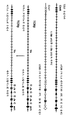
도 3은 마우스 TCRα 유전자좌를 사람화하기 위한 진행 전략에 대한 도해로서(비례척 아님), TCRα 가변 영역 유전자 분절은 결실된 마우스 유전자좌(MAID1540)의 초기 사람화의 상류에 순차적으로 부가된다. 마우스 서열은 폐쇄 기호로 표시되며, 사람 서열은 개방 기호로 표시된다. MAID란 변형된 대립유전자 ID 번호를 의미한다. TRAV는 TCR Vα 분절이고, TRAJ는 TCR Jα 분절이고(hTRAJ는 사람 TRAJ이다), TRAC는 TCR Cα 도메인이고, TCRD는 TCRδ이다.
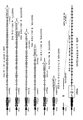
도 4a 내지 4g는 TCRα 유전자좌에서의 진행 사람화 전략에 대한 상세한 도해이다(비례척 아님). 도 4a는 마우스 TCRα V 및 J 분절의 결실에 대한 도해이고, 도 4b는 2V 및 61J 사람 분절을 결실된 마우스 TCRα 유전자좌에 삽입하기 위한 전략에 대한 도해이고, 도 4c는 추가의 사람 V 분절을 삽입하여 총 8V 및 61J 사람 분절을 생산하기 위한 전략에 대한 도해이고, 도 4d는 추가의 사람 V 분절을 삽입하여 총 23V 및 61J 사람 분절을 생산하기 위한 전략에 대한 도해이고, 도 4e는 추가의 사람 V 분절을 삽입하여 총 35V 및 61J 사람 분절을 생산하기 위한 전략에 대한 도해이고, 도 4f는 추가의 사람 분절을 삽입하여 총 48V 및 61J 사람 분절을 생산하기 위한 전략에 대한 도해이고, 도 4g는 추가의 사람 분절을 삽입하여 총 54V 및 61J 사람 분절을 생산하기 위한 전략에 대한 도해이다. MAID란 변형된 대립유전자 ID 번호를 의미한다.
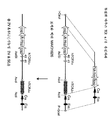
도 5는 마우스 TCRα 유전자좌 사람화 전략의 한 실시형태에 대한 도해로서(비례척 아님), 여기서, 사람 TCRδ 서열(TCRδ Vs, TCRδ Ds, TCRδ Js, TCRδ enh(인핸서) 및 TCRδ 불변(C))은 또한 사람화된 TCRα 유전자좌에서 대체된다. 마우스 서열은 폐쇄 기호로서 표시되고; 사람 서열은 개방 기호로서 표시된다. LTVEC란 대형 표적화 벡터를 의미하며, hTRD는 사람 TCRδ이다.
도 6은 마우스(상부 패널, 마우스 염색체 6 상의 제1 유전자좌) 및 사람(상부 패널, 사람 염색체 7 상의 제2 유전자좌) TCRβ 유전자좌의 일반적인 조직에 대한 도해이다(비례척 아님). 하부 패널은 마우스 염색체 6 상의 내인성 마우스 유전자좌에서 마우스 중의 TCRβ 가변 영역 분절(폐쇄 기호)을 사람 TCRβ 가변 영역 분절(개방 기호)로 대체하기 위한 전략에 대한 도해이다. 사람 Vβ, Dβ, 및 Jβ 분절을 갖는 사람화된 TCRβ 유전자좌는 마우스 불변 영역 및 마우스 인핸서와 함께 도시되어 있고; 도시된 실시형태에서, 상기 사람화된 유전자좌는 마우스 트립시노겐 유전자(흑색 사각형)를 유지하며; 도시된 특정 실시형태에서, 단일 마우스 V 분절은 5' 마우스 트립시노겐 유전자의 상류에 유지된다.
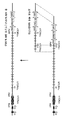
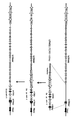
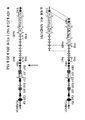
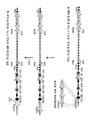
도 7은 마우스 TCRβ 유전자좌를 사람화하기 위한 진행 전략에 대한 도해로서(비례척 아님), 여기서, TCRβ 가변 영역 유전자 분절은 결실된 마우스 TCRβ 가변 유전자좌에 순차적으로 부가된다. 마우스 서열은 폐쇄 기호로 표시되고, 사람 서열은 개방 기호로 표시된다. MAID란 변형된 대립유전자 ID 번호를 의미한다. TRBV 또는 TCRBV는 TCRβ V 분절이다.
도 8a 내지 8f는 TCRβ 유전자좌에서의 진행 사람화 전략에 대한 상세한 도해이다. 도 8a는 마우스 TCRβ V 분절을 결실시키기 위한 전략에 대한 도해이고, 도 8b는 14V 분절을 결실된 마우스 TCRβ 유전자좌에 삽입하기 위한 전략에 대한 도해이고, 도 8c는 2D 및 14J 분절을 TCRβ 유전자좌(i)에 삽입한 후 loxP 부위(ii)를 결실시켜 14V, 2D 및 14J 사람 분절을 생산하기 위한 전략에 대한 도해이고, 도 8d는 추가의 사람 V 분절을 삽입하여 40V, 2D 및 14J 사람 분절을 생산하기 위한 전략에 대한 도해이고, 도 8e는 추가의 사람 V 분절을 삽입하여 66V, 2D 및 14J 사람 분절을 생산하기 위한 전략에 대한 도해이고, 도 8f는 마우스 인핸서의 마우스 V 분절 상류를 대체하여 67V, 2D 및 14J 사람 분절을 생산하기 위한 것에 대한 도해이다. 본 특정 실시형태에서, 하나의 마우스 V 분절은 마우스 트립시노겐의 5'에 유지된다.
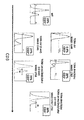
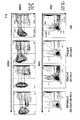
도 9는 야생형(Wild Type: WT) 마우스, 결실된 TCRα 유전자좌에 대한 동형접합성 마우스(제1 상부 패널, 도 3의 MAID 1540), 결실된 TCRα 유전자좌에 대해 동형접합성이고 8개의 사람 Vα 및 61개의 사람 Jα 분절을 포함하는 마우스(제2 상부 패널, 도 3의 MAID 1767 또는 사람화된 TCRα 마우스), 하나의 상류 및 하나의 하류 마우스 Vβ 분절을 제외한 결실된 TCRβ 유전자좌에 대한 동형접합성 마우스(제1 하부 패널, 도 7의 MAID 1545), 하나의 상류 및 하나의 하류 마우스 Vβ 분절을 갖는 결실된 TCRβ 유전자좌에 대해 동형접합성이고 14개의 사람 Vβ, 2개의 사람 Dβ 및 14개의 사람 Jβ 분절을 포함하는 마우스(제2 하부 패널, 도 7의 MAID 1716 또는 사람화된 TCRβ 마우스) 및 (상기 2개의 마우스 Vβ 분절을 제외한) TCRα와 TCRβ 유전자좌 결실 둘 다에 대해 동형접합성이고 내인성 TCRα 유전자좌에서 8개의 사람 Vα 및 61개의 사람 Jα 분절 및 내인성 TCRβ 유전자좌에서 14개의 사람 Vβ, 2개의 사람 Dβ 및 14개의 사람 Jβ 분절을 포함하는 마우스(MAID 1767/1716 또는 사람화된 TCRα/β 마우스)에서 항-CD3 항체로 착색된 비장 세포 %에 대한 대표적인 FACS 분석 히스토그램의 도해이다(여기서, Y축은 세포수이고, X축은 평균 형광 강도이고, 게이트는 단항 림프구 집단 내 CD3+ T 세포의 빈도를 나타낸다).
도 10은 항-CD4(Y축) 및 항-CD8(X축) 항체(상부 패널)와 항-CD44(Y축) 및 항-CD25(X축) 항체(하부 패널)로 착색된 WT, 동형접합성 사람화된 TCRα(1767 HO; hTCRα), 동형접합성 사람화된 TCRβ(1716 HO; hTCRβ) 및 동형접합성 사람화된 TCRα/β 마우스(1716 HO 1767 HO; hTCRα/β)로부터의 마우스 흉선 세포의 대표적인 FACS 등고선도이다. 상부 패널의 FACS 플롯은 이중 음성(DN), 이중 양성(DP), CD4 단일 양성(CD4 SP) 및 CD8 단일 양성(SP CD8) T 세포를 구별할 수 있게 한다. 하부 패널의 FACS 플롯은 T 세포 발달 동안 이중 음성 T 세포의 각 단계(DN1, DN2, DN3 및 DN4)를 구별할 수 있게 한다. 1716 및 1767은 도 3 및 7에서 확인되는 바와 같은 MAID 번호를 의미한다.
도 11은 WT, hTCRα(1767 HO), hTCRβ(1716 HO) 또는 hTCRα/β(1716 HO 1767 HO) 마우스(n=4)의 흉선에서 DN, DP, CD4 SP, and CD SP T 세포의 빈도(상부 패널) 및 절대 수(하부 패널)를 나타낸다.
도 12는 WT, hTCRα(1767 HO), hTCRβ(1716 HO) 또는 hTCRα/β(1716 HO 1767 HO) 마우스의 비장 세포의 대표적인 FACS 분석이다. 좌측 패널은 항-CD19 항체(Y축: B 림프구에 대한 착색) 또는 항-CD3 항체(X축: T 림프구에 대한 착색) 착색에 기초한 단항 세포의 분석을 나타내고, 중간 패널은 항-CD4(Y축) 또는 항-CD8(X축) 항체 착색에 기초한 CD3+ 세포의 분석을 나타내고, 우측 패널은 항-CD44(Y축) 또는 항-CD62L 항체 착색에 기초한 CD4+ 또는 CD8+ 세포의 분석을 나타낸다. 상기 착색은 말초에서 각종 유형의 T 세포(미접촉 T 세포(Tnaive) 대 중심 기억 T 세포(Tcm) 대 효과기 또는 효과기 기억 T 세포(Teff/Tem))를 구별하게 해준다.
도 13은 WT, hTCRα(1767 HO), hTCRβ(1716 HO) 또는 hTCRα/β(1716 HO 1767 HO) 마우스(n=4)의 CD4+(좌측 패널) 또는 CD8+(우측 패널) T 세포수/비장(Y축)을 도시한 것이다.
도 14는 WT, hTCRα(1767 HO), hTCRβ(1716 HO) 또는 hTCRα/β(1716 HO 1767 HO) 마우스(n=4)의 CD4+(상부 패널) 또는 CD8+(하부 패널) T 세포의 Tnaive, Tcm 및 Teff/em 세포수/비장(Y축)을 도시한 것이다.
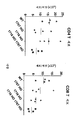
도 15a 및 15b는 WT, hTCRβ(1716 HO) 또는 hTCRα/β(1716 HO 1767 HO) 마우스의 비장 CD8+ T 세포(도 15a) 또는 CD4+ T 세포(도 15b)에서 각종 사람 TCRβ V 분절의 발현(가변 분절-특이적인 항체를 사용하여 FACS 분석에 의해 결정함)을 요약한 표이다. 데이터는 평균±SD(n=4마리의 마우스/그룹)로 표시된다.
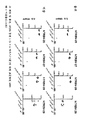
도 16a 및 도 16b는 흉선 또는 비장 T 세포에서 WT, hTCRα(1767 HO), hTCRβ(1716 HO) 또는 hTCRα/β(1716 HO 1767 HO) 마우스에 존재하는 각종 사람 TCRβ V 분절의 mRNA 발현(Y축)을 도시한 것이다. 도 16a는 사람 TCRβ 가변 분절(hTRBV) 18, 19, 20 및 24의 mRNA 발현의 분석을 나타내며, 도 16b는 hTRBV 25, 27, 28 및 29의 mRNA 발현의 분석을 나타낸다.
도 17은 WT 마우스, 결실된 TCRα 유전자좌에 대한 동형접합성 마우스(TCRA ΔV), 2개의 사람 V 분절 및 61개의 사람 J 분절을 포함하는 결실된 TCRα 유전자좌에 대한 동형접합성 마우스(TCRA 2 hV, 도 3의 MAID 1626), 8개의 사람 V 분절 및 61개의 사람 J 분절을 포함하는 결실된 TCRα 유전자좌에 대한 동형접합성 마우스(TCRA 8 hV, 도 3의 MAID 1767) 및 23개의 사람 V 분절 및 61개의 사람 J 분절을 포함하는 결실된 TCRα 유전자좌에 대한 동형접합성 마우스(TCRA 23 hV, 도 3의 MAID 1979)에서 항-CD3 항체로 착색된 비장 세포(여기서, Y축은 세포수이고, X축은 평균 형광 강도이고, 게이트는 단항 림프구 집단 내 CD3+ T 세포의 빈도를 나타낸다)에 대한 대표적인 FACS 분석 히스토그램을 도시한 것이다.
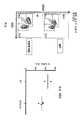
도 18에서, 좌측 상부 패널은 항-CD4(Y축) 또는 항-CD8(X축) 항체로 착색된 WT 마우스 또는 23개의 사람 V 분절 및 61개의 사람 J 분절을 포함하는 동형접합성 hTCRα 마우스(1979 HO)로부터 수득한 흉선의 CD3+ T 세포에 대한 대표적인 FACS 분석이고, 좌측 하부 패널은 항-CD44(Y축) 또는 항-CD25(X축)로 착색된 WT 또는 1979 마우스로부터 수득한 DN T 세포에 대한 FACS 분석이고, 우측 패널은 WT 또는 1979 HO 마우스(n=4)에서 DN, DP, CD4 SP 또는 CD8 SP인 흉선 세포 퍼센트(%)(Y축)의 그래프이다.
도 19에서, 좌측 패널은 항-CD19 또는 항-CD3 항체로 착색된 WT 또는 1979 HO 마우스로부터의 비장 림프구에 대한 대표적인 FACS 분석이고, 우측 패널은 CD3+인 WT 및 1979 HO 마우스(n=4)로부터 수득한 퍼센트 비장 세포(Y축)의 그래프이다.Figure 1 is an illustration of the interaction between a TCR molecule and an MHC molecule in a mouse: the left panel shows mouse T cells from a humanized TCR mouse containing a T cell receptor with a human variable TCR domain and a mouse constant TCR domain Top), which recognizes antigens (gray circles) presented via MHC class I by antigen presenting cells (bottom); The right panel shows the same for MHC Class II. The MHC I and MHC II complexes are shown with their respective co-receptors, CD8 and CD4. The mouse region is black and the human region is white.
Figure 2 is an illustration of the general organization of the mouse (top panel, first locus) and human (top panel, second locus) TCR [alpha] locus (not proportional). The lower panel is an illustration of a strategy for replacing the TCR alpha variable region segment (closed symbol) in the mouse with the human TCR alpha variable region segment (open symbol) at the endogenous mouse locus on
Figure 3 is an illustration of a progression strategy for humanizing the mouse TCR [alpha] locus (not proportionally), wherein the TCR [alpha] variable region gene segments are sequentially added upstream of the initial humanization of the deleted mouse locus (MAID 1540). The mouse sequence is indicated by the closed symbol, and the human sequence is indicated by the open symbol. MAID means a modified allele ID number. TRAV is a TCR V? Segment, TRAJ is a TCR J? Segment (hTRAJ is a human TRAJ), TRAC is a TCR C? Domain, and TCRD is a TCR ?.
Figures 4a-4g are detailed illustrations of the progressive humanization strategy at the TCR [alpha] locus (not proportional). Figure 4a is an illustration of the deletion of the mouse TCR [alpha] V and J segments, Figure 4b is an illustration of a strategy for inserting 2V and 61J human segments into the deleted mouse TCR [alpha] locus, Figure 4c shows insertion of additional human V segments Figure 4d is an illustration of a strategy for producing a total of 23V and 61J segments by inserting additional human V segments, Figure 4e is an illustration of a strategy for producing a total of 8V and 61J segments, FIG. 4F is an illustration of a strategy for inserting additional human segments to produce a total of 48V and 61J segments, FIG. 4G is an illustration of a strategy for inserting V segments to produce total 35V and 61J segments, FIG. It is an illustration of a strategy for inserting additional human segments to produce total 54V and 61J human segments. MAID means a modified allele ID number.
Figure 5 is an illustration of an embodiment of the mouse TCR? Locus humanization strategy (not proportionally), wherein the human TCR delta sequence (TCR delta Vs, TCR delta Ds, TCR delta Js, TCR del enh (enhancer) and TCR delta delta (C) Are also replaced at the humanized TCR [alpha] locus. The mouse sequence is represented as a closing symbol; The human sequence is displayed as an open symbol. LTVEC means a large targeting vector, hTRD is human TCRδ.
Figure 6 is an illustration of the general organization of the mouse (top panel, first locus on mouse chromosome 6) and human (top panel, second locus on human chromosome 7) TCRβ locus (not proportional). The lower panel is an illustration of a strategy for replacing the TCR beta variable region segment (closed symbol) in the mouse with the human TCR beta variable region segment (open symbol) at the endogenous mouse locus on
Figure 7 is an illustration (not proportionally) of a progress strategy for humanizing the mouse TCR beta locus, wherein the TCR beta variable region gene segments are sequentially added to the deleted mouse TCR beta variable locus. The mouse sequence is represented by a closed symbol, and the human sequence is represented by an open symbol. MAID means a modified allele ID number. TRBV or TCRBV is the TCR? V segment.
Figures 8A-8F are detailed illustrations of the progressive humanization strategy at the TCR [beta] locus. Fig. 8A is an illustration of a strategy for inserting a 14V segment into a deleted mouse TCR? Locus, Fig. 8C is an illustration of a strategy for inserting a 14V segment into a deleted TCR? Locus, Fig. 2D and 14J human segments after inserting the lox P site (ii) after inserting the additional human V segment and inserting additional human V segments into the 40V, 2D and 14J human segments 8e is an illustration of a strategy for inserting additional human V segments to produce 66V, 2D and 14J human segments, and Fig. 8f is an illustration of a strategy for producing the mouse V segment upstream of the
Figure 9 is a graph showing the results of immunohistochemistry for wild type (WT) mice, homozygous mice for the deleted TCRa locus (first top panel,
Figure 10 depicts the results of a WT titered with anti-CD4 (Y axis) and anti-CD8 (X axis) antibodies (top panel) and anti-CD44 (Y axis) and anti- Thymocyte cell lines from adherent humanized TCRα (1767 HO; hTCRα), homozygous humanized TCRβ (1716 HO; hTCRβ) and homozygous humanized TCRα / β mice (1716
11 shows the frequency of DN, DP, CD4 SP, and CD SP T cells in the thymus of WT, hTCRα (1767 HO), hTCRβ (1716 HO) or hTCRα / β (1716
Figure 12 is a representative FACS analysis of splenocytes from WT, hTCRa (1767 HO), hTCR (1716 HO) or hTCRa / (1716
Figure 13 shows CD4 + (left panel) or CD8 + (right panel) T cell count / spleen (right panel) of WT, hTCRa (1767 HO), hTCR? (1716 HO) or hTCR? /? (1716
Figure 14 shows the T naïve of CD4 + (upper panel) or CD8 + (lower panel) T cells of WT, hTCRα (1767 HO), hTCRβ (1716 HO) or hTCRα / β (1716
Figures 15a and 15b show the expression (variable) of various human TCRβ V segments in spleen CD8 + T cells (Figure 15a) or CD4 + T cells (Figure 15b) of WT, hTCR? (1716 HO) or hTCR? /? (1716
16A and 16B show mRNA expression of various human TCR V segments present in WT, hTCRα (1767 HO), hTCRβ (1716 HO) or hTCRα / β (1716
Figure 17 shows the effect of homozygous mice (
18, the upper left panel shows a WT mouse colored with anti-CD4 (Y axis) or anti-CD8 (X axis) antibodies or a homozygous hTCR? Mouse comprising 23 human V segments and 61 human J segments HO), and the lower left panel is the FACS analysis for CD3 + T cells obtained from WT stained with anti-CD44 (Y axis) or anti-CD25 (X axis) or DN T cells obtained from 1979 mice And the right panel is a graph of percentage (%) (Y axis) of thymocytes with DN, DP, CD4 SP or CD8 SP in WT or 1979 HO mice (n = 4)
In Figure 19, the left panel is a representative FACS analysis for spleen lymphocytes from WT or 1979 HO mice colored with anti-CD19 or anti-CD3 antibodies and the right panel is from CD3 + WT and 1979 HO mice (n = 4) (Y axis) obtained.
정의Justice
본 발명은 사람화된 T 세포 수용체를 발현하는 유전자 변형된 비-사람 동물, 예를 들면, 설치류, 예를 들면, 마우스 또는 래트를 제공한다. 본 발명은 또한 재배열되지 않은 T 세포 수용체 가변 유전자좌를 생식세포 계열에 포함하는 유전자 변형된 비-사람 동물에 관한 것이다. 또한, 본 발명은 이를 포함하는 배아, 세포 및 조직, 이의 제조 방법 및 이의 사용 방법을 제공한다. 달리 정의되지 않는다면, 본원에 사용된 모든 용어 및 어구는 그 용어 또는 어구가 사용된 문맥으로부터 반대가 명시되지 않거나 명백하지않는 한 그 용어 및 어구가 당업계에서 획득한 의미를 포함한다.The present invention provides transgenic non-human animals expressing humanized T cell receptors, such as rodents, e.g. mice or rats. The invention also relates to a genetically modified non-human animal that comprises a non-rearranged T cell receptor variable locus in the germline family. The present invention also provides embryos, cells and tissues comprising the same, a method of producing the same, and a method of using the same. Unless otherwise defined, all terms and phrases used herein include meanings obtained in the art, unless the context clearly dictates otherwise.
보존적 아미노산 대체을 설명하기 위해 사용된 용어 "보존적"이란, 유사한 화학적 성질(예를 들면, 전하 또는 소수성)을 갖는 측쇄 R 그룹을 갖는 다른 아미노산 잔기에 의한 아미노산의 대체을 포함한다. 보존적 아미노산 대체은 뉴클레오타이드 서열을 변형시켜 보존적 대체을 암호화하는 뉴클레오타이드 변화를 도입함으로써 달성될 수도 있다. 일반적으로, 보존적 아미노산 대체은 단백질의 목적하는 기능적인 성질, 예를 들면, MHC 분자에 의해 제시된 단백질을 인식하는 T 세포의 능력을 실질적으로 변화시키지 않는다. 유사한 화학적 성질을 갖는 측쇄를 갖는 아미노산 그룹의 예는 글리신, 알라닌, 발린, 류신 및 이소류신과 같은 지방족 측쇄; 세린 및 트레오닌과 같은 지방족-하이드록실 측쇄; 아스파라긴 및 글루타민과 같은 아미드-함유 측쇄; 페닐알라닌, 타이로신 및 트립토판과 같은 방향족 측쇄; 리신, 아르기닌 및 히스티딘과 같은 염기성 측쇄; 아스파르트산 및 글루탐산과 같은 산성 측쇄; 및 시스테인 및 메티오닌과 같은 황-함유 측쇄를 포함한다. 보존적인 아미노산 대체 그룹은, 예를 들면, 발린/류신/이소류신, 페닐알라닌/타이로신, 리신/아르기닌, 알라닌/발린, 글루타메이트/아스파르테이트, 및 아스파라긴/글루타민을 포함한다. 일부 실시형태에서, 본원에 인용에 의해 포함되는 문헌[참조: Gonnet et al., (1992) Exhaustive Matching of the Entire Protein Sequence Database, Science 256: 1443-45]에 개시된 RAM250 로그-우도(log likelihood) 매트릭스에서 양성 값을 갖는 보존적 아미노산 대체이 이루어진다. 일부 실시형태에서, 상기 대체은 RAM250 로그-우도 매트릭스에서 비음성 값을 갖는 완만한 보존적 대체이다.The term "conservative" used to describe conservative amino acid substitution includes replacement of amino acids by other amino acid residues having a side chain R group with similar chemical properties (e.g., charge or hydrophobicity). Conservative amino acid substitutions may be achieved by modifying the nucleotide sequence and introducing a nucleotide change encoding a conservative substitution. In general, conservative amino acid substitutions do not substantially change the desired functional properties of the protein, such as the ability of a T cell to recognize a protein presented by an MHC molecule. Examples of amino acid groups having side chains with similar chemical properties include aliphatic side chains such as glycine, alanine, valine, leucine and isoleucine; Aliphatic-hydroxyl side chains such as serine and threonine; Amide-containing side chains such as asparagine and glutamine; Aromatic side chains such as phenylalanine, tyrosine and tryptophan; Basic side chains such as lysine, arginine and histidine; Acidic side chains such as aspartic acid and glutamic acid; And sulfur-containing side chains such as cysteine and methionine. Conservative amino acid substitution groups include, for example, valine / leucine / isoleucine, phenylalanine / tyrosine, lysine / arginine, alanine / valine, glutamate / aspartate, and asparagine / glutamine. In some embodiments, a RAM 250 log-likelihood set forth in Gonnet et al., (1992) Exhaustive Matching of the Entire Protein Sequence Database, Science 256: 1443-45, incorporated herein by reference, A conservative amino acid substitution with a positive value is made in the matrix. In some embodiments, the substitution is a gentle conservative substitution with a non-negative value in the RAM 250 log-likelihood matrix.
따라서, 본 발명은 본원에 개시된 아미노산 서열에서 보존적 아미노산 대체을 포함하는 사람화된 TCRα 및 TCRβ 폴리펩타이드(및/또는 사람화된 TCRδ 및 TCRγ 폴리펩타이드)를 발현하는 유전자 변형된 비-사람 동물을 포함한다.Accordingly, the present invention includes genetically modified non-human animals expressing humanized TCR alpha and TCR beta polypeptides (and / or humanized TCR delta and TCR gamma polypeptides) comprising conservative amino acid substitutions in the amino acid sequences disclosed herein do.
당업자는 본원에 개시된 사람화된 TCRα 및 TCRβ 폴리펩타이드를 암호화하는 핵산 잔기에 추가하여, 유전자 코드의 축퇴로 인해, 다른 핵산도 본 발명의 폴리펩타이드를 암호화할 수 있다. 따라서, 본원에 개시된 사람화된 TCR 폴리펩타이드를 암호화하는 뉴클레오타이드 서열을 게놈에 포함하는 유전자 변형된 비-사람 동물에 추가하여, 본 발명은 유전자 코드의 축퇴로 인해 본원에 개시된 것과 상이한 뉴클레오타이드 서열을 게놈에 포함하는 비-사람 동물도 또한 제공한다.Those skilled in the art, in addition to the nucleic acid residues encoding the humanized TCR [alpha] and TCR [beta] polypeptides disclosed herein, can also encode the polypeptides of the present invention due to the degeneracy of the genetic code. Thus, in addition to a genetically modified non-human animal comprising a nucleotide sequence encoding the humanized TCR polypeptide disclosed herein in the genome, the present invention provides a method for detecting a nucleotide sequence that differs from that disclosed herein, Lt; RTI ID = 0.0 > animal. ≪ / RTI >
서열과 관련되어 사용되는 용어 "동일성"이란, 뉴클레오타이드 및/또는 아미노산 서열 동일성을 측정하기 위해 사용될 수 있는 당업계에 공지된 다수의 상이한 알고리즘에 의해 결정되는 동일성을 포함한다. 본원에 개시된 일부 실시형태에서, 동일성은 10.0의 개방 갭 패널티 및 0.1의 확장 갭 패널티를 적용하는 ClustalW v. 1.83(느림) 정렬과 Gonnet 유사 매트릭스(MacVector™ 10.0.2, MacVector Inc., 2008)를 사용하여 결정된다. 서열의 동일성과 관련하여 비교되는 서열의 길이는 특정 서열에 좌우된다. 각종 실시형태에서, 동일성은 N-말단에서 C-말단까지 성숙 단백질의 서열을 비교함으로써 결정된다. 각종 실시형태에서, 키메라 사람/비-사람 서열을 사람 서열과 비교할 때, 키메라 사람/비-사람 서열의 사람 부분(비-사람 부분이 아님)은 사람 서열과 키메라 사람/비-사람 서열의 사람 부분 사이의 동일성의 수준을 확인하기 위한 비교에 사용된다(예를 들면, 키메라 사람/마우스 단백질의 사람 엑토도메인과 사람 단백질의 사람 엑토도메인을 비교함).The term "identity " used in connection with a sequence includes identity determined by a number of different algorithms known in the art that can be used to determine nucleotide and / or amino acid sequence identity. In some embodiments disclosed herein, the identity may be calculated using the ClustalW v. 0.0 < RTI ID = 0.0 > 1.83 (slow) sorting and Gonnet-like matrices (MacVector ™ 10.0.2, MacVector Inc., 2008). The length of sequences compared relative to the identity of the sequence will depend on the particular sequence. In various embodiments, identity is determined by comparing the sequence of the mature protein from the N-terminus to the C-terminus. In various embodiments, when comparing a chimeric / non-human sequence to a human sequence, the human (non-human) portion of the chimeric / non-human sequence is a human sequence and a chimeric / non- (E. G., Comparing the human ectodomain of a chimeric / mouse protein with the human ectodomain of a human protein).
서열, 예를 들면, 뉴클레오타이드 또는 아미노산 서열과 관련하여 사용되는 용어 "상동성" 또는 "상동"이란, 최적으로 정렬하고 비교할 때, 뉴클레오타이드 또는 아미노산의 약 75% 이상, 뉴클레오타이드 또는 아미노산의 약 80% 이상, 뉴클레오타이드 또는 아미노산의 약 90% 내지 95% 이상, 예를 들면, 뉴클레오타이드 또는 아미노산의 약 97% 초과가 동일한 2개의 서열을 의미한다. 당업자는 최적의 유전자 표적화 동안, 표적화 작제물이 내인성 DNA 서열과 상동성인 아암(즉, "상동성 아암(homology arm)")을 함유해야 하며; 따라서, 상동성 재조합이 표적화 작제물과 표적화된 내인성 서열 사이에서 발생할 수 있음을 이해할 것이다.The terms "homology" or "homology ", as used in connection with a nucleotide or amino acid sequence, refers to a nucleotide or amino acid sequence that is about 75% or more nucleotides or about 80% , About 90% to 95% of the nucleotides or amino acids, for example, more than about 97% of the nucleotides or amino acids are identical. Those skilled in the art will appreciate that during optimal gene targeting, the targeting construct must contain an arm that is homologous to the endogenous DNA sequence (i. E., "Homology arm"); Thus, it will be appreciated that homologous recombination may occur between the targeting construct and the targeted endogenous sequence.
용어 "작동가능하게 연결되어 있는"이란, 이렇게 개시된 성분이 이를 의도되는 방식으로 기능하게 하는 관계에 있는 병렬을 의미한다. 이와 같이, 단백질을 암호화하는 핵산 서열은 조절 서열(예를 들면, 프로모터, 인핸서, 사일런서 서열 등)에 작동가능하게 연결되어 적절한 전사 조절을 유지할 수 있다. 또한, 본 발명의 사람화된 단백질의 각종 부분은 세포에서의 적절한 접기, 가공, 표적화, 발현 및 단백질의 다른 기능성을 유지하기 위해 작동가능하게 연결될 수 있다. 달리 명시되지 않는다면, 본 발명의 사람화된 단백질의 각종 도메인은 서로 작동가능하게 연결되어 있다.The term " operably linked "means a parallel in which the components disclosed herein are in a relationship that makes them function in the intended manner. As such, the nucleic acid sequence encoding the protein may be operably linked to a regulatory sequence (e.g., a promoter, enhancer, silencer sequence, etc.) to maintain proper transcriptional control. In addition, various portions of the humanized protein of the present invention may be operably linked to maintain proper folding, processing, targeting, expression, and other functionalities of the protein in the cell. Unless otherwise indicated, the various domains of the humanized proteins of the invention are operably linked to one another.
유전자 대체과 관련하여 사용되는 용어 "대체"이란, 내인성 유전자좌에서 외인성 유전 물질을 배치하여 내인성 유전자의 모두 또는 일부를 이종상동성 또는 상동성 핵산 서열로 대체하는 것을 의미한다. 하나의 경우에서, 내인성 비-사람 유전자 또는 이의 단편을 상응하는 사람 유전자 또는 이의 단편으로 대체한다. 상응하는 사람 유전자 또는 이의 단편은 구조 및/또는 기능에서 이종상동성이거나, 상동성이거나, 또는 실질적으로 동일 또는 동일한 사람 유전자 또는 단편인데, 이는 내인성 비-사람 유전자 또는 이의 단편이 대체되기 때문이다. 하기 실시예에서 입증되는 바와 같이, 내인성 비-사람 TCRα 및 TCRβ 가변 유전자좌의 뉴클레오타이드 서열을 사람 TCRα 및 TCRβ 가변 유전자좌에 상응하는 뉴클레오타이드 서열로 대체한다.The term "substitution " used in connection with gene replacement means replacing all or part of the endogenous gene with a heterologous or homologous nucleic acid sequence by placing an exogenous genetic material in the endogenous locus. In one case, an endogenous non-human gene or fragment thereof is replaced with a corresponding human gene or fragment thereof. The corresponding human gene or fragment thereof is a heterologous, homologous, substantially identical or identical human gene or fragment in structure and / or function, since the endogenous non-human gene or fragment thereof is replaced. As evidenced in the Examples below, the nucleotide sequences of endogenous non-human TCR [alpha] and TCR [beta] variable loci are replaced with nucleotide sequences corresponding to human TCR [alpha] and TCR [beta] variable loci.
기능성 단백질과 관련하여 본원에 사용되는 "기능성"이란, 선천성 단백질과 정상적으로 결합되는 하나 이상의 생물학적 활성을 유지하는 단백질을 의미한다. 예를 들면, 본 발명의 일부 실시형태에서, 내인성 유전자좌에서의 대체(내인성 비-사람 TCRα, TCRβ, TCRδ 및/또는 TCRγ 가변 유전자좌에서의 대체)으로 인해, 기능성 내인성 단백질을 발현하지 못하는 유전자좌가 발생한다.As used herein with respect to a functional protein, "functional" means a protein that retains at least one biological activity that normally binds to a congenital protein. For example, in some embodiments of the present invention, loci that fail to express functional endogenous proteins occur because of an endogenous locus replacement (endogenous non-human TCR alpha, TCR beta, TCR delta and / or replacement at the TCR gamma variable locus) do.
본원에 사용되는 TCR 유전자좌(예를 들면, TCRα 유전자좌 또는 TCRβ 유전자좌)란, 재배열되지 않은 V(D)J 서열, 인핸서, 서열, 불변 서열 및 임의의 상류 또는 하류(UTR, 조절 영역 등) 또는 개재 DNA 서열(인트론 등)을 포함한 전체 TCR 암호 영역을 포함하여 TCR 암호 영역을 포함하는 게놈 DNA를 의미한다. TCR 가변 유전자좌(예를 들면, TCRα 가변 유전자좌 또는 TCRβ 가변 유전자좌)란, TCR 가변 영역 분절(V(D)J 영역)을 포함하지만 TCR 불변 서열 및 각종 실시형태에서는 인핸서 서열을 포함하지 않은 영역을 포함하는 게놈 DNA를 의미한다. 다른 서열이 유전자 조작(예를 들면, 선별 카세트, 제한 부위 등)을 위한 TCR 가변 유전자좌에 포함될 수 있으며, 이들은 본원에 포함된다.As used herein, TCR locus (eg, TCRα locus or TCRβ locus) refers to a non-rearranged V (D) J sequence, enhancer, sequence, constant sequence and any upstream or downstream (UTR, regulatory region, etc.) Refers to a genomic DNA comprising a TCR coding region including the entire TCR coding region including an intervening DNA sequence (such as an intron). TCR variable regions (e. G., TCR? Variable regions or TCR? Variable regions) include regions that contain a TCR variable region segment (V (D) J region) but do not contain a TCR constant sequence and, in various embodiments, enhancer sequences ≪ / RTI > Other sequences may be included in the TCR variable locus for genetic manipulation (e. G., Selection cassettes, restriction sites, etc.) and are included herein.
유전자 변형된 Genetically modified TCRTCR 동물 animal
각종 실시형태에서, 본 발명은 일반적으로 유전자 변형된 비-사람 동물을 제공하는데, 상기 비-사람 동물은 재배열되지 않은 사람화된 TCR 가변 유전자좌를 게놈에 포함한다.In various embodiments, the present invention generally provides a genetically modified non-human animal, wherein the non-human animal comprises a humanized TCR variable locus that is not rearranged in the genome.
T 세포는 주요 조직적합성 복합체(MHC; 마우스에서) 또는 사람 백혈구 항원(Human Leukocyte Antigen: HLA; 사람에서) 복합체와 관련된 항원 제시 세포의 표면상의 작은 항원 결정기상의 에피토프와 결합한다. T 세포는 T 세포의 표면상의 T 세포 수용체(TCR) 복합체를 통해 이들 에피토프와 결합한다. T 세포 수용체는 α 및 β 쇄, 또는 γ 및 δ 쇄와 같은 2가지 유형의 쇄로 이루어진 이질이합체 구조이다. α 쇄는 전체 δ 유전자좌를 또한 포함하는 (사람 또는 마우스 염색체 14 상의) α 유전자좌 내에 위치된 핵산 서열에 의해 암호화되며, β 쇄는 (마우스 염색체 6 또는 사람 염색체 7 상의) β 유전자좌 내에 위치된 핵산 서열에 의해 암호화된다. T 세포의 다수는 αβ TCR을 갖고 있는 반면, T 세포의 소수는 γδ TCR을 갖고 있다. TCR과 (CD8+ T 세포에 제시하는) MHC 제I류 및 (CD4+ T 세포에 제시하는) MHC 제II류 분자의 상호작용을 도 1에 도시한다(이는 본 발명의 TCR 단백질의 하나의 특정 실시형태를 나타내며, 폐쇄 기호는 비-사람 서열을 나타내고, 개방 기호는 사람 서열을 나타낸다).T cells bind to epitopes on the surface of antigen-presenting cells on the surface of antigen-presenting cells associated with major histocompatibility complex (MHC; in mice) or Human Leukocyte Antigen (HLA) complexes. T cells bind to these epitopes through T cell receptor (TCR) complexes on the surface of T cells. T cell receptors are heterodimeric structures composed of two types of chains, such as alpha and beta chains, or gamma and delta chains. The alpha chain is encoded by a nucleic acid sequence located within the alpha locus (also on the human or mouse chromosome 14) that also contains the entire [delta] locus, and the beta chain is encoded by the nucleic acid sequence located within the beta locus (
T 세포 수용체 α 및 β 폴리펩타이드 (및 유사하게 γ 및 δ 폴리펩타이드)는 이황화 결합을 통해 서로 연결되어 있다. TCR을 이루는 상기 2개의 폴리펩타이드의 각각은 불변 및 가변 영역을 포함하는 세포외 도메인, 막관통 도메인 및 세포질 꼬리(tail)를 함유한다(상기 막관통 도메인 및 세포질 꼬리는 또한 상기 불변 영역의 일부이다). TCR의 가변 영역은 항원 특이성을 결정하고, 면역글로불린과 유사하게 3개의 상보성 결정 영역(CDR)을 포함한다. 또한, 면역글로불린 유전자와 유사하게, T 세포 수용체 가변 유전자좌(예를 들면, TCRα 및 TCRβ 유전자좌)는 다수의 재배열되지 않은 V(D)J 분절(가변(V), 연결(J), 및 TCRβ 및 TCRβδ에서는 다양성(D) 분절)을 함유한다. 흉선에서의 T 세포 발달 동안, TCRα 가변 유전자좌는 재배열하여 생성된 TCRα 쇄는 VJ 분절의 특정 조합(Vα/Jα 서열)에 의해 암호화되고; TCRβ 가변 유전자좌는 재배열하여 생성된 TCRβ 쇄는 VDJ 분절의 특정 조합(Vβ/Dβ/Jβ 서열)에 의해 암호화된다.T cell receptor alpha and beta polypeptides (and similarly, gamma and delta polypeptides) are linked to each other through disulfide bonds. Each of the two polypeptides that make up the TCR contains an extracellular domain, a transmembrane domain, and a cytoplasmic tail, which contain constant and variable domains (the transmembrane domain and the cytoplasmic tail are also part of the constant region ). The variable region of the TCR determines antigen specificity and includes three complementarity determining regions (CDRs) similar to immunoglobulins. In addition, similar to immunoglobulin genes, T cell receptor variable loci (eg, TCRα and TCRβ loci) include a large number of unrearranged V (D) J segments (variable (V), linkage (J), and TCRβ And variant (D) segments in TCR [delta]). During T cell development in the thymus, the TCRα variable locus is rearranged and the resulting TCRα chain is encoded by a specific combination of VJ segments (Vα / Jα sequence); The TCRβ variable locus is rearranged and the resulting TCRβ chain is encoded by a specific combination of VDJ segments (Vβ / Dβ / Jβ sequence).
흉선 기질과의 상호작용으로 인해, 흉선 세포는 각종 세포 표면 마커의 발현을 특징으로 하는 몇 개의 발달 단계를 겪는다. 흉선에서 각종 발단 단계에서의 특징적인 세포 표면 마커의 요약을 표 1에 나타낸다. TCRβ 가변 유전자좌에서의 재배열은 DN2 단계에서 개시하여 DN4 단계 동안 종결하는 반면, TCRα 가변 유전자좌는 DP 단계에서 일어난다. TCRβ 유전자좌 재배열의 완료 후, 세포는 대용 α 쇄인 pTα와 함께 세포 표면에서 TCRβ 쇄를 발현한다[참조: Janeway's Immunobiology, Chapter 7].Due to the interaction with the thymus matrix, thymocytes undergo several developmental stages characterized by the expression of various cell surface markers. Table 1 summarizes the characteristic cell surface markers at various stages in the thymus. The rearrangement at the TCRβ variable locus begins at the DN2 stage and ends during the DN4 stage, whereas the TCRα variable locus occurs at the DP stage. After completion of the TCRβ locus rearrangement, the cells express the TCRβ chain at the cell surface with the ptα, a substitute α chain (see Janeway's Immunobiology, Chapter 7).
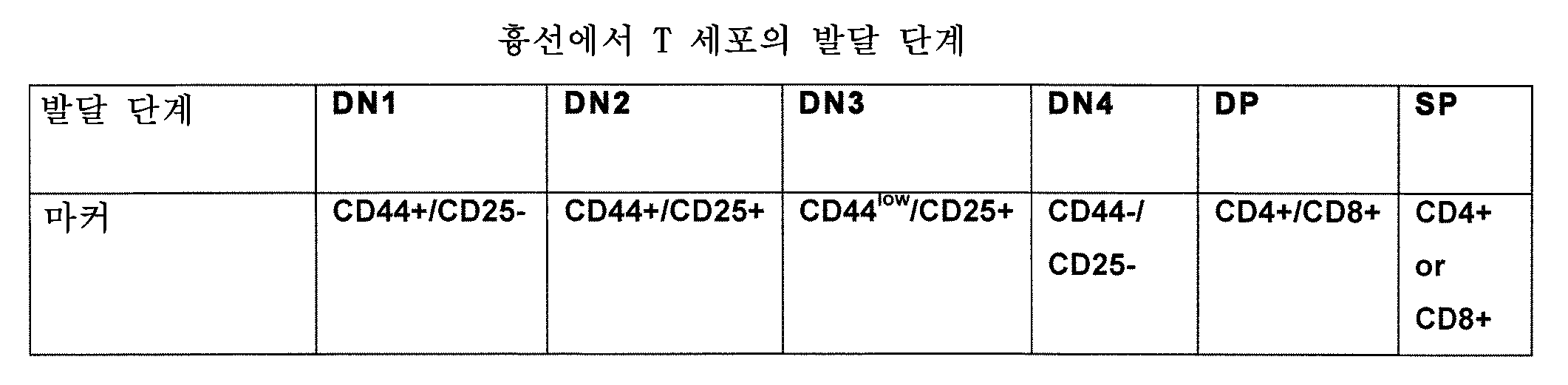
미접촉 CD4+ 및 CD8+ T 세포는 흉선을 나와서 말초 림프계 기관(예를 들면, 비장)으로 들어가는데, 이들은 항원에 노출되고 활성화되어 클론에 의하여 팽창하고 다수의 효과기 T 세포(Teff), 예를 들면, 세포독성 T 세포, TREG 세포, TH17 세포, TH1 세포, TH2 세포 등으로 분화한다. 감염 이후, 다수의 T 세포는 기억 T 세포로서 지속되고, 중심 기억 세포(Tcm) 또는 효과기 기억 T 세포(Tem)로서 분류된다[참조: Sallusto et al., (1999) Two subsets of memory T lymphocytes with distinct homing potentials and effector functions, Nature 401: 708-12; 및 Mackay, (1999) Dual personality of memory T cells, Nature 401: 659-660]. Sallusto 및 동료들에 의하면, 초기 감염 이후, Tem 세포는 효과기 기능을 갖는 말초 조직에서 항원-접촉 기억 T 세포의 용이하게 이용가능한 풀을 나타내는 반면, Tcm 세포는 이차 감염시 새로운 효과기 T 세포로 될 수 있는 말초 림프계 기관에서의 항원-접촉 기억 T 세포를 나타내는 것으로 제안되었다. 모든 기억 T 세포는 CD45의 CD45RO 이소형을 발현하는 반면(미접촉 T 세포는 CD45RA 이소형을 발현한다), Tcm은 말초 림프계 기관 및 림프절에 결합하고 신호전달하는데 중요한 L-셀렉틴(또한 CD62L로도 공지됨) 및 CCR7+의 발현을 특징으로 한다. 따라서, 말초 림프계 기관(예를 들면, 미접촉 T 세포, Tcm 세포 등)에서 발견된 모든 T 세포는 CD62L을 발현한다. CD45RO에 추가하여, 모든 기억 T 세포는 다수의 상이한 세포 표면 마커, 예를 들면, CD44를 발현하는 것으로 공지되어 있다. T 세포상의 각종 세포 표면 마커에 대한 요약은 문헌[Janeway's Immunobiology, Chapter 10]에 개시되어 있다.Noncontact CD4 + and CD8 + T cells exit the thymus and enter the peripheral lymphoid organs (e. G., The spleen), which are exposed to the antigen, activated and expanded by the clone and produce a number of effector T cells (T eff ) Toxic T cells, T REG cells,
TCR 가변 도메인은 항원 인식에서 주로 기능하는 반면, 불변 도메인의 세포외 부분뿐만 아니라, TCR의 막관통 및 세포질 도메인도 또한 중요한 기능을 제공한다. 완전한 TCR 수용체 복합체는 하나 이상의 α 및 β, 또는 γ 및 δ 폴리펩타이드를 필요로 하며, 필요한 추가의 분자는 CD3γ, CD3δ 및 CD3ε뿐만 아니라, ζ 쇄 동질이합체(ζζ)를 포함한다. TCRβ 재배열의 완료에서, 세포가 TCRβ/pTα를 발현할 때, 이러한 전구(pre)-TCR 복합체는 세포 표면상의 CD3과 함께 존재한다. 세포 표면상의 TCRα(또는 pTα)는 막관통 도메인에서 2개의 염기성 잔기를 가지며, 이중 하나는 CD3γε 이질이합체를 구성하고, 다른 하나는 각각의 산성 잔기를 통해 ζζ를 구성한다. TCRβ는 막관통 도메인에서 추가의 염기성 잔기를 가지며, 이는 CD3δε 이질이합체를 구성하는 것으로 믿어진다[참조: Kuhns et al., (2006) Deconstructing the Form and Function of the TCR/CD3 Complex, Immunity 24: 133-139; Wucherpfennig et al., (2009) Structural Biology of the T-cell Receptor: Insights into Receptor Assembly, Ligand Recognition, and Initiation of Signaling, Cold Spring Harb. Perspect. Biol. 2:a005140]. TCRαβ 이질이합체인 CD3γε, CD3δε 및 ζζ를 포함한 조립된 복합체는 T 세포 표면상에 발현된다. 막관통 도메인에서의 극성 잔기는 소포체를 퇴장시키기 위한 품질 통제장치로서 역할을 하는 것으로 제안되었으며, 이는 CD3 서브유닛의 부재하에 TCR 쇄가 ER에 유지되고 분해를 위해 표적화되는 것으로 입증되었다[참조: Call and Wucherpfennig, (2005) The T Cell Receptor: Critical Role of the Membrane Environment in Receptor Assembly and Function, Annu. Rev. Immunol. 23: 101-125].While the TCR variable domain functions predominantly in antigen recognition, the extracellular portion of the constant domain, as well as the transmembrane and cytoplasmic domains of the TCR, also provide important functions. A complete TCR receptor complex requires one or more of the alpha and beta, or gamma and delta polypeptides, and the additional molecules required include the CD3 gamma, CD3 delta and CD3 delta, as well as the zeta chain homodimer (zeta zeta). Upon completion of the TCR beta rearrangement, when the cells express TCR beta / pT alpha, these pre-TCR complexes coexist with CD3 on the cell surface. TCRα (or pTα) on the cell surface has two basic residues in the membrane through domain, one constituting the CD3γε heterodimer and the other constituting ζζ through the respective acidic residues. It is believed that TCR beta has an additional basic residue in the transmembrane domain, which constitutes a CD3 delta epsilon diclide (Kuhns et al., (2006) Deconstructing the Form and Function of the TCR / CD3 Complex, Immunity 24: 133 -139; Wucherpfennig et al., (2009) Structural Biology of the T-cell Receptor: Insights into Receptor Assembly, Ligand Recognition, and Initiation of Signaling, Cold Spring Harb. Perspect. Biol. 2: a005140]. Assembled complexes containing TCRαβ heterodimers CD3γε, CD3δε and ζζ are expressed on the surface of T cells. Polar moieties in the transmembrane domain have been proposed to serve as quality control devices for exiting the endoplasmic reticulum, demonstrating that in the absence of the CD3 subunit the TCR chain is retained in the ER and targeted for degradation (see Call and Wucherpfennig, (2005) The Cell Receptor: Critical Role of the Membrane Environment in Receptor Assembly and Function, Annu. Rev. Immunol. 23: 101-125).
조립된 복합체의 CD3 및 ζ 쇄는 신호전달 활성을 스스로 결여시킨 TCRαβ 이질이합체(또는 TCRγδ 이질이합체)로서 TCR 신호전달을 위한 성분을 제공한다. CD3 쇄는 하나의 면역 수용체 타이로신계 활성화 모티프(Immune-Receptor-Tyrosine-based-Activation-Motif: ITAM)를 갖고 있는 반면, 각 ζ 쇄는 3개의 직렬 ITAM을 포함한다. ITAM은 관련 키나제에 의해 인산화될 수 있는 타이로신 잔기를 함유한다. 따라서, 조립된 TCR-CD3 복합체는 10개의 ITAM 모티프를 함유한다[참조: Love and Hayes, (2010) ITAM-Mediated Signaling by the T-Cell Antigen Receptor, Cold Spring Harb. Perspect. Biol. 2:e002485]. TCR 진입 이후, ITAM 모티프는 Src 계열 타이로신 키나제, Lck 및 Fyn에 의해 인산화되며, 신호전달 캐스케이드를 개시하여 Ras 활성화, 칼슘 이동, 액틴 세포골격 재배열 및 전사 인자 활성화를 유발하고, 모두 궁극적으로 T 세포 분화, 증식 및 효과기 작용을 유도한다[참조: Janeway's Immunobiology, 7th Ed., Murphy et al. eds., Garland Science, 2008; 이들 둘 다 본원에 인용에 의해 포함된다].The CD3 and ζ chains of the assembled complexes provide a component for TCR signaling as a TCRαβ heterodimer (or TCRγδ heterodimer) that itself lacks signaling activity. The CD3 chain has one immunoreceptor-tyrosine-based-activation-motif (ITAM) while each? Chain contains three consecutive ITAMs. ITAM contains a tyrosine residue that can be phosphorylated by the relevant kinase. Thus, the assembled TCR-CD3 complex contains 10 ITAM motifs (Love and Hayes, (2010) ITAM-Mediated Signaling by the T-Cell Antigen Receptor, Cold Spring Harb. Perspect. Biol. 2: e002485]. After entry into the TCR, the ITAM motif is phosphorylated by Src family tyrosine kinases, Lck and Fyn, initiating signal transduction cascades leading to Ras activation, calcium mobilization, actin cytoskeletal rearrangement and transcription factor activation, Differentiation, proliferation and effector action (see Janeway's Immunobiology, 7 th Ed., Murphy et al. eds., < / RTI > Garland Science, 2008; Both of which are incorporated herein by reference.
추가로, TCRβ 막관통 및 세포질 도메인은 미토콘드리아 표적화 및 아폽토시스 유도에 역할을 하는 것으로 생각되며, 실제로 자연 발생의 N-말단 절단된 TCRβ 분자는 흉선 세포에 존재한다[참조: Shani et al., (2009) Incomplete T-cell receptor-β peptides target the mitochondrion and induce apoptosis, Blood 113: 3530-41]. 따라서, 몇몇의 중요한 기능은 TCR 불변 영역(각종 실시형태에서, 세포외 부분뿐만 아니라, 막관통 및 세포질 도메인을 포함함)에 의해 제공되며, 각종 실시형태에서, 이러한 영역의 δ구조는 이를 발현하는 사람화된 TCR 또는 유전자 변형된 비-사람 동물을 설계할 때 고려되어야 한다.In addition, the TCRβ membrane penetration and cytoplasmic domains are thought to play a role in mitochondrial targeting and induction of apoptosis, and in fact naturally-occurring N-terminal truncated TCRβ molecules are present in thymocytes (Shani et al., 2009 ) Incomplete T-cell receptor-beta peptides target the mitochondrion and induce apoptosis, Blood 113: 3530-41]. Thus, some important functions are provided by the TCR constant region (including in various embodiments, including the extracellular portion as well as the transmembrane and cytoplasmic domains), and in various embodiments, the delta structure of such regions Should be considered when designing humanized TCRs or genetically modified non-human animals.
재배열된 T 세포 수용체 서열에 대한 유전자 도입 마우스는 당업계에 공지되어 있다. 본 발명은 재배열된 사람 가변 도메인 및 비-사람(예를 들면, 마우스 또는 래트) 불변 영역을 포함하는 T 세포를 포함하는 동물을 포함하여, 재배열하여 사람 T 세포 수용체 가변 도메인을 암호화하는 핵산 서열을 형성할 수 있는 재배열되지 않은 사람 또는 사람화된 T 세포 가변 유전자좌를 포함하는 유전자 변형된 비-사람 동물(예를 들면, 설치류, 예를 들면, 래트 및 마우스)에 관한 것이다. 본 발명은 또한 사람 T 세포 수용체 가변 영역 서열의 다양한 레퍼토리를 생산할 수 있는 비-사람 동물(예를 들면, 설치류, 예를 들면, 래트 및 마우스)을 제공하고, 따라서 본 발명은 목적하는 항원에 반응하여 원전한 사람 가변 도메인을 갖는 TCR을 발현하고 목적하는 항원의 에피토프에 결합하는 비-사람 동물을 제공한다. 일부 실시형태에서, 본 발명은 APC에 의해 제시되는 항원을 포함하지만 이에 한정되지 않는 각종 항원과 반응할 수 있는 다양한 T 세포 수용체 레퍼토리를 생산하는 비-사람 동물을 제공한다.Transgenic mice for rearranged T cell receptor sequences are known in the art. The invention provides a nucleic acid encoding a human T cell receptor variable domain that has been rearranged, including an animal comprising a rearranged human variable domain and a T cell comprising a non-human (e. G., Mouse or rat) Human animals (e. G., Rodents, e. G., Rats and mice) that contain non-rearranged humanized or T-cell variable loci capable of forming sequences. The invention also provides non-human animals (e. G., Rodents, e. G., Rats and mice) capable of producing various repertoires of human T cell receptor variable region sequences, Human animal that expresses a TCR having a native single-variable domain and binds to an epitope of the desired antigen. In some embodiments, the invention provides a non-human animal producing a variety of T cell receptor repertoires capable of reacting with various antigens, including, but not limited to, the antigens presented by APCs.
하나의 실시형태에서, 본 발명은 재배열되지 않은 사람 TCR 가변 영역 분절(V(D)J 분절)을 게놈에 포함하는 유전자 변형된 비-사람 동물(예를 들면, 설치류, 예를 들면, 래트 및 마우스)을 제공하는 것으로, 상기 재배열되지 않은 사람 TCR 가변 영역 분절은 내인성 비-사람(예를 들면, 설치류) TCR 가변 유전자좌(예를 들면, TCRα, TCRβ, TCRδ 및/또는 TCRγ 가변 유전자좌)에서 내인성 비-사람 TCR 가변 영역 분절을 대체한다. 하나의 실시형태에서, 재배열되지 않은 사람 TCR 가변 유전자좌는 내인성 비-사람 TCR 가변 유전자좌를 대체한다.In one embodiment, the invention provides genetically modified non-human animals (e. G., Rodents, e. G., Rats) that contain a non-rearranged human TCR variable region segment Wherein the non-rearranged human TCR variable region segments are selected from the group consisting of endogenous non-human (e.g., rodent) TCR variable loci (eg, TCRα, TCRβ, TCRδ and / or TCRγ variable locus) To replace the endogenous non-human TCR variable region segment. In one embodiment, the non-rearranged human TCR variable locus replaces the endogenous non-human TCR variable locus.
또 다른 실시형태에서, 본 발명은 재배열되지 않은 사람 TCR 가변 영역 분절(V(D)J 분절)을 게놈에 포함하는 유전자 변형된 비-사람 동물(예를 들면, 설치류, 예를 들면, 래트 및 마우스)을 제공하는 것으로, 상기 재배열되지 않은 사람 TCR 가변 영역 분절은 비-사람 TCR 불변 영역 유전자 서열에 작동가능하게 연결되어 사람화된 TCR 유전자좌를 유발하고, 상기 사람화된 TCR 유전자좌는 상기 내인성 비-사람 TCR 유전자좌 이외의 다른 게놈의 부위에서 존재한다. 따라서, 하나의 실시형태에서, 본 발명은 또한 비-사람 TCR 불변 영역 서열에 작동가능하게 연결되어 있는 재배열되지 않은 사람 TCR 가변 영역 분절을 포함하는 전이유전자를 포함하는 비-사람 동물(예를 들면, 설치류, 예를 들면, 래트 및 마우스)을 제공한다.In another embodiment, the invention provides genetically modified non-human animals (e. G., Rodents, e. G., Rats) that contain a non-rearranged human TCR variable region segment And a mouse), wherein said unrearranged human TCR variable region segment is operably linked to a non-human TCR constant region gene sequence to produce a humanized TCR locus, Lt; RTI ID = 0.0 > endogenous < / RTI > non-human TCR locus. Thus, in one embodiment, the invention also provides a non-human animal comprising a non-rearranged human TCR variable region segment operably linked to a non-human TCR constant region sequence, For example rodents, rats and mice).
하나의 양상에서, 본 발명의 유전자 변형된 비-사람 동물은 비-사람(예를 들면, 설치류, 예를 들면, 래트 및 마우스) TCR 불변 유전자 분절을 유지하면서 사람 TCR 가변 영역 분절을 게놈에 포함한다. 각종 실시형태에서, 불변 영역은 TCR의 막관통 도메인 및 세포질 꼬리를 포함한다. 따라서, 본 발명의 각종 실시형태에서, 상기 유전자 변형된 비-사람 동물은 내인성 비-사람 TCR 막관통 도메인 및 세포질 꼬리를 유지한다. 다른 실시형태에서, 비-사람 동물은 비-사람 비-내인성 TCR 불변 유전자 서열, 예를 들면, 비-사람 비-내인성 TCR 막관통 도메인 및 세포질 꼬리를 포함한다. 상기에 나타낸 바와 같이, TCR의 불변 영역은 항원-접촉 T 세포 활성화 동안 개시된 신호전달 캐스케이드에 참여하고, 따라서 내인성 TCR 불변 영역은 T 세포의 각종 비-사람 앵커(anchor) 및 신호전달 단백질과 상호작용한다. 따라서, 하나의 양상에서, 본 발명의 유전자 변형된 비-사람 동물은 내인성 비-사람 앵커 또는 신호전달 분자, 예를 들면, CD3 분자(예를 들면, CD3γ, CD3δ 및 CD3ε), ζ쇄, Lck, Fyn, ZAP-70 등을 구성하는 능력을 유지하는 사람화된 T 세포 수용체를 발현한다. TCR 복합체에 구성되어 있는 분자의 목록은 문헌[참조: Janeway's Immunobiology]에 개시되어 있지만, 이에 한정되지는 않는다. 또한, 적어도 내인성 마우스 유전자좌에서의 가변 영역의 대체 및 마우스 불변 도메인의 유지에 기인하는 것으로 믿어지는 정상 B 세포 발달 및 정상 클론 선택 과정을 나타내는 VELOCIMMUNE® 마우스와 유사하게, 하나의 양상에서, 본 발명의 비-사람 동물은 정상 T 세포 발달 및 T 세포 분화 과정을 나타낸다.In one aspect, the genetically modified non-human animal of the invention comprises human TCR variable region segments in the genome, while retaining non-human (e.g., rodent, e.g. rat and mouse) TCR invariant gene segments do. In various embodiments, the constant region comprises the transmembrane domain of the TCR and the cytoplasmic tail. Thus, in various embodiments of the invention, the genetically modified non-human animal maintains an endogenous non-human TCR membrane penetration domain and a cytoplasmic tail. In another embodiment, the non-human animal comprises a non-human non-endogenous TCR constant gene sequence, for example, a non-human non-endogenous TCR membrane penetration domain and a cytoplasmic tail. As indicated above, the constant region of the TCR participates in the signal transduction cascade initiated during antigen-contacting T cell activation, and thus the endogenous TCR constant region interacts with various non-human anchors and signaling proteins of T cells do. Thus, in one aspect, the genetically modified non-human animal of the invention may be an endogenous non-human anchor or signaling molecule, such as CD3 molecules (e.g., CD3 gamma, CD3 delta and CD3 epsilon) , Fyn, ZAP-70, and the like. A list of molecules comprised in the TCR complex is disclosed in, but is not limited to, Janeway's Immunobiology. Similar to VELOCIMMUNE® mice, which exhibit normal B-cell development and normal clonal selection processes believed to be due to at least replacement of the variable region at the endogenous mouse locus and maintenance of the mouse constant domain, in one aspect, Non-human animals represent normal T cell development and T cell differentiation processes.
일부 실시형태에서, 본 발명은 재배열되지 않은 사람 TCRα 가변 영역 분절을 게놈에 포함하는 비-사람 동물을 제공하는 것으로, 상기 재배열되지 않은 사람 TCRα 가변 영역 분절은 비-사람 TCRα 불변 영역 유전자 서열에 작동가능하게 연결되어 사람화된 TCRα 유전자좌를 유발한다. 하나의 실시형태에서, 상기 사람화된 TCRα 유전자좌는 상기 내인성 비-사람 TCRα 유전자좌 이외의 다른 게놈의 부위에서 존재한다. 또 다른 실시형태에서, 상기 재배열되지 않은 사람 TCRα 가변 영역 분절은 내인성 비-사람 TCRα 불변 영역을 유지하면서 내인성 비-사람 TCRα 가변 영역 분절을 대체한다. 하나의 실시형태에서, 상기 재배열되지 않은 사람 TCRα 가변 유전자좌는 내인성 비-사람 TCRα 가변 유전자좌를 대체한다. 일부 실시형태에서, 상기 동물은 내인성 비-사람 TCRβ 가변 영역 및 불변 영역 유전자 서열을 유지한다. 따라서, 상기 동물은 키메라 사람/비-사람(즉, 사람화) TCRα 쇄 및 비-사람 TCRβ 쇄를 포함하는 TCR을 발현한다.In some embodiments, the invention provides a non-human animal comprising a non-rearranged human TCR alpha variable region segment in the genome, wherein the non-rearranged human TCR alpha variable region segment comprises a non-human TCR alpha constant region gene sequence RTI ID = 0.0 > TCR < / RTI > locus. In one embodiment, the humanized TCR [alpha] locus is present at a site in another genome other than the endogenous non-human TCR [alpha] locus. In another embodiment, the non-rearranged human TCR alpha variable region segments replace endogenous non-human TCR alpha variable region segments while maintaining an endogenous non-human TCR alpha constant region. In one embodiment, the non-rearranged human TCR alpha variable locus replaces an endogenous non-human TCR alpha variable locus. In some embodiments, the animal maintains an endogenous non-human TCR beta variable region and constant region gene sequence. Thus, the animal expresses a TCR comprising a chimeric / non-human (i.e., humanized) TCR alpha chain and a non-human TCR beta chain.
다른 실시형태에서, 본 발명은 재배열되지 않은 사람 TCRβ 가변 영역 분절을 게놈에 포함하는 비-사람 동물을 제공하는 것으로, 상기 재배열되지 않은 사람 TCRβ 가변 영역 분절은 비-사람 TCRβ 불변 영역 유전자 서열에 작동가능하게 연결되어 사람화된 TCRβ 유전자좌를 유발한다. 하나의 실시형태에서, 상기 사람화된 TCRβ 유전자좌는 상기 내인성 비-사람 TCRβ 유전자좌 이외의 다른 게놈의 부위에서 존재한다. 또 다른 실시형태에서, 상기 재배열되지 않은 사람 TCRβ 가변 영역 분절은 내인성 비-사람 TCRβ 불변 영역을 유지하면서 내인성 비-사람 TCRβ 가변 영역 분절을 대체한다. 하나의 실시형태에서, 상기 재배열되지 않은 사람 TCRβ 가변 유전자좌는 내인성 비-사람 TCRβ 가변 유전자좌를 대체한다. 일부 실시형태에서, 상기 동물은 내인성 비-사람 TCRα 가변 영역 및 불변 영역 유전자 서열을 유지한다. 따라서, 상기 동물은 키메라 사람/비-사람(즉, 사람화) TCRβ 쇄 및 비-사람 TCRα 쇄를 포함하는 TCR을 발현한다.In another embodiment, the invention provides a non-human animal comprising a non-rearranged human TCR beta variable region segment in the genome, wherein the non-rearranged human TCR beta variable region segment is a non-human TCR beta constant region gene sequence RTI ID = 0.0 > TCR < / RTI > locus. In one embodiment, the humanized TCR [beta] locus is present at a site in another genome other than the endogenous non-human TCR [beta] locus. In another embodiment, the non-rearranged human TCR [beta] variable region segment replaces the endogenous non-human TCR [beta] variable region segment while maintaining an endogenous non-human TCR [beta] constant region. In one embodiment, the non-rearranged human TCR beta variable locus replaces the endogenous non-human TCR beta variable locus. In some embodiments, the animal maintains an endogenous non-human TCR alpha variable region and a constant region gene sequence. Thus, the animal expresses a TCR comprising a chimeric / non-human (i.e., humanized) TCR? Chain and a non-human TCR? Chain.
일부 특이적 실시형태에서, 본 발명은 (a) 내인성 비-사람(예를 들면, 설치류, 예를 들면, 마우스 또는 래트) TCRα 불변 유전자 서열에 작동가능하게 연결되어 있는, 하나 이상의 사람 Vα 분절 및 하나 이상의 사람 Jα 분절을 포함하는 재배열되지 않은 T 세포 수용체(TCR)α 가변 유전자좌, 및/또는 (b) 내인성 비-사람(예를 들면, 설치류, 예를 들면, 마우스 또는 래트) TCRβ 불변 유전자 서열에 작동가능하게 연결되어 있는, 하나 이상의 사람 Vβ 분절, 하나 이상의 사람 Dβ 분절 및 하나 이상의 사람 Jβ 분절을 포함하는 재배열되지 않은 TCRβ 가변 유전자좌를 게놈에 포함하는 유전자 변형된 비-사람 동물(예를 들면, 설치류, 예를 들면, 마우스 또는 래트)을 제공한다.In some specific embodiments, the invention relates to a method for the detection and / or identification of a human V a segment and / or a human V a segment, comprising: (a) one or more human V a segments operably linked to an endogenous non-human (e. G. Rodent, e.g. mouse or rat) (E. G., Rodent, e. G., Mouse or rat) TCR beta invariant < / RTI > gene Human animal comprising a non-rearranged TCR beta variable locus comprising one or more human V [beta] segments, one or more human D [beta] segments and one or more human J [beta] segments operably linked to a sequence For example rodents, e.g. mice or rats).
본 발명의 각종 실시형태에서, 상기 재배열되지 않은 사람 또는 사람화된 TCR 가변 유전자좌(예를 들면, TCRα 및/또는 TCRβ 가변 유전자좌)는 상기 비-사람 동물(예를 들면, 설치류, 예를 들면, 마우스 또는 래트)의 생식세포 계열에 포함되어 있다. 각종 실시형태에서, 재배열되지 않은 사람 TCR V(D)J 분절(예를 들면, Vα과 Jα 및/또는 Vβ와 Dβ와 Jβ 분절)에 의한 TCR V(D)J 분절의 대체은 내인성 비-사람 TCR 가변 유전자좌에 존재하는데, 상기 사람 V와 J 및/또는 V와 D와 J 분절은 비-사람 TCR 불변 영역 유전자에 작동가능하게 연결되어 있다.In various embodiments of the invention, the non-rearranged human or humanized TCR variable locus (e. G., TCR alpha and / or TCR beta variable locus) may be derived from the non-human animal (e. , Mouse or rat). In various embodiments, the replacement of the TCR V (D) J segment by the unrearranged human TCR V (D) J segment (e.g., V alpha and J alpha and / or V beta and D beta and J beta segments) TCR variable locus, wherein said human V and J and / or V and D and J segments are operably linked to a non-human TCR constant region gene.
본 발명의 일부 실시형태에서, 상기 비-사람 동물은 2카피의 재배열되지 않은 사람 또는 사람화된 TCRα 가변 유전자좌 및/또는 2카피의 재배열되지 않은 사람 또는 사람화된 TCRβ 가변 유전자좌를 포함한다. 따라서, 상기 비-사람 동물은 재배열되지 않은 사람 또는 사람화된 TCRα와 TCRβ 가변 유전자좌 중의 하나 또는 둘에 대해 동형접합성이다. 본 발명의 일부 실시형태에서, 상기 비-사람 동물은 1카피의 재배열되지 않은 사람 또는 사람화된 TCRα 가변 유전자좌 및/또는 1카피의 재배열되지 않은 사람 또는 사람화된 TCRβ 가변 유전자좌를 포함한다. 따라서, 상기 비-사람 동물은 재배열되지 않은 사람 또는 사람화된 TCRα와 TCRβ 가변 유전자좌 중의 하나 또는 둘에 대해 동형접합성이다.In some embodiments of the invention, the non-human animal comprises 2 copies of unrearranged human or humanized TCR alpha variable locus and / or 2 copies of unrearranged human or humanized TCR beta variable locus . Thus, the non-human animal is homozygous for one or both of the non-rearranged human or humanized TCR [alpha] and TCR [beta] variable locus. In some embodiments of the invention, the non-human animal comprises one copy of unrearranged human or humanized TCR alpha variable locus and / or one copy of unrearranged human or humanized TCR beta variable locus . Thus, the non-human animal is homozygous for one or both of the non-rearranged human or humanized TCR [alpha] and TCR [beta] variable locus.
하나의 실시형태에서, 사람 가변 영역 분절(예를 들면, 사람 Vα 분절 및 Jα 분절)을 포함하는 재배열되지 않은 TCRα 가변 유전자좌는 비-사람 게놈에 위치하여 상기 사람 가변 영역 분절은 상응하는 비-사람 가변 영역 분절을 대체한다. 하나의 실시형태에서, 사람 가변 영역 분절을 포함하는 재배열되지 않은 TCRα 가변 유전자좌는 내인성 TCRα 가변 유전자좌를 대체한다. 하나의 양상에서, 내인성 비-사람 Vα 분절 및 Jα 분절은 재배열되어 재배열된 Vα/Jα 서열을 형성할 수 없다. 따라서, 하나의 양상에서, 상기 재배열되지 않은 TCRα 가변 유전자좌 중의 상기 사람 Vα 분절 및 Jα 분절은 재배열되어 재배열된 사람 Vα/Jα 서열을 형성할 수 있다.In one embodiment, unrearranged TCR alpha variable loci comprising human variable region segments (e.g., human V alpha segment and J alpha segment) are located in the non-human genome such that the human variable region segments are corresponding non- Replaces human variable region segments. In one embodiment, the unrearranged TCR alpha variable locus comprising the human variable region segment replaces the endogenous TCR alpha variable locus. In one aspect, the endogenous non-human V [alpha] segment and the J [alpha] segment are rearranged and unable to form rearranged V [alpha] / J [alpha] sequences. Thus, in one aspect, said human V [alpha] segment and J [alpha] segment of said unrearranged TCR [alpha] variable locus may rearrange to form a rearranged human V [alpha] / J [alpha] sequence.
유사하게, 하나의 실시형태에서, 사람 가변 영역 분절(예를 들면, 사람 Vβ, Dβ, 및 Jβ 분절)을 포함하는 재배열되지 않은 TCRβ 가변 유전자좌는 비-사람 게놈에 위치하여 상기 사람 가변 영역 분절은 상응하는 비-사람 가변 영역 분절을 대체한다. 하나의 실시형태에서, 사람 가변 영역 분절을 포함하는 재배열되지 않은 TCRβ 가변 유전자좌는 내인성 TCRβ 가변 유전자좌를 대체한다. 하나의 양상에서, 내인성 비-사람 Vβ, Dβ, 및 Jβ 분절은 재배열되어 재배열된 Vβ/Dβ/Jβ 서열을 형성할 수 없다. 따라서, 하나의 양상에서, 상기 재배열되지 않은 TCRβ 가변 유전자좌 중의 상기 사람 Vβ, Dβ, 및 Jβ 분절은 재배열되어 재배열된 사람 Vβ/Dβ/Jβ 서열을 형성할 수 있다.Similarly, in one embodiment, unrearranged TCR beta variable loci comprising human variable region segments (e.g., human V ?, D ?, and J? Segments) are located in the non-human genome such that the human variable region segments Replaces the corresponding non-human variable region segment. In one embodiment, unrearranged TCR beta variable loci comprising human variable region segments replace the endogenous TCR beta variable locus. In one aspect, the endogenous non-human V [beta], D [beta], and J [beta] segments are rearranged and unable to form rearranged V [beta] / D [beta] / J [beta] sequences. Thus, in one aspect, the human V [beta], D [beta], and J [beta] segments of the non-rearranged TCR [beta] variable locus can be rearranged to form rearranged human V [beta] / D [beta] / J [beta] sequences.
또 다른 실시형태에서, 사람 가변 영역 분절을 포함하는 재배열되지 않은 TCRα 및 TCRβ 가변 유전자좌는 각각의 내인성 TCRα 및 TCRβ 가변 유전자좌를 대체한다. 하나의 실시형태에서, 내인성 비-사람 Vα 분절 및 Jα 분절은 재배열되어 재배열된 Vα/Jα 서열을 형성할 수 없으며, 내인성 비-사람 Vβ, Dβ, 및 Jβ 분절은 재배열되어 재배열된 Vβ/Dβ/Jβ 서열을 형성할 수 없다. 따라서, 하나의 양상에서, 상기 재배열되지 않은 TCRα 가변 유전자좌 중의 상기 사람 Vα 분절 및 Jα 분절은 재배열되어 재배열된 사람 Vα/Jα 서열을 형성할 수 있으며, 상기 재배열되지 않은 TCRβ 가변 유전자좌 중의 상기 사람 Vβ, Dβ, 및 Jβ 분절은 재배열되어 재배열된 사람 Vβ/Dβ/Jβ 서열을 형성할 수 있다.In another embodiment, the non-rearranged TCR alpha and TCR beta variable loci comprising human variable region segments replace the respective endogenous TCR alpha and TCR beta variable loci. In one embodiment, endogenous non-human V [alpha] segments and J [alpha] segments are rearranged and unable to form rearranged V [alpha] / J [alpha] sequences, endogenous non- RTI ID = 0.0 > V? / D? / J? Thus, in one aspect, said human V [alpha] segment and J [alpha] segment in said non-rearranged TCR [alpha] variable locus can rearrange to form rearranged human V [alpha] / J [ The human V [beta], D [beta], and J [beta] segments may be rearranged to form rearranged human V [beta] / D [beta] / J [beta] sequences.
본 발명의 일부 실시형태에서, 사람화된 TCRα 및/또는 TCRβ 유전자좌(재배열되지 않은 TCRα 및/또는 TCRβ 가변 유전자좌를 포함함)를 포함하는 비-사람 동물은 내인성 비-사람 TCRα 및/또는 TCRβ 가변 유전자좌를 유지한다. 하나의 실시형태에서, 상기 내인성 비-사람 TCRα 및/또는 TCRβ 가변 유전자좌는 비-기능성 유전자좌이다. 하나의 실시형태에서, 상기 비-기능성 유전자좌는 활성화된 유전자좌, 예를 들면, 역유전자좌이다(예를 들면, 가변 유전자좌의 암호화 핵산 서열은 불변 영역 서열에 대하여 역 배향이어서 어떠한 재배열도 역유전자좌로부터 가변 영역 분절을 이용하여 성공할 수 없다). 하나의 실시형태에서, 상기 사람화된 TCRα 및/또는 TCRβ 가변 유전자좌는 내인성 비-사람 TCRα 및/또는 TCRβ 가변 유전자좌와 내인성 비-사람 TCRα 및/또는 TCRβ 불변 유전자좌 사이에 위치할 수 있다.In some embodiments of the present invention, non-human animals comprising humanized TCR alpha and / or TCR beta loci (including unrearranged TCR alpha and / or TCR beta variable loci) are endogenous non-human TCR alpha and / or TCR beta Maintain variable locus. In one embodiment, the endogenous non-human TCR alpha and / or TCR beta variable locus is a non-functional locus. In one embodiment, the non-functional locus is an activated locus, e.g., a reverse locus (e.g., the encoded nucleic acid sequence of the variable locus is reverse orientation to the constant region sequence so that any rearrangement is variable from the inverse locus It can not succeed using area segments). In one embodiment, the humanized TCR alpha and / or TCR beta variable locus can be located between endogenous non-human TCR alpha and / or TCR beta variable locus and endogenous non-human TCR alpha and / or TCR beta constant locus.
사람 및 마우스 TCR 유전자좌의 V 및 J 및/또는 V, D, 및 J 분절의 개수, 명명, 위치 및 다른 양상은 www.imgt.org에서 이용가능한 IMGT 데이터베이스를 사용하여 확인될 수 있다. 마우스 TCRα 가변 유전자좌는 대략 1.5메가염기이고, 총 100개의 Vα 및 60개의 Jα 분절을 포함한다(도 2 참조). 사람 TCRα 가변 유전자좌는 대략 1메가염기이고, 총 54개의 Vα 및 61개의 Jα 분절을 포함하며, 이중 45개의 Vα 및 50개의 Jα는 기능성인 것으로 믿어진다. 달리 명시되지 않는다면, 본 명세서를 통해 언급된 사람 V(D)J 분절의 개수는 V(D)J 분절의 총개수를 의미한다. 본 발명의 하나의 실시형태에서, 상기 유전자 변형된 비-사람 동물(예를 들면, 설치류, 예를 들면, 마우스 또는 래트)은 하나 이상의 사람 Vα 및 하나 이상의 사람 Jα 분절을 포함한다. 하나의 실시형태에서, 상기 비-사람 동물은 1, 2, 3, 4, 5, 6, 7, 8, 9, 10, 15, 20, 23, 25, 30, 35, 40, 45, 48, 50 또는 54개 이하의 사람 Vα 분절을 포함하는 사람화된 TCRα 유전자좌를 포함한다. 일부 실시형태에서, 상기 사람화된 TCRα 유전자좌는 2, 8, 23, 35, 48 또는 54개의 사람 Vα 분절을 포함한다. 따라서, 일부 실시형태에서, 상기 비-사람 동물 중의 상기 사람화된 TCRα 유전자좌는 사람 Vα의 5%, 10%, 15%, 20%, 25%, 30%, 35%, 40%, 45%, 50%, 55%, 60%, 65%, 70%, 75%, 80%, 85%, 90%, 95%, 96%, 97%, 98% 99% 또는 100%를 포함하고, 일부 실시형태에서, 이는 사람 Vα의 약 2%, 약 3%, 약 15%, 약 65%, 약 90% 또는 100%를 포함할 수 있다.The number, nomenclature, location and other aspects of the V and J and / or V, D, and J segments of human and mouse TCR loci can be ascertained using the IMGT database available at www.imgt.org. The mouse TCR alpha variable locus is approximately 1.5 me base and contains a total of 100 V [alpha] and 60 J [alpha] segments (see Figure 2). The human TCR alpha variable locus is approximately 1 me base, containing a total of 54 V alpha and 61 J alpha segments, of which 45 V alpha and 50 J alpha are believed to be functional. Unless otherwise specified, the number of human V (D) J segments referred to throughout this specification refers to the total number of V (D) J segments. In one embodiment of the invention, the genetically modified non-human animal (e. G., Rodent, e. G., A mouse or rat) comprises one or more human V a and one or more human J a segments. In one embodiment, the non-human animal is selected from the group consisting of 1, 2, 3, 4, 5, 6, 7, 8, 9, 10, 15, 20, 23, 25, 30, 35, Humanized TCR [alpha] locus comprising 50 or fewer than 54 human V [alpha] segments. In some embodiments, the humanized TCR [alpha] locus comprises 2, 8, 23, 35, 48 or 54 human V [alpha] segments. Thus, in some embodiments, the humanized TCR [alpha] locus in the non-human animal is 5%, 10%, 15%, 20%, 25%, 30%, 35%, 40% And in some embodiments about 50%, 55%, 60%, 65%, 70%, 75%, 80%, 85%, 90%, 95%, 96%, 97%, 98% , It may comprise about 2%, about 3%, about 15%, about 65%, about 90%, or 100% of human V [alpha].
하나의 실시형태에서, 상기 비-사람 동물은 사람 Vα40 내지 Vα41(Vα 분절은 "TRAV" 또는 "TCRAV"로도 또한 언급됨)의 인접 사람 서열을 포함하는 DNA 단편 및 61개의 사람 Jα 분절(Jα 분절은 "TRAJ" 또는 "TCRAJ"로도 또한 언급됨)의 인접 사람 서열을 포함하는 DNA 단편을 포함하는 사람화된 TCRα 유전자좌를 포함한다. 하나의 실시형태에서, 상기 비-사람 동물은 사람 TRAV35 내지 TRAV41의 인접 사람 서열을 포함하는 DNA 단편 및 61개의 사람 TRAJ의 인접 사람 서열을 포함하는 DNA 단편을 포함하는 사람화된 TCRα 유전자좌를 포함한다. 하나의 실시형태에서, 상기 비-사람 동물은 사람 TRAV22 내지 TRAV41의 인접 사람 서열을 포함하는 DNA 단편 및 61개의 사람 TRAJ의 인접 사람 서열을 포함하는 DNA 단편을 포함하는 사람화된 TCRα 유전자좌를 포함한다. 하나의 실시형태에서, 상기 비-사람 동물은 사람 TRAV13-2 내지 TRAV41의 인접 사람 서열을 포함하는 DNA 단편 및 61개의 사람 TRAJ의 인접 사람 서열을 포함하는 DNA 단편을 포함하는 사람화된 TCRα 유전자좌를 포함한다. 하나의 실시형태에서, 상기 비-사람 동물은 사람 TRAV6 내지 TRAV41의 및 61개의 사람 TRAJ의 인접 사람 서열을 포함하는 DNA 단편을 포함하는 사람화된 TCRα 유전자좌를 포함한다. 하나의 실시형태에서, 상기 비-사람 동물은 사람 TRAV1-1 내지 TRAV41의 및 61개의 사람 TRAJ의 인접 사람 서열을 포함하는 DNA 단편을 포함하는 사람화된 TCRα 유전자좌를 포함한다. 각종 실시형태에서, 사람 TCRα 가변 영역 분절의 인접 사람 서열을 포함하는 DNA 단편은 또한 제한 효소 부위, 선별 카세트, 엔도뉴클레아제 부위, 또는 유전자좌 사람화 과정 동안 클로닝 및 선택을 용이하게 하기 위해 삽입된 다른 부위를 포함한다. 각종 실시형태에서, 이들 추가 부위는 TCRα 유전자좌에서 각종 유전자의 적절한 기능성화(예를 들면, 재배열, 스플라이싱 등)를 방해하지 않는다.In one embodiment, the non-human animal comprises a DNA fragment comprising a contiguous human sequence of human V? 40 to V? 41 (the V? Segment is also referred to as "TRAV" or "TCRAV") and 61 human Jα segments Comprises a humanized TCR [alpha] locus comprising a DNA fragment comprising a contiguous sequence of "TRAJ" or "TCRAJ" In one embodiment, the non-human animal comprises a humanized TCR [alpha] locus comprising a DNA fragment comprising an adjacent sequence of human TRAV35 to TRAV41 and a DNA fragment comprising an adjacent sequence of 61 human TRAJ . In one embodiment, the non-human animal comprises a humanized TCR [alpha] locus comprising a DNA fragment comprising an adjacent sequence of human TRAV22 to TRAV41 and a DNA fragment comprising an adjacent sequence of 61 human TRAJ . In one embodiment, the non-human animal is a humanized TCR alpha locus comprising a DNA fragment comprising the contiguous human TRAV13-2 to TRAV41 sequence and a DNA fragment comprising the contiguous human sequence of 61 human TRAJ . In one embodiment, the non-human animal comprises a humanized TCR [alpha] locus comprising a DNA fragment comprising the contiguous sequences of human TRAV6 to TRAV41 and 61 human TRAJ. In one embodiment, the non-human animal comprises a humanized TCR [alpha] locus comprising a DNA fragment comprising the contiguous sequences of human TRAV1-1 to TRAV41 and 61 human TRAJ. In various embodiments, the DNA fragment comprising the contiguous human sequence of the human TCRa variable region segment may also be inserted into the restriction enzyme site, the selection cassette, the endonuclease site, or the inserted Includes other sites. In various embodiments, these additional sites do not interfere with proper functionalization (e. G., Rearrangement, splicing, etc.) of various genes in the TCRa locus.
하나의 실시형태에서, 상기 사람화된 TCRα 유전자좌는 67개의 사람 Jα 분절 또는 사람 Jα 분절의 100%를 포함한다. 특정 실시형태에서, 사람화된 TCRα 유전자좌는 8개의 사람 Vα 분절 및 61개의 사람 Jα 분절을 포함하고, 또 다른 특정 실시형태에서, 사람화된 TCRα 유전자좌는 23개의 사람 Vα 분절 및 61개의 사람 Jα 분절을 포함한다. 또 다른 특정 실시형태에서, 상기 사람화된 TCRα 유전자좌는 사람 Vα 분절 및 Jα 분절의 완전한 레퍼토리, 즉 α 유전자좌에 의해 암호화된 모든 사람 가변 α 영역 유전자 분절, 또는 54개의 사람 Vα 및 61개의 사람 Jα 분절을 포함한다. 각종 실시형태에서, 상기 비-사람 동물은 TCRα 유전자좌에서 어떠한 내인성 비-사람 Vα 또는 Jα 분절도 포함하지 않는다.In one embodiment, the humanized TCR [alpha] locus comprises 100% of 67 human J [alpha] segments or human J [alpha] segments. In certain embodiments, the humanized TCR [alpha] locus comprises 8 human V [alpha] segments and 61 human J [alpha] segments, and in another specific embodiment, the humanized TCR [alpha] locus comprises 23 human V [alpha] segments and 61 human J [ . In another particular embodiment, the humanized TCRa locus is a complete repertoire of human V [alpha] segments and J [alpha] segments, i.e., all human variable [alpha] region gene segments encoded by the alpha locus, or 54 human V [alpha] . In various embodiments, the non-human animal does not comprise any endogenous non-human V [alpha] or J [alpha] segments at the TCR [alpha] locus.
마우스 TCRβ 가변 유전자좌는 대략 0.6메가염기이고, 총 33개의 Vβ, 2개의 Dβ 및 14개의 Jβ 분절을 포함한다(도 6 참조). 사람 TCRβ 가변 유전자좌는 대략 0.6메가염기이고, 총 67개의 Vβ, 2개의 Dβ 및 14개의 Jβ 분절을 포함한다. 본 발명의 하나의 실시형태에서, 상기 유전자 변형된 비-사람 동물(예를 들면, 설치류, 예를 들면, 마우스 또는 래트)은 하나 이상의 사람 Vβ, 하나 이상의 사람 Dβ 및 하나 이상의 사람 Jβ 분절을 포함한다. 하나의 실시형태에서, 상기 비-사람 동물은 1, 2, 3, 4, 5, 6, 7, 8, 9, 10, 15, 20, 23, 25, 30, 35, 40, 45, 48, 50, 55, 60 또는 67개 이하의 사람 Vβ 분절을 포함하는 사람화된 TCRβ 유전자좌를 포함한다. 일부 실시형태에서, 상기 사람화된 TCRβ 유전자좌는 8, 14, 40, 66 또는 67개의 사람 Vβ 분절을 포함한다. 따라서, 일부 실시형태에서, 상기 비-사람 동물 중의 상기 사람화된 TCRβ 유전자좌는 사람 Vβ의 5%, 10%, 15%, 20%, 25%, 30%, 35%, 40%, 45%, 50%, 55%, 60%, 65%, 70%, 75%, 80%, 85%, 90%, 95%, 96%, 97%, 98% 99% 또는 100%를 포함하고, 일부 실시형태에서, 이는 사람 Vβ의 약 20%, 약 60%, 약 15%, 약 98% 또는 100%를 포함할 수 있다.The mouse TCRβ variable locus is approximately 0.6 me base and contains a total of 33 Vβ, 2 Dβ and 14 Jβ segments (see FIG. 6). The human TCR beta variable locus is approximately 0.6 me base and contains a total of 67 V [beta], 2 D [beta] and 14 J [beta] segments. In one embodiment of the invention, the genetically modified non-human animal (e. G., Rodent, e.g., mouse or rat) comprises one or more human V ?, one or more human D? do. In one embodiment, the non-human animal is selected from the group consisting of 1, 2, 3, 4, 5, 6, 7, 8, 9, 10, 15, 20, 23, 25, 30, 35, 50, 55, 60, or 67 human Vβ segments. In some embodiments, the humanized TCR? Locus comprises 8, 14, 40, 66 or 67 human V? Segments. Thus, in some embodiments, the humanized TCR beta locus in the non-human animal is selected from the group consisting of 5%, 10%, 15%, 20%, 25%, 30%, 35%, 40% And in some embodiments about 50%, 55%, 60%, 65%, 70%, 75%, 80%, 85%, 90%, 95%, 96%, 97%, 98% , It may comprise about 20%, about 60%, about 15%, about 98% or 100% of human V ?.
하나의 실시형태에서, 상기 비-사람 동물은 사람 Vβ18 내지 Vβ29-1(Vβ 분절은 "TRBV" 또는 "TCRBV"로도 또한 언급됨)의 인접 사람 서열을 포함하는 DNA 단편을 포함하는 사람화된 TCRβ 유전자좌를 포함한다. 하나의 실시형태에서, 상기 비-사람 동물은 사람 TRBV18 내지 TRBV29-1의 인접 사람 서열을 포함하는 DNA 단편, 사람 Dβ1-Jβ1(즉, 사람 Dβ1-Jβ1-1-Jβ1-6 분절)의 인접 사람 서열을 포함하는 별도의 DNA 단편, 및 사람 Dβ2-Jβ2(즉, 사람 Dβ2-Jβ2-1-Jβ2-7 분절)의 인접 사람 서열을 포함하는 별도의 DNA 단편을 포함하는 사람화된 TCRβ 유전자좌를 포함한다. 하나의 실시형태에서, 상기 비-사람 동물은 사람 TRBV6-5 내지 TRBV29-1의 인접 사람 서열을 포함하는 DNA 단편, 사람 Dβ1-Jβ1(즉, 사람 Dβ1-Jβ1-1-Jβ1-6 분절)의 인접 사람 서열을 포함하는 별도의 DNA 단편, 및 사람 Dβ2-Jβ2(즉, 사람 Dβ2-Jβ2-1-Jβ2-7 분절)의 인접 사람 서열을 포함하는 별도의 DNA 단편을 포함하는 사람화된 TCRβ 유전자좌를 포함한다. 하나의 실시형태에서, 상기 비-사람 동물은 사람 TRBV1 내지 TRBV29-1의 인접 사람 서열을 포함하는 DNA 단편, 사람 Dβ1-Jβ1의 인접 사람 서열을 포함하는 별도의 DNA 단편, 및 사람 Dβ2-Jβ2의 인접 사람 서열을 포함하는 별도의 DNA 단편을 포함하는 사람화된 TCRβ 유전자좌를 포함한다. 하나의 실시형태에서, 상기 비-사람 동물은 사람 TRBV1 내지 TRBV29-1의 인접 사람 서열을 포함하는 DNA 단편, 사람 Dβ1-Jβ1의 인접 사람 서열을 포함하는 별도의 DNA 단편, 사람 Dβ2-Jβ2의 인접 사람 서열을 포함하는 별도의 DNA 단편, 및 사람 TRBV30의 서열을 포함하는 별도의 DNA 단편을 포함하는 사람화된 TCRβ 유전자좌를 포함한다. 각종 실시형태에서, 사람 TCRβ 가변 영역 분절의 인접 사람 서열을 포함하는 DNA 단편은 또한 제한 효소 부위, 선별 카세트, 엔도뉴클레아제 부위, 또는 유전자좌 사람화 과정 동안 클로닝 및 선택을 용이하게 하기 위해 삽입된 다른 부위를 포함한다. 각종 실시형태에서, 이들 추가 부위는 TCRβ 유전자좌에서 각종 유전자의 적절한 기능성화(예를 들면, 재배열, 스플라이싱 등)를 방해하지 않는다.In one embodiment, the non-human animal is a humanized TCRbeta comprising a DNA fragment comprising a contiguous human sequence of human V? 18 to V? 29-1 (the V? Segment is also referred to as "TRBV" or "TCRBV" Includes loci. In one embodiment, the non-human animal is a DNA fragment comprising a contiguous human sequence of human TRBV18 to TRBV29-1, a human fragment of human D? 1-J? 1 (i.e., a human D? 1-J? 1-1- And a humanized TCR [beta] locus comprising a separate DNA fragment comprising a contiguous human sequence of human D? 2-J? 2 (i.e., human D? 2-J? 2-1-J? 2-7 segments) do. In one embodiment, the non-human animal comprises a DNA fragment comprising the contiguous human sequence of human TRBV6-5 to TRBV29-1, a portion of human D? 1-J? 1 (i.e., human D? 1- J? 1-1-J? 1-6 segments) A separate DNA fragment comprising the contiguous human sequence and a humanized TCR beta locus comprising a separate DNA fragment comprising the contiguous human sequence of human D? 2-J? 2 (i.e., human D? 2-J? 2-1-J? 2-7 segments) . In one embodiment, the non-human animal comprises a DNA fragment comprising an adjacent human sequence of human TRBV1 to TRBV29-1, a separate DNA fragment comprising an adjacent human sequence of human D? 1-J? 1, Lt; RTI ID = 0.0 > TCR < / RTI > locus comprising a separate DNA fragment comprising the contiguous human sequence. In one embodiment, the non-human animal comprises a DNA fragment comprising a contiguous human sequence of human TRBV1 to TRBV29-1, a separate DNA fragment comprising a contiguous human sequence of human D? 1-J? 1, a contiguous sequence of human D? 2-J? A separate DNA fragment comprising a human sequence, and a humanized TCR [beta] locus comprising a separate DNA fragment comprising a sequence of human TRBV30. In various embodiments, the DNA fragment comprising the contiguous human sequence of the human TCR [beta] variable region segment may also be inserted into the restriction enzyme site, the selection cassette, the endonuclease site, or the inserted Includes other sites. In various embodiments, these additional sites do not interfere with proper functionalization (e. G., Rearrangement, splicing, etc.) of various genes in the TCR beta locus.
하나의 실시형태에서, 상기 사람화된 TCRβ 유전자좌는 14개의 사람 Jβ 분절 또는 사람 Jβ 분절의 100%, 및 2개의 사람 Dβ 분절 또는 사람 Jβ 분절의 100%를 포함한다. 또 다른 실시형태에서, 상기 사람화된 TCRβ 유전자좌는 하나 이상의 사람 Vβ 단편, 예를 들면, 14개의 사람 Vβ 분절 및 모든 마우스 Dβ, 및 Jβ 분절을 포함한다. 특정 실시형태에서, 사람화된 TCRβ 유전자좌는 14개의 사람 Vβ 분절, 2개의 사람 Dβ 분절 및 14개의 사람 Jβ 분절을 포함한다. 또 다른 특정 실시형태에서, 상기 사람화된 TCRβ 유전자좌는 사람 Vβ 분절, Dβ 분절, 및 Jβ 분절의 완전한 레퍼토리, 즉 β 유전자좌에 의해 암호화된 모든 사람 가변 β 영역 유전자 분절, 또는 67개의 사람 Vβ, 2개의 사람 Dβ 및 14개의 사람 Jβ 분절을 포함한다. 하나의 실시형태에서, 상기 비-사람 동물은 상기 사람화된 TCRβ 유전자좌에서 하나(예를 들면, 5')의 비-사람 Vβ 분절을 포함한다. 각종 실시형태에서, 상기 비-사람 동물은 TCRβ 유전자좌에서 어떠한 내인성 비-사람 Vβ, Dβ 또는 Jβ 분절도 포함하지 않는다.In one embodiment, the humanized TCR [beta] locus comprises 100% of 14 human J [beta] segments or human J [beta] segments, and 100% of 2 human D [beta] segments or human J [beta] segments. In another embodiment, the humanized TCR? Locus comprises one or more human V? Fragments, for example, 14 human V? Segments and all mouse D ?, and J? Segments. In certain embodiments, the humanized TCR? Locus comprises 14 human V? Segments, 2 human D? Segments, and 14 human J? Segments. In another specific embodiment, the humanized TCR? Locus is a complete repertoire of human V? Segments, D? Segments, and J? Segments, i.e., all human variable? Region gene segments encoded by? ≪ / RTI > human Dβ and 14 human Jβ segments. In one embodiment, the non-human animal comprises one (e.g., 5 ') non-human V [beta] segment in the humanized TCR [beta] locus. In various embodiments, the non-human animal does not include any endogenous non-human V [beta], D [beta] or J [beta] segments at the TCR [beta] locus.
상기 비-사람 동물(예를 들면, 설치류)이 사람 TCRα 및 TCRβ(및 임의로 사람 TCRδ 및 TCRγ) 가변 영역 분절의 레퍼토리(예를 들면, 가변 영역 분절들의 완전한 레퍼토리)를 포함하는 각종 실시형태에서, 상기 각종 분절의 레퍼토리(예를 들면, 각종 분절들의 완전한 레퍼토리)는 각종 항원에 대한 TCR 분자의 다양한 레퍼토리를 생성하기 위해 상기 동물에 의해 이용된다.In various embodiments where the non-human animal (e.g. rodent) comprises a repertoire of human TCR alpha and TCR beta (and optionally human TCR delta and TCR gamma) variable region segments (e.g., a complete repertoire of variable region segments) A repertoire of the various segments (e. G., A complete repertoire of various segments) is used by the animal to produce various repertoires of TCR molecules for various antigens.
각종 양상에서, 상기 비-사람 동물은, 예를 들면, 사람 게놈 TCR 가변 유전자좌에서와 같이 배열된 프로모터 서열, 리더 서열, 유전자간 서열, 조절 서열 등을 포함하는 재배열되지 않은 사람 게놈 가변 유전자좌에서와 같이 배열된 V와 D와 J, 또는 D와 J, 또는 V와 J, 또는 V 분절을 포함하는 사람 게놈 TCR 가변 유전자좌의 인접 부분을 포함한다. 다른 양상에서, 각종 분절은 재배열되지 않은 비-사람 게놈 TCR 가변 유전자좌에서와 같이 배열된다. 상기 사람화된 TCRα 및/또는 TCRβ 유전자좌의 각종 실시형태에서, 상기 사람화된 유전자좌는 병렬된 사람 게놈에서 나타나지 않는 2개 이상의 사람 게놈 분절, 예를 들면, 사람 V 유전자좌의 상류 말단에서 사람 게놈에 위치되어 있는 사람 V 유전자좌의 V 분절의 단편과 병렬되어 있는 불변 영역에 가까운 사람 게놈에 위치되어 있는 사람 V 유전자좌의 V 분절의 단편을 포함할 수 있다.In various aspects, the non-human animal may be a non-human genome variable locus, including, for example, a promoter sequence, leader sequence, intergenic sequence, regulatory sequence, etc., arranged as in the human genome TCR variable locus , And adjacent portions of the human genome TCR variable locus comprising D and J, or D and J, or V and J, or V segments. In another aspect, the various segments are arranged as in a non-rearranged non-human genomic TCR variable locus. In various embodiments of the humanized TCR [alpha] and / or TCR [beta] locus, the humanized locus is divided into two or more human genome segments that do not appear in the parallel human genome, e.g., at the upstream end of the human V locus, May comprise fragments of the V segment of the human V locus located in the human genome close to the constant region in parallel with the V segment of the locus V locus.
마우스와 사람 둘 다에서, 상기 TCRδ 유전자 분절은 TCRα 유전자좌와 함께 위치되어 있다(도 2 및 5 참조). TCRδ J 및 D 분절은 Vα와 Jα 분절 사이에 위치되어 있는 반면, TCRδ V 분절은 TCRα 유전자좌를 통해 배치되어 있으며, 대다수는 각종 Vα 분절 중에 위치되어 있다. 각종 TCRδ 분절의 개수 및 위치는 IMGT 데이터베이스로부터 결정될 수 있다. TCRα 유전자좌 내의 TCRδ 유전자 분절의 게놈 배열로 인해, TCRα 유전자좌에서의 성공적인 재배열은 일반적으로 TCRδ 유전자 분절을 결실시킨다.In both mice and humans, the TCR delta gene segment is located with the TCR [alpha] locus (see Figures 2 and 5). The TCRδ J and D segments are located between the Vα and Jα segments, while the TCRδ V segments are located through the TCRα locus, the majority of which are located in various Vα segments. The number and location of various TCR delimiters can be determined from the IMGT database. Due to the genomic organization of the TCRδ gene segments within the TCRa locus, successful rearrangement at the TCRa locus generally deletes the TCRδ gene segment.
본 발명의 일부 실시형태에서, 재배열되지 않은 사람 TCRα 가변 유전자좌를 포함하는 비-사람 동물은 또한 하나 이상의 사람 Vδ 분절, 예를 들면, 사람 Vδ 분절들의 완전한 레퍼토리를 포함한다. 따라서, 일부 실시형태에서, 내인성 TCRα 가변 유전자좌의 대체은 사람 Vδ 분절에 의한 하나 이상의 비-사람 Vδ 분절의 대체을 유발한다. 다른 실시형태에서, 본 발명의 비-사람 동물은 재배열되지 않은 사람화된 TCRα 유전자좌에서 사람 Vδ, Dδ 및 Jδ 분절들의 완전한 레퍼토리를 포함하고; 다른 실시형태에서, 상기 비-사람 동물은 재배열되지 않은 사람화된 TCRα 유전자좌(즉, 사람 가변 영역 분절뿐만아니라, 사람 인핸서 및 불변 영역을 포함하는 TCRδ 유전자좌)에서 완전한 재배열되지 않은 사람 TCRδ 유전자좌를 포함한다. 완전한 재배열되지 않은 TCRδ 유전자좌를 포함하는 재배열되지 않은 사람화된 TCRα 유전자좌를 작제하기 위한 실시형태의 예는 도 5에 도시되어 있다.In some embodiments of the invention, a non-human animal comprising a non-rearranged human TCR alpha variable locus also comprises a complete repertoire of one or more human V delta segments, e.g., human V delta segments. Thus, in some embodiments, the replacement of the endogenous TCRα variable locus results in the replacement of one or more non-human Vδ segments by the human Vδ segment. In another embodiment, the non-human animal of the invention comprises a complete repertoire of human Vδ, Dδ and Jδ segments from a non-rearranged humanized TCRα locus; In another embodiment, the non-human animal is a human TCR delta locus that is not fully rearranged in a non-rearranged human TCRa locus (i. E., A human variable region segment as well as a human enhancer and a TCR delta domain comprising a constant region) . An example of an embodiment for constructing a non-rearranged humanized TCR [alpha] locus comprising a TCR [delta] locus that is not fully rearranged is shown in FIG.
또 다른 실시형태에서, 본 발명의 비-사람 동물은 재배열되지 않은 TCRγ 유전자좌, 예를 들면, 하나 이상의 사람 Vγ 및 하나 이상의 사람 Jγ 분절(예를 들면, 사람 Vγ 및 사람 Jγ 가변 영역 분절들의 완전한 레퍼토리)을 포함하는 TCRγ 유전자좌를 추가로 포함한다. 사람 TCRγ 유전자좌는 사람 염색체 7 상에 존재하는 반면, 마우스 TCRγ 유전자좌는 마우스 염색체 13 상에 존재한다(TCRγ 유전자좌에 대한 보다 상세한 사항은 IMGT 데이터베이스를 참조한다).In another embodiment, a non-human animal of the invention is a mammal having a non-rearranged TCRγ locus, eg, one or more human Vγ and one or more human Jγ segments (eg, the full complement of human Vγ and human Jγ variable region segments Lt; / RTI > locus, including the < RTI ID = 0.0 > repertoire. The human TCR gamma locus is present on
하나의 양상에서, 본원에 개시된 사람화된 TCRα 및 TCRβ 가변 유전자좌(및 임의로 사람화된 TCRδ/γ 가변 유전자좌)를 포함하는 비-사람 동물(예를 들면, 설치류, 예를 들면, 마우스 또는 래트)은, T 세포의 표면 상에서, 사람 가변 영역 및 비-사람(예를 들면, 설치류, 예를 들면, 마우스 또는 래트) 불변 영역을 포함하는 사람화된 T 세포 수용체를 발현한다. 일부 실시형태에서, 상기 비-사람 동물은 각종 제시된 항원을 인식하는 사람화된 T 세포 수용체의 다양한 레퍼토리를 발현할 수 있다.In one aspect, non-human animals (e.g. rodents, e.g. mice or rats) comprising the humanized TCR alpha and TCR beta variable loci (and optionally humanized TCR delta / gamma variable locus) disclosed herein, Express humanized T cell receptors on the surface of T cells, including human variable regions and non-human (e. G., Rodent, e.g. mouse or rat) constant regions. In some embodiments, the non-human animal is capable of expressing various repertoires of humanized T cell receptors that recognize various presented antigens.
본 발명의 각종 실시형태에서, 본원에 개시된 사람화된 T 세포 수용체 폴리펩타이드는 사람 리더 서열을 포함한다. 대체 실시형태에서, 상기 사람화된 TCR 수용체 핵산 서열은 유전자 조작되어 상기 사람화된 TCR 폴리펩타이드는 비-사람 리더 서열을 포함한다.In various embodiments of the invention, the humanized T cell receptor polypeptides disclosed herein comprise human leader sequences. In an alternative embodiment, the humanized TCR receptor nucleic acid sequence is genetically engineered such that the humanized TCR polypeptide comprises a non-human leader sequence.
본원에 개시된 사람화된 TCR 폴리펩타이드는 내인성 비-사람 조절 요소(예를 들면, 설치류 조절 요소), 예를 들면, 프로모터, 사일런서, 인핸서 등의 제어하에 발현될 수 있다. 대안적으로, 본원에 개시된 사람화된 TCR 폴리펩타이드는 사람 조절 요소의 제어하에 발현될 수 있다. 각종 실시형태에서, 본원에 개시된 비-사람 동물은 사람 게놈의 동일 자리에서 정상적으로 발견되는 모든 조절 및 기타 서열을 추가로 포함한다.The humanized TCR polypeptides disclosed herein can be expressed under the control of endogenous non-human regulatory elements (e. G., Rodent regulatory elements), such as promoters, silencers, enhancers, and the like. Alternatively, the humanized TCR polypeptide disclosed herein can be expressed under the control of a human regulatory element. In various embodiments, the non-human animal described herein further comprises all the regulatory and other sequences normally found in the same locus of the human genome.
각종 실시형태에서, 상기 사람화된 TCR 단백질의 사람 가변 영역은 동일 세포 또는 다른 세포의 표면 상에서 각종 단백질과 상호작용할 수 있다. 하나의 실시형태에서, 상기 사람화된 TCR의 사람 가변 영역은 제2 세포, 예를 들면, 항원 제시 세포(Angigen Presenting Cell: APC)의 표면 상에서 항원을 제시하는 MHC 단백질(예를 들면, MHC 제I류 또는 II 단백질)과 상호작용한다. 일부 실시형태에서, 상기 MHC I 또는 II 단백질은 비-사람(예를 들면, 설치류, 예를 들면, 마우스 또는 래트) 단백질이다. 다른 실시형태에서, 상기 MHC I 또는 II 단백질은 사람 단백질이다. 하나의 양상에서, 제2 세포, 예를 들면, APC는 사람 또는 사람화된 MHC 분자를 발현하는 내인성 비-사람 세포이다. 상이한 실시형태에서, 제2 세포는 사람 MHC 분자를 발현하는 사람 세포이다.In various embodiments, the human variable region of the humanized TCR protein can interact with various proteins on the surface of the same or different cells. In one embodiment, the human variable region of the humanized TCR is an MHC protein (e. G., An MHC < RTI ID = 0.0 > I or II protein). In some embodiments, the MHC I or II protein is a non-human (e. G., Rodent, e.g., mouse or rat) protein. In another embodiment, the MHC I or II protein is a human protein. In one aspect, the second cell, e.g., APC, is an endogenous non-human cell that expresses a human or humanized MHC molecule. In a different embodiment, the second cell is a human cell that expresses a human MHC molecule.
하나의 양상에서, 상기 비-사람 동물은, T 세포의 표면 상에서, 비-사람 불변 영역을 갖는 사람화된 T 세포 수용체를 발현하며, 상기 수용체는 비-사람 분자, 예를 들면, T 세포에서 발현된 앵커 또는 신호전달 분자(예를 들면, CD3 분자, ζ 쇄, 또는 CD3 분자 또는 ζ 쇄를 통해 TCR에 고정된 기타 단백질)와 상호작용할 수 있다.In one aspect, the non-human animal expresses a humanized T cell receptor having a non-human constant region on the surface of the T cell, wherein the receptor is a non-human molecule, for example, a T cell Can interact with an expressed anchor or signaling molecule (e. G., A CD3 molecule, a? Chain, or a CD3 molecule or other protein immobilized on the TCR via the? Chain).
따라서, 하나의 양상에서, 본 발명은 본원에 개시된 사람화된 TCRα 쇄 및 본원에 개시된 사람화된 TCRβ 쇄를 포함하는 TCR을 발현하는 비-사람 T 세포, 및 MHC I 또는 MHC II에 결합된 항원을 포함하는 비-사람 항원 제시 세포를 포함하는 세포 복합체를 제공한다. 하나의 실시형태에서, 상기 비-사람 불변 TCRα 및 TCRβ 쇄는 비-사람 제타(ζ) 쇄 동질이합체 및 CD3 이질이합체와 복합체를 형성한다. 하나의 실시형태에서, 상기 세포 복합체는 생체내 세포 복합체이다. 하나의 실시형태에서, 상기 세포 복합체는 시험관내 세포 복합체이다.Thus, in one aspect, the invention provides a method of treating a non-human T cell expressing a TCR comprising a humanized TCR alpha chain as described herein and a humanized TCR beta chain described herein, and an antigen coupled to MHC I or MHC II Human antigen-presenting cells. ≪ Desc /
상기 유전자 변형된 비-사람 동물은 마우스, 래트, 토끼, 돼지, 소(예를 들면, 암소, 황소 및 물소), 사슴, 양, 염소, 닭, 고양이, 개, 흰담비 및 영장류(예를 들면, 마모셋 및 붉은털 원숭이)로 이루어진 그룹으로부터 선택될 수 있다. 적절한 유전자 변형가능한 ES 세포가 용이하게 이용가능하지 않는 비-사람 동물의 경우, 다른 방법을 사용하여 유전자 변형을 포함하는 비-사람 동물을 생산한다. 이러한 방법은, 예를 들면, 비-ES 세포 게놈(예를 들면, 섬유모세포 또는 유도 만능 세포)을 변형하고, 핵 이식을 사용하여 변형된 게놈을 적합한 세포, 예를 들면, 난모세포에 이식하고, 배아를 형성하는 적합한 조건하에 변형된 세포(예를 들면, 변형된 섬유모세포)를 비-사람 동물에 임신시키는 것을 포함한다.The genetically modified non-human animal may be a mouse, a rat, a rabbit, a pig, a cow (e.g., cow, bull and buffalo), a deer, a sheep, a goat, a chicken, a cat, a dog, Abrasive, abrasive, abrasive, abrasive, abrasive, abrasive, abrasive, abrasive, and abrasive. In the case of non-human animals in which appropriate genetically modified ES cells are not readily available, other methods are used to produce non-human animals, including genetic modification. Such methods include, for example, modification of non-ES cell genomes (e. G., Fibroblasts or inducible cells) and transfection of genetically modified genomes using nuclear transfer into suitable cells, e. G., Oocytes (E.g., modified fibroblasts) under suitable conditions to form an embryo into a non-human animal.
하나의 양상에서, 상기 비-사람 동물은 포유동물이다. 하나의 양상에서, 상기 비-사람 동물은 작은 포유동물, 예를 들면, 상과 디포도이데아(Dipodoidea) 또는 무로이데아(Muroidea)이다. 하나의 실시형태에서, 상기 유전자 변형된 동물은 설치류이다. 하나의 실시형태에서, 상기 설치류는 마우스, 래트 및 햄스터로부터 선택된다. 하나의 실시형태에서, 상기 설치류는 쥐상과로부터 선택된다. 하나의 실시형태에서, 상기 유전자 변형된 동물은 칼로마이시다에(Calomyscidae)(예를 들면, 마우스 유사 햄스터), 크리세티다에(Cricetidae)(예를 들면, 햄스터, 뉴월드 래트 및 마우스, 들쥐), 무리다에(Muridae)(참 마우스 및 래트, 게르빌루스쥐, 아프리카가시쥐, 갈기쥐), 네소마이다에(Nesomyidae)(등산쥐, 바위쥐, 흰꼬리쥐, 말라가시 래트 및 마우스), 플라타칸토마이다에(Platacanthomyidae)(예를 들면, 가시겨울잠쥐) 및 스팔라시다에(Spalacidae)(예를 들면, 두더지쥐, 대나무쥐 및 조커)로부터 선택된 과로부터 유도된다. 특이적인 실시형태에서, 상기 유전자 변형된 설치류는 참 마우스 또는 래트(무리다에과), 게르빌루스쥐, 아프리카가시쥐 및 갈기쥐로부터 선택된다. 하나의 실시형태에서, 상기 유전자 변형된 마우스는 무리다에과의 구성원으로부터 유리핸다. 하나의 실시형태에서, 상기 동물은 설치류이다. 특이적인 실시형태에서, 상기 설치류는 마우스 및 래트로부터 선택된다. 하나의 실시형태에서, 상기 비-사람 동물은 마우스이다.In one aspect, the non-human animal is a mammal. In one aspect, the non-human animal is a small mammal such as Dipodoidea or Muroidea. In one embodiment, the genetically modified animal is rodent. In one embodiment, the rodent is selected from a mouse, a rat, and a hamster. In one embodiment, the rodent is selected from the rat phase. In one embodiment, the genetically modified animal is selected from the group consisting of Calomyscidae (e.g., mouse-like hamster), Cricetidae (e.g., hamster, New World rat, ), Muridae (true mice and rats, gerbil rats, African spiny rats, mane rats), Nesomyidae (climbers, rock rats, white tailed rats, malagasy rats and mice ), Platacanthomyidae (for example, thorny winter rats) and Spalacidae (for example, mole rats, bamboo rats and jokers). In a specific embodiment, the genetically modified rodent is selected from true mice or rats (Muridae), Gervilus rats, African spiny rats and mane rats. In one embodiment, the genetically modified mouse is freehand from a member of the family. In one embodiment, the animal is a rodent. In a specific embodiment, the rodent is selected from a mouse and a rat. In one embodiment, the non-human animal is a mouse.
특이적인 실시형태에서, 상기 비-사람 동물은 C57BL/A, C57BL/An, C57BL/GrFa, C57BL/KaLwN, C57BL/6, C57BL/6J, C57BL/6ByJ, C57BL/6NJ, C57BL/10, C57BL/10ScSn, C57BL/10Cr 및 C57BL/Ola로부터 선택된 C57BL 품종의 마우스인 설치류이다. 또 다른 실시형태에서, 상기 마우스는 129P1, 129P2, 129P3, 129X1, 129S1 (예를 들면, 129S1/SV, 129S1/SvIm), 129S2, 129S4, 129S5, 129S9/SvEvH, 129S6 (129/SvEvTac), 129S7, 129S8, 129T1 및 129T2인 품종으로 이루어진 그룹으로부터 선택되는 129 품종이다[참조: Festing et al., (1999) Revised nomenclature for strain 129 mice, Mammalian Genome 10: 836; 및 Auerbach et al., (2000) Establishment and Chimera Analysis of 129/SvEv- and C57BL/6-Derived Mouse Embryonic Stem Cell Lines]. 특이적인 실시형태에서, 상기 유전자 변형된 마우스는 전술된 129 품종과 전술된 C57BL/6 품종의 혼합체이다. 또 다른 특이적인 실시형태에서, 상기 마우스는 전술된 129 품종의 혼합체 또는 전술된 BL/6 품종의 혼합체이다. 특이적인 실시형태에서, 상기 혼합체의 129 품종은 129S6 (129/SvEvTac) 품종이다. 또 다른 실시형태에서, 상기 마우스는 BALB 품종, 예를 들면, BALB/c 품종이다. 또 다른 실시형태에서, 상기 마우스는 BALB 품종과 또 다른 전술된 품종의 혼합체이다.In a specific embodiment, the non-human animal is selected from the group consisting of C57BL / A, C57BL / Gr, C57BL / KaFl, C57BL / KaLwN, C57BL / 6J, C57BL / 6ByJ, C57BL / 6NJ, C57BL / 10ScSn, C57BL / 10Cr, and C57BL / Ola. In another embodiment, the mouse is selected from the group consisting of 129P1, 129P2, 129P3, 129X1, 129S1 (e.g., 129S1 / SV, 129S1 / SvIm), 129S2, 129S4, 129S5, 129S9 / SvEvH, 129S6 (129 / SvEvTac) , 129S8, 129T1 and 129T2 (Festing et al., (1999) Revised nomenclature for strain 129 mice, Mammalian Genome 10: 836; And Auerbach et al., (2000) Establishment and Chimera Analysis of 129 / SvEv- and C57BL / 6-Derived Mouse Embryonic Stem Cell Lines]. In a specific embodiment, the genetically modified mouse is a mixture of the aforementioned 129 varieties and the aforementioned C57BL / 6 varieties. In another specific embodiment, said mouse is a mixture of the aforementioned 129 varieties or a mixture of the BL / 6 varieties described above. In a specific embodiment, the 129 varieties of the mixture are 129S6 (129 / SvEvTac) varieties. In another embodiment, the mouse is a BALB variety, for example, a BALB / c variety. In another embodiment, the mouse is a mixture of the BALB variety and another of the aforementioned varieties.
하나의 실시형태에서, 상기 비-사람 동물은 래트이다. 하나의 실시형태에서, 상기 래트는 위스타(Wistar) 래트, LEA 품종, 스프라그 돌리(Sprague Dawley) 품종, 피셔(Fischer) 품종, F344, F6 및 검은 아구티(Dark Agouti)로부터 선택된다. 하나의 실시형태에서, 상기 래트 품종은 위스타, LEA, 스프라그 돌리, 피셔, F344, F6 및 검은 아구티로 이루어진 그룹으로부터 선택되는 2개 이상의 품종의 혼합체이다.In one embodiment, the non-human animal is a rat. In one embodiment, the rats are selected from Wistar rats, LEA varieties, Sprague Dawley varieties, Fischer varieties, F344, F6 and Dark Agouti. In one embodiment, the rat variety is a mixture of two or more varieties selected from the group consisting of Weister, LEA, Sprague Dawley, Fisher, F344, F6 and Black Agouti.
따라서, 하나의 실시형태에서, 본 발명은 재배열되지 않은 사람 또는 사람화된 TCR 가변 유전자좌, 예를 들면, TCRα, TCRβ, TCRδ 및/또는 TCRγ 가변 유전자좌를 게놈에 포함하는 유전자 변형된 마우스를 제공한다. 일부 실시형태에서, 상기 재배열되지 않은 사람 또는 사람화된 TCR 가변 유전자좌는 내인성 마우스 TCR 가변 유전자좌를 대체한다. 다른 실시형태에서, 상기 재배열되지 않은 사람 또는 사람화된 TCR 가변 유전자좌는 상응하는 내인성 마우스 TCR 유전자좌 이외의 다른 게놈의 부위에 존재한다. 일부 실시형태에서, 재배열되지 않은 사람 또는 사람화된 TCR 가변 유전자좌는 마우스 TCR 불변 영역에 작동가능하게 결합되어 있다.Thus, in one embodiment, the invention provides a genetically modified mouse comprising a human or humanized TCR variable locus, such as a TCR alpha, TCR beta, TCR delta and / or TCR gamma variable locus, do. In some embodiments, the non-rearranged human or humanized TCR variable locus replaces the endogenous mouse TCR variable locus. In another embodiment, the non-rearranged human or humanized TCR variable locus is present at a site in another genome other than the corresponding endogenous mouse TCR locus. In some embodiments, the non-rearranged human or humanized TCR variable locus is operably linked to a mouse TCR constant region.
하나의 실시형태에서, 본 발명은 유전자 변형된 마우스를 제공하는 것으로, 상기 마우스는 마우스 TCRα 불변 유전자 서열에 작동가능하게 연결되어 있는, 하나 이상의 사람 Jα 분절 및 하나 이상의 사람 Vα 분절을 포함하는 재배열되지 않은 TCRα 가변 유전자좌; 및 마우스 TCRβ 불변 유전자 서열에 작동가능하게 연결되어 있는, 하나 이상의 사람 Jβ 분절, 하나 이상의 사람 Dβ 분절 및 하나 이상의 사람 Vβ 분절을 포함하는 재배열되지 않은 TCRβ 가변 유전자좌를 게놈에 포함한다. 하나의 특이적인 실시형태에서, 상기 마우스는 마우스 TCRα 불변 유전자 서열에 작동가능하게 연결되어 있는, 사람 Jα 분절들의 완전한 레퍼토리 및 사람 Vα 분절들의 완전한 레퍼토리를 포함하는 재배열되지 않은 TCRα 가변 유전자좌; 및 마우스 TCRβ 불변 유전자 서열에 작동가능하게 연결되어 있는, 사람 Jβ 분절들의 완전한 레퍼토리, 사람 Dβ 분절들의 완전한 레퍼토리 및 사람 Vβ 분절들의 완전한 레퍼토리를 포함하는 재배열되지 않은 TCRβ 가변 유전자좌를 게놈에 포함한다.In one embodiment, the present invention provides a genetically modified mouse, wherein said mouse is in a rearrangement comprising one or more human Ja segments and one or more human Va segments operably linked to a mouse TCRa constant gene sequence Untreated TCR alpha variable locus; And a non-rearranged TCR beta variable locus comprising one or more human J [beta] segments, one or more human D [beta] segments and one or more human V [beta] segments operably linked to a mouse TCR [beta] constant gene sequence. In one specific embodiment, the mouse is a non-rearranged TCR alpha variable locus comprising a complete repertoire of human J [alpha] segments and a complete repertoire of human V [alpha] segments operably linked to a mouse TCR [alpha] constant gene sequence; And a non-rearranged TCR beta variable locus comprising a complete repertoire of human J [beta] segments, a complete repertoire of human D [beta] segments, and a complete repertoire of human V [beta] segments operably linked to the mouse TCR [beta] invariant gene sequence.
일부 실시형태에서, 사람 TCRα 가변 영역 분절을 포함하는 재배열되지 않은 TCRα 가변 유전자좌는 내인성 마우스 TCRα 가변 유전자좌를 대체하고, 사람 TCRβ 가변 영역 분절을 포함하는 재배열되지 않은 TCRβ 가변 유전자좌는 내인성 마우스 TCRβ 가변 유전자좌를 대체한다. 일부 실시형태에서, 상기 내인성 마우스 Vα 분절 및 Jα 분절은, 재배열된 Vα/Jα 서열을 형성하도록 재배열될 수 없고, 상기 내인성 마우스 Vβ 분절, Dβ 분절, 및 Jβ 분절은, 재배열된 Vβ/Dβ/Jβ 서열을 형성하도록 재배열될 수 없다. 일부 실시형태에서, 상기 사람 Vα 분절 및 Jα 분절은, 재배열된 사람 Vα/Jα 서열을 형성하도록 재배열되고, 상기 사람 Vβ 분절, Dβ 분절, 및 Jβ 분절은, 재배열된 사람 Vβ/Dβ/Jβ 서열을 형성하도록 재배열된다.In some embodiments, the unrearranged TCR alpha variable locus comprising the human TCR alpha variable region replaces the endogenous mouse TCR alpha variable locus and the unrearranged TCR beta variable region comprising the human TCR beta variable region segment is an endogenous mouse TCR beta variable Replace the locus. In some embodiments, the endogenous mouse V alpha segment and the J alpha segment can not be rearranged to form rearranged V alpha / J alpha sequences and the endogenous mouse V beta segment, D beta segment, and J beta segment are rearranged V beta / RTI ID = 0.0 > D / J / < / RTI > In some embodiments, the human V alpha segment and the J alpha segment are rearranged to form a rearranged human V alpha / J alpha sequence and the human V beta segment, D beta segment, and J beta segment are rearranged to form rearranged human V beta / D beta / Lt; / RTI > sequence.
각종 실시형태에서, 본원에 개시된 비-사람 동물(예를 들면, 설치류, 예를 들면, 마우스 또는 래트)은 DN1으로부터 DN1, DN2, DN3, DN4, DP로 및 CD4 또는 CD8 SP T 세포로 진행하는 흉선 발달을 수행할 수 있는 T 세포를 생산한다. 본 발명의 비-사람 동물의 이러한 T 세포는 흉선 발달의 특정 단계 동안 T 세포에 의해 통상적으로 생산되는 세포 표면 분자(예를 들면, CD25, CD44, Kit, CD3, pTα 등)를 발현한다. 따라서, 본원에 개시된 비-사람 동물은 흉선 발달의 DN3 단계에서 TCRβ와 복합체를 형성한 pTα를 발현한다. 본원에 개시된 비-사람 동물은 흉선을 발달시켜 CD4+ 및 CD8+ T 세포를 생산할 수 있는 T 세포를 발현한다. 일반적으로, 흉선에서, CD4+ 대 CD8+ T 세포의 생리학적 비율은 약 2:1과 3:1의 사이이다[Ge and Stanley, (2008) The O-fucose glycan in the ligand-binding domain of Notch 1 regulates embryogenesis and T cell development, Proc. Natl. Acad. Sci. USA 105: 1539-1544]. 따라서, 하나의 실시형태에서, 본원에 개시된 비-사람 동물은 약 2:1과 3:1 사이의 비율(CD4+:CD8+)로 흉선에서 CD4+ 및 CD8+ T 세포를 생산한다.In various embodiments, non-human animals (e. G., Rodents, e.g., mice or rats) disclosed herein are selected from DN1 to DN1, DN2, DN3, DN4, DP and to CD4 or CD8 SP T cells Produce T cells capable of performing thymus development. Such T cells of the non-human animal of the invention express cell surface molecules (e.g., CD25, CD44, Kit, CD3, pTα, etc.) that are normally produced by T cells during certain stages of thymic development. Thus, the non-human animal described herein expresses pTα complexed with TCRβ at the DN3 stage of thymic development. The non-human animal described herein develops the thymus to express T cells capable of producing CD4 + and CD8 + T cells. Generally, in the thymus, the physiological ratio of CD4 + to CD8 + T cells is between about 2: 1 and 3: 1 (Ge and Stanley, (2008) The O-fucose glycans in the ligand-binding domain of
각종 실시형태에서, 본원에 개시된 비-사람 동물은 말초에서 정상 T 세포를 분화시킬 수 있다. 일부 실시형태에서, 본원에 개시된 비-사람 동물은 효과기 T 세포, 예를 들면, 세포독성 T 림프구(Cytotoxic T Lymphocyte: CTL), TH1, TH2, TREG, TH17 등의 정상 레퍼토리를 생산할 수 있다. 따라서, 이들 실시형태에서, 본원에 개시된 비-사람 동물은 특정한 T 세포 유형을 대표하는 다양한 기능을 수행하는, 예를 들면, 외부 항원을 인식하고 이에 결합하고 이에 반응하는 효과기 T 세포를 생산한다. 각종 실시형태에서, 본원에 개시된 비-사람 동물은 MHC I 분자와 관련하여 발현되는 세포질 병원체의 펩타이드 단편을 보여주는 세포를 사멸하고, 세포소낭에서 분해되고 대식세포의 표면 상에서 MHC II 분자에 의해 제시된 항원으로부터 유도된 펩타이드를 인식하고 대식세포가 미생물을 사멸하도록 유도하고, B 세포 분화를 촉진시키는 사이토카인을 생성하고, B 세포를 활성화시켜 옵소닌 항체(opsonizing antibody)를 생산하고, 감염 부위에 호중구를 모으는 케모카인을 상피 세포가 생산하도록 유도하는 효과기 T 세포를 생산한다.In various embodiments, the non-human animals disclosed herein are capable of differentiating normal T cells at the periphery. In some embodiments, the non-human animal described herein is an animal having an effector T cell, for example, a cytotoxic T lymphocyte (CTL), a
추가의 실시형태에서, 본원에 개시된 비-사람 동물은 말초, 예를 들면, 비장에서 정상 수의 CD3+ T 세포를 포함한다. 일부 실시형태에서, 본원에 개시된 비-사람 동물 중의 말초 CD3+ T 세포의 퍼센트(%)는 야생형 동물(즉, 모든 내인성 TCR 가변 영역 분절을 포함하는 동물)의 것에 필적한다. 하나의 실시형태에서, 본원에 개시된 비-사람 동물은 비장 CD3+ T 세포 대 총 비장세포의 정상 비율을 포함한다.In a further embodiment, the non-human animals disclosed herein comprise normal numbers of CD3 + T cells at the periphery, e. G., The spleen. In some embodiments, percent (%) of peripheral CD3 + T cells in non-human animals disclosed herein is comparable to that of wild-type animals (i.e., animals comprising all endogenous TCR variable region segments). In one embodiment, the non-human animal described herein comprises a normal percentage of spleen CD3 + T cells versus total spleen cells.
다른 양상에서, 본원에 개시된 비-사람 동물은 목적하는 항원에 반응하여 기억 T 세포의 집단을 생산할 수 있다. 예를 들면, 상기 비-사람 동물은 항원, 예를 들면, 목적하는 항원(예를 들면, 백신 개발 등을 위한 시험용 항원)에 대한 중심 기억 T 세포(Tcm)와 효과기 기억 T 세포(Tem) 둘 다를 생산한다.In another aspect, the non-human animal described herein is capable of producing a population of memory T cells in response to the desired antigen. For example, the non-human animal can be a central memory T cell (T cm ) and an effector memory T cell (T em ) for an antigen, for example, a target antigen (e.g., a test antigen for vaccine development etc.) ).
충분한 신호(예를 들면, 노치 신호)를 수신하지 못하는 DN1 및 DN2 세포는 B 세포, 골수 세포(예를 들면, 수지상 세포), 비만 세포 및 NK 세포로 발달할 수 있다[참조: Yashiro-Ohtani et al., (2010) Notch regulation of early thymocyte development, Seminars in Immunology 22: 261-269]. 일부 실시형태에서, 본원에 개시된 비-사람 동물은 정상 수의 B 세포, 골수 세포(예를 들면, 수지상 세포), 비만 세포 및 NK 세포를 발달시킨다. 일부 실시형태에서, 본원에 개시된 비-사람 동물은 흉선에서 정상 수지상 세포 집단을 발달시킨다.DN1 and DN2 cells that fail to receive sufficient signals (e.g., notch signals) can develop into B cells, bone marrow cells (e.g. dendritic cells), mast cells and NK cells (Yashiro-Ohtani et al., (2010) Notch regulation of early thymocyte development, Seminars in Immunology 22: 261-269. In some embodiments, the non-human animal described herein develop normal numbers of B cells, bone marrow cells (e. G., Dendritic cells), mast cells, and NK cells. In some embodiments, the non-human animal described herein develops a normal dendritic cell population in the thymus.
T 세포의 표면 상에서 발현되는 T 세포 수용체의 주요 유형은 TCRα/β이고, 상기 세포의 소수는 TCRδ/γ를 발현한다. 본 발명의 일부 실시형태에서, 사람화된 TCRα 및/또는 TCRβ 유전자좌를 포함하는 비-사람 동물의 T 세포는 TCRα/β 및 TCRδ/γ 유전자좌의 정상 이용, 예를 들면, 야생형 동물과 유사한 TCRα/β 및 TCRδ/γ 유전자좌의 이용을 나타낸다(예를 들면, 본원에 개시된 비-사람 동물의 T 세포는 야생형 동물에 의해 발현되는 것에 필적하는 비율로 TCRα/β 및 TCRδ/γ 단백질을 발현한다). 따라서, 일부 실시형태에서, 사람화된 TCRα/β 및 내인성 비-사람 TCRδ/γ 유전자좌를 포함하는 비-사람 동물은 모든 유전자좌의 정상 이용을 나타낸다.The major type of T cell receptor expressed on the surface of T cells is TCR [alpha] / [beta], and a few of these cells express TCR [delta] / gamma. In some embodiments of the invention, non-human animal T cells comprising humanized TCR alpha and / or TCR beta loci are used for normal utilization of TCR alpha / beta and TCR delta / gamma loci, for example, TCR alpha / (for example, T cells of the non-human animal described herein express the TCR alpha / beta and TCR delta / gamma proteins at a rate comparable to that expressed by wild-type animals). Thus, in some embodiments, a non-human animal comprising humanized TCR? /? And endogenous non-human TCR? /? Locus exhibits normal utilization of all loci.
본원에 개시된 유전자 조작된 비-사람 동물에 추가하여, 본 발명은 또한 비-사람 배아(예를 들면, 설치류 배아, 예를 들면, 마우스 또는 래트 배아)를 제공하는 것으로, 상기 배아는 본원에 개시된 바와 같은 비-사람 동물(예를 들면, 설치류, 예를 들면, 마우스 또는 래트)로부터 유래하는 공여자 ES 세포를 포함한다. 하나의 양상에서, 상기 배아는 재배열되지 않은 사람화된 TCR 유전자좌를 포함하는 ES 공여자 세포 및 숙주 배아 세포를 포함한다.In addition to the genetically engineered non-human animals described herein, the present invention also provides a non-human embryo (e. G., A rodent embryo, e. G., A mouse or rat embryo) Donor ES cells derived from non-human animals such as rodents (e. G., Rodents, e.g. mice or rats). In one aspect, the embryo comprises ES donor cells and host embryonic cells comprising a non-rearranged humanized TCR locus.
본 발명은 또한 조직을 제공하는 것으로, 상기 조직은 본원에 개시된 바와 같은 비-사람 동물(예를 들면, 마우스 또는 래트)로부터 유래하고, 사람화된 TCR 폴리펩타이드(예를 들면, TCRα 및/또는 TCRβ, 또는 TCRδ 및/또는 TCRγ 폴리펩타이드)를 발현한다.The present invention also provides a tissue wherein the tissue is derived from a non-human animal (e. G., A mouse or rat) as described herein, and a humanized TCR polypeptide (e. TCR [beta], or TCR [delta] and / or TCR [gamma] polypeptides).
추가로, 본 발명은 본원에 개시된 바와 같은 비-사람 동물로부터 분리된 비-사람 세포를 제공한다. 하나의 실시형태에서, 상기 세포는 ES 세포이다. 하나의 실시형태에서, 상기 세포는 T 세포이다. 하나의 실시형태에서, 상기 T 세포는 CD4+ T 세포이다. 또 다른 실시형태에서, 상기 T 세포는 CD8+ T 세포이다.In addition, the invention provides non-human cells isolated from non-human animals as disclosed herein. In one embodiment, the cell is an ES cell. In one embodiment, the cell is a T cell. In one embodiment, the T cell is a CD4 + T cell. In another embodiment, the T cell is a CD8 + T cell.
본 발명은 또한 본원에 개시된 바와 같은 비-사람 동물의 염색체 또는 이의 단편을 포함하는 비-사람 세포를 제공한다. 하나의 실시형태에서, 상기 비-사람 세포는 본원에 개시된 바와 같은 비-사람 동물의 핵을 포함한다. 하나의 실시형태에서, 상기 비-사람 세포는 핵 이식의 결과로서 염색체 또는 이의 단편을 포함한다.The present invention also provides a non-human cell comprising a chromosome of a non-human animal as disclosed herein or a fragment thereof. In one embodiment, the non-human cell comprises the nucleus of a non-human animal as disclosed herein. In one embodiment, the non-human cell comprises a chromosome or fragment thereof as a result of nuclear transfer.
본 발명은 또한 사람 가변 영역 및 비-사람 불변 영역을 포함하는 TCR 단백질을 발현하는 비-사람 세포를 제공한다. TCR 단백질은 TCRα, TCRβ 또는 이들의 배합물을 포함할 수 있다. 하나의 실시형태에서, 상기 세포는 T 세포, 예를 들면, CD4+ 또는 CD8+ T 세포이다.The invention also provides a non-human cell expressing a TCR protein comprising a human variable region and a non-human constant region. The TCR protein may comprise TCR [alpha], TCR [beta], or a combination thereof. In one embodiment, the cell is a T cell, e. G., CD4 + or CD8 + T cell.
하나의 양상에서, 본 발명은 본원에 개시된 바와 같은 사람화된 TCR 폴리펩타이드를 암호화하는 재배열되지 않은 사람화된 TCR 유전자좌를 포함하는 비-사람 유도된 만능 세포를 제공한다. 하나의 실시형태에서, 상기 유도된 만능 세포는 본원에 개시된 바와 같은 비-사람 동물로부터 유도된다.In one aspect, the invention provides a non-human derived universal cell comprising a non-rearranged humanized TCR locus encoding a humanized TCR polypeptide as disclosed herein. In one embodiment, the derived universal cell is derived from a non-human animal as disclosed herein.
하나의 양상에서, 본 발명은 본원에 개시된 바와 같은 비-사람 동물의 세포로부터 유도된 하이브리도마 또는 쿼드로마(quadroma)를 제공한다. 하나의 실시형태에서, 상기 비-사람 동물은 설치류, 예를 들면, 마우스 또는 래트이다.In one aspect, the invention provides a hybridoma or quadroma derived from cells of a non-human animal as disclosed herein. In one embodiment, the non-human animal is a rodent, such as a mouse or rat.
본 발명은 또한 본원에 개시된 유전자 변형된 비-사람 동물(예를 들면, 설치류, 예를 들면, 마우스 또는 래트)의 제조 방법을 제공한다. 상기 유전자 변형된 비-사람 동물의 제조 방법은 게놈이 사람화된 재배열되지 않은 TCR 유전자좌(예를 들면, 사람화된 재배열되지 않은 TCRα, TCRβ, TCRδ 및/또는 TCRγ 유전자좌)를 포함하는 동물을 생산한다. 하나의 실시형태에서, 본 발명은, T 세포의 표면 상에서, 사람 가변 영역 및 비-사람(예를 들면, 설치류, 예를 들면, 마우스 또는 래트) 불변 영역을 포함하는 T 세포 수용체를 발현하는 유전자 변형된 비-사람 동물(예를 들면, 설치류, 예를 들면, 마우스 또는 래트)의 제조 방법을 제공하는 것으로, 상기 방법은 제1 비-사람 동물에서 내인성 비-사람 TCRα 가변 유전자좌를 하나 이상의 사람 Vα 분절 및 하나 이상의 사람 Jα 분절을 포함하는 재배열되지 않은 사람화된 TCRα 가변 유전자좌로 대체하고, 상기 사람화된 TCRα 가변 유전자좌가 내인성 TCRα 불변 영역에 작동가능하게 연결되어 있고; 제2 비-사람 동물에서 내인성 비-사람 TCRβ 가변 유전자좌를 하나 이상의 사람 Vβ 분절, 하나 이상의 사람 Dβ 분절 및 하나 이상의 사람 Jβ 분절을 포함하는 재배열되지 않은 사람화된 TCRβ 가변 유전자좌로 대체하고, 상기 사람화된 TCRβ 가변 유전자좌가 내인성 TCRβ 불변 영역에 작동가능하게 연결되어 있고; 상기 제1 비-사람 동물과 상기 제2 비-사람 동물을 교배하여 사람 가변 영역 및 비-사람 불변 영역을 포함하는 T 세포 수용체를 발현하는 비-사람 동물을 수득함을 포함한다. 다른 실시형태에서, 본 발명은 게놈이 사람화된 재배열되지 않은 TCRα 유전자좌를 포함하는 유전자 변형된 비-사람 동물의 제조 방법을 제공하거나, 게놈이 본원에 개시된 방법에 따라 생산된 사람화된 재배열되지 않은 TCRβ 유전자좌를 포함하는 비-사람 동물을 제공한다. 각종 실시형태에서, 대체은 내인성 유전자좌에서 이루어진다. 일부 실시형태에서, 상기 방법은 VELOCIGENE® 기술을 사용하여 제조된 하나 이상의 표적화 작제물을 이용하는데, 이는 실시예에 개시된 바와 같이 상기 작제물을 ES 세포에 도입하고, VELOCIMOUSE® 기술을 사용하여 표적화된 ES 세포 클론을 마우스 배아에 도입한다. 일부 실시형태에서, 상기 ES 세포는 129와 C57BL/6 품종의 혼합체인 마우스로부터 유도된다. 각종 실시형태에서, 상기 방법은 진행성 사람화 전략을 포함하는데, 이는 추가의 가변 영역 분절을 포함하는 작제물을 사람화의 각각의 후속 단계에서 ES 세포에 도입하여, 결국 사람 가변 영역 분절들의 완전한 레퍼토리를 포함하는 마우스를 생산하는 것이다(도 3 및 7 참조).The invention also provides a method for producing a genetically modified non-human animal (e. G., Rodent, e. G., A mouse or rat) disclosed herein. The method of producing the genetically modified non-human animal may comprise administering to the mammal an animal comprising a TCR locus (e.g., a humanized non-rearranged TCR alpha, TCR beta, TCR delta and / or TCR gamma locus) . In one embodiment, the invention provides a method of modulating the expression of a T cell receptor on a surface of a T cell, comprising a human variable region and a non-human (e. G., Rodent, e.g. mouse or rat) Human TCRα variable locus in a first non-human animal by administering to said first non-human animal one or more human (eg, a human, V a segment and one or more human J a segments and wherein the humanized TCR alpha variable locus is operably linked to an endogenous TCR alpha constant region; Replacing an endogenous non-human TCR beta variable locus in a second non-human animal with a non-rearranged humanized TCR beta variable locus comprising one or more human V beta segments, one or more human D beta segments and one or more human J p segments, Wherein the humanized TCR beta variable locus is operably linked to an endogenous TCR beta constant region; Crossing said first non-human animal with said second non-human animal to obtain a non-human animal expressing a T cell receptor comprising a human variable region and a non-human constant region. In another embodiment, the invention provides a method of producing a genetically modified non-human animal comprising a genomic humanized, non-rearranged TCR [alpha] locus, or wherein the genome comprises a humanized < RTI ID = 0.0 > Non-human animal comprising an un-aligned TCR [beta] locus. In various embodiments, the substitution is at an endogenous locus. In some embodiments, the method utilizes one or more targeting constructs made using the VELOCIGENE® technology, which involves introducing the constructs into ES cells as described in the Examples, and using the VELOCIMOUSE® technology to target ES cell clones are introduced into mouse embryos. In some embodiments, the ES cells are derived from mice that are a mixture of 129 and C57BL / 6 cultivars. In various embodiments, the method includes a progressive humanization strategy, which involves introducing constructs comprising additional variable region segments into ES cells at each subsequent stage of humanization, resulting in a complete repertoire of human variable region segments (See Figures 3 and 7).
따라서, 본 발명은 또한 본원에 개시된 유전자 조작된 비-사람 동물을 생산하는데 사용된 뉴클레오타이드 작제물을 제공한다. 하나의 양상에서, 상기 뉴클레오타이드 작제물은 5' 및 3' 상동성 아암, 사람 TCR 가변 영역 유전자 분절을 포함하는 사람 DNA 단편 및 재조합 부위에 의해 둘러싸인 선별 카세트를 포함한다. 하나의 실시형태에서, 상기 사람 DNA 단편은 TCRα 유전자 단편이고, 이는 하나 이상의 사람 TCRα 가변 영역 분절을 포함한다. 또 다른 실시형태에서, 상기 사람 DNA 단편은 TCRβ 유전자 단편이고, 이는 하나 이상의 사람 TCRβ 가변 영역 분절을 포함한다. 하나의 양상에서, 하나 이상의 상동성 아암은 비-사람 상동성 아암이고, 이는 비-사람 TCR 유전자좌(예를 들면, 비-사람 TCRα 또는 TCRβ 유전자좌)에 대해 상동성이다.Thus, the present invention also provides nucleotide constructs used to produce the engineered non-human animals described herein. In one aspect, the nucleotide construct comprises a 5 'and a 3' homology arm, a human DNA fragment comprising a human TCR variable region gene segment, and a screening cassette surrounded by the recombination site. In one embodiment, the human DNA fragment is a TCRa gene fragment, which comprises one or more human TCRa variable region segments. In another embodiment, the human DNA fragment is a TCR? Gene fragment, which comprises one or more human TCR? Variable region segments. In one aspect, the at least one homologous arm is a non-human homologous arm, which is homologous to a non-human TCR locus (e.g., a non-human TCR alpha or TCR beta locus).
선별 카세트는 목적하는 작제물을 통합하는 세포(예를 들면, ES 세포)의 선택을 용이하게 하기 위해 표적화 작제물에 삽입된 뉴클레오타이드 서열이다. 다수의 적합한 선별 카세트는 당업계에 공지되어 있다. 일반적으로, 선별 카세트는 특정 항생제(예를 들면, Neo, Hyg, Pur, CM, Spec 등)의 존재하에 양성 선택을 가능하게 한다. 추가로, 선별 카세트는 재조합 효소 처리시 선별 카세트의 결실을 가능하게 하는 재조합 부위에 의해 인접할 수 있다. 일반적으로 사용되는 재조합 부위는 Cre 및 Flp 효소에 의해 각각 인식되는 loxP 및 Frt이지만, 다른 것들도 당업계에 공지되어 있다.A selection cassette is a nucleotide sequence inserted into a targeting construct to facilitate selection of cells (e. G., ES cells) that integrate the desired construct. A number of suitable selection cassettes are known in the art. Generally, screening cassettes allow positive selection in the presence of certain antibiotics (e.g., Neo, Hyg, Pur, CM, Spec, etc.). In addition, the screening cassette can be contiguous by recombination sites that allow deletion of the selection cassette upon recombinant enzyme treatment. Commonly used recombination sites are lox P and Frt , which are recognized by Cre and Flp enzymes, respectively, but others are known in the art.
하나의 실시형태에서, 선별 카세트는 사람 DNA 단편의 5' 말단에 위치된다. 또 다른 실시형태에서, 선별 카세트는 사람 DNA 단편의 3' 말단에 위치된다. 또 다른 실시형태에서, 선별 카세트는 사람 DNA 단편 내에, 예를 들면, 사람 인트론 내에 위치된다. 또 다른 실시형태에서, 선별 카세트는 사람과 마우스 DNA 단편의 접합부에 위치된다.In one embodiment, the selection cassette is located at the 5 ' end of the human DNA fragment. In another embodiment, the screening cassette is located at the 3 ' end of the human DNA fragment. In yet another embodiment, the screening cassette is located within a human DNA fragment, for example, a human intron. In another embodiment, the screening cassette is located at the junction of the human and mouse DNA fragments.
유전자 조작된 비-사람 동물의 생산을 위한 표적화 전략, 작제물 및 이를 위해 사용되는 표적화 벡터의 각종 실시형태에 대한 예는 도 3, 4, 5, 7 및 8에 제시되어 있다.Examples of various embodiments of targeting strategies, constructs and targeting vectors used for the production of genetically engineered non-human animals are shown in Figures 3,4, 5,7 and 8.
유전자 표적화가 완료되면, ES 세포 또는 유전자 변형된 비-사람 동물을 선별하여 목적하는 외인성 뉴클레오타이드 서열의 성공적인 혼입 또는 외인성 폴리펩타이드(예를 들면, 사람 TCR 가변 영역 분절)의 발현을 확인한다. 다수의 기술은 당업자에게 공지되어 있으며, 서던 블로팅(Southern blotting), 롱 PCR(long PCR), 정량적 PCT(예를 들면, TAQMAN®을 사용하는 실시간 PCR), 제자리 형광 혼성화(fluorescence in situ hybridization), 노던 블로팅(Northern blotting), 유동 세포측정법, 웨스턴 분석(Western analysis), 면역세포화학법, 면역조직화학법 등을 포함한다(이에 한정되지 않음). 하나의 예에서, 목적하는 유전자 변형을 갖는 비-사람 동물(예를 들면, 마우스)은 문헌[참조: Valenzuela et al., (2003) High-throughput engineering of the mouse genome coupled with high-resolution expression analysis, Nature Biotech. 21(6): 652-659]에 개시된 대립유전자 검정법의 변형을 사용하여 마우스 대립유전자의 소실 및/또는 사람 대립유전자의 획득에 대해 선별함으로써 확인될 수 있다. 유전자 변형된 동물에서 특이적인 뉴클레오타이드 또는 아미노산 서열을 학인하는 다른 검정법은 당업자에게 공지되어 있다.Upon completion of gene targeting, ES cells or genetically modified non-human animals are screened to confirm successful incorporation of the desired exogenous nucleotide sequence or expression of an exogenous polypeptide (e. G., A human TCR variable region segment). A number of techniques are known to those skilled in the art and include Southern blotting, long PCR, quantitative PCT (e.g., real-time PCR using TAQMAN), fluorescence in situ but are not limited to, hybridization, Northern blotting, flow cytometry, Western analysis, immunocytochemistry, immunohistochemistry, and the like. In one example, a non-human animal (e. G., A mouse) with the desired genetic modification is described in Valenzuela et al., (2003) High-throughput engineering of the mouse genome coupled with high- , Nature Biotech. 21 (6): 652-659), and screening for the loss of mouse alleles and / or the acquisition of human alleles. Other assays for identifying specific nucleotide or amino acid sequences in genetically modified animals are known to those skilled in the art.
본 개시내용은 또한 본원에 개시된 사람화된 TCR 단백질을 발현하기 위한 비-사람 동물의 TCR 가변 유전자좌(예를 들면, TCRα, TCRβ, TCRδ 및/또는 TCRγ 유전자좌)의 변형방법을 제공한다. 하나의 실시형태에서, 본 발명은, T 세포의 표면 상에서, 사람화된 TCR 단백질을 발현하기 위한 TCR 가변 유전자의 변형방법을 제공하는 것으로, 상기 방법은 비-사람 동물에서 내인성 비-사람 TCR 가변 유전자좌를 재배열되지 않은 사람화된 TCR 가변 유전자좌로 대체함을 포함한다. TCR 가변 유전자좌가 TCRα 가변 유전자좌인 하나의 실시형태에서, 상기 재배열되지 않은 사람화된 TCR 가변 유전자좌는 하나 이상의 사람 Vα 분절 및 하나 이상의 사람 Jα 분절을 포함한다. 상기 TCR 가변 유전자좌가 TCRβ 가변 유전자좌인 하나의 실시형태에서, 상기 재배열되지 않은 사람화된 TCR 가변 유전자좌는 하나 이상의 사람 Vβ 분절, 하나 이상의 사람 Dβ 분절 및 하나 이상의 사람 Jβ 분절을 포함한다. 각종 양상에서, 상기 재배열되지 않은 사람화된 TCR 가변 유전자좌는 상응하는 내인성 비-사람 TCR 불변 영역에 작동가능하게 연결되어 있다.The present disclosure also provides a method of modifying a non-human animal TCR variable locus (e. G., TCR alpha, TCR beta, TCR delta and / or TCR gamma locus) for expressing the humanized TCR protein disclosed herein. In one embodiment, the invention provides a method of modifying a TCR variable gene for the expression of a humanized TCR protein on the surface of a T cell, said method comprising contacting an endogenous non-human TCR variable Replacing the locus with a non-rearranged humanized TCR variable locus. In one embodiment, wherein the TCR variable locus is a TCRα variable locus, the non-rearranged humanized TCR variable locus comprises one or more human Vα segments and one or more human Jα segments. In one embodiment, wherein the TCR variable locus is a TCR beta variable locus, the non-rearranged humanized TCR variable locus comprises one or more human V [beta] segments, one or more human D [beta] segments and one or more human J [beta] segments. In various aspects, the non-rearranged humanized TCR variable locus is operably linked to a corresponding endogenous non-human TCR constant region.
본 발명은 또한 본원에 개시된 바와 같은 비-사람 동물(예를 들면, 설치류, 예를 들면, 마우스 또는 래트)에 의해 제조된 사람화된 TCR 단백질을 제공하는 것으로, 상기 사람화된 TCR 단백질은 사람 가변 영역 및 비-사람 불변 영역을 포함한다. 따라서, 상기 사람화된 TCR 단백질은 가변 도메인에서의 사람 상보성 결정 영역(즉, 사람 CDR1, 2 및 3) 및 비-사람 불변 영역을 포함한다.The present invention also provides a humanized TCR protein produced by a non-human animal (e. G., A rodent, such as a mouse or rat) as disclosed herein, wherein said humanized TCR protein is human Variable region and a non-human constant region. Thus, the humanized TCR protein comprises a human complementarity determining region (i. E., Human CDR1, 2 and 3) and a non-human constant region in the variable domain.
비록 하기의 실시예는 게놈이 사람화된 TCRα 및/또는 사람화된 TCRβ 가변 유전자좌를 포함하는 유전자 조작된 비-사람 동물을 설명하지만, 당업자는 게놈이 사람화된 TCRδ 및/또는 TCRγ 가변 유전자좌를 포함하는 유전자 조작된 동물을 생산하기 위해 유사한 전략이 사용될 수 있음을 이해할 것이다. 본 발명은 또한 모두 4개의 TCR 가변 유전자좌의 사람화를 갖는 유전자 조작된 비-사람 동물을 제공한다.Although the following examples describe genetically engineered non-human animals that include genomic TCR alpha and / or humanized TCR beta variable loci, those skilled in the art will appreciate that genomic humanized TCR delta and / or TCR gamma variable loci It will be appreciated that a similar strategy may be used to produce the genetically engineered animal involved. The present invention also provides genetically engineered non-human animals with all four TCR variable locus humanizations.
유전자 변형된 Genetically modified TCRTCR 동물의 용도 Use of animals
각종 실시형태에서, 본 발명의 유전자 변형된 비-사람 동물은, T 세포의 표면 상에서, 사람화된 TCR 분자를 갖는 T 세포를 생산하고, 결과로서 사람 유사 방식으로 MHC 복합체에 의해 그들에게 제시된 폴리펩타이드를 인식할 것이다. 본원에 개시된 유전자 변형된 비-사람 동물은 사람 T 세포의 발달 및 기능 및 면역 내성의 과정을 연구하기 위해, 사람 백신 후보를 시험하기 위해, TCR 유전자 요법에 대해 특정한 특이성을 갖는 TCR을 생산하기 위해, 질병 관련 항원(예를 들면, 종양 관련 항원(Tumor Associated Antigen: TAA)에 대한 TCR 라이브러리를 생성하기 위해 사용될 수 있다.In various embodiments, the genetically modified non-human animal of the present invention produces T cells with humanized TCR molecules on the surface of the T cells and, as a result, Will recognize the peptide. The genetically modified non-human animals disclosed herein can be used to study the development and function of human T cells and the process of immune tolerance, to test human vaccine candidates, to produce TCRs with specificity for TCR gene therapy , A TCR library for disease-associated antigens (e.g., Tumor Associated Antigen (TAA)).
T 세포(예를 들면, 세포독성 T 세포)는 목적하는 항원, 예를 들면, 바이러스성 하원, 세균성 항원, 종양 항원 등 또는 이를 제시하는 세포를 공격하고 파괴하도록 유도될 수 있기 때문에, 당업계에서 T 세포 요법이 관심이 증대하고 있다. 암 T 세포 요법에서의 초기 연구는 종양 세포 덩어리로부터의 종양 침윤 림프구(Tumor Infiltrating Lymphocyte: TIL; 종양 항원에 대하여 반응성인 T 세포를 포함하는 것으로 가정하는 종양 덩어리에서의 림프구 집단)를 분리하고, T 세포 성장 인자를 사용하여 이를 시험관내에서 확장시키고, 입양 T 세포 전이라 불리는 과정에서 환자에게 이를 다시 이식하는 것을 목표로 하였다[참조: Restifo et al., (2012) Adoptive immunotherapy for cancer: harnessing the T cell response, Nature Reviews 12: 269-81; 및 Linnermann et al., (2011) T-Cell Receptor Gene Therapy: Critical Parameters for Clinical Success, J. Invest. Dermatol. 131: 1806-1816]. 그러나, 이러한 요법의 성공은 지금까지 흑색종 및 신장 세포 암종에 한정되었고, TIL 입양 전이는 규정된 종양 관련 항원(TAA)에 관한 것이 명확히 아니다[참조: Linnermann et al., (2011) T-Cell Receptor Gene Therapy: Critical Parameters for Clinical Success, J. Invest. Dermatol. 131: 1806-1816].Since T cells (e. G., Cytotoxic T cells) can be induced to attack and destroy the desired antigen, e. G., A viral homolog, bacterial antigen, tumor antigen etc. or cells presenting therefrom, Interest in T cell therapy is growing. Early studies in cancer T cell therapy have shown that Tumor Infiltrating Lymphocyte (TIL) (a lymphocyte population in a tumor mass supposed to contain reactive T cells for tumor antigens) is isolated from tumor cell masses and T Cell growth factors were used to expand it in vitro and to re-transplant it to the patient in a process called adoptive T cell migration (see Restifo et al., (2012) Adoptive immunotherapy for cancer: harnessing the T cell response, Nature Reviews 12: 269-81; And Linnermann et al., (2011) T-Cell Receptor Gene Therapy: Critical Parameters for Clinical Success, J. Invest. Dermatol. 131: 1806-1816). However, the success of this therapy has so far been limited to melanoma and kidney cell carcinoma, and it is not clear that the TIL adoption metastasis relates to the defined tumor-associated antigen (TAA) (Linnermann et al. Receptor Gene Therapy: Critical Parameters for Clinical Success, J. Invest. Dermatol. 131: 1806-1816).
T 세포가, 목적하는 항원, 예를 들면, TAA를 표적화하기 위해 선택되거나 프로그래밍된 TCR 유전자 요법을 개시하기 위한 시도가 이루어졌다. 현행 TCR 유전자 요법은 특이적인 항원, 예를 들면, 종양 관련 항원에 관한 TCR의 서열의 확인에 의존한다. 예를 들면, Rosenberg 및 동료들은 흑색종 관련 항원 MART-1 에피토프에 대해 특이적인 TCRα 및 TCRβ 쇄를 암호화하는 유전자를 갖는 흑색종 환자로부터 유도된 말초 혈액 림프구를 형질 도입하고 입양 T 세포 요법을 위해 생성된 확장된 림프구를 사용한 몇 개의 연구를 공개하였다[참조: Johnson et al., (2009) Gene therapy with human and mouse T-cell receptors mediates cancer regression and targets normal tissues expressing cognate antigen, Blood 114: 535-546; 및 Morgan et al., (2006) Cancer Regression in Patients After Transfer of Genetically Engineered Lymphocytes, Science 314: 126-129]. 상기 MART-1 특이적인 TCR은 TIL 요법에 따른 종양 발현을 경험한 환자로부터 분리되었다. 그러나, 이러한 TCR, 특히 고결합성 TCR(치료에 가장 유용할 것 같음)의 확인은 대부분의 종양 항원이 자가 항원이고 이들 항원을 표적화하는 TCR이 종종 삭제되거나 주로 면역 내성으로 인해 차선의 친화력을 갖는다는 사실에 의해 복잡하다.Attempts have been made to initiate TCR gene therapy where T cells are selected or programmed to target the desired antigen, e.g., TAA. Current TCR gene therapy relies on the identification of specific antigens, such as the sequence of the TCRs for tumor-associated antigens. For example, Rosenberg and colleagues transduced peripheral blood lymphocytes derived from melanoma patients with genes encoding the TCR alpha and TCR beta chains specific for the melanoma-associated antigen MART-1 epitope and generated for adoptive T cell therapy Blood 114: 535-546 (1985), and several studies using expanded lymphocytes have been published [Johnson et al., (2009) Gene therapy with human and mouse T-cell receptors mediates cancer regression and targets normal tissues expressing cognate antigen ; And Morgan et al., (2006) Cancer Regression in Patients After Transfer of Genetically Engineered Lymphocytes, Science 314: 126-129]. The MART-I specific TCR was isolated from patients who experienced tumor expression according to TIL therapy. However, identification of such TCRs, particularly high-throughput synthetic TCRs (which may be most useful in therapy), suggests that most tumor antigens are autoantigens and that TCRs targeting these antigens are often deleted or predominantly due to immune tolerance, It is complicated by the facts.
각종 실시형태에서, 본 발명은 재배열되지 않은 사람 TCR 가변 유전자좌를 게놈에 포함하는 유전자 조작된 비-사람 동물을 제공함으로서 이러한 문제점을 해결한다. 본원에 개시된 비-사람 동물은 사람화된 T 세포 수용체의 다양한 레퍼토리를 갖는 T 세포를 생산할 수 있다. 따라서, 본원에 개시된 비-사람 동물은 사람화된 T 세포 수용체, 예를 들면, 입양 T 세포 전이에 사용하기 위한 고결합성 사람화된 T 세포 수용체의 다양한 레퍼토리의 공급원일 수 있다. In various embodiments, the present invention solves this problem by providing a genetically engineered non-human animal that contains a non-rearranged human TCR variable locus in the genome. Non-human animals disclosed herein are capable of producing T cells with a variety of repertoires of humanized T cell receptors. Thus, the non-human animal described herein may be a source of a variety of repertoires of humanized T cell receptors, such as high-throughput humanized T cell receptors for use in adoptive T cell transduction.
따라서, 하나의 실시형태에서, 본 발명은 사람 항원에 대한 T 세포 수용체의 제조 방법을 제공하는 것으로, 상기 제조 방법은 본원에 개시된 비-사람 동물(예를 들면, 설치류, 예를 들면, 마우스 또는 래트)을 목적하는 항원으로 면역시키고, 상기 동물이 면역 반응을 개시하게 하고, 상기 목적하는 항원에 대한 특이성을 갖는 활성화 T 세포를 상기 동물로부터 분리하고, 상기 항원 특이적 T 세포에 의해 발현된 T 세포 수용체의 핵산 서열을 결정함을 포함한다.Accordingly, in one embodiment, the present invention provides a method of producing a T cell receptor for a human antigen, said method comprising administering to a non-human animal (e. G., A rodent, e. Rat) is immunized with the desired antigen, the animal is allowed to initiate an immune response, the activated T cells with specificity for the desired antigen are isolated from the animal, and the T cells expressed by the antigen-specific T cells And determining the nucleic acid sequence of the cell receptor.
하나의 실시형태에서, 본 발명은 목적하는 항원에 대해 특이적인 사람 T 세포 수용체의 제조 방법을 제공하는 것으로, 상기 제조 방법은 본원에 개시된 비-사람 동물(예를 들면, 설치류, 예를 들면, 마우스 또는 래트)을 목적하는 항원으로 면역시키고; 상기 동물이 면역 반응을 개시하게 하고; 상기 목적하는 항원에 대해 반응성인 T 세포를 상기 동물로부터 분리하고; 상기 T 세포에 의해 발현된 사람 TCR 가변 영역의 핵산 서열을 결정하고; 상기 사람 TCR 가변 영역을 사람 TCR 불변 영역의 핵산 서열을 포함하는 뉴클레오타이드 작제물에 클로닝하여 상기 사람 TCR 가변 영역이 상기 사람 TCR 불변 영역에 작동가능하게 연결되어 있도록 하고; 상기 작제물로부터 상기 목적하는 항체에 대해 특이적인 사람 T 세포 수용체를 발현시킴을 포함한다. 하나의 실시형태에서, T 세포를 분리하는 단계, 상기 T 세포에 의해 발현된 사람 TCR 가변 영역의 핵산 서열을 결정하는 단계, 상기 사람 TCR 가변 영역을 사람 TCR 불변 영역의 핵산 서열을 포함하는 뉴클레오타이드 작제물에 클로닝하는 단계, 및 사람 T 세포 수용체를 발현시키는 단계는 당업자에게 공지된 표준 기술을 사용하여 수행된다.In one embodiment, the present invention provides a method of producing a human T cell receptor specific for an antigen of interest, said method comprising administering to a non-human animal (e. G., Rodents, e. G. Mouse or rat) with the desired antigen; Causing the animal to initiate an immune response; Isolating T cells that are reactive against the desired antigen from the animal; Determining a nucleic acid sequence of a human TCR variable region expressed by said T cell; Cloning the human TCR variable region into a nucleotide construct comprising a nucleic acid sequence of a human TCR constant region such that the human TCR variable region is operably linked to the human TCR constant region; And expressing a human T cell receptor specific for the desired antibody from the construct. In one embodiment, the method comprises isolating T cells, determining the nucleic acid sequence of the human TCR variable region expressed by the T cell, contacting the human TCR variable region with a nucleotide sequence comprising a nucleic acid sequence of a human TCR constant region The steps of cloning into the product, and the step of expressing the human T cell receptor, are carried out using standard techniques known to those skilled in the art.
하나의 실시형태에서, 목적하는 항원에 대해 특이적인 T 세포 수용체를 암호화하는 핵산 서열은 세포에서 발현된다. 하나의 실시형태에서, TCR을 발현하는 세포는 CHO, COS, 293, HeLa, PERC.6™ 세포 등으로부터 선택된다.In one embodiment, the nucleic acid sequence encoding the T cell receptor specific for the desired antigen is expressed in the cell. In one embodiment, the cell expressing the TCR is selected from CHO, COS, 293, HeLa, PERC.
목적하는 항원은 질병 또는 병태를 일으키거나 이와 관련되는 것으로 공지되어 있는 임의의 항원, 예를 들면, 종양 관련 항원, 바이러스성, 세균성 또는 기타 병원성 기원의 항원 등일 수 있다. 다수의 종양 관련 항원은 당업계에 공지되어 있다. 종양 관련 항원의 선택은 암 면역력(A Journal of the Cancer Research Institute) 펩타이드 데이터베이스 (archive.cancerimmunity.org/peptidedatabase/Tcellepitopes.htm)에 제시되어 있다. 본 발명의 일부 실시형태에서, 목적하는 항원은 사람 항원, 예를 들면, 사람 종양 관련 항원이다. 일부 실시형태에서, 상기 항원은 세포 유형-특이적인 세포내 항원이고, T 세포 수용체는 상기 항원을 발현하는 세포를 사멸하기 위해 사용된다.The desired antigen may be any antigen known to cause or be associated with the disease or condition, for example, a tumor-associated antigen, an antigen of viral, bacterial or other pathogenic origin, and the like. A number of tumor-associated antigens are known in the art. The selection of tumor-associated antigens is presented in a database of cancer immunity (archive.cancerimmunity.org/peptidedatabase/Tcellepitopes.htm). In some embodiments of the invention, the antigen of interest is a human antigen, e. G., A human tumor-associated antigen. In some embodiments, the antigen is a cell type-specific intracellular antigen and the T cell receptor is used to kill cells expressing the antigen.
하나의 실시형태에서, 본 발명은 목적하는 항원, 예를 들면, 종양 관련 항원에 대하여 특이성을 갖는 T 세포의 동정방법을 제공하는 것으로, 상기 동정방법은 본원에 개시된 비-사람 동물을 목적하는 항원으로 면역시키고, 상기 동물이 면역 반응을 개시하게 하고, 상기 항원에 대해 특이성을 갖는 T 세포를 상기 비-사람 동물로부터 분리함을 포함한다.In one embodiment, the present invention provides a method for identifying a T cell having a specificity for a target antigen, for example, a tumor-associated antigen, said method comprising contacting a non-human animal described herein with a target antigen , Causing the animal to initiate an immune response, and isolating T cells having specificity for the antigen from the non-human animal.
본 발명은 입양 T 세포 요법에 대한 신규한 방법을 제공한다. 따라서, 본 발명은 피험자(예를 들면, 포유동물 피험자, 예를 들면, 사람 피험자)에서 질병 또는 병태(예를 들면, 암)를 치료하거나 개선하는 방법을 제공하는 것으로, 상기 방법은 본원에 개시된 비-사람 동물을 질병 또는 병태와 관련된 항원으로 면역시키고, 상기 동물이 면역 반응을 개시하게 하고, 상기 항원-특이적인 T 세포의 집단을 상기 동물로부터 분리하고, 분리된 항원-특이적인 T 세포를 피험자에게 주입함을 포함한다. 하나의 실시형태에서, 본 발명은 사람 피험자에서 질병 또는 병태를 치료하거나 개선하는 방법을 제공하는 것으로, 상기 방법은 본원에 개시된 비-사람 동물을 목적하는 항원(예를 들면, 질병 또는 병태 관련 항원, 예를 들면, 종양 관련 항원)으로 면역시키고, 상기 동물이 면역 반응을 개시하게 하고, 항원-특이적인 T 세포의 집단을 상기 동물로부터 분리하고, 상기 항원-특이적인 T 세포에 의해 발현된 T 세포 수용체의 핵산 서열을 결정하고, 상기 T 세포 수용체의 핵산 서열을 발현 벡터(예를 들면, 레트로바이러스 벡터)에 클로닝하고, 상기 벡터를 상기 피험자로부터 유도된 T 세포에 도입하여 상기 T 세포가 상기 항원-특이적인 T 세포 수용체를 발현하도록 하고, 상기 T 세포를 피험자에게 주입함을 포함한다. 하나의 실시형태에서, 상기 T 세포 수용체 핵산 서열은 피험자로부터 유도된 T 세포에 도입하기 전에 추가로 사람화되는데, 예를 들면, 상기 비-사람 불변 영역을 암호화하는 서열을 변형하여 사람 TCR 불변 영역(예를 들면, 비-사람 불변 영역을 사람 불변 영역으로 대체함)과 더욱 유사하도록 한다. 일부 실시형태에서, 상기 질병 또는 병태는 암이다. 일부 실시형태에서, 항원-특이적인 T 세포 집단은 피험자에 주입하기 전에 확장된다. 일부 실시형태에서, 피험자의 면역 세포 집단은 항원-특이적인 T 세포의 주입 전에 면역고갈된다. 일부 실시형태에서, 상기 항원-특이적인 TCR은 고결합성 TCR, 예를 들면, 종양 관련 항원에 대한 고결합성 TCR이다. 일부 실시형태에서, 상기 T 세포는 세포독성 T 세포이다. 다른 실시형태에서, 상기 질병 또는 병태는 바이러스 또는 세균에 의해 발생된다.The present invention provides a novel method for adoptive T cell therapy. Accordingly, the present invention provides a method of treating or ameliorating a disease or condition (e.g., cancer) in a subject (e.g., a mammalian subject, e.g., a human subject) Immunizing a non-human animal with an antigen associated with a disease or condition, causing the animal to initiate an immune response, separating the population of antigen-specific T cells from the animal, and isolating the antigen- And injection into the subject. In one embodiment, the invention provides a method of treating or ameliorating a disease or condition in a human subject, the method comprising administering to a non-human animal herein an antigen of interest (e. G., A disease or condition associated antigen , Such as a tumor-associated antigen), causing the animal to initiate an immune response, isolating a population of antigen-specific T cells from the animal, and administering to the animal T-cells expressed by the antigen-specific T cells The nucleic acid sequence of the cell receptor is determined, the nucleic acid sequence of the T cell receptor is cloned into an expression vector (for example, a retroviral vector), the vector is introduced into the T cell derived from the subject, To express an antigen-specific T cell receptor, and injecting the T cell into a subject. In one embodiment, the T cell receptor nucleic acid sequence is further humanized prior to introduction into a T cell derived from the subject, for example, by altering the sequence encoding the non-human constant region to produce a human TCR constant region (E.g., replacing a non-human constant region with a human constant region). In some embodiments, the disease or condition is cancer. In some embodiments, the antigen-specific T cell population is expanded prior to injection into the subject. In some embodiments, the subject ' s immune cell population is immuno-depleted prior to the injection of antigen-specific T cells. In some embodiments, the antigen-specific TCR is a tight-synthesizing TCR, for example, a tight-synthesizing TCR for a tumor-associated antigen. In some embodiments, the T cell is a cytotoxic T cell. In another embodiment, the disease or condition is caused by a virus or a germ.
또 다른 실시형태에서, 질병 또는 병태는 자가면역 질병이다. TREG 세포는 자가 항원에 대한 내성을 유지하고 병리학적 자가 반응성을 방지하는 T 세포의 소집단이다. 따라서, 본 발명은 또한 본원에 개시된 본 발명의 비-사람 동물에서 항원-특이적인 TREG 세포의 생산에 의존하는 자가면역 질병의 치료방법을 제공한다.In another embodiment, the disease or condition is an autoimmune disease. T REG cells are subpopulations of T cells that maintain resistance to autoantigens and prevent pathological autoreactivity. Accordingly, the present invention also provides a method of treating an autoimmune disease that is dependent on the production of antigen-specific T REG cells in a non-human animal of the invention disclosed herein.
본 발명은 또한 피험자에서 질병 또는 병태(예를 들면, 암)를 치료하거나 개선하는 방법을 제공하는 것으로, 상기 방법은 피험자로부터 질환 또는 병태(예를 들면, 암 세포)에 의해 영향을 받은 세포를 비-사람 동물에 도입하고, 상기 동물이 상기 세포에 대한 면역 반응을 개시하게 하고, 상기 세포에 대하여 반응성인 T 세포의 집단을 상기 동물로부터 분리하고, 상기 T 세포에 의해 발현된 T 세포 수용체의 핵산 서열을 결정하고, 상기 T 세포 수용체 서열을 벡터에 클로닝하고, 상기 벡터를 상기 피험자로부터 유도된 T 세포에 도입하고, 상기 T 세포 수용체를 포함하는 상기 피험자의 T 세포를 상기 피험자에게 주입함을 포함한다.The present invention also provides a method of treating or ameliorating a disease or condition (e.g., cancer) in a subject, said method comprising administering to a subject a cell that is affected by a disease or condition (e.g., cancer cells) Human animal, causing the animal to initiate an immune response to the cell, isolating a population of T cells that are reactive to the cell from the animal, and administering to the T cell receptor expressed by the T cell Determining the nucleic acid sequence, cloning the T cell receptor sequence into a vector, introducing the vector into a T cell derived from the subject, and infecting the subject with T cells of the subject comprising the T cell receptor .
본 발명은 또한 사람 TCR 가변 도메인(예를 들면, TCRα 및/또는 TCRβ 가변 도메인)을 암호화하는 핵산 서열을 제조하기 위한 본원에 개시된 바와 같은 비-사람 동물의 용도를 제공한다. 하나의 실시형태에서, 본 발명은 사람 TCR 가변 도메인을 암호화하는 핵산 서열의 제조방법을 제공하는 것으로, 상기 제조방법은 본원에 개시된 바와 같은 비-사람 동물을 목적하는 항원으로 면역시키고, 상기 비-사람 동물이 상기 목적하는 항원에 대한 면역 반응을 개시하게 하고, 이로부터 상기 목적하는 항원에 결합하는 사람 TCR 가변 도메인을 암호화하는 핵산 서열을 수득함을 포함한다. 하나의 실시형태에서, 상기 방법은 본원에 개시된 비-사람 동물로부터 T 세포를 분리하고, 이로부터 TCR 불변 영역에 작동가능하게 연결되어 있는 TCR 가변 도메인을 암호화하는 핵산 서열을 수득함을 포함하는, 비-사람 TCR 불변 영역에 작동가능하게 연결되어 있는 사람 TCR 가변 도메인을 암호화하는 핵산 서열을 제조함을 추가로 포함한다.The invention also provides for the use of non-human animals as disclosed herein for preparing nucleic acid sequences encoding human TCR variable domains (e. G., TCR alpha and / or TCR beta variable domains). In one embodiment, the invention provides a method of producing a nucleic acid sequence encoding a human TCR variable domain, wherein the method comprises immunizing a non-human animal as disclosed herein with the desired antigen, Comprising causing a human animal to initiate an immune response to the desired antigen and from which a nucleic acid sequence encoding a human TCR variable domain that binds to the desired antigen is obtained. In one embodiment, the method comprises isolating a T cell from a non-human animal as described herein, and obtaining a nucleic acid sequence encoding a TCR variable domain operatively linked thereto from the TCR constant region. Further comprising producing a nucleic acid sequence encoding a human TCR variable domain operably linked to a non-human TCR constant region.
본 발명은 또한 사람 치료제를 제조하기 위한 본원에 개시된 바와 같은 비-사람 동물의 용도를 제공하는 것으로, 이는 상기 비-사람 동물을 목적하는 항원(예를 들면, 종양 관련 항원)으로 면역시키고, 상기 비-사람 동물이 면역 반응을 개시하게 하고, 상기 동물로부터 상기 목적하는 항원에 대해 반응성인 T 세포를 수득하고, 상기 T 세포로부터 상기 목적하는 항원에 결합하는 사람화된 TCR 단백질을 암호화하는 핵산 서열을 수득하고, 상기 사람화된 TCR 단백질을 암호화하는 핵산 서열을 사람 치료제에 사용함을 포함한다.The invention also provides the use of a non-human animal as disclosed herein for the manufacture of a human therapeutic agent, which comprises immunizing said non-human animal with a desired antigen (e.g., a tumor-associated antigen) A non-human animal is allowed to initiate an immune response, obtaining a T cell that is responsive to the desired antigen from the animal, and a nucleic acid sequence encoding a humanized TCR protein that binds to the desired antigen from the T cell And using the nucleic acid sequence encoding the humanized TCR protein in a human therapeutic agent.
따라서, 본 발명은 또한 사람 치료제의 제조방법을 제공하는 것으로, 상기 제조방법은 본원에 개시된 바와 같은 비-사람 동물을 목적하는 항원으로 면역시키고, 상기 비-사람 동물이 면역 반응을 개시하게 하고, 상기 동물로부터 상기 목적하는 항원에 대해 반응성인 T 세포를 수득하고, 상기 T 세포로부터 상기 목적하는 항원에 결합하는 사람화된 T 세포 수용체를 암호화하는 핵산 서열을 수득하고, 상기 사람화된 T 세포 수용체를 사람 치료제에 사용함을 포함한다.Accordingly, the present invention also provides a method of producing a human therapeutic agent, which comprises immunizing a non-human animal as disclosed herein with the desired antigen, causing the non-human animal to initiate an immune response, Obtaining a T cell that is reactive to the desired antigen from the animal and obtaining a nucleic acid sequence encoding the humanized T cell receptor that binds to the desired antigen from the T cell, To human therapeutic agents.
하나의 실시형태에서, 상기 사람 치료제는 목적하는 핵산 서열(예를 들면, 목적하는 핵산으로 형질감염되거나 형질도입되거나 도입됨)을 포함하는 T 세포(예를 들면, 사람 T 세포, 예를 들면, 사람 피험자로부터 유도된 T 세포)이고, 이는 T 세포가, 목적하는 항원에 대한 친화력을 갖는 사람화된 TCR 단백질을 발현하도록 한다. 하나의 양상에서, 치료제가 사용되는 피험자는 특정한 질병 또는 병태에 대한 치료가 필요하고, 상기 항원은 상기 질병 또는 병태와 관련된다. 하나의 양상에서, 상기 T 세포는 세포독성 T 세포이고, 상기 항원은 종양 관련 항원이고, 상기 질환 또는 병태는 암이다. 하나의 양상에서, 상기 T 세포는 피험자로부터 유도된다.In one embodiment, the human therapeutic agent is a T cell comprising a desired nucleic acid sequence (e. G., Transfected or transduced with the desired nucleic acid or introduced) (e. G., Human T cells, A T cell derived from a human subject), which allows the T cell to express a humanized TCR protein with an affinity for the desired antigen. In one aspect, the subject to whom the therapeutic agent is used requires treatment for a particular disease or condition, and the antigen is associated with the disease or condition. In one aspect, the T cell is a cytotoxic T cell, the antigen is a tumor-associated antigen, and the disease or condition is cancer. In one aspect, the T cell is derived from a subject.
또 다른 실시형태에서, 상기 사람 치료제는 T 세포 수용체이다. 하나의 실시형태에서, 상기 치료 수용체는 가용성 T 세포 수용체이다. 치료제로 사용하기 위한 가용성 T 세포 수용체 또는 TCR 가변 영역을 생산하기 위해 수많은 노력을 쏟았다. 가용성 T 세포 수용체의 생산은 재배열된 TCR 가변 영역을 수득하는데에 좌우된다. 하나의 접근법은 TCRα 및 TCRβ를 포함하는 단일 쇄 TCR을 설계하고, scFv 면역글로불린 형식과 유사하게, 링커를 통해 함께 이들을 융합하는 것이다(국제공개공보 제WO 2011/044186호 참조). 생성된 scTv는 scFv와 유사하지만 열에 안정한 가용성 형태의 TCRα/β 결합 단백질을 제공한다. 대체 접근법은 TCRβ 불변 도메인을 갖는 가용성 TCR을 설계하고[참조: Chung et al., (1994) Functional three-domain single-chain T-cell receptors, Proc. Natl. Acad. Sci. USA. 91: 12654-12658], 비-원래의 이황화 결합을 조작하여 TCR 불변 도메인 사이에 게재시키는 것[참조: Boulter and Jakobsen, (2005) Stable, soluble, high-affinity, engineered T cell receptors: novel antibody-like proteins for specific targeting of peptide antigens, Clinical and Experimental Immunology 142: 454-460; 및 미국 특허 제US 7,569,664호]을 포함한다. 가용성 T 세포 수용체의 다른 형식은 설명되어 있다. 본원에 개시된 비-사람 동물은 목적하는 항원에 고친화력으로 결합하는 T 세포 수용체의 서열을 결정하고, 이어서 상기 서열에 기초하여 가용성 T 세포 수용체를 설계하기 위해 사용될 수 있다.In another embodiment, the human therapeutic agent is a T cell receptor. In one embodiment, the therapeutic receptor is a soluble T cell receptor. A great deal of effort has been devoted to producing soluble T cell receptors or TCR variable regions for use as therapeutic agents. Production of soluble T cell receptors depends on obtaining a rearranged TCR variable region. One approach is to design single chain TCRs comprising TCR alpha and TCR beta, and to fuse them together via a linker, similar to the scFv immunoglobulin format (see WO201144186). The resulting scTv provides a thermostable soluble form of TCR [alpha] / [beta] binding protein similar to scFv. An alternative approach is to design a soluble TCR with a TCR beta constant domain (Chung et al., (1994) Functional three-domain single-chain T-cell receptors, Proc. Natl. Acad. Sci. USA. 91: 12654-12658], manipulation of non-native disulfide bonds to place them between TCR constant domains (Boulter and Jakobsen, (2005) Stable, soluble, high-affinity, engineered T cell receptors: like proteins for specific targeting of peptide antigens, Clinical and Experimental Immunology 142: 454-460; And U.S. Patent No. 7,569,664). Other forms of soluble T cell receptors have been described. The non-human animal described herein can be used to determine the sequence of a T cell receptor that binds with high affinity to the antigen of interest and then to design soluble T cell receptors based on the sequence.
상기 비-사람 동물에 의해 발현된 TCR 수용체 서열로부터 유도된 가용성 T 세포 수용체는 목적하는 단백질, 예를 들면, 바이러스성, 세균성 또는 종양 관련 단백질의 기능을 차단하기 위해 사용될 수 있다. 대안적으로, 가용성 T 세포 수용체는 감염 또는 암 세포, 예를 들면, 세포독성 분자(예를 들면, 화학치료제), 독소, 방사성 핵종, 프로드럭, 항체 등을 사멸시킬 수 있는 잔기에 융합될 수 있다. 가용성 T 세포 수용체는 또한 면역조절 분자, 예를 들면, 사이토카인, 케모카인 등에 융합될 수 있다. 가용성 T 세포 수용체는 또한 면역억제 분자, 예를 들면, T 세포에 의해 인식된 항원을 포함하는 다른 세포를 T 세포가 사멸시키는 것을 억제하는 분자에 융합될 수 있다. 면역억제 분자에 융합된 이러한 가용성 T 세포 수용체는, 예를 들면, 자가면역을 차단하는데 사용될 수 있다. 가용성 T 세포 수용체에 융합될 수 있는 각종 면역억제 분자의 예는 본원에 인용에 의해 포함되는 문헌[참조: Ravetch and Lanier, (2000) Immune Inhibitory Receptors, Science 290: 84-89]에서 검토된다.A soluble T cell receptor derived from a TCR receptor sequence expressed by the non-human animal can be used to block the function of a desired protein, for example, a viral, bacterial or tumor-associated protein. Alternatively, the soluble T cell receptor can be fused to a moiety capable of killing an infectious or cancer cell, e. G., A cytotoxic molecule (e. G., A chemotherapeutic agent), a toxin, a radionuclide, a prodrug, have. Soluble T cell receptors can also be fused to immunomodulatory molecules, such as cytokines, chemokines, and the like. Soluble T cell receptors can also be fused to molecules that inhibit T cells from killing other cells, including antigens that are recognized by immunosuppressive molecules, such as T cells. Such soluble T cell receptors fused to immunosuppressive molecules can be used, for example, to block autoimmunity. Examples of various immunosuppressive molecules that can be fused to soluble T cell receptors are discussed in Ravetch and Lanier, (2000) Immune Inhibitory Receptors, Science 290: 84-89, which is incorporated herein by reference.
본 발명은 또한 사람 TCR 재배열, T 세포 발달, T 세포 활성화, 면역 내성 등을 포함한 사람 TCR과 관련한 면역 반응을 연구하기 위한 방법을 제공한다.The present invention also provides a method for studying immune responses related to human TCR, including human TCR rearrangement, T cell development, T cell activation, immune tolerance, and the like.
본 발명은 또한 백신 후보의 시험방법을 제공한다. 하나의 실시형태에서, 본 발명은 백신이 면역 반응(예를 들면, T 세포 증식, 사이토카인 방출 등)을 활성화시키는지와 효과기 및 기억 T 세포(예를 들면, 중심 기억 T 세포 및 효과기 기억 T 세포)의 생산을 유도하는지를 결정하는 방법을 제공한다.The present invention also provides a method for testing vaccine candidates. In one embodiment, the invention provides a method of determining whether a vaccine activates an immune response (e. G., T cell proliferation, cytokine release, etc.), an effector and a memory T cell (e. G., A central memory T cell and an effector memory T Cell) in a sample of the subject.
실시예Example
본 발명은 하기 비제한적 실시예에 의해 추가로 설명될 것이다. 이들 실시예는 본 발명의 이해를 돕기 위해 제시되는 것이지만, 임의의 방식으로 본 발명의 범위를 제한하는 것으로 의도되는 것은 아니고, 임의의 방식으로 본 발명의 범위를 제한하는 것으로 해석되지 않아야 한다. 실시예는 당업자에게 널리 공지되어 있는 통상의 방법(분자 클로닝 기술 등)에 대한 상세한 설명을 포함하지 않는다. 달리 명시되지 않는다면, 부는 중량부이고, 분자량은 평균 분자량이고, 온도는 섭씨로 표시되며, 압력은 대기압 또는 대기압 근처이다.The invention will be further illustrated by the following non-limiting examples. These examples are presented to aid the understanding of the present invention, but are not intended to limit the scope of the invention in any way and should not be construed as limiting the scope of the invention in any way. The examples do not include a detailed description of conventional methods (such as molecular cloning techniques) well known to those skilled in the art. Unless otherwise specified, parts are parts by weight, molecular weight is average molecular weight, temperature is expressed in degrees Celsius, and pressure is at or near atmospheric.
실시예Example 1. One. 사람화된Humanized TCRTCR 가변 variable 유전자좌를Locus 갖는 마우스의 생산 Production of mice having
내인성 TCR(α 또는 β) 가변 유전자좌의 결실 및 내인성 V와 J, 또는 V와 D와 J 분절의 대체를 포함하는 마우스는, VELOCIGENE® 유전자 조작 기술[참조: 미국 특허 제US 6,586,251호; 및 Valenzuela, D.M., et al., (2003) High-throughput engineering of the mouse genome coupled with high-resolution expression analysis. Nat. Biotech. 21(6): 652-659]을 사용하여 제조되며, 여기서, 세균성 상동성 재조합을 사용하여 BAC 라이브러리로부터 유도된 사람 서열은, 마우스 ES 세포에서의 내인성 마우스 TCR 가변 유전자좌에 대하여 거대 표적화 벡터(LTVEC)를 표적화하는 표적화 아암에 의해 플랭킹된 사람 TCR 가변 유전자좌의 게놈 단편을 포함하는 LTVEC를 제조하기 위해 사용된다. LTVEC는 문헌[참조: Valenzuela et al.]에 따라 마우스 ES 세포주로 선형화되고 전기천공된다. ES 세포를 하이그로마이신 또는 네오마이신 내성에 대해 선택하고, 마우스 대립유전자의 소실 또는 사람 대립유전자의 획득에 대해 선별한다.Deletion of the endogenous TCR (alpha or beta) variable locus and the inclusion of endogenous V and J, or replacement of the V and D and J segments have been reported in VELOCIGENE® gene manipulation techniques (US Pat. No. 6,586,251; And Valenzuela, DM, et al., ≪ RTI ID = 0.0 > (2003) High-throughput engineering of the mouse genome coupled with high-resolution expression analysis. Nat. Biotech. 21 (6): 652-659), wherein the human sequence derived from the BAC library using bacterial homologous recombination is obtained by introducing a large targeting vector (LTVEC) to the endogenous mouse TCR variable locus in mouse ES cells Lt; RTI ID = 0.0 > LTCV < / RTI > containing genomic fragments of human TCR variable locus flanked by a targeting arm that targets < RTI ID = 0.0 > LTVEC is linearized and electroporated into mouse ES cell lines according to the literature (Valenzuela et al.). ES cells are selected for hygromycin or neomycin resistance and screened for loss of mouse alleles or acquisition of human alleles.
표적화된 ES 세포 클론을 8-세포 단계(또는 조기) 마우스 배아에 VELOCIMOUSE® 방법[참조: Poueymirou, W.T. et al. (2007). F0 generation mice fully derived from gene-targeted embryonic stem cells allowing immediate phenotypic analyses. Nat. Biotech. 25: 91-99]에 의해 도입한다. 대립유전자 검정법의 변형[참조: Valenzuela et al.]을 사용하여 내인성 TCR 가변 대립유전자의 소실 및 사람 대립유전자의 획득에 대해 선별함으로써, 사람화된 TCR 유전자좌를 지닌 VELOCIMICE®(공여자 ES 세포로부터 완전히 유도된 F0 마우스)를 확인한다. F0 새끼들을 유전자형으로 하고 동형접합성으로 번식시킨다. 사람 TCRα 및/또는 TCRβ 가변 유전자좌에 대한 동형접합성 마우스(예를 들면, 사람 TCRα 및/또는 TCRβ 가변 분절의 아집단을 포함함)를 제조하고 본원에 개시된 바와 같이 표현형으로 한다.Targeted ES cell clones were grown in 8-cell stage (or early) mouse embryos using the VELOCIMOUSE® method (Poueymirou, WT et al. (2007). F0 generation mice are fully derived from gene-targeted embryonic stem cells allowing immediate phenotypic analysis. Nat. Biotech. 25: 91-99. A variation of the allele assay (Valenzuela et al . ] To identify the VELOCIMICE® (FO mouse completely derived from donor ES cells) with humanized TCR locus by screening for loss of endogenous TCR variable allele and acquisition of human allele. The F0s are genotyped and propagated homozygously. Homozygous mice (including, for example, subpopulations of human TCRa and / or TCR beta variable segments) against human TCRa and / or TCR beta variable loci are prepared and rendered phenotypic as described herein.
모든 마우스를 우리에 가두고 Regeneron Pharmaceuticals의 특정 무-병원체 시설에서 번식시켰다. 모든 동물 실험은 IACUC 및 Regeneron Pharmaceuticals에 의해 승인되었다.All mice were housed in us and propagated at a specific non-pathogenic facility at Regeneron Pharmaceuticals. All animal experiments were approved by IACUC and Regeneron Pharmaceuticals.
실시예Example 2. 2. TCRTCR α 가변 alpha variable 유전자좌의Locus 진행성 Progression 사람화Humanization
도 2 및 도 3에서 요약된 진행성 사람화 전략을 사용하여, 110V 및 60J의 마우스 분절에 상응하는 마우스 TCRα 유전자좌에서 1.5메가염기의 DNA를, 사람 TCRα의 54V 및 61J의 분절에 상응하는 1메가염기의 DNA로 대체하였다. TCRα 유전자좌의 진행성 사람화 전략에 사용되는 각종 표적화 벡터의 접합부 핵산 서열은 표 2에 요약되어 있고, 서열 목록에 포함되어 있다.Using the progressive humanization strategy outlined in Figures 2 and 3, DNA of 1.5 me base in the mouse TCR & alpha locus corresponding to mouse segments of 110 V and 60 J was ligated with 1 me base < RTI ID = 0.0 > Of DNA. Sequence nucleic acid sequences of various targeting vectors used in the progressive humanization strategy of the TCR [alpha] locus are summarized in Table 2 and are included in the sequence listing.

사람 TCRα 가변 영역 분절은 IMGT 데이터베이스에서와 같이 번호를 매겼다. 각각의 접합부에서의 100bp 이상(각각의 말단으로부터 약 50bp)은 서열 목록에 포함되어 있다.The human TCR alpha variable region segments are numbered as in the IMGT database. More than 100 bp (about 50 bp from each end) at each junction is included in the sequence listing.
구체적으로, 도 4a에서 입증된 바와 같이, 마우스 BAC 클론 RP23-6A14(인비트로겐)으로부터의 DNA를 상동성 재조합으로 변형시켰고, 표적화 벡터(MAID 1539)로서 사용하여 내인성 마우스 TCRα 유전자좌의 TCRAJ1-TCRAJ28 영역을 Ub-하이그로마이신 카세트로 대체하고, 이어서 loxP 부위로 대체하였다. 마우스 BAC 클론 RP23-117i19(인비트로겐)로부터의 DNA를 상동성 재조합에 의해 변형시켰고, 표적화 벡터(MAID 1535)로서 사용하여 내인성 마우스 TCRα 및 TCRδ 유전자좌의 TCRAV1을 둘러싸는(및 포함하는) 약 15kb의 영역을 PGK-네오마이신 카세트로 대체하고, 이어서 loxP 부위로 대체하였다. 이중 표적화된 염색체(즉, 2개의 표적화 벡터로 표적화된 단일 내인성 마우스 TCRα 유전자좌)를 지닌 ES 세포를, 당업계에 공지되어 있는 핵형분석 및 선별 방법(예를 들면, TAQMAN™)으로 확인하였다. 변형된 ES 세포를 CRE 재조합효소로 처리하였고, 이로써 2개의 loxP 부위 사이의 영역(즉, TCRAV1 내지 TCRAJ1의 내인성 마우스 TCRα 유전자좌로 이루어진 영역)의 결실을 매개하고, 단일 loxP 부위, 네오마이신 카세트 및 마우스 불변 및 인핸서 영역만을 남겨 두었다. 이러한 전략에 의해 결실된 마우스 TCRα/δ 유전자좌(MAID 1540)를 생성하였다.Specifically, DNA from the mouse BAC clone RP23-6A14 (Invitrogen) was transformed into homologous recombination and used as a targeting vector (MAID 1539) to confirm the TCRAJ1-TCRAJ28 region of the endogenous mouse TCR [alpha] locus Ub-hygromycin Cassette, followed by the lox P site. The DNA from the mouse BAC clone RP23-117i19 (Invitrogen) was modified by homologous recombination and used as a targeting vector (MAID 1535) to amplify TCRAV1 of the endogenous mouse TCR [alpha] and TCR [delta] The region was replaced by the PGK-neomycin cassette and then replaced by the lox P site. ES cells with dual targeted chromosomes (i.e., a single endogenous mouse TCRa locus targeted with two targeting vectors) were identified by karyotyping and screening methods known in the art (e.g. TAQMAN (TM)). Modified ES cells were treated with CRE recombinase, thereby mediating the deletion of the region between the two lox P sites (i. E., The region consisting of the endogenous mouse TCR [alpha] locus of TCRAV1 to TCRAJ1) and a single lox P site, neomycin cassette And mouse invariant and enhancer regions. This strategy produced a mouse TCR? /? Locus (MAID 1540) that was deleted.
TCRα에 대한 제1 사람 표적화 벡터는 2개의 제1 연속 사람 TCRαV 유전자 분절(TRAV40 & 41) 및 61개의 TCRαJ(50개의 기능성) 유전자 분절을 함유한 CTD2216p1 및 CTD2285m07 BAC 클론(인비트로겐)으로부터의 191,660bp의 사람 DNA를 가졌다. 이러한 BAC를 상동성 재조합에 의해 변형시켜 3' 마우스 상동성 아암의 연결을 위한 TCRαJ1 유전자 분절의 Not1 부위 403bp 하류(3') 및 5' 마우스 상동성 아암의 연결을 위한 5' AsiSI 부위를 함유하도록 한다. 이러한 사람 단편에 대한 연결을 위해 2개의 상이한 상동성 아암을 사용하였다: RP23-6A14 BAC 클론으로부터의 내인성 마우스 TCRα 서열을 함유하는 3' 상동성 아암 및 마우스 BAC 클론 RP23-117i19로부터의 마우스 TCRαV의 내인성 TCRα 서열 5'를 함유하는 5' 상동성 아암. 이러한 마우스-사람 키메라 BAC를 마우스 TCRα 유전자좌에서의 사람 TCRα 유전자 분절 및 상류 loxp-ub-하이그로마이신-loxp 카세트의 초기 삽입부를 제조하기 위한 표적화 벡터(MAID 1626)로서 사용하였다(도 4b 참조). MAID 1626의 표적화 벡터를 위한 접합부 핵산 서열(서열번호 1 내지 서열번호 3)은 표 2에 기술되어 있다.The first human targeting vector for TCRa is the CTD2216p1 and CTD2285m07 BAC clones (Invitrogen) containing two first consecutive human TCR alpha V gene segments (TRAV40 & 41) and 61 TCR alpha J (50 functional) Of human DNA. These BACs were modified by homologous recombination to contain the Not I site 403 bp downstream (3 ') and the 5' AsiSI site for the linkage of the 5 'mouse homology arm of the TCRαJ1 gene segment for the linkage of the 3' mouse homologous arm do. Two different homologous arms were used for linkage to these human fragments: 3 'homologous arms and mice containing the endogenous mouse TCRα sequence from the RP23-6A14 BAC clone The intrinsic properties of the mouse TCRαV from the BAC clone RP23-117i19 5 ' homologous arm containing TCR [alpha]
후속적으로, loxP-네오마이신-loxP 및 loxP-하이그로마이신-loxP(또는 MAID 1979를 위한 frt-하이그로마이신-frt) 선별 카세트가 교대로 섞여 있는 마우스 BAC 클론 RP23-117i19로부터의 마우스 TCRαV의 내인성 TCRα 서열 5'을 포함하는 동일한 마우스 5' 아암을 사용한 일련의 사람 표적화 벡터를 제조하였다.Subsequently, lox P- neomycin-mouse BAC clones from RP23-117i19 mixed to screen cassette is alternately lox P and lox P- hygromycin-lox P (or frt frt for MAID 1979 - - hygromycin) Lt; RTI ID = 0.0 > 5 '< / RTI >
총 8개의 사람 TCRαV(7개의 기능성) 및 61개의 사람 TCRαJ(50개의 기능성) 유전자 분절을 함유하는 사람 TCRα 미니-유전자좌를 생성하기 위해, 사람 BAC 클론 RP11-349p11(인비트로겐)로부터의 DNA를 상동성 재조합에 의해 변형시켰고, 표적화 벡터(MAID 1767)로서 사용하였다(도 4c 참조). 이것에는 다음 6개의(5개의 기능성) 연속 사람 TCRαV 유전자 분절(TRAV35 내지 TRAV39) 및 5' loxP-ub-네오마이신-loxP 카세트를 함유하는 104,846bp의 사람 DNA가 부가되었다. 생성된 TCRα 유전자좌는, 5' loxp-ub-네오마이신-loxP 카세트와, 마우스 TCRα 불변 유전자 및 인핸서에 작동가능하게 연결되어 있는 총 8개의 사람 TCRαV(7개의 기능성) 및 61개의 사람 TCRαJ 유전자 분절을 함유한다. MAID 1767 표적화 벡터를 위한 접합부 핵산 서열(서열번호 4 및 서열번호 5)은 표 2에 기재되어 있다.DNA from the human BAC clone RP11-349p11 (Invitrogen) was transformed to the human BCR clone RP1-349p11 (Invitrogen) to generate a human TCR [alpha] mini-locus containing a total of 8 human TCR [alpha] v (7 functionalities) and 61 human TCR [alpha] Was transformed by homologous recombination and used as a targeting vector (MAID 1767) (see Fig. 4C). This added 104,846 bp of human DNA containing the following six (five functional) consecutive human TCR? V gene segments (TRAV35 to TRAV39) and a 5 ' lox P-ub-neomycin- lox P cassette. The resulting TCRα locus contains a total of eight human TCRαV (seven functional) and 61 human TCRαJ genes operably linked to the 5 ' lox p-ub-neomycin- lox P cassette and the mouse TCRα constant gene and enhancer It contains fragments. Sequence nucleic acid sequences (SEQ ID NO: 4 and SEQ ID NO: 5) for the
총 23개의 사람 TCRαV(17개의 기능성) 및 61개의 사람 TCRαJ 유전자 분절을 함유하는 사람 TCRα 미니-유전자좌를 생성하기 위해, 5'부터 3'으로 고유한 I-CeuI 부위, 상동성 재조합을 위해 ES 세포에 사용될 마우스 TCRA 유전자좌의 20kb의 마우스 TCRA 아암 5', 및 역 배향의 loxP-Ub-Hyg-loxP 카세트를 함유하는, 마우스 BAC 클론으로부터의 DNA를 세균 상동성 재조합에 의해 변형시켜 5'부터 3'으로 고유한 I-CeuI 부위, 마우스 TCRA 유전자좌의 20kb의 마우스 TCRA 아암 5', frt -pgk-Hyg-frt 카세트 및 고유한 AsiSI 부위를 함유하도록 한다. 사람 TCRαV22-V34를 포함하는 사람 BAC 클론 RP11-622o20으로부터의 DNA를 상동성 재조합에 의해 변형시켜 고유한 I-CeuI 및 AsiSI 부위에 의해 플랭킹된 Spec 카세트를 함유하도록 한다. 후속적으로, 변형된 사람 BAC 클론에서의 Spec 카세트를 변형된 마우스 BAC 클론에서의 I-CeuI와 AsiSI 부위 사이에 포함된 서열로 표준 제한 소화/연결 기술에 의해 대체하였다. 생성된 표적화 벡터(MAID 1979; 도 4d 참조)에는 다음 15개의(10개의 기능성) 연속 사람 TCRαJ 유전자 분절(TRAV22 내지 TRAV34) 및 5' frt-pgk-Hyg-frt 카세트를 함유하는 136,557bp의 사람 DNA가 부가되었다. 생성된 TCRα 유전자좌는 5' frt-pgk-Hyg-frt 카세트와 마우스 TCRα 불변 유전자 및 인핸서에 작동가능하게 연결되어 있는 총 23개의 사람 TCRαV(17개의 기능성) 및 61개의 사람 TCRαV 유전자 분절을 함유한다. MAID 1979의 표적화 벡터를 위한 접합부 핵산 서열(서열번호 6 및 서열번호 7)은 표 2에 기재되어 있다.In order to generate a human TCR [alpha] mini-locus containing a total of 23 human TCR [alpha] V (17 functional) and 61 human TCR [alpha] gene segments, an I-CeuI site unique from 5 'to 3' 20kb of the mouse locus TCRA used
총 35개의 사람 TCRαV(28개의 기능성) 및 61개의 사람 TCRαJ 유전자 분절을 함유하는 사람 TCRα 미니-유전자좌를 생성하기 위해, 사람 BAC 클론 CTD2501-k5(인비트로겐)로부터의 DNA를 상동성 재조합에 의해 변형시켜 표적화 벡터(MAID 1769)로서 사용하였다(도 4e 참조). 이것에는 다음 12개의(11개의 기능성) 연속 사람 TCRαV 유전자 분절(TRAV13-2 내지 TRAV21) 및 5' loxp-ub-네오마이신-loxP 카세트를 함유하는 124,118bp의 사람 DNA가 부가되었다. 생성된 TCRα 유전자좌는 5' loxp-ub-네오마이신-loxP 카세트와 마우스 TCRα 불변 유전자 및 인핸서에 작동가능하게 연결되어 있는 총 35개의 사람 TCRαV(28개의 기능성) 및 61개의 사람 TCRαJ 유전자 분절을 함유한다. MAID 1769의 표적화 벡터를 위한 접합부 핵산 서열(서열번호 8 및 서열번호 9)은 표 2에 기재되어 있다.DNA from the human BAC clone CTD2501-k5 (Invitrogen) was transformed by homologous recombination to generate a human TCR alpha minus locus containing a total of 35 human TCR alpha V (28 functional) and 61 human TCR alpha J gene segments And used as a targeting vector (MAID 1769) (see FIG. 4E). This added 124,118 bp of human DNA containing the following 12 (11 functional) consecutive human TCR? V gene segments (TRAV13-2 to TRAV21) and a 5 ' lox p-ub-neomycin- lox P cassette. The resulting TCRα locus contains a total of 35 human TCRαV (28 functional) and 61 human TCRαJ gene segments operably linked to the 5 ' lox p-ub-neomycin- lox P cassette and the mouse TCRα constant gene and enhancer . Sequence nucleic acid sequences (SEQ ID NO: 8 and SEQ ID NO: 9) for the targeting vector of MAID 1769 are listed in Table 2.
총 48개의 사람 TCRαV(39개의 기능성) 및 61개의 사람 TCRαJ 유전자 분절을 함유하는 사람 TCRα 미니-유전자좌를 생성하기 위해, 사람 BAC 클론 RP11-92F11(인비트로겐)로부터의 DNA를 상동성 재조합에 의해 변형시켜 표적화 벡터(MAID 1770)로서 사용하였다(도 4f 참조). 이것에는 다음 13개의(11개의 기능성) 연속 사람 TCRαJ 유전자 분절(TRAV6 내지 TRAV8.5) 및 5' loxp-ub-하이그로마이신-loxP 카세트를 함유하는 145,505bp의 사람 DNA가 부가되었다. 생성된 TCRα 유전자좌는 5' loxp-ub-하이그로마이신-loxP 카세트와 마우스 TCRα 불변 유전자 및 인핸서에 작동가능하게 연결되어 있는 총 48개의 사람 TCRαV(39개의 기능성) 및 61개의 사람 TCRαJ 유전자 분절을 함유한다. MAID 1770의 표적화 벡터를 위한 접합부 핵산 서열(서열번호 10 및 서열번호 11)은 표 2에 기재되어 있다.DNA from human BAC clone RP11-92F11 (Invitrogen) was transformed by homologous recombination to generate human TCR [alpha] min-locus containing a total of 48 human TCR [alpha] V (39 functionalities) and 61 human TCR [alpha] And used as a targeting vector (MAID 1770) (see FIG. 4F). This was followed by the addition of 145,505 bp human DNA containing the following 13 (11 functional) consecutive human TCRαJ gene segments (TRAV6 to TRAV8.5) and a 5 ' lox p-ub-hygromycin- lox P cassette. The resulting TCRα locus contains a total of 48 human TCRαV (39 functional) and 61 human TCRαJ gene segments operably linked to the 5 ' lox p-ub-hygromycin- lox P cassette and mouse TCRα constant gene and enhancer Lt; / RTI > Sequence nucleic acid sequences (SEQ ID NO: 10 and SEQ ID NO: 11) for the targeting vector of MAID 1770 are set forth in Table 2.
총 54개의 사람 TCRαV(45개의 기능성) 및 61개의 사람 TCRαJ 유전자 분절을 함유하는 사람 TCRα 미니-유전자좌를 생성하기 위해, 사람 BAC 클론 RP11-780M2(인비트로겐)로부터의 DNA를 상동성 재조합에 의해 변형시켜 표적화 벡터(MAID 1771)로서 사용하였다(도 4g 참조). 이것에는 다음 6개의(6개의 기능성) 연속 사람 TCRαV 유전자 분절(TRAV1-1 내지 TRAV5) 및 5' loxp-ub-네오마이신-loxP 카세트를 함유하는 148,496bp의 사람 DNA가 부가되었다. 생성된 TCRα 유전자좌는 5' loxp-ub-네오마이신-loxP 카세트와 마우스 TCRα 불변 유전자 및 인핸서에 작동가능하게 연결되어 있는 총 54개의 사람 TCRαV(45개의 기능성) 및 61개의 사람 TCRαJ 유전자 분절을 함유한다. MAID 1771의 표적화 벡터를 위한 접합부 핵산 서열(서열번호 12 및 서열번호 13)은 표 2에 기재되어 있다.DNA from human BAC clone RP11-780M2 (Invitrogen) was transformed by homologous recombination to generate a human TCR alpha minus locus containing a total of 54 human TCR alpha V (45 functional) and 61 human TCR alpha J gene segments And used as a targeting vector (MAID 1771) (see FIG. 4g). This added 148,496 bp of human DNA containing the following six (six functional) consecutive human TCRαV gene segments (TRAV1-1 to TRAV5) and a 5 ' lox p-ub-neomycin- lox P cassette. The resulting TCRα locus contains a total of 54 human TCRαV (45 functional) and 61 human TCRαJ gene segments operably linked to the 5 ' lox p-ub-neomycin- lox P cassette and mouse TCRα constant gene and enhancer . Sequence nucleic acid sequences (SEQ ID NO: 12 and SEQ ID NO: 13) for the targeting vector of MAID 1771 are listed in Table 2.
상기 단계들 중의 어느 단계에서, 선별 카세트를 Cre 또는 Flp 재조합효소에 의한 결실로 제거한다. 추가로, 사람 TCRδ 유전자좌를 도 5에 도시된 바와 같이 도입할 수 있다.In either of the steps, the selection cassette is removed by deletion with the Cre or Flp recombinase. In addition, the human TCR delta locus can be introduced as shown in FIG.
실시예Example 3: 3: TCRTCR β 가변 beta variable 유전자좌의Locus 진행성 Progression 사람화Humanization
도 6 및 도 7에서 요약된 진행성 사람화 전략을 사용하여 33V, 2D 및 14J의 마우스 분절에 상응하는 마우스 TCRβ 유전자좌에서 0.6메가염기의 DNA를 사람 TCRβ의 67V, 2D 및 14J의 분절에 상응하는 0.6메가염기의 DNA로 대체하였다. TCRβ 유전자좌의 진행성 사람화 전략에 사용되는 각종 표적화 벡터의 접합부 핵산 서열은 표 3에 요약되어 있고 서열 목록에 포함되어 있다.Using the progressive humanization strategy outlined in Figures 6 and 7, DNA of 0.6 me base in the mouse TCR? Locus corresponding to the mouse segments of 33V, 2D and 14J was treated with 0.6 < RTI ID = 0.0 > And replaced with mega base DNA. Sequence nucleic acid sequences of various targeting vectors used in the progressive humanization strategy of the TCRβ locus are summarized in Table 3 and included in the sequence listing.
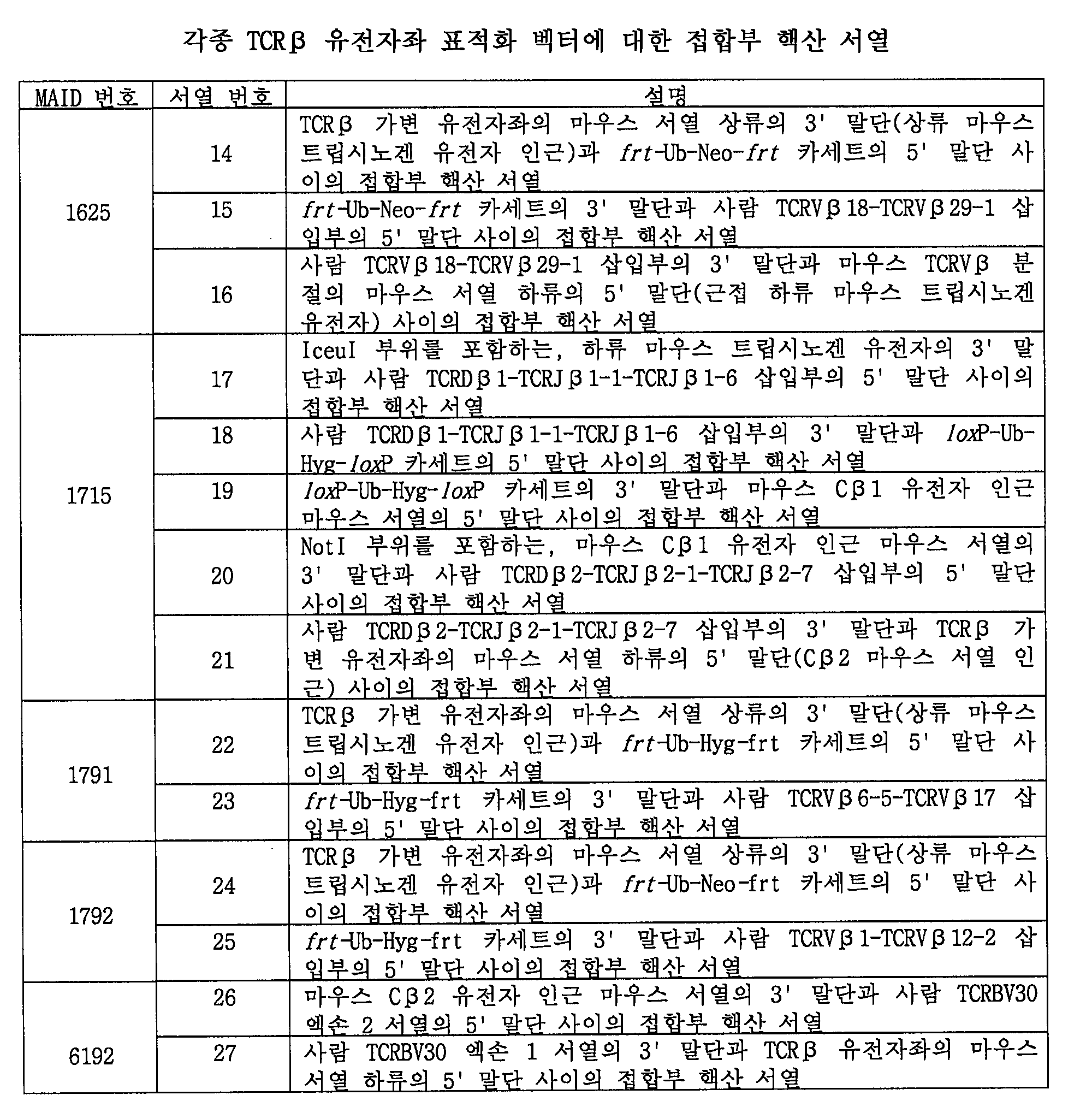
사람 TCRβ 가변 영역 분절은 IMGT 데이터베이스에서와 같이 번호를 매겼다. 각각의 접합부의 100bp 이상(각각의 말단으로부터 약 50bp)은 서열 목록에 포함되어 있다.The human TCR beta variable region segments are numbered as in the IMGT database. Over 100 bp of each junction (about 50 bp from each end) is included in the sequence listing.
구체적으로, 마우스 BAC 클론 RP23-153p19(인비트로겐)로부터의 DNA를 상동성 재조합으로 변형하고, 표적화 벡터(MAID 1544)로서 사용하여 내인성 마우스 TCRβ 유전자좌의 3' 트립시노겐 유전자 클러스터의 바로 상류의 17kb 영역(TCRBV30을 포함함)을 PGK-neo 카세트로 대체하고, 이어서 loxP 부위로 대체하였다(도 8a 참조). 마우스 BAC 클론 RP23-461h15(인비트로겐)로부터의 DNA를 상동성 재조합으로 변형하고, 표적화 벡터(MAID 1542)로서 사용하여 내인성 마우스 TCRβ의 5' 트립시노겐 유전자 클러스터 상류의 8355bp 영역(TCRBV2 및 TCRBV3을 포함함)을 Ub-하이그로마이신 카세트로 대체하고, 이어서 loxP 부위로 대체하였다. 이중 표적화된 염색체(즉, 2개의 표적화 벡터로 표적화된 단일 내인성 마우스 TCRβ 유전자좌)를 포함하는 ES 세포를 당업계에 공지된 핵형분석 및 선별 방법(예를 들면, TAQMAN™)으로 확인하였다. 변형된 ES 세포를 CRE 재조합효소로 처리하고, 이로써 5'과 3' loxP 부위 사이의 영역(즉, TCRBV2 내지 TCRBV30으로부터의 내인성 마우스 TCRβ 유전자좌로 이루어짐)의 결실을 매개하고 단일 loxP 부위, 하이그로마이신 카세트 및 마우스 TCRBD, TCRBJ, 불변 및 인핸서 서열만을 남겨 두었다. 도 8a에 나타낸 바와 같이, 하나의 마우스 TCRVβ는 트립시노겐 유전자의 5' 클러스터의 상류에 남아 있고, 하나의 마우스 TCRBβ는 마우스 Eβ의 하류에 남아 있다.Specifically, the DNA from the mouse BAC clone RP23-153p19 (Invitrogen) was modified with homologous recombination and used as a targeting vector (MAID 1544) to amplify 17 kb of the 3 'trypsinogen gene cluster immediately upstream of the endogenous mouse TCR? The region (including TCRBV30) was designated PGK-neo Cassette, followed by the lox P site (see Fig. 8A). DNA from mouse BAC clone RP23-461h15 (Invitrogen) was modified with homologous recombination and used as a targeting vector (MAID 1542) to amplify the 8355bp region upstream of the 5 'trypsinogen gene cluster of endogenous mouse TCR beta (TCRBV2 and TCRBV3 Was replaced with a Ub-hygromycin cassette, and then replaced with the lox P site. ES cells containing a dual targeted chromosome (i.e., a single endogenous mouse TCR? Locus targeted with two targeting vectors) were identified by karyotyping and screening methods known in the art (e.g., TAQMAN ™). Processing the transformed ES cells with CRE recombinase, whereby the 5 'and 3' lox P region between the region mediates the deletion (i.e., TCRBV2 to endogenous mouse made of an TCRβ locus from TCRBV30) and a single lox P site, the high Germicin cassette and mouse TCRBD, TCRBJ, invariant and enhancer sequences. As shown in Fig. 8A, one mouse TCRV [beta] remains upstream of the 5 'cluster of the trypsinogen gene, and one mouse TCRB [beta] remains downstream of mouse E [beta].
TCRβ에 대한 제1 사람 표적화 벡터는 제1의 14개의 연속 사람 TCRβV 유전자 분절(TRBV18-TRBV29-1)을 함유한 CTD2559j2 BAC 클론(인비트로겐)으로부터의 125,781bp의 사람 DNA를 갖는다. 이러한 BAC를 상동성 재조합에 의해 변형시켜 5' 및 3' 마우스 상동성 아암의 연결을 위한 5' AsiSI 부위 및 3' AscI 부위를 함유하도록 한다. 이러한 사람 단편에 대한 연결을 위해 2개의 상이한 상동성 아암을 사용하였다: RP23-153p19 BAC 클론으로부터의 하류 마우스 트립시노겐 유전자를 둘러싸는 내인성 TCRβ 서열을 함유하는 한 세트의 상동성 아암 및 마우스 BAC 클론 RP23-461h15로부터의 상류 마우스 트립시노겐을 둘러싸는 내인성 TCRβ 서열 5'를 함유하는 또 다른 세트의 상동성 아암. 이러한 마우스-사람 키메라 BAC를 마우스 TCRβ 유전자좌에서의 사람 TCRβ 유전자 분절 및 상류 frt-ub-네오마이신-frt 카세트의 초기 삽입부를 제조하기 위한 표적화 벡터(MAID 1625)로서 사용하고, 14개의 사람(8개의 기능성) TCRβV를 함유하는 사람 TCRβ 미니-유전자좌를 생성하였다(도 8b 참조). MAID 1625의 표적화 벡터를 위한 접합부 핵산 서열(서열번호 14 내지 서열번호 16)은 표 3에 설명되어 있다.The first human targeting vector for TCRβ has 125,781 bp human DNA from the CTD2559j2 BAC clone (Invitrogen) containing the first 14 consecutive human TCRβV gene segments (TRBV18-TRBV29-1). This BAC is modified by homologous recombination to contain the 5 'AsiSI site and the 3' AscI site for the linkage of the 5 'and 3' mouse homologous arms. Two different homologous arms were used for the connection to these human fragments: a set of homologous arms and mouse BAC clones containing endogenous TCR beta sequences surrounding the downstream murine trypsinogen gene from the RP23-153p19 BAC clone Another set of homologous arms containing endogenous TCR beta 5 'surrounding the upstream mouse trypsinogen from RP23-461h15. The mouse-human chimeric mouse from the human BAC TCRβ TCRβ locus gene segment and upstream frt -ub- neomycin-targeting vector used as the initial insertion (MAID 1625) for the manufacture of parts frt cassette, and 14 people (eight Functional TCRβV (see FIG. 8b). Sequence nucleic acid sequences (SEQ ID NO: 14 to SEQ ID NO: 16) for the targeting vector of MAID 1625 are set forth in Table 3.
마우스 TCRβ D 및 J 분절을 사람 TCRβ D 및 J 분절로 대체하기 위해, 마우스 BAC 클론 RP23-302p18(인비트로겐)로부터 및 사람 BAC 클론 RP11-701D14(인비트로겐)로부터의 DNA를 상동성 재조합으로 변형하고, 상기 기재된 바와 같은 TCRβV 미니-유전자좌(즉, MAID 1625)를 함유하는 ES 세포로의 표적화 벡터(MAID 1715)로서 사용하였다. 이러한 변형은 약 18540bp의 영역(3' 트립시노겐 유전자의 폴리A의 100bp 하류로부터, 마우스 TCRBD1-J1, 마우스 불변 1 및 마우스 TCRBD2-J2를 포함하는 D2 클러스터에서의 J 분절로부터의 100bp 하류까지)을 사람 TCRBD1-J1, loxP Ub-하이그로마이신-loxP 카세트, 마우스 불변 1 및 사람 TCRBD2-J2를 함유하는 약 25425bp의 서열로 대체하였다(도 8c의 (i) 참조). 이중 표적화된 염색체(즉, 2개의 표적화 벡터로 표적화된 단일 내인성 마우스 TCRβ 유전자좌)를 포함하는 ES 세포를 당업계에 공지된 핵형분석 및 선별 방법(예를 들면, TAQMAN™)으로 확인하였다. 변형된 ES 세포를 CRE 재조합효소로 처리하고, 이로써 하이그로마이신 카세트의 결실을 매개하고 D1J 클러스터에서의 사람 J 분절로부터의 단일 loxP 부위 하류만을 남겨 두었다(도 8c의 (ii) 참조). MAID 1715의 표적화 벡터를 위한 접합부 핵산 서열(서열번호 17 내지 서열번호 21)은 표 3에 기재되어 있다.The DNA from the mouse BAC clone RP23-302p18 (Invitrogen) and the human BAC clone RP11-701D14 (Invitrogen) was modified with homologous recombination to replace the mouse TCRß D and J segments with human TCR D and J segments (MAID 1715) into ES cells containing the TCR beta V mini-locus (i. E., MAID 1625) as described above. This modification is from about 18540 bp (from 100 bp downstream of the poly A of the 3 'trypsinogen gene to 100 bp downstream from the J segment in the D2 cluster, including mouse TCRBD1-J1, mouse constant 1 and mouse TCRBD2-J2) Was replaced with a sequence of about 25425 bp containing human TCRBD1-J1, lox P Ub -hygromycin- lox P cassette, mouse constant 1 and human TCRBD2-J2 (see (i) of FIG. ES cells containing a dual targeted chromosome (i.e., a single endogenous mouse TCR? Locus targeted with two targeting vectors) were identified by karyotyping and screening methods known in the art (e.g., TAQMAN ™). The transformed ES cells were treated with CRE recombinase, thereby mediating deletion of the hygromycin cassette and leaving only a single lox P site downstream from the human J segment in the D1J cluster (see (ii) in Figure 8c). Sequence nucleic acid sequences (SEQ ID NO: 17 to SEQ ID NO: 21) for the targeting vector of MAID 1715 are listed in Table 3.
후속적으로, 선별 카세트가 교대로 섞여 있는 마우스 BAC 클론 RP23-461h15로부터의 상류 마우스 트립시노겐 유전자를 둘러싸는 내인성 TCRβ 서열을 포함하는 동일한 마우스 5' 아암을 사용하는 일련의 사람 표적화 벡터를 제조하였다.Subsequently, a series of human targeting vectors were constructed using the same mouse 5 'arm containing the endogenous TCR beta sequence surrounding the upstream mouse trypsinogen gene from the mouse BAC clone RP23-461h15, in which the selection cassettes were alternately mixed .
총 40개의 사람 TCRβV(30개의 기능성) 및 사람 TCRβ D 및 J 분절을 함유하는 사람 TCRβ 미니-유전자좌를 생성하기 위해, 사람 BAC 클론 RP11-134h14 및 RP11-785k24(인비트로겐)로부터의 DNA를 상동성 재조합으로 변형하고, 표준 세균 상동성 재조합, 제한 소화/연결 및 다른 클로닝 기술을 사용하여 표적화 벡터(MAID 1791)에 조합하였다. MAID 1791의 표적화 벡터의 도입에 의해, 다음 26개의(22개의 기능성) 연속 사람 TCRβV 유전자 분절(TRBV6-5 내지 TRBV17) 및 5' frt-ub-하이그로마이신-frt 카세트를 함유하는 198,172bp의 사람 DNA를 부가하였다. 생성된 TCRβ 유전자좌는 5' frt-ub-하이그로마이신-frt 카세트와 마우스 TCRβ 불변 유전자 및 인핸서에 작동가능하게 연결되어 있는 총 40개의 사람 TCRβV(30개의 기능성) 및 사람 TCRβ D 및 J 유전자 분절을 함유한다(도 8d 참조). MAID 1791의 표적화 벡터를 위한 접합부 핵산 서열(서열번호 22 및 서열번호 23)은 표 3에 기재되어 있다.DNA from human BAC clones RP11-134h14 and RP11-785k24 (Invitrogen) was cloned to generate human TCR beta mini-loci containing a total of 40 human TCR? V (30 functional) and human TCR? D and J segments Transformed into recombinant, and assembled into the targeting vector (MAID 1791) using standard bacterial homologous recombination, restriction digestion / linkage and other cloning techniques. By the introduction of the targeting vector the MAID 1791, then 26 (22 functional) gene segments continuous man TCRβV (TRBV6-5 to TRBV17) and 5 'frt -ub- hygromycin-person 198,172bp containing cassette frt DNA was added. The resulting TCRβ locus is 5 'frt -ub- hygromycin-frt the cassette and mouse gene and unchangeable TCRβ total of 40 people, which is operably linked to an enhancer TCRβV (30 of functionality) and who TCRβ D and J gene segments (See FIG. 8D). Sequence nucleic acid sequences (SEQ ID NO: 22 and SEQ ID NO: 23) for the targeting vector of MAID 1791 are listed in Table 3.
총 66개의 사람 TCRβV(47개의 기능성) 및 사람 TCRβ D 및 J 분절을 함유하는 사람 TCRβ 미니-유전자좌를 생성하기 위해, 사람 BAC 클론 RP11-902B7(인비트론)로부터의 DNA를 상동성 재조합으로 변형하고, 표적화 벡터(MAID 1792)로서 사용하였다. 이에 의해, 다음 26개의(17개의 기능성) 연속 사람 TCRβV 유전자 분절(TRBV1 내지 TRBV12-2) 및 5' frt-ub-네오마이신-frt 카세트를 함유하는 159,742bp의 사람 DNA가 부가되었다. 생성된 TCRβ 유전자좌는 5' frt-ub-네오마이신-frt 카세트와 마우스 TCRβ 불변 유전자 및 인핸서에 작동가능하게 연결되어 있는 총 66개의 사람 TCRβV(47개의 기능성) 및 사람 TCRβ D 및 J 유전자 분절을 함유한다(도 8e 참조). MAID 1792의 표적화 벡터를 위한 접합부 핵산 서열(서열번호 24 및 서열번호 25)은 표 3에 기재되어 있다.DNA from the human BAC clone RP11-902B7 (Invitron) was modified with homologous recombination to generate a total of 66 human TCR beta V (47 functional) and human TCR beta mini-loci containing human TCR D and J segments , As a targeting vector (MAID 1792). As a result, the following 26 (17 functional) gene segments continuous man TCRβV (TRBV1 to TRBV12-2) and 5 'frt -ub- neomycin-DNA of the person 159,742bp containing frt cassette was added. The resulting TCRβ locus is 5 'frt -ub- neomycin-containing frt cassette and mouse constant TCRβ gene and the total of 66 people, which is operably linked to an enhancer TCRβV (47 of functionality), and human TCRβ D and J gene segments (See FIG. 8E). Sequence nucleic acid sequences (SEQ ID NO: 24 and SEQ ID NO: 25) for the targeting vector of MAID 1792 are listed in Table 3.
상기 단계들 중의 어느 단계에서, 선별 카세트를 Cre 또는 Flp 재조합효소에 의한 결실로 제거한다. 예를 들면, 도 7에 도시된 바와 같이, MAID 1716은 하이그로마이신 카세트 결실을 갖는 MAID 1715에 상응한다.In either of the steps, the selection cassette is removed by deletion with the Cre or Flp recombinase. For example, as shown in Figure 7,
최종적으로, 총 67개의 사람 TCRβV(48개의 기능성) 및 사람 TCRβ D 및 J 분절을 함유하는 사람 TCRβ 미니-유전자좌를 생성하였다. 마우스 TCRBV31은 TCRBC2의 약 9.4kb 3'(제2 TCRB 불변 영역 서열)에 위치하고, 다른 TCRBV 분절에 대하여 반대방향이다. 등가의 사람 V 분절은 TCRBV30이며, 이는 사람 TCRB 유전자좌에서 유사한 위치에 위치되어 있다.Finally, a total of 67 human TCRβV (48 functional) and human TCRβ mini-loci containing human TCRβ D and J segments were generated. The mouse TCRBV31 is located at about 9.4 kb 3 '(the second TCRB constant region sequence) of TCRBC2 and in the opposite direction to the other TCRBV segments. The equivalent human V segment is TCRBV30, which is located at a similar position in the human TCRB locus.
TCRBV31을 사람화하기 위해, 마우스 TCRBV31을 함유하는 마우스 BAC 클론을 세균 상동성 재조합에 의해 변형하여 LTVEC MAID 6192를 제조하였다(도 8f 참조). 엑손 1에서 개시 코돈부터 시작하는 전체 암호화 영역, 인트론, 3' UTR 및 TCRBV31의 재조합 신호 서열(RSS)을 상동성 사람 TCRBV30 서열로 대체하였다. 5' UTR은 마우스 서열로서 유지되었다. 선택을 위해, 자가-결실 카세트(lox2372-유비퀴틴 프로모터-Hyg-PGK폴리A-프로타민 프로모터-Cre-SV40폴리A-lox2372)를 인트론(엑손 1의 72bp 3', 엑손 2의 1,289bp 5')에 삽입하였다. 간단히, 도 7 및 도 8은 hTCRBV30의 선별 카세트 3'을 도시하며, 이는 hTCRBV30 유전자의 엑손 1과 엑손 2 사이의 인트론에 위치되도록 유전자 조작되었다. Cre 발현을 촉진하는 프로타민 프로모터는 감수분열 후 정자세포에서 독점적으로 전사되며, 카세트는 마우스의 F1 세대에서 "자가-결실"된다.To humanize TCRBV31, a mouse BAC clone containing mouse TCRBV31 was modified by bacterial homologous recombination to produce LTVEC MAID 6192 (see FIG. 8F). The entire coding region starting from the initiation codon in
MAID 6192의 표적화 벡터를 위한 접합부 핵산 서열(서열번호 26 및 서열번호 27)은 표 3에 기재되어 있다. MAID 6192 DNA는 MAID 1792 ES 세포에 전기천공된다. 하이그로마이신 내성을 위해 ES 세포 클론을 선택하고 마우스 TCRB31 대립유전자의 소실 및 사람 TCRB30 대립유전자의 획득에 대해 선별한다.Sequence nucleic acid sequences (SEQ ID NO: 26 and SEQ ID NO: 27) for the targeting vector of MAID 6192 are set forth in Table 3. MAID 6192 DNA is electroporated into MAID 1792 ES cells. ES cell clones are selected for hygromycin resistance and screened for loss of the mouse TCRB31 allele and acquisition of the human TCRB30 allele.
남아 있는 5' 마우스 TCRβ V 분절을 임의로 결실시키기 위해 유사한 유전자 조작 전략을 사용한다.A similar genetic manipulation strategy is used to randomly delete the remaining 5 ' mouse TCR [beta] V segments.
실시예Example 4: 4: TCRTCR α/alpha / TCRTCR β 마우스의 생산Production of β mice
TCRα 및 TCRβ 유전자좌의 진행성 사람화의 각 단계에서, 사람화된 TCRα 가변 유전자좌에 대해 동형접합성인 마우스를 사람화된 TCRβ 가변 유전자좌에 대해 동형접합성인 마우스로 번식시켜 사람화된 TCRα 및 TCRβ 가변 유전자좌를 포함하는 자손을 형성할 수 있다. 사람화된 TCRα 및 사람화된 TCRβ 유전자좌에 대하여 동형접합성으로 자손을 번식시킨다.At each stage of the progressive humanization of the TCRa and TCRp loci, homozygous mice for the humanized TCR alpha variable locus were propagated with homozygous mice for the humanized TCR beta variable locus to generate the humanized TCR alpha and TCR beta variable loci May form the containing progeny. Propagation of offspring with homozygosity to humanized TCRα and humanized TCRβ loci.
하나의 실시형태에서, 8개의 사람 Vα 및 61개의 사람 Jα(MAID 1767; "1767 HO")를 포함하는 사람화된 TCRα 가변 유전자좌에 대해 동형접합성인 마우스를 14개의 사람 Vβ, 2개의 사람 Dβ 및 14개의 사람 Jβ(MAID 1716; "1716 HO")를 포함하는 사람화된 TCRβ 가변 유전자좌에 대해 동형접합성인 마우스로 번식시켰다. 2개의 사람화된 유전자좌에 대하여 동형접합성으로 자손을 번식시켰다.In one embodiment, mice that are homozygous for humanized TCRα variable loci comprising eight human Vα and 61 human Jα (
실시예Example 5: 사람화된 5: Humanized TCRTCR α 및/또는 alpha and / or TCRTCR β beta 유전자좌에Locus 대해 동형접합성인 마우스에서의 비장 T 세포 생산 Production of spleen T cells in homozygous adult mice
야생형(WT) 마우스, 결실된 마우스 TCRα 유전자좌("MAID 1540", 도 3 참조)를 갖는 마우스, 사람 TCRα 유전자좌("MAID 1767", 도 3 참조)에 대해 동형접합성인 마우스, 2개의 남아 있는 마우스 V 분절을 제외하고 결실된 TCRβ V 분절("MAID 1545", 도 7 참조)을 갖는 마우스, 사람 TCRβ 유전자좌에 동형접합성이고 2개의 남아 있는 마우스 V 분절("MAID 1716", 도 7 참조)을 포함하는 마우스, 및 사람 TCRα와 TCRβ 유전자좌 둘 다에 대해 동형접합성이고 2개의 남아 있는 마우스 V 분절("MAID 1767 1716")을 포함하는 TCRβ 유전자좌를 갖는 마우스로부터의 비장을 콜라게나제 D(Roche Bioscience)로 관류시키고, 적혈구를 ACK 용혈 완충액으로 용혈시킨 후 RPMI 배지에서 세척하였다.Mice that were homozygous for the wild type (WT) mouse, the deleted mouse TCRa locus ("
단일 WT, MAID 1540, 1767, 1545, 1716 및 1716 1767의 대표적인 동물로부터의 비장 세포를 유동 세포측정법으로 평가하였다. 간단히, 표준 방법을 사용하여 세포 현탁액을 제조하였다. 1×10⁶개의 세포를, 얼음상에서 30분 동안 항체의 적절한 칵테일로 착색된 항-마우스 CD16/CD32(2.4G2, BD)와 함께 10분 동안 얼음상에서 항온처리하였다. 착색 후, 세포를 세척하고, 이어서 2% 포름알데하이드로 고정하였다. LSRII/CantoII/LSRFortessa 유동 세포측정기 상에서 데이터 획득을 수행하고 FlowJo로 분석하였다.Spleen cells from representative animals of single WT,
비장 세포의 착색 동안, 항-마우스 FITC-CD3 (17A2, BD)을 사용하였다. 도 9에서 입증된 바와 같이, 사람 TCR 분절이 존재하는 마우스는 유의한 수의 CD3+ T 세포를 생산할 수 있는 반면, TCRα 마우스 유전자좌가 결실된 마우스는 그러하지 않았다. TCRβ 유전자좌가 결실된 마우스도 또한 CD3+ T 세포를 생산하였는데, 이는 남아 있는 3' 마우스 V 분절의 이용으로 인한 것으로 추정된다(이하 참조).During the staining of splenocytes, anti-mouse FITC-CD3 (17A2, BD) was used. As evidenced in Figure 9, mice in which the human TCR segment was present were capable of producing a significant number of CD3 + T cells, whereas those mice lacking the TCR alpha mouse locus did not. Mice lacking the TCRβ locus also produced CD3 + T cells, presumably due to the use of the remaining 3 'mouse V segment (see below).
실시예Example 6: 6: 사람화된Humanized TCRTCR α 및/또는 alpha and / or TCRTCR β beta 유전자좌에Locus 대해 동형접합성인 마우스에서의 흉선 T 세포 발달 Thymus T cell development in homozygous adult mice
사람화된 TCRα 및/또는 TCRβ 유전자좌에 대해 동형접합성인 마우스가 흉선에서 정상적인 T 세포 발달을 나타내는지 결정하기 위해, 4개의 각 WT, 1767 HO, 1716 HO 및 1716 HO 1767 HO의 연령 일치 동물(7 내지 10주령)을 유동 세포측정법에 사용하여 각종 발단 단계에서 T 세포의 생산을 평가할 뿐만 아니라, DN, DP, CD4 SP 및 CD8 SP T 세포 각각의 빈도 및 절대수를 평가하였다.To determine whether homozygous homozygous mice for humanized TCRα and / or TCRβ loci display normal T cell development in the thymus, age-matched animals (7) of each of the four WT, 1767 HO, 1716 HO and 1716
세포 유형 결정은 표 1에 요약된 바와 같은 CD4, CD8, CD44 및 CD25 세포 표면 마커의 존재에 근거하여 이루어졌다. 세포 유형 지정과 흉선 세포에서의 세포 표면 마커의 발현 사이의 상관관계는 다음과 같다: 이중 음성(DN) 세포(CD4- CD8-), 이중 양성(DP) 세포(CD4+ CD8+), CD4 단일 양성 세포(CD4+ CD8-), CD8 단일 양성 세포(CD4- CD8+), 이중 음성 1/DN1 세포(CD4- CD8-, CD25- CD44+), 이중 음성 2/DN2 세포(CD4- CD8-, CD25+ CD44+), 이중 음성 3/DN3 세포(CD4- CD8-, CD25+ CD44-) 및 이중 음성 4/DN4 세포(CD4- CD8-, CD25- CD44-).Cell type determinations were made based on the presence of CD4, CD8, CD44 and CD25 cell surface markers as summarized in Table 1. The correlation between cell typing and the expression of cell surface markers in thymocytes is as follows: Double negative (DN) cells (CD4- CD8-), double positive (DP) cells (CD4 + CD8 +), CD4 single positive cells (CD4 + CD8 +), CD8 + CD4 + CD8 +, CD8 + CD4 + CD8 + Negative 3 / DN3 cells (CD4- CD8-, CD25 + CD44-) and dual negative 4 / DN4 cells (CD4- CD8-, CD25- CD44-).
흉선 세포를 유동 세포측정법으로 평가하였다. 간단히, 표준 방법을 사용하여 세포 현탁액을 제조하였다. 실시예 5에 기재된 바와 같이 유동 세포분석법을 수행하였다. 사용된 항체는 항-마우스 PE-CD44 (IM7, BioLegend), PeCy7-CD25 (PC61, BioLegend), APC-H7-CD8a (53-6.7, BD) 및 APC-CD4 (GK1.5, eBioscience)이었다.Thymocytes were evaluated by flow cytometry. Briefly, cell suspensions were prepared using standard methods. Flow cell analysis was performed as described in Example 5. The antibodies used were anti-mouse PE-CD44 (IM7, BioLegend), PeCy7-CD25 (PC61, BioLegend), APC-H7-CD8a (53-6.7, BD) and APC-CD4 (GK1.5, eBioscience).
도 10 및 도 11에 도시된 바와 같이, 사람화된 TCRα, TCRβ, 및 TCRα와 TCRβ 둘 다에 대해 동형접합성인 마우스는 DN1, DN2, DN3, DN4, DP, CD4 SP 및 CD8 SP T 세포를 생산할 수 있는데, 이는 상기 사람화된 유전자좌로부터 생산된 T 세포가 흉선에서 T 세포를 발현시킬 수 있음을 나타낸다.As shown in Figures 10 and 11, mice that are homozygous for both humanized TCR alpha, TCR beta, and TCR alpha and TCR beta produce DN1, DN2, DN3, DN4, DP, CD4 SP and CD8 SP T cells , Indicating that T cells produced from the humanized locus can express T cells in the thymus.
실시예Example 7: 사람화된 7: Humanized TCRTCR α 및/또는 alpha and / or TCRTCR β beta 유전자좌에Locus 대해 동형접합성인 마우스에서의 비장 T 세포 분화 Splenic T cell differentiation in homozygous adult mice
사람화된 TCRα 및/또는 TCRβ 유전자좌에 대해 동형접합성인 마우스가 말초(예를 들면, 비장)에서 정상적인 T 세포 분화를 나타내는지 결정하기 위해, 4개의 각 WT, 1767 HO, 1716 HO 및 1716 HO 1767 HO의 연령 일치 동물(7 내지 10주령)을 유동 세포측정법에 사용하여 비장에서의 각종 T 세포 유형(CD3+, CD4+, CD8+, Tnaive, Tcm 및 Teff / em)의 생산을 평가할 뿐만 아니라, 비장에서의 각 T 세포 유형의 절대수를 평가하였다.To determine whether mice that are homozygous for humanized TCRα and / or TCRβ loci display normal T cell differentiation at the periphery (eg, the spleen), four WT, 1767 HO, 1716 HO, and 1716
세포 유형 결정은 CD19 (B 세포 마커), CD3 (T 세포 마커), CD4, CD8, CD44 및 CD62L (L-선택) 세포 표면 마커의 존재에 근거하여 이루어졌다. 세포 유형 지정과 비장에서의 세포 표면 마커의 발현 사이의 상관관계는 다음과 같다: T 세포(CD3+), CD4 T 세포(CD3+ CD4+ CD8-), CD8 T 세포(CD3+ CD4- CD8+), CD4 효과기/효과기 기억 T 세포(CD3+ CD4+ CD8- CD62L- CD44+), CD4 중심 기억 T 세포(CD3+ CD4+ CD8- CD62L+ CD44+), CD4 미접촉 T 세포(CD3+ CD4+ CD8- CD62L+ CD44-), CD8 효과기/효과기 기억 T 세포(CD3+ CD4- CD8+ CD62L- CD44+), CD8 중심 기억 T 세포(CD3+ CD4- CD8+ CD62L+ CD44+), CD8 미접촉 T 세포(CD3+ CD4- CD8+ CD62L+ CD44-).Cell type determinations were based on the presence of CD19 (B cell marker), CD3 (T cell marker), CD4, CD8, CD44 and CD62L (L-selection) cell surface markers. (CD3 +), CD4 T cells (CD3 + CD4 + CD8-), CD8 T cells (CD3 + CD4 + CD8 +), CD4 effectors / (CD3 + CD4 + CD8- CD62L + CD44 +), CD4-mediated T cells (CD3 + CD4 + CD8 + CD62 + CD44 +), CD4 + CD3 + CD4 + CD8 + CD62 + CD44 +), CD8-mediated T cells (CD3 + CD4 + CD8 + CD62 + CD44 +), CD8 + noncontact T cells (CD3 + CD4 + CD8 + CD62L + CD44 +).
비장 세포를 유동 세포측정법으로 평가하였다. 간단히, 표준 방법을 사용하여 세포 현탁액을 제조하였다. 실시예 5에 기재된 바와 같이 유동 세포분석법을 수행하였다. 사용된 항체는 항-마우스 FITC-CD3 (17A2, BD), PE-CD44 (IM7, BioLegend), PerCP-Cy5.5-CD62L (Mel-14, BioLegend), APC-H7-CD8a (53-6.7, BD), APC-CD4 (GK1.5, eBioscience) 및 V450-CD19 (1D3, BD)이었다.Splenocytes were evaluated by flow cytometry. Briefly, cell suspensions were prepared using standard methods. Flow cell analysis was performed as described in Example 5. The antibodies used were anti-mouse FITC-CD3 (17A2, BD), PE-CD44 (IM7, BioLegend), PerCP-Cy5.5-CD62L (Mel- 14, BioLegend), APC-H7- BD), APC-CD4 (GK1.5, eBioscience) and V450-CD19 (1D3, BD).
도 12 내지 도 14에 도시된 바와 같이, 사람화된 TCRα, TCRβ, 및 TCRα와 TCRβ 둘 다에 대해 동형접합성인 마우스의 비장에서의 T 세포는 T 세포를 분화시킬 수 있었으며, CD4+ 및 CD8+ T 세포는 모두 존재하였다. 또한, 기억 T 세포는 시험된 마우스의 비장에서 검출되었다.As shown in Figures 12-14, T cells in spleens of humanized TCR [alpha], TCR [beta], and mice homozygous for both TCR [alpha] and TCR [beta] were able to differentiate T cells and CD4 + and CD8 + T cells Were all present. In addition, memory T cells were detected in the spleen of the tested mice.
실시예Example 8: 사람화된 8: Humanized TCRTCR 마우스에서의 사람 V 분절의 이용 Use of human V-segments in mice
유동 세포측정법 및 TAQMAN™ 실시간 PCR을 사용하여, 사람화된 TCRβ 유전자좌에 대해 동형접합성인 마우스(1716 HO) 및 사람화된 TCRβ와 TCRα 유전자좌 둘 다에 대해 동형접합성인 마우스(1716 HO 1767 HO) 각각에서 사람 TCRβ V 분절의 발현을 단백질 및 RNA 수준에 대하여 평가하였다.Using flow cytometry and TAQMAN (TM) real-time PCR, mice homozygous for the humanized TCR? Locus (1716 HO) and mice homozygous for both the humanized TCR? And TCR? Locus (1716
유동 세포측정법을 위해, 비장 T 세포를 준비하고 도 5에서 기재된 바와 같이 분석을 수행하였다. 유동 세포측정법을 위해, TCRβ 레퍼토리 키트(IOTEST®Beta Mark, Beckman Coulter)를 사용하였다. 상기 키트는 다수의 사람 TCRBV, 예를 들면, hTRBV-18, -19, -20, -25, -27, -28 및 -29에 특이적인 항-사람 항체를 함유한다.For flow cytometry, splenic T cells were prepared and analyzed as described in FIG. For flow cytometry, a TCR beta repertoire kit (IOTEST®Beta Mark, Beckman Coulter) was used. The kit contains anti-human antibodies specific for multiple human TCRBV, e.g., hTRBV-18, -19, -20, -25, -27, -28 and -29.
결과를 도 15a 및 도 15b에 요약한다. 도 15a(CD8 T 세포 중첩) 및 도 15b(CD4 T 세포 중첩)에 나타낸 표는 1716 HO와 1716 HO 1767 HO 마우스 둘 다에서의 비장 T 세포가 다수의 사람 TCRβ V 분절을 이용하였음을 입증한다. 야생형 마우스를 음성 대조군으로서 사용하였다.The results are summarized in Figs. 15A and 15B. The table shown in Figure 15a (CD8 T cell overlap) and Figure 15b (CD4 T cell overlap) demonstrates that splenic T cells from both 1716 HO and 1716
실시간 PCR을 위해, 제조업자의 설명서에 따라 Microarrays Total RNA Isolation Kit (Ambion by Life Technologies)에 대한 MAGMAX™-96을 사용하여 비장 및 흉선으로부터 총 RNA를 정제하였다. MAGMAX™ TURBO™ DNase Buffer 및 TURBO DNase를 사용하여 상기에 열거된 MAGMAX 키트(Ambion by Life Technologies)로부터 게놈 DNA를 제거하고, SUPERSCRIPT® VILO™ Master Mix(Invitrogen by Life Technologies)를 사용하여 mRNA(2.5ug 이하)를 cDNA에 역전사시켰다. cDNA를 2-5ng/mL로 희석하고, 제조업자의 지침서에 따라 표 4에 나타낸 프라이머 및 Taqman MGB 프로브(Applied Biosystems) 또는 BHQ1/BHQ-Plus 프로브(Biosearch Technologies)를 사용하는 ABI 7900HT Sequence Detection System(Applied Biosystems)을 사용하여 cDNA 10-25ng을 TAQMAN® Gene Expression Master Mix(Applied Biosystems by Life Technologies)로 증폭시켰다. 각 유전자의 상대적 발현을 쥐과 TCRβ 불변 1(TRBC1) 대조군으로 표준화하였다.For real-time PCR, total RNA was purified from spleen and thymus using MAGMAX ™ -96 for Microarrays Total RNA Isolation Kit (Ambion by Life Technologies) according to the manufacturer's instructions. Genomic DNA was removed from the MAGMAX kit (Ambion by Life Technologies) listed above using MAGMAX ™ TURBO ™ DNase Buffer and TURBO DNase and mRNA (2.5 μg) was extracted using SUPERSCRIPT® VILO ™ Master Mix (Invitrogen by Life Technologies) ) Was reverse transcribed to cDNA. The cDNA was diluted to 2-5 ng / mL and analyzed using the primers shown in Table 4 and the ABI 7900HT Sequence Detection System (Applied Biosystems) using a Taqman MGB probe (Applied Biosystems) or a BHQ1 / BHQ-Plus probe (Biosearch Technologies) Biosystems) were used to amplify 10-25 ng of cDNA with TAQMAN Gene Expression Master Mix (Applied Biosystems by Life Technologies). Relative expression of each gene was normalized to murine and TCRβ constant 1 (TRBC1) controls.


도 16a 및 도 16b에서 입증된 바와 같이, 사람화된 TCRβ 유전자좌에 대해 동형접합성인 마우스(1716 HO) 및 사람화된 TCRβ와 TCRα 유전자좌 둘 다에 대해 동형접합성인 마우스(1716 HO 1767 HO)는 흉선과 비장 둘 다에서 각종 사람 TCRβ 분절의 RNA 발현을 나타냈다. 마우스는 또한 마우스 TRBV-1 및 TRBV-31 분절의 RNA 발현을 나타냈으나(데이터를 나타내지 않음), 어떠한 마우스 TRBV-1 단백질도 유동 세포분석법에 의해 검출되지 않았다(데이터를 나타내지 않음).As evidenced in Figures 16a and 16b, mice homozygous for the humanized TCR? Locus (1716 HO) and mice homozygous for both the humanized TCR? And TCR? Locus (1716
도 8f에서 입증된 바와 같이 마우스 TRBV-31 분절을 사람 TRBV-30로 대체하고, 본원에 개시된 바와 같이 MAID 6192 ES 세포로부터 마우스를 생산한다. 본원에 개시된 바와 같이 유동 세포분석법 및/또는 실시간 PCR에 의해 TRBV-30을 포함한 사람 Vβ 분절의 이용에 대해 생성된 동형접합성 동물의 비장 및 흉선을 시험한다.The mouse TRBV-31 segment was replaced with human TRBV-30 as demonstrated in Figure 8f and mice were generated from MAID 6192 ES cells as described herein. Spleen and thymus of homozygous animals generated for the use of human V beta segments including TRBV-30 by flow cytometry and / or real-time PCR as described herein are tested.
실시예Example 9: 23개의 사람 9: 23 people TCRTCR Vα 분절에 대해 동형접합성인 마우스에서의 T 세포 발달 T cell development in homozygous mice for the Vα segment
동형접합성 사람화된 TCRα 마우스는 8개의 사람 Vα 분절 및 61개의 사람 Jα 분절을 포함하는 이전 실시예(1767 HO, 도 3 참조)를 특징으로 한다. 23개의 사람 Vα 분절 및 61개의 사람 Jα 분절을 포함하는 동형접합성 사람화된 TCRα 마우스(1979 HO, 도 3 참조)에 대해 비장 CD3+ T 세포를 생산하고 흉선에서 T 세포 발현을 나타내는 능력을 시험하였다.Homozygous humanized TCRα mice are characterized by the previous example (1767 HO, see FIG. 3), which comprises 8 human Vα segments and 61 human Jα segments. The ability to express spleen CD3 + T cells and express T cell expression in the thymus was tested for homozygous humanized TCRα mice (1979 HO, see FIG. 3) containing 23 human Vα segments and 61 human Jα segments.
이전 실시예에 개시된 바와 같이 적절한 항체를 사용하여 유동 세포측정법에 의해 실험 데이터를 획득하였다. 도 17에 도시된 바와 같이, 23개의 사람 Vα 분절 및 61개의 사람 Jα 분절에 대해 동형접합성인 마우스는 유의한 다수의 비장 CD3+ T 세포를 생산하였고, 말초 CD3+ T 세포의 퍼센트(%)는 야생형 동물의 퍼센트에 필적하였다(도 19 참조).Experimental data were obtained by flow cytometry using appropriate antibodies as described in the previous examples. As shown in Figure 17, mice homozygous for 23 human V [alpha] segments and 61 human J [alpha] segments produced significant numbers of spleen CD3 + T cells, and percent (%) of peripheral CD3 + (See Figure 19).
더욱이, 1979 HO 마우스에서의 흉선 세포는 T 세포를 발현할 수 있고 DN1, DN2, DN3, DN4, DP, CD4 SP 및 CD8 SP 단계에서 T 세포를 포함하였다(도 18 참조).Moreover, thymocytes in 1979 HO mice were able to express T cells and included T cells at DN1, DN2, DN3, DN4, DP, CD4 SP and CD8 SP stages (see FIG. 18).
실시예Example 10: 사람 10: People TCRTCR α와 alpha and TCRTCR β 가변 영역 분절 둘 다의 완전한 레퍼토리에 대해 동형접합성인 마우스에서의 T 세포 발달 및 분화T cell development and differentiation in homozygous mice for a complete repertoire of both < RTI ID = 0.0 >
사람 TCRα 가변 영역 분절(즉, 54개의 사람 Vα 및 61개의 사람 Jα)의 완전한 레퍼토리에 대해 동형접합성이고 사람 TCRβ 가변 영역 분절(67개의 사람 Vβ, 2개의 사람 Dβ 및 14개의 사람 Jβ)의 완전한 레퍼토리에 대해 동형접합성인 마우스, "1771 HO 6192 HO"(도 3 및 도 7 참조)에 대해 정상적인 T 세포를 발현하는 흉선 세포를 생산하고 말초에서 정상적인 T 세포를 분화시키는 T 세포를 생산하고 사람 Vα 및 Vβ 분절들의 완전한 레퍼토리를 이용하는 능력을 시험하였다.Is homozygous for a complete repertoire of human TCRα variable region segments (ie, 54 human Vα and 61 human Jα) and is a complete repertoire of human TCRβ variable region segments (67 human Vβ, 2 human Dβ and 14 human Jβ) 1771 HO 6192 HO "(see FIGS. 3 and 7) to produce T cells that differentiate normal T cells at the periphery and produce human T cells that express normal T cells, The ability to utilize a complete repertoire of V [beta] segments was tested.
실시예 5 및 6에서 기재된 바와 같이 항-마우스 CD4, CD8, CD25 및 CD44 항체를 사용하여 흉선에서의 DN1, DN2, DN3, DN4, DP, CD4 SP 및 CD8 SP T 세포의 존재를 결정하기 위해 유동 세포측정법을 수행하였다. 또한, 말초에서의 CD3+ T 세포의 수를 결정하고 말초에서의 T 세포 분화(예를 들면, 말초에서의 효과기 및 기억 T 세포의 존재)를 평가하기 위해 유동 세포분석법을 수행하였다. 실시예 5 및 7에 기재된 바와 같이 항-마우스 CD3, CD19, CD4, CD8, CD44 및 CD62L을 사용하여 실험을 수행하였다.To determine the presence of DN1, DN2, DN3, DN4, DP, CD4 SP and CD8 SP T cells in the thymus using anti-mouse CD4, CD8, CD25 and CD44 antibodies as described in Examples 5 and 6, Cellular measurements were performed. Flow cytometry was also performed to determine the number of CD3 + T cells at the periphery and to assess T cell differentiation at the periphery (e.g., the presence of effectors and memory T cells at the periphery). Experiments were performed using anti-mouse CD3, CD19, CD4, CD8, CD44 and CD62L as described in Examples 5 and 7.
최종적으로, 1771 HO 6192 HO 마우스에서의 T 세포가 TCRB 및 TCRA V 분절들의 완전한 레퍼토리를 이용하는지를 결정하기 위해 유량 세포분석법 및/또는 실시간 PCR을 수행하였다. 유량 세포분석법을 사용하는 단백질 발현의 경우, 항-사람 hTCRBV-특이적인 항체를 함유하는 TCRβ 레퍼토리 키트(IOTEST® Beta Mark, Beckman Coulter)를 사용한다(도 8 참조). 실시간 PCR을 사용하는 RNA 발현의 경우, 제조업자의 지침서에 따라 및 실시예 8에 기재된 바와 같이 사람 TCR-V 프라이머 및 Taqman 프로브를 사용하여 비장 또는 흉선으로부터의 cDNA를 증폭시킨다.Finally, flow cytometry and / or real-time PCR were performed to determine if T cells in 1771 HO 6192 HO mice utilize a complete repertoire of TCRB and TCRA V segments. For protein expression using flow cytometry, a TCR beta repertoire kit (IOTEST Beta Mark, Beckman Coulter) containing anti-human hTCRBV-specific antibodies is used (see FIG. 8). For RNA expression using real-time PCR, cDNA from spleen or thymus is amplified using human TCR-V primers and Taqman probes as described in Example 8 and in accordance with the manufacturer's instructions.
등가범위Equivalent range
당업자들은 불과 통상적인 실험을 사용하여 본원에 개시된 본 발명의 특정 실시형태의 수많은 등가범위를 인식하거나 알아낼 수 있을 것이다. 이러한 등가범위는 첨부된 특허청구범위에 포함되는 것으로 의도된다.Those skilled in the art will recognize, or be able to ascertain using no more than routine experimentation, many equivalents to the specific embodiments of the invention disclosed herein. Such equivalence ranges are intended to be encompassed by the appended claims.
본원을 통하여 인용된 모든 비특허 문헌, 특허원 및 특허의 전체 내용은 그 전체가 본원에 인용에 의해 포함된다.The entire contents of all non-patent documents, patent applications and patents cited throughout this application are incorporated herein by reference in their entirety.
SEQUENCE LISTING <110> REGENERON PHARMACEUTICALS, INC. <120> GENETICALLY MODIFIED T CELL RECEPTOR MICE <130> 1290A-WO <150> US 61/552,582 <151> 2011-10-28 <150> US 61/621,198 <151> 2012-04-06 <150> US 61/700,908 <151> 2012-09-14 <160> 54 <170> KopatentIn 1.71 <210> 1 <211> 100 <212> DNA <213> Artificial Sequence <220> <223> Synthetic <400> 1 atggagtagt cagaacacac tcttcagaag ggactcctga tttcaaaggg ggtaccgggc 60 cccccctcga ggtcgacata acttcgtata gcatacatta 100 <210> 2 <211> 108 <212> DNA <213> Artificial Sequence <220> <223> Synthetic <400> 2 ggccatgcat ataacttcgt atagcataca ttatacgaag ttataccggt gcgatcgcgc 60 gcttccctct tctaaccact aattcaaaaa ggattgtaag taatgttt 108 <210> 3 <211> 145 <212> DNA <213> Artificial Sequence <220> <223> Synthetic <400> 3 agacagaccc ctaaacacct ccaaattaaa agcggcaaag agataaggtt ggagctccac 60 cgcggtggcg gccgccaccg cggtggagct cgaggtttcc ggtacttaac aacagagcac 120 agatttagtg gtgagggact ctctc 145 <210> 4 <211> 100 <212> DNA <213> Artificial Sequence <220> <223> Synthetic <400> 4 atggagtagt cagaacacac tcttcagaag ggactcctga tttcaaaggg ggtaccgggc 60 cccccctcga ggtcgacata acttcgtata gcatacatta 100 <210> 5 <211> 109 <212> DNA <213> Artificial Sequence <220> <223> Synthetic <400> 5 ggccatgcat ataacttcgt atagcataca ttatacgaag ttataccggt gcgatcgctc 60 aagcatgcaa gggtaacata tgttatgaga ttatattttc tttatctca 109 <210> 6 <211> 100 <212> DNA <213> Artificial Sequence <220> <223> Synthetic <400> 6 atggagtagt cagaacacac tcttcagaag ggactcctga tttcaaaggg gggtaccggg 60 ccccccctcg agaagttcct attccgaagt tcctattctc 100 <210> 7 <211> 108 <212> DNA <213> Artificial Sequence <220> <223> Synthetic <400> 7 gttcctattc cgaagttcct attctctaga aagtatagga acttcctagg gcgatcgctc 60 ctctccaggc tcgaattagt attacagttg aggcacgttg tcctcccg 108 <210> 8 <211> 100 <212> DNA <213> Artificial Sequence <220> <223> Synthetic <400> 8 atggagtagt cagaacacac tcttcagaag ggactcctga tttcaaaggg ggtaccgggc 60 cccccctcga ggtcgacata acttcgtata gcatacatta 100 <210> 9 <211> 108 <212> DNA <213> Artificial Sequence <220> <223> Synthetic <400> 9 ggccatgcat ataacttcgt atagcataca ttatacgaag ttataccggt gcgatcgccg 60 cctccatttc cttcatagga aacatgaagt gaatggggct gtgtgtgt 108 <210> 10 <211> 100 <212> DNA <213> Artificial Sequence <220> <223> Synthetic <400> 10 atggagtagt cagaacacac tcttcagaag ggactcctga tttcaaaggg ggtaccgggc 60 cccccctcga ggtcgacata acttcgtata gcatacatta 100 <210> 11 <211> 108 <212> DNA <213> Artificial Sequence <220> <223> Synthetic <400> 11 ggccatgcat ataacttcgt atagcataca ttatacgaag ttataccggt gcgatcgctg 60 ggagcacgtt ccattattat aacaactttc tgaacacaag agggcagt 108 <210> 12 <211> 100 <212> DNA <213> Artificial Sequence <220> <223> Synthetic <400> 12 atggagtagt cagaacacac tcttcagaag ggactcctga tttcaaaggg ggtaccgggc 60 cccccctcga ggtcgacata acttcgtata gcatacatta 100 <210> 13 <211> 108 <212> DNA <213> Artificial Sequence <220> <223> Synthetic <400> 13 ggccatgcat ataacttcgt atagcataca ttatacgaag ttataccggt gcgatcgctt 60 taaggtgagg aggcaggcaa taccccctct ccaccgcatt ctcaatcc 108 <210> 14 <211> 100 <212> DNA <213> Artificial Sequence <220> <223> Synthetic <400> 14 gggggggtgg ggtggaggag gagggtacag catctcctct ccttcctctc tggtaccgaa 60 gttcctattc cgaagttcct attctctaga aagtatagga 100 <210> 15 <211> 108 <212> DNA <213> Artificial Sequence <220> <223> Synthetic <400> 15 gaagttccta ttctctagaa agtataggaa cttcctaggg tttcaccggt gcgatcgcgt 60 gaatatacta aaaaccactt aattatatat ttgaaagggt ggatgtta 108 <210> 16 <211> 108 <212> DNA <213> Artificial Sequence <220> <223> Synthetic <400> 16 ctctctccta cccagctcct ctcacacgag cctgaaggcc ctgccaaggt ggcgcgcctt 60 tcaaattgtt gttgagttca aagtgggcaa cagaaaaggg ggtgtgag 108 <210> 17 <211> 130 <212> DNA <213> Artificial Sequence <220> <223> Synthetic <400> 17 aataaatagt aaatttctgt agaatcataa tgaggtctag acccccgggc tcgataacta 60 taacggtcct aaggtagcga aatggcgcgt aatcaagccc agctcttcat gctgcatttt 120 tatcttcttt 130 <210> 18 <211> 100 <212> DNA <213> Artificial Sequence <220> <223> Synthetic <400> 18 ttgactcggg ggtgcctggg tttgactgca atgatcagtt gctgggaagg accggtataa 60 cttcgtataa tgtatgctat acgaagttat atgcatggcc 100 <210> 19 <211> 100 <212> DNA <213> Artificial Sequence <220> <223> Synthetic <400> 19 ccggcgcgcc ataacttcgt ataatgtatg ctatacgaag ttatgtcgac ataaggtaag 60 acagagtcgt cccttcccat ctggaaccct ctacctttct 100 <210> 20 <211> 107 <212> DNA <213> Artificial Sequence <220> <223> Synthetic <400> 20 gttgatgaat cataaaagaa gagatattca agaaaaggat ggccacactg cggccgcaga 60 ggtattcaag gaaaatgcag actcttcacg taagagggat gaggggc 107 <210> 21 <211> 100 <212> DNA <213> Artificial Sequence <220> <223> Synthetic <400> 21 tccccggagt cggagggtgg accggagctg gaggagctgc cgcggtggcg gccgatgcca 60 tttcattacc tctttctccg cacccgacat agataaagct 100 <210> 22 <211> 100 <212> DNA <213> Artificial Sequence <220> <223> Synthetic <400> 22 gggggggtgg ggtggaggag gagggtacag catctcctct ccttcctctc tggtaccgaa 60 gttcctattc cgaagttcct attctctaga aagtatagga 100 <210> 23 <211> 108 <212> DNA <213> Artificial Sequence <220> <223> Synthetic <400> 23 gaagttccta ttctctagaa agtataggaa cttcctaggg tttcaccggt gcgatcgcga 60 agcaattaac tgcccctggt ccagttgcct cctctgataa tgcattgt 108 <210> 24 <211> 100 <212> DNA <213> Artificial Sequence <220> <223> Synthetic <400> 24 gggggggtgg ggtggaggag gagggtacag catctcctct ccttcctctc tggtaccgaa 60 gttcctattc cgaagttcct attctctaga aagtatagga 100 <210> 25 <211> 108 <212> DNA <213> Artificial Sequence <220> <223> Synthetic <400> 25 gaagttccta ttctctagaa agtataggaa cttcctaggg tttcaccggt gcgatcgcgt 60 tatctagtag acttaattaa ggatcgatcc ggcgcgccaa tagtcatg 108 <210> 26 <211> 100 <212> DNA <213> Artificial Sequence <220> <223> Synthetic <400> 26 gttttccaga cttcaacttg actatcagcc agaaattcag tggcaaaccc ccacccagtc 60 cctaagtgaa ggcccctggg gagtatggtt agggctcagg 100 <210> 27 <211> 100 <212> DNA <213> Artificial Sequence <220> <223> Synthetic <400> 27 cacccaccaa agaaagtgcc caggagaagg gcaaggagag agcagagcat agttcaagat 60 ggtctttgtc taggcttgtc tactctgcac ttgtacttcc 100 <210> 28 <211> 16 <212> DNA <213> Artificial Sequence <220> <223> Synthetic <400> 28 ccggcgtcat gcagaa 16 <210> 29 <211> 20 <212> DNA <213> Artificial Sequence <220> <223> Synthetic <400> 29 gggctgcatc tcagtcttgc 20 <210> 30 <211> 18 <212> DNA <213> Artificial Sequence <220> <223> Synthetic <400> 30 cacctggtca ggaggagg 18 <210> 31 <211> 21 <212> DNA <213> Artificial Sequence <220> <223> Synthetic <400> 31 ggaatcactc agtccccaaa g 21 <210> 32 <211> 23 <212> DNA <213> Artificial Sequence <220> <223> Synthetic <400> 32 attctgttca caactcaggg tca 23 <210> 33 <211> 20 <212> DNA <213> Artificial Sequence <220> <223> Synthetic <400> 33 tcagaaagga aggacagaat 20 <210> 34 <211> 18 <212> DNA <213> Artificial Sequence <220> <223> Synthetic <400> 34 cgagcaaggc gtcgagaa 18 <210> 35 <211> 19 <212> DNA <213> Artificial Sequence <220> <223> Synthetic <400> 35 ggacaaggtc aggcttgca 19 <210> 36 <211> 18 <212> DNA <213> Artificial Sequence <220> <223> Synthetic <400> 36 acaagtttct catcaacc 18 <210> 37 <211> 20 <212> DNA <213> Artificial Sequence <220> <223> Synthetic <400> 37 tgttacccag accccaagga 20 <210> 38 <211> 25 <212> DNA <213> Artificial Sequence <220> <223> Synthetic <400> 38 tctgagaaca ttccagcata atcct 25 <210> 39 <211> 20 <212> DNA <213> Artificial Sequence <220> <223> Synthetic <400> 39 taggatcaca aagacaggaa 20 <210> 40 <211> 19 <212> DNA <213> Artificial Sequence <220> <223> Synthetic <400> 40 tcccctgacc ctggagtct 19 <210> 41 <211> 22 <212> DNA <213> Artificial Sequence <220> <223> Synthetic <400> 41 tgctggcaca gaggtactga ga 22 <210> 42 <211> 15 <212> DNA <213> Artificial Sequence <220> <223> Synthetic <400> 42 caggccctca catac 15 <210> 43 <211> 19 <212> DNA <213> Artificial Sequence <220> <223> Synthetic <400> 43 aagcccaagt gacccagaa 19 <210> 44 <211> 28 <212> DNA <213> Artificial Sequence <220> <223> Synthetic <400> 44 attctgagaa caagtcactg ttaacttc 28 <210> 45 <211> 19 <212> DNA <213> Artificial Sequence <220> <223> Synthetic <400> 45 ctcatcacag tgactggaa 19 <210> 46 <211> 23 <212> DNA <213> Artificial Sequence <220> <223> Synthetic <400> 46 gtgaaagtaa cccagagctc gag 23 <210> 47 <211> 24 <212> DNA <213> Artificial Sequence <220> <223> Synthetic <400> 47 atcctggaca cattccagaa aaac 24 <210> 48 <211> 22 <212> DNA <213> Artificial Sequence <220> <223> Synthetic <400> 48 atatctagtc aaaaggacgg ga 22 <210> 49 <211> 24 <212> DNA <213> Artificial Sequence <220> <223> Synthetic <400> 49 tgtcattgac aagtttccca tcag 24 <210> 50 <211> 20 <212> DNA <213> Artificial Sequence <220> <223> Synthetic <400> 50 tgctgtcttc agggctcatg 20 <210> 51 <211> 19 <212> DNA <213> Artificial Sequence <220> <223> Synthetic <400> 51 tcaactctga ctgtgagca 19 <210> 52 <211> 18 <212> DNA <213> Artificial Sequence <220> <223> Synthetic <400> 52 agccgcctga gggtctct 18 <210> 53 <211> 22 <212> DNA <213> Artificial Sequence <220> <223> Synthetic <400> 53 gccacttgtc ctcctctgaa ag 22 <210> 54 <211> 23 <212> DNA <213> Artificial Sequence <220> <223> Synthetic <400> 54 taccttctgg cacaatcctc gca 23 SEQUENCE LISTING <110> REGENERON PHARMACEUTICALS, INC. <120> GENETICALLY MODIFIED T CELL RECEPTOR MICE <130> 1290A-WO ≪ 150 > US 61 / 552,582 <151> 2011-10-28 ≪ 150 > US 61 / 621,198 <151> 2012-04-06 ≪ 150 > US 61 / 700,908 <151> 2012-09-14 <160> 54 <170> Kopatentin 1.71 <210> 1 <211> 100 <212> DNA <213> Artificial Sequence <220> <223> Synthetic <400> 1 atggagtagt cagaacacac tcttcagaag ggactcctga tttcaaaggg ggtaccgggc 60 cccccctcga ggtcgacata acttcgtata gcatacatta 100 <210> 2 <211> 108 <212> DNA <213> Artificial Sequence <220> <223> Synthetic <400> 2 ggccatgcat ataacttcgt atagcataca ttatacgaag ttataccggt gcgatcgcgc 60 gcttccctct tctaaccact aattcaaaaa ggattgtaag taatgttt 108 <210> 3 <211> 145 <212> DNA <213> Artificial Sequence <220> <223> Synthetic <400> 3 agacagaccc ctaaacacct ccaaattaaa agcggcaaag agataaggtt ggagctccac 60 cgcggtggcg gccgccaccg cggtggagct cgaggtttcc ggtacttaac aacagagcac 120 agatttagtg gtgagggact ctctc 145 <210> 4 <211> 100 <212> DNA <213> Artificial Sequence <220> <223> Synthetic <400> 4 atggagtagt cagaacacac tcttcagaag ggactcctga tttcaaaggg ggtaccgggc 60 cccccctcga ggtcgacata acttcgtata gcatacatta 100 <210> 5 <211> 109 <212> DNA <213> Artificial Sequence <220> <223> Synthetic <400> 5 ggccatgcat ataacttcgt atagcataca ttatacgaag ttataccggt gcgatcgctc 60 aagcatgcaa gggtaacata tgttatgaga ttatattttc tttatctca 109 <210> 6 <211> 100 <212> DNA <213> Artificial Sequence <220> <223> Synthetic <400> 6 atggagtagt cagaacacac tcttcagaag ggactcctga tttcaaaggg gggtaccggg 60 ccccccctcg agaagttcct attccgaagt tcctattctc 100 <210> 7 <211> 108 <212> DNA <213> Artificial Sequence <220> <223> Synthetic <400> 7 gttcctattc cgaagttcct attctctaga aagtatagga acttcctagg gcgatcgctc 60 ctctccaggc tcgaattagt attacagttg aggcacgttg tcctcccg 108 <210> 8 <211> 100 <212> DNA <213> Artificial Sequence <220> <223> Synthetic <400> 8 atggagtagt cagaacacac tcttcagaag ggactcctga tttcaaaggg ggtaccgggc 60 cccccctcga ggtcgacata acttcgtata gcatacatta 100 <210> 9 <211> 108 <212> DNA <213> Artificial Sequence <220> <223> Synthetic <400> 9 ggccatgcat ataacttcgt atagcataca ttatacgaag ttataccggt gcgatcgccg 60 cctccatttc cttcatagga aacatgaagt gaatggggct gtgtgtgt 108 <210> 10 <211> 100 <212> DNA <213> Artificial Sequence <220> <223> Synthetic <400> 10 atggagtagt cagaacacac tcttcagaag ggactcctga tttcaaaggg ggtaccgggc 60 cccccctcga ggtcgacata acttcgtata gcatacatta 100 <210> 11 <211> 108 <212> DNA <213> Artificial Sequence <220> <223> Synthetic <400> 11 ggccatgcat ataacttcgt atagcataca ttatacgaag ttataccggt gcgatcgctg 60 ggagcacgtt ccattattat aacaactttc tgaacacaag agggcagt 108 <210> 12 <211> 100 <212> DNA <213> Artificial Sequence <220> <223> Synthetic <400> 12 atggagtagt cagaacacac tcttcagaag ggactcctga tttcaaaggg ggtaccgggc 60 cccccctcga ggtcgacata acttcgtata gcatacatta 100 <210> 13 <211> 108 <212> DNA <213> Artificial Sequence <220> <223> Synthetic <400> 13 ggccatgcat ataacttcgt atagcataca ttatacgaag ttataccggt gcgatcgctt 60 taaggtgagg aggcaggcaa taccccctct ccaccgcatt ctcaatcc 108 <210> 14 <211> 100 <212> DNA <213> Artificial Sequence <220> <223> Synthetic <400> 14 gggggggtgg ggtggaggag gagggtacag catctcctct ccttcctctc tggtaccgaa 60 gttcctattc cgaagttcct attctctaga aagtatagga 100 <210> 15 <211> 108 <212> DNA <213> Artificial Sequence <220> <223> Synthetic <400> 15 gaagttccta ttctctagaa agtataggaa cttcctaggg tttcaccggt gcgatcgcgt 60 gaatatacta aaaaccactt aattatatat ttgaaagggt ggatgtta 108 <210> 16 <211> 108 <212> DNA <213> Artificial Sequence <220> <223> Synthetic <400> 16 ctctctccta cccagctcct ctcacacgag cctgaaggcc ctgccaaggt ggcgcgcctt 60 tcaaattgtt gttgagttca aagtgggcaa cagaaaaggg ggtgtgag 108 <210> 17 <211> 130 <212> DNA <213> Artificial Sequence <220> <223> Synthetic <400> 17 aataaatagt aaatttctgt agaatcataa tgaggtctag acccccgggc tcgataacta 60 taacggtcct aaggtagcga aatggcgcgt aatcaagccc agctcttcat gctgcatttt 120 tatcttcttt 130 <210> 18 <211> 100 <212> DNA <213> Artificial Sequence <220> <223> Synthetic <400> 18 ttgactcggg ggtgcctggg tttgactgca atgatcagtt gctgggaagg accggtataa 60 cttcgtataa tgtatgctat acgaagttat atgcatggcc 100 <210> 19 <211> 100 <212> DNA <213> Artificial Sequence <220> <223> Synthetic <400> 19 ccggcgcgcc ataacttcgt ataatgtatg ctatacgaag ttatgtcgac ataaggtaag 60 acagagtcgt cccttcccat ctggaaccct ctacctttct 100 <210> 20 <211> 107 <212> DNA <213> Artificial Sequence <220> <223> Synthetic <400> 20 gttgatgaat cataaaagaa gagatattca agaaaaggat ggccacactg cggccgcaga 60 ggtattcaag gaaaatgcag actcttcacg taagagggat gaggggc 107 <210> 21 <211> 100 <212> DNA <213> Artificial Sequence <220> <223> Synthetic <400> 21 tccccggagt cggagggtgg accggagctg gaggagctgc cgcggtggcg gccgatgcca 60 tttcattacc tctttctccg cacccgacat agataaagct 100 <210> 22 <211> 100 <212> DNA <213> Artificial Sequence <220> <223> Synthetic <400> 22 gggggggtgg ggtggaggag gagggtacag catctcctct ccttcctctc tggtaccgaa 60 gttcctattc cgaagttcct attctctaga aagtatagga 100 <210> 23 <211> 108 <212> DNA <213> Artificial Sequence <220> <223> Synthetic <400> 23 gaagttccta ttctctagaa agtataggaa cttcctaggg tttcaccggt gcgatcgcga 60 agcaattaac tgcccctggt ccagttgcct cctctgataa tgcattgt 108 <210> 24 <211> 100 <212> DNA <213> Artificial Sequence <220> <223> Synthetic <400> 24 gggggggtgg ggtggaggag gagggtacag catctcctct ccttcctctc tggtaccgaa 60 gttcctattc cgaagttcct attctctaga aagtatagga 100 <210> 25 <211> 108 <212> DNA <213> Artificial Sequence <220> <223> Synthetic <400> 25 gaagttccta ttctctagaa agtataggaa cttcctaggg tttcaccggt gcgatcgcgt 60 tatctagtag acttaattaa ggatcgatcc ggcgcgccaa tagtcatg 108 <210> 26 <211> 100 <212> DNA <213> Artificial Sequence <220> <223> Synthetic <400> 26 gttttccaga cttcaacttg actatcagcc agaaattcag tggcaaaccc ccacccagtc 60 cctaagtgaa ggcccctggg gagtatggtt agggctcagg 100 <210> 27 <211> 100 <212> DNA <213> Artificial Sequence <220> <223> Synthetic <400> 27 cacccaccaa agaaagtgcc caggagaagg gcaaggagag agcagagcat agttcaagat 60 ggtctttgtc taggcttgtc tactctgcac ttgtacttcc 100 <210> 28 <211> 16 <212> DNA <213> Artificial Sequence <220> <223> Synthetic <400> 28 ccggcgtcat gcagaa 16 <210> 29 <211> 20 <212> DNA <213> Artificial Sequence <220> <223> Synthetic <400> 29 gggctgcatc tcagtcttgc 20 <210> 30 <211> 18 <212> DNA <213> Artificial Sequence <220> <223> Synthetic <400> 30 cacctggtca ggaggagg 18 <210> 31 <211> 21 <212> DNA <213> Artificial Sequence <220> <223> Synthetic <400> 31 ggaatcactc agtccccaaa g 21 <210> 32 <211> 23 <212> DNA <213> Artificial Sequence <220> <223> Synthetic <400> 32 attctgttca caactcaggg tca 23 <210> 33 <211> 20 <212> DNA <213> Artificial Sequence <220> <223> Synthetic <400> 33 tcagaaagga aggacagaat 20 <210> 34 <211> 18 <212> DNA <213> Artificial Sequence <220> <223> Synthetic <400> 34 cgagcaaggc gtcgagaa 18 <210> 35 <211> 19 <212> DNA <213> Artificial Sequence <220> <223> Synthetic <400> 35 ggacaaggtc aggcttgca 19 <210> 36 <211> 18 <212> DNA <213> Artificial Sequence <220> <223> Synthetic <400> 36 acaagtttct catcaacc 18 <210> 37 <211> 20 <212> DNA <213> Artificial Sequence <220> <223> Synthetic <400> 37 tgttacccag accccaagga 20 <210> 38 <211> 25 <212> DNA <213> Artificial Sequence <220> <223> Synthetic <400> 38 tctgagaaca ttccagcata atcct 25 <210> 39 <211> 20 <212> DNA <213> Artificial Sequence <220> <223> Synthetic <400> 39 taggatcaca aagacaggaa 20 <210> 40 <211> 19 <212> DNA <213> Artificial Sequence <220> <223> Synthetic <400> 40 tcccctgacc ctggagtct 19 <210> 41 <211> 22 <212> DNA <213> Artificial Sequence <220> <223> Synthetic <400> 41 tgctggcaca gaggtactga ga 22 <210> 42 <211> 15 <212> DNA <213> Artificial Sequence <220> <223> Synthetic <400> 42 caggccctca catac 15 <210> 43 <211> 19 <212> DNA <213> Artificial Sequence <220> <223> Synthetic <400> 43 aagcccaagt gacccagaa 19 <210> 44 <211> 28 <212> DNA <213> Artificial Sequence <220> <223> Synthetic <400> 44 attctgagaa caagtcactg ttaacttc 28 <210> 45 <211> 19 <212> DNA <213> Artificial Sequence <220> <223> Synthetic <400> 45 ctcatcacag tgactggaa 19 <210> 46 <211> 23 <212> DNA <213> Artificial Sequence <220> <223> Synthetic <400> 46 gtgaaagtaa cccagagctc gag 23 <210> 47 <211> 24 <212> DNA <213> Artificial Sequence <220> <223> Synthetic <400> 47 atcctggaca cattccagaa aaac 24 <210> 48 <211> 22 <212> DNA <213> Artificial Sequence <220> <223> Synthetic <400> 48 atatctagtc aaaaggacgg ga 22 <210> 49 <211> 24 <212> DNA <213> Artificial Sequence <220> <223> Synthetic <400> 49 tgtcattgac aagtttccca tcag 24 <210> 50 <211> 20 <212> DNA <213> Artificial Sequence <220> <223> Synthetic <400> 50 tgctgtcttc agggctcatg 20 <210> 51 <211> 19 <212> DNA <213> Artificial Sequence <220> <223> Synthetic <400> 51 tcaactctga ctgtgagca 19 <210> 52 <211> 18 <212> DNA <213> Artificial Sequence <220> <223> Synthetic <400> 52 agccgcctga gggtctct 18 <210> 53 <211> 22 <212> DNA <213> Artificial Sequence <220> <223> Synthetic <400> 53 gccacttgtc ctcctctgaa ag 22 <210> 54 <211> 23 <212> DNA <213> Artificial Sequence <220> <223> Synthetic <400> 54 taccttctgg cacaatcctc gca 23
Claims (68)
상기 동물의 게놈에, 비-사람 T 세포 수용체(TCR)α 불변 유전자 서열에 작동가능하게 연결되어 있는, 하나 이상의 사람 Vα 분절 및 하나 이상의 사람 Jα 분절을 포함하는 재배열되지 않은 TCRα 가변 유전자좌를 포함하는, 유전자 변형된 비-사람 동물.As genetically modified non-human animals,
Comprising an unrearranged TCR alpha variable locus comprising one or more human V [alpha] segments and one or more human J [alpha] segments operably linked to a non-human T cell receptor (alpha) constant gene sequence in the genome of the animal Genetically modified non-human animal.
상기 동물의 게놈에, 비-사람 TCRβ 불변 유전자 서열에 작동가능하게 연결되어 있는, 하나 이상의 사람 Vβ 분절, 하나 이상의 사람 Dβ 분절, 및 하나 이상의 사람 Jβ 분절을 포함하는 재배열되지 않은 TCRβ 가변 유전자좌를 포함하는, 유전자 변형된 비-사람 동물.As genetically modified non-human animals,
The genome of the animal is transfected with a non-rearranged TCR beta variable locus comprising one or more human V beta segments, one or more human D beta segments, and one or more human J beta segments operably linked to a non-human TCR beta constant gene sequence Containing, genetically modified non-human animal.
상기 동물의 게놈에,
비-사람 T 세포 수용체(TCR)α 불변 유전자 서열에 작동가능하게 연결되어 있는, 하나 이상의 사람 Vα 분절 및 하나 이상의 사람 Jα 분절을 포함하는 재배열되지 않은 TCRα 가변 유전자좌; 및
비-사람 TCRβ 불변 유전자 서열에 작동가능하게 연결되어 있는, 하나 이상의 사람 Vβ 분절, 하나 이상의 사람 Dβ 분절, 및 하나 이상의 사람 Jβ 분절을 포함하는 재배열되지 않은 TCRβ 가변 유전자좌를 포함하는, 유전자 변형된 비-사람 동물.As genetically modified non-human animals,
To the animal ' s genome,
A non-rearranged TCR alpha variable locus comprising at least one human V alpha segment and at least one human J alpha segment operably linked to a non-human T cell receptor (TCR) alpha constant gene sequence; And
Comprising a non-rearranged TCR beta variable locus comprising one or more human V [beta] segments, one or more human D [beta] segments, and one or more human J [beta] segments operably linked to a non- Non-human animal.
상기 기능성 내인성 비-사람 TCRβ 가변 유전자좌의 결여가, (a) 모든 내인성 Vβ 유전자 분절의 결실, (b) 모든 내인성 Dβ 유전자 분절의 결실, (c) 모든 내인성 Jβ 유전자 분절의 결실, 및 (d) 이들의 조합으로 이루어진 그룹으로부터 선택되는 결실을 포함하는, 유전자 변형된 비-사람 동물.33. The method of claim 32, wherein the lack of functional endogenous non-human TCRa variable locus comprises (a) deletion of all endogenous V [alpha] gene segments, (b) deletion of all endogenous Ja gene segments, and (c) A deletion selected from the group;
(A) deletion of all endogenous V [beta] gene segments, (b) deletion of all endogenous D [beta] gene segments, (c) deletion of all endogenous J [beta] gene segments, and (d) And a deletion selected from the group consisting of a combination of these.
상기 제조 방법은,
제1 비-사람 동물에서, 내인성 비-사람 TCRα 가변 유전자좌를, 하나 이상의 사람 Vα 분절 및 하나 이상의 사람 Jα 분절을 포함하는 재배열되지 않은 사람화된 TCRα 가변 유전자좌로 대체하여 사람화된 TCRα 가변 유전자좌를 생성함(여기서, 상기 사람화된 TCRα 가변 유전자좌가 내인성 비-사람 TCRα 불변 영역에 작동가능하게 연결된다);
제2 비-사람 동물에서, 내인성 비-사람 TCRβ 가변 유전자좌를, 하나 이상의 사람 Vβ 분절, 하나 이상의 사람 Dβ 분절, 및 하나 이상의 사람 Jβ 분절을 포함하는 재배열되지 않은 사람화된 TCRβ 가변 유전자좌로 대체하여 사람화된 TCRβ 가변 유전자좌를 생성함(여기서, 상기 사람화된 TCRβ 가변 유전자좌가 내인성 비-사람 TCRβ 불변 영역에 작동가능하게 연결된다); 및
상기 제1 비-사람 동물과 상기 제2 비-사람 동물을 교배하여, 사람 가변 영역 및 비-사람 불변 영역을 포함하는 T 세포 수용체를 발현하는 비-사람 동물을 수득함을 포함하는, 유전자 변형된 비-사람 동물의 제조 방법.A method of producing a genetically modified non-human animal expressing on a surface of a T cell a T cell receptor comprising a human variable region and a non-human constant region,
In the above manufacturing method,
In a first non-human animal, the endogenous non-human TCR alpha variable locus is replaced with a non-rearranged humanized TCR alpha variable locus comprising one or more human V alpha segments and one or more human J alpha segments to produce a humanized TCR alpha variable locus Wherein the humanized TCR alpha variable locus is operably linked to an endogenous non-human TCR alpha constant region;
In a second non-human animal, the endogenous non-human TCR beta variable locus is replaced with a non-rearranged humanized TCR beta variable locus comprising one or more human V beta segments, one or more human D beta segments, and one or more human J p segments To produce a humanized TCR beta variable locus, wherein said humanized TCR beta variable locus is operably linked to an endogenous non-human TCR beta constant region; And
Human animal and said second non-human animal to obtain a non-human animal expressing a T cell receptor comprising a human variable region and a non-human constant region, ≪ / RTI >
상기 기능성 내인성 비-사람 TCRβ 가변 유전자좌의 결여가, (a) 모든 내인성 Vβ 유전자 분절의 결실, (b) 모든 내인성 Dβ 유전자 분절의 결실, (c) 모든 내인성 Jβ 유전자 분절의 결실, 및 (d) 이들의 조합으로 이루어진 그룹으로부터 선택되는 결실을 포함하는, 유전자 변형된 비-사람 동물의 제조 방법.49. The method of claim 48, wherein the lack of functional endogenous non-human TCRa variable locus comprises (a) deletion of all endogenous V [alpha] gene segments, (b) deletion of all endogenous Ja gene segments, and (c) A deletion selected from the group;
(A) deletion of all endogenous V [beta] gene segments, (b) deletion of all endogenous D [beta] gene segments, (c) deletion of all endogenous J [beta] gene segments, and (d) And a deletion selected from the group consisting of a combination of these.
상기 마우스의 게놈에,
마우스 T 세포 수용체(TCR)α 불변 유전자 서열에 작동가능하게 연결되어 있는, 사람 Jα 분절들의 완전한 레퍼토리 및 사람 Vα 분절들의 완전한 레퍼토리를 포함하는 재배열되지 않은 TCRα 가변 유전자좌; 및
마우스 TCRβ 불변 유전자 서열에 작동가능하게 연결되어 있는, 사람 Jβ 분절들의 완전한 레퍼토리, 사람 Dβ 분절들의 완전한 레퍼토리, 및 사람 Vβ 분절들의 완전한 레퍼토리를 포함하는 재배열되지 않은 TCRβ 가변 유전자좌를 포함하는, 유전자 변형된 마우스.As a genetically modified mouse,
To the genome of the mouse,
An unrearranged TCR alpha variable locus that contains a complete repertoire of human J [alpha] segments and a complete repertoire of human V [alpha] segments operably linked to the mouse T cell receptor (TCR) alpha constant gene sequence; And
A genetic modification comprising a non-rearranged TCR beta variable locus comprising a complete repertoire of human J [beta] segments operably linked to a mouse TCR [beta] constant gene sequence, a complete repertoire of human D [beta] Mouse.
상기 방법은
제1항의 비-사람 동물을, 목적하는 항원으로 면역화시킴;
상기 동물이 면역 반응을 개시하게 함;
상기 목적하는 항원에 대해 반응성인 T 세포를 상기 동물로부터 분리함;
상기 T 세포에 의해 발현된 사람 TCR 가변 영역의 핵산 서열을 측정함;
상기 사람 TCR 가변 영역을 사람 TCR 불변 영역의 핵산 서열을 포함하는 뉴클레오타이드 작제물에 클로닝함(여기서, 상기 사람 TCR 가변 영역은 상기 사람 TCR 불변 영역에 작동가능하게 연결된다); 및
세포에서 사람 T 세포 수용체를 발현시킴을 포함하는, 목적하는 항원에 대한 사람 T 세포 수용체의 생산 방법.As a method for producing a human T cell receptor for a desired antigen,
The method
Immunizing the non-human animal of claim 1 with the desired antigen;
Causing said animal to initiate an immune response;
Isolating T cells that are reactive against the desired antigen from the animal;
Measuring the nucleic acid sequence of the human TCR variable region expressed by said T cell;
Cloning the human TCR variable region into a nucleotide construct comprising a nucleic acid sequence of a human TCR constant region, wherein the human TCR variable region is operably linked to the human TCR constant region; And
A method of producing a human T cell receptor for a desired antigen, comprising expressing a human T cell receptor in the cell.
Applications Claiming Priority (7)
| Application Number | Priority Date | Filing Date | Title |
|---|---|---|---|
| US201161552582P | 2011-10-28 | 2011-10-28 | |
| US61/552,582 | 2011-10-28 | ||
| US201261621198P | 2012-04-06 | 2012-04-06 | |
| US61/621,198 | 2012-04-06 | ||
| US201261700908P | 2012-09-14 | 2012-09-14 | |
| US61/700,908 | 2012-09-14 | ||
| PCT/US2012/062065 WO2013063361A1 (en) | 2011-10-28 | 2012-10-26 | Genetically modified t cell receptor mice |
Related Child Applications (1)
| Application Number | Title | Priority Date | Filing Date |
|---|---|---|---|
| KR1020197008815A Division KR102148387B1 (en) | 2011-10-28 | 2012-10-26 | Genetically modified t cell receptor mice |
Publications (2)
| Publication Number | Publication Date |
|---|---|
| KR20140077219A true KR20140077219A (en) | 2014-06-23 |
| KR101964776B1 KR101964776B1 (en) | 2019-04-04 |
Family
ID=47178340
Family Applications (5)
| Application Number | Title | Priority Date | Filing Date |
|---|---|---|---|
| KR1020227015694A Active KR102542272B1 (en) | 2011-10-28 | 2012-10-26 | Genetically modified t cell receptor mice |
| KR1020197008815A Active KR102148387B1 (en) | 2011-10-28 | 2012-10-26 | Genetically modified t cell receptor mice |
| KR1020147014477A Active KR101964776B1 (en) | 2011-10-28 | 2012-10-26 | Genetically modified t cell receptor mice |
| KR1020207024033A Active KR102321909B1 (en) | 2011-10-28 | 2012-10-26 | Genetically modified t cell receptor mice |
| KR1020217035333A Active KR102397961B1 (en) | 2011-10-28 | 2012-10-26 | Genetically modified t cell receptor mice |
Family Applications Before (2)
| Application Number | Title | Priority Date | Filing Date |
|---|---|---|---|
| KR1020227015694A Active KR102542272B1 (en) | 2011-10-28 | 2012-10-26 | Genetically modified t cell receptor mice |
| KR1020197008815A Active KR102148387B1 (en) | 2011-10-28 | 2012-10-26 | Genetically modified t cell receptor mice |
Family Applications After (2)
| Application Number | Title | Priority Date | Filing Date |
|---|---|---|---|
| KR1020207024033A Active KR102321909B1 (en) | 2011-10-28 | 2012-10-26 | Genetically modified t cell receptor mice |
| KR1020217035333A Active KR102397961B1 (en) | 2011-10-28 | 2012-10-26 | Genetically modified t cell receptor mice |
Country Status (25)
| Country | Link |
|---|---|
| US (4) | US9113616B2 (en) |
| EP (3) | EP3795587A1 (en) |
| JP (7) | JP6254528B2 (en) |
| KR (5) | KR102542272B1 (en) |
| CN (5) | CN107858333B (en) |
| AU (5) | AU2012327204B2 (en) |
| BR (1) | BR112014009203B1 (en) |
| CA (1) | CA2853707A1 (en) |
| CY (2) | CY1120945T1 (en) |
| DK (2) | DK3424947T3 (en) |
| ES (2) | ES2691475T3 (en) |
| HR (2) | HRP20181626T1 (en) |
| HU (1) | HUE053444T2 (en) |
| IL (4) | IL315445A (en) |
| IN (1) | IN2014CN03890A (en) |
| LT (2) | LT3424947T (en) |
| MX (2) | MX353134B (en) |
| PL (2) | PL2771357T3 (en) |
| PT (2) | PT3424947T (en) |
| RS (2) | RS61455B1 (en) |
| RU (1) | RU2661106C2 (en) |
| SG (2) | SG11201401030WA (en) |
| SI (2) | SI3424947T1 (en) |
| SM (2) | SMT202100243T1 (en) |
| WO (1) | WO2013063361A1 (en) |
Families Citing this family (40)
| Publication number | Priority date | Publication date | Assignee | Title |
|---|---|---|---|---|
| CN107858333B (en) * | 2011-10-28 | 2022-05-27 | 瑞泽恩制药公司 | T cell receptor gene modified mice |
| US20150073043A1 (en) * | 2012-01-19 | 2015-03-12 | Institut Pasteur Of Shanghai, Chinese Academy Of Sciences | Use of phosphorylation pathway-related factor in regulating function of regulatory t cell |
| SG11201406547YA (en) | 2012-04-25 | 2014-11-27 | Regeneron Pharma | Nuclease-mediated targeting with large targeting vectors |
| GB2508414A (en) * | 2012-11-30 | 2014-06-04 | Max Delbrueck Centrum | Tumour specific T cell receptors (TCRs) |
| US20150342163A1 (en) | 2013-02-22 | 2015-12-03 | Regeneron Pharmaceuticals, Inc. | Genetically modified major histocompatibility complex mice |
| DK3456831T3 (en) | 2013-04-16 | 2021-09-06 | Regeneron Pharma | TARGETED MODIFICATION OF RAT GENOMES |
| KR102170502B1 (en) | 2013-12-11 | 2020-10-28 | 리제너론 파마슈티칼스 인코포레이티드 | Methods and compositions for the targeted modification of a genome |
| TWI681969B (en) * | 2014-01-23 | 2020-01-11 | 美商再生元醫藥公司 | Human antibodies to pd-1 |
| HRP20200529T1 (en) | 2014-06-06 | 2020-09-04 | Regeneron Pharmaceuticals, Inc. | Methods and compositions for modifying a targeted locus |
| IL287519B2 (en) * | 2014-06-19 | 2024-01-01 | Regeneron Pharma | Non-human animals with a humanized gene PROGRAMMED CELL DEATH 1 |
| SI3161128T1 (en) | 2014-06-26 | 2019-02-28 | Regeneron Pharmaceuticals, Inc. | Methods and compositions for targeted genetic modifications and methods of use |
| JP2017529841A (en) | 2014-09-19 | 2017-10-12 | リジェネロン・ファーマシューティカルズ・インコーポレイテッドRegeneron Pharmaceuticals, Inc. | Chimeric antigen receptor |
| KR102531016B1 (en) | 2014-11-21 | 2023-05-10 | 리제너론 파마슈티칼스 인코포레이티드 | METHODS AND COMPOSITIONS FOR TARGETED GENETIC MODIFICATION USING PAIRED GUIDE RNAs |
| RU2726446C2 (en) * | 2014-11-24 | 2020-07-14 | Регенерон Фармасьютикалз, Инк. | Non-human animals expressing humanised complex cd3 |
| ES2947714T3 (en) | 2014-12-19 | 2023-08-17 | Regeneron Pharma | Methods and Compositions for Targeted Genetic Modification Through Multiple Targeting in a Single Step |
| EP4248744A3 (en) * | 2015-04-06 | 2023-12-27 | Regeneron Pharmaceuticals, Inc. | Humanized t cell mediated immune responses in non-human animals |
| EP3711488A1 (en) | 2015-05-06 | 2020-09-23 | Snipr Technologies Limited | Altering microbial populations & modifying microbiota |
| WO2017087780A1 (en) | 2015-11-20 | 2017-05-26 | Regeneron Pharmaceuticals, Inc. | Non-human animals having a humanized lymphocyte-activation gene 3 |
| US20190161530A1 (en) * | 2016-04-07 | 2019-05-30 | Bluebird Bio, Inc. | Chimeric antigen receptor t cell compositions |
| SMT202200306T1 (en) | 2016-04-08 | 2022-09-14 | Immunocore Ltd | T cell receptors |
| KR102483193B1 (en) | 2016-06-03 | 2023-01-04 | 리제너론 파마슈티칼스 인코포레이티드 | Non-human animals expressing an exogenous terminal deoxynucleotide transferase |
| GB201609811D0 (en) | 2016-06-05 | 2016-07-20 | Snipr Technologies Ltd | Methods, cells, systems, arrays, RNA and kits |
| EP3638262A4 (en) | 2017-06-16 | 2021-03-24 | Mayo Foundation for Medical Education and Research | MATERIALS AND METHODS INTENDED TO INCREASE IMMUNE RESPONSES |
| JP2020537515A (en) | 2017-10-03 | 2020-12-24 | ジュノー セラピューティクス インコーポレイテッド | HPV-specific binding molecule |
| US10760075B2 (en) | 2018-04-30 | 2020-09-01 | Snipr Biome Aps | Treating and preventing microbial infections |
| CA3094468A1 (en) * | 2018-04-05 | 2019-10-10 | Juno Therapeutics, Inc. | Methods of producing cells expressing a recombinant receptor and related compositions |
| SG11202101789SA (en) * | 2018-07-26 | 2021-03-30 | Univ Kyoto | Method for generating cells into which an exogenous antigen receptor is introduced |
| US11851663B2 (en) | 2018-10-14 | 2023-12-26 | Snipr Biome Aps | Single-vector type I vectors |
| MX2022002984A (en) * | 2019-09-12 | 2022-06-16 | Tcr2 Therapeutics Inc | Compositions and methods for tcr reprogramming using fusion proteins. |
| US20220409732A1 (en) | 2019-12-02 | 2022-12-29 | Regeneron Pharmaceuticals, Inc. | Peptide-mhc ii protein constructs and uses thereof |
| CA3177181A1 (en) * | 2020-03-27 | 2021-09-30 | 2Seventy Bio, Inc. | T cell receptors |
| CN113684258B (en) * | 2020-05-18 | 2024-08-20 | 上海赛比曼生物科技有限公司 | Kit and method for detecting the copy number of mouse TCR transgene |
| CN118511853A (en) | 2021-03-31 | 2024-08-20 | 瑞泽恩制药公司 | Genetically modified mice comprising humanized cellular immune system components with improved TCRB repertoire diversity |
| GB202209518D0 (en) | 2022-06-29 | 2022-08-10 | Snipr Biome Aps | Treating & preventing E coli infections |
| WO2024035962A2 (en) * | 2022-08-12 | 2024-02-15 | Ingenious Targeting Laboratories | Genetically modified non-human having humanized gamma and delta tcr variable genes |
| KR20250070621A (en) | 2022-08-18 | 2025-05-20 | 이뮤노코어 리미티드 | T cell receptor fusion protein specific for MAGE-A4 |
| AU2023347224A1 (en) * | 2022-09-22 | 2025-03-20 | Regeneron Pharmaceuticals, Inc. | Genetically modified mice expressing components of human cellular immune system |
| TW202520975A (en) | 2023-08-09 | 2025-06-01 | 英商劍橋企業有限公司 | Genetically modified rodents and rodent cells, and uses thereof |
| GB2642411A (en) | 2024-04-22 | 2026-01-14 | T Therapeutics Ltd | T Cell Receptor identification and provision |
| GB2640828A (en) | 2024-04-22 | 2025-11-12 | T Therapeutics Ltd | Methods and products for the generation and identification of T cells and TCRs |
Citations (6)
| Publication number | Priority date | Publication date | Assignee | Title |
|---|---|---|---|---|
| WO2003006639A1 (en) * | 2001-07-13 | 2003-01-23 | Genoway | Cell and transgenic animal modelling human antigenic presentation and their uses |
| WO2005004592A2 (en) * | 2003-07-30 | 2005-01-20 | Institut Pasteur | Transgenic mice having a human major histocompatibility complex (mhc) phenotype, experimental uses and applications |
| JP2005505236A (en) * | 2000-12-19 | 2005-02-24 | アルトー バイオサイエンス コーポレイション | Transgenic animals including humanized immune system |
| US20050050580A1 (en) * | 2000-12-13 | 2005-03-03 | Masashi Gotoh | Transgenic animal expressing hla-a24 and utilization thereof |
| WO2008010100A2 (en) * | 2006-07-13 | 2008-01-24 | Institut Pasteur | Immunodeficient mice transgenic for hla class i and hla class ii molecules and their uses |
| WO2011004192A1 (en) * | 2009-07-08 | 2011-01-13 | Genome Research Limited | Animal models and therapeutic molecules |
Family Cites Families (37)
| Publication number | Priority date | Publication date | Assignee | Title |
|---|---|---|---|---|
| US5175384A (en) | 1988-12-05 | 1992-12-29 | Genpharm International | Transgenic mice depleted in mature t-cells and methods for making transgenic mice |
| US6150584A (en) | 1990-01-12 | 2000-11-21 | Abgenix, Inc. | Human antibodies derived from immunized xenomice |
| EP0663952A4 (en) | 1992-09-11 | 1997-06-11 | Univ California | TRANSGENIC ANIMALS HAVING TARGET LYMPHOCYTA TRANSDUCTION GENES. |
| US5523226A (en) | 1993-05-14 | 1996-06-04 | Biotechnology Research And Development Corp. | Transgenic swine compositions and methods |
| CA2246333A1 (en) | 1996-03-05 | 1997-09-12 | The Scripps Research Institute | Recombinant constructs encoding t cell receptors specific for human hla-restricted tumor antigens |
| US6320306B1 (en) * | 1996-08-05 | 2001-11-20 | Samsung Display Devices Co., Ltd. | Shadow mask with porous insulating layer and heavy metal layer |
| CA2722378C (en) | 1996-12-03 | 2015-02-03 | Amgen Fremont Inc. | Human antibodies that bind tnf.alpha. |
| AU1023401A (en) | 1999-10-12 | 2001-04-23 | Institut Pasteur | Design of a polyepitopic construct for the induction of hla-a2.1 restricted hiv 1 specific ctl responses using hhd mice |
| US7462486B2 (en) | 2000-05-12 | 2008-12-09 | Oregon Health & Science University | Methods of selecting T cell receptor V peptides for therapeutic use |
| US6596541B2 (en) * | 2000-10-31 | 2003-07-22 | Regeneron Pharmaceuticals, Inc. | Methods of modifying eukaryotic cells |
| US7105348B2 (en) | 2000-10-31 | 2006-09-12 | Regeneron Pharmaceuticals, Inc. | Methods of modifying eukaryotic cells |
| US6586251B2 (en) | 2000-10-31 | 2003-07-01 | Regeneron Pharmaceuticals, Inc. | Methods of modifying eukaryotic cells |
| IL160359A0 (en) | 2001-08-31 | 2004-07-25 | Avidex Ltd | Soluble t cell receptor |
| EP1452093A4 (en) | 2001-11-15 | 2007-08-15 | Kirin Brewery | CHIMERIC ANIMALS |
| DK1321477T3 (en) * | 2001-12-22 | 2005-02-14 | 4Antibody Ag | Process for the Production of Genetically Modified Vertebrate Precursor Lymphocytes and Their Use in the Production of Heterologous Binding Proteins |
| JP4238138B2 (en) | 2001-12-22 | 2009-03-11 | 4−アンチボディ アーゲー | Methods for the production of genetically modified vertebrate precursor lymphocytes and their use for the production of heterologous binding proteins. |
| DE10244457A1 (en) | 2002-09-24 | 2004-04-01 | Johannes-Gutenberg-Universität Mainz | Process for the rational mutagenesis of alpha / beta T-cell receptors and corresponding mutated MDM2 protein-specific alpha / beta T-cell receptors |
| CA2501870C (en) | 2002-10-09 | 2013-07-02 | Avidex Limited | Single chain recombinant t cell receptors |
| US20060156419A1 (en) * | 2002-10-30 | 2006-07-13 | The Wistar Institute Of Anatomy And Biology | Mouse model for autoimmune disorders |
| ES2463476T3 (en) | 2004-10-19 | 2014-05-28 | Regeneron Pharmaceuticals, Inc. | Method to generate a homozygous mouse for a genetic modification |
| CA2651174A1 (en) * | 2006-05-03 | 2007-11-15 | Government Of The United States Of America, Represented By The Secretary , Department Of Health And Human Services | Chimeric t cell receptors and related materials and methods of use |
| US9388425B2 (en) | 2006-10-20 | 2016-07-12 | Trustees Of Boston University | Tunable genetic switch for regulating gene expression |
| JP2008159109A (en) | 2006-12-21 | 2008-07-10 | Matsushita Electric Ind Co Ltd | Data transfer device |
| TWI476280B (en) | 2008-03-07 | 2015-03-11 | Regeneron Pharma | Es-cell-derived mice from diploid host embryo injection |
| US20090328240A1 (en) | 2008-06-24 | 2009-12-31 | Sing George L | Genetically modified mice as predictors of immune response |
| WO2010107400A1 (en) | 2009-03-20 | 2010-09-23 | Agency For Science, Technology And Research | Genetically modified animal and method of obtaining the same |
| RU2425880C2 (en) | 2009-07-30 | 2011-08-10 | Учреждение Российской академии наук Институт общей генетики им. Н.И. Вавилова РАН | Method of producing transgene mice |
| GB0917090D0 (en) | 2009-09-29 | 2009-11-11 | Ucl Biomedica Plc | T-cell receptor |
| EP2486049A1 (en) | 2009-10-06 | 2012-08-15 | The Board Of Trustees Of The UniversityOf Illinois | Human single-chain t cell receptors |
| US8956828B2 (en) | 2009-11-10 | 2015-02-17 | Sangamo Biosciences, Inc. | Targeted disruption of T cell receptor genes using engineered zinc finger protein nucleases |
| ES2984483T3 (en) | 2010-03-31 | 2024-10-29 | Ablexis Llc | Genetic engineering of mice for the production of chimeric antibodies |
| CN103025884B (en) | 2010-07-26 | 2015-11-25 | 特里安尼公司 | Transgenic animal and using method |
| US9557323B2 (en) | 2010-09-24 | 2017-01-31 | The United States Of America As Represented By The Secretary Of The Navy | Humanized transgenic mouse model |
| CN103348012B (en) | 2010-11-27 | 2016-06-08 | 朱坚 | A humanized transgenic animal |
| CN107858333B (en) * | 2011-10-28 | 2022-05-27 | 瑞泽恩制药公司 | T cell receptor gene modified mice |
| EP4248744A3 (en) | 2015-04-06 | 2023-12-27 | Regeneron Pharmaceuticals, Inc. | Humanized t cell mediated immune responses in non-human animals |
| IL318469A (en) | 2018-06-14 | 2025-03-01 | Regeneron Pharma | Non-human animals capable of engineered dh-dh rearrangement and uses thereof |
-
2012
- 2012-10-26 CN CN201710930556.4A patent/CN107858333B/en active Active
- 2012-10-26 JP JP2014539033A patent/JP6254528B2/en active Active
- 2012-10-26 CN CN201280064216.3A patent/CN104011071B/en active Active
- 2012-10-26 WO PCT/US2012/062065 patent/WO2013063361A1/en not_active Ceased
- 2012-10-26 ES ES12784833T patent/ES2691475T3/en active Active
- 2012-10-26 IL IL315445A patent/IL315445A/en unknown
- 2012-10-26 IL IL274914A patent/IL274914B2/en unknown
- 2012-10-26 ES ES18176096T patent/ES2858978T3/en active Active
- 2012-10-26 AU AU2012327204A patent/AU2012327204B2/en active Active
- 2012-10-26 HR HRP20181626TT patent/HRP20181626T1/en unknown
- 2012-10-26 MX MX2014004894A patent/MX353134B/en active IP Right Grant
- 2012-10-26 SM SM20210243T patent/SMT202100243T1/en unknown
- 2012-10-26 BR BR112014009203-6A patent/BR112014009203B1/en active IP Right Grant
- 2012-10-26 SM SM20180553T patent/SMT201800553T1/en unknown
- 2012-10-26 RS RS20210210A patent/RS61455B1/en unknown
- 2012-10-26 SG SG11201401030WA patent/SG11201401030WA/en unknown
- 2012-10-26 KR KR1020227015694A patent/KR102542272B1/en active Active
- 2012-10-26 KR KR1020197008815A patent/KR102148387B1/en active Active
- 2012-10-26 SI SI201231885T patent/SI3424947T1/en unknown
- 2012-10-26 EP EP20198394.7A patent/EP3795587A1/en active Pending
- 2012-10-26 PL PL12784833T patent/PL2771357T3/en unknown
- 2012-10-26 RS RS20181207A patent/RS57893B1/en unknown
- 2012-10-26 KR KR1020147014477A patent/KR101964776B1/en active Active
- 2012-10-26 US US13/661,342 patent/US9113616B2/en active Active
- 2012-10-26 PT PT181760968T patent/PT3424947T/en unknown
- 2012-10-26 SG SG10201914043XA patent/SG10201914043XA/en unknown
- 2012-10-26 CN CN202210507359.2A patent/CN114891797A/en active Pending
- 2012-10-26 CN CN201710930555.XA patent/CN107858332A/en active Pending
- 2012-10-26 SI SI201231413T patent/SI2771357T1/en unknown
- 2012-10-26 LT LTEP18176096.8T patent/LT3424947T/en unknown
- 2012-10-26 PT PT12784833T patent/PT2771357T/en unknown
- 2012-10-26 DK DK18176096.8T patent/DK3424947T3/en active
- 2012-10-26 CN CN202210507387.4A patent/CN114891798B/en active Active
- 2012-10-26 DK DK12784833.1T patent/DK2771357T3/en active
- 2012-10-26 KR KR1020207024033A patent/KR102321909B1/en active Active
- 2012-10-26 MX MX2017012602A patent/MX379517B/en unknown
- 2012-10-26 LT LTEP12784833.1T patent/LT2771357T/en unknown
- 2012-10-26 CA CA2853707A patent/CA2853707A1/en active Pending
- 2012-10-26 IN IN3890CHN2014 patent/IN2014CN03890A/en unknown
- 2012-10-26 EP EP12784833.1A patent/EP2771357B1/en active Active
- 2012-10-26 PL PL18176096T patent/PL3424947T3/en unknown
- 2012-10-26 IL IL305550A patent/IL305550B2/en unknown
- 2012-10-26 RU RU2014121160A patent/RU2661106C2/en active
- 2012-10-26 KR KR1020217035333A patent/KR102397961B1/en active Active
- 2012-10-26 HU HUE18176096A patent/HUE053444T2/en unknown
- 2012-10-26 EP EP18176096.8A patent/EP3424947B1/en active Active
-
2014
- 2014-04-13 IL IL232098A patent/IL232098B/en active IP Right Grant
-
2015
- 2015-07-14 US US14/799,355 patent/US11528895B2/en active Active
-
2016
- 2016-04-20 AU AU2016202512A patent/AU2016202512C1/en active Active
-
2017
- 2017-10-24 JP JP2017205098A patent/JP6532924B2/en active Active
-
2018
- 2018-06-28 AU AU2018204700A patent/AU2018204700C1/en active Active
- 2018-10-16 CY CY181101057T patent/CY1120945T1/en unknown
- 2018-12-10 JP JP2018231026A patent/JP6706311B2/en active Active
-
2020
- 2020-05-15 JP JP2020085787A patent/JP2020146045A/en not_active Withdrawn
- 2020-10-27 US US17/081,470 patent/US12582105B2/en active Active
-
2021
- 2021-02-15 HR HRP20210256TT patent/HRP20210256T1/en unknown
- 2021-02-19 CY CY20211100142T patent/CY1123831T1/en unknown
- 2021-05-18 AU AU2021203192A patent/AU2021203192B2/en active Active
-
2022
- 2022-05-02 JP JP2022075908A patent/JP7305840B2/en active Active
- 2022-07-22 US US17/814,388 patent/US20220386575A1/en not_active Abandoned
- 2022-12-26 JP JP2022208112A patent/JP7656580B2/en active Active
-
2023
- 2023-12-20 JP JP2023214715A patent/JP2024019646A/en not_active Withdrawn
-
2024
- 2024-07-04 AU AU2024204645A patent/AU2024204645A1/en active Pending
Patent Citations (6)
| Publication number | Priority date | Publication date | Assignee | Title |
|---|---|---|---|---|
| US20050050580A1 (en) * | 2000-12-13 | 2005-03-03 | Masashi Gotoh | Transgenic animal expressing hla-a24 and utilization thereof |
| JP2005505236A (en) * | 2000-12-19 | 2005-02-24 | アルトー バイオサイエンス コーポレイション | Transgenic animals including humanized immune system |
| WO2003006639A1 (en) * | 2001-07-13 | 2003-01-23 | Genoway | Cell and transgenic animal modelling human antigenic presentation and their uses |
| WO2005004592A2 (en) * | 2003-07-30 | 2005-01-20 | Institut Pasteur | Transgenic mice having a human major histocompatibility complex (mhc) phenotype, experimental uses and applications |
| WO2008010100A2 (en) * | 2006-07-13 | 2008-01-24 | Institut Pasteur | Immunodeficient mice transgenic for hla class i and hla class ii molecules and their uses |
| WO2011004192A1 (en) * | 2009-07-08 | 2011-01-13 | Genome Research Limited | Animal models and therapeutic molecules |
Non-Patent Citations (5)
| Title |
|---|
| Eur. J. Immunol., vol.19(12), pp.2349-2354(1989). * |
| J. Exp. Med., vol.170(4), pp.1091-1101(1989). * |
| J. Exp. Med., vol.173(4), pp.1007-1015(1991). * |
| J. Immunol., vol.149(1), pp.136-142(1992). * |
| Nature, vol. 348(6302), pp.642-644(1990.12.13). * |
Also Published As
Similar Documents
| Publication | Publication Date | Title |
|---|---|---|
| KR101964776B1 (en) | Genetically modified t cell receptor mice | |
| HK40049273A (en) | Genetically modified t cell receptor mice | |
| HK40002846A (en) | Genetically modified t cell receptor mice | |
| HK40002846B (en) | Genetically modified t cell receptor mice | |
| HK1198171B (en) | Genetically modified t cell receptor mice |
Legal Events
| Date | Code | Title | Description |
|---|---|---|---|
| PA0105 | International application |
Patent event date: 20140528 Patent event code: PA01051R01D Comment text: International Patent Application |
|
| PG1501 | Laying open of application | ||
| A201 | Request for examination | ||
| A302 | Request for accelerated examination | ||
| PA0201 | Request for examination |
Patent event code: PA02012R01D Patent event date: 20171026 Comment text: Request for Examination of Application |
|
| PA0302 | Request for accelerated examination |
Patent event date: 20171026 Patent event code: PA03022R01D Comment text: Request for Accelerated Examination |
|
| E902 | Notification of reason for refusal | ||
| PE0902 | Notice of grounds for rejection |
Comment text: Notification of reason for refusal Patent event date: 20180219 Patent event code: PE09021S01D |
|
| E90F | Notification of reason for final refusal | ||
| PE0902 | Notice of grounds for rejection |
Comment text: Final Notice of Reason for Refusal Patent event date: 20180629 Patent event code: PE09021S02D |
|
| E701 | Decision to grant or registration of patent right | ||
| PE0701 | Decision of registration |
Patent event code: PE07011S01D Comment text: Decision to Grant Registration Patent event date: 20181226 |
|
| A107 | Divisional application of patent | ||
| GRNT | Written decision to grant | ||
| PA0104 | Divisional application for international application |
Comment text: Divisional Application for International Patent Patent event code: PA01041R01D Patent event date: 20190327 |
|
| PR0701 | Registration of establishment |
Comment text: Registration of Establishment Patent event date: 20190327 Patent event code: PR07011E01D |
|
| PR1002 | Payment of registration fee |
Payment date: 20190328 End annual number: 3 Start annual number: 1 |
|
| PG1601 | Publication of registration | ||
| FPAY | Annual fee payment |
Payment date: 20220223 Year of fee payment: 4 |
|
| PR1001 | Payment of annual fee |
Payment date: 20220223 Start annual number: 4 End annual number: 4 |
|
| PR1001 | Payment of annual fee |
Payment date: 20240226 Start annual number: 6 End annual number: 6 |