KR20140077679A - Method for cluster-based adaptive joint transmission - Google Patents
Method for cluster-based adaptive joint transmission Download PDFInfo
- Publication number
- KR20140077679A KR20140077679A KR1020120146750A KR20120146750A KR20140077679A KR 20140077679 A KR20140077679 A KR 20140077679A KR 1020120146750 A KR1020120146750 A KR 1020120146750A KR 20120146750 A KR20120146750 A KR 20120146750A KR 20140077679 A KR20140077679 A KR 20140077679A
- Authority
- KR
- South Korea
- Prior art keywords
- sta
- transmission
- cluster
- outage
- wireless lan
- Prior art date
- Legal status (The legal status is an assumption and is not a legal conclusion. Google has not performed a legal analysis and makes no representation as to the accuracy of the status listed.)
- Granted
Links
Images



Classifications
-
- H—ELECTRICITY
- H04—ELECTRIC COMMUNICATION TECHNIQUE
- H04B—TRANSMISSION
- H04B7/00—Radio transmission systems, i.e. using radiation field
- H04B7/02—Diversity systems; Multi-antenna system, i.e. transmission or reception using multiple antennas
- H04B7/04—Diversity systems; Multi-antenna system, i.e. transmission or reception using multiple antennas using two or more spaced independent antennas
- H04B7/06—Diversity systems; Multi-antenna system, i.e. transmission or reception using multiple antennas using two or more spaced independent antennas at the transmitting station
- H04B7/0613—Diversity systems; Multi-antenna system, i.e. transmission or reception using multiple antennas using two or more spaced independent antennas at the transmitting station using simultaneous transmission
-
- H—ELECTRICITY
- H04—ELECTRIC COMMUNICATION TECHNIQUE
- H04B—TRANSMISSION
- H04B7/00—Radio transmission systems, i.e. using radiation field
- H04B7/02—Diversity systems; Multi-antenna system, i.e. transmission or reception using multiple antennas
- H04B7/04—Diversity systems; Multi-antenna system, i.e. transmission or reception using multiple antennas using two or more spaced independent antennas
- H04B7/0413—MIMO systems
-
- H—ELECTRICITY
- H04—ELECTRIC COMMUNICATION TECHNIQUE
- H04W—WIRELESS COMMUNICATION NETWORKS
- H04W24/00—Supervisory, monitoring or testing arrangements
- H04W24/10—Scheduling measurement reports ; Arrangements for measurement reports
-
- H—ELECTRICITY
- H04—ELECTRIC COMMUNICATION TECHNIQUE
- H04W—WIRELESS COMMUNICATION NETWORKS
- H04W84/00—Network topologies
- H04W84/02—Hierarchically pre-organised networks, e.g. paging networks, cellular networks, WLAN [Wireless Local Area Network] or WLL [Wireless Local Loop]
- H04W84/10—Small scale networks; Flat hierarchical networks
- H04W84/12—WLAN [Wireless Local Area Networks]
Landscapes
- Engineering & Computer Science (AREA)
- Computer Networks & Wireless Communication (AREA)
- Signal Processing (AREA)
- Mobile Radio Communication Systems (AREA)
Abstract
본 발명은 클러스터 기반의 적응적인 결합 전송 방법에 관한 것이다. 개시된 결합 전송 방법은, 결합 전송을 위한 무선랜 클러스터를 설정하는 단계와, 설정된 상기 무선랜 클러스터에 속한 AP에 연결된 STA들의 수신 SINR을 체크하여 아우티지가 발생한 STA의 존재 여부를 확인하는 단계와, 상기 아우티지가 발생한 STA가 존재하면 간섭채널의 크기가 제일 큰 AP만 결합 전송에 참여할 때 특정 STA의 데이터율을 계산하여 아우티지의 발생 여부를 예측하는 단계와, 상기 아우티지의 발생이 예측되면 간섭채널의 크기가 다음으로 큰 AP도 결합 전송에 참여할 때 STA의 데이터율을 계산하여 상기 아우티지의 발생 여부를 다시 예측하는 단계와, 상기 아우티지의 미발생이 예측되면 RNC 클러스터 내부의 AP와 STA에게 결합 전송 여부를 통보하는 단계를 포함한다.The present invention relates to a cluster-based adaptive joint transmission method. The method includes: setting a wireless LAN cluster for combined transmission; checking a reception SINR of STAs connected to an AP belonging to the set wireless LAN cluster to check whether an outgoing STA exists; If there is an STA in which the outage occurs, calculating a data rate of a specific STA when only an AP having the largest interference channel size participates in the joint transmission to estimate whether or not the outage is generated; Calculating the data rate of the STA when the AP having the next largest interference channel participates in the combined transmission and re-predicting whether the outage is generated; and if the outage is not predicted, And informing the STA of whether or not to transmit the combined data.
Description
본 발명은 클러스터 기반의 적응적인 결합 전송 방법에 관한 것으로, 더욱 상세하게는 무선랜 네트워크 환경에서 간섭 문제를 제어하기 위해 무선랜 네트워크의 환경적 특성을 고려하는 클러스터 기반의 적응적인 결합 전송 방법에 관한 것이다.
The present invention relates to a cluster-based adaptive combining transmission method, and more particularly, to a cluster-based adaptive combining transmission method considering environment characteristics of a wireless LAN network to control an interference problem in a wireless LAN network environment will be.
최근 휴대용 무선기기의 급속한 보급과 고화질의 비디오 전송 등 무선 데이터 트래픽의 급증으로 인해 사용자의 데이터 요구량이 증가하고 있다. 기존에는 이러한 데이터 요구량을 늘리기 위하여 AP(Access Point)를 많이 설치하는 방식을 사용하였으나, 이러한 방식이 셀의 크기를 작게 만들고 인접 AP간의 간섭을 야기하여 오히려 전체 시스템 성능은 저하되는 현상이 발생되었다. 따라서 이러한 무선랜 환경의 간섭 문제를 효율적으로 제어하기 위한 기술의 연구가 초고속 무선 통신 시스템 개발에 필수적이라고 할 수 있다.Recently, the data demand of users is increasing due to the rapid spread of portable wireless devices and the rapid increase of wireless data traffic such as high-quality video transmission. In the past, in order to increase the data demand, a method of installing a large number of APs (Access Points) was used. However, this method causes a decrease in the size of a cell and interference between adjacent APs, resulting in deterioration of the overall system performance. Therefore, it is necessary to study the technology to efficiently control the interference problem of the wireless LAN environment in the development of the high-speed wireless communication system.
한편, 결합 전송(Joint Transmission)이라 함은 셀 경계에 위치한 사용자들의 성능을 향상시키기 위해 송신노드들이 협력하여 동시에 특정 사용자를 위해 전송해주는 기술이다. 협력을 하는 송신노드들은 하나의 수신노드로 보낼 데이터를 서로 공유하여 동시에 하나의 수신노드를 향해 전송하게 된다. 기존에 간섭으로 작용했던 간섭채널을 통해서도 원하는 신호를 수신할 수 있기 때문에 셀 경계에 낮은 신호대잡음비(SNR)를 갖는 사용자들의 성능을 향상시킬 수 있는 기술이다. 결합 전송 이외에도 동적 전송 지점 선택(Dynamic Point Selection), 협력 스케쥴링(Coordinated Scheduling), 협력 빔형성(Coordinated Beamforming) 등의 기술이 CoMP(Coordinated Multi-Point)에 포함되어 LTE 어드밴스드(advanced) 표준에 적용되었다.Meanwhile, Joint Transmission refers to a technique in which transmitting nodes cooperate and transmit for a specific user simultaneously in order to improve performance of users located at a cell boundary. Cooperative transmitting nodes share data to be sent to one receiving node and transmit to one receiving node at the same time. It is a technology that can improve the performance of users with a low signal-to-noise ratio (SNR) at cell boundaries because they can receive desired signals through interference channels that previously served as interference. In addition to cooperative transmission, technologies such as dynamic point selection, coordinated scheduling and coordinated beamforming are included in Coordinated Multi-Point (CoMP) and applied to the LTE advanced standard .
종래 기술에 따른 결합 전송 방식은 셀룰러 환경에서 적용되기 위해 연구되어왔다. LTE 어드밴스드 표준에서 CoMP라는 이름으로 적용된 기술이 바로 그것이다. 그렇기 때문에 기본적으로 셀이 계획적으로 잘 배치된 환경을 고려한 기술이라고 할 수 있다.The joint transmission scheme according to the prior art has been studied to be applied in a cellular environment. This is the technology applied under the name CoMP in the LTE Advanced Standard. Therefore, it is basically a technology that considers the environment in which the cell is arranged well.
하지만, 실내 무선랜 네트워크 환경은 AP의 무분별한 배치와 중첩된 셀 구조 때문에 기존의 셀룰러 환경에서 고려된 결합 전송 방식을 그대로 적용하기엔 어려운 점이 있다고 할 수 있다.
However, it can be said that the indoor wireless LAN network environment is difficult to apply the joint transmission scheme considered in the existing cellular environment because of the indiscriminate arrangement of the AP and the overlapped cell structure.
기존의 무선랜 표준에서는 AP가 보낸 정보를 STA(station)가 제대로 수신하게 되면 STA는 AP로 ACK정보를 보내는 반면 수신 데이터를 제대로 디코딩(decoding) 하지 못한 경우에 STA는 AP로 ACK정보를 보내지 않게 되고 그러면 AP는 STA가 정보를 못 받았다고 판단하여 같은 정보를 재전송을 해주는 방식으로 STA의 디코딩 신뢰도(reliability)를 보장해왔다. 하지만, 재전송이 여러 번 이루어 질수록 전송 딜레이가 발생하게 되어 AP는 그 데이터를 버릴 수밖에 없기 때문에 재전송없이 STA의 디코딩 신뢰도를 보장하기 위한 방법으로 결합 전송 방법이 고려될 수 있다.In the existing WLAN standard, when the STA (station) receives the information sent by the AP correctly, the STA sends ACK information to the AP. However, when the STA does not decode the received data correctly, the STA does not send ACK information to the AP The AP has determined that the STA has not received the information and has retransmitted the same information to guarantee the decoding reliability of the STA. However, as the retransmission is repeated several times, transmission delay occurs, and the AP has to discard the data. Therefore, the joint transmission method can be considered as a method for ensuring the decoding reliability of the STA without retransmission.
따라서 본 발명에서는 결합 전송 방식이 무선랜 환경에 적용될 수 있는 최적의 시나리오 및 STA의 디코딩 신뢰도를 보장하기 위한 방안을 제시함으로써 최근에 심각한 문제로 대두되고 있는 무선랜 환경에서의 간섭 문제를 해결할 실마리를 제공하고자 한다.Therefore, the present invention proposes a method for ensuring the optimal scenario and the decoding reliability of the STA that can be applied to a wireless LAN environment, and a clue to solve the interference problem in a wireless LAN environment, which has recently become a serious problem, .
이를 위해, 본 발명에서는 무선랜 네트워크 환경에서 간섭 문제를 제어하기 위해 무선랜 네트워크의 환경적 특성을 고려하여 클러스터 기반의 적응적인 결합 전송 방법을 제공한다.To this end, the present invention provides a cluster-based adaptive combining transmission method considering environment characteristics of a wireless LAN network to control an interference problem in a wireless LAN network environment.
본 발명에서는 STA가 요구하는 데이터율 임계값(data rate threshold)를 만족시키기 위해 여러 AP가 동시에 결합 전송을 수행함으로써 간섭 발생으로 인한 STA의 디코딩 문제를 감소시킨다.In the present invention, in order to satisfy the data rate threshold required by the STA, several APs perform joint transmission at the same time, thereby reducing the decoding problem of the STA due to interference.
본 발명의 해결하고자 하는 과제는 이상에서 언급한 것으로 제한되지 않으며, 언급되지 않은 또 다른 해결하고자 하는 과제는 아래의 기재로부터 본 발명이 속하는 통상의 지식을 가진 자에게 명확하게 이해될 수 있을 것이다.
The problems to be solved by the present invention are not limited to those mentioned above, and another problem to be solved can be clearly understood by those skilled in the art from the following description.
본 발명의 일 관점으로서 결합 전송 방법은, 결합 전송을 위한 무선랜 클러스터를 설정하는 단계와, 설정된 상기 무선랜 클러스터에 속한 AP에 연결된 STA들의 수신 SINR을 체크하여 아우티지가 발생한 STA의 존재 여부를 확인하는 단계와, 상기 아우티지가 발생한 STA가 존재하면 간섭채널의 크기가 제일 큰 AP만 결합 전송에 참여할 때 특정 STA의 데이터율을 계산하는 단계와, 상기 결합 전송을 받은 STA의 아우티지 여부를 확인하는 단계와, 상기 결합 전송을 받은 STA의 아우티지가 확인되면 간섭채널의 크기가 다음으로 큰 AP도 결합 전송에 참여할 때 STA의 데이터율을 계산하여 결합 전송을 받은 STA의 아우티지 여부를 다시 확인하는 단계와, 상기 결합 전송을 받은 STA의 아우티지가 확인되지 않으면 RNC 클러스터 내부의 AP와 STA에게 결합 전송 여부를 통보하는 단계를 포함할 수 있다.
According to an aspect of the present invention, there is provided a joint transmission method including: setting a wireless LAN cluster for combined transmission; checking a reception SINR of STAs connected to an AP belonging to the set wireless LAN cluster to determine whether an STA in which the outage occurs is present Calculating a data rate of a specific STA when only an AP having the largest interference channel size participates in a binding transmission when the STA exists; If the outage of the STA that received the combined transmission is confirmed, when the AP having the next largest interference channel participates in the combined transmission, the data rate of the STA is calculated, And if the outage of the STA that received the combined transmission is not confirmed, the AP and the STA in the RNC cluster are notified of the combined transmission It can include.
본 발명의 실시 예에 의하면, 기존의 이동 통신 환경에서 적용되어 온 결합 전송 방식이 본 발명의 방법을 통해 무선랜 환경의 간섭문제를 감소시킨다. 기존의 이동 통신 환경에서는 규칙적으로 셀을 구성하기 때문에 간섭채널과 본인 채널의 크기가 거의 유사한 것에 비해 무선랜 환경은 불규칙한 AP배치로 인해 간섭채널이 더 클 가능성이 많기 때문에 이러한 특성을 결합 전송에 적용하면 성능의 향상을 가져온다. 또한 기존에 무선랜 시스템에서는 STA의 아우티지(outage)가 발생되어 디코딩을 제대로 수행하지 못하면 AP가 재전송을 해주어 이를 해결하였다. 하지만 이러한 재전송이 시간 지연을 일으키기도 하고, 이러한 시간 지연이 지속되면 데이터가 버려지는 문제가 발생하였다. 이러한 점을 고려하여 여러 AP가 동시에 특정 STA을 향해 전송하여 재전송 효과를 주면 시간 지연없이 STA의 아우티지가 나타나지 않게 하여 무선랜 환경에서의 간섭문제가 해결된다. According to the embodiment of the present invention, the combined transmission scheme applied in the existing mobile communication environment reduces the interference problem in the wireless LAN environment through the method of the present invention. In the existing mobile communication environment, because the cell is configured regularly, the size of the interference channel is almost similar to that of the user channel, and the interference channel is likely to be larger due to irregular AP placement in the wireless LAN environment. Will result in improved performance. In addition, in the conventional WLAN system, if the outage of the STA occurs and the decoding is not properly performed, the AP resends the packet and resolved it. However, this retransmission causes a time delay, and if the time delay continues, the data is discarded. In consideration of this point, when several APs simultaneously transmit to a specific STA and provide a retransmission effect, the STA outage is not displayed without time delay, thereby solving the interference problem in the wireless LAN environment.
또한 무선랜 환경은 좁은 지역에서 RNC(Radio Network Controller)가 AP들의 클러스터를 구성할 수 있고 결합 전송을 수행하기 할 수 있기 때문에 백홀 딜레이(backhaul delay)나 신호처리 오버헤드가 이동 통신 환경에 비해 상대적으로 작다고 볼 수 있다. 기존의 이동 통신 환경에서의 결합 전송은 정형화 된 셀 구조 때문에 결합 전송에 참여할 노드 선택의 기준을 정할 필요가 없지만 무선랜 환경은 여러 AP가 중첩된 셀 구조를 갖는 경우가 많기 때문에 결합 전송에 참여할 AP를 선정하는 기준이 중요한 문제가 될 수 있다.In addition, since the wireless LAN environment can configure a cluster of APs and perform combined transmission in a narrow area, a backhaul delay or a signal processing overhead is relatively more than a mobile communication environment . In the conventional mobile communication environment, it is not necessary to set a criterion for selecting a node to participate in a combined transmission due to a formal cell structure. However, since a wireless LAN environment has many cell structures in which APs are overlapped, Can be an important issue.
그래서 본 발명에서는 이러한 무선랜 구조의 특징을 고려하여 결합 전송을 위한 클러스터를 구성하였다. 또한, 데이터 전송률 및 전송의 효율성을 향상시키고 백홀 딜레이를 줄이기 위해 STA의 요구 데이터율 임계값을 보장하는 적응적인 동적 결합 전송 AP 선택 방안을 제공한다. 이런 방법을 통해 STA의 디코딩 신뢰도가 향상된다. 또한, 다수의 STA에 아우티지가 발생하는 경우에 먼저 결합 전송을 요청한 STA부터 순서대로 결합 전송을 통해 정보를 보내줌으로써 클러스터 내부에 아우티지가 발생하여 디코딩을 제대로 수행하지 못한 다수 STA들의 성능을 AP들의 협력 전송으로 향상시킬 수 있다.
Therefore, in the present invention, a cluster for combined transmission is configured in consideration of the characteristics of the wireless LAN structure. In addition, it provides an adaptive dynamic coupled transmission AP selection scheme that ensures the required data rate threshold of the STA to improve data rate and transmission efficiency and reduce backhaul delay. This method improves the decoding reliability of the STA. In addition, when an outage occurs in a plurality of STAs, the performance of a plurality of STAs that fail to properly decode due to an outage occurring in the cluster is transmitted to the AP Can be improved by cooperative transmission.
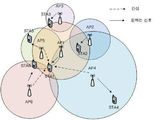
도 1은 도심지역에서의 무선랜 네트워크 배치 예를 보인 것이다.
도 2는 도심지역에서의 무선랜 네트워크에서 결합 전송시 네트워크 상황을 보인 것이다.
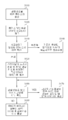
도 3은 본 발명의 실시예에 따른 클러스터 기반의 적응적인 결합 전송 방법을 설명하기 위한 흐름도이다.
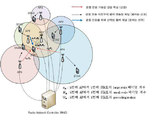
도 4는 도심지역에서의 무선랜 네트워크에서 결합 전송 이전 네트워크 상황을 나타낸 것이다.
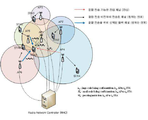
도 5는 도심지역에서의 무선랜 네트워크에서 결합 전송 첫 번째 AP 선택 후 네트워크 상황을 나타낸 것이다.
도 6은 도심지역에서의 무선랜 네트워크에서 결합 전송 AP 선택 후 네트워크 상황 변화를 나타낸 것이다.
도 7은 도심지역에서의 무선랜 네트워크에서 여러 STA가 결합 전송을 요구할 때 네트워크 상황을 나타낸 것이다.1 shows an example of a wireless LAN network arrangement in an urban area.
FIG. 2 shows a network state in a combined transmission in a wireless LAN network in an urban area.
FIG. 3 is a flowchart illustrating a cluster-based adaptive joint transmission method according to an embodiment of the present invention.
FIG. 4 is a diagram illustrating a network state prior to combined transmission in a wireless LAN network in an urban area.
5 illustrates a network situation after selecting a first AP for a combined transmission in a wireless LAN network in an urban area.
FIG. 6 shows a change in network status after selecting a combined transmission AP in a wireless LAN network in an urban area.
FIG. 7 shows a network situation when a plurality of STAs request a combined transmission in a wireless LAN network in an urban area.
본 발명의 이점 및 특징, 그리고 그것들을 달성하는 방법은 첨부되는 도면과 함께 상세하게 후술되어 있는 실시 예들을 참조하면 명확해질 것이다. 그러나 본 발명은 이하에서 개시되는 실시 예들에 한정되는 것이 아니라 서로 다른 다양한 형태로 구현될 수 있으며, 단지 본 실시 예들은 본 발명의 개시가 완전하도록 하고, 본 발명이 속하는 기술분야에서 통상의 지식을 가진 자에게 발명의 범주를 완전하게 알려주기 위해 제공되는 것이며, 본 발명은 청구항의 범주에 의해 정의될 뿐이다.BRIEF DESCRIPTION OF THE DRAWINGS The advantages and features of the present invention and the manner of achieving them will become apparent with reference to the embodiments described in detail below with reference to the accompanying drawings. The present invention may, however, be embodied in many different forms and should not be construed as being limited to the embodiments set forth herein. Rather, these embodiments are provided so that this disclosure will be thorough and complete, and will fully convey the concept of the invention to those skilled in the art. Is provided to fully convey the scope of the invention to those skilled in the art, and the invention is only defined by the scope of the claims.
본 발명의 실시 예들을 설명함에 있어서 공지 기능 또는 구성에 대한 구체적인 설명이 본 발명의 요지를 불필요하게 흐릴 수 있다고 판단되는 경우에는 그 상세한 설명을 생략할 것이다. 그리고 후술되는 용어들은 본 발명의 실시 예에서의 기능을 고려하여 정의된 용어들로서 이는 사용자, 운용자의 의도 또는 관례 등에 따라 달라질 수 있다. 그러므로 그 정의는 본 명세서 전반에 걸친 내용을 토대로 내려져야 할 것이다.
In the following description of the present invention, a detailed description of known functions and configurations incorporated herein will be omitted when it may make the subject matter of the present invention rather unclear. The following terms are defined in consideration of the functions in the embodiments of the present invention, which may vary depending on the intention of the user, the intention or the custom of the operator. Therefore, the definition should be based on the contents throughout this specification.
유동인구가 많은 지하철역과 같은 도심 시내 지역에는 도 1과 같이 많은 AP가 불규칙적으로 설치되어 있다. 상당히 많은 AP가 불규칙적으로 설치되어 무선랜 동작 채널이 같아 동일 채널 간섭(Co-Channel Interference, CCI)을 일으키는 AP의 숫자도 많이 존재한다고 볼 수 있다. 이렇게 많은 AP들이 불규칙적으로 설치되었기 때문에 사용자들이 받는 간섭의 양도 많이 늘어났다고 볼 수 있다. 도 1에서도 볼 수 있듯이 STA1의 입장에서는 AP1에서만 전송 받고 싶은데 AP4,5,6에서 점선과 같은 간섭영향을 주기 때문에 STA1의 통신에 방해가 되고 있다고 볼 수 있다. 하지만 도 1에 만약 결합 전송 방식을 도입한다면 STA1에게 미치는 간섭원들이 도 2와 같이 모두 STA1이 원하는 신호를 보내줄 수 있게 되어 디코딩 신뢰도를 향상시킬 수 있다. 하지만 간섭원으로 작용하는 경로로 모든 AP가 STA1이 원하는 정보를 보낸다면, 무선 자원을 최적으로 사용하지 못하는 것이고 또한 다른 STA에게 정보를 전송할 기회가 없어서(간섭원으로 작용하는 모든 AP가 결합 전송을 수행하게 되면) 오히려 시스템 전체 관점에서는 성능의 저하를 불러올 수도 있다.As shown in Fig. 1, many APs are irregularly installed in a city center area such as a subway station having a large floating population. It can be seen that there are a large number of APs that cause co-channel interference (CCI) due to a large number of APs installed irregularly and having the same wireless LAN operating channel. Since so many APs are installed irregularly, the amount of interference received by users is increased. As can be seen in FIG. 1, in STA1, it is desired to transmit only in AP1. In AP4, 5, and 6, interference is caused by STA1. However, if the joint transmission scheme is introduced in FIG. 1, the interference sources to the STA1 can send the signal desired by the STA1 as shown in FIG. 2, thereby improving the decoding reliability. However, if all the APs send the information that STA1 wants by the route that acts as the interferer, it can not use the radio resources optimally and because there is no opportunity to transmit information to other STAs It may lead to performance degradation from the system-wide point of view.
기존의 셀룰러 환경에서의 결합 통신 방식의 경우에는 셀이 계획적으로 배치되어있기 때문에 셀의 경계에 있는 사용자가 어떤 기지국으로부터 신호를 받을지 명확하게 알 수 있었다. 하지만, 무선랜 네트워크 환경의 경우에는 도 1에서 볼 수 있듯이 AP의 무분별한 설치 및 전송상황으로 인해 간섭을 주는 AP의 수가 항상 변하기 때문에 디코딩 신뢰도를 향상시키기 위해 어떤 AP를 결합 전송에 참여시킬지를 정하는 이슈가 매우 중요하다고 볼 수 있다. 또한, 이러한 무선랜 AP의 무분별한 배치로 인한 간섭원의 증가가 오히려 다양한 결합 전송 경로를 만들어 내었으며, 이 다양한 결합 전송 경로 중에 최적의 경로를 선택하게 되면 재전송없이 디코딩 신뢰도를 향상시키게 되어 무선랜 환경의 간섭문제 해결 및 전체 시스템 성능 향상도 이끌어 낼 수 있다.
In the case of the combined communication method in the conventional cellular environment, since the cells are arranged in a planned manner, a user at a cell boundary can clearly know which base station receives a signal. However, in the case of a wireless LAN network environment, as shown in FIG. 1, since the number of APs that interfere with each other due to indiscreet installation and transmission of APs changes constantly, Is very important. In addition, the increase of the interference sources due to the irrelevant arrangement of the WLAN APs results in various combined transmission paths. If the optimum path is selected among the various combined transmission paths, the decoding reliability is improved without retransmission, Can solve the interference problem and improve the overall system performance.
도 3은 본 발명의 실시예에 따른 클러스터 기반의 적응적인 결합 전송 방법을 설명하기 위한 흐름도이다.FIG. 3 is a flowchart illustrating a cluster-based adaptive joint transmission method according to an embodiment of the present invention.
이에 나타낸 바와 같이 본 발명의 실시예에 따른 적응적인 결합 전송 방법은, 결합 전송을 위한 무선랜 클러스터를 설정하는 단계(S110)와, 설정된 무선랜 클러스터에 속한 AP에 연결된 STA들의 수신 SINR을 체크하여 아우티지(outage)가 발생한 STA의 존재 여부를 확인하는 단계(S120, S130)와, 아우티지가 발생한 STA가 미존재하면 기존의 무선랜 방식으로 각 AP가 독립적으로 전송을 수행하는 단계(S140)와, 아우티지가 발생한 STA가 존재하면 간섭채널의 크기가 제일 큰 AP만 결합 전송에 참여할 때 특정 STA의 데이터율을 계산하여 아우티지의 발생 여부를 예측(S150, S160)하는 단계와, 아우티지의 발생이 예측되면 간섭채널의 크기가 다음으로 큰 AP도 결합 전송에 참여할 때 STA의 데이터율을 계산하여 아우티지의 발생 여부를 다시 예측하는 단계(S170, S160)와, 아우티지의 미발생이 예측되면 RNC 클러스터 내부의 AP와 STA에게 결합 전송 여부를 통보하는 단계(S180)를 포함한다.
As described above, the adaptive joint transmission method according to the embodiment of the present invention includes a step of setting a wireless LAN cluster for combined transmission (S110), a reception SINR of STAs connected to an AP belonging to a set wireless LAN cluster A step S140 of checking whether there is an STA in which an outage occurs or a step S140 in which each AP independently performs transmission in the existing WLAN method when the STA in which the outage occurs does not exist, (S150, S160) whether the outage is generated by calculating a data rate of a specific STA when only the AP having the largest interference channel size participates in the joint transmission when the STA in which the outage occurs exists; (S170, S160) of estimating the occurrence rate of the outage by calculating the data rate of the STA when the AP having the next largest interference channel participates in the combined transmission, And notifying the AP and the STA in the RNC cluster of whether or not the connection is transmitted (S180).
이하, 본 발명의 실시예에 따른 클러스터 기반의 적응적인 결합 전송 방법에 대해 자세히 살펴보기로 한다.Hereinafter, a cluster-based adaptive combining transmission method according to an embodiment of the present invention will be described in detail.
먼저, 결합 전송을 위한 무선랜 클러스터를 설정 및 구성한다. 기본적으로 결합 전송을 위해서는 결합 전송을 통해 정보를 받으려는 사용자가 원하는 정보를 모든 AP가 다 알아야 하는데 이러한 정보 교류의 중추 역할을 하는 것을 RNC(Radio Network Controller)라고 하며, RNC와 AP를 연결해주는 것을 백홀 네트워크(Backhaul Network)라고 한다. 결합 전송을 하기 위해 무선랜 클러스터를 구성할 때 중요하게 고려해야 할 점은 백홀을 통해 정보가 공유될 때 걸리는 시간 지연을 최소화하는 것이다. 시스템 전체 성능의 열화를 막기 위해 정보전송을 위한 딜레이는 대략적으로 비슷하게 가져가야 한다. 이렇게 정보 공유의 딜레이를 최소화하기 위하여 클러스터를 구성하는 AP들은 하나의 RNC에 연결되어 있어야 한다고 판단된다. 결국 정보를 교류하는 백홀의 딜레이가 클러스터에 포함되는 AP의 수를 결정하는데 중요한 역할을 하는 것이다.First, a wireless LAN cluster for combined transmission is set up and configured. Basically, for combined transmission, all the APs need to know the information desired by the user who wants to receive the information through the combined transmission. The RNC (Radio Network Controller) serves as the backbone of such information exchange, (Backhaul network). An important consideration when configuring a WLAN cluster for combined transmissions is to minimize the time delay when information is shared over the backhaul. In order to prevent deterioration of the overall performance of the system, the delays for information transmission should be roughly the same. In order to minimize the delay of information sharing, it is determined that the APs constituting the cluster should be connected to one RNC. Eventually, the backhaul delay that exchanges information plays an important role in determining the number of APs in the cluster.
그리고, STA의 수신 신호대간섭및잡음비(Signal-to-Interference plus Noise Ratio, SINR)를 측정한다.Then, a signal-to-interference plus noise ratio (SINR) of the STA is measured.
결합 전송 클러스터가 구성되고 나면 클러스터에 속한 AP에 연결(associate)된 모든 STA들의 수신 SINR을 체크하게 된다. SINR을 체크하는 방식은 아래와 같다.Once the combined transport cluster is configured, it checks the received SINR of all STAs associated with the APs in the cluster. The method of checking the SINR is as follows.
우선, 클러스터에 속한 AP들이 각각의 STA에게 협력 없이 전송을 수행하며, 클러스터 내부에서 1개 이상의 STA에 아우티지가 발생한다면 결합 전송모드로 전환한다. 여기서, 아우티지란 현재 자신의 데이터율이 기준 데이터율 임계값(
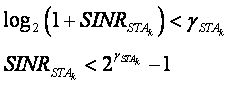
기준 수신 SINR 임계값은 각 STA의 QoS 데이터율(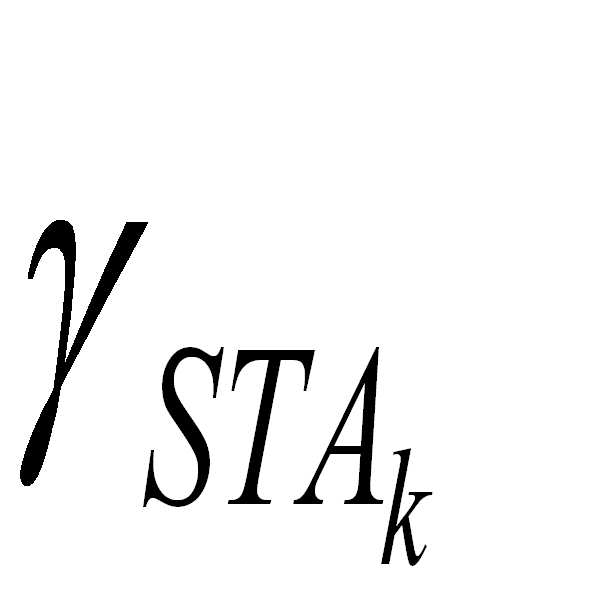
다음으로, 결합 전송 모드가 수행된다. 앞서 설명한 바와 같이 STA의 수신 SINR을 측정하고 난 뒤, 1개 이상의 STA가 간섭 신호의 영향 때문에 기준에 미달하는 SINR 값을 갖게 되어 아우티지가 발생하게 되면 결합 전송 모드가 시작된다. 결합 전송 모드에서 기준 미달의 STA가 존재하면 이 STA의 디코딩 신뢰도를 향상시키기 위해 이 STA에게 간섭을 작용하는 AP들이 RNC로부터 기준 미달의 STA에게 전송될 데이터를 공유 받아 결합 전송을 수행한다. 하지만, 클러스터 안에 포함되고 STA에게 간섭을 주는 AP가 모두 결합 전송을 수행한다면 STA의 기준 데이터율 임계값을 훌쩍 넘게 충족할 가능성이 높다. 즉, 전체 네트워크 관점에서 무선 자원이 비효율적으로 사용되었다는 것이다. 다시 말해서 STA의 데이터율 임계값이 요구되는 데이터양으로 결정이 되면 RNC가 이 데이터율 임계값을 만족시키도록 협력을 수행할 AP의 수를 최적으로 결정하여 아우티지가 발생하지 않도록 하는 것이다.Next, a combined transmission mode is performed. After measuring the reception SINR of the STA as described above, when one or more STAs have an SINR value that is less than the reference due to the influence of the interference signal and the outage occurs, the combined transmission mode starts. If there is an STA that is below the reference in the joint transmission mode, the APs interfering with the STA share the data to be transmitted from the RNC to the STA that is under reference to improve the decoding reliability of the STA. However, if all of the APs in the cluster that are interfering with the STA are performing joint transmissions, then there is a high probability that they exceed the STA's threshold data rate threshold. That is, wireless resources are inefficiently used from the viewpoint of the entire network. In other words, when the data rate threshold of the STA is determined to be the required amount of data, the number of APs to perform cooperating is determined optimally so that the RNC satisfies the data rate threshold value so that no outage occurs.
또한, 협력 수행을 통해 전송을 하게 되면 수신 STA에서 서로 다른 AP으로부터 전송되는 신호를 결합(combining)할 때 발생하는 결합 딜레이(combining delay)를 줄이기 위해서라도 가장 적절한 수의 협력 AP가 필요한 것이다. 그리고 RNC를 통해 정보를 공유해야 할 AP의 수가 필요이상으로 많아지게 되면 아무리 같은 클러스터 안에 존재하는 AP이더라도 백홀 딜레이 등의 시간 지연 문제도 발생할 수 있다. 이런 이유 때문에 결합 전송을 수행할 AP의 수를 결정하는 방법은 STA의 요구 데이터율 임계값과 간섭으로 작용하는 AP에서 STA으로의 채널값을 복합적으로 고려하여 최적으로 정해져야 한다. 먼저 RNC는 결합 전송을 해줘야 할 STA의 요구 데이터율 임계값과 각 AP에서 이 STA으로의 채널값을 알고 있어야 한다. 이 값들을 기준으로 RNC에서는 STA가 아우티지로 놓이지 않게 하기 위한 협력 AP의 수를 AP와 STA의 간섭 채널 값을 보고 결정한다. 여기서의 간섭채널 값이란, 단순히 레일리 페이딩(rayleigh fading)만 고려한 것이 아니라 경로손실(pathloss)을 포함하는 라지 스케일 페이딩(large scale fading)까지 고려한 값이다. 예를 들어, 가장 간섭채널의 값이 큰 AP만 협력전송을 수행했을 때 STA의 요구 데이터율 임계값을 만족시킬 수 있다면 가장 간섭채널의 값이 큰 AP와 원래 이 STA가 연결(associate)되어 있는 AP만 결합 전송을 수행하면 된다. 하지만 만약 가장 간섭채널 값이 큰 AP에서만 전송을 수행된다고 가정했을 때 STA의 요구 데이터율 임계값을 만족시키지 못한다고 판단되면 두 번째로 간섭채널 값이 큰 AP도 협력전송에 참여시켰다고 가정한 후 요구 데이테율 임계값 만족 여부를 판단한다. 이런 방식으로 STA의 요구 데이터율 임계값 이상의 데이터율을 얻기 위해 적절한 수의 AP를 정하여 결합 전송에 참여시켜야 한다. 만약 클러스터 속에 기준 SINR값을 넘지 못하는 STA의 수가 다수인 경우에는 결합 전송을 먼저 요청한 STA부터 결합 전송을 통해 서포트(support)하며 각 STA별로 결합 전송을 수행하는 절차는 위에 제시한 방법대로 진행된다.In addition, if the transmission is performed through cooperation, the most appropriate number of cooperating APs is required in order to reduce a combining delay occurring when a receiving STA combines signals transmitted from different APs. Also, if the number of APs that need to share information through the RNC increases more than necessary, time delay problems such as backhaul delay may occur even if there are APs in the same cluster. For this reason, the method for determining the number of APs to perform combined transmission should be determined optimally considering the required data rate threshold of the STA and the channel value from the AP to the STA acting as an interference. First, the RNC needs to know the required data rate threshold of the STA to be combined and the channel value to this STA in each AP. Based on these values, the RNC determines the number of cooperating APs to prevent the STA from leaving the outage by determining the interference channel value of the AP and the STA. Here, the interference channel value is a value considering not only rayleigh fading but also large scale fading including pathloss. For example, if only the AP with the largest interference channel value satisfies the required data rate threshold of the STA when the cooperative transmission is performed, the AP with the largest value of the interference channel is originally associated with the STA Only the AP can perform the combined transmission. However, if it is assumed that the transmission is performed only in the AP having the greatest interference channel value, if it is determined that the STA does not satisfy the required data rate threshold value, it is assumed that the AP having the large interference channel value is included in the cooperative transmission. It is determined whether or not the text threshold value is satisfied. In this way, an appropriate number of APs must be determined and participated in the combined transmission in order to obtain data rates above the STA's required data rate threshold. If there are a large number of STAs that can not exceed the reference SINR value in the cluster, the STA supporting the joint transmission first supports the joint transmission, and the procedure for performing joint transmission for each STA proceeds according to the above method.
이하, 본 발명의 실시예에 따른 결합 전송 모드의 수행 과정을 예시를 통해 살펴보기로 한다.Hereinafter, a description will be made of an exemplary procedure for performing a combined transmission mode according to an embodiment of the present invention.
도 4는 본 발명의 실시예에 따른 클러스터 기반의 적응적인 결합 전송 방법에 따른 결합 전송 모드의 시작 과정을 설명하기 위한, 도심지역에서의 무선랜 네트워크에서 결합 전송 이전 네트워크 상황을 나타낸 도면이다.FIG. 4 is a diagram illustrating a network before joining transmission in a wireless LAN network in a city area to explain a starting process of a combined transmission mode according to a cluster-based adaptive combining transmission method according to an embodiment of the present invention.
STA1는 AP1으로부터 정보를 전송 받을 때, AP4,5,6으로부터 간섭을 받는다. 만약, STA1의 수신 SINR이 아래 수학식 2와 같이 자신의 요구 데이터율(

도 5는 본 발명의 실시예에 따른 클러스터 기반의 적응적인 결합 전송 방법에 따른 결합 전송 AP 선택 과정을 설명하기 위한, 도심지역에서의 무선랜 네트워크에서 결합 전송 첫 번째 AP 선택 후 네트워크 상황을 나타낸 도면이다.5 is a diagram illustrating a network situation after selecting a first AP for a combined transmission in a wireless LAN network in an urban area for explaining a combined transmission AP selection process according to a cluster-based adaptive combining transmission method according to an embodiment of the present invention to be.
만약 STA1에 간섭으로 미치는 채널들의 크기가 아래 수학식 3과 같이 정의된다면 AP5는 RNC로부터 STA1으로의 정보를 공유하여 AP1과 결합 전송을 수행하게 된다.If the size of the channels caused by the interference to the STA1 is defined as Equation (3), the AP5 shares the information from the RNC to the STA1 and performs the combined transmission with the AP1.

만약 아래의 수학식 4와 같이 STA1의 요구 데이터율 임계값이 높거나 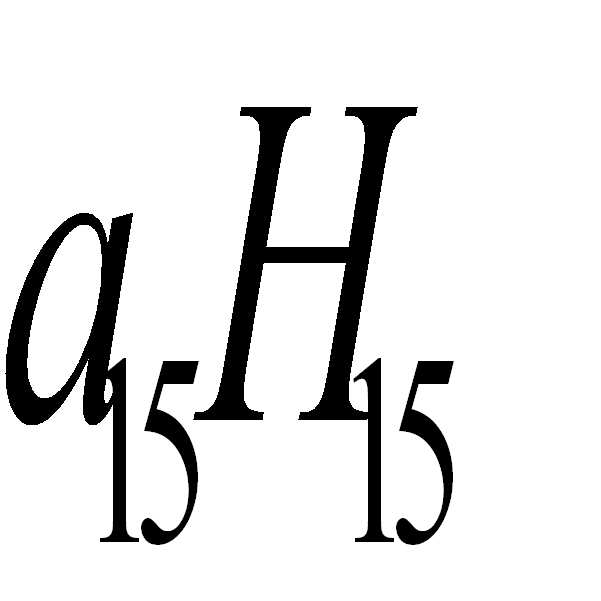
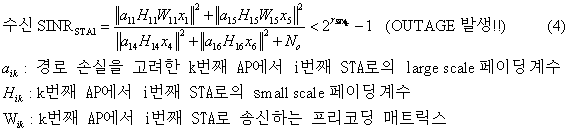
RNC가 결합 전송을 위한 AP를 추가하는 기준은 라지 스케일 페이딩과 스몰 스케일 페이딩을 모두 고려한 채널 값이다. 도 5에서 여전히 아우티지가 발생하는 경우 두 번째로 큰 채널 값을 가진 것이 
위 수학식 4에서 
도 6은 도심지역에서의 무선랜 네트워크에서 결합 전송 AP 선택 후 네트워크 상황 변화를 나타낸 도면이다.6 is a diagram illustrating a change in a network status after selecting a combined transmission AP in a wireless LAN network in an urban area.
도 6과 아래의 수학식 5와 같이 AP5와 AP6 및 AP1의 결합 전송으로 STA1의 요구 데이터율 임계값을 만족시켰다면 백홀 딜레이 및 자원의 효율적인 사용을 위해 결합 전송을 위한 더 이상의 AP 참여는 없다.If the requested data rate threshold of STA1 is satisfied by the combined transmission of AP5, AP6, and AP1 as shown in FIG. 6 and Equation (5) below, there is no further AP participation for combined transmission for backhaul delay and efficient use of resources.
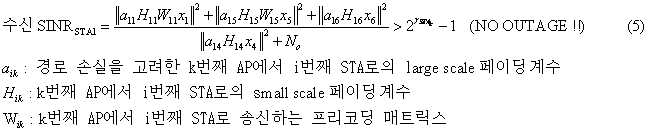
간섭채널의 값과 STA의 요구 데이터율 임계값을 보장하기 위해 결합 전송을 위한 AP의 수를 정할 때 가장 간섭채널이 좋은 AP로부터의 전송을 가정하여 RNC가 STA의 아우티지 여부를 판단하고 아우티지가 발생하는 경우 두 번째로 간섭채널 값이 큰 AP도 결합 전송을 순차적으로 함께 수행한다.When determining the number of APs for combined transmission in order to guarantee the value of the interference channel and the requested data rate threshold of the STA, the RNC judges whether or not the STA is outgoing by assuming transmission from the AP with the best interference channel, The AP with the largest interference channel value performs the concatenated transmission sequentially.
RNC 내부적으로 각 STA의 QoS값과 각 AP-STA으로의 채널 값을 파악하여 몇 개의 AP가 결합 전송을 해야 STA의 아우티지가 발생하지 않을지 동적으로 판단한다.The RNC internally checks the QoS value of each STA and the channel value to each AP-STA, and dynamically determines whether a few APs should perform combined transmission to determine whether the STA's outage will occur.
최종 판단 후에 클러스터 내부에 속한 AP 및 STA에게 결합 전송 여부를 통보한다.After the final determination, it notifies APs and STAs belonging to the inside of the cluster whether or not the combined transmission is performed.
아우티지가 발생한 STA가 다수 존재하는 경우에는 도 7과 같이, TDMA 방식으로 결합 전송 수행한다. 클러스터 내부에 결합 전송이 필요한 STA이 여럿 존재한다면 먼저 전송을 요청한 STA의 결합 전송을 수행한 뒤, 그 다음에 요청한 STA의 결합 전송을 수행하는 방식으로 수행할 수 있다. 한 순간에 특정 STA를 위한 결합 전송 AP선택 방법은 앞서 결합 전송 AP의 선택 과정에서 설명한 절차를 따른다.
When there are many STAs in which the outage occurs, as shown in FIG. 7, the STA performs the joint transmission in the TDMA scheme. If there are several STAs in the cluster that require joint transmission, it is possible to perform joint transmission of the STA requesting transmission first, and then performing joint transmission of the requested STA. The method of selecting a combined transmission AP for a specific STA at a moment follows the procedure described in the selection process of the combined transmission AP.
본 발명에 첨부된 흐름도의 각 단계의 조합들은 컴퓨터 프로그램 인스트럭션들에 의해 수행될 수도 있다. 이들 컴퓨터 프로그램 인스트럭션들은 범용 컴퓨터, 특수용 컴퓨터 또는 기타 프로그램 가능한 데이터 프로세싱 장비의 프로세서에 탑재될 수 있으므로, 컴퓨터 또는 기타 프로그램 가능한 데이터 프로세싱 장비의 프로세서를 통해 수행되는 그 인스트럭션들이 흐름도의 각 단계에서 설명된 기능들을 수행하는 수단을 생성하게 된다. 이들 컴퓨터 프로그램 인스트럭션들은 특정 방식으로 기능을 구현하기 위해 컴퓨터 또는 기타 프로그램 가능한 데이터 프로세싱 장비를 지향할 수 있는 컴퓨터 이용 가능 또는 컴퓨터 판독 가능 메모리에 저장되는 것도 가능하므로, 그 컴퓨터 이용가능 또는 컴퓨터 판독 가능 메모리에 저장된 인스트럭션들은 흐름도 각 단계에서 설명된 기능을 수행하는 인스트럭션 수단을 내포하는 제조 품목을 생산하는 것도 가능하다. 컴퓨터 프로그램 인스트럭션들은 컴퓨터 또는 기타 프로그램 가능한 데이터 프로세싱 장비 상에 탑재되는 것도 가능하므로, 컴퓨터 또는 기타 프로그램 가능한 데이터 프로세싱 장비 상에서 일련의 동작 단계들이 수행되어 컴퓨터로 실행되는 프로세스를 생성해서 컴퓨터 또는 기타 프로그램 가능한 데이터 프로세싱 장비를 수행하는 인스트럭션들은 흐름도의 각 단계에서 설명된 기능들을 실행하기 위한 단계들을 제공하는 것도 가능하다. Combinations of the steps of the flowcharts appended to the present invention may be performed by computer program instructions. These computer program instructions may be loaded into a processor of a general purpose computer, special purpose computer, or other programmable data processing apparatus so that the instructions, which are executed via a processor of a computer or other programmable data processing apparatus, Lt; / RTI > These computer program instructions may also be stored in a computer usable or computer readable memory capable of directing a computer or other programmable data processing apparatus to implement the functionality in a particular manner so that the computer usable or computer readable memory It is also possible to produce manufacturing items that contain instruction means for performing the functions described in each step of the flowchart. Computer program instructions may also be stored on a computer or other programmable data processing equipment so that a series of operating steps may be performed on a computer or other programmable data processing equipment to create a computer- It is also possible for the instructions to perform the processing equipment to provide steps for executing the functions described in each step of the flowchart.
또한, 각 단계는 특정된 논리적 기능(들)을 실행하기 위한 하나 이상의 실행 가능한 인스트럭션들을 포함하는 모듈, 세그먼트 또는 코드의 일부를 나타낼 수 있다. 또, 몇 가지 대체 실시 예들에서는 단계들에서 언급된 기능들이 순서를 벗어나서 발생하는 것도 가능함을 주목해야 한다. 예컨대, 잇달아 도시되어 있는 두 개의 단계들은 사실 실질적으로 동시에 수행되는 것도 가능하고 또는 그 단계들이 때때로 해당하는 기능에 따라 역순으로 수행되는 것도 가능하다.In addition, each step may represent a module, segment, or portion of code that includes one or more executable instructions for executing the specified logical function (s). It should also be noted that in some alternative embodiments, the functions mentioned in the steps may occur out of order. For example, the two steps shown in succession may in fact be performed substantially concurrently, or the steps may sometimes be performed in reverse order according to the corresponding function.
이상의 설명은 본 발명의 기술 사상을 예시적으로 설명한 것에 불과한 것으로서, 본 발명이 속하는 기술 분야에서 통상의 지식을 가진 자라면 본 발명의 본질적인 특성에서 벗어나지 않는 범위에서 다양한 수정 및 변형이 가능할 것이다. 따라서, 본 발명에 개시된 실시 예들은 본 발명의 기술 사상을 한정하기 위한 것이 아니라 설명하기 위한 것이고, 이러한 실시 예에 의하여 본 발명의 기술 사상의 범위가 한정되는 것은 아니다. 본 발명의 보호 범위는 아래의 청구범위에 의하여 해석되어야 하며, 그와 동등한 범위 내에 있는 모든 기술사상은 본 발명의 권리범위에 포함되는 것으로 해석되어야 할 것이다.The foregoing description is merely illustrative of the technical idea of the present invention, and various changes and modifications may be made by those skilled in the art without departing from the essential characteristics of the present invention. Therefore, the embodiments disclosed in the present invention are intended to illustrate rather than limit the scope of the present invention, and the scope of the technical idea of the present invention is not limited by these embodiments. The scope of protection of the present invention should be construed according to the following claims, and all technical ideas within the scope of equivalents should be construed as falling within the scope of the present invention.
Claims (1)
설정된 상기 무선랜 클러스터에 속한 AP에 연결된 STA들의 수신 SINR을 체크하여 아우티지가 발생한 STA의 존재 여부를 확인하는 단계와,
상기 아우티지가 발생한 STA가 존재하면 간섭채널의 크기가 제일 큰 AP만 결합 전송에 참여할 때 특정 STA의 데이터율을 계산하여 아우티지의 발생 여부를 예측하는 단계와,
상기 아우티지의 발생이 예측되면 간섭채널의 크기가 다음으로 큰 AP도 결합 전송에 참여할 때 STA의 데이터율을 계산하여 상기 아우티지의 발생 여부를 다시 예측하는 단계와,
상기 아우티지의 미발생이 예측되면 RNC 클러스터 내부의 AP와 STA에게 결합 전송 여부를 통보하는 단계를 포함하는 클러스터 기반의 적응적인 결합 전송 방법.Establishing a wireless LAN cluster for combined transmission,
Checking a reception SINR of STAs connected to an AP belonging to the set WLAN cluster to check whether there is an STA in which the outage occurs;
If there is an STA in which the outage occurs, calculating a data rate of a specific STA when only an AP having the largest interference channel size participates in joint transmission,
Estimating occurrence of the outage by calculating the data rate of the STA when the AP having the next largest interference channel participates in the combined transmission,
And notifying the AP and the STA in the RNC cluster of whether or not the outage is not generated.
Priority Applications (1)
| Application Number | Priority Date | Filing Date | Title |
|---|---|---|---|
| KR1020120146750A KR102118916B1 (en) | 2012-12-14 | 2012-12-14 | Method for cluster-based adaptive joint transmission |
Applications Claiming Priority (1)
| Application Number | Priority Date | Filing Date | Title |
|---|---|---|---|
| KR1020120146750A KR102118916B1 (en) | 2012-12-14 | 2012-12-14 | Method for cluster-based adaptive joint transmission |
Publications (2)
| Publication Number | Publication Date |
|---|---|
| KR20140077679A true KR20140077679A (en) | 2014-06-24 |
| KR102118916B1 KR102118916B1 (en) | 2020-06-05 |
Family
ID=51129545
Family Applications (1)
| Application Number | Title | Priority Date | Filing Date |
|---|---|---|---|
| KR1020120146750A Active KR102118916B1 (en) | 2012-12-14 | 2012-12-14 | Method for cluster-based adaptive joint transmission |
Country Status (1)
| Country | Link |
|---|---|
| KR (1) | KR102118916B1 (en) |
Families Citing this family (1)
| Publication number | Priority date | Publication date | Assignee | Title |
|---|---|---|---|---|
| KR102218219B1 (en) | 2020-10-28 | 2021-02-22 | 주식회사 신정기공 | Cutter pump |
Citations (4)
| Publication number | Priority date | Publication date | Assignee | Title |
|---|---|---|---|---|
| KR920004771B1 (en) * | 1987-11-18 | 1992-06-15 | 인터내셔널 비지네스 머신즈 코포레이션 | Work related message flow control method and communication management device |
| KR100871227B1 (en) * | 2007-02-16 | 2008-12-01 | 삼성전자주식회사 | Method and apparatus for increasing cell capacity through selective signal coupling between relay stations in cellular system using wired relay station |
| KR20100053608A (en) * | 2007-09-04 | 2010-05-20 | 모토로라 인코포레이티드 | Method and system for transitioning between a distributed ad hoc network architecture and a cluster ad hoc network architecture |
| KR20110007324A (en) * | 2009-07-16 | 2011-01-24 | 고려대학교 산학협력단 | Topology control apparatus and method of wireless ad hoc network, node device of wireless ad hoc network, and communication link formation method of node device of wireless ad hoc network |
-
2012
- 2012-12-14 KR KR1020120146750A patent/KR102118916B1/en active Active
Patent Citations (4)
| Publication number | Priority date | Publication date | Assignee | Title |
|---|---|---|---|---|
| KR920004771B1 (en) * | 1987-11-18 | 1992-06-15 | 인터내셔널 비지네스 머신즈 코포레이션 | Work related message flow control method and communication management device |
| KR100871227B1 (en) * | 2007-02-16 | 2008-12-01 | 삼성전자주식회사 | Method and apparatus for increasing cell capacity through selective signal coupling between relay stations in cellular system using wired relay station |
| KR20100053608A (en) * | 2007-09-04 | 2010-05-20 | 모토로라 인코포레이티드 | Method and system for transitioning between a distributed ad hoc network architecture and a cluster ad hoc network architecture |
| KR20110007324A (en) * | 2009-07-16 | 2011-01-24 | 고려대학교 산학협력단 | Topology control apparatus and method of wireless ad hoc network, node device of wireless ad hoc network, and communication link formation method of node device of wireless ad hoc network |
Also Published As
| Publication number | Publication date |
|---|---|
| KR102118916B1 (en) | 2020-06-05 |
Similar Documents
| Publication | Publication Date | Title |
|---|---|---|
| US12464473B2 (en) | Uplink power control for distributed wireless communication | |
| KR101857932B1 (en) | Mobile device assisted coordinated multipoint transmission and reception | |
| EP2534905B1 (en) | Link adaptation in type-ii relay network | |
| US8644835B2 (en) | Communication method of mobile terminal, pico base station, and macro base station in heterogeneous network | |
| US20110182256A1 (en) | Method and Arrangement in a Wireless Communication System | |
| US20160219578A1 (en) | Cooperative multi-antenna transmitting and receiving method and apparatus for mobile communication system, and method for configuring cluster for the same | |
| JP2015514335A (en) | System and method for configuring downlink HARQ feedback transmission in a wireless network | |
| JP2009505595A (en) | Uplink resource allocation for controlling inter-cell interference in a wireless communication system | |
| JP2006074265A (en) | Mobile communication system and mobile communication method | |
| WO2009102154A2 (en) | System and method for handover of mobile station in a wireless mobile communication system | |
| KR101441497B1 (en) | A method for performing a retransmission request in a base station cooperative communication system and a system therefor | |
| JP6133578B2 (en) | Wireless communication system | |
| EP3821662B1 (en) | Hybrid macro diversity and cooperative relaying method of ultra-reliable and real-time multi-user communication | |
| KR102118916B1 (en) | Method for cluster-based adaptive joint transmission | |
| KR20150007221A (en) | Apparatus and method for D2D communications in LTE cellular coverage | |
| KR20150007218A (en) | Apparatus and method for downlink data transmission on LTE D2D communications | |
| TWI434589B (en) | Device and method for controlling uplink transmission power in mobile communication system | |
| KR20150007219A (en) | Apparatus and method for broadcasting data transmission on LTE D2D communications | |
| KR20150007234A (en) | Apparatus and method for synchronization on LTE D2D communications | |
| KR20150007235A (en) | Apparatus and method for multi-hop on LTE D2D communications | |
| KR20050094691A (en) | Uplink scheduling method of mobile communication system | |
| KR20150007222A (en) | Apparatus and method for LTE D2D communications | |
| KR20150007237A (en) | Apparatus and method for coverage control on LTE D2D communications | |
| HK1161493A (en) | Uplink power control for distributed wireless communication | |
| HK1161493B (en) | Uplink power control for distributed wireless communication |
Legal Events
| Date | Code | Title | Description |
|---|---|---|---|
| PA0109 | Patent application |
Patent event code: PA01091R01D Comment text: Patent Application Patent event date: 20121214 |
|
| PG1501 | Laying open of application | ||
| A201 | Request for examination | ||
| PA0201 | Request for examination |
Patent event code: PA02012R01D Patent event date: 20171214 Comment text: Request for Examination of Application Patent event code: PA02011R01I Patent event date: 20121214 Comment text: Patent Application |
|
| E902 | Notification of reason for refusal | ||
| PE0902 | Notice of grounds for rejection |
Comment text: Notification of reason for refusal Patent event date: 20190102 Patent event code: PE09021S01D |
|
| E902 | Notification of reason for refusal | ||
| PE0902 | Notice of grounds for rejection |
Comment text: Notification of reason for refusal Patent event date: 20190312 Patent event code: PE09021S01D |
|
| E902 | Notification of reason for refusal | ||
| PE0902 | Notice of grounds for rejection |
Comment text: Notification of reason for refusal Patent event date: 20190822 Patent event code: PE09021S01D |
|
| E902 | Notification of reason for refusal | ||
| PE0902 | Notice of grounds for rejection |
Comment text: Notification of reason for refusal Patent event date: 20191104 Patent event code: PE09021S01D |
|
| E701 | Decision to grant or registration of patent right | ||
| PE0701 | Decision of registration |
Patent event code: PE07011S01D Comment text: Decision to Grant Registration Patent event date: 20200303 |
|
| GRNT | Written decision to grant | ||
| PR0701 | Registration of establishment |
Comment text: Registration of Establishment Patent event date: 20200529 Patent event code: PR07011E01D |
|
| PR1002 | Payment of registration fee |
Payment date: 20200601 End annual number: 3 Start annual number: 1 |
|
| PG1601 | Publication of registration | ||
| PR1001 | Payment of annual fee |
Payment date: 20230424 Start annual number: 4 End annual number: 4 |
|
| PR1001 | Payment of annual fee |
Payment date: 20231127 Start annual number: 5 End annual number: 5 |