KR20160077009A - Method and Device for Identifying User Behavior - Google Patents
Method and Device for Identifying User Behavior Download PDFInfo
- Publication number
- KR20160077009A KR20160077009A KR1020157016876A KR20157016876A KR20160077009A KR 20160077009 A KR20160077009 A KR 20160077009A KR 1020157016876 A KR1020157016876 A KR 1020157016876A KR 20157016876 A KR20157016876 A KR 20157016876A KR 20160077009 A KR20160077009 A KR 20160077009A
- Authority
- KR
- South Korea
- Prior art keywords
- access
- time
- space
- sliding window
- predetermined
- Prior art date
- Legal status (The legal status is an assumption and is not a legal conclusion. Google has not performed a legal analysis and makes no representation as to the accuracy of the status listed.)
- Granted
Links
Images




Classifications
-
- H—ELECTRICITY
- H04—ELECTRIC COMMUNICATION TECHNIQUE
- H04L—TRANSMISSION OF DIGITAL INFORMATION, e.g. TELEGRAPHIC COMMUNICATION
- H04L63/00—Network architectures or network communication protocols for network security
- H04L63/14—Network architectures or network communication protocols for network security for detecting or protecting against malicious traffic
- H04L63/1408—Network architectures or network communication protocols for network security for detecting or protecting against malicious traffic by monitoring network traffic
- H04L63/1425—Traffic logging, e.g. anomaly detection
-
- H—ELECTRICITY
- H04—ELECTRIC COMMUNICATION TECHNIQUE
- H04L—TRANSMISSION OF DIGITAL INFORMATION, e.g. TELEGRAPHIC COMMUNICATION
- H04L63/00—Network architectures or network communication protocols for network security
- H04L63/10—Network architectures or network communication protocols for network security for controlling access to devices or network resources
- H04L63/108—Network architectures or network communication protocols for network security for controlling access to devices or network resources when the policy decisions are valid for a limited amount of time
-
- G—PHYSICS
- G06—COMPUTING OR CALCULATING; COUNTING
- G06F—ELECTRIC DIGITAL DATA PROCESSING
- G06F21/00—Security arrangements for protecting computers, components thereof, programs or data against unauthorised activity
- G06F21/50—Monitoring users, programs or devices to maintain the integrity of platforms, e.g. of processors, firmware or operating systems
- G06F21/55—Detecting local intrusion or implementing counter-measures
- G06F21/552—Detecting local intrusion or implementing counter-measures involving long-term monitoring or reporting
-
- H—ELECTRICITY
- H04—ELECTRIC COMMUNICATION TECHNIQUE
- H04L—TRANSMISSION OF DIGITAL INFORMATION, e.g. TELEGRAPHIC COMMUNICATION
- H04L43/00—Arrangements for monitoring or testing data switching networks
- H04L43/10—Active monitoring, e.g. heartbeat, ping or trace-route
-
- H—ELECTRICITY
- H04—ELECTRIC COMMUNICATION TECHNIQUE
- H04L—TRANSMISSION OF DIGITAL INFORMATION, e.g. TELEGRAPHIC COMMUNICATION
- H04L63/00—Network architectures or network communication protocols for network security
- H04L63/14—Network architectures or network communication protocols for network security for detecting or protecting against malicious traffic
-
- H—ELECTRICITY
- H04—ELECTRIC COMMUNICATION TECHNIQUE
- H04L—TRANSMISSION OF DIGITAL INFORMATION, e.g. TELEGRAPHIC COMMUNICATION
- H04L63/00—Network architectures or network communication protocols for network security
- H04L63/14—Network architectures or network communication protocols for network security for detecting or protecting against malicious traffic
- H04L63/1441—Countermeasures against malicious traffic
- H04L63/1458—Denial of Service
-
- G—PHYSICS
- G06—COMPUTING OR CALCULATING; COUNTING
- G06F—ELECTRIC DIGITAL DATA PROCESSING
- G06F2221/00—Indexing scheme relating to security arrangements for protecting computers, components thereof, programs or data against unauthorised activity
- G06F2221/21—Indexing scheme relating to G06F21/00 and subgroups addressing additional information or applications relating to security arrangements for protecting computers, components thereof, programs or data against unauthorised activity
- G06F2221/2133—Verifying human interaction, e.g., Captcha
-
- H—ELECTRICITY
- H04—ELECTRIC COMMUNICATION TECHNIQUE
- H04L—TRANSMISSION OF DIGITAL INFORMATION, e.g. TELEGRAPHIC COMMUNICATION
- H04L2463/00—Additional details relating to network architectures or network communication protocols for network security covered by H04L63/00
- H04L2463/121—Timestamp
-
- H—ELECTRICITY
- H04—ELECTRIC COMMUNICATION TECHNIQUE
- H04L—TRANSMISSION OF DIGITAL INFORMATION, e.g. TELEGRAPHIC COMMUNICATION
- H04L2463/00—Additional details relating to network architectures or network communication protocols for network security covered by H04L63/00
- H04L2463/142—Denial of service attacks against network infrastructure
-
- H—ELECTRICITY
- H04—ELECTRIC COMMUNICATION TECHNIQUE
- H04L—TRANSMISSION OF DIGITAL INFORMATION, e.g. TELEGRAPHIC COMMUNICATION
- H04L2463/00—Additional details relating to network architectures or network communication protocols for network security covered by H04L63/00
- H04L2463/144—Detection or countermeasures against botnets
Landscapes
- Engineering & Computer Science (AREA)
- Computer Security & Cryptography (AREA)
- Computer Hardware Design (AREA)
- General Engineering & Computer Science (AREA)
- Computer Networks & Wireless Communication (AREA)
- Signal Processing (AREA)
- Computing Systems (AREA)
- Software Systems (AREA)
- Theoretical Computer Science (AREA)
- Physics & Mathematics (AREA)
- General Physics & Mathematics (AREA)
- Health & Medical Sciences (AREA)
- Cardiology (AREA)
- General Health & Medical Sciences (AREA)
- Data Exchanges In Wide-Area Networks (AREA)
- Storage Device Security (AREA)
- Debugging And Monitoring (AREA)
- Information Transfer Between Computers (AREA)
- Management, Administration, Business Operations System, And Electronic Commerce (AREA)
Abstract
본 발명은 악의적인 행위를 보다 더 효과적으로 보다 더 정확하게 식별하기 위한 유저 행위 식별 방법 및 유저 행위 식별 장치에 관한것이다. 상기 방법은 소정의 시공간 슬라이딩 윈도우내의 단말기에 의한 액세스 행위를 취득하는 스텝과,상기 시공간 슬라이딩 윈도우내의 액세스 행위에 근거하여 상기 시공간 슬라이딩 윈도우내의 액세스 행위를 평가하는 스텝과, 그 평가 결과에 근거하여 상기 단말기에 의한 액세스 행위가 악의적인 액세스인지를 판단하는 스텝을 포함한다.The present invention relates to a user behavior identification method and a user behavior identification device for more effectively and more accurately identifying a malicious behavior. The method comprising the steps of: obtaining an access behavior by a terminal in a predetermined time-slot sliding window; evaluating an access behavior in the time-space sliding window based on an access behavior in the time-slotting sliding window; And judging whether the accessing operation by the terminal is a malicious access.
Description
본 발명은 통신 및 컴퓨터 처리 기술 분야에 관한 것이며, 특히 유저 행위 식별 방법 및 유저 행위 식별 장치에 관한 것이다.BACKGROUND OF THE INVENTION 1. Field of the Invention The present invention relates to a communication and computer processing technology, and more particularly, to a user behavior identification method and a user behavior identification device.
본 출원은, 출원 번호가CN201410708281. 6이며, 출원일이 2014월 11월 27일인 중국 특허 출원을 기초로 우선권을 주장하고, 당해 중국 특허 출원의 모든 내용을 본원에 원용한다.The present application claims priority to U.S. Patent Application Serial No. 201410708281. 6, claiming priority based on a Chinese patent application filed on November 27, 2014, and all of the contents of the Chinese patent application are hereby incorporated herein by reference.
인터넷의 발전에 수반해 네트워크를 통한 자원 공유화가 실현되었다. 사람들은 네트워크를 통하여 풍부한 정보를 신속하고 편리하게 취득하는 것이 가능하게 되었다. 하지만, 많은 웹 사이트들이 사람들에게 정보를 제공하는 한편, 악의적인 공격등에 노출되고 있다.With the development of the Internet, sharing of resources through the network has been realized. It has become possible for people to acquire rich information quickly and conveniently via the network. However, many websites are providing information to people and are exposed to malicious attacks.
본 발명의 발명자는, 종래 기술에 있어서, 짧은 시간내에 웹 사이트에 데이터 패킷을 빈번히 송신하는 등 악의적인 공격 방식을 발견했다. 이러한 현상은 상품을 다투어 살 때 늘 발생하는 현상으로써, 짧은 시간 내에 빈번히 웹 사이트에 액세스 하여 할인 상품을 다투어 사는 현상이다. 이러한 고빈도의 액세스 행위는, 통상 상품을 다투어 사기 위하여 개발된 소프트웨어에 의해 실현되며, 수동 조작에 의해 높은 빈도의 액세스를 실현할 수 없다. 종래 기술에 있어서, 해당 악의적인 행위를 저지하는 수단이 없는 것은 아니지만, 그 저지 효과가 이상적이 못된다. 따라서, 어떻게 하면 악의적인 유저 행위를 보다 효과적으로 식별할 수 있는 지는 시급하게 해결해야 할 문제이다.The inventor of the present invention has found a malicious attack method such as frequently transmitting data packets to a web site in a short time in the prior art. This phenomenon is a phenomenon that often occurs when a user is armed with a product, and frequently accesses a web site in a short period of time and buys a discounted product. Such high-frequency access actions are realized by software, which is usually developed for acquiring goods, and can not realize high-frequency access by manual operation. In the prior art, there is no means for blocking the malicious action, but the blocking effect is not ideal. Therefore, it is an urgent problem to solve how to identify malicious user behavior more effectively.
본 발명은, 종래 기술에 존재하는 상기와 같은 문제를 해결하기 위하여 유저 행위 식별 방법 및 유저 행위 식별 장치를 제공한다.The present invention provides a user behavior identification method and a user behavior identification device in order to solve the above-described problems existing in the prior art.
본 발명의 제1 양태에 따르면,According to a first aspect of the present invention,
소정의 시공간 슬라이딩 윈도우(time sliding window)내의 단말기에 의한 액세스(access) 행위를 취득하는 스텝과,Acquiring an access behavior by a terminal in a predetermined time sliding window;
상기 시공간 슬라이딩 윈도우내의 액세스 행위에 근거하여 상기 시공간 슬라이딩 윈도우내의 액세스 행위를 평가하는 스텝과,Evaluating an access behavior in the space-time sliding window based on an access behavior in the space-time sliding window;
그 평가 결과에 근거하여 상기 단말기에 의한 액세스 행위가 악의적인 액세스인지를 판단하는 스텝을 포함하는 유저 행위 식별 방법을 제공한다.And judging whether the access behavior by the terminal is a malicious access based on the evaluation result.
본 발명의 실시예에 따른 기술방안에 의하면, 유저(user)의 액세스 행위를 시공간 슬라이딩 윈도우를 이용해 모니터링 하여 액세스 행위를 평가하는 것을 통하여 유저의 액세스 행위가 악의적인 것인지를 판단하는 유익한 효과를 얻을 수 있다.According to the technical solution of the embodiment of the present invention, it is possible to obtain a beneficial effect of determining whether the access behavior of the user is malicious by monitoring the access behavior of the user by using the space-time sliding window to evaluate the access behavior have.
일 실시예에 있어서,In one embodiment,
상기 시공간 슬라이딩 윈도우는 m개로 등분 된 타임 슬라이스(time slice)를 포함하고,Wherein the space-time sliding window includes a time slice divided into m pieces,
상기 시공간 슬라이딩 윈도우내의 액세스 행위에 근거하여 상기 시공간 슬라이딩 윈도우내의 액세스 행위를 평가하는 스텝은Wherein the step of evaluating an access behavior in the space-time sliding window based on an access behavior in the space-
타임 슬라이스내의 액세스 횟수가 소정의 슬라이스 횟수 역치를 초과하는지를 타임 슬라이스마다 판단하여, 액세스 횟수가 소정의 슬라이스 횟수 역치를 초과하는 n개의 타임 슬라이스를 취득하는 스텝과,A step of determining, for each time slice, whether or not the number of accesses in the time slice exceeds a predetermined slice number threshold value and acquiring n time slices whose access times exceed a predetermined slice number threshold value;
n와 m의 비례가 소정의 제1 비례 역치를 초과하는지 여부를 판단하는 스텝determining whether a proportion of n and m exceeds a predetermined first proportional threshold
을 포함하고,/ RTI >
그 평가 결과에 근거하여 상기 단말기에 의한 액세스 행위가 악의적인 액세스인지를 판단하는 스텝은And the step of judging whether the access behavior by the terminal is a malicious access based on the evaluation result
n와 m의 비례가 소정의 제1 비례 역치를 초과하는 경우, 상기 단말기에 의한 액세스 행위가 악의적인 액세스라고 판단하는 스텝을 포함한다.and judging that the accessing operation by the terminal is a malicious access when the proportion of n and m exceeds a predetermined first proportional threshold.
본 발명의 실시예에 따른 기술방안에 의하면, 각 타임 슬라이스내의 액세스 행위를 모니터링하여 액세스 횟수가 지속적으로 높은 수치를 검사하는 것을 통하여 액세스 행위가 악의적인 행위인지를 판단하므로, 그 평가 결과가 더욱 정확할 수 있다는 유익한 효과를 얻을 수 있다.According to the technique according to the embodiment of the present invention, the access behavior in each time slice is monitored to determine whether the access behavior is a malicious behavior by examining the numerical value of the access frequency continuously, so that the evaluation result is more accurate It is possible to obtain a beneficial effect.
일 실시예에 있어서,In one embodiment,
상기 시공간 슬라이딩 윈도우내의 액세스 행위에 근거하여 상기 시공간 슬라이딩 윈도우내의 액세스 행위를 평가하는 스텝은Wherein the step of evaluating an access behavior in the space-time sliding window based on an access behavior in the space-
상기 시공간 슬라이딩 윈도우중의 서로 인접하는 2개의 액세스 행위마다, 서로 인접하는 2개의 액세스 행위의 시간 간격을 취득하는 스텝과,Acquiring time intervals of two adjacent access actions for each of two adjacent access actions in the space-time sliding window;
취득한 시간 간격에 근거하여 액세스 행위의 시간 분산을 산출하는 스텝과,Calculating a time variance of the access behavior based on the acquired time interval;
상기 시간 분산이 소정의 분산 역치를 초과하는지 여부를 판단하는 스텝Determining whether the time variance exceeds a predetermined dispersion threshold
을 포함하고,/ RTI >
그 평가 결과에 근거하여 상기 단말기에 의한 액세스 행위가 악의적인 액세스인지를 판단하는 스텝은And the step of judging whether the access behavior by the terminal is a malicious access based on the evaluation result
상기 시간 분산이 소정의 분산 역치를 초과하는 경우, 상기 단말기에 의한 액세스 행위가 악의적인 액세스라고 판단하는 스텝을 포함한다.And judging that the access operation by the terminal is malicious access when the time variance exceeds a predetermined dispersion threshold.
본 발명의 실시예에 따른 기술방안에 의하면, 시간 간격의 분산을 산출하는 것을 통하여 액세스 행위가 고정된 빈도로 발생하는지 여부를 판단하고, 액세스 행위가 고정된 빈도로 발생하는 경우, 당해 액세스 행위가 유저에 의한 행위가 아니라 소프트웨어에 의한 행위라고 판단할 수 있으므로, 악의적인 행위를 더욱 정확하게 식별할 수 있다는 유익한 효과를 얻을 수 있다.According to the technique of the present invention, it is determined whether or not an access action occurs at a fixed frequency by calculating a variance of time intervals. If the access action occurs at a fixed frequency, It can be determined that the action is not the action by the user but the action by the software, so that a beneficial effect that the malicious action can be more accurately identified can be obtained.
일 실시예에 있어서,In one embodiment,
상기 시공간 슬라이딩 윈도우내의 액세스 행위에 근거하여 상기 시공간 슬라이딩 윈도우내의 액세스 행위를 평가하는 스텝은Wherein the step of evaluating an access behavior in the space-time sliding window based on an access behavior in the space-
상기 시공간 슬라이딩 윈도우중의 서로 인접하는 2개의 액세스 행위마다, 서로 인접하는 2개의 액세스 행위의 시간 간격을 취득하는 스텝과,Acquiring time intervals of two adjacent access actions for each of two adjacent access actions in the space-time sliding window;
취득한 시간 간격에 근거하여 액세스 행위의 시간 분산을 산출하는 스텝과,Calculating a time variance of the access behavior based on the acquired time interval;
상기 시간 분산과 시간 간격의 평균치의 비율을 산출하는 스텝과,Calculating a ratio of the average of the time variance and the time interval;
상기 비율이 소정의 제2 비례 역치보다 작은지 여부를 판단하는 스텝Determining whether the ratio is smaller than a predetermined second proportional threshold
을 포함하고,/ RTI >
그 평가 결과에 근거하여 상기 단말기에 의한 액세스 행위가 악의적인 액세스인지를 판단하는 스텝은And the step of judging whether the access behavior by the terminal is a malicious access based on the evaluation result
상기 비율이 소정의 제2 비례 역치보다 작은 경우, 상기 단말기에 의한 액세스 행위가 악의적인 액세스라고 판단하는 스텝을 포함한다.And judging that the access operation by the terminal is malicious access when the ratio is smaller than a predetermined second proportional threshold.
본 발명의 실시예에 따른 기술방안에 의하면, 분산과 시간 간격의 평균치를 더 비교하는 것을 통하여 악의적인 행위를 더욱 정확하게 식별할 수 있다는 유익한 효과를 얻을 수 있다.According to the technical solution according to the embodiment of the present invention, it is possible to obtain a beneficial effect that the malicious behavior can be more accurately identified by further comparing the average value of the dispersion and the time interval.
일 실시예에 있어서,In one embodiment,
상기 시공간 슬라이딩 윈도우내의 액세스 행위에 근거하여 상기 시공간 슬라이딩 윈도우내의 액세스 행위를 평가하는 스텝은Wherein the step of evaluating an access behavior in the space-time sliding window based on an access behavior in the space-
상기 시공간 슬라이딩 윈도우내의 액세스 행위의 총횟수를 취득하는 스텝과,Obtaining a total number of access actions in the space-time sliding window;
상기 총횟수가 소정의 총횟수 역치를 초과하는지 여부를 판단하는 스텝과,Determining whether the total number exceeds a predetermined total number threshold value,
그 판단 결과에 근거하여 상기 시공간 슬라이딩 윈도우내의 액세스 행위를 평가하는 스텝을 포함한다.And evaluating an access behavior in the space-time sliding window based on the determination result.
본 발명의 실시예에 따른 기술방안에 의하면, 상기 기술방안의 기초상에서 액세스 행위의 총횟수를 이용하여 액세스 행위를 더 한층 평가하는 것을 통하여 악의적인 행위를 더욱 정확하게 식별할 수 있다는 유익한 효과를 얻을 수 있다.According to the technical solution according to the embodiment of the present invention, it is possible to obtain a beneficial effect that the malicious behavior can be more accurately identified by further evaluating the access behavior using the total number of access actions on the basis of the technical solution have.
본 발명의 제2 양태에 따르면,According to a second aspect of the present invention,
소정의 시공간 슬라이딩 윈도우내의 단말기에 의한 액세스 행위를 취득하기 위한 취득 모듈과,An acquisition module for acquiring an access behavior by a terminal in a predetermined space-time sliding window;
상기 시공간 슬라이딩 윈도우내의 액세스 행위에 근거하여 상기 시공간 슬라이딩 윈도우내의 액세스 행위를 평가하기 위한 평가 모듈과,An evaluation module for evaluating an access behavior in the space-time sliding window based on an access behavior in the space-time sliding window;
그 평가 결과에 근거하여 상기 단말기에 의한 액세스 행위가 악의적인 액세스인지를 판단하기 위한 판단 모듈을 포함하는 유저 행위 식별 장치를 제공한다.And a determination module for determining, based on the evaluation result, whether the access behavior by the terminal is a malicious access.
일 실시예에 있어서,In one embodiment,
상기 시공간 슬라이딩 윈도우는 m개로 등분 된 타임 슬라이스를 포함하고,Wherein the space-time sliding window includes a time slice divided into m pieces,
상기 평가 모듈은The evaluation module
타임 슬라이스내의 액세스 횟수가 소정의 슬라이스 횟수 역치를 초과하는지를 타임 슬라이스마다 판단하여, 액세스 횟수가 소정의 슬라이스 횟수 역치를 초과하는 n개의 타임 슬라이스를 취득하기 위한 타임 슬라이스 서브모듈과,A time slice submodule for determining, for each time slice, whether or not the access number in the time slice exceeds a predetermined slice number threshold value and for obtaining n time slices whose access number exceeds a predetermined slice number threshold value;
n와 m의 비례가 소정의 제1 비례 역치를 초과하는지 여부를 판단하기 위한 제1 비례 서브모듈a first proportional sub-module for determining whether the proportion of n and m exceeds a predetermined first proportional threshold,
을 포함하고,/ RTI >
상기 판단 모듈은The determination module
n와 m의 비례가 소정의 제1 비례 역치를 초과하는 경우, 상기 단말기에 의한 액세스 행위가 악의적인 액세스라고 판단한다.When the proportion of n and m exceeds a predetermined first proportional threshold, it is determined that the accessing operation by the terminal is a malicious access.
일 실시예에 있어서,In one embodiment,
상기 평가 모듈은The evaluation module
상기 시공간 슬라이딩 윈도우중의 서로 인접하는 2개의 액세스 행위마다, 서로 인접하는 2개의 액세스 행위의 시간 간격을 취득하기 위한 간격 서브모듈과,An interval sub-module for acquiring time intervals of two adjacent access actions for each of two mutually adjacent access actions in the space-time sliding window;
취득한 시간 간격에 근거하여 액세스 행위의 시간 분산을 산출하기 위한 분산 서브모듈과,A distributed sub-module for calculating a time variance of the access behavior based on the acquired time interval,
상기 시간 분산이 소정의 분산 역치를 초과하는지 여부를 판단하기 위한 제1 평가 서브모듈A first evaluation submodule for determining whether the time variance exceeds a predetermined dispersion threshold,
을 포함하고,/ RTI >
상기 판단 모듈은The determination module
상기 시간 분산이 소정의 분산 역치를 초과하는 경우, 상기 단말기에 의한 액세스 행위가 악의적인 액세스라고 판단한다.If the time variance exceeds the predetermined distributed threshold value, it is determined that the accessing operation by the terminal is a malicious access.
일 실시예에 있어서,In one embodiment,
상기 평가 모듈은The evaluation module
상기 시공간 슬라이딩 윈도우중의 서로 인접하는 2개의 액세스 행위마다, 서로 인접하는 2개의 액세스 행위의 시간 간격을 취득하기 위한 간격 서브모듈과,An interval sub-module for acquiring time intervals of two adjacent access actions for each of two mutually adjacent access actions in the space-time sliding window;
취득한 시간 간격에 근거하여 액세스 행위의 시간 분산을 산출하기 위한 분산 서브모듈과,A distributed sub-module for calculating a time variance of the access behavior based on the acquired time interval,
상기 시간 분산과 시간 간격의 평균치의 비율을 산출하기 위한 비율 서브모듈과,A ratio sub-module for calculating a ratio of the average of the time variance and the time interval,
상기 비율이 소정의 제2 비례 역치보다 작은지 여부를 판단하기 위한 제2 비례 서브모듈A second proportional sub-module for determining whether the ratio is less than a predetermined second proportional threshold,
을 포함하고,/ RTI >
상기 판단 모듈은The determination module
상기 비율이 소정의 제2 비례 역치보다 작은 경우, 상기 단말기에 의한 액세스 행위가 악의적인 액세스라고 판단한다.If the ratio is smaller than the predetermined second proportional threshold value, it is determined that the accessing operation by the terminal is a malicious access.
일 실시예에 있어서,In one embodiment,
상기 평가 모듈은The evaluation module
상기 시공간 슬라이딩 윈도우내의 액세스 행위의 총횟수를 취득하기 위한 총횟수 서브모듈과,A total number of submodules for obtaining the total number of access actions in the space-time sliding window;
상기 총횟수가 소정의 총횟수 역치를 초과하는지 여부를 판단하기 위한 총횟수 판단 서브모듈과,A total number determination sub-module for determining whether the total number exceeds a predetermined total number threshold,
그 판단 결과에 근거하여 상기 시공간 슬라이딩 윈도우내의 액세스 행위를 평가하기 위한 제 2의 평가 서브모듈을 포함한다.And a second evaluation submodule for evaluating an access behavior in the space-time sliding window based on the determination result.
본 발명의 제3 양태에 따르면,According to a third aspect of the present invention,
프로세서와,A processor,
프로세서에 의해 실행 가능한 인스트럭션을 저장하기 위한 메모리A memory for storing instructions executable by the processor
를 포함하는 유저 행위 식별 장치를 제공하고,A user action identification device,
상기 프로세서는The processor
소정의 시공간 슬라이딩 윈도우내의 단말기에 의한 액세스 행위를 취득하고,Acquiring an access behavior by a terminal in a predetermined space-time sliding window,
상기 시공간 슬라이딩 윈도우내의 액세스 행위에 근거하여 상기 시공간 슬라이딩 윈도우내의 액세스 행위를 평가하고,Evaluating an access behavior in the space-time sliding window based on an access behavior in the space-time sliding window,
그 평가 결과에 근거하여 상기 단말기에 의한 액세스 행위가 악의적인 액세스인지를 판단하도록 구성된다.And to judge whether the access action by the terminal is a malicious access based on the evaluation result.
이상의 일반적인 설명과 이하의 세부적인 설명은 예시적인 것으로서 본 발명에 대한 한정으로서 이해하여서는 아니 된다.The foregoing general description and the following detailed description are exemplary and are not to be construed as limitations of the present invention.
여기에 도시된 도면은, 명세서에 포함되어 명세서의 일부분을 구성하며 본 발명의 실시예에 대한 설명에 사용됨과 동시에 본 발명의 원리를 해석하기 위하여 사용된다.
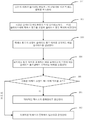
도 1은 예시적인 일 실시예에 따른 유저 행위 식별 방법의 흐름도이다.
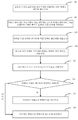
도 2는 예시적인 일 실시예에 따른 유저 행위 식별 방법의 흐름도이다.
도 3은 예시적인 일 실시예에 따른 유저 행위 식별 방법의 흐름도이다.
도 4는 예시적인 일 실시예에 따른 유저 행위 식별 장치의 블럭도이다.
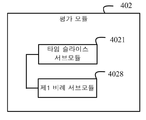
도 5는 예시적인 일 실시예에 따른 평가 모듈의 블럭도이다.
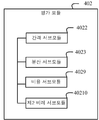
도 6 A는 예시적인 일 실시예에 따른 평가 모듈의 블럭도이다.
도 6 B는 예시적인 일 실시예에 따른 평가 모듈의 블럭도이다.
도 7은 예시적인 일 실시예에 따른 평가 모듈의 블럭도이다.
도 8은 예시적인 일 실시예에 따른 장치의 블럭도이다.BRIEF DESCRIPTION OF THE DRAWINGS The accompanying drawings, which are incorporated in and constitute a part of the specification, illustrate embodiments of the invention and, together with the description, serve to explain the principles of the invention.
1 is a flow diagram of a method of identifying a user action according to an exemplary embodiment.
2 is a flowchart of a method of identifying a user action according to an exemplary embodiment.
3 is a flowchart of a method of identifying a user action according to an exemplary embodiment.
4 is a block diagram of a user behavior identification device according to an exemplary embodiment.
5 is a block diagram of an evaluation module in accordance with an exemplary embodiment.
6A is a block diagram of an evaluation module in accordance with an exemplary embodiment.
6B is a block diagram of an evaluation module in accordance with an exemplary embodiment.
7 is a block diagram of an evaluation module in accordance with an exemplary embodiment.
8 is a block diagram of an apparatus according to an exemplary embodiment.
이하, 도면을 참조하여 예시적인 실시예에 대해 상세하게 설명하기로 한다. 이하의 도면에 관한 설명에 있어서, 별도의 설명이 없는 이상, 서로 다른 도면상의 동일한 부호는 동일 또는 유사한 요소를 표시한다. 이하의 예시적 실시예에 대한 복수의 실시 형태는 본 발명과 관련되는 모든 실시 형태를 표시하는 것은 아니다. 이와 반대로, 이들은 첨부된 특허 청구의 범위에 기재되는 본 발명의 일부의 양태와 일치한 장치 및 방법의 예에 지나지 않는다.Hereinafter, exemplary embodiments will be described in detail with reference to the drawings. In the following description of the drawings, like reference numerals in different drawings denote the same or similar elements unless otherwise described. DETAILED DESCRIPTION OF THE PREFERRED EMBODIMENTS The following embodiments of the present invention will be described in detail with reference to the accompanying drawings. On the contrary, they are merely examples of apparatuses and methods consistent with aspects of the present invention described in the appended claims.
현재, 네트워크상에서의 이벤트가 빈번히 진행됨에 따라 인터넷 점포는 기간 한정의 할인 이벤트를 빈번히 개최하고 있다. 유저(user)는 저가격 상품을 사기 위하여 짧은 시간내에 해당 점포의 웹 사이트(Web site)에 빈번히 액세스(access) 한다. 일부의 유저는 상품을 다투어 사기 위하여 개발된 소프트웨어를 이용해 구입 행위를 실행한다. 상품을 다투어 사기 위하여 개발된 소프트웨어는, 일반 유저보다 높은 액세스 빈도로 점포의 웹 사이트를 액세스 할 수 있다. 그러나, 상품을 다투어 사기 위하여 개발된 소프트웨어에 의한 액세스 행위는 일종의 악의적인 행위로써 웹 사이트가 일시적으로 열람 불가 상태가 되게 할 수 있다. 하나의 가능한 해결안으로서, 소정 시간내의 액세스 횟수가 소정의 역치를 초과하는지 여부를 판단하여, 만약 초과 할 경우, 악의적인 액세스 행위가 존재한다고 판단한다. 하지만, 당해 식별 방법은 비교적 간단하여, 당해 액세스 횟수가 유저의 행위에 의한 것인지, 아니면 상품을 다투어 사기 위하여 개발된 소프트웨어에 의한 것인지를 정확하게 식별할 수 없으며 그 식별 결과가 정확하지 않다.Currently, as the events on the network frequently occur, the Internet stores frequently hold discount events for a limited period. The user frequently accesses the web site of the store within a short period of time to purchase low-priced goods. Some users execute purchasing actions using software developed to scramble products. Software developed to scavenge merchandise can access the store's web site with a higher access frequency than the average user. However, accessing by software developed for the purpose of scrambling a product is a kind of malicious act, which makes the website temporarily unreadable. As one possible solution, it is judged whether or not the number of accesses within a predetermined time exceeds a predetermined threshold, and if it exceeds, it is judged that a malicious accessing action exists. However, the identification method is relatively simple and can not accurately identify whether the number of accesses is due to a user's action or software developed to buy a product, and the identification result is not accurate.
본 실시예에서는, 이러한 문제를 해결하기 위하여, 단말기에 의한 액세스 행위를 시공간 슬라이딩 윈도우(time sliding window)에서 모니터링 하는 것을 통하여 단말기에 의한 액세스 행위가 악의적인 것인지를 정확하게 식별할 수 있다.In this embodiment, in order to solve such a problem, it is possible to accurately identify whether the accessing action by the terminal is malicious through monitoring the accessing action by the terminal in a time sliding window.
본 실시예에 따른 시공간 슬라이딩 윈도우는 다이나믹 시공간 윈도우(dynamic time window)이고, 그 길이는 일정하며 예를 들면 3600초이다. 당해 시공간 슬라이딩 윈도우는 그 종료 위치가 항상 현재 시간이기에, 당해 시공간 슬라이딩 윈도우는 시간의 경과에 따라 이동한다.The space-time sliding window according to this embodiment is a dynamic time window, and its length is constant and is, for example, 3600 seconds. Since the end time of the time-space sliding window is always the current time, the time-space sliding window moves according to the passage of time.
종래 기술중의 소정 시간 길이에 따라 액세스 횟수를 검출하는 기술방안으로서, 예를 들면, 소정 시간 길이가 1000초이며, 0~1000초 사이에 1회 검출하고, 1001~2000초 사이에 1회 검출하며, 그 이후는 마찬가지 방식으로 검출을 반복한다. 하지만, 이와 같은 경우, 500~1500초 사이에 발생하는 액세스 행위는 검출할 수 없다. 때문에, 본 실시예에서는, 시공간 슬라이딩 윈도우의 이동에 수반해 리얼타임으로 검출을 실시하도록 한다. 예를 들면, 시공간 슬라이딩 윈도우는 그 소정 시간 길이가 1000초이며, 0~1000초 사이에 1회 검출하고, 1~1001초 사이에 1회 검출하며, 2~1002초 사이에 1회 검출하고, 그 이후는 마찬가지 방식으로 검출을 반복한다. 본 실시예에서는, 종래 기술방안과 비교하여 그 검출 결과가 더욱 정확하고 악의적인 행위를 더욱 정확하게 식별할 수 있다.As a technique for detecting the number of accesses in accordance with the length of a predetermined time in the related art, for example, there is a technique in which the length of a predetermined time is 1000 seconds, the detection is performed once between 0 and 1000 seconds, After that, detection is repeated in the same manner. However, in such a case, an access action occurring between 500 and 1500 seconds can not be detected. Therefore, in this embodiment, detection is performed in real time with the movement of the space-time sliding window. For example, the time-space sliding window has a predetermined time length of 1000 seconds, and is detected once between 0 and 1000 seconds, once between 1 and 1001 seconds, once between 2 and 1002 seconds, Thereafter, the detection is repeated in the same manner. In this embodiment, the detection result is more accurate and more malicious than the conventional technique.
도 1은 예시적인 일 실시예에 따른 유저 행위 식별 방법의 흐름도이다. 당해 방법은 서버에 의해 실현되며, 도 1에 되시된 바와 같이 이하의 스텝을 포함한다.1 is a flow diagram of a method of identifying a user action according to an exemplary embodiment. The method is realized by a server and includes the following steps as shown in Fig.
스텝 101에서는 소정의 시공간 슬라이딩 윈도우내의 단말기에 의한 액세스 행위를 취득한다.In
스텝 102에서는 상기 시공간 슬라이딩 윈도우내의 액세스 행위에 근거하여 상기 시공간 슬라이딩 윈도우내의 액세스 행위를 평가한다.Step 102 evaluates the access behavior in the space-time sliding window based on the access behavior in the space-time sliding window.
스텝 103에서는 그 평가 결과에 근거하여 상기 단말기에 의한 액세스 행위가 악의적인 액세스인지를 판단한다.In
본 실시예에서는, 단말기에 의한 액세스 행위를 시공간 슬라이딩 윈도우내에서 리얼타임으로 모니터링 할 수 있고, 또한 일정 시간내의 액세스 행위를 모니터링 하여 액세스 행위가 악의적인지를 평가할 수 있으므로, 그 식별 결과가 더욱 정확하다. 본 실시예에서는, 단일 단말기의 행위에 대하여 모니터링 밑 평가를 하고 있는데, 이 단말기는 유저명, IP(인터넷 프로토콜) 주소 또는 MAC(매체 액세스 제어) 주소등에 의해 확정할 수 있다.In this embodiment, since the access behavior by the terminal can be monitored in real time in the space-time sliding window and the access behavior can be monitored within a predetermined time to evaluate whether the access behavior is malicious, the identification result is more accurate . In this embodiment, the behavior of a single terminal is evaluated under monitoring. The terminal can be determined by a user name, an IP (Internet Protocol) address, a MAC (Media Access Control) address, or the like.
악의적인 액세스의 존재가 식별되면, 예를 들어 단말기에 검증 코드를 송신하도록 요구하고, 또는 당해 유저(또는 당해 단말기)에 의한 액세스를 일시적으로 차단하고, 또는 당해 유저를 블랙 리스트에 기입하여 당해 유저의 액세스를 영원히 거부하고, 또는 경고 메시지를 유저에게 송신하는 등 복수 종류의 수단을 채용할 수 있다.If the presence of malicious access is identified, for example, the user is requested to send a verification code to the terminal, or the access by the user (or the terminal) is temporarily blocked, or the user is written to the blacklist, Or a warning message may be sent to the user, for example.
일 실시예에서, 스텝 102는 스텝 A로서 실현된다.In one embodiment,
스텝 A에서는, 상기 시공간 슬라이딩 윈도우중의 각 타임 슬라이스내의 액세스 행위에 근거하여 상기 시공간 슬라이딩 윈도우내의 액세스 행위를 평가한다.In step A, an access behavior in the space-time sliding window is evaluated based on an access behavior in each time slice in the space-time sliding window.
본 실시예에서는, 시공간 슬라이딩 윈도우를 동일 길이(등분)의 복수의 타임 슬라이스로 세분한다. 예를 들어, 시공간 슬라이딩 윈도우의 소정 시간 길이가 3600초이며, 10개의 타임 슬라이스를 포함한 경우, 각 타임 슬라이스의 시간 길이는 360초이다. 본 실시예에서는, 타임 슬라이스를 단위로 하여 유저의 액세스 행위를 모니터링 하는 것을 통하여 모니터링의 입도를 더욱 축소시킬 수 있어 악의적인 행위를 더욱 정확하게 식별할 수 있다. 또한, 본 실시예에서는, 각 타임 슬라이스내의 액세스 행위 및 시공간 슬라이딩 윈도우내의 전체 액세스 행위에 근거하여 평가를 실시하기 때문에 그 평가 결과가 더욱 정확하다.In this embodiment, the time-space sliding window is subdivided into a plurality of time slices having the same length (equally divided). For example, if the predetermined time length of the space-time sliding window is 3600 seconds and includes 10 time slices, the time length of each time slice is 360 seconds. In this embodiment, by monitoring the access behavior of the user with the time slice as a unit, the granularity of the monitoring can be further reduced, and the malicious behavior can be more accurately identified. In addition, in this embodiment, since the evaluation is performed based on the access behavior in each time slice and the entire access behavior in the time-and-space sliding window, the evaluation result is more accurate.
일 실시예에서, 스텝 A는 스텝 A1와 스텝 A2를 포함한다.In one embodiment, step A includes steps A1 and A2.
스텝 A1에서, 각 타임 슬라이스에 대하여, 타임 슬라이스내의 액세스 횟수가 소정의 슬라이스 횟수 역치를 초과하는지 여부를 판단하여, 액세스 횟수가 소정의 슬라이스 횟수 역치를 초과하는 n개의 타임 슬라이스를 취득한다.In step A1, for each time slice, it is determined whether or not the access number in the time slice exceeds a predetermined slice number threshold value, and n time slices for which the access number exceeds the predetermined slice number threshold value are acquired.
스텝 A2에서, n와 타임 슬라이스 총수량 m의 비례가 소정의 제1 비례 역치를 초과하는지 여부를 판단한다.In step A2, it is determined whether or not the proportion of n and the total time slice m exceeds a predetermined first proportional threshold.
스텝 103은 스텝 A3로서 실현될 수 있다.Step 103 can be realized as step A3.
스텝 A3에서, n와 m의 비례가 소정의 제1 비례 역치를 초과하는 경우, 상기 단말기에 의한 액세스 행위가 악의적인 액세스라고 판단한다.In step A3, when the proportion of n and m exceeds a predetermined first proportional threshold value, it is determined that the accessing operation by the terminal is a malicious access.
즉, 액세스 횟수가 소정의 슬라이스 횟수 역치를 초과하는 타임 슬라이스를 결정한다. 타임 슬라이스 총수량 중 슬라이스 횟수 역치를 초과하는 타임 슬라이스 수량의 비례가, 소정의 제1 비례 역치를 초과하는지 여부를 판단한다. 그 판단 결과에 근거하여 상기 시공간 슬라이딩 윈도우내의 액세스 행위를 평가한다.That is, a time slice is determined in which the access count exceeds a predetermined slice count threshold value. It is determined whether or not the proportion of the time slice quantity exceeding the slice number threshold value in the total time slice exceeds a predetermined first proportional threshold value. And evaluates the access behavior in the space-time sliding window based on the determination result.
본 실시예에서, 타임 슬라이스 총수량 중 슬라이스 횟수 역치를 초과하는 타임 슬라이스 수량의 비례가, 소정의 제1 비례 역치를 초과하는 경우, 액세스 횟수가 너무 높아 악의적인 액세스가 존재한다고 판단한다. 그렇지 아니한 경우, 악의적인 액세스가 존재하지 않는다고 판단한다.In this embodiment, when the proportion of the number of time slices exceeding the slice number threshold among the total slices of the time slice exceeds a predetermined first proportional threshold value, it is determined that there is a malicious access because the number of accesses is too high. If not, it is determined that malicious access does not exist.
예를 들면, 시공간 슬라이딩 윈도우(T)가 3600초의 시간 길이를 가지고, 10개의 타임 슬라이스 t1~t10를 포함하는 경우, 각 타임 슬라이스의 길이는 360초이다. 그리고 10개의 타임 슬라이스에 대응하는 액세스 횟수는 각각 t1=50, t2=60, t3=52, t4=55, t5=48, t6=56, t7=58, t8=54, t9=56, t10=57이다. 슬라이스 횟수 역치가 50이라고 하면, 타임 슬라이스 t5를 제외한 다른 9개의 타임 슬라이스에 대한 액세스 횟수는 모두 슬라이스 횟수 역치를 초과한다. 슬라이스 횟수 역치를 초과하는 타임 슬라이스의 수량이 타임 슬라이스 총수량중에서 차지하는 비례는 9/10=90%로 산출된다. 제1 비례 역치가90%인 경우, 슬라이스 횟수 역치를 초과하는 타임 슬라이스의 수량이 타임 슬라이스 총수량중에서 차지하는 비례인 90%와 제1 비례 역치인90%를 비교하는 것을 통하여 액세스 행위를 평가하며, 당해 시공간 슬라이딩 윈도우(T)내에 악의적인 액세스 행위가 존재한다고 판단할 수 있다.For example, if the space-time sliding window T has a time length of 3600 seconds and includes 10 time slices t1 to t10, the length of each time slice is 360 seconds. T2 = 60, t3 = 52, t4 = 55, t5 = 48, t6 = 56, t7 = 58, t8 = 54, t9 = 56, t10 = 56, t10 = 57. If the slice count threshold value is 50, all the access times to the nine other time slices except the time slice t5 exceed the slice count threshold value. The proportion of the number of time slices exceeding the slice count threshold value in the total time slice quantity is calculated as 9/10 = 90%. When the first proportional threshold value is 90%, the access behavior is evaluated by comparing 90%, which is a proportion of the number of time slices exceeding the slice number threshold value in the total time slice quantity, and 90% of the first proportional threshold value, It can be determined that a malicious access action exists in the space-time sliding window T.
일 실시예에서, 스텝 102는 기술방안 B에 의해서도 실현될 수 있다.In one embodiment, step 102 may also be implemented by technique B,
기술방안 B 중,In Technology Plan B,
스텝 B1에서, 상기 시공간 슬라이딩 윈도우중의 서로 인접하는 2개의 액세스 행위마다, 서로 인접하는 2개의 액세스 행위의 시간 간격을 취득한다.In step B1, the time interval of two access actions adjacent to each other is acquired for each of two adjacent access actions in the space-time sliding window.
스텝 B2에서, 취득한 시간 간격에 근거하여 액세스 행위의 시간 분산을 산출한다.In step B2, the time variance of the access behavior is calculated based on the acquired time interval.
스텝 B3에서, 상기 시간 분산에 근거하여 상기 시공간 슬라이딩 윈도우내의 액세스 행위를 평가한다. 여기서, 상기 시간 분산이 소정의 분산 역치를 초과하는지 여부를 판단한다.In step B3, the access behavior in the space time sliding window is evaluated based on the time dispersion. Here, it is determined whether or not the time dispersion exceeds a predetermined dispersion threshold.
스텝 103에서, 상기 시간 분산이 소정의 분산 역치를 초과하는 경우, 상기 단말기에 의한 액세스 행위가 악의적인 액세스라고 판단한다.In
본 실시예에서는, 시간 분산을 소정의 분산 역치와 비교하여, 소정의 분산 역치보다 큰 경우, 분산이 비교적 큰 것을, 즉 액세스 행위의 시간 간격의 변동이 비교적 큰 것을 나타내고 있으므로, 당해 액세스 행위가, 상품을 다투어 사기 위하여 개발된 소프트웨어에 의한 행위가 아니고, 유저에 의한 행위이라고 판단할 수 있고, 또한 악의적인 행위가 존재하지 않는다고 판단할 수 있다. 이와 반대로, 소정의 분산 역치 이하인 경우, 악의적인 행위가 존재한다고 판단한다.In the present embodiment, when the time variance is compared with the predetermined distributed threshold value and when it is larger than the predetermined distributed threshold value, the variance is relatively large, that is, the variation in the time interval of the access behavior is relatively large. It can be judged that the action is performed by the user, and that there is no malicious action, not by the software developed for scrambling the product. On the other hand, when the threshold is equal to or smaller than the predetermined dispersion threshold value, it is determined that a malicious action exists.
예를 들면, 상기 시공간 슬라이딩 윈도우중의 서로 인접하는 2개의 액세스 행위마다, 서로 인접하는 2개의 액세스 행위의 시간 간격 x1, x2, x3 … xn를 취득한다. 이 경우, 이하의 식에 의해 분산을 산출할 수 있다.For example, for each of two adjacent access actions in the space-time sliding window, the time intervals x1, x2, x3, ..., xn. In this case, the variance can be calculated by the following equation.
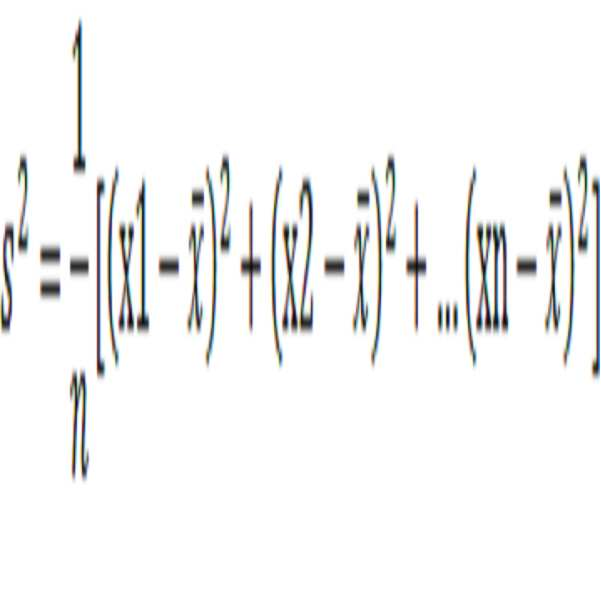
여기서, 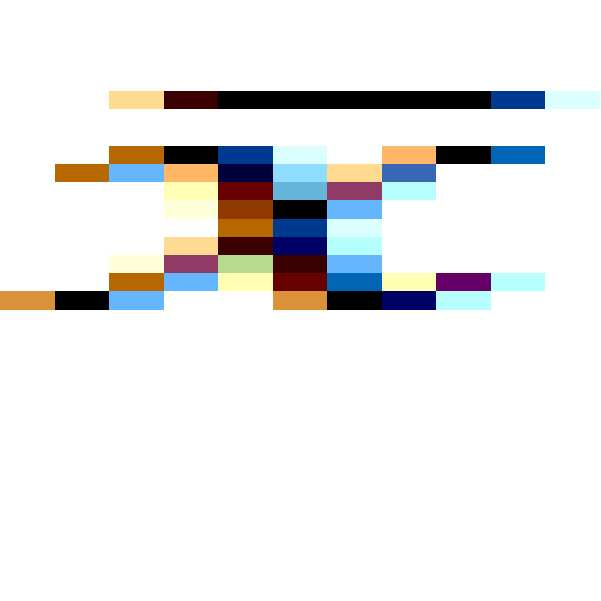
일 실시예에서, 기술방안 B는 스텝 A1~A3와 조합하여 실시 할 수 있다. 예를 들면, 각 타임 슬라이스에 대응하는 분산을 산출하여 분산이 분산 역치보다 큰 타임 슬라이스를 확정하고, 분산이 분산 역치보다 큰 타임 슬라이스의 수량과 타임 슬라이스 총수량의 비례를 결정한 후 당해 비례를 제1 비례 역치와 비교하여, 악의적인 액세스가 존재하는지를 판단한다.In one embodiment, scheme B may be implemented in combination with steps A1-A3. For example, the variance corresponding to each time slice is calculated, a time slice whose variance is larger than the variance threshold value is determined, a proportion of the time slice whose variance is larger than the variance threshold value and the total time slice amount is determined, It is judged whether malicious access exists or not in comparison with the proportional threshold value.
일 실시예에서, 기술방안 B를 더 개량할 수 있다. 스텝 B3는 스텝 B31 및 B32를 포함할 수 있다.In one embodiment, technique B may be further improved. Step B3 may include steps B31 and B32.
상기 시공간 슬라이딩 윈도우중의 서로 인접하는 2개의 액세스 행위마다, 서로 인접하는 2개의 액세스 행위의 시간 간격을 취득한다.Time intervals of two adjacent access actions are acquired for each of two adjacent access actions in the space-time sliding window.
취득한 시간 간격에 근거하여 액세스 행위의 시간 분산을 산출한다.And calculates the time variance of the access behavior based on the acquired time interval.
스텝 B31에서, 상기 시간 분산과 시간 간격의 평균치의 비율을 산출한다.In step B31, the ratio of the time variance to the average of the time intervals is calculated.
스텝 B32에서, 상기 비율이 소정의 제2 비례 역치보다 작은지 여부를 판단한다. 그 판단 결과에 근거하여 상기 시공간 슬라이딩 윈도우내의 액세스 행위를 평가한다.In step B32, it is determined whether the ratio is smaller than a predetermined second proportional threshold. And evaluates the access behavior in the space-time sliding window based on the determination result.
스텝 103은 스텝 B33로서 실현된다.Step 103 is implemented as step B33.
스텝 B33에서, 상기 비율이 소정의 제2 비례 역치보다 작은 경우, 상기 단말기에 의한 액세스 행위가 악의적인 액세스라고 판단한다.In step B33, if the ratio is smaller than the predetermined second proportional threshold value, it is determined that the accessing operation by the terminal is a malicious access.
본 실시예에서, 시간 분산과 시간 간격의 평균치의 비율이 소정의 제2 비례 역치를 초과하면, 당해 시간 분산을 가지는 시간 간격은 시간 간격의 평균치에 매우 접근하는 값이기에, 당해 액세스 행위가 상품을 다투어 사기 위하여 개발된 소프트웨어에 의한 행위이며, 악의적인 액세스가 존재한다고 판단할 수 있다. 그렇지 아니한 경우, 당해 액세스 행위는 유저에 의한 행위이며, 악의적인 액세스가 존재하지 않는다고 판단할 수 있다.In this embodiment, if the ratio of the time variance to the average of the time intervals exceeds a predetermined second proportional threshold value, the time interval having the time variance is a value which is very close to the average value of the time intervals. It is an act by the software developed to fight against, and it can be judged that there is malicious access. Otherwise, the access behavior is an action by the user and can determine that no malicious access exists.
예를 들면, 평균치 x가 1이며, 시간 분산이 0.5인 경우, 시간 분산과 평균치의 비례는50%이며, 소정의 제2 비례 역치100%보다 크다. 분산 0.5는 비교적 작기는 하지만 평균치 1에서 부터 떨어져 있는 정도가 비교적 크다.For example, when the average value x is 1 and the time variance is 0.5, the proportion of the time variance and the average value is 50%, which is larger than the predetermined second proportional threshold value 100%. Dispersion 0.5 is relatively small, but the distance from average 1 is relatively large.
또 예를 들면, 평균치 x가 10이며, 시간 분산이 0.5인 경우, 시간 분산과 평균치의 비례는5%이며, 소정의 제2 비례 역치10%보다 작다. 평균치 10이 비교적 크기 때문에, 시간 분산 0.5를 가지는 시간 간격은 평균치에 매우 접근하는 수치이다.For example, when the average value x is 10 and the time variance is 0.5, the proportion of the time variance and the average value is 5%, which is smaller than the predetermined second proportional threshold value 10%. Since the average value 10 is relatively large, the time interval with a time variance of 0.5 is a value very close to the average value.
본 실시예에서, 분산과 평균치의 접근 정도(다른 면에서 보면, 떨어져 있는 정도라고도 할 수 있다)를 비교하는 것을 통하여 액세스 행위를 더욱 정확하게 평가할 수 있다.In the present embodiment, the access behavior can be more accurately evaluated by comparing the degree of variance and the average degree of access (or, in other respects, the degree of distance).
일 실시예에서, 스텝 102는 기술방안 C로서 실현될 수 있다.In one embodiment, step 102 may be implemented as technology approach C. [
기술방안 C 중,In Technology Plan C,
스텝 C1에서, 상기 시공간 슬라이딩 윈도우내의 액세스 행위의 총횟수를 취득한다.In step C1, the total number of access actions in the space-time sliding window is obtained.
스텝 C2에서, 상기 총횟수가 소정의 총횟수 역치를 초과하는지 여부를 판단한다.In step C2, it is determined whether the total number exceeds the predetermined total number threshold value.
스텝 C3에서, 그 판단 결과에 근거하여 상기 시공간 슬라이딩 윈도우내의 액세스 행위를 평가한다.In step C3, the access behavior in the space-time sliding window is evaluated based on the determination result.
본 실시예에서는, 시공간 슬라이딩 윈도우내의 액세스 행위의 총횟수가 총횟수 역치를 초과하면, 액세스량이 너무 많아 악의적인 액세스가 존재한다고 판단한다. 그렇지 아니한 경우, 악의적인 액세스가 존재하지 않는다고 판단한다.In this embodiment, if the total number of access actions in the time-space sliding window exceeds the total number threshold, it is determined that there is too much access because there is too much access. If not, it is determined that malicious access does not exist.
일 실시예에서, 기술방안 C는 상기의 기술방안과 조합하여 실시할 수 있다. 스텝 A 또는 기술방안 B의 판단 결과의 기초 상에서, 기술방안 C의 판단을 실행하여, 각 기술방안의 판단결과 모두가 악의적인 액세스가 존재한다고 판단되었을 경우에만 악의적인 액세스가 존재한다는 결론을 내릴 수 있다.In one embodiment, Technique C may be implemented in combination with the above techniques. On the basis of the determination result of Step A or Technology Solution B, the determination of Technology Solution C is executed, and it can be concluded that only when all of the determination results of each technology solution are judged that malicious access exists, malicious access exists have.
이하, 몇개의 실시예를 통해서 유저 행위 식별 방법을 소개하도록 한다.Hereinafter, a user behavior identification method will be introduced through several embodiments.
도 2는 예시적인 일 실시예에 따른 유저 행위 식별 방법의 흐름도이다. 당해 방법은 서버에 의해 실현되며, 도 2에 되시된 바와 같이 이하의 스텝을 포함한다.2 is a flowchart of a method of identifying a user action according to an exemplary embodiment. The method is realized by a server and includes the following steps as shown in Fig.
스텝 201에서, 소정의 시공간 슬라이딩 윈도우내의 단말기에 의한 액세스 행위를 취득한다.In
스텝 202에서, 시공간 슬라이딩 윈도우중의 타임 슬라이스마다, 타임 슬라이스에 대응하는 액세스 횟수를 소정의 슬라이스 횟수 역치와 비교한다.In
스텝 203에서, 액세스 횟수가 소정의 슬라이스 횟수 역치를 초과하는 타임 슬라이스를 결정한다.In
스텝 204에서, 슬라이스 횟수 역치를 초과하는 타임 슬라이스의 수량이 타임 슬라이스 총수량에서 차지하는 비례를 산출한다.In
스텝 205에서, 산출된 비례가 소정의 제1 비례 역치를 초과하는지 여부를 판단한다. 소정의 제1 비례 역치를 초과하는 경우, 스텝 206으로 이동하고, 소정의 제1 비례 역치를 초과하지 않는 경우, 스텝 207으로 이동한다.In
스텝 206에서, 악의적인 액세스가 존재한다고 판단한다.In
스텝 207에서, 악의적인 액세스가 존재하지 않는다고 판단한다.In
본 실시예에서는, 타임 슬라이스를 이용해 액세스 행위를 보다 세부적으로 모니터링 할 수 있다. 액세스 횟수를 작은 입도로 모니터링 하는 것을 통하여 악의적인 액세스가 존재하는 지를 더욱 정확하게 식별할 수 있다.In this embodiment, the access behavior can be monitored in more detail using a time slice. By monitoring the number of accesses with a small granularity, it is possible to more accurately identify the presence of malicious accesses.
도 3은 예시적인 일 실시예에 따른 유저 행위 식별 방법의 흐름도이다. 당해 방법은 서버에 의해 실현되며, 도 3에 되시된 바와 같이 이하의 스텝을 포함한다.3 is a flowchart of a method of identifying a user action according to an exemplary embodiment. The method is realized by a server and includes the following steps as shown in FIG.
스텝 301에서, 소정의 시공간 슬라이딩 윈도우내의 단말기에 의한 액세스 행위를 취득한다.In
스텝 302에서, 상기 시공간 슬라이딩 윈도우중의 서로 인접하는 2개의 액세스 행위마다, 서로 인접하는 2개의 액세스 행위의 시간 간격을 취득한다.In
스텝 303에서, 취득한 시간 간격에 근거하여 시간 간격의 평균치를 산출한다.In
스텝 304에서, 취득한 시간 간격에 근거하여 액세스 행위의 시간 분산을 산출한다.In
스텝 305에서, 상기 시간 분산과 시간 간격의 평균치의 비율을 산출한다.In
스텝 306에서, 상기 비율이 소정의 제2 비례 역치보다 작은지 여부를 판단한다. 소정의 제2 비례 역치보다 작은 경우, 스텝 307으로 이동하고, 소정의 제2 비례 역치 이상인 경우, 스텝 308으로 이동한다.In
스텝 307에서, 악의적인 액세스가 존재한다고 판단한다.In
스텝 308에서, 악의적인 액세스가 존재하지 않는다고 판단한다.In
본 실시예에서는, 분산을 이용하여 취득한 액세스 행위가 균일한 시간 간격으로 발생하였는지 여부를 판단한다. 그러한 경우, 유저에 의한 액세스 행위가 아니라 소프트웨어에 의한 액세스 행위라고 판단하며, 악의적인 액세스가 존재한다고 판단한다. 그렇지 아니한 경우, 악의적인 액세스가 존재하지 않는다고 판단한다. 당해 방법에 의하면, 악의적인 액세스 행위를 더욱 정확하게 식별할 수 있다.In this embodiment, it is determined whether or not the access behavior acquired using the distribution occurs at uniform time intervals. In such a case, it is judged that the access is an operation by software, not an access by a user, and it is judged that a malicious access exists. If not, it is determined that malicious access does not exist. According to the method, a malicious accessing behavior can be more accurately identified.
이상의 설명에 의하여 서버에 의해 실현되는 유저 행위 식별 방법이 보다 더욱 명확하게 이해할수 있게 되었다. 이하, 장치의 내부 구조와 기능에 대해 소개하도록 한다.As described above, the user behavior identification method realized by the server can be understood more clearly. Hereinafter, the internal structure and functions of the apparatus will be introduced.
도 4는 예시적인 일 실시예에 따른 유저 행위 식별 장치의 모식도이다. 도 4를 참조하면, 해당 장치는 취득 모듈(401), 평가 모듈(402) 및 판단 모듈(403)을 포함한다.4 is a schematic diagram of a user behavior identification device according to an exemplary embodiment. Referring to FIG. 4, the apparatus includes an
취득 모듈(401)은 소정의 시공간 슬라이딩 윈도우내의 단말기에 의한 액세스 행위를 취득한다.
평가 모듈(402)은 상기 시공간 슬라이딩 윈도우내의 액세스 행위에 근거하여 상기 시공간 슬라이딩 윈도우내의 액세스 행위를 평가한다.The
판단 모듈(403)은 그 평가 결과에 근거하여 상기 단말기에 의한 액세스 행위가 악의적인 액세스인지를 판단한다.The
일 실시예에서, 상기 시공간 슬라이딩 윈도우는 m개로 등분 된 타임 슬라이스를 포함한다. 도 5에 되시된 바와 같이, 상기 평가 모듈(402)은 타임 슬라이스 서브모듈(4021)과 제1 비례 서브모듈(4028)을 포함한다.In one embodiment, the space-time sliding window includes a time slice divided into m parts. As shown in FIG. 5, the
타임 슬라이스 서브모듈(4021)은 타임 슬라이스내의 액세스 횟수가 소정의 슬라이스 횟수 역치를 초과하는지를 타임 슬라이스마다 판단하여, 액세스 횟수가 소정의 슬라이스 횟수 역치를 초과하는 n개의 타임 슬라이스를 취득한다.The
제1 비례 서브모듈(4028)은 n와 m의 비례가 소정의 제1 비례 역치를 초과하는지 여부를 판단한다.The first
상기 판단 모듈(403)은 n와 m의 비례가 소정의 제1 비례 역치를 초과하는 경우, 상기 단말기에 의한 액세스 행위가 악의적인 액세스라고 판단한다.If the proportion of n and m exceeds a predetermined first proportional threshold, the
일 실시예에서, 도 6 A에 되시된 바와 같이, 상기 평가 모듈(402)은 간격 서브모듈(4022), 분산 서브모듈(4023) 및 제1 평가 서브모듈(4024)을 포함한다.In one embodiment, as shown in FIG. 6A, the
간격 서브모듈(4022)은, 상기 시공간 슬라이딩 윈도우중의 서로 인접하는 2개의 액세스 행위마다, 서로 인접하는 2개의 액세스 행위의 시간 간격을 취득한다.The
분산 서브모듈(4023)은 취득한 시간 간격에 근거하여 액세스 행위의 시간 분산을 산출한다.The distributed submodule 4023 calculates the time variance of the access behavior based on the acquired time interval.
제1 평가 서브모듈(4024)은 상기 시간 분산이 소정의 분산 역치를 초과하는지 여부를 판단한다.The
상기 판단 모듈(403)은 상기 시간 분산이 소정의 분산 역치를 초과하는 경우, 상기 단말기에 의한 액세스 행위가 악의적인 액세스라고 판단한다.If the time variance exceeds the predetermined distributed threshold value, the
일 실시예에서, 타임 슬라이스 서브모듈(4021)은 간격 서브모듈(4022), 분산 서브모듈(4023) 및 제1 평가 서브모듈(4024)을 포함할 수도 있다.In one embodiment, the
일 실시예에서, 도 6 B에 되시된 바와 같이, 상기 평가 모듈(402)은 간격 서브모듈(4022), 분산 서브모듈(4023), 비율 서브모듈(4029)및 제2 비례 서브모듈(40210)을 포함한다.6B, the
간격 서브모듈(4022)은 상기 시공간 슬라이딩 윈도우중의 서로 인접하는 2개의 액세스 행위마다, 서로 인접하는 2개의 액세스 행위의 시간 간격을 취득한다.The
분산 서브모듈(4023)은 취득한 시간 간격에 근거하여 액세스 행위의 시간 분산을 산출한다.The distributed submodule 4023 calculates the time variance of the access behavior based on the acquired time interval.
비율 서브모듈(4029)는 상기 시간 분산과 시간 간격의 평균치의 비율을 산출한다.The
제2 비례 서브모듈(40210)는 상기 비율이 소정의 제2 비례 역치보다 작은지 여부를 판단한다.The second
상기 판단 모듈(403)은 상기 비율이 소정의 제2 비례 역치보다 작은 경우, 상기 단말기에 의한 액세스 행위가 악의적인 액세스라고 판단한다.If the ratio is smaller than a predetermined second proportional threshold value, the
일 실시예에서, 도 7에 되시된 바와 같이, 상기 평가 모듈(402)은 총횟수 서브모듈(4025), 총횟수 판단 서브모듈(4026) 및 제2 평가 서브모듈(4027)을 포함한다.In one embodiment, as shown in FIG. 7, the
총횟수 서브모듈(4025)은 상기 시공간 슬라이딩 윈도우내의 액세스 행위의 총횟수를 취득한다.The total
총횟수 판단 서브모듈(4026)은 상기 총횟수가 소정의 총횟수 역치를 초과하는지 여부를 판단한다.The total number
제2 평가 서브모듈(4027)은 그 판단 결과에 근거하여 상기 시공간 슬라이딩 윈도우내의 액세스 행위를 평가한다.The
상기 실시예에 따른 장치의 각 모듈에 의한 조작의 구체적인 형태에 관하여, 유저 행위 식별 방법에 관한 실시예에 대해 이미 상세하게 설명하고 있기에, 여기에서는 그 상세한 설명을 생략 하도록 한다.Since the embodiments of the method for identifying the user's actions are already described in detail with respect to the specific form of the operation by each module of the apparatus according to the embodiment, detailed description thereof will be omitted here.
도 8은 예시적인 일 실시예에 따른 유저 행위를 식별하기 위한 장치(800)의 블럭도이다. 예를 들면, 장치(800)는 컴퓨터로 제공될 수 있다. 도 8을 참조하면, 장치(800)는 1개 또는 복수의 프로세서를 포함하는 처리 어셈블리(822)와, 처리 어셈블리(822)에 의해 실행 가능한 예를 들면 응용 프로그램등과 같은 인스트럭션을 저장하기 위한 메모리(832)를 대표로 하는 메모리 자원을 포함한다. 메모리(832)에 저장되는 응용 프로그램은 각각 1셋트의 인스트럭션에 대응하는 1개 또는 복수의 모듈을 포함할 수 있다. 또한, 처리 어셈블리(822)는 인스트럭션을 실행할 수 있도록 구성되어, 상기의 유저 행위 식별 방법을 수행할 수 있다.8 is a block diagram of an
장치(800)는 장치(800)의 전원 관리를 수행하도록 구성되는 전원 어셈블리(826), 장치(800)을 네트워크에 접속시키기 위한 1개의 유선 또는 무선 네트워크 인터페이스(850), 1개의 입출력(I/O) 인터페이스(858)를 포함할 수 있다. 장치(800)는, 예를 들어 Windows ServerTM, Mac OS XTM, UnixTM, LinuxTM, FreeBSDTM 또는 이에 유사한 오퍼레이팅 시스템과 같은 메모리(832)에 저장된 오퍼레이팅 시스템을 구비할 수 있다.The
프로세서와 프로세서에 의해 실행 가능한 인스트럭션을 저장하기 위한 메모리를 포함하는 유저 행위 식별 장치에 있어서,A user behavior identification device comprising a processor and a memory for storing instructions executable by the processor,
상기 프로세서는,The processor comprising:
소정의 시공간 슬라이딩 윈도우내의 단말기에 의한 액세스 행위를 취득하고,Acquiring an access behavior by a terminal in a predetermined space-time sliding window,
상기 시공간 슬라이딩 윈도우내의 액세스 행위에 근거하여 상기 시공간 슬라이딩 윈도우내의 액세스 행위를 평가하고,Evaluating an access behavior in the space-time sliding window based on an access behavior in the space-time sliding window,
그 평가 결과에 근거하여 상기 단말기에 의한 액세스 행위가 악의적인 액세스인지를 판단하도록 구성된다.And to judge whether the access action by the terminal is a malicious access based on the evaluation result.
상기 프로세서는, The processor comprising:
상기 시공간 슬라이딩 윈도우가 m개로 등분 된 타임 슬라이스를 포함하고,Wherein the space-time sliding window includes a time slice divided into m parts,
상기 시공간 슬라이딩 윈도우내의 액세스 행위에 근거하여 상기 시공간 슬라이딩 윈도우내의 액세스 행위를 평가하는 것이,And evaluating an access behavior in the space-time sliding window based on an access behavior in the space-time sliding window,
타임 슬라이스내의 액세스 횟수가 소정의 슬라이스 횟수 역치를 초과하는지를 타임 슬라이스마다 판단하여, 액세스 횟수가 소정의 슬라이스 횟수 역치를 초과하는 n개의 타임 슬라이스 취득하는 것과,Determining whether each access time in the time slice exceeds a predetermined slice number threshold value and acquiring n time slices in which the access number exceeds a predetermined slice number threshold value;
n와 m의 비례가 소정의 제1 비례 역치를 초과하는지 여부를 판단하는 것determining whether the proportion of n and m exceeds a predetermined first proportional threshold
을 포함하고,/ RTI >
그 평가 결과에 근거하여 상기 단말기에 의한 액세스 행위가 악의적인 액세스인지를 판단하는 것이,And judging whether or not the access behavior by the terminal is a malicious access based on the evaluation result,
n와 m의 비례가 소정의 제1 비례 역치를 초과하는 경우, 상기 단말기에 의한 액세스 행위가 악의적인 액세스라고 판단하는 것 when the proportion of n and m exceeds a predetermined first proportional threshold, it is determined that the accessing operation by the terminal is malicious access
을 포함하도록 구성될 수 있다.. ≪ / RTI >
또한, 상기 프로세서는, In addition,
상기 시공간 슬라이딩 윈도우내의 액세스 행위에 근거하여 상기 시공간 슬라이딩 윈도우내의 액세스 행위를 평가하는 것이,And evaluating an access behavior in the space-time sliding window based on an access behavior in the space-time sliding window,
상기 시공간 슬라이딩 윈도우중의 서로 인접하는 2개의 액세스 행위마다, 서로 인접하는 2개의 액세스 행위의 시간 간격을 취득하는 것과,Acquiring time intervals of two adjacent access actions for each of two mutually adjacent access actions in the space-time sliding window;
취득한 시간 간격에 근거하여 액세스 행위의 시간 분산을 산출하는 것과,Calculating a time variance of the access behavior based on the acquired time interval,
상기 시간 분산이 소정의 분산 역치를 초과하는지 여부를 판단하는 것Determining whether the time variance exceeds a predetermined dispersion threshold
을 포함하고,/ RTI >
그 평가 결과에 근거하여 상기 단말기에 의한 액세스 행위가 악의적인 액세스인지를 판단하는 것이,And judging whether or not the access behavior by the terminal is a malicious access based on the evaluation result,
상기 시간 분산이 소정의 분산 역치를 초과하는 경우, 상기 단말기에 의한 액세스 행위가 악의적인 액세스라고 판단하는 것When the time variance exceeds a predetermined dispersion threshold, it is determined that the access operation by the terminal is malicious access
을 포함하도록 구성될 수 있다.. ≪ / RTI >
상기 프로세서는, The processor comprising:
상기 시공간 슬라이딩 윈도우내의 액세스 행위에 근거하여 상기 시공간 슬라이딩 윈도우내의 액세스 행위를 평가하는 것이,And evaluating an access behavior in the space-time sliding window based on an access behavior in the space-time sliding window,
상기 시공간 슬라이딩 윈도우중의 서로 인접하는 2개의 액세스 행위마다, 서로 인접하는 2개의 액세스 행위의 시간 간격을 취득하는 것과,Acquiring time intervals of two adjacent access actions for each of two mutually adjacent access actions in the space-time sliding window;
취득한 시간 간격에 근거하여 액세스 행위의 시간 분산을 산출하는 것과,Calculating a time variance of the access behavior based on the acquired time interval,
상기 시간 분산과 시간 간격의 평균치의 비율을 산출하는 것과,Calculating a ratio of the average of the time variance and the time interval,
상기 비율이 소정의 제2 비례 역치보다 작은가 아닌가를 판단하는 것Determining whether the ratio is smaller than a predetermined second proportional threshold
을 포함하고,/ RTI >
그 평가 결과에 근거하여 상기 단말기에 의한 액세스 행위가 악의적인 액세스인지를 판단하는 것이,And judging whether or not the access behavior by the terminal is a malicious access based on the evaluation result,
상기 비율이 소정의 제2 비례 역치보다 작은 경우, 상기 단말기에 의한 액세스 행위가 악의적인 액세스라고 판단하는 것And if the ratio is smaller than a predetermined second proportional threshold, it is determined that the access operation by the terminal is malicious access
을 포함하도록 구성될 수 있다.. ≪ / RTI >
또한, 상기 프로세서는, In addition,
상기 시공간 슬라이딩 윈도우내의 액세스 행위에 근거하여 상기 시공간 슬라이딩 윈도우내의 액세스 행위를 평가하는 것이,And evaluating an access behavior in the space-time sliding window based on an access behavior in the space-time sliding window,
상기 시공간 슬라이딩 윈도우내의 액세스 행위의 총횟수를 취득하는 것과,Obtaining a total number of access actions in the space-time sliding window;
상기 총횟수가 소정의 총횟수 역치를 초과하는지 여부를 판단하는 것과,Determining whether the total number exceeds a predetermined total number threshold,
그 판단 결과에 근거하여 상기 시공간 슬라이딩 윈도우내의 액세스 행위를 평가하는 것And evaluating an access behavior in the space-time sliding window based on the determination result
을 포함하도록 구성될 수 있다.. ≪ / RTI >
컴퓨터에 의해 판독 가능한 비휘발성 기록 매체에 있어서, 상기 기록 매체중의 인스트럭션이 이동 단말기의 프로세서에 의해 실행되는 경우, 이동 단말기가 유저 행위 식별 방법을 실행할 수 있다.In a nonvolatile recording medium readable by a computer, when an instruction in the recording medium is executed by a processor of the mobile terminal, the mobile terminal may execute the method of identifying the user action.
상기 유저 행위 식별 방법은,The method as claimed in claim 1,
소정의 시공간 슬라이딩 윈도우내의 단말기에 의한 액세스 행위를 취득하는 스텝과,Acquiring an access behavior by a terminal in a predetermined space-time sliding window;
상기 시공간 슬라이딩 윈도우내의 액세스 행위에 근거하여 상기 시공간 슬라이딩 윈도우내의 액세스 행위를 평가하는 스텝과,Evaluating an access behavior in the space-time sliding window based on an access behavior in the space-time sliding window;
그 평가 결과에 근거하여 상기 단말기에 의한 액세스 행위가 악의적인 액세스인지를 판단하는 스텝And judging whether or not the access action by the terminal is a malicious access based on the evaluation result
을 포함한다..
상기 기록 매체중의 인스트럭션은, Wherein the instructions in the recording medium include:
상기 시공간 슬라이딩 윈도우가 m개로 등분 된 타임 슬라이스를 포함하고,Wherein the space-time sliding window includes a time slice divided into m parts,
상기 시공간 슬라이딩 윈도우내의 액세스 행위에 근거하여 상기 시공간 슬라이딩 윈도우내의 액세스 행위를 평가하는 스텝은,Wherein the step of evaluating an access behavior in the space-time sliding window based on an access behavior in the space-
타임 슬라이스내의 액세스 횟수가 소정의 슬라이스 횟수 역치를 초과하는지를 타임 슬라이스마다 판단하여, 액세스 횟수가 소정의 슬라이스 횟수 역치를 초과하는 n개의 타임 슬라이스를 취득하는 스텝과,A step of determining, for each time slice, whether or not the number of accesses in the time slice exceeds a predetermined slice number threshold value and acquiring n time slices whose access times exceed a predetermined slice number threshold value;
n와 m의 비례가 소정의 제1 비례 역치를 초과하는지 여부를 판단하는 스텝determining whether a proportion of n and m exceeds a predetermined first proportional threshold
을 포함하고,/ RTI >
그 평가 결과에 근거하여 상기 단말기에 의한 액세스 행위가 악의적인 액세스인지를 판단하는 스텝은,And judging whether or not the access behavior by the terminal is a malicious access based on the evaluation result,
n와 m의 비례가 소정의 제1 비례 역치를 초과하는 경우, 상기 단말기에 의한 액세스 행위가 악의적인 액세스라고 판단하는 스텝if the proportion of n and m exceeds a predetermined first proportional threshold, determining that the access action by the terminal is malicious access
을 포함하도록 구성될수 있다.. ≪ / RTI >
또한, 상기 기록 매체중의 인스트럭션은,In addition, the instructions in the recording medium may include,
상기 시공간 슬라이딩 윈도우내의 액세스 행위에 근거하여 상기 시공간 슬라이딩 윈도우내의 액세스 행위를 평가하는 스텝은,Wherein the step of evaluating an access behavior in the space-time sliding window based on an access behavior in the space-
상기 시공간 슬라이딩 윈도우중의 서로 인접하는 2개의 액세스 행위마다, 서로 인접하는 2개의 액세스 행위의 시간 간격을 취득하는 스텝과,Acquiring time intervals of two adjacent access actions for each of two adjacent access actions in the space-time sliding window;
취득한 시간 간격에 근거하여 액세스 행위의 시간 분산을 산출하는 스텝과,Calculating a time variance of the access behavior based on the acquired time interval;
상기 시간 분산이 소정의 분산 역치를 초과하는지 여부를 판단하는 스텝Determining whether the time variance exceeds a predetermined dispersion threshold
을 포함하고,/ RTI >
그 평가 결과에 근거하여 상기 단말기에 의한 액세스 행위가 악의적인 액세스인지를 판단하는 스텝은,And judging whether or not the access behavior by the terminal is a malicious access based on the evaluation result,
상기 시간 분산이 소정의 분산 역치를 초과하는 경우, 상기 단말기에 의한 액세스 행위가 악의적인 액세스라고 판단하는 스텝When the time variance exceeds a predetermined dispersion threshold, judging that the access behavior by the terminal is malicious access
을 포함하도록 구성될 수 있다.. ≪ / RTI >
상기 기록 매체중의 인스트럭션은,Wherein the instructions in the recording medium include:
상기 시공간 슬라이딩 윈도우내의 액세스 행위에 근거하여 상기 시공간 슬라이딩 윈도우내의 액세스 행위를 평가하는 스텝은,Wherein the step of evaluating an access behavior in the space-time sliding window based on an access behavior in the space-
상기 시공간 슬라이딩 윈도우중의 서로 인접하는 2개의 액세스 행위마다, 서로 인접하는 2개의 액세스 행위의 시간 간격을 취득하는 스텝과,Acquiring time intervals of two adjacent access actions for each of two adjacent access actions in the space-time sliding window;
취득한 시간 간격에 근거하여 액세스 행위의 시간 분산을 산출하는 스텝과,Calculating a time variance of the access behavior based on the acquired time interval;
상기 시간 분산과 시간 간격의 평균치의 비율을 산출하는 스텝과,Calculating a ratio of the average of the time variance and the time interval;
상기 비율이 소정의 제2 비례 역치보다 작은지 여부를 판단하는 스텝Determining whether the ratio is smaller than a predetermined second proportional threshold
을 포함하고,/ RTI >
그 평가 결과에 근거하여 상기 단말기에 의한 액세스 행위가 악의적인 액세스인지를 판단하는 스텝은,And judging whether or not the access behavior by the terminal is a malicious access based on the evaluation result,
상기 비율이 소정의 제2 비례 역치보다 작은 경우, 상기 단말기에 의한 액세스 행위가 악의적인 액세스라고 판단하는 스텝If the ratio is smaller than a predetermined second proportional threshold, determining that the access action by the terminal is malicious access
을 포함하도록 구성될 수 있다.. ≪ / RTI >
또한, 상기 기록 매체중의 인스트럭션은,In addition, the instructions in the recording medium may include,
상기 시공간 슬라이딩 윈도우내의 액세스 행위에 근거하여 상기 시공간 슬라이딩 윈도우내의 액세스 행위를 평가하는 스텝은,Wherein the step of evaluating an access behavior in the space-time sliding window based on an access behavior in the space-
상기 시공간 슬라이딩 윈도우내의 액세스 행위의 총횟수를 취득하는 스텝과,Obtaining a total number of access actions in the space-time sliding window;
상기 총횟수가 소정의 총횟수 역치를 초과하는지 여부를 판단하는 스텝과,Determining whether the total number exceeds a predetermined total number threshold value,
그 판단 결과에 근거하여 상기 시공간 슬라이딩 윈도우내의 액세스 행위를 평가하는 스텝And evaluating an access behavior in the space-time sliding window based on the determination result
을 포함하도록 구성될 수 있다.. ≪ / RTI >
당업자는 명세서를 참조하고 또한 여기서 공개한 발명을 실행한 후, 본 발명의 다른 실시방안을 용이하게 생각해낼 수 있다. 본출원은, 본 발명의 임의의 변형, 용도 또는 적응적 변화를 포함하고, 이러한 변형, 용도 또는 적응적 변화는, 본 발명의 일반적인 원리에 따르며, 본 명세서에서 공개하지 않은 본 기술분야의 공지상식 또는 관용기술수단을 포함한다. 명세서와 실시예는, 단지 예시적인 것으로서, 본 발명의 보호범위와 취지는 특허청구범위에 의해 한정된다.Those skilled in the art can readily devise other implementations of the present invention after referring to the specification and implementing the invention disclosed herein. This application is intended to cover any variations, uses, or adaptations of the invention, and such modifications, uses, or adaptations may be made without departing from the general principles of the present invention, Or generic technical means. It is intended that the specification and examples be considered as exemplary only, with a protective scope and spirit of the invention being defined by the claims.
본 발명은, 상기에 기재되고 도면에 나타낸 구체적인 구조에 한정되지 않으며, 그 범위내에서 다양한 수정과 변형을 실시할 수 있다는것을 이해해야 한다. 본 발명의 범위는 특허청구범위에 의해 제한된다.It is to be understood that the present invention is not limited to the specific structures shown in the above and illustrated in the drawings, and that various modifications and changes may be made thereto. The scope of the present invention is limited by the claims.
Claims (11)
상기 시공간 슬라이딩 윈도우내의 액세스 행위에 근거하여 상기 시공간 슬라이딩 윈도우내의 액세스 행위를 평가하는 스텝과,
그 평가 결과에 근거하여 상기 단말기에 의한 액세스 행위가 악의적인 액세스인지를 판단하는 스텝
을 포함하는 것을 특징으로 하는 유저 행위 식별 방법.
A step of obtaining an access action by a terminal in a predetermined time sliding window;
Evaluating an access behavior in the space-time sliding window based on an access behavior in the space-time sliding window;
And judging whether or not the access action by the terminal is a malicious access based on the evaluation result
The method comprising the steps of:
상기 시공간 슬라이딩 윈도우는 m개로 등분 된 타임 슬라이스(time slices)를 포함하고,
상기 시공간 슬라이딩 윈도우내의 액세스 행위에 근거하여 상기 시공간 슬라이딩 윈도우내의 액세스 행위를 평가하는 스텝은
타임 슬라이스내의 액세스 횟수가 소정의 슬라이스 횟수 역치를 초과하는지를 타임 슬라이스마다 판단하여, 액세스 횟수가 소정의 슬라이스 횟수 역치를 초과하는 n개의 타임 슬라이스를 취득하는 스텝과,
n와 m의 비례가 소정의 제1 비례 역치를 초과하는지 여부를 판단하는 스텝
을 포함하고,
그 평가 결과에 근거하여 상기 단말기에 의한 액세스 행위가 악의적인 액세스인지를 판단하는 스텝은
n와 m의 비례가 소정의 제1 비례 역치를 초과하는 경우, 상기 단말기에 의한 액세스 행위가 악의적인 액세스라고 판단하는 스텝을 포함하는 것을 특징으로 하는 유저 행위 식별 방법.
The method according to claim 1,
Wherein the space-time sliding window includes time slices divided into m pieces,
Wherein the step of evaluating an access behavior in the space-time sliding window based on an access behavior in the space-
A step of determining, for each time slice, whether or not the number of accesses in the time slice exceeds a predetermined slice number threshold value and acquiring n time slices whose access times exceed a predetermined slice number threshold value;
determining whether a proportion of n and m exceeds a predetermined first proportional threshold
/ RTI >
And the step of judging whether the access behavior by the terminal is a malicious access based on the evaluation result
and judging that the accessing operation by the terminal is a malicious access when the proportion of n and m exceeds a predetermined first proportional threshold.
상기 시공간 슬라이딩 윈도우내의 액세스 행위에 근거하여 상기 시공간 슬라이딩 윈도우내의 액세스 행위를 평가하는 스텝은
상기 시공간 슬라이딩 윈도우중의 서로 인접하는 2개의 액세스 행위마다, 서로 인접하는 2개의 액세스 행위의 시간 간격을 취득하는 스텝과,
취득한 시간 간격에 근거하여 액세스 행위의 시간 분산을 산출하는 스텝과,
상기 시간 분산이 소정의 분산 역치를 초과하는지 여부를 판단하는 스텝
을 포함하고,
그 평가 결과에 근거하여 상기 단말기에 의한 액세스 행위가 악의적인 액세스인지를 판단하는 스텝은
상기 시간 분산이 소정의 분산 역치를 초과하는 경우, 상기 단말기에 의한 액세스 행위가 악의적인 액세스라고 판단하는 스텝을 포함하는 것을 특징으로 하는 유저 행위 식별 방법.
The method according to claim 1,
Wherein the step of evaluating an access behavior in the space-time sliding window based on an access behavior in the space-
Acquiring time intervals of two adjacent access actions for each of two adjacent access actions in the space-time sliding window;
Calculating a time variance of the access behavior based on the acquired time interval;
Determining whether the time variance exceeds a predetermined dispersion threshold
/ RTI >
And the step of judging whether the access behavior by the terminal is a malicious access based on the evaluation result
And judging that the access behavior by the terminal is malicious access when the time variance exceeds a predetermined dispersion threshold.
상기 시공간 슬라이딩 윈도우내의 액세스 행위에 근거하여 상기 시공간 슬라이딩 윈도우내의 액세스 행위를 평가하는 스텝은
상기 시공간 슬라이딩 윈도우중의 서로 인접하는 2개의 액세스 행위마다, 서로 인접하는 2개의 액세스 행위의 시간 간격을 취득하는 스텝과,
취득한 시간 간격에 근거하여 액세스 행위의 시간 분산을 산출하는 스텝과,
상기 시간 분산과 시간 간격의 평균치의 비율을 산출하는 스텝과,
상기 비율이 소정의 제2 비례 역치보다 작은지 여부를 판단하는 스텝
을 포함하고,
그 평가 결과에 근거하여 상기 단말기에 의한 액세스 행위가 악의적인 액세스인지를 판단하는 스텝은
상기 비율이 소정의 제2 비례 역치보다 작은 경우, 상기 단말기에 의한 액세스 행위가 악의적인 액세스라고 판단하는 스텝을 포함하는 것을 특징으로 하는 유저 행위 식별 방법.
The method according to claim 1,
Wherein the step of evaluating an access behavior in the space-time sliding window based on an access behavior in the space-
Acquiring time intervals of two adjacent access actions for each of two adjacent access actions in the space-time sliding window;
Calculating a time variance of the access behavior based on the acquired time interval;
Calculating a ratio of the average of the time variance and the time interval;
Determining whether the ratio is smaller than a predetermined second proportional threshold
/ RTI >
And the step of judging whether the access behavior by the terminal is a malicious access based on the evaluation result
And judging that the accessing operation by the terminal is a malicious access when the ratio is smaller than a predetermined second proportional threshold.
상기 시공간 슬라이딩 윈도우내의 액세스 행위에 근거하여 상기 시공간 슬라이딩 윈도우내의 액세스 행위를 평가하는 스텝은
상기 시공간 슬라이딩 윈도우내의 액세스 행위의 총횟수를 취득하는 스텝과,
상기 총횟수가 소정의 총횟수 역치를 초과하는지 여부를 판단하는 스텝과,
그 판단 결과에 근거하여 상기 시공간 슬라이딩 윈도우내의 액세스 행위를 평가하는 스텝
을 포함하는 것을 특징으로 하는 유저 행위 식별 방법.
The method according to claim 1,
Wherein the step of evaluating an access behavior in the space-time sliding window based on an access behavior in the space-
Obtaining a total number of access actions in the space-time sliding window;
Determining whether the total number exceeds a predetermined total number threshold value,
And evaluating an access behavior in the space-time sliding window based on the determination result
The method comprising the steps of:
상기 시공간 슬라이딩 윈도우내의 액세스 행위에 근거하여 상기 시공간 슬라이딩 윈도우내의 액세스 행위를 평가하기 위한 평가 모듈과,
그 평가 결과에 근거하여 상기 단말기에 의한 액세스 행위가 악의적인 액세스인지를 판단하기 위한 판단 모듈
을 포함하는 것을 특징으로 하는 유저 행위 식별 장치.
An acquisition module for acquiring an access behavior by a terminal in a predetermined space-time sliding window;
An evaluation module for evaluating an access behavior in the space-time sliding window based on an access behavior in the space-time sliding window;
And a determination module for determining, based on the evaluation result, whether the access behavior by the terminal is a malicious access
Wherein the user action identification device comprises:
상기 시공간 슬라이딩 윈도우는 m개로 등분 된 타임 슬라이스를 포함하고,
상기 평가 모듈은
타임 슬라이스내의 액세스 횟수가 소정의 슬라이스 횟수 역치를 초과하는지를 타임 슬라이스마다 판단하여, 액세스 횟수가 소정의 슬라이스 횟수 역치를 초과하는 n개의 타임 슬라이스를 취득하기 위한 타임 슬라이스 서브모듈과,
n와 m의 비례가 소정의 제1 비례 역치를 초과하는지 여부를 판단하기 위한 제1 비례 서브모듈
을 포함하고,
상기 판단 모듈은
n와 m의 비례가 소정의 제1 비례 역치를 초과하는 경우, 상기 단말기에 의한 액세스 행위가 악의적인 액세스라고 판단하는 것을 특징으로 하는 유저 행위 식별 장치.
The method according to claim 6,
Wherein the space-time sliding window includes a time slice divided into m pieces,
The evaluation module
A time slice submodule for determining, for each time slice, whether or not the access number in the time slice exceeds a predetermined slice number threshold value and for obtaining n time slices whose access number exceeds a predetermined slice number threshold value;
a first proportional sub-module for determining whether the proportion of n and m exceeds a predetermined first proportional threshold,
/ RTI >
The determination module
wherein when the proportion of n and m exceeds a predetermined first proportional threshold value, it is determined that the accessing action by the terminal is a malicious access.
상기 평가 모듈은
상기 시공간 슬라이딩 윈도우중의 서로 인접하는 2개의 액세스 행위마다, 서로 인접하는 2개의 액세스 행위의 시간 간격을 취득하기 위한 간격 서브모듈과,
취득한 시간 간격에 근거하여 액세스 행위의 시간 분산을 산출하기 위한 분산 서브모듈과,
상기 시간 분산이 소정의 분산 역치를 초과하는지 여부를 판단하기 위한 제1 평가 서브모듈
을 포함하고,
상기 판단 모듈은
상기 시간 분산이 소정의 분산 역치를 초과하는 경우, 상기 단말기에 의한 액세스 행위가 악의적인 액세스라고 판단하는 것을 특징으로 하는 유저 행위 식별 장치.
The method according to claim 6,
The evaluation module
An interval sub-module for acquiring time intervals of two adjacent access actions for each of two mutually adjacent access actions in the space-time sliding window;
A distributed sub-module for calculating a time variance of the access behavior based on the acquired time interval,
A first evaluation submodule for determining whether the time variance exceeds a predetermined dispersion threshold,
/ RTI >
The determination module
Wherein when the time variance exceeds a predetermined distributed threshold value, it is determined that the accessing operation by the terminal is a malicious access.
상기 평가 모듈은
상기 시공간 슬라이딩 윈도우중의 서로 인접하는 2개의 액세스 행위마다, 서로 인접하는 2개의 액세스 행위의 시간 간격을 취득하기 위한 간격 서브모듈과,
취득한 시간 간격에 근거하여 액세스 행위의 시간 분산을 산출하기 위한 분산 서브모듈과,
상기 시간 분산과 시간 간격의 평균치의 비율을 산출하기 위한 비율 서브모듈과,
상기 비율이 소정의 제2 비례 역치보다 작은지 여부를 판단하기 위한 제2 비례 서브모듈
을 포함하고,
상기 판단 모듈은
상기 비율이 소정의 제2 비례 역치보다 작은 경우, 상기 단말기에 의한 액세스 행위가 악의적인 액세스라고 판단하는 것을 특징으로 하는 유저 행위 식별 장치.
The method according to claim 6,
The evaluation module
An interval sub-module for acquiring time intervals of two adjacent access actions for each of two mutually adjacent access actions in the space-time sliding window;
A distributed sub-module for calculating a time variance of the access behavior based on the acquired time interval,
A ratio sub-module for calculating a ratio of the average of the time variance and the time interval,
A second proportional sub-module for determining whether the ratio is less than a predetermined second proportional threshold,
/ RTI >
The determination module
And judges that the accessing operation by the terminal is a malicious access when the ratio is smaller than a predetermined second proportional threshold.
상기 평가 모듈은
상기 시공간 슬라이딩 윈도우내의 액세스 행위의 총횟수를 취득하기 위한 총횟수 서브모듈과,
상기 총횟수가 소정의 총횟수 역치를 초과하는지 여부를 판단하기 위한 총횟수 판단 서브모듈과,
그 판단 결과에 근거하여 상기 시공간 슬라이딩 윈도우내의 액세스 행위를 평가하기 위한 제 2의 평가 서브모듈을 포함하는 것을 특징으로 하는 유저 행위 식별 장치.
The method according to claim 6,
The evaluation module
A total number of submodules for obtaining the total number of access actions in the space-time sliding window;
A total number determination sub-module for determining whether the total number exceeds a predetermined total number threshold,
And a second evaluation submodule for evaluating an access behavior in the space-time sliding window based on the determination result.
프로세서에 의해 실행 가능한 인스트럭션을 저장하기 위한 메모리
를 포함하는 유저 행위 식별 장치에 있어서,
상기 프로세서는
소정의 시공간 슬라이딩 윈도우내의 단말기에 의한 액세스 행위를 취득하고,
상기 시공간 슬라이딩 윈도우내의 액세스 행위에 근거하여 상기 시공간 슬라이딩 윈도우내의 액세스 행위를 평가하며,
그 평가 결과에 근거하여 상기 단말기에 의한 액세스 행위가 악의적인 액세스인지를 판단하도록 구성되는 것을 특징으로 하는 유저 행위 식별 장치.
A processor,
A memory for storing instructions executable by the processor
A user behavior identification device comprising:
The processor
Acquiring an access behavior by a terminal in a predetermined space-time sliding window,
Evaluates an access behavior in the space-time sliding window based on an access behavior in the space-time sliding window,
And judge whether or not the access action by the terminal is a malicious access based on the evaluation result.
Applications Claiming Priority (3)
| Application Number | Priority Date | Filing Date | Title |
|---|---|---|---|
| CN201410708281.6A CN104486298B (en) | 2014-11-27 | 2014-11-27 | Identify the method and device of user behavior |
| CN201410708281.6 | 2014-11-27 | ||
| PCT/CN2015/078019 WO2016082462A1 (en) | 2014-11-27 | 2015-04-30 | Method and device for recognizing user behavior |
Publications (2)
| Publication Number | Publication Date |
|---|---|
| KR20160077009A true KR20160077009A (en) | 2016-07-01 |
| KR101677217B1 KR101677217B1 (en) | 2016-11-17 |
Family
ID=52760802
Family Applications (1)
| Application Number | Title | Priority Date | Filing Date |
|---|---|---|---|
| KR1020157016876A Active KR101677217B1 (en) | 2014-11-27 | 2015-04-30 | Method and Device, Program and Recording Medium for Identifying User Behavior |
Country Status (9)
| Country | Link |
|---|---|
| US (1) | US20160156653A1 (en) |
| EP (1) | EP3026864B1 (en) |
| JP (1) | JP2017503293A (en) |
| KR (1) | KR101677217B1 (en) |
| CN (1) | CN104486298B (en) |
| BR (1) | BR112015018912A2 (en) |
| MX (1) | MX350670B (en) |
| RU (1) | RU2628127C2 (en) |
| WO (1) | WO2016082462A1 (en) |
Cited By (3)
| Publication number | Priority date | Publication date | Assignee | Title |
|---|---|---|---|---|
| KR102034998B1 (en) * | 2019-07-12 | 2019-10-22 | 경상대학교산학협력단 | Pig Ear Tag with Led |
| KR20210007613A (en) * | 2019-07-12 | 2021-01-20 | 경상대학교산학협력단 | Ear Tag with Acceleration Sensor |
| US11240258B2 (en) | 2015-11-19 | 2022-02-01 | Alibaba Group Holding Limited | Method and apparatus for identifying network attacks |
Families Citing this family (20)
| Publication number | Priority date | Publication date | Assignee | Title |
|---|---|---|---|---|
| CN104486298B (en) * | 2014-11-27 | 2018-03-09 | 小米科技有限责任公司 | Identify the method and device of user behavior |
| CN104881479B (en) * | 2015-06-03 | 2018-07-13 | 北京京东尚科信息技术有限公司 | A kind of method and device at limitation user's minimum operation interval |
| CN106327230B (en) * | 2015-06-30 | 2019-12-24 | 阿里巴巴集团控股有限公司 | Abnormal user detection method and device |
| CN104967629B (en) * | 2015-07-16 | 2018-11-27 | 网宿科技股份有限公司 | Network attack detecting method and device |
| CN105282047B (en) * | 2015-09-25 | 2020-04-14 | 小米科技有限责任公司 | Access request processing method and device |
| CN111629010B (en) * | 2015-11-23 | 2023-03-10 | 创新先进技术有限公司 | Malicious user identification method and device |
| EP4102437A1 (en) * | 2016-03-04 | 2022-12-14 | Axon Vibe AG | Systems and methods for predicting user behavior based on location data |
| CN106506451B (en) * | 2016-09-30 | 2019-08-27 | 百度在线网络技术(北京)有限公司 | The processing method and processing device of malicious access |
| JP6737189B2 (en) * | 2017-01-18 | 2020-08-05 | トヨタ自動車株式会社 | Fraud determination system and fraud determination method |
| CN106657410B (en) * | 2017-02-28 | 2018-04-03 | 国家电网公司 | Anomaly detection method based on user's access sequence |
| CN107046489B (en) * | 2017-04-07 | 2020-07-28 | 上海熙菱信息技术有限公司 | Frequency class real-time statistical model system and method |
| CN107481090A (en) * | 2017-07-06 | 2017-12-15 | 众安信息技术服务有限公司 | A kind of user's anomaly detection method, device and system |
| FR3094518B1 (en) | 2019-04-01 | 2021-02-26 | Idemia Identity & Security France | Method of detecting bots in a user network |
| CN111224939B (en) * | 2019-11-15 | 2022-07-12 | 上海钧正网络科技有限公司 | Task request intercepting method and device, computer equipment and storage medium |
| CN110933115B (en) * | 2019-12-31 | 2022-04-29 | 上海观安信息技术股份有限公司 | Analysis object behavior abnormity detection method and device based on dynamic session |
| CN113114611B (en) * | 2020-01-13 | 2024-02-06 | 北京沃东天骏信息技术有限公司 | Blacklist management method and device |
| CN112784288B (en) * | 2021-01-22 | 2024-05-10 | 尚娱软件(深圳)有限公司 | Access management method, terminal and computer readable storage medium |
| US11991196B2 (en) | 2021-03-04 | 2024-05-21 | Qatar Foundation For Education, Science And Community Development | Anomalous user account detection systems and methods |
| CN113553528B (en) * | 2021-07-23 | 2024-12-13 | 咪咕文化科技有限公司 | Service access frequency control method, device, computing device and storage medium |
| US12481758B2 (en) * | 2022-09-29 | 2025-11-25 | Mcafee, Llc | Methods and apparatus to disable select processes for malware prevention |
Citations (3)
| Publication number | Priority date | Publication date | Assignee | Title |
|---|---|---|---|---|
| KR20040057177A (en) * | 2002-12-24 | 2004-07-02 | 한국전자통신연구원 | Cache structure of sliding window, and method for writing and analyzing network attacks using it |
| KR20060025871A (en) * | 2004-09-17 | 2006-03-22 | 주식회사 케이티 | Intrusion Induction System based on Virtual Web Server and Its Method |
| EP2009864A1 (en) * | 2007-06-28 | 2008-12-31 | Nibelung Security Systems GmbH | Method and apparatus for attack prevention |
Family Cites Families (23)
| Publication number | Priority date | Publication date | Assignee | Title |
|---|---|---|---|---|
| JP2000148276A (en) * | 1998-11-05 | 2000-05-26 | Fujitsu Ltd | Security monitoring device, security monitoring method, and security monitoring program recording medium |
| JP2005044277A (en) * | 2003-07-25 | 2005-02-17 | Fuji Xerox Co Ltd | Unauthorized communication detection device |
| JP2006279930A (en) * | 2005-03-01 | 2006-10-12 | Nec Corp | Method and device for detecting and blocking unauthorized access |
| RU2460220C2 (en) * | 2007-01-16 | 2012-08-27 | Абсолют Софтвеа Корпорейшн | Security module having secondary agent in coordination with host agent |
| US7885976B2 (en) * | 2007-02-23 | 2011-02-08 | International Business Machines Corporation | Identification, notification, and control of data access quantity and patterns |
| JP4948359B2 (en) * | 2007-10-26 | 2012-06-06 | 三菱電機株式会社 | Unauthorized access detection device, unauthorized access detection method and program |
| US20090144545A1 (en) * | 2007-11-29 | 2009-06-04 | International Business Machines Corporation | Computer system security using file system access pattern heuristics |
| JP2009217555A (en) * | 2008-03-11 | 2009-09-24 | Mitsubishi Electric Corp | Device for determining abnormality of network |
| US8326987B2 (en) * | 2008-11-12 | 2012-12-04 | Lin Yeejang James | Method for adaptively building a baseline behavior model |
| US8572736B2 (en) * | 2008-11-12 | 2013-10-29 | YeeJang James Lin | System and method for detecting behavior anomaly in information access |
| CN101446956A (en) * | 2008-12-12 | 2009-06-03 | 北京理工大学 | On-line incremental insertion and deletion method of prediction model |
| JP2010146160A (en) * | 2008-12-17 | 2010-07-01 | Kureo:Kk | Communication management device, communication management method, and program |
| WO2010088550A2 (en) * | 2009-01-29 | 2010-08-05 | Breach Security, Inc. | A method and apparatus for excessive access rate detection |
| US9805271B2 (en) * | 2009-08-18 | 2017-10-31 | Omni Ai, Inc. | Scene preset identification using quadtree decomposition analysis |
| JP5911431B2 (en) * | 2010-01-21 | 2016-05-11 | アリババ・グループ・ホールディング・リミテッドAlibaba Group Holding Limited | Block malicious access |
| CN102769549B (en) * | 2011-05-05 | 2016-02-17 | 腾讯科技(深圳)有限公司 | The method and apparatus of network security monitoring |
| US9571508B2 (en) * | 2011-07-29 | 2017-02-14 | Hewlett Packard Enterprise Development Lp | Systems and methods for distributed rule-based correlation of events |
| JP5791548B2 (en) * | 2012-03-15 | 2015-10-07 | 三菱電機株式会社 | Address extraction device |
| US20130291107A1 (en) * | 2012-04-27 | 2013-10-31 | The Irc Company, Inc. | System and Method for Mitigating Application Layer Distributed Denial of Service Attacks Using Human Behavior Analysis |
| US20140304833A1 (en) * | 2013-04-04 | 2014-10-09 | Xerox Corporation | Method and system for providing access to crowdsourcing tasks |
| CN104113519B (en) * | 2013-04-16 | 2017-07-14 | 阿里巴巴集团控股有限公司 | Network attack detecting method and its device |
| RU133954U1 (en) * | 2013-04-29 | 2013-10-27 | Федеральное государственное образовательное бюджетное учреждение высшего профессионального образования "Санкт-Петербургский государственный университет телекоммуникаций им. проф. М.А. Бонч-Бруевича" (СПбГУТ) | NETWORK SECURITY DEVICE |
| CN104486298B (en) * | 2014-11-27 | 2018-03-09 | 小米科技有限责任公司 | Identify the method and device of user behavior |
-
2014
- 2014-11-27 CN CN201410708281.6A patent/CN104486298B/en active Active
-
2015
- 2015-04-30 JP JP2016561070A patent/JP2017503293A/en active Pending
- 2015-04-30 MX MX2015009131A patent/MX350670B/en active IP Right Grant
- 2015-04-30 RU RU2015128769A patent/RU2628127C2/en active
- 2015-04-30 WO PCT/CN2015/078019 patent/WO2016082462A1/en not_active Ceased
- 2015-04-30 KR KR1020157016876A patent/KR101677217B1/en active Active
- 2015-04-30 BR BR112015018912A patent/BR112015018912A2/en not_active IP Right Cessation
- 2015-11-05 US US14/933,197 patent/US20160156653A1/en not_active Abandoned
- 2015-11-24 EP EP15196035.8A patent/EP3026864B1/en active Active
Patent Citations (3)
| Publication number | Priority date | Publication date | Assignee | Title |
|---|---|---|---|---|
| KR20040057177A (en) * | 2002-12-24 | 2004-07-02 | 한국전자통신연구원 | Cache structure of sliding window, and method for writing and analyzing network attacks using it |
| KR20060025871A (en) * | 2004-09-17 | 2006-03-22 | 주식회사 케이티 | Intrusion Induction System based on Virtual Web Server and Its Method |
| EP2009864A1 (en) * | 2007-06-28 | 2008-12-31 | Nibelung Security Systems GmbH | Method and apparatus for attack prevention |
Cited By (3)
| Publication number | Priority date | Publication date | Assignee | Title |
|---|---|---|---|---|
| US11240258B2 (en) | 2015-11-19 | 2022-02-01 | Alibaba Group Holding Limited | Method and apparatus for identifying network attacks |
| KR102034998B1 (en) * | 2019-07-12 | 2019-10-22 | 경상대학교산학협력단 | Pig Ear Tag with Led |
| KR20210007613A (en) * | 2019-07-12 | 2021-01-20 | 경상대학교산학협력단 | Ear Tag with Acceleration Sensor |
Also Published As
| Publication number | Publication date |
|---|---|
| MX2015009131A (en) | 2016-08-01 |
| KR101677217B1 (en) | 2016-11-17 |
| BR112015018912A2 (en) | 2017-07-18 |
| MX350670B (en) | 2017-09-12 |
| WO2016082462A1 (en) | 2016-06-02 |
| US20160156653A1 (en) | 2016-06-02 |
| CN104486298B (en) | 2018-03-09 |
| RU2015128769A (en) | 2017-01-20 |
| EP3026864A1 (en) | 2016-06-01 |
| JP2017503293A (en) | 2017-01-26 |
| RU2628127C2 (en) | 2017-08-15 |
| CN104486298A (en) | 2015-04-01 |
| EP3026864B1 (en) | 2018-09-26 |
Similar Documents
| Publication | Publication Date | Title |
|---|---|---|
| KR101677217B1 (en) | Method and Device, Program and Recording Medium for Identifying User Behavior | |
| CN109831465B (en) | Website intrusion detection method based on big data log analysis | |
| US9462009B1 (en) | Detecting risky domains | |
| CN104391979B (en) | Network malice reptile recognition methods and device | |
| CN103701795B (en) | The recognition methods of the attack source of Denial of Service attack and device | |
| Viswanath et al. | Towards detecting anomalous user behavior in online social networks | |
| US10938844B2 (en) | Providing security through characterizing mobile traffic by domain names | |
| US20180295149A1 (en) | System and method for detecting directed cyber-attacks targeting a particular set of cloud based machines | |
| US9621576B1 (en) | Detecting malicious websites | |
| US11588851B2 (en) | Detecting device masquerading in application programming interface (API) transactions | |
| CN109302423B (en) | Vulnerability scanning capability testing method and device | |
| CN107465648A (en) | The recognition methods of warping apparatus and device | |
| KR101731312B1 (en) | Method, device and computer readable recording medium for searching permission change of application installed in user's terminal | |
| CN113765850B (en) | Internet of things anomaly detection method, device, computing device, and computer storage medium | |
| Heid et al. | Haven't we met before?-Detecting Device Fingerprinting Activity on Android Apps | |
| CN107426136B (en) | Network attack identification method and device | |
| Van Goethem et al. | One {Side-Channel} to Bring Them All and in the Darkness Bind Them: Associating Isolated Browsing Sessions | |
| CN115190108B (en) | Method, device, medium and electronic equipment for detecting monitored equipment | |
| KR20150133370A (en) | System and method for web service access control | |
| US9118563B2 (en) | Methods and apparatus for detecting and filtering forced traffic data from network data | |
| KR102040227B1 (en) | Method and system for evaluating security effectiveness between device | |
| KR102233525B1 (en) | Method and apparatus for detecting page redirect loop | |
| CN113553589B (en) | Extraction method, device and application of malicious software propagation characteristics | |
| KR20150088047A (en) | METHOD FOR GENERATING REPUTATION BASED ON CONNECTION TIME FOR DDoS DEFENSE | |
| CN112751828A (en) | Loss evaluation method and device for network attack event and electronic equipment |
Legal Events
| Date | Code | Title | Description |
|---|---|---|---|
| A201 | Request for examination | ||
| PA0105 | International application |
Patent event date: 20150624 Patent event code: PA01051R01D Comment text: International Patent Application |
|
| PA0201 | Request for examination |
Patent event code: PA02012R01D Patent event date: 20150624 Comment text: Request for Examination of Application |
|
| E902 | Notification of reason for refusal | ||
| PE0902 | Notice of grounds for rejection |
Comment text: Notification of reason for refusal Patent event date: 20160503 Patent event code: PE09021S01D |
|
| PG1501 | Laying open of application | ||
| E701 | Decision to grant or registration of patent right | ||
| PE0701 | Decision of registration |
Patent event code: PE07011S01D Comment text: Decision to Grant Registration Patent event date: 20161026 |
|
| GRNT | Written decision to grant | ||
| PR0701 | Registration of establishment |
Comment text: Registration of Establishment Patent event date: 20161111 Patent event code: PR07011E01D |
|
| PR1002 | Payment of registration fee |
Payment date: 20161114 End annual number: 3 Start annual number: 1 |
|
| PG1601 | Publication of registration | ||
| FPAY | Annual fee payment |
Payment date: 20191101 Year of fee payment: 4 |
|
| PR1001 | Payment of annual fee |
Payment date: 20191101 Start annual number: 4 End annual number: 4 |
|
| FPAY | Annual fee payment |
Payment date: 20201030 Year of fee payment: 5 |
|
| PR1001 | Payment of annual fee |
Payment date: 20201030 Start annual number: 5 End annual number: 5 |
|
| FPAY | Annual fee payment |
Payment date: 20211029 Year of fee payment: 6 |
|
| PR1001 | Payment of annual fee |
Payment date: 20211029 Start annual number: 6 End annual number: 6 |
|
| FPAY | Annual fee payment |
Payment date: 20221104 Year of fee payment: 7 |
|
| PR1001 | Payment of annual fee |
Payment date: 20221104 Start annual number: 7 End annual number: 7 |