KR20170010893A - Methods of constructing amino terminal immunoglobulin fusion proteins and compositions thereof - Google Patents
Methods of constructing amino terminal immunoglobulin fusion proteins and compositions thereof Download PDFInfo
- Publication number
- KR20170010893A KR20170010893A KR1020177000273A KR20177000273A KR20170010893A KR 20170010893 A KR20170010893 A KR 20170010893A KR 1020177000273 A KR1020177000273 A KR 1020177000273A KR 20177000273 A KR20177000273 A KR 20177000273A KR 20170010893 A KR20170010893 A KR 20170010893A
- Authority
- KR
- South Korea
- Prior art keywords
- immunoglobulin
- amino acid
- fusion protein
- acid sequence
- seq
- Prior art date
- Legal status (The legal status is an assumption and is not a legal conclusion. Google has not performed a legal analysis and makes no representation as to the accuracy of the status listed.)
- Withdrawn
Links
Images








Classifications
-
- A—HUMAN NECESSITIES
- A61—MEDICAL OR VETERINARY SCIENCE; HYGIENE
- A61P—SPECIFIC THERAPEUTIC ACTIVITY OF CHEMICAL COMPOUNDS OR MEDICINAL PREPARATIONS
- A61P1/00—Drugs for disorders of the alimentary tract or the digestive system
-
- C—CHEMISTRY; METALLURGY
- C07—ORGANIC CHEMISTRY
- C07K—PEPTIDES
- C07K16/00—Immunoglobulins [IG], e.g. monoclonal or polyclonal antibodies
- C07K16/18—Immunoglobulins [IG], e.g. monoclonal or polyclonal antibodies against material from animals or humans
- C07K16/28—Immunoglobulins [IG], e.g. monoclonal or polyclonal antibodies against material from animals or humans against receptors, cell surface antigens or cell surface determinants
- C07K16/2803—Immunoglobulins [IG], e.g. monoclonal or polyclonal antibodies against material from animals or humans against receptors, cell surface antigens or cell surface determinants against the immunoglobulin superfamily
-
- C—CHEMISTRY; METALLURGY
- C07—ORGANIC CHEMISTRY
- C07K—PEPTIDES
- C07K16/00—Immunoglobulins [IG], e.g. monoclonal or polyclonal antibodies
- C07K16/18—Immunoglobulins [IG], e.g. monoclonal or polyclonal antibodies against material from animals or humans
- C07K16/32—Immunoglobulins [IG], e.g. monoclonal or polyclonal antibodies against material from animals or humans against translation products of oncogenes
-
- A61K47/48438—
-
- A—HUMAN NECESSITIES
- A61—MEDICAL OR VETERINARY SCIENCE; HYGIENE
- A61K—PREPARATIONS FOR MEDICAL, DENTAL OR TOILETRY PURPOSES
- A61K47/00—Medicinal preparations characterised by the non-active ingredients used, e.g. carriers or inert additives; Targeting or modifying agents chemically bound to the active ingredient
- A61K47/50—Medicinal preparations characterised by the non-active ingredients used, e.g. carriers or inert additives; Targeting or modifying agents chemically bound to the active ingredient the non-active ingredient being chemically bound to the active ingredient, e.g. polymer-drug conjugates
- A61K47/51—Medicinal preparations characterised by the non-active ingredients used, e.g. carriers or inert additives; Targeting or modifying agents chemically bound to the active ingredient the non-active ingredient being chemically bound to the active ingredient, e.g. polymer-drug conjugates the non-active ingredient being a modifying agent
- A61K47/68—Medicinal preparations characterised by the non-active ingredients used, e.g. carriers or inert additives; Targeting or modifying agents chemically bound to the active ingredient the non-active ingredient being chemically bound to the active ingredient, e.g. polymer-drug conjugates the non-active ingredient being a modifying agent the modifying agent being an antibody, an immunoglobulin or a fragment thereof, e.g. an Fc-fragment
- A61K47/6801—Drug-antibody or immunoglobulin conjugates defined by the pharmacologically or therapeutically active agent
- A61K47/6803—Drugs conjugated to an antibody or immunoglobulin, e.g. cisplatin-antibody conjugates
- A61K47/6811—Drugs conjugated to an antibody or immunoglobulin, e.g. cisplatin-antibody conjugates the drug being a protein or peptide, e.g. transferrin or bleomycin
- A61K47/6817—Toxins
-
- A—HUMAN NECESSITIES
- A61—MEDICAL OR VETERINARY SCIENCE; HYGIENE
- A61P—SPECIFIC THERAPEUTIC ACTIVITY OF CHEMICAL COMPOUNDS OR MEDICINAL PREPARATIONS
- A61P1/00—Drugs for disorders of the alimentary tract or the digestive system
- A61P1/04—Drugs for disorders of the alimentary tract or the digestive system for ulcers, gastritis or reflux esophagitis, e.g. antacids, inhibitors of acid secretion, mucosal protectants
-
- A—HUMAN NECESSITIES
- A61—MEDICAL OR VETERINARY SCIENCE; HYGIENE
- A61P—SPECIFIC THERAPEUTIC ACTIVITY OF CHEMICAL COMPOUNDS OR MEDICINAL PREPARATIONS
- A61P1/00—Drugs for disorders of the alimentary tract or the digestive system
- A61P1/16—Drugs for disorders of the alimentary tract or the digestive system for liver or gallbladder disorders, e.g. hepatoprotective agents, cholagogues, litholytics
-
- A—HUMAN NECESSITIES
- A61—MEDICAL OR VETERINARY SCIENCE; HYGIENE
- A61P—SPECIFIC THERAPEUTIC ACTIVITY OF CHEMICAL COMPOUNDS OR MEDICINAL PREPARATIONS
- A61P13/00—Drugs for disorders of the urinary system
- A61P13/12—Drugs for disorders of the urinary system of the kidneys
-
- A—HUMAN NECESSITIES
- A61—MEDICAL OR VETERINARY SCIENCE; HYGIENE
- A61P—SPECIFIC THERAPEUTIC ACTIVITY OF CHEMICAL COMPOUNDS OR MEDICINAL PREPARATIONS
- A61P15/00—Drugs for genital or sexual disorders; Contraceptives
-
- A—HUMAN NECESSITIES
- A61—MEDICAL OR VETERINARY SCIENCE; HYGIENE
- A61P—SPECIFIC THERAPEUTIC ACTIVITY OF CHEMICAL COMPOUNDS OR MEDICINAL PREPARATIONS
- A61P17/00—Drugs for dermatological disorders
- A61P17/02—Drugs for dermatological disorders for treating wounds, ulcers, burns, scars, keloids, or the like
-
- A—HUMAN NECESSITIES
- A61—MEDICAL OR VETERINARY SCIENCE; HYGIENE
- A61P—SPECIFIC THERAPEUTIC ACTIVITY OF CHEMICAL COMPOUNDS OR MEDICINAL PREPARATIONS
- A61P25/00—Drugs for disorders of the nervous system
-
- A—HUMAN NECESSITIES
- A61—MEDICAL OR VETERINARY SCIENCE; HYGIENE
- A61P—SPECIFIC THERAPEUTIC ACTIVITY OF CHEMICAL COMPOUNDS OR MEDICINAL PREPARATIONS
- A61P25/00—Drugs for disorders of the nervous system
- A61P25/04—Centrally acting analgesics, e.g. opioids
-
- A—HUMAN NECESSITIES
- A61—MEDICAL OR VETERINARY SCIENCE; HYGIENE
- A61P—SPECIFIC THERAPEUTIC ACTIVITY OF CHEMICAL COMPOUNDS OR MEDICINAL PREPARATIONS
- A61P27/00—Drugs for disorders of the senses
- A61P27/02—Ophthalmic agents
-
- A—HUMAN NECESSITIES
- A61—MEDICAL OR VETERINARY SCIENCE; HYGIENE
- A61P—SPECIFIC THERAPEUTIC ACTIVITY OF CHEMICAL COMPOUNDS OR MEDICINAL PREPARATIONS
- A61P29/00—Non-central analgesic, antipyretic or antiinflammatory agents, e.g. antirheumatic agents; Non-steroidal antiinflammatory drugs [NSAID]
-
- A—HUMAN NECESSITIES
- A61—MEDICAL OR VETERINARY SCIENCE; HYGIENE
- A61P—SPECIFIC THERAPEUTIC ACTIVITY OF CHEMICAL COMPOUNDS OR MEDICINAL PREPARATIONS
- A61P3/00—Drugs for disorders of the metabolism
- A61P3/04—Anorexiants; Antiobesity agents
-
- A—HUMAN NECESSITIES
- A61—MEDICAL OR VETERINARY SCIENCE; HYGIENE
- A61P—SPECIFIC THERAPEUTIC ACTIVITY OF CHEMICAL COMPOUNDS OR MEDICINAL PREPARATIONS
- A61P3/00—Drugs for disorders of the metabolism
- A61P3/06—Antihyperlipidemics
-
- A—HUMAN NECESSITIES
- A61—MEDICAL OR VETERINARY SCIENCE; HYGIENE
- A61P—SPECIFIC THERAPEUTIC ACTIVITY OF CHEMICAL COMPOUNDS OR MEDICINAL PREPARATIONS
- A61P3/00—Drugs for disorders of the metabolism
- A61P3/08—Drugs for disorders of the metabolism for glucose homeostasis
- A61P3/10—Drugs for disorders of the metabolism for glucose homeostasis for hyperglycaemia, e.g. antidiabetics
-
- A—HUMAN NECESSITIES
- A61—MEDICAL OR VETERINARY SCIENCE; HYGIENE
- A61P—SPECIFIC THERAPEUTIC ACTIVITY OF CHEMICAL COMPOUNDS OR MEDICINAL PREPARATIONS
- A61P37/00—Drugs for immunological or allergic disorders
-
- A—HUMAN NECESSITIES
- A61—MEDICAL OR VETERINARY SCIENCE; HYGIENE
- A61P—SPECIFIC THERAPEUTIC ACTIVITY OF CHEMICAL COMPOUNDS OR MEDICINAL PREPARATIONS
- A61P37/00—Drugs for immunological or allergic disorders
- A61P37/02—Immunomodulators
-
- A—HUMAN NECESSITIES
- A61—MEDICAL OR VETERINARY SCIENCE; HYGIENE
- A61P—SPECIFIC THERAPEUTIC ACTIVITY OF CHEMICAL COMPOUNDS OR MEDICINAL PREPARATIONS
- A61P37/00—Drugs for immunological or allergic disorders
- A61P37/02—Immunomodulators
- A61P37/06—Immunosuppressants, e.g. drugs for graft rejection
-
- A—HUMAN NECESSITIES
- A61—MEDICAL OR VETERINARY SCIENCE; HYGIENE
- A61P—SPECIFIC THERAPEUTIC ACTIVITY OF CHEMICAL COMPOUNDS OR MEDICINAL PREPARATIONS
- A61P43/00—Drugs for specific purposes, not provided for in groups A61P1/00-A61P41/00
-
- A—HUMAN NECESSITIES
- A61—MEDICAL OR VETERINARY SCIENCE; HYGIENE
- A61P—SPECIFIC THERAPEUTIC ACTIVITY OF CHEMICAL COMPOUNDS OR MEDICINAL PREPARATIONS
- A61P9/00—Drugs for disorders of the cardiovascular system
-
- A—HUMAN NECESSITIES
- A61—MEDICAL OR VETERINARY SCIENCE; HYGIENE
- A61P—SPECIFIC THERAPEUTIC ACTIVITY OF CHEMICAL COMPOUNDS OR MEDICINAL PREPARATIONS
- A61P9/00—Drugs for disorders of the cardiovascular system
- A61P9/04—Inotropic agents, i.e. stimulants of cardiac contraction; Drugs for heart failure
-
- A—HUMAN NECESSITIES
- A61—MEDICAL OR VETERINARY SCIENCE; HYGIENE
- A61P—SPECIFIC THERAPEUTIC ACTIVITY OF CHEMICAL COMPOUNDS OR MEDICINAL PREPARATIONS
- A61P9/00—Drugs for disorders of the cardiovascular system
- A61P9/06—Antiarrhythmics
-
- A—HUMAN NECESSITIES
- A61—MEDICAL OR VETERINARY SCIENCE; HYGIENE
- A61P—SPECIFIC THERAPEUTIC ACTIVITY OF CHEMICAL COMPOUNDS OR MEDICINAL PREPARATIONS
- A61P9/00—Drugs for disorders of the cardiovascular system
- A61P9/10—Drugs for disorders of the cardiovascular system for treating ischaemic or atherosclerotic diseases, e.g. antianginal drugs, coronary vasodilators, drugs for myocardial infarction, retinopathy, cerebrovascula insufficiency, renal arteriosclerosis
-
- A—HUMAN NECESSITIES
- A61—MEDICAL OR VETERINARY SCIENCE; HYGIENE
- A61P—SPECIFIC THERAPEUTIC ACTIVITY OF CHEMICAL COMPOUNDS OR MEDICINAL PREPARATIONS
- A61P9/00—Drugs for disorders of the cardiovascular system
- A61P9/12—Antihypertensives
-
- C—CHEMISTRY; METALLURGY
- C07—ORGANIC CHEMISTRY
- C07K—PEPTIDES
- C07K14/00—Peptides having more than 20 amino acids; Gastrins; Somatostatins; Melanotropins; Derivatives thereof
- C07K14/435—Peptides having more than 20 amino acids; Gastrins; Somatostatins; Melanotropins; Derivatives thereof from animals; from humans
- C07K14/575—Hormones
-
- C—CHEMISTRY; METALLURGY
- C07—ORGANIC CHEMISTRY
- C07K—PEPTIDES
- C07K14/00—Peptides having more than 20 amino acids; Gastrins; Somatostatins; Melanotropins; Derivatives thereof
- C07K14/435—Peptides having more than 20 amino acids; Gastrins; Somatostatins; Melanotropins; Derivatives thereof from animals; from humans
- C07K14/575—Hormones
- C07K14/605—Glucagons
-
- C07K16/1027—
-
- C—CHEMISTRY; METALLURGY
- C07—ORGANIC CHEMISTRY
- C07K—PEPTIDES
- C07K16/00—Immunoglobulins [IG], e.g. monoclonal or polyclonal antibodies
- C07K16/08—Immunoglobulins [IG], e.g. monoclonal or polyclonal antibodies against material from viruses
- C07K16/10—RNA viruses
- C07K16/11—Paramyxoviridae (F); Pneumoviridae (F), e.g. respiratory syncytial virus [RSV]
-
- C—CHEMISTRY; METALLURGY
- C07—ORGANIC CHEMISTRY
- C07K—PEPTIDES
- C07K16/00—Immunoglobulins [IG], e.g. monoclonal or polyclonal antibodies
- C07K16/18—Immunoglobulins [IG], e.g. monoclonal or polyclonal antibodies against material from animals or humans
-
- C—CHEMISTRY; METALLURGY
- C07—ORGANIC CHEMISTRY
- C07K—PEPTIDES
- C07K16/00—Immunoglobulins [IG], e.g. monoclonal or polyclonal antibodies
- C07K16/18—Immunoglobulins [IG], e.g. monoclonal or polyclonal antibodies against material from animals or humans
- C07K16/28—Immunoglobulins [IG], e.g. monoclonal or polyclonal antibodies against material from animals or humans against receptors, cell surface antigens or cell surface determinants
- C07K16/2869—Immunoglobulins [IG], e.g. monoclonal or polyclonal antibodies against material from animals or humans against receptors, cell surface antigens or cell surface determinants against hormone receptors
-
- C—CHEMISTRY; METALLURGY
- C07—ORGANIC CHEMISTRY
- C07K—PEPTIDES
- C07K16/00—Immunoglobulins [IG], e.g. monoclonal or polyclonal antibodies
- C07K16/46—Hybrid immunoglobulins
-
- C—CHEMISTRY; METALLURGY
- C12—BIOCHEMISTRY; BEER; SPIRITS; WINE; VINEGAR; MICROBIOLOGY; ENZYMOLOGY; MUTATION OR GENETIC ENGINEERING
- C12P—FERMENTATION OR ENZYME-USING PROCESSES TO SYNTHESISE A DESIRED CHEMICAL COMPOUND OR COMPOSITION OR TO SEPARATE OPTICAL ISOMERS FROM A RACEMIC MIXTURE
- C12P21/00—Preparation of peptides or proteins
- C12P21/02—Preparation of peptides or proteins having a known sequence of two or more amino acids, e.g. glutathione
-
- A—HUMAN NECESSITIES
- A61—MEDICAL OR VETERINARY SCIENCE; HYGIENE
- A61K—PREPARATIONS FOR MEDICAL, DENTAL OR TOILETRY PURPOSES
- A61K39/00—Medicinal preparations containing antigens or antibodies
- A61K2039/505—Medicinal preparations containing antigens or antibodies comprising antibodies
-
- A—HUMAN NECESSITIES
- A61—MEDICAL OR VETERINARY SCIENCE; HYGIENE
- A61K—PREPARATIONS FOR MEDICAL, DENTAL OR TOILETRY PURPOSES
- A61K38/00—Medicinal preparations containing peptides
-
- A—HUMAN NECESSITIES
- A61—MEDICAL OR VETERINARY SCIENCE; HYGIENE
- A61K—PREPARATIONS FOR MEDICAL, DENTAL OR TOILETRY PURPOSES
- A61K39/00—Medicinal preparations containing antigens or antibodies
-
- C—CHEMISTRY; METALLURGY
- C07—ORGANIC CHEMISTRY
- C07K—PEPTIDES
- C07K2317/00—Immunoglobulins specific features
- C07K2317/10—Immunoglobulins specific features characterized by their source of isolation or production
- C07K2317/14—Specific host cells or culture conditions, e.g. components, pH or temperature
-
- C—CHEMISTRY; METALLURGY
- C07—ORGANIC CHEMISTRY
- C07K—PEPTIDES
- C07K2317/00—Immunoglobulins specific features
- C07K2317/20—Immunoglobulins specific features characterized by taxonomic origin
- C07K2317/24—Immunoglobulins specific features characterized by taxonomic origin containing regions, domains or residues from different species, e.g. chimeric, humanized or veneered
-
- C—CHEMISTRY; METALLURGY
- C07—ORGANIC CHEMISTRY
- C07K—PEPTIDES
- C07K2317/00—Immunoglobulins specific features
- C07K2317/90—Immunoglobulins specific features characterized by (pharmaco)kinetic aspects or by stability of the immunoglobulin
- C07K2317/92—Affinity (KD), association rate (Ka), dissociation rate (Kd) or EC50 value
-
- C—CHEMISTRY; METALLURGY
- C07—ORGANIC CHEMISTRY
- C07K—PEPTIDES
- C07K2319/00—Fusion polypeptide
-
- C—CHEMISTRY; METALLURGY
- C07—ORGANIC CHEMISTRY
- C07K—PEPTIDES
- C07K2319/00—Fusion polypeptide
- C07K2319/30—Non-immunoglobulin-derived peptide or protein having an immunoglobulin constant or Fc region, or a fragment thereof, attached thereto
-
- C—CHEMISTRY; METALLURGY
- C07—ORGANIC CHEMISTRY
- C07K—PEPTIDES
- C07K2319/00—Fusion polypeptide
- C07K2319/55—Fusion polypeptide containing a fusion with a toxin, e.g. diphteria toxin
Landscapes
- Health & Medical Sciences (AREA)
- Chemical & Material Sciences (AREA)
- Life Sciences & Earth Sciences (AREA)
- Organic Chemistry (AREA)
- General Health & Medical Sciences (AREA)
- Medicinal Chemistry (AREA)
- Engineering & Computer Science (AREA)
- Bioinformatics & Cheminformatics (AREA)
- Chemical Kinetics & Catalysis (AREA)
- General Chemical & Material Sciences (AREA)
- Public Health (AREA)
- Pharmacology & Pharmacy (AREA)
- Animal Behavior & Ethology (AREA)
- Veterinary Medicine (AREA)
- Immunology (AREA)
- Nuclear Medicine, Radiotherapy & Molecular Imaging (AREA)
- Molecular Biology (AREA)
- Proteomics, Peptides & Aminoacids (AREA)
- Genetics & Genomics (AREA)
- Biochemistry (AREA)
- Biophysics (AREA)
- Zoology (AREA)
- Endocrinology (AREA)
- Toxicology (AREA)
- Gastroenterology & Hepatology (AREA)
- Wood Science & Technology (AREA)
- Virology (AREA)
- Cardiology (AREA)
- Diabetes (AREA)
- Heart & Thoracic Surgery (AREA)
- Microbiology (AREA)
- Neurology (AREA)
- Biotechnology (AREA)
- Oncology (AREA)
- Biomedical Technology (AREA)
- General Engineering & Computer Science (AREA)
- Obesity (AREA)
- Hematology (AREA)
- Neurosurgery (AREA)
- Urology & Nephrology (AREA)
Abstract
본원은 면역글로불린 영역의 아미노 말단에서 치료 펩티드에 부착된 제1 면역글로불린 영역을 포함하는 면역글로불린 융합 단백질을 개시한다. 상기 면역글로불린 융합 단백질은 제2 면역글로불린 영역을 추가로 포함할 수 있다. 상기 면역글로불린 융합 단백질은 하나 이상의 연결 펩티드, 링커, 단백질분해성 절단 부위, 내부 링커 또는 이들의 조합을 추가로 포함할 수 있다. 상기 면역글로불린 융합 단백질은 하나 이상의 추가 치료 펩티드를 추가로 포함할 수 있다. 본원은 상기 면역글로불린 융합 단백질을 포함하는 조성물, 및 대상체에서 질환 또는 병태의 치료 또는 예방을 위해 상기 면역글로불린 융합 단백질을 사용하는 방법도 개시한다.Disclosed herein is an immunoglobulin fusion protein comprising a first immunoglobulin region attached to a therapeutic peptide at the amino terminus of the immunoglobulin region. The immunoglobulin fusion protein may further comprise a second immunoglobulin region. The immunoglobulin fusion protein may further comprise one or more linking peptides, a linker, a proteolytic cleavage site, an internal linker, or a combination thereof. The immunoglobulin fusion protein may further comprise one or more additional therapeutic peptides. The present application also discloses a composition comprising the immunoglobulin fusion protein, and methods of using the immunoglobulin fusion protein for the treatment or prevention of a disease or condition in a subject.
Description
상호 참조Cross-reference
본원은 2014년 6월 6일자로 출원된 미국 가출원 제62/009,054호; 2014년 7월 29일자로 출원된 미국 가출원 제62/030,526호; 및 2014년 10월 15일자로 출원된 미국 가출원 제62/064,186호의 이익을 주장하며, 상기 가출원들은 모두 그 전체가 본원에 참고로 도입된다.This application claims the benefit of U.S. Provisional Application No. 62 / 009,054, filed June 6, 2014; U.S. Provisional Application No. 62 / 030,526, filed July 29, 2014; And U.S. Provisional Application No. 62 / 064,186, filed October 15, 2014, the entire disclosures of which are incorporated herein by reference in their entirety.
항체는 척추동물 면역계가 주로 감염에 대한 방어를 위해 외래 물질(항원)에 반응하여 형성하는 천연 단백질이다. 100년에 걸쳐, 항체는 인공 조건 하에 동물에서 유도되어 왔고 질환 상태의 치료 또는 진단에서의 사용, 또는 생물학적 연구를 위해 채취되어 왔다. 각각의 개별 면역글로불린 생성 세포는 화학적으로 정의된 조성을 갖는 단일 유형의 면역글로불린을 생성하나, 항원 접종에 반응하여 동물 혈청으로부터 직접적으로 수득된 항체는 사실상 개별 면역글로불린 생성 세포들의 앙상블(ensemble)로부터 만들어진 동일하지 않은 분자들(예를 들면, 폴리클론 항체들)의 앙상블을 포함한다.Antibodies are natural proteins that the vertebrate animal immune system mainly forms in response to foreign substances (antigens) for protection against infection. Over a period of 100 years, antibodies have been derived from animals under artificial conditions and have been harvested for use in the treatment or diagnosis of disease states, or for biological studies. Each individual immunoglobulin producing cell produces a single type of immunoglobulin with a chemically defined composition, but antibodies obtained directly from animal sera in response to antigen challenge are in fact produced from an ensemble of individual immunoglobulin producing cells And an ensemble of non-identical molecules (e. G., Polyclonal antibodies).
본원은 면역글로불린 융합 단백질 및 이의 조성물을 제조하는 방법을 개시한다. 이 방법 및 조성물은 다수의 용도, 예를 들면, 다양한 질환들 및 병태들의 치료에 사용된다. 상기 방법 및 조성물은 표적 세포, 조직 또는 종양으로의 치료 펩티드의 전달을 개선하는 데 사용될 수도 있다. Disclosed herein are methods for preparing immunoglobulin fusion proteins and compositions thereof. The methods and compositions are used for a number of uses, for example, in the treatment of various diseases and conditions. The methods and compositions may also be used to improve the delivery of therapeutic peptides to target cells, tissues or tumors.
본원은 제1 면역글로불린 영역; 면역글로불린으로부터 유래되지 않은 제1 치료 펩티드; 및 연결 펩티드를 포함하는 면역글로불린 융합 단백질로서, 상기 연결 펩티드가 상기 제1 치료 펩티드를 상기 제1 면역글로불린 영역의 아미노 말단에 연결하는 것인 면역글로불린 융합 단백질을 제공한다. 한 실시양태에서, 제1 면역글로불린 영역은 면역글로불린 경쇄의 가변 영역을 포함한다. 한 실시양태에서, 제1 면역글로불린 영역은 면역글로불린 경쇄의 불변 영역을 추가로 포함한다.Comprising: a first immunoglobulin region; A first therapeutic peptide not derived from an immunoglobulin; And an immunoglobulin fusion protein comprising a linking peptide, wherein said linking peptide links said first therapeutic peptide to the amino terminus of said first immunoglobulin region. In one embodiment, the first immunoglobulin region comprises a variable region of an immunoglobulin light chain. In one embodiment, the first immunoglobulin region further comprises a constant region of an immunoglobulin light chain.
한 실시양태에서, 면역글로불린 융합 단백질은 제2 면역글로불린 영역을 추가로 포함한다. 한 실시양태에서, 제2 면역글로불린 영역은 면역글로불린 중쇄의 가변 영역을 포함한다. 한 실시양태에서, 제2 면역글로불린 영역은 면역글로불린 중쇄의 불변 영역을 추가로 포함한다.In one embodiment, the immunoglobulin fusion protein further comprises a second immunoglobulin region. In one embodiment, the second immunoglobulin region comprises a variable region of an immunoglobulin heavy chain. In one embodiment, the second immunoglobulin region further comprises a constant region of an immunoglobulin heavy chain.
한 실시양태에서, 제1 면역글로불린 영역은 면역글로불린 중쇄의 가변 영역을 포함한다. 한 실시양태에서, 제1 면역글로불린 영역은 면역글로불린 중쇄의 불변 영역을 추가로 포함한다. 한 실시양태에서, 제2 면역글로불린 영역은 면역글로불린 경쇄의 가변 영역을 포함한다. 한 실시양태에서, 제2 면역글로불린 영역은 면역글로불린 경쇄의 불변 영역을 추가로 포함한다.In one embodiment, the first immunoglobulin region comprises a variable region of an immunoglobulin heavy chain. In one embodiment, the first immunoglobulin region further comprises a constant region of an immunoglobulin heavy chain. In one embodiment, the second immunoglobulin region comprises a variable region of an immunoglobulin light chain. In one embodiment, the second immunoglobulin region further comprises a constant region of an immunoglobulin light chain.
한 실시양태에서, 제1 면역글로불린 영역은 서열번호 5 내지 8 중 어느 한 서열에 기초한, 또는 이러한 서열로부터 유래된 아미노산 서열을 포함한다. 한 실시양태에서, 제1 면역글로불린 영역은 서열번호 5 내지 8 중 어느 하나의 아미노산 서열과 적어도 약 또는 약 50%, 60%, 70%, 80%, 85%, 86%, 87%, 88%, 89%, 90%, 91%, 92%, 93%, 94%, 95%, 96%, 97%, 98%, 99% 또는 100% 동일한 아미노산 서열을 포함한다. 한 실시양태에서, 제2 면역글로불린 영역은 서열번호 5 내지 8 중 어느 한 서열에 기초한, 또는 이러한 서열로부터 유래된 아미노산 서열을 포함한다. 한 실시양태에서, 제2 면역글로불린 영역은 서열번호 5 내지 8 중 어느 하나의 아미노산 서열과 약 또는 적어도 약 50%, 60%, 70%, 80%, 85%, 86%, 87%, 88%, 89%, 90%, 91%, 92%, 93%, 94%, 95%, 96%, 97%, 98%, 99% 또는 100% 동일한 아미노산 서열을 포함한다. 한 실시양태에서, 제1 면역글로불린 영역은 트라스투주맙(trastuzumab) 면역글로불린에 기초한, 또는 트라스투주맙 면역글로불린으로부터 유래된 아미노산 서열을 포함한다. 한 실시양태에서, 제2 면역글로불린 영역은 트라스투주맙 면역글로불린에 기초한, 또는 트라스투주맙 면역글로불린으로부터 유래된 아미노산 서열을 포함한다. 한 실시양태에서, 제1 면역글로불린 영역은 팔리비주맙(palivizumab) 면역글로불린에 기초한, 또는 팔리비주맙 면역글로불린으로부터 유래된 아미노산 서열을 포함한다. 한 실시양태에서, 제2 면역글로불린 영역은 팔리비주맙 면역글로불린에 기초한, 또는 팔리비주맙 면역글로불린으로부터 유래된 아미노산 서열을 포함한다. In one embodiment, the first immunoglobulin region comprises an amino acid sequence based on, or derived from, a sequence of any one of SEQ ID NOS: 5 to 8. In one embodiment, the first immunoglobulin region comprises an amino acid sequence that is at least about or at least about 50%, 60%, 70%, 80%, 85%, 86%, 87%, 88% , 89%, 90%, 91%, 92%, 93%, 94%, 95%, 96%, 97%, 98%, 99% or 100% identical. In one embodiment, the second immunoglobulin region comprises an amino acid sequence based on, or derived from, a sequence of any one of SEQ ID NOS: 5 to 8. In one embodiment, the second immunoglobulin region comprises at least about 50%, 60%, 70%, 80%, 85%, 86%, 87%, 88% , 89%, 90%, 91%, 92%, 93%, 94%, 95%, 96%, 97%, 98%, 99% or 100% identical. In one embodiment, the first immunoglobulin region comprises an amino acid sequence derived from a trastuzumab immunoglobulin, or from a trastuzumab immunoglobulin. In one embodiment, the second immunoglobulin region comprises an amino acid sequence derived from a Trastuzumab immunoglobulin or from a Trastuzumab immunoglobulin. In one embodiment, the first immunoglobulin region comprises an amino acid sequence derived from palivizumab immunoglobulin or from paribimumab immunoglobulin. In one embodiment, the second immunoglobulin region comprises an amino acid sequence derived from a paribimumab-immunoglobulin, or from a paribimumab-immunoglobulin.
한 실시양태에서, 연결 펩티드는 약 0개 내지 약 50개의 아미노산을 포함한다. 한 실시양태에서, 연결 펩티드는 약 1개 내지 약 50개의 아미노산을 포함한다. 한 실시양태에서, 연결 펩티드는 약 1개 내지 약 20개의 아미노산, 또는 약 0개, 1개, 2개, 3개, 4개, 5개, 6개, 7개, 8개, 9개, 10개, 11개, 12개, 13개, 14개, 15개, 16개, 17개, 18개, 19개 또는 20개의 아미노산을 포함한다. 한 실시양태에서, 연결 펩티드의 아미노산들은 규칙적인 이차 구조를 형성하지 않는다. 한 실시양태에서, 연결 펩티드는 서열번호 115 내지 118 및 237 내지 239 중 어느 하나의 아미노산 서열과 약 또는 적어도 약 50%, 60%, 70%, 80%, 85%, 86%, 87%, 88%, 89%, 90%, 91%, 92%, 93%, 94%, 95%, 96%, 97%, 98%, 99% 또는 100% 동일한 아미노산 서열을 포함한다. 한 실시양태에서, 연결 펩티드는 서열번호 115 내지 118 및 237 내지 239 중 어느 하나의 아미노산 서열과 적어도 약 80% 동일한 아미노산 서열을 포함한다.In one embodiment, the linking peptide comprises about 0 to about 50 amino acids. In one embodiment, the linking peptide comprises about 1 to about 50 amino acids. In one embodiment, the linking peptide comprises about 1 to about 20 amino acids, or about 0, 1, 2, 3, 4, 5, 6, 7, 8, 11, 12, 13, 14, 15, 16, 17, 18, 19 or 20 amino acids. In one embodiment, the amino acids of the linking peptide do not form a regular secondary structure. In one embodiment, the linking peptide comprises at least about 50%, 60%, 70%, 80%, 85%, 86%, 87%, 88%, 88% , 95%, 96%, 97%, 98%, 99% or 100% identical to the amino acid sequence of SEQ ID NO: In one embodiment, the linking peptide comprises an amino acid sequence that is at least about 80% identical to the amino acid sequence of any one of SEQ ID NOs: 115-118 and 237-239.
한 실시양태에서, 면역글로불린 융합 단백질의 치료 펩티드의 활성은 표준 사용 제제의 치료 펩티드의 활성에 필적한다. 한 실시양태에서, 면역글로불린 융합 단백질의 제1 면역글로불린 영역의 활성은 천연 제1 면역글로불린 영역의 활성에 필적한다. 다양한 실시양태들에서, 면역글로불린 융합 단백질의 치료 펩티드의 활성은 표준 사용 제제의 치료 펩티드의 활성에 필적하고 면역글로불린 융합 단백질의 제1 면역글로불린 영역의 활성은 천연 제1 면역글로불린 영역의 활성에 필적한다.In one embodiment, the activity of a therapeutic peptide of an immunoglobulin fusion protein is comparable to that of a therapeutic peptide of a standard-of-use formulation. In one embodiment, the activity of the first immunoglobulin region of the immunoglobulin fusion protein is comparable to that of the natural first immunoglobulin region. In various embodiments, the activity of the therapeutic peptide of the immunoglobulin fusion protein is comparable to the activity of the therapeutic peptide of the standard agent of use and the activity of the first immunoglobulin domain of the immunoglobulin fusion protein is comparable to that of the natural first immunoglobulin domain do.
본원은 제1 면역글로불린 영역; 면역글로불린으로부터 유래되지 않은 제1 치료 펩티드; 및 연결 펩티드를 포함하는 면역글로불린 융합 단백질로서, 상기 연결 펩티드가 상기 제1 치료 펩티드를 상기 제1 면역글로불린 영역의 아미노 말단에 연결하는 것인 면역글로불린 융합 단백질도 제공한다. 한 실시양태에서, 면역글로불린 융합 단백질의 치료 펩티드의 활성은 표준 사용 제제의 치료 펩티드의 활성에 필적한다. 한 실시양태에서, 면역글로불린 융합 단백질의 제1 면역글로불린 영역의 활성은 천연 제1 면역글로불린 영역의 활성에 필적한다. 다양한 실시양태들에서, 면역글로불린 융합 단백질의 치료 펩티드의 활성은 표준 사용 제제의 치료 펩티드의 활성에 필적하고, 면역글로불린 융합 단백질의 제1 면역글로불린 영역의 활성은 천연 제1 면역글로불린 영역의 활성에 필적한다. 일례에서, 면역글로불린 융합 단백질의 면역글로불린 영역의 활성은 치료 펩티드 및/또는 연결 펩티드를 갖지 않는 면역글로불린 융합 단백질의 면역글로불린 영역의 활성의 약 또는 적어도 10%, 20%, 30%, 40%, 50%, 60%, 70%, 80%, 90% 또는 100%이다. 일부 실시양태들에서, 면역글로불린 융합 단백질의 면역글로불린 영역은 그의 동족 기질(예를 들면, 항원)에 대한 적어도 약간의 활성을 갖는다. 일부 실시양태들에서, 면역글로불린 융합 단백질의 면역글로불린 영역은 그의 동족 기질에 대한 활성을 거의 또는 전혀 갖지 않는다. 일부 실시양태들에서, 필적하는(comparable) 활성은 면역글로불린 융합 단백질의 치료 펩티드가 면역글로불린 영역 및/또는 연결 펩티드를 갖지 않는 치료 펩티드의 활성을 갖는다는 것을 나타낸다. 일례에서, 면역글로불린 융합 단백질의 치료 펩티드의 활성은 면역글로불린 영역 및/또는 연결 펩티드를 갖지 않는 면역글로불린 융합 단백질의 치료 펩티드의 활성의 약 또는 적어도 10%, 20%, 30%, 40%, 50%, 60%, 70%, 80%, 90% 또는 100%이다. 일부 실시양태들에서, 면역글로불린 융합 단백질의 치료 펩티드는 그의 동족 기질(예를 들면, 결합 파트너)에 대한 향상된 활성을 갖는다. 일부 실시양태들에서, 치료 펩티드는 면역글로불린 영역 및/또는 연결 펩티드를 갖지 않는 치료 펩티드의 활성의 약 또는 적어도 약 110%, 120%, 140%, 160%, 180%, 200%, 250%, 300%, 400%, 450%, 500%, 550%, 600% 또는 800%인 활성을 갖는다. 일부 실시양태들에서, 연결 펩티드의 아미노산들은 알파 나선 및 베타 가닥을 비롯한 규칙적인 이차 구조도 형성하지 않는다.Comprising: a first immunoglobulin region; A first therapeutic peptide not derived from an immunoglobulin; And an immunoglobulin fusion protein comprising a linking peptide, wherein said linking peptide links said first therapeutic peptide to the amino terminus of said first immunoglobulin region. In one embodiment, the activity of a therapeutic peptide of an immunoglobulin fusion protein is comparable to that of a therapeutic peptide of a standard-of-use formulation. In one embodiment, the activity of the first immunoglobulin region of the immunoglobulin fusion protein is comparable to that of the natural first immunoglobulin region. In various embodiments, the activity of the therapeutic peptide of the immunoglobulin fusion protein is comparable to the activity of the therapeutic peptide of the standard agent of use, and the activity of the first immunoglobulin domain of the immunoglobulin fusion protein is dependent on the activity of the natural first immunoglobulin domain It matches. In one example, the activity of the immunoglobulin region of the immunoglobulin fusion protein is about or at least 10%, 20%, 30%, 40%, or even at least about the activity of the immunoglobulin region of the immunoglobulin fusion protein having no therapeutic peptides and / 50%, 60%, 70%, 80%, 90% or 100%. In some embodiments, the immunoglobulin region of the immunoglobulin fusion protein has at least some activity on its cognate substrate (e. G., Antigen). In some embodiments, the immunoglobulin region of the immunoglobulin fusion protein has little or no activity on its cognate substrate. In some embodiments, comparable activity indicates that the therapeutic peptide of the immunoglobulin fusion protein has activity of a therapeutic peptide that does not have an immunoglobulin region and / or a connecting peptide. In one example, the activity of the therapeutic peptides of the immunoglobulin fusion protein is at least about 10%, 20%, 30%, 40%, 50% %, 60%, 70%, 80%, 90% or 100%. In some embodiments, the therapeutic peptide of the immunoglobulin fusion protein has enhanced activity against its cognate substrate (e. G., Binding partner). In some embodiments, the therapeutic peptides are administered at a dose of at least about 110%, 120%, 140%, 160%, 180%, 200%, 250%, or 100% 300%, 400%, 450%, 500%, 550%, 600%, or 800%. In some embodiments, the amino acids of the linking peptide do not form a regular secondary structure, including alpha helices and beta strands.
본원은 제1 면역글로불린 영역; 면역글로불린으로부터 유래되지 않은 제1 치료 펩티드; 및 임의적으로 연결 펩티드를 포함하는 면역글로불린 융합 단백질로서, 상기 임의적 연결 펩티드가 상기 제1 치료 펩티드를 상기 제1 면역글로불린 영역의 아미노 말단에 연결하는 것인 면역글로불린 융합 단백질을 추가로 제공한다. 한 실시양태에서, 면역글로불린 융합 단백질의 치료 펩티드의 활성은 표준 사용 제제의 치료 펩티드의 활성에 필적한다. 한 실시양태에서, 면역글로불린 융합 단백질의 제1 면역글로불린 영역의 활성은 천연 제1 면역글로불린 영역의 활성에 필적한다. 다양한 실시양태들에서, 면역글로불린 융합 단백질의 치료 펩티드의 활성은 표준 사용 제제의 치료 펩티드의 활성에 필적하고 면역글로불린 융합 단백질의 제1 면역글로불린 영역의 활성은 천연 제1 면역글로불린 영역의 활성에 필적한다. 일례에서, 면역글로불린 융합 단백질의 면역글로불린 영역의 활성은 치료 펩티드 및/또는 임의적 연결 펩티드를 갖지 않는 면역글로불린 융합 단백질의 면역글로불린 영역의 활성의 약 또는 적어도 10%, 20%, 30%, 40%, 50%, 60%, 70%, 80%, 90% 또는 100%이다. 일부 실시양태들에서, 면역글로불린 융합 단백질의 면역글로불린 영역은 그의 동족 기질(예를 들면, 항원)에 대한 적어도 약간의 활성을 갖는다. 일부 실시양태들에서, 면역글로불린 융합 단백질의 면역글로불린 영역은 그의 동족 기질에 대한 활성을 거의 또는 전혀 갖지 않는다. 일부 실시양태들에서, 필적하는 활성은 면역글로불린 융합 단백질의 치료 펩티드가 면역글로불린 영역 및/또는 임의적 연결 펩티드를 갖지 않는 치료 펩티드의 활성을 갖는다는 것을 나타낸다. 일례에서, 면역글로불린 융합 단백질의 치료 펩티드의 활성은 면역글로불린 영역 및/또는 임의적 연결 펩티드를 갖지 않는 면역글로불린 융합 단백질의 치료 펩티드의 활성의 약 또는 적어도 10%, 20%, 30%, 40%, 50%, 60%, 70%, 80%, 90% 또는 100%이다. 일부 실시양태들에서, 면역글로불린 융합 단백질의 치료 펩티드는 그의 동족 기질(예를 들면, 결합 파트너)에 대한 향상된 활성을 갖는다. 일부 실시양태들에서, 치료 펩티드는 면역글로불린 영역 및/또는 임의적 연결 펩티드를 갖지 않는 치료 펩티드의 활성의 약 또는 적어도 약 110%, 120%, 140%, 160%, 180%, 200%, 250%, 300%, 400%, 450%, 500%, 550%, 600% 또는 800%인 활성을 갖는다. 일부 실시양태들에서, 임의적 연결 펩티드의 아미노산들은 알파 나선 및 베타 가닥을 비롯한 규칙적인 이차 구조도 형성하지 않는다.Comprising: a first immunoglobulin region; A first therapeutic peptide not derived from an immunoglobulin; And optionally, a linking peptide, wherein said optional linking peptide links said first therapeutic peptide to the amino terminus of said first immunoglobulin region. In one embodiment, the activity of a therapeutic peptide of an immunoglobulin fusion protein is comparable to that of a therapeutic peptide of a standard-of-use formulation. In one embodiment, the activity of the first immunoglobulin region of the immunoglobulin fusion protein is comparable to that of the natural first immunoglobulin region. In various embodiments, the activity of the therapeutic peptide of the immunoglobulin fusion protein is comparable to the activity of the therapeutic peptide of the standard agent of use and the activity of the first immunoglobulin domain of the immunoglobulin fusion protein is comparable to that of the natural first immunoglobulin domain do. In one example, the activity of the immunoglobulin region of the immunoglobulin fusion protein is about or at least 10%, 20%, 30%, 40%, or even less than the activity of the immunoglobulin region of the immunoglobulin fusion protein without the therapeutic peptide and / , 50%, 60%, 70%, 80%, 90% or 100%. In some embodiments, the immunoglobulin region of the immunoglobulin fusion protein has at least some activity on its cognate substrate (e. G., Antigen). In some embodiments, the immunoglobulin region of the immunoglobulin fusion protein has little or no activity on its cognate substrate. In some embodiments, comparable activity indicates that the therapeutic peptide of the immunoglobulin fusion protein has activity of a therapeutic peptide that does not have an immunoglobulin region and / or an optional connecting peptide. In one example, the activity of the therapeutic peptide of the immunoglobulin fusion protein may be at least about 10%, 20%, 30%, 40%, or even at least 10% 50%, 60%, 70%, 80%, 90% or 100%. In some embodiments, the therapeutic peptide of the immunoglobulin fusion protein has enhanced activity against its cognate substrate (e. G., Binding partner). In some embodiments, the therapeutic peptides comprise at least about 110%, 120%, 140%, 160%, 180%, 200%, 250% , 300%, 400%, 450%, 500%, 550%, 600%, or 800%. In some embodiments, the amino acids of the optional connecting peptide do not form a regular secondary structure, including alpha helices and beta strands.
본원은 제1 면역글로불린 영역; 및 면역글로불린으로부터 유래되지 않은 제1 치료 펩티드를 포함하는 면역글로불린 융합 단백질로서, 상기 제1 치료 펩티드가 상기 제1 면역글로불린 영역의 아미노 말단에 연결되어 있는 것인 면역글로불린 융합 단백질도 제공한다. 한 실시양태에서, 면역글로불린 융합 단백질의 치료 펩티드의 활성은 표준 사용 제제의 치료 펩티드의 활성에 필적한다. 한 실시양태에서, 면역글로불린 융합 단백질의 제1 면역글로불린 영역의 활성은 천연 제1 면역글로불린 영역의 활성에 필적한다. 다양한 실시양태들에서, 면역글로불린 융합 단백질의 치료 펩티드의 활성은 표준 사용 제제의 치료 펩티드의 활성에 필적하고 면역글로불린 융합 단백질의 제1 면역글로불린 영역의 활성은 천연 제1 면역글로불린 영역의 활성에 필적한다. 일부 실시양태들에서, 필적하는 활성은 면역글로불린 융합 단백질의 면역글로불린 영역이 치료 펩티드를 갖지 않는 면역글로불린 영역의 활성을 갖는다는 것을 나타낸다. 일례에서, 면역글로불린 융합 단백질의 면역글로불린 영역의 활성은 치료 펩티드를 갖지 않는 면역글로불린 융합 단백질의 면역글로불린 영역의 활성의 약 또는 적어도 10%, 20%, 30%, 40%, 50%, 60%, 70%, 80%, 90% 또는 100%이다. 일부 실시양태들에서, 면역글로불린 융합 단백질의 면역글로불린 영역은 그의 동족 기질(예를 들면, 항원)에 대한 적어도 약간의 활성을 갖는다. 일부 실시양태들에서, 면역글로불린 융합 단백질의 면역글로불린 영역은 그의 동족 기질에 대한 활성을 거의 또는 전혀 갖지 않는다. 일례에서, 면역글로불린 융합 단백질의 치료 펩티드의 활성은 면역글로불린 영역을 갖지 않는 면역글로불린 융합 단백질의 치료 펩티드의 활성의 약 또는 적어도 10%, 20%, 30%, 40%, 50%, 60%, 70%, 80%, 90% 또는 100%이다. 일부 실시양태들에서, 면역글로불린 융합 단백질의 치료 펩티드는 그의 동족 기질(예를 들면, 결합 파트너)에 대한 향상된 활성을 갖는다. 일부 실시양태들에서, 치료 펩티드는 면역글로불린 영역을 갖지 않는 치료 펩티드의 활성의 약 또는 적어도 약 110%, 120%, 140%, 160%, 180%, 200%, 250%, 300%, 400%, 450%, 500%, 550%, 600% 또는 800%인 활성을 갖는다.Comprising: a first immunoglobulin region; And an immunoglobulin fusion protein comprising a first therapeutic peptide not derived from an immunoglobulin, wherein said first therapeutic peptide is linked to the amino terminus of said first immunoglobulin region. In one embodiment, the activity of a therapeutic peptide of an immunoglobulin fusion protein is comparable to that of a therapeutic peptide of a standard-of-use formulation. In one embodiment, the activity of the first immunoglobulin region of the immunoglobulin fusion protein is comparable to that of the natural first immunoglobulin region. In various embodiments, the activity of the therapeutic peptide of the immunoglobulin fusion protein is comparable to the activity of the therapeutic peptide of the standard agent of use and the activity of the first immunoglobulin domain of the immunoglobulin fusion protein is comparable to that of the natural first immunoglobulin domain do. In some embodiments, comparable activity indicates that the immunoglobulin region of the immunoglobulin fusion protein has activity of an immunoglobulin region that does not have a therapeutic peptide. In one example, the activity of the immunoglobulin region of the immunoglobulin fusion protein is about or at least 10%, 20%, 30%, 40%, 50%, 60% , 70%, 80%, 90%, or 100%. In some embodiments, the immunoglobulin region of the immunoglobulin fusion protein has at least some activity on its cognate substrate (e. G., Antigen). In some embodiments, the immunoglobulin region of the immunoglobulin fusion protein has little or no activity on its cognate substrate. In one example, the activity of the therapeutic peptide of the immunoglobulin fusion protein is about or at least 10%, 20%, 30%, 40%, 50%, 60% 70%, 80%, 90% or 100%. In some embodiments, the therapeutic peptide of the immunoglobulin fusion protein has enhanced activity against its cognate substrate (e. G., Binding partner). In some embodiments, the therapeutic peptides comprise at least about 110%, 120%, 140%, 160%, 180%, 200%, 250%, 300%, 400% , 450%, 500%, 550%, 600%, or 800%.
본 개시의 한 양태에서, 면역글로불린 융합 단백질의 치료 펩티드는 GLP-1 수용체 아고니스트 또는 이의 합성물이다. 한 실시양태에서, 치료 펩티드는 당뇨병 및/또는 당뇨병 관련 질환을 치료하도록 구성된다. 한 실시양태에서, 치료 펩티드는 비만 및/또는 비만 관련 질환을 치료하도록 구성된다. 한 실시양태에서, 치료 펩티드는 엑센딘(exendin)-4, 엑세나타이드(exenatide) 또는 이의 임의의 합성물의 아미노산 서열과 약 또는 적어도 약 50%, 60%, 70%, 80%, 85%, 86%, 87%, 88%, 89%, 90%, 91%, 92%, 93%, 94%, 95%, 96%, 97%, 98%, 99% 또는 100% 동일한 아미노산 서열을 포함한다. 한 실시양태에서, 치료 펩티드는 엑센딘-4, 엑세나타이드 또는 이의 임의의 합성물의 아미노산 서열과 적어도 약 80% 동일한 아미노산 서열을 포함한다. 한 실시양태에서, 치료 펩티드는 서열번호 95의 아미노산 서열과 약 또는 적어도 약 50%, 60%, 70%, 80%, 85%, 86%, 87%, 88%, 89%, 90%, 91%, 92%, 93%, 94%, 95%, 96%, 97%, 98%, 99% 또는 100% 동일한 아미노산 서열을 포함한다. 한 실시양태에서, 치료 펩티드는 서열번호 95의 아미노산 서열과 적어도 약 80% 동일한 아미노산 서열을 포함한다. 한 실시양태에서, 치료 펩티드는 서열번호 95와 동일한 약 20개 내지 약 39개의 아미노산들을 포함하는 약 20개 내지 약 100개의 아미노산들을 포함한다.In one aspect of the disclosure, the therapeutic peptide of the immunoglobulin fusion protein is a GLP-1 receptor agonist or a compound thereof. In one embodiment, the therapeutic peptide is configured to treat diabetes and / or diabetes related disorders. In one embodiment, the therapeutic peptide is configured to treat obesity and / or obesity-related disorders. In one embodiment, the therapeutic peptide comprises at least about 50%, at least about 60%, at least about 70%, at least about 80%, at least about 85% of the amino acid sequence of exendin-4, exenatide, The amino acid sequence of the amino acid sequence of SEQ ID NO: 86, 87, 88, 89, 90, 91, 92, 93, 94, 95, 96, 97, 98, 99 or 100% . In one embodiment, the therapeutic peptide comprises an amino acid sequence that is at least about 80% identical to the amino acid sequence of exendin-4, exenatide, or any combination thereof. In one embodiment, the therapeutic peptide comprises at least about 50%, 60%, 70%, 80%, 85%, 86%, 87%, 88%, 89%, 90%, 91% , 92%, 93%, 94%, 95%, 96%, 97%, 98%, 99% or 100% identical amino acid sequences. In one embodiment, the therapeutic peptide comprises an amino acid sequence at least about 80% identical to the amino acid sequence of SEQ ID NO: 95. In one embodiment, the therapeutic peptide comprises about 20 to about 100 amino acids, including about 20 to about 39 amino acids identical to SEQ ID NO: 95.
한 실시양태에서, 제2 면역글로불린 영역은 식 I: A2-E1-T2-E2를 갖고, 이때 A2는 제2 면역글로불린 영역이고, E1은 제1 연장제(extender) 펩티드이고, E2는 제2 연장제 펩티드이고, T2는 제2 치료 펩티드이다. 한 실시양태에서, E1은 서열번호 119의 아미노산 서열과 약 또는 적어도 약 50%, 60%, 70%, 80%, 85%, 86%, 87%, 88%, 89%, 90%, 91%, 92%, 93%, 94%, 95%, 96%, 97%, 98%, 99% 또는 100% 동일한 아미노산 서열을 포함한다. 한 실시양태에서, E1은 서열번호 119의 아미노산 서열과 적어도 약 80% 동일한 아미노산 서열을 포함한다. 한 실시양태에서, E1은 서열번호 119의 아미노산 서열과 동일한 약 5개 내지 약 23개의 아미노산들을 포함하는 약 5개 내지 약 50개의 아미노산들을 포함한다. 한 실시양태에서, E2는 서열번호 120의 아미노산 서열과 약 또는 적어도 약 50%, 60%, 70%, 80%, 85%, 86%, 87%, 88%, 89%, 90%, 91%, 92%, 93%, 94%, 95%, 96%, 97%, 98%, 99% 또는 100% 동일한 아미노산 서열을 포함한다. 한 실시양태에서, E2는 서열번호 120의 아미노산 서열과 적어도 약 80% 동일한 아미노산 서열을 포함한다. 한 실시양태에서, E2는 서열번호 120의 아미노산 서열과 동일한 약 5개 내지 약 23개의 아미노산들을 포함하는 약 5개 내지 약 50개의 아미노산들을 포함한다. 한 실시양태에서, T2는 호르몬이다. 한 실시양태에서, T2는 대사 장애, 및/또는 상기 대사 장애로부터 비롯된 질환의 치료에 효과적이다. 한 실시양태에서, 대사 장애는 지방이영양증, 당뇨병 및 과트리글리세라이드혈증을 포함한다. 한 실시양태에서, T2는 렙틴(leptin), 또는 메트렐렙틴(metreleptin)을 비롯한 이의 유사체의 아미노산 서열과 적어도 50% 동일한 아미노산 서열을 포함한다. 한 실시양태에서, T2는 서열번호 96의 아미노산 서열과 약 또는 적어도 50%, 60%, 70%, 80%, 85%, 86%, 87%, 88%, 89%, 90%, 91%, 92%, 93%, 94%, 95%, 96%, 97%, 98%, 99% 또는 100% 동일한 아미노산 서열을 포함한다. 한 실시양태에서, T2는 서열번호 96의 아미노산 서열과 적어도 약 80% 동일한 아미노산 서열을 포함한다. 한 실시양태에서, T2는 서열번호 96의 아미노산 서열과 동일한 약 5개 내지 약 167개의 아미노산들을 포함하는 약 20개 내지 약 200개의 아미노산들을 포함한다.In one embodiment, the second immunoglobulin region has Formula I: A 2 -E 1 -T 2 -E 2 , wherein A 2 is a second immunoglobulin region and E 1 is a first extender peptide E 2 is the second elongating peptide, and T 2 is the second therapeutic peptide. In one embodiment, E 1 is at least about 50%, 60%, 70%, 80%, 85%, 86%, 87%, 88%, 89%, 90%, 91% , 92%, 93%, 94%, 95%, 96%, 97%, 98%, 99% or 100% identical amino acid sequences. In one embodiment, E 1 comprises an amino acid sequence that is at least about 80% identical to the amino acid sequence of SEQ ID NO: 119. In one embodiment, E 1 comprises about 5 to about 50 amino acids, including about 5 to about 23 amino acids, identical to the amino acid sequence of SEQ ID NO: 119. In one embodiment, E 2 is at least about 50%, 60%, 70%, 80%, 85%, 86%, 87%, 88%, 89%, 90%, 91% , 92%, 93%, 94%, 95%, 96%, 97%, 98%, 99% or 100% identical amino acid sequences. In one embodiment, E 2 comprises an amino acid sequence that is at least about 80% identical to the amino acid sequence of SEQ ID NO: 120. In one embodiment, E 2 comprises about 5 to about 50 amino acids, including about 5 to about 23 amino acids, identical to the amino acid sequence of SEQ ID NO: 120. In one embodiment, T 2 is a hormone. In one embodiment, T < 2 > is effective in treating metabolic disorders, and / or disorders resulting from such metabolic disorders. In one embodiment, the metabolic disorder comprises fat dystrophy, diabetes and hyperglycemia. In one embodiment, T 2 comprises an amino acid sequence that is at least 50% identical to the amino acid sequence of an analogue thereof, including leptin, or metreleptin (meterleptin). In one embodiment, T 2 is at least about 50%, 60%, 70%, 80%, 85%, 86%, 87%, 88%, 89%, 90% , 92%, 93%, 94%, 95%, 96%, 97%, 98%, 99% or 100% identical. In one embodiment, T 2 comprises an amino acid sequence that is at least about 80% identical to the amino acid sequence of SEQ ID NO: 96. In one embodiment, T 2 comprises about 20 to about 200 amino acids, including about 5 to about 167 amino acids, identical to the amino acid sequence of SEQ ID NO: 96.
한 실시양태에서, 제2 면역글로불린 영역은 서열번호 43의 아미노산 서열과 약 또는 적어도 약 50%, 60%, 70%, 80%, 85%, 86%, 87%, 88%, 89%, 90%, 91%, 92%, 93%, 94%, 95%, 96%, 97%, 98%, 99% 또는 100% 동일한 아미노산 서열을 포함한다. 한 실시양태에서, 제2 면역글로불린 영역은 서열번호 43의 아미노산 서열과 적어도 약 80% 동일한 아미노산 서열을 포함한다. 한 실시양태에서, 제2 면역글로불린 영역은 서열번호 44의 아미노산 서열과 적어도 50% 동일한 아미노산 서열을 포함한다. 한 실시양태에서, 제2 면역글로불린 영역은 서열번호 44의 아미노산 서열과 적어도 80% 동일한 아미노산 서열을 포함한다. 본원은 비만을 갖는 개체를 치료하는 방법으로서, 면역글로불린 융합 단백질을 투여하는 단계를 포함하는 방법도 제공한다. 본원은 당뇨병을 갖는 개체를 치료하는 방법으로서, 면역글로불린 융합 단백질을 투여하는 단계를 포함하는 방법을 추가로 제공한다.In one embodiment, the second immunoglobulin region comprises at least about 50%, 60%, 70%, 80%, 85%, 86%, 87%, 88%, 89%, 90% , 91%, 92%, 93%, 94%, 95%, 96%, 97%, 98%, 99% or 100% identical. In one embodiment, the second immunoglobulin region comprises an amino acid sequence that is at least about 80% identical to the amino acid sequence of SEQ ID NO: 43. In one embodiment, the second immunoglobulin region comprises an amino acid sequence that is at least 50% identical to the amino acid sequence of SEQ ID NO: 44. In one embodiment, the second immunoglobulin region comprises an amino acid sequence that is at least 80% identical to the amino acid sequence of SEQ ID NO: 44. The present invention also provides a method of treating an individual having obesity, comprising administering an immunoglobulin fusion protein. The present invention further provides a method of treating an individual having diabetes comprising administering an immunoglobulin fusion protein.
본 개시의 한 양태에서, 면역글로불린 융합 단백질의 치료 펩티드는 글루카곤 유사체 또는 이의 합성물이다. 한 실시양태에서, 치료 펩티드는 비만 또는 비만 관련 질환을 치료하도록 구성된다. 한 실시양태에서, 치료 펩티드는 서열번호 146의 아미노산 서열과 약 또는 적어도 약 50%, 60%, 70%, 80%, 85%, 86%, 87%, 88%, 89%, 90%, 91%, 92%, 93%, 94%, 95%, 96%, 97%, 98%, 99% 또는 100% 동일한 아미노산 서열을 포함한다. 한 실시양태에서, 치료 펩티드는 서열번호 146의 아미노산 서열과 적어도 약 80% 동일한 아미노산 서열을 포함한다. 한 실시양태에서, 치료 펩티드는 서열번호 146의 아미노산 서열과 동일한 약 5개 내지 약 29개의 아미노산들을 포함하는 약 5개 내지 약 50개의 아미노산들을 포함한다. 한 실시양태에서, 치료 펩티드는 서열번호 147의 아미노산 서열과 약 또는 적어도 약 50%, 60%, 70%, 80%, 85%, 86%, 87%, 88%, 89%, 90%, 91%, 92%, 93%, 94%, 95%, 96%, 97%, 98%, 99% 또는 100% 동일한 아미노산 서열을 포함한다. 한 실시양태에서, 치료 펩티드는 서열번호 147의 아미노산 서열과 적어도 약 80% 동일한 아미노산 서열을 포함한다. 한 실시양태에서, 치료 펩티드는 서열번호 147의 아미노산 서열과 동일한 약 5개 내지 약 39개의 아미노산들을 포함하는 약 5개 내지 약 50개의 아미노산들을 포함한다. 한 실시양태에서, 치료 펩티드는 서열번호 147의 아미노산 서열과 약 또는 적어도 약 50%, 60%, 70%, 80%, 85%, 86%, 87%, 88%, 89%, 90%, 91%, 92%, 93%, 94%, 95%, 96%, 97%, 98%, 99% 또는 100% 동일한 아미노산 서열을 포함한다. 한 실시양태에서, 치료 펩티드는 서열번호 147의 아미노산 서열과 적어도 약 80% 동일한 아미노산 서열을 포함한다. 한 실시양태에서, 치료 펩티드는 서열번호 147의 아미노산 서열과 동일한 약 5개 내지 약 39개의 아미노산들을 포함하는 약 5개 내지 약 50개의 아미노산들을 포함한다.In one aspect of the disclosure, the therapeutic peptide of the immunoglobulin fusion protein is a glucagon analog or a compound thereof. In one embodiment, the therapeutic peptides are configured to treat obesity or obesity-related disorders. In one embodiment, the therapeutic peptide comprises at least about 50%, 60%, 70%, 80%, 85%, 86%, 87%, 88%, 89%, 90%, 91% , 92%, 93%, 94%, 95%, 96%, 97%, 98%, 99% or 100% identical amino acid sequences. In one embodiment, the therapeutic peptide comprises an amino acid sequence that is at least about 80% identical to the amino acid sequence of SEQ ID NO: 146. In one embodiment, the therapeutic peptide comprises about 5 to about 50 amino acids, including about 5 to about 29 amino acids, identical to the amino acid sequence of SEQ ID NO: 146. In one embodiment, the therapeutic peptide comprises at least about 50%, 60%, 70%, 80%, 85%, 86%, 87%, 88%, 89%, 90%, 91% , 92%, 93%, 94%, 95%, 96%, 97%, 98%, 99% or 100% identical amino acid sequences. In one embodiment, the therapeutic peptide comprises an amino acid sequence that is at least about 80% identical to the amino acid sequence of SEQ ID NO: 147. In one embodiment, the therapeutic peptide comprises about 5 to about 50 amino acids, including about 5 to about 39 amino acids, identical to the amino acid sequence of SEQ ID NO: 147. In one embodiment, the therapeutic peptide comprises at least about 50%, 60%, 70%, 80%, 85%, 86%, 87%, 88%, 89%, 90%, 91% , 92%, 93%, 94%, 95%, 96%, 97%, 98%, 99% or 100% identical amino acid sequences. In one embodiment, the therapeutic peptide comprises an amino acid sequence that is at least about 80% identical to the amino acid sequence of SEQ ID NO: 147. In one embodiment, the therapeutic peptide comprises about 5 to about 50 amino acids, including about 5 to about 39 amino acids, identical to the amino acid sequence of SEQ ID NO: 147.
한 실시양태에서, 제2 면역글로불린 영역은 식 I: A2-E1-T2-E2를 갖고, 이때 A2는 제2 면역글로불린 영역이고, E1은 제1 연장제 펩티드이고, E2는 제2 연장제 펩티드이고, T2는 제2 치료 펩티드이다. 한 실시양태에서, E1은 서열번호 119의 아미노산 서열과 약 또는 적어도 약 50%, 60%, 70%, 80%, 85%, 86%, 87%, 88%, 89%, 90%, 91%, 92%, 93%, 94%, 95%, 96%, 97%, 98%, 99% 또는 100% 동일한 아미노산 서열을 포함한다. 한 실시양태에서, E1은 서열번호 119의 아미노산 서열과 적어도 약 80% 동일한 아미노산 서열을 포함한다. 한 실시양태에서, E1은 서열번호 119의 아미노산 서열과 동일한 약 5개 내지 약 23개의 아미노산들을 포함하는 약 5개 내지 약 50개의 아미노산들을 포함한다. 한 실시양태에서, E2는 서열번호 120의 아미노산 서열과 약 또는 적어도 약 50%, 60%, 70%, 80%, 85%, 86%, 87%, 88%, 89%, 90%, 91%, 92%, 93%, 94%, 95%, 96%, 97%, 98%, 99% 또는 100% 동일한 아미노산 서열을 포함한다. 한 실시양태에서, E2는 서열번호 120의 아미노산 서열과 적어도 약 80% 동일한 아미노산 서열을 포함한다. 한 실시양태에서, E2는 서열번호 120의 아미노산 서열과 동일한 약 5개 내지 약 23개의 아미노산들을 포함하는 약 5개 내지 약 50개의 아미노산들을 포함한다. 한 실시양태에서, T2는 호르몬이다. 한 실시양태에서, T2는 대사 장애, 및/또는 상기 대사 장애로부터 비롯된 질환의 치료에 효과적이다. 한 실시양태에서, 대사 장애는 지방이영양증, 당뇨병 및 과트리글리세라이드혈증을 포함한다. 한 실시양태에서, T2는 렙틴, 또는 메트렐렙틴을 비롯한 이의 유사체의 아미노산 서열과 약 또는 적어도 약 50%, 60%, 70%, 80%, 85%, 86%, 87%, 88%, 89%, 90%, 91%, 92%, 93%, 94%, 95%, 96%, 97%, 98%, 99% 또는 100% 동일한 아미노산 서열을 포함한다. 한 실시양태에서, T2는 서열번호 145의 아미노산 서열과 약 또는 적어도 약 50%, 60%, 70%, 80%, 85%, 86%, 87%, 88%, 89%, 90%, 91%, 92%, 93%, 94%, 95%, 96%, 97%, 98%, 99% 또는 100% 동일한 아미노산 서열을 포함한다. 한 실시양태에서, T2는 서열번호 145의 아미노산 서열과 적어도 약 80% 동일한 아미노산 서열을 포함한다. 한 실시양태에서, T2는 서열번호 145의 아미노산 서열과 약 5개 내지 약 167개의 아미노산들을 포함하는 약 20개 내지 약 200개의 아미노산들을 포함한다. In one embodiment, the second immunoglobulin region has Formula I: A 2 -E 1 -T 2 -E 2 , wherein A 2 is a second immunoglobulin region, E 1 is a first extender peptide, and E 2 is the second extender peptide, and T 2 is the second therapeutic peptide. In one embodiment, E 1 is at least about 50%, 60%, 70%, 80%, 85%, 86%, 87%, 88%, 89%, 90%, 91% , 92%, 93%, 94%, 95%, 96%, 97%, 98%, 99% or 100% identical amino acid sequences. In one embodiment, E 1 comprises an amino acid sequence that is at least about 80% identical to the amino acid sequence of SEQ ID NO: 119. In one embodiment, E 1 comprises about 5 to about 50 amino acids, including about 5 to about 23 amino acids, identical to the amino acid sequence of SEQ ID NO: 119. In one embodiment, E 2 is at least about 50%, 60%, 70%, 80%, 85%, 86%, 87%, 88%, 89%, 90%, 91% , 92%, 93%, 94%, 95%, 96%, 97%, 98%, 99% or 100% identical amino acid sequences. In one embodiment, E 2 comprises an amino acid sequence that is at least about 80% identical to the amino acid sequence of SEQ ID NO: 120. In one embodiment, E 2 comprises about 5 to about 50 amino acids, including about 5 to about 23 amino acids, identical to the amino acid sequence of SEQ ID NO: 120. In one embodiment, T 2 is a hormone. In one embodiment, T < 2 > is effective in treating metabolic disorders, and / or disorders resulting from such metabolic disorders. In one embodiment, the metabolic disorder comprises fat dystrophy, diabetes and hyperglycemia. In one embodiment, T 2 is at least about 50%, 60%, 70%, 80%, 85%, 86%, 87%, 88%, 90% 89%, 90%, 91%, 92%, 93%, 94%, 95%, 96%, 97%, 98%, 99% or 100% identical amino acid sequences. In one embodiment, T 2 is at least about 50%, 60%, 70%, 80%, 85%, 86%, 87%, 88%, 89%, 90%, 91% , 92%, 93%, 94%, 95%, 96%, 97%, 98%, 99% or 100% identical amino acid sequences. In one embodiment, T 2 comprises an amino acid sequence that is at least about 80% identical to the amino acid sequence of SEQ ID NO: 145. In one embodiment, T 2 comprises about 20 to about 200 amino acids, including the amino acid sequence of SEQ ID NO: 145 and about 5 to about 167 amino acids.
한 실시양태에서, 제2 면역글로불린 영역은 서열번호 44의 아미노산 서열과 약 또는 적어도 약 50%, 60%, 70%, 80%, 85%, 86%, 87%, 88%, 89%, 90%, 91%, 92%, 93%, 94%, 95%, 96%, 97%, 98%, 99% 또는 100% 동일한 아미노산 서열을 포함한다. 한 실시양태에서, 제2 면역글로불린 영역은 서열번호 44의 아미노산 서열과 적어도 약 80% 동일한 아미노산 서열을 포함한다.In one embodiment, the second immunoglobulin region comprises at least about 50%, 60%, 70%, 80%, 85%, 86%, 87%, 88%, 89%, 90% , 91%, 92%, 93%, 94%, 95%, 96%, 97%, 98%, 99% or 100% identical. In one embodiment, the second immunoglobulin region comprises an amino acid sequence that is at least about 80% identical to the amino acid sequence of SEQ ID NO: 44.
본 개시의 한 양태에서, 면역글로불린 융합 단백질의 치료 펩티드는 호르몬 또는 이의 합성물이다. 한 실시양태에서, 치료 펩티드는 당뇨병 및/또는 당뇨병 관련 질환을 치료하도록 구성된다. 한 실시양태에서, 치료 펩티드는 비만 및/또는 비만 관련 질환을 치료하도록 구성된다. 한 실시양태에서, 치료 펩티드는 인슐린의 아미노산 서열과 약 또는 적어도 약 50%, 60%, 70%, 80%, 85%, 86%, 87%, 88%, 89%, 90%, 91%, 92%, 93%, 94%, 95%, 96%, 97%, 98%, 99% 또는 100% 동일한 아미노산 서열을 포함한다. 한 실시양태에서, 치료 펩티드는 인슐린의 아미노산 서열과 적어도 약 80% 동일한 아미노산 서열을 포함한다. 한 실시양태에서, 치료 펩티드는 서열번호 105의 아미노산 서열과 약 또는 적어도 약 50%, 60%, 70%, 80%, 85%, 86%, 87%, 88%, 89%, 90%, 91%, 92%, 93%, 94%, 95%, 96%, 97%, 98%, 99% 또는 100% 동일한 아미노산 서열을 포함한다. 한 실시양태에서, 치료 펩티드는 서열번호 105의 아미노산 서열과 적어도 약 80% 동일한 아미노산 서열을 포함한다. 한 실시양태에서, 치료 펩티드는 서열번호 105의 아미노산 서열과 동일한 약 20개 내지 약 57개의 아미노산들을 포함하는 약 20개 내지 약 100개의 아미노산들을 포함한다.In one aspect of the disclosure, the therapeutic peptide of the immunoglobulin fusion protein is a hormone or a compound thereof. In one embodiment, the therapeutic peptide is configured to treat diabetes and / or diabetes related disorders. In one embodiment, the therapeutic peptide is configured to treat obesity and / or obesity-related disorders. In one embodiment, the therapeutic peptides are selected from the group consisting of at least about 50%, 60%, 70%, 80%, 85%, 86%, 87%, 88%, 89%, 90% 92%, 93%, 94%, 95%, 96%, 97%, 98%, 99% or 100% identical amino acid sequences. In one embodiment, the therapeutic peptide comprises an amino acid sequence that is at least about 80% identical to the amino acid sequence of the insulin. In one embodiment, the therapeutic peptide comprises at least about 50%, 60%, 70%, 80%, 85%, 86%, 87%, 88%, 89%, 90%, 91% , 92%, 93%, 94%, 95%, 96%, 97%, 98%, 99% or 100% identical amino acid sequences. In one embodiment, the therapeutic peptide comprises an amino acid sequence that is at least about 80% identical to the amino acid sequence of SEQ ID NO: 105. In one embodiment, the therapeutic peptide comprises about 20 to about 100 amino acids, including about 20 to about 57 amino acids identical to the amino acid sequence of SEQ ID NO: 105.
본 개시의 한 양태에서, 면역글로불린 융합 단백질의 치료 펩티드는 옥신토모듈린(oxyntomodulin)의 아미노산 서열과 약 또는 적어도 약 50%, 60%, 70%, 80%, 85%, 86%, 87%, 88%, 89%, 90%, 91%, 92%, 93%, 94%, 95%, 96%, 97%, 98%, 99% 또는 100% 동일한 아미노산 서열을 포함한다. 한 실시양태에서, 치료 펩티드는 옥신토모듈린의 아미노산 서열과 적어도 약 80% 동일한 아미노산 서열을 포함한다. 한 실시양태에서, 치료 펩티드는 서열번호 106의 아미노산 서열과 약 또는 적어도 약 50%, 60%, 70%, 80%, 85%, 86%, 87%, 88%, 89%, 90%, 91%, 92%, 93%, 94%, 95%, 96%, 97%, 98%, 99% 또는 100% 동일한 아미노산 서열을 포함한다. 한 실시양태에서, 치료 펩티드는 서열번호 106의 아미노산 서열과 적어도 약 80% 동일한 아미노산 서열을 포함한다. 한 실시양태에서, 치료 펩티드는 서열번호 106의 아미노산 서열과 동일한 약 15개 내지 약 37개의 아미노산들을 포함하는 약 15개 내지 약 100개의 아미노산들을 포함한다.In one aspect of the disclosure, the therapeutic peptide of the immunoglobulin fusion protein comprises at least about 50%, 60%, 70%, 80%, 85%, 86%, 87% , 88%, 89%, 90%, 91%, 92%, 93%, 94%, 95%, 96%, 97%, 98%, 99% or 100% identical. In one embodiment, the therapeutic peptide comprises an amino acid sequence that is at least about 80% identical to the amino acid sequence of oxytomodulin. In one embodiment, the therapeutic peptide comprises at least about 50%, 60%, 70%, 80%, 85%, 86%, 87%, 88%, 89%, 90%, 91% , 92%, 93%, 94%, 95%, 96%, 97%, 98%, 99% or 100% identical amino acid sequences. In one embodiment, the therapeutic peptide comprises an amino acid sequence that is at least about 80% identical to the amino acid sequence of SEQ ID NO: 106. In one embodiment, the therapeutic peptide comprises about 15 to about 100 amino acids, including about 15 to about 37 amino acids identical to the amino acid sequence of SEQ ID NO: 106.
본 개시의 한 양태에서, 면역글로불린 융합 단백질의 치료 펩티드는 단장 증후군 및/또는 단장 증후군 관련 질환을 치료하도록 구성된다. 한 실시양태에서, 치료 펩티드는 염증성 장 질환 및/또는 염증성 장 관련 질환을 치료하도록 구성된다. 한 실시양태에서, 치료 펩티드는 글루카곤의 아미노산 서열과 약 또는 적어도 약 50%, 60%, 70%, 80%, 85%, 86%, 87%, 88%, 89%, 90%, 91%, 92%, 93%, 94%, 95%, 96%, 97%, 98%, 99% 또는 100% 동일한 아미노산 서열을 포함한다. 한 실시양태에서, 치료 펩티드는 글루카곤의 아미노산 서열과 적어도 약 80% 동일한 아미노산 서열을 포함한다. 한 실시양태에서, 치료 펩티드는 서열번호 107의 아미노산 서열과 약 또는 적어도 약 50%, 60%, 70%, 80%, 85%, 86%, 87%, 88%, 89%, 90%, 91%, 92%, 93%, 94%, 95%, 96%, 97%, 98%, 99% 또는 100% 동일한 아미노산 서열을 포함한다. 한 실시양태에서, 치료 펩티드는 서열번호 107의 아미노산 서열과 적어도 약 80% 동일한 아미노산 서열을 포함한다. 한 실시양태에서, 치료 펩티드는 서열번호 107의 아미노산 서열과 동일한 약 15개 내지 약 33개의 아미노산들을 포함하는 약 15개 내지 약 200개의 아미노산들을 포함한다. 본원은 단장 증후군 및/또는 단장 증후군 관련 질환을 갖는 개체를 치료하는 방법으로서, 면역글로불린 융합 단백질을 투여하는 단계를 포함하는 방법도 제공한다. 한 실시양태에서, 치료 펩티드는 글루카곤 유사 단백질(예를 들면, GLP2)의 아미노산 서열과 약 또는 적어도 약 50%, 60%, 70%, 80%, 85%, 86%, 87%, 88%, 89%, 90%, 91%, 92%, 93%, 94%, 95%, 96%, 97%, 98%, 99% 또는 100% 동일한 아미노산 서열을 포함한다. 한 실시양태에서, 치료 펩티드는 글루카곤 유사 단백질의 아미노산 서열과 적어도 약 80% 동일한 아미노산 서열을 포함한다. 한 실시양태에서, 치료 펩티드는 서열번호 156의 아미노산 서열과 약 또는 적어도 약 50%, 60%, 70%, 80%, 85%, 86%, 87%, 88%, 89%, 90%, 91%, 92%, 93%, 94%, 95%, 96%, 97%, 98%, 99% 또는 100% 동일한 아미노산 서열을 포함한다. 본원은 염증성 장 질환 및/또는 염증성 장 관련 질환을 갖는 개체를 치료하는 방법으로서, 면역글로불린 융합 단백질을 투여하는 단계를 포함하는 방법을 추가로 제공한다.In one aspect of the disclosure, a therapeutic peptide of an immunoglobulin fusion protein is configured to treat a short-bowel syndrome and / or a short-bowel syndrome-related disorder. In one embodiment, the therapeutic peptide is configured to treat inflammatory bowel disease and / or inflammatory bowel related disorders. In one embodiment, the therapeutic peptide comprises at least about 50%, 60%, 70%, 80%, 85%, 86%, 87%, 88%, 89%, 90%, 91% 92%, 93%, 94%, 95%, 96%, 97%, 98%, 99% or 100% identical amino acid sequences. In one embodiment, the therapeutic peptide comprises an amino acid sequence that is at least about 80% identical to the amino acid sequence of glucagon. In one embodiment, the therapeutic peptide comprises at least about 50%, 60%, 70%, 80%, 85%, 86%, 87%, 88%, 89%, 90%, 91% , 92%, 93%, 94%, 95%, 96%, 97%, 98%, 99% or 100% identical amino acid sequences. In one embodiment, the therapeutic peptide comprises an amino acid sequence that is at least about 80% identical to the amino acid sequence of SEQ ID NO: 107. In one embodiment, the therapeutic peptide comprises about 15 to about 200 amino acids, including about 15 to about 33 amino acids, identical to the amino acid sequence of SEQ ID NO: 107. The present invention also provides a method of treating a subject having a primary and / or frontal syndrome related disease, comprising administering an immunoglobulin fusion protein. In one embodiment, the therapeutic peptides comprise at least about 50%, 60%, 70%, 80%, 85%, 86%, 87%, 88%, 90% 89%, 90%, 91%, 92%, 93%, 94%, 95%, 96%, 97%, 98%, 99% or 100% identical amino acid sequences. In one embodiment, the therapeutic peptide comprises an amino acid sequence that is at least about 80% identical to the amino acid sequence of a glucagon-like protein. In one embodiment, the therapeutic peptide comprises at least about 50%, 60%, 70%, 80%, 85%, 86%, 87%, 88%, 89%, 90%, 91% , 92%, 93%, 94%, 95%, 96%, 97%, 98%, 99% or 100% identical amino acid sequences. The present invention further provides a method of treating an individual having an inflammatory bowel disease and / or inflammatory bowel related disorder, comprising the step of administering an immunoglobulin fusion protein.
본 개시의 한 양태에서, 면역글로불린 융합 단백질의 치료 펩티드는 칼륨 채널에 결합한다. 한 실시양태에서, 치료 펩티드는 자가면역 질환을 치료하도록 구성된다. 한 실시양태에서, 치료 펩티드는 모카톡신(Mokatoxin)-1의 아미노산 서열과 약 또는 적어도 약 50%, 60%, 70%, 80%, 85%, 86%, 87%, 88%, 89%, 90%, 91%, 92%, 93%, 94%, 95%, 96%, 97%, 98%, 99% 또는 100% 동일한 아미노산 서열을 포함한다. 한 실시양태에서, 치료 펩티드는 모카톡신-1의 아미노산 서열과 적어도 약 80% 동일한 아미노산 서열을 포함한다. 한 실시양태에서, 치료 펩티드는 서열번호 108의 아미노산 서열과 약 또는 적어도 약 50%, 60%, 70%, 80%, 85%, 86%, 87%, 88%, 89%, 90%, 91%, 92%, 93%, 94%, 95%, 96%, 97%, 98%, 99% 또는 100% 동일한 아미노산 서열을 포함한다. 한 실시양태에서, 치료 펩티드는 서열번호 108의 아미노산 서열과 적어도 약 80% 동일한 아미노산 서열을 포함한다. 한 실시양태에서, 치료 펩티드는 서열번호 108의 아미노산 서열과 동일한 약 15개 내지 약 34개의 아미노산들을 포함하는 약 15개 내지 약 100개의 아미노산들을 포함한다. 본원은 자가면역 질환을 갖는 개체를 치료하는 방법으로서, 면역글로불린 융합 단백질을 투여하는 단계를 포함하는 방법도 제공한다.In one aspect of the disclosure, the therapeutic peptide of an immunoglobulin fusion protein binds to a potassium channel. In one embodiment, the therapeutic peptide is configured to treat an autoimmune disease. In one embodiment, the therapeutic peptides comprise at least about 50%, 60%, 70%, 80%, 85%, 86%, 87%, 88%, 89% 90%, 91%, 92%, 93%, 94%, 95%, 96%, 97%, 98%, 99% or 100% identical amino acid sequence. In one embodiment, the therapeutic peptide comprises an amino acid sequence that is at least about 80% identical to the amino acid sequence of moactoxin-1. In one embodiment, the therapeutic peptide comprises at least about 50%, 60%, 70%, 80%, 85%, 86%, 87%, 88%, 89%, 90%, 91% , 92%, 93%, 94%, 95%, 96%, 97%, 98%, 99% or 100% identical amino acid sequences. In one embodiment, the therapeutic peptide comprises an amino acid sequence that is at least about 80% identical to the amino acid sequence of SEQ ID NO: 108. In one embodiment, the therapeutic peptide comprises about 15 to about 100 amino acids, including about 15 to about 34 amino acids identical to the amino acid sequence of SEQ ID NO: 108. The present invention also provides a method of treating an individual having an autoimmune disease, comprising administering an immunoglobulin fusion protein.
본 개시의 한 양태에서, 면역글로불린 융합 단백질의 치료 펩티드는 신경독소이다. 한 실시양태에서, 치료 펩티드는 통증을 치료하도록 구성된다. 한 실시양태에서, 치료 펩티드는 신경독소 mu-SLPTX-Ssm6a의 아미노산 서열과 약 또는 적어도 약 50%, 60%, 70%, 80%, 85%, 86%, 87%, 88%, 89%, 90%, 91%, 92%, 93%, 94%, 95%, 96%, 97%, 98%, 99% 또는 100% 동일한 아미노산 서열을 포함한다. 한 실시양태에서, 치료 펩티드는 신경독소 mu-SLPTX-Ssm6a의 아미노산 서열과 적어도 약 80% 동일한 아미노산 서열을 포함한다. 한 실시양태에서, 치료 펩티드는 서열번호 109의 아미노산 서열과 약 또는 적어도 약 50%, 60%, 70%, 80%, 85%, 86%, 87%, 88%, 89%, 90%, 91%, 92%, 93%, 94%, 95%, 96%, 97%, 98%, 99% 또는 100% 동일한 아미노산 서열을 포함한다. 한 실시양태에서, 치료 펩티드는 서열번호 109의 아미노산 서열과 적어도 약 80% 동일한 아미노산 서열을 포함한다. 한 실시양태에서, 치료 펩티드는 서열번호 109의 아미노산 서열과 동일한 약 15개 내지 약 46개의 아미노산들을 포함하는 약 15개 내지 약 200개의 아미노산들을 포함한다. 본원은 통증을 갖는 개체를 치료하는 방법으로서, 면역글로불린 융합 단백질을 투여하는 단계를 포함하는 방법도 제공한다.In one aspect of the disclosure, the therapeutic peptide of an immunoglobulin fusion protein is a neurotoxin. In one embodiment, the therapeutic peptide is configured to treat pain. In one embodiment, the therapeutic peptides comprise at least about 50%, 60%, 70%, 80%, 85%, 86%, 87%, 88%, 89% 90%, 91%, 92%, 93%, 94%, 95%, 96%, 97%, 98%, 99% or 100% identical amino acid sequence. In one embodiment, the therapeutic peptide comprises an amino acid sequence that is at least about 80% identical to the amino acid sequence of the neurotoxin mu-SLPTX-Ssm6a. In one embodiment, the therapeutic peptide comprises at least about 50%, 60%, 70%, 80%, 85%, 86%, 87%, 88%, 89%, 90%, 91% , 92%, 93%, 94%, 95%, 96%, 97%, 98%, 99% or 100% identical amino acid sequences. In one embodiment, the therapeutic peptide comprises an amino acid sequence that is at least about 80% identical to the amino acid sequence of SEQ ID NO: 109. In one embodiment, the therapeutic peptide comprises about 15 to about 200 amino acids, including about 15 to about 46 amino acids, identical to the amino acid sequence of SEQ ID NO: 109. The present invention also provides a method of treating an individual having pain comprising administering an immunoglobulin fusion protein.
본 개시의 한 양태에서, 면역글로불린 융합 단백질의 치료 펩티드는 카파-쎄라포톡신(theraphotoxin)-Tb1a의 아미노산 서열과 약 또는 적어도 약 50%, 60%, 70%, 80%, 85%, 86%, 87%, 88%, 89%, 90%, 91%, 92%, 93%, 94%, 95%, 96%, 97%, 98%, 99% 또는 100% 동일한 아미노산 서열을 포함한다. 한 실시양태에서, 치료 펩티드는 카파-쎄라포톡신-Tb1a의 아미노산 서열과 적어도 약 80% 동일한 아미노산 서열을 포함한다. 한 실시양태에서, 치료 펩티드는 서열번호 110의 아미노산 서열과 약 또는 적어도 약 50%, 60%, 70%, 80%, 85%, 86%, 87%, 88%, 89%, 90%, 91%, 92%, 93%, 94%, 95%, 96%, 97%, 98%, 99% 또는 100% 동일한 아미노산 서열을 포함한다. 한 실시양태에서, 치료 펩티드는 서열번호 110의 아미노산 서열과 적어도 약 80% 동일한 아미노산 서열을 포함한다. 한 실시양태에서, 치료 펩티드는 서열번호 110의 아미노산 서열과 동일한 약 15개 내지 약 33개의 아미노산들을 포함하는 약 15개 내지 약 100개의 아미노산들을 포함한다. 본원은 통증을 갖는 개체를 치료하는 방법으로서, 면역글로불린 융합 단백질을 투여하는 단계를 포함하는 방법도 제공한다.In one aspect of the present disclosure, the therapeutic peptide of the immunoglobulin fusion protein comprises at least about 50%, at least about 60%, at least about 70%, at least about 80%, at least about 85%, at least about 85% of the amino acid sequence of kappa-cerapotoxin- , 87%, 88%, 89%, 90%, 91%, 92%, 93%, 94%, 95%, 96%, 97%, 98%, 99% or 100% identical amino acid sequences. In one embodiment, the therapeutic peptide comprises an amino acid sequence that is at least about 80% identical to the amino acid sequence of kappa-cerapotoxin-Tbla. In one embodiment, the therapeutic peptide comprises at least about 50%, 60%, 70%, 80%, 85%, 86%, 87%, 88%, 89%, 90%, 91% , 92%, 93%, 94%, 95%, 96%, 97%, 98%, 99% or 100% identical amino acid sequences. In one embodiment, the therapeutic peptide comprises an amino acid sequence that is at least about 80% identical to the amino acid sequence of SEQ ID NO: 110. In one embodiment, the therapeutic peptide comprises about 15 to about 100 amino acids, including about 15 to about 33 amino acids, identical to the amino acid sequence of SEQ ID NO: 110. The present invention also provides a method of treating an individual having pain comprising administering an immunoglobulin fusion protein.
본 개시의 한 양태에서, 면역글로불린 융합 단백질의 치료 펩티드는 맘발라인(mambalign)-1의 아미노산 서열과 약 또는 적어도 약 50%, 60%, 70%, 80%, 85%, 86%, 87%, 88%, 89%, 90%, 91%, 92%, 93%, 94%, 95%, 96%, 97%, 98%, 99% 또는 100% 동일한 아미노산 서열을 포함한다. 한 실시양태에서, 치료 펩티드는 맘발라인-1의 아미노산 서열과 적어도 약 80% 동일한 아미노산 서열을 포함한다. 한 실시양태에서, 치료 펩티드는 서열번호 111의 아미노산 서열과 약 또는 적어도 약 50%, 60%, 70%, 80%, 85%, 86%, 87%, 88%, 89%, 90%, 91%, 92%, 93%, 94%, 95%, 96%, 97%, 98%, 99% 또는 100% 동일한 아미노산 서열을 포함한다. 한 실시양태에서, 치료 펩티드는 서열번호 111의 아미노산 서열과 적어도 약 80% 동일한 아미노산 서열을 포함한다. 한 실시양태에서, 치료 펩티드는 서열번호 111의 아미노산 서열과 동일한 약 15개 내지 약 57개의 아미노산들을 포함하는 약 15개 내지 약 150개의 아미노산들을 포함한다. 본원은 통증을 갖는 개체를 치료하는 방법으로서, 면역글로불린 융합 단백질을 투여하는 단계를 포함하는 방법도 제공한다.In one aspect of the disclosure, the therapeutic peptide of the immunoglobulin fusion protein has about or at least about 50%, 60%, 70%, 80%, 85%, 86%, 87% amino acid sequence identity with the amino acid sequence of mambalign- , 88%, 89%, 90%, 91%, 92%, 93%, 94%, 95%, 96%, 97%, 98%, 99% or 100% identical amino acid sequences. In one embodiment, the therapeutic peptide comprises an amino acid sequence that is at least about 80% identical to the amino acid sequence of mammalian-1. In one embodiment, the therapeutic peptide comprises at least about 50%, 60%, 70%, 80%, 85%, 86%, 87%, 88%, 89%, 90%, 91% , 92%, 93%, 94%, 95%, 96%, 97%, 98%, 99% or 100% identical amino acid sequences. In one embodiment, the therapeutic peptide comprises an amino acid sequence that is at least about 80% identical to the amino acid sequence of SEQ ID NO: 111. In one embodiment, the therapeutic peptide comprises about 15 to about 150 amino acids, including about 15 to about 57 amino acids, identical to the amino acid sequence of SEQ ID NO: 111. The present invention also provides a method of treating an individual having pain comprising administering an immunoglobulin fusion protein.
본 개시의 한 양태에서, 면역글로불린 융합 단백질의 치료 펩티드는 인슐린 수퍼패밀리에 속하는 호르몬이다. 한 실시양태에서, 치료 펩티드는 심부전을 갖는 환자를 치료하도록 구성된다. 한 실시양태에서, 치료 펩티드는 섬유증을 갖는 환자를 치료하도록 구성된다. 한 실시양태에서, 치료 펩티드는 프로릴랙신(prorelaxin) 또는 릴랙신(relaxin)의 아미노산 서열과 약 또는 적어도 약 50%, 60%, 70%, 80%, 85%, 86%, 87%, 88%, 89%, 90%, 91%, 92%, 93%, 94%, 95%, 96%, 97%, 98%, 99% 또는 100% 동일한 아미노산 서열을 포함한다. 한 실시양태에서, 치료 펩티드는 프로릴랙신 또는 릴랙신의 아미노산 서열과 적어도 약 80% 동일한 아미노산 서열을 포함한다. 한 실시양태에서, 치료 펩티드는 서열번호 99의 아미노산 서열과 약 또는 적어도 약 50%, 60%, 70%, 80%, 85%, 86%, 87%, 88%, 89%, 90%, 91%, 92%, 93%, 94%, 95%, 96%, 97%, 98%, 99% 또는 100% 동일한 아미노산 서열을 포함한다. 한 실시양태에서, 치료 펩티드는 서열번호 99의 아미노산 서열과 적어도 약 80% 동일한 아미노산 서열을 포함한다. 한 실시양태에서, 치료 펩티드는 서열번호 99의 아미노산 서열과 동일한 약 15개 내지 약 161개의 아미노산들을 포함하는 약 15개 내지 약 200개의 아미노산들을 포함한다. 한 실시양태에서, 치료 펩티드는 서열번호 100의 아미노산 서열과 약 또는 적어도 약 50%, 60%, 70%, 80%, 85%, 86%, 87%, 88%, 89%, 90%, 91%, 92%, 93%, 94%, 95%, 96%, 97%, 98%, 99% 또는 100% 동일한 아미노산 서열을 포함한다. 한 실시양태에서, 치료 펩티드는 서열번호 100의 아미노산 서열과 적어도 약 80% 동일한 아미노산 서열을 포함한다. 한 실시양태에서, 치료 펩티드는 서열번호 100의 아미노산 서열과 동일한 약 15개 내지 약 185개의 아미노산들을 포함하는 약 15개 내지 약 300개의 아미노산들을 포함한다. 한 실시양태에서, 치료 펩티드는 서열번호 101의 아미노산 서열과 약 또는 적어도 약 50%, 60%, 70%, 80%, 85%, 86%, 87%, 88%, 89%, 90%, 91%, 92%, 93%, 94%, 95%, 96%, 97%, 98%, 99% 또는 100% 동일한 아미노산 서열을 포함한다. 한 실시양태에서, 치료 펩티드는 서열번호 101의 아미노산 서열과 적어도 약 80% 동일한 아미노산 서열을 포함한다. 한 실시양태에서, 치료 펩티드는 서열번호 101의 아미노산 서열과 동일한 약 15개 내지 약 120개의 아미노산들을 포함하는 약 15개 내지 약 200개의 아미노산들을 포함한다. 한 실시양태에서, 치료 펩티드는 서열번호 102의 아미노산 서열과 약 또는 적어도 약 50%, 60%, 70%, 80%, 85%, 86%, 87%, 88%, 89%, 90%, 91%, 92%, 93%, 94%, 95%, 96%, 97%, 98%, 99% 또는 100% 동일한 아미노산 서열을 포함한다. 한 실시양태에서, 치료 펩티드는 서열번호 102의 아미노산 서열과 적어도 약 80% 동일한 아미노산 서열을 포함한다. 한 실시양태에서, 치료 펩티드는 서열번호 102의 아미노산 서열과 동일한 약 15개 내지 약 88개의 아미노산들을 포함하는 약 15개 내지 약 200개의 아미노산들을 포함한다. 한 실시양태에서, 치료 펩티드는 서열번호 103의 아미노산 서열과 약 또는 적어도 약 50%, 60%, 70%, 80%, 85%, 86%, 87%, 88%, 89%, 90%, 91%, 92%, 93%, 94%, 95%, 96%, 97%, 98%, 99% 또는 100% 동일한 아미노산 서열을 포함한다. 한 실시양태에서, 치료 펩티드는 서열번호 103의 아미노산 서열과 적어도 약 80% 동일한 아미노산 서열을 포함한다. 한 실시양태에서, 치료 펩티드는 서열번호 103의 아미노산 서열과 동일한 약 15개 내지 약 88개의 아미노산들을 포함하는 약 15개 내지 약 200개의 아미노산들을 포함한다. 한 실시양태에서, 치료 펩티드는 서열번호 104의 아미노산 서열과 약 또는 적어도 약 50%, 60%, 70%, 80%, 85%, 86%, 87%, 88%, 89%, 90%, 91%, 92%, 93%, 94%, 95%, 96%, 97%, 98%, 99% 또는 100% 동일한 아미노산 서열을 포함한다. 한 실시양태에서, 치료 펩티드는 서열번호 104의 아미노산 서열과 적어도 약 80% 동일한 아미노산 서열을 포함한다. 한 실시양태에서, 치료 펩티드는 서열번호 104의 아미노산 서열과 동일한 약 15개 내지 약 74개의 아미노산들을 포함하는 약 15개 내지 약 200개의 아미노산들을 포함한다. 본원은 심부전을 갖는 개체를 치료하는 방법으로서, 면역글로불린 융합 단백질을 투여하는 단계를 포함하는 방법을 추가로 제공한다.In one aspect of the disclosure, the therapeutic peptide of the immunoglobulin fusion protein is a hormone belonging to the insulin superfamily. In one embodiment, the therapeutic peptide is configured to treat a patient having heart failure. In one embodiment, the therapeutic peptide is configured to treat a patient having fibrosis. In one embodiment, the therapeutic peptides comprise at least about 50%, 60%, 70%, 80%, 85%, 86%, 87%, 88% , 95%, 96%, 97%, 98%, 99% or 100% identical to the amino acid sequence of SEQ ID NO: In one embodiment, the therapeutic peptide comprises an amino acid sequence that is at least about 80% identical to the amino acid sequence of the prolylaxin or relacychin. In one embodiment, the therapeutic peptide comprises at least about 50%, 60%, 70%, 80%, 85%, 86%, 87%, 88%, 89%, 90%, 91% , 92%, 93%, 94%, 95%, 96%, 97%, 98%, 99% or 100% identical amino acid sequences. In one embodiment, the therapeutic peptide comprises an amino acid sequence that is at least about 80% identical to the amino acid sequence of SEQ ID NO: 99. In one embodiment, the therapeutic peptide comprises about 15 to about 200 amino acids, including about 15 to about 161 amino acids, identical to the amino acid sequence of SEQ ID NO: 99. In one embodiment, the therapeutic peptide comprises at least about 50%, 60%, 70%, 80%, 85%, 86%, 87%, 88%, 89%, 90%, 91% , 92%, 93%, 94%, 95%, 96%, 97%, 98%, 99% or 100% identical amino acid sequences. In one embodiment, the therapeutic peptide comprises an amino acid sequence that is at least about 80% identical to the amino acid sequence of SEQ ID NO: 100. In one embodiment, the therapeutic peptide comprises about 15 to about 300 amino acids, including about 15 to about 185 amino acids, identical to the amino acid sequence of SEQ ID NO: 100. In one embodiment, the therapeutic peptide comprises at least about 50%, 60%, 70%, 80%, 85%, 86%, 87%, 88%, 89%, 90%, 91% , 92%, 93%, 94%, 95%, 96%, 97%, 98%, 99% or 100% identical amino acid sequences. In one embodiment, the therapeutic peptide comprises an amino acid sequence that is at least about 80% identical to the amino acid sequence of SEQ ID NO: 101. In one embodiment, the therapeutic peptide comprises about 15 to about 200 amino acids, including about 15 to about 120 amino acids, identical to the amino acid sequence of SEQ ID NO: 101. In one embodiment, the therapeutic peptide comprises at least about 50%, 60%, 70%, 80%, 85%, 86%, 87%, 88%, 89%, 90%, 91% , 92%, 93%, 94%, 95%, 96%, 97%, 98%, 99% or 100% identical amino acid sequences. In one embodiment, the therapeutic peptide comprises an amino acid sequence that is at least about 80% identical to the amino acid sequence of SEQ ID NO: 102. In one embodiment, the therapeutic peptide comprises about 15 to about 200 amino acids, including about 15 to about 88 amino acids, identical to the amino acid sequence of SEQ ID NO: 102. In one embodiment, the therapeutic peptide comprises at least about 50%, 60%, 70%, 80%, 85%, 86%, 87%, 88%, 89%, 90%, 91% , 92%, 93%, 94%, 95%, 96%, 97%, 98%, 99% or 100% identical amino acid sequences. In one embodiment, the therapeutic peptide comprises an amino acid sequence that is at least about 80% identical to the amino acid sequence of SEQ ID NO: 103. In one embodiment, the therapeutic peptide comprises about 15 to about 200 amino acids, including about 15 to about 88 amino acids, identical to the amino acid sequence of SEQ ID NO: 103. In one embodiment, the therapeutic peptide comprises at least about 50%, 60%, 70%, 80%, 85%, 86%, 87%, 88%, 89%, 90%, 91% , 92%, 93%, 94%, 95%, 96%, 97%, 98%, 99% or 100% identical amino acid sequences. In one embodiment, the therapeutic peptide comprises an amino acid sequence that is at least about 80% identical to the amino acid sequence of SEQ ID NO: 104. In one embodiment, the therapeutic peptide comprises about 15 to about 200 amino acids, including about 15 to about 74 amino acids, identical to the amino acid sequence of SEQ ID NO: 104. The present invention further provides a method of treating an individual having heart failure, comprising administering an immunoglobulin fusion protein.
본원은 제1 면역글로불린 영역, 제1 치료 펩티드 및 연결 펩티드를 코딩하는 핵산을 포함하는 제1 유전자 구축물을 추가로 제공한다. 본원은 제2 면역글로불린 영역을 코딩하는 핵산을 포함하는 제2 유전자 구축물도 제공한다. 본원은 제1 유전자 구축물을 포함하는 제1 발현 벡터를 추가로 제공한다. 본원은 제2 유전자 구축물을 포함하는 제2 발현 벡터도 제공한다. 본원은 제1 발현 벡터를 포함하는 포유동물 발현 숙주를 추가로 제공한다. 본원은 제2 발현 벡터를 포함하는 포유동물 발현 숙주도 제공한다. 본원은 포유동물 세포 배양물에서 제1 및/또는 제2 발현 벡터를 일시적으로 형질감염시키는 단계; 조절된 온도 및 CO2 비율(%)에서 발현 배지 중에서 세포 배양물을 증식시키는 단계; 및 분비된 면역글로불린 융합 단백질을 회수하는 단계를 포함하는, 면역글로불린 융합 단백질을 제조하는 방법을 추가로 제공한다. 한 실시양태에서, 상기 방법은 면역글로불린 융합 단백질을 정제하는 단계도 포함한다.The present invention further provides a first gene construct comprising a first immunoglobulin region, a first therapeutic peptide, and a nucleic acid encoding a linking peptide. The present invention also provides a second gene construct comprising a nucleic acid encoding a second immunoglobulin region. The present invention further provides a first expression vector comprising a first gene construct. The present application also provides a second expression vector comprising a second gene construct. The present invention further provides a mammalian expression host comprising a first expression vector. The present disclosure also provides a mammalian expression host comprising a second expression vector. Transfected with a first and / or second expression vector in a mammalian cell culture; Growing the cell culture in an expression medium at a controlled temperature and a CO 2 ratio (%); And recovering the secreted immunoglobulin fusion protein. ≪ Desc / Clms Page number 5 > In one embodiment, the method also comprises purifying the immunoglobulin fusion protein.
한 실시양태에서, 면역글로불린 융합 단백질은 제2 치료 펩티드를 추가로 포함한다. 한 실시양태에서, 제2 치료 펩티드는 제1 면역글로불린 영역에 부착된다. 한 실시양태에서, 면역글로불린 융합 단백질은 제2 면역글로불린 영역도 포함한다. 한 실시양태에서, 제2 치료 펩티드는 제2 면역글로불린 영역에 부착된다. 본원은 제1 면역글로불린 영역 및 제1 치료 펩티드를 코딩하는 핵산을 포함하는 유전자 구축물을 추가로 제공한다. 본원은 제1 면역글로불린 영역, 제1 치료 펩티드 및 제2 치료 펩티드를 코딩하는 핵산을 포함하는 유전자 구축물도 제공한다. 본원은 제2 면역글로불린 영역 및 제2 치료 펩티드를 코딩하는 핵산을 포함하는 유전자 구축물을 추가로 제공한다. 본원은 본원에 개시된 임의의 유전자 구축물을 포함하는 숙주 세포도 제공한다. 본원은 면역글로불린 융합 단백질을 제조하는 방법으로서, 폴리뉴클레오티드가 핵산으로부터 발현되는 조건 하에 본원에 개시된 임의의 숙주 세포를 배양함으로써, 면역글로불린 융합 단백질을 제조하는 단계를 포함하는 방법을 추가로 제공한다.In one embodiment, the immunoglobulin fusion protein further comprises a second therapeutic peptide. In one embodiment, the second therapeutic peptide is attached to the first immunoglobulin region. In one embodiment, the immunoglobulin fusion protein also comprises a second immunoglobulin region. In one embodiment, the second therapeutic peptide is attached to a second immunoglobulin region. The present invention further provides a gene construct comprising a first immunoglobulin region and a nucleic acid encoding a first therapeutic peptide. The present invention also provides a gene construct comprising a first immunoglobulin region, a first therapeutic peptide, and a nucleic acid encoding a second therapeutic peptide. The present invention further provides a gene construct comprising a second immunoglobulin region and a nucleic acid encoding a second therapeutic peptide. The present application also provides host cells comprising any of the gene constructs disclosed herein. The present invention further provides a method of preparing an immunoglobulin fusion protein comprising culturing an immunoglobulin fusion protein by culturing any host cell described herein under conditions in which the polynucleotide is expressed from the nucleic acid.
본원은 본원에 개시된 임의의 면역글로불린 융합 단백질을 포함하는 약학 조성물을 추가로 제공한다. 한 실시양태에서, 상기 약학 조성물은 약학적으로 허용 가능한 부형제도 포함한다. 본원은 질환 또는 병태의 치료를 필요로 하는 대상체에서 질환 또는 병태를 치료하는 방법으로서, 치료 유효량의 본원에 개시된 임의의 면역글로불린 융합 단백질을 상기 대상체에게 투여하는 단계를 포함하는 방법도 제공한다.The present application further provides pharmaceutical compositions comprising any of the immunoglobulin fusion proteins disclosed herein. In one embodiment, the pharmaceutical composition also includes a pharmaceutically acceptable excipient. The present invention also provides a method of treating a disease or condition in a subject in need thereof, comprising administering to the subject any therapeutically effective amount of any of the immunoglobulin fusion proteins described herein.
상기 요약뿐만 아니라 본 개시의 하기 상세한 설명도 첨부된 도면과 함께 판독될 때 더 잘 이해될 것이다. 그러나, 본 개시는 제시된 구체적인 예로 한정되지 않는다는 것을 이해해야 한다. 통상의 관행에 따라 도면의 다양한 특징들은 축척되어 있지 않다는 것이 강조된다. 대조적으로, 상기 다양한 특징들의 치수는 명료함을 위해 임의로 확대되거나 축소된다. 하기 도면들이 도면에 포함된다.
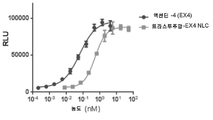
도 1은 GLP-1R을 활성화시키는 엑센딘-4 및 트라스투주맙(NL)-엑센딘-4의 활성의 그래프를 보여준다.
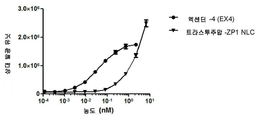
도 2는 GLP-1R을 활성화시키는 엑센딘-4 및 트라스투주맙(NL, GGGGS)-ZP1의 활성의 그래프를 보여준다.
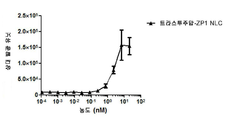
도 3은 GCGR을 활성화시키는 트라스투주맙(NL)-ZP1의 활성의 그래프를 보여준다.
도 4는 GLP-1R을 활성화시키는 엑센딘-4 및 트라스투주맙(NL, GGGGS)-ZPCEX의 활성의 그래프를 보여준다.
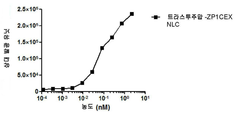
도 5는 GCGR을 활성화시키는 트라스투주맙(NL)-ZP1CEX의 활성의 그래프를 보여준다.
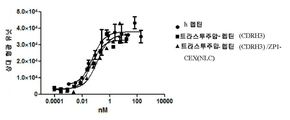
도 6은 렙틴 수용체를 활성화시키는 h렙틴, 트라스투주맙(CDR3H) 렙틴, 및 트라스투주맙(CDR3H) 렙틴/트라스투주맙(NL, GGGGS)-ZPCEX의 활성의 그래프를 보여준다.
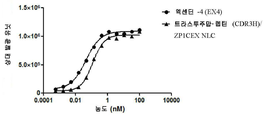
도 7은 GLP-1R을 활성화시키는 엑센딘-4 및 트라스투주맙(CDR3H) 렙틴/트라스투주맙(NL, GGGGS)-ZPCEX의 활성의 그래프를 보여준다.
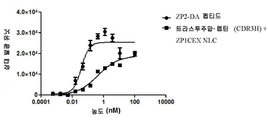
도 8은 GCGR을 활성화시키는 ZP2-DA 및 트라스투주맙(NL)-ZP1CEX/트라스투주맙(CDR)-렙틴의 활성의 그래프를 보여준다.
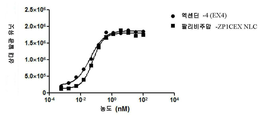
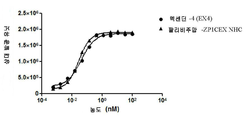
도 9는 GLP-1R을 활성화시키는 엑센딘-4 및 팔리비주맙(NL, GGGGS)-ZP1CEX의 활성의 그래프를 보여준다.
도 10은 GCGR을 활성화시키는 ZP2-DA 및 팔리비주맙(NL)-ZP1CEX의 활성의 그래프를 보여준다.
도 11은 GLP-1R을 활성화시키는 엑센딘-4 및 팔리비주맙(NH, GGGGS)-ZP1CEX의 활성의 그래프를 보여준다.
도 12는 GCGR을 활성화시키는 ZP2-DA 및 팔리비주맙(NH)-ZP1CEX의 활성의 그래프를 보여준다.
도 13A 및 13B는 릴랙신 수용체 LGR7 및 LGR8을 활성화시키는 팔리비주맙(NH, CEXGGGGS)-릴랙신2(단일) 융합 단백질의 활성의 그래프를 보여준다.
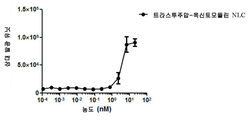
도 14는 GLP-1R을 활성화시키는 엑센딘-4 및 트라스투주맙(NL, GGGGS)-옥신토모듈린의 활성의 그래프를 보여준다.
도 15는 GCGR을 활성화시키는 트라스투주맙(NL)-옥신토모듈린의 활성의 그래프를 보여준다.
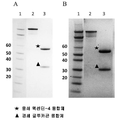
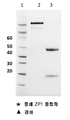
도 16A 내지 16K는 팔리비주맙 경쇄와 함께 발현된, 정제된 팔리비주맙 중쇄 릴랙신 융합 단백질의 SDS-PAGE 겔을 제공한다.
도 17A 및 17B는 팔리비주맙 경쇄 글루카곤 융합 단백질과 함께 발현된, 정제된 팔리비주맙 중쇄 엑센딘-4 융합 단백질의 SDS-PAGE 겔을 제공한다.
도 18은 팔리비주맙 경쇄와 함께 발현된, 정제된 팔리비주맙 중쇄 ZP1 융합 단백질의 SDS-PAGE 겔을 제공한다.
도 19A 및 19B는 팔리비주맙 경쇄와 함께 발현된, 정제된 팔리비주맙 중쇄 GLP2 융합 단백질의 SDS-PAGE 겔을 제공한다.
도 20은 약동학적 래트 연구에서 팔리비주맙 중쇄 릴랙신2(단일) 융합 단백질 농도 대 시간의 그래프를 제공한다.
도 21은 팔리비주맙 중쇄 릴랙신2(단일) 융합 단백질로 치료받은 마우스들에 대한 치골간 인대 길이 대 융합 단백질 용량을 제공한다.
도 22는 마우스들에서의 팔리비주맙 융합 단백질의 약력학적 연구를 위한 글루코스 측정치 대 시간의 그래프를 제공한다.
도 23A 및 도 23B는 릴랙신 수용체 LGR7 및 LGR8을 활성화시키는 팔리비주맙(NH, EAAAK)-릴랙신(이중) 융합 단백질의 활성의 그래프를 보여준다.
도 24A 및 24B는 약동학적 연구에서 피하로 치료받은 래트들 및 정맥내로 치료받은 래트들에서의 팔리비주맙 중쇄 릴랙신(이중) 융합 단백질 농도의 그래프를 제공한다.
도 25는 팔리비주맙 중쇄 릴랙신(이중) 융합 단백질로 치료받은 마우스들에 대한 치골간 인대 길이 대 융합 단백질 용량을 제공한다.The foregoing summary of the present disclosure as well as the above summary will be better understood when read together with the accompanying drawings. It should be understood, however, that this disclosure is not limited to the specific examples shown. It is emphasized that the various features of the drawings are not to scale in accordance with common practice. In contrast, the dimensions of the various features are arbitrarily enlarged or reduced for clarity. The following drawings are included in the figures.
Figure 1 shows a graph of the activity of exendin-4 and trastuzumab (NL) -exendin-4 activating GLP-1R.
Figure 2 shows a graph of the activity of exendin-4 and trastuzumab (NL, GGGGS) -ZP1 activating GLP-1R.
Figure 3 shows a graph of the activity of trastuzumab (NL) -ZPl activating GCGR.
Figure 4 shows a graph of the activity of exendin-4 and trastuzumab (NL, GGGGS) -ZPCEX activating GLP-1R.
Figure 5 shows a graph of the activity of trastuzumab (NL) -ZP1CEX activating GCGR.
Figure 6 shows a graph of the activity of leptin, trastuzumab (CDR3H) leptin, and trastuzumab (CDR3H) leptin / trastuzumab (NL, GGGGS) -ZPCEX activating leptin receptors.
Figure 7 shows a graph of the activity of exendin-4 and trastuzumab (CDR3H) leptin / trastuzumab (NL, GGGGS) -ZPCEX activating GLP-1R.
Figure 8 shows a graph of the activity of ZP2-DA and trastuzumab (NL) -ZP1CEX / trastuzumab (CDR) -leptin activating GCGR.
Figure 9 shows a graph of the activity of exendin-4 and paribisuram (NL, GGGGS) -ZP1CEX activating GLP-1R.
Figure 10 shows a graph of the activity of ZP2-DA and paribisuimab (NL) -ZP1CEX activating GCGR.
Figure 11 shows a graph of the activity of exendin-4 and fibrivumum (NH, GGGGS) -ZP1CEX activating GLP-1R.
Figure 12 shows a graph of the activity of ZP2-DA and paribisuimab (NH) -ZP1CEX activating GCGR.
Figures 13A and 13B show a graph of the activity of the paribisuccum (NH, CEXGGGS) -lilactin 2 (monoclonal) fusion protein activating the rilaxacin receptors LGR7 and LGR8.
Figure 14 shows a graph of the activity of exendin-4 and trastuzumab (NL, GGGGS) -oxyltomodulin activating GLP-1R.
Figure 15 shows a graph of the activity of trastuzumab (NL) -oxyltomodulin, which activates GCGR.
Figures 16A-16K provide SDS-PAGE gels of purified paribisuccum heavy chain ralactin fusion protein expressed with paribimisum light chain.
FIGS. 17A and 17B provide SDS-PAGE gels of purified paribisuomum heavy chain exendin-4 fusion protein expressed with a paribimisum light chain glucagon fusion protein.
Figure 18 provides an SDS-PAGE gel of the purified paribisuccum heavy chain ZP1 fusion protein expressed with the paribimumab light chain.
Figures 19A and 19B provide SDS-PAGE gels of the purified paribisuccum heavy chain GLP2 fusion protein expressed with the paribimisum light chain.
Figure 20 provides a graph of the concentration of paribimumab heavy chain rilacin 2 (single) fusion protein versus time in a pharmacokinetic rat study.
FIG. 21 provides the sympathetic ligament length versus fusion protein capacity for mice treated with the palivizumab heavy chain rilacsin 2 (single) fusion protein.
Figure 22 provides a graph of glucose measurements vs. time for pharmacodynamic studies of the parabimimum fused protein in mice.
23A and 23B show graphs of the activity of the paribimuzumab (NH, EAAAK) -lilactin (dual) fusion protein activating the reilaxin receptors LGR7 and LGR8.
Figures 24A and 24B provide graphs of the concentration of paribisuccum heavy chain rilacsin (dual) fusion protein in subcutaneously treated rats and intravenously treated rats in a pharmacokinetic study.
Figure 25 provides the sympathetic ligament length versus fusion protein capacity for mice treated with the palivizumab heavy chain rilacsin (dual) fusion protein.
본원은 아미노 말단 면역글로불린 융합 단백질 및 이러한 면역글로불린 융합 단백질의 제조 방법을 개시한다. 본원은 상기 면역글로불린 융합 단백질을 사용하는 치료 방법도 제공한다. 본원에 기재된 보호대상의 한 특징에 따르면, 아미노 말단 면역글로불린 융합 단백질은 (a) 면역글로불린 영역; 및 (b) 상기 면역글로불린 영역의 아미노 말단에 연결된 치료 펩티드를 포함한다. 치료 펩티드는 연결 펩티드에 의해 면역글로불린 영역에 연결될 수 있다. 일부 실시양태들에서, 면역글로불린 융합 단백질은 하나 이상의 링커 펩티드를 추가로 포함한다. 일부 실시양태들에서, 면역글로불린 융합 단백질은 하나 이상의 프로테아제(protease) 절단 부위도 포함한다. 일부 실시양태들에서, 치료 펩티드는 하나 이상의 내부 링커 펩티드를 포함한다.This disclosure discloses amino-terminal immunoglobulin fusion proteins and methods of making such immunoglobulin fusion proteins. The present invention also provides methods of treatment using the immunoglobulin fusion proteins. According to one aspect of the protected subject matter described herein, the amino-terminal immunoglobulin fusion protein comprises (a) an immunoglobulin region; And (b) a therapeutic peptide linked to the amino terminus of the immunoglobulin region. Therapeutic peptides can be linked to the immunoglobulin region by a linking peptide. In some embodiments, the immunoglobulin fusion protein further comprises one or more linker peptides. In some embodiments, the immunoglobulin fusion protein also includes one or more protease cleavage sites. In some embodiments, the therapeutic peptide comprises one or more internal linker peptides.
본원에 기재된 보호대상의 또 다른 특징에 따르면, 아미노 말단 면역글로불린 융합 단백질은 제2 면역글로불린 영역을 추가로 포함한다. 제2 면역글로불린 영역은 단일 면역글로불린 도메인 또는 이의 부분, 예를 들면, 경쇄 또는 중쇄 도메인을 포함할 수 있다. 제2 면역글로불린 영역은 비면역글로불린 영역에 연결되어, 제2 면역글로불린 융합체를 형성할 수 있다. 비면역글로불린 영역은 제2 치료 펩티드를 포함할 수 있다. 일부 실시양태들에서, 제2 치료 펩티드는 내부 링커도 포함한다. 비면역글로불린 영역은 하나 이상의 연장제 펩티드, 링커 펩티드 및/또는 단백질분해성 절단 부위를 추가로 포함할 수 있다. 일부 실시양태들에서, 제1 면역글로불린 영역은 면역글로불린 경쇄의 아미노산을 포함한다. 일부 실시양태들에서, 제1 면역글로불린 영역은 면역글로불린 중쇄의 아미노산을 포함한다. 일부 실시양태들에서, 제2 면역글로불린 영역은 면역글로불린 경쇄의 아미노산을 포함한다. 일부 실시양태들에서, 제2 면역글로불린 영역은 면역글로불린 중쇄의 아미노산을 포함한다. 제1 면역글로불린 영역과 제2 면역글로불린 영역은 하나 이상의 다이설파이드 결합 또는 펩티드 링커에 의해 연결될 수 있다.According to another feature of the protected subject matter described herein, the amino-terminal immunoglobulin fusion protein further comprises a second immunoglobulin region. The second immunoglobulin region may comprise a single immunoglobulin domain or a portion thereof, for example, a light or heavy chain domain. The second immunoglobulin region may be linked to a non-immunoglobulin region to form a second immunoglobulin fusion. The non-immunoglobulin region may comprise a second therapeutic peptide. In some embodiments, the second therapeutic peptide also comprises an internal linker. The non-immunoglobulin region may further comprise one or more extender peptides, linker peptides and / or proteolytic cleavage sites. In some embodiments, the first immunoglobulin region comprises an amino acid of an immunoglobulin light chain. In some embodiments, the first immunoglobulin region comprises an amino acid of an immunoglobulin heavy chain. In some embodiments, the second immunoglobulin region comprises an amino acid of an immunoglobulin light chain. In some embodiments, the second immunoglobulin region comprises an amino acid of an immunoglobulin heavy chain. The first immunoglobulin domain and the second immunoglobulin domain may be linked by one or more disulfide bonds or peptide linkers.
본원은 면역글로불린 영역에 부착된 2개 이상의 치료 펩티드들을 포함하는 이중 면역글로불린 융합 단백질로서, 적어도 하나의 치료 펩티드가 상기 면역글로불린 영역의 아미노 말단에 부착되어 있는 것인 이중 면역글로불린 융합 단백질을 추가로 개시한다. 제2 치료 펩티드는 면역글로불린 영역에 연결될 수 있거나 면역글로불린 영역 내로 삽입될 수 있다. 치료 펩티드는 면역글로불린 영역의 적어도 일부를 대체할 수 있다. 일부 실시양태들에서, 치료 펩티드는 치료 펩티드의 한 부분 및 제2 치료 펩티드의 하나 이상의 부분을 포함한다. 일부 실시양태들에서, 치료 펩티드는 치료 펩티드의 한 부분, 내부 링커 및 치료 펩티드의 제2 부분을 포함하고, 이때 상기 두 부분들은 동일한 치료 펩티드를 구성하는 아미노산들로부터 유래된다. 일부 실시양태들에서, 치료 펩티드는 내부 링커를 포함한다. 일부 실시양태들에서, 치료 펩티드는 프로테아제 절단 부위를 포함한다.A dual immunoglobulin fusion protein comprising two or more therapeutic peptides attached to an immunoglobulin region, wherein the dual immunoglobulin fusion protein is characterized in that at least one therapeutic peptide is attached to the amino terminus of the immunoglobulin region . The second therapeutic peptide may be linked to an immunoglobulin region or may be inserted into an immunoglobulin region. Therapeutic peptides may replace at least a portion of the immunoglobulin region. In some embodiments, the therapeutic peptide comprises a portion of the therapeutic peptide and one or more portions of the second therapeutic peptide. In some embodiments, the therapeutic peptide comprises a portion of the therapeutic peptide, an internal linker, and a second portion of the therapeutic peptide, wherein the two portions are derived from amino acids that constitute the same therapeutic peptide. In some embodiments, the therapeutic peptide comprises an internal linker. In some embodiments, the therapeutic peptide comprises a protease cleavage site.
예시적인 아미노 말단 면역글로불린 융합 단백질은 식 I 내지 XXXII으로 표시되고, 이때 T는 치료 펩티드 또는 치료 펩티드의 부분이고, C는 연결 펩티드이고, A는 면역글로불린 영역이고, P는 프로테아제 부위이고, L은 링커이고, I는 내부 링커이다.Exemplary amino-terminal immunoglobulin fusion proteins are represented by Formulas I through XXXII, wherein T is a portion of the therapeutic peptide or therapeutic peptide, C is a linking peptide, A is an immunoglobulin region, P is a protease site, L is Linker, and I is an internal linker.
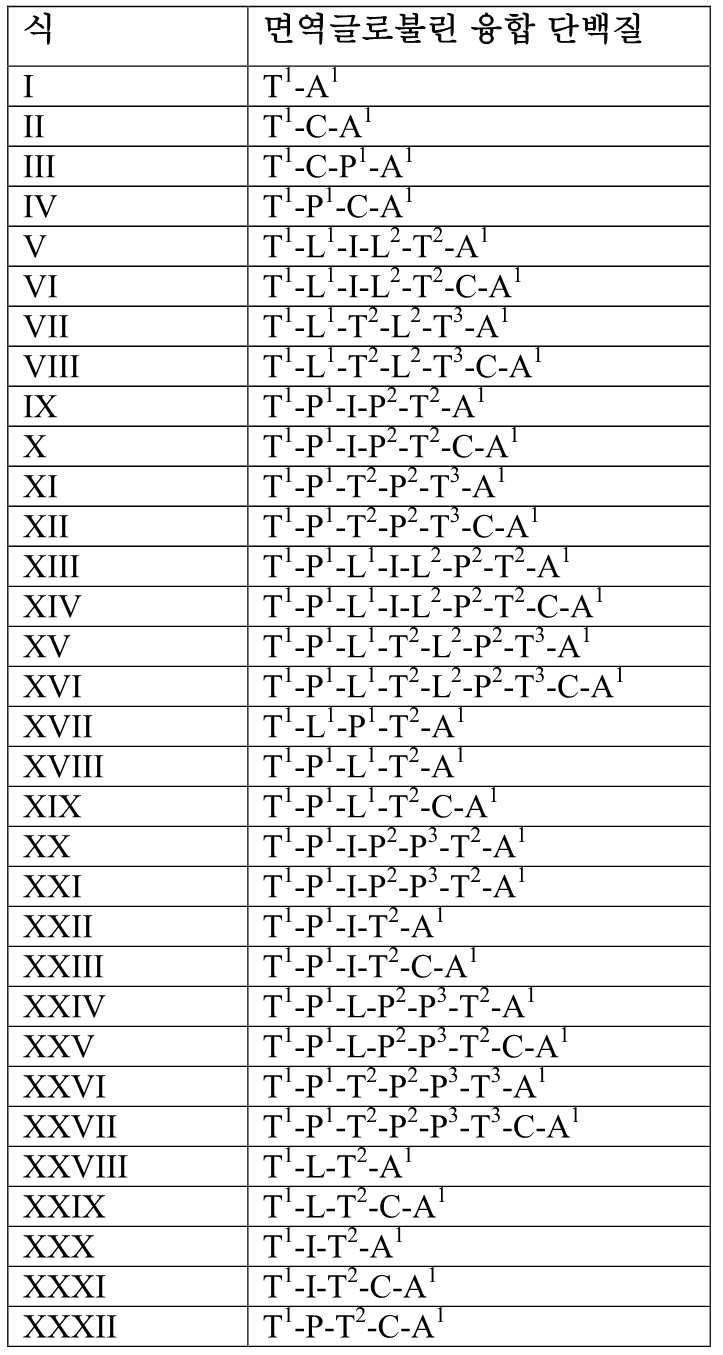
본원은 질환 또는 병태의 치료를 필요로 하는 대상체에서 질환 또는 병태를 치료하는 방법도 개시한다. 일반적으로, 상기 방법은 면역글로불린 영역의 아미노 말단에 부착된 치료 펩티드를 포함하는 아미노 말단 면역글로불린 융합 단백질을 상기 대상체에게 투여하는 단계를 포함한다. 일부 실시양태들에서, I, II, III, IV, V, VI, VII, VIII, IX, X, XI, XII, XIII, XIV, XV, XVI, XVII, XVIII, XIX, XX, XXI, XXII, XXIII, XXIV, XXV, XXVI, XXVII, XXVIII, XXIX, XXX, XXXI 또는 XXXII의 식, 또는 이의 임의의 변경, 부분 또는 추가를 갖는 면역글로불린 융합 단백질이 환자에게 투여된다. 일부 실시양태들에서, 제2 면역글로불린 영역을 추가로 포함하는 면역글로불린 융합 단백질 I, II, III, IV, V, VI, VII, VIII, IX, X, XI, XII, XIII, XIV, XV, XVI, XVII, XVIII, XIX, XX, XXI, XXII, XXIII, XXIV, XXV, XXVI, XXVII, XXVIII, XXIX, XXX, XXXI 및 XXXII 중 하나 이상이 환자에게 투여된다.The present disclosure also discloses a method of treating a disease or condition in a subject in need of such treatment. In general, the method comprises administering to the subject an amino-terminal immunoglobulin fusion protein comprising a therapeutic peptide attached to the amino terminus of the immunoglobulin region. XII, XIV, XV, XVI, XVII, XVIII, XIX, XX, XXI, XXII, XIII, XIII, XIII, An immunoglobulin fusion protein having an expression of SEQ ID NO: XXIII, XXIV, XXV, XXVI, XXVII, XXVIII, XXIX, XXX, XXXI or XXXII, or any alteration, II, III, IV, V, VI, VII, VIII, IX, X, XI, XII, XIII, XIV, XV, XIV, XIV, XIV, At least one of XVI, XVII, XVIII, XIX, XX, XXI, XXII, XXIII, XXIV, XXV, XXVI, XXVII, XXVIII, XXIX, XXX, XXXI and XXXII is administered to the patient.
본원은 치료 펩티드의 전달을 개선하는 방법을 추가로 개시한다. 상기 방법은 유전자 구축물로부터 아미노 말단 면역글로불린 융합 단백질을 생성하는 단계를 포함할 수 있다. 일부 실시양태들에서, 면역글로불린 융합 단백질은 면역글로불린 융합 단백질을 코딩하는 유전자 구축물로부터 재조합적으로 제조된다. 일부 실시양태들에서, 상기 구축물은 표준 포유동물 세포 배양 기법의 이용을 통해 시험관 내에서 발현된다. 일부 실시양태들에서, 제1 면역글로불린 영역의 아미노 말단에 연결된 치료 펩티드를 코딩하는 한 구축물은 제2 면역글로불린 영역을 포함하는 제2 구축물과 공발현되어, 재조합 면역글로불린 융합 단백질을 생성한다. 일부 실시양태들에서, 프로테아제를 코딩하는 구축물은 면역글로불린 융합 단백질과 공발현된다. 상기 방법은 하나 이상의 연결 펩티드, 내부 링커, 링커, 연장제 펩티드 및/또는 단백질분해성 절단 부위를 포함하는 면역글로불린 유전적 융합 구축물을 생성하는 단계를 추가로 포함할 수 있다.The present application further discloses a method of improving the delivery of therapeutic peptides. The method may comprise generating an amino-terminal immunoglobulin fusion protein from the gene construct. In some embodiments, the immunoglobulin fusion protein is recombinantly prepared from a gene construct encoding an immunoglobulin fusion protein. In some embodiments, the construct is expressed in vitro through the use of standard mammalian cell culture techniques. In some embodiments, a construct encoding a therapeutic peptide linked to the amino terminus of the first immunoglobulin region is co-expressed with a second construct comprising a second immunoglobulin region to produce a recombinant immunoglobulin fusion protein. In some embodiments, the construct encoding the protease is co-expressed with an immunoglobulin fusion protein. The method may further comprise generating an immunoglobulin genetic fusion construct comprising one or more linking peptides, an internal linker, a linker, an extender peptide, and / or a proteolytic cleavage site.
본 방법 및 조성물이 기재되기 전에, 본 발명은 당연히 변경될 수 있기 때문에 기재된 특정 방법 또는 조성물로 한정되지 않는다는 것을 이해해야 한다. 본 발명의 범위가 첨부된 청구범위에 의해서만 한정될 것이기 때문에 본원에서 사용된 용어는 특정 실시양태만을 기술하기 위한 것이고 한정하기 위한 것이 아니라는 것도 이해해야 한다. 실시예는 어떻게 본 발명을 만들고 사용하는 지에 대한 완전한 개시 및 설명을 당분야에서 통상의 기술을 갖는 자에게 제공하기 위해 기재되어 있고, 본 발명자들이 그들의 발명으로서 간주하는 것의 범위를 한정하기 위한 것이 아닐 뿐만 아니라 하기 실험들이 수행된 모든 또는 유일한 실험이라는 것을 나타내기 위한 것도 아니다. 사용된 수치(예를 들면, 양, 온도 등)에 대한 정확성을 보장하기 위해 노력하였으나, 일부 실험적 오차 또는 편차가 고려되어야 한다. 달리 표시되어 있지 않은 한, 부는 중량부이고, 분자량은 중량 평균 분자량이고, 온도는 섭씨 온도이고, 압력은 대기압이거나 대기압에 가깝다.Before the present methods and compositions are described, it should be understood that the invention is not limited to the particular methods or compositions described, as they may of course vary. It is to be understood that the terminology used herein is for the purpose of describing particular embodiments only, and is not intended to be limiting as the scope of the invention is to be limited only by the terms of the appended claims. The examples are set forth to provide those of ordinary skill in the art with a complete disclosure and description of how to make and use the present invention and are not intended to limit the scope of what the inventors regard as their invention Nor is it intended to indicate that the following experiments are all or only experiments performed. Efforts have been made to ensure accuracy with the numerical values used (eg, quantity, temperature, etc.), but some experimental errors or deviations should be considered. Unless otherwise indicated, parts are parts by weight, molecular weight is weight average molecular weight, temperature is in degrees Celsius, pressure is atmospheric or near atmospheric.
값의 범위가 제공된 경우, 문맥이 달리 명시하지 않은 한, 그 범위의 상한과 하한 사이의 각각의 개재 값도 하한의 단위의 10분의 1까지 구체적으로 개시되어 있는 것으로 이해된다. 임의의 언급된 값 또는 언급된 범위 내의 개재 값과 임의의 다른 언급된 값 또는 그 언급된 범위 내의 개재 값 사이의 각각의 보다 더 작은 범위는 본 발명 내에 포함된다. 이들 보다 더 작은 범위들의 상한 및 하한은 그 범위에 독립적으로 포함될 수 있거나 배제될 수 있고, 상기 두 한계들 중 어느 하나가 보다 더 작은 범위에 포함되거나, 이들 중 어느 것도 보다 더 작은 범위에 포함되지 않거나, 이들 둘 다가 보다 더 작은 범위에 포함되는 경우, 언급된 범위 내의 임의의 구체적으로 배재된 한계를 조건으로, 각각의 범위도 본 발명 내에 포함된다. 언급된 범위가 상기 한계들 중 하나 또는 이들 둘 다를 포함하는 경우, 이들 포함된 한계들 중 어느 하나 또는 둘 다를 배제하는 범위도 본 발명 내에 포함된다.Where a range of values is provided, it is understood that each intervening value between the upper and lower limits of the range is specifically disclosed to the tenth of the lower limit, unless the context otherwise requires. Any smaller value or range between any of the stated values or intervening values within the stated ranges and any other stated values or intervening values within the stated ranges is encompassed within the present invention. The upper and lower limits of these smaller ranges may or may not be independently included in the range and either one of the two limits may be included in a smaller range, Or both of these are included in a smaller range, each range is also included in the present invention, subject to any specifically excluded limit within the stated range. Where the stated range includes one or both of the above limits, ranges excluding either or both of these included limits are also included in the present invention.
달리 정의되어 있지 않은 한, 본원에서 사용된 모든 기술 용어들 및 과학 용어들은 본 발명이 속하는 분야에서 통상의 기술을 갖는 자에 의해 통상적으로 이해되는 의미와 동일한 의미를 갖는다. 본원에 기재된 방법 및 재료와 유사하거나 동등한 임의의 방법 및 재료가 본 발명의 실시 또는 시험에 사용될 수 있지만, 일부 잠재적 및 바람직한 방법들 및 재료들이 지금부터 기재되어 있다. 본원에서 언급된 모든 공개문헌들은 이 공개문헌들이 인용되는 것과 관련하여 방법 및/또는 재료를 개시하고 기술하기 위해 본원에 참고로 도입된다. 본 개시는 도입된 공개문헌의 임의의 개시를 모순이 있는 정도까지 대신하는 것으로 이해된다. Unless otherwise defined, all technical and scientific terms used herein have the same meaning as commonly understood by one of ordinary skill in the art to which this invention belongs. Although any methods and materials similar or equivalent to those described herein can be used in the practice or testing of the present invention, some potential and preferred methods and materials are now described. All publications mentioned herein are incorporated herein by reference to disclose and describe methods and / or materials in connection with which these publications are cited. This disclosure is to be understood as being substituted to the extent that any disclosure of the incorporated publications is inconsistent.
본 개시를 읽을 때 당업자에게 자명할 바와 같이, 본원에 기재되어 있고 예시되어 있는 각각의 개별 실시양태는 본 발명의 범위 또는 사상으로부터 벗어나지 않으면서 임의의 다른 여러 실시양태들의 특징으로부터 용이하게 분리될 수 있거나 이러한 특징과 용이하게 조합될 수 있는 별개의 구성요소 및 특징을 갖는다. 임의의 언급된 방법은 언급된 사건의 순서대로, 또는 논리적으로 가능한 임의의 다른 순서대로 수행될 수 있다.As will be apparent to those skilled in the art upon reading this disclosure, each individual embodiment described and illustrated herein may be readily separated from the features of any other various embodiments without departing from the scope or spirit of the present invention. Or have distinct components and features that can be easily combined with these features. Any of the mentioned methods may be performed in the order of the events mentioned, or in any other order possible logically.
본원 및 첨부된 청구범위에서 사용된 바와 같이, 문맥이 달리 명시하지 않은 한, 단수형 지시대상은 복수형 지시대상을 포함한다는 것을 인지해야 한다. 따라서, 예를 들면, "세포"의 언급은 복수의 이러한 세포들을 포함하고, "펩티드"의 언급은 당업자에게 공지되어 있는 하나 이상의 펩티드 및 이의 등가물, 예를 들면, 폴리펩티드 등의 언급을 포함한다.It should be noted that, as used herein and in the appended claims, unless the context clearly dictates otherwise, a singular referent includes a plural referent. Thus, for example, reference to "cell" includes a plurality of such cells, and reference to "peptide" includes reference to one or more peptides and their equivalents, e.g., polypeptides, etc., known to those skilled in the art.
아미노 말단 면역글로불린 융합 단백질Amino-terminal immunoglobulin fusion protein
본원에 개시된 아미노 말단 면역글로불린 융합 단백질은 하나 이상의 면역글로불린 영역 및 하나 이상의 치료 펩티드를 포함하고, 이때 제1 치료 펩티드는 제1 면역글로불린 영역의 아미노 말단에 연결되어 있다. 면역글로불린 영역은 부분적으로 또는 전체적으로 면역글로불린의 임의의 부분일 수 있다. 면역글로불린은 포유동물 공급원으로부터 유래될 수 있다. 면역글로불린은 키메라 면역글로불린일 수 있다. 면역글로불린 영역은 전체적으로 또는 부분적으로 조작된 면역글로불린 또는 재조합 면역글로불린으로부터 유래될 수 있다. 면역글로불린은 인간화된 면역글로불린, 조작된 인간 면역글로불린 또는 완전한 인간 면역글로불린으로부터 유래할 수 있다. 포유동물 면역글로불린은 소 면역글로불린일 수 있다. 포유동물 면역글로불린은 인간 면역글로불린일 수 있다. 포유동물 면역글로불린은 뮤린 면역글로불린일 수 있다. 포유동물 면역글로불린은 비인간 영장류 면역글로불린일 수 있다. 면역글로불린은 조류 면역글로불린일 수 있다. 면역글로불린은 상어 면역글로불린일 수 있다.The amino terminal immunoglobulin fusion protein disclosed herein comprises one or more immunoglobulin regions and one or more therapeutic peptides wherein the first therapeutic peptide is linked to the amino terminal of the first immunoglobulin region. The immunoglobulin region may be, in part or in whole, any portion of the immunoglobulin. The immunoglobulin may be derived from a mammalian source. The immunoglobulin may be a chimeric immunoglobulin. The immunoglobulin region may be derived from an entirely or partially engineered immunoglobulin or recombinant immunoglobulin. Immunoglobulins may be derived from humanized immunoglobulins, engineered human immunoglobulins or fully human immunoglobulins. Mammalian immunoglobulin may be a small immunoglobulin. Mammalian immunoglobulins can be human immunoglobulins. The mammalian immunoglobulin may be a murine immunoglobulin. Mammalian immunoglobulin may be a non-human primate immunoglobulin. The immunoglobulin may be an avian immunoglobulin. The immunoglobulin may be a shark immunoglobulin.
면역글로불린 영역은 전체 면역글로불린 분자를 포함할 수 있거나, 중쇄, 경쇄, 가변 도메인, 불변 도메인, 상보성 결정 영역(CDR), 골격 영역, 단편 항원 결합(Fab) 영역, Fab', F(ab')2, F(ab')3, Fab', 단편 결정화가능한(Fc) 영역, 단일 쇄 가변 단편(scFV), di-scFv, 단일 도메인 면역글로불린, 삼작용성 면역글로불린, 화학적으로 연결된 F(ab')2, 및 이들의 임의의 부분 또는 조합을 포함하나 이들로 한정되지 않는 면역글로불린의 단편을 포함하는 임의의 폴리펩티드를 포함할 수 있다. 일부 실시양태들에서, 면역글로불린 중쇄는 전체 중쇄 또는 중쇄의 부분을 포함할 수 있다. 예를 들면, 중쇄로부터 유래된 가변 도메인 또는 이의 영역은 중쇄 또는 중쇄의 영역으로서 지칭될 수 있다. 일부 실시양태들에서, 면역글로불린 경쇄는 전체 경쇄 또는 경쇄의 부분을 포함할 수 있다. 예를 들면, 경쇄로부터 유래된 가변 도메인 또는 이의 영역은 경쇄 또는 경쇄의 영역으로서 지칭될 수 있다. 면역글로불린 영역은 이중특이적일 수 있거나 삼중특이적일 수 있다. 단일 도메인 면역글로불린은 단일 단량체성 가변 면역글로불린 도메인을 포함하나 이것으로 한정되지 않는다. 단일 도메인 면역글로불린은 상어 가변 신규 항원 수용체 면역글로불린 단편(VNAR)일 수 있다. 면역글로불린은 IgA, IgD, IgE, IgG, IgM, IgY 및 IgW를 포함하나 이들로 한정되지 않는, 당업자에게 공지되어 있는 임의의 유형으로부터 유래될 수 있다. 면역글로불린 영역은 당단백질일 수 있다. 면역글로불린 영역은 1개, 2개, 3개, 4개 및 5개의 유닛을 포함하나 이들로 한정되지 않는 하나 이상의 작용 유닛을 포함할 수 있다. 면역글로불린 영역은 하나 이상의 다이설파이드 결합에 의해 연결된 하나 이상의 유닛을 포함할 수 있다. 면역글로불린 영역은 펩티드 링커, 예를 들면, scFv 면역글로불린에 의해 연결된 하나 이상의 유닛을 포함할 수 있다. 면역글로불린은 아미노산 돌연변이, 치환 및/또는 결실을 갖는 면역글로불린을 포함하는 재조합 면역글로불린일 수 있다. 면역글로불린은 화학적 변경을 포함하는 재조합 면역글로불린일 수 있다. 면역글로불린은 면역글로불린-약물 접합체의 전부 또는 일부를 포함할 수 있다. 면역글로불린은 소분자를 포함할 수 있다. 면역글로불린은 소분자를 포함하는 면역글로불린-약물 접합체의 전부 또는 일부를 포함할 수 있다. 면역글로불린-약물 접합체의 예로는 브렌툭시맙 베도틴(Brentuximab vedotin)(SGN35), 트라스투주맙 엠탄신(emtansine)(T-DM1), 이노투주맙 오조가미신(Inotuzumab ozogamicin)(CMC-544), 겜투주맙 오조가미신(Gemtuzumab ozogamicin), SAR3419, RG-7596/DCDS4501A, 피나투주맙 베도틴(Pinatuzumab vedotin)(RG-7593/DCDT 2980S), 글렘바투무맙 베도틴(Glembatumumab vedotin)(CDX-011), 로르보투주맙 메르탄신(Lorvotuzumab mertansine)(IMGN901), PSMA-ADC, BT-062, ABT-414, 밀라투주맙 독소루비신(Milatuzumab doxorubicin)(IMMU-110), IMMU-132(hRS7-SN38), 라베투주맙(Labetuzumab)-SN-38(IMMU-130), 에프라투주맙(Epratuzumab)-SN-38, IMGN-853, RG-7458/DMUC 5754 A, RG-7636, RG-7450/DSTP 3086 S, RG-7600, RG-7598, RG-7599/DNIB 0600 A, SGN-CD19A, SGN-CD33A(EC-mAb), SGN-75, SGN CD70 A, PF-0626350, 보르세투주맙 마포도틴(Vorsetuzumab mafodotin), ASG-5ME, ASG-22ME, ASG-22CE, AGS-16M8F, ASG-15ME, MLN-0264, SAR-566658, AMG-172, AMG-595, BAY-94-9343, BAY-79-4620, SC16LD6.5, SGN-LIV1-A, MDX-1203, BIIB015, HuMax-TF-ADC 및 ARX788이 있으나 이들로 한정되지 않는다.The immunoglobulin region may comprise a whole immunoglobulin molecule or may comprise a heavy chain, light chain, variable domain, constant domain, complementarity determining region (CDR), framework region, fragment antigen binding (Fab) F (ab ') 3, Fab', fragment crystallizable (Fc) region, single chain variable fragment (scFV), di- scFv, single domain immunoglobulin, trifunctional immunoglobulin, chemically linked
면역글로불린 융합 단백질은 서열번호 42 내지 74 및 192 내지 221 중 어느 한 서열에 기초한, 또는 이러한 서열로부터 유래된 아미노산 서열을 포함할 수 있다. 면역글로불린 융합 단백질은 서열번호 42 내지 74 및 192 내지 221 중 어느 한 서열과 적어도 약 50% 상동성인 아미노산 서열을 포함할 수 있다. 면역글로불린 융합 단백질은 서열번호 42 내지 74 및 192 내지 221 중 어느 한 서열과 적어도 약 60%, 65%, 70%, 75%, 80%, 85%, 90%, 95% 또는 97% 상동성인 아미노산 서열을 포함할 수 있다. 면역글로불린 융합 단백질은 서열번호 42 내지 74 및 192 내지 221 중 어느 한 서열과 적어도 약 70% 상동성인 아미노산 서열을 포함할 수 있다. 면역글로불린 융합 단백질은 서열번호 42 내지 74 및 192 내지 221 중 어느 한 서열과 적어도 약 80% 상동성인 아미노산 서열을 포함할 수 있다. 면역글로불린 융합 단백질은 서열번호 42 내지 74 및 192 내지 221 중 어느 한 서열과 적어도 약 50% 동일한 아미노산 서열을 포함할 수 있다. 면역글로불린 융합 단백질은 서열번호 42 내지 74 및 192 내지 221 중 어느 한 서열과 적어도 약 60%, 65%, 70%, 75%, 80%, 85%, 90%, 95% 또는 97% 동일한 아미노산 서열을 포함할 수 있다. 면역글로불린 융합 단백질은 서열번호 42 내지 74 및 192 내지 221 중 어느 한 서열과 적어도 약 70% 동일한 아미노산 서열을 포함할 수 있다. 면역글로불린 융합 단백질은 서열번호 42 내지 74 및 192 내지 221 중 어느 한 서열과 적어도 약 80% 동일한 아미노산 서열을 포함할 수 있다. 면역글로불린 융합 단백질은 서열번호 42 내지 74 및 192 내지 221 중 어느 한 서열과 100% 동일한 아미노산 서열을 포함할 수 있다. 일부 실시양태들에서, 면역글로불린 융합 단백질은 서열번호 42 내지 74 및 192 내지 221 중 어느 하나의 아미노산 서열과 적어도 약 50%, 55%, 60%, 65%, 70%, 75%, 80%, 85%, 90%, 95% 또는 97% 상동성인 아미노산 서열을 포함한다. 일부 실시양태들에서, 면역글로불린 융합 단백질은 서열번호 42 내지 74 및 192 내지 221 중 어느 하나의 아미노산 서열과 적어도 약 50%, 55%, 60%, 65%, 70%, 75%, 80%, 85%, 90%, 95% 또는 97% 동일한 아미노산 서열을 포함한다.The immunoglobulin fusion protein may comprise an amino acid sequence based on or derived from any one of SEQ ID NOS: 42-74 and 192-221. The immunoglobulin fusion protein may comprise an amino acid sequence that is at least about 50% homologous to any of SEQ ID NOS: 42-74 and 192-221. The immunoglobulin fusion protein comprises an amino acid sequence that is at least about 60%, 65%, 70%, 75%, 80%, 85%, 90%, 95% or 97% homologous to any one of SEQ ID NOS: 42-74 and 192-221 Sequence. The immunoglobulin fusion protein may comprise an amino acid sequence that is at least about 70% homologous to any of SEQ ID NOS: 42-74 and 192-221. The immunoglobulin fusion protein may comprise an amino acid sequence that is at least about 80% homologous to any of SEQ ID NOS: 42-74 and 192-221. The immunoglobulin fusion protein may comprise an amino acid sequence that is at least about 50% identical to any one of SEQ ID NOS: 42-74 and 192-221. The immunoglobulin fusion protein comprises an amino acid sequence that is at least about 60%, 65%, 70%, 75%, 80%, 85%, 90%, 95% or 97% identical to any of SEQ ID NOS: 42-74 and 192-221 . ≪ / RTI > The immunoglobulin fusion protein may comprise an amino acid sequence that is at least about 70% identical to any of SEQ ID NOS: 42-74 and 192-221. The immunoglobulin fusion protein may comprise an amino acid sequence at least about 80% identical to any one of SEQ ID NOS: 42-74 and 192-221. The immunoglobulin fusion protein may comprise an amino acid sequence that is 100% identical to any one of SEQ ID NOS: 42-74 and 192-221. In some embodiments, the immunoglobulin fusion protein comprises an amino acid sequence that is at least about 50%, 55%, 60%, 65%, 70%, 75%, 80% 85%, 90%, 95% or 97% homologous amino acid sequence. In some embodiments, the immunoglobulin fusion protein comprises an amino acid sequence that is at least about 50%, 55%, 60%, 65%, 70%, 75%, 80% 85%, 90%, 95% or 97% identical to the amino acid sequence of SEQ ID NO.
면역글로불린 융합 단백질은 서열번호 42 내지 74 및 192 내지 221 중 어느 한 서열에 기초한, 또는 이러한 서열로부터 유래된 10개, 20개, 30개, 40개, 50개, 60개, 70개, 80개, 90개 또는 100개 이상의 아미노산들을 포함하는 아미노산 서열을 포함할 수 있다. 면역글로불린 융합 단백질은 서열번호 42 내지 74 및 192 내지 221 중 어느 한 서열에 기초한, 또는 이러한 서열로부터 유래된 125개, 150개, 175개, 200개, 225개, 250개, 275개, 300개, 325개, 350개, 375개, 400개, 425개, 450개, 475개, 450개 또는 500개 이상의 아미노산들을 포함하는 아미노산 서열을 포함할 수 있다. 면역글로불린 융합 단백질은 서열번호 42 내지 74 및 192 내지 221 중 어느 한 서열에 기초한, 또는 이러한 서열로부터 유래된 10개 이상의 아미노산들을 포함하는 아미노산 서열을 포함할 수 있다. 면역글로불린 융합 단백질은 서열번호 42 내지 74 및 192 내지 221 중 어느 한 서열에 기초한, 또는 이러한 서열로부터 유래된 50개 이상의 아미노산들을 포함하는 아미노산 서열을 포함할 수 있다. 면역글로불린 융합 단백질은 서열번호 42 내지 74 및 192 내지 221 중 어느 한 서열에 기초한, 또는 이러한 서열로부터 유래된 100개 이상의 아미노산들을 포함하는 아미노산 서열을 포함할 수 있다. 면역글로불린 융합 단백질은 서열번호 42 내지 74 및 192 내지 221 중 어느 한 서열에 기초한, 또는 이러한 서열로부터 유래된 200개 이상의 아미노산들을 포함하는 아미노산 서열을 포함할 수 있다. 아미노산은 연속적일 수 있다. 대안적으로 또는 추가로, 아미노산은 비연속적이다. 일부 실시양태들에서, 면역글로불린 융합 단백질은 서열번호 42 내지 74 및 192 내지 221 중 어느 한 서열로부터 유래된 아미노산, 및 서열번호 42 내지 74 및 192 내지 221 중 어느 한 서열로부터 유래되지 않은 아미노산을 포함할 수 있다. 일부 실시양태들에서, 면역글로불린 융합 단백질은 서열번호 42 내지 74 및 192 내지 221 중 하나 이상의 서열로부터 유래된 아미노산, 및 서열번호 42 내지 74 및 192 내지 221 중 어느 한 서열로부터 유래되지 않은 아미노산을 포함할 수 있다. 일부 실시양태들에서, 면역글로불린 융합 단백질은 서열번호 42 내지 74 및 192 내지 221 중 1개, 2개, 3개, 4개, 5개, 6개, 7개, 8개, 9개 또는 10개 이상의 서열로부터 유래된 아미노산을 포함한다.The immunoglobulin fusion protein may comprise 10, 20, 30, 40, 50, 60, 70, 80, or even 10, 20, 30, , 90, or more than 100 amino acids. The immunoglobulin fusion protein may comprise 125, 150, 175, 200, 225, 250, 275, 300, or more amino acid sequences derived from, or derived from, SEQ ID NOS: 42-74 and 192-221 , 325, 350, 375, 400, 425, 450, 475, 450 or more than 500 amino acids. The immunoglobulin fusion protein may comprise an amino acid sequence comprising 10 or more amino acids based on, or derived from, SEQ ID NOS: 42-74 and 192-221. The immunoglobulin fusion protein may comprise an amino acid sequence comprising more than 50 amino acids based on, or derived from, sequences of SEQ ID NOS: 42-74 and 192-221. The immunoglobulin fusion protein may comprise an amino acid sequence comprising more than 100 amino acids based on, or derived from, SEQ ID NOS: 42-74 and 192-221. The immunoglobulin fusion protein may comprise an amino acid sequence comprising more than 200 amino acids based on, or derived from, SEQ ID NOS: 42-74 and 192-221. The amino acid may be continuous. Alternatively or additionally, the amino acid is discontinuous. In some embodiments, the immunoglobulin fusion protein comprises an amino acid derived from any one of SEQ ID NOS: 42 to 74 and 192 to 221, and an amino acid not derived from any one of SEQ ID NOS: 42 to 74 and 192 to 221 can do. In some embodiments, the immunoglobulin fusion protein comprises an amino acid derived from one or more of SEQ ID NOS: 42-74 and 192-221, and an amino acid not derived from any one of SEQ ID NOS: 42-74 and 192-221 can do. In some embodiments, the immunoglobulin fusion protein comprises one, two, three, four, five, six, seven, eight, nine or ten of SEQ ID NOS: 42-74 and 192-221 Amino acids derived from the above sequences.
면역글로불린 융합 단백질은 서열번호 9 내지 41, 161 내지 191 및 265 중 어느 한 서열에 기초한, 또는 이러한 서열로부터 유래된 뉴클레오티드 서열에 의해 코딩될 수 있다. 면역글로불린 융합 단백질은 서열번호 9 내지 41, 161 내지 191 및 265 중 어느 한 서열과 적어도 약 50% 상동성인 뉴클레오티드 서열에 의해 코딩될 수 있다. 면역글로불린 융합 단백질은 서열번호 9 내지 41, 161 내지 191 및 265 중 어느 한 서열과 적어도 약 60%, 65%, 70%, 75%, 80%, 85%, 90%, 95% 또는 97% 상동성인 뉴클레오티드 서열에 의해 코딩될 수 있다. 면역글로불린 융합 단백질은 서열번호 9 내지 41, 161 내지 191 및 265 중 어느 한 서열과 적어도 약 70% 상동성인 뉴클레오티드 서열에 의해 코딩될 수 있다. 면역글로불린 융합 단백질은 서열번호 9 내지 41, 161 내지 191 및 265 중 어느 한 서열과 적어도 약 80% 상동성인 뉴클레오티드 서열에 의해 코딩될 수 있다. 면역글로불린 융합 단백질은 서열번호 9 내지 41, 161 내지 191 및 265 중 어느 한 서열과 적어도 약 50% 동일한 뉴클레오티드 서열에 의해 코딩될 수 있다. 면역글로불린 융합 단백질은 서열번호 9 내지 41, 161 내지 191 및 265 중 어느 한 서열과 적어도 약 60%, 65%, 70%, 75%, 80%, 85%, 90%, 95% 또는 97% 동일한 뉴클레오티드 서열에 의해 코딩될 수 있다. 면역글로불린 융합 단백질은 서열번호 9 내지 41, 161 내지 191 및 265 중 어느 한 서열과 적어도 약 70% 동일한 뉴클레오티드 서열에 의해 코딩될 수 있다. 면역글로불린 융합 단백질은 서열번호 9 내지 41, 161 내지 191 및 265 중 어느 한 서열과 적어도 약 80% 동일한 뉴클레오티드 서열에 의해 코딩될 수 있다. 면역글로불린 융합 단백질은 서열번호 9 내지 41, 161 내지 191 및 265 중 어느 한 서열과 100% 동일한 뉴클레오티드 서열에 의해 코딩될 수 있다. 일부 실시양태들에서, 면역글로불린 융합 단백질은 서열번호 9 내지 41, 161 내지 191 및 265 중 어느 하나의 아미노산 서열과 적어도 약 50%, 55%, 60%, 65%, 70%, 75%, 80%, 85%, 90%, 95% 또는 97% 상동성인 뉴클레오티드 서열에 의해 코딩된다. 일부 실시양태들에서, 면역글로불린 융합 단백질은 서열번호 9 내지 41, 161 내지 191 및 265 중 어느 하나의 아미노산 서열과 적어도 약 50%, 55%, 60%, 65%, 70%, 75%, 80%, 85%, 90%, 95% 또는 97% 동일한 뉴클레오티드 서열에 의해 코딩된다.The immunoglobulin fusion protein may be encoded by a nucleotide sequence based on, or derived from, any one of SEQ ID NOS: 9-41, 161-191 and 265. The immunoglobulin fusion protein may be encoded by a nucleotide sequence that is at least about 50% homologous to any of SEQ ID NOS: 9-41, 161-191, and 265. The immunoglobulin fusion protein is at least about 60%, 65%, 70%, 75%, 80%, 85%, 90%, 95% or 97% homologous to any one of SEQ ID NOS: 9-41, 161-191, Can be coded by an adult nucleotide sequence. The immunoglobulin fusion protein may be encoded by a nucleotide sequence that is at least about 70% homologous to any of SEQ ID NOS: 9-41, 161-191, and 265. The immunoglobulin fusion protein may be encoded by a nucleotide sequence that is at least about 80% homologous to any of SEQ ID NOS: 9-41, 161-191 and 265. The immunoglobulin fusion protein may be encoded by a nucleotide sequence that is at least about 50% identical to any of SEQ ID NOs: 9 to 41, 161 to 191, and 265. The immunoglobulin fusion protein is at least about 60%, 65%, 70%, 75%, 80%, 85%, 90%, 95% or 97% identical to any one of SEQ ID NOS: 9-41, 161-191, Can be coded by a nucleotide sequence. The immunoglobulin fusion protein may be encoded by a nucleotide sequence that is at least about 70% identical to any one of SEQ ID NOS: 9-41, 161-191 and 265. The immunoglobulin fusion protein may be encoded by a nucleotide sequence that is at least about 80% identical to any of SEQ ID NOS: 9 to 41, 161 to 191, and 265 sequences. The immunoglobulin fusion protein may be encoded by a nucleotide sequence that is 100% identical to any of SEQ ID NOS: 9 to 41, 161 to 191, and 265. In some embodiments, the immunoglobulin fusion protein comprises an amino acid sequence that is at least about 50%, 55%, 60%, 65%, 70%, 75%, 80% identical to the amino acid sequence of any one of SEQ ID NOS: 9-41, 161-191, %, 85%, 90%, 95% or 97% homologous nucleotide sequences. In some embodiments, the immunoglobulin fusion protein comprises an amino acid sequence that is at least about 50%, 55%, 60%, 65%, 70%, 75%, 80% identical to the amino acid sequence of any one of SEQ ID NOS: 9-41, 161-191, %, 85%, 90%, 95%, or 97% identical nucleotide sequences.
면역글로불린 융합 단백질은 서열번호 9 내지 41, 161 내지 191 및 265 중 어느 한 서열에 기초한, 또는 이러한 서열로부터 유래된 10개, 20개, 30개, 40개, 50개, 60개, 70개, 80개, 90개 또는 100개 이상의 뉴클레오티드들을 포함하는 뉴클레오티드 서열에 의해 코딩될 수 있다. 면역글로불린 융합 단백질은 서열번호 9 내지 41, 161 내지 191 및 265 중 어느 한 서열에 기초한, 또는 이러한 서열로부터 유래된 125개, 150개, 175개, 200개, 225개, 250개, 275개, 300개, 325개, 350개, 375개, 400개, 425개, 450개, 475개 또는 500개 이상의 뉴클레오티드들을 포함하는 뉴클레오티드 서열에 의해 코딩될 수 있다. 면역글로불린 융합 단백질은 서열번호 9 내지 41, 161 내지 191 및 265 중 어느 한 서열에 기초한, 또는 이러한 서열로부터 유래된 600개, 650개, 700개, 750개, 800개, 850개, 900개, 950개 또는 1000개 이상의 뉴클레오티드들을 포함하는 뉴클레오티드 서열에 의해 코딩될 수 있다. 면역글로불린 융합 단백질은 서열번호 9 내지 41, 161 내지 191 및 265 중 어느 한 서열에 기초한, 또는 이러한 서열로부터 유래된 1100개, 1200개, 1300개, 1400개 또는 1500개 이상의 뉴클레오티드들을 포함하는 뉴클레오티드 서열에 의해 코딩될 수 있다. 면역글로불린 융합 단백질은 서열번호 9 내지 41, 161 내지 191 및 265 중 어느 한 서열에 기초한, 또는 이러한 서열로부터 유래된 100개 이상의 뉴클레오티드들을 포함하는 뉴클레오티드 서열에 의해 코딩될 수 있다. 면역글로불린 융합 단백질은 서열번호 9 내지 41, 161 내지 191 및 265 중 어느 한 서열에 기초한, 또는 이러한 서열로부터 유래된 500개 이상의 뉴클레오티드들을 포함하는 뉴클레오티드 서열에 의해 코딩될 수 있다. 면역글로불린 융합 단백질은 서열번호 25 내지 44 중 어느 한 서열에 기초한, 또는 이러한 서열로부터 유래된 1,000개 이상의 뉴클레오티드들을 포함하는 뉴클레오티드 서열에 의해 코딩될 수 있다. 면역글로불린 융합 단백질은 서열번호 9 내지 41, 161 내지 191 및 265 중 어느 한 서열에 기초한, 또는 이러한 서열로부터 유래된 1,300개 이상의 뉴클레오티드들을 포함하는 뉴클레오티드 서열에 의해 코딩될 수 있다. 뉴클레오티드는 연속적일 수 있다. 대안적으로 또는 추가로, 뉴클레오티드는 비연속적이다. 일부 실시양태들에서, 면역글로불린 융합 단백질은 서열번호 9 내지 41, 161 내지 191 및 265 중 어느 한 서열로부터 유래된 뉴클레오티드 및 서열번호 9 내지 41, 161 내지 191 및 265 중 어느 한 서열로부터 유래되지 않은 뉴클레오티드를 포함하는 뉴클레오티드 서열에 의해 코딩된다. 일부 실시양태들에서, 면역글로불린 융합 단백질은 서열번호 25 내지 44 중 하나 이상의 서열로부터 유래된 뉴클레오티드 및 서열번호 9 내지 41, 161 내지 191 및 265 중 어느 한 서열로부터 유래되지 않은 뉴클레오티드를 포함하는 뉴클레오티드 서열에 의해 코딩된다. 일부 실시양태들에서, 면역글로불린 융합 단백질은 서열번호 9 내지 41, 161 내지 191 및 265 중 1개, 2개, 3개, 4개, 5개, 6개, 7개, 8개, 9개 또는 10개 이상의 서열로부터 유래된 뉴클레오티드 서열에 의해 코딩된다. The immunoglobulin fusion protein may comprise 10, 20, 30, 40, 50, 60, 70, or even more than 10, 20, 30, 80, 90, or more than 100 nucleotides in length. The immunoglobulin fusion protein may comprise 125, 150, 175, 200, 225, 250, 275, or more amino acid residues derived from, or derived from, SEQ ID NOS: 9-41, 161-191 and 265, 300, 325, 350, 375, 400, 425, 450, 475 or more than 500 nucleotides. The immunoglobulin fusion protein may comprise any one of 600, 650, 700, 750, 800, 850, 900, 1800, 950, or more than 1000 nucleotides. The immunoglobulin fusion protein comprises a nucleotide sequence comprising 1100, 1200, 1300, 1400 or more than 1500 nucleotides based on, or derived from, SEQ ID NOS: 9 to 41, 161 to 191 and 265 Lt; / RTI > The immunoglobulin fusion protein may be encoded by a nucleotide sequence comprising at least 100 nucleotides based on, or derived from, SEQ ID NOS: 9-41, 161-191, and 265 sequences. The immunoglobulin fusion protein may be encoded by a nucleotide sequence comprising at least 500 nucleotides based on, or derived from, SEQ ID NOS: 9-41, 161-191, and 265 sequences. The immunoglobulin fusion protein may be encoded by a nucleotide sequence comprising at least 1,000 nucleotides based on, or derived from, SEQ ID NOS: 25-44. The immunoglobulin fusion protein may be encoded by a nucleotide sequence comprising 1,300 or more nucleotides based on, or derived from, SEQ ID NOS: 9 to 41, 161 to 191, and 265 sequences. The nucleotides can be continuous. Alternatively or additionally, the nucleotide is discontinuous. In some embodiments, the immunoglobulin fusion protein comprises a nucleotide derived from any one of SEQ ID NOS: 9 to 41, 161 to 191 and 265 and a nucleotide derived from any one of SEQ ID NOS: 9 to 41, 161 to 191, and 265 Lt; RTI ID = 0.0 > nucleotides. ≪ / RTI > In some embodiments, the immunoglobulin fusion protein comprises a nucleotide sequence derived from one or more of SEQ ID Nos. 25 to 44 and a nucleotide sequence comprising a nucleotide not derived from any one of SEQ ID NOS: 9 to 41, 161 to 191, and 265 Lt; / RTI > In some embodiments, the immunoglobulin fusion protein comprises one, two, three, four, five, six, seven, eight, nine, or more of SEQ ID NOS: 9-41, 161-191 and 265 Is encoded by a nucleotide sequence derived from more than 10 sequences.
본원은 서열번호 9 내지 41, 161 내지 191 및 265 중 어느 한 서열에 기초한, 또는 이러한 서열로부터 유래된 뉴클레오티드 서열을 포함하는 뉴클레오티드 구축물도 개시한다. 뉴클레오티드 구축물은 숙주 세포에서의 발현을 위한 플라스미드, 예를 들면, 포유동물 또는 세균 발현 플라스미드일 수 있다. 일부 실시양태들에서, 상기 구축물은 서열번호 9 내지 41, 161 내지 191 및 265 중 어느 한 서열과 적어도 약 50% 상동성인 뉴클레오티드 서열을 포함한다. 일부 실시양태들에서, 상기 구축물은 서열번호 9 내지 41, 161 내지 191 및 265 중 어느 한 서열과 적어도 약 60%, 65%, 70%, 75%, 80%, 85%, 90%, 95% 또는 97% 상동성인 뉴클레오티드 서열을 포함한다. 일부 실시양태들에서, 상기 구축물은 서열번호 9 내지 41, 161 내지 191 및 265 중 어느 한 서열과 적어도 약 70% 상동성인 뉴클레오티드 서열을 포함한다. 일부 실시양태들에서, 상기 구축물은 서열번호 9 내지 41, 161 내지 191 및 265 중 어느 한 서열과 적어도 약 80% 상동성인 뉴클레오티드 서열을 포함한다. 일부 실시양태들에서, 상기 구축물은 서열번호 9 내지 41, 161 내지 191 및 265 중 어느 한 서열과 적어도 약 50% 동일한 뉴클레오티드 서열을 포함한다. 일부 실시양태들에서, 상기 구축물은 서열번호 9 내지 41, 161 내지 191 및 265 중 어느 한 서열과 적어도 약 60%, 65%, 70%, 75%, 80%, 85%, 90%, 95% 또는 97% 동일한 뉴클레오티드 서열을 포함한다. 일부 실시양태들에서, 상기 구축물은 서열번호 9 내지 41, 161 내지 191 및 265 중 어느 한 서열과 적어도 약 70% 동일한 뉴클레오티드 서열을 포함한다. 일부 실시양태들에서, 상기 구축물은 서열번호 9 내지 41, 161 내지 191 및 265 중 어느 한 서열과 적어도 약 80% 동일한 뉴클레오티드 서열을 포함한다. 일부 실시양태들에서, 상기 구축물은 서열번호 9 내지 41, 161 내지 191 및 265 중 어느 한 서열과 100% 동일한 뉴클레오티드 서열을 포함한다. 일부 실시양태들에서, 상기 구축물은 서열번호 9 내지 41, 161 내지 191 및 265 중 어느 하나의 아미노산 서열과 적어도 약 50%, 55%, 60%, 65%, 70%, 75%, 80%, 85%, 90%, 95% 또는 97% 상동성인 뉴클레오티드 서열을 포함한다. 일부 실시양태들에서, 상기 구축물은 서열번호 9 내지 41, 161 내지 191 및 265 중 어느 하나의 아미노산 서열과 적어도 약 50%, 55%, 60%, 65%, 70%, 75%, 80%, 85%, 90%, 95% 또는 97% 동일한 뉴클레오티드 서열을 포함한다. The present disclosure also discloses a nucleotide construct comprising a nucleotide sequence based on, or derived from, a sequence of any one of SEQ ID NOS: 9-41, 161-191 and 265. The nucleotide construct may be a plasmid for expression in a host cell, for example, a mammalian or bacterial expression plasmid. In some embodiments, the construct comprises a nucleotide sequence that is at least about 50% homologous to any of SEQ ID NOS: 9-41, 161-191, and 265 sequences. In some embodiments, the construct comprises a sequence that is at least about 60%, 65%, 70%, 75%, 80%, 85%, 90%, 95% identical to any one of SEQ ID NOS: 9-41, 161-191, Or 97% homologous nucleotide sequence. In some embodiments, the construct comprises a nucleotide sequence that is at least about 70% homologous to any of SEQ ID NOS: 9-41, 161-191, and 265 sequences. In some embodiments, the construct comprises a nucleotide sequence that is at least about 80% homologous to any of SEQ ID NOS: 9-41, 161-191, and 265. In some embodiments, the construct comprises at least about 50% identical nucleotide sequence to any one of SEQ ID NOS: 9-41, 161-191, and 265. In some embodiments, the construct comprises a sequence that is at least about 60%, 65%, 70%, 75%, 80%, 85%, 90%, 95% identical to any one of SEQ ID NOS: 9-41, 161-191, Or 97% identical nucleotide sequence. In some embodiments, the construct comprises at least about 70% identical nucleotide sequence to any one of SEQ ID NOS: 9-41, 161-191, and 265. In some embodiments, the construct comprises at least about 80% identical nucleotide sequence to any one of SEQ ID NOS: 9-41, 161-191, and 265. In some embodiments, the construct comprises 100% identical nucleotide sequence to any one of SEQ ID NOS: 9-41, 161-191, and 265. In some embodiments, the construct has at least about 50%, 55%, 60%, 65%, 70%, 75%, 80%, 80%, 90% 85%, 90%, 95% or 97% homologous nucleotide sequences. In some embodiments, the construct has at least about 50%, 55%, 60%, 65%, 70%, 75%, 80%, 80%, 90% 85%, 90%, 95% or 97% identical nucleotide sequences.
아미노 말단 면역글로불린 경쇄 융합체Amino-terminal immunoglobulin light chain fusion
본 발명의 한 특징에서, 본원은 면역글로불린 경쇄의 영역의 아미노 말단에 연결된 치료 펩티드를 포함하는 면역글로불린 융합 단백질로서, 면역글로불린 융합체가 본원에서 면역글로불린 경쇄 융합체로서 지칭되는 것인 면역글로불린 융합 단백질을 제공한다. 일부 실시양태들에서, 면역글로불린 융합 단백질은 면역글로불린 중쇄의 하나 이상의 영역을 추가로 포함하고, 이때 면역글로불린 경쇄 융합체는 디설파이드 결합 또는 연결 펩티드에 의해 면역글로불린 중쇄의 하나 이상의 영역에 연결되어 있다. 일부 실시양태들에서, 치료 펩티드는 치료 펩티드의 하나 이상의 영역을 포함한다. 일부 실시양태들에서, 치료 펩티드는 내부 링커에 의해 연결된 치료 펩티드의 2개의 영역들을 포함한다. 일부 실시양태들에서, 치료 펩티드는 프로테아제 절단 부위를 포함한다.In one aspect, the invention provides an immunoglobulin fusion protein comprising a therapeutic peptide linked to the amino terminus of a region of an immunoglobulin light chain, wherein the immunoglobulin fusion is referred to herein as an immunoglobulin light chain fusion, to provide. In some embodiments, the immunoglobulin fusion protein further comprises at least one region of the immunoglobulin heavy chain, wherein the immunoglobulin light chain fusion is linked to one or more regions of the immunoglobulin heavy chain by a disulfide bond or a linking peptide. In some embodiments, the therapeutic peptide comprises one or more regions of the therapeutic peptide. In some embodiments, the therapeutic peptide comprises two regions of the therapeutic peptide linked by an internal linker. In some embodiments, the therapeutic peptide comprises a protease cleavage site.
면역글로불린 경쇄는 서열번호 5, 7, 42, 45 내지 49, 51 내지 74, 193, 194, 199, 200, 214, 215 및 221 중 어느 한 서열에 기초한, 또는 이러한 서열로부터 유래된 아미노산 서열을 포함할 수 있다. 면역글로불린 경쇄 융합체는 서열번호 5, 7, 42, 45 내지 49, 51 내지 74, 193, 194, 199, 200, 214, 215 및 221 중 어느 한 서열과 적어도 약 50% 상동성인 아미노산 서열을 포함할 수 있다. 면역글로불린 경쇄 융합체는 서열번호 5, 7, 42, 45 내지 49, 51 내지 74, 193, 194, 199, 200, 214, 215 및 221 중 어느 한 서열과 적어도 약 60%, 65%, 70%, 75%, 80%, 85%, 90%, 95% 또는 97% 상동성인 아미노산 서열을 포함할 수 있다. 면역글로불린 경쇄 융합체는 서열번호 5, 7, 42, 45 내지 49, 51 내지 74, 193, 194, 199, 200, 214, 215 및 221 중 어느 한 서열과 적어도 약 70% 상동성인 아미노산 서열을 포함할 수 있다. 면역글로불린 경쇄 융합체는 서열번호 5, 7, 42, 45 내지 49, 51 내지 74, 193, 194, 199, 200, 214, 215 및 221 중 어느 한 서열과 적어도 약 80% 상동성인 아미노산 서열을 포함할 수 있다. 면역글로불린 경쇄 융합체는 서열번호 5, 7, 42, 45 내지 49, 51 내지 74, 193, 194, 199, 200, 214, 215 및 221 중 어느 한 서열과 적어도 약 50% 동일한 아미노산 서열을 포함할 수 있다. 면역글로불린 경쇄 융합체는 서열번호 5, 7, 42, 45 내지 49, 51 내지 74, 193, 194, 199, 200, 214, 215 및 221 중 어느 한 서열과 적어도 약 60%, 65%, 70%, 75%, 80%, 85%, 90%, 95% 또는 97% 동일한 아미노산 서열을 포함할 수 있다. 면역글로불린 경쇄 융합체는 서열번호 5, 7, 42, 45 내지 49, 51 내지 74, 193, 194, 199, 200, 214, 215 및 221 중 어느 한 서열과 적어도 약 70% 동일한 아미노산 서열을 포함할 수 있다. 면역글로불린 경쇄 융합체는 서열번호 5, 7, 42, 45 내지 49, 51 내지 74, 193, 194, 199, 200, 214, 215 및 221 중 어느 한 서열과 적어도 약 80% 동일한 아미노산 서열을 포함할 수 있다. 면역글로불린 경쇄 융합체는 서열번호 5, 7, 42, 45 내지 49, 51 내지 74, 193, 194, 199, 200, 214, 215 및 221 중 어느 한 서열과 100% 동일한 아미노산 서열을 포함할 수 있다. 면역글로불린 중쇄는 서열번호 6, 8, 43, 44, 50, 192, 195 내지 198, 201 내지 213, 216 내지 220, 222 및 266 중 어느 한 서열에 기초한, 또는 이러한 서열로부터 유래된 아미노산 서열을 포함할 수 있다. 면역글로불린 중쇄는 서열번호 6, 8, 43, 44, 50, 192, 195 내지 198, 201 내지 213, 216 내지 220, 222 및 266 중 어느 한 서열과 적어도 약 50% 상동성인 아미노산 서열을 포함할 수 있다. 면역글로불린 중쇄는 서열번호 6, 8, 43, 44, 50, 192, 195 내지 198, 201 내지 213, 216 내지 220, 222 및 266 중 어느 한 서열과 적어도 약 60%, 65%, 70%, 75%, 80%, 85%, 90%, 95% 또는 97% 상동성인 아미노산 서열을 포함할 수 있다. 면역글로불린 중쇄는 서열번호 6, 8, 43, 44, 50, 192, 195 내지 198, 201 내지 213, 216 내지 220, 222 및 266 중 어느 한 서열과 적어도 약 70% 상동성인 아미노산 서열을 포함할 수 있다. 면역글로불린 중쇄는 서열번호 6, 8, 43, 44, 50, 192, 195 내지 198, 201 내지 213, 216 내지 220, 222 및 266 중 어느 한 서열과 적어도 약 80% 상동성인 아미노산 서열을 포함할 수 있다. 면역글로불린 중쇄는 서열번호 6, 8, 43, 44, 50, 192, 195 내지 198, 201 내지 213, 216 내지 220, 222 및 266 중 어느 한 서열과 적어도 약 50% 동일한 아미노산 서열을 포함할 수 있다. 면역글로불린 중쇄는 서열번호 6, 8, 43, 44, 50, 192, 195 내지 198, 201 내지 213, 216 내지 220, 222 및 266 중 어느 한 서열과 적어도 약 60%, 65%, 70%, 75%, 80%, 85%, 90%, 95% 또는 97% 동일한 아미노산 서열을 포함할 수 있다. 면역글로불린 중쇄는 서열번호 6, 8, 43, 44, 50, 192, 195 내지 198, 201 내지 213, 216 내지 220, 222 및 266 중 어느 한 서열과 적어도 약 70% 동일한 아미노산 서열을 포함할 수 있다. 면역글로불린 중쇄는 서열번호 6, 8, 43, 44, 50, 192, 195 내지 198, 201 내지 213, 216 내지 220, 222 및 266 중 어느 한 서열과 적어도 약 80% 동일한 아미노산 서열을 포함할 수 있다. 면역글로불린 중쇄는 서열번호 6, 8, 43, 44, 50, 192, 195 내지 198, 201 내지 213, 216 내지 220, 222 및 266 중 어느 한 서열과 100% 동일한 아미노산 서열을 포함할 수 있다.The immunoglobulin light chain comprises an amino acid sequence based on, or derived from, a sequence of any one of SEQ ID NOS: 5, 7, 42, 45 to 49, 51 to 74, 193, 194, 199, 200, 214, can do. The immunoglobulin light chain fusion comprises an amino acid sequence that is at least about 50% homologous to any of SEQ ID NOS: 5, 7, 42, 45 to 49, 51 to 74, 193, 194, 199, 200, 214, . The immunoglobulin light chain fusion fusions may be at least about 60%, 65%, 70%, 70%, 90%, 90%, 90%, 90%, 90% 75%, 80%, 85%, 90%, 95% or 97% homologous amino acid sequence. The immunoglobulin light chain fusion comprises an amino acid sequence that is at least about 70% homologous to any one of SEQ ID NOS: 5, 7, 42, 45 to 49, 51 to 74, 193, 194, 199, 200, 214, . The immunoglobulin light chain fusion comprises an amino acid sequence at least about 80% homologous to any of SEQ ID NOS: 5, 7, 42, 45 to 49, 51 to 74, 193, 194, 199, 200, 214, 215 and 221 . The immunoglobulin light chain fusion may comprise an amino acid sequence that is at least about 50% identical to any of SEQ ID NOS: 5, 7, 42, 45 to 49, 51 to 74, 193, 194, 199, 200, 214, have. The immunoglobulin light chain fusion fusions may be at least about 60%, 65%, 70%, 70%, 90%, 90%, 90%, 90%, 90% 75%, 80%, 85%, 90%, 95% or 97% identical to the amino acid sequence of SEQ ID NO. The immunoglobulin light chain fusion may comprise an amino acid sequence that is at least about 70% identical to any one of SEQ ID NOS: 5, 7, 42, 45 to 49, 51 to 74, 193, 194, 199, 200, 214, have. Immunoglobulin light chain fusions may comprise an amino acid sequence that is at least about 80% identical to any of SEQ ID NOS: 5, 7, 42, 45 to 49, 51 to 74, 193, 194, 199, 200, 214, have. Immunoglobulin light chain fusions may comprise 100% identical amino acid sequences to any of SEQ ID NOS: 5, 7, 42, 45 to 49, 51 to 74, 193, 194, 199, 200, 214, 215 and 221. The immunoglobulin heavy chain comprises an amino acid sequence based on, or derived from, any one of SEQ ID NOS: 6, 8, 43, 44, 50, 192, 195 to 198, 201 to 213, 216 to 220, 222 and 266 can do. The immunoglobulin heavy chain may comprise an amino acid sequence that is at least about 50% homologous to any of SEQ ID NOS: 6, 8, 43, 44, 50, 192, 195 to 198, 201 to 213, 216 to 220, have. The immunoglobulin heavy chain comprises a sequence at least about 60%, 65%, 70%, 75%, 75%, 70%, 90%, 90% %, 80%, 85%, 90%, 95% or 97% homologous amino acid sequence. The immunoglobulin heavy chain may comprise an amino acid sequence that is at least about 70% homologous to any of SEQ ID NOS: 6, 8, 43, 44, 50, 192, 195 to 198, 201 to 213, 216 to 220, have. The immunoglobulin heavy chain may comprise an amino acid sequence that is at least about 80% homologous to any of SEQ ID NOS: 6, 8, 43, 44, 50, 192, 195 to 198, 201 to 213, 216 to 220, have. The immunoglobulin heavy chain may comprise an amino acid sequence that is at least about 50% identical to any of SEQ ID NOS: 6, 8, 43, 44, 50, 192, 195 to 198, 201 to 213, 216 to 220, . The immunoglobulin heavy chain comprises a sequence at least about 60%, 65%, 70%, 75%, 75%, 70%, 90%, 90% %, 80%, 85%, 90%, 95% or 97% identical to the amino acid sequence of SEQ ID NO. The immunoglobulin heavy chain may comprise an amino acid sequence that is at least about 70% identical to any one of SEQ ID NOS: 6, 8, 43, 44, 50, 192, 195-198, 201-213, 216-220, . The immunoglobulin heavy chain may comprise an amino acid sequence that is at least about 80% identical to any of SEQ ID NOS: 6, 8, 43, 44, 50, 192, 195-198, 201-213, 216-220, . The immunoglobulin heavy chain may comprise an amino acid sequence that is 100% identical to any of SEQ ID NOs: 6, 8, 43, 44, 50, 192, 195-198, 201-213, 216-220,
면역글로불린 경쇄 융합체는 서열번호 5, 7, 42, 45 내지 49, 51 내지 74, 193, 194, 199, 200, 214, 215 및 221 중 어느 한 서열에 기초한, 또는 이러한 서열로부터 유래된 10개, 20개, 30개, 40개, 50개, 60개, 70개, 80개, 90개 또는 100개 이상의 아미노산들을 포함하는 아미노산 서열을 포함할 수 있다. 면역글로불린 경쇄 융합체는 서열번호 5, 7, 42, 45 내지 49, 51 내지 74, 193, 194, 199, 200, 214, 215 및 221 중 어느 한 서열에 기초한, 또는 이러한 서열로부터 유래된 125개, 150개, 175개, 200개, 225개, 250개, 275개, 300개, 325개, 350개, 375개, 400개, 425개, 450개, 475개 또는 500개 이상의 아미노산들을 포함하는 아미노산 서열을 포함할 수 있다. 면역글로불린 경쇄 융합체는 서열번호 5, 7, 42, 45 내지 49, 51 내지 74, 193, 194, 199, 200, 214, 215 및 221 중 어느 한 서열에 기초한, 또는 이러한 서열로부터 유래된 10개 이상의 아미노산들을 포함하는 아미노산 서열을 포함할 수 있다. 면역글로불린 경쇄 융합체는 서열번호 5, 7, 42, 45 내지 49, 51 내지 74, 193, 194, 199, 200, 214, 215 및 221 중 어느 한 서열에 기초한, 또는 이러한 서열로부터 유래된 50개 이상의 아미노산들을 포함하는 아미노산 서열을 포함할 수 있다. 면역글로불린 경쇄 융합체는 서열번호 5, 7, 42, 45 내지 49, 51 내지 74, 193, 194, 199, 200, 214, 215 및 221 중 어느 한 서열에 기초한, 또는 이러한 서열로부터 유래된 100개 이상의 아미노산들을 포함하는 아미노산 서열을 포함할 수 있다. 면역글로불린 경쇄 융합체는 서열번호 5, 7, 42, 45 내지 49, 51 내지 74, 193, 194, 199, 200, 214, 215 및 221 중 어느 한 서열에 기초한, 또는 이러한 서열로부터 유래된 200개 이상의 아미노산들을 포함하는 아미노산 서열을 포함할 수 있다. 아미노산은 연속적일 수 있다. 대안적으로 또는 추가로, 아미노산은 비연속적이다. 일부 실시양태들에서, 면역글로불린 경쇄 융합체는 서열번호 5, 7, 42, 45 내지 49, 51 내지 74, 193, 194, 199, 200, 214, 215 및 221 중 어느 한 서열로부터 유래된 아미노산 및 서열번호 5, 7, 42, 45 내지 49, 51 내지 74, 193, 194, 199, 200, 214, 215 및 221 중 어느 한 서열로부터 유래되지 않은 아미노산을 포함할 수 있다. 일부 실시양태들에서, 면역글로불린 경쇄 융합체는 서열번호 5, 7, 42, 45 내지 49, 51 내지 74, 193, 194, 199, 200, 214, 215 및 221 중 하나 이상의 서열로부터 유래된 아미노산 및 서열번호 5, 7, 42, 45 내지 49, 51 내지 74, 193, 194, 199, 200, 214, 215 및 221 중 어느 한 서열로부터 유래되지 않은 아미노산을 포함할 수 있다. 일부 실시양태들에서, 면역글로불린 경쇄 융합체는 서열번호 5, 7, 42, 45 내지 49, 51 내지 74, 193, 194, 199, 200, 214, 215 및 221 중 1개, 2개, 3개, 4개, 5개, 6개, 7개, 8개, 9개 또는 10개 이상의 서열로부터 유래된 아미노산을 포함한다. Immunoglobulin light chain fusions may be derived from any one of 10, 10, 20, 30, 40, 50, 50, 50, 50, 20, 30, 40, 50, 60, 70, 80, 90 or more than 100 amino acids. Immunoglobulin light chain fusions may be derived from 125 or more of the sequences based on or derived from any one of SEQ ID NOS: 5, 7, 42, 45 to 49, 51 to 74, 193, 194, 199, 200, An amino acid comprising at least 150, 175, 200, 225, 250, 275, 300, 325, 350, 375, 400, 425, 450, 475 or more than 500 amino acids Sequence. The immunoglobulin light chain fusion fusions may comprise more than 10 of the sequences based on or derived from any one of SEQ ID NOS: 5, 7, 42, 45 to 49, 51 to 74, 193, 194, 199, 200, 214, Lt; RTI ID = 0.0 > amino acids. ≪ / RTI > The immunoglobulin light chain fusion fusions may comprise more than 50 of the sequences based on or derived from any one of SEQ ID NOS: 5, 7, 42, 45 to 49, 51 to 74, 193, 194, 199, 200, Lt; RTI ID = 0.0 > amino acids. ≪ / RTI > Immunoglobulin light chain fusions may comprise more than 100 of the sequences based on or derived from any one of SEQ ID NOS: 5, 7, 42, 45 to 49, 51 to 74, 193, 194, 199, 200, 214, Lt; RTI ID = 0.0 > amino acids. ≪ / RTI > Immunoglobulin light chain fusions may comprise more than 200 of the sequences based on or derived from any one of SEQ ID NOS: 5, 7, 42, 45 to 49, 51 to 74, 193, 194, 199, 200, 214, Lt; RTI ID = 0.0 > amino acids. ≪ / RTI > The amino acid may be continuous. Alternatively or additionally, the amino acid is discontinuous. In some embodiments, the immunoglobulin light chain fusion comprises an amino acid sequence derived from any one of SEQ ID NOS: 5, 7, 42, 45 to 49, 51 to 74, 193, 194, 199, 200, 214, Amino acids not derived from any one of SEQ ID NOS: 5, 7, 42, 45 to 49, 51 to 74, 193, 194, 199, 200, 214, 215 and 221. In some embodiments, the immunoglobulin light chain fusion comprises an amino acid sequence derived from at least one of SEQ ID NOS: 5, 7, 42, 45 to 49, 51 to 74, 193, 194, 199, 200, 214, Amino acids not derived from any one of SEQ ID NOS: 5, 7, 42, 45 to 49, 51 to 74, 193, 194, 199, 200, 214, 215 and 221. In some embodiments, the immunoglobulin light chain fusion fusions comprise one, two, three, or four of SEQ ID NOS: 5, 7, 42, 45 to 49, 51 to 74, 193, 194, 199, 200, Four, five, six, seven, eight, nine or ten or more amino acids from the sequence.
면역글로불린 경쇄 융합체는 서열번호 1, 3, 9, 12 내지 16, 18 내지 41, 162, 163, 168, 169, 183, 184 및 190 중 어느 한 서열에 기초한, 또는 이러한 서열로부터 유래된 뉴클레오티드 서열에 의해 코딩될 수 있다. 면역글로불린 경쇄 융합체는 서열번호 1, 3, 9, 12 내지 16, 18 내지 41, 162, 163, 168, 169, 183, 184 및 190 중 어느 한 서열과 적어도 약 50% 상동성인 뉴클레오티드 서열에 의해 코딩될 수 있다. 면역글로불린 경쇄 융합체는 서열번호 1, 3, 9, 12 내지 16, 18 내지 41, 162, 163, 168, 169, 183, 184 및 190 중 어느 한 서열과 적어도 약 60%, 65%, 70%, 75%, 80%, 85%, 90%, 95% 또는 97% 상동성인 뉴클레오티드 서열에 의해 코딩될 수 있다. 면역글로불린 경쇄 융합체는 서열번호 1, 3, 9, 12 내지 16, 18 내지 41, 162, 163, 168, 169, 183, 184 및 190 중 어느 한 서열과 적어도 약 70% 상동성인 뉴클레오티드 서열에 의해 코딩될 수 있다. 면역글로불린 경쇄 융합체는 서열번호 1, 3, 9, 12 내지 16, 18 내지 41, 162, 163, 168, 169, 183, 184 및 190 중 어느 한 서열과 적어도 약 80% 상동성인 뉴클레오티드 서열에 의해 코딩될 수 있다. 면역글로불린 경쇄 융합체는 서열번호 1, 3, 9, 12 내지 16, 18 내지 41, 162, 163, 168, 169, 183, 184 및 190 중 어느 한 서열과 적어도 약 50% 동일한 뉴클레오티드 서열에 의해 코딩될 수 있다. 면역글로불린 경쇄 융합체는 서열번호 1, 3, 9, 12 내지 16, 18 내지 41, 162, 163, 168, 169, 183, 184 및 190 중 어느 한 서열과 적어도 약 60%, 65%, 70%, 75%, 80%, 85%, 90%, 95% 또는 97% 동일한 뉴클레오티드 서열에 의해 코딩될 수 있다. 면역글로불린 경쇄 융합체는 서열번호 1, 3, 9, 12 내지 16, 18 내지 41, 162, 163, 168, 169, 183, 184 및 190 중 어느 한 서열과 적어도 약 70% 동일한 뉴클레오티드 서열에 의해 코딩될 수 있다. 면역글로불린 경쇄 융합체는 서열번호 1, 3, 9, 12 내지 16, 18 내지 41, 162, 163, 168, 169, 183, 184 및 190 중 어느 한 서열과 적어도 약 80% 동일한 뉴클레오티드 서열에 의해 코딩될 수 있다. 면역글로불린 경쇄 융합체는 서열번호 1, 3, 9, 12 내지 16, 18 내지 41, 162, 163, 168, 169, 183, 184 및 190 중 어느 한 서열과 100% 동일한 뉴클레오티드 서열에 의해 코딩될 수 있다.The immunoglobulin light chain fusion fusions may be obtained by hybridizing to a nucleotide sequence based on or derived from any one of SEQ ID NOS: 1, 3, 9, 12 to 16, 18 to 41, 162, 163, 168, 169, 183, 184 and 190 Lt; / RTI > The immunoglobulin light chain fusion is encoded by a nucleotide sequence that is at least about 50% homologous to any of SEQ ID NOS: 1, 3, 9, 12 to 16, 18 to 41, 162, 163, 168, 169, 183, . The immunoglobulin light chain fusion fusions may be at least about 60%, 65%, 70%, 90%, 90%, 90%, 90%, 90%, 90% 75%, 80%, 85%, 90%, 95% or 97% homologous nucleotide sequences. The immunoglobulin light chain fusion is encoded by a nucleotide sequence that is at least about 70% homologous to any one of SEQ ID NOS: 1, 3, 9, 12 to 16, 18 to 41, 162, 163, 168, 169, 183, . The immunoglobulin light chain fusion is encoded by a nucleotide sequence that is at least about 80% homologous to any one of SEQ ID NOS: 1, 3, 9, 12 to 16, 18 to 41, 162, 163, 168, 169, 183, . Immunoglobulin light chain fusion is encoded by a nucleotide sequence that is at least about 50% identical to any of SEQ ID NOS: 1, 3, 9, 12-16, 18-41, 162,163, 168,169, 183,184 and 190 . The immunoglobulin light chain fusion fusions may be at least about 60%, 65%, 70%, 90%, 90%, 90%, 90%, 90%, 90% 75%, 80%, 85%, 90%, 95% or 97% identical nucleotide sequences. The immunoglobulin light chain fusion is encoded by a nucleotide sequence that is at least about 70% identical to any one of SEQ ID NOS: 1, 3, 9, 12 to 16, 18 to 41, 162, 163, 168, 169, 183, 184 and 190 . Immunoglobulin light chain fusion is encoded by a nucleotide sequence that is at least about 80% identical to any one of SEQ ID NOS: 1, 3, 9, 12 to 16, 18 to 41, 162, 163, 168, 169, 183, 184 and 190 . Immunoglobulin light chain fusions can be coded for by 100% identical nucleotide sequences to any of SEQ ID NOS: 1, 3, 9, 12 to 16, 18 to 41, 162, 163, 168, 169, 183, 184 and 190 .
면역글로불린 경쇄 융합체는 서열번호 1, 3, 9, 12 내지 16, 18 내지 41, 162, 163, 168, 169, 183, 184 및 190 중 어느 한 서열에 기초한, 또는 이러한 서열로부터 유래된 10개, 20개, 30개, 40개, 50개, 60개, 70개, 80개, 90개 또는 100개 이상의 뉴클레오티드들을 포함하는 뉴클레오티드 서열에 의해 코딩될 수 있다. 면역글로불린 경쇄 융합체는 서열번호 1, 3, 9, 12 내지 16, 18 내지 41, 162, 163, 168, 169, 183, 184 및 190 중 어느 한 서열에 기초한, 또는 이러한 서열로부터 유래된 125개, 150개, 175개, 200개, 225개, 250개, 275개, 300개, 325개, 350개, 375개, 400개, 425개, 450개, 475개 또는 500개 이상의 뉴클레오티드들을 포함하는 뉴클레오티드 서열에 의해 코딩될 수 있다. 면역글로불린 경쇄 융합체는 서열번호 1, 3, 9, 12 내지 16, 18 내지 41, 162, 163, 168, 169, 183, 184 및 190 중 어느 한 서열에 기초한, 또는 이러한 서열로부터 유래된 600개, 650개, 700개, 750개, 800개, 850개, 900개, 950개 또는 1000개 이상의 뉴클레오티드들을 포함하는 뉴클레오티드 서열에 의해 코딩될 수 있다. 면역글로불린 경쇄 융합체는 서열번호 1, 3, 9, 12 내지 16, 18 내지 41, 162, 163, 168, 169, 183, 184 및 190 중 어느 한 서열에 기초한, 또는 이러한 서열로부터 유래된 1100개, 1200개, 1300개, 1400개 또는 1500개 이상의 뉴클레오티드들을 포함하는 뉴클레오티드 서열에 의해 코딩될 수 있다. 면역글로불린 경쇄 융합체는 서열번호 1, 3, 9, 12 내지 16, 18 내지 41, 162, 163, 168, 169, 183, 184 및 190 중 어느 한 서열에 기초한, 또는 이러한 서열로부터 유래된 100개 이상의 뉴클레오티드들을 포함하는 뉴클레오티드 서열에 의해 코딩될 수 있다. 면역글로불린 경쇄 융합체는 서열번호 1, 3, 9, 12 내지 16, 18 내지 41, 162, 163, 168, 169, 183, 184 및 190 중 어느 한 서열에 기초한, 또는 이러한 서열로부터 유래된 500개 이상의 뉴클레오티드들을 포함하는 뉴클레오티드 서열에 의해 코딩될 수 있다. 면역글로불린 경쇄 융합체는 서열번호 1, 3, 9, 12 내지 16, 18 내지 41, 162, 163, 168, 169, 183, 184 및 190 중 어느 한 서열에 기초한, 또는 이러한 서열로부터 유래된 1000개 이상의 뉴클레오티드들을 포함하는 뉴클레오티드 서열에 의해 코딩될 수 있다. 면역글로불린 경쇄 융합체는 서열번호 1, 3, 9, 12 내지 16, 18 내지 41, 162, 163, 168, 169, 183, 184 및 190 중 어느 한 서열에 기초한, 또는 이러한 서열로부터 유래된 1300개 이상의 뉴클레오티드들을 포함하는 뉴클레오티드 서열에 의해 코딩될 수 있다. 뉴클레오티드는 연속적일 수 있다. 대안적으로 또는 추가로, 뉴클레오티드는 비연속적이다. 일부 실시양태들에서, 면역글로불린 경쇄 융합체는 서열번호 1, 3, 9, 12 내지 16, 18 내지 41, 162, 163, 168, 169, 183, 184 및 190 중 어느 한 서열로부터 유래된 뉴클레오티드, 및 서열번호 1, 3, 9, 12 내지 16, 18 내지 41, 162, 163, 168, 169, 183, 184 및 190 중 어느 한 서열로부터 유래되지 않은 뉴클레오티드를 포함하는 뉴클레오티드 서열에 의해 코딩된다. 일부 실시양태들에서, 면역글로불린 경쇄 융합체는 서열번호 1, 3, 9, 12 내지 16, 18 내지 41, 162, 163, 168, 169, 183, 184 및 190 중 하나 이상의 서열로부터 유래된 뉴클레오티드, 및 서열번호 1, 3, 9, 12 내지 16, 18 내지 41, 162, 163, 168, 169, 183, 184 및 190 중 어느 한 서열로부터 유래되지 않은 뉴클레오티드를 포함하는 뉴클레오티드 서열에 의해 코딩된다. 일부 실시양태들에서, 면역글로불린 경쇄 융합체는 서열번호 1, 3, 9, 12 내지 16, 18 내지 41, 162, 163, 168, 169, 183, 184 및 190 중 1개, 2개, 3개, 4개, 5개, 6개, 7개, 8개, 9개 또는 10개 이상의 서열로부터 유래된 뉴클레오티드 서열에 의해 코딩된다.Immunoglobulin light chain fusions may be derived from any one of 10, 10, 20, 30, 40, 50, 50, 50, 50, 20, 30, 40, 50, 60, 70, 80, 90 or more than 100 nucleotides. Immunoglobulin light chain fusions may be derived from 125 or more of the sequences based on, or derived from, SEQ ID NOS: 1, 3, 9, 12 to 16, 18 to 41, 162, 163, 168, 169, 183, 184 and 190, Nucleotides comprising at least 150, 175, 200, 225, 250, 275, 300, 325, 350, 375, 400, 425, 450, 475 or more than 500 nucleotides Lt; / RTI > sequence. Immunoglobulin light chain fusions can be obtained from any one of the 600, < RTI ID = 0.0 > 1, < / RTI > 3, 9, 12 to 16, 18 to 41, 162, 163, 168, 169, 183, 184 and 190, And can be encoded by nucleotide sequences that include
아미노 말단 면역글로불린 중쇄 융합체Amino-terminal immunoglobulin heavy chain fusions
본 발명의 한 특징에서, 본원은 면역글로불린 중쇄의 영역의 아미노 말단에 연결된 치료 펩티드를 포함하는 면역글로불린 융합 단백질로서, 면역글로불린 융합체가 본원에서 면역글로불린 중쇄 융합체로서 지칭되는 것인 면역글로불린 융합 단백질을 제공한다. 일부 실시양태들에서, 면역글로불린 융합 단백질은 면역글로불린 경쇄의 하나 이상의 영역을 추가로 포함하고, 이때 면역글로불린 중쇄 융합체는 디설파이드 결합 또는 연결 펩티드에 의해 면역글로불린 경쇄의 하나 이상의 영역에 연결되어 있다. 일부 실시양태들에서, 치료 펩티드는 치료 펩티드의 하나 이상의 영역을 포함한다. 일부 실시양태들에서, 치료 펩티드는 내부 링커에 의해 연결된 치료 펩티드의 2개의 영역들을 포함한다. 일부 실시양태들에서, 치료 펩티드는 프로테아제 절단 부위를 포함한다.In one aspect, the invention provides an immunoglobulin fusion protein comprising a therapeutic peptide linked to the amino terminus of the region of the immunoglobulin heavy chain, wherein the immunoglobulin fusion is referred to herein as an immunoglobulin heavy chain fusion, to provide. In some embodiments, the immunoglobulin fusion protein further comprises one or more regions of an immunoglobulin light chain, wherein the immunoglobulin heavy chain fusions are linked to one or more regions of the immunoglobulin light chain by disulfide bonds or linking peptides. In some embodiments, the therapeutic peptide comprises one or more regions of the therapeutic peptide. In some embodiments, the therapeutic peptide comprises two regions of the therapeutic peptide linked by an internal linker. In some embodiments, the therapeutic peptide comprises a protease cleavage site.
면역글로불린 중쇄 융합체는 서열번호 6, 8, 43, 44, 50, 192, 195 내지 198, 201 내지 213, 216 내지 220, 222 및 266 중 어느 한 서열에 기초한, 또는 이러한 서열로부터 유래된 아미노산 서열을 포함할 수 있다. 면역글로불린 중쇄 융합체는 서열번호 6, 8, 43, 44, 50, 192, 195 내지 198, 201 내지 213, 216 내지 220, 222 및 266 중 어느 한 서열과 적어도 약 50% 상동성인 아미노산 서열을 포함할 수 있다. 면역글로불린 중쇄 융합체는 서열번호 6, 8, 43, 44, 50, 192, 195 내지 198, 201 내지 213, 216 내지 220, 222 및 266 중 어느 한 서열과 적어도 약 60%, 65%, 70%, 75%, 80%, 85%, 90%, 95% 또는 97% 상동성인 아미노산 서열을 포함할 수 있다. 면역글로불린 중쇄 융합체는 서열번호 6, 8, 43, 44, 50, 192, 195 내지 198, 201 내지 213, 216 내지 220, 222 및 266 중 어느 한 서열과 적어도 약 70% 상동성인 아미노산 서열을 포함할 수 있다. 면역글로불린 중쇄 융합체는 서열번호 6, 8, 43, 44, 50, 192, 195 내지 198, 201 내지 213, 216 내지 220, 222 및 266 중 어느 한 서열과 적어도 약 80% 상동성인 아미노산 서열을 포함할 수 있다. 면역글로불린 중쇄 융합체는 서열번호 6, 8, 43, 44, 50, 192, 195 내지 198, 201 내지 213, 216 내지 220, 222 및 266 중 어느 한 서열과 적어도 약 50% 동일한 아미노산 서열을 포함할 수 있다. 면역글로불린 중쇄 융합체는 서열번호 6, 8, 43, 44, 50, 192, 195 내지 198, 201 내지 213, 216 내지 220, 222 및 266 중 어느 한 서열과 적어도 약 60%, 65%, 70%, 75%, 80%, 85%, 90%, 95% 또는 97% 동일한 아미노산 서열을 포함할 수 있다. 면역글로불린 중쇄 융합체는 서열번호 6, 8, 43, 44, 50, 192, 195 내지 198, 201 내지 213, 216 내지 220, 222 및 266 중 어느 한 서열과 적어도 약 70% 동일한 아미노산 서열을 포함할 수 있다. 면역글로불린 중쇄 융합체는 서열번호 6, 8, 43, 44, 50, 192, 195 내지 198, 201 내지 213, 216 내지 220, 222 및 266 중 어느 한 서열과 적어도 약 80% 동일한 아미노산 서열을 포함할 수 있다. 면역글로불린 중쇄 융합체는 서열번호 6, 8, 43, 44, 50, 192, 195 내지 198, 201 내지 213, 216 내지 220, 222 및 266 중 어느 한 서열과 100% 동일한 아미노산 서열을 포함할 수 있다. 면역글로불린 경쇄는 서열번호 5, 7, 42, 45 내지 49, 51 내지 74, 193, 194, 199, 200, 214, 215 및 221 중 어느 한 서열에 기초한, 또는 이러한 서열로부터 유래된 아미노산 서열을 포함할 수 있다. 면역글로불린 경쇄는 서열번호 5, 7, 42, 45 내지 49, 51 내지 74, 193, 194, 199, 200, 214, 215 및 221 중 어느 한 서열과 적어도 약 50% 상동성인 아미노산 서열을 포함할 수 있다. 면역글로불린 경쇄는 서열번호 5, 7, 42, 45 내지 49, 51 내지 74, 193, 194, 199, 200, 214, 215 및 221 중 어느 한 서열과 적어도 약 60%, 65%, 70%, 75%, 80%, 85%, 90%, 95% 또는 97% 상동성인 아미노산 서열을 포함할 수 있다. 면역글로불린 경쇄는 서열번호 5, 7, 42, 45 내지 49, 51 내지 74, 193, 194, 199, 200, 214, 215 및 221 중 어느 한 서열과 적어도 약 70% 상동성인 아미노산 서열을 포함할 수 있다. 면역글로불린 경쇄는 서열번호 5, 7, 42, 45 내지 49, 51 내지 74, 193, 194, 199, 200, 214, 215 및 221 중 어느 한 서열과 적어도 약 80% 상동성인 아미노산 서열을 포함할 수 있다. 면역글로불린 경쇄는 서열번호 5, 7, 42, 45 내지 49, 51 내지 74, 193, 194, 199, 200, 214, 215 및 221 중 어느 한 서열과 적어도 약 50% 동일한 아미노산 서열을 포함할 수 있다. 면역글로불린 경쇄는 서열번호 5, 7, 42, 45 내지 49, 51 내지 74, 193, 194, 199, 200, 214, 215 및 221 중 어느 한 서열과 적어도 약 60%, 65%, 70%, 75%, 80%, 85%, 90%, 95% 또는 97% 동일한 아미노산 서열을 포함할 수 있다. 면역글로불린 경쇄는 서열번호 5, 7, 42, 45 내지 49, 51 내지 74, 193, 194, 199, 200, 214, 215 및 221 중 어느 한 서열과 적어도 약 70% 동일한 아미노산 서열을 포함할 수 있다. 면역글로불린 경쇄는 서열번호 5, 7, 42, 45 내지 49, 51 내지 74, 193, 194, 199, 200, 214, 215 및 221 중 어느 한 서열과 적어도 약 80% 동일한 아미노산 서열을 포함할 수 있다. 면역글로불린 경쇄는 서열번호 5, 7, 42, 45 내지 49, 51 내지 74, 193, 194, 199, 200, 214, 215 및 221 중 어느 한 서열과 100% 동일한 아미노산 서열을 포함할 수 있다. The immunoglobulin heavy chain fusions may comprise an amino acid sequence based on, or derived from, a sequence of any one of SEQ ID NOS: 6, 8, 43, 44, 50, 192, 195 to 198, 201 to 213, 216 to 220, 222 and 266 . The immunoglobulin heavy chain fusions comprise an amino acid sequence that is at least about 50% homologous to any one of SEQ ID NOS: 6, 8, 43, 44, 50, 192, 195 to 198, 201 to 213, 216 to 220, 222, . The immunoglobulin heavy chain fusions may be at least about 60%, 65%, 70%, 70%, 90%, 90%, 90%, 90%, 90% 75%, 80%, 85%, 90%, 95% or 97% homologous amino acid sequence. The immunoglobulin heavy chain fusions comprise an amino acid sequence that is at least about 70% homologous to any of SEQ ID NOS: 6, 8, 43, 44, 50, 192, 195-198, 201-213, 216-220, . The immunoglobulin heavy chain fusions comprise amino acid sequences that are at least about 80% homologous to any of SEQ ID NOS: 6, 8, 43, 44, 50, 192, 195-198, 201-213, 216-220, . Immunoglobulin heavy chain fusions may comprise an amino acid sequence that is at least about 50% identical to any of SEQ ID NOS: 6, 8, 43, 44, 50, 192, 195 to 198, 201 to 213, 216 to 220, have. The immunoglobulin heavy chain fusions may be at least about 60%, 65%, 70%, 70%, 90%, 90%, 90%, 90%, 90% 75%, 80%, 85%, 90%, 95% or 97% identical to the amino acid sequence of SEQ ID NO. Immunoglobulin heavy chain fusions may comprise an amino acid sequence that is at least about 70% identical to any of SEQ ID NOS: 6, 8, 43, 44, 50, 192, 195 to 198, 201 to 213, 216 to 220, have. Immunoglobulin heavy chain fusions may comprise an amino acid sequence that is at least about 80% identical to any one of SEQ ID NOS: 6, 8, 43, 44, 50, 192, 195-198, 201-213, 216-220, have. Immunoglobulin heavy chain fusions may comprise 100% identical amino acid sequences to any of SEQ ID NOS: 6, 8, 43, 44, 50, 192, 195 to 198, 201 to 213, 216 to 220, 222 and 266. The immunoglobulin light chain comprises an amino acid sequence based on, or derived from, a sequence of any one of SEQ ID NOS: 5, 7, 42, 45 to 49, 51 to 74, 193, 194, 199, 200, 214, can do. The immunoglobulin light chain may comprise an amino acid sequence that is at least about 50% homologous to any of SEQ ID NOS: 5, 7, 42, 45 to 49, 51 to 74, 193, 194, 199, 200, 214, have. The immunoglobulin light chain is at least about 60%, 65%, 70%, 75%, 75%, 90%, 90%, 90%, 90% %, 80%, 85%, 90%, 95% or 97% homologous amino acid sequence. The immunoglobulin light chain may comprise an amino acid sequence that is at least about 70% homologous to any of SEQ ID NOS: 5, 7, 42, 45 to 49, 51 to 74, 193, 194, 199, 200, 214, have. The immunoglobulin light chain may comprise an amino acid sequence at least about 80% homologous to any of SEQ ID NOS: 5, 7, 42, 45 to 49, 51 to 74, 193, 194, 199, 200, 214, have. The immunoglobulin light chain may comprise an amino acid sequence at least about 50% identical to any of SEQ ID NOS: 5, 7, 42, 45-49, 51-74, 193, 194, 199, 200, 214, . The immunoglobulin light chain is at least about 60%, 65%, 70%, 75%, 75%, 90%, 90%, 90%, 90% %, 80%, 85%, 90%, 95% or 97% identical to the amino acid sequence of SEQ ID NO. The immunoglobulin light chain may comprise an amino acid sequence that is at least about 70% identical to any of SEQ ID NOS: 5, 7, 42, 45 to 49, 51 to 74, 193, 194, 199, 200, 214, . The immunoglobulin light chain may comprise an amino acid sequence at least about 80% identical to any of SEQ ID NOS: 5, 7, 42, 45 to 49, 51 to 74, 193, 194, 199, 200, 214, . The immunoglobulin light chain may comprise 100% identical amino acid sequence to any one of SEQ ID NOS: 5, 7, 42, 45 to 49, 51 to 74, 193, 194, 199, 200, 214, 215 and 221.
면역글로불린 중쇄 융합체는 서열번호 6, 8, 43, 44, 50, 192, 195 내지 198, 201 내지 213, 216 내지 220, 222 및 266 중 어느 한 서열에 기초한, 또는 이러한 서열로부터 유래된 10개, 20개, 30개, 40개, 50개, 60개, 70개, 80개, 90개 또는 100개 이상의 아미노산들을 포함하는 아미노산 서열을 포함할 수 있다. 면역글로불린 중쇄 융합체는 서열번호 6, 8, 43, 44, 50, 192, 195 내지 198, 201 내지 213, 216 내지 220, 222 및 266 중 어느 한 서열에 기초한, 또는 이러한 서열로부터 유래된 125개, 150개, 175개, 200개, 225개, 250개, 275개, 300개, 325개, 350개, 375개, 400개, 425개, 450개, 475개, 450개 또는 500개 이상의 아미노산들을 포함하는 아미노산 서열을 포함할 수 있다. 면역글로불린 중쇄 융합체는 서열번호 6, 8, 43, 44, 50, 192, 195 내지 198, 201 내지 213, 216 내지 220, 222 및 266 중 어느 한 서열에 기초한, 또는 이러한 서열로부터 유래된 10개 이상의 아미노산들을 포함하는 아미노산 서열을 포함할 수 있다. 면역글로불린 중쇄 융합체는 서열번호 6, 8, 43, 44, 50, 192, 195 내지 198, 201 내지 213, 216 내지 220, 222 및 266 중 어느 한 서열에 기초한, 또는 이러한 서열로부터 유래된 50개 이상의 아미노산들을 포함하는 아미노산 서열을 포함할 수 있다. 면역글로불린 중쇄 융합체는 서열번호 6, 8, 43, 44, 50, 192, 195 내지 198, 201 내지 213, 216 내지 220, 222 및 266 중 어느 한 서열에 기초한, 또는 이러한 서열로부터 유래된 100개 이상의 아미노산들을 포함하는 아미노산 서열을 포함할 수 있다. 면역글로불린 중쇄 융합체는 서열번호 6, 8, 43, 44, 50, 192, 195 내지 198, 201 내지 213, 216 내지 220, 222 및 266 중 어느 한 서열에 기초한, 또는 이러한 서열로부터 유래된 200개 이상의 아미노산들을 포함하는 아미노산 서열을 포함할 수 있다. 아미노산은 연속적일 수 있다. 대안적으로 또는 추가로, 아미노산은 비연속적이다. 일부 실시양태들에서, 면역글로불린 중쇄 융합체는 서열번호 6, 8, 43, 44, 50, 192, 195 내지 198, 201 내지 213, 216 내지 220, 222 및 266 중 어느 한 서열로부터 유래된 아미노산 및 서열번호 6, 8, 43, 44, 50, 192, 195 내지 198, 201 내지 213, 216 내지 220, 222 및 266 중 어느 한 서열로부터 유래되지 않은 아미노산을 포함할 수 있다. 일부 실시양태들에서, 면역글로불린 중쇄 융합체는 서열번호 6 및 8 중 하나 이상의 서열로부터 유래된 아미노산 및 서열번호 6, 8, 43, 44, 50, 192, 195 내지 198, 201 내지 213, 216 내지 220, 222 및 266 중 어느 한 서열로부터 유래되지 않은 아미노산을 포함할 수 있다. 일부 실시양태들에서, 면역글로불린 중쇄 융합체는 서열번호 6, 8, 43, 44, 50, 192, 195 내지 198, 201 내지 213, 216 내지 220, 222 및 266 중 1개, 2개, 3개, 4개 또는 5개의 서열로부터 유래된 아미노산을 포함한다.The immunoglobulin heavy chain fusions may be derived from any one of 10, 10, 20, 30, 40, 50, 50, 50, 50, 20, 30, 40, 50, 60, 70, 80, 90 or more than 100 amino acids. The immunoglobulin heavy chain fusions may be derived from any one of the 125, < RTI ID = 0.0 > 5, 8, 43, 44, 50, 192, 195 to 198, 201 to 213, 216 to 220, 222, and 266, 450, 500, 450, 500, 500, 350, 375, 400, 425, 450, 475, 450 or 500 amino acids , ≪ / RTI > The immunoglobulin heavy chain fusions may comprise more than 10 of the sequences based on or derived from any one of SEQ ID NOS: 6, 8, 43, 44, 50, 192, 195 to 198, 201 to 213, 216 to 220, 222 and 266 Lt; RTI ID = 0.0 > amino acids. ≪ / RTI > The immunoglobulin heavy chain fusions may comprise more than 50 of the sequences based on or derived from any one of SEQ ID NOS: 6, 8, 43, 44, 50, 192, 195 to 198, 201 to 213, 216 to 220, 222 and 266 Lt; RTI ID = 0.0 > amino acids. ≪ / RTI > The immunoglobulin heavy chain fusions may comprise more than 100 of the sequences based on or derived from any one of SEQ ID NOS: 6, 8, 43, 44, 50, 192, 195 to 198, 201 to 213, 216 to 220, 222 and 266 Lt; RTI ID = 0.0 > amino acids. ≪ / RTI > The immunoglobulin heavy chain fusions may comprise more than 200 of the sequences based on or derived from any one of SEQ ID NOS: 6, 8, 43, 44, 50, 192, 195 to 198, 201 to 213, 216 to 220, Lt; RTI ID = 0.0 > amino acids. ≪ / RTI > The amino acid may be continuous. Alternatively or additionally, the amino acid is discontinuous. In some embodiments, the immunoglobulin heavy chain fusions comprise an amino acid sequence derived from any one of SEQ ID NOS: 6, 8, 43, 44, 50, 192, 195 to 198, 201 to 213, 216 to 220, 222, Amino acids not derived from any one of SEQ ID NOS: 6, 8, 43, 44, 50, 192, 195 to 198, 201 to 213, 216 to 220, 222 and 266. In some embodiments, the immunoglobulin heavy chain fusions comprise amino acids derived from one or more of SEQ ID NOS: 6 and 8 and amino acids derived from SEQ ID NOS: 6, 8, 43, 44, 50, 192, 195-198, 201-213, , ≪ / RTI > 222 and 266, respectively. In some embodiments, the immunoglobulin heavy chain fusions comprise one, two, three, or four of SEQ ID NOS: 6, 8, 43, 44, 50, 192, 195 to 198, 201 to 213, 216 to 220, 4 < / RTI > or 5 amino acids from the sequence.
면역글로불린 중쇄 융합체는 서열번호 2, 4, 10, 11, 17, 161, 164 내지 167, 170 내지 182, 185 내지 189, 191 및 265 중 어느 한 서열에 기초한, 또는 이러한 서열로부터 유래된 뉴클레오티드 서열에 의해 코딩될 수 있다. 면역글로불린 중쇄 융합체는 서열번호 2, 4, 10, 11, 17, 161, 164 내지 167, 170 내지 182, 185 내지 189, 191 및 265 중 어느 한 서열과 적어도 약 50% 상동성인 뉴클레오티드 서열에 의해 코딩될 수 있다. 면역글로불린 중쇄 융합체는 서열번호 2, 4, 10, 11, 17, 161, 164 내지 167, 170 내지 182, 185 내지 189, 191 및 265 중 어느 한 서열과 적어도 약 60%, 65%, 70%, 75%, 80%, 85%, 90%, 95% 또는 97% 상동성인 뉴클레오티드 서열에 의해 코딩될 수 있다. 면역글로불린 중쇄 융합체는 서열번호 2, 4, 10, 11, 17, 161, 164 내지 167, 170 내지 182, 185 내지 189, 191 및 265 중 어느 한 서열과 적어도 약 70% 상동성인 뉴클레오티드 서열에 의해 코딩될 수 있다. 면역글로불린 중쇄 융합체는 서열번호 2, 4, 10, 11, 17, 161, 164 내지 167, 170 내지 182, 185 내지 189, 191 및 265 중 어느 한 서열과 적어도 약 80% 상동성인 뉴클레오티드 서열에 의해 코딩될 수 있다. 면역글로불린 중쇄 융합체는 서열번호 2, 4, 10, 11, 17, 161, 164 내지 167, 170 내지 182, 185 내지 189, 191 및 265 중 어느 한 서열과 적어도 약 50% 동일한 뉴클레오티드 서열에 의해 코딩될 수 있다. 면역글로불린 중쇄 융합체는 서열번호 2, 4, 10, 11, 17, 161, 164 내지 167, 170 내지 182, 185 내지 189, 191 및 265 중 어느 한 서열과 적어도 약 60%, 65%, 70%, 75%, 80%, 85%, 90%, 95% 또는 97% 동일한 뉴클레오티드 서열에 의해 코딩될 수 있다. 면역글로불린 중쇄 융합체는 서열번호 2, 4, 10, 11, 17, 161, 164 내지 167, 170 내지 182, 185 내지 189, 191 및 265 중 어느 한 서열과 적어도 약 70% 동일한 뉴클레오티드 서열에 의해 코딩될 수 있다. 면역글로불린 중쇄 융합체는 서열번호 2, 4, 10, 11, 17, 161, 164 내지 167, 170 내지 182, 185 내지 189, 191 및 265 중 어느 한 서열과 적어도 약 80% 동일한 뉴클레오티드 서열에 의해 코딩될 수 있다. 면역글로불린 중쇄 융합체는 서열번호 2, 4, 10, 11, 17, 161, 164 내지 167, 170 내지 182, 185 내지 189, 191 및 265 중 어느 한 서열과 100% 동일한 뉴클레오티드 서열에 의해 코딩될 수 있다.The immunoglobulin heavy chain fusions may comprise a nucleotide sequence based on or derived from any one of SEQ ID NOS: 2, 4, 10, 11, 17, 161, 164 to 167, 170 to 182, 185 to 189, 191 and 265 Lt; / RTI > The immunoglobulin heavy chain fusions are encoded by a nucleotide sequence that is at least about 50% homologous to any of SEQ ID NOS: 2, 4, 10, 11, 17, 161, 164 to 167, 170 to 182, 185 to 189, 191, . Wherein the immunoglobulin heavy chain fusions comprise at least about 60%, 65%, 70%, 70%, 80%, 80%, 90%, 90%, 90% 75%, 80%, 85%, 90%, 95% or 97% homologous nucleotide sequences. The immunoglobulin heavy chain fusions are encoded by a nucleotide sequence that is at least about 70% homologous to any of SEQ ID NOS: 2, 4, 10, 11, 17, 161, 164 to 167, 170 to 182, 185 to 189, 191, . Immunoglobulin heavy chain fusions are encoded by nucleotide sequences that are at least about 80% homologous to any of SEQ ID NOS: 2, 4, 10, 11, 17, 161, 164 to 167, 170 to 182, 185 to 189, 191, . Immunoglobulin heavy chain fusions are encoded by at least about 50% identical nucleotide sequences to any of SEQ ID NOS: 2, 4, 10, 11, 17, 161, 164 to 167, 170 to 182, 185 to 189, 191 and 265 . Wherein the immunoglobulin heavy chain fusions comprise at least about 60%, 65%, 70%, 70%, 80%, 80%, 90%, 90%, 90% 75%, 80%, 85%, 90%, 95% or 97% identical nucleotide sequences. Immunoglobulin heavy chain fusions are encoded by at least about 70% identical nucleotide sequences to any of SEQ ID NOS: 2, 4, 10, 11, 17, 161, 164 to 167, 170 to 182, 185 to 189, 191 and 265 . The immunoglobulin heavy chain fusions are encoded by a nucleotide sequence that is at least about 80% identical to any of SEQ ID NOS: 2, 4, 10, 11, 17, 161, 164 to 167, 170 to 182, 185 to 189, 191 and 265 . Immunoglobulin heavy chain fusions can be coded for by 100% identical nucleotide sequences to any of SEQ ID NOS: 2, 4, 10, 11, 17, 161, 164 to 167, 170 to 182, 185 to 189, 191 and 265 .
면역글로불린 중쇄 융합체는 서열번호 2, 4, 10, 11, 17, 161, 164 내지 167, 170 내지 182, 185 내지 189, 191 및 265 중 어느 한 서열에 기초한, 또는 이러한 서열로부터 유래된 10개, 20개, 30개, 40개, 50개, 60개, 70개, 80개, 90개 또는 100개 이상의 뉴클레오티드들을 포함하는 뉴클레오티드 서열에 의해 코딩될 수 있다. 면역글로불린 중쇄 융합체는 서열번호 2, 4, 10, 11, 17, 161, 164 내지 167, 170 내지 182, 185 내지 189, 191 및 265 중 어느 한 서열에 기초한, 또는 이러한 서열로부터 유래된 125개, 150개, 175개, 200개, 225개, 250개, 275개, 300개, 325개, 350개, 375개, 400개, 425개, 450개, 475개 또는 500개 이상의 뉴클레오티드들을 포함하는 뉴클레오티드 서열에 의해 코딩될 수 있다. 면역글로불린 중쇄 융합체는 서열번호 2, 4, 10, 11, 17, 161, 164 내지 167, 170 내지 182, 185 내지 189, 191 및 265 중 어느 한 서열에 기초한, 또는 이러한 서열로부터 유래된 600개, 650개, 700개, 750개, 800개, 850개, 900개, 950개 또는 1000개 이상의 뉴클레오티드들을 포함하는 뉴클레오티드 서열에 의해 코딩될 수 있다. 면역글로불린 중쇄 융합체는 서열번호 2, 4, 10, 11, 17, 161, 164 내지 167, 170 내지 182, 185 내지 189, 191 및 265 중 어느 한 서열에 기초한, 또는 이러한 서열로부터 유래된 1100개, 1200개, 1300개, 1400개 또는 1500개 이상의 뉴클레오티드를 포함하는 뉴클레오티드 서열에 의해 코딩될 수 있다. 면역글로불린 중쇄 융합체는 서열번호 2, 4, 10, 11, 17, 161, 164 내지 167, 170 내지 182, 185 내지 189, 191 및 265 중 어느 한 서열에 기초한, 또는 이러한 서열로부터 유래된 100개 이상의 뉴클레오티드들을 포함하는 뉴클레오티드 서열에 의해 코딩될 수 있다. 면역글로불린 중쇄 융합체는 서열번호 2, 4, 10, 11, 17, 161, 164 내지 167, 170 내지 182, 185 내지 189, 191 및 265 중 어느 한 서열에 기초한, 또는 이러한 서열로부터 유래된 500개 이상의 뉴클레오티드들을 포함하는 뉴클레오티드 서열에 의해 코딩될 수 있다. 면역글로불린 중쇄 융합체는 서열번호 2, 4, 10, 11, 17, 161, 164 내지 167, 170 내지 182, 185 내지 189, 191 및 265 중 어느 한 서열에 기초한, 또는 이러한 서열로부터 유래된 1000개 이상의 뉴클레오티드들을 포함하는 뉴클레오티드 서열에 의해 코딩될 수 있다. 면역글로불린 중쇄 융합체는 서열번호 2, 4, 10, 11, 17, 161, 164 내지 167, 170 내지 182, 185 내지 189, 191 및 265 중 어느 한 서열에 기초한, 또는 이러한 서열로부터 유래된 1300개 이상의 뉴클레오티드들을 포함하는 뉴클레오티드 서열에 의해 코딩될 수 있다. 뉴클레오티드는 연속적일 수 있다. 대안적으로 또는 추가로, 뉴클레오티드는 비연속적이다. 일부 실시양태들에서, 면역글로불린 중쇄 융합체는 서열번호 2 및 4 중 어느 한 서열로부터 유래된 뉴클레오티드 및 서열번호 2, 4, 10, 11, 17, 161, 164 내지 167, 170 내지 182, 185 내지 189, 191 및 265 중 어느 한 서열로부터 유래되지 않은 뉴클레오티드를 포함하는 뉴클레오티드 서열에 의해 코딩된다. 일부 실시양태들에서, 면역글로불린 중쇄 융합체는 서열번호 2, 4, 10, 11, 17, 161, 164 내지 167, 170 내지 182, 185 내지 189, 191 및 265 중 하나 이상의 서열로부터 유래된 뉴클레오티드 및 서열번호 2, 4, 10, 11, 17, 161, 164 내지 167, 170 내지 182, 185 내지 189, 191 및 265 중 어느 한 서열로부터 유래되지 않은 뉴클레오티드를 포함하는 뉴클레오티드 서열에 의해 코딩된다. 일부 실시양태들에서, 면역글로불린 중쇄 융합체는 서열번호 2, 4, 10, 11, 17, 161, 164 내지 167, 170 내지 182, 185 내지 189, 191 및 265 중 1개, 2개, 3개, 4개 또는 5개의 서열로부터 유래된 뉴클레오티드 서열에 의해 코딩된다.The immunoglobulin heavy chain fusions may be derived from any one of 10, 10, 11, 17, 161, 164 to 167, 170 to 182, 185 to 189, 191 and 265, 20, 30, 40, 50, 60, 70, 80, 90 or more than 100 nucleotides. The immunoglobulin heavy chain fusions may be derived from any one of 125, 16, 17, 161, 164 to 167, 170 to 182, 185 to 189, 191 and 265, Nucleotides comprising at least 150, 175, 200, 225, 250, 275, 300, 325, 350, 375, 400, 425, 450, 475 or more than 500 nucleotides Lt; / RTI > sequence. The immunoglobulin heavy chain fusions may be obtained from 600 or more of the sequences based on, or derived from, sequences of any one of SEQ ID NOS: 2, 4, 10, 11, 17, 161, 164 to 167, 170 to 182, 185 to 189, 191 and 265, And can be encoded by nucleotide sequences that include
면역글로불린 융합 단백질Immunoglobulin fusion protein
본 발명의 한 특징에서, 본원은 (a) 면역글로불린 경쇄 융합체, 및 (b) 면역글로불린 중쇄로부터 유래된 제2 면역글로불린 영역을 포함하는 면역글로불린 융합 단백질로서, 상기 면역글로불린 경쇄 융합체가 하나 이상의 디설파이드 결합 또는 연결 펩티드에 의해 제2 면역글로불린 영역에 연결되어 있는 것인 면역글로불린 융합 단백질을 제공한다. 면역글로불린 경쇄 융합체는 면역글로불린 경쇄로부터 유래된 제1 면역글로불린 영역의 아미노 말단에 연결된 제1 치료 펩티드를 포함한다. 일부 실시양태들에서, 제2 면역글로불린 영역은 비면역글로불린 영역에 부착되어 제2 면역글로불린 융합체를 생성한다. 비면역글로불린 영역은 제2 치료 펩티드를 포함할 수 있다. 비면역글로불린 영역은 연장제 펩티드를 포함할 수 있다. 비면역글로불린 영역은 링커 펩티드를 포함할 수 있다. 비면역글로불린 영역은 단백질분해성 절단 부위를 포함할 수 있다. 제2 치료 펩티드는 내부 링커를 포함할 수 있다. 일부 실시양태들에서, 제2 치료 펩티드는 제2 면역글로불린 영역의 아미노 또는 카복실 말단에 부착된다. 일부 실시양태들에서, 제2 치료 펩티드는 제2 면역글로불린 영역의 하나 이상의 내부 아미노산에 부착된다. 일부 실시양태들에서, 제2 치료 펩티드는 제2 면역글로불린 영역 내의 루프 부분의 아미노산에 부착된다. 일부 실시양태들에서, 치료 펩티드는 하나 이상의 연장제 및/또는 링커 펩티드의 사용을 통해 제2 면역글로불린 영역에 부착된다. 면역글로불린 경쇄 융합체는 하나 이상의 추가 치료 펩티드를 추가로 포함할 수 있다. In one aspect, the invention provides an immunoglobulin fusion protein comprising (a) an immunoglobulin light chain fusion, and (b) a second immunoglobulin domain derived from an immunoglobulin heavy chain, wherein the immunoglobulin light chain fusion is a fusion protein comprising at least one disulfide Wherein the first immunoglobulin fusion protein is linked to the second immunoglobulin region by a binding or linking peptide. The immunoglobulin light chain fusion includes a first therapeutic peptide linked to the amino terminus of a first immunoglobulin region derived from an immunoglobulin light chain. In some embodiments, the second immunoglobulin region is attached to a non-immunoglobulin region to produce a second immunoglobulin fusion. The non-immunoglobulin region may comprise a second therapeutic peptide. The non-immunoglobulin region may comprise an extender peptide. Non-immunoglobulin regions may include linker peptides. The non-immunoglobulin region may comprise a proteolytic cleavage site. The second therapeutic peptide may comprise an internal linker. In some embodiments, the second therapeutic peptide is attached to the amino or carboxyl terminus of the second immunoglobulin region. In some embodiments, the second therapeutic peptide is attached to one or more internal amino acids of the second immunoglobulin region. In some embodiments, the second therapeutic peptide is attached to the amino acid of the loop portion within the second immunoglobulin region. In some embodiments, the therapeutic peptide is attached to the second immunoglobulin region through the use of one or more extenders and / or linker peptides. The immunoglobulin light chain fusion may further comprise one or more additional therapeutic peptides.
본 발명의 한 특징에서, 본원은 (a) 면역글로불린 중쇄 융합체, 및 (b) 면역글로불린 경쇄로부터 유래된 제2 면역글로불린 영역을 포함하는 면역글로불린 융합 단백질로서, 상기 면역글로불린 중쇄 융합체가 하나 이상의 디설파이드 결합 또는 연결 펩티드에 의해 제2 면역글로불린 영역에 연결되어 있는 것인 면역글로불린 융합 단백질을 제공한다. 면역글로불린 중쇄 융합체는 면역글로불린 중쇄로부터 유래된 제1 면역글로불린 영역의 아미노 말단에 연결된 제1 치료 펩티드를 포함한다. 일부 실시양태들에서, 제2 면역글로불린 영역은 비면역글로불린 영역에 부착되어 제2 면역글로불린 융합체를 생성한다. 비면역글로불린 영역은 제2 치료 펩티드를 포함할 수 있다. 비면역글로불린 영역은 연장제 펩티드를 포함할 수 있다. 비면역글로불린 영역은 링커 펩티드를 포함할 수 있다. 비면역글로불린 영역은 단백질분해성 절단 부위를 포함할 수 있다. 제2 치료 펩티드는 내부 링커를 포함할 수 있다. 일부 실시양태들에서, 제2 치료 펩티드는 제2 면역글로불린 영역의 아미노 또는 카복실 말단에 부착된다. 일부 실시양태들에서, 제2 치료 펩티드는 제2 면역글로불린 영역의 하나 이상의 내부 아미노산에 부착된다. 일부 실시양태들에서, 제2 치료 펩티드는 제2 면역글로불린 영역 내의 루프 부분의 아미노산에 부착된다. 일부 실시양태들에서, 치료 펩티드는 하나 이상의 연장제 및/또는 링커 펩티드의 사용을 통해 제2 면역글로불린 영역에 부착된다. 면역글로불린 중쇄 융합체는 하나 이상의 추가 치료 펩티드를 추가로 포함할 수 있다. In one aspect, the invention provides an immunoglobulin fusion protein comprising (a) an immunoglobulin heavy chain fusion, and (b) a second immunoglobulin region derived from an immunoglobulin light chain, wherein the immunoglobulin heavy chain fusions comprise one or more disulfides Wherein the first immunoglobulin fusion protein is linked to the second immunoglobulin region by a binding or linking peptide. The immunoglobulin heavy chain fusions comprise a first therapeutic peptide linked to the amino terminus of a first immunoglobulin region derived from the immunoglobulin heavy chain. In some embodiments, the second immunoglobulin region is attached to a non-immunoglobulin region to produce a second immunoglobulin fusion. The non-immunoglobulin region may comprise a second therapeutic peptide. The non-immunoglobulin region may comprise an extender peptide. Non-immunoglobulin regions may include linker peptides. The non-immunoglobulin region may comprise a proteolytic cleavage site. The second therapeutic peptide may comprise an internal linker. In some embodiments, the second therapeutic peptide is attached to the amino or carboxyl terminus of the second immunoglobulin region. In some embodiments, the second therapeutic peptide is attached to one or more internal amino acids of the second immunoglobulin region. In some embodiments, the second therapeutic peptide is attached to the amino acid of the loop portion within the second immunoglobulin region. In some embodiments, the therapeutic peptide is attached to the second immunoglobulin region through the use of one or more extenders and / or linker peptides. The immunoglobulin heavy chain fusions may further comprise one or more additional therapeutic peptides.
본 발명의 한 특징에서, 본원은 (a) 면역글로불린 경쇄 융합체, 및 (b) 면역글로불린 중쇄 융합체를 포함하는 면역글로불린 융합 단백질을 제공한다. 면역글로불린 경쇄 융합체는 면역글로불린 경쇄로부터 유래된 제1 면역글로불린 영역의 아미노 말단에 연결된 제1 치료 펩티드를 포함한다. 면역글로불린 중쇄 융합체는 면역글로불린 중쇄로부터 유래된 제1 면역글로불린 영역의 아미노 말단에 연결된 제1 치료 펩티드를 포함한다. 일부 실시양태들에서, 면역글로불린 경쇄 융합체는 하나 이상의 추가 치료 펩티드를 추가로 포함한다. 일부 실시양태들에서, 면역글로불린 중쇄 융합체는 하나 이상의 추가 치료 펩티드를 포함한다.In one aspect, the invention provides an immunoglobulin fusion protein comprising (a) an immunoglobulin light chain fusion, and (b) an immunoglobulin heavy chain fusion. The immunoglobulin light chain fusion includes a first therapeutic peptide linked to the amino terminus of a first immunoglobulin region derived from an immunoglobulin light chain. The immunoglobulin heavy chain fusions comprise a first therapeutic peptide linked to the amino terminus of a first immunoglobulin region derived from the immunoglobulin heavy chain. In some embodiments, the immunoglobulin light chain fusion further comprises one or more additional therapeutic peptides. In some embodiments, the immunoglobulin heavy chain fusions comprise one or more additional therapeutic peptides.
본 발명의 한 특징에서, 본원은 (a) 면역글로불린 경쇄 융합체, 및 (b) 제2 면역글로불린 영역을 포함하는 면역글로불린 융합 단백질로서, 상기 면역글로불린 경쇄 융합체가 면역글로불린 경쇄로부터 유래된 제1 면역글로불린 영역의 아미노 말단에 연결된 제1 치료 펩티드를 포함하는 것인 면역글로불린 융합 단백질을 제공한다. 제2 면역글로불린 영역은 면역글로불린 중쇄로부터 유래될 수 있다. 제2 면역글로불린 영역은 면역글로불린 경쇄로부터 유래될 수 있다. 제2 면역글로불린 영역은 하나 이상의 비면역글로불린 영역에 연결되어 제2 면역글로불린 융합체를 생성할 수 있다. 비면역글로불린 영역은 제2 치료 펩티드를 포함할 수 있다. 비면역글로불린 영역은 연장제 펩티드를 포함할 수 있다. 비면역글로불린 영역은 링커 펩티드를 포함할 수 있다. 비면역글로불린 영역은 단백질분해성 절단 부위를 포함할 수 있다. 제2 치료 펩티드는 내부 링커를 포함할 수 있다. 일부 실시양태들에서, 제2 치료 펩티드는 제2 면역글로불린 영역의 아미노 또는 카복실 말단에 부착된다. 일부 실시양태들에서, 제2 치료 펩티드는 제2 면역글로불린 영역의 하나 이상의 내부 아미노산에 부착된다. 일부 실시양태들에서, 제2 치료 펩티드는 제2 면역글로불린 영역 내의 루프 부분의 아미노산에 부착된다. 일부 실시양태들에서, 치료 펩티드는 하나 이상의 연장제 및/또는 링커 펩티드의 사용을 통해 제2 면역글로불린 영역에 부착된다. 면역글로불린 경쇄 융합체는 하나 이상의 추가 치료 펩티드도 포함할 수 있다. In one aspect, the invention provides an immunoglobulin fusion protein comprising (a) an immunoglobulin light chain fusion, and (b) a second immunoglobulin region, wherein the immunoglobulin light chain fusion is a first immunoglobulin derived from an immunoglobulin light chain Wherein the first therapeutic peptide comprises a first therapeutic peptide linked to the amino terminus of the globulin region. The second immunoglobulin region may be derived from an immunoglobulin heavy chain. The second immunoglobulin region may be derived from an immunoglobulin light chain. The second immunoglobulin region may be linked to one or more non-immunoglobulin regions to produce a second immunoglobulin fusion. The non-immunoglobulin region may comprise a second therapeutic peptide. The non-immunoglobulin region may comprise an extender peptide. Non-immunoglobulin regions may include linker peptides. The non-immunoglobulin region may comprise a proteolytic cleavage site. The second therapeutic peptide may comprise an internal linker. In some embodiments, the second therapeutic peptide is attached to the amino or carboxyl terminus of the second immunoglobulin region. In some embodiments, the second therapeutic peptide is attached to one or more internal amino acids of the second immunoglobulin region. In some embodiments, the second therapeutic peptide is attached to the amino acid of the loop portion within the second immunoglobulin region. In some embodiments, the therapeutic peptide is attached to the second immunoglobulin region through the use of one or more extenders and / or linker peptides. The immunoglobulin light chain fusion may also comprise one or more additional therapeutic peptides.
본 발명의 한 특징에서, 본원은 (a) 면역글로불린 중쇄 융합체, 및 (b) 제2 면역글로불린 영역을 포함하는 면역글로불린 융합 단백질로서, 상기 면역글로불린 중쇄 융합체가 면역글로불린 중쇄로부터 유래된 제1 면역글로불린 영역의 아미노 말단에 연결된 제1 치료 펩티드를 포함하는 것인 면역글로불린 융합 단백질을 제공한다. 제2 면역글로불린 영역은 면역글로불린 중쇄로부터 유래될 수 있다. 제2 면역글로불린 영역은 면역글로불린 경쇄로부터 유래될 수 있다. 제2 면역글로불린 영역은 하나 이상의 비면역글로불린 영역에 연결되어 제2 면역글로불린 융합체를 생성할 수 있다. 비면역글로불린 영역은 제2 치료 펩티드를 포함할 수 있다. 비면역글로불린 영역은 연장제 펩티드를 포함할 수 있다. 비면역글로불린 영역은 링커 펩티드를 포함할 수 있다. 비면역글로불린 영역은 단백질분해성 절단 부위를 포함할 수 있다. 제2 치료 펩티드는 내부 링커를 포함할 수 있다. 일부 실시양태들에서, 제2 치료 펩티드는 제2 면역글로불린 영역의 아미노 또는 카복실 말단에 부착된다. 일부 실시양태들에서, 제2 치료 펩티드는 제2 면역글로불린 영역의 하나 이상의 내부 아미노산에 부착된다. 일부 실시양태들에서, 제2 치료 펩티드는 제2 면역글로불린 영역 내의 루프 부분의 아미노산에 부착된다. 일부 실시양태들에서, 치료 펩티드는 하나 이상의 연장제 및/또는 링커 펩티드의 사용을 통해 제2 면역글로불린 영역에 부착된다. 면역글로불린 중쇄 융합체는 하나 이상의 추가 치료 펩티드도 포함할 수 있다. In one aspect of the invention, the present invention provides an immunoglobulin fusion protein comprising (a) an immunoglobulin heavy chain fusion, and (b) a second immunoglobulin domain, wherein the immunoglobulin heavy chain fusion is a first immunoglobulin derived from an immunoglobulin heavy chain Wherein the first therapeutic peptide comprises a first therapeutic peptide linked to the amino terminus of the globulin region. The second immunoglobulin region may be derived from an immunoglobulin heavy chain. The second immunoglobulin region may be derived from an immunoglobulin light chain. The second immunoglobulin region may be linked to one or more non-immunoglobulin regions to produce a second immunoglobulin fusion. The non-immunoglobulin region may comprise a second therapeutic peptide. The non-immunoglobulin region may comprise an extender peptide. Non-immunoglobulin regions may include linker peptides. The non-immunoglobulin region may comprise a proteolytic cleavage site. The second therapeutic peptide may comprise an internal linker. In some embodiments, the second therapeutic peptide is attached to the amino or carboxyl terminus of the second immunoglobulin region. In some embodiments, the second therapeutic peptide is attached to one or more internal amino acids of the second immunoglobulin region. In some embodiments, the second therapeutic peptide is attached to the amino acid of the loop portion within the second immunoglobulin region. In some embodiments, the therapeutic peptide is attached to the second immunoglobulin region through the use of one or more extenders and / or linker peptides. The immunoglobulin heavy chain fusions may also comprise one or more additional therapeutic peptides.
면역글로불린 융합 단백질은 서열번호 6, 8, 43, 44, 50, 192, 195 내지 198, 201 내지 213, 216 내지 220, 222 및 266 중 어느 한 서열에 기초한, 또는 이러한 서열로부터 유래된 면역글로불린 중쇄 융합체를 포함할 수 있다.The immunoglobulin fusion protein comprises an immunoglobulin heavy chain derived from, or derived from, a sequence of any one of SEQ ID NOS: 6, 8, 43, 44, 50, 192, 195 to 198, 201 to 213, 216 to 220, Fusion < / RTI >
면역글로불린 융합 단백질은 서열번호 6, 8, 43, 44, 50, 192, 195 내지 198, 201 내지 213, 216 내지 220, 222 및 266 중 어느 하나 이상의 서열을 포함하는 면역글로불린 중쇄로부터 유래된 제2 면역글로불린 영역을 포함할 수 있다.The immunoglobulin fusion protein comprises a second antibody derived from an immunoglobulin heavy chain comprising any one or more of SEQ ID NOS: 6, 8, 43, 44, 50, 192, 195 to 198, 201 to 213, 216 to 220, An immunoglobulin region.
면역글로불린 융합 단백질은 서열번호 5, 7, 42, 45 내지 49, 51 내지 74, 193, 194, 199, 200, 214, 215 및 221 중 어느 하나 이상의 서열에 기초한, 또는 이러한 서열로부터 유래된 면역글로불린 경쇄 융합체를 포함할 수 있다.The immunoglobulin fusion protein may be an immunoglobulin fusion protein comprising an immunoglobulin based on any one or more of SEQ ID NOS: 5, 7, 42, 45 to 49, 51 to 74, 193, 194, 199, 200, 214, 215 and 221, Light chain fusion < / RTI >
면역글로불린 융합 단백질은 서열번호 5, 7, 42, 45 내지 49, 51 내지 74, 193, 194, 199, 200, 214, 215 및 221 중 어느 하나 이상의 서열을 포함하는 면역글로불린 경쇄부터 유래된 제2 면역글로불린 영역을 포함할 수 있다.The immunoglobulin fusion protein comprises a second antibody derived from an immunoglobulin light chain comprising any one or more of SEQ ID NOS: 5, 7, 42, 45 to 49, 51 to 74, 193, 194, 199, 200, An immunoglobulin region.
면역글로불린 융합 단백질은 (a) 서열번호 6, 8, 43, 44, 50, 192, 195 내지 198, 201 내지 213, 216 내지 220, 222 및 266 중 어느 하나 이상의 서열에 기초한, 또는 이러한 서열로부터 유래된 면역글로불린 중쇄의 영역; 및 (b) 서열번호 5, 7, 42, 45 내지 49, 51 내지 74, 193, 194, 199, 200, 214, 215 및 221 중 어느 하나 이상의 서열에 기초한, 또는 이러한 서열로부터 유래된 면역글로불린 경쇄의 영역을 포함할 수 있다. 면역글로불린 융합 단백질은 (a) 서열번호 6, 8, 43, 44, 50, 192, 195 내지 198, 201 내지 213, 216 내지 220, 222 또는 266과 적어도 약 50% 동일한 아미노산 서열을 포함하는 면역글로불린 중쇄의 영역; 및 (b) 서열번호 5, 7, 42, 45 내지 49, 51 내지 74, 193, 194, 199, 200, 214, 215 또는 221과 적어도 약 50% 동일한 아미노산 서열을 포함하는 면역글로불린 경쇄의 영역을 포함할 수 있다. 면역글로불린 중쇄의 영역은 서열번호 6, 8, 43, 44, 50, 192, 195 내지 198, 201 내지 213, 216 내지 220, 222 또는 266과 적어도 약 60%, 70%, 75%, 80%, 90%, 95% 또는 97% 동일한 아미노산 서열을 포함할 수 있다. 면역글로불린 중쇄의 영역은 서열번호 6, 8, 43, 44, 50, 192, 195 내지 198, 201 내지 213, 216 내지 220, 222 또는 266과 100% 동일한 아미노산 서열을 포함할 수 있다. 면역글로불린 경쇄의 영역은 서열번호 5, 7, 42, 45 내지 49, 51 내지 74, 193, 194, 199, 200, 214, 215 또는 221과 적어도 약 60%, 70%, 75%, 80%, 90%, 95% 또는 97% 동일한 아미노산 서열을 포함할 수 있다. 면역글로불린 경쇄의 영역은 서열번호 5, 7, 42, 45 내지 49, 51 내지 74, 193, 194, 199, 200, 214, 215 또는 221과 100% 동일한 아미노산 서열을 포함할 수 있다. The immunoglobulin fusion protein comprises (a) an amino acid sequence selected from the group consisting of SEQ ID NOS: 6, 8, 43, 44, 50, 192, 195 to 198, 201 to 213, 216 to 220, 222 and 266, The region of the immunoglobulin heavy chain; And (b) an immunoglobulin light chain derived from any one or more of SEQ ID NOS: 5, 7, 42, 45 to 49, 51 to 74, 193, 194, 199, 200, 214, As shown in FIG. An immunoglobulin fusion protein comprises (a) an immunoglobulin comprising an amino acid sequence at least about 50% identical to SEQ ID NOs: 6, 8, 43, 44, 50, 192, 195 to 198, 201 to 213, 216 to 220, The region of the heavy chain; And (b) a region of an immunoglobulin light chain comprising an amino acid sequence at least about 50% identical to SEQ ID NO: 5, 7, 42, 45 to 49, 51 to 74, 193, 194, 199, 200, 214, . The region of the immunoglobulin heavy chain is at least about 60%, 70%, 75%, 80%, or 80% identical to SEQ ID NOS: 6, 8, 43, 44, 50, 192, 195 to 198, 201 to 213, 216 to 220, 90%, 95% or 97% identical to the amino acid sequence of SEQ ID NO. The region of the immunoglobulin heavy chain may comprise an amino acid sequence that is 100% identical to SEQ ID NOS: 6, 8, 43, 44, 50, 192, 195 to 198, 201 to 213, 216 to 220, The region of the immunoglobulin light chain is at least about 60%, 70%, 75%, 80%, or 80% identical to SEQ ID NOS: 5, 7, 42, 45 to 49, 51 to 74, 193, 194, 90%, 95% or 97% identical to the amino acid sequence of SEQ ID NO. The region of the immunoglobulin light chain may comprise 100% identical amino acid sequence to SEQ ID NOS: 5, 7, 42, 45 to 49, 51 to 74, 193, 194, 199, 200, 214, 215 or 221.
면역글로불린 융합 단백질은 (a) 서열번호 2, 4, 10, 11, 17, 161, 164 내지 167, 170 내지 182, 185 내지 189, 191 또는 265의 뉴클레오티드 서열에 의해 코딩된 면역글로불린 중쇄의 영역; 및 (b) 서열번호 1, 3, 9, 12 내지 16, 18 내지 41, 162, 163, 168, 169, 183, 184 또는 190의 뉴클레오티드 서열에 의해 코딩된 면역글로불린 경쇄의 영역을 포함할 수 있다. 면역글로불린 단백질은 (a) 서열번호 2, 4, 10, 11, 17, 161, 164 내지 167, 170 내지 182, 185 내지 189, 191 또는 265의 뉴클레오티드 서열과 적어도 50% 이상 동일한 뉴클레오티드 서열에 의해 코딩된 면역글로불린 중쇄의 영역; 및 (b) 서열번호 1, 3, 9, 12 내지 16, 18 내지 41, 162, 163, 168, 169, 183, 184 또는 190의 뉴클레오티드 서열과 적어도 50% 이상 동일한 뉴클레오티드 서열에 의해 코딩된 면역글로불린 경쇄의 영역을 포함할 수 있다. 면역글로불린 중쇄의 영역은 서열번호 2, 4, 10, 11, 17, 161, 164 내지 167, 170 내지 182, 185 내지 189, 191 또는 265의 뉴클레오티드 서열과 적어도 60%, 70%, 75%, 80%, 90%, 95% 또는 97% 이상 동일한 뉴클레오티드 서열에 의해 코딩될 수 있다. 면역글로불린 중쇄의 영역은 서열번호 2, 4, 10, 11, 17, 161, 164 내지 167, 170 내지 182, 185 내지 189, 191 또는 265의 뉴클레오티드 서열과 100% 동일한 뉴클레오티드 서열에 의해 코딩될 수 있다. 면역글로불린 경쇄의 영역은 서열번호 1, 3, 9, 12 내지 16, 18 내지 41, 162, 163, 168, 169, 183, 184 또는 190의 뉴클레오티드 서열과 적어도 60%, 70%, 75%, 80%, 90%, 95% 또는 97% 이상 동일한 뉴클레오티드 서열에 의해 코딩될 수 있다. 면역글로불린 경쇄의 영역은 서열번호 1, 3, 9, 12 내지 16, 18 내지 41, 162, 163, 168, 169, 183, 184 또는 190의 뉴클레오티드 서열과 100% 동일한 뉴클레오티드 서열에 의해 코딩될 수 있다. An immunoglobulin fusion protein comprises (a) a region of an immunoglobulin heavy chain encoded by a nucleotide sequence of SEQ ID NOS: 2, 4, 10, 11, 17, 161, 164 to 167, 170 to 182, 185 to 189, 191 or 265; And (b) an immunoglobulin light chain region encoded by a nucleotide sequence of SEQ ID NO: 1, 3, 9, 12 to 16, 18 to 41, 162, 163, 168, 169, 183, 184 or 190 . The immunoglobulin protein is encoded by (a) a nucleotide sequence at least 50% identical to the nucleotide sequence of SEQ ID NO: 2, 4, 10, 11, 17, 161, 164 to 167, 170 to 182, 185 to 189, 191 or 265 The region of the immunoglobulin heavy chain; And (b) an immunoglobulin encoded by a nucleotide sequence that is at least 50% identical to a nucleotide sequence of SEQ ID NO: 1, 3, 9, 12 to 16, 18 to 41, 162, 163, 168, 169, 183, And may include regions of light chains. The region of the immunoglobulin heavy chain is at least 60%, 70%, 75%, 80% or 80% identical to the nucleotide sequence of SEQ ID NO: 2, 4, 10, 11, 17, 161, 164 to 167, 170 to 182, 185 to 189, 191 or 265 , 90%, 95% or 97% identical to the nucleotide sequence of SEQ ID NO. The region of the immunoglobulin heavy chain can be encoded by a nucleotide sequence that is 100% identical to the nucleotide sequence of SEQ ID NO: 2, 4, 10, 11, 17, 161, 164 to 167, 170 to 182, 185 to 189, 191 or 265 . The region of the immunoglobulin light chain is at least 60%, 70%, 75%, 80% or 80% identical to the nucleotide sequence of SEQ ID NO: 1, 3, 9, 12 to 16, 18 to 41, 162, 163, 168, 169, 183, , 90%, 95% or 97% identical to the nucleotide sequence of SEQ ID NO. The region of the immunoglobulin light chain may be encoded by a nucleotide sequence that is 100% identical to the nucleotide sequence of SEQ ID NO: 1, 3, 9, 12 to 16, 18 to 41, 162, 163, 168, 169, 183, 184 or 190 .
일부 실시양태들에서, 본원은 면역글로불린 글루카곤 융합 단백질을 제공한다. 일부 실시양태들에서, 면역글로불린 글루카곤 융합 단백질은 글루카곤 펩티드, 글루카곤 유래의 펩티드, 예컨대, ZP1, 및/또는 글루카곤 유사 펩티드, 예컨대, GLP-1 및/또는 GLP-2와 아미노 말단에서 융합된 면역글로불린 경쇄 및/또는 중쇄 영역을 포함한다. 일부 실시양태들에서, 면역글로불린 글루카곤 융합 단백질은 제2 면역글로불린 경쇄 및/또는 중쇄를 추가로 포함한다. 일부 실시양태들에서, 면역글로불린 글루카곤 융합 단백질은 아미노 말단 글루카곤 펩티드 또는 이의 유도체를 포함하는 제1 면역글로불린 쇄 및 제2 면역글로불린 쇄를 지칭한다. 일부 실시양태들에서, 제1 면역글로불린 글루카곤 융합 단백질은 제2 면역글로불린 쇄와 공발현된다. 일부 실시양태들에서, 면역글로불린 글루카곤 융합 단백질은 대사 질환, 예컨대, 비만 및/또는 당뇨병을 치료하도록 구성된다. 일부 실시양태들에서, (글루카곤 유사 융합 단백질을 포함하는) 면역글로불린 글루카곤 융합 단백질은 단장 증후군을 치료하도록 구성된다. 일부 실시양태들에서, (글루카곤 유사 융합 단백질을 포함하는) 면역글로불린 글루카곤 융합 단백질은 염증성 장 질환을 치료하도록 구성된다. 면역글로불린 글루카곤 융합 단백질은 (a) 서열번호 195 및 196 중 어느 한 서열에 기초한, 또는 이러한 서열로부터 유래된 아미노산 서열을 포함하는 제1 면역글로불린 융합 단백질; 및 (b) 서열번호 7에 기초한, 또는 서열번호 7로부터 유래된 아미노산 서열을 포함하는 제2 면역글로불린 단백질을 포함할 수 있다. 면역글로불린 글루카곤 융합 단백질은 (a) 서열번호 195 및 196 중 어느 한 서열과 적어도 약 50% 동일한 아미노산 서열을 포함하는 제1 면역글로불린 융합 단백질; 및 (b) 서열번호 7과 적어도 약 50% 동일한 아미노산 서열을 포함하는 제2 면역글로불린 단백질을 포함할 수 있다. 제1 면역글로불린 글루카곤 단백질은 서열번호 195 및 196 중 어느 한 서열과 적어도 약 60%, 70%, 75%, 80%, 90%, 95% 또는 97% 동일한 아미노산 서열을 포함할 수 있다. 제2 면역글로불린 단백질은 서열번호 7과 적어도 약 60%, 70%, 75%, 80%, 90%, 95% 또는 97% 동일한 아미노산 서열을 포함할 수 있다.In some embodiments, the invention provides an immunoglobulin glucagon fusion protein. In some embodiments, the immunoglobulin glucagon fusion protein comprises an immunoglobulin fused at the amino terminus with a glucagon peptide, a peptide derived from a glucagon such as ZP1, and / or a glucagon-like peptide, such as GLP-1 and / or GLP- Light chain and / or heavy chain regions. In some embodiments, the immunoglobulin glucagon fusion protein further comprises a second immunoglobulin light chain and / or heavy chain. In some embodiments, the immunoglobulin glucagon fusion protein refers to a first immunoglobulin chain and a second immunoglobulin chain comprising an amino-terminal glucagon peptide or derivative thereof. In some embodiments, the first immunoglobulin glucagon fusion protein is co-expressed with a second immunoglobulin chain. In some embodiments, the immunoglobulin glucagon fusion protein is configured to treat a metabolic disease, such as obesity and / or diabetes. In some embodiments, an immunoglobulin glucagon fusion protein (including a glucagon-like fusion protein) is configured to treat a short bowel syndrome. In some embodiments, an immunoglobulin glucagon fusion protein (including a glucagon-like fusion protein) is configured to treat inflammatory bowel disease. An immunoglobulin glucagon fusion protein comprises (a) a first immunoglobulin fusion protein comprising an amino acid sequence based on, or derived from, any one of SEQ ID NOS: 195 and 196; And (b) a second immunoglobulin protein based on SEQ ID NO: 7 or comprising an amino acid sequence derived from SEQ ID NO: 7. An immunoglobulin glucagon fusion protein comprises: (a) a first immunoglobulin fusion protein comprising an amino acid sequence at least about 50% identical to any one of SEQ ID NOS: 195 and 196; And (b) a second immunoglobulin protein comprising an amino acid sequence at least about 50% identical to SEQ ID NO: 7. The first immunoglobulin glucagon protein may comprise an amino acid sequence at least about 60%, 70%, 75%, 80%, 90%, 95% or 97% identical to any of SEQ ID NOS: 195 and 196. The second immunoglobulin protein may comprise an amino acid sequence at least about 60%, 70%, 75%, 80%, 90%, 95% or 97% identical to SEQ ID NO: 7.
면역글로불린 글루카곤 융합 단백질은 (a) 서열번호 164 및 165 중 어느 한 뉴클레오티드 서열에 의해 코딩된 제1 면역글로불린 융합 단백질; 및 (b) 서열번호 3의 뉴클레오티드 서열에 의해 코딩된 제2 면역글로불린 단백질을 포함할 수 있다. 면역글로불린 글루카곤 융합 단백질은 (a) 서열번호 164 및 165 중 어느 한 뉴클레오티드 서열과 적어도 50% 이상 상동성인 뉴클레오티드 서열에 의해 코딩된 제1 면역글로불린 융합 단백질; 및 (b) 서열번호 3의 뉴클레오티드 서열과 적어도 50% 이상 상동성인 뉴클레오티드 서열에 의해 코딩된 제2 면역글로불린 단백질을 포함할 수 있다. 일부 실시양태들에서, 제1 면역글로불린 융합 단백질은 서열번호 164 및 165 중 어느 한 뉴클레오티드 서열과 적어도 60%, 70%, 75%, 80%, 90%, 95% 또는 97% 이상 상동성인 뉴클레오티드 서열에 의해 코딩된다. 일부 실시양태들에서, 제2 면역글로불린 단백질은 서열번호 3의 뉴클레오티드 서열과 적어도 60%, 70%, 75%, 80%, 90%, 95% 또는 97% 이상 상동성인 뉴클레오티드 서열에 의해 코딩된다.An immunoglobulin glucagon fusion protein comprises: (a) a first immunoglobulin fusion protein encoded by a nucleotide sequence of any one of SEQ ID NOS: 164 and 165; And (b) a second immunoglobulin protein encoded by the nucleotide sequence of SEQ ID NO: 3. An immunoglobulin glucagon fusion protein comprises (a) a first immunoglobulin fusion protein encoded by a nucleotide sequence that is at least 50% homologous to any of the nucleotide sequences of SEQ ID NOs: 164 and 165; And (b) a second immunoglobulin protein encoded by a nucleotide sequence that is at least 50% homologous to the nucleotide sequence of SEQ ID NO: 3. In some embodiments, the first immunoglobulin fusion protein comprises a nucleotide sequence at least 60%, 70%, 75%, 80%, 90%, 95% or 97% identical to any of the nucleotide sequences of SEQ ID NOs: 164 and 165 Lt; / RTI > In some embodiments, the second immunoglobulin protein is encoded by a nucleotide sequence that is at least 60%, 70%, 75%, 80%, 90%, 95% or 97% homologous to the nucleotide sequence of SEQ ID NO:
면역글로불린 글루카곤 융합 단백질은 (a) 서열번호 199 및 200 중 어느 한 서열에 기초한, 또는 이러한 서열로부터 유래된 아미노산 서열을 포함하는 제1 면역글로불린 융합 단백질; 및 (b) 서열번호 8에 기초한, 또는 서열번호 8로부터 유래된 아미노산 서열을 포함하는 제2 면역글로불린 단백질을 포함할 수 있다. 면역글로불린 글루카곤 융합 단백질은 (a) 서열번호 199 및 200 중 어느 한 서열과 적어도 약 50% 동일한 아미노산 서열을 포함하는 제1 면역글로불린 융합 단백질; 및 (b) 서열번호 8과 적어도 약 50% 동일한 아미노산 서열을 포함하는 제2 면역글로불린 단백질을 포함할 수 있다. 제1 면역글로불린 글루카곤 단백질은 서열번호 199 및 200 중 어느 한 서열과 적어도 약 60%, 70%, 75%, 80%, 90%, 95% 또는 97% 동일한 아미노산 서열을 포함할 수 있다. 제2 면역글로불린 단백질은 서열번호 8과 적어도 약 60%, 70%, 75%, 80%, 90%, 95% 또는 97% 동일한 아미노산 서열을 포함할 수 있다.An immunoglobulin glucagon fusion protein comprises (a) a first immunoglobulin fusion protein comprising an amino acid sequence based on or derived from any one of SEQ ID NOS: 199 and 200; And (b) a second immunoglobulin protein based on SEQ ID NO: 8 or comprising an amino acid sequence derived from SEQ ID NO: 8. An immunoglobulin glucagon fusion protein comprises: (a) a first immunoglobulin fusion protein comprising an amino acid sequence at least about 50% identical to any of SEQ ID NOs: 199 and 200; And (b) a second immunoglobulin protein comprising an amino acid sequence at least about 50% identical to SEQ ID NO: 8. The first immunoglobulin glucagon protein may comprise an amino acid sequence at least about 60%, 70%, 75%, 80%, 90%, 95% or 97% identical to any of SEQ ID NOS: 199 and 200. The second immunoglobulin protein may comprise an amino acid sequence at least about 60%, 70%, 75%, 80%, 90%, 95% or 97% identical to SEQ ID NO: 8.
면역글로불린 글루카곤 융합 단백질은 (a) 서열번호 168 및 169 중 어느 한 뉴클레오티드 서열에 의해 코딩된 제1 면역글로불린 융합 단백질; 및 (b) 서열번호 4의 뉴클레오티드 서열에 의해 코딩된 제2 면역글로불린 단백질을 포함할 수 있다. 면역글로불린 글루카곤 융합 단백질은 (a) 서열번호 168 및 169 중 어느 한 뉴클레오티드 서열과 적어도 50% 이상 상동성인 뉴클레오티드 서열에 의해 코딩된 제1 면역글로불린 융합 단백질; 및 (b) 서열번호 4의 뉴클레오티드 서열과 적어도 50% 이상 상동성인 뉴클레오티드 서열에 의해 코딩된 제2 면역글로불린 단백질을 포함할 수 있다. 일부 실시양태들에서, 제1 면역글로불린 융합 단백질은 서열번호 168 및 169 중 어느 한 뉴클레오티드 서열과 적어도 60%, 70%, 75%, 80%, 90%, 95% 또는 97% 이상 상동성인 뉴클레오티드 서열에 의해 코딩된다. 일부 실시양태들에서, 제2 면역글로불린 단백질은 서열번호 4의 뉴클레오티드 서열과 적어도 60%, 70%, 75%, 80%, 90%, 95% 또는 97% 이상 상동성인 뉴클레오티드 서열에 의해 코딩된다.An immunoglobulin glucagon fusion protein comprises (a) a first immunoglobulin fusion protein encoded by a nucleotide sequence of any one of SEQ ID NOS: 168 and 169; And (b) a second immunoglobulin protein encoded by the nucleotide sequence of SEQ ID NO: 4. An immunoglobulin glucagon fusion protein comprises (a) a first immunoglobulin fusion protein encoded by a nucleotide sequence that is at least 50% homologous to any of the nucleotide sequences of SEQ ID NOs: 168 and 169; And (b) a second immunoglobulin protein encoded by a nucleotide sequence that is at least 50% homologous to the nucleotide sequence of SEQ ID NO: 4. In some embodiments, the first immunoglobulin fusion protein comprises a nucleotide sequence at least 60%, 70%, 75%, 80%, 90%, 95% or 97% identical to any of the nucleotide sequences of SEQ ID NOS: 168 and 169 Lt; / RTI > In some embodiments, the second immunoglobulin protein is encoded by a nucleotide sequence that is at least 60%, 70%, 75%, 80%, 90%, 95% or 97% homologous to the nucleotide sequence of SEQ ID NO:
면역글로불린 글루카곤 융합 단백질은 (a) 서열번호 218 내지 220 중 어느 한 서열에 기초한, 또는 이러한 서열로부터 유래된 아미노산 서열을 포함하는 제1 면역글로불린 융합 단백질; 및 (b) 서열번호 7에 기초한, 또는 서열번호 7로부터 유래된 아미노산 서열을 포함하는 제2 면역글로불린 단백질을 포함할 수 있다. 면역글로불린 글루카곤 융합 단백질은 (a) 서열번호 218 내지 220 중 어느 한 서열과 적어도 약 50% 동일한 아미노산 서열을 포함하는 제1 면역글로불린 융합 단백질; 및 (b) 서열번호 7과 적어도 약 50% 동일한 아미노산 서열을 포함하는 제2 면역글로불린 단백질을 포함할 수 있다. 제1 면역글로불린 글루카곤 단백질은 서열번호 218 내지 220 중 어느 한 서열과 적어도 약 60%, 70%, 75%, 80%, 90%, 95% 또는 97% 동일한 아미노산 서열을 포함할 수 있다. 제2 면역글로불린 단백질은 서열번호 7과 적어도 약 60%, 70%, 75%, 80%, 90%, 95% 또는 97% 동일한 아미노산 서열을 포함할 수 있다.The immunoglobulin glucagon fusion protein comprises (a) a first immunoglobulin fusion protein comprising an amino acid sequence based on, or derived from, any one of SEQ ID NOS: 218-220; And (b) a second immunoglobulin protein based on SEQ ID NO: 7 or comprising an amino acid sequence derived from SEQ ID NO: 7. An immunoglobulin glucagon fusion protein comprises: (a) a first immunoglobulin fusion protein comprising an amino acid sequence at least about 50% identical to any one of SEQ ID NOS: 218-220; And (b) a second immunoglobulin protein comprising an amino acid sequence at least about 50% identical to SEQ ID NO: 7. The first immunoglobulin glucagon protein may comprise an amino acid sequence at least about 60%, 70%, 75%, 80%, 90%, 95% or 97% identical to any of SEQ ID NOS: 218-220. The second immunoglobulin protein may comprise an amino acid sequence at least about 60%, 70%, 75%, 80%, 90%, 95% or 97% identical to SEQ ID NO: 7.
면역글로불린 글루카곤 융합 단백질은 (a) 서열번호 187 내지 189 중 어느 한 뉴클레오티드 서열에 의해 코딩된 제1 면역글로불린 융합 단백질; 및 (b) 서열번호 3의 뉴클레오티드 서열에 의해 코딩된 제2 면역글로불린 단백질을 포함할 수 있다. 면역글로불린 글루카곤 융합 단백질은 (a) 서열번호 187 내지 189 중 어느 한 뉴클레오티드 서열과 적어도 50% 이상 상동성인 뉴클레오티드 서열에 의해 코딩된 제1 면역글로불린 융합 단백질; 및 (b) 서열번호 3의 뉴클레오티드 서열과 적어도 50% 이상 상동성인 뉴클레오티드 서열에 의해 코딩된 제2 면역글로불린 단백질을 포함할 수 있다. 일부 실시양태들에서, 제1 면역글로불린 융합 단백질은 서열번호 187 내지 189 중 어느 한 뉴클레오티드 서열과 적어도 60%, 70%, 75%, 80%, 90%, 95% 또는 97% 이상 상동성인 뉴클레오티드 서열에 의해 코딩된다. 일부 실시양태들에서, 제2 면역글로불린 단백질은 서열번호 3의 뉴클레오티드 서열과 적어도 60%, 70%, 75%, 80%, 90%, 95% 또는 97% 이상 상동성인 뉴클레오티드 서열에 의해 코딩된다.An immunoglobulin glucagon fusion protein comprises (a) a first immunoglobulin fusion protein encoded by a nucleotide sequence of any one of SEQ ID NOS: 187 to 189; And (b) a second immunoglobulin protein encoded by the nucleotide sequence of SEQ ID NO: 3. The immunoglobulin glucagon fusion protein comprises: (a) a first immunoglobulin fusion protein encoded by a nucleotide sequence that is at least 50% homologous to the nucleotide sequence of any one of SEQ ID NOS: 187 to 189; And (b) a second immunoglobulin protein encoded by a nucleotide sequence that is at least 50% homologous to the nucleotide sequence of SEQ ID NO: 3. In some embodiments, the first immunoglobulin fusion protein comprises a nucleotide sequence that is at least 60%, 70%, 75%, 80%, 90%, 95% or 97% identical to any of the nucleotide sequences of SEQ ID NOS: 187 to 189 Lt; / RTI > In some embodiments, the second immunoglobulin protein is encoded by a nucleotide sequence that is at least 60%, 70%, 75%, 80%, 90%, 95% or 97% homologous to the nucleotide sequence of SEQ ID NO:
면역글로불린 글루카곤 융합 단백질은 (a) 서열번호 221에 기초한, 또는 서열번호 221로부터 유래된 아미노산 서열을 포함하는 제1 면역글로불린 융합 단백질; 및 (b) 서열번호 8에 기초한, 또는 서열번호 8로부터 유래된 아미노산 서열을 포함하는 제2 면역글로불린 단백질을 포함할 수 있다. 면역글로불린 글루카곤 융합 단백질은 (a) 서열번호 221과 적어도 약 50% 동일한 아미노산 서열을 포함하는 제1 면역글로불린 융합 단백질; 및 (b) 서열번호 8과 적어도 약 50% 동일한 아미노산 서열을 포함하는 제2 면역글로불린 단백질을 포함할 수 있다. 제1 면역글로불린 글루카곤 단백질은 서열번호 221과 적어도 약 60%, 70%, 75%, 80%, 90%, 95% 또는 97% 동일한 아미노산 서열을 포함할 수 있다. 제2 면역글로불린 단백질은 서열번호 8과 적어도 약 60%, 70%, 75%, 80%, 90%, 95% 또는 97% 동일한 아미노산 서열을 포함할 수 있다.The immunoglobulin glucagon fusion protein comprises (a) a first immunoglobulin fusion protein comprising an amino acid sequence based on SEQ ID NO: 221 or derived from SEQ ID NO: 221; And (b) a second immunoglobulin protein based on SEQ ID NO: 8 or comprising an amino acid sequence derived from SEQ ID NO: 8. An immunoglobulin glucagon fusion protein comprises: (a) a first immunoglobulin fusion protein comprising an amino acid sequence at least about 50% identical to SEQ ID NO: 221; And (b) a second immunoglobulin protein comprising an amino acid sequence at least about 50% identical to SEQ ID NO: 8. The first immunoglobulin glucagon protein may comprise an amino acid sequence at least about 60%, 70%, 75%, 80%, 90%, 95% or 97% identical to SEQ ID NO: 221. The second immunoglobulin protein may comprise an amino acid sequence at least about 60%, 70%, 75%, 80%, 90%, 95% or 97% identical to SEQ ID NO: 8.
면역글로불린 글루카곤 융합 단백질은 (a) 서열번호 190의 뉴클레오티드 서열에 의해 코딩된 제1 면역글로불린 융합 단백질; 및 (b) 서열번호 4의 뉴클레오티드 서열에 의해 코딩된 제2 면역글로불린 단백질을 포함할 수 있다. 면역글로불린 글루카곤 융합 단백질은 (a) 서열번호 190의 뉴클레오티드 서열과 적어도 50% 이상 상동성인 뉴클레오티드 서열에 의해 코딩된 제1 면역글로불린 융합 단백질; 및 (b) 서열번호 4의 뉴클레오티드 서열과 적어도 50% 이상 상동성인 뉴클레오티드 서열에 의해 코딩된 제2 면역글로불린 단백질을 포함할 수 있다. 일부 실시양태들에서, 제1 면역글로불린 융합 단백질은 서열번호 190의 뉴클레오티드 서열과 적어도 60%, 70%, 75%, 80%, 90%, 95% 또는 97% 이상 상동성인 뉴클레오티드 서열에 의해 코딩된다. 일부 실시양태들에서, 제2 면역글로불린 단백질은 서열번호 4의 뉴클레오티드 서열과 적어도 60%, 70%, 75%, 80%, 90%, 95% 또는 97% 이상 상동성인 뉴클레오티드 서열에 의해 코딩된다.The immunoglobulin glucagon fusion protein comprises (a) a first immunoglobulin fusion protein encoded by the nucleotide sequence of SEQ ID NO: 190; And (b) a second immunoglobulin protein encoded by the nucleotide sequence of SEQ ID NO: 4. The immunoglobulin glucagon fusion protein comprises (a) a first immunoglobulin fusion protein encoded by a nucleotide sequence that is at least 50% homologous to the nucleotide sequence of SEQ ID NO: 190; And (b) a second immunoglobulin protein encoded by a nucleotide sequence that is at least 50% homologous to the nucleotide sequence of SEQ ID NO: 4. In some embodiments, the first immunoglobulin fusion protein is encoded by a nucleotide sequence that is at least 60%, 70%, 75%, 80%, 90%, 95% or 97% homologous to the nucleotide sequence of SEQ ID NO: 190 . In some embodiments, the second immunoglobulin protein is encoded by a nucleotide sequence that is at least 60%, 70%, 75%, 80%, 90%, 95% or 97% homologous to the nucleotide sequence of SEQ ID NO:
일부 실시양태들에서, 본원은 면역글로불린 릴랙신 융합 단백질을 제공한다. 일부 실시양태들에서, 면역글로불린 릴랙신 융합 단백질은 내부 링커를 갖는 릴랙신을 비롯한 릴랙신 또는 릴랙신으로부터 유래된 펩티드와 아미노 말단에서 융합된 면역글로불린 경쇄 및/또는 중쇄 영역을 포함한다. 일부 실시양태들에서, 면역글로불린 릴랙신 융합 단백질은 제2 면역글로불린 경쇄 및/또는 중쇄를 추가로 포함한다. 일부 실시양태들에서, 면역글로불린 릴랙신 융합 단백질은 아미노 말단 릴랙신 펩티드 또는 이의 유도체를 포함하는 제1 면역글로불린 쇄 및 제2 면역글로불린 쇄를 지칭한다. 일부 실시양태들에서, 제1 면역글로불린 릴랙신 융합 단백질은 제2 면역글로불린 쇄와 공발현된다. 일부 실시양태들에서, 면역글로불린 릴랙신 융합 단백질은 심장 질환 또는 병태를 치료하도록 구성된다. 일부 실시양태들에서, 면역글로불린 릴랙신 융합 단백질은 심부전, 급성 관상 동맥 증후군, 심방 세동, 심장 섬유증, 관상 동맥 질환, 고형 장기(예를 들면, 폐, 신장, 간, 심장) 이식과 관련된 허혈 재관류, 장기(예를 들면, 신장) 보호를 위한 심폐 바이패스, 허혈성 뇌졸중, 각막 치유(눈 투여), 당뇨병성 신장병증, 간경변증, 문맥 고혈압, 당뇨병성 상처 치유, 전신 경화증, 분만 시 자궁경부 숙화, 자간전증, 섬유증, 및 이들의 조합을 포함하는 질환 또는 병태를 치료한다. 면역글로불린 릴랙신 융합 단백질은 (a) 서열번호 201 내지 213 중 어느 한 서열에 기초한, 또는 이러한 서열로부터 유래된 아미노산 서열을 포함하는 제1 면역글로불린 융합 단백질; 및 (b) 서열번호 7에 기초한, 또는 서열번호 7로부터 유래된 아미노산 서열을 포함하는 제2 면역글로불린 단백질을 포함할 수 있다. 면역글로불린 릴랙신 융합 단백질은 (a) 서열번호 201 내지 213 중 어느 한 서열과 적어도 약 50% 동일한 아미노산 서열을 포함하는 제1 면역글로불린 융합 단백질; 및 (b) 서열번호 7과 적어도 약 50% 동일한 아미노산 서열을 포함하는 제2 면역글로불린 단백질을 포함할 수 있다. 제1 면역글로불린 릴랙신 단백질은 서열번호 201 내지 213 중 어느 한 서열과 적어도 약 60%, 70%, 75%, 80%, 90%, 95% 또는 97% 동일한 아미노산 서열을 포함할 수 있다. 제2 면역글로불린 단백질은 서열번호 7과 적어도 약 60%, 70%, 75%, 80%, 90%, 95% 또는 97% 동일한 아미노산 서열을 포함할 수 있다.In some embodiments, the invention provides an immunoglobulin relexicin fusion protein. In some embodiments, the immunoglobulin relexacin fusion protein comprises an immunoglobulin light chain and / or heavy chain region fused at the amino terminus with a peptide derived from a lilacsin or lilacsin, including relacin having an internal linker. In some embodiments, the immunoglobulin relexicin fusion protein further comprises a second immunoglobulin light chain and / or heavy chain. In some embodiments, the immunoglobulin relexicin fusion protein refers to a first immunoglobulin chain and a second immunoglobulin chain comprising an amino-terminally-labradicin peptide or derivative thereof. In some embodiments, the first immunoglobulin relexacin fusion protein is co-expressed with a second immunoglobulin chain. In some embodiments, the immunoglobulin relexicin fusion protein is configured to treat a heart disease or condition. In some embodiments, the immunoglobulin relexicin fusion protein is used in the treatment of heart failure, acute coronary syndrome, atrial fibrillation, cardiac fibrosis, coronary artery disease, ischemic reperfusion associated with solid organ transplantation (e.g., lung, kidney, , Ischemic stroke, corneal healing (eye administration), diabetic nephropathy, liver cirrhosis, portal hypertension, diabetic wound healing, systemic sclerosis, cervical mellitus at delivery, Preeclampsia, fibrosis, and combinations thereof. (A) a first immunoglobulin fusion protein comprising an amino acid sequence based on or derived from any one of SEQ ID NOS: 201 to 213; And (b) a second immunoglobulin protein based on SEQ ID NO: 7 or comprising an amino acid sequence derived from SEQ ID NO: 7. (A) a first immunoglobulin fusion protein comprising an amino acid sequence at least about 50% identical to any one of SEQ ID NOS: 201-213; And (b) a second immunoglobulin protein comprising an amino acid sequence at least about 50% identical to SEQ ID NO: 7. The first immunoglobulin relexicin protein may comprise an amino acid sequence that is at least about 60%, 70%, 75%, 80%, 90%, 95% or 97% identical to any of SEQ ID NOS: 201-213. The second immunoglobulin protein may comprise an amino acid sequence at least about 60%, 70%, 75%, 80%, 90%, 95% or 97% identical to SEQ ID NO: 7.
면역글로불린 릴랙신 융합 단백질은 (a) 서열번호 170 내지 182 중 어느 한 뉴클레오티드 서열에 의해 코딩된 제1 면역글로불린 융합 단백질; 및 (b) 서열번호 3의 뉴클레오티드 서열에 의해 코딩된 제2 면역글로불린 단백질을 포함할 수 있다. 면역글로불린 릴랙신 융합 단백질은 (a) 서열번호 170 내지 182 중 어느 한 뉴클레오티드 서열과 적어도 50% 이상 상동성인 뉴클레오티드 서열에 의해 코딩된 제1 면역글로불린 융합 단백질; 및 (b) 서열번호 3의 뉴클레오티드 서열과 적어도 50% 이상 상동성인 뉴클레오티드 서열에 의해 코딩된 제2 면역글로불린 단백질을 포함할 수 있다. 일부 실시양태들에서, 제1 면역글로불린 융합 단백질은 서열번호 170 내지 182 중 어느 한 뉴클레오티드 서열과 적어도 60%, 70%, 75%, 80%, 90%, 95% 또는 97% 이상 상동성인 뉴클레오티드 서열에 의해 코딩된다. 일부 실시양태들에서, 제2 면역글로불린 단백질은 서열번호 3의 뉴클레오티드 서열과 적어도 60%, 70%, 75%, 80%, 90%, 95% 또는 97% 이상 상동성인 뉴클레오티드 서열에 의해 코딩된다. The immunoglobulin relexacin fusion protein comprises: (a) a first immunoglobulin fusion protein encoded by a nucleotide sequence of any one of SEQ ID NOS: 170 to 182; And (b) a second immunoglobulin protein encoded by the nucleotide sequence of SEQ ID NO: 3. (A) a first immunoglobulin fusion protein encoded by a nucleotide sequence that is at least 50% homologous to any of the nucleotide sequences of SEQ ID NOS: 170 to 182; And (b) a second immunoglobulin protein encoded by a nucleotide sequence that is at least 50% homologous to the nucleotide sequence of SEQ ID NO: 3. In some embodiments, the first immunoglobulin fusion protein comprises a nucleotide sequence that is at least 60%, 70%, 75%, 80%, 90%, 95% or 97% identical to any of the nucleotide sequences of SEQ ID NOS: 170-182 Lt; / RTI > In some embodiments, the second immunoglobulin protein is encoded by a nucleotide sequence that is at least 60%, 70%, 75%, 80%, 90%, 95% or 97% homologous to the nucleotide sequence of SEQ ID NO:
면역글로불린 릴랙신 융합 단백질은 (a) 서열번호 214 및 215 중 어느 한 서열에 기초한, 또는 이러한 서열로부터 유래된 아미노산 서열을 포함하는 제1 면역글로불린 융합 단백질; 및 (b) 서열번호 8에 기초한, 또는 서열번호 8로부터 유래된 아미노산 서열을 포함하는 제2 면역글로불린 단백질을 포함할 수 있다. 면역글로불린 릴랙신 융합 단백질은 (a) 서열번호 214 및 215 중 어느 한 서열과 적어도 약 50% 동일한 아미노산 서열을 포함하는 제1 면역글로불린 융합 단백질; 및 (b) 서열번호 8과 적어도 약 50% 동일한 아미노산 서열을 포함하는 제2 면역글로불린 단백질을 포함할 수 있다. 제1 면역글로불린 릴랙신 단백질은 서열번호 214 및 215 중 어느 한 서열과 적어도 약 60%, 70%, 75%, 80%, 90%, 95% 또는 97% 동일한 아미노산 서열을 포함할 수 있다. 제2 면역글로불린 단백질은 서열번호 8과 적어도 약 60%, 70%, 75%, 80%, 90%, 95% 또는 97% 동일한 아미노산 서열을 포함할 수 있다.(A) a first immunoglobulin fusion protein comprising an amino acid sequence based on or derived from any one of SEQ ID NOS: 214 and 215; And (b) a second immunoglobulin protein based on SEQ ID NO: 8 or comprising an amino acid sequence derived from SEQ ID NO: 8. (A) a first immunoglobulin fusion protein comprising an amino acid sequence at least about 50% identical to any one of SEQ ID NOs: 214 and 215; And (b) a second immunoglobulin protein comprising an amino acid sequence at least about 50% identical to SEQ ID NO: 8. The first immunoglobulin relexicin protein may comprise an amino acid sequence that is at least about 60%, 70%, 75%, 80%, 90%, 95% or 97% identical to any of SEQ ID NOs: 214 and 215. The second immunoglobulin protein may comprise an amino acid sequence at least about 60%, 70%, 75%, 80%, 90%, 95% or 97% identical to SEQ ID NO: 8.
면역글로불린 릴랙신 융합 단백질은 (a) 서열번호 183 및 184 중 어느 한 뉴클레오티드 서열에 의해 코팅된 제1 면역글로불린 융합 단백질; 및 (b) 서열번호 4의 뉴클레오티드 서열에 의해 코딩된 제2 면역글로불린 단백질을 포함할 수 있다. 면역글로불린 릴랙신 융합 단백질은 (a) 서열번호 183 및 184 중 어느 한 뉴클레오티드 서열과 적어도 50% 이상 상동성인 뉴클레오티드 서열에 의해 코딩된 제1 면역글로불린 융합 단백질; 및 (b) 서열번호 4의 뉴클레오티드 서열과 적어도 50% 이상 상동성인 뉴클레오티드 서열에 의해 코딩된 제2 면역글로불린 단백질을 포함할 수 있다. 일부 실시양태들에서, 제1 면역글로불린 융합 단백질은 서열번호 183 및 184 중 어느 한 뉴클레오티드 서열과 적어도 60%, 70%, 75%, 80%, 90%, 95% 또는 97% 이상 상동성인 뉴클레오티드 서열에 의해 코딩된다. 일부 실시양태들에서, 제2 면역글로불린 단백질은 서열번호 4의 뉴클레오티드 서열과 적어도 60%, 70%, 75%, 80%, 90%, 95% 또는 97% 이상 상동성인 뉴클레오티드 서열에 의해 코딩된다.The immunoglobulin relexacin fusion protein comprises (a) a first immunoglobulin fusion protein coated by a nucleotide sequence of any one of SEQ ID NOS: 183 and 184; And (b) a second immunoglobulin protein encoded by the nucleotide sequence of SEQ ID NO: 4. (A) a first immunoglobulin fusion protein encoded by a nucleotide sequence that is at least 50% homologous to any of the nucleotide sequences of SEQ ID NOS: 183 and 184; And (b) a second immunoglobulin protein encoded by a nucleotide sequence that is at least 50% homologous to the nucleotide sequence of SEQ ID NO: 4. In some embodiments, the first immunoglobulin fusion protein comprises a nucleotide sequence at least 60%, 70%, 75%, 80%, 90%, 95% or 97% homologous to any of the nucleotide sequences of SEQ ID NOS: 183 and 184 Lt; / RTI > In some embodiments, the second immunoglobulin protein is encoded by a nucleotide sequence that is at least 60%, 70%, 75%, 80%, 90%, 95% or 97% homologous to the nucleotide sequence of SEQ ID NO:
면역글로불린 이중 융합 단백질Immunoglobulin double fusion protein
본원은 (a) 제1 치료 펩티드에 부착된 제1 면역글로불린 영역; 및 (b) 제2 치료 펩티드를 포함하는 면역글로불린 이중 융합 단백질로서, 제1 치료 펩티드가 제1 면역글로불린 영역의 아미노 말단에 부착되어 있는 것인 면역글로불린 이중 융합 단백질도 개시한다. 제1 치료 펩티드와 제2 치료 펩티드는 동일할 수 있다. 제1 치료 펩티드와 제2 치료 펩티드는 상이할 수 있다. 면역글로불린 이중 융합 단백질은 제2 면역글로불린 영역을 추가로 포함할 수 있다. 제2 치료 펩티드는 제1 면역글로불린 영역 또는 제2 면역글로불린 영역에 연결될 수 있다. 제1 면역글로불린 영역은 면역글로불린의 경쇄 또는 중쇄에 기초한, 또는 이러한 경쇄 또는 중쇄로부터 유래된 아미노산을 포함할 수 있다. 제2 면역글로불린 영역은 면역글로불린의 경쇄 또는 중쇄에 기초한, 또는 이러한 경쇄 또는 중쇄로부터 유래된 아미노산을 포함할 수 있다. 제1 면역글로불린 영역은 경쇄를 포함할 수 있고 제2 면역글로불린은 중쇄를 포함할 수 있다. 제1 면역글로불린 영역은 중쇄를 포함할 수 있고 제2 면역글로불린은 중쇄를 포함할 수 있다. 제2 치료 펩티드는 면역글로불린 영역의 아미노 말단, 카복실 말단, CDR 또는 루프를 포함하나 이들로 한정되지 않는, 제1 또는 제2 면역글로불린 영역의 임의의 아미노산에 연결될 수 있다. 일부 실시양태들에서, 제1 면역글로불린 영역과 제2 면역글로불린 영역은 하나 이상의 디설파이드 결합을 통해 연결된다. 일부 실시양태들에서, 제1 면역글로불린 영역과 제2 면역글로불린 영역은 연결 펩티드를 통해 연결된다. 제2 치료 펩티드는 연장제 및/또는 링커 펩티드의 사용을 통해 제1 또는 제2 면역글로불린 영역에 부착될 수 있다. 제2 치료 펩티드는 프로테아제 절단 부위의 사용을 통해 제1 또는 제2 면역글로불린 영역에 부착될 수 있다.(A) a first immunoglobulin domain attached to a first therapeutic peptide; And (b) an immunoglobulin double fusion protein comprising a second therapeutic peptide, wherein the first therapeutic peptide is attached to the amino terminus of the first immunoglobulin region. The first therapeutic peptide and the second therapeutic peptide may be the same. The first therapeutic peptide and the second therapeutic peptide may be different. The immunoglobulin double fusion protein may further comprise a second immunoglobulin region. The second therapeutic peptide may be linked to a first immunoglobulin region or a second immunoglobulin region. The first immunoglobulin region may comprise an amino acid based on a light or heavy chain of an immunoglobulin, or from such a light or heavy chain. The second immunoglobulin region may comprise an amino acid based on a light or heavy chain of an immunoglobulin, or from such a light or heavy chain. The first immunoglobulin region may comprise a light chain and the second immunoglobulin may comprise a heavy chain. The first immunoglobulin region may comprise a heavy chain and the second immunoglobulin may comprise a heavy chain. The second therapeutic peptide may be linked to any amino acid of the first or second immunoglobulin region, including, but not limited to, the amino terminus, carboxyl terminus, CDR or loop of the immunoglobulin region. In some embodiments, the first immunoglobulin region and the second immunoglobulin region are linked via one or more disulfide bonds. In some embodiments, the first immunoglobulin region and the second immunoglobulin region are linked via a connecting peptide. The second therapeutic peptide may be attached to the first or second immunoglobulin region through the use of an extender and / or linker peptide. The second therapeutic peptide may be attached to the first or second immunoglobulin region through the use of a protease cleavage site.
이중 융합 단백질은 치료 펩티드로서 렙틴 및 엑센딘-4를 포함할 수 있다. 이중 융합 단백질은 치료 펩티드로서 렙틴 및 글루카곤 유사체를 포함할 수 있다.Dual fusion proteins may include leptin and exendin-4 as therapeutic peptides. Dual fusion proteins may include leptin and glucagon analogs as therapeutic peptides.
이중 융합 단백질은 서열번호 43, 44 또는 50과 적어도 약 50% 상동성인 아미노산 서열에 기초한, 또는 이러한 아미노산 서열로부터 유래된 중쇄 융합체를 포함할 수 있다. 이중 융합 단백질은 서열번호 43, 44 또는 50과 적어도 약 55%, 60%, 65%, 70%, 75%, 80%, 85%, 90%, 95% 또는 97% 상동성인 아미노산 서열에 기초한, 또는 이러한 아미노산 서열로부터 유래된 중쇄 융합체를 포함할 수 있다. 이중 융합 단백질은 서열번호 43, 44 또는 50과 적어도 약 70% 상동성인 아미노산 서열에 기초한, 또는 이러한 아미노산 서열로부터 유래된 중쇄 융합체를 포함할 수 있다. 이중 융합 단백질은 서열번호 43, 44 또는 50과 적어도 약 80% 상동성인 아미노산 서열에 기초한, 또는 이러한 아미노산 서열로부터 유래된 중쇄 융합체를 포함할 수 있다. 이중 융합 단백질은 서열번호 43, 44 또는 50과 적어도 약 90% 상동성인 아미노산 서열에 기초한, 또는 이러한 아미노산 서열로부터 유래된 중쇄 융합체를 포함할 수 있다. 이중 융합 단백질은 서열번호 42, 45 내지 49, 51 내지 74, 193, 194, 199, 200, 214, 215 또는 221과 적어도 약 50% 상동성인 아미노산 서열에 기초한, 또는 이러한 아미노산 서열로부터 유래된 경쇄 융합체를 포함할 수 있다. 이중 융합 단백질은 서열번호 42, 45 내지 49, 51 내지 74, 193, 194, 199, 200, 214, 215 또는 221과 적어도 약 55%, 60%, 65%, 70%, 75%, 80%, 85%, 90%, 95% 또는 97% 상동성인 아미노산 서열에 기초한, 또는 이러한 아미노산 서열로부터 유래된 경쇄 융합체를 포함할 수 있다. 이중 융합 단백질은 서열번호 42, 45 내지 49, 51 내지 74, 193, 194, 199, 200, 214, 215 또는 221과 적어도 약 70% 상동성인 아미노산 서열에 기초한, 또는 이러한 아미노산 서열로부터 유래된 경쇄 융합체를 포함할 수 있다. 이중 융합 단백질은 서열번호 42, 45 내지 49, 51 내지 74, 193, 194, 199, 200, 214, 215 또는 221과 적어도 약 80% 상동성인 아미노산 서열에 기초한, 또는 이러한 아미노산 서열로부터 유래된 경쇄 융합체를 포함할 수 있다. 이중 융합 단백질은 서열번호 42, 45 내지 49, 51 내지 74, 193, 194, 199, 200, 214, 215 또는 221과 적어도 약 90% 상동성인 아미노산 서열에 기초한, 또는 이러한 아미노산 서열로부터 유래된 경쇄 융합체를 포함할 수 있다. The double fusion protein may comprise a heavy chain fusion based on, or derived from, an amino acid sequence that is at least about 50% homologous to SEQ ID NO: 43, 44 or 50. The double fusion protein is an amino acid sequence that is at least about 55%, 60%, 65%, 70%, 75%, 80%, 85%, 90%, 95% or 97% homologous to SEQ ID NO: Or a heavy chain fusion derived from such an amino acid sequence. A double fusion protein may comprise a heavy chain fusion based on, or derived from, an amino acid sequence that is at least about 70% homologous to SEQ ID NO: 43, 44 or 50. The double fusion protein may comprise a heavy chain fusion based on, or derived from, an amino acid sequence that is at least about 80% homologous to SEQ ID NO: 43, 44 or 50. The double fusion protein may comprise a heavy chain fusion based on, or derived from, an amino acid sequence that is at least about 90% homologous to SEQ ID NO: 43, 44 or 50. The double fusion protein is a light chain fusion based on an amino acid sequence that is at least about 50% homologous to SEQ ID NO: 42, 45 to 49, 51 to 74, 193, 194, 199, 200, 214, 215 or 221, . ≪ / RTI > The double fusion protein is at least about 55%, 60%, 65%, 70%, 75%, 80%, 90% or more homologous to SEQ ID NOS: 42, 45-49, 51-74, 193, 194, 85%, 90%, 95% or 97% homologous, or derived from such amino acid sequences. The double fusion protein is a light chain fusion based on an amino acid sequence that is at least about 70% homologous to SEQ ID NO: 42, 45 to 49, 51 to 74, 193, 194, 199, 200, 214, 215 or 221, . ≪ / RTI > A double fusion protein is a light chain fusion based on an amino acid sequence that is at least about 80% homologous to SEQ ID NO: 42, 45 to 49, 51 to 74, 193, 194, 199, 200, 214, 215 or 221, . ≪ / RTI > A double fusion protein is a light chain fusion based on an amino acid sequence that is at least about 90% homologous to SEQ ID NO: 42, 45 to 49, 51 to 74, 193, 194, 199, 200, 214, 215 or 221, . ≪ / RTI >
이중 융합 단백질의 적어도 부분은 서열번호 9 내지 41, 161 내지 191 및 265 중 어느 한 서열과 적어도 약 50% 상동성인 하나 이상의 핵산 서열에 의해 코딩될 수 있다. 이중 융합 단백질의 적어도 부분은 서열번호 9 내지 41, 161 내지 191 및 265 중 어느 한 서열과 적어도 약 55%, 60%, 65%, 70%, 75%, 80%, 85%, 90%, 95% 또는 97% 상동성인 하나 이상의 핵산 서열에 의해 코딩될 수 있다. 이중 융합 단백질의 적어도 부분은 서열번호 9 내지 41, 161 내지 191 및 265 중 어느 한 서열과 적어도 약 70% 상동성인 하나 이상의 핵산 서열에 의해 코딩될 수 있다. 이중 융합 단백질의 적어도 부분은 서열번호 9 내지 41, 161 내지 191 및 265 중 어느 한 서열과 적어도 약 80% 상동성인 하나 이상의 핵산 서열에 의해 코딩될 수 있다. 이중 융합 단백질의 적어도 부분은 서열번호 9 내지 41, 161 내지 191 및 265 중 어느 한 서열과 적어도 약 90% 상동성인 하나 이상의 핵산 서열에 의해 코딩될 수 있다.At least a portion of the double fusion protein may be encoded by one or more nucleic acid sequences that are at least about 50% homologous to any of SEQ ID NOS: 9-41, 161-191, and 265 sequences. At least a portion of the double fusion protein comprises a sequence that is at least about 55%, 60%, 65%, 70%, 75%, 80%, 85%, 90%, 95% identical to any one of SEQ ID NOS: 9-41, 161-191, 0.0 >% < / RTI > or 97% homologous. At least a portion of the double fusion protein may be encoded by one or more nucleic acid sequences that are at least about 70% homologous to any of SEQ ID NOS: 9-41, 161-191, and 265 sequences. At least a portion of the double fusion protein may be encoded by one or more nucleic acid sequences that are at least about 80% homologous to any of SEQ ID NOS: 9-41, 161-191, and 265 sequences. At least a portion of the double fusion protein may be encoded by one or more nucleic acid sequences that are at least about 90% homologous to any of SEQ ID NOS: 9-41, 161-191, and 265 sequences.
이중 융합 단백질은 2개 이상의 치료 펩티드들을 포함할 수 있고, 이때 치료 펩티드들 중 적어도 하나는 서열번호 95 내지 114 및 230 내지 236 중 어느 한 서열과 적어도 약 50% 상동성인 아미노산 서열에 기초하거나 이러한 아미노산 서열로부터 유래된다. 치료 펩티드는 서열번호 95 내지 114 및 230 내지 236 중 어느 한 서열과 적어도 약 55%, 60%, 65%, 70%, 75%, 80%, 85%, 90%, 95% 또는 97% 상동성인 아미노산 서열을 포함할 수 있다. 치료 펩티드는 서열번호 95 내지 114 및 230 내지 236 중 어느 한 서열과 적어도 약 70% 상동성인 아미노산 서열을 포함할 수 있다. 치료 펩티드는 서열번호 95 내지 114 및 230 내지 236 중 어느 한 서열과 적어도 약 80% 상동성인 아미노산 서열을 포함할 수 있다. 치료 펩티드는 서열번호 95 내지 114 및 230 내지 236 중 어느 한 서열과 적어도 약 90% 상동성인 아미노산 서열을 포함할 수 있다.The dual fusion protein may comprise two or more therapeutic peptides wherein at least one of the therapeutic peptides is based on an amino acid sequence that is at least about 50% homologous to any of SEQ ID NOs: 95 to 114 and 230 to 236, ≪ / RTI > The therapeutic peptide is at least about 55%, 60%, 65%, 70%, 75%, 80%, 85%, 90%, 95% or 97% identical to any of SEQ ID NOs: 95 to 114 and 230 to 236 And may include amino acid sequences. The therapeutic peptide may comprise an amino acid sequence that is at least about 70% homologous to any of SEQ ID NOs: 95-114 and 230-236. The therapeutic peptide may comprise an amino acid sequence that is at least about 80% homologous to any of SEQ ID NOs: 95-114 and 230-236. The therapeutic peptide may comprise an amino acid sequence that is at least about 90% homologous to any of SEQ ID NOs: 95-114 and 230-236.
일부 실시양태들에서, 이중 융합 단백질은 2개 이상의 치료 펩티드들을 포함할 수 있고, 이때 치료 펩티드들 중 적어도 하나는 서열번호 75 내지 94 및 223 내지 229 중 어느 한 서열과 적어도 약 50% 상동성인 뉴클레오티드 서열에 의해 코딩된다. 치료 펩티드는 서열번호 75 내지 94 및 223 내지 229 중 어느 한 서열과 적어도 약 55%, 60%, 65%, 70%, 75%, 80%, 85%, 90%, 95% 또는 97% 상동성인 뉴클레오티드 서열에 의해 코딩될 수 있다. 치료 펩티드는 서열번호 75 내지 94 및 223 내지 229 중 어느 한 서열과 적어도 약 70% 상동성인 뉴클레오티드 서열에 의해 코딩될 수 있다. 치료 펩티드는 서열번호 75 내지 94 및 223 내지 229 중 어느 한 서열과 적어도 약 80% 상동성인 뉴클레오티드 서열에 의해 코딩될 수 있다. 치료 펩티드는 서열번호 75 내지 94 및 223 내지 229 중 어느 한 서열과 적어도 약 90% 상동성인 뉴클레오티드 서열에 의해 코딩될 수 있다.In some embodiments, the dual fusion protein may comprise two or more therapeutic peptides wherein at least one of the therapeutic peptides comprises a nucleotide sequence that is at least about 50% homologous to any one of SEQ ID NOs: 75 to 94 and 223 to 229 Lt; / RTI > The therapeutic peptide is at least about 55%, 60%, 65%, 70%, 75%, 80%, 85%, 90%, 95% or 97% identical to any of SEQ ID NOs: 75-94 and 223-229 Can be coded by a nucleotide sequence. The therapeutic peptide may be encoded by a nucleotide sequence that is at least about 70% homologous to any of SEQ ID NOs: 75-94 and 223-229. The therapeutic peptide may be encoded by a nucleotide sequence that is at least about 80% homologous to any of SEQ ID NOs: 75-94 and 223-229. The therapeutic peptide may be encoded by a nucleotide sequence that is at least about 90% homologous to any of SEQ ID NOs: 75-94 and 223-229.
이중 융합 단백질은 서열번호 5 내지 8 중 어느 한 서열과 적어도 약 50% 상동성인 아미노산 서열에 기초한, 또는 이러한 아미노산 서열로부터 유래된 면역글로불린 영역을 포함할 수 있다. 이중 융합 단백질은 서열번호 5 내지 8 중 어느 한 서열과 적어도 약 55%, 60%, 65%, 70%, 75%, 80%, 85%, 90%, 95% 또는 97% 상동성인 아미노산 서열에 기초한, 또는 이러한 아미노산 서열로부터 유래된 면역글로불린 영역을 포함할 수 있다. 이중 융합 단백질은 서열번호 5 내지 8 중 어느 한 서열과 적어도 약 70% 상동성인 아미노산 서열에 기초한, 또는 이러한 아미노산 서열로부터 유래된 면역글로불린 영역을 포함할 수 있다. 이중 융합 단백질은 서열번호 5 내지 8 중 어느 한 서열과 적어도 약 80% 상동성인 아미노산 서열에 기초한, 또는 이러한 아미노산 서열로부터 유래된 면역글로불린 영역을 포함할 수 있다. 이중 융합 단백질은 서열번호 5 내지 8 중 어느 한 서열과 적어도 약 90% 상동성인 아미노산 서열에 기초한, 또는 이러한 아미노산 서열로부터 유래된 면역글로불린 영역을 포함할 수 있다. 이중 융합 단백질은 서열번호 5 내지 8 중 어느 한 서열과 적어도 약 70%, 80%, 90% 또는 95% 상동성인 아미노산 서열에 기초한, 또는 이러한 아미노산 서열로부터 유래된 면역글로불린 Fab 영역을 포함할 수 있다.The double fusion protein may comprise an immunoglobulin region based on, or derived from, an amino acid sequence that is at least about 50% homologous to any of SEQ ID NOS: 5 to 8. The double fusion protein comprises an amino acid sequence that is at least about 55%, 60%, 65%, 70%, 75%, 80%, 85%, 90%, 95% or 97% identical to any of SEQ ID NOS: 5 to 8 , Or an immunoglobulin region derived from such an amino acid sequence. The double fusion protein may comprise an immunoglobulin region based on, or derived from, an amino acid sequence that is at least about 70% homologous to any of SEQ ID NOS: 5 to 8. The double fusion protein may comprise an immunoglobulin region based on, or derived from, an amino acid sequence that is at least about 80% homologous to any of SEQ ID NOS: 5 to 8. The double fusion protein may comprise an immunoglobulin region based on, or derived from, an amino acid sequence that is at least about 90% homologous to any of SEQ ID NOS: 5 to 8. A double fusion protein may comprise an immunoglobulin Fab region based on, or derived from, an amino acid sequence that is at least about 70%, 80%, 90% or 95% identical to any of SEQ ID NOs: 5 to 8 .
이중 융합 단백질은 서열번호 1 내지 4 중 어느 한 서열과 적어도 약 50% 상동성인 하나 이상의 뉴클레오티드 서열에 의해 코딩된 면역글로불린 영역을 포함할 수 있다. 이중 융합 단백질은 서열번호 1 내지 4 중 어느 한 서열과 적어도 약 55%, 60%, 65%, 70%, 75%, 80%, 85%, 90%, 95% 또는 97% 상동성인 하나 이상의 뉴클레오티드 서열에 의해 코딩된 면역글로불린 영역을 포함할 수 있다. 이중 융합 단백질은 서열번호 1 내지 4 중 어느 한 서열과 적어도 약 70% 상동성인 하나 이상의 뉴클레오티드 서열에 의해 코딩된 면역글로불린 영역을 포함할 수 있다. 이중 융합 단백질은 서열번호 1 내지 4 중 어느 한 서열과 적어도 약 80% 상동성인 하나 이상의 뉴클레오티드 서열에 의해 코딩된 면역글로불린 영역을 포함할 수 있다. 이중 융합 단백질은 서열번호 1 내지 4 중 어느 한 서열과 적어도 약 90% 상동성인 하나 이상의 뉴클레오티드 서열에 의해 코딩된 면역글로불린 영역을 포함할 수 있다. 이중 융합 단백질은 서열번호 1 내지 4 중 어느 한 서열과 적어도 약 70%, 80%, 90% 또는 95% 상동성인 하나 이상의 뉴클레오티드 서열에 의해 코딩된 면역글로불린 Fab 영역을 포함할 수 있다.The double fusion protein may comprise an immunoglobulin region encoded by one or more nucleotide sequences that is at least about 50% homologous to any of SEQ ID NOS: 1-4. The double fusion protein comprises at least one nucleotide that is at least about 55%, 60%, 65%, 70%, 75%, 80%, 85%, 90%, 95% or 97% identical to any of SEQ ID NOS: Lt; RTI ID = 0.0 > immunoglobulin < / RTI > region encoded by the sequence. The double fusion protein may comprise an immunoglobulin region encoded by one or more nucleotide sequences that is at least about 70% homologous to any of SEQ ID NOS: 1-4. A double fusion protein may comprise an immunoglobulin region encoded by one or more nucleotide sequences that are at least about 80% homologous to any of SEQ ID NOS: 1-4. The double fusion protein may comprise an immunoglobulin region coded by one or more nucleotide sequences that are at least about 90% homologous to any of SEQ ID NOS: 1-4. The double fusion protein may comprise an immunoglobulin Fab region encoded by one or more nucleotide sequences that are at least about 70%, 80%, 90% or 95% identical to any of SEQ ID NOS: 1-4.
본원은 면역글로불린 렙틴/엑센딘-4 이중 융합 단백질을 추가로 개시한다. 면역글로불린 이중 융합 단백질은 (a) 서열번호 42에 기초한, 또는 서열번호 42로부터 유래된 아미노산 서열을 포함하는 제1 면역글로불린 융합 단백질; 및 (b) 서열번호 43 또는 44에 기초한, 또는 서열번호 43 또는 44로부터 유래된 아미노산 서열을 포함하는 제2 면역글로불린 융합 단백질을 포함할 수 있다. 면역글로불린 이중 융합 단백질은 (a) 서열번호 42와 적어도 약 50% 동일한 아미노산 서열을 포함하는 제1 면역글로불린 융합 단백질; 및 (b) 서열번호 43 또는 44와 적어도 약 50% 동일한 아미노산 서열을 포함하는 제2 면역글로불린 융합 단백질을 포함할 수 있다. 제1 면역글로불린 융합 단백질은 서열번호 42와 적어도 약 60%, 70%, 75%, 80%, 90%, 95% 또는 97% 동일한 아미노산 서열을 포함할 수 있다. 제2 면역글로불린 융합 단백질은 서열번호 43 또는 44와 적어도 약 60%, 70%, 75%, 80%, 90%, 95% 또는 97% 동일한 아미노산 서열을 포함할 수 있다. This disclosure further discloses an immunoglobulin leptin / exendin-4 dual fusion protein. An immunoglobulin double fusion protein comprises (a) a first immunoglobulin fusion protein comprising an amino acid sequence based on SEQ ID NO: 42 or derived from SEQ ID NO: 42; And (b) a second immunoglobulin fusion protein based on SEQ ID NO: 43 or 44, or comprising an amino acid sequence derived from SEQ ID NO: 43 or 44. An immunoglobulin double fusion protein comprises: (a) a first immunoglobulin fusion protein comprising an amino acid sequence at least about 50% identical to SEQ ID NO: 42; And (b) a second immunoglobulin fusion protein comprising an amino acid sequence at least about 50% identical to SEQ ID NO: 43 or 44. The first immunoglobulin fusion protein may comprise an amino acid sequence at least about 60%, 70%, 75%, 80%, 90%, 95% or 97% identical to SEQ ID NO: 42. The second immunoglobulin fusion protein may comprise an amino acid sequence at least about 60%, 70%, 75%, 80%, 90%, 95% or 97% identical to SEQ ID NO: 43 or 44.
면역글로불린 이중 융합 단백질은 (a) 서열번호 9의 뉴클레오티드 서열에 의해 코딩된 제1 면역글로불린 융합 단백질; 및 (b) 서열번호 10 또는 11의 뉴클레오티드 서열에 의해 코딩된 제2 면역글로불린 융합 단백질을 포함할 수 있다. 면역글로불린 이중 융합 단백질은 (a) 서열번호 9의 뉴클레오티드 서열과 적어도 50% 이상 상동성인 뉴클레오티드 서열에 의해 코딩된 제1 면역글로불린 융합 단백질; 및 (b) 서열번호 10 또는 11의 뉴클레오티드 서열과 적어도 50% 이상 상동성인 뉴클레오티드 서열에 의해 코딩된 제2 면역글로불린 융합 단백질을 포함할 수 있다. 제1 면역글로불린 융합 단백질은 서열번호 9의 뉴클레오티드 서열과 적어도 60%, 70%, 75%, 80%, 90%, 95% 또는 97% 이상 상동성인 뉴클레오티드 서열에 의해 코딩될 수 있다. 제2 면역글로불린 융합 단백질은 서열번호 10 또는 11의 뉴클레오티드 서열과 적어도 60%, 70%, 75%, 80%, 90%, 95% 또는 97% 이상 상동성인 뉴클레오티드 서열에 의해 코딩될 수 있다.An immunoglobulin double fusion protein comprises: (a) a first immunoglobulin fusion protein encoded by the nucleotide sequence of SEQ ID NO: 9; And (b) a second immunoglobulin fusion protein encoded by the nucleotide sequence of SEQ ID NO: 10 or 11. An immunoglobulin double fusion protein comprises: (a) a first immunoglobulin fusion protein encoded by a nucleotide sequence that is at least 50% homologous to the nucleotide sequence of SEQ ID NO: 9; And (b) a second immunoglobulin fusion protein encoded by a nucleotide sequence that is at least 50% homologous to the nucleotide sequence of SEQ ID NO: 10 or 11. The first immunoglobulin fusion protein may be encoded by a nucleotide sequence at least 60%, 70%, 75%, 80%, 90%, 95% or 97% homologous to the nucleotide sequence of SEQ ID NO: The second immunoglobulin fusion protein may be encoded by a nucleotide sequence at least 60%, 70%, 75%, 80%, 90%, 95% or 97% homologous to the nucleotide sequence of SEQ ID NO: 10 or 11.
본원은 면역글로불린 렙틴/ZP1CEX 이중 융합 단백질도 개시한다. 면역글로불린 이중 융합 단백질은 (a) 서열번호 46에 기초한, 또는 서열번호 46으로부터 유래된 아미노산 서열을 포함하는 제1 면역글로불린 융합 단백질; 및 (b) 서열번호 43 또는 44에 기초한, 또는 서열번호 43 또는 44로부터 유래된 아미노산 서열을 포함하는 제2 면역글로불린 융합 단백질을 포함할 수 있다. 면역글로불린 이중 융합 단백질은 (a) 서열번호 46과 적어도 약 50% 동일한 아미노산 서열을 포함하는 제1 면역글로불린 융합 단백질; 및 (b) 서열번호 43 또는 44와 적어도 약 50% 동일한 아미노산 서열을 포함하는 제2 면역글로불린 융합 단백질을 포함할 수 있다. 제1 면역글로불린 융합 단백질은 서열번호 46과 적어도 약 60%, 70%, 75%, 80%, 90%, 95% 또는 97% 동일한 아미노산 서열을 포함할 수 있다. 제2 면역글로불린 융합 단백질은 서열번호 43 또는 44와 적어도 약 60%, 70%, 75%, 80%, 90%, 95% 또는 97% 동일한 아미노산 서열을 포함할 수 있다.The present disclosure also discloses immunoglobulin leptin / ZP1CEX dual fusion proteins. (A) a first immunoglobulin fusion protein comprising an amino acid sequence based on SEQ ID NO: 46 or derived from SEQ ID NO: 46; And (b) a second immunoglobulin fusion protein based on SEQ ID NO: 43 or 44, or comprising an amino acid sequence derived from SEQ ID NO: 43 or 44. An immunoglobulin double fusion protein comprises: (a) a first immunoglobulin fusion protein comprising an amino acid sequence at least about 50% identical to SEQ ID NO: 46; And (b) a second immunoglobulin fusion protein comprising an amino acid sequence at least about 50% identical to SEQ ID NO: 43 or 44. The first immunoglobulin fusion protein may comprise an amino acid sequence at least about 60%, 70%, 75%, 80%, 90%, 95% or 97% identical to SEQ ID NO: 46. The second immunoglobulin fusion protein may comprise an amino acid sequence at least about 60%, 70%, 75%, 80%, 90%, 95% or 97% identical to SEQ ID NO: 43 or 44.
면역글로불린 이중 융합 단백질은 (a) 서열번호 13의 뉴클레오티드 서열에 의해 코딩된 제1 면역글로불린 융합 단백질; 및 (b) 서열번호 10 또는 11의 뉴클레오티드 서열에 의해 코딩된 제2 면역글로불린 융합 단백질을 포함할 수 있다. 면역글로불린 이중 융합 단백질은 (a) 서열번호 13의 뉴클레오티드 서열과 적어도 50% 이상 상동성인 뉴클레오티드 서열에 의해 코딩된 제1 면역글로불린 융합 단백질; 및 (b) 서열번호 10 또는 11의 뉴클레오티드 서열과 적어도 50% 이상 상동성인 뉴클레오티드 서열에 의해 코딩된 제2 면역글로불린 융합 단백질을 포함할 수 있다. 제1 면역글로불린 융합 단백질은 서열번호 13의 뉴클레오티드 서열과 적어도 60%, 70%, 75%, 80%, 90%, 95% 또는 97% 이상 상동성인 뉴클레오티드 서열에 의해 코딩될 수 있다. 제2 면역글로불린 융합 단백질은 서열번호 10 또는 11의 뉴클레오티드 서열과 적어도 60%, 70%, 75%, 80%, 90%, 95% 또는 97% 이상 상동성인 뉴클레오티드 서열에 의해 코딩될 수 있다.An immunoglobulin double fusion protein comprises: (a) a first immunoglobulin fusion protein encoded by the nucleotide sequence of SEQ ID NO: 13; And (b) a second immunoglobulin fusion protein encoded by the nucleotide sequence of SEQ ID NO: 10 or 11. An immunoglobulin double fusion protein comprises: (a) a first immunoglobulin fusion protein encoded by a nucleotide sequence that is at least 50% homologous to the nucleotide sequence of SEQ ID NO: 13; And (b) a second immunoglobulin fusion protein encoded by a nucleotide sequence that is at least 50% homologous to the nucleotide sequence of SEQ ID NO: 10 or 11. The first immunoglobulin fusion protein may be encoded by a nucleotide sequence at least 60%, 70%, 75%, 80%, 90%, 95% or 97% homologous to the nucleotide sequence of SEQ ID NO: The second immunoglobulin fusion protein may be encoded by a nucleotide sequence at least 60%, 70%, 75%, 80%, 90%, 95% or 97% homologous to the nucleotide sequence of SEQ ID NO: 10 or 11.
본원은 면역글로불린 엑센딘-4/글루카곤 이중 융합 단백질을 추가로 개시한다. 일부 실시양태들에서, 면역글로불린 엑센딘-4/글루카곤 이중 융합 단백질은 대사 질환, 예컨대, 비만 및/또는 당뇨병을 치료하도록 구성된다. 면역글로불린 이중 융합 단백질은 (a) 서열번호 192에 기초한, 또는 서열번호 192로부터 유래된 아미노산 서열을 포함하는 제1 면역글로불린 융합 단백질; 및 (b) 서열번호 193 및 194 중 어느 한 서열에 기초한, 또는 이러한 서열로부터 유래된 아미노산 서열을 포함하는 제2 면역글로불린 융합 단백질을 포함할 수 있다. 면역글로불린 이중 융합 단백질은 (a) 서열번호 192와 적어도 약 50% 동일한 아미노산 서열을 포함하는 제1 면역글로불린 융합 단백질; 및 (b) 서열번호 193 및 194 중 어느 한 서열과 적어도 약 50% 동일한 아미노산 서열을 포함하는 제2 면역글로불린 융합 단백질을 포함할 수 있다. 제1 면역글로불린 융합 단백질은 서열번호 192와 적어도 약 60%, 70%, 75%, 80%, 90%, 95% 또는 97% 동일한 아미노산 서열을 포함할 수 있다. 제2 면역글로불린 융합 단백질은 서열번호 193 및 194 중 어느 한 서열과 적어도 약 60%, 70%, 75%, 80%, 90%, 95% 또는 97% 동일한 아미노산 서열을 포함할 수 있다.This disclosure further discloses immunoglobulin exendin-4 / glucagon double fusion proteins. In some embodiments, the immunoglobulin exendin-4 / glucagon double fusion protein is configured to treat metabolic diseases, such as obesity and / or diabetes. The immunoglobulin double fusion protein comprises: (a) a first immunoglobulin fusion protein comprising an amino acid sequence based on SEQ ID NO: 192 or derived from SEQ ID NO: 192; And (b) a second immunoglobulin fusion protein comprising an amino acid sequence based on or derived from any one of SEQ ID NOS: 193 and 194. An immunoglobulin double fusion protein comprises: (a) a first immunoglobulin fusion protein comprising an amino acid sequence at least about 50% identical to SEQ ID NO: 192; And (b) a second immunoglobulin fusion protein comprising an amino acid sequence that is at least about 50% identical to any one of SEQ ID NOs: 193 and 194. The first immunoglobulin fusion protein may comprise an amino acid sequence that is at least about 60%, 70%, 75%, 80%, 90%, 95% or 97% identical to SEQ ID NO: 192. The second immunoglobulin fusion protein may comprise an amino acid sequence that is at least about 60%, 70%, 75%, 80%, 90%, 95% or 97% identical to any of SEQ ID NOs: 193 and 194.
면역글로불린 이중 융합 단백질은 (a) 서열번호 161의 뉴클레오티드 서열에 의해 코딩된 제1 면역글로불린 융합 단백질; 및 (b) 서열번호 162 또는 163의 뉴클레오티드 서열에 의해 코딩된 제2 면역글로불린 융합 단백질을 포함할 수 있다. 면역글로불린 이중 융합 단백질은 (a) 서열번호 161의 뉴클레오티드 서열과 적어도 50% 이상 상동성인 뉴클레오티드 서열에 의해 코딩된 제1 면역글로불린 융합 단백질; 및 (b) 서열번호 162 또는 163의 뉴클레오티드 서열과 적어도 50% 이상 상동성인 뉴클레오티드 서열에 의해 코딩된 제2 면역글로불린 융합 단백질을 포함할 수 있다. 제1 면역글로불린 융합 단백질은 서열번호 161의 뉴클레오티드 서열과 적어도 60%, 70%, 75%, 80%, 90%, 95% 또는 97% 이상 상동성인 뉴클레오티드 서열에 의해 코딩될 수 있다. 제2 면역글로불린 융합 단백질은 서열번호 162 또는 163의 뉴클레오티드 서열과 적어도 60%, 70%, 75%, 80%, 90%, 95% 또는 97% 이상 상동성인 뉴클레오티드 서열에 의해 코딩될 수 있다.The immunoglobulin double fusion protein comprises (a) a first immunoglobulin fusion protein encoded by the nucleotide sequence of SEQ ID NO: 161; And (b) a second immunoglobulin fusion protein encoded by the nucleotide sequence of SEQ ID NO: 162 or 163. An immunoglobulin double fusion protein comprises (a) a first immunoglobulin fusion protein encoded by a nucleotide sequence that is at least 50% homologous to the nucleotide sequence of SEQ ID NO: 161; And (b) a second immunoglobulin fusion protein encoded by a nucleotide sequence that is at least 50% homologous to the nucleotide sequence of SEQ ID NO: 162 or 163. The first immunoglobulin fusion protein may be encoded by a nucleotide sequence that is at least 60%, 70%, 75%, 80%, 90%, 95% or 97% homologous to the nucleotide sequence of SEQ ID NO: The second immunoglobulin fusion protein may be encoded by a nucleotide sequence at least 60%, 70%, 75%, 80%, 90%, 95% or 97% homologous to the nucleotide sequence of SEQ ID NO: 162 or 163.
본원은 면역글로불린 엑센딘-4/ZP1 이중 융합 단백질도 개시한다. 일부 실시양태들에서, 면역글로불린 엑센딘-4/ZP1 이중 융합 단백질은 대사 질환, 예컨대, 비만 및/또는 당뇨병을 치료하도록 구성된다. 면역글로불린 이중 융합 단백질은 (a) 서열번호 42에 기초한, 또는 서열번호 42로부터 유래된 아미노산 서열을 포함하는 제1 면역글로불린 융합 단백질; 및 (b) 서열번호 197 및 198 중 어느 한 서열에 기초한, 또는 이러한 서열로부터 유래된 아미노산 서열을 포함하는 제2 면역글로불린 융합 단백질을 포함할 수 있다. 면역글로불린 이중 융합 단백질은 (a) 서열번호 42와 적어도 약 50% 동일한 아미노산 서열을 포함하는 제1 면역글로불린 융합 단백질; 및 (b) 서열번호 197 및 198 중 어느 한 서열과 적어도 약 50 동일한 아미노산 서열을 포함하는 제2 면역글로불린 융합 단백질을 포함할 수 있다. 제1 면역글로불린 융합 단백질은 서열번호 42와 적어도 약 60%, 70%, 75%, 80%, 90%, 95% 또는 97% 동일한 아미노산 서열을 포함할 수 있다. 제2 면역글로불린 융합 단백질은 서열번호 197 및 198 중 어느 한 서열과 적어도 약 60%, 70%, 75%, 80%, 90%, 95% 또는 97% 동일한 아미노산 서열을 포함할 수 있다.The disclosure also discloses immunoglobulin exendin-4 / ZP1 dual fusion proteins. In some embodiments, the immunoglobulin exendin-4 / ZP1 dual fusion protein is configured to treat a metabolic disease, such as obesity and / or diabetes. An immunoglobulin double fusion protein comprises (a) a first immunoglobulin fusion protein comprising an amino acid sequence based on SEQ ID NO: 42 or derived from SEQ ID NO: 42; And (b) a second immunoglobulin fusion protein comprising an amino acid sequence based on, or derived from, any one of SEQ ID NOs: 197 and 198. An immunoglobulin double fusion protein comprises: (a) a first immunoglobulin fusion protein comprising an amino acid sequence at least about 50% identical to SEQ ID NO: 42; And (b) a second immunoglobulin fusion protein comprising an amino acid sequence at least about 50 identical to any one of SEQ ID NOS: 197 and 198. The first immunoglobulin fusion protein may comprise an amino acid sequence at least about 60%, 70%, 75%, 80%, 90%, 95% or 97% identical to SEQ ID NO: 42. The second immunoglobulin fusion protein may comprise an amino acid sequence at least about 60%, 70%, 75%, 80%, 90%, 95% or 97% identical to any of SEQ ID NOs: 197 and 198.
면역글로불린 이중 융합 단백질은 (a) 서열번호 9의 뉴클레오티드 서열에 의해 코딩된 제1 면역글로불린 융합 단백질; 및 (b) 서열번호 166 또는 167의 뉴클레오티드 서열에 의해 코딩된 제2 면역글로불린 융합 단백질을 포함할 수 있다. 면역글로불린 이중 융합 단백질은 (a) 서열번호 9의 뉴클레오티드 서열과 적어도 50% 이상 상동성인 뉴클레오티드 서열에 의해 코딩된 제1 면역글로불린 융합 단백질; 및 (b) 서열번호 166 또는 167의 뉴클레오티드 서열과 적어도 50% 이상 상동성인 뉴클레오티드 서열에 의해 코딩된 제2 면역글로불린 융합 단백질을 포함할 수 있다. 제1 면역글로불린 융합 단백질은 서열번호 9의 뉴클레오티드 서열과 적어도 60%, 70%, 75%, 80%, 90%, 95% 또는 97% 이상 상동성인 뉴클레오티드 서열에 의해 코딩될 수 있다. 제2 면역글로불린 융합 단백질은 서열번호 166 또는 167의 뉴클레오티드 서열과 적어도 60%, 70%, 75%, 80%, 90%, 95% 또는 97% 이상 상동성인 뉴클레오티드 서열에 의해 코딩될 수 있다.An immunoglobulin double fusion protein comprises: (a) a first immunoglobulin fusion protein encoded by the nucleotide sequence of SEQ ID NO: 9; And (b) a second immunoglobulin fusion protein encoded by the nucleotide sequence of SEQ ID NO: 166 or 167. An immunoglobulin double fusion protein comprises: (a) a first immunoglobulin fusion protein encoded by a nucleotide sequence that is at least 50% homologous to the nucleotide sequence of SEQ ID NO: 9; And (b) a second immunoglobulin fusion protein encoded by a nucleotide sequence that is at least 50% homologous to the nucleotide sequence of SEQ ID NO: 166 or 167. The first immunoglobulin fusion protein may be encoded by a nucleotide sequence at least 60%, 70%, 75%, 80%, 90%, 95% or 97% homologous to the nucleotide sequence of SEQ ID NO: The second immunoglobulin fusion protein may be encoded by a nucleotide sequence at least 60%, 70%, 75%, 80%, 90%, 95% or 97% homologous to the nucleotide sequence of SEQ ID NO: 166 or 167.
본원은 면역글로불린 엑센딘-4/글루카곤 유사(예를 들면, GLP-1, GLP-2) 이중 융합 단백질도 개시한다. 일부 실시양태들에서, 면역글로불린 엑센딘-4/글루카곤 유사 이중 융합 단백질은 대사 질환, 예컨대, 비만 및/또는 당뇨병을 치료하도록 구성된다. 면역글로불린 엑센딘-4/글루카곤 유사 융합 단백질은 (a) 서열번호 216 및 217 중 어느 한 서열에 기초한, 또는 이러한 서열로부터 유래된 아미노산 서열을 포함하는 제1 면역글로불린 융합 단백질; 및 (b) 서열번호 42에 기초한, 또는 서열번호 42로부터 유래된 아미노산 서열을 포함하는 제2 면역글로불린 융합 단백질을 포함할 수 있다. 면역글로불린 엑센딘-4/글루카곤 유사 융합 단백질은 (a) 서열번호 216 및 217 중 어느 한 서열과 적어도 약 50% 동일한 아미노산 서열을 포함하는 제1 면역글로불린 융합 단백질; 및 (b) 서열번호 42와 적어도 약 50% 동일한 아미노산 서열을 포함하는 제2 면역글로불린 융합 단백질을 포함할 수 있다. 제1 면역글로불린 융합 단백질은 서열번호 216 및 217 중 어느 한 서열과 적어도 약 60%, 70%, 75%, 80%, 90%, 95% 또는 97% 동일한 아미노산 서열을 포함할 수 있다. 제2 면역글로불린 융합 단백질은 서열번호 42와 적어도 약 60%, 70%, 75%, 80%, 90%, 95% 또는 97% 동일한 아미노산 서열을 포함할 수 있다.This disclosure also discloses immunoglobulin exendin-4 / glucagon analogs (e.g., GLP-1, GLP-2) dual fusion proteins. In some embodiments, the immunoglobulin exendin-4 / glucagon analogous dual fusion protein is configured to treat metabolic diseases such as obesity and / or diabetes. Immunoglobulin exendin-4 / glucagon-like fusion protein comprises (a) a first immunoglobulin fusion protein comprising an amino acid sequence based on or derived from any one of SEQ ID NOS: 216 and 217; And (b) a second immunoglobulin fusion protein based on SEQ ID NO: 42 or comprising an amino acid sequence derived from SEQ ID NO: 42. Immunoglobulin exendin-4 / glucagon-like fusion protein comprises: (a) a first immunoglobulin fusion protein comprising an amino acid sequence at least about 50% identical to any one of SEQ ID NOs: 216 and 217; And (b) a second immunoglobulin fusion protein comprising an amino acid sequence at least about 50% identical to SEQ ID NO: 42. The first immunoglobulin fusion protein may comprise an amino acid sequence that is at least about 60%, 70%, 75%, 80%, 90%, 95% or 97% identical to any of SEQ ID NOs: 216 and 217. The second immunoglobulin fusion protein may comprise an amino acid sequence at least about 60%, 70%, 75%, 80%, 90%, 95% or 97% identical to SEQ ID NO: 42.
면역글로불린 엑센딘-4/글루카곤 유사 융합 단백질은 (a) 서열번호 185 및 186 중 어느 한 뉴클레오티드 서열에 의해 코딩된 제1 면역글로불린 융합 단백질; 및 (b) 서열번호 9의 뉴클레오티드 서열에 의해 코딩된 제2 면역글로불린 융합 단백질을 포함할 수 있다. 면역글로불린 엑센딘-4/글루카곤 유사 융합 단백질은 (a) 서열번호 185 및 186 중 어느 한 뉴클레오티드 서열과 적어도 50% 이상 상동성인 뉴클레오티드 서열에 의해 코딩된 제1 면역글로불린 융합 단백질; 및 (b) 서열번호 9의 뉴클레오티드 서열과 적어도 50% 이상 상동성인 뉴클레오티드 서열에 의해 코딩된 제2 면역글로불린 융합 단백질을 포함할 수 있다. 일부 실시양태들에서, 제1 면역글로불린 융합 단백질은 서열번호 185 및 186 중 어느 한 뉴클레오티드 서열과 적어도 60%, 70%, 75%, 80%, 90%, 95% 또는 97% 이상 상동성인 뉴클레오티드 서열에 의해 코딩된다. 일부 실시양태들에서, 제2 면역글로불린 융합 단백질은 서열번호 9의 뉴클레오티드 서열과 적어도 60%, 70%, 75%, 80%, 90%, 95% 또는 97% 이상 상동성인 뉴클레오티드 서열에 의해 코딩된다.Immunoglobulin exendin-4 / glucagon-like fusion protein comprises: (a) a first immunoglobulin fusion protein encoded by a nucleotide sequence of any one of SEQ ID NOS: 185 and 186; And (b) a second immunoglobulin fusion protein encoded by the nucleotide sequence of SEQ ID NO: 9. Immunoglobulin exendin-4 / glucagon-like fusion protein comprises: (a) a first immunoglobulin fusion protein encoded by a nucleotide sequence that is at least 50% homologous to any of the nucleotide sequences of SEQ ID NOs: 185 and 186; And (b) a second immunoglobulin fusion protein encoded by a nucleotide sequence that is at least 50% homologous to the nucleotide sequence of SEQ ID NO: 9. In some embodiments, the first immunoglobulin fusion protein comprises a nucleotide sequence at least 60%, 70%, 75%, 80%, 90%, 95% or 97% identical to any of the nucleotide sequences of SEQ ID NOS: 185 and 186 Lt; / RTI > In some embodiments, the second immunoglobulin fusion protein is encoded by a nucleotide sequence that is at least 60%, 70%, 75%, 80%, 90%, 95% or 97% homologous to the nucleotide sequence of SEQ ID NO: 9 .
제2 면역글로불린 융합체Second immunoglobulin fusant
일부 실시양태들에서, 면역글로불린 융합 단백질은 (a) 제1 면역글로불린 영역의 아미노 말단에 부착된 제1 치료 펩티드, 및 (b) 제2 면역글로불린 영역을 포함한다. 제2 면역글로불린 영역은 하나 이상의 비면역글로불린 영역에 부착되어, 제2 면역글로불린 융합체를 생성할 수 있다. 일부 실시양태들에서, 비면역글로불린 영역은 면역글로불린의 아미노산 서열과 80% 초과 수준만큼 동일한 아미노산 서열을 포함하지 않는다. 일부 실시양태들에서, 비면역글로불린 영역은 면역글로불린의 아미노산 서열과 50%, 55%, 60%, 65%, 70%, 75%, 80%, 85%, 90%, 95% 또는 99% 초과 수준만큼 동일한 아미노산 서열을 포함하지 않는다. 일부 실시양태들에서, 면역글로불린으로부터 유래되지 않은 펩티드는 면역글로불린의 아미노산 서열과 100% 동일한 아미노산 서열을 포함하지 않는다. 일부 실시양태들에서, 비면역글로불린 영역은 치료 펩티드 및 하나 이상의 연장제 펩티드를 포함한다. 일부 실시양태들에서, 비면역글로불린 영역은 치료 펩티드 및 하나 이상의 링커 펩티드를 포함한다. 일부 실시양태들에서, 면역글로불린 융합 단백질은 프로테아제 절단 부위를 포함한다. 일부 실시양태들에서, 비면역글로불린 영역은 프로테아제 절단 부위를 포함한다. 일부 실시양태들에서, 치료 펩티드는 하나 이상의 내부 링커를 포함한다. 일부 실시양태들에서, 비면역글로불린 영역은 면역글로불린 영역에 존재하는 루프에서 면역글로불린 영역에 연결된다. 일부 실시양태들에서, 상기 루프는 상보성 결정 영역(CDR)의 아미노산을 포함한다. CDR은 CDR1, CDR2, CDR3 및 CDR4를 포함할 수 있다. 일부 실시양태들에서, 비면역글로불린 영역은 면역글로불린 영역의 기초 또는 기원인 면역글로불린 영역의 적어도 일부를 대체한다. 비면역글로불린 영역은 상보성 결정 영역의 적어도 일부를 대체할 수 있다. 비면역글로불린 영역은 가변 도메인의 적어도 일부를 대체할 수 있다. 비면역글로불린 영역은 불변 도메인의 적어도 일부를 대체할 수 있다. 비면역글로불린 영역은 중쇄의 적어도 일부를 대체할 수 있다. 비면역글로불린 영역은 경쇄의 적어도 일부를 대체할 수 있다.In some embodiments, the immunoglobulin fusion protein comprises (a) a first therapeutic peptide attached to the amino terminus of a first immunoglobulin region, and (b) a second immunoglobulin region. The second immunoglobulin region may be attached to one or more non-immunoglobulin regions to produce a second immunoglobulin fusion. In some embodiments, the non-immunoglobulin region does not comprise the same amino acid sequence as the amino acid sequence of the immunoglobulin by more than 80%. In some embodiments, the non-immunoglobulin region comprises an amino acid sequence that is at least 50%, 55%, 60%, 65%, 70%, 75%, 80%, 85%, 90%, 95% Level of the amino acid sequence. In some embodiments, the peptide not derived from an immunoglobulin does not comprise an amino acid sequence that is 100% identical to the amino acid sequence of an immunoglobulin. In some embodiments, the non-immunoglobulin region comprises a therapeutic peptide and one or more extender peptides. In some embodiments, the non-immunoglobulin region comprises a therapeutic peptide and one or more linker peptides. In some embodiments, the immunoglobulin fusion protein comprises a protease cleavage site. In some embodiments, the non-immunoglobulin region comprises a protease cleavage site. In some embodiments, the therapeutic peptide comprises one or more internal linkers. In some embodiments, the non-immunoglobulin region is linked to the immunoglobulin region in a loop present in the immunoglobulin region. In some embodiments, the loop comprises an amino acid of a complementarity determining region (CDR). CDRs can include CDR1, CDR2, CDR3, and CDR4. In some embodiments, the non-immunoglobulin region replaces at least a portion of an immunoglobulin region that is the basis or source of the immunoglobulin region. The non-immunoglobulin region can replace at least a portion of the complementarity determining region. The non-immunoglobulin region can replace at least a portion of the variable domain. The non-immunoglobulin domain can replace at least a portion of the constant domain. The non-immunoglobulin region can replace at least a portion of the heavy chain. The non-immunoglobulin region may replace at least a portion of the light chain.
예시적인 제2 면역글로불린 융합체는 식 IA 내지 XIIB로 표시된다. Exemplary second immunoglobulin fusions are represented by Formulas IA through XIIB.
식 IA는 연장제 펩티드(E1) 및 제2 치료 펩티드(T2)를 포함하는 비면역글로불린 영역에 부착된 제2 면역글로불린 영역(A2)을 포함하는 제2 면역글로불린 융합체를 보여준다.Formula IA shows a second immunoglobulin fusion comprising a second immunoglobulin region (A 2 ) attached to a non-immunoglobulin region comprising an extender peptide (E 1 ) and a second therapeutic peptide (T 2 ).
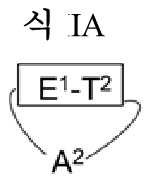
식 IIA는 제2 치료 펩티드(T2)에 부착된 2개의 연장제 펩티드들(E1 및 E2)을포함하는 비면역글로불린 영역에 부착된 제2 면역글로불린 영역(A2)을 포함하는 제2 면역글로불린 융합체를 보여준다.Formula IIA comprises a second immunoglobulin region (A 2 ) attached to a non-immunoglobulin region comprising two extender peptides (E 1 and E 2 ) attached to a second therapeutic peptide (T 2 ) 2 immunoglobulin fusions.
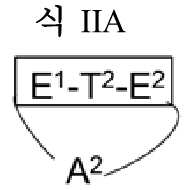
식 IIIA는 제2 치료 펩티드(T2)에 부착된 링커(L1)를 포함하는 비면역글로불린 영역에 부착된 제2 면역글로불린 영역(A2)을 포함하는 제2 면역글로불린 융합체로서, 상기 링커 및 제2 치료 펩티드가 2개의 연장제 펩티드들(E1 및 E2) 사이에 위치하는 것인 제2 면역글로불린 융합체를 보여준다.Formula IIIA is a second immunoglobulin fusion comprising a second immunoglobulin region (A 2 ) attached to a non-immunoglobulin region comprising a linker (L 1 ) attached to a second therapeutic peptide (T 2 ) And a second therapeutic peptide is located between two extender peptides (E 1 and E 2 ).
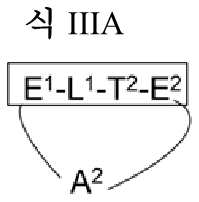
식 IVA는 제2 치료 펩티드(T2)에 부착된 단백질분해성 절단 부위(P1)를 포함하는 비면역글로불린 영역에 부착된 제2 면역글로불린 영역(A2)을 포함하는 제2 면역글로불린 융합체로서, 이때 상기 단백질분해성 절단 부위 및 제2 치료 펩티드가 2개의 연장제 펩티드들(E1 및 E2) 사이에 위치하는 것인 제2 면역글로불린 융합체를 보여준다. 식 IVB는 단백질분해성 절단 부위가 프로테아제에 의해 절단되어, 제2 치료 펩티드의 한 말단의 방출을 초래하는 것인 식 VA의 절단된 버전을 보여준다.Formula IVA is a second immunoglobulin fusion comprising a second immunoglobulin region (A 2 ) attached to a non-immunoglobulin region comprising a proteolytic cleavage site (P 1 ) attached to a second therapeutic peptide (T 2 ) , Wherein the proteolytic cleavage site and the second therapeutic peptide are located between two extender peptides (E 1 and E 2 ). Formula IVB shows a truncated version of formula VA wherein the proteolytic cleavage site is cleaved by the protease to result in the release of one end of the second therapeutic peptide.
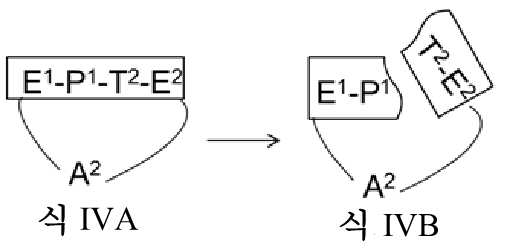
식 VA는 링커(L1) 및 단백질분해성 절단 부위(P1)에 부착된 제2 치료 펩티드(T2)를 포함하는 비면역글로불린 영역에 부착된 제2 면역글로불린 영역(A2)을 포함하는 제2 면역글로불린 융합체로서, 제2 치료 펩티드, 상기 링커 및 상기 단백질분해성 절단 부위가 2개의 연장제 펩티드들(E1 및 E2) 사이에 위치하는 것인 제2 면역글로불린 융합체를 보여준다. 식 VB는 단백질분해성 절단 부위가 프로테아제에 의해 절단되어, 제2 치료 펩티드의 한 말단의 방출을 초래하는 것인 식 VA의 절단된 버전을 보여준다.The formula VA comprises a second immunoglobulin region (A 2 ) attached to a non-immunoglobulin region comprising a linker (L 1 ) and a second therapeutic peptide (T 2 ) attached to a proteolytic cleavage site (P 1 ) And a second immunoglobulin fusion, wherein the second therapeutic peptide, the linker and the proteolytic cleavage site are located between two extender peptides (E 1 and E 2 ). The formula VB shows a truncated version of the formula VA in which the proteolytic cleavage site is cleaved by the protease resulting in the release of one end of the second therapeutic peptide.
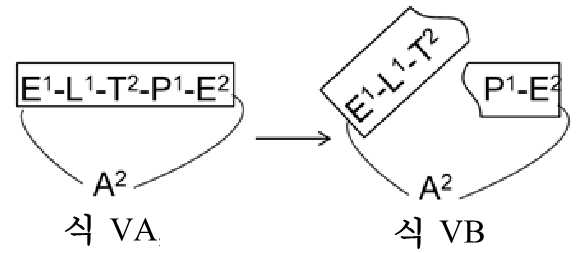
식 VIA는 2개의 연장제 펩티드들(E1 및 E2), 2개의 링커들(L1 및 L2), 2개의 단백질분해성 절단 부위들(P1 및 P2) 및 제2 치료 펩티드(T2)를 포함하는 비면역글로불린 영역에 부착된 제2 면역글로불린 영역(A2)을 포함하는 제2 면역글로불린 융합체를 나타낸다. 식 VIB는 제2 치료 펩티드의 N 말단 및 C 말단 상에 위치한 단백질분해성 절단 부위가 프로테아제에 의해 절단되어, 제2 면역글로불린 융합체로부터의 제2 치료 펩티드의 방출을 초래하는 것인 식 VIA의 절단된 버전을 보여준다.Formula VIA comprises two elongating peptides (E 1 and E 2 ), two linkers (L 1 and L 2 ), two proteolytic cleavage sites (P 1 and P 2 ) and a second therapeutic peptide (T 2) represents a second immunoglobulin fusions comprising a second immunoglobulin domain (a 2) attached to a non-immunoglobulin region including. Formula VIB is a truncated version of the VIA of formula VIA wherein the proteolytic cleavage site located on the N-terminus and C-terminus of the second therapeutic peptide is cleaved by the protease to release the second therapeutic peptide from the second immunoglobulin fusion Show version.
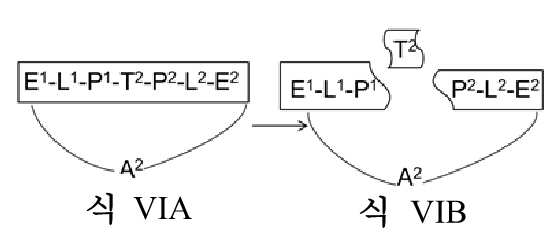
식 VIIA는 제2 치료 펩티드(T2)를 포함하는 비면역글로불린 영역에 부착된 제2 면역글로불린 영역(A2)을 포함하는 제2 면역글로불린 융합체를 보여준다. Equation VIIA shows a second immunoglobulin fusion comprising a second immunoglobulin region (A 2 ) attached to a non-immunoglobulin region comprising a second therapeutic peptide (T 2 ).

식 VIIIA는 제2 치료 펩티드(T2)에 부착된 링커(L1)를 포함하는 비면역글로불린 영역에 부착된 제2 면역글로불린 영역(A2)을 포함하는 제2 면역글로불린 융합체를 보여준다. Formula VIIIA shows a second immunoglobulin fusion comprising a second immunoglobulin region (A 2 ) attached to a non-immunoglobulin region comprising a linker (L 1 ) attached to a second therapeutic peptide (T 2 ).
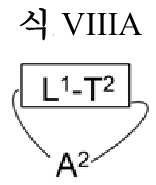
식 IXA는 링커(L1), 단백질분해성 절단 부위(P1) 및 제2 치료 펩티드(T2)를 포함하는 비면역글로불린 영역에 부착된 제2 면역글로불린 영역(A2)을 포함하는 제2 면역글로불린 융합체로서, 상기 단백질분해성 절단 부위가 상기 링커와 제2 치료 펩티드 사이에 위치하는 것인 제2 면역글로불린 융합체를 보여준다. Formula IXA comprises a second immunoglobulin region (A 2 ) attached to a non-immunoglobulin region comprising a linker (L 1 ), a proteolytic cleavage site (P 1 ) and a second therapeutic peptide (T 2 ) Wherein the immunoglobulin fusion is a second immunoglobulin fusion wherein the proteolytic cleavage site is located between the linker and the second therapeutic peptide.

식 XA는 제2 치료 펩티드(T2)에 부착된 단백질분해성 절단 부위(P1)를 포함하는 비면역글로불린 영역에 부착된 제2 면역글로불린 영역(A2)을 포함하는 제2 면역글로불린 융합 단백질을 보여준다. 식 XB는 단백질분해성 절단 부위가 프로테아제에 의해 절단되어, 제2 치료 펩티드의 한 말단의 방출을 초래하는 것인 식 XA의 절단된 버전을 보여준다.Formula XA is a second immunoglobulin fusion protein comprising a second immunoglobulin region (A 2 ) attached to a non-immunoglobulin region comprising a proteolytic cleavage site (P 1 ) attached to a second therapeutic peptide (T 2 ) Lt; / RTI > Formula XB shows a truncated version of Formula XA wherein the proteolytic cleavage site is cleaved by the protease to result in the release of one end of the second therapeutic peptide.
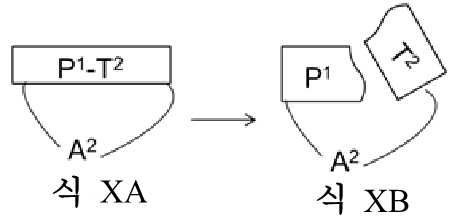
식 XIA는 링커(L1), 제2 치료 펩티드(T2) 및 단백질분해성 절단 부위(P1)를 포함하는 비면역글로불린 영역에 부착된 제2 면역글로불린 영역(A2)을 포함하는 제2 면역글로불린 융합체로서, 제2 치료 펩티드가 상기 링커와 상기 단백질분해성 절단 부위 사이에 위치하는 것인 제2 면역글로불린 융합체를 보여준다. 식 XIB는 단백질분해성 절단 부위가 프로테아제에 의해 절단되어, 제2 치료 펩티드의 한 말단의 방출을 초래하는 것인 식 XIA의 절단된 버전을 보여준다.Formula XIA comprises a second immunoglobulin region (A 2 ) attached to a non-immunoglobulin region comprising a linker (L 1 ), a second therapeutic peptide (T 2 ) and a proteolytic cleavage site (P 1 ) And a second immunoglobulin fusion, wherein the second therapeutic peptide is located between the linker and the proteolytic cleavage site. Formula XIB shows a truncated version of formula XIA wherein the proteolytic cleavage site is cleaved by a protease resulting in the release of one end of the second therapeutic peptide.
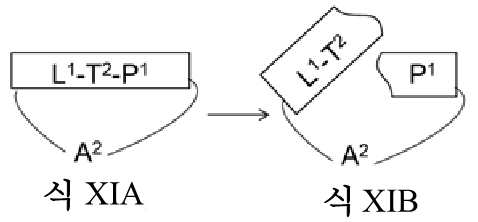
식 XIIA는 2개의 링커들(L1 및 L2), 2개의 단백질분해성 절단 부위들(P1 및 P2) 및 제2 치료 펩티드(T2)를 포함하는 비면역글로불린 영역에 부착된 제2 면역글로불린 영역(A2)을 포함하는 제2 면역글로불린 융합체를 보여준다. 식 XIIB는 제2 치료 펩티드의 N 말단 및 C 말단 상에 위치한 단백질분해성 절단 부위가 프로테아제에 의해 절단되어, 제2 면역글로불린 융합체로부터의 제2 치료 펩티드의 방출을 초래하는 것인 식 XIIA의 절단된 버전을 보여준다.The formula XIIA comprises a second antibody attached to a non-immunoglobulin region comprising two linkers (L 1 and L 2 ), two proteolytic cleavage sites (P 1 and P 2 ) and a second therapeutic peptide (T 2 ) And a second immunoglobulin fusion comprising an immunoglobulin region (A 2 ). Formula XIIB shows that the proteolytic cleavage site located on the N-terminus and C-terminus of the second therapeutic peptide is cleaved by the protease to result in the release of the second therapeutic peptide from the second immunoglobulin fusion. Show version.
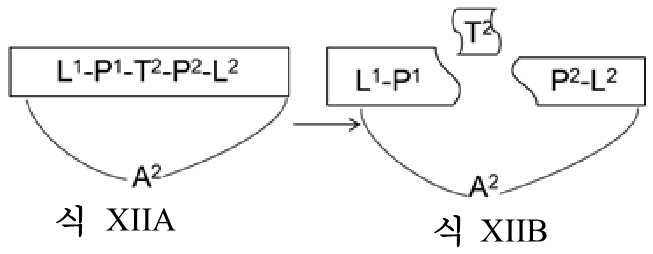
면역글로불린 영역Immunoglobulin region
본원에 개시된 면역글로불린 융합 단백질은 하나 이상의 면역글로불린 영역을 포함한다. 면역글로불린 영역은 면역글로불린 또는 이의 단편을 포함할 수 있다. 면역글로불린 영역은 면역글로불린 중쇄, 면역글로불린 경쇄 또는 이들의 조합의 적어도 일부를 포함할 수 있다. 면역글로불린 영역은 2개 이상의 면역글로불린 쇄들 또는 이들의 부분을 포함할 수 있다. 면역글로불린 영역은 3개 이상의 면역글로불린 쇄들 또는 이들의 부분을 포함할 수 있다. 면역글로불린 영역은 4개 이상의 면역글로불린 쇄들 또는 이들의 부분을 포함할 수 있다. 면역글로불린 영역은 5개 이상의 면역글로불린 쇄들 또는 이들의 부분을 포함할 수 있다. 면역글로불린 영역은 2개의 면역글로불린 중쇄들 및 2개의 면역글로불린 경쇄들을 포함할 수 있다.The immunoglobulin fusion proteins disclosed herein comprise one or more immunoglobulin regions. The immunoglobulin region may comprise an immunoglobulin or fragment thereof. The immunoglobulin region may comprise at least a portion of an immunoglobulin heavy chain, an immunoglobulin light chain, or a combination thereof. An immunoglobulin region may comprise two or more immunoglobulin chains or portions thereof. The immunoglobulin region may comprise three or more immunoglobulin chains or portions thereof. The immunoglobulin region may comprise four or more immunoglobulin chains or portions thereof. An immunoglobulin region may comprise five or more immunoglobulin chains or portions thereof. The immunoglobulin region may comprise two immunoglobulin heavy chains and two immunoglobulin light chains.
면역글로불린 영역은 전체 면역글로불린 분자를 포함할 수 있거나, 중쇄, 경쇄, 가변 도메인, 불변 도메인, 상보성 결정 영역(CDR), 골격 영역, 단편 항원 결합(Fab) 영역, Fab', F(ab')2, F(ab')3, Fab', 단편 결정화가능한(Fc) 영역, 단일 쇄 가변 단편(scFV), di-scFv, 단일 도메인 면역글로불린, 삼작용성 면역글로불린, 화학적으로 연결된 F(ab')2, 및 이들의 임의의 조합을 포함하나 이들로 한정되지 않는 면역글로불린의 단편을 포함하는 임의의 폴리펩티드를 포함할 수 있다. 일부 실시양태들에서, 면역글로불린 중쇄는 전체 중쇄 또는 중쇄의 부분을 포함할 수 있다. 예를 들면, 중쇄로부터 유래된 가변 도메인 또는 이의 영역은 중쇄 또는 중쇄의 영역으로서 지칭될 수 있다. 일부 실시양태들에서, 면역글로불린 경쇄는 전체 경쇄 또는 경쇄의 부분을 포함할 수 있다. 예를 들면, 경쇄로부터 유래된 가변 도메인 또는 이의 영역은 경쇄 또는 경쇄의 영역으로서 지칭될 수 있다. 단일 도메인 면역글로불린은 단일 단량체성 가변 면역글로불린 도메인, 예를 들면, 상어 가변 신규 항원 수용체 면역글로불린 단편(VNAR)을 포함하나 이것으로 한정되지 않는다. The immunoglobulin region may comprise a whole immunoglobulin molecule or may comprise a heavy chain, light chain, variable domain, constant domain, complementarity determining region (CDR), framework region, fragment antigen binding (Fab) F (ab ') 3, Fab', fragment crystallizable (Fc) region, single chain variable fragment (scFV), di- scFv, single domain immunoglobulin, trifunctional immunoglobulin, chemically linked
면역글로불린은 IgA, IgD, IgE, IgG, IgM, IgY 및 IgW를 포함하나 이들로 한정되지 않는, 당업자에게 공지되어 있는 임의의 유형으로부터 유래될 수 있다. 면역글로불린 영역은 1개, 2개, 3개, 4개 및 5개 유닛을 포함하나 이들로 한정되지 않는 하나 이상의 유닛을 포함할 수 있다. 작용성 유닛은 비면역글로불린 영역, 중쇄, 경쇄, 가변 도메인, 불변 도메인, 상보성 결정 영역(CDR), 골격 영역, 단편 항원 결합(Fab) 영역, Fab', F(ab')2, F(ab')3, Fab', 단편 결정화가능한(Fc) 영역, 단일 쇄 가변 단편(scFV), di-scFv, 단일 도메인 면역글로불린, 삼작용성 면역글로불린, 화학적으로 연결된 F(ab')2, 및 이들의 임의의 조합 또는 단편을 포함할 수 있으나 이들로 한정되지 않는다. 비면역글로불린 영역은 탄수화물, 지질, 소분자 및 치료 펩티드를 포함하나 이들로 한정되지 않는다. 면역글로불린 영역은 하나 이상의 디설파이드 결합에 의해 연결된 하나 이상의 유닛을 포함할 수 있다. 면역글로불린 영역은 펩티드 링커, 예를 들면, scFv 면역글로불린에 의해 연결된 하나 이상의 유닛을 포함할 수 있다. 면역글로불린은 아미노산 돌연변이, 치환 및/또는 결실을 갖는 면역글로불린을 포함하는 재조합 면역글로불린일 수 있다. 면역글로불린은 화학적 변경을 포함하는 재조합 면역글로불린일 수 있다. 면역글로불린은 면역글로불린-약물 접합체의 전부 또는 일부를 포함할 수 있다.The immunoglobulin may be derived from any type known to those skilled in the art, including, but not limited to, IgA, IgD, IgE, IgG, IgM, IgY and IgW. The immunoglobulin region may comprise one or more units including, but not limited to, one, two, three, four and five units. F (ab) 2, F (ab) 2, F (ab) 2, F (ab) 2, (Fc) region, a single chain variable fragment (scFV), a di-scFv, a single domain immunoglobulin, a trifunctional immunoglobulin, a chemically linked F (ab ') 2, But are not limited to, any combination or fragment. Non-immunoglobulin domains include, but are not limited to, carbohydrates, lipids, small molecules and therapeutic peptides. The immunoglobulin region may comprise one or more units linked by one or more disulfide bonds. The immunoglobulin region may comprise one or more units linked by a peptide linker, for example, an scFv immunoglobulin. Immunoglobulins can be recombinant immunoglobulins, including immunoglobulins with amino acid mutations, substitutions and / or deletions. Immunoglobulins can be recombinant immunoglobulins, including chemical modifications. The immunoglobulin may comprise all or part of an immunoglobulin-drug conjugate.
면역글로불린 영역은 면역글로불린 중쇄의 적어도 일부를 포함할 수 있다. 면역글로불린 영역은 하나 이상의 면역글로불린 중쇄 또는 이의 부분을 포함할 수 있다. 면역글로불린 영역은 2개 이상의 면역글로불린 중쇄들 또는 이들의 부분을 포함할 수 있다. 면역글로불린 영역은 면역글로불린 중쇄와 적어도 약 50% 상동성인 아미노산 서열을 포함할 수 있다. 면역글로불린 영역은 면역글로불린 중쇄와 적어도 약 60%, 65%, 70%, 75%, 80%, 85%, 90%, 92%, 95% 또는 97% 이상 상동성인 아미노산 서열을 포함할 수 있다. 면역글로불린 영역은 면역글로불린 중쇄와 적어도 약 70% 상동성인 아미노산 서열을 포함할 수 있다. 면역글로불린 영역은 면역글로불린 중쇄와 적어도 약 80% 상동성인 아미노산 서열을 포함할 수 있다. 면역글로불린 영역은 면역글로불린 중쇄와 적어도 약 90% 상동성인 아미노산 서열을 포함할 수 있다. 면역글로불린 중쇄는 서열번호 6 또는 8을 포함할 수 있다. 일부 실시양태들에서, 면역글로불린 영역은 서열번호 6 및 8 중 어느 하나의 아미노산 서열과 적어도 약 50%, 55%, 60%, 65%, 70%, 75%, 80%, 85%, 90%, 95% 또는 97% 상동성인 아미노산 서열을 포함한다. 일부 실시양태들에서, 면역글로불린 영역은 서열번호 6 및 8 중 어느 하나의 아미노산 서열과 적어도 약 50%, 55%, 60%, 65%, 70%, 75%, 80%, 85%, 90%, 95% 또는 97% 동일한 아미노산 서열을 포함한다. The immunoglobulin region may comprise at least a portion of an immunoglobulin heavy chain. The immunoglobulin region may comprise one or more immunoglobulin heavy chains or portions thereof. The immunoglobulin region may comprise two or more immunoglobulin heavy chains or portions thereof. The immunoglobulin region may comprise an amino acid sequence that is at least about 50% homologous to the immunoglobulin heavy chain. The immunoglobulin region may comprise an amino acid sequence that is at least about 60%, 65%, 70%, 75%, 80%, 85%, 90%, 92%, 95% or 97% identical to the immunoglobulin heavy chain. The immunoglobulin region may comprise an amino acid sequence that is at least about 70% homologous to the immunoglobulin heavy chain. The immunoglobulin region may comprise an amino acid sequence at least about 80% homologous to the immunoglobulin heavy chain. The immunoglobulin region may comprise an amino acid sequence at least about 90% homologous to the immunoglobulin heavy chain. The immunoglobulin heavy chain may comprise SEQ ID NO: 6 or 8. In some embodiments, the immunoglobulin region comprises an amino acid sequence that is at least about 50%, 55%, 60%, 65%, 70%, 75%, 80%, 85%, 90% , 95% or 97% homologous to the amino acid sequence of SEQ ID NO. In some embodiments, the immunoglobulin region comprises an amino acid sequence that is at least about 50%, 55%, 60%, 65%, 70%, 75%, 80%, 85%, 90% , 95%, or 97% identical to the amino acid sequence of SEQ ID NO.
면역글로불린 영역은 면역글로불린 중쇄의 5개, 10개, 15개, 20개, 25개, 30개, 35개, 40개, 45개, 50개, 60개, 70개, 80개 또는 90개 이상의 아미노산들을 포함하는 아미노산 서열을 포함할 수 있다. 면역글로불린 영역은 면역글로불린 중쇄의 100개, 150개, 200개, 250개, 300개, 350개, 400개, 450개, 500개, 600개, 700개, 800개 또는 900개 이상의 아미노산들을 포함하는 아미노산 서열을 포함할 수 있다. 아미노산은 연속적일 수 있다. 대안적으로 또는 추가로, 아미노산은 비연속적이다. The immunoglobulin region may comprise 5, 10, 15, 20, 25, 30, 35, 40, 45, 50, 60, 70, 80 or 90 or more immunoglobulin heavy chains Lt; RTI ID = 0.0 > amino acids. ≪ / RTI > The immunoglobulin region includes 100, 150, 200, 250, 300, 350, 400, 450, 500, 600, 700, 800 or 900 amino acids of the immunoglobulin heavy chain ≪ / RTI > The amino acid may be continuous. Alternatively or additionally, the amino acid is discontinuous.
면역글로불린 중쇄는 서열번호 2 또는 4에 기초한, 또는 서열번호 2 또는 4로부터 유래된 뉴클레오티드 서열에 의해 코딩될 수 있다. 면역글로불린 중쇄는 서열번호 2 또는 4와 적어도 약 50% 상동성인 뉴클레오티드 서열에 의해 코딩될 수 있다. 면역글로불린 중쇄는 서열번호 2 또는 4와 적어도 약 60%, 65%, 70%, 75%, 80%, 85%, 90%, 92%, 95% 또는 97% 이상 상동성인 뉴클레오티드 서열에 의해 코딩될 수 있다. 면역글로불린 중쇄는 서열번호 2 또는 4와 적어도 약 75% 상동성인 뉴클레오티드 서열에 의해 코딩될 수 있다. 면역글로불린 중쇄는 서열번호 2 또는 4와 적어도 약 85% 상동성인 뉴클레오티드 서열에 의해 코딩될 수 있다. 일부 실시양태들에서, 면역글로불린 영역은 서열번호 2 및 4 중 어느 한 뉴클레오티드 서열과 적어도 약 50%, 55%, 60%, 65%, 70%, 75%, 80%, 85%, 90%, 95% 또는 97% 상동성인 뉴클레오티드 서열에 의해 코딩된다. 일부 실시양태들에서, 면역글로불린 영역은 서열번호 2 및 4 중 어느 한 뉴클레오티드 서열과 적어도 약 50%, 55%, 60%, 65%, 70%, 75%, 80%, 85%, 90%, 95% 또는 97% 동일한 뉴클레오티드 서열에 의해 코딩된다. The immunoglobulin heavy chain may be encoded by a nucleotide sequence based on SEQ ID NO: 2 or 4, or from SEQ ID NO: 2 or 4. The immunoglobulin heavy chain may be encoded by a nucleotide sequence that is at least about 50% homologous to SEQ ID NO: 2 or SEQ ID NO: 4. The immunoglobulin heavy chain is encoded by a nucleotide sequence that is at least about 60%, 65%, 70%, 75%, 80%, 85%, 90%, 92%, 95% or 97% identical to SEQ ID NO: 2 or 4 . The immunoglobulin heavy chain may be encoded by a nucleotide sequence that is at least about 75% homologous to SEQ ID NO: 2 or SEQ ID NO: 4. The immunoglobulin heavy chain may be encoded by a nucleotide sequence that is at least about 85% homologous to SEQ ID NO: 2 or 4. In some embodiments, the immunoglobulin region comprises a nucleotide sequence that is at least about 50%, 55%, 60%, 65%, 70%, 75%, 80%, 85%, 90% 95% or 97% homologous nucleotide sequence. In some embodiments, the immunoglobulin region comprises a nucleotide sequence that is at least about 50%, 55%, 60%, 65%, 70%, 75%, 80%, 85%, 90% 95% or 97% identical nucleotide sequences.
면역글로불린 영역은 면역글로불린 경쇄의 적어도 일부를 포함할 수 있다. 면역글로불린 영역은 하나 이상의 면역글로불린 경쇄 또는 이의 부분을 포함할 수 있다. 면역글로불린 영역은 2개 이상의 면역글로불린 경쇄들 또는 이들의 부분을 포함할 수 있다. 면역글로불린 영역은 면역글로불린 경쇄와 적어도 약 50% 상동성인 아미노산 서열을 포함할 수 있다. 면역글로불린 영역은 면역글로불린 경쇄와 적어도 약 60%, 65%, 70%, 75%, 80%, 85%, 90%, 92%, 95% 또는 97% 이상 상동성인 아미노산 서열을 포함할 수 있다. 면역글로불린 영역은 면역글로불린 경쇄와 적어도 약 70% 상동성인 아미노산 서열을 포함할 수 있다. 면역글로불린 영역은 면역글로불린 경쇄와 적어도 약 80% 상동성인 아미노산 서열을 포함할 수 있다. 면역글로불린 영역은 면역글로불린 경쇄와 적어도 약 90% 상동성인 아미노산 서열을 포함할 수 있다. 면역글로불린 경쇄는 서열번호 5 또는 7을 포함할 수 있다. 일부 실시양태들에서, 면역글로불린 영역은 서열번호 5 및 7 중 어느 하나의 아미노산 서열과 적어도 약 50%, 55%, 60%, 65%, 70%, 75%, 80%, 85%, 90%, 95% 또는 97% 상동성인 아미노산 서열을 포함한다. 일부 실시양태들에서, 면역글로불린 영역은 서열번호 5 및 7 중 어느 하나의 아미노산 서열과 적어도 약 50%, 55%, 60%, 65%, 70%, 75%, 80%, 85%, 90%, 95% 또는 97% 동일한 아미노산 서열을 포함한다.The immunoglobulin region may comprise at least a portion of an immunoglobulin light chain. The immunoglobulin region may comprise one or more immunoglobulin light chains or portions thereof. The immunoglobulin region may comprise two or more immunoglobulin light chains or portions thereof. The immunoglobulin region may comprise an amino acid sequence that is at least about 50% homologous to the immunoglobulin light chain. The immunoglobulin region may comprise an amino acid sequence that is at least about 60%, 65%, 70%, 75%, 80%, 85%, 90%, 92%, 95% or 97% identical to the immunoglobulin light chain. The immunoglobulin region may comprise an amino acid sequence at least about 70% homologous to the immunoglobulin light chain. The immunoglobulin region may comprise an amino acid sequence that is at least about 80% homologous to the immunoglobulin light chain. The immunoglobulin region may comprise an amino acid sequence at least about 90% homologous to the immunoglobulin light chain. The immunoglobulin light chain may comprise SEQ ID NO: 5 or 7. In some embodiments, the immunoglobulin region comprises an amino acid sequence that is at least about 50%, 55%, 60%, 65%, 70%, 75%, 80%, 85%, 90% , 95% or 97% homologous to the amino acid sequence of SEQ ID NO. In some embodiments, the immunoglobulin region comprises an amino acid sequence that is at least about 50%, 55%, 60%, 65%, 70%, 75%, 80%, 85%, 90% , 95%, or 97% identical to the amino acid sequence of SEQ ID NO.
면역글로불린 영역은 면역글로불린 경쇄의 5개, 10개, 15개, 20개, 25개, 30개, 35개, 40개, 45개, 50개, 60개, 70개, 80개 또는 90개 이상의 아미노산들을 포함하는 아미노산 서열을 포함할 수 있다. 면역글로불린 영역은 면역글로불린 경쇄의 100개, 150개, 200개, 250개, 300개, 350개, 400개, 450개, 500개, 600개, 700개, 800개 또는 900개 이상의 아미노산들을 포함하는 아미노산 서열을 포함할 수 있다. 아미노산은 연속적일 수 있다. 대안적으로 또는 추가로, 아미노산은 비연속적이다. The immunoglobulin region may comprise at least 5, 10, 15, 20, 25, 30, 35, 40, 45, 50, 60, 70, 80 or 90 Lt; RTI ID = 0.0 > amino acids. ≪ / RTI > The immunoglobulin region includes 100, 150, 200, 250, 300, 350, 400, 450, 500, 600, 700, 800 or 900 amino acids of immunoglobulin light chain ≪ / RTI > The amino acid may be continuous. Alternatively or additionally, the amino acid is discontinuous.
면역글로불린 경쇄는 서열번호 1 또는 3에 기초한, 또는 서열번호 1 또는 3으로부터 유래된 뉴클레오티드 서열에 의해 코딩될 수 있다. 면역글로불린 경쇄는 서열번호 1 또는 3과 적어도 약 50% 상동성인 뉴클레오티드 서열에 의해 코딩될 수 있다. 면역글로불린 경쇄는 서열번호 1 또는 3과 적어도 약 60%, 65%, 70%, 75%, 80%, 85%, 90%, 92%, 95% 또는 97% 이상 상동성인 뉴클레오티드 서열에 의해 코딩될 수 있다. 면역글로불린 경쇄는 서열번호 1 또는 3과 적어도 약 75% 상동성인 뉴클레오티드 서열에 의해 코딩될 수 있다. 면역글로불린 경쇄는 서열번호 1 또는 3과 적어도 약 85% 상동성인 뉴클레오티드 서열에 의해 코딩될 수 있다. 일부 실시양태들에서, 면역글로불린 영역은 서열번호 1 및 3 중 어느 한 뉴클레오티드 서열과 적어도 약 50%, 55%, 60%, 65%, 70%, 75%, 80%, 85%, 90%, 95% 또는 97% 상동성인 뉴클레오티드 서열에 의해 코딩된다. 일부 실시양태들에서, 면역글로불린 영역은 서열번호 1 및 3 중 어느 한 뉴클레오티드 서열과 적어도 약 50%, 55%, 60%, 65%, 70%, 75%, 80%, 85%, 90%, 95% 또는 97% 동일한 뉴클레오티드 서열에 의해 코딩된다. The immunoglobulin light chain may be encoded by a nucleotide sequence based on SEQ ID NO: 1 or 3, or from SEQ ID NO: 1 or 3. The immunoglobulin light chain may be encoded by a nucleotide sequence that is at least about 50% homologous to SEQ ID NO: 1 or 3. The immunoglobulin light chain is encoded by a nucleotide sequence that is at least about 60%, 65%, 70%, 75%, 80%, 85%, 90%, 92%, 95% or 97% identical to SEQ ID NO: 1 or 3 . The immunoglobulin light chain may be encoded by a nucleotide sequence that is at least about 75% homologous to SEQ ID NO: 1 or 3. The immunoglobulin light chain may be encoded by a nucleotide sequence that is at least about 85% homologous to SEQ ID NO: 1 or 3. In some embodiments, the immunoglobulin region comprises an amino acid sequence that is at least about 50%, 55%, 60%, 65%, 70%, 75%, 80%, 85%, 90% 95% or 97% homologous nucleotide sequence. In some embodiments, the immunoglobulin region comprises an amino acid sequence that is at least about 50%, 55%, 60%, 65%, 70%, 75%, 80%, 85%, 90% 95% or 97% identical nucleotide sequences.
면역글로불린 영역은 가변 도메인의 적어도 일부를 포함할 수 있다. 면역글로불린 영역은 하나 이상의 가변 도메인 또는 이의 부분을 포함할 수 있다. 면역글로불린 영역은 2개, 3개, 4개 또는 5개 이상의 가변 도메인들 또는 이들의 부분을 포함할 수 있다. 면역글로불린 영역은 하나 이상의 가변 도메인의 아미노산 서열에 기초한, 또는 이러한 아미노산 서열로부터 유래된 10개, 20개, 30개, 40개, 50개, 60개, 70개, 80개, 90개, 100개, 120개, 140개, 160개, 180개, 200개, 225개, 250개, 275개, 300개, 350개, 400개 또는 500개 이상의 아미노산들을 포함하는 아미노산 서열을 포함할 수 있다. 아미노산은 연속적일 수 있다. 아미노산은 비연속적일 수 있다.The immunoglobulin region may comprise at least a portion of a variable domain. The immunoglobulin region may comprise one or more variable domains or portions thereof. The immunoglobulin region may comprise two, three, four, or more than five variable domains or portions thereof. The immunoglobulin region may comprise 10, 20, 30, 40, 50, 60, 70, 80, 90, 100 or more amino acid residues, based on the amino acid sequence of one or more variable domains, , 120, 140, 160, 180, 200, 225, 250, 275, 300, 350, 400 or 500 amino acids. The amino acid may be continuous. The amino acid may be non-continuous.
면역글로불린 영역은 불변 도메인의 적어도 일부를 포함할 수 있다. 면역글로불린 영역은 하나 이상의 불변 도메인 또는 이의 부분을 포함할 수 있다. 면역글로불린 영역은 2개, 3개, 4개, 5개, 6개, 7개, 8개, 9개 또는 10개 이상의 불변 도메인들 또는 이들의 부분을 포함할 수 있다. 면역글로불린 영역은 하나 이상의 불변 도메인의 아미노산 서열에 기초한, 또는 이러한 아미노산 서열로부터 유래된 10개, 20개, 30개, 40개, 50개, 60개, 70개, 80개, 90개, 100개, 120개, 140개, 160개, 180개, 200개, 225개, 250개, 275개, 300개, 350개, 400개, 500개, 600개, 700개, 800개, 900개, 1000개, 1200개 또는 1400개 이상의 아미노산들을 포함하는 아미노산 서열을 포함할 수 있다. 아미노산은 연속적일 수 있다. 아미노산은 비연속적일 수 있다.The immunoglobulin region may comprise at least a portion of the constant domain. The immunoglobulin region may comprise one or more constant domains or portions thereof. The immunoglobulin region may comprise two, three, four, five, six, seven, eight, nine or ten or more constant domains or portions thereof. The immunoglobulin region may comprise 10, 20, 30, 40, 50, 60, 70, 80, 90, 100 or more amino acid residues, based on the amino acid sequence of one or more constant domains, , 120, 140, 160, 180, 200, 225, 250, 275, 300, 350, 400, 500, 600, 700, 800, 900, 1000 , ≪ / RTI > 1,200, or more than 1400 amino acids. The amino acid may be continuous. The amino acid may be non-continuous.
면역글로불린 영역은 상보성 결정 영역(CDR)의 적어도 일부를 포함할 수 있다. 면역글로불린 영역은 하나 이상의 상보성 결정 영역(CDR) 또는 이의 부분을 포함할 수 있다. 면역글로불린 영역은 2개, 3개, 4개 또는 5개 이상의 상보성 결정 영역들(CDR들) 또는 이들의 부분을 포함할 수 있다. 면역글로불린 영역은 6개, 7개 또는 8개 이상의 상보성 결정 영역들(CDR들) 또는 이들의 부분을 포함할 수 있다. 면역글로불린 영역은 4개 이상의 상보성 결정 영역들(CDR들) 또는 이들의 부분을 포함할 수 있다. 면역글로불린 영역은 9개, 10개 또는 11개 이상의 상보성 결정 영역들(CDR들) 또는 이들의 부분을 포함할 수 있다. 하나 이상의 CDR은 CDR1, CDR2, CDR3 또는 이들의 조합일 수 있다. 하나 이상의 CDR은 CDR1일 수 있다. 하나 이상의 CDR은 CDR2일 수 있다. 하나 이상의 CDR은 CDR3일 수 있다. CDR은 중쇄 CDR일 수 있다. 하나 이상의 CDR은 경쇄 CDR일 수 있다.The immunoglobulin region may comprise at least a portion of a complementarity determining region (CDR). The immunoglobulin region may comprise one or more complementarity determining regions (CDRs) or portions thereof. The immunoglobulin region may comprise two, three, four or more than five complementary crystal regions (CDRs) or portions thereof. The immunoglobulin region may comprise six, seven, or eight or more complementarity determining regions (CDRs) or portions thereof. An immunoglobulin region may comprise four or more complementarity determining regions (CDRs) or portions thereof. The immunoglobulin region may comprise 9, 10 or 11 or more complementarity determining regions (CDRs) or portions thereof. The one or more CDRs may be CDR1, CDR2, CDR3, or a combination thereof. One or more of the CDRs may be CDR1. One or more of the CDRs may be CDR2. One or more of the CDRs may be CDR3. The CDR may be a heavy chain CDR. One or more CDRs may be light chain CDRs.
면역글로불린 영역은 CDR의 아미노산 서열에 기초한, 또는 이러한 아미노산 서열로부터 유래된 1개, 2개, 3개, 4개, 5개, 6개, 7개, 8개, 9개 또는 10개 이상의 아미노산들을 포함하는 아미노산 서열을 포함할 수 있다. 면역글로불린 영역은 CDR의 아미노산 서열에 기초한, 또는 이러한 아미노산 서열로부터 유래된 3개 이상의 아미노산들을 포함하는 아미노산 서열을 포함할 수 있다. 면역글로불린 영역은 CDR의 아미노산 서열에 기초한, 또는 이러한 아미노산 서열로부터 유래된 5개 이상의 아미노산들을 포함하는 아미노산 서열을 포함할 수 있다. 면역글로불린 영역은 CDR의 아미노산 서열에 기초한, 또는 이러한 아미노산 서열로부터 유래된 10개 이상의 아미노산들을 포함하는 아미노산 서열을 포함할 수 있다. 아미노산은 연속적일 수 있다. 아미노산은 비연속적일 수 있다.The immunoglobulin region may comprise one, two, three, four, five, six, seven, eight, nine or ten or more amino acids based on the amino acid sequence of the CDR or derived from such amino acid sequence , ≪ / RTI > The immunoglobulin region may comprise an amino acid sequence based on, or comprising three or more amino acids derived from, the amino acid sequence of the CDR. The immunoglobulin region may comprise an amino acid sequence that is based on, or includes five or more amino acids derived from, the amino acid sequence of a CDR. The immunoglobulin region may comprise an amino acid sequence based on, or comprising 10 or more amino acids derived from, the amino acid sequence of the CDR. The amino acid may be continuous. The amino acid may be non-continuous.
면역글로불린 영역은 항-T 세포 수용체 면역글로불린의 적어도 부분에 기초할 수 있거나 이러한 부분으로부터 유래될 수 있다. 면역글로불린 영역은 항-B 세포 수용체 면역글로불린의 적어도 부분에 기초할 수 있거나 이러한 부분으로부터 유래될 수 있다. The immunoglobulin region may be based on or derived from at least a portion of the anti-T cell receptor immunoglobulin. The immunoglobulin region may be based on or derived from at least a portion of the anti-B cell receptor immunoglobulin.
면역글로불린 영역은 항-T 세포 보조수용체 면역글로불린의 적어도 부분에 기초할 수 있거나 이러한 부분으로부터 유래될 수 있다. 면역글로불린 영역은 항-CD3 면역글로불린의 적어도 부분에 기초할 수 있거나 이러한 부분으로부터 유래될 수 있다. 면역글로불린 영역은 항-CD3 면역글로불린에 기초할 수 있거나 이러한 부분으로부터 유래될 수 있다. 항-CD3 면역글로불린은 UCHT1일 수 있다. 면역글로불린 영역은 항-CD3 면역글로불린의 Fab 단편의 적어도 부분에 기초할 수 있거나 이러한 부분으로부터 유래될 수 있다. 면역글로불린 영역은 항-CD3 면역글로불린의 면역글로불린 단편에 기초할 수 있거나 이러한 단편으로부터 유래될 수 있다. The immunoglobulin region may be based on or derived from at least a portion of the anti-T cell-assisted receptor immunoglobulin. The immunoglobulin region may be based on or derived from at least a portion of the anti-CD3 immunoglobulin. The immunoglobulin region may be based on or derived from an anti-CD3 immunoglobulin. The anti-CD3 immunoglobulin may be UCHT1. The immunoglobulin region may be based on or derived from at least a portion of the Fab fragment of the anti-CD3 immunoglobulin. The immunoglobulin region may be based on, or may be derived from, an immunoglobulin fragment of an anti-CD3 immunoglobulin.
면역글로불린 영역은 세포 상의 수용체의 적어도 부분에 결합하는 면역글로불린 또는 면역글로불린 단편에 기초할 수 있거나 이러한 면역글로불린 또는 면역글로불린 단편으로부터 유래될 수 있다. 면역글로불린 영역은 세포 상의 보조수용체의 적어도 부분에 결합하는 면역글로불린 또는 면역글로불린 단편에 기초할 수 있거나 이러한 면역글로불린 또는 면역글로불린 단편으로부터 유래될 수 있다. 면역글로불린 영역은 세포 상의 항원 또는 세포 표면 마커의 적어도 부분에 결합하는 면역글로불린 또는 면역글로불린 단편에 기초할 수 있거나 이러한 면역글로불린 또는 면역글로불린 단편으로부터 유래될 수 있다. 세포는 조혈 세포일 수 있다. 조혈 세포는 골수 세포일 수 있다. 골수 세포는 적혈구, 혈전구, 호중구, 단핵구, 대식세포, 호산구, 호염기구 또는 비만 세포일 수 있다. 조혈 세포는 림프 세포일 수 있다. 림프 세포는 B 세포, T 세포 또는 NK 세포일 수 있다. 조혈 세포는 백혈구일 수 있다. 조혈 세포는 림프구일 수 있다.The immunoglobulin region may be based on an immunoglobulin or immunoglobulin fragment that binds to at least a portion of a receptor on the cell, or it may be derived from such immunoglobulin or immunoglobulin fragment. The immunoglobulin region may be based on immunoglobulin or immunoglobulin fragments that bind to at least a portion of the co-receptor on the cell, or may be derived from such immunoglobulin or immunoglobulin fragments. The immunoglobulin region may be based on immunoglobulin or immunoglobulin fragments that bind to at least a portion of the antigen or cell surface markers on the cell, or may be derived from such immunoglobulin or immunoglobulin fragments. Cells can be hematopoietic cells. Hematopoietic cells may be bone marrow cells. Bone marrow cells can be red blood cells, thrombus, neutrophils, monocytes, macrophages, eosinophils, basophils or mast cells. Hematopoietic cells may be lymphoid cells. The lymphoid cells may be B cells, T cells or NK cells. Hematopoietic cells can be white blood cells. Hematopoietic cells may be lymphocytes.
면역글로불린 영역은 T 세포 상의 수용체의 적어도 부분에 결합하는 면역글로불린 또는 면역글로불린 단편에 기초할 수 있거나 이러한 면역글로불린 또는 면역글로불린 단편으로부터 유래될 수 있다. 상기 수용체는 T 세포 수용체(TCR)일 수 있다. TCR은 TCR 알파, TCR 베타, TCR 감마 및/또는 TCR 델타를 포함할 수 있다. 상기 수용체는 T 세포 수용체 제타일 수 있다.The immunoglobulin region may be based on immunoglobulin or immunoglobulin fragments that bind to at least a portion of the receptors on the T cell, or may be derived from such immunoglobulin or immunoglobulin fragments. The receptor may be a T cell receptor (TCR). The TCR may comprise TCR alpha, TCR beta, TCR gamma and / or TCR delta. The receptor may be a T cell receptor agonist.
면역글로불린 영역은 림프구, B 세포, 대식세포, 단핵구, 호중구 및/또는 NK 세포 상의 수용체의 적어도 부분에 결합하는 면역글로불린 또는 면역글로불린 단편에 기초할 수 있거나 이러한 면역글로불린 또는 면역글로불린 단편으로부터 유래될 수 있다. 상기 수용체는 Fc 수용체일 수 있다. Fc 수용체는 Fc-감마 수용체, Fc-알파 수용체 및/또는 Fc-엡실론 수용체일 수 있다. Fc-감마 수용체는 FcγRI(CD64), FcγRIIA(CD32), FcγRIIB(CD32), FcγRIIIA(CD16a) 및 FcγRIIIB(CD16b)를 포함하나 이들로 한정되지 않는다. Fc-알파 수용체는 FcαRI을 포함하나 이것으로 한정되지 않는다. Fc-엡실론 수용체는 FcεRI 및 FcεRII를 포함하나 이들로 한정되지 않는다. 상기 수용체는 CD89(IgA 수용체의 Fc 단편 또는 FCAR)일 수 있다.The immunoglobulin region may be based on immunoglobulin or immunoglobulin fragments that bind to at least a portion of the receptor on lymphocytes, B cells, macrophages, mononuclear cells, neutrophils and / or NK cells or may be derived from such immunoglobulin or immunoglobulin fragments have. The receptor may be an Fc receptor. Fc receptors may be Fc-gamma receptors, Fc-alpha receptors and / or Fc-epsilon receptors. Fc-gamma receptors include, but are not limited to, FcγRI (CD64), FcγRIIA (CD32), FcγRIIB (CD32), FcγRIIIA (CD16a) and FcγRIIIB (CD16b). Fc-alpha receptors include, but are not limited to, Fc? RI. Fc-epsilon receptors include, but are not limited to, Fc? RI and Fc? RI. The receptor may be CD89 (Fc fragment of an IgA receptor or FCAR).
면역글로불린 영역은 T 세포 상의 보조수용체의 적어도 부분에 결합하는 면역글로불린 또는 면역글로불린 단편에 기초할 수 있거나 이러한 면역글로불린 또는 면역글로불린 단편으로부터 유래될 수 있다. 상기 보조수용체는 CD3, CD4 및/또는 CD8일 수 있다. 면역글로불린 영역은 CD3 보조수용체에 결합하는 면역글로불린 단편에 기초할 수 있거나 이러한 단편으로부터 유래될 수 있다. CD3 보조수용체는 CD3-감마, CD3-델타 및/또는 CD3-엡실론을 포함할 수 있다. CD8은 CD8-알파 쇄 및/또는 CD8-베타 쇄를 포함할 수 있다. The immunoglobulin region may be based on immunoglobulin or immunoglobulin fragments that bind to at least a portion of the co-receptor on the T cell, or may be derived from such immunoglobulin or immunoglobulin fragments. The co-receptor may be CD3, CD4 and / or CD8. The immunoglobulin region may be based on or derived from an immunoglobulin fragment that binds to a CD3 co-receptor. The CD3 co-receptor may comprise CD3-gamma, CD3-delta and / or CD3-epsilon. CD8 may comprise a CD8-alpha chain and / or a CD8-beta chain.
일부 실시양태들에서, 면역글로불린 영역은 포유동물 표적에 대해 특이적이지 않다. 일부 실시양태들에서, 면역글로불린은 항-바이러스 면역글로불린이다. 일부 실시양태들에서, 면역글로불린은 항-세균 면역글로불린이다. 일부 실시양태들에서, 면역글로불린은 항-기생충 면역글로불린이다. 일부 실시양태들에서, 면역글로불린은 항-진균 면역글로불린이다. 일부 실시양태들에서, 면역글로불린 영역은 면역글로불린 백신으로부터 유래된다.In some embodiments, the immunoglobulin region is not specific for a mammalian target. In some embodiments, the immunoglobulin is an anti-viral immunoglobulin. In some embodiments, the immunoglobulin is an anti-bacterial immunoglobulin. In some embodiments, the immunoglobulin is an anti-parasitic immunoglobulin. In some embodiments, the immunoglobulin is an anti-fungal immunoglobulin. In some embodiments, the immunoglobulin region is derived from an immunoglobulin vaccine.
일부 실시양태들에서, 면역글로불린 영역은 악톡수맙(actoxumab), 베즐로톡수맙(bezlotoxumab), CR6261, 에도바코맙(edobacomab), 에푼구맙(efungumab), 엑스비비루맙(exbivirumab), 펠비주맙(felvizumab), 포라비루맙(foravirumab), 이발리주맙(ibalizumab)(TMB-355, TNX-355), 리비비루맙(libivirumab), 모타비주맙(motavizumab), 네바쿠맙(nebacumab), 파기박시맙(pagibaximab), 팔리비주맙(palivizumab), 파노바쿠맙(panobacumab), 라피비루맙(rafivirumab), 락시바쿠맙(raxibacumab), 레가비루맙(regavirumab), 세비루맙(sevirumab)(MSL-109), 수비주맙(suvizumab), 테피바주맙(tefibazumab), 투비루맙(tuvirumab) 및 우르톡사주맙(urtoxazumab)을 포함하나 이들로 한정되지 않는 면역글로불린에 기초하거나 이러한 면역글로불린으로부터 유래된다.In some embodiments, the immunoglobulin region is selected from the group consisting of actoxumab, bezlotoxumab, CR6261, edobacomab, efungumab, exbivirumab, felvizumab, foravirumab, ibalizumab (TMB-355, TNX-355), libivirumab, motavizumab, nebacumab, palivizumab, panobacumab, rafivirumab, raxibacumab, regavirumab, sevirumab (MSL-109), pravastatin, levofloxacin, But are not limited to, immunoglobulin, including, but not limited to, suzuqumab, tefibazumab, tuvirumab, and urtoxazumab.
일부 실시양태들에서, 면역글로불린 영역은 클로스트리듐 디피실(Clostridium difficile), 오르토믹소바이러스(Orthomyxoviruses)(인플루엔자바이러스(Influenzavirus) A, 인플루엔자바이러스 B, 인플루엔자바이러스 C, 이사바이러스(Isavirus), 토고토바이러스(Thogotovirus)), 에스케리키아 콜라이(Escherichia coli), 칸디다(Candida), 광견병(Rabies), 인간 면역결핍 바이러스, 간염, 스타필로코커스(Staphylococcus), 호흡기 세포융합 바이러스(Respiratory Syncytial Virus), 슈도모나스 애루기노사(Pseudomonas aeruginosa), 바실러스 안쓰라시스(Bacillus anthracis), 사이토메갈로바이러스(Cytomegalovirus) 또는 스타필로코커스 아우레우스(Staphylococcus aureus)를 표적화하는 면역글로불린에 기초하거나 이러한 면역글로불린으로부터 유래된다.In some embodiments, the immunoglobulin region is selected from the group consisting of Clostridium difficile, Orthomyxoviruses (Influenzavirus A, influenza virus B, influenza virus C, Isavirus, Thogotovirus), Escherichia coli, Candida, Rabies, human immunodeficiency virus, hepatitis, Staphylococcus, Respiratory Syncytial Virus, Pseudomonas Is based on or is derived from an immunoglobulin targeting Pseudomonas aeruginosa, Bacillus anthracis, Cytomegalovirus or Staphylococcus aureus.
면역글로불린 영역은 항-바이러스 면역글로불린에 기초할 수 있거나 이러한 면역글로불린으로부터 유래될 수 있다. 항-바이러스 면역글로불린은 바이러스 단백질의 에피토프에 대해 유도될 수 있다. 항-세균 면역글로불린은 아데노바이러스(Adenoviruses), 헤르페스바이러스(Herpesviruses), 폭스바이러스(Poxviruses), 파보바이러스(Parvoviruses), 레오바이러스(Reoviruses), 피코르나바이러스(Picornaviruses), 토가바이러스(Togaviruses), 오르토믹소바이러스(Orthomyxoviruses), 라브도바이러스(Rhabdoviruses), 레트로바이러스(Retroviruses) 및 헤파드나바이러스(Hepadnaviruses)를 포함하나 이들로 한정되지 않는 하나 이상의 바이러스를 표적화할 수 있다. 바이러스 단백질은 호흡기 세포융합 바이러스로부터 유래될 수 있다. 바이러스 단백질은 호흡기 세포융합 바이러스의 F 단백질일 수 있다. 에피토프는 F 단백질의 A 항원성 부위에 존재할 수 있다. 항-바이러스 면역글로불린은 팔리비주맙에 기초할 수 있거나 팔리비주맙으로부터 유래될 수 있다. 면역글로불린은 항-바이러스 백신에 기초할 수 있거나 이러한 백신으로부터 유래될 수 있다. 항-바이러스 면역글로불린은 엑스비비루맙, 포라비루맙, 리비비루맙, 라피비루맙, 레가비루맙, 세비루맙, 투비루맙, 펠비주맙, 모타비주맙, 팔리비주맙 및/또는 수비주맙에 기초할 수 있거나 이러한 면역글로불린으로부터 유래될 수 있다.The immunoglobulin domain may be based on an anti-viral immunoglobulin or may be derived from such an immunoglobulin. The anti-viral immunoglobulin can be directed against the epitope of the viral protein. The anti-bacterial immunoglobulin may be selected from the group consisting of Adenoviruses, Herpesviruses, Poxviruses, Parvoviruses, Reoviruses, Picornaviruses, Togaviruses, , One or more viruses including, but not limited to, viruses, viruses, viruses, viruses, viruses, viruses, organs, Orthomyxoviruses, Rhabdoviruses, Retroviruses and Hepadnaviruses. Viral proteins can be derived from respiratory cell fusion viruses. The viral protein may be the F protein of a respiratory cell fusion virus. An epitope may be present at the A antigenic site of the F protein. Anti-viral immunoglobulin may be based on paribizumab or may be derived from paribizumab. The immunoglobulin can be based on or derived from an anti-viral vaccine. The anti-viral immunoglobulin may be selected from the group consisting of xvibirumab, forbylumax, lividamip, lambivumum, regabumab, ceburamap, tobumumab, felbumumab, motabiemum, Or may be derived from such an immunoglobulin.
면역글로불린 영역은 항-바이러스 면역글로불린 G에 기초할 수 있거나 항-바이러스 면역글로불린 G로부터 유래될 수 있다. 면역글로불린 영역은 항-바이러스 면역글로불린 G의 적어도 일부를 포함할 수 있다. 면역글로불린 영역은 항-바이러스 면역글로불린 G의 적어도 부분과 적어도 약 50% 상동성인 아미노산 서열을 포함할 수 있다. 면역글로불린 영역은 항-바이러스 면역글로불린 G의 적어도 부분과 적어도 약 60%, 65%, 70%, 75%, 80%, 85%, 90%, 92%, 95% 또는 97% 이상 상동성인 아미노산 서열을 포함할 수 있다. 면역글로불린 영역은 항-바이러스 면역글로불린 G의 적어도 부분과 적어도 약 70% 상동성인 아미노산 서열을 포함할 수 있다. 면역글로불린 영역은 항-바이러스 면역글로불린 G의 적어도 부분과 적어도 약 80% 상동성인 아미노산 서열을 포함할 수 있다. 일부 실시양태들에서, 면역글로불린 영역은 항-바이러스 면역글로불린 M에 기초한, 또는 항-바이러스 면역글로불린 M으로부터 유래된 아미노산 서열을 포함한다.The immunoglobulin region may be based on an anti-viral immunoglobulin G or may be derived from an anti-viral immunoglobulin G. The immunoglobulin region may comprise at least a portion of an anti-viral immunoglobulin G. The immunoglobulin region may comprise an amino acid sequence that is at least about 50% homologous to at least a portion of the anti-viral immunoglobulin G. The immunoglobulin region comprises an amino acid sequence at least about 60%, 65%, 70%, 75%, 80%, 85%, 90%, 92%, 95% or 97% identical to at least a portion of the anti- . ≪ / RTI > The immunoglobulin region may comprise an amino acid sequence that is at least about 70% homologous to at least a portion of the anti-viral immunoglobulin G. The immunoglobulin region may comprise an amino acid sequence that is at least about 80% homologous to at least a portion of the anti-viral immunoglobulin G. In some embodiments, the immunoglobulin region comprises an amino acid sequence based on an anti-viral immunoglobulin M or from an anti-viral immunoglobulin M.
면역글로불린 영역은 항-바이러스 면역글로불린 G 서열의 10개, 20개, 30개, 40개, 50개, 60개, 70개, 80개 또는 90개 이상의 아미노산들을 포함하는 아미노산 서열을 포함할 수 있다. 면역글로불린 영역은 항-바이러스 면역글로불린 G 서열의 100개, 200개, 300개, 400개, 500개, 600개, 700개, 800개 또는 900개 이상의 아미노산들을 포함하는 아미노산 서열을 포함할 수 있다. 면역글로불린 영역은 항-바이러스 면역글로불린 G 서열의 50개 이상의 아미노산들을 포함하는 아미노산 서열을 포함할 수 있다. 면역글로불린 영역은 항-바이러스 면역글로불린 G 서열의 100개 이상의 아미노산들을 포함하는 아미노산 서열을 포함할 수 있다. 면역글로불린 영역은 항-바이러스 면역글로불린 G 서열의 200개 이상의 아미노산들을 포함하는 아미노산 서열을 포함할 수 있다.The immunoglobulin region may comprise an amino acid sequence comprising 10, 20, 30, 40, 50, 60, 70, 80 or 90 amino acids of the anti-viral immunoglobulin G sequence . The immunoglobulin region may comprise an amino acid sequence comprising 100, 200, 300, 400, 500, 600, 700, 800 or 900 amino acids of an anti-viral immunoglobulin G sequence . The immunoglobulin region may comprise an amino acid sequence comprising more than 50 amino acids of the anti-viral immunoglobulin G sequence. The immunoglobulin region may comprise an amino acid sequence comprising more than 100 amino acids of an anti-viral immunoglobulin G sequence. The immunoglobulin region may comprise an amino acid sequence comprising more than 200 amino acids of an anti-viral immunoglobulin G sequence.
면역글로불린 영역은 팔리비주맙 면역글로불린에 기초할 수 있거나 팔리비주맙 면역글로불린으로부터 유래될 수 있다. 면역글로불린 영역은 팔리비주맙 면역글로불린의 적어도 일부를 포함할 수 있다. 면역글로불린 영역은 팔리비주맙 면역글로불린의 적어도 부분과 적어도 약 50% 상동성인 아미노산 서열을 포함할 수 있다. 면역글로불린 영역은 팔리비주맙 면역글로불린의 적어도 부분과 적어도 약 60%, 65%, 70%, 75%, 80%, 85%, 90%, 92%, 95% 또는 97% 이상 상동성인 아미노산 서열을 포함할 수 있다. 면역글로불린 영역은 팔리비주맙 면역글로불린의 적어도 부분과 적어도 약 70% 상동성인 아미노산 서열을 포함할 수 있다. 면역글로불린 영역은 팔리비주맙 면역글로불린의 적어도 부분과 적어도 약 80% 상동성인 아미노산 서열을 포함할 수 있다.The immunoglobulin region may be based on paribimumab immunoglobulin or may be derived from paribimumab immunoglobulin. The immunoglobulin region may comprise at least a portion of the paribimumab immunoglobulin. The immunoglobulin region may comprise an amino acid sequence that is at least about 50% homologous to at least a portion of the parabimus monomyelitis immunoglobulin. The immunoglobulin region comprises an amino acid sequence that is at least about 60%, 65%, 70%, 75%, 80%, 85%, 90%, 92%, 95% or 97% identical to at least a portion of the palivizumab immunoglobulin . The immunoglobulin region may comprise an amino acid sequence that is at least about 70% homologous to at least a portion of the parabimus monomyelitis immunoglobulin. The immunoglobulin region may comprise an amino acid sequence that is at least about 80% homologous to at least a portion of the paribimimumab immunoglobulin.
면역글로불린 영역은 팔리비주맙 면역글로불린 서열의 10개, 20개, 30개, 40개, 50개, 60개, 70개, 80개 또는 90개 이상의 아미노산들을 포함하는 아미노산 서열을 포함할 수 있다. 면역글로불린 영역은 팔리비주맙 면역글로불린 서열의 100개, 200개, 300개, 400개, 500개, 600개, 700개, 800개 또는 900개 이상의 아미노산들을 포함하는 아미노산 서열을 포함할 수 있다. 면역글로불린 영역은 팔리비주맙 면역글로불린 서열의 50개 이상의 아미노산들을 포함하는 아미노산 서열을 포함할 수 있다. 면역글로불린 영역은 팔리비주맙 면역글로불린 서열의 100개 이상의 아미노산들을 포함하는 아미노산 서열을 포함할 수 있다. 면역글로불린 영역은 팔리비주맙 면역글로불린 서열의 200개 이상의 아미노산들을 포함하는 아미노산 서열을 포함할 수 있다.The immunoglobulin region may comprise an amino acid sequence comprising 10, 20, 30, 40, 50, 60, 70, 80 or 90 amino acids of the palivizumab immunoglobulin sequence. The immunoglobulin region may comprise an amino acid sequence comprising 100, 200, 300, 400, 500, 600, 700, 800, or 900 amino acids of the palivizumab immunoglobulin sequence. The immunoglobulin region may comprise an amino acid sequence comprising more than 50 amino acids of the paravimaximab immunoglobulin sequence. The immunoglobulin region may comprise an amino acid sequence comprising more than 100 amino acids of the paribimaximab immunoglobulin sequence. The immunoglobulin region may comprise an amino acid sequence comprising more than 200 amino acids of the paravimaximab immunoglobulin sequence.
면역글로불린 영역은 엑스비비루맙, 포라비루맙, 리비비루맙, 라피비루맙, 레가비루맙, 세비루맙, 투비루맙, 펠비주맙, 모타비주맙, 팔리비주맙 및/또는 수비주맙 면역글로불린에 기초할 수 있거나 이러한 면역글로불린으로부터 유래될 수 있다. 면역글로불린 영역은 엑스비비루맙, 포라비루맙, 리비비루맙, 라피비루맙, 레가비루맙, 세비루맙, 투비루맙, 펠비주맙, 모타비주맙, 팔리비주맙 및/또는 수비주맙 면역글로불린의 적어도 일부를 포함할 수 있다. 면역글로불린 영역은 엑스비비루맙, 포라비루맙, 리비비루맙, 라피비루맙, 레가비루맙, 세비루맙, 투비루맙, 펠비주맙, 모타비주맙, 팔리비주맙 및/또는 수비주맙 면역글로불린의 적어도 부분과 적어도 약 50% 상동성인 아미노산 서열을 포함할 수 있다. 면역글로불린 영역은 엑스비비루맙, 포라비루맙, 리비비루맙, 라피비루맙, 레가비루맙, 세비루맙, 투비루맙, 펠비주맙, 모타비주맙, 팔리비주맙 및/또는 수비주맙 면역글로불린의 적어도 부분과 적어도 약 60%, 65%, 70%, 75%, 80%, 85%, 90%, 92%, 95% 또는 97% 이상 상동성인 아미노산 서열을 포함할 수 있다. 면역글로불린 영역은 엑스비비루맙, 포라비루맙, 리비비루맙, 라피비루맙, 레가비루맙, 세비루맙, 투비루맙, 펠비주맙, 모타비주맙, 팔리비주맙 및/또는 수비주맙 면역글로불린의 적어도 부분과 적어도 약 70% 상동성인 아미노산 서열을 포함할 수 있다. 면역글로불린 영역은 엑스비비루맙, 포라비루맙, 리비비루맙, 라피비루맙, 레가비루맙, 세비루맙, 투비루맙, 펠비주맙, 모타비주맙, 팔리비주맙 및/또는 수비주맙 면역글로불린의 적어도 부분과 적어도 약 80% 상동성인 아미노산 서열을 포함할 수 있다.The immunoglobulin region may be selected from the group consisting of Xbibirup, Fraburamm, Libbylum, Rapibumum, Regabim, Cebilum, Tbilumip, Pelbizumab, Motavizumab, Pallibizumab and / Or may be derived from such an immunoglobulin. The immunoglobulin region may be selected from the group consisting of Xbibirup, Fraburamm, Libbylum, Rapibumum, Regabim, Cebilum, Tbilumip, Pelbizumab, Motavizumab, Pallibizumab and / As shown in FIG. The immunoglobulin region may be selected from the group consisting of Xbibirup, Fraburamm, Libbylum, Rapibumum, Regabim, Cebilum, Tbilumip, Pelbizumab, Motavizumab, Pallibizumab and / And at least about 50% homologous to at least a portion of the amino acid sequence. The immunoglobulin region may be selected from the group consisting of Xbibirup, Fraburamm, Libbylum, Rapibumum, Regabim, Cebilum, Tbilumip, Pelbizumab, Motavizumab, Pallibizumab and / Amino acid sequence that is at least about 60%, 65%, 70%, 75%, 80%, 85%, 90%, 92%, 95% or 97% homologous to at least a portion of the amino acid sequence. The immunoglobulin region may be selected from the group consisting of Xbibirup, Fraburamm, Libbylum, Rapibumum, Regabim, Cebilum, Tbilumip, Pelbizumab, Motavizumab, Pallibizumab and / And at least about 70% homologous to at least a portion of the amino acid sequence. The immunoglobulin region may be selected from the group consisting of Xbibirup, Fraburamm, Libbylum, Rapibumum, Regabim, Cebilum, Tbilumip, Pelbizumab, Motavizumab, Pallibizumab and / And at least about 80% homologous to at least a portion of the amino acid sequence.
면역글로불린 영역은 엑스비비루맙, 포라비루맙, 리비비루맙, 라피비루맙, 레가비루맙, 세비루맙, 투비루맙, 펠비주맙, 모타비주맙, 팔리비주맙 및/또는 수비주맙 면역글로불린 서열의 10개, 20개, 30개, 40개, 50개, 60개, 70개, 80개 또는 90개 이상의 아미노산들을 포함하는 아미노산 서열을 포함할 수 있다. 면역글로불린 영역은 엑스비비루맙, 포라비루맙, 리비비루맙, 라피비루맙, 레가비루맙, 세비루맙, 투비루맙, 펠비주맙, 모타비주맙, 팔리비주맙 및/또는 수비주맙 면역글로불린 서열의 100개, 200개, 300개, 400개, 500개, 600개, 700개, 800개 또는 900개 이상의 아미노산들을 포함하는 아미노산 서열을 포함할 수 있다. 면역글로불린 영역은 엑스비비루맙, 포라비루맙, 리비비루맙, 라피비루맙, 레가비루맙, 세비루맙, 투비루맙, 펠비주맙, 모타비주맙, 팔리비주맙 및/또는 수비주맙 면역글로불린 서열의 50개 이상의 아미노산들을 포함하는 아미노산 서열을 포함할 수 있다. 면역글로불린 영역은 엑스비비루맙, 포라비루맙, 리비비루맙, 라피비루맙, 레가비루맙, 세비루맙, 투비루맙, 펠비주맙, 모타비주맙, 팔리비주맙 및/또는 수비주맙 면역글로불린 서열의 100개 이상의 아미노산들을 포함하는 아미노산 서열을 포함할 수 있다. 면역글로불린 영역은 엑스비비루맙, 포라비루맙, 리비비루맙, 라피비루맙, 레가비루맙, 세비루맙, 투비루맙, 펠비주맙, 모타비주맙, 팔리비주맙 및/또는 수비주맙 면역글로불린 서열의 200개 이상의 아미노산들을 포함하는 아미노산 서열을 포함할 수 있다.The immunoglobulin region may be selected from the group consisting of Xbibirup, Fraburamm, Libbylum, Rapibumum, Regabim, Cebilum, Tbilumip, Pelbizumab, Motavizumab, Pallibizumab and / An amino acid sequence comprising 10, 20, 30, 40, 50, 60, 70, 80 or 90 amino acids of the sequence. The immunoglobulin region may be selected from the group consisting of Xbibirup, Fraburamm, Libbylum, Rapibumum, Regabim, Cebilum, Tbilumip, Pelbizumab, Motavizumab, Pallibizumab and / An amino acid sequence comprising 100, 200, 300, 400, 500, 600, 700, 800 or 900 amino acids of the sequence. The immunoglobulin region may be selected from the group consisting of Xbibirup, Fraburamm, Libbylum, Rapibumum, Regabim, Cebilum, Tbilumip, Pelbizumab, Motavizumab, Pallibizumab and / 0.0 > 50 < / RTI > amino acids of the sequence. The immunoglobulin region may be selected from the group consisting of Xbibirup, Fraburamm, Libbylum, Rapibumum, Regabim, Cebilum, Tbilumip, Pelbizumab, Motavizumab, Pallibizumab and / 0.0 > 100 < / RTI > amino acids of the sequence. The immunoglobulin region may be selected from the group consisting of Xbibirup, Fraburamm, Libbylum, Rapibumum, Regabim, Cebilum, Tbilumip, Pelbizumab, Motavizumab, Pallibizumab and / 0.0 > 200 < / RTI > amino acids of the sequence.
면역글로불린 영역은 항-세균 면역글로불린에 기초할 수 있거나 항-세균 면역글로불린으로부터 유래될 수 있다. 항-세균 면역글로불린은 세균 단백질의 에피토프에 대해 유도될 수 있다. 항-세균 면역글로불린은 아세토박터 아우란티우스(Acetobacter aurantius), 아그로박테리움 라디오박터(Agrobacterium radiobacter), 아나플라스마 파고사이토필룸(Anaplasma phagocytophilum), 아조리조븀 카울리노단스(Azorhizobium caulinodans), 바실러스 안쓰라시스(Bacillus anthracis), 바실러스 브레비스(Bacillus brevis), 바실러스 세레우스(Bacillus cereus), 바실러스 서브틸리스(Bacillus subtilis), 박테로이데스 프라길리스(Bacteroides fragilis), 박테로이데스 진지발리스(Bacteroides gingivalis), 박테로이데스 멜라니노제니커스(Bacteroides melaninogenicus), 바르토넬라 퀸타나(Bartonella quintana), 보르데텔라 브론키셉티카(Bordetella bronchiseptica), 보르데텔라 퍼투시스(Bordetella pertussis), 보렐리아 부르그도르페리(Borrelia burgdorferi), 브루셀라 아보르투스(Brucella abortus), 브루셀라 멜리텐시스(Brucella melitensis), 브루셀라 수이스(Brucella suis), 부르크홀데리아 말레이(Burkholderia mallei), 부르크홀데리아 슈도말레이(Burkholderia pseudomallei), 부르크홀데리아 세파시아(Burkholderia cepacia), 칼라임마토박테리움 그라눌로마티스(Calymmatobacterium granulomatis), 캄필로박터 콜라이(Campylobacter coli), 캄필로박터 페투스(Campylobacter fetus), 캄필로박터 제주니(Campylobacter jejuni), 캄필로박터 파일로리(Campylobacter pylori), 클라마이디아 트라코마티스(Chlamydia trachomatis), 클라마이도필라 뉴모니아(Chlamydophila pneumoniae), 클라마이도필라 시타시(Chlamydophila psittaci), 클로스트리듐 보툴리눔(Clostridium botulinum), 클로스트리듐 디피실(Clostridium difficile), 코리네박테리움 디프테리아(Corynebacterium diphtheriae), 코리네박테리움 푸시포름(Corynebacterium fusiforme), 콕시엘라 부르네티이(Coxiella burnetii), 엔테로박터 클로아카(Enterobacter cloacae), 엔테로코커스 패칼리스(Enterococcus faecalis), 엔테로코커스 패시움(Enterococcus faecium), 엔테로코커스 갈리나룸(Enterococcus galllinarum), 엔테로코커스 말로라투스(Enterococcus maloratus), 에스케리키아 콜라이(Escherichia coli), 프란시셀라 툴라렌시스(Francisella tularensis), 푸소박테리움 뉴클레아툼(Fusobacterium nucleatum), 가르드네렐라 바기날리스(Gardnerella vaginalis), 해모필러스 인플루엔자(Haemophilus influenzae), 해모필러스 파라인플루엔자(Haemophilus parainfluenzae), 해모필러스 퍼투시스(Haemophilus pertussis), 해모필러스 바기날리스(Haemophilus vaginalis), 헬리코박터 파일로리(Helicobacter pylori), 클렙시엘라 뉴모니아(Klebsiella pneumoniae), 락토바실러스 악시도필러스(Lactobacillus acidophilus), 락토코커스 락티스(Lactococcus lactis), 레기오넬라 뉴모필라(Legionella pneumophila), 리스테리아 모노사이토게네스(Listeria monocytogenes), 메타노박테리움 엑스트로쿠엔스(Methanobacterium extroquens), 마이크로박테리움 멀티포름(Microbacterium multiforme), 마이크로코커스 루테우스(Micrococcus luteus), 모락셀라 카타르할리스(Moraxella catarrhalis), 마이코박테리움 플레이(Mycobacterium phlei), 마이코박테리움 스메그마티스(Mycobacterium smegmatis), 마이코박테리움 투버쿨로시스(Mycobacterium tuberculosis), 마이코플라스마 제니탈리움(Mycoplasma genitalium), 마이코플라스마 호미니스(Mycoplasma hominis), 마이코플라스마 뉴모니아(Mycoplasma pneumonie), 네이세리아 고노로에아(Neisseria gonorrhoeae), 네이세리아 메닌기티디스(Neisseria meningitidis), 파스테우렐라 멀토시다(Pasteurella multocida), 파스테우렐라 툴라렌시스(Pasteurella tularensis), 펩토스트렙토코커스(Peptostreptococcus), 포르파이로모나스 진지발리스(Porphyromonas gingivalis), 프레보텔라 멜라니노게니카(Prevotella melaninogenica), 슈도모나스 애루기노사(Pseudomonas aeruginosa), 리조븀 라디오박터(Rhizobium radiobacter), 리케치아 리케치시이(Rickettsia rickettsii), 로티아 덴토카리오사(Rothia dentocariosa), 살모넬라 엔테리티디스(Salmonella enteritidis), 살모넬라 타이피(Salmonella typhi), 살모넬라 타이피무리움(Salmonella typhimurium), 시겔라 다이센테리아(Shigella dysenteriae), 스타필로코커스 아우레우스(Staphylococcus aureus), 스타필로코커스 에피데르미디스(Staphylococcus epidermidis), 스테노트로포모나스 말토필리아(Stenotrophomonas maltophilia), 스트렙토코커스 뉴모니아(Streptococcus pneumoniae), 스트렙토코커스 파이오게네스(Streptococcus pyogenes), 트레포네마 팔리둠(Treponema pallidum), 트레포네마 덴티콜라(Treponema denticola), 비브리오 콜레라(Vibrio cholerae), 비브리오 콤마(Vibrio comma), 비브리오 파라해몰라이티커스(Vibrio parahaemolyticus), 비브리오 불니피커스(Vibrio vulnificus), 예르시니아 엔테로콜리티카(Yersinia enterocolitica) 및 예르시니아 슈도투버쿨로시스(Yersinia pseudotuberculosis)를 포함하나 이들로 한정되지 않는 세균을 표적화할 수 있다. 면역글로불린은 세균 백신에 기초할 수 있거나 세균 백신으로부터 유래될 수 있다. 항-바이러스 면역글로불린은 네바쿠맙(nebacumab), 파노바쿠맙(panobacumab), 락시바쿠맙(raxibacumab), 에도바코맙(edobacomab), 파기박시맙(pagibaximab) 및/또는 테피바주맙(tefibazumab)에 기초할 수 있거나 이러한 면역글로불린으로부터 유래될 수 있다.The immunoglobulin region may be based on an anti-bacterial immunoglobulin or may be derived from an anti-bacterial immunoglobulin. Anti-bacterial immunoglobulin can be induced against epitopes of bacterial proteins. The anti-bacterial immunoglobulin may be selected from the group consisting of Acetobacter aurantius , Agrobacterium radiobacter , Anaplasma phagocytophilum , Azorhizobium caulinodans , Write system (Bacillus anthracis), Bacillus brevis (Bacillus brevis), Bacillus cereus (Bacillus cereus), Bacillus subtilis (Bacillus subtilis), night teroyi death Pradesh Gillis (Bacteroides fragilis), night teroyi death camp balises (Bacteroides gingivalis , Bacteroides melaninogenicus , Bartonella quintana , Bordetella bronchiseptica , Bordetella pertussis , Borrelia burgdorce, Borrelia burgdorferi , Brucella abortus , Brucella melitensis ( B rucella melitensis , Brucella suis , Burkholderia mallei , Burkholderia pseudomallei , Burkholderia cepacia , cola thomatellum granulomatis , But are not limited to, Calymmatobacterium granulomatis , Campylobacter coli , Campylobacter fetus , Campylobacter jejuni , Campylobacter pylori , Chlamydia trachomatis, for example, Chlamydophila pneumoniae , Chlamydophila psittaci , Clostridium botulinum , Clostridium difficile , Corynebacterium diphtheriae, Corynebacterium diphtheriae , Corynebacterium fusiforme , (Coxiella burnetii), Enterobacter claw ACCA (Enterobacter cloacae), Enterococcus faecalis (Enterococcus faecalis), Enterococcus passive help (Enterococcus faecium), Enterococcus Galina room (Enterococcus galllinarum), La tooth (Enterococcus maloratus) words Enterococcus Escherichia coli , Francisella tularensis , Fusobacterium nucleatum , Gardnerella vaginalis , Haemophilus influenzae, Haemophilus influenzae, influenzae), by a brush Russ parainfluenza (Haemophilus parainfluenzae), by a brush Russ pertussis (Haemophilus pertussis), by a brush Russ Bagi day lease (Haemophilus vaginalis), Helicobacter pylori (Helicobacter pylori), keulrep when Ella pneumoniae (Klebsiella pneumoniae ), Lactobacillus acidophilus , Lactococcus lactis lactis , Legionella pneumophila , Listeria monocytogenes , Methanobacterium extroquens , Microbacterium multiforme , Micrococcus ruterus , Such as Micrococcus luteus , Moraxella catarrhalis , Mycobacterium phlei , Mycobacterium smegmatis , Mycobacterium tuberculosis , Mycoplasma sp. Mycoplasma genitalium , Mycoplasma hominis , Mycoplasma pneumonie , Neisseria gonorrhoeae , Neisseria meningitidis , Pasteur, Pasteurella far Toshio the (Pasteurella multocida), Pas Chateau Pasteurella Tula alkylene sheath (Pasteurella tularensis , Peptostreptococcus , Porphyromonas gingivalis , Prevotella melaninogenica , Pseudomonas aeruginosa , Rhizobium radiobacter , Pseudomonas aeruginosa , , Rickettsia rickettsii , Rothia dentocariosa , Salmonella enteritidis , Salmonella typhi , Salmonella typhimurium , Shigella daisen, Staphylococcus aureus , Staphylococcus epidermidis , Stenotrophomonas maltophilia , Streptococcus pneumoniae , Shigella dysenteriae , Staphylococcus aureus , Staphylococcus epidermidis , Stenotrophomonas maltophilia , Streptococcus pneumoniae , , Streptococcus pie come Ness (Streptococcus pyogenes), TRE pone Farley Doom (Treponema pallidum), Tre Four Cinema denti Cola (Treponema denticola), Vibrio cholera (Vibrio cholerae), Vibrio comma (Vibrio comma), Vibrio para to know itty Caicos (Vibrio parahaemolyticus), Vibrio nipi Caicos (Vibrio vulnificus) , Yersinia enterocolitica , and Yersinia pseudotuberculosis . ≪ Desc /
면역글로불린 영역은 항-세균 면역글로불린 G에 기초할 수 있거나 항-세균 면역글로불린 G로부터 유래될 수 있다. 면역글로불린 영역은 항-세균 면역글로불린 G의 적어도 일부를 포함할 수 있다. 면역글로불린 영역은 항-세균 면역글로불린 G의 적어도 부분과 적어도 약 50% 상동성인 아미노산 서열을 포함할 수 있다. 면역글로불린 영역은 항-세균 면역글로불린 G의 적어도 부분과 적어도 약 60%, 65%, 70%, 75%, 80%, 85%, 90%, 92%, 95% 또는 97% 이상 상동성인 아미노산 서열을 포함할 수 있다. 면역글로불린 영역은 항-세균 면역글로불린 G의 적어도 부분과 적어도 약 70% 상동성인 아미노산 서열을 포함할 수 있다. 면역글로불린 영역은 항-세균 면역글로불린 G의 적어도 부분과 적어도 약 80% 상동성인 아미노산 서열을 포함할 수 있다. 일부 실시양태들에서, 면역글로불린 영역은 항-바이러스 면역글로불린 M에 기초한, 또는 항-바이러스 면역글로불린 M으로부터 유래된 아미노산 서열을 포함한다.The immunoglobulin region may be based on an anti-bacterial immunoglobulin G or may be derived from an anti-bacterial immunoglobulin G. The immunoglobulin region may comprise at least a portion of an anti-bacterial immunoglobulin G. The immunoglobulin region may comprise an amino acid sequence that is at least about 50% homologous to at least a portion of the anti-bacterial immunoglobulin G. The immunoglobulin region comprises an amino acid sequence at least about 60%, 65%, 70%, 75%, 80%, 85%, 90%, 92%, 95% or 97% identical to at least a portion of the anti- . ≪ / RTI > The immunoglobulin region may comprise an amino acid sequence that is at least about 70% homologous to at least a portion of the anti-bacterial immunoglobulin G. The immunoglobulin region may comprise an amino acid sequence that is at least about 80% homologous to at least a portion of the anti-bacterial immunoglobulin G. In some embodiments, the immunoglobulin region comprises an amino acid sequence based on an anti-viral immunoglobulin M or from an anti-viral immunoglobulin M.
면역글로불린 영역은 항-세균 면역글로불린 G 서열의 10개, 20개, 30개, 40개, 50개, 60개, 70개, 80개 또는 90개 이상의 아미노산들을 포함하는 아미노산 서열을 포함할 수 있다. 면역글로불린 영역은 항-세균 면역글로불린 G 서열의 100개, 200개, 300개, 400개, 500개, 600개, 700개, 800개 또는 900개 이상의 아미노산들을 포함하는 아미노산 서열을 포함할 수 있다. 면역글로불린 영역은 항-세균 면역글로불린 G 서열의 50개 이상의 아미노산들을 포함하는 아미노산 서열을 포함할 수 있다. 면역글로불린 영역은 항-세균 면역글로불린 G 서열의 100개 이상의 아미노산들을 포함하는 아미노산 서열을 포함할 수 있다. 면역글로불린 영역은 항-세균 면역글로불린 G 서열의 200개 이상의 아미노산들을 포함하는 아미노산 서열을 포함할 수 있다.The immunoglobulin region may comprise an amino acid sequence comprising 10, 20, 30, 40, 50, 60, 70, 80 or 90 amino acids of the anti-bacterial immunoglobulin G sequence . The immunoglobulin region may comprise an amino acid sequence comprising 100, 200, 300, 400, 500, 600, 700, 800 or 900 amino acids of an anti-bacterial immunoglobulin G sequence . The immunoglobulin region may comprise an amino acid sequence comprising more than 50 amino acids of an anti-bacterial immunoglobulin G sequence. The immunoglobulin region may comprise an amino acid sequence comprising more than 100 amino acids of the anti-bacterial immunoglobulin G sequence. The immunoglobulin region may comprise an amino acid sequence comprising more than 200 amino acids of the anti-bacterial immunoglobulin G sequence.
면역글로불린 영역은 네바쿠맙, 파노바쿠맙, 락시바쿠맙, 에도바코맙, 파기박시맙 및/또는 테피바주맙 면역글로불린에 기초할 수 있거나 이러한 면역글로불린으로부터 유래될 수 있다. 면역글로불린 영역은 네바쿠맙, 파노바쿠맙, 락시바쿠맙, 에도바코맙, 파기박시맙 및/또는 테피바주맙 면역글로불린의 적어도 일부를 포함할 수 있다. 면역글로불린 영역은 네바쿠맙, 파노바쿠맙, 락시바쿠맙, 에도바코맙, 파기박시맙 및/또는 테피바주맙 면역글로불린의 적어도 부분과 적어도 약 50% 상동성인 아미노산 서열을 포함할 수 있다. 면역글로불린 영역은 네바쿠맙, 파노바쿠맙, 락시바쿠맙, 에도바코맙, 파기박시맙 및/또는 테피바주맙 면역글로불린의 적어도 부분과 적어도 약 60%, 65%, 70%, 75%, 80%, 85%, 90%, 92%, 95% 또는 97% 이상 상동성인 아미노산 서열을 포함할 수 있다. 면역글로불린 영역은 네바쿠맙, 파노바쿠맙, 락시바쿠맙, 에도바코맙, 파기박시맙 및/또는 테피바주맙 면역글로불린의 적어도 부분과 적어도 약 70% 상동성인 아미노산 서열을 포함할 수 있다. 면역글로불린 영역은 네바쿠맙, 파노바쿠맙, 락시바쿠맙, 에도바코맙, 파기박시맙 및/또는 테피바주맙 면역글로불린의 적어도 부분과 적어도 약 80% 상동성인 아미노산 서열을 포함할 수 있다.The immunoglobulin region may be based on or derived from nebacumab, panovacumab, laxibacumab, edobakomab, destroyed bacimab and / or tebivobumab immunoglobulin. The immunoglobulin region may comprise at least a portion of nebacumab, panovacumab, lacixbacumab, edobacoxab, erythromycin, and / or tebivobumab immunoglobulin. The immunoglobulin region may comprise an amino acid sequence that is at least about 50% homologous to at least a portion of nebacumab, panovacumab, laxibacumab, dobacomap, destroyed bacimab and / or tebivobumach immunoglobulin. The immunoglobulin region may comprise at least about 60%, 65%, 70%, 75%, 80% or more of at least about 80%, at least about 80%, at least about 80% , 85%, 90%, 92%, 95% or 97% homologous amino acid sequence. The immunoglobulin region may comprise an amino acid sequence that is at least about 70% homologous to at least a portion of nebacumab, panovacumab, laxibacumab, dobacomap, destroyed bacimab, and / or tebivobumach immunoglobulin. The immunoglobulin region may comprise an amino acid sequence that is at least about 80% homologous to at least a portion of nebacumab, panovacumab, laxibacumab, edobakomab, paracobaximab and / or tebivobumach immunoglobulin.
면역글로불린 영역은 네바쿠맙, 파노바쿠맙, 락시바쿠맙, 에도바코맙, 파기박시맙 및/또는 테피바주맙 면역글로불린 서열의 10개, 20개, 30개, 40개, 50개, 60개, 70개, 80개 또는 90개 이상의 아미노산들을 포함하는 아미노산 서열을 포함할 수 있다. 면역글로불린 영역은 네바쿠맙, 파노바쿠맙, 락시바쿠맙, 에도바코맙, 파기박시맙 및/또는 테피바주맙 면역글로불린 서열의 100개, 200개, 300개, 400개, 500개, 600개, 700개, 800개 또는 900개 이상의 아미노산들을 포함하는 아미노산 서열을 포함할 수 있다. 면역글로불린 영역은 네바쿠맙, 파노바쿠맙, 락시바쿠맙, 에도바코맙, 파기박시맙 및/또는 테피바주맙 면역글로불린 서열의 50개 이상의 아미노산들을 포함하는 아미노산 서열을 포함할 수 있다. 면역글로불린 영역은 네바쿠맙, 파노바쿠맙, 락시바쿠맙, 에도바코맙, 파기박시맙 및/또는 테피바주맙 면역글로불린 서열의 100개 이상의 아미노산들을 포함하는 아미노산 서열을 포함할 수 있다. 면역글로불린 영역은 네바쿠맙, 파노바쿠맙, 락시바쿠맙, 에도바코맙, 파기박시맙 및/또는 테피바주맙 면역글로불린 서열의 200개 이상의 아미노산들을 포함하는 아미노산 서열을 포함할 수 있다. The immunoglobulin domains include 10, 20, 30, 40, 50, 60, or more of the sequences of Nevacum, Panovacum, Lactobacumab, Edobacomab, , 70, 80, or 90 amino acids in length. The immunoglobulin domains include 100, 200, 300, 400, 500, 600 of the sequences of Nevacum, Panovacum, Lactobacimab, Edobacomab, , 700, 800, or 900 amino acids in length. The immunoglobulin region may comprise an amino acid sequence comprising more than 50 amino acids of nebacumab, panovacumab, laxibacumab, edobakomab, erythromycin, and / or the tebibavirum immunoglobulin sequence. The immunoglobulin region may comprise an amino acid sequence comprising more than 100 amino acids of nebacumab, panovacumab, laxibacumab, edobakomab, paracystamicum, and / or tebibavimax immunoglobulin sequences. The immunoglobulin region may comprise an amino acid sequence comprising more than 200 amino acids of nebacumab, panovacumab, laxibacumab, edobakomab, paracobaximab and / or tebibavimax immunoglobulin sequences.
면역글로불린 영역은 항-기생충 면역글로불린에 기초할 수 있거나 항-기생충 면역글로불린으로부터 유래될 수 있다. 항-기생충 면역글로불린은 기생충 단백질의 에피토프에 대해 유도될 수 있다. 항-기생충 면역글로불린은 기생충 아칸타모에바(Acanthamoeba), 발라무티아 만드릴라리스(Balamuthia mandrillaris), 바베시아(Babesia)(바베시아 다이버겐스(B. divergens), 바베시아 비게미나(B. bigemina), 바베시아 에쿠이(B. equi), 바베시아 마이크로프티(B. microfti), 바베시아 던카니(B. duncani)), 발란티듐 콜라이(Balantidium coli), 블라스토사이스티스(Blastocystis), 크립토스포리듐(Cryptosporidium), 디엔타모에바 프라길리스(Dientamoeba fragilis), 엔타모에바 히스토라이티카(Entamoeba histolytica), 기아르디아 람블리아(Giardia lamblia), 이소스포라 벨리(Isospora belli), 레이쉬마니아(Leishmania), 내글레리아 파울레리(Naegleria fowleri), 플라스모듐 팔시파룸(Plasmodium falciparum), 플라스모듐 비박스(Plasmodium vivax), 플라스모듐 오발 쿠르티시(Plasmodium ovale curtisi), 플라스모듐 오발 왈리케리(Plasmodium ovale wallikeri), 플라스모듐 말라리아(Plasmodium malariae), 플라스모듐 날레시(Plasmodium knowlesi), 리노스포리듐 시이베리(Rhinosporidium seeberi), 사르코사이스티스 보비호미니스(Sarcocystis bovihominis), 사르코사이스티스 수이호미니스(Sarcocystis suihominis), 톡소플라스마 곤디이(Toxoplasma gondii), 트리코모나스 바기날리스(Trichomonas vaginalis), 트립파노소마 브루세이(Trypanosoma brucei), 트립파노소마 크루지(Trypanosoma cruzi), 세스토다(Cestoda), 태니아 멀티셉스(Taenia multiceps), 디파일로보트리움 라툼(Diphyllobothrium latum), 에키노코커스 그라눌로서스(Echinococcus granulosus), 에키노코커스 멀티로쿨라리스(Echinococcus multilocularis), 에키노코커스 보겔리(Echinococcus vogeli), 에키노코커스 올리가르트러스(Echinococcus oligarthrus), 하이메놀레피스 나나(Hymenolepis nana), 하이메놀레피스 디미누타(Hymenolepis diminuta), 태니아 사기나타(Taenia saginata), 태니아 솔리움(Taenia solium), 베르티엘라 무크로나타(Bertiella mucronata), 베르티엘라 스투데리(Bertiella studeri), 스피로메트라 에리나세이유로패이(Spirometra erinaceieuropaei), 클로노르키스 시넨시스(Clonorchis sinensis), 클로노르키스 비베리니(Clonorchis viverrini), 디크로코엘리움 덴드리티쿰(Dicrocoelium dendriticum), 파스시올라 헤파티카(Fasciola hepatica), 파스시올라 자이겐티카(Fasciola gigantica), 파스시올롭시스 부스키(Fasciolopsis buski), 그나토스토마 스피니게룸(Gnathostoma spinigerum), 그나토스토마 히스피둠(Gnathostoma hispidum), 메타고니머스 요코가와이(Metagonimus yokogawai), 오피스토르키스 비베리니(Opisthorchis viverrini), 오피스토르키스 펠리네우스(Opisthorchis felineus), 클로노르키스 시넨시스(Clonorchis sinensis), 파라고니머스 웨스터만니(Paragonimus westermani), 파라고니머스 아프리카너스(Paragonimus africanus), 파라고니머스 칼리엔시스(Paragonimus caliensis), 파라고니머스 켈리코티(Paragonimus kellicotti), 파라고니머스 스크르자비니(Paragonimus skrjabini), 파라고니머스 유테로빌라테랄리스(Paragonimus uterobilateralis), 스키스토소마(Schistosoma) 종, 스키스토소마 만소니(Schistosoma mansoni), 스키스토소마 해마토븀(Schistosoma haematobium), 스키스토소마 자포니쿰(Schistosoma japonicum), 스키스토소마 메콘기(Schistosoma mekongi), 에키노스토마 에키나툼(Echinostoma echinatum), 트리코빌하르지아 레겐티(Trichobilharzia regenti), 스키스토소마티다(Schistosomatidae), 안사이클로스토마 듀오데날(Ancylostoma duodenale), 네카토르 아메리카너스(Necator americanus), 안지오스트롱길러스 코스타리센시스(Angiostrongylus costaricensis), 아니사키스(Anisakis), 아스카리스(Ascaris) 종, 아스카리스 룸브리코이데스(Ascaris lumbricoides), 바일리사스카리스 프로사이오니스(Baylisascaris procyonis), 브루지아 말레이이(Brugia malayi), 브루지아 티모리(Brugia timori), 디옥토파임 레날(Dioctophyme renale), 드라쿤쿨러스 메디넨시스(Dracunculus medinensis), 엔테로비우스 베르미쿨라리스(Enterobius vermicularis), 엔테로비우스 그레고리이(Enterobius gregorii), 할리세팔로버스 진지발리스(Halicephalobus gingivalis), 로아 필라리아(Loa filaria), 만소넬라 스트렙토세르카(Mansonella streptocerca), 온코세르카 볼불러스(Onchocerca volvulus), 스트롱길로이데스 스테르코랄리스(Strongyloides stercoralis), 텔라지아 캘리포르니엔시스(Thelazia californiensis), 텔라지아 캘리패다(Thelazia callipaeda), 톡소카라 캐니스(Toxocara canis), 톡소카라 캐티(Toxocara cati), 트리키넬라 스피랄리스(Trichinella spiralis), 트리키넬라 브리토비(Trichinella britovi), 트리키넬라 넬소니(Trichinella nelsoni), 트리키넬라 나티바(Trichinella nativa), 트리쿠리스 트리키우라(Trichuris trichiura), 트리쿠리스 불피스(Trichuris vulpis), 부케레리아 반크로프티(Wuchereria bancrofti), 아르키아칸토세팔라(Archiacanthocephala), 모닐리포르미스 모닐리포르미스(Moniliformis moniliformis), 링구아툴라 세라타(Linguatula serrata), 오에스트로이데아(Oestroidea), 캘리포리다(Calliphoridae), 사르코파기다(Sarcophagidae), 툰가 페네트란스(Tunga penetrans), 데르마토비아 호미니스(Dermatobia hominis), 익소디다(Ixodidae), 아르가시다(Argasidae), 시멕스 렉툴라리우스(Cimex lectularius), 페디쿨러스 휴마너스(Pediculus humanus), 페디쿨러스 휴마너스 코르포리스(Pediculus humanus corporis), 프티러스 푸비스(Pthirus pubis), 데모덱스 폴리쿨로룸(Demodex folliculorum)/브레비스(brevis)/캐니스(canis), 사르콥테스 스카비에이(Sarcoptes scabiei), 코클리오마이이아 호미니보락스(Cochliomyia hominivorax) 및 풀렉스 이리탄스(Pulex irritans)를 포함하나 이들로 한정되지 않는 기생충 또는 기생충 단백질을 표적화할 수 있다.The immunoglobulin region may be based on an anti-parasitic immunoglobulin or may be derived from an anti-parasitic immunoglobulin. Anti-parasitic immunoglobulin can be induced against an epitope of a parasitic protein. Anti-parasitic immunoglobulins include the parasites Acanthamoeba, Balamuthia mandrillaris, Babesia (B. divergens, B. bigemina, , B. equi, B. microfti, B. duncani), Balantidium coli, Blastocystis, Cryptosporidium spp., Bacillus spp. But are not limited to, Cryptosporidium, Dientamoeba fragilis, Entamoeba histolytica, Giardia lamblia, Isospora belli, Leishmania, Naegleria fowleri, Plasmodium falciparum, Plasmodium vivax, Plasmodium ovale curtisi, Plasmodium falciparum, Plasmodium falciparum, Plasmodium ovale wallikeri , Plasmodium malariae, Plasmodium knowlesi, Rhinosporidium seeberi, Sarcocystis bovihominis, Sarcocystis suihominis (Sarcocystis suihominis), Plasmodium spp. Toxoplasma gondii, Trichomonas vaginalis, Trypanosoma brucei, Trypanosoma cruzi, Cestoda, Ternia multeses, For example, Taenia multiceps, Diphyllobothrium latum, Echinococcus granulosus, Echinococcus multilocularis, Echinococcus vogeli, Echinococcus oligarthrus, Hymenolepis nana, Hymenolepis diminuta, Taenia, (Bacillus thuringiensis), Taenia saginata, Taenia solium, Bertiella mucronata, Bertiella studeri, Spirometra erinaceieuropaei, clonor Clonorchis sinensis, Clonorchis viverrini, Dicrocoelium dendriticum, Fasciola hepatica, Fasciola gigantica, Pseudomonas aeruginosa, , Fasciolopsis buski, Gnathostoma spinigerum, Gnathostoma hispidum, Metagonimus yokogawai, Opisthorchis (Opisthorchis), Opusthorchis spp. viverrini, Opisthorchis felineus, Clonorchis sinensis, Paragonimus westermani, Paragonimus, For example, Paragonimus africanus, Paragonimus caliensis, Paragonimus kellicotti, Paragonimus skrjabini, Paragonimus uterobilateralis (Paragonimus uterobilateralis) ), Schistosoma species, Schistosoma mansoni, Schistosoma haematobium, Schistosoma japonicum, Schistosoma mekongi, Schistosoma spp. Echinostoma echinatum, Trichobilharzia regenti, Schistosomatidae, Ancylostoma duodenale, Necator americanus, Necator americanus, Angiostrongylus costaricensis, Anisakis, Ascaris species, Asukaris Lombrico, Ascaris lumbricoides, Baylisascaris procyonis, Brugia malayi, Brugia timori, Dioctophyme renale, De la Counculus medinen, But are not limited to, Dracunculus medinensis, Enterobius vermicularis, Enterobius gregorii, Halicephalobus gingivalis, Loa filaria, Mansonella streptocerca, Onchocerca volvulus, Strongyloides stercoralis, Thelazia californiensis, Thelazia callipaeda, Toxocara, Toxocara canis, Toxocara catti, Trichinella spiralis, Trichinella britovi, Trichinella spp. Trichinella nelsoni, Trichinella nativa, Trichuris trichiura, Trichuris vulpis, Wuchereria bancrofti, Arrrrrrr. Such as, for example, Archiacanthocephala, Moniliformis moniliformis, Linguatula serrata, Oestroidea, Calliphoridae, Sarcophagidae, , Tunga penetrans, Dermatobia hominis, Ixodidae, Argasidae, Cimex lectularius, Pediculus humanus, Pseudomonas aeruginosa, Such as Pediculus humanus corporis, Pthirus pubis, Demodex folliculorum / brevis / canis, Sarcoptesus scaviae, Sar such as, but not limited to, coptes scabiei, cochliomyia hominivorax, and Pulex irritans.
면역글로불린 영역은 항-기생충 면역글로불린 G에 기초할 수 있거나 항-기생충 면역글로불린 G로부터 유래될 수 있다. 면역글로불린 영역은 항-기생충 면역글로불린 G의 적어도 일부를 포함할 수 있다. 면역글로불린 영역은 항-기생충 면역글로불린 G의 적어도 부분과 적어도 약 50% 상동성인 아미노산 서열을 포함할 수 있다. 면역글로불린 영역은 항-기생충 면역글로불린 G의 적어도 부분과 적어도 약 60%, 65%, 70%, 75%, 80%, 85%, 90%, 92%, 95% 또는 97% 이상 상동성인 아미노산 서열을 포함할 수 있다. 면역글로불린 영역은 항-기생충 면역글로불린 G의 적어도 부분과 적어도 약 70% 상동성인 아미노산 서열을 포함할 수 있다. 면역글로불린 영역은 항-기생충 면역글로불린 G의 적어도 부분과 적어도 약 80% 상동성인 아미노산 서열을 포함할 수 있다. 일부 실시양태들에서, 면역글로불린 영역은 항-기생충 면역글로불린 M에 기초한, 또는 항-기생충 면역글로불린 M으로부터 유래된 아미노산 서열을 포함한다. The immunoglobulin region may be based on an anti-parasitic immunoglobulin G or may be derived from an anti-parasitic immunoglobulin G. The immunoglobulin region may comprise at least a portion of the anti-parasitic immunoglobulin G. The immunoglobulin region may comprise an amino acid sequence that is at least about 50% homologous to at least a portion of the anti-parasitic immunoglobulin G. The immunoglobulin region comprises an amino acid sequence at least about 60%, 65%, 70%, 75%, 80%, 85%, 90%, 92%, 95% or 97% identical to at least a portion of the anti- . ≪ / RTI > The immunoglobulin region may comprise an amino acid sequence that is at least about 70% homologous to at least a portion of the anti-parasitic immunoglobulin G. The immunoglobulin region may comprise an amino acid sequence that is at least about 80% homologous to at least a portion of the anti-parasitic immunoglobulin G. In some embodiments, the immunoglobulin region comprises an amino acid sequence derived from an anti-parasitic immunoglobulin M or from an anti-parasitic immunoglobulin M.
면역글로불린 영역은 항-기생충 면역글로불린 G 서열의 10개, 20개, 30개, 40개, 50개, 60개, 70개, 80개 또는 90개 이상의 아미노산들을 포함하는 아미노산 서열을 포함할 수 있다. 면역글로불린 영역은 항-기생충 면역글로불린 G 서열의 100개, 200개, 300개, 400개, 500개, 600개, 700개, 800개 또는 900개 이상의 아미노산들을 포함하는 아미노산 서열을 포함할 수 있다. 면역글로불린 영역은 항-기생충 면역글로불린 G 서열의 50개 이상의 아미노산들을 포함하는 아미노산 서열을 포함할 수 있다. 면역글로불린 영역은 항-기생충 면역글로불린 G 서열의 100개 이상의 아미노산들을 포함하는 아미노산 서열을 포함할 수 있다. 면역글로불린 영역은 항-기생충 면역글로불린 G 서열의 200개 이상의 아미노산들을 포함하는 아미노산 서열을 포함할 수 있다.The immunoglobulin region may comprise an amino acid sequence comprising 10, 20, 30, 40, 50, 60, 70, 80 or 90 amino acids of the anti-parasitic immunoglobulin G sequence . The immunoglobulin region may comprise an amino acid sequence comprising 100, 200, 300, 400, 500, 600, 700, 800 or more than 900 amino acids of the anti-parasitic immunoglobulin G sequence . The immunoglobulin region may comprise an amino acid sequence comprising more than 50 amino acids of the anti-parasitic immunoglobulin G sequence. The immunoglobulin region may comprise an amino acid sequence comprising more than 100 amino acids of the anti-parasitic immunoglobulin G sequence. The immunoglobulin region may comprise an amino acid sequence comprising more than 200 amino acids of the anti-parasitic immunoglobulin G sequence.
면역글로불린 영역은 항-진균 면역글로불린에 기초할 수 있거나 항-진균 면역글로불린으로부터 유래될 수 있다. 항-세균 면역글로불린은 진균 단백질의 에피토프에 대해 유도될 수 있다. 항-진균 면역글로불린은 크립토코커스 네오포르만스(Cryptococcus neoformans), 크립토코커스 가티이(Cryptococcus gattii), 칸디다 알비칸스(Candida albicans), 칸디다 트로피칼리스(Candida tropicalis), 칸디다 스텔라토이데아(Candida stellatoidea), 칸디다 글라브라타(Candida glabrata), 칸디다 크루세이(Candida krusei), 칸디다 파랍실로시스(Candida parapsilosis), 칸디다 귈리에르몬디이(Candida guilliermondii), 칸디다 비스와나티이(Candida viswanathii), 칸디다 루시타니아(Candida lusitaniae), 로도토룰라 무실라기노사(Rhodotorula mucilaginosa), 쉬조사카로마이세스 폼베(Schizosaccharomyces pombe), 사카로마이세스 세레비지아(Saccharomyces cerevisiae), 브레타노마이세스 브룩셀렌시스(Brettanomyces bruxellensis), 칸디다 스텔라타(Candida stellata), 쉬조사카로마이세스 폼베(Schizosaccharomyces pombe), 토룰라스포라 델브루엑키이(Torulaspora delbrueckii), 자이고사카로마이세스 바일리이(Zygosaccharomyces bailii), 야로위아 리폴라이티카(Yarrowia lipolytica), 사카로마이세스 엑시구어스(Saccharomyces exiguus) 및 피키아 파스토리스(Pichia pastoris)를 포함하나 이들로 한정되지 않는 진균 또는 진균 단백질을 표적화할 수 있다. 항-진균 면역글로불린은 이펀구맙(efungumab)에 기초할 수 있거나 이펀구맙으로부터 유래될 수 있다.The immunoglobulin region may be based on an anti-fungal immunoglobulin or may be derived from an anti-fungal immunoglobulin. Anti-bacterial immunoglobulin can be induced against an epitope of a fungal protein. Anti-fungal immunoglobulins include, but are not limited to, Cryptococcus neoformans , Cryptococcus gattii , Candida albicans , Candida tropicalis , Candida stellatoidea , Candida glabrata (Candida glabrata), Candida krusei (Candida krusei), indeed Candida hijacking system (Candida parapsilosis), Candida gwil Rie hormone diimide (Candida guilliermondii), Candida bis and natiyi (Candida viswanathii), Candida Lusitania (Candida lositaniae , Rhodotorula mucilaginosa , Schizosaccharomyces pombe , Saccharomyces cerevisiae , Brettanomyces bruxellensis , Candida stella, other (Candida stellata), sh irradiation Caro My process pombe (Schizosaccharomyces pombe), torulra Fora del Brewer exciter key (Torulaspora delbrueckii), with Xi Kosaka My process bar ilriyi (Zygosaccharomyces bailii), Yarrow subtotal Li polrayi urticae (Yarrowia lipolytica), saccharose in my process eksi obtain Earth (Saccharomyces exiguus) and Pichia pastoris (Pichia pastoris ). < / RTI > Anti-fungal immunoglobulins may be based on efungumab or may be derived from infanopathol.
면역글로불린 영역은 항-진균 면역글로불린 G에 기초할 수 있거나 항-진균 면역글로불린 G로부터 유래될 수 있다. 면역글로불린 영역은 항-진균 면역글로불린 G의 적어도 일부를 포함할 수 있다. 면역글로불린 영역은 항-진균 면역글로불린 G의 적어도 부분과 적어도 약 50% 상동성인 아미노산 서열을 포함할 수 있다. 면역글로불린 영역은 항-진균 면역글로불린 G의 적어도 부분과 적어도 약 60%, 65%, 70%, 75%, 80%, 85%, 90%, 92%, 95% 또는 97% 이상 상동성인 아미노산 서열을 포함할 수 있다. 면역글로불린 영역은 항-진균 면역글로불린 G의 적어도 부분과 적어도 약 70% 상동성인 아미노산 서열을 포함할 수 있다. 면역글로불린 영역은 항-진균 면역글로불린 G의 적어도 부분과 적어도 약 80% 상동성인 아미노산 서열을 포함할 수 있다. 일부 실시양태들에서, 면역글로불린 영역은 항-진균 면역글로불린 M에 기초한, 또는 항-진균 면역글로불린 M으로부터 유래된 아미노산 서열을 포함한다.The immunoglobulin region may be based on an anti-fungal immunoglobulin G or may be derived from an anti-fungal immunoglobulin G. The immunoglobulin region may comprise at least a portion of an anti-fungal immunoglobulin G. The immunoglobulin region may comprise an amino acid sequence that is at least about 50% homologous to at least a portion of the anti-fungal immunoglobulin G. The immunoglobulin region comprises an amino acid sequence that is at least about 60%, 65%, 70%, 75%, 80%, 85%, 90%, 92%, 95% . ≪ / RTI > The immunoglobulin region may comprise an amino acid sequence that is at least about 70% homologous to at least a portion of the anti-fungal immunoglobulin G. The immunoglobulin region may comprise an amino acid sequence that is at least about 80% homologous to at least a portion of the anti-fungal immunoglobulin G. In some embodiments, the immunoglobulin region comprises an amino acid sequence based on an anti-fungal immunoglobulin M or from an anti-fungal immunoglobulin M.
면역글로불린 영역은 항-진균 면역글로불린 G 서열의 10개, 20개, 30개, 40개, 50개, 60개, 70개, 80개 또는 90개 이상의 아미노산들을 포함하는 아미노산 서열을 포함할 수 있다. 면역글로불린 영역은 항-진균 면역글로불린 G 서열의 100개, 200개, 300개, 400개, 500개, 600개, 700개, 800개 또는 900개 이상의 아미노산들을 포함하는 아미노산 서열을 포함할 수 있다. 면역글로불린 영역은 항-진균 면역글로불린 G 서열의 50개 이상의 아미노산들을 포함하는 아미노산 서열을 포함할 수 있다. 면역글로불린 영역은 항-진균 면역글로불린 G 서열의 100개 이상의 아미노산들을 포함하는 아미노산 서열을 포함할 수 있다. 면역글로불린 영역은 항-진균 면역글로불린 G 서열의 200개 이상의 아미노산들을 포함하는 아미노산 서열을 포함할 수 있다.The immunoglobulin region may comprise an amino acid sequence comprising 10, 20, 30, 40, 50, 60, 70, 80 or 90 amino acids of the anti-fungal immunoglobulin G sequence . The immunoglobulin region may comprise an amino acid sequence comprising 100, 200, 300, 400, 500, 600, 700, 800 or 900 amino acids of an anti-fungal immunoglobulin G sequence . The immunoglobulin region may comprise an amino acid sequence comprising more than 50 amino acids of an anti-fungal immunoglobulin G sequence. The immunoglobulin region may comprise an amino acid sequence comprising more than 100 amino acids of an anti-fungal immunoglobulin G sequence. The immunoglobulin region may comprise an amino acid sequence comprising more than 200 amino acids of an anti-fungal immunoglobulin G sequence.
면역글로불린 영역은 이펀구맙 면역글로불린에 기초할 수 있거나 이펀구맙 면역글로불린으로부터 유래될 수 있다. 면역글로불린 영역은 이펀구맙 면역글로불린의 적어도 일부를 포함할 수 있다. 면역글로불린 영역은 이펀구맙 면역글로불린의 적어도 부분과 적어도 약 50% 상동성인 아미노산 서열을 포함할 수 있다. 면역글로불린 영역은 이펀구맙 면역글로불린의 적어도 부분과 적어도 약 60%, 65%, 70%, 75%, 80%, 85%, 90%, 92%, 95% 또는 97% 이상 상동성인 아미노산 서열을 포함할 수 있다. 면역글로불린 영역은 이펀구맙 면역글로불린의 적어도 부분과 적어도 약 70% 상동성인 아미노산 서열을 포함할 수 있다. 면역글로불린 영역은 이펀구맙 면역글로불린의 적어도 부분과 적어도 약 80% 상동성인 아미노산 서열을 포함할 수 있다. The immunoglobulin domain may be based on an immunoglobulin or may be derived from an immunoglobulin. The immunoglobulin region may comprise at least a portion of the immunoconjugated immunoglobulin. The immunoglobulin region may comprise an amino acid sequence that is at least about 50% homologous to at least a portion of the immunoglobulin. The immunoglobulin region comprises an amino acid sequence at least about 60%, 65%, 70%, 75%, 80%, 85%, 90%, 92%, 95% or 97% identical to at least a portion of the immunoadhesin immunoglobulin can do. The immunoglobulin region may comprise an amino acid sequence that is at least about 70% homologous to at least a portion of the immunoadhesin immunoglobulin. The immunoglobulin region may comprise an amino acid sequence that is at least about 80% homologous to at least a portion of the immunoglobulin.
면역글로불린 영역은 이펀구맙 면역글로불린 서열의 10개, 20개, 30개, 40개, 50개, 60개, 70개, 80개 또는 90개 이상의 아미노산들을 포함하는 아미노산 서열을 포함할 수 있다. 면역글로불린 영역은 이펀구맙 면역글로불린 서열의 100개, 200개, 300개, 400개, 500개, 600개, 700개, 800개 또는 900개 이상의 아미노산들을 포함하는 아미노산 서열을 포함할 수 있다. 면역글로불린 영역은 이펀구맙 면역글로불린 서열의 50개 이상의 아미노산들을 포함하는 아미노산 서열을 포함할 수 있다. 면역글로불린 영역은 이펀구맙 면역글로불린 서열의 100개 이상의 아미노산들을 포함하는 아미노산 서열을 포함할 수 있다. 면역글로불린 영역은 이펀구맙 면역글로불린 서열의 200개 이상의 아미노산들을 포함하는 아미노산 서열을 포함할 수 있다.The immunoglobulin region may comprise an amino acid sequence comprising 10, 20, 30, 40, 50, 60, 70, 80 or 90 amino acids of the immunogenic globin sequence. The immunoglobulin region may comprise an amino acid sequence comprising 100, 200, 300, 400, 500, 600, 700, 800 or more than 900 amino acids of an immunoglobulin sequence. The immunoglobulin region may comprise an amino acid sequence comprising more than 50 amino acids of an immunoglobulin sequence. The immunoglobulin region may comprise an amino acid sequence comprising more than 100 amino acids of the immunoglobulin sequence. The immunoglobulin region may comprise an amino acid sequence comprising more than 200 amino acids of an immunoglobulin sequence.
면역글로불린 영역은 트라스투주맙 면역글로불린 G 면역글로불린에 기초할 수 있거나 트라스투주맙 면역글로불린 G 면역글로불린으로부터 유래될 수 있다. 면역글로불린 영역은 트라스투주맙 면역글로불린 G 면역글로불린의 적어도 일부를 포함할 수 있다. 면역글로불린 영역은 트라스투주맙 면역글로불린 G 면역글로불린의 적어도 부분과 적어도 약 50% 상동성인 아미노산 서열을 포함할 수 있다. 면역글로불린 영역은 트라스투주맙 면역글로불린 G 면역글로불린의 적어도 부분과 적어도 약 60%, 65%, 70%, 75%, 80%, 85%, 90%, 92%, 95% 또는 97% 이상 상동성인 아미노산 서열을 포함할 수 있다. 면역글로불린 영역은 트라스투주맙 면역글로불린 G 면역글로불린의 적어도 부분과 적어도 약 70% 상동성인 아미노산 서열을 포함할 수 있다. 면역글로불린 영역은 트라스투주맙 면역글로불린 G 면역글로불린의 적어도 부분과 적어도 약 80% 상동성인 아미노산 서열을 포함할 수 있다. The immunoglobulin region may be based on Trastuzumab immunoglobulin G immunoglobulin or may be derived from Trastuzumab immunoglobulin G immunoglobulin. The immunoglobulin region may comprise at least a portion of a Trastuzumab immunoglobulin G immunoglobulin. The immunoglobulin region may comprise an amino acid sequence that is at least about 50% homologous to at least a portion of a Trastuzumab immunoglobulin G immunoglobulin. The immunoglobulin region is at least about 60%, 65%, 70%, 75%, 80%, 85%, 90%, 92%, 95% or 97% homologous to at least a portion of the Trastuzumab immunoglobulin G immunoglobulin And may include amino acid sequences. The immunoglobulin region may comprise an amino acid sequence that is at least about 70% homologous to at least a portion of a Trastuzumab immunoglobulin G immunoglobulin. The immunoglobulin region may comprise an amino acid sequence that is at least about 80% homologous to at least a portion of a Trastuzumab immunoglobulin G immunoglobulin.
면역글로불린 영역은 트라스투주맙 면역글로불린 G 면역글로불린 서열의 10개, 20개, 30개, 40개, 50개, 60개, 70개, 80개 또는 90개 이상의 아미노산들을 포함하는 아미노산 서열을 포함할 수 있다. 면역글로불린 영역은 트라스투주맙 면역글로불린 G 면역글로불린 서열의 100개, 200개, 300개, 400개, 500개, 600개, 700개, 800개 또는 900개 이상의 아미노산들을 포함하는 아미노산 서열을 포함할 수 있다. 면역글로불린 영역은 트라스투주맙 면역글로불린 G 면역글로불린 서열의 50개 이상의 아미노산들을 포함하는 아미노산 서열을 포함할 수 있다. 면역글로불린 영역은 트라스투주맙 면역글로불린 G 면역글로불린 서열의 100개 이상의 아미노산들을 포함하는 아미노산 서열을 포함할 수 있다. 면역글로불린 영역은 트라스투주맙 면역글로불린 G 면역글로불린 서열의 200개 이상의 아미노산들을 포함하는 아미노산 서열을 포함할 수 있다.The immunoglobulin region comprises an amino acid sequence comprising 10, 20, 30, 40, 50, 60, 70, 80 or 90 amino acids of the Trastuzumab immunoglobulin G immunoglobulin sequence . The immunoglobulin region comprises an amino acid sequence comprising 100, 200, 300, 400, 500, 600, 700, 800 or 900 amino acids of the Trastuzumab immunoglobulin G immunoglobulin sequence . The immunoglobulin region may comprise an amino acid sequence comprising more than 50 amino acids of the Trastuzumab immunoglobulin G immunoglobulin sequence. The immunoglobulin region may comprise an amino acid sequence comprising more than 100 amino acids of the Trastuzumab immunoglobulin G immunoglobulin sequence. The immunoglobulin region may comprise an amino acid sequence comprising more than 200 amino acids of the Trastuzumab immunoglobulin G immunoglobulin sequence.
면역글로불린 영역은 항-Her2 면역글로불린에 기초할 수 있거나 항-Her2 면역글로불린으로부터 유래될 수 있다. 면역글로불린 영역은 항-Her2 면역글로불린의 적어도 일부를 포함할 수 있다. 면역글로불린 영역은 항-Her2 면역글로불린의 적어도 부분과 적어도 약 50% 상동성인 아미노산 서열을 포함할 수 있다. 면역글로불린 영역은 항-Her2 면역글로불린의 적어도 부분과 적어도 약 60%, 65%, 70%, 75%, 80%, 85%, 90%, 92%, 95% 또는 97% 이상 상동성인 아미노산 서열을 포함할 수 있다. 면역글로불린 영역은 항-Her2 면역글로불린의 적어도 부분과 적어도 약 70% 상동성인 아미노산 서열을 포함할 수 있다. 면역글로불린 영역은 항-Her2 면역글로불린의 적어도 부분과 적어도 약 80% 상동성인 아미노산 서열을 포함할 수 있다. The immunoglobulin region may be based on an anti-Her2 immunoglobulin or may be derived from an anti-Her2 immunoglobulin. The immunoglobulin region may comprise at least a portion of an anti-Her2 immunoglobulin. The immunoglobulin region may comprise an amino acid sequence at least about 50% homologous to at least a portion of the anti-Her2 immunoglobulin. The immunoglobulin region comprises an amino acid sequence that is at least about 60%, 65%, 70%, 75%, 80%, 85%, 90%, 92%, 95% or 97% homologous to at least a portion of the anti- Her2 immunoglobulin . The immunoglobulin region may comprise an amino acid sequence that is at least about 70% homologous to at least a portion of the anti-Her2 immunoglobulin. The immunoglobulin region may comprise an amino acid sequence that is at least about 80% homologous to at least a portion of the anti-Her2 immunoglobulin.
면역글로불린 영역은 항-Her2 면역글로불린 서열의 10개, 20개, 30개, 40개, 50개, 60개, 70개, 80개 또는 90개 이상의 아미노산들을 포함하는 아미노산 서열을 포함할 수 있다. 면역글로불린 영역은 항-Her2 면역글로불린 서열의 100개, 200개, 300개, 400개, 500개, 600개, 700개, 800개 또는 900개 이상의 아미노산들을 포함하는 아미노산 서열을 포함할 수 있다. 면역글로불린 영역은 항-Her2 면역글로불린 서열의 50개 이상의 아미노산들을 포함하는 아미노산 서열을 포함할 수 있다. 면역글로불린 영역은 항-Her2 면역글로불린 서열의 100개 이상의 아미노산들을 포함하는 아미노산 서열을 포함할 수 있다. 면역글로불린 영역은 항-Her2 면역글로불린 서열의 200개 이상의 아미노산들을 포함하는 아미노산 서열을 포함할 수 있다.The immunoglobulin region may comprise an amino acid sequence comprising 10, 20, 30, 40, 50, 60, 70, 80 or 90 amino acids of the anti-Her2 immunoglobulin sequence. The immunoglobulin region may comprise an amino acid sequence comprising 100, 200, 300, 400, 500, 600, 700, 800 or 900 amino acids of the anti-Her2 immunoglobulin sequence. The immunoglobulin region may comprise an amino acid sequence comprising more than 50 amino acids of the anti-Her2 immunoglobulin sequence. The immunoglobulin region may comprise an amino acid sequence comprising more than 100 amino acids of the anti-Her2 immunoglobulin sequence. The immunoglobulin region may comprise an amino acid sequence comprising more than 200 amino acids of the anti-Her2 immunoglobulin sequence.
면역글로불린 영역은 항-CD47 면역글로불린에 기초할 수 있거나 항-CD47 면역글로불린으로부터 유래될 수 있다. 면역글로불린 영역은 항-CD47 면역글로불린의 적어도 일부를 포함할 수 있다. 면역글로불린 영역은 항-CD47 면역글로불린의 적어도 부분과 적어도 약 50% 상동성인 아미노산 서열을 포함할 수 있다. 면역글로불린 영역은 항-CD47 면역글로불린의 적어도 부분과 적어도 약 60%, 65%, 70%, 75%, 80%, 85%, 90%, 92%, 95% 또는 97% 이상 상동성인 아미노산 서열을 포함할 수 있다. 면역글로불린 영역은 항-CD47 면역글로불린의 적어도 부분과 적어도 약 70% 상동성인 아미노산 서열을 포함할 수 있다. 면역글로불린 영역은 항-CD47 면역글로불린의 적어도 부분과 적어도 약 80% 상동성인 아미노산 서열을 포함할 수 있다. The immunoglobulin region may be based on anti-CD47 immunoglobulin or may be derived from anti-CD47 immunoglobulin. The immunoglobulin region may comprise at least a portion of an anti-CD47 immunoglobulin. The immunoglobulin region may comprise an amino acid sequence that is at least about 50% homologous to at least a portion of the anti-CD47 immunoglobulin. The immunoglobulin region comprises an amino acid sequence that is at least about 60%, 65%, 70%, 75%, 80%, 85%, 90%, 92%, 95% or 97% homologous to at least a portion of the anti-CD47 immunoglobulin . The immunoglobulin region may comprise an amino acid sequence that is at least about 70% homologous to at least a portion of the anti-CD47 immunoglobulin. The immunoglobulin region may comprise an amino acid sequence that is at least about 80% homologous to at least a portion of the anti-CD47 immunoglobulin.
면역글로불린 영역은 항-CD47 면역글로불린 서열의 10개, 20개, 30개, 40개, 50개, 60개, 70개, 80개 또는 90개 이상의 아미노산들을 포함하는 아미노산 서열을 포함할 수 있다. 면역글로불린 영역은 항-CD47 면역글로불린 서열의 100개, 200개, 300개, 400개, 500개, 600개, 700개, 800개 또는 900개 이상의 아미노산들을 포함하는 아미노산 서열을 포함할 수 있다. 면역글로불린 영역은 항-CD47 면역글로불린 서열의 50개 이상의 아미노산들을 포함하는 아미노산 서열을 포함할 수 있다. 면역글로불린 영역은 항-CD47 면역글로불린 서열의 100개 이상의 아미노산들을 포함하는 아미노산 서열을 포함할 수 있다. 면역글로불린 영역은 항-CD47 면역글로불린 서열의 200개 이상의 아미노산들을 포함하는 아미노산 서열을 포함할 수 있다.The immunoglobulin region may comprise an amino acid sequence comprising 10, 20, 30, 40, 50, 60, 70, 80 or 90 amino acids of the anti-CD47 immunoglobulin sequence. The immunoglobulin region may comprise an amino acid sequence comprising 100, 200, 300, 400, 500, 600, 700, 800 or 900 amino acids of the anti-CD47 immunoglobulin sequence. The immunoglobulin region may comprise an amino acid sequence comprising more than 50 amino acids of the anti-CD47 immunoglobulin sequence. The immunoglobulin region may comprise an amino acid sequence comprising more than 100 amino acids of the anti-CD47 immunoglobulin sequence. The immunoglobulin region may comprise an amino acid sequence comprising more than 200 amino acids of the anti-CD47 immunoglobulin sequence.
면역글로불린 영역은 항암 면역글로불린에 기초할 수 있거나 항암 면역글로불린으로부터 유래될 수 있다. 항암 면역글로불린의 예로는 아브식시맙(abciximab), 아달리무맙(adalimumab), 알렘투주맙(alemtuzumab), 바실릭시맙(basiliximab), 벨리무맙(belimumab), 베바시주맙(bevacizumab), 브렌툭시맙(brentuximab), 카나키누맙(canakinumab), 세르톨리주맙(certolizumab), 세툭시맙(cetuximab), 다클리주맙(daclizumab), 데노수맙(denosumab), 에쿨리주맙(eculizumab), 에팔리주맙(efalizumab), 겜투주맙(gemtuzumab), 골리무맙(golimumab), 이브리투모맙(ibritumomab), 인플릭시맙(infliximab), 이필리무맙(ipilimumab), 무로모납(muromonab)-cd3, 나탈리주맙(natalizumab), 오파투무맙(ofatumumab), 오말리주맙(omalizumab), 팔리비주맙(palivizumab), 파니투무맙(panitumumab), 라니비주맙(ranibizumab), 리툭시맙(rituximab), 토실리주맙(tocilizumab), 토시투모맙(tositumomab) 및 트라스투주맙이 있으나 이들로 한정되지 않는다.The immunoglobulin region may be based on an anti-cancer immunoglobulin or may be derived from an anti-cancer immunoglobulin. Examples of anti-cancer immunoglobulins include abciximab, adalimumab, alemtuzumab, basiliximab, belimumab, bevacizumab, But are not limited to, brentuximab, canakinumab, certolizumab, cetuximab, daclizumab, denosumab, eculizumab, But are not limited to, efalizumab, gemtuzumab, golimumab, ibritumomab, infliximab, ipilimumab, muromonab-cd3, Natalizumab, ofatumumab, omalizumab, palivizumab, panitumumab, ranibizumab, rituximab, tosylumumab, tocilizumab, tositumomab, and trastuzumab.
면역글로불린 영역은 인간 면역글로불린의 적어도 일부를 포함할 수 있다. 면역글로불린 영역은 인간화된 면역글로불린의 적어도 일부를 포함할 수 있다. 면역글로불린 영역은 키메라 면역글로불린의 적어도 일부를 포함할 수 있다. 면역글로불린 영역은 인간 면역글로불린에 기초할 수 있거나 인간 면역글로불린으로부터 유래될 수 있다. 면역글로불린 영역은 인간화된 면역글로불린에 기초할 수 있거나 인간화된 면역글로불린으로부터 유래될 수 있다. 면역글로불린 영역은 키메라 면역글로불린에 기초할 수 있거나 키메라 면역글로불린으로부터 유래될 수 있다. 면역글로불린 영역은 단일클론 면역글로불린에 기초할 수 있거나 단일클론 면역글로불린으로부터 유래될 수 있다. 면역글로불린 영역은 다중클론 면역글로불린에 기초할 수 있거나 다중클론 면역글로불린으로부터 유래될 수 있다. 면역글로불린 영역은 포유동물, 조류, 파충류, 양서류 또는 이들의 조합으로부터의 면역글로불린의 적어도 일부를 포함할 수 있다. 포유동물은 인간일 수 있다. 포유동물은 비인간 영장류일 수 있다. 포유동물은 개, 고양이, 양, 염소, 소, 토끼 또는 마우스일 수 있다.The immunoglobulin region may comprise at least a portion of a human immunoglobulin. The immunoglobulin region may comprise at least a portion of a humanized immunoglobulin. The immunoglobulin region may comprise at least a portion of a chimeric immunoglobulin. The immunoglobulin region may be based on human immunoglobulin or may be derived from human immunoglobulin. The immunoglobulin region may be based on a humanized immunoglobulin or may be derived from a humanized immunoglobulin. The immunoglobulin region may be based on a chimeric immunoglobulin or may be derived from a chimeric immunoglobulin. The immunoglobulin region may be based on a monoclonal immunoglobulin or may be derived from a monoclonal immunoglobulin. The immunoglobulin region may be based on a multi-clonal immunoglobulin or may be derived from a multi-clonal immunoglobulin. The immunoglobulin region may comprise at least a portion of an immunoglobulin from a mammal, bird, reptile, amphibian, or combination thereof. The mammal can be human. The mammal may be a nonhuman primate. The mammal can be a dog, a cat, a sheep, a goat, a cattle, a rabbit or a mouse.
면역글로불린 영역은 하나 이상의 면역글로불린 및/또는 면역글로불린 단편 서열에 기초한, 또는 이러한 서열로부터 유래된 서열을 포함할 수 있다. 면역글로불린 영역은 하나 이상의 면역글로불린 및/또는 면역글로불린 단편에 기초한, 또는 이러한 면역글로불린 및/또는 면역글로불린 단편으로부터 유래된 서열과 적어도 약 50%, 55%, 60%, 65%, 70%, 75%, 80%, 85%, 90%, 92%, 95%, 97%, 98% 또는 99% 이상 상동성인 서열을 포함할 수 있다. 면역글로불린 영역은 하나 이상의 면역글로불린 및/또는 면역글로불린 단편에 기초한, 또는 이러한 면역글로불린 및/또는 면역글로불린 단편으로부터 유래된 서열과 적어도 약 70% 상동성인 서열을 포함할 수 있다. 면역글로불린 영역은 하나 이상의 면역글로불린 및/또는 면역글로불린 단편에 기초한, 또는 이러한 면역글로불린 및/또는 면역글로불린 단편으로부터 유래된 서열과 적어도 약 80% 상동성인 서열을 포함할 수 있다. 면역글로불린 영역은 하나 이상의 면역글로불린 및/또는 면역글로불린 단편에 기초한, 또는 이러한 면역글로불린 및/또는 면역글로불린 단편으로부터 유래된 서열과 적어도 약 90% 상동성인 서열을 포함할 수 있다. 면역글로불린 영역은 하나 이상의 면역글로불린 및/또는 면역글로불린 단편에 기초한, 또는 이러한 면역글로불린 및/또는 면역글로불린 단편으로부터 유래된 서열과 적어도 약 95% 상동성인 서열을 포함할 수 있다. 상기 서열은 펩티드 서열일 수 있다. 상기 서열은 뉴클레오티드 서열일 수 있다.The immunoglobulin region may comprise a sequence based on, or derived from, one or more immunoglobulin and / or immunoglobulin fragment sequences. The immunoglobulin region may be at least about 50%, 55%, 60%, 65%, 70%, 75%, 75%, 75%, 75% , 80%, 85%, 90%, 92%, 95%, 97%, 98% or 99% homologous. The immunoglobulin region may comprise a sequence based on one or more immunoglobulin and / or immunoglobulin fragments, or a sequence that is at least about 70% homologous to a sequence derived from such immunoglobulin and / or immunoglobulin fragments. The immunoglobulin region may comprise a sequence based on one or more immunoglobulin and / or immunoglobulin fragments, or a sequence that is at least about 80% homologous to a sequence derived from such immunoglobulin and / or immunoglobulin fragments. The immunoglobulin region may comprise at least about 90% homologous sequences based on one or more immunoglobulin and / or immunoglobulin fragments, or a sequence derived from such immunoglobulin and / or immunoglobulin fragments. The immunoglobulin region may comprise at least about 95% homologous sequences based on one or more immunoglobulin and / or immunoglobulin fragments, or a sequence derived from such immunoglobulin and / or immunoglobulin fragments. The sequence may be a peptide sequence. The sequence may be a nucleotide sequence.
면역글로불린 영역은 하나 이상의 면역글로불린 및/또는 면역글로불린 단편에 기초한, 또는 이러한 면역글로불린 및/또는 면역글로불린 단편으로부터 유래된 펩티드 서열과 약 200개, 150개, 100개, 90개, 80개, 70개, 60개, 50개, 40개, 30개, 20개, 17개, 15개, 12개, 10개, 8개, 6개, 5개 또는 4개 이하의 아미노산에 의해 상이한 펩티드 서열을 포함할 수 있다. 면역글로불린 영역은 하나 이상의 면역글로불린 및/또는 면역글로불린 단편에 기초한, 또는 이러한 면역글로불린 및/또는 면역글로불린 단편으로부터 유래된 펩티드 서열과 약 4개 이하의 아미노산에 의해 상이한 펩티드 서열을 포함할 수 있다. 면역글로불린 영역은 하나 이상의 면역글로불린 및/또는 면역글로불린 단편에 기초한, 또는 이러한 면역글로불린 및/또는 면역글로불린 단편으로부터 유래된 펩티드 서열과 약 3개 이하의 아미노산에 의해 상이한 펩티드 서열을 포함할 수 있다. 면역글로불린 영역은 하나 이상의 면역글로불린 및/또는 면역글로불린 단편에 기초한, 또는 이러한 면역글로불린 및/또는 면역글로불린 단편으로부터 유래된 펩티드 서열과 약 2개 이하의 아미노산에 의해 상이한 펩티드 서열을 포함할 수 있다. 면역글로불린 영역은 하나 이상의 면역글로불린 및/또는 면역글로불린 단편에 기초한, 또는 이러한 면역글로불린 및/또는 면역글로불린 단편으로부터 유래된 펩티드 서열과 약 1개 이하의 아미노산에 의해 상이한 펩티드 서열을 포함할 수 있다. 아미노산은 연속적, 비연속적 또는 이들의 조합 상태일 수 있다. 예를 들면, 면역글로불린 영역은 하나 이상의 면역글로불린 및/또는 면역글로불린 단편에 기초한, 또는 이러한 면역글로불린 및/또는 면역글로불린 단편으로부터 유래된 펩티드 서열과 약 3개 미만의 연속적 아미노산에 의해 상이한 펩티드 서열을 포함할 수 있다. 대안적으로 또는 추가로, 면역글로불린 영역은 하나 이상의 면역글로불린 및/또는 면역글로불린 단편에 기초한, 또는 이러한 면역글로불린 및/또는 면역글로불린 단편으로부터 유래된 펩티드 서열과 약 2개 미만의 비연속적 아미노산에 의해 상이한 펩티드 서열을 포함할 수 있다. 또 다른 예에서, 면역글로불린 영역은 하나 이상의 면역글로불린 및/또는 면역글로불린 단편에 기초한, 또는 이러한 면역글로불린 및/또는 면역글로불린 단편으로부터 유래된 펩티드 서열과 약 5개 미만의 아미노산에 의해 상이한 펩티드 서열을 포함할 수 있고, 이때 2개의 아미노산들은 연속적이고 2개의 아미노산들은 비연속적이다.The immunoglobulin region may comprise one or more of an immunoglobulin and / or immunoglobulin fragment, or a peptide sequence derived from such immunoglobulin and / or immunoglobulin fragment and about 200, 150, 100, 90, 80, 70 The invention encompasses peptide sequences that differ by no more than 60, 50, 40, 30, 20, 17, 15, 12, 10, 8, 6, can do. The immunoglobulin region may comprise a peptide sequence based on one or more immunoglobulin and / or immunoglobulin fragments, or a peptide sequence derived from such immunoglobulin and / or immunoglobulin fragments and differing by about 4 amino acids or less. The immunoglobulin region may comprise a peptide sequence based on one or more immunoglobulin and / or immunoglobulin fragments, or a peptide sequence derived from such immunoglobulin and / or immunoglobulin fragments and differing by about 3 amino acids or less. The immunoglobulin region may comprise a peptide sequence based on one or more immunoglobulin and / or immunoglobulin fragments, or a peptide sequence derived from such immunoglobulin and / or immunoglobulin fragments and differing by about 2 amino acids or less. The immunoglobulin region may comprise a peptide sequence based on one or more immunoglobulin and / or immunoglobulin fragments, or a peptide sequence derived from such immunoglobulin and / or immunoglobulin fragment and differing by about one amino acid or less. The amino acid may be continuous, discontinuous, or a combination thereof. For example, the immunoglobulin region may comprise a peptide sequence based on one or more immunoglobulin and / or immunoglobulin fragments, or derived from such immunoglobulin and / or immunoglobulin fragment, and a peptide sequence differing by less than about 3 contiguous amino acids . Alternatively or additionally, the immunoglobulin region may be derived from a peptide sequence based on one or more immunoglobulin and / or immunoglobulin fragments, or derived from such immunoglobulin and / or immunoglobulin fragments and by less than about 2 non-contiguous amino acids And may include different peptide sequences. In yet another example, the immunoglobulin region comprises a peptide sequence based on one or more immunoglobulin and / or immunoglobulin fragments, or derived from such immunoglobulin and / or immunoglobulin fragments and a peptide sequence differing by less than about 5 amino acids Where the two amino acids are contiguous and the two amino acids are discontinuous.
면역글로불린 영역은 하나 이상의 항체 및/또는 면역글로불린 단편에 기초한, 또는 이러한 항체 및/또는 면역글로불린 단편으로부터 유래된 뉴클레오티드 서열과 약 500개, 400개, 300개, 200개, 100개, 90개, 80개, 70개, 60개, 50개, 40개, 30개, 25개, 20개, 19개, 18개, 17개, 16개, 15개, 14개, 13개, 12개, 11개, 10개, 9개, 8개, 7개, 6개, 5개 또는 4개 이하의 뉴클레오티드 또는 염기쌍에 의해 상이한 뉴클레오티드 서열을 포함할 수 있다. 면역글로불린 영역은 하나 이상의 면역글로불린 및/또는 면역글로불린 단편에 기초한, 또는 이러한 면역글로불린 및/또는 면역글로불린 단편으로부터 유래된 뉴클레오티드 서열과 약 15개 이하의 뉴클레오티드 또는 염기쌍에 의해 상이한 뉴클레오티드 서열을 포함할 수 있다. 면역글로불린 영역은 하나 이상의 면역글로불린 및/또는 면역글로불린 단편에 기초한, 또는 이러한 면역글로불린 및/또는 면역글로불린 단편으로부터 유래된 뉴클레오티드 서열과 약 12개 이하의 뉴클레오티드 또는 염기쌍에 의해 상이한 뉴클레오티드 서열을 포함할 수 있다. 면역글로불린 영역은 하나 이상의 면역글로불린 및/또는 면역글로불린 단편에 기초한, 또는 이러한 면역글로불린 및/또는 면역글로불린 단편으로부터 유래된 뉴클레오티드 서열과 약 9개 이하의 뉴클레오티드 또는 염기쌍에 의해 상이한 뉴클레오티드 서열을 포함할 수 있다. 면역글로불린 영역은 하나 이상의 면역글로불린 및/또는 면역글로불린 단편에 기초한, 또는 이러한 면역글로불린 및/또는 면역글로불린 단편으로부터 유래된 뉴클레오티드 서열과 약 6개 이하의 뉴클레오티드 또는 염기쌍에 의해 상이한 뉴클레오티드 서열을 포함할 수 있다. 면역글로불린 영역은 하나 이상의 면역글로불린 및/또는 면역글로불린 단편에 기초한, 또는 이러한 면역글로불린 및/또는 면역글로불린 단편으로부터 유래된 뉴클레오티드 서열과 약 4개 이하의 뉴클레오티드 또는 염기쌍에 의해 상이한 뉴클레오티드 서열을 포함할 수 있다. 면역글로불린 영역은 하나 이상의 면역글로불린 및/또는 면역글로불린 단편에 기초한, 또는 이러한 면역글로불린 및/또는 면역글로불린 단편으로부터 유래된 뉴클레오티드 서열과 약 3개 이하의 뉴클레오티드 또는 염기쌍에 의해 상이한 뉴클레오티드 서열을 포함할 수 있다. 면역글로불린 영역은 하나 이상의 면역글로불린 및/또는 면역글로불린 단편에 기초한, 또는 이러한 면역글로불린 및/또는 면역글로불린 단편으로부터 유래된 뉴클레오티드 서열과 약 2개 이하의 뉴클레오티드 또는 염기쌍에 의해 상이한 뉴클레오티드 서열을 포함할 수 있다. 면역글로불린 영역은 하나 이상의 면역글로불린 및/또는 면역글로불린 단편에 기초한, 또는 이러한 면역글로불린 및/또는 면역글로불린 단편으로부터 유래된 뉴클레오티드 서열과 약 1개 이하의 뉴클레오티드 또는 염기쌍에 의해 상이한 뉴클레오티드 서열을 포함할 수 있다. 뉴클레오티드 또는 염기쌍은 연속적, 비연속적 또는 이들의 조합 상태일 수 있다. 예를 들면, 면역글로불린 영역은 하나 이상의 면역글로불린 및/또는 면역글로불린 단편에 기초한, 또는 이러한 면역글로불린 및/또는 면역글로불린 단편으로부터 유래된 뉴클레오티드 서열과 약 3개 미만의 연속적 뉴클레오티드 또는 염기쌍에 의해 상이한 뉴클레오티드 서열을 포함할 수 있다. 대안적으로 또는 추가로, 면역글로불린 영역은 하나 이상의 면역글로불린 및/또는 면역글로불린 단편에 기초한, 또는 이러한 면역글로불린 및/또는 면역글로불린 단편으로부터 유래된 뉴클레오티드 서열과 약 2개 미만의 비연속적 뉴클레오티드 또는 염기쌍에 의해 상이한 뉴클레오티드 서열을 포함할 수 있다. 또 다른 예에서, 면역글로불린 영역은 하나 이상의 면역글로불린 및/또는 면역글로불린 단편에 기초한, 또는 이러한 면역글로불린 및/또는 면역글로불린 단편으로부터 유래된 뉴클레오티드 서열과 약 5개 미만의 뉴클레오티드 또는 염기쌍에 의해 상이한 뉴클레오티드 서열을 포함할 수 있고, 이때 2개의 뉴클레오티드들 또는 염기쌍들은 연속적이고 2개의 뉴클레오티드들 또는 염기쌍들은 비연속적이다.The immunoglobulin region may comprise a nucleotide sequence derived from one or more antibodies and / or immunoglobulin fragments, or from a nucleotide sequence derived from such an antibody and / or immunoglobulin fragment, and about 500, 400, 300, 200, 100, 80, 70, 60, 50, 40, 30, 25, 20, 19, 18, 17, 16, 15, 14, 13, 12, 11 , 10, 9, 8, 7, 6, 5 or 4 or fewer nucleotides or base pairs. The immunoglobulin region may comprise a nucleotide sequence based on one or more immunoglobulin and / or immunoglobulin fragments, or from such an immunoglobulin and / or immunoglobulin fragment, and a nucleotide sequence that differs by no more than about 15 nucleotides or base pairs have. The immunoglobulin region may comprise a nucleotide sequence based on one or more immunoglobulin and / or immunoglobulin fragments, or from such an immunoglobulin and / or immunoglobulin fragment, and a nucleotide sequence that differs by no more than about 12 nucleotides or base pairs have. The immunoglobulin region may comprise a nucleotide sequence based on one or more immunoglobulin and / or immunoglobulin fragments, or from such immunoglobulin and / or immunoglobulin fragments, and a nucleotide sequence that differs by no more than about 9 nucleotides or base pairs have. The immunoglobulin region may comprise a nucleotide sequence based on one or more immunoglobulin and / or immunoglobulin fragments, or from such immunoglobulin and / or immunoglobulin fragments and a nucleotide sequence that differs by no more than about 6 nucleotides or base pairs have. The immunoglobulin region may comprise a nucleotide sequence based on one or more immunoglobulin and / or immunoglobulin fragments, or from such an immunoglobulin and / or immunoglobulin fragment, and a nucleotide sequence that differs by no more than about 4 nucleotides or base pairs have. The immunoglobulin region may comprise a nucleotide sequence based on one or more immunoglobulin and / or immunoglobulin fragments, or from such immunoglobulin and / or immunoglobulin fragment, and a nucleotide sequence that differs by no more than about 3 nucleotides or base pairs have. An immunoglobulin region may comprise a nucleotide sequence based on one or more immunoglobulin and / or immunoglobulin fragments, or from such immunoglobulin and / or immunoglobulin fragments, and a nucleotide sequence that differs by no more than about 2 nucleotides or base pairs have. The immunoglobulin region may comprise a nucleotide sequence that is based on one or more immunoglobulin and / or immunoglobulin fragments, or that is derived from such immunoglobulin and / or immunoglobulin fragments, and a nucleotide sequence that differs by no more than about one nucleotide or base pair have. Nucleotides or base pairs may be continuous, non-continuous, or a combination thereof. For example, the immunoglobulin region may be modified by a nucleotide sequence based on one or more immunoglobulin and / or immunoglobulin fragments, or from such immunoglobulin and / or immunoglobulin fragments, and a nucleotide sequence that differs by less than about 3 contiguous nucleotides or base pairs Sequence. Alternatively or additionally, the immunoglobulin region may comprise a nucleotide sequence based on one or more immunoglobulin and / or immunoglobulin fragments, or derived from such immunoglobulin and / or immunoglobulin fragments and about 2 or fewer non-contiguous nucleotides or base pairs Lt; RTI ID = 0.0 > nucleotide < / RTI > In yet another example, the immunoglobulin region may comprise a nucleotide sequence derived from one or more immunoglobulin and / or immunoglobulin fragments, or from such an immunoglobulin and / or immunoglobulin fragment, and a nucleotide sequence that differs by no more than about 5 nucleotides or base pairs, Wherein the two nucleotides or base pairs are contiguous and the two nucleotides or base pairs are discontinuous.
면역글로불린 영역의 펩티드 서열은 그의 기초 및/또는 기원인 면역글로불린 또는 면역글로불린 단편의 펩티드 서열과 하나 이상의 아미노산 치환에 의해 상이할 수 있다. 면역글로불린 영역의 펩티드 서열은 그의 기초 및/또는 기원인 면역글로불린 또는 면역글로불린 단편의 펩티드 서열과 2개 이상의 아미노산 치환에 의해 상이할 수 있다. 면역글로불린 영역의 펩티드 서열은 그의 기초 및/또는 기원인 면역글로불린 또는 면역글로불린 단편의 펩티드 서열과 3개 이상의 아미노산 치환에 의해 상이할 수 있다. 면역글로불린 영역의 펩티드 서열은 그의 기초 및/또는 기원인 면역글로불린 또는 면역글로불린 단편의 펩티드 서열과 4개 이상의 아미노산 치환에 의해 상이할 수 있다. 면역글로불린 영역의 펩티드 서열은 그의 기초 및/또는 기원인 면역글로불린 또는 면역글로불린 단편의 펩티드 서열과 5개 이상의 아미노산 치환에 의해 상이할 수 있다. 면역글로불린 영역의 펩티드 서열은 그의 기초 및/또는 기원인 면역글로불린 또는 면역글로불린 단편의 펩티드 서열과 6개 이상의 아미노산 치환에 의해 상이할 수 있다. 면역글로불린 영역의 펩티드 서열은 그의 기초 및/또는 기원인 면역글로불린 또는 면역글로불린 단편의 펩티드 서열과 1개, 2개, 3개, 4개, 5개, 6개, 7개, 8개, 9개, 10개, 12개, 14개, 15개, 17개, 20개 또는 25개 이상의 아미노산 치환에 의해 상이할 수 있다. 면역글로불린 영역의 펩티드 서열은 그의 기초 및/또는 기원인 면역글로불린 또는 면역글로불린 단편의 펩티드 서열과 약 20개 내지 30개, 30개 내지 40개, 40개 내지 50개, 50개 내지 60개, 60개 내지 70개, 80개 내지 90개, 90개 내지 100개, 100개 내지 150개, 150개 내지 200개, 또는 200개 내지 300개 이상의 아미노산 치환에 의해 상이할 수 있다.The peptide sequence of the immunoglobulin region may be differentiated by one or more amino acid substitutions with the peptide sequence of the immunoglobulin or immunoglobulin fragment of its base and / or origin. The peptide sequence of the immunoglobulin region may be different from the peptide sequence of the immunoglobulin or immunoglobulin fragment of its base and / or origin by two or more amino acid substitutions. The peptide sequence of the immunoglobulin region may be different from the peptide sequence of the immunoglobulin or immunoglobulin fragment of its base and / or origin by three or more amino acid substitutions. The peptide sequence of the immunoglobulin region may be different by substitution of four or more amino acids with the peptide sequence of the immunoglobulin or immunoglobulin fragment which is the basis and / or origin thereof. The peptide sequence of the immunoglobulin region may be different from the peptide sequence of the immunoglobulin or immunoglobulin fragment of its base and / or origin by more than five amino acid substitutions. The peptide sequence of the immunoglobulin region may differ by substitution of at least six amino acids with the peptide sequence of the immunoglobulin or immunoglobulin fragment which is the basis and / or origin thereof. The peptide sequence of the immunoglobulin region may comprise one, two, three, four, five, six, seven, eight, nine, or more of the peptide sequence of the immunoglobulin or immunoglobulin fragment, , 10, 12, 14, 15, 17, 20 or 25 amino acid substitutions. The peptide sequence of the immunoglobulin region may be from about 20 to 30, from 30 to 40, from 40 to 50, from 50 to 60, from 60 to 60, from the peptide sequence of the immunoglobulin or immunoglobulin fragment, From 70 to 80, from 90 to 100, from 100 to 150, from 150 to 200, or from 200 to 300 amino acid substitutions.
면역글로불린 영역의 뉴클레오티드 서열은 그의 기초 및/또는 기원인 면역글로불린 또는 면역글로불린 단편의 뉴클레오티드 서열과 하나 이상의 뉴클레오티드 및/또는 염기쌍 치환에 의해 상이할 수 있다. 면역글로불린 영역의 뉴클레오티드 서열은 그의 기초 및/또는 기원인 면역글로불린 또는 면역글로불린 단편의 뉴클레오티드 서열과 2개 이상의 뉴클레오티드 및/또는 염기쌍 치환에 의해 상이할 수 있다. 면역글로불린 영역의 뉴클레오티드 서열은 그의 기초 및/또는 기원인 면역글로불린 또는 면역글로불린 단편의 뉴클레오티드 서열과 3개 이상의 뉴클레오티드 및/또는 염기쌍 치환에 의해 상이할 수 있다. 면역글로불린 영역의 뉴클레오티드 서열은 그의 기초 및/또는 기원인 면역글로불린 또는 면역글로불린 단편의 뉴클레오티드 서열과 4개 이상의 뉴클레오티드 및/또는 염기쌍 치환에 의해 상이할 수 있다. 면역글로불린 영역의 뉴클레오티드 서열은 그의 기초 및/또는 기원인 면역글로불린 또는 면역글로불린 단편의 뉴클레오티드 서열과 5개 이상의 뉴클레오티드 및/또는 염기쌍 치환에 의해 상이할 수 있다. 면역글로불린 영역의 뉴클레오티드 서열은 그의 기초 및/또는 기원인 면역글로불린 또는 면역글로불린 단편의 뉴클레오티드 서열과 6개 이상의 뉴클레오티드 및/또는 염기쌍 치환에 의해 상이할 수 있다. 면역글로불린 영역의 뉴클레오티드 서열은 그의 기초 및/또는 기원인 면역글로불린 또는 면역글로불린 단편의 뉴클레오티드 서열과 9개 이상의 뉴클레오티드 및/또는 염기쌍 치환에 의해 상이할 수 있다. 면역글로불린 영역의 뉴클레오티드 서열은 그의 기초 및/또는 기원인 면역글로불린 또는 면역글로불린 단편의 뉴클레오티드 서열과 12개 이상의 뉴클레오티드 및/또는 염기쌍 치환에 의해 상이할 수 있다. 면역글로불린 영역의 뉴클레오티드 서열은 그의 기초 및/또는 기원인 면역글로불린 또는 면역글로불린 단편의 뉴클레오티드 서열과 15개 이상의 뉴클레오티드 및/또는 염기쌍 치환에 의해 상이할 수 있다. 면역글로불린 영역의 뉴클레오티드 서열은 그의 기초 및/또는 기원인 면역글로불린 또는 면역글로불린 단편의 뉴클레오티드 서열과 18개 이상의 뉴클레오티드 및/또는 염기쌍 치환에 의해 상이할 수 있다. 면역글로불린 영역의 뉴클레오티드 서열은 그의 기초 및/또는 기원인 면역글로불린 또는 면역글로불린 단편의 뉴클레오티드 서열과 20개, 22개, 24개, 25개, 27개 또는 30개 이상의 뉴클레오티드 및/또는 염기쌍 치환에 의해 상이할 수 있다. 면역글로불린 영역의 뉴클레오티드 서열은 그의 기초 및/또는 기원인 면역글로불린 또는 면역글로불린 단편의 뉴클레오티드 서열과 약 30개 내지 40개, 40개 내지 50개, 50개 내지 60개, 60개 내지 70개, 70개 내지 80개, 80개 내지 90개, 90개 내지 100개, 100개 내지 200개, 200개 내지 300개, 또는 300개 내지 400개 이상의 뉴클레오티드 및/또는 염기쌍 치환에 의해 상이할 수 있다.The nucleotide sequence of the immunoglobulin region may be differentiated by one or more nucleotide and / or base pair substitutions with the nucleotide sequence of the immunoglobulin or immunoglobulin fragment that is the basis and / or origin thereof. The nucleotide sequence of an immunoglobulin region may be differentiated by two or more nucleotide and / or base pair substitutions with a nucleotide sequence of an immunoglobulin or immunoglobulin fragment that is the basis and / or origin thereof. The nucleotide sequence of the immunoglobulin region may differ by at least three nucleotide and / or base pair substitutions with the nucleotide sequence of the immunoglobulin or immunoglobulin fragment that is the basis and / or origin thereof. The nucleotide sequence of the immunoglobulin region may differ by at least four nucleotide and / or base pair substitutions with the nucleotide sequence of an immunoglobulin or immunoglobulin fragment that is the basis and / or origin thereof. The nucleotide sequence of the immunoglobulin region may differ by at least 5 nucleotide and / or base pair substitutions with the nucleotide sequence of an immunoglobulin or immunoglobulin fragment that is the basis and / or origin thereof. The nucleotide sequence of the immunoglobulin region may differ by at least six nucleotide and / or base pair substitutions with the nucleotide sequence of an immunoglobulin or immunoglobulin fragment that is the basis and / or origin thereof. The nucleotide sequence of the immunoglobulin region may differ by at least 9 nucleotide and / or base pair substitutions with the nucleotide sequence of an immunoglobulin or immunoglobulin fragment that is the basis and / or origin thereof. The nucleotide sequence of the immunoglobulin region may differ by more than twelve nucleotide and / or base pair substitutions with the nucleotide sequence of the immunoglobulin or immunoglobulin fragment that is the basis and / or origin thereof. The nucleotide sequence of the immunoglobulin region may differ by at least 15 nucleotide and / or base pair substitutions with the nucleotide sequence of an immunoglobulin or immunoglobulin fragment that is the basis and / or origin thereof. The nucleotide sequence of the immunoglobulin region may differ by at least 18 nucleotide and / or base pair substitutions with the nucleotide sequence of the immunoglobulin or immunoglobulin fragment that is the basis and / or origin thereof. The nucleotide sequence of the immunoglobulin region may be modified by 20, 22, 24, 25, 27 or 30 nucleotide and / or base pair substitutions with the nucleotide sequence of an immunoglobulin or immunoglobulin fragment of its base and / Can be different. The nucleotide sequence of the immunoglobulin region is about 30 to 40, 40 to 50, 50 to 60, 60 to 70, and 70 to 70 nucleotides in length and about < RTI ID = 0.0 > 80 to 80, 90 to 100, 100 to 200, 200 to 300, or 300 to 400 nucleotides and / or base pair substitutions.
면역글로불린 영역은 적어도 약 10개, 20개, 30개, 40개, 50개, 60개, 70개, 80개, 90개 또는 100개 이상의 아미노산들을 포함할 수 있다. 면역글로불린 영역은 적어도 약 125개, 150개, 175개, 200개, 225개, 250개, 275개, 300개, 325개, 350개, 375개, 400개, 425개, 450개, 475개, 500개, 525개, 550개, 575개, 600개, 625개, 650개, 675개 또는 700개 이상의 아미노산들을 포함할 수 있다. 면역글로불린 영역은 적어도 약 100개의 아미노산들을 포함할 수 있다. 면역글로불린 영역은 적어도 약 200개의 아미노산들을 포함할 수 있다. 면역글로불린 영역은 적어도 약 400개의 아미노산들을 포함할 수 있다. 면역글로불린 영역은 적어도 약 500개의 아미노산들을 포함할 수 있다. 면역글로불린 영역은 적어도 약 600개의 아미노산들을 포함할 수 있다.The immunoglobulin region may comprise at least about 10, 20, 30, 40, 50, 60, 70, 80, 90 or 100 amino acids. The immunoglobulin region is at least about 125, 150, 175, 200, 225, 250, 275, 300, 325, 350, 375, 400, 425, 450, , 500, 525, 550, 575, 600, 625, 650, 675 or 700 amino acids. The immunoglobulin region may comprise at least about 100 amino acids. The immunoglobulin region may comprise at least about 200 amino acids. The immunoglobulin region may comprise at least about 400 amino acids. The immunoglobulin region may comprise at least about 500 amino acids. The immunoglobulin region may comprise at least about 600 amino acids.
면역글로불린 영역은 약 2000개, 1900개, 1800, 1700개, 1600개, 1500개, 1400개, 1300개, 1200개 또는 1100개 미만의 아미노산들을 포함할 수 있다. 면역글로불린 영역은 약 1000개, 950개, 900개, 850개, 800개, 750개 또는 700개 미만의 아미노산들을 포함할 수 있다. 면역글로불린 영역은 약 1500개 미만의 아미노산들을 포함할 수 있다. 면역글로불린 영역은 약 1000개 미만의 아미노산들을 포함할 수 있다. 면역글로불린 영역은 약 800개 미만의 아미노산들을 포함할 수 있다. 면역글로불린 영역은 약 700개 미만의 아미노산들을 포함할 수 있다.The immunoglobulin region may comprise about 2000, 1900, 1800, 1700, 1600, 1500, 1400, 1300, 1200 or less than 1100 amino acids. The immunoglobulin region may comprise about 1000, 950, 900, 850, 800, 750, or 700 amino acids. The immunoglobulin region may comprise less than about 1500 amino acids. The immunoglobulin region may comprise less than about 1000 amino acids. The immunoglobulin region may comprise less than about 800 amino acids. The immunoglobulin region may comprise less than about 700 amino acids.
면역글로불린 융합 단백질은 상보성 결정 영역 3(CDR3)의 30개 이하의 연속적 아미노산을 포함하는 면역글로불린 영역을 추가로 포함할 수 있다. 면역글로불린 영역은 CDR3의 30개, 29개, 28개, 27개, 26개, 25개, 24개, 23개, 22개, 21개, 20개, 19개, 18개, 17개, 16개, 15개, 14개, 13개, 12개, 11개, 10개, 9개, 8개, 7개, 6개, 5개, 4개, 3개, 2개 또는 1개 이하의 연속적 아미노산을 포함할 수 있다. 면역글로불린 영역은 CDR3의 15개 이하의 연속적 아미노산을 포함할 수 있다. 면역글로불린 영역은 CDR3의 14개 이하의 연속적 아미노산을 포함할 수 있다. 면역글로불린 영역은 CDR3의 13개 이하의 연속적 아미노산을 포함할 수 있다. 면역글로불린 영역은 CDR3의 12개 이하의 연속적 아미노산을 포함할 수 있다. 면역글로불린 영역은 CDR3의 11개 이하의 연속적 아미노산을 포함할 수 있다. 면역글로불린 영역은 CDR3의 10개 이하의 연속적 아미노산을 포함할 수 있다. 면역글로불린 영역은 CDR3의 9개 이하의 연속적 아미노산을 포함할 수 있다. 면역글로불린 영역은 CDR3의 8개 이하의 연속적 아미노산을 포함할 수 있다. 면역글로불린 영역은 CDR3의 7개 이하의 연속적 아미노산을 포함할 수 있다. 면역글로불린 영역은 CDR3의 6개 이하의 연속적 아미노산을 포함할 수 있다. 면역글로불린 영역은 CDR3의 5개 이하의 연속적 아미노산을 포함할 수 있다. 면역글로불린 영역은 CDR3의 4개 이하의 연속적 아미노산을 포함할 수 있다. 면역글로불린 영역은 CDR3의 3개 이하의 연속적 아미노산을 포함할 수 있다. 면역글로불린 영역은 CDR3의 2개 이하의 연속적 아미노산을 포함할 수 있다. 면역글로불린 영역은 CDR3의 1개 이하의 연속적 아미노산을 포함할 수 있다. 일부 경우, 면역글로불린 영역은 CDR3을 함유하지 않는다.The immunoglobulin fusion protein may further comprise an immunoglobulin region comprising up to 30 consecutive amino acids of complementarity determining region 3 (CDR3). The immunoglobulin region is composed of 30, 29, 28, 27, 26, 25, 24, 23, 22, 21, 20, 19, 18, 17, 16 , 15, 14, 13, 12, 11, 10, 9, 8, 7, 6, 5, 4, 3, 2 or 1 consecutive amino acids . The immunoglobulin region may comprise no more than 15 consecutive amino acids of CDR3. The immunoglobulin region may comprise no more than 14 consecutive amino acids of CDR3. The immunoglobulin region may comprise no more than 13 consecutive amino acids of CDR3. The immunoglobulin region may comprise up to 12 consecutive amino acids of CDR3. The immunoglobulin region may comprise up to 11 consecutive amino acids of CDR3. The immunoglobulin region may comprise no more than 10 consecutive amino acids of CDR3. The immunoglobulin region may comprise no more than 9 consecutive amino acids of CDR3. The immunoglobulin region may comprise no more than 8 consecutive amino acids of CDR3. The immunoglobulin region may comprise no more than 7 consecutive amino acids of CDR3. The immunoglobulin region may comprise no more than six consecutive amino acids of CDR3. The immunoglobulin region may comprise no more than 5 consecutive amino acids of CDR3. The immunoglobulin region may comprise no more than four consecutive amino acids of CDR3. The immunoglobulin region may comprise up to three consecutive amino acids of CDR3. The immunoglobulin region may comprise no more than two consecutive amino acids of CDR3. The immunoglobulin region may comprise no more than one contiguous amino acid of CDR3. In some cases, the immunoglobulin region does not contain CDR3.
면역글로불린 영역은 서열번호 5 내지 8 중 어느 한 서열에 기초한, 또는 이러한 서열로부터 유래된 아미노산 서열을 포함할 수 있다. 면역글로불린 영역은 서열번호 5 내지 8 중 어느 한 서열과 적어도 약 50% 상동성인 아미노산 서열을 포함할 수 있다. 면역글로불린 영역은 서열번호 5 내지 8 중 어느 한 서열과 적어도 약 60%, 65%, 70%, 75%, 80%, 85%, 90%, 95% 또는 97% 상동성인 아미노산 서열을 포함할 수 있다. 면역글로불린 영역은 서열번호 5 내지 8 중 어느 한 서열과 적어도 약 70% 상동성인 아미노산 서열을 포함할 수 있다. 면역글로불린 영역은 서열번호 5 내지 8 중 어느 한 서열과 적어도 약 80% 상동성인 아미노산 서열을 포함할 수 있다. 면역글로불린 영역은 서열번호 5 내지 8 중 어느 한 서열과 적어도 약 50% 동일한 아미노산 서열을 포함할 수 있다. 면역글로불린 영역은 서열번호 5 내지 8 중 어느 한 서열과 적어도 약 60%, 65%, 70%, 75%, 80%, 85%, 90%, 95% 또는 97% 동일한 아미노산 서열을 포함할 수 있다. 면역글로불린 영역은 서열번호 5 내지 8 중 어느 한 서열과 적어도 약 70% 동일한 아미노산 서열을 포함할 수 있다. 면역글로불린 영역은 서열번호 5 내지 8 중 어느 한 서열과 적어도 약 80% 동일한 아미노산 서열을 포함할 수 있다. 면역글로불린 영역은 서열번호 5 내지 8 중 어느 한 서열과 100% 동일한 아미노산 서열을 포함할 수 있다. 일부 실시양태들에서, 면역글로불린 영역은 서열번호 5 내지 8 중 어느 하나의 아미노산 서열과 적어도 약 50%, 55%, 60%, 65%, 70%, 75%, 80%, 85%, 90%, 95% 또는 97% 상동성인 아미노산 서열을 포함한다. 일부 실시양태들에서, 면역글로불린 영역은 서열번호 5 내지 8 중 어느 하나의 아미노산 서열과 적어도 약 50%, 55%, 60%, 65%, 70%, 75%, 80%, 85%, 90%, 95% 또는 97% 동일한 아미노산 서열을 포함한다. 면역글로불린 영역은 서열번호 5 내지 8 중 어느 한 서열에 기초한, 또는 이러한 서열로부터 유래된 Fab 영역을 포함한다. 일부 실시양태들에서, 면역글로불린 영역은 서열번호 5 내지 8 중 어느 한 서열과 적어도 약 70%, 80%, 80%, 90%, 95% 또는 100% 동일한 서열로부터 유래된 아미노산 Fab 서열을 포함한다.The immunoglobulin region may comprise an amino acid sequence based on, or derived from, a sequence of any of SEQ ID NOS: 5 to 8. The immunoglobulin region may comprise an amino acid sequence at least about 50% homologous to any of SEQ ID NOS: 5 to 8. The immunoglobulin region may comprise an amino acid sequence that is at least about 60%, 65%, 70%, 75%, 80%, 85%, 90%, 95% or 97% identical to any of SEQ ID NOS: 5 to 8 have. The immunoglobulin region may comprise an amino acid sequence that is at least about 70% homologous to any of SEQ ID NOS: 5 to 8. The immunoglobulin region may comprise an amino acid sequence that is at least about 80% homologous to any of SEQ ID NOS: 5 to 8. The immunoglobulin region may comprise an amino acid sequence at least about 50% identical to any of SEQ ID NOS: 5 to 8. The immunoglobulin region may comprise an amino acid sequence at least about 60%, 65%, 70%, 75%, 80%, 85%, 90%, 95% or 97% identical to any of SEQ ID NOS: 5 to 8 . The immunoglobulin region may comprise an amino acid sequence that is at least about 70% identical to any of SEQ ID NOS: 5 to 8. The immunoglobulin region may comprise an amino acid sequence at least about 80% identical to any of SEQ ID NOS: 5 to 8. The immunoglobulin region may comprise an amino acid sequence that is 100% identical to any of SEQ ID NOS: 5 to 8. In some embodiments, the immunoglobulin region comprises an amino acid sequence that is at least about 50%, 55%, 60%, 65%, 70%, 75%, 80%, 85%, 90% identical to the amino acid sequence of any of SEQ ID NOS: , 95% or 97% homologous to the amino acid sequence of SEQ ID NO. In some embodiments, the immunoglobulin region comprises an amino acid sequence that is at least about 50%, 55%, 60%, 65%, 70%, 75%, 80%, 85%, 90% identical to the amino acid sequence of any of SEQ ID NOS: , 95%, or 97% identical to the amino acid sequence of SEQ ID NO. The immunoglobulin region includes Fab regions derived from, or derived from, sequences of any of SEQ ID NOS: 5 to 8. In some embodiments, the immunoglobulin region comprises an amino acid Fab sequence derived from a sequence that is at least about 70%, 80%, 80%, 90%, 95%, or 100% identical to any of SEQ ID NOS: 5 to 8 .
면역글로불린 영역은 서열번호 5 내지 8 중 어느 한 서열에 기초한, 또는 이러한 서열로부터 유래된 10개, 20개, 30개, 40개, 50개, 60개, 70개, 80개, 90개 또는 100개 이상의 아미노산들을 포함하는 아미노산 서열을 포함할 수 있다. 면역글로불린 영역은 서열번호 5 내지 8 중 어느 한 서열에 기초한, 또는 이러한 서열로부터 유래된 125개, 150개, 175개, 200개, 225개, 250개, 275개, 300개, 325개, 350개, 375개, 400개, 425개, 450개, 475개 또는 500개 이상의 아미노산들을 포함하는 아미노산 서열을 포함할 수 있다. 면역글로불린 영역은 서열번호 5 내지 8 중 어느 한 서열에 기초한, 또는 이러한 서열로부터 유래된 10개 이상의 아미노산들을 포함하는 아미노산 서열을 포함할 수 있다. 면역글로불린 영역은 서열번호 5 내지 8 중 어느 한 서열에 기초한, 또는 이러한 서열로부터 유래된 50개 이상의 아미노산들을 포함하는 아미노산 서열을 포함할 수 있다. 면역글로불린 영역은 서열번호 5 내지 8 중 어느 한 서열에 기초한, 또는 이러한 서열로부터 유래된 100개 이상의 아미노산들을 포함하는 아미노산 서열을 포함할 수 있다. 면역글로불린 영역은 서열번호 5 내지 8 중 어느 한 서열에 기초한, 또는 이러한 서열로부터 유래된 200개 이상의 아미노산들을 포함하는 아미노산 서열을 포함할 수 있다. 아미노산은 연속적일 수 있다. 대안적으로 또는 추가로, 아미노산은 비연속적이다. 일부 실시양태들에서, 면역글로불린 영역은 서열번호 5 내지 8 중 어느 한 서열로부터 유래된 아미노산 및 서열번호 5 내지 8 중 어느 한 서열로부터 유래되지 않은 아미노산을 포함할 수 있다. 일부 실시양태들에서, 면역글로불린 영역은 서열번호 5 내지 8 중 하나 이상의 서열로부터 유래된 아미노산 및 서열번호 5 내지 8 중 어느 한 서열로부터 유래되지 않은 아미노산을 포함할 수 있다. 일부 실시양태들에서, 면역글로불린 영역은 서열번호 5 내지 8 중 1개, 2개, 3개 또는 4개의 서열로부터 유래된 아미노산을 포함한다. The immunoglobulin region may comprise 10, 20, 30, 40, 50, 60, 70, 80, 90, or 100, based on, or derived from, Lt; RTI ID = 0.0 > amino acids. ≪ / RTI > The immunoglobulin region may comprise 125, 150, 175, 200, 225, 250, 275, 300, 325, 350 or more amino acid residues derived from, or derived from, , 375, 400, 425, 450, 475, or 500 amino acids. The immunoglobulin region may comprise an amino acid sequence comprising 10 or more amino acids derived from, or derived from, any one of SEQ ID NOS: 5 to 8. The immunoglobulin region may comprise an amino acid sequence comprising more than 50 amino acids derived from, or derived from, any one of SEQ ID NOS: 5 to 8. The immunoglobulin region may comprise an amino acid sequence comprising more than 100 amino acids derived from, or derived from, any one of SEQ ID NOS: 5 to 8. The immunoglobulin region may comprise an amino acid sequence comprising more than 200 amino acids based on, or derived from, SEQ ID NOS: 5 to 8. The amino acid may be continuous. Alternatively or additionally, the amino acid is discontinuous. In some embodiments, the immunoglobulin region may comprise an amino acid derived from any one of SEQ ID NOS: 5 to 8 and an amino acid not derived from any one of SEQ ID NOS: 5 to 8. In some embodiments, the immunoglobulin region may comprise an amino acid derived from one or more of SEQ ID NOS: 5 to 8 and an amino acid not derived from any one of SEQ ID NOS: 5 to 8. In some embodiments, the immunoglobulin region comprises an amino acid derived from one, two, three or four of SEQ ID NOS: 5 to 8.
면역글로불린 영역은 서열번호 1 내지 4 중 어느 한 서열에 기초한, 또는 이러한 서열로부터 유래된 뉴클레오티드 서열에 의해 코딩될 수 있다. 면역글로불린 영역은 서열번호 1 내지 4 중 어느 한 서열과 적어도 약 50% 상동성인 뉴클레오티드 서열에 의해 코딩될 수 있다. 면역글로불린 영역은 서열번호 1 내지 4 중 어느 한 서열과 적어도 약 60%, 65%, 70%, 75%, 80%, 85%, 90%, 95% 또는 97% 상동성인 뉴클레오티드 서열에 의해 코딩될 수 있다. 면역글로불린 영역은 서열번호 1 내지 4 중 어느 한 서열과 적어도 약 70% 상동성인 뉴클레오티드 서열에 의해 코딩될 수 있다. 면역글로불린 영역은 서열번호 1 내지 4 중 어느 한 서열과 적어도 약 80% 상동성인 뉴클레오티드 서열에 의해 코딩될 수 있다. 면역글로불린 영역은 서열번호 1 내지 4 중 어느 한 서열과 적어도 약 50% 동일한 뉴클레오티드 서열에 의해 코딩될 수 있다. 면역글로불린 영역은 서열번호 1 내지 4 중 어느 한 서열과 적어도 약 60%, 65%, 70%, 75%, 80%, 85%, 90%, 95% 또는 97% 동일한 뉴클레오티드 서열에 의해 코딩될 수 있다. 면역글로불린 영역은 서열번호 1 내지 4 중 어느 한 서열과 적어도 약 70% 동일한 뉴클레오티드 서열에 의해 코딩될 수 있다. 면역글로불린 영역은 서열번호 1 내지 4 중 어느 한 서열과 적어도 약 80% 동일한 뉴클레오티드 서열에 의해 코딩될 수 있다. 면역글로불린 영역은 서열번호 1 내지 4 중 어느 한 서열과 100% 동일한 뉴클레오티드 서열에 의해 코딩될 수 있다. 면역글로불린 영역은 서열번호 1 내지 4 중 어느 한 서열에 기초한, 또는 이러한 서열로부터 유래된 Fab 영역을 포함한다. 일부 실시양태들에서, 면역글로불린 영역은 서열번호 1 내지 4 중 어느 한 서열과 적어도 약 70%, 80%, 85%, 90%, 95% 또는 100% 동일한 서열로부터 유래된 아미노산 Fab 서열을 포함한다. The immunoglobulin region may be encoded by a nucleotide sequence based on, or derived from, any one of SEQ ID NOS: 1-4. The immunoglobulin region may be encoded by a nucleotide sequence that is at least about 50% homologous to any of SEQ ID NOS: 1-4. The immunoglobulin region is encoded by a nucleotide sequence that is at least about 60%, 65%, 70%, 75%, 80%, 85%, 90%, 95% or 97% homologous to any one of SEQ ID NOS: . The immunoglobulin region may be encoded by a nucleotide sequence that is at least about 70% homologous to any of SEQ ID NOS: 1-4. The immunoglobulin region may be encoded by a nucleotide sequence that is at least about 80% homologous to any of SEQ ID NOs: 1-4. The immunoglobulin region may be encoded by a nucleotide sequence that is at least about 50% identical to any of SEQ ID NOs: 1-4. The immunoglobulin region may be encoded by a nucleotide sequence at least about 60%, 65%, 70%, 75%, 80%, 85%, 90%, 95% or 97% identical to any of SEQ ID NOS: have. The immunoglobulin region may be encoded by a nucleotide sequence that is at least about 70% identical to any of SEQ ID NOS: 1-4. The immunoglobulin region may be encoded by a nucleotide sequence that is at least about 80% identical to any of SEQ ID NOs: 1-4. The immunoglobulin region may be encoded by a nucleotide sequence that is 100% identical to any of SEQ ID NOS: 1-4. The immunoglobulin region comprises a Fab region based on, or derived from, a sequence of any one of SEQ ID NOS: 1-4. In some embodiments, the immunoglobulin region comprises an amino acid Fab sequence derived from a sequence that is at least about 70%, 80%, 85%, 90%, 95%, or 100% identical to any of SEQ ID NOS: 1-4 .
면역글로불린 영역은 서열번호 1 내지 4 중 어느 한 서열에 기초한, 또는 이러한 서열로부터 유래된 10개, 20개, 30개, 40개, 50개, 60개, 70개, 80개, 90개 또는 100개 이상의 뉴클레오티드들을 포함하는 뉴클레오티드 서열에 의해 코딩될 수 있다. 면역글로불린 영역은 서열번호 1 내지 4 중 어느 한 서열에 기초한, 또는 이러한 서열로부터 유래된 125개, 150개, 175개, 200개, 225개, 250개, 275개, 300개, 325개, 350개, 375개, 400개, 425개, 450개, 475개 또는 500개 이상의 뉴클레오티드들을 포함하는 뉴클레오티드 서열에 의해 코딩될 수 있다. 면역글로불린 영역은 서열번호 1 내지 4 중 어느 한 서열에 기초한, 또는 이러한 서열로부터 유래된 600개, 650개, 700개, 750개, 800개, 850개, 900개, 950개 또는 1000개 이상의 뉴클레오티드들을 포함하는 뉴클레오티드 서열에 의해 코딩될 수 있다. 면역글로불린 영역은 서열번호 1 내지 4 중 어느 한 서열에 기초한, 또는 이러한 서열로부터 유래된 1100개, 1200개, 1300개, 1400개 또는 1500개 이상의 뉴클레오티드들을 포함하는 뉴클레오티드 서열에 의해 코딩될 수 있다. 면역글로불린 영역은 서열번호 1 내지 4 중 어느 한 서열에 기초한, 또는 이러한 서열로부터 유래된 100개 이상의 뉴클레오티드들을 포함하는 뉴클레오티드 서열에 의해 코딩될 수 있다. 면역글로불린 영역은 서열번호 1 내지 4 중 어느 한 서열에 기초한, 또는 이러한 서열로부터 유래된 500개 이상의 뉴클레오티드들을 포함하는 뉴클레오티드 서열에 의해 코딩될 수 있다. 면역글로불린 영역은 서열번호 1 내지 4 중 어느 한 서열에 기초한, 또는 이러한 서열로부터 유래된 1000개 이상의 뉴클레오티드들을 포함하는 뉴클레오티드 서열에 의해 코딩될 수 있다. 면역글로불린 영역은 서열번호 1 내지 4 중 어느 한 서열에 기초한, 또는 이러한 서열로부터 유래된 1300개 이상의 뉴클레오티드들을 포함하는 뉴클레오티드 서열에 의해 코딩될 수 있다. 뉴클레오티드는 연속적일 수 있다. 일부 실시양태들에서, 면역글로불린 영역은 서열번호 1 내지 4 중 어느 한 서열로부터 유래된 뉴클레오티드 및 서열번호 1 내지 4 중 어느 한 서열로부터 유래되지 않은 뉴클레오티드를 포함하는 뉴클레오티드 서열에 의해 코딩된다. 일부 실시양태들에서, 면역글로불린 영역은 서열번호 1 내지 4 중 하나 이상의 서열로부터 유래된 뉴클레오티드 및 서열번호 1 내지 4 중 어느 한 서열로부터 유래되지 않은 뉴클레오티드를 포함하는 뉴클레오티드 서열에 의해 코딩된다. 일부 실시양태들에서, 면역글로불린 영역은 서열번호 1 내지 4 중 1개, 2개, 3개 또는 4개의 서열로부터 유래된 뉴클레오티드 서열에 의해 코딩된다.The immunoglobulin region may comprise 10, 20, 30, 40, 50, 60, 70, 80, 90, or 100 amino acid sequences derived from, or derived from, Lt; RTI ID = 0.0 > nucleotides. ≪ / RTI > The immunoglobulin region may comprise any of 125, 150, 175, 200, 225, 250, 275, 300, 325, 350 , 375, 400, 425, 450, 475 or more than 500 nucleotides. The immunoglobulin region may comprise any one of the following sequences: 600, 650, 700, 750, 800, 850, 900, 950 or 1000 nucleotides Lt; RTI ID = 0.0 > nucleotides < / RTI > The immunoglobulin region may be encoded by a nucleotide sequence comprising 1100, 1200, 1300, 1400 or more than 1500 nucleotides based on, or derived from, any one of SEQ ID NOS: 1-4. The immunoglobulin region may be encoded by a nucleotide sequence comprising 100 or more nucleotides based on, or derived from, SEQ ID NOS: 1-4. The immunoglobulin region may be encoded by a nucleotide sequence comprising at least 500 nucleotides derived from, or derived from, any one of SEQ ID NOS: 1-4. The immunoglobulin region may be encoded by a nucleotide sequence comprising at least 1000 nucleotides based on, or derived from, SEQ ID NOS: 1-4. The immunoglobulin region may be encoded by a nucleotide sequence comprising 1300 or more nucleotides based on, or derived from, SEQ ID NOS: 1-4. The nucleotides can be continuous. In some embodiments, the immunoglobulin region is encoded by a nucleotide sequence comprising a nucleotide derived from any one of SEQ ID NOS: 1-4 and a nucleotide not derived from any one of SEQ ID NOS: 1-4. In some embodiments, the immunoglobulin region is encoded by a nucleotide sequence comprising a nucleotide derived from one or more of SEQ ID NOS: 1 to 4 and a nucleotide not derived from any one of SEQ ID NOS: 1-4. In some embodiments, the immunoglobulin region is encoded by a nucleotide sequence derived from one, two, three or four of SEQ ID NOS: 1-4.
치료 펩티드Therapeutic peptides
본 개시의 한 양태에서, 본원은 치료 펩티드 및 면역글로불린 영역을 포함하는 면역글로불린 융합 단백질을 제공한다. 면역글로불린 융합 단백질은 2개 이상의 치료 펩티드들을 포함할 수 있다. 면역글로불린 융합 단백질은 3개, 4개 또는 5개 이상의 치료 펩티드들을 포함할 수 있다. 치료 펩티드는 연결 펩티드를 통해 면역글로불린 영역에 부착될 수 있다. 일부 실시양태들에서, 하나 이상의 추가 치료 펩티드는 제1 또는 제2 면역글로불린 영역에 부착된다. 하나 이상의 치료 펩티드는 하나 이상의 면역글로불린 영역에 부착될 수 있다. 2개 이상의 치료 펩티드들은 2개 이상의 면역글로불린 영역들에 부착될 수 있다. 2개 이상의 치료 펩티드들은 하나 이상의 면역글로불린 쇄에 부착될 수 있다. 2개 이상의 치료 펩티드들은 2개 이상의 면역글로불린 쇄들에 부착될 수 있다. 2개 이상의 치료 펩티드들은 하나 이상의 면역글로불린 영역 내의 하나 이상의 유닛에 부착될 수 있다. 2개 이상의 치료 펩티드들은 하나 이상의 면역글로불린 영역 내의 2개 이상의 유닛들에 부착될 수 있다. 일부 실시양태들에서, 치료 펩티드는 연결 펩티드의 도움 없이 면역글로불린 영역에 연결된다.In one aspect of the disclosure, the subject provides an immunoglobulin fusion protein comprising a therapeutic peptide and an immunoglobulin region. The immunoglobulin fusion protein may comprise two or more therapeutic peptides. The immunoglobulin fusion protein may comprise three, four or more therapeutic peptides. Therapeutic peptides may be attached to the immunoglobulin region via a linking peptide. In some embodiments, one or more additional therapeutic peptides are attached to the first or second immunoglobulin region. One or more therapeutic peptides may be attached to one or more immunoglobulin regions. Two or more therapeutic peptides may be attached to two or more immunoglobulin domains. Two or more therapeutic peptides may be attached to one or more immunoglobulin chains. Two or more therapeutic peptides may be attached to two or more immunoglobulin chains. Two or more therapeutic peptides may be attached to one or more units within one or more immunoglobulin regions. Two or more therapeutic peptides may be attached to two or more units within one or more immunoglobulin regions. In some embodiments, the therapeutic peptide is linked to the immunoglobulin region without the aid of a linking peptide.
본원에 개시된 면역글로불린 융합 단백질은 하나 이상의 치료제를 포함할 수 있다. 치료제는 펩티드일 수 있다. 치료제는 소분자일 수 있다. 본원에 개시된 면역글로불린 융합 단백질은 2개 이상의 치료제들을 포함할 수 있다. 본원에 개시된 면역글로불린 융합 단백질은 3개, 4개, 5개 또는 6개 이상의 치료제들을 포함할 수 있다. 2개 이상의 치료제들은 동일할 수 있다. 2개 이상의 치료제들은 상이할 수 있다.The immunoglobulin fusion proteins disclosed herein may comprise one or more therapeutic agents. The therapeutic agent may be a peptide. The therapeutic agent may be a small molecule. The immunoglobulin fusion proteins disclosed herein may comprise two or more therapeutic agents. The immunoglobulin fusion proteins disclosed herein may comprise three, four, five or six or more therapeutic agents. Two or more treatments may be the same. Two or more therapeutic agents may be different.
치료 펩티드는 임의의 이차 구조, 예를 들면, 알파 나선 또는 베타 가닥을 포함할 수 있거나, 규칙적인 이차 구조를 포함하지 않을 수 있다. 치료 펩티드는 미리스토일화, 팔미토일화, 이소프레닐화, 글리피화, 리포일화, 아실화, 아세틸화, 알킬화, 메틸화, 글리코실화, 말로닐화, 하이드록실화, 요오드화, 뉴클레오티드 추가, 산화, 인산화, 아데닐릴화, 프로피오닐화, 석시닐화, 황산화, 셀레노일화, 바이오티닐화, 페길화, 데이민화, 탈아미드화, 엘리미닐화 및 카바밀화를 포함하나 이들로 한정되지 않는 하나 이상의 변경을 갖는 아미노산을 포함할 수 있다. 치료 펩티드는 하나 이상의 소분자, 예를 들면, 약물에 접합된 하나 이상의 아미노산을 포함할 수 있다. 일부 실시양태들에서, 치료 펩티드는 하나 이상의 비천연 아미노산을 포함한다. 일부 실시양태들에서, 치료 펩티드는 1개, 2개, 3개, 4개, 5개, 6개, 7개, 8개, 9개, 10개, 11개, 12개, 13개, 14개, 15개, 16개, 17개, 18개, 19개, 20개, 30개, 40개 또는 50개 이상의 비천연 아미노산을 포함한다. 일부 실시양태들에서, 치료 펩티드는 하나 이상의 치환을 포함한다. 일부 실시양태들에서, 치료 펩티드는 1개, 2개, 3개, 4개, 5개, 6개, 7개, 8개, 9개, 10개, 11개, 12개, 13개, 14개, 15개, 16개, 17개, 18개, 19개, 20개, 30개, 40개 또는 50개 이상의 아미노산 치환을 포함한다.Therapeutic peptides may comprise any secondary structure, e. G. Alpha helices or beta strands, or may not contain regular secondary structures. Therapeutic peptides can be produced by any of a variety of methods including, but not limited to, myristoylation, palmitoylation, isoprenylation, glycification, lipoylation, acylation, acetylation, alkylation, methylation, glycosylation, malonylation, hydroxylation, iodination, One or more modifications including, but not limited to, hydrolysis, hydrolysis, hydrolysis, hydrolysis, hydrolysis, hydrolysis, hydrolysis, hydrolysis, hydrolysis, hydrolysis, hydrolysis, Lt; / RTI > Therapeutic peptides may comprise one or more small molecules, for example, one or more amino acids conjugated to the drug. In some embodiments, the therapeutic peptide comprises one or more unnatural amino acids. In some embodiments, the therapeutic peptides are administered in combination with one, two, three, four, five, six, seven, eight, nine, ten, eleven, twelve, thirteen, fourteen, , 15, 16, 17, 18, 19, 20, 30, 40 or 50 non-natural amino acids. In some embodiments, the therapeutic peptide comprises one or more substitutions. In some embodiments, the therapeutic peptides are administered in combination with one, two, three, four, five, six, seven, eight, nine, ten, eleven, twelve, thirteen, fourteen, , 15, 16, 17, 18, 19, 20, 30, 40 or 50 amino acid substitutions.
치료 펩티드는 면역글로불린 영역 내로 삽입될 수 있다. 면역글로불린 영역 내로의 치료 펩티드의 삽입은 면역글로불린 영역의 기초 또는 기원인 면역글로불린의 부분의 제거 또는 결실을 포함할 수 있다. 치료 펩티드는 중쇄의 적어도 일부를 대체할 수 있다. 치료 펩티드는 경쇄의 적어도 일부를 대체할 수 있다. 치료 펩티드는 가변 도메인의 적어도 일부를 대체할 수 있다. 치료 펩티드는 불변 도메인의 적어도 일부를 대체할 수 있다. 치료 펩티드는 상보성 결정 영역(CDR)의 적어도 일부를 대체할 수 있다. 치료 펩티드는 CDR1의 적어도 일부를 대체할 수 있다. 치료 펩티드는 CDR2의 적어도 일부를 대체할 수 있다. 치료 펩티드는 CDR3의 적어도 일부를 대체할 수 있다. 치료 펩티드는 면역글로불린 또는 이의 부분의 적어도 약 5%, 10%, 15%, 20%, 25%, 30%, 35%, 40%, 45%, 50%, 55%, 60%, 65%, 70%, 75%, 80%, 85%, 90% 또는 95% 이상을 대체할 수 있다. 예를 들면, 치료 펩티드는 가변 도메인의 적어도 약 50%를 대체할 수 있다. 치료 펩티드는 가변 도메인의 적어도 약 70%를 대체할 수 있다. 치료 펩티드는 가변 도메인의 적어도 약 80%를 대체할 수 있다. 치료 펩티드는 가변 도메인의 적어도 약 90%를 대체할 수 있다. 치료 펩티드는 가변 도메인의 적어도 약 95%를 대체할 수 있다. 예를 들면, 치료 펩티드는 면역글로불린 영역의 아미노 말단의 적어도 약 50%를 대체할 수 있다. 치료 펩티드는 면역글로불린 영역의 아미노 말단의 적어도 약 70%를 대체할 수 있다. 치료 펩티드는 면역글로불린 영역의 아미노 말단의 적어도 약 80%를 대체할 수 있다. 치료 펩티드는 면역글로불린 영역의 아미노 말단의 적어도 약 90%를 대체할 수 있다. 치료 펩티드는 면역글로불린 영역의 아미노 말단의 적어도 약 95%를 대체할 수 있다. 치료 펩티드는 CDR의 적어도 약 50%를 대체할 수 있다. 치료 펩티드는 CDR의 적어도 약 70%를 대체할 수 있다. 치료 펩티드는 CDR의 적어도 약 80%를 대체할 수 있다. 치료 펩티드는 CDR의 적어도 약 90%를 대체할 수 있다. 치료 펩티드는 CDR의 적어도 약 95%를 대체할 수 있다.Therapeutic peptides can be inserted into the immunoglobulin region. Insertion of the therapeutic peptide into the immunoglobulin region may involve removal or deletion of a portion of the immunoglobulin that is the basis or origin of the immunoglobulin region. The therapeutic peptide may replace at least a portion of the heavy chain. The therapeutic peptide may replace at least a portion of the light chain. The therapeutic peptide may replace at least a portion of the variable domain. The therapeutic peptide may replace at least a portion of the constant domain. Therapeutic peptides may replace at least some of the complementarity determining regions (CDRs). The therapeutic peptide may replace at least a portion of CDR1. The therapeutic peptide may replace at least a portion of CDR2. The therapeutic peptide may replace at least a portion of CDR3. The therapeutic peptides may be at least about 5%, 10%, 15%, 20%, 25%, 30%, 35%, 40%, 45%, 50%, 55%, 60% 70%, 75%, 80%, 85%, 90% or 95%. For example, a therapeutic peptide can replace at least about 50% of a variable domain. Therapeutic peptides can replace at least about 70% of the variable domains. Therapeutic peptides can replace at least about 80% of the variable domains. Therapeutic peptides can replace at least about 90% of the variable domains. Therapeutic peptides can replace at least about 95% of the variable domains. For example, the therapeutic peptide may replace at least about 50% of the amino terminal end of the immunoglobulin region. The therapeutic peptide may replace at least about 70% of the amino terminal end of the immunoglobulin region. The therapeutic peptide may replace at least about 80% of the amino terminal end of the immunoglobulin region. The therapeutic peptide may replace at least about 90% of the amino terminal end of the immunoglobulin region. The therapeutic peptide may replace at least about 95% of the amino terminal end of the immunoglobulin region. Therapeutic peptides can replace at least about 50% of the CDRs. The therapeutic peptides can replace at least about 70% of the CDRs. Therapeutic peptides can replace at least about 80% of the CDRs. Therapeutic peptides may replace at least about 90% of the CDRs. Therapeutic peptides can replace at least about 95% of the CDRs.
하나 이상의 치료 펩티드는 단백질에 기초할 수 있거나 단백질로부터 유래될 수 있다. 단백질은 성장 인자, 사이토카인, 호르몬 또는 독소일 수 있다. 성장 인자는 GCSF, GMCSF, GDF11 또는 FGF21일 수 있다. GCSF는 소 GCSF일 수 있다. GCSF는 인간 GCSF일 수 있다. GMCSF는 소 GMCSF 또는 인간 GMCSF일 수 있다. FGF21은 소 FGF21일 수 있다. FGF21은 인간 FGF21일 수 있다.The one or more therapeutic peptides may be protein based or may be derived from a protein. The protein may be a growth factor, a cytokine, a hormone or a toxin. The growth factor may be GCSF, GMCSF, GDF11 or FGF21. The GCSF may be a small GCSF. GCSF can be human GCSF. GMCSF can be a small GMCSF or a human GMCSF. FGF21 may be small FGF21. FGF21 may be human FGF21.
사이토카인은 인터페론 또는 인터류킨일 수 있다. 사이토카인은 간질 세포 유래 인자 1(SDF-1)일 수 있다. 인터페론은 인터페론-베타일 수 있다. 인터페론은 인터페론-알파일 수 있다. 인터류킨은 인터류킨 11(IL-11)일 수 있다. 인터류킨은 인터류킨 8(IL-8) 또는 인터류킨 21(IL-21)일 수 있다.The cytokine may be interferon or interleukin. The cytokine may be stromal cell-derived factor 1 ( SDF-1 ). Interferons may be interferon-beta. Interferons can be interferon-alfa. Interleukin may be Interleukin 11 (IL-11). Interleukin may be interleukin-8 (IL-8) or interleukin-21 (IL-21).
호르몬은 엑센딘-4, GLP-1, 릴랙신, 옥신토모듈린, 렙틴, 베타트로핀, 소 성장 호르몬(bGH), 인간 성장 호르몬(hGH), 에리쓰로포이에틴(EPO) 또는 부갑상선 호르몬일 수 있다. 호르몬은 소마토스타틴일 수 있다. 부갑상선 호르몬은 인간 부갑상선 호르몬일 수 있다. 에리쓰로포이에틴은 인간 에리쓰로포이에틴일 수 있다.Hormones include hormones such as exendin-4, GLP-1, rilacsin, oxytomodulin, leptin, betatropin, bGH, human growth hormone (hGH), erythropoietin (EPO) Lt; / RTI > The hormone may be somatostatin. Parathyroid hormone can be a human parathyroid hormone. Erythropoietin can be human erythropoietin.
독소는 모카(Moka)1, VM-24, 맘바(Mamba)1, 암젠(Amgen)1, 550 펩티드 또는 프로톡신(protoxin2)일 수 있다. 독소는 지코노타이드(ziconotide) 또는 클로로톡신(chlorotoxin)일 수 있다.The toxin may be
단백질은 안지오포이에틴 유사 3(ANGPTL3)일 수 있다. 안지오포이에틴 유사 3은 인간 안지오포이에틴 유사 3일 수 있다.The protein may be angiopoietin analog 3 (ANGPTL3).
일부 실시양태들에서, 치료 펩티드의 하나 이상의 영역은 당뇨병 및/또는 당뇨병 관련 병태를 치료하도록 구성된다. 일부 실시양태들에서, 치료 펩티드의 2개, 3개, 4개 또는 5개 이상의 영역들은 당뇨병 및/또는 당뇨병 관련 병태를 치료하도록 구성된다. 당뇨병은 I형 당뇨병, 2형 당뇨병, 임신 당뇨병 및 전당뇨병을 포함할 수 있다. 일부 실시양태들에서, 치료 펩티드의 하나 이상의 영역은 비만 및/또는 비만 관련 병태를 치료하도록 구성된다. 일부 실시양태들에서, 치료 펩티드의 2개, 3개, 4개 또는 5개 이상의 영역들은 비만 및/또는 비만 관련 병태를 치료하도록 구성된다. 병태는 합병증 및 질환을 포함할 수 있다. 당뇨병 관련 병태의 예로는 당뇨병성 망막병증, 당뇨병성 신장병증, 당뇨병성 심장 질환, 당뇨병성 족부 장애, 당뇨병성 신경병증, 거대혈관 질환, 당뇨병성 심근병증, 감염 및 당뇨병성 케토산증이 있으나 이들로 한정되지 않는다. 당뇨병성 신경병증은 대칭적 다발신경병증, 자율 신경병증, 신경근병증, 두개 신경병증 및 단일신경병증을 포함할 수 있으나 이들로 한정되지 않는다. 비만 관련 병태는 심장 질환, 졸중, 고혈압, 당뇨병, 골관절염, 통풍, 수면 무호흡, 천식, 담낭 질환, 담석, 비정상적인 혈액 지방(예를 들면, 비정상적인 수준의 LDL 및 HDL 콜레스테롤), 비만 저호흡 증후군, 생식 문제, 간 지방증 및 정신적 건강 병태를 포함하나 이들로 한정되지 않는다.In some embodiments, one or more regions of the therapeutic peptide are configured to treat diabetes and / or diabetes-related conditions. In some embodiments, two, three, four, or more than five regions of the therapeutic peptide are configured to treat diabetes and / or diabetes-related conditions. Diabetes can include type I diabetes,
일부 실시양태들에서, 치료 펩티드의 하나 이상의 영역은 글루카곤 유사 단백질-1(GLP-1) 수용체 아고니스트 또는 이의 제제이다. 일부 실시양태들에서, 치료 펩티드의 하나 이상의 영역은 인크레틴 미메틱(incretin mimetic)이다. 일부 실시양태들에서, 치료 펩티드의 하나 이상의 영역은 엑센딘-4, 엑세나타이드 또는 이의 합성물의 아미노산 서열에 기초한, 또는 이러한 아미노산 서열로부터 유래된 아미노산 서열을 포함한다. 일부 실시양태들에서, 치료 펩티드의 하나 이상의 영역은 글루카곤 유사체 또는 이의 제제이다. 일부 실시양태들에서, 치료 펩티드의 하나 이상의 영역은 인슐린의 아미노산 서열에 기초한, 또는 이러한 아미노산 서열로부터 유래된 아미노산 서열을 포함한다. 일부 실시양태들에서, 치료 펩티드의 하나 이상의 영역은 이중 특이적이다. 일부 실시양태들에서, 치료 펩티드는 GLP-1 수용체 및 글루카곤 수용체에 대한 특이성을 갖는다. 일부 실시양태들에서, 치료 펩티드의 하나 이상의 영역은 옥신토모듈린의 아미노산 서열에 기초한, 또는 이러한 아미노산 서열로부터 유래된 아미노산 서열을 포함한다.In some embodiments, at least one region of the therapeutic peptide is a glucagon-like protein-1 (GLP-I) receptor agonist or formulation thereof. In some embodiments, at least one region of the therapeutic peptide is incretin mimetic. In some embodiments, at least one region of the therapeutic peptide comprises an amino acid sequence based on, or derived from, the amino acid sequence of exendin-4, exenatide, or a composition thereof. In some embodiments, at least one region of the therapeutic peptide is a glucagon analog or formulation thereof. In some embodiments, at least one region of the therapeutic peptide comprises an amino acid sequence based on, or derived from, the amino acid sequence of insulin. In some embodiments, at least one region of the therapeutic peptide is bispecific. In some embodiments, the therapeutic peptide has specificity for the GLP-1 receptor and the glucagon receptor. In some embodiments, at least one region of the therapeutic peptide comprises an amino acid sequence based on, or derived from, the amino acid sequence of oxytomodulin.
일부 실시양태들에서, 치료 펩티드의 하나 이상의 영역은 단장 증후군 및/또는 단장 증후군 관련 병태를 치료하도록 구성된다. 일부 실시양태들에서, 치료 펩티드의 2개, 3개, 4개 또는 5개 이상의 영역들은 단장 증후군 및/또는 단장 증후군 관련 병태를 치료하도록 구성된다. 단장 증후군 관련 병태는 소장에서의 세균 과다생장, 대사 산증, 담석, 신장 결석, 영양실조, 골연화증, 장 부전 및 체중 감소를 포함할 수 있으나 이들로 한정되지 않는다. 일부 실시양태들에서, 치료 펩티드의 하나 이상의 영역은 염증성 장 질환 및/또는 염증성 장 관련 병태를 치료하도록 구성된다. 일부 실시양태들에서, 치료 펩티드의 2개, 3개, 4개 또는 5개 이상의 영역들은 염증성 장 질환 및/또는 염증성 장 관련 병태를 치료하도록 구성된다. 염증성 장 질환 및/또는 염증성 장 질환 관련 병태는 궤양성 결장염, 크론병, 콜라겐성 결장염, 림프구성 결장염, 허혈성 결장염, 전환(diversion) 결장염, 베체트병, 중간(intermediate) 결장염, 빈혈, 관절염, 괴저성 농피증, 원발 경화 담관염, 비갑상선 질병 증후군; 및 복부 통증, 구토, 설사, 직장 출혈, 내부 경련 또는 근육 연축, 및 염증성 장 질환을 갖는 개체에서의 체중 감소를 포함할 수 있으나 이들로 한정되지 않는다. 일부 실시양태들에서, 글루카곤 또는 글루카곤 유사 펩티드(예를 들면, GLP1, GLP2)를 포함하는 면역글로불린 융합 단백질은 염증성 장 질환 및/또는 염증성 장 질환 병태의 치료에 유용하다. 일부 실시양태들에서, 서열번호 69, 70, 193, 194, 195, 217, 218, 219, 220 및 221 중 임의의 아미노산 서열과 적어도 약 50%, 60%, 70%, 80%, 85%, 86%, 87%, 88%, 89%, 90%, 91%, 92%, 93%, 94%, 95%, 96%, 97%, 98%, 99% 또는 100% 동일한 아미노산 서열을 포함하는 면역글로불린 융합 단백질은 염증성 장 질환의 치료에 유용하다. 일부 실시양태들에서, 글루카곤 또는 글루카곤 유사 펩티드(예를 들면, GLP1, GLP2)를 포함하는 면역글로불린 융합 단백질은 단장 증후군 및/또는 단장 증후군 병태의 치료에 유용하다. 일부 실시양태들에서, 서열번호 69, 70, 193, 194, 195, 217, 218, 219, 220 및 221 중 임의의 아미노산 서열과 적어도 약 50%, 60%, 70%, 80%, 85%, 86%, 87%, 88%, 89%, 90%, 91%, 92%, 93%, 94%, 95%, 96%, 97%, 98%, 99% 또는 100% 동일한 아미노산 서열을 포함하는 면역글로불린 융합 단백질은 단장 증후군의 치료에 유용하다.In some embodiments, one or more regions of the therapeutic peptide are configured to treat a short-bowel syndrome and / or a short-bowel syndrome-related condition. In some embodiments, two, three, four, or more than five regions of the therapeutic peptide are configured to treat a Parkinson's disease syndrome and / or a Parkinson's disease-related condition. Short-term syndrome-related conditions include, but are not limited to, bacterial overgrowth, metabolic acidosis, gallstone, kidney stones, malnutrition, osteomalacia, bowel dysfunction and weight loss in the small intestine. In some embodiments, one or more regions of the therapeutic peptide are configured to treat inflammatory bowel disease and / or inflammatory bowel related conditions. In some embodiments, two, three, four, or more than five regions of the therapeutic peptide are configured to treat inflammatory bowel disease and / or inflammatory bowel related conditions. Inflammatory bowel disease and / or inflammatory bowel disease related conditions are selected from the group consisting of ulcerative colitis, Crohn's disease, collagenous colitis, lymphoid colitis, ischemic colitis, diversion colitis, Behcet's disease, intermediate colitis, anemia, Sexually transmitted diseases, primary sclerosing cholangitis, non-thyroid disease syndrome; And weight loss in an individual having abdominal pain, vomiting, diarrhea, rectal bleeding, internal spasms or muscle spasms, and inflammatory bowel disease. In some embodiments, an immunoglobulin fusion protein comprising a glucagon or a glucagon-like peptide (e.g., GLP1, GLP2) is useful for the treatment of inflammatory bowel disease and / or inflammatory bowel disease conditions. In some embodiments, the amino acid sequence is at least about 50%, 60%, 70%, 80%, 85%, 90%, 90%, 90% The amino acid sequence comprising the amino acid sequence of SEQ ID NO: 86, 87, 88, 89, 90, 91, 92, 93, 94, 95, 96, 97, 98, 99 or 100% Immunoglobulin fusion proteins are useful for the treatment of inflammatory bowel disease. In some embodiments, an immunoglobulin fusion protein comprising a glucagon or a glucagon-like peptide (e. G., GLP1, GLP2) is useful for the treatment of a short bowel syndrome and / or a short bowel syndrome condition. In some embodiments, the amino acid sequence is at least about 50%, 60%, 70%, 80%, 85%, 90%, 90%, 90% The amino acid sequence comprising the amino acid sequence of SEQ ID NO: 86, 87, 88, 89, 90, 91, 92, 93, 94, 95, 96, 97, 98, 99 or 100% Immunoglobulin fusion proteins are useful in the treatment of gangrene syndrome.
일부 실시양태들에서, 치료 펩티드의 하나 이상의 영역은 글루카곤, 글루카곤 유사체, 글루카곤 유사 펩티드 및/또는 글루카곤 유사 펩티드 유사체의 아미노산 서열에 기초한, 또는 이러한 아미노산 서열로부터 유래된 아미노산 서열을 포함한다. 일부 실시양태들에서, 치료 펩티드의 하나 이상의 영역은 글루카곤 유사 펩티드-2(GLP-2)의 아미노산 서열에 기초한, 또는 이러한 아미노산 서열로부터 유래된 아미노산 서열을 포함한다.In some embodiments, one or more regions of the therapeutic peptide comprises an amino acid sequence based on, or derived from, the amino acid sequence of a glucagon, a glucagon analog, a glucagon analog peptide, and / or a glucagon analog peptide analog. In some embodiments, at least one region of the therapeutic peptide comprises an amino acid sequence based on, or derived from, the amino acid sequence of glucagon-like peptide-2 (GLP-2).
일부 실시양태들에서, 치료 펩티드의 하나 이상의 영역은 자가면역 질환 및/또는 자가면역 질환 관련 병태를 치료하도록 구성된다. 일부 실시양태들에서, 치료 펩티드의 2개, 3개, 4개 또는 5개 이상의 영역들은 자가면역 질환 및/또는 자가면역 질환 관련 병태를 치료하도록 구성된다. 자가면역 질환 및/또는 자가면역 질환 관련 병태는 급성 파종 뇌척수염, 원형탈모, 항인지질 증후군, 자가면역 심근병증, 자가면역 용혈성 빈혈, 자가면역 간염, 자가면역 내이 질환, 자가면역 림프증식성 증후군, 자가면역 말초 신경병증, 자가면역 췌장염, 자가면역 다발내분비 증후군, 자가면역 프로게스테론 피부염, 자가면역 혈소판감소성 자반병, 자가면역 두드러기, 자가면역 포도막염, 베체트병, 셀리악병(Celiac disease), 한랭 응집소 질환, 크론병, 피부근염, I형 진성 당뇨병, 호산구성 근막염, 위장 유천포창, 굿파스처 증후군, 그레이브스병, 길랑-바레(Guillain-Barre) 증후군, 하시모토 뇌병증, 하시모토 갑상선염, 특발성 혈소판감소성 자반병, 홍반루푸스, 밀러-피셔(Miller-Fishe) 증후군, 혼합된 결합 조직 질환, 다발경화증, 중증근무력증, 기면증, 심상성 천포창, 악성 빈혈, 다발근염, 원발 담즙성 간경변증, 건선, 건선성 관절염, 재발 다발연골염, 류마티스성 관절염, 류마티스 열, 쇼그렌 증후군, 측두 동맥염, 횡단 척수염, 궤양성 결장염, 미분화된 결합 조직 질환, 혈관염 및 베게너 육아종증을 포함할 수 있으나 이들로 한정되지 않는다.In some embodiments, one or more regions of the therapeutic peptide are configured to treat autoimmune disease and / or autoimmune disease related conditions. In some embodiments, two, three, four, or more than five regions of the therapeutic peptide are configured to treat autoimmune disease and / or autoimmune disease related conditions. Autoimmune diseases and / or autoimmune disease-related conditions include acute disseminated encephalomyelitis, round hair loss, antiphospholipid syndrome, autoimmune cardiomyopathy, autoimmune hemolytic anemia, autoimmune hepatitis, autoimmune inner ear disease, autoimmune lymphoproliferative syndrome, Autoimmune thrombocytopenia, autoimmune thrombocytopenia, autoimmune urticaria, autoimmune uveitis, Behcet's disease, Celiac disease, cold agglutinin disease, Crohn's disease, autoimmune thrombocytopenic purpura, autoimmune thrombocytopenic purpura Guillain-Barre syndrome, Hashimoto's encephalopathy, Hashimoto's thyroiditis, idiopathic thrombocytopenic purpura, lupus erythematosus, rheumatoid arthritis, rheumatoid arthritis, rheumatoid arthritis, , Miller-Fishe syndrome, mixed connective tissue disease, multiple sclerosis, myasthenia gravis, narcolepsy, imagery Rheumatoid arthritis, rheumatoid arthritis, rheumatic fever, Sjogren's syndrome, temporal arteritis, transverse myelitis, ulcerative colitis, undifferentiated connective tissue disease, vasculitis And Wegener ' s < RTI ID = 0.0 > granulomatosis. ≪ / RTI >
일부 실시양태들에서, 치료 펩티드의 하나 이상의 영역은 칼륨 채널에 결합하는 아미노산 서열에 기초한, 또는 이러한 아미노산 서열로부터 유래된 아미노산 서열을 포함한다. 일부 실시양태들에서, 치료 펩티드의 하나 이상의 영역은 모카톡신(Mokatoxin)-1(모카(Moka))의 아미노산 서열에 기초한, 또는 이러한 아미노산 서열로부터 유래된 아미노산 서열을 포함한다. In some embodiments, at least one region of the therapeutic peptide comprises an amino acid sequence based on, or derived from, an amino acid sequence that binds to a potassium channel. In some embodiments, at least one region of the therapeutic peptide comprises an amino acid sequence based on, or derived from, the amino acid sequence of Mokatoxin-1 (Moka).
일부 실시양태들에서, 치료 펩티드의 하나 이상의 영역은 통증을 치료하도록 구성된다. 일부 실시양태들에서, 치료 펩티드의 2개, 3개, 4개 또는 5개 이상의 영역들은 통증을 치료하도록 구성된다.In some embodiments, one or more regions of the therapeutic peptide are configured to treat pain. In some embodiments, two, three, four, or more than five regions of the therapeutic peptide are configured to treat pain.
일부 실시양태들에서, 치료 펩티드의 하나 이상의 영역은 신경독소인 아미노산 서열에 기초한, 또는 이러한 아미노산 서열로부터 유래된 아미노산 서열을 포함한다. 일부 실시양태들에서, 치료 펩티드의 하나 이상의 영역은 신경독소 mu-SLPTX-Ssm6a(Ssam6)의 아미노산 서열에 기초한, 또는 이러한 아미노산 서열로부터 유래된 아미노산 서열을 포함한다. 일부 실시양태들에서, 치료 펩티드의 하나 이상의 영역은 카파-쎄라포톡신-Tb1a(550)의 아미노산 서열에 기초한, 또는 이러한 아미노산 서열로부터 유래된 아미노산 서열을 포함한다. 일부 실시양태들에서, 치료 펩티드의 하나 이상의 영역은 맘발라인-1의 아미노산 서열에 기초한, 또는 이러한 아미노산 서열로부터 유래된 아미노산 서열을 포함한다.In some embodiments, at least one region of the therapeutic peptide comprises an amino acid sequence based on, or derived from, an amino acid sequence that is a neurotoxin. In some embodiments, at least one region of the therapeutic peptide comprises an amino acid sequence based on, or derived from, the amino acid sequence of the neurotoxin mu-SLPTX-Ssm6a (Ssam6). In some embodiments, at least one region of the therapeutic peptide comprises an amino acid sequence based on, or derived from, the amino acid sequence of kappa-cerapotoxin-Tbla (550). In some embodiments, at least one region of the therapeutic peptide comprises an amino acid sequence based on, or derived from, the amino acid sequence of mammalian-1.
일부 실시양태들에서, 치료 펩티드의 하나 이상의 영역은 심부전 및/또는 섬유증을 치료하도록 구성된다. 일부 실시양태들에서, 치료 펩티드의 하나 이상의 영역은 심부전 및/또는 섬유증 관련 병태를 치료하도록 구성된다. 일부 실시양태들에서, 치료 펩티드의 2개, 3개, 4개 또는 5개 이상의 영역들은 심부전 및/또는 섬유증을 치료하도록 구성된다. 일부 실시양태들에서, 치료 펩티드의 2개, 3개, 4개 또는 5개 이상의 영역들은 심부전 및/또는 섬유증 관련 병태를 치료하도록 구성된다. 심부전 관련 병태는 관상 심장 질환, 고혈압, 당뇨병, 심근병증, 심장 판막 질환, 부정맥, 울혈성 심장 결함, 폐쇄성 수면 무호흡, 심근염, 갑상선기능항진증, 갑상선기능저하증, 폐기종, 혈색소증 및 아밀로이드증을 포함할 수 있다. 심부전은 좌측 심부전, 우측 심부전, 수축성 심부전 및 확장성 심부전일 수 있다. 섬유증은 폐 섬유증, 특발성 폐 섬유증, 낭성 섬유증, 간경변증, 심내막심근 섬유증, 심근 경색, 심방 섬유증, 종격 섬유증, 골수섬유증, 후복막 섬유증, 진행성 괴상 섬유증, 신장발생성 전신 섬유증, 크론병, 켈로이드, 피부경화증/전신 경화증, 관절섬유증, 페이로니병, 뒤퓌트렌 구축(Dupuytren's contracture) 및 유착 관절낭염을 포함할 수 있으나 이들로 한정되지 않는다.In some embodiments, one or more regions of the therapeutic peptide are configured to treat heart failure and / or fibrosis. In some embodiments, one or more regions of the therapeutic peptide are configured to treat heart failure and / or fibrosis-related conditions. In some embodiments, two, three, four, or five or more regions of the therapeutic peptide are configured to treat heart failure and / or fibrosis. In some embodiments, two, three, four, or more than five regions of the therapeutic peptide are configured to treat heart failure and / or fibrosis related conditions. Heart failure related conditions may include coronary heart disease, hypertension, diabetes, cardiomyopathy, heart valve disease, arrhythmia, congestive heart failure, obstructive sleep apnea, myocarditis, hyperthyroidism, hypothyroidism, emphysema, hemochromatosis and amyloidosis . Heart failure can be left heart failure, right heart failure, shrinking heart failure, and dilated cardiac failure. Fibrosis is a chronic inflammatory disease characterized by a wide variety of pathologies including pulmonary fibrosis, idiopathic pulmonary fibrosis, cystic fibrosis, cirrhosis, endocardial fibrosis, myocardial infarction, atrial fibrillation, mediastinal fibrosis, myelofibrosis, retroperitoneal fibrosis, But are not limited to, skin sclerosis / systemic sclerosis, joint fibrosis, pharyngeal disease, Dupuytren's contracture, and conjoined capsulitis.
일부 실시양태들에서, 치료 펩티드의 하나 이상의 영역은 인슐린 수퍼패밀리에 속하는 아미노산 서열에 기초한, 또는 이러한 아미노산 서열로부터 유래된 아미노산 서열을 포함한다. 일부 실시양태들에서, 치료 펩티드의 하나 이상의 영역은 인슐린의 아미노산 서열에 기초한, 또는 이러한 아미노산 서열로부터 유래된 아미노산 서열을 포함한다.In some embodiments, one or more regions of the therapeutic peptide comprises an amino acid sequence based on, or derived from, an amino acid sequence that belongs to the insulin superfamily. In some embodiments, at least one region of the therapeutic peptide comprises an amino acid sequence based on, or derived from, the amino acid sequence of insulin.
일부 실시양태들에서, 전체적으로 또는 부분적으로 치료 펩티드의 아미노산은 서열번호 75 내지 94 및 223 내지 229 중 어느 한 서열에 기초하거나 이러한 서열로부터 유래된다. 치료 펩티드는 서열번호 75 내지 94 및 223 내지 229 중 어느 한 서열과 적어도 약 50% 상동성인 아미노산 서열을 포함할 수 있다. 치료 펩티드는 서열번호 75 내지 94 및 223 내지 229 중 어느 한 서열과 적어도 약 60%, 65%, 70%, 75%, 80%, 85%, 90%, 95% 또는 97% 상동성인 아미노산 서열을 포함할 수 있다. 치료 펩티드는 서열번호 75 내지 94 및 223 내지 229 중 어느 한 서열과 적어도 약 70% 상동성인 아미노산 서열을 포함할 수 있다. 치료 펩티드는 서열번호 75 내지 94 및 223 내지 229 중 어느 한 서열과 적어도 약 80% 상동성인 아미노산 서열을 포함할 수 있다. 치료 펩티드는 서열번호 75 내지 94 및 223 내지 229 중 어느 한 서열과 적어도 약 50% 동일한 아미노산 서열을 포함할 수 있다. 치료 펩티드는 서열번호 75 내지 94 및 223 내지 229 중 어느 한 서열과 적어도 약 60%, 65%, 70%, 75%, 80%, 85%, 90%, 95% 또는 97% 동일한 아미노산 서열을 포함할 수 있다. 치료 펩티드는 서열번호 75 내지 94 및 223 내지 229 중 어느 한 서열과 적어도 약 70% 동일한 아미노산 서열을 포함할 수 있다. 치료 펩티드는 서열번호 75 내지 94 및 223 내지 229 중 어느 한 서열과 적어도 약 80% 동일한 아미노산 서열을 포함할 수 있다. 치료 펩티드는 서열번호 75 내지 94 및 223 내지 229 중 어느 한 서열과 100% 동일한 아미노산 서열을 포함할 수 있다. 일부 실시양태들에서, 치료 펩티드는 서열번호 75 내지 94 및 223 내지 229 중 어느 하나의 아미노산 서열과 적어도 약 50%, 55%, 60%, 65%, 70%, 75%, 80%, 85%, 90%, 95% 또는 97% 상동성인 아미노산 서열을 포함한다. 일부 실시양태들에서, 치료 펩티드는 서열번호 75 내지 94 및 223 내지 229 중 어느 하나의 아미노산 서열과 적어도 약 50%, 55%, 60%, 65%, 70%, 75%, 80%, 85%, 90%, 95% 또는 97% 동일한 아미노산 서열을 포함한다. 일부 실시양태들에서, 치료 펩티드는 서열번호 75 내지 94 및 223 내지 229 중 어느 하나의 아미노산 서열과 100% 동일한 아미노산 서열을 포함한다. In some embodiments, the amino acid of the therapeutic peptide, in whole or in part, is based on or derived from any one of SEQ ID NOs: 75 to 94 and 223 to 229. The therapeutic peptide may comprise an amino acid sequence that is at least about 50% homologous to any of SEQ ID NOs: 75-94 and 223-229. The therapeutic peptide comprises an amino acid sequence that is at least about 60%, 65%, 70%, 75%, 80%, 85%, 90%, 95% or 97% identical to any of SEQ ID NOs: 75-94 and 223-229 . The therapeutic peptide may comprise an amino acid sequence that is at least about 70% homologous to any of SEQ ID NOs: 75-94 and 223-229. The therapeutic peptide may comprise an amino acid sequence that is at least about 80% homologous to any of SEQ ID NOs: 75-94 and 223-229. The therapeutic peptide may comprise an amino acid sequence that is at least about 50% identical to any of SEQ ID NOs: 75-94 and 223-229. The therapeutic peptide comprises an amino acid sequence that is at least about 60%, 65%, 70%, 75%, 80%, 85%, 90%, 95% or 97% identical to any of SEQ ID NOs: 75-94 and 223-229 can do. The therapeutic peptide may comprise an amino acid sequence that is at least about 70% identical to any of SEQ ID NOs: 75-94 and 223-229. The therapeutic peptide may comprise an amino acid sequence at least about 80% identical to any of SEQ ID NOs: 75-94 and 223-229. The therapeutic peptide may comprise an amino acid sequence that is 100% identical to any of SEQ ID NOs: 75-94 and 223-229. In some embodiments, the therapeutic peptide comprises at least about 50%, 55%, 60%, 65%, 70%, 75%, 80%, 85% or more of the amino acid sequence of any one of SEQ ID NOS: 75-94 and 223-229. , 90%, 95% or 97% identical to the amino acid sequence of SEQ ID NO: In some embodiments, the therapeutic peptide comprises at least about 50%, 55%, 60%, 65%, 70%, 75%, 80%, 85% or more of the amino acid sequence of any one of SEQ ID NOS: 75-94 and 223-229. , 90%, 95% or 97% identical to the amino acid sequence shown in SEQ ID NO. In some embodiments, the therapeutic peptide comprises an amino acid sequence that is 100% identical to the amino acid sequence of any one of SEQ ID NOs: 75-94 and 223-229.
치료 펩티드는 서열번호 75 내지 94 및 223 내지 229 중 어느 한 서열에 기초한, 또는 이러한 서열로부터 유래된 10개, 20개, 30개, 40개, 50개, 60개, 70개, 80개, 90개 또는 100개 이상의 아미노산들을 포함하는 아미노산 서열을 포함할 수 있다. 치료 펩티드는 서열번호 75 내지 94 및 223 내지 229 중 어느 한 서열에 기초한, 또는 이러한 서열로부터 유래된 125개, 150개, 175개, 200개, 225개, 250개, 275개, 300개, 325개, 350개, 375개, 400개, 425개, 450개, 475개 또는 500개 이상의 아미노산들을 포함하는 아미노산 서열을 포함할 수 있다. 치료 펩티드는 서열번호 75 내지 94 및 223 내지 229 중 어느 한 서열에 기초한, 또는 이러한 서열로부터 유래된 10개 이상의 아미노산들을 포함하는 아미노산 서열을 포함할 수 있다. 치료 펩티드는 서열번호 75 내지 94 및 223 내지 229 중 어느 한 서열에 기초한, 또는 이러한 서열로부터 유래된 50개 이상의 아미노산들을 포함하는 아미노산 서열을 포함할 수 있다. 치료 펩티드는 서열번호 75 내지 94 및 223 내지 229 중 어느 한 서열에 기초한, 또는 이러한 서열로부터 유래된 100개 이상의 아미노산들을 포함하는 아미노산 서열을 포함할 수 있다. 치료 펩티드는 서열번호 75 내지 94 및 223 내지 229 중 어느 한 서열에 기초한, 또는 이러한 서열로부터 유래된 200개 이상의 아미노산들을 포함하는 아미노산 서열을 포함할 수 있다. 아미노산은 연속적일 수 있다. 대안적으로 또는 추가로, 아미노산은 비연속적이다. 일부 실시양태들에서, 치료 펩티드는 서열번호 75 내지 94 및 223 내지 229 중 어느 한 서열로부터 유래된 아미노산 및 서열번호 75 내지 94 및 223 내지 229 중 어느 한 서열로부터 유래되지 않은 아미노산을 포함할 수 있다. 일부 실시양태들에서, 치료 펩티드는 서열번호 75 내지 94 및 223 내지 229 중 하나 이상의 서열로부터 유래된 아미노산 및 서열번호 75 내지 94 및 223 내지 229 중 어느 한 서열로부터 유래되지 않은 아미노산을 포함할 수 있다. 일부 실시양태들에서, 치료 펩티드는 서열번호 75 내지 94 및 223 내지 229 중 1개, 2개, 3개 또는 4개의 서열로부터 유래된 아미노산을 포함한다.Therapeutic peptides may comprise 10, 20, 30, 40, 50, 60, 70, 80, 90 or more amino acids of any of SEQ ID NOS: 75 to 94 and 223 to 229, Or may comprise an amino acid sequence comprising more than 100 amino acids. Therapeutic peptides may comprise 125, 150, 175, 200, 225, 250, 275, 300, 325 or more amino acid sequences based on, or derived from, SEQ ID NOS: 75-94 and 223-229, , 350, 375, 400, 425, 450, 475 or more than 500 amino acids. The therapeutic peptide may comprise an amino acid sequence comprising 10 or more amino acids based on, or derived from, sequences of SEQ ID NOs: 75-94 and 223-229. The therapeutic peptide may comprise an amino acid sequence comprising more than 50 amino acids based on, or derived from, the sequences of SEQ ID NOs: 75-94 and 223-229. The therapeutic peptide may comprise an amino acid sequence comprising more than 100 amino acids based on, or derived from, sequences of SEQ ID NOs: 75-94 and 223-229. The therapeutic peptide may comprise an amino acid sequence comprising more than 200 amino acids based on, or derived from, SEQ ID NOs: 75 to 94 and 223 to 229, respectively. The amino acid may be continuous. Alternatively or additionally, the amino acid is discontinuous. In some embodiments, the therapeutic peptide may comprise an amino acid derived from any one of SEQ ID NOs: 75 to 94 and 223 to 229 and an amino acid not derived from any one of SEQ ID NOs: 75 to 94 and 223 to 229 . In some embodiments, the therapeutic peptide may comprise an amino acid derived from one or more of SEQ ID NOs: 75 to 94 and 223 to 229 and an amino acid not derived from any of SEQ ID NOs: 75 to 94 and 223 to 229 . In some embodiments, the therapeutic peptide comprises an amino acid derived from one, two, three or four of SEQ ID NOs: 75-94 and 223-229.
치료 펩티드는 프로테아제 절단 부위를 포함할 수 있다. 프로테아제 절단 부위는 치료 펩티드 내에 삽입될 수 있다. 일부 실시양태들에서, 치료 펩티드는 제1 치료 펩티드 영역 및 제2 치료 펩티드 영역을 포함한다. 일부 실시양태들에서, 치료 펩티드는 제1 치료 펩티드 영역과 제2 치료 펩티드 영역 사이에 배치된 프로테아제 절단 부위를 포함한다. 일부 실시양태들에서, 제1 치료 펩티드 영역 및 제2 치료 펩티드 영역은 동일한 단백질 또는 세트의 아미노산 서열들로부터 유래된다. 일부 실시양태들에서, 제1 치료 펩티드 영역 및 제2 치료 펩티드 영역은 상이한 단백질 또는 세트의 아미노산 서열들로부터 유래된다. 하나 이상의 프로테아제 절단 부위는 치료 펩티드의 영역의 N 말단, C 말단, 또는 N 말단 및 C 말단 둘 다에 부착될 수 있다. Therapeutic peptides may include a protease cleavage site. The protease cleavage site can be inserted into the therapeutic peptide. In some embodiments, the therapeutic peptide comprises a first therapeutic peptide region and a second therapeutic peptide region. In some embodiments, the therapeutic peptide comprises a protease cleavage site disposed between the first therapeutic peptide region and the second therapeutic peptide region. In some embodiments, the first therapeutic peptide region and the second therapeutic peptide region are derived from the same protein or set of amino acid sequences. In some embodiments, the first therapeutic peptide region and the second therapeutic peptide region are derived from different protein or set of amino acid sequences. One or more protease cleavage sites may be attached to the N-terminus, the C-terminus, or both the N-terminus and the C-terminus of the region of the therapeutic peptide.
치료 펩티드는 하나 이상의 링커 펩티드를 포함할 수 있다. 치료 펩티드는 2개 이상의 링커 펩티드들을 포함할 수 있다. 치료 펩티드는 3개, 4개, 5개, 6개 또는 7개 이상의 링커 펩티드들을 포함할 수 있다. 링커 펩티드들은 상이할 수 있다. 링커 펩티드들은 동일할 수 있다. 링커 펩티드는 치료 펩티드 내에 삽입될 수 있다. 일부 실시양태들에서, 치료 펩티드는 제1 치료 영역, 제2 치료 영역, 및 제1 치료 영역과 제2 치료 영역 사이에 위치한 하나 이상의 링커 펩티드를 포함한다. 하나 이상의 링커 펩티드는 치료 펩티드의 영역의 N 말단, C 말단, 또는 N 말단 및 C 말단 둘 다에 부착될 수 있다. 일부 실시양태들에서, 링커 펩티드는 서열번호 121 및 122 중 어느 한 서열의 아미노산들로부터 유래된다.Therapeutic peptides may include one or more linker peptides. Therapeutic peptides may include two or more linker peptides. Therapeutic peptides may comprise three, four, five, six or seven or more linker peptides. Linker peptides can be different. Linker peptides can be the same. Linker peptides can be inserted into the therapeutic peptide. In some embodiments, the therapeutic peptide comprises a first therapeutic region, a second therapeutic region, and one or more linker peptides located between the first therapeutic region and the second therapeutic region. One or more linker peptides may be attached to the N-terminus, the C-terminus, or both the N-terminus and the C-terminus of the region of the therapeutic peptide. In some embodiments, the linker peptide is derived from amino acids of any of SEQ ID NOs: 121 and 122.
치료 펩티드는 하나 이상의 내부 링커를 포함할 수 있다. 내부 링커는 치료 펩티드 내에 삽입될 수 있다. 일부 실시양태들에서, 치료 펩티드는 제1 치료 펩티드 영역 및 제2 치료 펩티드 영역을 포함한다. 일부 실시양태들에서, 치료 펩티드는 제1 치료 펩티드 영역과 제2 치료 펩티드 영역 사이에 배치된 내부 링커를 포함한다. 일부 실시양태들에서, 제1 치료 펩티드 영역 및 제2 치료 펩티드 영역은 동일한 단백질 또는 세트의 아미노산 서열들로부터 유래된다. 일부 실시양태들에서, 제1 치료 펩티드 영역 및 제2 치료 펩티드 영역은 상이한 단백질 또는 세트의 아미노산 서열들로부터 유래된다. 일부 실시양태들에서, 내부 링커는 서열번호 123 내지 126 및 240 내지 244 중 어느 한 서열의 아미노산들로부터 유래된다. 일부 실시양태들에서, 내부 링커는 반복 서열을 갖는 아미노산들을 포함한다. 일부 실시양태들에서, 내부 링커는 2개, 3개, 4개, 5개, 6개, 7개, 8개, 9개 또는 10개 이상의 반복 서열들을 갖는다. 일부 실시양태들에서, 내부 링커는 낮은 면역원성을 나타낸다. 일부 실시양태들에서, 내부 링커는 생체분해성이다.Therapeutic peptides may include one or more internal linkers. The internal linker can be inserted into the therapeutic peptide. In some embodiments, the therapeutic peptide comprises a first therapeutic peptide region and a second therapeutic peptide region. In some embodiments, the therapeutic peptide comprises an internal linker disposed between the first therapeutic peptide region and the second therapeutic peptide region. In some embodiments, the first therapeutic peptide region and the second therapeutic peptide region are derived from the same protein or set of amino acid sequences. In some embodiments, the first therapeutic peptide region and the second therapeutic peptide region are derived from different protein or set of amino acid sequences. In some embodiments, the internal linker is derived from amino acids of any one of SEQ ID NOs: 123-126 and 240-244. In some embodiments, the internal linker comprises amino acids having a repeating sequence. In some embodiments, the internal linker has two, three, four, five, six, seven, eight, nine, or more than 10 repeat sequences. In some embodiments, the internal linker exhibits low immunogenicity. In some embodiments, the internal linker is biodegradable.
비면역글로불린 영역Non-immunoglobulin region
본원에 개시된 면역글로불린 융합 단백질은 하나 이상의 비면역글로불린 영역을 포함할 수 있다. 본원에 개시된 면역글로불린 융합 단백질은 2개 이상의 비면역글로불린 영역들을 포함할 수 있다. 본원에 개시된 면역글로불린 융합 단백질은 3개, 4개, 5개, 6개, 7개, 8개, 9개 또는 10개 이상의 비면역글로불린 영역들을 포함할 수 있다. 일부 실시양태들에서, 비면역글로불린 영역은 본원에 개시된 면역글로불린 영역에 기초하지 않거나 이러한 영역으로부터 유래되지 않은 영역이다. 한 실시양태에서, 비면역글로불린 영역은 임의의 서열번호로 본원에 개시되어 있거나 본원에 제공되어 있는 면역글로불린 영역에 기초한, 또는 이러한 영역으로부터 유래된 아미노산을 포함하지 않는다. 한 실시양태에서, 비면역글로불린 영역은 면역글로불린 영역에 기초한, 또는 이러한 영역으로부터 유래된 10개, 11개, 12개, 13개, 14개, 15개, 16개, 17개, 18개, 19개, 20개, 25개, 30개, 35개, 40개, 45개, 50개, 55개, 60개, 70개, 80개, 90개, 100개, 150개, 200개, 400개 또는 500개 이상의 아미노산들을 포함하지 않는다. The immunoglobulin fusion proteins disclosed herein may comprise one or more non-immunoglobulin regions. The immunoglobulin fusion proteins disclosed herein may comprise two or more non-immunoglobulin regions. The immunoglobulin fusion proteins disclosed herein may comprise three, four, five, six, seven, eight, nine or ten or more non-immunoglobulin regions. In some embodiments, the non-immunoglobulin region is a region that is not based on or derived from the immunoglobulin region disclosed herein. In one embodiment, the non-immunoglobulin region does not comprise an amino acid based on, or derived from, an immunoglobulin region disclosed herein or provided herein with any sequence number. In one embodiment, the non-immunoglobulin region is selected from the group consisting of 10, 11, 12, 13, 14, 15, 16, 17, 18, 19 , 20, 25, 30, 35, 40, 45, 50, 55, 60, 70, 80, 90, 100, 150, 200, 400, It does not contain more than 500 amino acids.
2개 이상의 비면역글로불린 영역들은 하나 이상의 면역글로불린 영역에 부착될 수 있다. 2개 이상의 비면역글로불린 영역들은 2개 이상의 면역글로불린 영역들에 부착될 수 있다. 2개 이상의 비면역글로불린 영역들은 하나 이상의 면역글로불린 쇄에 부착될 수 있다. 2개 이상의 비면역글로불린 영역들은 2개 이상의 면역글로불린 쇄들에 부착될 수 있다. 2개 이상의 비면역글로불린 영역들은 하나 이상의 면역글로불린 영역 내의 하나 이상의 유닛에 부착될 수 있다. 2개 이상의 비면역글로불린 영역들은 하나 이상의 면역글로불린 영역 내의 2개 이상의 유닛들에 부착될 수 있다. Two or more non-immunoglobulin regions may be attached to one or more immunoglobulin regions. Two or more non-immunoglobulin regions may be attached to two or more immunoglobulin regions. Two or more non-immunoglobulin regions may be attached to one or more immunoglobulin chains. Two or more non-immunoglobulin regions may be attached to two or more immunoglobulin chains. Two or more non-immunoglobulin regions may be attached to one or more units within one or more immunoglobulin regions. Two or more non-immunoglobulin regions may be attached to two or more units within one or more immunoglobulin regions.
비면역글로불린 영역은 하나 이상의 치료 펩티드를 포함할 수 있다. 비면역글로불린 영역은 2개 이상의 치료 펩티드들을 포함할 수 있다. 비면역글로불린 영역은 3개, 4개, 5개, 6개 또는 7개 이상의 치료 펩티드들을 포함할 수 있다. 치료 펩티드들은 상이할 수 있다. 치료 펩티드들은 동일할 수 있다. 일부 실시양태들에서, 치료 펩티드는 서열번호 75 내지 94 및 223 내지 229 중 임의의 서열의 아미노산들로부터 유래된다. 치료 펩티드는 하나 이상의 내부 링커를 포함할 수 있다. 내부 링커는 치료 펩티드 내에 삽입될 수 있다. 일부 실시양태들에서, 치료 펩티드는 제1 치료 펩티드 영역 및 제2 치료 펩티드 영역을 포함한다. 일부 실시양태들에서, 치료 펩티드는 제1 치료 펩티드 영역과 제2 치료 펩티드 영역 사이에 배치된 내부 링커를 포함한다. 일부 실시양태들에서, 제1 치료 펩티드 영역 및 제2 치료 펩티드 영역은 동일한 단백질 또는 세트의 아미노산 서열들로부터 유래된다. 일부 실시양태들에서, 제1 치료 펩티드 영역 및 제2 치료 펩티드 영역은 상이한 단백질 또는 세트의 아미노산 서열들로부터 유래된다. 일부 실시양태들에서, 내부 링커는 서열번호 123 내지 126 및 240 내지 244 중 임의의 서열의 아미노산들로부터 유래된다. The non-immunoglobulin region may comprise one or more therapeutic peptides. Non-immunoglobulin regions may comprise two or more therapeutic peptides. The non-immunoglobulin region may comprise three, four, five, six or seven therapeutic peptides. Therapeutic peptides may be different. Therapeutic peptides may be the same. In some embodiments, the therapeutic peptide is derived from amino acids of any of SEQ ID NOs: 75-94 and 223-229. Therapeutic peptides may include one or more internal linkers. The internal linker can be inserted into the therapeutic peptide. In some embodiments, the therapeutic peptide comprises a first therapeutic peptide region and a second therapeutic peptide region. In some embodiments, the therapeutic peptide comprises an internal linker disposed between the first therapeutic peptide region and the second therapeutic peptide region. In some embodiments, the first therapeutic peptide region and the second therapeutic peptide region are derived from the same protein or set of amino acid sequences. In some embodiments, the first therapeutic peptide region and the second therapeutic peptide region are derived from different protein or set of amino acid sequences. In some embodiments, the internal linker is derived from amino acids of any of SEQ ID NOS: 123-126 and 240-244.
비면역글로불린 영역은 하나 이상의 연장제 펩티드를 포함할 수 있다. 비면역글로불린 영역은 2개 이상의 연장제 펩티드들을 포함할 수 있다. 비면역글로불린 영역은 3개, 4개, 5개, 6개 또는 7개 이상의 연장제 펩티드들을 포함할 수 있다. 연장제 펩티드들은 상이할 수 있다. 연장제 펩티드들은 동일할 수 있다. 하나 이상의 연장제 펩티드를 포함하는 비면역글로불린 영역은 연장제 융합 영역으로서 지칭될 수 있다. 일부 실시양태들에서, 연장제 펩티드는 서열번호 119 및 120 중 임의의 서열의 아미노산들로부터 유래된다. 일부 실시양태들에서, 하나 이상의 연장제 펩티드는 면역글로불린 영역의 N 말단, C 말단, 또는 N 말단 및 C 말단 둘 다에 부착된다. 일부 실시양태들에서, 하나 이상의 연장제 펩티드는 치료 펩티드 영역의 N 말단, C 말단, 또는 N 말단 및 C 말단 둘 다에 부착된다.The non-immunoglobulin region may comprise one or more extender peptides. The non-immunoglobulin region may comprise two or more extender peptides. The non-immunoglobulin region may comprise three, four, five, six or seven or more extender peptides. The extenders peptides may be different. The extenders peptides may be the same. A non-immunoglobulin region comprising one or more extender peptides may be referred to as an extender fusion region. In some embodiments, the extending peptide is derived from amino acids of any of SEQ ID NOs: 119 and 120. In some embodiments, one or more extender peptides are attached to the N-terminus, the C-terminus, or both the N-terminus and the C-terminus of the immunoglobulin region. In some embodiments, one or more extender peptides are attached to the N-terminus, the C-terminus, or both the N-terminus and the C-terminus of the therapeutic peptide region.
비면역글로불린 영역은 프로테아제 절단 부위를 포함할 수 있다. 비면역글로불린 영역은 2개 이상의 프로테아제 절단 부위들을 포함할 수 있다. 비면역글로불린 영역은 3개, 4개, 5개, 6개 또는 7개 이상의 프로테아제 절단 부위들을 포함할 수 있다. 프로테아제 절단 부위들은 상이할 수 있다. 프로테아제 절단 부위들은 동일할 수 있다. 일부 실시양태들에서, 하나 이상의 프로테아제 절단 부위는 면역글로불린 영역의 N 말단, C 말단, 또는 N 말단 및 C 말단 둘 다에 부착된다. 일부 실시양태들에서, 하나 이상의 프로테아제 절단 부위는 치료 펩티드 영역의 N 말단, C 말단, 또는 N 말단 및 C 말단 둘 다에 부착된다.The non-immunoglobulin region may comprise a protease cleavage site. The non-immunoglobulin region may comprise two or more protease cleavage sites. The non-immunoglobulin region may comprise three, four, five, six or seven protease cleavage sites. Protease cleavage sites may be different. The protease cleavage sites may be the same. In some embodiments, one or more protease cleavage sites are attached to the N-terminus, the C-terminus, or both the N-terminus and the C-terminus of the immunoglobulin region. In some embodiments, one or more protease cleavage sites are attached to the N-terminus, the C-terminus, or both the N-terminus and the C-terminus of the therapeutic peptide region.
비면역글로불린 영역은 링커 펩티드를 포함할 수 있다. 비면역글로불린 영역은 2개 이상의 링커 펩티드들을 포함할 수 있다. 비면역글로불린 영역은 3개, 4개, 5개, 6개 또는 7개 이상의 링커 펩티드들을 포함할 수 있다. 링커 펩티드들은 상이할 수 있다. 링커 펩티드들은 동일할 수 있다. 일부 실시양태들에서, 링커 펩티드는 서열번호 121 및 122 중 임의의 서열의 아미노산들로부터 유래된다. 일부 실시양태들에서, 하나 이상의 링커 펩티드는 면역글로불린 영역의 N 말단, C 말단, 또는 N 말단 및 C 말단 둘 다에 부착된다. 일부 실시양태들에서, 하나 이상의 링커 펩티드는 치료 펩티드 영역의 N 말단, C 말단, 또는 N 말단 및 C 말단 둘 다에 부착된다. 일부 실시양태들에서, 하나 이상의 링커 펩티드는 연장제 펩티드의 N 말단, C 말단, 또는 N 말단 및 C 말단 둘 다에 부착된다. Non-immunoglobulin regions may include linker peptides. The non-immunoglobulin region may comprise two or more linker peptides. The non-immunoglobulin region may comprise three, four, five, six or seven or more linker peptides. Linker peptides can be different. Linker peptides can be the same. In some embodiments, the linker peptide is derived from amino acids of any of SEQ ID NOS: 121 and 122. In some embodiments, one or more linker peptides are attached to the N-terminus, the C-terminus, or both the N-terminus and the C-terminus of the immunoglobulin region. In some embodiments, one or more linker peptides are attached to the N-terminus, the C-terminus, or both the N-terminus and the C-terminus of the therapeutic peptide region. In some embodiments, one or more linker peptides are attached to the N-terminus, the C-terminus, or both the N-terminus and the C-terminus of the extender peptide.
비면역글로불린 영역은 면역글로불린 영역 내로 삽입될 수 있다. 면역글로불린 영역 내로의 비면역글로불린 영역의 삽입은 면역글로불린 영역의 기초 또는 기원인 면역글로불린의 부분의 제거 또는 결실을 포함할 수 있다. 비면역글로불린 영역은 중쇄의 적어도 일부를 대체할 수 있다. 비면역글로불린 영역은 경쇄의 적어도 일부를 대체할 수 있다. 비면역글로불린 영역은 V 영역의 적어도 일부를 대체할 수 있다. 비면역글로불린 영역은 D 영역의 적어도 일부를 대체할 수 있다. 비면역글로불린 영역은 J 영역의 적어도 일부를 대체할 수 있다. 비면역글로불린 영역은 가변 영역의 적어도 일부를 대체할 수 있다. 비면역글로불린 영역은 불변 영역의 적어도 일부를 대체할 수 있다. 비면역글로불린 영역은 상보성 결정 영역(CDR)의 적어도 일부를 대체할 수 있다. 비면역글로불린 영역은 CDR1의 적어도 일부를 대체할 수 있다. 비면역글로불린 영역은 CDR2의 적어도 일부를 대체할 수 있다. 비면역글로불린 영역은 CDR3의 적어도 일부를 대체할 수 있다. 비면역글로불린 영역은 면역글로불린 또는 이의 부분의 적어도 약 5%, 10%, 15%, 20%, 25%, 30%, 35%, 40%, 45%, 50%, 55%, 60%, 65%, 70%, 75%, 80%, 85%, 90% 또는 95% 이상을 대체할 수 있다. 예를 들면, 비면역글로불린 영역은 CDR의 적어도 약 50%를 대체할 수 있다. 비면역글로불린 영역은 CDR의 적어도 약 70%를 대체할 수 있다. 비면역글로불린 영역은 CDR의 적어도 약 80%를 대체할 수 있다. 비면역글로불린 영역은 CDR의 적어도 약 90%를 대체할 수 있다. 비면역글로불린 영역은 CDR의 적어도 약 95%를 대체할 수 있다.The non-immunoglobulin region can be inserted into the immunoglobulin region. The insertion of a non-immunoglobulin region into an immunoglobulin region may involve removal or deletion of a portion of the immunoglobulin that is the basis or origin of the immunoglobulin region. The non-immunoglobulin region can replace at least a portion of the heavy chain. The non-immunoglobulin region may replace at least a portion of the light chain. The non-immunoglobulin region may replace at least a portion of the V region. The non-immunoglobulin region can replace at least a portion of the D region. The non-immunoglobulin region can replace at least a portion of the J region. The non-immunoglobulin region may replace at least a portion of the variable region. The non-immunoglobulin region can replace at least a portion of the constant region. The non-immunoglobulin region may replace at least a portion of the complementarity determining regions (CDRs). The non-immunoglobulin region can replace at least a portion of CDR1. The non-immunoglobulin region may replace at least a portion of CDR2. Non-immunoglobulin regions may replace at least a portion of CDR3. The non-immunoglobulin region may comprise at least about 5%, 10%, 15%, 20%, 25%, 30%, 35%, 40%, 45%, 50%, 55%, 60% %, 70%, 75%, 80%, 85%, 90% or 95%. For example, the non-immunoglobulin region can replace at least about 50% of the CDRs. Non-immunoglobulin regions can replace at least about 70% of the CDRs. Non-immunoglobulin regions can replace at least about 80% of the CDRs. Non-immunoglobulin regions can replace at least about 90% of the CDRs. Non-immunoglobulin regions can replace at least about 95% of the CDRs.
일부 실시양태들에서, 면역글로불린 융합 단백질의 하나 이상의 비면역글로불린 영역은 렙틴의 아미노산 서열에 기초한, 또는 이러한 아미노산 서열로부터 유래된 아미노산 서열을 포함한다. 일부 실시양태들에서, 면역글로불린 융합 단백질의 비면역글로불린 영역의 치료 펩티드는 렙틴의 아미노산 서열에 기초한, 또는 이러한 아미노산 서열로부터 유래된 아미노산 서열을 포함한다.In some embodiments, the at least one non-immunoglobulin region of the immunoglobulin fusion protein comprises an amino acid sequence based on, or derived from, the amino acid sequence of leptin. In some embodiments, the therapeutic peptide of the non-immunoglobulin region of the immunoglobulin fusion protein comprises an amino acid sequence based on, or derived from, the amino acid sequence of leptin.
일부 실시양태들에서, 비면역글로불린 영역의 아미노산은 전체적으로 또는 부분적으로 서열번호 144 내지 160 및 255 내지 264 중 어느 한 서열에 기초하거나 이러한 서열로부터 유래된다. 비면역글로불린 영역은 서열번호 144 내지 160 및 255 내지 264 중 어느 한 서열과 적어도 약 50% 상동성인 아미노산 서열을 포함할 수 있다. 비면역글로불린 영역은 서열번호 144 내지 160 및 255 내지 264 중 어느 한 서열과 적어도 약 60%, 65%, 70%, 75%, 80%, 85%, 90%, 95% 또는 97% 상동성인 아미노산 서열을 포함할 수 있다. 비면역글로불린 영역은 서열번호 144 내지 160 및 255 내지 264 중 어느 한 서열과 적어도 약 70% 상동성인 아미노산 서열을 포함할 수 있다. 비면역글로불린 영역은 서열번호 144 내지 160 및 255 내지 264 중 어느 한 서열과 적어도 약 80% 상동성인 아미노산 서열을 포함할 수 있다. 비면역글로불린 영역은 서열번호 144 내지 160 및 255 내지 264 중 어느 한 서열과 적어도 약 50% 동일한 아미노산 서열을 포함할 수 있다. 비면역글로불린 영역은 서열번호 144 내지 160 및 255 내지 264 중 어느 한 서열과 적어도 약 60%, 65%, 70%, 75%, 80%, 85%, 90%, 95% 또는 97% 동일한 아미노산 서열을 포함할 수 있다. 비면역글로불린 영역은 서열번호 144 내지 160 및 255 내지 264 중 어느 한 서열과 적어도 약 70% 동일한 아미노산 서열을 포함할 수 있다. 비면역글로불린 영역은 서열번호 144 내지 160 및 255 내지 264 중 어느 한 서열과 적어도 약 80% 동일한 아미노산 서열을 포함할 수 있다. 비면역글로불린 영역은 서열번호 144 내지 160 및 255 내지 264 중 어느 한 서열과 100% 동일한 아미노산 서열을 포함할 수 있다. 일부 실시양태들에서, 비면역글로불린 영역은 서열번호 144 내지 160 및 255 내지 264 중 어느 하나의 아미노산 서열과 적어도 약 50%, 55%, 60%, 65%, 70%, 75%, 80%, 85%, 90%, 95% 또는 97% 상동성인 아미노산 서열을 포함한다. 일부 실시양태들에서, 비면역글로불린 영역은 서열번호 144 내지 160 및 255 내지 264 중 어느 하나의 아미노산 서열과 적어도 약 50%, 55%, 60%, 65%, 70%, 75%, 80%, 85%, 90%, 95% 또는 97% 동일한 아미노산 서열을 포함한다. 일부 실시양태들에서, 비면역글로불린 영역은 서열번호 144 내지 160 및 255 내지 264 중 어느 하나의 아미노산 서열과 100% 동일한 아미노산 서열을 포함한다. In some embodiments, the amino acids of the non-immunoglobulin region are based, in part or in part, on any one of SEQ ID NOS: 144-160 and 255-264, or from such a sequence. The non-immunoglobulin region may comprise an amino acid sequence that is at least about 50% homologous to any of SEQ ID NOs: 144-160 and 255-264. The non-immunoglobulin region comprises an amino acid sequence that is at least about 60%, 65%, 70%, 75%, 80%, 85%, 90%, 95%, or 97% homologous to any one of SEQ ID NOS: 144-160 and 255-264 Sequence. The non-immunoglobulin region may comprise an amino acid sequence that is at least about 70% homologous to any of SEQ ID NOs: 144-160 and 255-264. The non-immunoglobulin region may comprise an amino acid sequence that is at least about 80% homologous to any of SEQ ID NOs: 144-160 and 255-264. The non-immunoglobulin region may comprise an amino acid sequence that is at least about 50% identical to any of SEQ ID NOs: 144-160 and 255-264. The non-immunoglobulin region comprises an amino acid sequence that is at least about 60%, 65%, 70%, 75%, 80%, 85%, 90%, 95%, or 97% identical to any one of SEQ ID NOS: 144-160 and 255-264. . ≪ / RTI > The non-immunoglobulin region may comprise an amino acid sequence that is at least about 70% identical to any of SEQ ID NOs: 144-160 and 255-264. The non-immunoglobulin region may comprise an amino acid sequence at least about 80% identical to any of SEQ ID NOs: 144-160 and 255-264. The non-immunoglobulin region may comprise an amino acid sequence that is 100% identical to any of SEQ ID NOS: 144-160 and 255-264. In some embodiments, the non-immunoglobulin region comprises an amino acid sequence that is at least about 50%, 55%, 60%, 65%, 70%, 75%, 80% 85%, 90%, 95% or 97% homologous amino acid sequence. In some embodiments, the non-immunoglobulin region comprises an amino acid sequence that is at least about 50%, 55%, 60%, 65%, 70%, 75%, 80% 85%, 90%, 95% or 97% identical to the amino acid sequence of SEQ ID NO. In some embodiments, the non-immunoglobulin region comprises an amino acid sequence that is 100% identical to the amino acid sequence of any one of SEQ ID NOs: 144-160 and 255-264.
비면역글로불린 영역은 서열번호 144 내지 160 및 255 내지 264 중 어느 한 서열에 기초한, 또는 이러한 서열로부터 유래된 10개, 20개, 30개, 40개, 50개, 60개, 70개, 80개, 90개 또는 100개 이상의 아미노산들을 포함하는 아미노산 서열을 포함할 수 있다. 비면역글로불린 영역은 서열번호 144 내지 160 및 255 내지 264 중 어느 한 서열에 기초한, 또는 이러한 서열로부터 유래된 125개, 150개, 175개, 200개, 225개, 250개, 275개, 300개, 325개, 350개, 375개, 400개, 425개, 450개, 475개 또는 500개 이상의 아미노산들을 포함하는 아미노산 서열을 포함할 수 있다. 비면역글로불린 영역은 서열번호 144 내지 160 및 255 내지 264 중 어느 한 서열에 기초한, 또는 이러한 서열로부터 유래된 10개 이상의 아미노산들을 포함하는 아미노산 서열을 포함할 수 있다. 비면역글로불린 영역은 서열번호 144 내지 160 및 255 내지 264 중 어느 한 서열에 기초한, 또는 이러한 서열로부터 유래된 50개 이상의 아미노산들을 포함하는 아미노산 서열을 포함할 수 있다. 비면역글로불린 영역은 서열번호 144 내지 160 및 255 내지 264 중 어느 한 서열에 기초한, 또는 이러한 서열로부터 유래된 100개 이상의 아미노산들을 포함하는 아미노산 서열을 포함할 수 있다. 비면역글로불린 영역은 서열번호 144 내지 160 및 255 내지 264 중 어느 한 서열에 기초한, 또는 이러한 서열로부터 유래된 200개 이상의 아미노산들을 포함하는 아미노산 서열을 포함할 수 있다. 아미노산은 연속적일 수 있다. 대안적으로 또는 추가로, 아미노산은 비연속적이다. 일부 실시양태들에서, 비면역글로불린 영역은 서열번호 144 내지 160 및 255 내지 264 중 어느 한 서열로부터 유래된 아미노산 및 서열번호 144 내지 160 및 255 내지 264 중 어느 한 서열로부터 유래되지 않은 아미노산을 포함할 수 있다. 일부 실시양태들에서, 비면역글로불린 영역은 서열번호 144 내지 160 및 255 내지 264 중 하나 이상의 서열로부터 유래된 아미노산 및 서열번호 144 내지 160 및 255 내지 264 중 어느 한 서열로부터 유래되지 않은 아미노산을 포함할 수 있다. 일부 실시양태들에서, 비면역글로불린 영역은 서열번호 144 내지 160 및 255 내지 264 중 1개, 2개, 3개 또는 4개의 서열로부터 유래된 아미노산을 포함한다.The non-immunoglobulin region may comprise 10, 20, 30, 40, 50, 60, 70, 80, or even 10, 20, 30, , 90, or more than 100 amino acids. The non-immunoglobulin region may comprise 125, 150, 175, 200, 225, 250, 275, 300, or more of the sequences derived from or derived from any one of SEQ ID NOS: 144-160 and 255-264 , 325, 350, 375, 400, 425, 450, 475 or more than 500 amino acids. The non-immunoglobulin region may comprise an amino acid sequence comprising 10 or more amino acids based on, or derived from, SEQ ID NOS: 144-160 and 255-264. The non-immunoglobulin region may comprise an amino acid sequence comprising more than 50 amino acids based on, or derived from, SEQ ID NOS: 144-160 and 255-264. The non-immunoglobulin region may comprise an amino acid sequence comprising more than 100 amino acids based on, or derived from, SEQ ID NOS: 144-160 and 255-264. The non-immunoglobulin region may comprise an amino acid sequence comprising more than 200 amino acids based on, or derived from, SEQ ID NOS: 144-160 and 255-264. The amino acid may be continuous. Alternatively or additionally, the amino acid is discontinuous. In some embodiments, the non-immunoglobulin region comprises an amino acid derived from any one of SEQ ID NOS: 144-160 and 255-264 and an amino acid not derived from any one of SEQ ID NOS: 144-160 and 255-264 . In some embodiments, the non-immunoglobulin region comprises an amino acid derived from one or more of SEQ ID NOS: 144-160 and 255-264 and an amino acid not derived from any one of SEQ ID NOS: 144-160 and 255-264 . In some embodiments, the non-immunoglobulin region comprises an amino acid derived from one, two, three or four of SEQ ID NOS: 144-160 and 255-264.
연장제 펩티드Prolonged peptide
본원에 개시된 면역글로불린 융합 단백질은 하나 이상의 연장제 펩티드를 포함할 수 있다. 하나 이상의 연장제 펩티드는 치료 펩티드의 N 말단, C 말단, 또는 N 말단 및 C 말단에 부착될 수 있다. 하나 이상의 연장제 펩티드는 치료 펩티드의 각각의 말단에 부착될 수 있다. 하나 이상의 연장제 펩티드는 치료 펩티드의 상이한 말단들에 부착될 수 있다. 하나 이상의 연장제 펩티드는 치료 펩티드에 부착된 링커의 N 말단, C 말단, 또는 N 말단 및 C 말단에 부착될 수 있다. 하나 이상의 연장제 펩티드는 면역글로불린 영역의 N 말단, C 말단, 또는 N 말단 및 C 말단에 부착될 수 있다. 하나 이상의 연장제 펩티드는 면역글로불린 영역의 각각의 말단에 부착될 수 있다. 하나 이상의 연장제 펩티드는 면역글로불린 영역의 상이한 말단들에 부착될 수 있다. The immunoglobulin fusion proteins disclosed herein may comprise one or more extender peptides. One or more extender peptides may be attached to the N-terminus, C-terminus, or N-terminus and C-terminus of the therapeutic peptide. One or more extender peptides may be attached to each end of the therapeutic peptide. One or more extender peptides may be attached to different ends of the therapeutic peptide. One or more extender peptides may be attached to the N-terminus, C-terminus, or N-terminus and C-terminus of the linker attached to the therapeutic peptide. One or more extender peptides may be attached to the N-terminus, C-terminus, or N-terminus and C-terminus of the immunoglobulin region. One or more extender peptides may be attached to each end of the immunoglobulin region. One or more extender peptides may be attached to different ends of the immunoglobulin region.
본원에 개시된 면역글로불린 융합 단백질의 연장제 융합 영역은 하나 이상의 연장제 펩티드를 포함할 수 있다. 연장제 융합 영역은 2개 이상의 연장제 펩티드들을 포함할 수 있다. 연장제 융합 영역은 3개 이상의 연장제 펩티드들을 포함할 수 있다. 연장제 융합 영역은 4개 이상의 연장제 펩티드들을 포함할 수 있다. 연장제 융합 영역은 5개 이상의 연장제 펩티드들을 포함할 수 있다. 연장제 융합 영역은 제1 연장제 펩티드 및 제2 연장제 펩티드를 포함할 수 있다. The extender fusion region of the immunoglobulin fusion proteins disclosed herein may comprise one or more extender peptides. The prolongation agent fusion region may comprise two or more prolonging peptides. The prolongation agent fusion region may comprise three or more prolonging peptides. The prodrug fusion region may comprise four or more prolonging peptides. The prodrug fused region may comprise at least five prodrug peptides. The extender fusion region may comprise a first extender peptide and a second extender peptide.
연장제 펩티드는 하나 이상의 이차 구조를 포함할 수 있다. 연장제 펩티드는 2개 이상의 이차 구조들을 포함할 수 있다. 연장제 펩티드는 3개, 4개, 5개, 6개 또는 7개 이상의 이차 구조들을 포함할 수 있다. 2개 이상의 연장제 펩티드들은 하나 이상의 이차 구조를 포함할 수 있다. 2개 이상의 연장제 펩티드들은 2개 이상의 이차 구조들을 포함할 수 있다. 2개 이상의 연장제 펩티드들은 3개, 4개, 5개, 6개 또는 7개 이상의 이차 구조들을 포함할 수 있다. 각각의 연장제 펩티드는 적어도 하나의 이차 구조를 포함할 수 있다. 2개 이상의 연장제 펩티드들의 이차 구조는 동일할 수 있다. 대안적으로, 2개 이상의 연장제 펩티드들의 이차 구조는 상이할 수 있다. 일부 실시양태들에서, 연장제 펩티드는 규칙적인 이차 구조를 포함하지 않는다.The prolonging peptide may comprise one or more secondary structures. The extender peptide may comprise two or more secondary structures. The prolonging peptides may comprise three, four, five, six or seven or more secondary structures. The two or more extending peptides may comprise one or more secondary structures. Two or more extenders peptides may comprise two or more secondary structures. Two or more prolonging peptides may comprise three, four, five, six or seven or more secondary structures. Each prolonging peptide may comprise at least one secondary structure. The secondary structure of two or more extending peptides may be the same. Alternatively, the secondary structure of the two or more extending peptides may be different. In some embodiments, the extending peptide does not comprise a regular secondary structure.
하나 이상의 이차 구조는 하나 이상의 베타 가닥을 포함할 수 있다. 연장제 펩티드는 2개 이상의 베타 가닥들을 포함할 수 있다. 예를 들면, 제1 연장제 펩티드는 제1 베타 가닥을 포함하고 제2 연장제 펩티드는 제2 베타 가닥을 포함한다. 연장제 펩티드는 3개, 4개, 5개, 6개 또는 7개 이상의 베타 가닥들을 포함할 수 있다. 2개 이상의 베타 가닥들은 역평행할 수 있다. 2개 이상의 베타 가닥들은 평행할 수 있다.One or more secondary structures may comprise one or more beta strands. The prolonged peptides may comprise two or more beta-strands. For example, the first extender peptide comprises a first beta strand and the second extender peptide comprises a second beta strand. The prolonging peptide may comprise three, four, five, six or seven or more beta-strands. Two or more beta strands may be antiparallel. Two or more beta strands may be parallel.
대안적으로 또는 추가로, 하나 이상의 이차 구조는 하나 이상의 알파 나선을 포함할 수 있다. 연장제 펩티드는 2개 이상의 알파 나선들을 포함할 수 있다. 예를 들면, 제1 연장제 펩티드는 제1 알파 나선을 포함하고 제2 연장제 펩티드는 제2 알파 나선을 포함한다. 연장제 펩티드는 3개, 4개, 5개, 6개 또는 7개 이상의 알파 나선들을 포함할 수 있다. 2개 이상의 알파 나선들은 역평행할 수 있다. 2개 이상의 알파 나선들은 평행할 수 있다. 2개 이상의 알파 나선들은 하나 이상의 코일드-코일(coiled-coil) 도메인을 형성할 수 있다. Alternatively or additionally, the one or more secondary structures may comprise one or more alpha helices. The prolonging peptide may comprise two or more alpha helices. For example, the first extender peptide comprises a first alpha helical and the second extender peptide comprises a second alpha helical. The prolonging peptides may comprise three, four, five, six or seven or more alpha helices. Two or more alpha helices may be antiparallel. Two or more alpha helixes may be parallel. The two or more alpha helices may form one or more coiled-coil domains.
하나 이상의 연장제 펩티드는 적어도 약 1개, 2개, 3개, 4개, 5개, 6개, 7개, 8개, 9개 또는 10개 이상의 아미노산을 포함할 수 있다. 하나 이상의 연장제 펩티드는 적어도 약 10개, 11개, 12개, 13개, 14개, 15개, 16개, 17개, 18개, 19개, 20개, 21개, 22개, 23개, 24개, 25개, 26개, 27개, 28개, 29개 또는 30개 이상의 아미노산들을 포함할 수 있다. 하나 이상의 연장제 펩티드는 적어도 약 35개, 40개, 45개 또는 50개 이상의 아미노산들을 포함할 수 있다.The one or more extenders may comprise at least about 1, 2, 3, 4, 5, 6, 7, 8, 9 or 10 amino acids. The one or more extenders comprise at least about 10, 11, 12, 13, 14, 15, 16, 17, 18, 19, 20, 21, 22, 23, 24, 25, 26, 27, 28, 29, or 30 amino acids. The one or more extenders peptides may comprise at least about 35, 40, 45 or 50 amino acids.
하나 이상의 연장제 펩티드는 약 100개 미만의 아미노산들을 포함할 수 있다. 하나 이상의 연장제 펩티드는 약 95개, 90개, 85개, 80개, 75개, 70개, 65개, 60개, 55개 또는 50개 미만의 아미노산들을 포함할 수 있다. 하나 이상의 연장제 펩티드는 약 90개 미만의 아미노산들을 포함할 수 있다. 하나 이상의 연장제 펩티드는 약 80개 미만의 아미노산들을 포함할 수 있다. 하나 이상의 연장제 펩티드는 약 70개 미만의 아미노산들을 포함할 수 있다.The one or more extenders peptides may comprise less than about 100 amino acids. The one or more extenders may comprise about 95, 90, 85, 80, 75, 70, 65, 60, 55 or 50 amino acids. The one or more extender peptides may comprise less than about 90 amino acids. The one or more extenders peptides may comprise less than about 80 amino acids. The one or more extenders peptides may comprise less than about 70 amino acids.
2개 이상의 연장제 펩티드들은 동일한 길이를 가질 수 있다. 예를 들면, 제1 연장제 펩티드와 제2 연장제 펩티드는 동일한 길이를 갖는다. 대안적으로, 2개 이상의 연장제 펩티드들은 상이한 길이를 갖는다. 또 다른 예에서, 제1 연장제 펩티드와 제2 연장제 펩티드는 상이한 길이를 갖는다. 2개 이상의 연장제 펩티드들은 길이 면에서 적어도 약 1개, 2개, 3개, 4개, 5개, 6개, 7개, 8개, 9개 또는 10개 이상의 아미노산에 의해 상이할 수 있다. 2개 이상의 연장제 펩티드들은 길이 면에서 적어도 약 1개 이상의 아미노산에 의해 상이할 수 있다. 2개 이상의 연장제 펩티드들은 길이 면에서 적어도 약 3개 이상의 아미노산에 의해 상이할 수 있다. 2개 이상의 연장제 펩티드들은 길이 면에서 적어도 약 5개 이상의 아미노산에 의해 상이할 수 있다.Two or more extenders peptides may have the same length. For example, the first extender peptide and the second extender peptide have the same length. Alternatively, the two or more extenders have different lengths. In another example, the first extender peptide and the second extender peptide have different lengths. The two or more extending peptides may differ in length by at least about 1, 2, 3, 4, 5, 6, 7, 8, 9 or 10 amino acids. The two or more extending peptides may differ in length by at least about one or more amino acids. The two or more extending peptides may differ in length by at least about three or more amino acids. The two or more extending peptides may differ in length by at least about five or more amino acids.
연장제 펩티드는 면역글로불린 영역에 인접할 수 있다. 연장제 펩티드는 면역글로불린 영역의 N 말단, C 말단, 또는 N 말단 및 C 말단에 부착될 수 있다. 연장제 펩티드는 비면역글로불린 영역에 인접할 수 있다. 연장제 펩티드는 비면역글로불린 영역의 N 말단, C 말단, 또는 N 말단 및 C 말단에 부착될 수 있다. 연장제 펩티드는 치료 펩티드에 인접할 수 있다. 연장제 펩티드는 치료 펩티드의 N 말단, C 말단, 또는 N 말단 및 C 말단에 부착될 수 있다. 연장제 펩티드는 링커에 인접할 수 있다. 연장제 펩티드는 링커의 N 말단, C 말단, 또는 N 말단 및 C 말단에 부착될 수 있다. 연장제 펩티드는 단백질분해성 절단 부위에 인접할 수 있다. 연장제 펩티드는 단백질분해성 절단 부위의 N 말단, C 말단, 또는 N 말단 및 C 말단에 부착될 수 있다.The prolonging peptide may be adjacent to the immunoglobulin region. The prolonging peptide may be attached to the N-terminus, C-terminus, or N-terminus and C-terminus of the immunoglobulin region. The prolonging peptide may be adjacent to a non-immunoglobulin region. The prolonging peptide may be attached to the N-terminus, C-terminus, or N-terminus and C-terminus of the non-immunoglobulin region. The prolonging peptide may be adjacent to the therapeutic peptide. The prolonging peptide may be attached to the N-terminus, C-terminus, or N-terminus and C-terminus of the therapeutic peptide. The extender peptide may be adjacent to the linker. The extender peptide may be attached to the N-terminus, C-terminus, or N-terminus and C-terminus of the linker. The prolonging peptide may be adjacent to the proteolytic cleavage site. The prolonging peptide may be attached to the N-terminus, C-terminus, or N-terminus and C-terminus of the proteolytic cleavage site.
연장제 펩티드는 치료 펩티드를 면역글로불린 영역에 연결할 수 있다. 연장제 펩티드는 면역글로불린 영역과 치료 펩티드, 링커 및/또는 단백질분해성 절단 부위 사이에 위치할 수 있다. 연장제 펩티드는 2개 이상의 면역글로불린 영역들, 치료 펩티드들, 링커들, 단백질분해성 절단 부위들 또는 이들의 조합 사이에 위치할 수 있다. 연장제 펩티드는 면역글로불린 영역, 치료 펩티드, 링커, 단백질분해성 절단 부위 또는 이들의 조합의 N 말단 방향에 존재할 수 있다. 연장제 펩티드는 면역글로불린 영역, 치료 펩티드, 링커, 단백질분해성 절단 부위 또는 이들의 조합의 C 말단 방향에 존재할 수 있다. Prolonged peptides may link therapeutic peptides to the immunoglobulin region. The prolonging peptide may be located between the immunoglobulin region and the therapeutic peptide, the linker, and / or the proteolytic cleavage site. The prolonging peptide may be located between two or more immunoglobulin regions, therapeutic peptides, linkers, proteolytic cleavage sites, or a combination thereof. The prolonging peptide may be in the N-terminal direction of an immunoglobulin region, a therapeutic peptide, a linker, a proteolytic cleavage site, or a combination thereof. The prolonging peptide may be in the C-terminal direction of an immunoglobulin region, a therapeutic peptide, a linker, a proteolytic cleavage site, or a combination thereof.
연장제 펩티드는 서열번호 119 및 120 중 어느 한 서열에 기초한, 또는 이러한 서열로부터 유래된 아미노산 서열을 포함할 수 있다. 연장제 펩티드는 서열번호 119 및 120 중 어느 한 서열에 기초한, 또는 이러한 서열로부터 유래된 아미노산 서열과 적어도 약 50% 상동성인 아미노산 서열을 포함할 수 있다. 연장제 펩티드는 서열번호 119 및 120 중 어느 한 서열에 기초한, 또는 이러한 서열로부터 유래된 아미노산 서열과 적어도 약 60%, 65%, 70%, 75%, 80%, 85%, 90%, 95% 또는 97% 이상 상동성인 아미노산 서열을 포함할 수 있다. 연장제 펩티드는 서열번호 119 및 120 중 어느 한 서열에 기초한, 또는 이러한 서열로부터 유래된 아미노산 서열과 적어도 약 70% 상동성인 아미노산 서열을 포함할 수 있다. 연장제 펩티드는 서열번호 119 및 120 중 어느 한 서열에 기초한, 또는 이러한 서열로부터 유래된 아미노산 서열과 적어도 약 80% 상동성인 아미노산 서열을 포함할 수 있다. 연장제 펩티드는 서열번호 119 및 120 중 어느 한 서열에 기초한, 또는 이러한 서열로부터 유래된 아미노산 서열과 적어도 약 85% 상동성인 아미노산 서열을 포함할 수 있다.The prolonging peptide may comprise an amino acid sequence based on, or derived from, SEQ ID NOs: 119 and 120. The prolonging peptide may comprise an amino acid sequence that is at least about 50% homologous to an amino acid sequence based on, or derived from, any one of SEQ ID NOs: 119 and 120. The prolonging peptide has at least about 60%, 65%, 70%, 75%, 80%, 85%, 90%, 95% or more amino acid sequence identity with the amino acid sequence based on, or derived from, Or 97% or more homologous amino acid sequence. The prolonging peptide may comprise an amino acid sequence that is at least about 70% homologous to an amino acid sequence based on, or derived from, any one of SEQ ID NOs: 119 and 120. The prolonging peptide may comprise an amino acid sequence that is at least about 80% homologous to an amino acid sequence based on, or derived from, any one of SEQ ID NOs: 119 and 120. The prolonging peptide may comprise an amino acid sequence that is at least about 85% homologous to an amino acid sequence derived from, or derived from, any one of SEQ ID NOs: 119 and 120.
제1 연장제 펩티드는 서열번호 119 및 120 중 어느 한 서열에 기초한, 또는 이러한 서열로부터 유래된 아미노산 서열을 포함할 수 있다. 제1 연장제 펩티드는 서열번호 119 및 120 중 어느 한 서열에 기초한, 또는 이러한 서열로부터 유래된 아미노산 서열과 적어도 약 50% 상동성인 아미노산 서열을 포함할 수 있다. 제1 연장제 펩티드는 서열번호 119 및 120 중 어느 한 서열에 기초한, 또는 이러한 서열로부터 유래된 아미노산 서열과 적어도 약 60%, 65%, 70%, 75%, 80%, 85%, 90%, 95% 또는 97% 이상 상동성인 아미노산 서열을 포함할 수 있다. 제1 연장제 펩티드는 서열번호 119 및 120 중 어느 한 서열에 기초한, 또는 이러한 서열로부터 유래된 아미노산 서열과 적어도 약 75% 상동성인 아미노산 서열을 포함할 수 있다. 제1 연장제 펩티드는 서열번호 119 및 120 중 어느 한 서열에 기초한, 또는 이러한 서열로부터 유래된 아미노산 서열과 적어도 약 80% 상동성인 아미노산 서열을 포함할 수 있다. The first extender peptide may comprise an amino acid sequence based on, or derived from, SEQ ID NOs: 119 and 120. The first extender peptide may comprise an amino acid sequence that is at least about 50% homologous to an amino acid sequence based on, or derived from, any one of SEQ ID NOs: 119 and 120. The first extender peptide comprises a sequence that is at least about 60%, 65%, 70%, 75%, 80%, 85%, 90%, 90%, 90% 95%, or 97% or more homologous amino acid sequence. The first extender peptide may comprise an amino acid sequence that is at least about 75% homologous to an amino acid sequence derived from, or derived from, any one of SEQ ID NOs: 119 and 120. The first extender peptide may comprise an amino acid sequence that is at least about 80% homologous to an amino acid sequence derived from, or derived from, any one of SEQ ID NOs: 119 and 120.
제2 연장제 펩티드는 서열번호 119 및 120 중 어느 한 서열에 기초한, 또는 이러한 서열로부터 유래된 아미노산 서열을 포함할 수 있다. 제2 연장제 펩티드는 서열번호 119 및 120 중 어느 한 서열에 기초한, 또는 이러한 서열로부터 유래된 아미노산 서열과 적어도 약 50% 상동성인 아미노산 서열을 포함할 수 있다. 제2 연장제 펩티드는 서열번호 119 및 120 중 어느 한 서열에 기초한, 또는 이러한 서열로부터 유래된 아미노산 서열과 적어도 약 60%, 65%, 70%, 75%, 80%, 85%, 90%, 95% 또는 97% 이상 상동성인 아미노산 서열을 포함할 수 있다. 제2 연장제 펩티드는 서열번호 119 및 120 중 어느 한 서열에 기초한, 또는 이러한 서열로부터 유래된 아미노산 서열과 적어도 약 70% 상동성인 아미노산 서열을 포함할 수 있다. 제2 연장제 펩티드는 서열번호 119 및 120 중 어느 한 서열에 기초한, 또는 이러한 서열로부터 유래된 아미노산 서열과 적어도 약 80% 상동성인 아미노산 서열을 포함할 수 있다. The second extender peptide may comprise an amino acid sequence based on, or derived from, SEQ ID NOs: 119 and 120. The second extender peptide may comprise an amino acid sequence that is at least about 50% homologous to an amino acid sequence based on, or derived from, any one of SEQ ID NOs: 119 and 120. The second extending peptide comprises a sequence that is at least about 60%, 65%, 70%, 75%, 80%, 85%, 90%, 90%, 90% 95%, or 97% or more homologous amino acid sequence. The second extender peptide may comprise an amino acid sequence that is at least about 70% homologous to an amino acid sequence derived from, or derived from, any one of SEQ ID NOs: 119 and 120. The second extender peptide may comprise an amino acid sequence that is at least about 80% homologous to an amino acid sequence based on, or derived from, any one of SEQ ID NOs: 119 and 120.
면역글로불린 융합 단백질은 (a) 서열번호 119에 기초한, 또는 서열번호 119로부터 유래된 아미노산 서열을 포함하는 제1 연장제 펩티드; 및 (b) 서열번호 120에 기초한, 또는 서열번호 120으로부터 유래된 아미노산 서열을 포함하는 제2 연장제 펩티드를 포함할 수 있다. 면역글로불린 융합 단백질은 (a) 서열번호 119의 아미노산 서열과 적어도 약 50% 상동성인 아미노산 서열을 포함하는 제1 연장제 펩티드; 및 (b) 서열번호 120의 아미노산 서열과 적어도 약 50% 상동성인 아미노산 서열을 포함하는 제2 연장제 펩티드를 포함할 수 있다. 제1 연장제 펩티드는 서열번호 119의 아미노산 서열과 적어도 약 60%, 65%, 70%, 75%, 80%, 85%, 90% 또는 95% 이상 상동성인 아미노산 서열을 포함할 수 있다. 제2 연장제 펩티드는 서열번호 120의 아미노산 서열과 적어도 약 60%, 65%, 70%, 75%, 80%, 85%, 90% 또는 95% 이상 상동성인 아미노산 서열을 포함할 수 있다. 제1 연장제 펩티드는 서열번호 119의 아미노산 서열에 기초한, 또는 이러한 아미노산 서열로부터 유래된 3개, 4개, 5개, 6개 또는 7개 이상의 아미노산들을 포함하는 아미노산 서열을 포함할 수 있다. 제1 연장제 펩티드는 서열번호 119의 아미노산 서열에 기초한, 또는 이러한 아미노산 서열로부터 유래된 5개 이상의 아미노산들을 포함하는 아미노산 서열을 포함할 수 있다. 제2 연장제 펩티드는 서열번호 120의 아미노산 서열에 기초한, 또는 이러한 아미노산 서열로부터 유래된 3개, 4개, 5개, 6개 또는 7개 이상의 아미노산들을 포함하는 아미노산 서열을 포함할 수 있다. 제2 연장제 펩티드는 서열번호 120의 아미노산 서열에 기초한, 또는 이러한 아미노산 서열로부터 유래된 5개 이상의 아미노산들을 포함하는 아미노산 서열을 포함할 수 있다. An immunoglobulin fusion protein comprises (a) a first extender peptide comprising an amino acid sequence based on SEQ ID NO: 119 or derived from SEQ ID NO: 119; And (b) a second extender peptide based on SEQ ID NO: 120 or comprising an amino acid sequence derived from SEQ ID NO: 120. An immunoglobulin fusion protein comprises: (a) a first extender peptide comprising an amino acid sequence at least about 50% homologous to the amino acid sequence of SEQ ID NO: 119; And (b) a second extender peptide comprising an amino acid sequence that is at least about 50% homologous to the amino acid sequence of SEQ ID NO: 120. The first extender peptide may comprise an amino acid sequence that is at least about 60%, 65%, 70%, 75%, 80%, 85%, 90% or 95% identical to the amino acid sequence of SEQ ID NO: The second extender peptide may comprise an amino acid sequence that is at least about 60%, 65%, 70%, 75%, 80%, 85%, 90% or 95% identical to the amino acid sequence of SEQ ID NO: The first extender peptide may comprise an amino acid sequence comprising three, four, five, six or seven or more amino acids based on, or derived from, the amino acid sequence of SEQ ID NO: 119. The first extender peptide may comprise an amino acid sequence based on the amino acid sequence of SEQ ID NO: 119 or comprising at least 5 amino acids derived from such an amino acid sequence. The second extender peptide may comprise an amino acid sequence comprising three, four, five, six or seven or more amino acids based on, or derived from, the amino acid sequence of SEQ ID NO: 120. The second extender peptide may comprise an amino acid sequence based on the amino acid sequence of SEQ ID NO: 120 or comprising 5 or more amino acids derived from such an amino acid sequence.
본원에 개시된 연장제 펩티드는 CDR3에 기초할 수 있거나 CDR3으로부터 유래될 수 있다. CDR3은 울트라롱(ultralong) CDR3일 수 있다. 본원에서 상호교환적으로 사용된 "울트라롱 CDR3" 또는 "울트라롱 CDR3 서열"은 인간 면역글로불린 서열로부터 유래되지 않은 CDR3을 포함할 수 있다. 울트라롱 CDR3은 35개 아미노산 길이 또는 보다 더 긴 길이, 예를 들면, 40개 아미노산 길이 또는 보다 더 긴 길이, 45개 아미노산 길이 또는 보다 더 긴 길이, 50개 아미노산 길이 또는 보다 더 긴 길이, 55개 아미노산 길이 또는 보다 더 긴 길이, 또는 60개 아미노산 길이 또는 보다 더 긴 길이를 가질 수 있다. 울트라롱 CDR3은 중쇄 CDR3(CDR-H3 또는 CDRH3)일 수 있다. 울트라롱 CDR3은 반추동물(예를 들면, 소) 서열로부터 유래된 또는 이러한 서열에 기초한 서열을 포함할 수 있다. 울트라롱 CDR3은 하나 이상의 시스테인 모티프를 포함할 수 있다. 울트라롱 CDR3은 적어도 3개 이상의 시스테인 잔기들, 예를 들면, 4개 이상의 시스테인 잔기들, 6개 이상의 시스테인 잔기들 또는 8개 이상의 시스테인 잔기들을 포함할 수 있다. 울트라롱 CDR3 서열에 대한 추가 세부설명은 문헌(Saini SS, et al., Exceptionally long CDR3H region with multiple cysteine residues in functional bovine IgM antibodies, European Journal of Immunology, 1999), 문헌(Zhang Y, et al., Functional immunoglobulin CDR3 fusion proteins with enhanced pharmacological properties, Angew Chem Int Ed Engl, 2013), 문헌(Wang F, et al., Reshaping immunoglobulin diversity, Cell, 2013) 및 미국 특허 제6,740,747호에서 발견될 수 있다.The extender peptide disclosed herein may be based on CDR3 or may be derived from CDR3. CDR3 may be an ultralong CDR3. As used herein interchangeably, "ultra long CDR3" or "ultra long CDR3 sequence" may include CDR3 that is not derived from human immunoglobulin sequences. The ultra long CDR3 may have a length of 35 amino acids or longer, for example, a length of 40 amino acids or longer, a length of 45 amino acids or longer, a length of 50 amino acids or longer, a length of 55 amino acids Amino acid length or longer length, or 60 amino acid length or longer. The ultra long CDR3 may be the heavy chain CDR3 (CDR-H3 or CDRH3). The ultra long CDR3 may comprise sequences derived from or based on ruminant (e.g., small) sequences. The ultra long CDR3 may comprise one or more cysteine motifs. The ultra long CDR3 may comprise at least three or more cysteine residues, for example, four or more cysteine residues, six or more cysteine residues or eight or more cysteine residues. Further details of the ultra long CDR3 sequence can be found in Saini SS, et al., Exceptionally long CDR3H region with multiple cysteine residues in functional bovine IgM antibodies, European Journal of Immunology, 1999, Zhang Y, et al. Functional immunoglobulin CDR3 fusion proteins with enhanced pharmacological properties, Angew Chem Int Ed Engl, 2013, Wang F, et al., Reshaping immunoglobulin diversity, Cell, 2013, and U.S. Patent No. 6,740,747.
연장제 펩티드는 CDR에 기초한, 또는 CDR로부터 유래된 7개 이하의 아미노산들을 포함할 수 있다. 연장제 펩티드는 CDR에 기초한, 또는 CDR로부터 유래된 6개, 5개, 4개, 3개, 2개 또는 1개 이하의 아미노산을 포함할 수 있다. 아미노산은 연속적일 수 있다. 아미노산은 비연속적일 수 있다. CDR은 CDR1일 수 있다. CDR은 CDR2일 수 있다. CDR은 CDR3일 수 있다. CDR은 울트라롱 CDR일 수 있다.The prolonging peptide may comprise up to seven amino acids based on, or derived from, the CDRs. The prolonging peptide may comprise 6, 5, 4, 3, 2 or 1 amino acids based on, or derived from, a CDR. The amino acid may be continuous. The amino acid may be non-continuous. The CDR may be CDR1. The CDR may be CDR2. The CDR may be CDR3. The CDR may be an ultra long CDR.
연장제 펩티드는 울트라롱 CDR3이 아닌 CDR에 기초할 수 있거나 이러한 CDR로부터 유래될 수 있다. 연장제 펩티드는 CDR3에 기초한, 또는 CDR3으로부터 유래된 10개 이하의 아미노산을 포함할 수 있다. 연장제 펩티드는 CDR3에 기초한, 또는 CDR3으로부터 유래된 9개, 8개, 7개, 6개, 5개, 4개, 3개, 2개 또는 1개 이하의 아미노산을 포함할 수 있다. 연장제 펩티드는 CDR3에 기초한, 또는 CDR3으로부터 유래된 8개 이하의 아미노산을 포함할 수 있다. 연장제 펩티드는 CDR3에 기초한, 또는 CDR3으로부터 유래된 7개 이하의 아미노산을 포함할 수 있다. 연장제 펩티드는 CDR3에 기초한, 또는 CDR3으로부터 유래된 5개 이하의 아미노산을 포함할 수 있다.The prolonging peptide may be based on or derived from a CDR that is not an ultra long CDR3. The prolonging peptide may comprise up to 10 amino acids based on, or derived from, CDR3. The prolonging peptides may comprise 9, 8, 7, 6, 5, 4, 3, 2 or 1 amino acids on the basis of, or derived from, CDR3. The prolonging peptide may comprise up to eight amino acids based on, or derived from, CDR3. The prolonging peptide may comprise up to seven amino acids based on, or derived from, CDR3. The prolonging peptides may comprise up to five amino acids based on, or derived from, CDR3.
연장제 펩티드는 울트라롱 CDR3을 포함하는 아미노산 서열과 약 50% 미만 동일한 아미노산 서열을 포함할 수 있다. 연장제 펩티드는 울트라롱 CDR3을 포함하는 아미노산 서열과 약 45%, 40%, 35%, 30%, 25%, 20%, 15% 또는 10% 미만 동일한 아미노산 서열을 포함할 수 있다. 연장제 펩티드는 울트라롱 CDR3을 포함하는 아미노산 서열과 약 30% 미만 동일한 아미노산 서열을 포함할 수 있다. 연장제 펩티드는 울트라롱 CDR3을 포함하는 아미노산 서열과 약 25% 미만 동일한 아미노산 서열을 포함할 수 있다. 연장제 펩티드는 울트라롱 CDR3을 포함하는 아미노산 서열과 약 20% 미만 동일한 아미노산 서열을 포함할 수 있다.The prolonging peptide may comprise an amino acid sequence that is less than about 50% identical to the amino acid sequence comprising ultra long CDR3. The prolonging peptide may comprise an amino acid sequence that is about 45%, 40%, 35%, 30%, 25%, 20%, 15% or 10% identical to an amino acid sequence comprising ultra long CDR3. The prolonging peptide may comprise an amino acid sequence that is less than about 30% identical to the amino acid sequence comprising ultra long CDR3. The prolonging peptide may comprise an amino acid sequence that is less than about 25% identical to the amino acid sequence comprising ultra long CDR3. The prolonging peptide may comprise an amino acid sequence that is less than about 20% identical to the amino acid sequence comprising ultra long CDR3.
연장제 펩티드는 연장제 펩티드의 울트라롱 CDR3-기초 부분에 부착된 또는 삽입된 1개, 2개, 3개, 4개, 5개, 6개, 7개, 8개, 9개, 10개, 11개, 12개, 13개, 14개 또는 15개 이상의 아미노산을 포함할 수 있다. 연장제 펩티드는 연장제 펩티드의 울트라롱 CDR3-기초 부분에 부착된 또는 삽입된 1개 이상의 아미노산을 포함할 수 있다. 연장제 펩티드는 연장제 펩티드의 울트라롱 CDR3-기초 부분에 부착된 또는 삽입된 3개 이상의 아미노산들을 포함할 수 있다. 연장제 펩티드는 연장제 펩티드의 울트라롱 CDR3-기초 부분에 부착된 또는 삽입된 5개 이상의 아미노산들을 포함할 수 있다. 울트라롱 CDR3에 부착된 또는 삽입된 2개 이상의 아미노산들은 인접할 수 있다. 대안적으로 또는 추가로, 울트라롱 CDR3에 부착된 또는 삽입된 2개 이상의 아미노산들은 인접하지 않다. The prolonging peptides may comprise one, two, three, four, five, six, seven, eight, nine, ten, five, six, 11, 12, 13, 14 or 15 amino acids. The prolonging peptide may comprise one or more amino acids attached or inserted into the ultra long CDR3-based portion of the prolonging peptide. The extender peptide may comprise three or more amino acids attached to or inserted into the ultra-long CDR3-based portion of the extender peptide. The prolonging peptide may comprise at least five amino acids attached or inserted to the ultra long CDR3-based portion of the prolonging peptide. Two or more amino acids attached to or inserted in ultra-long CDR3 may be contiguous. Alternatively or additionally, two or more amino acids attached to or inserted into ultra-long CDR3 are not contiguous.
연장제 펩티드는 연장제 펩티드의 울트라롱 CDR3-기초 부분에 부착된 또는 삽입된 30개, 25개, 20개, 19개, 18개, 17개, 16개, 15개, 14개, 13개, 12개, 11개 또는 10개 이하의 아미노산들을 포함할 수 있다. 연장제 펩티드는 연장제 펩티드의 울트라롱 CDR3-기초 부분에 부착된 또는 삽입된 20개 이하의 아미노산들을 포함할 수 있다. 연장제 펩티드는 연장제 펩티드의 울트라롱 CDR3-기초 부분에 부착된 또는 삽입된 15개 이하의 아미노산들을 포함할 수 있다. 연장제 펩티드는 연장제 펩티드의 울트라롱 CDR3-기초 부분에 부착된 또는 삽입된 10개 이하의 아미노산들을 포함할 수 있다. 울트라롱 CDR3에 부착된 또는 삽입된 아미노산들은 인접할 수 있다. 대안적으로 또는 추가로, 울트라롱 CDR3에 부착된 또는 삽입된 아미노산들은 인접하지 않다.The prolonging peptides may be attached to the ultra long CDR3-based portion of the prolonging peptide at 30, 25, 20, 19, 18, 17, 16, 15, 14, 12, 11, or 10 amino acids. The prolonging peptide may comprise up to 20 amino acids attached or inserted into the ultra long CDR3-based portion of the prolonging peptide. The prolonging peptide may comprise up to 15 amino acids attached or inserted into the ultra long CDR3-based portion of the prolonging peptide. The prolonging peptide may comprise up to 10 amino acids attached or inserted into the ultra long CDR3-based portion of the prolonging peptide. Amino acids attached to or inserted into ultra-long CDR3 can be contiguous. Alternatively or additionally, the amino acids attached or inserted to the ultra-long CDR3 are not contiguous.
지방족 아미노산은 연장제 펩티드의 총 아미노산들의 적어도 약 20%를 구성할 수 있다. 지방족 아미노산은 연장제 펩티드의 총 아미노산들의 적어도 약 22%, 25%, 27%, 30%, 32%, 35%, 37%, 40%, 42% 또는 45% 이상을 구성할 수 있다. 지방족 아미노산은 연장제 펩티드의 총 아미노산들의 적어도 약 22%를 구성할 수 있다. 지방족 아미노산은 연장제 펩티드의 총 아미노산들의 적어도 약 27%를 구성할 수 있다.The aliphatic amino acids may constitute at least about 20% of the total amino acids of the extender peptide. The aliphatic amino acids may constitute at least about 22%, 25%, 27%, 30%, 32%, 35%, 37%, 40%, 42% or 45% of the total amino acids of the extender peptide. The aliphatic amino acids may constitute at least about 22% of the total amino acids of the extender peptide. The aliphatic amino acids may constitute at least about 27% of the total amino acids of the extender peptide.
지방족 아미노산은 연장제 펩티드의 총 아미노산들의 약 50% 미만을 구성할 수 있다. 지방족 아미노산은 연장제 펩티드의 총 아미노산들의 약 47%, 45%, 43%, 40%, 38%, 35%, 33% 또는 30% 미만을 구성할 수 있다. The aliphatic amino acids may constitute less than about 50% of the total amino acids of the extender peptide. The aliphatic amino acids may constitute less than about 47%, 45%, 43%, 40%, 38%, 35%, 33% or 30% of the total amino acids of the extender peptide.
지방족 아미노산은 연장제 펩티드의 총 아미노산들의 약 20% 내지 약 45%를 구성할 수 있다. 지방족 아미노산은 연장제 펩티드의 총 아미노산들의 약 23% 내지 약 45%를 구성할 수 있다. 지방족 아미노산은 연장제 펩티드의 총 아미노산들의 약 23% 내지 약 40%를 구성할 수 있다.The aliphatic amino acid can constitute about 20% to about 45% of the total amino acids of the extender peptide. The aliphatic amino acids may constitute from about 23% to about 45% of the total amino acids of the extender peptide. The aliphatic amino acids may constitute from about 23% to about 40% of the total amino acids of the extender peptide.
방향족 아미노산은 연장제 펩티드의 총 아미노산들의 약 20% 미만을 구성할 수 있다. 방향족 아미노산은 연장제 펩티드의 총 아미노산들의 약 19%, 18%, 17%, 16%, 15%, 14%, 13%, 12%, 11% 또는 10% 미만을 구성할 수 있다. 방향족 아미노산은 연장제 펩티드의 총 아미노산들의 0% 내지 약 20%를 구성할 수 있다.An aromatic amino acid can constitute less than about 20% of the total amino acids of the extender peptide. The aromatic amino acids may constitute less than about 19%, 18%, 17%, 16%, 15%, 14%, 13%, 12%, 11% or 10% of the total amino acids of the extender peptide. An aromatic amino acid can constitute from 0% to about 20% of the total amino acids of the extender peptide.
비극성 아미노산은 연장제 펩티드의 총 아미노산들의 적어도 약 30%를 구성할 수 있다. 비극성 아미노산은 연장제 펩티드의 총 아미노산들의 적어도 약 31%, 32%, 33%, 34%, 35%, 36%, 37%, 38%, 39% 또는 40%를 구성할 수 있다. 비극성 아미노산은 연장제 펩티드의 총 아미노산들의 적어도 약 32%를 구성할 수 있다. The nonpolar amino acid may constitute at least about 30% of the total amino acids of the extender peptide. The nonpolar amino acid may comprise at least about 31%, 32%, 33%, 34%, 35%, 36%, 37%, 38%, 39% or 40% of the total amino acids of the extender peptide. The nonpolar amino acid may constitute at least about 32% of the total amino acids of the extender peptide.
비극성 아미노산은 연장제 펩티드의 총 아미노산들의 약 80% 미만을 구성할 수 있다. 비극성 아미노산은 연장제 펩티드의 총 아미노산들의 약 77%, 75%, 72%, 70%, 69% 또는 68% 미만을 구성할 수 있다. Nonpolar amino acids can constitute less than about 80% of the total amino acids of the extender peptide. Nonpolar amino acids can constitute about 77%, 75%, 72%, 70%, 69% or 68% of the total amino acids of the extender peptide.
비극성 아미노산은 연장제 펩티드의 총 아미노산들의 약 35% 내지 약 80%를 구성할 수 있다. 비극성 아미노산은 연장제 펩티드의 총 아미노산들의 약 38% 내지 약 80%를 구성할 수 있다. 비극성 아미노산은 연장제 펩티드의 총 아미노산들의 약 38% 내지 약 75%를 구성할 수 있다. 비극성 아미노산은 연장제 펩티드의 총 아미노산들의 약 35% 내지 약 70%를 구성할 수 있다. The nonpolar amino acid can constitute about 35% to about 80% of the total amino acids of the extender peptide. The nonpolar amino acid can constitute about 38% to about 80% of the total amino acids of the extender peptide. The nonpolar amino acid may constitute from about 38% to about 75% of the total amino acids of the extender peptide. The nonpolar amino acid may comprise from about 35% to about 70% of the total amino acids of the extender peptide.
극성 아미노산은 연장제 펩티드의 총 아미노산들의 적어도 약 20%를 구성할 수 있다. 극성 아미노산은 연장제 펩티드의 총 아미노산들의 적어도 약 22%, 23%, 24%, 25%, 26%, 27%, 28%, 29%, 30% 또는 35% 이상을 구성할 수 있다. 극성 아미노산은 연장제 펩티드의 총 아미노산들의 적어도 약 23%를 구성할 수 있다. The polar amino acid may constitute at least about 20% of the total amino acids of the extender peptide. The polar amino acid may constitute at least about 22%, 23%, 24%, 25%, 26%, 27%, 28%, 29%, 30% or 35% of the total amino acids of the extender peptide. The polar amino acid may constitute at least about 23% of the total amino acids of the extender peptide.
극성 아미노산은 연장제 펩티드의 총 아미노산들의 약 80% 미만을 구성할 수 있다. 극성 아미노산은 연장제 펩티드의 총 아미노산들의 약 77%, 75%, 72%, 70%, 69% 또는 68% 미만을 구성할 수 있다. 극성 아미노산은 연장제 펩티드의 총 아미노산들의 약 77% 미만을 구성할 수 있다. 극성 아미노산은 연장제 펩티드의 총 아미노산들의 약 75% 미만을 구성할 수 있다. 극성 아미노산은 연장제 펩티드의 총 아미노산들의 약 72% 미만을 구성할 수 있다. A polar amino acid can constitute less than about 80% of the total amino acids of the extender peptide. Polar amino acids can constitute about 77%, 75%, 72%, 70%, 69% or 68% of the total amino acids of the extender peptide. Polar amino acids can constitute less than about 77% of the total amino acids of the extender peptide. Polar amino acids may constitute less than about 75% of the total amino acids of the extender peptide. Polar amino acids may constitute less than about 72% of the total amino acids of the extender peptide.
극성 아미노산은 연장제 펩티드의 총 아미노산들의 약 25% 내지 약 70%를 구성할 수 있다. 극성 아미노산은 연장제 펩티드의 총 아미노산들의 약 27% 내지 약 70%를 구성할 수 있다. 극성 아미노산은 연장제 펩티드의 총 아미노산들의 약 30% 내지 약 70%를 구성할 수 있다. The polar amino acid may constitute about 25% to about 70% of the total amino acids of the extender peptide. The polar amino acid may constitute about 27% to about 70% of the total amino acids of the extender peptide. The polar amino acid may constitute from about 30% to about 70% of the total amino acids of the extender peptide.
대안적으로, 본원에 개시된 면역글로불린 융합 단백질은 연장제 펩티드를 포함하지 않는다.Alternatively, the immunoglobulin fusion proteins disclosed herein do not comprise an extender peptide.
링커Linker
면역글로불린 융합 단백질, 면역글로불린 영역, 치료 펩티드, 비면역글로불린 영역 및/또는 연장제 융합 영역은 하나 이상의 링커를 추가로 포함할 수 있다. 면역글로불린 융합 단백질, 면역글로불린 영역, 비면역글로불린 영역 및/또는 연장제 융합 영역은 2개, 3개, 4개, 5개, 6개, 7개, 8개, 9개 또는 10개 이상의 링커들을 추가로 포함할 수 있다. 연장제 융합 영역은 하나 이상의 링커를 추가로 포함할 수 있다. 연장제 융합 영역은 2개, 3개, 4개, 5개, 6개, 7개, 8개, 9개 또는 10개 이상의 링커들을 추가로 포함할 수 있다.The immunoglobulin fusion protein, immunoglobulin domain, therapeutic peptide, non-immunoglobulin domain and / or extender fusion domain may further comprise one or more linkers. The immunoglobulin fusion protein, immunoglobulin region, non-immunoglobulin region and / or extender fusion region may comprise two, three, four, five, six, seven, eight, nine or ten linkers May be further included. The extender fusion region may further comprise one or more linkers. The extender fusion region may further comprise two, three, four, five, six, seven, eight, nine or ten or more linkers.
하나 이상의 링커는 치료 펩티드의 N 말단, C 말단, 또는 N 말단 및 C 말단 둘 다에 부착된다. 하나 이상의 링커는 연장제 펩티드의 N 말단, C 말단, 또는 N 말단 및 C 말단 둘 다에 부착된다. 하나 이상의 링커는 단백질분해성 절단 부위의 N 말단, C 말단, 또는 N 말단 및 C 말단 둘 다에 부착된다. 하나 이상의 링커는 치료 펩티드, 연장제 펩티드, 단백질분해성 절단 부위, 연장제 융합 영역, 면역글로불린 영역, 비면역글로불린 영역 또는 이들의 조합에 부착될 수 있다.One or more linkers are attached to the N-terminus, the C-terminus, or both the N-terminus and the C-terminus of the therapeutic peptide. One or more linkers are attached to the N-terminus, the C-terminus, or both the N-terminus and the C-terminus of the extending peptide. One or more linkers are attached to the N-terminus, the C-terminus, or both the N-terminus and the C-terminus of the proteolytic cleavage site. The one or more linkers may be attached to a therapeutic peptide, an extender peptide, a proteolytic cleavage site, an extender fusion region, an immunoglobulin region, a non-immunoglobulin region, or a combination thereof.
하나 이상의 링커는 서열번호 121 및 122 중 어느 한 서열로부터 선택된 아미노산 서열을 포함할 수 있다. 하나 이상의 링커는 서열번호 121 및 122 중 어느 한 서열과 적어도 약 50% 상동성인 아미노산 서열을 포함할 수 있다. 하나 이상의 링커는 서열번호 121 및 122 중 어느 한 서열과 적어도 약 60%, 65%, 70%, 75%, 80%, 85%, 90% 또는 95% 이상 상동성인 아미노산 서열을 포함할 수 있다. 하나 이상의 링커는 서열번호 121 및 122 중 어느 한 서열과 적어도 약 70% 상동성인 아미노산 서열을 포함할 수 있다. 하나 이상의 링커는 서열번호 121 및 122 중 어느 한 서열과 적어도 약 80% 상동성인 아미노산 서열을 포함할 수 있다.The one or more linkers may comprise an amino acid sequence selected from any one of SEQ ID NOs: 121 and 122. The one or more linkers may comprise an amino acid sequence that is at least about 50% homologous to any of SEQ ID NOs: 121 and 122. One or more linkers may comprise an amino acid sequence that is at least about 60%, 65%, 70%, 75%, 80%, 85%, 90% or 95% identical to any of SEQ ID NOs: The one or more linkers may comprise an amino acid sequence that is at least about 70% homologous to any of SEQ ID NOs: 121 and 122. The one or more linkers may comprise an amino acid sequence that is at least about 80% homologous to any of SEQ ID NOs: 121 and 122.
일부 실시양태들에서, 링커는 연결 링커이다. 연결 링커는 치료 펩티드를 면역글로불린 영역에 연결할 수 있다. 연결 링커는 서열번호 115 내지 118 및 237 내지 239 중 어느 한 서열과 적어도 약 50% 상동성인 아미노산 서열을 포함할 수 있다. 연결 링커는 서열번호 115 내지 118 및 237 내지 239 중 어느 한 서열과 적어도 약 60%, 65%, 70%, 75%, 80%, 85%, 90% 또는 95% 이상 상동성인 아미노산 서열을 포함할 수 있다. 연결 링커는 서열번호 115 내지 118 및 237 내지 239 중 어느 한 서열과 적어도 약 70% 상동성인 아미노산 서열을 포함할 수 있다. 연결 링커는 서열번호 115 내지 118 및 237 내지 239 중 어느 한 서열과 적어도 약 80% 상동성인 아미노산 서열을 포함할 수 있다. In some embodiments, the linker is a linker. The linker can link the therapeutic peptide to the immunoglobulin region. The connecting linker may comprise an amino acid sequence that is at least about 50% homologous to any of SEQ ID NOs: 115-118 and 237-239. The connecting linker comprises an amino acid sequence that is at least about 60%, 65%, 70%, 75%, 80%, 85%, 90% or 95% homologous to any one of SEQ ID NOS: 115-118 and 237-239 . The connecting linker may comprise an amino acid sequence that is at least about 70% homologous to any of SEQ ID NOS: 115-118 and 237-239. The connecting linker may comprise an amino acid sequence that is at least about 80% homologous to any of SEQ ID NOs: 115-118 and 237-239.
일부 실시양태들에서, 링커는 내부 링커이다. 내부 링커는 치료 펩티드의 부분일 수 있다. 내부 링커는 치료 펩티드의 2개의 영역들을 연결할 수 있다. 내부 링커는 2개의 상이한 펩티드들 또는 단백질들로부터 유래된 2개의 치료 펩티드들을 연결할 수 있다. 내부 링커는 동일한 펩티드 또는 단백질로부터 유래된 2개의 치료 펩티드들을 연결할 수 있다. 내부 링커는 서열번호 123 내지 126 및 240 내지 244 중 어느 한 서열과 적어도 약 50% 상동성인 아미노산 서열을 포함할 수 있다. 내부 링커는 서열번호 123 내지 126 및 240 내지 244 중 어느 한 서열과 적어도 약 60%, 65%, 70%, 75%, 80%, 85%, 90% 또는 95% 이상 상동성인 아미노산 서열을 포함할 수 있다. 내부 링커는 서열번호 123 내지 126 및 240 내지 244 중 어느 한 서열과 적어도 약 70% 상동성인 아미노산 서열을 포함할 수 있다. 내부 링커는 서열번호 123 내지 126 및 240 내지 244 중 어느 한 서열과 적어도 약 80% 상동성인 아미노산 서열을 포함할 수 있다.In some embodiments, the linker is an internal linker. The internal linker may be part of the therapeutic peptide. The internal linker can link two regions of the therapeutic peptide. The internal linker can link two therapeutic peptides derived from two different peptides or proteins. The internal linker can link two therapeutic peptides derived from the same peptide or protein. The internal linker may comprise an amino acid sequence that is at least about 50% homologous to any of SEQ ID NOs: 123-126 and 240-244. The internal linker comprises an amino acid sequence at least about 60%, 65%, 70%, 75%, 80%, 85%, 90% or 95% homologous to any one of SEQ ID NOS: 123-126 and 240-244 . The internal linker may comprise an amino acid sequence that is at least about 70% homologous to any of SEQ ID NOS: 123-126 and 240-244. The internal linker may comprise an amino acid sequence that is at least about 80% homologous to any of SEQ ID NOS: 123-126 and 240-244.
단백질분해성 절단 부위Proteolytic cleavage site
본원에 개시된 면역글로불린 융합 단백질은 하나 이상의 단백질분해성 절단 부위를 추가로 포함할 수 있다. 본원에 개시된 면역글로불린 융합 단백질은 2개 이상의 단백질분해성 절단 부위들을 추가로 포함할 수 있다. 본원에 개시된 면역글로불린 융합 단백질은 3개 이상의 단백질분해성 절단 부위들을 추가로 포함할 수 있다. 본원에 개시된 면역글로불린 융합 단백질은 4개, 5개, 6개 또는 7개 이상의 단백질분해성 절단 부위들을 추가로 포함할 수 있다. 본원에 개시된 치료 펩티드는 하나 이상의 단백질분해성 절단 부위를 추가로 포함할 수 있다.The immunoglobulin fusion proteins disclosed herein may further comprise one or more proteolytic cleavage sites. The immunoglobulin fusion proteins disclosed herein may additionally comprise two or more proteolytic cleavage sites. The immunoglobulin fusion proteins disclosed herein may additionally comprise three or more proteolytic cleavage sites. The immunoglobulin fusion proteins disclosed herein may additionally comprise four, five, six or seven or more proteolytic cleavage sites. The therapeutic peptides disclosed herein may further comprise one or more proteolytic cleavage sites.
하나 이상의 단백질분해성 절단 부위는 치료 펩티드의 N 말단, C 말단, 또는 N 말단 및 C 말단 둘 다에 부착될 수 있다. 하나 이상의 단백질분해성 절단 부위는 연장제 펩티드의 N 말단, C 말단, 또는 N 말단 및 C 말단 둘 다에 부착될 수 있다. 하나 이상의 단백질분해성 절단 부위는 링커의 N 말단, C 말단, 또는 N 말단 및 C 말단 둘 다에 부착될 수 있다. 하나 이상의 단백질분해성 절단 부위는 치료 펩티드, 연장제 펩티드, 링커, 연장제 융합 영역, 면역글로불린 영역, 비면역글로불린 영역 또는 이들의 조합에 부착될 수 있다.One or more proteolytic cleavage sites may be attached to the N-terminus, the C-terminus, or both the N-terminus and the C-terminus of the therapeutic peptide. One or more proteolytic cleavage sites may be attached to the N-terminus, the C-terminus, or both the N-terminus and the C-terminus of the extender peptide. One or more proteolytic cleavage sites may be attached to the N-terminus, the C-terminus, or both the N-terminus and the C-terminus of the linker. One or more proteolytic cleavage sites may be attached to a therapeutic peptide, an extender peptide, a linker, an extender fusion region, an immunoglobulin region, a non-immunoglobulin region, or a combination thereof.
일부 실시양태들에서, 단백질분해성 절단 부위는 치료 펩티드, 연장제 펩티드, 면역글로불린 영역 또는 이들의 조합의 아미노산 서열 내에 위치한다. 치료 펩티드는 그의 아미노산 서열 내에 하나 이상의 단백질분해성 절단 부위를 포함할 수 있다. 예를 들면, 서열번호 99 내지 101은 2개의 내부 단백질분해성 절단 부위들을 포함하는 릴랙신 단백질을 개시한다.In some embodiments, the proteolytic cleavage site is located within the amino acid sequence of the therapeutic peptide, the extender peptide, the immunoglobulin region, or a combination thereof. The therapeutic peptide may comprise one or more proteolytic cleavage sites within its amino acid sequence. For example, SEQ ID NOS: 99-110 discloses a rilaxin protein comprising two internally proteolytic cleavage sites.
2개 이상의 단백질분해성 절단 부위들은 치료 펩티드, 연장제 펩티드, 링커, 면역글로불린 영역 또는 이들의 조합을 둘러쌀 수 있다. 단백질분해성 절단 부위의 분해는 2개 이상의 단백질분해성 절단 부위들 사이에 위치한 펩티드 단편의 방출을 야기할 수 있다. 예를 들면, 단백질분해성 절단 부위는 치료 펩티드-링커 펩티드를 플랭킹할 수 있다. 단백질분해성 절단 부위의 분해는 치료 펩티드-링커의 방출을 야기할 수 있다.The two or more proteolytic cleavage sites may surround the therapeutic peptide, the extender peptide, the linker, the immunoglobulin region, or a combination thereof. The degradation of the proteolytic cleavage site may result in the release of a peptide fragment located between two or more proteolytic cleavage sites. For example, the proteolytic cleavage site may flank the therapeutic peptide-linker peptide. Degradation of the proteolytic cleavage site can result in the release of the therapeutic peptide-linker.
단백질분해성 절단 부위는 하나 이상의 프로테아제에 의해 인식될 수 있다. 하나 이상의 프로테아제는 세린 프로테아제, 쓰레오닌 프로테아제, 시스테인 프로테아제, 아스파르테이트 프로테아제, 글루탐산 프로테아제, 메탈로프로테아제, 엑소펩티다제, 엔도펩티다제 또는 이들의 조합일 수 있다. 프로테아제는 인자 VII 또는 인자 Xa를 포함하는 군으로부터 선택될 수 있다. 프로테아제의 추가 예로는 아미노펩티다제, 카복시펩티다제, 트립신, 카이모트립신, 펩신, 파파인 및 엘라스타제가 있으나 이들로 한정되지 않는다. 프로테아제는 PC2일 수 있다. 일부 실시양태들에서, 프로테아제는 아미노산 서열 KR을 인식한다. 일부 실시양태들에서, 프로테아제는 아미노산 서열 RKKR을 인식한다.Proteolytic cleavage sites can be recognized by one or more proteases. The at least one protease may be a serine protease, a threonine protease, a cysteine protease, an aspartate protease, a glutamate protease, a metalloprotease, an exopeptidase, an endopeptidase, or a combination thereof. The protease may be selected from the group comprising Factor VII or Factor Xa. Additional examples of proteases include, but are not limited to, aminopeptidase, carboxypeptidase, trypsin, chymotrypsin, pepsin, papain, and elastase. The protease may be PC2. In some embodiments, the protease recognizes the amino acid sequence KR. In some embodiments, the protease recognizes the amino acid sequence RKKR.
벡터, 숙주 세포 및 재조합 방법Vector, host cell and recombinant method
본원에 개시된 면역글로불린 융합 단백질은 공지된 재조합 및 단백질 정제 방법에 의해 발현될 수 있고 정제될 수 있다. 일부 경우, 면역글로불린 융합 단백질의 활성은 발현 및/또는 정제 방법에 의해 영향을 받는다. 예를 들면, 치료제로서 사용되도록 구성된 면역글로불린 융합 단백질의 활성은 발현 벡터의 정체(identity), 재조합 숙주의 정체, 세포주의 정체, 발현 반응 조건, 정제 방법, 단백질 프로세싱 또는 이들의 임의의 조합을 기초로 향상되거나 약화된다. 발현 반응 조건은 온도, % CO2, 배지, 발현 시간, 보조인자 및 샤페론을 포함하나 이들로 한정되지 않는다. 정제 방법은 정제 온도, 크로마토그래피 수지, 프로테아제 억제제 및 완충제 조성물을 포함하나 이들로 한정되지 않는다.The immunoglobulin fusion proteins disclosed herein can be expressed and purified by known recombinant and protein purification methods. In some cases, the activity of the immunoglobulin fusion protein is affected by the expression and / or purification method. For example, the activity of an immunoglobulin fusion protein configured to be used as a therapeutic agent can be determined based on the identity of the expression vector, the identity of the recombinant host, the identity of the cell line, expression reaction conditions, purification methods, protein processing, Lt; / RTI > Expression reaction conditions of temperature,% CO 2, culture medium, expression of time, including, cofactors and chaperones not limited to these. Methods of purification include, but are not limited to, purification temperatures, chromatographic resins, protease inhibitors, and buffer compositions.
본원에 개시된 면역글로불린 융합 단백질은 재조합 방법에 의해 발현될 수 있다. 일반적으로, 면역글로불린 융합 단백질을 코딩하는 핵산은 추가 클로닝(DNA의 증폭) 또는 발현을 위해 단리될 수 있고 복제가능한 벡터 내로 삽입될 수 있다. 면역글로불린 융합 단백질을 코딩하는 DNA는 PCR 증폭에 의해 제조될 수 있고 통상적인 절차의 사용에 의해(예를 들면, 면역글로불린 융합 단백질을 코딩하는 뉴클레오티드에 특이적으로 결합할 수 있는 올리고뉴클레오티드 프로브의 사용에 의해) 서열분석될 수 있다. 예시적인 실시양태에서, 면역글로불린 융합 단백질을 코딩하는 핵산은 PCR에 의해 증폭되고 제한효소에 의해 분해되고 겔 정제된다. 분해된 핵산은 복제가능한 벡터 내로 삽입될 수 있다. 분해된 면역글로불린 융합 단백질 삽입물을 함유하는 복제가능한 벡터는 추가 클로닝(DNA의 증폭) 또는 발현을 위해 숙주 세포 내로 형질전환될 수 있거나 형질도입될 수 있다. 숙주 세포는 원핵 또는 진핵 세포일 수 있다.Immunoglobulin fusion proteins disclosed herein can be expressed by recombinant methods. Generally, the nucleic acid encoding the immunoglobulin fusion protein can be isolated for further cloning (amplification of DNA) or expression and inserted into a replicable vector. DNA encoding an immunoglobulin fusion protein can be prepared by PCR amplification and used by the use of conventional procedures (for example, the use of an oligonucleotide probe capable of specifically binding to a nucleotide encoding an immunoglobulin fusion protein ). ≪ / RTI > In an exemplary embodiment, the nucleic acid encoding the immunoglobulin fusion protein is amplified by PCR, digested by restriction enzymes and gel purified. The degraded nucleic acid can be inserted into a replicable vector. A replicable vector containing the degraded immunoglobulin fusion protein insert can be transformed into or transduced into host cells for further cloning (amplification of DNA) or expression. The host cell may be prokaryotic or eukaryotic.
면역글로불린 융합 단백질의 폴리펩티드 성분(예를 들면, 면역글로불린 영역, 연장제 펩티드, 치료 펩티드)을 코딩하는 폴리뉴클레오티드 서열은 PCR 증폭에 의해 수득될 수 있다. 폴리뉴클레오티드 서열은 폴리펩티드 성분을 코딩하는 핵산을 함유하는 세포로부터 단리될 수 있고 서열분석될 수 있다. 대안적으로 또는 추가로, 폴리뉴클레오티드는 뉴클레오티드 합성기 또는 PCR 기법의 이용에 의해 합성될 수 있다. 폴리펩티드 성분을 코딩하는 서열은 일단 수득되면 원핵 및/또는 진핵 숙주에서 이종 폴리뉴클레오티드를 복제할 수 있고 발현할 수 있는 재조합 벡터 내로 삽입될 수 있다.Polynucleotide sequences encoding polypeptide components of an immunoglobulin fusion protein (e. G., Immunoglobulin domains, extender peptides, therapeutic peptides) can be obtained by PCR amplification. Polynucleotide sequences can be isolated from cells containing the nucleic acid encoding the polypeptide component and sequenced. Alternatively or additionally, polynucleotides may be synthesized by use of a nucleotide synthesizer or PCR technique. The sequence encoding the polypeptide component can be inserted into a recombinant vector, which, once obtained, can replicate and express the heterologous polynucleotide in the prokaryotic and / or eukaryotic host.
추가로, 숙주 미생물과 상용가능한 레플리콘(replicon) 및 조절 서열을 함유하는 파지 벡터는 이들 숙주들과 함께 형질전환 벡터로서 사용될 수 있다. 예를 들면, 박테리오파지, 예컨대, λGEM™-11이 민감한 숙주 세포, 예컨대, 이. 콜라이 LE392를 형질전환시키는 데 사용될 수 있는 재조합 벡터의 제조에 사용될 수 있다.In addition, phage vectors containing replicon and regulatory sequences compatible with the host microorganism can be used as a transformation vector with these hosts. For example, bacteriophage, such as lambda GEM-11, is a sensitive host cell, e. Can be used to prepare recombinant vectors that can be used to transform E. coli LE392.
면역글로불린 융합 단백질은 세포내에서(예를 들면, 세포질) 또는 세포외에서(예를 들면, 분비) 발현될 수 있다. 세포외 발현을 위해, 벡터는 면역글로불린 융합 단백질이 세포의 외부로 전위할 수 있게 하는 분비 신호를 포함할 수 있다.The immunoglobulin fusion protein can be expressed in a cell (e. G., Cytoplasm) or extracellularly (e. G., Secretion). For extracellular expression, the vector may contain a secretory signal that allows the immunoglobulin fusion protein to translocate to the exterior of the cell.
면역글로불린 융합 단백질 코딩 벡터의 클로닝 또는 발현에 적합한 숙주 세포는 원핵 또는 진핵 세포를 포함한다. 숙주 세포는 진핵 세포일 수 있다. 진핵 세포의 예로는 인간 배아 신장(HEK) 세포, 중국 햄스터 난소(CHO) 세포, 진균, 효모, 무척추동물 세포(예를 들면, 식물 세포 및 곤충 세포) 및 림프 세포(예를 들면, YO, NSO, Sp20 세포)가 있으나 이들로 한정되지 않는다. 적합한 포유동물 숙주 세포주의 다른 예는 SV40에 의해 형질전환된 원숭이 신장 CV1 세포주(COS-7); 새끼 햄스터 신장 세포(BHK); 마우스 세르톨리(sertoli) 세포; 원숭이 신장 세포(CV1); 아프리카 녹색 원숭이 신장 세포(VERO-76); 인간 자궁경부 암종 세포(HELA); 개 신장 세포(MDCK); 버팔로 래트 간 세포(BRL 3A); 인간 폐 세포(W138); 인간 간 세포(Hep G2); 마우스 유선 종양(MMT 060562); TR1 세포; MRC 5 세포; 및 FS4 세포이다. 숙주 세포는 원핵 세포(예를 들면, 이. 콜라이)일 수 있다.Suitable host cells for cloning or expression of immunoglobulin fusion protein coding vectors include prokaryotic or eukaryotic cells. The host cell may be a eukaryotic cell. Examples of eukaryotic cells include human embryonic kidney (HEK) cells, Chinese hamster ovary (CHO) cells, fungi, yeast, invertebrate cells (e.g. plant cells and insect cells) and lymphocytes (e.g., YO, NSO , Sp20 cells), but are not limited thereto. Another example of a suitable mammalian host cell line is a monkey kidney CV1 cell line (COS-7) transformed by SV40; Fetal hamster kidney cells (BHK); Mouse sertoli cells; Monkey kidney cells (CV1); African green monkey kidney cells (VERO-76); Human cervical carcinoma cells (HELA); Canine kidney cells (MDCK); Buffalo rat liver cells (BRL 3A); Human lung cells (W138); Human liver cells (Hep G2); Mouse mammary tumor (MMT 060562); TR1 cells; MRC 5 cells; And FS4 cells. The host cell may be a prokaryotic cell (e. G., E. coli).
숙주 세포는 면역글로불린 융합 단백질을 코딩하는 뉴클레오티드를 함유하는 벡터로 형질전환될 수 있다. 형질전환된 숙주 세포는 배지에서 배양될 수 있다. 배지는 프로모터를 유도하거나, 형질전환체를 선택하거나, 원하는 서열을 코딩하는 유전자를 증폭하거나 발현시키기 위한 하나 이상의 물질로 보충될 수 있다. 숙주 세포를 형질전환시키는 방법은 당분야에서 공지되어 있고 전기천공, 염화칼슘 또는 폴리에틸렌 글리콜/DMSO를 포함할 수 있다.The host cell may be transformed into a vector containing a nucleotide encoding an immunoglobulin fusion protein. The transformed host cells can be cultured in a medium. The medium may be supplemented with one or more substances to induce a promoter, to select a transformant, or to amplify or express the gene encoding the desired sequence. Methods for transforming host cells are well known in the art and may include electroporation, calcium chloride or polyethylene glycol / DMSO.
대안적으로, 숙주 세포는 면역글로불린 융합 단백질을 코딩하는 뉴클레오티드를 함유하는 벡터로 형질감염될 수 있거나 형질도입될 수 있다. 형질감염된 또는 형질도입된 숙주 세포는 배지에서 배양될 수 있다. 배지는 프로모터를 유도하거나, 형질감염된 또는 형질도입된 세포를 선택하거나, 원하는 서열을 코딩하는 유전자를 발현시키기 위한 하나 이상의 물질로 보충될 수 있다.Alternatively, the host cell may be transfected or transduced with a vector containing a nucleotide encoding an immunoglobulin fusion protein. Transfected or transduced host cells can be cultured in a medium. The medium may be supplemented with one or more substances to induce a promoter, to select transfected or transduced cells, or to express a gene encoding the desired sequence.
발현된 면역글로불린 융합 단백질은 숙주 세포의 주변세포질(periplasm) 내로 분비될 수 있고 이러한 주변세포질로부터 회수될 수 있거나, 배양 배지 내로 수송될 수 있다. 주변세포질로부터의 단백질 회수는 숙주 세포의 파괴를 수반할 수 있다. 숙주 세포의 파괴는 삼투압 쇼크, 초음파처리 또는 용해를 포함할 수 있다. 원심분리 또는 여과를 이용하여 세포 잔해(debris) 또는 전체 세포를 제거할 수 있다. 면역글로불린 융합 단백질은 예를 들면, 친화성 수지 크로마토그래피에 의해 더 정제될 수 있다.The expressed immunoglobulin fusion protein can be secreted into the peripheral cytoplasm of the host cell and recovered from such surrounding cytoplasm or transported into the culture medium. Protein recovery from the surrounding cytoplasm may involve destruction of host cells. Destruction of host cells may include osmotic shock, sonication or dissolution. Centrifugation or filtration can be used to remove cell debris or whole cells. Immunoglobulin fusion proteins can be further purified, for example, by affinity resin chromatography.
대안적으로, 배양 배지 내로 분비되는 면역글로불린 융합 단백질은 그 배지에서 단리될 수 있다. 세포를 배양물로부터 제거할 수 있고 생성된 단백질의 추가 정제를 위해 배양 상청액을 여과할 수 있고 농축할 수 있다. 통상적으로 공지된 방법, 예컨대, 폴리아크릴아미드 겔 전기영동(PAGE) 및 웨스턴 블롯 분석을 이용하여 발현된 폴리펩티드를 더 단리할 수 있고 확인할 수 있다. Alternatively, the immunoglobulin fusion protein secreted into the culture medium may be isolated in the medium. The cells can be removed from the culture and the culture supernatant can be filtered and concentrated for further purification of the resulting protein. The expressed polypeptides can be further isolated and confirmed by conventional methods, for example, polyacrylamide gel electrophoresis (PAGE) and Western blot analysis.
면역글로불린 융합 단백질 제조는 발효 과정에 의해 대량으로 수행될 수 있다. 다양한 대규모 유가식(fed-batch) 발효 절차가 재조합 단백질의 제조를 위해 이용될 수 있다. 대규모 발효는 적어도 1,000 리터의 용량, 바람직하게는 약 1,000 내지 100,000 리터의 용량을 갖는다. 이들 발효기들은 교반기 임펠러(agitator impellers)를 이용하여 산소 및 영양분, 특히 글루코스(바람직한 탄소/에너지 공급원)을 분배할 수 있다. 소규모 발효는 일반적으로 부피 용량이 대략 100 리터 이하이고 약 1 리터 내지 약 100 리터일 수 있는 발효기 내에서의 발효를 지칭한다.The preparation of immunoglobulin fusion proteins can be carried out in large quantities by a fermentation process. Various large-scale fed-batch fermentation procedures can be used for the production of recombinant proteins. The large scale fermentation has a capacity of at least 1,000 liters, preferably about 1,000 to 100,000 liters. These fermentors can be used to distribute oxygen and nutrients, especially glucose (the preferred carbon / energy source), using agitator impellers. Small scale fermentation refers to fermentation in a fermenter, which generally has a volume capacity of about 100 liters or less and can be from about 1 liter to about 100 liters.
발효 과정에서, 단백질 발현의 유도는 전형적으로 세포가 적합한 조건 하에 원하는 밀도, 예를 들면, 세포가 초기 정지기(stationary phase)에 있는 단계인 약 180 내지 220의 OD550까지 생장된 후에 시작된다. 당분야에서 공지되어 있고 본원에 기재되어 있는 바와 같이, 사용된 벡터 구축물에 따라 다양한 유도제들이 사용될 수 있다. 세포는 유도 전에 보다 더 짧은 기간 동안 생장될 수 있다. 보다 더 길거나 보다 더 짧은 유도 시간이 사용될 수 있지만, 세포는 통상적으로 약 12시간 내지 50시간 동안 유도된다.In the fermentation process, induction of protein expression typically begins after the cells have grown to the desired density under suitable conditions, e.g., an OD550 of about 180-220, where the cells are in an initial stationary phase. As known in the art and described herein, a variety of directing agents can be used depending on the vector construct used. Cells can be grown for a shorter period of time before induction. Though longer or shorter induction times may be used, the cells are typically induced for about 12 to 50 hours.
본원에 개시된 면역글로불린 융합 단백질의 제조 수율 및 품질을 개선하기 위해, 다양한 발효 조건들이 변경될 수 있다. 예를 들면, 분비된 면역글로불린 융합 단백질 폴리펩티드의 적절한 조립 및 폴딩을 개선하기 위해, 샤페론 단백질, 예컨대, Dsb 단백질(DsbA, DsbB, DsbC, DsbD 및/또는 DsbG) 또는 FkpA(샤페론 활성을 갖는 펩티딜프롤릴 시스,트랜스-이소머라제)를 과다발현하는 추가 벡터를 사용하여 숙주 원핵 세포를 공동-형질전환시킬 수 있다. 샤페론 단백질은 세균 숙주 세포에서 생성된 이종 단백질의 적절한 폴딩 및 가용성을 용이하게 하는 것으로 입증되어 있다.In order to improve the yield and quality of the immunoglobulin fusion proteins disclosed herein, various fermentation conditions may be altered. For example, chaperone proteins such as DsbA, DsbB, DsbC, DsbD and / or DsbG or FkpA (peptidyl with chaperone activity) can be used to improve the proper assembly and folding of secreted immunoglobulin fusion protein polypeptides Co-transforming the host prokaryotic cell using an additional vector that overexpresses the trans-isomerase). Chaperone proteins have been demonstrated to facilitate proper folding and solubility of heterologous proteins produced in bacterial host cells.
발현된 이종 단백질(특히, 단백질용해에 민감한 이종 단백질)의 단백질용해를 최소화하기 위해, 일부 단백질분해성 효소 결핍 숙주 균주들이 본 개시를 위해 사용될 수 있다. 예를 들면, 숙주 세포 균주는 공지된 세균 프로테아제, 예컨대, 프로테아제 III, OmpT, DegP, Tsp, 프로테아제 I, 프로테아제 Mi, 프로테아제 V, 프로테아제 VI 및 이들의 조합을 코딩하는 유전자에서 유전적 돌연변이(들)를 달성하도록 변경될 수 있다. 일부 이. 콜라이 프로테아제 결핍 균주들도 사용될 수 있다.In order to minimize protein dissolution of expressed heterologous proteins (in particular, heterologous proteins sensitive to protein lysis), some proteolytic enzyme-deficient host strains may be used for this disclosure. For example, the host cell strain may be a genetic mutation (s) in a gene encoding known bacterial proteases such as protease III, OmpT, DegP, Tsp, protease I, protease Mi, protease V, protease VI, Lt; / RTI > Some of this. Coli protease deficient strains may also be used.
당분야에서 공지된 표준 단백질 정제 방법이 이용될 수 있다. 하기 절차들은 적합한 정제 절차의 예이다: 면역친화성 또는 이온 교환 컬럼 상에서의 분획화, 에탄올 침전, 역상 HPLC, 실리카 또는 양이온 교환 수지, 예컨대, DEAE 상에서의 크로마토그래피, 크로마토포커싱, SDS-PAGE, 황산암모늄 침전, 하이드록실아파타이트 크로마토그래피, 겔 전기영동, 투석, 및 예를 들면, 세파덱스 G-75를 사용한 친화성 크로마토그래피 및 겔 여과.Standard protein purification methods known in the art can be used. The following procedures are examples of suitable purification procedures: immunoaffinity or fractionation on an ion exchange column, ethanol precipitation, reverse phase HPLC, chromatography on silicas or cation exchange resins such as DEAE, chromatofocusing, SDS-PAGE, Ammonium precipitation, hydroxyl apatite chromatography, gel electrophoresis, dialysis, and affinity chromatography and gel filtration using, for example, Sephadex G-75.
면역글로불린 융합 단백질은 상업적으로 입수가능한 단백질 농축 필터, 예를 들면, 아미콘(Amicon) 또는 밀리포어(Millipore) 펠리콘(Pellicon)® 한외여과 유닛의 이용을 통해 농축될 수 있다.Immunoglobulin fusion proteins can be concentrated through the use of commercially available protein concentration filters, for example, Amicon or Millipore Pellicon ( R ) ultrafiltration units.
프로테아제 억제제 또는 프로테아제 억제제 칵테일이 면역글로불린 융합 단백질의 단백질용해를 억제하기 위해 상기 단계들 중 임의의 단계에 포함될 수 있다.A protease inhibitor or protease inhibitor cocktail may be included in any of the above steps to inhibit protein dissolution of the immunoglobulin fusion protein.
일부 경우, 면역글로불린 융합 단백질은 단리 시 생물학적 활성을 나타내지 않을 수 있다. 폴리펩티드를 그의 삼차 구조로 "리폴딩"하거나 전환시키고 디설파이드 연결을 생성하는 다양한 방법들을 이용하여 생물학적 활성을 복구할 수 있다. 이러한 방법들은 가용화된 폴리펩티드를 특정 농도의 카오트로프(chaotrope)의 존재 하에 통상적으로 7 초과의 pH에 노출시키는 단계를 포함한다. 카오트로프의 선택은 봉입체(inclusion body) 가용화를 위해 이용된 선택과 매우 유사하나, 통상적으로 카오트로프는 보다 더 낮은 농도에서 사용되고 상기 가용화를 위해 사용된 카오트로프와 반드시 동일할 필요는 없다. 대부분의 경우들에서, 리폴딩/산화 용액은 단백질의 시스테인 가교(들)의 형성에서 디설파이드 셔플링이 일어날 수 있게 하는 특정 산화환원 전위를 생성하도록 환원제, 또는 특정 비의 환원제 플러스 그의 산화된 형태도 함유할 것이다. 통상적으로 사용되는 산화환원 커플들의 일부는 시스테인/시스타민, 글루타티온(GSH)/디티오비스 GSH, 염화 제2구리, 디티오트레이톨(DTT)/디티안 DTT, 및 2-머캡토에탄올(bME)/디-티오-b(ME)를 포함한다. 많은 경우들에서, 리폴딩의 효율을 증가시키기 위해 보조용매가 사용될 수 있고, 이 목적을 위해 사용되는 통상의 시약은 글리세롤, 다양한 분자량의 폴리에틸렌 글리콜, 아르기닌 등을 포함한다.In some cases, the immunoglobulin fusion protein may not exhibit biological activity upon isolation. Various methods of "refolding" or converting polypeptides to their tertiary structure and generating disulfide linkages can be used to restore biological activity. Such methods include exposing the solubilized polypeptide to a pH of typically above 7 in the presence of a certain concentration of chaotrope. The choice of chaotrope is very similar to the choice used for inclusion body solubilisation, but usually the chaotrope is used at a lower concentration and need not necessarily be the same as the chaotropes used for said solubilization. In most cases, the refolding / oxidizing solution also contains a reducing agent, or a specific ratio of reducing agent plus its oxidized form, to produce a specific redox potential that allows disulfide shuffling to occur in the formation of cysteine bridging . Some of the commonly used redox couples are cysteine / cystamine, glutathione (GSH) / dithiovis GSH, cupric chloride, dithiothreitol (DTT) / dithian DTT, and 2- mercaptoethanol / Di-thio-b (ME). In many instances, co-solvents may be used to increase the efficiency of refolding, and common reagents used for this purpose include glycerol, polyethylene glycols of various molecular weights, arginine, and the like.
조성물Composition
본원은 본원에 개시된 면역글로불린 융합 단백질 및/또는 면역글로불린 융합 단백질의 성분을 포함하는 조성물을 개시한다. 상기 조성물은 1개, 2개, 3개, 4개, 5개, 6개, 7개, 8개, 9개 또는 10개 이상의 면역글로불린 융합 단백질들을 포함할 수 있다. 면역글로불린 융합 단백질들은 상이할 수 있다. 대안적으로, 면역글로불린 융합 단백질들은 동일할 수 있거나 유사할 수 있다. 면역글로불린 융합 단백질은 상이한 면역글로불린 영역, 연장제 융합 영역, 연장제 펩티드, 치료 펩티드 또는 이들의 조합을 포함할 수 있다.This disclosure discloses compositions comprising the components of the immunoglobulin fusion proteins and / or immunoglobulin fusion proteins disclosed herein. The composition may comprise one, two, three, four, five, six, seven, eight, nine or ten or more immunoglobulin fusion proteins. Immunoglobulin fusion proteins may be different. Alternatively, the immunoglobulin fusion proteins may be identical or similar. The immunoglobulin fusion protein may comprise different immunoglobulin domains, extender fusion domains, extender peptides, therapeutic peptides, or combinations thereof.
상기 조성물은 하나 이상의 약학적으로 허용 가능한 염, 부형제 또는 비히클을 추가로 포함할 수 있다. 본 약학 조성물에서 사용될 약학적으로 허용 가능한 염, 부형제 또는 비히클은 담체, 부형제, 희석제, 항산화제, 보존제, 착색제, 풍미제, 희석제, 유화제, 현탁제, 용매, 충전제, 증량제, 완충제, 전달 비히클, 긴장성 물질, 보조용매, 습윤화제, 착물화제, 완충 물질, 항균제 및 계면활성제를 포함한다.The composition may further comprise one or more pharmaceutically acceptable salts, excipients or vehicles. The pharmaceutically acceptable salts, excipients or vehicles to be used in the present pharmaceutical compositions may be formulated with pharmaceutically acceptable carriers, excipients, diluents, antioxidants, preservatives, coloring agents, flavoring agents, diluents, emulsifying agents, suspending agents, solvents, fillers, extenders, Tautomers, co-solvents, wetting agents, complexing agents, buffer substances, antibacterial agents and surfactants.
중성 완충된 식염수 또는 혈청 알부민과 혼합된 식염수는 예시적인 적절한 담체이다. 약학 조성물은 항산화제, 예컨대, 아스코르브산; 저분자량 폴리펩티드; 단백질, 예컨대, 혈청 알부민, 젤라틴 또는 면역글로불린; 친수성 중합체, 예컨대, 폴리비닐피롤리돈; 아미노산, 예컨대, 글리신, 글루타민, 아스파라긴, 아르기닌 또는 라이신; 당단류, 이당류, 및 글루코스, 만노스 또는 덱스트린을 포함하는 다른 탄수화물; 킬레이팅제, 예컨대, EDTA; 당 알코올, 예컨대, 만니톨 또는 소르비톨; 염 형성 반대이온, 예컨대, 나트륨; 및/또는 비이온성 계면활성제, 예컨대, 트윈, 플루로닉 또는 폴리에틸렌 글리콜(PEG)을 포함할 수 있다. 또한, 예를 들면, 적합한 긴장성 향상제는 알칼리 금속 할로겐화물(바람직하게는 염화나트륨 또는 염화칼륨), 만니톨, 소르비톨 등을 포함한다. 적합한 보존제는 염화벤즈알코늄, 티메로살, 페네틸 알코올, 메틸파라벤, 프로필파라벤, 클로르헥시딘, 소르브산 등을 포함한다. 과산화수소도 보존제로서 사용될 수 있다. 적합한 보조용매는 글리세린, 프로필렌 글리콜 및 PEG를 포함한다. 적합한 착물화제는 카페인, 폴리비닐피롤리돈, 베타-사이클로덱스트린 또는 하이드록시-프로필-베타-사이클로덱스트린을 포함한다. 적합한 계면활성제 또는 습윤화제는 소르비탄 에스테르, 폴리소르베이트, 예컨대, 폴리소르베이트 80, 트로메타민, 레시틴, 콜레스테롤, 틸록사팔 등을 포함한다. 완충제는 통상적인 완충제, 예컨대, 아세테이트, 보레이트, 시트레이트, 포스페이트, 바이카보네이트 또는 트리스-HCl일 수 있다. 아세테이트 완충제는 약 pH 4 내지 5.5일 수 있고, 트리스 완충제는 약 pH 7 내지 8.5일 수 있다. 추가 약제는 문헌(Remington's Pharmaceutical Sciences, 18th Edition, A. R. Gennaro, ed., Mack Publishing Company, 1990)에 기재되어 있다. Neutral buffered saline or saline mixed with serum albumin are exemplary suitable carriers. The pharmaceutical composition may contain an antioxidant such as ascorbic acid; Low molecular weight polypeptides; Proteins, such as serum albumin, gelatin or immunoglobulins; Hydrophilic polymers such as polyvinylpyrrolidone; Amino acids such as glycine, glutamine, asparagine, arginine or lysine; Sugars, disaccharides, and other carbohydrates including glucose, mannose, or dextrin; Chelating agents such as EDTA; Sugar alcohols such as mannitol or sorbitol; Salt formation counter ions, such as sodium; And / or non-ionic surfactants such as tween, pluronic or polyethylene glycol (PEG). Also, for example, suitable tonicity improvers include alkali metal halides (preferably sodium chloride or potassium chloride), mannitol, sorbitol, and the like. Suitable preservatives include benzalkonium chloride, thimerosal, phenethyl alcohol, methyl paraben, propyl paraben, chlorhexidine, sorbic acid and the like. Hydrogen peroxide can also be used as a preservative. Suitable co-solvents include glycerin, propylene glycol and PEG. Suitable complexing agents include caffeine, polyvinylpyrrolidone, beta-cyclodextrin or hydroxy-propyl-beta-cyclodextrin. Suitable surfactants or wetting agents include sorbitan esters, polysorbates such as polysorbate 80, tromethamine, lecithin, cholesterol, tyloxapal, and the like. The buffer may be a conventional buffer, such as acetate, borate, citrate, phosphate, bicarbonate or tris-HCl. The acetate buffer may be at about pH 4 to 5.5, and the Tris buffer at about pH 7 to 8.5. Additional medicaments are described in Remington ' s Pharmaceutical Sciences, 18th Edition, A. R. Gennaro, ed., Mack Publishing Company, 1990.
조성물은 액체 형태, 또는 동결건조된 또는 냉동-건조된 형태로 존재할 수 있고, 하나 이상의 동결보호제(lyoprotectant), 부형제, 계면활성제, 고분자량 구조적 첨가제 및/또는 증량제를 포함할 수 있다(예를 들면, 미국 특허 제6,685,940호, 제6,566,329호 및 제6,372,716호 참조). 한 실시양태에서, 비환원 당, 예컨대, 수크로스, 락토스 또는 트레할로스인 동결보호제가 포함된다. 일반적으로 포함되는 동결보호제의 양은 고장성 또는 다소 저장성 제제도 적합할 수 있을지라도 생성된 제제가 재구성 시 등장성을 나타낼 정도의 양이다. 또한, 동결보호제의 양은 동결건조 시 허용불가능한 양의 단백질 분해 및/또는 응집을 방해하기에 충분해야 한다. 미리 동결건조된 제제에서 당(예를 들면, 수크로스, 락토스, 트레할로스)에 대한 예시적인 동결보호제 농도는 약 10 mM 내지 약 400 mM이다. 또 다른 실시양태에서, 계면활성제, 예를 들면, 비이온성 계면활성제 및 이온성 계면활성제, 예컨대, 폴리소르베이트(예를 들면, 폴리소르베이트 20, 폴리소르베이트 80); 폴록사머(예를 들면, 폴록사머 188); 폴리(에틸렌 글리콜) 페닐 에테르(예를 들면, 트리톤); 나트륨 도데실 설페이트(SDS); 나트륨 라우렐 설페이트; 나트륨 옥틸 글리코사이드; 라우릴-, 미리스틸-, 리놀레일- 또는 스테아릴-설포베타인; 라우릴-, 미리스틸-, 리놀레일- 또는 스테아릴-사르코신; 리놀레일-, 미리스틸- 또는 세틸-베타인; 라우로아미도프로필-, 코카미도프로필-, 리놀레아미도프로필-, 미리스타미도프로필-, 팔미도프로필- 또는 이소스테아라미도프로필-베타인(예를 들면, 라우로아미도프로필); 미리스타미도프로필-, 팔미도프로필- 또는 이소스테아라미도프로필-디메틸아민; 나트륨 메틸 코코일- 또는 이나트륨 메틸 오페일-타우레이트; 및 MONAQUAT™ 시리즈(모나 인더스트리스 인코포레이티드(Mona Industries, Inc.), 뉴저지주 패터슨 소재), 폴리에틸 글리콜, 폴리프로필 글리콜, 및 에틸렌과 프로필렌 글리콜의 공중합체(예를 들면, 플루로닉, PF68 등)가 포함된다. 미리 동결건조된 제제에 존재할 수 있는 계면활성제의 예시적인 양은 약 0.001% 내지 0.5%이다. 고분자량 구조적 첨가제(예를 들면, 충전제, 결합제), 예를 들면, 아카시아, 알부민, 알긴산, 인산칼슘(이염기성), 셀룰로스, 카복시메틸셀룰로스, 카복시메틸셀룰로스 나트륨, 하이드록시에틸셀룰로스, 하이드록시프로필셀룰로스, 하이드록시프로필메틸셀룰로스, 미세결정질 셀룰로스, 덱스트란, 덱스트린, 덱스트레이트, 수크로스, 타일로스, 전호화 전분, 황산칼슘, 아밀로스, 글리신, 벤토나이트, 말토스, 소르비톨, 에틸셀룰로스, 인산수소이나트륨, 인산이나트륨, 피로아황산이나트륨, 폴리비닐 알코올, 젤라틴, 글루코스, 구아검(guar gum), 액체 글루코스, 압착가능한 당, 규산알루미늄마그네슘, 말토덱스트린, 폴리에틸렌 옥사이드, 폴리메타크릴레이트, 포비돈, 알긴산나트륨, 트라가칸쓰 미세결정질 셀룰로스, 전분 및 제인(zein)을 포함할 수 있다. 고분자량 구조적 첨가제의 예시적인 농도는 0.1 중량% 내지 10 중량%이다. 다른 실시양태에서, 증량제(예를 들면, 만니톨, 글리신)가 포함될 수 있다.The composition may be in liquid form, or in lyophilized or frozen-dried form, and may include one or more lyoprotectants, excipients, surfactants, high molecular weight structural additives and / or extenders (e.g., , U.S. Patent Nos. 6,685,940, 6,566,329, and 6,372,716). In one embodiment, a cryoprotectant is included which is a non-reducing sugar such as sucrose, lactose or trehalose. Generally, the amount of cryoprotectant included will be such that the resulting formulation will exhibit isotonicity during reconstitution, although a hyperactive or somewhat shelf-life agent may also be appropriate. In addition, the amount of cryoprotectant should be sufficient to prevent unacceptable amounts of proteolysis and / or aggregation during lyophilization. Exemplary cryoprotectant concentrations for sugars (e. G., Sucrose, lactose, trehalose) in pre-lyophilized formulations are from about 10 mM to about 400 mM. In another embodiment, a surfactant such as a nonionic surfactant and an ionic surfactant such as polysorbate (e.g.,
조성물은 비경구 투여에 적합할 수 있다. 예시적인 조성물은 숙련된 자에 의해 이용가능한 임의의 경로, 예컨대, 관절내, 피하, 정맥내, 근육내, 복강내, 뇌내(뇌실질내), 뇌실내, 안구내, 동맥내 또는 병변내 경로에 의해 동물 내로 주사되거나 주입되기에 적합하다. 비경구 제제는 전형적으로 약학적으로 허용 가능한 보존제를 임의적으로 함유하는 멸균 발열원 무함유 등장성 수성 용액일 것이다.The composition may be suitable for parenteral administration. Exemplary compositions may be administered by any of the skilled artisans in any of the routes available such as intraarticular, subcutaneous, intravenous, intramuscular, intraperitoneal, intracerebral (intracerebral), intracerebral, intraocular, To be injected or injected into an animal. The parenteral formulation will typically be a sterile pyrogen-free isotonic aqueous solution, optionally containing a pharmaceutically acceptable preservative.
비수성 용매의 예는 프로필렌 글리콜, 폴리에틸렌 글리콜, 식물성 오일, 예컨대, 올리브유, 및 주사가능한 유기 에스테르, 예컨대, 에틸 올레에이트이다. 수성 담체는 식염수 및 완충된 매질을 비롯한 물, 알코올성/수성 용액, 에멀젼 또는 현탁액을 포함한다. 비경구 비히클은 염화나트륨 용액, 링커 덱스트로스, 덱스트로스 및 염화나트륨, 젖산 함유 링커 또는 고정유를 포함한다. 정맥내 비히클은 유체 및 영양분 보충제, 전해질 보충제, 예컨대, 링커 덱스트로스 기제의 보충제 등을 포함한다. 보존제 및 다른 첨가제, 예를 들면, 항균제, 항산화제, 킬레이팅제, 불활성 기체 등도 존재할 수 있다. 일반적으로, 문헌(Remington's Pharmaceutical Science, 16th Ed., Mack Eds., 1980)을 참조한다. Examples of non-aqueous solvents are propylene glycol, polyethylene glycol, vegetable oils such as olive oil, and injectable organic esters such as ethyl oleate. Aqueous carriers include water, alcoholic / aqueous solutions, emulsions or suspensions, including saline and buffered media. Parenteral vehicles include sodium chloride solution, linker dextrose, dextrose and sodium chloride, lactic acid containing linker or stationary oil. Intravenous vehicles include fluid and nutrient supplements, electrolyte supplements, such as, for example, linker dextrose based supplements, and the like. Preservatives and other additives such as antimicrobial agents, antioxidants, chelating agents, inert gases and the like may also be present. Generally, see Remington ' s Pharmaceutical Science, 16th Ed., Mack Eds., 1980.
본원에 개시된 조성물은 특정 국소 환경에서 국소 농도의 생성물(예를 들면, 볼루스, 데포 효과) 및/또는 증가된 안정성 또는 반감기를 제공하는 방식으로 조절된 또는 지속된 전달을 위해 제제화될 수 있다. 상기 조성물은 본원에 개시된 면역글로불린 융합 단백질, 폴리펩티드, 핵산 또는 벡터와 중합체성 화합물, 예컨대, 폴리락트산, 폴리글리콜산 등의 미립자 제제의 배합물뿐만 아니라, 생체분해성 매트릭스, 주사가능한 미세구(microsphere), 미세캡슐 입자, 미세캡슐, 생체부식가능한 입자 비드, 리포좀, 및 데포 주사로서 전달될 수 있는 활성 물질의 조절된 또는 지속된 방출을 제공하는 이식가능한 전달 장치와 같은 물질도 포함할 수 있다. 이러한 지속된 또는 조절된 전달 수단을 제제화하는 기법은 공지되어 있고 다양한 중합체들이 약물의 조절된 방출 및 전달을 위해 개발되어 있고 사용되고 있다. 이러한 중합체들은 전형적으로 생체분해성이고 생체적합성이다. 거울상이성질체성 중합체 또는 폴리펩티드 분절과 온도 또는 pH 민감성 성질을 갖는 하이드로겔의 복합체화에 의해 형성된 중합체 하이드로겔을 비롯한 중합체 하이드로겔은 생체활성 단백질 물질의 포획에 관여하는 온화한 수성 조건 때문에 약물 데포 효과를 제공하는 데 바람직할 수 있다. 예를 들면, 국제 특허출원 공보 제WO 93/15722호에 제공된, 약학 조성물의 전달을 위한 조절 방출 다공성 중합체성 미세입자의 설명을 참조한다.The compositions disclosed herein may be formulated for controlled or sustained delivery in a manner that provides products of local concentration (e.g., bolus, depot effect) and / or increased stability or half-life in a particular topical environment. The composition may be in the form of a biodegradable matrix, an injectable microsphere, an injectable microsphere, or a combination thereof, as well as combinations of immunoglobulin fusion proteins, polypeptides, nucleic acids or vectors described herein and polymeric compounds such as polylactic acid, polyglycolic acid, Such as microcapsule particles, microcapsules, bioerodible particle beads, liposomes, and implantable delivery devices that provide controlled or sustained release of the active substance that may be delivered as a depot injection. Techniques for formulating such sustained or controlled delivery vehicles are well known and various polymers have been developed and used for the controlled release and delivery of drugs. Such polymers are typically biodegradable and biocompatible. Polymer hydrogels, including polymer hydrogels formed by complexation of enantiomeric or polypeptide segments with hydrogels having temperature or pH sensitive properties, provide a drug depot effect due to the mild aqueous conditions involved in the capture of the bioactive protein material . ≪ / RTI > See, for example, the description of controlled release porous polymeric microparticles for delivery of pharmaceutical compositions provided in International Patent Application Publication No. WO 93/15722.
이 목적에 적합한 물질은 폴리락타이드(예를 들면, 미국 특허 제3,773,919호 참조), 폴리-(a-하이드록시카복실산)의 중합체, 예컨대, 폴리-D-(-)-3-하이드록시부티르산(유럽 특허 제133,988A호), L-글루탐산과 감마 에틸-L-글루타메이트의 공중합체(Sidman et al., Biopolymers, 22: 547-556 (1983)), 폴리(2-하이드록시에틸-메타크릴레이트)(Langer et al., J. Biomed. Mater. Res., 15: 167-277 (1981), and Langer, Chem. Tech., 12: 98-105 (1982)), 에틸렌 비닐 아세테이트 또는 폴리-D(-)-3-하이드록시부티르산을 포함한다. 다른 생체분해성 중합체는 폴리(락톤), 폴리(아세탈), 폴리(오르토에스테르) 및 폴리(오르토카보네이트)를 포함한다. 지속 방출 조성물은 당분야에서 공지된 여러 방법들 중 임의의 방법에 의해 제조될 수 있는 리포좀도 포함할 수 있다(예를 들면, 문헌(Eppstein et al., Proc. Natl. Acad. Sci. USA, 82: 3688-92 (1985)) 참조). 담체 그 자체 또는 그의 분해 생성물은 표적 조직에서 무독성이어야 하고 상태를 더 악화시키지 않아야 한다. 이것은 표적 장애의 동물 모델, 또는 이러한 모델이 입수불가능한 경우 정상 동물에서의 상용적인 스크리닝에 의해 확인될 수 있다.Suitable materials for this purpose include polylactide (see, for example, U.S. Patent No. 3,773,919), polymers of poly- (a-hydroxycarboxylic acid), such as poly-D- (-) - 3- hydroxybutyric acid L-glutamate and Gamma ethyl-L-glutamate (Sidman et al., Biopolymers, 22: 547-556 (1983)), poly (2-hydroxyethyl-methacrylate , Ethylene vinyl acetate or poly-D (Langer et al., J. Biomed. Mater. Res., 15: 167-277 (1981), and Langer, (-) - 3-hydroxybutyric acid. Other biodegradable polymers include poly (lactone), poly (acetal), poly (ortho ester), and poly (orthocarbonate). Sustained-release compositions can also include liposomes that can be prepared by any of a variety of methods known in the art (see, for example, Eppstein et al., Proc. Natl. Acad. Sci. USA, 82: 3688-92 (1985)). The carrier itself or its degradation products should be non-toxic in the target tissue and should not further aggravate the condition. This can be confirmed by animal models of target disorders, or by routine screening in normal animals where such models are not available.
본원에 개시된 면역글로불린 융합 단백질은 미세캡슐화될 수 있다.The immunoglobulin fusion proteins disclosed herein may be microencapsulated.
본원에 개시된 약학 조성물은 비경구(정맥내, 피하, 복강내, 근육내, 혈관내, 경막내, 유리체내, 주입 또는 국소), 국부, 경구 또는 코 투여를 포함하나 이들로 한정되지 않는 임의의 적합한 투여 경로에 의해 대상체에게 투여될 수 있다.The pharmaceutical compositions disclosed herein may be administered orally or parenterally, including, but not limited to, parenteral (intravenous, subcutaneous, intraperitoneal, intramuscular, intravascular, intrathecal, intravenous, infusion or topical), topical, May be administered to a subject by a suitable route of administration.
근육내, 피하, 종양주위 또는 정맥내 주사에 적합한 제제는 생리학적으로 허용 가능한 멸균 수성 또는 비수성 용액, 분산액, 현탁액 또는 에멀젼, 및 멸균 주사가능한 용액 또는 분산액으로 재구성될 멸균 분말을 포함할 수 있다. 적합한 수성 담체 및 비수성 담체, 희석제, 용매 또는 비히클의 예로는 물, 에탄올, 폴리올(프로필렌글리콜, 폴리에틸렌-글리콜, 글리세롤, 크레모포르 등), 이들의 적합한 혼합물, 식물성 오일(예컨대, 올리브유) 및 주사가능한 유기 에스테르, 예컨대, 에틸 올레에이트가 있다. 적합한 유동성은 예를 들면, 코팅제, 예컨대, 레시틴의 사용에 의해, 분산액의 경우 요구된 입자 크기의 유지에 의해, 및 계면활성제의 사용에 의해 유지된다. 피하 주사에 적합한 제제는 임의적 첨가제, 예컨대, 보존제, 습윤화제, 유화제 및 분산제도 함유한다.Formulations suitable for intramuscular, subcutaneous, peritumoral or intravenous injection may include sterile aqueous or non-aqueous sterile aqueous solutions, dispersions, suspensions or emulsions, and sterile powders that are reconstituted into sterile injectable solutions or dispersions . Examples of suitable aqueous and nonaqueous carriers, diluents, solvents or vehicles include water, ethanol, polyols (propylene glycol, polyethylene glycol, glycerol, cremophor, etc.), suitable mixtures thereof, vegetable oils Injectable organic esters such as ethyl oleate. Suitable fluidity is maintained, for example, by the use of coatings such as lecithin, by the maintenance of the required particle size in the case of dispersions, and by the use of surfactants. Formulations suitable for subcutaneous injection may contain optional additives such as preservatives, wetting agents, emulsifying agents and dispersing agents.
정맥내 주사의 경우, 활성 물질은 임의적으로 수성 용액 , 바람직하게는 생리학적으로 상용가능한 완충제, 예컨대, 행크 용액, 링커 용액 또는 생리학적 식염수 완충제에 제제화될 수 있다.For intravenous injection, the active substance may optionally be formulated in an aqueous solution, preferably a physiologically compatible buffer, such as a Hank's solution, a Linker solution or a physiological saline buffer.
비경구 주사는 임의적으로 볼루스 주사 또는 연속 주입을 포함한다. 주사용 제제는 임의적으로 보존제가 첨가된 유닛 제형, 예를 들면, 앰플 또는 다회 용량 용기에 제공된다. 본원에 기재된 약학 조성물은 유성 또는 수성 비히클 중의 멸균 현탁액, 용액 또는 에멀젼으로서 비경구 주사에 적합한 형태로 존재할 수 있고, 제제화제, 예컨대, 현탁제, 안정화제 및/또는 분산제를 함유할 수 있다. 비경구 투여용 약학 제제는 수용성 형태로 활성 물질의 수성 용액을 포함한다. 추가로, 현탁액은 임의적으로 적절한 유성 주사 현탁액으로서 제조된다.The parenteral injection optionally includes bolus injection or continuous infusion. The injectable preparation is provided in a unit dosage form, for example, an ampoule or a multi-dose container, optionally supplemented with a preservative. The pharmaceutical compositions described herein may be present in a form suitable for parenteral injection as a sterile suspension, solution or emulsion in an oily or aqueous vehicle, and may contain formulatory agents such as suspending, stabilizing and / or dispersing agents. Pharmaceutical preparations for parenteral administration include aqueous solutions of the active substance in water-soluble form. In addition, the suspension is optionally prepared as an appropriate oily injection suspension.
대안적으로 또는 추가로, 조성물은 본원에 개시된 면역글로불린 융합 단백질이 흡수되어 있거나 캡슐화되어 있는 막, 스폰지 또는 다른 적절한 물질을 영향받은 영역 내로 이식함으로써 국소적으로 투여될 수 있다. 이식 장치가 이용되는 경우, 이 장치는 임의의 적합한 조직 또는 장기 내로 이식될 수 있고, 본원에 개시된 면역글로불린 융합 단백질, 핵산 또는 벡터의 전달은 볼루스를 통해, 연속 투여를 통해, 또는 연속 주입을 이용한 카테터를 통해 상기 장치를 통해 직접적으로 달성될 수 있다.Alternatively or additionally, the composition can be administered topically by implanting membranes, sponges, or other suitable materials into which the immunoglobulin fusion proteins disclosed herein are absorbed or encapsulated into the affected area. Where an implant is used, the device may be implanted into any suitable tissue or organ, and delivery of the immunoglobulin fusion protein, nucleic acid or vector disclosed herein may be via bolus, through continuous administration, Can be achieved directly through the device through a catheter used.
본원에 개시된 면역글로불린 융합 단백질을 포함하는 약학 조성물은 예를 들면, 건조 분말로서 흡입용으로 제제화될 수 있다. 흡입 용액은 에어로졸 전달을 위해 액화된 추진제에 제제화될 수도 있다. 또 다른 제제에서, 용액은 분무될 수 있다. 폐 투여용 추가 약학 조성물은 예를 들면, 화학적으로 변경된 단백질의 폐 전달을 개시하는 국제 특허출원 공보 제WO 94/20069호에 기재된 약학 조성물을 포함한다. 폐 전달의 경우, 입자 크기는 멀리 떨어져 있는 폐로의 전달에 적합해야 한다. 예를 들면, 입자 크기는 1 ㎛ 내지 5 ㎛일 수 있으나; 예를 들면, 각각의 입자가 상당한 다공성을 갖는 경우 보다 더 큰 입자가 사용될 수 있다. Pharmaceutical compositions comprising the immunoglobulin fusion proteins disclosed herein may be formulated for inhalation, for example, as a dry powder. The inhalation solution may be formulated into a liquefied propellant for aerosol delivery. In another formulation, the solution may be sprayed. Additional pharmaceutical compositions for pulmonary administration include, for example, the pharmaceutical compositions described in International Patent Application Publication No. WO 94/20069, which initiates the pulmonary delivery of chemically modified proteins. In the case of pulmonary delivery, the particle size should be suitable for delivery to distant lungs. For example, the particle size may be from 1 [mu] m to 5 [mu] m; For example, larger particles can be used than if each particle had significant porosity.
본원에 개시된 면역글로불린 융합 단백질을 포함하는 일부 제제들은 경구 투여될 수 있다. 이 방식으로 투여되는 제제는 고체 제형, 예컨대, 정제 및 캡슐제의 조제에서 통상적으로 사용되는 담체를 사용하거나 사용하지 않음으로써 제제화될 수 있다. 예를 들면, 캡슐제는 생체이용가능성이 최대화되고 사전 전신 분해가 최소화될 때 위장관 내의 지점에서 제제의 활성 부분을 방출시키도록 디자인될 수 있다. 선택적 결합제의 흡수를 용이하게 하기 위해 추가 물질이 포함될 수 있다. 희석제, 풍미제, 저융점 왁스, 식물성 오일, 윤활제, 현탁제, 정제 붕해제 및 결합제도 사용될 수 있다.Some formulations containing the immunoglobulin fusion proteins disclosed herein may be administered orally. The formulations to be administered in this manner may be formulated by the use of solid carriers, for example, carriers which are conventionally used in the preparation of tablets and capsules. For example, capsules may be designed to release the active portion of the formulation at a point in the gastrointestinal tract when bioavailability is maximized and prodeletion is minimized. Additional materials may be included to facilitate absorption of the optional binder. Diluents, flavoring agents, low melting point waxes, vegetable oils, lubricants, suspensions, tablet disintegrating agents and binding agents.
또 다른 제제는 정제의 제조에 적합한 무독성 부형제와의 혼합물로 유효량의 면역글로불린 융합 단백질을 포함할 수 있다. 정제를 멸균수 또는 또 다른 적절한 비히클에 용해시킴으로써 용액을 유닛 제형으로 제조할 수 있다. 적합한 부형제는 불활성 희석제, 예컨대, 탄산칼슘, 탄산나트륨 또는 중탄산나트륨, 락토스 또는 인산칼슘; 또는 결합제, 예컨대, 전분, 젤라틴 또는 아카시아; 또는 윤활제, 예컨대, 스테아르산마그네슘, 스테아르산 또는 탈크를 포함하나 이들로 한정되지 않는다.Another agent may comprise an effective amount of an immunoglobulin fusion protein in admixture with a non-toxic excipient that is suitable for the manufacture of tablets. The solution can be made into unit dosage form by dissolving the tablet in sterile water or another suitable vehicle. Suitable excipients include inert diluents, for example, calcium carbonate, sodium carbonate or sodium bicarbonate, lactose or calcium phosphate; Or binders such as starch, gelatin or acacia; Or lubricants such as, for example, magnesium stearate, stearic acid or talc.
적합한 및/또는 바람직한 약학 제제는 의도된 투여 경로, 전달 포맷 및 원하는 용량에 따라 본 개시 및 제제화 기술의 일반적인 지식을 고려함으로써 결정될 수 있다. 투여 방식과 관계없이, 유효 용량은 환자 체중, 신체 표면적 또는 장기 크기에 따라 계산될 수 있다.Suitable and / or preferred pharmaceutical preparations can be determined by considering the general knowledge of the present disclosure and formulation techniques, depending on the intended route of administration, the delivery format and the desired dosage. Regardless of the mode of administration, the effective dose can be calculated according to the patient's body weight, body surface area or organ size.
본원에 기재된 제제들 각각을 수반하는 치료에 적절한 용량을 결정하기 위한 계산의 추가 개량은 당분야에서 관용적으로 이루어지고 당분야에서 관용적으로 수행되는 작업의 범위 내에 있다. 적절한 용량은 적절한 용량-반응 데이터의 사용을 통해 확인될 수 있다.Further improvement of the calculations to determine the appropriate dose for treatment involving each of the agents described herein is within the scope of the work done conventionally in the art and performed idiomatically in the art. Appropriate doses can be identified through the use of appropriate dose-response data.
본원에 개시된 조성물은 예후의 제공 또는 진단 정보의 제공에 유용할 수 있다.The compositions disclosed herein may be useful in providing prognosis or in providing diagnostic information.
"약학적으로 허용 가능한"은 인간을 포함하는 동물에서의 사용에 대해 연방정부 또는 주정부의 규제 관청에 의해 승인되어 있거나 승인될 수 있거나, 미국 약전 또는 다른 일반적으로 인정된 약전에 나열되어 있다는 것을 의미할 수 있다."Pharmaceutically acceptable" means that it has been approved or approved by a federal or state regulatory agency for use in animals, including humans, or is listed in the US Pharmacopeia or other generally recognized pharmacopoeia can do.
"약학적으로 허용 가능한 염"은 약학적으로 허용가능하고 모 화합물의 원하는 약리학적 활성을 갖는 화합물의 염을 지칭할 수 있다."Pharmaceutically acceptable salts" may refer to salts of compounds which are pharmaceutically acceptable and which possess the desired pharmacological activity of the parent compound.
"약학적으로 허용 가능한 부형제, 담체 또는 보조제"는 본 개시의 적어도 하나의 면역글로불린과 함께 대상체에게 투여될 수 있고 치료량의 화합물을 전달하기에 충분한 용량으로 투여될 때 그의 약리학적 활성을 파괴하지 않고 독성을 나타내지 않는 부형제, 담체 또는 보조제를 지칭할 수 있다."Pharmaceutically acceptable excipient, carrier or adjuvant" can be administered to a subject in conjunction with at least one immunoglobulin of the present disclosure and does not destroy its pharmacological activity when administered at doses sufficient to deliver a therapeutic dose of the compound Can refer to excipients, carriers or adjuvants which do not exhibit toxicity.
"약학적으로 허용 가능한 비히클"은 본 개시의 적어도 하나의 면역글로불린과 함께 투여되는 희석제, 보조제, 부형제 또는 담체를 지칭할 수 있다.A "pharmaceutically acceptable vehicle" may refer to a diluent, adjuvant, excipient or carrier to be administered with at least one immunoglobulin of the present disclosure.
키트Kit
본원은 하나 이상의 면역글로불린 융합 단백질 또는 이의 성분을 포함하는 키트도 개시한다. 상기 면역글로불린 융합 단백질은 본 개시의 방법을 실시하기 위해 그의 사용을 용이하게 하는 방식으로 포장될 수 있다. 예를 들면, 키트는 방법을 실시하는 데 있어서 면역글로불린 융합 단백질의 용도를 기술하는, 용기에 부착된 표지 또는 포장 삽입물과 함께 용기 내에 포장된, 본원에 기재된 면역글로불린 융합 단백질을 포함한다. 적합한 용기는 예를 들면, 병, 바이알, 주사기 등을 포함한다. 용기는 다양한 재료들, 예컨대, 유리 또는 플라스틱으로부터 형성될 수 있다. 용기는 멸균 출입구를 가질 수 있다(예를 들면, 용기는 정맥내 용액 백, 또는 피하 주사 바늘에 의해 천공될 수 있는 마개를 갖는 바이알일 수 있다). 키트는 그 내부에 함유된 면역글로불린 융합 단백질을 갖는 용기를 포함할 수 있다. 키트는 (a) 면역글로불린 융합 단백질의 면역글로불린 영역; (b) 면역글로불린 융합 단백질의 연장제 융합 영역; (c) 연장제 융합 영역의 연장제 펩티드; (d) 연장제 융합 영역의 치료 펩티드; 또는 (e) 상기 (a) 내지 (d)의 조합을 갖는 용기를 포함할 수 있다. 키트는 제1 조성물 및 제2 조성물을 사용하여 특정 병태를 치료할 수 있다는 것을 표시하는 포장 삽입물을 추가로 포함할 수 있다. 대안적으로 또는 추가로, 키트는 약학적으로 허용 가능한 완충제(예를 들면, 정균 주사용수(BWFI), 포스페이트 완충 식염수, 링거 용액 및 덱스트로스 용액)를 포함하는 제2 (또는 제3) 용기도 포함할 수 있다. 상기 키트는 다른 완충제, 희석제, 필터, 바늘 및 주사기를 포함하나 이들로 한정되지 않는, 상업적 및 사용자 관점에 비추어 볼 때 바람직한 다른 물질을 추가로 포함할 수 있다. 면역글로불린 융합 단백질은 유닛 제형으로 포장될 수 있다. 키트는 특정 투여 경로에 따라 면역글로불린 융합 단백질을 투여하거나 스크리닝 분석을 실시하는 데 적합한 장치도 포함할 수 있다. 키트는 면역글로불린 융합 단백질 조성물의 용도를 기술하는 표지를 함유할 수 있다.The present disclosure also discloses kits comprising one or more immunoglobulin fusion proteins or components thereof. The immunoglobulin fusion protein may be packaged in a manner that facilitates its use to practice the methods of the present disclosure. For example, the kit comprises an immunoglobulin fusion protein as described herein, packaged in a container with a label or packaging insert attached to the container, which describes the use of the immunoglobulin fusion protein in carrying out the method. Suitable containers include, for example, bottles, vials, syringes, and the like. The container may be formed from a variety of materials, such as glass or plastic. The container may have a sterile access port (e. G., The container may be an intravenous solution bag, or a vial having a cap that can be punctured by a hypodermic needle). The kit may comprise a container having an immunoglobulin fusion protein contained therein. The kit comprises (a) an immunoglobulin region of an immunoglobulin fusion protein; (b) an extender fusion region of an immunoglobulin fusion protein; (c) an extender peptide in the extender fusion region; (d) a therapeutic peptide of an extended agent fusion region; Or (e) a container having a combination of (a) to (d). The kit may further comprise a packaging insert indicating that the first and second compositions can be used to treat a particular condition. Alternatively or additionally, the kit may also comprise a second (or third) container comprising a pharmaceutically acceptable buffer (e.g., bacteriostatic water for injection (BWFI), phosphate buffered saline, Ringer's solution and dextrose solution) . The kit may further include other materials desirable in light of the commercial and user aspects, including, but not limited to, other buffers, diluents, filters, needles and syringes. The immunoglobulin fusion protein can be packaged in unit formulations. The kit may also include devices suitable for administering immunoglobulin fusion proteins or performing screening assays depending on the particular route of administration. The kit may contain a label that describes the use of the immunoglobulin fusion protein composition.
면역글로불린 융합 단백질을 포함하는 조성물은 포유동물, 예컨대, 인간, 소, 고양이, 개 및 뮤린에게 정맥내 투여되기에 적합한 약학 조성물로서 상용적인 절차에 따라 제제화될 수 있다. 전형적으로, 정맥내 투여용 조성물은 멸균 등장성 수성 완충제 중의 용액을 포함한다. 필요한 경우, 상기 조성물은 주사 부위에서의 통증을 완화시키기 위해 가용화제 및/또는 국소 마취제, 예컨대, 리그노카인도 포함할 수 있다. 일반적으로, 성분들은 따로 공급될 수 있거나 유닛 제형으로 함께 혼합될 수 있다. 예를 들면, 면역글로불린 융합 단백질은 면역글로불린 융합 단백질의 양을 표시하는 기밀하게 밀봉된 용기, 예컨대, 앰플 또는 사셰트(sachette) 내의 건조 동결건조된 분말 또는 무수 농축물로서 공급될 수 있다. 조성물이 주입에 의해 투여되어야 하는 경우, 상기 조성물은 멸균 약학 등급 물 또는 식염수를 함유하는 주입 병으로 분배될 수 있다. 조성물이 주사에 의해 투여되는 경우, 성분들이 투여 전에 혼합될 수 있도록 주사용 멸균수 또는 식염수의 앰플이 제공될 수 있다. Compositions comprising immunoglobulin fusion proteins can be formulated according to conventional procedures as pharmaceutical compositions suitable for intravenous administration to mammals, such as humans, cows, cats, dogs and murines. Typically, the composition for intravenous administration comprises a solution in a sterile isotonic aqueous buffer. If desired, the composition may contain a solubilizing agent and / or a local anesthetic such as lignocaine to relieve pain at the injection site. In general, the ingredients may be supplied separately or mixed together in a unit dosage form. For example, the immunoglobulin fusion protein may be supplied as a dry lyophilized powder or anhydrous concentrate in an air-tightly sealed container, such as an ampoule or sachette, indicating the amount of immunoglobulin fusion protein. Where the composition is to be administered by injection, the composition may be dispensed into an infusion bottle containing a sterile pharmaceutical grade or saline solution. When the composition is administered by injection, an ampoule of sterile injectable water or saline may be provided so that the ingredients may be mixed prior to administration.
치료 펩티드의 비정상적인 발현 및/또는 활성과 관련된 질환 또는 장애의 치료, 억제 및/또는 예방에 효과적일, 본원에 기재된 조성물의 양은 표준 임상 기법에 의해 결정될 수 있다. 또한, 최적 용량 범위의 확인을 돕기 위해 임의적으로 시험관내 분석을 이용할 수 있다. 제제에서 사용될 정확한 용량은 투여 경로 및 질환 또는 장애의 심각성에 의해 좌우될 수도 있고, 의사의 판단 및 각각의 환자의 환경에 따라 결정되어야 한다. 유효 용량은 시험관내 동물 모델 시험 시스템 또는 임상 시험으로부터 유도된 용량-반응 곡선으로부터 추정될 수 있다. The amount of the composition described herein that is effective in the treatment, inhibition and / or prevention of a disease or disorder associated with abnormal expression and / or activity of a therapeutic peptide can be determined by standard clinical techniques. In addition, in vitro assays can optionally be used to help identify optimal ranges of capacity. The exact dose to be used in the formulation may depend on the route of administration and the severity of the disease or disorder and should be determined by the judgment of the physician and the circumstances of each patient. Effective doses can be estimated from dose-response curves derived from in vitro animal model test systems or clinical trials.
치료 용도Treatment purpose
본원은 하나 이상의 질환 및/또는 병태를 치료하고/하거나, 완화시키고/시키거나, 억제하고/하거나 예방하는 면역글로불린 융합 단백질 및 방법도 개시한다. 상기 방법은 본원에 개시된 하나 이상의 면역글로불린 융합 단백질을 포함하는 조성물을, 이러한 치료, 완화, 억제 및/또는 예방을 필요로 하는 대상체에게 투여하는 단계를 포함할 수 있다. 상기 면역글로불린 융합 단백질은 치료 펩티드에 부착된 면역글로불린 영역을 포함할 수 있다. 일부 실시양태들에서, 치료 펩티드는 면역글로불린 영역의 아미노 말단에 부착된다. 면역글로불린 융합 단백질은 비면역글로불린 영역에 부착된 면역글로불린 영역을 포함할 수 있다. 일부 경우, 면역글로불린 융합 단백질은 (a) 적어도 하나의 이차 구조를 포함하는 연장제 펩티드; 및 (b) 치료 펩티드를 포함하는 연장제 융합 영역에 부착된 면역글로불린 영역을 포함한다. 연장제 융합 영역은 항체 영역 내에 삽입될 수 있다. 연장제 융합 영역은 항체 영역의 면역글로불린 중쇄 내에 삽입될 수 있다. 연장제 융합 영역은 항체 영역의 면역글로불린 경쇄 내에 삽입될 수 있다. 연장제 융합 영역은 항체 영역에 접합될 수 있다. 연장제 융합 영역은 항체 영역 내의 위치에 접합될 수 있다. 조성물은 약학적으로 허용 가능한 담체를 추가로 포함할 수 있다. 대상체는 포유동물일 수 있다. 포유동물은 인간일 수 있다. 대안적으로, 포유동물은 소이다. 치료 펩티드는 펩티드, 또는 이의 유도체 또는 변이체일 수 있다. 대안적으로, 치료 펩티드는 소분자이다. 치료 펩티드는 GCSF, 소 GCSF, 인간 GCSF, 모카1, Vm24, 맘바1, 550 펩티드, 인간 GLP-1, 엑센딘-4, 인간 EPO, 인간 FGF21, 인간 GMCSF, 인간 인터페론-베타, 인간 인터페론-알파, 릴랙신, 프로톡신2, 옥신토모듈린, 렙틴, 베타트로핀, 성장 분화 인자 11(GDF11), 부갑상선 호르몬, 안지오포이에틴 유사 3(ANGPTL3), IL-11, 인간 성장 호르몬(hGH), BCCX2, 엘라핀, ZP1, ZPCEX, 릴랙신, 인슐린, GLP-2, Ssam6, 550, 글루카곤, 또는 이들의 유도체 또는 변이체일 수 있다. 대안적으로 또는 추가로, 치료 펩티드는 인터류킨 8(IL-8), IL-21, 지코노타이드, 소마토스타틴, 클로로톡신, SDF1 알파, 또는 이들의 유도체 또는 변이체이다. 면역글로불린 영역은 하나 이상의 면역글로불린 도메인을 포함할 수 있다. 면역글로불린 영역은 면역글로불린 A, 면역글로불린 D, 면역글로불린 E, 면역글로불린 G 또는 면역글로불린 M일 수 있다. 면역글로불린 영역은 면역글로불린 중쇄 영역 또는 이의 단편일 수 있다. 일부 경우, 면역글로불린 영역은 포유동물 면역글로불린으로부터 유래된다. 대안적으로, 면역글로불린 영역은 키메라 면역글로불린으로부터 유래된다. 면역글로불린 영역은 조작된 면역글로불린 또는 재조합 면역글로불린으로부터 유래될 수 있다. 면역글로불린 영역은 인간화된, 조작된 인간 또는 완전한 인간 면역글로불린으로부터 유래될 수 있다. 포유동물 면역글로불린은 소 면역글로불린일 수 있다. 포유동물 면역글로불린은 인간 면역글로불린일 수 있다. 다른 경우, 포유동물 면역글로불린은 뮤린 면역글로불린이다. 면역글로불린 융합 단백질, 면역글로불린 영역, 치료 펩티드 및/또는 연장제 융합 영역은 하나 이상의 링커를 추가로 포함할 수 있다. 링커는 치료 펩티드를 연장제 펩티드에 부착시킬 수 있다. 링커는 연장제 융합 영역을 면역글로불린 영역에 부착시킬 수 있다. 링커는 단백질분해성 절단 부위를 면역글로불린 영역, 연장제 융합 영역, 연장제 펩티드 또는 치료 펩티드에 부착시킬 수 있다. 링커는 연결 링커일 수 있다. 연결 링커는 치료 펩티드를 면역글로불린 영역의 아미노 말단에 연결할 수 있다.The present disclosure also discloses immunoglobulin fusion proteins and methods for treating and / or ameliorating / inhibiting and / or preventing one or more diseases and / or conditions. The method may comprise administering to a subject in need of such treatment, mitigation, inhibition and / or prevention a composition comprising one or more immunoglobulin fusion proteins disclosed herein. The immunoglobulin fusion protein may comprise an immunoglobulin region attached to the therapeutic peptide. In some embodiments, the therapeutic peptide is attached to the amino terminus of the immunoglobulin region. The immunoglobulin fusion protein may comprise an immunoglobulin region attached to a non-immunoglobulin region. In some cases, the immunoglobulin fusion protein comprises (a) an extender peptide comprising at least one secondary structure; And (b) an immunoglobulin region attached to an extender fusion region comprising a therapeutic peptide. The extender fusion region can be inserted into the antibody region. The extender fusion region can be inserted into the immunoglobulin heavy chain of the antibody region. The extender fusion region can be inserted into the immunoglobulin light chain of the antibody region. The extender fusion region can be conjugated to the antibody region. The extender fusion region may be conjugated to a position within the antibody region. The composition may further comprise a pharmaceutically acceptable carrier. The subject may be a mammal. The mammal can be human. Alternatively, the mammal is cow. The therapeutic peptides may be peptides, or derivatives or variants thereof. Alternatively, the therapeutic peptide is a small molecule. Therapeutic peptides include but are not limited to GCSF, small GCSF, human GCSF,
질환 또는 병태는 자가면역 질환, 이종면역 질환 또는 병태, 염증성 질환, 병원성 감염, 혈전색전성 장애, 호흡기 질환 또는 병태, 대사 질환, 중추신경계(CNS) 장애, 골 질환 또는 암일 수 있다. 다른 경우, 질환 또는 병태는 혈액 장애이다. 일부 경우, 질환 또는 병태는 비만, 당뇨병, 골다공증, 빈혈 또는 통증이다. 일부 경우, 질환은 심장 관련 질환, 예를 들면, 심부전, 급성 관상 동맥 증후군, 심방 세동, 심장 섬유증 또는 관상 동맥 질환이다. 일부 실시양태들에서, 심부전은 비허혈성 급성 심부전, 만성 심부전, 급성 대상부전 심부전, 안정한 보상 심부전, 급성 심부전 또는 만성 심부전이다. 질환 및 병태의 추가 비한정적 예로는 고형 장기(예를 들면, 폐, 신장, 간, 심장) 이식과 관련된 허혈 재관류, 장기(예를 들면, 신장) 보호를 위한 심폐 바이패스, 허혈성 뇌졸중, 각막 치유(눈 투여), 당뇨병성 신장병증, 간경변증, 문맥 고혈압, 당뇨병성 상처 치유, 전신 경화증, 분만 시 자궁경부 숙화, 자간전증, 고혈압 및 섬유증이 있다.The disease or condition may be an autoimmune disease, a heterologous immune disease or condition, an inflammatory disease, a pathogenic infection, a thromboembolic disorder, a respiratory disease or condition, a metabolic disease, a central nervous system (CNS) disorder, In other cases, the disease or condition is a blood disorder. In some cases, the disease or condition is obesity, diabetes, osteoporosis, anemia or pain. In some cases, the disease is a heart-related disorder, such as heart failure, acute coronary syndrome, atrial fibrillation, cardiac fibrosis or coronary artery disease. In some embodiments, the heart failure is non-ischemic acute heart failure, chronic heart failure, acute target failure heart failure, stable compensated heart failure, acute heart failure or chronic heart failure. Additional non-limiting examples of diseases and conditions include ischemic reperfusion associated with solid organ transplantation (e.g., lung, kidney, liver, heart) transplantation, cardiopulmonary bypass for ischemic stroke, (Eye administration), diabetic nephropathy, liver cirrhosis, portal hypertension, diabetic wound healing, systemic sclerosis, cervical ripening at birth, preeclampsia, hypertension and fibrosis.
일부 실시양태들에서, 치료 펩티드는 엑센딘-4이고, 질환 또는 병태는 비만, 비만 관련 병태, 당뇨병 및/또는 당뇨병 관련 병태이다. 일부 실시양태들에서, 치료 펩티드는 렙틴이고, 질환 또는 병태는 비만, 비만 관련 병태, 당뇨병 및/또는 당뇨병 관련 병태이다. 일부 실시양태들에서, 치료 펩티드는 글루카곤이고, 질환 또는 병태는 비만, 비만 관련 병태, 당뇨병 및/또는 당뇨병 관련 병태이다. 일부 실시양태들에서, 치료 펩티드는 글루카곤 유사체, 예를 들면, ZP1이고, 질환 또는 병태는 비만, 비만 관련 병태, 당뇨병 및/또는 당뇨병 관련 병태이다. 일부 실시양태들에서, 치료 펩티드는 인슐린이고, 질환 또는 병태는 비만, 비만 관련 병태, 당뇨병 및/또는 당뇨병 관련 병태이다. 일부 실시양태들에서, 치료 펩티드는 옥시토모듈린이고, 질환 또는 병태는 비만, 비만 관련 병태, 당뇨병 및/또는 당뇨병 관련 병태이다. 일부 실시양태들에서, 치료 펩티드는 글루카곤 유사 단백질, 예를 들면, GLP-1 또는 GLP-2이고, 질환 또는 병태는 비만, 비만 관련 병태, 당뇨병 및/또는 당뇨병 관련 병태이다.In some embodiments, the therapeutic peptide is exendin-4 and the disease or condition is obesity, obesity-related conditions, diabetes and / or diabetes-related conditions. In some embodiments, the therapeutic peptide is leptin and the disease or condition is obesity, obesity-related conditions, diabetes and / or diabetes-related conditions. In some embodiments, the therapeutic peptide is glucagon, and the disease or condition is obesity, obesity-related conditions, diabetes and / or diabetes-related conditions. In some embodiments, the therapeutic peptide is a glucagon analog, e.g., ZP1, and the disease or condition is obesity, obesity-related conditions, diabetes, and / or diabetes-related conditions. In some embodiments, the therapeutic peptide is insulin and the disease or condition is obesity, obesity-related conditions, diabetes and / or diabetes-related conditions. In some embodiments, the therapeutic peptide is oxytomodulin and the disease or condition is obesity, obesity-related conditions, diabetes and / or diabetes-related conditions. In some embodiments, the therapeutic peptide is a glucagon-like protein, such as GLP-1 or GLP-2, and the disease or condition is obesity, obesity-related conditions, diabetes and / or diabetes-related conditions.
일부 실시양태들에서, 치료 펩티드는 릴랙신이고, 질환 또는 병태는 심부전, 심부전 관련 병태, 섬유증 및/또는 섬유증 관련 병태이다. 릴랙신은 릴랙신2 및 내부 링커를 포함하는 릴랙신, 예컨대, 릴랙신2(XT100), 릴랙신2(XT35), 릴랙신2(단일), 릴랙신2(인슐린 C 펩티드), 릴랙신2(XT21), 릴랙신2(30GS), 릴랙신2(9GS) 및 릴랙신2(GGGPRR)를 포함한다. 일부 실시양태들에서, 치료 펩티드는 릴랙신이고, 질환 또는 병태는 심부전, 급성 관상 동맥 증후군, 심방 세동, 심장 섬유증 또는 관상 동맥 질환이다. 일부 실시양태들에서, 치료 펩티드는 릴랙신이고, 질환 또는 병태는 고형 장기(예를 들면, 폐, 신장, 간, 심장) 이식과 관련된 허혈 재관류, 장기(예를 들면, 신장) 보호를 위한 심폐 바이패스, 허혈성 뇌졸중, 각막 치유(눈 투여), 당뇨병성 신장병증, 간경변증, 문맥 고혈압, 당뇨병성 상처 치유, 전신 경화증, 분만 시 자궁경부 숙화, 자간전증, 고혈압 또는 섬유증이다.In some embodiments, the therapeutic peptide is rilacsin and the disease or condition is heart failure, heart failure related condition, fibrosis and / or fibrosis related condition. Relaxin is a compound of the formula (I) wherein
일부 실시양태들에서, 치료 펩티드는 모카(Moka)이고, 질환 또는 병태는 자가면역 질환 또는 자가면역 질환 관련 병태이다. 치료 펩티드는 hGCSF일 수 있고, 질환 또는 병태는 호중구감소증일 수 있다. 치료 펩티드는 hGH일 수 있고, 질환 또는 병태는 성장 장애일 수 있다. 치료 펩티드는 IFN-알파일 수 있고, 질환 또는 병태는 바이러스 감염일 수 있다. 치료 펩티드는 550 펩티드일 수 있고, 질환 또는 병태는 통증일 수 있다. 치료 펩티드는 맘바(Mamba)1일 수 있고, 질환 또는 병태는 통증일 수 있다. 치료 펩티드는 Ssam6일 수 있고, 질환 또는 병태는 통증일 수 있다. 치료 펩티드는 BCCX2일 수 있고, 질환 또는 병태는 암일 수 있다. 치료 펩티드는 엘라핀일 수 있고, 질환 또는 병태는 염증일 수 있다.In some embodiments, the therapeutic peptide is Moka and the disease or condition is an autoimmune disease or autoimmune disease related condition. The therapeutic peptide may be hGCSF, and the disease or condition may be neutropenia. The therapeutic peptide may be hGH, and the disease or condition may be a growth disorder. The therapeutic peptide may be an IFN-.alpha. Phage, and the disease or condition may be a viral infection. The therapeutic peptide may be a 550 peptide, and the disease or condition may be pain. The therapeutic peptide may be
질환 및/또는 병태는 만성 질환 또는 병태일 수 있다. 대안적으로, 질환 및/또는 병태는 급성 질환 또는 병태이다. 질환 또는 병태는 재발성, 불응성, 가속화된 또는 관해중인 질환 또는 병태일 수 있다. 질환 또는 병태는 하나 이상의 세포 유형에 영향을 미칠 수 있다. 하나 이상의 질환 및/또는 병태는 자가면역 질환, 염증성 질환, 심혈관 질환, 대사 장애, 임신 및 세포 증식성 장애일 수 있다.The disease and / or condition may be a chronic disease or condition. Alternatively, the disease and / or condition is an acute disease or condition. The disease or condition may be a recurrent, refractory, accelerated or resecting disease or condition. The disease or condition may affect one or more cell types. The one or more diseases and / or conditions may be autoimmune diseases, inflammatory diseases, cardiovascular diseases, metabolic disorders, pregnancy and cell proliferative disorders.
질환 또는 병태는 자가면역 질환일 수 있다. 일부 경우, 자가면역 질환은 피부경화증, 미만성 피부경화증 또는 전신 피부경화증일 수 있다.The disease or condition may be an autoimmune disease. In some cases, the autoimmune disease can be skin sclerosis, diffuse sclerosis or systemic sclerosis.
질환 또는 병태는 염증성 질환일 수 있다. 일부 경우, 염증성 질환은 간염, 섬유근육통 또는 건선일 수 있다.The disease or condition may be an inflammatory disease. In some cases, the inflammatory disease may be hepatitis, fibromyalgia or psoriasis.
질환 또는 병태는 류마티스성 질환일 수 있다. 일부 경우, 류마티스성 질환은 강직성 척추염, 등 통증, 활액낭염, 건염, 어깨 통증, 허리 통증, 이두박근 통증, 다리 통증, 무릎 통증, 발목 통증, 둔부 통증, 아킬레스 통증, 피막염, 목 통증, 골관절염, 전신 홍반루푸스, 류마티스성 관절염, 소아 관절염, 쇼그렌 증후군, 다발근염, 베체트병, 레이터 증후군, 또는 건선성 관절염일 수 있다. 류마티스성 질환은 만성일 수 있다. 대안적으로, 류마티스성 질환은 급성이다.The disease or condition may be a rheumatic disease. In some cases, the rheumatic disease is selected from the group consisting of ankylosing spondylitis, back pain, bursitis, tendonitis, shoulder pain, back pain, biceps pain, leg pain, knee pain, ankle pain, buttock pain, achilles aches, Rheumatoid arthritis, pediatric arthritis, Sjogren's syndrome, multiple myositis, Behcet's disease, Rhee's syndrome, or psoriatic arthritis. Rheumatic diseases can be chronic. Alternatively, the rheumatic disease is acute.
질환 또는 병태는 심혈관 질환일 수 있다. 일부 경우, 심혈관 질환은 급성 심부전, 울혈성 심부전, 보상 심부전, 대상부전 심부전, 고콜레스테롤혈증, 죽상동맥경화증, 관상 심장 질환 또는 허혈성 뇌졸중일 수 있다. 심혈관 질환은 심장 비대증일 수 있다.The disease or condition may be a cardiovascular disease. In some cases, the cardiovascular disease may be acute heart failure, congestive heart failure, compensatory heart failure, target heart failure, hypercholesterolemia, atherosclerosis, coronary heart disease or ischemic stroke. Cardiovascular disease can be cardiac hypertrophy.
질환 또는 병태는 대사 장애일 수 있다. 일부 경우, 대사 장애는 고콜레스테롤혈증, 저베타지단백질혈증, 과트리글리세라이드혈증, 고지질혈증, 이상지질혈증, 케톤증, 저지질혈증, 불응성 빈혈, 식욕 조절, 위 배출(gastric emptying), 비알코올성 지방간 질환, 비만, I형 진성 당뇨병, II형 진성 당뇨병, 임신 진성 당뇨병, 또는 대사 증후군일 수 있다. 대사 장애는 I형 당뇨병일 수 있다. 대사 장애는 II형 당뇨병일 수 있다.The disease or condition may be a metabolic disorder. In some instances, the metabolic disorder is selected from the group consisting of hypercholesterolemia, low beta lipoproteinemia, hypertriglyceridemia, hyperlipidemia, dyslipidemia, ketosis, hypolipidemia, refractory anemia, appetite regulation, gastric emptying, Fatty liver disease, obesity, type I diabetes mellitus, type II diabetes mellitus, gestational diabetes mellitus, or metabolic syndrome. Metabolic disorders can be type I diabetes. Metabolic disorder may be type II diabetes.
질환 또는 병태는 임신일 수 있다. 면역글로불린 융합 단백질은 자간전증을 치료하거나 분만을 유도하는 데 사용될 수 있다.The disease or condition may be pregnancy. Immunoglobulin fusion proteins can be used to treat preeclampsia or induce labor.
질환 또는 병태는 세포 증식성 장애일 수 있다. 세포 증식성 장애는 백혈병, 림프종, 암종, 육종 또는 이들의 조합일 수 있다. 세포 증식성 장애는 골수원성 백혈병, 림프모구성 백혈병, 골수성 백혈병, 골수단핵세포성 백혈병, 호중구성 백혈병, 골수형성이상 증후군, B 세포 림프종, 버킷 림프종, 대세포 림프종, 혼합 세포 림프종, 소포성 림프종, 맨틀 세포 림프종, 호지킨 림프종, 재발성 소림프구성 림프종, 모발 세포 백혈병, 다발성 골수종, 호염기구성 백혈병, 호산구성 백혈병, 거핵아구성 백혈병, 단핵모구성 백혈병, 단핵구성 백혈병, 적백혈병, 적혈구성 백혈병, 간세포 암종, 고형 종양, 림프종, 백혈병, 지방육종(진행된/전이성), 골수성 악성종양, 유방암, 폐암, 난소암, 자궁암, 신장암, 췌장암 및 뇌의 악성 신경아교종일 수 있다.The disease or condition may be a cell proliferative disorder. Cell proliferative disorders can be leukemia, lymphoma, carcinoma, sarcoma, or a combination thereof. The cell proliferative disorder may be selected from the group consisting of myelogenous leukemia, lymphocytic leukemia, myeloid leukemia, bone marrow nuclear leukemia, neutrophil leukemia, myelodysplastic syndrome, B cell lymphoma, buckle lymphoma, large cell lymphoma, mixed cell lymphoma, Leukemia, leukemia, leukemia, leukemia, leukemia, eosinophilic leukemia, mononuclear leukemia, mononuclear leukemia, leukemia, leukemia, leukemia, lymphoma, (Advanced / metastatic), myeloid malignancies, breast cancer, lung cancer, ovarian cancer, uterine cancer, kidney cancer, pancreatic cancer, and brain malignant glial species.
본원은 질환 또는 병태의 치료를 필요로 하는 대상체에서 질환 또는 병태를 치료하는 방법으로서, 본원에 개시된 면역글로불린 융합 단백질을 포함하는 조성물을 상기 대상체에게 투여하는 단계를 포함하는 방법을 개시한다. 일부 실시양태들에서, 면역글로불린 융합 단백질은 면역글로불린 영역에 부착된 치료 펩티드를 포함한다. 일부 실시양태들에서, 치료 펩티드는 연결 펩티드로서 지칭된 화학적 링커를 통해 면역글로불린 영역에 부착된다. 일부 실시양태들에서, 치료 펩티드는 면역글로불린 영역의 아미노 말단에 부착된다. 일부 실시양태들에서, 치료 펩티드는 옥신토모듈린이다. 일부 실시양태들에서, 치료 펩티드는 인슐린이다. 일부 실시양태들에서, 치료 펩티드는 엑센딘-4이다. 일부 실시양태들에서, 치료 펩티드는 글루카곤 유사체이다. 질환 또는 병태는 대사 장애일 수 있다. 대사 장애는 당뇨병일 수 있다. 당뇨병은 II형 진성 당뇨병일 수 있다. 당뇨병은 I형 당뇨병일 수 있다. 대사 장애는 비만일 수 있다. 추가 대사 장애는 대사 증후군, 식욕 조절 또는 위 배출을 포함하나 이들로 한정되지 않는다.The present invention discloses a method of treating a disease or condition in a subject in need thereof, comprising administering to the subject a composition comprising an immunoglobulin fusion protein as disclosed herein. In some embodiments, the immunoglobulin fusion protein comprises a therapeutic peptide attached to an immunoglobulin region. In some embodiments, the therapeutic peptide is attached to the immunoglobulin region via a chemical linker referred to as a linking peptide. In some embodiments, the therapeutic peptide is attached to the amino terminus of the immunoglobulin region. In some embodiments, the therapeutic peptide is an oxytomodulin. In some embodiments, the therapeutic peptide is insulin. In some embodiments, the therapeutic peptide is exendin-4. In some embodiments, the therapeutic peptide is a glucagon analog. The disease or condition may be a metabolic disorder. Metabolic disorders can be diabetes. Diabetes can be type II diabetes mellitus. Diabetes can be Type I diabetes. Metabolic disorders can be obesity. Additional metabolic disorders include, but are not limited to, metabolic syndrome, appetite control or gastric emptying.
본원은 질환 또는 병태의 치료를 필요로 하는 대상체에서 질환 또는 병태를 치료하는 방법으로서, 본원에 개시된 면역글로불린 융합 단백질을 포함하는 조성물을 상기 대상체에게 투여하는 단계를 포함하는 방법을 개시한다. 일부 실시양태들에서, 면역글로불린 융합 단백질은 면역글로불린 영역에 부착된 치료 펩티드를 포함한다. 일부 실시양태들에서, 치료 펩티드는 연결 펩티드로서 지칭된 화학적 링커를 통해 면역글로불린 영역에 부착된다. 일부 실시양태들에서, 치료 펩티드는 면역글로불린 영역의 아미노 말단에 부착된다. 일부 실시양태들에서, 치료 펩티드는 릴랙신이다. 질환 또는 병태는 심혈관 질환일 수 있다. 심혈관 질환은 급성 심부전일 수 있다. 추가 심혈관 질환은 울혈성 심부전, 보상 심부전 또는 대상부전 심부전을 포함하나 이들로 한정되지 않는다. 질환 또는 병태는 자가면역 장애일 수 있다. 자가면역 장애는 피부경화증, 미만성 피부경화증 또는 전신 피부경화증일 수 있다. 질환 또는 병태는 염증성 질환일 수 있다. 염증성 질환은 섬유근육통일 수 있다. 질환 또는 병태는 섬유증일 수 있다. 대안적으로, 질환 또는 병태는 임신이다. 면역글로불린 융합 단백질은 자간전증을 치료하거나 분만을 유도하는 데 사용될 수 있다.The present invention discloses a method of treating a disease or condition in a subject in need thereof, comprising administering to the subject a composition comprising an immunoglobulin fusion protein as disclosed herein. In some embodiments, the immunoglobulin fusion protein comprises a therapeutic peptide attached to an immunoglobulin region. In some embodiments, the therapeutic peptide is attached to the immunoglobulin region via a chemical linker referred to as a linking peptide. In some embodiments, the therapeutic peptide is attached to the amino terminus of the immunoglobulin region. In some embodiments, the therapeutic peptide is rilacsin. The disease or condition may be a cardiovascular disease. Cardiovascular disease can be acute heart failure. Additional cardiovascular diseases include, but are not limited to, congestive heart failure, compensatory heart failure or target deficient heart failure. The disease or condition may be an autoimmune disorder. Autoimmune disorders can be skin sclerosis, diffuse scleroderma or systemic sclerosis. The disease or condition may be an inflammatory disease. Inflammatory diseases can be fibrous muscle union. The disease or condition may be fibrosis. Alternatively, the disease or condition is pregnancy. Immunoglobulin fusion proteins can be used to treat preeclampsia or induce labor.
본원은 질환 또는 병태의 치료를 필요로 하는 대상체에서 질환 또는 병태를 치료하는 방법으로서, 본원에 개시된 면역글로불린 융합 단백질을 포함하는 조성물을 상기 대상체에게 투여하는 단계를 포함하는 방법도 개시한다. 면역글로불린 융합 단백질은 비면역글로불린 영역에 부착된 면역글로불린 영역을 포함할 수 있다. 비면역글로불린 영역은 렙틴을 포함할 수 있다. 일부 경우, 면역글로불린 융합 단백질은 연장제 펩티드 및 렙틴인 치료 펩티드를 포함하는 연장제 융합 영역에 부착된 면역글로불린 영역을 포함한다. 질환 또는 병태는 대사 장애일 수 있다. 대사 장애는 비만일 수 있다. 대사 장애는 당뇨병일 수 있다. 당뇨병은 2형 진성 당뇨병, I형 진성 당뇨병 또는 임신 진성 당뇨병일 수 있다. 추가 대사 장애는 식욕 조절 및 비알코올성 지방간 질환을 포함하나 이들로 한정되지 않는다. 질환 또는 병태는 세포 증식성 장애일 수 있다. 세포 증식성 장애는 유방암일 수 있다. 병태는 선천성 범지방이영양증 또는 후천성 범지방이영양증을 갖는 개체에서 렙틴 결핍일 수 있다.The invention also provides a method of treating a disease or condition in a subject in need thereof, comprising administering to the subject a composition comprising the immunoglobulin fusion protein disclosed herein. The immunoglobulin fusion protein may comprise an immunoglobulin region attached to a non-immunoglobulin region. The non-immunoglobulin region may comprise leptin. In some cases, the immunoglobulin fusion protein comprises an immunoglobulin region attached to an extender fusion region comprising an extender peptide and a therapeutic peptide that is leptin. The disease or condition may be a metabolic disorder. Metabolic disorders can be obesity. Metabolic disorders can be diabetes. Diabetes can be
본원은 질환 또는 병태의 예방 또는 치료를 필요로 하는 대상체에서 질환 또는 병태를 예방하거나 치료하는 방법으로서, 본원에 개시된 하나 이상의 면역글로불린 융합 단백질을 포함하는 조성물을 상기 대상체에게 투여하는 단계를 포함하는 방법을 개시한다. 면역글로불린 융합 단백질은 치료 펩티드에 부착된 면역글로불린 영역을 포함할 수 있다. 면역글로불린 융합 단백질은 하나 이상의 면역글로불린 중쇄, 경쇄 또는 이들의 조합을 포함할 수 있다. 면역글로불린 융합 단백질 서열은 서열번호 43, 44, 50, 192, 195 내지 198, 201 내지 213, 216 내지 220, 222 또는 266에 의해 제공된 중쇄 서열과 50%, 60%, 70%, 80%, 85%, 90%, 95%, 97% 또는 99% 이상의 아미노산 서열 동일성을 공유할 수 있다. 면역글로불린 융합 단백질 서열은 서열번호 42, 45 내지 49, 51 내지 74, 193, 194, 199, 200, 214, 215 또는 221에 의해 제공된 경쇄 서열과 50%, 60%, 70%, 80%, 85%, 90%, 95%, 97% 또는 99% 이상의 아미노산 서열 동일성을 공유할 수 있다. 면역글로불린 중쇄는 서열번호 10, 11, 17, 161, 164 내지 167, 170 내지 182, 185 내지 189, 191 또는 265와 적어도 약 50%, 60%, 70%, 80%, 85%, 90%, 95%, 97% 또는 99% 이상 상동성인 뉴클레오티드 서열에 의해 코딩될 수 있다. 면역글로불린 경쇄는 서열번호 9, 12 내지 16, 18 내지 41, 162, 163, 168, 169, 183, 184 또는 190과 적어도 약 50%, 60%, 70%, 80%, 85%, 90%, 95%, 97% 또는 99% 이상 상동성인 뉴클레오티드 서열에 의해 코딩될 수 있다. 면역글로불린 융합 단백질은 하나 이상의 링커를 추가로 포함할 수 있다. 면역글로불린 융합 단백질은 하나 이상의 내부 링커를 추가로 포함할 수 있다. 면역글로불린 융합 단백질은 하나 이상의 단백질분해성 절단 부위를 추가로 포함할 수 있다. 질환 또는 병태는 자가면역 질환, 이종면역 질환 또는 병태, 염증성 질환, 병원성 감염, 혈전색전성 장애, 호흡기 질환 또는 병태, 대사 질환, 중추신경계(CNS) 장애, 골 질환 또는 암일 수 있다. 질환 또는 병태는 혈액 장애일 수 있다. 일부 경우, 질환 또는 병태는 비만, 당뇨병, 골다공증, 빈혈 또는 통증일 수 있다. 일부 실시양태들에서, 질환 또는 병태는 심부전, 급성 관상 동맥 증후군, 심방 세동, 심장 섬유증 또는 관상 동맥 질환이다. 일부 실시양태들에서, 질환 또는 병태는 고형 장기(예를 들면, 폐, 신장, 간, 심장) 이식과 관련된 허혈 재관류, 장기(예를 들면, 신장) 보호를 위한 심폐 바이패스, 허혈성 뇌졸중, 각막 치유(눈 투여), 당뇨병성 신장병증, 간경변증, 문맥 고혈압, 당뇨병성 상처 치유, 전신 경화증, 분만 시 자궁경부 숙화, 자간전증, 고혈압, 또는 섬유증이다.The invention provides a method of preventing or treating a disease or condition in a subject in need thereof, the method comprising administering to the subject a composition comprising one or more immunoglobulin fusion proteins disclosed herein . The immunoglobulin fusion protein may comprise an immunoglobulin region attached to the therapeutic peptide. An immunoglobulin fusion protein may comprise one or more immunoglobulin heavy chains, light chains, or combinations thereof. The immunoglobulin fusion protein sequence is at least 50%, 60%, 70%, 80%, 85% identical to the heavy chain sequence provided by SEQ ID NOS: 43, 44, 50, 192, 195 to 198, 201 to 213, 216 to 220, , 90%, 95%, 97% or 99% amino acid sequence identity. The immunoglobulin fusion protein sequence is at least 50%, 60%, 70%, 80%, 85% identical to the light chain sequence provided by SEQ ID NOS: 42, 45 to 49, 51 to 74, 193, 194, 199, 200, , 90%, 95%, 97% or 99% amino acid sequence identity. The immunoglobulin heavy chain is at least about 50%, 60%, 70%, 80%, 85%, 90%, 90%, 90%, 90% 95%, 97% or 99% or more homologous nucleotide sequences. The immunoglobulin light chain is at least about 50%, 60%, 70%, 80%, 85%, 90%, 90%, 90%, 90% 95%, 97% or 99% or more homologous nucleotide sequences. The immunoglobulin fusion protein may further comprise one or more linkers. The immunoglobulin fusion protein may further comprise one or more internal linkers. The immunoglobulin fusion protein may further comprise one or more proteolytic cleavage sites. The disease or condition may be an autoimmune disease, a heterologous immune disease or condition, an inflammatory disease, a pathogenic infection, a thromboembolic disorder, a respiratory disease or condition, a metabolic disease, a central nervous system (CNS) disorder, The disease or condition may be a blood disorder. In some cases, the disease or condition may be obesity, diabetes, osteoporosis, anemia or pain. In some embodiments, the disease or condition is heart failure, acute coronary syndrome, atrial fibrillation, cardiac fibrosis, or coronary artery disease. In some embodiments, the disease or condition is selected from the group consisting of ischemic reperfusion associated with solid organ transplantation (e.g., lung, kidney, liver, heart) transplantation, cardiopulmonary bypass for organ (e.g., Diabetic nephropathy, liver cirrhosis, portal hypertension, diabetic wound healing, systemic sclerosis, cervical ripening at birth, preeclampsia, hypertension, or fibrosis.
본원은 자가면역 질환의 예방 또는 치료를 필요로 하는 대상체에서 자가면역 질환을 예방하거나 치료하는 방법으로서, 본원에 개시된 하나 이상의 면역글로불린 융합 단백질을 포함하는 조성물을 상기 대상체에게 투여하는 단계를 포함하는 방법을 개시한다. 면역글로불린 융합 단백질은 치료 펩티드에 부착된 면역글로불린 영역을 포함할 수 있다. 일부 실시양태들에서, 치료 펩티드는 면역글로불린 영역의 아미노 말단에 부착된다. 상기 조성물은 약학적으로 허용 가능한 담체를 추가로 포함할 수 있다. 대상체는 포유동물일 수 있다. 포유동물은 인간일 수 있다. 대안적으로, 포유동물은 소일 수 있다. 치료 펩티드는 모카1, 또는 이의 유도체 또는 변이체일 수 있다. 치료 펩티드는 VM-24, 또는 이의 유도체 또는 변이체일 수 있다. 치료 펩티드는 베타-인터페론, 또는 이의 유도체 또는 변이체일 수 있다. 면역글로불린 융합 단백질 또는 면역글로불린 영역은 하나 이상의 면역글로불린 도메인을 포함할 수 있다. 면역글로불린 도메인은 면역글로불린 A, 면역글로불린 D, 면역글로불린 E, 면역글로불린 G 또는 면역글로불린 M일 수 있다. 면역글로불린 도메인은 면역글로불린 경쇄 영역 또는 이의 단편일 수 있다. 면역글로불린 도메인은 항바이러스 면역글로불린, 항균 면역글로불린, 항기생충 면역글로불린 및/또는 항진균 면역글로불린으로부터 유래될 수 있다. 면역글로불린 도메인은 포유동물 면역글로불린으로부터 유래될 수 있다. 대안적으로, 면역글로불린 도메인은 키메라 면역글로불린으로부터 유래된다. 면역글로불린 도메인은 조작된 면역글로불린 또는 재조합 면역글로불린으로부터 유래될 수 있다. 면역글로불린 도메인은 인간화된, 조작된 인간 또는 완전한 인간 면역글로불린으로부터 유래될 수 있다. 포유동물 면역글로불린은 소 면역글로불린일 수 있다. 포유동물 면역글로불린은 인간 면역글로불린일 수 있다. 포유동물 면역글로불린은 뮤린 면역글로불린일 수 있다. 면역글로불린 융합 단백질, 면역글로불린 영역 또는 치료 펩티드는 링커를 추가로 포함할 수 있다. 링커는 모카1, VM-24, 베타-인터페론, 또는 이들의 유도체 또는 변이체를 면역글로불린 영역에 부착시킬 수 있다. 자가면역 질환은 T 세포 매개 자가면역 질환일 수 있다. T 세포 매개 자가면역 질환은 다발경화증, 1형 당뇨병 및 건선을 포함하나 이들로 한정되지 않는다. 다른 경우, 자가면역 질환은 루푸스, 쇼그렌 증후군, 피부경화증, 류마티스성 관절염, 피부근염, 하시모토 갑상선염, 애디슨병, 셀리악병, 크론병, 악성 빈혈, 심상성 천포창, 백반증, 자가면역 용혈성 빈혈, 특발성 혈소판감소성 자반병, 중증 근무력증, 오드(Ord's) 갑상선염, 그레이브스병, 길랑-바레 증후군, 급성 파종 뇌척수염, 안구간대경련-근간대경련 증후군, 강직성 척추염, 항인지질 면역글로불린 증후군, 재생불량성 빈혈, 자가면역 간염, 굿파스처 증후군, 레이터 증후군, 다카야스 동맥염, 측두 동맥염, 베게너 육아종증, 전신 탈모증, 베체트병, 만성 피로, 자율신경기능이상, 자궁내막증, 간질성 방광염, 신경근긴장증, 피부경화증 및 외음부통을 포함한다. 루푸스는 급성 피부 홍반루푸스, 아급성 피부 홍반루푸스, 만성 피부 홍반루푸스, 원판상 홍반루푸스, 소아 원판상 홍반루푸스, 범원판상 홍반루푸스, 국소화된 원판상 홍반루푸스, 동창 홍반루푸스(허친슨(hutchinson)), 홍반루푸스-편평태선 중첩 증후군, 훙반루푸스 지방층염(심홍반루푸스), 종창 홍반루푸스, 사마귀모양 홍반루푸스(비대성 홍반루푸스), 보체 결핍 증후군, 약물-유도된 홍반루푸스, 신생아 홍반루푸스 및 전신 홍반루푸스를 포함할 수 있으나, 이들로 한정되지 않을 수 있다. 질환 또는 병태는 다발경화증일 수 있다. 질환 또는 병태는 당뇨병일 수 있다. The invention provides a method of preventing or treating an autoimmune disease in a subject in need thereof, comprising administering to the subject a composition comprising one or more immunoglobulin fusion proteins disclosed herein . The immunoglobulin fusion protein may comprise an immunoglobulin region attached to the therapeutic peptide. In some embodiments, the therapeutic peptide is attached to the amino terminus of the immunoglobulin region. The composition may further comprise a pharmaceutically acceptable carrier. The subject may be a mammal. The mammal can be human. Alternatively, the mammal can be a cow. The therapeutic peptide may be
본원은 칼륨 전압 개폐(voltage-gated) 채널의 조절로부터 이익을 얻을 질환 또는 병태의 예방 또는 치료를 필요로 하는 대상체에서 상기 질환 또는 병태를 예방하거나 치료하는 방법으로서, 본원에 개시된 하나 이상의 면역글로불린 융합 단백질을 포함하는 조성물을 상기 대상체에게 투여하는 단계를 포함하는 방법도 개시한다. 상기 면역글로불린 융합 단백질은 치료 펩티드에 부착된 면역글로불린 영역을 포함할 수 있다. 일부 실시양태들에서, 치료 펩티드는 면역글로불린 영역의 아미노 말단에 부착된다. 상기 조성물은 약학적으로 허용 가능한 담체를 추가로 포함할 수 있다. 칼륨 전압 개폐 채널은 KCNA3 또는 Kv1.3 채널일 수 있다. 대상체는 포유동물일 수 있다. 포유동물은 인간일 수 있다. 대안적으로, 포유동물은 소일 수 있다. 치료 펩티드는 모카1, 또는 이의 유도체 또는 변이체일 수 있다. 치료 펩티드는 VM24, 또는 이의 유도체 또는 변이체일 수 있다. 면역글로불린 융합 단백질 또는 면역글로불린 영역은 하나 이상의 면역글로불린 도메인을 포함할 수 있다. 면역글로불린 도메인은 면역글로불린 A, 면역글로불린 D, 면역글로불린 E, 면역글로불린 G 또는 면역글로불린 M일 수 있다. 면역글로불린 도메인은 면역글로불린 중쇄 영역 또는 이의 단편일 수 있다. 면역글로불린 도메인은 면역글로불린 경쇄 영역 또는 이의 단편일 수 있다. 면역글로불린 도메인은 항바이러스 면역글로불린, 항균 면역글로불린, 항기생충 면역글로불린 및/또는 항진균 면역글로불린으로부터 유래될 수 있다. 면역글로불린 도메인은 포유동물 면역글로불린으로부터 유래될 수 있다. 대안적으로, 면역글로불린 도메인은 키메라 면역글로불린으로부터 유래될 수 있다. 면역글로불린 도메인은 조작된 면역글로불린 또는 재조합 면역글로불린으로부터 유래될 수 있다. 면역글로불린 도메인은 인간화된, 조작된 인간 또는 완전한 인간 면역글로불린으로부터 유래될 수 있다. 포유동물 면역글로불린은 소 면역글로불린일 수 있다. 포유동물 면역글로불린은 인간 면역글로불린일 수 있다. 다른 경우, 포유동물 면역글로불린은 뮤린 면역글로불린일 수 있다. 면역글로불린 융합 단백질, 면역글로불린 영역 및/또는 치료 펩티드는 하나 이상의 링커를 추가로 포함할 수 있다. 링커는 모카1, VM-24, 또는 이들의 유도체 또는 변이체를 면역글로불린 영역에 부착시킬 수 있다. 상기 질환 또는 병태는 자가면역 질환일 수 있다. 자가면역 질환은 T 세포 매개 자가면역 질환일 수 있다. 상기 질환 또는 병태는 간헐적 실조증, 발작 또는 신경근긴장증일 수 있다. 칼륨 전압 개폐 채널의 조절은 칼륨 전압 개폐 채널의 억제 또는 차단을 포함할 수 있다. 칼륨 전압 개폐 채널의 조절은 칼륨 전압 개폐 채널의 활성화를 포함할 수 있다.A method of preventing or treating a disease or condition in a subject in need thereof, the method comprising administering to the subject an effective amount of at least one immunoglobulin fusion < RTI ID = 0.0 > Comprising administering to the subject a composition comprising a protein. The immunoglobulin fusion protein may comprise an immunoglobulin region attached to the therapeutic peptide. In some embodiments, the therapeutic peptide is attached to the amino terminus of the immunoglobulin region. The composition may further comprise a pharmaceutically acceptable carrier. The potassium voltage switching channel may be KCNA3 or K v 1.3 channels. The subject may be a mammal. The mammal can be human. Alternatively, the mammal can be a cow. The therapeutic peptide may be
본원은 대사 질환 또는 병태의 예방 또는 치료를 필요로 하는 대상체에서 대사 질환 또는 병태를 예방하거나 치료하는 방법으로서, 본원에 개시된 하나 이상의 면역글로불린 융합 단백질을 포함하는 조성물을 상기 대상체에게 투여하는 단계를 포함하는 방법을 제공한다. 면역글로불린 융합 단백질은 치료 펩티드에 부착된 면역글로불린 영역을 포함할 수 있다. 일부 실시양태들에서, 치료 펩티드는 면역글로불린 영역의 아미노 말단에 부착된다. 상기 조성물은 약학적으로 허용 가능한 담체를 추가로 포함할 수 있다. 대상체는 포유동물일 수 있다. 포유동물은 인간일 수 있다. 대안적으로, 포유동물은 소일 수 있다. 치료 펩티드는 GLP-1, 엑센딘-4, FGF21, 또는 이들의 유도체 또는 변이체일 수 있다. GLP-1은 인간 GLP-1일 수 있다. FGF21은 인간 FGF21일 수 있다. 면역글로불린 또는 면역글로불린 영역은 하나 이상의 면역글로불린 도메인을 포함할 수 있다. 면역글로불린 도메인은 면역글로불린 A, 면역글로불린 D, 면역글로불린 E, 면역글로불린 G 또는 면역글로불린 M일 수 있다. 면역글로불린 도메인은 면역글로불린 중쇄 영역 또는 이의 단편일 수 있다. 면역글로불린 도메인은 면역글로불린 경쇄 영역 또는 이의 단편일 수 있다. 면역글로불린 도메인은 항바이러스 면역글로불린, 항균 면역글로불린, 항기생충 면역글로불린 및/또는 항진균 면역글로불린으로부터 유래될 수 있다. 면역글로불린 도메인은 포유동물 면역글로불린으로부터 유래될 수 있다. 대안적으로, 면역글로불린 도메인은 키메라 면역글로불린으로부터 유래될 수 있다. 면역글로불린 도메인은 조작된 면역글로불린 또는 재조합 면역글로불린으로부터 유래될 수 있다. 면역글로불린 도메인은 인간화된, 조작된 인간 또는 완전한 인간 면역글로불린으로부터 유래될 수 있다. 포유동물 면역글로불린은 소 면역글로불린일 수 있다. 포유동물 면역글로불린은 인간 면역글로불린일 수 있다. 다른 경우, 포유동물 면역글로불린은 뮤린 면역글로불린일 수 있다. 면역글로불린 융합 단백질, 면역글로불린 영역 및/또는 치료 펩티드는 하나 이상의 링커를 추가로 포함할 수 있다. 링커는 GLP-1, 엑센딘-4, FGF21, 또는 이들의 유도체 또는 변이체를 면역글로불린 영역에 부착시킬 수 있다. 대사 질환 및/또는 병태는 탄수화물 대사 장애, 아미노산 대사 장애, 유기산 대사 장애(유기 산뇨), 지방산 산화 및 미토콘드리아 대사 장애, 포피린 대사 장애, 푸린 또는 피리미딘 대사 장애, 스테로이드 대사 장애, 미토콘드리아 기능 장애, 퍼록시좀 기능 장애, 우레아 주기 장애, 우레아 주기 결함 또는 라이소좀 저장 장애를 포함할 수 있다. 대사 질환 또는 병태는 당뇨병일 수 있다. 다른 경우, 대사 질환 또는 병태는 글리코겐 저장 질환, 페닐케톤뇨증, 단풍시럽뇨 질환, 글루타르산혈증 1형, 카바모일 포스페이트 합성효소(synthetase) I 결핍, 알캅톤뇨증, 중간-쇄 아실-보조효소 A 데하이드로게나제(dehydrogenase) 결핍(MCADD), 급성 간헐성 포르피린증(porphyria), 레쉬-니한(Lesch-Nyhan) 증후군, 유지질 선천성 부신 과다형성, 선천성 부신 과다형성, 컨스-세이어(Kearns-Sayre) 증후군, 젤웨거(Zellweger) 증후군, 고셔병(Gaucher's disease) 또는 니만 픽병(Niemann Pick disease)일 수 있다.The invention includes a method of preventing or treating a metabolic disease or condition in a subject in need thereof, the method comprising administering to the subject a composition comprising one or more immunoglobulin fusion proteins as disclosed herein . ≪ / RTI > The immunoglobulin fusion protein may comprise an immunoglobulin region attached to the therapeutic peptide. In some embodiments, the therapeutic peptide is attached to the amino terminus of the immunoglobulin region. The composition may further comprise a pharmaceutically acceptable carrier. The subject may be a mammal. The mammal can be human. Alternatively, the mammal can be a cow. The therapeutic peptides may be GLP-1, exendin-4, FGF21, or derivatives or variants thereof. GLP-1 may be human GLP-1. FGF21 may be human FGF21. An immunoglobulin or immunoglobulin region may comprise one or more immunoglobulin domains. The immunoglobulin domain may be immunoglobulin A, immunoglobulin D, immunoglobulin E, immunoglobulin G or immunoglobulin M. The immunoglobulin domain may be an immunoglobulin heavy chain region or a fragment thereof. The immunoglobulin domain may be an immunoglobulin light chain region or a fragment thereof. The immunoglobulin domain may be derived from an antiviral immunoglobulin, an antimicrobial immunoglobulin, an antiparasitic immunoglobulin and / or an antifungal immunoglobulin. The immunoglobulin domain may be derived from a mammalian immunoglobulin. Alternatively, the immunoglobulin domain may be derived from a chimeric immunoglobulin. Immunoglobulin domains can be derived from engineered immunoglobulins or recombinant immunoglobulins. Immunoglobulin domains can be derived from humanized, engineered, or fully human immunoglobulins. Mammalian immunoglobulin may be a small immunoglobulin. Mammalian immunoglobulins can be human immunoglobulins. In other cases, the mammalian immunoglobulin may be a murine immunoglobulin. The immunoglobulin fusion protein, immunoglobulin region and / or therapeutic peptide may further comprise one or more linkers. The linker may attach GLP-1, exendin-4, FGF21, or derivatives or variants thereof, to the immunoglobulin region. The metabolic diseases and / or conditions include, but are not limited to, carbohydrate metabolism disorders, amino acid metabolism disorders, organic acid metabolism disorders (organic aciduria), fatty acid oxidation and mitochondrial metabolic disorders, porphyrin metabolism disorders, purine or pyrimidine metabolism disorders, steroid metabolism disorders, Dyslipidemia, dyslipidemia, rheumatic dysfunction, urea cycle dysfunction, urea cycle dysfunction or lysosomal storage dysfunction. The metabolic disease or condition may be diabetes. In other cases, the metabolic disease or condition is selected from the group consisting of glycogen storage disease, phenylketonuria, maple syrup urine disease,
본원은 중추신경계(CNS) 장애의 예방 또는 치료를 필요로 하는 대상체에서 CNS 장애를 예방하거나 치료하는 방법으로서, 본원에 개시된 하나 이상의 면역글로불린 융합 단백질을 포함하는 조성물을 상기 대상체에게 투여하는 단계를 포함하는 방법을 제공한다. 면역글로불린 융합 단백질은 치료 펩티드에 부착된 면역글로불린 영역을 포함할 수 있다. 일부 실시양태들에서, 치료 펩티드는 면역글로불린 영역의 아미노 말단에 부착된다. 상기 조성물은 약학적으로 허용 가능한 담체를 추가로 포함할 수 있다. 대상체는 포유동물일 수 있다. 포유동물은 인간일 수 있다. 대안적으로, 포유동물은 소일 수 있다. 치료 펩티드는 GLP-1, 엑센딘-4, 또는 이들의 유도체 또는 변이체일 수 있다. GLP-1은 인간 GLP-1일 수 있다. 면역글로불린은 하나 이상의 면역글로불린 도메인을 포함할 수 있다. 면역글로불린 도메인은 면역글로불린 A, 면역글로불린 D, 면역글로불린 E, 면역글로불린 G 또는 면역글로불린 M일 수 있다. 면역글로불린 도메인은 면역글로불린 중쇄 영역 또는 이의 단편일 수 있다. 면역글로불린 도메인은 면역글로불린 경쇄 영역 또는 이의 단편일 수 있다. 면역글로불린 도메인은 항바이러스 면역글로불린, 항균 면역글로불린, 항기생충 면역글로불린 및/또는 항진균 면역글로불린으로부터 유래될 수 있다. 면역글로불린 도메인은 포유동물 면역글로불린으로부터 유래될 수 있다. 대안적으로, 면역글로불린 도메인은 키메라 면역글로불린으로부터 유래될 수 있다. 면역글로불린 도메인은 조작된 면역글로불린 또는 재조합 면역글로불린으로부터 유래될 수 있다. 면역글로불린 도메인은 인간화된, 조작된 인간 또는 완전한 인간 면역글로불린으로부터 유래될 수 있다. 포유동물 면역글로불린은 소 면역글로불린일 수 있다. 포유동물 면역글로불린은 인간 면역글로불린일 수 있다. 다른 경우, 포유동물 면역글로불린은 뮤린 면역글로불린일 수 있다. 면역글로불린 융합 단백질, 면역글로불린 영역 및/또는 치료 펩티드는 하나 이상의 링커를 추가로 포함할 수 있다. 링커는 GLP-1, 엑센딘-4, 또는 이들의 유도체 또는 변이체를 면역글로불린 영역에 부착시킬 수 있다. CNS 장애는 알츠하이머병(AD)일 수 있다. 추가 CNS 장애는 뇌염, 뇌수막염, 열대 경련성 대부전마비, 지주막낭종, 헌팅톤병, 락트-인(locked-in) 증후군, 파킨슨병, 뚜렛 및 다발경화증을 포함하나 이들로 한정되지 않는다.The invention includes a method of preventing or treating a CNS disorder in a subject in need thereof, the method comprising administering to the subject a composition comprising one or more immunoglobulin fusion proteins as disclosed herein . ≪ / RTI > The immunoglobulin fusion protein may comprise an immunoglobulin region attached to the therapeutic peptide. In some embodiments, the therapeutic peptide is attached to the amino terminus of the immunoglobulin region. The composition may further comprise a pharmaceutically acceptable carrier. The subject may be a mammal. The mammal can be human. Alternatively, the mammal can be a cow. The therapeutic peptides may be GLP-1, exendin-4, or derivatives or variants thereof. GLP-1 may be human GLP-1. An immunoglobulin may comprise one or more immunoglobulin domains. The immunoglobulin domain may be immunoglobulin A, immunoglobulin D, immunoglobulin E, immunoglobulin G or immunoglobulin M. The immunoglobulin domain may be an immunoglobulin heavy chain region or a fragment thereof. The immunoglobulin domain may be an immunoglobulin light chain region or a fragment thereof. The immunoglobulin domain may be derived from an antiviral immunoglobulin, an antimicrobial immunoglobulin, an antiparasitic immunoglobulin and / or an antifungal immunoglobulin. The immunoglobulin domain may be derived from a mammalian immunoglobulin. Alternatively, the immunoglobulin domain may be derived from a chimeric immunoglobulin. Immunoglobulin domains can be derived from engineered immunoglobulins or recombinant immunoglobulins. Immunoglobulin domains can be derived from humanized, engineered, or fully human immunoglobulins. Mammalian immunoglobulin may be a small immunoglobulin. Mammalian immunoglobulins can be human immunoglobulins. In other cases, the mammalian immunoglobulin may be a murine immunoglobulin. The immunoglobulin fusion protein, immunoglobulin region and / or therapeutic peptide may further comprise one or more linkers. The linker may attach GLP-1, exendin-4, or derivatives or variants thereof, to the immunoglobulin region. CNS disorder may be Alzheimer ' s disease (AD). Additional CNS disorders include, but are not limited to, encephalitis, meningitis, tropical spastic paraplegia, arachnoid cysts, Huntington's disease, locked-in syndrome, Parkinson's disease, tourette and multiple sclerosis.
본원은 GLP-1R 및/또는 글루카곤 수용체(GCGR) 아고니스트로부터 이익을 얻는 질환 또는 병태의 예방 또는 치료를 필요로 하는 대상체에서 상기 질환 또는 병태를 예방하거나 치료하는 방법으로서, 본원에 개시된 하나 이상의 면역글로불린 융합 단백질을 포함하는 조성물을 상기 대상체에게 투여하는 단계를 포함하는 방법을 제공한다. 면역글로불린 융합 단백질은 치료 펩티드에 부착된 면역글로불린 영역을 포함할 수 있다. 일부 실시양태들에서, 치료 펩티드는 면역글로불린 영역의 아미노 말단에 부착된다. 상기 조성물은 약학적으로 허용 가능한 담체를 추가로 포함할 수 있다. 대상체는 포유동물일 수 있다. 포유동물은 인간일 수 있다. 대안적으로, 포유동물은 소일 수 있다. 치료 펩티드는 GLP-1, 엑센딘-4, 또는 이들의 유도체 또는 변이체일 수 있다. GLP-1은 인간 GLP-1일 수 있다. 면역글로불린 융합 단백질 또는 면역글로불린 영역은 하나 이상의 면역글로불린 도메인을 포함할 수 있다. 면역글로불린 도메인은 면역글로불린 A, 면역글로불린 D, 면역글로불린 E, 면역글로불린 G 또는 면역글로불린 M일 수 있다. 면역글로불린 도메인은 면역글로불린 중쇄 영역 또는 이의 단편일 수 있다. 면역글로불린 도메인은 면역글로불린 경쇄 영역 또는 이의 단편일 수 있다. 면역글로불린 도메인은 항바이러스 면역글로불린, 항균 면역글로불린, 항기생충 면역글로불린 및/또는 항진균 면역글로불린으로부터 유래될 수 있다. 면역글로불린 도메인은 포유동물 면역글로불린으로부터 유래될 수 있다. 대안적으로, 면역글로불린 도메인은 키메라 면역글로불린으로부터 유래될 수 있다. 면역글로불린 도메인은 조작된 면역글로불린 또는 재조합 면역글로불린으로부터 유래될 수 있다. 면역글로불린 도메인은 인간화된, 조작된 인간 또는 완전한 인간 면역글로불린으로부터 유래될 수 있다. 포유동물 면역글로불린은 소 면역글로불린일 수 있다. 포유동물 면역글로불린은 인간 면역글로불린일 수 있다. 다른 경우, 포유동물 면역글로불린은 뮤린 면역글로불린일 수 있다. 면역글로불린 융합 단백질, 면역글로불린 영역 및/또는 치료 펩티드는 하나 이상의 링커를 추가로 포함할 수 있다. 링커는 GLP-1, 엑센딘-4, 또는 이들의 유도체 또는 변이체를 면역글로불린 영역에 부착시킬 수 있다. 상기 질환 또는 병태는 대사 질환 또는 장애일 수 있다. 상기 질환 또는 병태는 당뇨병일 수 있다. 다른 경우, 상기 질환 또는 병태는 비만일 수 있다. GLP-1R 및/또는 GCGR 아고니스트로부터 이익을 얻는 추가 질환 및/또는 병태는 이상지질혈증, 심혈관 질환 및 지방간 질환을 포함하나 이들로 한정되지 않는다. The present invention is directed to a method of preventing or treating a disease or condition in a subject in need thereof, the method comprising administering to the subject one or more immunomodulators as described herein for use in the prevention or treatment of a disease or condition benefiting from a GLP-1R and / or glucagon receptor (GCGR) agonist Comprising administering to the subject a composition comprising a globulin fusion protein. The immunoglobulin fusion protein may comprise an immunoglobulin region attached to the therapeutic peptide. In some embodiments, the therapeutic peptide is attached to the amino terminus of the immunoglobulin region. The composition may further comprise a pharmaceutically acceptable carrier. The subject may be a mammal. The mammal can be human. Alternatively, the mammal can be a cow. The therapeutic peptides may be GLP-1, exendin-4, or derivatives or variants thereof. GLP-1 may be human GLP-1. An immunoglobulin fusion protein or immunoglobulin region may comprise one or more immunoglobulin domains. The immunoglobulin domain may be immunoglobulin A, immunoglobulin D, immunoglobulin E, immunoglobulin G or immunoglobulin M. The immunoglobulin domain may be an immunoglobulin heavy chain region or a fragment thereof. The immunoglobulin domain may be an immunoglobulin light chain region or a fragment thereof. The immunoglobulin domain may be derived from an antiviral immunoglobulin, an antimicrobial immunoglobulin, an antiparasitic immunoglobulin and / or an antifungal immunoglobulin. The immunoglobulin domain may be derived from a mammalian immunoglobulin. Alternatively, the immunoglobulin domain may be derived from a chimeric immunoglobulin. Immunoglobulin domains can be derived from engineered immunoglobulins or recombinant immunoglobulins. Immunoglobulin domains can be derived from humanized, engineered, or fully human immunoglobulins. Mammalian immunoglobulin may be a small immunoglobulin. Mammalian immunoglobulins can be human immunoglobulins. In other cases, the mammalian immunoglobulin may be a murine immunoglobulin. The immunoglobulin fusion protein, immunoglobulin region and / or therapeutic peptide may further comprise one or more linkers. The linker may attach GLP-1, exendin-4, or derivatives or variants thereof, to the immunoglobulin region. The disease or condition may be a metabolic disease or disorder. The disease or condition may be diabetes. In other cases, the disease or condition may be obesity. Additional diseases and / or conditions benefiting from GLP-1R and / or GCGR agonists include, but are not limited to, dyslipidemia, cardiovascular disease and fatty liver disease.
본원은 혈액 장애의 예방 또는 치료를 필요로 하는 대상체에서 혈액 장애를 예방하거나 치료하는 방법으로서, 본원에 개시된 하나 이상의 면역글로불린 융합 단백질을 포함하는 조성물을 상기 대상체에게 투여하는 단계를 포함하는 방법을 제공한다. 면역글로불린 융합 단백질은 치료 펩티드에 부착된 면역글로불린 영역을 포함할 수 있다. 일부 실시양태들에서, 치료 펩티드는 면역글로불린 영역의 아미노 말단에 부착된다. 상기 조성물은 약학적으로 허용 가능한 담체를 추가로 포함할 수 있다. 대상체는 포유동물일 수 있다. 포유동물은 인간일 수 있다. 대안적으로, 포유동물은 소일 수 있다. 치료 펩티드는 에리쓰로포이에틴, GMCSF, 또는 이들의 유도체 또는 변이체일 수 있다. 에리쓰로포이에틴은 인간 에리쓰로포이에틴일 수 있다. GMCSF는 인간 GMCSF일 수 있다. 면역글로불린은 하나 이상의 면역글로불린 도메인을 포함할 수 있다. 면역글로불린 도메인은 면역글로불린 A, 면역글로불린 D, 면역글로불린 E, 면역글로불린 G 또는 면역글로불린 M일 수 있다. 면역글로불린 도메인은 면역글로불린 중쇄 영역 또는 이의 단편일 수 있다. 면역글로불린 도메인은 면역글로불린 경쇄 영역 또는 이의 단편일 수 있다. 면역글로불린 도메인은 항바이러스 면역글로불린, 항균 면역글로불린, 항기생충 면역글로불린 및/또는 항진균 면역글로불린으로부터 유래될 수 있다. 면역글로불린 도메인은 포유동물 면역글로불린으로부터 유래될 수 있다. 대안적으로, 면역글로불린 도메인은 키메라 면역글로불린으로부터 유래될 수 있다. 면역글로불린 도메인은 조작된 면역글로불린 또는 재조합 면역글로불린으로부터 유래될 수 있다. 면역글로불린 도메인은 인간화된, 조작된 인간 또는 완전한 인간 면역글로불린으로부터 유래될 수 있다. 포유동물 면역글로불린은 소 면역글로불린일 수 있다. 포유동물 면역글로불린은 인간 면역글로불린일 수 있다. 다른 경우, 포유동물 면역글로불린은 뮤린 면역글로불린일 수 있다. 면역글로불린 융합 단백질, 면역글로불린 영역 및/또는 치료 펩티드는 하나 이상의 링커를 추가로 포함할 수 있다. 링커는 에리쓰로포이에틴, GMCSF, 또는 이들의 유도체 또는 변이체를 면역글로불린 영역에 부착시킬 수 있다. 혈액 장애는 빈혈일 수 있다. 빈혈의 예로는 유전성 제로사이토시스(xerocytosis), 선천성 적혈구생성이상 빈혈, Rh 널(null) 질환, 감염성 단핵구증 관련 빈혈, 약물 관련 빈혈, 재생불량성 빈혈, 소적혈구성 빈혈, 대적혈구성 빈혈, 정상적혈구성 빈혈, 용혈성 빈혈, 변형적혈구성 빈혈, 구상적혈구성 빈혈, 겸상적혈구성 빈혈, 정상색소성 빈혈, 고색소성 빈혈, 저색소성 빈혈, 대적혈구성-정상색소성 빈혈, 소적혈구성-저색소성 빈혈, 정상적혈구성-정상색소성 빈혈, 철 결핍 빈혈, 악성 빈혈, 폴레이트 결핍 빈혈, 지중해빈혈, 철적혈모구성 빈혈, 출혈 후 빈혈, 겸상 세포 빈혈, 만성 빈혈, 이용불능성 빈혈, 자가면역 용혈성 빈혈, 쿨리(Cooley's) 빈혈, 약물 유도된 면역 용혈성 빈혈, 적혈모구성 빈혈, 저형성 빈혈, 다이아몬드-블랙판(Diamond-Blackfan) 빈혈, 피어슨(Pearson's) 빈혈, 일시적 빈혈, 판코니(Fanconi's) 빈혈, 레더러(Lederer's) 빈혈, 척수병증성 빈혈, 영양 빈혈, 돌기 세포(spur-cell) 빈혈, 폰 야크쉬(Von Jaksh's) 빈혈, 철적혈모구성 빈혈, 철결핍성 빈혈, 알파 지중해빈혈, 베타 지중해빈혈, 헤모글로빈 h 질환, 급성 후천성 용혈성 빈혈, 온난 자가면역 용혈성 빈혈, 한랭 자가면역 용혈성 빈혈, 일차 한랭 자가면역 용혈성 빈혈, 이차 한랭 자가면역 용혈성 빈혈, 이차 자가면역 용혈성 빈혈, 일차 자가면역 용혈성 빈혈, x-연관 철적혈모구성 빈혈, 피리독신 반응성 빈혈, 영양 철적혈모구성 빈혈, 피리독신 결핍 유도된 철적혈모구성 빈혈, 구리 결핍 유도된 철적혈모구성 빈혈, 사이클로세린 유도된 철적혈모구성 빈혈, 클로람페니콜 유도된 철적혈모구성 빈혈, 에탄올 유도된 철적혈모구성 빈혈, 이소니아지드 유도된 철적혈모구성 빈혈, 약물 유도된 철적혈모구성 빈혈, 독소 유도된 철적혈모구성 빈혈, 소적혈구성 고색소성 빈혈, 대적혈구성 고색소성 빈혈, 거대적혈구성-정상색소성 빈혈, 약물 유도된 면역 용혈성 빈혈, 비유전성 구상적혈구성 빈혈, 유전성 구상적혈구성 빈혈 및 선천성 구상적혈구성 빈혈이 있으나 이들로 한정되지 않는다. 다른 경우, 혈액 장애는 말라리아일 수 있다. 대안적으로, 혈액 장애는 림프종, 백혈병, 다발성 골수종 또는 골수형성이상 증후군일 수 있다. 혈액 장애는 호중구감소증, 슈와크만-다이몬드(shwachman-daimond syndrome) 증후군, 코스트만(Kostmann) 증후군, 만성 육아종증 질환, 백혈구 부착 결핍, 미엘로퍼록시다제 결핍 또는 체디악 히가시(Chediak Higashi) 증후군일 수 있다. The present invention provides a method of preventing or treating a blood disorder in a subject in need thereof, comprising administering to the subject a composition comprising one or more immunoglobulin fusion proteins as disclosed herein do. The immunoglobulin fusion protein may comprise an immunoglobulin region attached to the therapeutic peptide. In some embodiments, the therapeutic peptide is attached to the amino terminus of the immunoglobulin region. The composition may further comprise a pharmaceutically acceptable carrier. The subject may be a mammal. The mammal can be human. Alternatively, the mammal can be a cow. The therapeutic peptides may be erythropoietin, GMCSF, or derivatives or variants thereof. Erythropoietin can be human erythropoietin. GMCSF can be human GMCSF. An immunoglobulin may comprise one or more immunoglobulin domains. The immunoglobulin domain may be immunoglobulin A, immunoglobulin D, immunoglobulin E, immunoglobulin G or immunoglobulin M. The immunoglobulin domain may be an immunoglobulin heavy chain region or a fragment thereof. The immunoglobulin domain may be an immunoglobulin light chain region or a fragment thereof. The immunoglobulin domain may be derived from an antiviral immunoglobulin, an antimicrobial immunoglobulin, an antiparasitic immunoglobulin and / or an antifungal immunoglobulin. The immunoglobulin domain may be derived from a mammalian immunoglobulin. Alternatively, the immunoglobulin domain may be derived from a chimeric immunoglobulin. Immunoglobulin domains can be derived from engineered immunoglobulins or recombinant immunoglobulins. Immunoglobulin domains can be derived from humanized, engineered, or fully human immunoglobulins. Mammalian immunoglobulin may be a small immunoglobulin. Mammalian immunoglobulins can be human immunoglobulins. In other cases, the mammalian immunoglobulin may be a murine immunoglobulin. The immunoglobulin fusion protein, immunoglobulin region and / or therapeutic peptide may further comprise one or more linkers. The linker may attach erythropoietin, GMCSF, or derivatives or variants thereof to the immunoglobulin region. Blood disorders can be anemia. Examples of anemia include hereditary agents such as xerocytosis, congenital erythropoietic anemia, Rh null disease, infectious mononucleosis related anemia, drug related anemia, aplastic anemia, erythropoietic anemia, Anemia, hemolytic anemia, transformed erythropoietic anemia, sickle cell anemia, sickle cell anemia, normal pigmentary anemia, hyperchromic anemia, hypochromic anemia, hyperlipidemic-normal pigmentary anemia, Aplastic anemia, chronic anemia, chronic anemia, chronic anemia, chronic anemia, chronic anemia, aplastic anemia, iron deficiency anemia, malignant anemia, folate anemia, Mediterranean anemia, Hemolytic anemia, Cooley's anemia, drug-induced immune hemolytic anemia, red blood cell anemia, hypoglycemia, Diamond-Blackfan anemia, Pearson's anemia, transient anemia, Anemia, Lewyer's anemia, spinal anemia, nutritional anemia, spur-cell anemia, Von Jaksh's anemia, iron haemolytic anemia, iron deficiency anemia, alpha anemia , Beta mediterranean anemia, hemoglobin h disease, acute acquired hemolytic anemia, warm autoimmune hemolytic anemia, cold autoimmune hemolytic anemia, primary cold autoimmune hemolytic anemia, secondary cold autoimmune hemolytic anemia, secondary autoimmune hemolytic anemia, primary autoimmune hemolytic Anemia, anemia, x-linked iron septicemia, pyridoxine reactive anemia, nutritional iron septicemia, pyridoxine depletion induced iron septicemia, copper deficiency-induced iron septicemia, cycloserine-induced iron septic anemia, chloramphenicol- Iron-induced hemorrhagicemia, ethanol-induced ironemia, isoniazid-induced ironemia, anemia, Induced hemolytic anemia, hemolytic anemia, chronic hemolytic anemia, iron-induced hemolytic anemia, toxin-induced iron hemolytic anemia, hemolytic hyperchromatic anemia, hypertrophic hyperchromatic anemia, macroscopic hemolytic anemia, drug induced hemolytic anemia, But are not limited to, hereditary spontaneous red blood cell anemia and congenital spontaneous red cell anemia. In other cases, the blood disorder can be malaria. Alternatively, the blood disorder may be a lymphoma, leukemia, multiple myeloma, or myelodysplastic syndrome. Blood disorders include neutropenia, shwachman-daimond syndrome syndrome, Kostmann syndrome, chronic granulomatous disease, leukocyte depletion, myeloperoxidase deficiency or Chediak Higashi syndrome Lt; / RTI >
본원은 백혈구 생성의 자극 또는 증가로부터 이익을 얻는 질환 또는 장애의 예방 또는 치료를 필요로 하는 대상체에서 이러한 질환 또는 장애를 예방하거나 치료하는 방법으로서, 본원에 개시된 하나 이상의 면역글로불린 융합 단백질을 포함하는 조성물을 상기 대상체에게 투여하는 단계를 포함하는 방법을 제공한다. 면역글로불린 융합 단백질은 치료 펩티드에 부착된 면역글로불린 영역을 포함할 수 있다. 일부 실시양태들에서, 치료 펩티드는 면역글로불린 영역의 아미노 말단에 부착된다. 상기 조성물은 약학적으로 허용 가능한 담체를 추가로 포함할 수 있다. 대상체는 포유동물일 수 있다. 포유동물은 인간일 수 있다. 대안적으로, 포유동물은 소일 수 있다. 치료 펩티드는 GMCSF, 또는 이의 유도체 또는 변이체일 수 있다. GMCSF는 인간 GMCSF일 수 있다. 면역글로불린 융합 단백질 또는 면역글로불린 영역은 하나 이상의 면역글로불린 도메인을 포함할 수 있다. 면역글로불린 도메인은 면역글로불린 A, 면역글로불린 D, 면역글로불린 E, 면역글로불린 G 또는 면역글로불린 M일 수 있다. 면역글로불린 도메인은 면역글로불린 중쇄 영역 또는 이의 단편일 수 있다. 면역글로불린 도메인은 면역글로불린 경쇄 영역 또는 이의 단편일 수 있다. 면역글로불린 도메인은 항바이러스 면역글로불린, 항균 면역글로불린, 항기생충 면역글로불린 및/또는 항진균 면역글로불린으로부터 유래될 수 있다. 면역글로불린 도메인은 포유동물 면역글로불린으로부터 유래될 수 있다. 대안적으로, 면역글로불린 도메인은 키메라 면역글로불린으로부터 유래될 수 있다. 면역글로불린 도메인은 조작된 면역글로불린 또는 재조합 면역글로불린으로부터 유래될 수 있다. 면역글로불린 도메인은 인간화된, 조작된 인간 또는 완전한 인간 면역글로불린으로부터 유래될 수 있다. 포유동물 면역글로불린은 소 면역글로불린일 수 있다. 포유동물 면역글로불린은 인간 면역글로불린일 수 있다. 다른 경우, 포유동물 면역글로불린은 뮤린 면역글로불린일 수 있다. 면역글로불린 융합 단백질, 면역글로불린 영역 및/또는 치료 펩티드는 하나 이상의 링커를 추가로 포함할 수 있다. 링커는 면역글로불린 영역을 면역글로불린 영역에 부착시킬 수 있다. 상기 질환 또는 장애는 호중구감소증, 슈와크만-다이아몬드 증후군, 코스트만 증후군, 만성 육아종증 질환, 백혈구 부착 결핍, 미엘로퍼록시다제 결핍 또는 체디악 히가시 증후군일 수 있다.A method of preventing or treating a disease or disorder in a subject in need thereof, the method comprising administering to the subject a composition comprising one or more of the immunoglobulin fusion proteins disclosed herein To the subject. ≪ Desc /
본원은 적혈구 생성의 자극 또는 증가로부터 이익을 얻는 질환 또는 장애의 예방 또는 치료를 필요로 하는 대상체에서 이러한 질환 또는 장애를 예방하거나 치료하는 방법으로서, 본원에 개시된 하나 이상의 면역글로불린 융합 단백질을 포함하는 조성물을 상기 대상체에게 투여하는 단계를 포함하는 방법을 제공한다. 면역글로불린 융합 단백질은 치료 펩티드에 부착된 면역글로불린 영역을 포함할 수 있다. 일부 실시양태들에서, 치료 펩티드는 면역글로불린 영역의 아미노 말단에 부착된다. 상기 조성물은 약학적으로 허용 가능한 담체를 추가로 포함할 수 있다. 대상체는 포유동물일 수 있다. 포유동물은 인간일 수 있다. 대안적으로, 포유동물은 소일 수 있다. 치료 펩티드는 에리쓰로포이에틴, 또는 이의 유도체 또는 변이체일 수 있다. 에리쓰로포이에틴은 인간 에리쓰로포이에틴일 수 있다. 면역글로불린은 하나 이상의 면역글로불린 도메인을 포함할 수 있다. 면역글로불린 도메인은 면역글로불린 A, 면역글로불린 D, 면역글로불린 E, 면역글로불린 G 또는 면역글로불린 M일 수 있다. 면역글로불린 도메인은 면역글로불린 중쇄 영역 또는 이의 단편일 수 있다. 면역글로불린 도메인은 면역글로불린 경쇄 영역 또는 이의 단편일 수 있다. 면역글로불린 도메인은 항바이러스 면역글로불린, 항균 면역글로불린, 항기생충 면역글로불린 및/또는 항진균 면역글로불린으로부터 유래될 수 있다. 면역글로불린 도메인은 포유동물 면역글로불린으로부터 유래될 수 있다. 대안적으로, 면역글로불린 도메인은 키메라 면역글로불린으로부터 유래될 수 있다. 면역글로불린 도메인은 조작된 면역글로불린 또는 재조합 면역글로불린으로부터 유래될 수 있다. 면역글로불린 도메인은 인간화된, 조작된 인간 또는 완전한 인간 면역글로불린으로부터 유래될 수 있다. 포유동물 면역글로불린은 소 면역글로불린일 수 있다. 포유동물 면역글로불린은 인간 면역글로불린일 수 있다. 다른 경우, 포유동물 면역글로불린은 뮤린 면역글로불린일 수 있다. 면역글로불린 융합 단백질, 면역글로불린 영역 및/또는 치료 펩티드는 하나 이상의 링커를 추가로 포함할 수 있다. 링커는 에리쓰로포이에틴, 또는 이의 유도체 또는 변이체를 면역글로불린 영역에 부착시킬 수 있다. 상기 질환 또는 장애는 빈혈일 수 있다.A method of preventing or treating a disease or disorder in a subject in need thereof, the method comprising administering to the subject a composition comprising one or more of the immunoglobulin fusion proteins disclosed herein To the subject. ≪ Desc /
본원은 비만의 예방 또는 치료를 필요로 하는 대상체에서 비만을 예방하거나 치료하는 방법으로서, 본원에 개시된 하나 이상의 면역글로불린 융합 단백질을 포함하는 조성물을 상기 대상체에게 투여하는 단계를 포함하는 방법을 제공한다. 면역글로불린 융합 단백질은 치료 펩티드에 부착된 면역글로불린 영역을 포함할 수 있다. 일부 실시양태들에서, 치료 펩티드는 면역글로불린 영역의 아미노 말단에 부착된다. 상기 조성물은 약학적으로 허용 가능한 담체를 추가로 포함할 수 있다. 대상체는 포유동물일 수 있다. 포유동물은 인간일 수 있다. 대안적으로, 포유동물은 소일 수 있다. 치료 펩티드는 GLP-1, 또는 이의 유도체 또는 변이체일 수 있다. GLP-1은 인간 GLP-1일 수 있다. 치료 펩티드는 FGF21, 또는 이의 유도체 또는 변이체일 수 있다. FGF21은 인간 FGF21일 수 있다. 치료 펩티드는 엑센딘-4, 또는 이의 유도체 또는 변이체일 수 있다. 면역글로불린은 하나 이상의 면역글로불린 도메인을 포함할 수 있다. 면역글로불린 도메인은 면역글로불린 A, 면역글로불린 D, 면역글로불린 E, 면역글로불린 G 또는 면역글로불린 M일 수 있다. 면역글로불린 도메인은 면역글로불린 중쇄 영역 또는 이의 단편일 수 있다. 면역글로불린 도메인은 면역글로불린 경쇄 영역 또는 이의 단편일 수 있다. 면역글로불린 도메인은 항바이러스 면역글로불린, 항균 면역글로불린, 항기생충 면역글로불린 및/또는 항진균 면역글로불린으로부터 유래될 수 있다. 면역글로불린 도메인은 포유동물 면역글로불린으로부터 유래될 수 있다. 대안적으로, 면역글로불린 도메인은 키메라 면역글로불린으로부터 유래될 수 있다. 면역글로불린 도메인은 조작된 면역글로불린 또는 재조합 면역글로불린으로부터 유래될 수 있다. 면역글로불린 도메인은 인간화된, 조작된 인간 또는 완전한 인간 면역글로불린으로부터 유래될 수 있다. 포유동물 면역글로불린은 소 면역글로불린일 수 있다. 포유동물 면역글로불린은 인간 면역글로불린일 수 있다. 다른 경우, 포유동물 면역글로불린은 뮤린 면역글로불린일 수 있다. 면역글로불린 융합 단백질, 면역글로불린 영역 및/또는 치료 펩티드는 하나 이상의 링커를 추가로 포함할 수 있다. 링커는 GLP-1, 엑센딘-4, FGF21, 또는 이들의 유도체 또는 변이체를 면역글로불린 영역에 부착시킬 수 있다. The present invention provides a method of preventing or treating obesity in a subject in need thereof, comprising administering to the subject a composition comprising one or more immunoglobulin fusion proteins disclosed herein. The immunoglobulin fusion protein may comprise an immunoglobulin region attached to the therapeutic peptide. In some embodiments, the therapeutic peptide is attached to the amino terminus of the immunoglobulin region. The composition may further comprise a pharmaceutically acceptable carrier. The subject may be a mammal. The mammal can be human. Alternatively, the mammal can be a cow. The therapeutic peptide may be GLP-1, or a derivative or variant thereof. GLP-1 may be human GLP-1. The therapeutic peptide may be FGF21, or derivatives or variants thereof. FGF21 may be human FGF21. The therapeutic peptide may be exendin-4, or derivatives or variants thereof. An immunoglobulin may comprise one or more immunoglobulin domains. The immunoglobulin domain may be immunoglobulin A, immunoglobulin D, immunoglobulin E, immunoglobulin G or immunoglobulin M. The immunoglobulin domain may be an immunoglobulin heavy chain region or a fragment thereof. The immunoglobulin domain may be an immunoglobulin light chain region or a fragment thereof. The immunoglobulin domain may be derived from an antiviral immunoglobulin, an antimicrobial immunoglobulin, an antiparasitic immunoglobulin and / or an antifungal immunoglobulin. The immunoglobulin domain may be derived from a mammalian immunoglobulin. Alternatively, the immunoglobulin domain may be derived from a chimeric immunoglobulin. Immunoglobulin domains can be derived from engineered immunoglobulins or recombinant immunoglobulins. Immunoglobulin domains can be derived from humanized, engineered, or fully human immunoglobulins. Mammalian immunoglobulin may be a small immunoglobulin. Mammalian immunoglobulins can be human immunoglobulins. In other cases, the mammalian immunoglobulin may be a murine immunoglobulin. The immunoglobulin fusion protein, immunoglobulin region and / or therapeutic peptide may further comprise one or more linkers. The linker may attach GLP-1, exendin-4, FGF21, or derivatives or variants thereof, to the immunoglobulin region.
본원은 통증의 예방 또는 치료를 필요로 하는 대상체에서 통증을 예방하거나 치료하는 방법으로서, 본원에 개시된 하나 이상의 면역글로불린 융합 단백질을 포함하는 조성물을 상기 대상체에게 투여하는 단계를 포함하는 방법을 제공한다. 면역글로불린 융합 단백질은 치료 펩티드에 부착된 면역글로불린 영역을 포함할 수 있다. 일부 실시양태들에서, 치료 펩티드는 면역글로불린 영역의 아미노 말단에 부착된다. 대상체는 포유동물일 수 있다. 일부 경우, 포유동물은 인간일 수 있다. 대안적으로, 포유동물은 소일 수 있다. 치료 펩티드는 프로톡신2, 또는 이의 유도체 또는 변이체일 수 있다. 치료 펩티드는 550 펩티드, 또는 이의 유도체 또는 변이체일 수 있다. 치료 펩티드는 맘바1, 또는 이의 유도체 또는 변이체일 수 있다. 면역글로불린 융합 단백질, 면역글로불린 영역 및/또는 치료 펩티드는 하나 이상의 링커를 추가로 포함할 수 있다. 링커는 프로톡신2, 550 펩티드 또는 맘바1, 또는 이들의 유도체 또는 변이체를 면역글로불린 영역에 부착시킬 수 있다.The present invention provides a method of preventing or treating pain in a subject in need of prevention or treatment of pain comprising administering to the subject a composition comprising one or more immunoglobulin fusion proteins disclosed herein. The immunoglobulin fusion protein may comprise an immunoglobulin region attached to the therapeutic peptide. In some embodiments, the therapeutic peptide is attached to the amino terminus of the immunoglobulin region. The subject may be a mammal. In some cases, the mammal can be a human. Alternatively, the mammal can be a cow. The therapeutic peptide may be protoxin 2, or derivatives or variants thereof. The therapeutic peptides may be 550 peptides, or derivatives or variants thereof. The therapeutic peptide may be mambar 1, or derivatives or variants thereof. The immunoglobulin fusion protein, immunoglobulin region and / or therapeutic peptide may further comprise one or more linkers. The linker may attach a
본원은 나트륨 이온 채널의 조절로부터 이익을 얻는 질환 또는 병태의 예방 또는 치료를 필요로 하는 대상체에서 이러한 질환 또는 병태를 예방하거나 치료하는 방법으로서, 본원에 개시된 하나 이상의 면역글로불린 융합 단백질을 포함하는 조성물을 상기 대상체에게 투여하는 단계를 포함하는 방법을 제공한다. 면역글로불린 융합 단백질은 치료 펩티드에 부착된 면역글로불린 영역을 포함할 수 있다. 일부 실시양태들에서, 치료 펩티드는 면역글로불린 영역의 아미노 말단에 부착된다. 대상체는 포유동물일 수 있다. 일부 경우, 포유동물은 인간일 수 있다. 대안적으로, 포유동물은 소일 수 있다. 치료 펩티드는 프로톡신2, 또는 이의 유도체 또는 변이체일 수 있다. 치료 펩티드는 550 펩티드, 또는 이의 유도체 또는 변이체일 수 있다. 하나 이상의 항체, 면역글로불린 단편 또는 면역글로불린 구축물은 링커를 추가로 포함한다. 링커는 치료 펩티드를 면역글로불린 영역에 부착시킬 수 있다. 나트륨 이온 채널은 Nav 채널일 수 있다. Nav 채널은 Nav1.7 채널일 수 있다. 나트륨 이온 채널의 조절은 나트륨 이온 채널의 억제 또는 차단을 포함할 수 있다. 나트륨 이온 채널의 조절은 나트륨 이온 채널의 활성화를 포함할 수 있다. 상기 질환 또는 병태는 드라벳(Dravet) 증후군, 열성 발작 플러스를 동반하는 범간질(GEFS+), 선천성 이상근긴장증 또는 홍색사지통증일 수 있다. 상기 질환 또는 병태는 통증일 수 있다.A method of preventing or treating a disease or condition in a subject in need thereof, the method comprising administering to the subject a composition comprising one or more of the immunoglobulin fusion proteins disclosed herein, And administering to the subject. The immunoglobulin fusion protein may comprise an immunoglobulin region attached to the therapeutic peptide. In some embodiments, the therapeutic peptide is attached to the amino terminus of the immunoglobulin region. The subject may be a mammal. In some cases, the mammal can be a human. Alternatively, the mammal can be a cow. The therapeutic peptide may be protoxin 2, or derivatives or variants thereof. The therapeutic peptides may be 550 peptides, or derivatives or variants thereof. The one or more antibodies, immunoglobulin fragments or immunoglobulin constructs further comprise a linker. The linker may attach the therapeutic peptide to the immunoglobulin region. The sodium ion channel may be a Na v channel. The Na v channel can be Na v 1.7 channel. Modulation of the sodium ion channel may involve inhibiting or blocking the sodium ion channel. Regulation of the sodium ion channel may involve activation of the sodium ion channel. The disease or condition may be Dravet syndrome, genital hernia (GEFS +) accompanied by febrile seizure plus, congenital rhinorrhea, or scarred limb pain. The disease or condition may be pain.
본원은 산 감지 이온 채널(ASIC)의 조절로부터 이익을 얻는 질환 또는 병태의 예방 또는 치료를 필요로 하는 대상체에서 이러한 질환 또는 병태를 예방하거나 치료하는 방법으로서, 본원에 개시된 하나 이상의 면역글로불린 융합 단백질을 포함하는 조성물을 상기 대상체에게 투여하는 단계를 포함하는 방법을 제공한다. 면역글로불린 융합 단백질은 치료 펩티드에 부착된 면역글로불린 영역을 포함할 수 있다. 일부 실시양태들에서, 치료 펩티드는 면역글로불린 영역의 아미노 말단에 부착된다. 대상체는 포유동물일 수 있다. 일부 경우, 포유동물은 인간일 수 있다. 대안적으로, 포유동물은 소일 수 있다. 치료 펩티드는 프로톡신2, 또는 이의 유도체 또는 변이체일 수 있다. 치료 펩티드는 맘바1, 또는 이의 유도체 또는 변이체일 수 있다. 하나 이상의 항체, 면역글로불린 단편 또는 면역글로불린 구축물은 링커를 추가로 포함한다. 링커는 치료 펩티드를 면역글로불린 영역에 부착시킬 수 있다. ASIC의 조절은 ASIC의 억제 또는 차단을 포함할 수 있다. ASIC의 조절은 ASIC의 활성화를 포함할 수 있다. 상기 질환 또는 병태는 중추신경계 장애일 수 있다. 다른 경우, 상기 질환 또는 병태는 통증이다.The invention provides a method of preventing or treating a disease or condition in a subject in need thereof, the method comprising administering to the subject one or more immunoglobulin fusion proteins as disclosed herein, The method comprising administering to the subject a composition comprising a pharmaceutically acceptable carrier. The immunoglobulin fusion protein may comprise an immunoglobulin region attached to the therapeutic peptide. In some embodiments, the therapeutic peptide is attached to the amino terminus of the immunoglobulin region. The subject may be a mammal. In some cases, the mammal can be a human. Alternatively, the mammal can be a cow. The therapeutic peptide may be protoxin 2, or derivatives or variants thereof. The therapeutic peptide may be mambar 1, or derivatives or variants thereof. The one or more antibodies, immunoglobulin fragments or immunoglobulin constructs further comprise a linker. The linker may attach the therapeutic peptide to the immunoglobulin region. Control of the ASIC may include inhibiting or blocking the ASIC. Control of the ASIC may include activation of the ASIC. The disease or condition may be a central nervous system disorder. In other cases, the disease or condition is pain.
본원은 병원성 감염의 예방 또는 치료를 필요로 하는 대상체에서 병원성 감염을 예방하거나 치료하는 방법으로서, 본원에 개시된 하나 이상의 면역글로불린 융합 단백질을 포함하는 조성물을 상기 대상체에게 투여하는 단계를 포함하는 방법을 제공한다. 면역글로불린 융합 단백질은 치료 펩티드에 부착된 면역글로불린 영역을 포함할 수 있다. 일부 실시양태들에서, 치료 펩티드는 면역글로불린 영역의 아미노 말단에 부착된다. 상기 조성물은 약학적으로 허용 가능한 담체를 추가로 포함할 수 있다. 대상체는 포유동물일 수 있다. 포유동물은 인간일 수 있다. 대안적으로, 포유동물은 소일 수 있다. 치료 펩티드는 알파-인터페론, 또는 이의 유도체 또는 변이체일 수 있다. 치료 펩티드는 베타-인터페론, 또는 이의 유도체 또는 변이체일 수 있다. 면역글로불린은 하나 이상의 면역글로불린 도메인을 포함할 수 있다. 면역글로불린 도메인은 면역글로불린 A, 면역글로불린 D, 면역글로불린 E, 면역글로불린 G 또는 면역글로불린 M일 수 있다. 면역글로불린 도메인은 면역글로불린 중쇄 영역 또는 이의 단편일 수 있다. 면역글로불린 도메인은 면역글로불린 경쇄 영역 또는 이의 단편일 수 있다. 면역글로불린 도메인은 항바이러스 면역글로불린, 항균 면역글로불린, 항기생충 면역글로불린 및/또는 항진균 면역글로불린으로부터 유래될 수 있다. 면역글로불린 도메인은 포유동물 면역글로불린으로부터 유래될 수 있다. 대안적으로, 면역글로불린 도메인은 키메라 면역글로불린으로부터 유래될 수 있다. 면역글로불린 도메인은 조작된 면역글로불린 또는 재조합 면역글로불린으로부터 유래될 수 있다. 면역글로불린 도메인은 인간화된, 조작된 인간 또는 완전한 인간 면역글로불린으로부터 유래될 수 있다. 포유동물 면역글로불린은 소 면역글로불린일 수 있다. 포유동물 면역글로불린은 인간 면역글로불린일 수 있다. 다른 경우, 포유동물 면역글로불린은 뮤린 면역글로불린일 수 있다. 면역글로불린 융합 단백질, 면역글로불린 영역 및/또는 치료 펩티드는 하나 이상의 링커를 추가로 포함할 수 있다. 링커는 알파-인터페론, 베타-인터페론, 또는 이들의 유도체 또는 변이체를 면역글로불린 영역에 부착시킬 수 있다. 병원성 감염은 세균 감염일 수 있다. 병원성 감염은 진균 감염일 수 있다. 병원성 감염은 기생충 감염일 수 있다. 병원성 감염은 바이러스 감염일 수 있다. 바이러스 감염은 헤르페스 바이러스 감염일 수 있다.The invention provides a method of preventing or treating a pathogenic infection in a subject in need thereof, the method comprising administering to the subject a composition comprising one or more immunoglobulin fusion proteins disclosed herein do. The immunoglobulin fusion protein may comprise an immunoglobulin region attached to the therapeutic peptide. In some embodiments, the therapeutic peptide is attached to the amino terminus of the immunoglobulin region. The composition may further comprise a pharmaceutically acceptable carrier. The subject may be a mammal. The mammal can be human. Alternatively, the mammal can be a cow. Therapeutic peptides may be alpha-interferon, or derivatives or variants thereof. The therapeutic peptide may be a beta-interferon, or a derivative or variant thereof. An immunoglobulin may comprise one or more immunoglobulin domains. The immunoglobulin domain may be immunoglobulin A, immunoglobulin D, immunoglobulin E, immunoglobulin G or immunoglobulin M. The immunoglobulin domain may be an immunoglobulin heavy chain region or a fragment thereof. The immunoglobulin domain may be an immunoglobulin light chain region or a fragment thereof. The immunoglobulin domain may be derived from an antiviral immunoglobulin, an antimicrobial immunoglobulin, an antiparasitic immunoglobulin and / or an antifungal immunoglobulin. The immunoglobulin domain may be derived from a mammalian immunoglobulin. Alternatively, the immunoglobulin domain may be derived from a chimeric immunoglobulin. Immunoglobulin domains can be derived from engineered immunoglobulins or recombinant immunoglobulins. Immunoglobulin domains can be derived from humanized, engineered, or fully human immunoglobulins. Mammalian immunoglobulin may be a small immunoglobulin. Mammalian immunoglobulins can be human immunoglobulins. In other cases, the mammalian immunoglobulin may be a murine immunoglobulin. The immunoglobulin fusion protein, immunoglobulin region and / or therapeutic peptide may further comprise one or more linkers. The linker may attach alpha-interferon, beta-interferon, or derivatives or variants thereof, to the immunoglobulin region. A pathogenic infection can be a bacterial infection. A pathogenic infection can be a fungal infection. A pathogenic infection can be a parasitic infection. A pathogenic infection can be a viral infection. The viral infection can be a herpes virus infection.
본원은 암의 예방 또는 치료를 필요로 하는 대상체에서 암을 예방하거나 치료하는 방법으로서, 본원에 개시된 하나 이상의 면역글로불린 융합 단백질을 포함하는 조성물을 상기 대상체에게 투여하는 단계를 포함하는 방법을 제공한다. 면역글로불린 융합 단백질은 치료 펩티드에 부착된 면역글로불린 영역을 포함할 수 있다. 일부 실시양태들에서, 치료 펩티드는 면역글로불린 영역의 아미노 말단에 부착된다. 상기 조성물은 약학적으로 허용 가능한 담체를 추가로 포함할 수 있다. 대상체는 포유동물일 수 있다. 포유동물은 인간일 수 있다. 대안적으로, 포유동물은 소일 수 있다. 치료 펩티드는 베타-인터페론, 또는 이의 유도체 또는 변이체일 수 있다. 치료 펩티드는 BCCX2, 또는 이의 유도체 또는 변이체일 수 있다. 면역글로불린은 하나 이상의 면역글로불린 도메인을 포함할 수 있다. 면역글로불린 도메인은 면역글로불린 A, 면역글로불린 D, 면역글로불린 E, 면역글로불린 G 또는 면역글로불린 M일 수 있다. 면역글로불린 도메인은 면역글로불린 중쇄 영역 또는 이의 단편일 수 있다. 면역글로불린 도메인은 면역글로불린 경쇄 영역 또는 이의 단편일 수 있다. 면역글로불린 도메인은 항바이러스 면역글로불린, 항균 면역글로불린, 항기생충 면역글로불린 및/또는 항진균 면역글로불린으로부터 유래될 수 있다. 면역글로불린 도메인은 포유동물 면역글로불린으로부터 유래될 수 있다. 대안적으로, 면역글로불린 도메인은 키메라 면역글로불린으로부터 유래될 수 있다. 면역글로불린 도메인은 조작된 면역글로불린 또는 재조합 면역글로불린으로부터 유래될 수 있다. 면역글로불린 도메인은 인간화된, 조작된 인간 또는 완전한 인간 면역글로불린으로부터 유래될 수 있다. 포유동물 면역글로불린은 소 면역글로불린일 수 있다. 포유동물 면역글로불린은 인간 면역글로불린일 수 있다. 다른 경우, 포유동물 면역글로불린은 뮤린 면역글로불린일 수 있다. 면역글로불린 융합 단백질, 면역글로불린 영역 및/또는 치료 펩티드는 하나 이상의 링커를 추가로 포함할 수 있다. 링커는 베타-인터페론, BCCX2, 또는 이들의 유도체 또는 변이체를 면역글로불린 영역에 부착시킬 수 있다. 암은 혈액 악성종양일 수 있다. 혈액 악성종양은 백혈병 또는 림프종일 수 있다. 혈액 악성종양은 B 세포 림프종, T 세포 림프종, 소포성 림프종, 변연부 림프종, 모발 세포 백혈병, 만성 골수성 백혈병, 맨틀 세포 림프종, 결절성 림프종, 버킷 림프종, 피부 T 세포 림프종, 만성 림프구성 백혈병 또는 소림프구성 백혈병일 수 있다.The present invention provides a method of preventing or treating cancer in a subject in need thereof, comprising administering to the subject a composition comprising one or more immunoglobulin fusion proteins disclosed herein. The immunoglobulin fusion protein may comprise an immunoglobulin region attached to the therapeutic peptide. In some embodiments, the therapeutic peptide is attached to the amino terminus of the immunoglobulin region. The composition may further comprise a pharmaceutically acceptable carrier. The subject may be a mammal. The mammal can be human. Alternatively, the mammal can be a cow. The therapeutic peptide may be a beta-interferon, or a derivative or variant thereof. The therapeutic peptide may be BCCX2, or a derivative or variant thereof. An immunoglobulin may comprise one or more immunoglobulin domains. The immunoglobulin domain may be immunoglobulin A, immunoglobulin D, immunoglobulin E, immunoglobulin G or immunoglobulin M. The immunoglobulin domain may be an immunoglobulin heavy chain region or a fragment thereof. The immunoglobulin domain may be an immunoglobulin light chain region or a fragment thereof. The immunoglobulin domain may be derived from an antiviral immunoglobulin, an antimicrobial immunoglobulin, an antiparasitic immunoglobulin and / or an antifungal immunoglobulin. The immunoglobulin domain may be derived from a mammalian immunoglobulin. Alternatively, the immunoglobulin domain may be derived from a chimeric immunoglobulin. Immunoglobulin domains can be derived from engineered immunoglobulins or recombinant immunoglobulins. Immunoglobulin domains can be derived from humanized, engineered, or fully human immunoglobulins. Mammalian immunoglobulin may be a small immunoglobulin. Mammalian immunoglobulins can be human immunoglobulins. In other cases, the mammalian immunoglobulin may be a murine immunoglobulin. The immunoglobulin fusion protein, immunoglobulin region and / or therapeutic peptide may further comprise one or more linkers. The linker may attach beta-interferon, BCCX2, or derivatives or variants thereof, to the immunoglobulin region. Cancer can be a blood malignant tumor. Hematologic malignancies can be leukemia or lymphoma. Hematologic malignancies include but are not limited to B cell lymphoma, T cell lymphoma, follicular lymphoma, marginal lymphoma, hair cell leukemia, chronic myelogenous leukemia, mantle cell lymphoma, nodular lymphoma, buckle lymphoma, skin T cell lymphoma, chronic lymphocytic leukemia, It can be leukemia.
본원은 수용체의 조절로부터 이익을 얻을 질환 또는 병태의 예방 또는 치료를 필요로 하는 대상체에서 이러한 질환 또는 병태를 예방하거나 치료하는 방법으로서, 본원에 개시된 조성물을 상기 대상체에게 투여하는 단계를 포함하는 방법을 제공한다. 면역글로불린 융합 단백질은 치료 펩티드에 부착된 면역글로불린 영역을 포함할 수 있다. 일부 실시양태들에서, 치료 펩티드는 면역글로불린 영역의 아미노 말단에 부착된다. 일부 경우, 면역글로불린 융합 단백질은 치료 펩티드에 부착된 면역글로불린 영역을 포함하는 하나 이상의 면역글로불린 융합 단백질을 포함한다. 대상체는 포유동물일 수 있다. 일부 경우, 포유동물은 인간일 수 있다. 대안적으로, 포유동물은 소일 수 있다. 치료 펩티드는 hGCSF, 또는 이의 유도체 또는 변이체일 수 있고, 수용체는 GCSFR일 수 있다. 치료 펩티드는 에리쓰로포이에틴, 또는 이의 유도체 또는 변이체일 수 있고, 수용체는 EPOR일 수 있다. 치료 펩티드는 엑센딘-4, 또는 이의 유도체 또는 변이체일 수 있고, 수용체는 GLP1R일 수 있다. 치료 펩티드는 GLP-1, 또는 이의 유도체 또는 변이체일 수 있고, 수용체는 GLP1R일 수 있다. 치료 펩티드는 렙틴, 또는 이의 유도체 또는 변이체일 수 있고, 수용체는 LepR일 수 있다. 치료 펩티드는 hGH, 또는 이의 유도체 또는 변이체일 수 있고, 수용체는 GHR일 수 있다. 치료 펩티드는 인터페론-알파, 또는 이의 유도체 또는 변이체일 수 있고, 수용체는 IFNR일 수 있다. 치료 펩티드는 인터페론-베타, 또는 이의 유도체 또는 변이체일 수 있고, 수용체는 IFNR일 수 있다. 치료 펩티드는 릴랙신, 또는 이의 유도체 또는 변이체일 수 있고, 수용체는 LGR7일 수 있다. 치료 펩티드는 BCCX2, 또는 이의 유도체 또는 변이체일 수 있고, 수용체는 CXCR4일 수 있다. 치료 펩티드는 GMCSF, 또는 이의 유도체 또는 변이체일 수 있고, 수용체는 GMCSFR일 수 있다. 하나 이상의 면역글로불린 융합 단백질, 치료 펩티드 또는 면역글로불린 영역은 링커를 추가로 포함한다. 링커는 치료 펩티드를 면역글로불린 영역에 부착시킬 수 있다. 상기 질환 또는 병태는 자가면역 질환일 수 있다. 자가면역 질환은 T 세포 매개 자가면역 질환일 수 있다. 상기 질환 또는 병태는 대사 장애일 수 있다. 대사 장애는 당뇨병일 수 있다. 상기 질환 또는 병태는 염증성 장애일 수 있다. 염증성 장애는 다발경화증일 수 있다. 상기 질환 또는 병태는 세포 증식성 장애일 수 있다. 상기 질환 또는 병태는 혈액 장애일 수 있다. 혈액 장애는 호중구감소증일 수 있다. 혈액 장애는 빈혈일 수 있다. 상기 질환 또는 병태는 병원성 감염일 수 있다. 병원성 감염은 바이러스 감염일 수 있다. 상기 질환 또는 병태는 성장 장애일 수 있다. 상기 질환 또는 병태는 심혈관 병태일 수 있다. 심혈관 병태는 급성 심부전일 수 있다. 수용체의 조절은 수용체의 억제 또는 차단을 포함할 수 있다. 수용체의 조절은 수용체의 활성화를 포함할 수 있다. 치료 펩티드는 수용체 아고니스트로서 작용할 수 있다. 치료 펩티드는 수용체 길항제로서 작용할 수 있다.The invention provides a method of preventing or treating such a disease or condition in a subject in need thereof, the method comprising administering to the subject a composition as disclosed herein, to provide. The immunoglobulin fusion protein may comprise an immunoglobulin region attached to the therapeutic peptide. In some embodiments, the therapeutic peptide is attached to the amino terminus of the immunoglobulin region. In some cases, the immunoglobulin fusion protein comprises one or more immunoglobulin fusion proteins comprising an immunoglobulin region attached to the therapeutic peptide. The subject may be a mammal. In some cases, the mammal can be a human. Alternatively, the mammal can be a cow. The therapeutic peptide may be hGCSF, or a derivative or variant thereof, and the receptor may be GCSFR. The therapeutic peptide may be erythropoietin, or derivatives or variants thereof, and the receptor may be EPOR. The therapeutic peptide may be exendin-4, or a derivative or variant thereof, and the receptor may be GLP1R. The therapeutic peptide may be GLP-1, or a derivative or variant thereof, and the receptor may be GLP1R. The therapeutic peptide may be leptin, or a derivative or variant thereof, and the receptor may be LepR. The therapeutic peptide may be hGH, or a derivative or variant thereof, and the receptor may be a GHR. The therapeutic peptide may be interferon-alpha, or a derivative or variant thereof, and the receptor may be IFNR. The therapeutic peptide may be interferon-beta, or derivatives or variants thereof, and the receptor may be IFNR. The therapeutic peptide may be lilacsin, or a derivative or variant thereof, and the receptor may be LGR7. The therapeutic peptide may be BCCX2, or a derivative or variant thereof, and the receptor may be CXCR4. The therapeutic peptide may be GMCSF, or a derivative or variant thereof, and the receptor may be GMCSFR. The at least one immunoglobulin fusion protein, therapeutic peptide, or immunoglobulin region further comprises a linker. The linker may attach the therapeutic peptide to the immunoglobulin region. The disease or condition may be an autoimmune disease. Autoimmune diseases can be T cell mediated autoimmune diseases. The disease or condition may be a metabolic disorder. Metabolic disorders can be diabetes. The disease or condition may be an inflammatory disorder. Inflammatory disorders may be multiple sclerosis. The disease or condition may be a cell proliferative disorder. The disease or condition may be a blood disorder. Blood disorders can be neutropenia. Blood disorders can be anemia. The disease or condition may be a pathogenic infection. A pathogenic infection can be a viral infection. The disease or condition may be a growth disorder. The disease or condition may be cardiovascular. Cardiovascular conditions can be acute heart failure. Modulation of the receptor may involve inhibition or blocking of the receptor. Modulation of the receptor may involve activation of the receptor. Therapeutic peptides can act as receptor agonists. Therapeutic peptides can act as receptor antagonists.
본원은 질환의 예방 또는 치료를 필요로 하는 포유동물에서 질환을 예방하거나 치료하는 방법으로서, 본원에 기재된 약학 조성물을 상기 포유동물에게 투여하는 단계를 포함하는 방법을 제공한다. 일부 실시양태들에서, 질환은 감염성 질환일 수 있다. 일부 실시양태들에서, 감염성 질환은 유방염일 수 있다. 일부 실시양태들에서, 감염성 질환은 호흡기 질환일 수 있다. 일부 실시양태들에서, 호흡기 질환은 수송열의 소 호흡기 질환일 수 있다. 일부 실시양태들에서, 필요로 하는 포유동물은 소, 낙타, 당나귀, 염소, 말, 순록, 양, 물소, 무스(moose) 및 야크를 포함하는 목록으로부터 선택된 낙농 동물일 수 있다. 일부 실시양태들에서, 포유동물은 소일 수 있다.The present invention provides a method of preventing or treating a disease in a mammal in need of such prevention or treatment, comprising the step of administering to said mammal a pharmaceutical composition as described herein. In some embodiments, the disease is an infectious disease. In some embodiments, the infectious disease may be mastitis. In some embodiments, the infectious disease can be a respiratory disease. In some embodiments, the respiratory disorder may be a respiratory disorder of transport fever. In some embodiments, the mammal in need may be a dairy animal selected from the list including cattle, camels, donkeys, goats, horses, reindeer, sheep, buffalo, moose and yak. In some embodiments, the mammal may be a bovine.
본원은 낙농 동물에서 유방염을 예방하거나 치료하는 방법으로서, 본원에 개시된 하나 이상의 면역글로불린 융합 단백질을 포함하는 조성물 유효량을 상기 낙농 동물에게 제공하는 단계를 포함하는 방법을 제공한다. 면역글로불린 융합 단백질은 치료 펩티드에 부착된 면역글로불린 영역을 포함할 수 있다. 일부 실시양태들에서, 치료 펩티드는 면역글로불린 영역의 아미노 말단에 부착된다. 치료 펩티드는 GCSF일 수 있다. GCSF는 소 GCSF일 수 있다. GCSF는 인간 GCSF일 수 있다. 일부 실시양태들에서, 낙농 동물은 소 또는 물소일 수 있다.The present invention provides a method of preventing or treating mastitis in a dairy animal comprising providing to said dairy animal an effective amount of a composition comprising one or more immunoglobulin fusion proteins as disclosed herein. The immunoglobulin fusion protein may comprise an immunoglobulin region attached to the therapeutic peptide. In some embodiments, the therapeutic peptide is attached to the amino terminus of the immunoglobulin region. The therapeutic peptide may be GCSF. The GCSF may be a small GCSF. GCSF can be human GCSF. In some embodiments, the dairy animal may be a cow or a buffalo.
본원은 본원에 기재된 면역글로불린 융합 단백질 또는 약학 조성물 유효량을, 질환 또는 병태의 치료, 억제 또는 예방을 필요로 하는 대상체에게 투여함으로써 상기 대상체에서 질환 또는 병태를 치료하거나, 억제하거나 예방하는 방법을 제공한다. 면역글로불린 융합 단백질은 실질적으로 정제될 수 있다(예를 들면, 그의 효과를 한정하거나 원치 않는 부작용을 생성하는 물질을 실질적으로 함유하지 않을 수 있다). 대상체는 동물, 예컨대, 소, 돼지, 양, 염소, 토끼, 말, 닭, 고양이, 개, 마우스 등을 포함하나 이들로 한정되지 않는 동물일 수 있다. 대상체는 포유동물일 수 있다. 대상체는 인간일 수 있다. 대상체는 비인간 영장류일 수 있다. 대안적으로, 대상체는 소일 수 있다. 대상체는 조류, 파충류 또는 양서류일 수 있다.The present invention provides a method of treating, inhibiting or preventing a disease or condition in a subject in need thereof by administering to the subject an effective amount of the immunoglobulin fusion protein or pharmaceutical composition described herein for the treatment, inhibition or prevention of the disease or condition . The immunoglobulin fusion protein may be substantially purified (e.g., it may not substantially contain a substance that confines its effect or produces undesired side effects). The subject may be an animal including, but not limited to, animals such as cows, pigs, sheep, goats, rabbits, horses, chickens, cats, dogs, The subject may be a mammal. The object may be a human. The subject may be a non-human primate. Alternatively, the subject may be a small animal. The subject may be algae, reptiles or amphibians.
추가 용도Additional Uses
본원은 질환 또는 병태의 치료용 약제의 제조에 있어서 면역글로불린 융합 단백질의 용도를 추가로 개시한다. 면역글로불린 융합 단백질은 본원에 개시된 면역글로불린 융합 단백질들 중 임의의 면역글로불린 융합 단백질일 수 있다. 본원은 질환 또는 병태의 치료용 약제의 제조에 있어서 치료 펩티드에 부착된 면역글로불린 영역을 포함하는 면역글로불린 융합 단백질의 용도를 개시한다. 일부 실시양태들에서, 치료 펩티드는 면역글로불린 영역의 아미노 말단에 부착된다. 본원은 질환 또는 병태의 치료용 약제의 제조에 있어서 치료 펩티드에 부착된 면역글로불린 영역을 포함하는 면역글로불린 융합 단백질의 용도를 추가로 개시한다. 일부 실시양태들에서, 치료 펩티드는 면역글로불린 영역의 아미노 말단에 부착된다. 면역글로불린 융합 단백질은 하나 이상의 내부 링커, 하나 이상의 프로테아제 절단 부위, 하나 이상의 연결 펩티드, 하나 이상의 연장제 펩티드 및 이들의 임의의 조합을 포함할 수 있다. 하나 이상의 내부 링커, 하나 이상의 프로테아제 절단 부위, 하나 이상의 연결 펩티드 및/또는 하나 이상의 연장제 펩티드는 면역글로불린 영역 내에 삽입될 수 있다. 하나 이상의 내부 링커, 하나 이상의 프로테아제 절단 부위, 하나 이상의 연결 펩티드 및/또는 하나 이상의 연장제 펩티드는 치료 펩티드 내에 삽입될 수 있다. 하나 이상의 내부 링커, 하나 이상의 프로테아제 절단 부위, 하나 이상의 연결 펩티드 및/또는 하나 이상의 연장제 펩티드는 면역글로불린 영역의 아미노 말단에 연결될 수 있다. 면역글로불린 영역은 하나 이상의 면역글로불린 도메인을 포함할 수 있다. 면역글로불린 도메인은 면역글로불린 A, 면역글로불린 D, 면역글로불린 E, 면역글로불린 G 또는 면역글로불린 M일 수 있다. 면역글로불린 도메인은 면역글로불린 중쇄 영역 또는 이의 단편일 수 있다. 면역글로불린 도메인은 면역글로불린 경쇄 영역 또는 이의 단편일 수 있다. 면역글로불린 도메인은 항바이러스 면역글로불린, 항균 면역글로불린, 항기생충 면역글로불린 및/또는 항진균 면역글로불린으로부터 유래될 수 있다. 일부 경우, 면역글로불린 도메인은 포유동물 면역글로불린으로부터 유래된다. 대안적으로, 면역글로불린 도메인은 키메라 면역글로불린으로부터 유래된다. 면역글로불린 도메인은 조작된 면역글로불린 또는 재조합 면역글로불린으로부터 유래될 수 있다. 면역글로불린 도메인은 인간화된, 조작된 인간 또는 완전한 인간 면역글로불린으로부터 유래될 수 있다. 포유동물 면역글로불린은 소 면역글로불린일 수 있다. 포유동물 면역글로불린은 인간 면역글로불린일 수 있다. 다른 경우, 포유동물 면역글로불린은 뮤린 면역글로불린이다. 치료 펩티드는 펩티드, 또는 이의 유도체 또는 변이체일 수 있다. 대안적으로, 치료 펩티드는 소분자이다. 치료 펩티드는 GCSF를 포함할 수 있다. GCSF는 인간 GCSF를 포함할 수 있다. 치료 펩티드는 모카1을 포함할 수 있다. 치료 펩티드는 VM24를 포함할 수 있다. 치료 펩티드는 엑센딘-4를 포함할 수 있다. 치료 펩티드는 에리쓰로포이에틴을 포함할 수 있다. 에리쓰로포이에틴은 인간 에리쓰로포이에틴을 포함할 수 있다. 치료 펩티드는 렙틴을 포함할 수 있다. 치료 펩티드는 인슐린을 포함할 수 있다. 치료 펩티드는 Ssam6을 포함할 수 있다. 치료 펩티드는 옥신토모듈린을 포함할 수 있다. 치료 펩티드는 성장 호르몬(GH)을 포함할 수 있다. 성장 호르몬은 인간 성장 호르몬(hGH)일 수 있다. 치료 펩티드는 인터페론-알파를 포함할 수 있다. 치료 펩티드는 글루카곤 유사체를 포함할 수 있다. 치료 펩티드는 인터페론-베타를 포함할 수 있다. 치료 펩티드는 GLP-1을 포함할 수 있다. 치료 펩티드는 GLP-2를 포함할 수 있다. 치료 펩티드는 릴랙신을 포함할 수 있다. 치료 펩티드는 550 펩티드를 포함할 수 있다. 치료 펩티드는 맘바1을 포함할 수 있다. 치료 펩티드는 BCCX2를 포함할 수 있다. 치료 펩티드는 엘라핀을 포함할 수 있다. 치료 펩티드는 베타트로핀을 포함할 수 있다. 치료 펩티드는 GDF11을 포함할 수 있다. 치료 펩티드는 GMCSF를 포함할 수 있다. 치료 펩티드는 글루카곤을 포함할 수 있다. 질환 또는 병태는 자가면역 질환, 이종면역 질환 또는 병태, 염증성 질환, 병원성 감염, 혈전색전성 장애, 호흡기 질환 또는 병태, 대사 질환, 중추신경계(CNS) 장애, 골 질환 또는 암일 수 있다. 다른 경우, 질환 또는 병태는 혈액 장애이다. 일부 경우, 질환 또는 병태는 비만, 당뇨병, 골다공증, 빈혈 또는 통증이다. 질환 또는 병태는 성장 장애일 수 있다. 일부 실시양태들에서, 질환 또는 병태는 심부전, 급성 관상 동맥 증후군, 심방 세동, 심장 섬유증 또는 관상 동맥 질환이다. 일부 실시양태들에서, 질환 또는 병태는 고형 장기(예를 들면, 폐, 신장, 간, 심장) 이식과 관련된 허혈 재관류, 장기(예를 들면, 신장) 보호를 위한 심폐 바이패스, 허혈성 뇌졸중, 각막 치유(눈 투여), 당뇨병성 신장병증, 간경변증, 문맥 고혈압, 당뇨병성 상처 치유, 전신 경화증, 분만 시 자궁경부 숙화, 자간전증, 고혈압, 또는 섬유증이다.The present application further discloses the use of immunoglobulin fusion proteins in the manufacture of medicaments for the treatment of diseases or conditions. The immunoglobulin fusion protein may be any immunoglobulin fusion protein of the immunoglobulin fusion proteins disclosed herein. This application discloses the use of an immunoglobulin fusion protein comprising an immunoglobulin domain attached to a therapeutic peptide in the manufacture of a medicament for the treatment of a disease or condition. In some embodiments, the therapeutic peptide is attached to the amino terminus of the immunoglobulin region. The present application further discloses the use of an immunoglobulin fusion protein comprising an immunoglobulin domain attached to a therapeutic peptide in the manufacture of a medicament for the treatment of a disease or condition. In some embodiments, the therapeutic peptide is attached to the amino terminus of the immunoglobulin region. The immunoglobulin fusion protein may comprise one or more internal linkers, one or more protease cleavage sites, one or more linking peptides, one or more extender peptides, and any combination thereof. One or more internal linkers, one or more protease cleavage sites, one or more linking peptides, and / or one or more extender peptides may be inserted into the immunoglobulin region. One or more internal linkers, one or more protease cleavage sites, one or more linking peptides, and / or one or more extender peptides may be inserted into the therapeutic peptide. One or more internal linkers, one or more protease cleavage sites, one or more linking peptides, and / or one or more extender peptides may be linked to the amino terminus of the immunoglobulin region. The immunoglobulin region may comprise one or more immunoglobulin domains. The immunoglobulin domain may be immunoglobulin A, immunoglobulin D, immunoglobulin E, immunoglobulin G or immunoglobulin M. The immunoglobulin domain may be an immunoglobulin heavy chain region or a fragment thereof. The immunoglobulin domain may be an immunoglobulin light chain region or a fragment thereof. The immunoglobulin domain may be derived from an antiviral immunoglobulin, an antimicrobial immunoglobulin, an antiparasitic immunoglobulin and / or an antifungal immunoglobulin. In some cases, the immunoglobulin domain is derived from a mammalian immunoglobulin. Alternatively, the immunoglobulin domain is derived from a chimeric immunoglobulin. Immunoglobulin domains can be derived from engineered immunoglobulins or recombinant immunoglobulins. Immunoglobulin domains can be derived from humanized, engineered, or fully human immunoglobulins. Mammalian immunoglobulin may be a small immunoglobulin. Mammalian immunoglobulins can be human immunoglobulins. In other cases, the mammalian immunoglobulin is a murine immunoglobulin. The therapeutic peptides may be peptides, or derivatives or variants thereof. Alternatively, the therapeutic peptide is a small molecule. Therapeutic peptides may include GCSF. GCSF can include human GCSF. Therapeutic peptides may include
본원은 세포 증식성 장애의 치료용 약제의 제조에 있어서 면역글로불린 융합 단백질의 용도를 개시한다. 면역글로불린 융합 단백질은 본원에 개시된 면역글로불린 융합 단백질들 중 임의의 면역글로불린 융합 단백질일 수 있다. 면역글로불린 융합 단백질은 하나 이상의 치료 펩티드에 부착된 면역글로불린 영역을 포함할 수 있다. 일부 실시양태들에서, 치료 펩티드는 면역글로불린 영역의 아미노 말단에 부착된다. 세포 증식성 장애는 암일 수 있다. 면역글로불린 영역은 하나 이상의 면역글로불린 도메인을 포함할 수 있다. 면역글로불린 도메인은 면역글로불린 A, 면역글로불린 D, 면역글로불린 E, 면역글로불린 G 또는 면역글로불린 M일 수 있다. 면역글로불린 도메인은 면역글로불린 중쇄 영역 또는 이의 단편일 수 있다. 면역글로불린 도메인은 면역글로불린 경쇄 영역 또는 이의 단편일 수 있다. 면역글로불린 도메인은 항바이러스 면역글로불린, 항균 면역글로불린, 항기생충 면역글로불린 및/또는 항진균 면역글로불린으로부터 유래될 수 있다. 일부 경우, 면역글로불린 도메인은 포유동물 면역글로불린으로부터 유래된다. 대안적으로, 면역글로불린 도메인은 키메라 면역글로불린으로부터 유래된다. 면역글로불린 도메인은 조작된 면역글로불린 또는 재조합 면역글로불린으로부터 유래될 수 있다. 면역글로불린 도메인은 인간화된, 조작된 인간 또는 완전한 인간 면역글로불린으로부터 유래될 수 있다. 포유동물 면역글로불린은 소 면역글로불린일 수 있다. 포유동물 면역글로불린은 인간 면역글로불린일 수 있다. 다른 경우, 포유동물 면역글로불린은 뮤린 면역글로불린이다. 면역글로불린 융합 단백질, 면역글로불린 영역 및/또는 치료 펩티드는 하나 이상의 링커를 추가로 포함할 수 있다. 링커는 치료 펩티드를 면역글로불린 영역에 부착시킬 수 있다. 치료 펩티드는 펩티드, 또는 이의 유도체 또는 변이체일 수 있다. 대안적으로, 치료 펩티드는 소분자이다. 치료 펩티드는 BCCX2일 수 있다.This application discloses the use of immunoglobulin fusion proteins in the manufacture of medicaments for the treatment of cell proliferative disorders. The immunoglobulin fusion protein may be any immunoglobulin fusion protein of the immunoglobulin fusion proteins disclosed herein. An immunoglobulin fusion protein may comprise an immunoglobulin region attached to one or more therapeutic peptides. In some embodiments, the therapeutic peptide is attached to the amino terminus of the immunoglobulin region. Cell proliferative disorders can be cancer. The immunoglobulin region may comprise one or more immunoglobulin domains. The immunoglobulin domain may be immunoglobulin A, immunoglobulin D, immunoglobulin E, immunoglobulin G or immunoglobulin M. The immunoglobulin domain may be an immunoglobulin heavy chain region or a fragment thereof. The immunoglobulin domain may be an immunoglobulin light chain region or a fragment thereof. The immunoglobulin domain may be derived from an antiviral immunoglobulin, an antimicrobial immunoglobulin, an antiparasitic immunoglobulin and / or an antifungal immunoglobulin. In some cases, the immunoglobulin domain is derived from a mammalian immunoglobulin. Alternatively, the immunoglobulin domain is derived from a chimeric immunoglobulin. Immunoglobulin domains can be derived from engineered immunoglobulins or recombinant immunoglobulins. Immunoglobulin domains can be derived from humanized, engineered, or fully human immunoglobulins. Mammalian immunoglobulin may be a small immunoglobulin. Mammalian immunoglobulins can be human immunoglobulins. In other cases, the mammalian immunoglobulin is a murine immunoglobulin. The immunoglobulin fusion protein, immunoglobulin region and / or therapeutic peptide may further comprise one or more linkers. The linker may attach the therapeutic peptide to the immunoglobulin region. The therapeutic peptides may be peptides, or derivatives or variants thereof. Alternatively, the therapeutic peptide is a small molecule. The therapeutic peptide may be BCCX2.
본원은 대사 장애의 치료용 약제의 제조에 있어서 면역글로불린 융합 단백질의 용도를 개시한다. 면역글로불린 융합 단백질은 본원에 개시된 면역글로불린 융합 단백질들 중 임의의 면역글로불린 융합 단백질일 수 있다. 면역글로불린 융합 단백질은 하나 이상의 치료 펩티드에 부착된 면역글로불린 영역을 포함할 수 있다. 일부 실시양태들에서, 치료 펩티드는 면역글로불린 영역의 아미노 말단에 부착된다. 대사 장애는 당뇨병일 수 있다. 당뇨병은 I형 당뇨병일 수 있다. 당뇨병은 II형 당뇨병일 수 있다. 면역글로불린 영역은 하나 이상의 면역글로불린 도메인을 포함할 수 있다. 면역글로불린 도메인은 면역글로불린 A, 면역글로불린 D, 면역글로불린 E, 면역글로불린 G 또는 면역글로불린 M일 수 있다. 면역글로불린 도메인은 면역글로불린 중쇄 영역 또는 이의 단편일 수 있다. 면역글로불린 도메인은 면역글로불린 경쇄 영역 또는 이의 단편일 수 있다. 면역글로불린 도메인은 항바이러스 면역글로불린, 항균 면역글로불린, 항기생충 면역글로불린 및/또는 항진균 면역글로불린으로부터 유래될 수 있다. 일부 경우, 면역글로불린 도메인은 포유동물 면역글로불린으로부터 유래된다. 대안적으로, 면역글로불린 도메인은 키메라 면역글로불린으로부터 유래된다. 면역글로불린 도메인은 조작된 면역글로불린 또는 재조합 면역글로불린으로부터 유래될 수 있다. 면역글로불린 도메인은 인간화된, 조작된 인간 또는 완전한 인간 면역글로불린으로부터 유래될 수 있다. 포유동물 면역글로불린은 소 면역글로불린일 수 있다. 포유동물 면역글로불린은 인간 면역글로불린일 수 있다. 다른 경우, 포유동물 면역글로불린은 뮤린 면역글로불린이다. 면역글로불린 융합 단백질, 면역글로불린 영역 및/또는 치료 펩티드는 하나 이상의 링커를 추가로 포함할 수 있다. 링커는 치료 펩티드를 면역글로불린 영역에 부착시킬 수 있다. 치료 펩티드는 펩티드, 또는 이의 유도체 또는 변이체일 수 있다. 대안적으로, 치료 펩티드는 소분자이다. 치료 펩티드는 엑센딘-4일 수 있다. 치료 펩티드는 GLP-1일 수 있다. 치료 펩티드는 렙틴일 수 있다. 치료 펩티드는 베타트로핀일 수 있다.This application discloses the use of immunoglobulin fusion proteins in the manufacture of medicaments for the treatment of metabolic disorders. The immunoglobulin fusion protein may be any immunoglobulin fusion protein of the immunoglobulin fusion proteins disclosed herein. An immunoglobulin fusion protein may comprise an immunoglobulin region attached to one or more therapeutic peptides. In some embodiments, the therapeutic peptide is attached to the amino terminus of the immunoglobulin region. Metabolic disorders can be diabetes. Diabetes can be Type I diabetes. Diabetes can be type II diabetes. The immunoglobulin region may comprise one or more immunoglobulin domains. The immunoglobulin domain may be immunoglobulin A, immunoglobulin D, immunoglobulin E, immunoglobulin G or immunoglobulin M. The immunoglobulin domain may be an immunoglobulin heavy chain region or a fragment thereof. The immunoglobulin domain may be an immunoglobulin light chain region or a fragment thereof. The immunoglobulin domain may be derived from an antiviral immunoglobulin, an antimicrobial immunoglobulin, an antiparasitic immunoglobulin and / or an antifungal immunoglobulin. In some cases, the immunoglobulin domain is derived from a mammalian immunoglobulin. Alternatively, the immunoglobulin domain is derived from a chimeric immunoglobulin. Immunoglobulin domains can be derived from engineered immunoglobulins or recombinant immunoglobulins. Immunoglobulin domains can be derived from humanized, engineered, or fully human immunoglobulins. Mammalian immunoglobulin may be a small immunoglobulin. Mammalian immunoglobulins can be human immunoglobulins. In other cases, the mammalian immunoglobulin is a murine immunoglobulin. The immunoglobulin fusion protein, immunoglobulin region and / or therapeutic peptide may further comprise one or more linkers. The linker may attach the therapeutic peptide to the immunoglobulin region. The therapeutic peptides may be peptides, or derivatives or variants thereof. Alternatively, the therapeutic peptide is a small molecule. The therapeutic peptide may be exendin-4. The therapeutic peptide may be GLP-1. The therapeutic peptide may be leptin. The therapeutic peptide may be betatropin.
본원은 자가면역 질환 또는 병태의 치료용 약제의 제조에 있어서 면역글로불린 융합 단백질의 용도를 개시한다. 면역글로불린 융합 단백질은 본원에 개시된 면역글로불린 융합 단백질들 중 임의의 면역글로불린 융합 단백질일 수 있다. 면역글로불린 융합 단백질은 하나 이상의 치료 펩티드에 부착된 면역글로불린 영역을 포함할 수 있다. 일부 실시양태들에서, 치료 펩티드는 면역글로불린 영역의 아미노 말단에 부착된다. 면역글로불린 영역은 하나 이상의 면역글로불린 도메인을 포함할 수 있다. 면역글로불린 도메인은 면역글로불린 A, 면역글로불린 D, 면역글로불린 E, 면역글로불린 G 또는 면역글로불린 M일 수 있다. 면역글로불린 도메인은 면역글로불린 중쇄 영역 또는 이의 단편일 수 있다. 면역글로불린 도메인은 면역글로불린 경쇄 영역 또는 이의 단편일 수 있다. 면역글로불린 도메인은 항바이러스 면역글로불린, 항균 면역글로불린, 항기생충 면역글로불린 및/또는 항진균 면역글로불린으로부터 유래될 수 있다. 일부 경우, 면역글로불린 도메인은 포유동물 면역글로불린으로부터 유래된다. 대안적으로, 면역글로불린 도메인은 키메라 면역글로불린으로부터 유래된다. 면역글로불린 도메인은 조작된 면역글로불린 또는 재조합 면역글로불린으로부터 유래될 수 있다. 면역글로불린 도메인은 인간화된, 조작된 인간 또는 완전한 인간 면역글로불린으로부터 유래될 수 있다. 포유동물 면역글로불린은 소 면역글로불린일 수 있다. 포유동물 면역글로불린은 인간 면역글로불린일 수 있다. 다른 경우, 포유동물 면역글로불린은 뮤린 면역글로불린이다. 면역글로불린 융합 단백질, 면역글로불린 영역 및/또는 치료 펩티드는 하나 이상의 링커를 추가로 포함할 수 있다. 링커는 치료 펩티드를 면역글로불린 영역에 부착시킬 수 있다. 치료 펩티드는 펩티드, 또는 이의 유도체 또는 변이체일 수 있다. 대안적으로, 치료 펩티드는 소분자이다. 치료 펩티드는 모카1일 수 있다. 치료 펩티드는 VM24일 수 있다.This application discloses the use of immunoglobulin fusion proteins in the manufacture of medicaments for the treatment of autoimmune diseases or conditions. The immunoglobulin fusion protein may be any immunoglobulin fusion protein of the immunoglobulin fusion proteins disclosed herein. An immunoglobulin fusion protein may comprise an immunoglobulin region attached to one or more therapeutic peptides. In some embodiments, the therapeutic peptide is attached to the amino terminus of the immunoglobulin region. The immunoglobulin region may comprise one or more immunoglobulin domains. The immunoglobulin domain may be immunoglobulin A, immunoglobulin D, immunoglobulin E, immunoglobulin G or immunoglobulin M. The immunoglobulin domain may be an immunoglobulin heavy chain region or a fragment thereof. The immunoglobulin domain may be an immunoglobulin light chain region or a fragment thereof. The immunoglobulin domain may be derived from an antiviral immunoglobulin, an antimicrobial immunoglobulin, an antiparasitic immunoglobulin and / or an antifungal immunoglobulin. In some cases, the immunoglobulin domain is derived from a mammalian immunoglobulin. Alternatively, the immunoglobulin domain is derived from a chimeric immunoglobulin. Immunoglobulin domains can be derived from engineered immunoglobulins or recombinant immunoglobulins. Immunoglobulin domains can be derived from humanized, engineered, or fully human immunoglobulins. Mammalian immunoglobulin may be a small immunoglobulin. Mammalian immunoglobulins can be human immunoglobulins. In other cases, the mammalian immunoglobulin is a murine immunoglobulin. The immunoglobulin fusion protein, immunoglobulin region and / or therapeutic peptide may further comprise one or more linkers. The linker may attach the therapeutic peptide to the immunoglobulin region. The therapeutic peptides may be peptides, or derivatives or variants thereof. Alternatively, the therapeutic peptide is a small molecule. The therapeutic peptide may be mocha-1. The therapeutic peptide may be VM24.
본원은 염증성 질환 또는 병태의 치료용 약제의 제조에 있어서 면역글로불린 융합 단백질의 용도를 개시한다. 면역글로불린 융합 단백질은 본원에 개시된 면역글로불린 융합 단백질들 중 임의의 면역글로불린 융합 단백질일 수 있다. 면역글로불린 융합 단백질은 하나 이상의 치료 펩티드에 부착된 면역글로불린 영역을 포함할 수 있다. 일부 실시양태들에서, 치료 펩티드는 면역글로불린 영역의 아미노 말단에 부착된다. 염증성 질환 또는 병태는 다발경화증일 수 있다. 면역글로불린 영역은 하나 이상의 면역글로불린 도메인을 포함할 수 있다. 면역글로불린 도메인은 면역글로불린 A, 면역글로불린 D, 면역글로불린 E, 면역글로불린 G 또는 면역글로불린 M일 수 있다. 면역글로불린 도메인은 면역글로불린 중쇄 영역 또는 이의 단편일 수 있다. 면역글로불린 도메인은 면역글로불린 경쇄 영역 또는 이의 단편일 수 있다. 면역글로불린 도메인은 항바이러스 면역글로불린, 항균 면역글로불린, 항기생충 면역글로불린 및/또는 항진균 면역글로불린으로부터 유래될 수 있다. 일부 경우, 면역글로불린 도메인은 포유동물 면역글로불린으로부터 유래된다. 대안적으로, 면역글로불린 도메인은 키메라 면역글로불린으로부터 유래된다. 면역글로불린 도메인은 조작된 면역글로불린 또는 재조합 면역글로불린으로부터 유래될 수 있다. 면역글로불린 도메인은 인간화된, 조작된 인간 또는 완전한 인간 면역글로불린으로부터 유래될 수 있다. 포유동물 면역글로불린은 소 면역글로불린일 수 있다. 포유동물 면역글로불린은 인간 면역글로불린일 수 있다. 다른 경우, 포유동물 면역글로불린은 뮤린 면역글로불린이다. 면역글로불린 융합 단백질, 면역글로불린 영역 및/또는 치료 펩티드는 하나 이상의 링커를 추가로 포함할 수 있다. 링커는 치료 펩티드를 면역글로불린 영역에 부착시킬 수 있다. 치료 펩티드는 펩티드, 또는 이의 유도체 또는 변이체일 수 있다. 대안적으로, 치료 펩티드는 소분자이다. 치료 펩티드는 엘라핀일 수 있다. 치료 펩티드는 인터페론-베타일 수 있다.This application discloses the use of immunoglobulin fusion proteins in the manufacture of medicaments for the treatment of inflammatory diseases or conditions. The immunoglobulin fusion protein may be any immunoglobulin fusion protein of the immunoglobulin fusion proteins disclosed herein. An immunoglobulin fusion protein may comprise an immunoglobulin region attached to one or more therapeutic peptides. In some embodiments, the therapeutic peptide is attached to the amino terminus of the immunoglobulin region. The inflammatory disease or condition may be multiple sclerosis. The immunoglobulin region may comprise one or more immunoglobulin domains. The immunoglobulin domain may be immunoglobulin A, immunoglobulin D, immunoglobulin E, immunoglobulin G or immunoglobulin M. The immunoglobulin domain may be an immunoglobulin heavy chain region or a fragment thereof. The immunoglobulin domain may be an immunoglobulin light chain region or a fragment thereof. The immunoglobulin domain may be derived from an antiviral immunoglobulin, an antimicrobial immunoglobulin, an antiparasitic immunoglobulin and / or an antifungal immunoglobulin. In some cases, the immunoglobulin domain is derived from a mammalian immunoglobulin. Alternatively, the immunoglobulin domain is derived from a chimeric immunoglobulin. Immunoglobulin domains can be derived from engineered immunoglobulins or recombinant immunoglobulins. Immunoglobulin domains can be derived from humanized, engineered, or fully human immunoglobulins. Mammalian immunoglobulin may be a small immunoglobulin. Mammalian immunoglobulins can be human immunoglobulins. In other cases, the mammalian immunoglobulin is a murine immunoglobulin. The immunoglobulin fusion protein, immunoglobulin region and / or therapeutic peptide may further comprise one or more linkers. The linker may attach the therapeutic peptide to the immunoglobulin region. The therapeutic peptides may be peptides, or derivatives or variants thereof. Alternatively, the therapeutic peptide is a small molecule. The therapeutic peptide may be an elipine. The therapeutic peptide may be interferon-beta.
본원은 중추신경계의 질환 또는 병태의 치료용 약제의 제조에 있어서 면역글로불린 융합 단백질의 용도를 개시한다. 면역글로불린 융합 단백질은 본원에 개시된 면역글로불린 융합 단백질들 중 임의의 면역글로불린 융합 단백질일 수 있다. 면역글로불린 융합 단백질은 하나 이상의 치료 펩티드에 부착된 면역글로불린 영역을 포함할 수 있다. 일부 실시양태들에서, 치료 펩티드는 면역글로불린 영역의 아미노 말단에 부착된다. 중추신경계의 질환 또는 병태는 통증일 수 있다. 면역글로불린 영역은 하나 이상의 면역글로불린 도메인을 포함할 수 있다. 면역글로불린 도메인은 면역글로불린 A, 면역글로불린 D, 면역글로불린 E, 면역글로불린 G 또는 면역글로불린 M일 수 있다. 면역글로불린 도메인은 면역글로불린 중쇄 영역 또는 이의 단편일 수 있다. 면역글로불린 도메인은 면역글로불린 경쇄 영역 또는 이의 단편일 수 있다. 면역글로불린 도메인은 항바이러스 면역글로불린, 항균 면역글로불린, 항기생충 면역글로불린 및/또는 항진균 면역글로불린으로부터 유래될 수 있다. 일부 경우, 면역글로불린 도메인은 포유동물 면역글로불린으로부터 유래된다. 대안적으로, 면역글로불린 도메인은 키메라 면역글로불린으로부터 유래된다. 면역글로불린 도메인은 조작된 면역글로불린 또는 재조합 면역글로불린으로부터 유래될 수 있다. 면역글로불린 도메인은 인간화된, 조작된 인간 또는 완전한 인간 면역글로불린으로부터 유래될 수 있다. 포유동물 면역글로불린은 소 면역글로불린일 수 있다. 포유동물 면역글로불린은 인간 면역글로불린일 수 있다. 다른 경우, 포유동물 면역글로불린은 뮤린 면역글로불린이다. 면역글로불린 융합 단백질, 면역글로불린 영역 및/또는 치료 영역은 하나 이상의 링커를 추가로 포함할 수 있다. 링커는 치료 펩티드를 면역글로불린 영역에 부착시킬 수 있다. 치료 펩티드는 펩티드, 또는 이의 유도체 또는 변이체일 수 있다. 대안적으로, 치료 펩티드는 소분자이다. 치료 펩티드는 550 펩티드일 수 있다. 치료 펩티드는 맘바1일 수 있다. This application discloses the use of immunoglobulin fusion proteins in the manufacture of medicaments for the treatment of diseases or conditions of the central nervous system. The immunoglobulin fusion protein may be any immunoglobulin fusion protein of the immunoglobulin fusion proteins disclosed herein. An immunoglobulin fusion protein may comprise an immunoglobulin region attached to one or more therapeutic peptides. In some embodiments, the therapeutic peptide is attached to the amino terminus of the immunoglobulin region. The disease or condition of the central nervous system may be pain. The immunoglobulin region may comprise one or more immunoglobulin domains. The immunoglobulin domain may be immunoglobulin A, immunoglobulin D, immunoglobulin E, immunoglobulin G or immunoglobulin M. The immunoglobulin domain may be an immunoglobulin heavy chain region or a fragment thereof. The immunoglobulin domain may be an immunoglobulin light chain region or a fragment thereof. The immunoglobulin domain may be derived from an antiviral immunoglobulin, an antimicrobial immunoglobulin, an antiparasitic immunoglobulin and / or an antifungal immunoglobulin. In some cases, the immunoglobulin domain is derived from a mammalian immunoglobulin. Alternatively, the immunoglobulin domain is derived from a chimeric immunoglobulin. Immunoglobulin domains can be derived from engineered immunoglobulins or recombinant immunoglobulins. Immunoglobulin domains can be derived from humanized, engineered, or fully human immunoglobulins. Mammalian immunoglobulin may be a small immunoglobulin. Mammalian immunoglobulins can be human immunoglobulins. In other cases, the mammalian immunoglobulin is a murine immunoglobulin. The immunoglobulin fusion protein, immunoglobulin region and / or therapeutic region may further comprise one or more linkers. The linker may attach the therapeutic peptide to the immunoglobulin region. The therapeutic peptides may be peptides, or derivatives or variants thereof. Alternatively, the therapeutic peptide is a small molecule. The therapeutic peptides may be 550 peptides. Therapeutic peptides can be
본원은 심혈관 질환 또는 병태의 치료용 약제의 제조에 있어서 면역글로불린 융합 단백질의 용도를 개시한다. 면역글로불린 융합 단백질은 본원에 개시된 면역글로불린 융합 단백질들 중 임의의 면역글로불린 융합 단백질일 수 있다. 면역글로불린 융합 단백질은 하나 이상의 치료 펩티드에 부착된 면역글로불린 영역을 포함할 수 있다. 일부 실시양태들에서, 치료 펩티드는 면역글로불린 영역의 아미노 말단에 부착된다. 심혈관 질환 또는 병태는 급성 심부전일 수 있다. 심혈관 질환 또는 병태는 심장 비대증일 수 있다. 면역글로불린 영역은 하나 이상의 면역글로불린 도메인을 포함할 수 있다. 면역글로불린 도메인은 면역글로불린 A, 면역글로불린 D, 면역글로불린 E, 면역글로불린 G 또는 면역글로불린 M일 수 있다. 면역글로불린 도메인은 면역글로불린 중쇄 영역 또는 이의 단편일 수 있다. 면역글로불린 도메인은 면역글로불린 경쇄 영역 또는 이의 단편일 수 있다. 면역글로불린 도메인은 항바이러스 면역글로불린, 항균 면역글로불린, 항기생충 면역글로불린 및/또는 항진균 면역글로불린으로부터 유래될 수 있다. 일부 경우, 면역글로불린 도메인은 포유동물 면역글로불린으로부터 유래된다. 대안적으로, 면역글로불린 도메인은 키메라 면역글로불린으로부터 유래된다. 면역글로불린 도메인은 조작된 면역글로불린 또는 재조합 면역글로불린으로부터 유래될 수 있다. 면역글로불린 도메인은 인간화된, 조작된 인간 또는 완전한 인간 면역글로불린으로부터 유래될 수 있다. 포유동물 면역글로불린은 소 면역글로불린일 수 있다. 포유동물 면역글로불린은 인간 면역글로불린일 수 있다. 다른 경우, 포유동물 면역글로불린은 뮤린 면역글로불린이다. 면역글로불린 융합 단백질, 면역글로불린 영역 및/또는 치료 펩티드는 하나 이상의 링커를 추가로 포함할 수 있다. 링커는 치료 펩티드를 면역글로불린 영역에 부착시킬 수 있다. 치료 펩티드는 펩티드, 또는 이의 유도체 또는 변이체일 수 있다. 대안적으로, 치료 펩티드는 소분자이다. 치료 펩티드는 릴랙신일 수 있다. 치료 펩티드는 GDF11일 수 있다. This application discloses the use of immunoglobulin fusion proteins in the manufacture of medicaments for the treatment of cardiovascular diseases or conditions. The immunoglobulin fusion protein may be any immunoglobulin fusion protein of the immunoglobulin fusion proteins disclosed herein. An immunoglobulin fusion protein may comprise an immunoglobulin region attached to one or more therapeutic peptides. In some embodiments, the therapeutic peptide is attached to the amino terminus of the immunoglobulin region. Cardiovascular disease or condition may be acute heart failure. Cardiovascular disease or condition may be cardiac hypertrophy. The immunoglobulin region may comprise one or more immunoglobulin domains. The immunoglobulin domain may be immunoglobulin A, immunoglobulin D, immunoglobulin E, immunoglobulin G or immunoglobulin M. The immunoglobulin domain may be an immunoglobulin heavy chain region or a fragment thereof. The immunoglobulin domain may be an immunoglobulin light chain region or a fragment thereof. The immunoglobulin domain may be derived from an antiviral immunoglobulin, an antimicrobial immunoglobulin, an antiparasitic immunoglobulin and / or an antifungal immunoglobulin. In some cases, the immunoglobulin domain is derived from a mammalian immunoglobulin. Alternatively, the immunoglobulin domain is derived from a chimeric immunoglobulin. Immunoglobulin domains can be derived from engineered immunoglobulins or recombinant immunoglobulins. Immunoglobulin domains can be derived from humanized, engineered, or fully human immunoglobulins. Mammalian immunoglobulin may be a small immunoglobulin. Mammalian immunoglobulins can be human immunoglobulins. In other cases, the mammalian immunoglobulin is a murine immunoglobulin. The immunoglobulin fusion protein, immunoglobulin region and / or therapeutic peptide may further comprise one or more linkers. The linker may attach the therapeutic peptide to the immunoglobulin region. The therapeutic peptides may be peptides, or derivatives or variants thereof. Alternatively, the therapeutic peptide is a small molecule. The therapeutic peptide may be Relaxin. The therapeutic peptide may be GDF11.
본원은 혈액 질환 또는 병태의 치료용 약제의 제조에 있어서 면역글로불린 융합 단백질의 용도를 개시한다. 면역글로불린 융합 단백질은 본원에 개시된 면역글로불린 융합 단백질들 중 임의의 면역글로불린 융합 단백질일 수 있다. 면역글로불린 융합 단백질은 하나 이상의 치료 펩티드에 부착된 면역글로불린 영역을 포함할 수 있다. 일부 실시양태들에서, 치료 펩티드는 면역글로불린 영역의 아미노 말단에 부착된다. 혈액 질환 또는 병태는 빈혈일 수 있다. 혈액 질환 또는 병태는 호중구감소증일 수 있다. 면역글로불린 영역은 하나 이상의 면역글로불린 도메인을 포함할 수 있다. 면역글로불린 도메인은 면역글로불린 A, 면역글로불린 D, 면역글로불린 E, 면역글로불린 G 또는 면역글로불린 M일 수 있다. 면역글로불린 도메인은 면역글로불린 중쇄 영역 또는 이의 단편일 수 있다. 면역글로불린 도메인은 면역글로불린 경쇄 영역 또는 이의 단편일 수 있다. 면역글로불린 도메인은 항바이러스 면역글로불린, 항균 면역글로불린, 항기생충 면역글로불린 및/또는 항진균 면역글로불린으로부터 유래될 수 있다. 일부 경우, 면역글로불린 도메인은 포유동물 면역글로불린으로부터 유래된다. 대안적으로, 면역글로불린 도메인은 키메라 면역글로불린으로부터 유래된다. 면역글로불린 도메인은 조작된 면역글로불린 또는 재조합 면역글로불린으로부터 유래될 수 있다. 면역글로불린 도메인은 인간화된, 조작된 인간 또는 완전한 인간 면역글로불린으로부터 유래될 수 있다. 포유동물 면역글로불린은 소 면역글로불린일 수 있다. 포유동물 면역글로불린은 인간 면역글로불린일 수 있다. 다른 경우, 포유동물 면역글로불린은 뮤린 면역글로불린이다. 면역글로불린 융합 단백질, 면역글로불린 영역 및/또는 치료 펩티드는 하나 이상의 링커를 추가로 포함할 수 있다. 링커는 치료 펩티드를 면역글로불린 영역에 부착시킬 수 있다. 치료 펩티드는 펩티드, 또는 이의 유도체 또는 변이체일 수 있다. 대안적으로, 치료 펩티드는 소분자이다. 치료 펩티드는 GCSF일 수 있다. GCSF는 인간 GCSF일 수 있다. 치료 펩티드는 에리쓰로포이에틴일 수 있다. 에리쓰로포이에틴은 인간 에리쓰로포이에틴일 수 있다. 치료 펩티드는 GMCSF일 수 있다.This application discloses the use of immunoglobulin fusion proteins in the manufacture of medicaments for the treatment of blood diseases or conditions. The immunoglobulin fusion protein may be any immunoglobulin fusion protein of the immunoglobulin fusion proteins disclosed herein. An immunoglobulin fusion protein may comprise an immunoglobulin region attached to one or more therapeutic peptides. In some embodiments, the therapeutic peptide is attached to the amino terminus of the immunoglobulin region. The blood disease or condition may be anemia. The blood disease or condition may be neutropenia. The immunoglobulin region may comprise one or more immunoglobulin domains. The immunoglobulin domain may be immunoglobulin A, immunoglobulin D, immunoglobulin E, immunoglobulin G or immunoglobulin M. The immunoglobulin domain may be an immunoglobulin heavy chain region or a fragment thereof. The immunoglobulin domain may be an immunoglobulin light chain region or a fragment thereof. The immunoglobulin domain may be derived from an antiviral immunoglobulin, an antimicrobial immunoglobulin, an antiparasitic immunoglobulin and / or an antifungal immunoglobulin. In some cases, the immunoglobulin domain is derived from a mammalian immunoglobulin. Alternatively, the immunoglobulin domain is derived from a chimeric immunoglobulin. Immunoglobulin domains can be derived from engineered immunoglobulins or recombinant immunoglobulins. Immunoglobulin domains can be derived from humanized, engineered, or fully human immunoglobulins. Mammalian immunoglobulin may be a small immunoglobulin. Mammalian immunoglobulins can be human immunoglobulins. In other cases, the mammalian immunoglobulin is a murine immunoglobulin. The immunoglobulin fusion protein, immunoglobulin region and / or therapeutic peptide may further comprise one or more linkers. The linker may attach the therapeutic peptide to the immunoglobulin region. The therapeutic peptides may be peptides, or derivatives or variants thereof. Alternatively, the therapeutic peptide is a small molecule. The therapeutic peptide may be GCSF. GCSF can be human GCSF. The therapeutic peptide may be erythropoietin. Erythropoietin can be human erythropoietin. The therapeutic peptide may be GMCSF.
본원은 병원성 감염의 치료용 약제의 제조에 있어서 면역글로불린 융합 단백질의 용도를 개시한다. 면역글로불린 융합 단백질은 본원에 개시된 면역글로불린 융합 단백질들 중 임의의 면역글로불린 융합 단백질일 수 있다. 면역글로불린 융합 단백질은 하나 이상의 치료 펩티드에 부착된 면역글로불린 영역을 포함할 수 있다. 일부 실시양태들에서, 치료 펩티드는 면역글로불린 영역의 아미노 말단에 부착된다. 병원성 감염은 바이러스 감염일 수 있다. 면역글로불린 영역은 하나 이상의 면역글로불린 도메인을 포함할 수 있다. 면역글로불린 도메인은 면역글로불린 A, 면역글로불린 D, 면역글로불린 E, 면역글로불린 G 또는 면역글로불린 M일 수 있다. 면역글로불린 도메인은 면역글로불린 중쇄 영역 또는 이의 단편일 수 있다. 면역글로불린 도메인은 면역글로불린 경쇄 영역 또는 이의 단편일 수 있다. 면역글로불린 도메인은 항바이러스 면역글로불린, 항균 면역글로불린, 항기생충 면역글로불린 및/또는 항진균 면역글로불린으로부터 유래될 수 있다. 일부 경우, 면역글로불린 도메인은 포유동물 면역글로불린으로부터 유래된다. 대안적으로, 면역글로불린 도메인은 키메라 면역글로불린으로부터 유래된다. 면역글로불린 도메인은 조작된 면역글로불린 또는 재조합 면역글로불린으로부터 유래될 수 있다. 면역글로불린 도메인은 인간화된, 조작된 인간 또는 완전한 인간 면역글로불린으로부터 유래될 수 있다. 포유동물 면역글로불린은 소 면역글로불린일 수 있다. 포유동물 면역글로불린은 인간 면역글로불린일 수 있다. 다른 경우, 포유동물 면역글로불린은 뮤린 면역글로불린이다. 면역글로불린 융합 단백질, 면역글로불린 영역 및/또는 치료 펩티드는 하나 이상의 링커를 추가로 포함할 수 있다. 링커는 치료 펩티드를 면역글로불린 영역에 부착시킬 수 있다. 치료 펩티드는 펩티드, 또는 이의 유도체 또는 변이체일 수 있다. 대안적으로, 치료 펩티드는 소분자이다. 치료 펩티드는 인터페론-알파일 수 있다.This application discloses the use of immunoglobulin fusion proteins in the manufacture of medicaments for the treatment of pathogenic infections. The immunoglobulin fusion protein may be any immunoglobulin fusion protein of the immunoglobulin fusion proteins disclosed herein. An immunoglobulin fusion protein may comprise an immunoglobulin region attached to one or more therapeutic peptides. In some embodiments, the therapeutic peptide is attached to the amino terminus of the immunoglobulin region. A pathogenic infection can be a viral infection. The immunoglobulin region may comprise one or more immunoglobulin domains. The immunoglobulin domain may be immunoglobulin A, immunoglobulin D, immunoglobulin E, immunoglobulin G or immunoglobulin M. The immunoglobulin domain may be an immunoglobulin heavy chain region or a fragment thereof. The immunoglobulin domain may be an immunoglobulin light chain region or a fragment thereof. The immunoglobulin domain may be derived from an antiviral immunoglobulin, an antimicrobial immunoglobulin, an antiparasitic immunoglobulin and / or an antifungal immunoglobulin. In some cases, the immunoglobulin domain is derived from a mammalian immunoglobulin. Alternatively, the immunoglobulin domain is derived from a chimeric immunoglobulin. Immunoglobulin domains can be derived from engineered immunoglobulins or recombinant immunoglobulins. Immunoglobulin domains can be derived from humanized, engineered, or fully human immunoglobulins. Mammalian immunoglobulin may be a small immunoglobulin. Mammalian immunoglobulins can be human immunoglobulins. In other cases, the mammalian immunoglobulin is a murine immunoglobulin. The immunoglobulin fusion protein, immunoglobulin region and / or therapeutic peptide may further comprise one or more linkers. The linker may attach the therapeutic peptide to the immunoglobulin region. The therapeutic peptides may be peptides, or derivatives or variants thereof. Alternatively, the therapeutic peptide is a small molecule. Therapeutic peptides can be interferon-alfa.
본원은 성장 장애의 치료용 약제의 제조에 있어서 면역글로불린 융합 단백질의 용도를 개시한다. 면역글로불린 융합 단백질은 본원에 개시된 면역글로불린 융합 단백질들 중 임의의 면역글로불린 융합 단백질일 수 있다. 면역글로불린 융합 단백질은 하나 이상의 치료 펩티드에 부착된 면역글로불린 영역을 포함할 수 있다. 일부 실시양태들에서, 치료 펩티드는 면역글로불린 영역의 아미노 말단에 부착된다. 성장 장애의 예로는 연골무형성증, 소아의 연골무형성증, 말단비대증, 지방생식기이영양증, 왜소증, 거인증, 브룩 그린버그(Brooke Greenberg), 편측비대증, 연골형성저하증, 얀센(Jansen's) 골간단부 연골이형성증, 코와르스키(Kowarski) 증후군, 레리-웨일(Leri-Weill) 연골뼈형성이상증, 국소 거인증, 지방종성 거대증, 마쥬스키(Majewski's) 다지증 증후군, 소두 골형성이상 원발성 왜소증 II형, 난쟁이, 과다성장 증후군, 파라스트렘매틱(parastremmatic) 왜소증, 원발성 왜소증, 가성연골무형성증, 심리사회적 저신장(psychosocial short stature), 시클(Seckel) 증후군, 짧은 늑골 - 다지증 증후군 및 실버-러셀(Silver-Russell) 증후군이 있으나 이들로 한정되지 않는다. 면역글로불린 영역은 하나 이상의 면역글로불린 도메인을 포함할 수 있다. 면역글로불린 도메인은 면역글로불린 A, 면역글로불린 D, 면역글로불린 E, 면역글로불린 G 또는 면역글로불린 M일 수 있다. 면역글로불린 도메인은 면역글로불린 중쇄 영역 또는 이의 단편일 수 있다. 면역글로불린 도메인은 면역글로불린 경쇄 영역 또는 이의 단편일 수 있다. 면역글로불린 도메인은 항바이러스 면역글로불린, 항균 면역글로불린, 항기생충 면역글로불린 및/또는 항진균 면역글로불린으로부터 유래될 수 있다. 일부 경우, 면역글로불린 도메인은 포유동물 면역글로불린으로부터 유래된다. 대안적으로, 면역글로불린 도메인은 키메라 면역글로불린으로부터 유래된다. 면역글로불린 도메인은 조작된 면역글로불린 또는 재조합 면역글로불린으로부터 유래될 수 있다. 면역글로불린 도메인은 인간화된, 조작된 인간 또는 완전한 인간 면역글로불린으로부터 유래될 수 있다. 포유동물 면역글로불린은 소 면역글로불린일 수 있다. 포유동물 면역글로불린은 인간 면역글로불린일 수 있다. 다른 경우, 포유동물 면역글로불린은 뮤린 면역글로불린이다. 면역글로불린 융합 단백질, 면역글로불린 영역 및/또는 치료 펩티드는 하나 이상의 링커를 추가로 포함할 수 있다. 링커는 치료 펩티드를 면역글로불린 영역에 부착시킬 수 있다. 치료 펩티드는 펩티드, 또는 이의 유도체 또는 변이체일 수 있다. 대안적으로, 치료 펩티드는 소분자이다. 치료 펩티드는 성장 호르몬일 수 있다. 성장 호르몬은 인간 성장 호르몬(hGH)일 수 있다.This application discloses the use of immunoglobulin fusion proteins in the manufacture of medicaments for the treatment of growth disorders. The immunoglobulin fusion protein may be any immunoglobulin fusion protein of the immunoglobulin fusion proteins disclosed herein. An immunoglobulin fusion protein may comprise an immunoglobulin region attached to one or more therapeutic peptides. In some embodiments, the therapeutic peptide is attached to the amino terminus of the immunoglobulin region. Examples of growth disorders include, but are not limited to, cartilaginous anomalies, pediatric cartilaginous aphasia, acromegaly, fatty gonadal dystrophy, dwarfism, hyperactivity, Brooke Greenberg, unilateral hypertrophy, hypogonadism, Jansen's metaphyseal cartilaginous dysplasia, Kowarski syndrome, Leri-Weill cartilage osteoarthritis, local hyperlipidemia, lipomatous hypertrophy, Majewski's nodular syndrome, hypopharyngeal dysplasia primary dwarfism type II, dwarfism, hypertrophic syndrome , Parastremmatic dwarfism, primary dwarfism, caustic cartilage aplasia, psychosocial short stature, Seckel syndrome, short rib-dorsiflex syndrome and Silver-Russell syndrome. . The immunoglobulin region may comprise one or more immunoglobulin domains. The immunoglobulin domain may be immunoglobulin A, immunoglobulin D, immunoglobulin E, immunoglobulin G or immunoglobulin M. The immunoglobulin domain may be an immunoglobulin heavy chain region or a fragment thereof. The immunoglobulin domain may be an immunoglobulin light chain region or a fragment thereof. The immunoglobulin domain may be derived from an antiviral immunoglobulin, an antimicrobial immunoglobulin, an antiparasitic immunoglobulin and / or an antifungal immunoglobulin. In some cases, the immunoglobulin domain is derived from a mammalian immunoglobulin. Alternatively, the immunoglobulin domain is derived from a chimeric immunoglobulin. Immunoglobulin domains can be derived from engineered immunoglobulins or recombinant immunoglobulins. Immunoglobulin domains can be derived from humanized, engineered, or fully human immunoglobulins. Mammalian immunoglobulin may be a small immunoglobulin. Mammalian immunoglobulins can be human immunoglobulins. In other cases, the mammalian immunoglobulin is a murine immunoglobulin. The immunoglobulin fusion protein, immunoglobulin region and / or therapeutic peptide may further comprise one or more linkers. The linker may attach the therapeutic peptide to the immunoglobulin region. The therapeutic peptides may be peptides, or derivatives or variants thereof. Alternatively, the therapeutic peptide is a small molecule. The therapeutic peptide may be a growth hormone. Growth hormone can be human growth hormone (hGH).
본원은 질환 또는 병태의 치료용 면역글로불린 융합 단백질의 용도도 개시한다. 본원은 질환 또는 병태의 치료를 필요로 하는 대상체에서 질환 또는 병태를 치료하기 위한 면역글로불린 융합 단백질의 용도를 개시한다. 면역글로불린 융합 단백질은 본원에 개시된 면역글로불린 융합 단백질들 중 임의의 면역글로불린 융합 단백질일 수 있다. 면역글로불린 융합 단백질은 하나 이상의 치료 펩티드에 부착된 면역글로불린 영역을 포함할 수 있다. 일부 실시양태들에서, 치료 펩티드는 면역글로불린 영역의 아미노 말단에 부착된다. 면역글로불린 영역은 하나 이상의 면역글로불린 도메인을 포함할 수 있다. 면역글로불린 도메인은 면역글로불린 A, 면역글로불린 D, 면역글로불린 E, 면역글로불린 G 또는 면역글로불린 M일 수 있다. 면역글로불린 도메인은 면역글로불린 중쇄 영역 또는 이의 단편일 수 있다. 면역글로불린 도메인은 면역글로불린 경쇄 영역 또는 이의 단편일 수 있다. 면역글로불린 도메인은 항바이러스 면역글로불린, 항균 면역글로불린, 항기생충 면역글로불린 및/또는 항진균 면역글로불린으로부터 유래될 수 있다. 일부 경우, 면역글로불린 도메인은 포유동물 면역글로불린으로부터 유래된다. 대안적으로, 면역글로불린 도메인은 키메라 면역글로불린으로부터 유래된다. 면역글로불린 도메인은 조작된 면역글로불린 또는 재조합 면역글로불린으로부터 유래될 수 있다. 면역글로불린 도메인은 인간화된, 조작된 인간 또는 완전한 인간 면역글로불린으로부터 유래될 수 있다. 포유동물 면역글로불린은 소 면역글로불린일 수 있다. 포유동물 면역글로불린은 인간 면역글로불린일 수 있다. 다른 경우, 포유동물 면역글로불린은 뮤린 면역글로불린이다. 면역글로불린 융합 단백질, 면역글로불린 영역 및/또는 치료 펩티드는 하나 이상의 링커를 추가로 포함할 수 있다. 링커는 치료 펩티드를 면역글로불린 영역에 부착시킬 수 있다. 치료 펩티드는 펩티드, 또는 이의 유도체 또는 변이체일 수 있다. 대안적으로, 치료 펩티드는 소분자이다. 치료 펩티드는 GCSF를 포함할 수 있다. GCSF는 인간 GCSF일 수 있다. 치료 펩티드는 모카1일 수 있다. 치료 펩티드는 VM24일 수 있다. 치료 펩티드는 엑센딘-4일 수 있다. 치료 펩티드는 에리쓰로포이에틴일 수 있다. 에리쓰로포이에틴은 인간 에리쓰로포이에틴일 수 있다. 치료 펩티드는 렙틴일 수 있다. 치료 펩티드는 성장 호르몬(GH)일 수 있다. 성장 호르몬은 인간 성장 호르몬(hGH)일 수 있다. 치료 펩티드는 인터페론-알파일 수 있다. 치료 펩티드는 인터페론-베타일 수 있다. 치료 펩티드는 GLP-1일 수 있다. 치료 펩티드는 릴랙신일 수 있다 .치료 펩티드는 550 펩티드일 수 있다. 치료 펩티드는 맘바1일 수 있다. 치료 펩티드는 BCCX2일 수 있다. 치료 펩티드는 엘라핀일 수 있다. 치료 펩티드는 베타트로핀일 수 있다. 치료 펩티드는 GDF11일 수 있다. 치료 펩티드는 GMCSF일 수 있다. 질환 또는 병태는 자가면역 질환, 이종면역 질환 또는 병태, 염증성 질환, 병원성 감염, 혈전색전성 장애, 호흡기 질환 또는 병태, 대사 질환, 중추신경계(CNS) 장애, 골 질환 또는 암일 수 있다. 다른 경우, 질환 또는 병태는 혈액 장애이다. 일부 경우, 질환 또는 병태는 비만, 당뇨병, 골다공증, 빈혈 또는 통증이다. 질환 또는 병태는 성장 장애일 수 있다.The present application also discloses the use of immunoglobulin fusion proteins for the treatment of diseases or conditions. The present application discloses the use of immunoglobulin fusion proteins for treating a disease or condition in a subject in need of treatment of the disease or condition. The immunoglobulin fusion protein may be any immunoglobulin fusion protein of the immunoglobulin fusion proteins disclosed herein. An immunoglobulin fusion protein may comprise an immunoglobulin region attached to one or more therapeutic peptides. In some embodiments, the therapeutic peptide is attached to the amino terminus of the immunoglobulin region. The immunoglobulin region may comprise one or more immunoglobulin domains. The immunoglobulin domain may be immunoglobulin A, immunoglobulin D, immunoglobulin E, immunoglobulin G or immunoglobulin M. The immunoglobulin domain may be an immunoglobulin heavy chain region or a fragment thereof. The immunoglobulin domain may be an immunoglobulin light chain region or a fragment thereof. The immunoglobulin domain may be derived from an antiviral immunoglobulin, an antimicrobial immunoglobulin, an antiparasitic immunoglobulin and / or an antifungal immunoglobulin. In some cases, the immunoglobulin domain is derived from a mammalian immunoglobulin. Alternatively, the immunoglobulin domain is derived from a chimeric immunoglobulin. Immunoglobulin domains can be derived from engineered immunoglobulins or recombinant immunoglobulins. Immunoglobulin domains can be derived from humanized, engineered, or fully human immunoglobulins. Mammalian immunoglobulin may be a small immunoglobulin. Mammalian immunoglobulins can be human immunoglobulins. In other cases, the mammalian immunoglobulin is a murine immunoglobulin. The immunoglobulin fusion protein, immunoglobulin region and / or therapeutic peptide may further comprise one or more linkers. The linker may attach the therapeutic peptide to the immunoglobulin region. The therapeutic peptides may be peptides, or derivatives or variants thereof. Alternatively, the therapeutic peptide is a small molecule. Therapeutic peptides may include GCSF. GCSF can be human GCSF. The therapeutic peptide may be mocha-1. The therapeutic peptide may be VM24. The therapeutic peptide may be exendin-4. The therapeutic peptide may be erythropoietin. Erythropoietin can be human erythropoietin. The therapeutic peptide may be leptin. The therapeutic peptide may be growth hormone (GH). Growth hormone can be human growth hormone (hGH). Therapeutic peptides can be interferon-alfa. The therapeutic peptide may be interferon-beta. The therapeutic peptide may be GLP-1. The therapeutic peptide may be Relaxin. The therapeutic peptide may be 550 peptides. Therapeutic peptides can be
본원은 세포 증식성 장애의 치료를 필요로 하는 대상체에서 세포 증식성 장애를 치료하기 위한 면역글로불린 융합 단백질의 용도를 개시한다. 면역글로불린 융합 단백질은 본원에 개시된 면역글로불린 융합 단백질들 중 임의의 면역글로불린 융합 단백질일 수 있다. 면역글로불린 융합 단백질은 하나 이상의 치료 펩티드에 부착된 면역글로불린 영역을 포함할 수 있다. 일부 실시양태들에서, 치료 펩티드는 면역글로불린 영역의 아미노 말단에 부착된다. 면역글로불린 영역은 하나 이상의 면역글로불린 도메인을 포함할 수 있다. 면역글로불린 도메인은 면역글로불린 A, 면역글로불린 D, 면역글로불린 E, 면역글로불린 G 또는 면역글로불린 M일 수 있다. 면역글로불린 도메인은 면역글로불린 중쇄 영역 또는 이의 단편일 수 있다. 면역글로불린 도메인은 면역글로불린 경쇄 영역 또는 이의 단편일 수 있다. 면역글로불린 도메인은 항바이러스 면역글로불린, 항균 면역글로불린, 항기생충 면역글로불린 및/또는 항진균 면역글로불린으로부터 유래될 수 있다. 일부 경우, 면역글로불린 도메인은 포유동물 면역글로불린으로부터 유래된다. 대안적으로, 면역글로불린 도메인은 키메라 면역글로불린으로부터 유래된다. 면역글로불린 도메인은 조작된 면역글로불린 또는 재조합 면역글로불린으로부터 유래될 수 있다. 면역글로불린 도메인은 인간화된, 조작된 인간 또는 완전한 인간 면역글로불린으로부터 유래될 수 있다. 포유동물 면역글로불린은 소 면역글로불린일 수 있다. 포유동물 면역글로불린은 인간 면역글로불린일 수 있다. 다른 경우, 포유동물 면역글로불린은 뮤린 면역글로불린이다. 면역글로불린 융합 단백질, 면역글로불린 영역 및/또는 치료 펩티드는 하나 이상의 링커를 추가로 포함할 수 있다. 링커는 치료 펩티드를 면역글로불린 영역에 부착시킬 수 있다. 치료 펩티드는 펩티드, 또는 이의 유도체 또는 변이체일 수 있다. 대안적으로, 치료 펩티드는 소분자이다. 치료 펩티드는 BCCX2일 수 있다.This application discloses the use of immunoglobulin fusion proteins to treat cell proliferative disorders in a subject in need of treatment of cell proliferative disorders. The immunoglobulin fusion protein may be any immunoglobulin fusion protein of the immunoglobulin fusion proteins disclosed herein. An immunoglobulin fusion protein may comprise an immunoglobulin region attached to one or more therapeutic peptides. In some embodiments, the therapeutic peptide is attached to the amino terminus of the immunoglobulin region. The immunoglobulin region may comprise one or more immunoglobulin domains. The immunoglobulin domain may be immunoglobulin A, immunoglobulin D, immunoglobulin E, immunoglobulin G or immunoglobulin M. The immunoglobulin domain may be an immunoglobulin heavy chain region or a fragment thereof. The immunoglobulin domain may be an immunoglobulin light chain region or a fragment thereof. The immunoglobulin domain may be derived from an antiviral immunoglobulin, an antimicrobial immunoglobulin, an antiparasitic immunoglobulin and / or an antifungal immunoglobulin. In some cases, the immunoglobulin domain is derived from a mammalian immunoglobulin. Alternatively, the immunoglobulin domain is derived from a chimeric immunoglobulin. Immunoglobulin domains can be derived from engineered immunoglobulins or recombinant immunoglobulins. Immunoglobulin domains can be derived from humanized, engineered, or fully human immunoglobulins. Mammalian immunoglobulin may be a small immunoglobulin. Mammalian immunoglobulins can be human immunoglobulins. In other cases, the mammalian immunoglobulin is a murine immunoglobulin. The immunoglobulin fusion protein, immunoglobulin region and / or therapeutic peptide may further comprise one or more linkers. The linker may attach the therapeutic peptide to the immunoglobulin region. The therapeutic peptides may be peptides, or derivatives or variants thereof. Alternatively, the therapeutic peptide is a small molecule. The therapeutic peptide may be BCCX2.
본원은 대사 장애의 치료를 필요로 하는 대상체에서 대사 장애를 치료하기 위한 면역글로불린 융합 단백질의 용도를 개시한다. 면역글로불린 융합 단백질은 본원에 개시된 면역글로불린 융합 단백질들 중 임의의 면역글로불린 융합 단백질일 수 있다. 면역글로불린 융합 단백질은 하나 이상의 치료 펩티드에 부착된 면역글로불린 영역을 포함할 수 있다. 일부 실시양태들에서, 치료 펩티드는 면역글로불린 영역의 아미노 말단에 부착된다. 대사 장애는 당뇨병일 수 있다. 당뇨병은 I형 당뇨병일 수 있다. 당뇨병은 II형 당뇨병일 수 있다. 면역글로불린 영역은 하나 이상의 면역글로불린 도메인을 포함할 수 있다. 면역글로불린 도메인은 면역글로불린 A, 면역글로불린 D, 면역글로불린 E, 면역글로불린 G 또는 면역글로불린 M일 수 있다. 면역글로불린 도메인은 면역글로불린 중쇄 영역 또는 이의 단편일 수 있다. 면역글로불린 도메인은 면역글로불린 경쇄 영역 또는 이의 단편일 수 있다. 면역글로불린 도메인은 항바이러스 면역글로불린, 항균 면역글로불린, 항기생충 면역글로불린 및/또는 항진균 면역글로불린으로부터 유래될 수 있다. 일부 경우, 면역글로불린 도메인은 포유동물 면역글로불린으로부터 유래된다. 대안적으로, 면역글로불린 도메인은 키메라 면역글로불린으로부터 유래된다. 면역글로불린 도메인은 조작된 면역글로불린 또는 재조합 면역글로불린으로부터 유래될 수 있다. 면역글로불린 도메인은 인간화된, 조작된 인간 또는 완전한 인간 면역글로불린으로부터 유래될 수 있다. 포유동물 면역글로불린은 소 면역글로불린일 수 있다. 포유동물 면역글로불린은 인간 면역글로불린일 수 있다. 다른 경우, 포유동물 면역글로불린은 뮤린 면역글로불린이다. 면역글로불린 융합 단백질, 면역글로불린 영역 및/또는 치료 펩티드는 하나 이상의 링커를 추가로 포함할 수 있다. 링커는 치료 펩티드를 면역글로불린 영역에 부착시킬 수 있다. 치료 펩티드는 펩티드, 또는 이의 유도체 또는 변이체일 수 있다. 대안적으로, 치료 펩티드는 소분자이다. 치료 펩티드는 엑센딘-4일 수 있다. 치료 펩티드는 GLP-1일 수 있다. 치료 펩티드는 렙틴일 수 있다. 치료 펩티드는 베타트로핀일 수 있다. This application discloses the use of immunoglobulin fusion proteins to treat metabolic disorders in subjects in need of treatment of metabolic disorders. The immunoglobulin fusion protein may be any immunoglobulin fusion protein of the immunoglobulin fusion proteins disclosed herein. An immunoglobulin fusion protein may comprise an immunoglobulin region attached to one or more therapeutic peptides. In some embodiments, the therapeutic peptide is attached to the amino terminus of the immunoglobulin region. Metabolic disorders can be diabetes. Diabetes can be Type I diabetes. Diabetes can be type II diabetes. The immunoglobulin region may comprise one or more immunoglobulin domains. The immunoglobulin domain may be immunoglobulin A, immunoglobulin D, immunoglobulin E, immunoglobulin G or immunoglobulin M. The immunoglobulin domain may be an immunoglobulin heavy chain region or a fragment thereof. The immunoglobulin domain may be an immunoglobulin light chain region or a fragment thereof. The immunoglobulin domain may be derived from an antiviral immunoglobulin, an antimicrobial immunoglobulin, an antiparasitic immunoglobulin and / or an antifungal immunoglobulin. In some cases, the immunoglobulin domain is derived from a mammalian immunoglobulin. Alternatively, the immunoglobulin domain is derived from a chimeric immunoglobulin. Immunoglobulin domains can be derived from engineered immunoglobulins or recombinant immunoglobulins. Immunoglobulin domains can be derived from humanized, engineered, or fully human immunoglobulins. Mammalian immunoglobulin may be a small immunoglobulin. Mammalian immunoglobulins can be human immunoglobulins. In other cases, the mammalian immunoglobulin is a murine immunoglobulin. The immunoglobulin fusion protein, immunoglobulin region and / or therapeutic peptide may further comprise one or more linkers. The linker may attach the therapeutic peptide to the immunoglobulin region. The therapeutic peptides may be peptides, or derivatives or variants thereof. Alternatively, the therapeutic peptide is a small molecule. The therapeutic peptide may be exendin-4. The therapeutic peptide may be GLP-1. The therapeutic peptide may be leptin. The therapeutic peptide may be betatropin.
본원은 자가면역 질환 또는 병태의 치료를 필요료 하는 대상체에서 자가면역 질환 또는 병태를 치료하기 위한 면역글로불린 융합 단백질의 용도를 개시한다. 면역글로불린 융합 단백질은 본원에 개시된 면역글로불린 융합 단백질들 중 임의의 면역글로불린 융합 단백질일 수 있다. 면역글로불린 영역은 하나 이상의 면역글로불린 도메인을 포함할 수 있다. 면역글로불린 도메인은 면역글로불린 A, 면역글로불린 D, 면역글로불린 E, 면역글로불린 G 또는 면역글로불린 M일 수 있다. 면역글로불린 도메인은 면역글로불린 중쇄 영역 또는 이의 단편일 수 있다. 면역글로불린 도메인은 면역글로불린 경쇄 영역 또는 이의 단편일 수 있다. 면역글로불린 도메인은 항바이러스 면역글로불린, 항균 면역글로불린, 항기생충 면역글로불린 및/또는 항진균 면역글로불린으로부터 유래될 수 있다. 일부 경우, 면역글로불린 도메인은 포유동물 면역글로불린으로부터 유래된다. 대안적으로, 면역글로불린 도메인은 키메라 면역글로불린으로부터 유래된다. 면역글로불린 도메인은 조작된 면역글로불린 또는 재조합 면역글로불린으로부터 유래될 수 있다. 면역글로불린 도메인은 인간화된, 조작된 인간 또는 완전한 인간 면역글로불린으로부터 유래될 수 있다. 포유동물 면역글로불린은 소 면역글로불린일 수 있다. 포유동물 면역글로불린은 인간 면역글로불린일 수 있다. 다른 경우, 포유동물 면역글로불린은 뮤린 면역글로불린이다. 면역글로불린 융합 단백질, 면역글로불린 영역 및/또는 치료 펩티드는 하나 이상의 링커를 추가로 포함할 수 있다. 링커는 치료 펩티드를 면역글로불린 영역에 부착시킬 수 있다. 치료 펩티드는 펩티드, 또는 이의 유도체 또는 변이체일 수 있다. 대안적으로, 치료 펩티드는 소분자이다. 치료 펩티드는 모카1일 수 있다. 치료 펩티드는 VM24일 수 있다.The present application discloses the use of immunoglobulin fusion proteins for treating autoimmune diseases or conditions in a subject in need of treatment of an autoimmune disease or condition. The immunoglobulin fusion protein may be any immunoglobulin fusion protein of the immunoglobulin fusion proteins disclosed herein. The immunoglobulin region may comprise one or more immunoglobulin domains. The immunoglobulin domain may be immunoglobulin A, immunoglobulin D, immunoglobulin E, immunoglobulin G or immunoglobulin M. The immunoglobulin domain may be an immunoglobulin heavy chain region or a fragment thereof. The immunoglobulin domain may be an immunoglobulin light chain region or a fragment thereof. The immunoglobulin domain may be derived from an antiviral immunoglobulin, an antimicrobial immunoglobulin, an antiparasitic immunoglobulin and / or an antifungal immunoglobulin. In some cases, the immunoglobulin domain is derived from a mammalian immunoglobulin. Alternatively, the immunoglobulin domain is derived from a chimeric immunoglobulin. Immunoglobulin domains can be derived from engineered immunoglobulins or recombinant immunoglobulins. Immunoglobulin domains can be derived from humanized, engineered, or fully human immunoglobulins. Mammalian immunoglobulin may be a small immunoglobulin. Mammalian immunoglobulins can be human immunoglobulins. In other cases, the mammalian immunoglobulin is a murine immunoglobulin. The immunoglobulin fusion protein, immunoglobulin region and / or therapeutic peptide may further comprise one or more linkers. The linker may attach the therapeutic peptide to the immunoglobulin region. The therapeutic peptides may be peptides, or derivatives or variants thereof. Alternatively, the therapeutic peptide is a small molecule. The therapeutic peptide may be mocha-1. The therapeutic peptide may be VM24.
본원은 염증성 질환 또는 병태의 치료를 필요로 하는 대상체에서 염증성 질환 또는 병태를 치료하기 위한 면역글로불린 융합 단백질의 용도를 개시한다. 면역글로불린 융합 단백질은 본원에 개시된 면역글로불린 융합 단백질들 중 임의의 면역글로불린 융합 단백질일 수 있다. 면역글로불린 융합 단백질은 하나 이상의 치료 펩티드에 부착된 면역글로불린 영역을 포함할 수 있다. 일부 실시양태들에서, 치료 펩티드는 면역글로불린 영역의 아미노 말단에 부착된다. 염증성 질환 또는 병태는 다발경화증일 수 있다. 면역글로불린 영역은 하나 이상의 면역글로불린 도메인을 포함할 수 있다. 면역글로불린 도메인은 면역글로불린 A, 면역글로불린 D, 면역글로불린 E, 면역글로불린 G 또는 면역글로불린 M일 수 있다. 면역글로불린 도메인은 면역글로불린 중쇄 영역 또는 이의 단편일 수 있다. 면역글로불린 도메인은 면역글로불린 경쇄 영역 또는 이의 단편일 수 있다. 면역글로불린 도메인은 항바이러스 면역글로불린, 항균 면역글로불린, 항기생충 면역글로불린 및/또는 항진균 면역글로불린으로부터 유래될 수 있다. 일부 경우, 면역글로불린 도메인은 포유동물 면역글로불린으로부터 유래된다. 대안적으로, 면역글로불린 도메인은 키메라 면역글로불린으로부터 유래된다. 면역글로불린 도메인은 조작된 면역글로불린 또는 재조합 면역글로불린으로부터 유래될 수 있다. 면역글로불린 도메인은 인간화된, 조작된 인간 또는 완전한 인간 면역글로불린으로부터 유래될 수 있다. 포유동물 면역글로불린은 소 면역글로불린일 수 있다. 포유동물 면역글로불린은 인간 면역글로불린일 수 있다. 다른 경우, 포유동물 면역글로불린은 뮤린 면역글로불린이다. 면역글로불린 융합 단백질, 면역글로불린 영역 및/또는 치료 펩티드는 하나 이상의 링커를 추가로 포함할 수 있다. 링커는 치료 펩티드를 면역글로불린 영역에 부착시킬 수 있다. 치료 펩티드는 펩티드, 또는 이의 유도체 또는 변이체일 수 있다. 대안적으로, 치료 펩티드는 소분자이다. 치료 펩티드는 엘라핀일 수 있다. 치료 펩티드는 인터페론-베타일 수 있다.The present application discloses the use of immunoglobulin fusion proteins for treating inflammatory diseases or conditions in a subject in need of treatment of an inflammatory disease or condition. The immunoglobulin fusion protein may be any immunoglobulin fusion protein of the immunoglobulin fusion proteins disclosed herein. An immunoglobulin fusion protein may comprise an immunoglobulin region attached to one or more therapeutic peptides. In some embodiments, the therapeutic peptide is attached to the amino terminus of the immunoglobulin region. The inflammatory disease or condition may be multiple sclerosis. The immunoglobulin region may comprise one or more immunoglobulin domains. The immunoglobulin domain may be immunoglobulin A, immunoglobulin D, immunoglobulin E, immunoglobulin G or immunoglobulin M. The immunoglobulin domain may be an immunoglobulin heavy chain region or a fragment thereof. The immunoglobulin domain may be an immunoglobulin light chain region or a fragment thereof. The immunoglobulin domain may be derived from an antiviral immunoglobulin, an antimicrobial immunoglobulin, an antiparasitic immunoglobulin and / or an antifungal immunoglobulin. In some cases, the immunoglobulin domain is derived from a mammalian immunoglobulin. Alternatively, the immunoglobulin domain is derived from a chimeric immunoglobulin. Immunoglobulin domains can be derived from engineered immunoglobulins or recombinant immunoglobulins. Immunoglobulin domains can be derived from humanized, engineered, or fully human immunoglobulins. Mammalian immunoglobulin may be a small immunoglobulin. Mammalian immunoglobulins can be human immunoglobulins. In other cases, the mammalian immunoglobulin is a murine immunoglobulin. The immunoglobulin fusion protein, immunoglobulin region and / or therapeutic peptide may further comprise one or more linkers. The linker may attach the therapeutic peptide to the immunoglobulin region. The therapeutic peptides may be peptides, or derivatives or variants thereof. Alternatively, the therapeutic peptide is a small molecule. The therapeutic peptide may be an elipine. The therapeutic peptide may be interferon-beta.
본원은 중추신경계의 질환 또는 병태의 치료를 필요로 하는 대상체에서 중추신경계의 질환 또는 병태를 치료하기 위한 면역글로불린 융합 단백질의 용도를 개시한다. 면역글로불린 융합 단백질은 본원에 개시된 면역글로불린 융합 단백질들 중 임의의 면역글로불린 융합 단백질일 수 있다. 면역글로불린 융합 단백질은 하나 이상의 치료 펩티드에 부착된 면역글로불린 영역을 포함할 수 있다. 일부 실시양태들에서, 치료 펩티드는 면역글로불린 영역의 아미노 말단에 부착된다. 중추신경계의 질환 또는 병태는 통증일 수 있다. 면역글로불린 영역은 하나 이상의 면역글로불린 도메인을 포함할 수 있다. 면역글로불린 도메인은 면역글로불린 A, 면역글로불린 D, 면역글로불린 E, 면역글로불린 G 또는 면역글로불린 M일 수 있다. 면역글로불린 도메인은 면역글로불린 중쇄 영역 또는 이의 단편일 수 있다. 면역글로불린 도메인은 면역글로불린 경쇄 영역 또는 이의 단편일 수 있다. 면역글로불린 도메인은 항바이러스 면역글로불린, 항균 면역글로불린, 항기생충 면역글로불린 및/또는 항진균 면역글로불린으로부터 유래될 수 있다. 일부 경우, 면역글로불린 도메인은 포유동물 면역글로불린으로부터 유래된다. 대안적으로, 면역글로불린 도메인은 키메라 면역글로불린으로부터 유래된다. 면역글로불린 도메인은 조작된 면역글로불린 또는 재조합 면역글로불린으로부터 유래될 수 있다. 면역글로불린 도메인은 인간화된, 조작된 인간 또는 완전한 인간 면역글로불린으로부터 유래될 수 있다. 포유동물 면역글로불린은 소 면역글로불린일 수 있다. 포유동물 면역글로불린은 인간 면역글로불린일 수 있다. 다른 경우, 포유동물 면역글로불린은 뮤린 면역글로불린이다. 면역글로불린 융합 단백질, 면역글로불린 영역 및/또는 치료 펩티드는 하나 이상의 링커를 추가로 포함할 수 있다. 링커는 치료 펩티드를 면역글로불린 영역에 부착시킬 수 있다. 치료 펩티드는 펩티드, 또는 이의 유도체 또는 변이체일 수 있다. 대안적으로, 치료 펩티드는 소분자이다. 치료 펩티드는 550 펩티드일 수 있다. 치료 펩티드는 맘바1일 수 있다.This application discloses the use of immunoglobulin fusion proteins to treat diseases or conditions of the central nervous system in subjects in need of treatment of diseases or conditions of the central nervous system. The immunoglobulin fusion protein may be any immunoglobulin fusion protein of the immunoglobulin fusion proteins disclosed herein. An immunoglobulin fusion protein may comprise an immunoglobulin region attached to one or more therapeutic peptides. In some embodiments, the therapeutic peptide is attached to the amino terminus of the immunoglobulin region. The disease or condition of the central nervous system may be pain. The immunoglobulin region may comprise one or more immunoglobulin domains. The immunoglobulin domain may be immunoglobulin A, immunoglobulin D, immunoglobulin E, immunoglobulin G or immunoglobulin M. The immunoglobulin domain may be an immunoglobulin heavy chain region or a fragment thereof. The immunoglobulin domain may be an immunoglobulin light chain region or a fragment thereof. The immunoglobulin domain may be derived from an antiviral immunoglobulin, an antimicrobial immunoglobulin, an antiparasitic immunoglobulin and / or an antifungal immunoglobulin. In some cases, the immunoglobulin domain is derived from a mammalian immunoglobulin. Alternatively, the immunoglobulin domain is derived from a chimeric immunoglobulin. Immunoglobulin domains can be derived from engineered immunoglobulins or recombinant immunoglobulins. Immunoglobulin domains can be derived from humanized, engineered, or fully human immunoglobulins. Mammalian immunoglobulin may be a small immunoglobulin. Mammalian immunoglobulins can be human immunoglobulins. In other cases, the mammalian immunoglobulin is a murine immunoglobulin. The immunoglobulin fusion protein, immunoglobulin region and / or therapeutic peptide may further comprise one or more linkers. The linker may attach the therapeutic peptide to the immunoglobulin region. The therapeutic peptides may be peptides, or derivatives or variants thereof. Alternatively, the therapeutic peptide is a small molecule. The therapeutic peptides may be 550 peptides. Therapeutic peptides can be
본원은 심혈관 질환 또는 병태의 치료를 필요로 하는 대상체에서 심혈관 질환 또는 병태를 치료하기 위한 면역글로불린 융합 단백질의 용도를 개시한다. 일부 실시양태들에서, 면역글로불린 융합 단백질은 심부전, 급성 관상 동맥 증후군, 심방 세동, 심장 섬유증 및 관상 동맥 질환으로부터 선택된 질환 또는 병태를 치료한다. 면역글로불린 융합 단백질은 본원에 개시된 면역글로불린 융합 단백질들 중 임의의 면역글로불린 융합 단백질일 수 있다. 면역글로불린 융합 단백질은 하나 이상의 치료 펩티드에 부착된 면역글로불린 영역을 포함할 수 있다. 일부 실시양태들에서, 치료 펩티드는 면역글로불린 영역의 아미노 말단에 부착된다. 심혈관 질환 또는 병태는 급성 심부전일 수 있다. 심혈관 질환 또는 병태는 심장 비대증일 수 있다. 면역글로불린 영역은 하나 이상의 면역글로불린 도메인을 포함할 수 있다. 면역글로불린 도메인은 면역글로불린 A, 면역글로불린 D, 면역글로불린 E, 면역글로불린 G 또는 면역글로불린 M일 수 있다. 면역글로불린 도메인은 면역글로불린 중쇄 영역 또는 이의 단편일 수 있다. 면역글로불린 도메인은 면역글로불린 경쇄 영역 또는 이의 단편일 수 있다. 면역글로불린 도메인은 항바이러스 면역글로불린, 항균 면역글로불린, 항기생충 면역글로불린 및/또는 항진균 면역글로불린으로부터 유래될 수 있다. 일부 경우, 면역글로불린 도메인은 포유동물 면역글로불린으로부터 유래된다. 대안적으로, 면역글로불린 도메인은 키메라 면역글로불린으로부터 유래된다. 면역글로불린 도메인은 조작된 면역글로불린 또는 재조합 면역글로불린으로부터 유래될 수 있다. 면역글로불린 도메인은 인간화된, 조작된 인간 또는 완전한 인간 면역글로불린으로부터 유래될 수 있다. 포유동물 면역글로불린은 소 면역글로불린일 수 있다. 포유동물 면역글로불린은 인간 면역글로불린일 수 있다. 다른 경우, 포유동물 면역글로불린은 뮤린 면역글로불린이다. 면역글로불린 융합 단백질, 면역글로불린 영역 및/또는 치료 펩티드는 하나 이상의 링커를 추가로 포함할 수 있다. 링커는 치료 펩티드를 면역글로불린 영역에 부착시킬 수 있다. 치료 펩티드는 펩티드, 또는 이의 유도체 또는 변이체일 수 있다. 대안적으로, 치료 펩티드는 소분자이다. 치료 펩티드는 릴랙신일 수 있다. 치료 펩티드는 GDF11일 수 있다.This application discloses the use of immunoglobulin fusion proteins to treat cardiovascular disease or conditions in a subject in need of treatment of cardiovascular disease or condition. In some embodiments, the immunoglobulin fusion protein treats a disease or condition selected from heart failure, acute coronary syndrome, atrial fibrillation, cardiac fibrosis and coronary artery disease. The immunoglobulin fusion protein may be any immunoglobulin fusion protein of the immunoglobulin fusion proteins disclosed herein. An immunoglobulin fusion protein may comprise an immunoglobulin region attached to one or more therapeutic peptides. In some embodiments, the therapeutic peptide is attached to the amino terminus of the immunoglobulin region. Cardiovascular disease or condition may be acute heart failure. Cardiovascular disease or condition may be cardiac hypertrophy. The immunoglobulin region may comprise one or more immunoglobulin domains. The immunoglobulin domain may be immunoglobulin A, immunoglobulin D, immunoglobulin E, immunoglobulin G or immunoglobulin M. The immunoglobulin domain may be an immunoglobulin heavy chain region or a fragment thereof. The immunoglobulin domain may be an immunoglobulin light chain region or a fragment thereof. The immunoglobulin domain may be derived from an antiviral immunoglobulin, an antimicrobial immunoglobulin, an antiparasitic immunoglobulin and / or an antifungal immunoglobulin. In some cases, the immunoglobulin domain is derived from a mammalian immunoglobulin. Alternatively, the immunoglobulin domain is derived from a chimeric immunoglobulin. Immunoglobulin domains can be derived from engineered immunoglobulins or recombinant immunoglobulins. Immunoglobulin domains can be derived from humanized, engineered, or fully human immunoglobulins. Mammalian immunoglobulin may be a small immunoglobulin. Mammalian immunoglobulins can be human immunoglobulins. In other cases, the mammalian immunoglobulin is a murine immunoglobulin. The immunoglobulin fusion protein, immunoglobulin region and / or therapeutic peptide may further comprise one or more linkers. The linker may attach the therapeutic peptide to the immunoglobulin region. The therapeutic peptides may be peptides, or derivatives or variants thereof. Alternatively, the therapeutic peptide is a small molecule. The therapeutic peptide may be Relaxin. The therapeutic peptide may be GDF11.
본원은 혈액 질환 또는 병태의 치료를 필요로 하는 대상체에서 혈액 질환 또는 병태를 치료하기 위한 면역글로불린 융합 단백질의 용도를 개시한다. 면역글로불린 융합 단백질은 본원에 개시된 면역글로불린 융합 단백질들 중 임의의 면역글로불린 융합 단백질일 수 있다. 면역글로불린 융합 단백질은 하나 이상의 치료 펩티드에 부착된 면역글로불린 영역을 포함할 수 있다. 일부 실시양태들에서, 치료 펩티드는 면역글로불린 영역의 아미노 말단에 부착된다. 혈액 질환 또는 병태는 빈혈일 수 있다. 혈액 질환 또는 병태는 호중구감소증일 수 있다. 면역글로불린 영역은 하나 이상의 면역글로불린 도메인을 포함할 수 있다. 면역글로불린 도메인은 면역글로불린 A, 면역글로불린 D, 면역글로불린 E, 면역글로불린 G 또는 면역글로불린 M일 수 있다. 면역글로불린 도메인은 면역글로불린 중쇄 영역 또는 이의 단편일 수 있다. 면역글로불린 도메인은 면역글로불린 경쇄 영역 또는 이의 단편일 수 있다. 면역글로불린 도메인은 항바이러스 면역글로불린, 항균 면역글로불린, 항기생충 면역글로불린 및/또는 항진균 면역글로불린으로부터 유래될 수 있다. 일부 경우, 면역글로불린 도메인은 포유동물 면역글로불린으로부터 유래된다. 대안적으로, 면역글로불린 도메인은 키메라 면역글로불린으로부터 유래된다. 면역글로불린 도메인은 조작된 면역글로불린 또는 재조합 면역글로불린으로부터 유래될 수 있다. 면역글로불린 도메인은 인간화된, 조작된 인간 또는 완전한 인간 면역글로불린으로부터 유래될 수 있다. 포유동물 면역글로불린은 소 면역글로불린일 수 있다. 포유동물 면역글로불린은 인간 면역글로불린일 수 있다. 다른 경우, 포유동물 면역글로불린은 뮤린 면역글로불린이다. 면역글로불린 융합 단백질, 면역글로불린 영역 및/또는 치료 펩티드는 하나 이상의 링커를 추가로 포함할 수 있다. 링커는 치료 펩티드를 면역글로불린 영역에 부착시킬 수 있다. 치료 펩티드는 펩티드, 또는 이의 유도체 또는 변이체일 수 있다. 대안적으로, 치료 펩티드는 소분자이다. 치료 펩티드는 GCSF일 수 있다. GCSF는 인간 GCSF일 수 있다. 치료 펩티드는 에리쓰로포이에틴일 수 있다. 에리쓰로포이에틴은 인간 에리쓰로포이에틴일 수 있다. 치료 펩티드는 GMCSF일 수 있다.The present application discloses the use of immunoglobulin fusion proteins to treat a blood disease or condition in a subject in need of treatment of a blood disease or condition. The immunoglobulin fusion protein may be any immunoglobulin fusion protein of the immunoglobulin fusion proteins disclosed herein. An immunoglobulin fusion protein may comprise an immunoglobulin region attached to one or more therapeutic peptides. In some embodiments, the therapeutic peptide is attached to the amino terminus of the immunoglobulin region. The blood disease or condition may be anemia. The blood disease or condition may be neutropenia. The immunoglobulin region may comprise one or more immunoglobulin domains. The immunoglobulin domain may be immunoglobulin A, immunoglobulin D, immunoglobulin E, immunoglobulin G or immunoglobulin M. The immunoglobulin domain may be an immunoglobulin heavy chain region or a fragment thereof. The immunoglobulin domain may be an immunoglobulin light chain region or a fragment thereof. The immunoglobulin domain may be derived from an antiviral immunoglobulin, an antimicrobial immunoglobulin, an antiparasitic immunoglobulin and / or an antifungal immunoglobulin. In some cases, the immunoglobulin domain is derived from a mammalian immunoglobulin. Alternatively, the immunoglobulin domain is derived from a chimeric immunoglobulin. Immunoglobulin domains can be derived from engineered immunoglobulins or recombinant immunoglobulins. Immunoglobulin domains can be derived from humanized, engineered, or fully human immunoglobulins. Mammalian immunoglobulin may be a small immunoglobulin. Mammalian immunoglobulins can be human immunoglobulins. In other cases, the mammalian immunoglobulin is a murine immunoglobulin. The immunoglobulin fusion protein, immunoglobulin region and / or therapeutic peptide may further comprise one or more linkers. The linker may attach the therapeutic peptide to the immunoglobulin region. The therapeutic peptides may be peptides, or derivatives or variants thereof. Alternatively, the therapeutic peptide is a small molecule. The therapeutic peptide may be GCSF. GCSF can be human GCSF. The therapeutic peptide may be erythropoietin. Erythropoietin can be human erythropoietin. The therapeutic peptide may be GMCSF.
본원은 병원성 감염의 치료를 필요로 하는 대상체에서 병원성 감염을 치료하기 위한 면역글로불린 융합 단백질의 용도를 개시한다. 면역글로불린 융합 단백질은 본원에 개시된 면역글로불린 융합 단백질들 중 임의의 면역글로불린 융합 단백질일 수 있다. 면역글로불린 융합 단백질은 하나 이상의 치료 펩티드에 부착된 면역글로불린 영역을 포함할 수 있다. 일부 실시양태들에서, 치료 펩티드는 면역글로불린 영역의 아미노 말단에 부착된다. 병원성 감염은 바이러스 감염일 수 있다. 면역글로불린 영역은 하나 이상의 면역글로불린 도메인을 포함할 수 있다. 면역글로불린 도메인은 면역글로불린 A, 면역글로불린 D, 면역글로불린 E, 면역글로불린 G 또는 면역글로불린 M일 수 있다. 면역글로불린 도메인은 면역글로불린 중쇄 영역 또는 이의 단편일 수 있다. 면역글로불린 도메인은 면역글로불린 경쇄 영역 또는 이의 단편일 수 있다. 면역글로불린 도메인은 항바이러스 면역글로불린, 항균 면역글로불린, 항기생충 면역글로불린 및/또는 항진균 면역글로불린으로부터 유래될 수 있다. 일부 경우, 면역글로불린 도메인은 포유동물 면역글로불린으로부터 유래된다. 대안적으로, 면역글로불린 도메인은 키메라 면역글로불린으로부터 유래된다. 면역글로불린 도메인은 조작된 면역글로불린 또는 재조합 면역글로불린으로부터 유래될 수 있다. 면역글로불린 도메인은 인간화된, 조작된 인간 또는 완전한 인간 면역글로불린으로부터 유래될 수 있다. 포유동물 면역글로불린은 소 면역글로불린일 수 있다. 포유동물 면역글로불린은 인간 면역글로불린일 수 있다. 다른 경우, 포유동물 면역글로불린은 뮤린 면역글로불린이다. 면역글로불린 융합 단백질, 면역글로불린 영역 및/또는 치료 펩티드는 하나 이상의 링커를 추가로 포함할 수 있다. 링커는 치료 펩티드를 면역글로불린 영역에 부착시킬 수 있다. 치료 펩티드는 펩티드, 또는 이의 유도체 또는 변이체일 수 있다. 대안적으로, 치료 펩티드는 소분자이다. 치료 펩티드는 인터페론-알파일 수 있다.This application discloses the use of immunoglobulin fusion proteins to treat pathogenic infections in a subject in need of treatment of a pathogenic infection. The immunoglobulin fusion protein may be any immunoglobulin fusion protein of the immunoglobulin fusion proteins disclosed herein. An immunoglobulin fusion protein may comprise an immunoglobulin region attached to one or more therapeutic peptides. In some embodiments, the therapeutic peptide is attached to the amino terminus of the immunoglobulin region. A pathogenic infection can be a viral infection. The immunoglobulin region may comprise one or more immunoglobulin domains. The immunoglobulin domain may be immunoglobulin A, immunoglobulin D, immunoglobulin E, immunoglobulin G or immunoglobulin M. The immunoglobulin domain may be an immunoglobulin heavy chain region or a fragment thereof. The immunoglobulin domain may be an immunoglobulin light chain region or a fragment thereof. The immunoglobulin domain may be derived from an antiviral immunoglobulin, an antimicrobial immunoglobulin, an antiparasitic immunoglobulin and / or an antifungal immunoglobulin. In some cases, the immunoglobulin domain is derived from a mammalian immunoglobulin. Alternatively, the immunoglobulin domain is derived from a chimeric immunoglobulin. Immunoglobulin domains can be derived from engineered immunoglobulins or recombinant immunoglobulins. Immunoglobulin domains can be derived from humanized, engineered, or fully human immunoglobulins. Mammalian immunoglobulin may be a small immunoglobulin. Mammalian immunoglobulins can be human immunoglobulins. In other cases, the mammalian immunoglobulin is a murine immunoglobulin. The immunoglobulin fusion protein, immunoglobulin region and / or therapeutic peptide may further comprise one or more linkers. The linker may attach the therapeutic peptide to the immunoglobulin region. The therapeutic peptides may be peptides, or derivatives or variants thereof. Alternatively, the therapeutic peptide is a small molecule. Therapeutic peptides can be interferon-alfa.
본원은 성장 장애의 치료를 필요로 하는 대상체에서 성장 장애를 치료하기 위한 면역글로불린 융합 단백질의 용도를 개시한다. 면역글로불린 융합 단백질은 본원에 개시된 면역글로불린 융합 단백질들 중 임의의 면역글로불린 융합 단백질일 수 있다. 면역글로불린 융합 단백질은 하나 이상의 치료 펩티드에 부착된 면역글로불린 영역을 포함할 수 있다. 일부 실시양태들에서, 치료 펩티드는 면역글로불린 영역의 아미노 말단에 부착된다. 성장 장애의 예로는 연골무형성증, 소아의 연골무형성증, 말단비대증, 지방생식기이영양증, 왜소증, 거인증, 브룩 그린버그, 편측비대증, 연골형성저하증, 얀센 골간단부 연골이형성증, 코와르스키 증후군, 레리-웨일 연골뼈형성이상증, 국소 거인증, 지방종성 거대증, 마쥬스키 다지증 증후군, 소두 골형성이상 원발성 왜소증 II형, 난쟁이, 과다성장 증후군, 소두 골형성이상 원발성 왜소증 II형, 난쟁이, 과다성장 증후군, 파라스트렘매틱 왜소증, 원발성 왜소증, 가성연골무형성증, 심리사회적 저신장, 시클 증후군, 짧은 늑골 - 다지증 증후군 및 실버-러셀 증후군이 있으나 이들로 한정되지 않는다. 면역글로불린 영역은 하나 이상의 면역글로불린 도메인을 포함할 수 있다. 면역글로불린 도메인은 면역글로불린 A, 면역글로불린 D, 면역글로불린 E, 면역글로불린 G 또는 면역글로불린 M일 수 있다. 면역글로불린 도메인은 면역글로불린 중쇄 영역 또는 이의 단편일 수 있다. 면역글로불린 도메인은 면역글로불린 경쇄 영역 또는 이의 단편일 수 있다. 면역글로불린 도메인은 항바이러스 면역글로불린, 항균 면역글로불린, 항기생충 면역글로불린 및/또는 항진균 면역글로불린으로부터 유래될 수 있다. 일부 경우, 면역글로불린 도메인은 포유동물 면역글로불린으로부터 유래된다. 대안적으로, 면역글로불린 도메인은 키메라 면역글로불린으로부터 유래된다. 면역글로불린 도메인은 조작된 면역글로불린 또는 재조합 면역글로불린으로부터 유래될 수 있다. 면역글로불린 도메인은 인간화된, 조작된 인간 또는 완전한 인간 면역글로불린으로부터 유래될 수 있다. 포유동물 면역글로불린은 소 면역글로불린일 수 있다. 포유동물 면역글로불린은 인간 면역글로불린일 수 있다. 다른 경우, 포유동물 면역글로불린은 뮤린 면역글로불린이다. 면역글로불린 융합 단백질, 면역글로불린 영역 및/또는 치료 펩티드는 하나 이상의 링커를 추가로 포함할 수 있다. 링커는 치료 펩티드를 면역글로불린 영역에 부착시킬 수 있다. 치료 펩티드는 펩티드, 또는 이의 유도체 또는 변이체일 수 있다. 대안적으로, 치료 펩티드는 소분자이다. 치료 펩티드는 성장 호르몬일 수 있다. 성장 호르몬은 인간 성장 호르몬(hGH)일 수 있다.This application discloses the use of immunoglobulin fusion proteins to treat growth disorders in a subject in need of treatment of growth disorders. The immunoglobulin fusion protein may be any immunoglobulin fusion protein of the immunoglobulin fusion proteins disclosed herein. An immunoglobulin fusion protein may comprise an immunoglobulin region attached to one or more therapeutic peptides. In some embodiments, the therapeutic peptide is attached to the amino terminus of the immunoglobulin region. Examples of growth disorders include, but are not limited to, cartilaginous anomalies, pediatric cartilaginous aphasia, acromegaly, fatty gonadal dystrophy, dwarfism, hyperlipidemia, hyperglycemia, Broken Greenberg, unilateral hypertrophy, hypochondrodysplasia, Jansen intertrigo cartilaginous dysplasia, Dwarfism, hypertrophic syndrome, dysplasia, primary dwarfism type II, dwarfism, hyperstimulation syndrome, parastroid syndrome, dysplasia syndrome, dwarfism, But are not limited to, rheumatoid dwarfism, primary dwarfism, caustic cartilage aplasia, psychosocial short stature, Siccle syndrome, short rib-dorsiflex syndrome and Silver-Russell syndrome. The immunoglobulin region may comprise one or more immunoglobulin domains. The immunoglobulin domain may be immunoglobulin A, immunoglobulin D, immunoglobulin E, immunoglobulin G or immunoglobulin M. The immunoglobulin domain may be an immunoglobulin heavy chain region or a fragment thereof. The immunoglobulin domain may be an immunoglobulin light chain region or a fragment thereof. The immunoglobulin domain may be derived from an antiviral immunoglobulin, an antimicrobial immunoglobulin, an antiparasitic immunoglobulin and / or an antifungal immunoglobulin. In some cases, the immunoglobulin domain is derived from a mammalian immunoglobulin. Alternatively, the immunoglobulin domain is derived from a chimeric immunoglobulin. Immunoglobulin domains can be derived from engineered immunoglobulins or recombinant immunoglobulins. Immunoglobulin domains can be derived from humanized, engineered, or fully human immunoglobulins. Mammalian immunoglobulin may be a small immunoglobulin. Mammalian immunoglobulins can be human immunoglobulins. In other cases, the mammalian immunoglobulin is a murine immunoglobulin. The immunoglobulin fusion protein, immunoglobulin region and / or therapeutic peptide may further comprise one or more linkers. The linker may attach the therapeutic peptide to the immunoglobulin region. The therapeutic peptides may be peptides, or derivatives or variants thereof. Alternatively, the therapeutic peptide is a small molecule. The therapeutic peptide may be a growth hormone. Growth hormone can be human growth hormone (hGH).
약리학적 특성Pharmacological properties
본원은 치료 펩티드의 하나 이상의 약리학적 특성을 개선하는 방법을 개시한다. 상기 방법은 본원에 개시된 면역글로불린 융합 단백질을 생성하는 단계를 포함할 수 있다. 약리학적 특성의 예로는 반감기, 안정성, 가용성, 면역원성, 독성, 생체이용가능성, 흡수, 유리, 분포, 대사 및 배출이 있을 수 있으나 이들로 한정되지 않는다. 유리는 치료 펩티드를 약학 제제로부터 방출시키는 과정을 지칭할 수 있다. 흡수는 물질이 혈액 순환계로 들어가는 과정을 지칭할 수 있다. 분포는 신체의 체액 및 조직 전체에 걸친 물질의 분산 또는 살포를 지칭할 수 있다. 대사(또는 생체내변환 또는 불활성화)는 외래 물질이 존재한다는 것이 유기체에 의해 인식되는 것 및 모 화합물이 자손 대사물질로 비가역적으로 변환되는 것을 지칭할 수 있다. 배출은 신체로부터의 물질의 제거를 지칭할 수 있다.This disclosure discloses methods for improving one or more pharmacological properties of a therapeutic peptide. The method may comprise generating an immunoglobulin fusion protein as disclosed herein. Examples of pharmacological properties include, but are not limited to, half life, stability, solubility, immunogenicity, toxicity, bioavailability, absorption, release, metabolism and release. The glass can refer to the process of releasing the therapeutic peptide from the pharmaceutical preparation. Absorption can refer to the process by which a substance enters the blood circulation system. The distribution can refer to the distribution or spreading of material throughout the body fluids and tissues. Metabolism (or in vivo conversion or inactivation) may refer to the recognition by the organism that the exogenous substance is present and that the parent compound is irreversibly converted to a progeny metabolite. Emissions can refer to the removal of material from the body.
치료 펩티드의 반감기는 접합되지 않은 치료 펩티드의 반감기보다 더 클 수 있다. 치료 펩티드의 반감기는 대상체에게 투여될 때 4시간 초과, 6시간 초과, 12시간 초과, 24시간 초과, 36시간 초과, 2일 초과, 3일 초과, 4일 초과, 5일 초과, 6일 초과, 7일 초과, 8일 초과, 9일 초과, 10일 초과, 11일 초과, 12일 초과, 13일 초과 또는 14일 초과의 시간일 수 있다. 치료 펩티드의 반감기는 대상체에게 투여될 때 4시간 초과의 시간일 수 있다. 치료 펩티드의 반감기는 대상체에게 투여될 때 6시간 초과의 시간일 수 있다.The half-life of a therapeutic peptide may be greater than the half-life of an unconjugated therapeutic peptide. The half-life of the therapeutic peptide may be greater than 4 hours, greater than 6 hours, greater than 12 hours, greater than 24 hours, greater than 36 hours, greater than 2 days, greater than 3 days, greater than 4 days, greater than 5 days, greater than 6 days, 7 days, 8 days, 9 days, 10 days, 11 days, 12 days, 13 days, or more than 14 days. The half-life of the therapeutic peptide may be greater than 4 hours when administered to a subject. The half-life of the therapeutic peptide may be greater than 6 hours when administered to a subject.
치료 펩티드의 반감기는 적어도 약 2시간, 4시간, 6시간, 8시간, 10시간, 12시간, 14시간, 16시간, 18시간 또는 20시간 이상까지 증가할 수 있다. 치료 펩티드의 반감기는 적어도 약 2시간까지 증가할 수 있다. 치료 펩티드의 반감기는 적어도 약 4시간까지 증가할 수 있다. 치료 펩티드의 반감기는 적어도 약 6시간까지 증가할 수 있다. 치료 펩티드의 반감기는 적어도 약 8시간까지 증가할 수 있다.The half-life of the therapeutic peptide may be increased to at least about 2 hours, 4 hours, 6 hours, 8 hours, 10 hours, 12 hours, 14 hours, 16 hours, 18 hours or 20 hours or more. The half-life of the therapeutic peptide may increase by at least about 2 hours. The half-life of the therapeutic peptide may be increased by at least about 4 hours. The half-life of the therapeutic peptide may increase by at least about 6 hours. The half-life of the therapeutic peptide may increase by at least about 8 hours.
치료 펩티드의 반감기는 접합되지 않은 치료 펩티드의 반감기보다 적어도 약 1.5배, 2배, 2.5배, 3배, 3.5배, 4배, 4.5배, 5배, 5.5배, 6배, 6.5배, 7배, 7.5배, 8배, 8.5배, 9배, 9.5배 또는 10배 더 클 수 있다. 본원에 기재된 면역글로불린의 치료 펩티드의 반감기는 접합되지 않은 치료 펩티드의 반감기보다 적어도 약 15배, 16배, 17배, 18배, 19배, 20배, 25배, 30배, 35배, 40배, 45배 또는 50배 더 클 수 있다. 본원에 기재된 면역글로불린의 치료 펩티드의 반감기는 접합되지 않은 치료 펩티드의 반감기보다 적어도 약 2배 더 클 수 있다. 본원에 기재된 면역글로불린의 치료 펩티드의 반감기는 접합되지 않은 치료 펩티드의 반감기보다 적어도 약 5배 더 클 수 있다. 본원에 기재된 면역글로불린의 치료 펩티드의 반감기는 접합되지 않은 치료 펩티드의 반감기보다 적어도 약 10배 더 클 수 있다.The half-life of the therapeutic peptide may be at least about 1.5 times, 2 times, 2.5 times, 3 times, 3.5 times, 4 times, 4.5 times, 5 times, 5.5 times, 6 times, 6.5 times, 7 times , 7.5 times, 8 times, 8.5 times, 9 times, 9.5 times, or 10 times larger. The half-life of the therapeutic peptides of the immunoglobulins described herein is at least about 15, 16, 17, 18, 19, 20, 25, 30, 35, 40 times , 45-fold, or 50-fold greater. The half-life of the therapeutic peptides of the immunoglobulins described herein may be at least about two times greater than the half-life of the unjoined therapeutic peptides. The half-life of a therapeutic peptide of an immunoglobulin described herein may be at least about 5-fold greater than the half-life of an unjointed therapeutic peptide. The half-life of a therapeutic peptide of an immunoglobulin described herein may be at least about 10-fold greater than the half-life of an unconjugated therapeutic peptide.
본원에 기재된 면역글로불린의 치료 펩티드의 반감기는 접합되지 않은 치료 펩티드의 반감기보다 적어도 약 5%, 10%, 15%, 20%, 25%, 30%, 35%, 40%, 45%, 55%, 60%, 65%, 70%, 75%, 80%, 85%, 90%, 95% 또는 97% 더 클 수 있다. 본원에 기재된 면역글로불린의 치료 펩티드의 반감기는 접합되지 않은 치료 펩티드의 반감기보다 적어도 약 10% 더 클 수 있다. 본원에 기재된 면역글로불린의 치료 펩티드의 반감기는 접합되지 않은 치료 펩티드의 반감기보다 적어도 약 20% 더 클 수 있다. 본원에 기재된 면역글로불린의 치료 펩티드의 반감기는 접합되지 않은 치료 펩티드의 반감기보다 적어도 약 30% 더 클 수 있다. 본원에 기재된 면역글로불린의 치료 펩티드의 반감기는 접합되지 않은 치료 펩티드의 반감기보다 적어도 약 40% 더 클 수 있다. 본원에 기재된 면역글로불린의 치료 펩티드의 반감기는 접합되지 않은 치료 펩티드의 반감기보다 적어도 약 50% 더 클 수 있다. The half-life of the therapeutic peptides of the immunoglobulins described herein is at least about 5%, 10%, 15%, 20%, 25%, 30%, 35%, 40%, 45%, 55% , 60%, 65%, 70%, 75%, 80%, 85%, 90%, 95% or 97% larger. The half-life of the therapeutic peptides of the immunoglobulins described herein may be at least about 10% greater than the half-life of the unjoined therapeutic peptides. The half-life of the therapeutic peptides of the immunoglobulins described herein may be at least about 20% greater than the half-life of the unjoined therapeutic peptides. The half-life of the therapeutic peptides of the immunoglobulins described herein may be at least about 30% greater than the half-life of the unconjugated therapeutic peptides. The half-life of the therapeutic peptides of the immunoglobulins described herein may be at least about 40% greater than the half-life of the unjoined therapeutic peptides. The half-life of the therapeutic peptides of the immunoglobulins described herein may be at least about 50% greater than the half-life of the unconjugated therapeutic peptides.
실시예Example
하기 실시예에서 제공된 활성 데이터는 일반적으로 실시예에서 정의되어 있고 제공된 서열번호로 예시되어 있는 면역글로불린 융합 단백질의 사용을 통해 수득된다. 본원에 개시된 임의의 면역글로불린 융합 단백질의 활성은 면역글로불린 융합 단백질 서열과 관련되지 않은 조건, 예를 들면, 발현 및 정제 조건에 따라 향상될 수 있거나 약화될 수 있다.The activity data provided in the following examples are obtained through the use of immunoglobulin fusion proteins as generally defined in the Examples and exemplified by the sequence numbers provided. The activity of any of the immunoglobulin fusion proteins disclosed herein may be enhanced or attenuated depending on conditions not associated with the immunoglobulin fusion protein sequence, such as expression and purification conditions.
실시예 1: 포유동물 세포에서의 발현을 위한 트라스투주맙-엑센딘-4 융합 단백질의 구축Example 1: Construction of trastuzumab-exendin-4 fusion protein for expression in mammalian cells
엑센딘-4(EX4) 유전자는 IDT(미국 아이오와주 소재)에 의해 합성되었고 중합효소 연쇄 반응(PCR)에 의해 증폭되었다. 오버랩 PCR로 아미노산 서열 GGGGS(서열번호 115)를 코딩하는 링커를 사용하여 엑센딘-4 유전자(서열번호 75)를, 트라스투주맙 경쇄를 코딩하는 핵산(서열번호 1)에 유전적으로 융합시켰다. 증폭된 트라스투주맙-EX4 융합체(서열번호 9)를 pFuse 골격 벡터(인비보겐(InvivoGen), 캘리포니아주 소재)에 인-프레임(in-frame) 라이게이션시킴으로써, 트라스투주맙-EX4 경쇄를 코딩하는 p트라스투주맙(NL)-EX4 포유동물 발현 벡터를 생성하였다. 트라스투주맙 중쇄를 코딩하는 유전자(서열번호 2)를 증폭하고 pFuse 벡터 내로 클로닝하여 p트라스투주맙(H) 포유동물 발현 벡터를 생성하였다. 생성된 포유동물 발현 벡터를 DNA 서열분석으로 검증하였다.The exendin-4 (EX4) gene was synthesized by IDT (Iowa, USA) and amplified by polymerase chain reaction (PCR). The exendin-4 gene (SEQ ID NO: 75) was genetically fused to the nucleic acid encoding the trastuzumab light chain (SEQ ID NO: 1) using the linker encoding the amino acid sequence GGGGS (SEQ ID NO: 115) by overlap PCR. Encoding the Trastuzumab-EX4 light chain by in-frame ligation of the amplified Trastuzumab-EX4 fusion (SEQ ID NO: 9) to the pFuse framework vector (InvivoGen, CA) ptraustujumine (NL) -EX4 mammalian expression vector. The gene encoding the trastuzumab heavy chain (SEQ ID NO: 2) was amplified and cloned into the pFuse vector to generate the ptraustujum (H) mammalian expression vector. The resulting mammalian expression vector was verified by DNA sequencing.
실시예Example 2: 트라스투주맙- 2: Trastuzumab - 엑센딘Exendin -4 융합 단백질의 발현 및 정제-4 Fusion Protein Expression and Purification
트라스투주맙(NL)-EX4 및 트라스투주맙(H)을 코딩하는 벡터들을 사용한 프리스타일 HEK293 세포의 공동-형질감염을 통해 트라스투주맙-EX4 융합 단백질을 발현시켰다. 5% CO2 하에 37℃에서 프리스타일 293 발현 배지(라이프 테크놀로지스(Life Technologies))를 사용하여 세포를 125 rpm의 진탕기 플라스크에서 증식시켰다. 발현된 단백질은 배양 배지 내로 분비되었고, 이 발현된 단백질을 형질감염 후 48시간마다 2회 수거하였다. 융합 단백질을 단백질 A/G 크로마토그래피(써모 피셔 사이언티픽(Thermo Fisher Scientific), 일리노이주 소재)로 정제하였고 SDS-PAGE 겔로 분석하였다.The trastuzumab-EX4 fusion protein was expressed through co-transfection of freestyle HEK293 cells using vectors encoding trastuzumab (NL) -EX4 and trastuzumab (H). Cells were grown in 125 rpm shaker flasks using Freestyle 293 expression medium (Life Technologies) at 37 ° C under 5% CO 2 . The expressed protein was secreted into the culture medium and the expressed protein was collected twice every 48 hours after transfection. The fusion protein was purified by protein A / G chromatography (Thermo Fisher Scientific, IL) and analyzed by SDS-PAGE gel.
실시예 3: GLP-1 수용체를 활성화시키는 트라스투주맙 융합 단백질의 활성Example 3 Activity of Trastuzumab Fusion Protein Activating GLP-1 Receptor
GLP-1 수용체 활성화에 대한 트라스투주맙 융합 단백질의 활성을 루시퍼라제 분석으로 조사하였다. 표면 GLP-1 수용체(GLP-1R) 및 cAMP 반응 요소(CRE)-루시퍼라제(Luc) 레포터 유전자를 발현하는 HEK293 세포를, 5% CO2 하에 37℃에서 10% FBS로 보충된 DMEM에서 증식시켰다. 세포를 웰당 5,000개 세포의 밀도로 384웰 플레이트에 시딩하고 5% CO2 하에 37℃에서 24시간 동안 다양한 농도의 EX4 펩티드, 렙틴, 트라스투주맙, 트라스투주맙(H)(서열번호 6)을 갖는 트라스투주맙(NL, GGGGS)-ZP1(서열번호 45), 트라스투주맙(H)(서열번호 6)을 갖는 트라스투주맙(NL, GGGGS)-ZPCEX(서열번호 46), 트라스투주맙(NL, GGGGS)-ZPCEX(서열번호 46)를 갖는 트라스투주맙(CDR3H) 렙틴(서열번호 44), 트라스투주맙(H)(서열번호 6)을 갖는 트라스투주맙(NL, GGGGS)-옥신토모듈린(서열번호 68), 및 트라스투주맙-EX4 융합체로 처리하였다. 그 다음, 제조자의 지시에 따라 원-글로(One-Glo)(프로메가(Promega)) 루시퍼라제 시약을 사용하여 발광 강도를 측정하였다. 데이터를 로지스틱 S자형 함수 y = A2 + (A1-A2)/(1 + (x/x0)p)(이때, A1은 초기 값이고, A2는 최종 값이고, x0은 곡선의 변곡점이고, p는 거듭제곱임)에 피팅함으로써 EC50 값을 결정하였다. 곡선은 도면들에 제시되어 있다: 도 1: EX4 EC50 = 61 pM, 트라스투주맙-EX4 EC50 = 551.3 pM; 도 2: EX4 EC50 = 41.41 ± 2.1 pM, 트라스투주맙(H)(서열번호 6)을 갖는 트라스투주맙(NL, GGGGS)-ZP1(서열번호 45); 도 4: EX4 EC50 = 41.41 ± 2.1 pM, 트라스투주맙(H)(서열번호 6)을 갖는 트라스투주맙(NL, GGGGS)-ZPCEX(서열번호 46) EC50 = 38.6 ± 2.19 pM; 도 6: 렙틴 EC50 = 55.02 ± 13.62 pM, 트라스투주맙(CDR3H) 렙틴(서열번호 44) EC50 = 44.84 ± 8.89 pM, 트라스투주맙(NL, GGGGS)-ZPCEX(서열번호 46)를 갖는 트라스투주맙(CDR3H) 렙틴(서열번호 44) EC50 = 117 ± 28.51 pM; 도 7: EX4 EC50 = 43.25 ± 2.92 pM, 트라스투주맙(NL, GGGGS)-ZPCEX(서열번호 46)를 갖는 트라스투주맙(CDR3H) 렙틴(서열번호 44) EC50 = 114.6 ± 5.36 pM; 및 도 14: 트라스투주맙(H)(서열번호 6)을 갖는 트라스투주맙(NL, GGGGS)-옥신토모듈린(서열번호 68).The activity of the trastuzumab fusion protein on GLP-1 receptor activation was examined by luciferase assay. Surface GLP-1 receptor (GLP-1R) and cAMP response element (CRE) - Luciferase (Luc) proliferation of HEK293 cells expressing the LES Potter gene, in DMEM supplemented at 37 ℃ under 5% CO 2 with 10% FBS . Cells to a per well 5000 at a density of cells seeded in 384 well plates and varying concentrations of EX4 peptides, leptin, trastuzumab, trastuzumab for 24 hours at 37 ℃ under 5% CO 2 (H) (SEQ ID NO: 6) Trastuzumab (NL, GGGGS) -ZPCEX (SEQ ID NO: 46), Trastuzumab (NL, GGGGS) -ZPCEX (SEQ ID NO: Trastuzumab (NL, GGGGS) -oxine (Trp) having Trastuzumab (CDR3H) leptin (SEQ ID NO: 44) and Trastuzumab (H) Modulin (SEQ ID NO: 68), and Trastuzumab-EX4 fusion. The luminescence intensity was then measured using the One-Glo (Promega) luciferase reagent according to the manufacturer's instructions. The data is converted to a logistic S-shaped function y = A2 + (A1-A2) / (1 + (x / x0) p) where A1 is the initial value, A2 is the final value, x0 is the inflection point of the curve, again by fitting the square Im) to determine the EC 50 value. Curves are presented in the drawings: Figure 1: EX4 EC 50 = 61 pM , trastuzumab -EX4 EC 50 = 551.3 pM; Figure 2: Trastuzumab (NL, GGGGS) -ZP1 (SEQ ID NO: 45) with EX4 EC 50 = 41.41 ± 2.1 pM, trastuzumab (H) (SEQ ID NO: 6); Figure 4: Trastuzumab (NL, GGGGS) -ZPCEX (SEQ ID NO: 46) with an EX4 EC 50 = 41.41 ± 2.1 pM, trastuzumab (H) (SEQ ID NO: 6) EC 50 = 38.6 ± 2.19 pM; Figure 6: Tra having leptin EC 50 = 55.02 ± 13.62 pM, trastuzumab (CDR3H), leptin (SEQ ID NO: 44) EC 50 = 44.84 ± 8.89 pM, trastuzumab (NL, GGGGS) -ZPCEX (SEQ ID NO: 46) Stuchumit (CDR3H) leptin (SEQ ID NO: 44) EC 50 = 117 ± 28.51 pM; Figure 7: EX4 EC 50 = 43.25 ± 2.92 pM, trastuzumab (NL, GGGGS) -ZPCEX (SEQ ID NO: 46) to trastuzumab (CDR3H), leptin (SEQ ID NO: 44) EC 50 = 114.6 ± 5.36 pM having; And Figure 14: Trastuzumab (NL, GGGGS) -oxyltomodulin (SEQ ID NO: 68) with trastuzumab (H) (SEQ ID NO: 6).
실시예 4: 글루카곤 수용체를 활성화시키는 트라스투주맙 기반 융합 단백질 팔리비주맙 기반 융합 단백질의 활성Example 4: Activity of trastuzumab-based fusion protein paribizumam-based fusion protein activating glucagon receptor
트라스투주맙 포함 융합 단백질 및 팔리비주맙 포함 융합 단백질의 활성을 루시퍼라제 분석으로 조사하였다. 표면 글루카곤 수용체(GCGR) 및 cAMP 반응 요소(CRE)-루시퍼라제(Luc) 레포터 유전자를 발현하는 HEK293 세포를, 5% CO2 하에 37℃에서 10% FBS로 보충된 DMEM에서 증식시켰다. 세포를 웰당 5,000개 세포의 밀도로 384웰 플레이트에 시딩하고 5% CO2 하에 37℃에서 24시간 동안 다양한 농도의 글루카곤, 트라스투주맙(NL)-ZP1, ZP2-DA(HsQGTFTSDY SKYLDECAAK EFICWLLRA, 이때 s는 D-세린임), 트라스투주맙(NL, GGGGS)-ZP1CEX(서열번호 46) 및 트라스투주맙(CDR3H)-렙틴, 팔리비주맙(NL, GGGGS)-ZP1CEX(서열번호 48), 팔리비주맙(NH, GGGGS)-ZP1CEX(서열번호 50), 팔리비주맙(NL, GGGGS)-ZPCEX(서열번호 48), 팔리비주맙(NH, GGGGS)-ZPCEX(서열번호 50) 및 트라스투주맙(NL)-옥신토모듈린(서열번호 68) 단백질로 처리하였다. 그 다음, 제조자의 지시에 따라 원-글로(프로메가) 루시퍼라제 시약을 사용하여 발광 강도를 측정하였다. 데이터를 로지스틱 S자형 함수 y = A2 + (A1-A2)/(1 + (x/x0)p)(이때, A1은 초기 값이고, A2는 최종 값이고, x0은 곡선의 변곡점이고, p는 거듭제곱임)에 피팅함으로써 EC50 값을 결정하였다. 곡선은 도 3(트라스투주맙(NL) - ZP1: EC50 = 2.283 ± 0.294 nM), 도 5(트라스투주맙(NL) - ZP1CEX: EC50 = 92.16 ± 14.35 pM), 도 8(트라스투주맙(NL) - ZP1CEX 및 트라스투주맙(CDR) - 렙틴: EC50 = 410.3 ± 106.77 pM; ZP2-DA: EC50 = 36.81 ± 7.45 pM), 도 10(팔리비주맙(NL) - ZP1CEX: EC50 = 63.5 ± 7.84 pM; ZP2-DA: EC50 = 33.73 ± 6.92 pM), 도 12(팔리비주맙(NH) - ZP1CEX: EC50 = 14.89 ± 5.24 pM; ZP2-DA: EC50 = 33.73 ± 6.92 pM), 도 9(EX4: EC50 = 40.5 ± 3.24 pM; 팔리비주맙(NL, GGGGS)-ZPCEX: EC50 = 58.77 ± 8.14 pM), 도 11(EX4: EC50 = 40.5 ± 3.24 pM; 팔리비주맙(NH, GGGGS)-ZPCEX(서열번호 50): EC50 = 27.42 ± 1.75 pM), 및 도 15(트라스투주맙(NL)-옥신토모듈린)에 제시되어 있다.The activity of the fusion protein including trastuzumab and the fusion protein including palivizumab was examined by luciferase analysis. HEK293 cells expressing surface glucagon receptor (GCGR) and cAMP response element (CRE) -luciferase (Luc) reporter gene were grown in DMEM supplemented with 10% FBS at 37 ° C under 5% CO 2 . Cells per well in 37 ℃ under 5% CO 2, and seeded in 384 well plates at a density of 5000 cells for 24 hours with different concentrations of glucagon, trastuzumab (NL) -ZP1, ZP2-DA (HsQGTFTSDY SKYLDECAAK EFICWLLRA, wherein s (NL, GGGGS) -ZP1CEX (SEQ ID NO: 46) and Trastuzumab (CDR3H) -leptin, Pallibizumab (NL, GGGGS) -ZP1CEX (NH, GGGGS) -ZPCEX (SEQ ID NO: 50), palivizumab (NL, GGGGS) -ZPCEX (SEQ ID NO: 48), palibizumab NL) -oxine tomodulin (SEQ ID NO: 68) protein. Then, the luminescence intensity was measured using a one-glow (Promega) luciferase reagent according to the manufacturer's instructions. The data is converted to a logistic S-shaped function y = A2 + (A1-A2) / (1 + (x / x0) p) where A1 is the initial value, A2 is the final value, x0 is the inflection point of the curve, again by fitting the square Im) to determine the EC 50 value. Curve 3 (trastuzumab (NL) - ZP1: EC 50 = 2.283 ± 0.294 nM), 5 (trastuzumab (NL) - ZP1CEX: EC 50 = 92.16 ± 14.35 pM), 8 (trastuzumab (NL) - ZP1CEX and trastuzumab (CDR) - leptin: EC 50 = 410.3 ± 106.77 pM ; ZP2-DA:
실시예 5: 릴랙신 수용체를 활성화시키는 팔리비주맙-릴랙신 융합 단백질의 활성Example 5: Activity of palivizumab-rilacsin fusion protein activating rilacsin receptor
팔리비주맙(NH, CEXGGGGS)-릴랙신2(단일)(서열번호 201)의 활성을 루시퍼라제 분석으로 조사하였다. 릴랙신 수용체(LGR7 또는 LGR8), 및 cAMP 반응 요소(CRE)-루시퍼라제(Luc) 레포터 유전자를 과다발현하는 HEK293 세포를, 5% CO2 하에 37℃에서 10% FBS로 보충된 DMEM에서 증식시켰다. 세포를 24시간 동안 384웰 플레이트에 시딩한 후, 추가 24시간 동안 다양한 농도의 릴랙신-2 및 팔리비주맙(NH, CEXGGGGS)-릴랙신2(단일) 융합 단백질(서열번호 201)로 처리하였다. 그 다음, 제조자의 지시에 따라 원-글로(프로메가) 루시퍼라제 시약을 사용하여 발광 강도를 측정하였다. 데이터를 로지스틱 S자형 함수 y = A2 + (A1-A2)/(1 + (x/x0)p)(이때, A1은 초기 값이고, A2는 최종 값이고, x0은 곡선의 변곡점이고, p는 거듭제곱임)에 피팅함으로써 EC50 값을 결정하였다. 곡선은 도 13A 및 13B에 제시되어 있다. LGR7 발현 세포의 경우, 릴랙신-2에 대한 EC50은 0.012 nM이었고 팔리비주맙(NH, CEXGGGGS)-릴랙신2(단일)에 대한 EC50은 2.5 nM이었다. LGR8 발현 세포의 경우, 릴랙신-2에 대한 EC50은 11.2 nM이었고 팔리비주맙(NH, CEXGGGGS)-릴랙신2(단일)에 대한 EC50은 552.7 nM이었다. 이들 데이터는 아미노 말단 릴랙신 융합 단백질들이 릴랙신 수용체에 대한 그들의 선택성에 있어서 야생형 릴랙신에 필적한다는 것을 보여준다.The activity of palivizumab (NH, CEXGGGGS) -lilaxin 2 (single) (SEQ ID NO: 201) was investigated by luciferase assay. Reel raeksin receptor (LGR7 or LGR8), and cAMP response element (CRE) - Luciferase (Luc) grown in supplemented DMEM to HEK293 cells over-expressing the LES Potter gene, at 37 ℃ under 5% CO 2 with 10% FBS . Cells were seeded in 384 well plates for 24 hours and then treated with various concentrations of Lilacsin-2 and falibizumab (NH, CEXGGGS) -lilacin 2 (single) fusion protein (SEQ ID NO: 201) . Then, the luminescence intensity was measured using a one-glow (Promega) luciferase reagent according to the manufacturer's instructions. The data is converted to a logistic S-shaped function y = A2 + (A1-A2) / (1 + (x / x0) p) where A1 is the initial value, A2 is the final value, x0 is the inflection point of the curve, again by fitting the square Im) to determine the EC 50 value. The curves are shown in Figures 13A and 13B. For LGR7 expressing cells, EC 50 for the reel raeksin -2 was 0.012 nM sold non - mainstream Thank (NH, CEXGGGGS) - was
실시예 6: 포유동물 세포에서의 발현을 위한 팔리비주맙-릴랙신 융합 단백질 벡터의 구축Example 6: Construction of parvidumab-rilacsin fusion protein vector for expression in mammalian cells
릴랙신 핵산 서열은 IDT(미국 아이오와주 소재)에 의해 합성되었고 중합효소 연쇄 반응(PCR)에 의해 증폭되었다.The rilacsin nucleic acid sequence was synthesized by IDT (Iowa, USA) and amplified by polymerase chain reaction (PCR).
오버랩 PCR로 연결 펩티드 GGGGG(서열번호 116)를 코딩하는 연결 핵산 서열을 사용하여 릴랙신2(GGGPRR)(서열번호 227)를, 팔리비주맙 중쇄를 코딩하는 핵산(서열번호 4)에 유전적으로 융합시켜, 팔리비주맙(NH, GGGGG)-릴랙신2(GGGPRR)(서열번호 180)를 생성하였다. 증폭된 팔리비주맙(NH, GGGGG)-릴랙신2(GGGPRR)를 pFuse 골격 벡터(인비보겐, 캘리포니아주 소재)에 인-프레임 라이게이션시킴으로써, 팔리비주맙(NH, GGGGG)-릴랙신2(GGGPRR)를 코딩하는 p팔리비주맙(NH, GGGGG)-릴랙신2(GGGPRR) 포유동물 발현 벡터를 생성하였다. (SEQ ID NO: 227) was linked to the nucleic acid encoding the palivizumab heavy chain (SEQ ID NO: 4) using overlapping PCR using the linked nucleic acid sequence encoding the connecting peptide GGGGG (SEQ ID NO: 116) (NH, GGGGG) -lilaxin 2 (GGGPRR) (SEQ ID NO: 180). (NH, GGGGG) -Rilacsin 2 (GGGGG) -Rilacsin 2 (GGGPRR) was generated by in-frame ligation of amplified falibizumab (NH, GGGG) (GGGPRR) mammalian expression vector that encodes pGVPRR (GGGPRR).
오버랩 PCR로 연결 펩티드 CEXGGGGG(서열번호 118)를 코딩하는 연결 핵산 서열을 사용하여 릴랙신2(GGGPRR)(서열번호 227)를, 팔리비주맙 중쇄를 코딩하는 핵산(서열번호 4)에 유전적으로 융합시켜, 팔리비주맙(NH, CEXGGGGG)-릴랙신2(GGGPRR)(서열번호 181)를 생성하였다. 증폭된 팔리비주맙(NH, CEXGGGGG)-릴랙신2(GGGPRR)를 pFuse 골격 벡터(인비보겐, 캘리포니아주 소재)에 인-프레임 라이게이션시킴으로써, 팔리비주맙(NH, CEXGGGGG)-릴랙신2(GGGPRR)를 코딩하는 p팔리비주맙(NH, CEXGGGGG)-릴랙신2(GGGPRR) 포유동물 발현 벡터를 생성하였다. (SEQ ID NO: 227) was linked to a nucleic acid encoding the palivizumab heavy chain (SEQ ID NO: 4) using overlapping PCR using the linkage nucleic acid sequence encoding the connecting peptide CEXGGGGG (SEQ ID NO: 118) (NH, CEXGGGGG) -Rilaxin 2 (GGGPRR) (SEQ ID NO: 181). (NH, CEXGGGGG) -Rilacsin 2 ((NH, CEXGGGG) -Rilaxin 2 (GGGPRR) was in-frame ligated to the pFuse framework vector (Invivogen, Calif. (NH, CEXGGGGG) -Rilacsin2 (GGGPRR) mammalian expression vector encoding a transgene expression vector (GGGPRR).
오버랩 PCR로 연결 펩티드 EAAAK(서열번호 237)를 코딩하는 연결 핵산 서열을 사용하여 릴랙신2(GGGPRR)(서열번호 227)를, 팔리비주맙 중쇄를 코딩하는 핵산(서열번호 4)에 유전적으로 융합시켜, 팔리비주맙(NH, EAAAK)-릴랙신2(GGGPRR)(서열번호 182)를 생성하였다. 증폭된 팔리비주맙(NH, EAAAK)-릴랙신2(GGGPRR)를 pFuse 골격 벡터(인비보겐, 캘리포니아주 소재)에 인-프레임 라이게이션시킴으로써, 팔리비주맙(NH, EAAAK)-릴랙신2(GGGPRR)를 코딩하는 p팔리비주맙(NH, EAAAK)-릴랙신2(GGGPRR) 포유동물 발현 벡터를 생성하였다. (SEQ ID NO: 227) was cloned into the nucleic acid encoding the palivizumab heavy chain (SEQ ID NO: 4) using overlapping PCR using the linkage nucleic acid sequence encoding the linking peptide EAAAK (SEQ ID NO: 237) (NH, EAAAK) -lilaxin 2 (GGGPRR) (SEQ ID NO: 182). (NH, EAAAK) -Rilacsin 2 ((NH, EAAAK) -Rilacsin 2 (GGGPRR) was in-frame ligated to the pFuse framework vector (Invivogen, Calif. (NH, EAAAK) -lilacsin2 (GGGPRR) mammalian expression vector encoding a gene coding for GGGPRR.
오버랩 PCR로 연결 펩티드 CEXGGGGS(서열번호 238)를 코딩하는 연결 핵산 서열을 사용하여 릴랙신2(단일)(서열번호 82)를, 팔리비주맙 중쇄를 코딩하는 핵산(서열번호 4)에 유전적으로 융합시켜, 팔리비주맙(NH, CEXGGGGS)-릴랙신2(단일)(서열번호 170)를 생성하였다. 증폭된 팔리비주맙(NH, CEXGGGGS)-릴랙신2(단일)를 pFuse 골격 벡터(인비보겐, 캘리포니아주 소재)에 인-프레임 라이게이션시킴으로써, 팔리비주맙(NH, CEXGGGGS)-릴랙신2(단일)를 코딩하는 p팔리비주맙(NH, CEXGGGGS)-릴랙신2(단일) 포유동물 발현 벡터를 생성하였다. (SEQ ID NO: 82) was linked to a nucleic acid encoding the palivizumab heavy chain (SEQ ID NO: 4) using overlapping PCR using the linked nucleic acid sequence encoding the connecting peptide CEXGGGGS (SEQ ID NO: 238) (NH, CEXGGGGS) -Rilacsin 2 (single) (SEQ ID NO: 170). (NH, CEXGGGS) -Rilacsin 2 ((NH, CEXGGGS) -Rilacsin 2 (single) was in-frame ligated to the pFuse framework vector (Invivogen, Calif. (NH, CEXGGGGS) -lilacsin 2 (single) mammalian expression vector encoding a single,
오버랩 PCR로 연결 펩티드 CEXGGGGG(서열번호 118)를 코딩하는 연결 핵산 서열을 사용하여 릴랙신2(30GS)(서열번호 223)를, 팔리비주맙 중쇄를 코딩하는 핵산(서열번호 4)에 유전적으로 융합시켜, 팔리비주맙(NH, CEXGGGGG)-릴랙신2(30GS)(서열번호 173)를 생성하였다. 증폭된 팔리비주맙(NH, CEXGGGGG)-릴랙신2(30GS)를 pFuse 골격 벡터(인비보겐, 캘리포니아주 소재)에 인-프레임 라이게이션시킴으로써, 팔리비주맙(NH, CEXGGGGG)-릴랙신2(30GS)를 코딩하는 p팔리비주맙(NH, CEXGGGGG)-릴랙신2(30GS) 포유동물 발현 벡터를 생성하였다. (30GS) (SEQ ID NO: 223) was linked to a nucleic acid encoding the palivizumab heavy chain (SEQ ID NO: 4) using overlapping PCR using the linked nucleic acid sequence encoding the connecting peptide CEXGGGGG (NH, CEXGGGGG) -Rilacsin 2 (30GS) (SEQ ID NO: 173). (NH, CEXGGGG) -Rilacsin 2 ((NH, CEXGGGG) -Rilacsin 2 (30GS) was in-frame ligated into the pFuse skeletal vector (Invivogen, CA) (NH, CEXGGGGG) -Rilacsin2 (30GS) mammalian expression vector coding for the gene encoding papriaviris (30GS).
오버랩 PCR로 연결 펩티드 CEXGGGGS(서열번호 238)를 코딩하는 연결 핵산 서열을 사용하여 릴랙신2((단일)(서열번호 82)를, 팔리비주맙 중쇄 fab를 코딩하는 핵산(서열번호 4의 부분)에 유전적으로 융합시켜, 팔리비주맙 fab(NH, CEXGGGGS)-릴랙신2(단일)(서열번호 172)를 생성하였다. 증폭된 팔리비주맙 fab(NH, CEXGGGGS)-릴랙신2(단일)를 pFuse 골격 벡터(인비보겐, 캘리포니아주 소재)에 인-프레임 라이게이션시킴으로써, 팔리비주맙 fab(NH, CEXGGGGS)-릴랙신2(단일)를 코딩하는 p팔리비주맙 fab(NH, CEXGGGGS)-릴랙신2(단일) 포유동물 발현 벡터를 생성하였다.(SEQ ID NO: 82), the nucleic acid encoding the palivizumab heavy chain fab (the portion of SEQ ID NO: 4) using the linkage nucleic acid sequence encoding the linking peptide CEXGGGGS (SEQ ID NO: 238) (NH, CEXGGGGS) -Rilaxin 2 (single) (SEQ ID NO: 172) was generated by genetically fusing the amplified palivizumab fab (NH, CEXGGGG) (NH, CEXGGGGS) -reel (SEQ ID NO: 1) coding for parabiumumab (NH, CEXGGGGS) -lilaxin 2 (single) by in-frame ligation to the pFuse framework vector (Invivogen, Calif. Racine 2 (single) mammalian expression vector was generated.
오버랩 PCR로 연결 펩티드 GGGGS3(서열번호 115)를 코딩하는 연결 핵산 서열을 사용하여 릴랙신2c(9GS)(서열번호 226)를, 팔리비주맙 중쇄 fab를 코딩하는 핵산(서열번호 4의 부분)에 유전적으로 융합시켜, 팔리비주맙 fab(NH, GGGGS3)-릴랙신2c(9GS)(서열번호 178)를 생성하였다. 증폭된 팔리비주맙 fab(NH, GGGGS3)-릴랙신2(9GS)를 pFuse 골격 벡터(인비보겐, 캘리포니아주 소재)에 인-프레임 라이게이션시킴으로써, 팔리비주맙 fab(NH, GGGGS3)-릴랙신2(9GS)를 코딩하는 p팔리비주맙 fab(NH, GGGGS3)-릴랙신2(9GS) 포유동물 발현 벡터를 생성하였다.(9GS) (SEQ ID NO: 226) using the linkage nucleic acid sequence coding for the linking peptide GGGGS 3 (SEQ ID NO: 115) in overlap PCR, the nucleic acid encoding the palivizumab heavy chain fab (SEQ ID NO: 4) (NH, GGGGS 3 ) -Rilacsin 2c (9GS) (SEQ ID NO: 178). The amplified sold non - mainstream Thank fab (NH, GGGGS 3) the reel raeksin 2 (9GS) of the pFuse backbone vector (Invitrogen bogen, CA material) by frame ligated, sold non - mainstream Thank fab (NH, GGGGS 3) (NH, GGGGS 3 ) -lilacsin 2 (9GS) mammalian expression vector coding for rilacsin 2 (9GS).
오버랩 PCR로 연결 펩티드 GGGGS3(서열번호 115)을 코딩하는 연결 핵산 서열을 사용하여 릴랙신2c(9GS)(서열번호 226)를, 팔리비주맙 중쇄를 코딩하는 핵산(서열번호 4)에 유전적으로 융합시켜, 팔리비주맙(NH, GGGGS3)-릴랙신2c(9GS)(서열번호 176)를 생성하였다. 증폭된 팔리비주맙(NH, GGGGS3)-릴랙신2(9GS)를 pFuse 골격 벡터(인비보겐, 캘리포니아주 소재)에 인-프레임 라이게이션시킴으로써, 팔리비주맙(NH, GGGGS3)-릴랙신2(9GS)를 코딩하는 p팔리비주맙(NH, GGGGS3)-릴랙신2(9GS) 포유동물 발현 벡터를 생성하였다.(SEQ ID NO: 226) was cloned into the nucleic acid encoding the palivizumab heavy chain (SEQ ID NO: 4) using overlapping PCR using the linked nucleic acid sequence encoding the connecting peptide GGGGS 3 (SEQ ID NO: 115) Fused to give paribizumab (NH, GGGGS 3 ) -lilaxin 2c (9GS) (SEQ ID NO: 176). The amplified sold non - mainstream Thank (NH, GGGGS 3) Reel raeksin 2 (9GS) for the in pFuse backbone vector (Invitrogen bogen, CA material) by frame ligated, sold non - mainstream Thank (NH, GGGGS 3) Reel raeksin (NH, GGGGS 3 ) -Rilacsin 2 (9GS) mammalian expression vector encoding the wild-type 2 (9GS).
오버랩 PCR로 연결 펩티드 CEXGGGGG(서열번호 118)를 코딩하는 연결 핵산 서열을 사용하여 릴랙신2c(9GS)(서열번호 226)를, 팔리비주맙 중쇄를 코딩하는 핵산(서열번호 4)에 유전적으로 융합시켜, 팔리비주맙(NH, CEXGGGGG)-릴랙신2c(9GS)(서열번호 175)를 생성하였다. 증폭된 팔리비주맙(NH, CEXGGGGG)-릴랙신2(9GS)를 pFuse 골격 벡터(인비보겐, 캘리포니아주 소재)에 인-프레임 라이게이션시킴으로써, 팔리비주맙(NH, CEXGGGGG)-릴랙신2(9GS)를 코딩하는 p팔리비주맙(NH, CEXGGGGG)-릴랙신2(9GS) 포유동물 발현 벡터를 생성하였다.(SEQ ID NO: 226) was linked to a nucleic acid encoding the palivizumab heavy chain (SEQ ID NO: 4) using overlapping PCR using the linking nucleic acid sequence encoding the connecting peptide CEXGGGGG (SEQ ID NO: 118) (NH, CEXGGGGG) -Rilacsin 2c (9GS) (SEQ ID NO: 175). (NH, CEXGGGG) -Rilacsin 2 ((NH, CEXGGGG) -Lilaxin 2 (9GS) was in-frame ligated to the pFuse framework vector (Invivogen, CA) (NH, CEXGGGGG) -Rilacsin2 (9GS) mammalian expression vector encoding a transgene expression vector,
오버랩 PCR로 연결 펩티드 GGGGS3(서열번호 115)을 코딩하는 연결 핵산 서열을 사용하여 릴랙신2(18GS)(서열번호 228)를, 팔리비주맙 중쇄를 코딩하는 핵산(서열번호 4)에 유전적으로 융합시켜, 팔리비주맙(NH, GGGGS3)-릴랙신2(18GS)(서열번호 179)를 생성하였다. 증폭된 팔리비주맙(NH, GGGGS3)-릴랙신(18GS)를 pFuse 골격 벡터(인비보겐, 캘리포니아주 소재)에 인-프레임 라이게이션시킴으로써, 팔리비주맙(NH, GGGGS3)-릴랙신(18GS)을 코딩하는 p팔리비주맙(NH, GGGGS3)-릴랙신(18GS) 포유동물 발현 벡터를 생성하였다.(18GS) (SEQ ID NO: 228) was linked to a nucleic acid encoding the palivizumab heavy chain (SEQ ID NO: 4) using overlapping PCR using the linked nucleic acid sequence encoding the connecting peptide GGGGS 3 And fused to produce paribisuccine (NH, GGGGS 3 ) -lilaxin 2 (18GS) (SEQ ID NO: 179). The amplified sold non - mainstream Thank (NH, GGGGS 3) - by-frame ligated, sold non - mainstream Thank (NH, GGGGS 3) - - reel of the raeksin (18GS) the pFuse backbone vector (Invitrogen bogen, CA material) reel raeksin ( (NH, GGGGS 3 ) -Rilacsin (18GS) mammalian expression vector coding for the wild-type pGVR-18GS.
오버랩 PCR로 연결 펩티드 EAAAK(서열번호 237)를 코딩하는 연결 핵산 서열을 사용하여 릴랙신2(단일)(서열번호 82)를, 팔리비주맙 중쇄를 코딩하는 핵산(서열번호 4)에 유전적으로 융합시켜, 팔리비주맙(NH, EAAAK)-릴랙신2(단일)(서열번호 266)를 생성하였다. 증폭된 팔리비주맙(NH, EAAAK)-릴랙신2(단일)를 pFuse 골격 벡터(인비보겐, 캘리포니아주 소재)에 인-프레임 라이게이션시킴으로써, 팔리비주맙(NH, EAAAK)-릴랙신2(단일)를 코딩하는 p팔리비주맙(NH, EAAAK)-릴랙신2(단일) 포유동물 발현 벡터를 생성하였다.(SEQ ID NO: 82) was linked to a nucleic acid encoding the palivizumab heavy chain (SEQ ID NO: 4) using overlapping PCR using the linkage nucleic acid sequence encoding the linking peptide EAAAK (SEQ ID NO: 237) (NH, EAAAK) -lilaxin 2 (single) (SEQ ID NO: 266). (NH, EAAAK) -Rilacsin 2 ((NH, EAAAK) -Rilacsin 2 (single) was in-frame ligated to the pFuse skeletal vector (Invivogen, Calif.) To amplify palivizumab (NH, EAAAK) -Rilacsin 2 (single) mammalian expression vector encoding a single,
팔리비주맙 경쇄를 코딩하는 유전자(서열번호 3)를 증폭하고 pFuse 벡터 내로 클로닝하여 p팔리비주맙(L) 포유동물 발현 벡터를 생성하였다. 생성된 포유동물 발현 벡터를 DNA 서열분석으로 검증하였다.The gene coding for the palivizumab light chain (SEQ ID NO: 3) was amplified and cloned into the pFuse vector to generate the p-parviquimum (L) mammalian expression vector. The resulting mammalian expression vector was verified by DNA sequencing.
실시예 7: 팔리비주맙-릴랙신 융합 단백질의 발현 및 정제Example 7 Expression and Purification of Flavivumum-Rilacsin Fusion Protein
실시예 7에 기재된 팔리비주맙-릴랙신 중쇄 포유동물 발현 벡터 및 팔리비주맙 경쇄 포유동물 발현 벡터를 사용한 프리스타일 HEK293 세포의 공동-형질감염을 통해 팔리비주맙-릴랙신 중쇄 융합 단백질들을 각각 발현시켰다. 5% CO2 하에 37℃에서 프리스타일 293 발현 배지(라이프 테크놀로지스)를 사용하여 세포를 125 rpm의 진탕기 플라스크에서 증식시켰다. 발현된 단백질은 배양 배지 내로 분비되었고, 이 발현된 단백질을 형질감염 후 48시간마다 2회 수거하였다. 융합 단백질을 단백질 A/G 크로마토그래피(써모 피셔 사이언티픽, 일리노이주 소재)로 정제하였고 SDS-PAGE 겔로 분석하였다. 팔리비주맙 경쇄와 함께 발현된 정제된 중쇄 융합 단백질은 도 16의 SDS-PAGE 겔에서 표시되어 있다. 각각의 겔의 경우, 제1 레인은 분자 마커에 상응하고, 제2 레인은 정제된 단백질에 상응하고, 제3 레인은 환원제 DTT로 처리된 정제된 단백질에 상응한다. 중쇄는 별모양으로 표시되어 있다. 경쇄는 삼각형으로 표시되어 있다. 도 16A는 정제된 팔리비주맙(NH, GGGGG)-릴랙신2(GGGPRR)(서열번호 211)를 보여준다. 도 16B는 정제된 팔리비주맙(NH, CEXGGGGG)-릴랙신2(GGGPRR)(서열번호 212)를 보여준다. 도 16C는 정제된 팔리비주맙(NH, EAAAK)-릴랙신2(GGGPRR)(서열번호 213)를 보여준다. 도 16D는 정제된 팔리비주맙(NH, CEXGGGGS)-릴랙신2(단일)(서열번호 201)를 보여준다. 도 16E는 정제된 팔리비주맙(NH, CEXGGGGG)-릴랙신2(30GS)(서열번호 204)를 보여준다. 도 16F는 정제된 팔리비주맙 fab(NH, CEXGGGGS)-릴랙신2(단일)(서열번호 203)를 보여준다. 도 16G는 정제된 팔리비주맙 fab(NH, GGGGS3)-릴랙신2(9GS)(서열번호 209)를 보여준다. 도 16H는 정제된 팔리비주맙(NH, GGGGS3)-릴랙신2(9GS)(서열번호 207)를 보여준다. 도 16I는 정제된 팔리비주맙(NH, CEXGGGGG)-릴랙신2(9GS)(서열번호 206)를 보여준다. 도 16J는 정제된 팔리비주맙(NH, GGGGS3)-릴랙신(18GS)(서열번호 210)를 보여준다. 도 16K는 정제된 팔리비주맙(NH, EAAAK)-릴랙신2(단일)(서열번호 265)를 보여준다.Expression of palivizumab-rilacsin heavy chain fusion proteins by co-transfection of freestyle HEK293 cells using the paribiuomuum-rilacsin heavy chain mammalian expression vector and paribizumab light chain mammalian expression vector described in Example 7, respectively . Cells were grown in 125 rpm shaker flasks using Freestyle 293 expression medium (Life Technologies) at 37 ° C under 5% CO 2 . The expressed protein was secreted into the culture medium and the expressed protein was collected twice every 48 hours after transfection. The fusion protein was purified by protein A / G chromatography (Thermofisher Scientific, Ill.) And analyzed by SDS-PAGE gel. The purified heavy chain fusion protein expressed with the paribimumab light chain is shown in the SDS-PAGE gel of FIG. For each gel, the first lane corresponds to a molecular marker, the second lane corresponds to a purified protein, and the third lane corresponds to a purified protein treated with a reducing agent DTT. The heavy chain is marked with a star. Light chains are indicated by triangles. Figure 16A shows purified paribisuram (NH, GGGGG) -leilacsin 2 (GGGPRR) (SEQ ID NO: 211). Figure 16B shows purified paribisuram (NH, CEXGGGGG) -lilaxin 2 (GGGPRR) (SEQ ID NO: 212). Figure 16C shows purified paribisuram (NH, EAAAK) -lilaxin 2 (GGGPRR) (SEQ ID NO: 213). Figure 16D shows purified paribisuram (NH, CEXGGGGS) -lilaxin 2 (single) (SEQ ID NO: 201). Figure 16E shows purified paribisuram (NH, CEXGGGGG) -lilaxin 2 (30GS) (SEQ ID NO: 204). FIG. 16F shows purified paribisumabe fab (NH, CEXGGGGS) -lilaxin 2 (single) (SEQ ID NO: 203). FIG. 16G shows purified paribisumabe fab (NH, GGGGS 3 ) -lilaxin 2 (9GS) (SEQ ID NO: 209). Figure 16H is a tablet sold non - mainstream Thank (NH, GGGGS 3) - shows the reel raeksin 2 (9GS) (SEQ ID NO: 207). FIG. 16I shows purified paribisuom (NH, CEXGGGGG) -lilaxin 2 (9GS) (SEQ ID NO: 206). Figure 16J shows purified paribisuram (NH, GGGGS 3 ) -lilaxin (18GS) (SEQ ID NO: 210). 16K shows purified paribisuram (NH, EAAAK) -lilaxin 2 (single) (SEQ ID NO: 265).
실시예 8: 릴랙신 수용체를 활성화시키는 팔리비주맙-릴랙신 융합 단백질의 활성Example 8: Activity of falibisumab-rilacsin fusion protein activating rilacsin receptor
실시예 8에서 정제된 팔리비주맙-릴랙신 융합 단백질들의 활성을 루시퍼라제 분석으로 조사하였다. 릴랙신 수용체(LGR7) 및 cAMP 반응 요소(CRE)-루시퍼라제(Luc) 레포터 유전자를 과다발현하는 HEK293 세포를, 5% CO2 하에 37℃에서 10% FBS로 보충된 DMEM에서 증식시켰다. 세포를 24시간 동안 384웰 플레이트에 시딩한 후, 추가 24시간 동안 다양한 농도의, 실시예 7로부터 정제된 팔리비주맙-릴랙신 융합 단백질들 또는 릴랙신2 펩티드로 독립적으로 처리하였다. 그 다음, 제조자의 지시에 따라 원-글로(프로메가) 루시퍼라제 시약을 사용하여 발광 강도를 측정하였다. 데이터를 로지스틱 S자형 함수 y = A2 + (A1-A2)/(1 + (x/x0)p)(이때, A1은 초기 값이고, A2는 최종 값이고, x0은 곡선의 변곡점이고, p는 거듭제곱임)에 피팅함으로써 EC50 값을 결정하였다. 릴랙신-2에 대한 EC50은 12.1 pM이었다.The activity of the purified paribisuccum-rilacsin fusion proteins in Example 8 was examined by luciferase assay. HEK293 cells overexpressing the rilacsin receptor (LGR7) and the cAMP response element (CRE) -luciferase (Luc) reporter gene were grown in DMEM supplemented with 10% FBS at 37 ° C under 5% CO 2 . Cells were seeded into 384-well plates for 24 hours and then treated with varying concentrations of paribisuccum-rilacsin fusion proteins or
팔리비주맙(NH, CEXGGGGG)-릴랙신2(GGGPRR)(서열번호 212) 및 팔리비주맙 경쇄(서열번호 7)에 대한 EC50은 2,000 pM이었다. 팔리비주맙(NH, EAAAK)-릴랙신2(GGGPRR)(서열번호 213) 및 팔리비주맙 경쇄(서열번호 7)에 대한 EC50은 3,400 pM이었다. 팔리비주맙(NH, CEXGGGGS)-릴랙신2(단일)(서열번호 201) 및 팔리비주맙 경쇄(서열번호 7)에 대한 EC50은 2,500 pM이었다. 팔리비주맙(NH, CEXGGGGG)-릴랙신2(30GS)(서열번호 204) 및 팔리비주맙 경쇄(서열번호 7)에 대한 EC50은 208 pM이었다. 팔리비주맙 fab(NH, CEXGGGGS)-릴랙신2(단일)(서열번호 203) 및 팔리비주맙 경쇄(서열번호 7)에 대한 EC50은 47,300 pM이었다. 팔리비주맙 fab(NH, GGGGS3)-릴랙신2(9GS)(서열번호 209) 및 팔리비주맙 경쇄(서열번호 7)에 대한 EC50은 5,800 pM이었다. 팔리비주맙(NH, GGGGS3)-릴랙신2(9GS)(서열번호 207) 및 팔리비주맙 경쇄(서열번호 7)에 대한 EC50은 240 pM이었다. 팔리비주맙(NH, CEXGGGGG)-릴랙신2(9GS)(서열번호 206) 및 팔리비주맙 경쇄(서열번호 7)에 대한 EC50은 480 pM이었다. 팔리비주맙(NH, GGGGS3)-릴랙신(18GS)(서열번호 210) 및 팔리비주맙 경쇄(서열번호 7)에 대한 EC50은 1,300 pM이었다. 팔리비주맙(NH, EAAAK)-릴랙신2(단일)(서열번호 266) 및 팔리비주맙 경쇄(서열번호 7)에 대한 EC50은 4,290 pM이었다.The EC 50 for falibizumab (NH, CEXGGGG) -lilaxin 2 (GGGPRR) (SEQ ID NO: 212) and the paribimumab light chain (SEQ ID NO: 7) was 2,000 pM. The EC 50 for falibizumab (NH, EAAAK) -lilaxin 2 (GGGPRR) (SEQ ID NO: 213) and the paribimumab light chain (SEQ ID NO: 7) was 3,400 pM. The EC 50 for falibizumab (NH, CEXGGGS) -lilaxin 2 (single) (SEQ ID NO: 201) and the paribimumab light chain (SEQ ID NO: 7) was 2,500 pM. The EC 50 for falibizumab (NH, CEXGGGG) -Rilaxin 2 (30GS) (SEQ ID NO: 204) and the paribimumab light chain (SEQ ID NO: 7) was 208 pM. The EC 50 for falibizumab (NH, CEXGGGS) -Rilaxin 2 (single) (SEQ ID NO: 203) and the paribimumab light chain (SEQ ID NO: 7) was 47,300 pM. Farley non - mainstream Thank fab (NH, GGGGS 3) - reel raeksin 2 (9GS) EC 50 for (SEQ ID NO: 209) and the non - mainstream Farley Thank light chain (SEQ ID NO: 7) was 5,800 pM. The EC 50 for paribizumab (NH, GGGGS 3 ) -Lilaxin 2 (9GS) (SEQ ID NO: 207) and the paribimumab light chain (SEQ ID NO: 7) was 240 pM. The EC 50 for falibizumab (NH, CEXGGGG) -lilaxin 2 (9GS) (SEQ ID NO: 206) and the paribimumab light chain (SEQ ID NO: 7) was 480 pM. Farley non - mainstream Thank (NH, GGGGS 3) - raeksin reel (18GS) (SEQ ID NO: 210) and EC 50 sold for non - mainstream Thank light chain (SEQ ID NO: 7) was 1,300 pM. The EC 50 for falibizumab (NH, EAAAK) -lilaxin 2 (single) (SEQ ID NO: 266) and the paribimumab light chain (SEQ ID NO: 7) was 4,290 pM.
실시예 9: 포유동물 세포에서의 발현을 위한 팔리비주맙-글루카곤 융합 단백질 벡터의 구축Example 9: Construction of parvicumum-glucagon fusion protein vector for expression in mammalian cells
글루카곤 핵산 서열은 IDT(미국 아이오와주 소재)에 의해 합성되었고 중합효소 연쇄 반응(PCR)에 의해 증폭되었다.The glucagon nucleic acid sequence was synthesized by IDT (Iowa, USA) and amplified by polymerase chain reaction (PCR).
오버랩 PCR로 연결 펩티드 EAAAK(서열번호 237)를 코딩하는 연결 핵산 서열을 사용하여 글루카곤 핵산 서열(서열번호 92)을, 팔리비주맙 경쇄를 코딩하는 핵산(서열번호 3)에 유전적으로 융합시켜, 팔리비주맙(NL, EAAAK)-글루카곤(서열번호 162)을 생성하였다. 증폭된 팔리비주맙(NL, EAAAK)-글루카곤을 pFuse 골격 벡터(인비보겐, 캘리포니아주 소재)에 인-프레임 라이게이션시킴으로써, 팔리비주맙(NL, EAAAK)-글루카곤을 코딩하는 p팔리비주맙(NL, EAAAK)-글루카곤 포유동물 발현 벡터를 생성하였다. The overlapping PCR genetically fused the glucagon nucleic acid sequence (SEQ ID NO: 92) to the nucleic acid encoding the palivizumab light chain (SEQ ID NO: 3) using the linkage nucleic acid sequence encoding the linking peptide EAAAK (SEQ ID NO: 237) (NL, EAAAK) -glucagon (SEQ ID NO: 162). (NL, EAAAK) -glucarnone was in-frame ligated to the pFuse framework vector (Invivogen, Calif.) To give pivalidisuccine (NL, EAAAK) NL, EAAAK) -glucagon mammalian expression vector.
생성된 포유동물 발현 벡터를 DNA 서열분석으로 검증하였다.The resulting mammalian expression vector was verified by DNA sequencing.
실시예 10: 포유동물 세포에서의 발현을 위한 팔리비주맙-엑센딘-4 융합 단백질 벡터의 구축Example 10: Construction of parvicumum-exendin-4 fusion protein vector for expression in mammalian cells
엑센딘-4 핵산 서열은 IDT(미국 아이오와주 소재)에 의해 합성되었고 중합효소 연쇄 반응(PCR)에 의해 증폭되었다.The exendin-4 nucleic acid sequence was synthesized by IDT (Iowa, USA) and amplified by polymerase chain reaction (PCR).
오버랩 PCR로 연결 펩티드 GGGGS1(서열번호 115)를 코딩하는 연결 핵산 서열을 사용하여 엑센딘-4 핵산 서열(서열번호 75)을, 팔리비주맙 중쇄를 코딩하는 핵산(서열번호 4)에 유전적으로 융합시켜, 팔리비주맙(NH, GGGGS1)-엑센딘-4(서열번호 161)를 생성하였다. 증폭된 팔리비주맙(NH, GGGGS1)-엑센딘-4를 pFuse 골격 벡터(인비보겐, 캘리포니아주 소재)에 인-프레임 라이게이션시킴으로써, 팔리비주맙(NH, GGGGS1)-엑센딘-4를 코딩하는 p팔리비주맙(NH, GGGGS1)-엑센딘-4 포유동물 발현 벡터를 생성하였다. Overlapping PCR was used to genetically link the exendin-4 nucleic acid sequence (SEQ ID NO: 75) to the nucleic acid encoding the palivizumab heavy chain (SEQ ID NO: 4) using the linkage nucleic acid sequence encoding the linking peptide GGGGS 1 And fused to give paribizumab (NH, GGGGS 1 ) -exendin-4 (SEQ ID NO: 161). The amplified sold non - mainstream Thank (NH, GGGGS 1) - by-frame ligated, it sold non - mainstream Thank (NH, GGGGS 1) - - a in an exendin-4 pFuse backbone vector (Invitrogen bogen, CA material) exendin-4 (NH, GGGGS 1 ) -exendin-4 mammalian expression vector encoding the p-valericin.
생성된 포유동물 발현 벡터를 DNA 서열분석으로 검증하였다.The resulting mammalian expression vector was verified by DNA sequencing.
실시예 11: 팔리비주맙-글루카곤 융합 단백질 및 팔리비주맙-엑센딘-4 융합 단백질의 발현 및 정제Example 11: Expression and purification of palivizumab-glucagon fusion protein and palivizumab-exendin-4 fusion protein
실시예 10 및 11에 기재된 p팔리비주맙(NL, EAAAK)-글루카곤 포유동물 발현 벡터 및 p팔리비주맙(NH, GGGGS1)-엑센딘-4 포유동물 발현 벡터를 사용한 프리스타일 HEK293 세포의 공동-형질감염을 통해 팔리비주맙-글루카곤 경쇄 융합 단백질 및 팔리비주맙-엑센딘-4 중쇄 융합 단백질을 공발현시켰다. 5% CO2 하에 37℃에서 프리스타일 293 발현 배지(라이프 테크놀로지스)를 사용하여 세포를 125 rpm의 진탕기 플라스크에서 증식시켰다. 발현된 단백질은 배양 배지 내로 분비되었고, 이 발현된 단백질을 형질감염 후 48시간마다 2회 수거하였다. 융합 단백질을 단백질 A/G 크로마토그래피(써모 피셔 사이언티픽, 일리노이주 소재)로 정제하였고 SDS-PAGE 겔로 분석하였다. 정제된 융합 단백질은 도 17의 SDS-PAGE 겔에서 표시되어 있다. 각각의 겔의 경우, 제1 레인은 분자 마커에 상응하고, 제2 레인은 정제된 단백질에 상응하고, 제3 레인은 환원제 DTT로 처리된 정제된 단백질에 상응한다. 중쇄는 별모양으로 표시되어 있다. 경쇄는 삼각형으로 표시되어 있다. 도 17A는 정제된 팔리비주맙(NL, EAAAK)-글루카곤(2S) 및 p팔리비주맙(NH, GGGGS1)-엑센딘-4를 보여준다. 도 17B는 정제된 팔리비주맙(NL, EAAAK)-글루카곤(2G) 및 p팔리비주맙(NH, GGGGS1)-엑센딘-4를 보여준다.(NL, EAAAK) -glucagon mammal expression vector and p-palivizumab (NH, GGGGS 1 ) -exendin-4 mammalian expression vector described in Examples 10 and 11 - The paribimisum-glucagon light chain fusion protein and the paribimumab-exendin-4 heavy chain fusion protein were coexpressed through transfection. Cells were grown in 125 rpm shaker flasks using Freestyle 293 expression medium (Life Technologies) at 37 ° C under 5% CO 2 . The expressed protein was secreted into the culture medium and the expressed protein was collected twice every 48 hours after transfection. The fusion protein was purified by protein A / G chromatography (Thermofisher Scientific, Ill.) And analyzed by SDS-PAGE gel. The purified fusion protein is shown in the SDS-PAGE gel of FIG. For each gel, the first lane corresponds to a molecular marker, the second lane corresponds to a purified protein, and the third lane corresponds to a purified protein treated with a reducing agent DTT. The heavy chain is marked with a star. Light chains are indicated by triangles. Figure 17A shows purified paribisuram (NL, EAAAK) -glucagon (2S) and p-palivizumab (NH, GGGGS 1 ) -exendin-4. Figure 17B shows purified paribisuramine (NL, EAAAK) -glucagon (2G) and p-palivizumab (NH, GGGGS 1 ) -exendin-4.
실시예 12: 글루카곤 수용체를 활성화시키는 팔리비주맙 융합 단백질의 활성Example 12: Activity of the paribisumab fusion protein activating the glucagon receptor
팔리비주맙 융합 단백질의 활성을 루시퍼라제 분석으로 조사하였다. 표면 글루카곤 수용체 또는 GLP-1 수용체(GCGR 또는 GLP-1R) 및 cAMP 반응 요소(CRE)-루시퍼라제(Luc) 레포터 유전자를 발현하는 HEK293 세포를, 5% CO2 하에 37℃에서 10% FBS로 보충된 DMEM에서 증식시켰다. 세포를 웰당 5,000개 세포의 밀도로 384웰 플레이트에 시딩하고, 5% CO2 하에 37℃에서 24시간 동안 다양한 농도의 엑센딘-4, 글루카곤, 및 팔리비주맙-글루카곤 경쇄 및 팔리비주맙-엑센딘-4 중쇄 융합 단백질(실시예 11로부터 수득됨)로 처리하였다. 그 다음, 제조자의 지시에 따라 원-글로(프로메가) 루시퍼라제 시약을 사용하여 발광 강도를 측정하였다. 데이터를 로지스틱 S자형 함수 y = A2 + (A1-A2)/(1 + (x/x0)p)(이때, A1은 초기 값이고, A2는 최종 값이고, x0은 곡선의 변곡점이고, p는 거듭제곱임)에 피팅함으로써 EC50 값을 결정하였다. 그래프패드 프리즘(GraphPad Prism) 6 소프트웨어를 이용하여 데이터를 분석하였다. GLP-1R을 발현하는 세포의 경우, 엑센딘-4에 대한 EC50은 57 pM이었다. GLP-1R을 발현하는 세포의 경우, 팔리비주맙(NL, EAAAK)-글루카곤(2S) 및 p팔리비주맙(NH, GGGGS1)-엑센딘-4에 대한 EC50은 13 pM이었다. GLP-1R을 발현하는 세포의 경우, 팔리비주맙(NL, EAAAK)-글루카곤(2G) 및 p팔리비주맙(NH, GGGGS1)-엑센딘-4에 대한 EC50은 9 pM이었다. GCGR을 발현하는 세포의 경우, 글루카곤에 대한 EC50은 95 pM이었다. GCGR을 발현하는 세포의 경우, 팔리비주맙(NL, EAAAK)-글루카곤(2G) 및 p팔리비주맙(NH, GGGGS1)-엑센딘-4에 대한 EC50은 26 pM이었다. GCGR을 발현하는 세포의 경우, 팔리비주맙(NL, EAAAK)-글루카곤(2S) 및 p팔리비주맙(NH, GGGGS1)-엑센딘-4에 대한 EC50은 33 pM이었다.The activity of the palivizumab fusion protein was examined by luciferase assay. HEK293 cells expressing the surface glucagon receptor or GLP-1 receptor (GCGR or GLP-1R) and the cAMP response element (CRE) -luciferase (Luc) reporter gene were cultured in 5% CO 2 at 37 ° C in 10% FBS ≪ / RTI > supplemented DMEM. Per well to the cells seeded in 384 well plates at a density of 5000 cells, and various concentrations of exendin-4, for 24 hours at 37 ℃ under 5% CO 2 and glucagon, and sold non - mainstream Thank-glucagon light and sold non - mainstream Thank-exendin 0.0 > fusion protein (obtained from Example 11). ≪ / RTI > Then, the luminescence intensity was measured using a one-glow (Promega) luciferase reagent according to the manufacturer's instructions. The data is converted to a logistic S-shaped function y = A2 + (A1-A2) / (1 + (x / x0) p) where A1 is the initial value, A2 is the final value, x0 is the inflection point of the curve, again by fitting the square Im) to determine the EC 50 value. Data were analyzed using GraphPad Prism 6 software. For cells expressing GLP-1R, the EC 50 for exendin-4 was 57 pM. For the cells expressing GLP-1R, the EC 50 for paribiu- mumab (NL, EAAAK) -glucagon (2S) and p-palivizumab (NH, GGGGS 1 ) -exendin-4 was 13 pM. For cells expressing GLP-1R, the EC 50 for paribiu- mumab (NL, EAAAK) -glucagon (2G) and p-palivizumab (NH, GGGGS 1 ) -exendin-4 was 9 pM. For cells expressing GCGR, the EC 50 for glucagon was 95 pM. For cells expressing GCGR, the EC 50 for paribiu- mumab (NL, EAAAK) -glucagon (2G) and p-palivizumab (NH, GGGGS 1 ) -exendin-4 was 26 pM. For cells expressing GCGR, the EC 50 for paribiu- mumab (NL, EAAAK) -glucagon (2S) and p-palivizumab (NH, GGGGS 1 ) -exendin-4 was 33 pM.
실시예 13: 포유동물 세포에서의 발현을 위한 팔리비주맙-ZP1 융합 단백질 벡터의 구축Example 13: Construction of parvicumum-ZP1 fusion protein vector for expression in mammalian cells
ZP1 핵산 서열은 IDT(미국 아이오와주 소재)에 의해 합성되었고 중합효소 연쇄 반응(PCR)에 의해 증폭되었다.The ZP1 nucleic acid sequence was synthesized by IDT (Iowa, USA) and amplified by polymerase chain reaction (PCR).
오버랩 PCR로 연결 펩티드 EAAAK(서열번호 237)를 코딩하는 연결 핵산 서열을 사용하여 ZP1 핵산 서열(서열번호 77)을, 팔리비주맙 중쇄를 코딩하는 핵산(서열번호 4)에 유전적으로 융합시켜, 팔리비주맙(NH, EAAAK)-ZP1(서열번호 165)을 생성하였다. 증폭된 팔리비주맙(NH, EAAAK)-ZP1을 pFuse 골격 벡터(인비보겐, 캘리포니아주 소재)에 인-프레임 라이게이션시킴으로써, 팔리비주맙(NH, EAAAK)-ZP1을 코딩하는 p팔리비주맙(NH, EAAAK)-ZP1 포유동물 발현 벡터를 생성하였다.The ZP1 nucleic acid sequence (SEQ ID NO: 77) was genetically fused to the nucleic acid encoding the palivizumab heavy chain (SEQ ID NO: 4) using the linked nucleic acid sequence encoding the linking peptide EAAAK (SEQ ID NO: 237) (NH, EAAAK) -ZP1 (SEQ ID NO: 165). (NH, EAAAK) -ZP1, which encodes parietal polyposis (NH, EAAAK) -ZP1, by in-frame ligation of the amplified palivizumab (NH, EAAAK) -ZP1 into the pFuse framework vector (Invivogen, Calif. NH, EAAAK) -ZP1 mammalian expression vector.
팔리비주맙 경쇄를 코딩하는 유전자(서열번호 3)를 증폭하고 pFuse 벡터 내로 클로닝하여 p팔리비주맙(L) 포유동물 발현 벡터를 생성하였다. 생성된 포유동물 발현 벡터를 DNA 서열분석으로 검증하였다. The gene coding for the palivizumab light chain (SEQ ID NO: 3) was amplified and cloned into the pFuse vector to generate the p-parviquimum (L) mammalian expression vector. The resulting mammalian expression vector was verified by DNA sequencing.
실시예 14: 팔리비주맙-ZP1 융합 단백질의 발현 및 정제Example 14: Expression and purification of palivizumab-ZP1 fusion protein
팔리비주맙-ZP1 중쇄 포유동물 발현 벡터(실시예 14) 및 팔리비주맙 경쇄 포유동물 발현 벡터를 사용한 프리스타일 HEK293 세포의 공동-형질감염을 통해 팔리비주맙-ZP1 중쇄 융합 단백질을 발현시켰다. 5% CO2 하에 37℃에서 프리스타일 293 발현 배지(라이프 테크놀로지스)를 사용하여 세포를 125 rpm의 진탕기 플라스크에서 증식시켰다. 발현된 단백질은 배양 배지 내로 분비되었고, 이 발현된 단백질을 형질감염 후 48시간마다 2회 수거하였다. 융합 단백질을 단백질 A/G 크로마토그래피(써모 피셔 사이언티픽, 일리노이주 소재)로 정제하였고 SDS-PAGE 겔로 분석하였다. 팔리비주맙 경쇄와 함께 발현된 정제된 중쇄 융합 단백질은 도 18의 SDS-PAGE 겔에서 표시되어 있다. 제1 레인은 분자 마커에 상응하고, 제2 레인은 정제된 단백질에 상응하고, 제3 레인은 환원제 DTT로 처리된 정제된 단백질에 상응한다. 중쇄는 별모양으로 표시되어 있다. 경쇄는 삼각형으로 표시되어 있다. 도 18은 정제된 팔리비주맙(NH, EAAAK)-ZP1(서열번호 196) 및 팔리비주맙(L)(서열번호 7)을 보여준다. The paribisuccum-ZP1 heavy chain fusion protein was expressed through co-transfection of freestyle mammalian expression vector (Example 14) and freestyle mammalian expression vector using freibidium-ZP1 heavy chain HEK293 cells. Cells were grown in 125 rpm shaker flasks using Freestyle 293 expression medium (Life Technologies) at 37 ° C under 5% CO 2 . The expressed protein was secreted into the culture medium and the expressed protein was collected twice every 48 hours after transfection. The fusion protein was purified by protein A / G chromatography (Thermofisher Scientific, Ill.) And analyzed by SDS-PAGE gel. The purified heavy chain fusion protein expressed with the paribimumab light chain is shown in the SDS-PAGE gel of FIG. The first lane corresponds to the molecular marker, the second lane corresponds to the purified protein, and the third lane corresponds to the purified protein treated with the reducing agent DTT. The heavy chain is marked with a star. Light chains are indicated by triangles. Figure 18 shows purified paribisuccum (NH, EAAAK) -ZPl (SEQ ID NO: 196) and palivizumab (L) (SEQ ID NO: 7).
실시예 15: 글루카곤 수용체를 활성화시키는 팔리비주맙-ZP1 융합 단백질의 활성Example 15: Activity of paribisumab-ZP1 fusion protein activating glucagon receptor
팔리비주맙-ZP1 중쇄 융합체 및 팔리비주맙 경쇄의 활성을 루시퍼라제 분석으로 조사하였다. 표면 글루카곤 수용체 또는 GLP-1 수용체(GCGR 또는 GLP-1R) 및 cAMP 반응 요소(CRE)-루시퍼라제(Luc) 레포터 유전자를 발현하는 HEK293 세포를, 5% CO2 하에 37℃에서 10% FBS로 보충된 DMEM에서 증식시켰다. 세포를 웰당 5,000개 세포의 밀도로 384웰 플레이트에 시딩하고, 5% CO2 하에 37℃에서 24시간 동안 다양한 농도의 엑센딘-4, 글루카곤, 및 팔리비주맙-ZP1 중쇄 및 팔리비주맙 경쇄(실시예 15)로 처리하였다. 그 다음, 제조자의 지시에 따라 원-글로(프로메가) 루시퍼라제 시약을 사용하여 발광 강도를 측정하였다. 데이터를 로지스틱 S자형 함수 y = A2 + (A1-A2)/(1 + (x/x0)p)(이때, A1은 초기 값이고, A2는 최종 값이고, x0은 곡선의 변곡점이고, p는 거듭제곱임)에 피팅함으로써 EC50 값을 결정하였다. 그래프패드 프리즘 6 소프트웨어를 이용하여 데이터를 분석하였다. GLP-1R을 발현하는 세포의 경우, 엑센딘-4에 대한 EC50은 17 pM이었다. GLP-1R을 발현하는 세포의 경우, 팔리비주맙(NH, EAAAK)-ZP1(서열번호 196) 및 팔리비주맙(L)(서열번호 7)에 대한 EC50은 3 pM이었다. GCGR을 발현하는 세포의 경우, 글루카곤에 대한 EC50은 95 pM이었다. GCGR을 발현하는 세포의 경우, 팔리비주맙(NH, EAAAK)-ZP1(서열번호 196) 및 팔리비주맙(L)(서열번호 7)에 대한 EC50은 14 pM이었다.The activity of the palivizumab-ZP1 heavy chain fusions and the paribimumab light chain was examined by luciferase assay. Surface glucagon receptor or the GLP-1 receptor (GCGR or GLP-1R) and cAMP response element (CRE) - the luciferase (Luc) HEK293 cells expressing the LES Potter gene, at 37 ℃ under 5% CO 2 with 10% FBS ≪ / RTI > supplemented DMEM. Per well to the cells seeded in 384 well plates at a density of 5000 cells, and various concentrations of exendin-4, for 24 hours at 37 ℃ under 5% CO 2 and glucagon, and sold non - mainstream Thank -ZP1 heavy and sold non - mainstream Thank light chain ( Example 15). Then, the luminescence intensity was measured using a one-glow (Promega) luciferase reagent according to the manufacturer's instructions. The data is converted to a logistic S-shaped function y = A2 + (A1-A2) / (1 + (x / x0) p) where A1 is the initial value, A2 is the final value, x0 is the inflection point of the curve, again by fitting the square Im) to determine the EC 50 value. Data were analyzed using GraphPad Prism 6 software. For cells expressing GLP-1R, the EC 50 for exendin-4 was 17 pM. For the cells expressing GLP-1R, the EC 50 for paribimumab (NH, EAAAK) -ZP1 (SEQ ID NO: 196) and paribimumab (L) (SEQ ID NO: 7) was 3 pM. For cells expressing GCGR, the EC 50 for glucagon was 95 pM. For the cells expressing GCGR, the EC 50 for paribimuzumab (NH, EAAAK) -ZP1 (SEQ ID NO: 196) and paribimumab (L) (SEQ ID NO: 7) was 14 pM.
실시예 16: 포유동물 세포에서의 발현을 위한 팔리비주맙-GLP2 융합 단백질 벡터의 구축Example 16: Construction of parvidomab-GLP2 fusion protein vector for expression in mammalian cells
GLP2 핵산 서열은 IDT(미국 아이오와주 소재)에 의해 합성되었고 중합효소 연쇄 반응(PCR)에 의해 증폭되었다.The GLP2 nucleic acid sequence was synthesized by IDT (Iowa, USA) and amplified by polymerase chain reaction (PCR).
오버랩 PCR로 연결 펩티드 EAAAK(서열번호 237)를 코딩하는 연결 핵산 서열을 사용하여 GLP2 핵산 서열(서열번호 87)을, 팔리비주맙 중쇄를 코딩하는 핵산(서열번호 4)에 유전적으로 융합시켜, 팔리비주맙(NH, EAAAK)-GLP2(서열번호 189)를 생성하였다. 증폭된 팔리비주맙(NH, EAAAK)-GLP2를 pFuse 골격 벡터(인비보겐, 캘리포니아주 소재)에 인-프레임 라이게이션시킴으로써, 팔리비주맙(NH, EAAAK)-GLP2를 코딩하는 p팔리비주맙(NH, EAAAK)-GLP2 포유동물 발현 벡터를 생성하였다.The GLP2 nucleic acid sequence (SEQ ID NO: 87) was genetically fused to the nucleic acid encoding the palivizumab heavy chain (SEQ ID NO: 4) using the linkage nucleic acid sequence encoding the linking peptide EAAAK (SEQ ID NO: 237) (NH, EAAAK) -GLP2 (SEQ ID NO: 189). (NH, EAAAK) -GLP2 was in-frame ligated to the pFuse framework vector (Invivogen, Calif.) To generate pPalividuom (" NH, EAAAK) -GLP2 mammalian expression vector.
오버랩 PCR로 연결 펩티드 CEXGGGGS(서열번호 238)를 코딩하는 연결 핵산 서열을 사용하여 GLP2 핵산 서열(서열번호 87)을, 팔리비주맙 중쇄를 코딩하는 핵산(서열번호 4)에 유전적으로 융합시켜, 팔리비주맙(NH, CEXGGGGS)-GLP2(서열번호 187)를 생성하였다. 증폭된 팔리비주맙(NH, CEXGGGGS)-GLP2를 pFuse 골격 벡터(인비보겐, 캘리포니아주 소재)에 인-프레임 라이게이션시킴으로써, 팔리비주맙(NH, CEXGGGGS)-GLP2를 코딩하는 p팔리비주맙(NH, CEXGGGGS)-GLP2 포유동물 발현 벡터를 생성하였다.The GLP2 nucleic acid sequence (SEQ ID NO: 87) was genetically fused to the nucleic acid encoding the palivizumab heavy chain (SEQ ID NO: 4) using the linkage nucleic acid sequence encoding the linking peptide CEXGGGGS (SEQ ID NO: 238) (NH, CEXGGGGS) -GLP2 (SEQ ID NO: 187). (NH, CEXGGGGS) -GLP2 was in-frame ligated into the pFuse skeletal vector (Invivogen, Calif.) To generate pPARBIIVUMMAW (NH, CEXGGGGS) NH, CEXGGGGS) -GLP2 mammalian expression vector.
팔리비주맙 경쇄를 코딩하는 유전자(서열번호 3)를 증폭하고 pFuse 벡터 내로 클로닝하여 p팔리비주맙(L) 포유동물 발현 벡터를 생성하였다. 생성된 포유동물 발현 벡터를 DNA 서열분석으로 검증하였다. The gene coding for the palivizumab light chain (SEQ ID NO: 3) was amplified and cloned into the pFuse vector to generate the p-parviquimum (L) mammalian expression vector. The resulting mammalian expression vector was verified by DNA sequencing.
실시예 17: 팔리비주맙-GLP2 융합 단백질의 발현 및 정제Example 17: Expression and purification of palivizumab-GLP2 fusion protein
팔리비주맙-GLP2 중쇄 포유동물 발현 벡터(실시예 17) 및 팔리비주맙 경쇄 포유동물 발현 벡터를 사용한 프리스타일 HEK293 세포의 공동-형질감염을 통해 팔리비주맙-GLP2 중쇄 융합 단백질을 발현시켰다. 5% CO2 하에 37℃에서 프리스타일 293 발현 배지(라이프 테크놀로지스)를 사용하여 세포를 125 rpm의 진탕기 플라스크에서 증식시켰다. 발현된 단백질은 배양 배지 내로 분비되었고, 이 발현된 단백질을 형질감염 후 48시간마다 2회 수거하였다. 융합 단백질을 단백질 A/G 크로마토그래피(써모 피셔 사이언티픽, 일리노이주 소재)로 정제하였고 SDS-PAGE 겔로 분석하였다. 팔리비주맙 경쇄와 함께 발현된 정제된 중쇄 융합 단백질은 도 19의 SDS-PAGE 겔에서 표시되어 있다. 각각의 겔의 경우, 제1 레인은 분자 마커에 상응하고, 제2 레인은 정제된 단백질에 상응하고, 제3 레인은 환원제 DTT로 처리된 정제된 단백질에 상응한다. 중쇄는 별모양으로 표시되어 있다. 경쇄는 삼각형으로 표시되어 있다. 도 19A는 정제된 팔리비주맙(NH, EAAAK)-GLP2(서열번호 220) 및 팔리비주맙(L)(서열번호 7)을 보여준다. 도 19B는 정제된 팔리비주맙(NH, CEXGGGGS)-GLP2(서열번호 218) 및 팔리비주맙(L)(서열번호 7)을 보여준다.The palivizumab-GLP2 heavy chain fusion protein was expressed by co-transfection of freestyle mammalian expression vector (Example 17) and freestyle mammalian expression vector with freibidium HEK293 cells. Cells were grown in 125 rpm shaker flasks using Freestyle 293 expression medium (Life Technologies) at 37 ° C under 5% CO 2 . The expressed protein was secreted into the culture medium and the expressed protein was collected twice every 48 hours after transfection. The fusion protein was purified by protein A / G chromatography (Thermofisher Scientific, Ill.) And analyzed by SDS-PAGE gel. The purified heavy chain fusion protein expressed with the paribimumab light chain is shown in the SDS-PAGE gel of FIG. For each gel, the first lane corresponds to a molecular marker, the second lane corresponds to a purified protein, and the third lane corresponds to a purified protein treated with a reducing agent DTT. The heavy chain is marked with a star. Light chains are indicated by triangles. Figure 19A shows purified paribisuccum (NH, EAAAK) -GLP2 (SEQ ID NO: 220) and palivizumab (L) (SEQ ID NO: 7). Figure 19B shows purified paribisuccum (NH, CEXGGGGS) -GLP2 (SEQ ID NO: 218) and palivizumab (L) (SEQ ID NO: 7).
실시예 18: 글루카곤 수용체를 활성화시키는 팔리비주맙-GLP2 융합 단백질의 활성Example 18: Activity of palivizumab-GLP2 fusion protein activating glucagon receptor
팔리비주맙-GLP2 중쇄 융합체 및 팔리비주맙 경쇄의 활성을 루시퍼라제 분석으로 조사하였다. 표면 GLP-2 수용체(GLP-2R) 및 cAMP 반응 요소(CRE)-루시퍼라제(Luc) 레포터 유전자를 발현하는 HEK293 세포를, 5% CO2 하에 37℃에서 10% FBS로 보충된 DMEM에서 증식시켰다. 세포를 웰당 5,000개 세포의 밀도로 384웰 플레이트에 시딩하고, 5% CO2 하에 37℃에서 24시간 동안 다양한 농도의 GLP2, 및 팔리비주맙-GLP2 중쇄 및 팔리비주맙 경쇄(실시예 18)로 처리하였다. 그 다음, 제조자의 지시에 따라 원-글로(프로메가) 루시퍼라제 시약을 사용하여 발광 강도를 측정하였다. 데이터를 로지스틱 S자형 함수 y = A2 + (A1-A2)/(1 + (x/x0)p)(이때, A1은 초기 값이고, A2는 최종 값이고, x0은 곡선의 변곡점이고, p는 거듭제곱임)에 피팅함으로써 EC50 값을 결정하였다. 그래프패드 프리즘 6 소프트웨어를 이용하여 데이터를 분석하였다. GLP2에 대한 EC50은 46 pM이었다. 팔리비주맙(NH, EAAAK)-GLP2(서열번호 220) 및 팔리비주맙(L)(서열번호 7)에 대한 EC50은 69 pM이었다. 팔리비주맙(NH, CEXGGGGS)-GLP2(서열번호 218) 및 팔리비주맙(L)(서열번호 7)에 대한 EC50은 133 pM이었다.The activity of the palivizumab-GLP2 heavy chain fusions and the paribimumab light chain was examined by luciferase assay. Surface GLP-2 receptor (GLP-2R), and cAMP response element (CRE) - Luciferase (Luc) proliferation of HEK293 cells expressing the LES Potter gene, in DMEM supplemented at 37 ℃ under 5% CO 2 with 10% FBS . Cells were seeded in 384-well plates at a density of 5,000 cells per well and cultured for 24 hours at 37 DEG C under 5% CO 2 at various concentrations of GLP2, and with the palivizumab-GLP2 heavy chain and palivizumab light chain (Example 18) Respectively. Then, the luminescence intensity was measured using a one-glow (Promega) luciferase reagent according to the manufacturer's instructions. The data is converted to a logistic S-shaped function y = A2 + (A1-A2) / (1 + (x / x0) p) where A1 is the initial value, A2 is the final value, x0 is the inflection point of the curve, again by fitting the square Im) to determine the EC 50 value. Data were analyzed using GraphPad Prism 6 software. The EC 50 for GLP2 was 46 pM. The EC 50 for paribimzumab (NH, EAAAK) -GLP2 (SEQ ID NO: 220) and palivizumab (L) (SEQ ID NO: 7) was 69 pM. The EC 50 for paribimzumab (NH, CEXGGGGS) -GLP2 (SEQ ID NO: 218) and palivizumab (L) (SEQ ID NO: 7) was 133 pM.
실시예 19: 팔리비주맙-릴랙신 융합 단백질의 약동학 연구Example 19: Pharmacokinetic study of palivizumab-rilacsin fusion protein
팔리비주맙(NH, CEXGGGGG)-릴랙신2(단일)(서열번호 201)를 투여 모드 둘 다에 대해 2.4 nmol/kg의 용량으로 2개의 분리된 실험군들 내의 SD 암컷 래트 내로 정맥내(i.v.) 또는 피하(s.c.) 주사하였다. 350시간의 경과에 걸쳐 혈장 샘플을 채취하였다. 샌드위치 ELISA 분석을 이용하여 팔리비주맙(NH, CEXGGGGG)-릴랙신2(단일) 수준을 정량하였다. 요약하건대, 96웰 플레이트를 4℃에서 항-hFc(애브캄(abcam) 98616, 1:100 희석, PBS)와 함께 하룻밤 동안 항온처리하였다. 이 코팅 용액을 따라내고 플레이트를 1시간 동안 실온에서 차단 완충제(0.5% 트윈-20/PBS 중의 2% 밀크)로 차단하였다. 차단 용액을 따라내고 플레이트를 2시간 동안 실온에서 (차단 완충제 중의) 혈청 희석물과 함께 항온처리하였는데, 이때 혈청은 10배 내지 106배 희석되었다. 혈청을 따라내고 플레이트를 0.5% 트윈-20/PBS로 광범위하게 세척한 후, 1시간 동안 실온에서 항-릴랙신(밀리포어(Millipore), 553850, 1:1000 희석, 차단 완충제)과 함께 항온처리하였다. 용액을 따라내고 플레이트를 0.5% 트윈-20/PBS로 광범위하게 세척한 후, 30분 동안 실온에서 항-토끼-HRP(라이프 테크놀로지스, A16023, 1:3000 희석, 차단 완충제)와 함께 항온처리하였다. 용액을 따라내고 플레이트를 0.5% 트윈-20/PBS로 광범위하게 세척하고 퀀타블루(QuantaBlu) 형광발생성 퍼록시다제 기질(라이프 테크놀로지스, 15169)로 현상하고 스펙트라맥스(Spectramax) 형광 플레이트 판독기를 이용하여 정량하였다. 신호를 표준 곡선의 직선 범위 내로 외삽함으로써(신호 대 농도) 혈장 샘플 중의 팔리비주맙(NH, CEXGGGGG)-릴랙신2(단일) 융합 단백질의 양을 정량하였다. 윈놀린(WinNonlin)(파사이트(Pharsight))을 이용하여 약동학 파라미터를 모델링하였다. 각각의 채취 시점에서의 융합 단백질의 농도가 작도되었고 도 20에 표시되어 있다. 팔리비주맙(NH, CEXGGGGG)-릴랙신2(단일) 융합 단백질은 0.5시간 미만의 반감기를 갖는 야생형 릴랙신에 비해 연장된 반감기를 가졌다. 팔리비주맙(NH, CEXGGGGG)-릴랙신2(단일) 융합 단백질의 반감기는 s.c. 투여의 경우 79시간이었고 i.v. 투여의 경우 115시간이었다. s.c. 경로에 대한 Cmax는 27.75 nM이었고 i.v. 투여 경로에 대한 Cmax는 38.06 nM이었다. s.c. 경로에 대한 AUC∞는 5231.51(hr*nM)이었고 i.v. 투여 경로에 대한 AUC∞는 6298.81(hr*nM)이었다.Intravenous (iv) administration of palivizumab (NH, CEXGGGG) -Rilaxin 2 (single) (SEQ ID NO: 201) into SD female rats in two separate experimental groups at a dose of 2.4 nmol / Or sc. Plasma samples were taken over a period of 350 hours. Sandwich ELISA assays were used to quantify the level of paribimumab (NH, CEXGGGGG) -lilacsin 2 (single). Briefly, 96 well plates were incubated overnight at 4 ° C with anti-hFc (abcam 98616, 1: 100 dilution, PBS). The coating solution was dispensed and the plate was blocked with blocking buffer (2% milk in 0.5% Tween-20 / PBS) at room temperature for 1 hour. The blocking solution was withdrawn and the plate was incubated with serum dilutions (in blocking buffer) at room temperature for 2 hours, at which time serum was diluted 10-fold to 106- fold. Serum was removed and plates were washed extensively with 0.5% Tween-20 / PBS and incubated with anti-rilacsin (Millipore, 553850, 1: 1000 dilution, blocking buffer) at room temperature for 1 hour Respectively. The solution was drained and the plates were extensively washed with 0.5% Tween-20 / PBS and incubated with anti-rabbit-HRP (Life Technologies, A16023, dilution 1: 3000, blocking buffer) at room temperature for 30 minutes. Solution was removed and the plate was extensively washed with 0.5% Tween-20 / PBS and developed with a QuantaBlu fluorescence-generating peroxidase substrate (Life Technologies, 15169) and analyzed using a Spectramax fluorescent plate reader Respectively. (NH, CEXGGGGG) -lilacin 2 (single) fusion protein in plasma samples was quantified by extrapolating signals (signal to concentration) into the linear range of the standard curve. Pharmacokinetic parameters were modeled using WinNonlin (Pharsight). The concentration of the fusion protein at each sampling point was plotted and is shown in FIG. The falibizumab (NH, CEXGGGG) -lilacsin 2 (single) fusion protein had an extended half-life compared to the wild-type relaksacin with a half-life of less than 0.5 hours. The half-life of palivizumab (NH, CEXGGGG) -lilaxin 2 (single) fusion protein was 79 hours for sc administration and 115 hours for iv administration. The C max for the sc path was 27.75 nM and the C max for the iv route of administration was 38.06 nM. The AUC ∞ for the sc path was 5231.51 (hr * nM) and the AUC ∞ for the iv route was 6298.81 (hr * nM).
실시예 20: 마우스 치골간 인대 모델에서의 팔리비주맙-릴랙신 융합 단백질의 용량-반응 효능Example 20: Capacity-response efficacy of palivizumab-rilacsin fusion protein in mouse equilibrium ligament model
체중이 18 g 내지 20 g인 교미 무경험 암컷 CD1 마우스들을 할란(Harlan)으로부터 구입하였다. 마우스들을 실온(23℃ 내지 25℃) 및 광 조절된 실내(12시간 암주기, 12시간 명주기)에서 유지하였고 설치류 정규식 및 물에 자유롭게 접근하게 하였다. 치료 1주 전, 0.1 ㎖ 참깨유 중의 5 ㎍ 에스트라디올 사이피오네이트를 피하 주사함으로써 마우스들을 에스트로겐 프라이밍하였다. 에스트로겐 프라이밍으로부터 1주 후, 마우스들을 s.c. 용량의 릴랙신(40 nmol/kg), 또는 팔리비주맙(NH, CEXGGGGG)-릴랙신2(단일) 융합 단백질(1.5, 3.0, 7.5 또는 15 nmol/kg)로 치료하였다. 투약으로부터 24시간 후, 캘리퍼를 이용하여 치골간 인대 길이를 측정하였다. 팔리비주맙(NH, CEXGGGGG)-릴랙신2(단일) 융합체는 40 nmol/kg의 릴랙신과 유사한 효능을 갖는 1.5 nmol/kg까지 용량-반응 효능 하향을 보였다. 도 21은 치골간 인대 길이(mm) 대 릴랙신 또는 팔리비주맙(NH, CEXGGGGG)-릴랙신2(단일) 융합 단백질의 용량을 제공한다.Mating insufficient female CD1 mice weighing 18 g to 20 g were purchased from Harlan. Mice were maintained at room temperature (23 ° C to 25 ° C) and light conditioned room (12 hour dark cycle, 12 hour light cycle) and allowed free access to rodent regular expressions and water. One week prior to treatment, mice were estrogen primed by subcutaneous injection of 5 [mu] g of estradiol cypionate in 0.1 ml sesame oil. One week after estrogen priming, mice were s.c. (1.5, 3.0, 7.5, or 15 nmol / kg) of rilacsin (40 nmol / kg) or palivizumab (NH, CEXGGGGG) Twenty-four hours after dosing, the length of the symphysis pubis was measured using a caliper. The falibizumab (NH, CEXGGGG) -lilacsin 2 (single) fused dose-response efficacy down to 1.5 nmol / kg with an effect similar to 40 nmol / kg of Relaxin. FIG. 21 provides the capacity of lilacsin or palivizumab (NH, CEXGGGGG) -lilacin 2 (single) fusion protein versus the length of symphysisal ligament (mm).
실시예 21: 마우스들에서의 팔리비주맙 융합 단백질의 약력학Example 21: Pharmacodynamics of the paribimimum fused protein in mice
단회 용량의 팔리비주맙 융합 단백질(8 mg/kg) 또는 PBS를 s.c. 주사로 CD1 마우스들(N=5)에게 투여하였다. 단회 용량 치료로부터 30분, 24시간, 48시간, 72시간, 96시간, 120시간, 144시간, 168시간 및 216시간 후, 글루코스(3 g/kg, p.o.)를 제공한 후, 글루코스 적재 직전 및 글루코스 적재로부터 15분, 30분, 45분, 60분 및 120분 후 혈액 글루코스를 측정하였다. 투여된 융합 단백질들은 다음과 같았다: 팔리비주맙(NH, GGGGS)-GLP1(서열번호 217); 팔리비주맙(NL, GGGGG)-글루카곤(서열번호 194)과 함께 팔리비주맙(NH, GGGGS)-GLP1(서열번호 217); 및 팔리비주맙(NH, GGGGS)-엑센딘-4(서열번호 192). 각각의 융합 단백질에 대한 글루코스 측정치 대 시간의 곡선은 도 22의 그래프에 표시되어 있다. Single dose of palivizumab fusion protein (8 mg / kg) or PBS was added to s.c. Were administered to CD1 mice (N = 5) by injection. Glucose (3 g / kg, po) was given 30 minutes, 24 hours, 48 hours, 72 hours, 96 hours, 120 hours, 144 hours, 168 hours and 216 hours after single dose treatment, Blood glucose was measured 15, 30, 45, 60 and 120 minutes after glucose loading. The fusion proteins administered were: palivizumab (NH, GGGGS) -GLP1 (SEQ ID NO: 217); (NH, GGGGS) -GLP1 (SEQ ID NO: 217) with paribisuram (NL, GGGGG) -glucagon (SEQ ID NO: 194); And falibizumab (NH, GGGGS) -exendin-4 (SEQ ID NO: 192). The curve of glucose versus time for each fusion protein is shown in the graph of FIG.
실시예 22: 팔리비주맙-릴랙신(이중) 융합 단백질의 발현 및 정제Example 22: Expression and purification of palivizumab-rilacsin (duplex) fusion protein
팔리비주맙(NH, EAAAK)-릴랙신(이중)(서열번호 222)을 코딩하는 플라스미드(0.4 mg) 및 팔리비주맙(LC)(서열번호 7)을 코딩하는 플라스미드(0.2 mg)를 PC2 플라스미드(0.4 mg)와 함께 600 ㎖의 HEK293 세포에 형질감염시켰다. 배양물을 37℃에서 진탕하면서 생장시킨 후 72시간 내지 96시간 동안 배양하였다. 세포 배양물을 원심분리하였고 상청액(600 ㎖)을 DPBS로 평형화된 3 ㎖의 단백질 A 비드 상에 적재하였다. 상기 비드를 25 ㎖의 DPBS로 세척하였고 결합된 단백질을 나중에 1 ㎖의 1 M 트리스-HCL(pH 8.9)로 보충된 10 ㎖의 0.1 M 글리신(pH 2.7)으로 용출하였다. 용출된 단백질을 3 ㎖의 DPBS 평형화된 Ni-NTA 비드에 적용하였고 팔리비주맙(NH, EAAAK)-릴랙신(이중)(0.4 mg) 및 팔리비주맙(LC)을 포함하는 비결합된 분획을 수집하였다.(0.2 mg) encoding plasmid (0.4 mg) and palivizumab (LC) (SEQ ID NO: 7) encoding palivizumab (NH, EAAAK) (0.4 mg) were transfected into 600 ml of HEK293 cells. The cultures were grown with shaking at 37 DEG C and then cultured for 72 hours to 96 hours. The cell culture was centrifuged and supernatant (600 ml) was loaded onto 3 ml of Protein A beads equilibrated with DPBS. The beads were washed with 25 ml of DPBS and the bound proteins were eluted with 10 ml of 0.1 M glycine (pH 2.7), which was then supplemented with 1 ml of 1 M Tris-HCL (pH 8.9). The eluted protein was applied to 3 ml of DPBS-equilibrated Ni-NTA beads and the unbound fraction containing paliquizumab (NH, EAAAK) -lilaxin (dual) (0.4 mg) and palivizumab (LC) Respectively.
실시예 23: 릴랙신 수용체를 활성화시키는 팔리비주맙-릴랙신 융합(이중) 단백질의 활성Example 23: Activity of palivizumab-rilacsin fusion (dual) protein activating rilacsin receptor
실시예 22에서 정제된, 팔리비주맙(LC)(서열번호 7)을 갖는 팔리비주맙(NH, EAAAK)-릴랙신(이중)(서열번호 222)의 활성을 루시퍼라제 분석으로 조사하였다. 릴랙신 수용체(LGR7 또는 LGR8) 및 cAMP 반응 요소(CRE)-루시퍼라제(Luc) 레포터 유전자를 과다발현하는 HEK293 세포를, 5% CO2 하에 37℃에서 10% FBS로 보충된 DMEM에서 증식시켰다. 세포를 24시간 동안 384웰 플레이트에 시딩한 후, 추가 24시간 동안 다양한 농도의 릴랙신-2, 및 팔리비주맙(LC)을 갖는 팔리비주맙(NH, EAAAK)-릴랙신(이중)으로 처리하였다. 그 다음, 제조자의 지시에 따라 원-글로(프로메가) 루시퍼라제 시약을 사용하여 발광 강도를 측정하였다. 데이터를 로지스틱 S자형 함수 y = A2 + (A1-A2)/(1 + (x/x0)p)(이때, A1은 초기 값이고, A2는 최종 값이고, x0은 곡선의 변곡점이고, p는 거듭제곱임)에 피팅함으로써 EC50 값을 결정하였다. 곡선은 도 23A 및 23B에 표시되어 있다. LGR7 발현 세포의 경우, 릴랙신-2에 대한 EC50은 0.014 nM이었고, 팔리비주맙(LC)을 갖는 팔리비주맙(NH, EAAAK)-릴랙신(이중)에 대한 EC50은 0.079 nM이었다. LGR8 발현 세포의 경우, 릴랙신-2에 대한 EC50은 11.2 nM이었고, 팔리비주맙(LC)을 갖는 팔리비주맙(NH, EAAAK)-릴랙신(이중)에 대한 EC50은 6766 nM이었다. 이들 데이터는 아미노 말단 릴랙신 융합 단백질들이 릴랙신 수용체에 대한 그들의 선택성에 있어서 야생형 릴랙신에 필적한다는 것을 보여준다.(NH, EAAAK) -lilaxin (duplex) (SEQ ID NO: 222) with palivizumab (LC) (SEQ ID NO: 7) purified in Example 22 was examined by luciferase assay. HEK293 cells overexpressing the rilacsin receptor (LGR7 or LGR8) and the cAMP response element (CRE) -luciferase (Luc) reporter gene were grown in DMEM supplemented with 10% FBS at 37 ° C under 5% CO 2 . Cells were seeded into 384-well plates for 24 hours and then treated with parlybipum (N, EAAAK) -lilaxin (dual) with various concentrations of rilacsin-2 and falibizumab (LC) Respectively. Then, the luminescence intensity was measured using a one-glow (Promega) luciferase reagent according to the manufacturer's instructions. The data is converted to a logistic S-shaped function y = A2 + (A1-A2) / (1 + (x / x0) p) where A1 is the initial value, A2 is the final value, x0 is the inflection point of the curve, again by fitting the square Im) to determine the EC 50 value. Curves are shown in Figures 23A and 23B. For LGR7 expressing cells, it was EC 50 for the reel raeksin -2 0.014 nM, Farley Farley non - mainstream Thank (NH, EAAAK) having a non - mainstream Thank (LC) - was the EC 50 was 0.079 nM for the Lil raeksin (double). For LGR8 expressing cells, EC 50 for the reel raeksin -2 was 11.2 nM, sold non - mainstream Thank (NH, EAAAK) having a non - mainstream Farley Thank (LC) - was the EC 50 is 6766 nM for the Lil raeksin (double). These data show that amino-terminally-laiclastic fusion proteins are comparable to wild-type rilacsin in their selectivity for rilacin receptors.
실시예 24: 팔리비주맙-릴랙신(이중) 융합 단백질의 약동학 연구Example 24: Pharmacokinetic study of palivizumab-rilacsin (dual) fusion protein
실시예 22에서 정제된, 팔리비주맙(LC)(서열번호 7)을 갖는 팔리비주맙(NH, EAAAK)-릴랙신(이중)(서열번호 222)을 투여 모드 둘 다에 대해 20 nmol/kg의 용량으로 2개의 분리된 실험군들 내의 SD 암컷 래트 내로 정맥내(i.v.) 또는 피하(s.c.) 주사하였다. 150시간의 경과에 걸쳐 혈장 샘플을 채취하였다. 샌드위치 ELISA 분석을 이용하여 팔리비주맙(LC)을 갖는 팔리비주맙(NH, EAAAK)-릴랙신(이중) 수준을 정량하였다. 요약하건대, 96웰 플레이트를 4℃에서 항-hFc(애브캄 98616, 1:100 희석, PBS)와 함께 하룻밤 동안 항온처리하였다. 이 코팅 용액을 따라내고 플레이트를 1시간 동안 실온에서 차단 완충제(0.5% 트윈-20/PBS 중의 2% 밀크)로 차단하였다. 차단 용액을 따라내고 플레이트를 2시간 동안 실온에서 (차단 완충제 중의) 혈청 희석물과 함께 항온처리하였는데, 이때 혈청은 10배 내지 106배 희석되었다. 혈청을 따라내고 플레이트를 0.5% 트윈-20/PBS로 광범위하게 세척한 후, 1시간 동안 실온에서 항-릴랙신(밀리포어, 553850, 1:1000 희석, 차단 완충제)과 함께 항온처리하였다. 용액을 따라내고 플레이트를 0.5% 트윈-20/PBS로 광범위하게 세척한 후, 30분 동안 실온에서 항-토끼-HRP(라이프 테크놀로지스, A16023, 1:3000 희석, 차단 완충제)와 함께 항온처리하였다. 용액을 따라내고 플레이트를 0.5% 트윈-20/PBS로 광범위하게 세척하고 퀀타블루 형광발생성 퍼록시다제 기질(라이프 테크놀로지스, 15169)로 현상하고 스펙트라맥스 형광 플레이트 판독기를 이용하여 정량하였다. 신호를 표준 곡선의 직선 범위 내로 외삽함으로써(신호 대 농도) 혈장 샘플 중의 융합 단백질의 양을 정량하였다. 윈놀린(파사이트)을 이용하여 약동학 파라미터를 모델링하였다. 각각의 채취 시점에서의 융합 단백질의 농도가 작도되었고 도 24A(s.c. 투여) 및 24B(i.v. 투여)에 표시되어 있다. 팔리비주맙(NH, EAAAK)-릴랙신(이중) 융합 단백질은 0.5시간 미만의 반감기를 갖는 야생형 릴랙신에 비해 연장된 반감기를 가졌다. 팔리비주맙(NH, EAAAK)-릴랙신(이중) 융합 단백질의 반감기는 s.c. 투여의 경우 14시간이었고 i.v. 투여의 경우 17시간이었다. s.c. 경로에 대한 Cmax는 170.24 nM이었고 i.v. 투여 경로에 대한 Cmax는 660.99 nM이었다. s.c. 경로에 대한 AUC∞는 4223.08(hr*nM)이었고 i.v. 투여 경로에 대한 AUC∞는 3624.51(hr*nM)이었다.(NH, EAAAK) -leilacsin (duplex) (SEQ ID NO: 222) with palivizumab (LC) (SEQ ID NO: 7) purified in Example 22 was administered at 20 nmol / kg Intravenously (iv) or subcutaneously (sc) into SD female rats in two separate experimental groups at a dose of. Plasma samples were taken over a period of 150 hours. Sandwich ELISA assays were used to quantify the level of paribiazumab (NH, EAAAK) -leilacsin (duplex) with paribimizumab (LC). To summarize, 96-well plates were incubated overnight at 4 ° C with anti-hFc (Abcam 98616, 1: 100 dilution, PBS). The coating solution was dispensed and the plate was blocked with blocking buffer (2% milk in 0.5% Tween-20 / PBS) at room temperature for 1 hour. The blocking solution was withdrawn and the plate was incubated with serum dilutions (in blocking buffer) at room temperature for 2 hours, at which time serum was diluted 10-fold to 106- fold. Serum was removed and plates were washed extensively with 0.5% Tween-20 / PBS and incubated with anti-rilacsin (Millipore, 553850, 1: 1000 dilution, blocking buffer) at room temperature for 1 hour. The solution was drained and the plates were extensively washed with 0.5% Tween-20 / PBS and incubated with anti-rabbit-HRP (Life Technologies, A16023, dilution 1: 3000, blocking buffer) at room temperature for 30 minutes. The solution was drained off and the plates were washed extensively with 0.5% Tween-20 / PBS and developed with a quanta-blue fluorescence-generating peroxidase substrate (Life Technologies, 15169) and quantified using a SpectraMax fluorescent plate reader. The amount of fusion protein in the plasma sample was quantified by extrapolating the signal (signal to concentration) into the linear range of the standard curve. The pharmacokinetic parameters were modeled using Winnolyn (Pharosite). Concentration of the fusion protein at each time point of collection was established and is shown in Figures 24A (sc administration) and 24B (iv administration). The falibizumab (NH, EAAAK) -lilacsin (dual) fusion protein had an extended half-life compared to wild-type rilacsin with a half-life of less than 0.5 hours. The half-life of palivizumab (NH, EAAAK) -lilacsin (dual) fusion protein was 14 hours for sc administration and 17 hours for iv administration. The C max for the sc path was 170.24 nM and the C max for the iv administration route was 660.99 nM. The AUC ∞ for the sc path was 4223.08 (hr * nM) and the AUC ∞ for the iv route was 3624.51 (hr * nM).
실시예 25: 마우스 치골간 인대 모델에서의 팔리비주맙-릴랙신(이중) 융합 단백질의 용량-반응 효능Example 25: Capacity-response of palivizumab-rilacsin (duplex) fusion protein in the mouse symphysis pubis model
체중이 18 g 내지 20 g인 교미 무경험 암컷 CD1 마우스들을 할란으로부터 구입하였다. 마우스들을 실온(23℃ 내지 25℃) 및 광 조절된 실내(12시간 암주기, 12시간 명주기)에서 유지하였고 설치류 정규식 및 물에 자유롭게 접근하게 하였다. 치료 1주 전, 0.1 ㎖ 참깨유 중의 5 ㎍ 에스트라디올 사이피오네이트를 피하 주사함으로써 마우스들을 에스트로겐 프라이밍하였다. 에스트로겐 프라이밍으로부터 1주 후, 마우스들을 s.c. 용량의, 팔리비주맙(LC)(서열번호 7)을 갖는 팔리비주맙(NH, EAAAK)-릴랙신(이중)(서열번호 222)(실시예 22에서 정제됨)(1.5, 3.0, 7.5 또는 15 nmol/kg)으로 치료하였다. 투약으로부터 24시간 후, 캘리퍼를 이용하여 치골간 인대 길이를 측정하였다. 상기 융합 단백질은 3.0 nmol/kg까지 용량-반응 효능 하향을 보였다. 도 25는 치골간 인대 길이(mm) 대 팔리비주맙(NH, EAAAK)-릴랙신(이중) 융합 단백질의 용량을 제공한다.Mating insufficient female CD1 mice weighing 18 g to 20 g were purchased from Harlan. Mice were maintained at room temperature (23 ° C to 25 ° C) and light conditioned room (12 hour dark cycle, 12 hour light cycle) and allowed free access to rodent regular expressions and water. One week prior to treatment, mice were estrogen primed by subcutaneous injection of 5 [mu] g of estradiol cypionate in 0.1 ml sesame oil. One week after estrogen priming, mice were s.c. (NH, EAAAK) -lilaxin (duplex) (SEQ ID NO: 222) (purified in Example 22) (1.5, 3.0, 7.5, 15 nmol / kg). Twenty-four hours after dosing, the length of the symphysis pubis was measured using a caliper. The fusion protein showed a dose-response potency down to 3.0 nmol / kg. Figure 25 provides the capacity of the symphysisal ligament length (mm) versus the palivizumab (NH, EAAAK) -lilaxin (duplex) fusion protein.
전술된 내용은 단지 본 발명의 원리를 보여준다. 당업자는 본원에 명확히 기재되어 있거나 제시되어 있지 않더라도 본 발명의 원리를 구현하고 본 발명의 사상 및 범위 내에 포함되는 다양한 배열들을 고안할 수 있다는 것이 인식될 것이다. 나아가, 본원에서 언급된 모든 예들 및 조건부 표현은 원칙적으로 본 설명을 읽은 자가 당분야를 더 발전시키기 위해 본 발명자들에 의해 제공된 본 발명의 원리 및 개념을 이해하는 데 도움을 주기 위한 것이고, 이러한 구체적으로 언급된 예 및 조건으로 한정되지 않는 것으로서 해석되어야 한다. 뿐만 아니라, 본 발명의 원리, 양태 및 실시양태뿐만 아니라 이의 구체적인 예도 언급하는 본원의 모든 문장들은 그의 구조적 균등물 및 기능적 균등물 둘 다를 포괄하기 위한 것이다. 추가로, 이러한 균등물들은 현재 공지된 균등물 및 향후 개발된 균등물, 즉 동일한 기능을 수행하는 개발된 임의의 요소 둘 다를 구조와 관계없이 포함하고자 한다. 따라서, 본 발명의 범위는 본원에 제시되어 있고 기재되어 있는 예시적인 실시양태들로 한정되지 않는다. 오히려, 본 발명의 범위 및 사상은 첨부된 청구범위에 의해 구현된다.The foregoing merely illustrates the principles of the invention. Those skilled in the art will recognize that various changes in form and details may be made therein without departing from the spirit and scope of the present invention as defined by the following claims. Furthermore, all examples and conditional expressions referred to herein are intended in principle to aid the reader in understanding the principles and concepts of the invention provided by the inventors for further development of the subject matter, And should not be construed as limited to the examples and conditions referred to herein. In addition, all statements herein reciting principles, aspects, and embodiments of the invention, as well as specific examples thereof, are intended to cover both structural equivalents thereof and functional equivalents thereof. Additionally, such equivalents are intended to include both currently known equivalents and later developed equivalents, i.e., any of the elements developed that perform the same function, regardless of structure. Accordingly, the scope of the present invention is not limited to the exemplary embodiments presented and described herein. Rather, the scope and spirit of the invention is embodied by the appended claims.
본 발명의 바람직한 실시양태들이 본원에 제시되어 있고 기재되어 있지만, 이러한 실시양태들이 예로서만 제공되는 것임은 당업자에게 자명할 것이다. 본 발명으로부터 벗어나지 않으면서 다수의 변이들, 변화들 및 치환들이 당업자에게 도출될 것이다. 본원에 기재되어 있는 본 발명의 실시양태들에 대한 다양한 대안들이 본 발명을 실시하는 데 사용될 수 있다는 것이 이해되어야 한다. 하기 청구범위는 본 발명의 범위를 정의하고 이 청구범위 내의 방법들 및 구조들, 및 이들의 균등물들은 그에 의해 커버된다.While preferred embodiments of the invention have been illustrated and described herein, it will be apparent to those skilled in the art that these embodiments are provided by way of example only. Numerous variations, changes, and substitutions will now occur to those skilled in the art without departing from the invention. It should be understood that various alternatives to the embodiments of the invention described herein can be used to practice the invention. The following claims define the scope of the invention and the methods and structures within the claims, and their equivalents, are thereby covered thereby.
본원에서 인용된 모든 참고문헌들은 마치 각각의 개별 공개문헌, 특허 또는 특허출원이 모든 목적들을 위해 전체로서 참고로 도입되는 것으로 구체적으로 및 개별적으로 표시되어 있는 것처럼 동일한 정도로 모든 목적들을 위해 전체로서 참고로 도입된다.All references cited herein are hereby incorporated by reference in their entirety for all purposes to the same extent as if each individual publication, patent or patent application was specifically and individually indicated to be incorporated by reference in its entirety for all purposes .
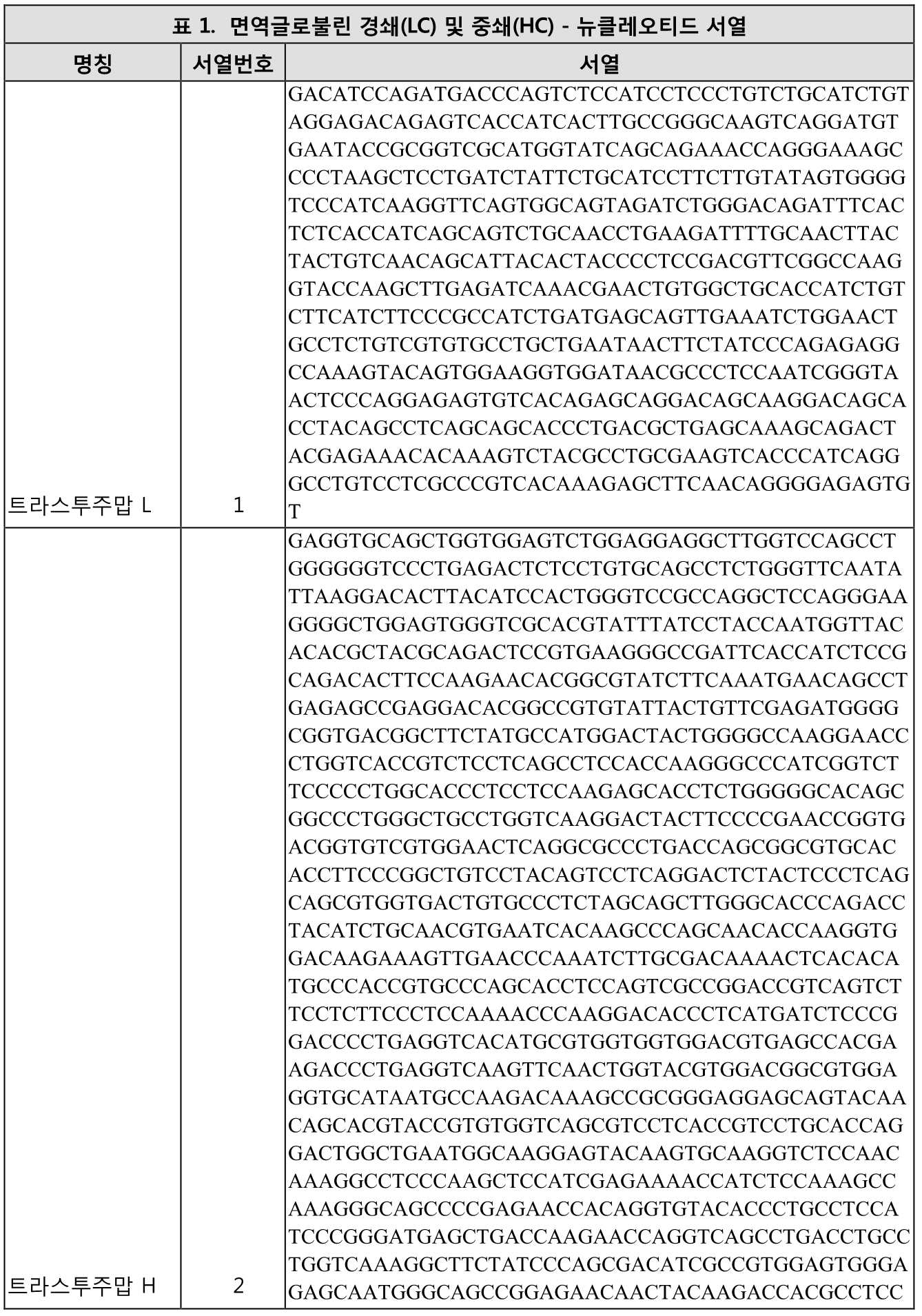


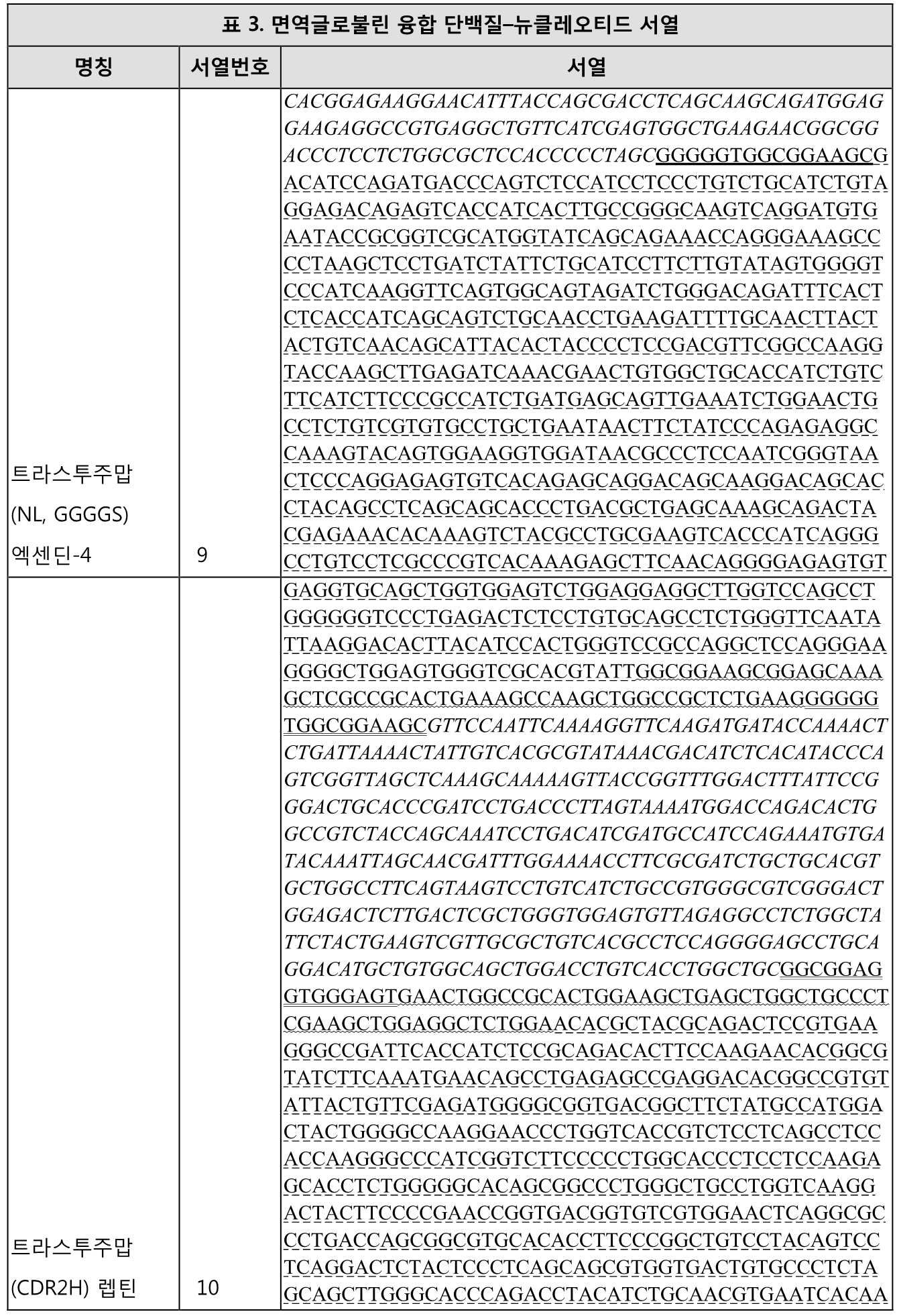
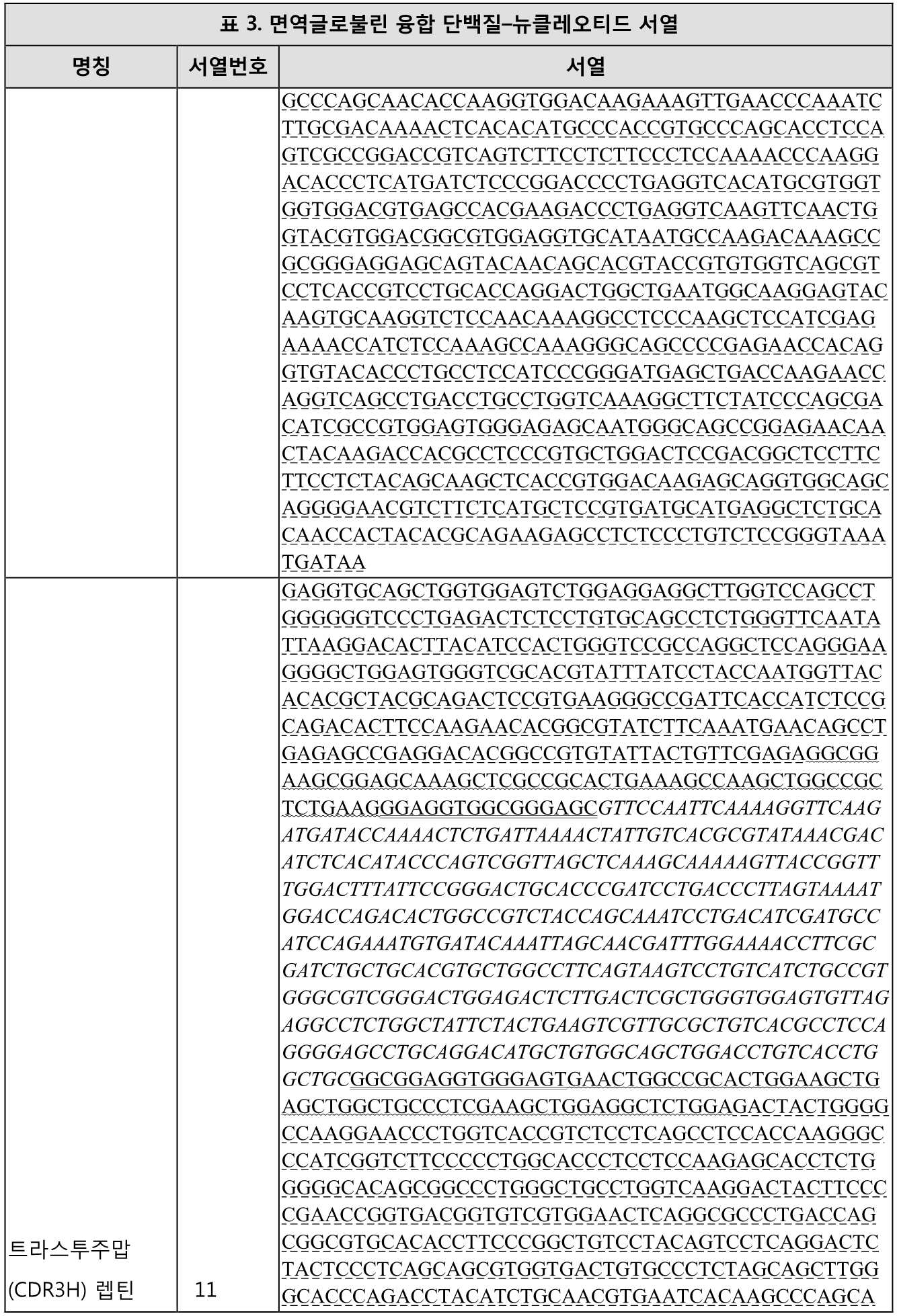


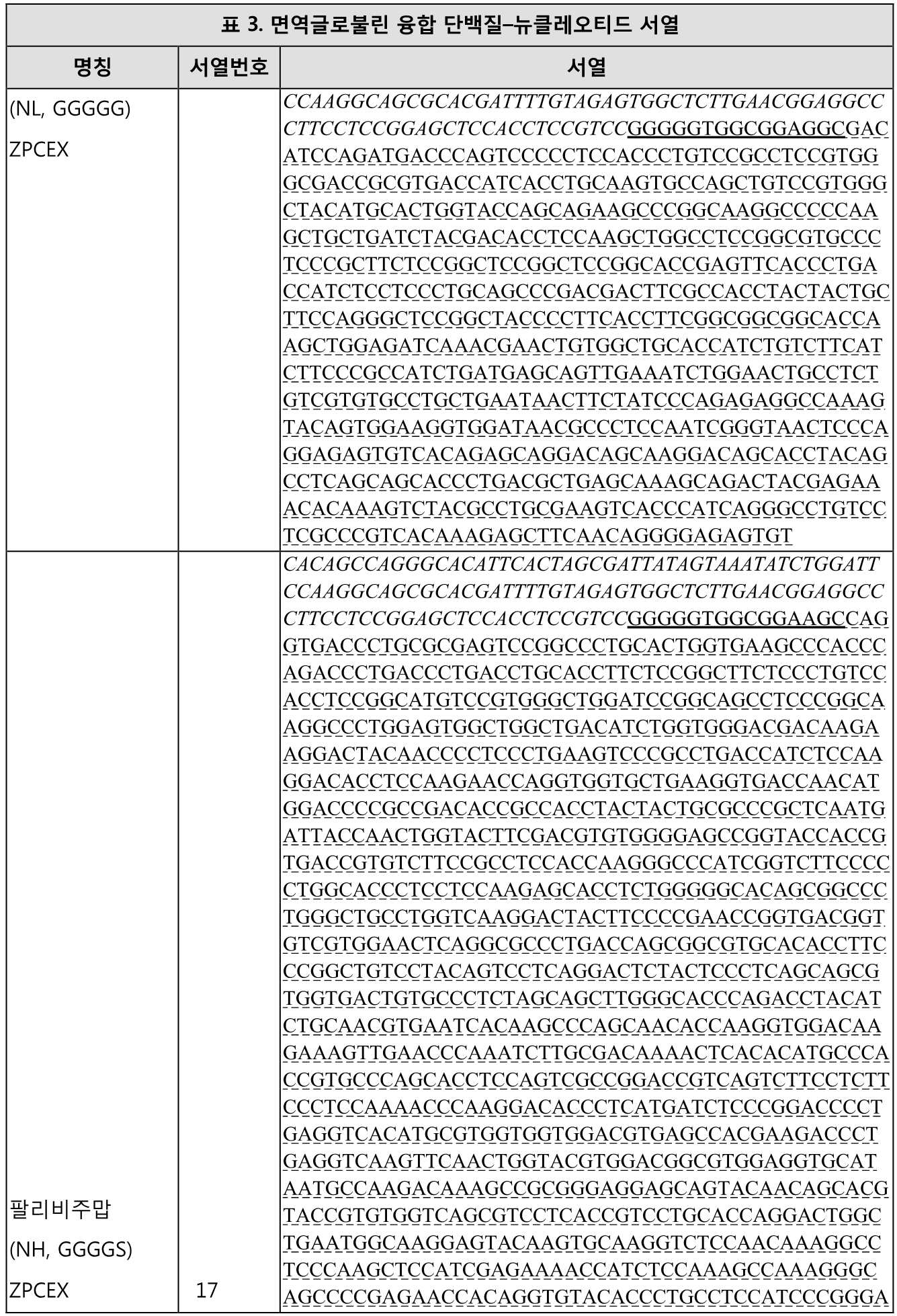
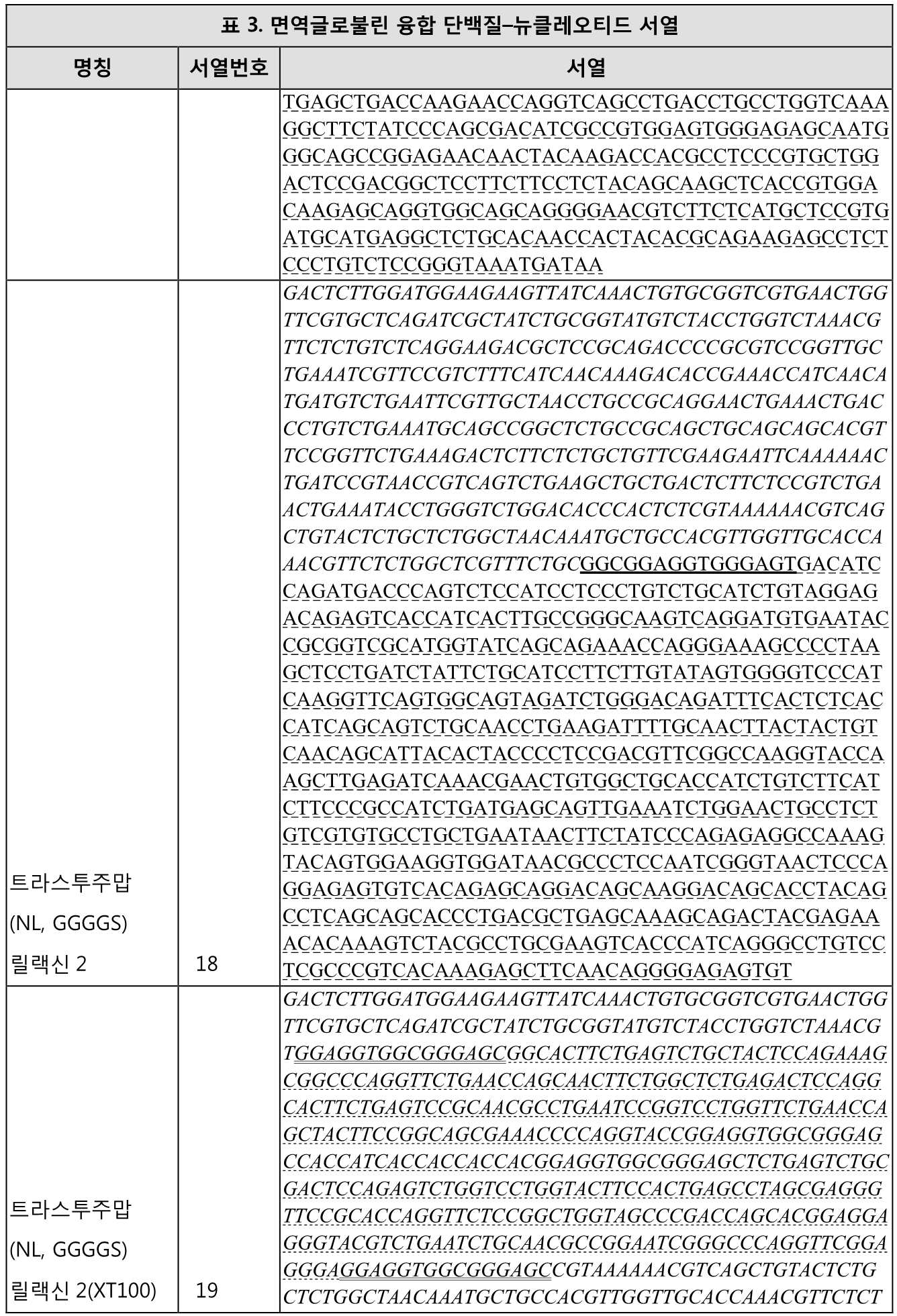
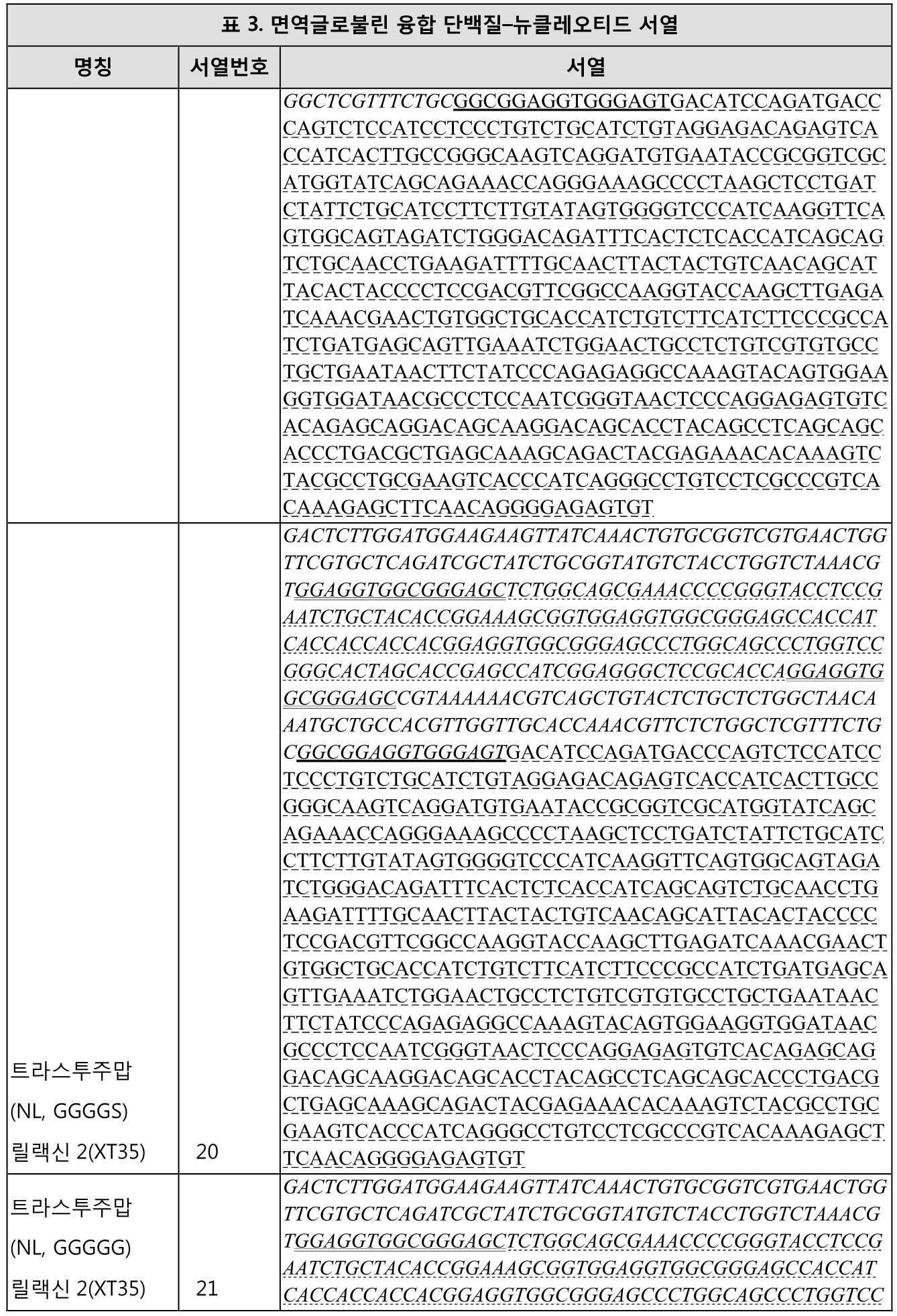


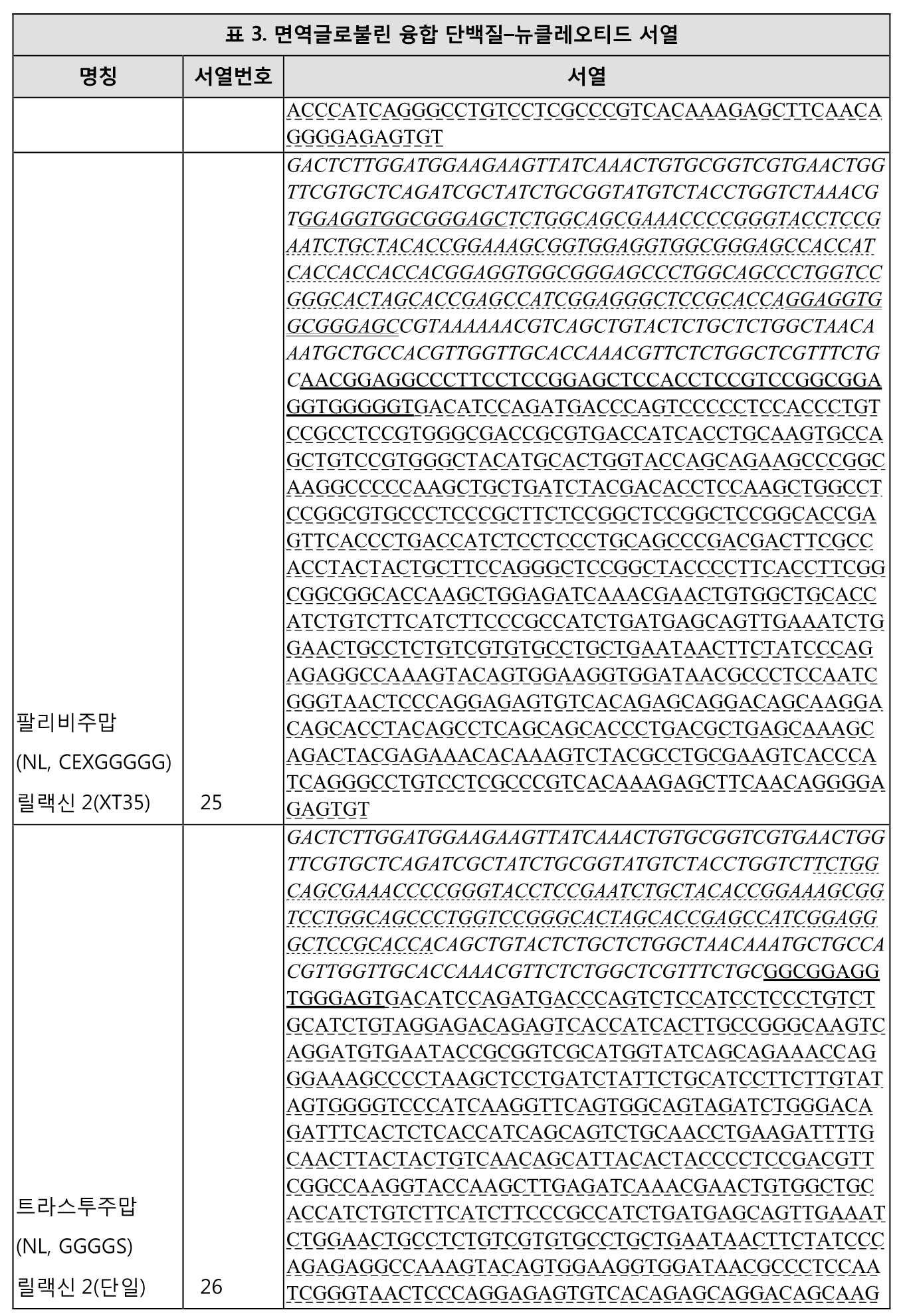
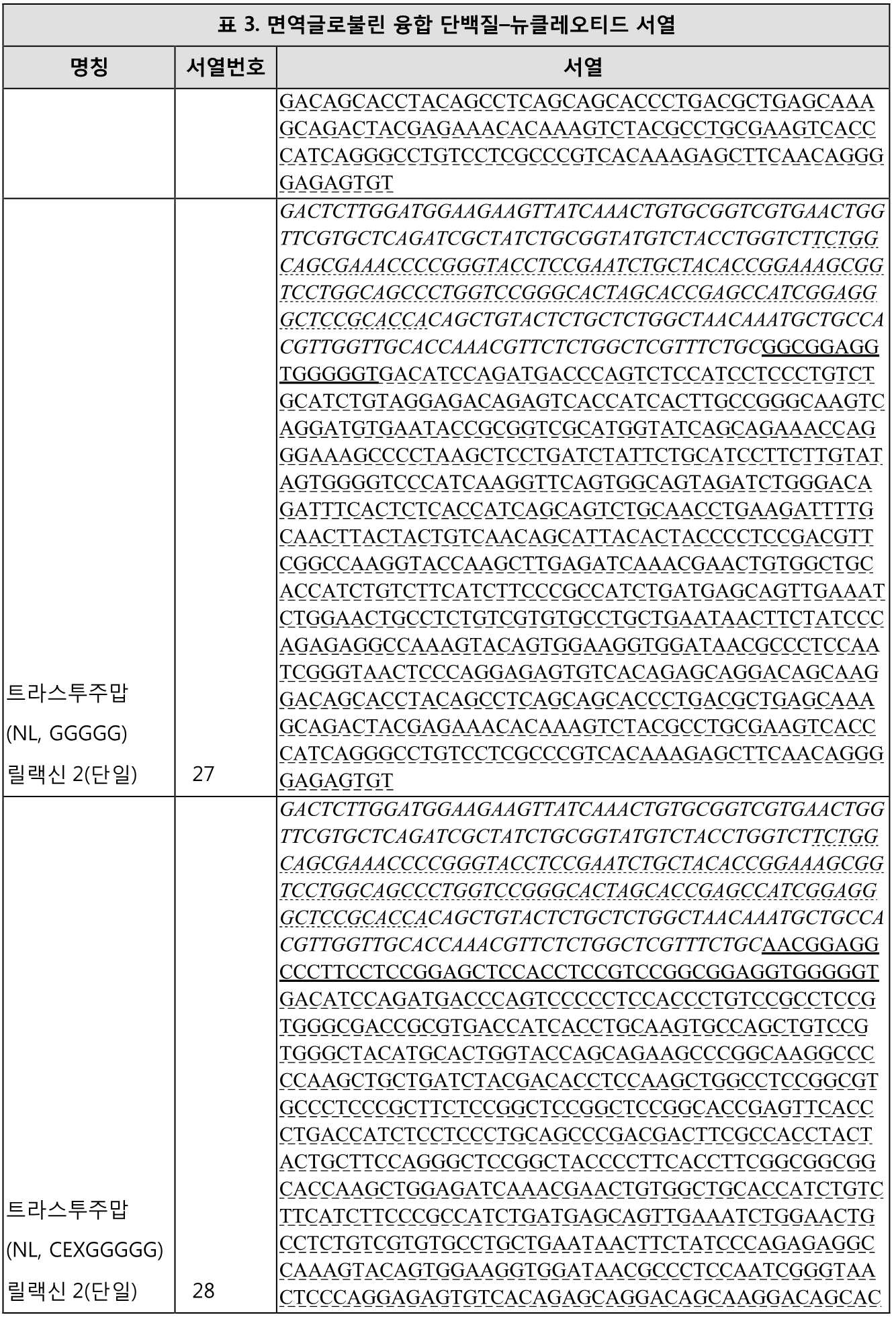
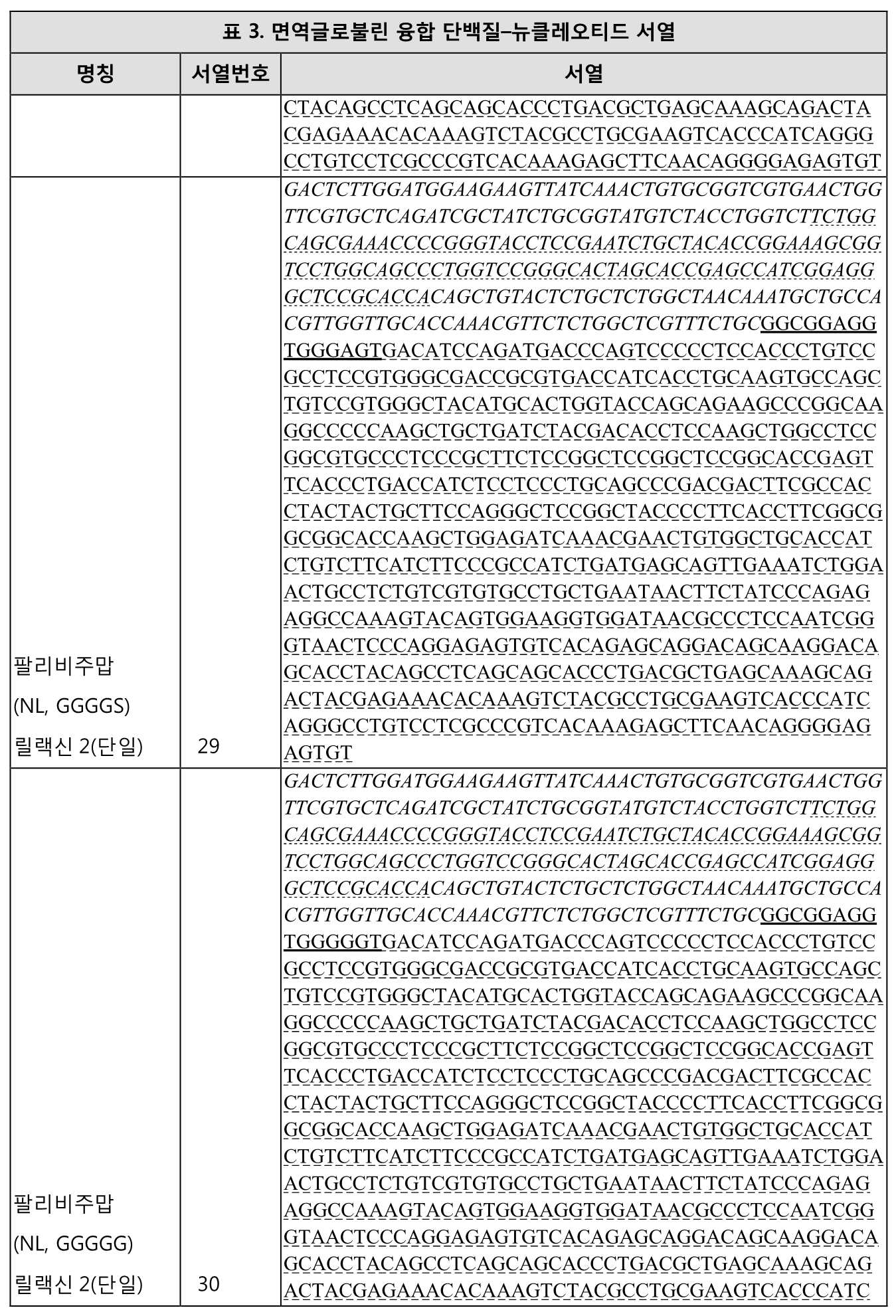


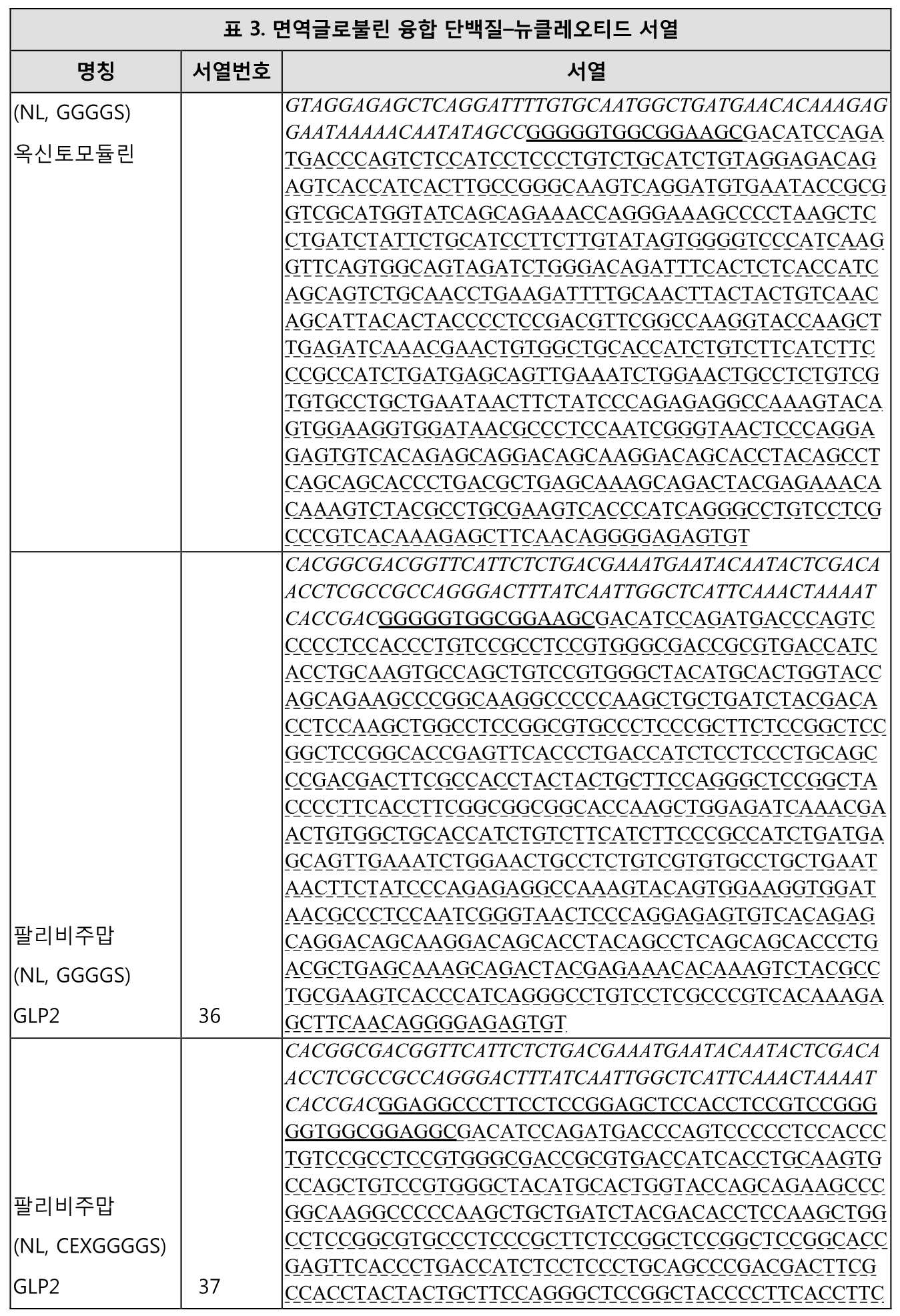
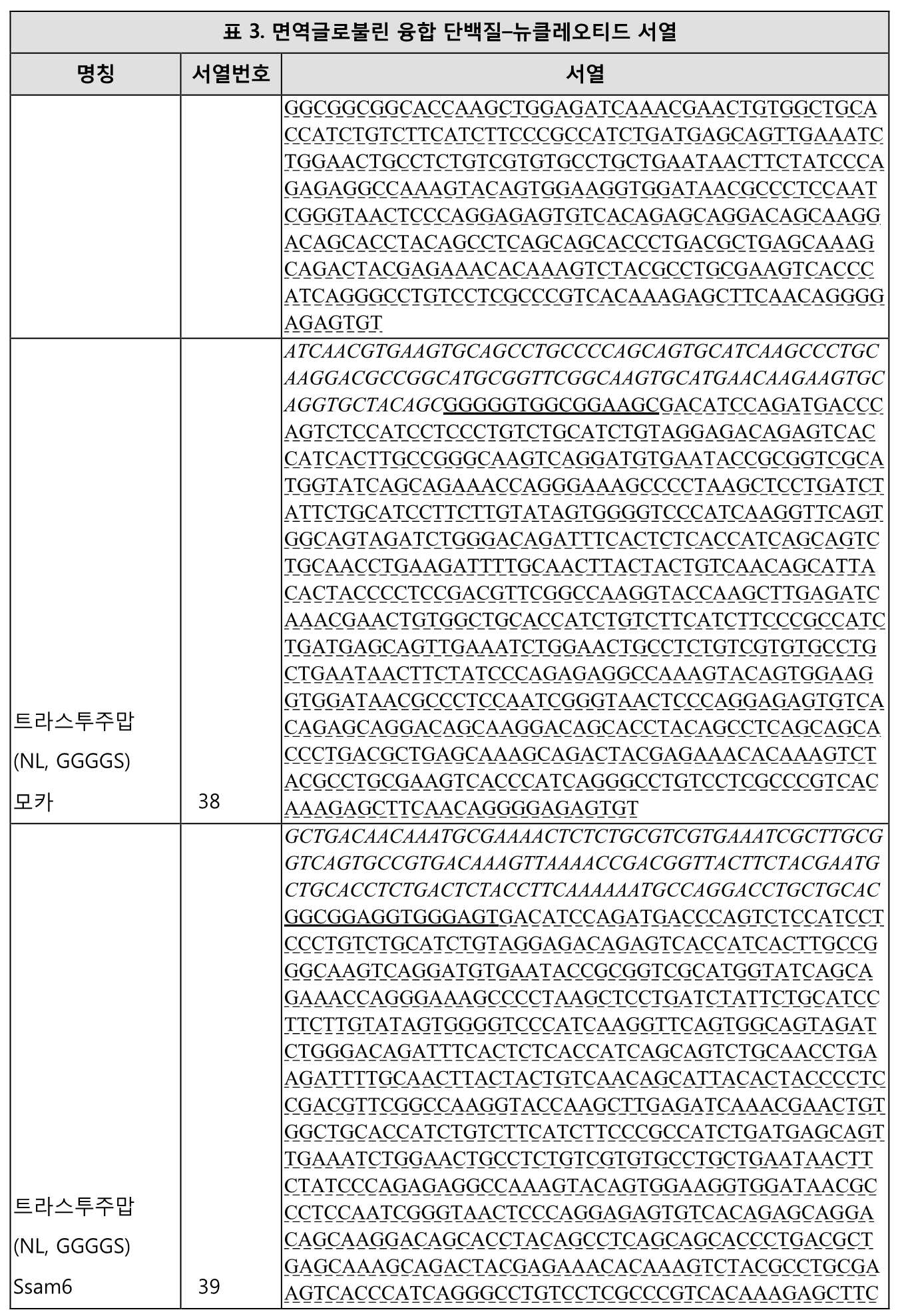
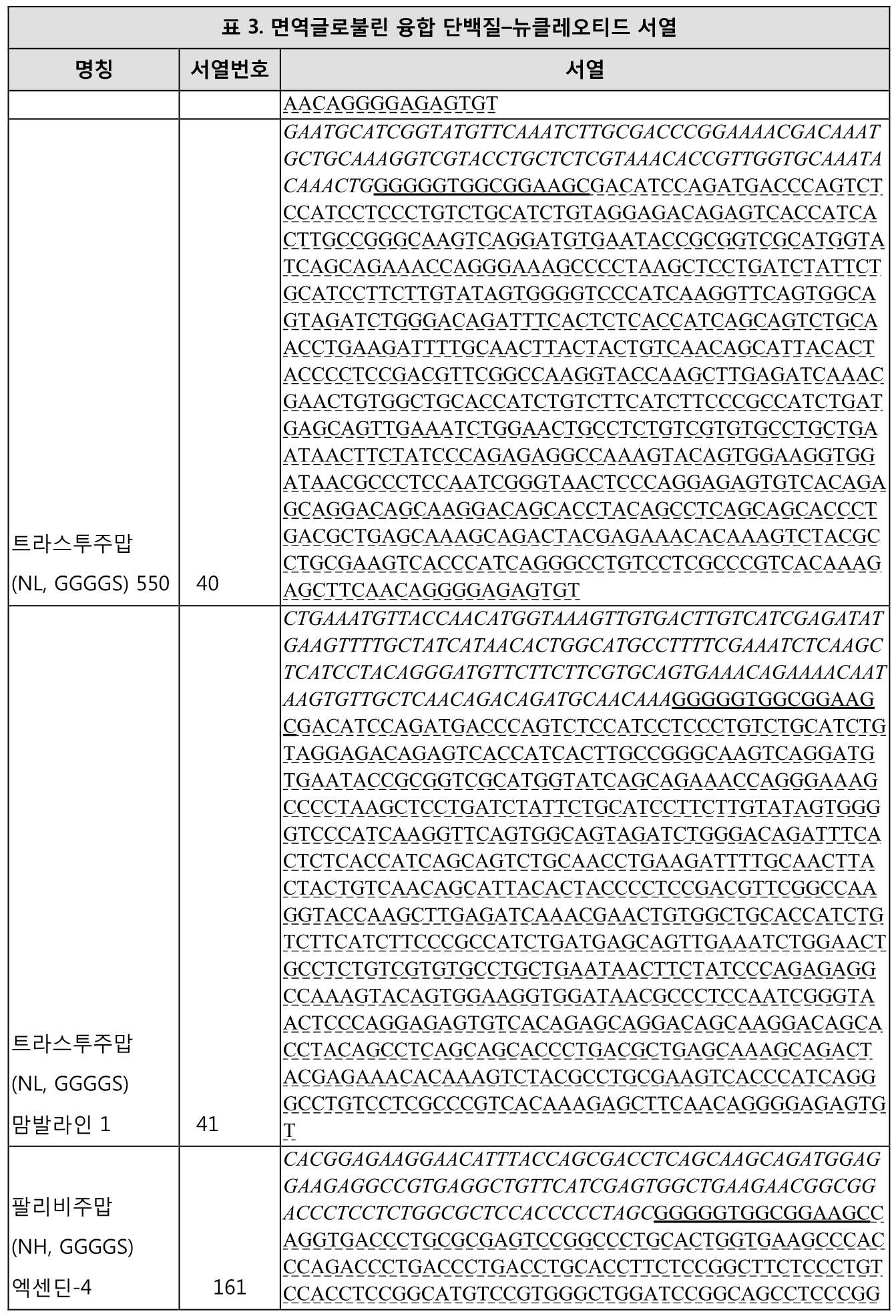
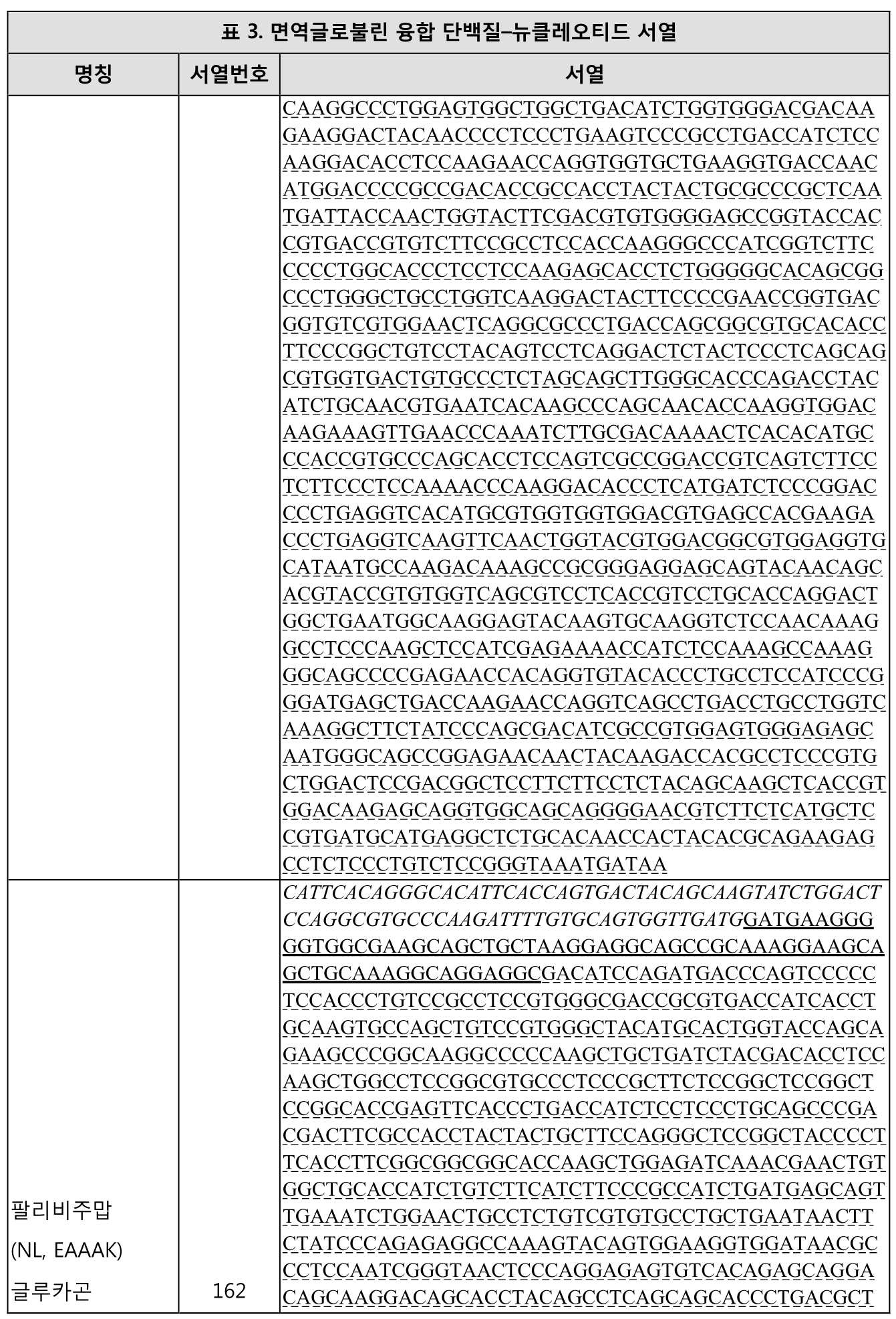
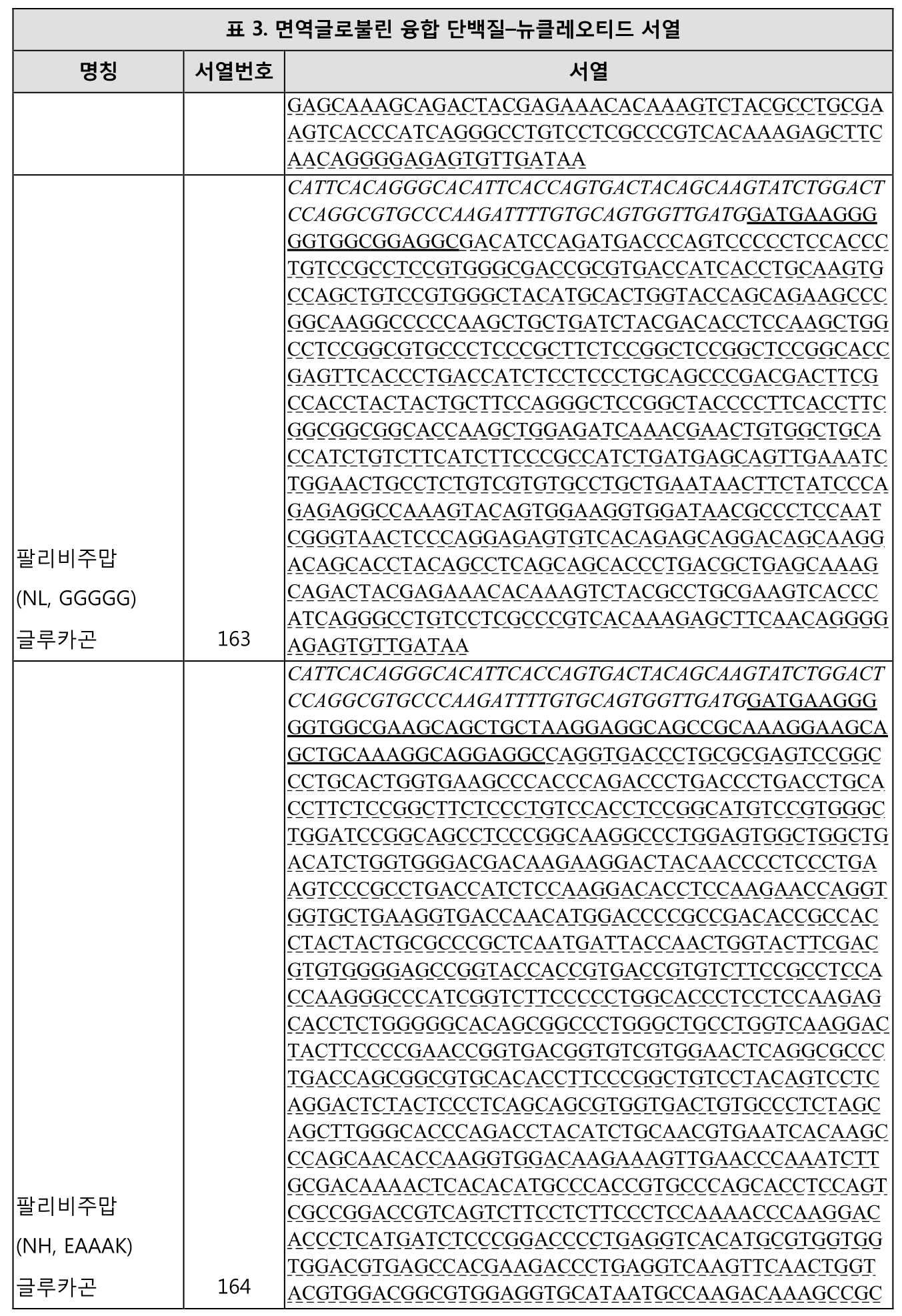


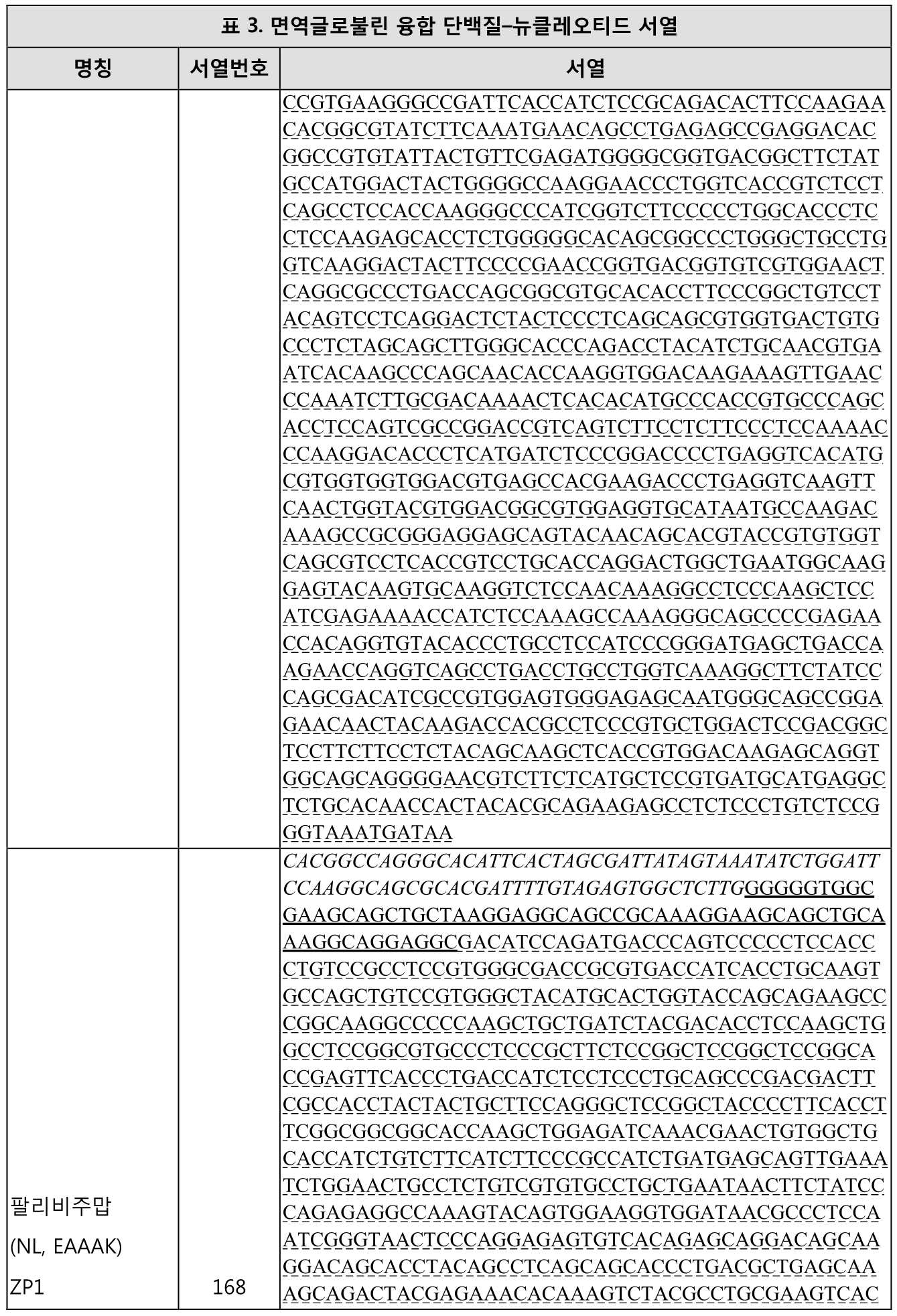


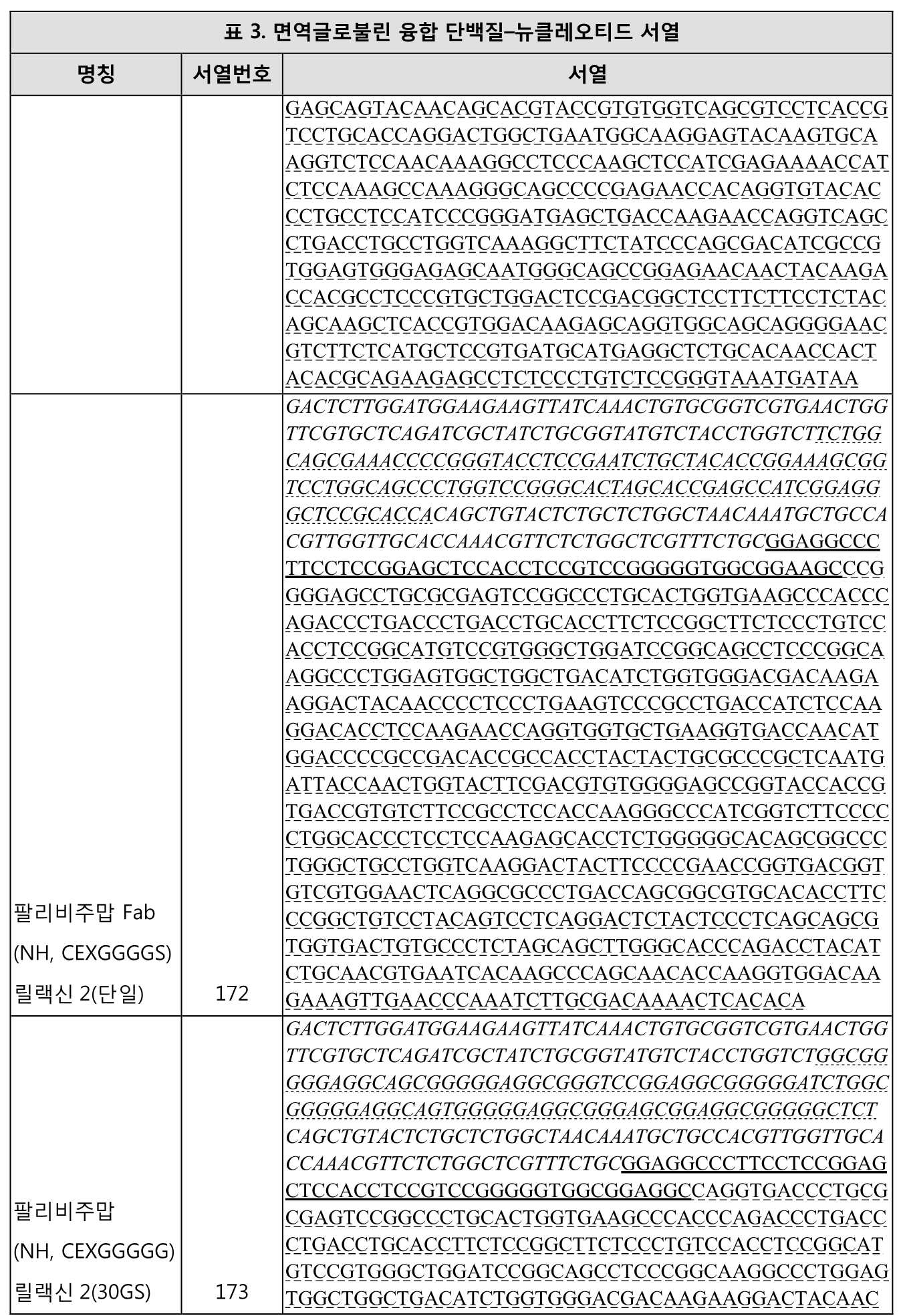
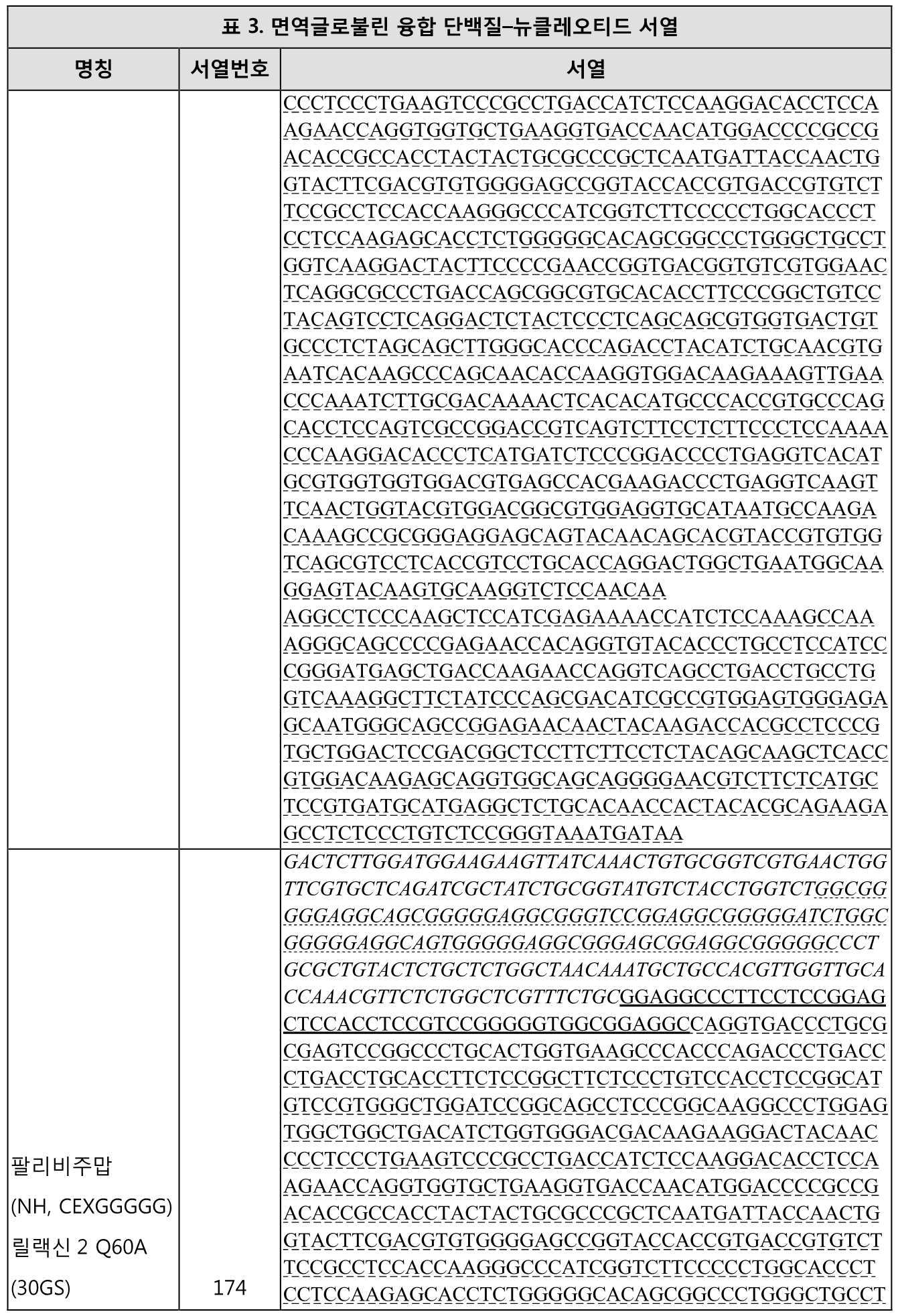


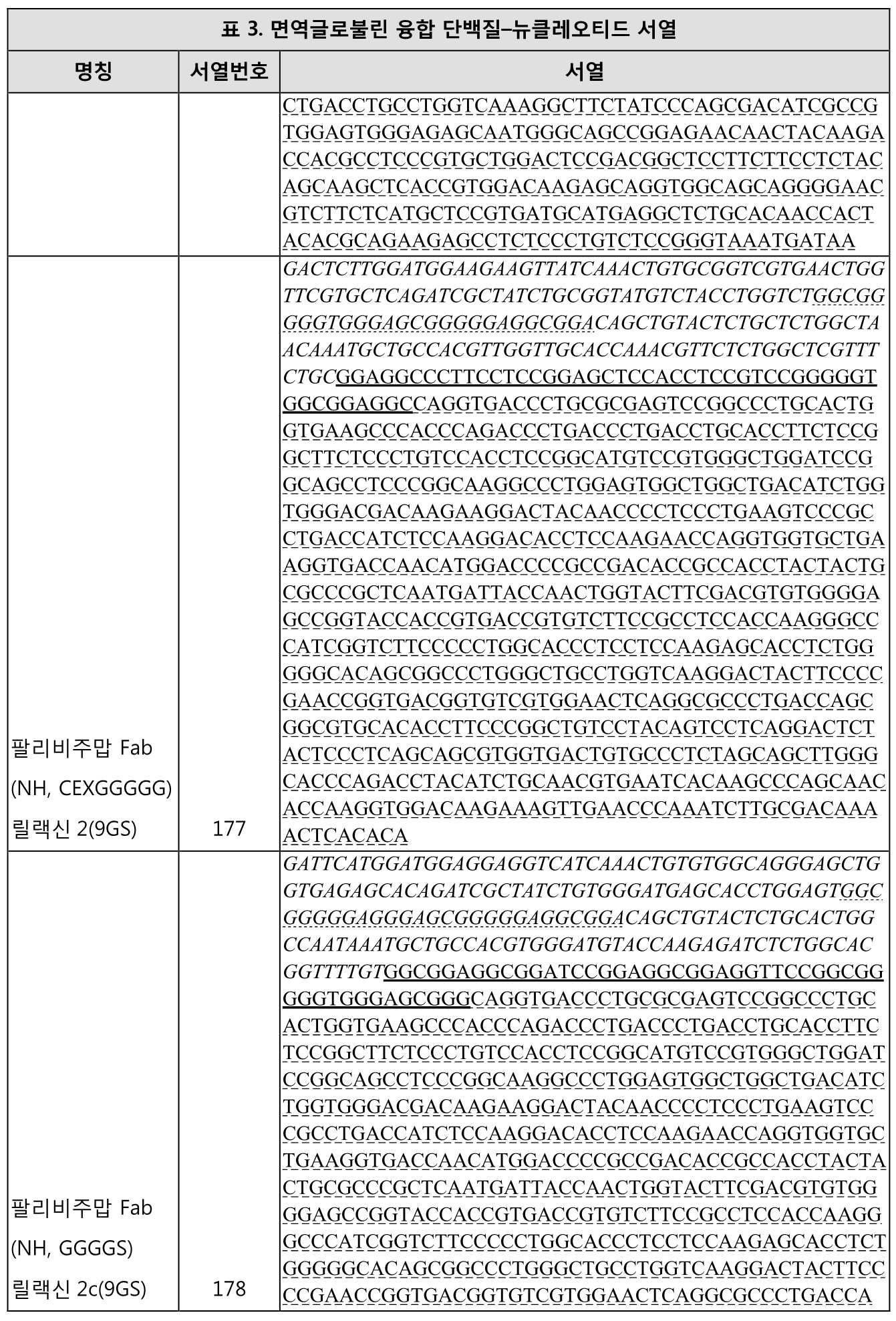

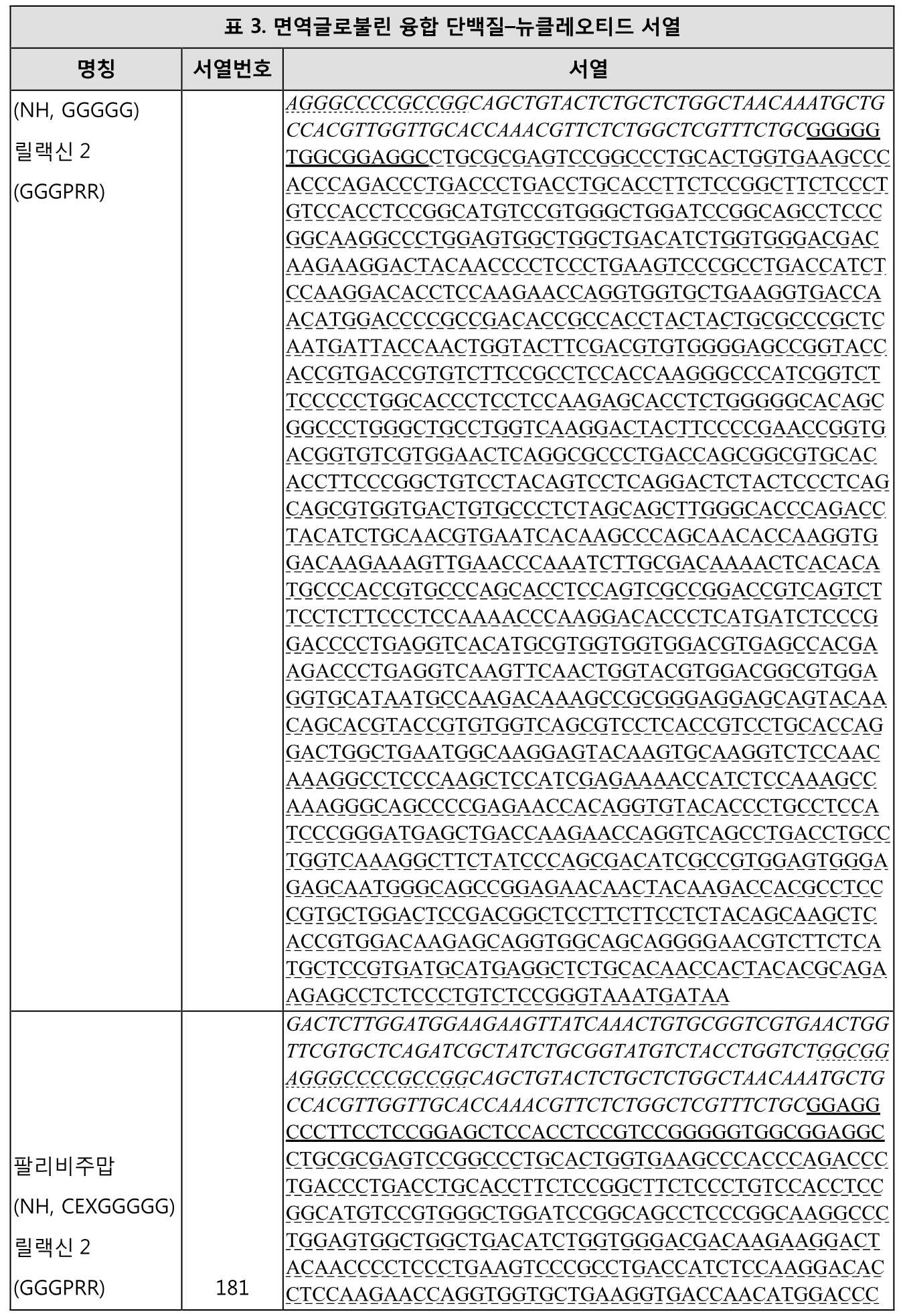
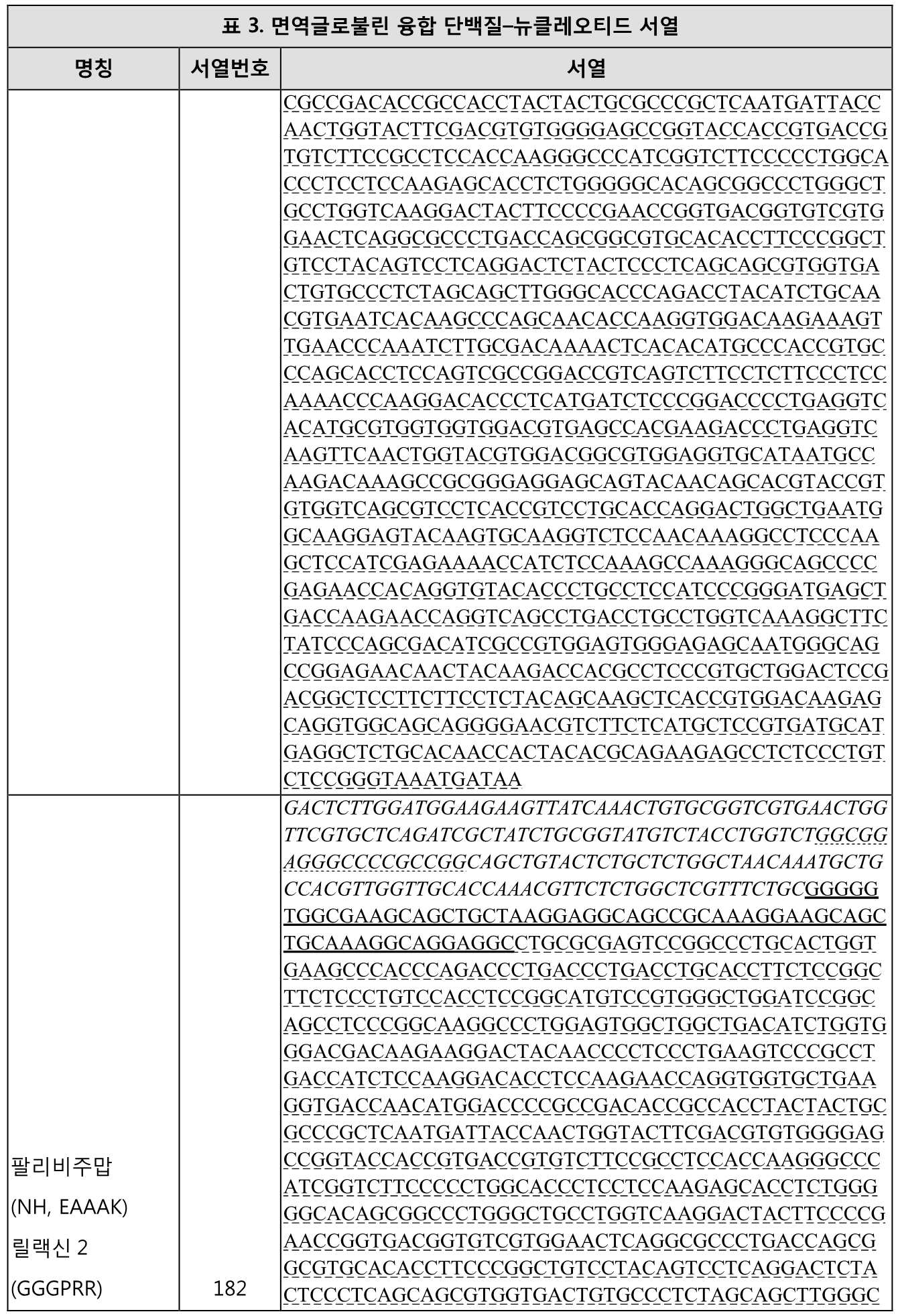
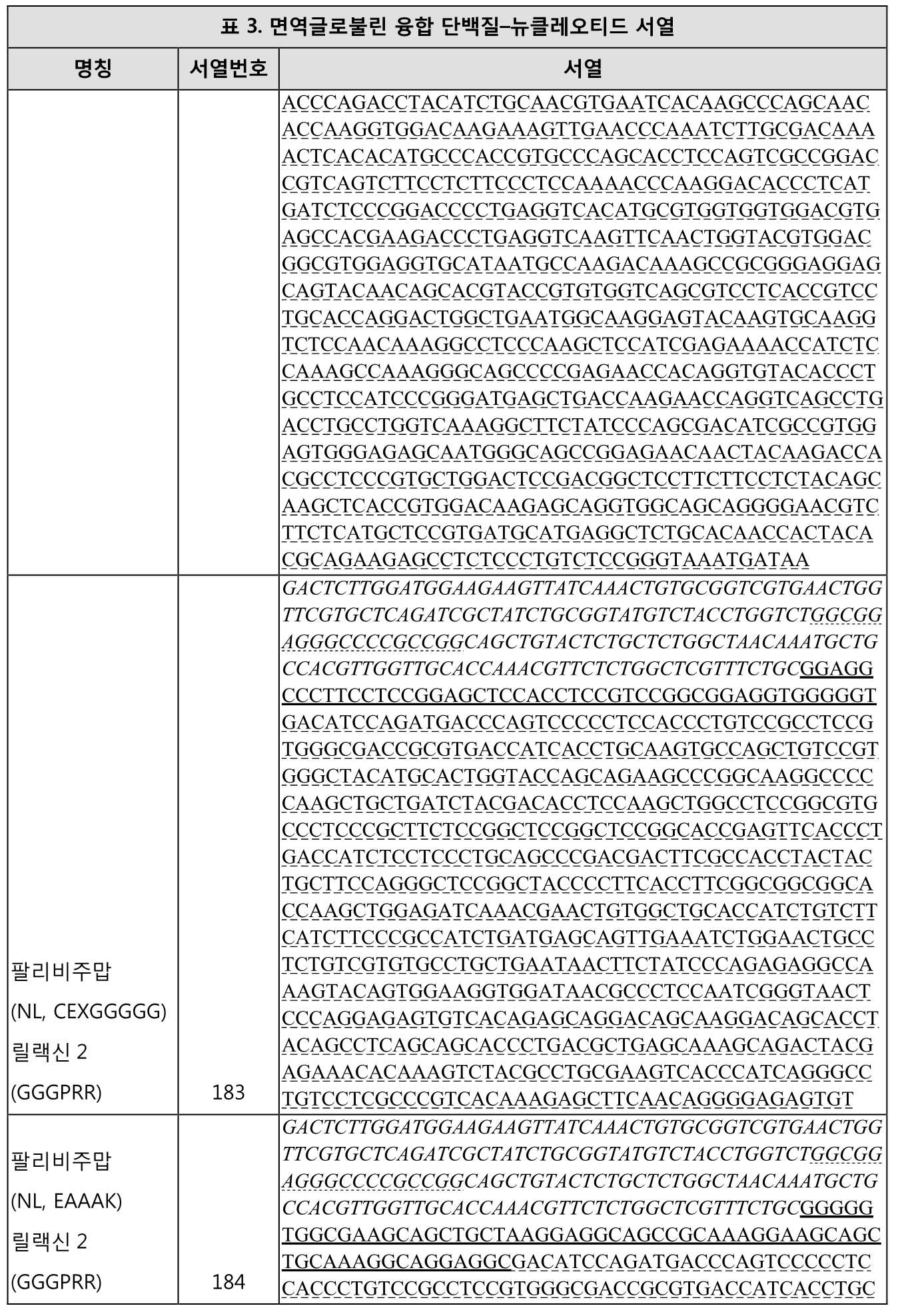

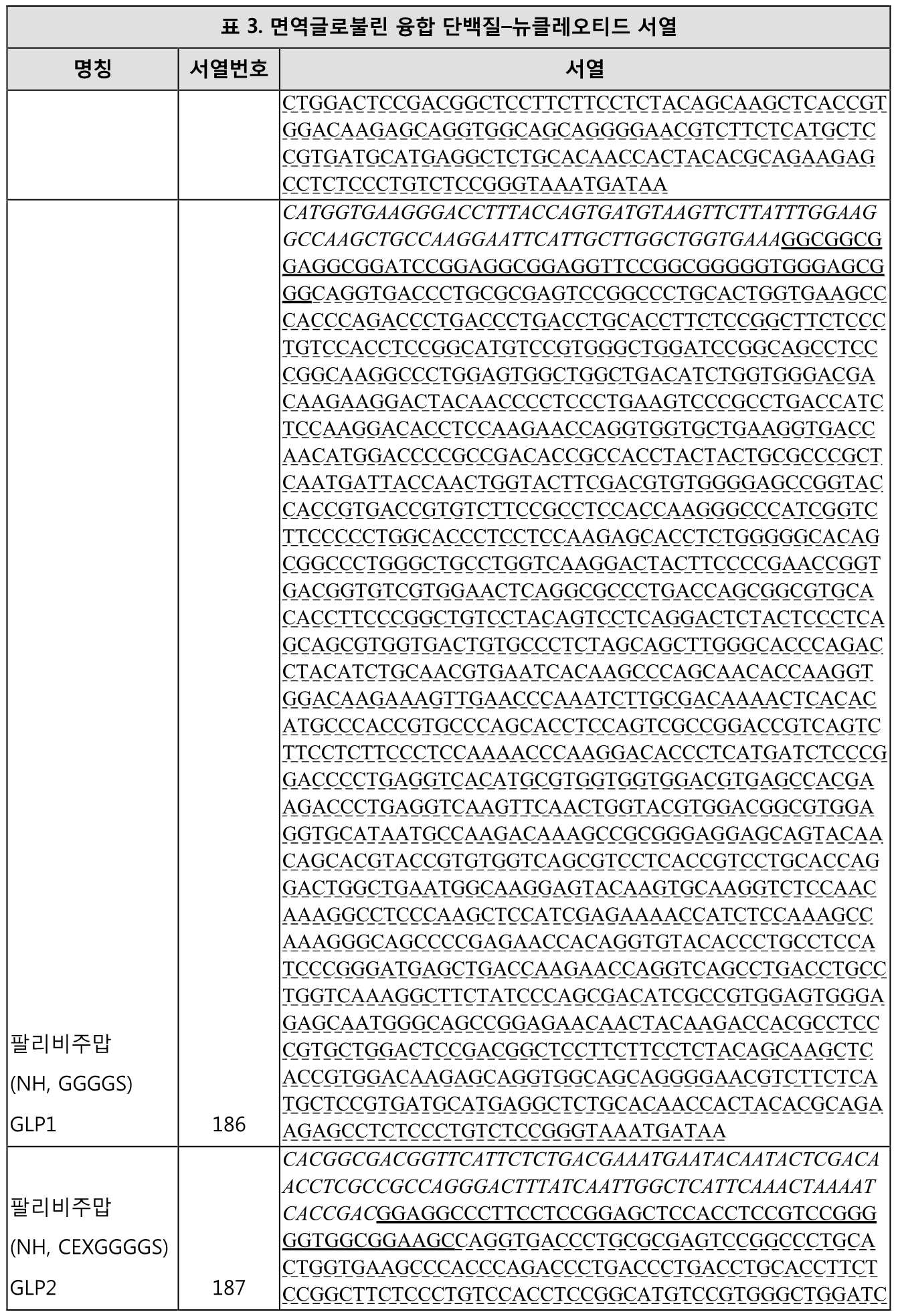

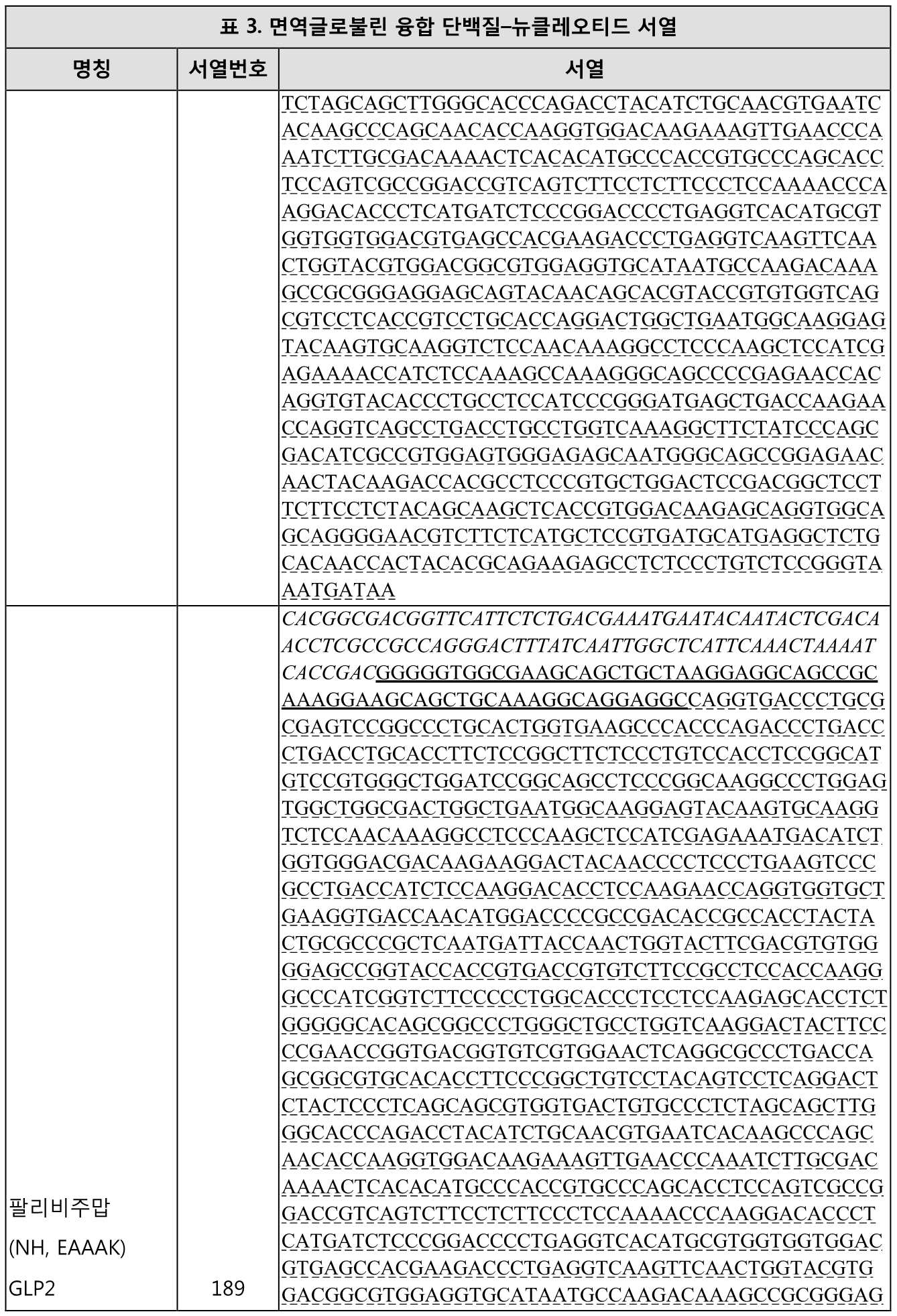


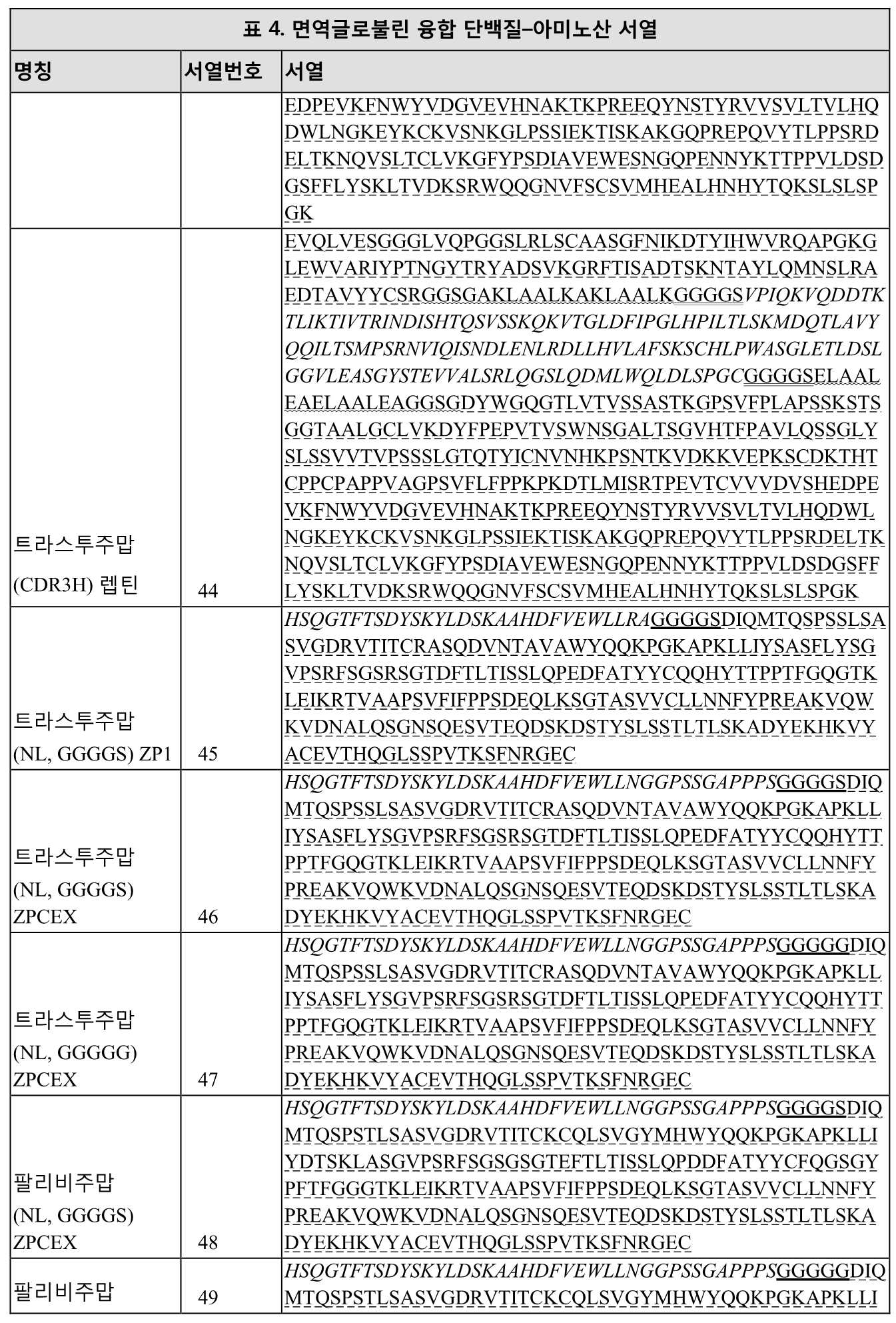
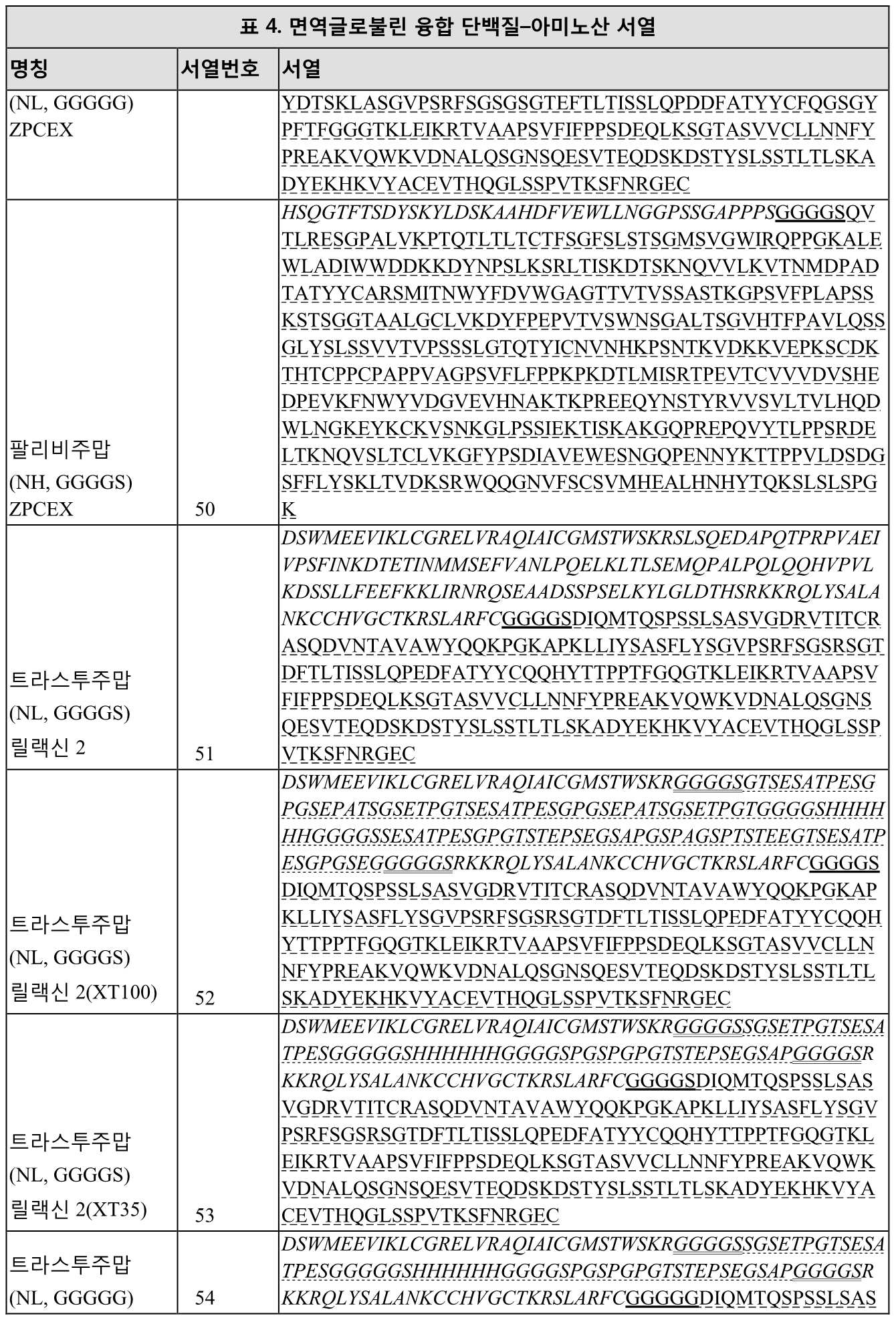
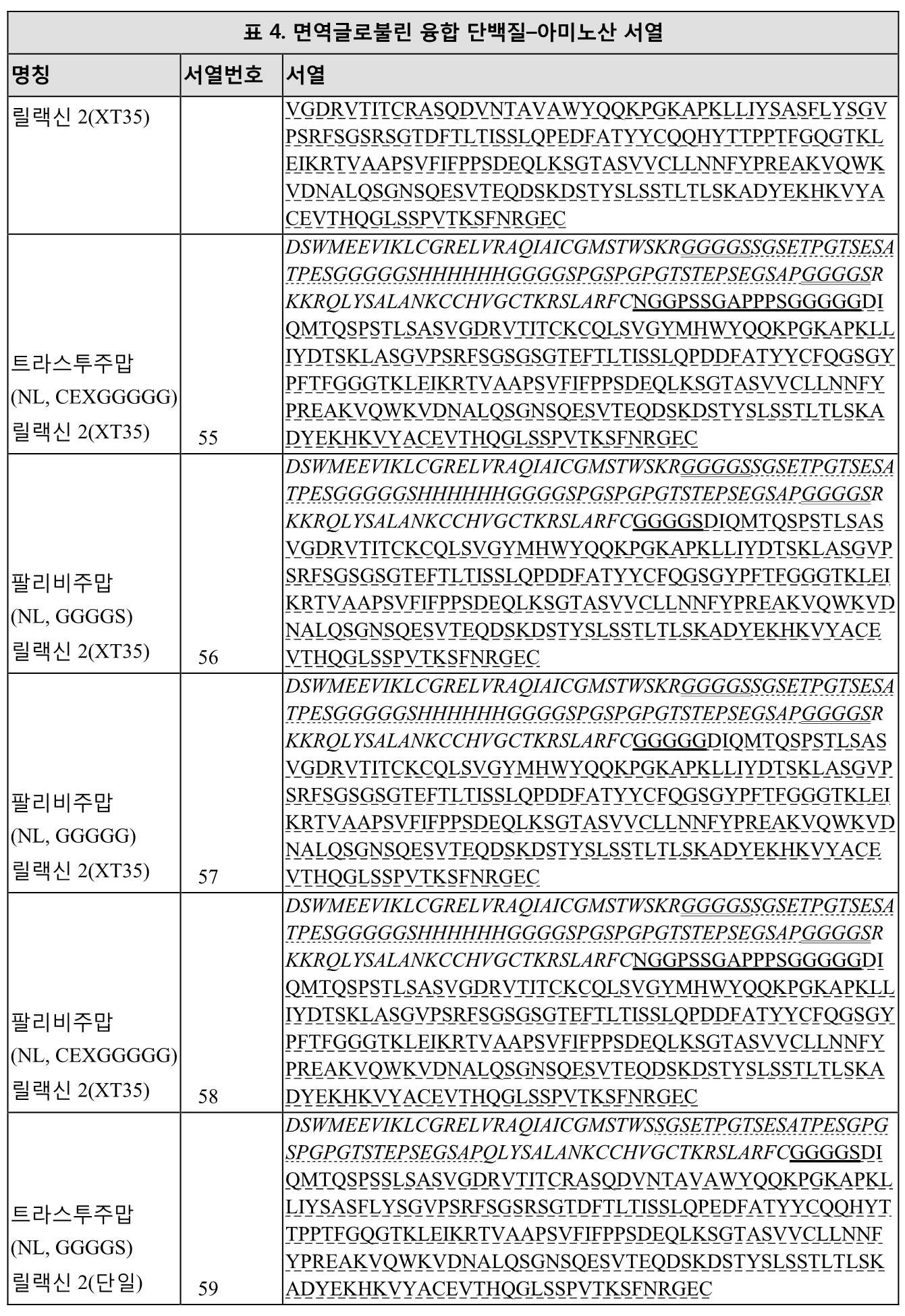

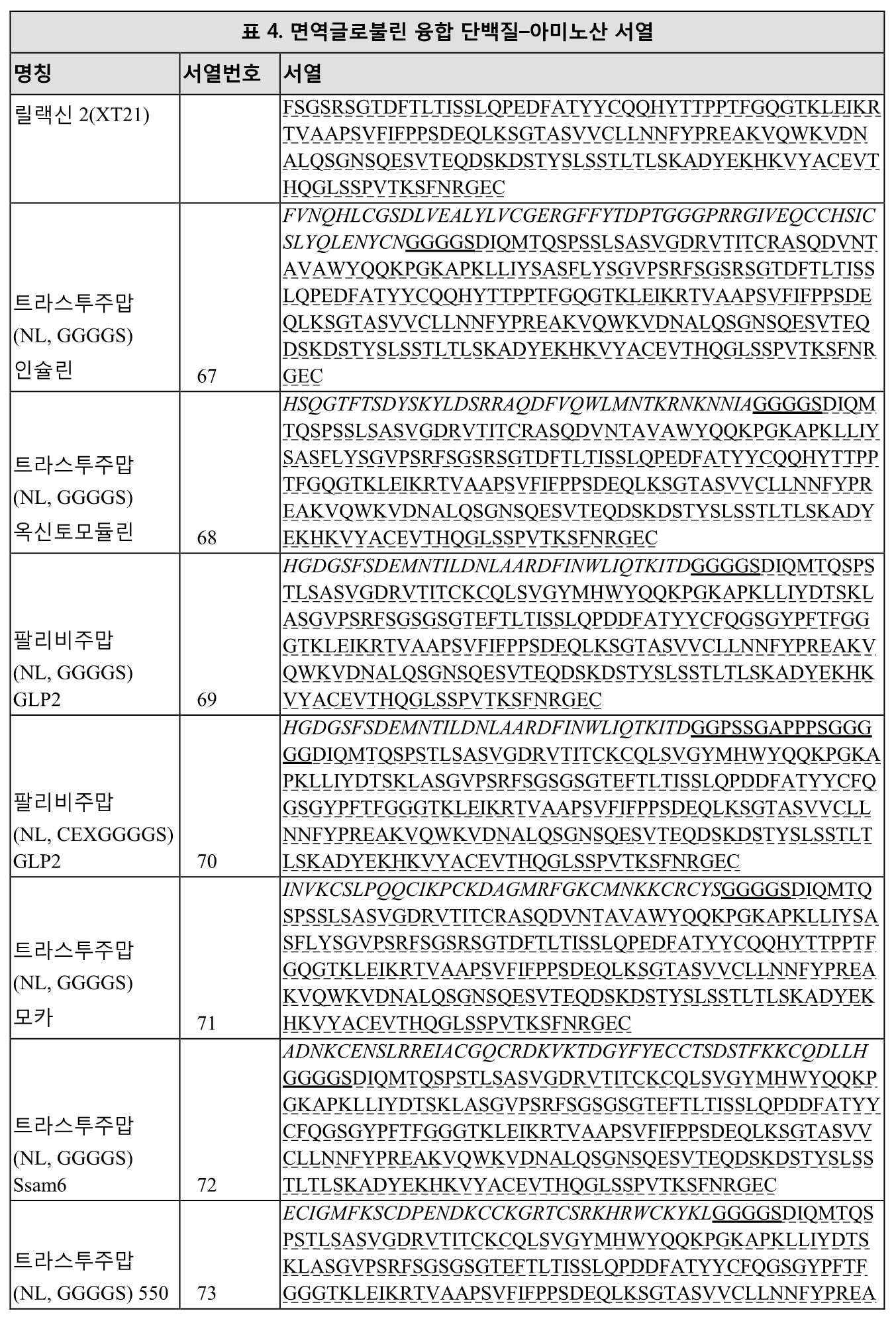


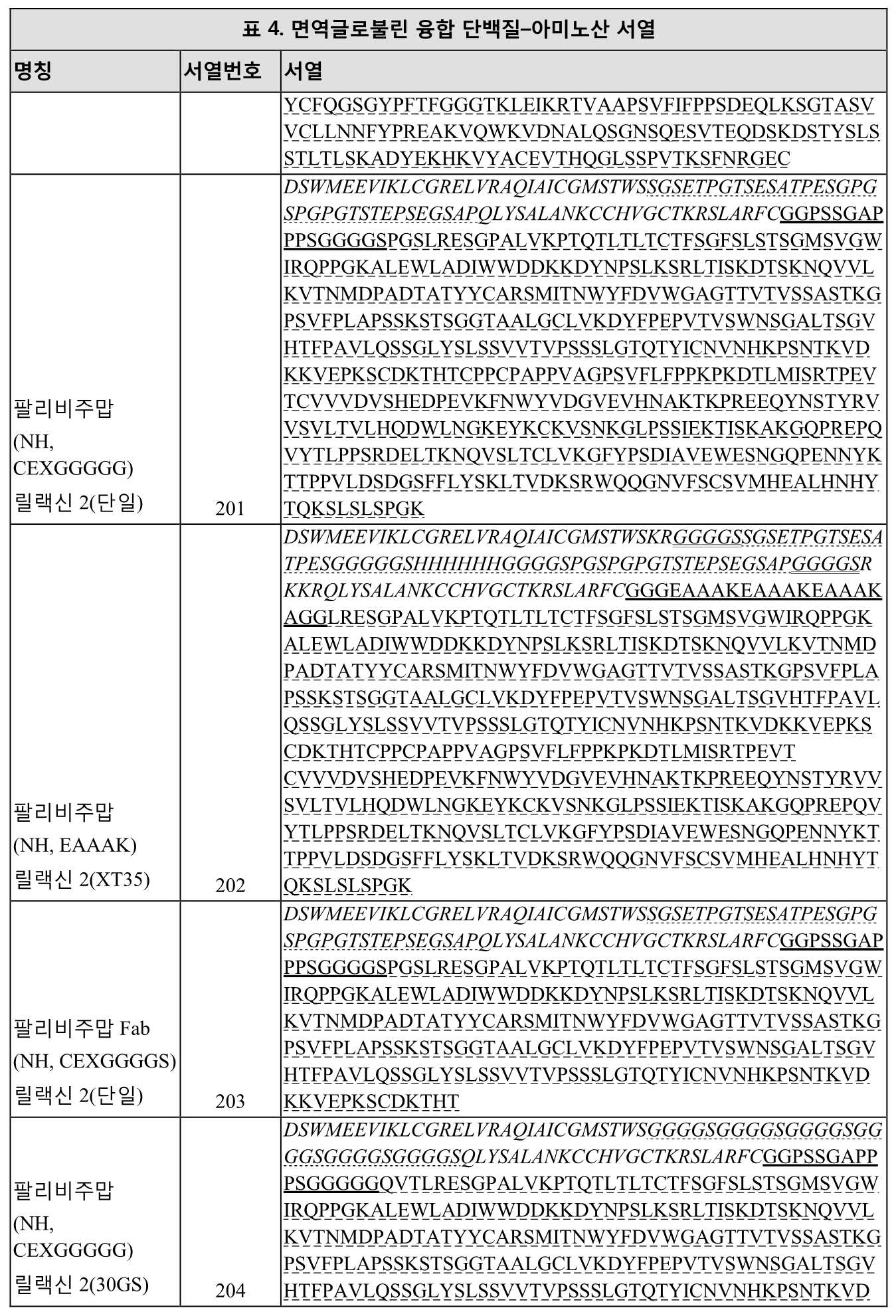


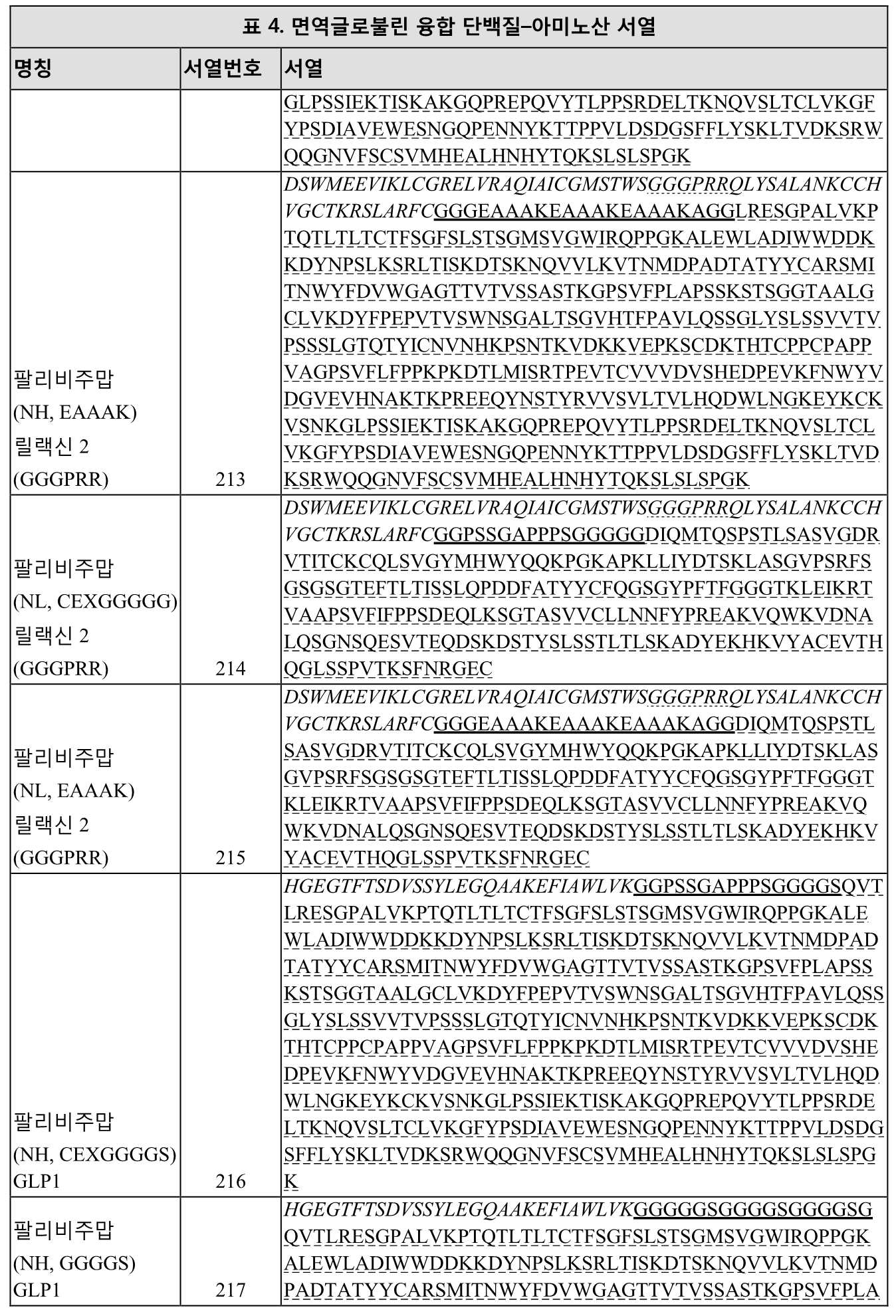

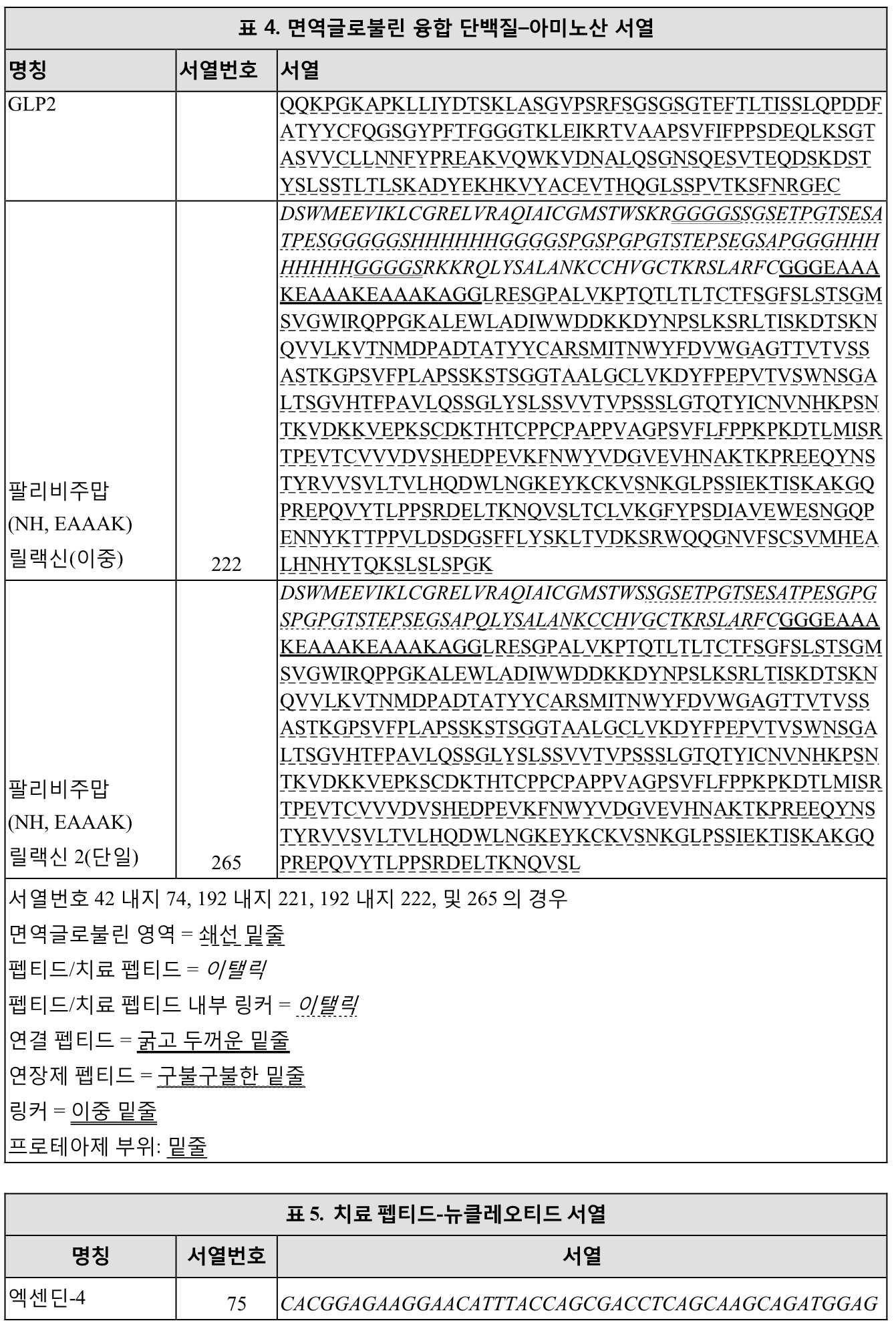
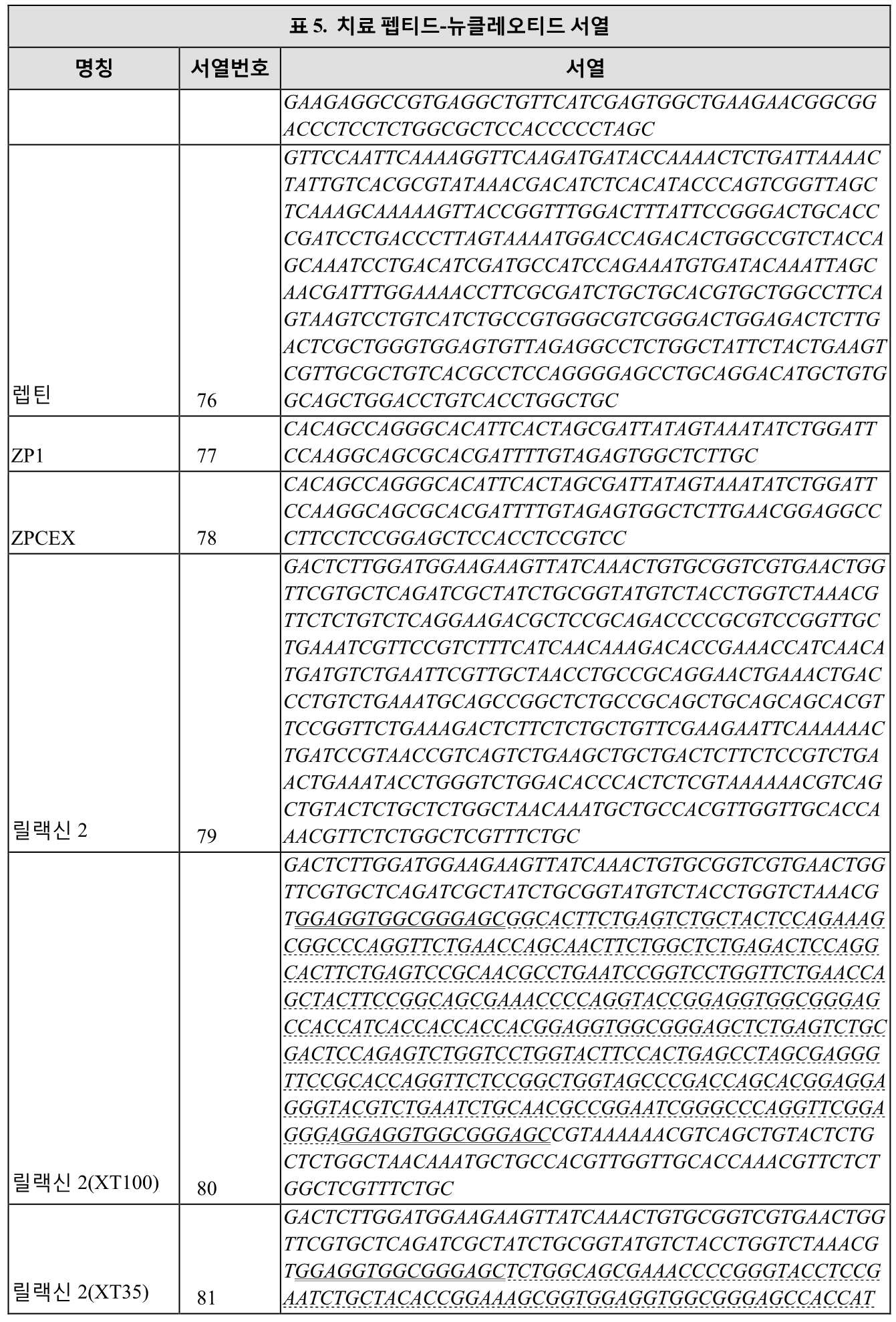

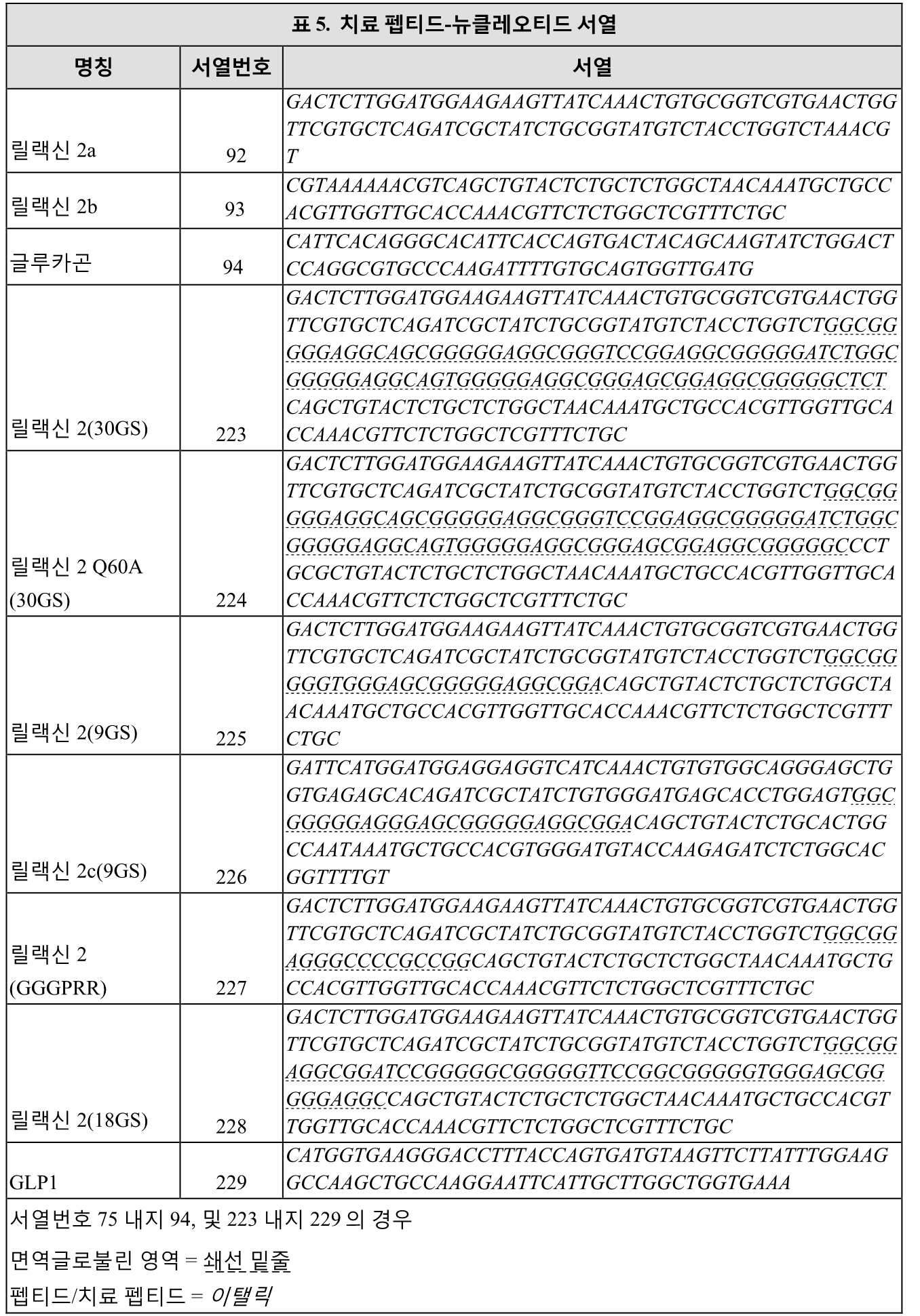
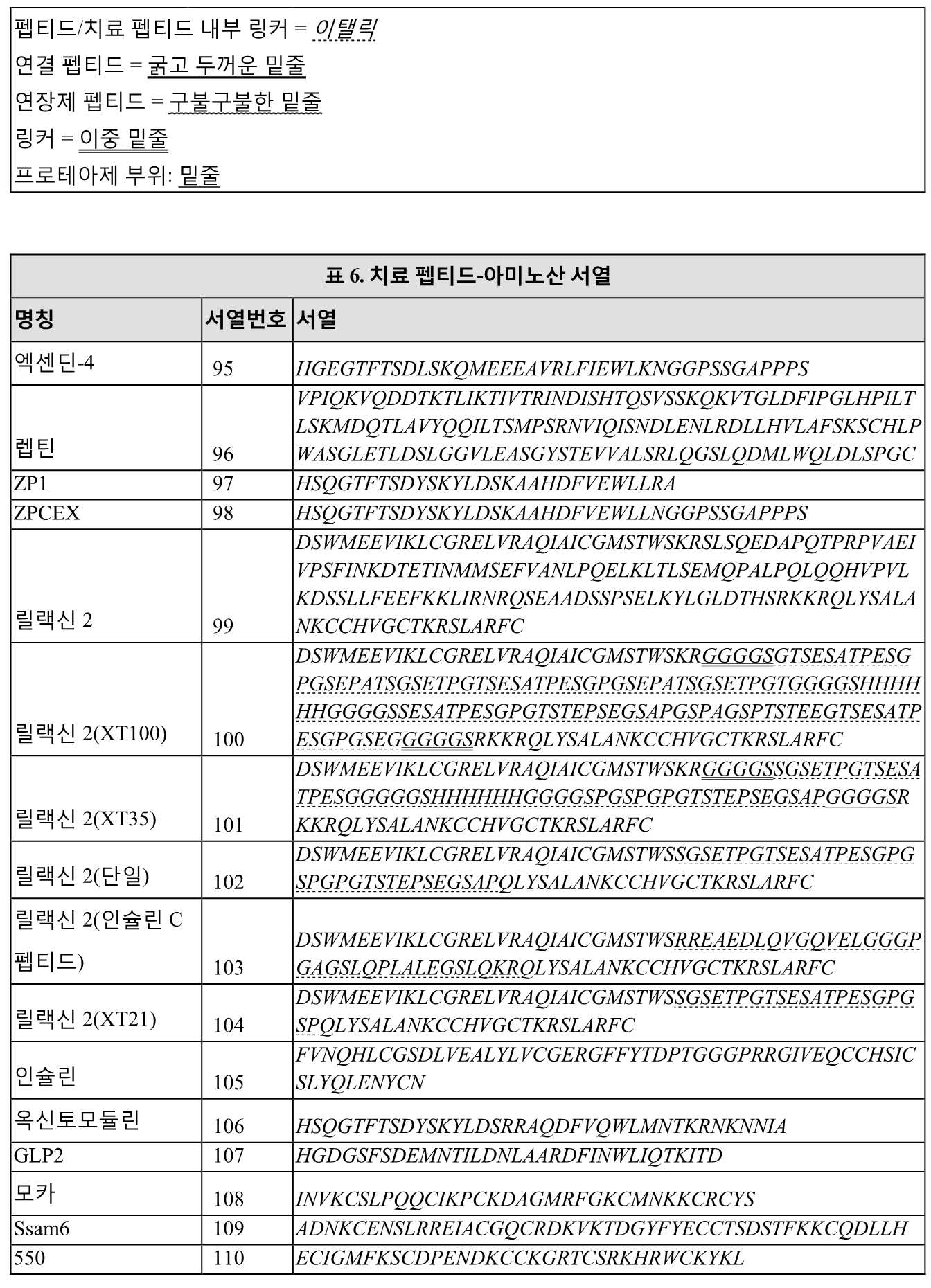

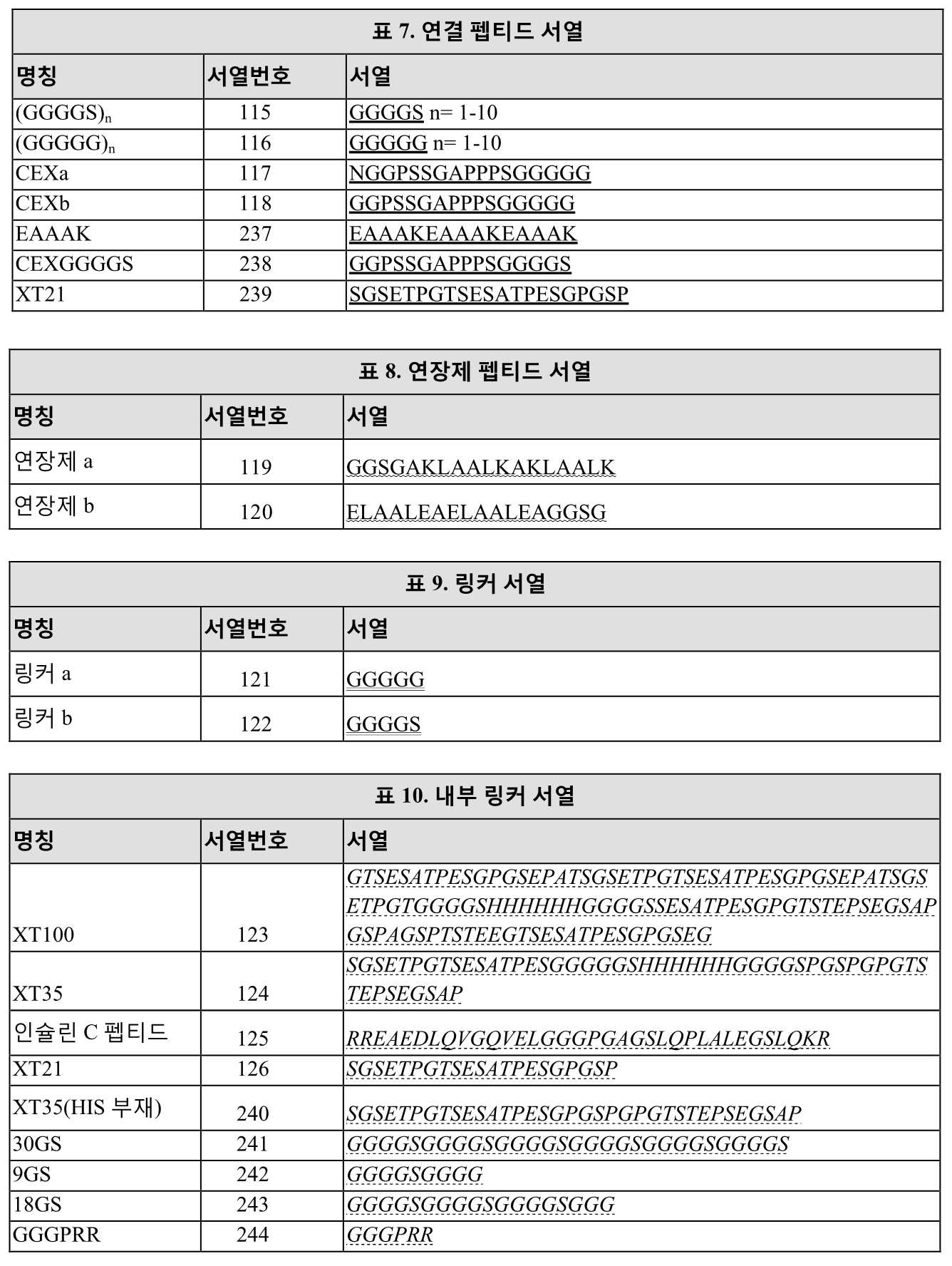
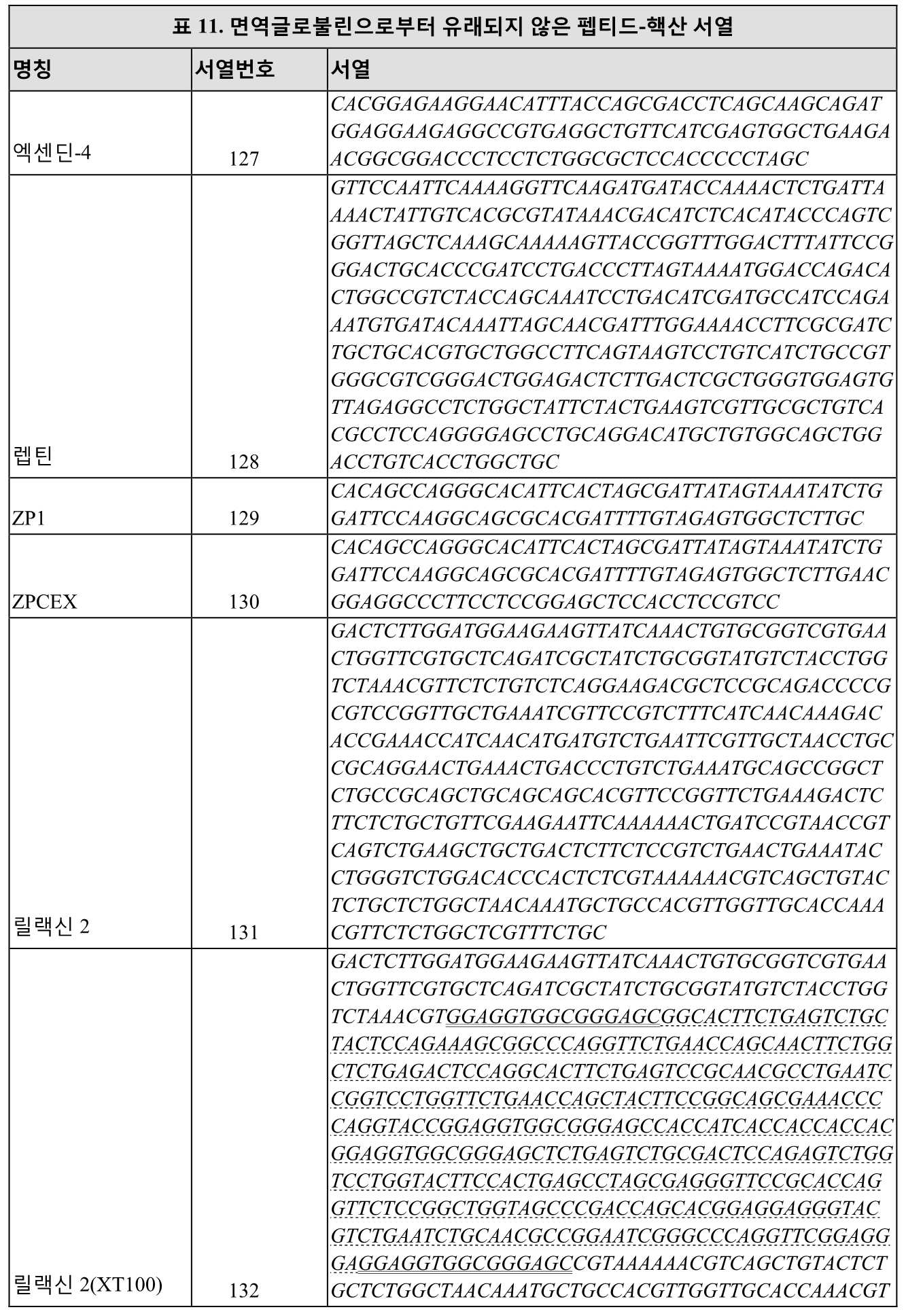
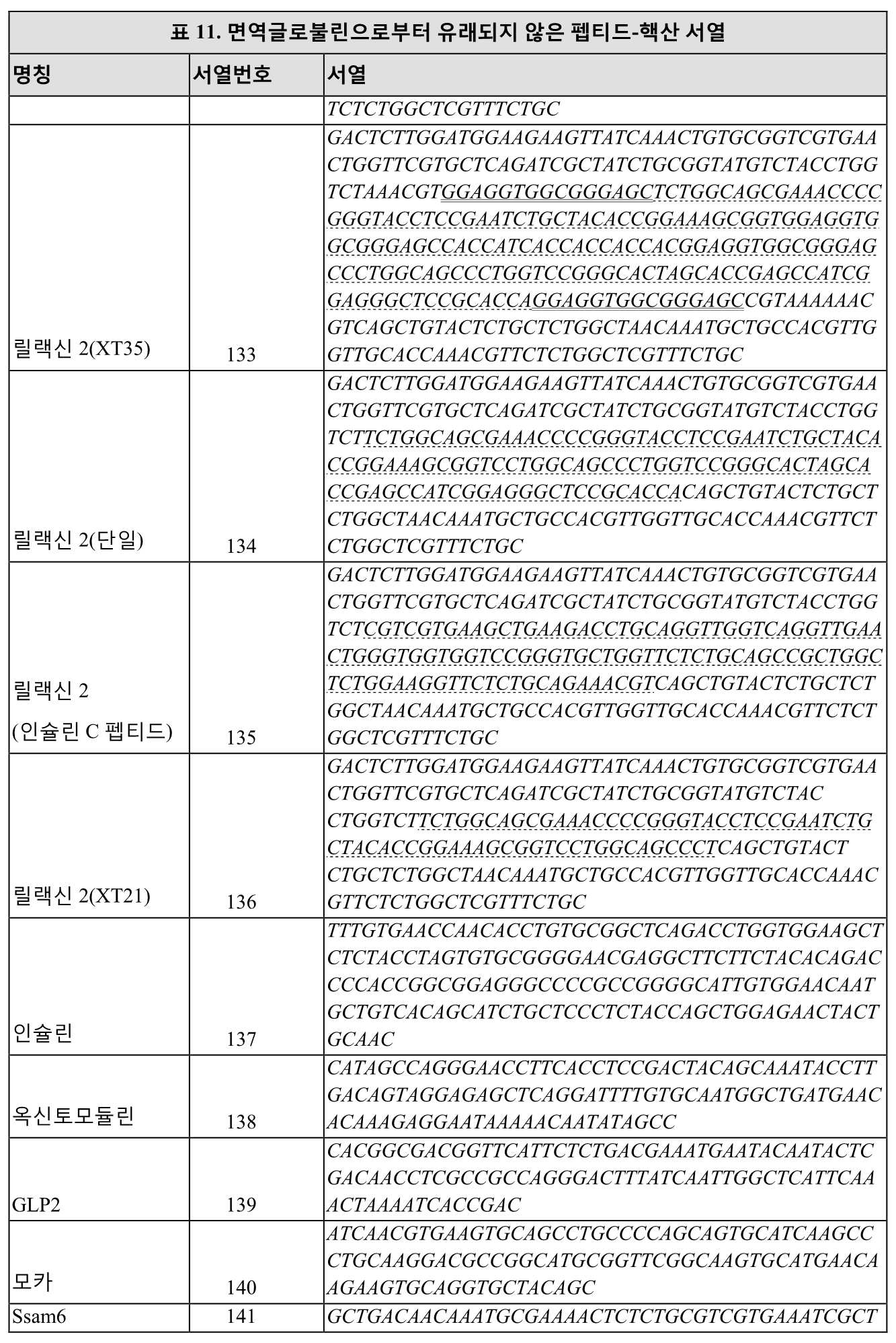
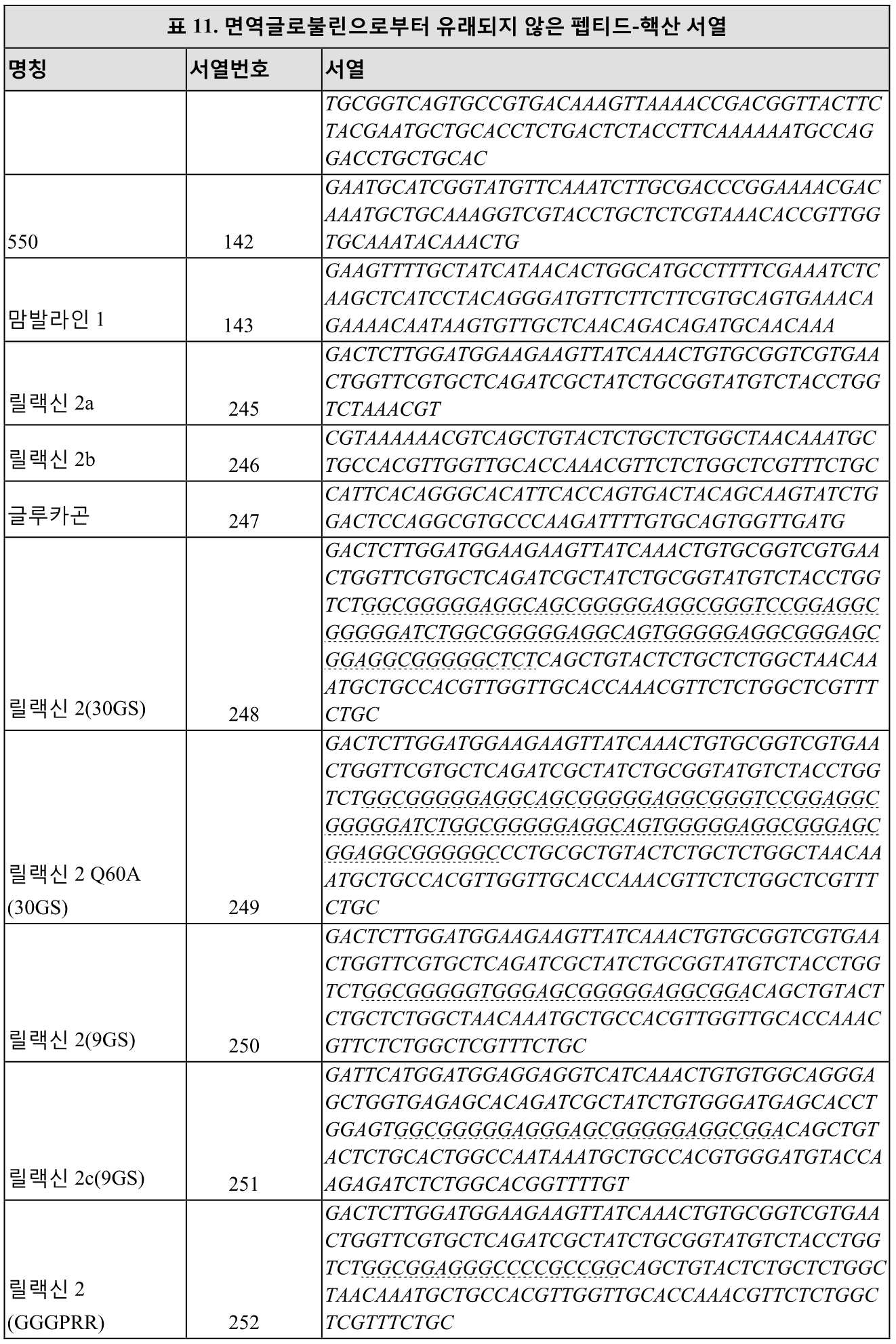
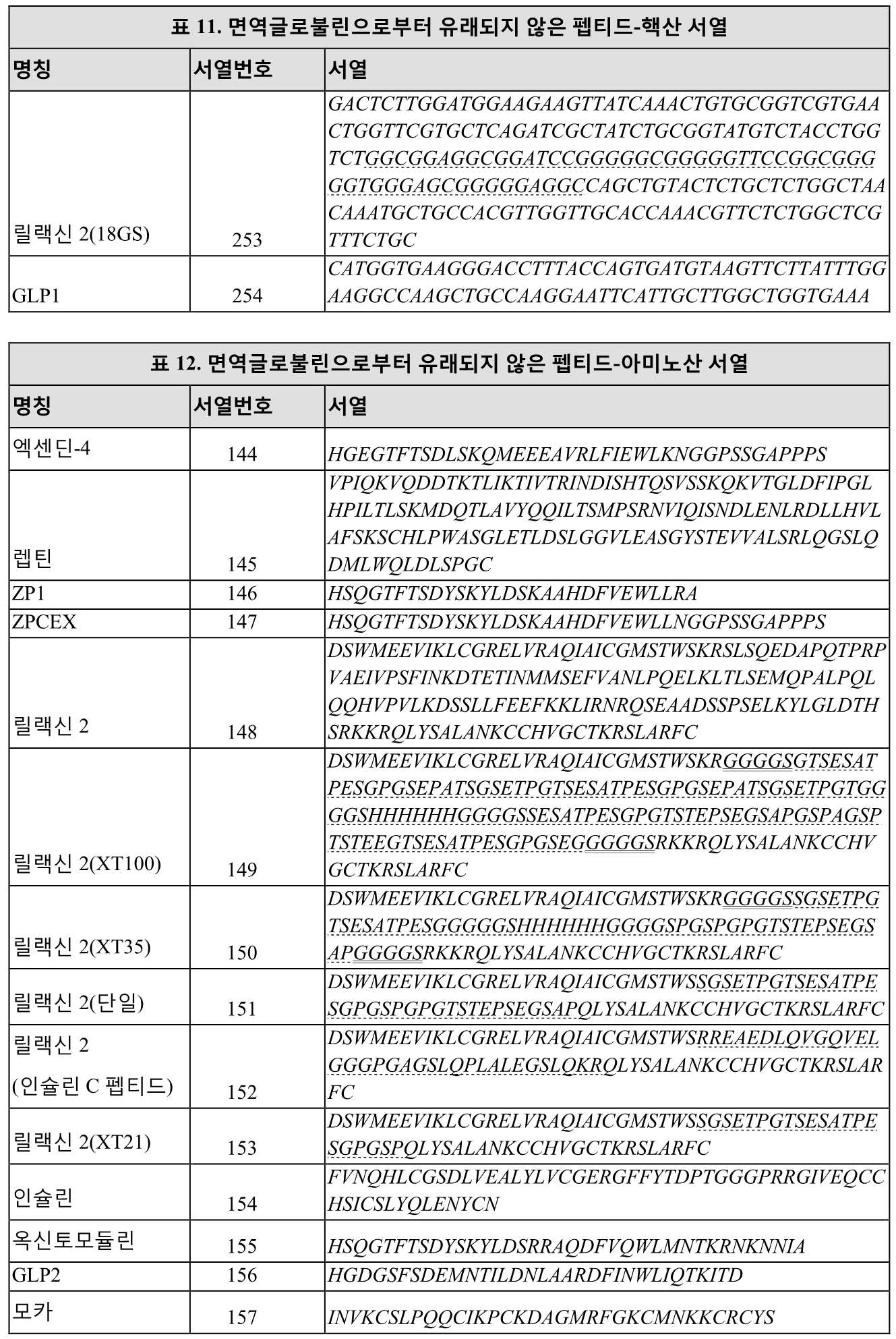

Claims (73)
b. 면역글로불린으로부터 유래되지 않은 제1 치료 펩티드; 및
c. 연결 펩티드
를 포함하는 면역글로불린 융합 단백질로서, 상기 연결 펩티드가 제1 치료 펩티드를 제1 면역글로불린 영역의 아미노 말단에 연결시키는 것인 면역글로불린 융합 단백질.a. A first immunoglobulin region;
b. A first therapeutic peptide not derived from an immunoglobulin; And
c. Linking peptide
Wherein the linking peptide ligates the first therapeutic peptide to the amino terminus of the first immunoglobulin region. ≪ RTI ID = 0.0 > 11. < / RTI >
A2-E1-T2-E2 I
상기 식에서, A2는 제2 면역글로불린 영역이고, E1은 제1 연장제(extender) 펩티드이고, E2는 제2 연장제 펩티드이고, T2는 제2 치료 펩티드이다.3. The immunoglobulin fusion protein of claim 2, wherein the second immunoglobulin region has the formula I:
A 2 -E 1 -T 2 -E 2 I
Wherein A 2 is a second immunoglobulin region, E 1 is a first extender peptide, E 2 is a second extender peptide, and T 2 is a second therapeutic peptide.
a. 제66항의 발현 벡터를 포유동물 세포 배양물에서 일시적으로 형질감염시키는 단계;
b. 조절된 온도 및 CO2 비율(%)에서 발현 배지 중에서 세포 배양물을 증식시키는 단계; 및
c. 분비된 면역글로불린 융합 단백질을 회수하는 단계
를 포함하는 방법.A method for producing an immunoglobulin fusion protein,
a. Transiently transfecting the expression vector of claim 66 in a mammalian cell culture;
b. Growing the cell culture in an expression medium at a controlled temperature and a CO 2 ratio (%); And
c. Recovering the secreted immunoglobulin fusion protein
≪ / RTI >
a. 제67항의 발현 벡터를 포유동물 세포 배양물에서 일시적으로 형질감염시키는 단계;
b. 조절된 온도 및 백분율 CO2에서 발현 배지 중에서 세포 배양물을 증식시키는 단계; 및
c. 분비된 제2 면역글로불린 영역을 회수하는 단계
를 포함하는 방법.A method for producing a second immunoglobulin region,
a. Transfecting the expression vector of claim 67 in a mammalian cell culture;
b. Propagating the cell culture in expression medium at a controlled temperature and percent CO 2 ; And
c. Recovering the secreted second immunoglobulin region
≪ / RTI >
Applications Claiming Priority (7)
| Application Number | Priority Date | Filing Date | Title |
|---|---|---|---|
| US201462009054P | 2014-06-06 | 2014-06-06 | |
| US62/009,054 | 2014-06-06 | ||
| US201462030526P | 2014-07-29 | 2014-07-29 | |
| US62/030,526 | 2014-07-29 | ||
| US201462064186P | 2014-10-15 | 2014-10-15 | |
| US62/064,186 | 2014-10-15 | ||
| PCT/US2015/034533 WO2015188132A1 (en) | 2014-06-06 | 2015-06-05 | Methods of constructing amino terminal immunoglobulin fusion proteins and compositions thereof |
Publications (1)
| Publication Number | Publication Date |
|---|---|
| KR20170010893A true KR20170010893A (en) | 2017-02-01 |
Family
ID=54767470
Family Applications (1)
| Application Number | Title | Priority Date | Filing Date |
|---|---|---|---|
| KR1020177000273A Withdrawn KR20170010893A (en) | 2014-06-06 | 2015-06-05 | Methods of constructing amino terminal immunoglobulin fusion proteins and compositions thereof |
Country Status (8)
| Country | Link |
|---|---|
| US (1) | US20170327577A1 (en) |
| EP (1) | EP3152238A4 (en) |
| JP (1) | JP2017518049A (en) |
| KR (1) | KR20170010893A (en) |
| CN (1) | CN106661128A (en) |
| AU (1) | AU2015269210A1 (en) |
| CA (1) | CA2950178A1 (en) |
| WO (1) | WO2015188132A1 (en) |
Families Citing this family (38)
| Publication number | Priority date | Publication date | Assignee | Title |
|---|---|---|---|---|
| JP6261500B2 (en) | 2011-07-22 | 2018-01-17 | プレジデント アンド フェローズ オブ ハーバード カレッジ | Evaluation and improvement of nuclease cleavage specificity |
| US20150044192A1 (en) | 2013-08-09 | 2015-02-12 | President And Fellows Of Harvard College | Methods for identifying a target site of a cas9 nuclease |
| US9359599B2 (en) | 2013-08-22 | 2016-06-07 | President And Fellows Of Harvard College | Engineered transcription activator-like effector (TALE) domains and uses thereof |
| US9388430B2 (en) | 2013-09-06 | 2016-07-12 | President And Fellows Of Harvard College | Cas9-recombinase fusion proteins and uses thereof |
| US9340799B2 (en) | 2013-09-06 | 2016-05-17 | President And Fellows Of Harvard College | MRNA-sensing switchable gRNAs |
| US9526784B2 (en) | 2013-09-06 | 2016-12-27 | President And Fellows Of Harvard College | Delivery system for functional nucleases |
| US20150165054A1 (en) | 2013-12-12 | 2015-06-18 | President And Fellows Of Harvard College | Methods for correcting caspase-9 point mutations |
| WO2016022363A2 (en) | 2014-07-30 | 2016-02-11 | President And Fellows Of Harvard College | Cas9 proteins including ligand-dependent inteins |
| JP7109784B2 (en) | 2015-10-23 | 2022-08-01 | プレジデント アンド フェローズ オブ ハーバード カレッジ | Evolved Cas9 protein for gene editing |
| WO2017100540A2 (en) | 2015-12-09 | 2017-06-15 | The California Institute For Biomedical Research | Relaxin immunoglobulin fusion proteins and methods of use |
| CN108697768B (en) | 2015-12-23 | 2022-07-22 | 约翰霍普金斯大学 | Long-acting GLP-1R agonists as methods of treatment for neurological and neurodegenerative conditions |
| KR20230074598A (en) * | 2016-05-18 | 2023-05-30 | 모더나티엑스, 인크. | Polynucleotides encoding relaxin |
| KR102547316B1 (en) | 2016-08-03 | 2023-06-23 | 프레지던트 앤드 펠로우즈 오브 하바드 칼리지 | Adenosine nucleobase editing agents and uses thereof |
| US11661590B2 (en) | 2016-08-09 | 2023-05-30 | President And Fellows Of Harvard College | Programmable CAS9-recombinase fusion proteins and uses thereof |
| US11542509B2 (en) | 2016-08-24 | 2023-01-03 | President And Fellows Of Harvard College | Incorporation of unnatural amino acids into proteins using base editing |
| EP3526320A1 (en) | 2016-10-14 | 2019-08-21 | President and Fellows of Harvard College | Aav delivery of nucleobase editors |
| WO2018119359A1 (en) | 2016-12-23 | 2018-06-28 | President And Fellows Of Harvard College | Editing of ccr5 receptor gene to protect against hiv infection |
| CN110637027B (en) | 2017-02-08 | 2024-08-30 | 百时美施贵宝公司 | Modified relaxin polypeptides comprising pharmacokinetic enhancers and uses thereof |
| JP2020510038A (en) | 2017-03-09 | 2020-04-02 | プレジデント アンド フェローズ オブ ハーバード カレッジ | Cancer vaccine |
| EP3592853A1 (en) | 2017-03-09 | 2020-01-15 | President and Fellows of Harvard College | Suppression of pain by gene editing |
| JP2020510439A (en) | 2017-03-10 | 2020-04-09 | プレジデント アンド フェローズ オブ ハーバード カレッジ | Base-editing factor from cytosine to guanine |
| CA3057192A1 (en) | 2017-03-23 | 2018-09-27 | President And Fellows Of Harvard College | Nucleobase editors comprising nucleic acid programmable dna binding proteins |
| WO2018209320A1 (en) | 2017-05-12 | 2018-11-15 | President And Fellows Of Harvard College | Aptazyme-embedded guide rnas for use with crispr-cas9 in genome editing and transcriptional activation |
| WO2019023680A1 (en) | 2017-07-28 | 2019-01-31 | President And Fellows Of Harvard College | Methods and compositions for evolving base editors using phage-assisted continuous evolution (pace) |
| EP3676376B1 (en) | 2017-08-30 | 2025-01-15 | President and Fellows of Harvard College | High efficiency base editors comprising gam |
| KR20250107288A (en) | 2017-10-16 | 2025-07-11 | 더 브로드 인스티튜트, 인코퍼레이티드 | Uses of adenosine base editors |
| WO2019118949A1 (en) | 2017-12-15 | 2019-06-20 | The Broad Institute, Inc. | Systems and methods for predicting repair outcomes in genetic engineering |
| EP3797160A1 (en) | 2018-05-23 | 2021-03-31 | The Broad Institute Inc. | Base editors and uses thereof |
| US12522807B2 (en) | 2018-07-09 | 2026-01-13 | The Broad Institute, Inc. | RNA programmable epigenetic RNA modifiers and uses thereof |
| US12331320B2 (en) | 2018-10-10 | 2025-06-17 | The Research Foundation For The State University Of New York | Genome edited cancer cell vaccines |
| WO2020092453A1 (en) | 2018-10-29 | 2020-05-07 | The Broad Institute, Inc. | Nucleobase editors comprising geocas9 and uses thereof |
| US12351837B2 (en) | 2019-01-23 | 2025-07-08 | The Broad Institute, Inc. | Supernegatively charged proteins and uses thereof |
| JP7657726B2 (en) | 2019-03-19 | 2025-04-07 | ザ ブロード インスティテュート,インコーポレーテッド | Editing Methods and compositions for editing nucleotide sequences |
| US12473543B2 (en) | 2019-04-17 | 2025-11-18 | The Broad Institute, Inc. | Adenine base editors with reduced off-target effects |
| US12435330B2 (en) | 2019-10-10 | 2025-10-07 | The Broad Institute, Inc. | Methods and compositions for prime editing RNA |
| RU2750267C1 (en) * | 2020-02-07 | 2021-06-25 | Общество с ограниченной ответственностью «НАУЧНО-ПРОИЗВОДСТВЕННОЕ ОБЪЕДИНЕНИЕ ИН-ВЕТ» | Recombinant growth differentiation factor 11 (gdf11), a method for its production, an injectable drug for increasing the muscle mass of mammals and poultry as well as a method of using the drug |
| DE112021002672T5 (en) | 2020-05-08 | 2023-04-13 | President And Fellows Of Harvard College | METHODS AND COMPOSITIONS FOR EDIT BOTH STRANDS SIMULTANEOUSLY OF A DOUBLE STRANDED NUCLEOTIDE TARGET SEQUENCE |
| WO2024026418A1 (en) * | 2022-07-28 | 2024-02-01 | New York University | Targeting long non-coding rna chromr in interferon-mediated inflammation in humans |
Family Cites Families (9)
| Publication number | Priority date | Publication date | Assignee | Title |
|---|---|---|---|---|
| ATE407697T1 (en) * | 1999-07-13 | 2008-09-15 | Bolder Biotechnology Inc | ERYTHROPOIETIN IMMUNOLOBULIN FUSION PROTEINS |
| EP2322228B1 (en) * | 2000-06-05 | 2018-01-10 | Altor BioScience Corporation | T cell receptor fusion proteins and conjugates and methods of use thereof |
| JP2004523205A (en) * | 2000-07-25 | 2004-08-05 | イムノメディクス, インコーポレイテッド | Multivalent target binding protein |
| WO2002079415A2 (en) * | 2001-03-30 | 2002-10-10 | Lexigen Pharmaceuticals Corp. | Reducing the immunogenicity of fusion proteins |
| US20080260731A1 (en) * | 2002-03-01 | 2008-10-23 | Bernett Matthew J | Optimized antibodies that target cd19 |
| WO2005000891A2 (en) * | 2003-06-26 | 2005-01-06 | Merck Patent Gmbh | Thrombopoietin proteins with improved properties |
| EP2408814B1 (en) * | 2009-03-20 | 2018-11-21 | Amgen Inc. | Carrier immunoglobulins and uses thereof |
| MX2012003939A (en) * | 2009-09-30 | 2012-07-30 | Glaxo Group Ltd | Drug fusions and conjugates with extended half life. |
| WO2012169822A2 (en) * | 2011-06-10 | 2012-12-13 | 강원대학교산학협력단 | Fusion protein for suppressing cancer cell growth and suppressing vasculogenesis, and anticancer composition comprising same |
-
2015
- 2015-06-05 KR KR1020177000273A patent/KR20170010893A/en not_active Withdrawn
- 2015-06-05 EP EP15803905.7A patent/EP3152238A4/en not_active Withdrawn
- 2015-06-05 AU AU2015269210A patent/AU2015269210A1/en not_active Abandoned
- 2015-06-05 WO PCT/US2015/034533 patent/WO2015188132A1/en not_active Ceased
- 2015-06-05 US US15/315,645 patent/US20170327577A1/en not_active Abandoned
- 2015-06-05 CN CN201580042157.3A patent/CN106661128A/en active Pending
- 2015-06-05 CA CA2950178A patent/CA2950178A1/en not_active Abandoned
- 2015-06-05 JP JP2016569796A patent/JP2017518049A/en active Pending
Also Published As
| Publication number | Publication date |
|---|---|
| AU2015269210A8 (en) | 2017-01-05 |
| AU2015269210A1 (en) | 2016-12-08 |
| EP3152238A4 (en) | 2018-01-03 |
| WO2015188132A1 (en) | 2015-12-10 |
| JP2017518049A (en) | 2017-07-06 |
| WO2015188132A8 (en) | 2017-01-12 |
| EP3152238A1 (en) | 2017-04-12 |
| CA2950178A1 (en) | 2015-12-10 |
| CN106661128A (en) | 2017-05-10 |
| US20170327577A1 (en) | 2017-11-16 |
Similar Documents
| Publication | Publication Date | Title |
|---|---|---|
| US20230365695A1 (en) | Coiled coil immunoglobulin fusion proteins and compositions thereof | |
| KR20170010893A (en) | Methods of constructing amino terminal immunoglobulin fusion proteins and compositions thereof | |
| US11421033B2 (en) | Insulin immunoglobulin fusion proteins | |
| EP3387019B1 (en) | Relaxin immunoglobulin fusion proteins and methods of use | |
| JP6346189B2 (en) | Liquid formulation containing GM-CSF neutralizing compound | |
| JP6339578B2 (en) | Lyophilized preparation containing GM-CSF neutralizing compound | |
| HK1224309B (en) | Coiled coil immunoglobulin fusion proteins and compositions thereof |
Legal Events
| Date | Code | Title | Description |
|---|---|---|---|
| PA0105 | International application |
St.27 status event code: A-0-1-A10-A15-nap-PA0105 |
|
| PG1501 | Laying open of application |
St.27 status event code: A-1-1-Q10-Q12-nap-PG1501 |
|
| P22-X000 | Classification modified |
St.27 status event code: A-2-2-P10-P22-nap-X000 |
|
| PC1203 | Withdrawal of no request for examination |
St.27 status event code: N-1-6-B10-B12-nap-PC1203 |
|
| P22-X000 | Classification modified |
St.27 status event code: A-2-2-P10-P22-nap-X000 |