KR20170056418A - Distributed multimode storage management - Google Patents
Distributed multimode storage management Download PDFInfo
- Publication number
- KR20170056418A KR20170056418A KR1020160109259A KR20160109259A KR20170056418A KR 20170056418 A KR20170056418 A KR 20170056418A KR 1020160109259 A KR1020160109259 A KR 1020160109259A KR 20160109259 A KR20160109259 A KR 20160109259A KR 20170056418 A KR20170056418 A KR 20170056418A
- Authority
- KR
- South Korea
- Prior art keywords
- storage
- sue
- devices
- manager
- block
- Prior art date
- Legal status (The legal status is an assumption and is not a legal conclusion. Google has not performed a legal analysis and makes no representation as to the accuracy of the status listed.)
- Granted
Links
Images













Classifications
-
- G—PHYSICS
- G06—COMPUTING OR CALCULATING; COUNTING
- G06F—ELECTRIC DIGITAL DATA PROCESSING
- G06F3/00—Input arrangements for transferring data to be processed into a form capable of being handled by the computer; Output arrangements for transferring data from processing unit to output unit, e.g. interface arrangements
- G06F3/06—Digital input from, or digital output to, record carriers, e.g. RAID, emulated record carriers or networked record carriers
- G06F3/0601—Interfaces specially adapted for storage systems
- G06F3/0602—Interfaces specially adapted for storage systems specifically adapted to achieve a particular effect
- G06F3/0604—Improving or facilitating administration, e.g. storage management
-
- G—PHYSICS
- G06—COMPUTING OR CALCULATING; COUNTING
- G06F—ELECTRIC DIGITAL DATA PROCESSING
- G06F3/00—Input arrangements for transferring data to be processed into a form capable of being handled by the computer; Output arrangements for transferring data from processing unit to output unit, e.g. interface arrangements
- G06F3/06—Digital input from, or digital output to, record carriers, e.g. RAID, emulated record carriers or networked record carriers
- G06F3/0601—Interfaces specially adapted for storage systems
- G06F3/0668—Interfaces specially adapted for storage systems adopting a particular infrastructure
- G06F3/067—Distributed or networked storage systems, e.g. storage area networks [SAN], network attached storage [NAS]
-
- G06F17/30283—
-
- G—PHYSICS
- G06—COMPUTING OR CALCULATING; COUNTING
- G06F—ELECTRIC DIGITAL DATA PROCESSING
- G06F16/00—Information retrieval; Database structures therefor; File system structures therefor
- G06F16/20—Information retrieval; Database structures therefor; File system structures therefor of structured data, e.g. relational data
- G06F16/27—Replication, distribution or synchronisation of data between databases or within a distributed database system; Distributed database system architectures therefor
-
- G—PHYSICS
- G06—COMPUTING OR CALCULATING; COUNTING
- G06F—ELECTRIC DIGITAL DATA PROCESSING
- G06F11/00—Error detection; Error correction; Monitoring
- G06F11/07—Responding to the occurrence of a fault, e.g. fault tolerance
- G06F11/16—Error detection or correction of the data by redundancy in hardware
- G06F11/20—Error detection or correction of the data by redundancy in hardware using active fault-masking, e.g. by switching out faulty elements or by switching in spare elements
- G06F11/2053—Error detection or correction of the data by redundancy in hardware using active fault-masking, e.g. by switching out faulty elements or by switching in spare elements where persistent mass storage functionality or persistent mass storage control functionality is redundant
- G06F11/2056—Error detection or correction of the data by redundancy in hardware using active fault-masking, e.g. by switching out faulty elements or by switching in spare elements where persistent mass storage functionality or persistent mass storage control functionality is redundant by mirroring
- G06F11/2069—Management of state, configuration or failover
-
- G—PHYSICS
- G06—COMPUTING OR CALCULATING; COUNTING
- G06F—ELECTRIC DIGITAL DATA PROCESSING
- G06F12/00—Accessing, addressing or allocating within memory systems or architectures
- G06F12/02—Addressing or allocation; Relocation
- G06F12/0223—User address space allocation, e.g. contiguous or non contiguous base addressing
- G06F12/023—Free address space management
- G06F12/0238—Memory management in non-volatile memory, e.g. resistive RAM or ferroelectric memory
- G06F12/0246—Memory management in non-volatile memory, e.g. resistive RAM or ferroelectric memory in block erasable memory, e.g. flash memory
-
- G—PHYSICS
- G06—COMPUTING OR CALCULATING; COUNTING
- G06F—ELECTRIC DIGITAL DATA PROCESSING
- G06F12/00—Accessing, addressing or allocating within memory systems or architectures
- G06F12/02—Addressing or allocation; Relocation
- G06F12/08—Addressing or allocation; Relocation in hierarchically structured memory systems, e.g. virtual memory systems
- G06F12/10—Address translation
- G06F12/1009—Address translation using page tables, e.g. page table structures
-
- G—PHYSICS
- G06—COMPUTING OR CALCULATING; COUNTING
- G06F—ELECTRIC DIGITAL DATA PROCESSING
- G06F16/00—Information retrieval; Database structures therefor; File system structures therefor
- G06F16/10—File systems; File servers
- G06F16/18—File system types
- G06F16/182—Distributed file systems
-
- G06F17/30194—
-
- G—PHYSICS
- G06—COMPUTING OR CALCULATING; COUNTING
- G06F—ELECTRIC DIGITAL DATA PROCESSING
- G06F3/00—Input arrangements for transferring data to be processed into a form capable of being handled by the computer; Output arrangements for transferring data from processing unit to output unit, e.g. interface arrangements
- G06F3/06—Digital input from, or digital output to, record carriers, e.g. RAID, emulated record carriers or networked record carriers
- G06F3/0601—Interfaces specially adapted for storage systems
- G06F3/0602—Interfaces specially adapted for storage systems specifically adapted to achieve a particular effect
- G06F3/061—Improving I/O performance
-
- G—PHYSICS
- G06—COMPUTING OR CALCULATING; COUNTING
- G06F—ELECTRIC DIGITAL DATA PROCESSING
- G06F3/00—Input arrangements for transferring data to be processed into a form capable of being handled by the computer; Output arrangements for transferring data from processing unit to output unit, e.g. interface arrangements
- G06F3/06—Digital input from, or digital output to, record carriers, e.g. RAID, emulated record carriers or networked record carriers
- G06F3/0601—Interfaces specially adapted for storage systems
- G06F3/0602—Interfaces specially adapted for storage systems specifically adapted to achieve a particular effect
- G06F3/061—Improving I/O performance
- G06F3/0611—Improving I/O performance in relation to response time
-
- G—PHYSICS
- G06—COMPUTING OR CALCULATING; COUNTING
- G06F—ELECTRIC DIGITAL DATA PROCESSING
- G06F3/00—Input arrangements for transferring data to be processed into a form capable of being handled by the computer; Output arrangements for transferring data from processing unit to output unit, e.g. interface arrangements
- G06F3/06—Digital input from, or digital output to, record carriers, e.g. RAID, emulated record carriers or networked record carriers
- G06F3/0601—Interfaces specially adapted for storage systems
- G06F3/0602—Interfaces specially adapted for storage systems specifically adapted to achieve a particular effect
- G06F3/0626—Reducing size or complexity of storage systems
-
- G—PHYSICS
- G06—COMPUTING OR CALCULATING; COUNTING
- G06F—ELECTRIC DIGITAL DATA PROCESSING
- G06F3/00—Input arrangements for transferring data to be processed into a form capable of being handled by the computer; Output arrangements for transferring data from processing unit to output unit, e.g. interface arrangements
- G06F3/06—Digital input from, or digital output to, record carriers, e.g. RAID, emulated record carriers or networked record carriers
- G06F3/0601—Interfaces specially adapted for storage systems
- G06F3/0628—Interfaces specially adapted for storage systems making use of a particular technique
- G06F3/0638—Organizing or formatting or addressing of data
- G06F3/0643—Management of files
-
- G—PHYSICS
- G06—COMPUTING OR CALCULATING; COUNTING
- G06F—ELECTRIC DIGITAL DATA PROCESSING
- G06F3/00—Input arrangements for transferring data to be processed into a form capable of being handled by the computer; Output arrangements for transferring data from processing unit to output unit, e.g. interface arrangements
- G06F3/06—Digital input from, or digital output to, record carriers, e.g. RAID, emulated record carriers or networked record carriers
- G06F3/0601—Interfaces specially adapted for storage systems
- G06F3/0628—Interfaces specially adapted for storage systems making use of a particular technique
- G06F3/0638—Organizing or formatting or addressing of data
- G06F3/0644—Management of space entities, e.g. partitions, extents, pools
-
- G—PHYSICS
- G06—COMPUTING OR CALCULATING; COUNTING
- G06F—ELECTRIC DIGITAL DATA PROCESSING
- G06F3/00—Input arrangements for transferring data to be processed into a form capable of being handled by the computer; Output arrangements for transferring data from processing unit to output unit, e.g. interface arrangements
- G06F3/06—Digital input from, or digital output to, record carriers, e.g. RAID, emulated record carriers or networked record carriers
- G06F3/0601—Interfaces specially adapted for storage systems
- G06F3/0628—Interfaces specially adapted for storage systems making use of a particular technique
- G06F3/0646—Horizontal data movement in storage systems, i.e. moving data in between storage devices or systems
- G06F3/0652—Erasing, e.g. deleting, data cleaning, moving of data to a wastebasket
-
- G—PHYSICS
- G06—COMPUTING OR CALCULATING; COUNTING
- G06F—ELECTRIC DIGITAL DATA PROCESSING
- G06F3/00—Input arrangements for transferring data to be processed into a form capable of being handled by the computer; Output arrangements for transferring data from processing unit to output unit, e.g. interface arrangements
- G06F3/06—Digital input from, or digital output to, record carriers, e.g. RAID, emulated record carriers or networked record carriers
- G06F3/0601—Interfaces specially adapted for storage systems
- G06F3/0628—Interfaces specially adapted for storage systems making use of a particular technique
- G06F3/0655—Vertical data movement, i.e. input-output transfer; data movement between one or more hosts and one or more storage devices
- G06F3/0659—Command handling arrangements, e.g. command buffers, queues, command scheduling
-
- G—PHYSICS
- G06—COMPUTING OR CALCULATING; COUNTING
- G06F—ELECTRIC DIGITAL DATA PROCESSING
- G06F3/00—Input arrangements for transferring data to be processed into a form capable of being handled by the computer; Output arrangements for transferring data from processing unit to output unit, e.g. interface arrangements
- G06F3/06—Digital input from, or digital output to, record carriers, e.g. RAID, emulated record carriers or networked record carriers
- G06F3/0601—Interfaces specially adapted for storage systems
- G06F3/0628—Interfaces specially adapted for storage systems making use of a particular technique
- G06F3/0662—Virtualisation aspects
- G06F3/0664—Virtualisation aspects at device level, e.g. emulation of a storage device or system
-
- G—PHYSICS
- G06—COMPUTING OR CALCULATING; COUNTING
- G06F—ELECTRIC DIGITAL DATA PROCESSING
- G06F3/00—Input arrangements for transferring data to be processed into a form capable of being handled by the computer; Output arrangements for transferring data from processing unit to output unit, e.g. interface arrangements
- G06F3/06—Digital input from, or digital output to, record carriers, e.g. RAID, emulated record carriers or networked record carriers
- G06F3/0601—Interfaces specially adapted for storage systems
- G06F3/0668—Interfaces specially adapted for storage systems adopting a particular infrastructure
- G06F3/0671—In-line storage system
- G06F3/0683—Plurality of storage devices
- G06F3/0688—Non-volatile semiconductor memory arrays
-
- G—PHYSICS
- G06—COMPUTING OR CALCULATING; COUNTING
- G06F—ELECTRIC DIGITAL DATA PROCESSING
- G06F3/00—Input arrangements for transferring data to be processed into a form capable of being handled by the computer; Output arrangements for transferring data from processing unit to output unit, e.g. interface arrangements
- G06F3/06—Digital input from, or digital output to, record carriers, e.g. RAID, emulated record carriers or networked record carriers
- G06F3/0601—Interfaces specially adapted for storage systems
- G06F3/0668—Interfaces specially adapted for storage systems adopting a particular infrastructure
- G06F3/0671—In-line storage system
- G06F3/0683—Plurality of storage devices
- G06F3/0689—Disk arrays, e.g. RAID, JBOD
-
- H—ELECTRICITY
- H04—ELECTRIC COMMUNICATION TECHNIQUE
- H04L—TRANSMISSION OF DIGITAL INFORMATION, e.g. TELEGRAPHIC COMMUNICATION
- H04L67/00—Network arrangements or protocols for supporting network services or applications
- H04L67/01—Protocols
- H04L67/10—Protocols in which an application is distributed across nodes in the network
- H04L67/1097—Protocols in which an application is distributed across nodes in the network for distributed storage of data in networks, e.g. transport arrangements for network file system [NFS], storage area networks [SAN] or network attached storage [NAS]
-
- G—PHYSICS
- G06—COMPUTING OR CALCULATING; COUNTING
- G06F—ELECTRIC DIGITAL DATA PROCESSING
- G06F2201/00—Indexing scheme relating to error detection, to error correction, and to monitoring
- G06F2201/805—Real-time
-
- G—PHYSICS
- G06—COMPUTING OR CALCULATING; COUNTING
- G06F—ELECTRIC DIGITAL DATA PROCESSING
- G06F2212/00—Indexing scheme relating to accessing, addressing or allocation within memory systems or architectures
- G06F2212/10—Providing a specific technical effect
- G06F2212/1016—Performance improvement
-
- G—PHYSICS
- G06—COMPUTING OR CALCULATING; COUNTING
- G06F—ELECTRIC DIGITAL DATA PROCESSING
- G06F2212/00—Indexing scheme relating to accessing, addressing or allocation within memory systems or architectures
- G06F2212/10—Providing a specific technical effect
- G06F2212/1016—Performance improvement
- G06F2212/1024—Latency reduction
-
- G—PHYSICS
- G06—COMPUTING OR CALCULATING; COUNTING
- G06F—ELECTRIC DIGITAL DATA PROCESSING
- G06F2212/00—Indexing scheme relating to accessing, addressing or allocation within memory systems or architectures
- G06F2212/10—Providing a specific technical effect
- G06F2212/1041—Resource optimization
- G06F2212/1044—Space efficiency improvement
-
- G—PHYSICS
- G06—COMPUTING OR CALCULATING; COUNTING
- G06F—ELECTRIC DIGITAL DATA PROCESSING
- G06F2212/00—Indexing scheme relating to accessing, addressing or allocation within memory systems or architectures
- G06F2212/10—Providing a specific technical effect
- G06F2212/1056—Simplification
-
- G—PHYSICS
- G06—COMPUTING OR CALCULATING; COUNTING
- G06F—ELECTRIC DIGITAL DATA PROCESSING
- G06F2212/00—Indexing scheme relating to accessing, addressing or allocation within memory systems or architectures
- G06F2212/15—Use in a specific computing environment
- G06F2212/154—Networked environment
-
- G—PHYSICS
- G06—COMPUTING OR CALCULATING; COUNTING
- G06F—ELECTRIC DIGITAL DATA PROCESSING
- G06F2212/00—Indexing scheme relating to accessing, addressing or allocation within memory systems or architectures
- G06F2212/20—Employing a main memory using a specific memory technology
- G06F2212/202—Non-volatile memory
- G06F2212/2022—Flash memory
-
- G—PHYSICS
- G06—COMPUTING OR CALCULATING; COUNTING
- G06F—ELECTRIC DIGITAL DATA PROCESSING
- G06F2212/00—Indexing scheme relating to accessing, addressing or allocation within memory systems or architectures
- G06F2212/72—Details relating to flash memory management
- G06F2212/7201—Logical to physical mapping or translation of blocks or pages
-
- G—PHYSICS
- G06—COMPUTING OR CALCULATING; COUNTING
- G06F—ELECTRIC DIGITAL DATA PROCESSING
- G06F2212/00—Indexing scheme relating to accessing, addressing or allocation within memory systems or architectures
- G06F2212/72—Details relating to flash memory management
- G06F2212/7202—Allocation control and policies
-
- G—PHYSICS
- G06—COMPUTING OR CALCULATING; COUNTING
- G06F—ELECTRIC DIGITAL DATA PROCESSING
- G06F2212/00—Indexing scheme relating to accessing, addressing or allocation within memory systems or architectures
- G06F2212/72—Details relating to flash memory management
- G06F2212/7204—Capacity control, e.g. partitioning, end-of-life degradation
-
- G—PHYSICS
- G06—COMPUTING OR CALCULATING; COUNTING
- G06F—ELECTRIC DIGITAL DATA PROCESSING
- G06F2212/00—Indexing scheme relating to accessing, addressing or allocation within memory systems or architectures
- G06F2212/72—Details relating to flash memory management
- G06F2212/7205—Cleaning, compaction, garbage collection, erase control
-
- G—PHYSICS
- G06—COMPUTING OR CALCULATING; COUNTING
- G06F—ELECTRIC DIGITAL DATA PROCESSING
- G06F2212/00—Indexing scheme relating to accessing, addressing or allocation within memory systems or architectures
- G06F2212/72—Details relating to flash memory management
- G06F2212/7208—Multiple device management, e.g. distributing data over multiple flash devices
Landscapes
- Engineering & Computer Science (AREA)
- Theoretical Computer Science (AREA)
- Physics & Mathematics (AREA)
- General Engineering & Computer Science (AREA)
- General Physics & Mathematics (AREA)
- Human Computer Interaction (AREA)
- Databases & Information Systems (AREA)
- Data Mining & Analysis (AREA)
- Signal Processing (AREA)
- Computer Networks & Wireless Communication (AREA)
- Quality & Reliability (AREA)
- Computing Systems (AREA)
- Information Retrieval, Db Structures And Fs Structures Therefor (AREA)
- Techniques For Improving Reliability Of Storages (AREA)
- Memory System (AREA)
Abstract
본 발명은 복수의 기기, 분산(Distributed) 다중 모드(Multimode) 저장 관리 조정기, 및 통신 메커니즘(Mechanism)을 포함하는 분산 저장 시스템을 제공한다. 복수의 기기 중 적어도 하나는 복수의 저장 장치를 포함하며, 분산 다중 모드 저장 관리 조정기는 복수의 저장 장치로의 정보의 전송을 지시하는 복수의 다중 모드 저장 관리 시스템을 포함한다. 통신 메커니즘은 복수의 다중 모드 저장 관리 시스템 사이에서, 분산 다중 모드 저장 관리 메시지들을 통신한다. 복수의 저장 장치 각각은 제 1 저장 파티션(Partition) 및 제 2 저장 파티션을 포함한다. 제 1 저장 파티션은 기본 유형의 인터페이스, 및 제 1 유형의 정보를 저장하는 제 1 정보 저장 영역을 포함한다. 제 2 저장 파티션은 선별 잠재 노출(Selective Underlying Exposure) 인터페이스, 및 제 2 유형의 정보를 저장하는 제 2 정보 저장 영역을 포함한다. 선별 잠재 노출 인터페이스는 제 2 정보 저장 영역의 양상(Aspect)을 노출한다. 복수의 다중 모드 저장 관리 시스템은 선별 잠재 노출 인터페이스를 통해 제 2 저장 파티션의 파일 활동들을 지시하는 다중 모드 선별 잠재 노출 관리 시스템들을 포함한다.The present invention provides a distributed storage system comprising a plurality of devices, a distributed multimode storage management coordinator, and a communication mechanism. At least one of the plurality of devices includes a plurality of storage devices, and the distributed multi-mode storage management coordinator includes a plurality of multi-mode storage management systems for directing the transfer of information to a plurality of storage devices. The communication mechanism communicates distributed multi-mode storage management messages between a plurality of multi-mode storage management systems. Each of the plurality of storage devices includes a first storage partition and a second storage partition. The first storage partition includes a basic type of interface and a first information storage area for storing information of a first type. The second storage partition includes a Selective Underlying Exposure interface and a second information storage area for storing a second type of information. The selective exposure interface exposes the aspect of the second information storage area. The plurality of multi-mode storage management systems include multi-mode selective potential exposure management systems that direct the file activity of the second storage partition via the selective exposure interface.

Description
본 발명은 정보 저장(Information Storage)에 관한 것이다.The present invention relates to information storage.
사업, 과학, 교육, 및 엔터테인먼트의 대부분의 분야에서, 많은 전자 기술(예컨대, 디지털 컴퓨터들, 계산기들, 오디오 장치들, 비디오 장비들, 전화기 시스템들 등)은 생산성을 증가시키고 비용을 감소시켜 왔다. 이 전자 시스템들은 정보 저장 시스템들을 수반하는 동작들을 수행한다. 정보 저장 동작들이 진행되는 속도 및 편의성은 정보 저장 시스템들의 전반적인 성능에 큰 영향을 줄 수 있다. 그러나, 정보 저장에 관한 기존의 시도들은 속도와 관리 가능한 복잡도 사이의 역관계(Inverse Relationship)를 수반한다.In many fields of business, science, education, and entertainment, many electronic technologies (such as digital computers, calculators, audio devices, video equipment, telephone systems, etc.) have increased productivity and reduced costs . These electronic systems perform operations involving information storage systems. The speed and convenience with which information storage operations proceed can have a significant impact on the overall performance of information storage systems. However, existing attempts at information storage involve an inverse relationship between speed and manageability complexity.
정보 저장 시스템들은 두 개의 카테고리들 중 하나에 속할 수 있는 동작들을 수반한다. 하나의 카테고리는 사용자에 의해 개시되는 활동(Activity)들과 관련되는 저장 동작들을 포함한다. 다른 카테고리는 시스템에 의해 개시되는 관리 및 유지보수 활동들을 포함한다. 이 동작들이 진행되는 속도 및 편의성은 정보를 저장하기 위해 활용되는 어드레스 공간(Address Space)의 유형과 관련된다.Information storage systems involve operations that can belong to one of two categories. One category includes store operations associated with activities initiated by the user. Other categories include management and maintenance activities initiated by the system. The speed and convenience with which these operations proceed is related to the type of address space utilized to store the information.
물리 어드레스(Physical Address) 기반의 공간을 활용하는 것에 관한 기존의 시도들은 이론적으로는 매우 빠른 속도로 동작하는 것으로 여겨졌으나, 기존의 물리 어드레스 기반의 공간에서의 실제 관리 및 유지보수 동작들에 관한 시도들은 매우 복잡하고 사실상 거의 구현되지 않았다. 기존의 논리 어드레스(Logical Address) 공간의 관리 및 유지보수는 물리 어드레스 공간에 비해 낮은 복잡도를 갖는 것으로 여겨졌다. 그러나, 기존의 논리 어드레스 공간은 물리 어드레스 공간만큼 빠르게 동작하지는 않는다.Existing attempts at utilizing physical address based space have been theoretically considered to operate at very high speeds, but attempts at actual management and maintenance operations in existing physical address space Are very complex and virtually unimplemented. The management and maintenance of the existing logical address space was considered to have a lower complexity than the physical address space. However, the existing logical address space does not operate as fast as the physical address space.
기존의 저장 시스템들은 이전에는 수용할 만한 것으로 여겨지는 수준으로 동작할 수 있었던 반면, 이 저장 시스템들이 개선된 어플리케이션(Application)들 및 플랫폼(Platform)들을 위한 요구 사항들, 및 오랫동안 기다려 온 필요성을 충족시키기에는 점점 불충분해지고 있다. 개선된 시스템 개발을 가능하게 하기 위하여 증가한 속도 및 관리 가능한 복잡도 모두를 달성하는 것에 관한 기존의 시도들은 성공적이지 못했다.While existing storage systems were able to operate at levels previously considered acceptable, these storage systems meet the requirements for improved applications and platforms, and the long-awaited need It is getting more and more insufficient. Existing attempts to achieve both increased speed and manageable complexity to enable improved system development have not been successful.
본 발명의 실시 예들은 효율적이고 효과적인 다중 모드(Multimode) 저장 접근법들을 제공할 수 있다. 다중 모드 저장 방법들은 여러 상이한 유형의 어드레스 공간들을 함께 채용할 수 있다. 이러한 다중 모드 저장 접근법은 분산 컴퓨팅 시스템(Distributed Computing System)에서 채용될 수 있다.Embodiments of the present invention may provide efficient and effective multi-mode storage approaches. Multimode storage methods may employ several different types of address spaces together. This multi-mode storage approach may be employed in a Distributed Computing System.
본 발명의 실시 예에 따른 분산 저장 시스템은 복수의 기기, 분산 다중 모드 저장 관리 조정기, 및 통신 메커니즘(Mechanism)을 포함할 수 있다. 복수의 기기 중 적어도 하나는 복수의 저장 장치를 포함할 수 있다. 분산 다중 모드 저장 관리 조정기는 복수의 저장 장치로의 정보의 전송을 지시하도록 구성되는 복수의 다중 모드 저장 관리 시스템을 포함할 수 있다. 통신 메커니즘은 복수의 다중 모드 저장 관리 시스템 사이에서, 분산 다중 모드 저장 관리 메시지(Message)들을 포함하는 메시지들을 통신하기 위해 제공될 수 있다. 복수의 저장 장치 각각은 제 1 저장 파티션(Partition) 및 제 2 저장 파티션을 포함할 수 있다. 제 1 저장 파티션은 기본 유형의 인터페이스, 및 제 1 유형의 정보를 저장하도록 구성되는 제 1 정보 저장 영역을 포함할 수 있다. 제 2 저장 파티션은 선별 잠재 노출(Selective Underlying Exposure) 인터페이스, 및 제 2 유형의 정보를 저장하도록 구성되는 제 2 정보 저장 영역을 포함할 수 있다. 선별 잠재 노출 인터페이스는 제 2 정보 저장 영역의 양상(Aspect)을 노출할 수 있다. 복수의 다중 모드 저장 관리 시스템은 선별 잠재 노출 인터페이스를 통해 제 2 저장 파티션의 파일 활동(Activity)들을 지시하도록 구성되는 다중 모드 선별 잠재 노출 관리 시스템들을 포함할 수 있다.A distributed storage system according to an embodiment of the present invention may include a plurality of devices, a distributed multimode storage management coordinator, and a communication mechanism. At least one of the plurality of devices may include a plurality of storage devices. The distributed multi-mode storage management coordinator may comprise a plurality of multi-mode storage management systems configured to direct the transfer of information to a plurality of storage devices. The communication mechanism may be provided between the plurality of multi-mode storage management systems for communicating messages including distributed multi-mode storage management messages. Each of the plurality of storage devices may include a first storage partition and a second storage partition. The first storage partition may include a basic type of interface and a first information storage area configured to store a first type of information. The second storage partition may include a Selective Underlying Exposure interface and a second information storage area configured to store a second type of information. The selective exposure interface can expose the aspect of the second information storage area. A plurality of multi-mode storage management systems may include multi-mode selective potential exposure management systems configured to indicate file activity of a second storage partition via a selective exposure interface.
본 발명의 실시 예에서, 분산 다중 모드 저장 관리 메시지들은 선별된 잠재적인 양상들이 복수의 기기에 걸쳐 노출되도록 유지시킬 수 있다.In an embodiment of the present invention, the distributed multi-mode storage management messages can keep the selected potential aspects exposed across a plurality of devices.
본 발명의 실시 예에서, 메타데이터의 저장 공간 및 사용자 데이터의 저장 공간은 복수의 기기에 걸쳐 고르게 퍼질 수 있다.In an embodiment of the present invention, the storage space of metadata and the storage space of user data may spread evenly across a plurality of devices.
본 발명의 실시 예에서, 선별 잠재 노출 어드레스 공간 맵핑이 복수의 기기에 걸쳐 유지될 수 있고, 선별 잠재 노출 어드레스 공간 맵핑의 대표 기하 구조(Representative Geometry) 구성은 잠재적인 물리 어드레스 공간의 대표 기하 구조 구성과 매칭될 수 있다.In an embodiment of the present invention, the selective exposure address space mapping can be maintained across a plurality of devices, and the representative geometry configuration of the selective potential exposure address space mapping can be expressed in terms of the representative geometry configuration of the potential physical address space ≪ / RTI >
본 발명의 실시 예에서, 중복 수준(Redundancy)이 복수의 다중 모드 저장 관리 시스템의 레벨에서 제어될수 있다.In an embodiment of the present invention, redundancy can be controlled at the level of a plurality of multi-mode storage management systems.
본 발명의 실시 예에서, 복수의 기기는 구성 요소들이 여러 시스템에 걸쳐 선형적으로 확장 가능한(Linearly Scalable) 아키텍처(Architecture)로 배열될 수 있다.In an embodiment of the present invention, a plurality of devices may be arranged in an Architecture that is Linearly Scalable across components.
본 발명의 실시 예에서, 분산 다중 모드 저장 관리 조정기는 복수의 저장 장치에 걸친 선별 잠재 노출 수준에 기초하여 동작할 수 있다.In an embodiment of the present invention, the distributed multi-mode storage management coordinator may operate based on a selective exposure level across a plurality of storage devices.
본 발명의 실시 예에서, 하나의 노드는 하나보다 많은 저장 장치를 포함할 수 있고, 단일 유닛(Unit)의 장애(Failure)는 분산 저장 시스템을 망가뜨리지 않을 수 있다.In an embodiment of the invention, one node may contain more than one storage device, and a single unit Failure may not destroy the distributed storage system.
본 발명의 실시 예에서, 남는 공간(Free Space)에 관한 기록(Accounting)은 선별된 잠재적인 양상의 블록 수준에서 발생할 수 있다.In an embodiment of the present invention, accounting for free space may occur at a block level of a selected potential aspect.
본 발명의 실시 예에 따른 분산 저장 방법은, 적어도 하나가 복수의 저장 장치를 포함하는 복수의 기기를 RAID(Redundant Array of Independent Disks) 구성으로 설정하는 단계, 및 복수의 저장 장치에의 정보 저장을 관리하는 단계를 포함할 수 있다. 정보 저장을 관리하는 단계는 기본 유형의 어드레스 공간을 선별 잠재 노출 어드레스 공간으로 맵핑하는 단계를 포함할 수 있다. 선별 잠재 노출 어드레스 공간은 복수의 저장 장치 중 적어도 하나의 잠재적인 양상에 대응할 수 있다.A distributed storage method according to an embodiment of the present invention includes the steps of setting a plurality of devices including at least one storage device to a RAID (Redundant Array of Independent Disks) configuration, and storing information in a plurality of storage devices And the like. Managing the information storage may include mapping the base type address space to the selective exposure address space. The selected potential exposure address space may correspond to a potential aspect of at least one of the plurality of storage devices.
본 발명의 실시 예에서, 맵핑 데이터는 복수의 저장 장치에 걸쳐 중복하여 논리적으로 분산될 수 있다.In an embodiment of the present invention, the mapping data may be logically distributed redundantly across a plurality of storage devices.
본 발명의 실시 예에서, 정보 저장을 관리하는 단계는 RAID 구성에 걸쳐 복수의 저장 장치에의 정보 저장의 관리를 조정(Coordinate)하는 단계를 포함할 수 있다.In an embodiment of the present invention, managing information storage may include coordinating management of information storage in a plurality of storage devices across a RAID configuration.
본 발명의 실시 예에서, 조정하는 단계는 복수의 기기 중 제 1 기기와 제 2 기기 사이에서 메시지들을 통신하는 단계를 포함할 수 있다.In an embodiment of the invention, the coordinating step may comprise communicating messages between the first and second devices of the plurality of devices.
본 발명의 실시 예에서, 남는 공간에 관한 기록은 다중 모드 저장 관리 시스템 수준에서 발생할 수 있다.In an embodiment of the present invention, recording of the remaining space may occur at the level of a multi-mode storage management system.
본 발명의 실시 예에서, 분산 블록 선택(Distributed Block Picking)을 트리거(Trigger)하는 주요 블록 소유자(Primary Block Owner)에 의해 반환(Reclamation)이 관리될 수 있고, 선택된 블록은 다른 블록으로 분산될 수 있다.In an embodiment of the present invention, a Reclamation may be managed by a Primary Block Owner that triggers Distributed Block Picking, and the selected block may be distributed to other blocks have.
본 발명의 실시 예에서, 비 주요(Non-primary) 블록 소유자는 물리적인 검사(Physical Scan) 및 유효 판별 룩-업(Valid Determination Lookup)을 수행할 수 있다.In an embodiment of the present invention, the non-primary block owner may perform a physical scan and a validity determination lookup.
본 발명의 실시 예에 따른 분산 시설은 복수의 기기, 분산 다중 모드 저장 관리 조정기, 및 통신 메커니즘을 포함할 수 있다. 복수의 기기는 스트라이프(Stripe) 단위로 정보를 저장할 수 있고, 복수의 기기 중 적어도 하나는 복수의 솔리드 스테이트(Solid State) 저장 장치를 포함할 수 있다. 분산 다중 모드 저장 관리 조정기는 복수의 솔리드 스테이트 저장 장치로의 정보의 전송을 지시하도록 구성되는 복수의 다중 모드 저장 관리 시스템을 포함할 수 있다. 통신 메커니즘은 복수의 다중 모드 저장 관리 시스템과 복수의 기기 사이에서 메시지들을 통신하기 위해 제공될 수 있다. 복수의 솔리드 스테이트 저장 장치 각각은 제 1 저장 파티션 및 제 2 저장 파티션을 포함할 수 있다. 제 1 저장 파티션은 기본 유형의 인터페이스, 및 제 1 유형의 정보를 저장하도록 구성되는 제 1 정보 저장 영역을 포함할 수 있다. 제 2 저장 파티션은 선별 잠재 노출 인터페이스, 및 제 2 유형의 정보를 저장하도록 구성되는 제 2 정보 저장 영역을 포함할 수 있다. 선별 잠재 노출 인터페이스는 제 2 정보 저장 영역의 양상을 노출할 수 있다. 분산 다중 모드 저장 관리 조정기는 선별 잠재 노출 인터페이스를 통한 제 2 저장 파티션의 파일 활동들 및 제 2 저장 파티션의 선별된 잠재적인 양상들을 지시하도록 구성되는 다중 모드 선별 잠재 노출 관리 시스템을 포함할 수 있다.The distribution facility according to an embodiment of the present invention may include a plurality of devices, a distributed multi-mode storage management coordinator, and a communication mechanism. The plurality of devices may store information in a stripe unit, and at least one of the plurality of devices may include a plurality of solid state storage devices. The distributed multi-mode storage management coordinator may comprise a plurality of multi-mode storage management systems configured to direct the transfer of information to a plurality of solid state storage devices. The communication mechanism may be provided for communicating messages between a plurality of multi-mode storage management systems and a plurality of devices. Each of the plurality of solid state storage devices may include a first storage partition and a second storage partition. The first storage partition may include a basic type of interface and a first information storage area configured to store a first type of information. The second storage partition may include a selective exposure interface and a second information storage area configured to store a second type of information. The selective exposure interface can expose aspects of the second information storage area. The distributed multi-mode storage management coordinator may include a multi-mode selective potential exposure management system configured to indicate file activity of the second storage partition via the selective exposure interface and selected potential aspects of the second storage partition.
본 발명의 실시 예에 따른 분산 시설은 여러 시스템에 걸쳐 물리적으로 스트라이핑(Striping)되는 메타데이터 및 사용자 데이터를 더 포함할 수 있다.The distribution facility according to the embodiment of the present invention may further include metadata and user data that are physically striped across various systems.
본 발명의 실시 예에서, 저장 장치보다 상위 계층 레벨(Higher Hierarchical Level)인 분산 다중 모드 저장 관리 조정기의 레벨에서 중복 수준이 제어될 수 있다.In an embodiment of the present invention, redundancy levels can be controlled at the level of a distributed multimode storage management coordinator that is a higher hierarchical level than a storage device.
본 발명의 실시 예에서, 장애가 있는 유닛은 저장 노드(Node)일 수 있다. 단일 노드의 장애는 분산 시설을 망가뜨리지 않을 수 있고, 저장 노드는 복수의 기기 중 하나를 포함할 수 있다.In an embodiment of the present invention, the failed unit may be a storage node. The failure of a single node may not destroy the distributed facility, and the storage node may include one of a plurality of devices.
본 발명의 실시 예들에 따른 다중 모드 저장 접근법들은 복잡도를 관리 가능한 범위로 제한하면서도, 저장 시스템의 성능을 개선할 수 있다.The multi-mode storage approaches according to embodiments of the present invention can improve the performance of the storage system while limiting the complexity to a manageable range.
이 명세서의 일부분으로서 포함되는 첨부된 도면들은 본 발명의 원리에 관한 예시들을 설명하기 위한 것이고, 설명된 특정 구현들로 본 발명을 한정하기 위한 것은 아니다.
도 1은 본 발명의 실시 예에 따른 선별 잠재 노출(Selective Underlying Exposure, 이하 SUE) 저장 파티션(Partition)을 포함하는 예시적인 저장 장치를 보여주는 블록도이다.
도 2는 본 발명의 실시 예에 따른 예시적인 다중 모드 저장 장치(Multimode Storage Device)를 보여주는 블록도이다.
도 3은 본 발명의 실시 예에 따른 다른 예시적인 다중 모드 저장 장치를 보여주는 블록도이다.
도 4는 본 발명의 실시 예에 따른 예시적인 다중 모드 솔리드 스테이트 드라이브(Multimode Solid State Drive)를 보여주는 블록도이다.
도 5는 본 발명의 실시 예에 따라 어드레스 공간 정보를 논리 어드레스 공간 정보로 변환하는 예시적인 과정을 보여주는 개념도이다.
도 6은 본 발명의 실시 예에 따른 시스템을 보여주는 블록도이다.
도 7은 본 발명의 실시 예에 따른 시스템을 보여주는 블록도이다.
도 8은 본 발명의 실시 예에 따라 다중 모드 선별 잠재 노출을 구동하는 방법을 설명하는 흐름도이다.
도 9는 본 발명의 실시 예에 따른 다중 모드 솔리드 스테이트 드라이브를 예시적으로 보여주는 블록도이다.
도 10은 본 발명의 실시 예에 따른 다중 모드 저장 장치의 사용자 영역에의 저장을 위한 예시적인 SUE 블록 및 대응하는 SUE 페이지를 보여주는 블록도이다.
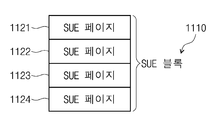
도 11은 본 발명의 실시 예에 따른 다중 모드 저장 장치의 사용자 영역에의 저장을 위한 사용자 저장 공간의 예시적인 SUE 블록 및 대응하는 SUE 페이지들을 보여주는 블록도이다.
도 12는 본 발명의 실시 예에 따른 다중 모드 저장 장치의 사용자 영역에의 저장을 위한 예시적인 SUE 메타 페이지 및 대응하는 SUE 페이지들을 보여주는 블록도이다.
도 13은 본 발명의 실시 예에 따른 다중 모드 저장 장치의 사용자 영역에의 저장을 위한 예시적인 SUE 메타 블록 및 대응하는 SUE 메타 페이지들을 보여주는 블록도이다.
도 14는 본 발명의 실시 예에 따른 다중 모드 저장 장치의 사용자 영역에의 저장을 위한 다른 예시적인 SUE 메타 블록 및 대응하는 SUE 블록들을 보여주는 블록도이다.
도 15는 본 발명의 실시 예에 따라 논리 어드레스로부터 SUE 어드레스로의 어드레스 맵핑을 제공하기 위해 다중 모드 저장 시스템에 의해 구현될 수 있는 예시적인 SUE 맵핑 스킴을 보여주는 개념도이다.
도 16은 도 15의 SUE 맵핑 스킴을 구현할 수 있는 예시적인 저장 시스템을 보여주는 블록도이다.
도 17은 본 발명의 실시 예에 따라 논리 어드레스 공간을 SUE 어드레스 공간으로 맵핑하는 예시적인 방법을 설명하는 흐름도이다.
도 18은 저장 시스템이 본 발명의 실시 예에 따라 저장 장치에서 논리 및 SUE 저장 공간들을 다룰 수 있게 하기 위해 SUE 어드레스 스킴을 채용한 예시적인 다중 모드 저장 관리 시스템을 보여주는 블록도이다.
도 19는 저장 시스템이 본 발명의 실시 예에 따라 저장 장치에서 논리 및 SUE 저장 공간들을 다룰 수 있게 하기 위해 SUE 어드레스 스킴을 채용한 다른 예시적인 다중 모드 저장 관리 시스템을 보여주는 블록도이다.
도 20은 저장 시스템이 본 발명의 실시 예에 따라 저장 장치에서 논리 및 SUE 저장 공간들을 다룰 수 있게 하기 위해 SUE 어드레스 스킴을 채용한 또 다른 예시적인 다중 모드 저장 관리 시스템을 보여주는 블록도이다.
도 21은 본 발명의 실시 예에 따른 다중 모드 저장 관리 시스템에 의해 구현될 수 있는 사용자 영역 액세스 관리기를 보여주는 블록도이다.
도 22는 본 발명의 실시 예에 따른 다중 모드 저장 관리 시스템에 의해 구현될 수 있는 사용자 영역 맵핑 엔진을 보여주는 블록도이다.
도 23은 본 발명의 실시 예에 따른 다중 모드 저장 관리 시스템에 의해 구현될 수 있는 메타 블록 관리기를 보여주는 블록도이다.
도 24는 본 발명의 실시 예에 따른 다중 모드 저장 관리 시스템에 의해 구현될 수 있는 저장 장치 제어 관리기를 보여주는 블록도이다.
도 25는 본 발명의 실시 예에 따른 다중 모드 저장 관리 시스템에 의해 구현될 수 있는 저장 장치 액세스 관리기를 보여주는 블록도이다.
도 26은 본 발명의 실시 예에 따른 다중 모드 저장 관리 시스템에 의해 구현될 수 있는 전역 상태 관리기를 보여주는 블록도이다.
도 27은 본 발명의 실시 예에 따라 네트워크에 연결되는 예시적인 기기를 보여주는 블록도이다.
도 28은 본 발명의 실시 예에 따른 분산 시스템을 보여주는 블록도이다.
도 29는 본 발명의 실시 예에 따른 분산 시스템을 보여주는 블록도이다.
도 30은 본 발명의 실시 예에 따른 블록 라이프사이클의 흐름도이다.
도 31은 본 발명의 실시 예에 따른 분산 시스템 메타 블록을 보여주는 블록도이다.
도 32는 본 발명의 실시 예에 따라 노드들을 추가하고 제거하는 데에 활용되는 일치하는 해시를 설명하기 위한 개념도이다.
도 33은 본 발명의 실시 예에 따른 예시적인 쓰기 과정을 설명하는 흐름도이다.
도 34는 본 발명의 실시 예에 따른 예시적인 쓰기 할당 처리를 설명하는 흐름도이다.
도 35는 본 발명의 실시 예에 따른 쓰기 할당 처리 동작들을 구현한 분산 시스템의 예시적인 구현을 보여주는 블록도이다.
도 36은 본 발명의 실시 예에 따른 예시적인 쓰기 데이터 전송 처리를 설명하는 흐름도이다.
도 37은 본 발명의 실시 예에 따른 쓰기 데이터 전송 처리 동작들을 구현한 분산 시스템의 예시적인 구현을 보여주는 블록도이다.
도 38은 본 발명의 실시 예에 따른 예시적인 쓰기 맵핑 갱신 처리를 설명하는 흐름도이다.
도 39는 본 발명의 실시 예에 따른 쓰기 맵핑 갱신 처리 동작들의 예시적인 시스템 구현을 보여주는 블록도이다.
도 40은 본 발명의 실시 예에 따른 예시적인 쓰기 남는 공간의 기록 처리를 설명하는 흐름도이다.
도 41은 본 발명의 실시 예에 따른 쓰기 남는 공간의 기록 처리 동작들을 구현한 예시적인 시스템을 보여주는 블록도이다.
도 42는 본 발명의 실시 예에 따른 예시적인 쓰기 완료 처리를 설명하는 흐름도이다.
도 43은 본 발명의 실시 예에 따른 쓰기 완료 처리 동작들을 구현한 예시적인 시스템을 보여주는 블록도이다.
도 44는 본 발명의 실시 예에 따른 예시적인 반환 초기화 처리를 설명하는 흐름도이다.
도 45는 본 발명의 실시 예에 따른 예시적인 반환 처리를 설명하는 흐름도이다.
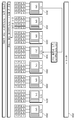
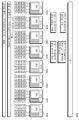
도 46 내지 도 51은 본 발명의 실시 예에 따른 예시적인 반환의 구현을 보여주는 블록도들이다.The accompanying drawings, which are incorporated in and constitute a part of this specification, are intended to illustrate examples of the principles of the invention and are not intended to limit the invention to the specific implementations described.
1 is a block diagram illustrating an exemplary storage device including a Selective Underlying Exposure (SUE) Storage Partition according to an embodiment of the present invention.
2 is a block diagram illustrating an exemplary Multimode Storage Device in accordance with an embodiment of the present invention.
3 is a block diagram illustrating another exemplary multi-mode storage device in accordance with an embodiment of the present invention.
4 is a block diagram illustrating an exemplary multimode solid state drive in accordance with an embodiment of the present invention.
5 is a conceptual diagram showing an exemplary process of converting address space information into logical address space information according to an embodiment of the present invention.
6 is a block diagram illustrating a system according to an embodiment of the present invention.
7 is a block diagram illustrating a system according to an embodiment of the present invention.
8 is a flow diagram illustrating a method for driving a multi-mode selective exposure in accordance with an embodiment of the present invention.
FIG. 9 is a block diagram illustrating an exemplary multi-mode solid state drive according to an embodiment of the present invention.
10 is a block diagram illustrating an exemplary SUE block and corresponding SUE page for storage in a user area of a multi-mode storage device in accordance with an embodiment of the present invention.
11 is a block diagram illustrating an exemplary SUE block and corresponding SUE pages of a user storage space for storage in a user area of a multi-mode storage device in accordance with an embodiment of the present invention.
12 is a block diagram illustrating an exemplary SUE metapage and corresponding SUE pages for storage in a user area of a multi-mode storage device in accordance with an embodiment of the present invention.
13 is a block diagram illustrating an exemplary SUE metablock and corresponding SUE metapages for storage in a user area of a multi-mode storage device in accordance with an embodiment of the present invention.
14 is a block diagram illustrating another exemplary SUE metablock and corresponding SUE blocks for storage in a user area of a multi-mode storage device in accordance with an embodiment of the present invention.
15 is a conceptual diagram illustrating an exemplary SUE mapping scheme that may be implemented by a multi-mode storage system to provide address mapping from a logical address to a SUE address in accordance with an embodiment of the invention.
16 is a block diagram illustrating an exemplary storage system capable of implementing the SUE mapping scheme of FIG.
17 is a flow diagram illustrating an exemplary method of mapping a logical address space to a SUE address space in accordance with an embodiment of the invention.
18 is a block diagram illustrating an exemplary multi-mode storage management system employing a SUE address scheme to enable a storage system to handle logical and SUE storage spaces in a storage device in accordance with an embodiment of the present invention.
19 is a block diagram illustrating another exemplary multi-mode storage management system employing a SUE address scheme to enable a storage system to handle logical and SUE storage spaces in a storage device in accordance with an embodiment of the present invention.
20 is a block diagram illustrating another exemplary multi-mode storage management system employing a SUE address scheme to enable a storage system to handle logical and SUE storage spaces in a storage device in accordance with an embodiment of the present invention.
21 is a block diagram illustrating a user area access manager that may be implemented by a multi-mode storage management system in accordance with an embodiment of the present invention.
22 is a block diagram illustrating a user area mapping engine that may be implemented by a multi-mode storage management system according to an embodiment of the present invention.
23 is a block diagram illustrating a metablock manager that may be implemented by a multi-mode storage management system according to an embodiment of the present invention.
24 is a block diagram illustrating a storage device control manager that may be implemented by a multi-mode storage management system in accordance with an embodiment of the present invention.
25 is a block diagram illustrating a storage access manager that may be implemented by a multi-mode storage management system in accordance with an embodiment of the present invention.
26 is a block diagram illustrating a global state manager that may be implemented by a multi-mode storage management system according to an embodiment of the present invention.
Figure 27 is a block diagram illustrating an exemplary device connected to a network in accordance with an embodiment of the present invention.
28 is a block diagram showing a distributed system according to an embodiment of the present invention.
29 is a block diagram illustrating a distributed system according to an embodiment of the present invention.
30 is a flowchart of a block life cycle according to an embodiment of the present invention.
31 is a block diagram illustrating a distributed system metablock according to an embodiment of the present invention.
32 is a conceptual diagram for explaining a matching hash used to add and remove nodes according to an embodiment of the present invention;
33 is a flowchart illustrating an exemplary writing process according to an embodiment of the present invention.
34 is a flowchart illustrating an exemplary write allocation process according to an embodiment of the present invention.
35 is a block diagram illustrating an exemplary implementation of a distributed system that implements write assignment processing operations in accordance with an embodiment of the present invention.
36 is a flowchart illustrating an exemplary write data transfer process according to an embodiment of the present invention.
37 is a block diagram illustrating an exemplary implementation of a distributed system that implements write data transfer processing operations in accordance with an embodiment of the present invention.
38 is a flowchart illustrating an exemplary write mapping update process according to an embodiment of the present invention.
39 is a block diagram illustrating an exemplary system implementation of write mapping update processing operations in accordance with an embodiment of the present invention.
FIG. 40 is a flow chart for explaining a write process of an exemplary write remaining space according to the embodiment of the present invention.
41 is a block diagram illustrating an exemplary system for implementing write processing operations of a write-once space according to an embodiment of the present invention.
42 is a flowchart illustrating an exemplary write completion process according to an embodiment of the present invention.
Figure 43 is a block diagram illustrating an exemplary system for implementing write completion processing operations in accordance with an embodiment of the present invention.
Figure 44 is a flow chart illustrating an exemplary return initialization process in accordance with an embodiment of the present invention.
45 is a flowchart illustrating an exemplary return process according to an embodiment of the present invention.
46 to 51 are block diagrams illustrating an implementation of an exemplary return according to an embodiment of the present invention.
상술한 특성들 및 이하 상세한 설명들은 모두 본 발명의 설명 및 이해를 돕기 위한 예시적인 사항들이다. 즉, 본 발명은 이와 같은 실시 예들에 한정되지 않고 다른 형태로 구체화될 수 있다. 다음 실시 형태들은 단지 본 발명을 완전히 개시하기 위한 예시이며, 본 발명이 속하는 기술 분야의 통상의 기술자들에게 본 발명을 전달하기 위한 설명이다. 따라서, 본 발명의 구성 요소들을 구현하기 위한 방법이 여럿 있는 경우에는, 이 방법들 중 특정한 것 또는 이와 동일성 있는 것 가운데 어떠한 것으로든 본 발명의 구현이 가능함을 분명히 할 필요가 있다.The foregoing characteristics and the following detailed description are exemplary of the present invention in order to facilitate the description and understanding of the present invention. That is, the present invention is not limited to these embodiments, but may be embodied in other forms. The following embodiments are merely examples for the purpose of fully disclosing the present invention and are intended to convey the present invention to those skilled in the art. Thus, where there are several methods for implementing the components of the present invention, it is necessary to make it clear that the implementation of the present invention is possible by any of these methods or any of these.
본 명세서에서 어떤 구성이 특정 요소들을 포함한다는 언급이 있는 경우, 또는 어떤 과정이 특정 단계들을 포함한다는 언급이 있는 경우는, 그 외 다른 요소 또는 다른 단계들이 더 포함될 수 있음을 의미한다. 즉, 본 명세서에서 사용되는 용어들은 특정 실시 형태를 설명하기 위한 것일 뿐이고, 본 발명의 개념을 한정하기 위한 것이 아니다. 나아가, 발명의 이해를 돕기 위해 설명한 예시들은 그것의 상보적인 실시 예도 포함한다. 몇몇 예에서, 본 발명의 기술 사상을 불필요하게 모호하게 만들지 않기 위해, 잘 알려진 방법들, 과정들, 구성 요소들, 및 회로들은 자세히 설명되지 않을 수 있다.It is to be understood that, in the context of this specification, when reference is made to a configuration including certain elements, or when it is mentioned that a process includes certain steps, other elements or other steps may be included. In other words, the terms used herein are for the purpose of describing specific embodiments only, and are not intended to limit the concept of the present invention. Further, the illustrative examples set forth to facilitate understanding of the invention include its complementary embodiments. In some instances, well known methods, procedures, components, and circuits may not be described in detail in order not to unnecessarily obscure the present invention.
본 명세서에서 사용되는 용어들은 본 발명이 속하는 기술 분야의 통상의 기술자들이 일반적으로 이해하는 의미를 갖는다. 보편적으로 사용되는 용어들은 본 명세서의 맥락에 따라 일관적인 의미로 해석되어야 한다. 또한, 본 명세서에서 사용되는 용어들은, 그 의미가 명확히 정의된 경우가 아니라면, 지나치게 이상적이거나 형식적인 의미로 해석되지 않아야 한다.The terms used in this specification are meant to be understood by those of ordinary skill in the art to which this invention belongs. Commonly used terms should be construed in a manner consistent with the context of this specification. Also, terms used in the specification should not be construed as being excessively ideal or formal in nature unless the meaning is clearly defined.
효율적이고 효과적인 다중 모드(Multimode) 저장 접근법들이 설명될 것이다. 다중 모드 저장 방법들은 여러 상이한 유형의 어드레스 공간(Address Space)들 및 어드레스 공간 활동(Activity)들을 채용할 수 있다. 몇몇 실시 예에서, 다중 모드 선별 잠재 노출(Selective Underlying Exposure, 이하 SUE) 저장 장치는 저장 장치의 몇몇 잠재적인 양상(Aspect)들의 선별적인 노출을 가능하게 하는 반면, 다른 잠재적인 양상들을 노출하지 않을 수 있다. 다중 모드 저장 및 SUE 접근법은 복잡도를 관리 가능한 범위로 제한하면서도, 성능을 개선할 수 있다.Efficient and efficient multi-mode storage approaches will be described. Multimode storage methods may employ several different types of address spaces and address space activities. In some embodiments, a multi-mode Selective Underlying Exposure (SUE) storage device allows selective exposure of several potential Aspects of the storage device, while not exposing other potential aspects have. The multimode storage and SUE approach can improve performance while limiting complexity to a manageable range.
몇몇 예시적인 구현에서, 물리 어드레스 공간(Physical Address Space)의 잠재적인 양상이 선별적으로 노출될 수 있다. 전반적인 저장 계층(Hierarchical) 접근법이 구현될 수 있고, 한 계층의 잠재적인 양상들은 다른 계층 레벨에 선별적으로 노출될 수 있다. 선별적인 노출은 어드레스 공간 구성들, 및 어드레스 공간들 사이의 맵핑(Mapping)을 통해 발생할 수 있다. 선별적으로 노출된 잠재적인 양상은 그 노출된 잠재적인 양상을 갖는 계층 레벨과 상이한 다른 계층 레벨에서 수행되는 다양한 활동들을 더 효율적이고 효과적으로 구현할 수 있다. 이 다양한 활동들은 저장 관리 동작들을 포함할 수 있다. 다중 모드 저장 및 SUE 접근법들은 다양한 구성들 및 구현들을 포함할 수 있음이 이해될 것이다.In some exemplary implementations, potential aspects of the physical address space may be selectively exposed. The overall storage hierarchy approach can be implemented, and the potential aspects of one layer can be selectively exposed at different layer levels. Selective exposure can occur through address space configurations, and mapping between address spaces. The selectively exposed potential aspects can more efficiently and effectively implement the various activities performed at different layer levels that are different from the layer levels with the exposed potential aspects. These various activities may include storage management operations. It will be appreciated that the multimode storage and SUE approaches may include various configurations and implementations.
이하 첨부된 도면들을 통하여 본 발명의 실시 예들이 설명될 것이다.BRIEF DESCRIPTION OF THE DRAWINGS Fig.
I. 다중 I. Multiple 모드mode 저장 장치 Storage device
도 1은 본 발명의 실시 예에 따른 선별 잠재 노출(SUE) 저장 파티션(Partition)(101)을 포함하는 예시적인 저장 장치(100)를 보여주는 블록도이다. SUE 저장 파티션(101)은 선별 잠재 노출(SUE) 인터페이스(102) 및 잠재 저장 영역(Underlying Storage Region, 103)을 포함할 수 있다.FIG. 1 is a block diagram illustrating an
잠재 저장 영역(103)은 정보를 저장할 수 있고, SUE 인터페이스(102)는 잠재 저장 영역(103) 자체(예컨대, 차원(Dimension)들과 관련되는 물리적인 양상들, 대표 기하 구조(Representative Geometry), 관리 기능들, 쓰기 동작들, 소거 동작들 등)의 양상(예컨대, 특성(Characteristic), 특징(Feature), 기능 등)을 외부 구성 요소 또는 저장 시스템 계층 레벨(미도시)에게 선별적으로 노출할 수 있다. 이 노출은 잠재 저장 영역(103)에 저장된 정보(사용자 데이터 및 메타데이터)의 양상들과 관련될 수 있다. SUE 저장 파티션(101)은 잠재적인 양상들(예컨대, 특성들, 특징들, 기능들 등)의 일부를 노출할 수 있다.The
잠재적인 양상들의 일부를 노출하는 예시적인 구현에서, 노출된 양상들과 관련되는 활동(예컨대, 남는 공간(Free Space)의 관리, 남는 공간의 사용을 위한 반환(Reclamation) 및 환경 설정, 오버 프로비저닝(Over-provisioning), 트림(Trim) 동작들, 파워 사이클링(Power Cycling) 등)은 잠재적인 양상의 일부를 선별적으로 노출하지 않는 시스템에 비해 더 효율적으로(예컨대, 더 빠르고, 더 적은 대역폭에서, 적은 전력을 소모하여) 수행될 수 있다. 이 활동은 잠재적인 양상들을 더 많이 또는 모두 노출하는 접근법에 비해, 낮은 복잡도로 수행될 수 있다.In an exemplary implementation that exposes some of the potential aspects, the activity associated with the exposed aspects (e.g., management of free space, reclamation and configuration for use of the remaining space, overprovisioning (E.g., over-provisioning, trim operations, power cycling, etc.) may be more efficient (e.g., faster, less bandwidth, Consuming less power). This activity can be performed with a lower complexity than the approach of exposing more or all of the potential aspects.
잠재적인 양상들 중 어느 부분을 노출시킬 것인지를 선택하는 것은 속도와 복잡도를 비교하거나 속도와 복잡도 사이의 균형을 고려하여 결정될 수 있다. SUE 저장 파티션(101)이 단일 파티션을 이용하여 단일 모드 저장 장치에 포함될 수도 있고, 또는 SUE 저장 파티션(101)이 복수의 파티션을 이용하여 다중 모드 저장 장치에 포함될 수도 있음이 이해될 것이다.Choosing which of the potential aspects to expose can be determined by comparing speed and complexity or by considering the balance between speed and complexity. It will be appreciated that the
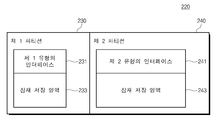
도 2는 본 발명의 실시 예에 따른 예시적인 다중 모드 저장 장치(220)를 보여주는 블록도이다. 저장 장치(220)는 제 1 파티션(230) 및 제 2 파티션(240)을 포함할 수 있다.2 is a block diagram illustrating an exemplary
여러 모드 및 이에 대응하는 파티션들은 다양한 요소와 관련되거나 다양한 요소에 기반할 수 있음이 이해될 것이다. 이 다양한 요소는 잠재 저장 영역들의 상이한 노출들, 상이한 어드레스 공간들(예컨대, 논리적인 것, 가상(Virtual)인 것, 또는 물리적인 것), 상이한 저장 관리 모드들(예컨대, 내부 관리 및 외부 관리), 상이한 잠재 저장 정보(예컨대, 메타데이터 및 사용자 데이터) 등을 포함할 수 있다. 내부 관리 및 외부 관리는 저장 장치 관리 시스템의 구성 요소들 및 동작들(예컨대, 플래시 관리 시스템(Flash Management System, FMS), 솔리드 스테이트(Solid State) 장치 관리 시스템 등)을 포함할 수 있다. 파티션들 및 이에 대응하는 구성 요소들은 상이한 유형들일 수도 있다.It will be appreciated that the various modes and corresponding partitions may be related to various elements or may be based on various elements. These various elements may include different exposures of the potential storage areas, different address spaces (e.g., logical, virtual, or physical), different storage management modes (e.g., , Different latent storage information (e.g., metadata and user data), and the like. Internal management and external management may include components and operations of a storage management system (e.g., a Flash Management System (FMS), a solid state device management system, etc.). The partitions and corresponding components may be of different types.
다중 모드 저장 장치(220)의 파티션들 및 이에 대응하는 인터페이스들은 상이한 유형들의 어드레스 공간들(예컨대, 논리 어드레스 공간 및 선별 잠재 노출(SUE) 어드레스 공간)과 관련될 수 있다. 다중 모드 저장 장치(220)의 하나보다 많은 파티션 및 이에 대응하는 인터페이스는 동일한 유형의 어드레스 공간과 관련될 수도 있다(예로서, 다중 모드 저장 장치(220)의 하나보다 많은 파티션 및 이에 대응하는 인터페이스는 SUE 어드레스 공간들과 관련될 수 있다). The partitions of
제 1 파티션(230)은 제 1 유형의 인터페이스(231) 및 잠재 저장 영역(233)을 포함할 수 있다. 제 2 파티션(240)은 제 2 유형의 인터페이스(241) 및 잠재 저장 영역(243)을 포함할 수 있다. 몇몇 실시 예에서, 제 1 파티션(230)은 제 1 유형의 어드레스 공간 파티션(예컨대, 논리 어드레스 공간 파티션)일 수 있고, 제 2 파티션(240)은 제 2 유형의 어드레스 공간 파티션(예컨대, SUE 어드레스 공간 및 가상 어드레스 공간 파티션)일 수 있다. 파티션은 SUE 저장 파티션일 수 있음이 이해될 것이다.The
도 3은 본 발명의 실시 예에 따른 다른 예시적인 다중 모드 저장 장치(350)를 보여주는 블록도이다. 저장 장치(350)는 제 1 파티션(370) 및 제 2 파티션(380)을 포함할 수 있다.3 is a block diagram illustrating another exemplary
몇몇 실시 예에서, 제 1 파티션(370)은 제 1 유형의 어드레스 공간 파티션일 수 있고, 제 2 파티션(380)은 SUE 어드레스 공간 파티션일 수 있다. 제 1 파티션(370)은 제 1 유형의 인터페이스(371) 및 잠재 저장 영역(373)을 포함할 수 있다. 제 2 파티션(380)은 SUE 인터페이스(381) 및 잠재 저장 영역(383)을 포함할 수 있다. 제 1 파티션 관련 활동들(372)(예컨대, FMS)과 같은 몇몇 활동이 하나의 파티션을 위하여 내부적으로(예컨대, 저장 장치(350)에서) 수행될 수 있고, 다른 파티션을 위하여 외부적으로(미도시) 수행될 수 있다.In some embodiments, the
상이한 파티션들에는 상이한 유형들의 정보가 저장될 수 있다. 몇몇 실시 예에서, 두 가지 유형의 정보(예컨대, 메타데이터 및 사용자 데이터)가 있을 수 있다. 사용자 데이터는 주로 사용자 어플리케이션(Application)들에 의해 생성될 수 있고, 메타데이터는 주로 사용자 데이터와 관련되는 보조 정보(예컨대, 저장 시스템 계층에서의 파일의 위치, 파일의 내용의 크기, 액세스(Access) 시각, 수정 시각, 사용자 ID 등)일 수 있다. 제 1 플래시 관리 시스템은 메타데이터를 관리하는 데에 초점을 둘 수 있다. 메타데이터는 결국 사용자 데이터의 저장을 관리하기 위해 이용될 수 있다.Different types of information may be stored in different partitions. In some embodiments, there may be two types of information (e.g., metadata and user data). The user data may be generated primarily by user applications and the metadata may include auxiliary information (e.g., location of the file at the storage system layer, size of the contents of the file, Access) associated with the user data, Time, modification time, user ID, etc.). The first flash management system may focus on managing metadata. The metadata may eventually be used to manage the storage of user data.
관리 또는 유지보수 활동들과 관련되는 시스템 동작들과는 상이하게, 사용자에 의해 개시되는(User-initiated) 활동들과 관련되는 동작들을 저장 시스템이 지시하거나 구현할 수 있음이 이해될 것이다. 예로서, 사용자에 의해 개시되는 읽기 또는 쓰기는 사용자 관점으로부터 제공되는 특정 어드레스 또는 위치로 향할 수 있는 반면, 시스템 동작들은 시스템 관점으로부터 제공되는 물리 블록(Block)들 및 페이지(Page)들로 향할 수 있다.It will be appreciated that, unlike system operations that are associated with management or maintenance activities, operations associated with user-initiated activities may be directed or implemented by the storage system. By way of example, a user-initiated read or write may be directed to a specific address or location provided from the user's perspective, while system operations may be directed to physical blocks and pages provided from a system point of view. have.
저장 장치(350)가 다양한 구성들 및 구현들을 포함할 수 있음이 이해될 것이다. 몇몇 실시 예에서, 저장 장치(350)는 솔리드 스테이트 장치일 수 있다. 저장 장치(350)는 플래시 구성 요소들(예컨대, NAND 플래시 구성 요소들, NOR 플래시 구성 요소들 등)을 포함할 수 있다.It will be appreciated that the
도 4는 본 발명의 실시 예에 따른 예시적인 다중 모드 솔리드 스테이트 드라이브(Multimode Solid State Drive, 400)를 보여주는 블록도이다. 다중 모드 솔리드 스테이트 드라이브(400)는 다중 모드 저장 장치의 예시적인 구현의 하나일 수 있다. 다중 모드 솔리드 스테이트 드라이브(400)는 논리 어드레스 공간 파티션(410), 플래시 변환 로직(Flash Translation Logic, FTL, 413)을 포함할 수 있는 논리 인터페이스(411), 잠재 물리 어드레스 공간(412), SUE 어드레스 공간 파티션(420), SUE 인터페이스(421), 및 잠재 물리 어드레스 공간(423)을 포함할 수 있다.4 is a block diagram illustrating an exemplary multimode
논리 어드레스 공간 파티션(410)은 논리 어드레스 기반으로 시스템 데이터(예컨대, 메타데이터)를 수신하고 저장할 수 있고, SUE 어드레스 공간 파티션(420)은 잠재 노출 어드레스 공간에 따른 어드레스 기반으로 사용자 데이터(예컨대, 어플리케이션 데이터)를 수신할 수 있다. 사용자 데이터는 잠재 물리 어드레스 공간(423)에 저장될 수 있는데, 잠재 물리 어드레스 공간(423)은 플래시 저장 구성 요소들(예컨대, 상이한 유형들의 플로팅 게이트 트랜지스터(Floating Gate Transistor)들)을 포함할 수 있다. 플래시 저장 구성 요소들은 다양한 구성들 및 그래뉼래러티(Granularity)들로 배열될 수 있다. 예로서, 플래시 저장 구성 요소들은 복수의 다이(Die)로서 배열될 수 있고, 복수의 다이 중 다이(470)는 블록들(473, 479) 및 블록들 내의 페이지들을 포함할 수 있다.The logical
몇몇 실시 예에서, SUE 인터페이스(421)는 잠재 물리 어드레스 공간(423)의 양상을 노출할 수 있다. 잠재 물리 어드레스 공간(423)의 선별적인 양상들은 다중 모드 솔리드 스테이트 드라이브(400)의 잠재적인 동작들을 다루는(Addressing) 사용자 데이터의 조정(Coordination)에 의해 노출될 수 있다. 이 조정은 잠재 물리 어드레스 공간(423)의 관리 동작들의 노출과 관련될 수 있다. 잠재적인 물리 저장 관리의 양상은 함께 관리되는 복수의 잠재 물리 어드레스 블록(예컨대, 471, 472, 473, 474)을 분류(Grouping)하는 것을 포함할 수 있다. 예로서, 함께 관리되는 복수의 잠재 물리 어드레스 블록(예컨대, 471, 472, 473, 474)은 단일 관리 단위로서 단일 동작에서 함께 관리되거나, 블록 집합이나 대역(Band)에서 함께 관리되거나, 단일 관리 커맨드(Command)에 응답하여 함께 관리될 수 있다.In some embodiments,
도 5는 본 발명의 실시 예에 따라 어드레스 공간 정보를 논리 어드레스 공간 정보로 변환하는 예시적인 과정을 보여주는 개념도이다. SUE 어드레스 블록(503)은 다양한 관리 및 유지보수 동작들과 관련되는 정보(예컨대, 505, 507, 508)를 포함할 수 있다. 물리 어드레스 공간(502)은 복수의 다이(511, 512, 513, 514, 521, 522, 523, 524, 531, 532, 533, 534, 541, 542, 543, 544)를 포함할 수 있다. 각 다이는 복수의 물리 어드레스 기반의 블록(예컨대, 515, 519)을 포함할 수 있고, 각 물리 어드레스 기반의 블록은 복수의 물리 어드레스 페이지를 포함할 수 있다.5 is a conceptual diagram showing an exemplary process of converting address space information into logical address space information according to an embodiment of the present invention. The
물리 어드레스 공간(502)은 물리 블록 및 물리 페이지 기반의 어드레스 저장 위치들에 액세스할 수 있다. SUE 인터페이스(501)는 SUE 어드레스 블록(503)의 정보를 수신할 수 있고, 수신된 정보를 물리 어드레스 공간(502)과 호환 가능한 구성들로 변환하거나 재구성할 수 있다. SUE 어드레스 블록(503)의 정보는 물리적인 관리 동작에 관여하는 정보에 대응할 수 있다.The
몇몇 실시 예에서, 관리 및 유지보수 동작들은 물리 어드레스 공간(502) 내의 물리 블록들(예컨대, 515, 519, 539)로 제공될 수 있다. 관리 동작은 물리 어드레스 공간 또는 물리 레벨 관리 유닛으로 제공될 수 있다. 물리 레벨 관리 유닛은 실질적으로 동일한 시점에(예컨대, 관리 동작 또는 커맨드에 응답하여) 관리되는 복수의 어드레스, 페이지, 블록 등을 관리하는 것을 포함할 수 있다. 예로서, 소거 동작은 (블록(515)과 유사하게 검은색으로 나타낸) 물리 블록으로 제공될 수 있다.In some embodiments, management and maintenance operations may be provided to physical blocks (e.g., 515, 519, 539) in
SUE 어드레스 블록(503)이 물리 블록에 매칭(Matching)되도록 구성됨에 따라, 각 물리 블록에 대응하는 각 정보(예컨대, 505, 507, 508)는 SUE 어드레스 블록(503)에 포함될 수 있다. 몇몇 예에서, SUE 인터페이스(501)는 SUE 어드레스 블록(503)의 정보를 수신할 수 있고, 정보(505, 507, 508)가 각각 물리 블록들(515, 517, 528)에 대응하는 것으로 식별할 수 있고, 따라서 대응하는 관리 및 유지보수 동작들을 수행할 수 있다. 몇몇 실시 예에서, 소거 관리 동작들은 복수의 물리 블록의 정보에 대해 수행될 수 있고, 쓰기 동작들은 페이지의 정보에 대해 수행될 수 있다.The
두 어드레스 공간들의 기하 구조들 역시 상이할 수 있다. 몇몇 실시 예에서, 논리 어드레스 공간은 단일 차원일 수 있고(예컨대, 논리 블록 어드레스(Logical Block Address, LBA)의 오프셋(Offset)이 어떻게 조정되는지와 관련), 물리 어드레스 공간은 다양한 양상(예컨대, ECC(Error Correction Code), 물리 페이지, 물리 블록, 물리 다이 등 또는 그것들의 일부 또는 부분 집합)을 포함하여 다차원일 수 있다. SUE 어드레스 공간은 일차원이거나, 제한된 또는 감소한 개수의 차원들일 수 있다. SUE 어드레스 공간에 관한 몇몇 예에서, 잠재 물리 어드레스 공간의 차원들은 단일의 또는 감소한 개수의 차원들로 추출(Abstract)될 수 있다. 잠재 물리 어드레스 공간의 관리 활동(예컨대, 반환/가비지 콜렉션(Garbage Collection), 파워 사이클링 등)과 관련되는 선택된 차원들(예컨대, 블록 및 페이지)은 SUE 어드레스 공간으로 추출될 수 있는 한편, 잠재 물리 어드레스 공간의 다른 양상들 또는 활동들(예컨대, ECC)은 SUE 어드레스 공간으로 추출되지 않을 수 있다.The geometries of the two address spaces may also be different. In some embodiments, the logical address space may be a single dimension (e.g., in relation to how the Offset of a Logical Block Address (LBA) is adjusted), the physical address space may be in various aspects (Error Correction Code), a physical page, a physical block, a physical die, etc., or a part or subset thereof). The SUE address space may be one-dimensional, limited or reduced in number of dimensions. In some examples of SUE address space, the dimensions of the potential physical address space may be abstracted into a single or a reduced number of dimensions. Selected dimensions (e.g., blocks and pages) associated with the management activities of the potential physical address space (e.g., return / garbage collection, power cycling, etc.) may be extracted into the SUE address space, Other aspects or activities of space (e.g., ECC) may not be extracted into the SUE address space.
잠재적인 양상의 선별적인 노출은 전반적인 시스템에서 다중 모드 솔리드 스테이트 드라이브(400)가 아닌 다른 구성 요소들(미도시)에 의해 사용자 데이터를 다중 모드 솔리드 스테이트 드라이브(400)로 전송하기 이전의 조정을 포함할 수 있음이 이해될 것이다. 몇몇 실시 예에서, 다중 모드 솔리드 스테이트 드라이브(400)는 전반적인 시스템 계층의 상이한 레벨에서 동작하는 관리 구성 요소에 연결될 수 있다.Selective exposure of a potential aspect includes adjustments prior to transferring user data to the multimode
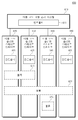
도 6은 본 발명의 실시 예에 따른 시스템(600)을 보여주는 블록도이다. 시스템(600)은 다중 모드 저장 관리 시스템(610)과 통신하도록 연결되는 복수의 다중 모드 솔리드 스테이트 드라이브(예컨대, 620, 630, 640, 650)를 포함할 수 있다.Figure 6 is a block diagram illustrating a
몇몇 활동(예컨대, 몇몇 저장 관리 동작들 및 플래시 관리 시스템 동작들)은 다중 모드 저장 관리 시스템(610)에 의해 제어될 수 있고, 다른 활동들(예컨대, 다른 저장 관리 동작들 및 플래시 관리 시스템 동작들)은 다중 모드 솔리드 스테이트 드라이브들(620, 630, 640, 650)에 의해 제어될 수 있음이 이해될 것이다. 몇몇 실시 예에서, 다중 모드 솔리드 스테이트 드라이브들(620, 630, 640, 650)은 각각 컨트롤러들(621, 631, 641, 651)을 포함할 수 있다. 컨트롤러들(621, 631, 641, 651)은 다중 모드 솔리드 스테이트 드라이브들(620, 630, 640, 650)에 대한 몇몇 활동을 제어하거나 지시할 수 있다. 다중 모드 저장 관리 시스템(610)은 컨트롤러(611)를 포함할 수 있다. 컨트롤러(611)는 다중 모드 솔리드 스테이트 드라이브들(620, 630, 640, 650)에 대한 몇몇 활동을 제어하거나 지시할 수 있다.Some of the activities (e.g., some storage management operations and flash management system operations) may be controlled by the multi-mode
몇몇 예시적인 구현에서, 컨트롤러들(621, 631, 641, 651)은 각각 다중 모드 솔리드 스테이트 드라이브들(620, 630, 640, 650)의 제 1 파티션들의 활동들을 제어하거나 지시할 수 있고, 컨트롤러(611)는 다중 모드 솔리드 스테이트 드라이브들(620, 630, 640, 650)의 제 2 파티션들의 활동들을 제어하거나 지시할 수 있다. 컨트롤러(611)는 선별 잠재 노출(SUE) 인터페이스들을 통해 다중 모드 솔리드 스테이트 드라이브들(620, 630, 640, 650)의 활동들을 제어할 수 있다.In some example implementations,
몇몇 실시 예에서, 시스템(600)은 여러 볼륨(Volume, 예컨대, 671, 672, 673)을 포함할 수 있다. 몇몇 예시적인 구현에서, 시스템(600)은 사용자 공간을 포함할 수 있다. 사용자 공간은 여러 볼륨으로 맵핑될 수 있고, 저장 공간은 여러 볼륨으로서 사용자에게 표현될 수 있다. 볼륨들이 상이한 크기들을 가질 수 있음이 이해될 것이다. 또한, 상이한 크기의 SUE 어드레스 기반 단위들이 여러 볼륨과 관련될 수 있음이 이해될 것이다.In some embodiments, the
도 7은 본 발명의 실시 예에 따른 시스템(700)을 보여주는 블록도이다. 시스템(700)은 기기(710)에 포함되는 다중 모드 저장 관리 시스템(720)과 통신하도록 연결되는 다중 모드 솔리드 스테이트 드라이브(750)를 포함할 수 있다. 기기(710)는 다양한 컴퓨터/전자 기기(장치) 중 어떤 것이든 될 수 있다. 다른 다중 모드 솔리드 스테이트 드라이브들이 다중 모드 저장 관리 시스템(720)에 연결될 수 있음이 이해될 것이다. 시스템(700)은 메타데이터(730) 및 사용자 데이터(740)의 저장을 관리할 수 있다.7 is a block diagram illustrating a
다중 모드 저장 관리 시스템(720)은 컨트롤러(745)를 포함할 수 있다. 컨트롤러(745)는 (사용자 데이터를 위한) 플래시 관리 시스템(741), 및 SUE 맵퍼(742)를 포함할 수 있다.The multi-mode
다중 모드 솔리드 스테이트 드라이브(750)는 논리 어드레스 공간 파티션(770) 및 SUE 어드레스 공간 파티션(780)을 포함할 수 있다. 논리 어드레스 공간 파티션(770)은 물리 어드레스 공간(777) 및 컨트롤러(775)를 포함할 수 있고, 컨트롤러(775)는 (메타데이터를 위한) 플래시 관리 시스템(771)을 포함할 수 있다. 플래시 관리 시스템(771)은 논리 인터페이스(772)를 포함할 수 있고, 논리 인터페이스(772)는 FTL(773)을 포함할 수 있다. 물리 어드레스 공간(777)은 NAND 플래시를 포함할 수 있다. SUE 어드레스 공간 파티션(780)은 SUE 인터페이스(782) 및 물리 어드레스 공간(787)을 포함할 수 있고, 물리 어드레스 공간(787)은 NAND 플래시를 포함할 수 있다.The multimode
메타데이터(730)의 정보는 논리 어드레스 블록들(791)에서 수신될 수 있다. 메타데이터(730)의 정보는 논리 어드레스 블록들(792)로 전달되어, 다중 모드 관리 시스템(720)으로부터 논리 어드레스 공간 파티션(770)으로 제공될 수 있다. 논리 어드레스 블록들(791, 792)은 동일할 수 있음(예컨대, 논리 어드레스 블록들(791)이 변경되지 않고 단순히 논리 어드레스 공간 파티션(770)으로 전달될 수 있음)이 이해될 것이다.The information in the
논리 인터페이스(772)는 메타데이터와 관련되는 논리 블록 어드레스(LBA)를, 물리 어드레스 공간(777)과 관련되는 물리 어드레스 블록(793)으로 변환할 수 있다. 플래시 관리 시스템(771)은 물리 어드레스 공간(777)과 관련되는 저장 관리 및 유지보수 동작들을 지시할 수 있다. 메타데이터는 물리 어드레스 공간(777)의 NAND 플래시에 저장될 수 있다.The
논리 어드레스 블록들(797)의 사용자 데이터는 플래시 관리 시스템(741)으로 전달될 수 있다. 물리 어드레스 공간(787)의 잠재적인 특징들 및 특성들이 SUE 인터페이스(782)를 통해 노출됨에 따라, 플래시 관리 시스템(741)은 물리 어드레스 공간(787)의 잠재적인 특징들 및 특성들과 관련되는 플래시 관리 및 유지보수 동작들을 지시할 수 있다. SUE 맵퍼(742)는 논리 어드레스 블록들(797)을 SUE 어드레스 블록(798)으로 맵핑할 수 있다.The user data of the logical address blocks 797 may be passed to the
이에 따라, SUE 어드레스 블록(798)은 SUE 인터페이스(782)에 의해, (도 5의 물리 블록들(517, 519)과 유사한) 물리 어드레스 블록(799)으로 변환될 수 있다. 물리 어드레스 블록(799)은 물리 어드레스 공간(787)에 포함되는 NAND 플래시 구성 요소들과 관련될 수 있다. 논리 어드레스 블록은 SUE 어드레스 블록의 것과 상이한 크기를 가질 수 있고 이에 따라 물리 어드레스 블록의 것과 상이한 크기를 가질 수 있음이 이해될 것이다.Accordingly, the
계층 레벨의 상위에서 다양한 활동들을 수행하는 것은 기존의 접근법들에 비해 더 효율적이고 편리한 관리를 가능하게 한다. 종래의 접근법들의 경우, 여러 계층에 영향을 주는 활동들을 다루는 것의 유연성이 제한적이었다. 종래의 몇몇 접근법들은 전반적인 성능에 기하급수적으로 부정적인 영향들을 야기하는 활동(예컨대, 로그-온-로그(Log-on-Log), 구동 레벨의 플래시 관리 시스템, 및 시스템 레벨의 플래시 관리 시스템)을 여러 계층에 대해 수행해야 했다.Performing various activities at a higher level of the hierarchy enables more efficient and convenient management compared to existing approaches. Conventional approaches have had limited flexibility in dealing with activities that affect multiple layers. Several conventional approaches have been used to implement activities (e.g., log-on-log, drive-level flash management systems, and system-level flash management systems) that cause exponentially negative impacts on overall performance I had to do it for the layer.
예로서, RAID(Redundant Array of Independent Disks) 저장 시스템에는, 상위 저장 계층 레벨(예컨대, RAID 시스템 관리 레벨) 및 하위 저장 계층 레벨(예컨대, 저장 구동 레벨) 모두에 영향을 주어 함께 관리될 필요가 있는 요소들이 많이 있다(예컨대, 데이터 저장 및 대응하는 패리티(Parity)의 저장). 정보의 라이프사이클(Lifecycle)이 각 계층마다 상이할 수 있고(예컨대, 사용자는 정보를 덮어쓰기(Overwrite)하고자 하는데, RAID 시스템은 패리티를 다시 계산할 필요가 있음), 이 경우 구동 레벨은 사용자를 위해 "새로운" 데이터를 쓰려고 하지만, 시스템 레벨은 RAID 시스템을 위해 "기존의" 정보를 유지하려고 할 수 있다. 이는 트림 동작을 수행하기 위한 능력이 없는 쓰기 증폭 지수(Write Amplification Factor)를 가능하게 한다.For example, Redundant Array of Independent Disks (RAID) storage systems need to be managed together to affect both the upper storage level (e.g., RAID system management level) and the lower storage level (e.g., storage drive level) There are many elements (e.g., storing data and storing the corresponding parity). The lifecycle of the information may be different for each layer (e.g., the user would like to overwrite the information (the RAID system needs to recalculate the parity), in which case the drive level is for the user While trying to write "new" data, the system level may try to keep "legacy" information for the RAID system. This enables a Write Amplification Factor without the ability to perform a trim operation.
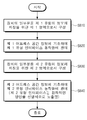
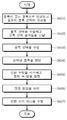
도 8은 본 발명의 실시 예에 따라 다중 모드 선별 잠재 노출을 구동하는 방법을 설명하는 흐름도이다.8 is a flow diagram illustrating a method for driving a multi-mode selective exposure in accordance with an embodiment of the present invention.
7%의 오버 프로비저닝(예컨대, 솔리드 스테이트 드라이브)으로 구동하는 것은 오버 프로비저닝을 구동하는 것 없이 직접 덮어쓰기를 수행하는 시스템(예컨대, 하드 디스크 드라이브)에 비해 15배 어려운 작업을 요구하고, 시스템 오버 프로비저닝을 채용하지 않은 시스템에 비해 15배 더 어려운 작업을 요구하여, 전체적으로 225(=15×15)배 어렵다. 플래시 관리 시스템이 상위 저장 계층 레벨로 이동되게 하는 다중 모드 저장 장치는 작업의 감소를 가능하게 하고(예컨대, 7%의 오버 프로비저닝은 오버 프로비저닝이 없는 것에 비해 단지 15배 어려워지고, 28%의 오버 프로비저닝은 오버 프로비저닝이 없는 것에 비해 단지 3배 어려워짐), 이는 쓰기 증폭 지수의 감소를 가능하게 한다. 몇몇 예시적인 구현에서, 상위 저장 계층 레벨로부터의 관리 동작들을 지시하기 위해 이용되는 선별된 잠재 어드레스 블록 및 페이지들은 잠재 물리 레벨과 조화되거나 매칭될 수 있다. 이는 사용자 수준에서의 정보 라이프사이클이 시스템 수준에서의 정보 라이프사이클과 달라지게 할 수 있다. 그러나, 관리 관점에서, 두 라이프사이클들은 동일하게 조정될 수 있다(예컨대, 사용자 수준에서의 라이프사이클의 길이 및 시스템 수준에서의 라이프사이클의 길이는 사용자 공간의 이용 및 소거에 대응할 수 있다).Driving with 7% overprovisioning (e.g., a solid state drive) requires 15 times more difficult tasks than a system that performs direct overwriting (e.g., hard disk drive) without driving overprovisioning, 15 times more difficult work is required than the system that does not adopt the system, and it is hardly 225 (= 15 × 15) times as a whole. A multimode storage device that allows the flash management system to move to an upper storage layer level allows for reduction of work (e.g., 7% overprovisioning is only 15 times more difficult without overprovisioning and 28% overprovisioning Is only three times harder than without overprovisioning), which allows a reduction in the write amplification index. In some exemplary implementations, selected potential address blocks and pages used to direct management operations from an upper storage layer level may be matched or matched with potential physical levels. This can make the information lifecycle at the user level different from the information lifecycle at the system level. However, from a management point of view, both life cycles can be tuned identically (e.g., the length of the life cycle at the user level and the length of the life cycle at the system level may correspond to the use and erasure of user space).
S810 동작에서, 장치의 제 1 부분이 제 1 유형의 정보를 저장하기 위한 제 1 영역으로서 구성되거나 지정될 수 있다. 몇몇 실시 예에서, 제 1 영역은 메타데이터 영역일 수 있고, 제 1 유형의 정보는 메타데이터일 수 있다. ECC의 크기는 가변(Vary)할 수 있다.In operation S810, a first portion of the device may be configured or designated as a first region for storing information of a first type. In some embodiments, the first region may be a metadata region, and the first type of information may be metadata. The size of the ECC can be variable (Vary).
S820 동작에서, 제 1 어드레스 공간 정보에 기초하여 제 1 유형 인터페이스 동작들이 수행될 수 있다. 몇몇 예시적인 구현에서, 제 1 영역은 메타데이터 영역일 수 있고, 제 1 유형의 정보는 메타데이터일 수 있다. 몇몇 실시 예에서, 제 1 유형 인터페이스는 논리 어드레스 공간 인터페이스일 수 있고, 논리 어드레스 기반의 정보에 기초하여 동작들이 수행될 수 있다. 논리 인터페이스 동작들은 FTL을 포함할 수 있다. FTL은 메타데이터 및 논리 어드레스들을 수신할 수 있고, 시스템 레벨 구성에서 보이는 어드레스 블록들을 물리 레벨 구성의 어드레스 블록들로 변환할 수 있다.In operation S820, first type interface operations may be performed based on the first address space information. In some exemplary implementations, the first region may be a metadata region, and the first type of information may be metadata. In some embodiments, the first type interface may be a logical address space interface and operations may be performed based on logical address based information. Logical interface operations may include FTL. The FTL may receive metadata and logical addresses and may convert address blocks seen in a system level configuration into address blocks of a physical level configuration.
S830 동작에서, 장치의 제 2 부분이 제 2 유형의 정보를 저장하기 위한 제 2 영역으로서 구성되거나 지정될 수 있다. 몇몇 실시 예에서, 제 2 영역은 사용자 데이터 영역일 수 있고, 제 2 유형의 정보는 사용자 데이터일 수 있다. SUE 어드레스 공간은 물리 어드레스 공간과 관련되는 복잡도를 추상화하거나 제거할 수 있으면서도, 잠재 물리 어드레스 공간 구성과의 관계 또는 대응을 여전히 노출할 수 있다. 몇몇 실시 예에서, 물리 공간 차원들은 SUE 어드레스 페이지 차원 및 SUE 어드레스 블록 차원으로 추출될 수 있다. 물리 어드레스 공간은 SUE 어드레스에 의해 추상화될 수 있다.In operation S830, a second portion of the device may be configured or designated as a second region for storing a second type of information. In some embodiments, the second area may be a user data area, and the second type of information may be user data. The SUE address space can abstract or eliminate the complexity associated with the physical address space, but still expose the relationship or correspondence with the potential physical address space configuration. In some embodiments, the physical space dimensions may be extracted as a SUE address page dimension and a SUE address block dimension. The physical address space may be abstracted by the SUE address.
S840 동작에서, 제 2 어드레스 공간 정보에 기초하여 제 2 유형 인터페이스 동작들이 수행될 수 있다. 제 2 유형 인터페이스는 잠재적인 양상을 노출할 수 있다. 제 2 어드레스 공간 정보는 SUE 어드레스 공간 정보일 수 있다. SUE 어드레스 공간 정보는 잠재적인 양상에 대응할 수 있다. 잠재적인 양상은 물리 어드레스 공간 기하 구조의 대표 기하 구조 또는 차원을 포함할 수 있다. SUE 인터페이스는 잠재적인 시스템 관리 동작들(예컨대, 남는 공간의 관리, 남는 공간의 사용을 위한 정비 및 환경 설정 등)과 관련되는 차원들을 노출할 수 있다. 메타데이터 영역에서의 오버 프로비저닝의 비율은 사용자 데이터 영역에서의 오버 프로비저닝의 비율과 상이할 수 있다.In operation S840, second type interface operations may be performed based on the second address space information. The second type interface can expose potential aspects. The second address space information may be SUE address space information. The SUE address space information may correspond to a potential aspect. Potential aspects may include a representative geometry or dimension of a physical address space geometry. The SUE interface may expose dimensions that relate to potential system management operations (e.g., management of remaining space, maintenance and configuration for use of remaining space, etc.). The rate of overprovisioning in the metadata area may be different from the rate of overprovisioning in the user data area.
도 9는 본 발명의 실시 예에 따른 다중 모드 솔리드 스테이트 드라이브(920)를 예시적으로 보여주는 블록도이다. 도 9에서, 다중 모드 솔리드 스테이트 드라이브(920)는 논리 어드레스 기반의 솔리드 스테이트 드라이브(910) 및 물리 어드레스 기반의 솔리드 스테이트 드라이브(930)에 관한 기존의 시도들과 비교된다.9 is a block diagram illustrating an exemplary multi-mode
논리 어드레스 기반의 솔리드 스테이트 드라이브(910)는 논리 인터페이스(911), FTL(912), 및 논리 어드레스 공간(913)을 포함할 수 있다. 물리 어드레스 기반의 솔리드 스테이트 드라이브(930)는 물리 인터페이스(931) 및 물리 어드레스 공간(932)을 포함할 수 있다. 다중 모드 솔리드 스테이트 드라이브(920)는 논리 인터페이스(921), FTL(922), 논리 어드레스 공간(923), SUE 인터페이스(924), 및 물리 어드레스 공간(925)을 포함할 수 있다.The logical address based
다중 모드 솔리드 스테이트 드라이브(920)는 드라이브의 잠재적인 양상들의 편리하고 선별적인 노출을 가능하게 한다. 충분히 노출을 하지 않거나 지나친 복잡도를 갖는 기존의 접근법들과 달리, 다중 모드 솔리드 스테이트 드라이브(920)는 과도한 복잡함 없이 적절한 양의 노출을 가능하게 한다.The multimode
실제 기존의 솔리드 스테이트 드라이브들은 좋은 선형 어드레스 공간을 갖기보다는, 많은 플래시 칩들과 함께 컨트롤러를 포함한다. 이 플래시 칩들 및 컨트롤러는 다이들 상에서 트랜지스터들의 그룹들 또는 스트링(String)들에 저장될 데이터를 갖는 페이지들로 이루어지는 블록들에서 동작하도록 구성된다. 물리 어드레스 기반의 솔리드 스테이트 드라이브(930)는 저장 매체의 모든 잠재적인 물리 어드레스 양상을 노출하려고 하는데, 이는 (논리 어드레스 기반의 솔리드 스테이트 드라이브(910)에 비해) 매우 빠른 동작들을 가능하게 하지만 매우 복잡한 접근법을 야기한다. 논리 어드레스 기반의 솔리드 스테이트 드라이브(910)는 저장 매체의 잠재적인 세부 양상들을 모두 또는 거의 감추는 스킴(Scheme)을 이용하여 단일의 선형 플랫 맵핑 공간(Linear Flat Mapping Space)을 갖지만, 잠재적인 세부 양상들의 대부분을 감추면서 근본적으로는 데이터를 물리 영역에 저장하려는 것은 (물리 어드레스 기반의 솔리드 스테이트 드라이브(930)에 비해) 시스템을 느려지게 한다.Actually conventional solid state drives contain controllers with many flash chips, rather than having a good linear address space. The flash chips and controller are configured to operate on blocks of pages with data to be stored in groups of transistors or strings on dies. The physical address based
다중 모드 솔리드 스테이트 드라이브(920)는 플래시 관리 시스템의 동작들을 편리하고 유연하게 구성하고 구현할 수 있게 한다. 다중 모드 솔리드 스테이트 드라이브(920)는 논리 어드레스 공간(923)에 대한 플래시 관리 시스템의 동작들을 주로 다중 모드 솔리드 스테이트 드라이브(920)의 내부 컨트롤러(예컨대, 도 7의 컨트롤러(775))에서 수행할 수 있다. 한편, SUE 어드레스 공간(925)에 대한 플래시 관리 시스템의 동작들은 주로 다중 모드 솔리드 스테이트 드라이브(920)의 외부 컨트롤러(예컨대, 도 7의 컨트롤러(745))에서 시스템 레벨로 수행될 수 있다.The multimode
다중 모드 솔리드 스테이트 드라이브(920)의 플래시 관리 시스템의 동작들을 분리 또는 분할하는 능력은 이러한 분리 또는 분할을 허용하지 않는 물리 어드레스 기반의 솔리드 스테이트 드라이브(910) 및 논리 어드레스 기반의 솔리드 스테이트 드라이브(930)에서 이용되는 플래시 관리 시스템의 동작들과는 상이하다. 논리 어드레스 기반의 솔리드 스테이트 드라이브(910)를 위한 플래시 관리 시스템의 동작들은 주로 논리 어드레스 기반의 솔리드 스테이트 드라이브(910)의 내부 컨트롤러에서 수행되고, 물리 어드레스 기반의 솔리드 스테이트 드라이브(930)를 위한 플래시 관리 시스템의 동작들은 주로 물리 어드레스 기반의 솔리드 스테이트 드라이브(930)의 외부 컨트롤러에서 시스템 레벨로 수행된다.The ability to isolate or partition the operations of the flash management system of the multimode
몇몇 실시 예에서, 다중 모드 솔리드 스테이트 드라이브(920)는 잠재 어드레스 공간의 몇몇 특징을 선별적으로 노출할 수 있고, 논리 어드레스 기반의 솔리드 스테이트 드라이브(910) 및 물리 어드레스 기반의 솔리드 스테이트 드라이브(930)는 잠재 어드레스 공간의 몇몇 특징 및 그 외 다른 것들의 선별적인 노출을 가능하게 하지는 않는다. 몇몇 실시 예에서, 잠재적인 양상을 외부 플래시 관리 시스템(예컨대, 도 7의 다중 모드 저장 관리 시스템(720))으로 노출하는 것은 그 잠재적인 양상의 선택된 노출을 맵핑하는 것을 수반할 수 있다.In some embodiments, the multimode
II. 선별 잠재 노출(SUE) II. Selective potential exposure (SUE) 맵핑Mapping
본 발명의 다른 실시 예는 선별 잠재 노출(SUE) 맵핑 스킴을 구현하여, 저장 시스템에서 사용자 데이터를 위해 논리 어드레스 공간으로부터 SUE 어드레스 공간으로의 맵핑을 생성한다. 개별적인 저장 장치 레벨보다는 여러 저장 장치에 걸쳐 시스템 레벨에서 수행될 특정한 저장 매체 관리 기능들을 허용하기 위해, SUE 맵핑 스킴은 잠재 물리 저장 매체의 중요한 특징들을 선별적으로 노출할 수 있다.Another embodiment of the present invention implements a selective exposure (SUE) mapping scheme to create a mapping from the logical address space to the SUE address space for user data in the storage system. In order to allow specific storage media management functions to be performed at the system level across multiple storage devices rather than at individual storage levels, the SUE mapping scheme may selectively expose important features of the potential physical storage medium.
예로서, 몇몇 실시 예는 저장 기기에서 여러 NAND 플래시 불휘발성 메모리 장치들에 걸친 사용자 어드레스 공간의 양상들의 선별적인 노출을 가능하게 할 수 있다. SUE 맵핑 스킴의 SUE 페이지들 및 블록들은 물리적인 NAND 플래시 불휘발성 메모리 장치들 각각에서 하나의 단위로서 함께 관리되는 대응하는 물리 페이지들 및 블록들과 정렬될 수 있다. 물리적인 NAND 플래시 불휘발성 메모리 장치들의 개별적인 다이들은 SUE 맵핑 스킴에서는 구별되지 않더라도, SUE 블록 크기에 간접적으로 반영된다.By way of example, some embodiments may enable selective exposure of aspects of the user address space across the various NAND flash non-volatile memory devices at the storage device. SUE pages and blocks of the SUE mapping scheme may be aligned with corresponding physical pages and blocks that are managed together as a unit in each of the physical NAND flash nonvolatile memory devices. The individual dies of the physical NAND flash nonvolatile memory devices are indirectly reflected in the SUE block size, although not distinguished in the SUE mapping scheme.
저장 장치들의 물리 페이지들 및 블록들과 SUE 맵핑 스킴의 SUE 페이지들 및 블록들 사이의 상관관계는 저장 시스템에서 모든 NAND 플래시 불휘발성 메모리 장치들에 걸쳐 시스템 레벨로 조직되고 구현될 특정한 NAND 플래시 관리 기능들(예컨대, 소거, 프로그램, 및 남는 공간의 반환(가비지 콜렉션) 및 관리)을 허용한다. 특정한 저장 매체 관리 기능들의 시스템 레벨의 구현은 저장 자원의 제공(Provision)에 관한 유익한 효율성을 제공할 수 있다.The correlation between the physical pages and blocks of storage devices and the SUE pages and blocks of the SUE mapping scheme is determined by the particular NAND flash management function < RTI ID = 0.0 > to be implemented and implemented at the system level across all NAND flash nonvolatile memory devices in the storage system. (E.g., erase, program, and return of garbage (garbage collection) and management). A system-level implementation of specific storage media management functions may provide beneficial efficiency with respect to the provisioning of storage resources.
도 3을 다시 참조하면, NAND 플래시 불휘발성 메모리 장치와 같은 다중 모드 저장 장치(예컨대, 350, 400, 620)는 이 명세서에서 설명되는 SUE 맵핑 스킴을 이용하여 구현될 수 있다. 예로서, 몇몇 실시 예에서, 다중 모드 저장 장치는 NAND 플래시 기반의 솔리드 스테이트 드라이브일 수 있다. 몇몇 실시 예에서, 다중 모드 저장 장치는 표준 디스크 드라이브 폼 팩터(Standard Disk Drive Form Factor)나 표준 메모리 카드 폼 팩터(Standard Memory Card Form Factor)와 같은 표준화된 물리적인 폼 팩터를 따를 수 있다.Referring again to FIG. 3, a multi-mode storage device (e.g., 350, 400, 620) such as a NAND flash non-volatile memory device may be implemented using the SUE mapping scheme described herein. By way of example, in some embodiments, the multi-mode storage device may be a NAND flash-based solid state drive. In some embodiments, the multi-mode storage device may conform to standardized physical form factors such as Standard Disk Drive Form Factor or Standard Memory Card Form Factor.
도 5를 다시 참조하면, 위에서 설명된 것과 같이, 다중 모드 저장 장치는 많은 NAND 플래시 메모리 셀을 갖는 여러 다이(511, 512, 513, 514, 521, 522, 523, 524, 531, 532, 533, 534, 541, 542, 543, 544) 또는 메모리 칩들을 포함할 수 있다. 각 다이 상의 NAND 플래시 메모리 셀들은, 물리 블록들(515, 517, 519, 528, 539)과 같이, 여러 개별적인 물리 블록으로 더 구분될 수 있다.Referring again to FIG. 5, as described above, the multimode storage device includes a plurality of dies 511, 512, 513, 514, 521, 522, 523, 524, 531, 532, 533, 534, 541, 542, 543, 544) or memory chips. NAND flash memory cells on each die may be further subdivided into several separate physical blocks, such as
소거 및 남는 공간의 관리는 다중 모드 저장 장치의 다이들의 하나 이상의 개별 그룹들 상의 메모리 셀들의 블록들에 대해 수행될 수 있다. 예로서, 다중 모드 저장 장치는 128개의 다이들을 포함할 수 있고, 하나의 그룹 또는 단위로서, 128개의 다이들 중의 하나의 블록에 대해 소거 및 남는 공간의 관리를 수행할 수 있다. 대안적으로, 다중 모드 저장 장치는 128개의 다이들을 포함할 수 있고, 하나의 그룹으로서, 다이들의 부분 집합(예컨대, 32개의 다이들의 그룹) 중의 하나의 블록에 대해 소거 및 남는 공간의 관리를 수행할 수 있다.Erasing and management of the remaining space may be performed on blocks of memory cells on one or more separate groups of dies of the multimode storage device. By way of example, a multi-mode storage device may include 128 dice, and as a group or unit, it may perform management of erase and free space for one of the 128 dice. Alternatively, the multimode storage device may include 128 dice, and as a group, performs management of erasing and remaining space for one of the subset of dies (e.g., a group of thirty-two dies) can do.
도 10은 본 발명의 실시 예에 따른 다중 모드 저장 장치의 사용자 영역에의 저장을 위한 예시적인 SUE 블록 및 대응하는 SUE 페이지를 보여주는 블록도이다.10 is a block diagram illustrating an exemplary SUE block and corresponding SUE page for storage in a user area of a multi-mode storage device in accordance with an embodiment of the present invention.
도 10을 참조하면, SUE 블록(1010)을 형성하는 물리 블록들(1012, 1014, 1016, 1018)의 배열이 나타나 있다. 메모리 셀들의 물리 블록들(1012, 1014, 1016, 1018) 각각은 메모리 셀들의 여러 개별 물리 페이지(예컨대, 1021, 1022, 1023, 1024)로 더 구분된다. SUE 페이지(1030)는 대응하는 SUE 블록(1010)의 물리 블록들(1012, 1014, 1016, 1018)에 대응하는 물리 페이지들(1032, 1034, 1036, 1038)을 포함한다.Referring to FIG. 10, an array of
몇몇 실시 예에서, 메모리 셀들의 SUE 구성이 다중 모드 저장 장치(예컨대, 350, 400, 620)에서 생성될 수 있다. SUE 페이지들 및 SUE 블록들은 프로그램 및 소거의 단위로서 함께 관리되는, 저장 장치 상의 다이들의 각 그룹에 대해 준비될 수 있다. SUE 블록들은 다중 모드 저장 장치의 다이들의 부분 집합에 포함되는 다이들로부터 각각 하나씩 선택되는 물리 블록들의 메모리 셀들을 포함하도록 정의될 수 있고, 이 물리 블록들은 하나의 단위로서 함께 소거되고 관리될 수 있다. SUE 페이지들은 하나의 SUE 블록의 개별 섹션(Section)들 또는 세그먼트(Segment)들을 포함하도록 정의될 수 있고, 이 개별 섹션들 또는 세그먼트들은 함께 프로그램될 수 있다.In some embodiments, the SUE configuration of the memory cells may be generated in a multi-mode storage device (e.g., 350, 400, 620). SUE pages and SUE blocks may be prepared for each group of dies on the storage device, which are managed together as a unit of program and erase. SUE blocks may be defined to include memory cells of physical blocks selected one by one from dice included in a subset of the dice of a multi-mode storage device, which may be erased and managed together as a unit . SUE pages may be defined to include individual Sections or Segments of one SUE block, and these individual Sections or Segments may be programmed together.
예로서, 몇몇 실시 예에서, 다중 모드 저장 장치는 128개의 다이들을 포함할 수 있고, 각 다이에 포함되는 해당 물리 블록 상의 남는 공간을 함께 소거하고 관리할 수 있다. 대응하는 SUE 블록(1010)은 다중 모드 저장 장치의 128개의 다이들로부터 각각 하나씩 선택되는 128개의 물리 블록들의 메모리 셀들을 포함하도록 정의될 수 있다. 대응하는 SUE 페이지(1030)는 128개의 물리 블록들에 각각 대응하는 128개의 섹션들 또는 세그먼트들을 포함하도록 정의될 수 있다.By way of example, in some embodiments, a multi-mode storage device may include 128 dice, and the remaining space on the corresponding physical block included in each die may be erased and managed together. A
예로서, 다른 실시 예에서, 다중 모드 저장 장치는 128개의 다이들을 포함할 수 있고, 한 번에 32개의 다이들의 해당 물리 블록 상의 남는 공간을 함께 소거하고 관리할 수 있다. 대응하는 SUE 블록(1010)은 다중 모드 저장 장치의 32개의 다이들로부터 각각 하나씩 선택되는 32개의 물리 블록들의 메모리 셀들을 포함하도록 정의될 수 있다. 이 경우, 대응하는 SUE 페이지(1030)는 32개의 물리 블록들에 각각 대응하는 32개의 섹션들 또는 세그먼트들을 포함하도록 정의될 수 있다.By way of example, in another embodiment, a multi-mode storage device may include 128 dice and may erase and manage the remaining space on the corresponding physical block of thirty-two dies at once. The
또 다른 실시 예에서, 다중 모드 저장 장치는 각각이 4개의 플레인(Plane)들로 나뉘는 128개의 다이들을 포함할 수 있고, 각 다이에 포함되는 각각의 플레인들의 블록들 상의 남는 공간을 관리할 수 있다. 대응하는 SUE 블록(1010)은 메모리 장치에 포함되는 각각의 플레인들의 128개의 블록들의 메모리 셀들을 포함하도록 정의될 수 있다. 이 경우, 대응하는 SUE 페이지(1030)는 각각의 플레인들의 블록들에 대응하는 128개의 섹션들 또는 세그먼트들을 포함하도록 정의될 수 있다.In another embodiment, the multi-mode storage device may include 128 dice, each of which is divided into four planes, and may manage the remaining space on the blocks of each of the planes contained in each die . The
도 11은 본 발명의 실시 예에 따른 다중 모드 저장 장치의 사용자 영역에의 저장을 위한 사용자 저장 공간의 예시적인 SUE 블록 및 대응하는 SUE 페이지들을 보여주는 블록도이다.11 is a block diagram illustrating an exemplary SUE block and corresponding SUE pages of a user storage space for storage in a user area of a multi-mode storage device in accordance with an embodiment of the present invention.
도 11을 참조하면, 사용자 저장 공간의 예시적인 SUE 블록(1110)이 나타나 있다. 몇몇 실시 예에서, SUE 블록(1110)은 가상 블록(Virtual Block)과 유사하게 여겨질 수 있다. SUE 블록(1110)은 개별 저장 장치 레벨에서 메모리 매체를 관리하기 위한 동작의 기본 단위일 수 있다. SUE 블록은 여러 SUE 페이지로 구성될 수 있다. 몇몇 예시적인 구현에서, SUE 페이지들은 가상 페이지들과 유사하게 여겨질 수 있다. 예로서, 도 11에 나타낸 SUE 블록(1110)은 4개의 SUE 페이지들(1121, 1122, 1123, 1124)을 포함할 수 있다.Referring to FIG. 11, an
도 5에 나타낸 것과 같이, SUE 블록의 SUE 페이지로 할당되는 물리적인 메모리 셀들은 하나의 다중 모드 저장 장치(예컨대, 350, 400, 620)에 포함되는 여러 다이에 걸쳐 분포하는 대응하는 물리 페이지들 및 물리 블록들에 위치할 수 있다. 대안적인 실시 예는 다중 모드 저장 장치의 물리적인 소거 블록 크기와 프로그램 가능한 물리 페이지 크기 사이의 관계에 기초하여 어떤 개수의 페이지들로 분할되는 블록들을 포함할 수 있다.As shown in FIG. 5, the physical memory cells allocated to the SUE page of the SUE block correspond to the corresponding physical pages distributed across the various die included in one multi-mode storage device (e.g., 350, 400, 620) May be located in physical blocks. Alternate embodiments may include blocks that are partitioned into a certain number of pages based on the relationship between the physical erase block size of the multi-mode storage device and the programmable physical page size.
도 12는 본 발명의 실시 예에 따른 다중 모드 저장 장치의 사용자 영역에의 저장을 위한 예시적인 SUE 메타 페이지 및 대응하는 SUE 페이지들을 보여주는 블록도이다.12 is a block diagram illustrating an exemplary SUE metapage and corresponding SUE pages for storage in a user area of a multi-mode storage device in accordance with an embodiment of the present invention.
도 12를 참조하면, 예시적인 메타 페이지(Metapage)(1210)가 나타나 있다. 메타 페이지(1210)는 저장 시스템에서 여러 저장 장치에 걸쳐 여러 SUE 페이지로 구성될 수 있다. 예로서, 도 12에 나타낸 메타 페이지(1210)는 5개의 SUE 페이지들(1211, 1212, 1213, 1214, 1215)을 포함할 수 있다. 대안적인 실시 예는 저장 시스템의 개별적인 다중 모드 저장 장치들의 개수 및 다중 모드 저장 장치들 각각에서 하나의 단위로서 함께 관리되는 다이들의 개수에 기초하여 어떤 개수의 SUE 페이지들로 분할되는 메타 페이지들을 포함할 수 있다.Referring to FIG. 12, an
각 SUE 페이지로 할당되는 물리적인 메모리 셀들은 개별적인 다중 모드 저장 장치(예컨대, 350, 400, 620)에 위치할 수 있다. 메타 페이지(1210)를 형성하는 여러 SUE 페이지(1211, 1212, 1213, 1214, 1215)로 할당되는 메모리 셀들은 저장 시스템(예컨대, 저장 기기)과 관련되는 여러 저장 장치(예컨대, 620, 630, 640, 650)에 위치할 수 있다.The physical memory cells allocated to each SUE page may be located in separate multi-mode storage devices (e.g., 350, 400, 620). The memory cells allocated to the
따라서, SUE 페이지들(1121, 1122, 1123, 1124)의 크기 또는 폭(Width)은 각 다중 모드 저장 장치에서 하나의 단위로서 함께 관리되는 다이들의 개수에 대응할 수 있는 반면, 메타 페이지(1210)의 크기 또는 폭은 저장 시스템에 포함되는 다중 모드 저장 장치들의 개수에 대응할 수 있다.Thus, the size or width of the SUE pages 1121, 1122, 1123, and 1124 may correspond to the number of dice managed together as a unit in each multi-mode storage device, The size or width may correspond to the number of multi-mode storage devices included in the storage system.
도 13은 본 발명의 실시 예에 따른 다중 모드 저장 장치의 사용자 영역에의 저장을 위한 예시적인 SUE 메타 블록 및 대응하는 SUE 메타 페이지들을 보여주는 블록도이다.13 is a block diagram illustrating an exemplary SUE metablock and corresponding SUE metapages for storage in a user area of a multi-mode storage device in accordance with an embodiment of the present invention.
도 13을 참조하면, 예시적인 메타 블록(Metablock)(1310)이 나타나 있다. 메타 블록(1310)은 여러 메타 페이지(1311, 1312, 1313, 1314)로 구성될 수 있다. 메타 페이지(1210)와 함께 참조하면, 메타 블록(1310)으로 할당되는 물리적인 메모리 셀들은 저장 시스템과 관련되는 여러 저장 장치에 위치할 수 있다. 즉, 메타 블록(1310)은 저장 시스템에 포함되는 다중 모드 저장 장치들(예컨대, 620, 630, 640, 650) 각각에서, 하나의 단위로서 함께 관리되는 다이들의 대응하는 부분 집합들에 포함되는 각 다이로부터 선택되는 해당 블록을 포함할 수 있다. 따라서, 메타 블록(1310)의 크기는 각 다중 모드 저장 장치(예컨대, 350, 400, 620)에서 함께 관리되는 다이들의 개수, 및 저장 시스템에 포함되는 다중 모드 저장 장치들(620, 630, 640, 650)의 개수에 대응할 수 있다.Referring to FIG. 13, an
도 14는 본 발명의 실시 예에 따른 다중 모드 저장 장치의 사용자 영역에의 저장을 위한 다른 예시적인 SUE 메타 블록 및 대응하는 SUE 블록들을 보여주는 블록도이다.14 is a block diagram illustrating another exemplary SUE metablock and corresponding SUE blocks for storage in a user area of a multi-mode storage device in accordance with an embodiment of the present invention.
도 14를 참조하면, 예시적인 메타 블록(1410)이 여러 SUE 블록(예컨대, 1110)으로 구성되는 것으로 나타나 있다. 메타 블록(1410)은 저장 시스템에 포함되는 다중 모드 저장 장치들(예컨대, 620, 630, 640, 650) 각각에서 함께 관리되는 다이들의 각 부분 집합으로부터 선택되는 각각의 SUE 블록들(1411, 1412, 1413, 1414, 1415)의 결합일 수 있다. 유사하게, 메타 페이지(1210)는 메타 블록(1410)에서 대응하는 SUE 블록들(1411, 1412, 1413, 1414, 1415) 각각으로부터 선택되는 대응하는 SUE 페이지들(예컨대, 1211, 1212, 1213, 1214, 1215)의 결합일 수 있다.Referring to FIG. 14, an
몇몇 실시 예에서, 특정 메모리 매체 관리 기능들(예컨대, 소거, 프로그램, 남는 공간의 반환(가비지 콜렉션) 및 관리 등)은 메타 블록 레벨에서 수행될 수 있다. 즉, 이 메모리 매체 관리 기능들은 개별적인 저장 장치 레벨 대신, 저장 시스템 레벨에서 제공될 수 있다.In some embodiments, certain memory media management functions (e.g., erasure, program, returning (garbage collection) and management of free space, etc.) may be performed at the metablock level. That is, these memory media management functions may be provided at the storage system level instead of at the individual storage level.
원하는 시스템 레벨의 메모리 관리를 가능하게 하기 위해, 사용자 데이터에 할애되고 어플리케이션들 및 버추얼 머신 운영 체제(Virtual Machine Operating System)들에 의해 다루어지는 논리 어드레스 공간이 SUE 어드레스 공간으로 맵핑될 수 있다. 따라서, 저장 시스템에 포함되는 다중 모드 저장 장치들의 사용자 영역은 잠재 노출 인터페이스를 통해 다루어질 수 있다. 시스템 레벨의 메모리 맵핑 및 관리는 쓰기 증폭 인자를 낮출 수 있고, 이는 저장 영역의 제공을 줄여 비용 감소를 가능하게 한다.To enable desired system level memory management, the logical address space allocated to user data and handled by applications and virtual machine operating systems may be mapped into the SUE address space. Thus, the user area of the multi-mode storage devices included in the storage system can be handled through the latent exposure interface. System-level memory mapping and management can lower the write amplification factor, which reduces the provision of storage space and enables cost reduction.
도 15는 본 발명의 실시 예에 따라 논리 어드레스로부터 SUE 어드레스로의 어드레스 맵핑을 제공하기 위해 다중 모드 저장 시스템에 의해 구현될 수 있는 예시적인 SUE 맵핑 스킴을 보여주는 개념도이다.15 is a conceptual diagram illustrating an exemplary SUE mapping scheme that may be implemented by a multi-mode storage system to provide address mapping from a logical address to a SUE address in accordance with an embodiment of the invention.
도 15를 참조하면, SUE 맵핑 스킴(1500)이 나타나 있다. SUE 맵핑 스킴(1500)은 도 6의 다중 모드 저장 관리 시스템(610)과 같은 저장 시스템에 의해 구현되어, 본 발명의 실시 예에 따라 논리 어드레스로부터 SUE 어드레스로의 어드레스 맵핑을 제공할 수 있다. SUE 맵핑 스킴(1500)은 논리 어드레스 공간을 SUE 어드레스 공간과 관련시킬 수 있다. SUE 어드레스 공간은 잠재 물리 저장 매체의 중요한 특징들을 드러낼 수 있다. SUE 어드레스 공간은 저장 시스템에 포함되는 여러 저장 장치의 결합된 물리적인 저장 공간을 다루기 위해 이용될 수 있다.Referring to FIG. 15, a
사용자 데이터(1502)는, 예로서, 호스트 어플리케이션들 및 버추얼 머신 운영 체제들로부터 입력으로서 수신될 수 있다. 호스트 사용자 데이터는 원래의 호스트 파일 시스템, 인터페이스 표준 등과 관련되는 논리 블록 크기(예컨대, 512킬로바이트 크기의 정보)에 대응하는 저장 단위들(예컨대, 논리 어드레스 기반의 블록들 또는 논리 블록들)로 조직될 수 있다. 수신된 사용자 데이터의 각 논리 블록은 논리 블록 어드레스(LBA)에 의해 다루어질 수 있다. 예로서, 몇몇 실시 예에서, 입력된 논리 블록의 어드레싱 동작은 ANSI(American National Standards Institute)에 의해 배포된 SCSI(Small Computer System Interface) 표준과 관련되어 다루어질 수 있다.
사용자 데이터(1502)의 논리 어드레스 기반의 블록들은 SUE 어드레스를 갖는(SUE Addressable) 단위들(또는, 하이브리드 맵핑 시스템(Hybrid Mapping System)의 맵핑 블록들)로 결합될 수 있다. 몇몇 실시 예에서, 어떤 개수(Integral Number)의 논리 블록들이 SUE 어드레스를 갖는 하나의 단위를 형성하기 위해 모일 수 있다. 예로서, 도 15에서, 8개의 논리 블록들이 SUE 어드레스를 갖는 단위를 형성하기 위해 결합될 수 있다. 대안적인 실시 예에서, SUE 어드레스를 갖는 하나의 단위를 형성하기 위해 정수 개(Whole Number) 또는 실수 개(Fractional Number)의 논리 블록들이 결합될 수 있다.The logical address based blocks of
몇몇 실시 예에서, SUE 어드레스를 갖는 단위는 저장 시스템을 위한 맵핑의 최소 그래뉼래러티를 가질 수 있다. 다양한 실시 예에서, SUE 어드레스를 갖는 단위는 4킬로바이트, 8킬로바이트, 또는 그 외 다른 적당한 크기를 가질 수 있다.In some embodiments, a unit with a SUE address may have a minimum granularity of mapping for the storage system. In various embodiments, a unit with a SUE address may have a size of 4 kilobytes, 8 kilobytes, or any other suitable size.
몇몇 실시 예에서, 저장 시스템은 일련의 볼륨(Volume)들을 포함할 수 있다. 각 볼륨은 SUE 어드레스를 갖는 일련의 단위들을 포함할 수 있고, SUE 어드레스를 갖는 각 단위는 일련의 논리 단위들을 포함할 수 있다. 상이한 볼륨들은 각각 상이한 SUE 어드레스를 갖는 단위의 크기들을 가질 수 있다. 볼륨은 많은 특성을 가질 수 있음이 이해될 것이다. 볼륨은 어플리케이션, 단일의 사용자 레벨 파일 시스템, 논리적인 드라이브, 네임스페이스(Namespace, 예컨대, 주어진 네임스페이스와 관련되는 인접하는 논리 어드레스들의 집합), LUN(Logical Unit Number) 등에 대응할 수 있다.In some embodiments, the storage system may comprise a series of Volumes. Each volume may contain a series of units with a SUE address, and each unit with a SUE address may comprise a series of logical units. Different volumes may have sizes of units each having a different SUE address. It will be appreciated that a volume can have many properties. The volume may correspond to an application, a single user level file system, a logical drive, a namespace (e.g., a collection of contiguous logical addresses associated with a given namespace), a logical unit number (LUN), and so on.
도시된 예시적인 구현에서, 논리 블록 어드레스들(1521, 1522, 1523, 1524, 1525, 1526, 1527, 1528)에 의해 다루어지는 논리 어드레스 기반의 블록들(1531, 1532, 1533, 1534, 1535, 1536, 1537, 1538)은 SUE 어드레스를 갖는 단위(1503)로 결합될 수 있고, 논리 블록 어드레스들(1541, 1542, 1543, 1544, 1545, 1546, 1547, 1548)에 의해 다루어지는 논리 어드레스 기반의 블록들(1551, 1552, 1553, 1554, 1555, 1556, 1557, 1558)은 SUE 어드레스를 갖는 단위(1504)로 결합될 수 있고, 논리 블록 어드레스들(1571, 1572, 1573, 1574, 1575, 1576, 1577, 1578)에 의해 다루어지는 논리 어드레스 기반의 블록들(1581, 1582, 1583, 1584, 1585, 1586, 1587, 1588)은 SUE 어드레스를 갖는 단위(1505)로 결합될 수 있다. 논리 블록은 어드레스를 갖는 단위로 이어질 수 있다. 어드레스를 갖는 단위마다 여러 블록들이 포함될 수 있다.In the illustrated exemplary implementation, logical address-based
옵션(Option)으로서, SUE 어드레스를 갖는 단위들(예컨대, 1503, 1504, 1505)의 사용자 데이터(1502)에 대해 데이터 압축 알고리즘이 수행될 수 있고, 이에 따라 SUE 어드레스를 갖는 압축된 단위들(예컨대, 1507, 1508, 1509)이 생성될 수 있다. SUE 어드레스를 갖는 압축된 단위들(예컨대, 1507, 1508, 1509)에 각각 대응하여 헤더(Header) 섹션들(예컨대, 1511, 1512, 1513)이 생성될 수 있다. 헤더 섹션은, 예로서, 반환 및 데이터 복구 활동들에 이용되는 정보를 포함할 수 있다.As an option, a data compression algorithm may be performed on the
SUE 어드레스를 갖는 압축된 단위들 및 헤더 섹션들은 저장 장치 전송 블록들(또는, 솔리드 스테이트 드라이브 전송 블록들(1515, 1517))에 위치할 수 있다. 도시된 예시에서, 헤더 섹션들(1511, 1512, 1513) 및 이에 대응하는 SUE 어드레스를 갖는 압축된 단위들(1507, 1508, 1509)이 솔리드 스테이트 드라이브 전송 블록들(1515, 1517)에 포함될 수 있다. 몇몇 실시 예에서, SUE 어드레스를 갖는 압축된 단위들은 물론, 사용자 데이터(1502)에 포함되는 논리 블록들 역시, 둘 이상의 저장 장치 전송 블록들에 걸쳐 위치할 수 있다.The compressed units and header sections with the SUE address may be located in storage transport blocks (or solid state
몇몇 개수(Integral Number)의 저장 장치 전송 블록들이 다중 모드 저장 장치로의 전송을 위해 SUE 페이지들(1591, 1592, 1593, 1594)에 맞추어 정렬될 수 있다. 몇몇 실시 예에서, SUE 어드레스를 갖는 압축된 단위들은 물론, 사용자 데이터(1502)에 포함되는 논리 블록들 역시, 둘 이상의 SUE 페이지들(1591, 1592, 1593, 1594)에 걸쳐 위치할 수 있다.Storage transport blocks of some number (Integral Number) may be aligned to SUE
몇몇 실시 예에서, ECC 등을 이용하여 사용자 데이터(1502)에 대해 수행되는 오류 정정이 시스템 레벨에서는 구현되지 않을 수 있다. 다만, 오류 정정은 개별적인 다중 모드 저장 장치들에 의해 구현될 수 있다.In some embodiments, error correction performed on
사용자 데이터와 관련되는 메타데이터는 다중 모드 저장 장치(예컨대, 350, 400, 620)의 논리 어드레스 기반의 시스템 영역에 저장될 수 있다. 예로서, 몇몇 실시 예에서, 논리 블록의 어드레싱 동작을 이용하여 관리되는 다중 모드 저장 장치의 메모리 셀들의 일부분은 맵 테이블(Map Table)을 저장할 수 있다. 맵 테이블은 SUE 어드레스를 갖는 단위들을 SUE 어드레스 공간으로 맵핑할 수 있다. 예로서, 맵 테이블은 포인터(Pointer)들을 저장할 수 있고, 포인터들 각각은 SUE 어드레스를 갖는 개별적인 단위를 가리킬 수 있다. 따라서, SUE 어드레스 공간에서, 사용자 데이터의 논리 블록들의 대응하는 저장 위치들은 SUE 어드레스를 갖는 단위들의 맵핑, 및 논리 블록들 및 SUE 어드레스를 갖는 단위들의 대응하는 오프셋(Offset)들을 이용하여 판별될 수 있다.Metadata associated with the user data may be stored in the logical address based system area of the multi-mode storage device (e.g., 350, 400, 620). As an example, in some embodiments, a portion of the memory cells of a multimode storage device managed using the addressing operation of a logical block may store a map table. The map table may map units having a SUE address into the SUE address space. By way of example, the map table may store pointers, and each of the pointers may indicate a separate unit with a SUE address. Thus, in the SUE address space, the corresponding storage locations of the logical blocks of user data may be determined using the mapping of units with SUE addresses and the corresponding offsets of units with logical blocks and SUE addresses .
몇몇 실시 예에서, 볼륨(예컨대, 671, 672, 673)에 정보가 저장될 수 있다. 여러 볼륨들 또는 네임스페이스들이 있을 수 있고, 상이한 볼륨들 또는 네임스페이스들은 상이한 크기의 SUE 어드레스를 갖는 단위들과 관련될 수 있다. 상이한 크기의 볼륨들 또는 네임스페이스들이 동일한 크기의 SUE 어드레스를 갖는 단위들과 관련될 수도 있음이 이해될 것이다.In some embodiments, information may be stored in a volume (e.g., 671, 672, 673). There may be multiple volumes or namespaces, and different volumes or namespaces may be associated with units having SUE addresses of different sizes. It will be appreciated that volumes of different sizes or namespaces may be associated with units having SUE addresses of the same size.
도 16은 도 15의 SUE 맵핑 스킴을 구현할 수 있는 예시적인 저장 시스템을 보여주는 블록도이다. 도 16을 참조하면, 예시적인 저장 시스템(1602)은 프로세서(1604), 메모리(1606), 네트워크 인터페이스(1608), 입출력 장치(1610), 표시 장치(1612), 버스(1614), 및 여러 불휘발성 메모리 장치(1616)를 포함할 수 있다. 저장 장치(1602)의 다양한 구성 요소들은 로컬 데이터 링크(Local Data Link)들(1618)에 의해 연결될 수 있다. 로컬 데이터 링크들(1618)은, 예로서, 어드레스 버스, 데이터 버스, 직렬 버스, 병렬 버스, 또는 이것들의 어떤 조합을 포함할 수 있다.16 is a block diagram illustrating an exemplary storage system capable of implementing the SUE mapping scheme of FIG. 16, an
프로세서(1604)는 저장 시스템(1602)을 제어하는 데에 적합한 범용 프로세서 또는 어플리케이션 특정 디지털 프로세서(Application Specific Digital Processor)를 포함할 수 있다. 메모리(1606)는 프로세서(1604)에 의해 액세스될 수 있는 데이터 및 명령어(Instruction)들을 저장하는 데에 적합한 디지털 메모리 장치를 포함할 수 있다.The
네트워크 인터페이스(1608)는 저장 시스템(1602)을 통신 네트워크(예컨대, LAN(Local Area Network), IP(Internet Protocol) 네트워크 등)로 통신 연결하는 데에 적합한 네트워크 인터페이스를 포함할 수 있다. 네트워크 인터페이스(1608)는 저장 네트워크 표준(예컨대, iSCSI(Internet Small Computer System Interface) 프로토콜)을 구현할 수 있다.The
입출력 장치(1610)는 저장 시스템(1602)에서 디지털 정보를 송수신하는 데에 적합한 장치를 포함할 수 있다. 표시 장치(1612)는 문자 또는 GUI(Graphical User Interface)를 표시하는 데에 적합한 장치를 포함할 수 있다.The input /
버스(1614)는, 예로서, PCIe(Peripheral Component Interconnect Express) 버스나 저장 시스템의 통신을 위해 이용될 수 있는 그 외 어떠한 고속 직렬 확장 버스라도 포함할 수 있다. 버스(1614)는 저장 시스템(1602)의 저장 장치들(예컨대, 불휘발성 메모리 장치들(1616))로의 액세스를 위해, NVMe(Nonvolatile Memory Express) 또는 NVMHCI(Nonvolatile Memory Host-Controller Interface)의 표준을 활용할 수 있다. 불휘발성 메모리 장치들(1616)은, 예로서, NAND 플래시 기반의 솔리드 스테이트 드라이브들이나 그 외 어떠한 적합한 불휘발성 메모리 장치를 포함할 수 있다.
대안적인 실시 예에서, 범용 컴퓨팅 장치가 도 15의 SUE 맵핑 스킴(1500)의 기능들을 구현할 수 있다. 예로서, 범용 컴퓨팅 장치는 서버, 워크스테이션, 개인용 컴퓨터 등을 포함할 수 있다.In an alternative embodiment, the general purpose computing device may implement the functions of the
불휘발성 메모리 장치들(1616)과 같이 컴퓨터로 읽을 수 있는 매체에 저장되는 프로그램 코드(예컨대, 소스 코드(Source Code), 오브젝트 코드(Object Code), 실행 가능한 코드(Executable Code) 등)는 워킹 메모리 또는 연산 메모리(예컨대, 메모리(1606))로 로드(Load)되어, 도 15의 SUE 맵핑 스킴(1500)의 기능들을 수행하기 위해 프로세서(1604)에 의해 실행될 수 있다. 대안적인 실시 예에서, 실행 가능한 명령어들이 펌웨어 형태로 저장되거나, 위 기능들이 특수 목적 하드웨어에 의해 수행될 수 있다.Program code (e.g., Source Code, Object Code, Executable Code, etc.) stored in a computer readable medium, such as
도 17은 본 발명의 실시 예에 따라 논리 어드레스 공간을 SUE 어드레스 공간으로 맵핑하는 예시적인 방법을 설명하는 흐름도이다. 예로서, 도 17의 예시적인 방법은 저장 시스템에 포함되는 여러 저장 장치들의 결합 물리 저장 공간을 다루기 위해 논리 어드레스 공간을 SUE 어드레스 공간으로 맵핑하는 SUE 맵핑 스킴을 구현할 수 있는 도 16의 저장 시스템(1602)에 의해 수행될 수 있다.17 is a flow diagram illustrating an exemplary method of mapping a logical address space to a SUE address space in accordance with an embodiment of the invention. By way of example, the exemplary method of FIG. 17 includes a
S1702 동작에서, 예로서, 호스트 어플리케이션 또는 버추얼 머신 운영 체제로부터 사용자 데이터가 수신되면서 도 17의 방법이 시작될 수 있다. 수신된 사용자 데이터는 논리 블록들로 구성되어 논리 블록 어드레스들로 다루어질 수 있다. 논리 블록들은 원래의 호스트 파일 시스템, 데이터베이스 등과 관련되어, 어드레스를 갖는 메모리 단위의 최소 크기에 대응할 수 있다.In operation S1702, the method of FIG. 17 can be started with user data being received from the host application or the virtual machine operating system as an example. The received user data may consist of logical blocks and may be treated as logical block addresses. The logical blocks may correspond to the minimum size of the memory unit having the address, in relation to the original host file system, database, and so on.
S1704 동작에서, 위에서 설명된 것과 같이, 논리 블록들이 SUE 어드레스를 갖는 단위들로 결합될 수 있다. 예로서, 몇몇 개수(Integral Number)의 논리 블록들이 SUE 어드레스를 갖는 각 단위를 형성하기 위해 모일 수 있다. S1706 동작에서, 위에서 설명된 것과 같이, 옵션으로서, SUE 어드레스를 갖는 단위들의 사용자 데이터에 대해 데이터 압축 알고리즘이 수행될 수 있다. (도 17에서 점선으로 표시된 동작은 옵션이다.)In operation S1704, as described above, logical blocks may be combined into units having a SUE address. As an example, logical blocks of some number (Integral Number) may be assembled to form each unit having a SUE address. In operation S1706, as described above, optionally, a data compression algorithm may be performed on user data of units having a SUE address. (The operation indicated by the dotted line in Fig. 17 is optional).
S1708 동작에서, 헤더 섹션이 생성되어 SUE 어드레스를 갖는 각 단위에 덧붙여질 수 있다. 위에서 설명된 것과 같이, 예로서, 헤더 섹션은 반환 및 데이터 복구 활동들에 이용하기 위한 정보를 포함할 수 있다. S1710 동작에서, 위에서 설명된 것과 같이, SUE 어드레스를 갖는 압축된 단위들 및 헤더 섹션들이 저장 장치 전송 블록들에 배치될 수 있다.In operation S1708, a header section may be created and appended to each unit having a SUE address. As described above, by way of example, the header section may contain information for use in return and data recovery activities. In operation S1710, compressed units and header sections having a SUE address, as described above, may be placed in storage transport blocks.
위에서 설명된 것과 같이, S1712 동작에서, 몇몇 개수(Integral Number)의 저장 장치 전송 블록들이 결합되어 SUE 페이지에 맞게 정렬될 수 있다. S1714 동작에서, SUE 페이지에 대응하는 저장 장치 전송 블록들이 다중 모드 저장 장치로 전송되어, 사용자 영역에 저장될 수 있다. S1716 동작에서, SUE 페이지의 사용자 데이터에 관한 메타데이터가 다중 모드 저장 장치로 전송되어, 위에서 설명된 것과 같이, 시스템 영역에 저장될 수 있다.As described above, in operation S1712, storage transport blocks of some number (Integral Number) may be combined and aligned to a SUE page. In operation S1714, the storage transport blocks corresponding to the SUE page may be transferred to the multi-mode storage device and stored in the user area. In operation S1716, the metadata relating to the user data of the SUE page is transferred to the multi-mode storage device and may be stored in the system area, as described above.
III. 다중 III. multiple 모드mode 저장 관리 시스템 Storage management system
도 18은 저장 시스템(예컨대, 도 16의 저장 시스템(1602))이 본 발명의 실시 예에 따라 저장 장치에서 논리 및 SUE 저장 공간들을 다룰 수 있게 하기 위해 SUE 어드레스 스킴을 채용한 예시적인 다중 모드 저장 관리 시스템을 보여주는 블록도이다. 다중 모드 저장 관리 시스템(1802)은 SUE 저장 관리기(1804), 논리 저장 관리기(1806), 반환 관리기(1808), 및 저장 어레이(Array) 관리기(1810)를 포함할 수 있다.FIG. 18 illustrates an exemplary multi-mode storage (e. G.,
SUE 저장 관리기(1804)는 사용자 데이터 저장 맵핑, 읽기 및 쓰기 기능들을 제공할 수 있다. SUE 저장 관리기(1804)는 SUE 어드레스 맵핑 스킴을 이용하여, 사용자 데이터를 저장 시스템의 사용자 영역으로 맵핑할 수 있다. SUE 저장 관리기(1804)는 저장 시스템의 저장 장치들로의 SUE 인터페이스를 통하여, 사용자 영역에 저장된 사용자 데이터로 액세스할 수 있다.The
SUE 맵핑 스킴은 저장 시스템과 저장 장치들 사이에서, 논리 블록 어드레스로부터 물리 어드레스로의 맵핑 기능을 분배할 수 있다. 즉, SUE 맵핑 스킴은 논리 블록 어드레스들로부터 SUE 어드레스들로의 저장 시스템 레벨의 맵핑 또는 가상화(Virtualization)와, SUE 어드레스들로부터 물리 어드레스들로의 저장 장치 수준의 맵핑 또는 변환을 결합할 수 있다.The SUE mapping scheme can distribute the mapping function from the logical block address to the physical address between the storage system and the storage devices. That is, the SUE mapping scheme may combine storage system level mapping or virtualization from logical block addresses to SUE addresses and storage level mapping or translation from SUE addresses to physical addresses.
SUE 맵핑 스킴은 저장 장치들의 특정한 물리적인 특징들 또는 대표 기하 구조를 저장 시스템으로 노출할 수 있고, 사용자 데이터에 관한 특정한 불휘발성 메모리 관리 기능들이 개별적인 저장 장치 레벨보다는 여러 저장 장치에 걸쳐 저장 시스템 레벨에서 수행되게 할 수 있다. 이와 같이, 개별적인 저장 장치 레벨로부터 저장 시스템 레벨로 사용자 데이터 관리 작업들을 재분배하는 것은 쓰기 증폭 인자의 감소를 포함하여 시스템 효율성을 향상시켜, 자원 제공을 줄이고 비용 감소를 가능하게 한다.The SUE mapping scheme can expose specific physical features or representative geometry of storage devices to a storage system and allow specific non-volatile memory management functions for user data to be stored at various storage devices, Can be performed. Thus, redistributing the user data management tasks from the individual storage level to the storage system level includes reducing the write amplification factor, thereby improving system efficiency, reducing resource provisioning and enabling cost reduction.
논리 저장 관리기(1806)는 시스템 데이터 저장 맵핑, 읽기 및 쓰기 기능들을 제공할 수 있다. 논리 저장 관리기(1806)는 논리 블록 어드레스(LBA)와 같은 논리 어드레스 맵핑 스킴을 이용하여, 시스템 데이터를 저장 장치의 시스템 영역으로 맵핑할 수 있다. 논리 저장 관리기(1806)는 저장 장치로의 논리 인터페이스를 통하여, 시스템 영역에 저장된 시스템 데이터로 액세스할 수 있다.The
따라서, 몇몇 실시 예에서, 관련된 저장 장치 또는 관련된 여러 저장 장치 각각의 메모리 영역은, 논리 어드레스 기반의 시스템 영역 및 SUE 어드레스 기반의 사용자 영역을 포함하여, 별개의 저장 영역들 또는 어드레스 영역들로 더 나뉘거나 분할될 수 있다. 저장 장치들은 두 개의 호스트 인터페이스들을 포함할 수 있다. 하나는 논리 어드레스 기반의 시스템 영역으로의 액세스를 제공할 수 있는 논리 호스트 인터페이스이고, 다른 하나는 SUE 어드레스 기반의 사용자 영역으로의 액세스를 제공할 수 있는 SUE 호스트 인터페이스이다. 시스템 데이터에 관한 불휘발성 메모리 관리 기능들은 개별적인 저장 장치 컨트롤러들에 의해 수행될 수 있다.Thus, in some embodiments, the memory area of each of the associated storage devices or associated storage devices may be further divided into separate storage areas or address areas, including a logical address based system area and a SUE address based user area Or divided. Storage devices may include two host interfaces. One is a logical host interface capable of providing access to a logical address based system area and the other is a SUE host interface capable of providing access to a SUE address based user area. Non-volatile memory management functions related to system data may be performed by individual storage controllers.
반환 관리기(1808)는 사용자 데이터에 관하여 저장 시스템 레벨에서 제공되는 불휘발성 메모리 관리 기능들을 제공할 수 있는데, 이 불휘발성 메모리 관리 기능들은 남는 공간의 관리 및 반환, 또는 가비지 콜렉션을 포함할 수 있다. 따라서, 저장 시스템에 포함되는 개별적인 저장 장치들은 사용자 데이터를 위한 로컬 반환(가비지 콜렉션)을 수행하지 않을 수 있다. 반환 관리기(1808)는 다양한 남는 공간의 관리 및 반환 방법들을 구현할 수 있다. 몇몇 실시 예에서, 반환 관리기(1808)는 이 명세서에서 설명되는 새로운 남는 공간의 관리 및 반환 방법들을 수행할 수도 있다.The
저장 어레이 관리기(1810), 또는 RAID(Redundant Array of Independent Disks) 관리기는 저장 시스템에 포함되는 여러 저장 장치들의 어레이를 위한 저장 관리를 제공할 수 있는데, 이 저장 관리는 사용자 데이터에 관한 데이터 복구 기능들을 포함할 수 있다. 따라서, 저장 시스템에 포함되는 개별적인 저장 장치들은 사용자 데이터를 위한 다이 레벨의 RAID 기능들을 수행하지 않을 수 있다. 저장 어레이 관리기(1810)는 다양한 저장 관리 및 데이터 복구 방법들을 구현할 수 있다. 몇몇 실시 예에서, 저장 어레이 관리기(1810)는 이 명세서에서 설명되는 새로운 저장 관리 및 데이터 복구 방법들을 수행할 수 있다.A
도 19는 저장 시스템(예컨대, 도 16의 저장 시스템(1602))이 본 발명의 실시 예에 따라 저장 장치에서 논리 및 SUE 저장 공간들을 다룰 수 있게 하기 위해 SUE 어드레스 스킴을 채용한 다른 예시적인 다중 모드 저장 관리 시스템을 보여주는 블록도이다. 다중 모드 저장 관리 시스템(1902)은 데이터 정렬기(1904), SUE 저장 액세스 관리기(1906), 데이터 압축 관리기(1908), 볼륨 맵핑 엔진(1910), 버퍼 관리기(1912), 메타 블록 관리기(1914), 반환 관리기(1916), 저장 어레이 관리기(1918), 및 논리 저장 액세스 관리기(1920)를 포함할 수 있다.FIG. 19 illustrates another exemplary multi-mode (e.g.,
데이터 정렬기(1904)는 논리 어드레스 기반의 매체 액세스 커맨드들(예컨대, 읽기 커맨드, 쓰기 커맨드, 맵핑 해제(Unmapping) 커맨드 등)을 SCSI 타겟으로부터 수신할 수 있다. 이 커맨드들은 논리 블록 어드레스(LBA) 방식을 채용할 수 있고, SCSI의 메모리 위치 추출 기준은 메모리 블록들이 정수 지표(Integer Index)에 의해 지시되는 선형 어드레스 스킴에 기초를 둘 수 있다. 논리 블록 어드레스 방식에서, 단일 정수 기반의 어드레스가 데이터의 각 논리 블록의 시작을 식별하기 위해 이용되고, 각 선형 기반 어드레스는 단일 논리 블록과 고유하게 관련된다. 따라서, 논리 블록 어드레스 방식은 저장 장치의 세부적인 사항들 또는 특징들을 운영 체제, 파일 시스템, 장치 드라이버들 및 호스트 어플리케이션들로부터 숨기거나 감출 수 있다.The
쓰기 동작들 동안, 데이터 정렬기(1904)는 SCSI 타겟(Target)으로부터 수신되는 데이터의 논리 블록들을 SUE 맵핑 블록들로 결합할 수 있다. 예로서, 몇몇 실시 예에서, 몇몇 개(Integral Number)의 논리 블록들이 하나의 SUE 맵핑 블록을 형성하기 위해 모일 수 있다. 옵션으로서, 데이터 압축 관리기(1908)는 SUE 맵핑 블록들의 사용자 데이터에 대해 데이터 압축 알고리즘을 수행할 수 있다.During write operations, the
읽기 동작들 동안, 데이터 정렬기(1904)는 읽기 커맨드를 SCSI 타겟으로부터 수신하고, 읽기 요청을 SUE 저장 액세스 관리기(1906)로 전달할 수 있다. 데이터 정렬기(1904)는 요청된 사용자 데이터를 SUE 저장 액세스 관리기(1906)로부터 수신하고, 요청된 사용자 데이터를 SCSI 타겟으로 전달할 수 있다.During read operations, the
SUE 저장 액세스 관리기(1906)는 사용자 데이터 읽기 및 쓰기 기능들을 제공할 수 있다. 쓰기 동작들 동안, SUE 저장 액세스 관리기(1906)는 각 SUE 맵핑 블록에 대해 헤더 섹션을 생성할 수 있다. 헤더 섹션은, 예로서, 반환 및 데이터 복구 활동들에 이용될 수 있는 정보를 포함할 수 있다. SUE 저장 액세스 관리기(1906)는 압축된 SUE 맵핑 블록들과 이에 대응하는 헤더 섹션들을 함께 저장 장치 전송 블록들에 위치시킬 수 있다. 몇몇 실시 예에서, 압축된 SUE 맵핑 블록들은 물론, 사용자 데이터에 포함되는 논리 블록들 역시, 둘 이상의 저장 장치 전송 블록들에 걸쳐 위치할 수 있다.The SUE
SUE 저장 액세스 관리기(1906)는 몇몇 개(Integral Number)의 저장 장치 전송 블록들을, 저장 장치로의 전송을 위한 SUE 페이지로 정렬할 수 있다. SUE 저장 액세스 관리기(1906)는 SUE 페이지에 대응하는 저장 장치 전송 블록들을 쓰기 버퍼로 전송할 수 있다.The SUE
몇몇 실시 예에서, 압축된 SUE 맵핑 블록들은 물론, 사용자 데이터에 포함되는 논리 블록들 역시, 둘 이상의 SUE 페이지들에 걸쳐 위치할 수 있다. 각 SUE 페이지는 저장 시스템의 개별적인 저장 장치에 대응할 수 있다. SUE 페이지는 SUE 맵핑 스킴에서 프로그램 또는 쓰기 동작들의 기본 단위일 수 있다.In some embodiments, logical blocks included in user data as well as compressed SUE mapping blocks may also be located over more than one SUE page. Each SUE page may correspond to an individual storage device of the storage system. The SUE page may be the basic unit of program or write operations in the SUE mapping scheme.
읽기 동작들 동안, SUE 저장 액세스 관리기(1906)는 요청된 사용자 데이터의 위치를 판별할 수 있고, 요청된 사용자 데이터가 관련 저장 장치(들)로부터 읽히도록 읽기 버퍼에 요청할 수 있다. SUE 저장 액세스 관리기(1906)는 사용자 데이터를 읽기 버퍼로부터 데이터 정렬기(1904)로 전송할 수 있다.During read operations, the SUE
데이터 압축 관리기(1908)는 SUE 어드레스 스킴의 하위 기능으로서 또는 SUE 어드레스 스킴에 상호보완적인 기능으로서, 사용자 데이터에 대해 압축 알고리즘을 수행할 수 있다. 데이터 압축 관리기(1908)에 의해 수행되는 데이터 압축 기능은 오프셋이 내재하는 시스템에서 쓰기 증폭을 야기하는 요인들을 해소하는 데에 도움이 될 수 있다.The
볼륨 맵핑 엔진(1910)은 SUE 어드레스 맵핑 기능들을 조정할 수 있다. 볼륨 맵핑 엔진(1910)은 사용자 데이터의 현재 위치를 기록하는 사용자 영역 맵 테이블을 유지할 수 있다. 사용자 영역 맵 테이블은 논리 블록 어드레스들을 저장된 사용자 데이터의 SUE 어드레스들과 연관시키는 맵핑 정보를 포함할 수 있다. 사용자 영역 맵 테이블은 관련 저장 장치(들)의 논리 어드레스 기반의 시스템 영역에 저장될 수 있다.
쓰기 동작들 동안, 볼륨 맵핑 엔진(1910)은 기록된 사용자 데이터에 대하여 SUE 저장 액세스 관리기(1906)로부터 수신된 새로운 또는 변경된 SUE 어드레스 위치(들)에 기초하여, 사용자 영역 맵 테이블을 갱신할 수 있다.During write operations, the
읽기 동작들 동안, 볼륨 맵핑 엔진(1910)은 요청된 논리 블록 어드레스(들)에 기초하여, 요청된 사용자 데이터의 SUE 어드레스 위치(들)를 사용자 영역 맵 테이블에서 검색할 수 있다. 볼륨 맵핑 엔진(1910)은 SUE 어드레스 위치(들)를 SUE 저장 액세스 관리기(1906)로 제공할 수 있다.During read operations, the
볼륨 맵핑 엔진(1910)은 사용자 데이터를 SUE 페이지들, SUE 블록들, 메타 페이지들 및 메타 블록들로 구성할 수 있다. SUE 블록은 여러 물리 블록들을 개별적인 저장 장치로 맵핑할 수 있다. 몇몇 실시 예에서, 동일한 SUE 블록으로 맵핑되는 물리 블록들은 저장 장치의 별개의 다이들 상에 각각 위치할 수 있다. 동일한 SUE 블록으로 맵핑되는 모든 물리 블록들은 저장 장치 레벨에서 하나의 단위로서 소거되고 관리될 수 있다. 따라서, SUE 블록은 남는 공간의 반환 및 관리에 대하여 각각의 다이들 상에서 함께 관리되는 물리 블록들의 그룹에 대응할 수 있다. 동일하게, 하나의 SUE 블록에 대응하는 다이들 상의 각각의 물리 블록들의 그룹은 저장 매체의 하나의 단위로서 관리될 수 있다.The
각 SUE 블록은 여러 SUE 페이지를 포함할 수 있고, 이 SUE 페이지들 각각은 SUE 블록으로 맵핑되는 해당 물리 블록의 물리 페이지로 정렬될 수 있다. 저장 시스템에 포함되는 모든 저장 장치에 걸쳐 위치하는 각각의 SUE 블록들의 대응하는 SUE 페이지들은 메타 페이지로 맵핑될 수 있다. 유사하게, 저장 시스템에 포함되는 모든 저장 장치에 걸쳐 위치하는 대응하는 SUE 블록들은 메타 블록으로 맵핑될 수 있다.Each SUE block may contain multiple SUE pages, each of which may be arranged into a physical page of a corresponding physical block that is mapped to a SUE block. The corresponding SUE pages of each SUE block located across all storage devices included in the storage system may be mapped to a metapage. Similarly, corresponding SUE blocks located across all storage devices included in the storage system may be mapped to metablocks.
다중 모드 저장 관리 시스템(1902)의 레벨에서의 저장 매체 관리 기능들(예컨대, 남는 공간의 반환 및 관리)은 사용자 데이터의 메타 블록들에 대해 수행될 수 있다. 따라서, 다중 모드 저장 관리 시스템(1902)의 레벨에서의 저장 매체 관리 기능들은 저장 시스템에 포함되는 각 저장 장치에서 함께 관리되는 해당 물리 블록들의 그룹들에 대해 수행될 수 있다.Storage media management functions (e.g., return and management of the remaining space) at the level of the multi-mode
프로그램 동작들 및 읽기 동작들은 사용자 데이터의 메타 페이지들에 대해 수행될 수 있다. 따라서, 프로그램 동작들 및 읽기 동작들은 저장 시스템에 포함되는 각 불휘발성 메모리 장치에서 함께 관리되는 해당 물리 페이지들의 그룹들에 대해 수행될 수 있다.Program operations and read operations may be performed on metapages of user data. Thus, program operations and read operations may be performed on groups of corresponding physical pages managed together in each non-volatile memory device included in the storage system.
따라서, 저장 시스템에 포함되는 저장 장치들은 물리적인 저장 영역의 중요한 구성 또는 대표 기하 구조를 다중 모드 저장 관리 시스템(1902)에게 노출하는 방식으로 가상화될 수 있다. 단일의 저장 장치에 포함되는 각각의 다이들 상에서 함께 관리되는 물리 블록들의 그룹들은 다중 모드 저장 관리 시스템(1902)으로 SUE 블록들로서 제공될 수 있고, 그리고 저장 시스템에 포함되는 모든 저장 장치에 걸쳐 위치하는 각각의 다이들 상에서 함께 관리되는 물리 블록들의 해당 그룹들은 다중 모드 저장 관리 시스템(1902)으로 메타 블록들로서 제공될 수 있다.Thus, the storage devices included in the storage system may be virtualized in such a way as to expose an important configuration or representative geometry of the physical storage area to the multi-mode
유사하게, 단일의 저장 장치에 포함되는 각각의 다이들 상에서 함께 프로그램되는 물리 페이지들의 그룹들은 다중 모드 저장 관리 시스템(1902)으로 SUE 페이지들로서 제공될 수 있고, 그리고 저장 시스템에 포함되는 모든 저장 장치에 걸쳐 위치하는 각각의 다이들 상에서 함께 프로그램되는 물리 페이지들의 그룹들은 다중 모드 저장 관리 시스템(1902)으로 메타 페이지들로서 제공될 수 있다.Similarly, groups of physical pages that are programmed together on each die included in a single storage device may be provided as SUE pages to the multi-mode
버퍼 관리기(1912)는 읽기 및 쓰기 버퍼들의 풀(Pool)을 관리할 수 있다. 쓰기 동작들 동안, 사용자 데이터가 저장 어레이 관리기(1918)를 거쳐 개별적인 저장 장치들로 SUE 페이지들로서 따로따로 보내지기 전에 사용자 데이터의 완전한 메타 페이지가 거의 누적될 때까지, 버퍼 관리기(1912)는 SUE 저장 액세스 관리기(1906)로부터 수신된 저장 장치 전송 블록들을 쓰기 버퍼들에 누적시킬 수 있다.The
읽기 동작들 동안, 버퍼 관리기(1912)는 읽기 캐시(Cache) 기능을 지원하기 위해 읽기 버퍼들을 제공할 수 있다. 저장 어레이 관리기(1918)로부터 저장 장치 전송 블록들로서 수신되는 사용자 데이터의 SUE 페이지들은 SUE 저장 액세스 관리기(1906)로 전달될 때까지 읽기 버퍼들에 저장될 수 있다.During read operations, the
메타 블록 관리기(1914)는 저장 장치들의 사용자 영역에서 정의되는 개별적인 메타 블록들의 현재 상태(예컨대, 소거됨, 활성화됨(Actice), 닫힘(Closed), 반환, 또는 소거 중)를 계속 파악하고 관리할 수 있다. 현재 상태들은 메타 블록 정보 테이블에 저장될 수 있는데, 메타 블록 정보 테이블은 메모리에 저장될 수 있고 저장 장치들의 시스템 영역에 백업될 수 있다. 또한, 메타 블록 관리기(1914)는 현재 특정한 상태들에 있는 메타 블록들의 해당 리스트들(예컨대, 소거된 리스트, 반환 리스트, 소거 중인 리스트 등)을 유지할 수 있다. 메타 블록 관리기(1914)는 반환 활동들을 위해 SUE 저장 액세스 관리기(1906)로 전송하고자 하는 특정 메타 블록들을 선택할 수 있다.The
반환 관리기(1916)는 지정된 메타 블록들의 유효한(Valid) 사용자 데이터를 복구하고 그 유효한 사용자 데이터를 다른 메타 블록들로 이동시키기 위해, 메타 블록 관리기(1914)로부터의 반환 요청들을 처리해줄 수 있다. 반환 관리기(1916)는 저장 장치들의 사용자 영역에 남는 공간을 제공하기 위해, 지정된 메타 블록들에 대응하는 물리적인 메모리 셀들이 소거되고 반환되도록 요청할 수 있다.
저장 어레이 관리기(1918)는 저장 장치들의 사용자 영역을 SUE 인터페이스로 제공할 수 있다. 뿐만 아니라, 저장 어레이 관리기(1918)는 저장 장치들의 시스템 영역을 논리 인터페이스로 제공할 수 있다. 저장 어레이 관리기(1918)는 RAID 스트라이프(Stripe) 방식 및 패리티 검사와 같은 데이터 보호 기능들을 제공할 수 있다. 예로서, 몇몇 실시 예에서, 저장 장치 전송 블록들은 RAID 요소들로서 이용될 수 있고, RAID 스트라이프는 한 메타 페이지의 모든 SUE 페이지에 걸쳐 위치하는 저장 장치 전송 블록들을 포함할 수 있다. 따라서, 저장 시스템에서 어떤 저장 장치가 고장나면, 저장 어레이 관리기(1918)는 역 패리티(Reverse Parity) 연산을 이용하여, 고장난 저장 장치로부터 데이터를 복구할 수 있다.
논리 저장 액세스 관리기(1920)는 논리 어드레스 방식들을 이용하여, 시스템 데이터의 읽기 및 쓰기 기능들을 제공할 수 있다. 논리 저장 액세스 관리기(1920)는 사용자 데이터에 관한 메타데이터를 저장하고 읽을 수 있는데, 이 메타데이터는 사용자 영역 맵 테이블, 메타 블록 정보 테이블, 및 볼륨 테이블은 물론, 저장 시스템 파일들, 로그(Log) 파일들 등을 포함할 수 있다.Logical
사용자 영역에 저장되는 사용자 데이터와 관련하여, 개별적인 불휘발성 메모리 장치들은 특정 메모리 매체의 관리 기능들(예컨대, 읽기 재시도(Retry), 손상된 물리 블록의 맵핑, ECC, 개선된 ISPP(Incremental Step Pulse Programming) 등)을 책임질 수 있다. 시스템 영역에 저장되는 시스템 데이터와 관련하여, 개별적인 불휘발성 메모리 장치들은 모든 메모리 매체의 관리 기능들(예컨대, 반환, 웨어레벨링(Wear-leveling), 읽기 및 쓰기 캐싱(Caching), 읽기 재시도, 손상된 물리 블록의 맵핑, ECC, 개선된 ISPP 등)을 책임질 수 있다With respect to user data stored in the user area, the individual non-volatile memory devices may be configured to perform management functions (e.g., read retry, mapping of corrupted physical blocks, ECC, enhanced Incremental Step Pulse Programming ), Etc.). With respect to the system data stored in the system area, the individual non-volatile memory devices can be used to manage all memory media management functions (e.g., return, ware-leveling, read and write caching, Mapping of physical blocks, ECC, improved ISPP, etc.)
도 20은 저장 시스템이 본 발명의 실시 예에 따라 저장 장치에서 논리 및 SUE 저장 공간들을 다룰 수 있게 하기 위해 SUE 어드레스 스킴을 채용한 또 다른 예시적인 다중 모드 저장 관리 시스템(또는, 하이브리브 맵핑 시스템)을 보여주는 블록도이다.20 illustrates another exemplary multi-mode storage management system (or hybrid mapping system) employing a SUE address scheme to enable the storage system to handle logical and SUE storage spaces in a storage device in accordance with an embodiment of the present invention. FIG.
다중 모드 저장 관리 시스템(2002)은 저장 시스템에 포함되는 여러 저장 장치에 걸쳐 분포하는 사용자 영역에 관한 불휘발성 메모리 매체 관리를 책임지는 전역 플래시 변환 계층(Global Flash Translation Layer)으로서 동작할 수 있다. 다중 모드 저장 관리 시스템(2002)은 불휘발성 메모리 매체의 액세스 기능들, 호스트 어플리케이션의 논리 어드레스 공간의 요소들을 물리적인 불휘발성 메모리 위치들로 정렬된 SUE 어드레스 공간의 데이터 구조들로 맵핑하기 위한 어드레스 맵핑 기능들, 반환 및 웨어레벨링 기능들을 수행할 수 있다.The multi-mode
다중 모드 저장 관리 시스템(2002)은 데이터 정렬기(2004), 사용자 영역 액세스 관리기(2006), 사용자 영역 맵핑 엔진(2008), 버퍼 관리기(2010), 시스템 영역 액세스 관리기(2012), 메타 블록 관리기(2014), 메타 블록 정보 관리기(2016), 저장 장치 제어 관리기(2018), 저장 장치 액세스 관리기(2020), 전역 상태(Global State) 관리기(2022), 및 전역 오류(Global Error) 관리기(2024)를 포함할 수 있다. 다중 모드 저장 관리 시스템(2002)은 시스템 상태 관리기(2026), 시스템 로그 및 통계 관리기(2028), 타겟 장치(2030), 및 여러 불휘발성 메모리 장치(2032)와 통신하도록 연결될 수 있다.The multimode
전역 오류 관리기(2024)는 다중 모드 저장 관리 시스템(2002)을 포함하는 저장 시스템에서 발생하는 전역 오류를 관리할 수 있다. 시스템 상태 관리기(2026)는 다중 모드 저장 관리 시스템(2002)의 상태(예컨대, 동작 환경)를 관리할 수 있다. 시스템 로그 및 통계 관리기(2028)는 다중 모드 저장 관리 시스템(2002)을 포함하는 저장 시스템의 동작들에 기초하여, 시스템 로그들/통계들을 제공할 수 있다. 불휘발성 메모리 장치들(2032)은 널리 이용되는 어떠한 종류(들)의 불휘발성 메모리들이든 포함할 수 있다. 타겟 장치(2030)는 읽기/쓰기 동작들의 대상인 다른 메모리 장치일 수 있다.The
데이터 정렬기(2004)는 타겟 장치(2030)로부터 논리 어드레스 기반의 매체 액세스 커맨드들(예컨대, 읽기 커맨드, 쓰기 커맨드, 맵핑 해제 커맨드 등)을 수신할 수 있다. 데이터 정렬기(2004)는 논리 블록 어드레스(LBA)의 버퍼 리스트를 입력으로서 수신할 수 있다. 쓰기 동작들 동안, 데이터 정렬기(2004)는 타겟 장치(2030)로부터 수신되는 데이터의 논리 블록들을 SUE 맵핑 블록들(또는, 하이브리드 맵핑 블록(Hybrid Mapping Block)들)로 결합할 수 있다. 예로서, 몇몇 실시 예에서, 몇몇 개수(Integral Number)의 논리 블록들이 하나의 SUE 맵핑 블록을 형성하기 위해 모일 수 있다.The
데이터 정렬기(2004)는 타겟 장치(2030)로부터 수신되는 정렬된 사용자 데이터의 트래픽(Traffic) 및 정렬되지 않은 사용자 데이터의 트래픽 모두를 통합할 수 있다. 이때, 데이터 정렬기(2004)는 논리 어드레스로부터 물리 어드레스로의 맵핑을 위한 단위들(SUE 맵핑 블록들)로 데이터를 정렬하기 위해, 정렬되지 않은 쓰기 트래픽을 위한 읽기/수정/쓰기(Read/Modify/Write) 동작들을 수행할 수 있다. 데이터 정렬기(2004)는 사용자 데이터를, SUE 맵핑 블록으로 정렬된 버퍼 리스트에 위치시킬 수 있다. 다양한 실시 예에서, SUE 맵핑 블록들은 4킬로바이트, 8킬로바이트, 16킬로바이트 등과 같이, 고정된 데이터 양을 가질 수 있다.The
읽기 동작들 동안, 데이터 정렬기(2004)는 타겟 장치(2030)로부터 읽기 커맨드를 수신하여, 읽기 요청을 사용자 영역 액세스 관리기(2006)로 전달할 수 있다. 데이터 정렬기(2004)는 요청된 사용자 데이터를 사용자 영역 액세스 관리기(2006)로부터 수신하여, 그 요청된 사용자 데이터를 타겟 장치(2030)로 전달할 수 있다.During read operations, the
도 21은 본 발명의 실시 예에 따른 다중 모드 저장 관리 시스템에 의해 구현될 수 있는 사용자 영역 액세스 관리기를 보여주는 블록도이다. 도 21을 참조하면, 사용자 영역 액세스 관리기(2006)는 읽기 관리기(2102), 쓰기 관리기(2104), 데이터 압축 관리기(2106), 데이터 압축 해제(Decompression) 관리기(2108), 반환 관리기(2110), 남는 공간 기록 관리기(2112), 흐름 제어 관리기(2114), 및 서비스 품질 관리기(2116)를 포함할 수 있다.21 is a block diagram illustrating a user area access manager that may be implemented by a multi-mode storage management system in accordance with an embodiment of the present invention. 21, the user
읽기 관리기(2102)는 데이터 정렬기(2004)로부터 읽기 요청들을 수신할 수 있고, 그 읽기 요청들을 처리하여 줄 수 있다. 읽기 관리기(2102)는 사용자 영역 맵핑 엔진(2008)에게 관련된 맵핑 정보를 요청할 수 있다. 읽기 관리기(2102)는 읽기 요청들을 저장 장치 액세스 관리기(2020)로 보낼 수 있다. 읽기 동작들 동안, 읽기 관리기(2102)는 버퍼 관리기(2010)에게 읽기 버퍼들의 사용자 데이터를 내보낼 것을 요청할 수 있다. 읽기 관리기(2102)는 읽기 요청된 사용자 데이터에 관한 압축 해제 요청들을 데이터 압축 해제 관리기(2108)로 보낼 수 있다.The
쓰기 관리기(2104)는 데이터 정렬기(2004)로부터 쓰기 요청들을 수신할 수 있다. 쓰기 동작들 동안, 쓰기 관리기(2104)는 SUE 맵핑 블록 스트림에 대한 메타데이터 헤더들을 생성할 수 있고, 사용자 데이터의 SUE 어드레스에 관하여 사용자 영역 맵핑 엔진(2008)을 위해 맵핑 정보를 생성할 수 있다. 쓰기 관리기(2104)는 사용자 데이터 압축 커맨드들을 스케줄링(Scheduling)하기 위해 압축 요청들을 데이터 압축 관리기(2106)로 보낼 수 있고, 저장 장치 액세스 관리기(2020)로 쓰기 요청들을 보낼 수 있다. 쓰기 관리기(2104)는 버퍼 관리기(2010)에게 쓰기 버퍼들의 사용자 데이터를 내보낼 것을 요청할 수 있다. 쓰기 데이터의 현재 메타 블록이 꽉 차 있을 경우, 쓰기 관리기(2104)는 메타 블록 관리기(2014)에게 새로운 활성화된 메타 블록을 열어 줄 것을 요청할 수 있다.The
데이터 압축 관리기(2106)는 쓰기 관리기(2104)로부터 압축 요청들을 수신할 수 있고, 그 압축 요청들을 처리하여 줄 수 있다. 몇몇 실시 예에서, 데이터 압축 관리기(2106)는 SUE 맵핑 블록들의 사용자 데이터에 대해 데이터 압축 알고리즘을 구현할 수 있다. 몇몇 다른 실시 예에서, 데이터 압축 관리기(2106)는 외부 압축 유닛(미도시)에 대해 데이터 압축 작업들을 스케줄링할 수 있다.The
데이터 압축 해제 관리기(2108)는 읽기 관리기(2102)로부터 압축 해제 요청들을 수신할 수 있고, 그 압축 해제 요청들을 처리하여 줄 수 있다. 몇몇 실시 예에서, 데이터 압축 해제 관리기(2108)는 SUE 맵핑 블록들의 사용자 데이터에 대해 데이터 압축 해제 알고리즘을 구현할 수 있다. 몇몇 다른 실시 예에서, 데이터 압축 해제 관리기(2108)는 외부 압축 해제 유닛(미도시)에 대해 데이터 압축 해제 작업들을 스케줄링할 수 있다.The
반환 관리기(2110)는 메타 블록 관리기(2014)로부터 반환 요청들을 수신할 수 있고, 남는 공간을 반환하기 위해 지정된 메타 블록들로부터 유효 데이터를 복구하기 위해 그 반환 요청들을 처리하여 줄 수 있다. 반환 관리기(2110)는 사용자 영역 맵핑 엔진(2008)에게 관련된 맵핑 정보를 요청할 수 있고, 지정된 메타 블록들에 관하여 읽기 요청들을 읽기 관리기(2102)로 보낼 수 있다. 반환 관리기(2110)는 저장 장치로부터의 읽기 데이터 스트림의 SUE 맵핑 블록들에 수반하는 메타데이터 헤더들을 분석할 수 있고, 지정된 메타 블록들에 남아 있는 모든 유효 데이터에 관하여 쓰기 관리기(2104)에게 쓰기 요청들을 보낼 수 있다. 또한, 반환 관리기(2110)는 부분적인 메타 블록 데이터를 반환하기 위해 저장 장치 제어 관리기(2018)로부터의 요청들을 처리하여 줄 수 있다.
남는 공간 기록 관리기(2112)는 쓰기 동작들 동안 쓰기 관리기(2104)로부터 맵핑 정보를 수신할 수 있고, 메타 블록들에 저장된 오래된 사용자 데이터에 관하여 남는 공간의 정보를 생성할 수 있다. 남는 공간 기록 관리기(2112)는 남는 공간의 정보를 메타 블록 정보 관리기(2016)로 보내어, 해당 메타 블록 정보 테이블의 개체들을 갱신할 수 있다.The remaining
흐름 제어 관리기(2114)는 읽기/쓰기 버퍼들, 압축 버퍼들, 저장 버스 및 그 외 다른 큐 깊이(Queue Depth) 등과 같은 시스템 자원들을 모니터링할 수 있다. 시스템 레벨의 자원 제공이 기준 한계 아래로 떨어질 경우, 흐름 제어 관리기(2114)는 서비스 품질 관리기(2116)의 조절 수준(Throttling-down Level)들을 리셋할 수 있다. 몇몇 실시 예에서, 자원 제공의 요구 수준은 시스템 관리자 커맨드들을 이용하여 설정될 수 있다. 흐름 제어 관리기(2114)는 시스템 관리자에게 통계치들을 제공할 수 있는데, 이 통계치들은 인터페이스 레벨의 조절(Throttling)을 위해 이용될 수 있다.The
서비스 품질 관리기(2116)는 시스템 자원 제공 수준들 및 레이턴시(Latency) 측정치들에 기초하여, 서비스 품질의 정책들을 정의할 수 있다. 서비스 품질 관리기(2116)는 상이한 서비스 품질 정책 풀들을 지원하기 위해 여러 큐들을 구현할 수 있다. 레이턴시 기반의 정책들에 관하여, 서비스 품질 관리기(2116)는 큐 개체들에 대해 타임 스탬프(Timestamp)들을 구현할 수 있다. 서비스 품질 관리기(2116)는 다양한 큐 파라미터(Parameter)들을 모니터링할 수 있고, 정책들이 위반되지 않음을 보장하기 위한 요청들을 선택할 수 있다. 흐름 제어 관리기(2114)의 요청에 따라, 서비스 품질 관리기(2116)는 자원 제공 기반의 정책 큐들에 대해 트래픽을 조절할 수 있다.The quality of
도 22는 본 발명의 실시 예에 따른 다중 모드 저장 관리 시스템에 의해 구현될 수 있는 사용자 영역 맵핑 엔진을 보여주는 블록도이다. 도 22를 참조하면, 사용자 영역 맵핑 엔진(2008)은 볼륨 관리기(2202), 맵 페이지 읽기 관리기(2204), 맵 페이지 쓰기 관리기(2206), 및 맵 페이지 캐시 관리기(2208)를 포함할 수 있다.22 is a block diagram illustrating a user area mapping engine that may be implemented by a multi-mode storage management system according to an embodiment of the present invention. 22, the user
볼륨 관리기(2202)는 볼륨들을 생성하고 제거하고 관리하기 위한 서비스들을 제공할 수 있고, 여러 제공 정책들을 다룰 수 있다. 볼륨 관리기(2202)는 관련된 정보를 볼륨 테이블에서 유지시킬 수 있는데, 이 볼륨 테이블은 메모리에 저장될 수 있고 시스템 영역에 백업될 수 있다. 볼륨 관리기(2202)는 볼륨 테이블의 개체들로의 액세스를 위한 서비스들을 제공할 수 있다. 볼륨 관리기(2202)는 시스템 영역 액세스 관리기(2012)를 이용하여 볼륨 테이블을 백업하고 복원할 수 있다.The
어떤 맵 페이지가 없음(Miss)이 맵 페이지 캐시 관리기(2208)에 의해 검출된 경우, 맵 페이지 읽기 관리기(2204)는 결여된 맵핑 페이지들에 관하여 맵 페이지 캐시 관리기(2208)로부터 제공되는 요청들을 수신하고 처리하여 줄 수 있다. 맵 페이지 쓰기 관리기(2206)는 맵핑 페이지를 되돌려주기 위한 맵 페이지 캐시 관리기(2208)로부터의 요청들을 수신하고 처리하여 줄 수 있다.When no map page (Miss) is detected by the map
맵 페이지 캐시 관리기(2208)는 읽기 관리기(2102) 및 반환 관리기(2110)로부터 제공되는 맵핑 개체 정보 요청들을 처리하여 줄 수 있다. 또한, 맵 페이지 캐시 관리기(2208)는 쓰기 관리기(2104)에 의해 제공되는 맵핑 개체 갱신들을 처리하여 줄 수 있다. 어떤 맵 페이지가 없음이 검출된 경우, 맵 페이지 캐시 관리기(2208)는 맵 페이지 읽기 관리기(2204)에게 결여된 맵핑 페이지를 요청할 수 있다. 맵 페이지 캐시 관리기(2208)는 맵 페이지 쓰기 관리기(2206)에게 맵핑 페이지를 되돌려줄 것을 요청할 수 있다.The map
버퍼 관리기(2010)는 읽기 및 쓰기 버퍼들의 풀을 관리할 수 있다. 쓰기 동작들 동안, 버퍼 관리기(2010)는 저장 장치 전송 블록들을 할당 및 방출(Release)하여, 쓰기 관리기(2104)로부터 수신된 사용자 데이터를 쓰기 버퍼들에 누적시킬 수 있다. 사용자 데이터의 완전한 메타 페이지가 거의 누적되었을 때, 버퍼 관리기(2010)는 쓰기 버퍼들의 사용자 데이터의 방출을 위한 요청들을 쓰기 관리기(2014)로부터 수신할 수 있다. 그리고, 버퍼 관리기(2010)는 사용자 데이터를 저장 장치 액세스 관리기(2020)로 전달할 수 있다.The
읽기 동작들 동안, 버퍼 관리기(2010)는 저장 장치 전송 블록들을 읽기 버퍼들에 할당 및 방출하여, 읽기 캐시 기능을 지원할 수 있다. 저장 장치 액세스 관리기(2020)로부터 저장 장치 전송 블록들로서 수신된 사용자 데이터의 SUE 페이지들은 처음에는 읽기 버퍼들에 저장될 수 있다. 버퍼 관리기(2010)는 읽기 버퍼들의 사용자 데이터의 방출을 위한 요청을 읽기 관리기(2102)로부터 수신할 수 있다. 버퍼 관리기(2010)는 저장 장치 전송 블록들을 읽기 관리기(2102)로 전달할 수 있다.During read operations, the
시스템 영역 액세스 관리기(2012)는 저장 시스템에 포함되는 저장 장치들의 시스템 영역에 저장된 시스템 데이터로의 액세스에 관한 요청들을 처리하여 줄 수 있다. 시스템 영역 액세스 관리기(2012)는 볼륨 테이블 및 메타 블록 정보 테이블을 백업하고 복원하기 위해, 볼륨 관리기(2202) 및 메타 블록 정보 관리기(2016)로부터의 요청들을 각각 수신하고 처리하여 줄 수 있다. 시스템 영역 액세스 관리기(202)는 사용자 영역 맵 테이블로 액세스하기 위해, 맵 페이지 쓰기 관리기(2206), 맵 페이지 읽기 관리기(2204), 및 맵 페이지 캐시 관리기(2208)로부터의 요청들을 수신하고 처리하여 줄 수 있다.System
도 23은 본 발명의 실시 예에 따른 다중 모드 저장 관리 시스템에 의해 구현될 수 있는 메타 블록 관리기를 보여주는 블록도이다. 도 23을 참조하면, 메타 블록 관리기(2014)는 반환 메타 블록 선택기(2302) 및 메타 블록 상태 관리기(2304)를 포함할 수 있다.23 is a block diagram illustrating a metablock manager that may be implemented by a multi-mode storage management system according to an embodiment of the present invention. Referring to FIG. 23, the
반환 메타 블록 선택기(2302)는 소거 횟수, 오래된 데이터의 수준, 보존 시간 등과 같은 사용자 영역 메타 블록들에 관한 파라미터들을 모니터링할 수 있다. 모니터링된 파라미터들에 기초하여, 반환 메타 블록 선택기(2302)는 반환 또는 가비지 콜렉션을 위한 메타 블록들을 선택할 수 있다. 반환 메타 블록 선택기(2302)는 다양한 웨어레벨링 정책들을 구현할 수 있다. 예로서, 반환 메타 블록 선택기(2302)는 메타 블록 소거 횟수들이 적당한 값 범위 내에서 유지되게 할 수 있고, 상대적으로 동적인 데이터(핫(Hot) 데이터)와 상대적으로 정적인 데이터(콜드(Cold) 데이터)가 서로 별개의 메타 블록들에 분리되게 할 수 있다.
메타 블록 상태 관리기(2304)는 사용자 영역 메타 블록들의 현재 상태(예컨대, 활성화됨, 닫힘, 소거 중, 소거됨, 반환 또는 가비지 콜렉션)를 추적할 수 있다. 메타 블록 상태 관리기(2304)는 메타 블록 정보 테이블을 갱신하여, 메타 블록들을 다양한 상태들로 전이(Transition)시킬 수 있다. 또한, 메타 블록 상태 관리기(2304)는 특정한 상태들에 있는 메타 블록들의 다양한 리스트들(예컨대, 소거된 메타 블록 리스트, 반환 메타 블록 리스트, 및 소거 중인 메타 블록 리스트)을 유지할 수 있다. 메타 블록 상태 관리기(2304)는 반환(가비지 콜렉션)이 준비된 개별적인 메타 블록들을 판별하기 위해, 소거된 메타 블록 리스트를 모니터링할 수 있다.The
메타 블록 정보 관리기(2016)는 메타 블록 정보 테이블을 유지할 수 있다. 메타 블록 정보 관리기(2016)는 다른 모듈들을 위해, 메타 블록 정보 테이블에 있는 개체들로의 액세스 서비스들을 제공할 수 있다. 메타 블록 정보 관리기(2016)는 메타 블록 정보 테이블을 백업하고 복원하기 위해, 시스템 영역 액세스 관리기(2012)로 요청들을 전송할 수 있다.The
도 24는 본 발명의 실시 예에 따른 다중 모드 저장 관리 시스템에 의해 구현될 수 있는 저장 장치 제어 관리기를 보여주는 블록도이다. 도 24를 참조하면, 저장 장치 제어 관리기(2018), 또는 솔리드 스테이트 장치 제어 관리기는, 저장 장치 로그 및 통계 관리기(2402), SUE 블록 소거 엔진(2404), 및 저장 장치 오류 관리기(2406)를 포함할 수 있다.24 is a block diagram illustrating a storage device control manager that may be implemented by a multi-mode storage management system in accordance with an embodiment of the present invention. 24, a storage
저장 장치 로그 및 통계 관리기(2402)는 저장 장치의 액세스 이력(History)의 로그를 유지할 수 있다.The storage log and statistic manager 2402 may maintain a log of the access history of the storage device.
SUE 블록 소거 엔진(2404)은 메타 블록 관리기(2014)를 통해 반환 관리기(2110)로부터 소거 요청들을 수신할 수 있고, 소거 처리를 관리할 수 있다. SUE 블록 소거 엔진(2404)은 SUE 블록의 소거 요청들을 저장 장치 액세스 관리기(2020)로 전송할 수 있다.The SUE block erase
저장 장치 오류 관리기(2406)는 부분적인 메타 블록 데이터를 되찾기 위해 반환 관리기(2110)로 요청들을 전송할 수 있다.
도 25는 본 발명의 실시 예에 따른 다중 모드 저장 관리 시스템에 의해 구현될 수 있는 저장 장치 액세스 관리기를 보여주는 블록도이다. 도 25를 참조하면, 저장 장치 액세스 관리기(2020)는 논리 액세스 관리기(2502), RAID 관리기(2504), 읽기 룩-업(Lookup) 엔진(2506), 및 저장 초기화 관리기(2508)를 포함할 수 있다.25 is a block diagram illustrating a storage access manager that may be implemented by a multi-mode storage management system in accordance with an embodiment of the present invention. 25,
읽기 룩-업 엔진(2506)은 읽기 동작의 룩-업을 제공하고 관리할 수 있다. 저장 초기화 관리기(2508)는 저장 시스템의 초기화 동작을 관리할 수 있다.Up look-up
논리 액세스 관리기(2502), 또는 솔리드 스테이트 드라이브 논리 액세스 관리기는, 저장 장치들의 시스템 영역의 시스템 데이터에 대한 액세스 서비스들을 제공할 수 있다. 논리 액세스 관리기(2502)는 저장 장치들의 시스템 영역에서 시스템 데이터를 다루기 위해 다양한 논리 블록 어드레스 방식을 이용할 수 있다. 논리 액세스 관리기(2502)는 NVMe 또는 NVMHCI의 표준을 활용할 수 있다. 논리 액세스 관리기(2502)는 저장 시스템에 포함되는 저장 장치들 또는 솔리드 스테이트 드라이브들로 액세스하기 위한 커맨드를 다룰 수 있다.The
RAID 관리기(2504)는 사용자 데이터에 관하여, 저장 시스템에 포함되는 여러 저장 장치의 어레이를 위한 저장 관리(데이터 복구 기능들을 포함)를 제공할 수 있다. 따라서, 저장 시스템에 포함되는 개별적인 저장 장치들은 사용자 데이터를 위한 다이 레벨의 RAID 기능들을 수행하지 않을 수 있다. RAID 관리기(2504)는 다양한 저장 관리 및 데이터 복구 방법들을 구현할 수 있다. 몇몇 실시 예에서, RAID 관리기(2504)는 이 명세서에서 설명되는 새로운 저장 관리 및 데이터 복구 방법들을 수행할 수 있다.The
RAID 관리기(2504)는 저장 장치들의 사용자 영역을 SUE 인터페이스로 제공할 수 있다. 뿐만 아니라, RAID 관리기(2504)는 저장 장치들의 시스템 영역을 논리 인터페이스로 제공할 수 있다. RAID 관리기(2504)는 RAID 스트라이프 방식 및 패리티 검사와 같은 데이터 보호 기능들을 제공할 수 있다. 예로서, 몇몇 실시 예에서, 저장 장치 전송 블록들은 RAID 요소들로서 이용될 수 있고, RAID 스트라이프는 한 메타 페이지의 모든 SUE 페이지에 걸쳐 위치하는 저장 장치 전송 블록들을 포함할 수 있다. 따라서, 저장 시스템에서 어떤 저장 장치가 고장나면, RAID 관리기(2504)는 역 패리티 연산을 이용하여, 고장난 저장 장치로부터 데이터를 복구할 수 있다.The
도 26은 본 발명의 실시 예에 따른 다중 모드 저장 관리 시스템에 의해 구현될 수 있는 전역 상태 관리기를 보여주는 블록도이다. 도 26을 참조하면, 전역 상태 관리기(2022)는 전력 중단 관리기(2602), 및 오류 및 충돌(Crash) 관리기(2604)를 포함할 수 있다.26 is a block diagram illustrating a global state manager that may be implemented by a multi-mode storage management system according to an embodiment of the present invention. Referring to FIG. 26, the
전력 중단 관리기(2602)는 다중 모드 저장 관리 시스템(2002)의 전력 중단에 관한 이슈들을 관리할 수 있다. 오류 및 충돌 관리기(2604)는 다중 모드 저장 관리 시스템(2002)에서 발생하는 오류/충돌 이슈들을 관리할 수 있다.The
도 18, 도 19, 및 도 20의 다중 모드 저장 관리 시스템들(1802, 1902, 2002)의 기능들은 도 16의 저장 시스템(1602)에 의해 구현될 수 있다. 대안적인 실시 예들에서, 다중 모드 저장 관리 시스템들(1802, 1902, 2002)의 기능들은 보통의 컴퓨팅 장치 또는 특수 목적 하드웨어에 의해 구현될 수 있다.The functions of the multi-mode
설명된 다중 모드 접근법들은 정보의 효과적이고 효율적인 저장을 가능하게 하는 다양한 특징들 및 특성들을 포함한다. 이 특징들 및 특성들은 성능에 관한 여러 다른 양상들을 향상시킬 수 있다. 몇몇 실시 예에서, 설명된 파티션 설정 접근법들의 유연성은 비교적 빠른 속도 및 관리 가능한 복잡도의 실현을 가능하게 한다. 상대적으로 많은 양의 사용자 데이터가 SUE 어드레스 공간에 저장될 수 있고, 이는 사용자 데이터를 위한 매우 빠른 저장 및 관리 동작들을 가능하게 한다. 반면, 상대적으로 적은 양의 메타데이터가 논리 어드레스 기반의 영역에 저장될 수 있고, 이는 저장 시스템이 복잡도 감소를 위해 활용되는 메타데이터의 추상화 특성을 향상시킬 수 있게 한다.The described multi-mode approaches include various features and characteristics that enable efficient and efficient storage of information. These features and characteristics can improve many different aspects of performance. In some embodiments, the flexibility of the partitioning approaches described enables the realization of relatively fast speed and manageable complexity. A relatively large amount of user data can be stored in the SUE address space, which enables very fast storage and management operations for user data. On the other hand, a relatively small amount of metadata can be stored in the logical address based area, which allows the storage system to improve the abstraction characteristics of the metadata utilized for complexity reduction.
나아가, 상대적으로 더 적은 메타데이터 영역의 오버 프로비저닝을 증가시키는 것의 유연성은 오버 프로비저닝 영향의 비율을 훨씬 더 크게 할 수 있고, 이는 메타데이터 저장 동작들의 속도를 높이고, 복잡도의 증가에 기인하여 달리 발생할 수 있는 속도 감소를 보상하는 데에 도움이 된다. 이는, 다른 저장 시스템들에 비해, 오버 프로비저닝 자원들의 더 나은 전반적인 할당 및 더 나은 영향을 가능하게 한다. 또한, 이 유연성은 상이한 저장 영역들의 블록들이 두 개의 파티션들 사이에서 재배정되거나 재할당되게 함으로써, 향상된 라이프사이클 보호를 가능하게 한다. 어떤 영역에 저장된 데이터의 특성(예컨대, 유형)은 그 영역에서 한 유형의 데이터가 다른 유형의 데이터보다 덜 기록되고 소거되었음을 나타낼 수 있고(예컨대, 대부분의 메타데이터는 사용자 데이터에 비해 많이 변경되지 않는다) 한 파티션의 물리 블록은 다른 파티션에 재할당되어 특정 영역의 마모 및 손상을 안정시킬 수 있다. 또한, 이 유연성은 파워 사이클링의 책임을 시스템 레벨까지 이동시킴으로써, 파워 사이클링의 향상을 가능하게 할 수 있다.Furthermore, the flexibility of increasing the overprovisioning of relatively less metadata areas can make the rate of overprovisioning impacts much larger, which can speed up metadata storage operations and otherwise occur due to increased complexity It helps to compensate for the speed reduction. This enables better overall allocation and better impact of overprovisioning resources as compared to other storage systems. This flexibility also allows for improved lifecycle protection by allowing blocks of different storage areas to be reallocated or reallocated between two partitions. The nature (e.g., type) of data stored in an area may indicate that one type of data in that area is less written and erased than the other type of data (e.g., most of the metadata is not changed much compared to user data ) Physical blocks in one partition can be reallocated to other partitions to stabilize wear and tear in certain areas. This flexibility also makes it possible to improve power cycling by moving the responsibility of power cycling to the system level.
위 상세한 설명들 중 몇몇 부분은 컴퓨터 메모리 내의 데이터 비트들에 대한 연산들의 절차들, 논리 블록들, 처리, 및 그 외 다른 상징적인 묘사들에 관한 용어들을 이용하여 제공되었다. 이 설명들 및 묘사들은 본 발명이 속하는 기술 분야에서 통상의 지식을 가진 자들에게 지식의 요지를 효과적으로 전달하기 위해, 데이터 처리 분야에서 통상의 지식을 가진 자들에 의해 일반적으로 사용되는 수단들이다. 이 명세서에서의 절차, 논리 블록, 또는 처리는, 원하는 결과를 가져오는 단계들 또는 명령어들의 일관성 있는 시퀀스(Sequence)인 것으로 여겨진다. 이 단계들은 물리적인 양(Quantity)들을 물리적으로 조작하는 과정들을 포함한다. 보통, 필수적인 것은 아니지만, 이 물리적인 양들은 컴퓨터 시스템에서 저장되거나, 전송되거나, 결합되거나, 비교되거나, 그 외 다른 방식으로 다루어지는 전기적 신호, 자기적 신호, 광학적 신호, 또는 양자 신호의 형태를 취한다. 주로 공통의 사용을 위한 이유들 때문에, 이 신호들은 때때로 비트들, 값들, 요소들, 심볼들, 문자들, 용어들, 숫자들 등으로 언급되는 것이 간편한 것으로 보인다.Some of the above detailed descriptions have been provided using terms relating to procedures, logical blocks, processing, and other symbolic representations of operations on data bits in computer memory. These descriptions and descriptions are common means used by those skilled in the data processing arts to effectively convey the gist of knowledge to those of ordinary skill in the art to which this invention belongs. A procedure, logical block, or process in this specification is considered to be a consistent sequence of steps or instructions that produce a desired result. These steps involve the physical manipulation of physical quantities. Usually, though not necessarily, these physical quantities take the form of electrical signals, magnetic signals, optical signals, or quantum signals that are stored, transmitted, combined, compared, or otherwise manipulated in a computer system do. Often, for reasons of common use, these signals seem to be referred to as bits, values, elements, symbols, characters, terms, numbers, etc., from time to time.
그러나, 이 용어들 및 유사한 용어들 모두는 적절한 물리적인 양들과 관련되고 단지 이 물리적인 양들에 적용되는 간편한 표식들일 뿐임이 이해되어야 한다. 아래 논의들에서 알 수 있는 바와 같이, 달리 특정하게 언급되지 않은 한, 이 명세서 전반에 걸쳐 "처리", "컴퓨팅", "계산", "판별", "표시" 등과 같은 용어들을 활용한 설명들은 물리적인(예컨대, 전자적인) 양들로서 표현되는 데이터를 조작하고 변환하는 컴퓨터 시스템 또는 유사한 처리 장치(예컨대, 전기적 컴퓨팅 장치, 광학적 컴퓨팅 장치, 또는 양자 컴퓨팅 장치)의 동작 및 처리들을 의미한다는 것이 이해될 것이다. 이 용어들은 컴퓨터 시스템의 구성 요소(예컨대, 레지스터들, 메모리들, 그 외 다른 유사한 정보 저장 장치들, 전송 또는 표시 장치들 등) 내에서의 물리적인 양들을 다른 구성 요소들 내에서의 물리적인 양들로서 유사하게 표현되는 다른 데이터로 조작 또는 변환하는 처리 장치들의 동작 및 처리들을 의미한다.It is to be understood, however, that all of these terms and similar terms are to be associated with the appropriate physical quantities and are merely convenient indicia applied to these physical quantities. As will be appreciated from the discussion that follows, explanations utilizing terms such as "processing", "computing", "computing", "discrimination", " Is understood to mean the operations and processes of a computer system or similar processing device (e.g., an electrical computing device, an optical computing device, or a quantum computing device) that manipulates and transforms data represented as physical (e.g., electronic) will be. These terms refer to the physical quantities within a computer system's components (e.g., registers, memories, other similar information storage devices, transmitters or displays, etc.) Quot; means operations and processes of processing devices that manipulate or transform into other data similarly represented as < RTI ID = 0.0 >
IV. 분산IV. Dispersion
본 발명의 다중 모드 접근법은 분산 아키텍처(Distributed Architecture)로 구현될 수 있음이 이해될 것이다. 분산 아키텍처는 다양한 속성(Attribute)을 포함할 수 있다. 분산 아키텍처는 단일 스레드(Thread)를 실행하거나 단일 병목(Bottleneck)을 갖는 것으로 한정됨이 없이, 기기들 또는 시스템들의 개수에 따라 선형적으로 확장 가능(Linearly Scalable)할 수 있다. 다중 모드 저장 관리 시스템이 여러 저장 노드(Storage Node)에 걸쳐 SUE 어드레스 블록 레벨에서 동작하는 것을 계속할 수 있기 때문에, 분산 아키텍처는 비 분산(Non-distributed) 아키텍처에 비해 저하(Degradation)가 거의 없이 또는 저하가 전혀 없이 구현될 수 있다.It will be appreciated that the multimode approach of the present invention may be implemented in a Distributed Architecture. A distributed architecture can contain various attributes. The distributed architecture can be linearly scalable depending on the number of devices or systems without being limited to having a single thread or having a single bottleneck. Because the multimode storage management system can continue to operate at the SUE address block level across multiple storage nodes, the distributed architecture has little or no degradation compared to the non-distributed architecture, Can be implemented without any problems.
도 27은 본 발명의 실시 예에 따라 네트워크(2705)에 연결되는 예시적인 기기(2701)를 보여주는 블록도이다. 네트워크(2705)가 다른 장치들 또는 기기들(미도시)에 연결될 수 있음이 이해될 것이다.Figure 27 is a block diagram illustrating an
예시적인 구현에서, 기기(2701)는 시스템(600)과 유사할 수 있다. 기기 또는 시스템(2701)은 다중 모드 저장 관리 시스템(2710) 및 저장 장치들(2720, 2730, 2740, 2750)을 포함할 수 있다.In an exemplary implementation,
다중 모드 저장 관리 시스템(2710)은 프로세서(2713), 메모리들(2714, 2715, 2717, 2718), 버스(2719), 및 포트들(2711, 2712)을 포함할 수 있다. 버스(2719)는 PCI 버스일 수 있고, 포트들(2711, 2712)은 듀얼 25G 이더넷(Dual 25G Ethernet) 포트들일 수 있다. 프로세서(2713)는 4 또는 6 코어 인텔 제온일 수 있고, 메모리들(2714, 2715, 2717, 2718)은 64GB의 램일 수 있다. 일 실시 예에서, PCIe 브릿지 칩(Bridge Chip)이 필요하지 않을 수 있다(이는 PCIe 브릿지 칩을 이용하는 접근법들에 비해 감소된 비용 및 전력 소모를 가능하게 할 수 있다).The multi-mode
저장 장치들(2720, 2730, 2740, 2750)은 다중 모드 솔리드 스테이트 드라이브들일 수 있다. 분산 시스템의 다양한 특성이 있을 수 있음이 이해될 것이다(예컨대, 4개의 장치들 또는 다중 모드 솔리드 스테이트 드라이브들은 200W의 전력 인벨롭(Power Envelop)으로 동작할 수 있고, 비용에 대해 오버 프로비저닝의 레버리징(Leveraging)이 있을 수 있고, 단일 PCIe 어댑터 상에 고유의 하드웨어가 있을 수 있다). 예시적인 구현에서, PCIe 브릿지 칩이 제거되어 비용 및 전력 소모를 줄일 수 있다.The
도 28은 본 발명의 실시 예에 따른 분산 시스템(2800)을 보여주는 블록도이다. 분산 시스템(2800)은 네트워크(2890) 및 기기들(2810, 2820, 2830, 2840, 2850, 2860, 2870, 2880)을 포함할 수 있다. 기기들(2810, 2820, 2830, 2840, 2850, 2860, 2870, 2880) 각각은 다중 모드 저장 관리 시스템 및 여러 저장 장치(예컨대, 2891, 2892, 2893, 2894)을 포함할 수 있다. 예시적인 구현에서, 기기들(2810, 2820, 2830, 2840, 2850, 2860, 2870, 2880) 각각은 기기(2701)와 유사할 수 있다.28 is a block diagram illustrating a distributed
도 29는 본 발명의 실시 예에 따른 분산 시스템(2900)을 보여주는 블록도이다. 분산 시스템(2900)은 전역 네임스페이스(2920)를 포함하는 여러 저장 노드(Storage Node)(2911, 2912, 2913, 2914)를 포함할 수 있다. 여러 저장 노드(2911, 2912, 2913, 2914)는 외부 연결 메커니즘(External Connectivity Mechanism)(2930)에 연결될 수 있고, 이는 결과적으로 FTP(File Transfer Protocol) 클라이언트(2941), ISCI(Internet Small Computer System Interface) 구성 요소(2942), NFS(Network File System) 구성 요소(2943), CIFS(Common Internet File System) 구성 요소(2944), 및 웹(Web) 구성 요소(2945)를 포함하는 복수의 외부 구성 요소에 연결될 수 있다. 여러 저장 노드(2911, 2912, 2913, 2914)는 노드에서 노드로의(Node-to-node) 연결 메커니즘(2950)에도 연결될 수 있다. 여러 저장 노드(2911, 2912, 2913, 2914)는 FTP 클라이언트(2941), ISCI 구성 요소(2942), NFS 구성 요소(2943), CIFS 구성 요소(2944), 및 웹 구성 요소(2945)를 포함하는 복수의 외부 구성 요소와 관련되는 정보를 저장할 수 있다.29 is a block diagram illustrating a distributed
단일 기기 또는 시스템에 대하여 위에서 설명된 SUE 접근법이 여러 분산 기기 또는 시스템을 이용하는 활용에 대해 확장될 수 있음이 이해될 것이다. 논리 어드레스 기반의 블록들은 SUE 어드레스를 갖는 블록들 또는 단위들과 관련될 수 있다. SUE 어드레스를 갖는 단위들은 압축되고 헤더와 관련될 수 있고, 그 뒤 저장 장치 전송 블록들로 정렬될 수 있다. 이러한 관련들은 도 15에 나타낸 것들과 유사할 수 있다.It will be appreciated that the SUE approach described above for a single device or system can be extended for use with multiple distributed devices or systems. Logical address based blocks may be associated with blocks or units having a SUE address. Units with a SUE address may be compressed and associated with a header, and then sorted into storage transport blocks. These associations may be similar to those shown in FIG.
다만, 분산 접근법에서, 분산 SUE 메타 블록은 복수의 물리 블록과 관련되는 정보를 포함할 수 있다. 여기서, 복수의 물리 블록 중에서 하나보다 많지 않은 물리 블록이 단일 저장 장치에 위치할 수 있고, 복수의 물리 블록 중 제 1 물리 블록이 제 1 기기 또는 노드와 관련되는 저장 장치에 위치할 수 있고, 복수의 물리 블록 중 제 2 물리 블록이 제 2 기기 또는 노드와 관련되는 저장 장치에 위치할 수 있다. 예시적인 구현에서, 분산 SUE 메타 블록은 솔리드 스테이트 드라이브 당 하나의 물리 플래시 블록에 저장되는 정보를 포함할 수 있고, 이 정보의 저장은 모든 드라이브 및 모든 노드에 걸쳐 이루어질 수 있다.However, in the distributed approach, the distributed SUE metablock may contain information associated with a plurality of physical blocks. Here, a physical block that is not more than one of a plurality of physical blocks may be located in a single storage device, a first one of the plurality of physical blocks may be located in a storage device associated with the first device or node, The second physical block of the physical block of the first device may be located in the storage device associated with the second device or node. In an exemplary implementation, a distributed SUE metablock may include information stored in one physical flash block per solid state drive, and storage of this information may be across all drives and all nodes.
일반 동작 동안, 주요 블록 소유자(Primary Block Owner)가 있을 수 있고, 중복 블록 소유자(Redundant Block Owner)들이 필요한 만큼 많이 있을 수 있다. 주요 블록 소유자 및 중복 블록 소유자의 개념은 여러 설계 원리에서 이용될 수 있다. 주요 블록 소유자는 주어진 SUE 메타 블록의 라이프사이클 및 남는 공간의 관리에 책임을 지는(Responsible) 노드일 수 있다. 중복 블록 소유자는 주어진 SUE 메타 블록에 대한 남는 공간 관리 정보의 중복 사본에 책임을 지는 노드일 수 있다. 중복 블록 소유자는 이전의 주요 블록 소유자의 노드 장애(Node Failure)시 새로운 주요 블록 소유자로 승급되거나 변경될 수 있다. 주요 맵 소유자(Primary Map Owner)는 주어진 논리 어드레스에 대한 맵핑 정보의 소유자일 수 있다. 이차 맵 소유자(Secondary Map Owner)는 중복 맵핑 정보의 소유자일 수 있다.During normal operation, there may be a Primary Block Owner, and there may be as many Redundant Block Owners as necessary. The concepts of major block owners and redundant block owners can be used in several design principles. The primary block owner may be a Responsible node responsible for managing the lifecycle and remaining space of a given SUE metablock. The duplicate block owner may be a node responsible for duplicate copies of the remaining space management information for a given SUE metabase. A duplicate block owner can be promoted or changed to a new major block owner in the event of a node failure of a previous major block owner. The primary map owner may be the owner of the mapping information for a given logical address. The secondary map owner may be the owner of the duplicate mapping information.
도 30은 본 발명의 실시 예에 따른 블록 라이프사이클의 흐름도이다.30 is a flowchart of a block life cycle according to an embodiment of the present invention.
블록(3010)은 입력되는 호스트 데이터가 기록되는 복수의 블록 중 하나인 핫(Hot) 블록이다. 블록(3020)은 호스트 데이터가 속하는 시스템에서 비활성화된 복수의 일반(Normal) 블록 중 하나이다. 예시적인 구현에서, 대부분의 호스트 데이터는 일반 블록들에 속할 수 있고, 일반 블록들은 시스템에서의 대부분의 블록을 구성할 수 있다.A
블록(3030)은 (예컨대, 가비지 콜렉션의 일부분으로서) 반환될, 블록 선택 메커니즘에 의해 선택된 복수의 정렬된 리스트의 블록 중 하나이다. 이 블록들은 가장 많은 양의 남는 공간을 가지는 점에 기초하여 선택될 수 있다. 블록(3040)은 유효 데이터를 선택된 블록으로부터 콜드(Cold) 블록으로 이동시키는 과정에 관련되는 반환 블록이다. 콜드 블록(3080)은 반환 블록으로부터의 유효 데이터가 기록되는 복수의 블록 중 하나이다. 소거된 블록(3050)은 유효 데이터가 콜드 블록(3080)으로 전송된 후에 소거될 복수의 블록의 정렬된 리스트에 있는 블록이다.
일 실시 예에서, 주어진 개방(Open) 블록을 위한 공간 할당이 단일 기기 또는 시스템 상의 단일 스레드에 의해 이루어질 수 있다. 예시적인 구현에서, 단일 블록에 대하여, 노드 당 핫 블록으로 지정되는 하나의 블록 및 노드 당 콜드 블록으로 지정되는 하나의 블록이 있을 수 있다. 주요 블록 소유자는 할당을 블록 사용자에게 맡길 수 있고, 주어진 블록에 대한 할당자는 블록 사용자일 수 있다. 할당 그 자체는 단일 스레드로 다루어질 수 있고, 메시지들을 다루는 것은 병렬화될 수 있다. 주요 블록 소유자에게 장애가 있는 경우, 블록은 폐쇄(Close)된 것으로 취급되고, 반환(예컨대, 가비지 콜렉션)이 수행될 때까지 그 블록에 대한 쓰기는 더 이상 발생하지 않을 수 있다.In one embodiment, space allocation for a given open block may be done by a single device or a single thread on a system. In an exemplary implementation, for a single block, there may be one block designated as hot block per node and one block designated as cold block per node. The main block owner may assign the block to the block user, and the allocator for the given block may be the block user. The allocation itself can be handled as a single thread, and handling of messages can be parallelized. If the primary block owner has a failure, the block is treated as closed, and writing to that block may no longer occur until a return (e.g., garbage collection) is performed.
일 실시 예에서, 주요 블록 소유자(블록 라이프사이클 및 남는 공간 정보를 관리하는 블록)의 개념은 공간 할당자와 별개일 수 있다. 따라서, 메타 블록들이 더 작고 더 많이 만들어질 수 있다. 메타 블록들은 여전히 여러 드라이브 및 기기 또는 노드에 걸쳐 존재할 수 있고, 그것들은 더 작은 청크(Chunk)들로 쪼개어질 수 있다. 예시적인 구현에서, 2K 개의 블록들 대신, (2K×N') 개의 블록들이 있을 수 있다(여기서, N'은 2의 거듭제곱에 가장 가깝도록 N을 올림(Round-up)한 것 또는 1<<log2(N-1)+1). 노드는 그것의 "고유"의 핫 블록 및 콜드 블록으로부터의 할당을 수행할 수 있다. 데이터 자체는 여전히 여러 노드에 걸쳐 분산될 수 있다. 패리티 데이터는 노드 자체에 기록될 수 있다. 중복 수준이 1보다 클 경우, 별개의 노드들에 관하여 추가의 중복 연산들이 수행될 수 있다.In one embodiment, the concept of a primary block owner (a block that manages the block life cycle and remaining spatial information) may be distinct from the space allocator. Thus, the metablocks can be made smaller and more. Metablocks can still exist across multiple drives and devices or nodes, and they can be broken into smaller chunks. In an exemplary implementation, there may be (2K x N ') blocks instead of 2K blocks (where N' is rounded up to the nearest 2 powers or 1 < < log2 (N-1) +1). A node may perform its allocation from its "unique" hot and cold blocks. The data itself can still be distributed across multiple nodes. The parity data may be written to the node itself. If the redundancy level is greater than one, additional redundant operations can be performed with respect to the distinct nodes.
도 31은 본 발명의 실시 예에 따른 분산 시스템 메타 블록을 보여주는 블록도이다. 분산 SUE 메타 블록은 4개 노드의 시스템으로 구현될 수 있고, 원래의 SUE 메타 블록의 정의는 분산 SUE 메타 블록을 형성하는 4개의 새로운 블록들로 더 나뉘어질 수 있다.31 is a block diagram illustrating a distributed system metablock according to an embodiment of the present invention. The distributed SUE metablock can be implemented as a four node system, and the definition of the original SUE metablock can be further divided into four new blocks forming the distributed SUE metablock.
예로서, 4개의 노드들(3110, 3120, 3130, 3140)이 있을 수 있다. 노드(3110)는 솔리드 스테이트 드라이브들(3111, 3112, 3113, 3114)을 포함할 수 있다. 노드(3120)는 솔리드 스테이트 드라이브들(3121, 3122, 3123, 3124)을 포함할 수 있다. 노드(3130)는 솔리드 스테이트 드라이브들(3131, 3132, 3133, 3134)을 포함할 수 있다. 노드(3140)는 솔리드 스테이트 드라이브들(3141, 3142, 3143, 3144)을 포함할 수 있다. 원래의 SUE 메타 블록(3151)은 분산 SUE 메타 블록을 형성하는 4개의 새로운 블록들(3152, 3153, 3154, 3155)로 더 나뉘어질 수 있다. 노드들이 추가되거나 제거되어 2의 거듭제곱 개수가 흐트러지는 경우, 새로 생성되는 블록들은 새로운 크기를 채용할 것이다. 블록 선택은 백분율에 기반할 것이다.By way of example, there may be four
맵핑 데이터는 여러 기기 또는 시스템에 걸쳐 중복하여 논리적으로 분산될 수 있다. 각 기기 또는 시스템은 맵핑 데이터의 몇몇 일부분을 중복하여 관리할 수 있다. 기기 또는 시스템은 맵핑 데이터의 주요 소유자 및 중복 소유자를 산출할 수 있다. 맵핑 데이터의 주요 소유자 및 중복 소유자를 산출하기 위해 해시(Hash)가 이용될 수 있다. 읽기를 위해, 이 기기들 또는 시스템들은 맵핑 정보를 요청받을 수 있다. 쓰기를 위해, 이 기기들 또는 시스템들은 맵핑의 갱신들을 저널링(Journaling)할 수 있고 결과적으로 맵핑 데이터를 기록할 수 있다.The mapping data may be logically distributed in duplicate across multiple devices or systems. Each device or system can manage several portions of the mapping data redundantly. The device or system may yield the primary owner and the duplicate owner of the mapping data. Hashes may be used to calculate the primary owner and the duplicate owner of the mapping data. For reading, these devices or systems may be requested for mapping information. For writing, these devices or systems can journaling updates of the mapping and, as a result, record the mapping data.
다중 모드 접근법들은 다양한 RAID 버전으로 구현될 수 있다. RAID 연산들은 데이터의 보호를 위해 RS 소거 코딩(Reed-Solomon Erasure Coding)을 이용할 수 있다. RS 인코딩 연산은 블록 소유자에 의해 수행될 수 있다. 예시적인 구현에서, 장애의 대비책이 활용될 수 있다(주요 기기 또는 시스템의 손실이 데이터 손실을 야기하지 않도록). 하나보다 많은 심볼이 교정될 경우, 중복 연산이 이용될 수 있다(예컨대, RAID 6).Multi-mode approaches can be implemented with various RAID versions. RAID operations can use RS-Reed-Solomon Erasure Coding for data protection. The RS encoding operation can be performed by the block owner. In an exemplary implementation, a measure of failure can be exploited (so that loss of a major device or system does not cause data loss). When more than one symbol is corrected, redundant operations may be used (e.g., RAID 6).
일 실시 예에서, 장애가 있는 유닛은 단일 저장 노드인 것으로 여겨질 수 있고, 그 단일 저장 노드의 장애는 기기 또는 시스템을 망가뜨리지 않을 수 있다. 또한, 분산 아키텍처는 폭발 반경(Blast Radius) 이슈들을 다룰 수 있다. 폭발 반경은 (예컨대, 데이터 센터, 시설, 네트워크 등에서) 얼마나 많은 기기 또는 시스템이 단일 요소의 장애에 의해 영향을 받는지의 이슈와 관련된다. 데이터 센터들에서의 폭발 반경은 산업 고 가용성(Enterprise High Availability) 문제와 유사하게 여겨질 수 있다. 복제(Replication) 및 그 외 다른 기법들을 통해 장애들을 다루는 것이 가능하기는 하지만, 요소들 사이에서의 영향(Impact)의 개념은 가용성 이슈들에 대해 여전히 중요하다. 분산 기기 또는 시스템의 접근법들에서, 작업 부하(Workload)는 N 개의 기기들 또는 시스템들에 걸쳐 공유될 수 있고, 이는 M 개의 장애들에 대해 (N-M) 개의 수용력(Capacity)을 부여할 수 있다. 덜 개별화(Customize)된 하드웨어 상에서는 통상적으로, 중복은 하위 레벨 대신 상위 계층 또는 구조 레벨에서 고려된다.In one embodiment, a failed unit may be considered to be a single storage node, and the failure of that single storage node may not destroy the device or system. Distributed architectures can also handle Blast Radius issues. The explosion radius relates to the issue of how many devices or systems are affected by a single component failure (eg, in a data center, facility, network, etc.). The explosion radius in data centers can be considered similar to the industry high availability problem. Although it is possible to deal with failures through replication and other techniques, the concept of impact between elements is still important for availability issues. In the distributed device or system approaches, a workload may be shared across N devices or systems, which may give (N-M) capacities to M obstacles. On less customized hardware, redundancy is typically considered at an upper layer or structure level instead of a lower level.
분산 기기 또는 시스템 접근법들에서, 남는 공간의 관리는 비 분산 접근법들에서보다 더 복잡할 수 있다. 일 실시 예에서, 남는 공간에 관한 기록(Accounting)은 SUE 어드레스 블록 수준에서 발생할 수 있다. 물리 블록들은 기기들 또는 시스템들 사이에서 할당될 수 있다. 각 기기 또는 시스템은 F 개의 블록들에 대한 남는 공간을 추적할 수 있다. 일 실시 예에서, 남는 공간의 추적 또는 기록은 관계(Relationship)에 의해 표현될 수 있다: 기기 또는 시스템 당 F 개의 남는 공간 블록들은 N 개의 물리 블록들과 M 개의 중복 블록들을 곱한 것을 P 개의 기기들 또는 시스템들로 나눈 것과 같다. 특정한 구성에 있어서, 주어진 블록에 대한 남는 공간을 추적하는 기기 또는 시스템의 더 정확한 개수가, 스토리지 어레이에 있는 어떠한 기기 또는 시스템에 의해 산출될 수 있다.In distributed device or system approaches, the management of the remaining space may be more complex than in non-distributed approaches. In one embodiment, Accounting for the remaining space may occur at the SUE address block level. Physical blocks may be allocated between devices or systems. Each device or system can track the remaining space for F blocks. In one embodiment, tracing or recording of the remaining space may be represented by a Relationship: F remaining space blocks per device or system are multiplied by N physical blocks and M redundant blocks, Or systems. In a particular configuration, a more exact number of devices or systems that track the remaining space for a given block may be computed by any device or system in the storage array.
또한, 분산 기기 또는 시스템 접근법은 다양한 반환 활동(예컨대, 가비지 콜렉션)을 지원할 수 있다. 반환은 주요 블록 소유자에 의해 개시될 수 있으나, 블록 사용자에 의해 관리될 수 있다. 반환은 주어진 블록 사용자를 위해 블록이 콜드 대역(Cold Band)으로 할당된 후에 시작될 수 있다.In addition, a distributed appliance or system approach may support various return activities (e.g., garbage collection). The return may be initiated by the main block owner, but may be managed by the block user. The return may be started after the block is assigned to the cold band for a given block user.
블록 사용자는 분산 블록 선택을 트리거(Trigger)할 수 있다. 블록들은 다양한 기준(Criteria)(예컨대, 유효 공간, 무효 공간 등)에 기초하여 블록 선택 점수(Block Picking Score)를 할당받을 수 있다. 각 기기 또는 시스템은 그것의 범위 내에 있는 블록들(즉, 그것이 남는 공간을 추적하고 있는 블록들)에 대한 블록 선택 점수들을 산출할 수 있다. 블록들은 블록 선택 점수들에 기초하여 선택될 수 있고, 선택된 블록들의 표시(Indication)가 주요 블록 소유자에게 반환(Return)되어, 주요 블록 소유자가 반환을 위한 다른 전반적인 블록을 선택할 수 있다. 일 예시에서, 가장 좋은 블록 선택 점수들을 갖는 블록들이 주요 블록 소유자에게 반환될 수 있고, 반환 또는 가비지 콜렉션을 위해 전반적인 가장 좋은 블록이 선택될 수 있다. 선택된 블록의 표시는 기기들 또는 시스템들로 통신되어, 기기들 또는 시스템들이 그것들의 수퍼 블록(Superblock)의 물리 조각들에 대해 반환을 시작할 수 있다(비 분산 다중 모드 저장 관리 시스템과 유사할 수 있음). 각 기기 또는 시스템은 물리적인 검사(Physical Scan) 및 유효 여부를 판별하기 위한 룩-업(Lookup)을 수행할 수 있고, 주요 블록 소유자에게 할당 요청을 보낼 수 있고, 적절한 노드에게 데이터를 보낼 수 있고, 적절한 노드에게 맵핑 갱신을 보낼 수 있다. 각 기기 또는 시스템은 호스트와 반환 데이터 사이에서 스스로를 조절(Throttle)할 수 있다.The block user can trigger the distribution block selection. Blocks may be assigned a Block Picking Score based on various criteria (e.g., valid space, invalid space, etc.). Each device or system can calculate block selection scores for the blocks within its range (i. E., The blocks that are tracking the remaining space). The blocks may be selected based on the block selection scores and the indication of the selected blocks may be returned to the main block owner so that the main block owner may select another overall block for the return. In one example, blocks with the best block selection scores may be returned to the main block owner, and the overall best block may be selected for return or garbage collection. An indication of the selected block may be communicated to the devices or systems so that the devices or systems may begin to return to physical fragments of their superblocks (which may be similar to a nondistributed multimode storage management system) ). Each device or system can perform physical lookup and lookup to determine validity, send an allocation request to the main block owner, send data to the appropriate node , You can send a mapping update to the appropriate node. Each device or system can throttle itself between the host and return data.
일 실시 예에서, 두 개의 선택된 블록들이 있을 수 있다. 하나의 블록은 반환 과정 중에 있을 수 있고, 하나의 블록은 반환 과정을 위한 준비를 할 수 있다. 각 노드는 반환을 위한 선택된 블록을 순차화(Sequentialize)할 것이지만, 그것 고유의 콜드 블록들에 공간을 할당할 것이다. 요청 및 응답 모두에서 데이터를 순차적으로 유지시키기 위해 이용할 수 있는 최적화가 있을 수 있다. 데이터 노화(Aging), 볼륨/논리 분류(Grouping), 스냅샷(Snapshot) 분류 등과 같이, 가능한 다른 필터들이 있을 수 있다.In one embodiment, there may be two selected blocks. One block can be in the process of returning, and one block can be ready for the return process. Each node will sequentialize the selected block for return, but will allocate space for its own cold blocks. There may be optimizations that can be used to keep the data sequential in both requests and responses. There may be other possible filters, such as data aging, volume / logical grouping, snapshot classification, and so on.
쓰기 과정에서, 쓰기 커맨드가 어떤 기기 또는 시스템에 도달할 수 있다. 그 기기 또는 시스템은 쓰기 과정의 전체 흐름을 통해 그 커맨드에 대한 조정자(Orchestrator)로 될 수 있다. 일치하는 해싱(Consistent Hashing)을 이용하여, 주어진 데이터를 위한 올바른 노드가 식별될 수 있다. 예시적인 구현에서, 해싱의 해(Solution)는 개체(Object)의 추가 또는 제거를 위해 단지 (1/n) 개의 키(Key)들만이 이동하는 향상된 속성을 갖는다(n은 해시 테이블의 슬롯들의 개수).During the writing process, the write command can reach any device or system. The device or system may become an orchestrator for the command through the entire flow of the writing process. Using the consistent hashing, the correct node for the given data can be identified. In an exemplary implementation, the solution of hashing has an enhanced property of moving only (1 / n) keys for adding or removing an object (n is the number of slots in the hash table ).
도 32는 본 발명의 실시 예에 따라 노드들을 추가하고 제거하는 데에 활용되는 일치하는 해시를 설명하기 위한 개념도이다. 물리적인 남는 공간에 관한 기록은 일치하는 해싱을 통해 임의의 다른 시스템들 상의 중복 사본과 함께 여러 기기 또는 시스템에 걸쳐 고르게 분산될 수 있다. 논리 어드레스 공간의 맵핑은 일치하는 해싱을 통해 임의의 다른 시스템들 상의 중복 사본과 함께 여러 기기 또는 시스템에 걸쳐 고르게 분산될 수 있다.32 is a conceptual diagram for explaining a matching hash used to add and remove nodes according to an embodiment of the present invention; Records of physical space remaining can be evenly distributed across multiple devices or systems with duplicate copies on any other systems via matching hashing. The mapping of the logical address space may be evenly distributed across multiple devices or systems with redundant copies on any other systems via matching hashing.
도 33은 본 발명의 실시 예에 따른 예시적인 쓰기 과정을 설명하는 흐름도이다. S3310 동작에서, 쓰기 지시가 수신될 수 있다. 쓰기 지시는 호스트로부터 올 수 있고, 기기는 데이터를 압축할 수 있다. S3320 동작에서, 쓰기 할당 처리가 수행될 수 있다. S3330 동작에서, 쓰기 데이터 전송 처리가 수행될 수 있다. S3340 동작에서, 쓰기 맵핑 갱신 처리가 수행될 수 있다. S3350 동작에서, 쓰기 남는 공간의 기록 처리가 수행될 수 있다. S3370 동작에서, 쓰기 완료 처리가 수행될 수 있다.33 is a flowchart illustrating an exemplary writing process according to an embodiment of the present invention. In operation S3310, a write instruction may be received. Write instructions can come from the host, and the device can compress the data. In the S3320 operation, a write allocation process can be performed. In the S3330 operation, write data transfer processing can be performed. In operation S3340, a write mapping update process can be performed. In the S3350 operation, the recording process of the writing remaining space can be performed. In the S3370 operation, a write completion process can be performed.
도 34는 본 발명의 실시 예에 따른 예시적인 쓰기 할당 처리를 설명하는 흐름도이다. S3410 동작에서, 제 1 기기가 개방 핫 블록에의 할당을 요청할 수 있다. S3420 동작에서, 제 2 기기가 할당 처리를 수행할 수 있다. S3430 동작에서, 제 1 기기는 제 2 기기로부터 할당 정보를 수신할 수 있다.34 is a flowchart illustrating an exemplary write allocation process according to an embodiment of the present invention. In operation S3410, the first device may request an allocation to an open hot block. In operation S3420, the second device can perform the allocation process. In operation S3430, the first device can receive the allocation information from the second device.
도 35는 본 발명의 실시 예에 따른 쓰기 할당 처리 동작들을 구현한 분산 시스템의 예시적인 구현을 보여주는 블록도이다.35 is a block diagram illustrating an exemplary implementation of a distributed system that implements write assignment processing operations in accordance with an embodiment of the present invention.
분산 시스템(3500)은 네트워크(3590) 및 분산 어레이(Distributed Array)(3599)를 포함할 수 있다. 분산 어레이(3599)는 기기들(3510, 3520, 3530, 3540, 3550, 3560, 3570, 3580)을 포함할 수 있다. 기기들(3510, 3520, 3530, 3540, 3550, 3560, 3570, 3580) 각각은 다중 모드 저장 관리 시스템 및 여러 저장 장치(예컨대, 3591, 3592, 3593, 3594)를 포함할 수 있다. 예시적인 구현에서, 기기들(3510, 3520, 3530, 3540, 3550, 3560, 3570, 3580) 각각은 기기(2701)와 유사할 수 있다.The distributed
1번 동작에서, 호스트는 100KB의 데이터를 기기(3510)에 기록할 수 있다. 2번 동작에서, 기기(3510)는 그 데이터를 압축할 수 있다. 3번 동작에서, 기기(3510)는 핫 블록에의 할당을 요청할 수 있다. 4번 동작에서, 기기(3530)는 할당을 수행할 수 있다. 5번 동작에서, 기기(3530)는 기기(3510)로 할당 응답을 보내줄 수 있다. 6번 동작에서, 기기(3510)는 할당 응답을 수신할 수 있다.In
도 36은 본 발명의 실시 예에 따른 예시적인 쓰기 데이터 전송 처리를 설명하는 흐름도이다. S3610 동작에서, 할당된 기기들로 데이터가 전송될 수 있다. S3620 동작에서, 할당된 기기들은 그 데이터를 기록할 수 있다. S3630 동작에서, 그 데이터는 패리티 산출을 위해 전송될 수 있다.36 is a flowchart illustrating an exemplary write data transfer process according to an embodiment of the present invention. In operation S3610, data may be transferred to the assigned devices. In S3620 operation, the assigned devices can record the data. In S3630 operation, the data may be transmitted for parity computation.
도 37은 본 발명의 실시 예에 따른 쓰기 데이터 전송 처리 동작들을 구현한 분산 시스템의 예시적인 구현을 보여주는 블록도이다. 7번 동작에서, 기기(3510)는 할당된 기기들로 데이터를 전송할 수 있다. 8번 동작에서, 기기들(3520, 3530, 3540)이 그 데이터를 기록할 수 있다. 9번 동작에서, 기기(3510)는 패리티 산출을 위해 그 데이터를 기기(3570)로 전송할 수 있다. 10번 동작에서, 기기(3570)는 패리티 정보를 기록할 수 있다.37 is a block diagram illustrating an exemplary implementation of a distributed system that implements write data transfer processing operations in accordance with an embodiment of the present invention. In
도 38은 본 발명의 실시 예에 따른 예시적인 쓰기 맵핑 갱신 처리를 설명하는 흐름도이다. S3810 동작에서, 맵핑 갱신들이 주요 소유자 및 중복 소유자에게 보내질 수 있다. S3820 동작에서, 주요 소유자 및 중복 소유자는 맵핑 갱신을 저널링할 수 있고, 그 맵핑을 나중에 기록할 수 있다. S3830 동작에서, 주요 소유자 및 중복 소유자는 응답들을 전송할 수 있다. S3840 동작에서, 응답들이 누적될 수 있다.38 is a flowchart illustrating an exemplary write mapping update process according to an embodiment of the present invention. In operation S3810, mapping updates may be sent to the primary owner and the duplicate owner. In S3820 operation, the primary owner and the duplicate owner can journal the mapping update and record the mapping later. In operation S3830, the primary owner and the duplicate owner may send responses. In operation S3840, the responses may be accumulated.
도 39는 본 발명의 실시 예에 따른 쓰기 맵핑 갱신 처리 동작들의 예시적인 시스템 구현을 보여주는 블록도이다. 도 39의 11번 동작에서, 기기(3510)가 주요 소유자 및 중복 소유자에게 맵핑 갱신들을 보낼 수 있다. 12번 동작에서, 기기들(3540, 3560, 3570)이 맵핑 갱신들을 기록할 수 있다. 13번 동작에서, 기기들(3540, 3560, 3570)이 응답들을 전송할 수 있다. 14번 동작에서, 기기(3510)가 응답들을 누적할 수 있다.39 is a block diagram illustrating an exemplary system implementation of write mapping update processing operations in accordance with an embodiment of the present invention. In operation 11 of Figure 39, the
도 40은 본 발명의 실시 예에 따른 예시적인 쓰기 남는 공간의 기록 처리를 설명하는 흐름도이다. S4010 동작에서, 남는 공간 갱신들이 보내질 수 있다. S4020 동작에서, 기기들이 남는 공간을 갱신할 수 있다. S4030 동작에서, 기기들이 응답들을 전송할 수 있다. S4040 동작에서, 응답들이 누적될 수 있다.FIG. 40 is a flow chart for explaining a write process of an exemplary write remaining space according to the embodiment of the present invention. In operation S4010, remaining space updates may be sent. In operation S4020, the remaining space of the devices can be updated. In operation S4030, the devices can send responses. In operation S4040, the responses may be accumulated.
도 41은 본 발명의 실시 예에 따른 쓰기 남는 공간의 기록 처리 동작들을 구현한 예시적인 시스템을 보여주는 블록도이다. 15번 동작에서, 기기(3510)가 남는 공간 갱신들을 보낼 수 있다. 16번 동작에서, 기기들(3520, 3560, 3570)이 남는 공간을 갱신할 수 있다. 17번 동작에서, 기기들(3520, 3560, 3570)이 응답들을 전송할 수 있다. 18번 동작에서, 기기(3510)가 응답들을 누적할 수 있다.41 is a block diagram illustrating an exemplary system for implementing write processing operations of a write-once space according to an embodiment of the present invention. In operation 15, the
도 42는 본 발명의 실시 예에 따른 예시적인 쓰기 완료 처리를 설명하는 흐름도이다. S4210 동작에서, 데이터를 기록했던 기기들이 데이터가 안전하게 기록되었음을 나타내는 지시를 전송할 수 있다. S4220 동작에서, 응답들이 누적될 수 있다. S4230 동작에서, 기기들이 패리티가 안전하게 기록되었음을 나타내는 지시를 전송할 수 있다. S4240 동작에서, 커맨드 완료 지시가 전달될 수 있다.42 is a flowchart illustrating an exemplary write completion process according to an embodiment of the present invention. In operation S4210, the devices that recorded the data may send an indication that the data has been safely recorded. In operation S4220, the responses may be accumulated. In operation S4230, the devices can send an indication that the parity has been safely written. In operation S4240, a command completion instruction can be transmitted.
도 43은 본 발명의 실시 예에 따른 쓰기 완료 처리 동작들을 구현한 예시적인 시스템을 보여주는 블록도이다. 19번 동작에서, 데이터를 기록했던 기기들(3520, 3530, 3540)이 쓰기 데이터가 안전하게 저장되었다는 지시를 전달할 수 있다. 20번 동작에서, 기기(3510)가 응답들을 누적할 수 있다. 21번 동작에서, 기기(3510)는 패리티를 저장했던 기기(3570)로부터 패리티가 안전하게 저장되었다는 지시를 수신할 수 있다. 22번 동작에서, 커맨드 완료 지시가 네트워크(3590)를 통해 다른 저장 노드, 다른 기기, 또는 어떤 외부 시스템으로 전달될 수 있다.Figure 43 is a block diagram illustrating an exemplary system for implementing write completion processing operations in accordance with an embodiment of the present invention. In operation 19, the
도 44는 본 발명의 실시 예에 따른 예시적인 반환 초기화 처리를 설명하는 흐름도이다. 블록들이 반환을 위한 준비가 됨에 따라, 그 블록들은 남는 블록 리스트로 보내질 수 있다. 얼마나 많은 핫 블록들 및 콜드 블록들이 현재 활성화되어 있는지 및 남는 블록 리스트들에 있는 블록들의 개수에 의존하여, 소거 큐(Erase Queue)의 앞 부분의 주요 블록 소유자는 스스로를 핫 블록 또는 콜드 블록으로 변경할 수 있다. 블록이 콜드 블록으로 되면, 그 블록은 반환 처리를 수행할 수 있다.Figure 44 is a flow chart illustrating an exemplary return initialization process in accordance with an embodiment of the present invention. As the blocks are ready for return, they can be sent to the remaining block list. Depending on how many hot blocks and cold blocks are currently active and the number of blocks in the remaining block lists, the main block owner at the beginning of the Erase Queue may change itself to a hot block or a cold block . If the block becomes a cold block, the block can perform the return processing.
도 45는 본 발명의 실시 예에 따른 예시적인 반환 처리를 설명하는 흐름도이다. S4510 동작에서, 블록이 콜드 블록으로 변경될 수 있고, 필요한 경우 블록 선택이 요청될 수 있다. S4520 동작에서, 반환을 위한 잠재적인 블록들의 블록 선택이 수행될 수 있고, 그 결과들이 전달될 수 있다. S4530 동작에서, 블록 선택이 수행될 수 있다. S4540 동작에서, 선택된 블록이 전달될 수 있다. S4550 동작에서, 반환이 시작될 수 있고, 맵핑 룩-업이 발행될 수 있다. S4560 동작에서, 맵핑 응답이 처리될 수 있다. S4570 동작에서, 반환 쓰기 처리가 수행될 수 있다.45 is a flowchart illustrating an exemplary return process according to an embodiment of the present invention. In operation S4510, the block may be changed to a cold block, and block selection may be requested if necessary. In S4520 operation, block selection of potential blocks for return can be performed, and the results can be passed. In operation S4530, block selection may be performed. In operation S4540, the selected block may be delivered. In S4550 operation, the return can be started and a mapping lookup can be issued. In S4560 operation, the mapping response can be processed. In S4570 operation, a return write process can be performed.
도 46 내지 도 51은 본 발명의 실시 예에 따른 예시적인 반환의 구현을 보여주는 블록도들이다. 물리적인 남는 공간에 관한 기록은 해싱을 통해 임의의 다른 시스템들 상의 중복 사본과 함께 시스템들에 걸쳐 고르게 분산될 수 있다. 맵핑에 관하여, 논리 어드레스 공간은 해싱을 통해 임의의 다른 시스템들 상의 중복 사본과 함께 시스템들에 걸쳐 고르게 분산될 수 있다. 일 예에서, 블록(3520)이 남는 블록 리스트의 다음에 있을 수 있고, 콜드 블록으로 될 것을 결정할 수 있다.46 to 51 are block diagrams illustrating an implementation of an exemplary return according to an embodiment of the present invention. A record of the physical space remaining can be evenly distributed across the systems with redundant copies on any other systems via hashing. With respect to mapping, the logical address space may be evenly distributed across systems with redundant copies on any other systems via hashing. In one example, block 3520 may be after the remaining block list and may be determined to be a cold block.
도 46은 51번 동작에서 블록이 콜드 블록으로 되고 필요한 경우 블록 선택을 요청하는 기기(3520)로부터의 전달을 보여주는 블록도이다. 반환이 이미 처리 중에 있을 것으로 보이는 경우, 선택된 블록이 이미 큐에 있을 것이기에, 콜드 블록으로의 변경에 기인하는 할당 요청들이 매우 빠르게 시작될 수 있다.46 is a block diagram showing the transfer from the
도 47은 52번 동작에서 블록 선택을 수행하고 그 결과들을 기기(3520)로 돌려 보내는 다른 기기들을 보여주는 블록도이다. 반환이 실행되지 않고 있고 블록 선택이 필요한 경우, (요청한 시스템 또는 기기를 포함하는) 시스템들 또는 기기들은 블록 선택을 수행할 수 있다. 53번 동작에서, 기기(3520)는 블록을 선택할 수 있다.FIG. 47 is a block diagram showing other devices that perform block selection in operation 52 and send the results back to the
도 48은 54번 동작에서, 선택된 블록을 전달하는 예시를 보여주는 블록도이다.FIG. 48 is a block diagram showing an example of transferring a selected block in operation 54; FIG.
도 49는 데이터가 유효한지 여부를 판별하기 위해, 헤더에 기초하여, 55번 동작에서 기기(3510)로 맵핑 룩-업을 발행하는 기기(3540)를 보여주는 블록도이다. 여러 기기가 반환을 수행할 수 있고 기기(3540)가 단순화되어 도시되었음이 이해될 것이다. 기기(3540)는 (첫 번째 헤더를 판별하기 위해, 숨겨진 헤더(예컨대, 도 15의 헤더(1511))를 이용하여) 선택된 블록의 시작 부분에서 맵핑 룩-업의 발행을 시작할 수 있다.49 is a block diagram showing a
도 50은 기기(3540)가 기기(3510)로부터의 맵핑 응답을 처리하는 57번 동작을 보여주는 블록도이다. 데이터가 유효하지 않은 경우, 처리는 유효한 것으로 추정되는 다음 헤더로 넘어갈 수 있다. 데이터가 기기(3550)로 넘어가는 것이 가능할 수 있다. 데이터가 유효한 경우, 데이터의 두 번째 부분이 기기(3550)로부터 페치(Fetch)될 수 있다(미도시).50 is a block diagram showing operation 57 in which the
도 51은 반환 쓰기 처리를 보여주는 블록도이다. 반환 쓰기 처리를 위한 동작들은 호스트 쓰기 동작들과 유사할 수 있다. 다만, 반환 쓰기 처리에서, 원래의 위치 정보는 오래된 갱신들이 폐기될 수 있게 하는 맵핑 갱신의 일부분으로서 전송된다는 차이가 있다. 71번 동작에서, 기기(3520)가 할당을 수행할 수 있다. 72번 동작에서, 기기(3540)가 콜드 블록에의 할당을 요청할 수 있다. 73번 동작에서, 기기(3520)가 할당 응답을 전송할 수 있다. 74번 동작에서, 기기(3540)가 할당 정보를 수신할 수 있다.51 is a block diagram showing return write processing. Operations for return write processing may be similar to host write operations. However, in the return write process, the difference is that the original location information is transmitted as part of the mapping update which allows older updates to be discarded. In operation 71, the
설명된 다중 모드 접근법들은 정보의 효과적이고 효율적인 저장을 가능하게 하는 다양한 특징 및 특성을 포함한다. 이 특징들 및 특성들은 성능에 관한 여러 다른 양상들을 향상시킬 수 있다. 일 실시 예에서, 설명된 파티션 설정 접근법들의 유연성은 비교적 빠른 속도 및 관리 가능한 복잡도의 실현을 가능하게 한다. 상대적으로 많은 양의 사용자 데이터가 SUE 어드레스 공간에 저장될 수 있고, 이는 사용자 데이터를 위한 매우 빠른 저장 및 관리 동작들을 가능하게 한다. 반면, 상대적으로 적은 양의 메타데이터가 논리 어드레스 기반의 영역에 저장될 수 있고, 이는 시스템이 복잡도 감소를 위해 활용되는 메타데이터의 추상화 특성을 향상시킬 수 있게 한다.The described multimode approaches include various features and characteristics that enable efficient and efficient storage of information. These features and characteristics can improve many different aspects of performance. In one embodiment, the flexibility of the partitioning approaches described enables the realization of relatively fast speed and manageable complexity. A relatively large amount of user data can be stored in the SUE address space, which enables very fast storage and management operations for user data. On the other hand, a relatively small amount of metadata can be stored in the logical address based area, which allows the system to improve the abstraction characteristics of metadata utilized for complexity reduction.
나아가, 상대적으로 더 적은 메타데이터 영역의 오버 프로비저닝을 증가시키는 것의 유연성은 오버 프로비저닝 영향의 비율을 훨씬 더 크게 할 수 있고, 이는 메타데이터 저장 동작들의 속도를 높이고, 복잡도의 증가에 기인하여 달리 발생할 수 있는 속도 감소를 보상하는 데에 도움이 된다. 이는, 다른 저장 시스템들에 비해, 오버 프로비저닝 자원들의 더 나은 전반적인 할당 및 더 나은 영향을 가능하게 한다. 또한, 이 유연성은 상이한 저장 영역들의 블록들이 두 개의 파티션들 사이에서 재배정되거나 재할당되게 함으로써, 향상된 라이프사이클 보호를 가능하게 한다. 어떤 영역에 저장된 데이터의 특성은 그 영역에서 한 유형의 데이터가 다른 유형의 데이터보다 덜 기록되고 소거되었음을 나타낼 수 있고(예컨대, 대부분의 메타데이터는 사용자 데이터에 비해 많이 변경되지 않는다) 한 파티션의 물리 블록은 다른 파티션에 재할당되어 특정 영역의 마모 및 손상을 안정시킬 수 있다. 또한, 이 유연성은 파워 사이클링의 책임을 시스템 레벨까지 이동시킴으로써, 파워 사이클링의 향상을 가능하게 할 수 있다.Furthermore, the flexibility of increasing the overprovisioning of relatively less metadata areas can make the rate of overprovisioning impacts much larger, which can speed up metadata storage operations and otherwise occur due to increased complexity It helps to compensate for the speed reduction. This enables better overall allocation and better impact of overprovisioning resources as compared to other storage systems. This flexibility also allows for improved lifecycle protection by allowing blocks of different storage areas to be reallocated or reallocated between two partitions. The nature of the data stored in one area may indicate that one type of data in that area is less written and erased than the other type of data (e.g., most of the metadata is not changed much compared to user data) The block may be reassigned to another partition to stabilize wear and tear of a particular area. This flexibility also makes it possible to improve power cycling by moving the responsibility of power cycling to the system level.
일 실시 예에서, 다중 모드 SUE 저장 장치 또는 접근법은 복수의 NAS(Network Attached Storage) 장치(예컨대, 스토리지들(100, 300, 400, 600, 700))를 포함하는 분산 또는 공유 저장 시스템(예컨대, NAS 시스템 또는 클러스터(Cluster))에 포함될 수 있다. 다중 모드 SUE NAS 장치들은 네트워크에서 다른 장치들(예컨대, 클라이언트들, 서버들 등)을 위해 데이터 저장 서비스들을 제공할 수 있다. 저장 서비스들은 보통 "빅 데이터(Big Data)"로 불리는 매우 커다란 데이터 집합들을 위한 저장, 관리, 및 유지보수를 포함할 수 있다. 예시적인 구현에서, 다중 모드 SUE NAS 장치들은 보통 트랜잭션(Transaction) 데이터의 데이터베이스를 저장하고 유지하는 OLTP(Online Transaction Processing) 시스템에 포함되거나 OLTP 시스템의 일부분일 수 있다. DBMS(Database Management System) 또는 분산 DBMS는 OLTP에서 컴퓨터 시스템들 또는 저장 장치들의 클러스터에 걸쳐 데이터베이스를 분할할 수 있다.In one embodiment, a multi-mode SUE storage device or approach may be implemented in a distributed or shared storage system (e.g., a storage system) including a plurality of NAS devices (e.g.,
상이한 유형들의 데이터 및/또는 저장 관리 동작들을 시스템(예컨대, 인터넷, 네트워크 상의 "클라우드(Cloud)", 데이터 센터, 네트워크 등)의 상이한 부분들로 융통성 있게 재배열하거나 이동시킬 수 있다는 점은 다양하고 더 나은 능력들을 가능하게 한다. 다중 모드 SUE 저장 접근법들은 상이한 유형들의 데이터 및 어드레스 접근을 분리하는 데에 관여하는 응용법들의 활용을 가능하게 한다. 일 실시 예에서, "사용자 데이터"처럼 큰 것으로 여겨지는 유형의 정보는 시스템(예컨대, 클라우드, 데이터 센터, 네트워크 등)의 한 부분에 저장될 수 있는 반면, "메타데이터"처럼 작은 것으로 여겨지는 다른 유형의 데이터는 시스템(예컨대, 클라우드, 데이터 센터, 네트워크 등)의 다른 부분에서 처리될 수 있다. 예로서, 이전에는, 사용자 데이터 및 메타데이터가 분리되지 않거나 상이하게 접근되지 않았었다.The ability to flexibly rearrange or move different types of data and / or storage management operations into different parts of the system (e.g., the Internet, "Cloud" on a network, data center, network, etc.) Enables better capabilities. Multimode SUE storage approaches enable the use of applications that are involved in separating different types of data and address accesses. In one embodiment, information of a type that is considered as large as "user data" may be stored in a portion of the system (e.g., a cloud, data center, network, etc.) Type of data may be processed in other parts of the system (e.g., cloud, data center, network, etc.). As an example, previously, user data and metadata were not segregated or accessed differently.
다중 모드 SUE 시스템을 이용하면, 자주 접근되는 "빅 데이터"는 이러한 유형의 정보를 저장하기에 더 적합한(예컨대, 물리 어드레스 기반의) 또는 이러한 정보를 처리하기에 더 나은 처리 능력을 갖춘(따라서, 레이턴시, 및 네트워크 통신 상의 영향을 줄일 수 있는) 저장 영역에 의해 처리될 수 있다. "스몰 데이터" 또는 메타데이터는 감소된 복잡도에 따라 논리적으로 접근되는 더 작은 저장 영역에 저장될 수 있다.With multimode SUE systems, frequently accessed "Big Data" can be used to provide more suitable (e. G., Physical address based) or < / RTI > Latency, and network communication effects). ≪ / RTI > "Small data" or metadata may be stored in a smaller storage area that is logically accessed according to reduced complexity.
위 상세한 설명들 중 몇몇 부분은 컴퓨터 메모리 내의 데이터 비트들에 대한 연산들의 절차들, 논리 블록들, 처리, 및 그 외 다른 상징적인 묘사들에 관한 용어들을 이용하여 제공되었다. 이 설명들 및 묘사들은 본 발명이 속하는 기술 분야에서 통상의 지식을 가진 자들에게 지식의 요지를 효과적으로 전달하기 위해, 데이터 처리 분야에서 통상의 지식을 가진 자들에 의해 일반적으로 사용되는 수단들이다. 이 명세서에서의 절차, 논리 블록, 또는 처리는, 원하는 결과를 가져오는 단계들 또는 명령어들의 일관성 있는 시퀀스인 것으로 여겨진다. 이 단계들은 물리적인 양들을 물리적으로 조작하는 과정들을 포함한다. 보통, 필수적인 것은 아니지만, 이 물리적인 양들은 컴퓨터 시스템에서 저장되거나, 전송되거나, 결합되거나, 비교되거나, 그 외 다른 방식으로 다루어지는 전기적 신호, 자기적 신호, 광학적 신호, 또는 양자 신호의 형태를 취한다. 주로 공통의 사용을 위한 이유들 때문에, 이 신호들은 때때로 비트들, 값들, 요소들, 심볼들, 문자들, 용어들, 숫자들 등으로 언급되는 것이 간편한 것으로 보인다.Some of the above detailed descriptions have been provided using terms relating to procedures, logical blocks, processing, and other symbolic representations of operations on data bits in computer memory. These descriptions and descriptions are common means used by those skilled in the data processing arts to effectively convey the gist of knowledge to those of ordinary skill in the art to which this invention belongs. A procedure, logical block, or process in this specification is considered to be a consistent sequence of steps or instructions that produce a desired result. These steps involve the physical manipulation of physical quantities. Usually, though not necessarily, these physical quantities take the form of electrical signals, magnetic signals, optical signals, or quantum signals that are stored, transmitted, combined, compared, or otherwise manipulated in a computer system do. Often, for reasons of common use, these signals seem to be referred to as bits, values, elements, symbols, characters, terms, numbers, etc., from time to time.
그러나, 이 용어들 및 유사한 용어들 모두는 적절한 물리적인 양들과 관련되고 단지 이 물리적인 양들에 적용되는 간편한 표식들일 뿐임이 이해되어야 한다. 아래 논의들에서 알 수 있는 바와 같이, 달리 특정하게 언급되지 않은 한, 이 명세서 전반에 걸쳐 "처리", "컴퓨팅", "계산", "판별", "표시" 등과 같은 용어들을 활용한 설명들은 물리적인(예컨대, 전자적인) 양들로서 표현되는 데이터를 조작하고 변환하는 컴퓨터 시스템 또는 유사한 처리 장치(예컨대, 전기적 컴퓨팅 장치, 광학적 컴퓨팅 장치, 또는 양자 컴퓨팅 장치)의 동작 및 처리들을 의미한다는 것이 이해될 것이다. 이 용어들은 컴퓨터 시스템의 구성 요소(예컨대, 레지스터들, 메모리들, 그 외 다른 유사한 정보 저장 장치들, 전송 또는 표시 장치들 등) 내에서의 물리적인 양들을 다른 구성 요소들 내에서의 물리적인 양들로서 유사하게 표현되는 다른 데이터로 조작 또는 변환하는 처리 장치들의 동작 및 처리들을 의미한다.It is to be understood, however, that all of these terms and similar terms are to be associated with the appropriate physical quantities and are merely convenient indicia applied to these physical quantities. As will be appreciated from the discussion that follows, explanations utilizing terms such as "processing", "computing", "computing", "discrimination", " Is understood to mean the operations and processes of a computer system or similar processing device (e.g., an electrical computing device, an optical computing device, or a quantum computing device) that manipulates and transforms data represented as physical (e.g., electronic) will be. These terms refer to the physical quantities within a computer system's components (e.g., registers, memories, other similar information storage devices, transmitters or displays, etc.) Quot; means operations and processes of processing devices that manipulate or transform into other data similarly represented as < RTI ID = 0.0 >
각각의 개념도에 나타낸 구성은 단지 개념적인 관점에서 이해되어야 한다. 본 발명의 이해를 돕기 위해, 개념도에 나타낸 구성 요소 각각의 형태, 구조, 크기 등은 과장 또는 축소되어 표현되었다. 실제로 구현되는 구성은 각각의 개념도에 나타낸 것과 다른 물리적 형상을 가질 수 있다. 각각의 개념도는 구성 요소의 물리적 형상을 제한하기 위한 것이 아니다.The configurations shown in the respective conceptual diagrams should be understood from a conceptual viewpoint only. In order to facilitate understanding of the present invention, the shape, structure, size, etc. of each of the components shown in the conceptual diagram have been exaggerated or reduced. The configuration actually implemented may have a physical shape different from that shown in the respective conceptual diagrams. Each conceptual diagram is not intended to limit the physical form of the component.
각각의 블록도에 나타낸 장치 구성은 발명의 이해를 돕기 위한 것이다. 각각의 블록은 기능에 따라 더 작은 단위의 블록들로 형성될 수 있다. 또는, 복수의 블록은 기능에 따라 더 큰 단위의 블록을 형성할 수 있다. 즉, 본 발명의 기술 사상은 블록도에 도시된 구성에 의해 한정되지 않는다.The device configurations shown in the respective block diagrams are intended to facilitate understanding of the invention. Each block may be formed of blocks of smaller units depending on the function. Alternatively, the plurality of blocks may form a block of a larger unit according to the function. That is, the technical idea of the present invention is not limited to the configuration shown in the block diagram.
이상에서, 본 발명에 관한 실시 예들을 중심으로 본 발명이 설명되었다. 다만, 본 발명이 속하는 기술 분야의 특성상, 본 발명이 이루고자 하는 목적은 본 발명의 요지를 포함하면서도 위 실시 예들과 다른 형태로 달성될 수 있다. 따라서, 위 실시 예들은 한정적인 것이 아니라 설명적인 측면에서 이해되어야 한다. 즉, 본 발명의 요지를 포함하면서 본 발명과 같은 목적을 달성할 수 있는 기술 사상은 본 발명의 기술 사상에 포함되는 것으로 해석되어야 한다.The present invention has been described above with reference to the embodiments of the present invention. It is to be understood that both the foregoing general description and the following detailed description are exemplary and explanatory and are intended to provide further explanation of the invention as claimed. Accordingly, the above embodiments should be understood in an illustrative rather than a restrictive sense. That is, the technical idea that can achieve the same object as the present invention, including the gist of the present invention, should be interpreted as being included in the technical idea of the present invention.
따라서, 본 발명의 본질적인 특성을 벗어나지 않는 범위 내에서 수정 또는 변형된 기술 사상은 본 발명이 청구하는 보호 범위에 포함되는 것이다. 또한, 본 발명의 보호 범위는 위 실시 예들로 한정되는 것이 아니고, 청구항으로부터 읽히는 기술 사상을 커버하는 것으로 이해되어야 한다.Therefore, it is intended that the present invention cover modifications and variations of this invention provided they come within the scope of the appended claims and their equivalents. It is to be understood that the scope of protection of the present invention is not limited to the above embodiments, but covers the technical idea read from the claims.
100 : 저장 장치
101 : 선별 잠재 노출 저장 파티션
102 : 선별 잠재 노출 인터페이스
103 : 잠재 저장 영역
220 : 다중 모드 저장 장치
230 : 제 1 파티션
231 : 제 1 유형의 인터페이스
233 : 잠재 저장 영역
240 : 제 2 파티션
241 : 제 2 유형의 인터페이스
243 : 잠재 저장 영역
350 : 다중 모드 저장 장치
371 : 제 1 파티션
372 : 제 1 파티션 관련 활동
373 : 잠재 저장 영역
380 : 제 2 파티션
381 : 선별 잠재 노출 인터페이스
383 : 잠재 저장 영역
400 : 다중 모드 솔리드 스테이트 드라이브
410 : 논리 어드레스 공간 파티션
411 : 논리 인터페이스
412 : 잠재 물리 어드레스 공간
413 : 플래시 변환 로직
420 : 선별 잠재 노출 어드레스 공간 파티션
421 : 선별 잠재 노출 인터페이스
423 : 잠재 물리 어드레스 공간
470 : 다이
471, 472, 473, 474, 479 : 잠재 물리 어드레스 블록
501 : 선별 잠재 노출 인터페이스
502 : 물리 어드레스 공간
503 : 선별 잠재 노출 어드레스 블록
505, 507, 508 : 정보
511, 512, 513, 514, 521, 522, 523, 524, 531, 532, 533, 534, 541, 542, 543, 544 : 다이
515, 517, 519, 528, 539 : 물리 어드레스 기반의 블록
600 : 시스템
610 : 다중 모드 저장 관리 시스템
611 : 컨트롤러
620, 630, 640, 650 : 다중 모드 솔리드 스테이트 드라이브
621, 631, 641, 651 : 컨트롤러
671, 672, 673 : 볼륨
700 : 시스템
710 : 기기
720 : 다중 모드 저장 관리 시스템
730 : 메타데이터
740 : 사용자 데이터
741 : 사용자 데이터를 위한 플래시 관리 시스템
742 : 선별 잠재 노출 맵퍼
745 : 컨트롤러
750 : 다중 모드 솔리드 스테이트 드라이브
770 : 논리 어드레스 공간 파티션
771 : 메타데이터를 위한 플래시 관리 시스템
772 : 논리 인터페이스
773 : 플래시 변환 로직
775 : 컨트롤러
777 : 물리 어드레스 공간
780 : 선별 잠재 노출 어드레스 공간 파티션
782 : 선별 잠재 노출 인터페이스
787 : 물리 어드레스 공간
791, 792, 797 : 논리 어드레스 블록
793, 799 : 물리 어드레스 블록
798 : 선별 잠재 노출 어드레스 블록
910 : 논리 어드레스 기반의 솔리드 스테이트 드라이브
911 : 논리 인터페이스
912 : 플래시 변환 로직
913 : 논리 어드레스 공간
920 : 다중 모드 솔리드 스테이트 드라이브
921 : 논리 인터페이스(921)
922 : 플래시 변환 로직
923 : 논리 어드레스 공간
924 : 선별 잠재 노출 인터페이스
925 : 물리 어드레스 공간
930 : 물리 어드레스 기반의 솔리드 스테이트 드라이브
931 : 물리 인터페이스
932 : 물리 어드레스 공간
1010 : SUE 블록
1012, 1014, 1016, 1018 : 물리 블록
1021, 1022, 1023, 1024 : 물리 페이지
1030 : SUE 페이지
1032, 1034, 1036, 1038 : 물리 페이지
1110 : SUE 블록
1121, 1122, 1123, 1124 : SUE 페이지
1210 : 메타 페이지
1211, 1212, 1213, 1214, 1215 : SUE 페이지
1310 : 메타 블록
1311, 1312, 1313, 1314 : 메타 페이지
1410 : 메타 블록
1411, 1412, 1413, 1414, 1415 : SUE 블록
1500 : 선별 잠재 노출 맵핑 스킴
1502 : 사용자 데이터
1503, 1504, 1505 : SUE 어드레스를 갖는 단위
1507, 1508, 1509 : SUE 어드레스를 갖는 압축된 단위
1511, 1512, 1513 : 헤더 섹션
1515, 1517 : 솔리드 스테이트 드라이브 전송 블록
1521, 1522, 1523, 1524, 1525, 1526, 1527, 1528, 1541, 1542, 1543, 1544, 1545, 1546, 1547, 1548, 1571, 1572, 1573, 1574, 1575, 1576, 1577, 1578 : 논리 블록 어드레스
1531, 1532, 1533, 1534, 1535, 1536, 1537, 1538, 1551, 1552, 1553, 1554, 1555, 1556, 1557, 1558, 1581, 1582, 1583, 1584, 1585, 1586, 1587, 1588 : 논리 어드레스 기반의 블록
1591, 1592, 1593, 1594 : SUE 페이지
1602 : 저장 시스템
1604 : 프로세서
1606 : 메모리
1608 : 네트워크 인터페이스
1610 : 입출력 장치
1612 : 표시 장치
1614 : 버스
1616 : 불휘발성 메모리 장치
1618 : 로컬 데이터 링크
1802 : 다중 모드 저장 관리 시스템
1804 : 선별 잠재 노출 저장 관리기
1806 : 논리 저장 관리기
1808 : 반환 관리기
1810 : 저장 어레이 관리기
1902 : 다중 모드 저장 관리 시스템
1904 : 데이터 정렬기
1906 : SUE 저장 액세스 관리기
1908 : 데이터 압축 관리기
1910 : 볼륨 맵핑 엔진
1912 : 버퍼 관리기
1914 : 메타 블록 관리기
1916 : 반환 관리기
1918 : 저장 어레이 관리기
1920 : 논리 저장 액세스 관리기
2002 : 다중 모드 저장 관리 시스템
2004 : 데이터 정렬기
2006 : 사용자 영역 액세스 관리기
2008 : 사용자 영역 맵핑 엔진
2010 : 버퍼 관리기
2012 : 시스템 영역 액세스 관리기
2014 : 메타 블록 관리기
2016 : 메타 블록 정보 관리기
2018 : 저장 장치 제어 관리기
2020 : 저장 장치 액세스 관리기
2022 : 전역 상태 관리기
2024 : 전역 오류 관리기
2026 : 시스템 상태 관리기
2028 : 시스템 로그 및 통계 관리기
2030 : 타겟 장치
2032 : 불휘발성 메모리 장치
2102 : 읽기 관리기
2104 : 쓰기 관리기(2104)
2106 : 데이터 압축 관리기
2108 : 데이터 압축 해제 관리기
2110 : 반환 관리기
2112 : 남는 공간 기록 관리기
2114 : 흐름 제어 관리기
2116 : 서비스 품질 관리기
2202 : 볼륨 관리기
2204 : 맵 페이지 읽기 관리기
2206 : 맵 페이지 쓰기 관리기
2208 : 맵 페이지 캐시 관리기
2302 : 반환 메타 블록 선택기
2304 : 메타 블록 상태 관리기
2402 : 저장 장치 로그 및 통계 관리기
2404 : 선별 잠재 노출 블록 소거 엔진
2406 : 저장 장치 오류 관리기
2502 : 논리 액세스 관리기
2504 : RAID 관리기
2506 : 읽기 룩-업 엔진
2508 : 저장 초기화 관리기
2602 : 전력 중단 관리기
2604 : 오류 및 충돌 관리기
2701 : 기기 또는 시스템
2705 : 네트워크
2710 : 다중 모드 저장 관리 시스템
2711, 2712 : 포트
2713 : 프로세서
2714, 2715, 2717, 2718 : 메모리
2719 : 버스
2720, 2730, 2740, 2750 : 저장 장치
2800 : 분산 시스템
2810, 2820, 2830, 2840, 2850, 2860, 2870, 2880 : 기기
2890 : 네트워크
2891, 2892, 2893, 2894 : 저장 장치
2900 : 분산 시스템
2911, 2912, 2913, 2914 : 저장 노드
2920 : 전역 네임스페이스
2930 : 외부 연결 메커니즘
2941 : FTP 클라이언트
2942 : ISCI 구성 요소
2943 : NFS 구성 요소
2944 : CIFS 구성 요소
2945 : 웹 구성 요소
2950 : 노드에서 노드로의 연결 메커니즘
3110, 3120, 3130, 3140 : 노드
3111, 3112, 3113, 3114, 3121, 3122, 3123, 3124, 3131, 3132, 3133, 3134, 3141, 3142, 3143, 3144 : 솔리드 스테이트 드라이브
3151 : SUE 메타 블록
3152, 3153, 3154, 3155 : 새로운 블록
3500 : 분산 시스템
3510, 3520, 3530, 3540, 3550, 3560, 3570, 3580 : 기기
3590 : 네트워크
3591, 3592, 3593, 3594 : 저장 장치
3599 : 분산 어레이100: Storage device 101: Selective exposure storage partition
102: Selective exposure interface 103: Potential storage area
220: Multi-mode storage device
230: first partition 231: interface of the first type
233: Potential storage area 240: Second partition
241: Interface of the second type 243: Potential storage area
350: Multi-mode storage device
371: First partition 372: First partition related activity
373: Potential storage area 380: Secondary partition
381: Selective exposure interface 383: Potential storage area
400: multimode solid state drive
410: logical address space partition 411: logical interface
412: potential physical address space 413: flash conversion logic
420: Selective potential exposure address space partition
421: Selective potential exposure interface 423: Latent physical address space
470: Die
471, 472, 473, 474, 479: potential physical address block
501: Selective exposure interface 502: Physical address space
503: Selective potential exposure address block
505, 507, 508: Information
511, 512, 513, 514, 521, 522, 523, 524, 531, 532, 533, 534, 541, 542, 543,
515, 517, 519, 528, 539: Blocks based on physical addresses
600: System
610: Multi-mode storage management system 611: Controller
620, 630, 640, 650: Multi-mode solid state drive
621, 631, 641, 651:
700: System 710: Device
720: Multi-mode storage management system
730: Meta data 740: User data
741: Flash management system for user data
742: Selective Potential Exposure Mapper 745: Controller
750: multimode solid state drive
770: Logical address space partition
771: Flash management system for metadata
772: Logical Interface 773: Flash Conversion Logic
775: Controller 777: Physical address space
780: Selective potential exposure address space partition
782: Selective potential exposure interface
787:
793, 799: Physical address block 798: Selective potential exposure address block
910: Solid state drive based on logical address
911: Logical interface 912: Flash conversion logic
913: logical address space
920: Multi-mode solid state drive
921:
923: Logical address space 924: Selective exposure interface
925: physical address space
930: Physical address based solid state drive
931: physical interface 932: physical address space
1010:
1021, 1022, 1023, 1024: physical page
1030: SUE Page
1032, 1034, 1036, 1038: physical page
1110:
1210: Metapage
1211, 1212, 1213, 1214, 1215: SUE page
1310: Metablock
1311, 1312, 1313, 1314: Meta page
1410: Metablock
1411, 1412, 1413, 1414, 1415: SUE block
1500: Selective potential exposure mapping scheme 1502: User data
1503, 1504, 1505: a unit having a SUE address
1507, 1508, 1509: Compressed units with SUE addresses
1511, 1512, 1513: header section
1515, 1517: Solid state drive transport block
1572, 1576, 1577, 1578, 1524, 1522, 1523, 1524, 1525, 1526, 1527, 1528, 1541, 1542, 1543, 1544, 1545, 1546, 1547, 1548, 1571, 1572, Address
1582, 1583, 1584, 1585, 1586, 1587, 1588, and 1584, 1532, 1532, 1533, 1534, 1535, 1536, 1537, 1538, 1551, 1552, 1553, 1554, 1555, 1556, 1557, Based block
1591, 1592, 1593, 1594: SUE Page
1602: Storage system 1604: Processor
1606: memory 1608: network interface
1610: input / output device 1612: display device
1614: bus 1616: non-volatile memory device
1618: Local Data Link
1802: Multi-mode storage management system 1804: Selective exposure storage manager
1806: Logical storage manager 1808: Return manager
1810: Storage Array Manager
1902: Multi-mode storage management system 1904: Data sorting machine
1906: SUE storage access manager 1908: Data compression manager
1910: Volume mapping engine 1912: Buffer manager
1914: metablock manager 1916: return manager
1918: Storage Array Manager 1920: Logical Storage Access Manager
2002: Multimode Storage Management System 2004: Data Sorter
2006: User Area Access Manager 2008: User Area Mapping Engine
2010: Buffer Manager 2012: System Area Access Manager
2014: Metablock manager 2016: Metablock information manager
2018: Storage control manager 2020: Storage access controller
2022: Global state manager 2024: Global error manager
2026: System Health Manager 2028: System Log and Statistics Manager
2030: Target device 2032: Nonvolatile memory device
2102: Read manager 2104:
2106: Data compression manager 2108: Data decompression manager
2110: Return manager 2112: Remaining space record manager
2114: Flow control manager 2116: Service quality manager
2202: volume manager 2204: map page read manager
2206: Map page write manager 2208: Map page cache manager
2302: return metablock selector 2304: metablock state manager
2402: Storage Log and Statistics Manager
2404: Selective potential exposure block erase engine
2406: Storage Fault Manager
2502: Logical access manager 2504: RAID manager
2506: Read lookup engine 2508: Save initialization manager
2602: power interruption manager 2604: error and conflict manager
2701: Device or system 2705: Network
2710: Multi-mode storage management system
2711, 2712: port 2713: processor
2714, 2715, 2717, 2718: Memory
2719: Buses
2720, 2730, 2740, 2750: Storage device
2800: Distributed Systems
2810, 2820, 2830, 2840, 2850, 2860, 2870, 2880:
2890:
2900: Distributed
2920: Global Namespace 2930: External Connection Mechanism
2941: FTP Client 2942: ISCI Component
2943: NFS component 2944: CIFS component
2945: Web Components
2950: Node-to-node connection mechanism
3110, 3120, 3130, 3140: Node
3121, 3113, 3141, 3142, 3143, 3144: solid state drives
3151: SUE Metablock
3152, 3153, 3154, 3155: new block
3500: Distributed system
3510, 3520, 3530, 3540, 3550, 3560, 3570, 3580:
3590:
3599: Distributed array
Claims (20)
상기 복수의 저장 장치로의 정보의 전송을 지시하도록 구성되는 복수의 다중 모드(Multimode) 저장 관리 시스템을 포함하는 분산(Distributed) 다중 모드 저장 관리 조정기; 및
상기 복수의 다중 모드 저장 관리 시스템 사이에서, 분산 다중 모드 저장 관리 메시지(Message)들을 포함하는 메시지들을 통신하기 위한 통신 메커니즘(Mechanism)을 포함하되,
상기 복수의 저장 장치 각각은:
기본 유형의 인터페이스, 및 제 1 유형의 정보를 저장하도록 구성되는 제 1 정보 저장 영역을 포함하는 제 1 저장 파티션(Partition); 및
선별 잠재 노출(Selective Underlying Exposure) 인터페이스, 및 제 2 유형의 정보를 저장하도록 구성되는 제 2 정보 저장 영역을 포함하는 제 2 저장 파티션을 포함하고,
상기 선별 잠재 노출 인터페이스는 상기 제 2 정보 저장 영역의 양상(Aspect)을 노출하고,
상기 복수의 다중 모드 저장 관리 시스템은 상기 선별 잠재 노출 인터페이스를 통해 상기 제 2 저장 파티션의 파일 활동(Activity)들을 지시하도록 구성되는 다중 모드 선별 잠재 노출 관리 시스템들을 포함하는 분산 저장 시스템.A plurality of devices, at least one of which includes a plurality of storage devices;
A distributed multimode storage management coordinator comprising a plurality of multimode storage management systems configured to direct the transfer of information to the plurality of storage devices; And
A communication mechanism for communicating messages between the plurality of multi-mode storage management systems, the messages including distributed multi-mode storage management messages,
Each of the plurality of storage devices comprising:
A first storage partition including a basic type of interface and a first information storage area configured to store a first type of information; And
A second storage partition including a Selective Underlying Exposure interface and a second information storage area configured to store a second type of information,
Wherein the selective exposure interface exposes an aspect of the second information storage area,
Wherein the plurality of multi-mode storage management systems are configured to indicate file activities of the second storage partition via the selective exposure interface.
상기 분산 다중 모드 저장 관리 메시지들은 선별된 잠재적인 양상들이 상기 복수의 기기에 걸쳐 노출되도록 유지시키는 분산 저장 시스템.The method according to claim 1,
Wherein the distributed multi-mode storage management messages maintain selected selective aspects to be exposed across the plurality of devices.
메타데이터의 저장 공간 및 사용자 데이터의 저장 공간이 상기 복수의 기기에 걸쳐 고르게 퍼지는 분산 저장 시스템.The method according to claim 1,
Wherein the storage space of the metadata and the storage space of the user data spread evenly across the plurality of devices.
선별 잠재 노출 어드레스 공간 맵핑이 상기 복수의 기기에 걸쳐 유지되고,
상기 선별 잠재 노출 어드레스 공간 맵핑의 대표 기하 구조(Representative Geometry) 구성은 잠재적인 물리 어드레스 공간의 대표 기하 구조 구성과 매칭되는 분산 저장 시스템.The method according to claim 1,
A selective potential exposure address space mapping is maintained across the plurality of devices,
Wherein the representative geometry configuration of the selective potential exposure address space mapping matches a representative geometry configuration of a potential physical address space.
중복 수준(Redundancy)이 상기 복수의 다중 모드 저장 관리 시스템의 레벨에서 제어되는 분산 저장 시스템.The method according to claim 1,
Wherein redundancy is controlled at a level of the plurality of multi-mode storage management systems.
상기 복수의 기기는 구성 요소들이 여러 시스템에 걸쳐 선형적으로 확장 가능한(Linearly Scalable) 아키텍처(Architecture)로 배열되는 분산 저장 시스템.The method according to claim 1,
Wherein the plurality of devices are arranged in a Linearly Scalable Architecture across components.
상기 분산 다중 모드 저장 관리 조정기는 상기 복수의 저장 장치에 걸친 선별 잠재 노출 수준에 기초하여 동작하는 분산 저장 시스템.The method according to claim 1,
Wherein the distributed multi-mode storage management coordinator operates based on a selection potential exposure level across the plurality of storage devices.
하나의 노드가 하나보다 많은 저장 장치를 포함하고, 단일 유닛(Unit)의 장애(Failure)가 상기 분산 저장 시스템을 망가뜨리지 않는 분산 저장 시스템.The method according to claim 1,
A distributed storage system in which one node includes more than one storage device, and a single unit failure does not destroy the distributed storage system.
남는 공간(Free Space)에 관한 기록(Accounting)은 선별된 잠재적인 양상의 블록 수준에서 발생하는 분산 저장 시스템.The method according to claim 1,
Accounting for Free Space is a distributed storage system that occurs at the block level of a selected potential aspect.
상기 복수의 저장 장치에의 정보 저장을 관리하는 단계를 포함하되,
상기 정보 저장을 관리하는 단계는 기본 유형의 어드레스 공간을 선별 잠재 노출(Selective Underlying Exposure) 어드레스 공간으로 맵핑하는 단계를 포함하고,
상기 선별 잠재 노출 어드레스 공간은 상기 복수의 저장 장치 중 적어도 하나의 잠재적인 양상(Aspect)에 대응하는 분산 저장 방법.The method comprising: setting a plurality of devices, at least one of which includes a plurality of storage devices, to a Redundant Array of Independent Disks (RAID) configuration; And
Managing information storage in the plurality of storage devices,
Wherein managing the information storage comprises mapping a base type address space to a selective underlying exposure address space,
Wherein the selected potential exposure address space corresponds to a potential aspect of at least one of the plurality of storage devices.
맵핑 데이터는 상기 복수의 저장 장치에 걸쳐 중복하여 논리적으로 분산되는 분산 저장 방법.11. The method of claim 10,
Wherein the mapping data is logically distributed redundantly over the plurality of storage devices.
상기 정보 저장을 관리하는 단계는 상기 RAID 구성에 걸쳐 상기 복수의 저장 장치에의 상기 정보 저장의 관리를 조정(Coordinate)하는 단계를 포함하는 분산 저장 방법.11. The method of claim 10,
Wherein managing the information storage comprises coordinating management of the information storage to the plurality of storage devices across the RAID configuration.
상기 조정하는 단계는 상기 복수의 기기 중 제 1 기기와 상기 복수의 기기 중 제 2 기기 사이에서 메시지들을 통신하는 단계를 포함하는 분산 저장 방법.13. The method of claim 12,
Wherein the adjusting comprises communicating messages between a first one of the plurality of devices and a second one of the plurality of devices.
남는 공간(Free Space)에 관한 기록(Accounting)은 다중 모드(Multimode) 저장 관리 시스템 수준에서 발생하는 분산 저장 방법.13. The method of claim 12,
Accounting for free space is a distributed storage method that occurs at the level of a multimode storage management system.
분산 블록 선택(Distributed Block Picking)을 트리거(Trigger)하는 주요 블록 소유자(Primary Block Owner)에 의해 반환(Reclamation)이 관리되고, 선택된 블록이 다른 블록으로 분산되는 분산 저장 방법.13. The method of claim 12,
A distributed storage method in which the reclamation is managed by a primary block owner that triggers Distributed Block Picking and the selected block is distributed to other blocks.
비 주요(Non-primary) 블록 소유자는 물리적인 검사(Physical Scan) 및 유효 판별 룩-업(Valid Determination Lookup)을 수행하는 분산 저장 방법.13. The method of claim 12,
A non-primary block owner performs a physical scan and a valid determination lookup.
상기 복수의 솔리드 스테이트 저장 장치로의 정보의 전송을 지시하도록 구성되는 복수의 다중 모드(Multimode) 저장 관리 시스템을 포함하는 분산(Distributed) 다중 모드 저장 관리 조정기; 및
상기 복수의 다중 모드 저장 관리 시스템과 상기 복수의 기기 사이에서 메시지들을 통신하기 위한 통신 메커니즘(Mechanism)을 포함하되,
상기 복수의 솔리드 스테이트 저장 장치 각각은:
기본 유형의 인터페이스, 및 제 1 유형의 정보를 저장하도록 구성되는 제 1 정보 저장 영역을 포함하는 제 1 저장 파티션(Partition); 및
선별 잠재 노출(Selective Underlying Exposure) 인터페이스, 및 제 2 유형의 정보를 저장하도록 구성되는 제 2 정보 저장 영역을 포함하는 제 2 저장 파티션을 포함하고,
상기 선별 잠재 노출 인터페이스는 상기 제 2 정보 저장 영역의 양상(Aspect)을 노출하고,
상기 분산 다중 모드 저장 관리 조정기는 상기 선별 잠재 노출 인터페이스를 통한 상기 제 2 저장 파티션의 파일 활동(Activity)들 및 상기 제 2 저장 파티션의 선별된 잠재적인 양상들을 지시하도록 구성되는 다중 모드 선별 잠재 노출 관리 시스템을 포함하는 분산 시설.A plurality of devices configured to store information in a stripe unit, at least one of which includes a plurality of solid state storage devices;
A distributed multimode storage management coordinator comprising a plurality of multimode storage management systems configured to direct the transfer of information to the plurality of solid state storage devices; And
And a communication mechanism for communicating messages between the plurality of multi-mode storage management systems and the plurality of devices,
Each of the plurality of solid state storage devices comprising:
A first storage partition including a basic type of interface and a first information storage area configured to store a first type of information; And
A second storage partition including a Selective Underlying Exposure interface and a second information storage area configured to store a second type of information,
Wherein the selective exposure interface exposes an aspect of the second information storage area,
Wherein the distributed multi-mode storage management coordinator comprises a multi-mode selective potential exposure management (DRM) configured to indicate file activity of the second storage partition via the selective exposure interface and selected potential aspects of the second storage partition A distributed facility that includes a system.
여러 시스템에 걸쳐 물리적으로 스트라이핑(Striping)되는 메타데이터 및 사용자 데이터를 더 포함하는 분산 시설.18. The method of claim 17,
A distributed facility that further includes metadata and user data physically striped across multiple systems.
저장 장치보다 상위 계층 레벨(Higher Hierarchical Level)인 상기 분산 다중 모드 저장 관리 조정기의 레벨에서 중복 수준(Redundancy)이 제어되는 분산 시설.18. The method of claim 17,
Wherein the redundancy is controlled at a level of the distributed multimode storage management coordinator that is a higher hierarchical level than the storage device.
장애가 있는 유닛(Unit)은 저장 노드(Node)이고,
단일 노드의 장애(Failure)는 상기 분산 시설을 망가뜨리지 않고,
상기 저장 노드는 상기 복수의 기기 중 하나를 포함하는 분산 시설.18. The method of claim 17,
A unit with a fault is a storage node,
Failure of a single node does not destroy the distributed facility,
Wherein the storage node comprises one of the plurality of devices.
Applications Claiming Priority (8)
| Application Number | Priority Date | Filing Date | Title |
|---|---|---|---|
| US14/941,512 US9990304B2 (en) | 2015-11-13 | 2015-11-13 | Multimode storage management system |
| US14/941,525 | 2015-11-13 | ||
| US14/941,517 | 2015-11-13 | ||
| US14/941,525 US9940028B2 (en) | 2015-11-13 | 2015-11-13 | Multimode storage device |
| US14/941,517 US9996473B2 (en) | 2015-11-13 | 2015-11-13 | Selective underlying exposure storage mapping |
| US14/941,512 | 2015-11-13 | ||
| US14/947,931 US9946642B2 (en) | 2015-11-13 | 2015-11-20 | Distributed multimode storage management |
| US14/947,931 | 2015-11-20 |
Publications (2)
| Publication Number | Publication Date |
|---|---|
| KR20170056418A true KR20170056418A (en) | 2017-05-23 |
| KR102728151B1 KR102728151B1 (en) | 2024-11-11 |
Family
ID=56990228
Family Applications (1)
| Application Number | Title | Priority Date | Filing Date |
|---|---|---|---|
| KR1020160109259A Active KR102728151B1 (en) | 2015-11-13 | 2016-08-26 | Distributed multimode storage management |
Country Status (6)
| Country | Link |
|---|---|
| US (1) | US9946642B2 (en) |
| EP (1) | EP3168737A3 (en) |
| JP (1) | JP2017091548A (en) |
| KR (1) | KR102728151B1 (en) |
| CN (1) | CN106708425B (en) |
| TW (1) | TWI709073B (en) |
Cited By (1)
| Publication number | Priority date | Publication date | Assignee | Title |
|---|---|---|---|---|
| KR20240080085A (en) * | 2022-11-29 | 2024-06-05 | 주식회사 더블오 | Separable memory device and its control method |
Families Citing this family (49)
| Publication number | Priority date | Publication date | Assignee | Title |
|---|---|---|---|---|
| US20180150256A1 (en) * | 2016-11-29 | 2018-05-31 | Intel Corporation | Technologies for data deduplication in disaggregated architectures |
| EP3646206B1 (en) | 2017-06-30 | 2024-08-28 | Microsoft Technology Licensing, LLC | Staging anchor trees for improved concurrency and performance in page range index management |
| WO2019000386A1 (en) * | 2017-06-30 | 2019-01-03 | Microsoft Technology Licensing, Llc | Online schema change of range-partitioned index in distributed storage system |
| US11042512B1 (en) * | 2017-08-02 | 2021-06-22 | EMC IP Holding Company LLC | Enabling granular snapshots and provisioning in NAS (network attached storage) clusters |
| US10067719B1 (en) * | 2017-08-30 | 2018-09-04 | Xanadu Big Data, Llc | Methods and systems for storing and accessing data in a distributed data storage system |
| KR102457564B1 (en) | 2017-09-20 | 2022-10-21 | 에스케이하이닉스 주식회사 | Memory system and operating method thereof |
| JP6785205B2 (en) | 2017-09-21 | 2020-11-18 | キオクシア株式会社 | Memory system and control method |
| US10970226B2 (en) * | 2017-10-06 | 2021-04-06 | Silicon Motion, Inc. | Method for performing access management in a memory device, associated memory device and controller thereof, and associated electronic device |
| JP7032908B2 (en) * | 2017-10-24 | 2022-03-09 | 株式会社Nobori | Medical information transfer system and medical information transfer method |
| JP6982468B2 (en) | 2017-10-27 | 2021-12-17 | キオクシア株式会社 | Memory system and control method |
| JP2019079464A (en) | 2017-10-27 | 2019-05-23 | 東芝メモリ株式会社 | Memory system and control method |
| CN107967124B (en) * | 2017-12-14 | 2021-02-05 | 南京云创大数据科技股份有限公司 | Distributed persistent memory storage system and method |
| US11210166B1 (en) * | 2017-12-22 | 2021-12-28 | Pliops Ltd. | Efficient redundancy management in key-value NAND flash storage |
| KR102603245B1 (en) * | 2018-01-11 | 2023-11-16 | 에스케이하이닉스 주식회사 | Memory system and operating method thereof |
| CN108595731B (en) * | 2018-01-23 | 2022-02-08 | 苏州盛科通信股份有限公司 | Design method and device for dynamic table entry in Ethernet chip |
| US20210357497A9 (en) | 2018-02-02 | 2021-11-18 | Dover Microsystems, Inc. | Systems and methods for transforming instructions for metadata processing |
| WO2019152792A1 (en) | 2018-02-02 | 2019-08-08 | Dover Microsystems, Inc. | Systems and methods for policy linking and/or loading for secure initialization |
| CN110275757B (en) * | 2018-03-16 | 2024-12-27 | 北京忆恒创源科技股份有限公司 | Using the system abstraction layer to provide multi-protocol storage devices |
| US11151037B2 (en) | 2018-04-12 | 2021-10-19 | International Business Machines Corporation | Using track locks and stride group locks to manage cache operations |
| US10831597B2 (en) | 2018-04-27 | 2020-11-10 | International Business Machines Corporation | Receiving, at a secondary storage controller, information on modified data from a primary storage controller to use to calculate parity data |
| US10884849B2 (en) | 2018-04-27 | 2021-01-05 | International Business Machines Corporation | Mirroring information on modified data from a primary storage controller to a secondary storage controller for the secondary storage controller to use to calculate parity data |
| TW201945971A (en) | 2018-04-30 | 2019-12-01 | 美商多佛微系統公司 | Systems and methods for checking safety properties |
| CN109144413A (en) * | 2018-07-27 | 2019-01-04 | 郑州云海信息技术有限公司 | A kind of metadata management method and device |
| US10884662B2 (en) | 2018-08-06 | 2021-01-05 | Silicon Motion, Inc. | Method for performing storage control in a storage server, associated memory device and memory controller thereof, and associated storage server |
| CN119556852A (en) | 2018-10-03 | 2025-03-04 | 谷歌有限责任公司 | Using free storage space to maintain block-level snapshots |
| KR20200044460A (en) * | 2018-10-19 | 2020-04-29 | 에스케이하이닉스 주식회사 | Memory system and operating method thereof |
| TW202022678A (en) | 2018-11-06 | 2020-06-16 | 美商多佛微系統公司 | Systems and methods for stalling host processor |
| US12124566B2 (en) | 2018-11-12 | 2024-10-22 | Dover Microsystems, Inc. | Systems and methods for metadata encoding |
| US11841956B2 (en) | 2018-12-18 | 2023-12-12 | Dover Microsystems, Inc. | Systems and methods for data lifecycle protection |
| EP3912061A1 (en) | 2019-01-18 | 2021-11-24 | Dover Microsystems, Inc. | Systems and methods for metadata classification |
| US10884642B2 (en) | 2019-03-27 | 2021-01-05 | Silicon Motion, Inc. | Method and apparatus for performing data-accessing management in a storage server |
| US11074124B2 (en) * | 2019-07-23 | 2021-07-27 | Alibaba Group Holding Limited | Method and system for enhancing throughput of big data analysis in a NAND-based read source storage |
| US20210042255A1 (en) * | 2019-08-09 | 2021-02-11 | Sony Interactive Entertainment LLC | Methods for Using High-Speed Data Communication Fabric to Enable Cross-System Command Buffer Writing for Data Retrieval in Cloud Gaming |
| US12079197B2 (en) | 2019-10-18 | 2024-09-03 | Dover Microsystems, Inc. | Systems and methods for updating metadata |
| US11210002B2 (en) * | 2020-01-29 | 2021-12-28 | Samsung Electronics Co., Ltd. | Offloaded device-driven erasure coding |
| US12253944B2 (en) | 2020-03-03 | 2025-03-18 | Dover Microsystems, Inc. | Systems and methods for caching metadata |
| US11005936B1 (en) * | 2020-03-10 | 2021-05-11 | Mediatek Inc. | Security mechanism for multi-client access to a single storage device through a single controller |
| US11481273B2 (en) | 2020-08-17 | 2022-10-25 | Micron Technology, Inc. | Partitioned memory having error detection capability |
| CN112394884B (en) * | 2020-11-18 | 2025-02-18 | 珠海全志科技股份有限公司 | Method for reducing UBI subsystem management overhead, UBI subsystem and medium |
| US12124576B2 (en) | 2020-12-23 | 2024-10-22 | Dover Microsystems, Inc. | Systems and methods for policy violation processing |
| CN112817730B (en) * | 2021-02-24 | 2022-08-16 | 上海交通大学 | Deep neural network service batch processing scheduling method and system and GPU |
| JP2022147909A (en) * | 2021-03-24 | 2022-10-06 | キオクシア株式会社 | memory system |
| US11662922B2 (en) | 2021-10-18 | 2023-05-30 | Hewlett Packard Enterprise Development Lp | Shared storage allocation among data services |
| US12111776B2 (en) * | 2021-11-01 | 2024-10-08 | Samsung Electronics Co., Ltd. | Multi-dimensional memory cluster |
| CN113973087B (en) * | 2021-11-24 | 2024-01-05 | 中国银联股份有限公司 | Webpage access current limiting method and device and computer readable storage medium |
| US12019899B2 (en) * | 2022-03-03 | 2024-06-25 | Western Digital Technologies, Inc. | Data relocation with protection for open relocation destination blocks |
| JP2023137910A (en) | 2022-03-18 | 2023-09-29 | キオクシア株式会社 | Memory system and control method |
| US12314613B2 (en) | 2022-06-21 | 2025-05-27 | Samsung Electronics Co., Ltd | Method and system for solid state drive (SSD)-based redundant array of independent disks (RAID) |
| US12405739B1 (en) * | 2024-02-29 | 2025-09-02 | SanDisk Technologies, Inc. | Multi-protocol data storage device and method for sustained write performance |
Citations (4)
| Publication number | Priority date | Publication date | Assignee | Title |
|---|---|---|---|---|
| US20070113030A1 (en) * | 2005-11-14 | 2007-05-17 | Sandisk Corporation | Methods for the management of erase operations in non-volatile memories |
| JP2008046826A (en) * | 2006-08-14 | 2008-02-28 | Ricoh Co Ltd | Image forming apparatus, data recovery method, and recording medium |
| JP2010244109A (en) * | 2009-04-01 | 2010-10-28 | I-O Data Device Inc | Information processing program and information processing apparatus |
| US20120297122A1 (en) * | 2011-05-17 | 2012-11-22 | Sergey Anatolievich Gorobets | Non-Volatile Memory and Method Having Block Management with Hot/Cold Data Sorting |
Family Cites Families (19)
| Publication number | Priority date | Publication date | Assignee | Title |
|---|---|---|---|---|
| US6658528B2 (en) | 2001-07-30 | 2003-12-02 | International Business Machines Corporation | System and method for improving file system transfer through the use of an intelligent geometry engine |
| US6775751B2 (en) | 2002-08-06 | 2004-08-10 | International Business Machines Corporation | System and method for using a compressed main memory based on degree of compressibility |
| WO2005124530A2 (en) | 2004-06-21 | 2005-12-29 | Kabushiki Kaisha Toshiba | Method for controlling memory card and method for controlling nonvolatile semiconductor memory |
| US7631245B2 (en) | 2005-09-26 | 2009-12-08 | Sandisk Il Ltd. | NAND flash memory controller exporting a NAND interface |
| KR100809320B1 (en) | 2006-09-27 | 2008-03-05 | 삼성전자주식회사 | Mapping information management apparatus and method for nonvolatile memory supporting heterogeneous cell types |
| US8312247B2 (en) | 2008-06-20 | 2012-11-13 | Panasonic Corporation | Plural-partitioned type nonvolatile storage device and system |
| US8094500B2 (en) | 2009-01-05 | 2012-01-10 | Sandisk Technologies Inc. | Non-volatile memory and method with write cache partitioning |
| US9134918B2 (en) | 2009-12-31 | 2015-09-15 | Sandisk Technologies Inc. | Physical compression of data with flat or systematic pattern |
| WO2012051600A2 (en) | 2010-10-15 | 2012-04-19 | Kyquang Son | File system-aware solid-state storage management system |
| US8849825B1 (en) * | 2010-12-23 | 2014-09-30 | Amazon Technologies, Inc. | System and method for clustering distributed hash table entries |
| US8886910B2 (en) * | 2011-09-12 | 2014-11-11 | Microsoft Corporation | Storage device drivers and cluster participation |
| US8639669B1 (en) | 2011-12-22 | 2014-01-28 | Emc Corporation | Method and apparatus for determining optimal chunk sizes of a deduplicated storage system |
| KR20130096881A (en) | 2012-02-23 | 2013-09-02 | 삼성전자주식회사 | Flash memory device |
| US8880838B2 (en) * | 2013-01-08 | 2014-11-04 | Lyve Minds, Inc. | Storage network data allocation |
| US9652376B2 (en) | 2013-01-28 | 2017-05-16 | Radian Memory Systems, Inc. | Cooperative flash memory control |
| US9141626B2 (en) * | 2013-03-14 | 2015-09-22 | Microsoft Technology Licensing, Llc | Volume having tiers of different storage traits |
| US9804960B2 (en) | 2013-03-14 | 2017-10-31 | Western Digital Technologies, Inc. | Overprovision capacity in a data storage device |
| US9727456B2 (en) | 2014-11-03 | 2017-08-08 | Pavilion Data Systems, Inc. | Scheduled garbage collection for solid state storage devices |
| US9626312B2 (en) | 2015-07-17 | 2017-04-18 | Sandisk Technologies Llc | Storage region mapping for a data storage device |
-
2015
- 2015-11-20 US US14/947,931 patent/US9946642B2/en active Active
-
2016
- 2016-08-26 KR KR1020160109259A patent/KR102728151B1/en active Active
- 2016-09-08 EP EP16187726.1A patent/EP3168737A3/en not_active Ceased
- 2016-09-12 TW TW105129518A patent/TWI709073B/en active
- 2016-10-21 CN CN201610921162.8A patent/CN106708425B/en active Active
- 2016-11-14 JP JP2016221231A patent/JP2017091548A/en active Pending
Patent Citations (4)
| Publication number | Priority date | Publication date | Assignee | Title |
|---|---|---|---|---|
| US20070113030A1 (en) * | 2005-11-14 | 2007-05-17 | Sandisk Corporation | Methods for the management of erase operations in non-volatile memories |
| JP2008046826A (en) * | 2006-08-14 | 2008-02-28 | Ricoh Co Ltd | Image forming apparatus, data recovery method, and recording medium |
| JP2010244109A (en) * | 2009-04-01 | 2010-10-28 | I-O Data Device Inc | Information processing program and information processing apparatus |
| US20120297122A1 (en) * | 2011-05-17 | 2012-11-22 | Sergey Anatolievich Gorobets | Non-Volatile Memory and Method Having Block Management with Hot/Cold Data Sorting |
Cited By (1)
| Publication number | Priority date | Publication date | Assignee | Title |
|---|---|---|---|---|
| KR20240080085A (en) * | 2022-11-29 | 2024-06-05 | 주식회사 더블오 | Separable memory device and its control method |
Also Published As
| Publication number | Publication date |
|---|---|
| EP3168737A2 (en) | 2017-05-17 |
| EP3168737A3 (en) | 2017-08-02 |
| US20170139823A1 (en) | 2017-05-18 |
| CN106708425A (en) | 2017-05-24 |
| US9946642B2 (en) | 2018-04-17 |
| TWI709073B (en) | 2020-11-01 |
| KR102728151B1 (en) | 2024-11-11 |
| CN106708425B (en) | 2021-10-22 |
| JP2017091548A (en) | 2017-05-25 |
| TW201729068A (en) | 2017-08-16 |
Similar Documents
| Publication | Publication Date | Title |
|---|---|---|
| KR102728151B1 (en) | Distributed multimode storage management | |
| JP7404442B2 (en) | A management system for operating storage media in multiple modes, a storage system including the same, and a method for managing storage media using the same | |
| KR102541492B1 (en) | Storage device including multi-partitions for multimode operations, and operation method thereof | |
| KR102725910B1 (en) | Apparatus, method, and multimode storage device for performing selective underlying exposure mapping on user data | |
| US12067256B2 (en) | Storage space optimization in a system with varying data redundancy schemes | |
| US20150193338A1 (en) | Flash optimized, log-structured layer of a file system | |
| US12045517B1 (en) | Storage allocation techniques for large writes based on reserving one or more additional chunks of a block | |
| WO2015161140A1 (en) | System and method for fault-tolerant block data storage |
Legal Events
| Date | Code | Title | Description |
|---|---|---|---|
| PA0109 | Patent application |
Patent event code: PA01091R01D Comment text: Patent Application Patent event date: 20160826 |
|
| PG1501 | Laying open of application | ||
| A201 | Request for examination | ||
| PA0201 | Request for examination |
Patent event code: PA02012R01D Patent event date: 20210727 Comment text: Request for Examination of Application Patent event code: PA02011R01I Patent event date: 20160826 Comment text: Patent Application |
|
| E902 | Notification of reason for refusal | ||
| PE0902 | Notice of grounds for rejection |
Comment text: Notification of reason for refusal Patent event date: 20231222 Patent event code: PE09021S01D |
|
| E701 | Decision to grant or registration of patent right | ||
| PE0701 | Decision of registration |
Patent event code: PE07011S01D Comment text: Decision to Grant Registration Patent event date: 20240807 |
|
| GRNT | Written decision to grant | ||
| PR0701 | Registration of establishment |
Comment text: Registration of Establishment Patent event date: 20241105 Patent event code: PR07011E01D |
|
| PR1002 | Payment of registration fee |
Payment date: 20241106 End annual number: 3 Start annual number: 1 |
|
| PG1601 | Publication of registration |