KR20170081237A - Contention based uplink transmission for coverage enhancement - Google Patents
Contention based uplink transmission for coverage enhancement Download PDFInfo
- Publication number
- KR20170081237A KR20170081237A KR1020177015382A KR20177015382A KR20170081237A KR 20170081237 A KR20170081237 A KR 20170081237A KR 1020177015382 A KR1020177015382 A KR 1020177015382A KR 20177015382 A KR20177015382 A KR 20177015382A KR 20170081237 A KR20170081237 A KR 20170081237A
- Authority
- KR
- South Korea
- Prior art keywords
- sequence
- sequences
- contention
- ues
- pattern
- Prior art date
- Legal status (The legal status is an assumption and is not a legal conclusion. Google has not performed a legal analysis and makes no representation as to the accuracy of the status listed.)
- Withdrawn
Links
- 230000005540 biological transmission Effects 0.000 title claims abstract description 77
- 238000000034 method Methods 0.000 claims description 39
- 238000004891 communication Methods 0.000 claims description 11
- 230000004044 response Effects 0.000 claims description 4
- 238000010586 diagram Methods 0.000 description 14
- 125000004122 cyclic group Chemical group 0.000 description 2
- 230000006870 function Effects 0.000 description 2
- 230000003287 optical effect Effects 0.000 description 2
- 238000003491 array Methods 0.000 description 1
- 230000010267 cellular communication Effects 0.000 description 1
- 230000001413 cellular effect Effects 0.000 description 1
- 238000001514 detection method Methods 0.000 description 1
- 238000005516 engineering process Methods 0.000 description 1
- 230000007246 mechanism Effects 0.000 description 1
- 239000013307 optical fiber Substances 0.000 description 1
- 239000004065 semiconductor Substances 0.000 description 1
- 230000003068 static effect Effects 0.000 description 1
- 230000007723 transport mechanism Effects 0.000 description 1
Images


Classifications
-
- H—ELECTRICITY
- H04—ELECTRIC COMMUNICATION TECHNIQUE
- H04W—WIRELESS COMMUNICATION NETWORKS
- H04W74/00—Wireless channel access
- H04W74/08—Non-scheduled access, e.g. ALOHA
- H04W74/0866—Non-scheduled access, e.g. ALOHA using a dedicated channel for access
-
- H—ELECTRICITY
- H04—ELECTRIC COMMUNICATION TECHNIQUE
- H04J—MULTIPLEX COMMUNICATION
- H04J13/00—Code division multiplex systems
- H04J13/0007—Code type
- H04J13/0055—ZCZ [zero correlation zone]
- H04J13/0059—CAZAC [constant-amplitude and zero auto-correlation]
- H04J13/0062—Zadoff-Chu
-
- H—ELECTRICITY
- H04—ELECTRIC COMMUNICATION TECHNIQUE
- H04L—TRANSMISSION OF DIGITAL INFORMATION, e.g. TELEGRAPHIC COMMUNICATION
- H04L1/00—Arrangements for detecting or preventing errors in the information received
- H04L1/12—Arrangements for detecting or preventing errors in the information received by using return channel
- H04L1/16—Arrangements for detecting or preventing errors in the information received by using return channel in which the return channel carries supervisory signals, e.g. repetition request signals
- H04L1/1607—Details of the supervisory signal
-
- H—ELECTRICITY
- H04—ELECTRIC COMMUNICATION TECHNIQUE
- H04L—TRANSMISSION OF DIGITAL INFORMATION, e.g. TELEGRAPHIC COMMUNICATION
- H04L5/00—Arrangements affording multiple use of the transmission path
- H04L5/003—Arrangements for allocating sub-channels of the transmission path
- H04L5/0044—Allocation of payload; Allocation of data channels, e.g. PDSCH or PUSCH
-
- H—ELECTRICITY
- H04—ELECTRIC COMMUNICATION TECHNIQUE
- H04L—TRANSMISSION OF DIGITAL INFORMATION, e.g. TELEGRAPHIC COMMUNICATION
- H04L5/00—Arrangements affording multiple use of the transmission path
- H04L5/003—Arrangements for allocating sub-channels of the transmission path
- H04L5/0048—Allocation of pilot signals, i.e. of signals known to the receiver
-
- H—ELECTRICITY
- H04—ELECTRIC COMMUNICATION TECHNIQUE
- H04L—TRANSMISSION OF DIGITAL INFORMATION, e.g. TELEGRAPHIC COMMUNICATION
- H04L5/00—Arrangements affording multiple use of the transmission path
- H04L5/003—Arrangements for allocating sub-channels of the transmission path
- H04L5/0048—Allocation of pilot signals, i.e. of signals known to the receiver
- H04L5/0051—Allocation of pilot signals, i.e. of signals known to the receiver of dedicated pilots, i.e. pilots destined for a single user or terminal
-
- H—ELECTRICITY
- H04—ELECTRIC COMMUNICATION TECHNIQUE
- H04L—TRANSMISSION OF DIGITAL INFORMATION, e.g. TELEGRAPHIC COMMUNICATION
- H04L5/00—Arrangements affording multiple use of the transmission path
- H04L5/0091—Signalling for the administration of the divided path, e.g. signalling of configuration information
- H04L5/0094—Indication of how sub-channels of the path are allocated
-
- H—ELECTRICITY
- H04—ELECTRIC COMMUNICATION TECHNIQUE
- H04W—WIRELESS COMMUNICATION NETWORKS
- H04W28/00—Network traffic management; Network resource management
- H04W28/02—Traffic management, e.g. flow control or congestion control
- H04W28/0215—Traffic management, e.g. flow control or congestion control based on user or device properties, e.g. MTC-capable devices
-
- H—ELECTRICITY
- H04—ELECTRIC COMMUNICATION TECHNIQUE
- H04W—WIRELESS COMMUNICATION NETWORKS
- H04W28/00—Network traffic management; Network resource management
- H04W28/02—Traffic management, e.g. flow control or congestion control
- H04W28/0278—Traffic management, e.g. flow control or congestion control using buffer status reports
-
- H—ELECTRICITY
- H04—ELECTRIC COMMUNICATION TECHNIQUE
- H04W—WIRELESS COMMUNICATION NETWORKS
- H04W4/00—Services specially adapted for wireless communication networks; Facilities therefor
- H04W4/70—Services for machine-to-machine communication [M2M] or machine type communication [MTC]
-
- H—ELECTRICITY
- H04—ELECTRIC COMMUNICATION TECHNIQUE
- H04W—WIRELESS COMMUNICATION NETWORKS
- H04W72/00—Local resource management
- H04W72/02—Selection of wireless resources by user or terminal
-
- H—ELECTRICITY
- H04—ELECTRIC COMMUNICATION TECHNIQUE
- H04W—WIRELESS COMMUNICATION NETWORKS
- H04W72/00—Local resource management
- H04W72/12—Wireless traffic scheduling
- H04W72/1263—Mapping of traffic onto schedule, e.g. scheduled allocation or multiplexing of flows
- H04W72/1268—Mapping of traffic onto schedule, e.g. scheduled allocation or multiplexing of flows of uplink data flows
-
- H04W72/14—
-
- H—ELECTRICITY
- H04—ELECTRIC COMMUNICATION TECHNIQUE
- H04W—WIRELESS COMMUNICATION NETWORKS
- H04W72/00—Local resource management
- H04W72/20—Control channels or signalling for resource management
- H04W72/23—Control channels or signalling for resource management in the downlink direction of a wireless link, i.e. towards a terminal
-
- H—ELECTRICITY
- H04—ELECTRIC COMMUNICATION TECHNIQUE
- H04W—WIRELESS COMMUNICATION NETWORKS
- H04W74/00—Wireless channel access
- H04W74/08—Non-scheduled access, e.g. ALOHA
- H04W74/0808—Non-scheduled access, e.g. ALOHA using carrier sensing, e.g. carrier sense multiple access [CSMA]
- H04W74/0825—Non-scheduled access, e.g. ALOHA using carrier sensing, e.g. carrier sense multiple access [CSMA] with collision detection
-
- H—ELECTRICITY
- H04—ELECTRIC COMMUNICATION TECHNIQUE
- H04W—WIRELESS COMMUNICATION NETWORKS
- H04W74/00—Wireless channel access
- H04W74/08—Non-scheduled access, e.g. ALOHA
- H04W74/0833—Random access procedures, e.g. with 4-step access
- H04W74/0841—Random access procedures, e.g. with 4-step access with collision treatment
-
- H—ELECTRICITY
- H04—ELECTRIC COMMUNICATION TECHNIQUE
- H04B—TRANSMISSION
- H04B1/00—Details of transmission systems, not covered by a single one of groups H04B3/00 - H04B13/00; Details of transmission systems not characterised by the medium used for transmission
- H04B1/69—Spread spectrum techniques
-
- H—ELECTRICITY
- H04—ELECTRIC COMMUNICATION TECHNIQUE
- H04L—TRANSMISSION OF DIGITAL INFORMATION, e.g. TELEGRAPHIC COMMUNICATION
- H04L5/00—Arrangements affording multiple use of the transmission path
- H04L5/0001—Arrangements for dividing the transmission path
- H04L5/0003—Two-dimensional division
- H04L5/0005—Time-frequency
- H04L5/0007—Time-frequency the frequencies being orthogonal, e.g. OFDM(A) or DMT
-
- H—ELECTRICITY
- H04—ELECTRIC COMMUNICATION TECHNIQUE
- H04L—TRANSMISSION OF DIGITAL INFORMATION, e.g. TELEGRAPHIC COMMUNICATION
- H04L5/00—Arrangements affording multiple use of the transmission path
- H04L5/003—Arrangements for allocating sub-channels of the transmission path
- H04L5/0053—Allocation of signalling, i.e. of overhead other than pilot signals
- H04L5/0055—Physical resource allocation for ACK/NACK
Landscapes
- Engineering & Computer Science (AREA)
- Signal Processing (AREA)
- Computer Networks & Wireless Communication (AREA)
- Power Engineering (AREA)
- Mobile Radio Communication Systems (AREA)
Abstract
본 개시내용은 개괄적으로 커버리지 강화를 위한 경합 기반 업링크 전송에 관한 것이다. 복수의 시퀀스와 그것의 순서에 의해 복수의 시퀀스 패턴이 정의될 수 있다. 각각의 시퀀스 패턴은 UE와 고유하게 연관된다. UE는 연관된 시퀀스 패턴을 이용해 경합 기반 업링크 전송을 개시할 수 있다. BS는 그 전송에서 시퀀스 패턴을 검출함으로써 공유 리소스를 통해 동시에 전송하는 UE의 수를 결정할 수 있다. 이런 식으로, BS는 경합 기반 전송에서 충돌을 용이하게 검출하여 처리할 수 있다. 시스템 용량이 양호함에 따라 업링크 데이터 전송의 레이턴시가 감소할 수 있다.This disclosure generally relates to contention-based uplink transmission for enhanced coverage. A plurality of sequence patterns and a sequence sequence thereof can be defined. Each sequence pattern is uniquely associated with a UE. The UE may initiate a contention-based uplink transmission using the associated sequence pattern. The BS can determine the number of UEs transmitting simultaneously on the shared resource by detecting the sequence pattern in the transmission. In this way, the BS can easily detect and handle collisions in contention-based transmission. As the system capacity is good, the latency of the uplink data transmission can be reduced.
Description
최근 몇 년 동안 데이터 전송률과 시스템 용량을 높이기 위해 진화형(Evolved) UMTS(Universal Mobile Telecommunications System) 지상 무선 액세스(EUTRA) 및 EUTRA 네트워크(EUTRAN) 기술을 제공하는 3GPP(Third Generation Partnership Project) LTE(Long Term Evolution)의 개발에 많이 노력하고 있다. In recent years, the 3GPP (Long Distance Termination) (LTE) has been proposed to provide evolved Universal Mobile Telecommunications System (UMTS) terrestrial radio access (EUTRA) and EUTRA network (EUTRAN) technologies to increase data rate and system capacity. Evolution).
일반적으로, 3GPP 시스템은 다수의 사용자 장비(UE, user equipment)에 대한 통신을 동시에 지원할 수 있다. 각 UE는 순방향 및/또는 역방향 링크를 통해 하나 이상의 기지국(BS, base station) 또는 다른 엔티티와 통신한다. 순방향 링크(또는 다운링크)는 BS로부터 UE로의 통신 링크를 지칭하고, 역방향 링크(또는 업링크)는 UE로부터 BS로의 통신 링크를 지칭한다.Generally, a 3GPP system can simultaneously support communication for multiple user equipments (UEs). Each UE communicates with one or more base stations (BSs) or other entities on the forward and / or reverse link. The forward link (or downlink) refers to the communication link from the BS to the UE, and the reverse link (or uplink) refers to the communication link from the UE to the BS.
일부 예의 UE는 센서, 미터기(meter), 위치 태그 등의 원격 디바이스를 포함할 수 있는 머신 타입 통신(MTC, machine type communication) 디바이스로 간주될 수도 있다. MTC 디바이스는 BS, 다른 원격 디바이스, 또는 기타 엔티티와 통신할 수 있다. 일반적으로, MTC 디바이스의 송신 전력은 비교적 낮다. 그 결과, 이러한 디바이스의 커버리지는 다른 타입의 LTE UE에 비해 제한적이다. 현재, 커버리지의 강화는 대개 전송의 반복에 의해 달성된다. 즉, UE는 BS가 할당한 리소스를 이용해서 업링크 데이터를 여러번 전송할 수 있다.Some example UEs may be considered as machine type communications (MTC) devices, which may include remote devices such as sensors, meters, location tags, and the like. The MTC device may communicate with the BS, another remote device, or other entity. In general, the transmit power of the MTC device is relatively low. As a result, the coverage of these devices is limited compared to other types of LTE UEs. Currently, the enhancement of coverage is usually achieved by repetition of transmission. That is, the UE can transmit the uplink data a plurality of times using resources allocated by the BS.
통상, UE가 전송할 업링크 데이터를 가질 경우, UE는 먼저 데이터 전송을 위해 업링크 리소스를 요청해야 한다. 이 절차는 UE와 BS 사이에 여러 라운드의 커뮤테이션(commutation)을 수반한다. MTC 디바이스의 경우, 데이터 전송의 반복으로 인해, 이러한 종래의 요청 기반 전송 메커니즘이 상당한 레이턴시를 도입할 것이다. 이에, 경합 기반 전송(contention based transmission)이 제안되고 있다. 그러나, 알려진 경합 기반 솔루션에서는, UE가 예컨대 물리적 다운링크 제어 채널(PDCCH, physical downlink control channel) 상에서 기지국으로부터 경합 기반 그랜트(contention based grant)를 모니터링해야 하는데, 이것은 UE의 디코딩 수고를 증대시킨다. 또한, BS는 경합 기반 전송을 동시에 수행하는 다수의 UE들 사이의 충돌을 제어하거나 심지어 알 수 있는 능력이 없다.Normally, when the UE has uplink data to transmit, the UE must first request an uplink resource for data transmission. This procedure involves several rounds of commutation between the UE and the BS. In the case of MTC devices, due to the repetition of data transmission, these conventional request-based transport mechanisms will introduce significant latency. Accordingly, contention based transmission has been proposed. However, in a known contention-based solution, the UE has to monitor contention based grants from the base station, for example on a physical downlink control channel (PDCCH), which increases the decoding effort of the UE. In addition, the BS has no ability to control, or even know, conflicts among multiple UEs that simultaneously perform contention-based transmission.
본 명세서에 기재하는 발명의 대상의 실시형태에 따르면, 커버리지 강화는 시퀀스 패턴에 기초한 경합 전송에 의해 달성된다. 시퀀스의 집합(collection)이 주어지면, 예컨대 BS에서 복수의 패턴이 생성될 수 있다. 각 패턴은 시퀀스의 특정 순서에 의해 정의되어 UE와 고유하게 연관된다. 동작에 있어서, UE는 공유 리소스를 통해 경합 기반 업링크 전송을 개시할 수 있다. 상태 정보 및 가능하다면 데이터와 함께, UE는 연관된 패턴에 의해 정의된 순서에 따라 시퀀스를 전송한다. UE는 PDCCH 그랜트를 모니터링하거나 스케줄링 요청을 송신할 필요가 없다.According to an embodiment of the subject matter of the invention described herein, coverage enhancement is achieved by contention transfer based on a sequence pattern. Given a collection of sequences, for example, a plurality of patterns may be generated at the BS. Each pattern is defined by a specific sequence of sequences and is uniquely associated with the UE. In operation, the UE may initiate a contention-based uplink transmission over the shared resource. Together with the state information and possibly the data, the UE transmits the sequence according to the order defined by the associated pattern. The UE does not need to monitor the PDCCH grant or send a scheduling request.
BS는 경합 기반 전송에서 충돌을 용이하게 검출할 수 있다. 보다 구체적으로, BS는 그 전송에서 시퀀스 패턴을 검출함으로써 공유 리소스를 통해 동시에 전송하는 UE의 수를 결정할 수 있다. 또한, BS는 시퀀스 패턴에 기초하여 이들 UE를 인식할 수 있다. 2개 이상의 UE가 업링크 데이터를 전송하고 있다면, BS는 이들 UE의 재전송을 스케줄링할 수 있다. 이런 방식으로, BS에 충돌 UE를 인식하여 스케줄링할 수 능력을 제공하면서, 업링크 데이터 전송에서의 레이턴시를 감소시킬 수 있다.The BS can easily detect collisions in a contention-based transmission. More specifically, the BS may determine the number of UEs transmitting simultaneously on the shared resource by detecting the sequence pattern in the transmission. In addition, the BS can recognize these UEs based on the sequence pattern. If two or more UEs are transmitting uplink data, the BS may schedule retransmission of these UEs. In this way, the latency in uplink data transmission can be reduced while providing the BS the ability to recognize and schedule the clashing UE.
본 개요는 이하의 상세한 설명에서 더 설명하는 다양한 개념들을 간략화한 형태로 소개하기 위해 제공된다. 본 개요는 청구범위의 발명의 대상이 되는 주요 특징 또는 본질적 특징을 확인하기 위한 것이 아니며, 청구범위의 발명의 대상의 범위를 한정하기 위해 이용되어서도 안 된다.This summary is provided to introduce in a simplified form the various concepts further described in the following detailed description. This summary is not intended to identify key features or essential features of the claimed subject matter and should not be used to limit the scope of the claimed subject matter.
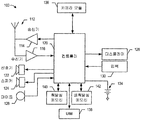
도 1은 본 명세서에 기술하는 발명의 대상의 일 실시형태에 따른 사용자 장비의 블록도이다.
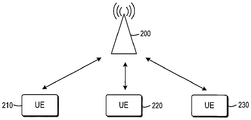
도 2는 본 명세서에 기술하는 청구 대상의 실시형태들이 구현될 수 있는 환경의 블록도이다.
도 3은 본 명세서에 기술하는 발명의 대상의 일 실시형태에 따른 UE측에서의 경합 기반 업링크 전송 방법의 흐름도이다.
도 4는 본 명세서에 기술하는 발명의 대상의 일 실시형태에 따른 경합 기반 업링크 전송을 위한 공유 리소스의 개략도이다.
도 5는 본 명세서에 기술하는 발명의 대상의 일 실시형태에 따른, BS측에서 경합 기반 업링크 전송을 제어하는 방법의 흐름도이다.
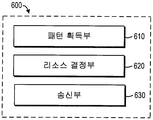
도 6은 본 명세서에 기술하는 발명의 대상의 일 실시형태에 따른 UE측에서의 경합 기반 업링크 전송을 위한 장치의 흐름도이다.
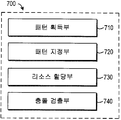
도 7은 본 명세서에 기술하는 발명의 대상의 일 실시형태에 따른 BS측에서의 경합 기반 업링크 전송을 위한 장치의 흐름도이다.1 is a block diagram of a user equipment according to an embodiment of the subject matter of the invention described herein.
Figure 2 is a block diagram of an environment in which the claimed embodiments described herein may be implemented.
3 is a flowchart of a contention-based uplink transmission method on the UE side according to an embodiment of the present invention described in this specification.
4 is a schematic diagram of a shared resource for contention-based uplink transmission in accordance with an embodiment of the subject matter of the invention described herein.
5 is a flow diagram of a method for controlling contention-based uplink transmissions on the BS side, in accordance with an embodiment of the subject matter described herein.
6 is a flow diagram of an apparatus for contention-based uplink transmission on the UE side according to an embodiment of the subject matter of the invention described herein.
7 is a flow diagram of an apparatus for contention-based uplink transmission on the BS side in accordance with an embodiment of the subject matter of the invention described herein.
본 명세서에 기술하는 발명의 대상에 대해 이제 여러 예시적인 실시형태를 참조하여 설명할 것이다. 이들 실시형태가 당업자로 하여금 발명의 대상의 범위에 대한 임의의 제한을 제시한다기보다는 본 명세서에 기술하는 발명의 대상을 더 잘 이해하여 구현할 수 있게 하기 위한 목적으로만 검토되는 것이 이해되어야 한다.Objects of the invention described herein will now be described with reference to several exemplary embodiments. It is to be understood that these embodiments are only viewed by those skilled in the art for the purpose of enabling those skilled in the art to more clearly understand and to practice the objects of the invention described herein rather than to suggest any limitation as to the scope of the subject matter of the invention.
본 명세서에서 사용되는 용어 "기지국"(BS)은 노드 B(NodeB 또는 NB), 진화된 노드B(eNodeB 또는 eNB), 원격 무선 유닛(RRU, Remote Radio Unit), 무선 헤더(RH, radio header), 원격 무선 헤드(RRH, remote radio head), 릴레이, 펨토(femto), 피코(pico)와 같은 저전력 노드 등을 나타낼 수 있다. The term "base station" (BS) as used herein refers to a node B (NodeB or NB), an evolved Node B (eNodeB or eNB), a remote radio unit (RRU) , A low power node such as a remote radio head (RRH), a relay, a femto, a pico, and the like.
본 명세서에서 사용되는 용어 "사용자 장비"(UE)는 BS와 통신할 수 있는 임의의 장치를 지칭한다. 예를 들어, UE는 단말, 모바일 단말(Mobile Terminal, MT), 가입자 스테이션(SS, Subscriber Station), 포터블 가입자 스테이션(PSS, Portable Subscriber Station), 모바일 스테이션(MS, Mobile Station), 또는 액세스 단말(AT, Access Terminal)을 포함할 수 있다. 구체적으로, 일부 예의 UE는 센서, 미터기, 위치 태그 등을 포함하지만 이에 한정되지 않는 MTC 디바이스를 포함한다. 본 명세서에 기술하는 발명의 대상의 실시형태는 MTC 디바이스뿐만 아니라 임의의 다른 타입의 비(non)-MTC UE에도 적용 가능한 것이 이해되어야 한다.The term "user equipment" (UE), as used herein, refers to any device that is capable of communicating with a BS. For example, the UE may be a terminal, a mobile terminal (MT), a subscriber station (SS), a portable subscriber station (PSS), a mobile station (MS) AT, Access Terminal). In particular, some examples of UEs include MTC devices including, but not limited to, sensors, meters, location tags, and the like. It should be understood that embodiments of the subject matter of the invention described herein are applicable to MTC devices as well as to any other type of non-MTC UEs.
본 명세서에 사용되는 용어 "포함한다(includes)" 및 그 변형은 "포함하지만 이에 한정되지는 않는다"를 의미하는 오픈 용어(open term)로 읽혀져야 한다. "~에 기초한(based on)"이라는 표현은 "적어도 부분적으로 기초를 두는" 것으로 읽혀져야 한다. "하나의 실시형태" 및 "일 실시형태"라는 표현은 "적어도 하나의 실시형태"로서 읽혀져야 한다. "다른 실시형태"라는 표현은 "적어도 하나의 다른 실시 예"로서 읽혀져야 한다. 명시적이고 암시적인 다른 정의가 아래에 포함될 수도 있다.As used herein, the term " includes "and variations thereof shall be read in an open term which is intended to mean " including, but not limited to. The expression "based on" should be read as "at least partly based". The phrases "one embodiment" and "one embodiment" should be read as "at least one embodiment ". The expression "another embodiment" should be read as "at least one other embodiment ". Other explicit and implicit definitions may be included below.
도 1은 본 명세서에 기술하는 발명의 대상의 일 실시형태에 따른 UE(100)의 블록도를 예시하는다. 일 실시형태에 있어서, UE(100)는 무선 통신 능력을 가진 MTC 디바이스일 수 있다. 그러나, 모바일폰, 휴대용 디지털 보조 장치(PDA, portable digital assistant), 호출기, 모바일 컴퓨터, 모바일 TV, 게임 장치, 랩탑, 태블릿 컴퓨터, 카메라, 비디오 카메라, GPS 디바이스, 및 다른 타입의 음성 및 텍스트 통신 시스템 등의 기타 타입의 사용자 디바이스도 본 명세서에 기술하는 발명의 대상의 실시형태를 용이하게 채택할 수 있다는 것이 이해되어야 한다. 고정형 디바이스(fixed-type device)도 마찬가지로 여기에 설명하는 발명의 대상의 실시형태를 용이하게 이용할 수 있다.Figure 1 illustrates a block diagram of a
도시된 바와 같이, UE(100)는 송신기(114) 및 수신기(116)와 통신하도록 동작 가능한 하나 이상의 안테나(112)를 포함한다. 이들 디바이스에 의해, UE(100)는 하나 이상의 BS와 셀룰러 통신을 수행할 수 있다. 구체적으로, UE(100)는 데이터 전송을 반복함으로써 커버리지를 강화하도록 구성될 수 있다. 즉, BS가 할당한 리소스 및 그랜트(grant)에 따라, UE(100)는 동일한 업링크 데이터를 여러번 전송할 수 있다.As shown, the UE 100 includes one or
UE(100)는 적어도 하나의 컨트롤러(120)를 더 포함한다. 컨트롤러(120)는 사용자 단말(100)의 기능을 구현하는데 필요한 회로 또는 로직을 포함하는 것으로 이해되어야 한다. 예를 들어, 컨트롤러(120)는 디지털 신호 프로세서, 마이크로프로세서, A/D 컨버터, D/A 컨버터, 및/또는 기타 적절한 회로를 포함할 수 있다. UE(100)의 제어 및 신호 프로세싱 기능은 이들 디바이스의 각각의 능력에 따라 할당된다.The UE 100 further includes at least one
선택사항으로서, UE(100)는 예컨대, 신호기(ringer)(122), 스피커(124), 마이크(126), 디스플레이(128), 및 입력 인터페이스(130)를 포함할 수 있는 사용자 인터페이스를 더 포함할 수 있으며, 이들 디바이스는 전부 컨트롤러(120)에 연결된다. UE(100)는 정적 및/또는 동적 이미지를 캡처링하기 위한 카메라 모듈(136)을 더 포함할 수 있다. Optionally, the UE 100 further includes a user interface that may include, for example, a
UE(100)는 사용자 단말기(100)를 동작시키는데 필요한 다양한 회로에 전력을 공급하고 대안적으로 기계적 진동을 검출 가능한 출력으로서 제공하는 진동 배터리 세트와 같은 배터리(134)를 더 포함할 수 있다. 일 실시형태에 있어서, UE(100)는 사용자 식별 모듈(UIM, user identification module)(138)을 더 포함할 수 있다. UIM(138)은 대개 프로세서가 내장된 메모리 디바이스이다. UIM(138)은 예컨대 가입자 식별 모듈(SIM), 범용 집적 회로 카드(UICC), 범용 사용자 식별 모듈(USIM), 또는 착탈식 사용자 식별 모듈(R-UIM) 등을 포함할 수 있다. UIM(138)은 본 명세서에 기술하는 발명의 대상의 실시형태에 따른 카드 접속 검출 장치를 포함할 수도 있다.The UE 100 may further include a
UE(100)는 메모리를 더 포함한다. 예를 들어, UE(100)는 예컨대 일시적으로 데이터를 저장하기 위한 캐시 영역에 휘발성 랜덤 액세스 메모리(RAM)를 포함하는 휘발성 메모리(140)를 포함할 수 있다. UE(100)는 임베이딩되고/되거나 가동성(movable)이 있는 기타 비휘발성 메모리(142)를 더 포함할 수도 있다. 비휘발성 메모리(142)는 예컨대, EEPROM 및 플래시 메모리 등을 추가로 또는 대안적으로 포함할 수 있다. 메모리(140)는 UE(100)의 기능을 구현하기 위해 UE(100)에 의해 사용되는 데이터 및 복수의 정보 세그먼트의 임의의 아이템을 저장할 수 있다. 예를 들어, 메모리는 실행될 때 컨트롤러(120)로 하여금 이하에 설명하는 방법을 구현하게 하는 머신 실행 가능한 명령어를 포함할 수 있다.The
도 1의 구조 블록도는 본 명세서에 기술하는 발명의 대상의 범위에 대한 임의의 제한을 제시하지 않고 예시 목적으로만 도시되는 것임을 이해해야 한다. 경우에 따라, 일부 디바이스가 필요에 따라 추가되거나 하거나 삭감될 수도 있다.It should be understood that the structural block diagram of Figure 1 is shown for illustrative purposes only, without any limitation as to the scope of the subject matter of the invention described herein. In some cases, some devices may be added or subtracted as needed.
도 2는 본 명세서에 기술하는 청구 대상의 실시형태들이 구현될 수 있는 셀룰러 시스템의 환경을 도시한다. 도시하는 바와 같이, 하나 이상의 UE가 BS(200)와 통신할 수 있다. 이 예에는, 3개의 UE(210, 220 및 230)가 있다. 이것은 단지, UE의 수에 대해 제한을 제시하지 않고 예시하기 위한 것이다. BS(200)와 통신하는 임의의 적절한 수의 UE가 있을 수 있다. 일 실시형태에 있어서, UE(210, 220 및 230) 중 하나 이상은 예컨대 도 1에 도시하는 UE(100)에 의해 구현될 수 있다. 일 실시형태에 있어서, UE(210, 220 및 230) 중 하나 이상은 MTC 디바이스일 수 있다.FIG. 2 illustrates an environment of a cellular system in which embodiments of the claimed subject matter described herein may be implemented. As shown, one or more UEs may communicate with the
UE(210, 220 및 230)과 BS(200) 사이의 통신은, 1세대(1G), 2세대(2G), 2.5G, 2.75G, 3세대(3G), 4세대(4G) 통신 프로토콜, 및/또는 현재 공지되거나 향후 개발될 기타 적절한 통신 프로토콜을 포함하나 이들에 한정되는 않은 임의의 적절한 통신 프로토콜에 따라 수행될 수 있다. The communication between the
전술한 바와 같이, 송신 전력이 낮은 MTC 디바이스와 같은 UE의 경우, 데이터 전송의 반복에 의해 커버리지가 강화될 수 있다. 이 시나리오에서는, 종래의 요청 기반 업링크 전송 메커니즘이 비효율적이다. UE가 매번 데이터 전송을 위한 업링크 리소스를 항상 요청하면, 상당한 레이턴시가 도입될 것이다. 요청 기반 솔루션과 달리, 본 명세서에 기술한 발명의 대상의 실시형태는 경합 기반 업링크 전송에 기초하여 동작한다.As described above, in the case of a UE such as an MTC device with low transmission power, coverage can be enhanced by repeating data transmission. In this scenario, the conventional request-based uplink transmission mechanism is inefficient. If the UE always requests uplink resources for data transmission each time, a significant latency will be introduced. Unlike a request-based solution, embodiments of the subject matter of the invention described herein operate based on contention-based uplink transmission.
경합 기반 전송은 복수의 UE가 직접 업링크 데이터를 전송하게 한다. 그러나, 이러한 경합 기반 전송에서는, 3개 이상의 UE가 공유 리소스를 이용해 동시에 업링크 전송을 수행하면 충돌이 발생할 수 있음이 이해될 것이다. 종래의 BS는 경합 기반 업링크 전송에서 이러한 충돌을 효과적이고 효율적으로 검출 및 처리할 수 없다.Contention-based transmission allows multiple UEs to transmit uplink data directly. However, in such a contention-based transmission, it will be understood that collisions can occur when three or more UEs perform uplink transmissions simultaneously using a shared resource. Conventional BSs can not effectively and efficiently detect and process such collisions in contention-based uplink transmissions.
도 3은 본 명세서에 기술하는 발명의 대상의 일 실시형태에 따른 UE측에서의 경합 기반 업링크 전송 방법(300)의 흐름도를 도시한다. 이 방법(300)은 경합 기반 전송 모드에서 동작하는 UE에 의해 구현될 수 있는 것임이 이해될 것이다. 예를 들어, 방법(300)은 도 2에 도시하는 UE(210, 220 및/또는 230)에 의해 구현될 수 있다.3 shows a flow diagram of a contention-based
방법(300)은 UE가 그 UE와 연관된 시퀀스의 패턴을 획득하는 단계 310에서 시작된다. 시퀀스는 소정의 수학적 연산에 의해 생성된다. 이미 알려져 있던지 향후 개발되던지에 관계없이 임의의 적합한 시퀀스가 본 명세서에 기술하는 실시형태와 관련하여 사용될 수 있다. 일 실시형태에 있어서, 시퀀스는 일정 진폭 제로 자기 상관(CAZAC, constant amplitude zero auto-correlation) 시퀀스로서 구현될 수 있다.The
CAZAC 시퀀스의 예는 Zadoff-Chu 시퀀스를 포함한다. Zadoff-Chu 시퀀스는 복소수 값(complex-valued)의 수학적 시퀀스로서, 무선 신호(radio signal)에 적용될 때에, 일정한 진폭의 전자기 신호를 발생시키며, 이로 인해 신호에 부과된 시퀀스의 순환 시프트된 버전들이 수신기에서 서로 제로 상관으로 된다. 시프트되지 않고 생성된 Zadoff-Chu 시퀀스는 "루트 시퀀스(root sequence)"로서 알려져 있다. Zadoff-Chu 시퀀스의 다른 루트 시퀀스들 또는 상이한 순환 시프트 버전을 가진 하나의 루트 시퀀스가 사용될 수 있다. 알려진 바와 같이, 상이한 Zadoff-Chu 시퀀스들은 서로에 대해 낮은 또는 제로의 상호상관을 갖는다. 즉, 시퀀스들 간의 상호상관은 미리 정의된 문턱값보다 낮다. 구체적으로, 상호상관이 제로일 때, 시퀀스들은 서로 직교한다. Zadoff-Chu 시퀀스가 나타내는 이 특성은 경합 기반 전송에서 상이한 UE들의 인식에 유리할 것이며, 이에 대해서는 후술할 것이다.An example of a CAZAC sequence includes a Zadoff-Chu sequence. The Zadoff-Chu sequence is a mathematical sequence of complex-valued, which, when applied to a radio signal, generates an electromagnetic signal of constant amplitude, whereby cyclically shifted versions of the sequence imposed on the signal are transmitted to the receiver Are zero-correlated with each other. The Zadoff-Chu sequence generated without shifting is known as a "root sequence ". Other root sequences of the Zadoff-Chu sequence or one root sequence with different cyclic shift versions may be used. As is known, different Zadoff-Chu sequences have a low or zero cross-correlation to each other. That is, the cross-correlation between sequences is lower than a predefined threshold. Specifically, when the cross-correlation is zero, the sequences are orthogonal to each other. This characteristic, represented by the Zadoff-Chu sequence, will be advantageous for recognizing different UEs in a contention-based transmission, as will be described below.
Zadoff-Chu 시퀀스의 사용은 본 명세서에 기술하는 발명의 대상의 범위에 대한 임의의 제한을 제시하는 것이 아니라 예시 목적임을 이해해야 한다. 대안적으로 또는 부가적으로, 순환 확장부(cyclic extension)를 갖는 Zadoff-Chu 시퀀스, 절단부(truncation)를 갖는 ZC 시퀀스 등이 또한 사용될 수 있다.It should be understood that the use of the Zadoff-Chu sequence is for illustrative purposes, rather than suggesting any limitation as to the scope of the subject matter described herein. Alternatively or additionally, a Zadoff-Chu sequence with a cyclic extension, a ZC sequence with a truncation, etc. may also be used.
시퀀스의 집합이 주어지면, BS는 복수의 시퀀스 패턴을 생성할 수 있다. 각 시퀀스 패턴은 시퀀스의 순열에 의해 정의된다. 보다 구체적으로, 각각의 시퀀스 패턴은 복수의 시퀀스 및 그 순서에 의해 정의된다. 예를 들어, 시퀀스 A, B, C 및 D로 표시되는 4개의 시퀀스가 있다고 가정한다. 그렇다면 패턴은 이들 시퀀스의 순열에 의해 정의될 수 있다. 예를 들어, 한 시퀀스 패턴은 {A, B, C, D}로 정의될 수 있고, 다른 패턴은 {A, B, D, C}으로 정의될 수 있고, 등등이다. 즉, 각 시퀀스 패턴은 시퀀스의 고유한 순서와 연관된다. 시퀀스는 복수회 패턴에 나타날 수 있다는 것을 이해해야 한다. 예를 들어 패턴은 {A, A, B, C} 또는 {A, A, A, A}일 수도 있다.Given a set of sequences, the BS can generate a plurality of sequence patterns. Each sequence pattern is defined by a sequence of permutations. More specifically, each sequence pattern is defined by a plurality of sequences and their sequences. For example, suppose there are four sequences represented by sequences A, B, C, If so, the pattern can be defined by the permutations of these sequences. For example, one sequence pattern can be defined as {A, B, C, D}, and the other patterns can be defined as {A, B, D, C}, and so on. That is, each sequence pattern is associated with a unique sequence of sequences. It should be appreciated that a sequence may appear multiple times in a pattern. For example, the pattern may be {A, A, B, C} or {A, A, A, A}.
또한, 시퀀스 패턴은 반드시 BS에서 이용 가능한 모든 시퀀스를 사용하여 정의될 필요는 없다. 대신, 시퀀스의 일부만 사용하여 시퀀스 패턴을 정의할 수 있다. 위의 예에서, 패턴은 {A, D, B}와 같이 정의될 수도 있다. 시퀀스 패턴을 생성하는데 사용되는 시퀀스의 수는, 예컨대 경합 기반 전송을 위한 공유 리소스의 구성에 따라 결정될 수 있다. 이에 관한 예들은 후술할 것이다. 또한, 일 실시형태에 있어서, 상이한 패턴들은 상이한 수의 시퀀스들을 포함할 수 있다.Also, the sequence pattern need not necessarily be defined using all available sequences in the BS. Instead, a sequence pattern can be defined using only a portion of the sequence. In the above example, the pattern may be defined as {A, D, B}. The number of sequences used to generate the sequence pattern may be determined, for example, according to the configuration of the shared resource for contention-based transmission. Examples of this will be described later. Further, in an embodiment, different patterns may comprise different numbers of sequences.
본 명세서에 기술하는 발명의 대상의 실시형태에 따르면, 각각의 패턴은 상이한 UE들이 상이한 시퀀스 패턴들을 갖도록 UE에 고유하게 할당된다. BS는 각각의 시퀀스 패턴을 개별 UE에 통지할 수 있다. 각 UE에 대해, BS는 시퀀스 패턴을 UE에 송신할 수 있다. 대안으로, 시퀀스 패턴의 표시(indication) 또는 인덱스만 송신하는 것도 가능하다. 일 실시형태에 있어서, BS는 경합 기반 전송의 초기화 단계에서 UE에 시퀀스 패턴 또는 그 표시를 송신할 수 있다. 따라서, 단계 310에서, 각각의 UE는 BS로부터 연관된 시퀀스 패턴을 수신할 수 있다.According to an embodiment of the subject matter of the invention described herein, each pattern is uniquely assigned to a UE such that different UEs have different sequence patterns. The BS may notify each UE of the respective sequence pattern. For each UE, the BS may transmit a sequence pattern to the UE. Alternatively, it is also possible to transmit only an indication or index of the sequence pattern. In one embodiment, the BS may send a sequence pattern or indication to the UE in the initialization phase of the contention-based transmission. Thus, at
대안적으로, 일 실시형태에 있어서, 예컨대 서비스 제공자에 의해 UE와 시퀀스 패턴 간의 연관성(association)을 미리 정의하는 것도 가능하다. 이러한 미리 정의된 연관성은 UE에 저장될 수 있다. 이 실시형태에 있어서, 단계 310에서, UE는 자신의 로컬 스토리지로부터 연관된 시퀀스 패턴을 검색(retrieving)할 수 있다.Alternatively, in one embodiment, it is possible, for example, to predefine an association between the UE and the sequence pattern by a service provider. This predefined association may be stored in the UE. In this embodiment, at
단계 320에서, UE는 경합 기반 전송을 위한 공유 리소스를 결정한다. 이를 위해, 일 실시형태에서, UE는 공유 리소스에 관한 구성 정보를 BS로부터 수신할 수 있다. 일 실시형태에 있어서, 구성 정보는 예컨대 물리적 업링크 공유 채널(PUSCH) 상에서의 반복 시간 간격(repetition time period) 또는 지속기간(duration)을 특정할 수 있다. 이러한 반복 시간 간격은 경합 기반 업링크 전송을 위해 다수의 UE에 의해 공유될 것이다.In
예를 들어, 일 실시형태에서, 반복 시간 간격은 하나 이상의 경합 기반 유닛(CB 유닛)을 포함할 수 있다. 각각의 CB 유닛은 복수의 연속 서브프레임을 포함할 수 있다. 단계 320에서 수신된 구성 정보는, 예컨대 반복 시간 간격에 포함된 CB 유닛의 수 및 각 CB 유닛의 길이를 특정할 수 있다. For example, in one embodiment, the repetition time interval may comprise one or more contention-based units (CB units). Each CB unit may comprise a plurality of consecutive sub-frames. The configuration information received in
단계 320에서, UE는 경합 기반 전송과 관련된 임의의 추가적 및/또는 대안적 파라미터를 결정할 수 있다. 예를 들어, UE는, 변조 및 코딩 방식(MCS, modulation and coding scheme), 전달될 데이터의 양 등을 포함하나 이에 제한되지 않는, 경합 기반 전송에 관련된 기타 파라미터에 관한 구성 정보를 BS로부터 수신할 수 있다.In
단계 310은 도 3의 단계 320 이전에 수행되지만, 이것은 본 명세서에 기술하는 발명의 대상에 대한 임의의 제한을 제시하지 않고 예시를 위한 것임을 알아야 한다. 시퀀스 패턴 및 공유 리소스는 임의의 적절한 순서로 또는 동시에 결정될 수도 있다.Step 310 is performed prior to step 320 of FIG. 3, but it should be understood that this is for illustrative purposes only, without any limitation on the subject matter of the invention described herein. The sequence patterns and shared resources may be determined in any suitable order or simultaneously.
그 후, 방법(300)은 단계 330으로 진행하는데, 이 단계에서 UE는 단계 310에서 획득된 연관 시퀀스 패턴을 이용해 정보를 단계 320에서 결정된 공유 리소스를 통해 전송한다. 일 실시형태에 있어서, UE는 전술한 바와 같이, 예컨대 PUSCH 상에서 반복 시간 간격에 업링크 전송을 개시할 수 있다. 구체적으로, 본 명세서에 기술하는 발명의 대상의 실시형태에 따르면, UE는 미리 스케줄링 요청을 전송할 필요가 없다.The
전술한 바와 같이, 일 실시형태에 있어서, 반복 시간 간격은 복수의 서브프레임을 각각 포함하는 하나 이상의 CB 유닛으로 분할될 수 있다. 이 실시형태에 있어서, 시퀀스 패턴은 CB 유닛에 기초하여 전송될 수 있다. 더 구체적으로, 패턴 내의 각 시퀀스는 CB 유닛의 서브프레임에서 송신될 수도 있다. 이를 위해, 일 실시형태에서, CB 유닛에 포함된 서브프레임의 수는 시퀀스 패턴을 생성하는데 사용될 수 있는 시퀀스의 수와 같거나 더 적을 수 있다. 예로서, 각각의 패턴이 4개의 시퀀스를 포함할 때, CB 유닛은 4개의 연속 서브프레임을 포함할 수 있다.As described above, in one embodiment, the repetition time interval may be divided into one or more CB units each comprising a plurality of sub-frames. In this embodiment, the sequence pattern can be transmitted based on the CB unit. More specifically, each sequence in the pattern may be transmitted in a sub-frame of the CB unit. To this end, in one embodiment, the number of sub-frames included in the CB unit may be less than or equal to the number of sequences that can be used to generate the sequence pattern. By way of example, when each pattern comprises four sequences, the CB unit may comprise four consecutive sub-frames.
전술한 바와 같은 반복 시간은 본 명세서에 기술하는 발명의 대상의 범위에 대한 임의의 제한을 제시하지 않고 예시적 목적을 위한 것임을 이해해야 한다. 다른 실시형태에 있어서, 공유 리소스는 PUSCH 이외의 임의의 다른 적절한 업링크 채널 상에 할당될 수도 있다. 또한, 반복 시간 간격이 반드시 CB 단위로 구성될 필요는 없다. 적용 및 요건에 따라, 임의의 다른 적절한 리소스 구성도 가능하다.It should be understood that the repeating time as described above is for illustrative purposes without any limitation as to the scope of the subject matter described herein. In other embodiments, the shared resource may be allocated on any other suitable uplink channel other than the PUSCH. Also, the repetition time interval does not necessarily have to be configured in CB units. Depending on the application and requirements, any other suitable resource configuration is also possible.
연관된 시퀀스 패턴에 따르면, 단계 330에서, UE는 시퀀스를 순서대로 전송할 수 있다. 설명을 위해, 도 2의 UE(210, 220 및 230)와 연관된 시퀀스 패턴이 각각 {A, B, C, D}, {A, B, D, C} 및 {A, C, B, D}이라고 가정한다. 또한, 반복 시간 간격은 각각, 4개의 서브프레임을 포함하는 다수의 CB 유닛을 포함한다고 가정한다. 그리고, 시퀀스는 각 CB 유닛의 순서에 따라, 복수의 서브프레임에서 전송될 수 있다. 구체적으로, 반복 시간 간격 내의 각 CB 유닛 내에서, UE(210)는 제1, 제2, 제3 및 제4 서브프레임에서 시퀀스 A, B, C 및 D를 각각 전송한다. 마찬가지로, UE(220)는 시퀀스 A, B, D 및 C를 순차적으로 전송하고, UE(230)는 시퀀스 A, C, B 및 D를 순차적으로 전송한다.According to the associated sequence pattern, in
일 실시형태에서, 시퀀스는 기준 신호 또는 파일럿으로서 전송될 수 있다. 알려진 바와 같이, 서브프레임은 복수의 심볼을 포함할 수 있다. 일부 심볼은 데이터를 전달하는데 사용되고 다른 심볼은 기준 신호 또는 파일럿을 전송하는데 사용될 수 있다. 예로서, 서브프레임은 14개의 심볼을 포함할 수 있고 1 ms의 길이일 수 있다. 각 서브프레임은 2개의 슬롯을 포함할 수 있으며, 예컨대 각각의 길이는 0.5 ms이다. 이들 2개의 슬롯은 각각 복조 기준 신호(DMRS, demodulation reference signal)에 대한 심볼을 포함할 수 있다.In one embodiment, the sequence may be transmitted as a reference signal or pilot. As is known, a subframe may include a plurality of symbols. Some symbols may be used to carry data and other symbols may be used to transmit a reference signal or pilot. By way of example, a subframe may contain 14 symbols and may be 1 ms long. Each subframe may include two slots, e.g., each of which is 0.5 ms in length. These two slots may each include symbols for a demodulation reference signal (DMRS).
이 실시형태에 있어서, 시퀀스는 DMRS로서 전송될 수 있다. 도 4는 본 명세서에 기술하는 발명의 대상의 일 실시형태에 따른 경합 기반 전송의 개략도를 나타낸다. 도시하는 바와 같이, 반복 시간 간격(400)은 하나 이상의 CB 유닛(4101, 4102...410n)(총괄해서 "CB 유닛(410)"이라고 칭함)을 포함한다. 도시하는 예에서, 각 CB 유닛(410)은 동일하거나 유사한 구조를 가진 4개의 서브프레임(4201, 4202, 4203 및 4204)(총괄해서 "서브프레임(420)"이라고 칭함)을 포함한다. 다른 실시형태에 있어서, CB 유닛(410)은 임의의 적절한 수의 서브프레임(420)을 포함할 수 있다. 각각의 서브프레임(420)은 복수의 심볼을 포함하는데, 여기서 심볼(430, 435)은 DMRS 심볼이다. 각각의 서브프레임에서, 연관된 시퀀스는 심볼(430, 435)을 이용해서 전송될 수 있다.In this embodiment, the sequence may be transmitted as a DMRS. 4 shows a schematic diagram of contention-based transmission according to an embodiment of the subject matter of the invention described herein. As shown, the repetition time interval 400 includes one or more CB units 410 1 , 410 2 ... 410 n (collectively referred to as "CB units 410"). In the illustrated example, each CB unit 410 includes four sub-frames 420 1 , 420 2 , 420 3 and 420 4 (collectively referred to as "sub-frame 420") having the same or similar structure do. In another embodiment, the CB unit 410 may comprise any suitable number of subframes 420. Each subframe 420 includes a plurality of symbols, where
더 구체적으로, 전술한 예에서는, CB 유닛(410) 내에서, UE(210)가 시퀀스 A를 제1 서브프레임(4201)에서, 시퀀스 B를 제2 서브프레임(4202)에서, 시퀀스 C를 제3 서브프레임(4203)에서, 그리고 시퀀스 D를 제4 서브프레임(4204)에서 전송할 수 있다. 각각의 서브프레임(420)에서, 각 시퀀스는 심볼(430, 435)을 이용해서 전송될 수 있다. UE(220)의 경우, 각각의 CB 유닛에서, 시퀀스 A,B,D 및 C가 서브프레임(4201, 4202, 4203 및 4204) 내의 심볼(430, 435)에서 각각 전송될 수 있다. UE(230)의 경우, 각각의 CB 유닛에서, 시퀀스 A,C,B 및 D가 서브프레임(4201, 4202, 4203 및 4204) 내의 심볼(430, 435)에서 각각 전송될 수 있다.More specifically, in the above-described example, in the CB unit 410, the
심볼(430, 435) 이외의 심볼에서는 UE가 다른 정보를 전송할 수 있다. 예를 들어, UE는 UE의 버퍼 상태를 나타내는 버퍼 상태 리포트(BSR, buffer status report)를 전송할 수 있다. BSR에 기초하여, BS는 대응하는 업링크 리소스를, 업링크 그랜트를 통해 그 UE에 할당할 수 있다. BS에 의해 구성되는 MCS에 따라, 일 실시형태에 있어서, UE는 PUSCH 상에서의 경합 기반 전송으로 추가 정보를 전송할 수 있다. 구체적으로, 일 실시형태에 있어서, UE는 실제 업링크 데이터를 전송할 수 있다. In symbols other than
계속해서 도 3을 참조하면, 일 실시형태에서, UE는 단계 430에서 BS로부터 업링크 그랜트를 수신할 수 있다. 업링크 그랜트는 전용 업링크 리소스를 UE에 할당할 수 있다. 그런 다음, 단계 350에서, UE는 업링크 그랜트가 긍정적 수신확인(positive acknowledgement) 또는 부정적 수신확인(negative acknowledgement)과 연관되는지의 여부를 결정할 수 있다. 전술한 바와 같이, 시퀀스 패턴으로, BS는 개별 UE에 지정된 고유 시퀀스 패턴을 통해 상이한 UE들을 인식하는 것이 가능하다. BS가, 단 하나의 UE가 공유 리소스를 통해 경합 기반 업링크 전송을 수행하고 있다고 검출하면, BS는 그 UE에, 긍정적 수신확인(ACK)과 연관된 업링크 그랜트를 송신할 수 있다.Continuing with reference to FIG. 3, in one embodiment, the UE may receive an uplink grant from the BS in
반면, BS가, 2개 이상의 UE가 동시에 경합 기반 업링크 전송을 수행하고 있다고 검출하면, 이들 UE 사이에 충돌이 있다. 이 이벤트에서, BS는 충돌하는 UE들에 대한 검출된 시퀀스 패턴 및 스케줄 재전송에 기초하여 이들 UE를 인식할 수 있다. 이 때, BS는 충돌하는 UE 각각에 부정적 수신확인(NACK)과 연관된 업링크 그랜트를 송신할 수 있다.On the other hand, if the BS detects that two or more UEs are performing a contention-based uplink transmission at the same time, there is a conflict between these UEs. In this event, the BS may recognize these UEs based on the detected sequence pattern and schedule retransmission for the colliding UEs. At this time, the BS may transmit an uplink grant associated with a negative acknowledgment (NACK) to each of the colliding UEs.
단계 350에서, 업링크 그랜트가 ACK와 연관된다고 결정되면("Yes" 분기), 방법(300)은 UE가 전용 리소스를 통해 후속 업링크 전송을 수행하는 단계 360으로 이행한다. 업링크 그랜트가 NACK와 연관된다고 결정되면("No" 분기), 방법(300)은 UE가 전용 리소스를 이용해 정보를 재전송하는 단계 370으로 이행한다.At
이상의 설명을 통해, 시퀀스 패턴에 의해, BS는 공유 리소스를 통한 경합 기반 전송을 동시에 수행하는 다수의 UE들 사이의 잠재적인 충돌을 검출 및 처리할 수 있음을 알 것이다. 또한, UE는 경합 기반 전송에서 명시적인 스케줄링 요청 및 데이터 둘 다를 동시에 전송할 필요가 없다. 따라서, 본 명세서에 기술하는 발명의 대상의 실시형태는 싱글-캐리어 주파수-분할 다중 액세스(SC-FDMA, Single-carrier Frequency-Division Multiple Access) 업링크 전송의 싱글 캐리어 특성을 준수한다. 또한, 업링크 전송에 대한 피크-대-평균-비율(PAPR, peak-to-average-ratio)은 증가하지 않을 것이다. 또한, 경합 기반 전송 절차가 단순해진다.Through the above description, it will be appreciated that the sequence pattern allows the BS to detect and handle potential conflicts between multiple UEs simultaneously performing contention-based transmission over a shared resource. Also, the UE need not simultaneously transmit both explicit scheduling requests and data in a contention-based transmission. Accordingly, embodiments of the subject matter described herein conform to the single carrier characteristics of a single-carrier frequency-division multiple access (SC-FDMA) uplink transmission. Also, the peak-to-average-ratio (PAPR) for the uplink transmission will not increase. In addition, the contention-based transmission procedure is simplified.
도 5는 본 명세서에 기술하는 발명의 대상의 일 실시형태에 따른, BS측에서 경합 기반 업링크 전송을 제어하는 방법(500)의 흐름도를 도시한다. 방법(500)은 BS, 예컨대 도 2에 도시하는 BS(200)에 의해 적어도 부분적으로 구현될 수 있다.5 shows a flow diagram of a
방법(500)은 BS가 복수의 시퀀스에 기초하여 복수의 시퀀스 패턴을 생성하는 단계 510에서 시작된다. 전술한 바와 같이, 각각의 시퀀스 패턴은 복수의 시퀀스 및 그 복수의 시퀀스의 순서에 의해 정의될 수 있다. 예를 들어, 일 실시형태에 있어서, 낮은 또는 제로의 상호상관을 갖는 Zadoff-Chu 시퀀스와 같은 시퀀스가 시퀀스 패턴을 생성하는데 사용될 수 있다.The
그런 다음, 단계 520에서, BS는 단계 510에서 생성된 시퀀스 패턴을, 각 UE가 시퀀스 패턴들 중 하나와 고유하게 연관되도록, 경합 기반 전송을 수행할 가능성이 있는 UE에 지정한다. 일 실시형태에 있어서, BS는 시퀀스 패턴 자체를 송신할 수도 있다. 대안으로, BS는 시퀀스 패턴의 표시 또는 인덱스를 각 UE에 송신할 수도 있다. UE는 그 표시 또는 인덱스에 기초하여, 연관된 시퀀스 패턴을 검색하거나 그렇지 않으면 결정할 수 있다. 이런 식으로, UE들은 상이한 시퀀스 패턴들과 연관된다.Then, in
본 명세서에 기술하는 발명의 대상의 실시형태에 따르면, 임의의 주어진 UE가 특정 시퀀스와 연관되지 않는다는 것을 알 수 있다. 대신에, 각각의 UE는 특정 순서로 다수의 시퀀스를 포함하는 시퀀스 패턴과 고유하게 연관된다. 이것이 시스템 용량에 도움이 된다. 예로서, N개의 가용 시퀀스가 있고, CB 유닛의 길이가 T 서브프레임이라고 가정하며, 여기서 N 및 T는 모두 자연수이고, T <= N이다. 총 가용 패턴은 N * (N-1) * (N-2) * ... * (N-T+1)이다. T = N인 일 실시형태에서, 가용 시퀀스 패턴의 총 수는 N! = N * (N-1) * ... * 1이다. 예로서, 4개의 가용 시퀀스가 있고, CB 유닛이 4개의 서브프레임을 포함하는 경우에, 가용 패턴의 총 수는 4! = 24이다. 이것은 최대 24개의 UE가 공유 리소스를 통해 동시에 경합 기반 업링크 전송을 수행할 수 있음을 의미한다.According to an embodiment of the subject matter of the invention described herein, it can be seen that any given UE is not associated with a particular sequence. Instead, each UE is uniquely associated with a sequence pattern comprising a plurality of sequences in a particular order. This helps system capacity. As an example, assume that there are N usable sequences, and that the length of the CB unit is T subframe, where N and T are both natural numbers and T < = N. The total usable pattern is N * (N-1) * (N-2) * ... * (N-T + 1). In one embodiment where T = N, the total number of available sequence patterns is N! = N * (N-1) * ... * 1. As an example, if there are four available sequences, and the CB unit includes four subframes, then the total number of available patterns is 4! = 24. This means that up to twenty-four UEs can simultaneously perform contention-based uplink transmission through the shared resource.
단계 530에서, BS는 경합 기반 전송을 위한 공유 리소스를 UE에 할당한다. 리소스는 주파수 및 시간 도메인 위치 둘 다를 포함할 수 있다. 예를 들어, 일 실시형태에서, BS는, UE가 예컨대 PUSCH 상에서 업링크 전송을 수행하도록 허용되는 반복 시간 간격에 관한 구성 정보를 송신할 수 있다. 단계 530에서, BS는 경합 기반 전송에 관한 임의의 다른 파라미터를 구성하고 이들 파라미터를 UE에 송신할 수 있다. 일 실시형태에 있어서, BS는 MCS, 전달될 데이터의 양, 및/또는 임의의 다른 관련 파라미터를 구성할 수 있다. In step 530, the BS allocates a shared resource for contention-based transmission to the UE. The resource may include both frequency and time domain locations. For example, in an embodiment, the BS may transmit configuration information regarding the repetition time interval at which the UE is allowed to perform uplink transmissions on, for example, the PUSCH. In step 530, the BS may configure any other parameters related to the contention-based transmission and send these parameters to the UE. In one embodiment, the BS may configure the MCS, the amount of data to be delivered, and / or any other relevant parameters.
방법(500)은, 복수의 시퀀스 패턴에 기초하여, 공유 리소스를 통한 경합 기반 전송에서 충돌의 발생 여부를 검출하는 단계 540으로 이행한다. 구체적으로, BS는 할당된 공유 자원을 통해, 예컨대 반복 시간 간격에서 전송을 수신한다. BS는 수신된 전송에서 시퀀스 패턴을 검출할 수 있다. 예로서, 시퀀스 패턴이 CB 유닛에 기초하여 전송되는 일 실시형태에서는, BS가 완전한 CB 유닛 내의 서브프레임에서 전달되는 시퀀스를 검출할 수 있다. 검출된 시퀀스 및 그 순서에 기초하여, BS는 시퀀스 패턴을 결정할 수 있다.The
전술한 바와 같이, 시퀀스들은 서로 상호상관이 낮거나 제로일 수 있으며, 상이한 UE들은 상이한 시퀀스 패턴들과 연관된다. 결과적으로, 다수의 UE가 동시에 경합 기반 전송을 수행할 수 있더라도, BS는 연관된 시퀀스 패턴에 의해 충돌 UE들을 인식 및 구별할 수 있다. 더 구체적으로, BS가 2개 이상의 패턴을 검출하면, 이것은 2개 이상의 UE가 공유 리소스를 통해 전송하고 있음을 의미한다. 즉, 이들 UE 간에 충돌이 발생한다(단계 540에서 "Yes" 분기). 이 때, 방법(500)은 단계 550으로 진행하는데, 이 단계에서, BS는 충돌하는 UE들에, NACK과 연관된 업링크 그랜트를 송신하여, UE들이 각각의 전용 리소스를 이용하여 데이터를 재전송할 수 있게 한다.As described above, the sequences may be low or zero cross-correlated with each other, and different UEs are associated with different sequence patterns. As a result, even though a plurality of UEs can simultaneously perform contention-based transmission, the BS can recognize and distinguish the conflicting UEs by the associated sequence pattern. More specifically, if the BS detects two or more patterns, this means that two or more UEs are transmitting on the shared resource. That is, a conflict occurs between these UEs ("Yes" branch in step 540). At this time, the
한편, 전송하고 있는 UE가 하나뿐이며 충돌이 발생하지 않으면(단계 540에서 "No" 분기), 방법(500)은 단계 560으로 진행하는데, 이 단계에서, BS는 후속 업링크 전송을 위한 전용 리소스를 UE에 할당하기 위해 ACK와 연관된 업링크 그랜트를 그 전송 UE에 송신한다. On the other hand, if there is only one UE transmitting and no collision occurs (step "No" branch in step 540), the
도 6은 본 명세서에 기술하는 발명의 대상의 일 실시형태에 따른 UE측에서의 경합 기반 업링크 전송을 위한 장치(600)의 흐름도이다. 도시된 바와 같이, 이 장치(600)는, UE와 고유하게 연관된 시퀀스 패턴을 획득하도록 구성되는 패턴 획득부(610)로서, 그 패턴은 복수의 시퀀스와 그 복수의 시퀀스의 순서에 의해 정의되는 것인, 패턴 획득부와, 경합 기반 전송을 위한 공유 리소스를 결정하도록 구성된 리소스 결정부(620)와, 스케줄링 요청을 송신하지 않고서 공유 리소스를 통해 연관된 시퀀스 패턴을 이용하여 정보를 전송하도록 구성된 송신부(630)를 포함한다.6 is a flow diagram of an
일 실시형태에 있어서, 복수의 시퀀스는 상호상관이 낮거나 제로인 상이한 시퀀스들을 포함할 수 있다. 일 실시형태에 있어서, 이러한 시퀀스는 Zadoff-Chu 시퀀스에 기초하여 획득될 수 있다.In one embodiment, the plurality of sequences may comprise different sequences with low or zero cross-correlation. In one embodiment, such a sequence may be obtained based on the Zadoff-Chu sequence.
일 실시형태에 있어서, 리소스 결정부(620)는 기지국으로부터, 물리적 업링크 공유 채널(PUSCH) 상에서의 경합 기반 전송을 위한 반복 시간 간격의 구성 정보를 수신하도록 구성된다. 일 실시형태에 있어서, 반복 시간 간격은 경합 기반(CB) 유닛을 포함하며, 각 CB 유닛은 복수의 서브프레임을 포함한다. 이 실시형태에 있어서, 송신부(630)는 각 CB 유닛의 순서에 따라 복수의 서브프레임에서 복수의 시퀀스를 전송하도록 구성된다. 일 실시형태에 있어서, 복수의 시퀀스는 그 순서에 따라 복수의 서브프레임에서 DMRS로서 전송될 수 있다. 일 실시형태에 있어서, 송신부(630)는 적어도 UE에 대한 BSR을 전송하도록 구성될 수 있다.In one embodiment, the
일 실시형태에 있어서, 장치(600)는 기지국으로부터, 전용 리소스를 UE에 할당하는 업링크 그랜트를 수신하도록 구성된 그랜트 수신 유닛과, 업링크 그랜트가 NACK에 연관되면, 전용 리소스를 이용하여 정보를 재전송하도록 구성되는 재송신부를 더 포함한다.In one embodiment, the
일 실시형태에 있어서, UE는 MTC(machine type communication) 디바이스를 포함할 수 있다.In an embodiment, the UE may comprise a machine type communication (MTC) device.
도 7은 본 명세서에 기술하는 발명의 대상의 일 실시형태에 따른 BS측에서의 경합 기반 업링크 전송을 제어하는 장치(700)의 흐름도이다. 도시된 바와 같이, 장치(700)는, 복수의 시퀀스에 기초하여 복수의 시퀀스 패턴을 생성하도록 구성된 패턴 생성부(710)로서, 복수의 시퀀스 패턴 각각은 복수의 시퀀스와 그 복수의 시퀀스의 순서에 의해 정의되는 것인, 패턴 생성부와, 복수의 사용자 장비(UE) 각각이 복수의 시퀀스 패턴 중 하나와 고유하게 연관되도록 복수의 시퀀스 패턴을 복수의 UE에 지정하도록 구성된 패턴 지정부(720)와, 경합 기반 전송을 위해 공유 리소스를 복수의 UE에 할당하도록 구성된 리소스 할당부(730)와, 복수의 시퀀스 패턴에 기초하여 경합 기반 전송에서 충돌을 검출하도록 구성된 충돌 검출부(740)를 포함한다.7 is a flow diagram of an
일 실시형태에 있어서, 복수의 시퀀스는 미리 정의된 문턱값보다 낮은 상호 상관을 갖는 시퀀스들을 포함할 수 있다. 일 실시형태에 있어서, 이러한 시퀀스는 Zadoff-Chu 시퀀스에 기초하여 획득될 수 있다.In one embodiment, the plurality of sequences may comprise sequences having a lower cross-correlation than a predefined threshold. In one embodiment, such a sequence may be obtained based on the Zadoff-Chu sequence.
일 실시형태에 있어서, 리소스 할당부(730)는 물리적 업링크 공유 채널(PUSCH) 상에서의 경합 기반 전송을 위한 반복 시간 간격의 구성 정보를 복수의 UE에 송신하도록 구성된다. 일 실시형태에 있어서, 반복 시간 간격은 경합 기반(CB) 유닛을 포함하며, 각 CB 유닛은 복수의 서브프레임을 포함한다. 본 실시형태에 있어서, 충돌 검출부(740)는 CB 유닛들 중 적어도 하나에서 복수의 시퀀스의 순서를 검출함으로써 경합 기반 전송에서의 시퀀스 패턴의 수를 결정하도록 구성될 수 있다. 일 실시형태에 있어서, CB 유닛들 중 적어도 하나에서의 복수의 시퀀스의 순서는 그 CB 유닛들 중 적어도 하나에 포함된 복수의 서브프레임에서 DMRS를 검출함으로써 결정되는데, 복수의 시퀀스는 DMRS로서 송신된다. 예를 들어, 일 실시형태에 있어서, 복수의 서브프레임 각각은 시퀀스들 중 하나를 DMRS로서 전달할 수 있다.In one embodiment, the
일 실시형태에 있어서, 장치(700)는 경합 기반 전송에서 복수의 시퀀스 패턴 중 2개 이상의 시퀀스 패턴을 검출하는 것에 응답하여, 부정적 수신확인(NACK)과 연관된 업링크 그랜트를, 검출된 2개 이상의 시퀀스 패턴과 연관된 복수의 UE들 중 2개 이상의 UE에 송신하도록 구성된 그랜트 송신부와, 업링크 그랜트에 의해 할당된 각각의 전용 리소스를 통해 2개 이상의 UE로부터의 재전송을 수신하도록 구성된 재전송 수신부를 더 포함할 수 있다. In one embodiment, the
장치(600 및/또는 700)에 포함된 부분들은 소프트웨어, 하드웨어, 펌웨어 또는 이들의 임의의 조합을 포함하는 다양한 방식으로 구현될 수 있다. 일 실시형태에 있어서, 하나 이상의 부분은 소프트웨어 및/또는 펌웨어, 예를 들어 저장 매체 상에 저장된 머신 실행 가능 명령어를 이용하여 구현될 수 있다. 머신 실행 가능 명령어에 추가하여 또는 그 대신에, 장치(600 및/또는 700) 내의 부분들의 일부 또는 전부는 하나 이상의 하드웨어 로직 컴포넌트에 의해 적어도 부분적으로 구현될 수 있다. 예를 들면, 제한 없이, 사용될 수 있는 하드웨어 로직 컴포넌트의 실례 타입은 FPGA(Field-programmable Gate Array), ASIC(Application-specific Integrated Circuit), ASSP(Application-specific Standard Product), SOC(System-on-a-chip system), CPLD(Complex Programmable Logic Device) 등을 포함한다.Portions included in
일반적으로, 본 명세서에 기술하는 발명의 대상의 다양한 실시형태는 하드웨어 또는 특수 목적 회로, 소프트웨어, 로직 또는 이들의 임의의 조합으로 구현될 수 있다. 일부 양태는 하드웨어로 구현될 수 있지만, 다른 양태는 컨트롤러, 마이크로프로세서 또는 다른 컴퓨팅 디바이스에 의해 실행될 수 있는 펌웨어 또는 소프트웨어로 구현될 수 있다. 본 명세서에 기술하는 발명의 대상의 실시형태의 다양한 양태들이 블록도, 흐름도, 또는 기타 그림 표현을 사용하여 예시되고 설명되었지만, 본 명세서에 기술하는 블록, 장치, 시스템, 기술 또는 방법은 비제한적인 예로서, 하드웨어, 소프트웨어, 펌웨어, 특수 목적 회로 또는 로직, 범용 하드웨어 또는 컨트롤러 또는 다른 컴퓨팅 디바이스, 또는 이들의 일부 조합으로 구현될 수 있음을 알 것이다.In general, various embodiments of the subject matter of the invention described herein may be implemented in hardware or special purpose circuits, software, logic, or any combination thereof. Some aspects may be implemented in hardware, while other aspects may be implemented in firmware or software that may be executed by a controller, microprocessor, or other computing device. While various aspects of embodiments of the subject matter described herein have been illustrated and described using block diagrams, flow charts, or other pictorial representations, it should be understood that blocks, devices, systems, For example, be implemented in hardware, software, firmware, special purpose circuits or logic, general purpose hardware or controllers or other computing devices, or some combination thereof.
예로서, 발명의 대상의 실시형태는 타겟 실제 또는 가상 프로세서 상의 디바이스에서 실행되는, 프로그램 모듈에 포함된 것과 같은 머신 실행 가능 명령어의 일반적인 상황에서 설명될 수 있다. 일반적으로, 프로그램 모듈은 특정 태스크를 수행하거나 특정 추상 데이터 타입을 구현하는, 루틴, 프로그램, 라이브러리, 객체, 클래스, 컴포넌트, 데이터 구조 등을 포함한다. 프로그램의 기능은 다양한 실시형태에서 필요하다면 프로그램 모듈들 사이에서 조합 또는 분할될 수도 있다. 프로그램 모듈에 대한 머신 실행 가능 명령어는 로컬형 또는 분산형 디바이스에서 실행될 수 있다. 분산형 디바이스에서는, 프로그램 모듈이 로컬 및 리모트 저장 매체 둘 다에 위치할 수 있다.By way of example, an embodiment of the subject matter of the invention may be described in the general context of machine-executable instructions, such as those contained in program modules, being executed on a device on a target physical or virtual processor. Generally, program modules include routines, programs, libraries, objects, classes, components, data structures, etc. that perform particular tasks or implement particular abstract data types. The functionality of the program may be combined or divided among the program modules if necessary in various embodiments. The machine executable instructions for the program modules may be executed in a local or distributed device. In distributed devices, program modules may be located on both local and remote storage media.
본 명세서에 기술하는 발명의 대상의 방법을 수행하기 위한 프로그램 코드는 하나 이상의 프로그램 언어들의 임의의 조합으로 작성될 수 있다. 이들 프로그램 코드는 범용 컴퓨터, 특수 목적 컴퓨터, 또는 다른 프로그래머블 데이터 프로세싱 장치의 프로세서 또는 컨트롤러에 제공되어, 프로그램 코드는 프로세서 또는 컨트롤러에 의해 실행될 때, 흐름도 및/또는 블록도에 지정된 기능/동작이 구현되게 한다. 프로그램 코드는 머신 상에서 전체적으로, 머신 상에서 부분적으로, 단독 소프트웨어 패키지로서, 머신 상에서 부분적으로 그리고 원격 머신 상에서 부분적으로, 또는 원격 머신 또는 서버 상에서 전체적으로 실행될 수 있다.Program code for carrying out the methods of the subject matter described herein may be written in any combination of one or more programming languages. These program codes may be provided in a processor or controller of a general purpose computer, special purpose computer, or other programmable data processing apparatus so that when the program code is executed by a processor or controller, the functions / operations specified in the flowchart and / do. The program code can be executed entirely on the machine, partly on the machine, as a stand-alone software package, partly on the machine and partly on the remote machine, or entirely on the remote machine or server.
본 개시내용의 문맥에서, 머신 판독 가능 매체는 명령어 실행 시스템, 장치 또는 디바이스에 의해 또는 이와 관련하여 사용하기 위한 프로그램을 포함하거나, 즉 저장할 수 있는 임의의 유형적 매체(tangible medium)일 수 있다. 머신 판독 가능 매체는 머신 판독 가능 신호 매체 또는 머신 판독 가능 저장 매체일 수 있다. 머신 판독 가능 매체는 전자, 자기, 광학, 전자기, 적외선, 또는 반도체 시스템, 장치, 또는 디바이스, 또는 이들의 임의의 적합한 조합을 포함할 수 있지만, 이에 한정되는 것은 아니다. 머신 판독 가능 저장 매체의 보다 구체적인 예는 하나 이상의 배선(wire)을 갖는 전기적 접속, 휴대용 컴퓨터 디스켓, 하드 디스크, 랜덤 액세스 메모리(RAM), 리드 온리 메모리(ROM), 소거 가능 프로그래머블 판독 전용 메모리(EPROM 또는 플래시 메모리), 광섬유, 휴대용 컴팩트 디스크 판독 전용 메모리(CD-ROM), 광학 저장 디바이스, 자기 저장 디바이스, 또는 이들의 임의의 적절한 조합을 포함할 것이다.In the context of this disclosure, a machine-readable medium can be any tangible medium that can contain, or store, a program for use by or in connection with an instruction execution system, apparatus, or device. The machine-readable medium may be a machine-readable signal medium or a machine-readable storage medium. The machine-readable medium can include, but is not limited to, electronic, magnetic, optical, electromagnetic, infrared, or semiconductor systems, devices, or devices, or any suitable combination thereof. More specific examples of machine-readable storage media include, but are not limited to, an electrical connection having one or more wires, a portable computer diskette, a hard disk, a random access memory (RAM), a read only memory (ROM), an erasable programmable read- Or flash memory), optical fibers, portable compact disc read-only memory (CD-ROM), optical storage devices, magnetic storage devices, or any suitable combination thereof.
또한, 동작이 특정 순서로 묘사되어 있지만, 이것은 바람직한 결과를 달성하기 위해, 예시된 특정 순서 또는 순차적 순서로 그러한 동작이 수행되거나, 예시된 모든 동작이 수행될 것을 요구하는 것으로 이해되어서는 안 된다. 특정 환경에서는 멀티태스킹 및 병렬 프로세싱이 유리할 수도 있다. 마찬가지로, 몇몇 특정 구현예의 세부 사항이 이상의 설명에 포함되어 있지만, 이들은 본 명세서에 기술하는 발명의 대상에 대한 제한으로 해석되어서는 안 되며, 오히려 특정 실시형태에 특정될 수 있는 특징의 설명으로서 해석되어야 한다. 별개의 실시형태의 상황에서 설명한 특정 특징들은 또한 단일 실시형태에서 조합되어 구현될 수도 있다. 반대로, 단일 실시형태의 상황에서 설명한 다양한 특징들은 또한 다수의 실시형태에서 별도로 또는 임의의 적절한 부분 조합(sub-combination)으로 구현될 수도 있다. Also, while the operations are depicted in a particular order, this should not be understood as requiring that such operations be performed in the specific order or sequential order illustrated, or that all illustrated operations be performed, in order to achieve the desired results. In certain circumstances, multitasking and parallel processing may be advantageous. Similarly, although details of certain specific implementations are included in the above description, they should not be construed as limiting the subject matter of the invention described herein, but rather should be construed as an explanation of features that may be specific to a particular embodiment do. Certain features described in the context of separate embodiments may also be implemented in combination in a single embodiment. Conversely, various features described in the context of a single embodiment may also be implemented separately or in any suitable sub-combination in many embodiments.
구조적인 특징 및/또는 방법론적인 액트 특유의 언어로 발명의 대상을 설명하였지만, 첨부하는 특허청구범위에서 규정되는 발명의 대상은 전술한 특징 또는 액트에 한정될 필요는 없다고 생각한다. 그보다는, 전술한 특정 특징 및 액트는 청구범위를 구현하는 실시예로서 개시되어 있다. While the subject matter of the invention has been described in terms of structural features and / or methodological act specific language, it should be understood that the subject matter of the invention as defined in the appended claims is not necessarily limited to the features or acts described above. Rather, the specific features and acts described above are disclosed as examples of implementing the claims.
Claims (20)
사용자 장비(UE, user equipment)에 의해, 상기 UE와 고유하게 연관된 시퀀스 패턴을 획득하는 단계로서, 상기 시퀀스 패턴은 복수의 시퀀스와 상기 복수의 시퀀스의 순서에 의해 정의되는 것인, 상기 시퀀스 패턴 획득 단계와,
상기 UE에 의해, 경합 기반 전송(contention based transmission)을 위한 공유 리소스를 결정하는 단계와,
상기 UE에 의해, 스케줄링 요청을 송신하지 않고서 상기 공유 리소스를 통해 상기 연관된 시퀀스 패턴을 이용하여 정보를 전송하는 단계
를 포함하는 방법. In the method,
A method for obtaining a sequence pattern, the method comprising: acquiring, by a user equipment (UE), a sequence pattern uniquely associated with the UE, the sequence pattern being defined by a plurality of sequences and an order of the plurality of sequences; Step,
Determining, by the UE, a shared resource for contention based transmission;
Transmitting, by the UE, information using the associated sequence pattern via the shared resource without sending a scheduling request
≪ / RTI >
기지국으로부터, 물리적 업링크 공유 채널(PUSCH) 상에서의 상기 경합 기반 전송을 위한 반복 시간 간격(repetition time period)의 구성 정보를 수신하는 단계를 포함하는 것인 방법. 2. The method of claim 1, wherein determining the shared resource comprises:
Receiving, from a base station, configuration information of a repetition time period for the contention-based transmission on a physical uplink shared channel (PUSCH).
상기 각각의 CB 유닛의 순서에 따라 상기 복수의 서브프레임에서 상기 복수의 시퀀스를 전송하는 단계를 포함하는 것인 방법. 5. The method of claim 4, wherein the repetition time interval comprises contention based (CB) units, each of the CB units comprises a plurality of subframes, and the step of transmitting information using the associated sequence comprises: ,
And transmitting the plurality of sequences in the plurality of sub-frames according to the order of each of the CB units.
기지국으로부터, 상기 UE에 전용 리소스를 할당하는 업링크 그랜트(uplink grant)를 수신하는 단계와,
상기 업링크 그랜트가 부정적 수신확인(NACK, negative acknowledgemen)과 연관되는 것에 응답하여, 상기 전용 리소스를 이용하여 상기 정보를 재전송하는 단계
를 더 포함하는 방법. The method according to claim 1,
Receiving, from a base station, an uplink grant that allocates a dedicated resource to the UE;
In response to the uplink grant being associated with a negative acknowledgment (NACK), retransmitting the information using the dedicated resource
≪ / RTI >
기지국(BS, base station)에 의해, 복수의 시퀀스에 기초하여 복수의 시퀀스 패턴을 생성하는 단계로서, 상기 복수의 시퀀스 패턴 각각은 복수의 시퀀스와 상기 복수의 시퀀스의 순서에 의해 정의되는 것인, 상기 패턴 생성 단계와,
상기 BS에 의해, 복수의 사용자 장비(UE, user equipment) 각각이 상기 복수의 시퀀스 패턴 중 하나에 고유하게 연관되도록, 상기 복수의 시퀀스 패턴을 상기 복수의 UE에 지정하는 단계와,
상기 BS에 의해, 경합 기반 전송을 위해 상기 복수의 UE에 공유 리소스를 할당하는 단계와,
상기 복수의 시퀀스 패턴에 기초하여 상기 경합 기반 전송에서 충돌(collision)을 검출하는 단계
를 포함하는 방법. In the method,
A method of generating a plurality of sequence patterns based on a plurality of sequences by a base station (BS), wherein each of the plurality of sequence patterns is defined by a plurality of sequences and an order of the plurality of sequences. The pattern generation step,
Assigning, by the BS, the plurality of sequence patterns to the plurality of UEs such that each of a plurality of user equipment (UE) is uniquely associated with one of the plurality of sequence patterns;
Allocating, by the BS, a shared resource to the plurality of UEs for contention-based transmission;
Detecting a collision in the contention-based transmission based on the plurality of sequence patterns
≪ / RTI >
물리적 업링크 공유 채널(PUSCH) 상에서의 상기 경합 기반 전송을 위한 반복 시간 간격의 구성 정보를 상기 복수의 UE에 송신하는 단계를 포함하는 것인 방법. 11. The method of claim 10, wherein allocating the shared resource comprises:
And sending configuration information of the repetition time interval for the contention-based transmission on the physical uplink shared channel (PUSCH) to the plurality of UEs.
상기 CB 유닛들 중 적어도 하나에서 상기 복수의 시퀀스의 순서를 검출함으로써, 상기 경합 기반 전송에서의 상기 시퀀스 패턴의 수를 결정하는 단계를 포함하는 것인 방법. 14. The method of claim 13, wherein the repetition time interval comprises contention based (CB) units, each of the CB units comprising a plurality of subframes,
And determining the number of sequence patterns in the contention-based transmission by detecting an order of the plurality of sequences in at least one of the CB units.
상기 경합 기반 전송에서 상기 복수의 시퀀스 패턴 중 2개 이상의 시퀀스 패턴을 검출하는 것에 응답하여, 부정적 수신확인(NACK)과 연관된 업링크 그랜트를, 검출된 2개 이상의 시퀀스 패턴과 연관되는, 상기 복수의 UE 중 2개 이상의 UE에 송신하는 단계와,
상기 업링크 그랜트에 의해 할당된 각각의 전용 리소스를 통해 상기 2개 이상의 UE로부터의 재전송을 수신하는 단계
를 더 포함하는 방법. 16. The method according to any one of claims 10 to 15,
In response to detecting two or more sequence patterns of the plurality of sequence patterns in the contention-based transmission, transmitting an uplink grant associated with a negative acknowledgment (NACK) to the plurality of sequence patterns associated with the detected two or more sequence patterns. To two or more of the UEs;
Receiving retransmissions from the two or more UEs via respective dedicated resources allocated by the uplink grant
≪ / RTI >
상기 UE와 고유하게 연관된 시퀀스 패턴의 표시(indication)를 수신하도록 구성된 수신기로서, 상기 패턴은 복수의 시퀀스와 상기 복수의 시퀀스의 순서에 의해 정의되며, 상기 복수의 시퀀스 간의 상호상관은 미리 정해진 문턱값보다 낮고, 상기 수신기는 물리적 업링크 공유 채널(PUSCH) 상에서의 경합 기반 전송을 위한 공유 리소스의 구성 정보를 수신하도록 구성되며, 상기 구성 정보는 적어도, 경합 기반(CB) 유닛들을 포함하는 반복 시간 간격을 나타내고, 각각의 상기 CB 유닛은 복수의 서브프레임을 포함하는 것인, 상기 수신기와,
상기 공유 리소스를 통해 상기 연관된 시퀀스 패턴을 이용해 정보를 전송하도록 구성된 송신기
를 포함하고, 상기 복수의 시퀀스는 상기 각각의 CB 유닛의 순서에 따라 상기 복수의 서브프레임에서 전송되는 것인 사용자 장비. In a user equipment (UE)
A receiver configured to receive an indication of a sequence pattern uniquely associated with the UE, the pattern being defined by a sequence of a plurality of sequences and a sequence of the plurality of sequences, wherein the cross- And the receiver is configured to receive configuration information of a shared resource for contention-based transmission on a physical uplink shared channel (PUSCH), the configuration information including at least a repetition time interval comprising contention-based (CB) , Each CB unit comprising a plurality of subframes,
A transmitter configured to transmit information using the associated sequence pattern via the shared resource;
Wherein the plurality of sequences are transmitted in the plurality of subframes according to the order of the respective CB units.
상기 송신기는 상기 업링크 그랜트가 부정적 수신확인(NACK)과 연관되는 것에 응답하여, 상기 전용 리소스를 이용하여 상기 정보를 재전송하도록 구성되는 것인 사용자 장비.20. The receiver of any one of claims 17 to 19, wherein the receiver is further configured to receive, from a base station, an uplink grant that allocates dedicated resources to the UE,
Wherein the transmitter is configured to retransmit the information using the dedicated resource in response to the uplink grant being associated with a negative acknowledgment (NACK).
Applications Claiming Priority (1)
| Application Number | Priority Date | Filing Date | Title |
|---|---|---|---|
| PCT/CN2014/090375 WO2016070365A1 (en) | 2014-11-05 | 2014-11-05 | Contention based uplink transmission for coverage enhancement |
Publications (1)
| Publication Number | Publication Date |
|---|---|
| KR20170081237A true KR20170081237A (en) | 2017-07-11 |
Family
ID=55853866
Family Applications (1)
| Application Number | Title | Priority Date | Filing Date |
|---|---|---|---|
| KR1020177015382A Withdrawn KR20170081237A (en) | 2014-11-05 | 2014-11-05 | Contention based uplink transmission for coverage enhancement |
Country Status (5)
| Country | Link |
|---|---|
| US (1) | US20160127092A1 (en) |
| EP (1) | EP3216237A4 (en) |
| KR (1) | KR20170081237A (en) |
| CN (1) | CN107079231A (en) |
| WO (1) | WO2016070365A1 (en) |
Families Citing this family (10)
| Publication number | Priority date | Publication date | Assignee | Title |
|---|---|---|---|---|
| US9750056B2 (en) * | 2015-01-27 | 2017-08-29 | Huawei Technologies Co., Ltd. | System and method for transmission in a grant-free uplink transmission scheme |
| WO2017204470A1 (en) * | 2016-05-23 | 2017-11-30 | 엘지전자 주식회사 | Method and apparatus for competition-based transmitting of uplink data in wireless communication system to which non-orthogonal multiple access scheme is applied |
| US10285107B2 (en) | 2016-09-08 | 2019-05-07 | Apple Inc. | Dynamic coverage mode switching and communication bandwidth adjustment |
| EP3522428B1 (en) * | 2016-09-29 | 2021-08-04 | LG Electronics Inc. | Method and device for transceiving wireless signal in wireless communication system |
| CN108270516B (en) * | 2016-12-30 | 2023-07-18 | 华为技术有限公司 | A data transmission method, device and system |
| WO2019066420A1 (en) * | 2017-09-28 | 2019-04-04 | Lg Electronics Inc. | Method for transmitting uplink data which is robust to collision on shared uplink resource in wireless communication system and a device therefor |
| WO2019173961A1 (en) | 2018-03-13 | 2019-09-19 | Qualcomm Incorporated | Sequence selection techniques for non-orthogonal multiple access (noma) |
| WO2019192010A1 (en) * | 2018-04-05 | 2019-10-10 | Qualcomm Incorporated | Method and apparatus for sequence selection for non-orthogonal multiple access (noma) |
| US10327123B1 (en) * | 2018-04-06 | 2019-06-18 | University Of South Florida | System and method for machine-to-machine communication in an internet-of-things network |
| WO2020073336A1 (en) * | 2018-10-12 | 2020-04-16 | Oppo广东移动通信有限公司 | Method, terminal equipment and network equipment for repeatedly transmitting information |
Family Cites Families (10)
| Publication number | Priority date | Publication date | Assignee | Title |
|---|---|---|---|---|
| JP3897427B2 (en) * | 1997-12-01 | 2007-03-22 | 松下電器産業株式会社 | Base station apparatus, mobile station apparatus, mobile communication system, radio transmission method, and radio reception method |
| KR101730656B1 (en) * | 2009-11-23 | 2017-05-12 | 엘지전자 주식회사 | Method and apparatus of performing contention based uplink transmission in wireless communication system |
| US9844073B2 (en) * | 2010-01-11 | 2017-12-12 | Qualcomm Incorporated | Methods and apparatus for contention-based uplink access in wireless communication systems |
| WO2011126351A2 (en) * | 2010-04-09 | 2011-10-13 | 엘지전자 주식회사 | Method for transceiving contention-based uplink channel signal |
| KR101814396B1 (en) * | 2010-04-28 | 2018-01-03 | 엘지전자 주식회사 | Method of transmitting uplink signal using a contention based identifier |
| US9042326B2 (en) * | 2010-06-24 | 2015-05-26 | Lg Electronics Inc. | Method and device for transmitting uplink data in wireless connection system |
| US8711789B2 (en) * | 2010-08-19 | 2014-04-29 | Motorola Mobility Llc | Method and apparatus for providing contention-based resource zones in a wireless network |
| GB2484921B (en) * | 2010-10-25 | 2014-10-08 | Sca Ipla Holdings Inc | Communications device and method |
| KR20140032981A (en) * | 2011-04-08 | 2014-03-17 | 엘지전자 주식회사 | Method for user equipment setting connection with network in wireless communication system and apparatus for same |
| US9648558B2 (en) * | 2012-09-10 | 2017-05-09 | Huawei Technologies Co., Ltd. | System and method for user equipment centric unified system access in virtual radio access network |
-
2014
- 2014-11-05 KR KR1020177015382A patent/KR20170081237A/en not_active Withdrawn
- 2014-11-05 CN CN201480083195.9A patent/CN107079231A/en not_active Withdrawn
- 2014-11-05 EP EP14905646.7A patent/EP3216237A4/en not_active Withdrawn
- 2014-11-05 WO PCT/CN2014/090375 patent/WO2016070365A1/en not_active Ceased
- 2014-12-16 US US14/571,967 patent/US20160127092A1/en not_active Abandoned
Also Published As
| Publication number | Publication date |
|---|---|
| EP3216237A1 (en) | 2017-09-13 |
| WO2016070365A1 (en) | 2016-05-12 |
| EP3216237A4 (en) | 2018-06-20 |
| CN107079231A (en) | 2017-08-18 |
| US20160127092A1 (en) | 2016-05-05 |
Similar Documents
| Publication | Publication Date | Title |
|---|---|---|
| CN106455095B (en) | A kind of data transmission method and device | |
| WO2016070365A1 (en) | Contention based uplink transmission for coverage enhancement | |
| JP6204599B2 (en) | Method, user equipment, and base station for pre-determining resources in random access | |
| US10349391B2 (en) | Physical downlink data channel transmission method, base station, and user equipment | |
| CN106455093B (en) | A kind of data transmission method and device | |
| US20160174261A1 (en) | Method and Apparatus for Preamble Determination | |
| US12074811B2 (en) | Method and apparatus for performing fractional subframe transmission | |
| US10499392B2 (en) | Method and apparatus for resource allocation | |
| US10548170B2 (en) | Method, device, computer-readable storage and carrier for random access | |
| EP3232726A1 (en) | Method and apparatus for transmitting, receiving random access configuration information | |
| US12368620B2 (en) | Device, system, and method for efficiently determining delimiting position | |
| US20160212731A1 (en) | Mapping between uplink and downlink resources | |
| US11856563B2 (en) | Method and apparatus for performing fractional subframe transmission | |
| JP7115428B2 (en) | A base station, a method performed by a user equipment, and a method performed by a base station | |
| CN108737035B (en) | Method and apparatus for autonomous uplink transmission | |
| JP7255658B2 (en) | User equipment, base station and method | |
| WO2020032975A1 (en) | Improved resource utilization for grant-free operation with tdd-based system |
Legal Events
| Date | Code | Title | Description |
|---|---|---|---|
| PA0105 | International application |
Patent event date: 20170605 Patent event code: PA01051R01D Comment text: International Patent Application |
|
| PG1501 | Laying open of application | ||
| PC1203 | Withdrawal of no request for examination | ||
| WITN | Application deemed withdrawn, e.g. because no request for examination was filed or no examination fee was paid |