KR20200038470A - Uplink-based positioning reference signaling in multi-beam systems - Google Patents
Uplink-based positioning reference signaling in multi-beam systems Download PDFInfo
- Publication number
- KR20200038470A KR20200038470A KR1020207003763A KR20207003763A KR20200038470A KR 20200038470 A KR20200038470 A KR 20200038470A KR 1020207003763 A KR1020207003763 A KR 1020207003763A KR 20207003763 A KR20207003763 A KR 20207003763A KR 20200038470 A KR20200038470 A KR 20200038470A
- Authority
- KR
- South Korea
- Prior art keywords
- base station
- reference signal
- positioning reference
- transmit
- uplink positioning
- Prior art date
- Legal status (The legal status is an assumption and is not a legal conclusion. Google has not performed a legal analysis and makes no representation as to the accuracy of the status listed.)
- Granted
Links
Images









Classifications
-
- H—ELECTRICITY
- H04—ELECTRIC COMMUNICATION TECHNIQUE
- H04W—WIRELESS COMMUNICATION NETWORKS
- H04W64/00—Locating users or terminals or network equipment for network management purposes, e.g. mobility management
-
- H—ELECTRICITY
- H04—ELECTRIC COMMUNICATION TECHNIQUE
- H04W—WIRELESS COMMUNICATION NETWORKS
- H04W16/00—Network planning, e.g. coverage or traffic planning tools; Network deployment, e.g. resource partitioning or cells structures
- H04W16/24—Cell structures
- H04W16/28—Cell structures using beam steering
-
- H—ELECTRICITY
- H04—ELECTRIC COMMUNICATION TECHNIQUE
- H04B—TRANSMISSION
- H04B7/00—Radio transmission systems, i.e. using radiation field
- H04B7/02—Diversity systems; Multi-antenna system, i.e. transmission or reception using multiple antennas
- H04B7/04—Diversity systems; Multi-antenna system, i.e. transmission or reception using multiple antennas using two or more spaced independent antennas
- H04B7/0408—Diversity systems; Multi-antenna system, i.e. transmission or reception using multiple antennas using two or more spaced independent antennas using two or more beams, i.e. beam diversity
-
- H—ELECTRICITY
- H04—ELECTRIC COMMUNICATION TECHNIQUE
- H04B—TRANSMISSION
- H04B7/00—Radio transmission systems, i.e. using radiation field
- H04B7/02—Diversity systems; Multi-antenna system, i.e. transmission or reception using multiple antennas
- H04B7/04—Diversity systems; Multi-antenna system, i.e. transmission or reception using multiple antennas using two or more spaced independent antennas
- H04B7/06—Diversity systems; Multi-antenna system, i.e. transmission or reception using multiple antennas using two or more spaced independent antennas at the transmitting station
- H04B7/0613—Diversity systems; Multi-antenna system, i.e. transmission or reception using multiple antennas using two or more spaced independent antennas at the transmitting station using simultaneous transmission
- H04B7/0615—Diversity systems; Multi-antenna system, i.e. transmission or reception using multiple antennas using two or more spaced independent antennas at the transmitting station using simultaneous transmission of weighted versions of same signal
- H04B7/0617—Diversity systems; Multi-antenna system, i.e. transmission or reception using multiple antennas using two or more spaced independent antennas at the transmitting station using simultaneous transmission of weighted versions of same signal for beam forming
-
- H—ELECTRICITY
- H04—ELECTRIC COMMUNICATION TECHNIQUE
- H04B—TRANSMISSION
- H04B7/00—Radio transmission systems, i.e. using radiation field
- H04B7/02—Diversity systems; Multi-antenna system, i.e. transmission or reception using multiple antennas
- H04B7/04—Diversity systems; Multi-antenna system, i.e. transmission or reception using multiple antennas using two or more spaced independent antennas
- H04B7/06—Diversity systems; Multi-antenna system, i.e. transmission or reception using multiple antennas using two or more spaced independent antennas at the transmitting station
- H04B7/0686—Hybrid systems, i.e. switching and simultaneous transmission
- H04B7/0695—Hybrid systems, i.e. switching and simultaneous transmission using beam selection
-
- H—ELECTRICITY
- H04—ELECTRIC COMMUNICATION TECHNIQUE
- H04B—TRANSMISSION
- H04B7/00—Radio transmission systems, i.e. using radiation field
- H04B7/02—Diversity systems; Multi-antenna system, i.e. transmission or reception using multiple antennas
- H04B7/04—Diversity systems; Multi-antenna system, i.e. transmission or reception using multiple antennas using two or more spaced independent antennas
- H04B7/06—Diversity systems; Multi-antenna system, i.e. transmission or reception using multiple antennas using two or more spaced independent antennas at the transmitting station
- H04B7/0686—Hybrid systems, i.e. switching and simultaneous transmission
- H04B7/0695—Hybrid systems, i.e. switching and simultaneous transmission using beam selection
- H04B7/06952—Selecting one or more beams from a plurality of beams, e.g. beam training, management or sweeping
-
- H—ELECTRICITY
- H04—ELECTRIC COMMUNICATION TECHNIQUE
- H04B—TRANSMISSION
- H04B7/00—Radio transmission systems, i.e. using radiation field
- H04B7/02—Diversity systems; Multi-antenna system, i.e. transmission or reception using multiple antennas
- H04B7/04—Diversity systems; Multi-antenna system, i.e. transmission or reception using multiple antennas using two or more spaced independent antennas
- H04B7/06—Diversity systems; Multi-antenna system, i.e. transmission or reception using multiple antennas using two or more spaced independent antennas at the transmitting station
- H04B7/0686—Hybrid systems, i.e. switching and simultaneous transmission
- H04B7/0695—Hybrid systems, i.e. switching and simultaneous transmission using beam selection
- H04B7/06952—Selecting one or more beams from a plurality of beams, e.g. beam training, management or sweeping
- H04B7/06966—Selecting one or more beams from a plurality of beams, e.g. beam training, management or sweeping using beam correspondence; using channel reciprocity, e.g. downlink beam training based on uplink sounding reference signal [SRS]
-
- H—ELECTRICITY
- H04—ELECTRIC COMMUNICATION TECHNIQUE
- H04B—TRANSMISSION
- H04B7/00—Radio transmission systems, i.e. using radiation field
- H04B7/02—Diversity systems; Multi-antenna system, i.e. transmission or reception using multiple antennas
- H04B7/04—Diversity systems; Multi-antenna system, i.e. transmission or reception using multiple antennas using two or more spaced independent antennas
- H04B7/08—Diversity systems; Multi-antenna system, i.e. transmission or reception using multiple antennas using two or more spaced independent antennas at the receiving station
- H04B7/0868—Hybrid systems, i.e. switching and combining
- H04B7/088—Hybrid systems, i.e. switching and combining using beam selection
-
- H—ELECTRICITY
- H04—ELECTRIC COMMUNICATION TECHNIQUE
- H04L—TRANSMISSION OF DIGITAL INFORMATION, e.g. TELEGRAPHIC COMMUNICATION
- H04L5/00—Arrangements affording multiple use of the transmission path
- H04L5/0001—Arrangements for dividing the transmission path
- H04L5/0014—Three-dimensional division
- H04L5/0023—Time-frequency-space
- H04L5/0025—Spatial division following the spatial signature of the channel
-
- H—ELECTRICITY
- H04—ELECTRIC COMMUNICATION TECHNIQUE
- H04L—TRANSMISSION OF DIGITAL INFORMATION, e.g. TELEGRAPHIC COMMUNICATION
- H04L5/00—Arrangements affording multiple use of the transmission path
- H04L5/003—Arrangements for allocating sub-channels of the transmission path
- H04L5/0048—Allocation of pilot signals, i.e. of signals known to the receiver
-
- H—ELECTRICITY
- H04—ELECTRIC COMMUNICATION TECHNIQUE
- H04W—WIRELESS COMMUNICATION NETWORKS
- H04W24/00—Supervisory, monitoring or testing arrangements
- H04W24/08—Testing, supervising or monitoring using real traffic
-
- H—ELECTRICITY
- H04—ELECTRIC COMMUNICATION TECHNIQUE
- H04W—WIRELESS COMMUNICATION NETWORKS
- H04W48/00—Access restriction; Network selection; Access point selection
- H04W48/08—Access restriction or access information delivery, e.g. discovery data delivery
- H04W48/10—Access restriction or access information delivery, e.g. discovery data delivery using broadcasted information
-
- H—ELECTRICITY
- H04—ELECTRIC COMMUNICATION TECHNIQUE
- H04W—WIRELESS COMMUNICATION NETWORKS
- H04W52/00—Power management, e.g. Transmission Power Control [TPC] or power classes
- H04W52/04—Transmission power control [TPC]
- H04W52/06—TPC algorithms
- H04W52/14—Separate analysis of uplink or downlink
- H04W52/146—Uplink power control
-
- H—ELECTRICITY
- H04—ELECTRIC COMMUNICATION TECHNIQUE
- H04W—WIRELESS COMMUNICATION NETWORKS
- H04W52/00—Power management, e.g. Transmission Power Control [TPC] or power classes
- H04W52/04—Transmission power control [TPC]
- H04W52/18—TPC being performed according to specific parameters
-
- H—ELECTRICITY
- H04—ELECTRIC COMMUNICATION TECHNIQUE
- H04W—WIRELESS COMMUNICATION NETWORKS
- H04W52/00—Power management, e.g. Transmission Power Control [TPC] or power classes
- H04W52/04—Transmission power control [TPC]
- H04W52/18—TPC being performed according to specific parameters
- H04W52/24—TPC being performed according to specific parameters using SIR [Signal to Interference Ratio] or other wireless path parameters
- H04W52/242—TPC being performed according to specific parameters using SIR [Signal to Interference Ratio] or other wireless path parameters taking into account path loss
-
- H—ELECTRICITY
- H04—ELECTRIC COMMUNICATION TECHNIQUE
- H04W—WIRELESS COMMUNICATION NETWORKS
- H04W56/00—Synchronisation arrangements
-
- H04W72/042—
-
- H—ELECTRICITY
- H04—ELECTRIC COMMUNICATION TECHNIQUE
- H04W—WIRELESS COMMUNICATION NETWORKS
- H04W72/00—Local resource management
- H04W72/04—Wireless resource allocation
- H04W72/044—Wireless resource allocation based on the type of the allocated resource
- H04W72/0446—Resources in time domain, e.g. slots or frames
-
- H—ELECTRICITY
- H04—ELECTRIC COMMUNICATION TECHNIQUE
- H04W—WIRELESS COMMUNICATION NETWORKS
- H04W72/00—Local resource management
- H04W72/04—Wireless resource allocation
- H04W72/044—Wireless resource allocation based on the type of the allocated resource
- H04W72/0453—Resources in frequency domain, e.g. a carrier in FDMA
-
- H—ELECTRICITY
- H04—ELECTRIC COMMUNICATION TECHNIQUE
- H04W—WIRELESS COMMUNICATION NETWORKS
- H04W72/00—Local resource management
- H04W72/12—Wireless traffic scheduling
- H04W72/1263—Mapping of traffic onto schedule, e.g. scheduled allocation or multiplexing of flows
- H04W72/1273—Mapping of traffic onto schedule, e.g. scheduled allocation or multiplexing of flows of downlink data flows
-
- H—ELECTRICITY
- H04—ELECTRIC COMMUNICATION TECHNIQUE
- H04W—WIRELESS COMMUNICATION NETWORKS
- H04W72/00—Local resource management
- H04W72/20—Control channels or signalling for resource management
- H04W72/23—Control channels or signalling for resource management in the downlink direction of a wireless link, i.e. towards a terminal
-
- H—ELECTRICITY
- H04—ELECTRIC COMMUNICATION TECHNIQUE
- H04W—WIRELESS COMMUNICATION NETWORKS
- H04W74/00—Wireless channel access
- H04W74/002—Transmission of channel access control information
- H04W74/004—Transmission of channel access control information in the uplink, i.e. towards network
-
- H—ELECTRICITY
- H04—ELECTRIC COMMUNICATION TECHNIQUE
- H04L—TRANSMISSION OF DIGITAL INFORMATION, e.g. TELEGRAPHIC COMMUNICATION
- H04L5/00—Arrangements affording multiple use of the transmission path
- H04L5/0091—Signalling for the administration of the divided path, e.g. signalling of configuration information
- H04L5/0094—Indication of how sub-channels of the path are allocated
-
- H—ELECTRICITY
- H04—ELECTRIC COMMUNICATION TECHNIQUE
- H04W—WIRELESS COMMUNICATION NETWORKS
- H04W52/00—Power management, e.g. Transmission Power Control [TPC] or power classes
- H04W52/04—Transmission power control [TPC]
- H04W52/18—TPC being performed according to specific parameters
- H04W52/24—TPC being performed according to specific parameters using SIR [Signal to Interference Ratio] or other wireless path parameters
- H04W52/245—TPC being performed according to specific parameters using SIR [Signal to Interference Ratio] or other wireless path parameters taking into account received signal strength
-
- H—ELECTRICITY
- H04—ELECTRIC COMMUNICATION TECHNIQUE
- H04W—WIRELESS COMMUNICATION NETWORKS
- H04W56/00—Synchronisation arrangements
- H04W56/001—Synchronization between nodes
- H04W56/0015—Synchronization between nodes one node acting as a reference for the others
-
- H—ELECTRICITY
- H04—ELECTRIC COMMUNICATION TECHNIQUE
- H04W—WIRELESS COMMUNICATION NETWORKS
- H04W72/00—Local resource management
- H04W72/04—Wireless resource allocation
- H04W72/044—Wireless resource allocation based on the type of the allocated resource
- H04W72/046—Wireless resource allocation based on the type of the allocated resource the resource being in the space domain, e.g. beams
Landscapes
- Engineering & Computer Science (AREA)
- Signal Processing (AREA)
- Computer Networks & Wireless Communication (AREA)
- Computer Security & Cryptography (AREA)
- Mobile Radio Communication Systems (AREA)
Abstract
무선 통신을 위한 방법들, 시스템들 및 디바이스들이 설명된다. 사용자 장비 (UE) 는 기지국에 의해 송신될 수 있는 동기 신호들의 세트와 업링크 포지셔닝 참조 신호 사이의 빔 대응성을 식별할 수도 있다. UE 는 기지국으로부터 동기 신호를 수신하고, 수신된 동기 신호 및 식별된 빔 대응성에 기초하여 UE 가 업링크 포지셔닝 참조 신호를 송신하기 위해 사용하는 송신 빔을 결정할 수 있다. UE 는 그 후, 결정된 송신 빔을 사용하여 업링크 포지셔닝 참조 신호를 송신할 수 있다. 기지국은 동기 신호들의 세트와 업링크 포지셔닝 참조 신호 사이의 빔 대응성을 식별하고, 빔 대응성의 표시를 송신할 수 있다. 기지국은 그 후, 송신된 빔 대응성의 표시에 기초하여 UE 로부터 업링크 포지셔닝 참조 신호를 수신할 수 있다.Methods, systems and devices for wireless communication are described. User equipment (UE) may identify beam correspondence between a set of synchronization signals that can be transmitted by a base station and an uplink positioning reference signal. The UE can receive the synchronization signal from the base station and determine the transmission beam that the UE uses to transmit the uplink positioning reference signal based on the received synchronization signal and the identified beam correspondence. The UE can then transmit the uplink positioning reference signal using the determined transmit beam. The base station can identify the beam correspondence between the set of synchronization signals and the uplink positioning reference signal and transmit an indication of the beam correspondence. The base station can then receive an uplink positioning reference signal from the UE based on the transmitted beam correspondence indication.
Description
상호 참조들Cross references
본 특허 출원은 2017 년 8 월 10 일 출원되고 발명의 명칭이 "Uplink-Based Positioning Reference Signaling in Multi-Beam Systems"인 Ly 등의 미국 가특허출원 제 62/543,521 호, 및 2018 년 8 월 8 일 출원되고 발명의 명칭이 "Uplink-Based Positioning Reference Signaling in Multi-Beam Systems"인 Ly 의 미국 특허출원 제 16/058,986 호의 이익을 주장하며, 이들 각각은 본원의 양수인에게 양도되어 있다.This patent application is filed on August 10, 2017, and entitled U.S. Provisional Patent Application No. 62 / 543,521, such as Ly, entitled "Uplink-Based Positioning Reference Signaling in Multi-Beam Systems," and August 8, 2018 Filed and claiming the benefit of US Patent Application No. 16 / 058,986 to Ly entitled “Uplink-Based Positioning Reference Signaling in Multi-Beam Systems”, each of which is assigned to the assignee of the present application.
기술 분야Technical field
다음은 일반적으로 무선 통신에 관한 것이고, 보다 구체적으로, 멀티-빔 시스템들에서 업링크 기반 포지셔닝 참조 시그널링에 관한 것이다.The following relates generally to wireless communication, and more specifically to uplink based positioning reference signaling in multi-beam systems.
무선 통신 시스템들은 음성, 비디오, 패킷 데이터, 메시징, 브로드캐스트 등과 같은 다양한 타입들의 통신 컨텐츠를 제공하기 위해 널리 전개된다. 이들 시스템들은 가용 시스템 리소스들 (예를 들어, 시간, 주파수, 및 전력) 을 공유함으로써 다중의 사용자들과의 통신을 지원하는 것이 가능할 수도 있다. 이러한 다중 액세스 시스템들의 예들은 4세대 (4G) 시스템들, 이를 테면, 롱텀 이볼루션 (LTE) 시스템들 또는 LTE-어드밴스드 (LTE-A) 시스템들 및 뉴 라디오 (NR) 시스템들로 지칭될 수도 있는 5세대 (5G) 시스템들을 포함한다. 이들 시스템들은 기법들, 이를 테면, 코드 분할 다중 액세스 (CDMA), 시분할 다중 액세스 (TDMA), 주파수 분할 다중 액세스 (FDMA), 직교 주파수 분할 다중 액세스 (OFDMA), 또는 이산 푸리어 변환-확산-OFDM (DFT-S-OFDM) 을 채용할 수도 있다. 무선 다중 액세스 통신 시스템은 다수의 기지국들 또는 네트워크 액세스 노드들을 포함할 수도 있고, 이들 각각은, 다르게는 사용자 장비 (UE들) 로서 공지될 수도 있는 다중의 통신 디바이스들에 대한 통신을 동시에 지원한다.Wireless communication systems are widely deployed to provide various types of communication content such as voice, video, packet data, messaging, broadcast, and the like. These systems may be able to support communication with multiple users by sharing available system resources (eg, time, frequency, and power). Examples of such multiple access systems may be referred to as fourth generation (4G) systems, such as Long Term Evolution (LTE) systems or LTE-Advanced (LTE-A) systems and New Radio (NR) systems. Includes 5th generation (5G) systems. These systems include techniques such as code division multiple access (CDMA), time division multiple access (TDMA), frequency division multiple access (FDMA), orthogonal frequency division multiple access (OFDMA), or discrete Fourier transform-spread-OFDM. (DFT-S-OFDM) may be employed. A wireless multiple access communication system may include multiple base stations or network access nodes, each of which simultaneously supports communication for multiple communication devices, which may otherwise be known as user equipment (UEs).
일부 무선 통신 시스템에서, 기지국 또는 UE 와 같은 디바이스는 빔포밍 기술을 사용하여 지향적으로 통신할 수도 있다. 이러한 시스템에서, 빔포밍은 특정 방향으로 빔을 형성하도록 구성된 다수의 안테나 엘리먼트들의 사용을 수반할 수 있다. 일부 경우들에서, 무선 시스템들은 단일 및 멀티-빔 시스템 동작들 양쪽을 지원할 수도 있다. 에를 들어, 단일 빔 동작들은 저주파수 대역들 (예를 들어, 3 기가헤르쯔 (GHz) 미만) 에 대해 가능할 수 있는 반면, 멀티-빔 동작들은 고주파수 대역 (예를 들어, 3 내지 6 GHz 또는 그 이상) 에 대해 가능할 수 있다.In some wireless communication systems, devices such as base stations or UEs may communicate directionally using beamforming technology. In such a system, beamforming may involve the use of multiple antenna elements configured to form a beam in a particular direction. In some cases, wireless systems may support both single and multi-beam system operations. For example, single beam operations may be possible for low frequency bands (eg, less than 3 gigahertz (GHz)), while multi-beam operations may be possible for high frequency bands (eg, 3-6 GHz or higher) It may be possible.
포지셔닝 지원은 무선 통신 시스템의 서비스들 (예를 들어, 응급 서비스들) 에 사용될 수 있다. 그러나, 무선 통신 시스템들에서, UE 포지셔닝이 지원될 수 없고, 그 결과, UE 는 UE 포지셔닝에 의존하는 서비스들을 제공하기 위해 UE 포지셔닝을 지원가능한 대안의 또는 레거시 시스템들에 의지할 수 있다. 네트워크-기반 포지셔닝으로서 또한 잘 알려진 업링크-기반 포지셔닝은 UE 가 포지셔닝 절차를 지원하기 위해 업링크 송신물로서, 포지션 참조 신호 (PRS) 또는 참조 신호, 이를 테면, 사운딩 참조 신호 (SRS) 를 전송하는 것을 포함할 수도 있다. 또한 UE-기반 포지셔닝으로서 잘 알려진 다운링크 기반 포지셔닝은 기지국이 포지셔닝 절차들을 지원하기 위해 다운링크에서 PRS 를 전송하는 것을 포함할 수도 있다. 이러한 기술은 레거시 무선 통신 시스템들에 대해 충분할 수 있지만, 멀티-빔 시스템들에서 업링크 기반 포지셔닝을 위한 보다 효율적인 기술이 유리할 수 있다.Positioning assistance can be used for services of a wireless communication system (eg, emergency services). However, in wireless communication systems, UE positioning cannot be supported, and as a result, the UE may rely on alternative or legacy systems capable of supporting UE positioning to provide services that rely on UE positioning. Uplink-based positioning, also well-known as network-based positioning, allows a UE to transmit a position reference signal (PRS) or reference signal, such as a sounding reference signal (SRS), as an uplink transmission to support the positioning procedure. It may include doing. Downlink based positioning, also well known as UE-based positioning, may include the base station transmitting PRS on the downlink to support positioning procedures. This technique may be sufficient for legacy wireless communication systems, but a more efficient technique for uplink based positioning in multi-beam systems may be advantageous.
설명된 기법들은 멀티-빔 시스템들에서 업링크 기반 포지셔닝 참조 시그널링을 지원하는 개선된 방법들, 시스템들, 디바이스들 또는 장치들에 관한 것이다. 일반적으로, 설명된 기법들은 업링크 기반 포지셔닝 참조 시그널링을 제공한다. 사용자 장비 (UE) 는 (예를 들어, 기지국에 의해 송신될 수 있는) 동기 신호들의 세트와 UE 의 송신 빔들의 세트 사이의 빔 대응성을 결정할 수도 있다. UE 는 기지국으로부터 동기 신호를 수신하고, 빔 대응성에 기초하여 동기 신호와 연관된 송신 빔, 또는 동기 신호를 수신하기 위해 사용하는 수신 빔을 결정할 수도 있다. UE 는 기지국으로 업링크 포지셔닝 참조 신호 (UPRS) 를 송신하기 위해 결정된 송신 빔을 사용할 수도 있다. 이는 UPRS 를 기지국으로 송신하기 위하여 UE 가 송신 빔들의 세트에 걸친 빔 스위핑을 회피할 수 있게 한다.The techniques described relate to improved methods, systems, devices or apparatus that support uplink based positioning reference signaling in multi-beam systems. In general, the described techniques provide uplink based positioning reference signaling. User equipment (UE) may determine beam correspondence between a set of synchronization signals (eg, which may be transmitted by a base station) and a set of transmission beams of the UE. The UE may receive a synchronization signal from the base station, and determine a transmission beam associated with the synchronization signal or a reception beam used to receive the synchronization signal based on beam correspondence. The UE may use the determined transmit beam to transmit an uplink positioning reference signal (UPRS) to the base station. This allows the UE to avoid beam sweeping across a set of transmit beams in order to transmit the UPRS to the base station.
기지국은 기지국에 의해 송신될 수도 있는 동기 신호들의 세트와 UE 의 송신 빔들의 세트 사이의 빔 대응성을 식별할 수도 있다. 기지국은 UE 로 빔 대응성의 표시를 송신하고 후속하여 UE 로 동기 신호를 송신할 수도 있다. 기지국은 대안적으로 송신 빔들의 세트를 빔 스위핑하는 것에 의해 동기 신호들의 세트를 송신할 수도 있다. 기지국은 표시된 빔 대응성에 적어도 부분적으로 기초하여 UE 로부터 UPRS 를 수신할 수도 있다.The base station may identify beam correspondence between the set of synchronization signals that may be transmitted by the base station and the set of transmit beams of the UE. The base station may transmit an indication of beam correspondence to the UE and subsequently transmit a synchronization signal to the UE. The base station may alternatively transmit the set of synchronization signals by beam sweeping the set of transmit beams. The base station may receive the UPRS from the UE based at least in part on the indicated beam correspondence.
UE 에서의 무선 통신 방법의 방법이 설명된다. 본 방법은 동기 신호들의 세트와 업링크 포지셔닝 참조 신호 사이의 빔 대응성을 식별하는 단계로서, 동기 신호들의 세트는 기지국에 의해 송신되는, 빔 대응성을 식별하는 단계, 기지국으로부터, UE 에서 동기 신호를 수신하는 단계, 수신된 동기 신호 및 식별된 빔 대응성에 기초하여 UE 가 업링크 포지셔닝 참조 신호를 송신하기 위해 사용하는 송신 빔을 결정하는 단계, 및 결정된 송신 빔을 사용하여 업링크 포지셔닝 참조 신호를 송신하는 단계를 포함할 수도 있다.A method of a wireless communication method in a UE is described. The method comprises identifying a beam correspondence between a set of synchronization signals and an uplink positioning reference signal, wherein the set of synchronization signals is transmitted by a base station, identifying a beam correspondence, from the base station, at the UE Receiving, determining a transmit beam that the UE uses to transmit the uplink positioning reference signal based on the received synchronization signal and the identified beam correspondence, and using the determined transmit beam to determine the uplink positioning reference signal. It may also include the step of transmitting.
무선 통신을 위한 장치가 설명된다. 본 장치는 동기 신호들의 세트와 업링크 포지셔닝 참조 신호 사이의 빔 대응성을 식별하기 위한 수단으로서, 동기 신호들의 세트는 기지국에 의해 송신되는, 빔 대응성을 식별하기 위한 수단, 기지국으로부터, UE 에서 동기 신호를 수신하기 위한 수단, 수신된 동기 신호 및 식별된 빔 대응성에 기초하여 UE 가 업링크 포지셔닝 참조 신호를 송신하기 위해 사용하는 송신 빔을 결정하기 위한 수단, 및 결정된 송신 빔을 사용하여 업링크 포지셔닝 참조 신호를 송신하기 위한 수단을 포함할 수도 있다.An apparatus for wireless communication is described. The apparatus is a means for identifying a beam correspondence between a set of synchronization signals and an uplink positioning reference signal, the set of synchronization signals being transmitted by a base station, means for identifying beam correspondence, from a base station, at a UE Means for receiving a synchronization signal, means for determining a transmission beam that the UE uses to transmit an uplink positioning reference signal based on the received synchronization signal and the identified beam correspondence, and uplink using the determined transmission beam And means for transmitting the positioning reference signal.
무선 통신을 위한 다른 장치가 설명된다. 본 장치는 프로세서, 프로세서와 전자 통신하는 메모리, 및 메모리에 저장된 명령들을 포함할 수도 있다. 명령들은 프로세서로 하여금, 동기 신호들의 세트와 업링크 포지셔닝 참조 신호 사이의 빔 대응성을 식별하게 하는 것으로서, 동기 신호들의 세트는 기지국에 의해 송신되는, 빔 대응성을 식별하게 하고, 기지국으로부터, UE 에서 동기 신호를 수신하게 하고, 수신된 동기 신호 및 식별된 빔 대응성에 기초하여 UE 가 업링크 포지셔닝 참조 신호를 송신하기 위해 사용하는 송신 빔을 결정하게 하고, 그리고 결정된 송신 빔을 사용하여 업링크 포지셔닝 참조 신호를 송신하게 하도록 동작가능할 수도 있다.Another apparatus for wireless communication is described. The apparatus may include a processor, a memory in electronic communication with the processor, and instructions stored in the memory. The instructions cause the processor to identify the beam correspondence between the set of synchronization signals and the uplink positioning reference signal, the set of synchronization signals to identify the beam correspondence, transmitted by the base station, from the base station, the UE To receive a synchronization signal, determine the transmission beam that the UE uses to transmit the uplink positioning reference signal based on the received synchronization signal and the identified beam correspondence, and use the determined transmission beam to uplink positioning It may be operable to cause a reference signal to be transmitted.
무선 통신을 위한 비-일시적인 컴퓨터 판독가능 매체가 설명된다. 비-일시적인 컴퓨터 판독가능 매체는 명령들을 포함할 수 있고 명령들은 프로세서로 하여금, 동기 신호들의 세트와 업링크 포지셔닝 참조 신호 사이의 빔 대응성을 식별하게 하는 것으로서, 동기 신호들의 세트는 기지국에 의해 송신되는, 빔 대응성을 식별하게 하고, 기지국으로부터, UE 에서 동기 신호를 수신하게 하고, 수신된 동기 신호 및 식별된 빔 대응성에 기초하여 UE 가 업링크 포지셔닝 참조 신호를 송신하기 위해 사용하는 송신 빔을 결정하게 하고, 그리고 결정된 송신 빔을 사용하여 업링크 포지셔닝 참조 신호를 송신하게 하도록 동작가능하다.A non-transitory computer readable medium for wireless communication is described. The non-transitory computer readable medium may include instructions and instructions cause the processor to identify beam correspondence between a set of synchronization signals and an uplink positioning reference signal, the set of synchronization signals being transmitted by a base station. The transmission beam used by the UE to transmit the uplink positioning reference signal based on the received synchronization signal and the identified beam correspondence, allowing the UE to identify the beam correspondence, and to receive a synchronization signal at the UE from the base station. And to transmit the uplink positioning reference signal using the determined transmit beam.
위에 설명된 방법, 장치, 및 비일시적인 컴퓨터 판독가능 매체의 일부 예들에서, 빔 대응성을 식별하는 것은: 기지국으로부터, 빔 대응성을 표시하는 빔 대응성 구성을 수신하는 것을 포함한다.In some examples of the method, apparatus, and non-transitory computer readable medium described above, identifying the beam correspondence includes: receiving, from a base station, a beam correspondence configuration indicating the beam correspondence.
위에 설명된 방법, 장치, 및 비일시적인 컴퓨터 판독가능 매체의 일부 예들에서, 빔 대응성을 식별하는 것은: 다수의 기지국들로부터 빔 대응성 구성들을 수신하는 것을 포함하고, 각각의 빔 대응성 구성은 다수의 기지국들의 개별적인 기지국에 대한 빔 대응성을 표시한다.In some examples of the method, apparatus, and non-transitory computer readable medium described above, identifying beam correspondence includes: receiving beam correspondence configurations from multiple base stations, each beam correspondence configuration being Indicate beam correspondence to individual base stations of multiple base stations.
위에 설명된 방법, 장치, 및 비일시적인 컴퓨터 판독가능 매체의 일부 예들은, 수신된 동기 신호에 기초하여 업링크 포지셔닝 참조 신호에 대한 송신 전력을 결정하기 위한 프로세스들, 피처들, 수단 또는 명령들을 더 포함할 수 있다.Some examples of the method, apparatus, and non-transitory computer readable medium described above further processes, features, means or instructions for determining transmit power for an uplink positioning reference signal based on the received sync signal. It can contain.
위에 설명된 방법, 장치, 및 비일시적인 컴퓨터 판독가능 매체의 일부 예들에서, 송신 빔을 결정하는 것은: 동기 신호를 수신하기 위해 사용되는 수신 빔을 식별하고 수신 빔에 대응하는 업링크 송신 빔을 결정하는 것을 포함한다.In some examples of the method, apparatus, and non-transitory computer readable medium described above, determining a transmit beam: identifies a receive beam used to receive a synchronization signal and determines an uplink transmit beam corresponding to the receive beam It includes doing.
위에 설명된 방법, 장치, 및 비일시적인 컴퓨터 판독가능 매체의 일부 예들에서, 동기 신호를 수신하는 것은: UE 의 서빙 셀에 대응하는 리소스들의 세트 상에서 동기 신호를 모니터링하는 것을 포함하고, 식별된 수신 빔은 서빙 셀에 대응한다.In some examples of the method, apparatus, and non-transitory computer-readable medium described above, receiving a synchronization signal includes: monitoring the synchronization signal on a set of resources corresponding to the serving cell of the UE, and identifying the received beam Corresponds to a serving cell.
위에 설명된 방법, 장치, 및 비일시적인 컴퓨터 판독가능 매체의 일부 예들에서, 수신 빔을 식별하는 것은: 수신 빔들의 세트 상에서 동기 신호들의 세트를 수신하고 수신 빔들의 세트로부터 적어도 하나의 수신 빔을 선택하는 것을 포함한다.In some examples of the method, apparatus, and non-transitory computer-readable medium described above, identifying a receive beam is: receiving a set of sync signals on the set of receive beams and selecting at least one receive beam from the set of receive beams It includes doing.
위에 설명된 방법, 장치, 및 비일시적인 컴퓨터 판독가능 매체의 일부 예들은, 동기 신호들의 세트를 측정하기 위한 프로세스들, 피처들, 수단 또는 명령들을 더 포함할 수 있고, 적어도 하나의 수신 빔은 동기 신호들의 세트의 측정들에 기초하여 선택될 수도 있다.Some examples of the method, apparatus, and non-transitory computer-readable medium described above may further include processes, features, means or instructions for measuring a set of synchronization signals, wherein at least one receive beam is synchronized It may be selected based on measurements of a set of signals.
위에 설명된 방법, 장치, 및 비일시적인 컴퓨터 판독가능 매체의 일부 예들은, 기지국으로부터, UE 에 대한 전력 오프셋들의 세트를 수신하기 위한 프로세스들, 피처들, 수단 또는 명령들을 더 포함할 수 있다. 위에 설명된 방법, 장치, 및 비일시적인 컴퓨터 판독가능 매체의 일부 예들은, 수신된 전력 오프셋들의 세트에 기초하여 업링크 포지셔닝 참조 신호에 대한 송신 전력을 결정하기 위한 프로세스들, 피처들, 수단 또는 명령들을 더 포함할 수 있다.Some examples of the method, apparatus, and non-transitory computer-readable medium described above may further include processes, features, means or instructions for receiving a set of power offsets for the UE, from the base station. Some examples of the method, apparatus, and non-transitory computer readable medium described above are processes, features, means or instructions for determining transmit power for an uplink positioning reference signal based on a set of received power offsets. It may further include.
위에 설명된 방법, 장치, 및 비일시적인 컴퓨터 판독가능 매체의 일부 예들은, 수신된 동기 신호의 측정에 기초하여 경로 손실을 결정하기 위한 프로세스들, 피처들, 수단 또는 명령들을 더 포함할 수 있다. 위에 설명된 방법, 장치, 및 비일시적인 컴퓨터 판독가능 매체의 일부 예들은, 결정된 경로 손실에 기초하여 업링크 포지셔닝 참조 신호에 대한 송신 전력을 결정하기 위한 프로세스들, 피처들, 수단 또는 명령들을 더 포함할 수 있다.Some examples of the method, apparatus, and non-transitory computer-readable medium described above may further include processes, features, means, or instructions for determining path loss based on measurement of a received sync signal. Some examples of the method, apparatus, and non-transitory computer readable medium described above further include processes, features, means or instructions for determining transmit power for the uplink positioning reference signal based on the determined path loss. can do.
위에 설명된 방법, 장치, 및 비일시적인 컴퓨터 판독가능 매체의 일부 예들에서, 업링크 포지셔닝 참조 신호를 송신하는 것은: 결정된 송신 빔을 포함하는 복수의 송신 빔들 상에서 업링크 포지셔닝 참조 신호를 송신하는 것을 포함한다.In some examples of the method, apparatus, and non-transitory computer-readable medium described above, transmitting an uplink positioning reference signal includes: transmitting an uplink positioning reference signal on a plurality of transmission beams including the determined transmission beam. do.
위에 설명된 방법, 장치, 및 비일시적인 컴퓨터 판독가능 매체의 일부 예들에서, 송신 빔을 결정하는 것은: 빔 대응성에 기초하여 UE 가 업링크 포지셔닝 참조 신호를 송신하기 위해 사용하는 시간-주파수 리소스들을 결정하는 것을 포함하고, 업링크 포지션 참조 신호는 결정된 시간-주파수 리소스들을 사용하여 송신된다.In some examples of the method, apparatus, and non-transitory computer-readable medium described above, determining a transmit beam is: determining time-frequency resources that the UE uses to transmit an uplink positioning reference signal based on beam correspondence The uplink position reference signal is transmitted using the determined time-frequency resources.
위에 설명된 방법, 장치, 및 비일시적인 컴퓨터 판독가능 매체의 일부 예들은, 기지국으로부터, 빔 대응성의 표시를 수신하기 위한 프로세스들, 피처들, 수단 또는 명령들을 더 포함할 수 있고, 표시는 마스터 정보 블록 (MIB), 또는 시스템 정보 블록 (SIB), 또는 물리 다운링크 제어 채널 (PDCCH), 또는 물리 다운링크 공유 채널 (PDSCH), 또는 무선 리소스 제어 (RRC) 메시지 또는 이들의 조합에서 반송될 수 있다.Some examples of the method, apparatus, and non-transitory computer readable medium described above may further include processes, features, means or instructions for receiving an indication of beam responsiveness from a base station, the indication being master information Block (MIB), or system information block (SIB), or physical downlink control channel (PDCCH), or physical downlink shared channel (PDSCH), or radio resource control (RRC) message, or a combination thereof. .
위에 설명된 방법, 장치, 및 비일시적인 컴퓨터 판독가능 매체의 일부 예들에서, 동기 신호는 프라이머리 동기 신호 (PSS), 또는 세컨더리 동기 신호 (SSS), 또는 물리 브로드캐스트 채널 (PBCH) 또는 복조 참조 신호 (DMRS), 또는 이들의 조합을 포함할 수도 있다.In some examples of the method, apparatus, and non-transitory computer readable medium described above, the synchronization signal may be a primary synchronization signal (PSS), or secondary synchronization signal (SSS), or physical broadcast channel (PBCH) or demodulation reference signal (DMRS), or a combination thereof.
위에 설명된 방법, 장치, 및 비일시적인 컴퓨터 판독가능 매체의 일부 예들에서, 업링크 포지셔닝 참조 신호는 사운딩 참조 신호 (SRS), 또는 물리 랜덤 액세스 채널 (PRACH), 또는 다른 유형의 참조 신호를 포함한다.In some examples of the method, apparatus, and non-transitory computer-readable medium described above, the uplink positioning reference signal includes a sounding reference signal (SRS), or a physical random access channel (PRACH), or other type of reference signal. do.
기지국에서의 무선 통신의 방법이 설명된다. 본 방법은 동기 신호들의 세트와 업링크 포지셔닝 참조 신호 사이의 빔 대응성을 식별하는 단계, 빔 대응성의 표시를 송신하는 단계, 하나 이상의 송신 빔들을 사용하여 동기 신호들의 세트를 송신하는 단계, 및 송신된 빔 대응성의 표시에 기초하여 UE 로부터 업링크 포지셔닝 참조 신호를 수신하는 단계를 포함한다.A method of wireless communication at a base station is described. The method includes identifying a beam correspondence between a set of sync signals and an uplink positioning reference signal, transmitting an indication of beam correspondence, transmitting a set of sync signals using one or more transmit beams, and transmitting And receiving an uplink positioning reference signal from the UE based on the indicated beam correspondence.
무선 통신을 위한 장치가 설명된다. 본 장치는 동기 신호들의 세트와 업링크 포지셔닝 참조 신호 사이의 빔 대응성을 식별하기 위한 수단, 빔 대응성의 표시를 송신하기 위한 수단, 하나 이상의 송신 빔들을 사용하여 동기 신호들의 세트를 송신하기 위한 수단, 및 송신된 빔 대응성의 표시에 기초하여 UE 로부터 업링크 포지셔닝 참조 신호를 수신하기 위한 수단을 포함한다.An apparatus for wireless communication is described. The apparatus comprises means for identifying beam correspondence between a set of synchronization signals and an uplink positioning reference signal, means for transmitting an indication of beam correspondence, means for transmitting a set of synchronization signals using one or more transmit beams And means for receiving an uplink positioning reference signal from the UE based on the indication of transmitted beam correspondence.
무선 통신을 위한 다른 장치가 설명된다. 본 장치는 프로세서, 프로세서와 전자 통신하는 메모리, 및 메모리에 저장된 명령들을 포함할 수도 있다. 명령들은 프로세서로 하여금, 동기 신호들의 세트와 업링크 포지셔닝 참조 신호 사이의 빔 대응성을 식별하게 하고, 빔 대응성의 표시를 송신하게 하고, 하나 이상의 송신 빔들을 사용하여 동기 신호들의 세트를 송신하게 하고, 그리고 송신된 빔 대응성의 표시에 기초하여 UE 로부터 업링크 포지셔닝 참조 신호를 수신하게 하도록 동작가능할 수도 있다.Another apparatus for wireless communication is described. The apparatus may include a processor, a memory in electronic communication with the processor, and instructions stored in the memory. The instructions cause the processor to identify the beam correspondence between the set of sync signals and the uplink positioning reference signal, transmit an indication of the beam correspondence, and transmit the set of sync signals using one or more transmit beams. And, it may be operable to receive the uplink positioning reference signal from the UE based on the indication of the transmitted beam correspondence.
무선 통신을 위한 비-일시적인 컴퓨터 판독가능 매체가 설명된다. 비-일시적인 컴퓨터 판독가능 매체는 명령들을 포함할 수 있고 명령들은 프로세서로 하여금, 동기 신호들의 세트와 업링크 포지셔닝 참조 신호 사이의 빔 대응성을 식별하게 하고, 빔 대응성의 표시를 송신하게 하고, 하나 이상의 송신 빔들을 사용하여 동기 신호들의 세트를 송신하게 하고, 그리고 송신된 빔 대응성의 표시에 기초하여 UE 로부터 업링크 포지셔닝 참조 신호를 수신하게 하도록 동작가능하다.A non-transitory computer readable medium for wireless communication is described. The non-transitory computer readable medium can include instructions and instructions cause the processor to identify a beam correspondence between a set of synchronization signals and an uplink positioning reference signal, and to transmit an indication of the beam correspondence, one It is operable to cause the set of synchronization signals to be transmitted using the above transmission beams, and to receive an uplink positioning reference signal from the UE based on the indication of the transmitted beam correspondence.
위에 설명된 방법, 장치, 및 비일시적인 컴퓨터 판독가능 매체의 일부 예들에서, 동기 신호를 송신하는 것은: 송신 빔들의 세트를 사용하여 동기 신호들의 세트를 송신하는 것을 포함하고, 업링크 포지셔닝 참조 신호는 송신 빔들의 세트 중 적어도 하나의 빔에 대응하는 수신 빔 상에서 수신될 수도 있다.In some examples of the method, apparatus, and non-transitory computer readable medium described above, transmitting a synchronization signal includes: transmitting a set of synchronization signals using a set of transmission beams, the uplink positioning reference signal It may be received on a receive beam corresponding to at least one of the set of transmit beams.
위에 설명된 방법, 장치, 및 비일시적인 컴퓨터 판독가능 매체의 일부 예들에서, 업링크 포지셔닝 참조 신호를 수신하는 것은: 빔 대응성에 기초하여 업링크 포지셔닝 참조 신호에 대응하는 리소스들을 모니터링하는 것을 포함한다.In some examples of the method, apparatus, and non-transitory computer readable medium described above, receiving an uplink positioning reference signal includes: monitoring resources corresponding to the uplink positioning reference signal based on beam correspondence.
위에 설명된 방법, 장치, 및 비일시적인 컴퓨터 판독가능 매체의 일부 예들에서, 업링크 포지셔닝 참조 신호를 수신하는 것은: 빔 대응성에 기초하여 수신 빔들의 세트에 걸쳐 업링크 포지셔닝 참조 신호를 측정하는 것을 포함한다.In some examples of the method, apparatus, and non-transitory computer readable medium described above, receiving an uplink positioning reference signal includes: measuring an uplink positioning reference signal across a set of received beams based on beam correspondence. do.
위에 설명된 방법, 장치, 및 비일시적인 컴퓨터 판독가능 매체의 일부 예들에서, 빔 대응성의 표시는 MIB, 또는 SIB, 또는 PDCCH, 또는 PDSCH, 또는 RRC 메시지 또는 이들의 조합의 것을 통하여 송신될 수도 있다. In some examples of the method, apparatus, and non-transitory computer-readable medium described above, an indication of beam correspondence may be transmitted via a MIB, or SIB, or PDCCH, or PDSCH, or RRC message, or a combination thereof.
위에 설명된 방법, 장치, 및 비일시적인 컴퓨터 판독가능 매체의 일부 예들은, 전력 오프셋들의 세트를 UE 로 송신하기 위한 프로세스들, 피처들, 수단 또는 명령들을 더 포함할 수 있고, 전력 오프셋들의 세트는 업링크 포지셔닝 참조 신호를 위한 송신 전력 오프셋을 표시한다. Some examples of the method, apparatus, and non-transitory computer-readable medium described above may further include processes, features, means or instructions for transmitting a set of power offsets to a UE, the set of power offsets Indicates the transmit power offset for the uplink positioning reference signal.
위에 설명된 방법, 장치, 및 비일시적인 컴퓨터 판독가능 매체의 일부 예들에서, 전력 오프셋들의 세트는 동기 신호들의 세트, 또는 업링크 포지셔닝 참조 신호의 송신에 사용되는 주파수 대역, 또는 업링크 포지셔닝 참조 신호의 송신에 사용되는 듀플렉싱 모드, 또는 이들의 조합 중 적어도 하나에 기초할 수도 있다.In some examples of the method, apparatus, and non-transitory computer readable medium described above, the set of power offsets is a set of synchronization signals, or a frequency band used for transmission of the uplink positioning reference signal, or of the uplink positioning reference signal. It may be based on at least one of a duplexing mode used for transmission, or a combination thereof.
위에 설명된 방법, 장치, 및 비일시적인 컴퓨터 판독가능 매체의 일부 예들에서, 전력 오프셋들의 세트는 MIB, 또는 SIB, 또는 PDCCH, 또는 PDSCH, 또는 RRC 메시지, 또는 이들의 조합을 통하여 송신될 수도 있다.In some examples of the method, apparatus, and non-transitory computer-readable medium described above, the set of power offsets may be transmitted via a MIB, or SIB, or PDCCH, or PDSCH, or RRC message, or combinations thereof.
위에 설명된 방법, 장치, 및 비일시적인 컴퓨터 판독가능 매체의 일부 예들에서, 동기화 신호들의 세트는 PSS, 또는 SSS, 또는 PBCH, 또는 DMRS, 또는 이들의 조합을 포함한다.In some examples of the method, apparatus, and non-transitory computer-readable medium described above, the set of synchronization signals includes PSS, or SSS, or PBCH, or DMRS, or combinations thereof.
위에 설명된 방법, 장치, 및 비일시적인 컴퓨터 판독가능 매체의 일부 예들에서, 빔 대응성의 표시를 송신하는 것은: 빔 대응성의 표시를 제 2 기지국으로 송신하는 것을 포함한다.In some examples of the method, apparatus, and non-transitory computer-readable medium described above, sending an indication of beam responsiveness includes: sending an indication of beam responsiveness to a second base station.
위에 설명된 방법, 장치, 및 비일시적인 컴퓨터 판독가능 매체의 일부 예들에서, 업링크 포지셔닝 참조 신호는 SRS, 또는 PRACH, 또는 다른 유형의 참조 신호를 포함한다.In some examples of the method, apparatus, and non-transitory computer-readable medium described above, the uplink positioning reference signal includes an SRS, or PRACH, or other type of reference signal.
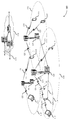
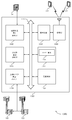
도 1 은 본 개시의 양태들에 따른, 멀티-빔 시스템들에서 업링크-기반 포지셔닝 참조 시그널링을 지원하는 무선 통신 시스템의 일 예를 나타낸다.
도 2 는 본 개시의 양태들에 따른, 멀티-빔 시스템들에서 업링크-기반 포지셔닝 참조 시그널링을 지원하는 무선 통신 시스템의 일 예를 나타낸다.
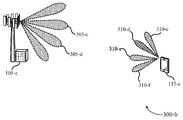
도 3a 및 도 3b 는 본 개시의 양태들에 따른, 멀티-빔 시스템들에서 업링크-기반 포지셔닝 참조 시그널링을 지원하는 무선 통신 시스템의 예들을 나타낸다.
도 4 는 본 개시의 양태들에 따른, 멀티-빔 시스템들에서 업링크-기반 포지셔닝 참조 시그널링을 지원하는 무선 통신 시스템의 일 예를 나타낸다.
도 5 는 본 개시의 양태들에 따른, 멀티-빔 시스템들에서 업링크-기반 포지셔닝 참조 시그널링을 지원하는 프로세스 플로우의 일 예를 나타낸다.
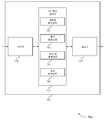
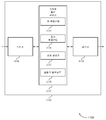
도 6 내지 도 8 은 본 개시의 양태들에 따른, 멀티-빔 시스템들에서 업링크-기반 포지셔닝 참조 시그널링을 지원하는 디바이스의 블록도들을 나타낸다.
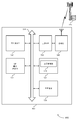
도 9 는 본 개시의 양태들에 따른, 멀티-빔 시스템들에서 업링크-기반 포지셔닝 참조 시그널링을 지원하는 사용자 장비 (UE) 를 포함하는 시스템의 블록도를 나타낸다.
도 10 내지 도 12 는 본 개시의 양태들에 따른, 멀티-빔 시스템들에서 업링크-기반 포지셔닝 참조 시그널링을 지원하는 디바이스의 블록도들을 나타낸다.
도 13 은 본 개시의 양태들에 따른, 멀티-빔 시스템들에서 업링크-기반 포지셔닝 참조 시그널링을 지원하는 기지국을 포함하는 시스템의 블록도를 나타낸다.
도 14 및 도 15 는 본 개시의 양태들에 따른, 멀티-빔 시스템들에서 업링크-기반 포지셔닝 참조 시그널링에 대한 방법들을 나타낸다.1 shows an example of a wireless communication system supporting uplink-based positioning reference signaling in multi-beam systems, in accordance with aspects of the present disclosure.
2 shows an example of a wireless communication system supporting uplink-based positioning reference signaling in multi-beam systems, in accordance with aspects of the present disclosure.
3A and 3B show examples of a wireless communication system supporting uplink-based positioning reference signaling in multi-beam systems, according to aspects of the present disclosure.
4 shows an example of a wireless communication system supporting uplink-based positioning reference signaling in multi-beam systems, in accordance with aspects of the present disclosure.
5 shows an example of a process flow supporting uplink-based positioning reference signaling in multi-beam systems, in accordance with aspects of the present disclosure.
6-8 show block diagrams of a device supporting uplink-based positioning reference signaling in multi-beam systems, in accordance with aspects of the present disclosure.
9 shows a block diagram of a system that includes user equipment (UE) supporting uplink-based positioning reference signaling in multi-beam systems, in accordance with aspects of the present disclosure.
10-12 show block diagrams of a device supporting uplink-based positioning reference signaling in multi-beam systems, in accordance with aspects of the present disclosure.
13 shows a block diagram of a system including a base station supporting uplink-based positioning reference signaling in multi-beam systems, in accordance with aspects of the present disclosure.
14 and 15 show methods for uplink-based positioning reference signaling in multi-beam systems, according to aspects of the present disclosure.
일부 무선 시스템, 이를 테면 뉴 라디오 (NR) 시스템들에서, 디바이스들은, 다수의 안테나 엘리먼트들이 특정 방향으로 빔을 형성하는 것을 가능하게 하는 것에 의해, 지향성 송신물들 (예를 들어, 빔들) 을 사용하여 통신할 수도 있다. 이들 무선 시스템들은 포지셔닝 서비스들을 지원할 수도 있으며, 사용자 장비 (UE) 는 하나 이상의 기지국들로 포지셔닝 참조 신호들을 송신할 수도 있다. 포지셔닝 참조 신호들은 UE 의 지리적 위치를 결정하기 위해 기지국에 의해 사용될 수도 있다. 일부 경우들에, UE 는 UE 가 이동하는 동안 통신에서의 갭이 발생할 때와 같이 기지국의 특정 위치를 인식하지 못할 수도 있다. UE 는 포지셔닝 참조 신호를 기지국으로 송신하기 위한 방향을 알지 못할 수도 있기 때문에, UE 는 일부 경우들에, 기지국에서의 수신을 위하여 적절하지 못할 수도 있는 송신 빔을 선택할 수도 있다. 따라서, 본원에 설명된 기법들은 UE 로부터 포지셔닝 참조 신호 송신들을 조정하는 것을 제공한다.In some wireless systems, such as New Radio (NR) systems, devices use directional transmissions (eg, beams) by enabling multiple antenna elements to form a beam in a particular direction. You can also communicate. These wireless systems may support positioning services, and a user equipment (UE) may transmit positioning reference signals to one or more base stations. Positioning reference signals may be used by the base station to determine the geographical location of the UE. In some cases, the UE may not be aware of a particular location of the base station, such as when a gap in communication occurs while the UE is moving. Since the UE may not know the direction to transmit the positioning reference signal to the base station, the UE may, in some cases, select a transmit beam that may not be suitable for reception at the base station. Accordingly, the techniques described herein provide for coordinating positioning reference signal transmissions from a UE.
기지국은 UE 및 서빙 기지국 및/또는 다른 기지국들이 포지셔닝 참조 신호의 송신 및 수신을 조정하는 것을 허용할 수도 있는, UE 로 송신할 빔 대응성을 식별할 수도 있다. 빔 대응성은 어느 동기 신호가 수신되었는지 (또는 어느 수신 빔이 기지국으로부터 동기 신호를 수신하기 위해 UE 에 의해 사용되었는지) 에 기초하여 업링크 포지셔닝 참조 신호의 송신에 사용되는 빔 구성을 표시할 수도 있다. UE 가 기지국으로부터 동기 신호를 수신하면, UE 는 동기 신호를 수신하기 위해 사용되는 빔 구성을 결정할 수 있고 그리고 수신된 빔 대응성에 기초하여 포지셔닝 참조 신호를 송신하기 위해 사용되는 업링크 빔 구성을 결정할 수도 있다.The base station may identify the beam correspondence to transmit to the UE, which may allow the UE and the serving base station and / or other base stations to coordinate the transmission and reception of the positioning reference signal. Beam correspondence may indicate the beam configuration used for transmission of the uplink positioning reference signal based on which sync signal was received (or which received beam was used by the UE to receive the sync signal from the base station). When the UE receives the synchronization signal from the base station, the UE may determine the beam configuration used to receive the synchronization signal and may determine the uplink beam configuration used to transmit the positioning reference signal based on the received beam correspondence. have.
본 개시의 양태들은 처음에 무선 통신 시스템의 맥락에서 설명된다. 또한 양태들은 프로세스 플로우를 참조하여 설명된다. 본 개시의 양태들은 또한, 멀티-빔 시스템에서 업링크-기반 포지셔닝 참조 시그널링에 관한 장치 다이어그램들, 시스템 다이어그램들, 및 플로우차트들에 의해 예시되고 이들을 참조하여 설명된다.Aspects of the present disclosure are initially described in the context of a wireless communication system. Also, aspects are described with reference to a process flow. Aspects of the present disclosure are also illustrated and described with reference to apparatus diagrams, system diagrams, and flowcharts related to uplink-based positioning reference signaling in a multi-beam system.
도 1 은 본 개시의 다양한 양태들에 따른 무선 통신 시스템 (100) 의 일 예를 나타낸다. 무선 통신 시스템 (100) 은 기지국들 (105), UE들 (115), 및 코어 네트워크 (130) 를 포함한다. 일부 예들에서, 무선 통신 시스템 (100) 은 롱텀 에볼루션 (LTE) 네트워크, 또는 LTE-어드밴스드 (LTE-A) 네트워크, 또는 NR 네트워크일 수도 있다. 일부 경우들에, 무선 통신 시스템 (100) 은 강화된 브로드밴드 통신, 초신뢰가능 (예를 들어, 미션 크리티컬) 통신, 로우 레이턴시 통신, 및 저 비용 및 저 복잡도 디바이스들을 이용한 통신을 지원할 수도 있다.1 shows an example of a
기지국들 (105) 은 하나 이상의 기지국 안테나들을 통해 UE들 (115) 과 무선으로 통신할 수도 있다. 본원에 설명된 기지국들 (105) 은 기지국 트랜시버, 무선 기지국, 액세스 포인트, 무선 트랜시버, NodeB, eNodeB (eNB), 차세대 노드 B 또는 기가-노드B (어느 것이든 gNB 로 지칭될 수도 있음), 홈 NodeB, 홈 eNodeB, 또는 기타 다른 적합한 용어를 포함할 수도 있거나 그것들로서 당업자에 의해 지칭될 수도 있다. 무선 통신 시스템 (100) 은 상이한 유형들의 기지국들 (105) (예를 들어, 매크로 또는 소형 셀 기지국들) 을 포함할 수도 있다. 본원에서 설명된 UE들 (115) 은 매크로 eNB들, 소형 셀 eNB들, gNB들, 중계기 기지국들 등을 포함하여 다양한 유형들의 기지국들 (105) 및 네트워크 장비와 통신 가능할 수도 있다.
각각의 기지국 (105) 은 여러 UE들 (115) 과의 통신이 지원되는 특정 지리적 커버리지 영역 (110) 과 연관될 수도 있다. 각각의 기지국 (105) 은 통신 링크들 (125) 을 통한 개별적인 지리적 커버리지 영역 (110) 에 대하여 통신 커버리지를 제공할 수도 있고 기지국 (105) 과 UE (115) 사이의 통신 링크들 (125) 은 하나 이상의 캐리어들을 활용할 수도 있다. 무선 통신 시스템 (100) 에 도시된 통신 링크들 (125) 은 UE (115) 로부터 기지국 (105) 으로의 업링크 송신들, 또는 기지국 (105) 으로부터 UE (115) 로의 다운링크 송신들을 포함할 수도 있다. 다운링크 송신들은 또한 순방향 링크 송신들로 지칭될 수도 있는 한편, 업링크 송신들은 또한 역방향 링크 송신들로 지칭될 수도 있다.Each
기지국 (105) 에 대한 지리적 커버리지 영역 (110) 은, 지리적 커버리지 영역 (110) 의 오직 일부분 (도시생략) 만을 구성하는 섹터들로 분할될 수도 있고 각각의 섹터는 셀과 연관될 수도 있다. 예를 들어, 각각의 기지국 (105) 은 매크로 셀, 소형 셀, 핫 스폿 또는 다른 유형들의 셀들, 또는 이들의 여러 조합들에 대해 통신 커버리지를 제공할 수도 있다. 일부 예들에서, 기지국 (105) 은 이동가능하며 따라서, 이동하는 지리적 커버리지 영역 (110) 에 대해 통신 커버리지를 제공할 수 있다. 일부 예들에서, 상이한 기술들과 연관되는 상이한 지리적 커버리지 영역들 (110) 은 오버랩할 수도 있고 상이한 기술들과 연관된 오버랩하는 지리적 커버리지 영역들 (110) 은 동일한 기지국 (105) 에 의해 또는 상이한 기지국들 (105) 에 의해 지원될 수도 있다. 무선 통신 시스템 (100) 은 예를 들어, 이종의 LTE/LTE-A 또는 NR 네트워크를 포함할 수도 있고, 여기서 상이한 유형들의 기지국들 (105) 은 여러 지리적 커버리지 영역들 (110) 에 커버리지를 제공한다.The
용어 "셀"은 (예를 들어, 캐리어를 통하여) 기지국 (105) 과의 통신을 위하여 사용되는 논리적 통신 엔티티를 지칭할 수도 있고 동일 또는 상이한 캐리어를 통하여 동작하는 이웃하는 셀들을 구별하기 위한 식별자 (예를 들어, 물리 셀 식별자 (PCID), 가상 셀 식별자 (VCID)) 와 연관될 수도 있다. 일부 예들에서, 캐리어는 다수의 셀들을 지원할 수도 있고 상이한 셀들은 상이한 유형들의 디바이스들에 대하여 액세스를 제공할 수도 있는 상이한 프로토콜 유형들 (예를 들어, 머신-타입 통신 (MTC), 협대역 사물 인터넷 (NB-IoT), 강화된 모바일 브로드밴드 (eMBB), 또는 그 외의 것) 에 따라 구성될 수도 있다. 일부 경우들에, 용어 "셀"은 논리적 엔티티가 동작하는 지리적 커버리지 영역 (110) 의 일부분 (예를 들어, 섹터) 을 지칭할 수도 있다.The term “cell” may refer to a logical communication entity used for communication with the base station 105 (eg, via a carrier) and an identifier (to distinguish neighboring cells operating on the same or different carriers) For example, it may be associated with a physical cell identifier (PCID), a virtual cell identifier (VCID). In some examples, a carrier may support multiple cells and different cells may provide access to different types of devices with different protocol types (eg, machine-type communication (MTC), narrowband Internet of Things). (NB-IoT), enhanced mobile broadband (eMBB), or others). In some cases, the term “cell” may refer to a portion (eg, sector) of the
UE들 (115) 은 무선 통신 시스템 (100) 전체에서 분산될 수도 있고, 각각의 UE (115) 는 고정식이거나 이동식일 수도 있다. UE (115) 는 또한 모바일 디바이스, 무선 디바이스, 원격 디바이스, 핸드헬드 디바이스, 또는 가입자 디바이스, 또는 일부 다른 적절한 용어로 지칭될 수도 있고 "디바이스"는 또한 유닛, 스테이션, 단말 또는 클라이언트로서 지칭될 수도 있다. UE (115) 는 또한 퍼스널 전자 디바이스, 이를 테면, 셀룰라 폰, 개인 휴대정보 단말기 (PDA), 테블릿 컴퓨터, 랩탑 컴퓨터, 또는 퍼스널 컴퓨터일 수도 있다. 일부 예들에서, UE (115) 는 또한 무선 로컬 루프 (WLL) 스테이션, 사물 인터넷 (IoT) 디바이스, 만물 인터넷 (IoE) 디바이스, 또는 MTC 디바이스 등을 지칭할 수도 있으며, 이는 여러 제품들, 가전제품, 차량들, 계측기 등에서 구현될 수도 있다.
MTC 또는 IoT 디바이스들과 같은 일부 UE들 (115) 은 저비용 또는 저복잡성 디바이스일 수 있고, 머신들 간의 자동화된 통신을 (예를 들어, M2M (Machine-to-Machine) 통신을 통하여) 제공할 수 있다. M2M 통신 또는 MTC 는 인간의 개입 없이, 디바이스들이 서로 또는 기지국 (105) 과 통신하게 허용하는 데이터 통신 기술들을 지칭할 수도 있다. 일부 예들에서, M2M 통신 또는 MTC 는 정보를 측정 또는 캡처하기 위한 센서들 또는 계량기들을 통합하고, 정보를 이용할 수 있는 중앙 서버 또는 애플리케이션 프로그램에 그 정보를 중계하거나 또는 프로그램 또는 애플리케이션과 상호작용하는 인간들에게 정보를 제시하는 디바이스들로부터의 통신들을 포함할 수도 있다. 일부 UE들 (115) 은 정보를 수집하거나 또는 머신들의 자동화된 거동을 가능하게 하도록 설계될 수도 있다. MTC 디바이스들에 대한 애플리케이션들의 예들은 스마트 미터링 (smart metering), 재고 모니터링, 수위 모니터링, 장비 모니터링, 건강관리 모니터링, 야생동물 모니터링, 기상 및 지질학적 이벤트 모니터링, 차량군 관리 및 추적, 원격 보안 감지, 물리적 액세스 제어, 및 트랜잭션-기반 비즈니스 충전을 포함한다.Some
일부 UE들 (115) 은 전력 소모를 감소시키는 동작 모드들, 이를 테면, 하프-듀플렉스 통신 (예를 들어, 동시적인 송수신이 아닌 송신 또는 수신을 통하여 1-웨이 통신을 지원하는 모드) 을 채택하도록 구성될 수도 있다. 일부 예들에서, 하프 듀플렉스 통신들은 감소된 피크 레이트에서 수행될 수도 있다. UE들 (115) 에 대한 다른 전력 보존 기술들은 액티브 통신에 참여하지 않을 때 전력 절감 "딥 슬립" 모드에 진입하는 것, 또는 (예를 들어, 협대역 통신들에 따라) 제한된 대역폭 상에서 동작하는 것을 포함한다. 일부 경우들에, UE들 (115) 은 중요 기능들 (예를 들어, 미션 크리티컬 기능들) 을 지원하도록 설계될 수도 있으며, 무선 통신 시스템 (100) 은 초신뢰가능 통신에 이들 기능들을 제공하도록 구성될 수도 있다.Some
일부 경우들에, UE (115) 는 또한 다른 UE들 (115) 과 (예를 들어, 피어 투 피어 (P2P) 또는 디바이스 투 디바이스 (D2D) 프로토콜을 사용하여) 직접 통신가능할 수도 있다. D2D 통신을 활용하는 UE들 (115) 의 그룹 중 하나 이상은 기지국 (105) 의 지리적 커버리지 영역 (110) 내에 있을 수도 있다. 이러한 그룹 내의 다른 UE들 (115) 은 기지국 (105) 의 지리적 커버리지 영역 (110) 외부에 있을 수도 있거나, 또는 기지국 (105) 으로부터의 송신물들을 달리 수신하지 못할 수도 있다. 일부 경우들에, D2D 통신들을 통해 통신하는 UE들 (115) 의 그룹은, 각각의 UE (115) 가 그룹 내의 모든 다른 UE (115) 로 송신하는 일 대 다 (1:M) 시스템을 이용할 수 있다. 일부 경우들에서, 기지국 (105) 은 D2D 통신을 위한 리소스의 스케줄링을 용이하게 한다. 다른 경우들에, D2D 통신은 기지국 (105) 의 참여없이 UE들 (115) 사이에서 수행된다.In some cases,
기지국들 (105) 은 코어 네트워크 (130) 와 그리고 서로 통신할 수도 있다. 예를 들어, 기지국들 (105) 은 백홀 링크들을 통하여 (132)(예를 들어, S1 또는 다른 인터페이스를 통하여) 코어 네트워크 (130) 와 인터페이싱할 수도 있다. 기지국들 (105) 은 직접적으로 (예를 들어, 기지국들 (105) 사이에서) 또는 간접적으로 (예를 들어, 코어 네트워크 (130) 를 통하여) 백홀 링크들 (134) 상에서 (예를 들어, X2 또는 다른 인터페이스를 통하여) 서로 통신할 수도 있다.
코어 네트워크 (130) 는 사용자 인증, 액세스 인가, 추적, 인터넷 프로토콜 (IP) 접속, 및 다른 액세스, 라우팅, 또는 이동성 기능들을 제공할 수도 있다. 코어 네트워크 (130) 는 적어도 하나의 이동 관리 엔티티 (MME), 적어도 하나의 서빙 게이트웨이 (S-GW), 및 적어도 하나의 패킷 데이터 네트워크 (PDN) 게이트웨이 (P-GW) 를 포함할 수 있는 진화된 패킷 코어 (EPC) 일 수 있다. MME 는 비액세스 계층 (예를 들어, 제어 평면) 기능들, 이를 테면, EPC 와 연관된 기지국들 (105) 에 의해 서비스되는 UE들 (115) 에 대한 이동성, 인증 및 베어러 관리를 관리할 수도 있다. 사용자 IP 패킷들은 S-GW 를 통하여 전달될 수도 있고, 이는 자체적으로 P-GW 에 접속될 수도 있다. P-GW 는 IP 어드레스 할당 및 다른 기능들을 제공할 수도 있다. P-GW 는 네트워크 오퍼레이터들 IP 서비스들에 접속될 수도 있다. 오퍼레이터 IP 서비스들은 인터넷, 인트라넷(들), IP 멀티미디어 서브시스템 (IMS), 및 패킷 스위칭 (PS) 스트리밍 서비스를 포함할 수도 있다.The
기지국 (105) 과 같은 네트워크 디바이스들의 적어도 일부는 액세스 노드 제어기 (ANC) 의 예일 수도 있는 액세스 네트워크 엔티티와 같은 서브컴포넌트들을 포함할 수도 있다. 각각의 액세스 네트워크 엔티티는, 각각이 스마트 무선 헤드, 또는 송신/수신 포인트 (TRP) 의 예일 수도 있는, 다수의 다른 액세스 네트워크 송신 엔티티들을 통해 UE들 (115) 과 통신할 수도 있다. 일부 구성들에서, 각각의 액세스 네트워크 엔티티 또는 기지국 (105) 의 다양한 기능들은 다양한 네트워크 디바이스들 (예를 들어, 무선 헤드들 및 액세스 네트워크 제어기들) 에 걸쳐 분배되거나 또는 단일의 네트워크 디바이스 (예를 들어, 기지국 (105)) 에 통합될 수도 있다.At least some of the network devices such as
무선 통신 시스템 (100) 은 통상적으로 300 MHz 내지 300 GHz 의 범위에서 하나 이상의 주파수 대역들을 사용하여 동작할 수도 있다. 일반적으로 300 MHz 내지 3 GHz 의 영역은 초고주파수 (UHF) 영역 또는 데시미터 대역으로서 알려져 있는데 이는 파장들이 대략 1 데시미터에서부터 1 미터까지의 길이의 범위이기 때문이다. UHF 파들은 빌딩 및 환경적 특징들에 의해 차단되거나 방향이 변경될 수도 있다. 그러나, 파들은 매크로 셀들이 실내에 위치된 UE들 (115) 에 서비스를 제공하기에 충분한 구조물들을 관통할 수도 있다. UHF파들의 송신은, 300 MHz 미만의 스펙트럼의 고주파수 (HF) 또는 초고주파수 (VHF) 부분의 더 작은 주파수들 및 더 긴 파들을 사용한 송신에 비교하여 더 작은 안테나들 및 더 짧은 범위 (예를 들어, 100 km 미만) 와 연관될 수도 있다.The
무선 통신 시스템 (100) 은 또한 센티미터 대역으로 알려진 3 GHz 내지 30 GHz 의 주파수 대역을 사용하여 초 고주파수 (SHF) 영역에서 동작할 수도 있다. SHF 영역은 대역들, 이를 테면, 5 GHz 산업적, 과학적, 의료적 (ISM) 대역들을 포함하며, 이는 다른 사용자들로부터 간섭을 허용할 수 있는 디바이스들에 의해 기회적으로 사용될 수도 있다.The
무선 통신 시스템 (100) 은 또한 밀리미터 대역으로서 잘 알려진, 스펙트럼의 극초고 주파수 (EHF) 영역 (예를 들어, 30 GHz 내지 300 GHz) 에서 동작할 수도 있다. 일부 예들에서, 무선 통신 시스템 (100) 은 UE들 (115) 과 기지국들 (105) 사이의 밀리미터파 (mmW) 통신들을 지원할 수도 있고, 개별적인 디바이스들의 EHF 안테나들은 UHF 안테나들보다 훨씬 더 작게 그리고 더 가깝게 이격될 수도 있다. 일부 경우들에, 이는 UE (115) 내의 안테나 어레이들의 사용을 용이하게 할 수도 있다. 그러나, EHF 송신물들의 전파는 SHF 또는 UHF 송신물들보다 훨씬 더 큰 대기 감쇠 및 더 짧은 범위를 겪게 될 수도 있다. 본원에 설명된 기법들은 하나 이상의 상이한 주파수 영역들을 사용하는 송신들에 걸쳐 채택될 수도 있고 이들 주파수 영역들을 따르는 대역들의 지정된 사용은 나라별로 또는 규제 요체별로 상이할 수도 있다.The
일부 경우들에, 무선 통신 시스템 (100) 은 허가 및 비허가 무선 주파수 스펙트럼 대역들 모두를 이용할 수 있다. 예를 들어, 무선 통신 시스템 (100) 은 5 GHz ISM 대역과 같은 비허가 대역에서 LAA ( License Assisted Access), LTE-U (LTE-Unlicensed) 무선 액세스 기술 또는 NR 기술을 채택할 수도 있다. 비허가 무선 주파수 스펙트럼 대역들에서 동작할 때, 기지국들 (105) 및 UE들 (115) 과 같은 무선 디바이스들은 데이터를 송신하기 전에 주파수 채널이 클리어임을 보장하기 위해 LBT (listen-before-talk) 절차들을 채용할 수도 있다. 일부 경우들에, 비허가 대역들에서의 동작들은 비허가 대역에서 동작하는 CC들과 연관되어 CA 구성 (예를 들어, LAA) 에 기초할 수도 있다. 비허가 스펙트럼에서의 동작들은 다운링크 송신들, 업링크 송신들, 피어 투 피어 송신들 또는 이들의 조합을 포함할 수 있다. 비허가 스펙트럼에서의 듀플렉싱은 주파수 분할 듀플렉싱 (FDD), 시분할 듀플렉싱 (TDD) 또는 이들의 조합에 기초할 수 있다.In some cases,
일부 예들에서, 기지국 (105) 또는 UE (115) 에는 다수의 안테나들이 설치될 수도 있으며, 이는 송신 다이버시티, 수신 다이버시티, 다중-입력 다중-출력 (MIMO) 통신들 또는 빔포밍과 같은 기술을 채택하는데 사용될 수도 있다. 에를 들어, 무선 통신 시스템은 송신 디바이스 (예를 들어, 기지국 (105)) 와 수신 디바이스 (예를 들어, UE (115)) 사이의 송신 방식을 사용할 수도 있고, 여기서 송신 디바이스에는, 다수의 안테나들이 탑재되고, 수신 디바이스들에는 하나 이상의 안테나들이 탑재되어 있다. MIMO 통신들은 공간 멀티플렉싱으로서 지칭될 수도 있는 상이한 공간 계층들을 통하여 다수의 신호들을 송신 또는 수신하는 것에 의해 효율적으로 스펙트럼을 증가시키기 위해 다중경로 신호 전파를 채택할 수도 있다. 다수의 신호들은 예를 들어, 상이한 안테나들 또는 상이한 조합들의 안테나들을 통하여 송신 디바이스에 의해 송신될 수도 있다. 이와 마찬가지로, 다수의 신호들은 상이한 안테나들 또는 상이한 조합들의 안테나들을 통하여 수신 디바이스에 의해 수신될 수도 있다. 다수의 신호들 각각은 별개의 공간 스트림으로서 지칭될 수도 있고 동일한 데이터 스트림 (예를 들어, 동일한 코드워드) 또는 상이한 데이터 스트림들과 연관된 비트들을 반송할 수도 있다. 상이한 공간 계층들은 채널 측정 및 보고를 위하여 사용되는 상이한 안테나 포트들과 연관될 수도 있다. MIMO 기술들은 다수의 공간 계층들이 동일한 수신 디바이스로 송신되는 단일-사용자 MIMO (SU-MIMO) 및 다수의 공간 계층들이 다수의 디바이스들로 송신되는 다수의 사용자 MIMO (MU-MIMO) 를 포함한다.In some examples, the
공간 필터링, 지향성 송신 또는 지향성 수신으로서 또한 지칭될 수도 있는 빔포밍은 송신 디바이스와 수신 디바이스 사이의 공간적 경로를 따라 안테나 빔 (예를 들어, 송신 빔 또는 수신 빔) 을 성형 또는 스티어링하기 위해 송신 디바이스 또는 수신 디바이스 (예를 들어, 기지국 (105) 또는 UE (115)) 에서 사용될 수도 있는 신호 프로세싱 기술이다. 빔포밍은 안테나 어레이에 대하여 특정 배향들에서 전파하는 신호들은 구성적 간섭을 경험하는 한편, 다른 것들은 파괴적 간섭을 경험하도록 안테나 어레이의 안테나 엘리먼트들을 통하여 통신되는 신호들을 결합하는 것에 의해 실현된다. 안테나 엘리먼트들을 통하여 통신되는 신호들의 조정은 송신 디바이스 또는 수신 디바이스가 디바이스와 연관된 안테나 엘리먼트들의 각각을 통하여 반송되는 신호들에 특정 진폭 및 위상 오프셋들을 적용하는 것을 포함할 수도 있다. 안테나 엘리먼트의 각각과 연관된 조정들은 (예를 들어, 송신 디바이스 또는 수신 디바이스의 안테나 어레이에 대해 또는 일부 다른 배향에 대해) 특정 배향과 연관된 빔포밍 가중치 세트에 의해 정의될 수도 있다.Beamforming, which may also be referred to as spatial filtering, directional transmission or directional reception, is a transmitting device or for shaping or steering an antenna beam (eg, a transmitting beam or a receiving beam) along a spatial path between the transmitting device and the receiving device It is a signal processing technique that may be used in a receiving device (eg,
일 예에서, 기지국 (105) 은 다수의 안테나들 또는 안테나 어레이들을 사용하여 UE (115) 와의 방향성 통신을 위한 빔포밍 동작들을 수행할 수도 있다. 예를 들어, 일부 신호들 (예를 들어, 동기 신호들, 참조 신호들, 빔 선택 신호들, 또는 다른 제어 신호들) 은 기지국 (105) 에 의해 다수회 상이한 방향들로 송신될 수 있고, 이는 신호가 상이한 방향들의 송신과 연관되는 상이한 빔포밍 가중치 세트들에 따라 송신되는 것을 포함할 수도 있다. 상이한 빔 방향들에서의 송신들은 기지국 (105) 에 의한 후속하는 송신 및/또는 수신을 위한 빔 방향을 (예를 들어, 기지국 (105) 또는 수신 디바이스, 이를 테면, UE (115) 에 의해) 식별하기 위해 사용될 수도 있다. 일부 신호들, 이를 테면, 특정 수신 디바이스와 연관된 데이터 신호들은 기지국 (105) 에 의해 단일 빔 방향으로 (예를 들어, 수신 디바이스, 이를 테면, UE (115) 와 연관된 방향으로) 송신될 수도 있다. 일부 예들에서, 단일 빔 방향을 따른 송신들과 연관된 빔 방향은 상이한 빔 방향들에서 송신되었던 신호에 적어도 부분적으로 기초하여 결정될 수도 있다. 예를 들어, UE (115) 는 기지국 (105) 에 의해 상이한 방향들로 송신되는 신호들 중 하나 이상을 수신할 수도 있고 UE (115) 는 자신이 최고 신호 품질 또는 달리 허용가능한 신호 품질로 수신하였다는 신호의 표시를 기지국 (105) 에 보고할 수도 있다. 이들 기술들이 기지국 (105) 에 의해 하나 이상의 방향들로 송신되는 신호들을 참조하여 설명되어 있지만, UE (115) 는 상이한 방향들로 다수 회 신호들을 송신하기 위한 (예를 들어, UE (115) 에 의한 후속 송신 또는 수신을 위한 빔 방향을 식별하기 위한), 또는 단일의 방향으로 신호를 송신하기 위한 (예를 들어, 수신 디바이스로 데이터를 송신하기 위한) 유사한 기술들을 채용할 수도 있다.In one example, the
수신 디바이스 (예를 들어, mmW 수신 디바이스의 일 예일 수도 있는 UE (115)) 는 기지국 (105) 으로부터 여러 신호들, 이를 테면, 동기 신호들, 참조 신호들, 빔 선택 신호들, 또는 다른 제어 신호들을 수신할 때 다수의 수신 빔들을 시도할 수도 있다. 예를 들어, 수신 디바이스는 상이한 안테나 서브어레이들을 통하여 수신하는 것에 의해, 상이한 안테나 서브어레이들에 따라 수신된 신호들을 프로세싱하는 것에 의해, 안테나 어레이의 복수의 안테나 엘리먼트들에서 수신되는 신호들에 적용되는 상이한 수신 빔포밍 가중치 세트들에 따라 수신하는 것에 의해, 또는 안테나 어레이의 복수의 안테나 엘리먼트들에서 수신되는 신호들에 적용되는 상이한 수신 빔포밍 가중치 세트들에 따라 수신된 신호들을 프로세싱하는 것에 의해 다수의 수신 방향들을 시도할 수도 있으며, 이들 중 어느 것은 상이한 수신 빔들 또는 상이한 방향들에 따라 "리스닝"으로서 지칭될 수도 있다. 일부 예들에서, 수신 디바이스는 (예를 들어, 데이터 신호를 수신할 때) 단일의 빔 방향을 따라 수신하도록 단일의 수신 빔을 사용할 수도 있다. 단일의 수신 빔은 상이한 수신 빔 방향들 (예를 들어, 다수의 빔 방향들에 따른 리스닝에 적어도 부분적으로 기초하여 최고 신호 강도, 최고 신호 대 잡음 비 또는 달리 허용가능한 신호 품질을 갖도록 결정되는 빔 방향) 에 따라 적어도 부분적으로 기초하여 결정되는 빔 방향으로 정렬될 수도 있다.The receiving device (e.g.,
일부 경우들에, 기지국 (105) 또는 UE (115) 의 안테나들은 하나 이상의 안테나 어레이들 내에 위치될 수도 있고, 이는 MIMO 동작들 또는 송신 또는 수신 빔포밍들을 지원할 수도 있다. 예를 들어, 하나 이상의 기지국 안테나들 또는 안테나 어레이들은 안테나 어셈블리, 이를 테면, 안테나 타워에 병치될 수도 있다. 일부 경우들에, 기지국 (105) 과 연관된 안테나들 또는 안테나 어레이들은 다양한 지리적 위치들에 위치될 수도 있다. 기지국 (105) 은 기지국 (105) 이 UE (115) 와의 통신들의 빔포밍을 지원하기 위해 사용할 수 있는 안테나 포트들의 복수의 로우들 및 컬럼들을 갖는 안테나 어레이를 가질 수도 있다. 이와 마찬가지로, UE (115) 는 여러 MIMO 또는 빔포밍 동작들을 지원할 수도 있는 하나 이상의 안테나 어레이들을 가질 수도 있다.In some cases, the antennas of the
일부 경우들에, 무선 통신 시스템 (100) 은 계층화된 프로토콜 스택에 따라 동작하는 패킷 기반 네트워크일 수도 있다. 사용자 평면에서, 베어러 또는 패킷 데이터 수렴 프로토콜 (PDCP) 계층에서의 통신은 IP 기반일 수도 있다. 무선 링크 제어 (RLC) 계층은 일부 경우들에 논리 채널들 상에서 통신하기 위해 패킷 세그먼테이션 및 리어셈블리를 수행할 수도 있다. 매체 액세스 제어 (MAC) 계층은 논리 채널들을 우선순위 처리하여 수송 채널들로의 멀티플렉싱을 수행할 수도 있다. MAC 계층은 또한 하이브리드 자동 반복 요청 (HARQ) 을 사용하여 MAC 계층에서의 재송신을 제공하여 링크 효율성을 개선할 수도 있다. 제어 평면에 있어서, 무선 리소스 제어 (RRC) 프로토콜 계층은 사용자 평면 데이터에 대한 라디오 베어러들을 지원하는 코어 네트워크 (130) 또는 기지국들 (105) 과 UE (115) 사이의 RRC 접속의 확립, 구성, 및 유지보수를 제공할 수도 있다. 물리 (PHY) 계층에서, 전송 채널들은 물리 채널들에 매핑될 수도 있다.In some cases,
일부 경우들에서, UE 들 (115) 및 기지국들 (105) 은 데이터가 성공적으로 수신되는 가능성을 증가시키기 위해 데이터의 재송신을 지원할 수도 있다. HARQ 피드백은 데이터가 통신 링크 (125) 를 통해 정확하게 수신되는 가능성을 증가시키는 한 가지 기법이다. HARQ 는 (예를 들어, 사이클릭 리던던시 체크 (CRC) 를 사용한) 에러 검출, 순방향 에러 정정 (FEC), 및 재송신 (예를 들어, 자동 반복 요청 (ARQ)) 의 조합을 포함할 수도 있다. HARQ 는 열악한 라디오 조건들 (예를 들어, 신호대 잡음 조건들) 에서, MAC 계층에서 스루풋을 개선할 수도 있다. 일부 경우들에, 무선 디바이스는 동일-슬롯 HARQ 피드백을 지원할 수도 있고, 여기서 디바이스는 슬롯에서 이전 심볼에서 수신되는 데이터에 대한 특정 슬롯에서 HARQ 피드백을 제공할 수도 있다. 다른 경우들에, 디바이스는 일부 다른 시간 간격에 따라 또는 후속 슬롯에서 HARQ 피드백을 제공할 수도 있다.In some cases,
LTE 또는 NR 에서의 시간 간격들은 기본 시간 단위의 배수들로 표현될 수 있고, 이는 예를 들어, Ts = 1/30,720,000 초의 샘플링 주기로 지칭할 수도 있다. 통신 리소스의 시간 간격들은 10 밀리초 (ms) 의 지속기간을 각각 갖는 무선 프레임들에 따라 구성될 수 있고, 여기서 프레임 주기는 Tf = 307,200 Ts 로서 표현될 수도 있다. 무선 프레임들은 0 내지 1023 의 범위에 있는 시스템 프레임 넘버 (SFN) 에 의해 식별될 수도 있다. 각각의 프레임은 0 내지 9 로 넘버링되는 10 개의 서브프레임들을 포함할 수도 있고, 각각의 서브프레임은 1 ms 의 지속기간을 가질 수도 있다. 서브프레임은 0.5 ms 의 지속기간을 각각 갖는 2 개의 슬롯들로 추가로 분할될 수도 있고, 각각의 슬롯은 (예를 들어, 각각의 심볼 주기의 앞에 덧붙여진 사이클릭 프리픽스의 길이에 의존하여) 6 또는 7 개의 변조 심볼 주기들을 포함할 수도 있다. 사이클릭 프리픽스를 제외하고, 각각의 심볼 주기는 2048 개의 샘플 주기들을 포함할 수도 있다. 일부 경우들에 서브프레임은 무선 통신 시스템 (100) 의 최소 스케줄링 유닛일 수도 있고, 송신 시간 간격 (TTI) 으로 지칭될 수도 있다. 다른 경우들에, 무선 통신 시스템 (100) 의 최소 스케줄링 유닛은 서브프레임보다 더 짧을 수도 있거나 또는 (예를 들어, 단축된 TTI들 (sTTIs) 의 버스트로 또는 sTTI들을 사용한 선택된 컴포넌트 캐리어들로) 동적으로 선택될 수도 있다.Time intervals in LTE or NR may be expressed in multiples of a basic time unit, which may be referred to as a sampling period of T s = 1 / 30,720,000 seconds, for example. The time intervals of the communication resource may be configured according to radio frames each having a duration of 10 milliseconds (ms), where the frame period may be expressed as T f = 307,200 T s . Radio frames may be identified by a system frame number (SFN) in the range of 0 to 1023. Each frame may include 10 subframes numbered from 0 to 9, and each subframe may have a duration of 1 ms. The subframe may be further divided into two slots each having a duration of 0.5 ms, each slot being 6 (eg, depending on the length of the cyclic prefix appended to the front of each symbol period) 6 or It may also include 7 modulation symbol periods. Except for the cyclic prefix, each symbol period may include 2048 sample periods. In some cases, the subframe may be the smallest scheduling unit of the
일부 무선 통신 시스템들에서, 슬롯은 하나 이상의 슬롯들을 포함하는 다수의 미니-슬롯들로 추가로 분할될 수도 있다. 일부 사례들에서, 미니슬롯들의 심볼 또는 미니 슬롯은 스케줄링의 최소 유닛일 수도 있다. 각각의 심볼은 예를 들어 동작의 주파수 대역 또는 서브캐리어 간격에 따라 지속기간에 있어서 다를 변경될 수 있다. 또한, 일부 무선 통신 시스템들은 다수의 슬롯들 또는 미니-슬롯들이 UE (115) 와 기지국 (105) 사이의 통신에 사용되고 함께 어그리게이트되는 슬롯 어그리게이션을 구현할 수도 있다.In some wireless communication systems, a slot may be further divided into multiple mini-slots that include one or more slots. In some instances, the symbol or minislot of minislots may be the smallest unit of scheduling. Each symbol may be different in duration depending on the frequency band or subcarrier interval of the operation, for example. In addition, some wireless communication systems may implement slot aggregation where multiple slots or mini-slots are used for communication between the
용어 "캐리어"는 통신 링크 (125) 상에서 통신들을 지원하기 위해 정의된 물리 계층 구조를 갖는 무선 주파수 스펙트럼 리소스들의 세트를 지칭할 수도 있다. 예를 들어, 통신 링크 (125) 의 캐리어는 주어진 무선 액세스 기술에 대한 물리 계층 채널들에 따라 동작되는 무선 주파수 스펙트럼 대역의 부분을 포함할 수도 있다. 각각의 물리 계층 채널은 사용자 데이터, 제어 정보 또는 다른 시그널링을 반송할 수도 있다. 캐리어는 미리 정의된 주파수 채널 (예를 들어, E-UTRA 절대 무선 주파수 채널 넘버 (EARFCN)) 과 연관될 수도 있고, UE들 (115) 에 의한 디스커버리를 위하여 채널 래스터에 따라 포지셔닝될 수도 있다. 캐리어들은 (예를 들어, FDD 모드에서) 다운링크 또는 업링크일 수도 있거나, 또는 (예를 들어, TDD 모드에서) 다운링크 및 업링크 통신들을 반송하도록 구성될 수도 있다. 일부 예들에서, 캐리어 상에서 송신되는 신호 파형들은 (예를 들어, 멀티-캐리어 변조 (MCM) 기법들, 이를 테면, OFDM 또는 DFT-s-OFDM 을 사용하여) 다수의 서브-캐리어들로 구성될 수도 있다.The term “carrier” may refer to a set of radio frequency spectrum resources having a physical layer structure defined to support communications on the
캐리어들의 구성적 구조는 상이한 무선 액세스 기법들 (예를 들어, LTE, LTE-A, NR 등) 에 대해 상이할 수도 있다. 예를 들어, 캐리어 상에서의 통신들은 TTI들 또는 슬롯들에 따라 구성될 수도 있고, 이들 각각은 사용자 데이터를 디코딩하는 것을 지원하기 위해 제어 정보 또는 시그널링 뿐만 아니라 사용자 데이터를 포함할 수도 있다. 캐리어는 또한, 전용 획득 시그널링 (예를 들어, 동기 신호들 또는 시스템 정보 등) 및 캐리어에 대한 동작을 조정하는 제어 시그널링을 포함할 수도 있다. 일부 예들에서 (예를 들어, 캐리어 어그리게이션 구성에서), 캐리어는 또한 획득 시그널링 또는 다른 캐리어들에 대한 동작을 조정하는 제어 시그널링을 가질 수도 있다.The constructive structure of carriers may be different for different radio access techniques (eg, LTE, LTE-A, NR, etc.). For example, communications on a carrier may be configured according to TTIs or slots, each of which may include user data as well as control information or signaling to assist in decoding user data. The carrier may also include dedicated acquisition signaling (eg, synchronization signals or system information, etc.) and control signaling to coordinate operation for the carrier. In some examples (eg, in a carrier aggregation configuration), the carrier may also have acquisition signaling or control signaling to coordinate operation for other carriers.
물리 채널들은 여러 기법들에 따라 캐리어 상에서 멀티플렉싱될 수도 있다. 물리 제어 채널 및 물리 데이터 채널은 다운링크 캐리어 상에서, 예를 들어, 시분할 멀티플렉싱 (TDM) 기법들, 주파수 분할 멀티플렉싱 (FDM) 기법들, 또는 하이브리드 TDM-FDM 기법들을 사용하여 멀티플렉싱될 수도 있다. 일부 예들에서, 물리 제어 채널에서 송신되는 제어 정보는 캐스케이드형 방식으로 상이한 제어 영역들 사이에 (예를 들어, 공통 제어 영역 또는 공통 검색 공간과 하나 이상의 UE-특정의 제어 영역들 또는 UE-특정 검색 공간들 사이에) 분포될 수 있다.Physical channels may be multiplexed on a carrier according to various techniques. The physical control channel and the physical data channel may be multiplexed on the downlink carrier, for example, using time division multiplexing (TDM) techniques, frequency division multiplexing (FDM) techniques, or hybrid TDM-FDM techniques. In some examples, the control information transmitted on the physical control channel is cascaded between different control regions (eg, a common control region or common search space and one or more UE-specific control regions or UE-specific search) (Between spaces).
캐리어는 무선 주파수 스펙트럼의 특정 대역폭과 연관될 수도 있고 일부 예들에서, 캐리어 대역폭은 무선 통신 시스템 (100) 또는 캐리어의 "시스템 대역폭"으로 지칭될 수도 있다. 예를 들어, 캐리어 대역폭은 특정 무선 액세스 기술의 캐리어들에 대한 복수의 미리 결정된 대역폭들 중 하나 (예를 들어, 1.4, 3, 5, 10, 15, 20, 40, 또는 80 MHz) 일 수도 있다. 일부 예들에서, 각각의 서비스되는 UE (115) 는 캐리어 대역폭 전부 또는 일부 상에서 동작하기 위하여 구성될 수도 있다. 다른 예들에서, 일부 UE들 (115) 은 캐리어 (예를 들어, 협대역 프로토콜 유형의 "대역내" 배치) 내에서 미리 정의된 부분 또는 범위 (예를 들어, 서브캐리어들 또는 RB들의 세트) 와 연관된 협대역 프로토콜 유형을 사용한 동작을 위하여 구성될 수도 있다.The carrier may be associated with a particular bandwidth of the radio frequency spectrum and in some examples, the carrier bandwidth may be referred to as the
MCM 기술들을 채용하는 시스템들에서, 리소스 엘리먼트는 하나의 심볼 주기 (예를 들어, 하나의 변조 심볼의 지속기간) 및 하나의 서브캐리어로 구성될 수도 있고 심볼 주기 및 서브캐리어 간격은 역 관련되어 있다. 각각의 리소스 엘리먼트에 의해 반송되는 비트들의 수는 변조 방식 (예를 들어, 변조 방식의 순서) 에 의존할 수도 있다. 따라서, UE (115) 가 수신하는 리소스 엘리먼트들이 더 많고 변조 방식의 순서가 더 높을수록 UE (115) 에 대해 데이터 레이트가 더 높을 수도 있다. MIMO 시스템들에서, 무선 통신 리소스는 무선 주파수 스펙트럼 리소스, 시간 리소스, 및 공간 리소스 (예를 들어, 공간 계층들) 의 조합을 지칭할 수도 있고, 다수의 공간 계층들의 사용은 추가로 UE (115) 와의 통신을 위한 데이터 레이트를 증가시킬 수도 있다.In systems employing MCM techniques, a resource element may consist of one symbol period (eg, duration of one modulation symbol) and one subcarrier, and the symbol period and subcarrier spacing are inversely related. . The number of bits carried by each resource element may depend on the modulation scheme (eg, order of modulation schemes). Thus, the more resource elements the
무선 통신 시스템 (100) 의 디바이스들 (예를 들어, 기지국들 (105) 또는 UE들 (115)) 은 특정 캐리어 대역폭 상에서의 통신들을 지원하는 하드웨어 구성을 가질 수도 있거나 또는 캐리어 대역폭들의 세트 중 하나를 통한 통신들을 지원하도록 구성가능할 수도 있다. 일부 예들에서, 무선 통신 시스템 (100) 은 하나 보다 많은 상이한 캐리어 대역폭과 연관된 캐리어들을 통한 동시 통신들을 지원할 수 있는 기지국들 (105) 및/또는 UE들을 포함할 수도 있다.The devices of the wireless communication system 100 (eg,
무선 통신 시스템 (100) 은 다수의 셀들 또는 캐리어들에 상에서 UE (115) 와의 통신을 지원할 수도 있으며, 그 특징은 캐리어 어그리게이션 (CA) 또는 멀티-캐리어 동작으로서 지칭될 수도 있다. UE (115) 는 캐리어 어그리게이션 구성에 따라 다수의 다운링크 CC들 및 하나 이상의 업링크 CC들로 구성될 수도 있다. 캐리어 어그리게이션은 양쪽 FDD 및 TDD 컴포넌트 캐리어들에 사용될 수도 있다.The
일부 경우들에, 무선 통신 시스템 (100) 은 강화된 컴포넌트 캐리어들 (eCCs) 을 활용할 수도 있다. eCC 는 더 넓은 캐리어 또는 주파수 채널 대역폭, 더 짧은 심볼 지속기간, 더 짧은 TTI 지속기간, 또는 수정된 제어 채널 구성을 포함하는 하나 이상의 피처들에 의해 특징화될 수도 있다. 일부 경우들에, eCC 는 (예를 들어, 다수의 서비스 셀들이 준최적 또는 비이상적 백홀 링크를 가질 때) 듀얼 접속성 구성 또는 캐리어 어그리게이션 구성과 연관될 수도 있다. eCC 는 또한, (예를 들어, 하나보다 많은 오퍼레이터가 스펙트럼을 사용하도록 허용되는 경우) 비허가 스펙트럼 또는 공유 스펙트럼에서 사용하기 위하여 구성될 수도 있다. 넓은 캐리어 대역폭을 특징으로 하는 eCC 는 전체 캐리어 대역폭을 모니터링가능하지 않거나 또는 (예를 들어, 전력을 보존하기 위해) 제한된 캐리어 대역폭을 사용하기 위해 달리 구성되는 UE들 (115) 에 의해 활용될 수도 있는 하나 이상의 세그먼트들을 포함할 수도 있다.In some cases,
일부 경우들에, eCC 는 다른 CC들과는 상이한 심볼 지속기간을 활용할 수도 있고, 이는 다른 CC들의 심볼 지속기간들에 비해 감소된 심볼 지속기간의 사용을 포함할 수도 있다. 더 짧은 심볼 지속기간은 인접하는 서브캐리어들 사이의 증가된 간격과 연관될 수도 있다. eCC들을 활용하는 디바이스, 이를 테면, UE (115) 또는 기지국 (105) 은 감소된 심볼 지속기간들 (예를 들어, 16.67 마이크로초) 에서 (예를 들어, 20, 40, 60, 80 MHz 등의 캐리어 대역폭 또는 주파수 채널에 따라) 대역폭 신호들을 송신할 수도 있다. eCC 에서의 TTI 는 하나 또는 다수의 심볼 주기들로 구성될 수도 있다. 일부 경우들에, TTI 지속기간 (즉, TTI 에서 심볼 주기들의 수) 는 가변적일 수도 있다.In some cases, the eCC may utilize a different symbol duration than other CCs, which may include the use of a reduced symbol duration compared to the symbol durations of other CCs. Shorter symbol durations may be associated with increased spacing between adjacent subcarriers. A device that utilizes eCCs, such as
무선 통신 시스템들, 이를 테면, NR 시스템은 무엇보다도, 허가, 공유, 및 비허가 스펙트럼 대역들의 임의의 조합을 활용할 수도 있다. eCC 심볼 지속기간 및 서브캐리어 간격의 유연성은 다수의 스펙트럼들을 따라 eCC 의 사용을 허용할 수도 있다. 일부 예들에서, NR 공유 스펙트럼은 특히 리소스의 동적 수직 (예를 들어, 주파수에 걸친) 및 수평 (예를 들어, 시간에 걸친) 공유를 통해 스펙트럼 사용 및 스펙트럼 효율을 증가시킬 수도 있다.Wireless communication systems, such as the NR system, above all, may utilize any combination of licensed, shared, and unlicensed spectrum bands. The flexibility of eCC symbol duration and subcarrier spacing may allow the use of eCC along multiple spectra. In some examples, the NR shared spectrum may increase spectrum use and spectral efficiency, particularly through dynamic vertical (eg, over frequency) and horizontal (eg, over time) sharing of resources.
기지국 (105) (또는 다른 네트워크 엔티티) 은 하나 이상의 동기 신호들 (예를 들어, 프라이머리 동기 신호 (PSS)(이를 테면, NR-PSS), 세컨더리 동기 신호 (SSS)(이를 테면 NR-SSS), 복조 참조 신호 (DMRS)(이를 테면, NR 물리 브로드캐스트 채널 (PBCH) DMRS)) 과 업링크 포지셔닝 참조 신호 (UPRS) 사이의 빔 대응성을 정의할 수도 있다. 빔 대응성은 (예를 들어, UE (115) 에 의해) 동기 신호들 중 적어도 하나를 수신하기 위해 사용되는 하나 이상의 빔들과, UPRS 의 (예를 들어, UE (115) 에 의한) 송신에 사용되는 하나 이상의 송신 빔들 사이의 관계를 특정할 수도 있다. 이들은 업링크-기반 포지셔닝을 위한 상이한 빔 대응성 구성들일 수도 있다. 이러한 빔 대응성 구성들은 UE (115) 와 기지국 (105) 양쪽에서의 빔 대응성, UE (115) 단독에서의 빔 대응성, 기지국 (105) 단독에서의 빔 대응성, 또는 UE (115) 와 기지국 (105) 사이의 빔 대응성 없음을 정의할 수도 있다. 빔 대응성은 시스템 정보에서 (예를 들어, 마스터 정보 블록 (MIB), 시스템 정보 블록 (SIB), 잔여 최소 시스템 정보 (RMSI), 다른 시스템 정보 (OSI) 등에서 반송되는 표시에 의해) 시그널링될 수도 있다. 또한, 일부 예들에서, UPRS 에 대한 송신 전력은 동기 신호들의 측정들에 의존할 수도 있거나 오프셋될 수도 있다. 일부 예들에서, 송신 전력은 UE (115) 에 (예를 들어, 기지국 (105) 에 의해 UE (115) 로 송신되는 메시지에서) 표시될 수도 있다.The base station 105 (or other network entity) may include one or more synchronization signals (eg, primary synchronization signal (PSS) (such as NR-PSS), secondary synchronization signal (SSS) (such as NR-SSS) .., Beam correspondence between a demodulation reference signal (DMRS) (eg, NR Physical Broadcast Channel (PBCH) DMRS)) and an uplink positioning reference signal (UPRS) may be defined. Beam correspondence (eg, by UE 115) is used to transmit at least one of the synchronization signals (eg, by UE 115) and UPRS (eg, by UE 115) You may specify a relationship between one or more transmit beams. These may be different beam responsive configurations for uplink-based positioning. These beam responsiveness configurations include beam responsiveness at both
도 2 는 본 개시의 양태들에 따른, 멀티-빔 시스템들에서 업링크-기반 포지셔닝 참조 시그널링을 지원하는 무선 통신 시스템 (200) 의 일 예를 나타낸다. 일부 예들에서, 무선 통신 시스템 (200) 은 무선 통신 시스템 (100) 의 양태들을 구현할 수도 있다. 무선 통신 시스템 (200) 은 커버리지 영역 (110-a) 상에서 UE (115-a) 와의 통신을 지원하는 기지국 (105-a) 을 포함할 수 있다. 기지국 (105-a) 및 UE (115-a) 는 통신 링크 (215) 를 통하여 통신할 수 있다.2 shows an example of a
일부 예들에서, 기지국 (105-a) 은 UE (115-a) 와 통신하기 위해 빔포밍 기술들을 사용할 수도 있다. 예를 들어, 기지국 (105-a) 은 하나 이상의 송신 빔들 (205) 을 사용하여 UE (115-a) 로 동기 신호를 송신할 수도 있다. 각각의 송신 빔 (205) 은 상이한 시간-주파수 리소스들을 사용할 수도 있고 송신 빔 (205) 의 형성은 기지국 (105-a) 에서의 안테나 구성에 기초할 수도 있다. UE (115-a) 는 또한 기지국 (105-a) 에 의해 송신되는 하나 이상의 동기 신호들을 수신하기 위하여 빔포밍 기술을 사용할 수도 있다. 예를 들어, UE (115-a) 는 기지국 (105-a) 에 의해 송신되는 하나 이상의 동기 신호들을 수신가능한 수신 빔 (210) 을 형성하기 위해 다수의 안테나들을 사용할 수도 있다. 각각의 수신 빔 (210) 의 형성은 UE (115-a) 에서의 안테나 구성에 기초할 수도 있다.In some examples, the base station 105-a may use beamforming techniques to communicate with the UE 115-a. For example, the base station 105-a may transmit a synchronization signal to the UE 115-a using one or more transmit beams 205. Each transmit
기지국 (105-a) 은 기지국 (105-a) 과 UE (115-a) 사이의 빔 대응성을 정의할 수도 있다. 빔 대응성은 (예를 들어, 기지국 (105-a) 에 의해 송신될) 동기 신호들과,(예를 들어, UE (115-a) 에 의해 수신된 동기 신호들에 부분적으로 기초하여 송신될) UPRS 에 대하여 정의될 수도 있다. 빔 대응성은 기지국 고유, UE 고유, 셀 고유 또는 UE들의 그룹에 고유한 것일 수도 있다. 또한 업링크 기반 포지셔닝을 위하여 정의된 상이한 빔 대응성 구성들이 존재할 수 있다. 이러한 빔 대응성 구성들은 UE (115-a) 와 기지국 (105-a) 양쪽에서의 빔 대응성, UE (115-a) 단독에서의 빔 대응성, 기지국 (105-a) 단독에서의 빔 대응성, 또는 UE (115-a) 와 기지국 (105-a) 사이의 빔 대응성 없음을 정의할 수도 있다.Base station 105-a may define beam correspondence between base station 105-a and UE 115-a. Beam correspondence (eg, to be transmitted based in part on the synchronization signals received by the UE 115-a) and synchronization signals (eg, to be transmitted by the base station 105-a)) It may be defined for UPRS. Beam correspondence may be base station specific, UE specific, cell specific or unique to a group of UEs. There may also be different beam correspondence configurations defined for uplink based positioning. These beam correspondence configurations include beam correspondence at both the UE 115-a and base station 105-a, beam correspondence at the UE 115-a alone, and beam correspondence at the base station 105-a alone. Last name or no beam correspondence between the UE 115-a and the base station 105-a may be defined.
일부 경우들에, 기지국 (105-a) 은 하나 이상의 송신 빔들 (205) 을 사용하여 빔 대응성의 표시를 UE (115-a) 로 송신할 수도 있다. 다른 경우들에, 기지국 (105-a) 은 빔포밍 기술들을 사용하지 않고 빔 대응성의 표시를 송신할 수도 있다. 빔 대응성의 표시는 동기 신호들과 동시에 또는 그 이전에 송신될 수도 있고, 일부 예들에서, 빔 대응성은 시스템 정보 (SIB, MIB, RMSI, OSIB 등) 내에서 송신될 수 있거나 또는 시스템 정보에 의해 표시될 수 있다. 빔 대응성은 동기 신호들을 송신하기 위해 사용되는 것과는 상이하는 빔 구성 또는 이와 동일한 구성을 사용하여 기지국 (105-a) 에 의해 송신될 수도 있다.In some cases, the base station 105-a may transmit an indication of beam responsiveness to the UE 115-a using one or more transmit beams 205. In other cases, the base station 105-a may transmit an indication of beam responsiveness without using beamforming techniques. The indication of beam responsiveness may be transmitted simultaneously or prior to the synchronization signals, and in some examples, beam responsiveness may be transmitted within system information (SIB, MIB, RMSI, OSIB, etc.) or indicated by system information Can be. Beam correspondence may be transmitted by the base station 105-a using a beam configuration different from that used to transmit synchronization signals or the same configuration.
빔 대응성에 기초하여, UE (115-a) 는 (예를 들어, UE (115-a) 와 기지국 (105-a) 대응성의 경우에) 동기 신호가 수신되는 수신 빔 (210) 과, UPRS 가 송신될 수도 있는 업링크 빔 구성 사이의 연관성을 결정할 수도 있다. 동기 신호의 수신시, UE (115-a) 는 (예를 들어, 수신 빔들의 세트 상에서 수신되는 동기 신호들의 세트를 측정하고 가장 강한 또는 가장 높은 신호 전력을 결정하는 것에 의해) 동기 신호를 수신하기 위해 사용되는 수신 빔을 결정할 수도 있다. 빔 대응성에 기초하여, UE (115-a) 는 UPRS 의 송신을 위한 업링크 빔 구성을 결정할 수도 있다.Based on the beam correspondence, the UE 115-a is configured to receive the
UE (115-a) 는 빔 대응성 구성에 따라, 어느 수신 빔 (210) 이 동기 신호 (또는 UE (115-a) 가 하나 이상의 기지국들 (105-a) 로부터 다수의 동기 신호들을 수신하는 경우 가장 강한 동기 신호) 를 수신하였는지에 기초하여 UPRS 를 송신할 수도 있다. 일부 경우들에, UPRS 는 동기 신호가 수신되는 동일 송신 빔 상에서 송신될 수도 있다. 예를 들어, UE (115-a) 는 기지국 (105-a) 으로부터 수신 빔 (210-a) 을 통하여 동기 신호를 수신할 수도 있다. 빔 대응성에 기초하여, UE (115-a) 는 UPRS 를 빔 (210-a) 상에서 송신하도록 결정할 수도 있다. 대안적으로, 빔 대응성은 빔 (210-b) 과 같이 동기 신호가 수신되었던 빔과는 상이한 빔 상에서 송신하도록 UE (115-a) 에게 표시할 수도 있다. 일부 예들에서, 동기 신호들의 세트는 다수의 빔들 (예를 들어, 빔들 (205-a, 205-b 등) 의 2 개 이상) 을 사용하여 기지국 (105-a) 에 의해 송신될 수도 있고 UE (115-a) 는 다수의 빔들 (예를 들어, 빔들 (210-a, 210-b 등) 의 2 개 이상) 상에서 다수의 동기 신호들을 수신할 수도 있다. 수신된 동기 신호들의 측정들 및 빔 대응성에 기초하여, UE (115-a) 는 UPRS 의 송신을 위해 사용할 빔 (210) 을 결정할 수도 있다. 일부 예들에서, UPRS 는 사운딩 참조 신호 (SRS), 또는 물리 랜덤 액세스 채널 (PRACH), 또는 다른 유형의 참조 신호, 예를 들어 UPRS 로서 사용하기에 적합한 다른 유형의 참조 신호일 수도 있다.The UE 115-a may receive a synchronization signal (or a UE 115-a) receiving one or more synchronization signals from one or more base stations 105-a depending on the beam responsiveness configuration. UPRS may be transmitted based on whether the strongest synchronization signal has been received. In some cases, UPRS may be transmitted on the same transmission beam from which the synchronization signal is received. For example, the UE 115-a may receive a synchronization signal from the base station 105-a through the receive beam 210-a. Based on beam correspondence, UE 115-a may determine to transmit UPRS on beam 210-a. Alternatively, beam correspondence may indicate to UE 115-a to transmit on a different beam than the beam from which the synchronization signal was received, such as beam 210-b. In some examples, the set of synchronization signals may be transmitted by the base station 105-a using multiple beams (eg, two or more of the beams 205-a, 205-b, etc.) and the UE ( 115-a) may receive multiple sync signals on multiple beams (eg, two or more of the beams 210-a, 210-b, etc.). Based on the measurements of the received synchronization signals and beam correspondence, UE 115-a may determine the
일부 예들에서, UE (115-a) 는 (예를 들어, 빔 대응성 없음이 정의될 때 또는 빔 대응성이 UE (115-a) 에 의해 수신되지 않거나 또는 UE (115-a) 가 이동하였을 때의 경우에) UPRS 의 송신을 위해 사용할 안테나 구성의 정보를 갖지 않을 수도 있다. 이러한 경우, UE (115-a) 는 UPRS 를 다수의 빔들 (210-a, 210-b 등) 상에서 송신하는 것에 의해 스위핑 동작을 수행할 수도 있다. 추가적으로 또는 대안적으로, 기지국 (105-a) 은 (예를 들어, 기지국 전용 빔 대응성 또는 빔 대응성 없음의 경우에) UPRS 의 수신을 위해 사용할 빔 구성의 정보를 갖지 않을 수도 있다. 이러한 경우들에, 기지국 (105-a) 은 동기 신호(들) 의 송신에 사용되는 빔들 (205) 에 대응할 수도 또는 대응하지 않을 수도 있는 다수의 수신 빔들에 대한 빔 스위핑을 수행할 수도 있다.In some examples, the UE 115-a (eg, when no beam correspondence is defined or if the beam correspondence is not received by the UE 115-a or the UE 115-a has moved) In some cases) it may not have the information of the antenna configuration to be used for the transmission of the UPRS. In this case, the UE 115-a may perform a sweeping operation by transmitting UPRS on multiple beams 210-a, 210-b, etc. Additionally or alternatively, the base station 105-a may not have the information of the beam configuration to use for the reception of the UPRS (eg, in the case of base station only beam correspondence or no beam correspondence). In these cases, the base station 105-a may perform beam sweeping for multiple received beams that may or may not correspond to
UE (115-a) 에서의 빔 절약 메카니즘에 대해, UE (115-a) 는 UPRS 을 송신하기 위해 접속된 상태 (예를 들어, RRC-접속된 상태) 로 트랜지션하지 않을 수도 있다. 예를 들어, 일부 경우들에, UE (115-a) 는 UE (115-a) 가 유휴 모드에서 동작할 때 (예를 들어, RRC-Idle 에서), 이를 테면, 포지셔닝 서비스가 요청될 때 UPRS 을 전송할 수도 있다.For the beam saving mechanism in UE 115-a, UE 115-a may not transition to the connected state (eg, RRC-connected state) to transmit UPRS. For example, in some cases, the UE 115-a is UPRS when the UE 115-a is operating in idle mode (eg, in RRC-Idle), such as when a positioning service is requested. You can also send
UE (115-a) 는 또한, 기지국 (105-a) 과 신뢰성있는 통신을 유지하기 위해 UPRS 의 송신을 조정할 수도 있다. 예를 들어, UPRS 에 대한 송신 전력은 수신된 동기 신호의 측정들에 따라 변할 수도 있다. 일부 양태들에서, 고정된 전력 오프셋은 UPRS 의 송신 전력 내에 추가될 수도 있다. 전력 오프셋은 주파수 대역 종속적이고/이거나 송신을 위해 사용되는 듀플렉싱 모드에 기초할 수도 있다 (예를 들어, TDD 또는 FDD). 추가적으로 또는 대안적으로, 전력 오프셋은 시스템 정보 (예를 들어, MIB, SIB) 에서 시그널링될 수도 있다. 기지국 (105-a) 이 전력 오프셋들의 세트를 UE (115-a) 로 시그널링하면, UE (115-a) 는 동기 신호 측정으로부터 연산되는 경로 손실에 기초하여 전력 오프셋을 선택할 수도 있다. 일부 경우들에, UE (115-a) 가 UPRS 를 송신할 때, UE (115-a) 는 전력 오프셋들의 세트 중에서 전력 오프셋을 랜덤하게 선택할 수도 있다. 예를 들어, UE (115-a) 는 각각의 UPRS 송신에 대한 전력 오프셋을 랜덤하게 선택할 수도 있다.The UE 115-a may also coordinate transmission of the UPRS to maintain reliable communication with the base station 105-a. For example, the transmit power for UPRS may vary depending on measurements of the received sync signal. In some aspects, a fixed power offset may be added within the transmit power of UPRS. The power offset may be frequency band dependent and / or based on the duplexing mode used for transmission (eg, TDD or FDD). Additionally or alternatively, the power offset may be signaled in system information (eg, MIB, SIB). If the base station 105-a signals the set of power offsets to the UE 115-a, the UE 115-a may select the power offset based on the path loss calculated from the synchronization signal measurement. In some cases, when UE 115-a transmits UPRS, UE 115-a may randomly select a power offset from a set of power offsets. For example, UE 115-a may randomly select a power offset for each UPRS transmission.
도 3a 및 도 3b 는 본 개시의 여러 양태들에 따른, 멀티-빔 시스템들에서 업링크-기반 포지셔닝 참조 시그널링을 지원하는 무선 통신 시스템 (300) 의 예들을 나타낸다. 일부 예들에서, 무선 통신 시스템 (300) 은 도 1 및 도 2 를 참조하여 설명된 바와 같은 무선 통신 시스템 (100 또는 200) 의 양태들을 구현할 수도 있다.3A and 3B show examples of a
도 3a 에 도시된 바와 같이, 무선 통신 시스템 (300-a) 은 UE (115-b) 와 통신 중인 기지국 (105-b) 을 포함한다. 기지국 (105-b) 은 UE (115-b) 에 대한 서빙 셀과 연관된 기지국의 일 예일 수도 있다. 기지국 (105-b) 은 UE (115-b) 로부터 동기 신호들의 세트와 UPRS 사이의 빔 대응성 구성을 결정할 수도 있다. 일부 경우들에, 기지국 (105-b) 은 대안적으로, 네트워크 엔티티, 이를 테면, 코어 네트워크 엔티티 (예를 들어, MME, 액세스 및 이동성 기능부 (AMF) 등) 로부터 빔 대응성 구성을 수신할 수도 있다.3A, the wireless communication system 300-a includes a base station 105-b in communication with a UE 115-b. Base station 105-b may be an example of a base station associated with a serving cell for UE 115-b. The base station 105-b may determine a beam correspondence configuration between the set of synchronization signals from the UE 115-b and UPRS. In some cases, the base station 105-b may alternatively receive a beam responsiveness configuration from a network entity, such as a core network entity (eg, MME, access and mobility function (AMF), etc.). It might be.
기지국 (105-b) 은 시스템 정보에 의해 표시되거나 또는 시스템 정보 내에서 송신될 수도 있는 결정된 빔 대응성 구성을 UE (115-b) 에 통신할 수 있다. 일 예에서, 빔 대응성 구성은 UE (115-b) 에, 기지국 (105-b) 과 UE (115-b) 사이의 빔 대응성을 표시할 수도 있다. 예를 들어, 기지국 (105-b) 과 UE (115-b) 사이의 빔 대응성은 UE (115-b) 의 (예를 들어, 동기 신호가 수신되는 빔 (310-a) 을 형성하는데 사용되는) 수신 빔 구성과, UE (115-b) 의 (예를 들어, UPRS 가 송신되는 빔 (310-b) 을 형성하는데 사용되는) 송신 빔 구성 사이의 연관을 표시할 수도 있다.The base station 105-b can communicate to the UE 115-b a determined beam responsiveness configuration that may be indicated by system information or transmitted within the system information. In one example, the beam responsiveness configuration may indicate to the UE 115-b beam responsiveness between the base station 105-b and the UE 115-b. For example, the beam correspondence between the base station 105-b and the UE 115-b is used to form the beam 310-a of the UE 115-b (e.g., a synchronization signal is received). ) May indicate an association between the received beam configuration and the transmitted beam configuration of the UE 115-b (eg, used to form the beam 310-b in which UPRS is transmitted).
일 예에서, 기지국 (105-b) 과 UE (115-b) 사이의 빔 대응성은 UE (115-b) 가 기지국 (105-b) 으로부터 동기 신호를 수신하는데 사용되는 것과 동일한, UPRS를 송신하기 위한 빔 구성을 사용할 것임을 표시할 수도 있다. 예를 들어, 빔 대응성은 UPRS 를 빔 (310-a) 상에서 송신하도록 UE (115-b) 에 표시할 수도 있고 이는 기지국 (105-b) 으로부터 동기 신호를 수신하기 위해 UE (115-b) 에 의해 사용된 빔과 동일할 수도 있다.In one example, the beam correspondence between the base station 105-b and the UE 115-b is the same as the UE 115-b used to receive the synchronization signal from the base station 105-b, transmitting UPRS You may indicate that you will use the beam configuration for this. For example, beam responsiveness may indicate to the UE 115-b to transmit the UPRS on the beam 310-a, which may indicate to the UE 115-b to receive a synchronization signal from the base station 105-b. It may be the same as the beam used by.
일부 경우들에, 기지국 (105-b) 은 UE (115-b) 에, 하나 이상의 빔들 (305)(빔 (305-a), 빔 (305-b) 등) 을 사용하여 동기 신호를 송신할 수 있다. 동기 신호의 수신시,UE (115-b) 는 수신 빔 (310-b) 이 가장 강한 수신된 동기 신호와 연관됨을 결정할 수 있고 빔 대응성에 기초하여 UE (115-b) 는 UE (115-b) 가 UPRS 을 송신할 대응하는 송신 빔을 결정할 수 있다. 일 이러한 예에서, 빔 대응성은 UE (115-b) 가, 동기신호를 수신하는데 사용된 것과 동일한 빔을, UPRS 를 송신하기 위해 사용할 것임을 표시할 수 있고 따라서 UE (115-b) 는 UPRS 를 빔 (310-b) 을 통하여 송신하도록 결정할 수도 있다. 다른 예에서, 빔 대응성은 UE (115-b) 가 동기 신호를 수신하는데 사용되는 것과는 상이한 빔을 UPRS 를 송신하는데 사용하는 것을 동기 신호를 수신하는데 사용되는 것을 표시할 수 있다. 이러한 예에서 UE (115-b) 는 빔 (310-b) 을 통하여 동기 신호를 수신하지만, 빔 대응성은 빔 (310-b) 을 통하여 UPRS 를 송신하도록 결정하기 위해 UE (115-b) 에 의해 사용될 수도 있다.In some cases, the base station 105-b transmits a synchronization signal to the UE 115-b using one or more beams 305 (beam 305-a, beam 305-b, etc.). You can. Upon reception of the synchronization signal, the UE 115-b can determine that the received beam 310-b is associated with the strongest received synchronization signal and based on the beam correspondence, the UE 115-b is the UE 115-b ) Can determine the corresponding transmit beam to transmit the UPRS. In one such example, the beam correspondence may indicate that the UE 115-b will use the same beam used to receive the synchronization signal, to transmit the UPRS, and thus the UE 115-b beams the UPRS. It may be determined to transmit via (310-b). In another example, beam correspondence may indicate that the UE 115-b is using a different beam than the one used to receive the synchronization signal to transmit the UPRS, and is used to receive the synchronization signal. In this example, the UE 115-b receives the synchronization signal through the beam 310-b, but the beam correspondence is determined by the UE 115-b to determine to transmit the UPRS through the beam 310-b. It can also be used.
도 3b 에 도시된 바와 같이, 무선 통신 시스템 (300-b) 은 UE (115-c) 와 통신 중인 기지국 (105-c) 을 포함한다. 기지국 (105-c) 은 UE (115-c) 에 대한 서빙 셀과 연관된 기지국의 일 예일 수도 있다. 기지국 (105-b) 은 (예를 들어, 이는 기지국 (105-c) 에 의해 송신될 수 있는) 동기 신호들의 세트와 (예를 들어, UE (115-c) 에 의해 송신될 수 있는) UPRS 사이의 빔 대응성 구성을 결정할 수도 있다. 일부 경우들에, 기지국 (105-c) 은 대안적으로, 네트워크 엔티티, 이를 테면, 코어 네트워크 엔티티 (예를 들어, MME, AMF) 로부터 빔 대응성 구성을 수신할 수도 있다.3B, the wireless communication system 300-b includes a base station 105-c in communication with the UE 115-c. Base station 105-c may be an example of a base station associated with a serving cell for UE 115-c. Base station 105-b is a set of synchronization signals (eg, which may be transmitted by base station 105-c) and UPRS (eg, which may be transmitted by UE 115-c) It is also possible to determine the beam correspondence configuration between. In some cases, the base station 105-c may alternatively receive a beam responsiveness configuration from a network entity, such as a core network entity (eg, MME, AMF).
기지국 (105-c) 은 시스템 정보에 의해 표시되거나 또는 시스템 정보 내에서 송신될 수도 있는 결정된 빔 대응성 구성을 UE (115-c) 에 통신할 수 있다. 일 예에서, 빔 대응성 구성은 UE (115-c) 에, 기지국 (105-c) 과 UE (115-c) 사이에 빔 대응성이 없음 또는 기지국 (105-c) 단독으로 빔 대응성이 있을 수도 있음을 표시할 수도 있다. 이러한 예들에, 기지국 (105-c) 은 UE (115-c) 에, 하나 이상의 빔들 (305) 을 통하여 동기 신호를 송신할 수 있다. (예를 들어, 빔 (310-d) 상에서) 동기 신호의 수신시, UE (115-c) 는 빔 대응성에 기초하여, UPRS 의 송신에 사용할 빔들 (310) 중 하나 이상의 빔 (예를 들어, 빔 (310-d)) 을 결정할 수도 있다. 예를 들어, 기지국 (105-c) 과 UE (115-c) 사이에 빔 대응성이 없음 또는 기지국 (105-c) 단독으로 빔 대응성이 있을 수도 있음에 기인하여, UE (115-c) 는 빔들 (310) 각각 (예를 들어, 310-c, 310-d, 310-e, 310-f) 상에서 UPRS 의 빔 스위핑을 수행할 수도 있다. 기지국 (105-c) 은 UE (115-c) 가 UPRS 의 송신을 위해 사용하는 것이 어느 빔들인지를 알지 못할 수도 있기 때문에, 기지국 (105-c) 은 또한 UPRS 를 수신하기 위하여 자신의 수신 빔들 (305) 에 걸쳐 빔 스위핑할 수도 있다.The base station 105-c can communicate to the UE 115-c a determined beam responsiveness configuration that may be indicated by system information or transmitted within the system information. In one example, the beam responsiveness configuration has no beam responsiveness to the UE 115-c, between the base station 105-c and the UE 115-c or the beam responsiveness to the base station 105-c alone. It may indicate that there may be. In these examples, the base station 105-c can transmit a synchronization signal to the UE 115-c via one or
도 4 는 본 개시의 양태들에 따른, 멀티-빔 시스템들에서 업링크-기반 포지셔닝 참조 시그널링을 지원하는 무선 통신 시스템 (400) 의 일 예를 나타낸다. 일부 예들에서, 무선 통신 시스템 (400) 은 도 1 내지 도 3 을 참조하여 설명된 바와 같은 무선 통신 시스템 (100, 200 또는 300) 의 양태들을 구현할 수도 있다.4 shows an example of a
도 4 에 도시된 바와 같이, 무선 통신 시스템 (400) 은 UE (115-d) 와 통신 중인 기지국 (105-d) 을 포함한다. 기지국 (105-d) 은 UE (115-d) 에 대한 서빙 셀 (401)(예를 들어, 프라이머리 셀) 과 연관된 기지국의 일 예일 수도 있다. 이웃하는 기지국 (105-e) 은 또한 UE (115-d) 와 통신할 수도 있고, UE (115-d) 에 대한 세컨더리 셀 (402) 과 연관된 기지국의 일 예일 수도 있다. 다른 예들에서, 기지국 (105-e) 은 세컨더리 셀 (402) 에 대한 통신을 지원할 수도 있지만, UE (115-d) 와 통신중에 있지 않을 수도 있다 (예를 들어, UE (115-d) 는 세컨더리 셀 (402) 을 통하여 기지국 (105-e) 과 접속되거나 구성될 수도 있다).As shown in FIG. 4, the
기지국 (105-d) 은 UE (115-d) 에 대한 빔 대응성 구성을 결정할 수도 있다. 일부 경우들에, 기지국 (105-d) 은 대안적으로, 네트워크 엔티티 또는 노드, 이를 테면, 코어 네트워크 엔티티 (예를 들어, MME, AMF) 로부터 빔 대응성 구성을 수신할 수도 있다. 기지국 (105-d) 은 시스템 정보에 의해 표시되거나 또는 시스템 정보 내에서 송신될 수도 있는 결정된 빔 대응성 구성을 UE (115-d) 에 통신할 수 있다. 일부 경우들에, 기지국 (105-e) 은 UE (115-d) 에 대한 빔 대응성 구성을 결정할 수도 있고 이는 기지국 (105-d) 에 의해 결정된 빔 대응성 구성과 동일 또는 상이할 수도 있다. 일부 경우들에, 기지국 (105-e) 은 대안적으로, 네트워크 엔티티 또는 노드, 이를 테면, 코어 네트워크 엔티티 (예를 들어, MME, AMF) 로부터 빔 대응성 구성을 수신할 수도 있고 기지국 (105-e) 은 시스템 정보에 의해 표시되거나 또는 시스템 정보 내에서 송신될 수도 있는 결정된 빔 대응성 구성을 UE (115-d) 에 통신할 수 있다.Base station 105-d may determine a beam responsiveness configuration for UE 115-d. In some cases, the base station 105-d may alternatively receive a beam responsiveness configuration from a network entity or node, such as a core network entity (eg, MME, AMF). The base station 105-d can communicate to the UE 115-d a determined beam responsiveness configuration that may be indicated by the system information or transmitted within the system information. In some cases, the base station 105-e may determine the beam responsiveness configuration for the UE 115-d, which may be the same or different from the beam responsiveness configuration determined by the base station 105-d. In some cases, the base station 105-e may alternatively receive a beam responsiveness configuration from a network entity or node, such as a core network entity (eg, MME, AMF) and the base station 105-e. e) can communicate to the UE 115-d a determined beam responsiveness configuration that may be indicated by the system information or transmitted within the system information.
일부 경우들에, 빔 대응성은 동기 신호 (예를 들어, 최고 높은 수신 전력을 갖는 동기 신호) 를 수신하는데 사용되는 빔에 기초하여 UPRS 를 송신하도록 UE (115-d) 에 표시할 수도 있다. 예를 들어, 기지국 (105-d) 은 하나 이상의 빔들 (예를 들어, 빔들 (405-a, 405-b)) 을 통하여 동기 신호를 송신할 수도 있거나 또는 이웃하는 기지국 (105-e) 은 하나 이상의 빔들 (예를 들어, 빔들 (405-c, 405-d)) 을 통하여 동기 신호들을 또한 송신할 수도 있다.In some cases, beam correspondence may indicate to the UE 115-d to transmit the UPRS based on the beam used to receive the synchronization signal (eg, the synchronization signal with the highest received power). For example, the base station 105-d may transmit a synchronization signal through one or more beams (eg, beams 405-a, 405-b) or one neighboring base station 105-e may Synchronous signals may also be transmitted over the above beams (eg, beams 405-c, 405-d).
동기 신호(들) 의 수신시, UE (115-d) 는 동기 신호(들) 의 수신된 전력 레벨을 측정할 수도 있고 다수의 UPRS들을 (예를 들어, 하나의 UPRS 를 기지국 (105-d) 으로 그리고 하나의 UPRS 를 기지국 (105-e) 으로) 송신하도록 결정할 수도 있다. 일 예에서, UE (115-d) 는 기지국 (105-d) 으로부터 수신 빔 (410-b) 을 통하여 동기 신호를 수신할 수도 있다. 빔 대응성에 기초하여, UE (115-d) 는 UPRS 에 대한 개별적인 송신 빔을 결정할 수도 있다. 예를 들어, UE (115-d) 는 기지국 (105-a) 으로 빔 (410-a) 을 통하여 UPRS 을 송신하도록 결정할 수도 있다. 또한, UE (115-d) 는 기지국 (105-e) 으로부터 수신 빔 (410-c) 을 통하여 동기 신호를 수신할 수도 있다. 빔 대응성에 기초하여, UE (115-d) 는 UPRS 에 대한 개별적인 송신 빔을 결정할 수도 있다. 예를 들어, UE (115-d) 는 기지국 (105-a) 으로, 동기 신호의 수신을 위해 사용된 것과 동일한 빔 (410-c) 또는 상이한 빔 (예를 들어, 빔 (410-d)) 을 통하여 UPRS 을 송신하도록 결정할 수도 있다.Upon reception of the synchronization signal (s), the UE 115-d may measure the received power level of the synchronization signal (s) and multiple UPRSs (eg, one UPRS to the base station 105-d) And may transmit one UPRS to the base station 105-e). In one example, the UE 115-d may receive a synchronization signal from the base station 105-d through the receive beam 410-b. Based on beam correspondence, UE 115-d may determine a separate transmit beam for UPRS. For example, UE 115-d may determine to transmit UPRS over beam 410-a to base station 105-a. Further, the UE 115-d may receive a synchronization signal from the base station 105-e through the receive beam 410-c. Based on beam correspondence, UE 115-d may determine a separate transmit beam for UPRS. For example, the UE 115-d is the base station 105-a, the same beam 410-c or a different beam used for reception of the synchronization signal (eg, the beam 410-d) It may be determined to transmit the UPRS through.
일부 경우들에, UE (115-d) 는 서빙 셀 (401) 과 연관된 기지국 (105-d) 에 대해서만 UPRS 를 송신할 수도 있다 (그리고 그에 따라 기지국 (105-e) 으로 UPRS 를 송신하지 않을 수도 있다). 이러한 사례들에서, UPRS 의 수신시, 기지국 (105-d) 은 임의의 이웃하는 셀들 (예를 들어, 기지국 (105-e)) 과 함께, UPRS 를 송신하기 위해 사용되는 빔 (410), 또는 UPRS 를 수신하기 위해 사용되는 기지국 (105-d) 에 의해 사용되는 수신 빔 (405) 에 관련된 정보를 조정할 수도 있다. UE (115-d) 의 빔 (410) 또는 기지국 (105-d) 에 의해 사용되는 빔 (405) 에 관련된 정보는 백홀 링크일 수도 있는 통신 링크 (415) 를 통하여 교환할 수도 있다. 이들 경우들에, UE (115-d) 와 서빙 셀 (401) 에 대한 자신의 기지국 (105-d) 사이의 빔 대응성은 UE (115-d) 가 기지국 (105-d) 으로부터의 신호들만을 모니터링하도록 사용될 수도 있다. 이는 UPRS 의 송신에 대한 파라미터들을 결정할 때 UE (115-d) 복잡성을 단순화할 수 있다.In some cases, the UE 115-d may transmit UPRS only for the base station 105-d associated with the serving cell 401 (and thus not transmit UPRS to the base station 105-e). have). In these cases, upon receiving the UPRS, the base station 105-d, along with any neighboring cells (eg, the base station 105-e),
일부 경우들에, 빔 대응성 구성은 또한, 수신된 동기 신호들의 세트에 대하여 송신하는 신호들의 임계 신호 강도 또는 수를 UE (115-d) 에 표시할 수 있다. 예를 들어, 빔 대응성 구성은 UE (115-d) 가 송신할 UPRS 의 최대 수를 선택할 것임을 표시할 수 있고 여기서 선택된 수의 UPRS 는 수신된 동기 신호들의 최소 신호 강도와 연관된다. 동기 신호들은 기지국 (105-d), 이웃 기지국 (105-e) 또는 이들의 조합으로부터 송신될 수도 있다. 동기 신호(들)의 수신시, UE (115-d) 는 동기 신호(들) 의 수신된 전력 레벨이 빔 대응성 구성에 의해 표시되는 임계값을 충족한다고 결정할 수도 있고 후속하여, 동기 신호(들)의 수신에 사용되는 빔들 (410) 을 결정할 수도 있다. 빔 대응성에 기초하여, UE (115-d) 는 하나 이상의 UPRS들의 송신을 위해 사용되는 빔들 (410) 을 결정할 수도 있다. 다수의 기지국들 (105) 에 대하여 빔 대응성 구성이 상이한 경우에, 기지국 (105-d) 과 기지국 (105-e) 사이의 어떠한 조정도 수행되지 않을 수도 있다. 따라서, UE (115-d) 는 다수의 빔 대응성 구성들에 따라 개별적인 빔들 (410) 상에서 UPRS 를 송신할 수도 있다.In some cases, the beam responsiveness configuration may also indicate to the UE 115-d the threshold signal strength or number of signals that are transmitted for the set of received synchronization signals. For example, the beam responsiveness configuration may indicate that the UE 115-d will select the maximum number of UPRSs to transmit, where the selected number of UPRSs is associated with the minimum signal strength of the received synchronization signals. Synchronization signals may be transmitted from a base station 105-d, a neighbor base station 105-e, or a combination thereof. Upon receiving the synchronization signal (s), the UE 115-d may determine that the received power level of the synchronization signal (s) meets the threshold indicated by the beam responsiveness configuration and subsequently, the synchronization signal (s) ) May be used to determine
추가적으로 또는 대안적으로 빔 대응성은 임계값을 충족하는 동기 신호들의 세트를 선택하고, 임계값을 충족하는 동기 신호들의 수신을 위해 사용되는 빔들 (410) 에 대응하는 빔들 (410) 을 사용하여 UPRS를 송신하도록 UE (115-d) 에 표시할 수도 있다. 이러한 경우들에, UE (115-d) 는 동기 신호들이 임계값을 충족하는지 또는 초과하는지의 여부에 기초하여 하나 이상의 빔들 (410) 을 사용하여 UPRS 를 송신할 수도 있다.Additionally or alternatively, beam responsiveness selects a set of synchronization signals that meet the threshold and uses
도 5 는 본 개시의 양태들에 따른, 멀티-빔 시스템들에서 업링크-기반 포지셔닝 참조 시그널링을 지원하는 일 예의 프로세스 플로우 (500) 를 나타낸다. 일부 예들에서, 프로세스 플로우 (500) 는 도 1 내지 도 4 를 참조하여 설명된 바와 같은 무선 통신 시스템 (100, 200, 300 또는 400) 의 양태들을 구현할 수도 있다.5 shows an
505 에서 UE (115-e) 는 동기 신호들의 세트와 업링크 포지셔닝 참조 신호 사이의 빔 대응성을 식별할 수도 있고 동기 신호들의 세트는 기지국 (105-f) 에 의해 송신될 수도 있다. 빔 대응성은 기지국 (105-f) 으로부터 송신될 수도 있는 빔 대응성 구성에 의해 표시될 수도 있다.At 505 the UE 115-e may identify the beam correspondence between the set of synchronization signals and the uplink positioning reference signal and the set of synchronization signals may be transmitted by the base station 105-f. Beam responsiveness may be indicated by a beam responsiveness configuration that may be transmitted from the base station 105-f.
510 에서 UE (115-e) 는 기지국 (105-f) 으로부터 하나 이상의 수신 빔들을 통하여 동기 신호를 수신할 수도 있다. 예를 들어, UE (115-e) 는 기지국 (105-f) 으로부터 하나 이상의 동기 신호들을 수신할 수도 있고 상이한 수신 빔들을 사용하여 수신된 동기 신호들을 측정할 수도 있다. At 510 the UE 115-e may receive a synchronization signal from the base station 105-f via one or more receive beams. For example, the UE 115-e may receive one or more synchronization signals from the base station 105-f and measure the received synchronization signals using different receive beams.
선택적으로, 515 에서, UE (115-e) 는 기지국 (105-f) 으로부터 UPRS 의 송신에 사용되는 전력 오프셋을 표시할 수도 있는 전력 오프셋 구성을 수신할 수도 있다. 일부 예들에서, 전력 구성은 시스템 정보에서 송신할 수도 있다.Optionally, at 515, UE 115-e may receive a power offset configuration that may indicate the power offset used for transmission of the UPRS from base station 105-f. In some examples, the power configuration may transmit in system information.
520 에서, UE (115-e) 는 UPRS 의 송신 빔 전력을 결정할 수도 있다. 송신 빔 전력은 (예를 들어, 515 에서 기지국 (105-f) 에 의해 송신되는) 수신된 전력 구성으로부터 결정될 수도 있다. 대안적으로, 송신 빔 전력은 수신된 동기 신호들에 기초하여 결정될 수도 있거나 또는 전력 오프셋은 주파수 대역 의존적 및/또는 듀플렉싱 모드 의존적일 수도 있다. 예를 들어, UE (115-e) 는 하나 이상의 동기 신호들에 대한 수신된 전력을 측정할 수도 있고 측정들에 기초하여 UPRS 에 대한 송신 전력을 결정할 수도 있다.At 520, UE 115-e may determine transmit beam power of the UPRS. The transmit beam power may be determined from the received power configuration (eg, transmitted by base station 105-f at 515). Alternatively, the transmit beam power may be determined based on the received synchronization signals or the power offset may be frequency band dependent and / or duplexing mode dependent. For example, UE 115-e may measure the received power for one or more synchronization signals and determine transmit power for UPRS based on the measurements.
525 에서, UE (115-e) 는 수신된 동기 신호 및 식별된 빔대응성에 적어도 부분적으로 기초하여 UE (115-e) 가 UPRS 를 송신하기 위해 사용하는 송신 빔을 결정할 수도 있다. 일부 실시형태들에서, 송신 빔을 결정하는 것은 동기 신호를 수신하기 위해 사용되는 수신 빔을 식별하고 빔 대응성에 기초하여 수신 빔에 대응하는 업링크 송신 빔을 결정하는 것을 포함한다.At 525, UE 115-e may determine a transmit beam that UE 115-e uses to transmit the UPRS based at least in part on the received synchronization signal and the identified beam correspondence. In some embodiments, determining the transmit beam includes identifying a receive beam used to receive the synchronization signal and determining an uplink transmit beam corresponding to the receive beam based on beam correspondence.
530 에서, UE (115-e) 는 결정된 송신 빔을 사용하여 UPRS 를 기지국 (105-f) 으로 송신할 수도 있다. 일부 예들에서, 업링크 포지셔닝 참조 신호를 송신하는 것은: 결정된 송신 빔을 포함하는 복수의 송신 빔들 상에서 포지셔닝 참조 신호를 송신하는 것을 포함한다.At 530, the UE 115-e may transmit the UPRS to the base station 105-f using the determined transmit beam. In some examples, transmitting the uplink positioning reference signal includes: transmitting the positioning reference signal on a plurality of transmission beams including the determined transmission beam.
도 6 은 본 개시의 양태들에 따른, 멀티-빔 시스템들에서 업링크-기반 포지셔닝 참조 시그널링을 지원하는 무선 디바이스 (605) 의 블록 다이어그램 (600) 을 도시한다. 무선 디바이스 (605) 는 본원에서 설명된 바와 같은 UE (115) 의 양태들의 일 예일 수도 있다. 무선 디바이스 (605) 는 수신기 (610), UE 통신 관리기 (615), 및 송신기 (620) 를 포함할 수도 있다. 무선 디바이스 (605) 는 프로세서를 또한 포함할 수도 있다. 이들 컴포넌트들의 각각은 (예를 들어, 하나 이상의 버스들을 통해) 서로 통신할 수도 있다.6 shows a block diagram 600 of a
수신기 (610) 는 다양한 정보 채널들과 연관된 패킷들, 사용자 데이터, 또는 제어 정보와 같은 정보 (예를 들어, 제어 채널들, 데이터 채널들, 및 멀티-빔 시스템들에서 업링크-기반 포지셔닝 참조 시그널링에 관련된 정보 등) 를 수신할 수도 있다. 정보는 디바이스의 다른 컴포넌트들로 전달될 수도 있다. 수신기 (610) 는 도 9 를 참조하여 설명된 트랜시버 (935) 의 양태들의 일 예일 수도 있다. 수신기 (610) 는 단일의 안테나 또는 안테나들의 세트를 활용할 수도 있다.
UE 통신 관리기 (615) 는 도 9 을 참조하여 설명된 UE 통신 관리기 (915) 의 양태들의 일 예일 수도 있다. UE 통신 관리기 (615) 및/또는 그것의 다양한 서브-컴포넌트들의 적어도 일부는 하드웨어, 프로세서에 의해 실행된 소프트웨어, 펌웨어, 또는 이들의 임의의 조합에서 구현될 수도 있다. 프로세서에 의해 실행된 소프트웨어에서 구현되는 경우, UE 통신 관리기 (615) 및/또는 그 다양한 서브-컴포넌트들의 적어도 일부의 기능들은 범용 프로세서, 디지털 신호 프로세서 (DSP), 주문형 집적회로 (ASIC), 필드 프로그래밍가능 게이트 어레이 (FPGA) 또는 다른 프로그래밍가능 로직 디바이스, 이산 게이트 또는 트랜지스터 로직, 이산 하드웨어 컴포넌트들, 또는 본 개시에서 설명된 기능들을 수행하도록 설계된 이들의 임의의 조합에 의해 실행될 수도 있다.The
UE 통신 관리기 (615) 및/또는 그것의 다양한 서브컴포넌트들의 적어도 일부는, 기능들의 부분들이 하나 이상의 물리적 디바이스들에 의해 상이한 물리적 위치들에서 구현되도록 분산되는 것을 포함한 다양한 포지션들에서 물리적으로 위치될 수도 있다. 일부 예들에서, UE 통신 관리기 (615) 및/또는 그것의 다양한 서브-컴포넌트들의 적어도 일부는 본 개시의 다양한 양태들에 따른 별도의 및 별개의 컴포넌트일 수도 있다. 다른 예들에 있어서, UE 통신 관리기 (615) 및/또는 그것의 다양한 서브-컴포넌트들의 적어도 일부는 I/O 컴포넌트, 트랜시버, 네트워크 서버, 다른 컴퓨팅 디바이스, 본 개시에서 설명된 하나 이상의 다른 컴포넌트들, 또는 본 개시의 다양한 양태들에 따른 이들의 조합을 포함하지만 이에 한정되지 않는 하나 이상의 다른 하드웨어 컴포넌트들과 결합될 수도 있다.At least a portion of the
UE 통신 관리기 (615) 는, 동기 신호들의 세트와 UPRS 사이의 빔 대응성을 식별하는 것으로서, 동기 신호들의 세트는 기지국에 의해 송신되는, 식별하고, 그리고 기지국으로부터, UE 에서 동기 신호를 수신할 수 있다. UE 통신 관리기 (615) 는, 수신된 동기 신호 및 식별된 빔 대응성에 기초하여 UE 가 UPRS 를 송신하기 위해 사용하는 송신 빔을 결정하고, 그리고 결정된 상기 송신 빔 방향을 사용하여 UPRS 를 송신할 수도 있다.The
송신기 (620) 는 디바이스의 다른 컴포넌트들에 의해 생성된 신호들을 송신할 수도 있다. 일부 예들에서, 송신기 (620) 는 트랜시버 모듈에 있어서 수신기 (610) 와 병치될 수도 있다. 예를 들어, 송신기 (620) 는 도 9 를 참조하여 설명된 트랜시버 (935) 의 양태들의 일 예일 수도 있다. 송신기 (620) 는 단일의 안테나 또는 안테나들의 세트를 활용할 수도 있다.
도 7 은 본 개시의 양태들에 따른, 멀티-빔 시스템들에서 업링크-기반 포지셔닝 참조 시그널링을 지원하는 무선 디바이스 (705) 의 블록 다이어그램 (700) 을 도시한다. 무선 디바이스 (705) 는 도 6 을 참조하여 설명된 무선 디바이스 (605) 또는 UE (115) 의 양태들의 일 예일 수도 있다. 무선 디바이스 (705) 는 수신기 (710), UE 통신 관리기 (715), 및 송신기 (720) 를 포함할 수도 있다. 무선 디바이스 (705) 는 프로세서를 또한 포함할 수도 있다. 이들 컴포넌트들의 각각은 (예를 들어, 하나 이상의 버스들을 통해) 서로 통신할 수도 있다.7 shows a block diagram 700 of a
수신기 (710) 는 다양한 정보 채널들과 연관된 패킷들, 사용자 데이터, 또는 제어 정보와 같은 정보 (예를 들어, 제어 채널들, 데이터 채널들, 및 멀티-빔 시스템들에서 업링크-기반 포지셔닝 참조 시그널링에 관련된 정보 등) 를 수신할 수도 있다. 정보는 디바이스의 다른 컴포넌트들로 전달될 수도 있다. 수신기 (710) 는 도 9 를 참조하여 설명된 트랜시버 (935) 의 양태들의 일 예일 수도 있다. 수신기 (710) 는 단일의 안테나 또는 안테나들의 세트를 활용할 수도 있다.The
UE 통신 관리기 (715) 는 도 9 을 참조하여 설명된 UE 통신 관리기 (915) 의 양태들의 일 예일 수도 있다. UE 통신 관리기 (715) 는 또한, 대응성 컴포넌트 (725), 동기 컴포넌트 (730), 송신 빔 컴포넌트 (735), 및 송신 컴포넌트 (740) 를 포함할 수도 있다.The
대응성 컴포넌트 (725) 는 동기 신호들의 세트와 UPRS 사이의 빔 대응성을 식별하는 것으로서, 동기 신호들의 세트는 기지국에 의해 송신되는, 식별하고, 그리고 기지국으로부터, 빔 대응성의 표시를 수신할 수 있다. 일부 경우들에서, 표시는 MIB, 또는 SIB, 또는 PDCCH, 또는 PDSCH, 또는 RRC 메시지, 또는 이들의 조합에서 반송될 수 있다. 일부 경우들에서, 빔 대응성을 식별하는 것은, 기지국으로부터, 빔 대응성을 표시하는 빔 대응성 구성을 수신하는 것을 포함한다. 일부 예들에서, 빔 대응성을 식별하는 것은, 다수의 기지국들로부터 빔 대응성 구성들을 수신하는 것을 포함하고, 각각의 빔 대응성 구성은 다수의 기지국들의 개별적인 기지국에 대한 빔 대응성을 표시한다.
동기 컴포넌트 (730) 는 기지국으로부터, UE 에서 동기 신호를 수신하고 그리고 동기 신호들의 세트를 측정할 수 있으며, 적어도 하나의 수신 빔은 동기 신호들의 세트의 측정들에 기초하여 선택된다. 일부 경우들에, 동기 신호를 수신하는 것은, UE 의 서빙 셀에 대응하는 리소스들의 세트 상에서 동기 신호를 모니터링하는 것을 포함하고, 식별된 수신 빔은 서빙 셀에 대응한다. 일부 예들에서, 수신 빔을 식별하는 것은, 수신 빔들의 세트 상에서 동기 신호들의 세트를 수신하고 수신 빔들의 세트로부터 적어도 하나의 수신 빔을 선택하는 것을 포함한다. 일부 사례들에서, 동기 신호는 PSS, 또는 SSS, 또는 PBCH, 또는 DMRS, 또는 이들의 조합을 포함한다.The
송신 빔 컴포넌트 (735) 는 수신된 동기 신호 및 식별된 빔 대응성에 기초하여 UE 가 UPRS 를 송신하기 위해 사용하는 송신 빔을 결정할 수 있다. 일부 경우들에, 송신 빔을 결정하는 것은 동기 신호를 수신하기 위해 사용되는 수신 빔을 식별하고 수신 빔에 대응하는 업링크 송신 빔을 결정하는 것을 포함한다. 일부 예들에, 송신 빔을 결정하는 것은 빔 대응성에 기초하여 UE 가 UPRS 를 송신하기 위해 사용하는 시간-주파수 리소스들을 결정하는 것을 포함한다. 일부 양태들에서, 업링크 포지셔닝 참조 신호는 결정된 시간-주파수 리소스들을 사용하여 송신된다.The transmit
송신 컴포넌트 (740) 는 결정된 송신 빔을 사용하여 UPRS 를 송신할 수 있다. 일부 경우들에, UPRS 를 송신하는 것은 결정된 송신 빔을 포함하는 송신 빔들의 세트 상에서 UPRS 를 송신하는 것을 포함한다. 일부 예들에서, UPRS 는 SRS, 또는 PRACH, 또는 다른 유형의 참조 신호를 포함한다.The transmitting
송신기 (720) 는 디바이스의 다른 컴포넌트들에 의해 생성된 신호들을 송신할 수도 있다. 일부 예들에서, 송신기 (720) 는 트랜시버 모듈에서 수신기 (710) 와 병치될 수도 있다. 예를 들어, 송신기 (720) 는 도 9 를 참조하여 설명된 트랜시버 (935) 의 양태들의 일 예일 수도 있다. 송신기 (720) 는 단일의 안테나 또는 안테나들의 세트를 활용할 수도 있다.
도 8 은 본 개시의 양태들에 따른, 멀티-빔 시스템들에서 업링크-기반 포지셔닝 참조 시그널링을 지원하는 UE 통신 관리기 (815) 의 블록도 (800) 를 도시한다. UE 통신 관리기 (815) 는 도 6, 도 7 및 도 9 을 참조하여 설명된 UE 통신 관리기 (615), UE 통신 관리기 (715), 또는 UE 통신 관리기 (915) 의 양태들의 일 예일 수도 있다. UE 통신 관리기 (815) 는 대응성 컴포넌트 (820), 동기 컴포넌트 (825), 송신 빔 컴포넌트 (830), 송신 컴포넌트 (835), 전력 컴포넌트 (840), 및 경로 손실 컴포넌트 (845) 를 포함할 수도 있다. 이들 모듈들의 각각은 (예를 들어, 하나 이상의 버스들을 통해) 서로 직접 또는 간접적으로 통신할 수도 있다.8 shows a block diagram 800 of a
대응성 컴포넌트 (820) 는 동기 신호들의 세트와 UPRS 사이의 빔 대응성을 식별하는 것으로서, 동기 신호들의 세트는 기지국에 의해 송신되는, 식별하고, 그리고 기지국으로부터, 빔 대응성의 표시를 수신할 수 있다. 일부 예들에서, 표시는 MIB, 또는 SIB, 또는 PDCCH, 또는 PDSCH, 또는 RRC 메시지, 또는 이들의 조합 내에 포함된다. 일부 경우들에서, 빔 대응성을 식별하는 것은, 기지국으로부터, 빔 대응성을 표시하는 빔 대응성 구성을 수신하는 것을 포함한다. 일부 예들에서, 빔 대응성을 식별하는 것은, 다수의 기지국들로부터 빔 대응성 구성들을 수신하는 것을 포함하고, 각각의 빔 대응성 구성은 다수의 기지국들의 개별적인 기지국에 대한 빔 대응성을 표시한다.
동기 컴포넌트 (825) 는 기지국으로부터, UE 에서 동기 신호를 수신하고 그리고 동기 신호들의 세트를 측정할 수 있으며, 적어도 하나의 수신 빔은 동기 신호들의 세트의 측정들에 기초하여 선택된다. 일부 경우들에, 동기 신호를 수신하는 것은, UE 의 서빙 셀에 대응하는 리소스들의 세트 상에서 동기 신호를 모니터링하는 것을 포함하고, 식별된 수신 빔은 서빙 셀에 대응한다. 일부 예들에서, 수신 빔을 식별하는 것은, 수신 빔들의 세트 상에서 동기 신호들의 세트를 수신하고 수신 빔들의 세트로부터 적어도 하나의 수신 빔을 선택하는 것을 포함한다. 일부 사례들에서, 동기 신호는 PSS, 또는 SSS, 또는 PBCH, 또는 DMRS, 또는 이들의 조합을 포함한다.The
송신 빔 컴포넌트 (830) 는 수신된 동기 신호 및 식별된 빔 대응성에 기초하여 UE 가 UPRS 를 송신하기 위해 사용하는 송신 빔을 결정할 수 있다. 일부 경우들에, 송신 빔을 결정하는 것은 동기 신호를 수신하기 위해 사용되는 수신 빔을 식별하고 수신 빔에 대응하는 업링크 송신 빔을 결정하는 것을 포함한다. 일부 양태들에서, 송신 빔을 결정하는 것은 빔 대응성에 기초하여 UE 가 UPRS 를 송신하기 위해 사용하는 시간-주파수 리소스들을 결정하는 것을 포함한다. 일부 예들에서, 업링크 포지셔닝 참조 신호는 결정된 시간-주파수 리소스들을 사용하여 송신된다.The transmit
송신 컴포넌트 (835) 는 결정된 송신 빔을 사용하여 UPRS 를 송신할 수 있다. 일부 경우들에, UPRS 를 송신하는 것은 결정된 송신 빔을 포함하는 송신 빔들의 세트 상에서 UPRS 를 송신하는 것을 포함한다. 일부 경우들에, UPRS 는 SRS, 또는 PRACH, 또는 다른 유형의 참조 신호를 포함한다.The transmitting
전력 컴포넌트 (840) 는 수신된 동기 신호에 기초하여 UPRS 에 대한 송신 전력을 결정하고, 기지국으로부터, UE 에 대한 전력 오프셋들의 세트를 수신하고, 수신된 전력 오프셋들의 세트에 기초하여 UPRS 에 대한 송신 전력을 결정하고, 그리고 결정된 경로 손실에 기초하여 UPRS 에 대한 송신 전력을 결정할 수 있다.
경로 손실 컴포넌트 (845) 는 수신된 동기 신호의 측정에 기초하여 경로 손실을 결정할 수 있다.
도 9 는 본 개시의 양태들에 따른, 멀티-빔 시스템들에서 업링크-기반 포지셔닝 참조 시그널링을 지원하는 디바이스 (905) 를 포함하는 시스템 (900) 의 다이어그램을 도시한다. 디바이스 (905) 는, 예를 들어, 도 6 및 도 7 을 참조하여 위에 설명된 바와 같은 무선 디바이스 (605), 무선 디바이스 (705), 또는 UE (115) 의 컴포넌트의 일 예이거나 또는 그 컴포넌트들을 포함할 수도 있다. 디바이스 (905) 는 UE 통신 관리기 (915), 프로세서 (920), 메모리 (925), 소프트웨어 (930), 트랜시버 (935), 안테나 (940), 및 I/O 제어기 (945) 를 포함하여, 통신물들을 송신 및 수신하기 위한 컴포넌트들을 포함하는 양방향 음성 및 데이터 통신을 위한 컴포넌트들을 포함할 수도 있다. 이들 컴포넌트들은 하나 이상의 버스들 (예를 들어, 버스 (910)) 를 통해 전자 통신할 수도 있다. 디바이스 (905) 는 하나 이상의 기지국 (105) 과 무선으로 통신할 수도 있다.9 shows a diagram of a
프로세서 (920) 는 지능형 하드웨어 디바이스 (예를 들어, 범용 프로세서, DSP, 중앙 처리 유닛 (CPU), 마이크로컨트롤러, ASIC, FPGA, 프로그래밍가능 논리 디바이스, 이산 게이트 또는 트랜지스터 논리 컴포넌트, 이산 하드웨어 컴포넌트, 또는 이들의 임의의 조합) 를 포함할 수도 있다. 일부 경우들에서, 프로세서 (920) 는 메모리 제어기를 사용하여 메모리 어레이를 동작시키도록 구성될 수도 있다. 다른 경우들에서, 메모리 제어기는 프로세서 (920) 에 통합될 수도 있다. 프로세서 (920) 는 다양한 기능들 (예를 들어, 멀티-빔 시스템들에서 업링크-기반 포지셔닝 참조 시그널링을 지원하는 기능들 또는 태스크들) 을 수행하기 위해 메모리에 저장된 컴퓨터 판독가능 명령들을 실행하도록 구성될 수도 있다.The
메모리 (925) 는 랜덤 액세스 메모리 (RAM) 및 판독 전용 메모리 (ROM) 를 포함할 수도 있다. 메모리 (925) 는, 명령들을 포함하는 컴퓨터 판독가능, 컴퓨터 실행가능 소프트웨어 (930) 를 저장할 수도 있으며, 이 명령들은, 실행될 때, 프로세서로 하여금 본원에서 설명된 다양한 기능들을 수행하게 한다. 일부 경우들에, 메모리 (925) 는, 다른 것들 중에서, 주변기기 컴포넌트들 또는 디바이스들과의 상호작용과 같이 기본 하드웨어 또는 소프트웨어 동작을 제어할 수도 있는 기본 입력/출력 시스템 (BIOS) 을 포함할 수도 있다.
소프트웨어 (930) 는 멀티-빔 시스템들에서 업링크-기반 포지셔닝 참조 시그널링을 지원하기 위한 코드를 포함하는, 본 개시의 양태들을 구현하기 위한 코드를 포함할 수도 있다. 소프트웨어 (930) 는 시스템 메모리 또는 다른 메모리와 같은 비-일시적 컴퓨터 판독가능 매체에 저장될 수도 있다. 일부 경우들에서, 소프트웨어 (930) 는 프로세서에 의해 직접 실행가능하지 않을 수도 있지만, 컴퓨터로 하여금 (예를 들어, 컴파일링 및 실행될 때) 본원에서 설명된 기능들을 수행하게 할 수도 있다.
트랜시버 (935) 는, 상술한 바와 같이, 하나 이상의 안테나들, 유선 또는 무선 링크들을 통해 양방향으로 통신할 수도 있다. 예를 들어, 트랜시버 (935) 는 무선 트랜시버를 나타낼 수도 있고 다른 무선 트랜시버와 양방향으로 통신할 수도 있다. 트랜시버 (935) 는 패킷들을 변조하고 변조된 패킷들을 송신을 위한 안테나들에 제공하며, 안테나들로부터 수신된 패킷들을 복조하도록 구성된 모뎀을 포함할 수도 있다.The
일부 경우들에, 무선 디바이스는 단일 안테나 (940) 를 포함할 수도 있다. 그러나, 일부 경우들에, 디바이스는, 다수의 무선 송신물들을 동시에 송신 또는 수신 가능할 수도 있는 하나 보다 많은 안테나 (940) 를 가질 수도 있다.In some cases, the wireless device may include a
I/O 제어기 (945) 는 디바이스 (905) 에 대한 입력 및 출력 신호들을 관리할 수도 있다. I/O 제어기 (945) 는 또한 디바이스 (905) 에 통합되지 않은 주변 장치들을 관리할 수도 있다. 일부 경우들에서, I/O 제어기 (945) 는 외부 주변 장치에 대한 물리적 연결 또는 포트를 나타낼 수도 있다. 일부 경우에, I/O 제어기 (945) 는 iOS®, ANDROID®, MS-DOS®, MS-WINDOWS®, OS/2®, UNIX®, LINUX®, 또는 다른 공지된 운영 시스템과 같은 운영 시스템을 활용할 수도 있다. 다른 경우들에서, I/O 제어기 (945) 는 모뎀, 키보드, 마우스, 터치스크린, 또는 유사한 디바이스를 나타내고 그들과 상호작용할 수도 있다. 일부 경우들에, I/O 제어기 (945) 는 프로세서의 부분으로서 구현될 수도 있다. 일부 경우들에, 사용자는 I/O 제어기 (945) 를 통해 또는 I/O 제어기 (945) 에 의해 제어되는 하드웨어 컴포넌트를 통해 디바이스 (905) 와 상호 작용할 수 있다.I /
도 10 은 본 개시의 양태들에 따른, 멀티-빔 시스템들에서 업링크-기반 포지셔닝 참조 시그널링을 지원하는 무선 디바이스 (1005) 의 블록도 (1000) 를 도시한다. 무선 디바이스 (1005) 는 본원에서 설명된 바와 같은 기지국 (105) 의 양태들의 일 예일 수도 있다. 무선 디바이스 (1005) 는 수신기 (1010), 기지국 통신 관리기 (1015), 및 송신기 (1020) 를 포함할 수도 있다. 무선 디바이스 (1005) 는 또한 프로세서를 포함할 수도 있다. 이들 컴포넌트들의 각각은 (예를 들어, 하나 이상의 버스들을 통해) 서로 통신할 수도 있다.10 shows a block diagram 1000 of a
수신기 (1010) 는 다양한 정보 채널들과 연관된 패킷들, 사용자 데이터, 또는 제어 정보와 같은 정보 (예를 들어, 제어 채널들, 데이터 채널들, 및 멀티-빔 시스템들에서 업링크-기반 포지셔닝 참조 시그널링에 관련된 정보 등) 를 수신할 수도 있다. 정보는 디바이스의 다른 컴포넌트들로 전달될 수도 있다. 수신기 (1010) 는 도 13 을 참조하여 설명된 트랜시버 (1335) 의 양태들의 일 예일 수도 있다. 수신기 (1010) 는 단일 안테나 또는 안테나들의 세트를 활용할 수도 있다.The
기지국 통신 관리기 (1015) 는 도 13 을 참조하여 설명된 기지국 통신 관리기 (1315) 의 양태들의 예일 수도 있다. 기지국 통신 관리기 (1015) 및/또는 그것의 다양한 서브 컴포넌트들 중 적어도 일부는 하드웨어, 프로세서에 의해 실행되는 소프트웨어, 펌웨어, 또는 이들의 임의의 조합으로 구현될 수 있다. 프로세서에 의해 실행된 소프트웨어에서 구현된 경우, 기지국 통신 관리기 (1015) 및/또는 그것의 다양한 서브 컴포넌트들 중 적어도 일부의 기능들은 범용 프로세서, DSP, ASIC, FPGA 또는 다른 프로그램가능 로직 디바이스, 이산 게이트 또는 트랜지스터 로직, 이산 하드웨어 컴포넌트들, 또는 본원에서 설명된 기능들을 수행하도록 설계된 이들의 임의의 조합에 의해 실행될 수도 있다.The base
기지국 통신 관리기 (1015) 및/또는 그것의 다양한 서브-컴포넌트들의 적어도 일부는, 기능들의 부분들이 하나 이상의 물리적 디바이스들에 의해 상이한 물리적 위치들에서 구현되도록 분산되는 것을 포함한 다양한 포지션들에서 물리적으로 위치될 수도 있다. 일부 예들에서, 기지국 통신 관리기 (1015) 및/또는 그것의 다양한 서브-컴포넌트들의 적어도 일부는 본 개시의 다양한 양태들에 따른 별도의 그리고 별개의 컴포넌트일 수도 있다. 다른 예들에서, 기지국 통신 관리기 (1015) 및/또는 그것의 다양한 서브-컴포넌트들의 적어도 일부는 I/O 컴포넌트, 트랜시버, 네트워크 서버, 다른 컴퓨팅 디바이스, 본 개시에서 설명된 하나 이상의 다른 컴포넌트들, 또는 본 개시의 다양한 양태들에 따른 이들의 조합을 포함하지만 이에 한정되지 않는 하나 이상의 다른 하드웨어 컴포넌트들과 결합될 수도 있다.At least a portion of the base
기지국 통신 관리기 (1015) 는 동기 신호들의 세트와 UPRS 사이의 빔 대응성을 식별하고, 빔 대응성의 표시를 송신하고, 그리고 하나 이상의 송신 빔들을 사용하여 동기 신호들의 세트를 송신할 수 있다. 기지국 통신 관리기 (1015) 는 송신된 빔 대응성의 표시에 기초하여 UE 로부터 UPRS 를 수신할 수 있다.The base
송신기 (1020) 는 디바이스의 다른 컴포넌트들에 의해 생성된 신호들을 송신할 수도 있다. 일부 예들에서, 송신기 (1020) 는 트랜시버 모듈에서 수신기 (1010) 와 병치될 수도 있다. 예를 들어, 송신기 (1020) 는 도 13 을 참조하여 설명된 트랜시버 (1335) 의 양태들의 일 예일 수도 있다. 송신기 (1020) 는 단일의 안테나 또는 안테나들의 세트를 활용할 수도 있다.
도 11 은 본 개시의 양태들에 따른, 멀티-빔 시스템들에서 업링크-기반 포지셔닝 참조 시그널링을 지원하는 무선 디바이스 (1105) 의 블록도 (1100) 를 도시한다. 무선 디바이스 (1105) 는 도 10 을 참조하여 설명된 무선 디바이스 (1005) 또는 기지국 (105) 의 양태들의 예일 수도 있다. 무선 디바이스 (1105) 는 수신기 (1110), 기지국 통신 관리기 (1115), 및 송신기 (1120) 를 포함할 수도 있다. 무선 디바이스 (1105) 는 또한 프로세서를 포함할 수도 있다. 이들 컴포넌트들의 각각은 (예를 들어, 하나 이상의 버스들을 통해) 서로 통신할 수도 있다.11 shows a block diagram 1100 of a
수신기 (1110) 는 다양한 정보 채널들과 연관된 패킷들, 사용자 데이터, 또는 제어 정보와 같은 정보 (예를 들어, 제어 채널들, 데이터 채널들, 및 멀티-빔 시스템들에서 업링크-기반 포지셔닝 참조 시그널링에 관련된 정보 등) 를 수신할 수도 있다. 정보는 디바이스의 다른 컴포넌트들로 전달될 수도 있다. 수신기 (1110) 는 도 13 을 참조하여 설명된 트랜시버 (1335) 의 양태들의 일 예일 수도 있다. 수신기 (1110) 는 단일 안테나 또는 안테나들의 세트를 활용할 수도 있다.The
기지국 통신 관리기 (1115) 는 도 13 을 참조하여 설명된 기지국 통신 관리기 (1315) 의 양태들의 예일 수도 있다. 기지국 통신 관리기 (1115) 는 또한 빔 컴포넌트 (1125), 표시 컴포넌트 (1130), 신호 송신기 (1135) 및 업링크 컴포넌트 (1140) 를 포함할 수도 있다.The base
빔 컴포넌트 (1125) 는 동기 신호들의 세트와 UPRS 사이의 빔 대응성을 식별할 수 있다.The
표시 컴포넌트 (1130) 는 빔 대응성의 표시를 송신할 수도 있다. 일부 경우들에서, 빔 대응성의 표시는 MIB, 또는 SIB, 또는 PDCCH, 또는 PDSCH, 또는 RRC 메시지, 또는 이들의 조합을 통하여 송신된다. 일부 예들에서, 빔 대응성의 표시를 송신하는 것은 빔 대응성의 표시를 제 2 기지국으로 송신하는 것을 포함한다.The
신호 송신기 (1135) 는 하나 이상의 송신 빔들을 사용하여 동기 신호들의 세트를 송신할 수 있다. 일부 경우들에, 동기 신호들의 세트를 송신하는 것은 송신 빔들의 세트를 사용하여 동기 신호들의 세트를 송신하는 것을 포함하고, UPRS 는 송신 빔들의 세트 중 적어도 하나의 빔에 대응하는 수신 빔 상에서 수신된다. 일부 예들에서, 동기 신호들의 세트는 PSS, 또는 SSS, 또는 PBCH, 또는 DMRS, 또는 이들의 조합 중 하나 이상을 포함한다.The
업링크 컴포넌트 (1140) 는 송신된 빔 대응성의 표시에 기초하여 UE 로부터 UPRS 를 수신할 수 있다. 일부 경우들에, UPRS 를 수신하는 것은 빔 대응성에 기초하여 UPRS 에 대응하는 리소스들을 모니터링하는 것을 포함한다. 일부 예들에, UPRS 를 수신하는 것은 빔 대응성에 기초하여 수신 빔들의 세트에 걸쳐 UPRS 를 측정하는 것을 포함한다. 일부 양태들에서, UPRS 는 SRS, 또는 PRACH, 또는 다른 유형의 참조 신호를 포함한다.The
송신기 (1120) 는 디바이스의 다른 컴포넌트들에 의해 생성된 신호들을 송신할 수도 있다. 일부 예들에서, 송신기 (1120) 는 트랜시버 모듈에서 수신기 (1110) 와 병치될 수도 있다. 예를 들어, 송신기 (1120) 는 도 13 을 참조하여 설명된 트랜시버 (1335) 의 양태들의 일 예일 수도 있다. 송신기 (1120) 는 단일의 안테나 또는 안테나들의 세트를 활용할 수도 있다.
도 12 는 본 개시의 양태들에 따른, 멀티-빔 시스템들에서 업링크-기반 포지셔닝 참조 시그널링을 지원하는 기지국 통신 관리기 (1215) 의 블록도 (1200) 를 도시한다. 기지국 통신 관리기 (1215) 는 도 10, 도 11 및 도 13 을 참조하여 설명된 기지국 통신 관리기 (1315) 의 양태들의 일 예일 수도 있다. 기지국 통신 관리기 (1215) 는 또한 빔 컴포넌트 (1220), 표시 컴포넌트 (1225), 신호 송신기 (1230), 업링크 컴포넌트 (1235) 및 전력 오프셋 컴포넌트 (1240) 를 포함할 수도 있다. 이들 모듈들의 각각은 (예를 들어, 하나 이상의 버스들을 통해) 서로 직접 또는 간접적으로 통신할 수도 있다.12 shows a block diagram 1200 of a base
빔 컴포넌트 (1220) 는 동기 신호들의 세트와 UPRS 사이의 빔 대응성을 식별할 수 있다.The
표시 컴포넌트 (1225) 는 빔 대응성의 표시를 송신할 수도 있다. 일부 경우들에서, 빔 대응성의 표시는 MIB, 또는 SIB, 또는 PDCCH, 또는 PDSCH, 또는 RRC 메시지, 또는 이들의 조합을 통하여 송신된다. 일부 예들에서, 빔 대응성의 표시를 송신하는 것은 빔 대응성의 표시를 제 2 기지국으로 송신하는 것을 포함한다.The
신호 송신기 (1230) 는 하나 이상의 송신 빔들을 사용하여 동기 신호들의 세트를 송신할 수 있다. 일부 경우들에, 동기 신호들의 세트를 송신하는 것은 송신 빔들의 세트를 사용하여 동기 신호들의 세트를 송신하는 것을 포함하고, UPRS 는 송신 빔들의 세트 중 적어도 하나의 빔에 대응하는 수신 빔 상에서 수신된다. 일부 예들에서, 동기 신호들의 세트는 PSS, 또는 SSS, 또는 PBCH, 또는 DMRS, 또는 이들의 조합 중 하나 이상을 포함한다.The
업링크 컴포넌트 (1235) 는 송신된 빔 대응성의 표시에 기초하여 UE 로부터 UPRS 를 수신할 수 있다. 일부 경우들에, UPRS 를 수신하는 것은 빔 대응성에 기초하여 UPRS 에 대응하는 리소스들을 모니터링하는 것을 포함한다. 일부 예들에, UPRS 를 수신하는 것은 빔 대응성에 기초하여 수신 빔들의 세트에 걸쳐 UPRS 를 측정하는 것을 포함한다. 일부 양태들에서, UPRS 는 SRS, 또는 PRACH, 또는 다른 유형의 참조 신호를 포함한다.The
전력 오프셋 컴포넌트 (1240) 는 전력 오프셋들의 세트를 UE 로 송신할 수 있고, 전력 오프셋들의 세트는 업링크 포지셔닝 참조 신호를 위한 송신 전력 오프셋을 표시한다. 일부 경우들에, 전력 오프셋들의 세트는 동기 신호들의 세트, 또는 UPRS 의 송신에 사용되는 주파수 대역, 또는 UPRS 의 송신에 사용되는 듀플렉싱 모드, 또는 이들의 조합 중 적어도 하나에 기초할 수도 있다. 일부 경우들에서, 전력 오프셋들의 세트는 MIB, 또는 SIB, 또는 PDCCH, 또는 PDSCH, 또는 RRC 메시지, 또는 이들의 조합을 통하여 송신된다.The power offset
도 13 은 본 개시의 양태들에 따른, 멀티-빔 시스템들에서 업링크-기반 포지셔닝 참조 시그널링을 지원하는 디바이스 (1305) 를 포함하는 시스템 (1300) 의 다이어그램을 도시한다. 디바이스 (1305) 는 예를 들어 도 1 을 참조하여 위에서 설명된 기지국 (105) 의 컴포넌트들의 일 예이거나 그 컴포넌트들을 포함할 수도 있다. 디바이스 (1305) 는, 기지국 통신 관리기 (1315), 프로세서 (1320), 메모리 (1325), 소프트웨어 (1330), 트랜시버 (1335), 안테나 (1340), 네트워크 통신 관리기 (1345), 및 스테이션간 통신 관리기 (1350) 를 포함하는, 통신물들을 송신 및 수신하기 위한 컴포넌트들을 포함하는 양방향 음성 및 데이터 통신들을 위한 컴포넌트들을 포함할 수도 있다. 이들 컴포넌트들은 하나 이상의 버스들 (예를 들어, 버스 (1310)) 를 통해 전자 통신할 수도 있다. 디바이스 (1305) 는 하나 이상의 UE들 (115) 과 무선으로 통신할 수도 있다.13 shows a diagram of a
프로세서 (1320) 는 지능형 하드웨어 디바이스 (예를 들어, 범용 프로세서, DSP, CPU, 마이크로제어기, ASIC, FPGA, 프로그램 가능한 논리 디바이스, 이산 게이트 또는 트랜지스터 논리 컴포넌트, 이산 하드웨어 컴포넌트, 또는 이들의 임의의 조합) 를 포함할 수도 있다. 일부 경우에, 프로세서 (1320) 는 메모리 제어기를 사용하여 메모리 어레이를 동작시키도록 구성될 수도 있다. 다른 경우들에서, 메모리 제어기는 프로세서 (1320) 에 통합될 수도 있다. 프로세서 (1320) 는 다양한 기능들 (예를 들어, 멀티-빔 시스템들에서 업링크-기반 포지셔닝 참조 시그널링을 지원하는 기능들 또는 태스크들) 을 수행하기 위해 메모리에 저장된 컴퓨터 판독가능 명령들을 실행하도록 구성될 수도 있다.The
메모리 (1325) 는 RAM 및 ROM 을 포함할 수도 있다. 메모리 (1325) 는, 명령들을 포함하는 컴퓨터 판독가능, 컴퓨터 실행가능 소프트웨어 (1330) 를 저장할 수도 있으며, 이 명령들은, 실행될 때, 프로세서로 하여금 본원에 기술된 다양한 기능들을 수행하게 한다. 일부 경우들에, 메모리 (1325) 는, 다른 것들 중에서, 주변기기 컴포넌트들 또는 디바이스들과의 상호작용과 같이 기본 하드웨어 또는 소프트웨어 동작을 제어할 수도 있는 BIOS 를 포함할 수도 있다.The
소프트웨어 (1330) 는 멀티-빔 시스템들에서 업링크-기반 포지셔닝 참조 시그널링을 지원하기 위한 코드를 포함하는, 본 개시의 양태들을 구현하기 위한 코드를 포함할 수도 있다. 소프트웨어 (1330) 는 시스템 메모리 또는 다른 메모리와 같은 비-일시적 컴퓨터 판독가능 매체에 저장될 수도 있다. 일부 경우들에서, 소프트웨어 (1330) 는 프로세서에 의해 직접 실행가능하지 않을 수도 있지만, 컴퓨터로 하여금 (예를 들어, 컴파일링 및 실행될 때) 본원에서 설명된 기능들을 수행하게 할 수도 있다.
트랜시버 (1335) 는, 상술한 바와 같이, 하나 이상의 안테나들, 유선 또는 무선 링크들을 통해 양방향으로 통신할 수도 있다. 예를 들어, 트랜시버 (1335) 는 무선 트랜시버를 나타낼 수도 있고 다른 무선 트랜시버와 양-방향으로 통신할 수도 있다. 트랜시버 (1335) 는 패킷들을 변조하고 변조된 패킷들을 송신을 위한 안테나들에 제공하며, 안테나들로부터 수신된 패킷들을 복조하도록 구성된 모뎀을 포함할 수도 있다.The
일부 경우들에, 무선 디바이스는 단일 안테나 (1340) 를 포함할 수도 있다. 그러나, 일부 경우들에, 디바이스는, 다수의 무선 송신물들을 동시에 송신 또는 수신 가능할 수도 있는 하나 보다 많은 안테나 (1340) 를 가질 수도 있다.In some cases, the wireless device may include a
네트워크 통신 관리기 (1345) 는 (예를 들어, 하나 이상의 유선 백홀 링크들을 통해) 코어 네트워크와의 통신을 관리할 수도 있다. 예를 들어, 네트워크 통신 관리기 (1345) 는 하나 이상의 UE들 (115) 과 같은 클라이언트 디바이스들에 대한 데이터 통신들의 전송을 관리할 수도 있다.
스테이션간 통신 관리기 (1350) 는 다른 기지국 (105) 과의 통신을 관리할 수도 있고, 다른 기지국들 (105) 과 협력하여 UE들 (115) 과의 통신을 제어하기 위한 제어기 또는 스케줄러를 포함할 수도 있다. 예를 들어, 스테이션간 통신 관리기 (1350) 는 빔포밍 또는 공동 송신과 같은 다양한 간섭 완화 기법들을 위해 UE들 (115) 로의 송신들에 대한 스케줄링을 조정할 수도 있다. 일부 예들에서, 스테이션간 통신 관리기 (1350) 는 LTE/LTE-A 무선 통신 네트워크 기술 내에서 X2 인터페이스를 제공하여, 기지국들 (105) 사이의 통신을 제공할 수도 있다.The
도 14 는 본 개시의 양태들에 따른, 멀티-빔 시스템들에서 업링크-기반 포지셔닝 참조 시그널링에 대한 방법 (1400) 을 나타내는 플로우차트를 도시한다. 방법 (1400) 의 동작들은 본원에 기술된 바와 같은 UE (115) 또는 그의 컴포넌트들에 의해 구현될 수도 있다. 예를 들어, 방법 (1400) 의 동작들은 도 6 내지 도 9 를 참조하여 설명된 것과 같은 UE 통신 관리기에 의해 수행될 수도 있다. 일부 예들에 있어서, UE (115) 는 아래 설명된 기능들을 수행하기 위해 디바이스의 기능 엘리먼트들을 제어하도록 코드들의 세트를 실행할 수도 있다. 추가적으로 또는 대안적으로, UE (115) 는 특수 목적 하드웨어를 사용하여 이하에 설명된 기능들의 양태들을 수행할 수도 있다.14 shows a flowchart illustrating a
블록 1405 에서, UE (115) 는 동기 신호들의 세트와 UPRS 사이의 빔 대응성을 식별할 수 있고, 동기 신호들의 세트는 기지국에 의해 송신된다. 블록 1405 의 동작들은 본원에서 설명된 방법들에 따라 수행될 수도 있다. 특정 예들에서, 블록 1405 의 동작들의 양태들은 도 6 내지 도 9 를 참조하여 설명된 것과 같은 대응성 컴포넌트에 의해 수행될 수도 있다.In
블록 1410 에서, UE (115) 는 기지국으로부터 UE 에서 동기 신호를 수신할 수도 있다. 블록 1410 의 동작들은 본원에서 설명된 방법들에 따라 수행될 수도 있다. 특정 예들에서, 블록 1410 의 동작들의 양태들은 도 6 내지 도 9 를 참조하여 설명된 것과 같은 동기 컴포넌트에 의해 수행될 수도 있다.At
블록 1415 에서, UE (115) 는 수신된 동기 신호 및 식별된 빔 대응성에 적어도 부분적으로 기초하여 UE (115) 가 UPRS 를 송신하기 위해 사용하는 송신 빔을 결정할 수도 있다. 블록 1415 의 동작들은 본원에서 설명된 방법들에 따라 수행될 수도 있다. 특정 예들에서, 블록 1415 의 동작들의 양태들은 도 6 내지 도 9 를 참조하여 설명된 것과 같은 송신 빔 컴포넌트에 의해 수행될 수도 있다.At
블록 1420 에서, UE (115) 는 결정된 송신 빔을 사용하여 UPRS 를 송신할 수도 있다. 블록 1420 의 동작들은 본원에서 설명된 방법들에 따라 수행될 수도 있다. 특정 예들에서, 블록 1420 의 동작들의 양태들은 도 6 내지 도 9 을 참조하여 설명된 것과 같은 송신 컴포넌트에 의해 수행될 수도 있다.At
도 15 는 본 개시의 양태들에 따른, 멀티-빔 시스템들에서 업링크-기반 포지셔닝 참조 시그널링에 대한 방법 (1500) 을 나타내는 플로우차트를 도시한다. 방법 (1500) 의 동작들은 본원에서 설명된 바와 같은 기지국 (105) 또는 그 컴포넌트들에 의해 구현될 수도 있다. 예를 들어, 방법 (1500) 의 동작들은 도 10 내지 도 13 을 참조하여 설명된 것과 같은 기지국 통신 관리기에 의해 수행될 수도 있다. 일부 예들에서, 기지국 (105) 은 디바이스의 기능 엘리먼트들을 제어하기 위한 코드들의 세트를 실행하여 하기에서 설명되는 기능들을 실행할 수도 있다. 부가적으로 또는 대안적으로, 기지국 (105) 은 특수목적 하드웨어를 사용하여 하기에서 설명되는 기능들의 양태들을 수행할 수도 있다.15 shows a flowchart illustrating a
블록 1505 에서, 기지국 (105) 은 동기 신호들의 세트와 UPRS 사이의 빔 대응성을 식별할 수 있다. 블록 1505 의 동작들은 본원에서 설명된 방법들에 따라 수행될 수도 있다. 특정 예들에서, 블록 1505 의 동작들의 양태들은 도 10 내지 도 13 을 참조하여 설명된 것과 같은 빔 컴포넌트 컴포넌트에 의해 수행될 수도 있다.In
블록 1510 에서, 기지국 (105) 는 빔 대응성의 표시를 송신할 수도 있다. 블록 1510 의 동작들은 본원에서 설명된 방법들에 따라 수행될 수도 있다. 특정 예들에서, 블록 1510 의 동작들의 양태들은 도 10 내지 도 13 을 참조하여 설명된 것과 같은 표시 컴포넌트에 의해 수행될 수도 있다.In
블록 1515 에서, 기지국 (105) 은 하나 이상의 송신 빔들을 사용하여 동기 신호들의 세트를 송신할 수 있다. 블록 1515 의 동작들은 본원에서 설명된 방법들에 따라 수행될 수도 있다. 특정 예들에서, 블록 1515 의 동작들의 양태들은 도 10 내지 도 13 을 참조하여 설명된 것과 같은 신호 송신기에 의해 수행될 수도 있다.In
블록 1520 에서, 기지국 (105) 은 송신된 빔 대응성의 표시에 적어도 부분적으로 기초하여 UE 로부터 UPRS 를 수신할 수 있다. 블록 1520 의 동작들은 본원에서 설명된 방법들에 따라 수행될 수도 있다. 특정 예들에서, 블록 1520 의 동작들의 양태들은 도 10 내지 도 13 을 참조하여 설명된 것과 같은 업링크 컴포넌트 컴포넌트에 의해 수행될 수도 있다.In
상기 설명된 방법들은 가능한 구현들을 설명하고, 그 동작들 및 단계들은 다른 구현들이 가능하도록 재배열되거나 또는 다르게는 수정될 수도 있다는 것에 주목해야 한다. 또한, 2 개 이상의 방법들로부터의 양태들이 결합될 수도 있다.It should be noted that the methods described above describe possible implementations, and the operations and steps may be rearranged or otherwise modified to allow other implementations. Also, aspects from two or more methods may be combined.
본원에서 설명된 기법들은 코드 분할 다중 액세스 (CDMA), 시분할 다중 액세스 (TDMA), 주파수 분할 다중 액세스 (FDMA), 직교 주파수 분할 다중 액세스 (OFDMA), 단일 캐리어 주파수 분할 다중 액세스 (SC-FDMA), 및 다른 시스템들과 같은 다양한 무선 통신 시스템들을 위해 사용될 수도 있다. CDMA 시스템은 CDMA2000, 유니버셜 지상 무선 액세스 (UTRA) 등과 같은 무선 기술을 구현할 수도 있다. CDMA2000 은 IS-2000, IS-95 및 IS-856 표준들을 커버한다. IS-2000 릴리스들은 CDMA2000 1X, 1X 등으로 통칭될 수도 있다. IS-856 (TIA-856) 은 CDMA2000 1xEV-DO, HRPD (High Rate Packet Data) 등으로 통칭된다. UTRA 는 광대역 CDMA (WCDMA) 및 CDMA 의 다른 변형들을 포함한다. TDMA 시스템은 모바일 통신용 글로벌 시스템 (GSM) 과 같은 무선 기술을 구현할 수도 있다.The techniques described herein include code division multiple access (CDMA), time division multiple access (TDMA), frequency division multiple access (FDMA), orthogonal frequency division multiple access (OFDMA), single carrier frequency division multiple access (SC-FDMA), And various wireless communication systems, such as other systems. CDMA systems may implement radio technologies such as CDMA2000, Universal Terrestrial Radio Access (UTRA), and the like. CDMA2000 covers IS-2000, IS-95 and IS-856 standards. IS-2000 releases may also be referred to as CDMA2000 1X, 1X, and so on. IS-856 (TIA-856) is commonly referred to as CDMA2000 1xEV-DO, High Rate Packet Data (HRPD). UTRA includes Wideband CDMA (WCDMA) and other variants of CDMA. TDMA systems may implement wireless technologies such as Global System for Mobile Communications (GSM).
OFDMA 시스템은 UMB (Ultra Mobile Broadband), E-UTRA (Evolved UTRA), IEEE (Institute of Electrical and Electronics Engineers) 802.11 (Wi-Fi), IEEE 802.16 (WiMAX), IEEE 802.20, 플래시-OFDM 등과 같은 무선 기술을 구현할 수도 있다. UTRA 및 E-UTRA 는 유니버셜 모바일 원격통신 시스템 (Universal Mobile Telecommunications system; UMTS) 의 일부이다. LTE 및 LTE-A 는 E-UTRA 를 사용하는 UMTS 의 릴리스들이다. UTRA, E-UTRA, UMTS, LTE, LTE-A, NR, 및 GSM 은 "제 3 세대 파트너십 프로젝트" (3GPP) 로 명명된 조직으로부터의 문헌들에서 설명된다. CDMA2000 및 UMB는 3GPP2 ("3rd Generation Partnership Project 2") 로 명명된 조직으로부터의 문헌들에 설명되어 있다. 본원에서 설명된 기법들은 상기 언급된 시스템들 및 무선 기술들 뿐만 아니라 다른 시스템들 및 무선 기술들을 위해 사용될 수도 있다. LTE 또는 NR 시스템의 양태들이 예시의 목적으로 설명될 수 있고 LTE 또는 NR 용어가 대부분의 설명에서 사용될 수 있지만, 여기에 설명된 기법들은 LTE 또는 NR 애플리케이션들 이외에 적용가능하다.OFDMA systems include wireless technologies such as UMB (Ultra Mobile Broadband), E-UTRA (Evolved UTRA), IEEE (Institute of Electrical and Electronics Engineers) 802.11 (Wi-Fi), IEEE 802.16 (WiMAX), IEEE 802.20, Flash-OFDM, etc. You can also implement UTRA and E-UTRA are part of the Universal Mobile Telecommunications System (UMTS). LTE and LTE-A are releases of UMTS using E-UTRA. UTRA, E-UTRA, UMTS, LTE, LTE-A, NR, and GSM are described in documents from an organization named “3rd Generation Partnership Project” (3GPP). CDMA2000 and UMB are described in documents from an organization named 3GPP2 ("3rd Generation Partnership Project 2"). The techniques described herein may be used for the systems and radio technologies mentioned above, as well as other systems and radio technologies. Although aspects of the LTE or NR system can be described for purposes of illustration and LTE or NR terminology can be used in most descriptions, the techniques described herein are applicable in addition to LTE or NR applications.
매크로 셀은 일반적으로 상대적으로 큰 지리적 영역 (예를 들면, 수 킬로미터 반경) 을 커버하고, 네트워크 제공자와의 서비스에 가입한 UE들 (115) 에 의한 제한되지 않은 액세스를 허용할 수도 있다. 소형 셀은 저-전력공급식 기지국 (105) 과 연관될 수도 있고, 매크로 셀과 비교했을 때, 소형 셀은 매크로 셀들과 동일한 또는 상이한 (예를 들어, 허가, 비허가 등) 주파수 대역들에서 동작할 수도 있다. 소형 셀들은 다양한 예들에 따라 피코 셀들, 펨토 셀들, 및 마이크로 셀들을 포함할 수도 있다. 피코 셀은, 예를 들어, 작은 지리적 영역을 커버할 수도 있고, 네트워크 제공자로의 서비스 가입들을 갖는 UE들 (115) 에 의한 제한없는 액세스를 허용할 수도 있다. 펨토 셀은 또한, 작은 지리적 영역 (예를 들어, 홈) 을 커버할 수도 있고, 펨토 셀과의 연관을 갖는 UE들 (115) (예를 들어, CSG (Closed Subscriber Group) 내의 UE들 (115), 홈 내의 사용자들에 대한 UE들 (115), 등) 에 의한 제한된 액세스를 제공할 수도 있다. 매크로 셀에 대한 eNB 는 매크로 eNB 로서 지칭될 수도 있다. 소형 셀에 대한 eNB 는 소형 셀 eNB, 피코 eNB, 펨토 eNB 또는 홈 eNB 로서 지칭될 수도 있다. eNB 는 하나 또는 다수 (예를 들어, 2, 3, 4 등) 의 셀들을 지원할 수도 있고, 또한 하나 또는 다수의 컴포넌트 캐리어들을 이용하는 통신을 지원할 수도 있다.The macro cell generally covers a relatively large geographic area (eg, several kilometers radius) and may allow unrestricted access by
본원에서 설명된 무선 통신 시스템 (100) 또는 시스템들은 동기식 또는 비동기식 동작을 지원할 수도 있다. 동기식 동작에 대해, 기지국들 (105) 은 유사한 프레임 타이밍을 가질 수도 있으며, 상이한 기지국들 (105) 로부터의 송신들은 시간적으로 대략 정렬될 수도 있다. 비동기식 동작에 대해, 기지국들 (105) 은 상이한 프레임 타이밍을 가질 수도 있으며, 상이한 기지국들 (105) 로부터의 송신들은 시간적으로 정렬되지 않을 수도 있다. 본원에서 설명된 기법들은 동기식 또는 비동기식 동작들 중 어느 하나에 대해 사용될 수도 있다.The
본원에서 설명된 정보 및 신호들은 다양한 상이한 기술들 및 기법들 중 임의의 것을 사용하여 표현될 수도 있다. 예를 들어, 상기 설명 전반에 걸쳐 참조될 수도 있는 데이터, 명령들, 커맨드들, 정보, 신호들, 비트들, 심볼들, 및 칩들은 전압들, 전류들, 전자기파들, 자기 장들 또는 입자들, 광학 장들 또는 입자들, 또는 그 임의의 조합으로 표현될 수도 있다.The information and signals described herein may be represented using any of a variety of different technologies and techniques. For example, data, instructions, commands, information, signals, bits, symbols, and chips that may be referenced throughout the description above include voltages, currents, electromagnetic waves, magnetic fields or particles, Optical fields or particles, or any combination thereof.
본원에서의 개시와 관련하여 설명된 다양한 예시적인 블록들 및 모듈들은 범용 프로세서, 디지털 신호 프로세서 (DSP), 주문형 집적회로 (ASIC), 필드 프로그램가능 게이트 어레이 (FPGA) 또는 다른 프로그램가능 로직 디바이스, 별개의 게이트 또는 트랜지스터 로직, 별개의 하드웨어 컴포넌트들, 또는 본원에서 설명된 기능들을 수행하도록 설계된 이들의 임의의 조합으로 구현 또는 수행될 수도 있다. 범용 프로세서는 마이크로프로세서일 수도 있지만, 대안적으로, 프로세서는 임의의 종래의 프로세서, 제어기, 마이크로제어기, 또는 상태 머신일 수도 있다. 프로세서는 또한, 컴퓨팅 디바이스들의 조합 (예를 들어, DSP 와 마이크로프로세서의 조합, 다중 마이크로프로세서들, DSP 코어와 결합된 하나 이상의 마이크로프로세서들, 또는 임의의 다른 이러한 구성) 으로서 구현될 수도 있다.Various example blocks and modules described in connection with the disclosure herein are separate from a general purpose processor, digital signal processor (DSP), application specific integrated circuit (ASIC), field programmable gate array (FPGA) or other programmable logic device. May be implemented or performed with gate or transistor logic, separate hardware components, or any combination thereof designed to perform the functions described herein. A general purpose processor may be a microprocessor, but in the alternative, the processor may be any conventional processor, controller, microcontroller, or state machine. The processor may also be implemented as a combination of computing devices (eg, a combination of DSP and microprocessor, multiple microprocessors, one or more microprocessors combined with a DSP core, or any other such configuration).
본원에서 설명된 기능들은 하드웨어, 프로세서에 의해 실행된 소프트웨어, 펌웨어, 또는 이들의 임의의 조합에서 구현될 수도 있다. 프로세서에 의해 실행된 소프트웨어로 구현되면, 그 기능들은 하나 이상의 명령들 또는 코드로서 컴퓨터 판독가능 매체 상에 저장 또는 이를 통해 송신될 수도 있다. 다른 예들 및 구현들은 본 개시 및 첨부된 청구항들의 범위 내에 있다. 예를 들어, 소프트웨어의 본성에 기인하여, 상기 설명된 기능들은 프로세서에 의해 실행된 소프트웨어, 하드웨어, 펌웨어, 하드와이어링, 또는 이들의 임의의 조합들을 이용하여 구현될 수 있다. 기능들을 구현하는 특징부들은 또한, 기능들의 부분들이 상이한 물리적 위치들에서 구현되도록 분산되는 것을 포함하여 다양한 포지션들에서 물리적으로 위치될 수도 있다.The functions described herein may be implemented in hardware, software executed by a processor, firmware, or any combination thereof. When implemented in software executed by a processor, the functions may be stored on or transmitted over a computer-readable medium as one or more instructions or codes. Other examples and implementations are within the scope of this disclosure and the appended claims. For example, due to the nature of software, the functions described above can be implemented using software executed by a processor, hardware, firmware, hardwiring, or any combinations thereof. Features implementing functions may also be physically located at various positions, including being distributed such that portions of functions are implemented at different physical locations.
컴퓨터 판독가능 매체들은, 일 장소로부터 다른 장소로의 컴퓨터 프로그램의 전송을 용이하게 하는 임의의 매체를 포함하는 통신 매체들 및 비-일시적인 컴퓨터 저장 매체들 양자 모두를 포함한다. 비일시적 저장 매체는, 범용 또는 특수 목적 컴퓨터에 의해 액세스될 수 있는 임의의 이용가능한 매체일 수도 있다. 한정이 아닌 예로서, 비-일시적인 컴퓨터 판독가능 매체들은 랜덤 액세스 메모리 (RAM), 판독 전용 메모리 (ROM), 전기적으로 소거가능한 프로그램가능 판독 전용 메모리 (EEPROM), 콤팩트 디스크 (CD) ROM 또는 다른 광학 디스크 저장부, 자기 디스크 저장부 또는 다른 자기 저장 디바이스들, 또는 원하는 프로그램 코드 수단을 명령들 또는 데이터 구조들의 형태로 수록 또는 저장하는데 이용될 수 있고 범용 또는 특수목적 컴퓨터 또는 범용 또는 특수목적 프로세서에 의해 액세스될 수 있는 임의의 다른 비-일시적인 매체를 포함할 수도 있다. 또한, 임의의 커넥션이 컴퓨터 판독가능 매체로 적절히 명명된다. 예를 들어, 동축 케이블, 광섬유 케이블, 꼬임쌍선, 디지털 가입자 라인 (DSL), 또는 적외선, 무선, 및 마이크로파와 같은 무선 기술들을 이용하여 웹사이트, 서버, 또는 다른 원격 소스로부터 소프트웨어가 송신된다면, 동축 케이블, 광섬유 케이블, 꼬임쌍선, DSL, 또는 적외선, 무선, 및 마이크로파와 같은 무선 기술들은 매체의 정의에 포함된다. 본원에서 사용된 바와 같이, 디스크 (disk) 및 디스크 (disc) 는 CD, 레이저 디스크, 광학 디스크, 디지털 다기능 디스크 (DVD), 플로피 디스크 및 블루레이 디스크를 포함하며, 여기서, 디스크 (disk) 들은 보통 데이터를 자기적으로 재생하는 한편, 디스크 (disc) 들은 레이저들로 데이터를 광학적으로 재생한다. 상기의 조합들이 또한, 컴퓨터 판독가능 매체들의 범위 내에 포함된다.Computer-readable media includes both non-transitory computer storage media and communication media including any medium that facilitates transfer of a computer program from one place to another. Non-transitory storage media may be any available media that can be accessed by a general purpose or special purpose computer. By way of non-limiting example, non-transitory computer readable media can include random access memory (RAM), read only memory (ROM), electrically erasable programmable read only memory (EEPROM), compact disk (CD) ROM or other optics. Disk storage, magnetic disk storage or other magnetic storage devices, or a desired program code means, may be used to store or store in the form of instructions or data structures and may be used by a general purpose or special purpose computer or general purpose or special purpose processor. It may include any other non-transitory medium that can be accessed. Also, any connection is properly termed a computer-readable medium. Coaxial cable, fiber optic cable, twisted pair, digital subscriber line (DSL), or if the software is transmitted from a website, server, or other remote source using wireless technologies such as infrared, wireless, and microwave, for example Wireless technologies such as cable, fiber optic cable, twisted pair, DSL, or infrared, wireless, and microwave are included in the definition of the medium. As used herein, disks and discs include CDs, laser disks, optical disks, digital versatile disks (DVDs), floppy disks and Blu-ray disks, where disks are usually While data is magnetically reproduced, discs optically reproduce the data with lasers. Combinations of the above are also included within the scope of computer readable media.
청구항들을 포함하여 본원에서 사용된 바와 같이, 아이템들의 리스트 (예를 들어, "~ 중 적어도 하나" 또는 "~ 중 하나 이상" 과 같은 어구에 의해 시작되는 아이템들의 리스트) 에서 사용되는 바와 같은 "또는" 은, 예를 들어, A, B, 또는 C 중 적어도 하나의 리스트가 A 또는 B 또는 C 또는 AB 또는 AC 또는 BC 또는 ABC (즉, A 와 B 와 C) 를 의미하도록 하는 포괄적인 리스트를 표시한다. 또한, 본원에 사용된 바와 같이, "~에 기초한" 이라는 문구는 조건들의 폐쇄된 세트에 대한 참조로 해석되어서는 안된다. 예를 들어, "조건 A 에 기초하여" 로서 설명되는 예시적인 단계는 본 개시의 범위로부터 벗어남이 없이 조건 A 와 조건 B 양자 모두에 기초할 수도 있다. 즉, 본원에 사용된 바와 같이, "~에 기초하여" 라는 문구는 "~ 에 적어도 부분적으로 기초하여"라는 문구와 동일한 방식으로 해석되어야 한다.As used herein, including claims, as used in a list of items (eg, a list of items started by a phrase such as “at least one of” or “one or more of”) ”or "Indicates, for example, a comprehensive list that allows at least one list of A, B, or C to mean A or B or C or AB or AC or BC or ABC (ie, A and B and C) do. Also, as used herein, the phrase “based on” should not be interpreted as a reference to a closed set of conditions. For example, the example steps described as “based on condition A” may be based on both condition A and condition B without departing from the scope of the present disclosure. That is, as used herein, the phrase “based on” should be interpreted in the same way as the phrase “based at least in part on”.
첨부된 도면들에서, 유사한 컴포넌트들 또는 피처들은 동일한 참조 라벨을 가질 수도 있다. 게다가, 동일한 타입의 다양한 컴포넌트들은 참조 라벨 다음에 대시 및 유사한 컴포넌트들 간을 구별하는 제 2 라벨이 오는 것에 의해 구별될 수도 있다. 오직 제 1 참조 라벨만이 본원에서 사용된다면, 그 설명은, 제 2 참조 라벨, 또는 다른 후속 참조 레벨과 무관하게 동일한 제 1 참조 라벨을 갖는 유사한 컴포넌트들 중 임의의 컴포넌트에 적용가능하다.In the accompanying drawings, similar components or features may have the same reference label. Moreover, various components of the same type may be distinguished by a reference label followed by a dash and a second label that distinguishes between similar components. If only the first reference label is used herein, the description is applicable to any of the second reference labels, or similar components having the same first reference label regardless of other subsequent reference levels.
첨부 도면들과 관련하여 여기에 기재된 설명은 예시적 구성들을 설명하며, 구현될 수도 있거나 또는 청구항들의 범위 내에 있는 예들 모두를 나타내지는 않는다. 여기서 사용된 용어 "예시적인" 은 "예, 예시, 또는 설명으로서 작용하는" 을 의미하며, 다른 예들에 비해 “바람직하다” 거나 “유리하다” 는 것을 의미하지 않는다. 상세한 설명은 기술된 기법들의 이해를 제공할 목적으로 특정 상세들을 포함한다. 하지만, 이들 기법들은 이들 특정 상세들없이 실시될 수도 있다. 일부 사례에서, 널리 알려진 구조 및 디바이스는 설명된 예들의 개념들을 모호하게 하는 것을 피하기 위해서 블록도 형태로 보여진다.The description set forth herein in connection with the appended drawings describes exemplary configurations and does not represent all of the examples that may be implemented or that are within the scope of the claims. As used herein, the term “exemplary” means “acting as an example, illustration, or explanation” and does not mean “preferred” or “favorable” compared to other examples. The detailed description includes specific details for the purpose of providing an understanding of the described techniques. However, these techniques may be practiced without these specific details. In some instances, well-known structures and devices are shown in block diagram form in order to avoid obscuring the concepts of the described examples.
본원의 설명은 당업자가 본 개시를 실시 및 이용하는 것을 가능하게 하기 위해 제공된다. 본 개시에 대한 다양한 수정들은 당업자들에게 용이하게 명백할 것이며, 본원에서 정의된 일반적인 원리들은 본 개시의 범위로부터 벗어남 없이 다른 변동들에 적용될 수도 있다. 따라서, 본 개시는 본원에서 설명된 예들 및 설계들로 한정되지 않으며, 본원에 개시된 원리들 및 신규한 특징들과 부합하는 최광의 범위를 부여받아야 한다.The description herein is provided to enable those skilled in the art to make and use the present disclosure. Various modifications to the present disclosure will be readily apparent to those skilled in the art, and the general principles defined herein may be applied to other variations without departing from the scope of the present disclosure. Accordingly, the present disclosure is not limited to the examples and designs described herein, but should be given the broadest scope consistent with the principles and novel features disclosed herein.
Claims (30)
동기 신호들의 세트와 업링크 포지셔닝 참조 신호 사이의 빔 대응성을 식별하는 단계로서, 상기 동기 신호들의 세트는 기지국에 의해 송신되는, 상기 빔 대응성을 식별하는 단계;
상기 기지국으로부터, 상기 UE 에서 동기 신호를 수신하는 단계;
수신된 상기 동기 신호 및 식별된 상기 빔 대응성에 적어도 부분적으로 기초하여 상기 UE 가 상기 업링크 포지셔닝 참조 신호를 송신하기 위해 사용하는 송신 빔을 결정하는 단계; 및
결정된 상기 송신 빔을 사용하여 상기 업링크 포지셔닝 참조 신호를 송신하는 단계를 포함하는, 사용자 장비 (UE) 에서의 무선 통신을 위한 방법.A method for wireless communication in a user equipment (UE),
Identifying a beam correspondence between a set of synchronization signals and an uplink positioning reference signal, the set of synchronization signals being transmitted by a base station;
Receiving a synchronization signal at the UE from the base station;
Determining a transmission beam used by the UE to transmit the uplink positioning reference signal based at least in part on the received synchronization signal and the identified beam correspondence; And
And transmitting the uplink positioning reference signal using the determined transmit beam.
상기 빔 대응성을 식별하는 단계는:
상기 기지국으로부터, 상기 빔 대응성을 표시하는 빔 대응성 구성을 수신하는 단계를 포함하는, 사용자 장비 (UE) 에서의 무선 통신을 위한 방법.According to claim 1,
The step of identifying the beam correspondence is:
A method for wireless communication in a user equipment (UE), comprising receiving a beam correspondence configuration indicative of the beam correspondence from the base station.
상기 빔 대응성을 식별하는 단계는:
다수의 기지국들로부터 빔 대응성 구성들을 수신하는 단계를 포함하고, 각각의 빔 대응성 구성은 상기 다수의 기지국들의 개별적인 기지국에 대한 빔 대응성을 표시하는, 사용자 장비 (UE) 에서의 무선 통신을 위한 방법.According to claim 1,
The step of identifying the beam correspondence is:
Receiving beam responsiveness configurations from multiple base stations, each beam responsiveness configuration indicating wireless responsiveness to an individual base station of the multiple base stations, for wireless communication in a user equipment (UE). Way for.
상기 수신된 동기 신호에 적어도 부분적으로 기초하여 상기 업링크 포지셔닝 참조 신호에 대한 송신 전력을 결정하는 단계를 더 포함하는, 사용자 장비 (UE) 에서의 무선 통신을 위한 방법.According to claim 1,
And determining transmit power for the uplink positioning reference signal based at least in part on the received synchronization signal.
상기 송신 빔을 결정하는 단계는:
상기 동기 신호를 수신하기 위해 사용되는 수신 빔을 식별하는 단계; 및
상기 수신 빔에 대응하는 업링크 송신 빔을 결정하는 단계를 포함하는, 사용자 장비 (UE) 에서의 무선 통신을 위한 방법.According to claim 1,
Determining the transmission beam comprises:
Identifying a received beam used to receive the synchronization signal; And
And determining an uplink transmission beam corresponding to the received beam.
상기 동기 신호를 수신하는 단계는:
상기 UE 의 서빙 셀에 대응하는 리소스들의 세트 상에서 상기 동기 신호를 모니터링하는 단계를 포함하고, 식별된 상기 수신 빔은 상기 서빙 셀에 대응하는, 사용자 장비 (UE) 에서의 무선 통신을 위한 방법.The method of claim 5,
The step of receiving the synchronization signal is:
And monitoring the synchronization signal on a set of resources corresponding to the serving cell of the UE, wherein the identified received beam corresponds to the serving cell.
상기 수신 빔을 식별하는 단계는:
수신 빔들의 세트 상에서 상기 동기 신호들의 세트를 수신하고 상기 수신 빔들의 세트로부터 적어도 하나의 수신 빔을 선택하는 단계를 포함하는, 사용자 장비 (UE) 에서의 무선 통신을 위한 방법.The method of claim 5,
The step of identifying the received beam is:
A method for wireless communication in a user equipment (UE), comprising receiving the set of sync signals on a set of receive beams and selecting at least one receive beam from the set of receive beams.
상기 동기 신호들의 세트를 측정하는 단계를 더 포함하고, 상기 적어도 하나의 수신 빔은 상기 동기 신호들의 세트의 측정들에 적어도 부분적으로 기초하여 선택되는, 사용자 장비 (UE) 에서의 무선 통신을 위한 방법.The method of claim 7,
Further comprising measuring the set of synchronization signals, the at least one receive beam being selected based at least in part on measurements of the set of synchronization signals. .
상기 기지국으로부터, 상기 UE 에 대한 전력 오프셋들의 세트를 수신하는 단계; 및
수신된 상기 전력 오프셋들의 세트에 적어도 부분적으로 기초하여 상기 업링크 포지셔닝 참조 신호에 대한 송신 전력을 결정하는 단계를 더 포함하는, 사용자 장비 (UE) 에서의 무선 통신을 위한 방법.According to claim 1,
Receiving, from the base station, a set of power offsets for the UE; And
And determining transmit power for the uplink positioning reference signal based at least in part on the set of received power offsets.
상기 수신된 동기 신호의 측정에 적어도 부분적으로 기초하여 경로 손실을 결정하는 단계; 및
결정된 상기 경로 손실에 적어도 부분적으로 기초하여 상기 업링크 포지셔닝 참조 신호에 대한 송신 전력을 결정하는 단계를 더 포함하는, 사용자 장비 (UE) 에서의 무선 통신을 위한 방법.According to claim 1,
Determining a path loss based at least in part on the measurement of the received synchronization signal; And
And determining transmit power for the uplink positioning reference signal based at least in part on the determined path loss.
상기 업링크 포지셔닝 참조 신호를 송신하는 단계는:
상기 결정된 송신 빔을 포함하는 복수의 송신 빔들 상에서 상기 업링크 포지셔닝 참조 신호를 송신하는 단계를 포함하는, 사용자 장비 (UE) 에서의 무선 통신을 위한 방법.According to claim 1,
Transmitting the uplink positioning reference signal is:
And transmitting the uplink positioning reference signal on a plurality of transmit beams comprising the determined transmit beam.
상기 송신 빔을 결정하는 단계는:
상기 빔 대응성에 적어도 부분적으로 기초하여 상기 UE 가 상기 업링크 포지셔닝 참조 신호를 송신하기 위해 사용하는 시간-주파수 리소스들을 결정하는 단계를 포함하고, 상기 업링크 포지셔닝 참조 신호는 결정된 상기 시간-주파수 리소스들을 사용하여 송신되는, 사용자 장비 (UE) 에서의 무선 통신을 위한 방법.According to claim 1,
Determining the transmission beam comprises:
And determining time-frequency resources that the UE uses to transmit the uplink positioning reference signal based at least in part on the beam correspondence, wherein the uplink positioning reference signal determines the determined time-frequency resources. A method for wireless communication in user equipment (UE), which is transmitted using.
상기 기지국으로부터, 상기 빔 대응성의 표시를 수신하는 단계를 더 포함하고, 상기 표시는 마스터 정보 블록 (MIB), 또는 시스템 정보 블록 (SIB), 또는 물리 다운링크 제어 채널 (PDCCH), 또는 물리 다운링크 공유 채널 (PDSCH), 또는 무선 리소스 제어 (RRC) 메시지 또는 이들의 조합에서 반송되는, 사용자 장비 (UE) 에서의 무선 통신을 위한 방법.According to claim 1,
And receiving an indication of the beam correspondence from the base station, the indication being a master information block (MIB), or a system information block (SIB), or a physical downlink control channel (PDCCH), or a physical downlink. A method for wireless communication in a user equipment (UE), carried in a shared channel (PDSCH), or radio resource control (RRC) message or a combination thereof.
상기 동기 신호는 프라이머리 동기 신호 (PSS), 또는 세컨더리 동기 신호 (SSS), 또는 물리 브로드캐스트 채널 (PBCH) 또는 복조 참조 신호 (DMRS), 또는 이들의 조합을 포함하는, 사용자 장비 (UE) 에서의 무선 통신을 위한 방법.According to claim 1,
The synchronization signal is in a user equipment (UE), including a primary synchronization signal (PSS), or a secondary synchronization signal (SSS), or a physical broadcast channel (PBCH) or demodulation reference signal (DMRS), or a combination thereof. Method for wireless communication.
상기 업링크 포지셔닝 참조 신호는 사운딩 참조 신호, 또는 물리 랜덤 액세스 채널 (PRACH), 또는 다른 유형의 참조 신호를 포함하는, 사용자 장비 (UE) 에서의 무선 통신을 위한 방법.According to claim 1,
The uplink positioning reference signal comprises a sounding reference signal, or a physical random access channel (PRACH), or other type of reference signal, for wireless communication in a user equipment (UE).
동기 신호들의 세트와 업링크 포지셔닝 참조 신호 사이의 빔 대응성을 식별하는 단계;
상기 빔 대응성의 표시를 송신하는 단계;
하나 이상의 송신 빔들을 사용하여 상기 동기 신호들의 세트를 송신하는 단계; 및
송신된 상기 빔 대응성의 표시에 적어도 부분적으로 기초하여 사용자 장비 (UE) 로부터 상기 업링크 포지셔닝 참조 신호를 수신하는 단계를 포함하는, 기지국에서의 무선 통신을 위한 방법.As a method for wireless communication in a base station,
Identifying a beam correspondence between the set of synchronization signals and the uplink positioning reference signal;
Transmitting an indication of the beam correspondence;
Transmitting the set of sync signals using one or more transmit beams; And
And receiving the uplink positioning reference signal from a user equipment (UE) based at least in part on the transmitted indication of beam correspondence.
상기 동기 신호들의 세트를 송신하는 단계는:
송신 빔들의 세트를 사용하여 상기 동기 신호들의 세트를 송신하는 단계를 포함하고, 상기 업링크 포지셔닝 참조 신호는 상기 송신 빔들의 세트 중 적어도 하나의 빔에 대응하는 수신 빔 상에서 수신되는, 기지국에서의 무선 통신을 위한 방법.The method of claim 16,
Transmitting the set of synchronization signals is:
Transmitting the set of synchronization signals using a set of transmit beams, wherein the uplink positioning reference signal is received on a receive beam corresponding to at least one beam of the set of transmit beams, Method for communication.
상기 업링크 포지셔닝 참조 신호를 수신하는 단계는:
상기 빔 대응성에 적어도 부분적으로 기초하여 상기 업링크 포지셔닝 참조 신호에 대응하는 리소스들을 모니터링하는 단계를 포함하는, 기지국에서의 무선 통신을 위한 방법.The method of claim 16,
The step of receiving the uplink positioning reference signal is:
And monitoring resources corresponding to the uplink positioning reference signal based at least in part on the beam correspondence.
상기 업링크 포지셔닝 참조 신호를 수신하는 단계는:
상기 빔 대응성에 적어도 부분적으로 기초하여 수신 빔들의 세트에 걸쳐 상기 업링크 포지셔닝 참조 신호를 측정하는 단계를 포함하는, 기지국에서의 무선 통신을 위한 방법.The method of claim 16,
The step of receiving the uplink positioning reference signal is:
And measuring the uplink positioning reference signal over a set of received beams based at least in part on the beam correspondence.
상기 빔 대응성의 표시는 마스터 정보 블록 (MIB), 또는 시스템 정보 블록 (SIB), 또는 물리 다운링크 제어 채널 (PDCCH), 또는 물리 다운링크 공유 채널 (PDSCH), 또는 무선 리소스 제어 (RRC) 메시지 또는 이들의 조합을 통하여 송신되는, 기지국에서의 무선 통신을 위한 방법.The method of claim 16,
The indication of beam correspondence may include a master information block (MIB), a system information block (SIB), or a physical downlink control channel (PDCCH), or a physical downlink shared channel (PDSCH), or a radio resource control (RRC) message, or A method for wireless communication at a base station, transmitted through a combination of these.
전력 오프셋들의 세트를 상기 UE 로 송신하는 단계를 더 포함하고, 상기 전력 오프셋들의 세트는 상기 업링크 포지셔닝 참조 신호를 위한 송신 전력 오프셋을 표시하는, 기지국에서의 무선 통신을 위한 방법.The method of claim 16,
Further comprising transmitting a set of power offsets to the UE, the set of power offsets indicating a transmit power offset for the uplink positioning reference signal.
상기 전력 오프셋들의 세트는 상기 동기 신호들의 세트, 또는 상기 업링크 포지셔닝 참조 신호의 송신에 사용되는 주파수 대역, 또는 상기 업링크 포지셔닝 참조 신호의 송신에 사용되는 듀플렉싱 모드, 또는 이들의 조합 중 적어도 하나에 적어도 부분적으로 기초하는, 기지국에서의 무선 통신을 위한 방법.The method of claim 21,
The set of power offsets may be at least one of the set of synchronization signals, or a frequency band used to transmit the uplink positioning reference signal, or a duplexing mode used to transmit the uplink positioning reference signal, or a combination thereof. A method for wireless communication at a base station, based at least in part on.
상기 전력 오프셋들의 세트는 마스터 정보 블록 (MIB), 또는 시스템 정보 블록 (SIB), 또는 물리 다운링크 제어 채널 (PDCCH), 또는 물리 다운링크 공유 채널 (PDSCH), 또는 무선 리소스 제어 (RRC) 메시지 또는 이들의 조합을 통하여 송신되는, 기지국에서의 무선 통신을 위한 방법.The method of claim 21,
The set of power offsets may be a master information block (MIB), or system information block (SIB), or physical downlink control channel (PDCCH), or physical downlink shared channel (PDSCH), or radio resource control (RRC) message, or A method for wireless communication at a base station, transmitted through a combination of these.
상기 동기 신호들의 세트는 프라이머리 동기 신호 (PSS), 또는 세컨더리 동기 신호 (SSS), 또는 물리 브로드캐스트 채널 (PBCH) 또는 복조 참조 신호 (DMRS), 또는 이들의 조합을 포함하는, 기지국에서의 무선 통신을 위한 방법.The method of claim 16,
The set of sync signals includes a primary sync signal (PSS), or a secondary sync signal (SSS), or a physical broadcast channel (PBCH) or demodulation reference signal (DMRS), or a combination thereof, at a base station Method for communication.
상기 빔 대응성의 표시를 송신하는 단계는:
상기 빔 대응성의 표시를 제 2 기지국으로 송신하는 단계를 포함하는, 기지국에서의 무선 통신을 위한 방법.The method of claim 16,
Transmitting the indication of the beam correspondence is:
And transmitting an indication of the beam correspondence to a second base station.
상기 업링크 포지셔닝 참조 신호는 사운딩 참조 신호, 또는 물리 랜덤 액세스 채널 (PRACH), 또는 다른 유형의 참조 신호를 포함하는, 기지국에서의 무선 통신을 위한 방법.The method of claim 16,
The uplink positioning reference signal comprises a sounding reference signal, or a physical random access channel (PRACH), or other type of reference signal, for wireless communication at a base station.
동기 신호들의 세트와 업링크 포지셔닝 참조 신호 사이의 빔 대응성을 식별하기 위한 수단으로서, 상기 동기 신호들의 세트는 기지국에 의해 송신되는, 상기 빔 대응성을 식별하기 위한 수단;
상기 기지국으로부터, 상기 UE 에서 동기 신호를 수신하기 위한 수단;
수신된 상기 동기 신호 및 식별된 상기 빔 대응성에 적어도 부분적으로 기초하여 상기 UE 가 상기 업링크 포지셔닝 참조 신호를 송신하기 위해 사용하는 송신 빔을 결정하기 위한 수단; 및
결정된 상기 송신 빔을 사용하여 상기 업링크 포지셔닝 참조 신호를 송신하기 위한 수단을 포함하는, 사용자 장비 (UE) 에서의 무선 통신을 위한 장치.A device for wireless communication in a user equipment (UE),
Means for identifying beam correspondence between a set of synchronization signals and an uplink positioning reference signal, the set of synchronization signals being transmitted by a base station, means for identifying the beam correspondence;
Means for receiving a synchronization signal at the UE, from the base station;
Means for determining a transmit beam that the UE uses to transmit the uplink positioning reference signal based at least in part on the received sync signal and the identified beam correspondence; And
And means for transmitting the uplink positioning reference signal using the determined transmit beam.
상기 빔 대응성을 식별하기 위한 수단은:
상기 기지국으로부터, 상기 빔 대응성을 표시하는 빔 대응성 구성을 수신하기 위한 수단을 포함하는, 사용자 장비 (UE) 에서의 무선 통신을 위한 장치.The method of claim 27,
Means for identifying the beam correspondence are:
And means for receiving a beam responsiveness configuration indicative of the beam responsiveness from the base station.
동기 신호들의 세트와 업링크 포지셔닝 참조 신호 사이의 빔 대응성을 식별하기 위한 수단;
상기 빔 대응성의 표시를 송신하기 위한 수단;
하나 이상의 송신 빔들을 사용하여 상기 동기 신호들의 세트를 송신하기 위한 수단; 및
송신된 상기 빔 대응성의 표시에 적어도 부분적으로 기초하여 사용자 장비 (UE) 로부터 상기 업링크 포지셔닝 참조 신호를 수신하기 위한 수단을 포함하는, 기지국에서의 무선 통신을 위한 장치.A device for wireless communication in a base station,
Means for identifying beam correspondence between a set of synchronization signals and an uplink positioning reference signal;
Means for transmitting an indication of the beam correspondence;
Means for transmitting the set of sync signals using one or more transmit beams; And
And means for receiving the uplink positioning reference signal from a user equipment (UE) based at least in part on the transmitted indication of beam correspondence.
상기 동기 신호들의 세트를 송신하기 위한 수단은:
송신 빔들의 세트를 사용하여 상기 동기 신호들의 세트를 송신하기 위한 수단을 더 포함하고, 상기 업링크 포지셔닝 참조 신호는 상기 송신 빔들의 세트 중 적어도 하나의 빔에 대응하는 수신 빔 상에서 수신되는, 기지국에서의 무선 통신을 위한 장치.The method of claim 29,
Means for transmitting the set of synchronization signals are:
Further comprising means for transmitting the set of synchronization signals using a set of transmit beams, wherein the uplink positioning reference signal is received on a receive beam corresponding to a beam of at least one of the set of transmit beams. Device for wireless communication.
Applications Claiming Priority (5)
| Application Number | Priority Date | Filing Date | Title |
|---|---|---|---|
| US201762543521P | 2017-08-10 | 2017-08-10 | |
| US62/543,521 | 2017-08-10 | ||
| US16/058,986 | 2018-08-08 | ||
| US16/058,986 US10757583B2 (en) | 2017-08-10 | 2018-08-08 | Uplink-based positioning reference signaling in multi-beam systems |
| PCT/US2018/046096 WO2019032887A1 (en) | 2017-08-10 | 2018-08-09 | Uplink-based positioning reference signaling in multi-beam systems |
Publications (2)
| Publication Number | Publication Date |
|---|---|
| KR20200038470A true KR20200038470A (en) | 2020-04-13 |
| KR102668898B1 KR102668898B1 (en) | 2024-05-29 |
Family
ID=63442788
Family Applications (1)
| Application Number | Title | Priority Date | Filing Date |
|---|---|---|---|
| KR1020207003763A Active KR102668898B1 (en) | 2017-08-10 | 2018-08-09 | Uplink-based positioning reference signaling in multi-beam systems |
Country Status (7)
| Country | Link |
|---|---|
| US (1) | US10757583B2 (en) |
| EP (1) | EP3665789A1 (en) |
| KR (1) | KR102668898B1 (en) |
| CN (1) | CN110999119B (en) |
| AU (1) | AU2018316274B2 (en) |
| BR (1) | BR112020002342A2 (en) |
| WO (1) | WO2019032887A1 (en) |
Families Citing this family (43)
| Publication number | Priority date | Publication date | Assignee | Title |
|---|---|---|---|---|
| US10374683B2 (en) * | 2017-09-07 | 2019-08-06 | Futurewei Technologies, Inc. | Apparatus and method for beam failure recovery |
| US10827364B2 (en) | 2018-02-14 | 2020-11-03 | Futurewei Technologies, Inc. | Phased array antenna system for fast beam searching |
| US10595165B2 (en) * | 2018-07-25 | 2020-03-17 | Cisco Technology, Inc. | Device location tracking with tag antenna switching |
| WO2020030976A2 (en) * | 2018-08-09 | 2020-02-13 | Lenovo (Singapore) Pte. Ltd. | Downlink assignments for downlink control channels |
| WO2020065894A1 (en) * | 2018-09-27 | 2020-04-02 | 三菱電機株式会社 | Base station, terminal device and positioning method |
| JP2022504355A (en) * | 2018-10-05 | 2022-01-13 | ノキア テクノロジーズ オサケユイチア | Prioritizing beam recovery measurements over other measurements |
| EP3874616B1 (en) * | 2018-10-29 | 2026-01-14 | Nokia Technologies Oy | Apparatus and method to estimate ue position |
| US11172477B2 (en) * | 2018-11-02 | 2021-11-09 | Qualcomm Incorproated | Multi-transport block scheduling |
| CN113016159B (en) * | 2018-11-12 | 2023-10-31 | Lg电子株式会社 | Method and apparatus for transmitting and receiving uplink reference signals for positioning |
| EP3681226A1 (en) * | 2019-01-10 | 2020-07-15 | Fraunhofer Gesellschaft zur Förderung der angewandten Forschung e.V. | Methods and apparatuses for resource allocation in a telecomunications network |
| WO2020167073A1 (en) * | 2019-02-14 | 2020-08-20 | Samsung Electronics Co., Ltd. | Position of user equipment |
| GB2581772B (en) * | 2019-02-15 | 2021-08-04 | Samsung Electronics Co Ltd | Positioning reference signal |
| GB2595978B (en) * | 2019-02-15 | 2022-05-25 | Samsung Electronics Co Ltd | Positioning reference signal |
| US11569886B2 (en) * | 2019-04-01 | 2023-01-31 | Qualcomm Incorporated | Network-sensitive transmit diversity scheme |
| GB2582788B (en) * | 2019-04-02 | 2021-10-13 | Samsung Electronics Co Ltd | Methods and apparatus for configuring 5G new radio uplink positioning reference signals |
| CN110536412B (en) * | 2019-04-29 | 2023-03-24 | 中兴通讯股份有限公司 | Method, device and storage medium for realizing uplink positioning |
| CN111954147B (en) * | 2019-04-30 | 2021-10-29 | 大唐移动通信设备有限公司 | Signal transmission, signal measurement reporting, positioning method and device |
| WO2020221930A1 (en) * | 2019-05-02 | 2020-11-05 | Telefonaktiebolaget Lm Ericsson (Publ) | Co-existence between positioning beams and radio communication beams |
| US11452046B2 (en) | 2019-05-08 | 2022-09-20 | Qualcomm Incorporated | Transmit power control for positioning using non-serving cells |
| US11184820B2 (en) * | 2019-05-30 | 2021-11-23 | Qualcomm Incorporated | Fast user equipment handover between base stations |
| US11153830B2 (en) * | 2019-08-15 | 2021-10-19 | Qualcomm Incorporated | Emission limit indication techniques for aerial wireless devices |
| TWI715247B (en) * | 2019-10-16 | 2021-01-01 | 國立清華大學 | Beam alignment method for antenna array, multi-beam transmission system, and multi-beam transmission apparatus |
| CN114930757B (en) * | 2019-12-19 | 2024-06-14 | 高通股份有限公司 | Reference signal bundling enhancement |
| EP4082275A4 (en) * | 2020-02-13 | 2022-12-28 | Nokia Technologies Oy | Beam sweeping on reference signal transmission for ul positioning |
| CN115380491B (en) * | 2020-04-08 | 2024-05-28 | 苹果公司 | Overhead reduction for multi-carrier beam selection and power control |
| WO2021221352A1 (en) * | 2020-04-27 | 2021-11-04 | 엘지전자 주식회사 | Method and device for performing positioning by means of beamformed signal in wireless communication system |
| CN113747341A (en) * | 2020-05-15 | 2021-12-03 | 华为技术有限公司 | Positioning method, positioning management device, access network equipment and terminal |
| US12531694B2 (en) | 2020-05-22 | 2026-01-20 | Beijing Xiaomi Mobile Software Co., Ltd. | Method and apparatus for transmitting positioning-purpose reference signals, equipment and storage medium |
| US11792666B2 (en) * | 2020-06-04 | 2023-10-17 | Qualcomm Incorporated | Location assistance data for wideband positioning |
| EP3943963A1 (en) | 2020-07-08 | 2022-01-26 | Nokia Technologies Oy | Uplink beam configuration |
| WO2022007719A1 (en) * | 2020-07-10 | 2022-01-13 | Guangdong Oppo Mobile Telecommunications Corp., Ltd. | Apparatus and method of wireless communication |
| US11785563B2 (en) | 2020-07-15 | 2023-10-10 | Qualcomm Incorporated | Synchronization signal block mapping across different frequencies |
| CN113950068B (en) * | 2020-07-15 | 2025-09-12 | 华为技术有限公司 | Positioning signal sending method and device |
| CN113950112A (en) * | 2020-07-17 | 2022-01-18 | 华为技术有限公司 | Wireless communication method and device |
| US11979838B2 (en) * | 2020-07-29 | 2024-05-07 | Qualcomm Incorporated | Techniques for setting power of peak reduction tones |
| WO2022041118A1 (en) * | 2020-08-28 | 2022-03-03 | Nokia Shanghai Bell Co., Ltd. | Beam management |
| US12021777B2 (en) * | 2020-09-02 | 2024-06-25 | Qualcomm Incorporated | Spatial relationship design for sidelink-assisted positioning |
| US20240012084A1 (en) * | 2020-10-14 | 2024-01-11 | Qualcomm Incorporated | Hierarchical ue positioning |
| CN114390656B (en) * | 2020-10-16 | 2024-07-26 | 大唐移动通信设备有限公司 | Power determination method and device, terminal and network side equipment |
| CN114666875B (en) * | 2020-12-23 | 2025-06-20 | 维沃移动通信有限公司 | Uplink positioning processing method and related equipment |
| CN117043623A (en) * | 2021-03-05 | 2023-11-10 | 高通股份有限公司 | RIS-assisted and non-RIS-assisted uplink signaling |
| US11924786B2 (en) * | 2021-03-25 | 2024-03-05 | Qualcomm Incorporated | SSB adaptive power transmission |
| CN116782119A (en) * | 2022-03-11 | 2023-09-19 | 索尼集团公司 | Device and method for uplink reference signal transmission configuration in positioning |
Family Cites Families (27)
| Publication number | Priority date | Publication date | Assignee | Title |
|---|---|---|---|---|
| JP3945325B2 (en) * | 2002-07-01 | 2007-07-18 | ソニー株式会社 | Wireless communication system, wireless communication apparatus, wireless communication method, and computer program |
| KR101225928B1 (en) * | 2009-09-08 | 2013-01-24 | 엘지전자 주식회사 | Method and apparatus for controlling transmit power in wireless communication system |
| WO2013025058A2 (en) * | 2011-08-17 | 2013-02-21 | 엘지전자 주식회사 | Method for transmitting sounding reference signal in base station cooperative wireless communication system and apparatus for same |
| WO2014070035A1 (en) * | 2012-11-02 | 2014-05-08 | Intel Corporation | Handling signal quality measurements in a wireless communication network |
| EP3209053B1 (en) * | 2013-04-25 | 2022-12-07 | Huawei Technologies Co., Ltd. | Method for controlling uplink transmit power in inter-base station carrier aggregation, base station, and device |
| EP3051871B1 (en) * | 2013-09-26 | 2017-10-25 | Fujitsu Limited | Base station, mobile station, wireless communication system, and wireless communication method |
| KR102036210B1 (en) * | 2013-12-20 | 2019-10-24 | 삼성전자주식회사 | Method and apparatus for searching cell in beamforming system |
| JP6121931B2 (en) * | 2014-03-20 | 2017-04-26 | 株式会社Nttドコモ | Mobile communication system, base station, and user equipment |
| KR102184585B1 (en) * | 2014-03-21 | 2020-11-30 | 후아웨이 테크놀러지 컴퍼니 리미티드 | Method and apparatus for pusch/pucch power scaling considering dual connectivity in power limited case |
| CN111818651A (en) * | 2014-04-09 | 2020-10-23 | Idac控股公司 | Method for controlling signaling executed by WTRU and WTRU |
| EP3657882B1 (en) * | 2014-06-09 | 2023-04-26 | Commscope Technologies LLC | Radio access networks using plural remote units |
| EP3629514B1 (en) * | 2014-09-24 | 2024-11-20 | InterDigital Patent Holdings, Inc. | Channel usage indication and synchronization for lte operation in unlicensed bands |
| WO2017023230A1 (en) * | 2015-07-31 | 2017-02-09 | Intel Corporation | Channel quality index (cqi) reporting for superposition transmissions schemes |
| CN106685863B (en) * | 2015-11-05 | 2021-02-26 | 索尼公司 | Apparatus and method in a wireless communication system |
| CN105515623B (en) * | 2015-11-26 | 2019-03-01 | 华为技术有限公司 | A beam allocation method and base station |
| US10608856B2 (en) * | 2016-06-16 | 2020-03-31 | Samsung Electronics Co., Ltd. | Transmission of reference signals in a communication system |
| WO2018008916A2 (en) * | 2016-07-02 | 2018-01-11 | 엘지전자 주식회사 | Downlink signal reception method and user equipment, and downlink signal transmission method and base station |
| WO2018027231A1 (en) * | 2016-08-05 | 2018-02-08 | Intel Corporation | Systems and methods for uplink transmission power control |
| US11063717B2 (en) * | 2016-08-08 | 2021-07-13 | Lg Electronics Inc. | Channel state information transmitting method and user equipment, and channel state information receiving method and base station |
| US10602456B2 (en) * | 2016-08-10 | 2020-03-24 | Asustek Computer Inc. | Method and apparatus for pathloss derivation for beam operation in a wireless communication system |
| WO2018048091A1 (en) * | 2016-09-06 | 2018-03-15 | 엘지전자 주식회사 | Method for receiving brs and pbch in wireless communication system and device for same |
| WO2018062771A1 (en) * | 2016-09-29 | 2018-04-05 | Samsung Electronics Co., Ltd. | Methods and apparatus for supporting multiple services in wireless communication system |
| WO2018127335A1 (en) * | 2017-01-05 | 2018-07-12 | Telefonaktiebolaget Lm Ericsson (Publ) | Enhanced transmit point (trp) beam grouping based on ue beams |
| US10560851B2 (en) * | 2017-01-13 | 2020-02-11 | Samsung Electronics Co., Ltd. | Method and apparatus for uplink beam management in next generation wireless systems |
| US10341961B2 (en) * | 2017-05-05 | 2019-07-02 | China Academy Of Telecommunications Technology | Power control framework for multi-beam configuration |
| US10462755B2 (en) * | 2017-06-16 | 2019-10-29 | Qualcomm Incorporated | Techniques and apparatuses for power headroom reporting in new radio |
| US10820271B2 (en) * | 2017-07-25 | 2020-10-27 | FG Innovation Company Limited | Method and apparatus of power saving for discontinuous reception |
-
2018
- 2018-08-08 US US16/058,986 patent/US10757583B2/en active Active
- 2018-08-09 BR BR112020002342-6A patent/BR112020002342A2/en unknown
- 2018-08-09 KR KR1020207003763A patent/KR102668898B1/en active Active
- 2018-08-09 AU AU2018316274A patent/AU2018316274B2/en active Active
- 2018-08-09 EP EP18762433.3A patent/EP3665789A1/en active Pending
- 2018-08-09 CN CN201880051648.8A patent/CN110999119B/en active Active
- 2018-08-09 WO PCT/US2018/046096 patent/WO2019032887A1/en not_active Ceased
Non-Patent Citations (3)
| Title |
|---|
| 3GPP R1-1707952* * |
| 3GPP R1-1710184* * |
| 3GPP R1-1710459* * |
Also Published As
| Publication number | Publication date |
|---|---|
| CN110999119B (en) | 2024-06-21 |
| EP3665789A1 (en) | 2020-06-17 |
| AU2018316274A1 (en) | 2020-01-23 |
| US10757583B2 (en) | 2020-08-25 |
| US20190053071A1 (en) | 2019-02-14 |
| KR102668898B1 (en) | 2024-05-29 |
| AU2018316274B2 (en) | 2023-01-05 |
| CA3068745A1 (en) | 2019-02-14 |
| BR112020002342A2 (en) | 2020-09-01 |
| CN110999119A (en) | 2020-04-10 |
| WO2019032887A1 (en) | 2019-02-14 |
Similar Documents
| Publication | Publication Date | Title |
|---|---|---|
| KR102668898B1 (en) | Uplink-based positioning reference signaling in multi-beam systems | |
| EP3874892B1 (en) | Multiple msg1 for pdcch ordered rach | |
| EP3769439B1 (en) | Beam switch and beam failure recovery | |
| EP3662705B1 (en) | Downlink positioning reference signal in multi-beam systems | |
| EP3750370B1 (en) | Mobile device centric clustering in wireless systems | |
| US11510193B2 (en) | Techniques for establishing a beam pair link | |
| EP3963935B1 (en) | Multi-panel control channel order and initial access | |
| WO2019192523A1 (en) | Radio link monitoring reference signal resource reconfiguration | |
| EP3906738B1 (en) | Mobility procedures with hierarchical mobility | |
| EP3782428B1 (en) | Radio link failure based measurement reporting in narrowband internet of things | |
| US11153826B2 (en) | Procedure-based uplink power control | |
| WO2021055840A2 (en) | Channel state information reference signal multiplexing with synchronization signal blocks | |
| EP3949534B1 (en) | Monitoring wake-up signal using common identifier | |
| EP3738336B1 (en) | Beam recovery in a multiple bandwidth part environment | |
| EP3892043A1 (en) | Synchronization signal measurement for beam detection | |
| WO2020146644A1 (en) | Path loss estimation | |
| EP3909145A1 (en) | Autonomous transmission configuration updating | |
| EP4091368B1 (en) | Wideband control signal transmission | |
| WO2020073171A1 (en) | Enhanced radio link recovery in wireless systems | |
| CA3068745C (en) | Uplink-based positioning reference signaling in multi-beam systems | |
| CA3067622C (en) | Downlink positioning reference signal in multi-beam systems |
Legal Events
| Date | Code | Title | Description |
|---|---|---|---|
| PA0105 | International application |
St.27 status event code: A-0-1-A10-A15-nap-PA0105 |
|
| PG1501 | Laying open of application |
St.27 status event code: A-1-1-Q10-Q12-nap-PG1501 |
|
| A201 | Request for examination | ||
| D18-X000 | Deferred examination requested |
St.27 status event code: A-1-2-D10-D18-exm-X000 |
|
| D19-X000 | Deferred examination accepted |
St.27 status event code: A-1-2-D10-D19-exm-X000 |
|
| PA0201 | Request for examination |
St.27 status event code: A-1-2-D10-D11-exm-PA0201 |
|
| P22-X000 | Classification modified |
St.27 status event code: A-2-2-P10-P22-nap-X000 |
|
| P22-X000 | Classification modified |
St.27 status event code: A-2-2-P10-P22-nap-X000 |
|
| D20-X000 | Deferred examination resumed |
St.27 status event code: A-1-2-D10-D20-exm-X000 |
|
| E902 | Notification of reason for refusal | ||
| PE0902 | Notice of grounds for rejection |
St.27 status event code: A-1-2-D10-D21-exm-PE0902 |
|
| E701 | Decision to grant or registration of patent right | ||
| PE0701 | Decision of registration |
St.27 status event code: A-1-2-D10-D22-exm-PE0701 |
|
| GRNT | Written decision to grant | ||
| PR0701 | Registration of establishment |
St.27 status event code: A-2-4-F10-F11-exm-PR0701 |
|
| PR1002 | Payment of registration fee |
St.27 status event code: A-2-2-U10-U12-oth-PR1002 Fee payment year number: 1 |
|
| PG1601 | Publication of registration |
St.27 status event code: A-4-4-Q10-Q13-nap-PG1601 |
|
| P22-X000 | Classification modified |
St.27 status event code: A-4-4-P10-P22-nap-X000 |