KR20220151663A - Pyrazolopyridazinone compounds, pharmaceutical compositions thereof and uses thereof - Google Patents
Pyrazolopyridazinone compounds, pharmaceutical compositions thereof and uses thereof Download PDFInfo
- Publication number
- KR20220151663A KR20220151663A KR1020227034765A KR20227034765A KR20220151663A KR 20220151663 A KR20220151663 A KR 20220151663A KR 1020227034765 A KR1020227034765 A KR 1020227034765A KR 20227034765 A KR20227034765 A KR 20227034765A KR 20220151663 A KR20220151663 A KR 20220151663A
- Authority
- KR
- South Korea
- Prior art keywords
- group
- membered
- optionally substituted
- independently selected
- aliphatic heterocyclic
- Prior art date
- Legal status (The legal status is an assumption and is not a legal conclusion. Google has not performed a legal analysis and makes no representation as to the accuracy of the status listed.)
- Granted
Links
Classifications
-
- C—CHEMISTRY; METALLURGY
- C07—ORGANIC CHEMISTRY
- C07D—HETEROCYCLIC COMPOUNDS
- C07D487/00—Heterocyclic compounds containing nitrogen atoms as the only ring hetero atoms in the condensed system, not provided for by groups C07D451/00 - C07D477/00
- C07D487/02—Heterocyclic compounds containing nitrogen atoms as the only ring hetero atoms in the condensed system, not provided for by groups C07D451/00 - C07D477/00 in which the condensed system contains two hetero rings
- C07D487/04—Ortho-condensed systems
-
- A—HUMAN NECESSITIES
- A61—MEDICAL OR VETERINARY SCIENCE; HYGIENE
- A61K—PREPARATIONS FOR MEDICAL, DENTAL OR TOILETRY PURPOSES
- A61K31/00—Medicinal preparations containing organic active ingredients
- A61K31/33—Heterocyclic compounds
- A61K31/395—Heterocyclic compounds having nitrogen as a ring hetero atom, e.g. guanethidine or rifamycins
- A61K31/495—Heterocyclic compounds having nitrogen as a ring hetero atom, e.g. guanethidine or rifamycins having six-membered rings with two or more nitrogen atoms as the only ring heteroatoms, e.g. piperazine or tetrazines
- A61K31/50—Pyridazines; Hydrogenated pyridazines
- A61K31/5025—Pyridazines; Hydrogenated pyridazines ortho- or peri-condensed with heterocyclic ring systems
-
- A—HUMAN NECESSITIES
- A61—MEDICAL OR VETERINARY SCIENCE; HYGIENE
- A61K—PREPARATIONS FOR MEDICAL, DENTAL OR TOILETRY PURPOSES
- A61K31/00—Medicinal preparations containing organic active ingredients
- A61K31/33—Heterocyclic compounds
- A61K31/395—Heterocyclic compounds having nitrogen as a ring hetero atom, e.g. guanethidine or rifamycins
- A61K31/495—Heterocyclic compounds having nitrogen as a ring hetero atom, e.g. guanethidine or rifamycins having six-membered rings with two or more nitrogen atoms as the only ring heteroatoms, e.g. piperazine or tetrazines
- A61K31/505—Pyrimidines; Hydrogenated pyrimidines, e.g. trimethoprim
- A61K31/506—Pyrimidines; Hydrogenated pyrimidines, e.g. trimethoprim not condensed and containing further heterocyclic rings
-
- A—HUMAN NECESSITIES
- A61—MEDICAL OR VETERINARY SCIENCE; HYGIENE
- A61K—PREPARATIONS FOR MEDICAL, DENTAL OR TOILETRY PURPOSES
- A61K31/00—Medicinal preparations containing organic active ingredients
- A61K31/33—Heterocyclic compounds
- A61K31/395—Heterocyclic compounds having nitrogen as a ring hetero atom, e.g. guanethidine or rifamycins
- A61K31/535—Heterocyclic compounds having nitrogen as a ring hetero atom, e.g. guanethidine or rifamycins having six-membered rings with at least one nitrogen and one oxygen as the ring hetero atoms, e.g. 1,2-oxazines
- A61K31/5375—1,4-Oxazines, e.g. morpholine
- A61K31/5377—1,4-Oxazines, e.g. morpholine not condensed and containing further heterocyclic rings, e.g. timolol
-
- A—HUMAN NECESSITIES
- A61—MEDICAL OR VETERINARY SCIENCE; HYGIENE
- A61K—PREPARATIONS FOR MEDICAL, DENTAL OR TOILETRY PURPOSES
- A61K31/00—Medicinal preparations containing organic active ingredients
- A61K31/33—Heterocyclic compounds
- A61K31/395—Heterocyclic compounds having nitrogen as a ring hetero atom, e.g. guanethidine or rifamycins
- A61K31/535—Heterocyclic compounds having nitrogen as a ring hetero atom, e.g. guanethidine or rifamycins having six-membered rings with at least one nitrogen and one oxygen as the ring hetero atoms, e.g. 1,2-oxazines
- A61K31/5375—1,4-Oxazines, e.g. morpholine
- A61K31/5383—1,4-Oxazines, e.g. morpholine ortho- or peri-condensed with heterocyclic ring systems
-
- A—HUMAN NECESSITIES
- A61—MEDICAL OR VETERINARY SCIENCE; HYGIENE
- A61P—SPECIFIC THERAPEUTIC ACTIVITY OF CHEMICAL COMPOUNDS OR MEDICINAL PREPARATIONS
- A61P31/00—Antiinfectives, i.e. antibiotics, antiseptics, chemotherapeutics
- A61P31/12—Antivirals
-
- A—HUMAN NECESSITIES
- A61—MEDICAL OR VETERINARY SCIENCE; HYGIENE
- A61P—SPECIFIC THERAPEUTIC ACTIVITY OF CHEMICAL COMPOUNDS OR MEDICINAL PREPARATIONS
- A61P31/00—Antiinfectives, i.e. antibiotics, antiseptics, chemotherapeutics
- A61P31/12—Antivirals
- A61P31/14—Antivirals for RNA viruses
-
- A—HUMAN NECESSITIES
- A61—MEDICAL OR VETERINARY SCIENCE; HYGIENE
- A61P—SPECIFIC THERAPEUTIC ACTIVITY OF CHEMICAL COMPOUNDS OR MEDICINAL PREPARATIONS
- A61P31/00—Antiinfectives, i.e. antibiotics, antiseptics, chemotherapeutics
- A61P31/12—Antivirals
- A61P31/14—Antivirals for RNA viruses
- A61P31/16—Antivirals for RNA viruses for influenza or rhinoviruses
-
- A—HUMAN NECESSITIES
- A61—MEDICAL OR VETERINARY SCIENCE; HYGIENE
- A61P—SPECIFIC THERAPEUTIC ACTIVITY OF CHEMICAL COMPOUNDS OR MEDICINAL PREPARATIONS
- A61P31/00—Antiinfectives, i.e. antibiotics, antiseptics, chemotherapeutics
- A61P31/12—Antivirals
- A61P31/14—Antivirals for RNA viruses
- A61P31/18—Antivirals for RNA viruses for HIV
-
- A—HUMAN NECESSITIES
- A61—MEDICAL OR VETERINARY SCIENCE; HYGIENE
- A61P—SPECIFIC THERAPEUTIC ACTIVITY OF CHEMICAL COMPOUNDS OR MEDICINAL PREPARATIONS
- A61P31/00—Antiinfectives, i.e. antibiotics, antiseptics, chemotherapeutics
- A61P31/12—Antivirals
- A61P31/20—Antivirals for DNA viruses
-
- A—HUMAN NECESSITIES
- A61—MEDICAL OR VETERINARY SCIENCE; HYGIENE
- A61P—SPECIFIC THERAPEUTIC ACTIVITY OF CHEMICAL COMPOUNDS OR MEDICINAL PREPARATIONS
- A61P31/00—Antiinfectives, i.e. antibiotics, antiseptics, chemotherapeutics
- A61P31/12—Antivirals
- A61P31/20—Antivirals for DNA viruses
- A61P31/22—Antivirals for DNA viruses for herpes viruses
-
- A—HUMAN NECESSITIES
- A61—MEDICAL OR VETERINARY SCIENCE; HYGIENE
- A61P—SPECIFIC THERAPEUTIC ACTIVITY OF CHEMICAL COMPOUNDS OR MEDICINAL PREPARATIONS
- A61P35/00—Antineoplastic agents
-
- A—HUMAN NECESSITIES
- A61—MEDICAL OR VETERINARY SCIENCE; HYGIENE
- A61P—SPECIFIC THERAPEUTIC ACTIVITY OF CHEMICAL COMPOUNDS OR MEDICINAL PREPARATIONS
- A61P35/00—Antineoplastic agents
- A61P35/02—Antineoplastic agents specific for leukemia
-
- C—CHEMISTRY; METALLURGY
- C07—ORGANIC CHEMISTRY
- C07D—HETEROCYCLIC COMPOUNDS
- C07D491/00—Heterocyclic compounds containing in the condensed ring system both one or more rings having oxygen atoms as the only ring hetero atoms and one or more rings having nitrogen atoms as the only ring hetero atoms, not provided for by groups C07D451/00 - C07D459/00, C07D463/00, C07D477/00 or C07D489/00
- C07D491/02—Heterocyclic compounds containing in the condensed ring system both one or more rings having oxygen atoms as the only ring hetero atoms and one or more rings having nitrogen atoms as the only ring hetero atoms, not provided for by groups C07D451/00 - C07D459/00, C07D463/00, C07D477/00 or C07D489/00 in which the condensed system contains two hetero rings
- C07D491/10—Spiro-condensed systems
- C07D491/107—Spiro-condensed systems with only one oxygen atom as ring hetero atom in the oxygen-containing ring
-
- C—CHEMISTRY; METALLURGY
- C07—ORGANIC CHEMISTRY
- C07D—HETEROCYCLIC COMPOUNDS
- C07D498/00—Heterocyclic compounds containing in the condensed system at least one hetero ring having nitrogen and oxygen atoms as the only ring hetero atoms
- C07D498/02—Heterocyclic compounds containing in the condensed system at least one hetero ring having nitrogen and oxygen atoms as the only ring hetero atoms in which the condensed system contains two hetero rings
- C07D498/04—Ortho-condensed systems
-
- C—CHEMISTRY; METALLURGY
- C07—ORGANIC CHEMISTRY
- C07D—HETEROCYCLIC COMPOUNDS
- C07D519/00—Heterocyclic compounds containing more than one system of two or more relevant hetero rings condensed among themselves or condensed with a common carbocyclic ring system not provided for in groups C07D453/00 or C07D455/00
-
- Y—GENERAL TAGGING OF NEW TECHNOLOGICAL DEVELOPMENTS; GENERAL TAGGING OF CROSS-SECTIONAL TECHNOLOGIES SPANNING OVER SEVERAL SECTIONS OF THE IPC; TECHNICAL SUBJECTS COVERED BY FORMER USPC CROSS-REFERENCE ART COLLECTIONS [XRACs] AND DIGESTS
- Y02—TECHNOLOGIES OR APPLICATIONS FOR MITIGATION OR ADAPTATION AGAINST CLIMATE CHANGE
- Y02P—CLIMATE CHANGE MITIGATION TECHNOLOGIES IN THE PRODUCTION OR PROCESSING OF GOODS
- Y02P20/00—Technologies relating to chemical industry
- Y02P20/50—Improvements relating to the production of bulk chemicals
- Y02P20/55—Design of synthesis routes, e.g. reducing the use of auxiliary or protecting groups
Landscapes
- Health & Medical Sciences (AREA)
- Chemical & Material Sciences (AREA)
- Organic Chemistry (AREA)
- Life Sciences & Earth Sciences (AREA)
- Medicinal Chemistry (AREA)
- Veterinary Medicine (AREA)
- Public Health (AREA)
- Pharmacology & Pharmacy (AREA)
- Animal Behavior & Ethology (AREA)
- General Health & Medical Sciences (AREA)
- Virology (AREA)
- Chemical Kinetics & Catalysis (AREA)
- General Chemical & Material Sciences (AREA)
- Nuclear Medicine, Radiotherapy & Molecular Imaging (AREA)
- Oncology (AREA)
- Communicable Diseases (AREA)
- Molecular Biology (AREA)
- Epidemiology (AREA)
- Hematology (AREA)
- Engineering & Computer Science (AREA)
- Biotechnology (AREA)
- Pulmonology (AREA)
- AIDS & HIV (AREA)
- Tropical Medicine & Parasitology (AREA)
- Pharmaceuticals Containing Other Organic And Inorganic Compounds (AREA)
- Nitrogen Condensed Heterocyclic Rings (AREA)
- Nitrogen And Oxygen Or Sulfur-Condensed Heterocyclic Ring Systems (AREA)
Abstract
본 출원은 식 (I)로 표시된 바와 같은 화합물, 이 화합물을 포함하는 약학적 조성물 및 그의 용도를 제공한다. 본 출원의 식 (I)의 화합물은 양호한 HPK1의 활성을 억제하는 작용을 가진다.
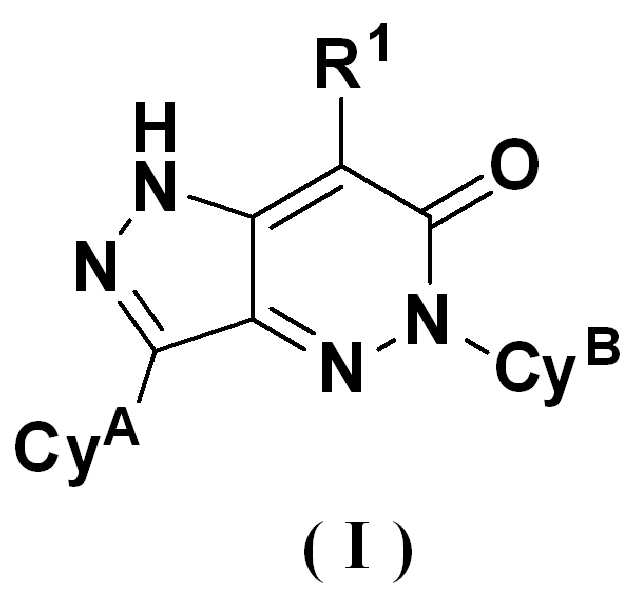
Description
본 출원은 피라졸로피리다지논 화합물에 관한 것이고, 구체적으로 HPK1 억제 활성을 갖는 피라졸로피리다지논 유도체에 관한 것이다.The present application relates to pyrazolopyridazinone compounds, and specifically to pyrazolopyridazinone derivatives having HPK1 inhibitory activity.
조혈 전구세포 키나아제(hematopoietic progenitor kinase 1, HPK1)는 세린/트레오닌 키나아제로서, 최초로 조혈 전구세포로부터 복제되어 얻었으며(Hu, M. C. 등, Genes Dev. 1996; 10: 2251-2264; Keifer, F. 등, The EMBO Journal 1996; 15: 7013-7025), 미토겐 활성화 단백질 키나아제(mitogen-activated protein kinase kinase kinase kinase-4, MAP4K) 패밀리에 속한다. HPK1은 골수, 림프절, 흉선과 같은 림프기관 또는 림프조직에 집중적으로 분포되어 있으며, 주로 면역세포(T세포, B세포, 수지상세포, 대식세포 등)에서 발현된다(Hu, M.C. 등, Genes Dev. 1996; 10: 2251-2264). 이로써 HPK1의 면역 조절 역할이 많은 주목을 받게 되였다.Hematopoietic progenitor kinase 1 (HPK1) is a serine/threonine kinase that was first cloned from hematopoietic progenitor cells (Hu, M. C. et al., Genes Dev. 1996; 10: 2251-2264; Keifer, F. et al. , The EMBO Journal 1996; 15: 7013-7025), and belongs to the mitogen-activated protein kinase kinase kinase kinase-4 (MAP4K) family. HPK1 is intensively distributed in lymphoid organs or tissues such as bone marrow, lymph node, and thymus, and is mainly expressed in immune cells (T cells, B cells, dendritic cells, macrophages, etc.) (Hu, M.C. et al., Genes Dev. 1996; 10: 2251-2264). As a result, the immunomodulatory role of HPK1 has received a lot of attention.
연구에 따르면, HPK1은 T세포 수용체(TCR) 신호 통로의 음성 조절 단백질이다. TCR 신호는 HPK1의 활성화를 일으키고, SLP-76 단백질과 결합한다(Lasserre, R. 등, J Cell Biol. 2011; 195: 839-853; Shui, J. 등, Nature Immuno. 2007; 8: 84-91). 활성화된 HPK1은 SLP-76의 Ser376 잔기를 인산화시키고, SLP-76과 14-3-3 단백질의 결합을 촉진한다(Di Bartolo, V. 등, J. Exp. Med. 2007; 204: 681-691; Shui, J. 등, Nature Immuno. 2007; 8: 84-91). SLP-76/14-3-3의 상호작용은 ERK 신호 및 칼슘 이온의 흐름을 감소시키고, SLP-76의 유비퀴틴화 및 SLP-76 복합체의 분해를 일으켜, TCR 활성화 경로를 차단함으로써, T세포의 기능을 억제하였다(Lasserre, R. 등, J. Cell Biol. 2011; 195: 839-853).Studies have shown that HPK1 is a negative regulatory protein of the T-cell receptor (TCR) signaling pathway. TCR signaling causes activation of HPK1, which binds to the SLP-76 protein (Lasserre, R. et al., J Cell Biol. 2011; 195: 839-853; Shui, J. et al., Nature Immuno. 2007; 8: 84- 91). Activated HPK1 phosphorylates the Ser376 residue of SLP-76 and promotes the binding of SLP-76 to 14-3-3 protein (Di Bartolo, V. et al., J. Exp. Med. 2007; 204: 681-691 Shui, J. et al., Nature Immuno. 2007; 8: 84-91). The interaction of SLP-76/14-3-3 reduces ERK signaling and calcium ion flow, causes ubiquitination of SLP-76 and degradation of the SLP-76 complex, and blocks the TCR activation pathway, thereby increasing T cell activity. function was inhibited (Lasserre, R. et al., J. Cell Biol. 2011; 195: 839-853).
생체 내 실험에서, HPK1 녹아웃 마우스는 항원 자극에 의해 T세포의 기능이향상되고, 더 많은 사이토카인, 예를 들어 IL-2 및 IFN-γ가 생겼다(Shui, J. 등, Nature Immuno. 2007; 8: 84-91; Alzabin, S. 등, J. Immunol. 2009; 182: 6187-6194; Alzabin, S. 등, Cancer Immunol. Immunother. 2010; 59: 419-429). 추가 연구에 따르면, HPK1에 의한 면역세포의 음성 조절은 키나아제 활성에 의존한다. 야생형에 비해, HPK1 키나아제 활성이 차단된 마우스의 CD8+ T세포의 기능이 향상되어, 만성 림프구성 수막염 바이러스를 보다 빠르게 제거할 수 있으며, 종양 성장을 더 잘 억제할 수 있다(Hernandez, S. 등, Cell Reports 2018; 25: 80-94). 루이스 폐암(LLC) 모텔에서, HPK1-/- T세포가 형질주입된 마우스는 야생형보다 강한 항종양 면역반응을 나타낸다(Sawasdikosol, S. 등, Immunol. Res. 2012; 54: 262-265). 유사한 연구에서 HPK1에 의한 B세포(Sauer, K. 등, J. Biol. Chem. 2001; 276: 45207-45216; Tsuji, S. 등, J. Exp. Med. 2001; 194: 529-539; Wang, X. 등, J. Biol. Chem. 2012; 287: 34091-34100; K
임상 연구에서는 건강 대조군에 비해, 전신성 홍반 루푸스(Zhang, Q. 등, J. Autoimmun., 2011; 37: 180-189) 및 건선성 관절염(Stoeckman, A. K. 등, Genes Immun. 2006; 7: 583-591; Baltiwalla, F. M. 등, Mol. Med. 2005; 11: 21-29) 환자의 조직에서 HPK1 수준이 현저히 감소되었음을 발견하였으며, 이는 HPK1의 감소는 자가면역반응의 향상에 기여된다는 것으로 나타났다. 한편, 예를 들어 급성 골수성 백혈병(Chen-Deutsch, X. 등, Leuk. Res. 2012; 36: 884-888; Chen-Deutsch, X. 등, Cell Cycle 2012; 11: 1364-1373), 방광 요로 상피암(Wang. Y 등, Mol. Med. Rep. 2012; 5: 260-265), 유방 외 파젯병(Qian, Y 등, Am J. Dermatopathol. 2011; 33: 681-686) 및 결장암(Yang, H.S. 등, Mol. Cell Biol. 2006; 26: 1297-1306)과 같은 다양한 암에서 모두 HPK1 수준의 상승이 관찰되었다.In clinical studies, compared to healthy controls, systemic lupus erythematosus (Zhang, Q. et al., J. Autoimmun., 2011; 37: 180-189) and psoriatic arthritis (Stoeckman, A. K. et al., Genes Immun. 2006; 7: 583- 591; Baltiwalla, F. M. et al., Mol. Med. 2005; 11: 21-29) found that the level of HPK1 was significantly reduced in the patient's tissue, indicating that the reduction of HPK1 contributes to the enhancement of the autoimmune response. On the other hand, for example, acute myelogenous leukemia (Chen-Deutsch, X. et al., Leuk. Res. 2012; 36: 884-888; Chen-Deutsch, X. et al., Cell Cycle 2012; 11: 1364-1373), bladder urinary tract Epithelial cancer (Wang. Y et al., Mol. Med. Rep. 2012; 5: 260-265), extramammary Paget's disease (Qian, Y et al., Am J. Dermatopathol. 2011; 33: 681-686) and colon cancer (Yang, Elevated levels of HPK1 were all observed in various cancers such as H.S. et al., Mol. Cell Biol. 2006;26: 1297-1306).
따라서, HPK1은 종양 및 바이러스성 질환을 치료하는 잠재적 표적이다. HPK1 키나아제 소분자 억제제의 개발은 중요한 임상적 전망을 가지고 있다. 예를 들어 WO2018049191, WO2018049200, WO2018102366, WO2018183964, WO2019090198, WO2019206049, WO2019238067 및 WO2020092528 등과 같은 일부 HPK1 소분자 억제제에 대한 특허출원이 이미 개시되었지만, 현재 HPK1 표적점에 대한 약물은 아직 출시되지 않았다. 이로 인해 양호한 활성을 갖는 새로운 소분자 HPK1 억제제의 개발이 시급한 실정이다.Thus, HPK1 is a potential target for treating oncology and viral diseases. The development of HPK1 kinase small molecule inhibitors has important clinical prospects. For example, WO2018049191, WO2018049200, WO2018102366, WO2018183964, WO2019090198, WO2019206049, WO2019238067 and WO2020092528, etc. have already been patented for some HPK1 small molecule inhibitors, but currently no HPK1 target point drugs have been launched. Therefore, the development of new small molecule HPK1 inhibitors with good activity is urgently needed.
본 출원은 식 (I)의 화합물 또는 그의 약학적으로 허용 가능한 염, 수화물, 용매화물, 활성 대사물, 다형체, 동위원소 마커, 이성질체 또는 전구약물을 제공하는 것을 주요 목적으로 한다.The main object of this application is to provide a compound of formula (I) or a pharmaceutically acceptable salt, hydrate, solvate, active metabolite, polymorph, isotopic marker, isomer or prodrug thereof.

여기서, R1은 하기 기로부터 선택되고,Here, R 1 is selected from the following groups;
1) 수소, 할로젠족 원자, 사이아노기, -C(=O)NRaRb, -ORa 및 -NRaRb;1) hydrogen, a halogen atom, a cyano group, -C(=O)NR a R b , -OR a and -NR a R b ;
2) 미치환되거나 독립적으로 R11로부터 선택된 1, 2, 3 또는 4개의 치환기로 임의로 치환된 C1-6알킬기, C2-4알케닐기, C2-4알키닐기, C3-8사이클로알킬기 및 3~8원 지방족 헤테로고리기;2) C 1-6 alkyl group, C 2-4 alkenyl group, C 2-4 alkynyl group, C 3-8 cycloalkyl group which is unsubstituted or optionally substituted with 1, 2, 3 or 4 substituents independently selected from R 11 and a 3-8 membered aliphatic heterocyclic group;
Ra 및 Rb는 각각 독립적으로 하기 기로부터 선택되고,R a and R b are each independently selected from the following groups;
1) 수소;1) hydrogen;
2) 미치환되거나 독립적으로 R11로부터 선택된 1, 2 또는 3개의 치환기로 임의로 치환된 C1-6알킬기, C2-4알케닐기, C2-4알키닐기, C3-6단환 사이클로알킬기 및 3~6원 단환 지방족 헤테로고리기;2) C 1-6 alkyl group, C 2-4 alkenyl group, C 2-4 alkynyl group, C 3-6 monocyclic cycloalkyl group, optionally substituted with 1, 2 or 3 substituents independently selected from R 11 and 3-6 membered monocyclic aliphatic heterocyclic group;
또는,or,
동일한 질소원자에 연결된 Ra 및 Rb는 이들과 연결된 질소원자와 함께 미치환되거나 독립적으로 R11로부터 선택된 1, 2 또는 3개의 치환기로 임의로 치환된 3~6원 단환 지방족 헤테로고리기를 형성하고;R a and R b connected to the same nitrogen atom together with the nitrogen atom connected thereto form a 3-6 membered monocyclic aliphatic heterocyclic group optionally substituted with 1, 2 or 3 substituents independently selected from R 11 ;
R11은 불소, 염소, C1-3알킬기 및 하이드록시기로부터 선택되고;R 11 is selected from fluorine, chlorine, C 1-3 alkyl groups and hydroxy groups;
CyA는 미치환되거나 독립적으로 R12로부터 선택된 1, 2, 3, 4 또는 5개의 치환기로 임의로 치환된 6~10원 아릴기 또는 5~10원 헤테로아릴기로부터 선택되고;Cy A is unsubstituted or independently selected from a 6-10 membered aryl group or a 5-10 membered heteroaryl group optionally substituted with 1, 2, 3, 4 or 5 substituents selected from R 12 ;
R12는 하기 기로부터 선택되고,R 12 is selected from the following groups;
1) 옥소기, 할로젠족 원자, 사이아노기, -C(=O)Ra2, -C(=O)ORa2, -C(=O)NRa2Rb2, -C(=NRd2)NRa2Rb2, -ORa2, -OC(=O)Ra2, -OC(=O)ORc2, -OC(=O)NRa2Rb2, -SRa2, -S(=O)Rc2, -S(=O)2Rc2, 설폰산기, -S(=O)NRa2Rb2, -S(=O)2NRa2Rb2, -S(=O)(=NRd2)Rc2, -NRa2Rb2, -NRa2C(=O)Rb2, -NRa2C(=O)ORc2, -NRe2C(=O)NRa2Rb2, -NRe2C(=NRd2)NRa2Rb2, -NRa2S(=O)2Rc2, -NRe2S(=O)2NRa2Rb2, 니트로기, -PRc2Rf2, -P(=O)Rc2Rf2 및 포스폰산기;1) Oxo group, halogen atom, cyano group, -C(=O)R a2 , -C(=O)OR a2 , -C(=O)NR a2 R b2 , -C(=NR d2 ) NR a2 R b2 , -OR a2 , -OC(=O)R a2 , -OC(=O)OR c2 , -OC(=O)NR a2 R b2 , -SR a2 , -S(=O)R c2 , -S(=O) 2 R c2 , sulfonic acid group, -S(=O)NR a2 R b2 , -S(=O) 2 NR a2 R b2 , -S(=O)(=NR d2 )R c2 , -NR a2 R b2 , -NR a2 C(=O)R b2 , -NR a2 C(=O)OR c2 , -NR e2 C(=O)NR a2 R b2 , -NR e2 C(=NR d2 )NR a2 R b2 , -NR a2 S(=O) 2 R c2 , -NR e2 S(=O) 2 NR a2 R b2 , nitro group, -PR c2 R f2 , -P(=O)R c2 R f2 and a phosphonic acid group;
2) 미치환되거나 독립적으로 R22로부터 선택된 1, 2, 3, 4, 5 또는 6개의 치환기로 임의로 치환된 C1-6알킬기, C2-6알케닐기, C2-6알키닐기, 6~10원 아릴기, 5~10원 헤테로아릴기, C3-12사이클로알킬기 및 3~12원 지방족 헤테로고리기; 2 ) C 1-6 alkyl, C 2-6 alkenyl, C 2-6 alkynyl, 6- a 10-membered aryl group, a 5-10-membered heteroaryl group, a C 3-12 -membered cycloalkyl group, and a 3-12-membered aliphatic heterocyclic group;
3) 각각 CyA의 아릴기 또는 헤테로아릴기에서 인접한 2개의 고리 형성 원자와 연결된 2개의 R12 치환기는 이들과 연결된 2개의 고리 형성 원자와 함께 미치환되거나 독립적으로 R22로부터 선택된 1, 2, 3, 4, 5 또는 6개의 치환기로 임의로 치환된 C5-12지환식 탄화수소기 또는 5~12원 지방족 헤테로고리기를 형성하고;3) Two R 12 substituents linked to two adjacent ring atoms in the aryl group or heteroaryl group of Cy A are unsubstituted together with the two ring atoms connected thereto or independently selected from R 22 1, 2, Forming a C 5-12 alicyclic hydrocarbon group or a 5-12 membered aliphatic heterocyclic group optionally substituted with 3, 4, 5 or 6 substituents;
Ra2, Rb2 및 Re2는 각각 독립적으로 하기 기로부터 선택되고,R a2 , R b2 and R e2 are each independently selected from the following groups;
1) 수소;1) hydrogen;
2) 미치환되거나 독립적으로 R22로부터 선택된 1, 2, 3, 4, 5 또는 6개의 치환기로 임의로 치환된 C1-4알킬기, C2-4알케닐기, C2-4알키닐기, 페닐기, 5~6원 헤테로아릴기, C3-12사이클로알킬기 및 3~12원 지방족 헤테로고리기;2) C 1-4 alkyl group, C 2-4 alkenyl group, C 2-4 alkynyl group, phenyl group, optionally substituted with 1, 2, 3, 4, 5 or 6 substituents independently selected from R 22 ; a 5-6 membered heteroaryl group, a C 3-12 membered cycloalkyl group, and a 3-12 membered aliphatic heterocyclic group;
또는,or,
동일한 질소원자에 연결된 Ra2 및 Rb2는 이들과 연결된 질소원자와 함께 미치환되거나 독립적으로 R22로부터 선택된 1, 2, 3, 4 또는 5개의 치환기로 임의로 치환된 3~12원 지방족 헤테로고리기를 형성하고;R a2 and R b2 connected to the same nitrogen atom together with the nitrogen atom connected thereto represent a 3- to 12-membered aliphatic heterocyclic group optionally substituted with 1, 2, 3, 4 or 5 substituents independently selected from R 22 . form;
Rc2 및 Rf2는 각각 독립적으로 미치환되거나 독립적으로 R22로부터 선택된 1, 2, 3, 4 또는 5개의 치환기로 임의로 치환된 C1-4알킬기, C2-4알케닐기, C2-4알키닐기, 페닐기, 5~6원 헤테로아릴기, C3-12사이클로알킬기 및 3~12원 지방족 헤테로고리기로부터 선택되고;R c2 and R f2 are each independently unsubstituted or optionally substituted with 1, 2, 3, 4 or 5 substituents independently selected from R 22 C 1-4 alkyl group, C 2-4 alkenyl group, C 2-4 It is selected from an alkynyl group, a phenyl group, a 5-6 membered heteroaryl group, a C 3-12 cycloalkyl group and a 3-12 membered aliphatic heterocyclic group;
또는,or,
동일한 인 원자에 연결된 Rc2 및 Rf2는 이들과 연결된 인 원자와 함께 미치환되거나 독립적으로 R22로부터 선택된 1, 2, 3, 4 또는 5개의 치환기로 임의로 치환된 3~12원 지방족 헤테로고리기를 형성하고;R c2 and R f2 connected to the same phosphorus atom together with the phosphorus atom connected thereto represent a 3- to 12-membered aliphatic heterocyclic group optionally substituted with 1, 2, 3, 4 or 5 substituents independently selected from R 22 . form;
Rd2는 하기 기로부터 선택되고,R d2 is selected from the following groups;
1) 수소, 사이아노기, 니트로기, -S(=O)2RG;1) hydrogen, cyano group, nitro group, -S(=O) 2 R G ;
2) 미치환되거나 각각 독립적으로 R22로부터 선택된 1, 2, 3, 4 또는 5개의 치환기로 임의로 치환된 C1-4알킬기, C2-4알케닐기, C2-4알키닐기, 페닐기, 5~6원 헤테로아릴기, C3-12사이클로알킬기 및 3~12원 지방족 헤테로고리기;2) C 1-4 alkyl group, C 2-4 alkenyl group, C 2-4 alkynyl group, phenyl group, optionally substituted with 1, 2, 3, 4 or 5 substituents each independently selected from R 22 , 5 ~6 membered heteroaryl group, C 3-12 membered cycloalkyl group and 3-12 membered aliphatic heterocyclic group;
R22는 하기 기로부터 선택되고,R 22 is selected from the following groups;
1) 옥소기, 할로젠족 원자, 사이아노기, -C(=O)Ra4, -C(=O)ORa4, -C(=O)NRa4Rb4, -C(=NRd4)NRa4Rb4, -ORa4, -OC(=O)Ra4, -OC(=O)ORc4, -OC(=O)NRa4Rb4, -SRa4, -S(=O)Rc4, -S(=O)2Rc4, 설폰산기, -S(=O)NRa4Rb4, -S(=O)2NRa4Rb4, -S(=O)(=NRd4)Rc4, -NRa4Rb4, -NRa4C(=O)Rb4, -NRa4C(=O)ORc4, -NRe4C(=O)NRa4Rb4, -NRe4C(=NRd4)NRa4Rb4, -NRa4S(=O)2Rc4, -NRe4S(=O)2NRa4Rb4, 니트로기, -PRc4Rf4, -P(=O)Rc4Rf4, 포스폰산기 및 비이미노기(=N-Rd4);1) Oxo group, halogen atom, cyano group, -C(=O)R a4 , -C(=O)OR a4 , -C(=O)NR a4 R b4 , -C(=NR d4 ) NR a4 R b4 , -OR a4 , -OC(=O)R a4 , -OC(=O)OR c4 , -OC(=O)NR a4 R b4 , -SR a4 , -S(=O)R c4 , -S(=O) 2 R c4 , sulfonic acid group, -S(=O)NR a4 R b4 , -S(=O) 2 NR a4 R b4 , -S(=O)(=NR d4 )R c4 , -NR a4 R b4 , -NR a4 C(=O)R b4 , -NR a4 C(=O)OR c4 , -NR e4 C(=O)NR a4 R b4 , -NR e4 C(=NR d4 )NR a4 R b4 , -NR a4 S(=O) 2 R c4 , -NR e4 S(=O) 2 NR a4 R b4 , nitro group, -PR c4 R f4 , -P(=O)R c4 R f4 , a phosphonic acid group and a non-imino group (=NR d4 );
2) 미치환되거나 독립적으로 R32로부터 선택된 1, 2, 3, 4 또는 5개의 치환기로 임의로 치환된 C1-6알킬기, C1-6알킬렌기, C2-6알케닐기, C2-6알키닐기, 페닐기, 5~6원 헤테로아릴기, C3-10사이클로알킬기 및 3~10원 지방족 헤테로고리기;2) C 1-6 alkyl group, C 1-6 alkylene group, C 2-6 alkenyl group, C 2-6 which is unsubstituted or optionally substituted with 1, 2, 3, 4 or 5 substituents independently selected from R 32 an alkynyl group, a phenyl group, a 5-6 membered heteroaryl group, a C 3-10 cycloalkyl group, and a 3-10 membered aliphatic heterocyclic group;
Ra4, Rb4 및 Re4는 각각 독립적으로 하기 기로부터 선택되고,R a4 , R b4 and R e4 are each independently selected from the following groups;
1) 수소;1) hydrogen;
2) 미치환되거나 독립적으로 R32로부터 선택된 1, 2, 3, 4 또는 5개의 치환기로 임의로 치환된 C1-4알킬기, C2-4알케닐기, C2-4알키닐기, 페닐기, 5~6원 헤테로아릴기, C3-10사이클로알킬기 및 3~10원 지방족 헤테로고리기;2) C 1-4 alkyl group, C 2-4 alkenyl group, C 2-4 alkynyl group, phenyl group, optionally substituted with 1, 2, 3, 4 or 5 substituents independently selected from R 32 6-membered heteroaryl group, C 3-10 cycloalkyl group and 3-10 membered aliphatic heterocyclic group;
또는,or,
동일한 질소원자에 연결된 Ra4 및 Rb4는 이들과 연결된 질소원자와 함께 미치환되거나 독립적으로 R32로부터 선택된 1, 2, 3, 4 또는 5개의 치환기로 임의로 치환된 3~10원 지방족 헤테로고리기를 형성하고;R a4 and R b4 connected to the same nitrogen atom together with the nitrogen atom connected thereto represent a 3-10 membered aliphatic heterocyclic group optionally substituted with 1, 2, 3, 4 or 5 substituents independently selected from R 32 . form;
Rc4 및 Rf4는 각각 독립적으로 미치환되거나 독립적으로 R32로부터 선택된 1, 2, 3, 4 또는 5개의 치환기로 임의로 치환된 C1-4알킬기, C2-4알케닐기, C2-4알키닐기, 페닐기, 5~6원 헤테로아릴기, C3-10사이클로알킬기 및 3~10원 지방족 헤테로고리기로부터 선택되고;R c4 and R f4 are each independently unsubstituted or optionally substituted with 1, 2, 3, 4 or 5 substituents independently selected from R 32 C 1-4 alkyl group, C 2-4 alkenyl group, C 2-4 It is selected from an alkynyl group, a phenyl group, a 5-6 membered heteroaryl group, a C 3-10 cycloalkyl group, and a 3-10 membered aliphatic heterocyclic group;
또는,or,
동일한 인 원자에 연결된 Rc4 및 Rf4는 이들과 연결된 인 원자와 함께미치환되거나 독립적으로 R32로부터 선택된 1, 2, 3, 4 또는 5개의 치환기로 임의로 치환된 3~10원 지방족 헤테로고리기를 형성하고;R c4 and R f4 connected to the same phosphorus atom together with the phosphorus atom connected thereto represent an unsubstituted or 3-10 membered aliphatic heterocyclic group optionally substituted with 1, 2, 3, 4 or 5 substituents independently selected from R 32 . form;
Rd4는 하기 기로부터 선택되고,R d4 is selected from the following groups;
1) 수소, 사이아노기, 니트로기 및 -S(=O)2RG;1) hydrogen, cyano group, nitro group and -S(=O) 2 R G ;
2) 미치환되거나 독립적으로 R32로부터 선택된 1, 2, 3, 4 또는 5개의 치환기로 임의로 치환된 C1-4알킬기, C2-4알케닐기, C2-4알키닐기, 페닐기, 5~6원 헤테로아릴기, C3-10사이클로알킬기 및 3~10원 지방족 헤테로고리기;2) C 1-4 alkyl group, C 2-4 alkenyl group, C 2-4 alkynyl group, phenyl group, optionally substituted with 1, 2, 3, 4 or 5 substituents independently selected from R 32 6-membered heteroaryl group, C 3-10 cycloalkyl group and 3-10 membered aliphatic heterocyclic group;
R32는 하기 기로부터 선택되고,R 32 is selected from the following groups;
1) 옥소기, 할로젠족 원자, 사이아노기, -C(=O)Ra6, -C(=O)ORa6, -C(=O)NRa6Rb6, -C(=NRd6)NRa6Rb6, -ORa6, -OC(=O)Ra6, -OC(=O)ORc6, -OC(=O)NRa6Rb6, -SRa6, -S(=O)Rc6, -S(=O)2Rc6, 설폰산기, -S(=O)NRa6Rb6, -S(=O)2NRa6Rb6, -S(=O)(=NRd6)Rc6, -NRa6Rb6, -NRa6C(=O)Rb6, -NRa6C(=O)ORc6, -NRe6C(=O)NRa6Rb6, -NRe6C(=NRd6)NRa6Rb6, -NRa6S(=O)2Rc6, -NRe6S(=O)2NRa6Rb6, 니트로기, -PRc6Rf6, -P(=O)Rc6Rf6, 포스폰산기 및 비이미노기(=N-Rd6);1) Oxo group, halogen atom, cyano group, -C(=O)R a6 , -C(=O)OR a6 , -C(=O)NR a6 R b6 , -C(=NR d6 ) NR a6 R b6 , -OR a6 , -OC(=O)R a6 , -OC(=O)OR c6 , -OC(=O)NR a6 R b6 , -SR a6 , -S(=O)R c6 , -S(=O) 2 R c6 , sulfonic acid group, -S(=O)NR a6 R b6 , -S(=O) 2 NR a6 R b6 , -S(=O)(=NR d6 )R c6 , -NR a6 R b6 , -NR a6 C(=O)R b6 , -NR a6 C(=O)OR c6 , -NR e6 C(=O)NR a6 R b6 , -NR e6 C(=NR d6 )NR a6 R b6 , -NR a6 S(=O) 2 R c6 , -NR e6 S(=O) 2 NR a6 R b6 , nitro group, -PR c6 R f6 , -P(=O)R c6 R f6 , a phosphonic acid group and a non-imino group (=NR d6 );
2) 미치환되거나 독립적으로 RG로부터 선택된 1, 2, 3 또는 4개의 치환기로 임의로 치환된 C1-4알킬기, C1-4알킬렌기, C2-4알케닐기, C2-4알키닐기, 페닐기, 5~6원 헤테로아릴기, C3-8사이클로알킬기 및 3~8원 지방족 헤테로고리기;2) C 1-4 alkyl group, C 1-4 alkylene group, C 2-4 alkenyl group, C 2-4 alkynyl group, which is unsubstituted or optionally substituted with 1, 2, 3 or 4 substituents independently selected from R G , A phenyl group, a 5-6 membered heteroaryl group, a C 3-8 cycloalkyl group, and a 3-8 membered aliphatic heterocyclic group;
Ra6, Rb6 및 Re6은 각각 독립적으로 하기 기로부터 선택되고,R a6 , R b6 and R e6 are each independently selected from the following groups;
1) 수소;1) hydrogen;
2) 미치환되거나 독립적으로 RG로부터 선택된 1, 2, 3 또는 4개의 치환기로 임의로 치환된 C1-4알킬기, C2-4알케닐기, C2-4알키닐기, 페닐기, 5~6원 헤테로아릴기, C3-8사이클로알킬기 및 3~8원 지방족 헤테로고리기;2) C 1-4 alkyl group, C 2-4 alkenyl group, C 2-4 alkynyl group, phenyl group, optionally substituted with 1, 2, 3 or 4 substituents independently selected from R G , 5 to 6 members a heteroaryl group, a C 3-8 cycloalkyl group, and a 3-8 membered aliphatic heterocyclic group;
또는,or,
동일한 질소원자에 연결된 Ra6 및 Rb6은 이들과 연결된 질소원자와 함께 미치환되거나 독립적으로 RG로부터 선택된 1, 2, 3 또는 4개의 치환기로 임의로 치환된 3~8원 지방족 헤테로고리기를 형성하고;R a6 and R b6 linked to the same nitrogen atom together with the nitrogen atom linked thereto form a 3-8 membered aliphatic heterocyclic group optionally substituted with 1, 2, 3 or 4 substituents independently selected from R G , and ;
Rc6 및 Rf6은 각각 독립적으로 미치환되거나 독립적으로 RG로부터 선택된 1, 2, 3 또는 4개의 치환기로 임의로 치환된 C1-4알킬기, C2-4알케닐기, C2-4알키닐기, 페닐기, 5~6원 헤테로아릴기, C3-8사이클로알킬기 및 3~8원 지방족 헤테로고리기로부터 선택되고;R c6 and R f6 are each independently unsubstituted or independently substituted with 1, 2, 3 or 4 substituents selected from R G C 1-4 alkyl group, C 2-4 alkenyl group, C 2-4 alkynyl group , A phenyl group, a 5-6 membered heteroaryl group, a C 3-8 cycloalkyl group, and a 3-8 membered aliphatic heterocyclic group;
또는,or,
동일한 인 원자에 연결된 Rc6 및 Rf6은 이들과 연결된 인 원자와 함께미치환되거나 독립적으로 RG로부터 선택된 1, 2, 3 또는 4개의 치환기로 임의로 치환된 3~8원 지방족 헤테로고리기를 형성하고;R c6 and R f6 connected to the same phosphorus atom together with the phosphorus atom connected thereto form a 3-8 membered aliphatic heterocyclic group optionally substituted with 1, 2, 3 or 4 substituents independently selected from R G , and ;
Rd6은 하기 기로부터 선택되고,R d6 is selected from the following groups;
1) 수소, 사이아노기, 니트로기 및 -S(=O)2RG;1) hydrogen, cyano group, nitro group and -S(=O) 2 R G ;
2) 미치환되거나 독립적으로 RG로부터 선택된 1, 2, 3 또는 4개의 치환기로 임의로 치환된 C1-4알킬기, C2-4알케닐기, C2-4알키닐기, 페닐기, 5~6원 헤테로아릴기, C3-8사이클로알킬기, 3~8원 지방족 헤테로고리기;2) C 1-4 alkyl group, C 2-4 alkenyl group, C 2-4 alkynyl group, phenyl group, optionally substituted with 1, 2, 3 or 4 substituents independently selected from R G , 5 to 6 members a heteroaryl group, a C 3-8 cycloalkyl group, a 3-8 membered aliphatic heterocyclic group;
CyB는 미치환되거나 독립적으로 R13으로부터 선택된 1, 2, 3, 4 또는 5개의 치환기로 임의로 치환된 6~10원 아릴기 또는 5~10원 헤테로아릴기로부터 선택되고;Cy B is unsubstituted or independently selected from a 6-10 membered aryl group or a 5-10 membered heteroaryl group optionally substituted with 1, 2, 3, 4 or 5 substituents selected from R 13 ;
R13은 하기 기로부터 선택되고,R 13 is selected from the following groups;
1) 옥소기, 할로젠족 원자, 사이아노기, -C(=O)Ra3, -C(=O)ORa3, -C(=O)NRa3Rb3, -C(=NRd3)NRa3Rb3, -ORa3, -OC(=O)Ra3, -OC(=O)ORc3, -OC(=O)NRa3Rb3, -SRa3, -S(=O)Rc3, -S(=O)2Rc3, 설폰산기, -S(=O)NRa3Rb3, -S(=O)2NRa3Rb3, -S(=O)(=NRd3)Rc3, -NRa3Rb3, -NRa3C(=O)Rb3, -NRa3C(=O)ORc3, -NRe3C(=O)NRa3Rb3, -NRe3C(=NRd3)NRa3Rb3, -NRa3S(=O)2Rc3, -NRe3S(=O)2NRa3Rb3, 니트로기, -PRc3Rf3, -P(=O)Rc3Rf3 및 포스폰산기;1) Oxo group, halogen atom, cyano group, -C(=O)R a3 , -C(=O)OR a3 , -C(=O)NR a3 R b3 , -C(=NR d3 ) NR a3 R b3 , -OR a3 , -OC(=O)R a3 , -OC(=O)OR c3 , -OC(=O)NR a3 R b3 , -SR a3 , -S(=O)R c3 , -S(=O) 2 R c3 , sulfonic acid group, -S(=O)NR a3 R b3 , -S(=O) 2 NR a3 R b3 , -S(=O)(=NR d3 )R c3 , -NR a3 R b3 , -NR a3 C(=O)R b3 , -NR a3 C(=O)OR c3 , -NR e3 C(=O)NR a3 R b3 , -NR e3 C(=NR d3 )NR a3 R b3 , -NR a3 S(=O) 2 R c3 , -NR e3 S(=O) 2 NR a3 R b3 , nitro group, -PR c3 R f3 , -P(=O)R c3 R f3 and a phosphonic acid group;
2) 미치환되거나 독립적으로 R23으로부터 선택된 1, 2, 3, 4, 5 또는 6개의 치환기로 임의로 치환된 C1-6알킬기, C2-6알케닐기, C2-6알키닐기, 6~10원 아릴기, 5~10원 헤테로아릴기, C3-12사이클로알킬기 및 3~12원 지방족 헤테로고리기; 2 ) C 1-6 alkyl group, C 2-6 alkenyl group, C 2-6 alkynyl group, 6- a 10-membered aryl group, a 5-10-membered heteroaryl group, a C 3-12 -membered cycloalkyl group, and a 3-12-membered aliphatic heterocyclic group;
3) 각각 CyB의 아릴기 또는 헤테로아릴기에서 인접한 2개의 고리 형성 원자와 연결된 2개의 R13치환기는 이들과 연결된 2개의 고리 형성 원자와 함께 미치환되거나 독립적으로 R23으로부터 선택된 1, 2, 3, 4 또는 5개의 치환기로 임의로 치환된 C5-12지환식 탄화수소기 또는 5~12원 지방족 헤테로고리기를 형성하고;3) Two R 13 substituents linked to two adjacent ring atoms in the aryl group or heteroaryl group of Cy B are unsubstituted together with the two ring atoms connected thereto or independently selected from R 23 1, 2, Forming a C 5-12 alicyclic hydrocarbon group or a 5-12 membered aliphatic heterocyclic group optionally substituted with 3, 4 or 5 substituents;
Ra3, Rb3 및 Re3은 각각 독립적으로 하기 기로부터 선택되고,R a3 , R b3 and R e3 are each independently selected from the following groups;
1) 수소;1) hydrogen;
2) 미치환되거나 독립적으로 R23으로부터 선택된 1, 2, 3, 4, 5 또는 6개의 치환기로 임의로 치환된 C1-4알킬기, C2-4알케닐기, C2-4알키닐기, 페닐기, 5~6원 헤테로아릴기, C3-12사이클로알킬기 및 3~12원 지방족 헤테로고리기;2) C 1-4 alkyl group, C 2-4 alkenyl group, C 2-4 alkynyl group, phenyl group, optionally substituted with 1, 2, 3, 4, 5 or 6 substituents independently selected from R 23 ; a 5-6 membered heteroaryl group, a C 3-12 membered cycloalkyl group, and a 3-12 membered aliphatic heterocyclic group;
또는,or,
동일한 질소원자에 연결된 Ra3 및 Rb3은 이들과 연결된 질소원자와 함께 미치환되거나 독립적으로 R23으로부터 선택된 1, 2, 3, 4 또는 5개의 치환기로 임의로 치환된 3~12원 지방족 헤테로고리기를 형성하고;R a3 and R b3 connected to the same nitrogen atom together with the nitrogen atom connected thereto represent a 3-12 membered aliphatic heterocyclic group optionally substituted with 1, 2, 3, 4 or 5 substituents independently selected from R 23 . form;
Rc3 및 Rf3은 각각 독립적으로 미치환되거나 독립적으로 R23으로부터 선택된 1, 2, 3, 4 또는 5개의 치환기로 임의로 치환된 C1-4알킬기, C2-4알케닐기, C2-4알키닐기, 페닐기, 5~6원 헤테로아릴기, C3-12사이클로알킬기 및 3~12원 지방족 헤테로고리기로부터 선택되고;R c3 and R f3 are each independently unsubstituted or optionally substituted with 1, 2, 3, 4 or 5 substituents independently selected from R 23 C 1-4 alkyl group, C 2-4 alkenyl group, C 2-4 It is selected from an alkynyl group, a phenyl group, a 5-6 membered heteroaryl group, a C 3-12 cycloalkyl group and a 3-12 membered aliphatic heterocyclic group;
또는,or,
동일한 인 원자에 연결된 Rc3 및 Rf3은 이들과 연결된 인 원자와 함께 미치환되거나 독립적으로 R23으로부터 선택된 1, 2, 3, 4 또는 5개의 치환기로 임의로 치환된 3~12원 지방족 헤테로고리기를 형성하고;R c3 and R f3 connected to the same phosphorus atom together with the phosphorus atom connected thereto represent a 3-12 membered aliphatic heterocyclic group optionally substituted with 1, 2, 3, 4 or 5 substituents independently selected from R 23 . form;
Rd3은 하기 기로부터 선택되고,R d3 is selected from the following groups;
1) 수소, 사이아노기, 니트로기, S(=O)2RG;1) hydrogen, cyano group, nitro group, S(=O) 2 R G ;
2) 미치환되거나 각각 독립적으로 R23으로부터 선택된 1, 2, 3, 4 또는 5개의 치환기로 임의로 치환된 C1-4알킬기, C2-4알케닐기, C2-4알키닐기, 페닐기, 5~6원 헤테로아릴기, C3-12사이클로알킬기 및 3~12원 지방족 헤테로고리기;2) C 1-4 alkyl group, C 2-4 alkenyl group, C 2-4 alkynyl group, phenyl group, optionally substituted with 1, 2, 3, 4 or 5 substituents each independently selected from R 23 , 5 ~6 membered heteroaryl group, C 3-12 membered cycloalkyl group and 3-12 membered aliphatic heterocyclic group;
R23은 하기 기로부터 선택되고,R 23 is selected from the following groups;
1) 옥소기, 할로젠족 원자, 사이아노기, -C(=O)Ra5, -C(=O)ORa5, -C(=O)NRa5Rb5, -C(=NRd5)NRa5Rb5, -ORa5, -OC(=O)Ra5, -OC(=O)ORc5, -OC(=O)NRa5Rb5, -SRa5, -S(=O)Rc5, -S(=O)2Rc5, 설폰산기, -S(=O)NRa5Rb5, -S(=O)2NRa5Rb5, -S(=O)(=NRd5)Rc5, -NRa5Rb5, -NRa5C(=O)Rb5, -NRa5C(=O)ORc5, -NRe5C(=O)NRa5Rb5, -NRe5C(=NRd5)NRa5Rb5, -NRa5S(=O)2Rc5, -NRe5S(=O)2NRa5Rb5, 니트로기, -PRc5Rf5, -P(=O)Rc5Rf5, 포스폰산기 및 비이미노기(=N-Rd5);1) Oxo group, halogen atom, cyano group, -C(=O)R a5 , -C(=O)OR a5 , -C(=O)NR a5 R b5 , -C(=NR d5 ) NR a5 R b5 , -OR a5 , -OC(=O)R a5 , -OC(=O)OR c5 , -OC(=O)NR a5 R b5 , -SR a5 , -S(=O)R c5 , -S(=O) 2 R c5 , sulfonic acid group, -S(=O)NR a5 R b5 , -S(=O) 2 NR a5 R b5 , -S(=O)(=NR d5 )R c5 , -NR a5 R b5 , -NR a5 C(=O)R b5 , -NR a5 C(=O)OR c5 , -NR e5 C(=O)NR a5 R b5 , -NR e5 C(=NR d5 )NR a5 R b5 , -NR a5 S(=O) 2 R c5 , -NR e5 S(=O) 2 NR a5 R b5 , nitro group, -PR c5 R f5 , -P(=O)R c5 R f5 , a phosphonic acid group and a non-imino group (=NR d5 );
2) 미치환되거나 독립적으로 R33으로부터 선택된 1, 2, 3, 4 또는 5개의 치환기로 임의로 치환된 C1-6알킬기, C1-6알킬렌기, C2-6알케닐기, C2-6알키닐기, 페닐기, 5~6원 헤테로아릴기, C3-10사이클로알킬기 및 3~10원 지방족 헤테로고리기;2) C 1-6 alkyl group, C 1-6 alkylene group, C 2-6 alkenyl group, C 2-6 optionally substituted with 1, 2, 3, 4 or 5 substituents independently selected from R 33 an alkynyl group, a phenyl group, a 5-6 membered heteroaryl group, a C 3-10 cycloalkyl group, and a 3-10 membered aliphatic heterocyclic group;
Ra5, Rb5 및 Re5는 각각 독립적으로 하기 기로부터 선택되고,R a5 , R b5 and R e5 are each independently selected from the following groups;
1) 수소;1) hydrogen;
2) 미치환되거나 독립적으로 R33으로부터 선택된 1, 2, 3, 4 또는 5개의 치환기로 임의로 치환된 C1-4알킬기, C2-4알케닐기, C2-4알키닐기, 페닐기, 5~6원 헤테로아릴기, C3-10사이클로알킬기 및 3~10원 지방족 헤테로고리기;2) C 1-4 alkyl group, C 2-4 alkenyl group, C 2-4 alkynyl group, phenyl group, optionally substituted with 1, 2, 3, 4 or 5 substituents independently selected from R 33 6-membered heteroaryl group, C 3-10 cycloalkyl group and 3-10 membered aliphatic heterocyclic group;
또는,or,
동일한 질소원자에 연결된 Ra5 및 Rb5는 이들과 연결된 질소원자와 함께 미치환되거나 독립적으로 R33으로부터 선택된 1, 2, 3, 4 또는 5개의 치환기로 임의로 치환된 3~10원 지방족 헤테로고리기를 형성하고;R a5 and R b5 connected to the same nitrogen atom together with the nitrogen atom connected thereto represent a 3-10 membered aliphatic heterocyclic group optionally substituted with 1, 2, 3, 4 or 5 substituents independently selected from R 33 . form;
Rc5 및 Rf5는 각각 독립적으로 미치환되거나 독립적으로 R33으로부터 선택된 1, 2, 3, 4 또는 5개의 치환기로 임의로 치환된 C1-4알킬기, C2-4알케닐기, C2-4알키닐기, 페닐기, 5~6원 헤테로아릴기, C3-10사이클로알킬기 및 3~10원 지방족 헤테로고리기로부터 선택되고;R c5 and R f5 are each independently unsubstituted or optionally substituted with 1, 2, 3, 4 or 5 substituents independently selected from R 33 C 1-4 alkyl group, C 2-4 alkenyl group, C 2-4 It is selected from an alkynyl group, a phenyl group, a 5-6 membered heteroaryl group, a C 3-10 cycloalkyl group, and a 3-10 membered aliphatic heterocyclic group;
또는,or,
동일한 인 원자에 연결된 Rc5 및 Rf5는 이들과 연결된 인 원자와 함께미치환되거나 독립적으로 R33으로부터 선택된 1, 2, 3, 4 또는 5개의 치환기로 임의로 치환된 3~10원 지방족 헤테로고리기를 형성하고;R c5 and R f5 connected to the same phosphorus atom together with the phosphorus atom connected thereto represent an unsubstituted or 3-10 membered aliphatic heterocyclic group optionally substituted with 1, 2, 3, 4 or 5 substituents independently selected from R 33 . form;
Rd5는 하기 기로부터 선택되고,R d5 is selected from the following groups;
1) 수소, 사이아노기, 니트로기 및 -S(=O)2RG;1) hydrogen, cyano group, nitro group and -S(=O) 2 R G ;
2) 미치환되거나 독립적으로 R33으로부터 선택된 1, 2, 3, 4 또는 5개의 치환기로 임의로 치환된 C1-4알킬기, C2-4알케닐기, C2-4알키닐기, 페닐기, 5~6원 헤테로아릴기, C3-10사이클로알킬기 및 3~10원 지방족 헤테로고리기;2) C 1-4 alkyl group, C 2-4 alkenyl group, C 2-4 alkynyl group, phenyl group, optionally substituted with 1, 2, 3, 4 or 5 substituents independently selected from R 33 6-membered heteroaryl group, C 3-10 cycloalkyl group and 3-10 membered aliphatic heterocyclic group;
R33은 하기 기로부터 선택되고,R 33 is selected from the following groups;
1) 옥소기, 할로젠족 원자, 사이아노기, -C(=O)Ra7, -C(=O)ORa7, -C(=O)NRa7Rb7, -C(=NRd7)NRa7Rb7, -ORa7, -OC(=O)Ra7, -OC(=O)ORc7, -OC(=O)NRa7Rb7, -SRa7, -S(=O)Rc7, -S(=O)2Rc7, 설폰산기, -S(=O)NRa7Rb7, -S(=O)2NRa7Rb7, -S(=O)(=NRd7)Rc7, -NRa7Rb7, -NRa7C(=O)Rb7, -NRa7C(=O)ORc7, -NRe7C(=O)NRa7Rb7, -NRe7C(=NRd7)NRa7Rb7, -NRa7S(=O)2Rc7, -NRe7S(=O)2NRa7Rb7, 니트로기, -PRc7Rf7, -P(=O)Rc7Rf7, 포스폰산기 및 비이미노기(=N-Rd7);1) Oxo group, halogen atom, cyano group, -C(=O)R a7 , -C(=O)OR a7 , -C(=O)NR a7 R b7 , -C(=NR d7 ) NR a7 R b7 , -OR a7 , -OC(=O)R a7 , -OC(=O)OR c7 , -OC(=O)NR a7 R b7 , -SR a7 , -S(=O)R c7 , -S(=O) 2 R c7 , sulfonic acid group, -S(=O)NR a7 R b7 , -S(=O) 2 NR a7 R b7 , -S(=O)(=NR d7 )R c7 , -NR a7 R b7 , -NR a7 C(=O)R b7 , -NR a7 C(=O)OR c7 , -NR e7 C(=O)NR a7 R b7 , -NR e7 C(=NR d7 )NR a7 R b7 , -NR a7 S(=O) 2 R c7 , -NR e7 S(=O) 2 NR a7 R b7 , nitro group, -PR c7 R f7 , -P(=O)R c7 R f7 , a phosphonic acid group and a non-imino group (=NR d7 );
2) 미치환되거나 독립적으로 RG로부터 선택된 1, 2, 3 또는 4개의 치환기로 임의로 치환된 C1-4알킬기, C1-4알킬렌기, C2-4알케닐기, C2-4알키닐기, 페닐기, 5~6원 헤테로아릴기, C3-8사이클로알킬기 및 3~8원 지방족 헤테로고리기;2) C 1-4 alkyl group, C 1-4 alkylene group, C 2-4 alkenyl group, C 2-4 alkynyl group, which is unsubstituted or optionally substituted with 1, 2, 3 or 4 substituents independently selected from R G , A phenyl group, a 5-6 membered heteroaryl group, a C 3-8 cycloalkyl group, and a 3-8 membered aliphatic heterocyclic group;
Ra7, Rb7 및 Re7은 각각 독립적으로 하기 기로부터 선택되고,R a7 , R b7 and R e7 are each independently selected from the following groups;
1) 수소;1) hydrogen;
2) 미치환되거나 독립적으로 RG로부터 선택된 1, 2, 3 또는 4개의 치환기로 임의로 치환된 C1-4알킬기, C2-4알케닐기, C2-4알키닐기, 페닐기, 5~6원 헤테로아릴기, C3-8사이클로알킬기 및 3~8원 지방족 헤테로고리기;2) C 1-4 alkyl group, C 2-4 alkenyl group, C 2-4 alkynyl group, phenyl group, optionally substituted with 1, 2, 3 or 4 substituents independently selected from R G , 5 to 6 members a heteroaryl group, a C 3-8 cycloalkyl group, and a 3-8 membered aliphatic heterocyclic group;
또는,or,
동일한 질소원자에 연결된 Ra7 및 Rb7은 이들과 연결된 질소원자와 함께 미치환되거나 독립적으로 RG로부터 선택된 1, 2, 3 또는 4개의 치환기로 임의로 치환된 3~8원 지방족 헤테로고리기를 형성하고;R a7 and R b7 connected to the same nitrogen atom together with the nitrogen atom connected thereto form a 3-8 membered aliphatic heterocyclic group optionally substituted with 1, 2, 3 or 4 substituents independently selected from R G , and ;
Rc7 및 Rf7은 각각 독립적으로 미치환되거나 독립적으로 RG로부터 선택된 1, 2, 3 또는 4개의 치환기로 임의로 치환된 C1-4알킬기, C2-4알케닐기, C2-4알키닐기, 페닐기, 5~6원 헤테로아릴기, C3-8사이클로알킬기 및 3~8원 지방족 헤테로고리기로부터 선택되고;R c7 and R f7 are each independently unsubstituted or independently a C 1-4 alkyl group, C 2-4 alkenyl group, C 2-4 alkynyl group optionally substituted with 1, 2, 3 or 4 substituents selected from R G , A phenyl group, a 5-6 membered heteroaryl group, a C 3-8 cycloalkyl group, and a 3-8 membered aliphatic heterocyclic group;
또는,or,
동일한 인 원자에 연결된 Rc7 및 Rf7 중 어느 하나는 이와 연결된 인 원자와 함께 미치환되거나 독립적으로 RG로부터 선택된 1, 2, 3 또는 4개의 치환기로 임의로 치환된 3~8원 지방족 헤테로고리기를 형성하고;Any one of R c7 and R f7 connected to the same phosphorus atom is a 3-8 membered aliphatic heterocyclic group optionally substituted with 1, 2, 3 or 4 substituents independently selected from R G and unsubstituted together with the phosphorus atom connected thereto. form;
Rd7은 하기 기로부터 선택되고,R d7 is selected from the following groups;
1) 수소, 사이아노기, 니트로기 및 -S(=O)2RG;1) hydrogen, cyano group, nitro group and -S(=O) 2 R G ;
2) 미치환되거나 독립적으로 RG로부터 선택된 1, 2, 3 또는 4개의 치환기로 임의로 치환된 C1-4알킬기, C2-4알케닐기, C2-4알키닐기, 페닐기, 5~6원 헤테로아릴기, C3-8사이클로알킬기 및 3~8원 지방족 헤테로고리기;2) C 1-4 alkyl group, C 2-4 alkenyl group, C 2-4 alkynyl group, phenyl group, optionally substituted with 1, 2, 3 or 4 substituents independently selected from R G , 5 to 6 members a heteroaryl group, a C 3-8 cycloalkyl group, and a 3-8 membered aliphatic heterocyclic group;
RG는 하기 기로부터 선택된다.R G is selected from the following groups.
1) 할로젠족 원자, 옥소기, 사이아노기, 카르복실기, 하이드록시기, C1-4알콕시기, 아미노기, C1-4알킬아미노기, 니트로기, C1-4알킬티오기, 설폰산기, C1-4알킬설폭사이드기, C1-4알킬설폰기, C1-4알킬아미노설피닐기 및 C1-4알킬아미노설포닐기;1) a halogen atom, an oxo group, a cyano group, a carboxyl group, a hydroxyl group, a C 1-4 alkoxy group, an amino group, a C 1-4 alkylamino group, a nitro group, a C 1-4 alkylthio group, a sulfonic acid group, C 1-4 alkyl sulfoxide group, C 1-4 alkyl sulfone group, C 1-4 alkylaminosulfinyl group and C 1-4 alkylaminosulfonyl group;
2) 미치환되거나 독립적으로 옥소기, 할로젠족 원자, 하이드록시기, 하이드록시메틸기, 카르복실기, 사이아노기, C1-3알콕시기, 아미노기, C1-4알킬아미노기, 니트로기 및 설폰산기로부터 선택된 1, 2, 3 또는 4개의 기로 임의로 치환된 C1-4알킬기, C1-4알킬렌기, C2-4알케닐기, C2-4알키닐기, C3-6사이클로알킬기 및 3~8원 지방족 헤테로고리기.2) an unsubstituted or independently oxo group, a halogen atom, a hydroxyl group, a hydroxymethyl group, a carboxyl group, a cyano group, a C 1-3 alkoxy group, an amino group, a C 1-4 alkylamino group, a nitro group and a sulfonic acid group C 1-4 alkyl group, C 1-4 alkylene group, C 2-4 alkenyl group, C 2-4 alkynyl group, C 3-6 cycloalkyl group, and 3-6 optionally substituted with 1, 2, 3 or 4 groups selected from An 8-membered aliphatic heterocyclic group.
일부 실시형태에 따르면, 식 (I)에서 R1은 수소, 불소, 사이아노기, 메틸기 및 메톡시기로부터 선택된다.According to some embodiments, R 1 in formula (I) is selected from hydrogen, fluorine, cyano, methyl and methoxy groups.
일부 실시형태에 따르면, 식 (I)에서, CyA는 미치환되거나 독립적으로 R12로부터 선택된 1, 2 또는 3개의 치환기로 임의로 치환된 페닐기, 피리딜기, 피리미딜기, 피라졸릴기, 이미다졸기, 티아졸릴기, 이소티아졸릴기 또는 

여기서, Rx는 -OH, C1-6알킬기(예를 들면, 메틸기), C1-6알콕시기(예를 들면, 메톡시기), -NH2, C1-6알킬아미노기(예를 들면, 아미노기, 디메틸아미노기), 

2) CyA가 하나 이상의 R12를 포함할 때, 나머지 R12는 독립적으로 불소, C1-6알킬기(예를 들면, 메틸기), C1-6알콕시기(예를 들면, 메톡시기), C1-6알킬아미노메틸기(예를 들면, 디메틸아미노메틸기, 메틸아미노메틸기)로부터 선택된다;2) When Cy A contains one or more R 12 , the remaining R 12 are independently fluorine, C 1-6 alkyl group (eg methyl group), C 1-6 alkoxy group (eg methoxy group), It is selected from C 1-6 alkylaminomethyl group (eg, dimethylaminomethyl group and methylaminomethyl group);
CyB는 하기 구조로부터 선택되는 1종이고,Cy B is one selected from the following structures,

Ra3 및 Rb3은 독립적으로 수소, 임의로 치환된 C1-6알킬기 및 C3-6사이클로알킬기로부터 선택되거나, Ra3 및 Rb3은 이들과 연결된 N원자와 함께 4-6원 포화 지방족 헤테로고리기를 형성하고, 상기 지방족 헤테로고리기는 임의로 치환되고; 상기 임의로 치환되는 경우의 치환기는 하이드록시기, C1-6알킬기, F로 치환된 C1-6알킬기로부터 선택되며;R a3 and R b3 are independently selected from hydrogen, an optionally substituted C 1-6 alkyl group and a C 3-6 cycloalkyl group, or R a3 and R b3 together with the N atom connected thereto form a 4-6 membered saturated aliphatic heterocycle forming a group, wherein the aliphatic heterocyclic group is optionally substituted; The substituent in the case of being optionally substituted is selected from a hydroxyl group, a C 1-6 alkyl group, and a C 1-6 alkyl group substituted with F;
Ry는 H, C1-6알킬기(예를 들면, 메틸기), 하이드록시기 또는 할로젠으로 치환된 C1-6알킬기(예를 들면, 하이드록시에틸기, 하이드록시프로필기, 디플루오로에틸기), C3-6사이클로알킬기(예를 들면, 사이클로부탄, 아미노기로 치환된 사이클로부탄), 질소를 함유하는 4-6원의 포화 지방족 헤테로고리, 산소를 함유하는 5-6원 포화 지방족 헤테로고리, -C(=O)Rs로부터 선택되고, Rs는 하이드록시기, 아미노기, 5~6원 질소 함유 지방족 헤테로고리기로 임의로 치환된 C1-6알킬기로부터 선택된다.R y is H, a C1-6 alkyl group (eg, methyl group), a hydroxy group, or a C1-6 alkyl group substituted with halogen (eg, a hydroxyethyl group, a hydroxypropyl group, a difluoroethyl group), A C3-6 cycloalkyl group (eg, cyclobutane, cyclobutane substituted with an amino group), a 4-6 membered saturated aliphatic heterocycle containing nitrogen, a 5-6 membered saturated aliphatic heterocycle containing oxygen, -C It is selected from (=O)Rs, and Rs is selected from a hydroxy group, an amino group, and a C1-6 alkyl group optionally substituted with a 5-6 membered nitrogen-containing aliphatic heterocyclic group.
일부 실시형태에 따르면, 식 (I)에서, CyA는 페닐기, 피리딜기, 피리미딜기, 티아졸릴기 또는 
CyA가 페닐기, 피리딜기, 피리미딜기, 티아졸릴기로부터 선택될 때, R12는 


일부 실시형태에 따르면, 식 (I)에서, CyA는 페닐기로부터 선택되고, R12는 


일부 실시형태에 따르면, 식 (I)에서, CyA는 하기 구조로부터 선택된다.According to some embodiments, in formula (I), CyA is selected from the following structures.
상기 CyA는 하기 구조로부터 선택되고,The Cy A is selected from the following structures,

여기서, W1은 CH2 또는 산소로부터 선택되고;wherein W 1 is selected from CH 2 or oxygen;
RT는 수소 또는 메틸기로부터 선택되고;R T is selected from hydrogen or a methyl group;
RV는 불소 또는 메틸기로부터 선택되고, RV의 수는 0, 1 또는 2이다.R V is selected from fluorine or a methyl group, and the number of R V is 0, 1 or 2.
일부 실시형태에 따르면, 식 (I)에서, CyB는 페닐기로부터 선택되고, 상기 페닐기는 H, F, -CN, C1-3알킬기(F, 아미노기로 치환됨), C1-3알콕시기(F로 치환됨), C3-6사이클로알킬옥시기, -C(=O)NRa3Rb3로 임의로 치환되고, Ra3 및 Rb3은 독립적으로 수소, C1-6알킬기 및 C3-6사이클로알킬기(F로 치환된 C1-3알킬기로 임의로 치환됨)로부터 선택되거나, 또는 Ra3 및 Rb3는 N원자와 함께 4-5원 지방족 헤테로고리기(하이드록시기, C1-3알킬기로 치환됨)를 형성한다.According to some embodiments, in Formula (I), CyB is selected from a phenyl group, which phenyl group is selected from H, F, -CN, a C 1-3 alkyl group (substituted with F, an amino group), a C 1-3 alkoxy group ( substituted with F), C 3-6 cycloalkyloxy group, -C(=O)NR a3 optionally substituted with R b3 , R a3 and R b3 are independently hydrogen, a C 1-6 alkyl group and C 3-6 selected from cycloalkyl groups (optionally substituted with F-substituted C1-3 alkyl groups), or R a3 and R b3 together with N atoms are 4-5 membered aliphatic heterocyclic groups (hydroxyl groups, substituted with C1-3 alkyl groups). to form).
일부 실시형태에 따르면, 식 (I)에서, 상기 CyB는 하기 구조로부터 선택된다.According to some embodiments, in formula (I), said CyB is selected from the following structures.

일부 실시형태에 따르면, 식 (I)에서, CyA가 페닐기이고, R12가 지방족 헤테로고리기인 경우, R12는 페닐기의 파라 또는 메타 위치에 연결된다.According to some embodiments, in Formula (I), when CyA is a phenyl group and R 12 is an aliphatic heterocyclic group, then R 12 is linked to the para or meta position of the phenyl group.
일부 실시형태에 따르면, 식 (I)의 화합물은 1H가 중수소화된 동위원소 마커를 포함한다.According to some embodiments, the compound of formula (I) includes an isotopic marker in which 1 H is deuterated.
본 출원의 일부 실시형태는 상기 식 (I)의 화합물 또는 그의 약학적으로 허용 가능한 염, 수화물, 용매화물, 활성 대사물, 다형체, 동위원소 마커, 이성질체 또는 전구약물 및 약학적으로 허용 가능한 담체를 포함하는 약학적 조성물을 더 제공한다.Some embodiments of the present application provide a compound of formula (I) or a pharmaceutically acceptable salt, hydrate, solvate, active metabolite, polymorph, isotopic marker, isomer or prodrug thereof and a pharmaceutically acceptable carrier It further provides a pharmaceutical composition comprising a.
본 출원의 일부 실시형태는 HPK1에 의해 매개되는 질환을 예방 또는 치료에 사용되는 상기 식 (I)의 화합물 또는 그의 약학적으로 허용 가능한 염, 수화물, 용매화물, 활성 대사물, 다형체, 동위원소 마커, 이성질체 또는 전구약물, 또는 상기 약학적 조성물을 추가로 제공한다.In some embodiments of the present application, the compound of formula (I) or a pharmaceutically acceptable salt, hydrate, solvate, active metabolite, polymorph, isotope thereof, used for preventing or treating a disease mediated by HPK1 A marker, isomer or prodrug, or the above pharmaceutical composition is further provided.
본 출원의 일부 실시형태는 HPK1에 의해 매개되는 질환을 예방 또는 치료하기 위한 약물의 제조에 있어서의 상기 식 (I)의 화합물 또는 그의 약학적으로 허용 가능한 염, 수화물, 용매화물, 활성 대사물, 다형체, 동위원소 마커, 이성질체 또는 전구약물, 또는 상기 약학적 조성물의 용도를 추가로 제공한다.In some embodiments of the present application, the compound of formula (I) or a pharmaceutically acceptable salt, hydrate, solvate, active metabolite, Further provided are polymorphs, isotopic markers, isomers or prodrugs, or uses of said pharmaceutical compositions.
본 출원의 일부 실시형태는 질환을 치료 또는 개선에 있어서의 상기 식 (I)의 화합물 또는 그의 약학적으로 허용 가능한 염, 수화물, 용매화물, 활성 대사물, 다형체, 동위원소 마커, 이성질체 또는 전구약물, 또는 상기 약학적 조성물의 용도를 추가로 제공하고, 상기 질환은 양성 또는 악성 종양, 골수이형성증후군 및 바이러스에 의한 질환 중의 일종 또는 복수종을 포함한다.Some embodiments of the present application are the compound of Formula (I) or a pharmaceutically acceptable salt, hydrate, solvate, active metabolite, polymorph, isotopic marker, isomer or precursor thereof in the treatment or amelioration of disease. The use of the drug or the pharmaceutical composition is further provided, and the disease includes one or multiple types of benign or malignant tumors, myelodysplastic syndromes, and diseases caused by viruses.
본 출원의 일부 실시형태는 개체에 식 (I)의 화합물 또는 그의 약학적으로 허용 가능한 염, 수화물, 용매화물, 활성 대사물, 다형체, 동위원소 마커, 이성질체 또는 전구약물을 투여하는 단계를 포함하는 HPK1 활성을 억제하는 방법을 추가로 제공한다.Some embodiments of this application include administering to a subject a compound of Formula (I) or a pharmaceutically acceptable salt, hydrate, solvate, active metabolite, polymorph, isotopic marker, isomer or prodrug thereof. It further provides a method for inhibiting HPK1 activity.
본 출원의 일부 실시형태는 환자에게 치료 유효량의 식 (I)의 화합물 또는 그의 약학적으로 허용 가능한 염, 수화물, 용매화물, 활성 대사물, 다형체, 동위원소 마커, 이성질체 또는 전구약물을 투여하는 단계를 포함하는 환자의 질환 또는 병증을 치료하는 방법을 추가로 제공한다. 상기 질환은 HPK1에 의해 매개되는 질환이다.Some embodiments of the present application include administering to a patient a therapeutically effective amount of a compound of Formula (I) or a pharmaceutically acceptable salt, hydrate, solvate, active metabolite, polymorph, isotopic marker, isomer or prodrug thereof. A method of treating a disease or condition in a patient comprising the step is further provided. This disease is a disease mediated by HPK1.
본 출원의 일부 실시형태에 따른 식 (I)의 화합물은 HPK1 활성을 억제하는 작용을 가진다.The compound of Formula (I) according to some embodiments of the present application has an action of inhibiting HPK1 activity.
본 출원의 일부 실시형태, 상기 질환은 양성 또는 악성 종양, 골수이형성증후군 및 바이러스에 의한 질환 중의 일종 또는 복수종을 포함한다.In some embodiments of the present application, the disease includes one or multiple types of benign or malignant tumors, myelodysplastic syndromes, and viral diseases.
본 출원의 특징 및 이점을 구현하는 대표적인 실시형태는 이하의 설명에서 상세히 설명될 것이다. 본 출원은 본 출원의 범위를 벗어나지 않으면서 다른 실시형태에서 다양하게 변경될 수 있으며, 여기에서의 설명은 본질적으로 본 출원을 한정하려는 것이 아니라 설명하고자 한다는 것으로 이해되어야 한다.Representative embodiments embodying the features and advantages of the present application will be detailed in the description below. It should be understood that this application may be variously modified in other embodiments without departing from the scope of this application, and that the description herein is intended to be illustrative in nature and not limiting to this application.
일부 실시형태에 있어서, R1은 하기 기로부터 선택된다.In some embodiments, R 1 is selected from the following groups.
1) 수소, 할로젠족 원자, 사이아노기, 에티닐기, -ORa 및 -NRaRb;1) hydrogen, a halogen atom, a cyano group, an ethynyl group, -OR a and -NR a R b ;
2) 미치환되거나 독립적으로 R11로부터 선택된 1개, 2개, 3개 또는 4개의 치환기로 임의로 치환된 C1-4알킬기, C3-5단환 사이클로알킬기 및 4~7원 지방족 헤테로고리기.2) C 1-4 alkyl group, C 3-5 monocyclic cycloalkyl group and 4-7 membered aliphatic heterocyclic group optionally substituted with 1, 2, 3 or 4 substituents independently selected from R 11 .
일부 실시형태에 있어서, R1은 수소, 불소, 염소, 브롬, 사이아노기, C1-4알킬기, C3-4사이클로알킬기, 3~4원 지방족 헤테로고리기 및 -ORa로부터 선택된다.In some embodiments, R 1 is selected from hydrogen, fluorine, chlorine, bromine, cyano group, C 1-4 alkyl group, C 3-4 cycloalkyl group, 3-4 membered aliphatic heterocyclic group, and -OR a .
일부 실시형태에 있어서, R1은 수소, 불소, 사이아노기, 메틸기, 에틸기, 1-프로필기, 이소프로필기, 사이클로프로필기, 메톡시기, 에톡시기 및 사이클로프로폭시기로부터 선택된다.In some embodiments, R 1 is selected from hydrogen, fluorine, cyano, methyl, ethyl, 1-propyl, isopropyl, cyclopropyl, methoxy, ethoxy and cyclopropoxy groups.
일부 실시형태에 있어서, R1은 수소이다.In some embodiments, R 1 is hydrogen.
일부 실시형태에 있어서, Ra 및 Rb는 각각 독립적으로 수소, C1-3알킬기, C3-4사이클로알킬기 및 3~4원 지방족 헤테로고리기로부터 선택되고;In some embodiments, R a and R b are each independently selected from hydrogen, a C 1-3 alkyl group, a C 3-4 cycloalkyl group, and a 3-4 membered aliphatic heterocyclic group;
또는, 동일한 질소원자에 연결된 Ra 및 Rb는 이들과 연결된 질소원자와 함께 미치환된 3~6원 지방족 헤테로고리기를 형성한다.Alternatively, R a and R b connected to the same nitrogen atom form an unsubstituted 3-6 membered aliphatic heterocyclic group together with the nitrogen atom connected thereto.
일부 실시형태에 있어서, Ra 및 Rb는 각각 독립적으로 수소, 메틸기, 에틸기 및 사이클로프로필기로부터 선택된다.In some embodiments, R a and R b are each independently selected from hydrogen, a methyl group, an ethyl group, and a cyclopropyl group.
일부 실시형태에 있어서, CyA는 미치환되거나 독립적으로 R12로부터 선택된 1, 2, 3 또는 4개의 치환기로 임의로 치환된 페닐기, 나프틸기, 또는 5, 6, 7, 8, 9 또는 10원 헤테로아릴기이고, 여기서, 헤테로아릴기는 1, 2 또는 3개의 고리 형성 헤테로원자, 헤테로원자는 N, O, S로부터 선택된다.In some embodiments, Cy A is an unsubstituted phenyl group, a naphthyl group, or a 5, 6, 7, 8, 9, or 10 membered hetero group optionally substituted with 1, 2, 3, or 4 substituents independently selected from R 12 . an aryl group, wherein the heteroaryl group is 1, 2 or 3 ring-forming heteroatoms, the heteroatoms being selected from N, O, S.
일부 실시형태에 있어서, CyA의 아릴기 또는 헤테로아릴기는 1개의 R12치환기를 포함하고, 상기 R12는 고리형 기이고, 상기 고리형 기는 미치환되거나 독립적으로 R22로부터 선택된 1, 2 또는 3개의 치환기로 임의로 치환된 6~10원 아릴기, 5~10원 헤테로아릴기, C3-7사이클로알킬기 및 3~7원 지방족 헤테로고리기로부터 선택되고, 3~7원 지방족 헤테로고리기는 N, O, S로부터 선택된 1개 또는 2개의 고리 형성 헤테로원자를 포함하고;In some embodiments, the aryl or heteroaryl group of Cy A includes one R 12 substituent, wherein R 12 is a cyclic group, and the cyclic group is unsubstituted or independently selected from R 22 1, 2, or It is selected from a 6-10 membered aryl group, a 5-10 membered heteroaryl group, a C 3-7 cycloalkyl group, and a 3-7 membered aliphatic heterocyclic group optionally substituted with 3 substituents, and the 3-7 membered aliphatic heterocyclic group is N , O, S;
또는,or,
CyA의 아릴기 또는 헤테로아릴기는 2, 3 또는 4개의 R12치환기를 포함하고, 그 중 하나의 R12는 상기 고리형 기이고, 나머지 R12는 독립적으로 C1-6알킬기, 할로젠원자, 사이아노기, -ORa2 및 -NRa2Rb2로부터 선택된다.The aryl group or heteroaryl group of Cy A includes 2, 3 or 4 R 12 substituents, one of which R 12 is the cyclic group, and the other R 12 are independently C 1-6 alkyl groups or halogen atoms. , a cyano group, -OR a2 and -NR a2 R b2 .
일부 실시형태에 있어서, CyA의 아릴기 또는 헤테로아릴기는 1개의 R12치환기를 포함하고, 상기 R12는 고리형 기이고, 상기 고리형 기는 미치환되거나 독립적으로 R22로부터 선택된 1, 2 또는 3개의 치환기로 임의로 치환된 페닐기, 5~6원 헤테로아릴기, C3-6사이클로알킬기 및 4, 5, 6, 7원 지방족 헤테로고리기로부터 선택되고, 4, 5, 6, 7원 지방족 헤테로고리기는 N, O, S로부터 선택된 1개 또는 2개의 고리 형성 헤테로원자를 포함하고;In some embodiments, the aryl or heteroaryl group of Cy A includes one R 12 substituent, wherein R 12 is a cyclic group, and the cyclic group is unsubstituted or independently selected from R 22 1, 2, or A phenyl group optionally substituted with 3 substituents, a 5-6 membered heteroaryl group, a C 3-6 cycloalkyl group, and a 4, 5, 6, 7 membered aliphatic heterocyclic group selected from, and a 4, 5, 6, 7 membered aliphatic heterocyclic group. The ring group contains 1 or 2 ring-forming heteroatoms selected from N, O, S;
또는,or,
CyA의 아릴기 또는 헤테로아릴기는 2개 또는 3개의 R12치환기를 포함하고, 그 중 하나의 R12는 상기 고리형 기이고, 나머지 R12는 독립적으로 C1-6알킬기, 할로젠원자, 사이아노기, -ORa2 및 -NRa2Rb2로부터 선택된다.The aryl group or heteroaryl group of Cy A includes 2 or 3 R 12 substituents, one R 12 of which is the cyclic group, and the other R 12 are independently a C 1-6 alkyl group, a halogen atom, It is selected from a cyano group, -OR a2 and -NR a2 R b2 .
일부 실시형태에 있어서, CyA는 독립적으로 R12로부터 선택된 1, 2, 3 또는 4개의 치환기로 임의로 치환된 페닐기 또는 5~6원 헤테로아릴기이다.In some embodiments, Cy A is independently a phenyl group or a 5-6 membered heteroaryl group optionally substituted with 1, 2, 3 or 4 substituents selected from R 12 .
일부 실시형태에 있어서, CyA는 독립적으로 R12로부터 선택된 1, 2, 3 또는 4개의 치환기로 임의로 치환된 페닐기 또는 5~6원 헤테로아릴기이고, 여기서, 각각 아릴기 또는 헤테로아릴기에서 인접한 2개의 고리 형성 원자와 연결된 2개의 R12치환기는 이들과 연결된 2개의 고리 형성 원자와 함께 미치환되거나 독립적으로 R22로부터 선택된 1, 2, 3 또는 4개의 치환기로 임의로 치환된 C5, C6, C7단환 지환식 탄화수소기 또는 5, 6, 7원 단환 지방족 헤테로고리기를 형성한다.In some embodiments, Cy A is independently a phenyl group or a 5-6 membered heteroaryl group optionally substituted with 1, 2, 3 or 4 substituents selected from R 12 , wherein each adjacent aryl group or heteroaryl group The two R 12 substituents linked to the two ring atoms are unsubstituted together with the two ring atoms linked thereto or C 5 , C 6 optionally substituted with 1, 2, 3 or 4 substituents independently selected from R 22 . , C 7 monocyclic alicyclic hydrocarbon group or 5, 6, 7 membered monocyclic aliphatic heterocyclic group.
일부 실시형태에 있어서, CyA는 독립적으로 R12로부터 선택된 1, 2 또는 3개의 치환기로 임의로 치환된 페닐기, 5원 또는 6원 헤테로아릴기이고, 여기서, 헤테로아릴기는 N, S로부터 선택된 1개 또는 2개의 헤테로원자, 예를 들어 1개의 N원자, 2개의 N원자 또는 1개의 N원자와 1개의 S원자를 포함한다.In some embodiments, Cy A is a phenyl group optionally substituted with 1, 2 or 3 substituents independently selected from R 12 , a 5-membered or 6-membered heteroaryl group, wherein the heteroaryl group is 1 selected from N, S or 2 heteroatoms, for example 1 N atom, 2 N atoms or 1 N atom and 1 S atom.
일부 실시형태에 있어서, CyA는 독립적으로 R12로부터 선택된 1, 2 또는 3개의 치환기로 임의로 치환된 페닐기, 피리딜기, 피리미딜기, 피라졸릴기, 이미다졸기, 티아졸릴기, 이소티아졸릴기, 옥사졸릴기 또는 이소옥사졸릴기다.In some embodiments, Cy A is independently a phenyl group, pyridyl group, pyrimidyl group, pyrazolyl group, imidazole group, thiazolyl group, isothiazolyl group, optionally substituted with 1, 2 or 3 substituents selected from R 12 . group, an oxazolyl group or an isoxazolyl group.
일부 실시형태에 있어서, CyA는 독립적으로 R12로부터 선택된 1, 2 또는 3개의 치환기로 임의로 치환된 페닐기, 피리딜기, 피라졸릴기, 이미다졸기 또는 티아졸릴기이다.In some embodiments, Cy A is a phenyl group, pyridyl group, pyrazolyl group, imidazole group, or thiazolyl group optionally substituted with 1, 2 or 3 substituents independently selected from R 12 .
일부 실시형태에 있어서, CyA의 아릴기 또는 헤테로아릴기는 2, 3또는4개의 R12치환기를 포함하고, 여기서 각각 아릴기 또는 헤테로아릴기에서 인접한 2개의 고리 형성 원자와 연결된 2개의 R12치환기는 상기 2개의 고리 형성 원자와 함께 미치환되거나 독립적으로 R22로부터 선택된 1, 2 또는 3개의 치환기로 임의로 치환된 C5-8지환식 탄화수소기 및 5~8원의 지방족 헤테로고리기를 형성하고; 지방족 헤테로고리기는 N, O, S로부터 선택된 1, 2 또는 3개의 고리 형성 헤테로원자를 포함하고, 고리를 형성하지 않는 각 R12는 독립적으로 C1-6알킬기, 할로젠원자, 사이아노기, -ORa2 및 -NRa2Rb2로부터 선택된다.In some embodiments, the aryl or heteroaryl group of Cy A contains 2, 3, or 4 R 12 substituents, wherein each of the two R 12 substituents connected to two adjacent ring forming atoms in the aryl or heteroaryl group together with the two ring atoms form a C 5-8 alicyclic hydrocarbon group optionally substituted with 1, 2 or 3 substituents independently selected from R 22 and a 5-8 membered aliphatic heterocyclic group; The aliphatic heterocyclic group includes 1, 2 or 3 ring-forming heteroatoms selected from N, O, and S, and each R 12 not forming a ring is independently a C 1-6 alkyl group, a halogen atom, a cyano group, -OR a2 and -NR a2 R b2 .
일부 실시형태에 있어서, CyA의 아릴기 또는 헤테로아릴기는 2, 3 또는 4개의 R12치환기를 포함하고, 여기서 각각 아릴기 또는 헤테로아릴기에서 인접한 2개의 고리 형성 원자와 연결된 2개의 R12치환기는 상기 2개의 고리 형성 원자와 함께 미치환되거나 독립적으로 옥소기, RH, -(CH2)0-2-OH, -(CH2)0-2-ORH, -(CH2)0-2-NH2, -(CH2)0-2-NHRH 및 -(CH2)0-2-N(RH)2로부터 선택된 1, 2 또는 3개의 기로 임의로 치환된 5, 6, 7원의 단환 지방족 헤테로고리기를 형성하고; 단환 지방족 헤테로고리기는 N, O로부터 선택된 1개 또는 2개의 고리 형성 헤테로원자를 포함하고, 고리를 형성하지 않는 각 R12는 독립적으로 C1-6알킬기, 할로젠원자, 사이아노기, -ORa2 및 -NRa2Rb2로부터 선택되고; RH는 메틸기, 에틸기, 이소프로필기, 사이클로프로필기 및 3-옥세타닐기로부터 임의로 선택된다.In some embodiments, the aryl or heteroaryl group of Cy A contains 2, 3, or 4 R 12 substituents, wherein each of the two R 12 substituents connected to two adjacent ring forming atoms in the aryl or heteroaryl group is unsubstituted together with the above two ring atoms or independently an oxo group, R H , -(CH 2 ) 0-2 -OH, -(CH 2 ) 0-2 -OR H , -(CH 2 ) 0- 5, 6, 7 membered optionally substituted with 1, 2 or 3 groups selected from 2 -NH 2 , -(CH 2 ) 0-2 -NHR H and -(CH 2 ) 0-2 -N(R H ) 2 Forming a monocyclic aliphatic heterocyclic group of; The monocyclic aliphatic heterocyclic group includes one or two ring-forming heteroatoms selected from N and O, and each R 12 not forming a ring is independently a C 1-6 alkyl group, a halogen atom, a cyano group, -OR a2 and -NR a2 R b2 ; R H is optionally selected from a methyl group, an ethyl group, an isopropyl group, a cyclopropyl group and a 3-oxetanyl group.
일부 실시형태에 있어서, 각 R12는 독립적으로 하기 기로부터 선택되고,In some embodiments, each R 12 is independently selected from the groups
1) 옥소기, 할로젠족 원자, 사이아노기, -C(=O)Ra2, -C(=O)ORa2, -C(=O)NRa2Rb2, -C(=NRd2)NRa2Rb2, -ORa2, -OC(=O)Ra2, -OC(=O)ORc2, -OC(=O)NRa2Rb2, -SRa2, -S(=O)Rc2, -S(=O)2Rc2, 설폰산기, -S(=O)NRa2Rb2, -S(=O)2NRa2Rb2, -S(=O)(=NRd2)Rc2, -NRa2Rb2, -NRa2C(=O)Rb2, -NRa2C(=O)ORc2, -NRe2C(=O)NRa2Rb2, -NRe2C(=NRd2)NRa2Rb2, -NRa2S(=O)2Rc2, -NRe2S(=O)2NRa2Rb2 및 니트로기;1) Oxo group, halogen atom, cyano group, -C(=O)R a2 , -C(=O)OR a2 , -C(=O)NR a2 R b2 , -C(=NR d2 ) NR a2 R b2 , -OR a2 , -OC(=O)R a2 , -OC(=O)OR c2 , -OC(=O)NR a2 R b2 , -SR a2 , -S(=O)R c2 , -S(=O) 2 R c2 , sulfonic acid group, -S(=O)NR a2 R b2 , -S(=O) 2 NR a2 R b2 , -S(=O)(=NR d2 )R c2 , -NR a2 R b2 , -NR a2 C(=O)R b2 , -NR a2 C(=O)OR c2 , -NR e2 C(=O)NR a2 R b2 , -NR e2 C(=NR d2 )NR a2 R b2 , -NR a2 S(=O) 2 R c2 , -NR e2 S(=O) 2 NR a2 R b2 and a nitro group;
2) 미치환되거나 독립적으로 R22로부터 선택된 1, 2, 3, 4, 5 또는 6개의 치환기로 임의로 치환된 C1-6알킬기, C2-6알케닐기, C2-6알키닐기, 6~10원 아릴기, 5~10원 헤테로아릴기, C3-12사이클로알킬기 및 3~12원 지방족 헤테로고리기; 2 ) C 1-6 alkyl, C 2-6 alkenyl, C 2-6 alkynyl, 6- a 10-membered aryl group, a 5-10-membered heteroaryl group, a C 3-12 -membered cycloalkyl group, and a 3-12-membered aliphatic heterocyclic group;
3) 각각 CyA의 아릴기 또는 헤테로아릴기에서 인접한 2개의 고리 형성 원자와 연결된 2개의 R12치환기는 상기 2개의 고리 형성 원자와 함께 미치환되거나 각각 독립적으로 R22로부터 선택된 1, 2, 3, 4, 5 또는 6개의 치환기로 임의로 치환된 C5-12지환식 탄화수소기 또는 5~12원 지방족 헤테로고리기를 형성한다.3) Two R 12 substituents linked to two adjacent ring atoms in the aryl group or heteroaryl group of Cy A are unsubstituted together with the two ring atoms or independently selected from R 22 1, 2, 3 , to form a C 5-12 alicyclic hydrocarbon group or a 5-12 membered aliphatic heterocyclic group optionally substituted with 4, 5 or 6 substituents.
일부 실시형태에 있어서, 각 R12는 독립적으로 하기 기로부터 선택되고,In some embodiments, each R 12 is independently selected from the groups
1) 옥소기, 할로젠족 원자, 사이아노기, -C(=O)Ra2, -C(=O)ORa2, -C(=O)NRa2Rb2, -C(=NRd2)NRa2Rb2, -ORa2, -OC(=O)Ra2, -OC(=O)ORc2, -OC(=O)NRa2Rb2, -NRa2Rb2, -NRa2C(=O)Rb2, -NRa2C(=O)ORc2, -NRe2C(=O)NRa2Rb2, -NRe2C(=NRd2)NRa2Rb2, -NRa2S(=O)2Rc2, -NRe2S(=O)2NRa2Rb2 및 니트로기;1) Oxo group, halogen atom, cyano group, -C(=O)R a2 , -C(=O)OR a2 , -C(=O)NR a2 R b2 , -C(=NR d2 ) NR a2 R b2 , -OR a2 , -OC(=O)R a2 , -OC(=O)OR c2 , -OC(=O)NR a2 R b2 , -NR a2 R b2 , -NR a2 C(= O)R b2 , -NR a2 C(=O)OR c2 , -NR e2 C(=O)NR a2 R b2 , -NR e2 C(=NR d2 )NR a2 R b2 , -NR a2 S(=O ) 2 R c2 , -NR e2 S(=O) 2 NR a2 R b2 and a nitro group;
2) 미치환되거나 독립적으로 R22로부터 선택된 1, 2, 3, 4, 5 또는 6개의 치환기로 임의로 치환된 C1-6알킬기, C2-6알케닐기, C2-6알키닐기, 6~10원 아릴기, 5~10원 헤테로아릴기, C3-10사이클로알킬기 및 3~10원 지방족 헤테로고리기; 2 ) C 1-6 alkyl, C 2-6 alkenyl, C 2-6 alkynyl, 6- 10-membered aryl group, 5-10 membered heteroaryl group, C 3-10 cycloalkyl group and 3-10 membered aliphatic heterocyclic group;
3) 각각 CyA의 아릴기 또는 헤테로아릴기에서 인접한 2개의 고리 형성 원자와 연결된 2개의 R12치환기는 상기 2개의 고리 형성 원자와 함께 미치환되거나 각각 독립적으로 R22로부터 선택된 1, 2, 3, 4 또는 5개의 치환기로 임의로 치환된 C5-10지환식 탄화수소기 또는 5~10원 지방족 헤테로고리기를 형성한다.3) Two R 12 substituents linked to two adjacent ring atoms in the aryl group or heteroaryl group of Cy A are unsubstituted together with the two ring atoms or independently selected from R 22 1, 2, 3 , to form a C 5-10 alicyclic hydrocarbon group or a 5-10 membered aliphatic heterocyclic group optionally substituted with 4 or 5 substituents.
일부 실시형태에 있어서, 각 R12는 독립적으로 하기 기로부터 선택되고,In some embodiments, each R 12 is independently selected from the groups
1) 옥소기, 할로젠족 원자, 사이아노기, -C(=O)Ra2, -C(=O)ORa2, -C(=O)NRa2Rb2, -C(=NRd2)NRa2Rb2, -ORa2, -OC(=O)Ra2, -OC(=O)ORc2, -OC(=O)NRa2Rb2, -NRa2Rb2, -NRa2C(=O)Rb2, -NRa2C(=O)ORc2, -NRe2C(=O)NRa2Rb2, -NRe2C(=NRd2)NRa2Rb2, -NRa2S(=O)2Rc2, -NRe2S(=O)2NRa2Rb2 및 니트로기;1) Oxo group, halogen atom, cyano group, -C(=O)R a2 , -C(=O)OR a2 , -C(=O)NR a2 R b2 , -C(=NR d2 ) NR a2 R b2 , -OR a2 , -OC(=O)R a2 , -OC(=O)OR c2 , -OC(=O)NR a2 R b2 , -NR a2 R b2 , -NR a2 C(= O)R b2 , -NR a2 C(=O)OR c2 , -NR e2 C(=O)NR a2 R b2 , -NR e2 C(=NR d2 )NR a2 R b2 , -NR a2 S(=O ) 2 R c2 , -NR e2 S(=O) 2 NR a2 R b2 and a nitro group;
2) 미치환되거나 독립적으로 R22로부터 선택된 1, 2, 3 또는 4개의 치환기로 임의로 치환된 C1-6알킬기, C2-6알케닐기, C2-6알키닐기, 6~10원 아릴기, 5~10원 헤테로아릴기, C3-10사이클로알킬기 및 3~10원 지방족 헤테로고리기;2) a C 1-6 alkyl group, a C 2-6 alkenyl group, a C 2-6 alkynyl group, or a 6- to 10-membered aryl group, which is unsubstituted or optionally substituted with 1, 2, 3 or 4 substituents independently selected from R 22 , 5-10 membered heteroaryl group, C 3-10 cycloalkyl group and 3-10 membered aliphatic heterocyclic group;
3) 각각 CyA의 아릴기 또는 헤테로아릴기에서 인접한 2개의 고리 형성 원자와 연결된 2개의 R12치환기는 상기 2개의 고리 형성 원자와 함께 미치환되거나 독립적으로 R22로부터 선택된 1, 2 또는 3개의 치환기로 임의로 치환된 C4-8지환식 탄화수소기 또는 4~8원 지방족 헤테로고리기를 형성한다.3) Two R 12 substituents linked to two adjacent ring-forming atoms in the aryl or heteroaryl group of Cy A are unsubstituted together with the two ring-forming atoms or independently selected from R 22 1, 2, or 3 Forms a C 4-8 alicyclic hydrocarbon group or a 4-8 membered aliphatic heterocyclic group optionally substituted with a substituent.
일부 실시형태에 있어서, 각 R12는 독립적으로 하기 기로부터 선택되고,In some embodiments, each R 12 is independently selected from the groups
1) 옥소기, 할로젠족 원자, 사이아노기, -C(=O)Ra2, -C(=O)NRa2Rb2, -C(=NRd2)NRa2Rb2, -ORa2, -NRa2Rb2, -NRa2C(=O)Rb2, -NRe2C(=O)NRa2Rb2, -NRe2C(=NRd2)NRa2Rb2, -NRa2S(=O)2Rc2 및 -NRe2S(=O)2NRa2Rb2;1) Oxo group, halogen atom, cyano group, -C(=O)R a2 , -C(=O)NR a2 R b2 , -C(=NR d2 )NR a2 R b2 , -OR a2 , -NR a2 R b2 , -NR a2 C(=O)R b2 , -NR e2 C(=O)NR a2 R b2 , -NR e2 C(=NR d2 )NR a2 R b2 , -NR a2 S(= O) 2 R c2 and -NR e2 S(=O) 2 NR a2 R b2 ;
2) 미치환되거나 독립적으로 R22로부터 선택된 1, 2, 3, 4, 5 또는 6개의 치환기로 임의로 치환된 C1-6알킬기, 6~10원 아릴기, 5~10원 헤테로아릴기, C3-10사이클로알킬기 및 3~10원 지방족 헤테로고리기;2) a C 1-6 alkyl group, a 6-10 membered aryl group, a 5-10 membered heteroaryl group, optionally substituted with 1, 2, 3, 4, 5 or 6 substituents independently selected from R 22 ; 3-10 cycloalkyl groups and 3-10 membered aliphatic heterocyclic groups;
3) 각각 CyA의 아릴기 또는 헤테로아릴기에서 인접한 2개의 고리 형성 원자와 연결된 2개의 R12치환기는 상기 2개의 고리 형성 원자와 함께 미치환되거나 각각 독립적으로 R22로부터 선택된 1, 2, 3 또는 4개의 치환기로 임의로 치환된 C4-8지환식 탄화수소기 또는 4~8원 지방족 헤테로고리기를 형성한다.3) Two R 12 substituents linked to two adjacent ring atoms in the aryl group or heteroaryl group of Cy A are unsubstituted together with the two ring atoms or independently selected from R 22 1, 2, 3 or a C 4-8 alicyclic hydrocarbon group optionally substituted with 4 substituents or a 4-8 membered aliphatic heterocyclic group.
일부 실시형태에 있어서, 각 R12는 독립적으로 하기 기로부터 선택되고,In some embodiments, each R 12 is independently selected from the groups
1) 옥소기, 할로젠족 원자, 사이아노기, -C(=O)Ra2, -C(=O)NRa2Rb2, -C(=NRd2)NRa2Rb2, -ORa2, -NRa2Rb2, -NRa2C(=O)Rb2, -NRa2C(=O)ORc2, -NRe2C(=O)NRa2Rb2, -NRe2C(=NRd2)NRa2Rb2, -NRa2S(=O)2Rc2, -NRe2S(=O)2NRa2Rb2;1) Oxo group, halogen atom, cyano group, -C(=O)R a2 , -C(=O)NR a2 R b2 , -C(=NR d2 )NR a2 R b2 , -OR a2 , -NR a2 R b2 , -NR a2 C(=O)R b2 , -NR a2 C(=O)OR c2 , -NR e2 C(=O)NR a2 R b2 , -NR e2 C(=NR d2 ) NR a2 R b2 , -NR a2 S(=O) 2 R c2 , -NR e2 S(=O) 2 NR a2 R b2 ;
2) 미치환되거나 독립적으로 R22로부터 선택된 1, 2, 3 또는 4개의 치환기로 임의로 치환된 C1-6알킬기, 페닐기, 5~6원 헤테로아릴기, C3-10사이클로알킬기 및 3~10원 지방족 헤테로고리기;2) C 1-6 alkyl group, phenyl group, 5-6 membered heteroaryl group, C 3-10 cycloalkyl group, and 3-10 unsubstituted or optionally substituted with 1, 2, 3 or 4 substituents independently selected from R 22 a primary aliphatic heterocyclic group;
3) 각각 CyA의 아릴기 또는 헤테로아릴기에서 인접한 2개의 고리 형성 원자와 연결된 2개의 R12치환기는 상기 2개의 고리 형성 원자와 함께 미치환되거나 독립적으로 R22로부터 선택된 1, 2 또는 3개의 치환기로 임의로 치환된 C5, C6, C7단환 지환식 탄화수소기 또는 5원, 6원 , 7원 단환 지방족 헤테로고리기를 형성한다.3) Two R 12 substituents linked to two adjacent ring-forming atoms in the aryl or heteroaryl group of Cy A are unsubstituted together with the two ring-forming atoms or independently selected from R 22 1, 2, or 3 Forms a C 5 , C 6 , C 7 monocyclic alicyclic hydrocarbon group optionally substituted with a substituent or a 5-, 6-, or 7-membered monocyclic aliphatic heterocyclic group.
일부 실시형태에 있어서, 각 R12는 독립적으로 하기 기로부터 선택된다.In some embodiments, each R 12 is independently selected from the groups below.
1) 할로젠족 원자, 사이아노기, -ORa2, -C(=O)NRa2Rb2, -NRa2Rb2, -NRa2C(=O)Rb2, -NRa2C(=O)ORc2, -NRe2C(=O)NRa2Rb2, -NRe2(=NRd2)NRa2Rb2, -NRa2S(=O)2Rc2 및 -NRe2S(=O)2NRa2Rb2;1) Halogen group atom, cyano group, -OR a2 , -C(=O)NR a2 R b2 , -NR a2 R b2 , -NR a2 C(=O)R b2 , -NR a2 C(=O )OR c2 , -NR e2 C(=O)NR a2 R b2 , -NR e2 (=NR d2 )NR a2 R b2 , -NR a2 S(=O) 2 R c2 and -NR e2 S(=O) 2 NR a2 R b2 ;
2) 미치환되거나 독립적으로 R22로부터 선택된 1, 2, 3 또는 4개의 치환기로 임의로 치환된 C1-6알킬기, 페닐기, 5~6원 헤테로아릴기, C3-7사이클로알킬기 및 3~7원 지방족 헤테로고리기.2) C 1-6 alkyl group, phenyl group, 5-6 membered heteroaryl group, C 3-7 cycloalkyl group, and 3-7 unsubstituted or optionally substituted with 1, 2, 3 or 4 substituents independently selected from R 22 A mono-aliphatic heterocyclic group.
일부 실시형태에 있어서, 각 R12는 독립적으로 하기 기로부터 선택되고,In some embodiments, each R 12 is independently selected from the groups
1) 할로젠족 원자, C1-6알킬기, C3-6사이클로알킬기, 3~7원 지방족 헤테로고리기, 사이아노기, -ORa2, -C(=O)NRa2Rb2, -NRa2Rb2, -NRa2C(=O)Rb2, -NRe2C(=O)NRa2Rb2, -NRe2C(=NRd2)NRa2Rb2, -NRa2S(=O)2Rc2 및 NRe2S(=O)2NRa2Rb2;1) Halogen atom, C 1-6 alkyl group, C 3-6 cycloalkyl group, 3-7 membered aliphatic heterocyclic group, cyano group, -OR a2 , -C(=O)NR a2 R b2 , -NR a2 R b2 , -NR a2 C(=O)R b2 , -NR e2 C(=O)NR a2 R b2 , -NR e2 C(=NR d2 )NR a2 R b2 , -NR a2 S(=O) 2 R c2 and NR e2 S(=0) 2 NR a2 R b2 ;
2) 각각 CyA의 아릴기 또는 헤테로아릴기에서 인접한 2개의 고리 형성 원자와 연결된 2개의 R12치환기는 상기 2개의 고리 형성 원자와 함께 미치환되거나 각각 독립적으로 R22로부터 선택된 1, 2, 3 또는 4개의 치환기로 임의로 치환된 C4-8지환식 탄화수소기, 4~8원 지방족 헤테로고리기를 형성한다.2) Two R 12 substituents linked to two adjacent ring-forming atoms in the aryl group or heteroaryl group of Cy A are unsubstituted together with the two ring-forming atoms or each independently selected from R 22 1, 2, 3 or a C 4-8 alicyclic hydrocarbon group optionally substituted with 4 substituents, or a 4-8 membered aliphatic heterocyclic group.
일부 실시형태에 있어서, 각각 CyA의 아릴기 또는 헤테로아릴기에서 인접한 2개의 고리 형성 원자와 연결된 2개의 R12치환기는 상기 2개의 고리 형성 원자와 함께 미치환되거나 각각 독립적으로 R22로부터 선택된 1, 2 또는 3개의 치환기로 임의로 치환된 C5, C6, C7단환 지환식 탄화수소기 및 5원, 6원, 7원 단환 지방족 헤테로고리기를 형성한다.In some embodiments, two R 12 substituents each linked to two adjacent ring-forming atoms in the aryl or heteroaryl group of Cy A are unsubstituted together with the two ring-forming atoms or each independently selected from R 22 1 , C 5 , C 6 , C 7 monocyclic alicyclic hydrocarbon groups optionally substituted with 2 or 3 substituents, and 5-, 6-, or 7-membered monocyclic aliphatic heterocyclic groups.
일부 실시형태에 있어서, R12는 미치환되거나 각각 독립적으로 R22로부터 선택된 1개, 2개, 3개의 치환기로 임의로 치환된 4원, 5원, 6원, 7원 단환 지방족 헤테로고리기 및 7원, 8원, 9원, 10원 이환 지방족 헤테로고리기로부터 선택된다.In some embodiments, R 12 is unsubstituted or a 4-, 5-, 6-, 7-membered monocyclic aliphatic heterocyclic group optionally substituted with 1, 2, 3 substituents each independently selected from R 22 and 7 It is selected from one-, eight-, nine-, and ten-membered bicyclic aliphatic heterocyclic groups.
일부 실시형태에 있어서, R12는 치환 또는 미치환된 단환 지방족 헤테로고리기 또는 이환 지방족 헤테로고리기이고, 이환 지방족 헤테로고리기는 예를 들어 다리 걸친 고리기, 스피로 고리기일 수 있고; 여기서, 이환 지방족 헤테로고리기는 A1 고리와 A2 고리를 포함하고, A1 고리는 CyA의 아릴기 또는 헤테로아릴기와 직접 연결되고, A1 고리는 3~6원 고리일 수 있고, 이환 지방족 헤테로고리기의 고리 형성 원자의 총수는 10개 이하이다.In some embodiments, R 12 is a substituted or unsubstituted monocyclic aliphatic heterocyclic group or bicyclic aliphatic heterocyclic group, which can be, for example, a bridged cyclic group, a spiro cyclic group; Here, the bicyclic aliphatic heterocyclic group includes an A1 ring and an A2 ring, the A1 ring is directly connected to the aryl group or heteroaryl group of Cy A , the A1 ring may be a 3-6 membered ring, and the bicyclic aliphatic heterocyclic group The total number of ring-forming atoms is 10 or less.
일부 실시형태에 있어서, R12의 지방족 헤테로고리기는 1개 또는 2개의 고리 형성 헤테로원자를 포함하고, 고리 형성 헤테로원자는 N, O, S로부터 선택된다.In some embodiments, the aliphatic heterocyclic group of R 12 contains 1 or 2 ring-forming heteroatoms, and the ring-forming heteroatoms are selected from N, O, S.
일부 실시형태에 있어서, 각 R12는 독립적으로 C1-6알킬기, 할로젠원자, 사이아노기, -ORa2 및 -NRa2Rb2로부터 선택된다.In some embodiments, each R 12 is independently selected from a C 1-6 alkyl group, a halogen atom, a cyano group, -OR a2 and -NR a2 R b2 .
일부 실시형태에 있어서, 각 R12는 독립적으로 하기 기로부터 선택되고,In some embodiments, each R 12 is independently selected from the groups
1) 미치환되거나 독립적으로 R22로부터 선택된 1, 2, 3 또는 4개의 치환기로 임의로 치환된 C1-6알킬기, C1-3알콕시기, C3-8사이클로알킬기 및 3~8원 지방족 헤테로고리기; 여기서, 3~8원 지방족 헤테로고리기는 단환 지방족 헤테로고리기 또는 이환 지방족 헤테로고리기이고, 지방족 헤테로고리기에 함유된 헤테로원자는 N 및/또는 O원자일 수 있고; R22는 옥소기, 하이드록시기, 아미노기, 사이아노기, C1-3알킬아미노기, C1-3알콕시기, 3~6원 사이클로알킬기 및 3~6원 단환 지방족 헤테로고리기로부터 선택되고;1) C 1-6 alkyl group, C 1-3 alkoxy group, C 3-8 cycloalkyl group, and 3-8 membered aliphatic hetero, which are unsubstituted or optionally substituted with 1, 2, 3 or 4 substituents independently selected from R 22 cyclic group; Here, the 3-8 membered aliphatic heterocyclic group is a monocyclic aliphatic heterocyclic group or a bicyclic aliphatic heterocyclic group, and the heteroatom contained in the aliphatic heterocyclic group may be N and/or O atoms; R 22 is selected from an oxo group, a hydroxy group, an amino group, a cyano group, a C 1-3 alkylamino group, a C 1-3 alkoxy group, a 3-6 membered cycloalkyl group and a 3-6 membered monocyclic aliphatic heterocyclic group;
2) 각각 CyA의 아릴기 또는 헤테로아릴기에서 인접한 2개의 고리 형성 원자에 연결된 2개의 R12치환기는 상기 2개의 고리 형성 원자와 함께 미치환되거나 각각 독립적으로 R22로부터 선택된 1, 2 또는 3개의 치환기로 임의로 치환된 C5, C6, C7단환 지환식 탄화수소기 또는 5원, 6원, 7원 단환 지방족 헤테로고리기를 형성하고; R22는 옥소기, 메틸기, 에틸기, 이소프로필기, 사이클로프로필기, 옥세타닐기, -N(CH3)2, -OH, -CN, -OCH3, -C(=O)CH3, -S(=O)2CH2CH3, -C(=O)NH2, -S(=O)2NH2, -CH2CH2OH, -CH2OH, -CH2CH2N(CH3)2로부터 선택된다.2) Two R 12 substituents connected to two adjacent ring-forming atoms in the aryl group or heteroaryl group of Cy A are unsubstituted together with the two ring-forming atoms or each independently 1, 2, or 3 selected from R 22 forming a C 5 , C 6 , C 7 monocyclic alicyclic hydrocarbon group or a 5-, 6-, or 7-membered monocyclic aliphatic heterocyclic group optionally substituted with two substituents; R 22 is an oxo group, a methyl group, an ethyl group, an isopropyl group, a cyclopropyl group, an oxetanyl group, -N(CH 3 ) 2 , -OH, -CN, -OCH 3 , -C(=O)CH 3 , - S(=O) 2 CH 2 CH 3 , -C(=O)NH 2 , -S(=O) 2 NH 2 , -CH 2 CH 2 OH, -CH 2 OH, -CH 2 CH 2 N(CH 3 ) is selected from 2 .
일부 실시형태에 있어서, CyA는 하기 기로부터 선택되고,In some embodiments, Cy A is selected from the group
1) 하기 구조 중의 하나, 여기서, 구조식에서 화학 결합 끝단의 "

2) 미치환되거나 독립적으로 R12로부터 선택된 1, 2 또는 3개의 치환기로 임의로 치환된 페닐기, 피리딜기, 피리미딜기, 피라졸릴기, 이미다졸기, 티아졸릴기, 이소티아졸릴기, 옥사졸릴기 또는 이소옥사졸릴기, 여기서,2) a phenyl group, pyridyl group, pyrimidyl group, pyrazolyl group, imidazole group, thiazolyl group, isothiazolyl group, oxazolyl group, which is unsubstituted or optionally substituted with 1, 2 or 3 substituents independently selected from R 12 group or isooxazolyl group, wherein
(a) 각 R12는 각각 독립적으로 불소, 염소, 수소가 아닌 RG1 및 -ORG1로부터 선택되고;(a) each R 12 is independently selected from R G1 and -OR G1 other than fluorine, chlorine, or hydrogen;
또는,or,
(b) CyA는 1개의 R12를 포함하고, 하기 구조로부터 선택되는 하나이며,여기서, 구조식에서 화학 결합 끝단의 "

또는,or,
CyA는 2개 또는 3개의 R12를 포함하고, 그 중 하나의 R12는 상기 구조로부터 선택되는 하나이고, 나머지 R12는 독립적으로 불소, 염소, 수소가 아닌 RG1, -ORG1로부터 선택되고,Cy A contains 2 or 3 R 12 , one of which R 12 is selected from the structures above, and the remaining R 12 are independently selected from R G1 , -OR G1 other than fluorine, chlorine, or hydrogen. become,
여기서,here,
X는 CH 및 N로부터 선택되고;X is selected from CH and N;
Y는 -CH2-, NH 및 O로부터 선택되고;Y is selected from -CH 2 -, NH and O;
E1 및 E2는 독립적으로 -CH2- 및 카보닐기로부터 선택되지만, E1과 E2는 동시에 카보닐기일 수 없고;E 1 and E 2 are independently selected from -CH 2 - and a carbonyl group, but E 1 and E 2 cannot simultaneously be a carbonyl group;
RG2는 수소, -ORG1 및 -N(RG1)2로부터 선택되고;R G2 is selected from hydrogen, -OR G1 and -N(R G1 ) 2 ;
각 RG1은 독립적으로 하기 기로부터 선택되고,each R G1 is independently selected from the following groups;
1) 수소, 메틸기, 에틸기(C1-3알킬아미노기로 임의로 치환됨), 프로필기(하이드록시기 및 C1-3알킬기로 임의로 치환됨, 예를 들어 2-하이드록시-2-메틸-프로필)이소프로필기(사이아노기로 치환됨), 사이클로프로필기, 3-옥세타닐기 및 3-메틸-3-아제티디닐기;1) hydrogen, methyl group, ethyl group (optionally substituted with a C 1-3 alkylamino group), propyl group (optionally substituted with a hydroxy group and a C 1-3 alkyl group, for example 2-hydroxy-2-methyl-propyl ) isopropyl group (substituted by cyano group), cyclopropyl group, 3-oxetanyl group and 3-methyl-3-azetidinyl group;
2) 동일한 원자에 연결된 2개의 RG1기는 이들과 동시에 연결된 원자와 함께 1개의 C3-6단환 탄화수소고리 또는 3~6원 단환 지방족 헤테로고리를 형성하고;2) two R G1 groups connected to the same atom form one C 3-6 monocyclic hydrocarbon ring or 3-6 membered monocyclic aliphatic heterocycle together with the atoms simultaneously connected thereto;
3) 각각 동일한 단환에 연결된 2개의 상이한 고리 형성 원자의 2개의 RG1기는 서로 연결되고, 상기 단환의 일부 고리 형성 원자와 함께 고리형 구조를 형성하고, 서로 연결된 2개의 RG1기는 함께 C2, C3 또는 C4의 알킬렌기를 형성한다.3) two R G1 groups of two different ring-forming atoms each linked to the same monocycle are linked to each other and form a cyclic structure together with some of the ring-forming atoms of the monocycle, and the two R G1 groups linked to each other are together C 2 , Forms a C 3 or C 4 alkylene group.
일부 실시형태에 있어서, CyA는 미치환되거나 독립적으로 R12로부터 선택된 1, 2 또는 3개의 치환기로 임의로 치환된 페닐기, 피리딜기, 피리미딜기, 피라졸릴기, 이미다졸기, 티아졸릴기 또는 이소티아졸릴기이고, 여기서, In some embodiments, Cy A is a phenyl group, pyridyl group, pyrimidyl group, pyrazolyl group, imidazole group, thiazolyl group, or isothiazolyl group, wherein,
1) 각 R12는 독립적으로 불소, 염소, 수소가 아닌 RG1, -ORG1로부터 선택되고;1) each R 12 is independently selected from R G1 , -OR G1 other than fluorine, chlorine, or hydrogen;
또는,or,
2) CyA는 1개의 R12를 포함하고, 하기 구조로부터 선택되는 하나이고,2) Cy A includes one R 12 and is selected from the following structures;

또는,or,
CyA는 2개 또는 3개의 R12를 포함하고, 그 중 1개의 R12는 상기 구조로부터 선택되는 하나이고, 나머지 R12는 독립적으로 불소, 염소, 수소가 아닌 RG1, -ORG1로부터 선택되고;Cy A contains 2 or 3 R 12 , one of which R 12 is selected from the above structures, and the remaining R 12 are independently selected from R G1 , -OR G1 other than fluorine, chlorine, or hydrogen. become;
각 RG1은 독립적으로 수소, 메틸기, 에틸기, 이소프로필기, 사이클로프로필기, 3-옥세타닐기 및 3-메틸-3-아제티디닐기로부터 선택된다.Each R G1 is independently selected from hydrogen, a methyl group, an ethyl group, an isopropyl group, a cyclopropyl group, a 3-oxetanyl group and a 3-methyl-3-azetidinyl group.
일부 실시형태에 있어서, R22는 옥소기, 사이아노기, C3-7사이클로알킬기, 3~7원 지방족 헤테로고리기, RH1, -(CH2)0-2OH, -(CH2)0-2ORH1, -(CH2)0-2NH2, -(CH2)0-2NHRH1, -(CH2)0-2N(RH1)2, 알데히드기, -C(=O)RH1, -C(=O)NH2, -C(=O)NHRH1, -C(=O)N(RH1)2, -S(=O)2RH1, -S(=O)2NH2, -S(=O)2NHRH1 및 -S(=O)2N(RH1)2로부터 선택되고; RH1은 메틸기, 에틸기, 이소프로필기, 사이클로프로필기, 3-옥세타닐기 및 3-메틸-3-아제티디닐기로부터 임의로 선택된다.In some embodiments, R 22 is an oxo group, a cyano group, a C 3-7 cycloalkyl group, a 3-7 membered aliphatic heterocyclic group, R H1 , -(CH 2 ) 0-2 OH, -(CH 2 ) 0-2 OR H1 , -(CH 2 ) 0-2 NH 2 , -(CH 2 ) 0-2 NHR H1 , -(CH 2 ) 0-2 N(R H1 ) 2 , aldehyde group, -C(=O )R H1 , -C(=O)NH 2 , -C(=O)NHR H1 , -C(=O)N(R H1 ) 2 , -S(=O) 2 R H1 , -S(=O ) 2 NH 2 , -S(=0) 2 NHR H1 and -S(=0) 2 N(R H1 ) 2 ; R H1 is optionally selected from a methyl group, an ethyl group, an isopropyl group, a cyclopropyl group, a 3-oxetanyl group and a 3-methyl-3-azetidinyl group.
일부 실시형태에 있어서, R22는 옥소기, 사이아노기, 메틸기, 에틸기, 이소프로필기, 사이클로프로필기, 옥세타닐기, -N(CH3)2, -OH, -CN, -OCH3, -C(=O)CH3, -S(=O)2CH2CH3, -C(=O)NH2, -S(=O)2NH2, -CH2CH2OH, -CH2OH, -CH2CH2N(CH3)2로부터 선택된다.In some embodiments, R 22 is an oxo group, a cyano group, a methyl group, an ethyl group, an isopropyl group, a cyclopropyl group, an oxetanyl group, -N(CH 3 ) 2 , -OH, -CN, -OCH 3 , -C(=O)CH 3 , -S(=O) 2 CH 2 CH 3 , -C(=O)NH 2 , -S(=O) 2 NH 2 , -CH 2 CH 2 OH, -CH 2 OH, -CH 2 CH 2 N(CH 3 ) 2 .
일부 실시형태에 있어서, CyB는 미치환되거나 독립적으로 R13으로부터 선택된 1, 2, 3 또는 4개의 기로 임의로 치환된 페닐기, 나프틸기 및 5~10원 헤테로아릴기로부터 선택되고; 상기 5~10원 헤테로아릴기는 적어도 하나의 고리 형성 탄소원자 및 독립적으로 N, O 및 S로부터 선택된 1, 2, 3 또는 4개의 고리 형성 헤테로원자를 가진다.In some embodiments, Cy B is selected from phenyl, naphthyl and 5-10 membered heteroaryl groups that are unsubstituted or optionally substituted with 1, 2, 3 or 4 groups independently selected from R 13 ; The 5-10 membered heteroaryl group has at least one ring-forming carbon atom and 1, 2, 3 or 4 ring-forming heteroatoms independently selected from N, O and S.
일부 실시형태에 있어서, CyB는 독립적으로 R13로부터 선택된 1, 2, 3 또는 4개의 치환기로 임의로 치환된 페닐기 또는 5~6원 헤테로아릴기이다.In some embodiments, Cy B is independently a phenyl group or a 5-6 membered heteroaryl group optionally substituted with 1, 2, 3 or 4 substituents selected from R 13 .
일부 실시형태에 있어서, CyB는 독립적으로 R13으로부터 선택된 1, 2 또는 3개의 치환기로 임의로 치환된 페닐기 또는 5~6원 헤테로아릴기이고, 헤테로아릴기는 N, S로부터 선택된 1, 2 또는 3개의 고리 형성 헤테로원자를 포함한다.In some embodiments, Cy B is a phenyl group or a 5-6 membered heteroaryl group optionally substituted with 1, 2 or 3 substituents independently selected from R 13 , wherein the heteroaryl group is 1, 2 or 3 selected from N, S contains two ring-forming heteroatoms.
일부 실시형태에 있어서, CyB는 독립적으로 R13으로부터 선택된 1, 2 또는 3개의 치환기로 임의로 치환된 페닐기, 피리딜기, 피리미딜기, 피리다지닐기, 피라졸릴기, 이미다졸기, 티아졸릴기, 이소티아졸릴기, 티에닐기이다.In some embodiments, Cy B is independently a phenyl group, pyridyl group, pyrimidyl group, pyridazinyl group, pyrazolyl group, imidazole group, thiazolyl group, optionally substituted with 1, 2 or 3 substituents selected from R 13 . group, an isothiazolyl group, and a thienyl group.
일부 실시형태에 있어서, CyB는 독립적으로 R13으로부터 선택된 1, 2, 3 또는 4개의 치환기로 임의로 치환된 페닐기 또는 5~6원 헤테로아릴기이고; 여기서, 각각 페닐기 또는 헤테로아릴기에서 인접한 2개의 고리 형성 원자와 연결된 2개의 R13치환기는 상기 2개의 고리 형성 원자와 함게 미치환되거나 독립적으로 R23으로부터 선택된 1, 2, 3, 4 또는 5개의 치환기로 임의로 치환된 C5-12지환식 탄화수소기 또는 5~12원 지방족 헤테로고리기를 형성한다.In some embodiments, Cy B is independently a phenyl group or a 5-6 membered heteroaryl group optionally substituted with 1, 2, 3 or 4 substituents selected from R 13 ; Here, two R 13 substituents linked to two adjacent ring atoms in a phenyl group or a heteroaryl group are unsubstituted together with the two ring atoms or 1, 2, 3, 4 or 5 independently selected from R 23 . Forms a C 5-12 alicyclic hydrocarbon group or a 5-12 membered aliphatic heterocyclic group optionally substituted with a substituent.
일부 실시형태에 있어서, CyB는 독립적으로 R13으로부터 선택된 1, 2 또는 3개의 치환기로 임의로 치환된 페닐기 또는 5~6원 헤테로아릴기이고; 여기서, 각각 페닐기 또는 헤테로아릴기에서 인접한 2개의 고리 형성 원자와 연결된 2개의 R13치환기는 상기 2개의 고리 형성 원자와 함께 미치환되거나 독립적으로 R23으로부터 선택된 1, 2 또는 3개의 치환기로 임의로 치환된 C4-8지환식 탄화수소기 또는 4~8원 지방족 헤테로고리기를 형성한다.In some embodiments, Cy B is independently a phenyl group or a 5-6 membered heteroaryl group optionally substituted with 1, 2 or 3 substituents selected from R 13 ; Here, two R 13 substituents linked to two adjacent ring atoms in the phenyl group or heteroaryl group are unsubstituted together with the two ring atoms or independently optionally substituted with 1, 2 or 3 substituents selected from R 23 . form a C 4-8 alicyclic hydrocarbon group or a 4-8 membered aliphatic heterocyclic group.
일부 실시형태에 있어서, CyB는 독립적으로 R13으로부터 선택된 1, 2 또는 3개의 치환기로 임의로 치환된 페닐기 또는 5~6원 헤테로아릴기이고; 여기서, 각각 페닐기 또는 헤테로아릴기에서 인접한 2개의 고리 형성 원자와 연결된 2개의 R13치환기는 상기 2개의 고리 형성 원자와 함께 미치환되거나 독립적으로 R23으로부터 선택된 1, 2 또는 3개의 치환기로 임의로 치환된 C5-6단환 지환식 탄화수소기 또는 5~6원 단환 지방족 헤테로고리기를 형성하고;In some embodiments, Cy B is independently a phenyl group or a 5-6 membered heteroaryl group optionally substituted with 1, 2 or 3 substituents selected from R 13 ; Here, two R 13 substituents linked to two adjacent ring atoms in the phenyl group or heteroaryl group are unsubstituted together with the two ring atoms or independently optionally substituted with 1, 2 or 3 substituents selected from R 23 . forming a C 5-6 monocyclic alicyclic hydrocarbon group or a 5-6 membered monocyclic aliphatic heterocyclic group;
R23은 불소, 메틸기, 에틸기, 이소프로필기, 사이클로프로필기, 에틸렌기 및 3-옥세타닐기로부터 임의로 선택된다.R 23 is optionally selected from fluorine, methyl, ethyl, isopropyl, cyclopropyl, ethylene and 3-oxetanyl groups.
일부 실시형태에 있어서, 각 R13은 독립적으로 하기 기로부터 선택되고,In some embodiments, each R 13 is independently selected from the groups
1) 옥소기, 할로젠족 원자, 사이아노기, -C(=O)Ra3, -C(=O)ORa3, -C(=O)NRa3Rb3, -C(=NRd3)NRa3Rb3, -ORa3, -OC(=O)Ra3, -OC(=O)ORc3, -OC(=O)NRa3Rb3, -SRa3, -S(=O)Rc3, -S(=O)2Rc3, 설폰산기, -S(=O)NRa3Rb3, -S(=O)2NRa3Rb3, -S(=O)(=NRd3)Rc3, -NRa3Rb3, -NRa3C(=O)Rb3, -NRa3C(=O)ORc3, -NRe3C(=O)NRa3Rb3, -NRe3C(=NRd3)NRa3Rb3, -NRa3S(=O)2Rc3, -NRe3S(=O)2NRa3Rb3 및 니트로기;1) Oxo group, halogen atom, cyano group, -C(=O)R a3 , -C(=O)OR a3 , -C(=O)NR a3 R b3 , -C(=NR d3 ) NR a3 R b3 , -OR a3 , -OC(=O)R a3 , -OC(=O)OR c3 , -OC(=O)NR a3 R b3 , -SR a3 , -S(=O)R c3 , -S(=O) 2 R c3 , sulfonic acid group, -S(=O)NR a3 R b3 , -S(=O) 2 NR a3 R b3 , -S(=O)(=NR d3 )R c3 , -NR a3 R b3 , -NR a3 C(=O)R b3 , -NR a3 C(=O)OR c3 , -NR e3 C(=O)NR a3 R b3 , -NR e3 C(=NR d3 ) NR a3 R b3 , -NR a3 S(=O) 2 R c3 , -NR e3 S(=O) 2 NR a3 R b3 and a nitro group;
2) 미치환되거나 독립적으로 R23으로부터 선택된 1, 2, 3, 4, 5 또는 6개의 치환기로 임의로 치환된 C1-6알킬기, C2-6알케닐기, C2-6알키닐기, 6~10원 아릴기, 5~10원 헤테로아릴기, C3-12사이클로알킬기 및 3~12원 지방족 헤테로고리기; 2 ) C 1-6 alkyl group, C 2-6 alkenyl group, C 2-6 alkynyl group, 6- a 10-membered aryl group, a 5-10-membered heteroaryl group, a C 3-12 -membered cycloalkyl group, and a 3-12-membered aliphatic heterocyclic group;
3) 각각 CyB의 아릴기 또는 헤테로아릴기에서 인접한 2개의 고리 형성 원자와 연결된 2개의 R13치환기는 상기 2개의 고리 형성 원자와 함께 미치환되거나 독립적으로 R23으로부터 선택된 1, 2, 3, 4 또는 5개의 치환기로 임의로 치환된 C5-12지환식 탄화수소기 또는 5~12원 지방족 헤테로고리기를 형성한다.3) Two R 13 substituents linked to two adjacent ring atoms in the aryl group or heteroaryl group of Cy B are unsubstituted together with the two ring atoms or independently selected from R 23 1, 2, 3, Forms a C 5-12 alicyclic hydrocarbon group or a 5-12 membered aliphatic heterocyclic group optionally substituted with 4 or 5 substituents.
일부 실시형태에 있어서, 각 R13은 독립적으로 하기 기로부터 선택되고,In some embodiments, each R 13 is independently selected from the groups
1) 옥소기, 할로젠족 원자, 사이아노기, -C(=O)Ra3, -C(=O)ORa3, -C(=O)NRa3Rb3, -C(=NRd3)NRa3Rb3, -ORa3, -OC(=O)Ra3, -OC(=O)ORc3, -OC(=O)NRa3Rb3, -NRa3Rb3, -NRa3C(=O)Rb3, -NRa3C(=O)ORc3, -NRe3C(=O)NRa3Rb3, -NRe3C(=NRd3)NRa3Rb3, -NRa3S(=O)2Rc3, -NRe3S(=O)2NRa3Rb3 및 니트로기;1) Oxo group, halogen atom, cyano group, -C(=O)R a3 , -C(=O)OR a3 , -C(=O)NR a3 R b3 , -C(=NR d3 ) NR a3 R b3 , -OR a3 , -OC(=O)R a3 , -OC(=O)OR c3 , -OC(=O)NR a3 R b3 , -NR a3 R b3 , -NR a3 C(= O)R b3 , -NR a3 C(=O)OR c3 , -NR e3 C(=O)NR a3 R b3 , -NR e3 C(=NR d3 )NR a3 R b3 , -NR a3 S(=O ) 2 R c3 , -NR e3 S(=O) 2 NR a3 R b3 and a nitro group;
2) 미치환되거나 독립적으로 R23으로부터 선택된 1, 2, 3, 4, 5 또는 6개의 치환기로 임의로 치환된 C1-6알킬기, C2-6알케닐기, C2-6알키닐기, 6~10원 아릴기, 5~10원 헤테로아릴기, C3-10사이클로알킬기 및 3~10원 지방족 헤테로고리기; 2 ) C 1-6 alkyl group, C 2-6 alkenyl group, C 2-6 alkynyl group, 6- 10-membered aryl group, 5-10 membered heteroaryl group, C 3-10 cycloalkyl group and 3-10 membered aliphatic heterocyclic group;
3) 각각 CyB의 아릴기 또는 헤테로아릴기에서 인접한 2개의 고리 형성 원자와 연결된 2개의 R13치환기는 상기 2개의 고리 형성 원자와 함께 미치환되거나 독립적으로 R23으로부터 선택된 1, 2, 3, 4 또는 5개의 치환기로 임의로 치환된 C5-10지환식 탄화수소기 또는 5~10원 지방족 헤테로고리기를 형성한다.3) Two R 13 substituents linked to two adjacent ring atoms in the aryl group or heteroaryl group of Cy B are unsubstituted together with the two ring atoms or independently selected from R 23 1, 2, 3, Forms a C 5-10 alicyclic hydrocarbon group or a 5-10 membered aliphatic heterocyclic group optionally substituted with 4 or 5 substituents.
일부 실시형태에 있어서, 각 R13은 독립적으로 하기 기로부터 선택되고,In some embodiments, each R 13 is independently selected from the groups
1) 옥소기, 할로젠족 원자, 사이아노기, -C(=O)Ra3, -C(=O)ORa3, -C(=O)NRa3Rb3, -C(=NRd3)NRa3Rb3, -ORa3, -OC(=O)Ra3, -OC(=O)ORc3, -OC(=O)NRa3Rb3, -NRa3Rb3, -NRa3C(=O)Rb3, -NRa3C(=O)ORc3, -NRe3C(=O)NRa3Rb3, -NRe3C(=NRd3)NRa3Rb3, -NRa3S(=O)2Rc3, -NRe3S(=O)2NRa3Rb3 및 니트로기;1) Oxo group, halogen atom, cyano group, -C(=O)R a3 , -C(=O)OR a3 , -C(=O)NR a3 R b3 , -C(=NR d3 ) NR a3 R b3 , -OR a3 , -OC(=O)R a3 , -OC(=O)OR c3 , -OC(=O)NR a3 R b3 , -NR a3 R b3 , -NR a3 C(= O)R b3 , -NR a3 C(=O)OR c3 , -NR e3 C(=O)NR a3 R b3 , -NR e3 C(=NR d3 )NR a3 R b3 , -NR a3 S(=O ) 2 R c3 , -NR e3 S(=O) 2 NR a3 R b3 and a nitro group;
2) 미치환되거나 독립적으로 R23으로부터 선택된 1, 2, 3 또는 4개의 치환기로 임의로 치환된 C1-6알킬기, C2-6알케닐기, C2-6알키닐기, 6~10원 아릴기, 5~10원 헤테로아릴기, C3-10사이클로알킬기 및 3~10원 지방족 헤테로고리기;2) a C 1-6 alkyl group, a C 2-6 alkenyl group, a C 2-6 alkynyl group, or a 6- to 10-membered aryl group optionally substituted with 1, 2, 3 or 4 substituents independently selected from R 23 , 5-10 membered heteroaryl group, C 3-10 cycloalkyl group and 3-10 membered aliphatic heterocyclic group;
3) 각각 CyB의 아릴기 또는 헤테로아릴기에서 인접한 2개의 고리 형성 원자와 연결된 2개의 R13치환기는 상기 2개의 고리 형성 원자와 함께 미치환되거나 독립적으로 R23으로부터 선택된 1, 2 또는 3개의 치환기로 임의로 치환된 C4-8지환식 탄화수소기 또는 4~8원 지방족 헤테로고리기를 형성한다.3) Two R 13 substituents linked to two adjacent ring atoms in the aryl group or heteroaryl group of Cy B are unsubstituted together with the two ring atoms or 1, 2 or 3 independently selected from R 23 Forms a C 4-8 alicyclic hydrocarbon group or a 4-8 membered aliphatic heterocyclic group optionally substituted with a substituent.
일부 실시형태에 있어서, 각 R13은 독립적으로 하기 기로부터 선택되고,In some embodiments, each R 13 is independently selected from the groups
1) 옥소기, 할로젠족 원자, 사이아노기, -C(=O)Ra3, -C(=O)NRa3Rb3, -C(=NRd3)NRa3Rb3, -ORa3, -NRa3Rb3, -NRa3C(=O)Rb3, -NRe3C(=O)NRa3Rb3, -NRe3C(=NRd3)NRa3Rb3, -NRa3S(=O)2Rc3 및 -NRe3S(=O)2NRa3Rb3;1) Oxo group, halogen atom, cyano group, -C(=O)R a3 , -C(=O)NR a3 R b3 , -C(=NR d3 )NR a3 R b3 , -OR a3 , -NR a3 R b3 , -NR a3 C(=O)R b3 , -NR e3 C(=O)NR a3 R b3 , -NR e3 C(=NR d3 )NR a3 R b3 , -NR a3 S(= O) 2 R c3 and -NR e3 S(=O) 2 NR a3 R b3 ;
2) 미치환되거나 독립적으로 R23으로부터 선택된 1, 2, 3, 4, 5 또는 6개의 치환기로 임의로 치환된 C1-6알킬기, 6~10원 아릴기, 5~10원 헤테로아릴기, C3-10사이클로알킬기 및 3~10원 지방족 헤테로고리기;2) a C 1-6 alkyl group, a 6-10 membered aryl group, a 5-10 membered heteroaryl group, optionally substituted with 1, 2, 3, 4, 5 or 6 substituents independently selected from R 23 ; 3-10 cycloalkyl groups and 3-10 membered aliphatic heterocyclic groups;
3) 각각 CyB의 아릴기 또는 헤테로아릴기에서 인접한 2개의 고리 형성 원자와 연결된 2개의 R13치환기는 상기 2개의 고리 형성 원자와 함께 미치환되거나 독립적으로 R23으로부터 선택된 1, 2, 3 또는 4개의 치환기로 임의로 치환된 C4-8지환식 탄화수소기 또는 4~8원 지방족 헤테로고리기를 형성한다.3) Two R 13 substituents linked to two adjacent ring atoms in the aryl group or heteroaryl group of Cy B are unsubstituted together with the two ring atoms or independently selected from R 23 1, 2, 3 or Forms a C 4-8 alicyclic hydrocarbon group or a 4-8 membered aliphatic heterocyclic group optionally substituted with 4 substituents.
일부 실시형태에 있어서, 각 R13은 독립적으로 하기 기로부터 선택되고,In some embodiments, each R 13 is independently selected from the groups
1) 옥소기, 할로젠족 원자, 사이아노기, -C(=O)Ra3, -C(=O)NRa3Rb3, -C(=NRd3)NRa3Rb3, -ORa3, -NRa3Rb3, -NRa3C(=O)Rb3, -NRa3C(=O)ORc3, -NRe3C(=O)NRa3Rb3, -NRe3C(=NRd3)NRa3Rb3, -NRa3S(=O)2Rc3, -NRe3S(=O)2NRa3Rb3;1) Oxo group, halogen atom, cyano group, -C(=O)R a3 , -C(=O)NR a3 R b3 , -C(=NR d3 )NR a3 R b3 , -OR a3 , -NR a3 R b3 , -NR a3 C(=O)R b3 , -NR a3 C(=O)OR c3 , -NR e3 C(=O)NR a3 R b3 , -NR e3 C(=NR d3 ) NR a3 R b3 , -NR a3 S(=O) 2 R c3 , -NR e3 S(=O) 2 NR a3 R b3 ;
2) 미치환되거나 독립적으로 R23으로부터 선택된 1, 2, 3 또는 4개의 치환기로 임의로 치환된 C1-6알킬기, 페닐기, 5~6원 헤테로아릴기, C3-10사이클로알킬기 및 3~10원 지방족 헤테로고리기;2) C 1-6 alkyl group, phenyl group, 5-6 membered heteroaryl group, C 3-10 cycloalkyl group, and 3-10 unsubstituted or optionally substituted with 1, 2, 3 or 4 substituents independently selected from R 23 a primary aliphatic heterocyclic group;
3) 각각 CyB의 아릴기 또는 헤테로아릴기에서 인접한 2개의 고리 형성 원자와 연결된 2개의 R13치환기는 상기 2개의 고리 형성 원자와 함께 미치환되거나 1, 2 또는 3개의 독립적으로 R23으로부터 선택된 치환기로 임의로 치환된 C5, C6, C7단환 지환식 탄화수소기 또는 5원, 6원, 7원 단환 지방족 헤테로고리기를 형성한다.3) Two R 13 substituents linked to two adjacent ring atoms in the aryl group or heteroaryl group of Cy B are unsubstituted together with the two ring atoms or 1, 2 or 3 independently selected from R 23 Forms a C 5 , C 6 , C 7 monocyclic alicyclic hydrocarbon group optionally substituted with a substituent or a 5-, 6-, or 7-membered monocyclic aliphatic heterocyclic group.
일부 실시형태에 있어서, 각 R13은 독립적으로 하기 기로부터 선택되고,In some embodiments, each R 13 is independently selected from the groups
1) 옥소기, 할로젠족 원자, 사이아노기, C1-4알킬기, C3-6사이클로알킬기, -C(=O)Ra3, -C(=O)NRa3Rb3, -ORa3, -NRa3Rb3, -NRa3C(=O)Rb3, -NRe3C(=O)NRa3Rb3 및 -NRe3C(=NRd3)NRa3Rb3;1) Oxo group, halogen atom, cyano group, C 1-4 alkyl group, C 3-6 cycloalkyl group, -C(=O)R a3 , -C(=O)NR a3 R b3 , -OR a3 , -NR a3 R b3 , -NR a3 C(=O)R b3 , -NR e3 C(=O)NR a3 R b3 and -NR e3 C(=NR d3 )NR a3 R b3 ;
2) 각각 CyB의 아릴기 또는 헤테로아릴기에서 인접한 2개의 고리 형성 원자와 연결된 2개의 R13치환기는 상기 2개의 고리 형성 원자와 함께 미치환되거나 독립적으로 R23으로부터 선택된 1, 2, 3 또는 4개의 치환기로 임의로 치환된 C4-8지환식 탄화수소기 또는 4~8원 지방족 헤테로고리기를 형성한다.2) Two R 13 substituents linked to two adjacent ring atoms in the aryl group or heteroaryl group of Cy B are unsubstituted together with the two ring atoms or independently selected from R 23 1, 2, 3 or Forms a C 4-8 alicyclic hydrocarbon group or a 4-8 membered aliphatic heterocyclic group optionally substituted with 4 substituents.
일부 실시형태에 있어서, 각 R13은 독립적으로 하기 기로부터 선택되고,In some embodiments, each R 13 is independently selected from the groups
1) 옥소기, 불소, 염소, 사이아노기, C1-3알킬기, C3-4사이클로알킬기, -C(=O)Ra3, -C(=O)NRa3Rb3, -ORa3, -NRa3Rb3, -NRa3C(=O)Rb3, -NRe3C(=O)NRa3Rb3 및 -NRe3C(=NRd3)NRa3Rb3;1) Oxo group, fluorine, chlorine, cyano group, C 1-3 alkyl group, C 3-4 cycloalkyl group, -C(=O)R a3 , -C(=O)NR a3 R b3 , -OR a3 , -NR a3 R b3 , -NR a3 C(=O)R b3 , -NR e3 C(=O)NR a3 R b3 and -NR e3 C(=NR d3 )NR a3 R b3 ;
2) 각각 CyB의 아릴기 또는 헤테로아릴기에서 인접한 2개의 고리 형성 원자와 연결된 2개의 R13치환기는 상기 2개의 고리 형성 원자와 함께 미치환되거나 독립적으로 R23으로부터 선택된 1, 2 또는 3개의 치환기로 임의로 치환된 C5-6단환 지환식 탄화수소기 또는 5~6원 단환 지방족 헤테로고리기를 형성한다.2) Two R 13 substituents linked to two adjacent ring atoms in the aryl group or heteroaryl group of Cy B are unsubstituted together with the two ring atoms or 1, 2 or 3 independently selected from R 23 Forms a C 5-6 monocyclic alicyclic hydrocarbon group or a 5-6 membered monocyclic aliphatic heterocyclic group optionally substituted with a substituent.
일부 실시형태에 있어서, 각 R13은 독립적으로 하기 기로부터 선택되고,In some embodiments, each R 13 is independently selected from the groups
1) 할로젠족 원자, 사이아노기;1) halogen atoms, cyano groups;
2) 미치환되거나 독립적으로 불소원자, 사이아노기, -ORa5 및 -NRa5Rb5로부터 선택된 1, 2 또는 3개의 치환기로 임의로 치환된 C1-4알킬기, C3-6사이클로알킬기 및 3~6원 지방족 헤테로고리기; 여기서, Ra5 및 Rb5는 독립적으로 수소 및 C1-6알킬기로부터 선택되고, 또는, 동일한 질소원자에 연결된 Ra5 및 Rb5는 이들과 연결된 질소원자와 함께 3~6원 지방족 헤테로고리기를 형성한다.2) a C 1-4 alkyl group, a C 3-6 cycloalkyl group, and 3 unsubstituted or optionally substituted with 1, 2 or 3 substituents independently selected from a fluorine atom, a cyano group, -OR a5 and -NR a5 R b5 -6-membered aliphatic heterocyclic group; Here, R a5 and R b5 are independently selected from hydrogen and C 1-6 alkyl group, or, R a5 and R b5 connected to the same nitrogen atom form a 3-6 membered aliphatic heterocyclic group together with the nitrogen atom connected thereto. do.
일부 실시형태에 있어서, 각 R13은 독립적으로 할로젠족 원자, 사이아노기, -ORa3 및 -NRa3Rb3로부터 선택되고; 여기서, Ra3 및 Rb3은 독립적으로 하기 기로부터 선택되고,In some embodiments, each R 13 is independently selected from a halogen atom, a cyano group, -OR a3 and -NR a3 R b3 ; wherein R a3 and R b3 are independently selected from the following groups;
1) 수소;1) hydrogen;
2) 미치환되거나 독립적으로 불소원자, 사이아노기, -ORa5 및 -NRa5Rb5로부터 선택된 1, 2 또는 3개의 치환기로 임의로 치환된 C1-6알킬기, C3-6사이클로알킬기 및 3~6원 지방족 헤테로고리기; 여기서, Ra5 및 Rb5는 독립적으로 수소 및 C1-4알킬기로부터 선택되고, 또는, 동일한 질소원자에 연결된 Ra5 및 Rb5는 이들과 연결된 질소원자와 함께 3~6원 지방족 헤테로고리기를 형성한다.2) a C 1-6 alkyl group, a C 3-6 cycloalkyl group, and 3 unsubstituted or optionally substituted with 1, 2 or 3 substituents independently selected from a fluorine atom, a cyano group, -OR a5 and -NR a5 R b5 -6-membered aliphatic heterocyclic group; Here, R a5 and R b5 are independently selected from hydrogen and a C 1-4 alkyl group, or R a5 and R b5 connected to the same nitrogen atom form a 3-6 membered aliphatic heterocyclic group together with the nitrogen atom connected thereto. do.
일부 실시형태에 있어서, 각 R13은 독립적으로 하기 기로부터 선택되고,In some embodiments, each R 13 is independently selected from the groups
1) 불소, 염소, 사이아노기, C1-3알킬기, C3-4사이클로알킬기, -ORa3 및-NRa3Rb3;1) Fluorine, chlorine, cyano group, C 1-3 alkyl group, C 3-4 cycloalkyl group, -OR a3 and -NR a3 R b3 ;
2) 각각 CyB의 아릴기 또는 헤테로아릴기에서 인접한 2개의 고리 형성 원자와 연결된 2개의 R13치환기는 상기 2개의 고리 형성 원자와 함께 미치환되거나 독립적으로 R23으로부터 선택된 1, 2 또는 3개의 치환기로 임의로 치환된 C5-6단환 지환식 탄화수소기 또는 5~6원 단환 지방족 헤테로고리기를 형성하고;2) Two R 13 substituents linked to two adjacent ring atoms in the aryl group or heteroaryl group of Cy B are unsubstituted together with the two ring atoms or 1, 2 or 3 independently selected from R 23 forming a C 5-6 monocyclic alicyclic hydrocarbon group or a 5-6 membered monocyclic aliphatic heterocyclic group optionally substituted with a substituent;
Ra3 및 Rb3은 독립적으로 수소, C1-4알킬기 및 C3-6사이클로알킬기로부터 선택되고, 또는, 동일한 질소원자에 연결된 Ra3 및 Rb3은 이들과 연결된 질소원자와 함께 3~6원 지방족 헤테로고리기를 형성하고; R23은 C1-6알킬기 및 C3-6사이클로알킬기로부터 선택된다.R a3 and R b3 are independently selected from hydrogen, C 1-4 alkyl group and C 3-6 cycloalkyl group, or, R a3 and R b3 connected to the same nitrogen atom are 3 to 6 members together with the nitrogen atom connected thereto. forming an aliphatic heterocyclic group; R 23 is selected from C 1-6 alkyl groups and C 3-6 cycloalkyl groups.
일부 실시형태에 있어서, 각각 CyB의 아릴기 또는 헤테로아릴기에서 인접한 2개의 고리 형성 원자와 연결된 2개의 R13치환기는 상기 2개의 고리 형성 원자와 함께 미치환되거나 독립적으로 옥소기, 불소원자, 사이아노기, -ORa5 및 -NRa5Rb5로부터 선택된 1, 2 또는 3개의 치환기로 임의로 치환된 C3-7지환식 탄화수소기 또는 3~7원 지방족 헤테로고리기를 형성하고; 여기서, 3~7원 지방족 헤테로고리기는 N, O 및 S로부터 임의로 선택된 1개 또는 2개의 고리 형성 헤테로원자를 포함하고; Ra5 및 Rb5는 독립적으로 수소 및 C1-4알킬기로부터 선택되고, 또는, 동일한 질소원자에 연결된 Ra5 및 Rb5는 이들과 연결된 질소원자와 함께 3~6원 지방족 헤테로고리기를 형성한다.In some embodiments, two R 13 substituents connected to two adjacent ring-forming atoms in the aryl or heteroaryl group of Cy B are unsubstituted together with the two ring-forming atoms or independently oxo, fluorine, Forms a cyano group, a C 3-7 alicyclic hydrocarbon group or a 3-7 membered aliphatic heterocyclic group optionally substituted with 1, 2 or 3 substituents selected from -OR a5 and -NR a5 R b5 ; wherein the 3-7 membered aliphatic heterocyclic group contains 1 or 2 ring-forming heteroatoms arbitrarily selected from N, O and S; R a5 and R b5 are independently selected from hydrogen and a C 1-4 alkyl group, or R a5 and R b5 connected to the same nitrogen atom form a 3-6 membered aliphatic heterocyclic group together with the nitrogen atom connected thereto.
일부 실시형태에 있어서, 각 R13은 독립적으로 할로젠족 원자, 아미노기, C1-3알킬기, C1-3치환된 알킬기, C1-3알콕시기, C1-3치환된 알콕시기, C3-6사이클로알콕시기, C1-3알킬아미노기 및 -C(=O)NRa3Rb3로부터 선택되고; 여기서, C1-3치환된 알킬기에서의 치환기는 할로젠족 원자, 하이드록시기, C1-3알콕시기, C1-3알킬기로부터 선택된 1, 2 또는 3개이고; C1-3치환된 알콕시기에서의 치환기는 1, 2 또는 3개의 할로젠족 원자로부터 선택되고; Ra3 및 Rb3은 독립적으로 수소 및 C1-3알킬기로부터 선택되고, 또는, Ra3, Rb3은 질소원자와 함께 미치환되거나 C1-3알킬기, C1-3알콕시기, 하이드록시기로부터 선택된 1개 또는 2개의 기로 임의로 치환된 3~6원 지방족 헤테로고리기를 형성한다.In some embodiments, each R 13 is independently a halogen atom, an amino group, a C 1-3 alkyl group, a C 1-3 substituted alkyl group, a C 1-3 alkoxy group, a C 1-3 substituted alkoxy group, C selected from 3-6 cycloalkoxy groups, C 1-3 alkylamino groups and -C(=O)NR a3 R b3 ; Here, the substituents in the C 1-3 substituted alkyl group are 1, 2, or 3 selected from a halogen atom, a hydroxy group, a C 1-3 alkoxy group, and a C 1-3 alkyl group; Substituents in the C 1-3 substituted alkoxy group are selected from 1, 2 or 3 halogen atoms; R a3 and R b3 are independently selected from hydrogen and C 1-3 alkyl group, or, R a3 and R b3 together with a nitrogen atom are unsubstituted or C 1-3 alkyl group, C 1-3 alkoxy group, hydroxy group Forms a 3-6 membered aliphatic heterocyclic group optionally substituted with 1 or 2 groups selected from
일부 실시형태에 있어서, 각 R13은 독립적으로 -F, -Cl, -NH2, -CH3, -CH2CH3, -CH(CH3)CH3, -CF3, -CHF2, -CH2OCH3, -OCH3, -OCH2CH3, -OCH(CH3)CH3, -OCHF2, -O(C3H5)(사이클로프로폭시기), -CH2NHCH3, -CH2N(CH3)2, -NHCH3, -N(CH3)2, -NHCH2CH3, -N(CH3)(CH2CH3), -N(CH2CH3)2, -NRa3Rb3, -C(=O)NHCH3, -C(=O)N(CH3)2, -C(=O)NRa3Rb3으로부터 선택되고; -NRa3Rb3 및 -C(=O)NRa3Rb3에서, Ra3, Rb3은 질소원자와 함께 미치환되거나 메틸기, 하이드록시기, 메톡시기로부터 선택된 1개 또는 2개의 기로 임의로 치환된 4 또는 5원 포화 단환 지방족 헤테로고리기를 형성한다.In some embodiments, each R 13 is independently -F, -Cl, -NH 2 , -CH 3 , -CH 2 CH 3 , -CH(CH 3 )CH 3 , -CF 3 , -CHF 2 , - CH 2 OCH 3 , -OCH 3 , -OCH 2 CH 3 , -OCH(CH 3 )CH 3 , -OCHF 2 , -O(C 3 H 5 ) (cyclopropoxy group), -CH 2 NHCH 3 , - CH 2 N(CH 3 ) 2 , -NHCH 3 , -N(CH 3 ) 2 , -NHCH 2 CH 3 , -N(CH 3 )(CH 2 CH 3 ), -N(CH 2 CH 3 ) 2 , -NR a3 R b3 , -C(=0)NHCH 3 , -C(=0)N(CH 3 ) 2 , -C(=0)NR a3 R b3 ; In -NR a3 R b3 and -C(=O)NR a3 R b3 , R a3 and R b3 together with a nitrogen atom are unsubstituted or optionally substituted with one or two groups selected from a methyl group, a hydroxy group, and a methoxy group. Forms a 4- or 5-membered saturated monocyclic aliphatic heterocyclic group.
일부 실시형태에 있어서, 각각 CyB의 아릴기 또는 헤테로아릴기에서 인접한 2개의 고리 형성 원자와 연결된 2개의 R13치환기는 상기 2개의 고리 형성 원자와 함께 미치환되거나 독립적으로 R23으로부터 선택된 1개 또는 2개의 치환기로 임의로 치환된 5원 또는 6원 단환 지방족 헤테로고리기를 형성하고, 단환 지방족 헤테로고리기에 포함된 고리 헤테로원자는 N, O로부터 선택된 1개 또는 2개의 원자일 수 있고, 치환기 R23은 옥소기, 불소, 메틸기, -CH2OH, -NHCH3일 수 있다.In some embodiments, two R 13 substituents each linked to two adjacent ring-forming atoms in the aryl or heteroaryl group of Cy B are unsubstituted together with the two ring-forming atoms or independently selected from R 23 . Or forming a 5-membered or 6-membered monocyclic aliphatic heterocyclic group optionally substituted with two substituents, and the ring heteroatom included in the monocyclic aliphatic heterocyclic group may be one or two atoms selected from N and O, and the substituent R 23 may be an oxo group, fluorine, a methyl group, -CH 2 OH, or -NHCH 3 .
일부 실시형태에 있어서, CyB는 하기 구조로부터 선택된 하나이고, 구조식에서 화학 결합 끝단의 "

여기서, Ra3 및 Rb3은 독립적으로 수소 및 C1-6알킬기로부터 선택되고, 또는, 인접한 2개의 고리 형성 원자와 연결된 Ra3 및 Rb3은 이들과 연결된 2개의 고리 형성 원자와 함께 5~6원 단환 지환식 탄화수소기 또는 5~6원 단환 지방족 헤테로고리기를 형성한다.Here, R a3 and R b3 are independently selected from hydrogen and a C 1-6 alkyl group, or R a3 and R b3 linked to two adjacent ring atoms are 5 to 6 together with two ring atoms linked thereto. It forms a one-membered alicyclic hydrocarbon group or a 5- to 6-membered monocyclic aliphatic heterocyclic group.
일부 실시형태에 있어서, R1은 수소이고;In some embodiments, R 1 is hydrogen;
CyA는 미치환되거나 독립적으로 R12로부터 선택된 1, 2, 3 또는 4개의 기로 임의로 치환된 페닐기, 나프틸기 및 5~10원 헤테로아릴기로부터 선택되고; 여기서, 5~10원 헤테로아릴기는 적어도 2개의 고리 형성 탄소원자 및 독립적으로 N, O 및 S로부터 선택된 1, 2, 3 또는 4개의 고리 형성 헤테로원자를 가지고;Cy A is selected from a phenyl group, a naphthyl group and a 5- to 10-membered heteroaryl group, which is unsubstituted or optionally substituted with 1, 2, 3 or 4 groups independently selected from R 12 ; wherein the 5-10 membered heteroaryl group has at least 2 ring-forming carbon atoms and 1, 2, 3 or 4 ring-forming heteroatoms independently selected from N, O and S;
R12는 하기 기로부터 선택되고,R 12 is selected from the following groups;
1) 옥소기, 할로젠족 원자, 사이아노기, -C(=O)Ra2, 카르복실기, -C(=O)NRa2Rb2, -ORa2, -NRa2Rb2, -NRa2C(=O)Rc2, -NRe2C(=O)NRa2Rb2, -NRe2C(=NRd2)NRa2Rb2, -NRa2S(=O)2Rc2 및 -NRe2S(=O)2NRa2Rb2;1) Oxo group, halogen atom, cyano group, -C(=O)R a2 , carboxyl group, -C(=O)NR a2 R b2 , -OR a2 , -NR a2 R b2 , -NR a2 C (=O)R c2 , -NR e2 C(=O)NR a2 R b2 , -NR e2 C(=NR d2 )NR a2 R b2 , -NR a2 S(=O) 2 R c2 and -NR e2 S (=0) 2 NR a2 R b2 ;
2) 미치환되거나 독립적으로 R22로부터 선택된 1, 2, 3 또는 4개의 치환기로 임의로 치환된 C1-6알킬기, C2-6알케닐기, C2-6알키닐기, 페닐기, 5~6원 헤테로아릴기, C3-7단환 사이클로알킬기, C6-10이환 사이클로알킬기, 3~7원 단환 지방족 헤테로고리기 및 6~10원 이환 지방족 헤테로고리기;2) C 1-6 alkyl group, C 2-6 alkenyl group, C 2-6 alkynyl group, phenyl group, 5-6 membered, optionally substituted with 1, 2, 3 or 4 substituents independently selected from R 22 a heteroaryl group, a C 3-7 monocyclic cycloalkyl group, a C 6-10 bicyclic cycloalkyl group, a 3-7 membered monocyclic aliphatic heterocyclic group, and a 6-10 membered bicyclic aliphatic heterocyclic group;
3) 각각 CyA의 아릴기 또는 헤테로아릴기에서 인접한 2개의 고리 형성 원자와 연결된 2개의 R12치환기는 상기 2개의 고리 형성 원자와 함께 미치환되거나 독립적으로 R22로부터 선택된 1, 2 또는 3개의 치환기로 임의로 치환된 C5-10지환식 탄화수소기 또는 5~10원 지방족 헤테로고리기를 형성하고; 여기서, 5~10원 지방족 헤테로고리기는 독립적으로 N, O 및 S로부터 선택된 1개 또는 2개의 고리 형성 헤테로원자를 함유하고;3) Two R 12 substituents linked to two adjacent ring-forming atoms in the aryl or heteroaryl group of Cy A are unsubstituted together with the two ring-forming atoms or independently selected from R 22 1, 2, or 3 forming a C 5-10 alicyclic hydrocarbon group or a 5-10 membered aliphatic heterocyclic group optionally substituted with a substituent; wherein the 5-10 membered aliphatic heterocyclic group contains 1 or 2 ring-forming heteroatoms independently selected from N, O and S;
Ra2, Rb2 및 Re2는 각각 독립적으로 하기 기로부터 선택되고,R a2 , R b2 and R e2 are each independently selected from the following groups;
1) 수소;1) hydrogen;
2) 미치환되거나 독립적으로 R22로부터 선택된 1, 2 또는 3개의 치환기로 임의로 치환된 C1-4알킬기, 페닐기, 5~6원 헤테로아릴기, C3-6사이클로알킬기 및 3~6원 지방족 헤테로고리기;2) C 1-4 alkyl group, phenyl group, 5-6 membered heteroaryl group, C 3-6 cycloalkyl group and 3-6 membered aliphatic group optionally substituted with 1, 2 or 3 substituents independently selected from R 22 or unsubstituted heterocyclic group;
또는,or,
동일한 질소원자에 연결된 Ra2 및 Rb2는 이들과 연결된 질소원자와 함께 미치환되거나 독립적으로 R22로부터 선택된 1, 2 또는 3개의 치환기로 임의로 치환된 3~8원 지방족 헤테로고리기를 형성하고; 여기서, 3~8원 지방족 헤테로고리기는 1개 또는 2개의 고리 형성 헤테로원자를 포함하고, 예를 들어 상기 질소원자만 포함하고나, 상기 질소원자와 N, O 및 S로부터 선택된 임의의 헤테로원자를 포함하고;R a2 and R b2 connected to the same nitrogen atom together with the nitrogen atom connected thereto form a 3-8 membered aliphatic heterocyclic group optionally substituted with 1, 2 or 3 substituents independently selected from R 22 ; Here, the 3-8 membered aliphatic heterocyclic group includes 1 or 2 ring-forming heteroatoms, for example, includes only the nitrogen atom, or includes the nitrogen atom and any heteroatom selected from N, O, and S. do;
Rc2는 미치환되거나 독립적으로 R22로부터 선택된 1, 2 또는 3개의 치환기로 임의로 치환된 C1-4알킬기, C2-3알케닐기, 페닐기, 5~6원 헤테로아릴기, C3-6사이클로알킬기 및 3~6원 지방족 헤테로고리기로부터 선택되고;R c2 is unsubstituted or optionally substituted with 1, 2 or 3 substituents independently selected from R 22 C 1-4 alkyl group, C 2-3 alkenyl group, phenyl group, 5-6 membered heteroaryl group, C 3-6 It is selected from a cycloalkyl group and a 3-6 membered aliphatic heterocyclic group;
Rd2는 수소, C1-4알킬기, C3-6사이클로알킬기, 3~6원 지방족 헤테로고리기, 사이아노기, 니트로기 및 -S(=O)2RG로부터 선택되고;R d2 is selected from hydrogen, C 1-4 alkyl group, C 3-6 cycloalkyl group, 3-6 membered aliphatic heterocyclic group, cyano group, nitro group and -S(=O) 2 R G ;
R22는 하기 기로부터 선택되고,R 22 is selected from the following groups;
1) 옥소기, 할로젠족 원자, 사이아노기, 카르복실기, -C(=O)Ra4, -C(=O)NRa4Rb4, -C(=NRd4)NRa4Rb4, -ORa4, -S(=O)Rc4, -S(=O)2Rc4, -S(=O)2NRa4Rb4, -S(=O)(=NRd4)Rc4, -NRa4Rb4, -NRa4C(=O)Rb4, -NRe4C(=O)NRa4Rb4, -NRe4C(=NRd4)NRa4Rb4, -NRa4S(=O)2Rc4, -NRe4S(=O)2NRa4Rb4 및 비이미노기(=N-Rd4);1) Oxo group, halogen atom, cyano group, carboxyl group, -C(=O)R a4 , -C(=O)NR a4 R b4 , -C(=NR d4 )NR a4 R b4 , -OR a4 , -S(=O)R c4 , -S(=O) 2 R c4 , -S(=O) 2 NR a4 R b4 , -S(=O)(=NR d4 )R c4 , -NR a4 R b4 , -NR a4 C(=O)R b4 , -NR e4 C(=O)NR a4 R b4 , -NR e4 C(=NR d4 )NR a4 R b4 , -NR a4 S(=O) 2 R c4 , -NR e4 S(=O) 2 NR a4 R b4 and a non-imino group (=NR d4 );
2) 미치환되거나 독립적으로 R32로부터 선택된 1, 2 또는 3개의 치환기로 임의로 치환된 C1-4알킬기, C1-4알킬렌기, 페닐기, 5~6원 헤테로아릴기, C3-7사이클로알킬기 및 3~7원 지방족 헤테로고리기;2) C 1-4 alkyl group, C 1-4 alkylene group, phenyl group, 5-6 membered heteroaryl group, C 3-7 cyclo unsubstituted or independently substituted with 1, 2 or 3 substituents independently selected from R 32 an alkyl group and a 3-7 membered aliphatic heterocyclic group;
Ra4, Rb4 및 Re4는 각각 독립적으로 하기 기로부터 선택되고,R a4 , R b4 and R e4 are each independently selected from the following groups;
1) 수소;1) hydrogen;
2) 미치환되거나 독립적으로 R32로부터 선택된 1, 2 또는 3개의 치환기로 임의로 치환된 C1-4알킬기, C3-6단환 사이클로알킬기 및 3~6원 단환 지방족 헤테로고리기;2) a C 1-4 alkyl group, a C 3-6 monocyclic cycloalkyl group, and a 3-6 membered monocyclic aliphatic heterocyclic group optionally substituted with 1, 2 or 3 substituents independently selected from R 32 ;
또는,or,
동일한 질소원자에 연결된 Ra4 및 Rb4는 이들과 연결된 질소원자와 함께 미치환되거나 독립적으로 R32로부터 선택된 1, 2 또는 3개의 치환기로 임의로 치환된 3~6원 단환 지방족 헤테로고리기 또는 6~7원 이환 지방족 헤테로고리기를 형성하고; 여기서, 3~6원 단환 지방족 헤테로고리기 및 6~7원 이환 지방족 헤테로고리기는 1개 또는 2개의 고리 형성 헤테로원자를 포함하고, 예를 들어 상기 질소원자만 포함하고나, 상기 질소원자와 N, O 및 S로부터 선택된 임의의 헤테로원자를 포함하고;R a4 and R b4 connected to the same nitrogen atom together with the nitrogen atom connected thereto are unsubstituted or independently 3 to 6 membered monocyclic aliphatic heterocyclic groups optionally substituted with 1, 2 or 3 substituents selected from R 32 , or 6 to 6 forming a 7-membered bicyclic aliphatic heterocyclic group; Here, the 3-6 membered monocyclic aliphatic heterocyclic group and the 6-7 membered bicyclic aliphatic heterocyclic group contain 1 or 2 ring-forming heteroatoms, for example, only the nitrogen atom, but the nitrogen atom and N, contains any heteroatom selected from O and S;
Rc4는 미치환되거나 독립적으로 R32로부터 선택된 1, 2 또는 3개의 치환기로 임의로 치환된 C1-4알킬기, C2-3알케닐기, C3-6단환 사이클로알킬기 및 3~6원 단환 지방족 헤테로고리기로부터 선택되고;R c4 is unsubstituted or optionally substituted with 1, 2 or 3 substituents independently selected from R 32 C 1-4 alkyl group, C 2-3 alkenyl group, C 3-6 monocyclic cycloalkyl group and 3-6 membered monocyclic aliphatic group selected from heterocyclic groups;
Rd4는 수소, C1-4알킬기, C3-6단환 사이클로알킬기, 3~6원 단환 지방족 헤테로고리기, 사이아노기, 니트로기 및 -S(=O)2RG로부터 선택되고;R d4 is selected from hydrogen, C 1-4 alkyl group, C 3-6 monocyclic cycloalkyl group, 3-6 membered monocyclic aliphatic heterocyclic group, cyano group, nitro group, and -S(=O) 2 R G ;
R32는 옥소기, 할로젠족 원자, 사이아노기, 하이드록시기, -ORG, 아미노기, -NHRG, -N(RG)2, 알데히드기, -C(=O)RG, -S(=O)2RG, 카르복실기, -C(=O)ORG, -C(=O)NH2, -C(=O)-NHRG, -C(=O)N(RG)2, -S(=O)2NH2, -S(=O)2-NHRG 및 -S(=O)2N(RG)2로부터 선택되고;R 32 is an oxo group, a halogen atom, a cyano group, a hydroxyl group, -OR G , an amino group, -NHR G , -N(R G ) 2 , an aldehyde group, -C(=O) RG , -S (=O) 2 R G , carboxyl group, -C(=O)OR G , -C(=O)NH 2 , -C(=O)-NHR G , -C(=O)N( RG ) 2 , -S(=0) 2 NH 2 , -S(=0) 2 -NHR G and -S(=0) 2 N( RG ) 2 ;
CyB는 미치환되거나 독립적으로 R13으로부터 선택된 1, 2, 3 또는 4개의 치환기로 임의로 치환된 페닐기, 나프틸기 및 5~10원 헤테로아릴기로부터 선택되고; 여기서, 5~10원 헤테로아릴기는 적어도 2개의 고리 형성 탄소원자 및 독립적으로 N, O 및 S로부터 선택된 1, 2, 3 또는 4개의 고리 형성 헤테로원자를 포함하고;Cy B is selected from a phenyl group, a naphthyl group, and a 5- to 10-membered heteroaryl group, which is unsubstituted or optionally substituted with 1, 2, 3 or 4 substituents independently selected from R 13 ; wherein the 5-10 membered heteroaryl group contains at least 2 ring-forming carbon atoms and 1, 2, 3 or 4 ring-forming heteroatoms independently selected from N, O and S;
R13은 하기 기로부터 선택되고,R 13 is selected from the following groups;
1) 옥소기, 할로젠족 원자, 사이아노기, -C(=O)Ra3, 카르복실기, -C(=O)NRa3Rb3, -ORa3, -NRa3Rb3, -NRa3C(=O)Rb3, -NRe3C(=O)NRa3Rb3, -NRe3C(=NRd3)NRa3Rb3, -NRa3S(=O)2Rc3 및 -NRe3S(=O)2NRa3Rb3;1) Oxo group, halogen atom, cyano group, -C(=O)R a3 , carboxyl group, -C(=O)NR a3 R b3 , -OR a3 , -NR a3 R b3 , -NR a3 C (=O)R b3 , -NR e3 C(=O)NR a3 R b3 , -NR e3 C(=NR d3 )NR a3 R b3 , -NR a3 S(=O) 2 R c3 and -NR e3 S (=0) 2 NR a3 R b3 ;
2) 미치환되거나 독립적으로 R23으로부터 선택된 1, 2, 3 또는 4개의 치환기로 임의로 치환된 C1-6알킬기, C2-6알케닐기, C2-6알키닐기, 페닐기, 5~6원 헤테로아릴기, C3-7단환 사이클로알킬기, C6-10이환 사이클로알킬기, 3~7원 단환 지방족 헤테로고리기 및 6~10원 이환 지방족 헤테로고리기;2) C 1-6 alkyl group, C 2-6 alkenyl group, C 2-6 alkynyl group, phenyl group, 5-6 membered, unsubstituted or optionally substituted with 1, 2, 3 or 4 substituents independently selected from R 23 a heteroaryl group, a C 3-7 monocyclic cycloalkyl group, a C 6-10 bicyclic cycloalkyl group, a 3-7 membered monocyclic aliphatic heterocyclic group, and a 6-10 membered bicyclic aliphatic heterocyclic group;
3) 각각 CyB의 아릴기 또는 헤테로아릴기에서 인접한 2개의 고리 형성 원자와 연결된 2개의 R13치환기는 상기 2개의 고리 형성 원자와 함께 미치환되거나 독립적으로 R23으로부터 선택된 1, 2 또는 3개의 치환기로 임의로 치환된 C5-10지환식 탄화수소기 또는 5~10원 지방족 헤테로고리기를 형성하고; 여기서, 5~10원 지방족 헤테로고리기는 독립적으로 N, O 및 S로부터 선택된 1개 또는 2개의 고리 형성 헤테로원자를 포함하고;3) Two R 13 substituents linked to two adjacent ring atoms in the aryl group or heteroaryl group of Cy B are unsubstituted together with the two ring atoms or 1, 2 or 3 independently selected from R 23 forming a C 5-10 alicyclic hydrocarbon group or a 5-10 membered aliphatic heterocyclic group optionally substituted with a substituent; wherein the 5-10 membered aliphatic heterocyclic group independently contains 1 or 2 ring-forming heteroatoms selected from N, O and S;
Ra3, Rb3 및 Re3은 각각 독립적으로 하기 기로부터 선택되고,R a3 , R b3 and R e3 are each independently selected from the following groups;
1) 수소;1) hydrogen;
2) 미치환되거나 독립적으로 R23으로부터 선택된 1, 2 또는 3개의 치환기로 임의로 치환된 C1-4알킬기, 페닐기, 5~6원 헤테로아릴기, C3-6사이클로알킬기 및 3~6원 지방족 헤테로고리기;2) C 1-4 alkyl group, phenyl group, 5-6 membered heteroaryl group, C 3-6 cycloalkyl group and 3-6 membered aliphatic group optionally substituted with 1, 2 or 3 substituents independently selected from R 23 or unsubstituted heterocyclic group;
또는,or,
동일한 질소원자에 연결된 Ra3 및 Rb3은 이들과 연결된 질소원자와 함께 미치환되거나 독립적으로 R23으로부터 선택된 1, 2 또는 3개의 치환기로 임의로 치환된 3~8원 지방족 헤테로고리기를 형성하고; 여기서, 3~8원 지방족 헤테로고리기는 1개 또는 2개의 고리 형성 헤테로원자를 포함하고, 예를 들어 상기 질소원자만 포함하거나, 상기 질소원자와 N, O 및 S로부터 선택된 임의의 헤테로원자를 포함하고;R a3 and R b3 connected to the same nitrogen atom together with the nitrogen atom connected thereto form a 3-8 membered aliphatic heterocyclic group optionally substituted with 1, 2 or 3 substituents independently selected from R 23 ; Here, the 3- to 8-membered aliphatic heterocyclic group includes 1 or 2 ring-forming heteroatoms, and includes, for example, only the nitrogen atom or the nitrogen atom and any heteroatom selected from N, O, and S, and ;
Rc3은 미치환되거나 독립적으로 R23으로부터 선택된 1, 2 또는 3개의 치환기로 임의로 치환된 C1-4알킬기, C2-3알케닐기, 페닐기, 5~6원 헤테로아릴기, C3-6사이클로알킬기 및 3~6원 지방족 헤테로고리기로부터 선택되고;R c3 is unsubstituted or optionally substituted with 1, 2 or 3 substituents independently selected from R 23 C 1-4 alkyl group, C 2-3 alkenyl group, phenyl group, 5-6 membered heteroaryl group, C 3-6 It is selected from a cycloalkyl group and a 3-6 membered aliphatic heterocyclic group;
Rd3은 수소, C1-4알킬기, C3-6사이클로알킬기, 3~6원 지방족 헤테로고리기, 사이아노기, 니트로기 및 -S(=O)2RG로부터 선택되고;R d3 is selected from hydrogen, C 1-4 alkyl group, C 3-6 cycloalkyl group, 3-6 membered aliphatic heterocyclic group, cyano group, nitro group and -S(=O) 2 R G ;
R23은 하기 기로부터 선택되고,R 23 is selected from the following groups;
1) 옥소기, 할로젠족 원자, 사이아노기, 카르복실기, -C(=O)Ra5, -C(=O)NRa5Rb5, -C(=NRd5)NRa5Rb5, -ORa5, -S(=O)Rc5, -S(=O)2Rc5, -S(=O)2NRa5Rb5, -S(=O)(=NRd5)Rc5, -NRa5Rb5, -NRa5C(=O)Rb5, -NRe5C(=O)NRa5Rb5, -NRe5C(=NRd5)NRa5Rb5, -NRa5S(=O)2Rc5, -NRe5S(=O)2NRa5Rb5 및 비이미노기(=N-Rd5);1) Oxo group, halogen atom, cyano group, carboxyl group, -C(=O)R a5 , -C(=O)NR a5 R b5 , -C(=NR d5 )NR a5 R b5 , -OR a5 , -S(=O)R c5 , -S(=O) 2 R c5 , -S(=O) 2 NR a5 R b5 , -S(=O)(=NR d5 )R c5 , -NR a5 R b5 , -NR a5 C(=O)R b5 , -NR e5 C(=O)NR a5 R b5 , -NR e5 C(=NR d5 )NR a5 R b5 , -NR a5 S(=O) 2 R c5 , -NR e5 S(=0) 2 NR a5 R b5 and a nonimino group (=NR d5 );
2) 미치환되거나 독립적으로 R33으로부터 선택된 1, 2 또는 3개의 치환기로 임의로 치환된 C1-5알킬기, C1-5알킬렌기, 페닐기, 5~6원 헤테로아릴기, C3-7사이클로알킬기 및 3~7원 지방족 헤테로고리기;2) unsubstituted or optionally substituted with 1, 2 or 3 substituents independently selected from R 33 C 1-5 alkyl group, C 1-5 alkylene group, phenyl group, 5-6 membered heteroaryl group, C 3-7 cyclo an alkyl group and a 3-7 membered aliphatic heterocyclic group;
Ra5, Rb5 및 Re5는 각각 독립적으로 하기 기로부터 선택되고,R a5 , R b5 and R e5 are each independently selected from the following groups;
1) 수소;1) hydrogen;
2) 미치환되거나 독립적으로 R33으로부터 선택된 1, 2 또는 3개의 치환기로 임의로 치환된 C1-4알킬기, C3-6단환 사이클로알킬기 및 3~6원 단환 지방족 헤테로고리기;2) a C 1-4 alkyl group, a C 3-6 monocyclic cycloalkyl group, and a 3-6 membered monocyclic aliphatic heterocyclic group optionally substituted with 1, 2 or 3 substituents independently selected from R 33 ;
또는,or,
동일한 질소원자에 연결된 Ra5 및 Rb5는 이들과 연결된 질소원자와 함께 미치환되거나 독립적으로 R33으로부터 선택된 1, 2 또는 3개의 치환기로 임의로 치환된 3~6원 단환 지방족 헤테로고리기 또는 6~7원 이환 지방족 헤테로고리기를 형성하고; 여기서, 3~6원 단환 지방족 헤테로고리기 및 6~7원 이환 지방족 헤테로고리기는 1개 또는 2개의 고리 형성 헤테로원자를 포함하고, 예를 들어 상기 질소원자만 포함하거나, 상기 질소원자와 N, O 및 S로부터 선택된 임의의 헤테로원자를 포함하고;R a5 and R b5 connected to the same nitrogen atom together with the nitrogen atom connected thereto are unsubstituted or independently substituted with 1, 2 or 3 substituents selected from R 33 3-6 membered monocyclic aliphatic heterocyclic group or 6-6 membered monocyclic aliphatic heterocyclic group forming a 7-membered bicyclic aliphatic heterocyclic group; Here, the 3- to 6-membered monocyclic aliphatic heterocyclic group and the 6 to 7-membered bicyclic aliphatic heterocyclic group include one or two ring-forming heteroatoms, for example, only the nitrogen atom, or the nitrogen atom and N, O and any heteroatom selected from S;
Rc5는 미치환되거나 독립적으로 R33으로부터 선택된 1, 2 또는 3개의 치환기로 임의로 치환된 C1-4알킬기, C2-3알케닐기, C3-6단환 사이클로알킬기 및 3~6원 단환 지방족 헤테로고리기로부터 선택되고;R c5 is unsubstituted or optionally substituted with 1, 2 or 3 substituents independently selected from R 33 C 1-4 alkyl group, C 2-3 alkenyl group, C 3-6 monocyclic cycloalkyl group and 3-6 membered monocyclic aliphatic group is selected from heterocyclic groups;
Rd5는 수소, C1-4알킬기, C3-6단환 사이클로알킬기, 3~6원 단환 지방족 헤테로고리기, 사이아노기, 니트로기 및 -S(=O)2RGA로부터 선택되고;R d5 is selected from hydrogen, a C 1-4 alkyl group, a C 3-6 monocyclic cycloalkyl group, a 3-6 membered monocyclic aliphatic heterocyclic group, a cyano group, a nitro group, and -S(=O) 2 R GA ;
R33은 옥소기, 할로젠족 원자, 사이아노기, 하이드록시기, -ORGA, 아미노기, -NHRGA 및 -N(RGA)2로부터 선택되고;R 33 is selected from an oxo group, a halogen atom, a cyano group, a hydroxy group, -OR GA , an amino group, -NHR GA and -N(R GA ) 2 ;
각 RGA는 독립적으로 하기 기로부터 임의로 선택되고,each R GA is independently optionally selected from the following groups;
미치환되거나 1, 2 또는 3개의 불소원자로 임의로 치환된 C1-4알킬기, C1-4알킬렌기, C3-6사이클로알킬기 및 4~6원 지방족 헤테로고리기;C 1-4 alkyl groups, C 1-4 alkylene groups, C 3-6 cycloalkyl groups and 4-6 membered aliphatic heterocyclic groups which are unsubstituted or optionally substituted with 1, 2 or 3 fluorine atoms;
또는,or,
동일한 질소원자에 연결된 2개의 RGA는 이들과 연결된 질소원자와 함께 미치환되거나 1, 2 또는 3개의 불소원자로 임의로 치환된 4~6원 단환 지방족 헤테로고리기를 형성하고; 여기서, 4~6원 단환 지방족 헤테로고리기는 1개 또는 2개의 고리 형성 헤테로원자를 포함하고, 예를 들어 상기 질소원자만 포함하거나, 상기 질소원자와 N 및 O로부터 선택된 임의의 헤테로원자를 포함한다.two R GAs connected to the same nitrogen atom together with the nitrogen atom connected thereto form a 4-6 membered monocyclic aliphatic heterocyclic group which is unsubstituted or optionally substituted with 1, 2 or 3 fluorine atoms; Here, the 4- to 6-membered monocyclic aliphatic heterocyclic group includes one or two ring-forming heteroatoms, and includes, for example, only the nitrogen atom or the nitrogen atom and any heteroatom selected from N and O.
본 출원의 일부 실시형태는 상기 식 (I)의 화합물 또는 그의 약학적으로 허용 가능한 염, 수화물, 용매화물, 활성 대사물, 다형체, 동위원소 마커, 이성질체 또는 전구약물 및 약학적으로 허용 가능한 담체를 포함하는 약학적 조성물을 제공한다.Some embodiments of the present application provide a compound of formula (I) or a pharmaceutically acceptable salt, hydrate, solvate, active metabolite, polymorph, isotopic marker, isomer or prodrug thereof and a pharmaceutically acceptable carrier It provides a pharmaceutical composition comprising a.
상기 약학적 조성물은 제약 분야에서 알려진 방법으로 제조될 수 있고,다양한 경로를 통해 투여될 수 있다. 투여 방식은 국소적인(경피, 표피, 눈 및 점막을 포함하고, 비강내, 질 및 직장 전달 포함), 폐부에 의한(예를 들면, 분말 또는 에어로졸을 흡입하거나 불어 넣어, 분무기에 의한 것을 포함; 기관 내 또는 비강내), 경구 또는 비경구인 방식일 수 있다.The pharmaceutical composition may be prepared by methods known in the pharmaceutical field, and may be administered through various routes. Modes of administration include topical (including transdermal, epidermal, ocular and mucosal delivery, including intranasal, vaginal and rectal delivery), pulmonary (eg, by inhalation or blowing of a powder or aerosol, by nebulization); intratracheal or intranasal), oral or parenteral.
일부 실시형태에 있어서, 조성물은 비경구 투여 방식에 적합하다. 이는 정맥내, 동맥내, 피하, 복강내, 근육내 주사 또는 주입; 또는 두개내, 예를 들어 척추 강내 또는 뇌실내 투여를 포함한다. 비경구 투여는 단일 볼루스 투여 량의 형태일 수 있거나 (예를 들어)연속 관류 펌프에 의한 투여일 수 있다.In some embodiments, the composition is suitable for parenteral administration. These include intravenous, intraarterial, subcutaneous, intraperitoneal, intramuscular injection or infusion; or intracranial, eg intrathecal or intraventricular administration. Parenteral administration can be in the form of a single bolus dose or can be (eg) administration by a continuous perfusion pump.
일부 실시형태에 있어서, 조성물은 국소 투여에 적합하다. 국소 투여에 사용되는 약학적 조성물 및 제제는 경피 패치, 연고제, 로션, 크림, 겔제, 드롭제, 좌제, 스프레이, 액체 및 분제를 포함할 수 있다. 통상의 약물 담체, 수성, 분말 또는 유성 기질, 증점제 등이 필수 또는 필요될 수 있다.In some embodiments, the composition is suitable for topical administration. Pharmaceutical compositions and formulations used for topical administration include transdermal patches, ointments, lotions, creams, gels, drops, suppositories, sprays, liquids and powders. Conventional drug carriers, aqueous, powder or oily substrates, thickeners and the like are or may be required.
본 출원의 일부 실시형태는 HPK1에 의해 매개되는 질환의 예방 또는 치료에 있어서의 상기 식 (I)의 화합물 또는 그의 약학적으로 허용 가능한 염, 수화물, 용매화물, 활성 대사물, 다형체, 동위원소 마커, 이성질체 또는 전구약물 및 상기 약학적 조합물의 용도를 제공한다.In some embodiments of the present application, the compound of formula (I) or a pharmaceutically acceptable salt, hydrate, solvate, active metabolite, polymorph, isotope thereof in the prevention or treatment of a disease mediated by HPK1 Markers, isomers or prodrugs and uses of such pharmaceutical combinations are provided.
본 출원의 일부 실시형태는 환자에게 상기 식 (I)의 화합물 또는 그의 약학적으로 허용 가능한 염, 수화물, 용매화물, 활성 대사물, 다형체, 동위원소 마커, 이성질체 또는 전구약물, 및 상기 약학적 조성물을 투여하여, 암 또는 바이러스성 질환에서의 면역을 자극 및/또는 증강시키는 단계를 포함하는 HPK1 활성을 조절(예를 들어, 억제)하는 방법을 제공한다.Some embodiments of the present application provide a compound of Formula (I) or a pharmaceutically acceptable salt, hydrate, solvate, active metabolite, polymorph, isotope marker, isomer or prodrug thereof, and a pharmaceutically acceptable salt thereof, to a patient. Provided is a method of modulating (eg, inhibiting) HPK1 activity comprising administering the composition to stimulate and/or enhance immunity in cancer or viral disease.
본 출원의 일부 실시형태는 HPK1에 의해 매개되는 질환을 앓고 있는 환자에게 치료 유효량의 상기 식 (I)의 화합물 또는 그의 약학적으로 허용 가능한 염, 수화물, 용매화물, 활성 대사물, 다형체, 동위원소 마커, 이성질체 또는 전구약물 및 상기 약학적 조정물을 투여하는 단계를 포함하는 HPK1에 의해 매개되는 질환을 예방, 개선 또는 치료하는 방법을 제공한다.Some embodiments of the present application provide a therapeutically effective amount of a compound of Formula (I), or a pharmaceutically acceptable salt, hydrate, solvate, active metabolite, polymorph, isotope thereof, in a patient suffering from a disease mediated by HPK1. Provided is a method for preventing, ameliorating or treating a disease mediated by HPK1 comprising administering an elemental marker, isomer or prodrug and the pharmaceutical modulator.
본 출원의 일부 실시형태는 양성 또는 악성 종양, 골수이형성증후군 및/또는 바이러스에 의한 질환을 치료 또는 개선에 있어서의 상기 식 (I)의 화합물 또는 그의 약학적으로 허용 가능한 염, 수화물, 용매화물, 활성 대사물, 다형체, 동위원소 마커, 이성질체 또는 전구약물 및 상기 약학적 조성물의 용도를 제공한다.In some embodiments of the present application, the compound of formula (I) or a pharmaceutically acceptable salt, hydrate, solvate, Active metabolites, polymorphs, isotopic markers, isomers or prodrugs and uses of the pharmaceutical compositions are provided.
본 출원의 일부 실시형태는 양성 또는 악성 종양을 치료 또는 개선하데 있어서의 상기 식 (I)의 화합물 또는 그의 약학적으로 허용 가능한 염, 수화물, 용매화물, 활성 대사물, 다형체, 동위원소 마커, 이성질체 또는 전구약물, 또는 상기 약학적 조성물의 용도를 제공한다.In some embodiments of the present application, the compound of formula (I) or a pharmaceutically acceptable salt, hydrate, solvate, active metabolite, polymorph, isotopic marker, Isomers or prodrugs, or uses of said pharmaceutical compositions are provided.
본 출원의 일부 실시형태는 바이러스에 의한 질환을 치료 또는 개선에 있어서의 상기 식 (I)의 화합물 또는 그의 약학적으로 허용 가능한 염, 수화물, 용매화물, 활성 대사물, 다형체, 동위원소 마커, 이성질체 또는 전구약물, 또는 상기 약학적 조성물의 용도를 제공한다.Some embodiments of the present application are the compound of Formula (I) or a pharmaceutically acceptable salt, hydrate, solvate, active metabolite, polymorph, isotopic marker, Isomers or prodrugs, or uses of said pharmaceutical compositions are provided.
본 출원의 일부 실시형태는 특정 질환을 치료 또는 개선하기 위한 약물의 제조에 있어서의 상기 식 (I)의 화합물 또는 그의 약학적으로 허용 가능한 염, 수화물, 용매화물, 활성 대사물, 다형체, 동위원소 마커, 이성질체 또는 전구약물, 및 상기 약학적 조성물의 용도를 제공하고; 상기 질환은 양성 또는 악성 종양, 골수이형성증후군 및 바이러스에 의한 질환 중의 일종 또는 복수종일 수 있다.Some embodiments of the present application are the compound of formula (I) or a pharmaceutically acceptable salt, hydrate, solvate, active metabolite, polymorph, isoform thereof in the preparation of a drug for treating or ameliorating a specific disease. providing elemental markers, isomers or prodrugs, and uses of said pharmaceutical compositions; The disease may be one or multiple types of benign or malignant tumors, myelodysplastic syndromes, and diseases caused by viruses.
본 출원의 일부 실시형태는 양성 또는 악성 종양을 치료 또는 개선하기 위한 약물의 제조에 있어서의 상기 식 (I)의 화합물 또는 그의 약학적으로 허용 가능한 염, 수화물, 용매화물, 활성 대사물, 다형체, 동위원소 마커, 이성질체 또는 전구약물, 또는 상기 약학적 조성물의 용도를 제공한다.Some embodiments of the present application are the compound of formula (I) or a pharmaceutically acceptable salt, hydrate, solvate, active metabolite, polymorph thereof in the preparation of a drug for treating or ameliorating benign or malignant tumors. , isotopic markers, isomers or prodrugs, or uses of said pharmaceutical compositions.
본 출원의 일부 실시형태는 바이러스에 의한 질환을 치료 또는 개선하기 위한 약물의 제조에 있어서의 상기 식 (I)의 화합물 또는 그의 약학적으로 허용 가능한 염, 수화물, 용매화물, 활성 대사물, 다형체, 동위원소 마커, 이성질체 또는 전구약물, 또는 상기 약학적 조성물의 용도를 제공한다.Some embodiments of the present application are the compound of formula (I) or a pharmaceutically acceptable salt, hydrate, solvate, active metabolite, polymorph thereof in the preparation of a drug for treating or ameliorating a disease caused by a virus. , isotopic markers, isomers or prodrugs, or uses of said pharmaceutical compositions.
일 실시형태에 있어서, 악성 종양은 백혈병, 림프종, 다발성 골수종, 폐암, 간세포암, 단관암, 단낭암, 위암, 결장 직장암, 소장 평활근육종, 유방암, 난소암, 자궁경부암, 자궁내막암, 질암, 악성 기형종, 췌장암, 췌장 도관 선암, 비인두암, 구강암, 후두암, 식도 편평 상피암, 갑상선암, 신장암, 방광암, 악성 뇌종양, 횡문 근육종, 골육종, 연골육종, 골섬유육종, 악성 흉선종, 악성 말초 신경초종양, 전립선암, 고환암, 음경암 등 악성 종양 및 피부의 양성과 악성 종양(흑색종, 기저세포암, 편평 세포 암종을 포함하나 이에 한정되지 않음)의 일종 또는 복수종을 포함한다.In one embodiment, the malignant tumor is leukemia, lymphoma, multiple myeloma, lung cancer, hepatocellular carcinoma, monoduct cancer, monocystic cancer, gastric cancer, colorectal cancer, small intestine leiomyosarcoma, breast cancer, ovarian cancer, cervical cancer, endometrial cancer, vaginal cancer, Malignant teratoma, pancreatic cancer, pancreatic ductal adenocarcinoma, nasopharyngeal cancer, oral cancer, laryngeal cancer, esophageal squamous cell carcinoma, thyroid cancer, kidney cancer, bladder cancer, malignant brain tumor, rhabdomyomyoma, osteosarcoma, chondrosarcoma, osteofibrosarcoma, malignant thymoma, malignant peripheral nerve sheath tumor , malignant tumors such as prostate cancer, testicular cancer, penile cancer, and benign and malignant tumors of the skin (including but not limited to melanoma, basal cell carcinoma, and squamous cell carcinoma) or multiple types of cancer.
일 실시형태에 있어서, 종양은 PGE2를 생산하는 종양(예를 들어, COX-2가 과발현하는 종양) 및/또는 아데노신을 생산하는 종양(예를 들어, CD39 및 CD73이 과발현하는 종양), 예를 들어 결장 직장암, 유방암, 췌장암, 폐암 및 난소암이다.In one embodiment, the tumor is a tumor that produces PGE2 (eg, a tumor overexpressing COX-2) and/or a tumor that produces adenosine (eg, a tumor that overexpresses CD39 and CD73), for example Examples include colorectal cancer, breast cancer, pancreatic cancer, lung cancer and ovarian cancer.
일 실시형태에 있어서, 바이러스는 간염 바이러스, 인간 면역결핍 바이러스, 인간 유두종 바이러스, 단순 포진 바이러스, 홍역 바이러스, 노로 바이러스, 보카 바이러스, 콕사키 바이러스, 에볼라 바이러스, 장관 바이러스, 림프구성수막염 바이러스, 인플루엔자 바이러스, SARS 바이러스 및 코로나 바이러스 중의 일종 또는 복수종을 포함한다.In one embodiment, the virus is hepatitis virus, human immunodeficiency virus, human papilloma virus, herpes simplex virus, measles virus, noro virus, boca virus, coxsackie virus, ebola virus, enteric virus, lymphocytic meningitis virus, influenza virus , SARS virus and one or more types of coronavirus.
용어의 정의와 설명Definitions and Explanations of Terms
본 출원에서, 특별한 설명이 없는 한, 단독으로 사용되거나 다른 용어와 조합하여 사용되는 경우에도 어떤 기에 대한 설명 또는 기술은 이러한 기를 포함하는 모든 기에 적용된다. 예를 들어, 알킬기에 대한 설명은 C1-6알킬기, C1-3알킬기 등에 적용되고; C1-6알킬기에 대한 설명 또는 기술은 "C1-6알콕시기" 등에 적용되며, 하기의 정의는 청구범위 및 설명서에 적용된다.In this application, unless otherwise specified, a description or description of a group applies to all groups including that group, even when used alone or in combination with other terms. For example, the description of an alkyl group applies to a C 1-6 alkyl group, a C 1-3 alkyl group, and the like; A description or description of a C 1-6 alkyl group applies to "C 1-6 alkoxy group" and the like, and the following definitions apply to the claims and specification.
여기서, 어느 구조에 동일한 부호로 표시되는 치환기가 복수개 포함되는 경우, 이러한 치환기의 종류는 동일할 수도 있고, 서로 다를 수도 있다. 예를 들어, CyB기는 2개의 R13치환기를 포함하고, 이러한 2개의 R13은 모두 메톡시기일 수 있거나, 하나는 메톡시기이고 다른 하나는 메틸기일 수 있다.Here, when a structure includes a plurality of substituents represented by the same symbol, the types of these substituents may be the same or different. For example, the Cy B group contains two R 13 substituents, and these two R 13s can both be methoxy groups, or one can be a methoxy group and the other a methyl group.
용어 "할로젠족 원자”는 불소, 염소, 브롬, 요오드를 포함한다.The term “halogen family atom” includes fluorine, chlorine, bromine and iodine.
용어 “Cm-n” 기(여기서 m과 n은 정수임)는 끝점을 포함하는 범위를 나타내고, 해당 기에 m-n개의 탄소원자를 포함하는 것을 나타낸다. 예를 들어, C1-6알킬기는 1-6개의 탄소원자를 포함하는 알킬기, C2-6알케닐기는 2-6개의 탄소원자를 포함하는 알케닐기를 나타낸다.The term “C mn ” group (where m and n are integers) denotes a range inclusive of the endpoints and denotes that the group contains mn carbon atoms. For example, a C 1-6 alkyl group represents an alkyl group containing 1-6 carbon atoms, and a C 2-6 alkenyl group represents an alkenyl group containing 2-6 carbon atoms.
용어 “n원” (여기서 n은 정수임)은 일반적으로 고리 형성 원자의 수가 n인 일부 고리 형성원자의 수를 설명한다. “m-n원”은 끝점을 포함하는 범위를 나타내고, 해당 고리 구조에 m-n개의 고리 형성 원자를 포함하는 것을 나타낸다. 예를 들어, 피페리디닐기는 6원 헤테로고리기의 예이고, 피라졸릴기는 5원 헤테로방향족 고리기의 예이다.The term “n member” (where n is an integer) generally describes some number of ring-forming atoms such that the number of ring-forming atoms is n. "m-n circle" indicates a range including the end point, and indicates that the ring structure contains m-n ring-forming atoms. For example, a piperidinyl group is an example of a 6-membered heterocyclic group, and a pyrazolyl group is an example of a 5-membered heteroaromatic ring group.
용어 “치환되는”은 원자 또는 원자의 그룹 형식으로 다른 기에 연결된 “치환기”로서 수소를 치환하는 것을 의미한다. 달리 명시되지 않는 한, 용어 “치환되는”은 상기 치환이 허용되는 한 임의의 정도의 치환을 의미한다. 치환기의 선택은 독립적이며, 치환은 화학적으로 접근 가능한 임의의 위치일 수 있다. 주어진 원자 상의 치환은 원자가에 의해 제한된다는 것을 이해해야 한다. 주어진 원자 상의 치환은 화학적으로 안정한 분자를 생성한다는 것을 이해해야 한다. 한개의 2가 치환기(예를 들어, 옥소기)는 2개의 수소원자를 치환할 수 있다.The term "substituted" means the substitution of a hydrogen with a "substituent" linked to another group in the form of an atom or group of atoms. Unless otherwise specified, the term “substituted” means any degree of substitution as long as such substitution is permissible. The choice of substituent is independent and the substitution can be at any chemically accessible position. It should be understood that substitution on a given atom is limited by valency. It should be understood that substitution on a given atom results in a chemically stable molecule. One divalent substituent (eg, oxo group) can substitute for two hydrogen atoms.
“화합물의 나머지 부분”은 완전한 분자 구조에서 상기 “치환기”를 제외한 부분을 의미한다. 화합물의 나머지 부분은 하나 또는 복수개의 불포화 원자가를 통해 치환기와 연결된다. 화합물의 나머지 부분은 하나 또는 복수개의 "연결점"을 포함할 수 있고, 2개 이상의 연결점은 동일한 원자에 위치할 수 있고, 서로 다른 원자에 위치할 수도 있다."Remainder of the compound" means a portion excluding the "substituent" from the complete molecular structure. The rest of the compound is connected to the substituent through one or more unsaturated valences. The remainder of the compound may contain one or multiple "link points", and two or more link points may be located on the same atom or may be located on different atoms.
용어 “알킬기”는 직쇄 또는 분지쇄의 포화 탄화수소기를 의미한다. 알킬기는 알칸이 하나의 수소원자를 잃어 형성된 기이다. 알킬기의 예로서, 메틸기, 에틸기, n-프로필기, 이소프로필기, n-뷰틸기, 이소뷰틸기, sec-뷰틸기, tert-뷰틸기, n-펜틸기, 이소펜틸기, 2-메틸뷰틸기, 네오펜틸기, 1-에틸프로필기, n-헥실기, 1,2,2-트리메틸프로필기 등을 들 수 있다.The term "alkyl group" means a straight-chain or branched-chain saturated hydrocarbon group. An alkyl group is a group formed by the loss of one hydrogen atom from an alkane. Examples of the alkyl group include methyl group, ethyl group, n-propyl group, isopropyl group, n-butyl group, isobutyl group, sec-butyl group, tert-butyl group, n-pentyl group, isopentyl group, 2-methylview ethyl group, neopentyl group, 1-ethylpropyl group, n-hexyl group, 1,2,2-trimethylpropyl group, etc. are mentioned.
용어 “알케닐기”는 하나 또는 복수개의 탄소-탄소 이중 결합을 갖는 직쇄 또는 분지쇄의 탄화수소기를 의미한다. 알케닐기는 알켄이 하나의 수소원자를 잃어 형성된 기이다. 알케닐기의 예로서, 비닐기, 1-프로페닐기, 2-프로페닐기, 알릴기, 1-부테닐기, 2-부테닐기, (E)-뷰트-2-엔-1-일, (Z)-뷰트-2-엔-1-일, 2-메틸-프로프-1-엔-1-일, 1,3-뷰타디에닐-1-일, 1,3-뷰타디에닐-2-일 등을 들 수 있다.The term "alkenyl group" means a straight or branched chain hydrocarbon group having one or more carbon-carbon double bonds. An alkenyl group is a group formed by the loss of one hydrogen atom from an alkene. Examples of the alkenyl group include vinyl, 1-propenyl, 2-propenyl, allyl, 1-butenyl, 2-butenyl, (E)-but-2-en-1-yl, (Z)- But-2-en-1-yl, 2-methyl-prop-1-en-1-yl, 1,3-butadienyl-1-yl, 1,3-butadienyl-2-yl, etc. can be heard
용어 “알키닐기”는 하나 또는 복수개의 탄소-탄소 삼중 결합을 갖는 직쇄 또는 분지쇄의 탄화수소기를 의미한다. 알키닐기는 알킨이 하나의 수소원자를 잃어 형성된 기이다. 알키닐기의 예로서, 에티닐기, 1-프로피닐기, 프로파르길기, 1-뷰티닐기, 뷰트-2-인-1-일, 뷰트-3-인-1-일, 뷰트-3-엔-1-인일, 3-메틸펜틸-2-엔-4-인-1-일 등을 들 수 있다.The term “alkynyl group” refers to a straight-chain or branched-chain hydrocarbon group having one or more carbon-carbon triple bonds. An alkynyl group is a group formed by the loss of one hydrogen atom from an alkyne. Examples of alkynyl groups include ethynyl group, 1-propynyl group, propargyl group, 1-butynyl group, but-2-yn-1-yl, but-3-yn-1-yl, but-3-en-1 -Inyl, 3-methylpentyl-2-en-4-yn-1-yl, etc. are mentioned.
용어 “알킬렌기”는 알칸의 탄소원자에서 2개의 수소원자를 동시에 잃어 형성된 2가 기를 의미하고, 이는 2개의 결합 원자가가 동일한 원자에 집중될 수 있고, 2개의 결합 원자가가 각각 2개의 원자에 위치될 수도 있다. 상술한 2개의 결합 원자가는 화합물의 나머지 부분의 동일한 원자에 위치할 수 있고, 각각 화합물의 나머지 부분의 2개의 원자에 위치할 수도 있다. 예를 들면, 메틸렌기(-CH2- 또는 =CH2), 1,1-에틸렌기(-CH(CH3)- 또는 =CH-CH3), 1,2-에틸렌기(-CH2CH2-), 뷰트-1,4-디일, 뷰트-1,3-디일, 2,2-디메틸-프로프-1,3-디일 등을 들 수 있다.The term "alkylene group" refers to a divalent group formed by the simultaneous loss of two hydrogen atoms from a carbon atom of an alkane, in which two bonding valences can be concentrated on the same atom, and the two bonding valences are located on two atoms each. It could be. The two bonding valences described above may be located on the same atom of the remainder of the compound, or each may be located on two atoms of the remainder of the compound. For example, a methylene group (-CH 2 - or =CH 2 ), a 1,1-ethylene group (-CH(CH 3 )- or =CH-CH 3 ), a 1,2-ethylene group (-CH 2 CH 2- ), bute-1,4-diyl, bute-1,3-diyl, 2,2-dimethyl-prop-1,3-diyl, and the like.
용어 “알콕시기”는 식 “-O-알킬”의 기를 지칭하며, 여기서 알킬기는상기 정의된 바와 같다. 예를 들면, 메톡시기, 에톡시기, n-프로폭시기, 이소프로폭시기, n-부톡시기, tert-부톡시기 및 n-헥실옥시기 등을 들 수 있다.The term "alkoxy group" refers to a group of the formula "-O-alkyl", wherein the alkyl group is as defined above. For example, a methoxy group, an ethoxy group, n-propoxy group, isopropoxy group, n-butoxy group, tert-butoxy group, n-hexyloxy group, etc. are mentioned.
용어 “알킬티오기”는 식 "-S-알킬”의 기를 지칭하며, 여기서 알킬기는 상기 정의된 바와 같다. 예를 들면, 메틸티오기, 에틸티오기, n-프로필티오기, 이소프로필티오기, n-뷰틸티오기, tert-뷰틸티오기 및 n-헥실티오기 등을 들 수 있다.The term "alkylthio group" refers to a group of the formula "-S-alkyl", wherein the alkyl group is as defined above. For example, methylthio group, ethylthio group, n-propylthio group, isopropylthio group , n-butylthio group, tert-butylthio group and n-hexylthio group.
용어 “알킬아미노기”는 식 “-NH-알킬”의 기 및 식 “-N(알킬)2”의기를 포함하며, 여기서 알킬기는 상기 정의된 바와 같다. 식 “-NH-알킬”의 기는 예를 들어 메틸아미노기, 에틸아미노기, 이소프로필아미노기 및 n-헥실아미노기 등일 수 있고; 식 “-N(알킬)2”의 기는 예를 들어 디메틸아미노기, 디에틸아미노기, 메틸에틸아미노기, 메틸이소프로필아미노기 및 에틸 n-헥실아미노기 등일 수 있다.The term "alkylamino group" includes groups of the formula "-NH-alkyl" and groups of the formula "-N(alkyl) 2 ", wherein the alkyl group is as defined above. The group of the formula "-NH-alkyl" can be, for example, a methylamino group, an ethylamino group, an isopropylamino group, and an n-hexylamino group; The group of the formula “-N(alkyl) 2 ” may be, for example, a dimethylamino group, a diethylamino group, a methylethylamino group, a methylisopropylamino group, and an ethyl n-hexylamino group.
용어 “알킬설폭사이드기”는 식 “-S(=O)-알킬”의 기를 지칭하며, 여기서알킬기는 상기 정의된 바와 같다. 예를 들면, 메틸설폭사이드기, 에틸설폭사이드기, 이소프로필설폭사이드기 등을 들 수 있다.The term "alkylsulfoxide group" refers to a group of the formula "-S(=O)-alkyl", wherein the alkyl group is as defined above. For example, a methyl sulfoxide group, an ethyl sulfoxide group, an isopropyl sulfoxide group, etc. are mentioned.
용어 “알킬설폰기”는 식 “-S(=O)2-알킬”의 기를 지칭하며, 여기서 알킬기는 상기 정의된 바와 같다. 예를 들면, 메틸설폰기, 에틸설폰기, 이소프로필설폰기 등을 들 수 있다.The term "alkylsulfone group" refers to a group of the formula "-S(=O) 2 -alkyl", wherein the alkyl group is as defined above. For example, a methyl sulfone group, an ethyl sulfone group, an isopropyl sulfone group, etc. are mentioned.
용어 “알킬아미노설피닐기”는 식 “-S(=O)-NH-알킬”의 기 및 식 “-S(=O)-N(알킬)2”의 기를 포함하며, 여기서 알킬기는 상기 정의된 바와 같다. 식 “-S(=O)-NH-알킬”의 기는 예를 들어 메틸아미노설피닐기, 에틸아미노설피닐기, 이소프로필아미노설피닐기, tert-뷰틸아미노설피닐기 등일 수 있다. 식 “-S(=O)-N(알킬)2”의 기는 예를 들어 디메틸아미노설피닐기, 디에틸아미노설피닐기, 메틸에틸아미노설피닐기, 에틸이소뷰틸아미노설피닐기 등일 수 있다.The term "alkylaminosulfinyl group" includes groups of the formula "-S(=O)-NH-alkyl" and groups of the formula "-S(=O)-N(alkyl) 2 ", wherein the alkyl group is as defined above. same as bar The group of the formula "-S(=O)-NH-alkyl" can be, for example, a methylaminosulfinyl group, an ethylaminosulfinyl group, an isopropylaminosulfinyl group, a tert-butylaminosulfinyl group and the like. The group of the formula “-S(=O)-N(alkyl) 2 ” may be, for example, a dimethylaminosulfinyl group, a diethylaminosulfinyl group, a methylethylaminosulfinyl group, an ethylisobutylaminosulfinyl group, and the like.
용어 “알킬아미노설포닐기”는 식 “-S(=O)2-NH-알킬”의 기 및 식 “-S(=O)2-N(알킬)2”의 기를 포함하며, 여기서 알킬기는 상기 정의된 바와 같다. 식 “-S(=O)2-NH-알킬”의 기는 예를 들어 메틸아미노설포닐기, 에틸아미노설포닐기, 이소프로필아미노설포닐기, tert-뷰틸아미노설포닐기 등일 수 있다. 식 “-S(=O)2-NH-알킬”의 기는 예를 들어 디메틸아미노설포닐기, 디에틸아미노설포닐기, 메틸이소프로필아미노설포닐기, 에틸기tert-뷰틸아미노설포닐기 등일 수 있다.The term "alkylaminosulfonyl group" includes groups of the formula "-S(=O) 2 -NH-alkyl" and groups of the formula "-S(=O) 2 -N(alkyl) 2 ", wherein the alkyl groups are as defined The group of the formula "-S(=O) 2 -NH-alkyl" can be, for example, a methylaminosulfonyl group, an ethylaminosulfonyl group, an isopropylaminosulfonyl group, a tert-butylaminosulfonyl group and the like. The group of the formula "-S(=O) 2 -NH-alkyl" may be, for example, a dimethylaminosulfonyl group, a diethylaminosulfonyl group, a methylisopropylaminosulfonyl group, an ethyl group, a tert-butylaminosulfonyl group, and the like.
용어 “카보닐기”는 식 -(C=O)-의 기를 지칭하고, -C(O)-로 표기될 수도 있다.The term "carbonyl group" refers to a group of the formula -(C=O)-, and may be written as -C(O)-.
용어 “사이아노기”는 식 -C≡N의 기를 지칭하고, -CN로 표기될 수도 있다.。The term "cyano group" refers to a group of the formula -C≡N, and may also be denoted as -CN.
용어 “하이드록시메틸기”는 식 -CH2OH의 기를 지칭한다.The term “hydroxymethyl group” refers to a group of the formula —CH 2 OH.
용어 “옥소기”는 2가 치환기인 산소원자를 의미하고, 탄소원자에 연결되면 카보닐기를 형성하거나, 헤테로원자에 연결되면 설폭사이드나 설폰 또는 N-옥사이드기 등을 형성한다. 일부 실시예에서, 사이클로알킬기 및 헤테로고리기는 1개 또는 2개의 옥소기로 임의로 치환될 수 있다.The term “oxo group” means an oxygen atom, which is a divalent substituent, and forms a carbonyl group when connected to a carbon atom, or forms a sulfoxide, sulfone, or N-oxide group when connected to a heteroatom. In some embodiments, cycloalkyl groups and heterocyclic groups may be optionally substituted with one or two oxo groups.
용어 “비이미노기” 또는 “=N-R”로 표시된 기는 2가 치환기인 아미노기를 지칭하며, 여기서 동일한 질소원자의 2개의 원자는 임의로 화합물의 나머지 부분으로부터 선택된 하나의 원자에 연결되어 이중 결합을 형성하고, 상기 질소원자의 제3 원자가는 문맥에서 정의된 R기에 연결된다. 상기 질소원자가 탄소원자에 연결되면 이미드, 아미딘 또는 구아니딘 등을 형성하거나, 헤테로원자에 연결되면 설폭시민 등을 형성한다.The term "biimino group" or a group denoted by "=N-R" refers to an amino group which is a divalent substituent, wherein two atoms of the same nitrogen atom are optionally connected to one atom selected from the rest of the compound to form a double bond, , the third valence of the nitrogen atom is linked to the R group defined in the context. When the nitrogen atom is connected to a carbon atom, imide, amidine, or guanidine is formed, or when connected to a hetero atom, sulfoximine or the like is formed.
용어 “사이클로탄화수소기”는 단환 또는 다환의 지환식 탄화수소기 및 방향족 탄화수소기를 포함한다. 단환 지환식 탄화수소기는 하나의 탄화수소고리를 포함하고, 고리화된 알킬기 및 알케닐기를 포함한다. 다환 지환식 탄화수소기는 2개 또는 2개 이상의 탄화수소고리를 포함하고, 여기서 적어도 하나의 지환식 탄화수소고리(고리화된 알킬기 및 알케닐기를 포함)를 포함하고, 다른 고리는 지환식 탄화수소고리 및/또는 방향족 탄화수소고리일 수 있으며; 이들 중 어느 하나의 고리는 스피로고리(2개의 고리가 1개의 고리 형성 원자를 공유함) 또는 다리걸친 고리(2개의 고리가 2개 또는 2개 이상의 고리 형성 원자를 공유함) 방식으로 적어도 하나의 다른 고리와 연결된다. 다환 사이클로탄화수소기는 탄화수소고리 상의 고리 형성 탄소원자를 통해 화합물의 나머지 부분에 연결된다. 예를 들어, 사이클로프로필기, 사이클로뷰틸기, 사이클로펜틸기, 사이클로헥실기, 사이클로펜테닐기, 사이클로헥사디에닐기, 비사이클로[3.1.0]헥실기, 노르보르닐기, 노르피나닐기, 비사이클로[1.1.1]펜틸기, 1H-인텐-1-일, 2,3-디하이드로-1H-인텐-2-일 등이 있다. 사이클로탄화수소기에 포함된 어느 하나의 고리가 모두 포화 고리인 경우, 상기 사이클로탄화수소기는 포화 사이클로탄화수소기이며, “사이클로알킬기”라고도 불린다.The term “cyclohydrocarbon group” includes monocyclic or polycyclic alicyclic hydrocarbon groups and aromatic hydrocarbon groups. The monocyclic alicyclic hydrocarbon group includes one hydrocarbon ring and includes a cyclized alkyl group and an alkenyl group. A polycyclic alicyclic hydrocarbon group includes two or more than two hydrocarbon rings, wherein at least one alicyclic hydrocarbon ring (including a cyclized alkyl group and an alkenyl group) is included, and the other ring is an alicyclic hydrocarbon ring and/or It may be an aromatic hydrocarbon ring; Any one of these rings may have at least one ring in the form of a spiro ring (two rings share one ring-forming atom) or a bridged ring (two rings share two or more ring-forming atoms). connected to other rings. Polycyclic cyclohydrocarbon groups are linked to the rest of the compound through ring-forming carbon atoms on the hydrocarbon ring. For example, a cyclopropyl group, a cyclobutyl group, a cyclopentyl group, a cyclohexyl group, a cyclopentenyl group, a cyclohexadienyl group, a bicyclo[3.1.0]hexyl group, a norbornyl group, a norpinanyl group, a bicyclo[ 1.1.1] pentyl group, 1H -inten-1-yl, 2,3-dihydro- 1H -inten-2-yl, and the like. When any one of the rings included in the cyclohydrocarbon group is a saturated ring, the cyclohydrocarbon group is a saturated cyclohydrocarbon group and is also called a “cycloalkyl group”.
“사이클로알킬옥시기”는 식 “-O-사이클로알킬”의 기를 지칭하며, 여기서 사이클로알킬기는 상기 정의된 바와 같다. 예를 들면 사이클로프로필옥시기를 들 수 있다."Cycloalkyloxy group" refers to a group of the formula "-O-cycloalkyl", wherein the cycloalkyl group is as defined above. For example, a cyclopropyloxy group is mentioned.
사이클로탄화수소기는 “사이클로알킬렌기”를 포함하고, 사이클로탄화수소기는 2개의 원자가를 통해 각각 화합물의 나머지 부분의 2개의 연결점과 연결되고, 상기 2개의 원자가는 사이클로알킬렌기의 동일한 탄소원자에 위치할 수 있거나, 각각 사이클로알킬렌기의 2개의 탄소원자에 위치 할 수도 있으며; 상기 2개의 연결점은 화합물의 나머지 부분의 동일한 원자에 위치할 수 있거나, 각각 화합물의 나머지 부분의 2개의 원자에 위치할 수도 있다. 예를 들면, 1,1-사이클로뷰틸렌기, 1,3-사이클로뷰틸렌기 등을 들 수 있다.Cyclohydrocarbon groups include "cycloalkylene groups", wherein the cyclohydrocarbon groups are connected to the two linkages of the remainder of the compound through two valences, each of which may be located on the same carbon atom of the cycloalkylene group, or , each of which may be located on two carbon atoms of a cycloalkylene group; The two connecting points may be located on the same atom of the remainder of the compound, or may each be located on two atoms of the remainder of the compound. For example, a 1,1-cyclobutylene group, a 1,3-cyclobutylene group, etc. are mentioned.
용어 “아릴기”는 단환 또는 다환의 방향족 탄화수소기를 지칭한다. 예를 들면, 페닐기, 나프틸기 등을 들 수 있다.The term “aryl group” refers to a monocyclic or polycyclic aromatic hydrocarbon group. For example, a phenyl group, a naphthyl group, etc. are mentioned.
용어 “헤테로고리기”는 산소, 질소, 황 및 인으로부터 선택된 적어도 하나의 헤테로원자 고리 구성원을 갖는 단환 또는 다환 기를 의미한다. 다환 헤테로고리기는 2개 또는 2개 이상의 고리 구조를 함유하고, 그 중 적어도 하나의 고리 구조는 산소, 질소, 황 및 인으로부터 선택된 적어도 하나의 헤테로원자 고리 구성원을 가지고, 다른 고리 구조는 고리 형성 헤테로원자를 가질 수 있거나 고리 형성 헤테로원자를 갖지 않을 수 있으며; 이들 중 어느 하나의 고리는 스피로고리(2개의 고리가 1개의 고리 형성 원자를 공유함) 또는 다리걸친 고리(2개의 고리가 2개 또는 2개 이상의 고리 형성 원자를 공유함) 방식으로 적어도 하나의 다른 고리와 연결된다. 헤테로고리기는 임의로 선택된 하나의 고리 형성 탄소원자를 통해 화합물의 나머지 부분에 연결될 수 있거나, 임의로 선택된 하나의 고리 형성 헤테로원자를 통해 화합물의 나머지 부분에 연결될 수도 있다. 일부 실시형태에서, 헤테로고리기 중 어느 하나의 고리 형성 탄소원자는 옥소기로 치환되어 카보닐기를 형성할 수 있다. 일부 실시형태에서, 헤테로고리기 중 어느 하나의 고리 형성 질소원자는 N-옥사이드일 수 있다. 일부 실시형태에서, 헤테로고리기 중 어느 하나의 고리 형성 질소원자는 제4급 암모늄 이온일 수 있다.The term "heterocyclic group" means a monocyclic or polycyclic group having at least one heteroatom ring member selected from oxygen, nitrogen, sulfur and phosphorus. A polycyclic heterocyclic group contains two or more ring structures, at least one of which has at least one heteroatom ring member selected from oxygen, nitrogen, sulfur and phosphorus, and the other ring structure is a ring-forming heterocyclic group. may have atoms or may not have ring-forming heteroatoms; Any one of these rings may have at least one ring in the form of a spiro ring (two rings share one ring-forming atom) or a bridged ring (two rings share two or more ring-forming atoms). connected to other rings. The heterocyclic group may be linked to the remainder of the compound through one arbitrarily selected ring-forming carbon atom, or may be linked to the remainder of the compound through one arbitrarily selected ring-forming heteroatom. In some embodiments, the ring-forming carbon atoms of any one of the heterocyclic groups may be substituted with an oxo group to form a carbonyl group. In some embodiments, the ring-forming nitrogen atom of any one of the heterocyclic groups can be an N-oxide. In some embodiments, the ring-forming nitrogen atom of any one of the heterocyclic groups can be a quaternary ammonium ion.
헤테로고리기는 방향족 헤테로고리기(즉 “헤테로아릴기”) 및 “지방족 헤테로고리기”를 포함한다.Heterocyclic groups include aromatic heterocyclic groups (ie, “heteroaryl groups”) and “aliphatic heterocyclic groups”.
“헤테로아릴기”는 산소, 질소 및 황으로부터 선택된 적어도 하나의 헤테로원자 고리 구성원을 갖는 단환 또는 다환 방향족 헤테로고리를 의미한다. 헤테로아릴기는 상기 탄소원자 또는 헤테로원자의 원자가가 허용되는 조건하에 임의로 선택된 하나의 탄소원자를 통해 화합물의 나머지 부분과 연결될 수 있거나, 임의로 선택된 하나의 헤테로원자를 통해 화합물의 나머지 부분과 연결될 수도 있다. 일부 실시형태에서, 헤테로아릴기 부분의 어느 하나의 고리 형성 탄소원자는 옥소기로 치환되어 카보닐기를 형성할 수 있다. 일부 실시형태에서, 헤테로아릴기 부분의 어느 하나의 고리 형성 질소원자는 N-옥사이드일 수 있다. 일부 실시형태에서, 헤테로아릴기 부분의 어느 하나의 고리 형성 질소원자는 제4급 암모늄 이온일 수 있다. 예를 들면, 피롤릴기(피롤-1-일, 피롤-2-일 및 피롤-3-일을 포함), 피라졸릴기, 이미다졸기, 옥사졸릴기, 이소옥사졸릴기, 티아졸릴기, 이소티아졸릴기, 트리아졸릴기, 테트라졸릴기, 피리딜기, 피리딘-2(1H)-온-1-일, 피리딘-4(1H)-온-1-일, 피라지닐기, 피리미딜기, 피리다지닐기, 피라진-3(2H)-온-2-일, 1,2,4-트리아지닐기, 1,3,5-트리아지닐기, 인돌릴기, 벤조푸라닐기, 벤조티에닐기, 인다졸릴기, 벤조이미다졸기, 벤조이소티아졸릴기, 퀴놀리닐기, 이소퀴놀리닐기, 나프티리디닐기, 이미다조[1,2-b]티아졸릴기, 퓨린기 등을 들 수 있다.“Heteroaryl group” means a monocyclic or polycyclic aromatic heterocycle having at least one heteroatom ring member selected from oxygen, nitrogen and sulfur. The heteroaryl group may be linked to the rest of the compound through one arbitrarily selected carbon atom under conditions permitting the valence of the carbon atom or heteroatom, or may be linked to the rest of the compound through one arbitrarily selected heteroatom. In some embodiments, any ring-forming carbon atom of the heteroaryl group moiety may be substituted with an oxo group to form a carbonyl group. In some embodiments, either ring-forming nitrogen atom of the heteroaryl group moiety can be an N-oxide. In some embodiments, either ring-forming nitrogen atom of the heteroaryl group moiety can be a quaternary ammonium ion. For example, pyrrolyl groups (including pyrrole-1-yl, pyrrol-2-yl and pyrrol-3-yl), pyrazolyl groups, imidazole groups, oxazolyl groups, isoxazolyl groups, thiazolyl groups, iso Thiazolyl group, triazolyl group, tetrazolyl group, pyridyl group, pyridin-2( 1H )-one-1-yl, pyridin-4( 1H )-one-1-yl, pyrazinyl group, pyrimidyl group, pyr Dajinyl group, pyrazin-3( 2H )-one-2-yl, 1,2,4-triazinyl group, 1,3,5-triazinyl group, indolyl group, benzofuranyl group, benzothienyl group, indazolyl group, benzoimidazole group, benzoisothiazolyl group, quinolinyl group, isoquinolinyl group, naphthyridinyl group, imidazo[1,2-b]thiazolyl group, purine group and the like.
“지방족 헤테로고리기”는 단환 또는 다환 지방족 헤테로고리기를 포함한다. 단환 지방족 헤테로고리기는 고리 형성 이중 결합을 포함하지 않을 수 있거나, 하나 또는 복수개의 고리 형성 이중 결합을 포함할 수 있다. 다환 지방족 헤테로고리기에는 적어도 하나의 지환식 구조를 포함하고, 다른 고리는 지환식 또는 방향족 고리 일 수 있으며; 다환 지방족 헤테로고리기 중 어느 하나의 고리 구조는 고리 형성 이중 결합을 포함하지 않을 수 있거나, 하나 또는 복수개의 고리 형성 이중 결합을 포함할 수 있다. 예를 들면, 아제티디닐기, 옥세타닐기, 테트라하이드로피롤릴기, 테트라하이드로푸라닐기, 2-옥소옥사졸리디닐기, 피페리디닐기, 3-옥소피페리디닐기, 피페라지닐기, 모르폴리닐기, 아제파닐기, 2-옥사-6-아자스피로[3.3]헵틸기, 1,2,3,4-테트라하이드로퀴놀리닐기 등을 들 수 있다."Aliphatic heterocyclic group" includes monocyclic or polycyclic aliphatic heterocyclic groups. The monocyclic aliphatic heterocyclic group may contain no ring-forming double bonds, or may contain one or a plurality of ring-forming double bonds. The polycyclic aliphatic heterocyclic group includes at least one alicyclic structure, and the other ring may be an alicyclic or aromatic ring; Any one of the ring structures of the polycyclic aliphatic heterocyclic group may not include a ring-forming double bond, or may include one or a plurality of ring-forming double bonds. For example, azetidinyl group, oxetanyl group, tetrahydropyrrolyl group, tetrahydrofuranyl group, 2-oxoxazolidinyl group, piperidinyl group, 3-oxopiperidinyl group, piperazinyl group, morpholinyl group, An azepanyl group, a 2-oxa-6-azaspiro[3.3]heptyl group, a 1,2,3,4-tetrahydroquinolinyl group, etc. are mentioned.
헤테로고리기는 헤테로시클릴렌기를 포함하고, 헤테로고리기는 2개의 원자가를 통해 각각 화합물의 나머지 부분의 2개의 연결점과 연결되고, 상기 2개의 원자가는 헤테로시클릴렌기의 동일한 고리 형성 원자에 위치할 수 있거나, 각각 헤테로시클릴렌기의 2개의 고리 형성 원자에 위치 할 수 있으며; 상기 2개의 연결점은 화합물의 나머지 부분의 동일한 원자에 위치할 수 있거나, 각각 화합물의 나머지 부분의 2개의 원자에 위치할 수도 있다. 예를 들면, 1,1-(3-옥사사이클로부틸렌), 1,3-(2-아자사이클로펜틸렌) 등을 들 수 있다.The heterocyclic group comprises a heterocyclylene group, and the heterocyclic group is connected to the two linking points of the remainder of the compound through two valences, each of which may be located at the same ring-forming atom of the heterocyclylene group, or , each of which can be located on the two ring-forming atoms of the heterocyclylene group; The two connecting points may be located on the same atom of the remainder of the compound, or may each be located on two atoms of the remainder of the compound. For example, 1,1-(3-oxacyclobutylene), 1,3-(2-azacyclopentylene), etc. are mentioned.
용어 “접합고리”는 2개의 고리가 2개의 인접한 고리 형성 원자를 공유하여 형성되는 다리 걸친 고리 시스템을 의미하고; 상기 2개의 고리는 포화 지환, 불포화 지환 또는 방향족 고리일 수 있고, 상기 2개의 인접한 고리 형성 원자는 임의로 탄소원자 또는 헤테로원자일 수 있다.The term “conjugated ring” refers to a bridged ring system formed by two rings sharing two adjacent ring-forming atoms; The two rings may be saturated alicyclic, unsaturated alicyclic or aromatic rings, and the two adjacent ring-forming atoms may optionally be carbon atoms or heteroatoms.
용어 “n원 옥사알킬렌기”는 n원 알킬렌기의 주쇄 중 하나 또는 복수개의 탄소원자가 산소원자로 치환되어 형성된 2가 기를 의미하고, 상기 2개의 결합 원자가는 화합물의 나머지 부분의 동일한 원자에 위치할 수 있거나, 각각 화합물의 나머지 부분의 2개의 원자에 위치할 수도 있으며; 예를 들어, 2-옥사-1,3-프로필렌기(-CH2OCH2-)는 3원 옥사알킬렌기의 예이고, 2-옥사-1,4-뷰틸리덴기(-CH2OCH2CH2-)는 4원 옥사알킬렌기의 예 등이다. 분지쇄 탄소원자만이 산소원자로 치환된 알킬렌기는 “옥사알킬렌기”로 간주되지 말아야 하며; 예를 들어, 2-메틸-1,3-프로필렌기에서 분지쇄 메틸기가 산소 원자로 치환되어 얻은 기(-CH2CH(OH)CH2-)는 2-하이드록시기로 치환된 1,3-프로필렌기로 간주되어야 한다.The term “n-membered oxaalkylene group” refers to a divalent group formed by replacing one or a plurality of carbon atoms in the main chain of an n-membered alkylene group with an oxygen atom, and the two bond valences may be located at the same atom of the rest of the compound or may each be located on two atoms of the remainder of the compound; For example, a 2-oxa-1,3-propylene group (-CH2OCH2-) is an example of a 3-membered oxaalkylene group, and a 2-oxa-1,4-butylidene group (-CH2OCH2CH2-) is a 4-membered oxaalkyl group. An example of Rengi, etc. Alkylene groups in which only branched chain carbon atoms are substituted with oxygen atoms shall not be regarded as "oxaalkylene groups"; For example, a 2-methyl-1,3-propylene group obtained by substituting a branched-chain methyl group with an oxygen atom (-CH2CH(OH)CH2-) should be considered a 1,3-propylene group substituted with a 2-hydroxy group. do.
용어 “n원 아자알킬렌기”는 n원 알킬렌기의 주쇄 중 하나 또는 복수개의 탄소원자가 질소원자로 치환되어 형성된 2가 기를 의미하고, 상기 2개의 결합 원자가는 화합물의 나머지 부분의 동일한 원자에 위치할 수 있거나, 각각 화합물의 나머지 부분의 2개의 원자에 위치할 수도 있으며; 예를 들어, 2-아자-1,3-프로필렌기(-CH2NHCH2-)는 3원 아자알킬렌기의 예이고, 아자-1,2-에틸렌기(-CH2NH-)는 2원 아자알킬렌기의 예 등이다. 분지쇄 탄소원자만이 질소원자로 치환된 알킬렌기는 “아자알킬렌기”로 간주되지 말아야 하며; 예를 들어, 2-메틸-1,3-프로필렌기에서 분지쇄 메틸기가 질소 원자로 치환되어 얻은 기(-CH2CH(NH2)CH2-)는 2-아미노기로 치환된 1,3-프로필렌기로 간주되어야 한다.The term “n-membered azaalkylene group” refers to a divalent group formed by substituting nitrogen atoms for one or a plurality of carbon atoms in the main chain of an n-membered alkylene group, and the two bonding valences may be located at the same atoms in the rest of the compound. or may each be located on two atoms of the remainder of the compound; For example, a 2-aza-1,3-propylene group (-CH2NHCH2-) is an example of a 3-membered azaalkylene group, and an aza-1,2-ethylene group (-CH2NH-) is an example of a 2-membered azaalkylene group. etc. An alkylene group in which only branched chain carbon atoms are substituted with nitrogen atoms shall not be regarded as an "azaalkylene group"; For example, in 2-methyl-1,3-propylene, a branched methyl group obtained by substitution of a nitrogen atom (-CH2CH(NH2)CH2-) should be considered a 1,3-propylene group substituted with a 2-amino group. .
용어 “이성질체”는 분자 내의 원자의 공간적 배열 방식으로 인해 생성된 이성질체를 가리킨다. 본 출원에 따른 화합물의 “입체 이성질체”는 모든 입체 이성질체를 가리킨다. 예를 들어, 상기 화합물에 비대칭 탄소원자가 존재하면 거울상 이성질체 및 부분 입체 이성질체가 생성되고; 상기 화합물에 탄소-탄소 이중 결합, 탄소-질소 이중 결합 또는 고리 구조가 존재하면 시스-트랜스 이성질체가 생성된다. 달리 명시되지 않는 한, 본 출원에 따른 화합물은 광학 활성 이성질체, 기하 이성질체, 회전 이성질체, 호변 이성질체, 안정하게 존재할 수 있는 배위 이성질체 등과 같은 모든 이성질체를 포함하며; 이성질체의 혼합물 또는 분리된 이성질체 형태로 존재할 수 있다.The term “isomer” refers to isomers that result from the way the atoms in a molecule are arranged in space. “Stereoisomers” of a compound according to the present application refers to all stereoisomers. For example, the presence of an asymmetric carbon atom in the compound gives rise to enantiomers and diastereomers; The presence of carbon-carbon double bonds, carbon-nitrogen double bonds or ring structures in the above compounds results in cis-trans isomers. Unless otherwise specified, compounds according to the present application include all isomers, such as optically active isomers, geometric isomers, rotational isomers, tautomers, configurational isomers that may exist stably, etc.; It can exist as a mixture of isomers or as an isolated isomeric form.
광학 활성을 갖지 않는 출발 물질로부터 광학 활성 생성물을 제조하는 방법은 당업계에 공지되어 있으며, 예를 들어 라세미 혼합물을 분리하거나 입체 선택적 합성에 의해 제조된다.Methods for preparing optically active products from starting materials that do not have optical activity are known in the art, for example by isolating racemic mixtures or by stereoselective synthesis.
화합물의 라세미 혼합물의 분리는 당업계에 공지된 다양한 방법 중 임의의 하나로 수행될 수 있다. 하나의 방법은 광학 활성 염 생성 유기산인 키랄 분해산을 사용하는 분급 재결정을 포함한다. 분급 재결정에 사용되는 적합한 분할제는 D-타르타르산, L-타르타르산, 디아세틸타르타르산, 디벤조일타르타르산, 만델산, 말산, -캄포르설폰산 등과 같은 광학 활성산일 수 있고; 분급 재결정에 사용되는 다른 분할제는 예를 들어 순수한 입체 이성질체 형태의-메틸벤질아민, 2-페닐글리시놀, 사이클로헥실에틸아민 등을 포함한다.Separation of racemic mixtures of compounds can be accomplished by any of a variety of methods known in the art. One method involves fractional recrystallization using chiral resolving acids, which are optically active salt-forming organic acids. Suitable resolving agents used in the classification recrystallization may be optically active acids such as D-tartaric acid, L-tartaric acid, diacetyltartaric acid, dibenzoyltartaric acid, mandelic acid, malic acid, -camphorsulfonic acid and the like; Other resolving agents used in fractional recrystallization include, for example, pure stereoisomeric forms of -methylbenzylamine, 2-phenylglycinol, cyclohexylethylamine, and the like.
라세미 혼합물을 분리하는 방법은 적당한 광학 활성 물질(예를 들어, 키랄 알코올 또는 모셔(Mosher’s)염화 아실)과 반응하여 부분 입체 이성질체로 전환하고, 부분 입체 이성질체를 분리하여 해당되는 단일 광학 이성질체로 전환(예를 들어, 가수분해)함으로써 수행하는 단계를 더 포함한다. 예를 들어, 광학 활성 분할제로 채워진 크로마토그래피 컬럼에서 용리에 의해 수행된다. 적합한 크로마토그래피 컬럼 및 용리 용매의 조성은 당업자에 의해 결정될 수 있다.A method for separating racemic mixtures is conversion to diastereoisomers by reaction with a suitable optically active substance (e.g., a chiral alcohol or Mosher's acyl chloride), separation of the diastereomers and conversion into the corresponding single optical isomer. (eg, hydrolysis). For example, by elution in a chromatography column filled with an optically active resolving agent. The composition of a suitable chromatography column and elution solvent can be determined by one skilled in the art.
용어 “동위원소 마커”는 하나 또는 복수개의 구성 원자가 특정 동위원소 원자로 치환된 본 출원의 화합물을 의미한다. 예를 들어 본 출원의 화합물의 동위원소는 H, C, N, O, F, P, S, Cl 및 I 등 원소의 각종 동위원소, 예를 들어 2H, 3H, 13C, 14C, 15N, 17O, 18O, 18F, 30P, 32P, 35S, 36S, 123I, 124I 및 125I 등을 포함할 수 있다. 본 출원은 정의된 바와 같은 다양한 동위원소로 표기된 화합물을 포함한다. 예를 들어 방사성 동위원소(3H 및 14C와 같은)가 포함되는 화합물, 또는 비방사성 동위원소(2H 및 13C와 같은)가 포함되는 화합물을 포함한다. 이러한 동위원소로 표기된 화합물은 대사 연구(14C를 사용); 반응 동력학 연구(예를 들어 2H 또는 3H을 사용); 약물 또는 기질 조직 분포 분석을 포함하는 양전자 방출 단층 촬영법 (PET) 또는 단광자 방사선 단층 촬영법 (SPECT)과 같은 검출 또는 영상 기술에 적용되거나 또는 환자의 방사선 치료에 적용된다.The term "isotopic marker" refers to a compound of the present application in which one or more constituent atoms are substituted with specific isotope atoms. For example, isotopes of the compounds of the present application include various isotopes of elements such as H, C, N, O, F, P, S, Cl and I, for example, 2 H, 3 H, 13 C, 14 C, 15 N, 17 O, 18 O, 18 F, 30 P, 32 P, 35 S, 36 S, 123 I, 124 I and 125 I, and the like. This application includes compounds labeled with various isotopes as defined. For example, compounds containing radioactive isotopes (such as 3 H and 14 C), or compounds containing non-radioactive isotopes (such as 2 H and 13 C). Compounds labeled with these isotopes can be used for metabolic studies (using 14 C); reaction kinetic studies (eg using 2 H or 3 H); Applied to detection or imaging techniques such as positron emission tomography (PET) or single photon radiation tomography (SPECT), including drug or substrate tissue distribution analysis, or applied to radiation therapy of patients.
구체적으로, 18F화합물은 특히 PET 또는 SPECT 연구에 적합할 수 있다. 동위원소로 표기된 식 (I)의 화합물은 일반적으로 당업자에 의해 공지된 통상적인 기술 또는 첨부된 실시예 및 제조에서 기재된 방법들과 유사한 방법을 통해 기존에 사용된 표기되지 않은 시약 대신 적절한 동위원소로 표기된 시약을 사용하여 제조될 수 있다.Specifically, 18 F compounds may be particularly suitable for PET or SPECT studies. Isotopically labeled compounds of formula (I) are generally prepared by using conventional techniques known by those skilled in the art or methods similar to those described in the accompanying Examples and Preparations to replace previously used unlabeled reagents with appropriate isotopes. It can be prepared using the indicated reagents.
그리고, 보다 무거운 동위원소, 특히 중수소(즉, 2H 또는 D)로 치환하면 비교적 큰 대사 안정성으로 인해 생체 내 반감기 증가, 용량 요구량 감소 또는 치료 지수 개선 등과 같은 치료 장점을 얻을 수 있으며, 이로써 어떤 경우에서는 바람직할 수 있다.And substitution with heavier isotopes, particularly deuterium (i.e., 2H or D), can yield therapeutic advantages such as increased half-life in vivo, reduced dose requirements or improved therapeutic index due to relatively greater metabolic stability, whereby in some cases may be desirable in
용어 “약학적으로 허용 가능한”은 화합물, 재료, 조성물 및/또는 제형들에 대하여, 이들이 신뢰할 수 있는 의학적 판단의 범위 내에서, 인간 및 동물의 조직과 접촉하여 사용하기에 적합하며, 과도한 독성, 자극성, 알레르기 반응 또는 기타 문제 또는 합병증이 없고, 합리적인 이익/위험 비율이 적합한 것을 가리킨다.The term “pharmaceutically acceptable” refers to compounds, materials, compositions and/or formulations that, within the scope of sound medical judgment, are suitable for use in contact with human and animal tissues, and are not excessively toxic, Indicates no irritation, allergic reactions or other problems or complications, and a reasonable benefit/risk ratio.
“약학적으로 허용 가능한 염”은 본 출원의 화합물의 생물학적 효용 및 특성을 보유하고, 통상적으로 생물학 또는 기타 측면에서 원하지 않는 작용이 없는 염을 의미한다. 많은 경우에, 본 출원의 화합물은 아미노기 및/또는 카르복실기 또는 그의 유사한 기의 존재에 의해 산부가염 및/또는 염기부가염을 형성할 수 있다."Pharmaceutically acceptable salt" means a salt that retains the biological properties and properties of the compound of the present application and usually does not have undesirable biological or other actions. In many cases, the compounds of the present application may form acid addition salts and/or base addition salts due to the presence of amino groups and/or carboxyl groups or groups similar thereto.
약학적으로 허용 가능한 산부가염은 무기산 및 유기산으로 형성될 수 있다.Pharmaceutically acceptable acid addition salts can be formed with inorganic acids and organic acids.
약학적으로 허용 가능한 염기부가염은 무기염기 및 유기염기로 형성될 수 있다.A pharmaceutically acceptable base addition salt may be formed with an inorganic base or an organic base.
모든 화합물 및 그의 약학적으로 허용 가능한 염은 다른 물질(예를 들어, 물 및 다른 용매 등을 포함하는 용매)과 함께 발견(예를 들어, 수화물 및 용매화물)되거나 분리될 수 있다. 고체 상태인 경우, 본 명세서에 따른 화합물 및 그의 염은 수화물 및 용매화물을 포함하는 다양한 형태로 존재할 수 있다. 본 명세서에 따른 화합물 및 그의 염의 수화물 및 용매화물은 물 및 용매가 동위원소로 치환될 수 있는 수화물 및 용매화물, 예를 들어 D2O, 메탄올-d 3, 메탄올-d 4, 아세톤-d 6, DMSO-d 6을 포함한다. 수화물 및 용매화물의 존재는 당업자가 핵자기공명(NMR) 등과 같은 수단을 사용하여 감별할 수 있다.All compounds and their pharmaceutically acceptable salts can be found (eg, hydrates and solvates) or isolated with other substances (eg, solvents including water and other solvents, etc.). When in the solid state, the compounds according to the present disclosure and salts thereof may exist in a variety of forms including hydrates and solvates. Hydrates and solvates of the compounds and salts thereof according to the present specification include hydrates and solvates in which water and solvent may be isotopically substituted, for example, D 2 O, methanol- d 3 , methanol- d 4 , acetone- d 6 , DMSO - d6 . The presence of hydrates and solvates can be determined by those skilled in the art using means such as nuclear magnetic resonance (NMR).
용어 “다형체”는 상이한 격자 형태로 존재하고 비정질 형태로 존재하는본 출원의 화합물을 가리킨다. 본 출원의 화합물 및 그의 염의 다형체는 다양한 결정 격자 형태의 혼합물 및 하나 또는 여러종의 결정 격자 형태와 비정질 형태의 혼합물을 더 포함한다. 다형체의 존재는 당업자가 X선 회절 등과 같은 수단을 사용하여 감별할 수 있다.The term "polymorph" refers to a compound of the present application that exists in different lattice forms and in an amorphous form. Polymorphs of the compounds and salts thereof of the present application further include mixtures of various crystal lattice forms and mixtures of one or several crystal lattice forms and amorphous forms. The presence of polymorphs can be determined by those skilled in the art using means such as X-ray diffraction.
따라서 달리 명시되지 않는 한, 본 명세서에서 언급된 화합물 및 그의 염은 화합물의 임의의 고체 형태를 포함한다는 것으로 이해해야 한다.Thus, unless otherwise specified, it is to be understood that the compounds and salts thereof referred to herein include any solid form of the compounds.
용어 “활성 대사물”은 화합물이 대사될 때 형성되는 해당 화합물의 활성이있는 유도체를 가리킨다.The term "active metabolite" refers to an active derivative of a compound that is formed when the compound is metabolized.
“약학적으로 허용 가능한 전구약물”은 본 출원의 화합물의 임의의 약학적으로 허용 가능한 염, 에스테르, 에스테르의 염, 아미드 또는 기타 유도체를 의미하고, 수용체에게 시용된 후 직접 또는 간접적으로 본 출원의 화합물 또는 이의 약학적 활성을 갖는 대사물 또는 잔기를 제공할 수 있다. 특히 바람직한 유도체 또는 전구약물은 환자에게 시용될 때 본 출원의 화합물의 생체이용율을 향상시킬 수 있는 화합물 (예를 들어, 경구 투여된 화합물이 쉽게 혈액 내로 흡수되도록 할 수 있음), 또는 모 화합물의 생물학적 기관 또는 작용 사이트으로의 전달을 촉진하는 화합물이다.“Pharmaceutically acceptable prodrug” means any pharmaceutically acceptable salt, ester, salt of an ester, amide or other derivative of a compound of the present application, which, after application to a receptor, directly or indirectly results in the use of the present application. A compound or a metabolite or moiety having pharmacological activity thereof may be provided. Particularly preferred derivatives or prodrugs are compounds that, when applied to a patient, can enhance the bioavailability of a compound of the present application (eg, allow an orally administered compound to be readily absorbed into the blood), or a biological compound of the parent compound. A compound that facilitates delivery to an organ or site of action.
용어 “약학적 조성물”은 화합물의 세포 또는 조직 내로의 도입에 도움을 주는, “담체”인 약학적으로 허용 가능한 화학 성분 또는 시약이 임의로 혼합된 생물학적 활성 화합물을 가리키며, 안정화제, 희석제, 현탁제, 증점체 및/또는 부형제를 포함하나 이에 한정되지 않는다. 약학적 조성물은 정제, 환제, 산제, 로젠지, 사쉐 (sachet), 카세제 (cachet), 엘릭시르제, 현탁제, 유제, 용액제, 시럽, 에어로졸 (고체 또는 액체에 용해하는 용매), 연고제, 연질 및 경질 젤라틴 캡슐, 좌제, 경피패치, 살균 주사액 및 멸균 포장 분말 등의 형태를 포함하나 이에 한정되지 않는다.The term “pharmaceutical composition” refers to a biologically active compound in which pharmaceutically acceptable chemical components or reagents, which are “carriers,” are optionally mixed, which aid in the introduction of the compound into cells or tissues, and include stabilizers, diluents, and suspending agents. , thickeners and/or excipients. Pharmaceutical compositions include tablets, pills, powders, lozenges, sachets, cachets, elixirs, suspensions, emulsions, solutions, syrups, aerosols (solid or liquid-soluble solvents), ointments, forms including, but not limited to, soft and hard gelatin capsules, suppositories, transdermal patches, sterile injectable solutions, and sterile packaged powders.
용어 “약학적으로 허용 가능한 담체”는 당업자에게 알려진 임의의 및 모든 용매, 분산 매질, 당의, 표면활성제, 항산화제, 방부제 (예를 들면, 항균제, 항진균제), 등장제, 흡수지연제, 염, 방부제, 약물안정제, 접착제, 부형제, 붕해제, 윤활제, 감미료, 조미료, 염료 등 및 이들의 조합을 포함한다. 임의의 통상적인 담체가 활성 성분과 양립할 수 없는 한, 치료 또는 약학적 조성물에서의 그의 용도도 포함된다.The term “pharmaceutically acceptable carrier” refers to any and all solvents, dispersion media, sugars, surfactants, antioxidants, preservatives (e.g., antibacterial and antifungal agents), isotonic agents, absorption delaying agents, salts, preservatives, drug stabilizers, adhesives, excipients, disintegrants, lubricants, sweeteners, seasonings, dyes, and the like, and combinations thereof. Use thereof in therapeutic or pharmaceutical compositions is also encompassed, provided that any conventional carrier is incompatible with the active ingredient.
“치료 유효량”은 개체의 생물학적 또는 의학적 반응을 유발하는 본 출원의 화합물의 양을 가리킨다. 상기 반응은 예를 들어 효소 또는 단백질 활성을 감소 또는 억제하거나, 증상을 개선하고, 병상을 완화하거나 질환 진행을 늦추거나 지연시키거나, 질환을 예방하는 것이다."Therapeutically effective amount" refers to that amount of a compound of the present application that elicits a biological or medical response in a subject. The response is, for example, reducing or inhibiting an enzyme or protein activity, ameliorating symptoms, alleviating a condition, slowing or delaying disease progression, or preventing a disease.
“개체” 또는 “환자”는 질환, 병증 또는 병상 등이 걸려 있는 포유동물 및 비포유동물을 포함하는 개체를 의미한다. 포유동물의 실시예는 이에 한정되는 것은 아니나, 인간, 비인간 영장류 동물 (예를 들면, 침팬지, 기타 유인원류 및 원숭이); 소, 말, 양, 염소, 돼지와 같은 가축; 토끼, 개 및 고양이와 같은 가정 동물; 쥐, 마우스 및 기니피그와 같은 설치류 동물을 포함하는 실험실 동물 등 포유동물강의 모든 구성원을 포함한다. 비인간 포유동물의 실시예는 이에 한정되는 것은 아니나, 조류와 어류 등을 포함한다.“Individual” or “patient” means an individual, including mammals and non-mammals suffering from a disease, condition or condition. Examples of mammals include, but are not limited to, humans, non-human primates (eg, chimpanzees, other apes, and monkeys); livestock such as cattle, horses, sheep, goats, and pigs; domestic animals such as rabbits, dogs and cats; It includes all members of the class Mammalia, including laboratory animals, including rodents such as rats, mice, and guinea pigs. Examples of non-human mammals include, but are not limited to, birds, fish, and the like.
합성synthesis
본 출원의 화합물 및 그의 염은 공지된 유기 합성 기술에 의해 제조될수 있고, 많은 가능한 합성 경로(예를 들어, 하기의 방안과 같은) 중 어느 하나에 따라 제조될 수 있다.The compounds of the present application and salts thereof can be prepared by known organic synthesis techniques, and can be prepared according to any one of many possible synthesis routes (eg, the schemes below).
본 출원의 화합물을 제조하기 위한 반응은 적합한 용매에서 수행될 수 있다. 적합한 용매는 반응을 수행하는 온도(예를 들어 용매의 동결 온도로부터 용매의 비등점 온도까지의 범위 내의 온도)에서 출발 물질(반응물), 중간체 또는 생성물과 일반적으로 반응하지 않을 수 있다. 주어진 반응은 하나의 용매 또는 복수의 용매의 혼합물에서 수행될 수 있다. 당업자는 특정 반응 단계에 따라 특정 반응 단계에 사용되는 적합한 용매를 선택할 수 있다.Reactions to prepare the compounds of the present application can be carried out in suitable solvents. A suitable solvent may not generally react with the starting materials (reactants), intermediates or products at the temperature at which the reaction is carried out (eg, a temperature within the range from the freezing temperature of the solvent to the boiling point temperature of the solvent). A given reaction can be carried out in one solvent or a mixture of a plurality of solvents. A person skilled in the art can select a suitable solvent to be used in a particular reaction step depending on the particular reaction step.
본 출원의 화합물의 제조는 다양한 화학기의 보호 및 탈보호에 관한 것이다. 당업자는 보호 및 탈보호에 대한 필요성 및 적절한 보호기의 선택을 용이하게 결정할 수 있다.The preparation of the compounds of this application relates to the protection and deprotection of various chemical groups. One skilled in the art can readily determine the need for protection and deprotection and the selection of appropriate protecting groups.
하기 방안은 본 출원의 화합물의 제조에 관한 일반적인 지침을 제공하였다. 당업자는 유기 화학의 일반적인 지식을 사용하여 방안에 기재된 방법을 변형 또는 최적화함으로써 본 출원의 다양한 화합물을 제조 할 수 있음을 이해해야한다.The schemes below provide general guidelines for the preparation of compounds of the present application. It should be appreciated that those skilled in the art can use their general knowledge of organic chemistry to prepare various compounds of this application by modifying or optimizing the methods described in the schemes.
식 (I)의 화합물은 하기 방안에서 기술된 방법에 따라 제조될 수 있다.Compounds of formula (I) can be prepared according to the methods described in the scheme below.
방안 1에 기재된 바와 같은 방법을 사용하여 각종 식 (I)의 화합물을 제조할 수 있다. 방안 1에 나타낸 방법에서, 식 1-1의 화합물은 디아조화 및 커플링 반응에 의해 식 1-2의 화합물을 형성한다. 식 1-2의 화합물은 폐환 반응(예를 들어, 열 폐환 및 산 또는 염기 촉매에 의한 폐환 반응)에 의해 식 1-3의 화합물을 형성한다. 식 1-3의 화합물은 아미드화에 의해 식 1-4의 화합물을 형성한다. 식 1-4의 화합물은 염소화 및 탈수 반응(예를 들어, 옥시염화인의 존재하에 염소화하고 탈수)에 의해 식 1-5의 화합물을 형성한다. 식 1-5화합물은 하이드라진(또는 하이드라진 수화물)과의 축합 폐환에 의해 식 1-6의 화합물을 형성한다. 식 1-6의 화합물은 샌드마이어(Sandmeyer) 반응 또는 유사한 반응을 거쳐 할로겐화(예를 들어, 염소화, 브롬화 또는 요오드화)된 식 1-7의 화합물을 형성한다. 적합한 보호기를 선택하여 피라졸의 NH기를 보호하여 식 1-8의 화합물을 형성한다. 식 1-8의 화합물은 각종 크로스 커플링 반응(예를 들어, 스즈키(Suzuki) 반응, 스틸(Stille) 반응 등)에 의해 식 1-9의 화합물을 형성한다. 마지막으로 탈보호를 거쳐 식 (I)의 화합물을 형성한다. 적합한 촉매(예를 들어, SPhos-Pd-G2)를 선택함으로써, 식 1-7의 화합물은 직접 각종 크로스 커플링 반응(예를 들어, 스즈키(Suzuki) 반응, 스틸(Stille) 반응 등), 및 후속 반응(환원성 아민화, 카르복실아민 축합 등과 같은)에 의해 원하는 식 (I)의 화합물을 형성할 수 있다.A variety of compounds of formula (I) can be prepared using methods as described in Scheme 1. In the method shown in scheme 1, the compound of formula 1-1 forms the compound of formula 1-2 by diazotization and coupling reaction. The compound of Formula 1-2 forms the compound of Formula 1-3 by a ring closure reaction (eg, a thermal ring closure and a ring closure reaction by an acid or base catalyst). A compound of formula 1-3 forms a compound of formula 1-4 by amidation. A compound of formula 1-4 forms a compound of formula 1-5 by chlorination and dehydration (eg, chlorination and dehydration in the presence of phosphorus oxychloride). The compound of formula 1-5 forms the compound of formula 1-6 by condensation ring closure with hydrazine (or hydrazine hydrate). A compound of Formula 1-6 is subjected to a Sandmeyer reaction or similar reaction to form a halogenated (eg, chlorinated, brominated or iodinated) compound of Formula 1-7. A suitable protecting group is selected to protect the NH group of the pyrazole to form compounds of Formulas 1-8. The compound of formula 1-8 forms the compound of formula 1-9 through various cross-coupling reactions (eg, Suzuki reaction, Stille reaction, etc.). Finally, through deprotection, the compound of formula (I) is formed. By selecting a suitable catalyst (eg, SPhos-Pd-G2), compounds of formulas 1-7 can be directly subjected to various cross-coupling reactions (eg, Suzuki reaction, Stille reaction, etc.), and Subsequent reactions (such as reductive amination, carboxylamine condensation, etc.) can form the desired compound of formula (I).
방안 1plan 1

또는, 방안 2에 기재된 바와 같은 방법을 사용하여 각종 식 (I)의 화합물을 제조할 수 있다. 방안 2에 나타낸 방법에서, 우선 식 1-1의 화합물은 방안 1에 나타낸 방법과 같은 방법으로 식 1-3의 화합물을 형성한다. 식 1-3의 화합물은 염소화 반응에 의해 식 2-4의 화합물을 형성한다. 식 2-4의 화합물은 과량의 하이드라진(또는 하이드라진 수화물)과 축합하여 식 2-5A의 화합물을 형성하고; 또는 식 2-4의 화합물은 당량의 하이드라진(또는 하이드라진 수화물)과 축합하여 식 2-5B의 화합물을 형성한다. 식 2-5A 또는 식 2-5B의 화합물은 모두 폐환 반응(예를 들어, 열 폐환 및 산 또는 염기 촉매에 의한 폐환 반응)에 의해 식 2-6의 화합물을 형성할 수 있다. 식 2-6의 화합물은 할로겐화 반응(예를 들어, 염소화, 브로모화 등)에 의해 식 1-7의 화합물을 형성한다. 식 1-7의 화합물은 방안 1에 나타낸 바와 같은 방식으로 원하는 식 (I)의 화합물을 형성할 수 있다. 중간체로서의 서로 다른 식 2-5A 또는 식 2-5B의 화합물에 따라, 방안 2는 방안 2A 및 방안 2B로 세분화된다.Alternatively, various compounds of formula (I) can be prepared using methods as described in Scheme 2. In the method shown in scheme 2, first, the compound of formula 1-1 is formed by the same method as in scheme 1 to form the compound of formula 1-3. A compound of Formula 1-3 forms a compound of Formula 2-4 by a chlorination reaction. A compound of Formula 2-4 condenses with an excess of hydrazine (or hydrazine hydrate) to form a compound of Formula 2-5A; Alternatively, a compound of Formula 2-4 is condensed with an equivalent of hydrazine (or hydrazine hydrate) to form a compound of Formula 2-5B. Any compound of Formula 2-5A or Formula 2-5B may form a compound of Formula 2-6 by a ring closure reaction (eg, thermal ring closure and a ring closure reaction by an acid or base catalyst). A compound of Formula 2-6 forms a compound of Formula 1-7 by a halogenation reaction (eg, chlorination, bromination, etc.). A compound of formula 1-7 can form the desired compound of formula (I) in the manner shown in Scheme 1. According to different compounds of formula 2-5A or formula 2-5B as intermediates, scheme 2 is subdivided into scheme 2A and scheme 2B.
방안 2plan 2

또는, 방안 3A에 기재된 바와 같은 방법을 사용하여 각종 식 (I)의 화합물을 제조할 수 있다. 방안 3A에 나타낸 방법에서, 카르복실산 유도체인 식 3-1a의 화합물(여기서 X는 할로젠 또는 할로젠 유사체, 예를 들어 브롬, 요오드 등이고; L1은 방향족 고리 또는 헤테로방향족 고리이고; LG는 이탈기, 예를 들어 할로젠, 알콕시기, -N(Me)OMe등임)은 축합하여 식 3-2a의 화합물을 형성한다. 식 1-1의 화합물은 디아조화 및 식 3-2a의 화합물과의 커플링에 의해 식 3-3의 화합물을 형성한다. 식 3-3의 화합물은 폐환 반응에 의해 식 3-4의 화합물을 생성한다. 식 3-4의 화합물은 하이드라진(또는 하이드라진 수화물)과 축합하여 식 3-5A의 화합물을 형성한다. 식 3-5A의 화합물은 적합한 보호기를 선택하여 피라졸의 NH기를 보호하여 식 3-6의 화합물을 형성한다. 식 3-6의 화합물에서 할로젠 또는 할로젠 유사체는 각종 크로스 커플링 반응(예를 들어, 스즈키(Suzuki)반응, 스틸(Stille)반응, 버치왈드-하트윅 아미노화(Buchwald-Hartwig amination) 등 커플링 반응)에 의해 식 1-9의 화합물을 형성한다. 마지막으로 탈보호를 거쳐 식 (I)의 화합물을 형성한다. 적합한 촉매를 선택함으로써, 식 3-5A의 화합물은 직접 각종 크로스 커플링 반응(예를 들어, 스즈키(Suzuki) 반응, 스틸(Stille) 반응, 버치왈드-하트윅 아미노화(Buchwald-Hartwig amination) 등 커플링 반응)에 의해 원하는 식 (I)의 화합물을 형성할 수 있다.Alternatively, various compounds of formula (I) can be prepared using methods as described in Scheme 3A. In the method shown in scheme 3A, a compound of formula 3-1a which is a carboxylic acid derivative, wherein X is halogen or a halogen analogue such as bromine, iodine, etc; L1 is an aromatic ring or heteroaromatic ring; LG is a leaving Groups such as halogen, alkoxy groups, -N(Me)OMe, etc.) condense to form compounds of Formula 3-2a. A compound of Formula 1-1 forms a compound of Formula 3-3 by diazotization and coupling with a compound of Formula 3-2a. A compound of Formula 3-3 yields a compound of Formula 3-4 by a ring closure reaction. A compound of formula 3-4 condenses with hydrazine (or hydrazine hydrate) to form a compound of formula 3-5A. Compounds of Formula 3-5A protect the NH group of the pyrazole by selecting a suitable protecting group to form compounds of Formula 3-6. In the compounds of formula 3-6, the halogen or halogen analogues can undergo various cross-coupling reactions (eg, Suzuki reaction, Stille reaction, Buchwald-Hartwig amination, etc.) coupling reaction) to form the compound of formula 1-9. Finally, through deprotection, the compound of formula (I) is formed. By selecting a suitable catalyst, the compound of Formula 3-5A can be directly subjected to various cross-coupling reactions (e.g., Suzuki reaction, Stille reaction, Buchwald-Hartwig amination, etc.) coupling reaction) to form the desired compound of formula (I).
방안 3APlan 3A

또는, 방안 3B에 기재된 바와 같은 방법으로 각종 식 (I)의 화합물을 제조할 수 있다. 식 3-4의 화합물이 치환된 하이드라진과 축합되면, 식 3-5B의 화합물을 형성할 수 있다. 식 3-5B의 화합물에서 할로젠 또는 할로젠 유사체는 각종 크로스 커플링 반응(예를 들어, 스즈키(Suzuki)반응, 스틸(Stille)반응, 버치왈드-하트윅 아미노화(Buchwald-Hartwig amination) 등 커플링 반응)에 의해 식 1-9B의 화합물을 형성한다. 마지막으로 탈보호를 거쳐 식 (I)의 화합물을 형성한다.Alternatively, various compounds of formula (I) can be prepared by methods as described in Scheme 3B. When a compound of Formula 3-4 is condensed with a substituted hydrazine, it can form a compound of Formula 3-5B. In the compound of Formula 3-5B, the halogen or halogen analogue may undergo various cross-coupling reactions (eg, Suzuki reaction, Stille reaction, Buchwald-Hartwig amination, etc.) coupling reaction) to form the compound of formula 1-9B. Finally, through deprotection, the compound of formula (I) is formed.
방안 3BPlan 3B

또는, 방안 4에 기재된 바와 같은 방법을 사용하여 각종 식 (I)의 화합물을 제조할 수 있다. 방안 4에 나나탠 방법에서, 카르복실산 유도체인 식 3-1a의 화합물(여기서 X는 할로젠 또는 할로젠 유사체, 예를 들어 브롬, 요오드 등이고; L1은 방향족 고리 또는 헤테로방향족 고리이고; LG는 이탈기, 예를 들어 할로젠, 알콕시기, -N(Me)OMe등임)은 축합하여 식 4-3의 화합물 형성하거나; 또는 식 4-1의 알데히드 화합물은 부가 반응 및 산화 반응(예컨데 데스-마틴 산화제를 사용)에 의해 식 4-3의 화합물을 형성한다. 식 1-1의 화합물은 디아조화 및 식 4-3의 화합물과의 커플링에 의해 식 4-4의 화합물을 형성한다. 식 4-4의 화합물은 폐환 반응에 의해 식 3-4의 화합물을 생성한다. 식 3-4의 화합물은 방안 3A 또는 3B에 나타낸 바와 같은 방식으로 원하는 식 (I)의 화합물을 형성할 수 있다.Alternatively, various compounds of formula (I) can be prepared using methods as described in Scheme 4. In the Nanatane method in scheme 4, a compound of formula 3-1a which is a carboxylic acid derivative (where X is halogen or a halogen analogue such as bromine, iodine, etc.; L1 is an aromatic ring or heteroaromatic ring; LG is leaving groups such as halogen, alkoxy groups, -N(Me)OMe, etc.) condense to form compounds of Formula 4-3; Alternatively, an aldehyde compound of formula 4-1 forms a compound of formula 4-3 by an addition reaction and an oxidation reaction (eg using a Dess-Martin oxidizer). A compound of Formula 1-1 forms a compound of Formula 4-4 by diazotization and coupling with a compound of Formula 4-3. A compound of formula 4-4 yields a compound of formula 3-4 by a ring closure reaction. A compound of Formula 3-4 can form the desired compound of Formula (I) in a manner as shown in Scheme 3A or 3B.
방안 4plan 4

본 명세서에 기술된 모든 방법은 문맥상 달리 명시되거나 명백하게 모순되지 않는 한 임의의 적절한 순서로 수행될 수 있다. 본 명세서에서 제공된 임의의 및 모든 예 또는 예시적인 언어 (예를 들어 “와 같은”)은 본 발명을 보다 명확하게 설명하기 위할 뿐, 별도로 청구된 바와 같은 본 출원의 범위를 한정하려는 것은 아니다.All methods described herein can be performed in any suitable order unless otherwise indicated or clearly contradicted by context. Any and all examples or illustrative language (eg, “such as”) provided herein are intended to more clearly describe the invention and are not intended to limit the scope of the application as otherwise claimed.
이하, 구체적인 실시예를 들어 본 출원의 일부 실시형태에 따른 식 (I)의 화합물의 제조 및 성능에 대해 진일보로 설명한다. 여기서, 사용되는 시재료는 공지되고 상업적으로 구매가능하거나 당업계에 공지된 방법을 사용하거나 그에 따라 합성될 수 있다.The preparation and performance of compounds of formula (I) according to some embodiments of the present application are further described below by way of specific examples. The starting materials used herein are known and commercially available or can be synthesized using or according to methods known in the art.
달리 명시되지 않는 한, 실시예의 모든 반응은 연속적인 자기 교반하에진행되고, 반응 온도의 단위는 섭시도이다.Unless otherwise specified, all reactions in the examples proceed under continuous magnetic stirring, and the reaction temperature is in degrees Celsius.
본 분야에 알려진 임의의 적합한 방법, 예를 들어 핵자기공명 분석(NMR), 적외선 분광법(IR), 분광 광도법(예컨대 자외선-가시 스펙트럼), 액체크로마토그래프질량분석(LC-MS), 질량 분석법, 고속 액체 크로마토그래피, 박층 크로마토그래피(또는 박층 층분석법이라고도 함) 등에 따라 반응을 모니터링할 수 있다. 생성물은 당업계에 공지된 임의의 적합한 방법, 예를 들어 컬럼 크로마토그래피(정상 또는 역상), 분취 박층 크로마토그래피, 비팅(beating), 재결정 등에 의해 정제될 수 있다. 정상 컬럼 크로마토그래피는 통상적으로 칭도우 해양의 100~200 메쉬의 실리카겔을 담체로 사용하였다. 박층 크로마토그래피(TLC)는 Merck사의 Silica gel 60 F254실리카겔 플레이트를 사용하였고, 분취 박층 크로마토그래피(pre-TLC)는 안훼이 량천 실리콘 소스GF254제조용 실리카겔 플레이트를 사용하였다.Any suitable method known in the art, such as nuclear magnetic resonance analysis (NMR), infrared spectroscopy (IR), spectrophotometry (eg ultraviolet-visible spectrum), liquid chromatography mass spectrometry (LC-MS), mass spectrometry, The reaction can be monitored according to high performance liquid chromatography, thin layer chromatography (also referred to as thin layer analysis) or the like. The product may be purified by any suitable method known in the art, such as column chromatography (normal or reverse phase), preparative thin layer chromatography, beating, recrystallization, and the like. Normal column chromatography used 100-200 mesh silica gel from Qingdao Sea as a carrier. For thin-layer chromatography (TLC), Merck's Silica gel 60 F254 silica gel plate was used, and for preparative thin-layer chromatography (pre-TLC), Anhui Liangtian Silicon Source GF254 silica gel plate was used.
본 출원의 실시예에 따른 화합물 구조는 핵자기공명 분석(NMR) 또는/및 액체크로마토그래프질량분석(LC-MS)에 의해 결정되었다. 핵자기공명 분석은 Bruker AVANCE-400핵자기공명기로 측정되었고, 층정 용매는 통상적으로 중수소화 디메틸 설폭사이드(DMSO-d 6) 또는 중수소화 클로로포름(CDCl3)이다. NMR 화학적 이동(δ)은 백만분의 1(ppm)을 단위로 하고, 내부 표준물질은 테트라메틸실란(TMS)이다. 액체크로마토그래프질량분석은 Agilent 1100시리즈 액체 크로마토그래피 및 Bruker HCT-Ultra 이온 트랩 질량 분석기에 의해 측정되었다.Compound structures according to the examples of the present application were determined by nuclear magnetic resonance analysis (NMR) or/and liquid chromatography mass spectrometry (LC-MS). Nuclear magnetic resonance analysis was performed with a Bruker AVANCE-400 nuclear magnetic resonator, and the layering solvent is usually deuterated dimethyl sulfoxide (DMSO- d 6 ) or deuterated chloroform (CDCl 3 ). NMR chemical shifts (δ) are in parts per million (ppm), and the internal standard is tetramethylsilane (TMS). Liquid chromatograph mass spectrometry was measured by an Agilent 1100 series liquid chromatograph and a Bruker HCT-Ultra ion trap mass spectrometer.

실시예 1Example 1
화합물 1: 5-(2-플루오로-6-메틸페닐)-3-(4-(4-메틸피베라진-1-일)페닐)-1H-피라졸로[4,3-c]피리다진-6(5H)-온의 제조(방안 1)Compound 1: 5-(2-fluoro-6-methylphenyl)-3-(4-(4-methylpiperazin-1-yl)phenyl)-1H-pyrazolo[4,3-c]pyridazine- Preparation of 6(5H)-one (Scheme 1)

단계 1: 2-(2-(2-플루오로-6-메틸페닐)하이드라지노)-3-옥소글루타르산디메틸의 제조Step 1: Preparation of 2-(2-(2-fluoro-6-methylphenyl)hydrazino)-3-oxoglutarate dimethyl

2-플루오로-6-메틸아닐린(5.0g, 40mmol)이 담겨진 3구 플라스크에 염산(4M, 54mL)을 첨가하고, 0℃까지 온도를 낮추고, 아질산나트륨(2.8g, 40mmol)의 수용액(30mL)을 서서히 적가하면서 반응액의 온도를 5-10℃로 유지시겼다. 적가 완료 후, 5-10℃에서 계속하여 2시간 교반한 후, 상온에서 이를 격렬하게 교반하고 있는 3-옥소글루타르산디메틸(7.0g, 40mmol) 및 아세트산나트륨(21.0g, 264mmol)이 용해된 에탄올(30mL) 및 물(60mL)의 혼합 용액에 쾌속으로 첨가하고, 생성물을 석출하였다. 반응 혼합물을 상온에서 계속하여 2시간 교반하고, 흡입 여과하였다. 여과 케이크를 건조시켜 황색 고체로서 2-(2-(2-플루오로-6-메틸페닐)하이드라지노)-3-옥소글루타르산디메틸 조제품(6.0g)을 얻었다. 이 조제품을 그대로 다음 단계의 반응에 사용하였다.Hydrochloric acid (4M, 54mL) was added to a three-neck flask containing 2-fluoro-6-methylaniline (5.0g, 40mmol), the temperature was lowered to 0 ° C, and an aqueous solution of sodium nitrite (2.8g, 40mmol) (30mL) was added. ) was slowly added dropwise while maintaining the temperature of the reaction solution at 5-10°C. After completion of the dropwise addition, stirring was continued at 5-10 ° C. for 2 hours, and dimethyl 3-oxoglutarate (7.0 g, 40 mmol) and sodium acetate (21.0 g, 264 mmol) were dissolved at room temperature while stirring vigorously. It was rapidly added to a mixed solution of ethanol (30 mL) and water (60 mL) to precipitate the product. The reaction mixture was stirred continuously for 2 hours at ambient temperature and filtered with suction. The filter cake was dried to give 2-(2-(2-fluoro-6-methylphenyl)hydrazino)-3-oxoglutarate dimethyl crude (6.0 g) as a yellow solid. This preparation was used as it was in the next reaction step.
ESI-MS: m/z = 310.9 ([M+H]+).ESI-MS: m/z = 310.9 ([M+H] + ).
단계 2: 1-(2-플루오로-6-메틸페닐)-4-하이드록시-6-옥소-1,6-디하이드로피리다진-3-카르복실산 메틸의 제조Step 2: Preparation of methyl 1-(2-fluoro-6-methylphenyl)-4-hydroxy-6-oxo-1,6-dihydropyridazine-3-carboxylic acid

2-(2-(2-플루오로-6-메틸페닐)하이드라지노)-3-옥소글루타르산디메틸(6.0g, 19mmol)을 디클로로벤젠(100mL)에 용해시키고, 튜브를 밀봉하고 환류될 때까지 가열하였다. 4시간 동안 가열한 후, 반응액을 실온으로 냉각시키고, 사이클로헥산(300mL)을 적가하고, 생성물의 결정을 석출하고, 흡입 여과하였다. 여과 케이크를 건조시켜 갈색 고체로서 1-(2-플루오로-6-메틸페닐)-4-하이드록시-6-옥소-1,6-디하이드로피리다진-3-카르복실산 메틸(2.0g, 7.2mmol)을 얻었고, 수율은 37%이다.Dimethyl 2-(2-(2-fluoro-6-methylphenyl)hydrazino)-3-oxoglutarate (6.0 g, 19 mmol) was dissolved in dichlorobenzene (100 mL), the tube was sealed and brought to reflux. heated up to After heating for 4 hours, the reaction solution was cooled to room temperature, and cyclohexane (300 mL) was added dropwise to precipitate crystals of the product, followed by suction filtration. The filter cake was dried to give methyl 1-(2-fluoro-6-methylphenyl)-4-hydroxy-6-oxo-1,6-dihydropyridazine-3-carboxylic acid as a brown solid (2.0 g, 7.2 mmol) was obtained, and the yield was 37%.
ESI-MS: m/z = 279.1 ([M+H]+).ESI-MS: m/z = 279.1 ([M+H] + ).
단계 3: 1-(2-플루오로-6-메틸페닐)-4-하이드록시-6-옥소-1,6-디하이드로피리다진-3-포름아미드의 제조Step 3: Preparation of 1-(2-fluoro-6-methylphenyl)-4-hydroxy-6-oxo-1,6-dihydropyridazine-3-formamide

1-(2-플루오로-6-메틸페닐)-4-하이드록시-6-옥소-1,6-디하이드로피리다진-3-카르복실산 메틸(2.0g, 7.2mmol)을 암모니아의 메탄올 용액(7N, 20mL)에 용해시키고, 튜브를 밀봉하고 환류될 때까지 밤새 가열하였다. 반응액을 실온까지 냉각시키고, 건조될 때까지 농축시켜 1-(2-플루오로-6-메틸페닐)-4-하이드록시-6-옥소-1,6-디하이드로피리다진-3-포름아미드의 오일형태 조제품(1.6g)을 얻었다. 이 조제품을 그대로 다음 단계의 반응에 사용하였다.Methyl 1-(2-fluoro-6-methylphenyl)-4-hydroxy-6-oxo-1,6-dihydropyridazine-3-carboxylic acid (2.0 g, 7.2 mmol) was added to a methanol solution of ammonia ( 7N, 20 mL), the tube was sealed and heated to reflux overnight. The reaction solution was cooled to room temperature and concentrated to dryness to obtain 1-(2-fluoro-6-methylphenyl)-4-hydroxy-6-oxo-1,6-dihydropyridazine-3-formamide. An oily preparation (1.6 g) was obtained. This preparation was used as it was in the next reaction step.
ESI-MS: m/z = 264.1 ([M+H]+).ESI-MS: m/z = 264.1 ([M+H] + ).
단계 4: 4-클로로-1-(2-플루오로-6-메틸페닐)-6-옥소-1,6-디하이드로피리다진-3-카르보니트릴의 제조Step 4: Preparation of 4-chloro-1-(2-fluoro-6-methylphenyl)-6-oxo-1,6-dihydropyridazine-3-carbonitrile

4-클로로-1-(2-플루오로-6-메틸페닐)-6-옥소-1,6-디하이드로피리다진-3-카르보니트릴(1.6g)을 아세토니트릴(16mL)에 용해시키고, 옥시염화인(8mL)을 첨가하고, 환류될 때까지 가열하고, 밤새 반응시켰다. 반응 혼합액을 얼음에 넣고 1시간 동안 교반하고, 아세트산 에틸로 3회(30mL×3) 추출하였다. 유기상을 합하고, 건조시키고, 여과하고, 건조될 때까지 농축시켰다. 잔류물을 컬럼 크로마토그래피(석유 에테르/아세트산 에틸: 20/1 내지 10/1)로 정제하여 백색 고체로서 4-클로로-1-(2-플루오로-6-메틸페닐)-6-옥소-1,6-디하이드로피리다진-3-카르보니트릴(800mg, 3.04mmol)을 얻었고, 2단계 수율은 50%이다.4-Chloro-1-(2-fluoro-6-methylphenyl)-6-oxo-1,6-dihydropyridazine-3-carbonitrile (1.6 g) was dissolved in acetonitrile (16 mL) and oxychlorinated Phosphorus (8 mL) was added, heated to reflux and allowed to react overnight. The reaction mixture was put into ice, stirred for 1 hour, and extracted 3 times (30 mL x 3) with ethyl acetate. The organic phases were combined, dried, filtered and concentrated to dryness. The residue was purified by column chromatography (petroleum ether/ethyl acetate: 20/1 to 10/1) to give 4-chloro-1-(2-fluoro-6-methylphenyl)-6-oxo-1 as a white solid, 6-Dihydropyridazine-3-carbonitrile (800mg, 3.04mmol) was obtained, and the second stage yield was 50%.
ESI-MS: m/z = 264.0 ([M+H]+).ESI-MS: m/z = 264.0 ([M+H] + ).
단계 5: 3-아미노-5-(2-플루오로-6-메틸페닐)-1H-피라졸로[4,3-c]피리다진-6(5H)-온의 제조Step 5: Preparation of 3-amino-5-(2-fluoro-6-methylphenyl)-1H-pyrazolo[4,3-c]pyridazin-6(5H)-one

4-클로로-1-(2-플루오로-6-메틸페닐)-6-옥소-1,6-디하이드로피리다진-3-카르보니트릴(800mg, 3.04mmol)을 에탄올(8mL)에 용해시키고, 98% 하이드라진 수화물(760mg, 15mmol)을 첨가하였다. 튜브를 밀봉하고 100℃까지 밤새 가열하였다. 반응액을 실온까지 냉각시키고, 생성물을 석출시키고, 여과하였다. 여과 케이크를 건조시켜 적색 고체로서 3-아미노-5-(2-플루오로-6-메틸페닐)-1H-피라졸로[4,3-c]피리다진-6(5H)-온(600mg, 2.3mmol)을 얻었다. 수율은 75%이다.4-Chloro-1-(2-fluoro-6-methylphenyl)-6-oxo-1,6-dihydropyridazine-3-carbonitrile (800 mg, 3.04 mmol) was dissolved in ethanol (8 mL) and 98 % hydrazine hydrate (760 mg, 15 mmol) was added. The tube was sealed and heated to 100 °C overnight. The reaction solution was cooled to room temperature, the product was precipitated and filtered. The filter cake was dried to give 3-amino-5-(2-fluoro-6-methylphenyl)-1H-pyrazolo[4,3-c]pyridazin-6(5H)-one (600 mg, 2.3 mmol) as a red solid. ) was obtained. The yield is 75%.
ESI-MS: m/z = 260.1 ([M+H]+).ESI-MS: m/z = 260.1 ([M+H] + ).
단계 6. 3-브로모-5-(2-플루오로-6-메틸페닐)-1H-피라졸로[4,3-c]피리다진-6(5H)-온의 제조Step 6. Preparation of 3-bromo-5-(2-fluoro-6-methylphenyl)-1H-pyrazolo[4,3-c]pyridazin-6(5H)-one

3-아미노-5-(2-플루오로-6-메틸페닐)-1H-피라졸로[4,3-c]피리다진-6(5H)-온(600mg, 2.3mmol)을 아세토니트릴(12mL)에 용해시키고, 0℃에서 아질산 tert-뷰틸(240mg)을 적가하였다. 반응액을 0℃에서 10분간 교반하고, 브롬화구리(510mg)를 첨가하고, 계속하여 20분간 교반하였다. 반응액을 물(20mL)에 넣고, 여과하였다. 여과액을 아세트산 에틸로 3회(20mL×3) 추출하고, 유기상을 합하였다. 유기상을 염수로 세척하고, 건조시키고, 여과하고, 농축시켜 3-브로모-5-(2-플루오로-6-메틸페닐)-1H-피라졸로[4,3-c]피리다진-6(5H)-온 조제품(400mg)을 얻었다. 이 조제품을 그대로 다음 단계의 반응에 사용하였다.3-Amino-5-(2-fluoro-6-methylphenyl)-1H-pyrazolo[4,3-c]pyridazin-6(5H)-one (600 mg, 2.3 mmol) was added to acetonitrile (12 mL). After dissolution, tert-butyl nitrite (240 mg) was added dropwise at 0°C. The reaction solution was stirred at 0°C for 10 minutes, copper bromide (510 mg) was added, and then stirred for 20 minutes. The reaction solution was poured into water (20 mL) and filtered. The filtrate was extracted 3 times (20 mL x 3) with ethyl acetate, and the organic phases were combined. The organic phase is washed with brine, dried, filtered and concentrated to give 3-bromo-5-(2-fluoro-6-methylphenyl)-1H-pyrazolo[4,3-c]pyridazine-6(5H )-one preparation (400 mg) was obtained. This preparation was used as it was in the next reaction step.
ESI-MS: m/z = 323.0 ([M+H]+).ESI-MS: m/z = 323.0 ([M+H] + ).
단계 7: 화합물 1의 제조Step 7: Preparation of Compound 1

싱글 마우스 플라스크에 3-브로모-5-(2-플루오로-6-메틸페닐)-1H-피라졸로[4,3-c]피리다진-6(5H)-온 조제품(400mg, 1.24mmol), (4-(4-메틸피베라진-1-일)페닐)보론산 피나콜 에스테르(376mg, 1.24mmol), 탄산 칼륨(340mg, 2.48mmol), Pd(dppf)Cl2-DCM (108mg, 0.147mmol), 1,4-디옥산(2mL) 및 물(2mL)을 첨가하였다. 혼합물을 질소 가스 보호하에 80℃까지 가열하고, 3시간 교반하였다. 반응액을 실온까지 냉각시키고, 농축하였다. 잔류물을 분취 액체 크로마토그래피(pre-HPLC)로 정제하여 갈색 고체로서 화합물 1(트리플루오로 아세트산염, 5.3mg, 0.010mmol)을 얻었다.3-bromo-5-(2-fluoro-6-methylphenyl)-1H-pyrazolo[4,3-c]pyridazin-6(5H)-one preparation (400 mg, 1.24 mmol) in a single mouth flask; (4-(4-methylpiperazin-1-yl)phenyl)boronic acid pinacol ester (376 mg, 1.24 mmol), potassium carbonate (340 mg, 2.48 mmol), Pd(dppf)Cl 2 -DCM (108 mg, 0.147 mmol), 1,4-dioxane (2 mL) and water (2 mL) were added. The mixture was heated to 80° C. under nitrogen gas protection and stirred for 3 hours. The reaction solution was cooled to room temperature and concentrated. The residue was purified by preparative liquid chromatography (pre-HPLC) to give compound 1 (trifluoro acetate, 5.3 mg, 0.010 mmol) as a brown solid.
실시예 2Example 2
화합물 2: 5-(2-메톡시-6-메틸페닐)-3-(4-(4-메틸피베라진-1-일)페닐)-1H-피라졸로[4,3-c]피리다진-6(5H)-온의 제조(방안 2A)Compound 2: 5-(2-methoxy-6-methylphenyl)-3-(4-(4-methylpiperazin-1-yl)phenyl)-1H-pyrazolo[4,3-c]pyridazine- Preparation of 6(5H)-one (Scheme 2A)

단계 1: 2-(2-(2-메톡시-6-메틸페닐)하이드라지노)-3-옥소글루타르산디메틸의 제조Step 1: Preparation of 2-(2-(2-methoxy-6-methylphenyl)hydrazino)-3-oxoglutarate dimethyl

이 화합물은 실시예 1(단계 1)에 따른 절차에 따라 출발 물질로서 2-플루오로-6-메틸아닐린 대신에 2-메톡시-6-메틸아닐린을 사용하여 제조하였다. 수율은 79%이다.This compound was prepared according to the procedure according to Example 1 (step 1) using 2-methoxy-6-methylaniline as starting material instead of 2-fluoro-6-methylaniline. The yield is 79%.
ESI-MS: m/z = 323.2 ([M+H]+).ESI-MS: m/z = 323.2 ([M+H] + ).
단계 2: 4-하이드록시-1-(2-메톡시-6-메틸페닐)-6-옥소-1,6-디하이드로피리다진-3-카르복실산 메틸의 제조Step 2: Preparation of methyl 4-hydroxy-1-(2-methoxy-6-methylphenyl)-6-oxo-1,6-dihydropyridazine-3-carboxylic acid

이 화합물은 실시예 1(단계 2)에 따른 절차에 따라 출발 물질로서 2-(2-(2-플루오로-6-메틸페닐)하이드라지노)-3-옥소글루타르산디메틸 대신에 2-(2-(2-(2-메톡시-6-메틸페닐)하이드라지노)-3-옥소글루타르산디메틸을 사용하여 제조하였다. 수율은 83%이다.This compound was prepared according to the procedure according to Example 1 (Step 2) as a starting material using 2-(2-(2-fluoro-6-methylphenyl)hydrazino)-3-oxoglutarate instead of dimethyl. It was prepared using dimethyl 2-(2-(2-methoxy-6-methylphenyl)hydrazino)-3-oxoglutarate The yield was 83%.
ESI-MS: m/z = 291.2 ([M+H]+).ESI-MS: m/z = 291.2 ([M+H] + ).
단계 3: 4-클로로-1-(2-메톡시-6-메틸페닐)-6-옥소-1,6-디하이드로피리다진-3-카르복실산 메틸의 제조Step 3: Preparation of methyl 4-chloro-1-(2-methoxy-6-methylphenyl)-6-oxo-1,6-dihydropyridazine-3-carboxylic acid

4-하이드록시-1-(2-메톡시-6-메틸페닐)-6-옥소-1,6-디하이드로피리다진-3-카르복실산 메틸(3.12g, 10.8mmol)을 옥시염화인(15mL)에 첨가하고, 질소 가스 보호하에 100℃까지 가열하고, 14시간 교반하고, 반응을 종료하였다. 반응액을 실온까지 온도를 낮추고, 건조될 때까지 농축시켰다. 잔류물을 컬럼 크로마토그래피(석유 에테르/아세트산 에틸: 3/1)로 정제하여 주황색 고체로서 4-클로로-1-(2-메톡시-6-메틸페닐)-6-옥소-1,6-디하이드로피리다진-3-카르복실산 메틸(2.39g, 7.74mmol)을 얻었다. 수율은 72%이다.4-Hydroxy-1-(2-methoxy-6-methylphenyl)-6-oxo-1,6-dihydropyridazine-3-carboxylic acid methyl (3.12 g, 10.8 mmol) was dissolved in phosphorus oxychloride (15 mL). ), heated to 100°C under nitrogen gas protection, and stirred for 14 hours to complete the reaction. The reaction solution was cooled to room temperature and concentrated to dryness. The residue was purified by column chromatography (petroleum ether/ethyl acetate: 3/1) to yield 4-chloro-1-(2-methoxy-6-methylphenyl)-6-oxo-1,6-dihydro as an orange solid. This gave methyl pyridazine-3-carboxylic acid (2.39 g, 7.74 mmol). The yield is 72%.
ESI-MS: m/z = 309.1 ([M+H]+).ESI-MS: m/z = 309.1 ([M+H] + ).
단계 4: 4-하이드라지노-1-(2-메톡시-6-메틸페닐)-6-옥소-1,6-디하이드로피리다진-3-카르복실산 히드라지드의 제조Step 4: Preparation of 4-hydrazino-1-(2-methoxy-6-methylphenyl)-6-oxo-1,6-dihydropyridazine-3-carboxylic acid hydrazide

4-클로로-1-(2-메톡시-6-메틸페닐)-6-옥소-1,6-디하이드로피리다진-3-카르복실산 메틸(2.39g, 7.74mmol), 하이드라진 수화물(1.45g, 23.2mmol) 및 디이소프로필에틸아민(3.84mL, 23.2mmol)을 무수 에탄올(24mL)에 첨가하고, 질소 가스 보호하에 80℃까지 가열하고 2시간 교반하고, 반응을 종료하였다. 반응액을 0℃까지 냉각시키고, 고체를 석출하고, 여과하였다. 여과 케이크를 차가운 무수 에탄올(약 0℃)로 헹구고, 진공 건조시켜 황색 고체로서 4-하이드라지노-1-(2-메톡시-6-메틸페닐)-6-옥소-1,6-디하이드로피리다진-3-카르복실산 히드라지드(2.06g, 6.77mmol)를 얻었다. 수율은 88%이다.methyl 4-chloro-1-(2-methoxy-6-methylphenyl)-6-oxo-1,6-dihydropyridazine-3-carboxylic acid (2.39 g, 7.74 mmol), hydrazine hydrate (1.45 g, 23.2 mmol) and diisopropylethylamine (3.84 mL, 23.2 mmol) were added to absolute ethanol (24 mL), heated to 80° C. under nitrogen gas protection, and stirred for 2 hours to complete the reaction. The reaction liquid was cooled to 0°C, solid was precipitated and filtered. The filter cake was rinsed with cold absolute ethanol (ca. 0° C.) and dried in vacuo to yield 4-hydrazino-1-(2-methoxy-6-methylphenyl)-6-oxo-1,6-dihydropyryl as a yellow solid. Minced-3-carboxylic acid hydrazide (2.06 g, 6.77 mmol) was obtained. The yield is 88%.
ESI-MS: m/z = 305.2 ([M+H]+).ESI-MS: m/z = 305.2 ([M+H] + ).
단계 5: 5-(2-메톡시-6-메틸페닐)-1H-피라졸로[4,3-c]피리다진-3,6(2H, 5H)-디온의 제조Step 5: Preparation of 5-(2-methoxy-6-methylphenyl)-1H-pyrazolo[4,3-c]pyridazine-3,6(2H,5H)-dione

4-하이드라지노-1-(2-메톡시-6-메틸페닐)-6-옥소-1,6-디하이드로피리다진-3-카르복실산 메틸(2.06g, 6.78mmol), 빙초산(2.33mL, 40.7mmol) 및 디이소프로필에틸아민(5.60mL, 33.9mmol)을 n-부탄올(20mL)에 첨가하고, 질소 가스 보호하에 120℃까지 가열하고 15시간 교반하고, 반응을 종료하였다. 반응액을 실온까지 온도를 낮추고, 건조될 때까지 농축시켰다. 잔류물을 컬럼 크로마토그래피(디클로로메탄/메탄올: 40/1 내지 8/1)로 정제하여 적갈색 고체로서 5-(2-메톡시-6-메틸페닐)-1H-피라졸로[4,3-c]피리다진-3,6(2H, 5H)-디온(1.67g, 6.14mmol)을 얻었다. 수율은 90%이다.Methyl 4-hydrazino-1-(2-methoxy-6-methylphenyl)-6-oxo-1,6-dihydropyridazine-3-carboxylic acid (2.06 g, 6.78 mmol), glacial acetic acid (2.33 mL) , 40.7 mmol) and diisopropylethylamine (5.60 mL, 33.9 mmol) were added to n-butanol (20 mL), heated to 120° C. under nitrogen gas protection, and stirred for 15 hours to complete the reaction. The reaction solution was cooled to room temperature and concentrated to dryness. The residue was purified by column chromatography (dichloromethane/methanol: 40/1 to 8/1) to give 5-(2-methoxy-6-methylphenyl)-1H-pyrazolo[4,3-c] as a red-brown solid. Pyridazine-3,6(2H, 5H)-dione (1.67 g, 6.14 mmol) was obtained. The yield is 90%.
ESI-MS: m/z = 273.1 ([M+H]+).ESI-MS: m/z = 273.1 ([M+H] + ).
단계 6: 3-클로로-5-(2-메톡시-6-메틸페닐)-1H-피라졸로[4,3-c]피리다진-6(5H)-온의 제조Step 6: Preparation of 3-chloro-5-(2-methoxy-6-methylphenyl)-1H-pyrazolo[4,3-c]pyridazin-6(5H)-one

5-(2-메톡시-6-메틸페닐)-1,2-디하이드로-3H-피라졸로[4,3-c]피리다진-3,6(5H)-디온(200mg, 0.74mmol), 옥시염화인(334uL, 3.67mmol) 및 벤질 트리메틸암모늄 클로라이드(136mg, 0.74mmol)를 아세토니트릴(100mL)에 첨가하고, 질소 가스 보호하에 70℃까지 가열하고 18시간 교반하고, 반응을 종료하였다. 반응액을 실온까지 온도를 낮추고, 건조될 때까지 농축시키고, 잔류물을 박층 크로마토그래피(디클로로메탄/메탄올: 20/1)로 정제하여 황색 고체로서 3-클로로-5-(2-메톡시-6-메틸페닐)-1H-피라졸로[4,3-c]피리다진-6(5H)-온(95mg, 0.33mmol)을 얻었다. 수율은 44%이다.5-(2-methoxy-6-methylphenyl)-1,2-dihydro-3H-pyrazolo[4,3-c]pyridazine-3,6(5H)-dione (200 mg, 0.74 mmol), oxy Phosphorus chloride (334 uL, 3.67 mmol) and benzyl trimethylammonium chloride (136 mg, 0.74 mmol) were added to acetonitrile (100 mL), heated to 70° C. under nitrogen gas protection, and stirred for 18 hours to complete the reaction. The reaction was cooled to room temperature, concentrated to dryness, and the residue was purified by thin layer chromatography (dichloromethane/methanol: 20/1) as a yellow solid to give 3-chloro-5-(2-methoxy- This gave 6-methylphenyl)-1H-pyrazolo[4,3-c]pyridazin-6(5H)-one (95 mg, 0.33 mmol). The yield is 44%.
ESI-MS: m/z = 291.2 ([M+H]+).ESI-MS: m/z = 291.2 ([M+H] + ).
단계 7: 화합물 2의 제조Step 7: Preparation of Compound 2

3-클로로-5-(2-메톡시-6-메틸페닐)-1,5-디하이드로-6H-피라졸로[4,3-c]피리다진-6-온(50mg, 0.17mmol), 4-(4-메틸-1-피페라지닐)페닐보론산(76mg, 0.34mmol), SPhos-Pd-G2(10mg, 0.014mmol) 및 인산칼륨(110mg, 0.52mmol)을 1,4-디옥산(4mL) 및 물(1mL)의 혼합 용액에 첨가하고 질소 가스 보호하에 100℃까지 가열하고, 14시간 교반하고, 반응을 종료하였다. 반응액을 실온까지 온도를 낮추고, 건조될 때까지 농축시켰다. 잔류물을 박층 크로마토그래피(디클로로메탄/메탄올: 20/1)로 정제하여 조제품을 얻었고, 조제품을 빙욕에서 메탄올(1mL)로 비팅하여 황색 고체로서 화합물 2(61mg, 0.14mmol)을 얻었다. 수율은 82%이다.3-chloro-5-(2-methoxy-6-methylphenyl)-1,5-dihydro-6H-pyrazolo[4,3-c]pyridazin-6-one (50mg, 0.17mmol), 4- (4-methyl-1-piperazinyl)phenylboronic acid (76 mg, 0.34 mmol), SPhos-Pd-G2 (10 mg, 0.014 mmol) and potassium phosphate (110 mg, 0.52 mmol) were added to 1,4-dioxane (4 mL). ) and water (1 mL), heated to 100°C under nitrogen gas protection, and stirred for 14 hours to complete the reaction. The reaction solution was cooled to room temperature and concentrated to dryness. The residue was purified by thin layer chromatography (dichloromethane/methanol: 20/1) to give a crude product, which was beaten with methanol (1 mL) in an ice bath to give compound 2 (61 mg, 0.14 mmol) as a yellow solid. The yield is 82%.
실시예 4 Example 4
화합물 4: 5-(2,4-디메톡시페닐)-3-(4-(1-메틸-1,2,3,6-테트라하이드로피리딘-4-일)페닐)-1H-피라졸로[4,3-c]피리다진-6(5H)-온(방안 3A)Compound 4: 5-(2,4-dimethoxyphenyl)-3-(4-(1-methyl-1,2,3,6-tetrahydropyridin-4-yl)phenyl)-1H-pyrazolo[4 ,3-c]pyridazin-6(5H)-one (Scheme 3A)

단계 1: 4-브로모-N-메톡시-N-메틸벤즈아미드의 제조Step 1: Preparation of 4-bromo-N-methoxy-N-methylbenzamide

4-브로모벤조일 클로라이드(5.0g, 22.8mmol)를 디클로로메탄(50mL)에 용해시키고, 질소 가스 보호하에 빙욕에 넣고 냉각시켰다. N,O-디메틸히드록실아민염산염(2.667g, 27.34mmol) 및 트리에틸아민(6.32mL, 45.6mmol)을 순차적으로 첨가한 후, 실온까지 자연스럽게 승온시키고, 계속하여 2시간 교반하고, 반응을 종료하였다. 희염산(0.1M, 100mL)을 첨가하여 반응을 ??칭하고, 반응액을 디클로로메탄으로 3회(100mL×3) 추출하고, 유기상을 합하고, 염수로 세척하고, 건조시키고, 여과하였다. 건조될 때까지 여과액을 감압하에 농축시켜 황색 오일형태인 4-브로모-N-메톡시-N-메틸벤즈아미드(5.46g, 22.4mmol)를 얻었다. 수율은 98%이다.4-Bromobenzoyl chloride (5.0 g, 22.8 mmol) was dissolved in dichloromethane (50 mL) and cooled in an ice bath under the protection of nitrogen gas. After sequentially adding N,O-dimethylhydroxylamine hydrochloride (2.667 g, 27.34 mmol) and triethylamine (6.32 mL, 45.6 mmol), the temperature was naturally raised to room temperature, followed by stirring for 2 hours to complete the reaction. did The reaction was quenched by adding dilute hydrochloric acid (0.1M, 100 mL), the reaction was extracted with dichloromethane 3 times (100 mL x 3), the organic phases were combined, washed with brine, dried and filtered. The filtrate was concentrated under reduced pressure until dryness to obtain 4-bromo-N-methoxy-N-methylbenzamide (5.46 g, 22.4 mmol) as a yellow oil. The yield is 98%.
ESI-MS: m/z = 244.0 ([M+H]+).ESI-MS: m/z = 244.0 ([M+H] + ).
단계 2: 5-(4-브로모페닐)-3,5-디옥소펜탄산메틸의 제조Step 2: Preparation of methyl 5-(4-bromophenyl)-3,5-dioxopentanoate

질소 가스 보호하에, 수소화나트륨(360mg, 9.01mmol)을 건조 테트라하이드로푸란(20mL)에 첨가하고, 빙욕에 두었다. 교반하면서 아세토아세트산메틸(951mg, 8.19mmol)을 적가하고, 적가 종료 후, 보온하면서 0.5시간 교반하였다. 반응병을 드라이아이스-아세톤욕에 옮기고, -70℃까지 온도를 낮추고, n-뷰틸리튬의 헥산 용액(2.5M, 3.3mL, 8.2mmol)을 적가하고, 적가 종료 후, 보온하면서 10분간 교반하였다. 다음 4-브로모-N-메톡시-N-메틸벤즈아미드(2.00g, 8.19mmol)의 테트라하이드로푸란(10mL) 용액을 적가하고, 적가 종료 후, 보온하면서 1시간 교반하였다. 반응을 0℃까지 승온시키고, 포화 암모늄 클로라이드 용액(100mL)을 첨가하여 ??칭하고, 반응액을 아세트산 에틸(100mL×2)로 추출하고, 유기상을 합하고, 포화 식염수(100mL)로 세척하고, 무수 황산나트륨으로 건조시키고, 여과하였다. 여과액을 감압하에 농축시키고, 잔류물을 컬럼 크로마토그래피(석유 에테르/아세트산 에틸: 10/1)로 정제하여 황색 오일형태로서 5-(4-브로모페닐)-3,5-디옥소펜탄산메틸(1.346g, 4.5mmol)을 얻었다. 수율은 54%이다.Under nitrogen gas protection, sodium hydride (360 mg, 9.01 mmol) was added to dry tetrahydrofuran (20 mL) and placed in an ice bath. Methyl acetoacetate (951 mg, 8.19 mmol) was added dropwise while stirring, and after the dropwise addition was completed, the mixture was stirred for 0.5 hour while keeping warm. The reaction bottle was transferred to a dry ice-acetone bath, the temperature was lowered to -70 ° C, a hexane solution of n-butyllithium (2.5M, 3.3mL, 8.2mmol) was added dropwise, and after the dropwise addition was completed, the mixture was stirred for 10 minutes while keeping warm. . Next, a solution of 4-bromo-N-methoxy-N-methylbenzamide (2.00 g, 8.19 mmol) in tetrahydrofuran (10 mL) was added dropwise, and after the dropwise addition was completed, the mixture was stirred for 1 hour while keeping warm. The reaction was warmed to 0° C., quenched by the addition of saturated ammonium chloride solution (100 mL), the reaction was extracted with ethyl acetate (100 mL×2), the organic phases were combined, washed with saturated brine (100 mL) and dried. It was dried over sodium sulfate and filtered. The filtrate was concentrated under reduced pressure, and the residue was purified by column chromatography (petroleum ether/ethyl acetate: 10/1) to give 5-(4-bromophenyl)-3,5-dioxopentanoic acid as a yellow oil. Methyl (1.346 g, 4.5 mmol) was obtained. The yield is 54%.
ESI-MS: m/z = 299.0 ([M+H]+).ESI-MS: m/z = 299.0 ([M+H] + ).
단계 3: 5-(4-브로모페닐)-4-(2-(2,4-디메톡시페닐)하이드라지노)-3,5-디옥소펜탄산메틸의 제조Step 3: Preparation of methyl 5-(4-bromophenyl)-4-(2-(2,4-dimethoxyphenyl)hydrazino)-3,5-dioxopentanoate

2,4-디메톡시아닐린(200mg, 1.31mmol)을 물(1.6mL)과 혼합하고, 빙욕에서 교반하면서 농염산(0.8mL)과 아질산나트륨(90mg, 1.31mmol) 수용액(1.2mL)을 순차적으로 적가하고, 적가 종료 후, 보온하면서 0.5시간 교반하여 디아조늄염 용액을 얻었다. 5-(4-브로모페닐)-3,5-디옥소펜탄산메틸(391mg, 1.31mmol) 및 아세트산나트륨(643mg, 7.83mmol)을 무수 에탄올(1.2mL) 및 물(2.4mL)의 혼합 용액에 용해시키고, 상기 디아조늄염 용액을 적가하였다. 적가 종료 후, 실온에서 2시간 교반하고, 반응을 종료하였다. 반응액을 디클로로메탄(20mL×3)으로 3회 추출하고, 무수 황산나트륨으로 건조시키고, 여과하였다. 여과액을 감압하에 농축시키고, 잔류물을 컬럼 크로마토그래피(석유 에테르/아세트산 에틸: 10/1 내지 1/8)로 정제하여 주황색 고체로서 5-(4-브로모페닐)-4-(2-(2,4-디메톡시페닐)하이드라지노)-3,5-디옥소펜탄산메틸(325mg, 0.70mmol)을 얻었다. 수율은 54%이다.2,4-Dimethoxyaniline (200mg, 1.31mmol) was mixed with water (1.6mL), and concentrated hydrochloric acid (0.8mL) and sodium nitrite (90mg, 1.31mmol) aqueous solution (1.2mL) were sequentially added while stirring in an ice bath. It was added dropwise and stirred for 0.5 hour while keeping warm after completion of the dropwise addition to obtain a diazonium salt solution. A mixed solution of methyl 5-(4-bromophenyl)-3,5-dioxopentanoate (391 mg, 1.31 mmol) and sodium acetate (643 mg, 7.83 mmol) in absolute ethanol (1.2 mL) and water (2.4 mL). and the diazonium salt solution was added dropwise. After completion of the dropwise addition, the mixture was stirred at room temperature for 2 hours to complete the reaction. The reaction solution was extracted 3 times with dichloromethane (20 mL x 3), dried over anhydrous sodium sulfate, and filtered. The filtrate was concentrated under reduced pressure, and the residue was purified by column chromatography (petroleum ether/ethyl acetate: 10/1 to 1/8) to give 5-(4-bromophenyl)-4-(2-) as an orange solid. (2,4-dimethoxyphenyl)hydrazino)-3,5-dioxopentanoate methyl (325 mg, 0.70 mmol) was obtained. The yield is 54%.
ESI-MS: m/z = 463.1 ([M+H]+).ESI-MS: m/z = 463.1 ([M+H] + ).
단계 4: 6-(4-브로모벤조일)-2-(2,4-디메톡시페닐)-5-하이드록시피리다진-3(2H)-온의 제조Step 4: Preparation of 6-(4-bromobenzoyl)-2-(2,4-dimethoxyphenyl)-5-hydroxypyridazin-3(2H)-one

5-(4-브로모페닐)-4-(2-(2,4-디메톡시페닐)히드라지노메틸렌)-3,5-디옥소펜탄산메틸(100mg, 0.22mmol)을 o-디클로로벤젠(2mL)에 용해시키고, 질소 가스 보호하에 175℃까지 가열하고 5시간 교반하고, 반응을 종료하였다. 반응액을 실온까지 온도를 낮추고, 아세트산 에틸(10mL)을 첨가하여 희석하고, 포화 탄산수소나트륨 용액으로 3회(10mL×3) 추출하고, 수상을 합하였다. 수상을 포화 시트르산 용액으로 pH값이 4-5가 될 때가지 조절하고, 아세트산 에틸로 2회(20mL×2) 추출하고, 유기상을 합하고, 무수 황산나트륨으로 건조시키고, 여과하였다. 건조될 때까지 여과액을 감압하에 농축시켜 황색 고체로서 6-(4-브로모벤조일)-2-(2,4-디메톡시페닐)-5-하이드록시피리다진-3(2H)-온(67mg, 0.16mmol)을 얻었다. 수율은 72%이다.5-(4-bromophenyl)-4-(2-(2,4-dimethoxyphenyl)hydrazinomethylene)-3,5-dioxopentanoate methyl (100mg, 0.22mmol) was mixed with o-dichlorobenzene ( 2 mL), heated to 175°C under nitrogen gas protection, and stirred for 5 hours to complete the reaction. The reaction mixture was cooled to room temperature, diluted with ethyl acetate (10 mL), extracted 3 times (10 mL x 3) with a saturated sodium hydrogen carbonate solution, and the aqueous phases were combined. The aqueous phase was adjusted with saturated citric acid solution until the pH reached 4-5, extracted twice (20 mL x 2) with ethyl acetate, the organic phases were combined, dried over anhydrous sodium sulfate and filtered. The filtrate was concentrated under reduced pressure until dryness to give 6-(4-bromobenzoyl)-2-(2,4-dimethoxyphenyl)-5-hydroxypyridazin-3(2H)-one ( 67mg, 0.16mmol) was obtained. The yield is 72%.
ESI-MS: m/z = 431.1 ([M+H]+).ESI-MS: m/z = 431.1 ([M+H] + ).
단계 5: 3-(4-브로모페닐)-5-(2,4-디메톡시페닐)-1H-피라졸로[4,3-c]피리다진-6(5H)-온의 제조Step 5: Preparation of 3-(4-bromophenyl)-5-(2,4-dimethoxyphenyl)-1H-pyrazolo[4,3-c]pyridazin-6(5H)-one

6-(4-브로모벤조일)-2-(2,4-디메톡시페닐)-5-하이드록시피리다진-3(2H)-온(47mg, 0.11mmol)을 n-부탄올(2mL)에 용해시키고, 빙초산(31uL, 0.55mmol) 및 하이드라진 수화물(33uL, 0.55mmol)을 첨가하고, 질소 가스 보호하에 120℃까지 가열하고, 15시간 교반하고, 반응을 종료하였다. 반응액을 실온까지 냉각시키고, 고체를 석출하고, 여과하였다. 여과 케이크를 진공 건조시켜 황색 고체로서 3-(4-브로모페닐)-5-(2,4-디메톡시페닐)-1H-피라졸로[4,3-c]피리다진-6(5H)-온(27mg, 0.063mmol)을 얻었다. 수율은 58%이다.Dissolve 6-(4-bromobenzoyl)-2-(2,4-dimethoxyphenyl)-5-hydroxypyridazin-3(2H)-one (47mg, 0.11mmol) in n-butanol (2mL) glacial acetic acid (31uL, 0.55mmol) and hydrazine hydrate (33uL, 0.55mmol) were added, heated to 120°C under nitrogen gas protection, and stirred for 15 hours to complete the reaction. The reaction solution was cooled to room temperature, solid was precipitated and filtered. The filter cake was vacuum dried to give 3-(4-bromophenyl)-5-(2,4-dimethoxyphenyl)-1H-pyrazolo[4,3-c]pyridazine-6(5H)- as a yellow solid. On (27 mg, 0.063 mmol) was obtained. The yield is 58%.
ESI-MS: m/z = 427.1 ([M+H]+).ESI-MS: m/z = 427.1 ([M+H] + ).
단계 6: 화합물 4의 제조Step 6: Preparation of Compound 4

3-(4-브로모페닐)-5-(2,4-디메톡시페닐)-1H-피라졸로[4,3-c]피리다진-6(5H)-온(10.0mg, 0.023mmol), 1-메틸-1,2,3,6-테트라하이드로피리딘-4-보론산 피나콜 에스테르(10.4mg, 0.047mmol), SPhos-Pd-G2(1.7mg, 0.002mmol) 및 인산칼륨(14.9mg, 0.070mmol)을 1,4-디옥산(1.6mL) 및 물(0.4mL)의 혼합 용액에 첨가하였다. 질소 가스 보호하에 100℃까지 가열하고, 15시간 교반하고, 반응을 종료하였다. 반응액을 실온까지 온도를 낮추고, 건조될 때까지 농축시키고, 잔류물을 박층 크로마토그래피(디클로로메탄/메탄올: 10/1)로 정제하여 조제품을 얻고, 조제품을 실온에서 메탄올(0.5mL)로 비팅하여 황색 고체로서 화합물 4(3.4mg, 0.0077mmol)를 얻었다. 수율은 33%이다.3-(4-bromophenyl)-5-(2,4-dimethoxyphenyl)-1H-pyrazolo[4,3-c]pyridazin-6(5H)-one (10.0mg, 0.023mmol), 1-methyl-1,2,3,6-tetrahydropyridine-4-boronic acid pinacol ester (10.4 mg, 0.047 mmol), SPhos-Pd-G2 (1.7 mg, 0.002 mmol) and potassium phosphate (14.9 mg, 0.070 mmol) was added to a mixed solution of 1,4-dioxane (1.6 mL) and water (0.4 mL). It was heated to 100°C under nitrogen gas protection and stirred for 15 hours to complete the reaction. The reaction solution was cooled to room temperature, concentrated to dryness, and the residue was purified by thin layer chromatography (dichloromethane/methanol: 10/1) to obtain a crude product, which was beaten with methanol (0.5 mL) at room temperature. This gave compound 4 (3.4mg, 0.0077mmol) as a yellow solid. The yield is 33%.
실시예 23Example 23
화합물 23: 5-(2-플루오로-6-메톡시페닐)-3-(4-(1-메틸-1,2,3,6-테트라하이드로피리딘-4-일)페닐)-1H-피라졸로[4,3-c]피리다진-6(5H)-온(방안 4)Compound 23: 5-(2-fluoro-6-methoxyphenyl)-3-(4-(1-methyl-1,2,3,6-tetrahydropyridin-4-yl)phenyl)-1H-pyra Zolo[4,3-c]pyridazin-6(5H)-one (Scheme 4)

단계 1: 2-메톡시-6-플루오로페닐디아조늄 테트라플루오로볼레이트의 제조Step 1: Preparation of 2-methoxy-6-fluorophenyldiazonium tetrafluorobolate

건조 메틸 tert-뷰틸 에테르(8mL)를 -5℃까지 냉각시키고, 질소 가스 보호하에 삼불화붕소 에테르 복합체(1.1mL, 8.9mmol) 및 2-플루오로-6-메톡시아닐린(614mg, 4.35mmol)의 건조 메틸 tert-뷰틸 에테르(3mL) 용액을 순차적으로 첨가하였다. 보온하면서 15분간 교반한 후, 반응 체계를 -15℃까지 냉각시켰다. 아질산 tert-뷰틸(0.62mL, 5.2mmol)의 건조 메틸 tert-뷰틸 에테르(3mL) 용액을 적가하였다. 적가 완료 후, 반응액을 자연스럽게 0℃까지 승온시키고, 건조 테트라하이드로푸란(5mL)을 첨가하고, 계속하여 0℃에서 2시간 교반하였다. 반응 혼합물을 여과하고, 여과 케이크를 메틸 tert-뷰틸로 세척하고, 여과 케이크를 수집하고, 실온에서 건조시켜 회색 고체로서 2-메톡시-6-플루오로페닐디아조늄 테트라플루오로볼레이트(955mg, 3.98mmol)를 얻었고, 수율은 91%이다.Dry methyl tert-butyl ether (8 mL) was cooled to -5 °C and dissolved in boron trifluoride ether complex (1.1 mL, 8.9 mmol) and 2-fluoro-6-methoxyaniline (614 mg, 4.35 mmol) under nitrogen gas protection. A solution of dry methyl tert-butyl ether (3 mL) was added sequentially. After stirring for 15 minutes while keeping warm, the reaction system was cooled down to -15°C. A solution of tert-butyl nitrite (0.62 mL, 5.2 mmol) in dry methyl tert-butyl ether (3 mL) was added dropwise. After completion of the dropwise addition, the temperature of the reaction solution was naturally raised to 0°C, dry tetrahydrofuran (5 mL) was added, and then the mixture was stirred at 0°C for 2 hours. The reaction mixture was filtered, the filter cake was washed with methyl tert-butyl, the filter cake was collected and dried at room temperature to give 2-methoxy-6-fluorophenyldiazonium tetrafluorobolate (955 mg, 3.98 mmol) was obtained, and the yield was 91%.
단계 2: 6-(2-(4-브로모페닐)-1-(2-(2-플루오로-6-메톡시페닐)하이드라지노)-2-옥소에틸)-2,2-디메틸-4H-1,3-다이옥신-4-온의 제조Step 2: 6-(2-(4-Bromophenyl)-1-(2-(2-fluoro-6-methoxyphenyl)hydrazino)-2-oxoethyl)-2,2-dimethyl- Preparation of 4H-1,3-dioxin-4-one

6-(2-(4-브로모페닐)-2-옥소에틸)-2,2-디메틸-4H-1,3-다이옥신-4-온(694mg, 2.13mmol)을 에탄올(20mL)에 용해시키고, 아세트산나트륨(506mg, 6.16mmol)을 첨가하고, -5℃까지 냉각시켰다. 2-메톡시-6-플루오로페닐디아조늄 테트라플루오로볼레이트(539mg, 2.25mmol)의 아세토니트릴(3mL) 용액을 적가하고, 20분간 교반하였다. 반응액을 아세트산 에틸 및 암모늄 클로라이드 수용액의 혼합 용액에 넣고 분액하였다. 수상을 아세트산 에틸로 추출하고, 유기상을 합하였다. 유기상을 건조시키고, 농축하여 6-(2-(4-브로모페닐)-1-(2-(2-플루오로-6-메톡시페닐)하이드라지노)-2-옥소에틸)-2,2-디메틸-4H-1,3-다이옥신-4-온 조제품을 얻었다. 이 조제품을 정제하지 않고 그대로 다음 단계의 반응에 사용하였다.6-(2-(4-bromophenyl)-2-oxoethyl)-2,2-dimethyl-4H-1,3-dioxin-4-one (694 mg, 2.13 mmol) was dissolved in ethanol (20 mL) and , sodium acetate (506 mg, 6.16 mmol) was added and cooled to -5 °C. A solution of 2-methoxy-6-fluorophenyldiazonium tetrafluorobolate (539mg, 2.25mmol) in acetonitrile (3mL) was added dropwise and stirred for 20 minutes. The reaction solution was put into a mixed solution of ethyl acetate and aqueous ammonium chloride solution and separated. The aqueous phase was extracted with ethyl acetate and the organic phases were combined. The organic phase was dried and concentrated to give 6-(2-(4-bromophenyl)-1-(2-(2-fluoro-6-methoxyphenyl)hydrazino)-2-oxoethyl)-2, A crude product of 2-dimethyl-4H-1,3-dioxin-4-one was obtained. This crude product was used as it was in the next step of the reaction without purification.
ESI-MS: m/z = 477.1 ([M+H]+).ESI-MS: m/z = 477.1 ([M+H] + ).
단계 3: 6-(4-브로모벤조일)-2-(2-플루오로-6-메톡시페닐)-5-하이드록시피리다진-3(2H)-온의 제조Step 3: Preparation of 6-(4-bromobenzoyl)-2-(2-fluoro-6-methoxyphenyl)-5-hydroxypyridazin-3(2H)-one

6-(2-(4-브로모페닐)-1-(2-(2-플루오로-6-메톡시페닐)하이드라지노)-2-옥소에틸)-2,2-디메틸-4H-1,3-다이옥신-4-온(970mg, 2.03mmol)을 1,2-디클로로벤젠(4mL)에 용해시키고, 빙초산(485μL)을 첨가하였다. 130℃까지 가열하고 1시간 반응시켰다. 반응액을 실온까지 냉각시키고, 교반하면서 n-헵탄(120mL)에 넣고, 빙수욕으로 냉각시키고, 고체를 석출하였다. 여과하여 얻어진 고체를 수집하였다. 여과 케이크를 진공 건조시켜 오렌지 레드 고체로서 6-(4-브로모벤조일)-2-(2-플루오로-6-메톡시페닐)-5-하이드록시피리다진-3(2H)-온(518mg, 1.23mmol)을 얻었다. 수율은 61%이다.6-(2-(4-bromophenyl)-1-(2-(2-fluoro-6-methoxyphenyl)hydrazino)-2-oxoethyl)-2,2-dimethyl-4H-1 ,3-Dioxin-4-one (970 mg, 2.03 mmol) was dissolved in 1,2-dichlorobenzene (4 mL) and glacial acetic acid (485 μL) was added. It was heated to 130°C and reacted for 1 hour. The reaction solution was cooled to room temperature, poured into n-heptane (120 mL) while stirring, and cooled in an ice-water bath to precipitate a solid. The solid obtained by filtration was collected. The filter cake was vacuum dried to give 6-(4-bromobenzoyl)-2-(2-fluoro-6-methoxyphenyl)-5-hydroxypyridazin-3(2H)-one (518 mg) as an orange red solid. , 1.23 mmol) was obtained. The yield is 61%.
ESI-MS: m/z = 419.1 ([M+H]+).ESI-MS: m/z = 419.1 ([M+H] + ).
단계 4: 3-(4-브로모페닐)-5-(2-플루오로-6-메톡시페닐)-1H-피라졸로[4,3-c]피리다진-6(5H)-온의 제조Step 4: Preparation of 3-(4-bromophenyl)-5-(2-fluoro-6-methoxyphenyl)-1H-pyrazolo[4,3-c]pyridazin-6(5H)-one

이 화합물은 실시예 4(단계 5)에 따른 절차에 따라 출발 물질로서 6-(4-브로모벤조일)-2-(2,4-디메톡시페닐)-5-하이드록시피리다진-3(2H)-온 대신에 6-(4-브로모벤조일)-2-(2-플루오로-6-메톡시페닐)-5-하이드록시피리다진-3(2H)-온을 사용하여 제조하였고, 수율은 70%이다.This compound was obtained as a starting material according to the procedure according to Example 4 (Step 5) 6-(4-bromobenzoyl)-2-(2,4-dimethoxyphenyl)-5-hydroxypyridazine-3(2H Prepared using 6-(4-bromobenzoyl)-2-(2-fluoro-6-methoxyphenyl)-5-hydroxypyridazin-3(2H)-one instead of )-one, yield is 70%.
ESI-MS: m/z = 415.1 ([M+H]+).ESI-MS: m/z = 415.1 ([M+H] + ).
단계 5: 화합물 23의 제조Step 5: Preparation of Compound 23

이 화합물은 실시예 4(단계 6)에 따른 절차에 따라 출발 물질로서 3-(4-브로모페닐)-5-(2,4-디메톡시페닐)-1H-피라졸로[4,3-c]피리다진-6(5H)-온 대신에 3-(4-브로모페닐)-5-(2-플루오로-6-메톡시페닐)-1H-피라졸로[4,3-c]피리다진-6(5H)-온을 사용하여 제조하였고, 수율은 58%이다.This compound was obtained as starting material according to the procedure according to Example 4 (Step 6) 3-(4-bromophenyl)-5-(2,4-dimethoxyphenyl)-1H-pyrazolo[4,3-c 3-(4-bromophenyl)-5-(2-fluoro-6-methoxyphenyl)-1H-pyrazolo[4,3-c]pyridazine instead of ]pyridazin-6(5H)-one It was prepared using -6(5H)-one, and the yield was 58%.
실시예 24Example 24
화합물 24: 5-(2-플루오로-6-메톡시페닐)-3-(4-(1-메틸피페리딘-4-일)페닐)-1H-피라졸로[4,3-c]피리다진-6(5H)-온Compound 24: 5-(2-fluoro-6-methoxyphenyl)-3-(4-(1-methylpiperidin-4-yl)phenyl)-1H-pyrazolo[4,3-c]pyridine Chopped-6(5H)-on

화합물 23(60mg, 014mmol)을 무수 메탄올(6mL) 및 테트라하이드로푸란(6mL) 혼합 용매에 용해시키고, 10% 팔라듐 탄소(12mg)를 첨가하고, 용액에 수소 가스를 통과시키고, 수소 가스 분위기하에서, 실온에서 밤새 교반하고, 반응을 종료하였다. 여과하여 팔라듐 탄소를 제거하고, 여과액을 건조될 때까지 농축시켰다. 잔여물을 박층 크로마토그래피(디클로로메탄/무수 메탄올: 10/1)로 정제하여 주황색 고체제품으로서 5-(2-플루오로-6-메톡시페닐)-3-(4-(1-메틸피페리딘-4-일)페닐)-1H-피라졸로[4,3-c]피리다진-6(5H)-온(32mg, 0.074mmol)을 얻었고, 수율은 53%이다.Compound 23 (60mg, 014mmol) was dissolved in anhydrous methanol (6mL) and tetrahydrofuran (6mL) mixed solvent, 10% palladium carbon (12mg) was added, hydrogen gas was passed through the solution, under a hydrogen gas atmosphere, After stirring at room temperature overnight, the reaction was terminated. The palladium carbon was removed by filtration and the filtrate was concentrated to dryness. The residue was purified by thin layer chromatography (dichloromethane/anhydrous methanol: 10/1) to yield 5-(2-fluoro-6-methoxyphenyl)-3-(4-(1-methylpiperylic) as an orange solid product. This gave din-4-yl)phenyl)-1H-pyrazolo[4,3-c]pyridazin-6(5H)-one (32mg, 0.074mmol), the yield was 53%.
실시예 25Example 25
화합물 25: 5-(2,4-디메톡시페닐)-3-(4-(4-메틸피베라진-1-일)페닐)-1H-피라졸로[4,3-c]피리다진-6(5H)-온(방안 3B)Compound 25: 5-(2,4-dimethoxyphenyl)-3-(4-(4-methylpiperazin-1-yl)phenyl)-1H-pyrazolo[4,3-c]pyridazin-6 (5H)-On (Scheme 3B)

단계 1: 3-(4-브로모페닐)-1-(2,4-디메톡시벤질)-5-(2,4-디메톡시페닐)-1H-피라졸로[4,3-c]피리다진-6(5H)-온의 제조Step 1: 3-(4-Bromophenyl)-1-(2,4-dimethoxybenzyl)-5-(2,4-dimethoxyphenyl)-1H-pyrazolo[4,3-c]pyridazine Preparation of -6(5H)-one

6-(4-브로모벤조일)-2-(2,4-디메톡시페닐)-5-하이드록시피리다진-3(2H)-온을 실시예 4(단계 4)에 따른 절차에 따라 제조하였다. 6-(4-브로모벤조일)-2-(2,4-디메톡시페닐)-5-하이드록시피리다진-3(2H)-온(840mg, 1.95mmol), 2,4-디메톡시페닐하이드라진 디염산염(646mg, 2.53mmol) 및 무수 아세트산나트륨(479mg, 5.84mmol)을 n-부탄올(10mL)에 첨가하고, 100℃까지 가열하고, 1시간 교반하였다. 반응액을 실온까지 냉각시키고, 여과하여 석출된 고체를 수집하였다. 고체를 컬럼 크로마토그래피(석유 에테르/아세트산 에틸: 1/9 내지 0/10)로 정제하여 황색 고체로서 3-(4-브로모페닐)-1-(2,4-디메톡시벤질)-5-(2,4-디메톡시페닐)-1H-피라졸로[4,3-c]피리다진-6(5H)-온(532mg, 0.92mmol)을 얻었고, 수율은 36%이다.6-(4-Bromobenzoyl)-2-(2,4-dimethoxyphenyl)-5-hydroxypyridazin-3(2H)-one was prepared following the procedure according to Example 4 (Step 4) . 6-(4-bromobenzoyl)-2-(2,4-dimethoxyphenyl)-5-hydroxypyridazin-3(2H)-one (840mg, 1.95mmol), 2,4-dimethoxyphenylhydrazine Dihydrochloride (646 mg, 2.53 mmol) and anhydrous sodium acetate (479 mg, 5.84 mmol) were added to n-butanol (10 mL), heated to 100°C, and stirred for 1 hour. The reaction solution was cooled to room temperature, and the precipitated solid was collected by filtration. The solid was purified by column chromatography (petroleum ether/ethyl acetate: 1/9 to 0/10) to yield 3-(4-bromophenyl)-1-(2,4-dimethoxybenzyl)-5- as a yellow solid. (2,4-dimethoxyphenyl)-1H-pyrazolo[4,3-c]pyridazin-6(5H)-one (532mg, 0.92mmol) was obtained, and the yield was 36%.
ESI-MS: m/z = 577.2 ([M+H]+).ESI-MS: m/z = 577.2 ([M+H] + ).
단계 2: 1-(2,4-디메톡시벤질)-5-(2,4-디메톡시페닐)-3-(4-(4-메틸피베라진-1-일)페닐)-1H-피라졸로[4,3-c]피리다진-6(5H)-온의 제조Step 2: 1-(2,4-dimethoxybenzyl)-5-(2,4-dimethoxyphenyl)-3-(4-(4-methylpiperazin-1-yl)phenyl)-1H-pyra Preparation of zolo[4,3-c]pyridazin-6(5H)-one

3-(4-브로모페닐)-1-(2,4-디메톡시벤질)-5-(2,4-디메톡시페닐)-1H-피라졸로[4,3-c]피리다진-6(5H)-온(450mg, 0.78mmol), 메틸피베라진(390mg, 3.9mmol), Pd2(dba)3(71mg, 0.078mmol) 및 BINAP(121mg, 0.195mmol)을 톨루엔(9mL)에 혼합하고, 질소 가스 보호하에 나트륨 tert-펜톡사이드의 톨루엔 용액(3.5M, 1.1mL)을 첨가하고, 100℃까지 가열하고 밤새 교반하였다. 반응액을 디클로로메탄으로 희석하고, 물로 세척하고, 분액하였다. 유기상을 건조시키고, 농축시켰다. 잔류물을 컬럼 크로마토그래피(디클로로메탄/메탄올: 100/1 내지 30/1)로 정제하여 오렌지 레드 고체로서 1-(2,4-디메톡시벤질)-5-(2,4-디메톡시페닐)-3-(4-(4-메틸피베라진-1-일)페닐)-1H-피라졸로[4,3-c]피리다진-6(5H)-온(203mg, 0.34mmol)을 얻었고, 수율은 44%이다.3-(4-bromophenyl)-1-(2,4-dimethoxybenzyl)-5-(2,4-dimethoxyphenyl)-1H-pyrazolo[4,3-c]pyridazine-6( 5H)-one (450 mg, 0.78 mmol), methylpiberazine (390 mg, 3.9 mmol), Pd 2 (dba) 3 (71 mg, 0.078 mmol) and BINAP (121 mg, 0.195 mmol) were mixed in toluene (9 mL). , a toluene solution of sodium tert-pentoxide (3.5 M, 1.1 mL) was added under nitrogen gas protection, heated to 100° C. and stirred overnight. The reaction solution was diluted with dichloromethane, washed with water, and separated. The organic phase was dried and concentrated. The residue was purified by column chromatography (dichloromethane/methanol: 100/1 to 30/1) to give 1-(2,4-dimethoxybenzyl)-5-(2,4-dimethoxyphenyl) as an orange red solid. -3-(4-(4-methylpiperazin-1-yl)phenyl)-1H-pyrazolo[4,3-c]pyridazin-6(5H)-one (203 mg, 0.34 mmol) was obtained; The yield is 44%.
ESI-MS: m/z = 597.4 ([M+H]+).ESI-MS: m/z = 597.4 ([M+H] + ).
단계 3: 화합물 25의 제조Step 3: Preparation of Compound 25

1-(2,4-디메톡시벤질)-5-(2,4-디메톡시페닐)-3-(4-(4-메틸피베라진-1-일)페닐)-1H-피라졸로[4,3-c]피리다진-6(5H)-온(200mg, 0.34mmol)을 트리플루오로아세트산(6mL)에 용해시키고, 아니솔(0.3mL)을 첨가하고, 80℃까지 가열하고, 2시간 교반하였다. 반응액을 실온까지 냉각시키고, 물(20mL)을 첨가하여 희석하고, 아세트산 에틸로 3회 추출하였다. 탄산나트륨 용액으로 pH = 8이 되도록 수상을 조절하고, 고체를 석출하였다. 여과하여 고체를 수집하고 건조시켰다. 고체를 메탄올로 비팅하여 주황색 고체로서 화합물 25(90mg, 0.20mmol)를 얻었고, 수율은 60%이다.1-(2,4-dimethoxybenzyl)-5-(2,4-dimethoxyphenyl)-3-(4-(4-methylpiperazin-1-yl)phenyl)-1H-pyrazolo[4 ,3-c]pyridazin-6(5H)-one (200mg, 0.34mmol) was dissolved in trifluoroacetic acid (6mL), anisole (0.3mL) was added, heated to 80°C, and 2 hours Stir. The reaction solution was cooled to room temperature, diluted with water (20 mL), and extracted three times with ethyl acetate. The aqueous phase was adjusted so that it might become pH = 8 with sodium carbonate solution, and the solid was deposited. The solid was collected by filtration and dried. The solid was beaten with methanol to give compound 25 (90mg, 0.20mmol) as an orange solid in a yield of 60%.
실시예 29Example 29
화합물 33: 5-(2-플루오로-6-메톡시페닐)-3-(4-(4-메틸-3-옥소피베라진-1-일)페닐)-1H-피라졸로[4,3-c]피리다진-6(5H)-온(방안 2B)Compound 33: 5-(2-fluoro-6-methoxyphenyl)-3-(4-(4-methyl-3-oxopiperazin-1-yl)phenyl)-1H-pyrazolo[4,3 -c]pyridazin-6(5H)-one (Scheme 2B)

단계 1: 2-(2-(2-(2-플루오로-6-메톡시페닐)하이드라지노)-3-옥소글루타르산디메틸의 제조Step 1: Preparation of dimethyl 2-(2-(2-(2-fluoro-6-methoxyphenyl)hydrazino)-3-oxoglutarate

이 화합물은 실시예 2(단계 1)에 따른 절차에 따라 출발 물질로서 2-메톡시-6-메틸아닐린 대신에 2-플루오로-6-메톡시아닐린을 사용하여 제조하였다. 수율은 94%이다.This compound was prepared according to the procedure according to Example 2 (step 1) using 2-fluoro-6-methoxyaniline as starting material instead of 2-methoxy-6-methylaniline. The yield is 94%.
ESI-MS: m/z = 327.2 ([M+H]+).ESI-MS: m/z = 327.2 ([M+H] + ).
단계 2: 4-하이드록시-1-(2-플루오로-6-메톡시페닐)-6-옥소-1,6-디하이드로피리다진-3-카르복실산 메틸의 제조Step 2: Preparation of methyl 4-hydroxy-1-(2-fluoro-6-methoxyphenyl)-6-oxo-1,6-dihydropyridazine-3-carboxylic acid

이 화합물은 실시예 2(단계 2)에 따른 절차에 따라 출발 물질로서 2-(2-(2-(2-메톡시-6-메틸페닐)하이드라지노)-3-옥소글루타르산디메틸 대신에 2-(2-(2-(2-플루오로-6-메톡시페닐)하이드라지노)-3-옥소글루타르산디메틸을 사용하여 제조하였다. 수율은 90%이다.This compound was prepared according to the procedure according to Example 2 (Step 2) instead of dimethyl 2-(2-(2-(2-methoxy-6-methylphenyl)hydrazino)-3-oxoglutarate as starting material. It was prepared using dimethyl 2-(2-(2-(2-fluoro-6-methoxyphenyl)hydrazino)-3-oxoglutarate. The yield is 90%.
ESI-MS: m/z = 295.2 ([M+H]+).ESI-MS: m/z = 295.2 ([M+H] + ).
단계 3: 4-클로로-1-(2-플루오로-6-메톡시페닐)-6-옥소-1,6-디하이드로피리다진-3-카르복실산 메틸의 제조Step 3: Preparation of methyl 4-chloro-1-(2-fluoro-6-methoxyphenyl)-6-oxo-1,6-dihydropyridazine-3-carboxylic acid

이 화합물은 실시예 2(단계 3)에 따른 절차에 따라 출발 물질로서 4-하이드록시-1-(2-메톡시-6-메틸페닐)-6-옥소-1,6-디하이드로피리다진-3-카르복실산 메틸 대신에 4-하이드록시-1-(2-플루오로-6-메톡시페닐)-6-옥소-1,6-디하이드로피리다진-3-카르복실산 메틸을 사용하여 제조하였다. 수율은 84%이다.This compound was prepared from 4-hydroxy-1-(2-methoxy-6-methylphenyl)-6-oxo-1,6-dihydropyridazine-3 as starting material according to the procedure according to Example 2 (step 3). -prepared using methyl 4-hydroxy-1-(2-fluoro-6-methoxyphenyl)-6-oxo-1,6-dihydropyridazine-3-carboxylic acid instead of methyl carboxylate did The yield is 84%.
ESI-MS: m/z = 313.2 ([M+H]+).ESI-MS: m/z = 313.2 ([M+H] + ).
단계 4: 4-하이드라지노-1-(2-플루오로-6-메톡시페닐)-6-옥소-1,6-디하이드로피리다진-3-카르복실산 메틸의 제조Step 4: Preparation of methyl 4-hydrazino-1-(2-fluoro-6-methoxyphenyl)-6-oxo-1,6-dihydropyridazine-3-carboxylic acid

4-클로로-1-(2-플루오로-6-메톡시페닐)-6-옥소-1,6-디하이드로피리다진-3-카르복실산 메틸(4.0g, 12.8mmol, 1.0eq) 및 DIPEA(8.4mL, 51.3mmol, 4.0eq)을 에탄올(40mL)에 현탁시키고, 실온에서 98% 하이드라진 수화물(785mg, 15.4mmol, 1.2eq)의 에탄올(40mL) 용액을 적가하였다. 적가 완료 후, 실온에서 4시간 교반하였다. 반응액을 물(150mL)로 희석하고, 아세트산 에틸로 3회 추출하였다. 유기상을 합하고, 염수로 세척하고, 건조시키고, 여과하고, 건조될 때까지 농축시켰다. 잔류물을 컬럼 크로마토그래피(디클로로메탄/메탄올: 100/1)로 정제하여 황색 고체로서 4-하이드라지노-1-(2-플루오로-6-메톡시페닐)-6-옥소-1,6-디하이드로피리다진-3-카르복실산 메틸(2.3g)을 얻었고, 수율은 59%이다.Methyl 4-chloro-1-(2-fluoro-6-methoxyphenyl)-6-oxo-1,6-dihydropyridazine-3-carboxylic acid (4.0 g, 12.8 mmol, 1.0 eq) and DIPEA (8.4mL, 51.3mmol, 4.0eq) was suspended in ethanol (40mL), and a solution of 98% hydrazine hydrate (785mg, 15.4mmol, 1.2eq) in ethanol (40mL) at room temperature was added dropwise. After completion of the dropwise addition, the mixture was stirred at room temperature for 4 hours. The reaction solution was diluted with water (150 mL) and extracted three times with ethyl acetate. The organic phases were combined, washed with brine, dried, filtered and concentrated to dryness. The residue was purified by column chromatography (dichloromethane/methanol: 100/1) to give 4-hydrazino-1-(2-fluoro-6-methoxyphenyl)-6-oxo-1,6 as a yellow solid. -Dihydropyridazine-3-carboxylic acid methyl (2.3 g) was obtained, and the yield was 59%.
ESI-MS: m/z = 309.1 ([M+H]+).ESI-MS: m/z = 309.1 ([M+H] + ).
단계 5: 5-(2-플루오로-6-메톡시페닐)-1H-피라졸로[4,3-c]피리다진-3,6(2H, 5H)-디온의 제조Step 5: Preparation of 5-(2-fluoro-6-methoxyphenyl)-1H-pyrazolo[4,3-c]pyridazine-3,6(2H,5H)-dione

4-하이드라지노-1-(2-플루오로-6-메톡시페닐)-6-옥소-1,6-디하이드로피리다진-3-카르복실산 메틸(1.6g, 5.19mmol, 1.0eq)을 메탄올(15mL) 및 테트라하이드로푸란(15mL) 혼합 용매에 용해시키고, 수산화 리튬 일 수화물(436mg, 10.38mmol, 2.0eq)의 수용액(15mL)을 첨가하고, 실온에서 2시간 교반하였다. 반응액을 건조될 때까지 농축시켰다. 잔류물을 컬럼 크로마토그래피(디클로로메탄/메탄올: 15/1)로 정제하여 적갈색 고체로서 4-하이드라지노-1-(2-플루오로-6-메톡시페닐)-6-옥소-1,6-디하이드로피리다진-3-카르복실산 메틸(1.4g)을 얻었고, 수율은 99%이다.Methyl 4-hydrazino-1-(2-fluoro-6-methoxyphenyl)-6-oxo-1,6-dihydropyridazine-3-carboxylic acid (1.6g, 5.19mmol, 1.0eq) was dissolved in a mixed solvent of methanol (15 mL) and tetrahydrofuran (15 mL), an aqueous solution (15 mL) of lithium hydroxide monohydrate (436 mg, 10.38 mmol, 2.0 eq) was added, and the mixture was stirred at room temperature for 2 hours. The reaction solution was concentrated to dryness. The residue was purified by column chromatography (dichloromethane/methanol: 15/1) to give 4-hydrazino-1-(2-fluoro-6-methoxyphenyl)-6-oxo-1,6 as a red-brown solid. -Dihydropyridazine-3-carboxylic acid methyl (1.4 g) was obtained, and the yield was 99%.
ESI-MS: m/z = 277.2 ([M+H]+).ESI-MS: m/z = 277.2 ([M+H] + ).
단계 6: 3-클로로-5-(2-플루오로-6-메톡시페닐)-1H-피라졸로[4,3-c]피리다진-6(5H)-온의 제조Step 6: Preparation of 3-chloro-5-(2-fluoro-6-methoxyphenyl)-1H-pyrazolo[4,3-c]pyridazin-6(5H)-one

이 화합물은 실시예 2(단계 6)에 따른 절차에 따라 출발 물질로서 5-(2-메톡시-6-메틸페닐)-1H-피라졸로[4,3-c]피리다진-3,6(2H, 5H)-디온 대신에 5-(2-플루오로-6-메톡시페닐)-1H-피라졸로[4,3-c]피리다진-3,6(2H, 5H)-디온 에스테르를 사용하여 제조하였다. 수율은 28%이다.This compound was obtained as a starting material according to the procedure according to Example 2 (step 6) 5-(2-methoxy-6-methylphenyl)-1H-pyrazolo[4,3-c]pyridazine-3,6(2H , using 5-(2-fluoro-6-methoxyphenyl)-1H-pyrazolo[4,3-c]pyridazine-3,6(2H,5H)-dione ester instead of 5H)-dione manufactured. The yield is 28%.
ESI-MS: m/z = 295.1 ([M+H]+).ESI-MS: m/z = 295.1 ([M+H] + ).
단계 7: 화합물 33의 제조Step 7: Preparation of Compound 33

이 화합물은 실시예 2(단계 7)에 따른 절차에 따라 출발 물질로서 3-클로로-5-(2-메톡시-6-메틸페닐)-1H-피라졸로[4,3-c]피리다진-6(5H)-온 대신에 3-클로로-5-(2-플루오로-6-메톡시페닐)-1H-피라졸로[4,3-c]피리다진-6(5H)-온 에스테르를 사용하고, 4-(4-메틸-1-피페라지닐)페닐보론산 대신에 (4-(4-메틸-3-옥소피베라진-1-일)페닐)보론산 피나콜 에스테르를 사용하여 제조하였다. 수율은 25%이다.This compound was prepared from 3-chloro-5-(2-methoxy-6-methylphenyl)-1H-pyrazolo[4,3-c]pyridazine-6 as starting material according to the procedure according to Example 2 (step 7). 3-chloro-5-(2-fluoro-6-methoxyphenyl)-1H-pyrazolo[4,3-c]pyridazin-6(5H)-one ester is used instead of (5H)-one , prepared using (4-(4-methyl-3-oxopiperazin-1-yl)phenyl)boronic acid pinacol ester instead of 4-(4-methyl-1-piperazinyl)phenylboronic acid . The yield is 25%.
실시예 30Example 30
화합물 34: 5-(2-플루오로-6-사이클로프로필페닐)-3-(4-(4-메틸피베라진-1-일)페닐)-1H-피라졸로[4,3-c]피리다진-6(5H)-온(방안 3A)Compound 34: 5-(2-fluoro-6-cyclopropylphenyl)-3-(4-(4-methylpiperazin-1-yl)phenyl)-1H-pyrazolo[4,3-c]pyridine Chopped-6(5H)-On (Scheme 3A)

단계 1: (2-플루오로-6-사이클로프로필페닐)카르바메이트 tert-뷰틸의 제조Step 1: Preparation of (2-fluoro-6-cyclopropylphenyl)carbamate tert-butyl

이 화합물은 실시예 29(단계 2)에 따른 절차에 따라 출발 물질로서 4,4,5,5-테트라메틸-2-(프로프-1-엔-2-일)-1,3,2-디옥사보란 대신에 사이클로프로필보론산을 사용하여 제조하였고, 수율은 65%이다.This compound was obtained as starting material according to the procedure according to Example 29 (Step 2) 4,4,5,5-tetramethyl-2-(prop-1-en-2-yl)-1,3,2- It was prepared using cyclopropylboronic acid instead of dioxaborane, and the yield was 65%.
ESI-MS: m/z = 196.1 ([M+H-C4H8]+).ESI-MS: m/z = 196.1 ([M+HC 4 H 8 ] + ).
단계 2: 2-플루오로-6-사이클로프로필아닐린의 제조Step 2: Preparation of 2-fluoro-6-cyclopropylaniline

이 화합물은 실시예 29(단계 4)에 따른 절차에 따라, 출발 물질로서 (2-플루오로-6-사이클로프로필페닐)카르바메이트 tert-뷰틸을 사용하여 제조하였고, 수율은 87%이다.This compound was prepared according to the procedure according to Example 29 (step 4) using (2-fluoro-6-cyclopropylphenyl)carbamate tert-butyl as starting material, the yield was 87%.
ESI-MS: m/z = 152.1 ([M+H]+).ESI-MS: m/z = 152.1 ([M+H] + ).
단계 3: 2-사이클로프로필-6-플루오로페닐디아조늄 테트라플루오로볼레이트의 제조Step 3: Preparation of 2-cyclopropyl-6-fluorophenyldiazonium tetrafluorobolate

건조 메틸 tert-뷰틸 에테르(3mL) 및 건조 테트라하이드로푸란(3mL)의 혼합 용매를 -5℃까지 냉각시키고, 질소 가스 보호하에, 삼불화붕소 에테르 복합체(489μL, 3.97mmol) 및 2-플루오로-6-사이클로프로필아닐린(300mg, 1.98mmol)의 건조 테트라하이드로푸란(3mL) 용액을 순차적으로 첨가하였다. 보온하면서 15분간 교반한 후, 반응 체계를 -15℃까지 냉각시켰다. 아질산 tert-뷰틸(246mg, 2.38mmol)의 건조 메틸 tert-뷰틸 에테르(3mL) 용액을 적가하였다. 적가 완료 후, 반응액을 자연적으로 0℃까지 승온시키고, 계속하여 0℃에서 1.5시간 교반하였다. 반응 혼합물을 여과하고, 여과 케이크를 메틸 tert-뷰틸(50mL)로 세척하고, 여과 케이크를 수집하고, 실온에서 건조시켜 백색 고체로서 2-사이클로프로필-6-플루오로페닐디아조늄 테트라플루오로볼레이트(426mg, 1.70mmol)를 얻었고, 수율은 86%이다.A mixed solvent of dry methyl tert-butyl ether (3 mL) and dry tetrahydrofuran (3 mL) was cooled to -5°C, and under nitrogen gas protection, boron trifluoride ether complex (489 μL, 3.97 mmol) and 2-fluoro- A solution of 6-cyclopropylaniline (300 mg, 1.98 mmol) in dry tetrahydrofuran (3 mL) was added sequentially. After stirring for 15 minutes while keeping warm, the reaction system was cooled down to -15°C. A solution of tert-butyl nitrite (246 mg, 2.38 mmol) in dry methyl tert-butyl ether (3 mL) was added dropwise. After completion of the dropwise addition, the temperature of the reaction solution was naturally raised to 0°C, and then stirred at 0°C for 1.5 hours. The reaction mixture was filtered, the filter cake was washed with methyl tert-butyl (50 mL), the filter cake was collected and dried at room temperature to give 2-cyclopropyl-6-fluorophenyldiazonium tetrafluorobolate as a white solid. (426 mg, 1.70 mmol) was obtained, and the yield was 86%.
ESI-MS: m/z = 163.1 ([M+H-BF4]+).ESI-MS: m/z = 163.1 ([M+H-BF 4 ] + ).
단계 4: 5-(4-브로모페닐)-4-(2-(2-플루오로-6-사이클로프로필페닐)하이드라지노)-3,5-디옥소펜탄산메틸의 제조Step 4: Preparation of methyl 5-(4-bromophenyl)-4-(2-(2-fluoro-6-cyclopropylphenyl)hydrazino)-3,5-dioxopentanoate

5-(4-브로모페닐)-3,5-디옥소펜탄산메틸(920mg, 3.07mmol) 및 무수 아세트산나트륨(757mg, 9.22mmol)을 무수 에탄올(20mL)에 용해시키고, -15℃까지 냉각시켰다. 2-사이클로프로필-6-플루오로페닐디아조늄 테트라플루오로볼레이트(384mg, 1.54mmol)의 아세토니트릴(4mL) 용액을 적가하였다. 적가 종료 후, 반응액을 자연적으로 0℃까지 승온시키고 계속하여 1.5시간 교반하였다. 반응액을 감압하에 농축시킨 후, 물(60mL)을 첨가하여 희석하고, 아세트산 에틸로 추출(20mL×3)하고, 유기상을 합하였다. 유기상을 포화 식염수(60mL)로 세척하고, 무수 황산나트륨으로 건조시키고, 흡입 여과하고, 건조될 때까지 농축시켰다. 잔류물을 컬럼 크로마토그래피(석유 에테르/아세트산 에틸: 15/1)로 정제하여 황색 고체로서 5-(4-브로모페닐)-4-(2-(2-플루오로-6-사이클로프로필페닐)하이드라지노)-3,5-디옥소펜탄산메틸(435mg, 0.94mmol)을 얻었고, 수율은 61%이다.Methyl 5-(4-bromophenyl)-3,5-dioxopentanoate (920 mg, 3.07 mmol) and anhydrous sodium acetate (757 mg, 9.22 mmol) were dissolved in absolute ethanol (20 mL) and cooled to -15 ° C. made it A solution of 2-cyclopropyl-6-fluorophenyldiazonium tetrafluorobolate (384 mg, 1.54 mmol) in acetonitrile (4 mL) was added dropwise. After completion of the dropwise addition, the temperature of the reaction solution was naturally raised to 0°C and stirred for 1.5 hours. After concentrating the reaction solution under reduced pressure, it was diluted by adding water (60 mL), extracted with ethyl acetate (20 mL x 3), and the organic phases were combined. The organic phase was washed with saturated brine (60 mL), dried over anhydrous sodium sulfate, suction filtered and concentrated to dryness. The residue was purified by column chromatography (petroleum ether/ethyl acetate: 15/1) to give 5-(4-bromophenyl)-4-(2-(2-fluoro-6-cyclopropylphenyl) as a yellow solid. Hydrazino) -3,5-dioxopentanoate methyl (435 mg, 0.94 mmol) was obtained, and the yield is 61%.
ESI-MS: m/z = 461.0 ([M+H]+).ESI-MS: m/z = 461.0 ([M+H] + ).
단계 5: 6-(4-브로모벤조일)-2-(2-플루오로-6-사이클로프로필페닐)-5-하이드록시피리다진-3(2H)-온의 제조Step 5: Preparation of 6-(4-bromobenzoyl)-2-(2-fluoro-6-cyclopropylphenyl)-5-hydroxypyridazin-3(2H)-one

이 화합물은 실시예 4(단계 4)에 따른 절차에 따라 출발 물질로서 5-(4-브로모페닐)-4-(2-(2,4-디메톡시페닐)히드라지노메틸렌)-3,5-디옥소펜탄산메틸 대신에 5-(4-브로모페닐)-4-(2-(2-플루오로-6-사이클로프로필페닐)히드라지노메틸렌)-3,5-디옥소펜탄산메틸을 사용하여 제조하였고, 수율은 38%이다.This compound was obtained as starting material according to the procedure according to Example 4 (step 4) 5-(4-bromophenyl)-4-(2-(2,4-dimethoxyphenyl)hydrazinomethylene)-3,5 - Replace methyl dioxopentanoate with 5-(4-bromophenyl)-4-(2-(2-fluoro-6-cyclopropylphenyl)hydrazinomethylene)-3,5-dioxopentanoatemethyl It was prepared using, and the yield is 38%.
ESI-MS: m/z = 429.0 ([M+H]+).ESI-MS: m/z = 429.0 ([M+H] + ).
단계 6: 3-(4-브로모페닐)-5-(2-플루오로-6-사이클로프로필페닐)-1H-피라졸로[4,3-c]피리다진-6(5H)-온의 제조Step 6: Preparation of 3-(4-bromophenyl)-5-(2-fluoro-6-cyclopropylphenyl)-1H-pyrazolo[4,3-c]pyridazin-6(5H)-one

이 화합물은 실시예 4(단계 5)에 따른 절차에 따라 출발 물질로서 6-(4-브로모벤조일)-2-(2,4-디메톡시페닐)-5-하이드록시피리다진-3(2H)-온 대신에 6-(4-브로모벤조일)-2-(2-플루오로-6-사이클로프로필페닐)-5-하이드록시피리다진-3(2H)-온을 사용하여 제조하였고, 수율은 71%이다.This compound was obtained as a starting material according to the procedure according to Example 4 (Step 5) 6-(4-bromobenzoyl)-2-(2,4-dimethoxyphenyl)-5-hydroxypyridazine-3(2H Prepared using 6-(4-bromobenzoyl)-2-(2-fluoro-6-cyclopropylphenyl)-5-hydroxypyridazin-3(2H)-one instead of )-one, yield is 71%.
ESI-MS: m/z = 425.1 ([M+H]+).ESI-MS: m/z = 425.1 ([M+H] + ).
단계 7: 3-(4-브로모페닐)-5-(2-사이클로프로필-6-플루오로페닐)-1-(2-(트리메틸실릴)에톡시메틸)-1H-피라졸로[4,3-c]피리다진-6(5H)-온의 제조Step 7: 3-(4-Bromophenyl)-5-(2-cyclopropyl-6-fluorophenyl)-1-(2-(trimethylsilyl)ethoxymethyl)-1H-pyrazolo[4,3 Preparation of -c]pyridazin-6(5H)-one

3-(4-브로모페닐)-5-(2-플루오로-6-사이클로프로필페닐)-1H-피라졸로[4,3-c]피리다진-6(5H)-온(92mg, 0.22mmol)을 건조된 디메틸포름아미드(5mL)에 용해시키고, 0℃까지 냉각시켰다. 질소 가스 보호하에 수소화나트륨(26mg, 0.65mmol)을 첨가하고, 0℃에서 20분간 교반하였다. 2-(트리메틸실릴)에톡시메틸클로라이드(111mg, 0.67mmol)를 적가하고, 실온까지 승온시키고, 2시간 교반하였다. 반응액을 물(50mL)에 넣고, 아세트산 에틸로 3회(15mL×3) 추출하고, 유기상을 합하였다. 유기상을 포화 식염수로 세척(50mL×3)하고, 무수 황산나트륨으로 건조시키고, 흡입 여과하고, 건조될 때까지 농축시켰다. 잔류물을 컬럼 크로마토그래피(석유 에테르/아세트산 에틸: 5/1)로 정제하여 황색 고체로서 3-(4-브로모페닐)-5-(2-사이클로프로필-6-플루오로페닐)-1-(2-(트리메틸실릴)에톡시메틸)-1H-피라졸로[4,3-c]피리다진-6(5H)-온(82mg, 0.15mmol)을 얻었고, 수율은 67%이다.3-(4-bromophenyl)-5-(2-fluoro-6-cyclopropylphenyl)-1H-pyrazolo[4,3-c]pyridazin-6(5H)-one (92mg, 0.22mmol ) was dissolved in dried dimethylformamide (5 mL) and cooled to 0 °C. Sodium hydride (26mg, 0.65mmol) was added under the protection of nitrogen gas, and the mixture was stirred at 0°C for 20 minutes. 2-(trimethylsilyl)ethoxymethyl chloride (111 mg, 0.67 mmol) was added dropwise, the temperature was raised to room temperature, and the mixture was stirred for 2 hours. The reaction solution was poured into water (50 mL), extracted 3 times (15 mL x 3) with ethyl acetate, and the organic phases were combined. The organic phase was washed with saturated brine (50 mL x 3), dried over anhydrous sodium sulfate, suction filtered and concentrated to dryness. The residue was purified by column chromatography (petroleum ether/ethyl acetate: 5/1) to give 3-(4-bromophenyl)-5-(2-cyclopropyl-6-fluorophenyl)-1- as a yellow solid. (2-(trimethylsilyl)ethoxymethyl)-1H-pyrazolo[4,3-c]pyridazin-6(5H)-one (82 mg, 0.15 mmol) was obtained, and the yield was 67%.
ESI-MS: m/z = 555.0 ([M+H]+).ESI-MS: m/z = 555.0 ([M+H] + ).
단계 8: 5-(2-사이클로프로필-6-플루오로페닐)-3-(4-(4-메틸피베라진-1-일)페닐)-1-(2-(트리메틸실릴)에톡시메틸)-1H-피라졸로[4,3-c]피리다진-6(5H)-온의 제조Step 8: 5-(2-cyclopropyl-6-fluorophenyl)-3-(4-(4-methylpiperazin-1-yl)phenyl)-1-(2-(trimethylsilyl)ethoxymethyl Preparation of )-1H-pyrazolo[4,3-c]pyridazin-6(5H)-one

3-(4-브로모페닐)-5-(2-사이클로프로필-6-플루오로페닐)-1-(2-(트리메틸실릴)에톡시메틸)-1H-피라졸로[4,3-c]피리다진-6(5H)-온(82mg, 0.15mmol), 메틸피베라진(74mg, 0.74mmol), Pd2(dba)3(13mg, 0.015mmol) 및 BINAP(23mg, 0.037mmol)을 톨루엔(7mL)에 혼합하고, 질소 가스 보호하에 나트륨 tert-펜톡사이드의 톨루엔 용액(3.5M, 0.21mL)을 첨가하고, 100℃까지 가열하고 밤새 교반하였다. 반응액을 포화 암모늄 클로라이드 수용액(60mL)에 넣고, 아세트산 에틸로 3회(20mL×3) 추출하고, 유기상을 합하였다. 유기상을 포화 식염수로 세척하고, 무수 황산나트륨으로 건조시키고, 흡입 여과하고, 건조될 때까지 농축시켰다. 잔류물을 컬럼 크로마토그래피(아세트산 에틸/트리에틸아민: 100/3)로 정제하여 적색 고체로서 5-(2-사이클로프로필-6-플루오로페닐)-3-(4-(4-메틸피베라진-1-일)페닐)-1-(2-(트리메틸실릴)에톡시메틸)-1H-피라졸로[4,3-c]피리다진-6(5H)-온(36mg, 0.063mmol)을 얻었고, 수율은 42%이다.3-(4-bromophenyl)-5-(2-cyclopropyl-6-fluorophenyl)-1-(2-(trimethylsilyl)ethoxymethyl)-1H-pyrazolo[4,3-c] Pyridazin-6(5H)-one (82mg, 0.15mmol), methylpiberazine (74mg, 0.74mmol), Pd 2 (dba) 3 (13mg, 0.015mmol) and BINAP (23mg, 0.037mmol) were mixed with toluene ( 7 mL), added a toluene solution of sodium tert-pentoxide (3.5 M, 0.21 mL) under nitrogen gas protection, heated to 100 °C and stirred overnight. The reaction solution was poured into a saturated aqueous ammonium chloride solution (60 mL), extracted 3 times (20 mL x 3) with ethyl acetate, and the organic phases were combined. The organic phase was washed with saturated brine, dried over anhydrous sodium sulfate, filtered with suction and concentrated to dryness. The residue was purified by column chromatography (ethyl acetate/triethylamine: 100/3) to give 5-(2-cyclopropyl-6-fluorophenyl)-3-(4-(4-methylpipera) as a red solid. Zin-1-yl) phenyl) -1- (2- (trimethylsilyl) ethoxymethyl) -1H-pyrazolo [4,3-c] pyridazin-6 (5H) -one (36 mg, 0.063 mmol) obtained, and the yield is 42%.
ESI-MS: m/z = 575.2 ([M+H]+).ESI-MS: m/z = 575.2 ([M+H]+).
단계 9: 화합물 34의 제조Step 9: Preparation of Compound 34

0℃에서, 5-(2-사이클로프로필-6-플루오로페닐)-3-(4-(4-메틸피베라진-1-일)페닐)-1-(2-(트리메틸실릴)에톡시메틸)-1H-피라졸로[4,3-c]피리다진-6(5H)-온(36mg, 0.063mmol)의 디클로로메탄(10mL) 용액에 트리플루오로아세트산(2.5mL)을 첨가하고, 실온까지 승온시키고, 2시간 교반하였다. 반응액을 포화 탄산나트륨 수용액으로 중화하고, 디클로로메탄으로 3회(30mL×3) 추출하고, 유기상을 합하였다. 유기상을 포화 식염수로 세척하고, 무수 황산나트륨으로 건조시키고, 흡입 여과하고, 건조될 때까지 농축시켰다. 잔류물을 메탄올(5mL)에 용해시키고, 소량의 암모니아수를 첨가하고, 실온에서 1시간 교반하고, 다시 건조될 때까지 농축시켰다. 잔류물을 박층 크로마토그래피(DCM/MeOH: 10/1)로 정제하여 적색 고체로서 화합물 34(10mg, 0.022mmol)를 얻었고, 수율은 36%이다.5-(2-cyclopropyl-6-fluorophenyl)-3-(4-(4-methylpiperazin-1-yl)phenyl)-1-(2-(trimethylsilyl)ethoxy at 0°C To a solution of methyl)-1H-pyrazolo[4,3-c]pyridazin-6(5H)-one (36 mg, 0.063 mmol) in dichloromethane (10 mL) was added trifluoroacetic acid (2.5 mL) and allowed to cool at room temperature. The temperature was raised to and stirred for 2 hours. The reaction solution was neutralized with a saturated aqueous sodium carbonate solution, extracted 3 times (30 mL x 3) with dichloromethane, and the organic phases were combined. The organic phase was washed with saturated brine, dried over anhydrous sodium sulfate, filtered with suction and concentrated to dryness. The residue was dissolved in methanol (5 mL), a small amount of aqueous ammonia was added, stirred at room temperature for 1 hour, and concentrated to dryness again. The residue was purified by thin layer chromatography (DCM/MeOH: 10/1) to give compound 34 (10 mg, 0.022 mmol) as a red solid in 36% yield.
상기 합성 방안에 기재된 유사한 방법에 의해 실시예에서의 기타 화합물을 합성하였고, 그의 특성화 데이터를 하기 표에 나타냈다.Other compounds in the examples were synthesized by similar methods described in the synthesis scheme above, and their characterization data are shown in the table below.


생물학적 활성의 검출 방법 및 결과:Methods and Results for Detection of Biological Activity:
1. HPK1키나아제 활성 억제 테스트1. HPK1 kinase activity inhibition test
HPK1키나아제 활성은 자가 인산화 활성 및 하류 기질의 인산화로서 표현되며, 자가 인산화 과정에서 별도의 기질을 필요로 하지 않고, ATP를 소비하여 ADP를 생산하고, ADP-Glo 시약 및 발광 방법에 의해 생성물의 양을 검출하여 키나아제의 활성을 반영하였다.HPK1 kinase activity is expressed as autophosphorylation activity and phosphorylation of downstream substrates. In the process of autophosphorylation, a separate substrate is not required, ATP is consumed to produce ADP, and the amount of product is determined by the ADP-Glo reagent and luminescence method. was detected to reflect the activity of the kinase.
테스트 대상: 본 출원의 실시예에서 제조된 화합물.Test Subject: A compound prepared in the Examples of the present application.
화합물 저축액의 제조: 테스트할 화합물을 100% DMSO에 용해시켜 10mM의 저축액을 제조하였다;Preparation of compound stock solutions: Compounds to be tested were dissolved in 100% DMSO to prepare stock solutions of 10 mM;
4×키나아제반응 완충액의 제조:Preparation of 4x Kinase Reaction Buffer:

2ХHPK1키나아제 용액의 제조:Preparation of 2ХHPK1 Kinase Solution:

4×ATP혼합물의 제조:Preparation of 4 x ATP mixture:

테스트 단계:Test steps:
100% DMSO로 테스트할 화합물 저축액을 5배 희석하고, 96웰 희석 플레이트에서 4배의 등비 희석을 진행하고, 1μL의 화합물을 취하여 49μL의 키나아제 반응 완충액에 첨가하고, 마이크로 플레이트 셰이커로 20분간 진탕하였다. 2μL의 2×HPK1키나아제 용액을 384반응 플레이트로 옮기고, 1μL의 테스트할 화합물(단계(1)에서 준비)을 384반응 플레이트(Greiner, 784075)에 첨가하고, 1분간(1000rpm/min) 원심분리하고, 25℃에서 10분 동안 인큐베이션하였다. 1μL의 4×ATP혼합물을 384반응 플레이트로 옮기고, 1분간(1000rpm/min) 원심분리하고, 25℃에서 60분 동안 인큐베이션하였다. 반응 체계에서, DMSO최종 농도는 모두 0.5%이다. 4μL의 ADP-Glo를 384반응 플레이트로 옮기고 1분간(1000rpm/min) 원심분리하고, 25℃에서 40분 동안 인큐베이션하였다. 8μL의 Detection 용액을 384반응 플레이트로 옮기고 1분간(1000rpm/min) 원심분리하고, 25℃에서 40분 동안 인큐베이션하였다. Biotek다기능 플레이트 리더로 형광 신호를 판독하고, 4계수 비선형 피팅식에 의해 화합물의 IC50(반수 억제 농도)을 얻었다.The compound stocks to be tested were diluted 5-fold with 100% DMSO, 4-fold isotropic dilution was performed in a 96-well dilution plate, 1 μL of compound was added to 49 μL of kinase reaction buffer, and shaken for 20 minutes on a microplate shaker. . 2 μL of 2×HPK1 kinase solution was transferred to a 384 reaction plate, 1 μL of the compound to be tested (prepared in step (1)) was added to a 384 reaction plate (Greiner, 784075), and centrifuged for 1 minute (1000 rpm/min) , and incubated at 25° C. for 10 minutes. 1 μL of the 4×ATP mixture was transferred to a 384 reaction plate, centrifuged for 1 minute (1000 rpm/min), and incubated at 25° C. for 60 minutes. In the reaction system, the final concentrations of DMSO are all 0.5%. 4 μL of ADP-Glo was transferred to a 384 reaction plate, centrifuged for 1 minute (1000 rpm/min), and incubated at 25° C. for 40 minutes. 8 μL of the Detection solution was transferred to a 384 reaction plate, centrifuged for 1 minute (1000 rpm/min), and incubated at 25° C. for 40 minutes. Fluorescent signals were read with a Biotek multifunction plate reader, and the IC50 (half inhibitory concentration) of the compound was obtained by a 4-factor nonlinear fitting equation.
실시예에 따른 화합물은 IC50값이 이하 범위 내에 있음을 나태낸다: +++ = IC50 ≤ 50nM, ++ = 50nM < IC50 ≤ 500nM, + = 500nM < IC50 < 2000nM.Compounds according to the examples exhibit IC50 values in the following ranges: +++ = IC50 < 50 nM, ++ = 50 nM < IC50 < 500 nM, + = 500 nM < IC50 < 2000 nM.
표1의 데이터로부터 알 수 있는 바와 같이, 본 출원의 실시예의 화합물은 HPK1키나아제 활성에 대한 억제 작용을 가진다.As can be seen from the data in Table 1, the compounds of Examples of the present application have an inhibitory action on HPK1 kinase activity.
2. ELISA에 의한 Jurkat세포로부터 분비되는 IL-2의 검출2. Detection of IL-2 secreted from Jurkat cells by ELISA
테스트단계:Test steps:
서로 다른 농도의 테스트 화합물과 인간 Jurkat-E6-1세포를 37℃, 5% CO2의 가습 인큐베이터에서 30분 동안 인큐베이션하였다. 세포를 미리 항인 CD3항체가 코팅된 세포 배양판에 옮긴 후, 가용성 항인 CD28항체를 첨가하고, 37℃, 5% CO2의 가습 인큐베이터에서 세포를 24시간 자극하였다. 원심 분리하여 세포 배양액을 수집하고, 세포 배양 샘플액을 미리 항인 IL-2항체가 코팅된 96웰 투명 ELISA 플레이트(Thermo)에 옮기고, 실온에서 2시간 인큐베이션하고, 가볍게 진탕하고, 세척용 완충액으로 ELISA 플레이트를 4회 세척한 다음, ELISA MAX Deluxe Set Human IL-2(BioLegend) 키트의 조작 순서에 따라, 마이크로플레이트 리더(Molecular Device, i3X)를 사용하여 OD값을 읽었다. 마이크로플레이트 리더의 응용 소프트웨어에 의해 최적의 표준 곡선을 선택하고, 표준품의 OD값에 따라 대응되는 농도를 산출하였다. 결과는 화합물 처리/DMSO처리의 세포로부터 분비되는 IL-2의 양의 백분율로 표시되었다.Different concentrations of test compounds and human Jurkat-E6-1 cells were incubated for 30 minutes in a humidified incubator at 37°C and 5% CO 2 . After the cells were transferred to a cell culture plate previously coated with an anti-phospho CD3 antibody, a soluble anti-CD28 antibody was added, and the cells were stimulated for 24 hours in a 37°C, 5% CO 2 humidified incubator. The cell culture medium was collected by centrifugation, and the cell culture sample was transferred to a 96-well transparent ELISA plate (Thermo) coated with anti-phospho-IL-2 antibody in advance, incubated for 2 hours at room temperature, shaken gently, and ELISA with washing buffer. After washing the plate 4 times, the OD value was read using a microplate reader (Molecular Device, i3X) according to the operation procedure of the ELISA MAX Deluxe Set Human IL-2 (BioLegend) kit. The optimal standard curve was selected by the application software of the microplate reader, and the corresponding concentration was calculated according to the OD value of the standard. Results were expressed as percentage of the amount of IL-2 secreted from cells treated with compound/DMSO.
세포의 IL-2분리량의 비율Compound treated and DMSO treated
The ratio of the amount of IL-2 released by cells
(μM)test compound concentration
(μM)
표 2의 데이터로부터 알 수 있는 바와 같이, DMSO 처리된 Jurkat세포를 공백 대조군으로, 이에 비해, 본 출원의 실시예의 화합물은 Jurkat세포로부터 분비되는 사이토카인 IL-2에 대해서 현저한 촉진 작용을 가진다.As can be seen from the data in Table 2, DMSO-treated Jurkat cells were used as a blank control group. In contrast, the compounds of the Examples of the present application have a significant stimulating effect on IL-2, a cytokine secreted from Jurkat cells.
특별히 한정되지 않는 한, 본 출원에서 사용되는 용어는 모두 당업자에게 일반적으로 이해되는 것이다.Unless specifically limited, all terms used in this application are commonly understood by those skilled in the art.
본 출원에 기재된 실시형태는 단지 예시적인 것이며, 본 출원의 보호 범위를 한정하려는 것이 아니며, 당업자는 본 출원의 범위 내에서 다양하게 치환, 변경 및 개선할 수 있으므로, 본 출원은 상기 실시형태에 한정되지 않고, 특허청구범위에 의해서만 한정된다.The embodiments described in this application are merely illustrative and are not intended to limit the protection scope of this application, and various substitutions, changes and improvements can be made by those skilled in the art within the scope of this application, so this application is limited to the above embodiments. It is not, and is limited only by the claims.
Claims (19)

여기서, R1은 하기 기로부터 선택되고,
1) 수소, 할로젠족 원자, 사이아노기, -C(=O)NRaRb, -ORa 및 -NRaRb;
2) 미치환되거나 독립적으로 R11로부터 선택된 1, 2, 3 또는 4개의 치환기로 임의로 치환된 C1-6알킬기, C2-4알케닐기, C2-4알키닐기, C3-8사이클로알킬기 및 3~8원 지방족 헤테로고리기;
Ra 및 Rb는 각각 독립적으로 하기 기로부터 선택되고,
1) 수소;
2) 미치환되거나 독립적으로 R11로부터 선택된 1, 2 또는 3개의 치환기로 임의로 치환된 C1-6알킬기, C2-4알케닐기, C2-4알키닐기, C3-6단환 사이클로알킬기 및 3~6원 단환 지방족 헤테로고리기;
또는,
동일한 질소원자에 연결된 Ra 및 Rb는 이들과 연결된 질소원자와 함께 미치환되거나 독립적으로 R11로부터 선택된 1, 2 또는 3개의 치환기로 임의로 치환된 3~6원 단환 지방족 헤테로고리기를 형성하고;
R11은 불소, 염소, 사이아노기, C1-3알킬기 및 하이드록시기로부터 선택되고;
CyA는 미치환되거나 독립적으로 R12로부터 선택된 1, 2, 3, 4 또는 5개의 치환기로 임의로 치환된 6~10원 아릴기 또는 5~10원 헤테로아릴기로부터 선택되고;
R12는 하기 기로부터 선택되고,
1) 옥소기, 할로젠족 원자, 사이아노기, -C(=O)Ra2, -C(=O)ORa2, -C(=O)NRa2Rb2, -C(=NRd2)NRa2Rb2, -ORa2, -OC(=O)Ra2, -OC(=O)ORc2, -OC(=O)NRa2Rb2, -SRa2, -S(=O)Rc2, -S(=O)2Rc2, 설폰산기, -S(=O)NRa2Rb2, -S(=O)2NRa2Rb2, -S(=O)(=NRd2)Rc2, -NRa2Rb2, -NRa2C(=O)Rb2, -NRa2C(=O)ORc2, -NRe2C(=O)NRa2Rb2, -NRe2C(=NRd2)NRa2Rb2, -NRa2S(=O)2Rc2, -NRe2S(=O)2NRa2Rb2, 니트로기, -PRc2Rf2, -P(=O)Rc2Rf2 및 포스폰산기;
2) 미치환되거나 독립적으로 R22로부터 선택된 1, 2, 3, 4, 5 또는 6개의 치환기로 임의로 치환된 C1-6알킬기, C2-6알케닐기, C2-6알키닐기, 6~10원 아릴기, 5~10원 헤테로아릴기, C3-12사이클로알킬기 및 3~12원 지방족 헤테로고리기;
3) 각각 CyA의 아릴기 또는 헤테로아릴기에서 인접한 2개의 고리 형성 원자와 연결된 2개의 R12치환기는 상기 2개의 고리 형성 원자와 함께 미치환되거나 독립적으로 R22로부터 선택된 1, 2, 3, 4, 5 또는 6개의 치환기로 임의로 치환된 C5-12지환식 탄화수소기 또는 5~12원 지방족 헤테로고리기를 형성하고;
Ra2, Rb2 및 Re2는 각각 독립적으로 하기 기로부터 선택되고,
1) 수소;
2) 미치환되거나 독립적으로 R22로부터 선택된 1, 2, 3, 4, 5 또는 6개의 치환기로 임의로 치환된 C1-4알킬기, C2-4알케닐기, C2-4알키닐기, 페닐기, 5~6원 헤테로아릴기, C3-12사이클로알킬기 및 3~12원 지방족 헤테로고리기;
또는,
동일한 질소원자에 연결된 Ra2 및 Rb2는 상기 질소원자와 함께 미치환되거나 독립적으로 R22로부터 선택된 1, 2, 3, 4 또는 5개의 치환기로 임의로 치환된 3~12원 지방족 헤테로고리기를 형성하고;
Rc2 및 Rf2는 각각 독립적으로 미치환되거나 독립적으로 R22로부터 선택된 1, 2, 3, 4 또는 5개의 치환기로 임의로 치환된 C1-4알킬기, C2-4알케닐기, C2-4알키닐기, 페닐기, 5~6원 헤테로아릴기, C3-12사이클로알킬기 및 3~12원 지방족 헤테로고리기로부터 선택되고;
또는,
동일한 인 원자에 연결된 Rc2 및 Rf2는 상기 인 원자와 함께 미치환되거나 독립적으로 R22로부터 선택된 1, 2, 3, 4 또는 5개의 치환기로 임의로 치환된 3~12원 지방족 헤테로고리기를 형성하고;
Rd2는 하기 기로부터 선택되고,
1) 수소, 사이아노기, 니트로기 및 -S(=O)2RG;
2) 미치환되거나 각각 독립적으로 R22로부터 선택된 1, 2, 3, 4 또는 5개의 치환기로 임의로 치환된 C1-4알킬기, C2-4알케닐기, C2-4알키닐기, 페닐기, 5~6원 헤테로아릴기, C3-12사이클로알킬기 및 3~12원 지방족 헤테로고리기;
R22는 하기 기로부터 선택되고,
1) 옥소기, 할로젠족 원자, 사이아노기, -C(=O)Ra4, -C(=O)ORa4, -C(=O)NRa4Rb4, -C(=NRd4)NRa4Rb4, -ORa4, -OC(=O)Ra4, -OC(=O)ORc4, -OC(=O)NRa4Rb4, -SRa4, -S(=O)Rc4, -S(=O)2Rc4, 설폰산기, -S(=O)NRa4Rb4, -S(=O)2NRa4Rb4, -S(=O)(=NRd4)Rc4, -NRa4Rb4, -NRa4C(=O)Rb4, -NRa4C(=O)ORc4, -NRe4C(=O)NRa4Rb4, -NRe4C(=NRd4)NRa4Rb4, -NRa4S(=O)2Rc4, -NRe4S(=O)2NRa4Rb4, 니트로기, -PRc4Rf4, -P(=O)Rc4Rf4, 포스폰산기 및 =N-Rd4;
2) 미치환되거나 독립적으로 R32로부터 선택된 1, 2, 3, 4 또는 5개의 치환기로 임의로 치환된 C1-6알킬기, C1-6알킬렌기, C2-6알케닐기, C2-6알키닐기, 페닐기, 5~6원 헤테로아릴기, C3-10사이클로알킬기 및 3~10원 지방족 헤테로고리기;
Ra4, Rb4 및 Re4는 각각 독립적으로 하기 기로부터 선택되고,
1) 수소;
2) 미치환되거나 독립적으로 R32로부터 선택된 1, 2, 3, 4 또는 5개의 치환기로 임의로 치환된 C1-4알킬기, C2-4알케닐기, C2-4알키닐기, 페닐기, 5~6원 헤테로아릴기, C3-10사이클로알킬기 및 3~10원 지방족 헤테로고리기;
또는,
동일한 질소원자에 연결된 Ra4 및 Rb4는 상기 질소원자와 함께 미치환되거나 독립적으로 R32로부터 선택된 1, 2, 3, 4 또는 5개의 치환기로 임의로 치환된 3~10원 지방족 헤테로고리기를 형성하고;
Rc4 및 Rf4는 각각 독립적으로 미치환되거나 독립적으로 R32로부터 선택된 1, 2, 3, 4 또는 5개의 치환기로 임의로 치환된 C1-4알킬기, C2-4알케닐기, C2-4알키닐기, 페닐기, 5~6원 헤테로아릴기, C3-10사이클로알킬기 및 3~10원 지방족 헤테로고리기로부터 선택되고;
또는,
동일한 인 원자에 연결된 Rc4 및 Rf4는 상기 인 원자와 함께 미치환되거나 독립적으로 R32로부터 선택된 1, 2, 3, 4 또는 5개의 치환기로 임의로 치환된 3~10원 지방족 헤테로고리기를 형성하고;
Rd4는 하기 기로부터 선택되고,
1) 수소, 사이아노기, 니트로기 및 -S(=O)2RG;
2) 미치환되거나 독립적으로 R32로부터 선택된 1, 2, 3, 4 또는 5개의 치환기로 임의로 치환된 C1-4알킬기, C2-4알케닐기, C2-4알키닐기, 페닐기, 5~6원 헤테로아릴기, C3-10사이클로알킬기 및 3~10원 지방족 헤테로고리기;
R32는 하기 기로부터 선택되고,
1) 옥소기, 할로젠족 원자, 사이아노기, -C(=O)Ra6, -C(=O)ORa6, -C(=O)NRa6Rb6, -C(=NRd6)NRa6Rb6, -ORa6, -OC(=O)Ra6, -OC(=O)ORc6, -OC(=O)NRa6Rb6, -SRa6, -S(=O)Rc6, -S(=O)2Rc6, 설폰산기, -S(=O)NRa6Rb6, -S(=O)2NRa6Rb6, -S(=O)(=NRd6)Rc6, -NRa6Rb6, -NRa6C(=O)Rb6, -NRa6C(=O)ORc6, -NRe6C(=O)NRa6Rb6, -NRe6C(=NRd6)NRa6Rb6, -NRa6S(=O)2Rc6, -NRe6S(=O)2NRa6Rb6, 니트로기, -PRc6Rf6, -P(=O)Rc6Rf6, 포스폰산기 및 =N-Rd6;
2) 미치환되거나 독립적으로 RG로부터 선택된 1, 2, 3 또는 4개의 치환기로 임의로 치환된 C1-4알킬기, C1-4알킬렌기, C2-4알케닐기, C2-4알키닐기, 페닐기, 5~6원 헤테로아릴기, C3-8사이클로알킬기 및 3~8원 지방족 헤테로고리기;
Ra6, Rb6 및 Re6은 각각 독립적으로 하기 기로부터 선택되고,
1) 수소;
2) 미치환되거나 독립적으로 RG로부터 선택된 1, 2, 3 또는 4개의 치환기로 임의로 치환된 C1-4알킬기, C2-4알케닐기, C2-4알키닐기, 페닐기, 5~6원 헤테로아릴기, C3-8사이클로알킬기 및 3~8원 지방족 헤테로고리기;
또는,
동일한 질소원자에 연결된 Ra6 및 Rb6은 상기 질소원자와 함께 미치환되거나 독립적으로 RG로부터 선택된 1, 2, 3 또는 4개의 치환기로 임의로 치환된 3~8원 지방족 헤테로고리기를 형성하고;
Rc6 및 Rf6은 각각 독립적으로 미치환되거나 독립적으로 RG로부터 선택된 1, 2, 3 또는 4개의 치환기로 임의로 치환된 C1-4알킬기, C2-4알케닐기, C2-4알키닐기, 페닐기, 5~6원 헤테로아릴기, C3-8사이클로알킬기 및 3~8원 지방족 헤테로고리기로부터 선택되고;
또는,
동일한 인 원자에 연결된 Rc6 및 Rf6은 상기 인 원자와 함께 미치환되거나 독립적으로 RG로부터 선택된 1, 2, 3 또는 4개의 치환기로 임의로 치환된 3~8원 지방족 헤테로고리기를 형성하고;
Rd6은 하기 기로부터 선택되고,
1) 수소, 사이아노기, 니트로기 및 -S(=O)2RG;
2) 미치환되거나 독립적으로 RG로부터 선택된 1, 2, 3 또는 4개의 치환기로 임의로 치환된 C1-4알킬기, C2-4알케닐기, C2-4알키닐기, 페닐기, 5~6원 헤테로아릴기, C3-8사이클로알킬기, 3~8원 지방족 헤테로고리기;
CyB는 미치환되거나 독립적으로 R13으로부터 선택된 1, 2, 3, 4 또는 5개의 치환기로 임의로 치환된 6~10원 아릴기 또는 5~10원 헤테로아릴기로부터 선택되고;
R13은 하기 기로부터 선택되고,
1) 옥소기, 할로젠족 원자, 사이아노기, -C(=O)Ra3, -C(=O)ORa3, -C(=O)NRa3Rb3, -C(=NRd3)NRa3Rb3, -ORa3, -OC(=O)Ra3, -OC(=O)ORc3, -OC(=O)NRa3Rb3, -SRa3, -S(=O)Rc3, -S(=O)2Rc3, 설폰산기, -S(=O)NRa3Rb3, -S(=O)2NRa3Rb3, -S(=O)(=NRd3)Rc3, -NRa3Rb3, -NRa3C(=O)Rb3, -NRa3C(=O)ORc3, -NRe3C(=O)NRa3Rb3, -NRe3C(=NRd3)NRa3Rb3, -NRa3S(=O)2Rc3, -NRe3S(=O)2NRa3Rb3, 니트로기, -PRc3Rf3, -P(=O)Rc3Rf3 및 포스폰산기;
2) 미치환되거나 독립적으로 R23으로부터 선택된 1, 2, 3, 4, 5 또는 6개의 치환기로 임의로 치환된 C1-6알킬기, C2-6알케닐기, C2-6알키닐기, 6~10원 아릴기, 5~10원 헤테로아릴기, C3-12사이클로알킬기 및 3~12원 지방족 헤테로고리기;
3) 각각 CyB의 아릴기 또는 헤테로아릴기에서 인접한 2개의 고리 형성 원자와 연결된 2개의 R13치환기는 상기 2개의 고리 형성 원자와 함께 미치환되거나 독립적으로 R23으로부터 선택된 1, 2, 3, 4 또는 5개의 치환기로 임의로 치환된 C5-12지환식 탄화수소기 또는 5~12원 지방족 헤테로고리기를 형성하고;
Ra3, Rb3 및 Re3은 각각 독립적으로 하기 기로부터 선택되고,
1) 수소;
2) 미치환되거나 독립적으로 R23으로부터 선택된 1, 2, 3, 4, 5 또는 6개의 치환기로 임의로 치환된 C1-4알킬기, C2-4알케닐기, C2-4알키닐기, 페닐기, 5~6원 헤테로아릴기, C3-12사이클로알킬기 및 3~12원 지방족 헤테로고리기;
또는,
동일한 질소원자에 연결된 Ra3 및 Rb3은 상기 질소원자와 함께 미치환되거나 독립적으로 R23으로부터 선택된 1, 2, 3, 4 또는 5개의 치환기로 임의로 치환된 3~12원 지방족 헤테로고리기를 형성하고;
Rc3 및 Rf3은 각각 독립적으로 미치환되거나 독립적으로 R23으로부터 선택된 1, 2, 3, 4 또는 5개의 치환기로 임의로 치환된 C1-4알킬기, C2-4알케닐기, C2-4알키닐기, 페닐기, 5~6원 헤테로아릴기, C3-12사이클로알킬기 및 3~12원 지방족 헤테로고리기로부터 선택되고;
또는,
동일한 인 원자에 연결된 Rc3 및 Rf3은 상기 인 원자와 함께 미치환되거나 독립적으로 R23으로부터 선택된 1, 2, 3, 4 또는 5개의 치환기로 임의로 치환된 3~12원 지방족 헤테로고리기를 형성하고;
Rd3은 하기 기로부터 선택되고,
1) 수소, 사이아노기, 니트로기 및 S(=O)2RG;
2) 미치환되거나 각각 독립적으로 R23으로부터 선택된1, 2, 3, 4 또는 5개의 치환기로 임의로 치환된 C1-4알킬기, C2-4알케닐기, C2-4알키닐기, 페닐기, 5~6원 헤테로아릴기, C3-12사이클로알킬기 및 3~12원 지방족 헤테로고리기;
R23은 하기 기로부터 선택되고,
1) 옥소기, 할로젠족 원자, 사이아노기, -C(=O)Ra5, -C(=O)ORa5, -C(=O)NRa5Rb5, -C(=NRd5)NRa5Rb5, -ORa5, -OC(=O)Ra5, -OC(=O)ORc5, -OC(=O)NRa5Rb5, -SRa5, -S(=O)Rc5, -S(=O)2Rc5, 설폰산기, -S(=O)NRa5Rb5, -S(=O)2NRa5Rb5, -S(=O)(=NRd5)Rc5, -NRa5Rb5, -NRa5C(=O)Rb5, -NRa5C(=O)ORc5, -NRe5C(=O)NRa5Rb5, -NRe5C(=NRd5)NRa5Rb5, -NRa5S(=O)2Rc5, -NRe5S(=O)2NRa5Rb5, 니트로기, -PRc5Rf5, -P(=O)Rc5Rf5, 포스폰산기 및 =N-Rd5;
2) 미치환되거나 독립적으로 R33으로부터 선택된 1, 2, 3, 4 또는 5개의 치환기로 임의로 치환된 C1-6알킬기, C1-6알킬렌기, C2-6알케닐기, C2-6알키닐기, 페닐기, 5~6원 헤테로아릴기, C3-10사이클로알킬기 및 3~10원 지방족 헤테로고리기;
Ra5, Rb5 및 Re5는 각각 독립적으로 하기 기로부터 선택되고,
1) 수소;
2) 미치환되거나 독립적으로 R33으로부터 선택된 1, 2, 3, 4 또는 5개의 치환기로 임의로 치환된 C1-4알킬기, C2-4알케닐기, C2-4알키닐기, 페닐기, 5~6원 헤테로아릴기, C3-10사이클로알킬기 및 3~10원 지방족 헤테로고리기;
또는,
동일한 질소원자에 연결된 Ra5 및 Rb5는 상기 질소원자와 함께 미치환되거나 독립적으로 R33으로부터 선택된 1, 2, 3, 4 또는 5개의 치환기로 임의로 치환된 3~10원 지방족 헤테로고리기를 형성하고;
Rc5 및 Rf5는 각각 독립적으로 미치환되거나 독립적으로 R33으로부터 선택된 1, 2, 3, 4 또는 5개의 치환기로 임의로 치환된 C1-4알킬기, C2-4알케닐기, C2-4알키닐기, 페닐기, 5~6원 헤테로아릴기, C3-10사이클로알킬기 및 3~10원 지방족 헤테로고리기로부터 선택되고;
또는,
동일한 인 원자에 연결된 Rc5 및 Rf5는 상기 인 원자와 함께 미치환되거나 독립적으로 R33으로부터 선택된 1, 2, 3, 4 또는 5개의 치환기로 임의로 치환된 3~10원 지방족 헤테로고리기를 형성하고;
Rd5는 하기 기로부터 선택되고,
1) 수소, 사이아노기, 니트로기 및 -S(=O)2RG;
2) 미치환되거나 독립적으로 R33으로부터 선택된 1, 2, 3, 4 또는 5개의 치환기로 임의로 치환된 C1-4알킬기, C2-4알케닐기, C2-4알키닐기, 페닐기, 5~6원 헤테로아릴기, C3-10사이클로알킬기 및 3~10원 지방족 헤테로고리기;
R33은 하기 기로부터 선택되고,
1) 옥소기, 할로젠족 원자, 사이아노기, -C(=O)Ra7, -C(=O)ORa7, -C(=O)NRa7Rb7, -C(=NRd7)NRa7Rb7, -ORa7, -OC(=O)Ra7, -OC(=O)ORc7, -OC(=O)NRa7Rb7, -SRa7, -S(=O)Rc7, -S(=O)2Rc7, 설폰산기, -S(=O)NRa7Rb7, -S(=O)2NRa7Rb7, -S(=O)(=NRd7)Rc7, -NRa7Rb7, -NRa7C(=O)Rb7, -NRa7C(=O)ORc7, -NRe7C(=O)NRa7Rb7, -NRe7C(=NRd7)NRa7Rb7, -NRa7S(=O)2Rc7, -NRe7S(=O)2NRa7Rb7, 니트로기, -PRc7Rf7, -P(=O)Rc7Rf7, 포스폰산기 및 =N-Rd7;
2) 미치환되거나 독립적으로 RG로부터 선택된 1, 2, 3 또는 4개의 치환기로 임의로 치환된 C1-4알킬기, C1-4알킬렌기, C2-4알케닐기, C2-4알키닐기, 페닐기, 5~6원 헤테로아릴기, C3-8사이클로알킬기 및 3~8원 지방족 헤테로고리기;
Ra7, Rb7 및 Re7은 각각 독립적으로 하기 기로부터 선택되고,
1) 수소;
2) 미치환되거나 독립적으로 RG로부터 선택된 1, 2, 3 또는 4개의 치환기로 임의로 치환된 C1-4알킬기, C2-4알케닐기, C2-4알키닐기, 페닐기, 5~6원 헤테로아릴기, C3-8사이클로알킬기 및 3~8원 지방족 헤테로고리기;
또는,
동일한 질소원자에 연결된 Ra7 및 Rb7은 상기 질소원자와 함께 미치환되거나 독립적으로 RG로부터 선택된 1, 2, 3 또는 4개의 치환기로 임의로 치환된 3~8원 지방족 헤테로고리기를 형성하고;
Rc7 및 Rf7은 각각 독립적으로 미치환되거나 독립적으로 RG로부터 선택된 1, 2, 3 또는 4개의 치환기로 임의로 치환된 C1-4알킬기, C2-4알케닐기, C2-4알키닐기, 페닐기, 5~6원 헤테로아릴기, C3-8사이클로알킬기 및 3~8원 지방족 헤테로고리기로부터 선택되고;
또는,
동일한 인 원자에 연결된 Rc7 및 Rf7 중 어느 하나는 상기 인 원자와 함께 미치환되거나 독립적으로 RG로부터 선택된 1, 2, 3 또는 4개의 치환기로 임의로 치환된 3~8원 지방족 헤테로고리기를 형성하고;
Rd7은 하기 기로부터 선택되고,
1) 수소, 사이아노기, 니트로기 및 -S(=O)2RG;
2) 미치환되거나 독립적으로 RG로부터 선택된 1, 2, 3 또는 4개의 치환기로 임의로 치환된 C1-4알킬기, C2-4알케닐기, C2-4알키닐기, 페닐기, 5~6원 헤테로아릴기, C3-8사이클로알킬기 및 3~8원 지방족 헤테로고리기;
RG는 하기 기로부터 선택되고,
1) 할로젠족 원자, 옥소기, 사이아노기, 카르복실기, 하이드록시기, C1-4알콕시기, 아미노기, C1-4알킬아미노기, 니트로기, C1-4알킬티오기, 설폰산기, C1-4알킬설폭사이드기, C1-4알킬설폰기, C1-4알킬아미노설피닐기 및 C1-4알킬아미노설포닐기;
2) 미치환되거나 독립적으로 옥소기, 할로젠족 원자, 하이드록시기, 하이드록시메틸기, 카르복실기, 사이아노기, C1-3알콕시기, 아미노기, C1-3알킬아미노기, 니트로기 및 설폰산기로부터 선택된 1, 2, 3 또는 4개의 기로 임의로 치환된 C1-4알킬기, C1-4알킬렌기, C2-4알케닐기, C2-4알키닐기, C3-6사이클로알킬기 및 3~8원 지방족 헤테로고리기.
A compound of formula (I) or a pharmaceutically acceptable salt, hydrate, solvate, active metabolite, polymorph, isotope marker, isomer or prodrug thereof.
Here, R 1 is selected from the following groups;
1) hydrogen, a halogen atom, a cyano group, -C(=O)NR a R b , -OR a and -NR a R b ;
2) C 1-6 alkyl group, C 2-4 alkenyl group, C 2-4 alkynyl group, C 3-8 cycloalkyl group which is unsubstituted or optionally substituted with 1, 2, 3 or 4 substituents independently selected from R 11 and a 3-8 membered aliphatic heterocyclic group;
R a and R b are each independently selected from the following groups;
1) hydrogen;
2) C 1-6 alkyl group, C 2-4 alkenyl group, C 2-4 alkynyl group, C 3-6 monocyclic cycloalkyl group, optionally substituted with 1, 2 or 3 substituents independently selected from R 11 and 3-6 membered monocyclic aliphatic heterocyclic group;
or,
R a and R b connected to the same nitrogen atom together with the nitrogen atom connected thereto form a 3-6 membered monocyclic aliphatic heterocyclic group optionally substituted with 1, 2 or 3 substituents independently selected from R 11 ;
R 11 is selected from fluorine, chlorine, cyano, C 1-3 alkyl and hydroxy;
Cy A is unsubstituted or independently selected from a 6-10 membered aryl group or a 5-10 membered heteroaryl group optionally substituted with 1, 2, 3, 4 or 5 substituents selected from R 12 ;
R 12 is selected from the following groups;
1) Oxo group, halogen atom, cyano group, -C(=O)R a2 , -C(=O)OR a2 , -C(=O)NR a2 R b2 , -C(=NR d2 ) NR a2 R b2 , -OR a2 , -OC(=O)R a2 , -OC(=O)OR c2 , -OC(=O)NR a2 R b2 , -SR a2 , -S(=O)R c2 , -S(=O) 2 R c2 , sulfonic acid group, -S(=O)NR a2 R b2 , -S(=O) 2 NR a2 R b2 , -S(=O)(=NR d2 )R c2 , -NR a2 R b2 , -NR a2 C(=O)R b2 , -NR a2 C(=O)OR c2 , -NR e2 C(=O)NR a2 R b2 , -NR e2 C(=NR d2 )NR a2 R b2 , -NR a2 S(=O) 2 R c2 , -NR e2 S(=O) 2 NR a2 R b2 , nitro group, -PR c2 R f2 , -P(=O)R c2 R f2 and a phosphonic acid group;
2 ) C 1-6 alkyl, C 2-6 alkenyl, C 2-6 alkynyl, 6- a 10-membered aryl group, a 5-10-membered heteroaryl group, a C 3-12 -membered cycloalkyl group, and a 3-12-membered aliphatic heterocyclic group;
3) Two R 12 substituents linked to two adjacent ring-forming atoms in the aryl group or heteroaryl group of Cy A are unsubstituted together with the two ring-forming atoms or independently selected from R 22 1, 2, 3, Forming a C 5-12 alicyclic hydrocarbon group or a 5-12 membered aliphatic heterocyclic group optionally substituted with 4, 5 or 6 substituents;
R a2 , R b2 and R e2 are each independently selected from the following groups;
1) hydrogen;
2) C 1-4 alkyl group, C 2-4 alkenyl group, C 2-4 alkynyl group, phenyl group, optionally substituted with 1, 2, 3, 4, 5 or 6 substituents independently selected from R 22 ; a 5-6 membered heteroaryl group, a C 3-12 membered cycloalkyl group, and a 3-12 membered aliphatic heterocyclic group;
or,
R a2 and R b2 linked to the same nitrogen atom together with the nitrogen atom form a 3-12 membered aliphatic heterocyclic group optionally substituted with 1, 2, 3, 4 or 5 substituents independently selected from R 22 , and ;
R c2 and R f2 are each independently unsubstituted or optionally substituted with 1, 2, 3, 4 or 5 substituents independently selected from R 22 C 1-4 alkyl group, C 2-4 alkenyl group, C 2-4 It is selected from an alkynyl group, a phenyl group, a 5-6 membered heteroaryl group, a C 3-12 cycloalkyl group and a 3-12 membered aliphatic heterocyclic group;
or,
R c2 and R f2 connected to the same phosphorus atom together with the phosphorus atom form a 3-12 membered aliphatic heterocyclic group optionally substituted with 1, 2, 3, 4 or 5 substituents independently selected from R 22 , and ;
R d2 is selected from the following groups;
1) hydrogen, cyano group, nitro group and -S(=O) 2 R G ;
2) C 1-4 alkyl group, C 2-4 alkenyl group, C 2-4 alkynyl group, phenyl group, optionally substituted with 1, 2, 3, 4 or 5 substituents each independently selected from R 22 , 5 ~6 membered heteroaryl group, C 3-12 membered cycloalkyl group and 3-12 membered aliphatic heterocyclic group;
R 22 is selected from the following groups;
1) Oxo group, halogen atom, cyano group, -C(=O)R a4 , -C(=O)OR a4 , -C(=O)NR a4 R b4 , -C(=NR d4 ) NR a4 R b4 , -OR a4 , -OC(=O)R a4 , -OC(=O)OR c4 , -OC(=O)NR a4 R b4 , -SR a4 , -S(=O)R c4 , -S(=O) 2 R c4 , sulfonic acid group, -S(=O)NR a4 R b4 , -S(=O) 2 NR a4 R b4 , -S(=O)(=NR d4 )R c4 , -NR a4 R b4 , -NR a4 C(=O)R b4 , -NR a4 C(=O)OR c4 , -NR e4 C(=O)NR a4 R b4 , -NR e4 C(=NR d4 )NR a4 R b4 , -NR a4 S(=O) 2 R c4 , -NR e4 S(=O) 2 NR a4 R b4 , nitro group, -PR c4 R f4 , -P(=O)R c4 R f4 , phosphonic acid group and =NR d4 ;
2) C 1-6 alkyl group, C 1-6 alkylene group, C 2-6 alkenyl group, C 2-6 which is unsubstituted or optionally substituted with 1, 2, 3, 4 or 5 substituents independently selected from R 32 an alkynyl group, a phenyl group, a 5-6 membered heteroaryl group, a C 3-10 cycloalkyl group, and a 3-10 membered aliphatic heterocyclic group;
R a4 , R b4 and R e4 are each independently selected from the following groups;
1) hydrogen;
2) C 1-4 alkyl group, C 2-4 alkenyl group, C 2-4 alkynyl group, phenyl group, optionally substituted with 1, 2, 3, 4 or 5 substituents independently selected from R 32 6-membered heteroaryl group, C 3-10 cycloalkyl group and 3-10 membered aliphatic heterocyclic group;
or,
R a4 and R b4 linked to the same nitrogen atom together with the nitrogen atom form a 3-10 membered aliphatic heterocyclic group optionally substituted with 1, 2, 3, 4 or 5 substituents independently selected from R 32 , and ;
R c4 and R f4 are each independently unsubstituted or optionally substituted with 1, 2, 3, 4 or 5 substituents independently selected from R 32 C 1-4 alkyl group, C 2-4 alkenyl group, C 2-4 It is selected from an alkynyl group, a phenyl group, a 5-6 membered heteroaryl group, a C 3-10 cycloalkyl group, and a 3-10 membered aliphatic heterocyclic group;
or,
R c4 and R f4 connected to the same phosphorus atom together with the phosphorus atom form a 3-10 membered aliphatic heterocyclic group optionally substituted with 1, 2, 3, 4 or 5 substituents independently selected from R 32 , and ;
R d4 is selected from the following groups;
1) hydrogen, cyano group, nitro group and -S(=O) 2 R G ;
2) C 1-4 alkyl group, C 2-4 alkenyl group, C 2-4 alkynyl group, phenyl group, optionally substituted with 1, 2, 3, 4 or 5 substituents independently selected from R 32 6-membered heteroaryl group, C 3-10 cycloalkyl group and 3-10 membered aliphatic heterocyclic group;
R 32 is selected from the following groups;
1) Oxo group, halogen atom, cyano group, -C(=O)R a6 , -C(=O)OR a6 , -C(=O)NR a6 R b6 , -C(=NR d6 ) NR a6 R b6 , -OR a6 , -OC(=O)R a6 , -OC(=O)OR c6 , -OC(=O)NR a6 R b6 , -SR a6 , -S(=O)R c6 , -S(=O) 2 R c6 , sulfonic acid group, -S(=O)NR a6 R b6 , -S(=O) 2 NR a6 R b6 , -S(=O)(=NR d6 )R c6 , -NR a6 R b6 , -NR a6 C(=O)R b6 , -NR a6 C(=O)OR c6 , -NR e6 C(=O)NR a6 R b6 , -NR e6 C(=NR d6 )NR a6 R b6 , -NR a6 S(=O) 2 R c6 , -NR e6 S(=O) 2 NR a6 R b6 , nitro group, -PR c6 R f6 , -P(=O)R c6 R f6 , phosphonic acid group and =NR d6 ;
2) C 1-4 alkyl group, C 1-4 alkylene group, C 2-4 alkenyl group, C 2-4 alkynyl group, which is unsubstituted or optionally substituted with 1, 2, 3 or 4 substituents independently selected from R G , A phenyl group, a 5-6 membered heteroaryl group, a C 3-8 cycloalkyl group, and a 3-8 membered aliphatic heterocyclic group;
R a6 , R b6 and R e6 are each independently selected from the following groups;
1) hydrogen;
2) C 1-4 alkyl group, C 2-4 alkenyl group, C 2-4 alkynyl group, phenyl group, optionally substituted with 1, 2, 3 or 4 substituents independently selected from R G , 5 to 6 members a heteroaryl group, a C 3-8 cycloalkyl group, and a 3-8 membered aliphatic heterocyclic group;
or,
R a6 and R b6 linked to the same nitrogen atom together with the nitrogen atom form a 3-8 membered aliphatic heterocyclic group optionally substituted with 1, 2, 3 or 4 substituents independently selected from R G ;
R c6 and R f6 are each independently unsubstituted or independently substituted with 1, 2, 3 or 4 substituents selected from R G C 1-4 alkyl group, C 2-4 alkenyl group, C 2-4 alkynyl group , A phenyl group, a 5-6 membered heteroaryl group, a C 3-8 cycloalkyl group, and a 3-8 membered aliphatic heterocyclic group;
or,
R c6 and R f6 linked to the same phosphorus atom together with the phosphorus atom form a 3-8 membered aliphatic heterocyclic group optionally substituted with 1, 2, 3 or 4 substituents independently selected from R G ;
R d6 is selected from the following groups;
1) hydrogen, cyano group, nitro group and -S(=O) 2 R G ;
2) C 1-4 alkyl group, C 2-4 alkenyl group, C 2-4 alkynyl group, phenyl group, optionally substituted with 1, 2, 3 or 4 substituents independently selected from R G , 5 to 6 members a heteroaryl group, a C 3-8 cycloalkyl group, a 3-8 membered aliphatic heterocyclic group;
Cy B is unsubstituted or independently selected from a 6-10 membered aryl group or a 5-10 membered heteroaryl group optionally substituted with 1, 2, 3, 4 or 5 substituents selected from R 13 ;
R 13 is selected from the following groups;
1) Oxo group, halogen atom, cyano group, -C(=O)R a3 , -C(=O)OR a3 , -C(=O)NR a3 R b3 , -C(=NR d3 ) NR a3 R b3 , -OR a3 , -OC(=O)R a3 , -OC(=O)OR c3 , -OC(=O)NR a3 R b3 , -SR a3 , -S(=O)R c3 , -S(=O) 2 R c3 , sulfonic acid group, -S(=O)NR a3 R b3 , -S(=O) 2 NR a3 R b3 , -S(=O)(=NR d3 )R c3 , -NR a3 R b3 , -NR a3 C(=O)R b3 , -NR a3 C(=O)OR c3 , -NR e3 C(=O)NR a3 R b3 , -NR e3 C(=NR d3 )NR a3 R b3 , -NR a3 S(=O) 2 R c3 , -NR e3 S(=O) 2 NR a3 R b3 , nitro group, -PR c3 R f3 , -P(=O)R c3 R f3 and a phosphonic acid group;
2 ) C 1-6 alkyl group, C 2-6 alkenyl group, C 2-6 alkynyl group, 6- a 10-membered aryl group, a 5-10-membered heteroaryl group, a C 3-12 -membered cycloalkyl group, and a 3-12-membered aliphatic heterocyclic group;
3) Two R 13 substituents linked to two adjacent ring atoms in the aryl group or heteroaryl group of Cy B are unsubstituted together with the two ring atoms or independently selected from R 23 1, 2, 3, Forming a C 5-12 alicyclic hydrocarbon group or a 5-12 membered aliphatic heterocyclic group optionally substituted with 4 or 5 substituents;
R a3 , R b3 and R e3 are each independently selected from the following groups;
1) hydrogen;
2) C 1-4 alkyl group, C 2-4 alkenyl group, C 2-4 alkynyl group, phenyl group, optionally substituted with 1, 2, 3, 4, 5 or 6 substituents independently selected from R 23 ; a 5-6 membered heteroaryl group, a C 3-12 membered cycloalkyl group, and a 3-12 membered aliphatic heterocyclic group;
or,
R a3 and R b3 connected to the same nitrogen atom together with the nitrogen atom form a 3-12 membered aliphatic heterocyclic group optionally substituted with 1, 2, 3, 4 or 5 substituents independently selected from R 23 , and ;
R c3 and R f3 are each independently unsubstituted or optionally substituted with 1, 2, 3, 4 or 5 substituents independently selected from R 23 C 1-4 alkyl group, C 2-4 alkenyl group, C 2-4 It is selected from an alkynyl group, a phenyl group, a 5-6 membered heteroaryl group, a C 3-12 cycloalkyl group and a 3-12 membered aliphatic heterocyclic group;
or,
R c3 and R f3 connected to the same phosphorus atom together with the phosphorus atom form a 3-12 membered aliphatic heterocyclic group optionally substituted with 1, 2, 3, 4 or 5 substituents independently selected from R 23 , and ;
R d3 is selected from the following groups;
1) hydrogen, cyano group, nitro group and S(=O) 2 R G ;
2) C 1-4 alkyl group, C 2-4 alkenyl group, C 2-4 alkynyl group, phenyl group, 5 unsubstituted or optionally substituted with 1, 2, 3, 4 or 5 substituents each independently selected from R 23 ~6 membered heteroaryl group, C 3-12 membered cycloalkyl group and 3-12 membered aliphatic heterocyclic group;
R 23 is selected from the following groups;
1) Oxo group, halogen atom, cyano group, -C(=O)R a5 , -C(=O)OR a5 , -C(=O)NR a5 R b5 , -C(=NR d5 ) NR a5 R b5 , -OR a5 , -OC(=O)R a5 , -OC(=O)OR c5 , -OC(=O)NR a5 R b5 , -SR a5 , -S(=O)R c5 , -S(=O) 2 R c5 , sulfonic acid group, -S(=O)NR a5 R b5 , -S(=O) 2 NR a5 R b5 , -S(=O)(=NR d5 )R c5 , -NR a5 R b5 , -NR a5 C(=O)R b5 , -NR a5 C(=O)OR c5 , -NR e5 C(=O)NR a5 R b5 , -NR e5 C(=NR d5 )NR a5 R b5 , -NR a5 S(=O) 2 R c5 , -NR e5 S(=O) 2 NR a5 R b5 , nitro group, -PR c5 R f5 , -P(=O)R c5 R f5 , phosphonic acid group and =NR d5 ;
2) C 1-6 alkyl group, C 1-6 alkylene group, C 2-6 alkenyl group, C 2-6 optionally substituted with 1, 2, 3, 4 or 5 substituents independently selected from R 33 an alkynyl group, a phenyl group, a 5-6 membered heteroaryl group, a C 3-10 cycloalkyl group, and a 3-10 membered aliphatic heterocyclic group;
R a5 , R b5 and R e5 are each independently selected from the following groups;
1) hydrogen;
2) C 1-4 alkyl group, C 2-4 alkenyl group, C 2-4 alkynyl group, phenyl group, optionally substituted with 1, 2, 3, 4 or 5 substituents independently selected from R 33 6-membered heteroaryl group, C 3-10 cycloalkyl group and 3-10 membered aliphatic heterocyclic group;
or,
R a5 and R b5 linked to the same nitrogen atom together with the nitrogen atom form a 3-10 membered aliphatic heterocyclic group optionally substituted with 1, 2, 3, 4 or 5 substituents independently selected from R 33 , and ;
R c5 and R f5 are each independently unsubstituted or optionally substituted with 1, 2, 3, 4 or 5 substituents independently selected from R 33 C 1-4 alkyl group, C 2-4 alkenyl group, C 2-4 It is selected from an alkynyl group, a phenyl group, a 5-6 membered heteroaryl group, a C 3-10 cycloalkyl group, and a 3-10 membered aliphatic heterocyclic group;
or,
R c5 and R f5 linked to the same phosphorus atom together with the phosphorus atom form a 3-10 membered aliphatic heterocyclic group optionally substituted with 1, 2, 3, 4 or 5 substituents independently selected from R 33 , and ;
R d5 is selected from the following groups;
1) hydrogen, cyano group, nitro group and -S(=O) 2 R G ;
2) C 1-4 alkyl group, C 2-4 alkenyl group, C 2-4 alkynyl group, phenyl group, optionally substituted with 1, 2, 3, 4 or 5 substituents independently selected from R 33 6-membered heteroaryl group, C 3-10 cycloalkyl group and 3-10 membered aliphatic heterocyclic group;
R 33 is selected from the following groups;
1) Oxo group, halogen atom, cyano group, -C(=O)R a7 , -C(=O)OR a7 , -C(=O)NR a7 R b7 , -C(=NR d7 ) NR a7 R b7 , -OR a7 , -OC(=O)R a7 , -OC(=O)OR c7 , -OC(=O)NR a7 R b7 , -SR a7 , -S(=O)R c7 , -S(=O) 2 R c7 , sulfonic acid group, -S(=O)NR a7 R b7 , -S(=O) 2 NR a7 R b7 , -S(=O)(=NR d7 )R c7 , -NR a7 R b7 , -NR a7 C(=O)R b7 , -NR a7 C(=O)OR c7 , -NR e7 C(=O)NR a7 R b7 , -NR e7 C(=NR d7 )NR a7 R b7 , -NR a7 S(=O) 2 R c7 , -NR e7 S(=O) 2 NR a7 R b7 , nitro group, -PR c7 R f7 , -P(=O)R c7 R f7 , phosphonic acid group and =NR d7 ;
2) C 1-4 alkyl group, C 1-4 alkylene group, C 2-4 alkenyl group, C 2-4 alkynyl group, which is unsubstituted or optionally substituted with 1, 2, 3 or 4 substituents independently selected from R G , A phenyl group, a 5-6 membered heteroaryl group, a C 3-8 cycloalkyl group, and a 3-8 membered aliphatic heterocyclic group;
R a7 , R b7 and R e7 are each independently selected from the following groups;
1) hydrogen;
2) C 1-4 alkyl group, C 2-4 alkenyl group, C 2-4 alkynyl group, phenyl group, optionally substituted with 1, 2, 3 or 4 substituents independently selected from R G , 5 to 6 members a heteroaryl group, a C 3-8 cycloalkyl group, and a 3-8 membered aliphatic heterocyclic group;
or,
R a7 and R b7 connected to the same nitrogen atom together with the nitrogen atom form a 3-8 membered aliphatic heterocyclic group optionally substituted with 1, 2, 3 or 4 substituents independently selected from R G ;
R c7 and R f7 are each independently unsubstituted or independently a C 1-4 alkyl group, C 2-4 alkenyl group, C 2-4 alkynyl group optionally substituted with 1, 2, 3 or 4 substituents selected from R G , A phenyl group, a 5-6 membered heteroaryl group, a C 3-8 cycloalkyl group, and a 3-8 membered aliphatic heterocyclic group;
or,
Any one of R c7 and R f7 connected to the same phosphorus atom together with the phosphorus atom forms a 3-8 membered aliphatic heterocyclic group optionally substituted with 1, 2, 3 or 4 substituents independently selected from R G or unsubstituted. do;
R d7 is selected from the following groups;
1) hydrogen, cyano group, nitro group and -S(=O) 2 R G ;
2) C 1-4 alkyl group, C 2-4 alkenyl group, C 2-4 alkynyl group, phenyl group, optionally substituted with 1, 2, 3 or 4 substituents independently selected from R G , 5 to 6 members a heteroaryl group, a C 3-8 cycloalkyl group, and a 3-8 membered aliphatic heterocyclic group;
R G is selected from the following groups;
1) a halogen atom, an oxo group, a cyano group, a carboxyl group, a hydroxyl group, a C 1-4 alkoxy group, an amino group, a C 1-4 alkylamino group, a nitro group, a C 1-4 alkylthio group, a sulfonic acid group, C 1-4 alkyl sulfoxide group, C 1-4 alkyl sulfone group, C 1-4 alkylaminosulfinyl group and C 1-4 alkylaminosulfonyl group;
2) an unsubstituted or independently oxo group, a halogen atom, a hydroxyl group, a hydroxymethyl group, a carboxyl group, a cyano group, a C 1-3 alkoxy group, an amino group, a C 1-3 alkylamino group, a nitro group and a sulfonic acid group C 1-4 alkyl group, C 1-4 alkylene group, C 2-4 alkenyl group, C 2-4 alkynyl group, C 3-6 cycloalkyl group, and 3-6 optionally substituted with 1, 2, 3 or 4 groups selected from An 8-membered aliphatic heterocyclic group.
R1은 수소, 불소, 사이아노기, 메틸기, 에틸기, 1-프로필기, 이소프로필기, 사이클로프로필기, 메톡시기, 에톡시기 및 사이클로프로폭시기로부터 선택되고;
CyA는 미치환되거나 독립적으로 R12로부터 선택된 1, 2, 3 또는 4개의 기로 임의로 치환된 페닐기, 나프틸기 및 5~10원 헤테로아릴기로부터 선택되고; 상기 5~10원 헤테로아릴기는 적어도 2개의 고리 형성 탄소원자 및 독립적으로 N, O 및 S로부터 선택된 1, 2 또는 3개의 고리 형성 헤테로원자를 가지고;
R12는 하기 기로부터 선택되고,
1) 옥소기, 할로젠족 원자, 사이아노기, -C(=O)Ra2, -C(=O)ORa2, -C(=O)NRa2Rb2, -C(=NRd2)NRa2Rb2, -ORa2, -NRa2Rb2, -NRa2C(=O)Rb2, -NRa2C(=O)ORc2, -NRe2C(=O)NRa2Rb2, -NRe2C(=NRd2)NRa2Rb2, -NRa2S(=O)2Rc2, -NRe2S(=O)2NRa2Rb2;
2) 미치환되거나 독립적으로 R22로부터 선택된 1, 2, 3 또는 4개의 치환기로 임의로 치환된 C1-6알킬기, C2-6알케닐기, C2-6알키닐기, 6~10원 아릴기, 5~10원 헤테로아릴기, C3-10사이클로알킬기 및 3~10원 지방족 헤테로고리기;
3) 각각 CyA의 아릴기 또는 헤테로아릴기에서 인접한 2개의 고리 형성 원자와 연결된 2개의 R12치환기는 상기 2개의 고리 형성 원자와 함께 미치환되거나 독립적으로 R22로부터 선택된 1, 2 또는 3개의 치환기로 임의로 치환된 C4-8지환식 탄화수소기 또는 4~8원 지방족 헤테로고리기를 형성하고;
Ra2, Rb2 및 Re2는 각각 독립적으로 하기 기로부터 선택되고,
1) 수소;
2) 미치환되거나 독립적으로 R22로부터 선택된 1, 2 또는 3개의 치환기로 임의로 치환된 C1-4알킬기, C2-4알케닐기, C2-4알키닐기, 페닐기, 5~6원 헤테로아릴기, C3-6사이클로알킬기 및 3~6원 지방족 헤테로고리기;
또는,
동일한 질소원자에 연결된 Ra2 및 Rb2는 상기 질소원자와 함께 미치환되거나 독립적으로 R22로부터 선택된 1, 2 또는 3개의 치환기로 임의로 치환된 3~8원 지방족 헤테로고리기를 형성하고;
Rc2는 독립적으로 미치환되거나 독립적으로 R22로부터 선택된 1, 2 또는 3개의 치환기로 임의로 치환된 C1-4알킬기, C2-4알케닐기, C2-4알키닐기, 페닐기, 5~6원 헤테로아릴기, C3-6사이클로알킬기 및 3~6원 지방족 헤테로고리기로부터 선택되고;
Rd2는 하기 기로부터 선택되고,
1) 수소, 사이아노기, 니트로기 및 -S(=O)2RG;
2) 미치환되거나 각각 독립적으로 R22로부터 선택된 1, 2 또는 3개의 치환기로 임의로 치환된 C1-4알킬기, C2-4알케닐기, C2-4알키닐기, 페닐기, 5~6원 헤테로아릴기, C3-6사이클로알킬기, 3~6원 지방족 헤테로고리기;
R22는 하기 기로부터 선택되고,
1) 옥소기, 할로젠족 원자, 사이아노기, 카르복실기, -C(=O)Ra4, -C(=O)ORa4, -C(=O)NRa4Rb4, -C(=NRd4)NRa4Rb4, -ORa4, -S(=O)2Rc4, 설폰산기, -S(=O)2NRa4Rb4, -S(=O)(=NRd4)Rc4, -NRa4Rb4, -NRa4C(=O)Rb4, -NRe4C(=O)NRa4Rb4, -NRe4C(=NRd4)NRa4Rb4, -NRa4S(=O)2Rc4, -NRe4S(=O)2NRa4Rb4 및 =N-Rd4;
2) 미치환되거나 독립적으로 R32로부터 선택된 1, 2 또는 3개의 치환기로 임의로 치환된 C1-4알킬기, C1-4알킬렌기, 페닐기, 5~6원 헤테로아릴기, C3-7사이클로알킬기 및 3~7원 지방족 헤테로고리기;
Ra4, Rb4 및 Re4는 각각 독립적으로 하기 기로부터 선택되고,
1) 수소;
2) 미치환되거나 독립적으로 R32로부터 선택된 1, 2 또는 3개의 치환기로 임의로 치환된 C1-4알킬기, 페닐기, 5~6원 헤테로아릴기, C3-6사이클로알킬기 및 3~6원 지방족 헤테로고리기;
또는,
동일한 질소원자에 연결된 Ra4 및 Rb4는 상기 질소원자와 함께 미치환되거나 독립적으로 R32로부터 선택된 1, 2 또는 3개의 치환기로 임의로 치환된 3~6원 지방족 헤테로고리기를 형성하고;
Rc4는 독립적으로 미치환되거나 독립적으로 R32로부터 선택된 1, 2 또는 3개의 치환기로 임의로 치환된 C1-4알킬기페닐기, 5~6원 헤테로아릴기, C3-6사이클로알킬기 및 3~6원 지방족 헤테로고리기로부터 선택되고;
Rd4는 하기 기로부터 선택되고,
1) 수소, 사이아노기, 니트로기 및 -S(=O)2RG;
2) 미치환되거나 독립적으로 R32로부터 선택된 1, 2 또는 3개의 치환기로 임의로 치환된 C1-4알킬기, 페닐기, 5~6원 헤테로아릴기, C3-6사이클로알킬기 및 3~6원 지방족 헤테로고리기;
R32는 하기 기로부터 선택되고,
1) 옥소기, 할로젠족 원자, 사이아노기, -C(=O)Ra6, -C(=O)ORa6, C(=O)NRa6Rb6, -C(=NRd6)NRa6Rb6, -ORa6, -S(=O)2Rc6, -S(=O)2NRa6Rb6, -S(=O)(=NRd6)Rc6, -NRa6Rb6, -NRa6C(=O)Rb6, -NRe6C(=O)NRa6Rb6, -NRe6C(=NRd6)NRa6Rb6, -NRa6S(=O)2Rc6, -NRe6S(=O)2NRa6Rb6 및 =N-Rd6;
2) 미치환되거나 독립적으로 RG로부터 선택된 1, 2, 3 또는 4개의 치환기로 임의로 치환된 C1-4알킬기, C1-4알킬렌기, 페닐기, 5~6원 헤테로아릴기, C3-6사이클로알킬기 및 3~6원 지방족 헤테로고리기;
Ra6, Rb6 및 Re6은 각각 독립적으로 하기 기로부터 선택되고,
1) 수소;
2) 미치환되거나 독립적으로 RG로부터 선택된 1, 2 또는 3개의 치환기로 임의로 치환된 C1-4알킬기, 페닐기, 5~6원 헤테로아릴기, C3-6사이클로알킬기 및 3~6원 지방족 헤테로고리기;
또는,
동일한 질소원자에 연결된 Ra6 및 Rb6은 상기 질소원자와 함께 미치환되거나 독립적으로 RG로부터 선택된 1, 2 또는 3개의 치환기로 임의로 치환된 3~6원 지방족 헤테로고리기를 형성하고;
Rc6은 독립적으로 미치환되거나 독립적으로 RG로부터 선택된 1, 2 또는 3개의 치환기로 임의로 치환된 C1-4알킬기, 페닐기, 5~6원 헤테로아릴기, C3-6사이클로알킬기 및 3~6원 지방족 헤테로고리기로부터 선택되고;
Rd6은 하기 기로부터 선택되고,
1) 수소, 사이아노기, 니트로기 및 -S(=O)2RG;
2) 미치환되거나 독립적으로 RG로부터 선택된 1, 2 또는 3개의 치환기로 임의로 치환된 C1-4알킬기, 페닐기, 5~6원 헤테로아릴기, C3-6사이클로알킬기, 3~6원 지방족 헤테로고리기;
CyB는 미치환되거나 독립적으로 R12로부터 선택된 1, 2, 3 또는 4개의 기로 임의로 치환된 페닐기, 나프틸기 및 5~10원 헤테로아릴기로부터 선택되고; 상기 5~10원 헤테로아릴기는 적어도 하나의 고리 형성 탄소원자 및 독립적으로 N, O 및 S로부터 선택된 1, 2 또는 3개의 고리 형성 헤테로원자를 가지고;
R13은 하기 기로부터 선택되고,
1) 옥소기, 할로젠족 원자, 사이아노기, -C(=O)Ra3, -C(=O)ORa3, -C(=O)NRa3Rb3, -C(=NRd3)NRa3Rb3, -ORa3, -NRa3Rb3, -NRa3C(=O)Rb3, -NRe3C(=O)NRa3Rb3, -NRe3C(=NRd3)NRa3Rb3, -NRa3S(=O)2Rc3, -NRe3S(=O)2NRa3Rb3;
2) 미치환되거나 독립적으로 R23으로부터 선택된 1, 2, 3 또는 4개의 치환기로 임의로 치환된 C1-6알킬기, C2-6알케닐기, C2-6알키닐기, 6~10원 아릴기, 5~10원 헤테로아릴기, C3-10사이클로알킬기 및 3~10원 지방족 헤테로고리기;
3) 각각 CyB의 아릴기 또는 헤테로아릴기에서 인접한 2개의 고리 형성 원자와 연결된 2개의 R13치환기는 상기 2개의 고리 형성 원자와 함께 미치환되거나 독립적으로 R23으로부터 선택된 1, 2 또는 3개의 치환기로 임의로 치환된 C4-8지환식 탄화수소기 또는 4~8원 지방족 헤테로고리기를 형성하고;
Ra3, Rb3 및 Re3은 각각 독립적으로 하기 기로부터 선택되고,
1) 수소;
2) 미치환되거나 독립적으로 R23으로부터 선택된 1, 2 또는 3개의 치환기로 임의로 치환된 C1-4알킬기, C2-4알케닐기, C2-4알키닐기, 페닐기, 5~6원 헤테로아릴기, C3-6사이클로알킬기 및 3~6원 지방족 헤테로고리기;
또는,
동일한 질소원자에 연결된 Ra3 및 Rb3은 상기 질소원자와 함께 미치환되거나 독립적으로 R23으로부터 선택된 1, 2 또는 3개의 치환기로 임의로 치환된 3~8원 지방족 헤테로고리기를 형성하고;
Rc3은 독립적으로 미치환되거나 독립적으로 R23으로부터 선택된 1, 2 또는 3개의 치환기로 임의로 치환된 C1-4알킬기, C2-4알케닐기, C2-4알키닐기, 페닐기, 5~6원 헤테로아릴기, C3-6사이클로알킬기 및 3~6원 지방족 헤테로고리기로부터 선택되고;
Rd3은 하기 기로부터 선택되고,
1) 수소, 사이아노기, 니트로기 및 S(=O)2RG;
2) 미치환되거나 각각 독립적으로 R23으로부터 선택된 1, 2 또는 3개의 치환기로 임의로 치환된 C1-4알킬기, C2-4알케닐기, C2-4알키닐기, 페닐기, 5~6원 헤테로아릴기, C3-6사이클로알킬기, 3~6원 지방족 헤테로고리기;
R23은 하기 기로부터 선택되고,
1) 옥소기, 할로젠족 원자, 사이아노기, 카르복실기, -C(=O)Ra5, -C(=O)ORa5, -C(=O)NRa5Rb5, -C(=NRd5)NRa5Rb5, -ORa5, -S(=O)2Rc5, 설폰산기, -S(=O)2NRa5Rb5, -S(=O)(=NRd5)Rc5, -NRa5Rb5, -NRa5C(=O)Rb5, -NRe5C(=O)NRa5Rb5, -NRe5C(=NRd5)NRa5Rb5, -NRa5S(=O)2Rc5, -NRe5S(=O)2NRa5Rb5 및 =N-Rd5;
2) 미치환되거나 독립적으로 R33으로부터 선택된 1, 2 또는 3개의 치환기로 임의로 치환된 C1-6알킬기, C1-6알킬렌기, 페닐기, 5~6원 헤테로아릴기, C3-7사이클로알킬기 및 3~7원 지방족 헤테로고리기;
Ra5, Rb5 및 Re5는 각각 독립적으로 하기 기로부터 선택되고,
1) 수소;
2) 미치환되거나 독립적으로 R33으로부터 선택된 1, 2 또는 3개의 치환기로 임의로 치환된 C1-4알킬기, 페닐기, 5~6원 헤테로아릴기, C3-6사이클로알킬기 및 3~6원 지방족 헤테로고리기;
또는,
동일한 질소원자에 연결된 Ra5 및 Rb5는 상기 질소원자와 함께 미치환되거나 독립적으로 R33으로부터 선택된 1, 2 또는 3개의 치환기로 임의로 치환된 3~6원 지방족 헤테로고리기를 형성하고;
Rc5는 독립적으로 미치환되거나 독립적으로 R33으로부터 선택된 1, 2 또는 3개의 치환기로 임의로 치환된 C1-4알킬기, 페닐기, 5~6원 헤테로아릴기, C3-6사이클로알킬기 및 3~6원 지방족 헤테로고리기로부터 선택되고;
Rd5는 하기 기로부터 선택되고,
1) 수소, 사이아노기, 니트로기 및 -S(=O)2RG;
2) 미치환되거나 독립적으로 R33으로부터 선택된 1, 2 또는 3개의 치환기로 임의로 치환된 C1-4알킬기, 페닐기, 5~6원 헤테로아릴기, C3-6사이클로알킬기 및 3~6원 지방족 헤테로고리기;
R33은 하기 기로부터 선택되고,
1) 옥소기, 할로젠족 원자, 사이아노기, -C(=O)Ra7, -C(=O)ORa7, -C(=O)NRa7Rb7, -C(=NRd7)NRa7Rb7, -ORa7, -S(=O)2Rc7, -S(=O)2NRa7Rb7, -S(=O)(=NRd7)Rc7, -NRa7Rb7, -NRa7C(=O)Rb7, -NRe7C(=O)NRa7Rb7, -NRe7C(=NRd7)NRa7Rb7, -NRa7S(=O)2Rc7, -NRe7S(=O)2NRa7Rb7 및 =N-Rd7;
2) 미치환되거나 독립적으로 RG로부터 선택된 1, 2 또는 3개의 치환기로 임의로 치환된 C1-4알킬기, C1-4알킬렌기, 페닐기, 5~6원 헤테로아릴기, C3-6사이클로알킬기 및 3~6원 지방족 헤테로고리기;
Ra7, Rb7 및 Re7은 각각 독립적으로 하기 기로부터 선택되고,
1) 수소;
2) 미치환되거나 독립적으로 RG로부터 선택된 1, 2 또는 3개의 치환기로 임의로 치환된 C1-4알킬기, 페닐기, 5~6원 헤테로아릴기, C3-6사이클로알킬기 및 3~6원 지방족 헤테로고리기;
또는,
동일한 질소원자에 연결된 Ra7 및 Rb7은 상기 질소원자와 함께 미치환되거나 독립적으로 RG로부터 선택된 1, 2 또는 3개의 치환기로 임의로 치환된 3~6원 지방족 헤테로고리기를 형성하고;
Rc7은 독립적으로 미치환되거나 독립적으로 RG로부터 선택된 1, 2 또는 3개의 치환기로 임의로 치환된 C1-4알킬기, C2-4알케닐기, C2-4알키닐기, 페닐기, 5~6원 헤테로아릴기, C3-6사이클로알킬기 및 3~6원 지방족 헤테로고리기로부터 선택되고;
Rd7은 하기 기로부터 선택되고,
1) 수소, 사이아노기, 니트로기 및 -S(=O)2RG;
2) 미치환되거나 독립적으로 RG로부터 선택된 1, 2 또는 3개의 치환기로 임의로 치환된 C1-4알킬기, 페닐기, 5-6원 헤테로아릴기, C3-6사이클로알킬기 및 3-6원 지방족 헤테로고리기;
RG는 하기 기로부터 선택되는,
1) 할로젠족 원자, 옥소기, 사이아노기, 카르복실기, 하이드록시기, C1-4알콕시기, 아미노기, C1-4알킬아미노기, 설폰산기, C1-4알킬설폰기 및 C1-4알킬아미노설포닐기;
2) 미치환되거나 독립적으로 옥소기, 할로젠족 원자, 하이드록시기, 하이드록시메틸기, 카르복실기, 사이아노기, C1-3알콕시기, 아미노기, C1-3알킬아미노기로부터 선택된 1, 2 또는 3개의 기로 임의로 치환된 C1-4알킬기, C1-4알킬렌기, C2-4알케닐기, C2-4알키닐기, C3-6사이클로알킬기 및 3~8원 지방족 헤테로고리기,
화합물 또는 그의 약학적으로 허용 가능한 염, 수화물, 용매화물, 활성 대사물, 다형체, 동위원소 마커, 이성질체 또는 전구약물.
According to claim 1,
R 1 is selected from hydrogen, fluorine, cyano group, methyl group, ethyl group, 1-propyl group, isopropyl group, cyclopropyl group, methoxy group, ethoxy group and cyclopropoxy group;
Cy A is selected from a phenyl group, a naphthyl group and a 5- to 10-membered heteroaryl group, which is unsubstituted or optionally substituted with 1, 2, 3 or 4 groups independently selected from R 12 ; The 5-10 membered heteroaryl group has at least 2 ring-forming carbon atoms and 1, 2 or 3 ring-forming heteroatoms independently selected from N, O and S;
R 12 is selected from the following groups;
1) Oxo group, halogen atom, cyano group, -C(=O)R a2 , -C(=O)OR a2 , -C(=O)NR a2 R b2 , -C(=NR d2 ) NR a2 R b2 , -OR a2 , -NR a2 R b2 , -NR a2 C(=O)R b2 , -NR a2 C(=O)OR c2 , -NR e2 C(=O)NR a2 R b2 , -NR e2 C(=NR d2 )NR a2 R b2 , -NR a2 S(=O) 2 R c2 , -NR e2 S(=O) 2 NR a2 R b2 ;
2) a C 1-6 alkyl group, a C 2-6 alkenyl group, a C 2-6 alkynyl group, or a 6- to 10-membered aryl group, which is unsubstituted or optionally substituted with 1, 2, 3 or 4 substituents independently selected from R 22 , 5-10 membered heteroaryl group, C 3-10 cycloalkyl group and 3-10 membered aliphatic heterocyclic group;
3) Two R 12 substituents linked to two adjacent ring-forming atoms in the aryl or heteroaryl group of Cy A are unsubstituted together with the two ring-forming atoms or independently selected from R 22 1, 2, or 3 forming a C 4-8 alicyclic hydrocarbon group or a 4-8 membered aliphatic heterocyclic group optionally substituted with a substituent;
R a2 , R b2 and R e2 are each independently selected from the following groups;
1) hydrogen;
2) C 1-4 alkyl group, C 2-4 alkenyl group, C 2-4 alkynyl group, phenyl group, 5- to 6-membered heteroaryl group optionally substituted with 1, 2 or 3 substituents independently selected from R 22 groups, C 3-6 cycloalkyl groups and 3-6 membered aliphatic heterocyclic groups;
or,
R a2 and R b2 connected to the same nitrogen atom together with the nitrogen atom form a 3-8 membered aliphatic heterocyclic group optionally substituted with 1, 2 or 3 substituents independently selected from R 22 ;
R c2 is independently unsubstituted or optionally substituted with 1, 2 or 3 substituents independently selected from R 22 C 1-4 alkyl group, C 2-4 alkenyl group, C 2-4 alkynyl group, phenyl group, 5 to 6 It is selected from a one-membered heteroaryl group, a C 3-6 membered cycloalkyl group, and a 3-6 membered aliphatic heterocyclic group;
R d2 is selected from the following groups;
1) hydrogen, cyano group, nitro group and -S(=O) 2 R G ;
2) a C 1-4 alkyl group, a C 2-4 alkenyl group, a C 2-4 alkynyl group, a phenyl group, or a 5- to 6-membered hetero group that is unsubstituted or optionally substituted with 1, 2, or 3 substituents each independently selected from R 22 an aryl group, a C 3-6 cycloalkyl group, a 3-6 membered aliphatic heterocyclic group;
R 22 is selected from the following groups;
1) Oxo group, halogen atom, cyano group, carboxyl group, -C(=O)R a4 , -C(=O)OR a4 , -C(=O)NR a4 R b4 , -C(=NR d4 )NR a4 R b4 , -OR a4 , -S(=O) 2 R c4 , sulfonic acid group, -S(=O) 2 NR a4 R b4 , -S(=O)(=NR d4 )R c4 , -NR a4 R b4 , -NR a4 C(=O)R b4 , -NR e4 C(=O)NR a4 R b4 , -NR e4 C(=NR d4 )NR a4 R b4 , -NR a4 S(= O) 2 R c4 , -NR e4 S(=O) 2 NR a4 R b4 and =NR d4 ;
2) C 1-4 alkyl group, C 1-4 alkylene group, phenyl group, 5-6 membered heteroaryl group, C 3-7 cyclo unsubstituted or independently substituted with 1, 2 or 3 substituents independently selected from R 32 an alkyl group and a 3-7 membered aliphatic heterocyclic group;
R a4 , R b4 and R e4 are each independently selected from the following groups;
1) hydrogen;
2) C 1-4 alkyl group, phenyl group, 5-6 membered heteroaryl group, C 3-6 cycloalkyl group and 3-6 membered aliphatic group optionally substituted with 1, 2 or 3 substituents independently selected from R 32 or unsubstituted heterocyclic group;
or,
R a4 and R b4 linked to the same nitrogen atom together with the nitrogen atom form a 3-6 membered aliphatic heterocyclic group optionally substituted with 1, 2 or 3 substituents independently selected from R 32 or unsubstituted;
R c4 is independently unsubstituted or independently substituted with 1, 2 or 3 substituents selected from R 32 C 1-4 alkyl group phenyl group, 5-6 membered heteroaryl group, C 3-6 cycloalkyl group and 3-6 is selected from primary aliphatic heterocyclic groups;
R d4 is selected from the following groups;
1) hydrogen, cyano group, nitro group and -S(=O) 2 R G ;
2) C 1-4 alkyl group, phenyl group, 5-6 membered heteroaryl group, C 3-6 cycloalkyl group and 3-6 membered aliphatic group optionally substituted with 1, 2 or 3 substituents independently selected from R 32 or unsubstituted heterocyclic group;
R 32 is selected from the following groups;
1) Oxo group, halogen atom, cyano group, -C(=O)R a6 , -C(=O)OR a6 , C(=O)NR a6 R b6 , -C(=NR d6 )NR a6 R b6 , -OR a6 , -S(=O) 2 R c6 , -S(=O) 2 NR a6 R b6 , -S(=O)(=NR d6 )R c6 , -NR a6 R b6 , -NR a6 C(=O)R b6 , -NR e6 C(=O)NR a6 R b6 , -NR e6 C(=NR d6 )NR a6 R b6 , -NR a6 S(=O) 2 R c6 , -NR e6 S(=O) 2 NR a6 R b6 and =NR d6 ;
2) C 1-4 alkyl group, C 1-4 alkylene group, phenyl group, 5-6 membered heteroaryl group, C 3- optionally substituted with 1, 2, 3 or 4 substituents independently selected from R G 6 cycloalkyl groups and 3-6 membered aliphatic heterocyclic groups;
R a6 , R b6 and R e6 are each independently selected from the following groups;
1) hydrogen;
2) C 1-4 alkyl group, phenyl group, 5-6 membered heteroaryl group, C 3-6 cycloalkyl group and 3-6 membered aliphatic group optionally substituted independently with 1, 2 or 3 substituents independently selected from R G heterocyclic group;
or,
R a6 and R b6 connected to the same nitrogen atom together with the nitrogen atom form a 3-6 membered aliphatic heterocyclic group optionally substituted with 1, 2 or 3 substituents independently selected from R G ;
R c6 is independently unsubstituted or independently substituted with 1, 2 or 3 substituents selected from R G 1-4 alkyl group, phenyl group, 5-6 membered heteroaryl group, C 3-6 cycloalkyl group and 3-6 membered heteroaryl group; is selected from 6-membered aliphatic heterocyclic groups;
R d6 is selected from the following groups;
1) hydrogen, cyano group, nitro group and -S(=O) 2 R G ;
2) C 1-4 alkyl group, phenyl group, 5-6 membered heteroaryl group, C 3-6 cycloalkyl group, 3-6 membered aliphatic group optionally substituted with 1, 2 or 3 substituents independently selected from R G heterocyclic group;
Cy B is selected from a phenyl group, a naphthyl group, and a 5- to 10-membered heteroaryl group, which is unsubstituted or optionally substituted with 1, 2, 3 or 4 groups independently selected from R 12 ; The 5-10 membered heteroaryl group has at least one ring-forming carbon atom and 1, 2 or 3 ring-forming heteroatoms independently selected from N, O and S;
R 13 is selected from the following groups;
1) Oxo group, halogen atom, cyano group, -C(=O)R a3 , -C(=O)OR a3 , -C(=O)NR a3 R b3 , -C(=NR d3 ) NR a3 R b3 , -OR a3 , -NR a3 R b3 , -NR a3 C(=O)R b3 , -NR e3 C(=O)NR a3 R b3 , -NR e3 C(=NR d3 )NR a3 R b3 , -NR a3 S(=O) 2 R c3 , -NR e3 S(=O) 2 NR a3 R b3 ;
2) a C 1-6 alkyl group, a C 2-6 alkenyl group, a C 2-6 alkynyl group, or a 6- to 10-membered aryl group optionally substituted with 1, 2, 3 or 4 substituents independently selected from R 23 , 5-10 membered heteroaryl group, C 3-10 cycloalkyl group and 3-10 membered aliphatic heterocyclic group;
3) Two R 13 substituents linked to two adjacent ring atoms in the aryl group or heteroaryl group of Cy B are unsubstituted together with the two ring atoms or 1, 2 or 3 independently selected from R 23 forming a C 4-8 alicyclic hydrocarbon group or a 4-8 membered aliphatic heterocyclic group optionally substituted with a substituent;
R a3 , R b3 and R e3 are each independently selected from the following groups;
1) hydrogen;
2) C 1-4 alkyl group, C 2-4 alkenyl group, C 2-4 alkynyl group, phenyl group, 5- to 6-membered heteroaryl group optionally substituted with 1, 2 or 3 substituents independently selected from R 23 groups, C 3-6 cycloalkyl groups and 3-6 membered aliphatic heterocyclic groups;
or,
R a3 and R b3 linked to the same nitrogen atom together with the nitrogen atom form a 3-8 membered aliphatic heterocyclic group optionally substituted with 1, 2 or 3 substituents independently selected from R 23 or unsubstituted;
R c3 is independently unsubstituted or optionally substituted with 1, 2 or 3 substituents independently selected from R 23 C 1-4 alkyl group, C 2-4 alkenyl group, C 2-4 alkynyl group, phenyl group, 5 to 6 It is selected from a one-membered heteroaryl group, a C 3-6 membered cycloalkyl group, and a 3-6 membered aliphatic heterocyclic group;
R d3 is selected from the following groups;
1) hydrogen, cyano group, nitro group and S(=O) 2 R G ;
2) a C 1-4 alkyl group, a C 2-4 alkenyl group, a C 2-4 alkynyl group, a phenyl group, or a 5- to 6-membered hetero group, each independently optionally substituted with 1, 2 or 3 substituents selected from R 23 ; an aryl group, a C 3-6 cycloalkyl group, a 3-6 membered aliphatic heterocyclic group;
R 23 is selected from the following groups;
1) Oxo group, halogen atom, cyano group, carboxyl group, -C(=O)R a5 , -C(=O)OR a5 , -C(=O)NR a5 R b5 , -C(=NR d5 )NR a5 R b5 , -OR a5 , -S(=O) 2 R c5 , sulfonic acid group, -S(=O) 2 NR a5 R b5 , -S(=O)(=NR d5 )R c5 , -NR a5 R b5 , -NR a5 C(=O)R b5 , -NR e5 C(=O)NR a5 R b5 , -NR e5 C(=NR d5 )NR a5 R b5 , -NR a5 S(= O) 2 R c5 , -NR e5 S(=O) 2 NR a5 R b5 and =NR d5 ;
2) C 1-6 alkyl group, C 1-6 alkylene group, phenyl group, 5-6 membered heteroaryl group, optionally substituted with 1, 2 or 3 substituents independently selected from R 33 , C 3-7 cyclo an alkyl group and a 3-7 membered aliphatic heterocyclic group;
R a5 , R b5 and R e5 are each independently selected from the following groups;
1) hydrogen;
2) C 1-4 alkyl group, phenyl group, 5-6 membered heteroaryl group, C 3-6 cycloalkyl group and 3-6 membered aliphatic group optionally substituted with 1, 2 or 3 substituents independently selected from R 33 or unsubstituted heterocyclic group;
or,
R a5 and R b5 linked to the same nitrogen atom together with the nitrogen atom form a 3-6 membered aliphatic heterocyclic group optionally substituted with 1, 2 or 3 substituents independently selected from R 33 ;
R c5 is independently unsubstituted or independently substituted with 1, 2 or 3 substituents selected from R 33 C 1-4 alkyl group, phenyl group, 5-6 membered heteroaryl group, C 3-6 cycloalkyl group and 3~ is selected from 6-membered aliphatic heterocyclic groups;
R d5 is selected from the following groups;
1) hydrogen, cyano group, nitro group and -S(=O) 2 R G ;
2) C 1-4 alkyl group, phenyl group, 5-6 membered heteroaryl group, C 3-6 cycloalkyl group and 3-6 membered aliphatic group optionally substituted with 1, 2 or 3 substituents independently selected from R 33 or unsubstituted heterocyclic group;
R 33 is selected from the following groups;
1) Oxo group, halogen atom, cyano group, -C(=O)R a7 , -C(=O)OR a7 , -C(=O)NR a7 R b7 , -C(=NR d7 ) NR a7 R b7 , -OR a7 , -S(=O) 2 R c7 , -S(=O) 2 NR a7 R b7 , -S(=O)(=NR d7 )R c7 , -NR a7 R b7 , -NR a7 C(=O)R b7 , -NR e7 C(=O)NR a7 R b7 , -NR e7 C(=NR d7 )NR a7 R b7 , -NR a7 S(=O) 2 R c7 , -NR e7 S(=O) 2 NR a7 R b7 and =NR d7 ;
2) C 1-4 alkyl group, C 1-4 alkylene group, phenyl group, 5-6 membered heteroaryl group, C 3-6 cyclo unsubstituted or optionally substituted with 1, 2 or 3 substituents independently selected from R G an alkyl group and a 3-6 membered aliphatic heterocyclic group;
R a7 , R b7 and R e7 are each independently selected from the following groups;
1) hydrogen;
2) C 1-4 alkyl group, phenyl group, 5-6 membered heteroaryl group, C 3-6 cycloalkyl group and 3-6 membered aliphatic group optionally substituted independently with 1, 2 or 3 substituents independently selected from R G heterocyclic group;
or,
R a7 and R b7 connected to the same nitrogen atom together with the nitrogen atom form a 3-6 membered aliphatic heterocyclic group optionally substituted with 1, 2 or 3 substituents independently selected from R G and unsubstituted;
R c7 is independently unsubstituted or independently substituted with 1, 2 or 3 substituents selected from R G C 1-4 alkyl group, C 2-4 alkenyl group, C 2-4 alkynyl group, phenyl group, 5 to 6 It is selected from a one-membered heteroaryl group, a C 3-6 membered cycloalkyl group, and a 3-6 membered aliphatic heterocyclic group;
R d7 is selected from the following groups;
1) hydrogen, cyano group, nitro group and -S(=O) 2 R G ;
2) C 1-4 alkyl group, phenyl group, 5-6 membered heteroaryl group, C 3-6 cycloalkyl group and 3-6 membered aliphatic group optionally substituted with 1, 2 or 3 substituents independently selected from R G unsubstituted or heterocyclic group;
R G is selected from the following groups,
1) a halogen group atom, an oxo group, a cyano group, a carboxyl group, a hydroxyl group, a C 1-4 alkoxy group, an amino group, a C 1-4 alkylamino group, a sulfonic acid group, a C 1-4 alkylsulfone group, and a C 1- 4 alkylaminosulfonyl groups;
2) 1, 2 or 1 unsubstituted or independently selected from an oxo group, a halogen atom, a hydroxyl group, a hydroxymethyl group, a carboxyl group, a cyano group, a C 1-3 alkoxy group, an amino group, and a C 1-3 alkylamino group A C 1-4 alkyl group, a C 1-4 alkylene group, a C 2-4 alkenyl group, a C 2-4 alkynyl group, a C 3-6 cycloalkyl group and a 3-8 membered aliphatic heterocyclic group optionally substituted with three groups;
A compound or a pharmaceutically acceptable salt, hydrate, solvate, active metabolite, polymorph, isotope marker, isomer or prodrug thereof.
R1은 수소, 불소, 사이아노기, 메틸기 및 메톡시기로부터 선택되고;
CyA는 미치환되거나 1, 2 또는 3개의 R12로 임의로 치환된 페닐기, 5원 또는 6원 헤테로아릴기이고, 상기 5원 또는 6원 헤테로아릴기는 N, S로부터 선택된 1개 또는 2개의 헤테로원자를 포함하고;
CyB는 미치환되거나 독립적으로 R13으로부터 선택된 1, 2, 3 또는 4개의 치환기로 임의로 치환된 페닐기 또는 5~6원 헤테로아릴기이고, 상기 5~6원 헤테로아릴기는 N, S로부터 선택된 1, 2 또는 3개의 고리 형성 헤테로원자를 포함하고;
R12는 하기 기로부터 선택되고,
1) 옥소기, 할로젠족 원자, 사이아노기, -C(=O)Ra2, -C(=O)NRa2Rb2, -C(=NRd2)NRa2Rb2, -ORa2, -NRa2Rb2, -NRa2C(=O)Rb2, -NRa2C(=O)ORc2, -NRe2C(=O)NRa2Rb2, -NRe2C(=NRd2)NRa2Rb2, -NRa2S(=O)2Rc2, -NRe2S(=O)2NRa2Rb2;
2) 미치환되거나 독립적으로 R22로부터 선택된 1, 2, 3 또는 4개의 치환기로 임의로 치환된 C1-6알킬기, 페닐기, 5~6원 헤테로아릴기, C3-10사이클로알킬기 및 3~10원 지방족 헤테로고리기;
3) 각각 CyA의 아릴기 또는 헤테로아릴기에서 인접한 2개의 고리 형성 원자와 연결된 2개의 R12치환기는 상기 2개의 고리 형성 원자와 함께 미치환되거나 독립적으로 R22로부터 선택된 1, 2 또는 3개의 치환기로 임의로 치환된 C5, C6, C7단환 지환식 탄화수소기 또는 5원, 6원, 7원 단환 지방족 헤테로고리기를 형성하고;
R13은 하기 기로부터 선택되고,
1) 옥소기, 할로젠족 원자, 사이아노기, -C(=O)Ra3, -C(=O)NRa3Rb3, -C(=NRd3)NRa3Rb3, -ORa3, -NRa3Rb3, -NRa3C(=O)Rb3, -NRe3C(=O)NRa3Rb3, -NRe3C(=NRd3)NRa3Rb3, -NRa3S(=O)2Rc3, -NRe3S(=O)2NRa3Rb3;
2) 미치환되거나 독립적으로 R23으로부터 선택된 1, 2, 3 또는 4개의 치환기로 임의로 치환된 C1-6알킬기, 페닐기, 5~6원 헤테로아릴기, C3-10사이클로알킬기 및 3~10원 지방족 헤테로고리기;
3) 각각 CyB의 아릴기 또는 헤테로아릴기에서 인접한 2개의 고리 형성 원자와 연결된 2개의 R13치환기는 상기 2개의 고리 형성 원자와 함께 미치환되거나 독립적으로 R23으로부터 선택된 1, 2 또는 3개의 치환기로 임의로 치환된 C5, C6, C7단환 지환식 탄화수소기 또는 5원, 6원, 7원 단환 지방족 헤테로고리기를 형성하는,
화합물 또는 그의 약학적으로 허용 가능한 염, 수화물, 용매화물, 활성 대사물, 다형체, 동위원소 마커, 이성질체 또는 전구약물.
According to claim 2,
R 1 is selected from hydrogen, fluorine, cyano, methyl and methoxy groups;
Cy A is a phenyl group, 5-membered or 6-membered heteroaryl group, which is unsubstituted or optionally substituted with 1, 2 or 3 R 12 , and the 5-membered or 6-membered heteroaryl group is 1 or 2 heteroaryl groups selected from N and S contain atoms;
Cy B is a phenyl group or a 5-6 membered heteroaryl group that is unsubstituted or independently substituted with 1, 2, 3 or 4 substituents selected from R 13 , wherein the 5-6 membered heteroaryl group is 1 selected from N and S , 2 or 3 ring-forming heteroatoms;
R 12 is selected from the following groups;
1) Oxo group, halogen atom, cyano group, -C(=O)R a2 , -C(=O)NR a2 R b2 , -C(=NR d2 )NR a2 R b2 , -OR a2 , -NR a2 R b2 , -NR a2 C(=O)R b2 , -NR a2 C(=O)OR c2 , -NR e2 C(=O)NR a2 R b2 , -NR e2 C(=NR d2 ) NR a2 R b2 , -NR a2 S(=O) 2 R c2 , -NR e2 S(=O) 2 NR a2 R b2 ;
2) C 1-6 alkyl group, phenyl group, 5-6 membered heteroaryl group, C 3-10 cycloalkyl group, and 3-10 unsubstituted or optionally substituted with 1, 2, 3 or 4 substituents independently selected from R 22 a primary aliphatic heterocyclic group;
3) Two R 12 substituents linked to two adjacent ring-forming atoms in the aryl or heteroaryl group of Cy A are unsubstituted together with the two ring-forming atoms or independently selected from R 22 1, 2, or 3 forming a C 5 , C 6 , C 7 monocyclic alicyclic hydrocarbon group optionally substituted with a substituent or a 5-, 6-, or 7-membered monocyclic aliphatic heterocyclic group;
R 13 is selected from the following groups;
1) Oxo group, halogen atom, cyano group, -C(=O)R a3 , -C(=O)NR a3 R b3 , -C(=NR d3 )NR a3 R b3 , -OR a3 , -NR a3 R b3 , -NR a3 C(=O)R b3 , -NR e3 C(=O)NR a3 R b3 , -NR e3 C(=NR d3 )NR a3 R b3 , -NR a3 S(= O) 2 R c3 , -NR e3 S(=O) 2 NR a3 R b3 ;
2) C 1-6 alkyl group, phenyl group, 5-6 membered heteroaryl group, C 3-10 cycloalkyl group, and 3-10 unsubstituted or optionally substituted with 1, 2, 3 or 4 substituents independently selected from R 23 a primary aliphatic heterocyclic group;
3) Two R 13 substituents linked to two adjacent ring atoms in the aryl group or heteroaryl group of Cy B are unsubstituted together with the two ring atoms or 1, 2 or 3 independently selected from R 23 Forming a C 5 , C 6 , C 7 monocyclic alicyclic hydrocarbon group or a 5-, 6-, or 7-membered monocyclic aliphatic heterocyclic group optionally substituted with a substituent,
A compound or a pharmaceutically acceptable salt, hydrate, solvate, active metabolite, polymorph, isotope marker, isomer or prodrug thereof.
R1은 수소, 불소, 사이아노기, 메틸기 및 메톡시기로부터 선택되고;
CyA는 하기 기로부터 선택되고,
1) 하기 구조 중의 하나, 여기서, 구조식에서 화학 결합 끝단의 "


2) 미치환되거나 독립적으로 R12로부터 선택된 1, 2 또는 3개의 치환기로 임의로 치환된 페닐기, 피리딜기, 피리미딜기, 피라졸릴기, 이미다졸기, 티아졸릴기, 이소티아졸릴기, 옥사졸릴기 또는 이소옥사졸릴기, 여기서,
(a) 각 R12는 각각 독립적으로 불소, 염소, 수소가 아닌 RG1, ORG1로부터 선택되고;
또는,
(b) CyA는 하나의 R12를 포함하고, 상기 R12는 하기 구조로부터 선택되는 하나이며, 여기서, 구조식에서 화학 결합 끝단의 "


또는,
CyA는 2개 또는 3개의 R12를 포함하고, 그 중 하나의 R12는 상기 구조로부터 선택되는 하나이고, 나머지 R12는 독립적으로 불소, 염소, 수소가 아닌 RG1, -ORG1로부터 선택되고;
여기서,
X는 CH 및 N로부터 선택되고;
Y는 -CH2-, NH 및 O로부터 선택되고;
E1 및 E2는 각각 독립적으로 -CH2- 및 카보닐기로부터 선택되고, E1 및 E2는 동시에 카보닐기가 아니고;
RG2는 수소, -ORG1 및 -N(RG1)2로부터 선택되고;
각 RG1은 독립적으로 하기 기로부터 선택되고,
1) 수소, 메틸기, 에틸기, 이소프로필기, 사이클로프로필기, 3-옥세타닐기, 및 3-메틸-3-아제티디닐기;
2) 동일한 원자에 연결된 2개의 RG1기는 이들과 동시에 연결된 원자와 함께 1개의 C3-6단환 탄화수소고리 또는 3~6원 단환 지방족 헤테로고리를 형성하고;
3) 각각 동일한 단환에 연결된 2개의 상이한 고리 형성 원자의 2개의 RG1기는 서로 연결되고, 상기 단환의 일부 고리 형성 원자와 함께 고리형 구조를 형성하고, 서로 연결된 2개의 RG1기는 함께 C2, C3 또는 C4의 알킬렌기를 형성하고;
CyB는 독립적으로 R13으로부터 선택된 1, 2 또는 3개의 치환기로 임의로 치환된 페닐기, 피리딜기, 피리미딜기, 피리다지닐기, 피라졸릴기, 이미다졸기, 티아졸릴기, 이소티아졸릴기, 티에닐기이고;
R13은 하기 기로부터 선택되고,
1) 옥소기, 할로젠족 원자, 사이아노기, -C(=O)Ra3, -C(=O)NRa3Rb3, -C(=NRd3)NRa3Rb3, -ORa3, -NRa3Rb3, -NRa3C(=O)Rb3, -NRe3C(=O)NRa3Rb3, -NRe3C(=NRd3)NRa3Rb3, -NRa3S(=O)2Rc3, -NRe3S(=O)2NRa3Rb3;
2) 미치환되거나 독립적으로 R23으로부터 선택된 1, 2, 3 또는 4개의 치환기로 임의로 치환된 C1-6알킬기, 페닐기, 5~6원 헤테로아릴기, C3-6단환 사이클로알킬기 및 3-6원 단환 지방족 헤테로고리기;
3) 각각 CyB의 아릴기 또는 헤테로아릴기에서 인접한 2개의 고리 형성 원자와 연결된 2개의 R13치환기는 상기 2개의 고리 형성 원자와 함께 미치환되거나 독립적으로 R23으로부터 선택된 1, 2 또는 3개의 치환기로 임의로 치환된 C5, C6, C7단환 지환식 탄화수소기 또는 5원, 6원, 7원 단환 지방족 헤테로고리기를 형성하는,
화합물 또는 그의 약학적으로 허용 가능한 염, 수화물, 용매화물, 활성 대사물, 다형체, 동위원소 마커, 이성질체 또는 전구약물.
According to claim 2,
R 1 is selected from hydrogen, fluorine, cyano, methyl and methoxy groups;
Cy A is selected from the following groups,
1) One of the following structures, wherein, in the structural formula, the "end of the chemical bond"
2) a phenyl group, pyridyl group, pyrimidyl group, pyrazolyl group, imidazole group, thiazolyl group, isothiazolyl group, oxazolyl group, which is unsubstituted or optionally substituted with 1, 2 or 3 substituents independently selected from R 12 group or isooxazolyl group, wherein
(a) each R 12 is independently selected from R G1 , OR G1 other than fluorine, chlorine, or hydrogen;
or,
(b) Cy A includes one R 12 , and R 12 is one selected from the following structures, wherein, in the structural formula, the chemical bond end of “
or,
Cy A contains 2 or 3 R 12 , one of which R 12 is selected from the structures above, and the remaining R 12 are independently selected from R G1 , -OR G1 other than fluorine, chlorine, or hydrogen. become;
here,
X is selected from CH and N;
Y is selected from -CH 2 -, NH and O;
E 1 and E 2 are each independently selected from -CH 2 - and a carbonyl group, and E 1 and E 2 are not carbonyl groups at the same time;
R G2 is selected from hydrogen, -OR G1 and -N(R G1 ) 2 ;
each R G1 is independently selected from the following groups;
1) hydrogen, methyl group, ethyl group, isopropyl group, cyclopropyl group, 3-oxetanyl group, and 3-methyl-3-azetidinyl group;
2) two R G1 groups connected to the same atom form one C 3-6 monocyclic hydrocarbon ring or 3-6 membered monocyclic aliphatic heterocycle together with the atoms simultaneously connected thereto;
3) two R G1 groups of two different ring-forming atoms each linked to the same monocycle are linked to each other and form a cyclic structure together with some of the ring-forming atoms of the monocycle, and the two R G1 groups linked to each other are together C 2 , Forms a C 3 or C 4 alkylene group;
Cy B is independently a phenyl group, pyridyl group, pyrimidyl group, pyridazinyl group, pyrazolyl group, imidazole group, thiazolyl group, isothiazolyl group optionally substituted with 1, 2 or 3 substituents selected from R 13 , a thienyl group;
R 13 is selected from the following groups;
1) Oxo group, halogen atom, cyano group, -C(=O)R a3 , -C(=O)NR a3 R b3 , -C(=NR d3 )NR a3 R b3 , -OR a3 , -NR a3 R b3 , -NR a3 C(=O)R b3 , -NR e3 C(=O)NR a3 R b3 , -NR e3 C(=NR d3 )NR a3 R b3 , -NR a3 S(= O) 2 R c3 , -NR e3 S(=O) 2 NR a3 R b3 ;
2) C 1-6 alkyl group, phenyl group, 5-6 membered heteroaryl group, C 3-6 monocyclic cycloalkyl group, and 3-6 unsubstituted or independently substituted with 1, 2, 3 or 4 substituents selected from R 23 6-membered monocyclic aliphatic heterocyclic group;
3) Two R 13 substituents linked to two adjacent ring atoms in the aryl group or heteroaryl group of Cy B are unsubstituted together with the two ring atoms or 1, 2 or 3 independently selected from R 23 Forming a C 5 , C 6 , C 7 monocyclic alicyclic hydrocarbon group or a 5-, 6-, or 7-membered monocyclic aliphatic heterocyclic group optionally substituted with a substituent,
A compound or a pharmaceutically acceptable salt, hydrate, solvate, active metabolite, polymorph, isotope marker, isomer or prodrug thereof.
R1은 수소, 불소, 사이아노기, 메틸기 및 메톡시기로부터 선택되고;
CyA는 미치환되거나 독립적으로 R12로부터 선택된 1, 2 또는 3개의 치환기로 임의로 치환된 페닐기, 피리딜기, 피리미딜기, 피라졸릴기, 이미다졸기, 티아졸릴기 또는 이소티아졸릴기이고, 여기서,
1) 각 R12는 독립적으로 불소, 염소, 수소가 아닌 RG1, ORG1로부터 선택되고,
또는,
2) CyA는 1개의 R12를 포함하고, 상기 R12는 하기 구조로부터 선택되는 하나이고,

또는,
CyA는 2개 또는 3개의 R12를 포함하고, 그 중 1개의 R12는 상기 구조로부터 선택되는 하나이고, 나머지 R12는 독립적으로 불소, 염소, 수소가 아닌 RG1, ORG1로부터 선택되고;
각 RG1은 독립적으로 하기 기로부터 선택되고,
1) 수소,
2) 임의로 하이드록시기, C1-6알콕시기 또는 아미노기로 치환된 메틸기, 에틸기, 이소프로필기, 사이클로프로필기, 3-옥세타닐기 및 3-메틸-3-아제티디닐기;
CyB는 하기 구조로부터 선택되는 하나이고,

Ra3 및 Rb3은 독립적으로 수소, C1-6알킬기 및 C1-6사이클로알킬기로부터 선택되고, 또는, 인접한 2개의 고리 형성 원자와 연결된 Ra3 및 Rb3은 상기 2개의 고리 형성 원자와 함께 미치환된 5~6원 지환식 탄화수소기 또는 미치환된 5~6원 지방족 헤테로고리기를 형성하는,
화합물 또는 그의 약학적으로 허용 가능한 염, 수화물, 용매화물, 활성 대사물, 다형체, 동위원소 마커, 이성질체 또는 전구약물.
According to claim 1,
R 1 is selected from hydrogen, fluorine, cyano, methyl and methoxy groups;
Cy A is a phenyl group, pyridyl group, pyrimidyl group, pyrazolyl group, imidazole group, thiazolyl group or isothiazolyl group, which is unsubstituted or optionally substituted with 1, 2 or 3 substituents independently selected from R 12 , here,
1) each R 12 is independently selected from R G1 , OR G1 other than fluorine, chlorine, or hydrogen;
or,
2) Cy A includes one R 12 , wherein R 12 is one selected from the following structures;
or,
Cy A contains 2 or 3 R 12 , one of which R 12 is selected from the structure above, and the remaining R 12 are independently selected from R G1 , OR G1 other than fluorine, chlorine, or hydrogen; ;
each R G1 is independently selected from the following groups;
1) hydrogen;
2) a methyl group, an ethyl group, an isopropyl group, a cyclopropyl group, a 3-oxetanyl group, and a 3-methyl-3-azetidinyl group, optionally substituted with a hydroxy group, a C 1-6 alkoxy group, or an amino group;
Cy B is one selected from the following structures,
R a3 and R b3 are independently selected from hydrogen, a C 1-6 alkyl group and a C 1-6 cycloalkyl group, or R a3 and R b3 linked to two adjacent ring-forming atoms together with the two ring-forming atoms Forming an unsubstituted 5-6 membered alicyclic hydrocarbon group or an unsubstituted 5-6 membered aliphatic heterocyclic group,
A compound or a pharmaceutically acceptable salt, hydrate, solvate, active metabolite, polymorph, isotope marker, isomer or prodrug thereof.
R1은 수소, 불소, 사이아노기, 메틸기 및 메톡시기로부터 선택되고;
CyA는 미치환되거나 독립적으로 R12로부터 선택된 1, 2 또는 3개의 치환기로 임의로 치환된 페닐기, 피리딜기, 피리미딜기, 피라졸릴기, 이미다졸기, 티아졸릴기, 이소티아졸릴기 또는


1) CyA가 1개의 R12를 포함하면, 상기 R12는 하기 구조로부터 선택되는 하나이고,

여기서, Rx는 -OH, C1-6알킬기, C1-6알콕시기, -NH2, C1-6알킬아미노기,


2) CyA가 하나 이상의 R12를 포함하면, 나머지 R12는 독립적으로 불소, C1-6알킬기, C1-6알콕시기, C1-6알킬아미노메틸기로부터 선택되고;
CyB는 하기 구조로부터 선택되는 하나이고,

Ra3 및 Rb3은 독립적으로 수소, 임의로 치환된 C1-6알킬기 및 C3-6사이클로알킬기로부터 선택되거나, Ra3 및 Rb3은 이들과 연결된 N원자와 함께 임의로 치환된 4-6원 포화 지방족 헤테로고리기를 형성하고; 상기 임의로 치환되는 경우의 치환기는 불소, 하이드록시기, C1-6알킬기, F로 치환된 C1-6알킬기로부터 선택되며;
Ry는 H, C1-6알킬기, 하이드록시기 또는 할로젠으로 치환된 C1-6알킬기, C3-6사이클로알킬기, 질소를 함유하는 4-6원 포화 지방족 헤테로고리기, 산소를 함유하는 5-6원 포화 지방족 헤테로고리기, -C(=O)Rs로부터 선택되고, Rs는 하이드록시기, 아미노기, 질소 함유 지방족 헤테로고리기로 임의로 치환된 C1-6알킬기로부터 선택되는,
화합물 또는 그의 약학적으로 허용 가능한 염, 수화물, 용매화물, 활성 대사물, 다형체, 동위원소 마커, 이성질체 또는 전구약물.
According to claim 1,
R 1 is selected from hydrogen, fluorine, cyano, methyl and methoxy groups;
Cy A is a phenyl group, pyridyl group, pyrimidyl group, pyrazolyl group, imidazole group, thiazolyl group, isothiazolyl group, or
1) When Cy A includes one R 12 , R 12 is one selected from the following structures;
Here, R x is -OH, a C 1-6 alkyl group, a C 1-6 alkoxy group, -NH 2 , a C 1-6 alkylamino group,
2) when Cy A contains one or more R 12 , the remaining R 12 are independently selected from fluorine, a C 1-6 alkyl group, a C 1-6 alkoxy group, and a C 1-6 alkylaminomethyl group;
Cy B is one selected from the following structures,
R a3 and R b3 are independently selected from hydrogen, an optionally substituted C 1-6 alkyl group and a C 3-6 cycloalkyl group, or R a3 and R b3 together with the N atom connected therewith are optionally substituted 4-6 membered saturated forming an aliphatic heterocyclic group; The substituent in the case of being optionally substituted is selected from fluorine, a hydroxyl group, a C 1-6 alkyl group, and a C 1-6 alkyl group substituted with F;
R y is H, C 1-6 alkyl group, hydroxyl group, C 1-6 alkyl group substituted with halogen, C 3-6 cycloalkyl group, 4-6 membered saturated aliphatic heterocyclic group containing nitrogen, oxygen A 5-6 membered saturated aliphatic heterocyclic group, -C(=O)Rs, wherein Rs is a hydroxyl group, an amino group, a C 1-6 alkyl group optionally substituted with a nitrogen-containing aliphatic heterocyclic group,
A compound or a pharmaceutically acceptable salt, hydrate, solvate, active metabolite, polymorph, isotope marker, isomer or prodrug thereof.
CyA는 페닐기, 피리딜기, 피리미딜기, 티아졸릴기 또는


Ry는 H, C1-6알킬기, 하이드록시기 또는 할로젠으로 치환된 C1-6알킬기, C3-6사이클로알킬기, 질소를 함유하는 4-6원 포화 지방족 헤테로고리기, 산소를 함유하는 5-6원 포화 지방족 헤테로고리기, -C(=O)Rs로부터 선택되고, Rs는 하이드록시기, 아미노기, 질소 함유 지방족 헤테로고리기로 임의로 치환된 C1-6알킬기로부터 선택되고;
CyA가 페닐기, 피리딜기, 피리미딜기 또는 티아졸릴기로부터 선택될 때, R12는


화합물 또는 그의 약학적으로 허용 가능한 염, 수화물, 용매화물, 활성 대사물, 다형체, 동위원소 마커, 이성질체 또는 전구약물.
According to any one of claims 1 to 6,
Cy A is a phenyl group, pyridyl group, pyrimidyl group, thiazolyl group or
R y is H, C 1-6 alkyl group, hydroxyl group, C 1-6 alkyl group substituted with halogen, C 3-6 cycloalkyl group, 4-6 membered saturated aliphatic heterocyclic group containing nitrogen, oxygen A 5-6 membered saturated aliphatic heterocyclic group, -C(=O)Rs, wherein Rs is selected from a hydroxyl group, an amino group, and a C 1-6 alkyl group optionally substituted with a nitrogen-containing aliphatic heterocyclic group;
When Cy A is selected from a phenyl group, pyridyl group, pyrimidyl group or thiazolyl group, R 12 is
A compound or a pharmaceutically acceptable salt, hydrate, solvate, active metabolite, polymorph, isotope marker, isomer or prodrug thereof.
CyA는 페닐기로부터 선택되고, R12는


화합물 또는 그의 약학적으로 허용 가능한 염, 수화물, 용매화물, 활성 대사물, 다형체, 동위원소 마커, 이성질체 또는 전구약물.
According to claim 7,
Cy A is selected from a phenyl group, R 12 is
A compound or a pharmaceutically acceptable salt, hydrate, solvate, active metabolite, polymorph, isotope marker, isomer or prodrug thereof.
상기 CyA는 하기 구조로부터 선택되고,

여기서, W1은 CH2 또는 산소로부터 선택되고;
RT는 수소 또는 메틸기로부터 선택되고;
RV는 불소 또는 메틸기로부터 선택되고, RV의 수는 0, 1 또는 2인,
화합물 또는 그의 약학적으로 허용 가능한 염, 수화물, 용매화물, 활성 대사물, 다형체, 동위원소 마커, 이성질체 또는 전구약물.
According to any one of claims 1 to 8,
The Cy A is selected from the following structures,
wherein W 1 is selected from CH 2 or oxygen;
R T is selected from hydrogen or a methyl group;
R V is selected from fluorine or a methyl group, and the number of R V is 0, 1 or 2;
A compound or a pharmaceutically acceptable salt, hydrate, solvate, active metabolite, polymorph, isotope marker, isomer or prodrug thereof.
CyB는 페닐기로부터 선택되고, 상기 페닐기는 H, F, -CN 또는 임의로 치환된 C1-3알킬기, 임의로 치환된 C1-3알콕시기, 임의로 치환된 C3-6사이클로알킬옥시기 및 -C(=O)NRa3Rb3로부터 선택된 임의의 기로 치환되고, Ra3 및 Rb3은 독립적으로 수소, C1-6알킬기 및 임의로 치환된 C3-6사이클로알킬기로부터 선택되거나, Ra3 및 Rb3은 N원자와 함께 임의로 치환된 4~5원 지방족 헤테로고리기를 형성하는,
화합물 또는 그의 약학적으로 허용 가능한 염, 수화물, 용매화물, 활성 대사물, 다형체, 동위원소 마커, 이성질체 또는 전구약물.
According to any one of claims 1 to 9,
Cy B is selected from a phenyl group, said phenyl group being H, F, -CN or an optionally substituted C 1-3 alkyl group, an optionally substituted C 1-3 alkoxy group, an optionally substituted C 3-6 cycloalkyloxy group, and - C(=O)NR a3 is substituted with any group selected from R b3 , R a3 and R b3 are independently selected from hydrogen, a C 1-6 alkyl group and an optionally substituted C 3-6 cycloalkyl group, or R a3 and R b3 together with the N atom forms an optionally substituted 4-5 membered aliphatic heterocyclic group,
A compound or a pharmaceutically acceptable salt, hydrate, solvate, active metabolite, polymorph, isotope marker, isomer or prodrug thereof.
상기 CyB는 하기 구조로부터 선택되는,

화합물 또는 그의 약학적으로 허용 가능한 염, 수화물, 용매화물, 활성 대사물, 다형체, 동위원소 마커, 이성질체 또는 전구약물.
According to any one of claims 1 to 10,
The CyB is selected from the following structures,
A compound or a pharmaceutically acceptable salt, hydrate, solvate, active metabolite, polymorph, isotope marker, isomer or prodrug thereof.
R1은 H이고;
CyA는 하기 기로부터 선택되고,
1) 미치환되거나 독립적으로 R12로부터 선택된 1, 2 또는 3개의 치환기로 임의로 치환된 페닐기, 피리딜기, 피리미딜기, 각 R12는 독립적으로 불소, 염소, 수소가 아닌 RG1, ORG1로부터 선택되고;
2) 독립적으로 R12로부터 선택된 1, 2 또는 3개의 치환기로 임의로 치환된 페닐기, 피리딜기, 피리미딜기, 그 중 하나는 하기 기로부터 선택되고,

기타 R12는 독립적으로 불소, 염소, 수소가 아닌 RG1, ORG1로부터 선택되고;
3) 하기 구조,

또한 그 중의 페닐기, 피리딜기는 미치환되거나 독립적으로 R12로부터 선택된 1개 또는 2개의 치환기로 임의로 치환되고,
CyB 는

여기서,
Ra3은 메틸기, 에틸기, 디플루오로메틸기, 트리플루오로메틸기, 이소프로필기 및 사이클로프로필기로부터 선택되고; 바람직하게는 메틸기, 에틸기로부터 선택되고,
E1은 독립적으로 -CH2- 및 산소로부터 선택되고;
RG3은 독립적으로 수소, 옥소기, 메틸기, 에틸기, 이소프로필기, 사이클로프로필기, 3-옥세타닐기 및 3-메틸-3-아제티디닐기로부터 선택되고;
R13은 수소, 불소, 사이아노기 및 -C(=O)-N(RG3)2로부터 선택되고; 바람직하게는 수소 및 사이아노기로부터 선택되고;
각 RG3은 독립적으로 하기 기로부터 선택되고,
1) 수소, 메틸기, 에틸기, 이소프로필기, 사이클로프로필기, 옥세타닐기, 옥사사이클로펜틸기, 아제티디닐기 또는 아자사이클로펜틸기;
2) 동일한 원자에 연결된 2개의 RG3기는 이들과 동시에 연결된 원자와 함께 하나의 C3-6단환 탄화수소고리 또는 3~6원 단환 지방족 헤테로고리를 형성하고;
3) 각각 동일한 단환 상에 연결된 2개의 상이한 고리 형성 원자의 2개의 RG3기는 서로 연결되고, 상기 단환의 일부 고리 형성 원자와 함께 고리형 구조를 형성하고, 서로 연결된 2개의 RG3기는 함께 C2, C3 또는 C4의 알킬렌기, 2, 3 또는 4원 옥사알킬렌기, 또는 2, 3 또는 4원 아자알킬렌기를 형성하고;
또한 RG3이 수소가 아닌 경우, RG3은 미치환되거나 독립적으로 옥소기, 불소, 하이드록시기, 메톡시기, 아미노기, 메틸아미노기, 디메틸아미노기, 메틸기, 에틸기 또는 사이아노기로부터 선택된 1, 2 또는 3개의 치환기로 치환되는,
화합물 또는 그의 약학적으로 허용 가능한 염, 수화물, 용매화물, 활성 대사물, 다형체, 동위원소 마커, 이성질체 또는 전구약물.
According to claim 1,
R 1 is H;
Cy A is selected from the following groups,
1) a phenyl group, pyridyl group, pyrimidyl group, which is unsubstituted or optionally substituted with 1, 2 or 3 substituents independently selected from R 12 , each R 12 is independently selected from R G1 , OR G1 other than fluorine, chlorine, or hydrogen; selected;
2) a phenyl group, a pyridyl group, a pyrimidyl group optionally substituted with 1, 2 or 3 substituents independently selected from R 12 , one of which is selected from the following groups;
other R 12 is independently selected from R G1 , OR G1 other than fluorine, chlorine, or hydrogen;
3) the following structure;
In addition, the phenyl group and pyridyl group among them are unsubstituted or independently optionally substituted with 1 or 2 substituents selected from R 12 ;
Cy B is
here,
R a3 is selected from a methyl group, an ethyl group, a difluoromethyl group, a trifluoromethyl group, an isopropyl group and a cyclopropyl group; preferably selected from a methyl group and an ethyl group;
E 1 is independently selected from -CH 2 - and oxygen;
R G3 is independently selected from hydrogen, oxo group, methyl group, ethyl group, isopropyl group, cyclopropyl group, 3-oxetanyl group and 3-methyl-3-azetidinyl group;
R 13 is selected from hydrogen, fluorine, a cyano group and -C(=0)-N(R G3 ) 2 ; preferably selected from hydrogen and cyano groups;
each R G3 is independently selected from the following groups;
1) hydrogen, methyl group, ethyl group, isopropyl group, cyclopropyl group, oxetanyl group, oxacyclopentyl group, azetidinyl group or azacyclopentyl group;
2) two R G3 groups connected to the same atom form a C 3-6 monocyclic hydrocarbon ring or a 3-6 membered monocyclic aliphatic heterocycle together with the atoms simultaneously connected thereto;
3) Two R G3 groups of two different ring-forming atoms each linked on the same monocycle are linked to each other and form a cyclic structure together with some of the ring-forming atoms of the monocycle, and the two R G3 groups linked to each other are together C 2 , C 3 or C 4 alkylene group, 2, 3 or 4-membered oxaalkylene group, or 2, 3 or 4-membered azaalkylene group;
Also, when R G3 is not hydrogen, R G3 is unsubstituted or independently selected from oxo, fluorine, hydroxyl, methoxy, amino, methylamino, dimethylamino, methyl, ethyl, or cyano groups; substituted with three substituents,
A compound or a pharmaceutically acceptable salt, hydrate, solvate, active metabolite, polymorph, isotope marker, isomer or prodrug thereof.
CyA가 페닐기이고 R12가 헤테로고리기인 경우, R12는 페닐기의 파라 또는 메타 위치에 연결되는,
화합물 또는 그의 약학적으로 허용 가능한 염, 수화물, 용매화물, 활성 대사물, 다형체, 동위원소 마커, 이성질체 또는 전구약물.
According to any one of claims 1 to 12,
When Cy A is a phenyl group and R 12 is a heterocyclic group, R 12 is connected to the para or meta position of the phenyl group;
A compound or a pharmaceutically acceptable salt, hydrate, solvate, active metabolite, polymorph, isotope marker, isomer or prodrug thereof.
상기 화합물은 하기 구조로부터 선택되는 화합물 또는 그의 약학적으로 허용 가능한 염, 수화물, 용매화물, 활성 대사물, 다형체, 동위원소 마커, 이성질체 또는 전구약물.


According to claim 1,
The compound is a compound selected from the following structures or a pharmaceutically acceptable salt, hydrate, solvate, active metabolite, polymorph, isotope marker, isomer or prodrug thereof.
A compound of any one of claims 1 to 14 or a pharmaceutically acceptable salt, hydrate, solvate, active metabolite, polymorph, isotopic marker, isomer or prodrug thereof and a pharmaceutically acceptable carrier comprising A pharmaceutical composition to.
In the preparation of a drug for preventing or treating a disease mediated by HPK1, the compound of any one of claims 1 to 14 or a pharmaceutically acceptable salt, hydrate, solvate, active metabolite, polymorph thereof, Use of an isotopic marker, isomer or prodrug, or pharmaceutical composition of claim 15.
In the preparation of a drug for preventing or treating a disease selected from benign or malignant tumors, myelodysplastic syndromes and diseases caused by viruses, the compound of any one of claims 1 to 14 or a pharmaceutically acceptable salt, hydrate thereof, Use of a solvate, active metabolite, polymorph, isotopic marker, isomer or prodrug, or the pharmaceutical composition of claim 15 .
상기 양성 또는 악성 종양은 백혈병, 림프종, 다발성 골수종, 폐암, 간세포암, 단관암, 단낭암, 위암, 결장 직장암, 소장 평활근육종, 유방암, 난소암, 자궁경부암, 자궁내막암, 질암, 악성 기형종, 췌장암, 췌장 도관 선암, 비인두암, 구강암, 후두암, 식도 편평 상피암, 갑상선암, 신장암, 방광암, 악성 뇌종양, 횡문 근육종, 골육종, 연골육종, 골섬유육종, 악성 흉선종, 악성 말초 신경초종양, 전립선암, 고환암, 음경암 및 피부의 양성과 악성 종양으로부터 선택되는,
용도.
According to claim 17,
The benign or malignant tumors include leukemia, lymphoma, multiple myeloma, lung cancer, hepatocellular carcinoma, single duct cancer, monocystic cancer, gastric cancer, colorectal cancer, small intestine leiomyosarcoma, breast cancer, ovarian cancer, cervical cancer, endometrial cancer, vaginal cancer, and malignant teratoma. , pancreatic cancer, pancreatic ductal adenocarcinoma, nasopharyngeal cancer, oral cancer, laryngeal cancer, esophageal squamous cell carcinoma, thyroid cancer, kidney cancer, bladder cancer, malignant brain tumor, rhabdomyosarcoma, osteosarcoma, chondrosarcoma, osteofibrosarcoma, malignant thymoma, malignant peripheral nerve sheath tumor, prostate cancer , selected from testicular cancer, penile cancer and benign and malignant tumors of the skin,
purpose.
상기 바이러스는 간염 바이러스, 인간 면역결핍 바이러스, 인간 유두종 바이러스, 단순 포진 바이러스, 홍역 바이러스, 노로 바이러스, 보카 바이러스, 콕사키 바이러스, 에볼라 바이러스, 장관 바이러스, 림프구성수막염 바이러스, 인플루엔자 바이러스, SARS 바이러스 및 코로나 바이러스로부터 선택되는,
용도.
According to claim 17,
The viruses include hepatitis virus, human immunodeficiency virus, human papilloma virus, herpes simplex virus, measles virus, norovirus, boca virus, coxsackie virus, ebola virus, enteric virus, lymphocytic meningitis virus, influenza virus, SARS virus and corona selected from viruses,
purpose.
Applications Claiming Priority (3)
| Application Number | Priority Date | Filing Date | Title |
|---|---|---|---|
| CN202011209391.X | 2020-11-03 | ||
| CN202011209391.XA CN114437074A (en) | 2020-11-03 | 2020-11-03 | Compound, pharmaceutical composition containing compound and application of compound |
| PCT/CN2021/128460 WO2022095904A1 (en) | 2020-11-03 | 2021-11-03 | Pyrazolopyridazinone compound, and pharmaceutical composition and use thereof |
Publications (2)
| Publication Number | Publication Date |
|---|---|
| KR20220151663A true KR20220151663A (en) | 2022-11-15 |
| KR102864783B1 KR102864783B1 (en) | 2025-09-24 |
Family
ID=81361363
Family Applications (1)
| Application Number | Title | Priority Date | Filing Date |
|---|---|---|---|
| KR1020227034765A Active KR102864783B1 (en) | 2020-11-03 | 2021-11-03 | Pyrazolopyridazinone compounds, pharmaceutical compositions thereof and uses thereof |
Country Status (9)
| Country | Link |
|---|---|
| US (1) | US20230322789A1 (en) |
| EP (1) | EP4223759B1 (en) |
| JP (1) | JP7611934B2 (en) |
| KR (1) | KR102864783B1 (en) |
| CN (2) | CN114437074A (en) |
| AU (1) | AU2021373162B2 (en) |
| CA (1) | CA3191362A1 (en) |
| ES (1) | ES3035460T3 (en) |
| WO (1) | WO2022095904A1 (en) |
Families Citing this family (5)
| Publication number | Priority date | Publication date | Assignee | Title |
|---|---|---|---|---|
| WO2020092528A1 (en) | 2018-10-31 | 2020-05-07 | Gilead Sciences, Inc. | Substituted 6-azabenzimidazole compounds having hpk1 inhibitory activity |
| US11203591B2 (en) | 2018-10-31 | 2021-12-21 | Gilead Sciences, Inc. | Substituted 6-azabenzimidazole compounds |
| EP3972695A1 (en) | 2019-05-23 | 2022-03-30 | Gilead Sciences, Inc. | Substituted exo-methylene-oxindoles which are hpk1/map4k1 inhibitors |
| CN114437074A (en) * | 2020-11-03 | 2022-05-06 | 北京伯汇生物技术有限公司 | Compound, pharmaceutical composition containing compound and application of compound |
| AU2024311336A1 (en) | 2023-06-20 | 2026-01-22 | Haisco Pharmaceutical Group Co., Ltd. | Muscarinic m4 receptor agonist and use thereof |
Citations (6)
| Publication number | Priority date | Publication date | Assignee | Title |
|---|---|---|---|---|
| JPH04307542A (en) * | 1991-04-04 | 1992-10-29 | Konica Corp | Novel coupler for photography |
| WO2004072029A2 (en) * | 2003-02-06 | 2004-08-26 | Vertex Pharmaceuticals Incorporated | Pyrazolopyridazines useful as inhibitors of protein kinases |
| WO2018049152A1 (en) * | 2016-09-09 | 2018-03-15 | Incyte Corporation | Pyrazolopyrimidine derivatives as hpk1 modulators and uses thereof for the treatment of cancer |
| WO2018049200A1 (en) * | 2016-09-09 | 2018-03-15 | Incyte Corporation | Pyrazolopyridine derivatives as hpk1 modulators and uses thereof for the treatment of cancer |
| WO2018049191A1 (en) * | 2016-09-09 | 2018-03-15 | Incyte Corporation | Pyrazolopyridone derivatives as hpk1 modulators and uses thereof for the treatment of cancer |
| WO2019238067A1 (en) * | 2018-06-13 | 2019-12-19 | Beigene, Ltd. | Pyrrolo [2, 3-b] pyridines or pyrrolo [2, 3-b] pyrazines as hpk1 inhibitor and the use thereof |
Family Cites Families (6)
| Publication number | Priority date | Publication date | Assignee | Title |
|---|---|---|---|---|
| WO2018102366A1 (en) | 2016-11-30 | 2018-06-07 | Ariad Pharmaceuticals, Inc. | Anilinopyrimidines as haematopoietic progenitor kinase 1 (hpk1) inhibitors |
| EP3601259B1 (en) | 2017-03-30 | 2022-02-23 | F. Hoffmann-La Roche AG | Isoquinolines as inhibitors of hpk1 |
| EP3707138B1 (en) | 2017-11-06 | 2022-07-13 | Bristol-Myers Squibb Company | Isofuranone compounds useful as hpk1 inhibitors |
| WO2019206049A1 (en) | 2018-04-25 | 2019-10-31 | Zhuhai Yufan Biotechnologies Co., Ltd | Hpk1 inhibitors, preparation method and application thereof |
| WO2020092528A1 (en) | 2018-10-31 | 2020-05-07 | Gilead Sciences, Inc. | Substituted 6-azabenzimidazole compounds having hpk1 inhibitory activity |
| CN114437074A (en) * | 2020-11-03 | 2022-05-06 | 北京伯汇生物技术有限公司 | Compound, pharmaceutical composition containing compound and application of compound |
-
2020
- 2020-11-03 CN CN202011209391.XA patent/CN114437074A/en active Pending
-
2021
- 2021-11-03 JP JP2022560929A patent/JP7611934B2/en active Active
- 2021-11-03 AU AU2021373162A patent/AU2021373162B2/en active Active
- 2021-11-03 US US18/044,501 patent/US20230322789A1/en active Pending
- 2021-11-03 ES ES21888601T patent/ES3035460T3/en active Active
- 2021-11-03 WO PCT/CN2021/128460 patent/WO2022095904A1/en not_active Ceased
- 2021-11-03 KR KR1020227034765A patent/KR102864783B1/en active Active
- 2021-11-03 EP EP21888601.8A patent/EP4223759B1/en active Active
- 2021-11-03 CA CA3191362A patent/CA3191362A1/en active Pending
- 2021-11-03 CN CN202180055097.4A patent/CN116157128B/en active Active
Patent Citations (6)
| Publication number | Priority date | Publication date | Assignee | Title |
|---|---|---|---|---|
| JPH04307542A (en) * | 1991-04-04 | 1992-10-29 | Konica Corp | Novel coupler for photography |
| WO2004072029A2 (en) * | 2003-02-06 | 2004-08-26 | Vertex Pharmaceuticals Incorporated | Pyrazolopyridazines useful as inhibitors of protein kinases |
| WO2018049152A1 (en) * | 2016-09-09 | 2018-03-15 | Incyte Corporation | Pyrazolopyrimidine derivatives as hpk1 modulators and uses thereof for the treatment of cancer |
| WO2018049200A1 (en) * | 2016-09-09 | 2018-03-15 | Incyte Corporation | Pyrazolopyridine derivatives as hpk1 modulators and uses thereof for the treatment of cancer |
| WO2018049191A1 (en) * | 2016-09-09 | 2018-03-15 | Incyte Corporation | Pyrazolopyridone derivatives as hpk1 modulators and uses thereof for the treatment of cancer |
| WO2019238067A1 (en) * | 2018-06-13 | 2019-12-19 | Beigene, Ltd. | Pyrrolo [2, 3-b] pyridines or pyrrolo [2, 3-b] pyrazines as hpk1 inhibitor and the use thereof |
Also Published As
| Publication number | Publication date |
|---|---|
| EP4223759C0 (en) | 2025-06-11 |
| US20230322789A1 (en) | 2023-10-12 |
| AU2021373162A1 (en) | 2023-04-13 |
| ES3035460T3 (en) | 2025-09-03 |
| EP4223759A4 (en) | 2024-03-06 |
| KR102864783B1 (en) | 2025-09-24 |
| EP4223759B1 (en) | 2025-06-11 |
| EP4223759A1 (en) | 2023-08-09 |
| JP7611934B2 (en) | 2025-01-10 |
| CN116157128A (en) | 2023-05-23 |
| CN116157128B (en) | 2025-08-05 |
| AU2021373162B2 (en) | 2024-02-22 |
| JP2023520595A (en) | 2023-05-17 |
| CA3191362A1 (en) | 2022-05-12 |
| CN114437074A (en) | 2022-05-06 |
| WO2022095904A1 (en) | 2022-05-12 |
Similar Documents
| Publication | Publication Date | Title |
|---|---|---|
| KR102864783B1 (en) | Pyrazolopyridazinone compounds, pharmaceutical compositions thereof and uses thereof | |
| CN102131801B (en) | 1, 2 disubstituted heterocyclic compounds | |
| TWI662026B (en) | Pyridinone derivatives, preparation process and pharmaceutical use thereof | |
| CN114874234A (en) | Tricyclic compound serving as KRAS G12C inhibitor and application thereof | |
| KR102714138B1 (en) | Cot modulators and methods of use thereof | |
| WO2021249519A1 (en) | Pyridine-pyrimidine derivative, preparation method therefor and pharmaceutical use thereof | |
| WO2022206730A1 (en) | Pyrimidopyrazine compound and use thereof | |
| US11267815B2 (en) | Class of amino-substituted nitrogen-containing fused ring compounds, preparation method therefor, and use thereof | |
| WO2019154294A1 (en) | Pyrazolo[1,5-a][1,3,5]triazine-2-amine derivative, preparation method therefor and medical use thereof | |
| WO2023051749A1 (en) | Aak1 inhibitor and use thereof | |
| KR20210034632A (en) | Further substituted triazoloquinoxaline derivatives | |
| CN114269720A (en) | acetyl-CoA synthetase short chains2(ACSS2) Small molecule inhibitors of | |
| TW202110848A (en) | A substituted fused bicyclic derivative, a preparation method thereof, and medical applications thereof | |
| CN115838373A (en) | Azaindazole macrocycles and uses thereof | |
| WO2019024876A1 (en) | Formylpyridine derivative having fgfr4 inhibitory activity, preparation method therefor and use thereof | |
| CN119790043A (en) | Tricyclic compounds and application thereof | |
| CN119490500A (en) | A PRMT5 inhibitor, preparation method and application thereof | |
| CN120092002A (en) | Condensed heteroaromatic compounds, compositions and uses thereof | |
| CN115433184A (en) | HPK1 inhibitor and its application | |
| WO2022222911A1 (en) | Pyrimidone compound and use thereof | |
| WO2023040771A1 (en) | Nitrogen-containing fused ring compound, preparation method therefor and pharmaceutical use thereof | |
| WO2023083282A1 (en) | Fused ring compound as hpk1 inhibitor | |
| CN118255714A (en) | Receptor tyrosine kinase inhibitors, methods of preparation and use thereof | |
| CA3290143A1 (en) | Compound as ccr6 antagonist, and pharmaceutical composition and use thereof | |
| CN118184669A (en) | Macrocyclic compounds as multi-targeted kinase inhibitors |
Legal Events
| Date | Code | Title | Description |
|---|---|---|---|
| P11-X000 | Amendment of application requested |
St.27 status event code: A-2-2-P10-P11-nap-X000 |
|
| P13-X000 | Application amended |
St.27 status event code: A-2-2-P10-P13-nap-X000 |
|
| PA0105 | International application |
St.27 status event code: A-0-1-A10-A15-nap-PA0105 |
|
| PA0201 | Request for examination |
St.27 status event code: A-1-2-D10-D11-exm-PA0201 |
|
| PG1501 | Laying open of application |
St.27 status event code: A-1-1-Q10-Q12-nap-PG1501 |
|
| E902 | Notification of reason for refusal | ||
| PE0902 | Notice of grounds for rejection |
St.27 status event code: A-1-2-D10-D21-exm-PE0902 |
|
| E13-X000 | Pre-grant limitation requested |
St.27 status event code: A-2-3-E10-E13-lim-X000 |
|
| P11-X000 | Amendment of application requested |
St.27 status event code: A-2-2-P10-P11-nap-X000 |
|
| D22 | Grant of ip right intended |
Free format text: ST27 STATUS EVENT CODE: A-1-2-D10-D22-EXM-PE0701 (AS PROVIDED BY THE NATIONAL OFFICE) |
|
| PE0701 | Decision of registration |
St.27 status event code: A-1-2-D10-D22-exm-PE0701 |
|
| F11 | Ip right granted following substantive examination |
Free format text: ST27 STATUS EVENT CODE: A-2-4-F10-F11-EXM-PR0701 (AS PROVIDED BY THE NATIONAL OFFICE) |
|
| PR0701 | Registration of establishment |
St.27 status event code: A-2-4-F10-F11-exm-PR0701 |
|
| PR1002 | Payment of registration fee |
St.27 status event code: A-2-2-U10-U12-oth-PR1002 Fee payment year number: 1 |
|
| U12 | Designation fee paid |
Free format text: ST27 STATUS EVENT CODE: A-2-2-U10-U12-OTH-PR1002 (AS PROVIDED BY THE NATIONAL OFFICE) Year of fee payment: 1 |
|
| PG1601 | Publication of registration |
St.27 status event code: A-4-4-Q10-Q13-nap-PG1601 |
|
| Q13 | Ip right document published |
Free format text: ST27 STATUS EVENT CODE: A-4-4-Q10-Q13-NAP-PG1601 (AS PROVIDED BY THE NATIONAL OFFICE) |